In April 1985, the first issue of the ground-breaking Crisis on Infinite Earths(Wolfman, et al, 1986) released and saw the temporary destruction of the “Multiverse”. To celebrate this momentous event, I’m discussing multiversal crossovers all throughout April in an event I dubbed “Crossover Crisis”.
Air Date: 27 November 2017 to 28 November 2017 UK Network: Sky One Original Network: The CW Stars: Stephen Amell, Grant Gustin, Melissa Benoist, Caity Lotz, Carlos Valdes, Dominic Purcell, Chyler Leigh, Brandon Routh, Franz Drameh, Victor Garber, and Tom Cavanagh
The Background: After the success of Invasion! (Various, 2016), the scope and interconnectivity of the “Arrowverse” began to steadily grow; The Flash (2014 to present), in particular, began to explore more and more of the multiverse while DC’s Legends of Tomorrow (2016 to present) exclusively dealt with concepts of time travel and alternate timelines. Invasion! ended up being the first of many annual crossovers between the CW shows and, accordingly, development of the next big crossover began in 2016. This time around, the showrunners were able to better plan and prepare for the crossover; however, while this allowed for Supergirl (2015 to present) to be included in the line-up, Black Lightning (2018 to present) was notably absent from the event, which drew inspiration from the annual crossovers between the Justice Society and Justice League of America in the Silver Age of DC Comics.
The Plot: When the long-awaited wedding between Barry Allen/The Flash (Gustin) and Iris West (Candice Patton) is interrupted by evil doppelgängers from Earth-X, a dystopian world populated by Nazi versions of the Arrowverse heroes, they must call upon Oliver Queen/Green Arrow (Amell), Kara Danvers/Supergirl (Benoist), and the time-travelling Legends in a desperate battle to save their world from becoming over-run by their totalitarian doubles.
The Review: Crisis on Earth-X begins, appropriately enough, in “Part 1” (Teng, 2017), which was the eighth episode of the third season of Supergirl and introduces us to Earth-X, a parallel world that is under the iron grip of a Nazi regime. Oliver Queen/Dark Arrow (Amell) is the Führer and leader of the ruling cabal, the New Reichsmen, who use brute force and murderous tactics to spread fear amongst the populace and rule largely unopposed except for a band of plucky Freedom Fighters who are hopelessly outmatched. Hungry for new worlds to spread their regime to, they seize a temporal gateway and travel to Earth-1 in search of further conquests.
The large majority of the Arrowverse gathers together for Barry and Iris’s long-awaited wedding.
Most of our heroes from Earth-1 are concerned primarily with the impending marriage of Barry and Iris; the daily routine of our multiversal time travelling heroes is given a comedic background as Green Arrow, the Legends (Sara Lance/White Canary (Lotz), Mick Rory/Heat Wave (Purcell), Jefferson Jackson (Drameh) and Doctor Martin Stein (Garber)/Firestorm, Ray Palmer/The Atom (Routh), Nate Heywood/Steel (Nick Zano), Zari Tomaz (Tala Ashe), and Amaya Jiwe/Vixen (Maisie Richardson-Sellers)), and Supergirl (Benoist) put their individual issues and missions on hold to travel to present day Earth-1 for the wedding, bringing these characters together for a happier, more social event rather than an impending crisis. Amidst this, Kara is still reeling from the return of Mike Matthews/Mon-El (Chris Wood) and her sister, Alex (Leigh), is struggling with a recent breakup. The revelation that Mon-El is not only alive but also already married has shaken Kara’s usually positive outlook; like any good CW/TV lesbian, Alex decides to throw herself at the nearest bisexual character (Sara); and Oliver is motivated by Barry’s plunge into marriage to (unsuccessfully) re-propose to long-term love interest Felicity Smoak (Emily Bett Rickards). Additionally, Stein and Jackson are facing the sudden realisation that their time as Firestorm may be coming to an end thanks to a cure developed by Cisco Ramon/Vibe (Valdes) and the Earth-2 Harrison Wells (Cavanagh).
Evil Nazi doppelgängersinterrupt the wedding and plot to attack Earth-1.
Although Stein is overjoyed at the prospect of returning to his family and a normal life, Jefferson is struggling with the idea of losing their partnership, friendship, and the bond that Firestorm brings the two. Characteristically, Stein misinterprets Jefferson’s feelings regarding the situation and attempts to fashion a way for Jax to continue being a super-powered Legend without him or Firestorm. With all this drama hanging in the air, tensions are a little highly strung on the morning of the wedding and it’s something of a relief (for everyone but Barry and Iris, that is) when Kara Zor-El/Overgirl (Benoist), Dark Arrow, and Tommy Merlyn/Prometheus (Colin Donnell) gate crash the ceremony with their troops. Of course, a massive fight scene breaks out (it’s super lucky and convenient that guys like Oliver and Mick brought their weapons to the church…), the main focus of which pits Overgirl against Supergirl, Oliver against Dark Arrow, and Sara and Alex against Prometheus in a bit of a mirror match, of sorts. Of course, it isn’t until the fight is concluded and Prometheus is captured that the true identities of their opponents are revealed since all the Earth-Xers are sporting bad-ass masks.
Oliver is shaken when the Earth-X Prometheus turns out to be an evil version of his dead best friend.
“Part 2” (Bamford, 2017), which took place in season six, episode eight of Arrow, delves into the consequences of this; as always when he comes face to face with Tommy Merlyn, Oliver is shaken by the appearance of his long dead best friend. Harry also offers a quick bit of exposition into the background of Earth-X, a 53rd Earth that is so horrific that it lacks the usual numerical designation; unlike in Invasion!, Oliver is now far more adjusted to the concept of the multiverse and metahumans but his emotional attachment to Tommy (which is fuelled by his own feelings of grief and guilt at his Tommy’s death) blind him to Prometheus’s uncompromisingly cruel nature. Oliver’s already dramatic and brooding life is further complicated by Felicity’s unexpected rejection of his proposal, which kind of just exists simply to add to the character’s aggro; it’s a common thing in Arrow that seemingly every time Oliver tries to grow as a character and a person, normally dependable people suddenly let him down and then he’s the one who has to learn a lesson to adjust to this before things just work out anyway, which is kind of how the Arrowverse likes to handle its dramatic moments: needless conflict amidst actual, tangible conflict.
In a crossover full of cameos, Wally and Diggle are unfortunately given the shaft.
Crisis on Earth-X also features an appearance by Jessica Parker Kennedy, who would later be revealed to be Barry and Iris’ time-travelling daughter, Nora; once again, though, in a crossover featuring a slew of cameos and characters, Wally West/Kid Flash (Keiynan Lonsdale), John Diggle/Spartan (David Ramsey), J’onn J’onnz/Martian Manhunter (David Harewood), and Mon-El are completely side-lined but the event has time for appearances by Ray Terrill/The Ray (Russell Tovey), the Earth-X Leonard Snart/Citizen Cold (Wentworth Miller), Metallo (Frederick Schmidt), Red Tornado, and even a much welcome appearance by Paul Blackthorne as SS Sturmbannführer Quentin Lance. Perhaps the best thing about Crisis on Earth-X’s large cast of characters is the return of Cavanagh as the Reverse-Flash, still the most charismatic and memorable of all the Flash’s villains. Thawne is, it turns out, the actual Thawne from Earth-1, having cheated death thanks to complex (and convenient) time travel shenanigans. While Green Arrow and Supergirl are naturally disturbed and disgusted with their evil counterparts, Barry’s fight against Thawne is far rawer and emotionally charged given their history and Thawne’s sadistic vendetta against him.
Good or evil, Oliver finds a way to be relevant and keep up with his superpowered allies.
Once again, despite neither him or his Earth-X doppelgänger sporting superpowers, Oliver manages to find a way to make himself relevant and useful in the explosive conflict; his Kryptonite arrow, however, is far less useful than one might expect but Dark Arrow ends up being skilled and competent enough to take on Heat Wave, Doctor Caitlin Snow/Killer Frost (Danielle Panabaker), Curtis Holt/Mister Terrific (Echo Kellum), Rene Ramirez/Wild Dog (Rick Gonzalez), and Dinah Drake/Black Canary (Juliana Harkavy) all at the same time. This is especially evident in “Part 3” (Helbing, 2017), which aired as the eight episode of the fourth season of The Flash), when, trapped on Earth-X alongside Barry, Sara, Alex, Stein, and Jefferson, Oliver is the only one able to break free of their power-dampening restraints thanks to his ability to freely dislocate his thumb. While this quickly becomes a moot point as they are soon rescued by the Earth-X Snart, who introduces them to the pitiful Earth-X resistance movement, Oliver is able to (briefly) successfully impersonate his doppelgänger to infiltrate a convenient, if well-guarded, facility that offers their only chance of returning home. Concurrently, their Earth-1 allies are trapped in the anti-metahuman cells at Scientific and Technological Advanced Research Laboratories (S.T.A.R. Labs) and Kara is held captive under power-dampening red sunlight. For all the power, greed, and conviction of the Earth-Xers, their motivations come down to a desperate need to save Overgirl from dying through a heart transplant with Supergirl with only Felicity and Iris left behind to help her. It’s interesting, and surprising, for a crossover between the Arrowverse’s greatest heroes that two non-powered supporting characters end up being the key to turning the tide against the Earth-Xers as they rescue Kara using little more than their grit and ingenuity and the foresight to summon the remaining Legends.
With the defeat and death of their generals, the Earth-X invasion is averted.
The finale, “Part 4” (Smith, 2017), was the eighth episode of the third season of DC’s Legends of Tomorrow; similar to the final episode of Invasion!, saving the Legends episode to last causes a sudden and noticeable flood of characters to join the already inflated cast. The timely intervention of the Atom saves Kara but, unfortunately, even Gideon (Amy Louise Pemberton) is not capable of saving Stein’s life from a fatal bullet and he dies having sacrificed himself to return everyone to Earth-1 and to keep Jefferson alive. It’s an emotional and dramatic moment for the entire team but, especially, for those two, whose relationship has developed into a fantastic father/son dynamic amidst the dysfunctional family of the Waverider and would forever change the Legends dynamic going forward. Though hurt and grieving following Stein’s death, Oliver and Sara’s pragmatic attitude galvanises the heroes into uniting against the Earth-Xers and their own version of the Waverider, the Wellenreiter, which they use to launch a devastating attack on Earth-1 unless Kara turns herself over to them. Rather than go gallivanting off through time and space, the Legends join their fellow heroes for an all-out counterattack against the Earth-Xers, resulting in a massive brawl in the streets. In the end, the day is won through a combination of teamwork and co-ordination to disable the Wellenreiter and Overgirl succumbing to her solar poisoning. Her explosive death directly leads to Oliver executing his counterpart and, thanks to Barry suitably scaring off Thawne, the crisis is averted, and Barry and Iris are finally married. Invasion! was a very rushed and lacklustre excuse to bring together the Arrowverse against a simple extra-terrestrial threat; while the spirit of each show was evoked as best as possible and each episode did its best to focus on a core group of characters amidst a bloated cast, the crossover was let down by a frantic pace and some dodgy CGI. Crisis on Earth-X, in comparison, is a far more well balanced affair and, in many ways, seems like a much easier and more simpler concept to bring together the CW shows as it doesn’t require fully CGI characters or entirely new ideas; it’s simply a fight between the heroes of the Arrowverse and their violent and sadistic doppelgängers. Of course, it’s not the first time many of these heroes (especially Green Arrow and the Flash) have fought against dark versions of themselves but it’s a pretty simple and effective narrative device; plus, not only does it allow characters to literally fight against their own dark nature, it’s fun to see the actors portraying such radically different versions of themselves. While Dark Arrow isn’t that much different from Green Arrow, Overgirl is the exact opposite of Kara’s normally optimistic and enthusiastic nature, allowing Benoist to flex her range into sadistic bitch territory.
The Summary: There’s a definite sense in Crisis on Earth-X that the Arrowverse was really beginning to hit is stride and becoming much more ambitious with its characters, concepts, and crossovers; the shows have come a long way from the relatively grounded Arrow (2012 to 2020), almost being unrecognisable with their fragrant and frequent use of obscure and complex sci-fi concepts such as time travel, aliens, and the multiverse. Thanks to having the time to properly focus on these concepts in shows like The Flash and Legends of Tomorrow, crossovers such as these were not only able to occur in the first place but actually felt like a natural and inevitable inclusion rather than being a rushed and desperate attempt to catch up to the competition like in the movies. Of course, dodgy CGI does raise its head once again in Crisis on Earth-X, particularly in the scene where Green Arrow helps Flash and Supergirl reinforce a collapsing superstructure by firing a load of CGI arrows and lines across the girders and whenever the Ray’s powers are on show. Still, these moments are far less intrusive and noticeable than in Invasion!, which is surprising considering Crisis on Earth-X features far more super-powered individuals and a much bigger scope. Once again, the costume design is absolutely spot on; the Earth-X Schutzstaffel-inspired uniforms give the normally bright and colourful heroes a dark and menacing look that is only exacerbated when the narrative switches to Earth-X and we see just how different the totalitarian parallel world is to Earth-1 and the rest of the multiverse.
Crisis on Earth-X certainly outdid its predecessor in terms of stakes, standards, and scope.
Something I really enjoyed about this second crossover was that there was a lot more for everyone to do this time around and far more dynamic and varied character interactions, largely thanks to the fact that the pacing and focus of the crossover is much better this time around; each episode feels like a part of a larger, unified narrative that is the geared towards serving the purpose of the crossover rather than being a regular episode of its main show with the crossover plot shoe-horned in. The ramifications of the crossover had lasting effects on the Arrowverse as a whole as well; not only did it end with the long-awaited marriage of Barry and Iris, and open the doors for bigger and better multiversal events in the future, but it forever changed the dynamic of Legends of Tomorrow, and Jefferson’s character, through the sudden and dramatic death of Stein. Invasion! had the suggestion of high stakes but the plot was so concerned with focusing on the interpersonal drama rather than actually depicting the Dominators as a meaningful threat that there was never really the suggestion that the heroes could fail or lose in any way. This time around, the loss of Stein and the depiction of a dystopian alternative world where many have either died or are pure evil raised the stakes for future crossovers, allowing for a degree of unpredictability to permeate subsequent events.
My Rating:
⭐⭐⭐⭐
Rating: 4 out of 5.
Great Stuff
How did you find Crisis on Earth-X? Did you prefer it to Invasion! and where would you rank it compared to the other Arrowverse crossovers? What did you think to the concept of evil, Nazi versions of the Arrowverse heroes? Were there any characters you would have liked to see have more focus in the crossover or were you, like me, far more impressed with the pacing and balance this time around? How did you feel about Stein’s death and which of the four shows is your favourite? Whatever your thoughts on Crisis on Earth-X, be sure to leave a comment below and check back in next Sunday as Crossover Crisis continues!
In April of 1940, about a year after the debut of arguably their most popular character, Bruce Wayne/Batman, DC Comics debuted “the sensational find of [that year]”, Dick Grayson/Robin. Since then, Batman’s pixie-boots-wearing partner has changed outfits and a number of different characters have assumed the mantle as the Dynamic Duo of Batman and Robin have become an iconic staple of DC Comics. Considering my fondness for the character and those who assumed the mantle over the years, what better way to celebrate this dynamic debut than to dedicate an entire month to celebrating the character?
Story Title: Technically untitled but presented as: “The Batman Presents The Sensational Character Find of 1940…. Robin – The Boy Wonder” Published: April 1940 Writer: Bill Finger Artists: Bob Kane and Jerry Robinson
The Background: Since his debut in Detective Comics #27 in 1939, Batman had become a popular staple of DC Comics; the masked crimefighter began as a mysterious individual and, over time, acquired many of the supporting characters and gadgets that would become synonymous with the character thanks, largely, to the understated influence of writer Bill Finger, who greatly expanded upon many of the ideas of artist Bob Kane. However, to make Batman more accessible to younger readers and to give him someone to talk to rather than simply relying on monologues or thought balloons, Kane, Finger, and fellow creator Jerry Robinson came up with the concept of introducing a kid sidekick for Batman. With the character’s look inspired by illustrations of Robin Hood, the appropriately-named Robin not only significantly altered Batman’s dynamic and portrayal, casting him as a less darker and violent vigilante and more as a Sherlock Holmes-type father figure, but also dramatically increased sales and interest in the character upon his debut.
The Review: The issue kicks off right away by introducing us to the Flying Graysons, John, Mary, and their young son Richard (or “Dick” as he prefers…feel free to make jokes in the comments), a family of trapeze artists for Haly’s Circus who regularly wow the crowd with their high-flying antics, particularly their “death-defying […] triple spin”. One night, whilst backstage, Dick overhears a couple of criminals threatening the owner of the circus, Mr. Haly, who balks at their attempts to force him to pay them protection money, though they promise him that “accidents will happen”. The next night, right as John and Mary are performing their headline act, their trapeze ropes snap in mid-air and they plummet to their deaths off panel but right before Dick’s very eyes!
The Batman finds a kindred spirit in Dick, who is only too eager to join his crimefighting cause.
After being briefly comforted by Bruce Wayne, who was in attendance that same night, Dick overhears the gangsters confess to causing the accident, which is enough to both scare Haly into paying them protection money and to convince Dick to go to the police. However, he is stopped by the timely arrival of the Batman, Gotham’s legendary vigilante, who takes Robin with him in order to spare him from reprisals since the entire town is run by mob boss Tony Zucco and ratting out Zucco’s men would surely mean death for Dick. Batman shares with Dick a truncated version of his own childhood trauma and Dick immediately volunteers to join his cause. Though Batman warns him of the dangers of his vigilante life, Dick is unafraid and, with what now appears to be very little convincing, Batman swears Dick to an undying oath to dedicate himself to the fight against crime and corruption.
Dick excels at his training and is soon out on the streets gathering information on Zucco.
Having revealed his true identity to Dick (off panel, of course), Bruce begins training the boy for his new life; thanks to his circus background, Dick excels at rope swinging and takes to his training in the likes of boxing and “jiu jitsu” with an eagerness and talent over a period of many months. Finally, Dick is ready to play a part in Bruce’s crusade and, for his first assignment, Bruce has Dick impersonate a grubby-faced newsboy in order to attract the attention of Zucco’s thugs and track them back to their lair. With the information provided to him by Dick, Batman is able to intercept and disrupt Zucco’s operation, taking out his thugs across town and smashing up the mob boss’s gambling house. Each time, he tells his prey to give Zucco one simple message (“The Batman”) and dispatches Zucco’s cohorts with both ease and a snappy wit. Batman then delivers a threatening note to Zucco, who is so wound up by Batman’s antics that he falls completely for Batman’s bait and heads to the Canin Building (along with a number of his goons) to personally put an end to the Batman’s interference. However, instead of the Batman, Zucco and his minions are targeted by Dick in his new costumed guise of Robin.
Overexuberance puts Robin in danger but it’s nothing a little murder can’t solve…
Striking fast and hard, Robin tackles one of Zucco’s men, causes another to (apparently) fall to his death by throwing a stone at his head, and handily takes out the rest using his speed, acrobatics, and the element of both surprise and misdirection. However, perhaps because of his youthful exuberance (Dick is clearly relishing the chance to beat up some thugs), Robin slips on a girder and is left dangling hundreds of feet in the air at the mercy of one of Zucco’s men. Fortunately, Dick’s circus training pays off and he is able to twist himself around to send the gunman falling to his death and Batman arrives to take out Zucco before he can get a shot at the Boy Wonder. Batman than threatens Zucco’s remaining henchman, Blade, into signing a confession (…he just happened to have this on him, presumably in his utility belt) about their involvement the deaths of the Graysons and willingly allows Zucco to send Blade falling to his death in order to capture evidence of Zucco killing a man. Batman then assures Zucco that both the confession and the picture will be enough to see him tried and sentenced to summary execution and, having orchestrated events so that Dick could avenge the deaths of his parents, returns to Wayne Manor with Dick to await their next “corker” of an adventure.
The Summary: Okay, so, maybe Batman didn’t immediately turn into a child-friendly character all at once. Indeed, if you judge this story by most modern metrics of the character and his much-lauded “no kill rule”, you might be surprised to see Batman being so complicit and stoic about things such as mobsters being tossed off a building by a young boy. Of course, you can make the argument that Batman technically doesn’t murder anyone in this story; instead, he orchestrates events so that others do the dirty work for him but it’s quite astounding to see Dick go from a fun-loving, carefree young circus acrobat to a masked killer in just a few months.
Robin revels in the opportunity to fight at Batman’s side.
Of course, the entire point of this story is to introduce and sell us on the idea of Batman adopting (in the literal sense rather than the legal one) a young sidekick; Robin’s origin is a thematic parallel to Batman’s, having witnessed his parents’ deaths at the hands of criminals, but he’s a much different character to Bruce. He’s younger, obviously, faster and far more agile and, thanks to his circus background, takes to his new vocation with vigour and enthusiasm. Though he takes a vow to commit himself to justice, for Dick, being a crimefighter is a thrill and a privilege and, clearly, the entire point of the character is to exist as a form of wish fulfilment for all youngsters out there who wish they could swing through the city and fight thugs alongside the Caped Crusader.
My Rating:
⭐⭐⭐⭐
Rating: 4 out of 5.
Great Stuff
What did you think about Robin’s sensational debut? What do you think about the idea of Batman having a kid sidekick? Do you prefer Batman to work alone or do you like the dynamic he has with his colourful partners? What are your thoughts on comics characters brazenly killing or willingly allowing children to be involved in such a violent life? Which of the Robins is your favourite, or least favourite, and why? How are you celebrating the debut of Robin this year? Whatever you think, feel free to leave a comment about Robin below and pop back next week for the next instalment of Robin Month.
In April 1985, the first issue of the ground-breaking Crisis on Infinite Earths(Wolfman, et al, 1986) released and saw the temporary destruction of the “Multiverse”. To celebrate this momentous event, I’m discussing multiversal crossovers all throughout April in an event I dubbed “Crossover Crisis”.
Air Date: 29 November 2016 to 1 December 2016 UK Network: Sky One Original Network: The CW Stars: Stephen Amell, Grant Gustin, Melissa Benoist, Caity Lotz, Carlos Valdes, Dominic Purcell, David Ramsey, Brandon Routh, Willa Holland, and Victor Garber
The Background: In October 2012, Arrow (2012 to 2020) premiered on the CW; a successful first season saw the show not only continued for another eight years but also herald the start of the “Arrowverse”, a series of interconnected superhero shows that kicked off with The Flash (2014 to present), explored time and space in DC’s Legends of Tomorrow (2016 to present), and delved into the multiverse with the advent of Supergirl (2015 to present). Characters and concepts from each show would often cross over and, in time, the Arrowverse became a surprisingly complex continuity that, inevitably, led to a massive three-episode crossover. The event, titled Invasion!, was heavily inspired by a DC Comics event of the same name from the late-eighties, united the Arrowverse heroes against an external, extra-terrestrial threat. The three episodes were shot concurrently and gave the CW its most-watched week in six years. Invasion! was met with largely favourably reviews, with each series’ episodes ranked amongst the highest for their respective seasons. The success of Invasion! led to further, increasingly elaborate crossovers between the CW shows, all of which I’ll be covering throughout April.
The Plot: When an aggressive extra-terrestrial race known as the Dominators (Micah Fitzgerald) arrive on Earth looking to conquer the planet, Barry Allen/The Flash (Gustin) and his team at Scientific and Technological Advanced Research Laboratories (S.T.A.R. Labs) team up with Oliver Queen/Green Arrow and his allies, Kara Danvers/Supergirl (Benoist), and the Legends, led by Sara Lance/White Canary (Lotz), to combat the threat of invasion!
The Review: Each of the three parts of Invasion! are, quite helpfully and naturally, titled “Invasion!”. The crossover begins in media res with season three, episode eight of The Flash (Downs, 2016) before flashing back to ten hours earlier, where Team Flash are in the middle of testing out Wally West’s (Keiynan Lonsdale) recently acquired super speed. Though he shows a great deal of potential and promise, his sister, Iris (Candice Patton), urges the team not to encourage his dreams of following in Barry’s footsteps out of worry for his safety. The team is in a bit of a fractured state as Cisco/Vibe (Valdes) is having trust issues with Barry after his time travel shenanigans in the “Flashpoint” episode (Warn, 2016); Barry’s main arc in the crossover was trying to live with the ramifications of his selfish actions, which caused numerous alterations to the timeline and affected his confidence and relationships. In the midst of this, the Dominators suddenly arrive on Earth, which surprises even Barry, who by this point has already travelled to other parallel worlds. Thanks to information provided by Advanced Research Group United Support (A.R.G.U.S.) director Lyla Michaels (Audrey Marie Anderson), the team learns that the Dominators have been arriving on Earth since the 1950s, attacking and abducting humans and then disappearing seemingly at random. Lyla asks the team to stand down, believing they would be no match for the Dominators so, obviously, Barry immediately ignores that decision and goes to Oliver for help.
Invasion! balances its large cast by focusing each episode of a certain number of characters.
Against Oliver’s wishes and Felicity Smoak’s (Emily Bett Rickards) objections, his sister, Thea/Speedy (Holland), and John Diggle/Spartan (Ramsey) agree to help rendezvous with the Legends at an abandon S.T.A.R.S. warehouse. Barry then immediately jumps over to Earth-38 to recruit Supergirl and the first tentative meeting of the Arrowverse super friends takes place. Thanks to the inclusion of the Legends, Invasion! immediately becomes compounded by an influx of characters: there’s team leader Sara, Mick Rory/Heat Wave (Dominic Purcell), Doctor Martin Stein (Garber) and Jefferson Jackson/Firestorm (Franz Drameh), and Ray Palmer/The Atom (Routh), amidst all the supporting characters from both The Flash and Arrow. While this threatens to bog the narrative down a bit and can be overwhelming for newcomers, each episode smartly places much of its focus on the main cast of their main series. Accordingly, much of the Flash part of the crossover focuses on Wally’s resentment of the team’s distrust in his abilities, Cisco’s issues with Barry, and Doctor Caitlin Snow’s (Danielle Panabaker) struggles with adjusting to her newly discovered ice powers, which Stein helps her reconcile.
Despite her power and optimism, Kara is met with some scepticism for being an alien visitor.
Supergirl brings a modicum of background knowledge of the Dominators from her Earth but, by virtue of Oliver’s suggestion, Barry is named the team leader; Oliver, however, is largely distrustful of Kara upon first meeting and, as the more serious and grim of the entire group, pushes her, and the entire team, not to hold back in order to fight with peak efficiency in the coming battle. Because of her unmatched superpowers, she is made the guinea pig for the team to test their skills and teamwork out on and this (and the frosty reception she later receives in crossover) causes some notable friction between her and Oliver since she isn’t impressed at being treated like an alien. A cautious, distrustful character by nature, Oliver characteristically take some time to warm to others as it is but his relationship with Kara is particularly unique as, just as he was forced to adapt to and accept “metahumans” (DC’s name for superpowered individuals), he initially struggles to trust and accept aliens and the idea of a multiverse. Because of this, and her status as an outsider to the remainder of the cast, Supergirl’s optimism and enthusiasm is tested during Invasion! as she must work to prove herself in the eyes of her new team mates but, thankfully, her drive and abilities are enough to win over even her most ardent doubters.
Barry and Ollie must subdue their friends when they fall under the Dominators’ control.
The tension is only exacerbated when Cisco pressures Barry to reveal the implications of Flashpoint to the team, which drives a wedge between them; while Kara still trusts Barry regardless, it’s only through a tough love pep talk from Oliver that Barry snaps out of his self-doubt and realises that he can still make a positive difference despite the mistakes of the past. Ultimately, these plot points converge somewhat when the Dominators force Oliver and Barry to fight their mind-controlled friends, wherein the unique and surprisingly effective teamwork of the two is enough to free them from the control of the Dominators. The second part of the crossover, which takes part in season five, episode eight of Arrow (Bamford, 2016), is probably the weakest of the three since it doubles as an anniversary episode of Arrow; with Oliver trapped in a virtual reality dreamland, Team Arrow (Curtis Holt/Mister Terrific (Echo Kellum), Rene Ramirez/Wild Dog (Rick Gonzalez), and Rory Regan/Ragman (Joe Dinicol)) work with Cisco and Felicity to figure out how to locate and free Oliver from his prison. Fittingly, given the largely more grounded and practical nature of Arrow, Rene echoes Oliver’s scepticism and distrust of metahumans but, nevertheless, agrees to pool their resources for the greater good just like Oliver.
Oliver is trapped in, and tempted by, the Dominators’ dream world.
Normally a grim, pragmatic, and focused individual, Oliver is overwhelmed by the fantasy world the Dominators have placed him into but, because of the horrors of his past and the trauma he has lived through, is quickly able to sense and recognise that he is living in a dream world. Despite being reunited with his mother (Susanna Thompson), father (Jamey Sheridan), and deceased former love, Laurel Lance (Katie Cassidy), Oliver ultimately chooses to reject the promise of a peaceful, “normal” life in favour of returning to his never-ending fight because he is driven to atone for both his sins and those of his father through his work as Green Arrow. Sadly, as heart-breaking as the Arrow-centric episode is (and as fun as it is to get cameos from Malcolm Merlyn (John Barrowman) and Damien Darhk (Neal McDonough)), the focus on this dream world is a jarring left turn for Invasion! and seems more like a regular, standalone episode of Arrow rather than a continuation of a big crossover event. As a result, the Dominators and the larger plot basically disappear from the crossover until the very end of the episode in favour of focusing on reliving all of Arrow’s greatest moments and characters in celebration of the show’s 100th episode. While I’ve never been the biggest fan of Legends of Tomorrow, the final episode of Invasion! (Smith, 2016), which takes part in the seventh episode of Legends’ second series, at least gets the crossover back on track towards the larger Dominator plot.
Each character brings a different approach and skillset to the fight.
After regrouping with the rest of the super friends, and returning to Lyla’s intel from the first episode, the team splits into groups, with one group travelling back to 1951 in the Waverider to interrogate a Dominator and another group staying behind to work on a way to defeat the Dominators with the resources they have. Interestingly, none of the primary superheroes travel with the Legends; this allows Heat Wave, Nate Heywood/Steel (Nick Zano), and Amaya Jiwe/Vixen (Maisie Richardson-Sellers) a chance to shine in battle with the Dominators while Cisco works through his aggro with Felicity and, back in the present, Stein attempts to adjust to the sudden appearance of a daughter (Christina Brucato) in his life after the events of “Pilot: Part 2” (Winter, 2016). This time-travel jaunt, and these concurrent plot threads, converge in the revelation of the Dominators’ physiology, capabilities, and true mission: the destruction of all metahuman life because the aliens have deemed them a threat. A couple of things that are generally quite consistent about the Arrowverse are the interactions between characters (which usually strikes just the right balance between humour and drama but, quite often, steps a bit far into one side or the other as the narrative demands) and the action and fight scenes. Each character fights and approaches battles in a different way, with the Flash being very innovative, Green Arrow utilising his hard-hitting and efficient martial arts, Supergirl ploughing ahead with her peerless strength, and each of the Legends showcasing equally unique strategies in battle (Atom uses his robotic suit, Canary her weapons and martial arts, Firestorm their nuclear powers, and so on). The result is a wide variety of individual personalities and abilities who, while often clashing, work really well together; the actors have a great rapport with one another (some more than others, like Barry, Oliver, and Kara, for example), which allows for some great moments of levity and drama, and it’s a thrill to see these colourful and distinct superheroes all coming together in the face of a greater threat.
The Dominators are a formidable, if questionably rendered, force to be reckoned with.
I also really like that the conflicting dichotomies of each show is held intact; accordingly, Arrow’s Star City is ominous, dangerous, and constantly shown at night-time and characters like Oliver and Rene are stoic and distrustful, especially of metahumans since they (as in Team Arrow) are comprised, largely, of normal, non-powered individuals and somewhat resent the abilities of those with superpowers. Although none of Supergirl’s supporting cast make an appearance in this particular crossover, she brings an almost naïve and near-boundless enthusiasm and positivity despite the rough welcome she receives from some members of the cast. This is echoed in Barry and the more vibrant, colourful world of Central City, all of which are presented as a thematic parallel to Arrow throughout the Arrowverse. The controlled chaos of Legends of Tomorrow is similarly evoked; Legends has always focused more on the dysfunctional family dichotomy that the crew of the Waverider share as, while they’re all very distinct and opposing personalities, they are able to function as a time-travelling team and take their mission to police and protect time very seriously (even if they don’t necessarily act serious 100% of the time). However, one of the main things holding back Invasion!, much like many of the CW’s shows, are the special effects; for a television budget, the shows have always been ambitious and done pretty well, especially when it comes to costume design. Unfortunately, Invasion! decides to use CGI to render the Dominators rather than practical or more traditional effects, which does knock the quality of the crossover down quite a bit since they don’t hold up too well. The Dominators, for all their obscurity, make for a relatively formidable threat to bring the Arrowverse together; sporting advanced technology, mental capabilities, super strength, and a vicious, bloodthirsty nature, they are as cruel as they are fearsome, the Dominators are able to turn friends and allies against each other and place their victims into a virtual reality dream world in order to manipulate their thoughts and steal their knowledge.
The Summary: For the first proper crossover between the Arrowverse shows, Invasion! is decent enough but a far cry from the crossover events that would follow; I think the main issue with the crossover is that it feels very rushed and clearly takes place in the middle of a number of unrelated and conflicting storylines for each character and show in the Arrowverse. As if the Arrow-centric episode wasn’t proof enough of this, the fact that Supergirl isn’t included with the crossover is and it all comes down to the simple problem of time. Later crossovers handled the placement and build-up of their crossovers a lot better, either purposely writing them to be standalone events or spending a great deal of time building up to them; Invasion!, though, is tonally all over the place, moving at a near breakneck pace and yet also being jarringly slow when it should be far more action-packed.
There’s not much to the Dominators but it’s a good enough excuse to unite the Arrowverse.
Still, it’s not bad for a first attempt; the Dominators may not be a particularly well-known threat in the DC universe but they serve their purpose here. Their design, while suffering from dodgy CGI, is ambitious, impressive, and suitably horrific and they are depicted as a significant threat. While we never really get a sense of their actual limits or power, they are certainly perceived as a force formidable enough to bring all these heroes together and even have Barry volunteer to sacrifice himself to end their threat. Their danger comes, mainly, from their intricate and advanced technology, their unique approach to warfare, and their sheer numbers, all of which hang over the crossover like an ominous cloud, making the Dominators as much an existential threat as an extra-terrestrial one. Essentially, they exist as the perfect excuse to bring together the Arrowverse super friends, so they’re mainly there just to be defeated (with an anti-climactic amount of ease, it has to be said) but at least they don’t operate on a hive mind, which is a refreshing change of pace.
Invasion! brought together the Arrowverse and cemented its version of the DC Trinity.
I’ve complained a bit about Invasion!’s conflicting focus and pace and, while that is an issue, it does allow the crossover to focus on something that is a big part of the Arrowverse: interpersonal drama. Despite the powers, abilities, and experience of each hero, these are all flawed and vulnerable characters and, if there’s one thing regular watching of the Arrowverse will teach you, it’s that our protagonists must learn new lessons about themselves, the world, and their team as much as they must battle against more tangible, often overwhelming, odds. The best thing about the crossover, beyond seeing all of these superheroes coming together for the first time, is the development of the Arrowverse Trinity (Kara, Barry, and Oliver), which would be the tentpole of further Arrowverse crossovers going forward and opened the door for so many new stories, characters, and possibilities which, as we’ll see in the coming weeks, the Arrowverse explored far deeper than I ever expected at the time.
My Rating:
⭐⭐⭐
Rating: 3 out of 5.
Pretty Good
How did you find Invasion!? Which character, cameo, and part was your favourite? Which of the CW Arrowverse shows was your favourite and why? What did you think to the Dominators as a threat? Are there any DC characters you’d like to see used in the Arrowverse or, perhaps, get their own show? Did you ever read the comic book Invasion! is based upon and, if so, how do you feel the crossover handled the story? Which of the Arrowverse crossovers was your favourite? Whatever your thoughts on Invasion!, and the Arrowverse in general, feel free to leave a comment below and check in again next Sunday as Crossover Crisis continues!
Story Title: The Case of the Chemical Syndicate Published: March 1939 (cover-dated May 1939) Writer: Bill Finger Artist: Bob Kane (with sole credit going to “Rob’t Kane”)
The Background: Seeking to capitalise on the success of Clark Kent/Superman in their Action Comics publication, the editors of National Comics Publications wanted more superheroes under their banner. In response to this, artist Bob Kane, inspired by pulp heroes like Kit Walker/The Phantom and Lamont Cranston/The Shadow and Leonardo Da Vinci’s sketch of an ornithopter flying device, drew up a design for a new masked crimefighter, the “Bat-Man”. This design, however, was wildly different from the image of the Caped Crusader we know and love today and it was only thanks to the long-suppressed influence of artist Bill Finger that the Bat-Man gained his iconic cape, cowl, and darker, more gothic uniform. In the years since his debut, Batman has become not only one of DC Comics’ most popular characters but also a mainstream cultural icon, appearing in numerous other comics, movies, cartoons, and videogames and it all began way back in 1939 when one man chanced upon the nucleus of a blockbuster idea and decided to exploit his partner, and his character, for all they were worth.
The Review: Batman’s first ever story is a brisk, six page adventure that begins shortly after the masked man’s debut. Unlike other superhero debuts, the Bat-Man is not afforded an origin story and his true identity isn’t revealed to the reader until the very last panel, creating a sense of mystery around the character. You’ll also notice that many of Batman’s popular and familiar elements are missing: there’s no Alfred Pennyworth, no Dick Grayson/Robin, no Batarang or Bat-Cave, Batman drives a big, red, clunky automobile rather than the Batmobile, and the story doesn’t even take place in Gotham City!
Gordon’s young friend seems to lead a boring, uneventual life.
The story begins with Police Commissioner Gordon entertaining “his young socialite friend”, Bruce Wayne; the two are enjoying a good, old fashioned bit of smoking (with Bruce puffing away on a pipe as characters were known to do in those days) and Gordon blatantly disregarding police protocol by expressing his bemusement at the mysterious “Bat-Man”. Gordon is interrupted by a report of the murder of Lambert, the “chemical king”, apparently at the hands of his own son and Gordon invites Bruce to accompany him to the scene of the murder. Yes, that’s right, the commissioner of the police invites his bored, young playboy pal to visit a murder investigation. At the scene of the crime, Gordon bluntly confronts the young Lambert about his father’s death and, after working himself into hysterics, the young man relates that he returned home early to find his father on the floor with a knife in his back and moaning about a “contract” with his dying breath. Although the young Lambert isn’t able to name any potential enemies of his father, he does name his three business partners and, quite coincidentally, Gordon gets a call that one of these, Steven Crane, received a threat against his life that very day!
The Bat-Man makes short work of Crane’s murderers and retrieves a vital clue.
Unfortunately, Crane is shot and killed in the very next panel before Gordon can even begin to mobilise a response unit but, as the killers make their escape via the rooftop, they are confronted by the Bat-Man! Garbed head to toe in black and grey, the Bat-Man sports some oddly unfitting purple gloves and showcases incredible physical strength, easily knocking out one man and sending the other “flying through space” following a “deadly headlock”. Though Gordon and his cops arrive soon after and attempt to pursue him, the Bat-Man manages to escape with the paper the murderer’s stole from Crane. Meanwhile, Lambert’s other partner, Paul Rogers, having just learned of Lambert’s death, pays a visit to their third and final partner, Alfred Stryker, only to be knocked unconscious by Stryker’s assistant, Jennings. Jennings ties Rogers up and prepares to seal him within a gas chamber in order to gas the man to death, his speech punctuated by loathsome little giggles. Luckily for Roger, the Bat-Man makes a dramatic entrance and first plugs the gas-jet with his handkerchief (…how very…low-tech of you, Batman…) and then smashes them to freedom with a wrench. Although Jennings is packing heat, the sight of the Bat-Man is enough to cause him to hesitate and be felled by a brutal tackle and a swift left hook.
*shrug* I guess that’ll save the expense of a trial…
Stryker walks in and looks to finish the job on Rogers with a knife but the Bat-Man stops him, revealing that Stryker was behind all the murders in an attempt to become the sole owner of their company, the Apex Chemical Corporation, and to get out of having to pay his former partners off. In a moment of desperation, Stryker breaks free of the Bat-Man’s grip in an attempt to escape so the Bat-Man smacks him in the jaw and sends him tumbling into an acid tank, offering only a dry comment on Stryker’s fate. The next day, Bruce Wayne appears to be unimpressed with Gordon’s telling of the story, appearing to be little more than a bored, easily distracted rich man but the final panel of the story reveals to the reader that Bruce Wayne is actually the mysterious Bat-Man which, I don’t know about you, I never saw coming!
The Summary: “The Case of the Chemical Syndicate” is quite a dull story, in a lot of ways; it’s definitely an inauspicious debut for one of DC’s most iconic and popular characters and could even be a bit off-putting for modern readers, who would be more used to all the familiar trappings and elements of Batman and may be perturbed by their absence. Without the Bat-Signal, the many Bat-gadgets, or the other myriad of Bat-related elements, “The Case of the Chemical Syndicate” is definitely much more of a pulp mystery than a traditional superhero story. Obviously, this is mainly because superheroes were still in their genesis during this time and to be expected given the Bat-Man’s pulp influences and it does work for the context of the story.
The Bat-Man debuted as a very simple character and lacked many of his recognisable elements.
The plot revolves first around the mystery of the business partners being offed and secondly around the enigma of the “Bat-Man”, a vigilante who puzzles the police commissioner and whose motivations and backstory are a complete mystery at this point. Even learning that Bruce Wayne is the man behind the mask doesn’t really tell us anything about the character except that Bruce is clearly hiding behind the façade of a wealthy socialite. Of course, the main takeaway from this story is the Bat-Man’s callous murder of Stryker and his nonchalant reaction to it. Nowadays, Batman is notorious for his staunch “no kill” rule and would never be written to kill a man in such a malicious way but, back in 1939, that’s just what pulp heroes did and it was widely accepted. Nobody bats an eyelid and even Gordon seems in awe of the Bat-Man’s mystery and motivations and it would take a number of subsequent stories and significant developments and additions to the Bat-Man mythos to transform the character into the Batman we know and love today.
My Rating:
⭐⭐⭐
Rating: 3 out of 5.
Pretty Good
Have you ever read “The Case of the Chemical Syndicate”? What did you think of the Bat-Man’s memorable debut? What are your thoughts on the Batman, or other costumed heroes, killing? Did you guess that Bruce Wayne was the man under the mask? Do you think Bob Kane’s original Bat-Man concept would have been as successful as the character eventually became? What was your first experience of Batman and how are you celebrating his debut this month? Whatever your thoughts, drop a comment below and be sure to stick around for more Batman content throughout the year.
Air Date: October 2019 to May 2020 UK Network: E4 OriginalNetwork: The CW Stars: Ruby Rose, Rachel Skarsten, Meagan Tandy, Nicole Kang, Camrus Johnson, and Dougray Scott
The Plot: Three years after Bruce Wayne (Warren Christie) disappeared from Gotham City, taking his vigilante persona Batman with him, Kate Kane (Rose), Wayne’s cousin, returns to Gotham to confront her childhood demons and ends up becoming Gotham’s newest vigilante protector, Batwoman.
The Background: Ever since the “Arrowverse” began with the first episode of Arrow (2012 to 2020), we have seen hints and references towards Gotham City and its resident bat-themed vigilante. Nowhere was this more explicit than in Arrow, where Oliver Queen/The Hood/The Arrow/Green Arrow (Stephen Amell) mostly occupied himself not with being a left-wing protector of the socially handicapped and more with being a pseudo-Batman, adopting not only many of the Dark Knight’s more grim and stoic mannerisms but also the majority of his rogue’s gallery. By the time the Arrowverse eventually swelled to the point where they were actually able to pull off a pretty decent adaptation of Crisis on Infinite Earths(Wolfman, et al, 1985 to 1986), things had changed quite considerably. Not only had an unconnected show, Gotham (2014 to 2019) delved into the origins of almost every one of Batman’s popular villains, Batman (Alain Moussi and Maxim Savarias) and Bruce Wayne (Iain Glen) had appeared and featured quite prominently in Titans (2018 to present) and, prior to the Arrowverse’s “Crisis on Infinite Earths” (2019 to 2020) crossover, Kate Kane/Batwoman had been introduced in the CW’s previous crossover, “Elseworlds” (2018). Unfortunately, like many other DC television projects, the Arrowverse is slightly handicapped by not currently being able to include Bruce Wayne or Batman in any direct capacity. I honestly feel like, were The CW allowed to use Batman, we would have gotten nine years of the Caped Crusader rather than the Emerald Archer but, despite this block (which, to be honest, makes no sense because of Titans and Gotham), the Arrowverse had been able to make sly nods to familiar elements of the Batman mythos. Kevin Conroy even appeared as an aged, disillusioned alternative version of Batman in “Crisis on Infinite Earths” but it’s safe to say that the shadow of the Bat loomed heavily over not just the Arrowverse but, somewhat obviously, over Batwoman especially.
The Review: It’s no secret that I am a massive fan of Batman and, yet, I’ve struggled a bit with the way he’s represented in live-action. I got into Arrow quite late into its run but really came to resent how it transposed Batman’s characteristics and rogues onto Green Arrow, even though it worked in the context of the Arrowverse where Oliver’s more stoic and serious approach to crimefighting juxtaposed with the more optimistic approach of Barry Allen/The Flash (Grant Gustin). While I am also somewhat familiar with Batwoman from the comics, I can’t say I’m a massive expert on her beyond the basics and basically went into Batwoman hoping more for an interesting female-led superhero show. I couldn’t really get into Supergirl (2016 to present), despite how good Melissa Benoist looks and is as the titular Supergirl/Kara Danvers or the inspired decision to cast Jon Cryer as Lex Luthor in its later seasons; honestly, the show seemed to be filled with way too much sexual tension between Supergirl, her female co-stars, and basically between every female character in the show…which is weird as I never got that vibe from the male-led Arrowverse shows. Batwoman, however, has the distinction of already being a lesbian character; not only that, she’s quite a guarded, tough character, meaning that the show is less about her desperately trying to repair failed relationships with her friends to the point where you suspect she is in love with them and more about her standing up, loud and proud, as being an equal to the men in her life. As such, Ruby Rose is a great choice for Kate Kane/Batwoman; she looks fantastic in the suit (when its shot in minimal lightning and kept in shadow), and has a tough-as-nails demeanour about her made all the more apparent by her signature snark, scowl, and abundance of tattoos. Unfortunately, like Supergirl, Batwoman faces many comparisons to Batman throughout the show; episodes are frequently intercut (and, in my view, ruined) by voiceovers from media gossip Vesper Fairchild (Rachel Maddow), who comments on Batwoman’s hair, wardrobe, and effectiveness compared to Batman and Kate is constantly asking Luke Fox (Johnson) for input on how Batman would handle certain situations (she even had to have her Batarangs “recalibrated” to account her for having shorter, weaker arms).
Batwoman‘s main plot is adapted from the “Elegy” story.
Despite this, Kate is very much her own character; she never sought to become Batwoman and, instead, utilised a modified version of Bruce’s suit and technology to assist in her investigation into Alice (Skarsten), a mentally unstable maniac who themes her crimes after her namesake from Alice’s Adventures in Wonderland (Carroll, 1865). You might think having the show’s main villain being a knock-off of D-list Batman villain the Mad Hatter is a mistake but, it turns out, that the link between Batwoman and Alice was a big part of the “Elegy” (Rucka, et al, 2009 to 2010) storyline during Batwoman’s time in Detective Comics (1937 to present). As a result, the main plot of Batwoman focuses on Kate’s discovery that Alice is actually her long-lost, long-presumed-dead twin sister, Beth. Like Arrow, the story of Kate and Beth’s childhoods and pasts is told through flashbacks, through which we see how Batman (in broad daylight, the first of many issues this show has) failed to properly secure the car young Kate (Gracyn Shinyei) and Beth (Ava Sleeth) were in, resulting in the death of their mother and Beth ending up a prisoner of the sadistic August Cartwright/Dr. Ethan Campbell (John Emmet Tracy and Sebastian Roché) and forced to befriend his disfigured son, Jonathan Cartwright/Mouse (Sam Littlefield). Unfortunately, after only a few episodes, I kind of lost interest in Alice as a character and a villain; she’s just crazy for the sake of being crazy and is more annoying than anything, especially as she often flip-flops between being a full-on murderous sadist and being a scared girl desperate for help. As a villain, she’s just not that compelling and it gets very annoying how she is constantly captured, only to escape, or seems to be on the road to rehabilitation only to immediately do a 180 and Kate falls for her act every. single. time.
Dougray Scott is a welcome addition to the cast.
Left mentally unbalanced by her time in captivity, Alice leads the Wonderland Gang in targeting her estranged father, Commander Jacob Kane (Scott); quite how Batwoman managed to snag Dougray Scott is beyond me but he’s a great addition to the show, lending a gravitas and feeling of professionalism that is sorely missing due to Batman, Alfred Pennyworth, and Commissioner James Gordon all being absent. Jacob heads up a private security agency known as the “Crows”; for all intents and purposes, they are Gotham’s police department as, while they work with the Gotham police, they’ve basically transplanted them in Batman’s absence. Scott has great chemistry with Rose; the two have a frosty relationship with many wrinkles and a lot of friction as Kate believes her father gave up on Beth and turned his attention to blaming, and hating, Batman instead. She also strives to be seen as an equal and beneficial to his cause, though repeatedly turns down his offers to join the Crows as she comes to accept her role as Batwoman. Eventually, their relationship improves but his views and opinions on Batwoman begin to sour, with the season ending with Kane declaring all-out war on Batwoman and any who aid and abet her. Rounding out the cast, and the drama, is Kate’s ex Sophie Moore (Mandy), who denied all knowledge of their same-sex affair in order to graduate from military academy and join the Crows. Kate is heartbroken when she returns to Gotham and finds Sophie married to fellow Crows agent Tyler (Greyston Holt) and much of the show’s wonky relationship drama hinges on their “will-they, won’t-they” back and forth as Kate attempts to move on to other relationships and finds a decent distraction in her vigilante activities. This becomes more complicated when Sophie’s relationship breaks down after her past with Kate is revealed to Tyler and when Sophie inexplicably becomes attracted to Batwoman (who publically outs herself as a lesbian, thus becoming instantly attractive to all lesbians).
Julia is pretty and bad-ass but ends up being a bit of a stereotype.
The seeds for this were planted a few episodes in with the inclusion of Alfred’s little-know-of daughter, Julia Pennyworth (Christina Wolfe), a semi-cockney, bad-ass spy who Kate has a past sexual relationship with, because if it’s one thing that is true across not only the Arrowverse but all fictional television, all gay people are immediately and uncontrollably attracted to each other. This is exemplified further when Julie starts making semi-regular appearances; circumstances see her working alongside Sophie and growing closer to her and, of course, a sexual relationship builds between them. We’ve also got Kate’s younger stepsister, Mary Hamilton (Kang), who operates perhaps the most well-known illegal clinic where she treats castaways from Gotham’s hospitals and basically functions as Batwoman’s medical support as the show goes on. Once Alice is revealed to be Beth, Mary and Kate’s relationship begins to suffer and comes to a breaking point after Alice fatally poisons Mary’s mother (and Kate’s stepmother), Katherine Hamilton-Kane (Elizabeth Anweis), and she dies in Mary’s arms. Kate is then torn between her desire to both reach Beth, bring Alice to justice, repairing her relationship with Mary, and the fact that Alice has ensured that Jacob is framed for the crime, which shakes the city’s faith in the Crows and has them clamouring for Batwoman instead. Eventually, however, Mary figures out Kate’s dual identity and feels slighted for some time at her step-sister keeping her in the dark about her actions; this relaxes somewhat after she is officially let in on the secret and then desperately tries to become part of Kate’s Bat-Team. Honestly, far too many people find out Kate’s identity over the course of the season, which really compromises her integrity as Batwoman for me.
Batwoman‘s Batcave is like an updated version of the 1960’s ‘cave.
As a result, Batwoman becomes a far more public figure than I am honestly comfortable with for a Bat-branded vigilante. It is very heavily implied that Batman was just as publically celebrated and the subject of news reports but Batwoman straight-up ends up plastered all over social media and even explicitly outs herself as gay when the city begins to “ship” her with Samuel “Slam” Bradley (Kurt Szarka), an attractive hero cop who makes a brief appearance. Other characters from the Arrowverse also appear in the series’ tie-in to the “Crisis on Infinite Earths” crossover which, honestly was the only reason I actually watched this show week to week. Moving on from the casting, I have to talk about the show’s aesthetic; first, while the Bat-Signal is present, it has to be the lamest iteration I’ve ever seen. Normally, it’s this massive floodlight but, in Batwoman, it’s this piddling little thing that looks like it’s struggle to light a hallway much less cast the iconic Bat embalm into the night sky. Second, like Arrow, much of Batwoman takes place in cityscapes. This means there’s a lot of offices, conveniently abandoned warehouses, and scenes that take place on the city streets. Despite the fact that Gotham has been without Batman for three years, the city has, arguably, never looked cleaner and more well-kept; similar to how Gotham appeared flawless during the daytime scenes of The Dark Knight (Nolan, 2008), Batwoman’s Gotham seems like a relatively safe place to life for the most part. This is implied to be because of the presence of the Crows and the convenient absence of Gotham’s more colourful super criminals but, still, I kind of expect my Gotham to be just as dark and dirty as Star City was in Arrow, which was rarely ever shown in the daytime. Like all of her Arrowverse cohorts, Batwoman has a secret base of operations where she can suit up and monitor events in the city. You might have heard of it; it’s called the Batcave. Batwoman’s Batcave, though, is perhaps the cleanest and most simplified version of the ‘cave I’ve ever seen. Even the Arrow’s Arrowcave, with all its obnoxious high-tech furnishings, looked more like a Batcave than Batwoman’s, which seems to be a cross between the Bat-bunker from The Dark Knight and the iconic Batcave from the 1960’s Batman television series (1966 to 1968) with its sixties-style flashing lights and terminals (it even has a little toy Tyrannosaurs rex which, to be honest, is a nice little allusion to the impractically gigantic T-Rex Bruce likes to keep in he Batcave).
Luke adapts the Batsuit to fit Kate’s…specifications…
Luke Fox practically lives in the ‘cave, functioning as Batwoman’s tech support and “guy in the chair”; you’d think this would be a great way to introduce the wheelchair-bound Barbara Gordon/Oracle and inject some sexual tension between her and Kate but, instead, we have a hybrid of Lucius Fox and Alfred. In the comics, Luke became the Bat-themed vigilante Batwing and I wouldn’t be surprised if Luke doesn’t take up this codename at some point in the show’s run; hell, if Jimmy (sorry, “James”) Olson (Mehcad Brooks) can suit up as the vigilante Guardian over on Supergirl than anything is possible. While Fox is initially relegated to Batwoman’s tech support (developing her gadgets and suit, monitoring and communicating with her when she’s out in the field, and so forth), he gets a bit more focus as more and more people join their team and, especially, when he feels compelled to confront the man who killed his father (yeah, Lucius Fox is also dead in this series…) right when Kate is struggling with having taken a life. Fox is apparently some kind of genius as Batwoman’s suit is apparently so sophisticated that it’s full of technology that monitors her heartbeat, oxygen levels, and all kinds of stuff that I find difficult to believe is weaved into a far more form-fitting outfit than anything Batman is known to wear. Initially, Kate wears a modified version of the standard Batsuit as she takes to the streets and is thought to be Batman but, after she sees all the good she’s doing and the hope she’s bringing, she has Fox alter it further to include a wig and her signature red colouring and is officially announced as Batwoman.
The Bats are publicly celebrated as heroes and saviours rather than myths.
This is one of the things I actually have an issue with in the show; when Batwoman was introduced in “Elseworlds”, Batman was a myth so powerful that even Oliver Queen didn’t believe that he was real. Jump over to Batwoman, though, and not only is Batman openly the subject of media gossip and coverage, he’s a widely known and celebrated hero of Gotham City. The Crows, especially Jacob, despise Batman for his anonymity and for abandoning the city and even Kate was distrustful of the Caped Crusader until she found out who he was; once she did, she was inspired by his legacy and began continuing Bruce’s journals to chronicle her own journey. My issue here is the idea of Batman as a “hero”; as I prefer Batman to be an urban legend, feared by criminals, distrusted by the police, and a figure of mystery to the general public, something about gossip columnists openly discussing his methods and the entire city acknowledging his presence and celebrating him as they would the Flash rubs me the wrong way. Even Arrow handled this aspect of its titular vigilante better, with Oliver’s hooded alter ego not really being publicly acknowledged or celebrated for some years so it’s a bit weird for me to see Gotham’s citizens “crying out” for their hero’s return. And then there’s Batwoman’s portrayal of Bruce Wayne; through dialogue with Fox, Kate learns more about Bruce’s motivations, how he handled the burden of his duel identity, and the reasons behind him walking away from Batman and Gotham. To begin with, Bruce/Batman is almost this mythic figure, some lofty ideal that Kate can only dream to live up to, much less match. But then some cracks begin to form, the first being when Fox reveals that Bruce commissioned the creation of a gun that could penetrate the Batsuit, with the implication being that, were his technology to fall into the wrong hands, Bruce would be happy to kill the perpetrator. The second, and most egregious, is the revelation later in the series that Bruce quit being Batman after he killed the Joker (here also referred to as Jack Napier).
Batwoman wasn’t too shaken when she killed the alternate Bruce Wayne…
Let that sink in for a second: Batman was not only willing to kill to stop someone who stole his Batsuit, he also killed the Joker, and felt he had to quit being Batman because of it. While I don’t actually mind Batman killing, it’s unsettling when so much emphasis is put on Bruce’s uncompromising moral standing only to throw it all away by him creating a gun and killing his greatest enemy. Worse still is that Fox only reveals this to Kate after she has strangled August Cartwright to death for what he did to her sister and mother. Now, again, I don’t mind Batman killing under the right circumstances; I grew up with Michael Keaton’s fantastically haunting portrayal of the character so I’m used to a Batman who is willing to cross the line now and then and fully believe that, in his line of work, casualties and fatalities are bound to happen. It’s also worth noting that Batwoman is a former soldier and, especially in the comics, is not adverse to killing when it’s absolutely necessary. Over the space of three episodes or so, though, Kate struggles with her actions in a way that, again, Oliver Queen never really did; when he first returned to Star City, Oliver killed specific targets and his enemies without a second’s thought. Later on, he tried to “do better” by not killing but easily went back to shooting arrows through people’s hearts not long after and he’s no less a hero for it, so why would Batwoman (or Batman, for that matter) be? Still, Batman’s code against killing is an important aspect of the character and going against that is always going to ruffle a few feathers; it also seems like a really lame, super easy excuse to write Bruce/Batman out of the show. It’s also worth noting that it was taking a life that led to the aged Bruce becoming a remorseless killer in “Crisis on Infinite Earths” and that Kate killed him (whether by accident or design) during a fight and showed very little remorse over this.
Batwoman featured a few of Batman’s D-list rogues.
Moving on, though, the show features a small selection of Batman’s D-list rogues; though she has no ties to the Mad Hatter, Alice’s mere presence alludes to his existence; the Joker, as mentioned, is disappointingly dead; and a version of the Executioner (Jim Pirri) also appears. Being that this is a female-led show, and a lot of the show’s plot is focused on female empowerment, there are a few female villains in Batwoman (the oft-forgotten Magpie (Rachel Matthews) and Nocturna (Kayla Ewell), for example) but most episodes revolve around Alice in some way, shape, or form, and her efforts to get revenge on Kate and her father and temptation towards redemption. Thomas Elliot (Gabriel Mann) also shows up early in the season as a friend and rival of Bruce’s but is quickly revealed to have deduced Bruce’s identity as Batman and to be as crazy as a bag of cats so he ends up in Arkham Asylum. Thankfully, though, Batwoman is full of face transplants and glorified plastic surgeons and, through the influence of Alice and Mouse, Elliot breaks out of Arkham, gets his face sliced off, and ends up wrapped up in bandages and taking on the persona of Hush. Unfortunately, though, Elliot is both just another crazy guy and another rich guy in a suit, so he’s far from the physical or intellectual threat as the comic book Hush, though the season does end with a massive cliff-hanger as Elliot applied a patchwork skin to his face to assume Bruce Wayne’s identity. Something Batwoman likes to employ, for whatever reason, is the implementation of licensed songs to punctuate its more dramatic (read: soap opera) moments. Songs like these may have fit into teen dramas like Smallville (2001 to 2011) but they seem massively out of place in a Bat-centric show. Luckily, Batwoman takes its lead more from Arrow for its action sequences and fight scenes; generally, episodes will open with some kind of chase, kill, or action sequence. Kate (and/or Jacob) will then investigate something, or have some kind of confrontation, and then she’ll hit the streets as Batwoman, maybe take out some goons, before working towards a finale against whomever is the main threat of the episode. Fight scenes are far more hands on and up close and personal than in Arrow, though, as Batwoman favours hand-to-hand combat over a bow and arrow. Like Green Arrow, Kate masks her voice with a voice synthesiser, which I always prefer over the idea of the Bat-characters putting on a voice (despite how good these voices have been), but this doesn’t stop multiple characters guessing or knowing her identity within only six episodes.
The Summary: Ultimately, the season started off quite well and had a lot of promise but fell off a cliff very quickly; after a few episodes, Batwoman becomes very formulaic, makes some questionable decisions regarding Batman’s legacy and the inclusion (or exclusion) of famous Bat-characters, and ended on a massive cliff-hanger that, by the looks of it, we either won’t get resolved in a second season or it will be significantly different because of the behind the scenes shenanigans. After flip-flopping about a hundred times, Alice decides she hates Kate and Batwoman as they betrayed her and got her locked up in Arkham Asylum. Thankfully, she makes fast friends with Thomas Elliot, who has snapped and basically believes Bruce Wayne to be his best friend, and she and Mouse concoct a bizarre plan to cut off Elliot’s face (and have him disguise himself ((because face transplants are super easy and impossibly convincing in Batwoman)) so they can get out of there. The remainder of the season focuses on Alice trying to acquire, and then decode, Lucius’ journal so she find out how to penetrate the Bat-Suit and kill Batwoman…despite the fact that she had a means to do this earlier in the season.
Batwoman ends on quite a cliffhanger that will probably have a poor resolution in Season Two.
In a contrivance that makes my head spin, it turns out the Kate’s suit is so incredibly bullet proof that the only thing in the world that can penetrate it (beyond the special bullet introduced earlier in the season that the writers forget about) is…Kryptonite. This presents a problem as Supergirl (whom Batwoman has a very rushed but quite charming, friendship with) entrusted Kate with a shard of Kryptonite to use against her if she ever went rogue. Although Luke compresses the only other shard into powder, Alice is heartbroken when she is forced to kill Mouse as he threatens to leave without her and swears to kill Kate once and for all. This coincides with Elliot assuming the role of Bruce Wayne and Jacob’s vow to end the Bat infestation in Gotham City to keep vigilantes from supplanting his organisation and leaves Batwoman on a massive cliff-hanger but most likely will get swept under the carpet when the series returns to television. I was interested in Batwoman for a couple of reasons: first, I wanted to see the second part of “Crisis on Infinite Earths” and the legendary Kevin Conroy as a live-action Bruce Wayne and, second, I was interested to finally see a Bat-themed show as part of the Arrowverse. Unfortunately, despite some decent casting, action sequences, and costume design, Batwoman started to lose me around the third episode (basically the moment it was revealed that Bruce had developed that Batsuit-ending gun).
Seriously, these two need to just get a room!
It wasn’t as annoying as Supergirl or as pointless as DC’s Legends of Tomorrow (2016 to 2020) but it’s still not on the same level as The Flash (2014 to present) or even Arrow; I pretty much only dip in and out of Legend of Tomorrow because they made the smart decision to put John Constantine (Matt Ryan) on the team and completely gave up on Supergirl after the show devoted all of its runtime to Kara desperately trying to repair her relationship with Lena Luthor (Katie McGrath), which descended to the point of parody when it seemed like they were desperately in love with each other but in vehement denial over it. Yet, I feel the same thing is going to happen with Batwoman; it wasn’t as explicit with its comparisons of Batwoman to Batman or at pushing its pro-female agenda, so it’s much easier to watch than Supergirl, but a lot of its narrative decisions were questionable. Not having Bruce Wayne/Batman in the show really hurts it, in my opinion; this would have been a great opportunity to combine the Arrowverse series with Titans and have Iain Glen reprise his role in an older, mentor role after being incapacitated. Instead, Bruce is just…gone and, while his retirement kind of worked for Nolan’s films, it never sits well with me when Batman just gives up his life-long crusade. And what about Dick Grayson? Jason Todd? Tim Drake? All the rest of Batman’s cast of characters, both friend and enemy? Where are all of them in this world? The questions Batwoman raise far overshadow any of its positives and I can’t say that Batwoman really impressed me in its first season and, considering that Ruby Rose has decided to walk away from the show and the role will be completely recast and supplanted, I doubt that it’ll be a suitable replacement for Arrow, no matter how many seasons it runs for.
My Rating:
⭐
Rating: 1 out of 5.
Terrible
What did you think of season one of Batwoman? Are you interested in seeing subsequent seasons and appearances by Ruby Rose in the Arrowverse or would you rather the CW pulled the plug on this show? What are your thoughts on the way Batwoman handled the portrayal of Bruce Wayne/Batman and Gotham City? Whatever you think about Batwoman and the Arrowverse, feel free to leave a comment below.
If there’s one thing comic books allow, it’s the grandiose crossover between characters. Ever since Barry Allen met Jay Garrick all the way back in 1961 and introduced the idea of multiple parallel universes, comic book characters have existed in both isolated shared universes and travelled across a near infinite multiverse. However, while it’s relatively common to see Bruce Wayne/Batman and Clark Kent/Superman interact with the Justice League or the Teen Titans, or to have Peter Parker/Spider-Man randomly join forces with the Fantastic Four or the X-Men, we’ve also seen the characters of DC and Marvel Comics interact with each other. We’ve seen Superman and Batman both cross paths with Spider-Man, the X-Men team with the New Teen Titans, and both publishers’ greatest heroes go head-to-head in the epic DC Versus Marvel Comics (Marz and David, et al, 1996) crossover.
There have been some weird crossovers in comics.
In addition, Dark Horse Comics snapped up multiple science-fiction and horror film franchises, giving us crossovers such as RoboCop Versus The Terminator (Miller, et al, 1992) and a whole slew of Aliens vs. Predator (Various, 1989 to present) comics. It doesn’t end there, either; we’ve seen Batman cross paths with Judge Dredd on multiple times and Frank Castle/The Punisher team up with not only Eminem but also pop up in Archie Comics, and it was thanks to such comic book crossovers that we finally got to see the three-way mash-up between Freddy Kruger, Jason Voorhees, and Ash Williams! Yet, as many and varied and seemingly limitless as these crossovers can be, it seems like we’ve missed out on a few seemingly-obvious crossovers. Maybe it’s because of licensing issues or the fact that DC and Marvel Comics don’t tend to do a lot of business together lately, but, either way, I figured I’d talk about ten crossovers I’d love to see in comic books.
10 Justice Society/Watchmen
After DC Comics finally put an end to the largely-awful New 52 run, they teased Alan Moore’s seminal work, Watchmen (ibid, et al, 1986 to 1987), becoming part of DC canon when Edward Blake/The Comedian’s iconic smiley-face button turned up in the Batcave. Cue the extremely delayed publication schedule of Doomsday Clock(Johns, et al, 2017 to 2019), a storyline that revealed that Doctor Jon Osterman/Doctor Manhattan had been influencing DC canon for decades. While this, obviously, brought the characters of Watchmen (or, at least, versions of them) into conflict with Superman, Batman, and other versions of the Justice League, it’s the older, more seasoned members of the Justice Society of America (JSA) I’d like to see have extended interactions with the Crimebusters. The JSA were at their peak around the time of World War Two, meaning they are decidedly more optimistic and pragmatic about their approach to crimefighting. The Crimebusters, meanwhile, existed in a largely dystopian version of the 1980s that was pretty bleak and constantly on the verge of another World War, meaning this team up could produce an interesting clash of styles and philosophies that would probably be more in keeping with Moore’s more reflective text rather than an all-out brawl. Plus, who doesn’t want to see who would win a battle between Jim Corrigan/The Spectre and Doctor Manhattan?
9 Pulp Heroes United
Before Batman and Superman, there were the pulp heroes of the 1930s to 1950s. Names like the Phantom, the Shadow, the Spirit, the Rocketeer, and Green Hornet may have faded from mainstream relevance in recent years, but they live on thanks to publications from Dynamite Comics and crossovers with DC Comics. Speaking of Dynamite Comics, they came very close to this crossover with their Masks (Various, 2014 to 2016) series, which saw the Shadow teaming up with the Green Hornet and Kato, a version of Zorro, and the Spider but this crossover has so much potential to really pay homage to the heroes of yesteryear. Ideally, such a comprehensive team up would be similar to The League of Extraordinary Gentlemen (Moore, et al, 1999 to 2019) in its scope and legacy; hell, I’d even have the Phantom, the Shadow, the Spirit, the Rocketeer, Green Hornet and Kato, Zorro, Doc Savage, the Lone Ranger and Tonto, and the rest of their ilk butting heads with the Martians from The War of the Worlds (Wells, 1897) at the turn of the century. A proper sepia-toned, steampunk-filled piece that sees these wildly different pulp heroes begrudgingly working together to save the world could be a great way to thrust these overlooked classic heroes back into the spotlight.
8 Red Hood/Winter Soldier
If the comic industry was like it was back in the mid-nineties, we would surely have already seen this crossover, which is as obvious and as fitting as the team up between the Punisher and Jean-Paul Valley/Azrael during his brief tenure as Batman. Speaking of which, a team up between Jason Todd/Red Hood and the Punisher is just as enticing but, in terms of thematically complimentary characters, you’re hard pressed to find two more fitting that Jason Todd and Bucky Barnes. Both characters were well-known sidekicks to greater heroes whose deaths shaped, influenced, and affected their mentors for years, and both even returned to life as violent, broken anti-heroes around the same time.
Jason and Bucky’s deaths weighed heavily on Bat and Cap for years.
Yet, while Bucky has gone on to not only redeem himself and assume the mantle of Captain America (and is largely far more mainstream thanks to his prominentinclusion in the Marvel Cinematic Universe), Jason Todd has floundered a little bit. It didn’t help that Jason’s resurrection was directly tied to DC’s latest reality-shattering Crisis for years (even though there have since been far less convoluted explanations, and he really should have been Hush all along) but, even ignoring that, Jason’s place is skewed as one minute he’s a sadistic killer, then he’s a violent anti-hero, then he’s wearing the Bat embalm and is an accepted (however begrudgingly) member of the Bat Family. However, both characters have carved a name out for themselves as being willing to go to any lengths to punish the guilty; each has blood on their hands, a butt load of emotional and personal issues, and a degree of augmented strength, speed, and skill thanks to their training or resurrection. While both are similar, Bucky is far more likely to be the bigger man and take the more moral ground, which would be more than enough to emphasise the differences between the two (provided Jason feels like being more antagonistic in this theoretical crossover).
7 Judge Dredd/RoboCop
It’s no secret that RoboCop exists almost solely because of Judge Dredd; without 2000 A.D.’s no-nonsense lawman, we’d likely never have seen the excellently gore-and-satire-filled sci-fi action that is RoboCop (Verhoeven, 1987). While Batman has had more than a few run-ins with Judge Dredd, Detroit’s resident cyborg supercop has yet to meet his cinematic counterpart. The story is so simple is basically writes itself; you could have RoboCop awakened from suspended animation or reactivated after decades of being offline in the war-ravaged dystopia of Mega City One and briefly come into conflict with Dredd. I’d wager that RoboCop would be the more likely of the two to be more morally inclined; RoboCop generally operates based on very specific, law-abiding directives (or, depending on the version, his own conscience) that justify violence in service of protecting the innocent. Dredd, meanwhile, is just as likely to arrest victims of crimes as those who perpetrate them and is generally more an example of totalitarianism and uncompromising brutality in the name of the “law!” Yet, just as Dredd and Batman were able to work together despite coming to blows over their methods and philosophies, these two would make quite the formidable team once they’d ironed out their differences…though RoboCop may need an upgrade or two to survive in the future.
6 Deadpool/The Mask
DC Comics have had many crossovers with Dark Horse over the years, resulting in numerous interactions between DC’s finest and the Xenomorphs, Predators, and Terminators. Similarly, both companies worked together on a number of crossovers revolving around the violent, big-headed cartoon anti-hero “the Mask”. It stands to reason, then, that if the Joker acquiring the magical mask and gaining its powers is a natural fit, a crossover between the near limitless power of the mask and everyone’s favourite fourth-wall breaking Mutant, Wade Wilson/Deadpool, would be just as fitting. Both characters are known for their over-the-top, cartoony violence, springing weapons out of thin air, directly addressing the reader, and busting heads with a maniacal glee. Hell, DC and Dark Horse had Lobo team up with “Big-Head” and even acquire the mask in another crossover and, given Lobo’s similarities to Deadpool, it wouldn’t bee too hard to imagine a crossover between these two being little more than a non-stop bloodbath as they tried in vain to damage each other, before Deadpool inevitably acquires the mask for himself and, in all likelihood, reduces all of conscious reality to a cheesy puff.
5 RoboCop vs. Terminator vs. Aliens vs. Predator
Speaking of Dark Horse Comics, they really have brought us some great crossovers over the years; RoboCop Versus The Terminator and Aliens vs. Predator were natural stories to present in comics, videogames, and toys that were (arguably) too big for movies. They also merged three of these franchises together in Aliens versus Predator versus The Terminator (Schultz, et al, 20000), though that story was more a sequel to Alien: Resurrection (Jeunet, 1997) and a continuation of the Aliens vs. Predator comics than anything to do with the Terminator(Various, 1984 to 2019) films. Instead, this four-way crossover would give Dark Horse a chance to take the time-hopping, action-packed story of RoboCop Versus The Terminator and merge it with their complex Aliens vs. Predator comics. RoboCop would probably be best served as the central character of the story; a member of the human resistance could travel back in time to try and eliminate RoboCop, only to run into a T-800 right as Predators come to clean up a Xenomorph outbreak in Detroit. A time dilation could transport them to the war-ravaged future, where RoboCop could team up with a reprogrammed T-800 (or John Connor) against the aliens, or perhaps the future war would be changed by the reverse-engineering or Predator technology. There’s a lot of potential in this crossover but, for me, it only really works if you include RoboCop. Without him, you end up with a poorly-executed concept like Aliens versus Predator versus The Terminator, which really didn’t utilise the Terminator franchise enough. But imagine a Terminator/Xenomorph (or Predator) hybrid exchanging plasma blasts with a Predator-tech-upgraded RoboCop and tell me that doesn’t sound cool!
4 Hellboy/Constantine
We’re scaling back a bit with this one. Honestly, I am very surprised we’ve never seen these two team up before, especially considering the amicable relationship DC and Dark Horse Comics have had over the years. Hell, we did get a brief team up between Hellboy and Batman but, arguably, this is the far more fitting choice. In this concept, I would go with the idea that John Constantine and Hellboy co-exist in the same world and have them cross paths when investigating the same supernatural threat or mystery. Obviously, they’d have to fight before teaming up (or, perhaps, they’d just rub each other the wrong way after being forced to team up), but can you imagine the quips and taunts and insults Constantine would have for Hellboy all throughout this crossover? Toss in guys like Swamp Thing and Etrigan, or even the Justice League Dark and the rest of Hellboy’s buddies (and absolutely have Mike Mignola provide his distinctive art style to the piece alongside co-authoring the story with either Grant Morrison or Neil Gaiman) and you could have a very dark, moody, and entertaining paranormal crossover.
3 Batgirl/Spider-Gwen
This one is more of a light-hearted pick but there’s nothing wrong with a bit of unapologetic fun amidst all the big action set pieces and violent action. After her debut in the “Spider-Verse” (Slott, et al, 2014 to 2015) storyline and prominent inclusion in Spider-Man: Into the Spider-Verse (Persichetti, Ramsey, and Rothman, 2018), this alternative version of Gwen Stacy has gained quite the fan following over the years and has become firmly entrenched in Marvel canon as Ghost-Spider. Meanwhile, since the New 52, DC have returned Barbara Gordon to the role of Batgirl; this wasn’t without some controversy as, for years, Barbara had operated just fine as a paraplegic and the Batgirl mantle had been assumed by other, far more suitable candidates. Yet, DC have continued unabated, largely changing Barbara from a smart and capable tech and information wizard, to a far more catty, athletic, and socially-conscious young lady. Despite this, this has the potential to be a really fun crossover between these two; while Babs should really be the older and more mature of the two, they’re both around the same age these days (somewhere between fifteen and twenty-one, depending on DC and Marvel’s sliding timelines), meaning there would be a lot of common ground between the two. No doubt they would have plenty to say about each other’s costumes, hair, and ex boyfriends (throw Nightwing in there and have that cause a bit of tension between the two) and I would even have them team up against C-list villains, like the Vulture, Chameleon, Shocker, Mad Hatter, or Killer Moth, just to keep the focus on fast-paced, witty action rather than getting all sour and bleak.
2 Spider-Man 2099/Batman Beyond
I know what you’re thinking: Shouldn’t this be a crossover between Batman Beyond (1999 to 2001) and Spider-Man Unlimited (1999 to 2001), considering both cartoons aired at the same time and both characters wore similar, futuristiccostumes? Well, you might be right, but Spider-Man Unlimited really should have been based on the initial Spider-Man 2099 (Various, 1992 to 1996) comics as that cartoon is largely remembered for being a poor follow-up to the superior Spider-Man (1994 to 1998) animated series and for featuring a pretty neat new costume for Spidey. Instead, I’d go with Spidey’s futuristic counterpart, Miguel O’Hara, who is more famous for operating in an alternative future of Marvel Comics. Again, the easiest way for him to interact with Terry McGinnis would be to have them exist in the same world but there’s a bit of an issue with that: Batman Beyond was set in 2039 when Terry was sixteen. The Justice League Unlimited (2004 to 2006) episode “Epilogue” (Riba, 2005) jumps to fifteen years later and Terry is a thirty-one-year-old Batman but the story would probably need some kind of time travel plot to bring these characters together at their peak.
Both characters come from similar futuristic worlds.
Luckily, neither character is no stranger to time-hopping adventures; perhaps the best way to do this would be to have two similar villains in each world experimenting with time/reality-bending technology and cause a dilation that threatens to merge both timelines unless Miguel and Terry can stop them. I’d even have them both swap places; have Miguel wake up one morning in Neo-Gotham, running into the aged, grouchy Bruce Wayne (Kevin Conroy) and battling some of Terry’s foes, while Terry randomly finds himself dumped in Nueva York and running afoul of Alchemax. After two issues of them exploring each other’s world, the third issue would be the obligatory fight between the two before they agree to team up for the fourth and final issue and sort out the problem. Both characters’ futuristic costumes have very similar traits and exist in visually interesting futuristic worlds, making a potential clash and eventual team up between them an exciting prospect for the art work and banter alone.
1 Batman/The Crow
Easily the top choice for me, and the genesis of this list, I literally cannot shake how perfect a crossover between Batman and Eric Draven/The Crow would be. Neither are strangers to inter-company crossovers but, while the Crow has had to settle for teaming up with the likes of Razor, The X-Files (1993 to 2018), and Hack/Slash (Seeley/Various, et al, 2014 to 2018), Batman has met Al Simmons/Spawn, Spider-Man, Judge Dredd, and even Elmer Fudd and the Teenage Mutant Ninja Turtles. Yet, this crossover provides the opportunity to get Batman back to the gritty, noir-inspired style of stories like The Long Halloween (Loeb, et al, 1996 to 1997) utilising an art style that is part Dave McKean and part James O’Barr. As for the plot, I’d have Eric return to his undead life once again after it is revealed that there was another figure pulling the strings of Top Dollar’s gang. This would, of course, bring Eric to Gotham City, where he’d start killing members of this extended gang of thugs with his usual brand of violence and poetic justice. Naturally, this would lead him into conflict with Batman but, rather than the two descending into a poorly written, childish brawl as in Spawn/Batman (Miller and McFarlane, 1994), it would probably be better to focus on Batman’s detective skills as he investigates Eric’s murder, those behind the murder, and Eric’s violent actions on the streets of Gotham. In fact, I probably would only have the two interact right at the conclusion of the story, just as Eric is about to kill his final target; they could have a discussion on morality and the meaning of justice but, ultimately, Eric would fulfil his mission and return to the grave regardless of Batman’s protestations, leaving Batman to ponder the line between justice and vengeance.
What comic book crossover would you like to see? Which comic book crossover has been your favourite, or most reviled? Whatever you think about comic book crossovers, leave a comment below.
Call me crazy, but I have a real fondness for the character of Robin. It really irks me when people (especially movie directors) rag on Batman’s colourful sidekick; debuting in 1940, about a year after Batman’s momentous first appearance, Robin has been an essential staple of Batman’s world for over eighty years so to suggest that he’s somehow “unsuitable” is, in my opinion, laughable. Over the years, numerous individuals have taken up the red tunic and green tights, some with more success than others. Yet, the iconic imagery evoked by the term “Batman and Robin” cannot be denied and, when talking about Robin, one of the first questions anyone will ask is: Who was the best Robin? So, with that in mind, I figured I’d do my own ranking and shine a bit of spotlight on this under-rated and criminally under-represented (in movies, at least) character.
8 Elseworlds Robins
Over the years, there have been many different interpretations of Batman’s kid sidekick in DC’s Elseworlds titles and in out of continuity stories that have since been rendered non-canon. Perhaps two of the most famous are the Dick Grayson of Earth-Two, who never grew out of the role and instead continued to fight crime in a garish Robin outfit into adulthood, and the “Toy Wonder”, a little robotic Robin who assisted the mysterious Batman of the DC One Million (Morrison, et al, 1998) crossover. Yet, we’ve also seen Batman’s faithful butler, Alfred Pennyworth, take on the Robin codename in Batman: Dark Allegiances (Chaykin, et al, 1996), Bruce Wayne’s son assume the role in the Superman & Batman: Generations (Byrne, et al, 1989 to 2004) series, an ape equivalent in Batman: Dark Knight Dynasty (Barr, et al, 1997), and even a story in 1955 that had a young Bruce Wayne take on the mantle during his early days of trying to learn the skills that he would eventually hone as Batman. I’m obviously lumping all of these kinds of interpretations together as, while DC may revisit and bungle the Multiverse concept more often than they have hot dinners, none of these versions of Robin have ever managed to get a footing in true DC canon and are generally regarded as being outside of mainstream continuity.
7 Carrie Kelley
While you could make an argument that Carrie doesn’t deserve her own entry considering her introduction and most famous appearances have been in Frank Miller’s (thankfully) out of continuity Dark Knight (1986 to 2017) stories, I’d say she deserves to get her own entry on any Robin ranking simply for being the first, full-time female iteration of the character. Yet, I can’t rank Carrie much higher than this because of a few reasons: one is my obvious dislike for Miller’s Dark Knight works but, that aside, Carrie’s tenure as Robin is extremely brief. After being saved by Batman, Carrie is inspired to buy a Robin costume and fight petty thugs with a slingshot and firecrackers. Yet, despite earning Batman’s seal of approval and joining him in the resurrection of his never-ending war on crime, Carrie progressed to Catgirl and, eventually, Batwoman. She might have been a trend-setter by being the first true female Robin but it didn’t take her long to switch to a different identity and was easily one of the least prepared to assume the long-standing mantle of Batman’s partner.
6 We Are Robin
After Batman was believed to be dead at the conclusion of the “Endgame” (Snyder, et al, 2014 to 2015) storyline, a whole bunch of Gotham City’s youthful decided to take on the mantle of Robin to keep the streets safe in the Dark Knight’s absence. I actually really like the concept of teenagers of all shapes, sizes, backgrounds, and abilities taking to the streets as a vigilante force and feel this concept could have real legs in a live-action interpretation of Robin. Yet, this group is most notable for introducing Duke Thomas to the DC Universe, a character who would go on to break away from the Robin moniker and become the Signal. Unfortunately, neither Duke nor his gang of Robins can rank much higher as DC seems to have forgotten about them all in recent years; Duke eventually developed metahuman abilities and seems to have fallen out of prominence as Batman’s partner and his fellow Robins have fallen by the wayside as DC prefers to focus on the Bat Family of characters rather than this sub-team.
5 Stephanie Brown
Daughter of a Z-list villain and Riddler knock-off, the Cluemaster, Stephanie Brown originally fought crime as the Spoiler to foil her father’s plots. Eventually, she became associated with the Bat Family when she started dating Tim Drake, though Batman (famous for opposing vigilantes not approved by him) openly disproved of her vigilante career. Yet, Batman turned to Steph and offered her the mantle of Robin after Tim was forced to retire from the role by his father. Lacking the experience and ability of previous Robins, Steph struggled in the role and, eventually, unwittingly initiated a gang war in an attempt to earn Batman’s respect, an action that led to her being tortured by Black Mask and eventually dying from her wounds.
Steph is fine as Spoiler but she was a great Batgirl.
It later transpired that her death was faked and Steph returned to active duty as Batgirl, for a time, a role that reflected her growth and maturity as a character…until DC made the inexplicable decision to reset continuity, force Barbara Gordon back into the Bat tights, and relegate Steph back to being Spoiler. Steph’s time as Robin may have been brief but, man, did she look good in the suit and her exuberance and enthusiasm could have made for a return to the 1960’s depiction of Robin as this hyperactive, fast-talking bundle of energy. Unfortunately, Steph became Robin during one of the darkest, grittiest, and grimmest times in DC Comics and, for the longest time, her death tainted many a Bat character.
4 Jason Todd
Initially portrayed as a near-identical copy of Dick Grayson, Jason Todd was eventually retconned as being a wise-talking kid from the streets who stole the tyres off the Batmobile and was a disobedient, arrogant, angry little kid who was constantly at odds with Batman during his tenure as Robin. This isn’t necessarily the case but it is the story DC likes to tell these days; flashbacks will generally always show Jason being disobedient, violent, and moody rather than being as accomplished a Robin as Dick was. Nevertheless, Jason can’t take a top three spot as he’s most famous for being beaten with a crowbar and then blown up by the Joker.
Red Hood eventually became a full-fledged Bat buddy.
Indeed, Jason was far more popular in death, a memorial in the Batcave, and a reminder of Bruce’s greatest failure in his career as Batman, and after his return to life under the guise of the gun-toting vigilante, Red Hood. Red Hood has been everything from a sadistic antagonist to a begrudging anti-hero but is, generally, now regarded as the black sheep of the Bat Family but one who is nevertheless an essential ally of Batman’s; he even wears the Bat logo on his chest these days though, if you ask me, he should have been Hush all along.
3 Dick Grayson
For many, Dick is the quintessential Robin; he was the first to take on the mantle, after all, and whenever you talk about Robin or see him in other media (cartoon, television shows, movies, and the like), Robin is pretty much always shown as being the alias of Dick Grayson. Yet, while Dick pioneered the role and excelled in it in every way, unlike other characters who have taken on the Robin identity, Dick successfully managed to grow out of the role and assume the identity of Nightwing. As Nightwing, Dick led the Teen Titans and defended the nearby city of Blüdhaven and, while he’s dabbled with other roles since then (including Agent 37 of Spyral and becoming Batman for an all-too-brief period), he’s far more associated with the role of Nightwing than Robin these days.
Nightwing forms the basis of Grayson’s growth as a character.
Even Dick himself has gone on to praise subsequent Robins for being more suitable to the role than he is and, having been Nightwing pretty consistently for over thirty years now, Dick has largely separated himself from being Batman’s “sidekick”. The fantastic Titans (2018 to present) show went in-depth into Dick Grayson’s (Brenton Thwaites) journey from Robin to Nightwing and even the diabolical Batman & Robin(Schumacher, 1997), has Dick Grayson/Robin (Chris O’Donnell) don an outfit that is visually very similar to Nightwing’s as part of his desire to establish his crimefighting career out of Batman’s (George Clooney) shadow.
2 Damian Wayne
The illegitimate son of Bruce Wayne and Talia al Ghul, daughter of the functionally immortal Ra’s al Ghul, Damian Wayne was initially considered to be a character that existed outside of mainstream DC continuity until he was officially made a part of DC canon in Batman and Son (Morrison, et al, 2006).
Damian was a massive jerk for quite a while.
Trained from birth by the League of Assassins, Damian was initially portrayed as a bratty, violent young boy who was arrogant, rude, disrespectful, and had no compunction about killing his opponents. He believed that, as Batman’s true son, the role of Robin was rightfully his and nearly killed Tim Drake just to prove it. Eventually, though, Damian softened and earned his place in the Bat Family; after Bruce Wayne appeared to die in the awful Batman R.I.P. (ibid, 2008), Dick Grayson briefly operated as Batman and took Damian as his Robin. While this initially created an interesting reversal of the Batman and Robin dynamic (with Dick being a more light-hearted Batman and Damian as a grim and stoic Robin), Damian has since excelled in the role, having joined the Teen Titans, returned from the dead, and forged friendships with both John Kent/Superboy and others in the Bat Family.
1 Tim Drake
Damian may very well be on the path to being the most accomplished of all the Robins but he’s still relatively new to the role. His fighting proficiency and augmented knowledge and intelligence make him a formidable opponent but it seems as though Damian’s destiny is to one day break away from Batman’s shadow and either become Batman himself or forge a new identity. Therefore, while he has since gone on to assume the role of Red Robin and…Drake…Tim Drake is still the definitive Robin for me. Introduced some time after Jason’s death, when Batman was in a violent downward spiral, Tim wanted nothing more than to reunite Dick and Bruce as Batman and Robin and wound up assuming the mantle for himself. A keen detective and computer whiz, Tim brought something new to the role; for one thing, he was the first to ditch the short-shorts and pixie boots and wear a functional, respectable Robin costume and, for another, he was far more grounded and relatable than other Robins.
Tim had a lengthy career as Red Robin.
Although he never aspired to be anything other than Robin, Tim did briefly assume the mantle of Batman after Batman R.I.P. and has been shown, on multiple occasions, to eventually become a violent Batman in the future. However, Tim is probably most well-known for having taken up the identity of Red Robin; while I find the “Red” portion of this identity redundant and wish he had, like Dick, forged an entirely separate code-name, it showed that Tim still very much considered himself Robin first and foremost (except for that weird period when he inexplicably took the identity of “Drake”). Tim was also the first Robin to get his own ongoing comic book series and that he is, for all intents and purposes, probably the most successful of the full-time Robins at really making the identity his own as Batman’s sidekick, a solo hero, or as part of the Teen Titans and Young Justice.
What are your thoughts on Robin? Do you feel he’s too bright and cheerful for the normally grim and gritty Batman or is he an essential part of the Batman mythos? Who was your favourite Robin? Let me know your thoughts in the comments.
Before I earned my PhD writing about adaptations of videogames, I studied towards a Master’s degree in the same subject only, for my Master’s dissertation, I wrote about adaptations of comic books and superheroes. As many of you are probably aware, movies based on the likes of DC Comics and Marvel Comics costume-clad crimefighters are a prevalent subgenre in cinema these days but, back then, the boom was still reaching its apex; Marvel’s The Avengers/Avengers Assemble(Whedon, 2012) was still a year or two away from changing the genre, and cinema, and The Dark Knight(Nolan, 2008) had just been released. It was an exciting time not just for move lovers but also for comic book fans; superheroes and comics have long been the basis of movies, cartoons, videogames, toys, and other media and have always been ripe for adaptation but, in the last ten years especially, they have really emerged as a successfully subgenre of cinema to dominate box offices and, thanks to the interconnected movies of the Marvel Cinematic Universe (MCU), change the way movie studios approach not just comic book movies but movies in general.
However, as with all adaptations, we’ve seen some changes to the source material during the act of taking these beloved characters from the restrictive panels and plash pages of comic books and transferring them to the big screen. The first thing you learn when studying adaptations is the inevitability of this change yet even when knowing this, those who critique adaptations do so to test their faithfulness and equivalence to a source material that is, by comparison, awarded primacy and authority simply because it “came first” (Hutcheon, 2006: 16). Similarly, Dicecco (2015: 164) observed that adaptation theorists are generally exhausted with the concept of “fidelity” and the subsequent rejection of fidelity as constructive analytical discourse has been described as essential to adaptation theory as it “does not make sense as a critical framework because literal reproduction, which may or may not even be a formal possibility, is actually a relatively uncommon motive for adapters” (ibid, referencing Hutcheon and Leitch). Indeed, the very act of discussing fidelity is to express personal disappointment when an adaptation “fails to capture what we see as the fundamental narrative, thematic, and aesthetic features of its literary source” (ibid, quoting Stam), none of which is generally viewed as constructive to adaptation theory.
No matter how good or faithful the adaptation, changes are inevitable.
And yet, for those of us who are particularly close to the source material and heavily invested in it, it can be difficult to accept when a movie changes something fundamental about our beloved characters; from having Jack Napier/The Joker (Jack Nicholson) be responsible for killing Bruce Wayne/Batman’s (Michael Keaton) parents, to the Mandarin (Ben Kingsley) being little more than a drunken actor playing us all for fools, to Peter Parker/Spider-Man (Tom Holland) being the idealistic protégé of Tony Stark/Iron Man (Robert Downey, Jnr), comic book fans often lament startling changes and, with the internet and social media giving them the perfect platform to vent their frustrations, are never shy about letting others know exactly how they feel when movies alter their favourite comic book characters.
But perhaps the biggest and most enduring debate amongst the superhero fan community is the question of whether or not their favourite heroes should be depicted as killers. It seems like every other day my Twitter feed comes alive with people raging endlessly about whether Batman should kill, protesting that Clark Kent/Superman (Henry Cavill) snapped General Zod’s (Michael Shannon) neck in Man of Steel(Snyder, 2013), and generally raging endlessly whenever someone dares to suggest otherwise. Honestly, it gets very old and aggravating; it’s almost as annoying and insulting as when these same fans decry superhero costumes in movies and television shows (no matter how faithful the design is to the source material, they still find something to complain about). So I figured that I’d go back to my Master’s dissertation and throw my two pennies into the well; however, as this debate could honestly go on forever and contain numerous example, I’m going to try and limit it to a couple of choice franchises: Batman, Superman, Spider-Man, the Avengers, and Star Wars.
While Bale’s Batman refused to kill, Affleck’s had no such qualms.
When I wrote my Master’s dissertation, the first chapter was all about Batman; his origins, his code, his various intricacies and how these had been summarised, distilled, and changed by the adaptation process when the character was brought to life in movies. At the time, the Christopher Nolan films were at their peak and it was generally understood that Batman (Christian Bale) had one simple rule: he would not kill, no matter the circumstances. Fast-forward to sometime later, after the release of Batman v Superman: Dawn of Justice(ibid, 2016) and I revisited this piece in an attempt to get it published in a journal. However, when I came back to it, my entire argument had changed; having seen the way Batman (Ben Affleck) was portrayed in Batman v Superman, and actually being perfectly fine with a Batman who killed, my original piece was suddenly completely contradicted and it is this contradiction that I want to tackle first and foremost. Personally, I feel Nolan’s movies hammered home Batman’s no-killing rule in a way that is massively exaggerated for the source material. Whenever the subject is raised, people inevitably point to examples from Batman’s earliest days of publication, back when he was little more than another gun-toting pulp vigilante in the spirit of the Shadow or the Phantom. The “Bat-Man” as originally depicted by Bob Kane and Bill Finger was very nonchalant about killing criminals; he would kick them into vats of chemicals, snap their necks, or hang them from the Batplane, all while spouting a cutting quip or dry comment.
Whenever talk about Batman killing crops up, these same panels appear.
However, examples of Batman killing in comics are few and far between and he is seen far more often opposing the killing of others than he is executing criminals. This was a driving force in the Under the Hood (Winick, et al, 2004 to 2006) in which Jason Todd, freshly returned to life, laments the fact that Batman would prefer to let criminal, murdering scum like the Joker live rather than end their threat once and for all. this idea of Batman resisting the urge to kill because it would be “too easy” and would start him on a downward path of death and destruction has been explored numerous times in Batman comics and is of particular relevance in Nolan’s films. In Batman Begins(Nolan, 2005) Bruce Wayne is fully prepared to avenge the death of his parents by shooting the man who killed them, Joe Chill (Richard Brake) right in front of entire host of witnesses. When the opportunity is taken from him, he becomes disgusted at himself for taking up the same weapon that brought such pain and loss to his life and, in that moment, literally and figuratively rejects such instruments of death. Later, when told that he must execute a murder to graduate from the League of Shadows, Bruce’s resolve remains steadfast (emphasis mine):
BRUCE (refusing the sword offered to him) No. I’m no executioner.
DUCARD: Your compassion is a weakness your enemies will not share.
BRUCE: That’s why it’s so important. It separates us from them.
DUCARD: You want to fight criminals? This manis a murderer!
BRUCE: This man should be tried.
DUCARD: By whom? Corrupt bureaucrats? Criminals mock society’s laws! You know this better than most!
It’s a great scene, and a great moment, in which Bruce outright refuses to follow the League’s gospel to the letter and, instead, chooses to take their teachings and bring criminals to justice rather than end their lives. However, when faced with the choice of killing the man, Bruce takes drastic action and causes a fire to start in the League’s temple and ends up fighting with “Ra’s al Ghul” (Ken Watanabe); the fire causes the temple to become structurally unstable and, as a result, “Ra’s” is crushed to death by falling timber and, shortly after, the temple is rocked by a series of explosions. While Bruce risks his life to save his friend and mentor, Ducard (Liam Neeson, later revealed to be the true Ra’s), how many members of the League perished because of Bruce’s actions?
In Year One, Batman put himself at risk to save a falling criminal.
This scene is, structurally, reminiscent of a sequence in Batman: Year One(Miller, et al, 1987) in which a young, inexperience and exuberant Batman is so frightening that he causes a robber to almost tumble over a balcony and to his death. Despite the fact that Batman takes a great amount of punishment from the other criminals (he gets a television bashed over his head, and not one of our light-weight flatscreens!), Batman makes a concentrated, deliberate effort to save the man from falling. “Lucky,” he remarks afterwards, “lucky amateur”. However, despite all of this, Batman is faced with a choice at the conclusion of the movie: the Gotham monorail is out of control and heading right to Wayne Tower and cannot be stopped. It’s breaking apart around him and his only option is to escape and let the train crash, destroying Ra’s’ microwave emitter in the process and saving Gotham City. Yet, he’s not along: Ra’s is with him in this moment:
RA’S: Have you finally learned to do what is necessary?
BATMAN: I won’t kill you…but I don’t have to save you!
And, with that, Batman unfurls his cape and is flown clear of the train, and of danger, and Ra’s is left to accept his fate. So, explain to me how killing a man and letting a man die are two different things? Remember, Batman has an entire utility belt full of gadgets and gizmos, the most prominent of which is his gas-powered magnetic grapnel gun. Rather than gliding away, he could have swung them both to safety or, better yet, took Ra’s with him as he escaped but, instead, he let Ra’s die through his inaction. Had Ra’s made a move or a fatal error that Batman was powerless to stop, this debate wouldn’t exist; we saw something similar in Batman Beyond: Return of the Joker(Geda, 2000) where Batman (Kevin Conroy) was too injured to stop Tim Drake (Mathew Valencia) from killing the Joker (Mark Hamill) but he most like would have tried to interject had he been physically capable.
Alfred encouraged Bruce not to give in to the Joker even if it meant more would die.
In The Dark Knight, Batman’s code against killing is so widely known that not only does he rasp it at criminals at any given opportunity, but Gotham’s criminal underworld is “wise to [his] act”. Spurred on by Batman’s “morals” and his “mode”, the Joker (Heath ledger) wages a reign of terror across Gotham in an attempt to have Batman unmask and expose himself as a fraud. Interestingly, it is Bruce’s loyal butler and father-figure, Alfred Pennyworth (Michael Caine), who tries to talk Bruce out of complying with the Joker’s demands:
BRUCE: People are dying, Alfred. What would you have me do?
ALFRED: Endure, Master Wayne. Take it. They’ll hate you for it but that’s the point of Batman. He can be the outcast. He can make the choice that no-one else can make. The right choice.
This isn’t the first time Alfred has encouraged Bruce to accept that casualties are inevitable in his war on crime; in Batman Forever(Schumacher, 1995), Alfred (Michael Gough) actively encourages Bruce (Val Kilmer) to offer guidance to Dick Grayson (Chris O’Donnell) just as he encourages Grayson to follow his own path towards vigilantism: “One day, Robin will fly again” he tells the troubled youth and he not only not only is conveniently lax about keeping the secret entrance to the Batcave hidden from Grayson he also “[takes] the liberty” of creating an armoured Robin costume for his young master.
Bruce repeatedly tried to convince Dick not to kill Two-Face.
Batman Forever is an interesting example as, whether fans want to admit it or not, this movie is tangentially connected to the two prior Batman movies, both of which depicted Batman as fully capable of killing. By Forever, though, Bruce has become so lost in his crusade that’s actually forgotten a pivotal motivation behind becoming Batman in the first place: the vow to keep anyone from experienced what he had to as a child. When it becomes apparent that Grayson is fixated on tracking down and killing the man responsible for the death of his family, Harvey Dent/Two-Face/“Harvey Two-Face” (Tommy Lee Jones), it is Bruce, not Alfred, who tries to talk him out of it:
BRUCE: So you’re willing to take a life.
DICK: As long as it’s Two-Face.
BRUCE: Then…it will happen this way. You make the kill. But your pain doesn’t die with Harvey, it grows and so you run out into the night to find another face. And another. And another. Until one terrible morning you wake up and realise that revenge has become your whole life…and you won’t know why.
Grayson, however, is unconvinced at the time and Bruce’s words don’t truly start to sink into him until much later in the film, when he’s suited up as Robin: “I can’t promise I won’t kill Harvey,” he says…and Batman accepts this, having completed his own character arc and learned that he can’t deter Grayson from his path, all he can do is help guide him. However, when he finally gets his hands on Two-Face, Robin stops short of killing him and, ironically, it is Batman who causes the villains demise, in that moment, the shot clearly lingers on Robin’s face as he gets the catharsis he so desperately desired from Two-Face’s death but is spared having to commit the act himself thanks to Batman.
Dent died as a direct result of Batman tackling him off a building!
Batman’s willingness to get his hands dirty, to “plunge [his] hands into the filth” so that others can keep theirs clean, is a pivotal plot point of The Dark Knight Rises (Nolan, 2012). This film is a culmination of the idea that Batman, as a concept, is not a hero; he’s a legend, an icon, an inspiration to others. We saw this in The Dark Knight when Harvey Dent (Aaron Eckhart) believed so strongly in the Batman that he lied to the press and said that he was Batman right as Bruce was about to out himself to stop the Joker’s killings. We saw Bruce do a similar thing in Batman Forever where he didn’t hesitate to stand up and shout his secret identity to the world when Two-Face threatened the circus but, whereas his cries were drowned out by screaming Gothamites in that film, Dent is arrested and publicly believed to be Batman until he dies. And how did Dent die? Batman tackled him off a high ledge! Harvey fell and broke his neck on impact and, with their “White Knight” dead, Batman chose to take the fall for his crimes: “I killed those people. That’s what I can be […] Because I’m not a hero. Not like Dent”. Only Batman and Jim Gordon (Gary Oldman) know the truth and this truth, and guilt, is what drives Gordon to become a shell of his former self in The Dark Knight Rises. The Dark Knight ends with the prospect of Batman being hounded by the Gotham police, who believe him a murderer, as well as the galvanised criminals of the city but, instead, Bruce simply retires from the role due to the physical and mental impact it has on his body.
Batman’s got some nerve criticisng Batwoman considering some of the company he keeps.
When he finally returns to the cape and cowl, Batman picks up right where he left off, to his detriment. When he crosses paths with Selina Kyle/Catwoman (Anne Hathaway), he immediately discourages her from using guns or killing people; this is consistent with Batman’s methods in the comics where, despite referring to his crusade as a “war” and his protégés as “soldiers”, Batman constantly forbids members of his “family” from taking lethal action. This despite the fact that Batwoman, Kate Kane, is former military and has killed before, that Jason Todd/Red Hood regularly engages in gunplay and murder, that Batman’s own son, Damian Wayne/Robin, has killed before, and the fact that Alfred regularly patrols and defends the Batcave with either a shotgun or a musket! Furthermore, when Catwoman uses the cannons on his Bat-Pod to kill Bane (Tom Hardy), Wayne is still perfectly happy to retire from crimefighting with Selina by his side.
This simple shot says more than words ever could about Bruce’s mindset.
So you’ll forgive me if seeing Ben Affleck mowing down criminals with machine gun fire and breaking them in two doesn’t offend my opinion of Batman. Of course, Batman films are often regarded as being especially important to comic book fans because they depict “a supposedly definitive representation” of Batman, belonging to a “multi-national conglomeration and the global audience” who buy tickets and merchandise, “rather than to the dedicated comic book readers” (Brooker, 2001: 293). Honestly, I think one of the issues hampering Batman v Superman and the film’s portrayal of Batman is the fact that Snyder’s directing style tends to be very loud and bombastic and on the nose but, when it comes to Batman, he is uncharacteristically subtle. I’ve mentioned this before but Batman’s entire motivation in this film can be explained in that one lingering shot of him first looking at the Batsuit with a mixture of disgust and conviction and then gazing in anguish at the Robin suit left on display. I fully believe that the visuals tell us more than words ever could in this scene, which clearly shows that this is a broken, desolate Bruce who, after twenty years (twenty years!) of being Batman, has become so jaded by his crusade that he has given up all hope: he now freely kills criminals or brands them with his symbol, ensuring they will die in prison:
ALFRED (handing Bruce a newspaper): New rules?
BRUCE (barely glancing at the headline: “Bat Brand of Justice!”): We’re criminals, Alfred. We’ve always been criminals. Nothing’s changed.
Sadly, Alfred (Jeremy Irons) then elaborates that things have changed…because of the arrival of Superman and alien beings on their world, rather than because of recent events in Bruce’s life. Yet, nevertheless, this is a Bruce so jaded and lost in his crusade for justice, that’s willing to pre-emptively kill Superman in order to actually affect real change in the world. Perhaps if the film had included a more explicit line of dialogue or explanation regarding Bruce’s state of mind rather than relying on the audience filling in the gaps through subtext, audiences would have reacted a little better to Affleck’s portrayal (or, at least, understood it better). While the eventual change in his perspective is quite jarring, Bruce spends the remainder of the film and the entirety of Justice League(Snyder/Whedon, 2017) trying to make amends for his actions. Indeed, in Justice League, Batman is so devoted to forming a superhero team and bringing Superman back to life that he’s willing to die to see this through. Superman’s sacrifice galvanises Bruce and he sees how far he has fallen and believes he has to atone for his sins; however, the team worked too well and saved him from not only death but himself as well.
This issue is also referred to whenever the subject of Superman killing comes up…
Speaking of Superman, every other day I see the debate raging on Twitter that killing should, under no circumstances, ever be a part of Superman’s nature. No matter what the situation is, Superman, as the pinnacle of “Truth, Justice, and the American Way” should always find another way to resolve the issue and never resort to killing.
Which, quite frankly, is utter rubbish.
If Star Trek II: The Wrath of Khan (Meyer, 1982) taught us anything it’s that, sometimes, you’re in a no-win situation and there is no other way. To deny Superman, or any superhero, that kind of desperate situation is to deny us the chance to read interesting stories dealing with the fallout from that situation. If Superman always prevails and never has to address the fact that his actions may have fatal consequences, than surely that limits him as a character? In the comics, Superman has killed a few times, the same as Batman and other superheroes (even Spider-Man once accidentally killed a woman), but examples are far less prominent for the Man of Steel. One particular story that often gets brought up time and time again as an example of Superman killing is “The Price” (Byrne, et al, 1988), in which Superman is forced to execute some Kryptonian criminals with a chunk of deadly Kryptonite. This decision weighed heavily on Superman’s conscience for some time as he had taken an oath to never use his powers to kill and, as a result, tied into John Byrne’s over-arching goal of humanising Superman and making him more relatable to readers rather than him being some all-powerful, infallible demigod.
Never forget that Reeve’s Superman killed Zod as well.
Typically, though, Superman (like Batman and other superheroes) is generally depicted as killing one of the many parallel worlds that crop up in comics, with Superman generally becoming a merciless dictator once he starts down that path. In this story, though, one of the Kryptonians Superman killed in this story was none other than General Zod; of all the villains Superman has faced, Zod has perhaps met his ends at the hands of the Man of Steel more than any other. People forget that Superman (Christopher Reeve) threw Zod (Terrance Stamp) to his death after removing his Kryptonian powers, crushing his hand, and throwing him down a bottomless pit in Superman II (Lester, 1980). Sure, the Richard Donner Cut(Donner, 2006) showed that Superman was originally going to reverse time to restore Zod to life but, even if you consider this canon, he still killed Zod so how is this any better than what we see in Man of Steel?
Superman and Zod’s fight caused untold devastation and, surely, death in Metropolis.
In this revised origin story, Clark has finally discovered his true heritage and only just put on his Super-Suit for the first time when, all of a sudden, General Zod arrives and demands that he surrender to him. He’s not had a chance to properly reveal himself as Superman, much less use his powers in a fight, and he’s suddenly forced to battle against a group of dangerous, highly-trained Kryptonians who threaten his mother. How would you react in that situation? Would you calmly assess the situation and try to think of a way around the issue or would you attack head-first in an emotional attempt to save the woman who raised you? Obviously, the ensuing battles are quite devastating in their impact; Superman trashes most of downtown Smallville and never once during his subsequent fight with Zod does he try to direct the fight away from Metropolis. While this is mainly due to Zod blocking his path or forcing the fight to stay on ground level, there is that one sequence where the fight ends up in outer space and the two come crashing down right on top of Metropolis like an Earth-splitting meteor. This was easily Superman’s best opportunity to direct the fight away from the city but, again, this is a Superman who hasn’t been in action longer than a day and is overwhelmed by his emotions so of course his solution is to try and end the fight through brute force.
Sometimes, even the most righteous heroes have accidentally or indirectly killed.
Whether talking about Batman, Superman, or any other costumed hero, you have to factor in a degree of plausible realism; how likely is it that entire skyscrapers or cities would be evacuated when Doomsday comes crashing down into Metropolis? In the “Death of Superman” (Jurgens, et al, 1992 to 1993) story, Metropolis gets a great deal of advance warning before Doomsday rocks up, despite Superman’s best efforts to keep the creature from the city, and there are still countless civilians watching the fight and caught in the resulting destruction. We’ve also seen in comics before how, when dodging automatic gunfire, Batman has allowed others to be gunned down; is this not killing? By the logic of the internet, Batman should have taken those bullets and died right then and there rather than let someone die through his actions. As I briefly mentioned before, even Spider-Man has been guilty of this in the past; despite Peter Parker doing everything in his power to save lives, sometimes he fails to do so and, sometimes, his actions (or inactions) lead to yet more death and he is forced to deal with the consequences of that. Yet, apparently, according to some people, Superman doesn’t have to. In Sam Raimi’s Spider-Man trilogy (2002 to 2004), Peter Parker/Spider-Man (Tobey Maguire) is guilty of causing at least two deaths that we know of, intending to kill two others, and directly responsible for at least one death.
Could Spidey have done more? Maybe…and he’s haunted by that knowledge for the rest of the films.
In Spider-Man, enraged at the death of his beloved Uncle Ben (Cliff Robertson), Parker chases down the culprit, Dennis Carradine (Michael Papajohn), breaking his wrist and confronting him in a fit of anger. Peter demands answers from the murderer who, spooked by Peter’s enhanced strength and abilities, conveniently trips and falls to his death. Could Peter have saved him? Well…yes, of course he could have. He could have shot out his webbing and saved Carradine but, in the heat of the moment, he was powerless to stop the carjacker from falling to his death and, in the aftermath, vows to take his uncle’s words to heart and use his great powers responsible. And it works, for the most part, until he ends up locked in combat with Norman Osborn/Green Goblin (Willem Dafoe); beaten to a pulp by the chemically-enhanced madman, Peter is shaken when he discovers that the Green Goblin is the father of his best friend, Harry (James Franco) and, taking advantage of that distraction, the Goblin summons his rocket-powered glider to impale Spidey in the back, luckily, however, Peter’s spider-sense warns him of the danger and, acting purely on instinct, Peter flips out of the way and Norman is impaled by his own glider and dies. Should Peter have taken that fatal blow rather than saving himself? Could he have used his webs in mid-flip to knock the glider off course? Who can say, but the guilt of being directly responsible for Norman’s death haunts Peter throughout the next two movies.
Black-suit Spidey fully intended to kill Sandman when they fought.
I’ll cut Spidey some slack for the conclusion of Spider-Man 2(ibid, 2004) as I don’t think anyone can really pin the death of Otto Octavius/Doctor Octopus (Alfred Molina) on Spidey but, still, you could make the argument that Spidey could have swung in and saved the misguided scientist from his death, no matter how willingly Otto went to meet his fate. In Spider-Man 3, however, Peter again lets his rage consume him when he discovers that Flint Marko/The Sandman (Thomas Haden Church) is actually the man responsible for the death of Uncle Ben. Fuelled by the symbiotic black suit, Peter obsessively monitors police radio frequencies and, as soon as he gets a lead on Sandman, tracks him down and washes him away with a jet of water. The liquid dissolves Sandman into a mushy mess as Spidey remarks: “Good riddance!” Clearly, in this moment, Spider-Man believes Sandman is dead and is glad to have killed him; he later admits to his Aunt May (Rosemary Harris) that Spider-Man killed Marko and she is shocked:
AUNT MAY (confused, shocked): Spider-Man? I don’t understand…Spider-Man doesn’t kill people. What happened?
AUNT MAY: I don’t think it’s for us to say whether a person deserves to live or die.
The revelation that Aunt May no longer wishes harm upon the man responsible for her husband’s death clearly knocks Peter for a loop and he questions his actions…but not enough to keep from tossing a pumpkin bomb right in Harry’s face when they fight later in the movie. Up until that point, the only person to survive such a blast was Spidey himself so, even if you want to make argument that Peter knew Harry’s enhanced strength would keep him from dying, he clearly set out to kill, or at least permanently maim, his childhood friend with that explosive.
Aliens are, apparently, exempt from a superhero’s “no kill” rule.
Later still, having finally freed himself from the black suit’s corrupting influence, Peter prepares to kill once again; this time, his target is the alien symbiote itself, which he has contained within a bunch of vibrating bars. This is a common theme in superhero movies and comics where heroes like the Justice League and the Avengers are perfectly happy with killing sentient alien creatures; whether they’re part of an insect-like hive mind or mindless brutes, they’re still living creatures and the likes of Batman and Superman are more than happy to off them without a second’s hesitation. In this particular instance, though, Parker actually ends up killing Eddie Brock, Jnr (Topher Grace), who was so obsessed with the power and freedom offered by the symbiote that he leaps right into the blast and was summarily incinerated. Peter’s reaction? A look of shock, a scream of “EDDIE!!”, and he shrugs it off as just one of those things. The symbiote was a drug, after all, and Eddie couldn’t kick the habit and he paid for it. plus, to be fair, there was very little Peter could do to save Eddie in those final moments, certainly far less than he could have done to save Norman and Otto, and it’s obvious that he never intended for the bomb to kill Eddie but, still, a young man died as a direct result of Peter throwing that bomb.
Cap has a sizeable body count in the MCU thanks to his time as a soldier.
I mentioned the Avengers earlier so let’s go back to them real quick; while everyone cries and gets all stressed and upset when Batman launches a crate right in a goon’s face and smashes his skull open, no one bats an eyelid when the Avengers make killing a routine habit of their day-to-day lives. Obviously, Steve Rogers/Captain America (Chris Evans) gets a pass though, right? He was a soldier in the war and we clearly see him gunning down Nazis and Hydra agents in Captain America: The First Avenger(Johnston, 2011) like any good soldier would be expected to do. Steve even says: “I don’twant to kill anybody” (emphasis mine) in his debut movie but it’s war: of course he’s going to and he does and nobody questions it. Yet Batman has the nerve to lecture Kate Kane about not using lethal force in DC Comics and Kate (Ruby Rose) even has a crisis of conscious when she kills in her self-titled television show (2020 to present)…which is doubly ridiculous when you consider that Oliver Queen/The Hood/The Arrow/Green Arrow (Stephen Amell) and his allies routinely went around killing criminals and goons in Arrow(2012 to 2020) and it was perfectly acceptable! Hell, it was even part of Ollie’s character arc as he swore off killing for a time but, when he returned to murdering bad guys, nobody questioned it so why is there this double standard when it comes to superheroes killing? Similarly, in Avengers Assemble, we clearly see Cap gunning down those under the influence of Loki (Tom Hiddleston); these men aren’t actually evil or deserving of death, they’re just under a magic spell, but Cap offs them anyway and never gets a lecture for it. similar, billionaire industrialist Tony Stark, who is so horrified and traumatised by his time as a prisoner of war and seeing his technology and weapons being used to kill American soldiers that he builds highly advanced suits of armour and flies halfway across the world to murder terrorists! The criminally under-rated and unfairly lambasted Iron Man 2 (Favreau, 2010) tries to explore the consequences of this but Tony simply laughs in the face of the American government…and is literally cheered for it!
Secretary Ross wants the Avengers to be put on a leash to control what they do, when, and where.
For that matter, all of the Avengers are publicly lauded as heroes despite that fact that each and every one of them is a cold-blooded killer; Natasha Romanoff/Black Widow (Scarlett Johansson) is a former Russian spy with “red in her ledger” that she may never be able to erase no matter how much good she does, Clint Barton/Hawkeye (Jeremy Renner) was sent to assassinate Romanoff and, while he made a “different call”, he’s clearly trusted enough to perform such an action, and even Bruce Banner/The Hulk (Mark Ruffalo) was guilty of causing untold amounts of mayhem, destruction, and deaths when he was Edward Norton in his also-under-appreciated solo movie. Later in the MCU, Doctor Stephen Strange (Benedict Cumberbatch) reacts with horror when he kills a man even though it was a clear case of self-defence. Dr. Strange’s position is unique within the MCU; as a Doctor, he’s more accustomed to saving lives than taking them so his perspective on the matter, and approach to superheroics, is naturally very different to that of his fellow costumed peers. The consequences of collateral damage and the Avengers’ actions are explored in Captain America: Civil War(The Russo Brothers, 2016); here, the Avengers are placed under scrutiny when their largely unilateral actions result in a lot of innocent deaths. Up until this point, they have operated with “unlimited power and no supervision” and the decision is passed that, going forward, they should answer to the United Nations before jetting off to fight super criminals and terrorists, a decision which divides the team. Captain America’s outlook is very black-and-white and fitting for a soldier; he understands and sympathises with the guilt and shame Wanda Maximoff (Elizabeth Olsen) feels following her actions but doesn’t believe that it should spell the end of the Avengers’ effectiveness as an independent team:
STEVE: People died. That’s on me. This job…we try to save as many people as we can. Sometimes that doesn’t mean everybody but, if we can’t find a way to live with that, next time…maybe nobody gets saved.
For Tony, the resultant Sokovia Accords are a means to alleviate some of his guilt and to show to his estranged girlfriend, Pepper Potts (Gwyneth Paltrow), that he’s willing to step away from his role as Iron Man and hold himself accountable for his actions. Up until this movie, though, Tony’s view and methods reflected Cap’s more pragmatic view on the matter, as did the rest of the Avengers; they generally identify who the enemy is, engage them, and subdue them by any means necessary. In the course of their battles, which natural escalate, collateral damage is not just expected but all-but-inevitable; Cap understands this and, yet, even in the midst of city-wide destruction, will direct his team (and emergency and public services) to take the time to minimise civilian casualties wherever possible. As a result, Cap and the Avengers are never seen killing criminals indiscriminately and make every attempt possible to contain and reduce damage and casualties, but are not only willing to kill when necessary but accept that causalities are bound to happen. We see this when Cap goes to talk sense into James Buchanan “Bucky” Barnes/The Winter Soldier (Sebastian Stan) and they end up having to fight off a riot squad; though he says he’s not going to kill anybody, Bucky, his head twisted by years of Hydra programming, is desperate to escape by any means necessary, is extremely aggressive towards his would-be-captors and Cap has to go out of his way to save them from serious harm and death. Cap recognises that these are the local authorities, not some Hydra goons, and therefore shouldn’t be killed or harmed at all, if possible, but has already showcased in the first Avengers movie that he’s used to seeing team-mates and innocents get caught in the crossfire during battle and has learned to compartmentalise that in such a way that allows him to continue function to save countless other lives whenever possible.
Batman arrests Deadshot, kills random thugs, but lets the Joker live. It’s a bit inconsistent.
Let’s apply this to Ben Affleck’s Batman; despite popular believe, he isn’t some unhinged, murdering psychopath. He exists in a world where he’s perfectly happy to arrest the likes of Floyd Lawton/Deadshot (Will Smith) and where Harley Quinn (Margot Robbie) and the Joker (Jared Leto) remain alive and well; Batman v Superman implies that it’s only very, very recently that Batman has taken to taking more violent and extreme actions against criminals and he’s understandable a bit distracted by the oncoming battle against the forces of Apokolips but you have to believe that, if he wanted the Joker dead, he would be dead…but he’s not. Batman also doesn’t kill every criminal he crosses paths with; some are clearly only as maimed or injured as the countless goons Batman disables in the comics, while others are left completely unmolested. His methods are quite inconsistent but, for this Batman, the end goal is far bigger than just his city; in these movies, he’s concerned with the safety of the entire world and actually having a lasting impact outside of Gotham City. As a result, is approach seems to be one of sacrificing a few to save many, which isn’t a million miles away from Cap’s philosophy but, obviously, far more explicitly violent.
Han wasn’t allow to shoot first but he could gun down countless Stormtroopers…
Finally, lets take a look at the characters of the Star Wars (1977 to present) movies. In Star Wars: Episode IV: A New Hope(Lucas, 1977), we’re introduced to two characters who would become staples of the franchise: the innocent, wide-eyed farm boy Luke Skywalker (Mark Hamill) who dreams of fighting space battles against the Galactic Empire and the rough-and-ready lovable rogue Han Solo (Harrison Ford), who wants little more than to be paid for his services. Famously, Lucas has butchered his original movie time and time again to alter the scene in which Han has a tense confrontation with Greedo (Paul Blake). Originally, Han blasted Greedo and killed him in a bad-ass moment that showed Han had no fucks to give but, feeling this made Han seem too cold-blooded, Lucas altered the scene again and again to have Han awkwardly “dodge” Greedo’s laser bolt and the two of them to shoot simultaneously. My question, as I’m sure many Star Wars fans also have, is…why? It seems completely redundant as, not long after this scene, both Han and Luke are blasting away at Stromtroopers without a care in the world. Is it somehow “better” because they’re being shot at? To me, it’s the same thing; killing is killing, the only question is how you can justify that killing and, in the case of Han murdering Greedo, he’s totally justified: Greedo confront Han with the specific intent on killing the smuggler so Han is simply defending himself by pre-emptively eliminating the immediate threat to his life.
How many innocents died when Luke blew up that Death Star?
Plus, like, Han is a galaxy-weary smuggler who has been around a while; he carries a blaster and is expecting trouble everywhere he goes so of course he would have had to have killed before so why Lucas chose to meddle with this scene but thought it was perfectly okay for bright-eyed and eternally optimistic Luke Skywalker to start murdering Stromtroopers (most of whom are simply following orders) with reckless abandon is beyond me. Oh, and let’s not forget the fact that Luke destroyed the Death Star! We know the Rebellion has spies within the Empire; how many of those were onboard those space stations when they blew? How many innocent lives were snuffed out? How sure are we that everyone on those battle stations was pure evil? Half of the Rebellion is made up of defected Imperial soldiers, for God’s sake! Even Han was an Imperial once and he ended up becoming a pivotal member of the Rebellion so who’s to say that a significant number of those hundreds of thousands of people actually “deserved” to die?
There are bound to be casualties in war, no matter what your super powers are.
Again, though, it’s war so I guess that makes it “okay”, right? The fact that Batman often refers to his cruse as a “war on crime” never seems to factor in since it’s assumed that, obviously, there are different “types” of war. War is war; if you declare war, you’re at war and, in any war, there are casualties. Batman, of all people, should understand that. But don’t misunderstand me: I’m clearly not saying that Batman and every superhero should go out there and kill every criminal indiscriminately. That’s obviously not the point I’m making. What I am saying, though, is that if we’re to believe that a man dresses like a bat or an archer or wields incredible powers and regularly engages in city-wide battles or highly dangerous fights against armed foes, death is an inevitability. It should be avoided at all costs, sure, but it’s going to happen even if it’s just because our spandex-clad hero jumps out of the way of incoming gunfire. Hell, this was even a theme in the universally-maligned Batman & Robin(Schumacher, 1997) for God’s sake:
ALFRED: For what is “Batman” if not an effort to master the chaos that sweeps our world? An attempt to control death itself?
BRUCE (contemplating, clearly affected by this): But I can’t. Can I?
ALFRED (resolutely): None of us can.
So what is it that makes killing acceptable for some characters but not others? Is it literally because these characters haven’t been so closely associated with not killing as Batman has (thanks, again, to the Nolan movies) or because Superman, with all his powers, should be capable of more? Okay, well, Thor (Chris Hemsworth) is an actual God and he kills people all the time during battle and when his back is against the wall so why shouldn’t Superman? Diana Prince/Wonder Woman (Gal Gadot) is obviously the better analogy as, like Thor, she’s this superpowered, God-like character from the pages of mythology and she kills so why is that okay but it’s not okay for Superman to snap a madman’s neck when he’s not only threatening to roast an innocent family alive but literally screaming about how he is genetically engineered to continue killing and causing as much destruction as it takes to resurrect Krypton? Of course, a lot of these examples are circumstantial; you could read an entire year’s worth of Batman comics and never see him kill, or through action or inaction allow someone to die, so it’s true that it’s hardly a normal, everyday occurrence for superheroes to kill (unless you’re talking about the likes of Spawn, Wolverine, or the Punisher, where it’s a given). Yet, it does still happen and, when adapting any character with as rich a history as the likes of Batman to the screen, writers and directors often tend to draw from the entirety of the character’s history, distilling their essence and reinterpreting the character in a way that hits all the familiar beats (and even introduces some new ones).
Comics should never limit themselves in the stories they can tell.
Now, don’t get it twisted: I’m clearly not calling for these heroes to start killing their enemies indiscriminately but I’ve been a fan of all the superheroes and franchises I’ve talked about in this article for pretty much my entire life; I’ve seen Batman kill, abstain from killing, kill by coincidence, and lecture his fellow heroes on taking a strictly non-lethal approach and, yet, I am perfectly happy with either approach. Not minding (or even caring) when the likes of Batman kill doesn’t make me any “less” of a Batman fan; instead, it opens the door for deeper explorations of the character if you choose to look at the subtext of this approach and see what it does for the character. Personally, I am always open to the endless possibilities offered by comic books and their many adaptations and feel it is extremely short-sighted and limited to limit oneself to the types of stories they can tell. Use the pages to explore how killing this affects Superman and his faith in himself and his abilities; people always complain that Superman is too powerful to be relatable so any chance to humanise him and make us understand him better is an opportunity for a poignant tale without having him become some crazed dictator. It’s the same for Batman; he’s always preaching and lecturing his protégés and extended family of vigilantes on the virtues of saving lives rather than taking them so what would it do to batman, to Bruce Wayne, if he were responsible for innocent lives being lost and caused a criminal to die? Would he quit, go on another voyage of self-discovery, change his tactics, go on a killing spree? Most stories tend to lean towards that latter and even the comics have basically said that, once Batman starts killing, he wouldn’t stop but…wouldn’t he? He didn’t kill every criminal in the Tim Burton or Snyder movies so is it really fated that he’d become a pseudo-Punisher once he took a life or could he, perhaps, have the strength of will to work through the knowledge that his crusade had led to someone losing their life and be a better, stronger character for it?
I hesitate to ask you to leave your opinions on this matter as it’s a massively divisive can of worms, to say the least, but please do feel free to comment below on your opinions regarding this subject. Do you feel death is an inevitable part of a superheroes chosen career or do you think superheroes should be above that sort of thing? If so, why? Who is your favourite superhero? How would you feel if they took a life or, if your favourite superhero is already a killer, why do you feel it’s acceptable fort hem to kill but not others. Literally no opinion is “wrong” regarding this matter; it’s all a matter of interpretation so, whatever you think, leave a comment and, the next time you think about ranting about a superhero killing on twitter, stop and think about why it upsets you so much and maybe do a little research or dig a little deeper into the lore and the subtext before lynching those who disagree with your opinon.
I didn’t get to read a lot of comic books as a kid; growing up in the United Kingdom in the mid-nineties, it seemed my access to DC and Marvel Comics was far more restricted than it is these days, when comics are available in almost every corner shop or newsagent. Mostly, I read the odd graphic novel from the library or annual compilations picked up from car boot sales and the like. Nevertheless, I had a fondness for Bruce Wayne/Batman, Peter Parker/Spider-Man, and Clark Kent/Superman. These were the heroes I had the most exposure to growing up, which was lucky considering the movies and television shows these characters had around this time. As my exposure to more comics grew, however, I soon gravitated towards the likes of Eddie Brock/Venom, Frank Castle/The Punisher, and Doctor Bruce Banner/The Hulk, skewing my preference towards the more violent and aggressive comic heroes. In the nineties, there was no superhero that embodied violence, aggression, or edgy angst more than Todd McFarlane’s Spawn. Initially an assassin for a covert arm of the Central Intelligence Agency (CIA), Al Simmons was betrayed by his commander, Jason Wynn, and murdered as part of a pact between Wynn and the ruler of the Eighth Circle of Hell, Malebolgia.
McFarlane included some cheeky cameos in early Spawn titles.
Simmons returned to the world of the living five years later, with few of his memories, decked out in a living, symbiotic costume and wielding tremendous (if finite) hell powers as Spawn. Constantly plagued by Malebolgia’s chief lieutenant, the Violator (who generally assumed the form of the disgusting Clown), Spawn was torn between wanting to reconnect to his previous life (specifically his wife), rejecting his apparent destiny as the general of Hell’s armies, and using his abilities to protect those in need. Few superheroes had the impact that Spawn had upon his debut; after breaking away from Marvel with a bunch of talented writers and artists, McFarlane founded Image Comics and spearheaded his new company with Spawn. Issue one sold over a million copies and Spawn’s place as a cultural icon has since been secured thanks to a fantastic animated series, an…okay live-action movie, a bunch of surprisingly decent videogames, and a whole host of fantastically-detailed toys and merchandise. While Spawn may not be as prominent a figure in the world of comics as he once was, his impact certainly changed the way the industry viewed independent publications. So great was Spawn’s popularity that he featured in a number crossovers; initially, this was restricted simply to Spawn appearing alongside other Image characters, or other independent characters popping up in Spawn comics, but, after some cheeky, barely legal cameos from some famous faces in issue ten, Spawn officially teamed up with Batman in 1994 for a couple of crossover specials.
Spawn/Batman saw artist Todd McFarlane join forces with celebrated Batman writer Frank Miller. Being that this was 1994, Miller was still riding high off genre-changing titles like The Dark Knight Returns (Miller, et al, 1986) and Batman: Year One(ibid, 1987) and knee deep into his Sin City (ibid, 1991 to 2000) series. Yet, the signs of Miller’s degradation into self-parody and absurdity still managed to crop up in this one-shot title; while it’s nowhere near as bad as what we got in The Dark Knight Strikes Again (ibid, 2002) or All-Star Batman & Robin, The Boy Wonder (ibid, 2005 to 2008), Miller’s writing and characterisation of Batman is noticeably lacking and questionable, especially compared to what we saw in The Dark Knight Returns or Year One.
In this story, Batman and Spawn co-exist on the same world.
But we’re jumping ahead a bit. Spawn/Batman is one of those crossovers that, rather than having the DC and Image characters exist in separate universes, acts as though they all co-exist in the same world at the same time. Honestly, I always prefer it when crossovers are handled this way as, while it can be difficult to believe that Superman, Spider-Man, X-Men, and the Teen Titans all co-exist but we never hear about it until they cross paths every once in a blue moon, it’s a lot less messy than dreaming up another reality-shattering Crisis or out of place dimension shift. The story opens with Batman (described as “Protector. Avenger. Detective. Champion”) busting up some thugs transporting high-tech weapons and getting into a throwdown with a massive robot. Slipping on a robotic gauntlet that fills him with superhuman strength, Batman is able to tear the robot apart…only to find that it is a cyborg that is powered by a still-living severed head.
Alfred’s wit is as dry as ever.
Back at the Batcave, he examines the head while his loyal butler and father-figure, Alfred Pennyworth, tries in vain to patch up his injuries and recommend some tea, rest, and relaxation. After running the head’s dental records through the Batcomputer, Batman discovers it belonged to a homeless vagrant from New York City. Batman heads there immediately (and, as you might expect, is immediately reminded of the night his parents were murdered…) and, as he stalks the alleyways and dark corners of the city, overhears “legends” of a bum named Al with magic powers, which he dismisses as “nonsense”. I find this a little out of character for Batman, who rubs shoulders with Atlanteans, Amazons, and aliens on a regular basis and has a long-standing friendship with an actual magician but who am I to question the legendary Frank Miller?
Batman drastically underestimates Spawn in their first encounter.
Anyway, this leads to a natural segue into Spawn’s introduction to the story. Spawn’s not happy (but then again when is he ever?) because a lot of his friends have suddenly gone missing; after returning from the dead, Spawn found a home amongst the bums of New York City and made it his mission to protect them. This mission (which was more of an obsession, in many ways) leads to him mercilessly burning alive a couple of thugs who want to set alight a sleeping bum. Although this is perfectly in keeping with Spawn’s brand of justice, it catches the attention of Batman who, none-too-pleased with what he sees as cold-blooded murder, leaps in to attack without a second’s hesitation. However, Batman’s confidence (more of an aggravating arrogance under Miller’s pen…) is misplaced against Spawn, who is tough enough to take everything Batman can dish out and repay it in kind without mercy.
Spawn’s past returns to haunt him…again…
With Batman having made a strategic retreat, Spawn is free to continue his investigation and soon runs into another of the cyborgs that messed up Batman at the start of the story. Spawn is horrified to find that the cyborg was powered by the severed head of a bum he knows, Chuck, and is further disgusted to discover that the cyborgs are the product of Margaret Love, an old acquaintance of his from his days as an assassin. Love fuels Batman’s newfound obsessive vendetta against Spawn and, armed with the robotic gauntlet he picked up in the opening panels, Batman soon engages with Spawn once again. This time, the fight is a bit more even but it suffers from some really out of character “trash talking” from Batman, who criticises Spawn’s lack of discipline and sloppiness as a fighter.
Batman is killed, forcing Spawn to save his life.
After beating each other senseless, the two are easy pickings for another of Love’s cyborgs, which mortally wounds Batman. Though tempted to leave him to die, Spawn ultimately opts to expend his limited Hell power to obliterate the cyborg and then save Batman’s life. Spawn also uses this opportunity to telepathically communicate with Batman in a bid to find some common ground. You know it’s bad when Spawn, of all people, is trying to be the bigger man and the voice of reason; his efforts are met with extreme resistance by Batman (who calls Spawn a “twit”) but, after being shown what Love is capable of, Bats begrudgingly agrees to postpone his vendetta against Spawn to put a stop of Love’s experiments. Luckily, Love is hosting a fancy fund-raiser on a luxury cruise liner to help raise funds and interests for her almost hypnotic campaign to “heal the world” with a nuclear arsenal capable of destroying the world ten times over.
Batman takes any excuse to criticise Spawn.
Still in telepathic contact (much to Batman’s chagrin which, again, I find odd considering the Martian Manhunter often enables the Justice League to communicate in very much the same way…), Batman and Spawn crash the party and wreck Love’s cyborgs. The entire time, all Batman does is criticise Spawn for being a “blunt instrument” (even getting a very Miller-esque dig in at Superman while he’s at it) and lacking any finesse…which runs a little contrary to Spawn’s military training and seems to be present only to artificially extend the gulf between their methods when it was sufficient enough to focus on Batman as a practical, mortal man doing the best he can and Spawn as a violent, magic-infused undead man-monster.
I’m pretty sure Batman would have an answer…
Speaking of which, Batman is unable to come up with a viable reason to spare Love’s life. Again, this is very out of character for Batman who surely would not hesitate to come up with a reason to spare a life; this is the same man who has spared the Joker time and time again but, when it comes to Love, he “has no answer” and does nothing to save her from being skewered. With her dying breath, though, Love launches a nuclear missile directly into the center of New York City, forcing Spawn to further expend his finite magic to teleport himself and Batman to the missile so they can disarm it. Miller gushes over Batman’s genius, his mind, his skilled hands, as he uses his unparalleled abilities to disarm the weapon without any assistance or input from Spawn. Instead, Batman ignores Spawn’s knowledge of the missile and is more concerned with the fact that Spawn dared to touch his cape!
Batman sure made an impression on Spawn…
With the threat ended, Batman takes his final moments to berate everything about Spawn: his motives, his discipline, his moral compass. Literally everything. He vows to one day find the means and power to put an end to Spawn for good but Spawn, again acting massively out of character, instead pleas for Batman to recognise all the good they did together and asks that they bury the hatchet. Batman responds by lobbing a Batarang right into Spawn’s face, which would leave a wound that Spawn would, eventually, seal up with a shoe lace rather than waste his precious magic.
McFarlane’s art is the highlight of the story.
If there’s one thing that Spawn/Batman has going for it, it’s Todd McFarlane’s absolutely gorgeous artwork. McFarlane is truly without peer in the comic’s world and he doesn’t get enough praise for his distinctive art style. Spawn is featured in his original, far more heroic and less complicated costume in this story as it takes place not long after his debut; while I prefer his later tattered look, McFarlane obviously makes his signature character look great whenever he puts pen to paper. Similarly, his Batman is a dark, gritty avenger constantly swamped in deep shadow, with pointed tips to his cape and often appearing more as a wraith-like silhouette than a man. The story is full of violent action as the two exchange blows on more than one occasion but what really lets this down is Miller’s writing. His narration is repetitive and almost embarrassing to read at times; it’s clear that Miller is only interested in praising Batman as the be-all and end-all of superheroes as the narrative boxes (and Batman’s “dialogue”) are all geared towards explicitly stated how amazing and well-disciplined and unbeatable Batman is even as he’s bleeding to death at Spawn’s feet.
Are they meant to sound like squabbling kids? Is that the point?
Spawn, for the most part, reads quite well but his characterisation falls off a cliff during the rematch between the two, where both characters simply sound like children having a punch up. Maybe that is the point? Maybe Miller is making some kind of commentary on childish “tradition” of superheroes always fighting each other before teaming up and I could appreciate that…if it didn’t come at the detriment of both characters, who just come off as foolish. Batman should be smarter than that, for one thing; you would think that Miller, of all people, would know that too, especially given the lengths Batman went to battle Superman in Miller’s seminal work. Instead, Batman slips on a robotic gauntlet and thinks that’ll be enough to stop a guy who can literally reassemble himself with his magic. Batman then spends the remainder of the story chastising Spawn at every opportunity despite the fact that, without Spawn’s help and his powers, they would both have died.
Batman’s characterisation is grating, to say the least.
I get that Miller’s Batman is this gritty, unrepentant hard-ass who doesn’t need help from anybody but this emphasis on him being some ultra-disciplined “soldier” who knows better than anyone else just comes across as supremely arrogant. Again, maybe that’s the point, but it’s an extreme, ill-fitting characterisation of Batman I don’t like at the best of times, to say nothing of when he’s teaming with an actual soldier! Given how protective Todd McFarlane is of Spawn as a brand and a character, it seems weird to me that Miller was given such free reign to, effectively, bury Spawn every chance he got in this story. Sure, it’s probably to make explicit the differences between the two but I think that could have been handled better with about forty percent less “stupid punk!” being sent Spawn’s way.
This wouldn’t be the last time these two crossed paths.
Nevertheless, Spawn/Batman is a pretty decent read, mainly for the artwork and for the thrill of seeing Spawn side-by-side with Batman. This wouldn’t be the last time these two teamed up either, as DC and Image released Batman-Spawn: War Devil (Moench, et al, 1994) that same year; while that’s a slightly more cohesively-written tale, its artwork is nowhere near as good as in Spawn/Batman. These crossovers were even referenced in Mortal Kombat 11 (NetherRealm Studios, 2019), in which Spawn appears as a playable guest character, though, since Image Comics isn’t quite the trend-setting powerhouse it used to be, I wouldn’t expect to see these two teaming up again any time soon.
My Rating:
⭐⭐⭐⭐
Rating: 4 out of 5.
Great Stuff
What did you think of Spawn/Batman? Were you a big fan of Spawn’s or did you, perhaps, find him over-rated? What are your thoughts on Frank Miller, specifically his Batman? Which comic book crossover is your favourite, or which characters would you like to see cross paths and butt heads? Whatever you think, good or bad, drop a comment below.
With over eighty years of continuous publication behifnd him, it’s no surprise that, over the many years and through numerous alternate realities and reality-shattering Crises, Superman has gone through more than a few wardrobe changes. Initially debuting in what amounted to a traditional strongman costume, Superman soon adopted the iconic “S” shield to uphold his values of “truth, justice, and the American way” but has, over time, mixed up his colour scheme about as often as he’s developed strange new powers. Today, I’m going to go through ten of my favourite looks for Superman; a lot of these featured solely in out-of-continuity tales or were worn by Supermen from parallel Earths but some were, however briefly, an actual part of Superman’s canon.
10 The Black Recovery Suit
Superman’s black suit first appeared right at the conclusion of the “Reign of the Superman” (Jurgens, et al, 1993) storyline, the conclusion to the infamous “Death of Superman” (ibid, 1992 to 1993) storyline. After the Man of Steel was beaten to death by Doomsday, his body was placed into a Kryptonian regeneration chamber, which restored his cells to life and, when he emerged, he was forced to wear this suit while his powers recovered. Honestly, this was just an excuse to get Superman’s mullet on the list but I also dig the simplicity of this suit (and I always love a black variant); it’s just plain black with a silver symbol. It also lacks a cape, giving Superman a far more streamlined and serious look that, considering all of Superman’s replacements bore dramatically different suits of their own, cast more doubt on the identity of this new Superman. The suit made a brief return in Countdown to Final Crisis (Dini, et al, 2007 to 2008), when it was worn by Superman-Prime, and was donned by the pre-Flashpoint(Johns, et al, 2011) when he showed up (rocking a beard!) to replace the crappy New 52-Superman (whose suit will, spoilers, not be making this list), and was also set to appear in Justice League(Snyder/Whedon, 2017) before Warner Bros.re-edited the film.
9 Speeding Bullets
Bit of a cheat here as this suit was worn a violent and brutal version of Kal-El who was raised by Thomas and Martha Kent and, thus, is actually a composite of Superman and Batman who leans far more into Batman’s characterisation than Superman’s. Still, this is a great combination of the Bat- and Super-Suits, featuring a cowl that covers Kal’s entire head and a amalgamated version of both character’s iconic emblems. If you’re a bit annoyed by me basically using a Batman suit on a Superman list, there was a more traditional Super-Suit featured in this story right at the end, when Kal is convinced to turn away from the darkness and be a symbol of hope. But, as this is a dreadful looking costume that looks way too much like the awful Injustice suit (NetherRealm Studios, 2013; 2017).
8 Lantern Superman
Let’s face it: any time Superman gets a power ring, we are treated to an awesome variation of his suit. Whether it’s in an alternate reality where Superman operates as Green Lantern (and sports a lovely white cape and an amalgamated “G”/Green Lantern symbol), or the original, super-powerful, pre-Crisis on Infinite Earths (Wolfman, et al, 1985 to 1986) Superman, Kal-L being reanimated as a zombified Black Lantern in Blackest Night (Johns, et al, 2009 to 2010), or Superman-Prime joining the Sinestro Corps, there’s something about mixing Superman’s suit with the Lantern’s attire that always results in gold. Superman’s also been decked out as a dazzling beacon of triumph as a White Lantern and we’ve even seen a glimpse of what his suit could look like spewing blood from his mouth during Supergirl’s brief stint as a Red Lantern. Hands down, my favourite is the Black Lantern Superman though; there’s just something about a zombified Superman in a black suit with a tattered cape that is really striking to me, like all of his values and morals have been cast aside in favour of ripping hearts from chests.
7 Overman / Red Son
I’m lumping these two together as I honestly cannot pick between the two; both suits were worn by alternative versions of Superman who were raised and indoctrinated with anti-American principles, making for a complete reversal of Superman’s traditionally patriotic views. Overman, a Nazi version of Superman, appeared during the God-awful Final Crisis (Morrison, et al, 2008 to 2009) event, while the communist version most famously appeared inSuperman: Red Son (Millar, et al, 2003). Both wear a fascist symbol in place of the traditional “S” and favoured big buckles on their belts and a darker, subdued colour scheme, with Overman’s costume fittingly being reminiscent of the Schutzstaffel uniform.
6 The Dark Side
Continuing the theme of alternative versions of Superman raised by tyrannical dictators, Superman: The Dark Side (Moore, et al, 1998) presented a version of Superman raised by Darkseid to be a ruthless soldier in the New Gods’ war against the peaceful New Genesis. Once again sporting a corrupted version of the “S” symbol (which was almost exactly the same as the Schutzstaffel symbol, something that, ironically, even Overman was missing…), Dark Side’s Superman had a haircut you could set your watch to, and a fittingly grim and stoic personality that was more akin to Darkseid’s actual son, Orion. He was also decked out in sweet jet-black armour forged from the fire pits of Apokolips, carried a sword and had no compunction about slaughtering his enemies without mercy in the name of his dark overlord.
5 Superman Prime (DC One Million)
The Superman Prime (not to be confused with his genocidal counterpart of the same name) that appears in DC One Million (Morrison, et al, 1998) has lived for so long thanks to his Kryptonian physiology that he’s seen all his friends and family die. Despondent, he left Earth in the care of his heir, travelled the universe for a few centauries, and eventually went into self-imposed exile in the centre of the sun. Unlike the previous Super-Suits, this Superman is a glowing, golden beacon of hope and serenity; his powers amplified to almost God-like levels, this Superman is decked out entirely in gold to match his new divine stature.
4 Brutaal (Earth-2)
This version of Superman is a Bizarro-like clone engineered by Darkseid to mirror his Earth-2 counterpart, Val-Zod (another contender for this list) in very way…except for being absolutely ruthless and lacking in mercy. Very much like by his Dark Side incarnation, Brutaal stands out by wearing a suit that closely resembles versions of the Eradicator or Cyborg-Superman, favouring a largely black-and-red colour scheme (that just works for alternative, evil takes on Superman) and some wicked chains to hold his cape in place.
3 Electric Superman
Probably the most controversial choice for this list, in the late-nineties, DC Comics apparently decided that Superman needed a complete shake-up (despite the fact that he’d already returned from the dead!) and had him transform into a purely energy-based lifeform. He could now travel at the speed of light, emit energy blasts, and become incorporeal but also (for some inexplicable reason) would become completely human when he transformed back into Clark Kent! As if this wasn’t mental enough, he was then split into two beings, a red variant and a blue one, each with different personalities! None of this changes the fact, though, that the suit he wore during this time was awesome! Lacking a cape and featuring a streamlined design comprised of blue (…or red) and white and a new, more radical logo. Honestly, I feel like the suit’s design and Superman’s new powers were pretty great…just maybe not suitable for Superman. This suit actually cropped up again in the early-2000s when it was worn by Strange Visitor (Sharon Vance) but I would love to see it recycled for the likes of the Eradicator, who’s always been more energy-based in his powers anyway.
2 Rebirth / Man of Steel
After subjecting us to a God-awful characterisation of Superman throughout the five years or so of the “New 52” reboot, DC Comics finally saw sense and killed off that jerk and ditched his dreadful quasi-armoured costume in favour of not only the definitive version of Superman (pre-Flashpoint, of course) but also a far more traditional version of the Super-Suit. This suit, largely reminiscent of the equally-fantastic costume worn by Henry Cavill in the DC Extended Universe movies (Various, 2013 to present) took all the dramatic changes made by the New 52 suit and merged them with Superman’s more traditional styling. This meant that Kal again ditched the red trunks and yellow belt but also dropped the overly busy and unnecessarily detailed nature of the New 52 suit. Eventually, the trunks and the red boots would make a return but, either way, for a modern take on the classic Super-Suit, they don’t get much better than this.
1 Kingdom Come
For me, the definitive alternative version of the Super-Suit is the one designed by Alex Ross in the gorgeous and seminal Kingdom Come(Waid, et al, 1996). Taking place on Earth-22, where Superman has largely separated himself from humanity, which has begun to favour more aggressive superheroes, this Superman sports not only a streak of white hair but also a sleek, traditional Super-Suit with one noticeable different: a diagonal line against a black background in place of the traditional red-and-yellow “S” shield. It’s a small change but one that speaks volumes of this Superman’s current mindset; he’s lost faith in humanity and is in mourning. This costume has endured over the years, inspiring numerous revisions of Superman’s costume (generally whenever depicting an elderly or despondent version of Kal) but, most notably, the Earth-22 Superman later paid a visit to the mainstream DC universe to team with the Justice Society, Superman adopted a very similar version of this shield after the “Our Worlds at War” (Loeb, et al, 2001) storyline, and even prominently featured in the Crisis on Infinite Earths(Various, 2019 to 2020) crossover event that saw Brandon Routh reprise his role from Superman Returns (Singer, 2006) wearing an incredibly faithful rendition of this iconic outfit for his portrayal of a similarly-beleaguered version of Superman.
Which Super-Suit is your favourite? Did it make the list or was there one I missed? What do you look for in a Super-Suit? Drop a comment below and share your thoughts on what makes the quintessential Super-Suit.


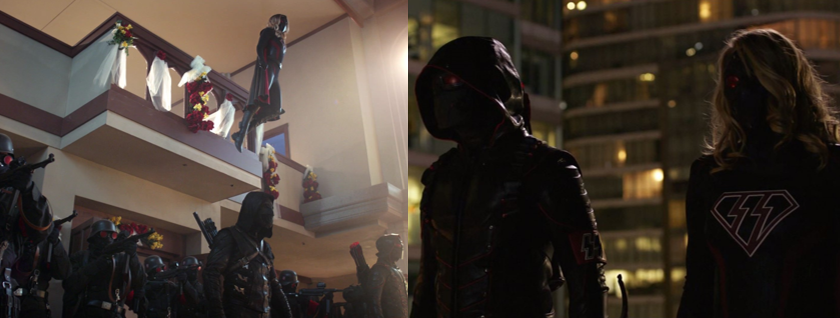
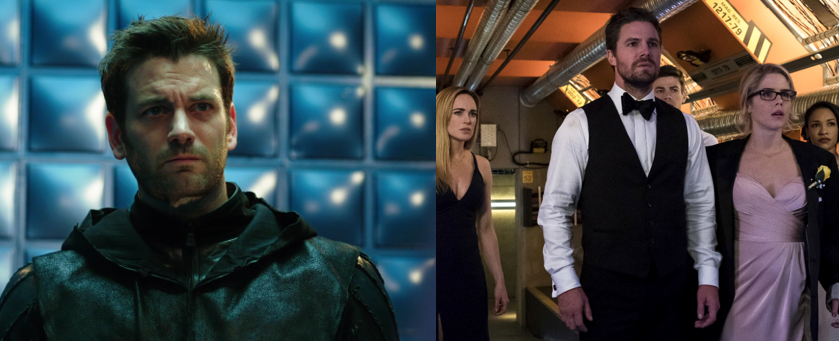
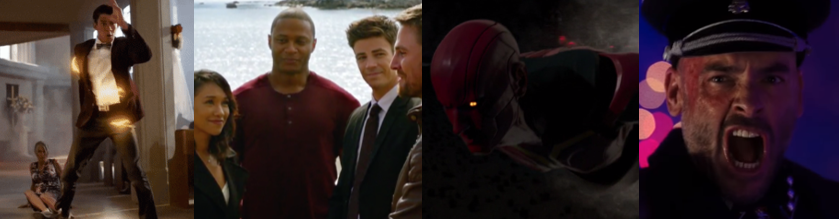
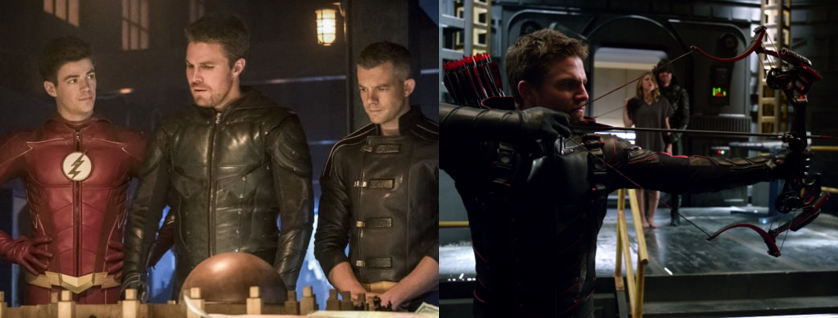

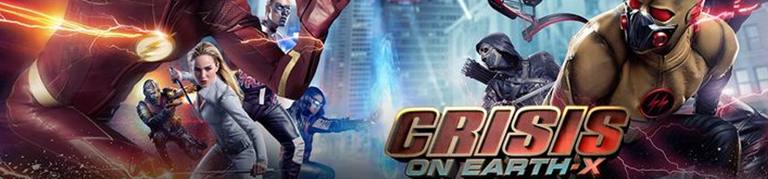


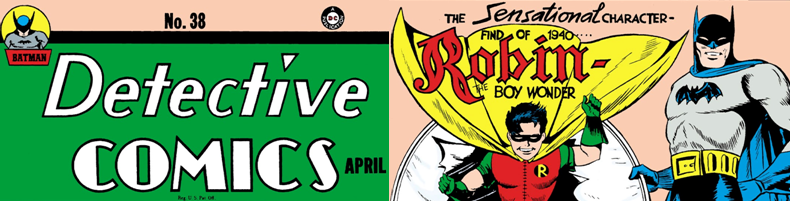
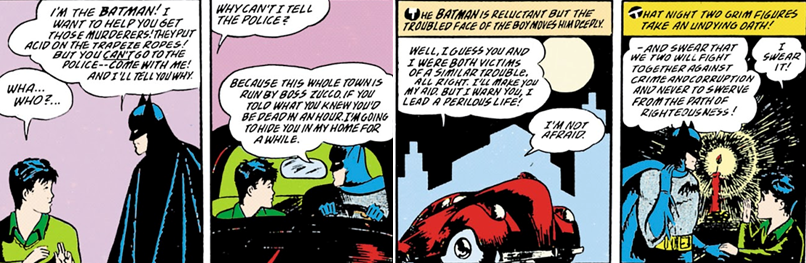
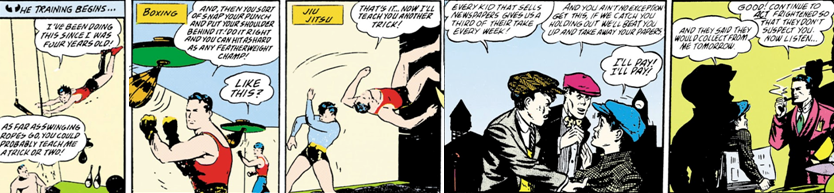

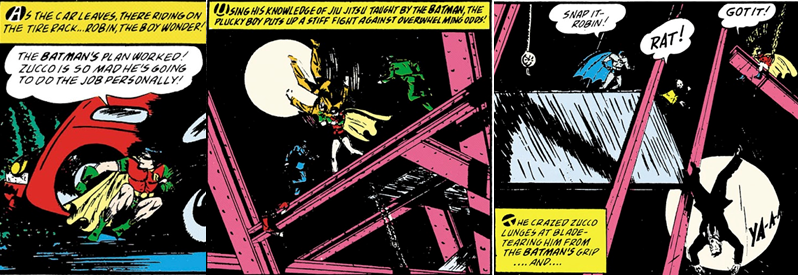


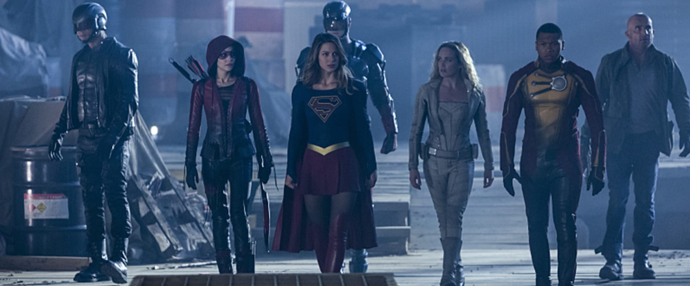

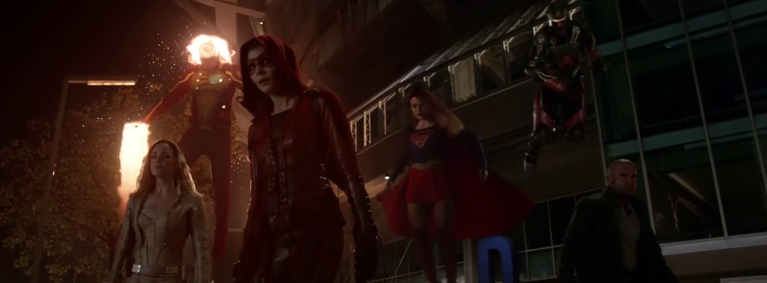
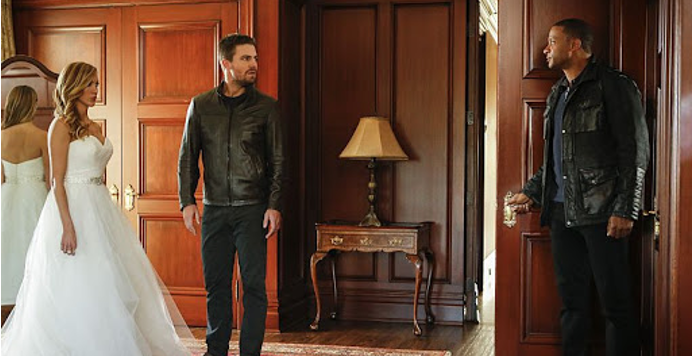

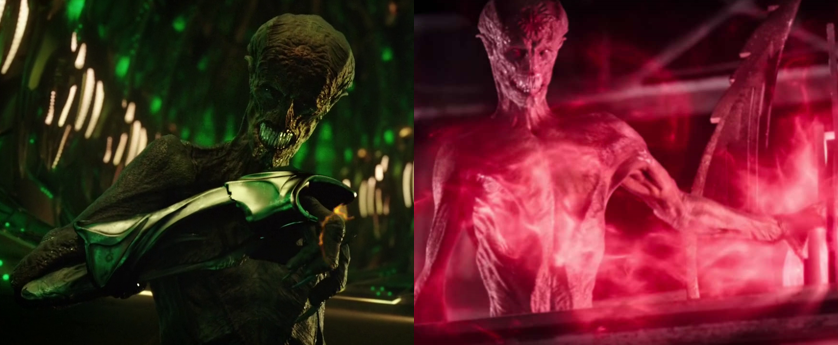

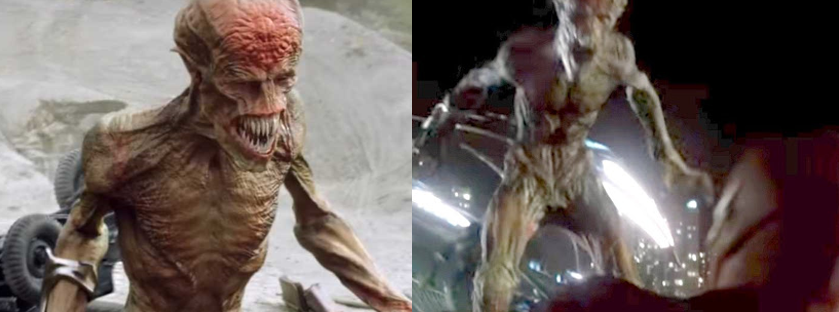
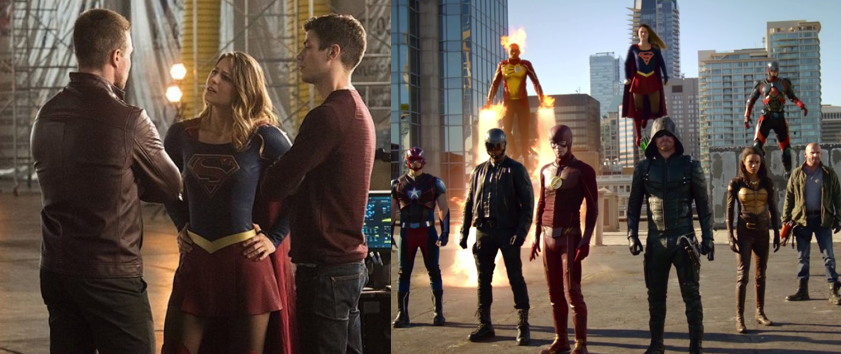


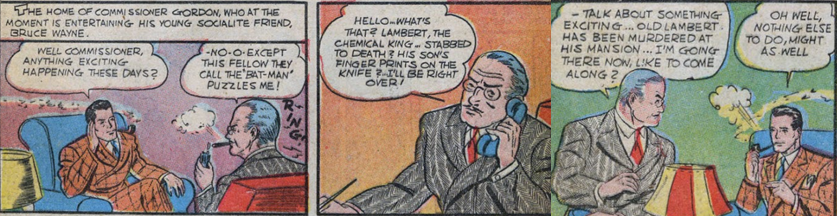


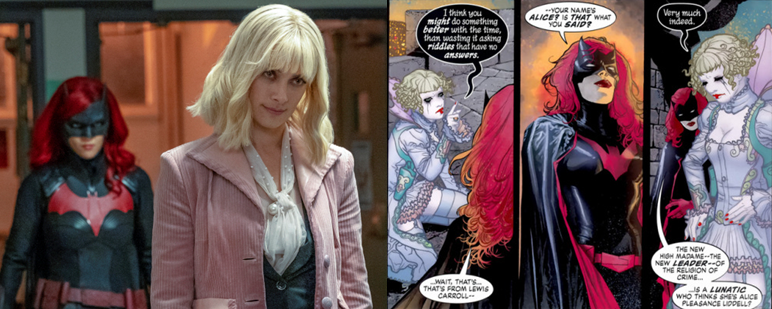


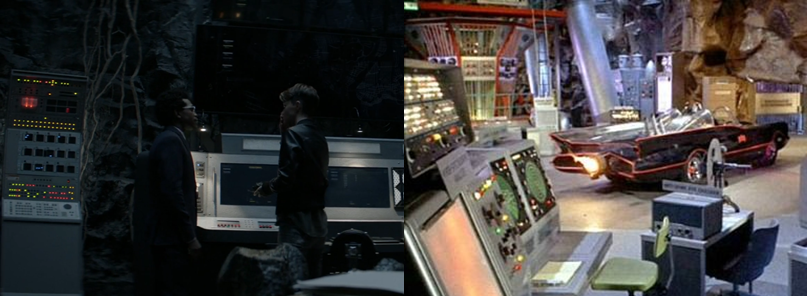
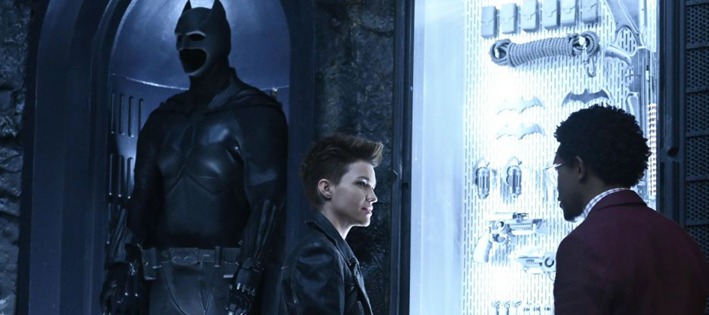
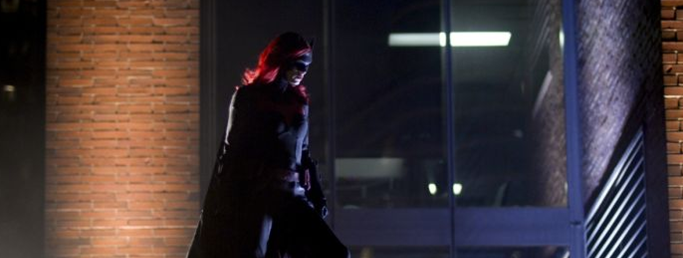

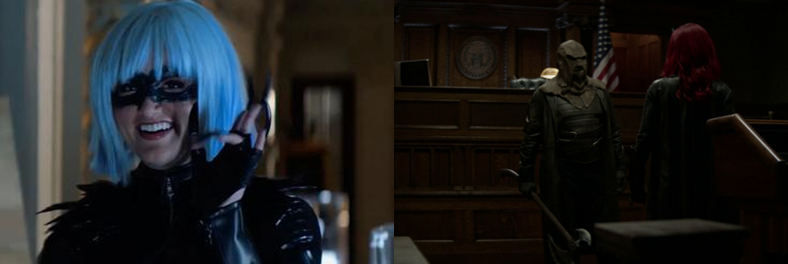
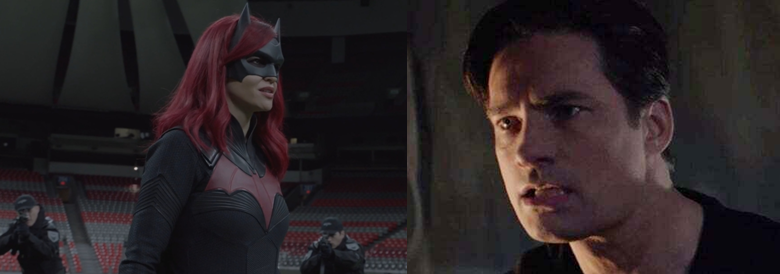



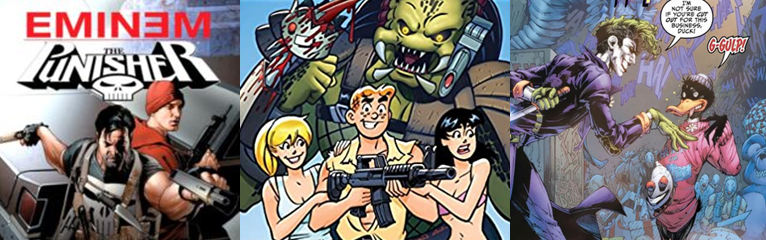
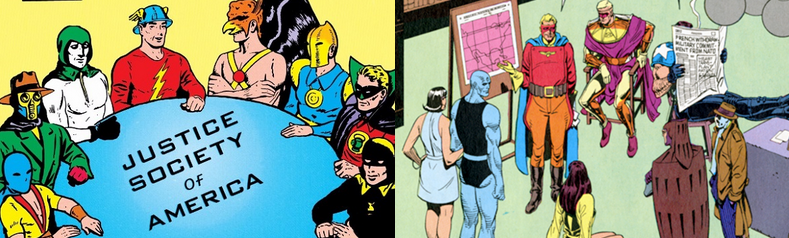
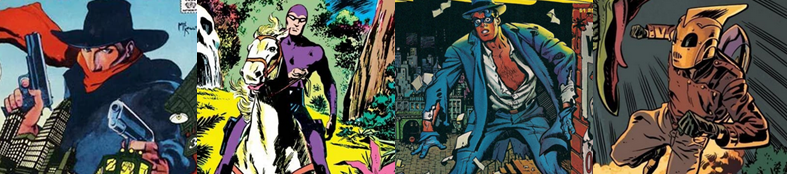
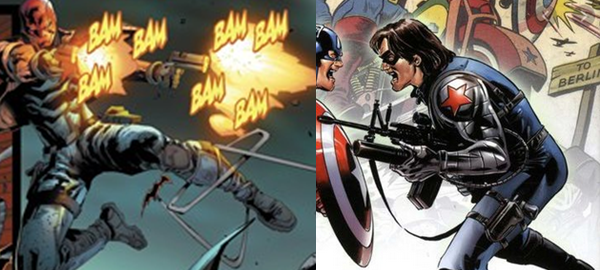
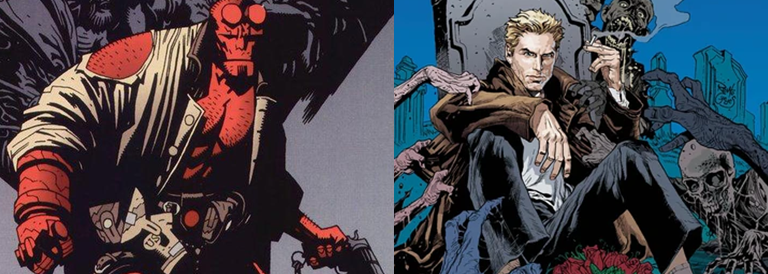
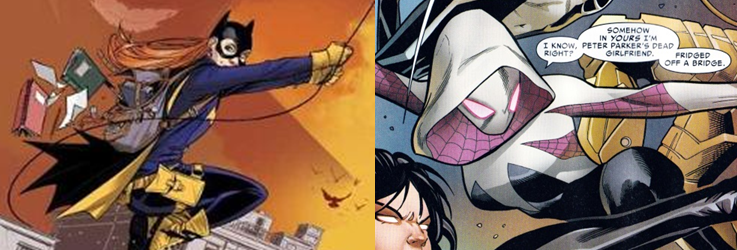
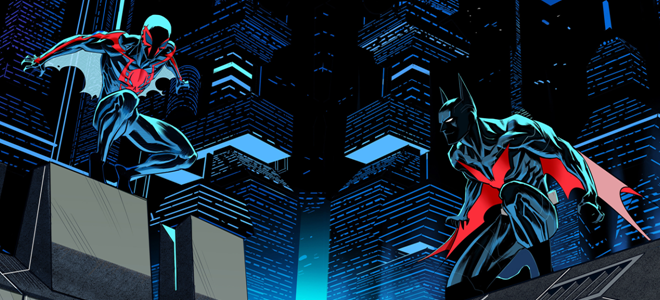
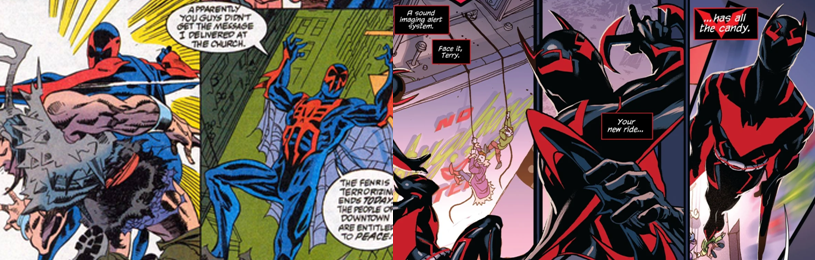
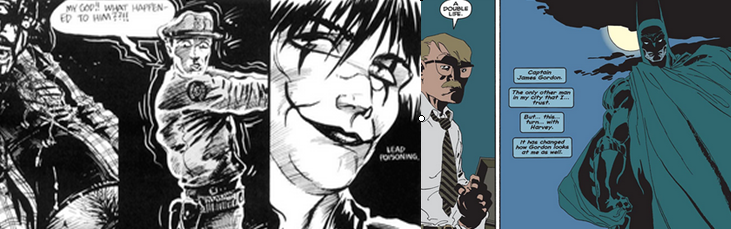
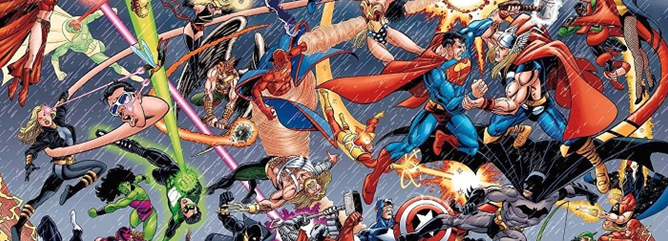

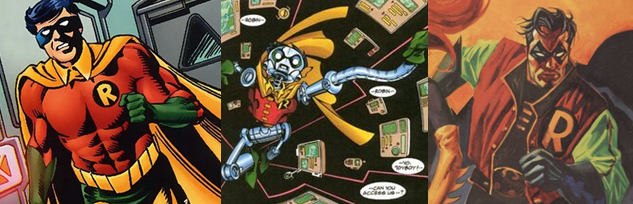
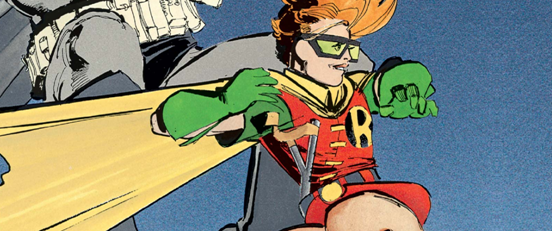
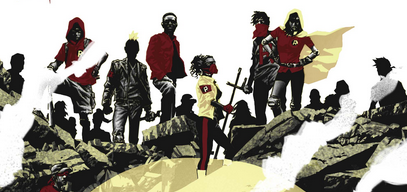
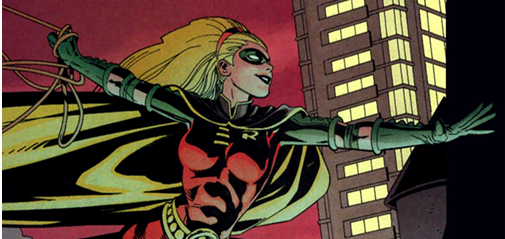
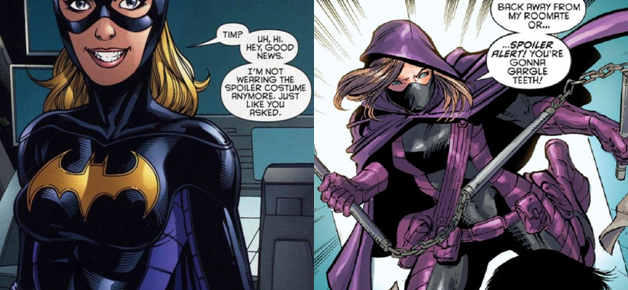
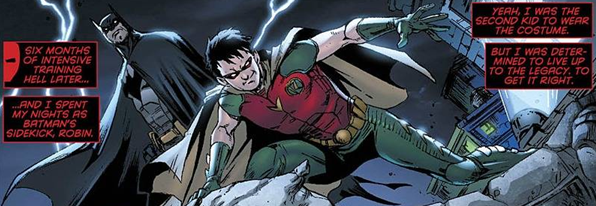
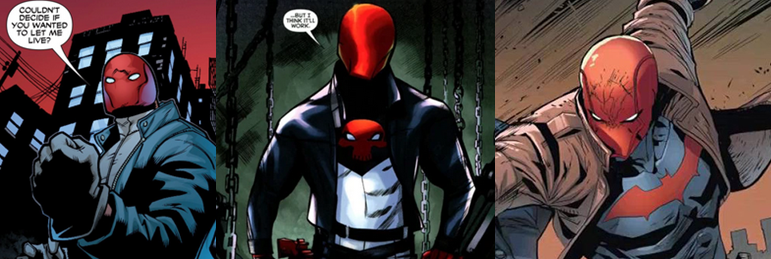
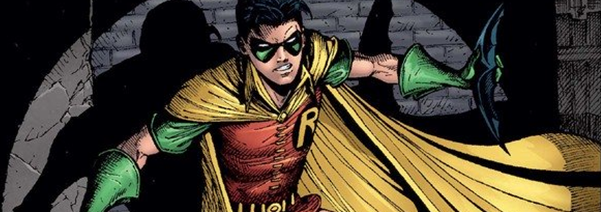
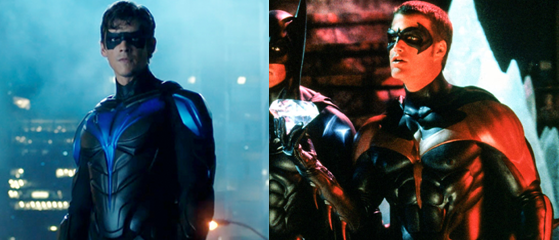
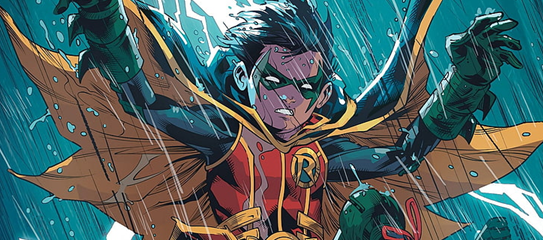
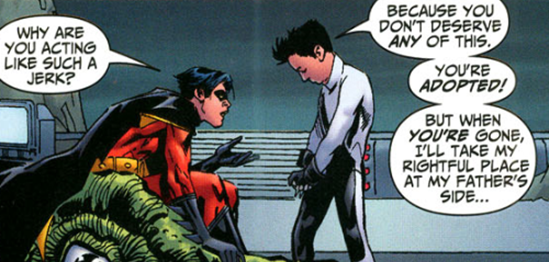
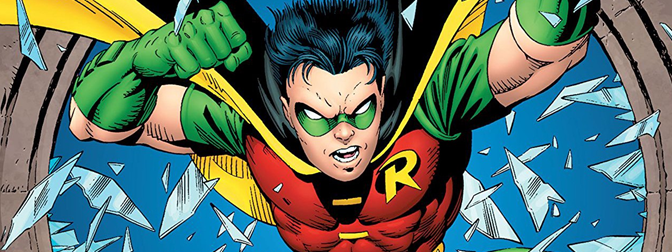
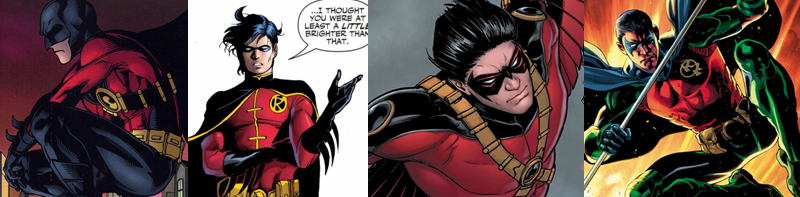
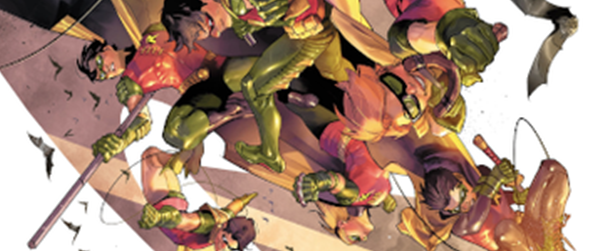


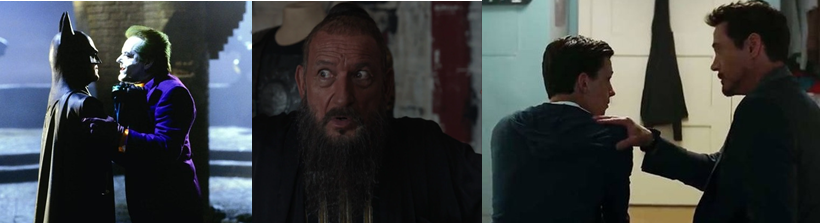
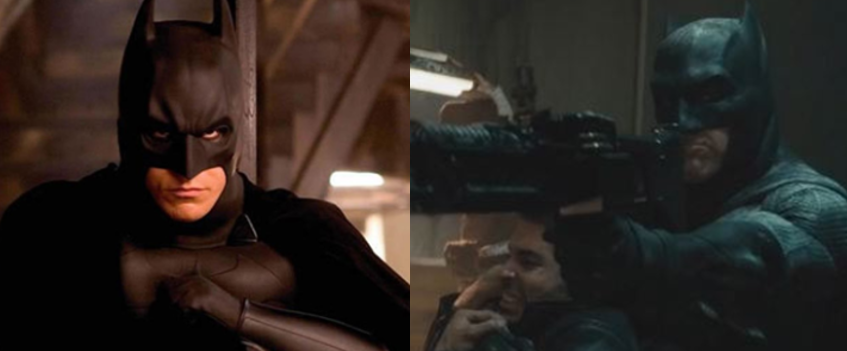

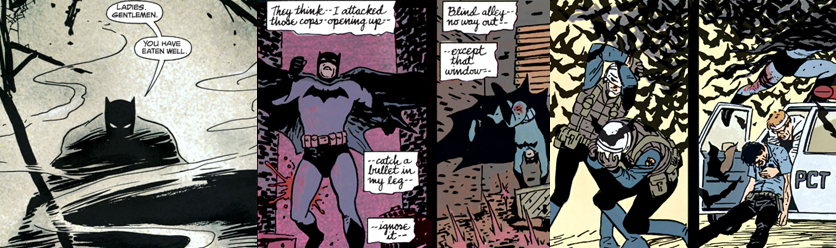
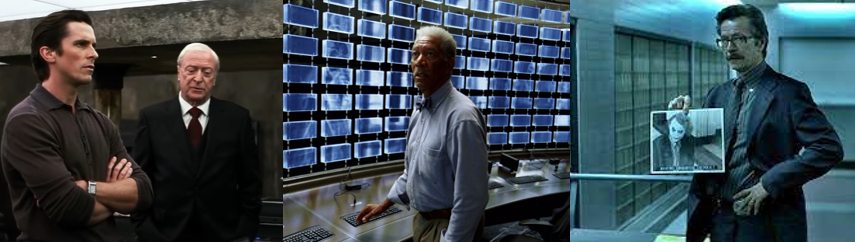

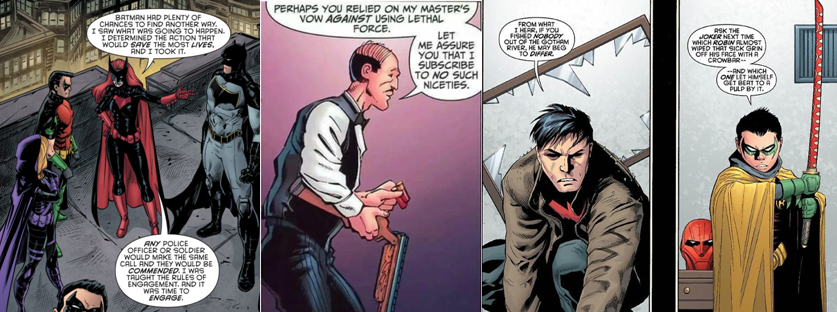

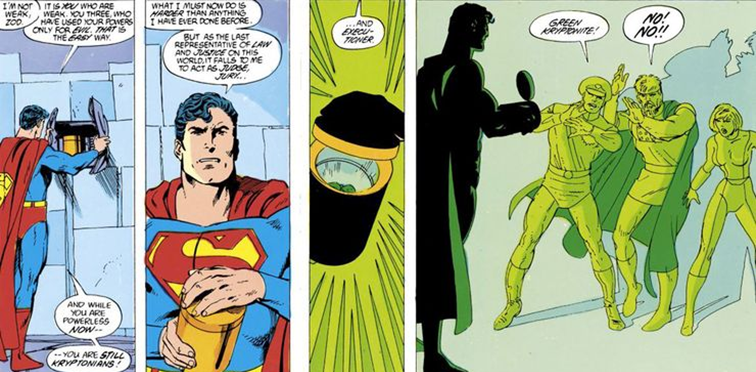

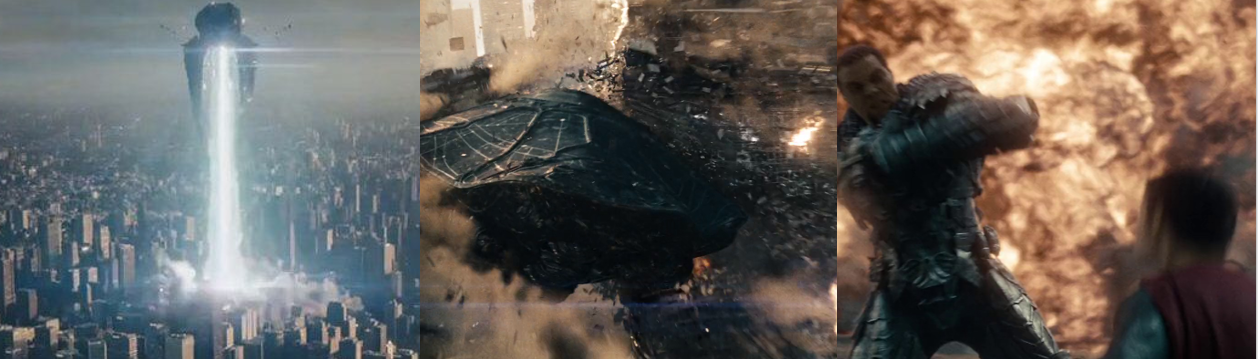
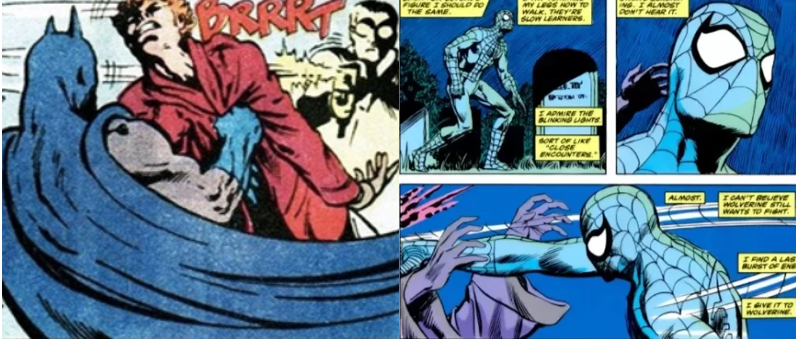
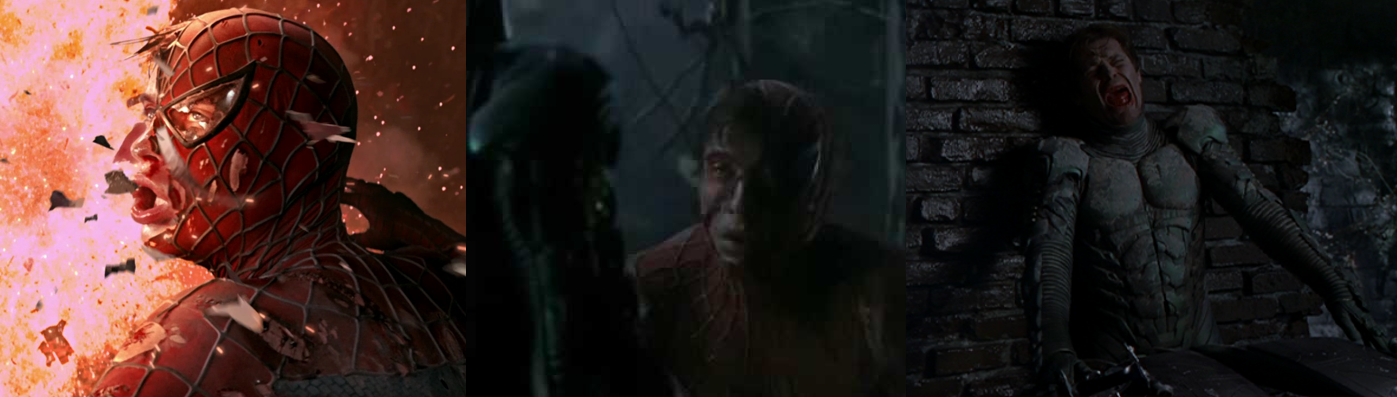




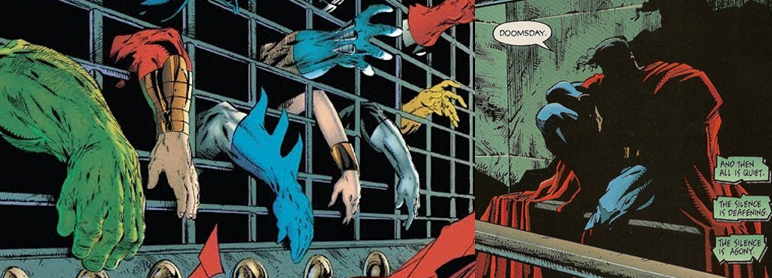
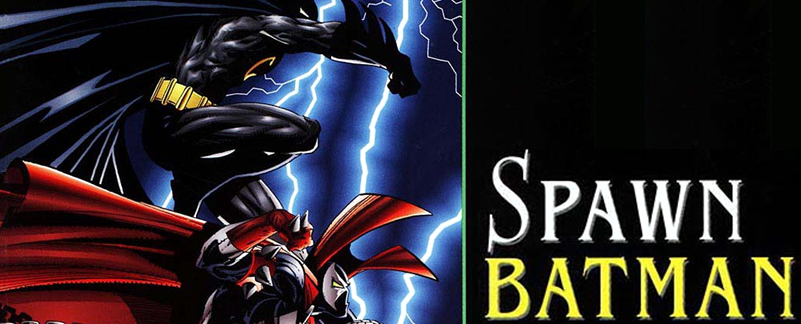
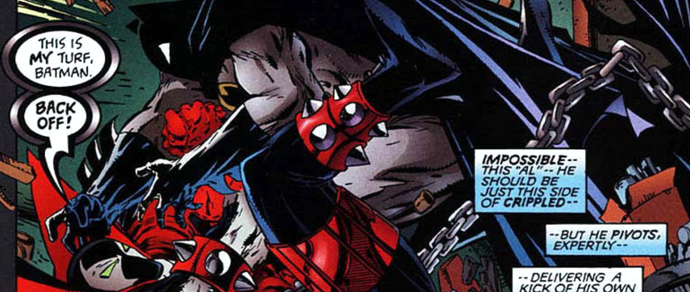
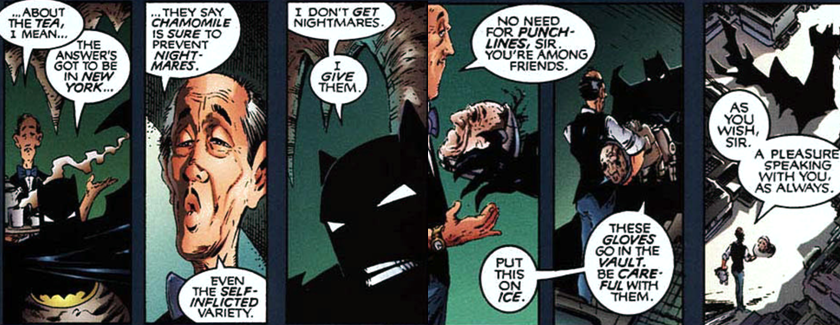
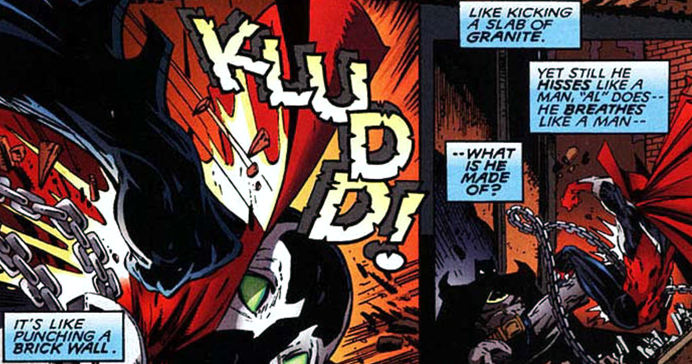
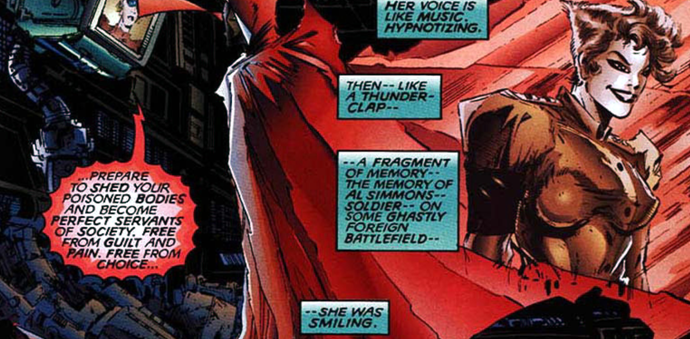
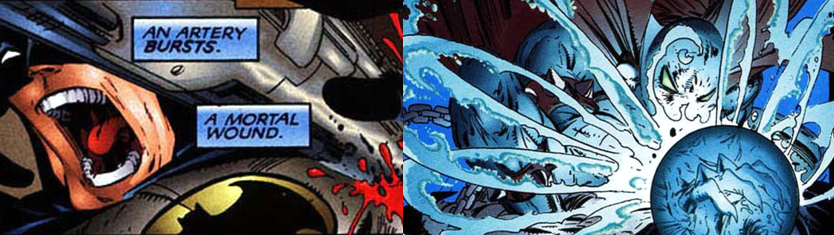
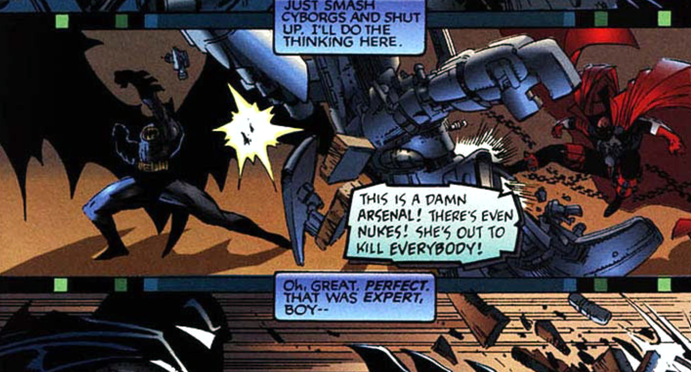
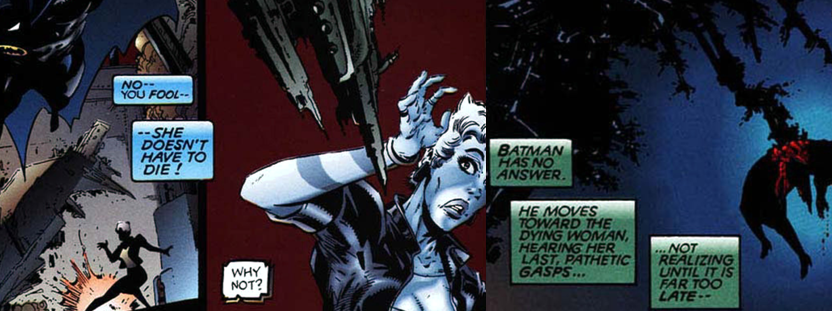
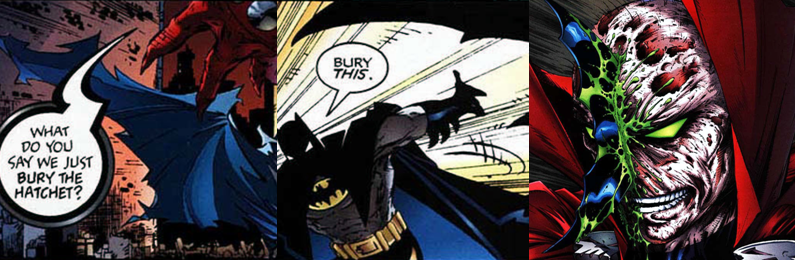
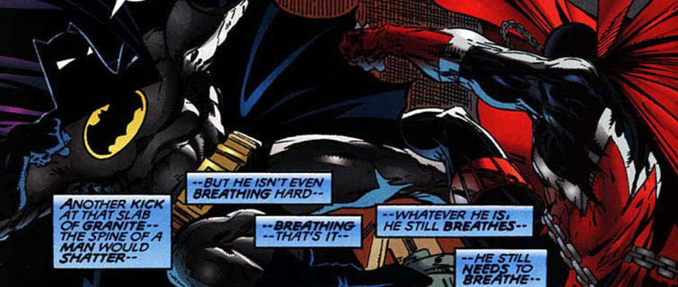

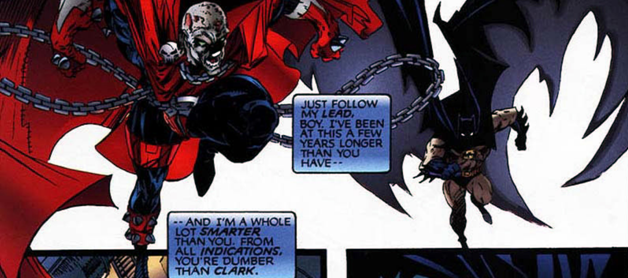
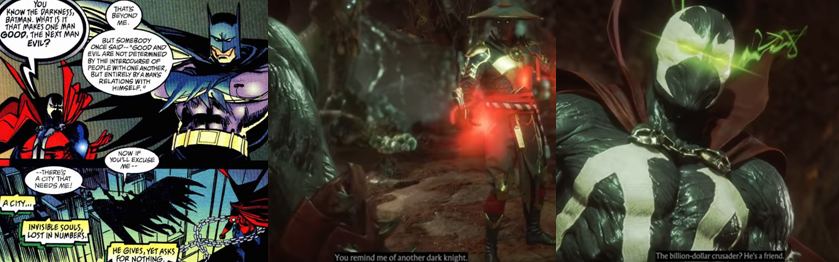


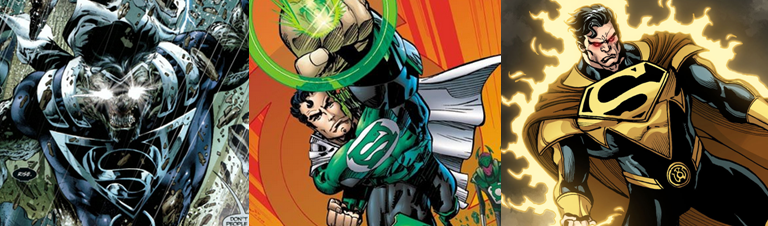
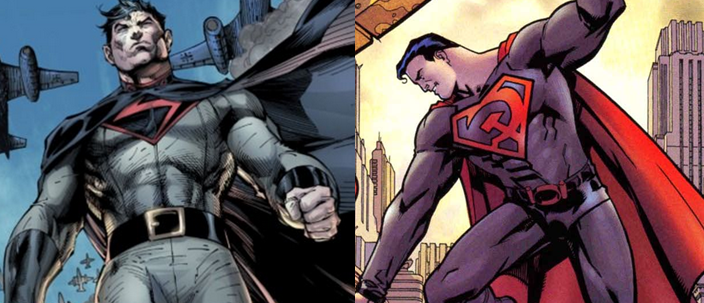
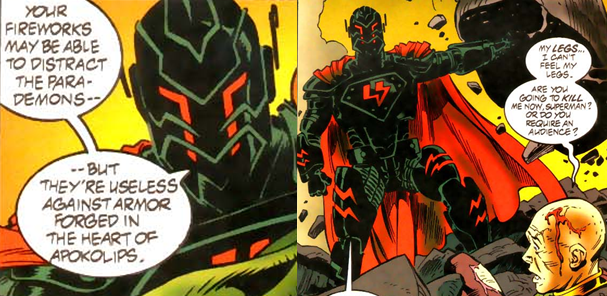
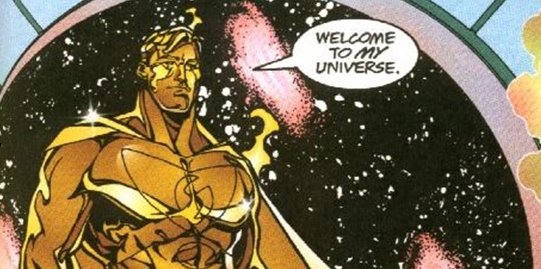
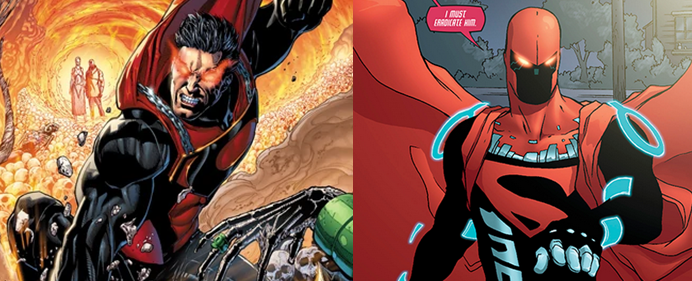


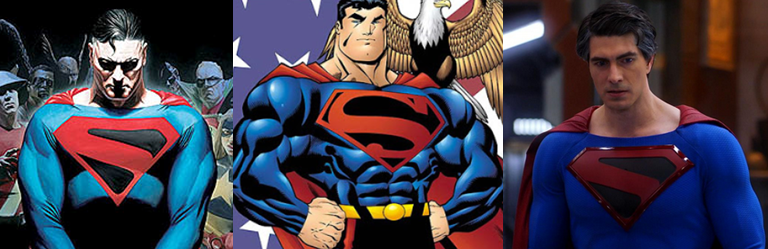
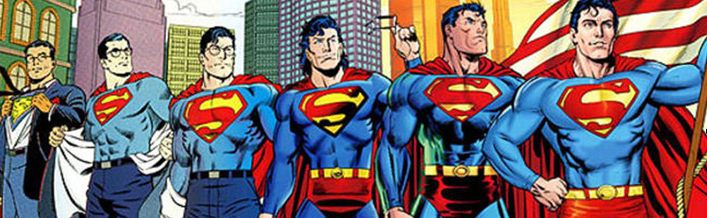


You must be logged in to post a comment.