If there’s one thing any hero can count on it’s that, at some point in their illustrious career, they’re going to have to face off against themselves. Sometimes, like with the classic Demon in a Bottle (Michelinie, et al, 1979) this is a metaphorical battle against their own inner demons and foibles but. More often than not, it’s a literal battle against an evil version of the themselves. Sometimes they’re from another world or a parallel dimension, perhaps they’ve used stolen technology or been cloned from the hero; other times, they are of the same race or seek to replicate the hero’s powers and usurp them. Whatever the case, I’ve always enjoyed a good doppelgänger, generally because they’re just like the hero but dark and edgy or more violent and, being as I grew up in the nineties, I like that kind of stuff. An evil version of a hero can help to elevate the hero by allowing them to overcome their failings and, sometimes, will even edge out of villain territory and become either a full-fledged hero in their own right or a line-towing anti-hero. In either case, today I’m going to run through ten of my favourite dark doppelgängers; evil versions of heroes who are just cool through and through.
10 Dark Link / Shadow Link
First appearing in Zelda II: The Adventure of Link(Nintendo EAD, 1987) this shadowy version of the heroic Link gets the number ten spot purely because he isn’t really much more than a glorified henchmen for main series villain, Ganon. In true Peter Pan (Barrie, 1902) fashion, Dark Link often takes the form of a pitch-black shadow or a dark, distorted reflection and is able to perfectly mirror all of Link’s attacks and abilities. In recent years, he’s appeared more as a phantom and been given more definition but he’s generally relegated to being a sub-boss for a game’s dungeon and never the true threat to the land of Hyrule.
9 Wario
Debuting in Super Mario Land 2: 6 Golden Coins(Nintendo R&D1, 1992), this bloated, disgusting, twisted version of Mario is everything Nintendo’s cute and cuddly mascot isn’t: he’s rude, crude, mad, bad, and dangerous. Where Mario jumps on blocks and Koopa heads to save a delightful Princess, Wario barges through walls and tosses his enemies at each other to steal, loot, or recover treasure. Wario even has his own version of Luigi, Waluigi (who exists more for the sake of existing, I would argue) but, while he crashed onto the scene in a big way by taking over Mario’s castle, Wario has softened over the years. He’s transitioned from an anti-hero and begrudging ally to simply a master of ceremonies as Nintendo moved him away from being the star of his own series of unique games and more towards party games and mini games.
8 Black Adam
Created by Otto Binder and C. C. Beck, Teth-Adam was originally gifted the magical powers of the wizard Shazam and chosen to be his champion, Mighty Adam. After being bewitched and corrupted, however, Adam was stripped of his powers and withered away to dust but, centuries later, was reborn when his ancestor, Theo Adam kills Billy Batson’s parents to lay claim to Adam’s power. Black Adam possesses all of the same powers as Captain Marvel/Shazam but is also gifted with a pronounced mean streak and tactical genius; he briefly reformed for a time, even joining the Justice Society of America and building a family of his own, but his quick temper and deep-seated contempt for humanity generally always drives him into a murderous rampage that few heroes can hope to oppose.
7 Alec Trevelyan / Janus
Appearing in what is still probably the best James Bond film ever made, GoldenEye (Campbell, 1995), Alec Trevelyan (masterfully portrayed by Sean Bean) was one of MI6’s top 00 agents. However, wanting revenge against the British government for the death of his family and comrades during World War Two, Trevelyan faked his death and formed a criminal organisation named after his new alias, Janus. Trevelyan makes the list because he’s everything James Bond (Pierce Brosnan) was but twisted towards villainy; he and Bond were close friends and partners and his “death” weighed heavily on Bond’s conscious for nine years, making his betrayal even more sickening. In facing Trevelyan, Bond not only faces his biggest regret and mistake but also himself and what he could easily become if the fates were different.
6 Slash
First appearing in ‘Slash, the Evil Turtle from Dimension X’ (Wolf, et al, 1990), Slash was originally an evil violent mirror of the heroic Teenage Mutant Ninja Turtles who often appeared in Turtles videogames and merchandise as a sub-boss for the Turtles to fight. For me, his most iconic look is when he’s sporting a black bandana, some spiked apparel, razor-sharp, jagged blades, and a heavy, armour-plated, spiked shell. Slash’s look and characterisation have changed significantly over the years as he’s gone from a somewhat-eloquent villain, to a rampaging monster, to an ally of the Turtles depending on which version you’re reading or watching.
5 The Master
Originally (and, perhaps, most famously) portrayed by Roger Delgado, the Master was a renegade Time Lord who rebelled against his overbearing masters to freely wander through time and space. While this closely mirrors the story of his childhood friend, the Doctor (Various), the Master was the Doctor’s exact opposite: evil where the Doctor was good, malicious where the Doctor was kind, and wanted nothing more than to extend his lifespan, conquer other races, and destroy (or break) his oldest rival. Though sporting a deadly laser screwdriver and able to hypnotise others, the Master gets the number five spot simply because he’s been overplayed to death in recent years. Time and time again we’ve witnessed the Master at the end of his regeneration cycle, or destroyed forever, only for yet another incarnation to appear and wreck more havoc. He’s even redeemed himself and turned good before, and yet still returns to his wicked ways to plague the Doctor even when his threat should long have ended.
4 Metal Sonic
Speeding onto the scene in Sonic the Hedgehog CD(SEGA, 1993), Metal Sonic stands head-and-shoulders above all over robot copies of Sonic the Hedgehog simply by virtue of his simplistic, bad-ass design. A fan favourite for years, Metal Sonic has made numerous appearances in multiple Sonic the Hedgehog (Sonic Team/Various, 1991 to present) videogames, comic books, and other media. Sporting a sleek, aerodynamic design, chrome plating, and a massive jet engine on his back, Metal Sonic did something no one had done at the time of his debut and not only matched Sonic’s speed, but outmatched it on more than one occasion. While Sonic CD is far from my favourite Sonic title, it’s hard to downplay the iconic race against Metal Sonic in Stardust Speedway or his impact on the franchise.
3 Reverse-Flash
Versions of the Reverse-Flash have plagued DC Comics’ speedsters over the years, most notably Edward Clariss (The Rival), Eobard Thawne (Reverse-Flash), and Hunter Zolomon (Professor Zoom). Sporting a yellow variant of the classic Flash suit and shooting off sparks of red lightning, the Reverse-Flash is generally characterised as using his powers to torture the Flash out of a twisted desire to make him a better hero. Reverse-Flash’s threat is increased by his tendency to travel through time, evading death and plaguing different generations of the Flash; Professor Zoom was even able to manipulate the Speed Force to jump through time and appear to be faster than the Flash. Reverse-Flash has also been the cause of numerous agonies in the lives of multiple Flashes; he’s killed or threatened those closest to him (including Barry Allen’s mother) and delights in bringing the Flash to the brink of his moral code.
2 Judge Death
Hailing from an alternate dimension where life itself is a crime (as crimes are only committed by the living), Judge Death is the dark counterpart to no-nonsense lawman Judge Dredd. First appearing in 1980 and created by John Wagner and Brian Bolland, Judge Death assumes the appearance of the Grim Reaper and uses his demonic powers to kill with a touch. Rocking a metal design (recently evoked by the Batman-Who-Laughs, another contender for this list), Judge Death takes Dredd’s uncompromising enforcement of the law and ramps it up to eleven. Alongside his fellow Dark Judges, he once slaughtered over sixty million citizens of Mega City One and, despite his corporeal form being destroyed or trapped, has returned time and time again to bring judgement upon the living.
1 Venom
Perhaps the most popular (or, at least, mainstream) of all dark doppelgängers is the alien symbiote who, when bonded to Eddie Brock (or others), is known as Venom. Created by David Michelinie and Todd McFarlane, Venom began life as a black alien costume that absorbed Spider-Man’s powers and abilities and sought to permanently bond with him. When Spidey rejected it, it turned to Brock and, through their mutual hatred of Spider-Man, Venom was born. Sporting a super simple design (pitch-black with a white spider logo, emotionless white eyes, deadly fangs and claws, and a long, drooling tongue), Venom plagued Spidey for years. Immune to Spidey’s Spider-Sense and sporting all his powers, but double the strength and viciousness, Venom has evolved from a sadistic villain, to an anti-hero, to all-out hero over the years but, thanks to their equally violent offspring, has been the source of much death and woe to Spider-Man since day one.
What dark doppelgänger is your favourite? Were there any I missed off this list, or do you, perhaps, feel the evil copy is a played out trope? Drop a line in the comments and pop back for more lists and articles.
Released: October 2018 Developer: Traveller’s Tales Also Available For: PlayStation 4, Nintendo Switch, and PC
The Background: You’ve heard of Lego, right? Those little Danish plastic blocks that you can slot together to build all kinds of shit and make you wish you were dead when you step on them? Well, some time ago (around 2014), they started producing playsets based on DC Comics characters. After the release of Lego Star Wars: The Video Game (Traveller’s Tales, 2005) laid the groundwork for what would become numerous licensed Lego videogames, Traveller’s Tales released Lego Batman: The Videogame (ibid, 2008), the first in a series of Lego-themed videogames based on DC Comics characters. Lego DC Super-Villains came hot on the heels of The Lego Batman Movie (McKay, 2017) and was a spin-off of its immediate predecessor, Lego Batman 3: Beyond Gotham (Traveller’s Tales, 2014). While the gameplay and narrative may have expanded beyond simple pantomiming in enclosed environments to fully-voiced open worlds, the core blueprint of building increasingly ridiculous Lego constructs in a DC-themed world remained unchanged.
The Plot: When the evil Justice Syndicate arrive from Earth-3, pose as superheroes, and promptly dispose of the Justice League, the super-villains of the DC Universe must join forces with a mysterious new villain in order to expose the Syndicate as frauds and reclaim their place as the world’s number one villains.
Gameplay: If you’ve ever played a Lego videogame before, you’ve played them all; gameplay is ridiculously simple and yet fun, with the games designed to be accessible to younger players and emphasising pick-up-and-play, co-operative gameplay, and simple, easy to master mechanics. The first thing you’ll do is design your own Lego supervillain from a range of available heads, costumes, and powers, which you’ll unlock more of as you play through the game’s story mode and find hidden Gold and Red Bricks. Once you have your Rookie, you’ll adventure with some of DC’s most notorious super-villains (including Harley Quinn, Lex Luthor, and Black Adam) across some of DC’s most recognisable locations (from Slaughter Swamp, to Metropolis, to the fire-pits of Apokolips).
Learn new abilities as you play through the story mode.
Gameplay couldn’t be simpler; you can attack enemies with combos, ranged weapons, energy blasts, and crowd-clearing ground pounds, or fly and flip across the skies of the game’s various open worlds, amongst many other attributes. The Rookie’s abilities can be customised as you play and his ability to absorb and learn new powers is a crucial part of the game’s amusing story mode.
There are many secrets to find in the game’s many locations.
Considering the Lego videogame formula hasn’t changed since their first Lego Star Wars videogame, there’s a lot to see and do here; every time you complete a chapter of the story mode, you unlock it for use in Free Play mode. As each environment has many hidden secrets that can only be uncovered by using characters and abilities not initially available in the story mode, this encourages a great deal of exploration and replayability if you want to find everything and earn all of the Achievements. Combat and gameplay are simple enough, and the game’s puzzles aren’t generally much to worry about; Lego DC Super-Villains’ challenge comes in the multitude of secrets hidden in the game’s multiple overworlds and individual chapters and in the vast amount of side missions on offer. You’ll be tasked with photographing goons, destroying certain objects, or collecting certain items, all to either obtain another hidden brick or unlock an extra playable character in the game’s already stacked roster.
You’ll need to build all manner of Lego toys to progress.
A crucial aspect of any Lego videogame is smashing everything in your path, collecting Lego studs, and building, building, building. Holding down B near a cluster of Lego pieces will see your character piece together all manner of Lego constructs, from weapons, to computer terminals, vehicles, and even the Flash’s Cosmic Treadmill, all of which will spew out yet more Lego studs, open up new areas, or allow you to progress further.
Everyone is represented, from the iconic to the obscure.
Collecting studs is vital to your progression; although you have a heart-based life system, you can return to the game as many times as you like after dying as long as you have enough studs. However, as they’re scattered across every inch of the Lego DC world, you’ll never be running short of these, and enemies will often drop hearts upon their defeat. Studs can also be used to purchase new characters and vehicles, both of which are essential to earning some of the game’s Achievements.
Graphics and Sound: A key aspect of all of Lego’s multimedia ventures is just how well they recreate the feeling of playing with actual Lego toys; everything in their movies, animated shorts, and videogames has some basis in reality and is either based on, or available as, an existing Lego playset.
You’ll visit some of DC’s most iconic locations.
To that end, all of the characters look and act exactly as a Lego toy would; they’re made of shiny, stiff plastic and it always feels as though you’ve just dropped a bucket of your Lego out on the floor and started playing with them. Iconic DC locales are lovingly crafted out of the iconic bricks to the point where you’re smashing your way through a dark and stormy Gotham City that evokes exactly the same sense of gloomy dread as anything produced by Rocksteady.
You’ll recognise a lot of the voices in Lego DC Super-Villains.
While early Lego videogames based on movie properties utilised the soundtrack and vocal performances of their source materials, Lego DC Super-Villains favours a largely original score and goes all-in with the quality of its voice actors. You’ve got the likes of Kevin Conroy, Clancy Brown, and Michael Ironside reprising their roles from various DC cartoons and animated movies alongside John Barrowman, Zachary Levi, and Brandon Routh voicing their respective characters from DC’s live-action television shows and movies.
Enemies and Bosses: As you journey to expose the Justice Syndicate, you’ll naturally face opposition from local law enforcement and rival goons before squaring off with members of the Justice Syndicate and the Justice League.
You’ll eventually take on Darkseid in an epic encounter!
As a result, you’ll inevitably end up in battle against the likes of Ultraman, Mazahs, Owlman, Johnny Quick, and Superwoman but you’ll also fight against Solivar, Doomsday, and the titanic New God Darkseid. Each boss battle has a unique twist, forcing you to use different abilities to break through their defences and chip away at their health.
Bosses are grandiose, but simple, affairs.
In many instances, bosses will use the environment to their advantage (such as Sea-King, who attacks with a giant octopus) or send waves of goons against you. Luckily, however, you can utilise different abilities to uncover building bricks around these environments to construct weapons and other Lego that will turn the tide in your favour.
Power-Ups and Bonuses: As you play Lego DC Super-Villains, you’ll find Gold and Red Bricks, hidden Batman-branded Minikits, and various graffiti points. Each of these, and the collecting of studs, will unlock and allow you to purchase a treasure trove of in-game modifiers which will double your stud bonus, detect secrets, enable one-hit kills, and even flash up the Batman (1966 to 1968) “Pow!” sound effects.
Some characters drastically change form to reach new areas.
Additionally, every Lego character has their own unique weapon and playstyle; some, like Clayface, can increase or decrease in size to smash through obstacles or fit through vents; others, like Livewire, can charge electrical conduits with their electricity powers. The likes of the Joker and Scarecrow can collect special items to brew up fear gas or laughing gas, respectively, while also commanding goons found in each level to form bridges or activate switches. Similarly, there are some characters, like Tigress, who can dig up hidden treasures or use their acrobatic abilities to jump across rooftops. While it would be wrong to say that no two characters play the same, as there are many who share recognisable traits, playing as Superman is a markedly different experience to playing as Chang Tzu. Add on to that the Rookie’s ability to learn and combine these different abilities and you have a lot of different options available to you to progress through the game’s story and side quests.
Additional Features: Once you clear the game’s substantial story mode, which will see you take command of various different DC villains across multiple locations, you unlock five bonus levels that are narrated by Lobo and located around Apokolips. These extra missions allow you to play as the various members of the Justice League as they battle their way to freedom out of Darkseid’s hellish homeworld. There’s also a fair amount of downloadable content on offer that adds characters and levels based on DC films like Shazam! (Sandberg, 2019) and Aquaman (Wan, 2018) and DC’s live-action shows, like Arrow (2012 to 2020) and The Flash (2014 to present), among others.
The Summary: I’ve always enjoyed the simple pleasure of the Lego videogames; they’re not exactly taxing to play through and are easy to slip right back into after years away as the fundamental basics have remained unchanged since 2005. Not only are they harmless fun to play, they’re also pretty funny; Traveller’s Tales have put a lot of work into the game’s story and dialogue and much of the game’s humour comes from genuinely funny jokes, gags, one-liners, Easter eggs, and sight-gags. Saying that, though, Lego DC Super-Villains is best played with a friend so you can easily smash your way through the story mode and side quests and uncover every hidden trinket on offer. As a solo experience, it’s serviceable enough but these are games built to be enjoyed with a friend or, more ideally, a younger sibling or a child (preferably yours…) as the challenge on offer is tailor made for a younger audience. There’s a lot to like, here, though, especially if you’re a fan of DC Comics or their animated endeavours.
My Rating:
⭐⭐
Rating: 2 out of 5.
Could Be Better
What did you think about Lego DC Super-Villains? Are you a fan of the Lego videogames or do you find the formula to be wearing a bit thin by now? Feel free to leave a comment and give me your thoughts and feedback.
So, disappointingly, Ben Affleck is officially, 100% out as Batman. Despite my reservations about him being cast in the role, he delivered a really impressive performance as a tortured, grizzled Bruce Wayne who was driven to extremes after two decades of fighting an unwinnable war against crime in Gotham City. However, due to a multitude of reasons, Affleck is gone and, instead, The Batman(Reeves, 2021) will star Robert Pattinson in the title role as a younger Batman in his first years of activity. As with pretty much all Batman casting, this has caused some interesting ripples throughout the fandom but these discussions were only exacerbated when Reeves teased the first look at Pattinson’s Batsuit.
While this is obviously far from the clearest view, and leaked set images are showing either a much less refined stunt suit or lacking the filter of editing and post-production, there are some interesting choices at work here, such as Wayne apparently melting down the gun that killed his parents to form the symbol of his Batsuit. In any event, this seems like an appropriate time to take a look at some Batsuits from days gone by and talk about what makes them so iconic.
10 Knightfall (Batman #500)
I am pretty certain I am in the minority here but I really dig the armoured suit that Jean-Paul valley put together during the Knightfall (Dixon, et al, 1993 to 1994) storyline. Initially, Valley just augmented the existing Batsuit with some wicked mechanical claws that could shoot out Bat-Shurikens, a grappling hook and, apparently, a laser but, for his big rematch against Bane, Valley decided to go the whole hog and produce an entirely armoured ensemble that enabled him to best Bane easily. As the Knightfall arc progressed, the suit took on a darker, far more menacing look as it changed from blue to red; Valley also became increasingly dependent upon the suit as his madness progressed, refusing to take it off and using it in increasingly violent (and fatal) ways. Eventually, however, the suit proved Valley’s undoing as he was unable to squeeze through the narrow tunnel Bruce Wayne lured him into, which finally forced him to remove the suit and begin a difficult road to redemption. What I like about this suit, though, is how futuristic and dangerous it looks; it’s got an aerodynamic flair, has all these neat gadgets and upgrades, and makes Batman look like a cold-blooded figure who takes no prisoners, which is exactly what Valley embodied. The suit rarely makes much of an appearance these days, though it did appear as a skin in Batman: Arkham Origins(WB Games Montréal, 2013) and informed Valley’s subsequent appearances as Azrael over the years.
9 Zur-En-Arrh (Batman #113; Batman #678)
Sometimes, you just need a completely bat-shit-crazy (pun intended) Batsuit and they don’t get much weirder than this one (well, maybe the Rainbow Batman…). First appearing wayyy back in 1958, the Batman of Zur-En-Arrh was an alien who, inspired by Batman, fought giant robots. Then, in the midst of the dreadful Batman R.I.P. (Morrison, et al, 2008) storyline, “writer” (I hesitate to call him that as his writing is atrocious and obnoxiously dense) Grant Morrison resurrected the Zur-En-Arrh concept as a “backup personality” Bruce implanted within himself that would kick in should he ever be psychologically compromised. What I love about this costume is the gaudy, outlandish, outrageousness of it; it’s all a mish-mash of reds, purples, and yellows the likes of which we haven’t seen clash since Alan Scott! Add to this the ruthlessness and unhinged nature of Morrison’s interpretation and you have one mental Batsuit that makes pummelling thugs into submission in Batman: Arkham Knight(Rocksteady Studios, 2015) all the more satisfying.
8 Batman Beyond
After wrapping up their excellent Batman: The Animated Series (Various, 1992 to 1999), Bruce Timm and Paul Dini decided to try something a little new with their animated ventures with Batman Beyond (ibid, 1999 to 2001). Batman Beyond took place quite far into the future and focused on a teenaged Batman, Terry McGinnis, who donned this futuristic Batsuit. There’s a lot to like about this Batsuit; first, there’s the trademark Dini/Timm simplicity. Second, there’s the fact that the cowl covers the entirety of Terry’s head; I’ve never really understood why Batman (and other, similarly-masked superheroes) feel the need to expose their jaw and mouth to the world so it’s great to see it obscured here. Then there’s all the futuristic modifications in the suit; it has jet boots, can glide, can turn invisible, and has all kinds of nifty gadgets to give Terry the edge in battling crime in Neo-Gotham. Since its debut, the Batman Beyond suit has cropped up more than once in comics, videogames, and other cartoons; Kate Kane, the modern Batwoman, also wears a costume that’s almost exactly identical.
7 Gotham by Gaslight
Retroactively labelled as one of the first ‘Elseworlds’ stories created by DC Comics, Gotham by Gaslight (Augustyn, et al, 1989) presents Bruce Wayne/Batman as existing in the 19th century and engrossed in the hunt for Jack the Ripper. As such, this Batsuit has a heavy steampunk-vibe to it (and I do love me some steampunk). Like other Batsuits on this list, the Gaslight suit works because of how simple and effective it is; this is a Batman that cannot rely on futuristic tech or fancy gadgets and is, instead, simply a very focused and highly trained man in a heavy, fit-for-purpose suit. The high collar, large pouches, and heavy-duty, militaristic feel given off this suit are fantastic and it’s probably one of the closest examples of what a realistic Batsuit would look like. In addition to being featured in a pretty decent animated film, this suit seems to have inspired Pattinson’s Batsuit, as well as the suit seen in the “Knightmare” scene in Batman v Superman: Dawn of Justice(Snyder, 2016).
6 1970’s Batsuit
As great as the fantastically camp Batman (Various, 1966 to 1968) television series was, and how scarily accurate it was as an adaptation of the happy-go-lucky Batman of the 1960s, it was to the benefit of everyone when editor Julius Schwartz, writer Dennis O’Neil, and artist Neal Adams decided to take Batman back to his roots as a serious, crimefighting detective in the seventies. During this run, Batman stories shed all the extraneous baggage of Bruce’s past; Dick Grayson went off the college, Bruce moved into a penthouse apartment for a time, the Joker became a serious threat once again, and Bruce matched wits with iconic villains like Ra’s al Ghul. Ostensibly similar in many ways to his previous attire, this Batsuit featured the iconic pill-like compartments on the belt and ditched the small ears and stocky aesthetic for longer ears and a far more muscular, refined physique. While the blue and grey colour scheme had long been a staple of Batman, it was under this run that it gained prominence as the definitive look for the more solemn crimefighting detective.
5 Bat-Armour
Over the years, Batman has donned many armoured suits to take down his more powerful foes but none are as iconic or as memorable as the armoured suit from The Dark Knight Returns (Miller, et al, 1986). Built specifically with the purpose of battling Superman, this suit is a hulking machine that is powered directly by Gotham’s electricity supply. Despite lacking an iconic bat symbol, this armoured suit means nothing except business; with spiked boots, massive gauntlets, and a plethora of gadgets and weapons, this armour is more than capable of subduing the Man of Steel. This suit was famously recreated in stunning detail for a similar fight scene in Batman v Superman: Dawn of Justice, as well as obviously featuring prominently in the Dark Knight Returns’ animated films (Oliva, 2012; 2013) but pretty much every armoured Batsuit can trace its origins and aesthetic inspiration back to this iconic garb.
4 Thomas Wayne (Flashpoint #1)
After a momentary bout of uncharacteristic selfishness, Barry Allen/The Flash decided to run back in time and save his mother’s life; this one act, somehow, created an alternative timeline that was the focus of Flashpoint (Johns, et al, 2011). In this timeline, it was Bruce who died in Crime Alley rather than his parents, leaving his mother, Martha, a psychotic wreck as the Joker and his father, Thomas, as a far darker, more ruthless version of Batman. What I like about this suit is how it dramatically changes the Batsuit with only a few tweaks: the cowl has smaller ears, the eye lenses are blood red, the shoulder pads end in sharp spikes, a blood-red circle replaces the iconic yellow oval, and Thomas sports a matching blood-red utility belt and two gun holsters. That’s right, this is a Batman who revisits the character’s pulp roots and wields not one…but two pistols! Just upon first sight you can tell that this is not quite the Batman you know and love; similar to the Batsuit Jason Todd wore in the Battle for the Cowl (Daniel, et al, 2009) arc, this suit delivers a twisted, darker version of Batman and was, thankfully, also included as a DLC skin in Batman: Arkham Knight.
3 Troika (Batman #515) / Burton
After finally reclaiming the mantle of the bat at the conclusion of the entire Knightfall saga, Bruce debuted a new Batsuit that drew heavy inspiration from Batman (Burton, 1989) in that, rather than being blue and grey, it was black and grey and comprised of heavy, sturdier Kevlar. This, for me, was a fantastic addition as, as much as I enjoyed the ‘60s show and liked the traditional blue and grey Batsuit, I much prefer an all-black or black and grey aesthetic, largely because I grew up with Burton’s Batman movies. As great as the Batman suit is, however, and as faithful as the Troika (Moench, et al, 1995) suit is to that movie, I much prefer the more armoured look Michael Keaton sported in Batman Returns(Burton, 1992). Either way, the change from blue to black was largely permanent as most Batsuits kept this colour scheme going forward and, for me, the only thing that stops this suit from being higher on the list is that it retains the yellow oval…which I’m not really a fan of.
2 Year One (Batman #404)
As lauded as The Dark Knight Returns is, I honestly feel that it is a chore to read; the art style is dodgy, the writing is dense and almost impenetrable, and, for all the work it does to present a grizzled, serious Batman, over the years I’ve come to find it doesn’t really live up to all its hype. Give me Batman: Year One (Miller, et al, 1987) any day. Presented as the first year of Bruce’s time as Batman, this Batsuit is, again, effective in its simplicity; sporting a black cowl, grey suit, and big, practical, militaristic pouches, this suit is the definitive “first time” Batsuit. Best of all, this suit ditches the yellow oval for a simple black bat chest logo, which was always and forever be my preference; I get that the embalm is double-shielded to draw enemy fire to his chest and away from his other, more vulnerable parts (…except his crotch, it seems) but I’ve never really liked the use of yellow or bright colors in Batman’s everyday attire.
1 Jim Lee’s Batsuit
I think that a lot of the appeal of Batman’s outfit, as featured in stories like Hush (Joeb, et al, 2002 to 2003), is simply that it is drawn by Jim Lee, who even made the gaudy, over-complicated ‘New 52’ suits look appealing. Lee’s Batsuit incorporates some of the best parts of its predecessors on this list: it’s got the shorter ears, a massive black bat on the chest, it’s got a blue/grey/black-on-grey colour scheme, and sometimes it’s got the big, practical pouches and other times it has the pellets. Lee’s suit has a little bit of everything in it and is, far and away, one of the most definitive renditions of Batman’s attire ever put to page. It doesn’t seek to reinvent the wheel like the ‘Rebirth’ outfit or over-complicated the suit with unnecessary lines and augmentations; instead it’s simply a purpose-built, form-fitting Batsuit that’s the jack-of-all-trades for Bruce’s nightly jaunts.
What Batsuits do you like? Do you have any guilty pleasures? What do you think of Robert Pattinson’s Batsuit so far? Sound off below and come back again for more lists and articles.
Released: February 2020 Director: Cathy Yan Distributor: Warner Bros. Pictures Budget: $82 to 100 million Stars: Margot Robbie, Mary Elizabeth Winstead, Jurnee Smollett-Bell, Rosie Perez, Chris Messina, and Ewan McGregor
The Plot: After separating from the Joker (Jared Leto), Harley Quinn (Robbie) incurs the wrath of the sadistic Roman Sionis/Black Mask (McGregor) and must team up with a rag-tag group of women who have also become targets of Sionis.
The Background: Let’s not mince words: Suicide Squad (Ayer, 2016) was a bad film. It had so much potential and squandered it through sloppy editing and a questionable plot. However, two of the stand outs from that God-awful movie were Floyd Lawton/Deadshot (Will Smith) and Margot Robbie’s scene-stealing performance as Harley Quinn. Given the character’s cult-like following and increase in popularity, her return seemed all-but-inevitable but, in the odd, shifting, uncertain climate that surrounds the DC Extended Universe (DCEU) it was never a guarantee. However, Robbie, apparently, took it upon herself to put together a film that is not just a solo outing for Quinn but also provides a look at some of DC’s most iconic and bad-ass female characters. The result is a film as much about female empowerment and establishing your own legacy independent of others (especially abusive partners or male patriarchs) that takes everything that was good about Suicide Squad, sprinkles in more than a liberal borrowing from other violent, curse-filled superhero outings (like the Deadpool (Various, 2016 to present) films), and results in a pretty decent inclusion in an extended universe that seems to be increasingly losing sight of its direction.
The Review: After being rescued by the Joker at the end of Suicide Squad, Harley Quinn has been unceremoniously dumped by the Clown Prince of Crime. Her first reaction to this is to, smartly, tell no one so she can continue to enjoy the fruits of being Joker’s main squeeze, which allows her to live a life of debauchery, drinking, and buying hyenas. However, once word gets out about the break-up, it becomes open season on Harley not in the least because Roman Sionis wastes no time in wanting to lay claim to her unique abilities. In the midst of fighting for her life, Harley runs into Cassandra Cain (Basco), a pick-pocket who picks the wrong pocket when she lifts a diamond out of the pocket of Roman’s top henchman, Victor Zsasz (Messina).
To say these women mean business is an understatement…
Desperate to lay claim to the diamond in order to consolidate his stranglehold on Gotham’s criminal underworld, Sionis puts a hit out on Cassandra and, in trying to recover the diamond and buy her freedom, Harley crosses paths with disgraced and undervalued Gotham City Police Detective Renee Montoya (Perez), the vengeance-seeking, crossbow-wielding assassin Helena Bertinelli/Huntress (Winstead), and Dinah Lance/Black Canary (Smollet-Bell), a singer from Roman’s club with more than a few hidden abilities. First off, this is largely Margot’s show; she narrates the film, controls the narrative and timeline through some amusing fourth wall breaks, and is the central, strongest character in the film. Perfectly encapsulating Harley’s many and varied (and chaotic) character and personality quirks, Margot cements that she was the perfect choice to play this character and more than capable of standing on her own.
The titular Birds help flesh out Harley’s character.
However, as we saw in Suicide Squad, Harley works best when bouncing and playing off of other characters, especially ones who are snarkier, more serious, or more sadistic than she is. Birds of Prey gives Harley a lot of these characters to work with and each one helps flesh her out in different ways: Cassandra helps her explore her protective, maternal side; Canary gives her a peer on equal footing as a fighter and a smart-talker; Huntress sets a standard off no-nonsense bad-assary that Harley wants to live up to; and Montoya gives her a foil, of sorts, to clash ideals with.
McGregor is clearly revelling in his role as Black Mask…
And yet, amongst all these strong-willed women, is perhaps the most atrocious antagonist in the DCEU yet played with delightful glee by old Obi-Wan himself, Ewan McGregor. Black Mask seems like a simple, one-note sadist but, actually, he has a few layers to him that may not be immediately noticeable as, unlike most characters, he doesn’t really get a flashback or onscreen text to go through his backstory. Roman flip-flops alarmingly between a charismatic smooth-talker and an unhinged psychopath and Ewan is clearly having the time of his life in the role. Apparently, there’s been a lot of negativity surrounding Birds of Prey and it’s even had a slight title change (to Harley Quinn: Birds of Prey) to try and better capitalise on Harley’s popularity but I don’t really get why anyone wouldn’t like this movie. It’s fun, with some really brilliant (and vicious) action sequences, and is basically Deadpool but with some kick-ass women taking centre stage.
Not really sure how anyone could miss that Harley was in this movie…
Maybe people are having issue with the film’s portrayal of strong, independent women but…it’s Birds of Prey, a superhero group founded by, and exclusively comprised of, women! People have also been criticising the title; apparently, some didn’t realise Harley Quinn was in this movie? Which is just…mind-blowing to me as she’s been central to all of the marketing I’ve seen (and there’s been a lot of marketing for this movie). Saying that, though, the title is a little misleading; it’s only really Birds of Prey by the conclusion and it may have been better to just title it The Fantabulous Emancipation of One Harley Quinn but none of that should stop you, or anyone else, checking this one out because it’s one hell of a good time.
The Summary: Normally, I talk about some spoilers in my review (which I unhide when the film comes out on DVD) but there really isn’t much to spoil in Birds of Prey; it’s just a fun, entertaining, kick-ass little film that’s got a lot of action and humour in it and it really doesn’t deserve all the vitriol it’s been getting. Everyone looks like they’re having a blast throughout this movie and like they’re really happy to be there and the film does a pretty good job of giving everyone a chance to shine. I guess I can understand Cassandra Cain fans being a bit disappointed, though, as she is a far cry from her comic book counterpart but, overall, Birds of Prey has way more hits than misses (Cassandra is, in my view, the only real miss of the film) and I would say it is definitely worth your time and money.
So, when it comes to movies, I am surprisingly optimistic. This may be because I would never pay to see a movie if I wasn’t reasonably sure that I was going to enjoy it and because I stick to genres and franchises that I know I like, but I usually go into a film with certain expectations and, as long as those are met, I am generally satisfied. With that said, there are some things about movies that drive me mad…or, at least, annoy me. Tropes that I would like to see less or, if not phased out entirely, and I’m come up with ten of them to rant about right now.
10 Lack of Opening Credits
I’m fairly certain I’m the only person who cares about these days, where everyone is all about cutting right to the action, and I do understand that but there’s something I find innately lazy and annoying about not even seeing the movie’s title appear onscreen at the start of a film. We have to sit through grandiose logo sequences for movie studios, some that last about three minutes and sometimes watching up to five in quick succession, but we can’t just plaster the movie’s title on the screen? I believe the earliest I was exposed to this was in RoboCop 2 (Kershner, 1990) but it’s become especially noticeably in the works of Marvel Studios. I’m not expecting entire cast credits, as these can be admittedly annoying to sit through (though you can just place them over the opening scene, as in Batman v Superman: Dawn of Justice(Snyder, 2016) or the Guardians of the Galaxy (Gunn, 2014 to 2023) films, but just throw the movie’s title up there and help me out a bit!
9 Pointless Post-Credit Scenes
I am a sucker for post-credit scenes; Marvel Studios have popularised this to the point where it’s now expected that every movie has some kind of pre-, mid-, or post-credits scene. Unfortunately, a lot of them aren’t really worth sitting through ten minutes of credits for. Marvel have become especially lazy with this in recent years; no longer to their post-credit scenes set up further events or hints of things to come and, instead, they’re usually just throwaway gags or scenes purposely made to troll us (I’m looking at you, Spider-Man: Homecoming(Watts, 2017)!) These days, it seems like the pivotal, must-see scenes for Marvel movies now come before the credits rather than after them and the worst thing about a lot of these is that they are often used to hint at sequels that either never come or are fundamentally altered between movies; this is especially true of the DC Extended Universe but it also applies to the Dark Universe, which is seemingly dead in the water.
8 Mismatching Title Fonts
Another thing that really bugs me is when movies use a specific title font for the posters, merchandise, and DVD covers but never actually use this font or logo in the film. Take Raiders of the Lost Ark(Spielberg, 1981), which has that awesome orange font for its logo but instead uses a simpler, less grandiose font in the film. What’s worse is that Spielberg used the Indiana Jones logo for Indiana Jones and the Temple of Doom(ibid, 1984) but reverted back to the much less exciting font for the subsequent Indy films. While Christopher Nolan’s Dark Knight trilogy (2005 to 2012) may not have had the most exciting title font ever, at least this was uniform across the film and merchandise. It seemed like Warner Brothers were employing this as the standard font for their DC movies…until Green Lantern(Campbell, 2011) ruined it by using the basic font on the posters and a far more exciting, comic-inspired font in the movie!
7 Prequel Sequels
You know what really gets my arse up? Numbers in movies are sequential; you have the first movie, then the second, then the third and so forth so, when movies use a number in their title, a 2 should mean it’s the second movie and, therefore, a continuation of the first. But, instead, movies like to slap a 2, 3, or even a 4 on there when, in actual fact, it’s a prequel! Tarzan 2 (Smith, 2005) and Insidious: Chapter 3 (Whannell, 2015) are perfect examples of this but, for a better example, take a look at the Scorpion King (2002 to 2018) franchises! The Scorpion King (Russell, 2002) is a spin-off of the Mummy (1999 to 2008) franchise, taking place before The MMovie Night: The Mummy (1999)ummy(Sommers, 1999). Its sequel, The Scorpion King 2: Rise of a Warrior, despite having a 2 in its title, is actually a prequel with the subsequent three sequels all being sequels to The Scorpion King, resulting in the following viewing order:
The Scorpion King 2: Rise of a Warrior The Scorpion King The Scorpion King 3: Battle for Redemption (Reine, 2012) The Scorpion King 4: Quest for Power (Elliot, 2015) The Scorpion King: Book of Souls (Paul, 2018) The Mummy The Mummy Returns (Sommers, 2001) The Mummy: Tomb of the Dragon Emperor (Cohen, 2008)
6 Senseless CGI
I grew up in an age where special effects were constantly evolving, where complex camera techniques and detailed prosthetics were the order of the day. Consider the laborious effort that went into composting all of the matte paintings, models, and sets in Aliens(Cameron, 1986), a film that also employed fantastic suits, miniatures, and puppets that really made it seem as though there were hundreds of Xenomorphs out for Sigourney Weaver’s blood. Nowadays, filmmakers just CGI the hell out of it and be done with it and, while this can result in some breath-taking movies and action scenes, often it’s an egregious use of a tool that should be used to enhance films rather than overwhelm them. Let’s talk, again, about George Lucas, one of the pioneers of practical effects, who used puppets, models, and complex filming techniques to craft his original Star Warstrilogy (1977 to 1983). However, when it came time for him to produce the prequel trilogy (1999 to 2005), he used nothing but green screens, digitally adding almost every element of the films in after this actors stumbled through scenes with no frame of reference. Honestly, just because you can use CGI to create all the Clone Troopers doesn’t mean you should and, to me, it just seems unnecessarily lazy and an arrogant use of your time, budget, and resources.
5 Panic Stations
I’m probably the only person who will admit to liking the Marc Webb/Andrew Garfield Amazing Spider-Man films (2012; 2014). I loved the suit in The Amazing Spider-Man, the slightly different take on Peter Parker’s origin, and that it looked like Sony were finally going to be setting up the Sinister Six…and then The Amazing Spider-Man 2 happened. Despite making $700 million worldwide against a nearly $300 million budget, reception of the film was mixed and, rather than finish the series off with a finale, Sony finally decided to cooperate with Marvel Studios and opted to bring Spider-Man into the MCU. However, rather than integrate the MCU with the Amazing films (as had been previously suggested), Marvel Studios opted to complete recast the character, bringing in Tom Holland. Now, I like Holland as Peter/Spidey, but his introduction in Captain America: Civil War(Russo Brothers, 2016) came just two years after Garfield’s last appearance. Considering The Amazing Spider-Man rebooted the franchise only five years after Spider-Man 3 (Raimi, 2007), that is a lot of reboots and changes to Spider-Man in a very short amount of time. Halloween(Green, 2018), Hellboy(Marshall, 2019), and Terminator: Dark Fate(Miller, 2019) are also guilty of this, falling back on rebooting, retconning, or straight-up ignoring previous movies and returning “to their roots”. The DCEU has also suffered from Warner Brothers panicking to the reactions to their darker, gritty comic book movies, which caused Justice League(Snyder/Whedon, 2017) to suffer from rewrites and drastic changes.
4 The Wilhelm Scream
The Wilhelm Scream used to be cute, a fun little recurring gag in movies. Like the creator cameos (popularised in recent years by Stan Lee showing up in Marvel movies), this used to be a fun Easter Egg for knowing audiences. Now, though, I have come to really despise this over used sound effect. It has been done to death in the Star Wars and Indiana Jones films alone but seems to crop in every movie you see these days and I am just so sick of hearing it; it really takes me out of the experience and just makes me grimace every time it gets snuck in there.
3 Daft Movie Titles
Movie titles should be simple and striking; they should relate what’s going to happen and give the general gist of the movie. They should not be a chore to read or be indistinguishable from other film titles and, yet, we live in a world with films like The Mummy: Tomb of the Dragon Emperor, Batman v Superman: Dawn of Justice, Fantastic 4: Rise of the Silver Surfer(Story, 2005), and Rise of the Planet of the Apes (Wyatt, 2011). Here’s some alternative titles just for those movies: Tomb of the Mummy, Fantastic 4: Doomsday, Rise of the Apes. As for Batman v Superman, I don’t think it ever should have had a title at all; it literally should have just been the Batman and Superman logos on top of each other, with the film referred to as Batman/Superman. Let’s not forget such lazy titles as Solo: A Star Wars Story(Howard, 2018), The Wolverine(Mangold, 2013), and The Dark Knight Rises, all of which could have easily been called Smuggler’s Run, Wolverine: Ronin, and Knightfall. Don’t even get me started on all the movies we got with Rise of, Age of, and Dawn of in their titles not that long ago!
2 Repeating Past Mistakes
I’m looking at Spider-Man 3 for this one; by the time that movie came out, it was pretty well known that a lot of comic book fans weren’t too happy with the revelation that Jack Napier/the Joker (Jack Nicholson) was the man who gunned down Bruce Wayne’s (Michael Keaton) parents in Batman(Burton, 1989). Yet, Sam Raimi seemingly didn’t hesitate at all to do exactly the same thing when he fingered Flint Marko/Sandman (Thomas Hayden Church) as the gun man in his movie. And why? Just so there would be a “connection” between Peter Parker/Spider-Man (Tobey Maguire) and Sandman…despite the fact we already had a personal connection between Spidey and Harry Osborn/”New Goblin” (James Franco). It wasn’t the only mistake he made in that movie but it was one of the most baffling, especially considering all the controversy surrounding the Joker revelation. We saw a similar situation when Green Lantern decided that Parallax (Clancy Brown) would be much more effective as a big ol’, CGI mess of a space cloud, something that worked out just as well for Galactus in Rise of the Silver Surfer. Similarly, Justice League didn’t earn itself any favours by repeated the same “big fight against a CGI monstrosity” from both Batman v Superman and Suicide Squad (Ayer, 2016), which were its direct predecessors and the subject of a lot of online backlash.
1 Ignoring Continuity
I touched on this earlier but there’s nothing I hate more than a film series or sequels completely ignoring their established continuity. The X-Men(Various, 2000 to present) series is the worst offender of this, throwing continuity out of the window with every entry and thinking it’s cute to poke fun at it in their Deadpool (Various, 2016; 2018) spin-offs. The Terminator series (Various, 1984 to present) is also just as bad with this, mainly because the film rights keep being passed between different studios and bodies, but it seems like every new Terminator movie disregards chunks of, if not the entirety of, their previous entries, making for a disjointed franchise that’s difficult to care about, with Terminator: Dark Fate being a mish-mash of its predecessors rather than something fresh and new. I get that, sometimes, aspects of films or entire movies/sequels aren’t received too well but I would much rather the screenwriters tried to address and move on from any problems rather than simply ignoring them or waving them away. If you’re just going to ignore what’s come before, make a remake or reboot and start completely fresh; otherwise, try something a little lazy than just ignoring entire movies.
How about you? What tropes of movies and cinema do you dislike? Let me know in the comments, or if you think I’m full of shit.
Released: December 2018 Director: James Wan Distributor: Warner Brothers Budget: $160 to $200 million Stars: Jason Momoa, Amber Heard, Patrick Wilson, Yahya Abdul-Mateen II, Willem Dafoe, Temuera Morrison, and Nicole Kidman
Plot: Fresh off saving the world in whichever version of Justice League (Snyder/Whedon, 2017) you consider canon, Arthur Curry/Aquaman (Momoa) returns to Atlantis when his half-brother, Orm Marius (Wilson), prepares to war with the surface world. Assisted by Princess Y’Mera Xebella Challa/Mera (Heard), Arthur is tasked with finding and retrieving a legendary trident and claiming his birth right as the rightful King of Atlantis.
The Background: The character of Arthur Curry, everyone’s favourite fish-talking aquatic superhero, was created by Mort Weisinger and Paul Norris way back in 1941 when National Comics (the precursor to DC Comics) were eager to capitalise on the success of Clark Kent/Superman and Bruce Wayne/Batman with more costumed heroes. Despite being unfairly ridiculed over the years, Aquaman has been a part of DC’s biggest stories and proved popular enough to feature in numerous DC cartoons, a diabolical videogame, and even almost got his own teen drama show. Development of a live-action solo film can be traced back to 2004, when Robert Ben Garant was hired to write a screenplay; when that project fell through, the character was slated to appear in the ill-fated Justice League: Mortal, but development didn’t truly take off until the successful of Man of Steel(Snyder, 2013) heralded the birth of the DC Extended Universe (DCEU). With Aquaman now a priority, the character cameoed in the divisiveBatman v Superman: Dawn of Justice(ibid, 2016) and was one of the standout elements of Justice League, meaning excitement was high for his solo venture. Filming primarily took place in Australia and Europe and much of the production was focused on bringing Atlantis to life and showcasing Aquaman’s underwater abilities; there were over 700 shots for hair simulations alone, to say nothing of the many ships, architecture, and visual effects required to have the actors move dynamically and believable when seen underwater. Aquaman proved a smash hit; with a worldwide gross of $1.148 billion, it became the fifth-most-profitable release of 2018 and reviews were generally very positive. While some criticised the plot and dialogue, the performances and spectacle drew much praise and a sequel was quickly greenlit. The film was also followed by a short-lived animated spin-off on HBO Max and there was even, strangely, talk of director James Wan revisiting his horror roots in a spin-off movie focusing on the monstrous Trench that, thankfully, never materialised ahead of the sequel.
The Review: Aquaman has always been a bit of a divisive character; thanks to decades of misconceptions about his powers, he’s often portrayed as a useless and ineffectual superhero despite basically being the Superman of the sea and having the potential to be one of the most formidable metahumans in all of comics, much less in DC Comics. Personally, because of this, I’ve always had a soft spot for the character; I’m not massively well-read on his adventures but I really enjoyed Peter David’s run, which transformed him from a white-meat goody two-shoes into a bitter, rugged monarch with a harpoon for a hand! It’s fair to say that attempts to adapt Aquaman outside of the comics haven’t fared too well either, so I was genuinely excited to see that Jason Momoa, who had impressed me with his performance in the surprisingly enjoyable Conan the Barbarian (Nispel, 2011), had been cast and been done up into a barbarian-of-the-sea appearance to tie into his Polynesian heritage. His brief appearance in Batman v Superman and the marketing for that movie (which was oddly focused on the fledgling Justice League) made me anxious for his reinterpretation and I was very happy with Momoa’s portrayal of the character in Justice League as this bad-ass, arrogant loner who was kind of a mixture of Aquaman and Thor Odinson (Chris Hemsworth), showcasing the same brash pride as the latter alongside a genuine love for battle that made him a joy to watch in an otherwise mediocre superhero movie (regardless of which version you’re watching).
The film delves into Arthur’s origins and his resentment towards Atlantis for taking away his mother.
Thanks to Zack Snyder hastily introducing Aquaman and the other Justice Leaguers in Batman v Superman and rushing into a team-up movie before the DCEU could be properly established, Aquaman’s opening moments (and, indeed, much to the plot) revolve around addressing his origin, his powers, and establishing him has a well-rounded character with complex motivations. Because of this, it’s perhaps unsurprising that the film is bookended by Arthur’s narration, with Aquaman taking us through the unlikely romance that built between simple lighthouse keeper Thomas Curry (Morrison) and Atlanna (Kidman), the Queen of Atlantis who fled her arranged marriage and literally washed up outside Tom’s lighthouse. Confused, injured, and bewildered, it naturally takes Atlanna some time to adjust to the surface world, but she quickly becomes enamoured by Tom’s kindness and simple life and the two fall in love and give birth to a young son, Arthur, whom she sees as the potential bridge between humanity and Atlantis. When Atlantis’s soldiers come to force her return, Atlanna showcases some of the fighting spirit her son would eventually be known for, but this is more an emotional outburst and she’s forced to return to Atlantis, and her arranged marriage, to keep not only Tom and Arthur safe but also prevent a war between Atlantis and the surface world. Despite this, Atlanna commands her vizier, Nuidis Vulko (Dafoe), to continue training Arthur, allowing him to master communicating with marine life using a form of echo-telepathy, survive and see in the ocean depths, and blast through water at subsonic speeds. Jason Momoa is an absolute highlight of the movie and is perfect for the title role; Justice League briefly touched upon the resentment he feels towards Atlantis (although that sentiment is revisedhere so that he’s not bitter about his mother leaving him for Atlantean duties and is instead aggrieved that Atlantis shunned him and his mother) and portrayed him as a free-spirited individual with a taste for the booze and adulation. Aquaman develops this further by showing that Arthur holds a grudge against Atlantis for apparently murdering Atlanna for her forbidden love. Despite having saved the world in Justice League, Arthur’s loyalties to the surface world are equally tenuous; he’s uncomfortable being celebrated as the Aquaman and carries a true sense of conflict and sadness over his unresolved issues regarding his heritage that really hammers home that he’s torn between wanting to be left alone and reclaiming his birthright.
A reluctant Arthur must reclaim his birthright to keep his half-brother from destroying the surface world.
Atlantis comes calling, however, when the ridiculously gorgeous Mera arrives to bring Arthur back to his people. Like Vulko, Mera has been feigning loyalty to Orm’s throne but secretly desires to displace him with Arthur; while Mera has no love for the surface world, she prefers Atlantis to remain hidden and in peace rather than at war. Mera is more than capable of holding her own due to her unique hydrokinetic powers, which allow her to hold and command water, extract water from bodies, and turn wine into deadly spiked projectiles in addition to being highly skilled with a blade. Witnessing Orm’s first strike against humanity and the devastation it causes, Arthur reluctantly follows Mera to Atlantis to reunite with Vulko, a man he greatly respects as a mentor despite being sceptical of his plans. Arthur’s reluctance to assume this role is seeped as much in his self-doubt as it is his animosity towards Atlantis; seeing himself as unworthy, the legend of King Atlan (Graham McTavish) as nothing more than a fairy tale, and believing he has no standing or authority within the undersea realm, Arthur is only spurred into embarking on a quest to find King Atlan’s lost tomb and trident after being humbled in mortal combat against Orm. Though she struggles to adjust to Arthur’s snarky, dismissive attitude and is constantly exasperated by his unfamiliarity with Atlantean customs, Mera warms to him while on their quest. Just as he was a stranger in Atlantis, she too is a stranger to the surface world; disgusted by the polluted, overcrowded nature of Arthur’s world, she manages to find some beauty in flowers and the kindness of others and, united in their common goals and the exhilarating of their experiences, an unlikely romance blossoms between the two that sees Mera realise that it’s the very qualities Arthur believes hold him back that make him suitable to be king.
Orm is maniacally driven to unite the undersea kingdoms in a war against the surface world!
I’ve always said that for any good action movie to really work, you need an accomplished actor to portray the villain and offset the musclebound protagonist and Aquaman has the distinction of casting Patrick Wilson in a far more action-heavy role than we’re used to seeing. A stickler for tradition, Orm longs to return the seven Kingdoms to prominence as a united underwater civilisation against the destructive surface world and believes it’s his birthright to lead the united underwater realms in a pre-emptive strike against the surface. While King Nereus of Xebel (Dolph Lundgren) believes that humanity will destroy themselves and aren’t a concern, Orm is insistent that it’s only a matter of time before their conflicts come to the ocean. King Nereus, however, sees through Orm’s golden tongue; with only four of the seven Kingdoms still standing, and the armies of Xebel the only reliable fighting force outside of Atlantis, Orm requires King Nereus’s allegiance if he’s to unite the empire as “Ocean Master” and wage his war. An alliance with David Kane (Abdul-Mateen II), a mercenary with a grudge against Aquaman, allows Orm to stage an attack that convinces King Nereus of mankind’s threat, painting Orm as a scheming and manipulative, power-mad dictator who is determined to wage way regardless of the consequences. However, Orm isn’t simply some conniving armchair villain; he delivers a scathing warning to the surface world by ejecting decades of ships, waste, and wreckage out of the sea as an act of aggression and almost kills Tom in the process. Additionally, Orm is armed with the full knowledge of Atlantean society, well aware of what commanding the united kingdoms, possessing King Atlan’s trident, and trial by combat really means. Because of this, and having lived his entire life under the sea, Orm is an accomplished fighter underwater who easily bests Arthur’s sloppier fighting style. Orm’s mental state, however, is clearly on a razor’s edge; desperate for war, he lashes out and makes demands of all those around him, fully willing to kill to fulfil his ends, and yet is intelligent enough to understand the importance of allegiances and allies. This leads him to keeping Vulko close, despite being fully aware of his betrayal, and to marry Mera to secure the loyalty of King Nereus, all while preparing to destroy countless human lives in his quest for power and glory.
Out for revenge, David Kane outfits Atlantean tech to become the dangerous sub-villain Black Manta.
As mentioned, Orm allies with David Kane (Abdul-Mateen II), a pirate we’re introduced to in the film’s first act. Alongside his father, Jessie (Michael Beach), David sports intimidating advanced diving gear (with a Baraka-like blade built into his gauntlets) and commands a squadron of similarly-clad minions in hijacking a nuclear-powered submarine. Having planned and taken the lead on the heist, David is not only afforded his father’s respect but also gifted a blade, a family heirloom, as a rite of passage. His pride at this touching moment is almost as strong as his deep-rooted desire to lock horns with the fabled Aquaman, believing it to be an inevitable conflict, but his fervour to best Arthur soon turns to desperation when Jessie is left pinned under a torpedo and subsequently drowns despite David’s pleas for mercy. Seething with rage, David demands Orm gives him the means to avenge himself on Aquaman, which the would-be conqueror initially balks at but, after Mera helps Arthur to escape to the Sahara Desert, Orm gives David advanced Atlantean technology that allows him to assume the identity of Black Manta so he can track them down and kill them before they can find King Atlan’s trident. While Black Manta could have been featured a little more in the film, which juggles many different stories and ideas simultaneously, his appearance is a welcome one as he fully embraces the all-encompassing outfit and manages to project his rage and lust for vengeance despite being completely obscured. His presence here is primarily to give Arthur a secondary villain to butt heads with in the second act and to set him up for a greater, or recurring role, in future films, possibly alongside disgraced scientist Doctor Stephen Shin (Randall Park).
The Nitty-Gritty: Aquaman released at a time when there was a conscious effort to lighten up the bleak, grim-dark DCEU; while I appreciate the DCEU’s attempts to separate itself from the more family-friendly jaunts of Marvel Studios, I have to admit that there’s something very off about a morose Superman (Henry Cavill) and a disillusioned Batman (Ben Affleck) swearing and going on a murder spree so I, for one, enjoyed the infusion of more comedic aspects into the DCEU and embracing some of the source material’s more outrageous notions to focus on bombastic, blockbuster fun rather than melancholic deconstruction of the genre. Consequently, there’s a great balance of action, drama, and humour in Aquaman right from the start when Queen Atlanna hurls her trident at an episode of Stingray (1964 to 1965). Much of the film’s humour is delivered by the super charismatic Jason Momoa; his Aquaman is a bit of a bonehead at times and never short of a smart-ass quip, resulting in him making a bit of a fool of himself around Mera, subverting expectations by having him drinking with some overzealous fans rather than engaging in a barroom brawl, his own disgust at his personal hygiene, and, my favourite gag, the “Drunk” graphic listed as one of his cons during his ritualistic combat against Orm. The film is also rife with familial themes; Arthur’s life has been ruled by the belief that Atlantis killed his mother, but he’s very close to Tom, drinking with him and sharing mutual respect even while being exasperated by this father’s efforts to push him to be more. The central conflict between Arthur and Orm is essentially a clash between slighted brothers not unlike what we saw in Thor(Branagh, 2011) except the two are far more equally matched; it’s telling that Orm’s conquest against the surface world only ends upon seeing his mother alive and well, after all. Mera also has a complex relationship with her father; she wants to do right by him but isn’t happy about being forced to marry Orm, nor does she agree with his war against the surface world, and she openly defies both and risks being charged with treason in order to bring Arthur back so he can prove his birthright, no matter how unworthy he may initially be.
Aquaman‘s costume design and visual spectacle is a true highlight of the movie.
To the delight of many viewers, I’m sure, Arthur spends most of the film topless, showing off his impressive physique and his array of tribal tattoos; although he donned Atlantean armour in Justice League, he appears to have ditched this in favour of his more streamlined appearance but, after meeting the Lovecraftian Karathen (Julie Andrews) and reclaiming the trident of the legendary King Atlan, he emerges garbed in the king’s golden scale armour, effectively wearing a comic-accurate suit that turns the orange scales and green tights and turns into this absolutely bad-ass armoured look that really works (though at the cost of those abs). I was similarly taken by Mera; Amber Heard might be persona non grata these days (and rightfully so), but my God does she cut an alluring figure in that slick, skin-tight outfit and with the glossy red hair (wig or not). I was equally blown away by the film’s villains; not only does David end up sporting an extremely faithful Black Manta suit, complete with oval head and laser blasts, but Patrick Wilson cuts an intimidating figure even in the ridiculous Ocean Master armour, which boasts a flexible cowl to allow him greater emotional range during the film’s climactic fight scene. When not garbed in his own ostentatious golden armour, Orm prefers a darker attire and rides vicious sharks outfitted with concussive cannons to demonstrate his command over one of the sea’s most aggressive predators; conversely, King Nereus and his people don striking emerald and gold ceremonial armour and traverse the waterways on great seahorses. Atlantis is but the central kingdom of a vast and diverse underwater society comprised of numerous fish-like races; the most human of them all, Atlantis’s citizens are physically impeccable, with Atlanna, Orm, Mera, and Arthur himself all being beautiful and strong physical specimens. Their technology is fantastically advanced, allowing their soldiers to wield concussive staffs and pilot underwater craft that are not only futuristic but almost alien in their design. Convenient air pockets exist within the underwater kingdom, and can be created by Mera’s powers, but only the “Highborn” are capable of breathing water and air, meaning Orm’s soldiers use breathing equipment outside the water. There are many layers to Atlantis, from the enigmatic dwellings of the Highborns to the harsh traditional of the Ring of Fire (complete with a drum playing octopus!), and Aquaman really goes all-in to bring the spectacle of Atlantis and her technology; ships and weapons have a bioluminescent glow that makes them magical and also a little alien and the entire kingdom is a mixture of ancient ruins and highly advanced, futuristic technology where beautiful luminous structures and sleek structures exist side by side.
Alongside thrilling action, Aquaman dabbles in horror to keep things visually exciting.
Hidden beneath the depths of the Atlantic Ocean is the lost civilisation of Atlantis, a submerged civilisation comprised of seven underwater kingdoms, of which only five are thriving: Atlantis itself, where Orm has taken the crown; Xebel, ruled by King Nereus birthplace of Mera; the Trench, home to a vicious and aggressive tribe; the Brine, a race of anthropomorphic crustaceans; and the Kingdom of the Fishermen, who are ruled by King Ricou (Andrew Crawford/Djimon Hounsou). Mera also mentions the Deserters during their excursion to the Sahara Desert; though she claims their civilisation was destroyed, remnants of their technology are still present and easily reactivated with just a drop of sweat. To use another Marvel comparison again, it’s very much like a mixture of Asgard and Wakanda but underwater; the underwater kingdom brings a true sense of history, one that really expands the lore of the DCEU by relating the history of Atlantis, a technologically advanced civilisation seeped in magic not unlike Themyscira, but which paid the price of their ambition by being submerged beneath the ocean and lost to mythology. There, they ether evolved or regressed and its these differences that really make Aquaman a visual treat; when conversing underwater, there’s an echo effect applied to the dialogue to indicate the affect the depths of the ocean has on communication; while telepathy probably would’ve made more sense, this method allows the actors to properly convey emotions and also ties into the somewhat fantastical nature of Atlantis. Characters are also almost constantly depicted swimming, floating, or otherwise drifting in the ocean, with their hair and ceremonial robes and such all being affected by the constant movement of water to really help make the underwater scenes both immersive and accessible to audiences. When venturing into the Kingdom of the Trench, Aquaman allows director James Wan’s horror background to shine in bringing these nightmarish, carnivorous creatures to life; their mindless brutality is in stark contrast to the more elegant Alanteans and even the otherworldly beauty and outrageousness, respectively, of the Fishermen and the Brine. Thankfully, Aquaman’s visuals hold up really well; the choking depths of the ocean help to mask more CG-heavy effects such as the Karathen, but the film certainly doesn’t pull any punches for the massive conflict that rages throughout the final act.
Explosive and hard-hitting fight and action scenes break out at the drop of a pin.
With the narrative building towards an epic climax, Aquaman certainly isn’t short on action sequences; amusingly, the movie is constantly interrupting dialogue and exposition scenes with explosions and action scenes, almost to the point of ridiculousness as it happens three times (during the Orm’s discussion with King Nereus, interrupting Vulko’s mission debriefing to Arthur and Mera, and right as Arthur solves King Atlan’s riddle in Sicily). I mentioned before that Aquaman is basically the Superman of the sea and this is reinforced with Arthur’s bad-ass introduction, in which he hefts a submarine to the surface, shrugs off bullets and even grenades to the chest, and decimates Kane’s soldiers with a brawling, no-nonsense fighting style that unwittingly creates his resentful archvillain, Black Manta. Arthur is also depicted as leaping out of the water and darting through the depths in very much the same way Superman flies through the sky and his half-breed physiology certainly hasn’t dampened his superhuman abilities and he only encounters a challenge when he goes toe to toe with Orm’s soldiers due to their advanced technology and his inexperience with underwater fighting. Arthur has a couple of run-ins with David throughout the film; their first fight is ridiculously one-sided, despite David’s passion and swordsmanship, as he cannot make a dent on the metahuman half-breed and is left beaten, humiliated, and swearing revenge. The second time they fight, it’s in Sicily and David has rechristened himself Black Manta; now able to fly and emit concentrated blasts of concussive plasma from his saucer-shaped helmet, Black Manta is finally able to fight Aquaman on equal ground thanks, in no small part, to the addition on Atlantean steel and a plasma-like whip to his arsenal. The first time Arthur battles Orm, it’s on the would-be conqueror’s turf, surrounded by water and the jeers of the crowd. Having lived his whole life underwater, training to be the best, Orm easily humbles Arthur, unleashing all of his spite and disgust for his older brother, even severing their mother’s trident in the battle to prove his dominance. Indeed, it’s only due to Mera’s interference that Arthur is saved from death, and he learns from the experience to challenge Ocean Master outside of the water for the finale.
Ultimately the rugged Arthur reclaims his birthright and defeats his half-brother’s mad ambitions.
Arthur and Mera’s journey leads them on a globe-trotting quest to solve King Atlan’s riddle, which takes them to the Kingdom of the Trench, a vast and hazardous pitch-black underwater kingdom full of the carnivorous beasts that also hides a wormhole to the centre of the Earth, where Atlanna is revealed to be alive and well. Arthur is conflicted by this revelation; clearly overwhelmed, he’s brought a sense of closure by his remorseful mother, who’s first concern is to reassure him and to ask about Tom, who still waits for her return. Before any of them can escape, however, Arthur must face his fears and brave the dwelling of the Karathen to claim King Atlan’s trident, something he’s able to succeed at thanks to his ability to communicate with sea life. With Orm having killed King Ricou to force the Fishermen’s loyalty, and Vulko imprisoned for treason, the newly crowned Ocean Master leads his army against the forces of the crustacean Brine race to force them to submit to him. However, Aquaman and Mera arrive, with the former commanding the mindless Trench and triumphantly riding the Karathen into battle, and wielding King Atlan’s trident, its power amplifying his own and allowing him to turn Orm’s steeds against him and his allies. Although this is enough to finally convince King Nereus to stand down, Ocean Master is not so easily swayed and so stubborn in his refusal to yield that he recklessly battles Aquaman on the surface of his ship against the backdrop of a raging thunderstorm as the sea people watch on. Thanks to a technique of Vulko’s, which sees Aquaman generate a swirling shield of hard water, and his experience with fighting on land, Arthur topples Ocean Master but, in defiance of Atlantis’s ways and Orm’s desperate pleas, refuses to kill him. Orm finally yields upon seeing his mother alive and is imprisoned, with Arthur extending the olive branch to his wayward little brother and assuming his rightful place as the King of Atlantis. However, though Black Manta appeared to suffer a fatal fall at the hands of Arthur and a handed ball and chain, a mid-credits scene reveals he’s alive and well thanks to Dr. Shin and willing to lead the marine biologist to Atlantis in return for his assistance in repairing his armour.
The Summary: Aquaman is, in a word, bad-ass. It takes some of the best elements of superhero, science-fiction, and fantasy films and smashes them together in a glorious, over-the-top thrill ride that never slows down and never has a dull moment. It was great giving Arthur a platform to shine so we could learn more about his origins and motivations, with the plot literally centring around Arthur’s heritage and his grudge against all of Atlantis. Jason Momoa shined in this role and carries the film with his physique and endless charisma; he carries himself with such a swagger and confidence while also being a loveable goofball that it’s impossible not to like him or root for him reclaiming his birthright. Patrick Wilson was equally amazing as Orm; so much of Orm’s motivation stems from his disgust at having a half-breed older brother and his quest to become the Ocean Master is layered in a desire to destroy Aquaman, dominate the surface world, bring Atlantis back to glory, and his personal lust for power. The film’s pacing is really fun, as well, with massive action scenes breaking out at the drop of a pin and it also does a great job keeping things visually interesting by contrasting cinematic genres, such as when Arthur and Mera journey to the Kingdom of the Trench and the film suddenly becomes a monster/horror movie but, by the time they return to Atlantis, it shifts easily into a massive full-scale war movie! I cannot stress enough how much fun Aquaman is; the film is bright, constantly moving, full of action, and has a real dramatic weight to the story. While it’s obviously a big CGI-fest at times, all the effects look great, with special props to the costume design, and the film is also full of humour and hard-hitting action. Ultimately, while I disagree with the decision to fast-track to a Justice League film before the DCEU was properly established, I’m so glad that Jason Momoa got the chance to bring this character into the mainstream in such an entertaining way and Aquaman definitely went a long way to changing the public’s perception of the character for the better, in my opinion.
My Rating:
⭐⭐⭐⭐⭐
Rating: 5 out of 5.
Fantastic
What did you think to Aquaman? Did you enjoy Jason Momoa’s portrayal and the changes made to his character for the film? Do you think we should’ve gotten more solo DC movies before a Justice League film was made? What did you think to the conflict between Aquaman and Ocean Master? Would you have liked to see a bigger role for Black Manta? What did you think to Atlantis, the different undersea tribes, and the film’s costume design? What Aquaman stories, characters, and moments would you like to see adapted in the future? Whatever your thoughts on Aquaman, feel free to leave a comment below and be sure to check out my other Aquaman reviews.
Ah, the nineties! What a time to be alive for comic book fans! We saw Clark Kent/Superman die and be replaced by four imposters before returning…with a mullet! We saw Bruce Wayne/Batman get his back broken and be replaced with a Frank Castle/Punisher-like nutjob. We saw Arthur Curry/Aquaman get his hand bitten off by piranhas and replaced…with a harpoon! And we saw Hal Jordan, the premier Green Lantern, go mental, kill a bunch of his fellows, and take on an antagonistic role as Parallax. Yet, the legacy of Green Lantern lived on in a new, young, sexy replacement who was to take the title in a bold new direction; a character who, though he exists today, is a shadow of his former self, prompting me to ask…
DC Comics like to paint Hal Jordan as the greatest Green Lantern that ever lived. Literally almost every time the character appears, text boxes, character dialogue, or story events are geared towards this agenda. This was especially obvious in 1992 when, after being replaced buy Guy Gardner, Jordan decided that he had had enough of bitching, moaning, and moping about and forced Guy to relinquish the Green Lantern power ring and reclaim his mantle. This was sold to us as a miraculous return; characters, including Guy’s Justice League teammates, openly gushed at Hal reclaiming the mantle and trashed Guy. I mean, sure, Guy was no saint and was a massive pain in the ass, but for everyone to talk so much shit about him was jarring. Things went from bad to worse, however, when Mongul and Hank Henshaw/Cyborg-Superman obliterated Hal’s home town, Coast City, during the ‘Reign of the Supermen’ (Jurgens, et al,1993) arc that saw Superman return to life. Hal, unable to cope with the loss of his friends and family, tried to recreate the city and was admonished by the Guardians of the Universe. Incensed at what he saw was a betrayal after years of loyal service, ‘Emerald Twilight’ saw Hal fly to Oa, relieving multiple Green Lanterns of their rings, killed Kilowog and Thaal Sinestro (later revealed to be an illusion), and absorbed the entire power of the Central Power Battery. This immediately depowered every Green Lantern in the universe (it is implied that the majority of them died, though this was also later retconned) and transformed Hal into Parallax.
Kyle was severely tested at the start of his career.
While Parallax went out into the cosmos to acquire yet more power and would eventually attempt to rewrite all of time itself in Zero Hour: Crisis in Time!(Jurgens, et al, 1994), the last remaining Guardian, Ganthet, travelled to Earth and, seemingly at random, presented the last power ring to the first person he saw: Kyle Rayner. Kyle, a young freelance artist, was initially characterised as being cocky and irresponsible; a rookie who received no training or instruction, he struggled to get to grips with his newfound power and responsibility. Attacked by enemies of Jordan’s who mistook him for the former Green Lantern, Kyle endured a trial by fire made all the more testing when Clifford Zmeck/Major Force infamously killed his girlfriend, Alexandra DeWitt, and stuffed her into a refrigerator! For a long time, this was a constant source of guilt and angst for Kyle; it seemed that he would openly mention it to anybody at the drop of a hat, even amidst battling Parallax, saving the universe, and joining perhaps the strongest incarnation of the Justice League ever. In time, though, Kyle was able to master his emotions and his power; unlike other Green Lanterns, Kyle’s ring did not carry a weakness to yellow (later revealed to be because the weakness was a result of Parallax being imprisoned within the Central Power Battery), did not need to be recharged, and could only be used by him, which effectively made him the most powerful Green Lantern ever seen at that point.
Despite making a name for himself, Kyle was constantly overshadowed by Hal.
As part of the Justice League, Kyle struck up friendships with Wally West/The Flash and Connor Hawke/Green Arrow, just as Jordan had been friends with Barry Allen and Oliver Queen in the past, and voted to keep Batman (one of his strongest supporters) in the Justice League following the ‘Tower of Babel’ storyline in 2000. As his career progressed entered into a romantic relationship with Alan Scott’s daughter, Jade, and evolved into a leader when he fought off the Circle of Fire. After Parallax sacrificed himself to reignite the Sun in the ‘Final Night’ storyline, Kyle received a massive power boost and was rechristened Ion. Wielding God-like powers, he eventually restored Oa, the Central Power Battery, the Guardians of the Universe, and the Green Lantern Corps in order to relieve himself of the burden of his newfound powers. Restored to a regular Green Lantern, but still unrestricted by the yellow impurity or the need to recharge, went from being the last of the Green Lanterns, and a God, to be one of many Green Lanterns. His status was further damaged when writer Geoff Johns took over the Green Lantern title and orchestrated Hal Jordan’s return in the ‘Rebirth’ storyline. Jordan, who had since become the Spectre, was absolved of all his previous crimes by the revelation that Parallax is actually a parasitic fear entity that latched onto his soul and drove him to evil. Thanks to the efforts of Kyle, Guy (who also had his recent years of messy writing undone), and John Stewart, Jordan returned to life as a Green Lantern once more and promptly took over the Green Lantern title.
Kyle has assumed a number of different forms and identities over the years.
Despite transforming back into Ion during Infinite Crisis (Johns, et al, 2006) following Jade’s death, Kyle was possessed by Parallax during the ‘Sinestro Corps War’ storyline (Johns, et al, 2007) and continued to operate as just one of four (five, if you count Alan Scott) Earth-based Green Lanterns, even after being promoted to ‘Honour Guard’ status. He even found his very existence branded as an anomaly during ‘Countdown’ and ‘Countdown to Final Crisis’ (Dini, et al, 2007 to 2008) and spent most of 2007 bouncing around the Multiverse with little rhyme or reason. He found himself on the frontlines during Blackest Night (Johns, et al, 2010), which saw Jade restored to life, and sacrificed himself to destroy a bunch of Black Lanterns. He, too, was restored to life and, during War of the Green Lanterns (ibid, 2011) assumed the role of a Blue Lantern after Parallax infected the Green Lantern rings. Unfortunately for him, Blue Lanterns are pretty useless; they only real do anything when Green Lanterns are around, making him the weakest of the rag-tag group (obviously led by Jordan) that stood against the renegade Guardian, Krona. As much as I hate to praise it, The New 52 actually returned some semblance of importance to Kyle; while Sinestro and Jordan dominated the main Green Lantern titles like it was the late-eighties, Kyle was the focus of the New Guardians title. When power rings from all the different corps are drawn to him, Kyle goes on a universe-spanning pilgrimage to master the entire emotional spectrum and once again reaches the levels of God-hood he enjoyed as Ion by becoming a White Lantern. Oddly, The New 52 also put Kyle in a romantic relationship with Jordan’s long-term love interest, the Star Sapphire Carol Ferris, which only further bogged his character down with unnecessary ties to Jordan’s legacy. It wasn’t to last, though, it soon became apparent that the powers of the White Lantern were too much for any one person to wield and, as of Rebirth, Kyle has returned to being a lowly Green Lantern.
What the hell is this nonsense!?
It gets worse for Kyle outside of the comics. Although his name and profession were used, he looked exactly like Hal Jordan when he appeared in Superman: The Animated Series, and even had Hal’s origin! With John Stewart acting as Green Lantern in Justice League, Kyle was relegated to brief cameos and bit-parts in Justice League: Unlimited. While Stewart is generally included as an alternative costume for Hal in various DC videogames, this luxury is rarely afforded to Kyle; he appears as a skin in Justice League Heroes (Snowblind Studios/Warner Bros. Games, 2006) and is featured in DC Universe Online (Daybreak Game Company/WB Games, 2011) and Lego Batman 3: Beyond Gotham (Traveller’s Tales, 2014) but barely gets a mention in the Injustice videogames (NetherRealm Studios/Warner Bros. Interactive Entertainment, 2013; 2017) due to being unceremoniously killed off in the prequel/tie-in comic books. I remember, many moons ago, reading an article in Wizard around the same time that the ‘Emerald Twilight’ storyline happened; whomever was being interviewed at DC said something along the lines of “DC reserve the right to not give their characters happy endings” and basically said “Hal is evil; Kyle is Green Lantern – deal with it!” as I mentioned, DC was all about major character changes in the nineties; Wally West had become the Flash following Crisis on Infinite Earths(Wolfman, et al, 1985), Dick Grayson became Nightwing in the ‘Judas Contract’ storyline, and Tim Drake succeeded him as Robin, in addition to the aforementioned Connor Hawke and even Roy Harper progressing to Arsenal.
A generation of heroes doomed to obscurity and irrelevance.
Kyle was supposed to be the next in line of these young new legacy heroes; his costume was bold and striking, a far cry from the regimental style favoured by most Green Lanterns, and his constructs were often infused with manga and anime imagery. As a young, untested hero, Kyle made reading Green Lantern was perfect for newcomers at the time who got to learn about the Green Lantern mythos through fresh eyes. However, once DC’s editors and writing staff switched hands and decided that they wanted to bring back Silver Age characters like Barry Allen and Wally West, the writing was on the wall for characters like Kyle. Once the sole Green Lantern and the figurehead for the Corps, Kyle was relegated to being just another face in a sea of green once Hal came back; even his costume and haircut changed and became far less interesting.
You’ll always be my Green Lantern, Kyle!
For my money, DC massively dropped the ball by not keeping Kyle bonded with Ion and carrying that codename; at least then Kyle would have been set apart from Hal Jordan and the other Green Lanterns. In these modern times, where we have a Corps for every colour of the emotional spectrum, there really is no excuse for Kyle, Hal, Guy, John, and newcomers like Simon Baz to all be Green Lanterns. I would have kept Kyle as the White Lantern, Guy as a Red Lantern, and John as an Indigo Lantern if only to mix things up and keep everyone different and relevant. Instead, with Hal still at the forefront of the Green Lantern titles and constantly being branded by DC writers, editors, and characters as the greatest Green Lantern of all time, there doesn’t seem to be any room for Kyle these days. Once upon a time, DC vowed that characters like Kyle and Wally were the new standard but, now, they’re pale imitations living in the shadow of the apparently far superior Silver Age counterparts and that’s just sad for people like me, who grew up in the nineties reading about Kyle’s adventures and growing attached to his character, rather than that of Hal Jordan.
Given that Warner Brothers bought Midway back when they were forced to shut up shop, it should have been seen as inevitable that a videogame would be made that mashed together characters from the Mortal Kombat series with those of the DC Universe. Of course, Mortal Kombat vs. DC Universe(Midway Games, 2008) was quite the barebones, lacklustre effort compared to the spiritual successor, Injustice: Gods Among Us (NetherRealm Studios/Warner Bros. Interactive Entertainment, 2013).
Brainiac is coming to collect the Earth!
Injustice was generally applauded not only for its graphics, gameplay, and competitive fighting mechanics but also its story mode; NetherRealm Studios have seemingly perfected the art of infusing their fighters with an in-depth and genuinely captivating single play story and Injustice 2 (ibid, 2017; 2018) continues this trend. After the Justice League travel to a parallel world to help end the reign of a dictator-like Superman and his regime of similarly-evil former heroes, the Injustice-world faces a new threat in the form of Brainiac. Though Batman attempts to rally a new generation of heroes against Brainiac, they have no choice but to free Superman from his red sun prison cell in order to combat the threat and enter into an uneasy alliance.
A good roster, bogged down with one-too-many Batman characters.
A fighting game is only as good as its roster; like Injustice, Injustice 2 has an unhealthy obsession with Batman characters – Batman, the Joker, Robin, Poison Ivy, Red Hood, Scarecrow, Bane, Catwoman, Harley Quinn, and Deadshot bloat out the roster. While it is a little disappointing that this appears to have caused other, unique characters such as Booster Gold or Doctor Sivana miss the cut, Injustice 2 does bring some welcome new faces to the game; Firestorm, Blue Beetle, Atrocitus, Gorilla Grodd, and Doctor Fate are just some of the new heroes and villains available to play as. The Legendary Edition also includes some fantastic downloadable characters, such as Hellboy, Black Manta, and even the Teenage Mutant Ninja Turtles!
Every character has a unique play style.
Every character boasts their own unique combos, special moves, and super moves and plays a little differently; Darkseid, for example, is slow and methodical, Supergirl is a much faster character, while characters like Green Arrow and Batman rely more on their gadgets and skills to succeed. Successfully pulling off combos, counters, and landing attacks allows players to build up their super meter and power up their special moves or execute a world-ending super move. Each character starts with three loadout slots, which can be increased to five, that allow you to gear up Aquaman, for example, to have one loadout the favours attack, one that favours health, one that favours special moves, and so on, depending on the gear you apply. You can also apply this gear to AI Loadouts and have them fight for you, which is kind of weird and I’m not sure why you would want to do that rather than play the game yourself but it is useful for the game’s Endless and Survival modes.
Injustice 2‘s stage selection levels much to be desired.
While Injustice 2 has a decent roster, it doesn’t have much in the way of stages; there are only twelve stages to pick from and they’re not really that dynamic or interesting. You can still send characters flying to other parts of the stage, which is fun, but it seems there’s a lot less opportunities to do this than in Injustice. There are also some fun stage interactions to be had, like smashing Swamp Thing over the head with a crocodile in Slaughter Swamp, but, again, it seemed that there were more and better stage interactions in Injustice. The primary selling point of Injustice 2 is the Gear System; winning matches not only earns experience points for each character and the player’s profile but also awards numerous gear. Players can then apply this gear to each character to boost their attributes, gain performance buffs (such as greater attack strength against Metahumans), alter the character’s costumes, and even unlock different special moves. Winning matches also earns the player coins and crystals, which can used to buy Mother Boxes and unlock more gear, transform or combine gear to make it stronger, or unlock Premier Skins for certain characters.
Premier Skins are available…at a price.
Premier Skins allow you to play as new characters; Cheetah, for example, has a Premier Skin that turns her into Vixen and Raiden’s Premier Skin is Black Lighting. This is great, as it effectively adds even more characters to the game’s roster; the only downside is that, to purchase Premier Skins, you need Source Crystals, which are few and far between. You’re therefore forced to grind over and over, levelling up your profile and characters, to earn a pittance of Source Crystals or spend real money. This latter appears to be what NetherRealm Studios want you to do as it is extremely difficult to earn enough Source Crystals as the Premier Skins carry a hefty price tag, and only the best Mother Boxes and rewards can be earned through spending real money, it seems, making the in-game currency all but worthless. Unlocking gear and applying it to characters is fun but, let’s be honest, you won’t be applying all of your gear to every character as some characters are better than others and some or just dead weight. The biggest downside to the Gear System is that, unlike in Injustice, it is the gear that determines what your character will look like; therefore, you can’t just select Green Lantern and choose to play as Yellow lantern, you have to unlock the correct gear and colour palette (which also require Source Crystals), which is quite disappointing and annoying.
The clash mechanic as as annoying as ever.
In terms of gameplay, Injustice 2 is very similar to its predecessor with a noticeable increase in AI competency; I played the entire game on Very Easy and, on more than one occasion, noticed that the AI doesn’t take any shit. If you spam moves or favour a certain tactic, the AI calls you out on it and gives you a competitive match more often than not. The story mode is fun to play through but a breeze; I finished it in within two casual days of gameplay and only went back to it to finish off the branching paths. The clash mechanic returns from Injustice and it’s just as annoying as ever; as you take damage, you can spend your super meter initiating a clash and pressing a button in a rock/paper/scissors type of mini game, which will either deal additional damage or restore your health. It seems that the AI always busts out a clash at the worst or most annoying opportunities and it’s easily to most frustrating part of the game.
Take on the entire Multiverse…once you’re levelled up enough…
Similar to Mortal Kombat X (ibid, 2015), Injustice 2 utilises an ever-changing Multiverse mode that allows players to fight a number of opponents and obtain better rewards. These change hourly, daily, weekly, and monthly and often carry certain themes that will be familiar to DC Comics fans; you can also use the Battle Simulator to play traditional tournament modes or battle endless opponents. One thing I will praise about Injustice 2 is that every battle is different; I don’t think I ever fought the same version of a character twice as it seems every match sees random gear and colour schemes applied to the opponent. You can also join a Guild and take part in Guild Multiverses and challenges to unlock even more Mother Boxes and rewards; these are far more challenging than the regular Multiverse modes and, similarly, the best Multiverse rewards are only available when you’ve levelled a character up to level twenty or thirty, meaning that you’re going to have to play again and again and grind over and over to reap the benefits. Honestly, maybe I’m a bit jaded, but I don’t find myself particularly enthusiastic about stepping up to this challenge; Injustice 2 features a wealth of Achievements, many you can sweep through regular gameplay, but the more specific ones (such as maxing every character’s level out) just seem like too much of a chore. I really don’t like that I have earned so many in-game coins and yet I cannot use them to purchase Premier Skins or extra colour palettes; I don’t really want to spend my actual money buying them, was disappointed to see that they weren’t already unlocked in the Legendary Edition, and am not sure I can be bothered to grind over and over to unlock them.
Want the best stuff? You better have deep pockets!
In the end, Injustice 2 is good; it’s fun to play, the story mode is decent, and the graphics are very impressive but there’s not too much calling me back to it. I played Injustice pretty much to death working my way through the challenge mode but you have to put some serious effort in to challenge the best Multiverses and the motivation is severely lacking this time around just because the best gear and rewards are either really rare or too expensive. Maybe, next time around, NetherRealm Studios should limit the in-game currency to two forms (one to buy stuff, one to upgrade stuff) and move away from forcing players into spending their real-world money on additional extras, especially if they’re going to bring out a Legendary Edition after the initial versions.
It’s no secret that DC Comics and Warner Bros. are a bit late to the superhero renaissance we are still experiencing thanks to the runaway success of the films put out each year by Marvel Studios. They lost a lot of ground with films like the dull Superman Returns(Singer, 2006) and Green Lantern (Campbell, 2011) – even though I personally actually enjoyed Green Lantern and thought the movie was worth salvaging in further DCEU films – and often focus too much of their attention on Batman at the expense of their massive cast of superheroes. However, amidst the many and ongoing critical debates surrounding Man of Steel(Snyder, 2013) and Batman v Superman: Dawn of Justice(ibid, 2016) and the disappointment of Suicide Squad (Ayer, 2016), they apparently scored a far more meaningful success with Wonder Woman(Jenkins, 2017) and their films have been profitable enough to keep the idea of a cinematic universe alive, even if rumours abound every day that it is on life support. Now, I never saw Wonder Woman, for reasons of my own, and I actually really enjoyed not just Man of Steel but also Batman v Superman so, for me, anticipation was high for Snyder’s third cinematic effort, Justice League. While a personal tragedy saw him leave the production process and be replaced by formal Marvel guru Joss Whedon, the film is still credited to Snyder and carries many of his themes and ideas over but does it deliver?
An invasion from Apokolips is all-but inevitble!
Justice League begins in a world still mourning the loss of Superman (Henry Cavill), which hasn’t resulted in world-wide chaos but has resulted in appearances of insect-like Parademons across the globe. Having witnessed a glimpse into a nightmare dystopian future where these creatures have overrun humanity, Bruce Wayne/Batman (Ben Affleck) has been investigating the creatures and their weaknesses amidst attempting to recruit a superpowered team alongside Diane Prince (Gal Gadot) to fight what he believes to be an inevitable invasion. On Themyscira, Diana’s home island of Amazons, the ancient Mother Box suddenly awakens and opens a Boom Tube, through which appears Steppenwolf (Ciarán Hinds) and an army of Parademons. Slaughtering the Amazonians, he claims their Mother Box and promptly disappears, forcing Bruce and Diana to step up their timetable. Bruce is initially unable to convince Arthur Curry/Aquaman (Jason Momoa) to join their cause due to his desire to be left alone but has far more luck in recruiting Barry Allen (Ezra Miller) who, disillusioned by the wrongful incarceration of his father (Billy Crudup) and struggling to live in a world that now seems painfully slow in comparison to his superspeed, joins up as the Flash without a second’s hesitation. Meanwhile, Diana is able to channel her own experiences with isolation and loss to convince Victor Stone (Ray Fisher) to put his recently-acquired and still developing cybernetic powers to good use in the fight against Steppenwolf.
It’s going to take everyone to fight off Steppenwolf.
Aquaman is finally convinced to join the team when he is forced to return to Atlantis to defend the second Mother Box from Steppenwolf, only to be suitably humbled. With two of the boxes in the hands of the enemy and the countdown to the destruction of the planet imminent, Batman struggles to galvanise the team in using the final Mother Box to resurrect Superman to lead the final battle for the fate of humanity. I’m going to say something now that may cause a stir; I’m a fan of both DC Comics and Marvel. Yes, it is possible; for me, just seeing comic book superheroes on screen and coming together is a thrill in and of itself. I don’t get weighed down with debates between which company is better or criticise DC for failing to follow Marvel’s gameplan; however, I do admit that they are very clearly playing catch-up. This was massively evident in Batman v Superman, where Wonder Woman was introduced with a lot of intrigue and mystery surrounding her but which also wedged in cameos from the Flash, Aquaman, and Cyborg. It felt like the movie was trying to do to much but, at the same time, those small glimpses served the purpose of a larger narrative and didn’t distract from the film at all; instead, they were weaved into Batman’s character arc of moving past his misguided vendetta against Superman and towards rejoining the world and uniting a team.
Ezra Miller brings some welcome levity to the DCEU.
While Justice League does suffer form some pacing issues in the first act, each member of the team gets an ample amount of screen time to shine and show some layers. Although I could’ve done without it as we have seen the tale of Barry’s father played out in the first season of The Flash, it nevertheless helped to establish that Barry is currently in a very lonely and confused place in his life and that his powers only make things more difficult for him. Barry primarily serves as the comic relief, once again being infused with more of the characteristics commonly associated with the Wally West version of the character, but shows significant growth when he admits to Batman that he’s never actually been in a real fight before and, upon Batman’s prompting, learns how to be a superhero by simply saving one life.
Probably the greatest interpretation of Aquaman we’ll ever see!
Before the movie came out, I hedged my bets on Jason Momoa’s Aquaman being a kick-ass, breakout character; for years, people have ridiculed Aquaman because “all he does is talk to fish” when that’s simply not the case. Now, I’m not the biggest Aquaman fan because, honestly, he can still be pretty lame for other more pressing reasons, but I am a fan of the Peter David version of the character, which had long hair, a beard, a more armoured outfit, and was a no-nonsense, stern ass-kicker. Momoa’s Aquaman may not have a harpoon for a hand but, man, is he bad-ass! He’s more like a rock star than a clean-cut prince, revelling in the heat of battle, carrying himself with a sense of narcissism, and generally approaching every situation with a nonchalant attitude. He looks fantastic and really brings the muscle to the team in Superman’s absence, but there’s also a sense of a much larger world and backstory behind him through his return to Atlantis and interactions with Mera (Amber Heard).
Obviously a character mostly created in CGI is going to be CGI!
Probably the character with the most controversy surrounding him is Cyborg; personally, I’ve never liked the idea of Cyborg being on the Justice League, primarily because he’s so closely associated with the Teen Titans and I feel it’s a just a reason to have racial diversity on the team. However, for the purposes of this film, he serves a key purpose; having been created through the machinations of a Mother Box, Victor’s cybernetic parts are constantly evolving and hold the key to interacting with and stopping the Mother Boxes from uniting and destroying the world. Everywhere I look people are bad-mouthing the CGI on Cyborg and, honestly, I don’t see why; Justice League is filled to the brim with top-notch special effects, to the point where even a $300 million budget can be stretched pretty thin. Cyborg is a 90%, at least, CGI character so, obviously, he’s going to have a lot of CGI used on him. Would it have been better if they’d tried more of a Robocop (Verhoeven, 1987) route? Probably, yes. Did I think the sleeker, Teen Titans-inspired look he adopted at the end of the film would’ve looked better than the Transformers (Bay, 2007 to 2017) look? Definitely, but I never let the fact that he was largely comprised of CGI parts distract me from the film and, honestly, if you do then you’re clearly not that interested in the film to begin with.
Gal Gadot continues to impress/surprise.
Gal Gadot continues to impress as Wonder Woman; despite my reservations about her, she is an extremely attractive young lady and her accent actually becomes less distracting the more you hear it. Diana’s arc here is directly tied in to the events of Wonder Woman as she is still apprehensive about rejoining society in the spotlight. Bruce even calls her out on it and accuses her of not being able to move past the death of Steve Trevor (Chris Pine), which only galvanises Wonder Woman’s resolve. Henry Cavill also returns after the team successful manage to resurrect Superman using the same Kryptonian birthing chamber that spawned Doomsday. Unlike the comics, he does not sport a mullet or a black costume, but his memories are briefly fragmented, leading to an awesome fight between Superman and the rest of the team. Superman is actually amazing in this film; he’s clearly overjoyed to be alive again, smiling and cracking jokes, and finally shines as an optimistic symbol of hope to rally behind. His initial period of disorientation also showcases his intense rage as he spits Batman’s “do you bleed” line back into Batman’s face as he is poised to crush Batman’s head. The only things I slightly disliked about Superman were that they didn’t make any effort to address how they explained Clark Kent’s sudden return to life and his resurrection felt like it came too soon; I expected him to return right at the very end, but it comes just before the third act, so it does raise the question of why kill him off in the first place (though I’m glad they did because at least it meant they got that aspect of Doomsday right).
Seriously, how can you not love shots like this!?
Ben Affleck returns as Batman, despite a new rumour springing up online almost every day saying that he wants out of the franchise. When he was first cast, I had my doubts that he would stick around for sequels and, honestly, the more I hear about him wanting to leave the more annoyed I am that he was ever cast in the first place. The fact that he is a fantastic Batman makes it all the more annoying; Warner Bros. seem to want to evoke Marvel Studios’ attitude towards Robert Downey Junior and build their DCEU around Affleck so I really hope that they do everything they can to convince him to see it through because he put in another brilliant performance here. Now focused on facing Steppenwolf’s impending threat, Batman has turned his mission from vengeance and death towards forming a team, saving the world, and atoning for the decisions he made that led to the death of Superman. The guilt he feels is evident and he even descends into some trademark Bat-dickery by manipulating Diana into following Superman’s example and being an inspiration for others. Additionally, the idea that he is so worn down and beaten up from twenty years of being Batman and that he now craves an honourable death continues in Justice League as, even with the team assembled, many of his plans revolve around him making a suicide run; during Superman’s resurrection, Batman even faces him head on with the intention of dying so that Superman can take his place as the more suitable leader of the team, and his joy at seeing Superman returned to life is clear on his face even if he quickly adopts a more stoic façade to save face.
The traditional bland villain does equal fleshed out heroes…
The action in Justice League is very big and very loud; explosions happen all over the place, water crashes everywhere, buildings topple, and hits land with a satisfying impact. Amidst what could be described as chaos, but actually is a far more cohesive end-of-the-world scenario than the one seen in Suicide Squad, is a fabulous score by Danny Elfman. Elfman even weaves not only his classic Batman (Burton, 1989) theme into the score but also John William’s classic Superman (Donner, 1978) theme; as much as I enjoyed the score from Snyder’s previous films, hearing the return of those classic, iconic, and irreplaceable themes brought a warm feeling of joy and nostalgia to my heart. Probably the biggest issues with the film are easily the most predictable; pacing and the villain. With the film being mandated to be two hours long, there’s a real sense that a lot of content was trimmed back and I look forward to seeing it inserted back in for an extended cut. While I did not experience any jarring leaps in continuity or pacing, it is unavoidable that a large chunk of the film’s early runtime is devoted to introducing and fleshing out not just the new characters but also existing ones; the plus side of this though is the clear influence of Joss Whedon, who not only infused a bright, vibrant colour palette but clearly worked on the film’s dialogue, resulting in a truly enjoyable rapport between the protagonists. As for Steppenwolf, he’s there for the team to unite against and defeat and his motivations are as one-note as possible; he wants to destroy the world, no more and no less. Diana relates his backstory through a pretty impressive flashback that shows that Amazons, Atlanteans, tribes of men, Old Gods, and even a Green Lantern fighting against Steppenwolf and his Parademons, which helps give a sense of the scale of his threat. His name-drop of Darkseid hints that a greater threat could be looming on the horizon but it cannot be avoided that he largely disappears for a big portion of the film. Again, though, this results in better characterisations of the protagonists and, unlike some Marvel villains, Steppenwolf actually makes up for it in the third act by not being a complete push-over and taking on the entire League all at once.
Given the after credits scene, in which freshly-escaped Lex Luthor (Jesse Eisenberg) recruits Slade Wilson/Deathstroke (Joe Manganiello) for a League of their own, I really hope that Justice League does well enough to continue the DCEU and help flesh the protagonists out even more in future films and therefore allow for better characterisations of the villains when they appear. While I may have criticised Eisenberg’s Luthor, I am still glad that he returned as it means there is a chance for the character to grow and evolve beyond Eisenberg’s madcap portrayal; if they had simply recast or abandoned the character, that hope would have been completely dashed and we would be forever deprived of the possibility of a good interpretation of Superman’s greatest nemesis. Honestly, the fact that I’ve heard so much negative criticism about this film really bugs me. Similar to Batman v Superman, I just don’t get it; sure, it isn’t perfect and it has flaws, but it’s actually a really good action romp, with some witty dialogue and some fantastic cinematography. Also, unlike the films of Marvel Studios, the thrill of seeing DC superheroes onscreen individually and as a group has not worn thin yet; it’s pretty amazing to finally see Batman, Superman, Wonder Woman, Aquaman, the Flash, and (I guess) Cyborg all together onscreen at last. I really hope Affleck sticks around and that Justice League does well enough to continue to DCEU as this felt like a massive step in the right direction towards forging the distinct big screen superhero universe that they have wanted for so long now.
My Rating:
⭐⭐⭐⭐
Rating: 4 out of 5.
Great Stuff
Recommended: For comic book fans and DC fans, definitely, for the thrill of finally seeing the Justice League on screen, and also for fans of action movies. For those expecting something other than a fun action romp? Maybe stay away and keep your mouths shut. Best moment: Any time the entire League is onscreen together is always great, especially in the finale, but also the scenes involving Batman and Commissioner Gordon (J.K. Simmons). Worst moment: Three things were annoying: Steppenwolf, as you’d expect, though again I’d rather have more screen time for the protagonists in a team-up movie; Cyborg, just because I prefer him on the Teen Titans, and all the Amazonians except for Diana were pretty disappointing actresses.
Ever since the 1938 introduction of Clark Kent/Superman, DC Comics has been known for its vast array of costumed crimefighters and interconnected, densely populated fictional narratives. For decades, continuity was played fast and loose; Superman evolved from being a moderately powerful superhuman who could leap over tall buildings into a God-like figure who could turn back time, possessed a super-human intellect, and could tow entire worlds through space with ease. Similarly, Bruce Wayne/Batman was depicted as being as youthful as ever despite having been active since 1939 and having taken part in World War Two. Some of these issues were resolved when, in the 123rd issue of The Flash, DC Comics introduced the concept of the multiverse. The issue postulated that there were an infinite number of parallel worlds co-existing in the same space and time but slightly out of synch with our own world due to being on a different vibrational frequency. The fallout from “Flash of Two Worlds” (Fox, et al) was the revelation that DC’s Golden Age superheroes, such as the Justice Society of America and older versions of Superman and Batman, existed on the parallel world known as Earth-Two while their Silver Age contemporaries (Hal Jordan, Barry Allen, and the like) in the Justice League of America existed on Earth-One.
Superman was originally more like a God than a man.
This concept allowed DC Comics to portray multiple iterations of their most popular characters as existing side-by-side, as well as numerous alternative worlds; Earth-Three, for example, was home to the Crime Syndicate, made up of villainous versions of the Justice League, while Earth-S was home to Freddy Freeman/Captain Marvel and other characters DC acquired from their purchase of Fawcett Comics. Unfortunately, decades of over-reliance of the multiverse concept meant that, by the 1980s, DC continuity was extremely difficult to keep track of and DC Comics were virtually inaccessible to new readers who had no idea what the multiverse was, much less how it worked. As a result, DC embarked on their most ambitious inter-company crossover yet. Crisis on Infinite Earths(Wolfman, et al, 1985) saw the entirety of the DC multiverse under threat from the malevolent Anti-Monitor. Seeking to rule in the desolation of nothingness, the Anti-Monitor begins destroying entire parallel worlds with an anti-matter wave, reducing their number from infinite to a mere five and causing the deaths of Barry Allen/The Flash and Kara Zor-El/Supergirl. In the end, Kal-L/Superman of Earth-Two, Alexander Luthor of Earth-Three, and Superboy of Earth-Prime end the Anti-Monitor’s threat and retreat to a “pocket dimension”, alongside the Lois Lane of Earth-Two, where they are protected from the merging of the remaining worlds.
Crises were commonplace in the Silver Age before DC tried to streamline their complex continuity.
It seemed like DC had come up with the perfect way to consolidate their continuity; the concept of parallel worlds was done away with and one singular reality was established. Stories like Superman: The Man of Steel (Byrne, et al, 1986) and Batman: Year One (Miller, et al, 1987) re-established the origins of DC’s flagship characters and, over the next few years, DC established that, while the events prior to the Crisis had occurred, very few of the characters who survived remembered much beyond vagaries (Wally West, for example, was now the Flash and knew, like everyone else, that Barry had died saving the world but not the exact specifics of how and why). Additionally, DC Comics began emphasising the idea of legacy superheroes; the Justice Society of America was established as having been active during World War Two and, while some of their members were active in present day continuity, they were noticeable aged and took on more of a mentorship role. Unfortunately, DC dropped the ball with Crisis. Rather than simply end every existing comic they published and reboot with brand new issue one’s and origin stories, some characters (such as Diana Prince/Wonder Woman) were not reintroduced into the new canon until much later. Others, like the Legion of Superheroes, had their entire origins altered forever by the removal of Superboy from the new canon (something that could have easily been remedied had DC simply rebooted the Legion and had them be inspired by Superman; instead, writers hastily incorporated an alternative Superboy from a pocket dimension or substituted him with Mon-El).
Zero Hour tried to fix DC’s post-Crisis lorebut actuallydid more harm than good.
In an effort to address some of these lingering issues, and further incorporate some of the popular Pre-Crisis characters and ideas into modern continuity, DC capitalised on Green Lantern Hal Jordan’s recent descent into madness, genocide, and villainy with another massive inter-company event. Zero Hour: Crisis in Time!(Jurgens, et al, 1994) saw Jordan, as Parallax, absorbing vast amounts of cosmic and chronal energy with which he planned to remake reality and undo all the wrongs that had happened since the death of Superman. Due to Parallax messing about with time, many continuity changes were forced into DC canon; Superman was explicitly described as having debuted “ten years ago”, the Legion of Superheroes were (finally) completely rebooted, Batman’s killer became anonymous and at large, and all conflicting versions of Carter Hall/Hawkman were consolidated into one singular character since DC never really bothered to reboot his origin story following the original Crisis. With the bulk of Zero Hour’s five-issue run being made up primarily of exposition from Richard Rider/Waverider or Parallax, many of the consequences of Parallax’s actions were told in DC’s individual comics. In the end, despite the insanity of time literally being ripped apart around them, the heroes were able to thwart Parallax’s efforts and allow time and reality to unfold naturally, albeit with many changes. Zero Hour resulted in many changes to popular DC characters; Guy Gardner suddenly became a shape-changing Vuldarian, many of the Justice Society were rapidly aged or killed off, Connor Hawke was introduced as the new Green Arrow, and Arthur Curry/Aquaman now sported an unkempt look and a harpoon for a hand.
Infinite Crisis returned the multiverse to the DC universe.
However, Zero Hour actually created more problems than it solved; Hawkman’s origins were no more clearer now than they had been before. Eventually, The Return of Hawkman (Goyer, et al, 2002) returned the character to mainstream continuity, explaining that the character was locked in a constant cycle of death and rebirth. Additionally, DC sought to address their ongoing continuity issues (and tell out of continuity stories) through the concept of Hypertime, which, much like the previous infinite Earths concept, allowed for alternative versions of events to be played out. Eventually, and with the twentieth anniversary of the original Crisis looming, DC decided to commission their biggest inter-company crossover yet. Consisting of multiple ongoing stories all building up to its central narrative, Infinite Crisis (John, et al, 2006) aimed to not only re-establish the multiverse concept and finally tie-up all of the lingering continuity issues left in the wake of Crisis on Infinite Earths and Zero Hour, but also move the company away from the dark stories that had dominated during the mid-nineties. After numerous event-scale storylines, the DC trinity (Batman, Superman, and Wonder Woman) were divided and the DC universe was in turmoil. Frustrated with how bad Earth heroes have let things get and perceiving that they have squandered their new world, Kal-L, Alexander Luthor, and Superboy-Prime break free from their pocket dimension and set about cannibalising the Anti-Monitor’s corpse to re-establish the multiverse and return peace and order to the universe. However, it turns out that seeing his world destroyed and having his youth ripped away from him, coupled with living in isolation and the machinations of Alexander Luthor, have driven Superboy-Prime mad. While Alexander straps various heroes and villains to an inter-dimensional tuning fork, Superboy-Prime goes on an accidental murder spree before Bart Allen/Kid Flash forces him into the Speed Force itself, at the cost of Wally West and his family.
Infinite Crisis smashed together parallel worlds created 52 alternate Earths.
However, Superboy-Prime escapes, sporting a modified version of the Anti-Monitor’s armour and driven completely insane. With no regard for himself or others, he goes on a rampage; although Conner Kent/Kon-El/Superboy destroys Alexander’s inter-dimensional tower, it costs him his life and, finally convinced that Alexander’s plan would mean the genocide of countless lives, Kal-L joins forces with Superman to end Superboy-Prime’s threat. Infinite Crisis ends with the multiverse restored; though instead of there being an infinite number of parallel worlds, there were now a much more easy to wield fifty-two alternate Earths. In the aftermath, DC’s titles all jumped forward one year later, while the weekly 52 series explored the fallout of the events from the main crossover. This New Earth restored Superboy to Superman’s origin, depicted multiple non-canon stories as existing on the alternative Earths, introduced a new all-powerful villain in the form of Superboy-Prime, and resulted in Batman becoming far more trusting and open with his allies and family. For me, this was a great time to be reading DC comics. Unlike previous Crisis-level events, Infinite Crisis felt like a soft reboot that would be accessible to new readers; the multiverse existed but rarely impacted mainstream DC continuity and it felt like DC had finally closed the door of the events of the original Crisis and had finally moved on.
Morrison spearheaded an inter-company crossover that would change the DC universe forever. Unfortunately, DC decided to spend an entire year building up to this event with the weekly Countdown (later Countdown to Final Crisis) series, in addition to numerous tie-in and spin-off titles. As Countdown was of far less writing and artistic quality compared to 52, and due to the fact that many of its events contradicted what was happening in the associated titles, the build up towards Final Crisis (Morrison, et al, 2009) was lacklustre and confusing, to say the least. The basic premise, as far as I can understand it (Morrison’s writing is confusing and disjointed at the best of times) is that the New Gods have all died and been reincarnated on New Earth, causing a tear in space, time, and reality. Reborn, Darkseid finally solves the Anti-Life Equation and enslaves the planet; however, using a radion bullet, Batman mortally wounds Darkseid, before being erased from existence. As his essence dies, Darkseid attempts to obliterate all of reality until he is finally thwarted by Superman; Superman, and an army of his counterparts from across the multiverse then restore Earth and reality before it can be destroyed by Darkseid and Mandrakk, the Dark Monitor. Once you got past the mess of Morrison’s writing and the mess of a build-up to the main event, the fallout from Final Crisis made for very accessible stories. DC also focused on using the Green Lantern titles to expand their universe through sprawling, inter-connected stories.
Dick Grayson took over as Batman before Flashpoint gave us an angst-ridden jerk version of Superman.
However, rather than fully capitalise on this (by, say, returning Bruce Wayne to life as an aged man, killing off Alfred, and having an elderly Wayne take his place as mentor to the new Batman and Robin), DC instead decided to undo all of their recent efforts a mere two years after the end of Final Crisis. The best thing about Final Crisis was the fallout; Batman, thought dead, actually embarked on a trip through time and space that threatened all reality until he was safely returned home by the Justice League. However, in the meantime, his duties were performed by Dick Grayson and Damian Wayne as an all-new, fresh take on the Batman and Robin duo. Additionally, both Kon-El and Bart Allen were resurrected and, for fans of the Silver Age, Barry Allen finally returned to the land of the living to become the Flash once more (though, personally, I am more of a fan of Wally West). In Flashpoint(Johns, et al, 2011), Barry Allen’s grief apparently got the better of him, causing him to go back in time and save his mother’s life. This results in a vastly altered timeline, which threatens to solidify itself as the true reality unless Barry can set things right. Teaming up with Thomas Wayne, here a violent version of Batman, and amidst an ongoing war between Atlantis and the Amazons, the Reverse-Flash reveals the key to restoring reality to Barry, allowing him to undo his actions. However, instead, we got what DC marketed as the “New 52” reality for the better part of five years. In this radically altered version of events, the DC universe has only existed for five years (meaning that Batman burned through one Robin every year-and-a-half or so), Barbara Gordon controversially recovered from the Joker’s attack and continued to fight crime as Batgirl, and many characters got entirely new origin stories (Superboy, Supergirl, and, in particular, Superman was changed so drastically that I swear he was a completely different character).
Convergence slightly alteredthe original Crisis.
Additionally, Wildstorm and Vertigo publications were officially absorbed into the DC universe, while many recent events, particularly in Batman and Green Lantern titles, continued with very little alteration, truly begging the question as to why DC even bothered to reboot their continuity so severely just as their titles had become engaging and accessible for new and long-term readers. The biggest problem with the New 52, however, was that while DC still incorporated a version of the multiverse (complete with slightly different versions of Earth-Two and Earth-Three), it took DC almost a year to properly establish their new continuity; many characters went without detailed revised origins until this time, causing a great deal of confusion as to what events and characters were still canon, and largely alienating me in the process. Eventually, though, DC decided to bring the New 52 to a close and restart everything…again…using the Convergence (King, et al, 2015) storyline to kick-start their Rebirth titles. In Convergence, Brainiac has collected numerous cities and their inhabitants from across the multiverse (even some from prior to the original Crisis) and deposited them on Telos, a sentient planet that forces them to fight each other to see which is superior. Amidst the chaos and the fighting, the sorcerer Deimos usurps Telos and declares himself ruler and protector of this imprisoned on there. Eventually, Deimos is defeated by Parallax (drawn straight out of Zero Hour), which causes a chain reaction that threatens to annihilate the entire multiverse (…again). Brainiac, seeking to atone for his misdeeds, intervenes and sends pre-Flashpoint Superman and Zero Hour-Parallax back to the original Crisis to change its outcome and save the multiverse from collapsing.
Rebirth returned pre-Flashpoint charactersand brought the Watchmen to the DC Universe.
Convergence concluded with the return of the multiverse proper, with a potentially infinite number of worlds once again present in DC comics, while absorbing yet more commonly displaced titles into DC continuity; an ongoing theme throughout the resultant Rebirth-branded comics has been the introduction of characters from Watchmen(Moore, et al, 1987) into the larger DC universe for the first time. Perhaps the best thing to come out of Convergence and the resultant Rebirth titles was not only the death of the New 52-Superman but the return of the pre-Flashpoint Superman and the true Wally West. The pre-Flashpoint Superman is revealed to have been living a quiet family life with his version of Lois Lane and their young son and, despite starting as a separate character, has recently been amalgamated with and replaced the new 52-Superman entirely. Additionally, Wally now exists alongside his biracial counterpart, retconned as being his cousin, and even explains that Flashpoint was actually caused by Doctor Jon Osterman/Doctor Manhattan rather than Barry Allen. So, once again, DC Comics have been softly rebooted to attract new readers while reintroducing numerous popular concepts and characters into mainstream continuity. The return of the pre-Flashpoint Superman, a confidant married man with a superpowered child, is enough to bring me back to DC after the debacle of the New 52 yet their ongoing titles (particularly, again, Batman and Green Lantern, and even The Flash) continue the stories from the New 52 and with little consequence from the events of Convergence save for Batman and the Flash’s investigation of the Comedian’s button.
While Crises can be fun, they often cause more problems than they solve.
One of the things I love about DC Comics is that they’ll cook up a massive story whenever they want to make major continuity changes (as opposed to Marvel, who usually just quietly retcon stuff away, ignore it completely, or constantly update their sliding timescale to keep everything within an approximate five year timeline). While this means that everything can be canon at any one time, DC have notoriously dropped the ball with every Crisis-level event they produce. After Crisis, every title should have reset to zero and all continuity should have been rewritten and reset to accommodate the major changes they had made; to only have a few titles do this is ludicrous and created a knock-on effect that led to the disastrous Zero Hour event. It wasn’t until Infinite Crisis and Final Crisis that DC finally resolved the fallout from the original Crisis, and then they went and threw it all away with Flashpoint in an obvious attempt to bring in new readers unfamiliar with the events that had already transpired. Ironically, as a long-time comics fan, even I sometimes struggle with these massive Crisis events because they require a lot of background reading. As I mentioned, the New 52 publications alienated me completely and it’s only recently, now that DC has moved on to the Rebirth branding, that I have bothered to collect some key New 52 graphic novels. The worst part is that DC and Warner Bros. apparently would rather reference and incorporate elements from the multiverse concept in their movies and television shows. For example, the Flash seen in The Flash television show is not the Flash we see in Batman v Superman: Dawn of Justice(Snyder, 2016). This goes even further though as the Superman seen in Supergirl is not the Henry Cavill version of the character and Supergirl is not only separate the DC movies but also from The Flash, Arrow, and DC’s Legends of Tomorrow television shows (The Flash even goes to great lengths to introduce and explore the concept of the multiverse, again represented as 52 parallel worlds).
The DCEU is quite divided, to say the least.
This basically means that we will never see Stephen Amell appear as Green Arrow alongside Ben Affleck’s Batman and has resulted in two versions of the Flash, two wildly different versions of Batman’s origin between Batman v Superman and Gotham, two iterations of the Suicide Squad, and many more all existing simultaneously on television and in movies. DC and Warner Bros. then compound things even further by constantly talking about the multiverse and hinting that their movies are not all connected all with the intention of presenting themselves as doing things differently from Marvel Studios. However, the multiverse concept is incredibly complex and something only die-hard fanboys really understand. The general audience might not quite be ready for it and, besides that, it seems really stupid to want to have three different versions of Superman on screen at any one time, especially as DC have previously placed an embargo on Batman crossing over into other television properties. The multiverse has worked in comics because it has existed for so long and been explored to death; The Flash has done a great job of introducing the concept but that had three entire seasons to explore and discuss it at length. For a movie to do it would surely be far more trouble than it’s worth beyond simplifying it to a great degree, perhaps by introducing the Crime Syndicate or stating that a villain such as Darkseid has devoured parallel worlds or something.
Hopefully, however, DC has learned to better manage their Crisis-level events from now on, and also to limit them to one every ten or fifteen years or so; having massive inter-connected plots where the fate of the multiverse is at stake (and sticking guys like Batman at the centre of them!) occur every two to five years is just overkill, in my opinion, especially if DC screw the pooch as badly as the did with the New 52.

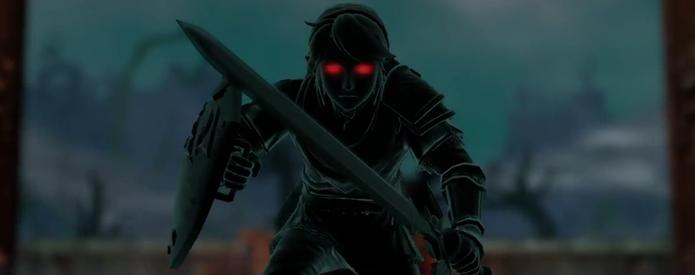


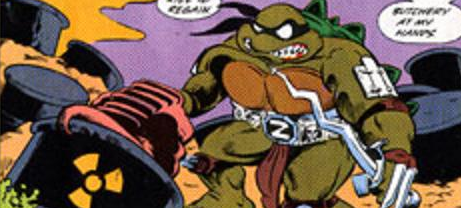


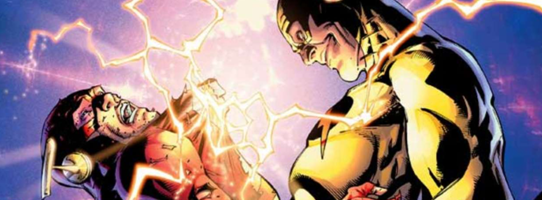
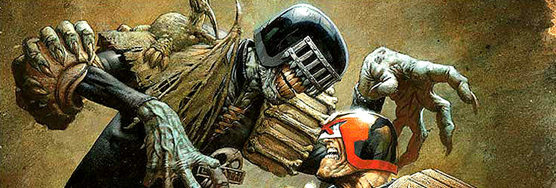
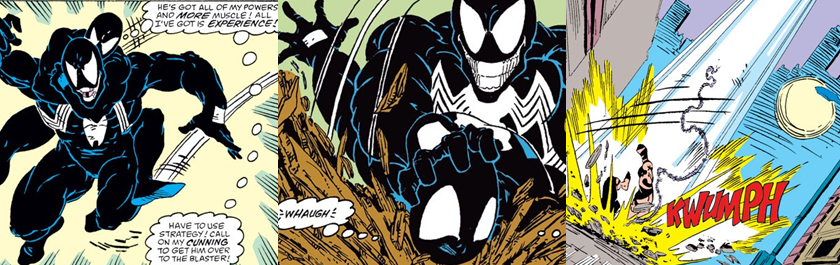




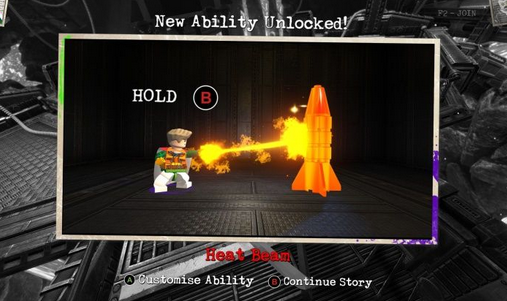
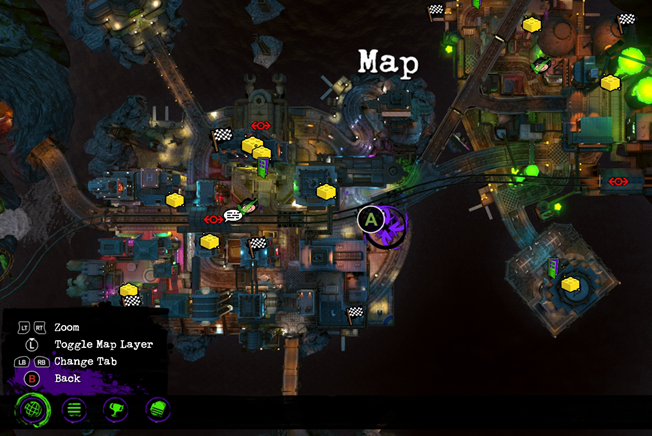
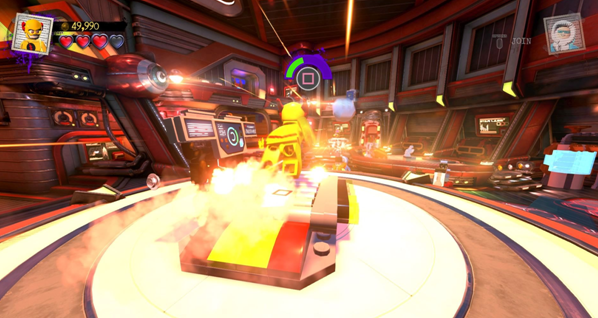


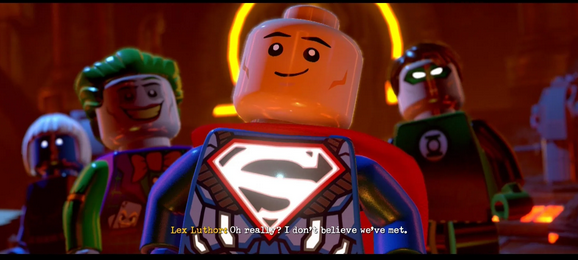
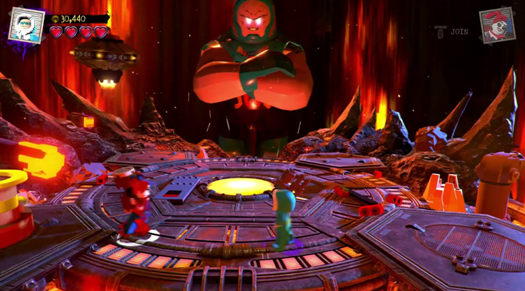

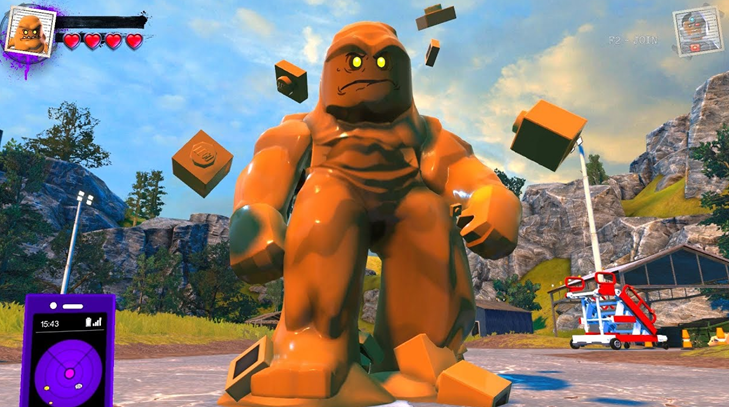

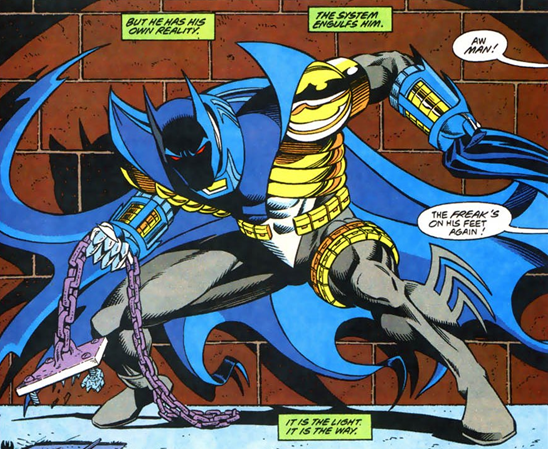


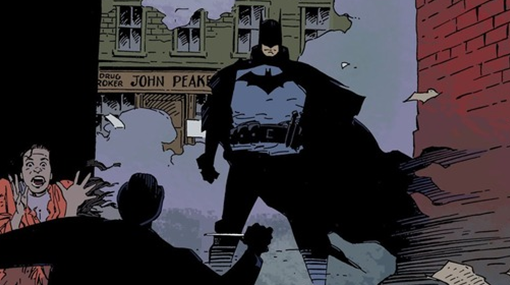


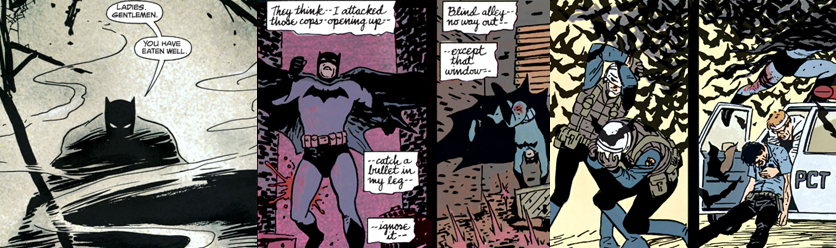

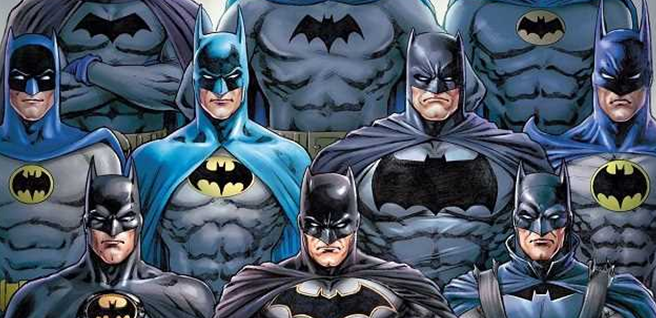


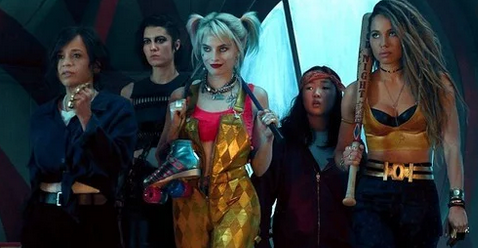

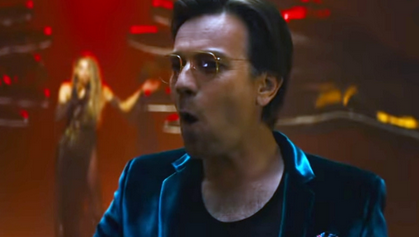



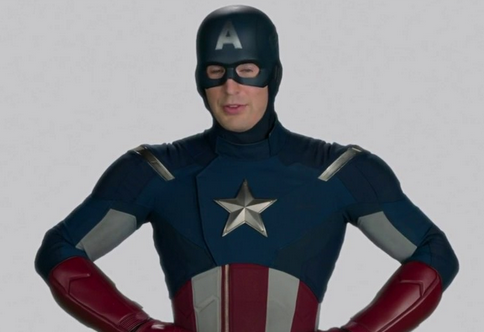

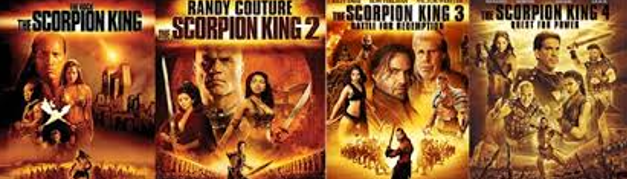
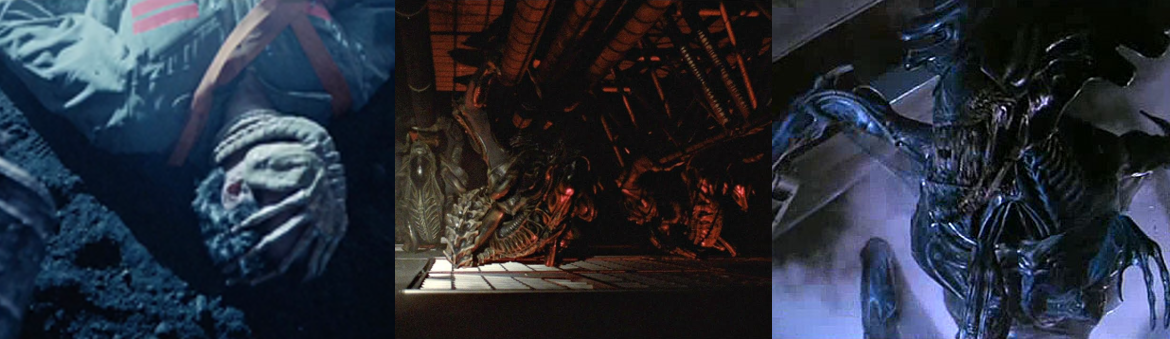


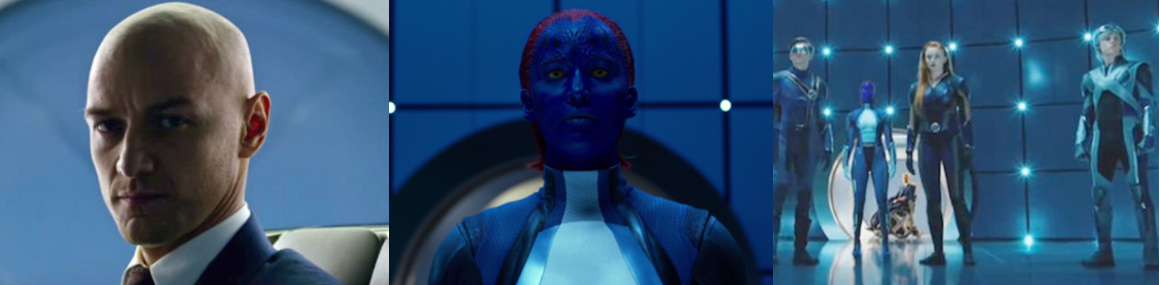


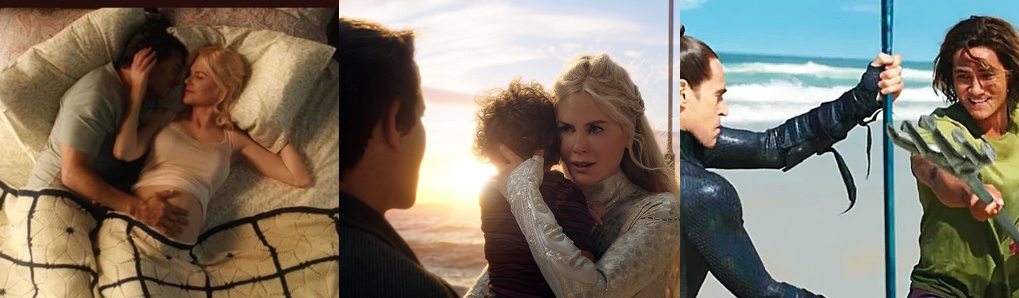


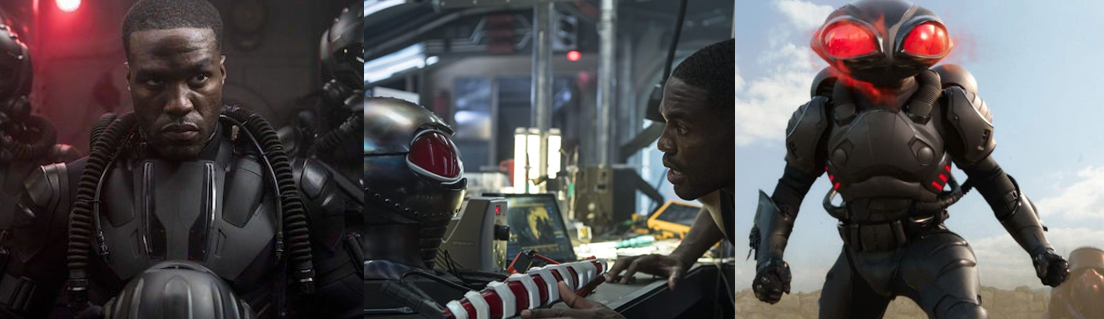


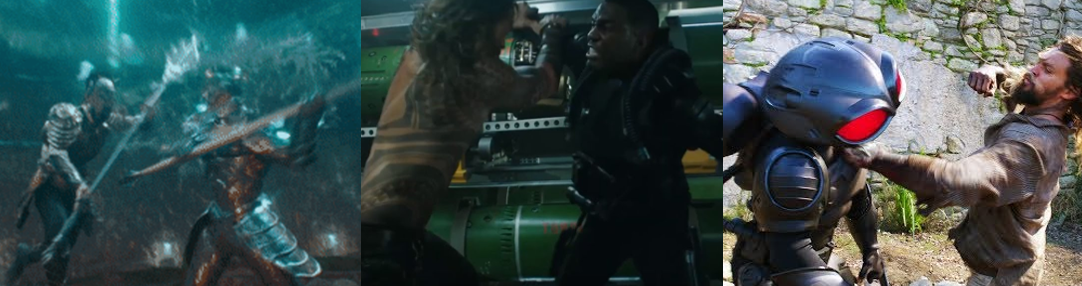





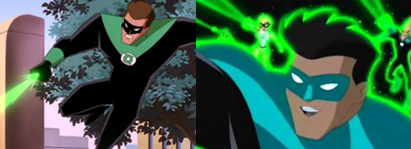
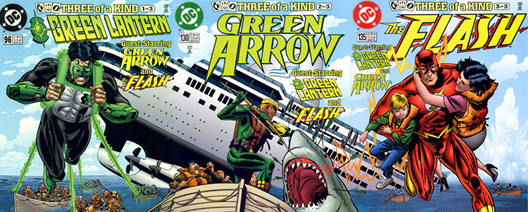
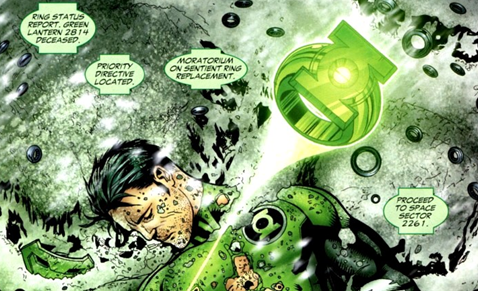







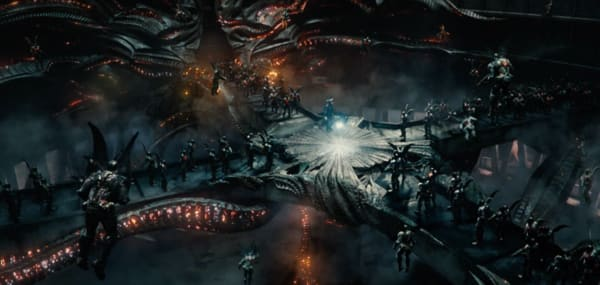
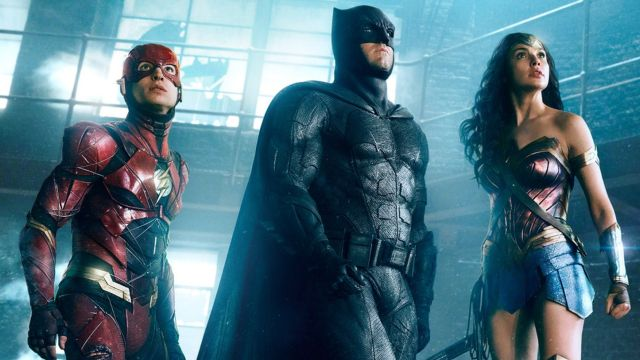
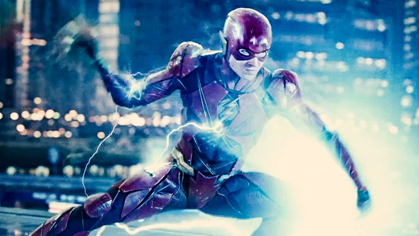
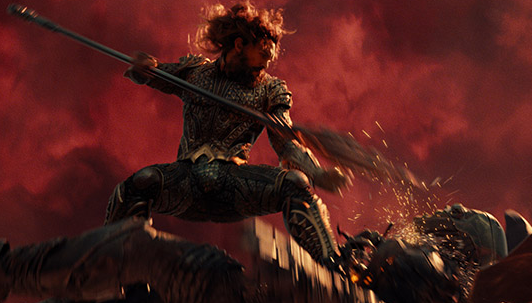
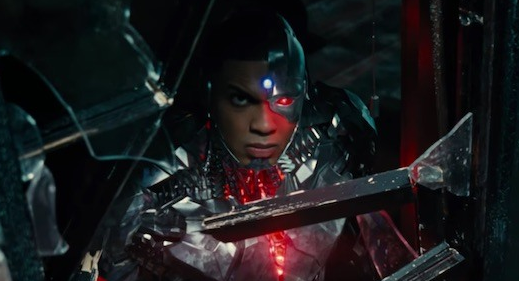

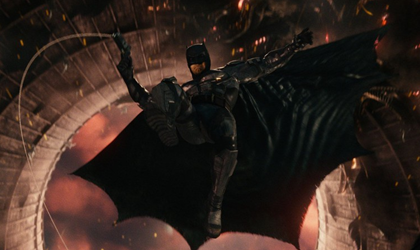
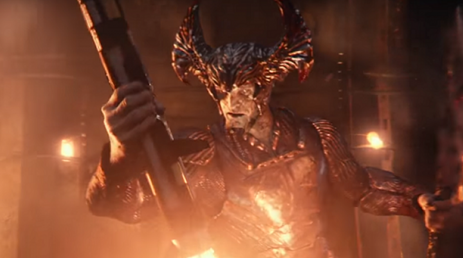


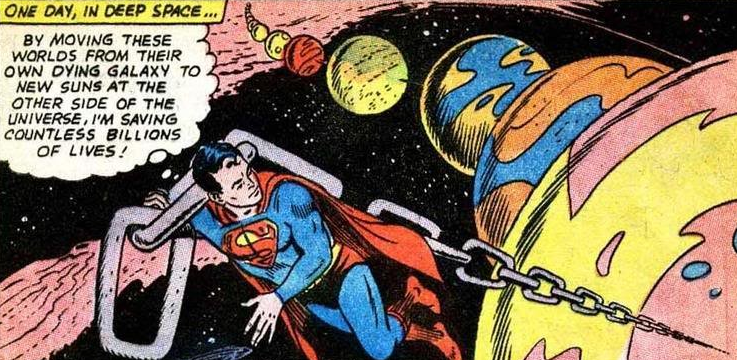
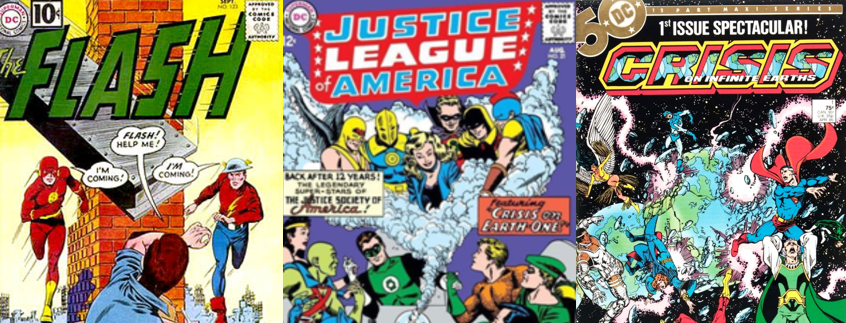
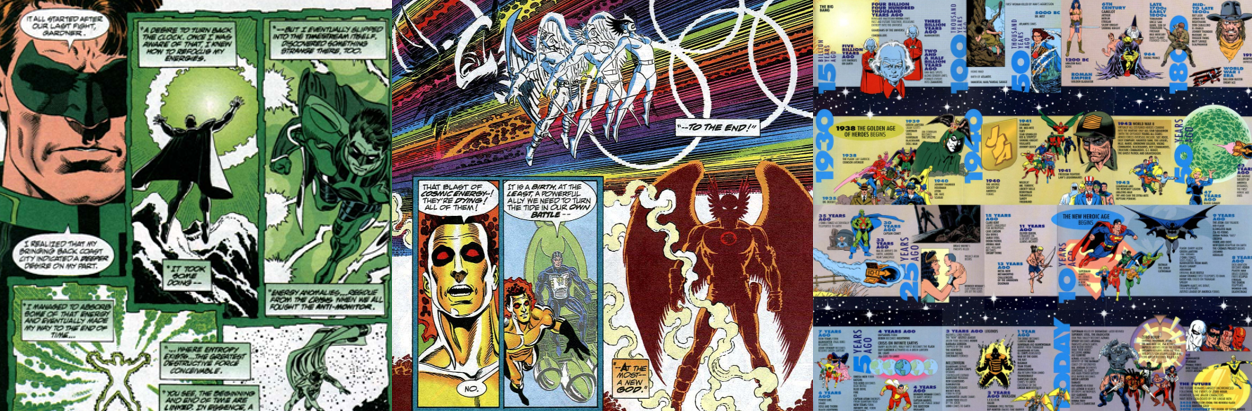
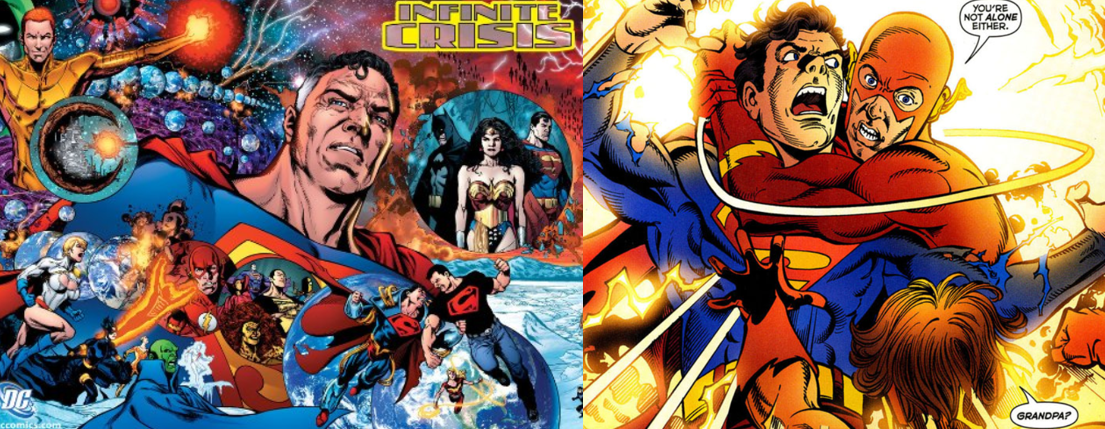
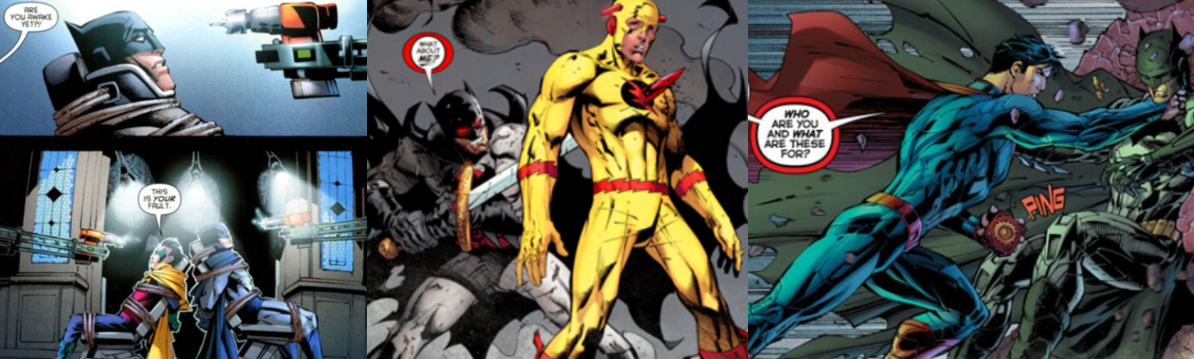
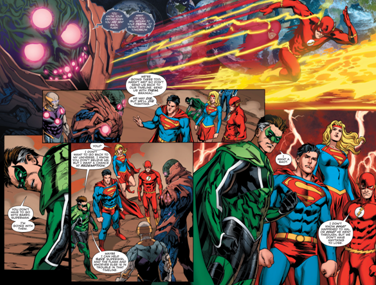
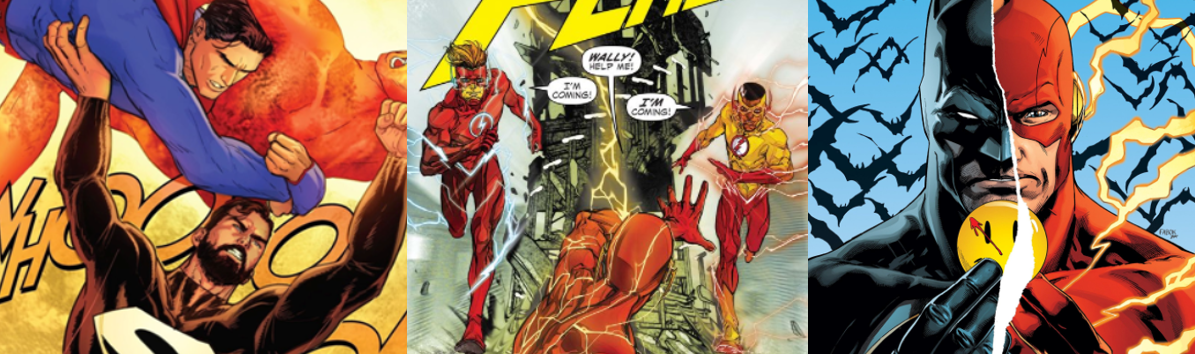
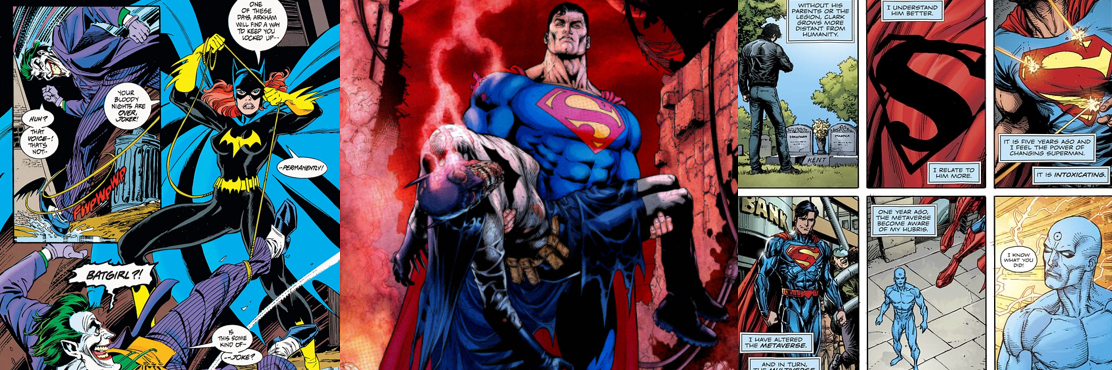
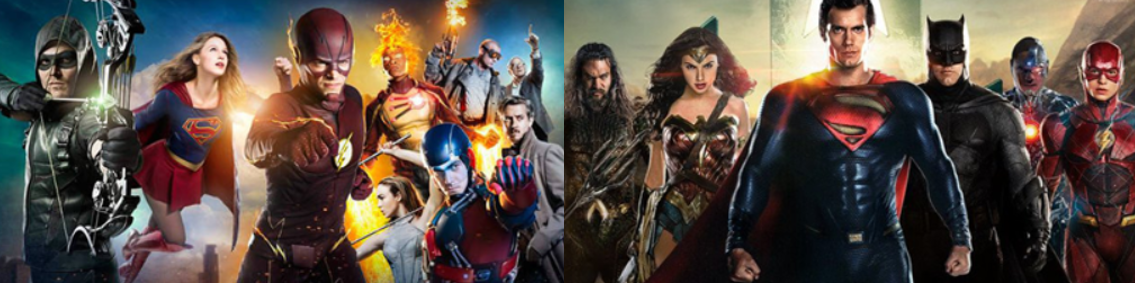


You must be logged in to post a comment.