In April 1985, the first issue of the ground-breaking Crisis on Infinite Earths(Wolfman, et al, 1986) released and saw the temporary destruction of the “Multiverse”. To celebrate this momentous event, I’m discussing multiversal crossovers all throughout April in an event I dubbed “Crossover Crisis”.
Writer: Randy Stradley – Artist: Phill Norwood
Story Title: “Aliens vs Predator: Aliens” Published: November 1989
Story Title: “Aliens vs Predator: Predator” Published: December 1989
Story Title: “Aliens vs Predator” Published: February 1990
The Background: Founded in 1980 by Mike Richardson, Dark Horse Comics separated itself from the heavy-hitters like DC Comics and Marvel Comics by primarily publishing creator-owned titles. In 1988, the company achieved greater mainstream success by publishing licensed stories and adaptations of horror and science-fiction films and franchises, the most prominent of these being the merging of the Alien franchise (Various, 1977 to present) and the Predator films (Various, 1987 to present). About a year before a Xenomorph skull appeared as a trophy in Predator 2 (Hopkins, 1990), the two alien species clashed in this three-issue short story that was the brainchild of writer Chris Warner. This story served as the basis for a five-issue follow-up that greatly expanded upon the premise, which soon exploded into a slew of additional publications, action figures, videogames, and (eventually) live-action movies that pitted the two creatures against each other.
The Review: Our story begins “some time in the future” where the commercial transport vessel Lecter is making its way to the ranching outpost of Prosperity Wells on the planet Ryishi. Pilots Scott and Tom provide the entirety of the story’s narration, and are deeply engaged in a debate about the ethics and morals of mining other worlds for their resources, especially after humanity used up Earth’s in such a short space of time. Tom believes that it’s irresponsible to strip other worlds of their resources as it could stunt or even prevent the evolution of entire species, while Scott believes that it’s absolutely necessary to ensure the long-term survival of the human race.
Against the backdrop of a philosophical debate, Predators forcibly harvest Xenomorph eggs.
Their debate is briefly interrupted by what they assume is a meteor but is actually a Predator spacecraft darting through the cosmos. Scott and Tom’s discussion about the morals of harvesting unintelligent species for food and such are paralleled by the Predator’s harvesting on Xenomorph eggs aboard their ship; as Scott delivers a lecture about survival of the fittest and the strong overpowering the weak, the eggs and their Facehugger contents are scanned and processed and placed into pods to be seeded on other worlds. The eggs are all being forcibly harvested from a captive Xenomorph Queen, here an allegory for the “bitch” that is Mother Nature, who has no choice but to pump out egg after egg and watch as they are summarily processed and shot into space in a clean and efficient system.
Broken Tusk fends off a challenge by the upstart Top-Knot.
As Scott and Tom move their philosophical debate on to the merits of technology versus man’s primal nature, the story introduces us to a Predator warrior known colloquially as “Broken Tusk”. As Broken Tusk arms himself with all the standard Predator weaponry we’ve come to know and love over the years, Scott and Tom endlessly comment on the difference between passive leaders and active combatants. Broken Tusk observes a bout of ritual combat between other Predators and we catch a glimpse of just how many worlds have been seeded with Xenomorphs by the creatures in order to give them something worthwhile to hunt. When upstart Predator “Top-Knot” wins the bout, he’s not content with just choosing which hunting ground he gets to visit and challenges Broken Tusk’s position, which results in the rookie being bested by his superior.
The Predators engage in a successful hunt and gain their ritual markings.
One of the Predator’s seeding pods touches down on a marsh-like alien world; the automated, tank-like vehicle drives around the environment dropping off Xenomorph eggs in its wake before finally exploding, ensuring that many of the native creatures become impregnated by the Facehuggers. As Scott and Tom move their discussion to safari hunts and the like, Top-Knot and his hunting party make landing to begin their hunt, quickly and efficiently moving through the foliage and tracking their Xenomorph prey by following the exploded dead bodies. Soon, the Predators are attacked by the full-grown Xenomorphs; despite the Aliens’ greater numbers, the Predators have the benefit of their advanced weapons and their absolute devotion to the thrill of the hunt. They emerge victorious, having suffered only one casualty, and Top-Knot brands one of his subordinates with the Xenomorph’s acid blood for successfully executing his first kill.
The Summary: The original, three-issue run of Aliens vs. Predator is basically just a prelude to greater things to come in the subsequent Aliens vs. Predator (Stradley, et al, 1990) comics series. Consequently, it’s quite the brief and tantalising glimpse into this shared universe of the two popular, sci-fi/horror franchises, but establishes a lot of the themes for how these franchises would crossover going forward. Rather than being set in the present day or on Earth, like the Predator films tend to be, Aliens vs. Predator takes place in the future like the Aliens films; it also heavily borrows from the aesthetics of Alien(Scott, 1977), especially in the depiction of the Lecter, which is essentially the same kind of vessel as the Nostromo. Similarly, the Predator’s spaceship and appearances are heavily inspired by what we see in the first two films, but the comic greatly expands upon their society and depiction even while utilising a philosophical debate between two humans for the entirety of its dialogue.
The story provides a glimpse into the Predator’s society and lore.
Aliens vs. Predator took the idea of the Xenomorphs being this biomechanical infestation, a swarm of vicious insect-like creatures, and really ran with it; because they lack the higher levels of intelligence seen in the Predators, they are reduced to being forcibly bred specifically for young Predators to test their mettle. The visual of the Xenomorph Queen being strung up and held captive is a powerful one, and one that subsequent comics, and movie and videogame adaptations would heavily borrow from, and is a humbling visual considering how formidable the Alien Queen was depicted in Aliens (Cameron, 1986). The implication is clear: The Predators, with their greater intelligence and superior technology and weapons, were easily able to overpower and capture a Xenomorph Queen and make a regular routine of harvesting her eggs for their own ends. They’re so efficient at it that the entire process is completely automated, with the eggs being forcibly removed, processed, and seeded without any manual intervention on the Predators’ part. Predator society is expanded upon greatly here; we see the hierarchy and feudal nature of the species, with ritual combat being the norm and the younger, less experienced hunters having to fight against their peers for recognition and the chance to hunt. Like lions and other members of the animal kingdom, it’s common for the young upstarts to challenge their betters in an attempt to claim the top position. While this doesn’t go well for Top-Knot, as he’s easily bested by Broken Tusk, he’s still dispatched to lead a hunting party, so it seems as though making the challenge isn’t necessarily a sign of disrespect. During the hunt, even the inexperienced Predators are formidable and capable warriors; while we don’t get to see much of their traditional strategies (there’s no cloaking, no need to modulate their prey’s voices, and very little use of the plasma cannon), we do get to see them working in a co-ordinated effort to eradicate their prey. Although the Aliens are fast and strong and have the numbers advantage, the Predators are keen hunters and superior warriors, meaning they are victorious with minimal effort, and the honour that comes from killing a Xenomorph is of high standing in their society (which, again, would be a crucial plot point in later stories).
A decent story, but clearly just a taste of greater things to come for this crossover.
However, it has to be said that the concept of bringing together the Aliens and Predator franchises probably sounded better on paper than it worked in execution. I have read the subsequent comic series, and it’s definitely a lot better and more in-depth, but I didn’t want to get into that without first tackling the three-issue arc that kick-started this entire sub-franchise and Aliens vs. Predator, while a novelty, is really just an appetiser for the main course. Dark Horse Comics teased readers by framed the first two stories as Aliens and Predator tales, so the actual Aliens on Predator action doesn’t kick in until right at the end, and it’s very brief when it does happen. I applaud the creative use of Scott and Tom’s philosophical debate as a parallel to the events of the story, but I found myself tuning the text boxes out and focusing more on the visuals. While the art does tell us a lot about what the Predators and even the Xenomorph Queen are thinking and feeling, I am not a massive fan of the art on show here. It’s both messy and yet simple, oddly coloured (I get that we hadn’t seen much of the Predator society or their ships but there’s a lot of odd purples and yellows and blues here), and it’s not that easy to tell the Predators apart. Obviously, this is in keeping with the aliens as depicted in the movies, which had very subtle differences, but I think for a comic you need a little more than just a barely distinguishable broken tusk or hair being styled differently. It’s also a little disappointing that we don’t get more variations of the Xenomorphs; considering they were all born from alien lifeforms, it’s a little odd that they are just carbon copies of the drones seen in Aliens, but again I can understand why this decision was made as it makes sense to focus on the familiar visual of a Predator we recognise from the movies fighting Aliens as they appear in the films. Overall, it’s a fun little novelty that’s worth checking out as long as you read it as a prelude to the longer, far more exciting and visually interesting follow-up.
My Rating:
⭐⭐
Rating: 2 out of 5.
Could Be Better
Have you ever read the original, three-issue Aliens vs. Predator story? If so, what did you think to it? Do you own a copy of the original comics or did you pick up the collected edition as I did? Were you also disappointed by the brevity of the story and the artwork or did it get you excited to see subsequent clashes between the two aliens? Which of the two creatures, and franchises, was/is your preference? Which of the Aliens vs. Predator stories or adaptations was your favourite? Would you like to see the two battle again in some form or another? Whatever your thoughts onAliens vs. Predator, and comic book crossovers of this kind, drop a comment down below.
Released: 12 June 1984 Director: John McTiernan Distributor: 20th Century Fox Budget: $15 to 18 million Stars: Arnold Schwarzenegger, Carl Weathers, Bill Duke, Jesse Ventura, Sonny Landham, Shane Black, Richard Chaves, and Kevin Peter Hall
The Plot: Major Alan “Dutch” Schafer (Schwarzenegger) and his crack rescue team are recruited by Dillon (Weathers), an old friend turned government operative, to rescue an important group of hostages from guerrilla forces in a Central American jungle. However, they soon find themselves being picked off one at a time by a mysterious extraterrestrial hunter (Hall) who kills for sport.
The Background: After the release of Rocky IV (Stallone, 1985) there was a joke circulating around Hollywood that Rocky Balboa (Sylvester Stallone) had run out of earthly opponents and would have to fight an alien next time around. Writers Jim and John Thomas took this concept and expanded it into a screenplay initially titled Hunter that, after being bought by 20th Century Fox and placed into the hands of producer Joel Silver, was transformed from a pulp sci-fi tale into a big-budget action vehicle. Initially, the then-relatively-unknown Jean-Claude Van Damme was cast as the titular alien creature, which was originally conceived of as a more agile and bug-like monster; however, after Van Damme bowed out after issues with the original suit, the creature was redesigned by special effects legend Stan Winston (with some input from director James Cameron) to accommodate a new actor, the monolithic Kevin Peter Hall. Filming was rough for the cast and crew, many of whom became ill from food poisoning and the intense heat, and the lead actors (all big, beefy boys in their own right) became obsessed with working out and appearing in peak physical condition. Upon release, Predator was met with largelynegativereviews; despite this, the film made nearly $100 million at the box office and quickly became a cult classic that is now regarded far more favourably. Of course, it also spawned an under-rated sequel and marked the beginning of a multimedia franchise that includes further sequels, videogames, and comic books. There were even crossovers with 20th Century Fox’s other sci-fi/horror franchise, the Alien saga (Various, 1979 to 2017), and a fan movement to declare June 12th as “Predator Day”; although this clashes with “Superman Day”, any excuse to revisit this franchise is a win for me.
The Review: I know how it sounds but let’s not beat around the bush here: Predator is as much a man’s film as you can get! I say that having known plenty of girls who enjoy the film, and the franchise, but come on now, this is a film made for a very specific type of audience at a very specific time when films such as this were popular and the fact that it is so unapologetically hyper-masculine really plays into its strengths as an enjoyable sci-fi/action/horror romp that can be appreciated by anyone and everyone, regardless of gender identification. Right off the bat, Predator isn’t pulling any punches: first, we get the blatant shot of an alien craft shooting a capsule to Earth, then the manliest team of men who ever menned disembark a helicopter while Alan Silvestri’s fantastic, iconic score plays, and, finally, we get perhaps the single greatest interaction between two characters ever put to film as Dutch and Dillon reunite with the world’s most powerful handshake! The excess and testosterone is practically oozing out of the film at every moment but, perhaps, none more so than in these first ten minutes or so where we learn all we need to know about Dutch and his team: They’re the best at what they do but have certain principals, seeing themselves as “a rescue team, not assassins” and being suspicious of outsiders joining their party.
Predator showcased many different sides of Arnold’s range and charisma.
Though one of Arnold’s early roles, Dutch is a fantastic part for the Austrian Oak; rather than being a stoic and silent character, Dutch is confident and instantly likeable, with a playful sense of humour and camaraderie with this teammates. However, when on mission, Dutch is all business, exhibiting a keen sense of his surroundings, comprehensive knowledge of guerrilla tactics and survivalist skills, and a natural ability to adapt to any and all situations. We first see this when he provides a distraction by sending a truck careening into the guerrilla camp and, later, when he sets traps for the Predator and learns how to use mud to camouflage himself and put together a proactive plan to bring the fight to the alien hunter. Of course, while Dutch is a physically capable mountain of a man, he’s no one man army (well…he is but he’s part of a team so I have to talk about his team…); while you can make the argument that Predator’s characters are all largely interchangeable, with the majority of them being heavily-muscled, snarky brutes who attack with a cold, clinical efficiency, each of them has many opportunities to stand out and be a little more than a one-dimensional caricature despite the fact that we really know and learn next to nothing about them.
Mac is distraught and driven to mindless vengeance when his friend is killed.
Hawkins (Black), for example, is the awkward bookworm type, one of only two members of the team to sport a more slender physique, whose “thing” (beyond his ridiculous glasses) is trying to get Billy (Landham) to laugh with so-bad-they’re-good Dad jokes. Billy, in comparison, is the strong, silent type; introspective, with an aptitude for tracking, he is the first of the group to really sense that something otherworldly is afoot in the jungle. Superstitious and an appropriation of the Native American spiritualist, Billy believes that a spirit or some cursed demon is stalking the group yet, while he doesn’t rate their chances of survival, he never gives in to despair and is the first of team to confront the Predator head-on in single combat…with results so disastrous that they’re not seen onscreen. Easily the most amusing and memorable character, beyond Dutch and Dillon, is Blaine (Ventura), a gigantic, musclebound soldier who exudes a macho charm that is both endearing and entertaining. Oh, and, he’s also got a fuckin’ galting gun that he uses to mow down guerrillas with reckless abandon and shrugs off bullet wounds like they’re nothing! Blaine also stands out through his love of chewy tobacco, some fantastically memorable one-liners (his “sexual Tyrannosaurs” line is a personal favourite but who can forget “I ain’t got time to bleed!”, perhaps the most unforgettable line of the film) and his brotherly relationship with Mac (Duke). Mac’s “thing” is the little razor he uses to constantly shave sweat from his face and his friendship with Blaine; he’s the only one to refer to one of his team mates as a friend and he’s deeply affected by Blaine’s violent death. Mac is also the only one of the team to really crack under the pressure of the Predator’s assault; grief-stricken and hungry for revenge, he blindly rushes into the jungle to pursue the creature and tries to make good on his promise to avenge his fallen comrade. Of course, he is unsuccessful, mainly because he is so emotionally distraught that, despite being the first to really “see” the camouflaged Predator, he’s unable to think rationally enough to get the upper hand on the alien.
Poncho and Anna help flesh out the team and the world but are largely insignificant.
Perhaps the most underwhelming and easily forgotten member of the team is Poncho (Chaves); in fact, Poncho is so inconsequential that I’m also surprised that he manages to outlive Hawkins, who appears the least physically capable of the group. Poncho, instead, does very little beyond asking rhetorical questions, taking a log to the gut, and ultimately being killed by an unceremonious plasma blast to the head when the last few survivors are trying to escape. The team is also joined by Anna (Elpidia Carrillo), the last remaining hostage from the guerrilla camp; like Billy, she’s a quiet, superstitious, and perceptive character who believes that a devil is stalking them, having heard stories of similar events happening in the past. She adds very little to the team beyond being a hinderance and to add an extra layer of dread to the proceedings, especially when the Predator is still being hidden from view and is a mysterious presence, but she’s largely inoffensive. Best of all, there’s no awkward romantic subplot between her and Dutch; he orders her to “Get to dah choppah!!” the first chance he gets and is left to fend for himself, with no sexual distractions or damsels to rescue.
Dillon’s presence causes tension and his downfall comes from his wounded pride.
The wild card to the team is, of course, Dillon; numerous vague hints and references are made towards Dillon’s past and friendship with Dutch but, even with that in mind, Dutch is immediately suspicious of the mission when he is ordered to take Dillion, now a CIA operative, along with him. The rest of the team, particularly Mac, don’t care much for Dillon’s presence, seeing him as a liability to their operation, and these suspicions turn out to be well founded when it’s revealed that the team was drafted in to take out a group of terrorists rather than rescue hostages. This causes tensions within the group, who are already on edge thanks to the mysterious killer picking them off, but they are nevertheless forced to work together to try and corner the Predator. Dillon is the only one of the team that is unwilling to believe in a supernatural or extraterrestrial threat stalking them from the trees but, when the Predator is exposed, he willingly joins Mac in attempting to extract a measure of revenge against the alien for all the death and trouble it has caused him. For Dillon, it’s pride that causes his downfall; had he stayed with Dutch, he may have been in with a chance of surviving but, in the end, he’s dismembered and skewered with an effortless efficiency.
The Predator is initially kept well hidden and vague for maximum tension.
It is, perhaps unsurprisingly, the titular Predator who brings the most appeal and distinctiveness to the film; although we know that an alien presence is clearly stalking the team, we don’t get out first real look at it for a good hour or so and, even then, it’s a fleeting shot. Instead, we see through the Predator’s unique and costly thermal vision, watching as it pursues and observes its prey from the treetops and attempts to mimic their speech (a haunting feature, to be sure). When the Predator does appear, it’s little more than a pair of luminous glowing eyes and a vague, distorted shape and, despite almost the entire film taking place during the day, the creature is kept well hidden. We see glimpses of its blade, spend a lot of time watching its arms, legs, and torso as it ritualistically cleans up its gruesome trophies, and only get a good, lingering look at the creature when it follows Dutch into the water and its cloaking device is disrupted. The result is one of the most iconic alien designs of all time; rather than the bug-like creature that was the Predator’s original design or the animalistic nature of the Xenomorph, the Predator is a humanoid being made up of two arms, two legs, and sporting an impressive frame and physique. Garbed in light armour and sporting a vast array of weaponry (that ranges from low-tech but incredibly lethal wrist-mounted blades to the creature’s iconic plasma cannon), the Predator is instantly recognisable thanks, in large part, to its helmet and dreadlocks but also because of its monstrous crab-like visage and mandibles.
The Nitty-Gritty: Take away the alien and Predator would be a largely forgettable, by-the-numbers action film about a troupe of crack soldiers fighting terrorists. The Predator, though, takes that concept and the film’s various clichés and completely flips them on their head; as soon as we first see the Predator’s thermal vision, and definitely after Hawkins’ brutally swift death, the film becomes something entirely different from a hyper-masculine action film. It transforms before your eyes into a survival/horror film against an alien presence that is far beyond that of man, changing from a routine mission to defend America’s freedoms to one about man’s battle for survival.
The film evolves from bombastic action to one man’s primal battle for survival.
Before we get to the point, it’s important to make mention of the wide variety of action scenes on offer in Predator: the film starts off relatively simple, with Dutch and his team gunning down the entire guerrilla camp with a clinical efficiency and a bevvy of one-liners, before escalating into a paranoid firefight into the dense jungle in a desperate attempt to kill whatever is responsible for the deaths of their team mates. When it becomes apparent that they’re facing something beyond their understanding, Dutch leads the survivors in setting up a series of low-tech traps, using survival tactics to create a perimeter to ensnare the creature so that they can get a clear shot at it. Though Dillon is sceptical, he helps with this task regardless and it works…until the full extent of the Predator’s capabilities quickly render all their planning mute. Dutch, however, continues to employ these same tactics out of desperation and necessity more than anything else when he’s left the sole survivor; he loses his gun and is left with only a handful of shells and melee weapons with which to make his final stand. He does this through simple guerrilla strategies, using mud to mask his heat signature after a close call with the Predator and then fashioning a bow, a series of explosive arrows, and a number of deadly traps with which to enact his last, desperate stand against the creature. In this sequence, the film’s title takes on a double meaning as Dutch becomes both predator and prey, turning the Predator’s weapons and technology against it to draw it out into the open for a more even fight.
Despite the Predator’s superior strength, Dutch triumphs through his wiles.
While the sequels and extended media would, of course, greatly expand upon the Predator’s society and culture, there’s enough evidence towards the race’s ethos in this first movie: the Predator only attacks those who are armed and that it deems worthy prey (with the exception of Hawkins and Poncho, who were largely defenceless…), methodically stalks its victims from afar to ascertain their strengths and weaknesses, and makes trophies out of the skulls of those it kills. With its cloaking device compromised and faced with an enduring, persistent, and adaptable foe, the Predator chooses to ditch its signature plasma cannon to engage Dutch in a one-on-one fight, even hampering its vision by removing its helmet. Of course, the fight is anything but fair since the Predator is inhumanly strong; I watched a lot (basically all) of Arnold’s films as a kid and it was massively impressive to see a foe not only tower over him but also lift him up by one hand and beat him to near death. In the end, of course, Dutch is able to outsmart the Predator and lure it into a fatal trap; mortally wounded and defeated, the Predator chooses to activate a devesting self-destruct device in an attempt to take Dutch with it but, just as Dutch casually shrugged off a plasma blast early, no small-scale nuclear blast is enough to put down Arnold and he manages to outrun and avoid the blast but is left clearly affected, traumatised even, by his encounter with the creature and the Predator’s systematic slaughter of his friends and comrades.
The Summary: To me, Predator will always be a near-peerless classic; everything about the film, from start to finish, is so gloriously over the top and entertaining that it never fails to be an enjoyable sci-fi/horror romp. Endlessly quotable and immensely fun, Predator is a fantastic film to throw on with a group of friends with some pizza and a few drinks and just have an unapologetic good time. I regard Predator as one of Arnold’s best films since it was a role with some real meat to it that really showcased his charisma and what he was capable of as a subtly complex action hero: Dutch isn’t just some muscle-bound meathead; he’s intelligent, experienced, and highly adaptable while also being charismatic, well-respected, and tough as nails at the same time. The film is full of testosterone and ridiculously macho characters yet, despite this, they’re all really endearing and likeable; there’s a real sense of camaraderie amongst the team, who all work together as a unit, and even the tension and suspicion regarding Dillon is largely a non-factor in the face of their struggle against a greater, common enemy. The titular Predator is a fantastically unique creature; here, it and its culture are, largely, a mystery and a lot of what we learn about it comes from inference and speculation, all of which adds to the otherworldly nature and appeal of the alien, to say nothing of its horrific appearance and impressive weaponry and physical skill, and I will always have time for Predator and the Predator concept because of this.
My Rating:
⭐⭐⭐⭐⭐
Rating: 5 out of 5.
Fantastic
So, tell me, what did you think to Predator? Did you see the film in the cinema back when it first came out and, if so, what did you think of it at the time and how do you think it holds up today? Which of the film’s characters did you like the most, or the least, and why and did you enjoy the film’s excessive machismo? What did you think to the Predator and its design and weaponry and how differently do you think the film would have turned out if Van Damme had remained in the role? Which of the Predator sequels and merchandise was your favourite and did you celebrate Predator Day this year? If you’re a girl and you enjoy Predator and over-the-top action films, chime in with your thoughts about how any one can enjoy these films but, either way, do please leave a comment below sharing your thoughts and opinions on Predator.
Released: February 2010 Developer: Rebellion Developments Also Available For: PC and PlayStation 3
The Background: I’ve mentioned this before but Aliens vs. Predator has been a thing for a long, long time now. These two iconic science-fiction/horror franchises first came to blows in a series of excellent comic books published by Dark Horse comics between 1989 and 1990 and, since then, we’ve seen countless additional comic books, action figures, two divisive movies, and a whole host of videogames based around the concept. In the same year that the exceptional arcade beat-‘em-up was released, Rebellion developments crafted a first-person shooter (FPS) for the short-lived Atari Jaguar (remember that?) that allowed players to take on the role of a Colonial Marine, a Xenomorph, and a Predator in what was, essentially, a reskin of popular FPS games like Wolfenstein 3D (id Software, 1992) and Doom(ibid, 1993). A few years after AVPR: Aliens vs. Predator – Requiem(The Brothers Strause, 2007) effectively killed the concept of seeing the Predators hunting the Xenomorphs onscreen (though I actually quite enjoyed that movie; it was worlds better than the first AVP movie), Rebellion Developments rebooted the concept for then-modern consoles and produced another FPS title that, despite bringing two of cinemas most iconic franchise together for a new generation, failed to really impress players or critics alike. Despite this, and my general disdain for FPS games (I just don’t like the restrictive view or being shot in the back), these are two of my favourite franchises and the game is dirt cheap so I decided to pick it up and see it was really as mediocre as everyone said it was.
The Plot: The malevolent Weyland-Yutani corporation finds their colonies, laboratories, and spaceships under attack when their experiments with Xenomorphs inevitably break out and the alien Predators become enraged at the corporation desecrating their sacred hunting grounds. Roping in an expendable team of Colonial Marines to secure their sites, the corporation scrambles to ensure that their new cross-breed specimen survives to be sold as a military weapon.
Gameplay: Like its Atari namesake, Aliens vs. Predator is a first-person shooter than gives players the option of playing as a Colonial Marine (known as the “Rookie”), a Xenomorph (codenamed “Specimen 6” or simply “Six”, and a Predator (referred to as “Dark”). Each story sees you exploring similar environments and the game’s over-lapping story from different perspectives, with slightly different control schemes, gameplay mechanics, and objectives to fulfil as part of your mission.
Block and slash with wrist-mounted blades or make short work of his prey with the Predator’s plasma cannon.
As much as I love Aliens(Cameron, 1986), I have a soft spot for Predator (McTiernan, 1987) so, naturally, upon booting up Aliens vs. Predator, I completed my first playthrough as the Predator character. In an effort to better evoke the spirit of that first movie, you’re dropped into the middle of an alien jungle to learn the many complex controls associated with the Predator, who has access to the majority of his iconic abilities right off the bat. The Predator engages in combat primarily through the use of his wrist-mounted blades; the right bumper slashes with a weak blow, the left with a stronger attack necessary for breaking through an enemy’s guard, and holding them both down allows you to defend yourself from melee attacks. Pressing the right trigger sends out an energy blast from the Predator’s trademark shoulder cannon and holding the trigger down lets you lock on to a target. You can also press the Y button to activate the Predator’s signature cloak, though both of these abilities drain Dark’s energy meter and this can only be replenished by charging up at various electronic panels scattered across the game’s limited environments. Also, it might just be me but I found the cloak almost completely useless; if you activate it and walk in front of a human enemy, they will still spot you and open fire upon you and they’ll still be able to see and track you even if you leap behind cover. Add to that the fact that the Xenomorphs can detect you whether you’re cloaked or not and Dark’s invisibility is all but ineffective in execution and it’s far easier to simply sneak around behind cover than depend upon this mechanic. Dark can also cycle through various vision modes (the usual thermal vision allows you to see human and android enemies but renders Xenomorphs as nearly invisible and the reverse is true for the green-tinted Xenomorph vision) with a press of the B button and you can even lure his prey into an ambush by pressing X and mimicking cries for help. This is the perfect way to sneak up behind your prey and execute a “Trophy Kill” that sees the Predator wrench a man’s head from his shoulders or skewer them with his wrist blades.
Even with all the Predator’s advantages, first-person doesn’t seem to be a suitable gameplay perspective.
You can also execute these gloriously gory kills by stunning enemies through melee combat and can expand the Dark’s arsenal as you progress through the story and acquire other weaponry popularised by the criminally under-ratedPredator 2 (Hopkins, 1992). As you explore your environments, you’ll be given objectives and hints through your heads-up display (HUD) and can hold down the left trigger to entire a “Focus Mode” that allows you to see points of interest, your exit, and other secrets and items scattered around the environment. The Predator can also jump with the A button and, when in Focus Mode, will leap to higher vantage points automatically to allow you to take the high ground and pick off your targets. Dark has a health bar in the bottom right of his HUD; he can take a decent amount of damage but falls surprisingly quickly under sustained gunfire or Xenomorph clawing. You can restore your health by holding the Y button as long as you have a Health Shard on hand; you can hold three of these at any one time and will find them scattered sporadically across the game’s locations. Luckily, there are numerous checkpoints so, if (well…when) you die, you can simply load up your last checkpoint. You can also manually save the game at any time but this doesn’t create a checkpoint; also, quite often I found that I would reload a checkpoint only to be dumped in the middle of a full-on gunfight, which was a bit annoying, to say the least. Similarly, for me, the FPS perspective is clunky and awkward for the Predator; since you’ll soon run out of energy for your plasma cannon, you’ll be relying on close-combat melee attacks or Dark’s other, less interesting weapons. It’s also slightly awkward and annoying to have to constantly cycle through the Predator’s various vision modes when dealing with combinations of enemies so you rarely get the chance to properly appreciate the game’s surprisingly detailed environments. Personally, I feel like the Predator would have controlled and been realised better if his gameplay had been rendered from the third-person as in Predator: Concrete Jungle (Eurocom, 2005) though, to be fair, I found that game even more daunting in the vast array of controls and mechanics it used to bring to life all of the Predator’s various abilities and weaponry.
The Marine controls much like a typical FPS,but with poorer lighting and a handful of rudimentary puzzles thrown in.
After finishing the Predator’s story, I next took on the role of a Colonial Marine (known as “Rookie”). The Marine’s gameplay is very similar to a standard FPS videogame, which makes the game far less clunky and awkward when compared to playing as the Predator from a first-person perspective; the HUD is simplified, incorporating the Aliens motion tracker to give you a vague idea of where enemies are and pointing you in the right direction, and the Marine also regenerates a small portion of his health as long as you don’t lose an entire block. You can still pick up health, though, this time in the form of Stim Packs, which operate in exactly the same was as the Predator’s Health Shards, but are afforded far more limited options when it comes to your ability to see and navigate through the game’s many dark and dismal corridors. Pressing B will activate Rookie’s torch (or “flashlight” for you Americans) to bring some light to darkened areas and you even have an unlimited supply of flares that you can toss into the darkness for a brief period of light, which is a nice touch. Rookie’s story is one of survival and meeting many varied objectives; the Xenomorph infestation has left Weyland-Yutani’s many facilities in quite a state so you’ll be repairing power points, activating doors, and setting up automated gun turrets to progress further, fortifying the barricades the few remaining Marines have set up, and mowing down swarms of Xenomorphs. Because of this, the Marine’s gameplay feels far more tense and reminds me of playing Doom 3 (id Software, 2004) thanks to the sparse use of lighting, dark, dank, and dreary futuristic environments, and claustrophobic, mounting horror that fills every area. The Marine is your typical silent FPS protagonist and spends most of his time taking orders from fellow Marine Tequila and being directed by Company android turned good Katya. Generally, this means hacking into terminals and then surviving while hoards of Xenomorphs or Combat Androids (or both) fill the immediate area, which can be a tall order in some situations. Other times, you’ll simply be running from certain death and, while Rookie can jump, he isn’t required to do any tricky platforming, which I am very thankful for, but he also can’t duck and there’s no real snap-to-cover system in place so, in the face of a hail of bullets, you’re limited to taking a more old school approach and simply, awkwardly, hiding behind bits of the environment. You can take advantage of the environment to help clear out enemies, though, as you’ll find explosive pipes and barrels conveniently scattered across narrow hallways and bridges that will help to thin out swarms of Xenomorphs or put down those Goddamn Combat Androids.
It can be disorientating playing as a Xenomorph since Six’s clunky gameplay makes stealth tricky.
Honestly, I dreaded playing as the Xenomorph, Six, simply because I could tell that it was going to be the most troublesome and least fun campaign. Six is the fastest and most agile character, able to clamber over walls, ceilings, and pretty much all of the game’s environments just by moving the left analogue stick. While it’s pretty simple to run up walls and use the Xenomorph’s a panther-like leap to traverse the game’s areas, it’s maybe too easy; you’ll slide up walls when you don’t mean too, slip around like you’re constantly on ice, and it’s more than a little disorientating when you’re scuttling upside down on ceilings. Six attacks entirely with melee attacks; while other Xenomorph enemies spit acid, Six isn’t able to do that so must rely on her claws and her spear-like, whipping tail. By holding down the left trigger, you can engage Six’s own Focus Mode to target specific enemies and leap at them at attack; you can also block, like the Predator, and break an enemy’s block with her stronger tail attack. Sneak up on enemies, or damage them enough, and you’ll be prompted to press X to grab them and perform a gruesome instant kill. Six, apparently, performs best when shrouded in darkness so, during her tutorial, you’ll be asked to smash out ceiling and wall lights to keep her shrouded in darkness. In practise, though, I found few opportunities to really do this and, similar to the Predator’s cloaking mechanism, enemies seem to spot you no matter how deep in the shadows you are. Sometimes you can slowly sneak up behind them, other times they’ll turn around with the slightest press of the analogue stick; one time, though, I snuck up on a Marine and skewered her through the chest as she stood next to her team mate…who just stood there, completely oblivious, and let me do the same to him. Scattered throughout Six’s environments are a series of vents that she can dart through to avoid gunfire; unlike the other characters, Six’s health automatically regenerates after a few seconds and she has no other way of refilling her health bar so it’s crucial that you hit and run if you take too much damage. Similar to the Predator, Six can hiss to attract enemies closer to her and you’ll also find some civilians scattered throughout each mission, helpfully highlighted in green. Sometimes, these civilians will run and cower in a corner but others they’ll shoot themselves or blow themselves up so you’ll have to be quick about pouncing on them to harvest them with the X button. If the FPS view is unbefitting of the Predator, it’s really awkward for a Xenomorph; it’s very difficult to know where you are or how to orientate yourself. It’s like the game wants to be like the Predator sequences from the Batman: Arkham series (Various, 2009 to 2015) but it falls way off the mark as it’s difficult to target and isolate Marines in narrow areas. I can’t help but think the Xenomorph campaign would’ve been better as a kind of top down strategy style of game similar to Aliens Versus Predator: Extinction (Zono, 2003) where you play as an Alien Queen and direct drones and other Xenomorphs from the hive to spread her progeny throughout the game’s environments.
Graphics and Sound: Honestly, for an Xbox 360 game and considering the age of this title, Aliens vs. Predator doesn’t look half bad; graphically, the game struggles to render human models in a realistic way, once again making them appear as little more than plastic action figures, but the various Xenomorphs and Predators all look really good and are very true to their source material.
The game’s visual fidelity to the aesthetics of the movies is top notch!
Visual fidelity is key to Aliens vs. Predator’s presentation; the jungle is clearly modelled after the one seen in Predator, for example, and the various Weyland-Yutani corridors all evoke the same lived-in aesthetic as seen in Aliens but there were a few surprising call-backs to Alien (Scott, 1979) in the game’s visuals as well; even Alien3(Fincher, 1992) feels evoked through copper-tinted, wind- and water-swept areas such as the mines and the refinery. While I expected the game to recycle a lot of the alien and mixed dynasty architecture of the AVP movies (which it did, particularly in rendering the ancient Predator hunting grounds and pyramids, with liberal use of hieroglyphics depicting the two species’ long history), I wasn’t expecting the game to so faithfully evoke the spirit and feeling of any movie beyond Aliens so that was a nice surprise for me. Unfortunately, you’ll be visiting the same five different environments across each of the three campaigns. Sure, you’ll have access to different areas, different objectives, and different options available to you but, essentially, Aliens vs. Predator simply recycles the same levels three times, which is a bit of a disappointment.
Sounds are all ripped straight from the movies and even Lance Henriksen is back!
Where Aliens vs. Predator excels, though, is in its sound design; the music and sound effects are all ripped directly from the two Predator movies and Aliens, providing a stamp of authenticity that works really well with the game’s slavishly faithful environments. The pulse rifle sounds exactly as it did in Aliens, the Predator’s various growls and ticks mirror those from the movies exactly, and the Xenomorphs even sequel in pain exactly as they did in Aliens. Aliens vs. Predator even brought back the immortal Lance Henriksen as another iteration of the Bishop Weyland dynasty, lending his likeness and voice to the character and rightfully cropping up more than once through each campaign to add a level of malevolence and quality to the product. The game does feature a number of cutscenes but, honestly, they’re few and far between, especially in the Marine’s campaign. The story is quite minimal, to be honest, and mostly related through onscreen text and in-game dialogue as you progress through each campaign rather than being long, in-depth cinematics that cut away from the game’s many and varied gameplay mechanics. Bare-bones as it is, though, the story is serviceable enough and does a far better job of meshing these two franchises together than either of the movies, which made the inexplicably stupid decision to set their narratives on then-present-day Earth rather than the furthest reaches of future space.
Enemies and Bosses: Typically, the most common enemy you’ll be coming up against as you play through Aliens vs. Predator are the Xenomorphs themselves; these come in a few different shapes and sizes, from the annoying little Facehuggers, which leap out from slimy Xenomorph eggs, to the regular drones and their larger variants that like to block your attacks, to acid-spitting crawlers, all of which can further damage you with their acidic blood so don’t go running over their corpses! When playing as Six, you won’t have to worry about fighting other Xenomorphs; instead, your primary prey are a smattering of Marines who wander around the game’s environments and blast at you with shotguns, pulse rifles, and flamethrowers as soon as they spot you. Combat Androids pop up later in the campaign and are just as bad but the strategy to taking them out remains the same; stay away, strike quickly, and hopefully split them up the middle with your tail.
Xenomorphs and Combat Androids will come at you from all sides!
The Xenomorphs are slippery, agile little devils and will clamber all over the environment to avoid your attacks, sneak in through tunnels, and strike from the darkness with an aggressive fury; quite often, you’ll be faced with endless swarms of the creatures and forced to either run for your life or solve a rudimentary puzzle to escape from them. When playing as Dark and Six, you’ll also have to contend with gun-toting Marines who are far less sporadic than the Xenomorph enemies, moving in specific patterns, taking cover, and blasting to you with their heavy weaponry the moment they catch a glimpse of you. However, while their firepower can easily overwhelm you, they go down pretty easily once you get a good lock on with the Predator’s weapons and you can thin out their numbers by allowing nearby Xenomorphs to run roughshod over them, which is a nice touch. Rookie has a tougher time taking on Xenomorphs, which are much harder to get a good lock on thanks to the Marine lacking the same vision options as the Predator, and, while they don’t have to fight other Marines, they will have to contend with the Combat Androids that patrol Weyland-Yutani’s facilities. When I encountered these as the Predator, they weren’t any different to battling the Marines (except they exploded upon destruction) but the Marine will find himself shot and beaten to death in seconds by these artificial enemies if you don’t attack from a distance with the scope rifle and make liberal use of cover. The androids can only be damaged by shooting their limbs (blow off their heads and they’re still 90% combat efficient) and often suddenly jerk to life and blast at you with a shotgun from the ground; later, they also make use of the Predator’s cloaking technology, practically forcing you to use the scope rifle’s x-ray feature to get a bead on them.
The Praetorian is not as intimidating as it lookswhether you face it as the Predator or the Marine.
Bosses, though, are few and far between in Aliens vs. Predator, which is a bit of a shame considering the vast numbers of different Predator and Xenomorph variants there are and even the presence of those mech-like Loaders from Aliens. Each campaign sees you tangling with different boss battles, though, so at least you won’t have to battle the same bosses over and over again. Dark’s first boss battle is within the walls of an ancient and decrepit coliseum of sorts; here, you’ll face off against a Praetorian Xenomorph variant which looks like a smaller version of the Alien Queen. Though the largest and most intimidating Xenomorph you’ve encountered by that point in the Predator’s campaign, the Praetorian is a joke; you simply strafe around, blasting at it with your plasma cannon or chucking spears at it and it goes down fairly easily. Rookie also gets to take on a Praetorian; the first time, it’s a one-on-one battle in a small, enclosed area as regular drones swarm nearby and, the second time, you take on two after mowing down wave upon wave of Xenomorphs. Luckily, the Marine’s weaponry (particularly the pulse rifle’s grenade launcher and smart gun) are more than up to the task of cutting these monstrous bastards down to size.
The hardest thing about these bosses is the environmental hazards and waves of enemies.
Disappointingly, Rookie only encounters a Predator once or twice during his campaign but you do get to battle one in the combat arena as a boss. This generally involves you running around the arena collecting health and ammo and watching out for the Predator’s laser sight; once you spot it, dodge out of the way and trace the laser back to its source and unload your pulse rifle. The Predator eventually (or sporadically) drops to ground level to try and skewer you but just keep your distance and unload with the shotgun or grenade launcher and he goes down pretty easily. The Predator’s campaign ends with him facing off against the Predalien, a monstrous abomination that is a cross-breed between a Xenomorph and a Predator, which takes place on a series of small platforms floating on instant-death lava! Luckily, in this restrictive arena, your energy bar (not your health, mind) regenerates indefinitely so you can simply keep your distance (especially from the Predalien’s devastating pound attack) and blast away to your heart’s content. Don’t even bother trying to jump from platform to platform; simply stay back and shoot him, landing a few melee attacks when it’s safe to do so, and he’ll be done in no time. As the Marine, quite early into his campaign, you’ll have to destroy an Alien Queen; luckily, this is far easier than the fight in Aliens as the Queen is helpless and chained up. You’re simply required to sweep the nearby eggs with a flamethrower, start up the massive furnace, fend off some drones, and then blast at some explosives conveniently located right near the Queen’s head to put an end to her egg-laying ways.
While Six eventually fights an Elite Predator, the Marine’s final challenge is another Bishop android…
Rookie’s final boss isn’t another Queen, a Predator, or even the Predalien; instead, you go toe-to-toe with Karl Bishop Weyland who, as you might have guessed, is actually an android. I found this to be one of the toughest boss fights in the game as Bishop shrugs off bullets, you quickly run out of grenades, and he just runs right at you, spouting megalomaniacal nonsense and blasting at you with his devastatingly dangerous shotgun. Once you finally manage to put him down, you’re then suddenly tasked with shooting him in the head after a cutscene so don’t put your controller down after defeating him or you might find yourself getting shot. Six gets off slightly easier compared to her counterparts in that the only bosses she has to worry about are some Predators. When you reach the now-familiar combat arena, you’ll have to take on two Predators at once; the key here is to target one with your Focus Mode and stalk them incessantly. Once they reach ground level, leap in and strike and then back away and strafe around them, whittling their health down (hard to judge as they have no health bar), and don’t try to go toe-to-toe with them or to grab them and, if they block your attacks, back away immediately as you’ll be made mincemeat of in seconds. As soon as the two Predators are defeated, an Elite Predator enters the arena and the battle begins again. This time, the boss does have a health bar, which makes tracking your process much easier. However, while the Elite is technically tougher, the fight and your strategy are exactly the same; the only real difference is that, once you’ve weakened the Elite down, you’ll harvest it to give birth to the Predalien from the Predator’s campaign.
Power-Ups and Bonuses: As you explore the game’s different locations, you’ll find a number of collectables to flesh out the game’s lore and contribute towards obtaining all of the game’s Achievements; Audio Diaries, Trophy Belts, and Royal Jelly Containers can be found (or destroyed in the jelly’s case) dotted throughout each of the three campaigns but, unfortunately, this is the extent to which additional bonuses and points of interest go for Aliens vs. Predator beyond admiring the fidelity the game pays to the various movies that comprise each franchise. Of the three available characters, the Predator has the most exotic weaponry; you start off with the wrist blades and the plasma cannon but soon acquire proximity mines (that, honestly, I never actually used during my playthrough), the razor-tipped smart disc (which you must awkwardly direct using your laser targeting), and the Predator’s iconic spear (or “Combi Stick”, which deals massive damage when thrown but is incredibly inaccurate and takes some time to return to your hand).
While the Predator and Marine wields a bevvy of weapons, the Xenomorph has far less combat and gameplay options.
The Marine isn’t exactly lacking in weaponry, though; the Rookie has access to a handgun (which, thankfully, has unlimited ammunition) and all the iconic weaponry from Aliens (the pulse rifle, the smart gun, even the flamethrower and shotgun). Pressing the right trigger allows you to perform a melee attack with each of these weapons and they all feature a secondary firing mode as well; the handgun has a rapid fire mode, the pulse rifle shoots out grenades, and the shotgun can fire from both barrels, for example. The Marine also gets access to a scope rifle that is, essentially, a sniper rifle, which comes with a handy x-ray scope that us extremely useful for picking off enemies (and Combat Androids) from a distance but quite tricky to wield in execution as your enemies generally move faster than your eye can track. Compared to the other two, Six gets the short end of the stick when it comes to power-ups and bonuses in that she has no such options available to her. Once you learn everything she can do, that’s all you get; you don’t get taught how to spit acid or do anything new, despite Six metamorphosing into a Praetorian throughout the story, leaving her as the most limited of the three available characters.
Additional Features: As you might expect, Aliens vs. Predator features a wide variety of Achievements that you can earn as you play through the game’s different modes; the majority of these are tied to unmissable story events or the game’s multiplayer but others will require you to kill a number of enemies with certain weapons or find all of the Audio Diaries, Trophy Belts, or destroy all of those Royal Jelly Containers. The game also features a “Survival” mode where you must hold out against wave upon wave of Xenomorphs for as long as you can using a number of restrictive maps based on the game’s different environments. Unfortunately, you can only play as the Marine in this mode and, honestly, it’s not really all that challenging as your entire health will regenerate in time and there are loads of respawning health packs, ammo, and weapons strewn around the maps. The waves do increase in challenge and aggression as you progress, though, but you don’t really earn anything for playing beyond using the mode to easily grab a few Achievements so there’s not a lot of incentive to revisit the mode. As you might expect from an FPS, Aliens vs. Predator also includes a multiplayer component; unfortunately, I wasn’t able to experience this as there is no couch multiplayer option and I haven’t renewed my Xbox Gold for some time now (if anyone wants to get me a subscription or, better yet, Xbox Ultimate, feel free to drop me a message). The game also apparently did well enough to justify the release of some downloadable content (DLC); however, as this is entirely comprised of additional multiplayer maps and options, I won’t be investing any money into this. How cool would it have been to have an additional single-player DLC that cast you as the Predalien or was themed around the movies? Like recreating the events of Predator or Aliens using the game’s maps, which are already heavily inspired by those movies, or to crawl around in a cobbled together recreation of Fury 161 from Alien3as a Xenomorph, or even play as the likes of Hicks (Michael Biehn) or Ripley (Sigourney Weaver) in a short mission-based campaign?
The Summary: With three different campaigns to play through and a variety of different gameplay styles on offer, you’d think that Aliens vs. Predator had a lot of replay value and incentive to keep you playing. Unfortunately, despite is aesthetic and aural fidelity to its rich source material, the game ends up being just another lacklustre FPS title with little to really tempt you back once you clear the three single-player stories beyond tackling a harder difficulty level. I suppose it’s possible that the game’s multiplayer is worth revisiting the game but I wouldn’t know about that and, even if it as, I generally judge a videogame by the merits of its single-player campaign and options since that’s where I spend the majority of my time. While Aliens vs. Predator is nowhere near as bad as I was led to believe going into it, it’s also quite mediocre in a lot of ways. Enemies and environments are strikingly faithful to the movies but incredibly linear; while this works to evoke the claustrophobic and atmospheric moments of the films, it doesn’t do much for the game’s replayability and there are definitely better FPS, and AVP, games out there.
My Rating:
⭐⭐
Rating: 2 out of 5.
Could Be Better
What did you think of Aliens vs. Predator? Which of the three campaigns was your favourite, or least favourite? Did you also enjoy the level of fidelity in the game’s presentation or were you too put off by the game’s short length and simplistic story mode? Was the multiplayer any better? Which Aliens, Predator, and/or AVP videogame or piece of ancillary merchandise is your favourite? Whatever your thoughts on these franchises, please feel free to leave a comment.
If there’s one thing comic books allow, it’s the grandiose crossover between characters. Ever since Barry Allen met Jay Garrick all the way back in 1961 and introduced the idea of multiple parallel universes, comic book characters have existed in both isolated shared universes and travelled across a near infinite multiverse. However, while it’s relatively common to see Bruce Wayne/Batman and Clark Kent/Superman interact with the Justice League or the Teen Titans, or to have Peter Parker/Spider-Man randomly join forces with the Fantastic Four or the X-Men, we’ve also seen the characters of DC and Marvel Comics interact with each other. We’ve seen Superman and Batman both cross paths with Spider-Man, the X-Men team with the New Teen Titans, and both publishers’ greatest heroes go head-to-head in the epic DC Versus Marvel Comics (Marz and David, et al, 1996) crossover.
There have been some weird crossovers in comics.
In addition, Dark Horse Comics snapped up multiple science-fiction and horror film franchises, giving us crossovers such as RoboCop Versus The Terminator (Miller, et al, 1992) and a whole slew of Aliens vs. Predator (Various, 1989 to present) comics. It doesn’t end there, either; we’ve seen Batman cross paths with Judge Dredd on multiple times and Frank Castle/The Punisher team up with not only Eminem but also pop up in Archie Comics, and it was thanks to such comic book crossovers that we finally got to see the three-way mash-up between Freddy Kruger, Jason Voorhees, and Ash Williams! Yet, as many and varied and seemingly limitless as these crossovers can be, it seems like we’ve missed out on a few seemingly-obvious crossovers. Maybe it’s because of licensing issues or the fact that DC and Marvel Comics don’t tend to do a lot of business together lately, but, either way, I figured I’d talk about ten crossovers I’d love to see in comic books.
10 Justice Society/Watchmen
After DC Comics finally put an end to the largely-awful New 52 run, they teased Alan Moore’s seminal work, Watchmen (ibid, et al, 1986 to 1987), becoming part of DC canon when Edward Blake/The Comedian’s iconic smiley-face button turned up in the Batcave. Cue the extremely delayed publication schedule of Doomsday Clock(Johns, et al, 2017 to 2019), a storyline that revealed that Doctor Jon Osterman/Doctor Manhattan had been influencing DC canon for decades. While this, obviously, brought the characters of Watchmen (or, at least, versions of them) into conflict with Superman, Batman, and other versions of the Justice League, it’s the older, more seasoned members of the Justice Society of America (JSA) I’d like to see have extended interactions with the Crimebusters. The JSA were at their peak around the time of World War Two, meaning they are decidedly more optimistic and pragmatic about their approach to crimefighting. The Crimebusters, meanwhile, existed in a largely dystopian version of the 1980s that was pretty bleak and constantly on the verge of another World War, meaning this team up could produce an interesting clash of styles and philosophies that would probably be more in keeping with Moore’s more reflective text rather than an all-out brawl. Plus, who doesn’t want to see who would win a battle between Jim Corrigan/The Spectre and Doctor Manhattan?
9 Pulp Heroes United
Before Batman and Superman, there were the pulp heroes of the 1930s to 1950s. Names like the Phantom, the Shadow, the Spirit, the Rocketeer, and Green Hornet may have faded from mainstream relevance in recent years, but they live on thanks to publications from Dynamite Comics and crossovers with DC Comics. Speaking of Dynamite Comics, they came very close to this crossover with their Masks (Various, 2014 to 2016) series, which saw the Shadow teaming up with the Green Hornet and Kato, a version of Zorro, and the Spider but this crossover has so much potential to really pay homage to the heroes of yesteryear. Ideally, such a comprehensive team up would be similar to The League of Extraordinary Gentlemen (Moore, et al, 1999 to 2019) in its scope and legacy; hell, I’d even have the Phantom, the Shadow, the Spirit, the Rocketeer, Green Hornet and Kato, Zorro, Doc Savage, the Lone Ranger and Tonto, and the rest of their ilk butting heads with the Martians from The War of the Worlds (Wells, 1897) at the turn of the century. A proper sepia-toned, steampunk-filled piece that sees these wildly different pulp heroes begrudgingly working together to save the world could be a great way to thrust these overlooked classic heroes back into the spotlight.
8 Red Hood/Winter Soldier
If the comic industry was like it was back in the mid-nineties, we would surely have already seen this crossover, which is as obvious and as fitting as the team up between the Punisher and Jean-Paul Valley/Azrael during his brief tenure as Batman. Speaking of which, a team up between Jason Todd/Red Hood and the Punisher is just as enticing but, in terms of thematically complimentary characters, you’re hard pressed to find two more fitting that Jason Todd and Bucky Barnes. Both characters were well-known sidekicks to greater heroes whose deaths shaped, influenced, and affected their mentors for years, and both even returned to life as violent, broken anti-heroes around the same time.
Jason and Bucky’s deaths weighed heavily on Bat and Cap for years.
Yet, while Bucky has gone on to not only redeem himself and assume the mantle of Captain America (and is largely far more mainstream thanks to his prominentinclusion in the Marvel Cinematic Universe), Jason Todd has floundered a little bit. It didn’t help that Jason’s resurrection was directly tied to DC’s latest reality-shattering Crisis for years (even though there have since been far less convoluted explanations, and he really should have been Hush all along) but, even ignoring that, Jason’s place is skewed as one minute he’s a sadistic killer, then he’s a violent anti-hero, then he’s wearing the Bat embalm and is an accepted (however begrudgingly) member of the Bat Family. However, both characters have carved a name out for themselves as being willing to go to any lengths to punish the guilty; each has blood on their hands, a butt load of emotional and personal issues, and a degree of augmented strength, speed, and skill thanks to their training or resurrection. While both are similar, Bucky is far more likely to be the bigger man and take the more moral ground, which would be more than enough to emphasise the differences between the two (provided Jason feels like being more antagonistic in this theoretical crossover).
7 Judge Dredd/RoboCop
It’s no secret that RoboCop exists almost solely because of Judge Dredd; without 2000 A.D.’s no-nonsense lawman, we’d likely never have seen the excellently gore-and-satire-filled sci-fi action that is RoboCop (Verhoeven, 1987). While Batman has had more than a few run-ins with Judge Dredd, Detroit’s resident cyborg supercop has yet to meet his cinematic counterpart. The story is so simple is basically writes itself; you could have RoboCop awakened from suspended animation or reactivated after decades of being offline in the war-ravaged dystopia of Mega City One and briefly come into conflict with Dredd. I’d wager that RoboCop would be the more likely of the two to be more morally inclined; RoboCop generally operates based on very specific, law-abiding directives (or, depending on the version, his own conscience) that justify violence in service of protecting the innocent. Dredd, meanwhile, is just as likely to arrest victims of crimes as those who perpetrate them and is generally more an example of totalitarianism and uncompromising brutality in the name of the “law!” Yet, just as Dredd and Batman were able to work together despite coming to blows over their methods and philosophies, these two would make quite the formidable team once they’d ironed out their differences…though RoboCop may need an upgrade or two to survive in the future.
6 Deadpool/The Mask
DC Comics have had many crossovers with Dark Horse over the years, resulting in numerous interactions between DC’s finest and the Xenomorphs, Predators, and Terminators. Similarly, both companies worked together on a number of crossovers revolving around the violent, big-headed cartoon anti-hero “the Mask”. It stands to reason, then, that if the Joker acquiring the magical mask and gaining its powers is a natural fit, a crossover between the near limitless power of the mask and everyone’s favourite fourth-wall breaking Mutant, Wade Wilson/Deadpool, would be just as fitting. Both characters are known for their over-the-top, cartoony violence, springing weapons out of thin air, directly addressing the reader, and busting heads with a maniacal glee. Hell, DC and Dark Horse had Lobo team up with “Big-Head” and even acquire the mask in another crossover and, given Lobo’s similarities to Deadpool, it wouldn’t bee too hard to imagine a crossover between these two being little more than a non-stop bloodbath as they tried in vain to damage each other, before Deadpool inevitably acquires the mask for himself and, in all likelihood, reduces all of conscious reality to a cheesy puff.
5 RoboCop vs. Terminator vs. Aliens vs. Predator
Speaking of Dark Horse Comics, they really have brought us some great crossovers over the years; RoboCop Versus The Terminator and Aliens vs. Predator were natural stories to present in comics, videogames, and toys that were (arguably) too big for movies. They also merged three of these franchises together in Aliens versus Predator versus The Terminator (Schultz, et al, 20000), though that story was more a sequel to Alien: Resurrection (Jeunet, 1997) and a continuation of the Aliens vs. Predator comics than anything to do with the Terminator(Various, 1984 to 2019) films. Instead, this four-way crossover would give Dark Horse a chance to take the time-hopping, action-packed story of RoboCop Versus The Terminator and merge it with their complex Aliens vs. Predator comics. RoboCop would probably be best served as the central character of the story; a member of the human resistance could travel back in time to try and eliminate RoboCop, only to run into a T-800 right as Predators come to clean up a Xenomorph outbreak in Detroit. A time dilation could transport them to the war-ravaged future, where RoboCop could team up with a reprogrammed T-800 (or John Connor) against the aliens, or perhaps the future war would be changed by the reverse-engineering or Predator technology. There’s a lot of potential in this crossover but, for me, it only really works if you include RoboCop. Without him, you end up with a poorly-executed concept like Aliens versus Predator versus The Terminator, which really didn’t utilise the Terminator franchise enough. But imagine a Terminator/Xenomorph (or Predator) hybrid exchanging plasma blasts with a Predator-tech-upgraded RoboCop and tell me that doesn’t sound cool!
4 Hellboy/Constantine
We’re scaling back a bit with this one. Honestly, I am very surprised we’ve never seen these two team up before, especially considering the amicable relationship DC and Dark Horse Comics have had over the years. Hell, we did get a brief team up between Hellboy and Batman but, arguably, this is the far more fitting choice. In this concept, I would go with the idea that John Constantine and Hellboy co-exist in the same world and have them cross paths when investigating the same supernatural threat or mystery. Obviously, they’d have to fight before teaming up (or, perhaps, they’d just rub each other the wrong way after being forced to team up), but can you imagine the quips and taunts and insults Constantine would have for Hellboy all throughout this crossover? Toss in guys like Swamp Thing and Etrigan, or even the Justice League Dark and the rest of Hellboy’s buddies (and absolutely have Mike Mignola provide his distinctive art style to the piece alongside co-authoring the story with either Grant Morrison or Neil Gaiman) and you could have a very dark, moody, and entertaining paranormal crossover.
3 Batgirl/Spider-Gwen
This one is more of a light-hearted pick but there’s nothing wrong with a bit of unapologetic fun amidst all the big action set pieces and violent action. After her debut in the “Spider-Verse” (Slott, et al, 2014 to 2015) storyline and prominent inclusion in Spider-Man: Into the Spider-Verse (Persichetti, Ramsey, and Rothman, 2018), this alternative version of Gwen Stacy has gained quite the fan following over the years and has become firmly entrenched in Marvel canon as Ghost-Spider. Meanwhile, since the New 52, DC have returned Barbara Gordon to the role of Batgirl; this wasn’t without some controversy as, for years, Barbara had operated just fine as a paraplegic and the Batgirl mantle had been assumed by other, far more suitable candidates. Yet, DC have continued unabated, largely changing Barbara from a smart and capable tech and information wizard, to a far more catty, athletic, and socially-conscious young lady. Despite this, this has the potential to be a really fun crossover between these two; while Babs should really be the older and more mature of the two, they’re both around the same age these days (somewhere between fifteen and twenty-one, depending on DC and Marvel’s sliding timelines), meaning there would be a lot of common ground between the two. No doubt they would have plenty to say about each other’s costumes, hair, and ex boyfriends (throw Nightwing in there and have that cause a bit of tension between the two) and I would even have them team up against C-list villains, like the Vulture, Chameleon, Shocker, Mad Hatter, or Killer Moth, just to keep the focus on fast-paced, witty action rather than getting all sour and bleak.
2 Spider-Man 2099/Batman Beyond
I know what you’re thinking: Shouldn’t this be a crossover between Batman Beyond (1999 to 2001) and Spider-Man Unlimited (1999 to 2001), considering both cartoons aired at the same time and both characters wore similar, futuristiccostumes? Well, you might be right, but Spider-Man Unlimited really should have been based on the initial Spider-Man 2099 (Various, 1992 to 1996) comics as that cartoon is largely remembered for being a poor follow-up to the superior Spider-Man (1994 to 1998) animated series and for featuring a pretty neat new costume for Spidey. Instead, I’d go with Spidey’s futuristic counterpart, Miguel O’Hara, who is more famous for operating in an alternative future of Marvel Comics. Again, the easiest way for him to interact with Terry McGinnis would be to have them exist in the same world but there’s a bit of an issue with that: Batman Beyond was set in 2039 when Terry was sixteen. The Justice League Unlimited (2004 to 2006) episode “Epilogue” (Riba, 2005) jumps to fifteen years later and Terry is a thirty-one-year-old Batman but the story would probably need some kind of time travel plot to bring these characters together at their peak.
Both characters come from similar futuristic worlds.
Luckily, neither character is no stranger to time-hopping adventures; perhaps the best way to do this would be to have two similar villains in each world experimenting with time/reality-bending technology and cause a dilation that threatens to merge both timelines unless Miguel and Terry can stop them. I’d even have them both swap places; have Miguel wake up one morning in Neo-Gotham, running into the aged, grouchy Bruce Wayne (Kevin Conroy) and battling some of Terry’s foes, while Terry randomly finds himself dumped in Nueva York and running afoul of Alchemax. After two issues of them exploring each other’s world, the third issue would be the obligatory fight between the two before they agree to team up for the fourth and final issue and sort out the problem. Both characters’ futuristic costumes have very similar traits and exist in visually interesting futuristic worlds, making a potential clash and eventual team up between them an exciting prospect for the art work and banter alone.
1 Batman/The Crow
Easily the top choice for me, and the genesis of this list, I literally cannot shake how perfect a crossover between Batman and Eric Draven/The Crow would be. Neither are strangers to inter-company crossovers but, while the Crow has had to settle for teaming up with the likes of Razor, The X-Files (1993 to 2018), and Hack/Slash (Seeley/Various, et al, 2014 to 2018), Batman has met Al Simmons/Spawn, Spider-Man, Judge Dredd, and even Elmer Fudd and the Teenage Mutant Ninja Turtles. Yet, this crossover provides the opportunity to get Batman back to the gritty, noir-inspired style of stories like The Long Halloween (Loeb, et al, 1996 to 1997) utilising an art style that is part Dave McKean and part James O’Barr. As for the plot, I’d have Eric return to his undead life once again after it is revealed that there was another figure pulling the strings of Top Dollar’s gang. This would, of course, bring Eric to Gotham City, where he’d start killing members of this extended gang of thugs with his usual brand of violence and poetic justice. Naturally, this would lead him into conflict with Batman but, rather than the two descending into a poorly written, childish brawl as in Spawn/Batman (Miller and McFarlane, 1994), it would probably be better to focus on Batman’s detective skills as he investigates Eric’s murder, those behind the murder, and Eric’s violent actions on the streets of Gotham. In fact, I probably would only have the two interact right at the conclusion of the story, just as Eric is about to kill his final target; they could have a discussion on morality and the meaning of justice but, ultimately, Eric would fulfil his mission and return to the grave regardless of Batman’s protestations, leaving Batman to ponder the line between justice and vengeance.
What comic book crossover would you like to see? Which comic book crossover has been your favourite, or most reviled? Whatever you think about comic book crossovers, leave a comment below.
Sequels are funny things; you have to get the balance just right between providing everything people enjoyed about the first moving but expanding upon the plot and characters in a natural way. If it’s difficult for a lot of sequels to get this right, it’s even harder for third, fourth, or other sequential entries to hit the mark. There’s a few prime examples of sequels done right (Back to the Future Part II(Zemeckis, 1989), Terminator 2: Judgment Day(Cameron, 1991), and The Dark Knight(Nolan, 2008) spring to mind as some near-undisputed examples of sequels that were everything their predecessor was and more) and even fewer examples of completely perfect movie trilogies as most stumble by the third entry due to one reason or another. I can’t tell you, though, how often I’ve seen people talk shit about some sequels that are actually not that bad at all and, arguably, criminally under-rated. When movies, comics, and videogames produce remakes or other ancillary media based on these franchises, they either always complete ignore these films or openly criticise them for absolutely no reason. Today, I’m going to shed some light on ten under-rated sequels and, hopefully, try to show why they’re actually not as bad as you might think…
10Saw II (Bousman, 2005)
While the Saw (Various, 2004 to present) noticeably dipped in quality as Lionsgate milked the series for all its worth with sequel after sequel after sequel (most of which were actually interquels as they foolishly killed off John Kramer/Jigsaw (Tobin Bell) way too early in the series), I feel like a lot of people don’t give Saw II enough credit. Saw(Wan, 2004) was an intense, terrifying experience that saw two people trapped in a room with the only option of escape being death or sawing a foot off with a rusty hacksaw. It kick-started a whole “torture porn” sub-genre of horror, despite most of its terror coming from the horrific situations rather than copious amounts of gore. Saw II, however, put the focus on Jigsaw, who was an almost mythic figure in the first movie and wasn’t fully revealed until the film’s dramatic conclusion. Here, we delve deep into his motivations for putting people through his gruesome “tests” and this film is a worthwhile watch simply for the subtle menace exuded by Tobin Bell.
Saw II has some gruesome traps.
Not only that, Saw II ramps up the gore and the desperation by having seven shady individuals all infected with a deadly, slow-acting nerve agent and trapped in a horror house, of sorts. The film’s tension comes from the desperation of Detective Eric Matthews (Donnie Wahlberg), who is frantic to save his son from Jigsaw’s trap and to bring Jigsaw in by any means necessary. Yes, there’s more gore and more onscreen violence and, arguably, Saw II set the standard for the myriad of sequels to come by ramping up Jigsaw’s traps and plots to an absurd degree, but this was before the series fell off a cliff. Here, minor characters from the first film are expanded upon, the lore of this world is fleshed out beautifully, and we have some of the franchise’s best traps ever.
For many of us back in the nineties, Teenage Mutant Ninja Turtles (Barron, 1990) was the first time the “Hero” Turtles were depicted as being as violent and nuanced as in their original Mirage Comics run. Up until the release of this movie, the Turtles were cute, cuddly superheroes who we watched foil the Shredder (James Avery) week after week and whose toys we bought with reckless abandon. However, given how dark and violent the first film was, this sequel does a massive course correction, increasing the silliness and reducing the onscreen violence and decreasing the Turtles’ use of their weapons in an attempt to align the live-action movies more with their more kid-friendly, animated counterparts. Yet, that doesn’t mean this sequel isn’t good in its own right. The Turtle suits (once again brought to live by Jim Henson’s Creature Shop) look amazing and are probably better and more expressive than in the previous movie; the film also stays relatively close to its source material by focusing on the mutagenic ooze that created the Turtles, and it also introduced two mutant antagonists for the Turtles to fight.
Tokka and Rahzar are surprisingly formidable.
While they’re not Bebop (Barry Gordon and Greg Berg) and Rocksteady (Cam Clarke), Tokka (Rock Lyon and Kurt Bryant) and Rahzar (Gord Robertson and Mark Ginther) are a fun, welcome addition. It’s great seeing the Turtles kick the snot out of faceless members of the Foot Clan but Ninja Turtles has always been about the crazy mutated characters and these are two of the most impressive looking and formidable, especially considering their childlike demeanours. The Shredder (François Chau) also returned in this movie and is a lot closer to his animated incarnation, being decidedly more theatrical than in the first movie but no less intimidating. Probably the only thing that lets this movie down for me (no, it’s not the Vanilla Ice rap scene) is the final battle between the Turtles and the ooze-empowered Super Shredder (Kevin Nash) in which Shredder is unceremoniously defeated by being crushed under a pier due to his own foolishness. Apart from that, though, I feel this movie is the perfect balance between the dark, violent Mirage Comics and the light-hearted animated series and this balance is where the Ninja Turtles (a ridiculous concept to begin with) shine the brightest.
8Batman Forever(Schumacher, 1995)
Now, admittedly, Batman Forever has its fan-base; there’s plenty of very vocal people out there who rate this quite highly among the many Batman movies (Various, 1966 to present) , especially after viewing the special edition and a lot of the deleted scenes which, had they been implemented, would probably have elevated this movie even higher. There’s a couple of reasons why this film is often unfairly attacked: one is because of how God-awful its sequel, Batman & Robin(ibid, 1997) was. That film’s over-the-top camp, painful performances, and nipple-suits are often considered so bad that both of Schumacher’s Bat-movies are unfairly lumped together and judged as a failure, when this just wasn’t the case. The second reason is because of how dramatically different it is from the previous Bat-movies; after Tim Burton brought us a dark, brooding, serious interpretation of Batman (Michael Keaton) in 1989, he was given free reign on the sequel, Batman Returns(Burton, 1992). While this made for one of my personal favourite Bat-movies thanks to Burton’s Gothic sensibilities, it upset a lot of parents (…and McDonald’s) and, similar to Turtles II, Schumacher was brought in to make Batman more “kid friendly”.
It’d be some time before Robin would truly fly again.
And yet despite the gratuitous neon lighting, the slapstick elements, and an incredibly over-the-top (and massively unsuitable) performance by Tommy Lee Jones, Batman Forever not only brought us a physically imposing Bruce Wayne/Batman (Val Kilmer) for the first time but it actually had the balls to include Dick Grayson/Robin (Chris O’Donnell). Schumacher smartly uses Robin’s origin as a parallel to Batman’s so that the film can tread familiar ground but in a new, fresh way while also bringing us one hell of a bad-ass Robin suit. Thanks to the blinkered, narrow-minded opinion that Robin (a character who has been around basically as long as Batman) is somehow “not suitable” for a Bat-movie, it wouldn’t be until the recent Titans (2018 to present) series that we would finally see Dick Grayson realised in live-action once again (though we came so close to seeing another interpretation of the character in the DC Extended Universe). Also, sue me, I grew up in the nineties and have always been a big fan of Jim Carrey’s. His performance as Edward Nygma/The Riddler might be over-the-top but his manic energy steals every scene he’s in and he genuinely looks like he’s having the time of his life channelling his inner Frank Gorshin and chewing on Schumacher’s elaborate and impractical scenery.
7Terminator Salvation (McG, 2009)
Okay, I’m just going to come out at say it: Terminator Salvation was, hands down, the best Terminator (Various, 1984 to 2019) sequel after Terminator 2 and always will be, no matter how many times they force Arnold Schwarzenegger to throw on the shades and the jacket. After how perfectly Terminator 2 ended the series, the only smart way to produce further sequels was to have Terminators travel to other times and target other key members of the resistance (a plot point touched upon in the Dark Horse Comics, the dismally disappointing Terminator 3: Rise of the Machines(Mostow, 2003), and threaded throughout the semi-decent Terminator: The Sarah Connor Chronicles (2008 to 2009) television series) or to make prequels that focused on the war against the machines in a post-apocalyptic future. This latter idea would be my preference and, as such, I absolutely love Terminator Salvation. Is it perfect? Well, no, but it’s a different type of Terminator movie…and that is a good thing, people! Rather than making yet another lacklustre retread of Terminator 2, Salvation is, ostensibly, a war movie depicting the last vestiges of humanity driven to the brink of extinction by increasingly-dangerous killer machines.
Christian Bale always makes for fantastic casting.
Not only that, we got Christian Bale as John Connor! After the pathetic casting and portrayal of Nick Stahl (remember him?) in the third movie, we got freakin’ Batman as the last, best hope of humankind! And he gives a great performance; stoic, gritty, hardened, this is a Connor who is on the edge of accepting his true destiny and is desperate to do anything he can to stay one step ahead of Skynet. Add to that we got a pretty decent battle between Connor and the T-800 (Roland Kickinger). People like to shit on this sequence because Kickinger has Schwarzenegger’s likeness digitally laid over his face but, honestly, it isn’t that bad an effect and, if you can’t get Arnold back, this was a great way to utilise him. The only faults I have with this movie are that Connor shouldn’t have received such a clearly-mortal wound from the T-800 (I know he was originally supposed to die but, after they changed the ending, they really should have re-edited this scene to make his wound less deadly) and that the franchise has largely ignored it with subsequent sequels rather than continuing on from its open-ended finale, meaning we’ll forever be denied the bad-ass visual of an army of Arnold’s marching over a field of human skulls!
Okay, just hear me out…Attack of the Clones is not that bad, especially after Star Wars: Episode I: The Phantom Menace(ibid, 1999) focused way too much on boring shit like “trade disputes” and politics, insulted our intelligence with the dreadful Jar Jar Binks (Ahmed Best), and sucked all of the menace and intrigue out of Darth Vader (David Prowse and James Earl Jones) by portraying Anakin Skywalker (Jake Lloyd) a whiny, annoying little brat. Arguably, the Prequel Trilogy would have been better if Lucas had opted to have Anakin discovered as a young adult and cast Hayden Christensen in the role from the start as this would be a far better parallel to his son’s own journey to becoming a Jedi. Christensen is a decent enough actor and he was simply handicapped by Lucas’s dreadful script; if Lucas had opted to let someone else take another pass at his dialogue, we could have seen a bit more of the snarky banter Anakin shares with his mentor, Obi-Wan Kenobi (Ewan McGregor). Despite the copious amount of green screen and computer-generated characters thrown at us here, Attack of the Clones has a lot of visual appeal; from the city planet of Coruscant to the rain-swept Kamino and the dry lands of Geonosis, the only location that lets Attack of the Clones down is its return to the sand planet Tatooine but even that is used as a pivotal moment in Anakin’s turn towards the Dark Side.
I would’ve preferred to see what Boba Fett was capable of.
And let’s not forget the fantastic Lightsaber battles on display here; every battle is as good as the final battle from The Phantom Menace, featuring some impressive choreography and setting the stage for one hell of an epic showdown between Anakin and Obi-Wan in the next movie. While I don’t really care for Yodi (Frank Oz) being a CG character, or wielding a Lightsaber, there is a perverse pleasure to be gained from seeing Yoda flip about like a maniacal spider monkey. Oh, and this movie has freakin’ Christopher Lee in it! Unfortunately, Lee’s Count Dooku/Darth Tyranus is criminally underused in this movie and killed off all-too-soon in the sequel. Another misfire for me was Lucas wasting time introducing Jango Fett (Temuera Morrison); I’ve never really understood why people love Boba Fett (Jeremy Bulloch) so much as he’s a bit of a klutz and doesn’t really do anything, but he does have a rabid fan base and, since we never see his face in the Original Trilogy, I would have instead cast Temuera as Boba so that we could see him actually do something.
5Hellraiser: Bloodline (Yagher (credited as Alan Smithee), 1996)
Hellraiser (1987 to present) is a horror franchise that seems to have struggled to be as successful as some of its other peers. I’ve already talked about how the original Hellraiser(Barker, 1987) really hasn’t aged very well and this applies to every sequel in the series as well as they seem to immediately age to moment they are released thanks to the decision to release every sequel after the third movie direct to video. Admittedly, a lot of my fondness for Hellraiser: Bloodline is based on two things: it was the first Hellraiser movie I was able to sit through from start to finish and was responsible for me becoming a fan of the series, and Event Horizon(Anderson, 1997) is one of my favourite science-fiction/horror movies. Arguably, Event Horizon is a far better version of Bloodline’s core concept (that being “Hellraiser…in Space!”) but there’s an important thing to remember about that: Bloodline isn’t set solely in space! Instead, Bloodline takes place in three different timelines and follows the descendants of Philippe Lemarchand (Bruce Ramsay), an 18th century toymaker who was unwittingly responsible for creating the magical Lament Configuration, a puzzle box that, when solved, summons Cenobites from a dimension where the lines between pleasure and pain are blurred.
Pinhead has lofty aspirations in Bloodline.
Cursed for this act, Lemarchand’s descendants are driven by an inherent desire to create the Elysium Configuration, a means to forever seal the Cenobites from our world forever Dr. Paul Merchant (also Ramsay) is merely the latest in a long line of these toymakers to encounter the demonic Cenobite dubbed Pinhead (Doug Bradley) and his acolytes; unlike his predecessors, Merchant actually succeeds in his mission and destroys both Pinhead, and the portal to Hell, forever using a massive space station. There’s a few reasons I think people misjudge this movie: one is that it was absolutely butchered by Miramax, who demanded all kinds of reshoots and changes, meaning that the film’s original director’s cut has never been seen. Another is a holdover from Hellraiser III: Hell on Earth (Hickox, 1992), which saw Pinhead ape Freddy Krueger (Robert Englund) and become just another slasher villain with a twisted sense of humour. Similarly, in Bloodline, Pinhead goes from being a representative of the Order of the Gash (…lol), to wanting to unleash Hell on Earth permanently like some kind of invading force, to the point where he takes hostages and transforms people into Cenobites whether they have opened the box or not. Yet none of this changes the fact that Bloodline is a pretty decent film; we finally get to see some background into the mysterious puzzle box, there’s multiple times when the structure and history of Hell is hinted at, and there’s some really disgusting kills and gore. Personally, I rate this film higher than the second (because that film is boring) and the third simply because it doesn’t have a Cenobite with CDs jammed in its head!
4X-Men Origins: Wolverine (Hood, 2009)
This one is gonna cost me a lot of credibility but I honestly do not get why X-Men Origins: Wolverine gets so much shit, especially considering how incoherent and screwed up the timeline and continuity of the X-Men (Various, 2000 to present) movie series became after this film. Sure, Wade Wilson/Deadpool (Ryan Reynolds) is poorly represented, some of the CG is a bit wonky, and there are a lot of flaws in the plot, but there’s also a lot to like about this film. First, and most obvious, is the film’s opening credit sequence, which many have cited as being their favourite moment of the film. Seeing James Howlett/Logan/Wolverine (Hugh Jackman) and Victor Creed (Liev Schreiber) racing through various wars is stunning and I do agree that the film really should have based around this premise and their slow degeneration into bloodlust, with Logan overcoming it and Victor giving in to it to become Sabretooth. Yet, often, I see a lot of criticism about how the X-Men movies tend to always focus on Wolverine at the expense of other Mutants…yet people still hate on this movie, which puts the spotlight entirely on Wolverine and still manages to feature some new Mutants and fill in a few plot points along the way. We get to see Logan’s time in Team X, the full extent of the procedure that gave him his Adamantium skeleton (although we miss out on the feral Wolverine showcased so brilliantly in the otherwise-disappointing X-Men: Apocalypse(Singer, 2016)), and even how unknowingly pivotal he was in bringing the original X-Men together.
The cast for Origins was pretty much perfect.
The casting really makes this movie shine: Jackman is at his most jacked as Wolverine and, while he’s a little too tame compared to what you’d expect from this point in his life, he always brings a great intensity and charisma to his breakout role. Schreiber was an inspired choice to portray Logan’s brother, who (it is strongly hinted) eventually succumbs to his animalistic ways to become Sabretooth (Tyler Mane), bringing a nuanced menace and sophistication to what is normally seen as a feral character. Danny Huston is always great as a smug, scenery-chewing villain (though he doesn’t exactly resemble Brian Cox) and Reynolds gave a great tease at what he was capable of as everyone’s favourite “Merc with a Mouth” (…until it was sown shut). We also get some new Mutants, which I appreciate even more after subsequent sequels could never seem to let go of having teleporting demons involved in their plots; Fred Dukes/The Blob (Kevin Durand) is fantastically realised in the movie and has a great (and hilarious) boxing match with Logan and everyone’s favourite card-throwing Cajun, Remy LeBeau/Gambit (Taylor Kitsch) also makes his one (and, so far, only) film appearance here. I only expected a brief, unsatisfying cameo from Gambit but he actually has a surprisingly substantial role. Could it have been bigger? Sure, but I’d say he was treated a lot better than Deadpool (who, it should be remembered, was still planned to get a spin-off from this film).
Now, don’t get me wrong: I love RoboCop (Verhoeven, 1987). It told an easily self-contained story of Detroit City police officer Alex Murphy (Peter Weller) being rebuilt from death as a bad-ass cybernetic enforcer of the law and rediscovering his humanity. It’s a classic film, with some amazing effects, hilarious commentary on consumerism, media, and corporate greed, and would be a tough act for anyone to follow. Yet, call me crazy, but RoboCop 2 succeeds far more than it fails. RoboCop has a fresh coat of paint and has (literally) never looked better onscreen; he’s just as efficient and pragmatic as before and, though he seems to have regressed back to a more mechanical mindset, he still exhibits a great deal of humanity but in new and interesting ways. First, he is routinely referred to as “Murphy” by other officers (particularly Anne Lewis (Nancy Allen), his partner) and struggles so badly with reconnecting with his wife and son (who believe that Murphy is dead and buried) that he routinely stalks them, which contributes to his superiors deciding to reprogram him. This results in a deliciously over-the-top sequence where RoboCop, his head full of insane, politically correct directives, tries to calm situations with talk rather than bullets. It eventually becomes so maddening that he is forced to electrocute himself just to clear his head enough for him to focus on the big bad of the film, Cain (Tom Noonan).
RoboCain is an impressively ambitious inclusion.
Now, Cain and his psychopathic gang of untouchable drug dealers are great, but they’re not Clarence Boddicker (Kurtwood Smith); instead of Clarence’s manic energy, Cain brings a quiet, intellectual approach to his menace. He also manages to dismantle RoboCop’s metallic body, just as Clarence destroyed his human one, and is eventually able to go toe-to-toe with RoboCop as the frankly fantastic RoboCop 2 (or “RoboCain”). If you liked ED-209 from the last movie, RoboCain is bigger, badder, and better. A combination of animatronics and stop-motion, RoboCain was an ambitious choice for the film and actually works really well considering the technological limitations of the time. The fight between Cain and RoboCop also holds up surprisingly well and is far more interesting than Robo’s encounters with ED-209 thanks to the villain being far more versatile than his clunky counterpart. I think what brings this movie down, for many, is that Cain’s gang aren’t as charismatic or memorable as Boddicker’s (I can only name two of Cain’s guys off the top of my head, whereas I can name at least five of Boddiker’s), some of the plot is a bit redundant (Robo’s story arc is, essentially, a truncated version of the same one from the first), and the awfulness of subsequent RoboCop movies leaving such a sour taste that people assume all RoboCop sequels are terrible…and that’s just not the case.
Okay, full disclosure: as a kid, I was not a fan of this movie. I loved Predator (McTiernan, 1987); it was over-the-top, filled with massive action heroes, and featured a tense build-up to one of cinema’s most memorable alien creatures. The sequel just seemed to be lacking something; maybe it was because we’d already seen the Predator (Kevin Peter Hall) in its full, gruesome glory and didn’t really need to go through the suspense of its eventual reveal all over again. Replacing Schwarzenegger is Danny Glover’s Lieutenant Mike Harrigan, a hardened, smart-mouthed loose cannon who plays by his own rules (as was the tradition for any cop worth a damn in cinema back then). I was in awe at Schwarzenegger as a kid so it was disappointing to go from him to Glover but, honestly, Glover is probably better in many ways: his anti-authoritative, roguish nature makes him more relatable as a character and the fact that he actually gets hurt and struggles to physically prevail makes him far more human. He’s a much more believable protagonist in a lot of ways and, thanks to his more developed acting chops, is more than a suitable replacement for Arnold. Predator 2 also takes the titular hunter out of the jungle and places him in the next most logical place: the concrete jungle. Now, a lot of people hate this change; even Arnold hated that the Predator would be in Los Angles for the sequel but…surely doing the sequel in the jungle again would have just resulted in exactly the same movie as before?
Predator 2 established almost all of the Predator’s lore and society.
It’s so weird that people rag on the city setting as it makes perfect sense, is realised really well, and even set the ground for a lot of the Dark Horse comics. No other sequel around this time repeated the first in this way; Aliens(Cameron, 1986), Terminator 2, Batman Returns, Lethal Weapon 3 (Donner, 1992), just to name a few, all fundamentally alter the concept of the first movie rather than rehashing it so why does Predator 2 get such a hard time for doing it (and doing it well, I might add)? To make matters worse, Predator 2 has been criminally overlooked in subsequent sequels; there was no mention of the film’s events at all in the otherwise-excellent Predators(Antal, 2010), a film that went out of its way to reference (both through homage and direct mention) the first movie, and it only gets a passing mention in the disappointing The Predator(Black, 2018). Jake Busey, son of Gary Busey, even featured as an expert on the Predator species but there was no mention in the film of his relationship to Busey’s character, Peter Keyes, despite the two being father and son! I’ll never understand this; it’s a real insult, to be honest. Predator 2 brought so much to the table; it defined the honour system of the Predator species, introduced a whole bunch of the alien’s iconic weaponry, and laid the foundation for comic books, videogames, and sequels and spin-offs to follow for years to come. Subsequent movies have no problem reusing the weaponry or the culture of the Predator introduced in this movie but when it comes to actually directly referencing the film’s events they shy away and why? It’s a great film! Great kills, great action, great tension, some fantastic effects, and a super enjoyable chase sequence between the Predator and Harrigan across the streets and rooftops of Los Angeles! I just don’t get the hate, I really don’t.
Man, if you thought I was mad about Predator 2, just wait until you hear this one. Ghostbusters II suffers from a lot of the plagues of Predator 2, and other films on this list: it’s unfairly criticised for not being exactly the same as the iconic first film, it’s overlooked time and time again, and direct references to it are few and far between. Just look at the majority of Ghostbusters-related media; be it toys, videogames, or otherwise, the characters almost always look exactly like the first movie rather than this one. And why? Because it doesn’t have the Stay Puft Marshmallow Man in it. Give me a fuckin’ break! As much as I love him, and that entire sequence, it wouldn’t make any sense of Mr. Stay Puft to appear in this movie! The Ghostbusters destroyed it when they defeated Gozer the Gozerian (Slavitza Jovan and Paddi Edwards) and this movie revolves around an entirely different villain and plot so why bring it back? I guess audiences were just used to antagonists returning ins equels at that time but to judge this movie just for not having Mr. Stay Puft is not only unfair, it’s down-right stupid.
The river of slime always freaked me out as a kid.
After all, it has the Statue of Liberty coming to life instead! Sure, it doesn’t match up to Stay Puft’s rampage, but it’s still pretty decent. Also, the film’s antagonist, Vigo the Carpathian (Wilhelm von Homburg), is voiced by Max von Sydow, who is an absolute legend. Vigo’s threat is arguably much higher than Gozer’s in a way as his mood slime has been brewing under New York City for decades and is the direct result of all the animosity in the world (…or, just New York, which is bad enough). It’s powerful enough to cause ghosts to go on a rampage again and turn the Ghostbusters against each other, and is a far more grounded threat than Gozer’s plot to destroy the world. The stakes are raised in Ghostbusters II through the fact that the titular ‘Busters have been forced to disband and go their separate ways. Through this, we see something that is also often overlooked about this movie: character growth. Would you criticise Ellen Ripley’s (Sigourney Weaver) character growth in Aliens? Well, yes, probably; you are the internet after all but this plot point allows Ghostbusters II, like RoboCop 2, to retread the familiar ground of the disgraced Ghostbusters being called upon to save the city in a new way. The characters are all a bit more haggard after how badly the city burned them so seeing them rise up regardless, to the point where they’re even able to resist the mood slime, is a great arc.
There are some really horrific scenes in this film…
Add to that the film’s consistent and enjoyable special effects, the truly gruesome sequence in the abandoned Beach Pneumatic Transit system, and a creepy performance (as always) by Peter MacNicol and you’ve got a film that, like Turtles II, is more than a worthy follow-up to the original. And, yet, like I said, this film is often overlooked, almost with a vendetta. It doesn’t help that co-star Bill Murray despised the movie, which is always bad press for any film; his cantankerous ways also constantly held up the long-awaited third movie to the point where we had to suffer through that God-awful reboot before a follow-up would be approved. Despite Murray’s opinions, Ghostbusters II has managed to endure in some respects, though; characters and events were directly referenced in Slimer! and the Real Ghostbusters (1988 to 1991) and Vigo’s portrait was prominently featured in the true third entry, Ghostbusters: The Video Game (Terminal Reality/Red Fly Studio, 2009). In fact, I was very surprised that Ghostbusters: Afterlife(Reitman, 2021) didn’t completely ignore this movie and even then it barely references it.
Do you agree with my list? I’m guessing not and you think most of these movies are terrible but why do you think that? Are there any other under-rated sequels you can think of? Write a comment and give me your thoughts below.
As always, I am opening this review by asking you to cast your minds back to the 1990s. This time, we’re specifically winding the clock back to 1994, a time when Xenomorphs had been off cinema screens since Alien3(Fincher, 1992) and we hadn’t seen a Predator onscreen since Predator 2 (Hopkins, 1990). Both franchises were in a state of flux not entirely unlike where they are now; these latter sequels had resulted in divisive audience reactions, to say the least, and 20th Century Fox had made the genius decision to allow Dark Horse Comics to mash their two science-fiction/action/horror franchise together into a series of comic books, action figures, novels, and other media. Basically every type of media that wasn’t onscreen. This was also a time when the arcade was still going strong; sidescrolling 2D beat-‘em-ups were staples in arcades everywhere thanks to titles like Final Fight(Capcom, 1989), The Punisher(Capcom, 1993), The Simpsons(Konami, 1991), and X-Men(ibid, 1992) and violent videogames were suddenly massively popular thanks to the controversy surrounding Mortal Kombat (Midway, 1992). This was also around the time when adult films like Aliens(Cameron, 1986) and RoboCop(Verhoeven, 1987) were being turned into comic books, action figures, cartoons, and videogames. Mash all of these factors together and you get the topic of today’s discussion: Alien vs. Predator (Capcom, 1994).
The story is simple but effective.
Far from the disappointingly neutered down mess we got in AVP: Alien vs. Predator(Anderson, 2004), the arcade game of the same (well…similar) name is a straight-up combination of the balls-to-the-wall action embodied by the Colonial Marines and the Xenomorphs in Aliens and the brutal efficiency of the Predators. Rather than lumbering the story in the present day, Alien vs. Predator takes place in a far more futuristic setting more befitting the Alien franchise (Various, 1979 to present), immediately making it look and feel like an actual entry in the franchise rather than a toned down cash grab. It is in this setting that the game shows a whole horde of Xenomorphs descending onto Earth and ravage the city of San Drad; although the cybernetic soldiers Major Dutch Schaefer (fittingly with the likeness of Arnold Schwarzenegger) and Lieutenant Linn Kurosawa try to fight them off, they are quickly overwhelmed but, surprisingly, saved by a group of Predators. The Predators, seeking to curb the infestation of their prey, ally themselves with the humans and the four set out to eradicate the Xenomorph swarm. If you think the idea of the Predators conversing (in English) with the humans is madness, it might also blow your mind to know that this plot was, apparently, based on an early draft for a potential Alien vs. Predator movie…let that settle in for a second.
Just keep killing aliens until the stage ends!
If you’ve played any sidescrolling 2D beat-‘em-up, you’ve played Alien vs. Predator; you select a character and battle from the left of the screen to the right, bashing enemies with simple combos, grapples, and a variety of weapons until you defeat a massive boss and clear the game’s seven stages. Up to four players can play simultaneously and each character has certain strengths and weaknesses over the others; the Predator Warrior is quite well-balanced, for example, while Dutch is a slow powerhouse. As you traverse each stage, you can pick up a variety of items and power ups; some, like gems and jewels, exist only to add to your high score while others, like pizza, soda, and chicken, replenish your health. You can grab pipes to bash in Xenomorph heads, grenades to blast them apart, and even the iconic Smart and Pulse Guns from Aliens to mow their numbers down.
You’ll encounter some new Xenomorph forms as you progress.
Each character also has their own weaponry and special attacks; the two Predators start with unique alien bladed weapons to increase their range while the two humans boast better range through their firepower. You can even use the Predator’s plasma cannon; while it is prone to overheating through repeated use, the “Super” power-up allows repeated use to decimate entire screens of enemies. At the cost of some health, you can also perform powerful special attacks, as is the norm for sidescrolling 2D beat-‘em-ups. Each stage is swarming with enemies, to the point where it’s genuinely tough to find your character much less plough through your opponents. Luckily, if you’re playing this on Mame or other arcade emulators, you can continue with as many lives and chances as you like until you clear each stage. To break up the monotony of the button-mashing and fighting, you’ll mount an M577 vehicle and blast away endless hordes of Xenomorphs and be tasked with destroying various objects under a time limit. Taking its cue from Aliens, most of the enemies you’ll encounter are various Xenomorph types, most of which were made famous as action figures and never seen in the movies. You’ll be blasting away at recognisable Xenomorphs such as Warriors (who resemble the Xenomorphs from Aliens), Stalkers (who are more like the Xenomorph seen in Alien), and Chestbursters but also encounter Alien Arachnoids, Smashers, and the Queen’s Royal Guard. Oddly, you’ll also come across zombie-like humans and cut your way through the Weyland-Yutani Corporation’s personal army as they seek to use the Xenomorphs as biological weapons.
The game’s fidelity to the source material is impressive.
Of course, it wouldn’t be a 2D sidescroller without some big boss battles; you’ll battle the hulking Alien Chrysalis, the deadly Raor Claws, a couple of infected Predators, some Power Loaders, and, of course, the gigantic Xenomorph Queen…twice. Most of these bosses will also spawn a bunch of lesser enemies to distract you can whittle you down, meaning that it’s best to partner up with at least one other player to take on these big guys. While the gameplay and premise of Alien vs. Predator is nothing new or exciting, what sets it apart is its aesthetic fidelity to the look and feel of both franchise but, in particular, Aliens; the sprites and backgrounds are big, colourful, and full of energy, making you feel as though the iconic Predator has been dropped right into the middle of Cameron’s action/horror sci-fi classic, which is exactly what Alien vs. Predator should be.
Team up with a friend to cut through the alien hordes.
It is extremely satisfying to punch and skewer your way through the seemingly-endless swarms of Xenomorphs and seeing a Predator wield the classic Aliens weaponry, as well as their own iconic weapons, never gets old. It’s repetitive at times, of course (it is a sidescrolling beat-‘em-up, after all) but it’s a fantastic way to waste an hour or so with a friend (or alone). While a similar title was also released for the SNES a year before, this classic arcade title has been lost to the mists of time and complicated rights and legal issues. Thankfully, thanks to the release of the Capcom Home Arcade, you can relive this timeless classic in the (relative) comfort of your own home (as long as you have the cash). Of you can just emulate the game on a Raspberry Pi or similar console and get to slaughtering those Xenomorph scum right away, and I highly recommend that you do.
My Rating:
⭐⭐⭐⭐
Rating: 4 out of 5.
Great Stuff
Did you ever play Alien vs. Predator in an arcade? If so, what did you think? If not, why not go give a play? Either way, leave your memories and impressions below and let me know what you think.
This review has been supported by Chiara Cooper. If you’d like to support the site, you can do so at my Ko-Fi page.
Released: 14 September 2018 Director: Shane Black Distributor: 20th Century Fox Budget: $88 million Stars: Boyd Holbrook, Brian A. Prince and Kyle Strauts, Jacob Tremblay, Olivia Munn, Sterling K. Brown, Trevante Rhodes, and Thomas Jane
The Plot: When Captain Quinn McKenna’s (Holbrook) unit is slaughtered by a fugitive alien hunter (Prince/Strauts), he’s shipped off to a mental hospital while government agents, led by Will Traeger (Brown), examiner the Predator. However, when a larger, more powerful Predator (Prince/Strauts) arrives to finish off the fugitive, McKenna must team up with a bunch of military misfits to combat the creature, who targets his autistic son Rory (Tremblay) in a bid to breed the ultimate prey.
The Review: As much as I hate to admit it, the Predator franchise has had a bit of a tumultuous history. Despite the success of Predator, the underrated Predator 2(Hopkins, 1990) didn’t really match the worldwide gross or critical reaction of its predecessor. We then had to wait fourteen years to see the ultimate hunter return to cinema screens, this time for the much-maligned and mishandled AVP: Alien vs. Predator(Anderson, 2004). While I actually really enjoyed the follow-up, AVP: R: Aliens vs. Predator: Requiem(The Brothers Strause, 2007) was a box office bomb and the franchise seemed to be dead in the water. As I mentioned in my review of Predators, I had high hopes of the franchise’s third entry, which was both pretty well received and made over double its budget in worldwide gross yet somehow didn’t earn a direct follow-up. Instead, 20th Century Fox made the bizarre decision to bring back Shane Black, who had featured in the first film and even contributed uncredited rewrites to the script and made a name for himself as a director in the years since. Predators’ cliff-hanger was ignored in favour of returning to Earth for a more suburban jungle escapade with a ridiculous title and a strange mish-mash of the previous films that was supposed to act as a soft reboot…despite Predators having already done. The movie opens promisingly enough; the credits font and outer space beginning recall the opening of Predator and Alan Silvestri’s iconic Predator theme is nicely resampled by Henry Jackman into something noticeably punchier and more action-packed, and this emphasis is furthered by the depiction of a space laser battle between the “Fugitive Predator” and its peers. When its ship is damaged and ultimately crashes, the hunter escapes to the dense jungles of Mexico just in time to disrupt a hostage retrieval operation led by crack sniper Quinn McKenna.
Crack sniper McKenna finds the Predator’s gear and is soon fighting to keep his gifted son safe.
McKenna stumbles upon the crash site and swipes the Predator’s helmet and gauntlet before witnessing his entire unit be slaughtered by the Fugitive. McKenna survives thanks to the gauntlet and beats a hasty retreat right as shady, arrogant Traeger and his team arrive to claim the Predator and its tech. Recognising that he’s stumbled into something far beyond his paygrade, McKenna has his loot mailed away for safety and is quickly apprehended and marked as the patsy. Far more than some mindless, musclebound soldier, McKenna is wise enough to see he’s being set up to take the fall yet continues to sport a snarky, bad-ass attitude throughout the film; though the damaged veterans he forms a bond with aggravate him with their bickering, tics, and childish behaviour, he’s fiercely loyal to them and sees them as his “unit” but, above all else, his priority is his family. Realising that his autistic son has been placed in mortal danger after the Predator tech he stole ends up at their house, McKenna pulls his team of misfits together and orders them to get their shit together to keep Rory safe. Similar to AVP: R, much of The Predator’s plot is focused on a suburban town where McKenna’s estranged wife Emily (Yvonne Strahovski) raises their son Rory as best as she can considering McKenna’s long stretches away from. As the wife of a military man, Emily is pretty capable in her own right; she doesn’t stand for any shit from McKenna’a loony new friends and openly defies Traeger’s authority, though her impact on the overall plot is minimal compared to Rory’s. A child savant of sorts, Rory is a quiet little boy with a penchant for puzzles and languages; the subject of ridicule amongst other kids, Rory’s autism sees him extremely sensitive to sounds and changes to his routines. He’s therefore hesitant to go out trick-or-treating, even with a mask on, and would much rather fiddle around with the Predator’s helmet when it accidentally gets redirected to their house. Inquisitive and curious, he quickly activates the Predator’s technology, inadvertently triggering a signal that brings bigger, badder “Upgrade Predator” to come hunting for the Fugitive. Rory’s condition means he struggles in social situations; alongside this outspoken nature is a lot of the same fighting spirit as his parents as he also openly mocks Traeger’s attempts to talk down to him and cannot help but put his extraordinary mind to use even when taking hostage by the Upgrade Predator. Rory’s even strangely desensitised to death and violence; he attains a body count of his own thanks to the helmet’s auto-fire capabilities and is noticeably unfazed when McKenna uses lethal force to rescue him from Traeger.
McKenna is forced to work with a misfit team of damaged veterans, each with their own odd quirks.
Despite impressing Traeger with his wit and demeanour, McKenna is fingered as a dangerous and unstable threat and shipped off to a nut house. On the bus, he meets a bunch of clinically-discharged fellow soldiers, all of whom have their own little quirks and character traits that make them all pretty entertaining. These five – Gaylord “Nebraska” Williams (Rhodes), Baxley (Jane), Coyle (Keegan-Michael Key), “Nettles” (Augusto Aguilera), and Lynch (Alfie Allen) – are already very familiar with each other thanks to attending group therapy together, with the film even suggesting by the end that Baxley and Coyle have a homosexual relationship, and have built a rapport based on mutual respect and dislike. Consequently, they’re very childish and like to rib on each other and their conditions; Baxley makes the most obvious impression such he suffers from Torrette’s syndrome and cannot help blurting out crude remarks, swears, or having facial and body tics. For the most part, this is played as comic relief and leads to some amusing banter between him and the rest of the group, and awkward situations when he accidentally slips out vulgar terms to the film’s female characters. Similarly, Coyle exhibits the most childish demeanour of them all; damaged after accidentally opening fire on his own men, he resorts to jokes, winding the others up, and rarely takes anything seriously, even the threat of extraterrestrial hunters, leading to some moments of contention between him and the others (and, even then, he continues to crack wise). “Nettles” is the most, shall we say, “socially awkward” of the group; he showcases a perverse nature that’s not really very appropriate and threatens to get him in trouble whenever female characters are around. Even Lynch, probably the most forgettable of the group, showcases a talent for close-up magic and has a penchant for overkill in his methods. Of them all, McKenna forms the closest bond with cool-as-a-cucumber Nebraska, a man who was once so disturbed and horrified by the constant cycle of death and conflict in his life that he shot himself in the head to try and end it. McKenna quickly becomes the default “adult” of the group, giving them something to focus on and orders to carry out once things get serious, although there are times when their dialogue is needlessly mumbled or drowning out by ambient noise.
Dr. Bracket is caught up in Traeger’s obsession with acquiring the Predator’s technology.
McKenna and his bunch of misfits prove surprisingly effective; they might be damaged but their proclivity for violence and combat is not only beneficial once the Upgrade Predator comes to town but is even enhanced by their instability, despite their more lewd traits bringing the ire of Emily and evolutionary biologist Doctor Casey Bracket (Munn). Much like Special Agent Peter Keyes (Gary Busey) in Predator 2, Traeger is well aware of the Predators (with this now being the official designation of the creature and his race since it “cooler”), their methods and their technology, and is overjoyed to finally have a live specimen to examine. However, since alien biology is a little outside of his area of expertise, he arranges for Dr. Bracket to help study the creature under the enthusiastic guidance of Sean Keyes (Jake Busey). While the government is growing antsy at the increased frequency of Predator sightings, Keyes couldn’t be more excited at the prospect of studying an actual extraterrestrial lifeform; Dr. Brackett is similarly awestruck (though not enough to criticise the government’s naming of the creature’s as “Predators”, a running self-deprecating gag that really doesn’t land for me) though her excitement turns to horror when she learns that the Fugitive Predator’s genetic makeup is infused with human DNA, suggesting the creatures are either mating with other species or partaking in genetic engineering. barely surviving the Fugitive’s escape, Dr. Bracket bumps into McKenna and, while they awkwardly try to impress her and continually make fools of themselves due to their eccentricities, she tolerates them out of necessity and is forced to rely on them for protection after Traeger orders her execution to keep everything nicely covered up. Traeger’s concern is that the hunters are looking to invade, to supplant humanity before we destroy ourselves through war, social upheaval, or global warming, whichever comes first, and correctly guesses that the Fugitive was bringing humanity a weapon to fight back before they can strip-mine human DNA for their own purposes. Fundamentally, his concern is for the safety of the world, but Traeger’s methods make him a reprehensible individual since he’ll happily kill or threaten anyone, women and kids included, in order to get his hands on the Predator’s technology.
It’s hard to believe that one of these two is supposed to be on our side…
For the majority of the film, the Fugitive Predator is depicted and viewed as an antagonistic force and it’s difficult to argue against this; despite having ejected from its crashing ship, it still goes out of its way to stalk and kill McKenna’s unit, skinning one of them, luring them in with its voice imitator while cloaked, and blasting away with its signature plasma cannon. When it awakens in Traeger’s lab, the Fugitive goes on a tear, even biting the arm of one of his scientists with its mandibles, effortlessly manhandling others, slashing with its claws, and even using surgical equipment and a rifle to add to its body count. However, the film introduces the twist that this Fugitive is actually on our side; a renegade who disagreed with the gene-splicing program, it sought to not only warn humanity of an impending invasion but also prepare them to combat this, but you’d never know it as it slaughters humans at the slightest provocation. The Fugitive displays more personality than any Predator since, even the purposely humanised “Scar” (Ian Whyte) from AVP, showcasing a morbid sense of humour as it uses severed limbs to escape the facility, motioning to McKenna’s group to drop their weapons, and exhibiting the same understanding of human speech as its counterpart from Predators. The Fugitive Predator sports all of its usual weaponry and abilities but also brings some new toys to the table courtesy of its gauntlet, which shoots shurikens and spits out a small orb that allows him to cloak. We also see more of the Predator’s ship this time around; not only do we get to see it producing a wormhole for space travel and firing its armaments, but the Upgrade Predator’s craft results in some explosive ariel action sequences and plays a significant part in the finale. The Fugitive is modelled almost exactly like its counterpart from the first movie (Kevin Peter Hall); its armour, helmet, and even the design of its butt-ugly face all draw from Stan Winston’s classic design, evoking a sense of familiarity with the creature similar to Predators’ “Classic Predator” (Derek Mears). The Upgrade Predator is ridiculously tall and bulky; rendered entirely in CGI, this nightmarish abomination is not only bigger and stronger, it’s the first of its kind to have its words translated onscreen not just through subtitles but also a piece of in-film technology; like Predators’ “Super Predators” (Brian Steele and Carey Jones), the Upgrade hunts using hounds, but forgoes both the traditional helmet and armour thanks to its impenetrable exoskeleton and cybernetic implants. The Upgrade is the Fugitive’s superior in every way, easily crushing its rival’s head and ripping it off, and showcases both hyper aggression and hunting wiles that present it as the most dangerous Predator yet.
The Nitty-Gritty: There’s a surprising amount of depth to The Predator, certainly far more than the usual themes of survival of the fittest, man vs. monster, and nature vs. technology that’s normally at work in these films (though these elements are still prominent). However, I’m not entirely sure if all of them are suitable, appropriate to the genre, or even work; obviously, I’m no expert on autism and don’t really know much about it beyond the fact that it can take many different forms. Still, I don’t think it’s ever been touted as the next step in human evolution, or depicted as being some kind of “superpower” than an alien race would want to harvest for their own benefit. The depiction of the condition is all over the place, with Rory being ostracised, socially awkward and hesitant, and prone to panic attacks as much as he is capable of seeing patterns that others miss and displaying an almost genius-level intellect at times. I guess we’re supposed to figure that the Predators would be able to extract the “benefits” of autism form Rory’s DNA to mitigate the disadvantages but it’s still a strange execution; it’s possible that the film was going for a sense of empowerment and inclusivity for the autistic community, but I wonder if it actually managed to accomplish that. Similarly, unlike every previous Predator movie, The Predator deals with the fallout of post-traumatic stress and focuses on a misfit group of soldiers who have been psychologically damaged from years of killing and warfare; even the relatively “normal” McKenna is depicted as being twisted and somewhat broken on the inside, meaning it doesn’t take much to label him as psychologically unstable, but his newfound unit exhibit far more explicit signs of emotional and psychological trauma. Again, I’m no expert; I know soldiers see and go through a lot and they need all the support available to them since they sacrifice so much for others, and I think it’s an interesting dichotomy to depict more vulnerable characters as opposed to the all-action, gun-toting soldiers seen in previous Predator movies, but a lot of their quirks are played as comic relief so again I have to question whether these depictions were wholly appropriate or respectful to our military veterans.
I enjoyed the gory violence and references but the new elements were awkward, at best.
The Predator is, at times, a little at odds with itself; there’s a degree of comedy in the film that doesn’t always land, and it’s not always surrounding McKenna’s socially inept group. Traeger is constantly cracking wise and giving it the big-I-am, which helps to make him a thoroughly unlikeable character even when he’s not threatening a confused little kid and culminates in an extremely anti-climactic death when he blows his own head off with the Predator’s plasma cannon, and even the Fugitive Predator’s rampage in Traeger’s lab is played for laughs here and there. The Predator also attempts to expand upon and broaden the nature of the Predators, suggesting that they hunt not just for trophies and glory but also to acquire the best genetic sampling from spinal fluids in order to genetically enhance themselves. The film also suggest one of the reasons for increased Predator sightings is because humanity is drawing closely to self-extinction, infusing this action/sci-fi romp with a clunky environmental message, and depicts the Fugitive Predator as wanting to give mankind a fighting chance before its genetically superior peers wipe us all out and claim the planet as their own. While these all make for unique elements in the film, The Predator stumbles to stand out since it mashes together many plot threads and ideas from every previous Predator movie: The Fugitive hunts and stalks through forest areas like in Predator, is hunted and targeted by government types as in Predator 2 (it’s not explicitly stated in the film but Sean Keyes is actually the son of Peter Keyes), dips its toe into the Predator society like in AVP, depicts a suburban area being attacked like in AVP: R, and even features alien hounds and two warring Predator classes as in Predators. Predators also introduced the idea that the hunters change their weapons, armour, and tactics with each hunt and kill but The Predator takes that concept to the nth degree, resulting in the revelation that they’re artificially jump-starting their evolution by sampling DNA from other species. On the plus side, photographic evidence, dialogue, and weapons at Traeger’s facility all reference not only the first film but, finally, explicitly reference the events of the second; even Alexa “Lex” Woods’ (Sanaa Lathan) makeshift spear and Ms. Cullen Yutani (Françoise Yip) make brief appearances, subtly suggesting that the AVP movies are still canon in the Predator universe.
Despite losing his team, McKenna bests the Upgrade Predator and prepares himself for war.
After Rory sketches a map to the Fugitive’s crashed ship, Traeger takes him hostage to acquire their technology; thanks to a conveniently tamed Predator hound, McKenna is able to lead his rag-tag group of soldiers there to rescue Rory. The two groups are forced to put their differences aside, however, when the Upgrade arrives, makes mincemeat of Traeger’s disposable grunts, blows Lynch’s arm off, and retakes the ship. Before destroying the ship, it challenges “McKenna” to lead the survivors in a traditional hunt, with “McKenna” as his prize; while this results in quite the body count, it’s Traeger and his men who suffer the most due to their arrogance, stupidity, and naivety, resulting in the Upgrade picking them off easily and Traeger blowing his own head off. In comparison, McKenna’s group work to lure the Upgrade into a trap using themselves as bait; while the Upgrade is damaged during the assault, this unfortunately results in Coyle and Baxley being mortally wounded and forced to mercy kill each other. When the Upgrade kidnaps Rory (the “McKenna” is spoke of), it attempts to leave on its ship and McKenna, “Nettles”, and Nebraska leap onto it to try and force it down; although McKenna and Nebraska manage to avoid being sliced up by the ship’s forcefield, “Nettles” isn’t so luckily and Nebraska ultimately chooses to sacrifice himself to destroy one of the ship’s engines and send it crashing to the forest below. Although outmatched by the Upgrade, McKenna is aided by the timely and ballsy intervention of Dr. Bracket and is…somehow…able to send the creature tumbling over a cliff; Rory then severs the creature’s arm with its ship’s forcefield and McKenna finally finishes it off by firing its own explosive bolt back at it using the blade from its severed arm. One final subversion of the classic “What are you?” line sees McKenna end the creature once and for all and he and Rory sombrely pay their respects to their fallen comrades. This would’ve been a decent place to end the movie but, instead, we get one final scene before ethe credits where a fully reinstated McKenna finally gets to see what the Fugitive brought for humanity: a ridiculously over the top nanotech battle suit that he plans to use to stave off future incursions for yet another unresolved cliff-hanger ending. Personally, I would’ve preferred to see Royce (Adrien Brody) and Isabelle (Alice Braga) emerge from the pod with a bunch of stolen Predator tech but what the hell do I know?
The Summary: Honestly, as great as it is to see some vicious Predator action there are some flaws that cause The Predator to stumble, primarily revolving around the film’s pacing. It’s like Shane Black wanted to cram as much as possible as he could into the movie and set up for a sequel and, as a result, the focus is very sporadic. It seems that every time the narrative starts to get bogged down by all of the many different ideas Black is trying to incorporate and every time you begin to question the plot and things that don’t make sense, a gory action scene is thrown at you to distract from these issues. I feel it might’ve been simpler to paint the Upgrade Predator as the villainous rogue trying to engage in genocide rather than the Fugitive Predator as the later sure kills a hell of a lot of people for a creature that claims to be trying to save humanity with a “gift”. I like the acknowledgement, however brief, of previous Predator films but it does annoy me that The Predator didn’t actually try to wrap up the franchise’s loose ends and instead focused on setting up for a sequel that never happened. It’s is a shame as there was so much potential for The Predator to be a decent action/sci-fi film; it did a great job reminding audiences why the Predator is such a bad-ass creature but there’s nothing really new here as so much of it is simply remixed elements from all the previous Predator films. What new elements we do get are clunky at best and uncomfortable at worst; I really enjoyed the rapport and personalities of McKenna and his group, even if they are a bit too cartoonish at times, and I liked that the protagonists were all broken veterans struggling with their violent experiences. But the depiction of autism is problematic, the weird environmental message is very misplaced, and the sub-plot of the Predators genetically modifying themselves doesn’t have much impact as the Upgrade Predator is dispatched pretty easily all things considered. In the end, it’s a decent entry, but nowhere near as good as the originals or Predators and it’s easily the black sheep of the mainline Predator series.
My Rating:
⭐⭐⭐
Rating: 3 out of 5.
Pretty Good
So, what did you think to The Predator? What did you think to the depiction of autism and PTSD? Which of the film’s characters did you like the most, or the least? What did you think to the Upgrade Predator and the idea of the creatures splicing genetic traits from other species? Were you disappointed that the film wasn’t a continuation of Predators and which of the Predator movies is your favourite? Whatever your thoughts on The Predator, do please leave a comment below or on my social media and be sure to pop back for more Predator action.


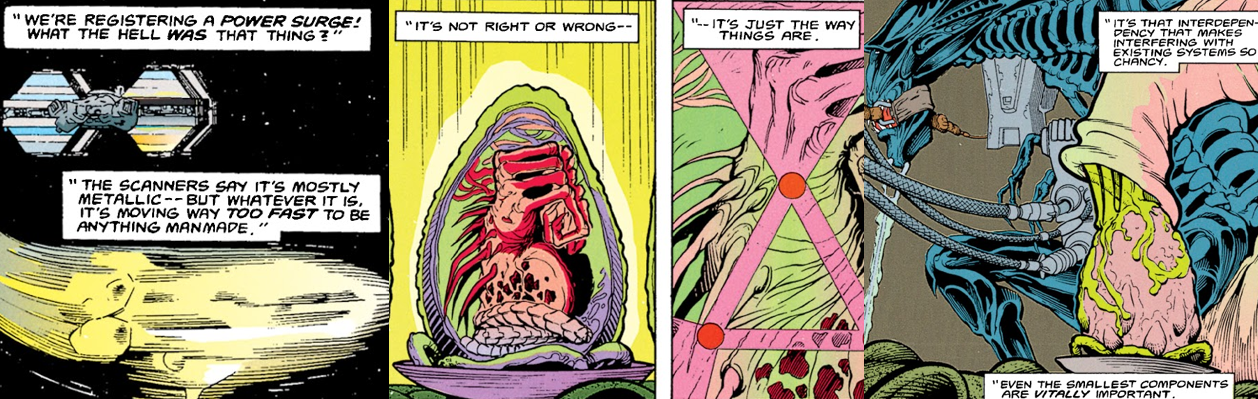
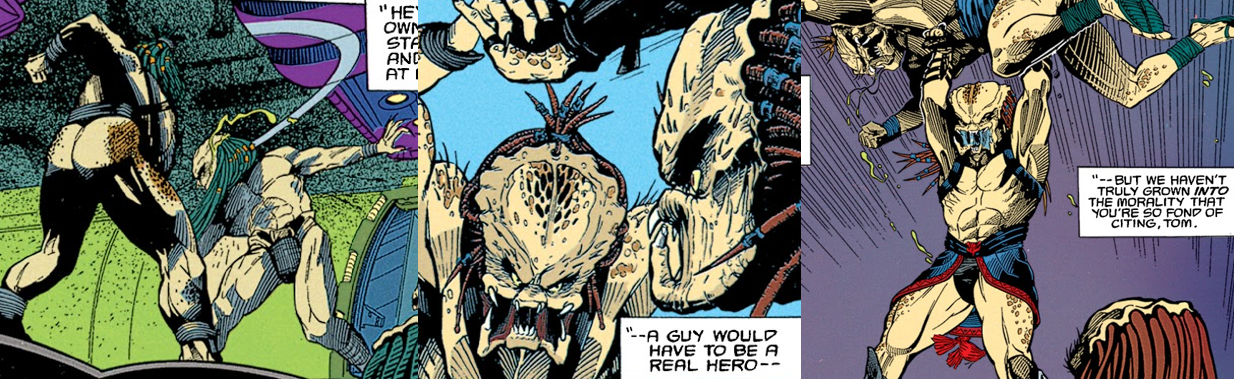
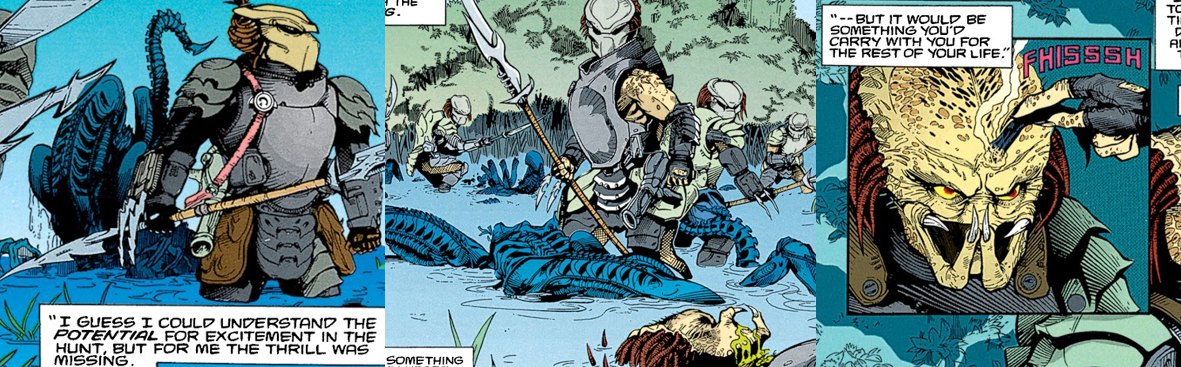
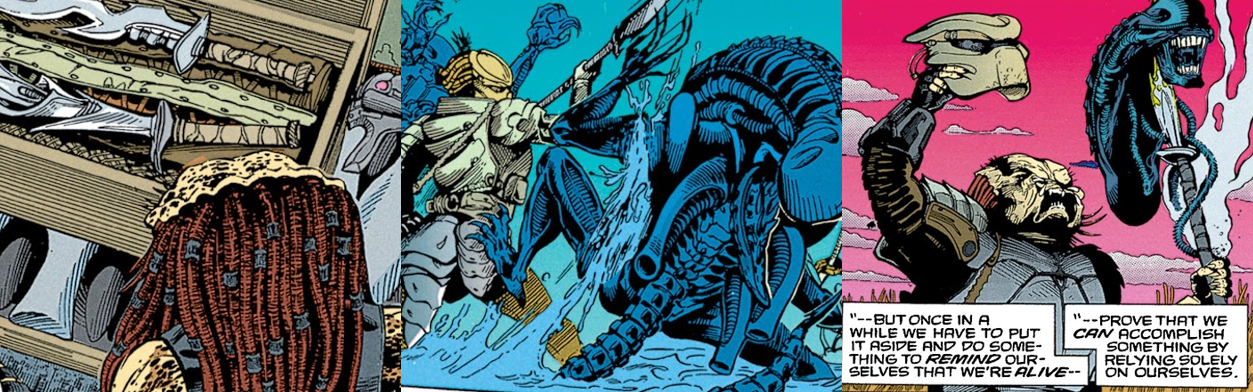
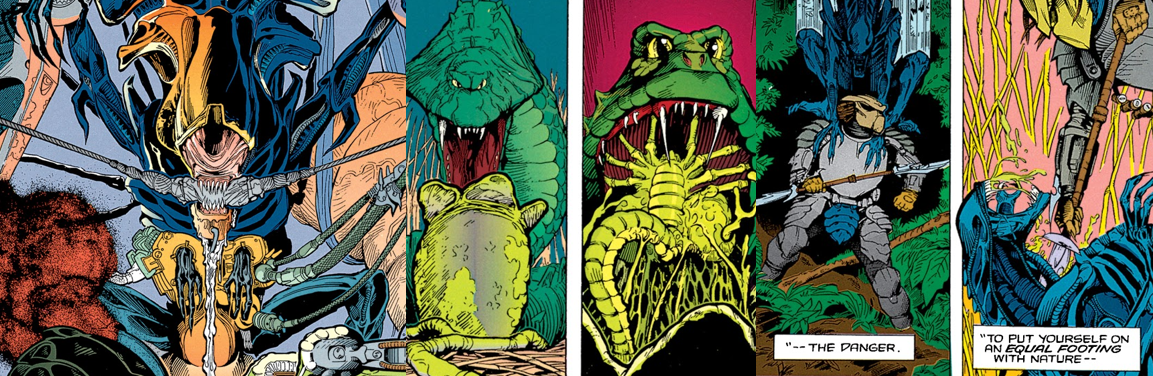



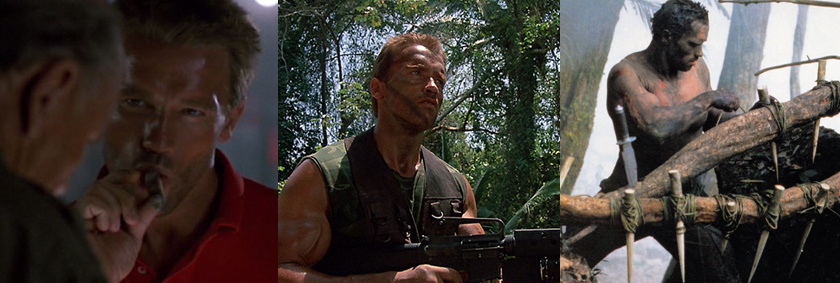
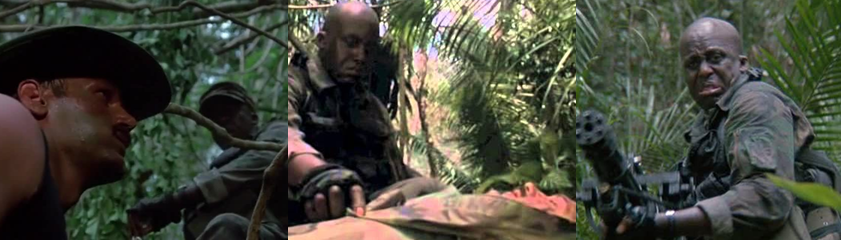
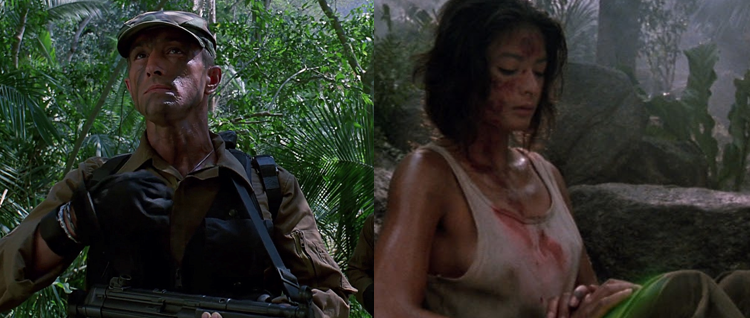
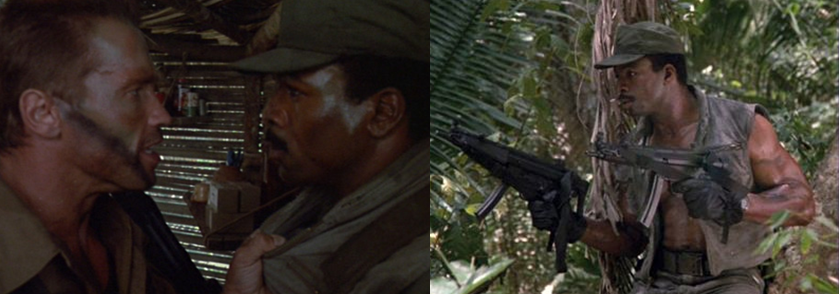
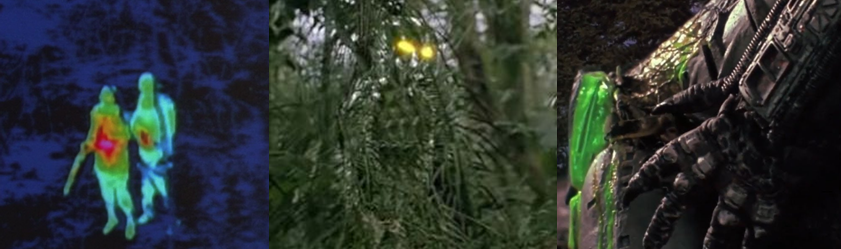
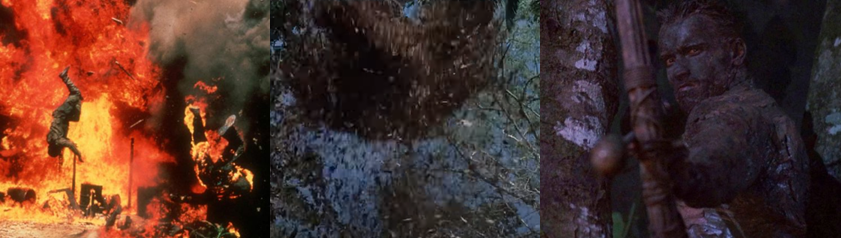
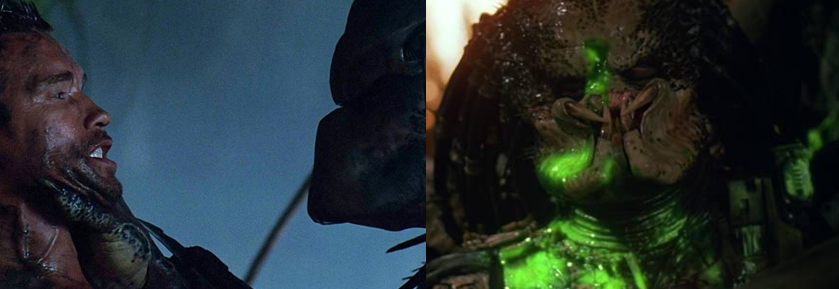
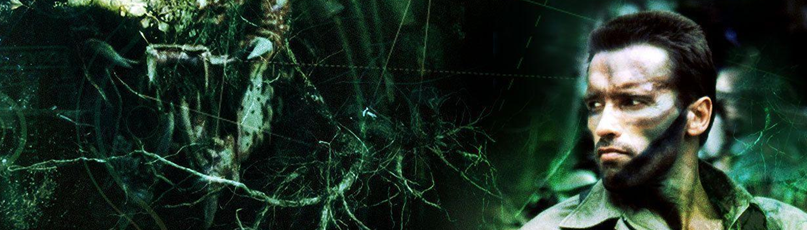



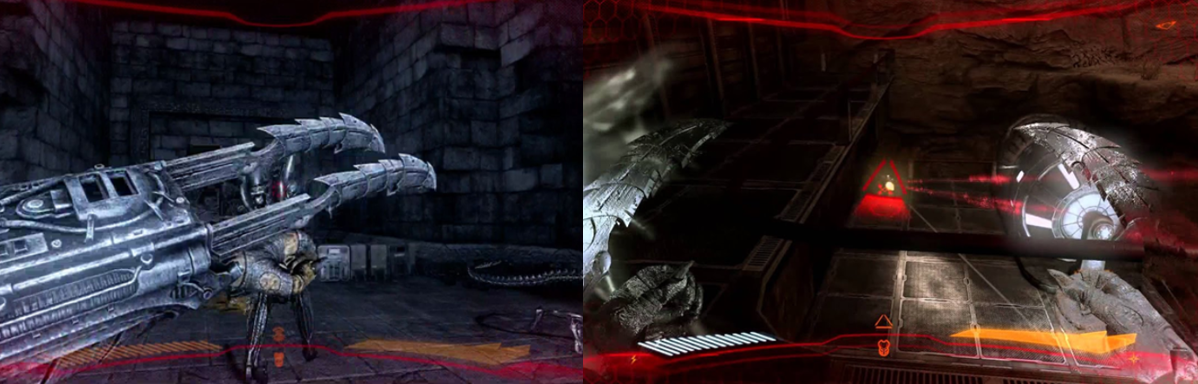
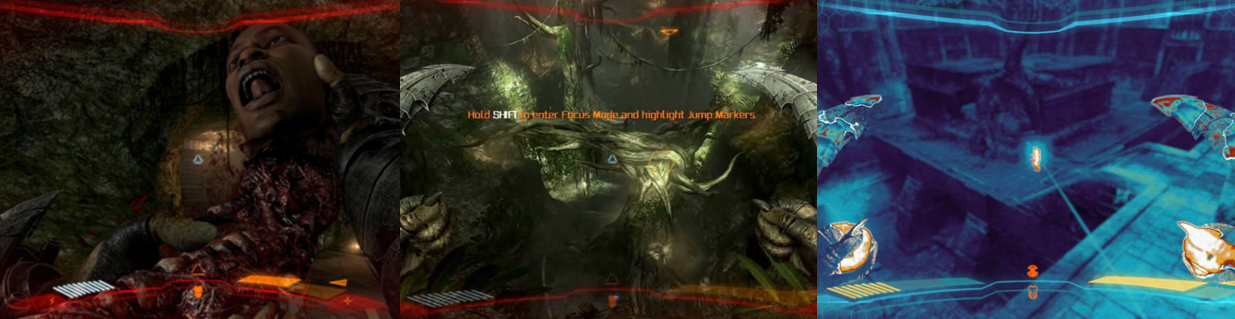
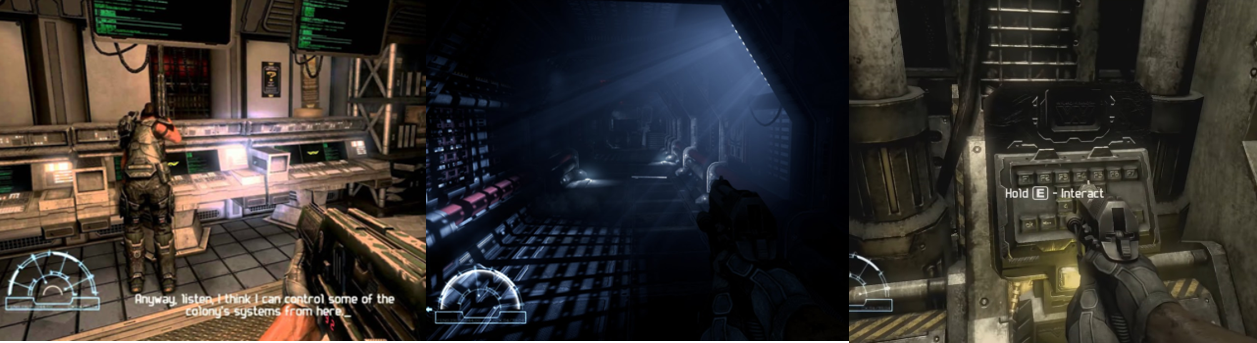


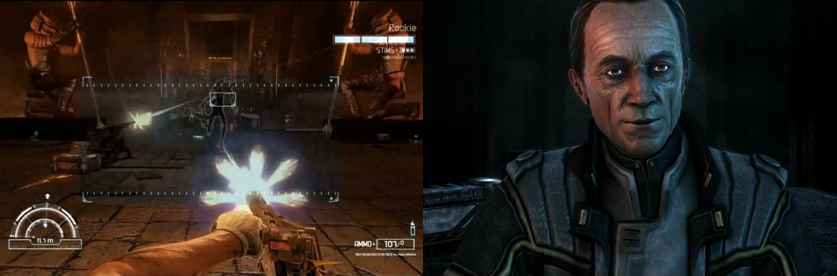
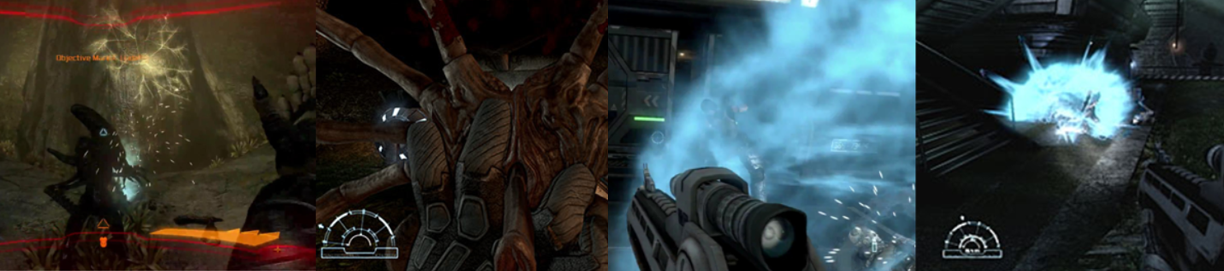


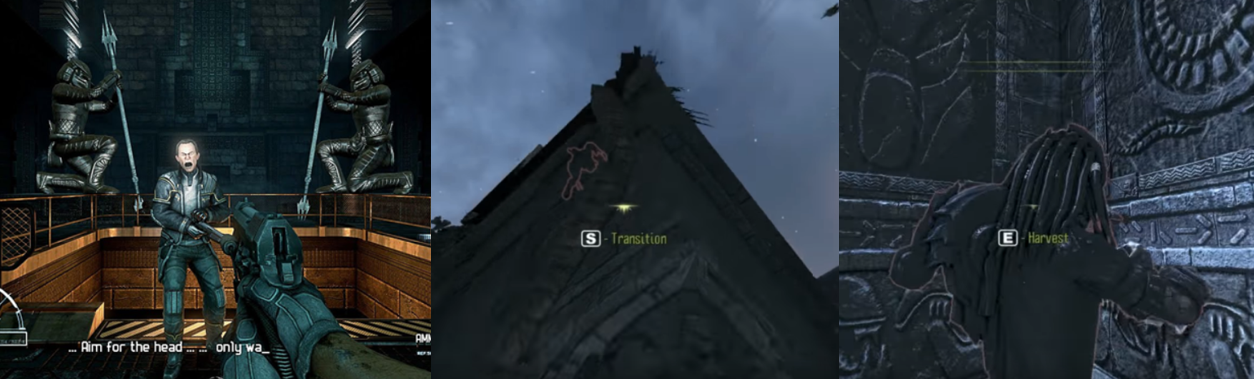



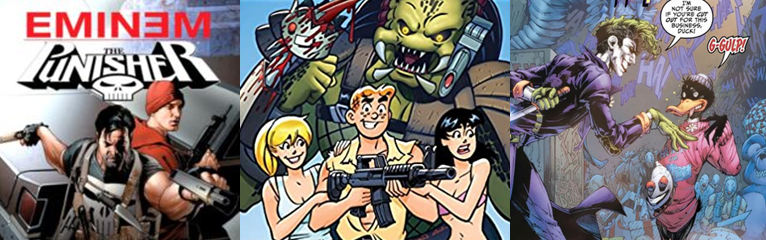
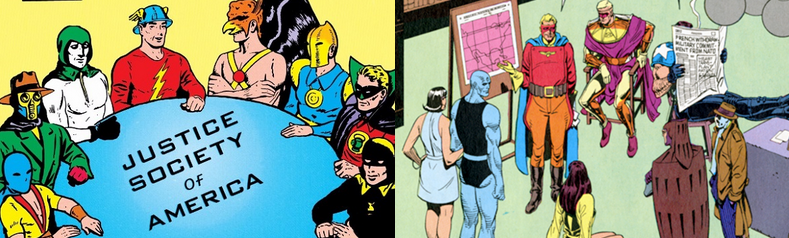
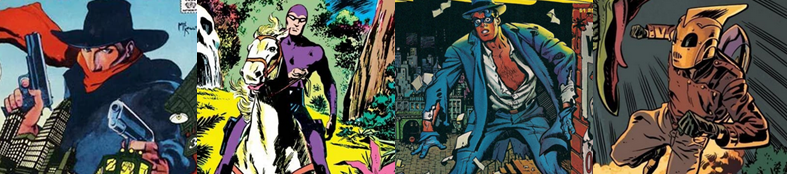
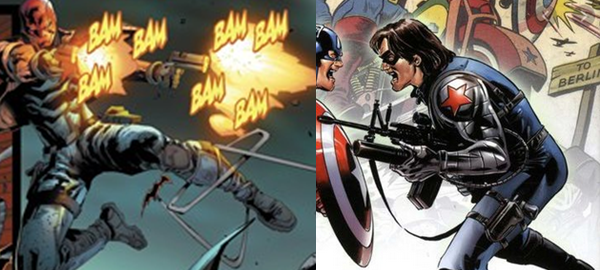
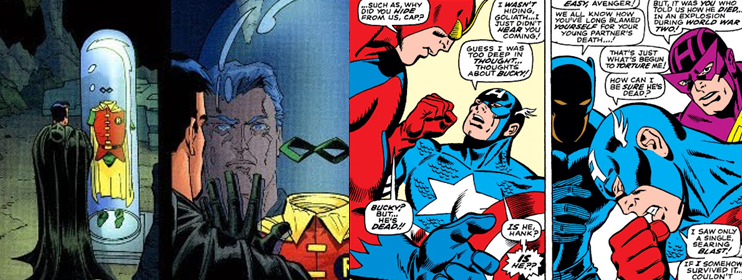
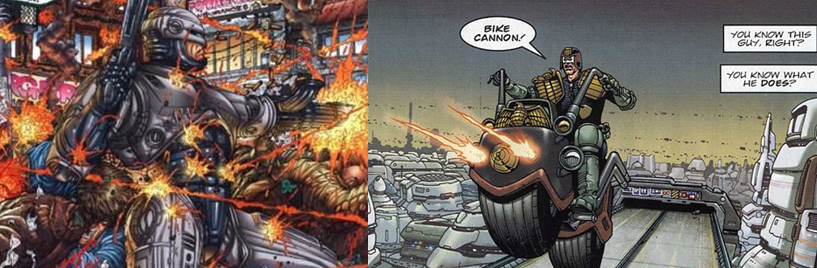
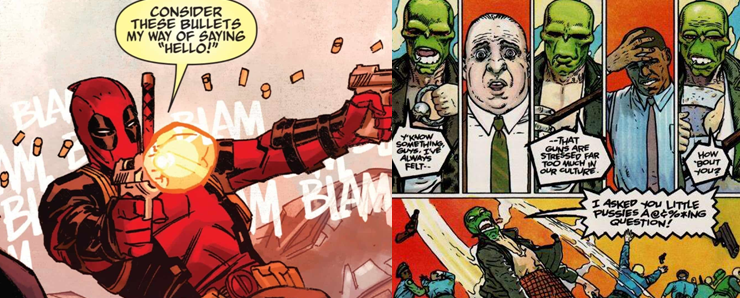
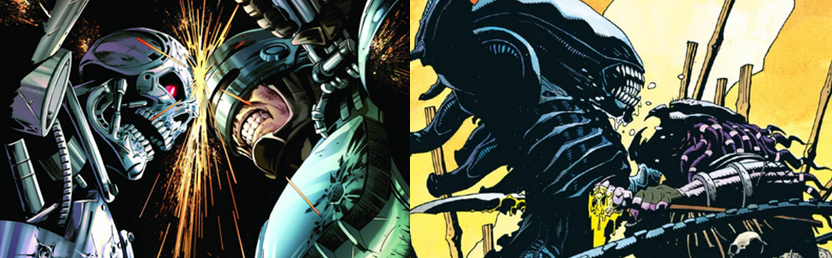
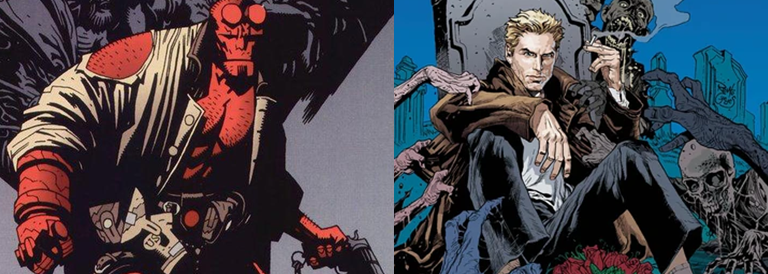
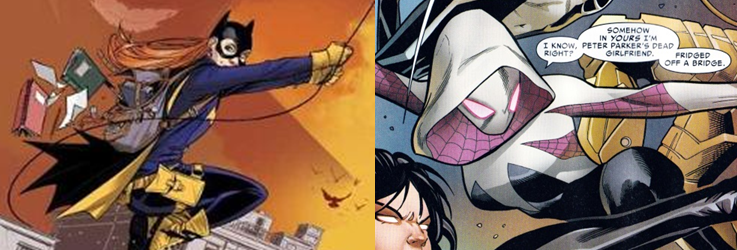
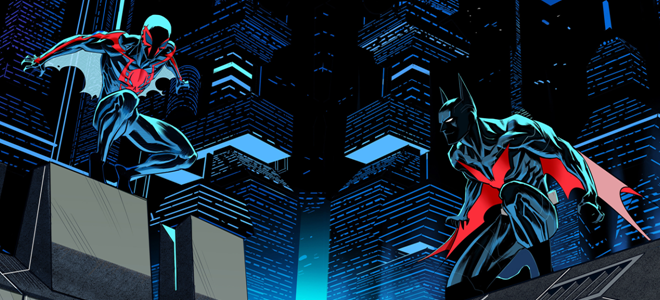
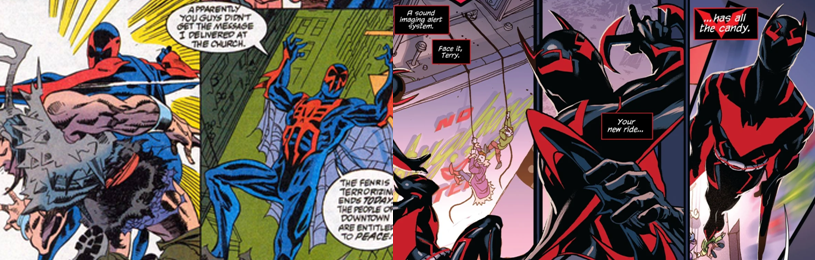
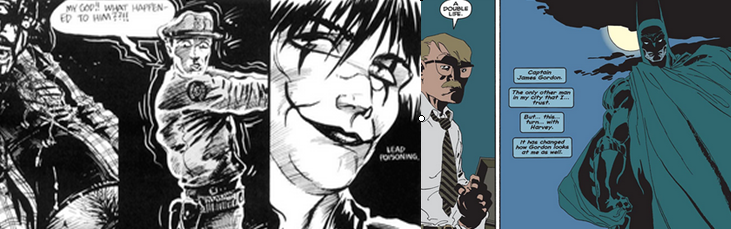
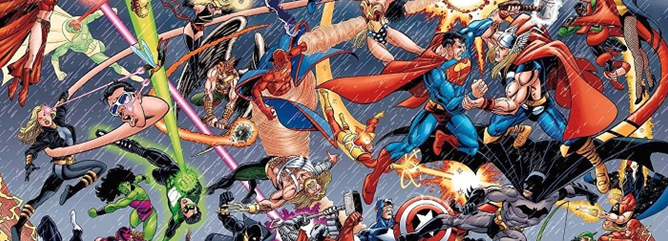


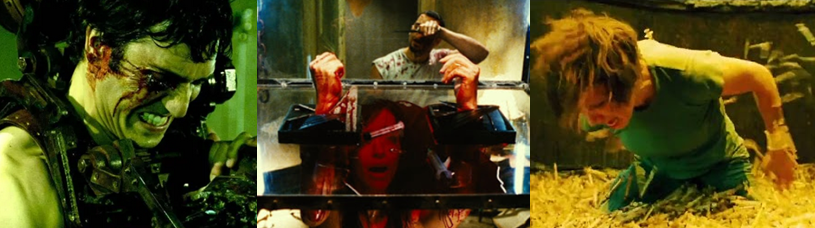
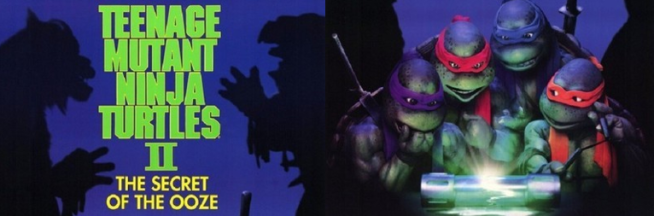
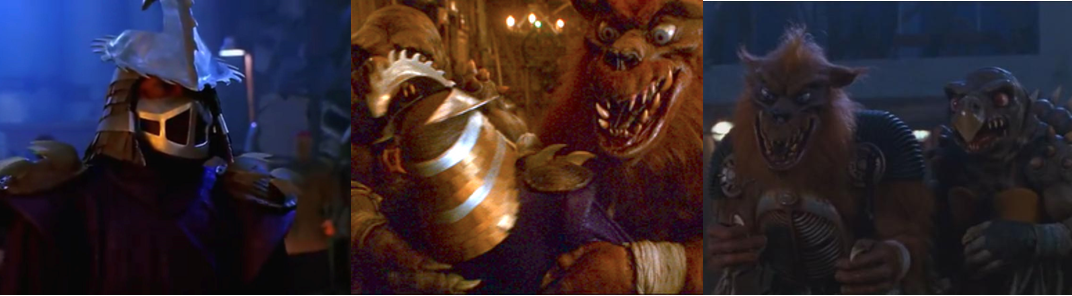
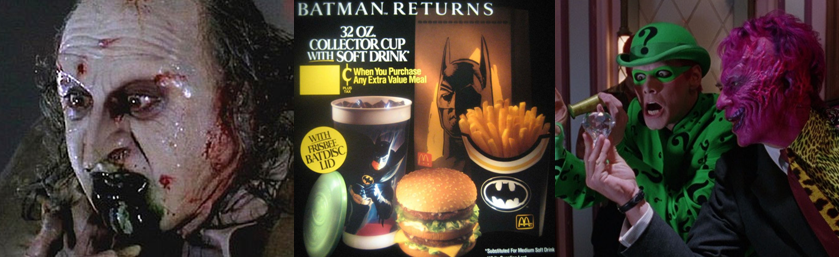
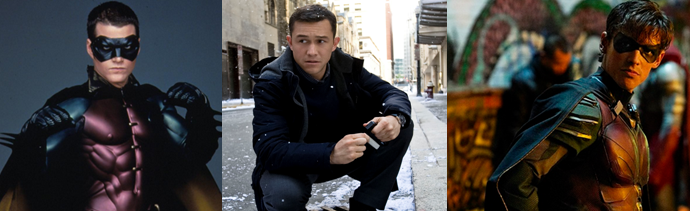
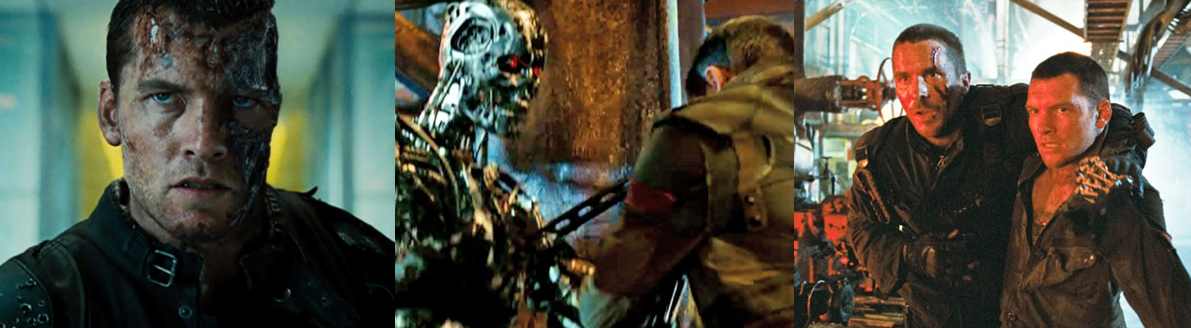

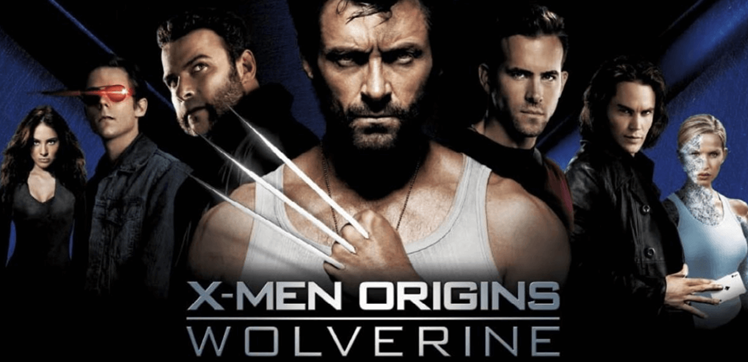
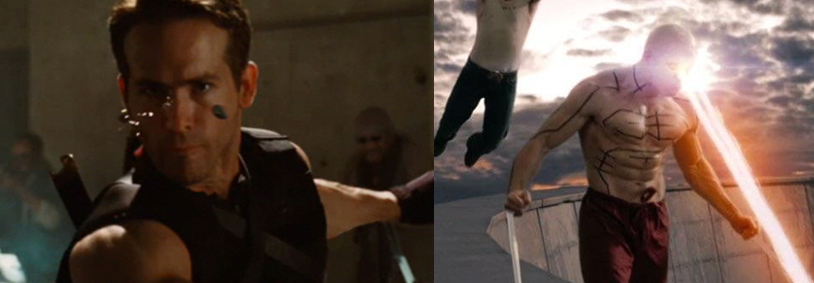

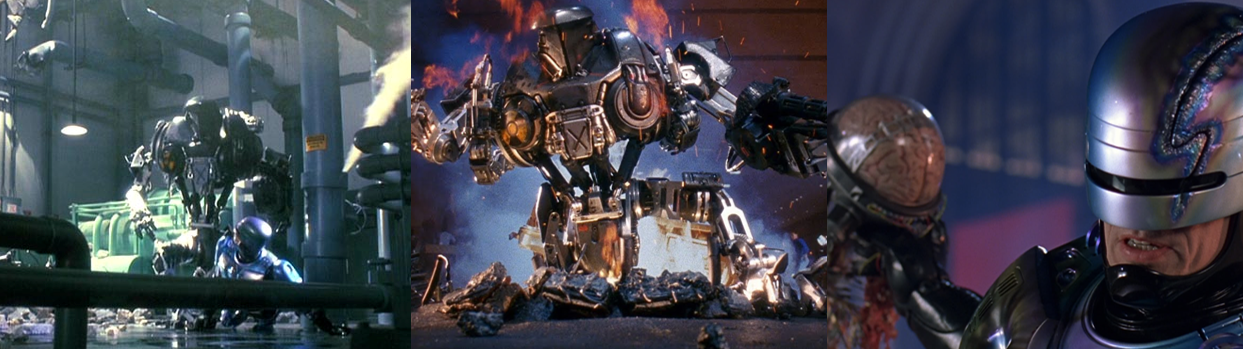
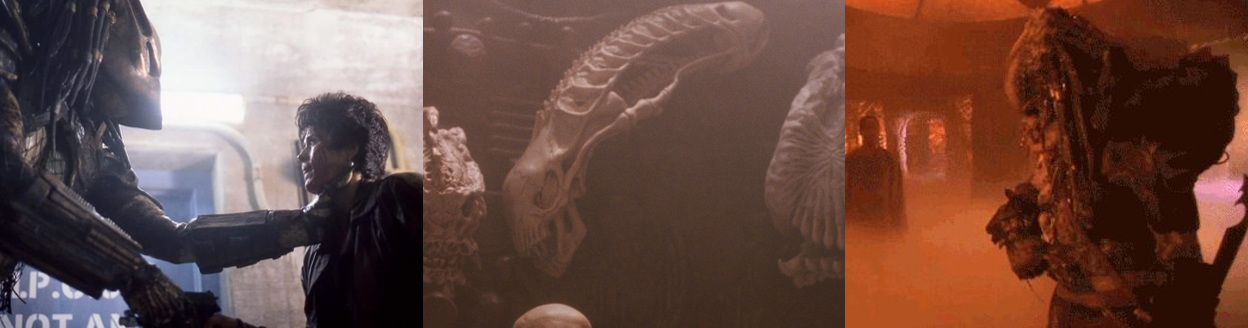



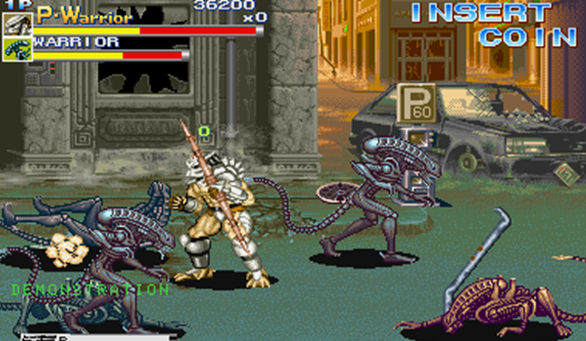
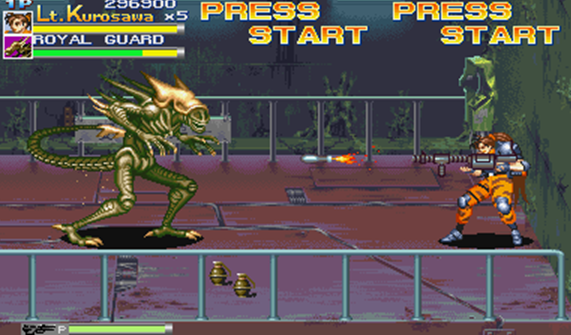
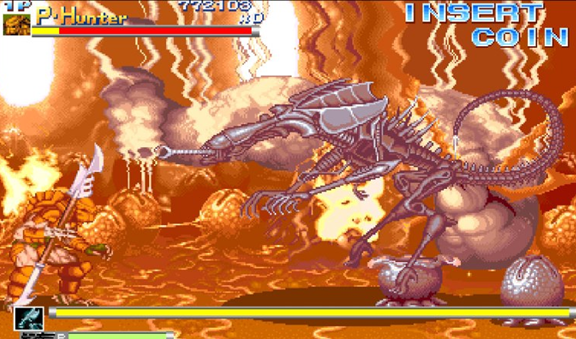
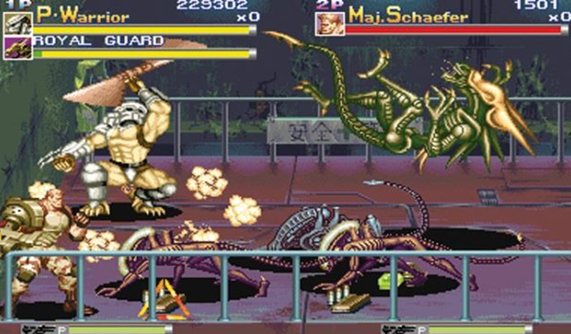





You must be logged in to post a comment.