So, for no better reason than “Mar.10” resembling Mario’s name, March 10th is widely regarded as being “Mario Day”, a day to celebrate Nintendo’s portly plumber, an overalls-wearing mascot who literally changed the videogame industry forever and shaped the home console market of the nineties.
Published: April 1990
Story Title: “The Legend” By: George Caragonne, Art Nichols, Jade, P. Zorito, and Janet Jackson
Story Title: “Piranha-Round Sue” By: Bill Valley, Mark McClellan, George Wildman, Jade, P. Zorito, Janet Jackson
Story Title: “Koopa’s Believe It or Else!” By: John Walker, Ken Lopez, and Barry Goldberg
Story Title: “Cloud Nine” By: John Walker, George Wildman, Jade, P. Zorito, Andrea Brooks, and The Gradations
The Background: By the early 1990s, Nintendo’s mushroom-stomping mascot had firmly established himself as an icon not just in the videogame industry but in mainstream pop culture as well; with more than sixty videogames already released, and with Super Mario All-Stars (Nintendo EAD, 1993) being a blockbuster release for Nintendo (and a major player in the on-going “Console Wars” between Nintendo and SEGA), merchandising and licensing opportunities naturally increased as Nintendo sought to capitalise on the portly plumber’s popularity. Between 1990 and 1991, Nintendo partnered with Valiant Comics to published comic book adaptations of some of their biggest and most successful franchises, and Super Mario was naturally at the forefront of this. Mario’s Valiant adventures were based not just on his videogame adventures, but also his depiction in the animated Super Mario Bros. Super Show! (1989), and Mario featured in a number of Valiant’s comics, either as the main character or in cameo roles.
The Review: Valiant’s Nintendo comics were basically like printed versions of their DiC cartoons and were short, slapstick, fun-filled adventures punctuated by advertisements both fake and real (mostly for videogames, other Valiant comics, and radical nineties toys and such). As a result, there are four stories contained in Mario’s debut issue, with two full length adventures and two interludes to pad out the comic, which was the style of many publications for younger kids as opposed to comics by DC and Marvel Comics, which generally had the one story contained in its page alongside ads and such. The first story is a two-page introduction to the general concept of the Super Mario Bros., their world, and their adventures; according to “The Interlude”, the magical Mushroom Kingdom was a peace-loving land of mushroom people until the evil King Bowser Koopa and his forces invaded the land and terrorised the kingdom’s patriarch, the Mushroom King, and his daughter, Princess Toadstool. Fortunately, their plight reached Mario and Luigi, two plumber brothers who “hungered for justice and thirsted for freedom” who heard the Princess’s cries for help through their pipes and…somehow (presumably by jumping in the pipes? It’s not made clear) journeyed to the Mushroom Kingdom with tools in hand to defeat Bowser, push back his troops, and rescue the Princess and then presumably stuck around for more adventures based on their experiences. The first story, “Piranha-Round Sue”, finds the Mushroom Kingdom being over-run by the titular piranha plants (leading to a somewhat amusing gag about the plants being “revolting”). The King doesn’t see this as nearly as much of a pressing issue as his current predicament; Koopa has randomly turned him into a chameleon and the King needs Mario and Toad to retrieve the Magic Wand to restore him. Quite how, where, and when this transformation took place isn’t established, but if you’re willing to overlook that then you’re probably willing to overlook the convenience of a Magic Wand only being located in the piranha’s headquarters in World One.
Despite Piranha-Sue’s best efforts, Mario and Toad restore the King using the Magic Wand.
Although Mario’s exasperated by the King’s distracted nature, he is gifted a “Green Gecko Gem” that protects him (but not Toad…) from “only the strongest enemies” at the cost of them being unable to touch anyone else, and the two head out to get the wand. Almost immediately Toad gets left behind and Mario delights in being able to plough through Goombas without issue, allowing Piranha Sue to easily get into Toad’s ear and manipulate him into getting a hold of the Green Gecko Gem in the promise of a fleeting moment of power as King of the Mushroom Kingdom, but of course it’s a trap to get the gem into the hands of her fellow piranhas so they can be free of Koopa’s service. While Mario’s busy collecting Coins with reckless abandon, he stumbles upon the Magic Wand just randomly sitting under a rock and is startled to find Toad on the verge of going over a tumultuous waterfall and drowning in the water. However, Mario hesitates to act since he can’t touch Toad and doesn’t want to abandon the gem in case someone steals it, but finally drops both the gem and the wand when Piranha Sue drags the mushroom retainer under the water. Although Toad is saved, Piranha Sue swipes both items and instantly declares herself to be the new rule of the world; unfortunately for her, Koopa was just off panel and took offense to her declaration. Despite the gem covering her in a protective aura, Koopa is able to grab her in a strangle hold and reprimand her for her insolence and discards both items since he believes the gem is worthless and Mario swapped out the wand for a fake on Toad’s suggestion. Victorious, the two return to the castle and change the Mushroom King back to normal, though his subjects are dismayed to find he has developed a taste for flies.
The Mario brothers foil Koopa’s attempt to ruin the cranky King’s reputation.
The comic then shifts to a one-page fake infomercial, of sorts, “Koopa’s Believe It or Else!”, a series of random gags and panels that tell us such tall tales as “Koopa” meaning “Thing of beauty” in “lizard language”, stuffed plumber’s caps being a delicacy in the Mushroom Kingdom, the Mushroom King having over 2,000,000 crowns but only one pair of socks, and a gag about a plumber actually making a house call that’s lost on me since I’ve never experienced an issue with plumbers not coming when I call them out. Following this odd segue, the issue ends with another full-length story, “Cloud Nine”, which finds the Mushroom King aggravated to be woken up in a mood so foul that he chases his sentient alarm clock and dumps boiling hot water on Luigi’s crotch! The King complains that his bed is so lumpy and uncomfortable that he can’t sleep, so Mario and Luigi take him to a shop to purchase a new bed. The Marios are stunned to find the King unsatisfied with the shop’s selection as they’re too hard, too soft, too lumpy, and not lumpy enough, and so distracted by his erratic behaviour that they completely miss Koopa switching places with the shopkeeper. Any suspicions they might have about this shady new character are quickly forgotten when the shop (really Koopa’s minion, Pidget), announces a 100% off sale on all plumbing supplies, easily allowing Koopa to spirit the King up to the 2,927th floor to try out his “Cloud Nine” mattresses. Introduced to the “Cumulo-Nimbus Special”, the King instantly falls into a much-needed deep sleep and is unwittingly whisked away across the kingdom. In the middle of despairing over the King’s disappearance, Mario and Luigi spot the cloud bed flying overhead and give chase, though they’re unable to stop Koopa from framing the King for causing bed weather over the land. Eager to stop the King from tarnishing his reputation further, Mario and Luigi hop into a biplane and catch up to the slumbering King, with Mario using his plumbing tools to…fix the leak in the cloud…? and stop the rain. With the King well rested, his mood noticeably improves (though he still doesn’t have a new bed…) and he regales his subjects with a bizarre dream he had where the plumbers harpooned Koppa in the butt and had the biplane carry him out into the faraway Fungus Forest while the repaired cloud blasted him with lightning, bringing the story and the issue to a close.
The Summary: Super Mario Bros. #1 is a fun enough comic; it’s a pretty juvenile and slapstick series of adventures and gag strips that definitely doesn’t take itself too seriously and leans very heavily into puns, sight jokes, and kid-friendly cartoony situations. If you’ve ever watched an episode of the Super Mario Bros. Super Show! then you’ll be more than familiar with this sense of humour and presentation, which is a great way to capture the fantastical whimsy of the source material. When you think about it, Super Mario Bros. has always had a weird premise and an oddball sense of humour; fire-breathing turtle-dragons, sentient mushrooms, subjects being turned into blocks, and all kinds of weird power-ups and collectibles make this a light-hearted and fanciful world that’s clearly separate from ours. Like the cartoons, Valiant’s comics run with the idea that Mario and Luigi hail from Brooklyn and what we know was the “real world” and bring their plumbing expertise to the fantastical Mushroom Kingdom, making them hardworking, everyday heroes thrust into the roles of heroes in a magical world, which was also reflected in the animeand live-action movie and is a plot point that’s largely been ignored these days.
A fun, whimsical comic book adventure with some amusing gags and references to the videogames.
One thing I enjoyed about the comic was its juxtaposition of the surreal cartoon version of Mario with more traditional elements from the source material; Mario and Toad’s search for the Magic Wand is framed to resemble gameplay from the videogames, with cameos from Goombas, musical blocks, and even showing Mario grabbing a whole bunch of Coins and stuffing them into a bag so he can buy a new adjustable socket wrench set. Indeed, “Piranha-Round Sue” is the best story in the comic in terms of fidelity to the source material, with Mario utilising a power-up (one not seen in the game, but still…), his incredibly jumping prowess to hop over pipes and piranhas in his search for the Magic Wand, and he’s teamed up with Toad to evoke Super Mario Bros. 2(Nintendo R&D4, 1988). “The Interlude” is a similarly faithful recreation of the popular canon at the time and a summation of the first videogame, with Mario and Luigi trumping Koopa’s forces and even using the Fire Flower power-up (though without changing colours), and even “Cloud Nine” feature some call-backs to the videogames, such as the cloud-based stages, even though the story’s much more in line with the cartoons. Overall, I have a soft spot for Valiant’s Nintendo comics, especially their Super Mario Bros. publications as they reflect a different, far more whimsical time when adaptations just kind of did whatever they wanted as long as it was fun and entertaining for kids. The artwork, while a little sloppy and rushed at times (character dimensions and spatial awareness suffer a bit), perfectly reflects the Mario cartoons from the time and there were some fun moments that made me chuckle, so this was an enjoyable debut issue for the world’s most famous plumber brothers.
My Rating:
⭐⭐⭐
Rating: 3 out of 5.
Pretty Good
Have you ever read Valiant’s Nintendo comics, specifically their Super Mario Bros. publications? What did you think to them? Were you a fan of the comic continuing the slapstick nature of the cartoon and splicing in some references to the videogames? Are you glad that the franchise has slightly moved away from these depictions or do you miss when the Mario’s were plumbers from the real world? Did you read and collect Valiant’s Nintendo comics? If so, what were some of your favourite stories and moments in their publications? Did you enjoy Mario’s other comic book adaptations as well and would you like to see another produced some time? Feel free to leave your thoughts on Valiant’s Super Mario and Nintendo comics down below by signing up or on my social media, and thanks for being a part of Mario Month this year.
Upon the release of Pokémon: Blue Version and Pokémon: Red Version(Game Freak, 1996), a new craze swept through playgrounds across the world. An entire generation grew up either playing Pokémon, watching the anime, playing the trading card game, and watching the feature-lengthmovies as clever marketing and a co-ordinated release and multimedia strategy saw Nintendo’s newest franchise become not just a successful videogame franchise but a massively lucrative and popular multimedia powerhouse that endures to this day. Accordingly, February 27th is now internationally recognised as “National Pokémon Day”, which I expanded to an entire month of Pokémon this February.
Released: 8 July 2000 Director: Kunihiko Yuyama Distributor: Toho Budget: $3 to 16 million Stars: Veronica Taylor, Eric Stuart, Rachael Lillis, Amy Birnbaum, Dan Green, and Ikue Ōtani
The Plot: Professor Spencer Hale (Green) is transported to a chaotic dimension by the mysterious Unown (Various), leaving his young daughter, Molly (Birnbaum), devastated and alone. Her grief causes the Unown’s power to rage out of control, manifesting an illusionary Entei (Green) and transforming her home into a crystal-like palace. When Entei kidnaps Ash Ketchum’s (Taylor) mother, Delia (ibid) to appease Molly’s wish for a mother, Ash and friends must brave the danger to break the Unown’s unruly spell.
The Background: Pokémon (Nintendo/Creatures/Game Freak, 1995 to present) was an absolute phenomenon when it came over from Japan: it swept through playgrounds as kids played the videogames, collected the trading cards, and were mesmerised by the still-ongoing anime series (1997 to present). This fantastic marketing strategy was all it took for the aptly-titled Pokémon: The First Movie: Mewtwo Strikes Back(Yuyama, 1998) to become a box office success and kick-started a whole series of feature films designed to expand upon the anime and promote both the newest Pokémon videogames and showcase the franchise’s most powerful and elusive beasts. Although it earned less than the blockbuster first movie, Pokémon the Movie 2000: The Power of One(Yuyama, 1999) still made over $130 million against a $30 million budget and Pokémon was arguably at its peak thanks to the anticipation around the newest games in the series. The third feature-film was afforded a much smaller budget than its predecessors and was the first Pokémon movie to premier in IMAX cinemas. Unfortunately, the film’s $68.5 million box office meant that it was the least successful of the first three Pokémon movies and it was met with largely negative critical reviews; however, it has amassed something of a cult following and is regarded by some to be one of the best Pokémon movies.
The Review: Pokémon 3: The Movie opens in the beautiful town of Greenfield, a lush and verdant town in the Johto region that is knowing for is sweeping hills, windmills, and fields of flowers. It’s also home to the Spencer Hale and his daughter, Molly, who live in a luxurious mansion that overlooks the entire town. Every evening, Spencer reads to his inquisitive and loving young daughter from a picture book that imagines what some Legendary Pokémon look like; although she’s particularly taken with Entei, she also highlights the mysterious Unown, a group of interdimensional, Psychic-type Pokémon who have long been the subject of Spencer’s extensive research. However, while Spencer and Molly have a very close, loving relationship, it’s clear that there’s a void in the lives and their household due to the disappearance of the Spencer matriarch, who mysteriously vanished one day while helping Spencer with his research, leaving Molly without a mother and Spencer to carry the burden of guilt.
Molly is devastated when her father disappears, and overjoyed when he “returns” as Entei.
Spencer has doubled down on his research; aided by his assistant, Schuyler (Ted Lewis), Spencer has been conducting an in-depth investigation into a site of ruins where the stone walls are covered in carvings that resemble the Unown. Unfortunately, after discovering a chest full of small stone tablets engraved with the different alphabetical shapes of the Unown, Spencer is also whisked away to the cosmic void of the Unown Dimension, a swirling place of mystery while the Unown constantly rotate around and sing their names. Schuyler is left dumbfounded at Spencer’s sudden disappearance, and Molly is left absolutely heart-broken and alone; with both of her parents gone, she’s left only with the Unown puzzle pieces and the heartfelt wish to have her father returned to her. Her tearful plea summons the Unown and, while she is delighted that they’ve come to “play with [her]”, their true intention is slightly more malicious as they apparently feed off of her grief-stricken wishes in order to become stronger. Fuelled by her dreams of a crystalline home, the Unown transform the mansion a piece at a time until it represents pictures from Spencer’s book, and their power is so great that they’re able to answer her desire for the return of her father by conjuring an illusion of Entei, whom Molly believes is her father’s spirit returned to her.
Ash risks everything to rescue his mother, who is captured and brainwashed to be Molly’s “Mama”.
Quite coincidentally, Ash, Pikachu (Ōtani), and former gym leaders Misty (Lillis) and Brock (Stuart) just happen to be passing by and run across a trainer native to the area, Lisa (Lisa Ortiz). After Brock strikes out with her (with one of the film’s most amusing lines, “I’m Brock, from Pewter City! And I want to be your boyfriend!”) and Ash is able to beat her in a surprisingly evenly matched Pokémon battle during the film’s opening credits, Lisa guides them to Greenfield so that they can rest up at the Pokémon Center and take in the town’s much-lauded beauty. Suffice it to say that Ash is unimpressed, and the group is horrified, to find that the once stunning landscape has been almost completely overtaken with the Unown’s bizarre crystalline wasteland. Even perennial bothers Jessie (Lillis), James (Stuart), and wise-cracking Meowth (Maddie Blaustein) of Team Rocket are stunned to find Greenfield in such a state, and it’s not long before a news crew (Kathy Pilon and Roger Kay) arrive to try and restore order and report on the strange events. Back in Pallet Town, Delia Ketchum, Ash’s mother, sees the news report and is distraught at the continued suffering of her old friend, Spencer Hale, and she and Professor Samuel Oak (Stuart Zagnit) resolve to travel to Greenfield to get to the bottom of the what’s happening, and to check on Molly. While others are alarmed by the startling transformation of Greenfield, Molly revels in her crystal palace; she delights in playing with her “Papa” and seeing her wishes literally spring to life before her eyes, but her longing for her mother remains. Seeing Delia on the news broadcast reminds her not only of her own mother, but also of the times when Delia and Ash would visit her and her family in years past, and she wishes for Entei to bring her a “Mama” to complete their little family. This adds an interesting personal wrinkle to the film’s plot that has been absent from the previous two films as Entei boldly introduces itself to our heroes by subduing and kidnapping Delia right before Ash’s eyes and holding her captive in Molly’s crystalline palace. Ash is horrified when his mother is kidnapped, and immediately leads his friends on a rescue mission to get her back, literally putting his life at risk to brave the crystal wasteland and scale the tower and reach her.
Entei is the Unown’s avatar and determined to protect Molly, regardless of the morality.
Although Entei’s powers are formidable enough to render Delia a mindless drone who fully believes that she’s Molly’s “Mama”, its spell is broken when Delia sees Ash in danger, but she’s smart enough to quickly realise what’s been going on and to play along with the deception in order to try and reach Molly. Delia recognises that Molly has been very alone for a long time, even before Spencer went missing, and sympathises with her pain, but cannot condone Entei’s enabling and the disruptive influence of the Unown. It’s important to note for Poké-enthusiasts out there that the Entei seen is this film is not the Legendary Pokémon whom it resembles. Rather than being a reincarnated Pokémon known for its blazing Fire-type attacks, Entei is a creation of the Unown and more akin to a Psychic-type Pokémon. At the time, I considered this an odd decision as it kind of wastes the natural characterisation of this creature as one of a trio of Legendary Pokémon, but it actually goes a long way to supporting the deeper themes of the film surrounding grief and a child’s desire for love and affection. Born from Molly’s memories of her father, her love for him, and her idolisation of his strength and loyalty, Entei is granted incredibly powers by the Unown that are contrary to those it has in the games; it can teleport, control the minds of others, create crystalline structures at will, and spit out a powerful aura blast in addition to its durability and strength being theoretically inexhaustible. It is as strong and as capable as Molly wishes it to be, and as long as she believes in it, it can accomplish almost any feat, regardless of whether that action is morally right or wrong. A constant companion and guardian to Molly, Entei fully accepts her belief that it is her beloved “Papa” and goes to any lengths to keep her happy and to protect her, even battling against its out of control masters.
The Unown’s power is virtually limitless, and directly fuelled by Molly’s innermost desires.
So devoted is Entei to Molly that it not only bows to her every wish, but also encourages her to wish for more and to believe that she can anything she desires. When the authorities try to breach the crystal formation, Molly throws a temper tantrum and demands that they be kept out but, when she spots that Ash and the others are Pokémon trainers, she quickly wishes to engage them in Pokémon battles. Thanks to the Unown’s near-limitless power, the interior and environment of the palace constantly changes, and also allows Molly to conjure unbeatable illusionary Pokémon and even age herself up to be a more competent Pokémon trainer. Of course, thanks to the Unown’s power, she’s easily able to best her more experienced opponents with the likes of Teddiursa (Erica Schroeder) and Phanpy (Megumi Hayashibara) even when she should be hopelessly outmatched. She’s even able to flood the area with water, and allow her and Misty to breath underwater, so great are her powers, are she becomes so lost in her fantasy that Entei is empowered enough to battle even Ash’s stubborn and formidable Charizard (Shin-ichiro Miki), which arrives not only to help its former trainer but also to pit its strength against an opponent such as Entei. However, the battle proves destructive, wrecking much of Molly’s new home and leaving the heroes’ Pokémon hurt, and Charizard in danger of being killed by the furious Entei; the only hope for the heroes is for Delia, Ash, and the others to help remind Molly of her real family, both those who are gone and the family she could have by forming a bond with real Pokémon, which causes her to finally snap free from her fantasy and demand an end to the fighting.
The Nitty-Gritty: One of issues I had with Pokémon the Movie 2000 was that it tried a little too hard to raise the stakes in comparison to the first film; while Pokémon: The First Movie was reconfigured into more of a worldwide threat in the English dub, the second film explicitly put the entire world at risk, so it’s a nice change of pace to see the third film tell a far more grounded, more personal story. This is most obvious in Delia’s larger role; up until now, she’s merely been a cameo or a bit-player in the films, but she’s a pivotal inclusion in this film and the driving force behind Ash’s excursion into the crystallised Greenfield. Indeed, he is driven to an uncharacteristic anger at her abduction, which is focused entirely on Entei and transforms into a battle of wills as Ash regards the beast as a mere illusion and Entei adamantly seeks to prove its reality and defend Molly by any means necessary.
Molly’s desire to have her family back means she dreams up her own fantasy world free from sadness.
Of course, it’s Molly’s sadness and grief that is at the heart of the movie’s story; already struggling after the loss of her mother, she was left despondent when Spencer disappeared as well and unable to properly process her anguish. When the Unown respond to her dreams and wishes, she finally feels that hole in her heart has been filled and is easily convinced that everything she is seeing is “real” and that she can be and have whatever she wants “as long as that is her wish”. It’s a powerful, emotional aspect of the film, and easy to forget that Molly isn’t some malevolent or mean-spirited antagonist. She’s just a frightened, lonely little girl who desperately wants her beloved “Papa” and “Mama” back, and is overjoyed to see her father returned in the form of Entei and her every wish brought to life by the Unown’s power. Similarly, Entei is not a necessarily vindictive entity; it’s simply acting out Molly’s wishes, whatever they may be, but bolstered by such vicious and formidable power that it transforms the once beautiful crystal tower into a hazardous landscape of spikes and battles Charizard with such an unmatched ferocity that it’s even posed to kill the helpless and outmatched creature. While Entei seems to fill the void in Molly’s life and heart, Delia and Ash and the others try to convince her that it’s merely another aspect of the Unown’s illusionary power; a false reality she’s conjured to shield her from facing the real world. Through them, she sees that real relationships can be forged through friends, partners, and make-shift families that can be just as fulfilling as having her every wish granted.
Probably the darkest and most personal Pokémon movie despite the odd changes to the source material.
I have to say that, given the trajectory of the Pokémon movies, I was surprised that a Pokémon as unremarkable and weak as Unown be such a focal point of this film, especially considering the next most obvious choice would have been to focus on Ho-Oh and the Legendary Beasts. Instead, though, Entei, Raikou (Katsuyuki Konishi), and Suicune (Masahiko Tanaka) were split up across specials and movies and it would take quite some time for Ho-Oh to actually make a real movie appearance. I guess this helped to make the movies a bit more unpredictable, and it certainly helped to make the Unown a surprising threat in this film, but I can’t help but feel like it was a missed opportunity. Still, the Unown are given an unexpectedly malicious edge in this film; while ostensibly appearing to be somewhat mischievous and aloof, their ability to read people’s minds and alter reality based on their wishes and dreams quickly makes them a threat to all of Greenfield. Not only do they transform the landscape, but they but many lives in danger through their quasi-avatar, Entei, and the strength of Molly’s tumultuous emotions soon sends their Psychic powers into overdrive. By the time she’s ready to leave behind her dreamworld and return to reality, the Unown have exerted so much power and thrown into such chaos by Molly’s emotional state that they’ve lost control of the illusion and the crystalline formations threaten to trap, or kill, everyone within. Their only hope is Entei, whom Molly pours all of her hopes and dreams and belief into to break through the Unown’s protective barrier and undo their magic, dispelling itself in the process. Although distraught to see her father-figure unmade, Molly has learned the value of friendship, co-operation, and family from Ash’s example and her story ends on a happy not when the Unown return not only Spencer but also his wife from their dimension. Thus, Greenfield is restored, Molly regains her true family, Delia is rescued, and Ash and the others continue on their Pokémon journey.
The Summary: As much as the first two Pokémon films were a spectacle that released right as the franchise was at its peak, Pokémon 3: The Movie opts to tell a far more personal and emotionally-charged story by focusing on a little girl’s loneliness and despair and having Ash’s mother be caught up in a chaotic situation. This is easily the best part of the movie’s appeal, beyond the brutal and unrelenting battle between Entei and Charizard, and definitely makes it a worthwhile watch and worthy follow-up to its predecessors. It’s a very different movie from the last two, which placed the most powerful, mysterious, and elusive Pokémon at the centre of their stories and kind of slapped action set pieces around them, such was the allure of the Legendary Pokémon they featured, whereas Pokémon 3: The Movie fundamentally alters the characterisation, abilities, and role of Entei and the Unown in service of its story. As much as I appreciate the effort put into crafting a more poignant story that tackles the grief felt be the loss of a loved one and reinforces Pokémon’s overall themes of friendship and partnership, I still can’t help be disappointed by the depiction of Entei in this film. For me, splitting the Legendary Beasts up for so long as a major misstep and deprived us of seeing them make a proper, big screen impact. Still, this doesn’t dilute the story we’re given here and Pokémon 3: The Movie remains a unique entry in the Pokémon movie series since it keeps the stakes grounded and personal; while the literal world isn’t at risk, Molly’s dreamworld is and so is Ash and Delia’s (since they mean the world to each other), which really helps to make for a much more relatable and focused narrative. The Unown’s limitless and unpredictable powers, coupled with Entei’s mounting ferocity, make for a surprising threat against the heroes, who are constantly outmatched at every turn and only triumph by appealing to a frightened and hurt little girl’s heart, which definitely helps the film to make an impact even if I would have preferred more focus on the actual Legendary Pokémon.
My Rating:
⭐⭐⭐
Rating: 3 out of 5.
Pretty Good
Are you a fan of Pokémon 3: The Movie? What did you think to the more personal grounded focus? Did you like the depiction of Entei and the Unown or would you have preferred to see them portrayed closer to the source material? What did you think to Delia’s larger role and the focus on Molly’s grief? Which Pokémon game, generation, and creature is your favourite and why? How are you celebrating National Pokémon Day today? Whatever your thoughts, sign up to drop them in the comments below or feel free to leave a reply on my social media.
Released: 17 February 2023 Director: Peyton Reed Distributor: Walt Disney Studios Motion Pictures Budget: $200 million Stars: Paul Rudd, Evangeline Lilly, Jonathan Majors, Kathryn Newton, Michelle Pfeiffer, and Michael Douglas
The Plot: After aiding the Avengers in saving the world, Scott Lang/Ant-Man (Rudd) has become a beloved celebrity now focused on making up for lost time with his daughter, Cassie (Newton). However, when Cassie inadvertently sucks Scott and his family into the mysterious Quantum Realm, Ant-Man faces his greatest challenge when he comes face-to-face with the maniacal Kang the Conqueror (Majors), a tyrannical despot from beyond time!
The Background: In his first comic book appearance, Doctor Hank Pym/Ant-Man wasn’t the unstable, garishly-costumed hero who would form the Avengers, nor was he the only character to take up the Ant-Man mantle. Perhaps his most notable successor was Scott Lang, a reformed criminal created by David Michelinie, Bob Layton, and John Byrne, who assumed the role in 1979, and both characters eventually featured in the first live-action Ant-Man(Reed, 2015) film. Ant-Man’s impressive $519.3 million gross and largelypositivereviews led to a sequel, Ant-Man and the Wasp (ibid, 2018), which outperformed the first at the box office but was met with more mixed reviews. Although the core cast returned to the film, Emma Fuhrmann was disappointed to learn she’d been recast; Kathryn Newton replaced her as Cassie in a decision apparently motivated to better highlight Cassie’s coming-of-age story. Having been established as one a pivotal hero of the Marvel Cinematic Universe (MCU) in Avengers: Endgame (Russo and Russo, 2019), the third film sought to further explore the Quantum Realm and the complexities of time travel through the inclusion of Kang the Conqueror. Returning director Peyton Reed was excited to pit Ant-Man against such a villain as part of his wish to produce a pivotal entry in the MCU rather than a simple palette cleanser, and Majors was equally excited about exploring the multiple facets and iterations of Kang in this film and beyond after previously portraying an alternative version of the character in Loki(Various, 2021 to present). Following numerous delays, Ant-Man and the Wasp: Quantumania finally released to a nearly $450 million worldwide box office and mixed reviews; critics expressed disappointment with the pacing and content of the film, though Jonathan Majors’ performance was met with unanimous praise and that there were some visually impressive sequences to be found amidst the jumbled plot.
The Review: I was surprised by how much I enjoyed Ant-Man; I’ve never been the biggest fan of the character, especially as his characterisation and relationships can be a bit dated, hokey, and inconsistent, but framing it as a superhero heist film and focusing on Scott Lang as this flawed, but loveable, reluctant hero, a dad just trying to make amends, was a really refreshing idea and helped contrast the MCU’s cosmic scope with a nice grounded adventure. I remember not really being too impressed by Ant-Man and the Wasp; I really should revisit it sometime, especially as it laid a lot of the foundation not just for a major plot point in Avengers: Endgame but also for this film, which takes Ant-Man so far away from a quirky, sci-fi action comedy and into the absolutely batshit realm of other dimensions and timelines. Scott is a great character to thrust into these situations; despite all of the abilities the Pym Particles give him, he’s still just a regular guy, someone who reacts realistically to the crazy events happening around him, so he makes for a charismatic and relatable character to help focus these mind-bending concepts through.
While there’s surprisingly little for Hope to do, Scott and Cassie’s relationship is a focal point of the film.
This is immediately emphasised in the opening scene of Ant-Man and the Wasp: Quantumania; Scott is now a recognised and celebrated personality who remains awestruck at the fantastical things he’s seen in his adventures. However, as much as he enjoys the limelight, the abilities afforded to him by the Pym Particles, and the experiences he’s had alongside his fellow Avengers, Scott is now content to focus on promoting his inspirational memoirs and making up for lost time with his family. Hope van Dyne/The Wasp (Lilly) has now taken control of her father’s company, renaming and restructuring it in her image and to help displaced families following the Blip. She and Scott are seen to have a loving relationship and are no longer at odds with each other like in the previous film, but the two spend a surprising amount of time apart considering both of their names are in the title of the movie, so Quantumania is less a story about these two pint-sized heroes/lovers saving the Quantum Realm and more focused on developing the relationship between Scott and his daughter, Cassie. Cassie is now a somewhat rebellious teenager; she’s getting arresting and causing Scott headaches because she wants to follow in his example, “look out for the little guy”, and help others, and is disappointed in him giving up his superhero duties when there are still people that need help. Her arc throughout the film is both learning the value of patience and how to control her own shrinking/growing abilities, and understanding that the life she is so enamoured by is dangerous. While Scott is proud of her moral compass, her ingenuity, and her moxie, he also wants to protect her first and foremost; thankfully, while this is a point of contention between the two, the film doesn’t portray her as a cliché sulky teenager who acts without thinking or unreasonably lashes out at her father and they still have an adorable bond, she just wants his respect.
Janet’s stubbornness and fear cost the characters valuable time.
As part of this, Cassie has secretly been spending her time working with Hank (Douglas) to research and map the mysterious Quantum Realm. Despite Hope’s repeated efforts to find out more about the time her mother spent trapped there, Janet (Pfeiffer) remains stubbornly tight-lipped and this was a real issue for me in the early going of the film. Because Janet refused to talk about the Quantum Realm, the characters had no idea of the dangers that lurked there; her warnings came too late to prevent them all being sucked down there and, once they are stranded in the Quantum Realm, she continues to refuse to tell them anything for no real reason at all when that knowledge really would have helped them be better prepared once the source of her fears, Kang, inevitably showed up. Instead, Janet leads Hank and Hope on a merry tour of the Quantum Realm, now expanded into a strange alien environment full of colourful beings and bizarre creatures, most of whom, like the enigmatic Lord Krylar (Bill Murray), know Janet from her time as a freedom fighter. Hank, who has spent his entire life researching the Quantum Realm, is understandably fascinated by the ecosystem and society that dwells there, and equally stunned to get a glimpse of his wife’s tumultuous life amongst these beings. Both characters receive more screen time this time around and are certainly more of a focal point to the plot than Hope, and Hank’s demeanour is now noticeably far more relaxed; he’s lost a lot of his edge and is now portrayed as a quirky scientist with an unhealthy obsession with ants, whereas Janet is shown to be unreasonably cagey and to have fought against the all-powerful Kang during her time trapped in the Quantum Realm
With his nuance performance and incredible power, Kang was the undeniable highlight of the movie.
Although we get a glimpse of his arrival in the Quantum Realm in the film’s opening moments, Kang is a mystery throughout most of the film; he’s talked about with a mixture of awe and fear by the colourful freedom fighters Scott and Cassie hook up with and Janet is so terrified of him that she goes out of her way to keep her family in the dark just to try and avoid catching his attention. This is a shame as, once Kang arrives onscreen, he is unquestionably the most interesting and charismatic character, eclipsing even Scott with his nuanced performance. A cold, calculating, driven individual, Kang is a man from beyond time who was betrayed by his own alternate selves (or “variants”) and banished to the Quantum Realm because of his destructive nature. I know a little bit about Kang from the comics but am by no means a Kang expert, and Quantumania decides to keep his exact backstory and motivations a bit vague, presumably to explain them in further productions. It’s not really explained how or why he has the powers he exhibits or what his limits are; at first, he’s weak and helpless and needs Janet’s help to repair his ship, then he regains his fantastically comic accurate suit and shows an ability to stop characters in their tracks with a thought and swat his pint-sized adversaries out of the air. Yet, though he appears unstoppable and has built an empire comprised of (literal) faceless stormtroopers and advanced technology, Kang can still get down and dirty in a fist fight. Yet, for all his imposing menace and the captivating allure of his unhinged psyche, Kang is very much a desperate man; he’s clearly been broken by some unknown tragedy and is fuelled not just be a need to conquer and avenge himself, but a desperate desire to bring a twisted order to the multiverse, regardless of who he has to torture, enslave, or kill along the way. He’s not just some maniacal villain, though; he seems to genuinely value Janet’s friendship and is driven to violence only as a means to facilitate his escape and seems to regard himself as a necessary evil n the face of some unknown future threat.
The Nitty-Gritty: There are a few themes at work in Quantumania; you might think that it’s a movie about Scott and Hope as surrogate parents and the dynamic of the Pyms and van Dynes co-existing as this superhero family, but it’s sadly not. You might also think that it’s geared towards showcasing Cassie’s journey into her own superhero persona and, while that certainly is a development in the movie, the focus is more on Scott learning to accept that her daughter wants in the life (which he’s happy to do, he just worries about her) and her learning to walk before she runs (perfectly exampled when Scott has to teach her how to properly make use of the Pym Particles in a fight). The film does shed a bit more light on Janet, a largely mysterious character who clearly has been through some stuff and seen some things down in the Quantum Realm, but it, like her, is unnecessarily coy about the specifics and we’re left with only the briefest, vaguest mentions of her as an inspirational fighter in the war against Kang. Like the other Ant-Man movies, Quantumania leans heavily on the comedy; mostly, this is demonstrated through character’s being awestruck by their surroundings, struggling to adapt to the Quantum Realm’s bizarre society and characters, and riffing off each other. For the most part it works, though the absence of Scott’s more comedic supporting cast is felt in the movie and there’s one scene in particular where the dramatic tension is completely undercut by unnecessary forced comedy.
While the visuals generally impress, others are a bit cartoonish and disappointingly realised.
This would be the death of Darren Cross (Corey Stoll), who’s revealed to have survived the ending of Ant-Man but been left a misshapen and embittered troll of a man; rebuilt by Kang’s technology into the ultimate cybernetic killing machine, he chases down Scott and his family with a vengeance as the MCU version of George Tarleton/ Mechanised Organism Designed Only for Killing (M.O.D.O.K.) M.O.D.O.K. is one of the most bizarre villains of Marvel Comics and one I never thought we’d ever see translated to screen, so it’s pretty amazing to see him flying about shooting lasers and missiles and sprouting buzzsaws, but then the face plate lifts up and we’re forced to look at this really unsettling, cheap-looking CGI face and listen to Darren spouting pithy declarations and the character loses a lot of his menace. It’s a shame but, for the most part, Quantumania looks really good; it’s naturally a very CGI-heavy film and as far removed from its more grounded predecessors as you could get and goes to great lengths to expand upon the Quantum realm, while also handwaving a lot of the specifics. Humanoid characters like Jentorra (Katy O’Brian) and telepath Quaz (William Jackson Harper) exist alongside anthropomorphic houses and surreal alien creatures like the protoplasmic Veb (David Dastmalchian) and a robot with a laser for a head! These characters, while visually interesting, aren’t very well developed, though; I barely caught most of their names and their single characteristic is wanting to oppose and dethrone Kang, but they do help to show how versatile the Quantum Realm is. Before, characters couldn’t survive in the Quantum realm without special suits or suffering severe time dilation; that is now no longer a problem as they’ve conveniently travelled to a part of the dimension where they don’t need their helmets to breath and suffer no consequences of lost time once they return. The world is colourful and alive, but also feels strangely restricted; I also can’t help but feel like exploring the Quantum realm should’ve been a sub-plot in Ant-Man and the Wasp and that maybe it would’ve been better if Quantumaniahad take place entirely in Kang’s city, Chronopolis, to avoid the slow start to this movie. Everything also just feels a bit too cartoonish and intangible, and it’s again far too obvious that many actors aren’t actually in the same shots in some scenes, which really took me out of it.
There’s an intriguing conflict and looming menace lurking amidst the bombardment of spotty CGI.
Yet, there are still some exciting and bonkers action scenes on offer here; any time M.O.D.O.K. shows up the screen I filled with explosions and frantic action, and seeing Scott, Hope, and Cassie come together in their small and giant forms for the finale was exhilarating, though it was difficult to appreciate Giant-Man’s scale from the framing. One really inventive scene in the film sees Scott shrink further down to reach the core of Kang’s ship; there, he splits into an infinite number of variants and they must work together to get him closer to the core, literally evoking the image of an ant colony working together. Cassie later has a cool coming-of-age moment where she inspires the people of the Quantum Realm to rise up against Kang, and even Hank gets to have a moment to shine by leading his army of technologically advanced ants into battle, though the same unfortunately can’t be said for Hope, who spends most of the film sporting a ridiculous haircut and being understandably annoyed at her mother’s stubbornness before swooping in to aid Ant-Man in reaching the core and in defeating Kang. After Scott retrieves his ship’s core, Kang sets about escaping his confinement using an elaborate set of spinning rings, which will bring him and his army out of the Quantum Realm and allow him to get back to conquering the multiverse. Giant-Man storms his citadel and, despite all of Kang’s vaulted and incomprehensible time powers, a fist fight breaks out between Scott and the conqueror that sees Ant-Man absolutely decimated. Scott frantically gets his family to safety and chooses to stay behind and sacrifice his freedom to prevent Kang’s escape, only for Hope to show up and help fend Kang off, presumably killing him or banishing him to a further sub-sub-atomic dimension. The film then teases that Scott and Hope will be trapped in the Quantum Realm but the Cassie just immediately saves them and everything’s fine…save for Kang’s troubling warning of an oncoming danger and an entire legion of his variants turning their attentions towards the MCU following Kang’s defeat. Personally, I think it would’ve made more sense for someone in the core cast to die or even have it be Hank and Janet who make the last-minute save and end up trapped in the Quantum Realm. That would’ve been quite fitting given Hank’s obsession with it and small things and Janet’s past there but, instead, things wrap up in a nice little bow despite Kang’s Variants still posing a threat.
The Summary: I had high expectations for Ant-Man and the Wasp: Quantumania; knowing full well that Kang was set to be an Avengers-level threat in the future and having had some knowledge of the character, I expected this to be a little darker, a little more high stakes, and to have serious repercussions for the MCU going forward. Hell, there was the suggestion that Ant-Man might not live through the tale, let alone be victorious, and it seemed like this could be the shake-up the MCU needed to start seriously working towards their next big team-up movie. Instead, it was just lacking in a lot of ways; I get the idea of exploring and expanding upon the Quantum Realm, but it felt like it took way too much time and I just wasn’t that interested in what was happening there as it felt somewhat inconsequential. It tied in nicely to Cassie’s arc of wanting to help people no matter where or who they are, but a lot of the new characters were forgettable, despite being visually interesting. There was next to no onscreen chemistry or development for Scott and Hope; she could’ve been entirely absent and it wouldn’t have mattered all that much as Cassie could’ve easily done everything she did. Paul Rudd continues to shine as Ant-Man but he’s bogged down by all this CGI mess and protracted world-building, and the environment really didn’t give his unique powers a chance to stand out. The sole saving grace was Kang; Jonathan Majors did an excellent job of portraying a nuanced villain, one who is filled with regret for the evils he must do, and he stole every scene he was in. sadly, though, we really don’t learn anything about him; I have no idea where he’s from or why he’s compelled to be the way he is, meaning a lot of the connection I felt to him came from inference, which is fine but I would’ve liked to see some of the early runtime focused more on him so we get a better sense of his motivations. I think Ant-Man and the Wasp: Quantumania will land better on repeat viewings, especially once Kang returns to the MCU in future productions but, for now, it was a bit of a let-down for me and definitely a case of style over substance.
My Rating:
⭐⭐
Rating: 2 out of 5.
Could Be Better
Did you enjoy Ant-Man and the Wasp: Quantumania? How did you think it compared to the other Ant-Man films? What did you think to the exploration and expansion of the Quantum Realm? Did you enjoy seeing Cassie develop into her own heroic role and the relationship between her and Scott? Were you disappointed by M.O.D.O.K.’s portrayal and the effects used to bring him to life? What did you think to Kang and his motivations, and are you excited to see him return in the MCU? Whatever you think about Ant-Man and the Wasp: Quantumania, drop your thoughts below and be sure to check out my other Ant-Man content.
Upon the release of Pokémon: Blue Version and Pokémon: Red Version(Game Freak, 1996), a new craze swept through playgrounds across the world. Entire generations have grown up with Pokémon as clever marketing saw Nintendo’s newest franchise become a massively lucrative and popular multimedia powerhouse that endures to this day. Accordingly, February 27th is now internationally recognised as “National Pokémon Day”, which I’m expanding to an entire month of Pokémon every Tuesday in February, which is even more fitting given that February 6 is the day that Mew successfully gave birth to my favourite Pokémon, Mewtwo!
Released: 29 April 2006 Director: Kunihiko Yuyama and Masamitsu Hidaka Distributor: Shogakukan Productions / Pokémon USA, Inc. Budget: Unknown Stars: Sarah Natochenny, Bill Rogers, Michele Knotz, Jamie Peacock, Billy Regan, Katsuyuki Konishi, and Ikue Ōtani
The Plot: Ash Ketchum (Natochenny) and his friends are invited to the mansion of Doctor Yung (Regan), a Pokémon scientist who has developed a machine to create holographic mirage Pokémon. However, he is kidnapped by the mysterious “Mirage Master” who wishes to use the system to produce Pokémon with absolutely no weaknesses, and it’s up to Ash and friends to preserve the natural balance of the Pokémon world.
The Background: I’ve discussed in detail before about how influential Pokémon (Nintendo/Creatures/Game Freak, 1995 to present) was when it was first released, though the videogames were only one part of the multimedia franchise as kids became engrossed in every piece of Pokémon merchandise available, including the still-ongoing anime series (1997 to present). Accordingly, the aptly-titled Pokémon: The First Movie: Mewtwo Strikes Back (Yuyama, 1998) proved to be a massive financial success despite the many changes made in the translation process. With Mewtwo being one of Pokémon’s most popular characters, and considering the movie’s success, it was perhaps inevitable that Mewtwo became the focal point of the anime’s tenth anniversary special, which chief director Kunihiko Yuyama aimed to be a celebration of the evolution of Pokémon over the last ten years. Premiering on Kids’ WB and made widely available as a DVD extra, the one-hour special received crticism for replacing the long-running English language voice cast and is generally regard as the worst Pokémon special ever made.
The Review: The tenth anniversary special opens with Ash, Pikachu (Ōtani), May (Knotz) and her little brother Max (Peacock), and former Pewter City gym leader Brock (Rogers) travelling through a forest in Ash’s home region of Kanto. Ash is feeling particularly smug because he has received an invitation from Dr. Yung to test his “amazing Pokémon training skills” against the doctor’s new battle system, and the group quickly arrived at Dr. Yung’s laboratory, which is housed within an elaborate castle known as the Mirage Mansion. There, Ash is surprised to find that his mentor and neighbour, Professor Samuel Oak (Billy Beach), and his old travelling companion and former Cerulean City gym leader, Misty (Knotz), have also been invited to attend; Ash is disappointed to find that his invitation wasn’t unique and that Dr. Yung has been passing his compliments out to other notably Pokémon trainers. Their mysterious host soon arrives, and the group do that blood annoying thing where they waste time introducing themselves to him, as though anyone really needs such an introduction, but it’s notable that Dr. Yung and Professor Oak are already familiar with each and have a previous professional relationship.
Ash and his friends are excited at pitting their skills against Dr. Yung’s Mirage Pokémon.
Ever the eager beaver, Ash asks to see the doctor’s vaulted new battle system and the group are stunned to find that the entire floor of the Mirage Mansion has been converted into a “mirage field”. Using this holographic technology, Dr. Yung is able to conjure up a variety of Pokémon based on their Pokémon data; Dr. Yung’s Mirage Pokémon are realistic down to the smallest detail, save for an obvious glow, and Dr. Yung is extremely proud of having perfected his technology, which is even capable of recreating extinct and Legendary Pokémon in order to better understand their capabilities. Naturally, Ash immediately volunteers to pit his skills against these Mirage Pokémon, but Misty overrules him on the basis of chivalry. Misty and Dr. Yung engage in a simple, one-on-one, knockout battle that pits his Mirage Aggron (Unknown) against Misty’s Staryu (Shin-ichiro Miki). This is another of those horrible mismatches that could only take place in the anime; seriously I have no idea why Misty, a former gym leader, wouldn’t send her Starmie (Ōtani) out against an Aggron, and we’ll never know if Staryu’s more powerful and competent form would have stood a better chance against the Mirage Aggron. Still, the point of the battle is to showcase not only how powerful and fast Dr. Yung’s Mirage Pokémon are, but also that he’s fully capable of programming them to use any movies he wishes; in this case, the Mirage Aggron was given an additional edge because it was able to use Bullet Seed and Thunder Wave, two moves that are super effective against Water-types like Staryu.
While Team Rocket are no threat, Mirage Master is a heinous villain who cares little for Pokémon.
Despite this, Ash remains as excited as ever (if not more excited) to pit his Pikachu against the Mirage Aggron, but their battle is interrupted before it can begin when the Mirage System is suddenly hijacked by the malevolent Mirage Master, who turns Dr. Yung’s Mirage Pokémon against the heroes. Unfortunately for the mysterious, masked villain, all of the heroes are able to escape from the Mirage Mansion by running away, leaving only Professor Oak behind, and the Mirage Pokémon are unable to leave the confines of the mansion due to the limitations of the Mirage System. The Mirage Master holds Professor Oak hostage deep within Dr. Yung’s laboratory and demands to know the access password for the professor’s laboratory database so that the masked villain can put Oak’s research towards creating better, and even more powerful Mirage Pokémon that will be super effective against all types of Pokémon. Professor Oak is disgusted at the villain’s disrespect for the strengths, weaknesses, and individuality that comes from natural Pokémon. Determined to rescue Professor Oak, the heroes decide to split up: May and Max watch over the Mirage Mansion, Brock goes to contact Officer Jenny (Peacock) for help, and Ash, Pikachu, and Misty sneak into the Mirage Mansion using their Water-type Pokémon. As if the Mirage Pokémon wasn’t bad enough, Ash and Misty soon bump into regular buffoons and would-be Poké-nappers Jessie (Knotz), James (Billy Beach), and wise-cracking Meowth (ibid) of Team Rocket have followed our heroes to the Mirage Mansion with designs to finally get their hands on Ash’s Pikachu. However, their goals immediately shift to stealing or repurposing Dr. Yung’s technology for their own nefarious ends to create powerful Pokémon for themselves, win the favour of their boss, and become rich either through using or selling the Mirage System. However, Team Rocket are hopelessly outmatched by the Mirage Pokémon and quickly sent packing before they can influence the plot in any meaningful way, and Ash and Misty are separated while battling Mirage Pokémon. Cut off from his friends, Ash is assisted by a Mirage Mew (Satomi Koorogi), a gentle Mirage Pokémon and the victim of constant attacks and ridicule from the Mirage Master, who considers it a “flawed specimen”. Mirage Mew leads Ash to where Professor Oak and Pikachu are being held captive, but he’s too late to stop the Mirage Master from forcibly downloading data of all the Legendary Pokémon Pikachu has encountered from its memories.
Thanks to having access to near-unlimited power, the Mirage Mewtwo proves to be a ruthless foe.
Horrified at Pikachu’s suffering, Oak reluctantly gives over his password, allowing the Mirage Master to hijack every Pokémon database around the world and giving birth to his ultimate Mirage Pokémon: Mirage Mewtwo (Katsuyuki Konishi). Rather than being the same Pokémon Ash encountered before, Mirage Mewtwo is an all-powerful creation of the Mirage System, one incapable of telepathic communication but boasting every Pokémon attack available. Not only is the Mirage Master revealed to be Dr. Yung in disguise and out for revenge after his research was disregarded due to his immoral attitude towards Pokémon, he also extends the Mirage System outside of the Mirage Mansion using a series of missiles and recreates Mirage versions of Entei, Articuno, Zapdos, and Moltres. Naturally, the heroes’ Pokémon are no match for the Mirage Legendary Pokémon, much less Mirage Mewtwo; not only can it destroy other Mirage Pokémon in a single attack, it makes short work of even Professor Oak’s Dragonite (Unknown) by unleashing powerful attacks such as Flamethrower and Hyper Beam. Mirage Mew comes to their aid, shielding them from Mirage Mewtwo’s attack, but is ultimately overwhelmed and disintegrated by Mirage Mewtwo’s attack. Dr. Yung then downloads all of the Mirage Pokémon data into his Mirage Mewtwo, causing tumorous lumps to pop up all over its body and a range of powerful attacks to be unleashed all at once. Right as Mirage Mewtwo is poised to finish off the heroes, Mirage Mew remerges from the Mirage System (and within Mirage Mewtwo’s body) and exerts its control over Mirage Mewtwo, holding it in place so that Pikachu can destroy it with a Volt Tackle. Sadly, Mirage Mew is also destroyed along with its malevolent counterpart, and the entire Mirage System; Dr. Yung refuses to surrender, however, and disappears into the flaming rubble and explosions of his Mirage Mansion and is presumed to have perished alongside his research. In the aftermath, Ash and his friends thank the efforts of the Mirage Mew and condemn Dr. Yung’s immoral nature, before resolving to continue on their journeys.
The Nitty-Gritty: One thing I’ll give The Master of Mirage Pokémon is that it sure doesn’t waste any time; the opening title sequence is painfully short, even shorter than the one in a regular Pokémon episode, and the credits play over the group’s arrival at the Mirage Mansion. There’s also little to no real build-up and no big Pokémon battle sequence to open the special; it simply begins with Ash re-reading Dr. Yung’s letter for the umpteenth time and then boom, they’re at the Mirage Mansion right away. Being that it’s only an hour long, this is necessary to get us to the main plot of the Mirage Pokémon as quickly as possible, but it’s not as if the special is full of non-stop action, returning faces, or Legendary Pokémon from there. In fact, it actually slows down for quite a chunk and more time is spent showcasing the Mirage Aggron than any of the more powerful, popular, and alluring creations Dr. Yung brings forth. It was great seeing Misty make a comeback and briefly revisiting her friendly rivalry with Ash, but you could have easily taken her out of the special and it wouldn’t have made any difference at all. May, Max, and Brock were all notably side-lined as well, acting as mere support characters going through their usual motions rather than actually having an impact on the plot, and as a celebration of the first ten years of Pokémon ends up falling a little flat as it just doesn’t do enough with the potential of its premise.
A fun enough, poignant special that sadly doesn’t realise the full potential of its premise.
There’s a great deal of anticipation surrounding the reveal of Dr. Yung’s ultimate Mirage Pokémon, which of course turns out to by Mirage Mewtwo and ultimately ends up falling very flat because, by the time Mirage Mewtwo finally shows up, the special is almost over and we don’t really get to see much from it. To make matters worse, Dr. Yung is awestruck at the amount of Legendary Pokémon contained within Pikachu’s memory and yet he doesn’t create Mirage versions of Pokémon like Lugia; instead, he limits himself to the Legendary Birds and Entei, who mostly just stand around and overpower the heroes’ Pokémon before they are absorbed into Mirage Mewtwo (something that didn’t really need to happen as Mirage Mewtwo could already utilise all of their attacks and abilities, and more). This means that the one time we get to see Mewtwo and the Legendary Birds onscreen in an actual episode amounts to a whole lot of nothing, and we don’t get to see Lugia, Latias, and Latios flying alongside the Legendary Birds or Ho-Oh or anything. Instead, the focus is all on Mirage Mewtwo being this dominating holographic Pokémon, which is certainly is, but without the morality and personality of the original Mewtwo, it’s little more than just a mindless beast or machine to put the heroes in peril. Things are even more confused by the fact that Mirage Mew inexplicably exhibits an independent personality; there’s an attempt to explain that this is because even Dr. Yung can’t destroy the natural spirit of Pokémon and that Mew is an aberration compared to the other Mirage Pokémon, but this doesn’t really hold up under close scrutiny. Indeed, if any Mirage Pokémon were to break free from Dr. Yung’s control, I’d expect it to be Mewtwo, and I wonder if the story might have been better serviced by Mirage Mewtwo going berserk and Dr. Yung being forced to team up with the heroes and turn the Legendary Mirage Pokémon against it in order to shut it down and realise the error of his ways.
The Summary: I don’t think that I would agree that The Mastermind of Mirage Pokémon is necessarily the worst Pokémon special I’ve ever seen, or even the worst product to come out of the anime, but it can’t be denied that it is quite disappointing. I am a big fan of Mew, Mewtwo, and the other Legendary Pokémon and I love seeing them crop up in the anime, specials, and movies, but a major gripe I have about their appearances is that they have to count for something. Here, they really don’t count for anything; Dr. Yung observes footage of some of the other Pokémon movies through Pikachu’s memories, reminding us of better times and more accurate representations of these creatures, and makes a big production of showcasing his Mirage Mewtwo and condemning his Mirage Mew, but simply having versions of these creatures appear onscreen doesn’t necessarily equate to them actually being meaningful or interesting. It’s great seeing Mirage Mewtwo busting out all these wacky attacks and overwhelming the heroes, and it was suitably heart-breaking to witness the Mirage Mew sacrifice itself to destroy its ruthless counterpart, but there was so much more potential to be had here. Why not merge the Legendary Birds into one being? Why not team Mirage Mewtwo with a Mirage Lugia? Why not have Mirage Mewtwo break free and go on a rampage and see it battle against Mirage versions of the other Legendary Pokémon? None of that happens, and it results in The Mastermind of Mirage Pokémon playing things very safe and dull, and only saving itself from a one-star rating because of the nostalgia surrounding the tenth anniversary and the Pokémon anime and the fact that I am a sucker for Mewtwo and the Legendary Pokémon, even when they barely do anything remotely interesting or entertaining.
My Rating:
⭐⭐
Rating: 2 out of 5.
Could Be Better
What did you think of Pokémon: The Mastermind of Mirage Pokémon? Did you enjoy seeing Mewtwo in action again or did you feel the feature was a missed opportunity to do more with the character? What did you think to Dr. Yung and the concept of Mirage Pokémon? Did you enjoy seeing Misty make a return and the cameos from the other Legendary Pokémon? How are you celebrating Mewtwo’s birthday this year? Whatever you think about Pokémon: The Mastermind of Mirage Pokémon, Mewtwo, and Pokémon in general, sign up to leave your thoughts in the comments below or leave a reply on my social media.
Story Title: “Guardian of the Chaos Emeralds“ Published: 18 June 1994 Writer and Artist: Nigel Kitching
Story Titles: “Enter Knuckles” (Part 1 and 2), “Power of the Chaos Emeralds“ (Part 1 and 2), and “Robotnik’s Revenge” (Part 1 and 2) Published: 20 August 1994 to 29 October 1994 Writer: Nigel Kitching Artist: Richard Elson
The Background: After allowing SEGA to knock Nintendo from the top of the videogame industry, the company almost immediately set about transforming Sonic’s popularity into mainstream success through a slew of ancillary media and merchandise, most notably cartoon sand comic books. About six months after the first of Sonic’s Archie Comics adventures, United Kingdom publisher Fleetway Editions Limited began their own series with “Britain’s Official SEGA Comic”, Sonic the Comic (StC), a fortnightly publication that I collected diligently until its unfortunate end. Heavily influenced by the now defunct Mobius and Doctor Ovi Kintobor storyline that was popular outside of Japan, StC quickly veered away from the source material to portray Sonic the a mean-spirited leader of a gang of Freedom Fighters comprised of both videogame characters and anthropomorphic characters adapted from the videogames. Like the Archie comics, StC included some very loose adaptations of the videogames that were often truncated or heavily altered to fit with its noticeably different lore. Their adaptation of Sonic the Hedgehog 3 & Knuckles (SEGA Technical Institute. 1993; 1994) was no different, though it was framed as a lengthy ongoing storyline told over several issues. Additionally, though he was first teased in a one-off story in the 1994 Sonic Summer Special, these stories also stand as some of the most prominent storylines as they introduced Knuckles the Echidna to the comic, a character who would be at the forefront of his own solo series within StC and some of StC’s most important stories.
The Review: Sonic the Comic readers first met Knuckles in Sonic: The Summer Special, the first of many bumper publications from Fleetway that contained additional stories and content not seen in the main issues. In his first appearance, Knuckles looked notably different, appearing squatter and more of a plum colour than his traditional red. Still, “Guardian of the Chaos Emeralds” introduces the legend of what was then called the Floating Island, a mysterious island floating above the clouds and which is so rarely glimpsed by those below that it’s thought to be a myth. However, this myth is actually true and the island, held aloft by the power of the Chaos Emeralds, is home to Knuckles, the last of the Echidna people, who is duty bound to safeguard the island while waiting for his people to return. One day, a meteor comes crashing down in the Ice Cap Zone, caching Knuckles’ attention. Knuckles easily travels the distance using a zoom tube and finds it’s not a meteor, but a large spherical craft. Knuckles is stunned when a remote probe emerges and, though cautious, ventures inside to help the “humble inventor” trapped within. Finding the interior to be a mess, Knuckles follows the probe, whose operator expresses surprise to learn they’ve crashed on the Floating Island and that Knuckles has all the Chaos Emeralds there with him. This is all the information the devious Doctor Ivo Robotnik needs to warn the naïve guardian of a pending threat from Sonic the Hedgehog, and therefore dupe Knuckles into aligning with him. A few months later, concerned over Dr. Robotnik’s disappearance after the Death Egg II fell from orbit, Sonic and the Freedom Fighters scoff at the notion that it landed on the mythical Floating Island. Sonic, already irritated at having to go on what he sees as a wild goose chase, is thus stunned when he and Miles “Tails” Prower find the Floating Island based on Kintobor’s hypothesis. Sonic and Tails land in a loose approximation of the Marble Garden Zone and are instantly attacked by an arrow-spitting totem pole, just one of many hazards and traps littering the mythical island. Thankfully, the sarcastic Sonic is saved from falling to his death by the much-abused Tails, and even demonstrates a secret new ability of his, a forcefield he creates by vibrating the air molecules in front of him at super speed.
Sonic meets his match in Knuckles, but ends the fight by finally capturing Dr. Robotnik!
The presence of a Badnik is all the proof Sonic needs that Dr. Robotnik is on the island, but the egg-shaped tyrant makes a physical appearance at the story’s end and Sonic learns the hard way that his hated enemy as a new ally: Knuckles, guardian of the Floating Island and last of the echidnas, who lays Sonic out with a single punch. Sonic recovers pretty quickly but learns that Dr. Robotnik has duped the isolated echidna into thinking that Sonic and Tails are petty thieves and despots looking to steal his island’s Chaos Emeralds; naïve and trusting that Dr. Robotnik is a kind-hearted soul, Knuckles has pledged to defend his island and its Chaos Emeralds, and a fight ensues. While Sonic has the speed advantage, Knuckles exhibits extraordinary superhuman (superanthro?) strength, walloping Sonic over the head and causing a significant tremor by punching the ground. When Sonic sends Knuckles flying with a whirlwind-like Spin Attack, the echidna surprises him by tunnelling under the dirt and the two battle so fiercely while underground that the landscape cracks apart. Sonic gains the upper hand but, although he’s taken a beating, Knuckles is still more raring for more; however, Sonic manages to outsmart his new rival by thinking of the big picture and has Tails literally capture Dr. Robotnik in a net and fly them away from the island.
Dr. Robotnik reveals his true nature, but his lofty ambitions are immediately undone by Knuckles.
Although Sonic exudes his usual brash arrogance, he admits to himself the Knuckles was tougher than he looked, and his troubles with the misguided echidna are soon revisited when Knuckles burrows into Dr. Robotnik’s cell at Sonic’s space thanks to a homing device the mad scientist implanted at the base of Knuckles’ skull! Dr. Robotnik takes Porker Lewis hostage and demands that Sonic hand over the six Chaos Emeralds in his possession; left with little choice, Sonic reluctantly hands over the gems and tries to appeal to Knuckles, but to no avail, so he and Tails quickly pursue the duo back to the Floating Island to retrieve the jewels. Sonic and Knuckles get back into it, but while Sonic is able to pummel the dreadlocked echidna, he’s at a disadvantage due to Knuckles’ knowledge of the island and all its secrets; Sonic feigns being crushed by two giant stone hands in order to get a better idea of Dr. Robotnik’s endgame, much to Tails’s chagrin, and the two follow their enemies to the Temple of Chaos. These stone runes seem to be acting as a temporary stand-in for the Hidden Palace Zone, and are home to the Floating Island’s six Chaos Emeralds; Knuckles is delighted to have the twelve Chaos Emeralds finally reunited after being split apart untold aeons ago, explaining how there are two sets of Chaos Emeralds in StC lore. However, at this point, the Chaos Emeralds are emerald cut and resemble the 2D sprites from the first two Sonic games rather than the diamond cut design of Sonic 3 and more commonly associated with them, and the Master Emerald is noticeably missing. Instead, the “Control Emerald” is the long-lost Grey Emerald, but Dr. Robotnik utilises a device of his own creation to replicate the Grey Emerald’s power, merge the twelve gems back into six, and then surprise Knuckles by absorbing the Emerald’s energy into himself! Nigh-invincible and grown to gigantic proportions, Dr. Robotnik easily turns Tails to glass and reveals his true nature as a manipulative, malicious dictator with designs of using the Chaos Energy to dominate and destroy everything in his path. However, Knuckles easily turns the tables by revealing not only that he’s not as gullible as Dr. Robotnik thought but also that he’s been in possession of the Grey Emerald all along; he easily saps the Chaos Energy from the would-be God, restoring Tails in the process, and teleports him away from the Floating Island, ending his threat before it can really begin.
Knuckles comes to Sonic’s aid to atone for leading Dr. Robotnik to his secret base.
With the truth revealed to Knuckles, Sonic offers him a place among the Freedom Fighters, but he refuses; not only is Sonic’s war none of his business, but he’s patiently waiting for his people to return from the stars, and the three part was amicably…but far from friends. Although Dr. Robotnik’s dreams of Godhood have been dashed, he poses an even more significant threat than ever as he now knows the location of Sonic’s hidden base and he launches an all-out assault against the Freedom Fighters with a legion of his Badniks and piloting the “Squeeze Tag Machine” (basically the Big Arms from Sonic 3). Tails and Amy have already abandoned the base, but Sonic and Johnny Lightfoot are forced to engage with Dr. Robotnik to buy Porker the time to download Kintobor’s program to the Golden Ring he came from to preserve his personality. The maniacal megalomaniac isn’t messing around this time, though, and the Squeeze Tag Machine proves too tough for even Sonic’s patented Spin Attack, but he’s able to buy them just enough time by burying the machine under a cave-in. While this is going on, Knuckles is working his way across the Floating Island, removing every trace of Dr. Robotnik’s influence; his first target is the Death Egg II, which is under repair at the tyrant’s man-made Launch Base Zone and under the supervision of the doctor’s slimy little assistant, Grimer. Knuckles coerces Grimer into delivering a false message of his death, simply to make a dramatic last-minute save right as Dr. Robotnik is closing in for the kill; with his incredible strength, he smashes open the Squeeze Tag Machine and allows Sonic to deliver the final blow, but there’s still the issue of the doctor’s Badnik army. Knuckles busts them out into the open and the two begrudgingly join forces to fend them off, trading barbs and making a competition out of the combat. Although they clearly have no love for each other, there’s no denying that Sonic and Knuckles make a formidable team and (with some help from Johnny) and it isn’t long before they’re surrounded by a mess of broken mechanical parts. However, this is enough of a distraction for Dr. Robotnik to make a hasty retreat, and the status quo for Sonic and his friends has forever changed as they’re forced to go on the run, and in disguise, as “Bob Beaky’s Travelling Circus”. As for Knuckles, he commandeers one of Dr. Robotnik’s Egg-O-Matic’s and returns to his island for his first solo run, parting on amicable but strained terms with his newfound rival.
The Summary: I was super hyped for Knuckles’ big debut in StC; the character had really captured my imagination and fascination at the time and I was eagerly anticipating his first story arc after his brief introductory story. Thankfully, StC definitely delivered in these stories; thanks to the unparalleled art of Richard Elson, Knuckles is at his absolute best here, appearing intimidating and confident and strong and he never comes across as a gullible, sheltered fool. Instead, he’s simply misguided; he has no reason not to trust Dr. Robotnik and is focused only on protecting his island and reuniting the Chaos Emeralds. Sure, it’s a bit weird how his chest fur is imagined as a necklace, but the character brings probably the most physical challenge to Sonic since Metallix. Though outmatched by Sonic’s speed, Knuckles more than holds his own with his superior strength, durability, and unrivalled knowledge of the Floating Island and all its secrets. He also ends up proving himself to be a wily and honourable warrior, deceiving Dr. Robotnik about the Grey Emerald and even helping Sonic out despite having no interest in the troubles of the surface world.
Very few locations and elements from the source material make it into the story.
It’s a shame, then, that the story really doesn’t explore the Floating Island all that much; the only location the story visits from the game is the Marble Garden Zone and the Temple of Chaos (which doesn’t appear in the game) and, as always, simply cherry-picks elements from the games such as Badniks, hazards, and Dr. Robotnik’s battle craft. However, it’s important to note that Knuckles’ story didn’t end here; far from it, in fact. Through his own solo run, and a subsequent story arc, we would see much more of the Floating Island and adaptations of Sandopolis Zone, Carnival Night Zone, and Sky Sanctuary Zone in a loose adaptation of Sonic & Knuckles that served as a conclusion to this arc. Here, though, there’s very little pulled from the source material and more of the story takes place in the Emerald Hill Zone thanks to the amount of time spent in Sonic’s base. Despite this, Knuckles’ big debut did shake things up in StC for quite some time; Sonic and his friends no longer had a hidden base to operate out of, and had gained a tentative ally in the reclusive echidna, who would reluctantly help Sonic out in future stories as well as have both solo adventures and team-based stories with the Chaotix Crew.
Richard Elson’s art, and the fights between Sonic and Knuckles, are the best parts of this story arc.
Overall, this is a fun story that is given a lot of time to breathe across its six issues, and yet is still primarily more focused on adding to the original lore of the comics rather than delivering a faithful adaptation of Sonic 3. I often wonder just how much material, context, and gameplay the writers and artists of these comics were given access to as there’s rarely an attempt to directly represent the events of the videogames, or maybe it was simply just easier to spend the time introducing and familiarising readers to this new, bad-ass character rather than dwell on the specifics. The general thrust of Sonic 3 is (Dr. Robotnik tricks Knuckles in The Summer Special, steals the Chaos Emeralds, and has Sonic fight Knuckles while he works to repair his Death Egg) but the lack of representation from the Zones is disappointing. It would’ve been nice, for example, if Sonic and Knuckles had had their rematch in Angel Island Zone rather than crash-landing in Marble Garden Zone, and the paper-thin explanation for Sonic’s new forcefield ability seemed forced to me (I don’t recall this ability ever appearing again in the comics, either). Ignoring Knuckles’ off-model appearance in The Summer Special, the best part of this story arc are the fights between Sonic and Knuckles, which are wonderfully brought to life by the amazing Richard Elson. Sonic’s biting wit and abusive attitude are a fantastic counterpart to the proud Knuckles, and this arc really expanded the world of StC into new arenas thanks to the mystery and lore surrounding the last guardian and his Floating Island and went a long way to bringing the comic a little more in line with the source material.
My Rating:
⭐⭐⭐
Rating: 3 out of 5.
Pretty Good
Have you ever read Knuckles’ debut story arc from Sonic the Comic? If so, what did you think of it and which of the six parts was your favourite? Did you enjoy the artwork and Sonic’s abrasive attitude? What did you think to the way certain aspects of Sonic 3 were adapted into StC’s lore and would you have preferred a more faithful rendition? Which of Knuckles’ StC stories was your favourite and what did you think to the changes they made to his character and backstory? How are you celebrating the anniversary of Sonic 3’s release today? Please feel free to share your memories of StC and Sonic 3 & Knuckles below by signing up, or on my social media.
January sees the celebration of two notable dates in science-fiction history, with January 2 christened “National Science Fiction Day” to coincide with the birth date of the world renowned sci-fi writer Isaac Asimov, and HAL 9000, the sophisticated artificial intelligence of Arthur C. Clarke’s seminal 2001: A Space Odyssey (1968), being created on 12 January. Accordingly, I’m spending every Sunday of January celebrating sci-fi in all its forms.
Story Title: Total Recall Published: May 2011 to August 2011 Writer: Vince Moore Artist: Cezar Razek
The Background: Total Recall (Verhoeven, 1990) was the blockbuster adaptation of Philip K. Dick’s 1966 short story, We Can Remember It for You Wholesale. Though an extremely expensive production, Total Recall was a critical success and widely regarded as one of the greatest science-fiction/action movies of all time. Total Recall’s success led to a number of adaptations, including a videogame and even a somewhat-tangentially-related television series, Total Recall 2070 (1999). While Minority Report (Spielberg, 2002) began life as a sequel to Total Recall, we wouldn’t see an actual follow-up to the sci-fi classic until over twenty years after the film’s release when Dynamite Entertainment acquired the license and produced this four-issue miniseries that picked up immediately where the film ended.
The Review: As mentioned, “Total Recall” begins right where the movie left off with no question about whether the film’s events were real or a delusion of hero Douglas Quaid; Mars is now home to a breathable atmosphere, effectively turning it into a smaller version of Earth. Quaid still struggles a bit with his sense of identity and self, since everything that has transpired is exactly as specified by Rekall, Inc., and, while he is grateful to be alive, he questions what is next for him now that his “Ego Trip” has reached its conclusion. While Mars administrator Vilos Cohaagen dead, his forces are still as loyal as ever and not only open fire on Quaid and his love interest (and member of the rebels), Melina, but also launch an all-out assault on the rebels of Venusville. There, they reunite with fellow rebels Thumbelina and Tony, that latter of which remains frosty and distrustful of Quaid (whom he continuously calls “Hauser”) and tries to attack him for his part in the death of the rebel leader, Kuato.
Quaid overcomes his identity crisis by becoming a mediator for peace.
Tired of all the fighting and discord, Quaid opts to go against Tony’s advice and dive into gunfire to appeal to Captain Everett in the hopes of brokering a truce between the warring forces. While Everett reluctantly agrees to stand his troops down on the proviso that Quaid can convince the rebels to do the same, he also reveals that, with Cohaagen and Kuato both dead, anarchy is breaking out all over Mars and that Cohaagen’s two children, Milos and Vila, are set to arrive and act as the new administrators of the planet. Milos and Vila vow to continue the mining of “Turbinium” (or “Terbinium”; both spellings are used at various points) and to improve the quality of life on Mars while still supporting the war effort back on Earth but it doesn’t take long before the killing and terrorist acts flare up again and the two are reinstating martial law across the planet. Additionally, the mutants of Venusville are suffering from an inexplicable, fatal disease of sorts that claims the life of Eva, the young mutant girl who told Quaid’s fortune in the film and who mutters, with her dying breath, a warning that “the Martians are coming”.
Mars gets new administrators, but conflict is rife as Quaid uncovers more Martian tech.
Tensions flare between Tony and Quaid once more over Eva’s death and the unexplained deaths of other mutants all across the Martian colony, which Tony is quick to pin on the Cohaagens. Quaid, however, speculates that Mars’ new atmosphere may be responsible and resists Tony’s rallying call for the rebels to take up arms against the administrators. Quaid’s pleas fall on stubborn, deaf, and frightened ears, however, and Mars is once again thrown into bloody and violent conflict, which only escalates when the Cohaagens respond by cutting off the water supply to know-rebel areas of the planet. The result is many people protest at being tarnished with the same brush, many other die, and the Mars military relentlessly hunt down and kill or arrest any rebels and mutants they come across. Quaid is, however, able to buy the rebels of Venusville time to get them to some kind of safety by pleading with one of the army’s sergeants (who know that Quaid, the muscle-bound action hero who never reloaded his gun once, was such a diplomat?) Still, Quaid is preoccupied with the continued warning about the “Martians” and heads back to the Pyramid Mines in hopes of finding some kind of answers.
The arrival of the Martians throws Mars into further chaos!
There, he discovers another gigantic, ancient Martian machine and a mutant named Q’d, who bares a striking similarity of Quaid and keeps repeating: “The Martians are coming. I must prepare the way”. Fearing what the machine could unleash if activated (much like Cohaagen in the film, it has to be said), Quaid attacks but is soundly overwhelmed by the man, who activates “the second machine” to “[preserve] the Mar on Mars” by covering it in vegetation and, in response, the Martians return to their planet. The Martians’ arrival causes a great deal of fear and concern amongst everyone on both Mars and Earth; still, M’s’s, the enigmatic spokesperson of the Martians’ assures them that they come in peace and that their intentions are to help humans and mutants alike find their place on Mars. Milos, however, is concerned that the moss is a threat to their position of power on the planet and his desire to seek revenge against Quaid for killing their father, with all the fighting and bloodshed merely being a minor concern against that goal and the mining of Turbinum. Vila, however, doesn’t share this same sentiment and actually conspires against her brother’s machinations in order to make the most of her inheritance.
Richter makes a surprise appearance…only to be defeated almost immediately.
Quaid is largely nonplussed about the appearance of Martians (which is a bit odd and contradictory considering he was so dead-set on finding out what Eva’s warning meant just a few pages earlier…) as there are lives at stake from the mysterious fatal affliction striking down the mutants. Tony, however, remains unconvinced about his intentions and desire to track down the root cause of it all, and mass rioting breaks out, forcing the Cohaagens to turn to Quaid for help regarding their common interests. Although Quaid is able to track down Q’d, believing him to be the key to solving all of the recent problems on Mars, he is once again bested in combat and then ambushed by Richter! Having somehow survived his plummet, and his sporting mechanical arms, Richter chokes Q’d and then attacks Melina in revenge for her part in Lori’s death. However, Richter allows his emotions to get the better of him and is easily dispatched when Quaid rams into him with a digger and sends him plummeting down a canyon, wasting all of our time in the process.
The mutants recover from their illness just in time for the military to prepare to destroy the colony!
However, Quaid is unable to stop Q’d from activating the final Martian machine, bringing water to the Red Planet and causing both Martians sudden appear all over the planet and, in the process, mass panic. The illness that had crippled and killed the mutants suddenly has the opposite effect, imbuing them incredible physical strength and vitality, although M’s’s states that this as an unintended side effect as the Martian machines weren’t built to consider their effect on mutants. In response to the Martian “invasion”, Admiral Nimitz of the Northern Block assumes command of the Martian colony and orders the army to open fire on the Martians. Using psionic powers, the Martians are able to shield themselves from harm but many innocent people are killed in the fracas; this time, Captain Everett refuses to listen to Quaid’s pleas and the two brawl before Everett is ordered to cease his attack anyway. Much to the outrage of the Cohaagens, Nimitz plans to attack the colony with the Reagan space weaponry platform in order to cleanse the aliens in one move.
Quaid once again saves Mars from destruction and commits to his perception of reality.
Enraged at having his birthright taken from him, Milos ventures out with a gun to kill M’s’s and, when he saves the Martian’s life, Quaid. Luckily for Quaid, Milos is a terribly shot and Quaid is easily able to disarm him, though Milos refuses to co-operate with him. Vila, however, is much more co-operative and allows Quaid to take their private shuttle to the weapons platform to shut it down before it can fire. During all that drama, M’s’s drones on and on to Melina about how the Martians foresaw everything that transpired in the film (and this comic…though apparently not the mutants…?) and set in motion everything Quaid would need to bring life to Mars as recompense for the Martians’ previous destructive ways. Joined by Q’d, Quaid and Melina fight their way through the space station’s marines all while cracking jokes and quips. Still, Quaid manages to hit the abort button and save Mars once again. In the aftermath, the Cohaagens remain in control of the colony (and Milos begrudgingly abandons his vendetta against Quaid), the beginnings of co-operation and communication are forged between the military and the Martians, and the story ends with Quaid not really caring if it had all been a dream and just making out with Mileena.
The Summary: As I mentioned in my review of the film,Total Recall is one of my all-time favourite movies; it’s action-packed, thought-provoking, and features some of the most impressive practical effects ever put to film. The film’s complex themes of identity and reality are matched only by how elaborate he sets and animatronics are and the film is almost the perfect balance of action, humour, and intrigue. I could honestly watch it every day and talk about it for hours and never get tired of it; the nostalgia and influence of it is that strong for me.
The comic’s pacing is all over the place and bogged down by exposition!
It’s a shame then that this comic book continuation is so mind-numbingly dull and boring! For a comic that is a follow-up to Total Recall, there is so much exposition crammed into every page, every speech bubble and text box, and even during fights! Exposition and world-building was delivered at an easy-to-digest pace in the film but, here, characters go on and on and on about basically nothing and it’s much more a tale of diplomacy than an action-packed thrill-ride. Quaid, especially, suffers from this; given that he (somewhat…) resembles Arnold Schwarzenegger, it’s really weird trying to imagine the Austrian Oak spouting as much dialogue as his comic-book counterpart does. His speech patterns are so not-Arnold that it’s almost to the point of parody and I never pegged Quaid, a man who was bored by his mundane existence and relished the idea of being a secret agent, to be the voice of reason!
Melina gets very few moments to shine and may as well not even be in this mess of a story…
Other returning characters equally suffer; Melina may as well not even be in the story since she does so little and Tony’s animosity towards Quaid, while somewhat understandable, is comically exaggerated to the point where he dismisses any suggestion that isn’t all-out war. It was a nice surprise to see Richter make a reappearance but it was an absolute waste of time and effort as he basically has no impact on the story at all (his role could easily have been fulfilled by an extended fight sequence with Q’d). As for the introduction of Martians…I mean, what? Obviously the film hinted that Martians existed but actually seeing them was a bit jarring, as was Q’d’s inexplicable resemblance to Quaid (that I don’t think was explained…?) and the fact that they, too, basically did nothing. Again, it would have been a lot easier to have them be a long dead society whose technology is appropriated by humans, or the Cohaagens, or whatever rather than having them wander about making speeches and disappearing for huge chunks of the story.
Quaid often gets his ass handed to him in the comic’s few fight scenes.
It’s a shame as there are some glimmers of enjoyment to be had here; when the action actually picks up, it’s pretty fun and exciting but a lot of it eventually falls flat because the art really isn’t very good at all and Quaid is constantly being bested in combat. I suppose this has some resemblance to the film as Quaid did struggle when fighting Lori (Sharon Stone) and Richter (Michael Ironside) but I would argue that was mainly due to him being attacked when he was unprepared. Here, he often has the upperhand against much smaller foes, like Milos, and still struggles to hold his own; many of his fights end anti-climatically as a result and the whole thing just feels like a massive waste of everyone’s time as it does a pretty terrible job of continuing Total Recall’s story or paying homage to one of the greatest sci-films of all time.
My Rating:
⭐
Rating: 1 out of 5.
Terrible
Have you ever read Dynamite Entertainment’s Total Recall comics? If so, what did you think to them? Did you feel like the story was a good way to continue the movie or, like me, were you disappointed at how boring, clunky, and unappealing it was? What did you think to the introduction of Martians to the plot and Richter’s sudden reappearance? Do you think the events of the film, and the comic, were all real or were they just Quaid’s delusion? Leave your thoughts about Total Recall, whatever form it takes, in the comments below and check back in next week as Sci-Fi Sunday continues.
January sees the celebration of two notable dates in science-fiction history, with January 2 christened “National Science Fiction Day” to coincide with the birth date of the world renowned sci-fi writer Isaac Asimov, and HAL 9000, the sophisticated artificial intelligence of Arthur C. Clarke’s seminal 2001: A Space Odyssey (1968), being created on 12 January. Accordingly, I’m spending every Sunday of January celebrating sci-fi in all its forms.
Released: 5 May 2017 Director: James Gunn Distributor: Walt Disney Studios Motion Pictures Budget: $200 million Stars: Chris Pratt, Zoe Saldaña, Dave Bautista, Vin Diesel, Bradley Cooper, Karen Gillan, Kurt Russell, and Michael Rooker
The Plot: After angering the Sovereign, the Guardians of the Galaxy are saved by Ego (Russell), a Celestial being who takes the form of a sentient planet. Claiming to be Peter Quill/Star-Lord’s (Pratt) true father, Ego promises to open Quill’s mind to the vast power and knowledge of the universe, but Quill’s adopted father-figure, Yondu Udonta (Rooker), reveals a far more sinister motive behind Ego’s seemingly benign nature.
The Background: Despite being one of Marvel’s more obscureproperties, and having undergonemanychanges over the years, the Guardians of the Galaxy proved to be a massive financial success after making their live-action debut in the Marvel Cinematic Universe (MCU). Since the property was deemed to have strong franchise potential, and to even become as integral to the MCU as the Avengers, it’s perhaps unsurprising that the director and cast of the first film were soon revealed to be returning for a sequel. While determined to expand on the cast and lore of the first film, Gunn was mindful about overloading the sequel with a slew of new characters; Gunn went solo on the film’s story, which he planned to focus on exploring a new version of Star-Lord’s heritage, and was afforded a great deal of creative control regarding the direction of the story and its place in the wider MCU. Gunn also continued to push the importance of practical effects and set wherever possible, especially as the film would make far more liberal use of computer-generated effects to bring Ego (one of the most complex CGI creations ever) to life. Guardians of the Galaxy Vol. 2’s box office gross of over $863 million surpassed that of its predecessor, but reviews were generally more mixed; while the film was praised for being visually impressive and telling a surprisingly touching story, the pace and tone received some criticism. Still, the film cemented the team’s importance to the MCU and its success easily justified not only a third movebut also a holiday-themed special.
The Review: I was pleasantly surprised by Guardians of the Galaxy; despite knowing next to nothing about the team or the concept heading into it when it first came out, the trailers and marketing had won me over and appealed to my love of science-fiction romps and bizarre comedic superhero adventuring. The film was a real breath of fresh air for the MCU at a time when things were just starting to really gear up towards full-on cosmic shenanigans and it remains one of my favourite entries not just in Phase Two, but in the entire franchise. So, to say my anticipation was high for the sequel would be an understatement; once again Marvel had outdone themselves by somehow getting Kurt Russell onboard and just the idea that they would even consider doing a concept like Ego, a literal sentiment planet, really told you all you needed to know about the scope of the MCU going forward: nothing was off limits, not even the most bizarre cosmic element of the source material.
The team may function a lot better now but they’re still a dysfunctional and argumentative bunch.
Some time has passed since the events of the first film, and the Guardians of the Galaxy have become somewhat renowned as a freelance peacekeeping force, of source and are happy to help those in need…for a price. Thanks to having saved the galaxy, they can afford to charge higher rates for their services, but it’s undeniable that they’re a much more well-oiled team than the band of misfits and outcasts we saw in the last film. The family dynamic has been dialled up to eleven, with Quill and Gamora (Saldaña) acting as the parental figures of the group, Drax the Destroyer (Bautista) and Rocket Raccoon (Cooper/Sean Gunn) acting as petulant teenagers, and Baby Groot (Diesel) as the curious and mischievous child. However, while they have clearly grown as a team and a surrogate family, the Guardians remain flawed and troublesome characters: hired by the Sovereign to destroy the inter-dimensional Abilisk, the team struggle to get their shit together and attack the beast between bickering with each other over their priorities and weapon choices and expressing concern for Baby Groot, whom they are all fiercely protective of. Although far from his larger, more capable self from the first film, Baby Groot proves instrumental in helping Rocket escape from the Ravagers, but is primarily here to cute appeal and comic relief; young and childish, he has trouble understanding things sometimes, which leads to a number of amusing instances where he struggles to retrieve items or follow instructions.
Rocket angers the Sovereign and pushes away his friends with his abrasive attitude, something Yondu can relate to.
As before, the one member of the team with the most sense remains Gamora, who is the only one capable and clear-headed enough to deliver the killing blow to the Abilisk. To be fair, Quill was the one who recognised that the creature had a pre-existing wound on its neck for Gamora to exploit, but Drax’s best plan was to foolishly try and attack the beast from the inside. While their methods are often haphazard and lacking in finesse, they get the job done and it’s Quill who takes point in speaking for the team to Ayesha (Elizabeth Debicki), the enigmatic and alluring High Priestess of the Sovereign race. While Quill flirts with Ayesha and attempts to keep relations with the proud race amicable, they incur her wrath when Rocket steals a bag full of their incredible rare and Anulax Batteries; of all the members of the team, it’s Rocket who struggles the most to let go of his selfish and underhanded ways, which brings him into continued conflict with the team and Quill’s leadership. A grouchy and antagonistic character, he actively pushes people away, even those closest to him, to avoid being hurt by them; he finds an unlikely confidante in Yondu Udonta (Rooker), an embittered space pirate who has spent his life doing the same thing and urges Rocket to recognise that he has people who actually care about him and help repair his relationship with Quill and his misfit family.
An ages-old Celestial, Ego wishes to spread his influence across the galaxy to consume all life.
Overwhelmed by the Sovereign fleet, the Guardians are mere moments away from being blown to smithereens thanks to Quill and Rocket wasting time and energy bickering over their piloting skills. Although they are saved by the timely intervention of Ego, the Milano is crippled, but Quill finds something he has long been missing in his life: his father. A sentient planet, Ego reveals himself to be an ages-old Celestial, a being who has known nothing but loneliness for the longest time; his only companion is Mantis (Pom Klementieff), a naïve and sheltered character who strikes up an odd relationship with Drax and uses her empathic powers to help Ego sleep…and to ease his conscience. Thanks to some extremely impressive de-aging effects and a facial double (Aaron Schwartz), the film opens with Kurt Russell appearing in his prime years back in the eighties to woo Meredith Quill (Laura Haddock) and sows the seeds (literally and figuratively) for Ego’s true plot to spread his consciousness across the entire galaxy using seeds planted on distant worlds. To do this, he needed to sire a part-Celestial heir but was continuously met with failure; the bodies of his rejected children are literally piled up and hidden away on his planet, and his joy at finding Quill can harness his cosmic powers soon turns to anger when his son chooses to turn that very power against him to oppose his dreams of galaxy-wide conversion.
The Guardians face threats from all sides as enemies old and new conspire to enact their revenge.
The Sovereign turn Nebula’s semi-cybernetic stepsister, Nebula (Gillan), over to the Guardians. Nebula’s hatred and resentment of Gamora has only grown between films; as children, their adopted father, Thanos (Josh Brolin), had them fight for supremacy over and over, and Gamora won every single time, reaping in Thanos’s praise while Nebula was replaced a piece at a time with mechanical parts. Gamora is happy to return Nebula to Xandar to collect her bounty and rid herself of her brutal stepsister once and for all, but Nebula is driven by rage and bitterness and takes every opportunity she can get to break free and hunt her sister down. This leads her to forming a brief, mutually beneficial alliance with the Sovereign and Taserface (Chris Sullivan), a mutilated member of Yondu’s crew who might be a laughable threat with a ridiculous name but he incites a mutiny and flushes those who stand against him and his followers out into space. This only further complicates matters for Yondu, who raised Quill as a space pirate and thief after learning of Ego’s true nature and intentions for the young Quill, but his part in child trafficking left him and his crew dishonoured and ostracised from the wider Ravager community by prominent Ravager figurehead Stakar Ogord (Sylvester Stallone). Betrayed by many of his crew, Yondu is forced to team up with Rocket to enact a merciless revenge with his fancy tricky arrow and rush to Quill’s aid when Ego’s true intentions are revealed, and an intense and brutal battle between Nebula and Gamora sees the two sisters reaching a mutual understanding and gaining the Guardians an additional unlikely ally for the finale.
The Nitty-Gritty: As before, music and pop culture play an important part not just in Guardians of the Galaxy Vol. 2’s soundtrack but in defining Quill’s character, especially in relation to his mother. The flashback at the start of the film shows how Ego assumed the form of an irresistible 1980s rogue: he’s got the mullet, the car, and the tunes to go along with it and easily wins over Meredith with his good looks and silver tongue. Ego’s undeniable charisma and ability to manipulate his form are made more explicit when he pours vocal honey into Quill’s ears with stories of his love for Meredith and even assumes the form of his childhood hero, David Hasselhoff (Himself), showing that Ego knows exactly how to manipulate people by playing to (and preying on) their likes, hopes, and dreams. Quill’s love for music stems from his mother, who put together mixtapes for him that he listens to endlessly on his Walkman and onboard the Milano; so great is his love for music that Rocket even prioritises setting up a loud speaker for them to listen to Quill’s tune during their battle with the Abilisk and Quills still firmly drawing his pop culture reference from his childhood and the seventies and eighties. Just as these elements help him to remember and feel closer to his mother (and bond him closer with his newfound family), so too do they help to quickly build up a trust between him and his father when Ego expresses a liking for the same music and pop culture that was so integral to Quill’s childhood.
Space combat and action might be fleeting but are beautifully brought to life with some stunning visuals.
I remember being a little disappointed by Guardians of the Galaxy Vol. 2 when I first saw it as I was expecting the film to be bigger and better than the first but, similar to Avengers: Age of Ultron(Whedon, 2015), it struck me as being just as enjoyable as the original, which actually knocked my rating of it. I have no problem with it telling a story more focused on the tea dynamic and exploring these characters further, I just hadn’t expected it when I first saw it, so I definitely appreciated it more on repeat viewings. However, there is still a decent amount of onscreen action and visual spectacle to keep viewers entertained: the Sovereign are a minor antagonistic force in the film existing mainly to drive the plot forwards and get our heroes to Ego, but they have a unique armada comprised of thousands (maybe even millions) of remote drones that are piloted very much like arcade machines and lead to some frantic space battles and an intense chase through a “quantum asteroid field” that’s like the asteroid chase from Star Wars: Episode V: The Empire Strikes Back(Kershner, 1980) on steroids! The hexagonal jump points help to add to the mysterious nature of the galaxy and result in an amusing scene where Rocket and Yondu are warped in bizarre ways by multiple jumps, and Ego pilots a sleek, egg-like ship that is unlike any other in the galaxy, but the true visual spectacle of the film is realised when the characters arrive on Ego’s planet. A lush, verdant alien world home to some bizarre, vegetation and an elaborate palace housing Ego’s memories and plans, Ego’s world is just like him: beautiful and alluring at first glance but hiding a dark secret beneath the surface that comes to fruition when Ego’s very face warps the planet’s crust.
Family is even more pivotal this time around as bonds are reforged or rejected in favour of true family.
The dysfunctional family dynamic between the titular team is a pivotal element of the sequel; although they’re far more trusting and accepting of each other, they still wind each other up and get on each other’s nerves. While much of this is embodied by Rocket, Drax’s blunt and literal perspective doesn’t help matters much and Quill is continuously distracted by his attraction to Gamora. Despite Drax’s assertions that Gamora isn’t interested in him in that way, she’s incredibly supportive of Quill and is touched by his stories of his childhood pining for a father who wasn’t there, which confuses and angers him when she suspects that something isn’t quite right about Ego’s planet and raises questions about what counts as true family, blood or those you are closest to. Naturally, the question of Quill’s parentage is a huge plot point of the film; after being left as a blatant dangling plot thread and piece of sequel bait in the first film, Guardians of the Galaxy Vol. 2 goes to great lengths to establish that Quill isn’t fully human, like his comic book counterpart, and is instead part-Celestial thanks to being one of Ego’s many progeny seeded across the galaxy. This afford him many fantastic abilities when present on Ego’s plant form, and potentially opens up the vats secrets of the universe to him, but his human nature and the nurturing of his mother, his oddball family, and his father figure, Yondu, prove to be strong enough influences on Quill’s morals and character and force him to reject Ego. Quill is further driven to this decision when Ego drops the bombshell that it was he who caused Meredith’s fatal brain tumour, thus dooming her and pushing Quill into an enraged defiance that sees him pull out all the stops to oppose Ego’s plan to terraform the worlds he’s seeded.
Ego is destroyed at great cost but an even greater threat looms in the Guardians’ future…
This means not only turning down the ability to construct greater things, and even life, using Ego’s cosmic power but also the virtual immortality offered by Ego’s planet; disappointed by sentient life across the galaxy, Ego realised that his destiny wasn’t to simply walk among men, but to dominate and consume them through “The Expansion”. His façade as a loveable, charismatic figure quickly gives way to a cold-hearted, self-centred parasite befitting of his name and capable of great love (for he truly loved Meredith and was tempted to give up his enterprise for her) but also intense anger. Fully capable of manipulating every element of his planet-form to his will, Ego is a monstrous, nigh-unstoppable God-like being comprised of pure energy but capable of bending matter as he sees fit to protect his brain at the core of his planet. Thanks to being part-Celestial, Quill is also able to manipulate the planet to a degree, leading to a visually impressive sequence where Rocket drills through Ego’s crust using lasers and Quill constructs a massive version of Pac-Man to go head-to-head with his father. With the Sovereign closing in and adding to the melee, Mantis strains her powers to the limit to put Ego to sleep while Rocket cobbles together a bomb to destroy Ego’s core. Although the threat is ended and Gamora and Nebula finally reconcile (and Quill and Gamora finally admit their true feelings to each other), Quill forever loses his immortality and Celestial powers…and also his true father when Yondu sacrifices himself to save Quill from Ego’s destruction and the vacuum of space for a surprisingly emotional and heart-breaking finale. However, Yondu is finally honoured by the Ravagers in death, and Kraglin Obfonteri (Sean Gunn) assumes command of his arrow and his crew; while the Guardians find dealing with a moody adolescent Groot to be a challenge in the post-credits scene, they remain unaware that Ayesha has vowed to destroy them by breeding a perfect instrument of destruction dubbed “Adam”.
The Summary: It’s definitely true that Guardians of the Galaxy Vol. 2 holds up much better with each subsequent viewing; in many ways, it’s more of the same from the last film, but with a far greater focus on the characterisations of the titular team and the dysfunctional family dynamic they have. While it doesn’t necessarily match or expand upon the space-faring action and excitement of the first film, and may disappoint some viewers in that respect, the grounded, more personal story told here is a poignant and affecting one. Seeing Quill struggle with his heritage, his feelings for Gamora, and to hold the team together is what makes these outlandish characters so surprisingly relatable, and the banter and relationship between each member of the team is some of the most entertaining produced by the MCU. What we have here is a film that peels back the layers of one of the most obscure properties in Marvel, and the MCU, and makes even their most alien members human and vulnerable; expanding on Yondu’s character and showing how complex Rocket is as a character was a surprising highlight, as was the heart-breaking final reconciliation between Yondu and Quill. There’s plenty of amusing elements throughout the film thanks to Drax’s blunt nature and Baby Groot’s childish antics, and Kurt Russell seems to be having the time of his life being part of his big-budget production. The cosmic scope of the MCU was expanded even further with the introduction of the Celestials and laying the groundwork for the future dynamic and troubles coming to the Guardians and, while I don’t rate it as highly as the first film, that’s not to say that there isn’t a great deal to enjoy here and I’d say it’s well worth your time, especially for those who might not have been convinced by the Guardians’ characterisation in the last film and wanted to get to know these characters better.
My Rating:
⭐⭐⭐
Rating: 3 out of 5.
Pretty Good
What did you think to Guardians of the GalaxyVol. 2? Were you disappointed that the film wasn’t as action-packed as the first or did you enjoy the more character-focused story? What did you think to the added emphasis on the team as a dysfunctional family? Which of the new characters introduced was your favourite? What did you think to Ego’s plot and the changes made to his character? Would you have liked to see Quill retain his cosmic powers or did you dislike that he was made part-Celestial? Which members of the team would you like to see included in the MCU later down the line? I’d love to know your opinion on Guardians of the GalaxyVol. 2, so sign up to share them below or leave a comment on my social media, and be sure to check in next Sunday as Sci-Fi Sunday continues!
January sees the celebration of two notable dates in science-fiction history, with January 2 christened “National Science Fiction Day” to coincide with the birth date of the world renowned sci-fi writer Isaac Asimov, and HAL 9000, the sophisticated artificial intelligence of Arthur C. Clarke’s seminal 2001: A Space Odyssey (1968), being created on 12 January. Accordingly, I have decided to spend every Sunday of January celebrating sci-fi in all its forms.
Released: 1 August 2014 Director: James Gunn Distributor: Walt Disney Studios Motion Pictures Budget: $232.3 million Stars: Chris Pratt, Zoe Saldaña, Dave Bautista, Vin Diesel, Bradley Cooper, Lee Pace, and Michael Rooker
The Plot: Abducted from Earth as a small child, Peter Quill (Pratt) grows up to become the intergalactic rogue known as “Star-Lord”. However, after stealing a mysterious orb, Quill finds himself relentlessly pursued by the war-hungry Ronan the Accuser (Pace) and forced to team up with a rag-tag group of misfits and criminals in order to oppose the Kree warlord’s plans to devastate a peace-keeping world.
The Background: While I’m sure that the Guardians of the Galaxy had their fair share of fans before they made their debut in the Marvel Cinematic Universe (MCU), I think it’s fair to say that the intergalactic superhero team were one of Marvel’s more obscureproperties, especially compared to heavy-hitters like the Avengers. Writer Arnold Drake and the immortal Stan Lee changed Roy Thomas’s concept of super-guerrillas fighting Russians and Red China into an interplanetary team of misfits, and the team was resurrected and given their much more recognisable line-up over the years, and MCU head honcho Kevin Feige first name-dropped an adaptation of the team in 2010 as part of the MCU’s continued expansion towards more cosmic adventures. Director James Gunn won out to helm the film, which whole-heartedly embraced even the most ridiculous characters and concepts from the team’s history; the film embraced its ensemble line-up and utilised both practical and computer-generated effects to brings its bizarre characters to life. Gunn also emphasised the importance of featuring large, practical sets and bolstered the film’s humour and themes through a referential soundtrack. Guardians of the Galaxy was a phenomenal success, grossing over $772 million at the box office and proving that even Marvel’s most obscure creations could be a box office success. The film was met with an overwhelmingly positive reception; critics praised the banter and comedy, the quirky uniqueness of the film, and for bringing something new to the genre. Others were a little more critical of the film’s pace and comedic elements, but Guardians of the Galaxy’s box office success more than justified subsequentsequels and spin-offs and the Guardians of the Galaxy quickly became a popular and integral part of the larger MCU.
The Review: My knowledge of the Guardians of the Galaxy was basically non-existent when the film was first announced and released. In all my years of reading Marvel Comics, I had never once encountered the team beyond reading the issue where they encountered Cuchulain the Irish Wolfhound as part of my undergraduate studies and happening to read a story where Doctor Bruce Banner/The Hulk fought an early version of Groot. Thus, when I first heard of the film and saw the trailers, I was a little confused but intrigued by the concept, which reminded me of the kind of space-faring snark and adventure I’d enjoyed in Serenity (Whedon, 2005) and Star Trek (Abrams, 2009), and willing to go along with this risky venture of bringing such an obscure Marvel property to life. Although the film is unquestionably an ensemble piece and introduces many bizarre characters to the MCU, Guardians of the Galaxy is anchored by Peter Quill, a vain and self-centred space adventurer who, as a boy (Wyatt Oleff), was forced to watch his beloved mother (Laura Haddock) suffer and ultimately succumb to a cancerous tumour. Unable to bare the loss, he ran out of the hospital in his grief and was unexpectedly abducted by Quill Yondu Udonta (Rooker) of the Ravagers on the order of his mysterious father, whom his mother descried in her delirium as an “angel”. Rather than be delivered to his father, Quill was raised by Yondu as a surrogate son and taught the ways of the space pirates, growing up to become a thief and modelling himself after the film stars of his youth, such as Patrick Swayze and Harrison Ford.
Quill wishes to be as notorious as Gamora, a bad-ass warrior known as the daughter of Thanos.
However, Quill is not as notorious throughout the galaxy as he likes to think, despite having a bunch of gadgets and tech at his disposal (such as his blaster, gravity grenades, personal space helmet and rocket boots, and even his own ship, the Milano). While Quill may be a loser with delusions of grandeur, his greatest ability is convincing others to listen to his words and come together against a common goal; even though he doesn’t always have a plan (or even a percentage of a plan), he’s able to talk his newfound allies into setting aside their differences first in the name of survival and profit, and then to defend Xandar from destruction. Gamora (Saldaña) begins the film as a minion of Ronan the Accuser (Pace), on loan to him from her adopted father, the Mad Titan, Thanos (Josh Brolin/Sean Gunn), much like her cybernetic stepsister Nebula (Karen Gillan). There’s a rivalry and animosity between the two that extends beyond simply trying to impress their father; while Gamora is a renowned and notorious warrior, she secretly plots against her father, who destroyed her people and turned her into a living weapon simply for his own amusement. She is a non-nonsense, laser-focused individual who is riled up by Quill’s inane banter and buffoonery, but comes to find a surrogate family with her oddball team mates; as much as she hates Thanos and desires to kill him, she has a real love and pity for her Nebula, who has become cold and merciless and driven by hatred and resentment since Thanos always favoured Gamora, which inevitably leads to dramatic conflict between the two. Gamora is eventually convinced to trust Quill when he puts himself at risk not only by summoning Yondu for aid but by braving the cold, suffocating vacuum of space to save her, which also goes a long way to proving his selflessness and worthiness as a hero (however unlikely) to his newfound teammates.
Rocket, Groot, and Drax become reluctant allies after being convinced by Quill’s quick-thinking.
Rocket Racoon (Cooper/Sean Gunn) and Groot (Diesel/Krystian Godlewski) are already branded as criminals at the start of the film, but operate as independent bounty hunters who are simply trying to et rich by bringing in marks and run across Quill and Gamora while staking out Xandar for bounties. Though Rocket appears to be the brains of the operation, Groot is far from a mindless creature, despite only ever uttering “I am Groot!”; Groot is insightful, curious, and compassionate and surprisingly gentle for such a lumbering brute, and adds to the film’s humour and heart thanks to his childish nature. Rocket also has a surprising amount of depth to his character; essentially a snarky, embittered raccoon-like creature, he was subjected to horrific experiments and takes a perverse pleasure in sticking it to those in positions of authority. After being arrested by the Nova Corps and locked up in the Kyln, these four are reluctantly forced to work together since all of the other inmates immediately target them because of their association with Gamora and her association with Ronan and Thanos. No other inmate has more of a vendetta against Ronan than Drax the Destroyer (Bautista), a musclebound warrior whose family were slaughtered by Ronan for sport and who longs to kill Gamora as recompense. Drax, who comes from a race of people that take everything literally and cannot understand metaphors, is convinced to spare Gamora by the fast-talking Quill so that they can join forces to lure Ronan out and kill him. Although reluctant to team up, Drax is won over by Quill’s reputation and Rocket’s plucky adaptability, but is so focused on having his revenge against Ronan that he puts his newfound teammates at risk by summoning Ronan to Knowhere, only to be summarily humiliated in single combat with his hated foe.
Despite his potential to be a decent recurring villain, Ronan is a disappointingly forgettable antagonist.
Each of the film’s protagonists has either a personal vendetta against, or comes into conflict with, Ronan, a Kree warrior branded a terrorist as he refuses to abide by the peace treaty between his people and Xandar, home of the Nova Corps. A maniacal zealot who wishes nothing less than the power to strip Xandar of all life, he makes a deal with Thanos, to retrieve the Orb for him in return for Thanos unleashing his might against Xandar, however he’s sadly another largely lacklustre villain; even killing the Other (Alexis Denisof) and making demands of Thanos does little to impress and he’s simply a large, malevolent force for the team to rally against. He does have some notable moments, however, such as delivering a massive beatdown to Drax and laying claiming the Power Stone that lies within the Orb, thus granting him incredible, nigh-unlimited power. Unfortunately, there’s really not much to go on with him; his fanatical vendetta against Xandar make him largely unsympathetic, he does a lot of posturing for someone so feared and revered by other characters, and is easily distracted by Quill’s hilarious dance moves and undone by the titular Guardians sharing the power of the Power Stone between them and atomising him. It’s a shame, really, as I feel like Ronan could have been a decent enough recurring villain, or even a reluctant ally, of the Guardians in subsequent films (or repurposed into one of Thanos’s Black Order), but instead he’s simply built up as this unstoppable bad-ass and then done away with before he can really earn that reputation.
A number of supporting character actors bolster the film’s scope, or steal the show with their antics.
The film is bolstered by a number of supporting characters, with Yondu being the clear standout; Quill’s mentor and, essentially, adopted father, there is an animosity between the two as Yondu believes Quill is ungrateful that he wasn’t eaten by the rest of the Ravagers and Quill believes that Yondu only kept him around because he was small enough to help steal stuff. However, there relationship softens over the course of the film and Yondu goes from placing a bounty on Quill’s head and wanting him dead to helping him push back Ronan’s forces, which is good news for Quill as Yondu can command a specialised arrow with just a few piercing whistles and cut down enemies in the blink of an eye. As home to the peacekeeping Nova Corps, Xandar offers some additional faces to the film’s line up, including the exasperated Nova Prime, Irani Rael (Glenn Close), who is frustrated at Ronan’s continued attacks against her people and the reluctance of the Kree to intervene, and Nova Corpsmen such as Rhomann Dey (John C. Reilly) and Denarian Garthan Saal (Quill Serafinowicz), who are both impressed and judgemental of the titular team’s notoriety and become reluctant allies of theirs for the finale. Another additional highlight of the film is the enigmatic Taneleer Tivan/The Collector (Benicio del Toro), a peculiar gatherer of oddities and knowledge who reveals the Orb’s true nature as housing an Infinity Stone and pushing the Guardians into leaving it in the care of the Nova Corps rather than selling it or allowing Ronan to lay claim to it.
The Nitty-Gritty: All young Quill had to cope with his mother’s failing health was his music; she would compile mix tapes for him that he would listen to repeatedly to help distract him from reality and, after being kidnapped by Yondu, he was (somehow) able to keep his Walkman and tapes working by retrofitting space technology. Quill is so attached to the Walkman and his music that he delays his escape from the Klyn to retrieve it, much to Drax’s chagrin, and he finds solace in the music of Blue Suede, Redbone, and Marvin Gaye. Obviously attracted to Gamora, Quill briefly begins to win her over by letting her share his music, and he has spent his entire adult life putting off unwrapping his mother’s final gift to him, which turns out to be a new mixtape full of even more classic tracks from the seventies and the eighties.
Guardians massively expanded the scope and intricacies of the MCU’s galaxy.
Being the MCU’s first adventure to be fully set in the deepest depths of space, Guardians of the Galaxy continues to impress with is visual presentation; from the sets, props, and special effects, everything has such depth and variety to it. Xandar is slick and advanced, clean and with the best resources available, while Knowhere is a desolate, lived-in hellhole full of scum and villainy. The Milano is a beat-up mess not a million miles away from the Millennium Falcon (although it doesn’t look like the Falcon), while Ronan’s ship, the Dark Aster, is a dark and ominous vessel carving its way trough the galaxy. The Ravagers are a bunch of degenerates holed up on a huge, filthy ship and made up of a variety of representable races, and the differences between their ship and the advanced forces of the Nova Corps is vast. However, it takes the combined efforts of these unlikely allies to defend Xandar and push back Ronan using a combination of space combat, a massive energy shield that amounts to a suicide run, and breaching the Dark Aster in an unsuccessful attempt to kill Ronan. I really enjoy the visual style of the film, which quickly shows in a very short period of time that the MCU’s galaxy is full of history, technology, and races that we’ve still only begun to scratch the surface of. Knowhere is carved from the severed head of a Celestial, the Collector’s museum is stuffed full of trinkets and captives from across the vastness of space and Marvel lore, and there’s a real sense that we could see another twenty films set in MCU space and still not really understand everything about it.
Family is at the heart of Guardians as its misfits and outcasts find a purpose in the universe.
One of the most prominent themes that separates Guardians of the Galaxy from other films in the MCU is the sense of family; unlike other films in the MCU, Guardians of the Galaxy was given the unenviable task of introducing a whole team of new heroes all in one film and, while many of them are analogous to their Avengers counterparts, they manage to stand out from them thanks to their individual personalities and quirks. Quill is desperate to make a name for himself as notorious outlaw Star-Lord; until now, he’s being trying to do that by stealing shit and being a disreputable rogue, but he finds his true calling as a reluctant space hero and saviour by the film’s end and finally gets his wish when Korath (Djimon Hounsou) uses his codename. Quill is also carrying a tremendous amount of guilt over never getting to say goodbye to his mother and has been running from his past ever since; while he seems to have no wish to return to Earth and find a new family in the Guardians, he clings on to the pop culture of his childhood, and it’s his love for his mother that gives him the strength to endure the Power Stone’s power in the finale. The familial themes continue with Gamora and Nebula, stepsisters who have a bitter rivalry but are reluctant to admit how much they both have in common: bother were used and abused by Thanos and both wish to see him dead, but Nebula is too blinded by her hatred and resentment to consider working alongside her sister. Drax is completely motivated by love for his lost family, whose deaths haunt him and dictate both his vendetta against Ronan and his eventual acceptance of his newfound friends.
Despite heavy losses, Ronan is defeated and the galaxy is left in the capable (?) hands of its new guardians.
This band of misfits, degenerates, and losers finally finds something worth fighting for thanks to their common goals and interests, forced to work together for survival, their interests quickly turn from profit and revenge to putting their lives on the line for a greater good when they pledge to defend Xandar from Ronan and keep the Power Stone out of his grasp. Alongside the Ravagers and the Nova Corps, the newly christened Guardians of the Galaxy fend off the likes of Korath and Ronan’s Necrocraft in a co-ordinated attempt to kill Ronan. Unfortunately, Ronan embeds the Power Stone into his Warhammer, obliterating Saal and many of the Nova Corps and easily shrugging off Rocket’s specially made missile. Outmatched by the empowered Ronan, the Guardians are only granted a reprieve when Rocket punches a whole in the Dark Aster sending it crashing down to Xandar, and they’re only saved by the selfless and poignant sacrifice of Groot, who shields his newfound family using his own body. Thanks to the Power Stone, Ronan also survives the crash, but is so busy making speeches that he probably would have ben undone even without Quill’s distracting him with his dance moves. With Ronan’s Warhammer destroyed, Quill lays claim to the Power Stone, but its sheer destructive power threatens to teat him apart; memories of his mother give him the strength to hold back the damage and link hands with his newfound friends, who share the burden of the Infinity Stone’s power and allow them to triumph over Ronan. For their efforts, Quill makes amends with Yondu (despite again cheating him out of the Orb’s bounty, and Yondu taking with him the truth of Quill’s true parentage). The Nova Corps repair the Milano and wipe away the Guardians’ criminal records, and the head out into the galaxy to cause more mischief.
The Summary: I am continuously impressed by Guardians of the Galaxy; I was pleasantly surprised the first time I saw it and, even now, it stands out as one of the most unique and entertaining entries in the MCU. Essentially a space adventure, the film has a visual style and humour that really helps it stand out from other films in the MCU. The film does a fantastic job of extending the scope of the MCU beyond Earth and really showing how much variety, lore, and different technology, races, and conflicts exist out in the depths of space. Tying everything together is, of course, the titular team themselves; reminiscent of their Avengers counterparts (a man out of time, a warrior female, a snarky mechanic, a monstrous brute, and an oddball meathead), the Guardians shine trough their unique characteristics and the sense of loss that drives them. Each has a past, with many of them having committed unspeakable crimes prior to the film, and is motivated by a desire to find a sense of belonging, put to rest their demons, and discover their purpose in the wide, dangerous galaxy. Of course, to begin with, none of them would ever really admit to this and they’re more motivated by profit or revenge, but being forced together turns out to be the best thing for this band of misfits and assholes as they’re able to put their egos, pride, and selfish desires to come together for a greater good. It’s not easy debuting an ensemble team in one film, but Guardians of the Galaxy is fantastically paced and gives everyone a chance to shine; even supporting characters like Yondu and Nebula get a decent amount to do and, while Ronan is squandered as a villain, the overall package shines just as brightly now as it did when I first saw it and I remember coming away from Guardians of the Galaxy extremely excited for the future of the MCU, which looked to be near-limitless at the time.
My Rating:
⭐⭐⭐⭐⭐
Rating: 5 out of 5.
Fantastic
Are you a fan of Guardians of the Galaxy? Which of the characters was your favourite? Were you disappointed that the film didn’t feature the original version of the team, or a different line-up? What did you think to the MCU expanding its scope deep into space and with such an obscure property? Were you also disappointed with Ronan, or does he rank quite high in your list of MCU villains? What did you think to the hints towards the full scope of the Infinity Stones and the wider MCU peppered throughout the film? Did you enjoy the changes the film made to characters like Drax and the Nova Corps? Which members of the team would you like to see included in the MCU later down the line? I’d love to hear your thoughts on Guardians of the Galaxy, so please sign up to share them down below or leave a comment on my social media, and be sure to check in next Sunday for my review of the sequel as Sci-Fi Sunday continues!
Ever since Kevin Eastman and Peter Laird’s Teenage Mutant Ninja Turtles (TMNT) first debuted, the franchise has enjoyed worldwide mainstream success thanks to action figures, cartoons, and videogames. Since I found some free time this December, I’ve been spotlighting four such videogames every Tuesday of this festival season.
Released: 30 August 2022 Originally Released: 4 September 1993 (Mega Drive / SNES) / February 1994 (NES) Developer: Digital Eclipse Original Developer: Konami Also Available For: Mega Drive, Nintendo Entertainment System (NES), Nintendo Switch, PC, PlayStation 4, PlayStation 5, Super Nintendo Entertainment System (SNES), Xbox One, and Xbox Series S
The Background: There was only one franchise that dominated childhoods back in the late-eighties and early-nineties and that was the Teenage Mutant Ninja Turtles (or Teenage Mutant Hero Turtles for Brits like me); beginning life as a violent pastiche of comic book tropes, the TMNT’s popularity exploded into the massively successful cartoon and action figures, live-action movie adaptations, and many videogames. Spearheaded by Konami, the TMNT were equally successful with their arcade beat-‘em-ups and their home console ports, but this was also a time when Capcom had changed the face of both arcades and the competitive fighting scene with the many iterations of Street Fighter II: The World Warrior(Capcom, 1991), which was great success on home consoles and inspired a slew of knock-offs looking to cash in on Capcom’s success. The TMNT were amongst these with this one-on-one tournament fighter, which released in slightly different versions across three platforms at the time; the games took inspiration from the cartoons, movies, and the Archie spin-off comics but, while the 16-bit titles aped the combos and special moves of Street Fighter II, the 8-bit version had more in common with the likes of Yie Ar Kung-Fu (Konami, 1984) due to the NES’s limitations. Of the three, the SNES version was positively received despite being a Street Fighter II knock-off, the Mega Drive version was criticised for its sluggish controls and lacklustre presentation, while the NES version was seen as ambitious but unsurprisingly limited. All three games were lost to the midst of time, available only through emulators or extortionately expensive physical copies until they were included in this Cowabunga Collection alongside a host of other games and quality of life features.
The Plot: The Turtles and their allies take part in a one-on-one tournament. In the Mega Drive version, the heroes battle across the alien worlds of Dimension X to rescue Splinter from their archnemesis, Oroku Saki/The Shredder, and their evil clones; in the NES version, the Shredder challenges them to defeat his latest plot for world domination; and in the SNES version, the heroes battle on a fighting game show to prove their mettle and earn some cold, hard cash.
Gameplay: Regardless of which version of Teenage Mutant Ninja Turtles: Tournament Fighters you choose to play, the game is a standard 2D, one-on-one fighting game, with the 16-but versions of the game heavily borrowing their controls, combat, and presentation from Street Fighter II. Each game comes with a different roster of fighters, with ten fighters selectable in the SNES version, eleven available in the Mega Drive version, and seven in the NES version. Each version of the game allows you to customise the gameplay in some way, such as setting the difficulty level of the game (which directly impacts the ending and bosses you face), changing the time limit and amount of rounds to win (with the games defaulting to the standard best of three rounds), setting the speed of the game, setting the amount of credits you have to continue laying upon defeat, and eve setting the strength of your character and your opponent to establish any handicaps. These features don’t carry across to every version of the game, and some are slightly altered (the SNES version represents difficulty on a zero to seven scale, for example, while the NES uses a simple Easy, Normal, and Hard designation), but these options are generally consistent to those seen in Street Fighter II.
Each game sees you pummelling foes with a variety of moves and special attacks.
Combat, however, is a slightly different story and varies somewhat between each version; while the SNES version benefits from the additional buttons and mimics the directional input and button presses of Street Fighter II to pull off special moves, the Mega Drive and NES versions are limited by their control scheme layouts and the general presentation of the game. Indeed, the SNES version is more like Super Street Fighter II Turbo (Capcom, 1994), running much faster at its maximum speed and aping similar button combinations, while the Mega Drive version is far slower and reminds me more of the original, somewhat clunky first release of Street Fighter II. The NES version, as mentioned, is more like Yie Ar Kung-Fu and features little in the way of complex button combinations and special moves due to the limitation of the NES hardware. In the SNES version, you have two different types of punches and kicks; A and X launch a “normal” punch and kick while B and Y throw “fierce” variants. You can press up on the directional pad (D-pad) to jump and launch flying kicks and punches; when up close to an enemy, you’ll grab them and toss them in a unique throw move and you’ll use directional inputs and button presses (down, diagonal down-right, right, X, for example) to pull off each character’s special moves. When not playing in the game’s story mode, you’ll gradually fill up a gauge underneath your life bar; when this is full, you can use another simple button combination to unleash a devastating “Ultimate-Attack” that, unlike your regular attacks, actually damages the opponent through their block (though if they attack you during it you’ll fail and it’ll deplete if you don’t use it in time). Much of this is true of the Mega Drive version, but with some notable differences; there’s no special attack gauge, for starters, and no “fierce” attacks, you simply use X to punch and A to kick, and press Y to pull off a taunt (that seems to have no function). To pull off stronger attacks, you need to press the D-pad towards the opponent and then press X or A; you can still grab and throw your foe but special moves seem a lot harder to pull off (not least because the button inputs are missing from the strategy guide) and the game’s sluggish pace makes combat inconsistent and frustrating. It’s still more complex that the NES version, though; here, X punches and A kicks and that’s about it; you can use directional inputs and button presses to pull off special moves, but they’re extremely basic and the TMNT don’t even fight with their signature weapons in this game! Each game features a stun mechanic like in Street Fighter II, though; deal enough damage in a string of attacks and your opponent will be momentarily dazed and wide open for another combo or throw.
Although it lacks Nintendo’s bonus stages, the Mega Drive version has instant replays…
Some versions of the game do allow you to alter the button layout if you’re not happy with the default, and all three versions allow you to block by holding back on the D-pad (a mechanic I’ve always found awkward in fighting games; I much prefer a dedicated block button) but the SNES version also allows you to flip away from incoming attacks but only the NES version allows you to run towards your opponent by double tapping the D-pad. Each version also comes with a few gameplay options; you can take on the story mode (where you’re limited to playing as the TMNT), with cutscenes and a map screen (in the Mega Drive version) furthering the narrative between each bout, battle against a friend (or against the computer in the NES version), watch or practice the game in the SNES and Mega Drive versions, or take on a standard tournament mode. This also differs greatly between each version, with the SNES version taking the form of a broadcast and game show and featuring pre- and post-match dialogue and even tossing in a bonus stage where you rack up extra points and gold by smashing open safes in a bid to help break up the monotony. Although this is absent from the Mega Drive version, whose tournament simply goes from one fight to the next, every match is followed by an instant replay), bonus stages do appear in the NES version; here you have to smash through walls in the dojo for extra points, and all three will tally up certain criteria (health remaining, time left, whether you took damage or not) when you’re victorious to add to your score and this is the only version of the game to feature a high score table.
Each version offers a pretty tough challenge even on the easiest difficulty.
Each game comes with a natural, steady, and expected difficulty curve that I find is typical of most fighting games but synonymous with Street Fighter II; your ability to succeed will depend on how adept you are at pulling off the awkward special attacks and combos, especially as special attacks and throws deal way more damage than your regular attacks. The enemy AI, even on the easiest settings, is incredibly cheap in all three versions; your opponent will block almost constantly, is consistently able to attack and throw you through your attack animations, and they’re far more aggressive and skilled than I was, meaning I either had to fight hard and fast or be on the defensive. The difficulty and gameplay sliders can help with this, especially in the Mega Drive version, which allows you to reduce the rounds to win to one and set your speed and power to give you an advantage. Since the SNES version is the fastest of the three, combat can move at a breakneck speed, with rounds turning out of your favour in the blink of an eye, and you’ll be immediately at a disadvantage as you need to play on at least difficulty level three to even battle to true final boss and see the game’s best ending. This is even more demanding in the Mega Drive version, where you need to play on level eight to get the true ending; this version is so hampered by its plodding speed that it’s easy to get trapped in an unbreakable combo string and stunned into oblivion by your hyper-aggressive opponents. The NES version can be both paradoxically difficult and easy at the same time; there’s little benefit from picking one fighter over another as they’re all so limited but some, like Hothead, make for bigger targets while others, like Casey Jones, appear to be more agile. Either way, the limitations of the hardware make this a mundane back and forth affair that’s more about who can grab the power-up first rather than requiring any in-depth skill like the SNES version.
Graphics and Sound: Obviously, all three games look and sound very different. Of the three, the SNES version is the clear winner in terms of overall presentation; the game features more sound bites, big, bright, and well animated sprites and backgrounds, and the music is clearer and has more kick to it. The emphasis on story and cutscenes means there’s far more opportunities for big, partially animated sprite art here, with April O’Neil reporting on and interviewing characters before and after bouts and every fight in story mode being proceeded by dialogue between the fighters and the TMNT travelling to each location via their signature blimp. The characters in this version are clearly modelled more like the cartoon, with a hint of the live-action influence here and there, and they’re all large and full of attack and reaction frames. Sadly, the same isn’t true of the Mega Drive version; even the title screen and character select screen aren’t as impressive, though the game does include more palette swaps and some different fighters compared to its SNES counterpart. Sprites are smaller, however, duller, and seem to be missing some animation frames; everyone seems far meaner and more surly, as well, making this a very gritty and moody experience that seems to owe more to the original Mirage Comics, but it’s pretty obvious even to a die-hard SEGA fan like me which version has the better overall presentation. Naturally, the NES version is the most inferior in terms of graphics, character, and stage selection; however, while the TMNT don’t sport their signature weapons, they do have their own unique green palettes to separate them and the character designs seem to be drawing more from the first live-action movie than anything else. You won’t find much in the way of animation and variety here but it’s pretty ambitious, really; sprites have some decent details and special attacks, but the game suffers from black bars eating up a lot of the player’s screen.
Presentation varies between the three, with the SNES being the clear superior.
Naturally, the stages you’ll fight in follow very much the same format; the SNES version features a variety of large and detailed environments set largely on Earth, with some even featuring destructible elements to smash your opponents into like in Street Fighter II. Also like in that game, you’ll see background characters and elements and characters cheering and watching the fight, including TMNT staples like Bebop and Rocksteady, Baxter Stockman in his fly form, and various Foot Soldiers. There’s always something going on in the SNES version, whether it’s a giant octopus, a band performing on stage, or a news report recording the action, and this version also includes better, more detailed and varied story cutscenes and even character bios in its attract mode. Comparatively, the Mega Drive version is an immediate disappointment; cutscenes are smaller and less interesting and the backgrounds, while surreal and often disturbing, are far more muted and feature almost no animation and absolutely no interactable elements. As this version of the game features a planet-hopping narrative, there are some bizarre stages to choose from, from an ice world complete with a submarine to an ocean planet with a sinking ship in the background, to the bleakness of the cosmic abyss, but it’s all so dull and lifeless even when there’s giant cycloptic magma creatures and dinosaurs looming in the background. Again, the NES version is hampered by its hardware and includes only four stages: the sewers, a subway station, the galley of a pirate ship, and the rooftops of New York City. This latter is the most impressive stage, showing the city and the Statue of Liberty at night and in all its 8-bit glory, and is preceded by a rare cutscene to set the stage for the final battle against the Shredder.
Enemies and Bosses: As with all fighting games, every available character will eventually be your enemy at some point; button codes and the Cowabunga Collection’s enhancements allow you to play as the boss characters in the 16-bit versions of the game and the Mega Drive version even includes and practise mode to help you get to grips with your favourite character. Essentially, however, there’s minimal benefit to picking a certain character in each version of the game; all of them sport special moves that can match each other, with every character sporting projectiles, grabs, and powerful rushing or slamming attacks to deal heavy damage. However, there are some notable exceptions; as mentioned, Hothead is a unique character in the NES version, sporting a chunkier sprite and breathing fire, meaning his hit box is a little larger and the character is a little slower. In the Mega Drive version, Casey Jones can set bombs as traps, while characters like Chrome Dome and Krang can cover distances from a standstill with their extending arms and legs. Even on the easiest setting, the SNES version puts up quite a fight; I struggled against War in the first battle simply because of his ridiculous rolling throw and large swiping claws, and the Shredder proved quite formidable here thanks to his dashing uppercut, his flurry of punches, and his cheap tactics of spamming low kicks. The Rat King also proved a unique foe in this version as he relied more on wrestling moves, snatching you out of the air and grabbing you midway through your attacks to slam you to the ground, and you’ll really get a sense of how good or bad you are when you face off against your character in a mirror match.
You’ll need to challenge the game’s highest difficulties to achieve the best endings.
These are spiced up a bit in the Mega Drive version through the inclusion of evil clones, who sport a purple palette swap and constantly dog your progress throughout the game. The Mega Drive version also includes a unique character, Sisyphus, an alien beetle who spits a blue projectile at you and unleashes a rapid-fire horn attack. He’s not the only unique character, however; Ray Fillet, April O’Neil, and a Triceraton are also included in this version of the game, while Wingnut, Aska, and Armaggon round out the SNES roster, with each one bringing their own strengths and weaknesses. April was a surprisingly decent character to use as she has a very cheap crouching spam attack that’s great four countering the game’s aggressive enemies, but you can never count out the titular turtles, who can send ground sparks, spinning cyclones, and twirling kicks your way at any moment even in the NES version. Krang only appears as a boss in the Mega Drive version of the game; naturally, you battle him in the Technodrome as the penultimate boss and he’s able to extended his arms, slide at you with a kick, and fire missiles high and low from his robot body but his sprite just isn’t large or intimidating enough to evoke a sense of danger. Both 16-bit versions include the same final boss, Karai, who can only be fought on higher difficulty settings; on the SNES, you fight her on top of a speeding train, whereas you battle her in a traditional dojo on the Mega Drive. In both, she’s easily the most formidable fighter, which is accentuated on the SNES thanks to her larger sprite; she’s capable of crossing the screen with a devastating cartwheel kick, tossing out projectiles, diving from high above with flying kicks, and is overall a pretty tough customer thanks to her martial arts kicks and overly aggressive AI. Thanks to its limited roster, the Shredder is your final foe in the NES version of the game; fought on a rooftop like in the movie and original comic, Shredder again has a dashing uppercut, a flaming flurry of punches, and can send a ground shot your way but goes down just as easily as every other enemy in this version of the game.
Power-Ups and Bonuses: As Tournament Fighters is styled heavily after Street Fighter II, for the most part, there aren’t any in-game power-ups for you to utilise. The SNES version includes that special gauge outside of the story mode, which is good for a dramatic finish, but this is completely absent from the Mega Drive version. The NES version, however, does feature a power-up; at some point in every battle, Splinter will drop a red ball into the arena, which you can collect by pressing down and X. While the exact button inputs aren’t explained, and it seems incredibly temperamental, you can then launch this ball at your enemy to deal massive (and, usually, decisive) damage and this will be your key to victory in almost every bout. Be warned, though, as your foe is also able to pick up the ball and you’ll lose it if you take too much damage.
Additional Features: The additional features on offer differ somewhat between each version of Tournament Fighters but there is some overlap; each version includes a story and a tournament mode and allows players to go head-to-head, selecting their character, stage, and handicap modifiers as you’d expect from a one-on-one fighter. Each game includes a variety of endings depending on which character you play as and the difficulty you set the game to, encouraging multiple playthroughs if you can stand to tackle this game again. Of course, the Cowabunga Collection adds even more features to these games; you’ll get a generous 100G Achievement for completing each game, however, you need to beat each one of the higher/highest difficulty level and battle Karai for this to pop. You can also use the Left Bumper to rewind the gameplay and bring up save states and display options with the Right Bumper, which also allows you to look through the strategy guide for tips and move inputs, which is much appreciated. In addition to viewing each game’s box art and manuals, exploring their soundtracks, and switching between the American and Japanese versions, you can enhance each game in various ways: you can choose to play as the 16-bit bosses, access additional stages, increase the game’s speed, and enable extra lives, remove sprite and slowdown from the NES version and allow for Hothead versus Hothead fights if you wish.
The Summary: Teenage Mutant Ninja Turtles: Tournament Fighters is a tough one for me. I’m really not the best at Street Fighter II and similar knock-off fighters; the button inputs and aggressive opponents always throw me off and playing these games is often more frustrating than fun. The TMNT aesthetic certainly suits the format; all of the character have unique attacks and represent both the cartoons, comics, toys, and movies from the time and anyone who’s ever played Street Fighter II, especially on home consoles, will be immediately familiar with the 16-but versions of the game. For me, the SNES version is the clear winner; not only does it look and sound the best of the three, it plays a lot better and there are far better opportunities for combos and special attacks. The story and tournament modes are also presented in a much more visually impressive way, the stages are livelier and more interesting, and the game is bolstered by the faster combat and fluid gameplay. It pains me to say it being a big SEGA fan, but the Mega Drive version just can’t compete with its SNES counterpart; everything’s smaller, grimier, and so slow and clunky. I actually prefer some of the roster here, having read a lot of the TMNT’s Archie Comics as a kid, but the gameplay and presentation lets these additions down considerably. Naturally, the NES version is the inferior of the three but, even so, it does a decent job with the limitations of its hardware. One-on-one fighters are never a good option on inferior hardware and the TMNT definitely benefitted more from their 8-bit sidescrolling adventures and brawlers, but there’s some ambitious elements here that make it an interesting option, at least, though it’s hard to believe anyone choosing to downgrade or settle for the NES version of the far superior SNES version. Overall, if you’re a fan of one-on-one fighters and Street Fighter II, you could do a lot worse than to give the SNES version of Tournament Fighters a whirl; the other two are worth a quick playthrough for a boost to your gamer score but I can’t see myself picking the Mega Drive or NES version on future playthroughs since the SNES version just leaves both in the dust with its superior options, gameplay, combat, and presentation.
Mega Drive Rating:
NES Rating:
SNES Rating:
⭐⭐
Rating: 2 out of 5.
⭐
Rating: 1 out of 5.
⭐⭐⭐
Rating: 3 out of 5.
Could Be Better
Terrible
Pretty Good
What did you think to Teenage Mutant Ninja Turtles: Tournament Fighters? Which of the three did you own back in the day, or is your favourite to play in this collection? How do you think it compares to other one-on-one fighters, especially Street Fighter II? Which character was your favourite to play as in each version? Were you disappointed by the dip in graphical quality in the Mega Drive version? What did you think to the NES version and how it utilised the system’s limitations? Would you like to see another one-on-one tournament fighter from the TMNT? What did you think to the additional features added to the Cowabunga Collection? Whatever your thoughts on Tournament Fighters, go ahead and share them in the comments below.
Air Date: 25 November 2022 Director: James Gunn Network: Disney+ Stars: Chris Pratt, Dave Bautista, Vin Diesel, Bradley Cooper, Pom Klementieff, Sean Gunn, and Kevin Bacon
The Plot: With Peter Quill/Star-Lord (Pratt) still reeling from the death of Gamora (Zoe Saldaña) and the presence of her alternative self from a separate timeline, Mantis (Klementieff) and Drax the Destroyer (Bautista) head to Earth to bring Peter the greatest Christmas gift they can think of: his childhood icon, Kevin Bacon!
The Review: The special opens with Kraglin Obfonteri (Gunn) shedding some light on young Peter’s (Luke Klein) childhood amongst the Ravagers to Mantis, Drax, and Nebula (Karen Gillan). As a boy, Peter was still very sentimental towards Earth (largely referred to as “Terra” out in the depths of space) and tried to teach Yondu Udonta (Michael Rooker) about its ways and traditions. Yondu, however, wasn’t just unimpressed at the idea of Christmas; he was enraged by it and forever ruined the festivities with his volatile temper. While Mantis is heart-broken at the story, Drax, in his usual boisterous fashion, finds Peter’s traumatic upbringing incredibly amusing, something even Nebula admonishes him for. The special does answer a lingering question I had about Taneleer Tivan/The Collector (Benicio del Toro), last seen as an illusion cast by the Mad Titan, Thanos (Josh Brolin), and presumed dead but he’s apparently still alive since he sold the entirety of Knowhere to the Guardians between movies. Because of this, the team has been too busy fixing the place up and restoring some kind of order and has been unable to indulge in festivities or even search for the elusive, alternative Gamora. Feeling a sense of obligation towards Peter, who’s revealed to be her half-brother since they’re both children of Ego the Living Planet (Kurt Russell), Mantis is spurred to give Peter the Christmas he missed out on as a child. Confiding in Drax, the only one who knows her secret, Mantis is elated when the muscled-bound buffoon suggests bringing Peter’s childhood hero to him as the ultimate Christmas gift and head to Earth to kidnap Kevin Bacon! Although their arrival initially causes a stir due to Drax forgetting to activate the ship’s cloaking device, the two easily blend in amidst the glitz, excess, and cosplayers of Hollywood, unwittingly earning themselves a decent wad of cash in the process as enthusiastic tourists clamour for selfies with their pair.
To cheer Peter up, Mantis and Drax head to Earth to kidnap Kevin Bacon!
After blowing all their dough on shots and revels, Mantis uses her empathic abilities to obtain a map to Kevin Bacon’s house, where the EE spokesman is relaxing in his spacious Hollywood home and awaiting the return of his family. Although he politely sends the two away when they come calling, they’re easily able to barge into his house and a frantic chase throughout Bacon’s abode ensues, with Mantis hopping from wall to wall like her namesake and things escalating when Bacon desperately asks the local cops for help, which thankfully ends without any bloodshed. This sequence also showcases Mantis’s fighting skill as she easily takes down the armed cops and renders them unconscious with her powers, showing that she’s more than just the team’s emotional, compassionate conscious. These same powers are used to quell Bacon’s fears and, at the lightest touch and softest suggestion, he become enthusiastic about accompanying the two and helping them deck their ship out with Christmas decorations. However, once he’s heading out into the big black and sharing stories of his career, Bacon unknowingly lets slip that he’s simply an actor rather than some world-renowned superhero, much to the disgust of Mantis and Drax, so Mantis coerces Bacon into believing he truly is a hero so as not to ruin Peter’s Christmas once more. Bacon then believes himself to be a World War Two soldier, adopting a…well, “Australian” accent would be generous…then briefly pretending to be Bruce Wayne/Batman before Mantis demands that he be himself but not “suck”. Thankfully, Bacon is just happy to be out in space and takes it all in his stride, and Peter is astounded to find that all of Knowhere has been decorated with Christmas lights, songs, decorations, and even a snow blower. Though touched by their efforts, Peter’s joy turns to horror when he discovers that his friends have kidnapped his childhood hero, regardless of how excited Kevin Bacon is to be there to celebrate Christmas with them. After demanding that Bacon be returned to normal, the actor’s enthusiasm turns to terror; however, after learning of how influential his career was to Peter’s life, Bacon has a change of heart and decides to stick around and help out.
The Summary: Naturally, given the title and when it released, Christmas is a central theme of The Guardians of the Galaxy Holiday Special; it’s bookended by the God-awful “Fairytale of New York” song by The Pogues, the traditional Marvel Studios logo is overlaid by soft snow fall and Christmas lights, and the special opens with an animated flashback showing young Peter’s failed attempts to explain the sentiment behind Christmas to Yondu. He’s not the only one in the depths of space who struggles with the concept; Bzermikitokolok (Rhett Miller) and his band (The Old 97’s) to interpret the season through song recast Santa Claus as a superpowered master burglar who shoots missiles and has a flamethrower, much to Peter’s dismay. Drax and Mantis are equally dumbfounded by Earth’s traditions but soon enjoy the taste of Earth liquor, the excitement of a bar, and delight in the festive decorations littered across Kevin Bacon’s lawn. Those who delight in the action-packed adventures of the Guardians may be disappointed to learn that the Holiday Special is much more of a character-driven pieces; Groot (Diesel) is little more than a cameo (and looks a lot like a man in a suit, an effect I approve of) and the special primarily follows Drax and Mantis, which is pretty delightful as these two don’t always get much to do and it’s cute to see them bicker and Mantis ultimately gifting him with an inflatable elf he had grown fond of on their journey. Also, the special shows that the team is now aided in their efforts by Cosmo the Spacedog (Maria Bakalova), a sentient dog that developed psionic powers after being shot into space by the Soviet Union and who has a strained relationship with Rocket Raccoon (Cooper), though she responds much better to doggy treats than criticism.
Ultimately Kevin Bacon brings the spirit of Christmas to Peter and the other Guardians.
Although Kevin Bacon is terrified by Mantis and Drax, and rightfully so, fearing at first an invasion of his home, then an attempt on his life by overly enthusiastic cosplayers, and finally overwhelmed by being surrounded by strange alien lifeforms, his excitement at being out in the galaxy comes through thanks to Mantis’s spell. Despite his fear, however, he is touched by Kraglin’s story of how much his movie roles impacted Peter’s life and he decides to stick around Knowhere for a bit, singing a song and helping to teach them about the true meaning of Christmas. While Bacon’s explains the virtues of family and goodwill so associated with the season, Peter encourages the others to open their gifts: Groot is delighted by his Game Boy and even Nebula gets into the spirit by gifting Rocket James Buchanan “Bucky” Barnes’ (Sebastian Stan) prosthetic arm! Thus, Kevin Bacon parts with the team on friendly terms, and even promises to be back for Easter, having brightened Peter’s life considerably with his generosity. Equally moved by the team’s effort, Peter reveals to Mantis that Yondu quickly came around to the spirit of Christmas after being amused by Peter’s gift (the first of many small toys for his control panel( and that he even gifted Peter his trademark blasters in return. Mantis’s revelation, however, trumps even that present and Peter is thrilled to learn that he has a sister, ending the special on a sweet note about family and goodwill and all that heart-warming Christmas spirit.
My Rating:
⭐⭐⭐
Rating: 3 out of 5.
Pretty Good
Did you enjoy The Guardians of the Galaxy Holiday Special? What did you think to the focus on Drax and Mantis and their efforts to cheer Peter up with a most unusual present? Did you enjoy Kevin Bacon’s role as a clueless, well-meaning celebrity? Would you have liked to see a little more action in it or were you happy with the traditional Christmas message it delivered? Where do you see the team going in the future? What’s your favourite Christmas special? Whatever your thoughts, feel free to share them below or on my social media.

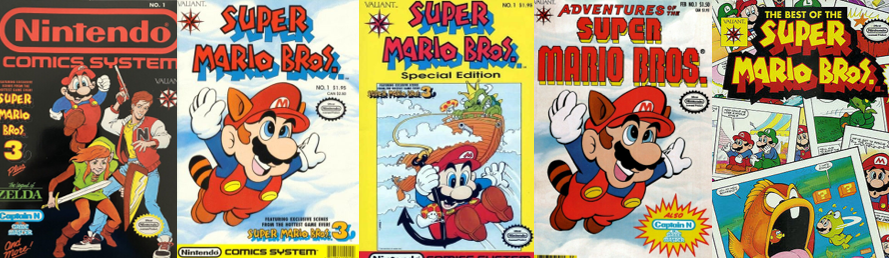
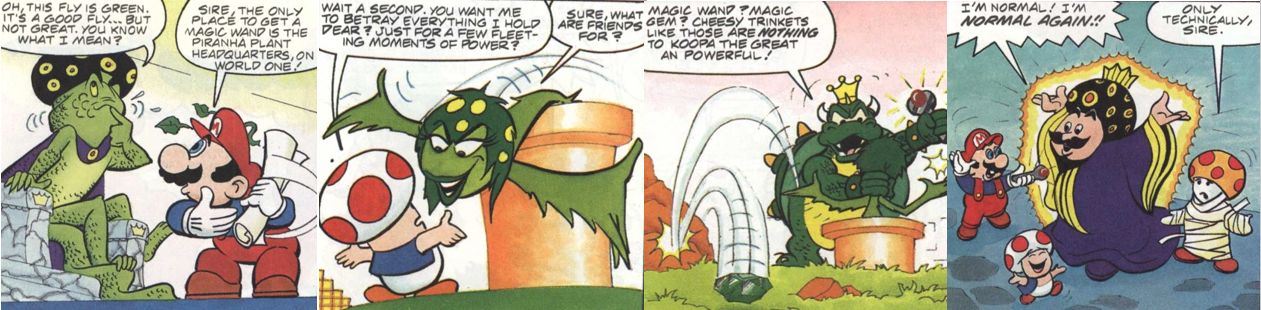


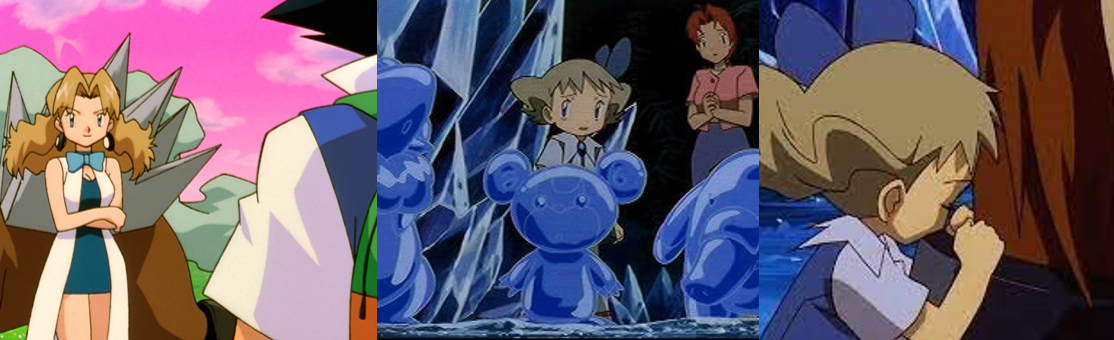



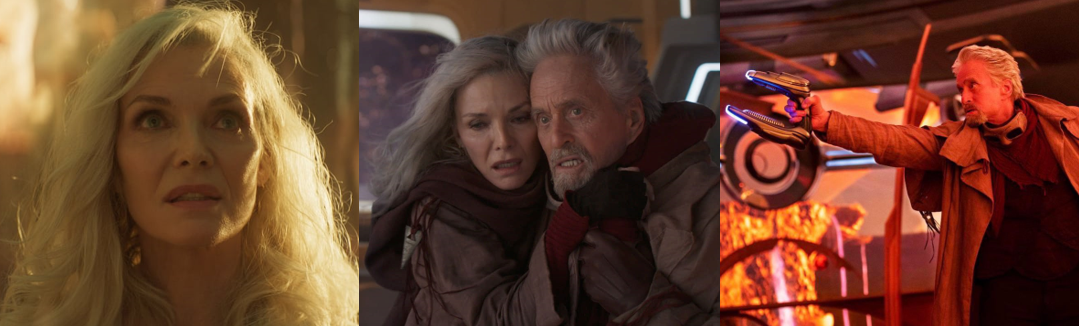

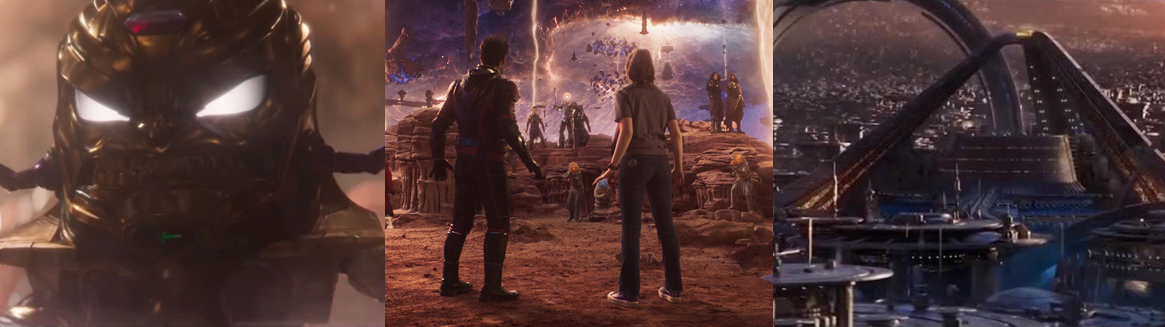
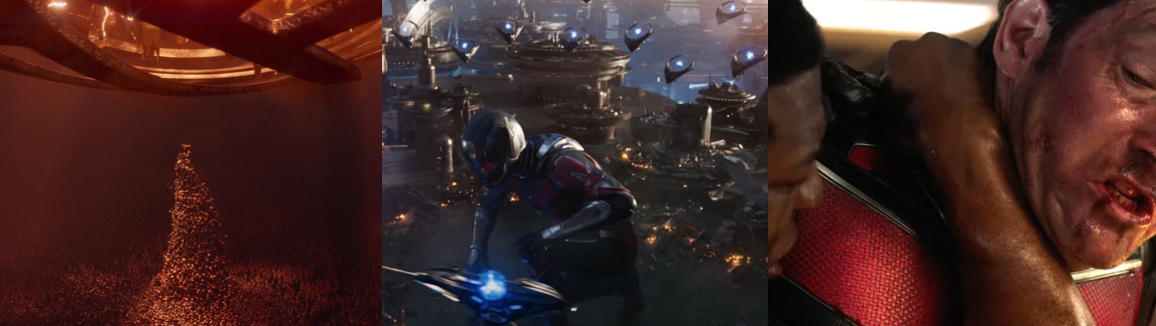


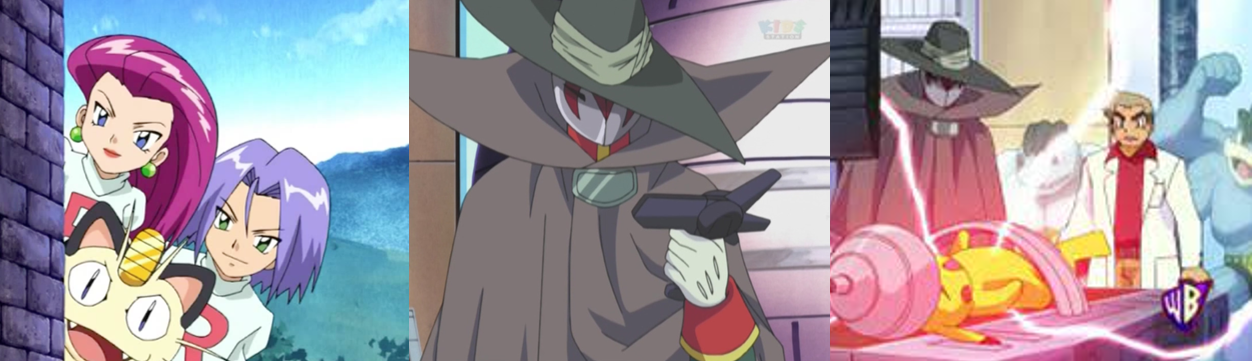
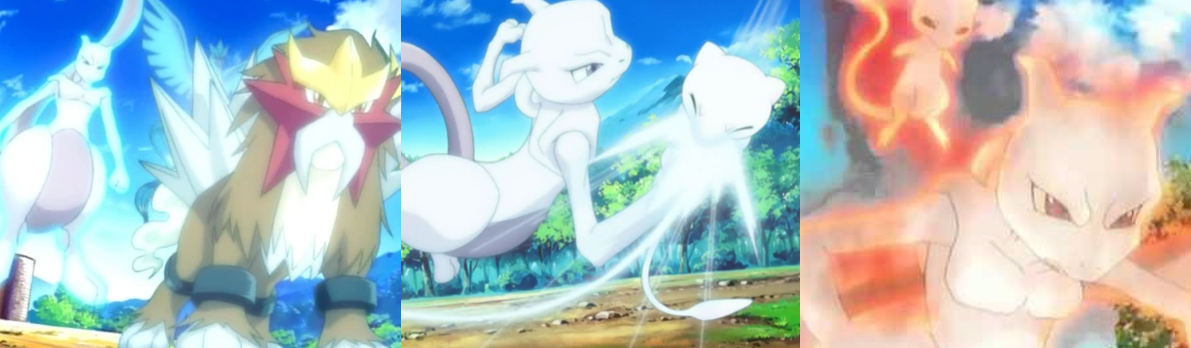




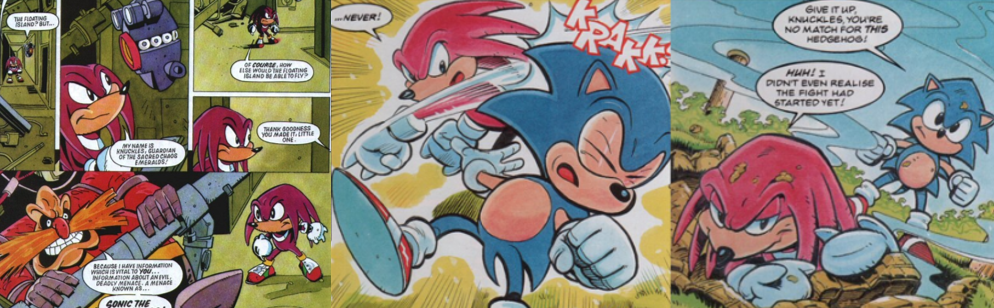
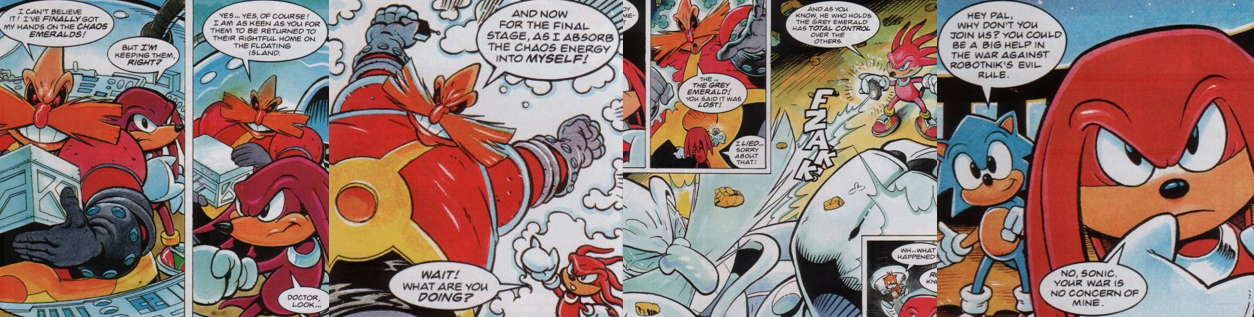





















 Dr. K's Waiting Room
You must be logged in to post a comment.