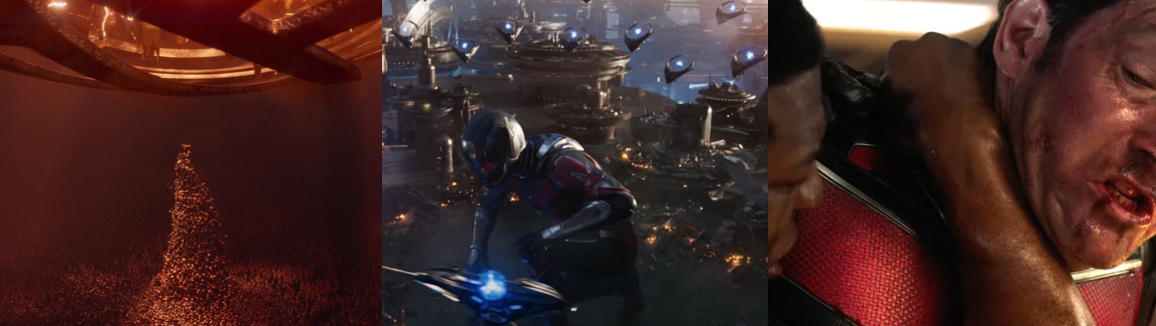
Movie Night [Sci-Fanuary]: Guardians of the Galaxy


January sees the celebration of two notable dates in science-fiction history, with January 2 christened “National Science Fiction Day” to coincide with the birth date of the world renowned sci-fi writer Isaac Asimov, and HAL 9000, the sophisticated artificial intelligence of Arthur C. Clarke’s seminal 2001: A Space Odyssey (1968), being created on 12 January. Accordingly, I have decided to spend every Sunday of January celebrating sci-fi in all its forms.


Released: 1 August 2014
Director: James Gunn
Distributor: Walt Disney Studios Motion Pictures
Budget: $232.3 million
Stars: Chris Pratt, Zoe Saldaña, Dave Bautista, Vin Diesel, Bradley Cooper, Lee Pace, and Michael Rooker

The Plot:
Abducted from Earth as a small child, Peter Quill (Pratt) grows up to become the intergalactic rogue known as “Star-Lord”. However, after stealing a mysterious orb, Quill finds himself relentlessly pursued by the war-hungry Ronan the Accuser (Pace) and forced to team up with a rag-tag group of misfits and criminals in order to oppose the Kree warlord’s plans to devastate a peace-keeping world.

The Background:
While I’m sure that the Guardians of the Galaxy had their fair share of fans before they made their debut in the Marvel Cinematic Universe (MCU), I think it’s fair to say that the intergalactic superhero team were one of Marvel’s more obscure properties, especially compared to heavy-hitters like the Avengers. Writer Arnold Drake and the immortal Stan Lee changed Roy Thomas’s concept of super-guerrillas fighting Russians and Red China into an interplanetary team of misfits, and the team was resurrected and given their much more recognisable line-up over the years, and MCU head honcho Kevin Feige first name-dropped an adaptation of the team in 2010 as part of the MCU’s continued expansion towards more cosmic adventures. Director James Gunn won out to helm the film, which whole-heartedly embraced even the most ridiculous characters and concepts from the team’s history; the film embraced its ensemble line-up and utilised both practical and computer-generated effects to brings its bizarre characters to life. Gunn also emphasised the importance of featuring large, practical sets and bolstered the film’s humour and themes through a referential soundtrack. Guardians of the Galaxy was a phenomenal success, grossing over $772 million at the box office and proving that even Marvel’s most obscure creations could be a box office success. The film was met with an overwhelmingly positive reception; critics praised the banter and comedy, the quirky uniqueness of the film, and for bringing something new to the genre. Others were a little more critical of the film’s pace and comedic elements, but Guardians of the Galaxy’s box office success more than justified subsequent sequels and spin-offs and the Guardians of the Galaxy quickly became a popular and integral part of the larger MCU.

The Review:
My knowledge of the Guardians of the Galaxy was basically non-existent when the film was first announced and released. In all my years of reading Marvel Comics, I had never once encountered the team beyond reading the issue where they encountered Cuchulain the Irish Wolfhound as part of my undergraduate studies and happening to read a story where Doctor Bruce Banner/The Hulk fought an early version of Groot. Thus, when I first heard of the film and saw the trailers, I was a little confused but intrigued by the concept, which reminded me of the kind of space-faring snark and adventure I’d enjoyed in Serenity (Whedon, 2005) and Star Trek (Abrams, 2009), and willing to go along with this risky venture of bringing such an obscure Marvel property to life. Although the film is unquestionably an ensemble piece and introduces many bizarre characters to the MCU, Guardians of the Galaxy is anchored by Peter Quill,  a vain and self-centred space adventurer who, as a boy (Wyatt Oleff), was forced to watch his beloved mother (Laura Haddock) suffer and ultimately succumb to a cancerous tumour. Unable to bare the loss, he ran out of the hospital in his grief and was unexpectedly abducted by Quill Yondu Udonta (Rooker) of the Ravagers on the order of his mysterious father, whom his mother descried in her delirium as an “angel”. Rather than be delivered to his father, Quill was raised by Yondu as a surrogate son and taught the ways of the space pirates, growing up to become a thief and modelling himself after the film stars of his youth, such as Patrick Swayze and Harrison Ford.

Quill wishes to be as notorious as Gamora, a bad-ass warrior known as the daughter of Thanos.

However, Quill is not as notorious throughout the galaxy as he likes to think, despite having a bunch of gadgets and tech at his disposal (such as his blaster, gravity grenades, personal space helmet and rocket boots, and even his own ship, the Milano). While Quill may be a loser with delusions of grandeur, his greatest ability is convincing others to listen to his words and come together against a common goal; even though he doesn’t always have a plan (or even a percentage of a plan), he’s able to talk his newfound allies into setting aside their differences first in the name of survival and profit, and then to defend Xandar from destruction. Gamora (Saldaña) begins the film as a minion of Ronan the Accuser (Pace), on loan to him from her adopted father, the Mad Titan, Thanos (Josh Brolin/Sean Gunn), much like her cybernetic stepsister Nebula (Karen Gillan). There’s a rivalry and animosity between the two that extends beyond simply trying to impress their father; while Gamora is a renowned and notorious warrior, she secretly plots against her father, who destroyed her people and turned her into a living weapon simply for his own amusement. She is a non-nonsense, laser-focused individual who is riled up by Quill’s inane banter and  buffoonery, but comes to find a surrogate family with her oddball team mates; as much as she hates Thanos and desires to kill him, she has a real love and pity for her Nebula, who has become cold and merciless and driven by hatred and resentment since Thanos always favoured Gamora, which inevitably leads to dramatic conflict between the two. Gamora is eventually convinced to trust Quill when he puts himself at risk not only by summoning Yondu for aid but by braving the cold, suffocating vacuum of space to save her, which also goes a long way to proving his selflessness and worthiness as a hero (however unlikely) to his newfound teammates.

Rocket, Groot, and Drax become reluctant allies after being convinced by Quill’s quick-thinking.

Rocket Racoon (Cooper/Sean Gunn) and Groot (Diesel/Krystian Godlewski) are already branded as criminals at the start of the film, but operate as independent bounty hunters who are simply trying to et rich by bringing in marks and run across Quill and Gamora while staking out Xandar for bounties. Though Rocket appears to be the brains of the operation, Groot is far from a mindless creature, despite only ever uttering “I am Groot!”; Groot is insightful, curious, and compassionate and surprisingly gentle for such a lumbering brute, and adds to the film’s humour and heart thanks to his childish nature. Rocket also has a surprising amount of depth to his character; essentially a snarky, embittered raccoon-like creature, he was subjected to horrific experiments and takes a perverse pleasure in sticking it to those in positions of authority. After being arrested by the Nova Corps and locked up in the Kyln, these four are reluctantly forced to work together since all of the other inmates immediately target them because of their association with Gamora and her association with Ronan and Thanos. No other inmate has more of a vendetta against Ronan than Drax the Destroyer (Bautista), a musclebound warrior whose family were slaughtered by Ronan for sport and who longs to kill Gamora as recompense. Drax, who comes from a race of people that take everything literally and cannot understand metaphors, is convinced to spare Gamora by the fast-talking Quill so that they can join forces to lure Ronan out and kill him. Although reluctant to team up, Drax is won over by Quill’s reputation and Rocket’s plucky adaptability, but is so focused on having his revenge against Ronan that he puts his newfound teammates at risk by summoning Ronan to Knowhere, only to be summarily humiliated in single combat with his hated foe.

Despite his potential to be a decent recurring villain, Ronan is a disappointingly forgettable antagonist.

Each of the film’s protagonists has either a personal vendetta against, or comes into conflict with, Ronan, a Kree warrior branded a terrorist as he refuses to abide by the peace treaty between his people and Xandar, home of the Nova Corps. A maniacal zealot who wishes nothing less than the power to strip Xandar of all life, he makes a deal with Thanos, to retrieve the Orb for him in return for Thanos unleashing his might against Xandar, however he’s sadly another largely lacklustre villain; even killing the Other (Alexis Denisof) and making demands of Thanos does little to impress and he’s simply a large, malevolent force for the team to rally against. He does have some notable moments, however, such as delivering a massive beatdown to Drax and laying claiming the Power Stone that lies within the Orb, thus granting him incredible, nigh-unlimited power. Unfortunately, there’s really not much to go on with him; his fanatical vendetta against Xandar make him largely unsympathetic, he does a lot of posturing for someone so feared and revered by other characters, and is easily distracted by Quill’s hilarious dance moves and undone by the titular Guardians sharing the power of the Power Stone between them and atomising him. It’s a shame, really, as I feel like Ronan could have been a decent enough recurring villain, or even a reluctant ally, of the Guardians in subsequent films (or repurposed into one of Thanos’s Black Order), but instead he’s simply built up as this unstoppable bad-ass and then done away with before he can really earn that reputation.

A number of supporting character actors bolster the film’s scope, or steal the show with their antics.

The film is bolstered by a number of supporting characters, with Yondu being the clear standout; Quill’s mentor and, essentially, adopted father, there is an animosity between the two as Yondu believes Quill is ungrateful that he wasn’t eaten by the rest of the Ravagers and Quill believes that Yondu only kept him around because he was small enough to help steal stuff. However, there relationship softens over the course of the film and Yondu goes from placing a bounty on Quill’s head and wanting him dead to helping him push back Ronan’s forces, which is good news for Quill as Yondu can command a specialised arrow with just a few piercing whistles and cut down enemies in the blink of an eye. As home to the peacekeeping Nova Corps, Xandar offers some additional faces to the film’s line up, including the exasperated Nova Prime, Irani Rael (Glenn Close), who is frustrated at Ronan’s continued attacks against her people and the reluctance of the Kree to intervene, and Nova Corpsmen such as Rhomann Dey (John C. Reilly) and Denarian Garthan Saal (Quill Serafinowicz), who are both impressed and judgemental of the titular team’s notoriety and become reluctant allies of theirs for the finale. Another additional highlight of the film is the enigmatic Taneleer Tivan/The Collector (Benicio del Toro), a peculiar gatherer of oddities and knowledge who reveals the Orb’s true nature as housing an Infinity Stone and pushing the Guardians into leaving it in the care of the Nova Corps rather than selling it or allowing Ronan to lay claim to it.

The Nitty-Gritty:
All young Quill had to cope with his mother’s failing health was his music; she would compile mix tapes for him that he would listen to repeatedly to help distract him from reality and, after being kidnapped by Yondu, he was (somehow) able to keep his Walkman and tapes working by retrofitting space technology. Quill is so attached to the Walkman and his music that he delays his escape from the Klyn to retrieve it, much to Drax’s chagrin, and he finds solace in the music of Blue Suede, Redbone, and Marvin Gaye. Obviously attracted to Gamora, Quill briefly begins to win her over by letting her share his music, and he has spent his entire adult life putting off unwrapping his mother’s final gift to him, which turns out to be a new mixtape full of even more classic tracks from the seventies and the eighties.

Guardians massively expanded the scope and intricacies of the MCU’s galaxy.

Being the MCU’s first adventure to be fully set in the deepest depths of space, Guardians of the Galaxy continues to impress with is visual presentation; from the sets, props, and special effects, everything has such depth and variety to it. Xandar is slick and advanced, clean and with the best resources available, while Knowhere is a desolate, lived-in hellhole full of scum and villainy. The Milano is a beat-up mess not a million miles away from the Millennium Falcon (although it doesn’t look like the Falcon), while Ronan’s ship, the Dark Aster, is a dark and ominous vessel carving its way trough the galaxy. The Ravagers are a bunch of degenerates holed up on a huge, filthy ship and made up of a variety of representable races, and the differences between their ship and the advanced forces of the Nova Corps is vast. However, it takes the combined efforts of these unlikely allies to defend Xandar and push back Ronan using a combination of space combat, a massive energy shield that amounts to a suicide run, and breaching the Dark Aster in an unsuccessful attempt to kill Ronan. I really enjoy the visual style of the film, which quickly shows in a very short period of time that the MCU’s galaxy is full of history, technology, and races that we’ve still only begun to scratch the surface of. Knowhere is carved from the severed head of a Celestial, the Collector’s museum is stuffed full of trinkets and captives from across the vastness of space and Marvel lore, and there’s a real sense that we could see another twenty films set in MCU space and still not really understand everything about it.

Family is at the heart of Guardians as its misfits and outcasts find a purpose in the universe.

One of the most prominent themes that separates Guardians of the Galaxy from other films in the MCU is the sense of family; unlike other films in the MCU, Guardians of the Galaxy was given the unenviable task of introducing a whole team of new heroes all in one film and, while many of them are analogous to their Avengers counterparts, they manage to stand out from them thanks to their individual personalities and quirks. Quill is desperate to make a name for himself as notorious outlaw Star-Lord; until now, he’s being trying to do that by stealing shit and being a disreputable rogue, but he finds his true calling as a reluctant space hero and saviour by the film’s end and finally gets his wish when Korath (Djimon Hounsou) uses his codename. Quill is also carrying a tremendous amount of guilt over never getting to say goodbye to his mother and has been running from his past ever since; while he seems to have no wish to return to Earth and find a new family in the Guardians, he clings on to the pop culture of his childhood, and it’s his love for his mother that gives him the strength to endure the Power Stone’s power in the finale. The familial themes continue with Gamora and Nebula, stepsisters who have a bitter rivalry but are reluctant to admit how much they both have in common: bother were used and abused by Thanos and both wish to see him dead, but Nebula is too blinded by her hatred and resentment to consider working alongside her sister. Drax is completely motivated by love for his lost family, whose deaths haunt him and dictate both his vendetta against Ronan and his eventual acceptance of his newfound friends.

Despite heavy losses, Ronan is defeated and the galaxy is left in the capable (?) hands of its new guardians.

This band of misfits, degenerates, and losers finally finds something worth fighting for thanks to their common goals and interests, forced to work together for survival, their interests quickly turn from profit and revenge to putting their lives on the line for a greater good when they pledge to defend Xandar from Ronan and keep the Power Stone out of his grasp. Alongside the Ravagers and the Nova Corps, the newly christened Guardians of the Galaxy fend off the likes of Korath and Ronan’s Necrocraft in a co-ordinated attempt to kill Ronan. Unfortunately, Ronan embeds the Power Stone into his Warhammer, obliterating Saal and many of the Nova Corps and easily shrugging off Rocket’s specially made missile. Outmatched by the empowered Ronan, the Guardians are only granted a reprieve when Rocket punches a whole in the Dark Aster sending it crashing down to Xandar, and they’re only saved by the selfless and poignant sacrifice of Groot, who shields his newfound family using his own body. Thanks to the Power Stone, Ronan also survives the crash, but is so busy making speeches that he probably would have ben undone even without Quill’s distracting him with his dance moves. With Ronan’s Warhammer destroyed, Quill lays claim to the Power Stone, but its sheer destructive power threatens to teat him apart; memories of his mother give him the strength to hold back the damage and link hands with his newfound friends, who share the burden of the Infinity Stone’s power and allow them to triumph over Ronan. For their efforts, Quill makes amends with Yondu (despite again cheating him out of the Orb’s bounty, and Yondu taking with him the truth of Quill’s true parentage). The Nova Corps repair the Milano and wipe away the Guardians’ criminal records, and the head out into the galaxy to cause more mischief.

The Summary:
I am continuously impressed by Guardians of the Galaxy; I was pleasantly surprised the first time I saw it and, even now, it stands out as one of the most unique and entertaining entries in the MCU. Essentially a space adventure, the film has a visual style and humour that really helps it stand out from other films in the MCU. The film does a fantastic job of extending the scope of the MCU beyond Earth and really showing how much variety, lore, and different technology, races, and conflicts exist out in the depths of space. Tying everything together is, of course, the titular team themselves; reminiscent of their Avengers counterparts (a man out of time, a warrior female, a snarky mechanic, a monstrous brute, and an oddball meathead), the Guardians shine trough their unique characteristics and the sense of loss that drives them. Each has a past, with many of them having committed unspeakable crimes prior to the film, and is motivated by a desire to find a sense of belonging, put to rest their demons, and discover their purpose in the wide, dangerous galaxy. Of course, to begin with, none of them would ever really admit to this and they’re more motivated by profit or revenge, but being forced together turns out to be the best thing for this band of misfits and assholes as they’re able to put their egos, pride, and selfish desires to come together for a greater good. It’s not easy debuting an ensemble team in one film, but Guardians of the Galaxy is fantastically paced and gives everyone a chance to shine; even supporting characters like Yondu and Nebula get a decent amount to do and, while Ronan is squandered as a villain, the overall package shines just as brightly now as it did when I first saw it and I remember coming away from Guardians of the Galaxy extremely excited for the future of the MCU, which looked to be near-limitless at the time.

My Rating:

Rating: 5 out of 5.

Fantastic

Are you a fan of Guardians of the Galaxy? Which of the characters was your favourite? Were you disappointed that the film didn’t feature the original version of the team, or a different line-up? What did you think to the MCU expanding its scope deep into space and with such an obscure property? Were you also disappointed with Ronan, or does he rank quite high in your list of MCU villains? What did you think to the hints towards the full scope of the Infinity Stones and the wider MCU peppered throughout the film? Did you enjoy the changes the film made to characters like Drax and the Nova Corps? Which members of the team would you like to see included in the MCU later down the line? I’d love to hear your thoughts on Guardians of the Galaxy, so please sign up to share them down below or leave a comment on my social media, and be sure to check in next Sunday for my review of the sequel as Sci-Fi Sunday continues!

Game Corner [Turtle Tuesday]: TMNT: Tournament Fighters (Xbox Series X)


Ever since Kevin Eastman and Peter Laird’s Teenage Mutant Ninja Turtles (TMNT) first debuted, the franchise has enjoyed worldwide mainstream success thanks to action figures, cartoons, and videogames. Since I found some free time this December, I’ve been spotlighting four such videogames every Tuesday of this festival season.


GameCorner

Released: 30 August 2022
Originally Released: 4 September 1993 (Mega Drive / SNES) / February 1994 (NES)
Developer: Digital Eclipse
Original Developer: Konami
Also Available For: Mega Drive, Nintendo Entertainment System (NES), Nintendo Switch, PC, PlayStation 4, PlayStation 5, Super Nintendo Entertainment System (SNES), Xbox One, and Xbox Series S

The Background:
There was only one franchise that dominated childhoods back in the late-eighties and early-nineties and that was the Teenage Mutant Ninja Turtles (or Teenage Mutant Hero Turtles for Brits like me); beginning life as a violent pastiche of comic book tropes, the TMNT’s popularity exploded into the massively successful cartoon and action figures, live-action movie adaptations, and many videogames. Spearheaded by Konami, the TMNT were equally successful with their arcade beat-‘em-ups and their home console ports, but this was also a time when Capcom had changed the face of both arcades and the competitive fighting scene with the many iterations of Street Fighter II: The World Warrior (Capcom, 1991), which was great success on home consoles and inspired a slew of knock-offs looking to cash in on Capcom’s success. The TMNT were amongst these with this one-on-one tournament fighter, which released in slightly different versions across three platforms at the time; the games took inspiration from the cartoons, movies, and the Archie spin-off comics but, while the 16-bit titles aped the combos and special moves of Street Fighter II, the 8-bit version had more in common with the likes of Yie Ar Kung-Fu (Konami, 1984) due to the NES’s limitations. Of the three, the SNES version was positively received despite being a Street Fighter II knock-off, the Mega Drive version was criticised for its sluggish controls and lacklustre presentation, while the NES version was seen as ambitious but unsurprisingly limited. All three games were lost to the midst of time, available only through emulators or extortionately expensive physical copies until they were included in this Cowabunga Collection alongside a host of other games and quality of life features.

The Plot:
The Turtles and their allies take part in a one-on-one tournament. In the Mega Drive version, the heroes battle across the alien worlds of Dimension X to rescue Splinter from their archnemesis, Oroku Saki/The Shredder, and their evil clones; in the NES version, the Shredder challenges them to defeat his latest plot for world domination; and in the SNES version, the heroes battle on a fighting game show to prove their mettle and earn some cold, hard cash.

Gameplay:
Regardless of which version of Teenage Mutant Ninja Turtles: Tournament Fighters you choose to play, the game is a standard 2D, one-on-one fighting game, with the 16-but versions of the game heavily borrowing their controls, combat, and presentation from Street Fighter II. Each game comes with a different roster of fighters, with ten fighters selectable in the SNES version, eleven available in the Mega Drive version, and seven in the NES version. Each version of the game allows you to customise the gameplay in some way, such as setting the difficulty level of the game (which directly impacts the ending and bosses you face), changing the time limit and amount of rounds to win (with the games defaulting to the standard best of three rounds), setting the speed of the game, setting the amount of credits you have to continue laying upon defeat, and eve setting the strength of your character and your opponent to establish any handicaps. These features don’t carry across to every version of the game, and some are slightly altered (the SNES version represents difficulty on a zero to seven scale, for example, while the NES uses a simple Easy, Normal, and Hard designation), but these options are generally consistent to those seen in Street Fighter II.

Each game sees you pummelling foes with a variety of moves and special attacks.

Combat, however, is a slightly different story and varies somewhat between each version; while the SNES version benefits from the additional buttons and mimics the directional input and button presses of Street Fighter II to pull off special moves, the Mega Drive and NES versions are limited by their control scheme layouts and the general presentation of the game. Indeed, the SNES version is more like Super Street Fighter II Turbo (Capcom, 1994), running much faster at its maximum speed and aping similar button combinations, while the Mega Drive version is far slower and reminds me more of the original, somewhat clunky first release of Street Fighter II. The NES version, as mentioned, is more like Yie Ar Kung-Fu and features little in the way of complex button combinations and special moves due to the limitation of the NES hardware. In the SNES version, you have two different types of punches and kicks; A and X launch a “normal” punch and kick while B and Y throw “fierce” variants. You can press up on the directional pad (D-pad) to jump and launch flying kicks and punches; when up close to an enemy, you’ll grab them and toss them in a unique throw move and you’ll use directional inputs and button presses (down, diagonal down-right, right, X, for example) to pull off each character’s special moves. When not playing in the game’s story mode, you’ll gradually fill up a gauge underneath your life bar; when this is full, you can use another simple button combination to unleash a devastating “Ultimate-Attack” that, unlike your regular attacks, actually damages the opponent through their block (though if they attack you during it you’ll fail and it’ll deplete if you don’t use it in time). Much of this is true of the Mega Drive version, but with some notable differences; there’s no special attack gauge, for starters, and no “fierce” attacks, you simply use X to punch and A to kick, and press Y to pull off a taunt (that seems to have no function). To pull off stronger attacks, you need to press the D-pad towards the opponent and then press X or A; you can still grab and throw your foe but special moves seem a lot harder to pull off (not least because the button inputs are missing from the strategy guide) and the game’s sluggish pace makes combat inconsistent and frustrating. It’s still more complex that the NES version, though; here, X punches and A kicks and that’s about it; you can use directional inputs and button presses to pull off special moves, but they’re extremely basic and the TMNT don’t even fight with their signature weapons in this game! Each game features a stun mechanic like in Street Fighter II, though; deal enough damage in a string of attacks and your opponent will be momentarily dazed and wide open for another combo or throw.

Although it lacks Nintendo’s bonus stages, the Mega Drive version has instant replays…

Some versions of the game do allow you to alter the button layout if you’re not happy with the default, and all three versions allow you to block by holding back on the D-pad (a mechanic I’ve always found awkward in fighting games; I much prefer a dedicated block button) but the SNES version also allows you to flip away from incoming attacks but only the NES version allows you to run towards your opponent by double tapping the D-pad. Each version also comes with a few gameplay options; you can take on the story mode (where you’re limited to playing as the TMNT), with cutscenes and a map screen (in the Mega Drive version) furthering the narrative between each bout, battle against a friend (or against the computer in the NES version), watch or practice the game in the SNES and Mega Drive versions, or take on a standard tournament mode. This also differs greatly between each version, with the SNES version taking the form of a broadcast and game show and featuring pre- and post-match dialogue and even tossing in a bonus stage where you rack up extra points and gold by smashing open safes in a bid to help break up the monotony. Although this is absent from the Mega Drive version, whose tournament simply goes from one fight to the next, every match is followed by an instant replay), bonus stages do appear in the NES version; here you have to smash through walls in the dojo for extra points, and all three will tally up certain criteria (health remaining, time left, whether you took damage or not) when you’re victorious to add to your score and this is the only version of the game to feature a high score table.

Each version offers a pretty tough challenge even on the easiest difficulty.

Each game comes with a natural, steady, and expected difficulty curve that I find is typical of most fighting games but synonymous with Street Fighter II; your ability to succeed will depend on how adept you are at pulling off the awkward special attacks and combos, especially as special attacks and throws deal way more damage than your regular attacks. The enemy AI, even on the easiest settings, is incredibly cheap in all three versions; your opponent will block almost constantly, is consistently able to attack and throw you through your attack animations, and they’re far more aggressive and skilled than I was, meaning I either had to fight hard and fast or be on the defensive. The difficulty and gameplay sliders can help with this, especially in the Mega Drive version, which allows you to reduce the rounds to win to one and set your speed and power to give you an advantage. Since the SNES version is the fastest of the three, combat can move at a breakneck speed, with rounds turning out of your favour in the blink of an eye, and you’ll be immediately at a disadvantage as you need to play on at least difficulty level three to even battle to true final boss and see the game’s best ending. This is even more demanding in the Mega Drive version, where you need to play on level eight to get the true ending; this version is so hampered by its plodding speed that it’s easy to get trapped in an unbreakable combo string and stunned into oblivion by your hyper-aggressive opponents. The NES version can be both paradoxically difficult and easy at the same time; there’s little benefit from picking one fighter over another as they’re all so limited but some, like Hothead, make for bigger targets while others, like Casey Jones, appear to be more agile. Either way, the limitations of the hardware make this a mundane back and forth affair that’s more about who can grab the power-up first rather than requiring any in-depth skill like the SNES version.

Graphics and Sound:  
Obviously, all three games look and sound very different. Of the three, the SNES version is the clear winner in terms of overall presentation; the game features more sound bites, big, bright, and well animated sprites and backgrounds, and the music is clearer and has more kick to it. The emphasis on story and cutscenes means there’s far more opportunities for big, partially animated sprite art here, with April O’Neil reporting on and interviewing characters before and after bouts and every fight in story mode being proceeded by dialogue between the fighters and the TMNT travelling to each location via their signature blimp. The characters in this version are clearly modelled more like the cartoon, with a hint of the live-action influence here and there, and they’re all large and full of attack and reaction frames. Sadly, the same isn’t true of the Mega Drive version; even the title screen and character select screen aren’t as impressive, though the game does include more palette swaps and some different fighters compared to its SNES counterpart. Sprites are smaller, however, duller, and seem to be missing some animation frames; everyone seems far meaner and more surly, as well, making this a very gritty and moody experience that seems to owe more to the original Mirage Comics, but it’s pretty obvious even to a die-hard SEGA fan like me which version has the better overall presentation. Naturally, the NES version is the most inferior in terms of graphics, character, and stage selection; however, while the TMNT don’t sport their signature weapons, they do have their own unique green palettes to separate them and the character designs seem to be drawing more from the first live-action movie than anything else. You won’t find much in the way of animation and variety here but it’s pretty ambitious, really; sprites have some decent details and special attacks, but the game suffers from black bars eating up a lot of the player’s screen.

Presentation varies between the three, with the SNES being the clear superior.

Naturally, the stages you’ll fight in follow very much the same format; the SNES version features a variety of large and detailed environments set largely on Earth, with some even featuring destructible elements to smash your opponents into like in Street Fighter II. Also like in that game, you’ll see background characters and elements and characters cheering and watching the fight, including TMNT staples like Bebop and Rocksteady, Baxter Stockman in his fly form, and various Foot Soldiers. There’s always something going on in the SNES version, whether it’s a giant octopus, a band performing on stage, or a news report recording the action, and this version also includes better, more detailed and varied story cutscenes and even character bios in its attract mode. Comparatively, the Mega Drive version is an immediate disappointment; cutscenes are smaller and less interesting and the backgrounds, while surreal and often disturbing, are far more muted and feature almost no animation and absolutely no interactable elements. As this version of the game features a planet-hopping narrative, there are some bizarre stages to choose from, from an ice world complete with a submarine to an ocean planet with a sinking ship in the background, to the bleakness of the cosmic abyss, but it’s all so dull and lifeless even when there’s giant cycloptic magma creatures and dinosaurs looming in the background. Again, the NES version is hampered by its hardware and includes only four stages: the sewers, a subway station, the galley of a pirate ship, and the rooftops of New York City. This latter is the most impressive stage, showing the city and the Statue of Liberty at night and in all its 8-bit glory, and is preceded by a rare cutscene to set the stage for the final battle against the Shredder.

Enemies and Bosses:
As with all fighting games, every available character will eventually be your enemy at some point; button codes and the Cowabunga Collection’s enhancements allow you to play as the boss characters in the 16-bit versions of the game and the Mega Drive version even includes and practise mode to help you get to grips with your favourite character. Essentially, however, there’s minimal benefit to picking a certain character in each version of the game; all of them sport special moves that can match each other, with every character sporting projectiles, grabs, and powerful rushing or slamming attacks to deal heavy damage. However, there are some notable exceptions; as mentioned, Hothead is a unique character in the NES version, sporting a chunkier sprite and breathing fire, meaning his hit box is a little larger and the character is a little slower. In the Mega Drive version, Casey Jones can set bombs as traps, while characters like Chrome Dome and Krang can cover distances from a standstill with their extending arms and legs. Even on the easiest setting, the SNES version puts up quite a fight; I struggled against War in the first battle simply because of his ridiculous rolling throw and large swiping claws, and the Shredder proved quite formidable here thanks to his dashing uppercut, his flurry of punches, and his cheap tactics of spamming low kicks. The Rat King also proved a unique foe in this version as he relied more on wrestling moves, snatching you out of the air and grabbing you midway through your attacks to slam you to the ground, and you’ll really get a sense of how good or bad you are when you face off against your character in a mirror match.

You’ll need to challenge the game’s highest difficulties to achieve the best endings.

These are spiced up a bit in the Mega Drive version through the inclusion of evil clones, who sport a purple palette swap and constantly dog your progress throughout the game. The Mega Drive version also includes a unique character, Sisyphus, an alien beetle who spits a blue projectile at you and unleashes a rapid-fire horn attack. He’s not the only unique character, however; Ray Fillet, April O’Neil, and a Triceraton are also included in this version of the game, while Wingnut, Aska, and Armaggon round out the SNES roster, with each one bringing their own strengths and weaknesses. April was a surprisingly decent character to use as she has a very cheap crouching spam attack that’s great four countering the game’s aggressive enemies, but you can never count out the titular turtles, who can send ground sparks, spinning cyclones, and twirling kicks your way at any moment even in the NES version. Krang only appears as a boss in the Mega Drive version of the game; naturally, you battle him in the Technodrome as the penultimate boss and he’s able to extended his arms, slide at you with a kick, and fire missiles high and low from his robot body but his sprite just isn’t large or intimidating enough to evoke a sense of danger. Both 16-bit versions include the same final boss, Karai, who can only be fought on higher difficulty settings; on the SNES, you fight her on top of a speeding train, whereas you battle her in a traditional dojo on the Mega Drive. In both, she’s easily the most formidable fighter, which is accentuated on the SNES thanks to her larger sprite; she’s capable of crossing the screen with a devastating cartwheel kick, tossing out projectiles, diving from high above with flying kicks, and is overall a pretty tough customer thanks to her martial arts kicks and overly aggressive AI. Thanks to its limited roster, the Shredder is your final foe in the NES version of the game; fought on a rooftop like in the movie and original comic, Shredder again has a dashing uppercut, a flaming flurry of punches, and can send a ground shot your way but goes down just as easily as every other enemy in this version of the game.

Power-Ups and Bonuses:
As Tournament Fighters is styled heavily after Street Fighter II, for the most part, there aren’t any in-game power-ups for you to utilise. The SNES version includes that special gauge outside of the story mode, which is good for a dramatic finish, but this is completely absent from the Mega Drive version. The NES version, however, does feature a power-up; at some point in every battle, Splinter will drop a red ball into the arena, which you can collect by pressing down and X. While the exact button inputs aren’t explained, and it seems incredibly temperamental, you can then launch this ball at your enemy to deal massive (and, usually, decisive) damage and this will be your key to victory in almost every bout. Be warned, though, as your foe is also able to pick up the ball and you’ll lose it if you take too much damage.

Additional Features:
The additional features on offer differ somewhat between each version of Tournament Fighters but there is some overlap; each version includes a story and a tournament mode and allows players to go head-to-head, selecting their character, stage, and handicap modifiers as you’d expect from a one-on-one fighter. Each game includes a variety of endings depending on which character you play as and the difficulty you set the game to, encouraging multiple playthroughs if you can stand to tackle this game again. Of course, the Cowabunga Collection adds even more features to these games; you’ll get a generous 100G Achievement for completing each game, however, you need to beat each one of the higher/highest difficulty level and battle Karai for this to pop. You can also use the Left Bumper to rewind the gameplay and bring up save states and display options with the Right Bumper, which also allows you to look through the strategy guide for tips and move inputs, which is much appreciated. In addition to viewing each game’s box art and manuals, exploring their soundtracks, and switching between the American and Japanese versions, you can enhance each game in various ways: you can choose to play as the 16-bit bosses, access additional stages, increase the game’s speed, and enable extra lives, remove sprite and slowdown from the NES version and allow for Hothead versus Hothead fights if you wish.

The Summary:
Teenage Mutant Ninja Turtles: Tournament Fighters is a tough one for me. I’m really not the best at Street Fighter II and similar knock-off fighters; the button inputs and aggressive opponents always throw me off and playing these games is often more frustrating than fun. The TMNT aesthetic certainly suits the format; all of the character have unique attacks and represent both the cartoons, comics, toys, and movies from the time and anyone who’s ever played Street Fighter II, especially on home consoles, will be immediately familiar with the 16-but versions of the game. For me, the SNES version is the clear winner; not only does it look and sound the best of the three, it plays a lot better and there are far better opportunities for combos and special attacks. The story and tournament modes are also presented in a much more visually impressive way, the stages are livelier and more interesting, and the game is bolstered by the faster combat and fluid gameplay. It pains me to say it being a big SEGA fan, but the Mega Drive version just can’t compete with its SNES counterpart; everything’s smaller, grimier, and so slow and clunky. I actually prefer some of the roster here, having read a lot of the TMNT’s Archie Comics as a kid, but the gameplay and presentation lets these additions down considerably. Naturally, the NES version is the inferior of the three but, even so, it does a decent job with the limitations of its hardware. One-on-one fighters are never a good option on inferior hardware and the TMNT definitely benefitted more from their 8-bit sidescrolling adventures and brawlers, but there’s some ambitious elements here that make it an interesting option, at least, though it’s hard to believe anyone choosing to downgrade or settle for the NES version of the far superior SNES version. Overall, if you’re a fan of one-on-one fighters and Street Fighter II, you could do a lot worse than to give the SNES version of Tournament Fighters a whirl; the other two are worth a quick playthrough for a boost to your gamer score but I can’t see myself picking the Mega Drive or NES version on future playthroughs since the SNES version just leaves both in the dust with its superior options, gameplay, combat, and presentation.

Mega Drive Rating:

NES Rating:

SNES Rating:

Rating: 2 out of 5.

Rating: 1 out of 5.

Rating: 3 out of 5.

Could Be Better

Terrible

Pretty Good

What did you think to Teenage Mutant Ninja Turtles: Tournament Fighters? Which of the three did you own back in the day, or is your favourite to play in this collection? How do you think it compares to other one-on-one fighters, especially Street Fighter II? Which character was your favourite to play as in each version? Were you disappointed by the dip in graphical quality in the Mega Drive version? What did you think to the NES version and how it utilised the system’s limitations? Would you like to see another one-on-one tournament fighter from the TMNT? What did you think to the additional features added to the Cowabunga Collection? Whatever your thoughts on Tournament Fighters, go ahead and share them in the comments below.

Screen Time: The Guardians of the Galaxy Holiday Special

Air Date: 25 November 2022
Director:
James Gunn
Network:
Disney+
Stars: Chris Pratt, Dave Bautista, Vin Diesel, Bradley Cooper, Pom Klementieff, Sean Gunn, and Kevin Bacon

The Background:
Although one of Marvel’s more obscure properties, and having undergone many alterations over the years, the Guardians of the Galaxy proved to be a massive financial success when they made their live-action debut in the Marvel Cinematic Universe (MCU). With the property deemed to have strong franchise potential and integral to the MCU, a sequel was inevitably produced and went on to surpass the box office of the first film despite criticisms regarding its pace and tone. Although director James Gunn had plans for a third film, the team’s future was briefly thrown into doubt when Disney and Gunn parted ways after learning of some controversial tweets and comments he made in the past. After addressing and apologising for his comments, and following an outpouring of support from fans and stars alike, Gunn returned to Disney/Marvel and developed of the third film started up once more. Gunn and his stars also signed on to produce this holiday special for Disney+, which he planned to serve as an epilogue for Phase Four of the MCU after having worked on the concept for some years. Following delays due to COVID-19, the special finally released on Disney+ in December 2022 and was met with positive reviews; critics praised the heartfelt homage to Christmas specials of old and the light-hearted comedy on offer, though some questioned the motivation behind the special and the inclusion of Kevin Bacon despite Gunn stating that it would set up some key events for the team’s third movie.

The Plot:
With Peter Quill/Star-Lord (Pratt) still reeling from the death of Gamora (Zoe Saldaña) and the presence of her alternative self from a separate timeline, Mantis (Klementieff) and Drax the Destroyer (Bautista) head to Earth to bring Peter the greatest Christmas gift they can think of: his childhood icon, Kevin Bacon!

The Review:
The special opens with Kraglin Obfonteri (Gunn) shedding some light on young Peter’s (Luke Klein) childhood amongst the Ravagers to Mantis, Drax, and Nebula (Karen Gillan). As a boy, Peter was still very sentimental towards Earth (largely referred to as “Terra” out in the depths of space) and tried to teach Yondu Udonta (Michael Rooker) about its ways and traditions. Yondu, however, wasn’t just unimpressed at the idea of Christmas; he was enraged by it and forever ruined the festivities with his volatile temper. While Mantis is heart-broken at the story, Drax, in his usual boisterous fashion, finds Peter’s traumatic upbringing incredibly amusing, something even Nebula admonishes him for. The special does answer a lingering question I had about Taneleer Tivan/The Collector (Benicio del Toro), last seen as an illusion cast by the Mad Titan, Thanos (Josh Brolin), and presumed dead but he’s apparently still alive since he sold the entirety of Knowhere to the Guardians between movies. Because of this, the team has been too busy fixing the place up and restoring some kind of order and has been unable to indulge in festivities or even search for the elusive, alternative Gamora. Feeling a sense of obligation towards Peter, who’s revealed to be her half-brother since they’re both children of Ego the Living Planet (Kurt Russell), Mantis is spurred to give Peter the Christmas he missed out on as a child. Confiding in Drax, the only one who knows her secret, Mantis is elated when the muscled-bound buffoon suggests bringing Peter’s childhood hero to him as the ultimate Christmas gift and head to Earth to kidnap Kevin Bacon! Although their arrival initially causes a stir due to Drax forgetting to activate the ship’s cloaking device, the two easily blend in amidst the glitz, excess, and cosplayers of Hollywood, unwittingly earning themselves a decent wad of cash in the process as enthusiastic tourists clamour for selfies with their pair.

To cheer Peter up, Mantis and Drax head to Earth to kidnap Kevin Bacon!

After blowing all their dough on shots and revels, Mantis uses her empathic abilities to obtain a map to Kevin Bacon’s house, where the EE spokesman is relaxing in his spacious Hollywood home and awaiting the return of his family. Although he politely sends the two away when they come calling, they’re easily able to barge into his house and a frantic chase throughout Bacon’s abode ensues, with Mantis hopping from wall to wall like her namesake and things escalating when Bacon desperately asks the local cops for help, which thankfully ends without any bloodshed. This sequence also showcases Mantis’s fighting skill as she easily takes down the armed cops and renders them unconscious with her powers, showing that she’s more than just the team’s emotional, compassionate conscious. These same powers are used to quell Bacon’s fears and, at the lightest touch and softest suggestion, he become enthusiastic about accompanying the two and helping them deck their ship out with Christmas decorations. However, once he’s heading out into the big black and sharing stories of his career, Bacon unknowingly lets slip that he’s simply an actor rather than some world-renowned superhero, much to the disgust of Mantis and Drax, so Mantis coerces Bacon into believing he truly is a hero so as not to ruin Peter’s Christmas once more. Bacon then believes himself to be a World War Two soldier, adopting a…well, “Australian” accent would be generous…then briefly pretending to be Bruce Wayne/Batman before Mantis demands that he be himself but not “suck”. Thankfully, Bacon is just happy to be out in space and takes it all in his stride, and Peter is astounded to find that all of Knowhere has been decorated with Christmas lights, songs, decorations, and even a snow blower. Though touched by their efforts, Peter’s joy turns to horror when he discovers that his friends have kidnapped his childhood hero, regardless of how excited Kevin Bacon is to be there to celebrate Christmas with them. After demanding that Bacon be returned to normal, the actor’s enthusiasm turns to terror; however, after learning of how influential his career was to Peter’s life, Bacon has a change of heart and decides to stick around and help out.

The Summary:  
Naturally, given the title and when it released, Christmas is a central theme of The Guardians of the Galaxy Holiday Special; it’s bookended by the God-awful “Fairytale of New York” song by The Pogues, the traditional Marvel Studios logo is overlaid by soft snow fall and Christmas lights, and the special opens with an animated flashback showing young Peter’s failed attempts to explain the sentiment behind Christmas to Yondu. He’s not the only one in the depths of space who struggles with the concept; Bzermikitokolok (Rhett Miller) and his band (The Old 97’s) to interpret the season through song recast Santa Claus as a superpowered master burglar who shoots missiles and has a flamethrower, much to Peter’s dismay. Drax and Mantis are equally dumbfounded by Earth’s traditions but soon enjoy the taste of Earth liquor, the excitement of a bar, and delight in the festive decorations littered across Kevin Bacon’s lawn. Those who delight in the action-packed adventures of the Guardians may be disappointed to learn that the Holiday Special is much more of a character-driven pieces; Groot (Diesel) is little more than a cameo (and looks a lot like a man in a suit, an effect I approve of) and the special primarily follows Drax and Mantis, which is pretty delightful as these two don’t always get much to do and it’s cute to see them bicker and Mantis ultimately gifting him with an inflatable elf he had grown fond of on their journey. Also, the special shows that the team is now aided in their efforts by Cosmo the Spacedog (Maria Bakalova), a sentient dog that developed psionic powers after being shot into space by the Soviet Union and who has a strained relationship with Rocket Raccoon (Cooper), though she responds much better to doggy treats than criticism.

Ultimately Kevin Bacon brings the spirit of Christmas to Peter and the other Guardians.

Although Kevin Bacon is terrified by Mantis and Drax, and rightfully so, fearing at first an invasion of his home, then an attempt on his life by overly enthusiastic cosplayers, and finally overwhelmed by being surrounded by strange alien lifeforms, his excitement at being out in the galaxy comes through thanks to Mantis’s spell. Despite his fear, however, he is touched by Kraglin’s story of how much his movie roles impacted Peter’s life and he decides to stick around Knowhere for a bit, singing a song and helping to teach them about the true meaning of Christmas. While Bacon’s explains the virtues of family and goodwill so associated with the season, Peter encourages the others to open their gifts: Groot is delighted by his Game Boy and even Nebula gets into the spirit by gifting Rocket James Buchanan “Bucky” Barnes’ (Sebastian Stan) prosthetic arm! Thus, Kevin Bacon parts with the team on friendly terms, and even promises to be back for Easter, having brightened Peter’s life considerably with his generosity. Equally moved by the team’s effort, Peter reveals to Mantis that Yondu quickly came around to the spirit of Christmas after being amused by Peter’s gift (the first of many small toys for his control panel( and that he even gifted Peter his trademark blasters in return. Mantis’s revelation, however, trumps even that present and Peter is thrilled to learn that he has a sister, ending the special on a sweet note about family and goodwill and all that heart-warming Christmas spirit.

My Rating:

Rating: 3 out of 5.

Pretty Good

Did you enjoy The Guardians of the Galaxy Holiday Special? What did you think to the focus on Drax and Mantis and their efforts to cheer Peter up with a most unusual present? Did you enjoy Kevin Bacon’s role as a clueless, well-meaning celebrity? Would you have liked to see a little more action in it or were you happy with the traditional Christmas message it delivered? Where do you see the team going in the future? What’s your favourite Christmas special? Whatever your thoughts, feel free to share them below or on my social media.

Game Corner [Turtle Tuesday]: TMNT II: Back from the Sewers (Xbox Series X)


Ever since Kevin Eastman and Peter Laird’s Teenage Mutant Ninja Turtles (TMNT) first debuted, the franchise has enjoyed worldwide mainstream success thanks to action figures, cartoons, and videogames. Since I found some free time this December, I decided to spotlight four such videogames every Tuesday of this festival season.


GameCorner

Released: 30 August 2022
Originally Released: 15 November 1991
Developer: Digital Eclipse
Original Developer: Konami
Also Available For: Game Boy, Nintendo Switch, PC, PlayStation 4, PlayStation 5, Xbox One, Xbox Series S

The Background:
In the late-eighties and early-nineties, you’d be hard pressed to find a franchise more popular than Teenage Mutant Ninja Turtles. Known as Teenage Mutant Hero Turtles here in the United Kingdom, the original dark and violent comic books exploded into an incredibly successful cartoon and extensive toy line, and a slew of videogame outings courtesy of developer Konami. Konami’s efforts helped to make the NES a household name here in the UK, produced two of the most beloved titles for arcades and home consoles, and also extended to three handheld titles for Nintendo’s super successful portable, the Game Boy. Building upon the standards set by its predecessor, Back from the Sewers improved upon the visuals despite the obvious limitations of the Game Boy hardware and expanded the gameplay options available to bring the sub-series more in line with its bigger, better 16-bit counterparts. Since a complete physical version of the game is still ridiculously expensive for the quality of the game, I was still glad to see Back from the Sewers included in the 2022 Cowabunga Collection alongside a host of other TMNT games and quality of life features.

The Plot:
The TMNT’s archnemesis, Oroku Saki/The Shredder, returns, now bolstered by the forces of the sinister Krang and kidnaps April O’Neil to get his revenge on the foursome.

Gameplay:
Like its predecessor, Back from the Sewers is a simple sidescrolling action game rather than a traditional arcade style beat-‘em-up. After selecting from three difficulty levels (Easy, Normal, or Hard), you pick one of the four turtles and battle your way from the left side of the screen to right across six stages (referred to as “Acts”). Again, the Game Boy’s limited colour palette means that the turtles are only distinguished by their individual weapons, but they again have different strengths and weaknesses: Leonardo is a bit of an all-rounder, for example, with Raphael having a fast attack but a terrible range. Sadly, the shuriken projectiles are gone; they’re replaced by a sliding kick that I only found a handful of uses for as it often leaves you open to enemy attacks, but you can toss shuriken when using ladders. The buttons have been remapped, with A allowing you to jump (holding it again allows you to get some extra height with a reanimated somersault) and X performing your attack; you can pull off a jumping attack by pressing X in mid-air and the game still allows you to hit back or destroy most incoming projectiles with your attack. Screen transitions are much more involved this time and initiated by climbing ladders but you’ll also clamber along pipes to cross gaps and there is a lot more emphasis on vertical traversal, with you hopping up and down girders and platforms using up and down on the directional pad and A.

The graphics and gameplay have been overhauled to more closely resemble the arcade titles.

The essential gameplay remains mostly unchanged; the screen and hardware limitations mean things are still very restrictive but there are far more influences from the TMNT’s arcade titles (the Foot jump up from manholes and you can fall down the holes, for example). The most obvious of these is in Act 2, which sees you racing along a bridge on a rocket-powered skateboard attacking enemies and dodging barrels, and Act 6, which recreates the classic Sewer Surfin’ level, to say nothing of the inclusion of not one but two traditional elevator sequences in Act 3 and 6. There are also some additional gameplay elements here, such as a race away from a rolling boulder in Act 4, mines being scattered across the ground, bursts of flames and machine gun fire, and jumping to a series of floating platforms in Act 5. Levels are a bit longer and more involved but the game loves to artificially up the difficulty by swarming you with an endless barrage of Mousers and bug ‘bots; these fuckers will pop out from holes in the caves and sewers and from mechanical ports and it can be extremely frustrating trying to fend them all off and back jumps in Act 3’s construction sites. Some stages seem to be on a loop as well, though I think this is just a consequence of the limited hardware, and you’ll still have to avoid the same obstacles like falling hazards and electrical bolts. As before, you can pick a different character between stages and if your health is drained; each turtle has their own health bar, any damage you take carries over to the next Act, and any captured turtle can be rescued in bonus games, with these now taking place upon completion of an Act and seeing you chasing around an enclosed arena to refill your health as much as possible in a short time limit.

Graphics and Sound:
Although Back from the Sewers is still handicapped by the Game Boy’s hardware, it’s an obvious graphic step up over its predecessor right from the start, where it ambitiously recreates the cartoon’s iconic opening sequence, and the game even includes some limited sound bites to punctuate the action. The game’s overall presentation is far more akin to the cartoon than many other TMNT titles as it not only basis its story art on the cartoon but even includes level intros and a pause screen that mimic the show’s episode titles. All of the sprites and environments have been overhauled and are all the better for it; the TMNT are bigger and more detailed, with Leonardo and Raphael now carrying two weapons each and all four having a more detailed idle animation. Although the sprites appear a bit stiffer and more clunky than other TMNT titles, they pull an amusing panic face when running from the aforementioned rock and will be left charred when caught in flames and explosions.

Sprites and environments have been greatly improved, despite the Game Boy’s limitations.

Similarly, the game’s environments are far more detailed than those seen in the previous game; this is evident from the opening Act, which actually provides a level of depth and visual interest to the sewers despite the lack of moving water. This extends to the streets as well, where vehicles and there’s an attempt to showcase some depth to the backgrounds can be seen, and in the overhauled Technodrome which now sports many of the same hazards and features as the arcade versions. While there are only a handful of unique environments, such as a cave and an overused construction site, there is much more to spot in the background, from Splinter working in a pizza parlour, Foot Soldiers hiding behind cover and sliding at you, chain link fences and cityscapes, and holes in the environment leading to sewers and such, though the caves can be a bit of a mess. There are far more enemies onscreen at any one time thanks to those damnable Mouser holes and turrets, and you’ll still get an annoying beep when your health is low, and the ending is even sparser than in the first game. On the plus side, the music is much more varied and there are some fun in-game cinematics, such as Splinter piloting the turtle blimp, and options to move around in a wider area like in the arcade titles once you’re descending down the stairwell.

Enemies and Bosses:
Surprising no one, you’ll primarily be battling against the Shredder’s inexhaustible army of robotic Foot Soldiers; they’ll jump in at you but actually managed to land a hit or two this time with their sliding kicks, dynamite, large projectiles, standing on each other’s shoulders, and firing bazookas at you. As indicated, the Mousers and bug ‘bots return; they might not bite your hand anymore but they are absolutely relentless, spawning so fast and so frequently that it’s hard to fend them off and progress through some stages. Roadkill Rodneys are also back, now firing laser bolts, and the game even includes a handful of mini bosses this time around; a swarm of Foot Soldiers, a Pizza Monster in the sewers, Baxter Stockman’s fly form on a rooftop, and the Game Boy debut of the Rock Warriors in General Traag and Granitor.

Boss are greater in number, strength, and visual appeal this time around.

Each Act naturally concludes with a boss battle; each sports a life bar but they’re all just variations on the boss battles we saw in the last game. Once again, your first test is against Rocksteady; this time, he jumps about while Foot Soldiers drop objects from the windows above and shoots deflectable bullets at you, pausing to laugh and leaving himself open for your attacks. Bebop (and his ridiculously disproportinate head) awaits at the end of the bridge stage, firing out a spread of diamond projectiles and knocking you silly with an uppercut when he’s not hopping all over the place. Krang makes a rare appearance in his little walker at the end of Act 3, stomping about firing rings and raining bombs on the arena, and leaping overhead to try and crush you in a nigh-unavoidable attack. You’ll have rematch with the Shredder at the end of Act 4; this time, he fires an energy wave at you that you can jump over but not duck under, dives at you with a flying kick, and runs from one side of the screen to the other, meaning you’re basically guaranteed to take damage as the window of opportunity to dodge and counterattack is so small. Granitor confronts you in Act 5, rolling about the place and roasting you with his flamethrower, but the additional movement options afforded in this arena help to make this more manageable. When you get to the Technodrome in Act 6, you’ll have to battle General Traag to get inside the machine in a conflict made more troublesome by the 2D pane and the treadmill under foot. The Shredder mutates into his Super Shredder form for the penultimate boss, plodding about and swiping at you, teleporting about the place, and confusing you with a bevvy of duplicates to try and land a sneak attack. Finally, you’ll take on Krang’s android body in the finale; this time, Krang is nice and big and is able to stun you with a ground-shaking stomp, however he’s far weaker than in the last game and much easier to defeat than either of the Shredder fights in this game since you can just jump kick him and run underneath him when he’s jumping in for an attack.

Power-Ups and Bonuses:
As in the last game, your only pick-ups are the odd slice of pizza; these are sometimes carried by enemies and sometimes found floating around the environment, generally before a boss battle, but are noticeably rare and still the only power-up available.

Additional Features:
Back from the Sewers trumps its Game Boy predecessor by including three difficult levels, but it’s still very limited in terms of in-game options. Luckily, the Cowabunga Collection awards a 70G Achievement for completing the game, offers a strategy guide to help with the game’s trickier sections, lets you view the game’s box art and manuals, includes both the Japanese and American versions, and offers various borders and display options (including an LCD display to recreate the Game Boy’s headache-inducing screen). The game also allows you to rewind the game with the Left Bumper and access save states using Right Bumper and you can take advantage of the enhancements to jump to any level you wish and enable infinite lives without fear of missing out on your Achievement.

The Summary:
Undoubtably,Teenage Mutant Ninja Turtles II: Back from the Sewers is a vast improvement over the TMNT’s previous Game Boy title. If the first one was a pretty basic proof of concept, this sequel takes the capabilities of the handheld system and uses them to its advantage to produce a title that’s still very restricted by its hardware but much more akin to a 2D version of its arcade counterparts. While the sprites and animations are still a bit stiff and limited, they’re far more detailed, as are the backgrounds, and I loved how the game included versions of the sidescrolling chase sequences from the arcade games. Placing the bonus game sat the end of Acts was a nice way to break up the monotony and I enjoyed the improved music, cutscenes, and the expanded length; tossing in a few mini bosses also helped and it was just great to have so much to se happening around you. Unfortunately, it’s still not perfect; I don’t mind the loss of a turtle as a life system but the endless swarm of Mousers and bug ‘bots was needlessly frustrating and some of the bosses were almost impossible without full health. The strange loop system and slide kick were also odd inclusions, but the overall presentation was much improved and far more fitting for the license and the standards set by its technically superior counterparts. There are still better games on the Game Boy, and better TMNT videogames, however, but this one is a little bit more worth your time compared to its predecessor.

My Rating:

Rating: 2 out of 5.

Could Be Better

Was Teenage Mutant Ninja Turtles II: Back from the Sewers included in your Game Boy library back in the day? How do you think it compares to the last TMNT Game Boy game? What did you think to the additional elements included from the arcade titles? Were you a fan of the overhauled sprites and backgrounds, and which character was your favourite? What did you think to those Mouser holes and the addition of mini bosses? Do you have any fond memories of the Game Boy? Whatever your thoughts, you can share the, in the comments section below or you can join the discussion on my social media.

Game Corner [Turtle Tuesday]: TMNT: Fall of the Foot Clan (Xbox Series X)


Ever since Kevin Eastman and Peter Laird’s Teenage Mutant Ninja Turtles (TMNT) first debuted, the franchise has enjoyed worldwide mainstream success thanks to action figures, cartoons, and videogames. Since I found some free time this December, I’ve decided to spotlight four such videogames every Tuesday of this festival season.


GameCorner

Released: 30 August 2022
Originally Released: 3 August 1990
Developer: Digital Eclipse
Original Developer: Konami
Also Available For: Game Boy, Nintendo Switch, PC, PlayStation 4, PlayStation 5, Xbox One, Xbox Series S

The Background:
Back in the late-eighties and early-nineties, it was tough to find a franchise more popular than Teenage Mutant Ninja Turtles (or Teenage Mutant Hero Turtles as we knew them in the UK); the Teenage Mutant Ninja Turtles (1987 to 1996) cartoon and extensive toy line saw the “Heroes in a Half-Shell” dominate an entire generation. The TMNT were also prominent videogame characters thanks to the efforts of Konami, which saw them help to make the NES a household name here in the UK and produce two of the most beloved arcade games that also impressed on home consoles back in the day. Not content with their arcade and 8- and 16-bit titles, Konami also produced three handheld titles for Nintendo’s ground-breaking portable console, the Game Boy. Limited by the Game Boy hardware, Fall of the Foot Clan was obviously lacking in many areas and struggled to live up to the standards of its technically superior predecessors, though it was still praised for its ambitious attempt to give fans a portable TMNT experience. With a complete version of the title being pretty expensive for what it is, it was very much appreciated to see it included in the 2022 Cowabunga Collection alongside a host of other TMNT games and quality of life features.

The Plot:
When their archnemesis, Oroku Saki/The Shredder, kidnaps April O’Neil, the TMNT emerge from the sewers to take on the Shredder’s Foot Clan once more.

Gameplay:
Unlike most TMNT videogames at the time, Fall of the Foot Clan is a pretty simplistic sidescrolling action game; you pick from one of the four turtles and travel from left to right across five stages attack enemies with their signature weapons. The TMNT are even more indistinguishable from each other thanks to the Game Boy’s non-existent limited colour palette but are, as ever, identified by their weapons and the reach offered to them. Raphael gets up close and personal with foes with his sai, for example, while Donatello is afforded a greater reach with his longer bo staff, however this is so far the only TMNT game I’ve played that allows you to throw shuriken by default (and an infinite number to boot), thereby affording even the most limited ninja turtle a projectile attack. The controls are as simple as you could want; you press X to jump (and holding the button sees you jumping higher into a somersault) and A to attack. You can attack in mid-air and press down and A to toss your shuriken, but a big mechanic in this game is the ability to swat away most incoming projectiles with your attack, which is almost mandatory given the much smaller screen size of the Game Boy.

A basic sidescroller that mixes up its gameplay with bonus games and mild platforming.

Gameplay is very restrictive and doesn’t really ask all that much of you other than to continue to the right, slashing at enemies as they jump at you, and avoiding the odd level hazard, such as falling blocks, bouncing balls, electrifying obstacles, and spiked ceilings. Here and there you’ll get the option to hop up to a higher level or wade through sewer water; you can destroy barriers to reach bosses, hop on and rush underneath pistons, jump over fire pits, and leap from log to log over a raging river. If your turtle runs out of health, they’ll be “captured” and you’ll have to pick another to tackle the stage again, though you’ll helpfully be placed at the start of the boss battle if you reached that point when you died. One mechanic Fall of the Foot Clan incorporates that separates it from pretty much all of the classic TMNT games is the presence of hidden bonus areas in every stage; these aren’t immediately obvious (though the strategy guide clearly highlights them for your benefit) and allow you to restore your health by guessing the number Master Splinter has in mind, fighting with Krang by eradicating as many stars as possible, or partaking in a bit of target shooting. You’re generally given a few chances to succeed at these but they’re not particularly inspired or fun or easy, though I appreciate the attempt to mix the simplistic gameplay up a bit with these little distractions.

Graphics and Sound:
Naturally, you need to keep expectations low here; not only is Fall of the Foot Clan a Game Boy title, it’s an early game Boy title so it plays things very safe and doesn’t try to throw too much at the player or tax the game engine. The result is enemies leaping at you largely one at a time and barely launching an attack before you take them out in one hit and keeping the amount of onscreen action to a minimum, but there are a surprising number of little details that certainly make it somewhat ambitious. The TMNT don’t have idle animations and Leonardo and Raphael only have one weapon each rather than the usual two, but their weapons move as they walk, and Raphael and Michelangelo even twirl theirs as they plod along. When ensnared by a Roadkill Rodney, you’ll even see your turtle’s skeleton as they’re shocked and they get crushed by pistons and weights as well, all of which are nice little touches I wouldn’t really expect from such a limited title.

Though basic, the graphics and presentation are ambitious at times.

Environments aren’t really anything to shout about; stages are pretty long, consisting of a few different screens and transitioning from different areas as you progress, but there isn’t a great deal of detail in the background in environments like the Technodrome. At the same time, the streets have a bit going on, with graffiti and posters on the walls behind you, and you’re even able to hit a parking meter to use it as a projectile at one point. I also liked seeing the mountains in the background of Stage 4 but easily the most visually interesting stage is Stage 3, which sees you jumping across the backs of trucks and vehicles down a speeding highway. Sprites are all nice and big and certainly capture the essence of the cartoon; the Foot even drive past in a jeep at one point and the classic TMNT theme plays, with the rest of the chip tune soundtrack being very fitting to the franchise and the action. The game’s story is as basic as you could want and is told using some basic text under pretty decent sprite art recreating scenes from the cartoon. Unfortunately, the ending falls a little flat, with the Technodrome just disappearing from frame and the epilogue consisting of a bunch of text, and you’ll be assaulted be an incessant beeping when your health is low, which is always a pain.

Enemies and Bosses:
You’ll never believe it but you’ll primarily be fighting off an endless supply of Foot Soldiers on your short journey; they’ll come jumping in and be reduced to a little explosion before even getting a chance to attack, but they’re capable of tossing darts and bricks at you but are largely disposable. Generic enemies like bats, fish, and anthropomorphic fireballs are also a problem, but the classic TMNT enemies like Mousers and Roadkill Rodneys are also present and capable of chomping on your hand and electrocuting you, respectively. Each stage naturally culminates in a boss battle against five of the TMNT’s most recognisable and popular villains, each of which is afforded a life bar.

Classic TMNT enemies are recreated in the Game Boy’s limited hardware.

The first boss you’ll battle is Rocksteady, who simply wanders across the screen blasting at you from his rifle; Bebop ups the ante by rushing at you in a charge, punching you up close, and firing rings from his pistol, but it’s not exactly a stretch to hop over them, swipe them with your weapon, or toss a shuriken their way. Baxter Stockman attacks in his fly form at the end of the all-too-brief Stage 4; he hovers overhead, firing projectiles at you, and swooping down in a dive, but again you can just jump over him and attack without too much difficulty. In a change of pace, the Shredder is encountered as a penultimate boss rather than the final battle; he can be a bit tricky if you go in with low health, advancing towards you and swiping with his katana before teleporting to safety after. This means that Krang is the game’s final challenge; he emerges in his android body from a transport wall and stomps about, completely immune to your shuriken and trying to kick you in the face. While he’s quite a large target and he likes to jump about, you can again jump over him and attack him and whittle his health down if you stay in a good rhythm.

Power-Ups and Bonuses:
As ever, the TMNT can restore their health by picking up the odd slice of pizza; these are sometimes dropped by enemies and sometimes found floating around the environment, occasionally before a boss battle, but are noticeably infrequent and are the only power-up you’ll find in the game.

Additional Features:
Unlike most TMNT videogames, there’s no two-player option here. In fact, there aren’t any options to speak of in the base game, not even a difficulty mode or any sound options. Thankfully, the Cowabunga Collection remedies that, awarding you a 70G Achievement for completing the game and allowing you to view the game’s box art and manuals, switch between the Japanese and American version, and apply various borders and display options (including an LCD display to recreate the feeling of playing on the Game Boy’s eye-watering screen). The enhancements not only allow you to remove slowdown and sprite flicker, rewind the game with the Left Bumper and access save states using Right Bumper, but you can also choose to practice the bonus games if you want to bump up your health in your next playthrough.

The Summary:
I don’t like to throw too much shade at Game Boy titles, especially early ones, but Teenage Mutant Ninja Turtles: Fall of the Foot Clan really isn’t all that impressive or fun to play through. There are some ambitious and admirable elements here and there, don’t get me wrong; the odd bit of animation, the ability to throw shuriken, the attempt at variety in the stages are all positives and I liked how it did the best it could with the hardware limitations to adapt the aesthetic of the cartoon. However, there’s no denying that this is a far too simple effort to really give it too high a score, especially compared not only to the obviously better arcade and home console TMNT games but also the later Game Boy titles. This feels like a proof of concept to show that a simple sidescrolling action game can be cobbled together with the license rather than an attempt to really try anything too innovative with the platform. Throwing in bonus games was a nice, if frustrating, touch and there was even some call-backs to the superior arcade titles here and there, but the TMNT would definitely be represented far better in subsequent Game Boy games and I can’t see myself going back to this one over the other TMNT games included in the Cowabunga Collection.

My Rating:

Rating: 1 out of 5.

Terrible

Did you have Teenage Mutant Ninja Turtles: Fall of the Foot Clan in your Game Boy library back in the day? What did you think to gameplay and presentation of the game, especially regarding its simple sidescrolling format? Which of the characters was your favourite to play as and which boss was the most exciting for you? Were you able to beat the bonus games? What did you think to the additional features added to the Cowabunga Collection? What’s your favourite Game Boy title? I have a comments section down below where you can share your opinions on the TMNT’s Game Boy debut, or you can start the discussion on my social media.

Game Corner [Turtle Tuesday]: Teenage Mutant Ninja Turtles (Xbox Series X)


Ever since Kevin Eastman and Peter Laird’s Teenage Mutant Ninja Turtles (TMNT) first debuted, the franchise has enjoyed worldwide mainstream success thanks to action figures, cartoons, and videogames. Since I found some free time this December, I’ve decided to spotlight four such videogames every Tuesday of this festival season.


GameCorner

Released: 30 August 2022
Originally Released: 12 May 1989
Developer: Digital Eclipse
Original Developer: Konami
Also Available For: Amiga, Amstrad CPC, Atari ST, Commodore 64, MS-DOS, MSX, Nintendo Entertainment System (NES), Nintendo Switch, Nintendo Wii, PC, PlayChoice-10, PlayStation 4, PlayStation 5, Xbox One, Xbox Series S, ZX Spectrum

The Background:
The Teenage Mutant Ninja Turtles (or Teenage Mutant Hero Turtles here in the UK) were the in thing for kids in the eighties or nineties thanks, largely, to the popularity of the Teenage Mutant Ninja Turtles (1987 to 1996) cartoon and an extensive toy line. A couple of years before Konami brought the “Heroes in a Half-Shell” to the arcades, the developers helped to make the NES a household name here in the UK with this adventure title, produced at a time when videogames (especially those on Nintendo’s ground-breaking platform) were built to last by ramping up their difficulty. Reportedly the first TMNT product to release in Japan, the game suffered from glitches and exploits across all its versions and is often cited as one of the hardest NES games of all time thanks, largely, to it featuring in an early episode of The Angry Video Game Nerd. regardless, the game was a huge success at the time and sold over four million copies worldwide despite mixed reviews, with some praising the controls and graphics and others flagged the lack of polish and recognisable elements from the franchise. Although readily available at the time on a variety of consoles, Teenage Mutant Ninja Turtles has been pretty difficult to come by after being removed from the Wii Shop Channel in 2012, that is until this Cowabunga Collection released for modern consoles alongside a host of other TMNT games and quality of life features.

The Plot:
The Turtles are on a mission to retrieve the Life Transformer Gun from their archnemesis, Oroku Saki/The Shredder, who has kidnapped their friends and is terrorising New York City with bombs, ninjas, and his army of robots.

Gameplay:
Unlike the vast majority of TMNT videogames, the original NES Teenage Mutant Ninja Turtles title is a 2D, sidescrolling action platformer that allows you to switch between the four titular turtles at any time via the pause screen. Being as it was an NES title, your controls and options are somewhat limited, but also effective; X sees you attacking with your turtle’s signature weapon and A allows you to jump, and you can both hold A for a higher and longer jump and attack while in mid-air or crouching. The TMNT are separated not only by the colour of their bandanas but by the range, speed, and power of their weapons; Donatello has the longest reach and is great for dispatching enemies above or below with his bo staff, for example. He and Raphael also seem to dish out more damage, destroying some enemies in one hit that would take Leonardo and Michelangelo two or three, however Leo and Mike have better options for attack with an arc or a swing. You’ll also comes across a number of secondary weapons with limited ammo, which you can switch to using the Xbox controller’s ‘View’ button and will find some pick-ups that activate automatically to carry you across gaps. Each turtle has their own health bar, and the game “helpfully” alerts you when you’re at low health by emitting a warning wound, so you’ll need to switch between them to get past trickier sections with fire pits and the like. If a turtle’s health is depleted, he’ll be captured and unplayable until found and rescued, though it’s game over if all four are captured.

Navigate through mazes, repetitive areas, and the infamous electric seaweed to rescue your allies.

The game is split into two very distinct sections; the first is a top down overworld, a recreation of New York City and the surrounding district, which is split into six areas that act as the stages of the game. Here, you can wander about, attacking enemies and avoiding larger vehicles such as Roller Cars, carpet-bombing fighter jets, and helicopters with search lights. At one point, you’ll hop into the turtles’ Party Wagon, which allows you to blast at Roller Cars and enemies on the overworld with X, though you’ll need to search for a handful of high-powered missiles to destroy barriers with X and progress further. The second part of the game is the 2D, sidescrolling action stages, which are accessed via manholes placed all over the overworld or by entering certain buildings. These drop you into claustrophobic sewers, aircraft hangers, enemy warehouses, and robot factories and see you navigating past enemies, hazards, and tricky jumps to small blocks or platforms to either progress, find health and pick-ups, rescue a comrade, or access new areas, like the rooftops and caves. Not only to enemies respawn when you leave the screen for just a second, but hazards are numerous; you’ll be stuck on conveyor belts, walking across some smaller gaps and trying to jump across others to tiny blocks, and hopping over spike and lava pits. At some points, you’ll be dumped back onto the outside if you fall while jumping across the rooftops or landing in the raging sewer waters, and you’ll also have to contend with spiked ceilings and instant-kill crushing spiked walls near the end of the game. Easily the game’s most infamous section is encountered pretty early on when, after reaching the damn, you’re given 2:20 to navigate an underwater section full of electrical bolts and electrifying seaweed in search of eight bombs to disarm. While it’s true that this is a difficult section thanks to the unfair hit boxes, the tight time limit, and the labyrinthine nature of the section, it’s made all the easier with the Cowabunga Collection’s rewind feature and you can tank through some of it using well-timed character swaps.

Graphics and Sound:  
Since it’s an NES title, the graphics are obviously somewhat dated; the top-down sections on the overworld aren’t great, with movement being noticeably clunky, and the game’s reliance on mazes and looping paths can get annoying when you’re stumbling around the airport trying to find the correct path or dodging searchlights in the dark to find the right manhole. The variety in these top-down locations is appreciated, though; you’re in the city, visit a dam, pop along the JFK Airport, and infiltrate the Shredder’s secret base under cover of darkness, and the game opens with a pretty ambitions character introduction screen and is accompanied by some fitting chip tunes to help ease even the most annoying sections, and each stage ends with a rendition of the TMNT theme to punctuate your victory. When you pause the game, you’ll get access to a pretty basic grid-like map that isn’t much help but it’s better than nothing; April O’Neil and Splinter will also offer some limited advice to give you an idea of what you’re looking for or how to defeat the game’s bosses, but these features are stripped from you in the final area as you’re “lost”.

Although limited by the hardware, the game’s fairly distinctive and graphically ambitious.

The 2D sections are where the game shines since you can actually see the TMNT in action, though the actual sprites obviously don’t emote or animate all that much unless they’re being swept away by the current. Mostly, the controls work just fine; you’re generally restricted in your horizontal and vertical movement so it’s rare that you have to make precise jumps but, when you do, they have to be pretty bang-on. Hit boxes are quite big, which is an issue in such close quarters, and backgrounds can be disappointingly bland and repetitive; all that separates one sewer section from another is the amount of brown and green, for example, so it can be easy to get lost, especially in sections that have to warping about trying to find the right exit. Things pick up a bit as you progress, with large background elements being used as static boss sprites, and you can avoid any slowdown or sprite flickering by turning them off with the Cowabunga Collection’s enhancements (though a fair amount still remains, perhaps unavoidably). The game’s story is primarily told through limited text and some art portraits, but the game doesn’t include any credits and it’s a bit cheap how the enemies constantly respawn but the health items and other pick-ups don’t, meaning you sometimes have to backtrack into dangerous areas to restock your health and ammo.

Enemies and Bosses:
Considering the source material has a near inexhaustible cast of characters to choose from, Teenage Mutant Ninja Turtles features some truly bizarre and misplaced enemies; I may not be able to remember every TMNT character but I could barely recognise any of the enemies encountered here, with the shuriken-throwing Foot Soldiers and the Mousers being the most familiar for me. There are some really weird baddies here, ones that are far too generic for a TMNT game and sadly symptomatic of this era of gaming; we’ve got robot bugs, spider-like jumpers, flaming men who spit out smaller minions, a large porcupine that shoots spines at you, a big bald asshole with a chainsaw, flying eye drones, this weird blank slate of a humanoid who becomes invulnerable when crouched down, another bald asshole who tosses boomerangs, crawling eyes, giant mutated frogs and fleas, and some truly aggravating Dimension X Troopers who hover about firing lasers right at you, no matter where you are, and always attack in groups! Some of these enemies will act as mini bosses, gaining a health bar and teaching you their attack patterns and such, but most of the time they’ll swarm the screen just to annoy you and screw up your jumps.

You’ll need to defeat TMNT mainstays and a robo-turtle to rescue April and Splinter.

Each stage of the game ends in a boss battle, generally with the life of one of the TMNT’s allies at stake; Bebop goes solo in this game as Rocksteady is holding April hostage, though he attacks in very much the same way as he always does, by charging at you with a head of steam, punching you when you get close, and jumping at you with a kick. It’s pretty simple to stay at the right side of the screen, jumping up to where Rocksteady and April are to avoid Bebop’s limited attacks, and smack him with your weapons. Rocksteady gets in on the action at the end of the warehouse stage and follows very much the same pattern; while April sits all tied up, Rocksteady charges at you with his horn, tries to jump at you, and fires bullets at you. However, you can destroy these projectiles, which is always helpful, and you can absolutely cheese this by hopping on top of the crates on the right-hand side and using Donatello’s crouch attack to defeat him without taking a single hit! When you finally figure out where the rope is and how to get across the rooftops, you’ll find Splinter held hostage by a dark version of Leonardo; this guy attacks exactly as Leo would when you play as him, with sword swipes and such, but draining his health reveals that he was the “Mecaturtle” (not to be confused with Metalhead…) all along. The Mecaturtle hovers about using its rocket boots and fires homing missiles at you, punching when up close, but there’s a lot of room to dodge and land hits.

Bosses get bigger and tougher near the end, though the Shredder’s a bit of a joke.

After fighting through the Shredder’s robot factory, you’ll battle one of the more visually impressive bosses of the game – a giant Mouser that’s rendered as a background element and reminds me of the titular war machine from the original Metal Gear (Konami, 1987). While it looks intimidating, its lack of movement and predictability make this a pretty easy boss; it fires twin laser beams from its eyes that are simple to avoid, the smaller Mousers it drops are easily defeated, and you can easily smash away at the weak point in its mouth using Donatello’s ridiculously long bo staff. Naturally, you’ll eventually make your way to the Technodrome, which also acts as a large, impressive, and formidable boss battle; the humongous machine idles along on its treadmill base, frying you with electrical currents from its front and back spokes and protected by two turrets and an endless supply of Foot Soldiers. You need to fight against the pull of the treadmill, fend off the ninjas, and attack the Technodrome’s giant eye to eventually blow open an entrance, but this is easily the toughest and cheapest boss battle in the game. Once you fight your way through the insanity of the Technodrome, the game ends with a one-on-one encounter with the Shredder; after teleporting in with a burst of lightning, he jumps about the enclosed arena trying to punch you and firing deadly shots from his one-hit-jill de-evolution pistol. However, it’s laughably easy to avoid this and stay out of his way, especially with Donatello, and you can even trap him in a corner using Leo’s rapid sword swings to make short work of the would-be-conqueror.

Power-Ups and Bonuses:
As ever, you’ll occasionally find pizza strewn about in the 2D sections to refill either two bars of your health with a slice, four with half a pizza, and the entire bar with a whole pizza. Like all of the game’s items, these are quite rare and hard to track down thanks to the maze-like nature of the levels, and you’ll need to remember to switch to a turtle with low health when you spot one to keep everyone in tip-top condition. You can also find a turtle-face icon that looks like its should be an extra life but actually grants your temporary invincibility and puts you into an awkward frenzy. In one specific area of the game, you’ll also need to track down missiles for the Party Wagon to destroy the barrier son the overworld, though you can just about get by with one load of ten if you plan your route and shots correctly. Areas three and four also hide the rope item, which you’ll need to automatically cross large gaps across rooftops in area four.You can also pick up additional weapons, which you can switch to with the ‘View’ button and which act as projectiles, with each having a limited amount of ammo. Sometimes enemies will drop additional ammo, but mostly you’ll just stumble upon the weapons out in the open in 2D sections and they’re extremely effective, killing many enemies in one hit. You can grab shurikens, tossing either one or a triple-shuriken spread for maximum coverage, a boomerang, and a “kaiai”, which fires out a powerful energy wave.

Additional Features:
In a change from most TMNT videogames, there’s no two-player option here; in fact, there aren’t any options to speak of in the base game, not even a difficulty mode or any sound options. Luckily, the Cowabunga Collection remedies that, awarding a 70G Achievement for completing the game and allowing you to view the game’s box art and manuals, switch between the Japanese and American version, and apply various borders and display options. While the enhancements only allow you to remove slowdown and sprite flicker, you can still rewind the game with the Left Bumper and access save states using Right Bumper, and choose to watch the game play itself if that’s your jam.

The Summary:
I was actually surprised by how much I enjoyed the TMNT’s first venture onto the NES. It helped that I knew all about some of its more frustrating and obscure moments thanks to watching the Angry Video Game Nerd and the reputation that game as earned over the years online as one of the most difficult NES titles. While the game’s presentation and execution are a bit janky, opting for a restrictive and confusing 2D sidescroller rather than a mindless beat-‘em-up, I liked that each turtle was selectable at any time and shared their own health and weapons. While they all control the same, they’re made unique by their individual weapons, which can be particularly game-breaking in certain situations, and I liked the top-down sections of the game, despite how confusing it can be to navigate at times. What lets the game down is the oddball nature of the enemies on show; it’s almost as if this could’ve been any NES action game as the enemies are decidedly off-brand for the TMNT, and the environments just aren’t detailed or distinctive enough to really make an impact or make best use of the license. The respawning enemies and labyrinthine gameplay certainly add to the game’s difficulty; some of the enemies are needlessly cheap and make it extremely difficult to not take damage. However, I enjoyed the boss battles, especially the presentation of the giant Mouser and the Technodrome, and it’s fun to add a little more depth to the TMNT beyond just repetitively pummelling enemies. Tense, frustrating, and head scratching at times, Teenage Mutant Ninja Turtles has a fair amount of action packed into it for such a limited title and it’s definitely worth checking out, especially with the enhancements offered by the Cowabunga Collection, which definitely reduce the challenge offered by this influential NES title.

My Rating:

Rating: 3 out of 5.

Pretty Good

Was Teenage Mutant Ninja Turtles a part of your NES library back in the day? What did you think to gameplay and presentation of the game, especially regarding its maze-like aspects? Which of the characters was your favourite to play as and which boss was the most exciting for you? Were you able to make it through the underwater section? What did you think to the additional features added to the Cowabunga Collection? What’s your favourite challenging game from the NES days? I have a comments section down below where you can share your opinions on this classic NES title, or you can start the discussion on my social media.

Movie Night: Black Panther: Wakanda Forever 

Released: 11 November 2022
Director: Ryan Coogler
Distributor:
Walt Disney Studios Motion Pictures
Budget: $250 million
Stars:
Letitia Wright, Tenoch Huerta, Angela Bassett, Danai Gurira, Lupita Nyong’o, Winston Duke, Dominique Thorne, and Martin Freeman

The Plot:
With Wakanda in mourning after the tragic death of their beloved monarch, T’Challa/The Black Panther (Chadwick Boseman), Princess Shuri (Wright) is forced to step into the unlikely role of ruler and protector when her nation is threatened by their imperious K’uk’ulkan, Namor (Huerta), who wishes to wipe out the surface world.

The Background:
Readers of Marvel Comics’ Fantastic Four were introduced to the first-ever black superpowered character, the Black Panther, for the first time in 1966. After a Wesley Snipes-led live-action adaptation languished in Development Hell for decades, the Black Panther finally made his debut in Captain America: Civil War (Russo and Russo, 2016), setting the character up for his own critically and financially successful solo film that impressed with its performances and candid themes of racial oppression. Sadly, the character’s future was thrown into doubt when star Chadwick Boseman sadly passed away after secretly battling cancer; Marvel Studios head honcho Kevin Feige promised that the role wouldn’t be recast to ensure a lasting legacy for Boseman, surprising and devastating writer/director Ryan Coogler, who had been working with Feige and Chadwick to develop the character’s reign as Wakanda’s monarch. Rather than recast or utilise a CGI double, the script was reworked to expand upon the supporting characters and culture of Wakanda. The script also introduced Marvel’s first Mutant, Prince Namor McKenzie/The Sub-Mariner, to the Marvel Cinematic Universe (MCU), albeit with a heavily altered background; to avoid comparisons with Arthur Curry/Aquaman, the script changed Namor from a prince of Atlantis to the God-king of a hidden, underwater Mesoamerican subculture and leaning into star Tenoch Huerta’s Mexican heritage to bring the complex anti-hero to life, ankle wings and all. Switching Atlantis for Talokan, the film took visual inspiration from Mayan culture and Jack Kirby’s comic book imagery to bring Namor’s undersea kingdom to life, and employed anamorphic lenses to warp the screen with the fog of loss to reflect the cast and crew’s grief over Chadwick’s passing. Although COVID-19 didn’t affect the film’s release, a series of injuries and delays did interrupt filming and star Letitia Wright attracted some controversy after speaking out about the COVID-19 vaccination. Regardless, Black Panther: Wakanda Forever released to largely unanimous praise but reviews were a little mixed; critics praised the film as a celebration of Chadwick’s life and the individual performances but many took issue with the film’s length, worldbuilding and believed it struggled with Chadwick’s absence. Still, the film was a financial success, bringing in over $355 million at the box office and setting up not just another Disney+ spin-off but also sparking discussions for a third entry in the franchise.

The Review:
Like many, if not all of us, I was stunned to learn of Chadwick’s passing in 2020; it really did come out of nowhere and raised some uncomfortable questions about the future for the character of the Black Panther. Obviously, real world tragedies like this are more important than any fictional narrative but it was still a difficult situation for the MCU to address; a recast could anger Chadwick’s fans, ignoring his passing could be seen as disrespectful, and the question of whether anyone would accept a new character taking on the Black Panther mantle led to some pretty despicable shows of toxic masculinity across the internet despite the fact that Shuri has adopted the role in the source material. Personally, as much as I enjoyed Black Panther (Coogler, 2018), it almost felt as though it might be best to downplay Wakanda’s influence in the MCU going forward; perhaps merge any future stories into other movies, such as their upcoming Fantastic Four reboot, since the situation was so delicate. Instead, the decision was made to forge ahead and immortalise Chadwick’s legacy with a celebration of his life and to allow every involved, the creators, characters, actors, and the audience, to commemorate his life and mourn his loss collectively in this sequel. Even with this in mind, I was very surprised to see the film open on the eve of T’Challa’s death not long after the events of Avengers: Endgame (Russo and Russo, 2019); like the late Chadwick, T’Challa was stricken by a fatal illness and suffered in silence, with his condition being discovered far too late for Shuri’s advanced technology to be of any help. Indeed, she was so desperate to try and artificially recreate the mystical heart-shaped herb to cure her brother than she spent all her time in her lab and even prayed to the panther god Bast for help, only to be devastated to learn of T’Challa’s untimely passing despite her best efforts.

Wakanda mourns their loss, but none feel T’Challa’s passing more so than Queen Ramonda and Shuri.

The entire nation of Wakanda was united in mourning for their fallen king and protector; Wakanda’s traditions teach that death is simply the first step on a great journey in the afterlife, a belief that brings little solace to Shuri. With one foot planted in science and the other in spirituality, she’s conflicted over the loss, finding little comfort in the assertions of her mother, Queen Ramonda (Bassett), that T’Challa lives on in spirit around them. Instead, she’s abandoned her efforts to recreate the heart-shaped herb, believing that it and the symbol of the Black Panther are relics of the past that should be laid to rest with her brother, and has been busying herself crafting new weapons and technology for Wakanda’s all-female army, the Dora Milaje, much to the chagrin of her mother and General Okoye (Gurira). In the wake of T’Challa’s death, Queen Ramonda has had to forge on as Wakanda’s sovereign ruler; though the tribes of Wakanda are fully united and behind her, with even the hulking M’Baku (Duke) and his Jabari tribe now represented on the council, Wakanda has come under fire from the United Nations as the world’s superpowers begin to feel threatened by Wakanda’s advanced technology and exclusive access to Vibranium. Although T’Challa opened Wakanda’s borders and established a number of outreach centres across the glove to help oppressed and struggling people, Queen Ramonda resolutely promises swift and aggressive retribution against any party or nation that tries to take Wakanda’s resources (especially their Vibranium) by force, upsetting the geo-political perception of the nation and putting Wakanda at risk of all-out war.

Shuri forges new relationships to work through her grief, including protecting Riri from Namor.

Of all the returning characters, Shuri obviously receives the most obvious growth; in the first film, she was an outspoken rebel, as arrogant in her scientific acumen as Anthony “Tony” Stark/Iron Man (Robert Downey Jr.) and who openly mocked Wakanda’s traditions. Now, she’s a broken young woman struggling with a burning desire for vengeance; grief is consuming her and has hardened her demeanour, yet her moral integrity is strong enough to oppose Namor’s desire to kill scientific prodigy Riri Williams (Thorne) after she creates a machine capable of detecting Vibranium, purely on a whim, and threatens to expose the lost underwater nation of Talokan to the world. Although clearly wanting to be seen as an intimidating figure, Namor makes an effort to appeal to Shuri, bringing her to the depths of Talokan and sharing both his backstory and some of the history of his aquatic people. Believing he’s found a kindred spirit in Shuri and that she will join him in launching a pre-emptive strike against the surface world, Namor proposes an alliance while both threatening Riri’s life and promising that Talokan’s superpowered forces, further empowered by their own Vibranium weapons, are no match for Wakanda. Ultimately, Shuri chooses to protect Riri, who meant no harm and poses no threat to anyone, incurring Namor’s wrath; his attack upon Wakanda sees the capital city partially flooded, eventually evacuated, and leaves untold numbers dead, including Queen Ramonda. With this act, Namor only further stokes the raging fire burning within Shuri; having literally lost her entire family, she now finds herself promoted to sovereign ruler and having to live up to expectations that were never asked of her before, and is finally compelled to continue her research into the heart-shaped herb so that the Black Panther can live again and give her the means to take her revenge upon Namor.
In addition to fleshing out returning characters, the film introduces a new child prodigy to the MCU.

T’Challa’s passing means a greater focus on Wakanda’s supporting characters; as mentioned, M’Baku and the Jabari are now fully integrated into Wakanda society, though he remains a proud and outspoken man mountain. He’s given greater depth, however, by him assuming the role of Shuri’s protector and confidante; charged by T’Challa with providing Shuri with council, he urges her to embrace her role as Wakanda’s leader and protector while also warning against provoking endless war against Talokan and killing their God-king since this would set not only her down a self-destructive path but bring ruin to their homeland. The stoic and implacable Okoye is equally devastated by her king’s passing; as loyal as ever, she convinces Queen Ramonda to allow Shuri to accompany her to Cambridge, Massachusetts to intercept Riri, only to end up being disgraced and discharged from her duties after failing to protect them from Namor’s forces. Despite her resistance to utilising Shuri’s technology, Okoye upgrades to a superhero persona of her own by the end of the film as she and fellow Dora Milaje Aneka (Michaela Coel) make use of Shuri’s “Midnight Angel” armour in the final battle against the Talokan warriors. While Riri’s involvement in the movie is somewhat akin to the introduction of Peter Parker/Spider-Man (Tom Holland) to the MCU and has more than a few parallels to Iron Man’s origin, she quickly forms a bond with Shuri, Okoye, and Nakia (Nyong’o), with the four being united in their grief and common enemy. Since the first movie, Nakia has left Wakanda and become a schoolteacher; the pain of T’Challa’s passing was too great for her to attend his funeral, but she readily agrees to rescue Shuri and Riri from the outskirts of Talokan after Okoye’s dismissal. Everett K. Ross (Freeman) of the Central Intelligence Agency (CIA) also returns in a small role as an outside ally to Wakanda; with the United States legitimately considering going to war with Wakanda over their Vibranium, he tries to convince the Secretary of State (Richard Schiff) and CIA director Valentina Allegra de Fontaine (Julia Louis-Dreyfus) of the Talokan plot only to be arrested on charges of treason by Valentina, who’s revealed to be his ex-wife, further placing him in Wakanda’s debt. Ross is right to be concerned; Talokan is a serious threat not just to Wakanda but to the entire world. Their people’s origins are as seeped in mysticism as the Wakandans, with their ancestors being directed to the same heart-shaped herb by divine intervention, however this one was found near an underwater deposit of Vibranium and thus mutated the Talokan into a water-dwelling species.

While his enforcers aren’t very memorable, Namor is a complex and alluring anti-hero.

Establishing a fully functional city deep beneath the ocean, one seeped in Mesoamerica traditions and aesthetics, the Talokan have been ruled for centuries by their God-king, Namor, whom they refer to as “K’uk’ulkan” (or “Feathered Serpent God”). Born a Mutant, able to fly thanks to wings on his ankles and drawing both superhuman strength and oxygen from the water directly through his skin, Namor is the child of two worlds but has absolutely no love for the surface world. After witnessing first-hand the aggression of colonisers and invaders, he has prepared a dedicated and formidable water-dwelling army to strike back against humanity before they can even think about trying to raid Talokan’s depths for their resources and Vibranium. Although charming, alluring individual who makes intelligent and persuasive arguments, Namor is nonetheless an aggressive and driven warrior who’s willing to threaten not just Wakanda but also Riri’s life since he doesn’t want her creating any more machines that could expose Talokan. While the Talokans are far more tribalistic in their ways and strategies, they’re no less dangerous; they’re capable of luring targets to their deaths with a hypnotic siren’s song, boast superhuman strength and speed and Vibranium weapons, employ destructive concussive water grenades, and can both command water and travel through the sea on whales. Namor’s chief enforcers are Namora (Mabel Cadena) and Attuma (Alex Livinalli), two characters with little personality or development beyond forging a rivalry with Nakia and Okoye, respectively, but I can forgive this as the film rightfully forces on fleshing out Namor’s character. He’s a very layered antagonist, assuming more of an anti-hero role since he fights to protect his people and prove Talokan’s strength rather than simply for sheer bloodlust but, as understandable as his motives are, he still strikes a devastating blow against Wakanda and Shuri when both were already struggling with their grief and comes very close to sparking a global conflict.

The Nitty-Gritty:
As you might expect, a major theme in Black Panther: Wakanda Forever is grief. Although Wakanda celebrates death and makes a big exhibition about honouring T’Challa and seeing him off to the Ancestral Plain in glorious fashion, it’s of little comfort to Shuri. Even Queen Ramonda and Okoye, who staunchly uphold the traditions and beliefs of Wakanda to the letter, after clearly shaken by their loss, and the pain was so great that it drove Nakia away from her homeland for six years. Since she’s a scientist first and foremost, Shuri struggles to find the same comfort in her spiritualism as her mother and isn’t ready to let go of her pain, fearing that it would mean forgetting her brother or lead her to resent the entire world in her grief. Although she’s putting on the face of a strong leader, Queen Ramonda has been deeply affected by the loss of her husband and child; when Okoye delivers news that Shuri has been lost as well, the queen launches into an emotional outburst while stripping the general of her duties, showing just how deep her pain runs. Shuri’s own pain is only exacerbated by her mother’s death; although she was awestruck by Talokan and felt a kinship with Namor’s tragic childhood, she resorts to pure, unbridled vengeance after he attacks Wakanda. Her determination to see Namor dead unsettles even M’Baku, who is resolutely against killing Namor and risking a lifetime of war against Talokan’s formidable forces, yet Shuri is able to convince…no, demand…his loyalty and assistance by finally asserting herself as Wakanda’s leader and protector, showing just how far her character has grown given the hardships she’s suffered.

Namor and the Talokan deliver some of the film’s most impressive visuals and action sequences.

Black Panther impressed with its picturesque beauty and its sequel is certainly no slouch in this department; Wakanda is bathed in the red-orange glow of dusk and bustling with celebrations and tributes to their fallen king, with new aspects of their culture being highlighted as a result of this loss. Their technological acumen remains as advanced as ever; Shuri now has the capability of replicating organic life, eventually extracting the essence of the heart-shaped herb from Namor’s bracelet to repopulate the flower, and has become far more reliant on her interactive artificial intelligence, Griot (Trevor Noah), in creating new weapons and tools for her people. Riri holds her own in this area as well; like Stark, he’s able to cobble together unimaginably advanced tech from spare parts and her own initiative, building not only a machine that can detect Vibranium but also a fully-functioning (if crude) Iron Man-esque suit for herself. Astounded by the resources on offer in Wakanda, she’s able to create a much more impressive armoured suit, one that’s sleek and aerodynamic and gives her the tools to play and active role in the finale but is inexplicably taken from her by Shuri so that Riri can rediscover her origins in her upcoming Disney+ spinoff. However, as impressive as all this is, one of Black Panther: Wakanda Forever’s primary goals is on establishing the underwater nation and race of Talokan. Their city, which is reminiscent of Mayan architecture and society, is hidden deep beneath the ocean depths; unlike Aquaman’s (Wan, 2018) elaborate and fantastical representation of Atlantis, Talokan is dark, devoid of tangible gravity, and is seeped in a tribalistic mentality the sees them worship the seemingly ageless Namor like a God. Namor brings light to his kingdom through an artificial sun, has equipped them with the tools to pose a significant threat to surface dwellers, and reveals in this worship, sporting ceremonial beads and pieces of armour, comprised of Vibranium, to cut an intimidating figure. While his race is depicted with blue skin on the surface, speaking in an ancient dialect and utilising special masks to breath out of the water, Namor is freely able to come and go as he pleases and speaks a variety of languages. Namor also delivers some of the film’s best action sequences; while the majority of the action is centred on wide-scale conflict between Wakanda and Talokan, Namor darts around the sky in a really unique way, cutting through bodies and vehicles alike and is both touted, and presented, as an incredibly formidable superhuman force against which Wakanda’s armies potentially stand now chance.

Ultimately, Shuri assumes her brother’s role and leads Wakanda against the Talokan forces.

This is, of course, unless Shuri is able to synthesise the heart-shaped herb; since all of Wakanda’s supply was torched by N’Jadaka/Erik Stevens/ Killmonger (Michael B. Jordan) in the last film, their enhancing properties and the mantle of the Black Panther had remained dormant as Shuri has focused on other things. Namor’s threat leads her to finally making a breakthrough and, as Wakanda’s ruler, drinking the herb’s liquid to enter the Ancestral Plane. There, rather than meeting with her beloved family, she has an emotional confrontation with Killmonger’s spirit as he tries to foster the rage building inside of her. Indeed, upon assuming he mantle of the Black Panther, Shuri is hellbent on drawing Namor out, weakening him with intense heat, and battling him to the death to make him pay for killing her mother and endangering her people. Despite showcasing a superhuman agility and a multitude of technological armaments built into her nanotech Black Panther suit, Shuri is no match for Namor one-on-one so she works with Riri not only to perfect her Ironheart armour but also to trap Namor in a super-heated prison that will sap his strength and even the odds. While her allies battle the Talokans in the middle of the Atlantic Ocean, Namor and the Black Panther have a brutal fight in the sweltering desert that leaves the K’uk’ulkan severely dehydrated and scarred by Shuri’s talons and the young princess impaled on a pole. Through sheer force of will, she’s able to free herself, sever (or, at least, severely wound) one of Namor’s ankle wings, and force him to yield after catching him in a burst of jet flame. Queen Ramonda’s spirit is able to calm Shuri’s rage and convince her to show Namor mercy and the conflict comes to an end; however, while Namora expresses disappointment in Namor’s surrender, he insists that it’s all part of a larger plan to allow Talokan with Wakanda for an inevitable conflict against the surface world and the question of Wakanda’s position within the geo-political climate is left up for debate. Although Shuri appears to step away from her role as Wakanda’s ruler, she finally achieves a measure of peace, burning her ceremonial funeral garments and discovering a lifeline to her lost family in the surprising appearance of Nakia and T’Challa’s young son, Toussaint/T’Challa (Divine Love Konadu-Sun) and having forged new relationships with both Everett Ross and Riri Williams and a newfound level of respect for the likes of Okoye and M’Baku.

The Summary:
Black Panther: Wakanda Forever had an unenviable task; not only did it have to follow up one of the most influential and well-regarded superhero movies of all time, but it had to tackle the tragic passing of its star actor. Fittingly, the film is dedicated to Chadwick and the first part, especially, is focused on giving him a celebratory send off and allowing us to all collective mourn his passing. It’s a tall order to ask anyone, man or woman (or otherwise), to fill his shoes and I think there’s always going to be that cloud of trepidation surrounding the character going forward, but the film did a really good job of exploring that journey and those emotions through Shuri. Her development into a much more hardened and well-rounded character was great to see, and hit a lot of similar beats to T’Challa’s journey in the MCU with her learning to work past her personal grief and rage for a greater cause. The film also nicely established that the MCU can continue trucking along quite nicely by building up secondary characters; increasing the prominence of the likes of Okoye and M’Baku gives Shuri a strong support network and introducing new characters lie Riri Williams continues to expand the MCU, even if her role could’ve easily been cut from the film without impacting the narrative all that much. For me, though, the true highlight was Namor; I loved the changes they made to his backstory and how multifaceted his character and motivations were. He continues the staple of having more human and understandable villains who are more shades of grey than purely black or white and added another new visual flair to the already jam-packed variety of the MCU not just in his appearance and portrayal but in the presentation of Talokan. I think we’ll come to find Black Panther: Wakanda Forever one of the most pivotal MCU films going forward, not just for establishing these new characters but also for the way it alters the existing lore; big things are clearly brewing, and I think this will be where that all links back to. Overall, this was an enjoyable experience; it was a tasteful tribute to Chadwick and treated his memory with dignity and respect while actually tackling the subject of death head-on in a way most superhero films simply gloss over.

My Rating:

Rating: 4 out of 5.

Great Stuff

Did you enjoy Black Panther: Wakanda Forever? What did you think to the way it handled Chadwick Boseman’s passing? Were you happy to see Shuri step into the title role or would you have preferred a different character take up the mantle? What did you think to Namor, the changes made to him and the presentation of his culture and abilities? Where would you like to see Wakanda go in the future? What do you think to the building intrigue surrounding Valentina Allegra de Fontaine? Whatever you think about Black Panther: Wakanda Forever, feel free to share your thoughts and memories of Chadwick Boseman in the comments below or on my social media.

Movie Night [F4iday]: Fant4stic


In November 1961, Marvel Comics readers witnessed four intrepid explorers be forever changed by mysterious cosmic rays. Marvel’s “First Family” of superheroes were the first of many colourful superheroes for Marvel Comics and are more than deserving of some attention today.


Released: 7 August 2015
Director: Josh Trank
Distributor: 20th Century Fox
Budget: $120 to 155 million
Stars:
Miles Teller, Michael B. Jordan, Kate Mara, Jamie Bell, Toby Kebbell, Reg E. Cathey, and Tim Blake Nelson

The Plot:
Genius scientist Reed Richards’ (Teller) research into teleportation attracts the attention of Professor Franklin Storm (Cathey), who invites him to help complete Victor Von Doom’s (Kebbell) “Quantum Gate”, which he recklessly travels through to a parallel dimension alongside his co-workers. Though they are transformed by their exposure, Doom is stranded and Reed becomes a fugitive, but he is forced to repair his fractured relationships when Doom plots to harness the dimension’s  power for his own nefarious ends.

The Background:
Considering that there is some controversy surrounding the creation of Marvel’s First Family of superheroes, perhaps it’s fitting that Stan Lee and Jack Kirby’s dysfunctional family of intrepid adventurers has had a rocky road towards a big-budget, live-action adaptation. Although German producer Bernd Eichinger’s attempts to get a film off the ground resulted in the production being shut down and the negatives being confiscated to keep it from seeing the light of day, director Tim Story’s efforts at least resulted in actual movies being released. While the films were both modest successes at the box office, they were met with mixed reviews, despite praise for some of their performances, and plans for further movies and spin-offs were cancelled because of this mediocre reception. 20th Century Fox first announced their intentions to reboot the franchise in 2009; the initial script included another interpretation of Galactus but, when director Josh Trank signed on to the film, he immediately set about reworking the script into something more grounded and realistic. While Trank sought to evoke a specific tone and atmosphere with his new take on the Fantastic Four’s origin, other creators and producers offered contradictory statements regarding the reboot’s connection to Fox’s X-Men franchise (Various, 2000 to 2020), and the film attracted controversy by casting up-and-coming actor Michael B. Jordan in the role of Johnny Storm/The Human Torch, a character traditionally depicted as white (though Trank later revealed that he planned to make the entire Storm family black to create more diversity within the team). Additional problems occurred when 20th Century Fox ordered a number of reshoots after being dissatisfied with Trank’s efforts, and the film was further cut up and changed from Trank’s original vision in the editing room. The result was one of the most ridiculed superhero films ever made; Fant4stic’s underwhelming $167.9 million gross made it a box office flop and critics universally panned it, with even Trank actively distancing himself from the finished product. Although 20th Century Fox initially planned to produce a sequel, the film was quietly removed from their production slate; the characters subsequently became the property of Marvel Studios when Disney purchased 20th Century Fox in 2017 and another reboot was soon announced as part of the Marvel Cinematic Universe.

The Review:
While Tim Story’s Fantastic 4 movies may not have bee the greatest superhero or science-fiction tales ever produced, they were decent enough in their own right and seemed to be heading in the right direction with the second film; a third movie, and a spin-off, seemed likely and I have to say that I was a little let down that we never got to see another entry in that series of films. When I first heard that 20th Century Fox were producing a reboot, I was sceptical until I saw the first few trailers; the movie seemed to be advertised as a cross between Interstellar (Nolan, 2014) and easily Trank’s most notable film, the excellent Chronicle (Trank, 2012), with its darker, gritter approach and focusing more on the scientific aspects of the team. I was actually okay with this, and some of the casting changes, and barring one exception everything seemed to be shaping up okay…until I started hearing that it really wasn’t very good and saw how poorly it performed. When I first saw it, I remember actually thinking it wasn’t that bad, but it’s true that it’s probably my least-watched of the three commercially released movies.

Reed and Ben’s prototype for a teleporter eventually catches the attention of Franklin Storm.

Fant4stic separates itself from its predecessors by beginning in 2007 to show us Reed’s childhood as a child genius (Owen Judge) who has aspirations of building a teleportation device; although he is mocked by students and even his teacher, Mr. Kenny (Dan Castellaneta), for his claims to already be building the device, he catches the eye of young Ben Grimm (Evan Hannemann). While Reed is unfazed by the mockery he receives, Ben comes from a rough neighbourhood and an even rougher home where he is continuously abused by his brutish older brother, Jimmy (Chat Hanks), and forms a fast friendship with Reed when he sees first-hand that the boy’s prototype (powered by a number of Nintendo 64’s and materials scrounged from Ben’s family junkyard) is able to transport matter to an unknown dimension (though it also causes a massive blackout in the process). Seven years later, the now grown-up friends confidently display their newest prototype at their high school’s science fair (despite clearly being in their mid-thirties rather than around seventeen/eighteen); although Reed’s device is still a little wonky and destructive, it nevertheless works but, oddly, Mr. Kenny continues to be unimpressed (labelling it as a magic trick), and Reed is left dejected at the response to his lifelong project.

Doom agrees to work with the team despite his distrust of the suits overseeing the project.

His sprits soon turn, however, when Dr. Storm and his daughter, Sue (Mara), approach him, seeing the potential in Reed’s research and impressed by his progress; Storm has been working on a similar project but has been unable to retrieve matter from the source dimension, and immediately offers Reed a full scholarship to the Baxter Foundation so that he can help them finalise an interdimensional transporter. Reed jumps at the chance to move to the city and be appreciated for his intellect for a change and, though it means being separated from his childhood friend, Ben fully supports his academic endeavours. Reed awkwardly tries to strike up a conversation with Sue, an intelligent young woman in her own right who uses music to help her concentrate on her work and specialises in “pattern recognition”. Still, Storm’s project attracts scrutiny from Doctor Harvey Allen (Nelson), who doesn’t subscribe to Storm’s claims of alternative dimensions, or his tendency to recruit children from science fairs or unpredictable wild cards like Victor Von Doom. Reimagined as a reclusive, unappreciated genius, Victor distrusts the military and governmental officials behind the Baxter Foundation but agrees to return to the project out of his affection and trust for Sue. Initially, Victor is so paranoid that he believes that Reed stole his research, but despite being critical of Reed’s childish drawings, is nevertheless impressed with his efforts; although he has little faith in the future of humanity or Storm’s dreams of using the Quantum Gate to repair the environmental damage done to the world, he’s willing to work alongside Sue and Reed on the proviso that they get to be the first ones through the gate to explore this mysterious other dimension.

The team is joined by Johnny and forever transformed by Planet Zero’s wild energies.

To complete the project, Storm drafts in his outspoken, hotshot son Johnny (Jordan), a rebellious youngster who’s more interested in street racing than putting his incredible engineering talents to good use alongside his father. Resentful of his father’s work, which has left him feeling undervalued, Johnny is forced to join the project after smashing up his car, but forms a fast friendship with Reed after he actually speaks to and treats him with some respect on a peer-to-peer level. In time, the four complete the Quantum Gate and successfully transport a chimp to this other dimension, dubbed “Planet Zero”, a primordial world of chaos that Storm believes holds the key to understanding human evolution and providing clean, renewable energy sources for the entire planet. However, the team is distraught and angered when Allen refuses to allow the four to be the first to travel to Planet Zero, resulting in them deciding the make the trip against orders after getting half-cut on alcohol. Intoxicated, Reed calls Ben and insists that he join them in making the trip, and in a bizarre turn of events Ben is transported alongside Reed, Johnny, and Victor while Sue…stays behind in the control room and wasn’t even asked to be a part of the experiment. In fact, she only finds out that they’re using the machine when her computer alerts her, meaning that she misses out on visiting the new world, which turns out to be an extremely hostile environment and home to a protoplasmic substance. However, when a series of eruptions force them back into the Quantum Gate, Victor is left stranded and the three are bombarded with the strange energy of the planet, which fundamentally alters their genetic structure to bond them with the four elements of the planet (with Sue being caught by a burst of energy from the returning gate).

The four’s powers are presented as monstrous, painful, and unstable genetic abnormalities to be feared.

Unlike in the 1994 movie and Tim Story’s first film, the four are immediately and horrifically changed by this process; Johnny is left a burning body, Ben is buried under a pile of alien rocks, Sue flickers in and out of sight, and Reed’s limbs are left strewn around the ruined laboratory. Following this, the four are subjected to a series of studies and tests by governmental officials as their powers rage out of control. Interestingly, in this version of the story, neither Ben or Johnny can control their powers; Johnny requires a specially-modified suit to regulate his flames, and even Reed struggles to concentrate on keeping himself in proportion, making the four’s abilities far more monstrous and dangerous as a result. Since she wasn’t at ground zero like the others, Sue’s powers are far more stable and, in time and with training, she’s able to control them, but Ben is left in constant pain and horrified by his rock-like appearance. Terrified and guilt-ridden, Reed flees the facility and goes on the run in a desperate attempt to stabilise his condition and find a cure for Ben’s hideous affliction, however this results in Allen manipulating Ben into becoming a weapon for the government and preparing Johnny for the same fate. After a year in hiding, Reed is finally tracked down by Sue, brought in by the enraged Ben, and agrees to complete a new Quantum Gate in return for the resources to cure his friends, and himself, of their dangerous powers, only to find that Victor also survived and has been irrevocably and dangerously altered by Planet Zero.

The Nitty-Gritty:
I mentioned above that Fant4stic is far more focused on the scientific content of the film, and that’s true; once Reed arrives at the Baxter Foundation, he is awestruck by the scope, resources, and technology offered by the facility and much of the film’s first act is devoted entirely to the fledgling team and Victor’s efforts to finalise the Quantum Gate. This involves a hefty montage of such science stuff involving Reed and Victor scribbling on a whiteboard, Sue creating the team’s protective suits, and the construction of the Quantum Gate itself. This is juxtaposed with the four slowly bonding over time, sharing meals and a real enthusiasm for the work they’re doing, though Ben is noticeably absent from the entire team-building process as Reed never once thinks to bring him in on the project.

The government takes an immediate interest in the military applications of the four’s powers.

Once the team returns from Planet Zero, the film takes a dark and dramatic turn; as a stereotypical governmental sleazeball, Allen is determined to not only take advantage of Ben, Johnny, and Sue to sell them as assets to the military, but to also mine the transformative properties of Planet Zero for similar uses. While Johnny is all for using his powers for something worthwhile, and pushing them (and himself) to the limit, Sue is determined to not be used as some tool for the government like Ben, who has become a despondent and stoic killing machine in Reed’s absence. While I question the casting of Jamie Bell in the role of Ben since he lacks the physicality and stature typically associated with the character, he does a pretty good job at portraying a loyal friend to Reed and the Thing’s torment at the emotional and physical pained caused by his grotesque transformation. Kate Mara is a much better fit for Susan Storm compared to Jessica Alba since she’s not some glamorous supermodel cosplaying as the Invisible Girl; instead, she’s a smart and slightly quirky scientist in her own right and has far better chemistry with Reed and Johnny than Alba’s version of the character. All I ever hear is people banging on about the reshoots and Mara’s wig but I can’t say it really bothered me that much or was even something I noticed; similarly, I really enjoyed Teller’s version of Reed as an awkward but likeable young man who is incredibly smart but still very relatable, and Michael B. Jordan delivered a great performance as the Human Torch thanks to his boundless charisma. The only real criticism I had about the casting was to do with some of the script and narrative choices; leaving Ben out of the team means that we don’t really get to see the same rapport between him and Johnny as in the previous movies and comics (Johnny generally directs his snark towards Victor instead), but otherwise this was a really strong cast.

CGI is used to bring the four to life, and for the most part it holds up pretty well and does a decent job.

One area where Fant4stic excels above its predecessors is in the CGI and special effects used to bring the titular heroes to life; while I have to say that I do prefer a practical suit to be used for the Thing, the CGI employed here goes a long way to emphasising just how monstrous and fearsome this version of the character is. A hulking, destructive being of superhuman strength and durability, the tragedy of the Thing is only heightened by his grotesque appearance and his being turned into a weapon by Allen. Similarly, the fire effects used to render the Human Torch are worlds better than in the previous film and probably some of the best fire effects I’ve ever seen, resulting in him being a fittingly blazing inferno. Sue’s invisibility is about the same, though there’s more of a blue tint to her forcefields and such; generally, her powers are used more to protect the others from harm and to allow the Thing to get the drop on Doom in the finale, meaning the vast potential of her abilities is again set aside in favour of trying to highlight each member of the time. Finally, there’s Reed; while he looks a little plasticy when he’s all stretched out following his return to Earth, his elasticity mostly looks much better (while his cobbled together suit isn’t massively comic accurate, it seems more suited to the CGI than the blue used in the last films) and we even get a scene that better showcases his ability to disguise his features.

Doom ends up being a raggedy, obsessive ass who wants to reshape the world in his image.

Rather than being a despicable monarch or a sleazy corporate scumbag, this version of Victor Von Doom is an arrogant, cynical slimeball who believes himself to be the most intelligent person in any room and who is obsessed with Sue (why that has to keep happening in these films is beyond me). Determined that the world will remember his name for his contributions to science, he refuses to be forgotten in favour of some hot-shot astronaut and his obsessions lead to him blundering into Planet Zero’s protoplasmic substance without thought for the consequences, causing the planet to erupt around them, granting the four their powers, and leaving him stranded on Planet Zero, where he is consumed by its strange energies. Infused with his suit and with a mysterious, otherworldly power coursing through his veins, Victor is transformed into a monstrous and vicious being who exhibits deadly telekinetic powers that he uses to explode people’s heads, repel bullets, and lay waste to the facility in order to return to Planet Zero. Driven mad by his powers and time in isolation, Victor takes the name “Doom” and plans to turn the destructive energies of Planet Zero against the Earth in order to forever transform it, reshaping it in his own image in order to avenge himself on those who have wronged him, killing both Allen and Storm in the process and refusing to listen to reason. To put an end to Doom’s plot to destroy the world using a black hole, the four travel to Planet Zero, where they find themselves overwhelmed by Doom’s command of the landscape; when their individual efforts to stop Doom are met with failure, the four set aside their differences in order to work together to defeat him. Following a co-ordinated assault using all of their powers in unison, the four are able to set Doom up so that the Thing can smash him into his own energy beam, disintegrating him and sparing the Earth (though the immediate area is left devastated). In the aftermath, the four are commended by the United States government and enter into an agreement where they are afforded the freedom to operate independently in return for lending their services for the good of the world as a superpowered team.

The Summary:
I’m a bit torn, to be honest; I feel there’s a lot of potential in Fant4stic, especially in the cast and the general direction that the film took. Focusing on the science and being this more gritty, grim retelling of the team’s origin was a good way to separate it from what had come before (which, to be fair, is essential for a good reboot), but I can see why this would have put off long-term or even casual Fantastic Four fans. There are some stumbles in the story that I seriously doubt even a director’s cut could fix; not having Ben be part of the Quantum Gate team until the machine is complete being chief among them, as is Sue not accompanying the team to Planet Zero, both of which were very strange choices to make. I liked that the film tied the team’s origin in with an adaptation of the Negative Zone to help mix things up, and having the Thing be tormented by physical pain and turned into a tool for the military was an interesting wrinkle to add to the story, as was the focus on the government desiring to harness and manipulate the team’s powers and those of Planet Zero. As ever, it’s the depiction of Doom where the film falters; had the script stuck to the original idea of him being a herald for Galactus, this may have helped with this new depiction of the character, but this is still a far cry from the maniacal despot of the comics and I almost feel like it would’ve been better to leave Doom’s fate unresolved and have the team battle a Planet Zero native, someone like Annihilus maybe, and tie up Doom’s loose end in the sequel. But, then again, I doubt even that change would have helped a sequel being produced, and that’s a real shame as I feel like a follow-up could have really improved upon the missed potential of this film and given everyone a bit more time to shine. Overall, I find myself actually enjoying this more than I expected, but it’s maybe a little too far away from the source material and the core of what makes these characters work, though I don’t actually think it deserves as much hate as it often gets.

My Rating:

Rating: 2 out of 5.

Could Be Better

What did you think to Fant4stic? Were you a fan of the new cast and their depictions of the characters and what did you think to Johnny Storm being race swapped? Were you disappointed that Ben wasn’t a part of the machine’s construction and that Sue didn’t travel to Planet Zero? What did you think to the depiction of Victor Von Doom this time around? Do you think CGI is a better way to bring the Thing to life or did you prefer the practical suits of the previous films? Would you have liked to see a sequel to this film, or an extended director’s cut release someday? How have you been celebrating the debut of Marvel’s First Family this month? Whatever your thoughts on Fant4stic, leave a comment below.

Movie Night [F4iday]: Fantastic 4: Rise of the Silver Surfer


In November of 1961, readers of Marvel Comics readers witnessed four intrepid explorers be forever changed by mysterious cosmic rays. On that day, they became known as the Fantastic Four, Marvel’s “First Family” of superheroes, and went on to be the first of many colourful superheroes for Marvel Comics as well as feature in numerous cartoons, videogames, and live-action movies. This year, I’ve been dedicating every Friday in November to commemorating the debut of Marvel’s most famous dysfunctional family.


Released: 15 June 2007
Director: Tim Story
Distributor:
20th Century Fox
Budget: $120 to 130 million
Stars:
Ioan Gruffudd, Jessica Alba, Chris Evans, Michael Chiklis, Julian McMahon, and Doug Jones/Laurence Fishburne

The Plot:
Doctor Reed Richards/Mister Fantastic (Gruffudd) and Susan Storm/The Invisible Girl (Alba) find their attempts to get married constantly interrupted by a media circus and the extraterrestrial “Silver Surfer” (Jones/Fishburne), who catches Victor Von Doom/Doctor Doom’s (McMahon) attention when it prepares the world for consumption by a cosmic being known only as “Galactus”.

The Background:
Stan Lee and Jack Kirby’s family of dysfunctional superheroes have had quite the chaotic journey to the big screen; their 1994 movie was never released and the eventual big-budget adaptation was met with mixed reviews after being in Development Hell for around ten years. Still, Fantastic 4s (Story, 2005) modest box office success of $333.5 million saw not only the release of an Extended Edition but also the return of director Tim Story and the entire cast for a sequel. Screenwriters Mark Frost and Don Payne came onboard to pen the screenplay and the duo drew significant inspiration from both the original “Galactus Trilogy” (Lee, et al, 1966) and an altered version of that same story seen in Ultimate Marvel (Ellis, et al, 2004 to 2006). The duo aimed to focus more on the enigmatic Silver Surfer than the Devourer of Worlds and there was a lot of speculation and anticipation surrounding the design of Galactus. Much of the film’s promotion was also focused around fan-favourite elements from the original Marvel Comics, such as the Fantasti-Car and the wedding between Reed and Sue, and practical elements such as Ben Grimm/The Thing’s suit were redesigned to allow actor Michael Chiklis to slip it off between takes. The titular Silver Surfer’s digital effects were the work of Weta Digital, who not only completely replaced stuntman Doug Jones with a sleek CGI model but also contributed to the design of Galactus. Fantastic 4: Rise of the Silver Surfer made about $32 million less than its predecessor, coming in with a box office of $301.9 million; though the film’s average review score is higher than the first film, it was also met with mostly mixed reviews, although the general consensus was that it was at least more entertaining than the first film. Plans for a sequel and a spin-off for the Silver Surfer were eventually quashed due to the overall lacklustre response to Story’s films. Thankfully, after a mediocre tie-in videogame and the disastrous decision reboot the franchise some eight years later, the Fantastic Four returned to prominence in the Marvel Cinematic Universe in 2025.

The Review:
Fantastic 4 wasn’t really a bad film, really, just quite underwhelming considering some of the outlandish cosmic adventures Marvel’s First Family often get up to. Do I expect them to battle the likes of Galactus and Kang the Conqueror in their first movie? No, of course not, but maybe exploring the Negative Zone and encountering someone like Annihilus could have been possible with a script re-write (Reed discovers the Negative Zone and that’s where they get their powers from, rather than them going to space) while building towards a showdown with Dr. Doom for the sequel (since he was so underutilised and bland in the first film) and maybe, maybe Galactus for the third and final movie. I can’t, however, say that I’m too surprised that Fantastic 4 got a sequel; back then, mediocre movies were getting sequels all the time and it just seemed natural to do, though I definitely am not a fan of the overly long and wordy “Rise of…” title (Fantastic Four: Doomsday would’ve been better in my opinion, but what the hell do I know, right?)

Reed and Sue’s wedding is disrupted by the arrival of the Silver Surfer, who causes global havoc.

Since the end of the last film, the Fantastic Four have become wildly beloved, popular, and successful superheroes; while Johnny Storm/The Human Torch (Evans) continues to revel in their celebrity status and indulge himself with merchandising and sponsorship deals, Sue is troubled by the constant media storm that surrounds their lives. It’s bad enough that the interference of the press has caused Reed and Sue to continuously postpone their wedding, but Sue worries about what sort of impact the attention they bring and the circus of their day-to-day lives will have on any children she and Reed may have in the future. Sue’s characterisation seems to have taken a bit of a step back in this regard; she actually seems to think it’s acceptable to prioritise her wedding day over the fate of the world, arguably costing Reed valuable time in finding a way to track the entity causing worldwide havoc, and while Alba seems more comfortable in the role of the team’s matriarch, something seems a bit…off about her this time around (I think it’s her dazzling contact lenses). The world is thrown into chaos when the mysterious entity known as the Silver Surfer arrives; wielding the same cosmic powers that gifted the Fantastic Four and Doom with their abilities (a neat little wrinkle that I actually really enjoyed), the Silver Surfer is able to dramatically affect weather patterns across the globe, drying up lakes, bring snowstorms to deserts, and disrupting electrical devices the world over.

General Hager isn’t impressed with Reed, or the four, whom he views as freaks.

Reed is troubled by the disruptions; despite promising Sue that he is going to focus on the wedding, he can’t help but investigate the disturbances and is intrigued to find a link between the cosmic radiation and their powers. Johnny is able to turn Reed’s fascination with the ongoing global disturbances to his advantage and blackmail Reed into having a bachelor party, and though Reed adamantly turns down General Hager’s (Andre Braugher) request that he and the four lend their expertise in solving the global crisis, he ultimately goes back on his word and develops a way of tracking the anomalies out of his desire to help and sheer scientific curiosity. Obviously, Sue is angered by this as she’s obsessed with having that one perfect day even if the entire world is being thrown into chaos around them; Reed is trying to please everyone, as always, but ultimately chooses to stand up to Hager’s abrasive nature and demand a little respect for him and his team if the military actually want them to help. When he sees how upset Sue gets by the whole media circus, however, Reed proposes that they leave it all behind after the wedding, but ultimately they’re both able to come to terms with their crazy lives by the conclusion of the film. The Thing, easily the heart of the team, is in a far better place this time around; having taken to wearing an array of clothes and noticeably much more comfortable with himself and being out in public, he’s developed a brotherly relationship with Johnny and has absolute faith in Reed, even when he predicts the end of the world and suggests the team go their separate ways.

Doom is still somewhat underutilised but comes across a bit better in this film.

Although Reed discovers that the Silver Surfer has been preparing worlds for their eventual destruction all across the universe, the entity’s arrival has a more direct impact on the team when it passes over Latveria and awakens Victor Von Doom. A scarred and ruined mess of a man, Doom begins the film in a much more fitting place than he left it (holed up in a grand castle, glaring at an array of monitors, filled with egotistical mania, and fully embracing his role as a scheming and bitter supervillain). After encountering the Silver Surfer, though, Doom’s appearance is sadly restored by the Surfer’s cosmic powers, ruining any menace he may have had in his armoured guise, and he goes right back to being a sleazy, suit-wearing scumbag. Doom even weasels his way into studying the Silver Surfer further by sharing his data with Hager, who orders him to work alongside the Fantastic Four, much to their chagrin. Of course, Doom’s intentions are far from virtuous; realising that the Silver Surfer draws his powers from his “board”, Doom seeks to separate the silver-hued entity from it, depowering the once-might Sentinel of the Spaceways, so that he can claim it for himself. This allows Doom to briefly come close to matching the formidable threat he poses in the comics, and even don a far more impressive and visually interesting set of armour and spit his famous “Richards!” line, but once again it’s too little too late and Doom gets far too little time in the spotlight.

Contact with the Silver Surfer causes Johnny to swap powers with his teammates.

Instead, much of the film is focused on exploring the impact that the Silver Surfer has on the Human Torch; although he seems perfectly happy living a shallow life of materialism and still likes to crack jokes at both Reed and the Thing’s expense as often as possible, Johnny doesn’t hesitate to take off after the Silver Surfer when he disrupts Reed and Sue’s wedding and finds himself changed as a result of physical contact with the entity. Consequently, Johnny switches powers whenever he touches his teammates, which allows the Thing a brief return to his human form (something that never comes up again, despite Ben’s promise) also causes chaos when the Fantastic Four try to intercept the Silver Surfer in London. Feeling isolated because of the danger he now poses to the team, Johnny is distraught to learn that Reed and Sue are willing to break up the band so that they can lead “normal” lives and is forced to learn to set aside his ego and put the team before himself. This all culminates in him absorbing the powers of the entire team in order to match Doom’s stolen cosmic powers in the finale, basically transforming him into a version of Kl’rt/Super-Skrull and kind of negating his character arc since it takes one individual with all of the team’s powers to defeat Doom rather than the combined efforts of the team proper.

The Nitty-Gritty:
Strangely, considering that Rise of the Silver Surfer essentially deals with the impending destruction of the entire world, the film’s tone is as light and whimsical as the last film, for the most part, but the comedy definitely lands a lot better this time around. Johnny’s wisecrack about the Thing’s blind girlfriend, Alicia Masters (Kerry Washington), potentially dying in a rockslide is hilarious, as is Sue using her powers to force Reed to listen to her, her “I’m on fire!” exchange with Reed, and Johnny’s all-too-brief transformation into a Thing-like creature. Having lived and operated together for some time now, the team has settled into their dysfunctional family dynamic quite nicely; out in the field, they tend to quarrel and discuss their personal dramas, which angers Hager, who sees them as freaks who can’t take threats seriously as they’re too busy bickering with each other. This leads to an impressive moment for Reed as he finally stands up for himself, and his team; in fact, Reed has adjusted to his role as the team’s leader extremely well compared to his characterisation in the first film. He’s still an easily distracted and awkward nerd, but he’s much more confidant in directing the team and keeping them focused in the field, at least until Johnny’s new powers cause disruption amongst the team.

The Silver Surfer prepares the world for this master’s arrival, who he dare not defy.

Sue ends up playing a pivotal role in humanising and characterising the mysterious Silver Surfer; a stoic and wholly alien lifeform, the entity is like living liquid metal, reflecting everything around him in his silvery skin and slicing through the air and even the vastness of space with a fluid-like ease. Impossibly fast and incredibly powerful, the Silver Surfer can not only cause chaotic events to happen all over the world and create ominous craters in the planet’s very crust, he’s also easily able to shrug off Doom’s electrical bolt, out-pace and exhaust Johnny in the upper atmosphere, and pass through Sue’s invisible barrier. Fascinated and intrigued by the Silver Surfer’s beauty, Sue questions the entity as to his motivations, which causes enough of a distraction to separate the Silver Surfer from his board and allow him to be captured by Doom and Hager. While the Silver Surfer has never exhibited such an obvious weakness in the comics, as far as I am aware, it’s necessary to render him vulnerable and exposit key information about the Silver Surfer’s master, the malevolent Galactus. Helpless and powerless without his board, the Silver Surfer reveals to Sue that he was once known as Norrin Radd and is bound to lead the entity to worlds for it to devour in order to spare his own, but takes no pleasure in this fact and finds himself besotted by Sue as she reminds him of his lost love. The Silver Surfer also reveals that his board draws Galactus closer, but initially refuses to use its power to repel his master since he dare not defy the World Devourer.

Some big set pieces and special effects keep things interesting, with the Silver Surfer being the highlight.

Surprisingly, the Fantastic Four’s costumes haven’t really been changed all that much from the last film; they seem a little darker, and maybe a little more refined here and there, but mostly appear to be identical, which is very unusual as superhero sequels usually always introduce new costumes for the characters. Thankfully, Doom definitely looks much better this time around; I could have done without seeing him return to normal in the middle there, but he definitely makes up for it in the finale with his more regal and detailed armour. The four have firmly established themselves in the Baxter Building and no longer have any money troubles; instead, they have all the resources they could ask for thanks to Reed’s patents and Johnny’s endorsement deals to franchise the team out to anyone and everyone. Reed’s focus is still on the science, and using his genius and the team’s abilities to help others, but he’s not above creating new toys for the team to use, such as the futuristic and criminally underused Fantasti-Car. While the Thing looks just as good as ever thanks to the impressive practical suit, some of the CGI and special effects have taken a bit of a hit, most notably Reed’s stretching powers (though this could just be because they’re showcased more often here). Still, the film has some impressive action set pieces on offer, such as the team’s efforts to repair the damaged London Eye, and the effects used to bring the Silver Surfer to life are absolutely top-notch. The Silver Surfer appears unsettlingly alien and unnaturally fluid; the chase between him and Johnny is quite exhilarating and the way he just kind of hovers and slips into frame is incredibly unnerving, and I think it was a wise move to spend more of the film focusing on the Silver Surfer as an antagonistic and mysterious force rather than the Devourer of Worlds.

Galactus may have just been a disappointing cosmic cloud but at least they tried to bring him to life.

Speaking of which, you can’t talk about this film without mentioning Galactus; one of Marvel’s most iconic and destructive cosmic entities, Galactus gained notoriety for being represented as a gigantic, abstract space cloud. I can understand the backlash about this as Galactus represents one of the most morally grey entities in the Marvel universe (he has to “eat” worlds in order to satisfy his great hunger, and does so not out of malice or evil but simply because he has to in order to survive and his existence is part of the cosmic balance of death and rebirth) and reducing him to a swirling, indistinct mass of cosmic energy is quite an insult to die-hard comic book fans. I can also understand the apprehension; these Fantastic Four movies are clearly drawing inspiration from Fox’s original X-Men trilogy (Various, 2000 to 2006) and going for a more grounded take on the comic’s more fantastical elements and the filmmakers definitely seem to have thought that a gigantic humanoid clad in purple armour stomping around New York City was probably a step too far. I, however, disagree and think these films (and any future Fantastic Four films) should totally embrace the more bonkers aspects of the source material, but I do have to applaud the filmmakers for even using Galactus in the first place. They didn’t have to do that and it’s pretty ballsy to jump into the character for the team’s second movie as how the hell do you top a world-devouring entity? Also, they seem to have pulled inspiration from “Gah Lak Tus”, the Ultimate version of the character that was a swarm of robotic drones rather than one massive being; the shadow and fiery silhouette of Galactus and his ship can also be briefly seen, hinting that the cloud is masking the being’s true form, and the proposed Silver Surfer spin-off was also supposed to reveal the character in full. Additionally, seeing  Galactus’ smoky tendrils devour that world at the start, watching it ominously advance through the galaxy and learning about its destructive history, and the shot of it preparing to swallow the Earth whole are all really effective at building a sense of awe and dread around the entity. I can definitely see that the filmmakers had some good intentions with the character but the execution does fall a bit flat; I think maybe it would have sufficed to see a gigantic hand reaching out from the cloud, or see hints of Galactus’ helmet poking through the storm and maybe his eyes glistening, but, again, I admire that they even tried to use the character, if nothing else.

After repelling Galactus, Reed and Sue finally marry and the Silver Surfer is freed from his master.

Despite the threat of Armageddon looming ever closer, Doom manipulates events to get his hands on the Silver Surfer’s board; conveniently cobbling together a wrist-mounted device that somehow allows him to assume control of the board, and thus the Surfer’s Power Cosmic, Doom kills Hager in spectacular fashion and refuses to give up his newfound power even in the face of worldwide destruction. In the process, Doom kills Sue when she takes a shot to protect the Silver Surfer, which finally convinces him to rebel against Galactus. After Johnny absorbs the abilities of his teammates in order to separate Doom from the board in an all-too-brief fist fight, thus restoring the Silver Surfer to full strength, the Silver Surfer uses the Power Cosmic to resurrect Sue and heads up into the atmosphere to confront Galactus as the titanic cloud prepares to drain all life and energy from the planet. There, in the centre of the swirling, chaotic mess of cosmic energy, he renounces his service and uses all of the board’s power to dissipate Galactus in a very obvious Christ metaphor, presumably transporting it away or destroying it outright, and is assumed dead from the exertion. In the aftermath, Johnny is returned to normal (though I think it would have been a nice touch to allow Ben to change to and from the Thing at will as a result of contact with the Silver Surfer), Reed and Sue finally marry in a small ceremony away from prying eyes, and the team resolves to stick together, even with the chaos of the superhero fame, while the Silver Surfer is revealed to have survived in the depths of space.

The Summary:
Well, this was certainly a step up from the last film; the cast, dialogue, and world definitely all seems to feel a lot more comfortable and work a lot better, and overall Fantastic 4: Rise of the Silver Surfer feels like a much more enjoyable movie since it doesn’t have to be bogged down with an origin story or explaining and exploring the team’s powers. The characters all seem very familiar with each other and gel as a dysfunctional family, operating as a cohesive team in the field while still bickering and having interpersonal dramas regarding their superhero celebrity status. The banter between Ben and Johnny remains the clear highlight of the four, though I much preferred Reed this time around (leadership definitely suits him), with Sue remaining the weak link for me just because of the way Jessica Alba is presented and the fact that she’s so woefully miscast as the Invisible Girl. Doom looked and acted a bit more like his boastful comic book counterpart, but was again way too underutilised for a villain of his stature, but thankfully the film does a brilliant job of bringing the Silver Surfer to life. Mysterious, powerful, and inhuman, the Silver Surfer is also vulnerable and tragic and a true visual marvel. Yes, it’s massively disappointing that one of Marvel’s most enigmatic and iconic entities is reduced to a mere cloud, but I do admire the filmmakers for daring to even utilise Galactus and it’s clear that they had plans to do him justice in a later film, but again I feel like if you’re going to go big like that just go all-in and leave it all on the table.

My Rating:

Rating: 3 out of 5.

Pretty Good

What did you think to Fantastic 4: Rise of the Silver Surfer? Did you feel it was an improvement over the last film or were you just as disappointed with this effort? What did you think to the sub-plot of Johnny being able to absorb the team’s powers? Did you like the depiction and characterisation of the Silver Surfer or do you feel he was a little underpowered compared to the source material? What was your reaction when Galactus appeared as a giant cloud and would you like to see the character done justice in the Marvel Cinematic Universe some day? How have you been celebrating the debut of Marvel’s First Family this month? Share your thoughts on Fantastic 4: Rise of the Silver Surfer in the comments below.

Movie Night [F4iday]: Fantastic 4: Extended Edition


In November of 1961, readers of Marvel Comics readers witnessed four intrepid explorers be bathed in mysterious cosmic rays and forever changed. On that day, they became known as the Fantastic Four, Marvel’s “First Family” of superheroes, and went on to be the first of many colourful superheroes for Marvel Comics as well as feature in numerous cartoons, videogames, and live-action movies. This year, I’m dedicating every Friday in November to commemorating the debut of Marvel’s most famous dysfunctional family.


Released: 8 July 2005
Director: Tim Story
Distributor:
20th Century Fox
Budget: $87.5 to 100 million
Stars:
Ioan Gruffudd, Jessica Alba, Chris Evans, Michael Chiklis, and Julian McMahon

The Plot:
When Doctor Reed Richards (Gruffudd) is forced to turn to unscrupulous Victor Von Doom (McMahon) to study cosmic energy, a cosmic rays crew transformed into superpowered beings. While Reed works to find a cure, Doom becomes consumed by his powers, forcing the dysfunctional group to set aside their differences and join forces as a superhero team.

The Background:
While I wasn’t really a fan of the Fantastic Four’s debut issue, Stan Lee and Jack Kirby’s the concept of a dysfunctional family of superheroes went on the be a cornerstone of Marvel Comics, and even saw a decent amount of success in cartoon adventures outside of the comics. Their first effort at a live-action movie, however, didn’t exactly go as smoothly; not only was it hampered by a shoestring budget but the film never saw the light of day as Marvel executive Avi Arad shut down the production and confiscated the film’s negatives to avoid the film’s release tarnishing their brand. German producer Bernd Eichinger still held the rights to the characters, however, and the 1994 film’s universal derision and rushed production didn’t preclude him from continuing to push for a big-budget adaptation of Marvel’s First Family. With Arad now onboard as a producer, Chris Columbus was initially signed on to write and direct a new film the following year; however, writers and directors continued to join and drop out of the project over the course of around ten years. Eventually, Tim Story, a fan of the comics, signed on for the job and production began in earnest in April of 2004. Star Michael Chiklis lobbied hard for the role of Ben Grimm/The Thing and to don a practical suit to bring the character to life, though the film underwent significant rewrites after the release of The Incredibles (Bird, 2004), which was arguably the best Fantastic Four movie not titled Fantastic Four. Although the film’s $333.5 million box office meant that Fantastic 4 was a decent box office success, the film was met with mixed to mediocre reviews (although the chemistry between Chiklis and co-star Chris Evans was highly praised). To build anticipation for the upcoming sequel, this Extended Edition of the film was released on home media that restored several deleted scenes (including a longer opening title sequence and a strange cameo by Hugh Jackman) to the film, and that will be the version I look at today.

The Review:
Rather than dwelling on the past of its core characters, Fantastic 4 focuses on the present, which is great for getting things going but leaves a few questions unanswered; at the start of the film, Reed and his best friend, former pilot and astronaut Ben Grimm (Chiklis), are presenting to Victor Von Doom the opportunity to study a vast cosmic cloud that hopes to uncover the secrets of life and cure diseases. However, this isn’t the first time Reed’s made this presentation; having been turned down by the National Aeronautics and Space Administration (NASA), and with time and money running out, the two are forced to turn to the “larger than life” Doom for help as they’re in financial ruin. Reed’s finances are in such dire straights that he is forced to sign over 75% of the proceeds and all of the patents to the research to Doom just to get the project off the ground. Reed is even further dumbstruck to find his former flame, Susan Storm (Jessica Alba), working as Doom’s Director of Genetic Research, but sets aside any grievances he has literally because he has no other choice and is determined to help people with his research.

Desperate for funding, Reed and Ben turn to the egotistical Victor Von Doom.

While Ben and Sue get along amicably enough and embrace each other as old friends, there are clearly some lingering issues between Reed and Sue; here, they were college sweethearts who dated pretty seriously for a time, but the relationship fell apart after Sue proposed them moving in together and Reed couldn’t quite take that next step. Indeed, Reed’s major character arc is balancing his obvious genius with his awkward social skills; his focus is always on the maths, the research, and the science, to the point where he is more interested in the uniforms made from “unstable molecules” than he is in how hot Sue looks in them (or anything for that matter). Sue is frosty towards Reed at the start of the film, but her icy demeanour soon melts as she sees his genius in action; it’s obvious that she’s still attracted to him, but she wants him to be proactive, take charge of his life, and be a little bold rather than always being so timid and clinical. While Doom believes that he has a chance with Sue, and can turn her head with money and wild gestures, she’s not interested in him beyond a professional relationship; something of a scientist herself, Sue is perfectly capable at holding her own when it comes to the science, which allows her to be so much more capable and world’s beyond the blond bimbo she was characterised as in the last film and the early comics. Sadly, though, as attractive as Jessica Alba is, I can’t help but feel like Sue was miscast; there’s a reason why Sue ends up in her underwear, after all, and it’s got nothing to do with how smart she is.

Conflict brews between the arrogant, hot-headed Human Torch and the gruff, tragic Thing.

Easily the standout characters in the film are Ben and Sue’s hotshot younger brother, Johnny Storm (Evans); while Ben is as gruff and grim as his namesake, he’s a consummate professional when it comes to his job and a stern military man, which is the perfect foil for Johnny’s brash arrogance. Relishing the opportunity to be his former commanding officer’s superior, Johnny takes every chance to wind Ben up and get under his skin; a show-off and an adrenaline junkie, Johnny cares more about the limelight and the attention than any kind of moral or scientific implications and prefers to flirt and hook up with as many attractive young women as he can rather than stay devoted to one, like Ben. Consequently, Johnny is the first and only one of the four to actually enjoy his newfound powers, which he immediately sets out to showcase and use for personal gain; his showboating only further aggravates Ben, whose monstrous appearance causes him to be shunned and feared by all, including his fiancé, and Sue’s efforts to curb Johnny’s behaviour do little to spare Ben’s pain.

Doom, a corporate scumbag, gains electrical powers and organic metal skin that send him into a frenzy!

Undeniably, the most altered character from the comic books is Victor Von Doom; rather than being a bombastic, egotistical monarch with a penchant for monologing and dark magic, this version of Doom is my absolute least favourite type of villain: a sleazy corporate slimeball dressed in a suit. Wealthy beyond measure, and chairman of Von Doom Enterprises, Doom has accumulated a vast amount of money and power and established a foothold in a number of scientific endeavours, not the least being his orbiting space station. However, he’s greedy and lustful and always wants more, especially that which he cannot have; despite his lofty stature, he delights in watching Reed squirm when he comes asking to use the space station and in lording himself over Reed’s genius, and he goes to any lengths, including referring to a proposal as a “promotion”, to try and woo Sue away from Reed and into his arms. Since his ties to Latveria are only vaguely hinted at (he doesn’t even have an accent or appear to be of gypsy descent), just about the only personality aspects Doom shares with his comic book counterpart are his hatred of Reed and his egomania. Doom is frustrated at having received a small facial scar from his time on the space station since it blights his perfect façade, but ironically only ruins his appearance further by indulging in his newfound powers, which escalates the organic metal infection to the point where he’s forced to hide behind an iron mask.

The team have plenty of time to interact and build their dysfunctional family dynamic.

Much of the film revolves around the four discovering their awesome new powers and trying to figure out how to first control, and ultimately cure, them; gifted to them by a mysterious cosmic storm, all five gain abilities that link their personality quirks with the elements (Reed’s “always stretching” so becomes fluid, Johnny’s a hot-head, Sue feels invisible around Reed, Ben is rough and rocky, and Victor is vain and cold), but Ben is permanently affected as he was outside of the space station’s protective shields, which is a nice way to address that lingering plot hole. Like in the 1994 film, Ben’s transformation takes some time to take effect, which is used largely for a genuinely hilarious wind-up on Johnny’s part, and Reed is somehow able to recoup finances enough to move them all into the Baxter Building to conduct tests on their newfound powers. Determined to restore Ben to normal, Reed works around the clock to try and recreate the cosmic storm, but Ben allows his frustration and despair to get the better of him and comes to blows with his friend, which also makes him easily manipulated by Doom. Although he tries to hide his transformation, Doom soon comes to enjoy the destructive potential of his powers, and embarks on a vendetta against Reed, whom he blames for costing him his good looks and his company. To that end, Doom takes the Thing out of the equation by curing him, freezes Reed with liquid nitrogen, tries to kill the Human Torch with a heat-seeking missile, and doesn’t hesitate to turn his devastating electrical blasts against the Invisible Girl in order to overpower them individually, and it’s only by putting their differences aside and coming together as a team that the four are able to overcome their foe.  

The Nitty-Gritty:
Released at a time when superhero films were still struggling to break into consistent, mainstream box office success, Fantastic 4 falters a little when it comes to its tone and direction; clearly, it’s straddling a fine line between a fun family adventure and a slightly campy kids’ movie, which is fine as the concept is quite whimsical and the four are known for having very fantastical adventures, but the film also wants to keep things grounded like X-Men (Singer, 2000) and Spider-Man (Raimi, 2002), so it never pushes the concept as far as it could possibly go. After the four’s big debut on the Brooklyn Bridge, they become instant celebrities (despite the Thing causing the accident…) but then withdraw from the public eye so that Reed can run his tests, which is largely where the film flounders; the four don’t really do anything of interest in that time, beyond Johnny’s motorcycle stunt show, which isn’t too great in terms of exciting or engaging the audience.

Distraught at his monstrous appearance, the Thing eventually grows tired of waiting for Reed’s cure.

However, in those moments, the film does do a far better job of developing and highlighting the unique dysfunctional family mechanic of the Fantastic Four. Sue struggles to maintain order as the default matriarch of the team and to keep the “kids”, Johnny and Ben, from arguing and getting under each other’s skin, and to help Reed better balance his time between work and relaxation. Guilt-ridden at the pain and trauma he has caused his friend, Reed works tirelessly to cobble together a suitably Jack Kirby-esque machine that he hopes will revert the Thing to normal, and Reed is so distraught by his friend’s outburst that he tests it on himself and nearly kills himself in the process. Annoyed at the constant criticism and lack of appreciation for their superpowers shown by his new teammates, Johnny revels in showing off his new abilities for the world to see, which only exacerbates the conflict between him and the others, especially Ben. Distraught at his grotesque appearance, Ben is only further dejected when his fiancé walks away from him and to find that his new rocky body is cumbersome, awkward, and hideous to others. While he finds momentary reprieve in using his newfound strength to put right the accident he unwittingly causes on the Brooklyn Bridge, he allows Doom to get in his head and is enraged to find Reed cosying up to Sue rather than making good on his promise to help, despite the fact that Reed has clearly been dedicating his every moment to fixing Ben’s predicament.

A combination of CGI and practical effects do a decent job of bringing the Fantastic Four to life.

Undeniably, the Thing’s practical suit is the film’s most impressive visual effect; due to being augmented by rocky sound effects and subtle CGI, there’s a real weight and physicality to the Thing thanks to the suit, which keeps him from appearing cartoony and out of place like some CGI characters from that time, such as such as Doctor Henry Jekyll/Mister Edward Hyde (Jason Flemyng) from The League of Extraordinary Gentlemen (Norrington, 2003). The Fantastic Four’s suits are also nicely translated to the screen; while they lean a little more towards the sexy onesie look than being realistically practical, the texture and colour look good and they’re a decent bridge between the bright, colourful costumes of the comics and the film’s more grounded direction. Doom eventually takes on an extremely faithful comic accurate look as well; however, it comes very late in the film and I feel his hood and outfit lacks detail in some areas, making him a far cry from the imposing despot who is one of Marvel’s most ruthless and formidable villains. Obviously, the CGI and special effects are going to be of a higher quality than the 1994 film, and for the most part the hold up pretty well (thanks, largely, to the film utilising practical effects, sets, and stunts that are merely augmented by CGI); the Human Torch’s flames look pretty good, though his flaming body effects can still be a little cartoony, and Reed’s elasticity is rendered quite well but again suffers from there being few instances where it can actually be of practical use. Sure, he rescues a man from falling off a bridge, ties Ben up, and helpfully directs a water hydrant in the finale, but Mister Fantastic never seems to get as many chances to shine through his powers as the others; the focus is always more on his genius, which is fine, but it can make for quite a bland character (in many of the promotional materials, for example, he’s just…standing there…). Sue’s powers extend beyond simple invisibility; she’s able to project invisible forcefields, which helps here to contain fire, form protective shields, and blast foes away, making her one of the most versatile in the team.

After some additional scenes, the four triumph over Doom and bask in their newfound glory.

This Extended Edition of the film also includes a number of new, extended, or alternate scenes; the first of these is seen right at the beginning where the film is proceeded by an animated set of credits showcasing the film’s key characters, followed by a couple of additional quick shots in the foyer of Von Doom Industries that establish what Doom’s company does and that it’s a bit of a snobby place to be. While some alterations are quite minor (such as Reed and Sue having a moment in his supply room, Johnny increasing the temperature in the lift to get women all hot and bothered, and Sue reading fan letters sent to the team), others are more poignant and add some punch to the film (like the Thing having additional interactions with blind artist Alicia Masters (Kerry Washington), Doom blasting a hole through one of his shareholders rather than simply electrocuting him, Victor trying to tempt Johnny away from the team with women and merchandising offers, and him being humbled while showing off). Of course, the most noticeable addition is a brief cameo by Hugh Jackman as Logan/Wolverine, which makes for quite an awkward scene as it’s basically a repetition of one that came right before it and the effect is more of a cheap CGI wash than Reed actually transforming his features. Still, the crux of the film remains unchanged; separately, the four are capable of great things but, together, they form an almost unbeatable team that is the perfect balance of power, intelligence, and charisma, though they struggle to build that rapport throughout the movie. Once Ben sees how vital his abilities as the Thing are to stopping Doom, he willingly subjects himself to the cosmic rays once more to battle Doom and free Reed, bringing the team together for a brief scuffle with Doom on the city streets that involves a lot standing around, exchanging blows and cliché lines from Doom, before Reed and the Thing knock their enemy off balance a bit so that the Invisible Girl and the Human Torch can superheat him and turn him into a living statue. In the aftermath, the four embrace their newfound powers and celebrity status as superheroes, with Reed and Sue rekindling their romance, the Thing accepting his new status quo, and Johnny reveling in their fame as Doom, who still shows signs of life, is shipped back to Latveria…

The Summary:
It’s not that Fantastic 4 is a bad film, it’s just that it’s a bit underwhelming considering the concept; I think it definitely played things a little too safe by leaning into that grounded sci-fi aesthetic of X-Men and could have benefitted from being a little more over the top and adventurous in its scope. As a fun, family movie, it works very well and I’m sure there’s a lot here for kids to enjoy, and there are a lot of positives to the film: the effects and presentation are really good, and Chris Evans and Michael Chiklis are fantastic in their roles. Of all the actors in the film, they perfectly capture their characters; Ben’s anguish is as much a highlight of the film as his rapport with Johnny, which basically saves it complete mediocrity. It’s a shame that they’re not in a better movie, to be honest, as they were perfectly cast and did a great job; Ioan Gruffudd is okay as Reed, if a little bland and wooden, and I like Jessica Alba but she really wasn’t right for this character. Of all the cast, though, Julian McMahon is the biggest misstep; I almost feel like it might have been better to save Dr. Doom for the sequel as he’s so neutered and lacklustre compared to the maniacal despot seen in the comics. Some decent comedy and fun action scenes help keep the film interesting, and it’s a reasonable first attempt at a big-budget adaptation of the team that’s bolstered a little further by the additions seen in this Extended Cut, but you’re not really missing much anything if you skip it, if I’m being brutally honest. I get that it’s a difficult and expensive concept to bring to life, but the Fantastic Four should be this wacky hybrid of science-fiction and fantasy, not a middling affair that plays it safe simply because grounded, semi-fantastical superhero films were the norm.

My Rating:

Rating: 2 out of 5.

Could Be Better

Were you a fan of Fantastic 4? Which of the cast and characters was your favourite and what did you think to the relationship between Johnny and Ben? What did you think to the film’s portrayal of Dr. Doom and do you think that the character got shafted a little here? Were you a fan of the direction the film took or do you think it played things a little too safe? How are you celebrating the debut of Marvel’s First Family this month? Whatever you think about Fantastic 4, leave a comment below.