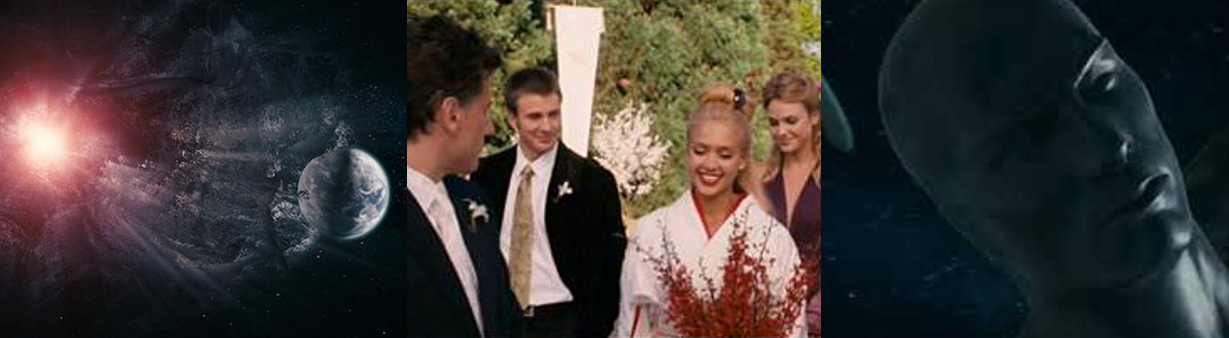
Movie Night [F4iday]: Fantastic 4: Rise of the Silver Surfer


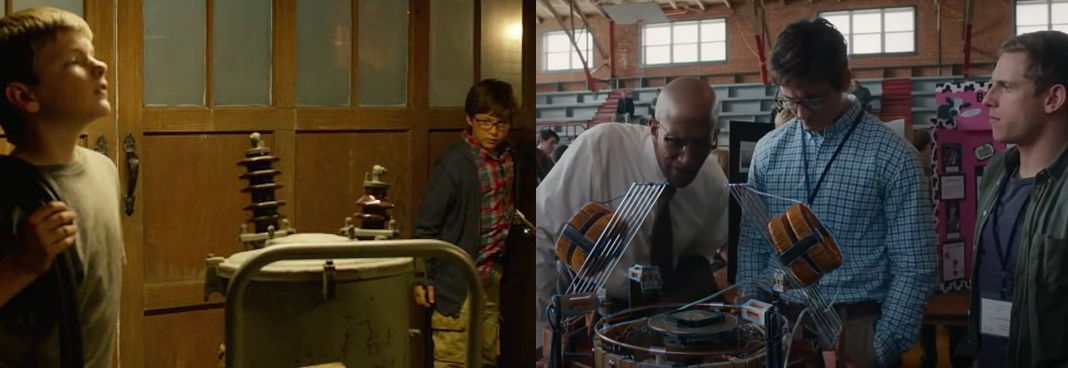
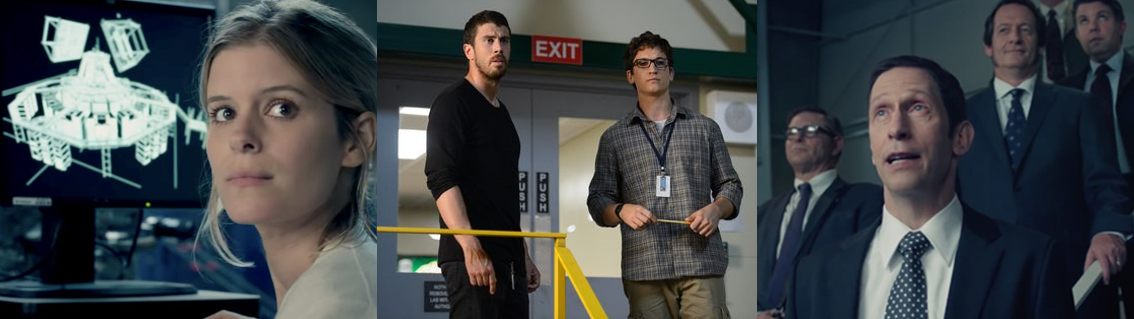
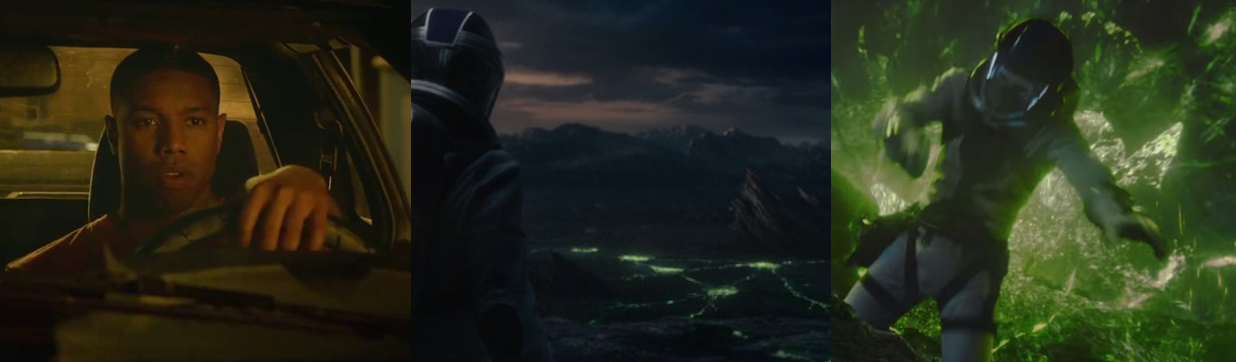
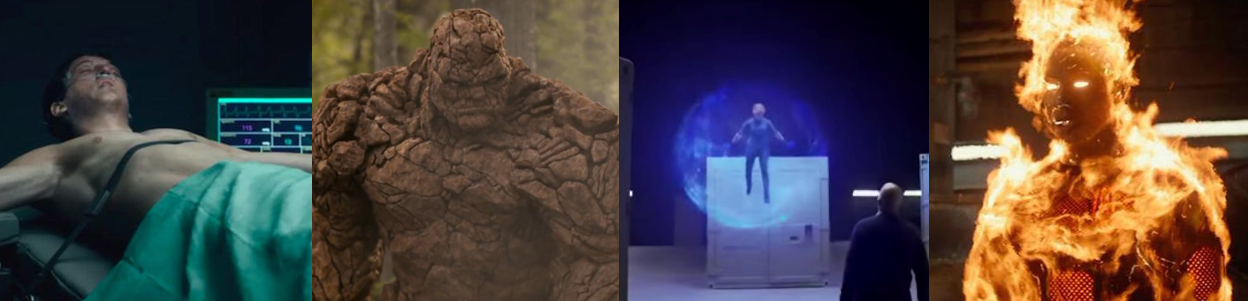
In November of 1961, readers of Marvel Comics readers witnessed four intrepid explorers be forever changed by mysterious cosmic rays. On that day, they became known as the Fantastic Four, Marvel’s “First Family” of superheroes, and went on to be the first of many colourful superheroes for Marvel Comics as well as feature in numerous cartoons, videogames, and live-action movies. This year, I’ve been dedicating every Friday in November to commemorating the debut of Marvel’s most famous dysfunctional family.


Released: 15 June 2007
Director: Tim Story
Distributor:
20th Century Fox
Budget: $120 to 130 million
Stars:
Ioan Gruffudd, Jessica Alba, Chris Evans, Michael Chiklis, Julian McMahon, and Doug Jones/Laurence Fishburne

The Plot:
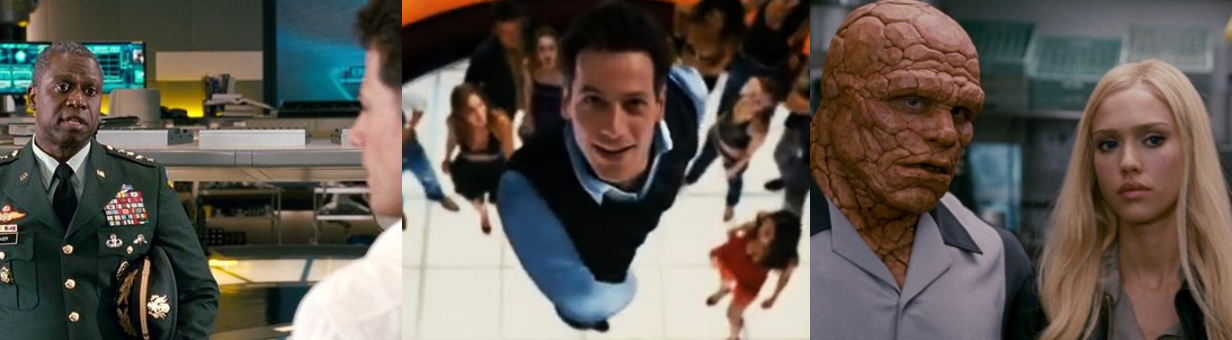
Doctor Reed Richards/Mister Fantastic (Gruffudd) and Susan Storm/The Invisible Girl (Alba) find their attempts to get married constantly interrupted by a media circus and the extraterrestrial “Silver Surfer” (Jones/Fishburne), who catches Victor Von Doom/Doctor Doom’s (McMahon) attention when it prepares the world for consumption by a cosmic being known only as “Galactus”.

The Background:
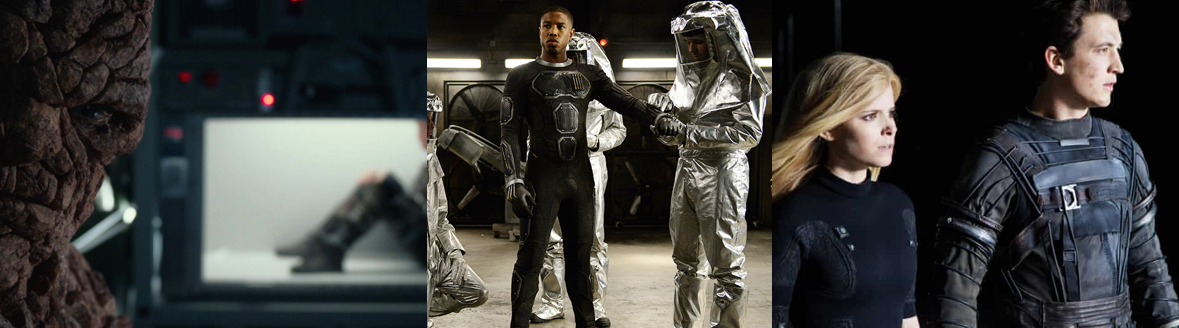
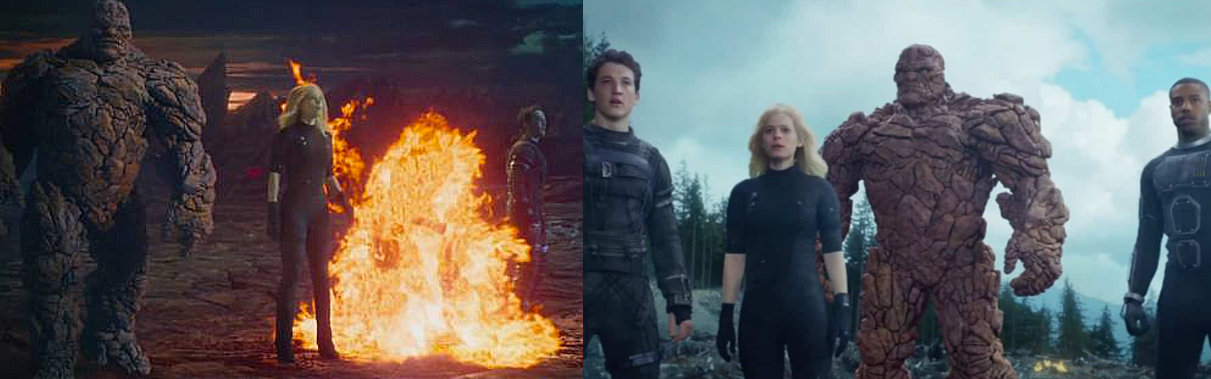
Stan Lee and Jack Kirby’s family of dysfunctional superheroes have had quite the chaotic journey to the big screen; their 1994 movie was never released and the eventual big-budget adaptation was met with mixed reviews after being in Development Hell for around ten years. Still, Fantastic 4s (Story, 2005) modest box office success of $333.5 million saw not only the release of an Extended Edition but also the return of director Tim Story and the entire cast for a sequel. Screenwriters Mark Frost and Don Payne came onboard to pen the screenplay and the duo drew significant inspiration from both the original “Galactus Trilogy” (Lee, et al, 1966) and an altered version of that same story seen in Ultimate Marvel (Ellis, et al, 2004 to 2006). The duo aimed to focus more on the enigmatic Silver Surfer than the Devourer of Worlds and there was a lot of speculation and anticipation surrounding the design of Galactus. Much of the film’s promotion was also focused around fan-favourite elements from the original Marvel Comics, such as the Fantasti-Car and the wedding between Reed and Sue, and practical elements such as Ben Grimm/The Thing’s suit were redesigned to allow actor Michael Chiklis to slip it off between takes. The titular Silver Surfer’s digital effects were the work of Weta Digital, who not only completely replaced stuntman Doug Jones with a sleek CGI model but also contributed to the design of Galactus. Fantastic 4: Rise of the Silver Surfer made about $32 million less than its predecessor, coming in with a box office of $301.9 million; though the film’s average review score is higher than the first film, it was also met with mostly mixed reviews, although the general consensus was that it was at least more entertaining than the first film. Plans for a sequel and a spin-off for the Silver Surfer were eventually quashed due to the overall lacklustre response to Story’s films. Thankfully, after a mediocre tie-in videogame and the disastrous decision reboot the franchise some eight years later, the Fantastic Four returned to prominence in the Marvel Cinematic Universe in 2025.

The Review:
Fantastic 4 wasn’t really a bad film, really, just quite underwhelming considering some of the outlandish cosmic adventures Marvel’s First Family often get up to. Do I expect them to battle the likes of Galactus and Kang the Conqueror in their first movie? No, of course not, but maybe exploring the Negative Zone and encountering someone like Annihilus could have been possible with a script re-write (Reed discovers the Negative Zone and that’s where they get their powers from, rather than them going to space) while building towards a showdown with Dr. Doom for the sequel (since he was so underutilised and bland in the first film) and maybe, maybe Galactus for the third and final movie. I can’t, however, say that I’m too surprised that Fantastic 4 got a sequel; back then, mediocre movies were getting sequels all the time and it just seemed natural to do, though I definitely am not a fan of the overly long and wordy “Rise of…” title (Fantastic Four: Doomsday would’ve been better in my opinion, but what the hell do I know, right?)

Reed and Sue’s wedding is disrupted by the arrival of the Silver Surfer, who causes global havoc.

Since the end of the last film, the Fantastic Four have become wildly beloved, popular, and successful superheroes; while Johnny Storm/The Human Torch (Evans) continues to revel in their celebrity status and indulge himself with merchandising and sponsorship deals, Sue is troubled by the constant media storm that surrounds their lives. It’s bad enough that the interference of the press has caused Reed and Sue to continuously postpone their wedding, but Sue worries about what sort of impact the attention they bring and the circus of their day-to-day lives will have on any children she and Reed may have in the future. Sue’s characterisation seems to have taken a bit of a step back in this regard; she actually seems to think it’s acceptable to prioritise her wedding day over the fate of the world, arguably costing Reed valuable time in finding a way to track the entity causing worldwide havoc, and while Alba seems more comfortable in the role of the team’s matriarch, something seems a bit…off about her this time around (I think it’s her dazzling contact lenses). The world is thrown into chaos when the mysterious entity known as the Silver Surfer arrives; wielding the same cosmic powers that gifted the Fantastic Four and Doom with their abilities (a neat little wrinkle that I actually really enjoyed), the Silver Surfer is able to dramatically affect weather patterns across the globe, drying up lakes, bring snowstorms to deserts, and disrupting electrical devices the world over.

General Hager isn’t impressed with Reed, or the four, whom he views as freaks.

Reed is troubled by the disruptions; despite promising Sue that he is going to focus on the wedding, he can’t help but investigate the disturbances and is intrigued to find a link between the cosmic radiation and their powers. Johnny is able to turn Reed’s fascination with the ongoing global disturbances to his advantage and blackmail Reed into having a bachelor party, and though Reed adamantly turns down General Hager’s (Andre Braugher) request that he and the four lend their expertise in solving the global crisis, he ultimately goes back on his word and develops a way of tracking the anomalies out of his desire to help and sheer scientific curiosity. Obviously, Sue is angered by this as she’s obsessed with having that one perfect day even if the entire world is being thrown into chaos around them; Reed is trying to please everyone, as always, but ultimately chooses to stand up to Hager’s abrasive nature and demand a little respect for him and his team if the military actually want them to help. When he sees how upset Sue gets by the whole media circus, however, Reed proposes that they leave it all behind after the wedding, but ultimately they’re both able to come to terms with their crazy lives by the conclusion of the film. The Thing, easily the heart of the team, is in a far better place this time around; having taken to wearing an array of clothes and noticeably much more comfortable with himself and being out in public, he’s developed a brotherly relationship with Johnny and has absolute faith in Reed, even when he predicts the end of the world and suggests the team go their separate ways.

Doom is still somewhat underutilised but comes across a bit better in this film.

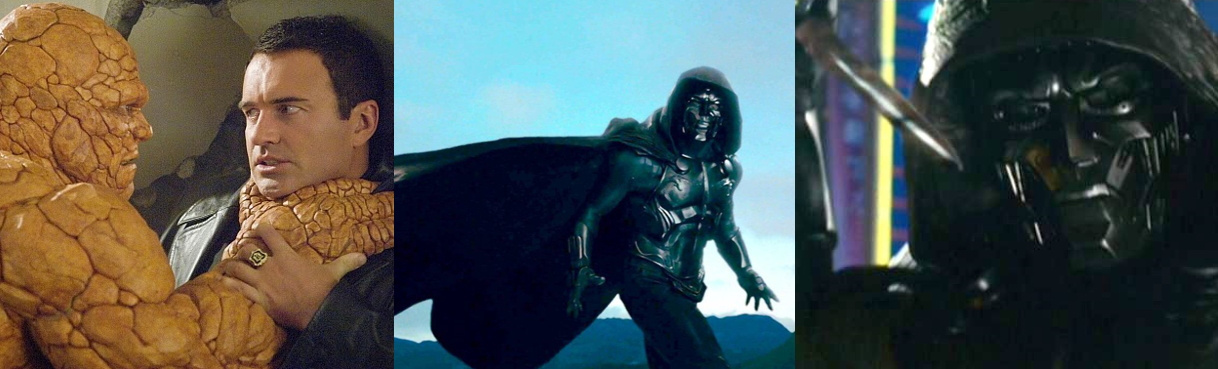
Although Reed discovers that the Silver Surfer has been preparing worlds for their eventual destruction all across the universe, the entity’s arrival has a more direct impact on the team when it passes over Latveria and awakens Victor Von Doom. A scarred and ruined mess of a man, Doom begins the film in a much more fitting place than he left it (holed up in a grand castle, glaring at an array of monitors, filled with egotistical mania, and fully embracing his role as a scheming and bitter supervillain). After encountering the Silver Surfer, though, Doom’s appearance is sadly restored by the Surfer’s cosmic powers, ruining any menace he may have had in his armoured guise, and he goes right back to being a sleazy, suit-wearing scumbag. Doom even weasels his way into studying the Silver Surfer further by sharing his data with Hager, who orders him to work alongside the Fantastic Four, much to their chagrin. Of course, Doom’s intentions are far from virtuous; realising that the Silver Surfer draws his powers from his “board”, Doom seeks to separate the silver-hued entity from it, depowering the once-might Sentinel of the Spaceways, so that he can claim it for himself. This allows Doom to briefly come close to matching the formidable threat he poses in the comics, and even don a far more impressive and visually interesting set of armour and spit his famous “Richards!” line, but once again it’s too little too late and Doom gets far too little time in the spotlight.

Contact with the Silver Surfer causes Johnny to swap powers with his teammates.

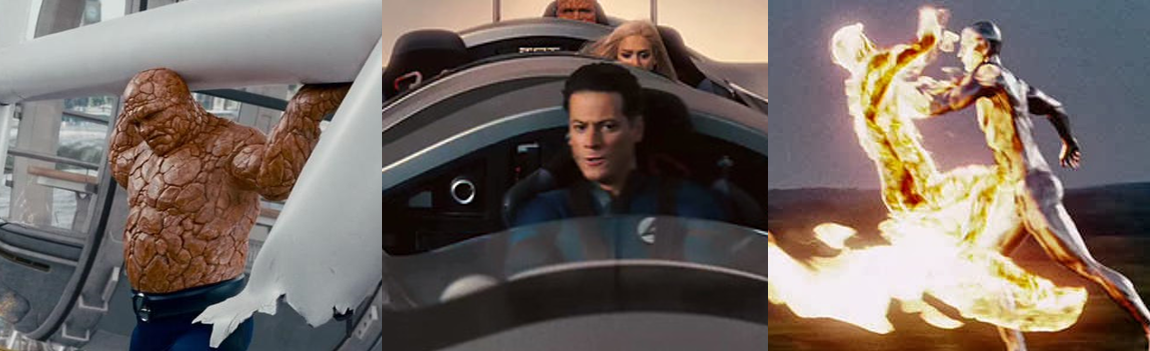
Instead, much of the film is focused on exploring the impact that the Silver Surfer has on the Human Torch; although he seems perfectly happy living a shallow life of materialism and still likes to crack jokes at both Reed and the Thing’s expense as often as possible, Johnny doesn’t hesitate to take off after the Silver Surfer when he disrupts Reed and Sue’s wedding and finds himself changed as a result of physical contact with the entity. Consequently, Johnny switches powers whenever he touches his teammates, which allows the Thing a brief return to his human form (something that never comes up again, despite Ben’s promise) also causes chaos when the Fantastic Four try to intercept the Silver Surfer in London. Feeling isolated because of the danger he now poses to the team, Johnny is distraught to learn that Reed and Sue are willing to break up the band so that they can lead “normal” lives and is forced to learn to set aside his ego and put the team before himself. This all culminates in him absorbing the powers of the entire team in order to match Doom’s stolen cosmic powers in the finale, basically transforming him into a version of Kl’rt/Super-Skrull and kind of negating his character arc since it takes one individual with all of the team’s powers to defeat Doom rather than the combined efforts of the team proper.

The Nitty-Gritty:
Strangely, considering that Rise of the Silver Surfer essentially deals with the impending destruction of the entire world, the film’s tone is as light and whimsical as the last film, for the most part, but the comedy definitely lands a lot better this time around. Johnny’s wisecrack about the Thing’s blind girlfriend, Alicia Masters (Kerry Washington), potentially dying in a rockslide is hilarious, as is Sue using her powers to force Reed to listen to her, her “I’m on fire!” exchange with Reed, and Johnny’s all-too-brief transformation into a Thing-like creature. Having lived and operated together for some time now, the team has settled into their dysfunctional family dynamic quite nicely; out in the field, they tend to quarrel and discuss their personal dramas, which angers Hager, who sees them as freaks who can’t take threats seriously as they’re too busy bickering with each other. This leads to an impressive moment for Reed as he finally stands up for himself, and his team; in fact, Reed has adjusted to his role as the team’s leader extremely well compared to his characterisation in the first film. He’s still an easily distracted and awkward nerd, but he’s much more confidant in directing the team and keeping them focused in the field, at least until Johnny’s new powers cause disruption amongst the team.

The Silver Surfer prepares the world for this master’s arrival, who he dare not defy.

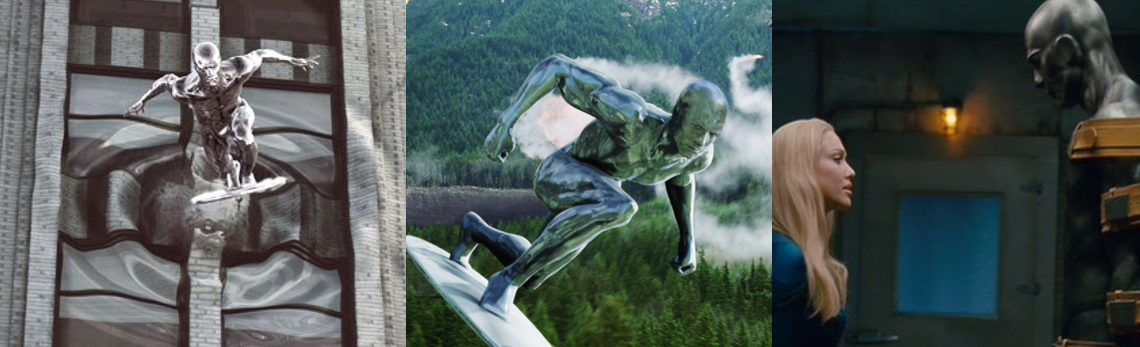
Sue ends up playing a pivotal role in humanising and characterising the mysterious Silver Surfer; a stoic and wholly alien lifeform, the entity is like living liquid metal, reflecting everything around him in his silvery skin and slicing through the air and even the vastness of space with a fluid-like ease. Impossibly fast and incredibly powerful, the Silver Surfer can not only cause chaotic events to happen all over the world and create ominous craters in the planet’s very crust, he’s also easily able to shrug off Doom’s electrical bolt, out-pace and exhaust Johnny in the upper atmosphere, and pass through Sue’s invisible barrier. Fascinated and intrigued by the Silver Surfer’s beauty, Sue questions the entity as to his motivations, which causes enough of a distraction to separate the Silver Surfer from his board and allow him to be captured by Doom and Hager. While the Silver Surfer has never exhibited such an obvious weakness in the comics, as far as I am aware, it’s necessary to render him vulnerable and exposit key information about the Silver Surfer’s master, the malevolent Galactus. Helpless and powerless without his board, the Silver Surfer reveals to Sue that he was once known as Norrin Radd and is bound to lead the entity to worlds for it to devour in order to spare his own, but takes no pleasure in this fact and finds himself besotted by Sue as she reminds him of his lost love. The Silver Surfer also reveals that his board draws Galactus closer, but initially refuses to use its power to repel his master since he dare not defy the World Devourer.

Some big set pieces and special effects keep things interesting, with the Silver Surfer being the highlight.

Surprisingly, the Fantastic Four’s costumes haven’t really been changed all that much from the last film; they seem a little darker, and maybe a little more refined here and there, but mostly appear to be identical, which is very unusual as superhero sequels usually always introduce new costumes for the characters. Thankfully, Doom definitely looks much better this time around; I could have done without seeing him return to normal in the middle there, but he definitely makes up for it in the finale with his more regal and detailed armour. The four have firmly established themselves in the Baxter Building and no longer have any money troubles; instead, they have all the resources they could ask for thanks to Reed’s patents and Johnny’s endorsement deals to franchise the team out to anyone and everyone. Reed’s focus is still on the science, and using his genius and the team’s abilities to help others, but he’s not above creating new toys for the team to use, such as the futuristic and criminally underused Fantasti-Car. While the Thing looks just as good as ever thanks to the impressive practical suit, some of the CGI and special effects have taken a bit of a hit, most notably Reed’s stretching powers (though this could just be because they’re showcased more often here). Still, the film has some impressive action set pieces on offer, such as the team’s efforts to repair the damaged London Eye, and the effects used to bring the Silver Surfer to life are absolutely top-notch. The Silver Surfer appears unsettlingly alien and unnaturally fluid; the chase between him and Johnny is quite exhilarating and the way he just kind of hovers and slips into frame is incredibly unnerving, and I think it was a wise move to spend more of the film focusing on the Silver Surfer as an antagonistic and mysterious force rather than the Devourer of Worlds.

Galactus may have just been a disappointing cosmic cloud but at least they tried to bring him to life.

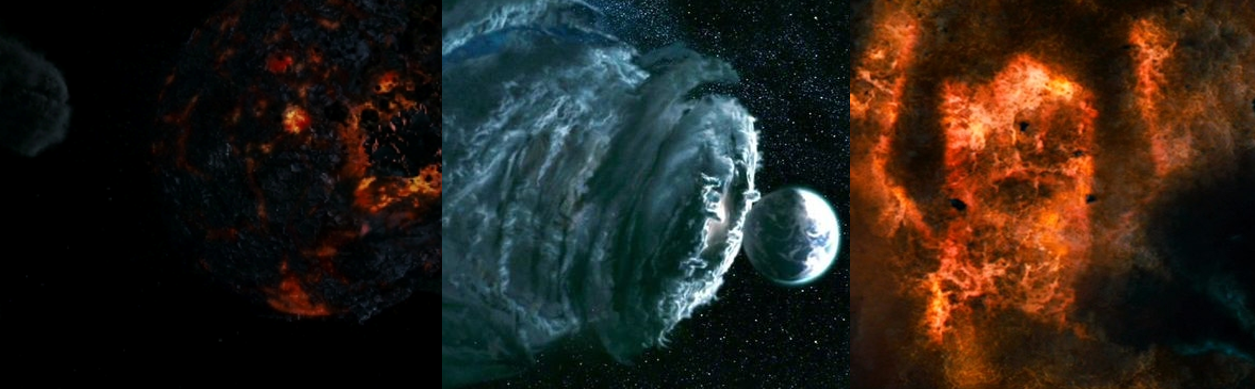
Speaking of which, you can’t talk about this film without mentioning Galactus; one of Marvel’s most iconic and destructive cosmic entities, Galactus gained notoriety for being represented as a gigantic, abstract space cloud. I can understand the backlash about this as Galactus represents one of the most morally grey entities in the Marvel universe (he has to “eat” worlds in order to satisfy his great hunger, and does so not out of malice or evil but simply because he has to in order to survive and his existence is part of the cosmic balance of death and rebirth) and reducing him to a swirling, indistinct mass of cosmic energy is quite an insult to die-hard comic book fans. I can also understand the apprehension; these Fantastic Four movies are clearly drawing inspiration from Fox’s original X-Men trilogy (Various, 2000 to 2006) and going for a more grounded take on the comic’s more fantastical elements and the filmmakers definitely seem to have thought that a gigantic humanoid clad in purple armour stomping around New York City was probably a step too far. I, however, disagree and think these films (and any future Fantastic Four films) should totally embrace the more bonkers aspects of the source material, but I do have to applaud the filmmakers for even using Galactus in the first place. They didn’t have to do that and it’s pretty ballsy to jump into the character for the team’s second movie as how the hell do you top a world-devouring entity? Also, they seem to have pulled inspiration from “Gah Lak Tus”, the Ultimate version of the character that was a swarm of robotic drones rather than one massive being; the shadow and fiery silhouette of Galactus and his ship can also be briefly seen, hinting that the cloud is masking the being’s true form, and the proposed Silver Surfer spin-off was also supposed to reveal the character in full. Additionally, seeing  Galactus’ smoky tendrils devour that world at the start, watching it ominously advance through the galaxy and learning about its destructive history, and the shot of it preparing to swallow the Earth whole are all really effective at building a sense of awe and dread around the entity. I can definitely see that the filmmakers had some good intentions with the character but the execution does fall a bit flat; I think maybe it would have sufficed to see a gigantic hand reaching out from the cloud, or see hints of Galactus’ helmet poking through the storm and maybe his eyes glistening, but, again, I admire that they even tried to use the character, if nothing else.

After repelling Galactus, Reed and Sue finally marry and the Silver Surfer is freed from his master.

Despite the threat of Armageddon looming ever closer, Doom manipulates events to get his hands on the Silver Surfer’s board; conveniently cobbling together a wrist-mounted device that somehow allows him to assume control of the board, and thus the Surfer’s Power Cosmic, Doom kills Hager in spectacular fashion and refuses to give up his newfound power even in the face of worldwide destruction. In the process, Doom kills Sue when she takes a shot to protect the Silver Surfer, which finally convinces him to rebel against Galactus. After Johnny absorbs the abilities of his teammates in order to separate Doom from the board in an all-too-brief fist fight, thus restoring the Silver Surfer to full strength, the Silver Surfer uses the Power Cosmic to resurrect Sue and heads up into the atmosphere to confront Galactus as the titanic cloud prepares to drain all life and energy from the planet. There, in the centre of the swirling, chaotic mess of cosmic energy, he renounces his service and uses all of the board’s power to dissipate Galactus in a very obvious Christ metaphor, presumably transporting it away or destroying it outright, and is assumed dead from the exertion. In the aftermath, Johnny is returned to normal (though I think it would have been a nice touch to allow Ben to change to and from the Thing at will as a result of contact with the Silver Surfer), Reed and Sue finally marry in a small ceremony away from prying eyes, and the team resolves to stick together, even with the chaos of the superhero fame, while the Silver Surfer is revealed to have survived in the depths of space.

The Summary:
Well, this was certainly a step up from the last film; the cast, dialogue, and world definitely all seems to feel a lot more comfortable and work a lot better, and overall Fantastic 4: Rise of the Silver Surfer feels like a much more enjoyable movie since it doesn’t have to be bogged down with an origin story or explaining and exploring the team’s powers. The characters all seem very familiar with each other and gel as a dysfunctional family, operating as a cohesive team in the field while still bickering and having interpersonal dramas regarding their superhero celebrity status. The banter between Ben and Johnny remains the clear highlight of the four, though I much preferred Reed this time around (leadership definitely suits him), with Sue remaining the weak link for me just because of the way Jessica Alba is presented and the fact that she’s so woefully miscast as the Invisible Girl. Doom looked and acted a bit more like his boastful comic book counterpart, but was again way too underutilised for a villain of his stature, but thankfully the film does a brilliant job of bringing the Silver Surfer to life. Mysterious, powerful, and inhuman, the Silver Surfer is also vulnerable and tragic and a true visual marvel. Yes, it’s massively disappointing that one of Marvel’s most enigmatic and iconic entities is reduced to a mere cloud, but I do admire the filmmakers for daring to even utilise Galactus and it’s clear that they had plans to do him justice in a later film, but again I feel like if you’re going to go big like that just go all-in and leave it all on the table.

My Rating:

Rating: 3 out of 5.

Pretty Good

What did you think to Fantastic 4: Rise of the Silver Surfer? Did you feel it was an improvement over the last film or were you just as disappointed with this effort? What did you think to the sub-plot of Johnny being able to absorb the team’s powers? Did you like the depiction and characterisation of the Silver Surfer or do you feel he was a little underpowered compared to the source material? What was your reaction when Galactus appeared as a giant cloud and would you like to see the character done justice in the Marvel Cinematic Universe some day? How have you been celebrating the debut of Marvel’s First Family this month? Share your thoughts on Fantastic 4: Rise of the Silver Surfer in the comments below.

Movie Night [F4iday]: Fantastic 4: Extended Edition


In November of 1961, readers of Marvel Comics readers witnessed four intrepid explorers be bathed in mysterious cosmic rays and forever changed. On that day, they became known as the Fantastic Four, Marvel’s “First Family” of superheroes, and went on to be the first of many colourful superheroes for Marvel Comics as well as feature in numerous cartoons, videogames, and live-action movies. This year, I’m dedicating every Friday in November to commemorating the debut of Marvel’s most famous dysfunctional family.


Released: 8 July 2005
Director: Tim Story
Distributor:
20th Century Fox
Budget: $87.5 to 100 million
Stars:
Ioan Gruffudd, Jessica Alba, Chris Evans, Michael Chiklis, and Julian McMahon

The Plot:
When Doctor Reed Richards (Gruffudd) is forced to turn to unscrupulous Victor Von Doom (McMahon) to study cosmic energy, a cosmic rays crew transformed into superpowered beings. While Reed works to find a cure, Doom becomes consumed by his powers, forcing the dysfunctional group to set aside their differences and join forces as a superhero team.

The Background:
While I wasn’t really a fan of the Fantastic Four’s debut issue, Stan Lee and Jack Kirby’s the concept of a dysfunctional family of superheroes went on the be a cornerstone of Marvel Comics, and even saw a decent amount of success in cartoon adventures outside of the comics. Their first effort at a live-action movie, however, didn’t exactly go as smoothly; not only was it hampered by a shoestring budget but the film never saw the light of day as Marvel executive Avi Arad shut down the production and confiscated the film’s negatives to avoid the film’s release tarnishing their brand. German producer Bernd Eichinger still held the rights to the characters, however, and the 1994 film’s universal derision and rushed production didn’t preclude him from continuing to push for a big-budget adaptation of Marvel’s First Family. With Arad now onboard as a producer, Chris Columbus was initially signed on to write and direct a new film the following year; however, writers and directors continued to join and drop out of the project over the course of around ten years. Eventually, Tim Story, a fan of the comics, signed on for the job and production began in earnest in April of 2004. Star Michael Chiklis lobbied hard for the role of Ben Grimm/The Thing and to don a practical suit to bring the character to life, though the film underwent significant rewrites after the release of The Incredibles (Bird, 2004), which was arguably the best Fantastic Four movie not titled Fantastic Four. Although the film’s $333.5 million box office meant that Fantastic 4 was a decent box office success, the film was met with mixed to mediocre reviews (although the chemistry between Chiklis and co-star Chris Evans was highly praised). To build anticipation for the upcoming sequel, this Extended Edition of the film was released on home media that restored several deleted scenes (including a longer opening title sequence and a strange cameo by Hugh Jackman) to the film, and that will be the version I look at today.

The Review:
Rather than dwelling on the past of its core characters, Fantastic 4 focuses on the present, which is great for getting things going but leaves a few questions unanswered; at the start of the film, Reed and his best friend, former pilot and astronaut Ben Grimm (Chiklis), are presenting to Victor Von Doom the opportunity to study a vast cosmic cloud that hopes to uncover the secrets of life and cure diseases. However, this isn’t the first time Reed’s made this presentation; having been turned down by the National Aeronautics and Space Administration (NASA), and with time and money running out, the two are forced to turn to the “larger than life” Doom for help as they’re in financial ruin. Reed’s finances are in such dire straights that he is forced to sign over 75% of the proceeds and all of the patents to the research to Doom just to get the project off the ground. Reed is even further dumbstruck to find his former flame, Susan Storm (Jessica Alba), working as Doom’s Director of Genetic Research, but sets aside any grievances he has literally because he has no other choice and is determined to help people with his research.

Desperate for funding, Reed and Ben turn to the egotistical Victor Von Doom.

While Ben and Sue get along amicably enough and embrace each other as old friends, there are clearly some lingering issues between Reed and Sue; here, they were college sweethearts who dated pretty seriously for a time, but the relationship fell apart after Sue proposed them moving in together and Reed couldn’t quite take that next step. Indeed, Reed’s major character arc is balancing his obvious genius with his awkward social skills; his focus is always on the maths, the research, and the science, to the point where he is more interested in the uniforms made from “unstable molecules” than he is in how hot Sue looks in them (or anything for that matter). Sue is frosty towards Reed at the start of the film, but her icy demeanour soon melts as she sees his genius in action; it’s obvious that she’s still attracted to him, but she wants him to be proactive, take charge of his life, and be a little bold rather than always being so timid and clinical. While Doom believes that he has a chance with Sue, and can turn her head with money and wild gestures, she’s not interested in him beyond a professional relationship; something of a scientist herself, Sue is perfectly capable at holding her own when it comes to the science, which allows her to be so much more capable and world’s beyond the blond bimbo she was characterised as in the last film and the early comics. Sadly, though, as attractive as Jessica Alba is, I can’t help but feel like Sue was miscast; there’s a reason why Sue ends up in her underwear, after all, and it’s got nothing to do with how smart she is.

Conflict brews between the arrogant, hot-headed Human Torch and the gruff, tragic Thing.

Easily the standout characters in the film are Ben and Sue’s hotshot younger brother, Johnny Storm (Evans); while Ben is as gruff and grim as his namesake, he’s a consummate professional when it comes to his job and a stern military man, which is the perfect foil for Johnny’s brash arrogance. Relishing the opportunity to be his former commanding officer’s superior, Johnny takes every chance to wind Ben up and get under his skin; a show-off and an adrenaline junkie, Johnny cares more about the limelight and the attention than any kind of moral or scientific implications and prefers to flirt and hook up with as many attractive young women as he can rather than stay devoted to one, like Ben. Consequently, Johnny is the first and only one of the four to actually enjoy his newfound powers, which he immediately sets out to showcase and use for personal gain; his showboating only further aggravates Ben, whose monstrous appearance causes him to be shunned and feared by all, including his fiancé, and Sue’s efforts to curb Johnny’s behaviour do little to spare Ben’s pain.

Doom, a corporate scumbag, gains electrical powers and organic metal skin that send him into a frenzy!

Undeniably, the most altered character from the comic books is Victor Von Doom; rather than being a bombastic, egotistical monarch with a penchant for monologing and dark magic, this version of Doom is my absolute least favourite type of villain: a sleazy corporate slimeball dressed in a suit. Wealthy beyond measure, and chairman of Von Doom Enterprises, Doom has accumulated a vast amount of money and power and established a foothold in a number of scientific endeavours, not the least being his orbiting space station. However, he’s greedy and lustful and always wants more, especially that which he cannot have; despite his lofty stature, he delights in watching Reed squirm when he comes asking to use the space station and in lording himself over Reed’s genius, and he goes to any lengths, including referring to a proposal as a “promotion”, to try and woo Sue away from Reed and into his arms. Since his ties to Latveria are only vaguely hinted at (he doesn’t even have an accent or appear to be of gypsy descent), just about the only personality aspects Doom shares with his comic book counterpart are his hatred of Reed and his egomania. Doom is frustrated at having received a small facial scar from his time on the space station since it blights his perfect façade, but ironically only ruins his appearance further by indulging in his newfound powers, which escalates the organic metal infection to the point where he’s forced to hide behind an iron mask.

The team have plenty of time to interact and build their dysfunctional family dynamic.

Much of the film revolves around the four discovering their awesome new powers and trying to figure out how to first control, and ultimately cure, them; gifted to them by a mysterious cosmic storm, all five gain abilities that link their personality quirks with the elements (Reed’s “always stretching” so becomes fluid, Johnny’s a hot-head, Sue feels invisible around Reed, Ben is rough and rocky, and Victor is vain and cold), but Ben is permanently affected as he was outside of the space station’s protective shields, which is a nice way to address that lingering plot hole. Like in the 1994 film, Ben’s transformation takes some time to take effect, which is used largely for a genuinely hilarious wind-up on Johnny’s part, and Reed is somehow able to recoup finances enough to move them all into the Baxter Building to conduct tests on their newfound powers. Determined to restore Ben to normal, Reed works around the clock to try and recreate the cosmic storm, but Ben allows his frustration and despair to get the better of him and comes to blows with his friend, which also makes him easily manipulated by Doom. Although he tries to hide his transformation, Doom soon comes to enjoy the destructive potential of his powers, and embarks on a vendetta against Reed, whom he blames for costing him his good looks and his company. To that end, Doom takes the Thing out of the equation by curing him, freezes Reed with liquid nitrogen, tries to kill the Human Torch with a heat-seeking missile, and doesn’t hesitate to turn his devastating electrical blasts against the Invisible Girl in order to overpower them individually, and it’s only by putting their differences aside and coming together as a team that the four are able to overcome their foe.  

The Nitty-Gritty:
Released at a time when superhero films were still struggling to break into consistent, mainstream box office success, Fantastic 4 falters a little when it comes to its tone and direction; clearly, it’s straddling a fine line between a fun family adventure and a slightly campy kids’ movie, which is fine as the concept is quite whimsical and the four are known for having very fantastical adventures, but the film also wants to keep things grounded like X-Men (Singer, 2000) and Spider-Man (Raimi, 2002), so it never pushes the concept as far as it could possibly go. After the four’s big debut on the Brooklyn Bridge, they become instant celebrities (despite the Thing causing the accident…) but then withdraw from the public eye so that Reed can run his tests, which is largely where the film flounders; the four don’t really do anything of interest in that time, beyond Johnny’s motorcycle stunt show, which isn’t too great in terms of exciting or engaging the audience.

Distraught at his monstrous appearance, the Thing eventually grows tired of waiting for Reed’s cure.

However, in those moments, the film does do a far better job of developing and highlighting the unique dysfunctional family mechanic of the Fantastic Four. Sue struggles to maintain order as the default matriarch of the team and to keep the “kids”, Johnny and Ben, from arguing and getting under each other’s skin, and to help Reed better balance his time between work and relaxation. Guilt-ridden at the pain and trauma he has caused his friend, Reed works tirelessly to cobble together a suitably Jack Kirby-esque machine that he hopes will revert the Thing to normal, and Reed is so distraught by his friend’s outburst that he tests it on himself and nearly kills himself in the process. Annoyed at the constant criticism and lack of appreciation for their superpowers shown by his new teammates, Johnny revels in showing off his new abilities for the world to see, which only exacerbates the conflict between him and the others, especially Ben. Distraught at his grotesque appearance, Ben is only further dejected when his fiancé walks away from him and to find that his new rocky body is cumbersome, awkward, and hideous to others. While he finds momentary reprieve in using his newfound strength to put right the accident he unwittingly causes on the Brooklyn Bridge, he allows Doom to get in his head and is enraged to find Reed cosying up to Sue rather than making good on his promise to help, despite the fact that Reed has clearly been dedicating his every moment to fixing Ben’s predicament.

A combination of CGI and practical effects do a decent job of bringing the Fantastic Four to life.

Undeniably, the Thing’s practical suit is the film’s most impressive visual effect; due to being augmented by rocky sound effects and subtle CGI, there’s a real weight and physicality to the Thing thanks to the suit, which keeps him from appearing cartoony and out of place like some CGI characters from that time, such as such as Doctor Henry Jekyll/Mister Edward Hyde (Jason Flemyng) from The League of Extraordinary Gentlemen (Norrington, 2003). The Fantastic Four’s suits are also nicely translated to the screen; while they lean a little more towards the sexy onesie look than being realistically practical, the texture and colour look good and they’re a decent bridge between the bright, colourful costumes of the comics and the film’s more grounded direction. Doom eventually takes on an extremely faithful comic accurate look as well; however, it comes very late in the film and I feel his hood and outfit lacks detail in some areas, making him a far cry from the imposing despot who is one of Marvel’s most ruthless and formidable villains. Obviously, the CGI and special effects are going to be of a higher quality than the 1994 film, and for the most part the hold up pretty well (thanks, largely, to the film utilising practical effects, sets, and stunts that are merely augmented by CGI); the Human Torch’s flames look pretty good, though his flaming body effects can still be a little cartoony, and Reed’s elasticity is rendered quite well but again suffers from there being few instances where it can actually be of practical use. Sure, he rescues a man from falling off a bridge, ties Ben up, and helpfully directs a water hydrant in the finale, but Mister Fantastic never seems to get as many chances to shine through his powers as the others; the focus is always more on his genius, which is fine, but it can make for quite a bland character (in many of the promotional materials, for example, he’s just…standing there…). Sue’s powers extend beyond simple invisibility; she’s able to project invisible forcefields, which helps here to contain fire, form protective shields, and blast foes away, making her one of the most versatile in the team.

After some additional scenes, the four triumph over Doom and bask in their newfound glory.

This Extended Edition of the film also includes a number of new, extended, or alternate scenes; the first of these is seen right at the beginning where the film is proceeded by an animated set of credits showcasing the film’s key characters, followed by a couple of additional quick shots in the foyer of Von Doom Industries that establish what Doom’s company does and that it’s a bit of a snobby place to be. While some alterations are quite minor (such as Reed and Sue having a moment in his supply room, Johnny increasing the temperature in the lift to get women all hot and bothered, and Sue reading fan letters sent to the team), others are more poignant and add some punch to the film (like the Thing having additional interactions with blind artist Alicia Masters (Kerry Washington), Doom blasting a hole through one of his shareholders rather than simply electrocuting him, Victor trying to tempt Johnny away from the team with women and merchandising offers, and him being humbled while showing off). Of course, the most noticeable addition is a brief cameo by Hugh Jackman as Logan/Wolverine, which makes for quite an awkward scene as it’s basically a repetition of one that came right before it and the effect is more of a cheap CGI wash than Reed actually transforming his features. Still, the crux of the film remains unchanged; separately, the four are capable of great things but, together, they form an almost unbeatable team that is the perfect balance of power, intelligence, and charisma, though they struggle to build that rapport throughout the movie. Once Ben sees how vital his abilities as the Thing are to stopping Doom, he willingly subjects himself to the cosmic rays once more to battle Doom and free Reed, bringing the team together for a brief scuffle with Doom on the city streets that involves a lot standing around, exchanging blows and cliché lines from Doom, before Reed and the Thing knock their enemy off balance a bit so that the Invisible Girl and the Human Torch can superheat him and turn him into a living statue. In the aftermath, the four embrace their newfound powers and celebrity status as superheroes, with Reed and Sue rekindling their romance, the Thing accepting his new status quo, and Johnny reveling in their fame as Doom, who still shows signs of life, is shipped back to Latveria…

The Summary:
It’s not that Fantastic 4 is a bad film, it’s just that it’s a bit underwhelming considering the concept; I think it definitely played things a little too safe by leaning into that grounded sci-fi aesthetic of X-Men and could have benefitted from being a little more over the top and adventurous in its scope. As a fun, family movie, it works very well and I’m sure there’s a lot here for kids to enjoy, and there are a lot of positives to the film: the effects and presentation are really good, and Chris Evans and Michael Chiklis are fantastic in their roles. Of all the actors in the film, they perfectly capture their characters; Ben’s anguish is as much a highlight of the film as his rapport with Johnny, which basically saves it complete mediocrity. It’s a shame that they’re not in a better movie, to be honest, as they were perfectly cast and did a great job; Ioan Gruffudd is okay as Reed, if a little bland and wooden, and I like Jessica Alba but she really wasn’t right for this character. Of all the cast, though, Julian McMahon is the biggest misstep; I almost feel like it might have been better to save Dr. Doom for the sequel as he’s so neutered and lacklustre compared to the maniacal despot seen in the comics. Some decent comedy and fun action scenes help keep the film interesting, and it’s a reasonable first attempt at a big-budget adaptation of the team that’s bolstered a little further by the additions seen in this Extended Cut, but you’re not really missing much anything if you skip it, if I’m being brutally honest. I get that it’s a difficult and expensive concept to bring to life, but the Fantastic Four should be this wacky hybrid of science-fiction and fantasy, not a middling affair that plays it safe simply because grounded, semi-fantastical superhero films were the norm.

My Rating:

Rating: 2 out of 5.

Could Be Better

Were you a fan of Fantastic 4? Which of the cast and characters was your favourite and what did you think to the relationship between Johnny and Ben? What did you think to the film’s portrayal of Dr. Doom and do you think that the character got shafted a little here? Were you a fan of the direction the film took or do you think it played things a little too safe? How are you celebrating the debut of Marvel’s First Family this month? Whatever you think about Fantastic 4, leave a comment below.

Game Corner [Wolvie Wednesday]: X-Men Origins: Wolverine: Uncaged Editon (Xbox 360)


When readers were first introduced to the character of James Howlett, better known by the names “Logan” and “Wolverine”, it was in the pages of The Incredible Hulk. From his first full debut in issue 181 all the way back in November 1974 to him officially joining the X-Men in 1975, the character has become one of Marvel Comics’ most recognisable and enduring superheroes, regularly featuring in solo and team comics, cartoons, movies, videogames, and countless other merchandise.


Uncaged Edition

Released:  May 2009
Developer: Raven Software
Also Available For: Mobile, Nintendo DS, Nintendo Wii, PC, PlayStation 2 PlayStation 3 PlayStation Portable

The Background:
20th Century Fox profited greatly after acquiring the X-Men movie rights from Marvel Comics. Under their banner, the first three X-Men movies (Various, 2000 to 2006) made over $600 million and, eager to capitalise on that financial success and the popularity of their star, Hugh Jackman, they quickly began production of a spin-off film focusing solely on breakout star Wolverine. While X-Men: Origins Wolverine (Hood, 2009) proved a financial success, reviews ranged from mixed to scathing (unfairly, in my opinion) but the same couldn’t be said about the obligatory tie-in videogame. Developed by Raven Software, the game was a violent hack-and-slash adventure that expanded upon the film’s storyline using elements from the comic books and emphasised frenetic, gory violence very much like the God of War videogames (Santa Monica Studio/Various, 2005 to present). X-Men Origins: Wolverine: Uncaged Edition was highly regarded by critics and fans alike as one of the most enjoyable and entertaining videogame adaptations ever made.

The Plot:
Decades before he joined the X-Men, Logan (a Mutant with retractable bone claws, a superhuman healing factor, and heightened senses) was a part of William Stryker’s Team X and operated under the codename Wolverine. After many years working alongside his half-brother, Victor Creed, Logan walked away from his violent life only to be forced back into the fight (and to undergo a radical procedure to bond indestructible Adamantium to his skeleton) when Victor killed his lover.

Gameplay:
X-Men Origins: Wolverine is a hack-and-slash action brawler with very light platforming and puzzle elements that sees you cast into the role of the titular Mutant, who has the voice and likeness of X-Men star Huge Jacked-Man Hugh Jackman. The story can largely be summarised as taking “inspiration” from the movie, as the narrative constantly switches back to Africa to follow Wolverine’s final mission with Team X, and to the present day of the mid-1980s in a truncated and decidedly different, if similar, version of the events from the film. The gameplay is primarily geared towards slicing and dicing enemies with Wolverine’s bone or Adamantium claws in a variety of gruesome ways: Wolverine can attack with quick, light strikes with X, heavier attacks with Y (which can also be charged by holding the button), and string together successive presses of X and Y to pull off devastating combos (which you can review at any time from the pause menu) that turn Wolverine into a whirling dervish.

Lunge at enemies, unleash your Fury Attacks, and use Feral Senses spot environmental kill spots.

Wolverine can also jump with A, cling to ledges and climb certain walls, block, reflect, or counter incoming attacks with the Left Trigger, and grab enemies with B. Once grabbed, you can mash X to pummel them or toss them at other enemies (or into instant death environmental traps), or charge Y to perform a “Quick Kill”. Wolverine can also dash ahead with the Left Bumper but I found that this was a bit clunky and awkward as there is a delay between Wolverine stopping at the end of the dash and returning to a run, so it’s far better to press the Right Bumper and LB to perform a rolling dodge instead. One of Wolverine’s most useful skills, though, is his lunge attack. By holding RB to target enemies, you can then press LB to leap towards your target and attack them with X, B, or Y to quickly pounce across gaps and from target to target, which is endlessly satisfying when overrun by enemies. As you progress through the game, you’ll also unlock four Fury Attacks that can be unleashed when your Rage Meter is full and by pressing the Right Trigger and either A, B, X, or Y. Each of these can also be upgraded further and will see Wolverine fly into a berserker rage and becoming a spinning whirlwind of claws and death as you mash buttons to extend the duration of his onslaught. Wolverine also has the benefit of his heightened senses; by pressing up on the directional pad (D-pad), you’ll see the body heat of nearby enemies, climbable ledges and surfaces, footprints when tracking targets, and an ethereal blue light that points you in the right direction in a mechanic very similar to the Detective Vision from the Batman: Arkham games (Rocksteady Studios/Various, 2009 to 2015), though much more basic.

Puzzles are pretty simple and amount to little more than button mashing or powering up consoles.

While the environments you find yourself in are quite linear, they are also made up of a lot of dark, grey corridors, so Wolverine’s Feral Senses are helpful for keeping you on track and spotting opportunities to instantly kill your opponents. I’m not sure why but the developers also allowed you to sheath and unsheathe your claws by pressing down on the D-pad; this doesn’t really seem to do anything but I guess it adds to the immersion of being Wolverine and, very rarely, you’ll be able to instantly kill enemies by sneaking up behind him and pressing either B or X. A good 90% of the game is made up of mindless hack-and-slash combat, usually restricting you to a set area and fending off waves of enemies who can seem never-ending at times. Other times, though, you’ll need to pull off some tricky jumps and awkward platforming; mostly, this isn’t a problem, but that are times when you have to jump from platforms and ledges or ropes and it can be very difficult to make even simple jumps thanks to the dodgy camera and invisible barriers nudging you to your death. Wolverine will also have to zip down wires to cross gaps, precariously walk across balance beams and girders, and occasionally pull or push large objects (usually crates or jeeps) by holding B. Other times, you’ll need to mash A to turn a wheel to open a door or find a crank or power source and carry it to a power node by picking it up with B. It’s all very simple and puzzles generally don’t become more taxing than that, standing on pressure pads, or scaling towers. Given his Mutant abilities, Wolverine is extremely durable, able to sustain prolonged gunfire and attacks and continue fighting. Your health bar will automatically regenerate if you avoid attacks for a few seconds but you can still be “captured” if your bar is completely drained and your vital organs are damaged so, while you can largely leap head-first into situations and groups of enemies, it’s best to keep an eye out from spiked traps and avoid being set on fire or pummelled by larger enemies.

Gameplay is mixed up by a few different sections and mechanics, some more welcome than others.

Wolverine’s biggest danger in this regard is falling while trying to jump or navigating across bottomless pits or large chasms; if you fall, you’ll have to restart from your last checkpoint but, thankfully, checkpoints are quite numerous and generally always come right before a tricky situation. Gameplay is further mixed up by a few quick-time events (QTEs), mainly when opening doors, and slightly different camera angles and chase sequences, such as when Wolverine has to race down the spill well of the Alkali Lake facility and leap from jeep to jeep, dispatching enemies as a wall of water comes inexorably after him. Other times, helicopters will fire at you relentlessly and you’ll have to dart between platforms and cover to avoid fire or frantically run and jump across surfaces that crumble beneath your feet. In another mission, you have to lunge at enemies on speedboats down a racing river; if you fall in the water, you’ll have to restart but you eventually commandeer a machine gun turret and can fire wildly at your pursuers by holding RT. One particularly annoying mission has you dodging between metal shields as automatic turrets fire at you; you’ll need to activate a console to put the shields in place to stave off the heavy ordinance and use similar consoles to position teleporters around the sentinel facility.

Graphics and Sound:
Generally speaking, X-Men Origins: Wolverine looks pretty good; environments can be a bit bland and drab at times but you’re constantly hopping back to the jungles of Africa, which helps add a bit of visual variety to the game even if the environments remain quite linear and have very few opportunities for you to explore in a meaningful way. Character models are decent enough but the developers clearly put the most time and effort into the titular character; no other character from the movie save Victor Creed bares the voice or likeness of their actor, which is disappointing, and most of the enemies you encounter are largely generic soldiers with little to really make them stand out. As mentioned, Wolverine spends a lot of his time flashing back to Africa; here; you’ll run through the ruin-strewn jungle and encounter a number of machete-wielding natives and ancient booby traps and such. It’s a stark contrast to the boring, grey corridors of Alkali Lake (a location I could live with never having to see again) but the game claws back (no pun intended) some visual variety in the Sentinel facility and the casino where you pursue and battle Remy Lebeau/Gambit. These locations are much more interesting to look at, being a vast technological complex full of intricate machinery and Sentinel parts and a neon-drenched skyscraper that sees you climbing horizontally and vertically, respectively.

Environments can be dark, drab, and bland but some manage to stand out regardless.

It’s a shame, then, that the game doesn’t change the location of its finale, which sees you back in dull, concrete surroundings on Three Mile Island, but I did enjoy the visual of battling Wade Wilson/Weapon XI/Deadpool atop the cooling tower like in the movie. The game’s story is largely told during gameplay using the in-game graphics, often with Wolverine conversing with his superiors or allies via an earpiece (again, very similar to the Batman: Arkham games). There are some CG cutscenes here, though, which are quite blurry and muddy as you might expect from an Xbox 360 title. Similarly, the music isn’t really anything to shout about; it’s not exactly memorable or catchy and the only thing really salvaging the audio presentation is Jackman’s unparalleled work as the titular character. There was, however, quite a bit of slowdown whenever there was a lot happening onscreen and the game doesn’t do a very good job of masking its loading times; often, the game stops completely and you’re left with a “Streaming…” message while it loads the next area, which interrupted the flow of the game considerably at times. You’ll find some interesting audio logs and references to (and cameos from) some recognisable X-Men characters, though, and the final cutscene even places Wolverine in the “Days of Future Past” (Claremont, et al, 1981) timeline.

The game’s biggest appeal is in its graphic violence and gore in depicting Wolverine’s brutal nature.

Where the game excels, though, is in its unrelenting gore and violence; ironically, X-Men Origins: Wolverine is more violent and uncompromising than the film it’s based on, meaning that kids who enjoyed the film probably weren’t old enough to play the game at the time! As Wolverine takes damage, his skin and clothing is torn and shredded, revealing his Adamantium skeleton, which is both gruesome and fantastic to see. The wounds heal up over time but you’ll often be running around with a fully metallic arm or half a metal skull, which is something we really haven’t seen in the films yet. When attacking enemies, Wolverine can slice off limbs, impale them on the environment, and set them alight or electrocute them with environmental hazards and you’ll often see dismembered bodies writhing on the floor in agony and heads flying from their shoulders. One of the most brutal kills in the game comes when Wolverine rips a helicopter pilot out of his cockpit and forces him head-first into the blades! There’s no nonsensical censoring in this game; it’s bloody, violent action all the way through and this really helps to make the repetitive hack-and-slash gameplay more interesting and entertaining.

Enemies and Bosses:
As mentioned previously, the majority of the enemies you’ll encounter in the game are machine gun-toting soldiers; when in Africa, you’ll fight wild natives who wield machetes but you’ll also battle some rather generic-looking robots when breaching the Sentinel facility. It doesn’t take long for you to encounter more formidable variants of these enemies, such as the Machete Champion (who can set you ablaze), shield carrying soldiers (whose guard you must break with a charged heavy attack), soldiers packing grenade launchers (whose projectiles you must reflect back), and even invisible enemies (“Ghosts”) who carry shotguns and are be dispatched by grabbing them and tapping Y to blow their heads off. You’ll also come up against more monstrous enemies such as the lava-and-rock-covered Leviathan and the Weaponized Experiment Neurodindritic Incident Gamma Zero (W.E.N.D.I.G.O.) prototypes; these are best attacked with your Fury Attacks as they charge at you, deliver big damage with their swings, and can catch you in mid-air as you lunge if you don’t get around behind them. As you damage the Leviathan, it’ll protect itself with tougher rock and start tossing and smashing boulders at you so you’ll have to lunge at it whenever possible and you’ll soon be faced with two to four of these enemies at a time so it’s best to get a rhythm on.

You’ll be leaping at a lot of helicopters but especially to bring down the sharp-shooting Agent Zero.

You’ll also have to fight “Jungle Mutants” like Shifter, a blue energy being who teleports about the place, traps you in electrical prisms of light, and can duplicate itself (but is, thankfully, easily dispatched with environmental kills). The first time you encounter these enemies, they act as sub-bosses but quickly become regular enemies and you’ll often be faced with a variety of different opponents and forced to adapt to each on the fly. A recurring element in the game are the helicopters that are sent to bring you down; at least three times you’ll have to outrun these pursuers and then lunge at them, moving the left analogue stick to avoid being shot at and smashing your way into the cockpit with X or Y to bring them down. There’s a particularly gruelling battle that has you dodging helicopter fire as four W.E.N.D.I.G.O.s attack you at once but, thankfully, enemies can damage each other so you can position the beasts into each other’s attacks and the bullets from the helicopter. Prior to this battle, you’ll also have to contend with a pretty unique switch in perspective as David Nord/Agent Zero takes shots at you with his sniper rifle and you control Wolverine from the perspective of Nord’s sniper scope.

Creed is a far less pivotal or threatening figure in the game despite being fought twice.

The first real boss you’ll battle is Victor, Logan’s stepbrother (though this plot point, like a lot of plot points from the film, is nowhere near as relevant or emphasised as in the movie). You’ll fight Victor twice throughout the game, with the first bout taking place in and outside of a bar and the second inside of Stryker’s island base, just like in the film. Victor mirrors many of your own abilities and can lunge, swipe, and claw at you; he can also grab you to deliver combos and you’re in just as much danger of being impaled on the environment throughout the game as he and your other enemies are. Still, Victor isn’t much of a threat; although he boasts the same healing factor as Wolverine, I never actually noticed his health regenerating in either fight and it’s pretty simple to lunge at him, block and counter his attacks, and either use the environment or your Fury Attacks to whittle his health down and defeat him in both battles.

The Sentinel poses a formidable threat and must be attacked both on the ground and in mid-air!

As you might expect given that you end up in a Sentinel facility, you’ll have to battle with a Sentinel prototype as well. The first time you encounter the Sentinel, it’s in pieces and you have to solve a bit of a track puzzle to position its hand in place to attack its head but, despite your efforts, Bolivar Trask activates the prototype and you have to fight it outside the facility. The Sentinel is suitably massive and stomps around the place, leaps at you to cause shockwaves, fires laser blasts from its hand, and grabs you to blast you with its eyebeams in a homage to that iconic “Days of Future Past” cover art. To battle the Sentinel, you need to attack its feet and hands; this is best done by luring it towards the electrified panels on the floor, which will stun it for longer (though it’s difficult to tell that you’re actually dealing damage to it because of its high health bar). Once you damage it enough, it’ll take off and you’ll have to freefall down to it, dodging or ploughing through debris and guiding Wolverine to its thrusters. Eventually, you’ll do enough damage that Wolverine targets its main power source, which requires you to mash B to rip open its chest plate before it can blast you.

While the Blob is simple, Gambit leads you on an elaborate chase and is the most frustrating boss.

Immediately after felling the Sentinel, you’ll fight with Fred Dukes/The Blob; unlike in the movie, this fight takes place in a supermarket full of destructible elements. The Blob is very similar to the Leviathan and W.E.N.D.I.G.O. enemies and will charge at you and repel your lunges with his drum-like belly. Once you damage him enough, though, he’ll try to squash you with a belly flop, which stuns him long enough for you to lunge or mount him and claw at him and force him into walls to bring him down. Immediately after that fight, you’ll have to battle what was, for me, the most annoying, frustrating, and long-winded boss of the entire game: Gambit. Gambit attacks with his staff and kinetically-charged playing cards, which must be countered and reflected back, respectively, to stun him. What makes this boss so annoying, though, is that you fight him a whole bunch of times and are forced to chase through up and through a skyscraper. Eventually, you battle him on giant neon letters, lunging at him when he charges and destroys them and mashing A when he tosses you over the edge. This was, honestly, the most exasperating part of the entire game as each fight with Gambit just went on and on and it seemed never-ending; of all the characters and Mutants in the game, I never would have expected Gambit to be so versatile, resilient, and challenging!

Deadpool will push your button mashing skills to breaking point!

After the finale battle with Victor, you are forced to battle Deadpool at Three Mile Island. If you haven’t seen the film, you might be a bit confused about who Deadpool is since he barely appears at all in the game’s story but he’s a pretty formidable boss in his own right. Fighting him is, essentially, the same as fighting Victor except that you’ll damn near break your wrist trying to mash A following a counter of his blades and it’s a two-stage boss fight. In the first, you fight him in an ordinary area of the island, avoiding his spinning blades and jumping attacks and whittling his health down with your Fury Attacks but, in the second, you battle him atop a cooling tower. Here, he demonstrates his ability to teleport and will blast at you with optic blasts that can destroy parts of the environment. Still, he’s pretty easy to defeat; you simply block his attacks, unleash your Fury Attacks, and lunge at him after he fires his eye beams. When you’ve dealt enough damage, the QTE becomes easier to pull off and is a great way to deal additional damage; while Deadpool’s health doesn’t regenerate during the fight, it will fill up at least once, which can make this rather long-winded and frustrating but it’s nothing compared to fighting Gambit!

Power-Ups and Bonuses:
As you battle enemies and destroy crates, you’ll earn red Rage Orbs to fill up your Rage Meter and experience points (XP) that will see you level-up in time. Levelling up increases your health meter and earns you Skill Points, which you can spend in the “Character” sub-menu. Here, you can increase your maximum health, Rage Meter, and the damage and duration and effectiveness of your Fury Attacks. Each one will cost you more Skill Points as you upgrade them, though, so it’s best to either stock up or focus on one attribute to upgrade at a time. You can also boost your health and earn additional Skill Points by finding power-ups hidden in each environment, generally just off to one side or the opposite way from where you’re being directed to go. Every time you fight and defeat enemies, you’ll also fill up a “Reflex” meter in the Character sub-menu; when each of these is mastered, you’ll find that you deal more damage to, and have a greater defence against, the game’s enemies, which adds an extra incentive to combat. Finally, you’ll also find “Mutagens” hidden throughout the game; up to three of these can eventually be equipped and each one can also by upgraded further to increase you damage, Fury Attacks, or regenerative capabilities as well as boosting the speed which you build up your Reflexes.

Additional Features:
There are fifty Achievements for you to earn throughout the game, the majority of which you’ll get just by playing through the story mode. You get Achievements for killing up to 2000 enemies, performing lunges and Quick Kills, tossing enemies from high ledges, and clearing each chapter of the main story. As you explore your environment, you’ll also find dead bodies and acquire Dog Tags for XP and which count towards Achievements and you’ll need to venture off the beaten path a little bit or attack enemies and bosses in specific ways to get some of the more obscure Achievements but you can track your progress towards them at any time from the “Statistics” menu. When you first start the game, you can select to play on “Easy” or “Normal” difficulty; you may as well pick “Easy” as the only difficulty-based Achievement comes after you clear the game and unlock “Hard” mode. Once you beat the game, though, you can replay any mission you like and pick a costume to wear beforehand but you’ll lose all of your saved progress and upgrades if you want to get the “Walking Death” Achievement so I’d recommend clearing the game and mopping up any Achievements you’ve missed tied to kills and Dog Tags and such before playing on Hard.

Unlock some cool classic costumes and beat the game to access a harder difficulty mode.

Also hidden throughout the game are a number of different Wolverine action figures; finding enough of these will unlock a special challenge from the main menu. Here, you’re pitted against three different Wolverines and, when you defeat them, you’ll unlock a new costume to wear including Wolverine’s classic brown-and-tan outfit, his yellow-and-blue spandex, and his awesome black-and-grey X-Force outfit. There are actually more action figures than you need but collecting them only awards you an XP boost rather than the likes of Wolverine’s Weapon-X outfit or movie costume, and there is a fourth challenge available but it seems that this was a Gamestop exclusive unlockable that would give you access to the X-Men’s Danger Room and it doesn’t appear to be accessible now. Sadly, that’s about it as far as bonus content goes; you can enter some codes to make the game easier but you won’t be able to get Achievements with these activated and it’s a shame that there aren’t more costumes to unlock.

The Summary:
I was very much looking forward to playing X-Men Origins: Wolverine; I’d heard time and time again that it was one of the best licensed videogames out there and actually better than the movie (which I have always considered to be pretty enjoyable and under-rated). However, I was surprised to find that all of the praise I had heard about the game didn’t relate to it doing a very good job of recreating the events of the movie. To be fair, a lot of licensed videogames falter a bit in this regard but X-Men Origins: Wolverine does a pretty lacklustre job of rushing through the film’s story, glossing over Team X and Wolverine’s relationship with the team and his brother, and simultaneously paying lip service to the film’s narrative while also awkwardly staying beholden to it in other ways. The game excels when it veers from the film’s plot, to be honest, and I can’t help but think it would have been better for it to act as a prequel and sequel to the movie rather than actually including events from the film. The sections in Africa are much more visually interesting than those in Alkali Lake (even though the developers tried to mix things up a bit by stripping you of your powers here) and I’d rather infiltrate a Sentinel production plant than visit Stryker’s bland island. This would also have given the developers the opportunity to include more characters, enemies, and elements from the comic books; they hint at this with the final cutscene but fall back on disposable grunts and characters from the movie rather than the likes of Mister Sinister or Omega Red. Thanks to its gore, violence, and frenetic gameplay, X-Men Origins: Wolverine is definitely a fun, if monotonous, experience; it’s probably the best and most accurate videogame portrayal of Wolverine ever made and is worth a play if only to see him hack up enemies and be stripped to his metal skeleton but there’s not a lot in terms of replayability and will probably be a mediocre distraction for fans of the hack-and-slash genre.

My Rating:

Rating: 3 out of 5.

Pretty Good

Are you a fan of the videogame adaptation of X-Men Origins: Wolverine? Did you prefer it to the movie? How do you feel it compares to other hack-and-slash videogames? Were you a fan of the gratuitous violence and gore? What did you think to the game’s interpretation of the film’s plot; were you also a bit perturbed by the truncated narrative or did you prefer the alterations presented in the game? Which of the bosses was your favourite or most frustrating? Which of Wolverine’s costumes was your default? Which X-Men or Wolverine videogame is your favourite and why? How are you celebrating Wolverine’s debut this month? Whatever your thoughts on X-Men Origins: Wolverine, or Wolverine and the X-Men in general, drop a comment down below.

Game Corner: Asterix & Obelix: Slap Them All! (Xbox Series X)

Released: 25 November 2021
Developer: Mr Nutz Studio
Also Available For: Nintendo Switch, PC, PlayStation 4, PlayStation 5, Xbox One, Xbox Series S

The Background:
Less than ten years after debuting in the pages of Pilote, the first Asterix book was adapted into a feature-length animation and animated and live-action Asterix films have been pretty consistent ever since. Similarly, we’ve seen a number of Asterix videogames, with the first being released for the Atari 2600 in 1983 and a large part of my childhood spent playing Astérix (SEGA, 1991) on the Master System as opposed to its flawed Mega Drive counterpart. Although Asterix dabbled in all sorts of genres, from real-time strategies to action/platformers and mini game collections, perhaps the most suitable format has always been the classic sidescrolling beat-‘em-up. Sadly, while Konami’s 1992 arcade title looked and played really well, it was unnecessarily restrictive, and was never ported to home console ports, a flaw this spiritual sequel somewhat rectified despite physical versions of the game being difficult to come by. Sporting hand-drawn graphics and gameplay specifically designed to evoke the arcade games of old and the original comics, Asterix & Obelix: Slap Them All! was met with generally positive reviews, which praised the visual style and fidelity to the source material. Though the tedious combat and lack of content was criticised despite the short, sharp fun offered by the game’s emphasis on action, it still received a sequel.

The Plot:
The year is 50 BC. Gaul is entirely occupied by the Romans save for one village of indomitable Gauls. With the Romans expanding their campaign across the ancient world, Asterix and Obelix, embark on a globe-trotting adventure to fight them off wherever they may be.

Gameplay:
Asterix & Obelix: Slap Them All! is a 2D, sidescrolling beat-‘em-up that emulates the classic arcade brawlers of yesteryear. Players can choose to go it alone as either Asterix or Obelix, or team up with a friend for some couch co-op action, which sees them bashing Romans and other baddies across the ancient world in six chapters (referred to as “Acts”) Fundamentally, Asterix and Obelix have the same range of motion and attack options available to them, but there are a couple of differences. Both can jump with A and attack enemies with X; successive presses of X will see each of them pull off a combo, building up your “Slap” counter and allowing you to amass greater and greater combo strings, and you can perform a jumping attack by pressing X in mid-air (though this can be a little inaccurate against smaller foes). You can block incoming attacks with the Right Bumper, dash across the screen and clear away enemies by double tapping the direction you’re facing, press B to pick up health items or grab enemies, and Y pulls off a special attack. This is one area where the characters differ: if you hold Y as Asterix, he’ll pull off a spinning top-like attack for a bit and pressing Y in mid-air will see him performing a jumping variation of this move. Obelix, however, can pull off a slower, far more powerful combo of punches by pressing Y and stun enemies with a huge butt stomp with A and Y. All of these special attacks, blocking, and even dashing consume energy, represented by lightning bolts under your health meter. Energy automatically refills as you attack and defeat enemies, however, but you still need to be careful about how and when you pull off your special attacks. Pressing up and Y or down and Y will see both characters uppercut their enemies or slam the ground, respectively, and each has different options for grabbing and throwing: pressing A and Y together allows Asterix to swing enemies over his head and tapping B sees him fire them across the screen, while Obelix can tap X to slap them about, tap Y to slam them on the ground, or launch them across the screen with B.

Pummel enemies, race through barricades, and smash everything in this mindless brawler.

You can switch between Asterix and Obelix at any time with the Left Bumper, however there is a short delay as each character performs an intro animation, which can leave you vulnerable to attack, and there’s distinct differences between the two: Asterix is smaller, more agile, and a little weaker whereas Obelix is stronger but slower and a far bigger target. Those playing with a friend will be disappointed to learn that there are no team moves in this game, though there’s no friendly fire option either; the game also lacks a timer, but the life system is a little wonky. The mission ends if either Asterix or Obelix’s health is drained, meaning you’ll need to restart from the beginning of the stage; there are no checkpoints, no revive system, and you can’t simply continue on as the other character, meaning it’s best to play through the majority of the stage as one and switch to the other when it’s safe, making sure to swap to whoever needs any health pick-ups you find. Pretty much the whole game is a simple beat-‘em-up; you start on the left side of the screen and travel to the right, bashing any enemies that cross your path. It quickly becomes very tedious, especially as the game’s Acts are proceeded by brief interludes where you’re in the forest, storming a Roman camp, or battling pirates on their ship in environments that change very little as the game progresses. Occasionally, you can explore other paths for goodies and barricades, rocks, or catapults to smash for extra points; you’re also tasked with climbing ladders, cliff faces, and vines as well as smashing down doors on a handful of missions. Gameplay is broken up a little bit by a couple of different racing sections; one has you rapidly tapping A to beat your friend or Roman gladiator Gluteus Maximus in a foot race, and the other sees you holding X as you automatically race through the forest hunting boar and smashing through barricades, barrels, and Romans. One mission gives you sixty seconds to destroy all the barrels in the pirates’ cargo hold; you get another timed mission in Act VI, where you’re given one minute and forty seconds to destroy all the catapults and barrels across the Roman landscape. Finally, you’ll be tasked with fighting your way to, into, and through various Roman camps between Acts; these mostly all amount to the same thing, however, though there are a couple of occasions where you’re placed on a static screen and asked to fend off waves of enemies as they try to storm the village or other allied settlement.

Graphics and Sound:  
If there’s one thing Asterix & Obelix: Slap Them All! has going for it, it’s the game’s graphics; sporting a beautiful hand drawn style that perfectly captures the spirit of the comic books and apes the look of the feature-length animations, the game is lovely to look at. Asterix and Obelix are full of life; each has idle animations, different walk cycles, and a range of reactions and animations when attacking or being hurt. They’ll both drop a few quips and lines here and there as you plough through enemies (oddly, they seem to have British accents, which is strangely common in Asterix adaptations), though voice acting is restricted to a few clips and a very brief bit of narration between Acts. The game’s music is equally forgettable; there’s some jaunty, fitting tunes but nothing massively spectacular, which is a shame as it would’ve been nice to have some memorable music to hum along to as you’re bashing through countless enemies. Comic book sound effects punctuate the action, which absolutely nails the slapstick violence of the source material; you can uppercut Romans out of their sandals with a loud PAF!, charge through them at superhuman speeds and send their shields flying, and some enemies have fun defeat animations where their weapons break over their heads or their pants fall down. Just about the only complaint I have about the sprites is that they get very repetitive very quickly; there are a few different types of enemies, but you’ll have encountered the majority of them within the first few missions and the game doesn’t always take advantage of its globe-trotting narrative to deliver new enemy types (there are no unique enemies in Corisa or Egypt, for example).

As beautiful as the game is, environments and enemies repeat far too often, offering little visual variety.

This is true of the environments as well; while they’re equally beautifully and are also ripped straight from the source material, there’s only so many times you can fight through the same forest, ship, and beach before things start to get a little tedious. In this regard, the original arcade title does a far better job of keeping things visually interesting because it simply dropped you in a new area that altered as you fought through it; here, the Acts are broken down into missions, so you have to traverse a forest, then cross a stone pathway or bridge, then fight on a ship, then across a beach, then maybe up some cliffs (which may or may not have some mist effects), and into a Roman camp in practically every single mission. It smacks of padding, unfortunately, and it takes too long for the game to mix things up by spiriting you away to Egypt, where you’ll fight through pyramid construction sites and dark tombs. To be fair, some of these areas do get a bit of a visual change up; you’ll battle on different ships and different times of day, forests and rural landscapes are eventually interspersed with Roman trappings like roads, villas, and columns, and you’ll find yourself fighting through jails and in the sands of the arena in due time…it just takes a while to get there. The game’s cutscenes are a mixture of static images and written dialogue, animated sequences with a bit of voice acting, and motion comic-like sequences; they’re okay and they tell truncated versions of some classic Asterix stories, but I think I would’ve preferred more sprite-based cutscenes just so we could’ve had a little more visual variety in the onscreen characters.

Enemies and Bosses:
As you might expect from an Asterix videogame, your primary enemies will be the Roman forces that have swept across ancient Europe. Romans came in all shapes and sizes, from smaller legionnaires to plumper ones with swords and gaunt variants who annoyingly toss spears at you from a distance or perform a melee attack up close. Eventually, the Romans try and get a little clever and hide in bushes and tree stumps, jabbing at you with swords and spears from each, and bring in a bigger brute who can block your attacks and cannot be thrown but their greatest asset is their sheer numbers. Asterix & Obelix: Slap Them All! certainly doesn’t shy away from filling the screen with enemies for you to plough through and, if you’re not quick enough, it’s easy for your enemies to whittle your health down and force a restart. I was surprised, and disappointed, that the game didn’t include the chunkier gold-armoured Roman commander, any Roman formations, or enemies on horseback (though you do have to dodge speeding chariots and bulls on a couple of occasions). Other enemies include a persistent gang of pirates and brigands; the former sport more elaborate weapons, such as axes and nunchakus, while the latter are capable of charging across the screen with their fists thrashing in an unblockable attack that also damages other enemies. Much later into the game, you’ll also encounter armoured and armed gladiators in the game’s fighting arenas who also race across the screen and attack you with tridents, and even lions, though you’ll only encounter the hulking Normans in Act II and they all unfortunately look the same.

Sadly, you’ll be facing these same bosses over and over, with little to differentiate them.

Bosses are few and far between and easily one of the game’s biggest let downs as the game reuses and recycles five of the bosses over and over, with little variation between them. The first boss you’ll fight is a Roman Centurion who pretty much sets the standard for all of the game’s bosses; they’re too big to grab or throw, often block your attacks, sport a health bar, and are accompanied by endless reinforcements, the remainder of which you must take out to complete the mission. The Centurion is fought five times throughout the game, usually inside of or outside of the Roman camps, with Act III and Act IV forcing you to battle two at once, but again I would’ve liked to see them be more visually distinct. Additionally, they’re not too difficult to defeat; they attack with a sword combo and can defend against your attacks, but they’re a pretty big target and easy to just spam a combo on over and over until they’re bested. You’ll also fight the pirate captain, Redbeard, a bunch of times. He’s a little bit more formidable as he performs a wake-up attack every time you knock him down, so you need to remember to jump out of the way after you’ve sent him flying. This fight is changed up a little on two occasions; one where there isn’t any health pick-ups on the ship and another where you fight him on a beach instead of that same damn ship. Another boss you’ll encounter a couple of times is Gluteus Maximus; this proud gladiator challenges you to a race on two occasions and then engages you in hand-to-hand combat alongside other bosses on two others. In a fist fight, Gluteus is actually pretty tough; he has a good block and a fast punching combo, so it’s better to use jump attacks, your special attacks, and stay on the move when fighting him.

Unique bosses are in short supply as the game prefers to just throw more of the same at you.

Thankfully, there are some visually unique bosses to fight, though you can pretty much use the same tactics you use against all of the others to best them. Olaf Timandahaf might look intimidating but he’s no different from the Centurion except he uses a sword (which can get stuck in the ground) and performs a rhino-like charge. Similarly, the Auroch you fight in Act III is probably the easiest boss battle as there aren’t any other enemies to distract you and you simply jump over it when it charges and pummel it at every opportunity. Pugnatius, a man mountain of a Roman enforcer, pops ups in Act V; though he sports a clubbing punch and a double-handed clap attack, he’s very slow and a massive target so he only really becomes a threat when he teams up with Gluteus as the final bosses of the game. Before you reach that point, though, you need to fight through a whole bunch of gladiators, lions, brutish Romans, and the sadly underutilised Insalubrius, a whip-wielding gladiator who pummels you with punches if you get too close. Pugnatius and Gluteus form quite the formidable duo for the finale, especially as they’re backed up by other large enemies, but it’s not a massive stretch of your skill to isolate one or even attack both with a combo and I was a little disappointed that there wasn’t a more visually distinct enemy to face in the end. The lack of a chariot race and other recognisable Asterix baddies bad the game’s bosses needlessly repetitive; I don’t expect to go one-on-one with Julius Caesar, but I was a little disappointed that the game didn’t crib more enemy types from the various Asterix comic books.

Power-Ups and Bonuses:
As you battle through the game’s environments, you’ll come across a number of barrels that can be smashed apart to yield coins; coins and bags of sestertii also drop from enemies and all add to your score, though there’s very little incentive to collect these beyond earning an Achievement. Smashing barrels also uncovers apples, legs of meat, and roast boar to refill your health but there are no other power-ups to find here. There’s no invincibility, no allies to call in, no temporary buffs to your strength or defence, and no weapons to pick up. Obelix doesn’t even use his trademark menhir and the only way you’ll drink magic potion is by switching to Asterix, who automatically swigs from a gourd before a fight.

Additional Features:
There are thirty Achievements up for grabs here, with six automatically being awarded after clearing each Act and four given for besting the game on the different difficulty settings. There are four difficulty settings (Easy, Medium, Hard, and Hardest), but you’ll be swamped by enemies on even the “Medium” difficulty mode, which makes for a very chaotic an action-packed experience. If you’re struggling, the game allows you to lower the difficulty whenever you like, but the majority of its Achievements are earned by playing on at least “Medium”. You’ll get an Achievement for clearing a mission with each character, performing all of the duo’s attacks in a single mission, and for starting a mission in co-op (but, oddly, not for clearing the game in co-op). If you get the combo counter over six-hundred you’ll snag some G too; other Achievements pop from landing forty hits with Asterix’s spinning attack, destroying objects within a time limit, knocking over or uppercutting a certain number of enemies, and clearing a mission without being hit. Mostly, they’re all pretty do-able but, again, it feels like there could’ve been more done here, such as scattering pick-ups throughout the game or allowing you to spend your coins on concept art or alternate costumes or something. Instead, the only think you unlock by beating the game’s story is a freeplay mode that lets you replay any mission; there’s no gallery, no concept art, and no other unlockables on offer. This is a shame as a boss rush, some kind of endless arena mode, or even a versus mode where you replay the races or fight with a friend would’ve been nice but the only incentive to replay the game is to beat your high score or clear the game on the harder difficulty settings.

The Summary:
I was really excited, and surprised, when I learned of Asterix & Obelix: Slap Them All!, which just kind of came out of nowhere as I hadn’t heard anything about it or seen any advertising or anything. As a massive fan of the franchise, the arcade game, and classic arcade beat-‘em-ups, I was equally taken by the game’s artistic style and direction. Certainly, this is probably the most faithful Asterix game I’ve ever played; the format really lends itself to a brawler like this and it’s definitely fun ploughing through endless waves of Romans and pulling off the duo’s iconic moves. I liked how the game adapted a bunch of classic Asterix stories, but I question the inclusion of some; there’s very little to distinguish Corsica from Spain, for example, so it would’ve been nice to journey to America or India to mix things up a bit. Equally, I was surprised by the length of the game; I expected it to be a short beat-‘em-up but the game is unnecessarily padded with its rural jaunts, pirate ships, and the storing of Roman camps. This wouldn’t be so bad if they were changed up a little, with other Gauls aiding you or a stronger visual identity to each camp, but they’re basically the same environments with the same enemies and bosses. By the time this game came out, there were thirty-nine Asterix stories to pull from, with numerous visually interesting and distinct enemies to use as inspiration, but Asterix & Obelix: Slap Them All! plays things way too safe in this regard. It plays well, for the most part, but combat and gameplay quickly becomes very repetitive as there’s nothing to collect or unlock, little incentive to explore, and you’re just bashing up the same enemies over and over again. It’s a shame as the game really does look beautiful and perfectly captures the slapstick violence and humour of the source material, but the original arcade game, for all its faults, offered a lot more variety and was way less monotonous. Similarly, there are other arcade-style beat-‘em-ups out there for modern consoles that offer more incentive to play through additional characters, modes, and unlocks, meaning Asterix & Obelix: Slap Them All! comes across like an ambitious, but limited, budget title (and it’s not even that, as they’re charging over £30 for this as a digital title and nearly £40 for a physical copy!)

My Rating:

Rating: 3 out of 5.

Pretty Good

Have you played Asterix & Obelix: Slap Them All!? If so, what did you think to it and which of the two characters was your favourite to play was? Did you enjoy the game’s visual presentation and combat? What did you think to the more repetitive aspects, such as the recycled enemies, locations, and bosses? Were there and character or stories you would’ve liked to see included in the game? What is your favourite Asterix videogame, story, or adaptation? Whatever your thoughts on Asterix & Obelix: Slap Them All!, or Asterix in general, feel free to leave a comment below.

Movie Night [F4iday]: The Fantastic Four


In November of 1961, readers of Marvel Comics readers witnessed four intrepid explorers be forever changed by mysterious cosmic rays. On that day, they became known as the Fantastic Four, Marvel’s “First Family” of superheroes, and went on to be the first of many colourful superheroes for Marvel Comics as well as feature in numerous cartoons, videogames, and live-action movies. This year, I’m dedicating every Friday in November to commemorating the debut of Marvel’s most famous dysfunctional family.


Released: Never (initially scheduled for 19 January 1994)
Director: Oley Sassone
Distributor:
New Horizons Pictures
Budget: $1 million
Stars:
Alex Hyde-White, Rebecca Staab, Jay Underwood, Michael Bailey Smith/Carl Ciarfalio, and Joseph Culp

The Plot:
While in college, genius scientist Reed Richards (Hyde-White) experiments on a passing comet but a mishap results in the apparent death of his friend, Victor Von Doom (Culp). Years later, Reed recruits Benjamin Grimm (Smith), Susan Storm (Staab), and her hot-shot younger brother Johnny (Underwood) to continue the experiment, only to be bombarded with cosmic rays and gain extraordinary abilities they must then put to the test when Victor returns bent on revenge as the maniacal Doctor Doom.

The Background:
Although the process behind the creation of the Fantastic Four is a little more confusing the most other comic book heroes (they were either the result of Marvel Comics head honcho Martin Goodman tasking Stan Lee to create a team of superheroes to rival DC Comics’ Justice League of America or Jack Kirby came up with the concept himself, basing them on his Challengers of the Unknown), both Stan Lee and Jack Kirby undoubtedly created Marvel’s First Family. Unlike other superhero teams, the Fantastic Four aimed to be more relatable by leaning towards a family dynamic that caused them to bicker with each other as much as their enemies no matter how wacky their adventures got. Although I didn’t care much for their debut issue, the Fantastic Four have been a consistent staple of Marvel Comics ever since their introduction and have featured prominently in cartoons, but it was German producer Bernd Eichinger who first set in motion plans for a live-action adaptation. Although Eichinger was able to acquire the rights for a “not enormous” amount since Marvel’s lawyers practically gave away the license, budget problems hit the production almost immediately. Desperate, he turned to notorious low-budget producer Roger Corman, who arranged a pitiful $1 million for the film. Within less than a month, the film was cast, shot, and completed, resulting in a number of rushed and subpar special effects but also a legitimately impressive practical suit for the Thing. However, as soon as the film was finished, Marvel executive Avi Arad shut the production down, paid back the money spent, and confiscated the film’s negatives to avoid the brand being diluted and cheapened by the film’s release. Although Eichinger would go on to eventually produce live-action versions of the comic book characters that actually saw the light of day, the closest that The Fantastic Four has come to being released is through bootlegs and a documentary detailing the strange events surrounding the film. Those that have seen the film generally report it being pretty terrible, though others enjoy film’s the B-movie appeal and even consider it a surprisingly faithful attempt at an adaptation considering the budget and effects of the time.

The Review:
I’m gonna kick this off with a quick disclaimer that should probably be obvious, but I think it’s worth saying: the video quality of this film sucks, quite frankly. Because it never got an official release, we never even got a VHS release of the film let alone a 8K, HD Blu-ray digital transfer so I don’t exactly have much choice but to pull pictures from very low quality bootleg versions of the film. Secondly, there’s no official way of seeing this; it can be watched online for free on many streaming and video platforms but I’m not going to include any links to that. I honestly would love to see the film be dusted off and officially released some day; I find it just astounding that it’s never happened, especially as we’ve seen official releases of other, equally awful Marvel movies from the nineties but, until that happens, this is the best version that I could find to view so we’re all just gonna have to deal with it.

After his initial experiment results in Victor’s death, Reed assembles a rag-tag crew for a space mission.

The film begins with Reed Richards, Ben Grimm, and Victor Von Doom as college students, where they learn of an incoming comet, dubbed “Colossus”, that promises to unlock the mysteries of faster-than-light travel. Reed and Victor have spent the last four years been working on a machine to run experiments on this comet, though Reed is concerned that Victor’s calculations fail to consider velocity variations that could jeopardise the entire project. Although Reed insists on running a simulation to ensure everything goes safely, Victor pushes the experiment forward due to the limited window they have to observe Colossus, and his arrogance and recklessness cause their machine to overload and strike Victor with bolts of electricity that, despite Ben’s best efforts, apparently leave Victor dead. By the time Colossus rolls around ten years later, Reed has finalised the construction of an experimental spacecraft that Ben is all-too eager to pilot. Reed first met Sue (Mercedes McNab) and Johnny (Phillip Van Dyke) when they were children at the boarding house he stayed at in college; even though she was little more than a pre-teen, Sue had a major crush on Reed, which makes it frankly a little disturbing that they develop a mutual attraction when they reunite some ten years later when she’s all grown up. However, the oddities don’t end there as Ben makes the decision to draft the grown-up Sue and Johnny to fill out the crew of Reed’s spacecraft despite the fact that the Storms are not trained, qualified, or in any way suitable to undertake such a mission (Hell, I’d argue that Reed isn’t qualified to go into space based on what we’ve seen so far). Even Reed points out what a daft decision this is but Ben insists on bringing them along simply because of their familiarity with the project, and Reed’s doubts are apparently immediately quashed as soon as he sees how grown-up Sue has become, and the group are subsequently dubbed the Fantastic Four by the Storm’s matriarch, May (Annie Gagen). Reed feels a tremendous amount of guilt over Victor’s death and wishes to see their research come to fruition to honour his friend’s memory, which is all the motivation the others need to sign on to the mission.

The four gain fantastic powers and catch the attention of the bombastic Dr. Doom.

However, disaster strikes when the four are on the mission and, though they survive, they are forever changed by strange and powerful cosmic rays; these changes are gradual and reveal themselves shortly after the four inexplicably survive their shuttle crashing back to Earth and are rendered in the most underwhelming and preposterous way imaginable. Johnny discovers his flame power by sneezing, Sue is initially entirely invisible, and Reed find that he can stretch a bit when he saves her from impaling herself on a piece of the space shuttle. For some reason, Ben’s more gruesome and noticeable mutation doesn’t occur until later that evening, and of course sees him transformed into a rock-like creature. While Reed is insistent that he can find a scientific explanation for their predicament, and both Sue and Johnny react in fear and disbelief at their newfound powers, poor Ben is left distraught by his monstrous appearance. The four are taken into military custody and, in scenes that I guess could be best described as “amusing”, quickly learn control over their abilities (in this iteration, Johnny literally activates his flame by saying “Flame on!” rather than this simply being his catchphrase), and quickly realise that they’re being detained by an unknown party posing as the military. Of course, this turns out to be Victor, who it turns out, actually survived his ordeal, albeit with horrific burns. After being spirited to safety back to Latveria by his fellow countrymen and donning ceremonial armour, Dr. Doom spents the next ten years establishing himself as Latveria’s ruling despot and sets his sights on acquiring the diamond that is so crucial to Reed’s experiments, which he plans to use to power a laser cannon capable of destroying New York City. For much of the film, Dr. Doom remains elusive, ominous, and cloaked in shadow, and primarily operates through two Latverian henchmen, and he watches with glee as the four are left to die in space after his inaction sees their mission compromised. Although initially angered to find that they have survived, he arranges for his men to capture the group under the guise of he military in order to learn more about their powers, and theorises that the cosmic energy of Colossus could bestow similar superhuman abilities to himself.

The Jeweler takes a shine to Alicia, but she only has eyes for Ben no matter his appearance.

While you’d think that Dr. Doom would be enough of a threat for the Fantastic Four, the film also includes an additional villain, the Jeweler (Ian Trigger), a troll-like man who lives in the sewers and underground tunnels of the city and steals the gem to gift to blind artist Alicia Masters (Kat Green) in a desperate bid to win her over. Ben had (literally) bumped into Alicia before his ill-fated space excursion and became immediately infatuated, and comes across her again after she has been kidnapped by the bizarre, Leprechaun-like creature and Ben has fallen among the Jeweler’s kind after being left despondent by his new rocky disposition. The Jeweler actually proves pivotal to the film’s plot since he steals Reed’s diamond and replaces it with a fake, which is influential in causing the group being bombarded by cosmic rays and gaining their powers, but honestly could have easily been dropped from the film entirely as Dr. Doom could have been the one to swap out the diamond and more time could have then been devoted to building a more natural a poignant romance between Alicia and the Thing rather than them suddenly declaring their love for each other and wasting time on a nonsensical twist where Ben reverts to his human form for absolutely no reason at all.

The Nitty-Gritty:
It’s hard to really tell what The Fantastic Four is going for in terms of its tone; Reed is the straight man, mostly serious and taking the scientific route, which makes perfect sense and is generally conveyed quite well, but the remainder of the film has this odd, camp tone that makes it more cartoony than even the group’s animated endeavours. If I had to make a comparison to another art form, I would say the closest parallel is a pantomime; nowhere is this more evident than in Dr. Doom’s bombastic and over the top line delivery. Joseph Culp massively exaggerates every movement, no matter how small, and seems to be basing his portrayal of the character more on Dark Helmet (Ric Moranis) than Darth Vader (David Prose/James Earl Jones), resulting in a maniacal and overstated performance that would be out of place even on a stage.

While the team’s costumes are incredibly accurate, their personalities are a bit hit and miss.

Although Reed postulates a link between their powers and their personality quirks (Reed’s always stretching himself too thin, Sue gets shy around him, Johnny (apparently) as a fiery temperament, and Ben’s always favoured brute strength over his mind), and Reed and Ben are generally pretty close approximations of their comic book characters, Sue and Johnny leave a lot to be desired. Sue’s personality seems to be based more on her earlier, less progressive characterisation; she’s infatuated with Reed and a bit bossy towards Johnny, but is far from the capable and independent matriarch of the group that I prefer to see. Similarly, while Johnny is a bit temperamental and impulsive, he’s world’s away from the arrogant little brat of the comic books and has virtually none of the usual banter you’d expect with Ben and the others, coming across more like a shadow of his egotistical and conceited comic book counterpart. However, considering the extremely low budget of the film, it’s impressive that the filmmakers went out of their way to faithfully recreate the blue-and-white spandex costumes from the comics; however, in the context of the film, it really doesn’t make all that much sense for them to even wear the outfits. It’s not like they’re modified versions of their spacesuits or anything; Sue simply designs them their costumes so that they can live up to their “Fantastic Four” moniker and put their powers to use as superheroes.

With the exception of the Thing, all of the film’s special effects are atrociously low budget.

It’s a shame, then, that the special effects are so hokey; even the bolts of lightning that strike Victor are cartoonish and amateurish, and the film makes heavy use of stock footage and interior shots to mask the shuttle’s launch (and doesn’t even show its return to Earth, to say nothing of the ridiculous and obscure lightshow used to simulate the cosmic storm and the cheap-ass edits employed to save money on filming actual fight scenes). Sue’s invisibility is realised using age-old camera tricks that were pioneered in The Invisible Man (Whale, 1933) and, apparently, the filmmakers were incapable of improving up in the forty-odd-years since that film’s release, Reed’s elasticity is ludicrously rendered using floppy and awkward appendages and poorly-concealed camera trickery, and Johnny’s flame powers are generally brought to life using obvious animation techniques. While this does eventually result in an ambitious fully animated rendition of the Human Torch, it also has the effect of turning the film into a 1930s cartoon for the finale, and it’s astounding to me that the filmmakers were able to do such a great job on the Thing’s suit and yet make such a hack job of the Human Torch. Brought to life through an impressive practical suit and animatronic head, the Thing genuinely looks of the same quality as the efforts of Jim Henson and his studio around the same time and, sure, he might look a little rubbery and awkward at times, but it’s clearly the best and most impressive aspect of this mess of a film. Unfortunately, the same really can’t be said for Dr. Doom; while I can’t fault the accuracy and fidelity of Doom’s armour and overall appearance, he appears more plasticky and clunky than metallic and menacing.

After defeating Dr. Doom and saving New York, Reed and Sue marry so this mess can finally end.

Although Ben sees himself as a grotesque freak of nature, he quickly overcomes his self-loathing after Alicia declares her love for him and he rejoins the team just in time for them to take the hastily-introduced Fantasi-Car back to Dr. Doom’s castle to put a stop to his plot. When Reed found the time to build this vehicle is beyond me, and seeing it struggle to life as an obvious model effect that would make Gerry Anderson blush is almost as absurd as the clumsy fight between the Thing and Dr. Doom in the finale. After the four throw every cheap, Halloween-store effect in the book at Dr. Doom’s disposable forces, and with the Human Torch out matching cartoon blasts with Dr. Doom’s laser in space (because he can totally breathe in space, apparently…), Reed confronts his old friend and goads him into a final confrontation. However, this is far from the epic showdown you might expect; rather than being a technologically gifted sorcerer, Dr. Doom is just an egomaniac in a suit of plastic armour, so he has none of the magical abilities and weaponry that make him such a formidable foe. Plus, Reed easily overpowers him with Dr. Doom’s greatest and most persistent weakness…really obvious, weak-ass stretchy punches to the face. This results in Dr. Doom taking a tumble over the castle wall and, despite Reed’s best efforts, falling to his apparent death, only for his severed gauntlet to inexplicably come to life to hilariously sow the seeds for a sequel! In the aftermath of the team’s victory, the Fantastic Four become celebrities, and Reed and Sue consummate their inappropriate and unsettling romance by hastening into marriage and driving off to a happy ending with Reed’s ludicrous stretchy arm waving goodbye to their guests to finally bring this car crash to an end.

The Summary:
I mean, what can you say about The Fantastic Four? I like to think I’m generally quite positive and forgiving in my reviews and always try to look for something constructive to say, but it’s not that easy with this mess of a film. I guess you could say that it was an ambitious project given how miniscule the budget was; the Fantastic Four is, by its very nature, a difficult property to bring to life in live-action even in modern times and needs a sizeable budget to do it justice, and $1 million was never going to cut it. You know it’s bad when The Punisher (Goldblatt, 1989) had more money behind it than Marvel’s premier superhero team, and it definitely shows in the presentation, direction, and acting displayed here. The whole film feels cheap and hokey, with the filmmakers apparently leaning into the campier aspects of the source material and having everyone act either too subdued or massively over the top, making for quite an inconsistent watch. Obviously, the special effects are a constant source of derision and ridicule, and rightfully so. However, it is impressive that they were able to cobble together such a remarkable Thing suit and produce comic accurate looks for the team and their main adversary….it’s just a shame that the rest of the effects can’t live up to these “standards” (and I use the word very loosely). Honestly, I don’t think that a bigger budget would have really helped this film all that much as the actors and script are incredible lacklustre; Dr. Doom is often a megalomaniacal and over the top villain, of course, and the Thing is probably the best and most accurate interpretation of his comic book counterpart, but everything feels so dumbed down and the line deliveries are so foolish that it’s not hard to see why this film got canned. Having said that, though, I still feel an official release is long overdue as they could make some money off a home media release rather than nothing at all by leaving it to gather dust. But, there again, maybe that’s for the best.

My Rating:

Rating: 1 out of 5.

Terrible

Have you ever watched this unreleased film? Would you like to see this film get an official release some day? What did you think to the Thing’s practical suit and the other special effects in the film? Did you also find the Reed/Sue romance a little unsettling in this version of the story? What did you think to Dr. Doom’s portrayal and appearance? What are some of your favourite stories involving the team? How are you celebrating the debut of Marvel’s First Family this month? Whatever you think about the Fantastic Four, leave a comment down below.

Movie Night: The Crow (1994)

Released: 13 May 1994
Director:
Alex Proyas
Distributor:
Miramax Films
Budget:
$23 million
Stars:
Brandon Lee, David Patrick Kelly, Rochelle Davis, Ernie Hudson, and Michael Wincott

The Plot:
Musician Eric Draven (Lee) and his fiancée, Shelly Webster (Sofia Shinas), are brutally murdered by “T-Bird” (Kelly) and his gang of thugs. One year later, a mysterious and supernatural crow brings Eric back to life; painting himself up as a tragic masquerade and bestowed with invincibility, Eric sets out to avenge their deaths using his newfound abilities.

The Background:
The Crow began life as a comic book published by Caliber Comics in 1989 and created, written, and illustrated by James O’Barr. The character, named simply “Eric” in the comic, was a tragic figure modelled after prominent rock musicians, prone to quoting a variety of scripture, and who engaged in the brutal slaying of those who killed him and his fiancée as a reaction to the pain and loss O’Barr felt after losing his own fiancée to a drunk driver. Thanks to its bleak tone, striking black and white artistic style, and emotional narrative, The Crow became an underground success and, with dark comic book narratives quickly gaining popularity in Hollywood, was adapted into a feature film in 1994. Of course, you can’t talk about The Crow without mentioning star Brandon Lee’s tragic and untimely death after accidentally being shot with a real bullet. The film, which was already mostly complete, was finished through a combination of stunt doubles, stand-ins, and some digital trickery and released to both unanimous critical acclaim and was a surprise box office hit, grossing over $50 million in total. While the  subsequent sequels failed to capture the magic of this first film, The Crow inspired not only a darker look for legendary wrestler Sting but also became a cult hit and is one of my favourite movies period so, with tonight being “Devil’s Night”, what better way to celebrate than by revisiting this classic film?

The Review:
The bleakness and darkness of The Crow’s world is dropped in our laps as soon as the film begins as it opens with Eric already dead and Shelly in critical condition. Considering that Eric spends the entire film as a reborn revenant, it’s oddly fitting that, when we first meet him, Eric is little more than a lifeless corpse on the cold, rainswept pavement. Eric’s return from the grave is a harrowing, disturbing process not just for him but for the audience as well as he literally claws and crawls his way out of his grave and, disorientated and in shock, stumbles his way back to his apartment only to be immediately bombarded with memories of his former life. These brief flashes to happier times with Shelly are juxtaposed with the violent and disturbing memories of the brutal attack the two of them endured at the hands of T-Bird and his motley crew; Eric’s agony at reliving events both good and bad send him into an anguished fury and, very quickly, in the space of just a few minutes, we learn not only that Eric is now able to immediately heal from all physical wounds but are instantly committed to seeing through his burning desire for revenge alongside him, so tangible is Lee’s performance at showcasing Eric’s torment during this deeply affecting and unpleasant sequence.

Guided by the crow, Eric enacts brutal and fitting revenge against his targets.

In the comic, Eric and Shelly were attacked at the side of the road and it was a very random, brutal affair but, in the film, they’re specifically targeted after angering the gang and Eric’s suffering is magnified significantly as he is stabbed, beaten, shot, and unceremoniously throw to his death. After his return, Eric is guided on his journey by a mysterious and supernatural crow (ironically, no crows actually appear in the film and the filmmakers used ravens instead) but, unlike in the comics, Eric never actually refers to himself as the Crow in the film. Instead, Eric explicitly uses his real name so that his victims know exactly who it is who is coming for them. His vengeance comes in systematic fashion as he targets each of those responsible for his suffering one at a time, hunting them down thanks to his ability to see through the crow’s eyes and forcing each of them to not only remember him and Shelly but also making them pay in fitting fashion; “Tin-Tin” (Laurence Mason), for example, favours knives as his weapon of choice so Eric stabs him, off screen, through “all his major organs in alphabetical order” and, similarly, he kills “Funboy” (Michael Massee) by subjecting him to a lethal overdose of heroin.

Eric’s mission means he can’t fully indulge in reconnecting with allies and loved ones.

Although he is an extremely tormented individual and has chosen to commit himself fully to his mission rather than attempt to reconnect to his previous life, Eric isn’t alone in his quest for revenge. While alive, he and Shelly befriended and often took care of Sarah (Davis), a streetwise young girl whose mother, Darla (Anna Levine), is unfit to care for her since she’s dependent on substances and used as a plaything by Funboy. Left alone and devastated by her friends’ deaths, Sarah was comforted by Sergeant Albrecht (Hudson), a jaded cop who was first on the scene at Eric’s apartment and whose tendency to stick his nose where it doesn’t belong causes friction between him and Detective Torres (Marco Rodríguez). Both characters eventually, inevitably, cross paths with Eric during his crusade and offer an emotional link to a life that is now haunting the reborn rock star like a bad dream; Albrecht provides Eric with the memories of Shelly’s prolonged death and sympathises with his plight and Sarah represents Eric’s one remaining link to the happier times in his life. Eric is forced to keep Sarah away since his return was predicated on seeking vengeance rather than reuniting with her but, in the end, their fates converge for the finale and allow Eric to bring closure to his life and death, with even the crow favouring Sarah throughout the film.

Top Dollar retains his sadistic edge despite appearing disgruntled with the routine of his life.

The town’s violent criminal element have taken to ritualistically committing arson attacks throughout the city on October 30th, which has become known as “Devil’s Night” as a result. The head honcho of these attacks is “Top Dollar” (Wincott), a charismatic and mystifying gang leader with delusions of grandeur and an unhealthy and disturbingly close relationship with his stepsister, Myca (Bai Ling). A sadistic and perverse individual, there’s a lingering sense of dissatisfaction and humanity to Top Dollar’s character as, while he happily kills and orders annual destruction and anarchy, he seems disgruntled with the routine and predictability of his life and even expresses genuine regret at the pain and suffering Eric and Shelly had to endure. Ultimately, though, he is a slave to the life he lives and, while he may be discontented and bored with how mundane things have become and is largely dispassionate and stoic even when Eric actively disrupts his operation, he remains resolute in keeping his position of power and influence in the city. As a result, Top Dollar is more than happy to kill anyone who gets in his way and even kidnaps Sarah in a bid to lure Eric into a confrontation whereby his powers can be stripped away, starting an annoying trend in the Crow movies. The film greatly expands his role compared to his comic counterpart, who was more of a throwaway goon, but Wincott shines as the gravely-voiced kingpin and the restructured hierarchy of the gang really helps to escalate the action and emotion behind Eric’s crusade.

There’s a certain catharsis to be gained from Eric’s stoic execution of the sleazy T-Bird.

One of the things I love about The Crow is that there are no corporate, suit-wearing bad guys as the antagonists are generally street-level thugs; Top Dollar and his aid, Grange (Tony Todd in a disappointingly small role), are the sole exceptions to this rule and I can forgive it as they’re not businessmen by any means and it’s implied that they were just street punks at one time and are now simply at the top of the criminal food chain thanks to their power and influence. Indeed, unlike in the comic, Eric has no interest in actively pursuing or killing Top Dollar since he wasn’t present during his and Shelly’s deaths and he only targets the gang leader when he kidnaps Sarah in a bid to steal the crow’s powers. As a result, for much of the film’s runtime, the principal antagonist and the primary target of Eric’s vengeance is Top Dollar’s main street thug, T-Bird, just as it was in the comic. A sleazy, arrogant punk, T-Bird takes a perverse pleasure in unquestionably executing Top Dollar’s every order but prefers to be the more hands-off compared his little gang of thugs. He directs his crew with a simple high-pitched whistle, often while quoting Satanic scripture, and his power and authority out on the streets are never in question. Though he often intimidates and bosses around “Skank” (Angel David), the comic relief of the film and the most cowardly and immature of the gang, T-Bird is reduced to a blubbering wreck when enduring Eric’s wrath and seeing his calm, controlled demeanour break is almost as fitting an end for the character as his explosive death. This scene, which was one of a handful shot using a body double for Brandon Lee, actually benefits from Eric’s silence; rather than explain himself as he did with his other victims, Eric simply allows T-Bird to come to the horrifying realisation that his actions have come back to haunt him, making or an emotionally charged scene that really hammers home how unheroic Eric’s vendetta is.

The Nitty-Gritty:
The city itself is also a prominent character in the film; constantly blanketed in rainfall and violence, it is a bleak, desolate, and ominous place and, to add to its foreboding atmosphere, there are very few scenes that take place during the day or in locations that aren’t squalid or ransacked. The Crow’s soundtrack also plays a vital role in setting the tone and atmosphere of the film; alongside a gloomy, emotional score by Graeme Revell, The Crow includes some fantastic heavy metal tracks from the likes of The Cure and Nine Inch Nails, all of which tie into Eric’s career as a musician and the film’s character. Indeed, if there’s a downside to the film, it’s that some of its effects haven’t aged too well; the scene where Eric holds his hand up so that Funboy can see his bullet wound heal is a noticeably poor effect by today’s standards but, for the most part, the employment of more practical effects and camera trickery hold up well enough.

An enigmatic and unpredictable character, Eric is driven by great loss and a lust for revenge.

Eric is an enigmatic and unpredictable character, made even more captivating by Lee’s enthralling performance. In the comic, Eric was a sombre, stoic character who was fond of quoting literature, poetry, and speaking in riddles and, while that is still true of his live-action counterpart, Lee’s Eric is imbued with a justifiable anger and, at times, a sarcastic snark. Sporting an alluring smile (that’s more of a sneer) and an effortless confidence, Eric fully believes in the righteousness of his mission (as he tells Albrecht: “They’re all dead. They just don’t know it yet”) and is brutally efficient at carrying it out, though he still takes the time to taunt and toy with his victims as they did to him. His quotation of Edgar Allen Poe’s The Raven when violently confronting Gideon (Jon Polito) is a notable highlight, as is his rant to Funboy about Jesus Christ, both of which capture the melancholy personality of his comic book counterpart, and is contrasted by his apathetic, silent execution of T-Bird. Eric often revels in his powers, willingly goading his targets into trying to stab or shoot him and then laughing at their terrified reaction to his superhuman healing. Similarly, he often gets so caught up in the fury and pain of his death that he takes a perverse pleasure in toying and murdering his killers, particularly Tin-Tin and Skank, often punctuating their deaths with a crow motif either in blood or fire. Still, his many flashbacks show that he was a carefree and fun-loving bloke while he was a live so he’s also notably appalled at himself and what he has become; this is best seen when, after killing T-Bird and believing that his mission is completed, he removes Tin-Tin’s jacket and tosses it away in disgust.

Despite being stripped of his powers, Eric triumphs and reunites with Shelly in the afterlife.

After his painfully and harrowing rebirth, Eric’s life became consumed with revenge and the desire to return to the grave and be reunited with Shelly after avenging their deaths; however, along the way, he not only indulges in a series of escalating violent acts (culminating in an action-packed shoot out between himself and Top Dollar’s fellow gang members and a sword fight against Top Dollar himself on the roof of a church) but also impacts and improves the lives of his allies. For example, while dispensing justice to Funboy, he conveys to Darla the seriousness of her responsibilities as a mother, thus helping to repair her relationship with Sarah. However, this is also seen in the film’s finale, where Albrecht provides Eric with back-up for his showdown with Top Dollar, Myca, and Grange. Despite the fact that he keeps getting into trouble for acting outside of his pay grade, Albrecht feels he owes it to Eric to help him out and ends up being instrumental in assisting Eric in saving Sarah after Grange shoots the crow and robs Eric of his invincibility. This was a new element that wasn’t in the original comic book and it carried over into the subsequent sequels but it works in service of the film’s larger narrative because, in the end, Eric must confront Top Dollar as a mere mortal man with nothing left but his rage and uncompromising determination. Thanks to the rain, even Eric’s face paint is washed away during this final confrontation and, after enduring a mortal wound, he subjects Top Dollar to the many hours of suffering and pain Shelly was forced to endure because of his orders and dispatches him in brutal fashion by impaling him on one of the church’s stone gargoyles.

The Summary:
Even now, nearly thirty years after I first saw the film, The Crow remains one of my favourite movies of all time. Honestly, I actually prefer it to the comic book thanks to the alterations to the source material improving upon the hierarchy of the villains and making Eric an even more relatable and tragic character. The desolate, violent, and bleak presentation of the film, the city, and the plot were a profound influence on me and, despite a few dodgy effects here and there, The Crow has a real timeless quality. I am continuously astounded at how badly Hollywood managed to screw up the sequels as it seems like such a simple formula to recreate, but The Crow really was lightning in a bottle as it not only captured the spirit of the source material but enhanced it with some fantastic and memorable performances. It’s absolutely tragic that this film saw the untimely death of Brandon Lee; his performance is captivating and full of life, action, and a multitude of complex emotions (from stoic conviction, to subdued melancholy, to unhinged anger) and it’s a real shame that he never got the chance to show the full extent of his range and ability over a long and illustrious career. Yet, his legacy lives on in the enduring strength and appeal of The Crow, which greatly contributed to comic book movies being seen as a serious and worthwhile sub-genre of cinema and whose iconography has left a lasting impression.

My Rating:

Rating: 5 out of 5.

Fantastic

What are your thoughts on The Crow? What did you think to Brandon Lee’s portrayal and do you think he would have had a promising career had his tragic death not occurred? How did you feel it compared to the comic book? Were you a fan of the changes the filmmakers made to the source material (such as the removal of Eric’s powers for the finale) or would you like to see a remake that was closer to the original comic book? Were you a fan of the soundtrack; if so, which track was your favourite? Which of The Crow’s sequels was your favourite, if any, and would you like the see the character return in some form or another in the future? How are you celebrating Devil’s Night tonight? Whatever you think about The Crow, go ahead and leave a comment down below or start the discussion on my social media.

Mini Game Corner [Asterix Anniversary]: Astérix (Arcade)


Asterix the Gaul (and his best friend Obelix) first debuted on 29 October 1959 as a serial in the French/Belgium magazine Pilote. Since then, the plucky Gauls have gone on to have many adventures in comic books, videogames, and feature-length productions and Asterix himself has become a popular and enduring character in his native France and around the world as Asterix’s stories have been translated into over a hundred languages across the world. I may be a day early in celebrating this anniversary as it coincides with the release of the SEGA Mega Drive but I’ll take any excuse to talk about Asterix’s amusing escapades.


Released: 1992
Developer: Konami

A Brief Background:
It wasn’t long before the French comic book series Asterix made the jump off the panels and into other media; the first Asterix book was adapted into a feature-length animation in 1967 and Asterix cartoons and live-action films have been pretty consistent over the years. Similarly, there have been numerous Asterix videogames; the first was released for the Atari 2600 in 1983 and I had a lot of fun growing up playing Astérix (SEGA, 1991) on the Master System. One of my absolute favourites to play whenever I spotted it in seaside arcades was this cracking, colourful arcade title from Konami, one of the most prominent developers in the industry at the time. Sadly, Astérix was never ported to home console ports, but the game is fondly regarded as one of the most fun-filled, action-packed arcade titles, and it received something of a spiritual sequel in 2021.

First Impressions:
Astérix is a super colourful, super vibrant sidescrolling beat-‘em-up in which players can freely choose to play as either Asterix or Obelix (or team up as both) and journey across seven stages, each one lovingly recreated from some of the tenacious Gaul’s most memorable adventures, ploughing through Romans and collecting their helmets to score points. Controls couldn’t be simpler; you move with the joystick, attack with one button, and jump with another. Both Asterix and Obelix can dash, perform a running and jumping attack, and will slap Roman’s silly, or kick or toss them away, when they get up close and personal.

Journey through some memorable locations bashing Romans all over the ancient world.

The differences between the two characters are largely negligible; Asterix is smaller and slightly more agile, but Obelix doesn’t exactly seem slowed down by his girth. One difference between the two you’ll immediately notice is that Obelix begins with a menhir in hand, as is his trade, which appears to be the one instance in the game where you can wield a weapon (albeit temporarily). Both characters will also receive a brief power-up when loyal puppy Dogmatix wanders onto the screen with either a gourd of magic potion for Asterix or a crispy roast boar for Obelix; collecting either will send them into a brief frenzy that sees them immune to all attacks and taking out every onscreen enemy in short fashion, though this is only for a very short time. Players can restore their health by eating fruit or stealing a kiss from Panacea, who wanders to and fro in each stage, and swing from vines to take out enemies. You get two lives per credit and, while there’s no time limit, Cacophonix’s musical notes will damage you if you linger too long. Perhaps the oddest thing about Astérix, though, is that you do not have unlimited continues; even if you input ninety-nine credits, you’ll eventually run out of chances to spawn back in and be left with nothing else but your high score and beginning the game all over again.

The game is absolutely gorgeous and perfectly captures the look and humour of the comics.

As fulfilling and entertaining as the beat-‘em-up gameplay is in Astérix, however, the game excels in its visual presentation; more so than any other 2D Astérix videogame, this sadly forgotten arcade title pops with bright, cartoony graphics that are ripped straight from the original comic books. Sprites are large, fantastically detailed, and full of fun little animations; Romans can be rapidly slapped across the face, slammed by their ankles, and twirled around in the air just like in the comics, a bunch of cartoony sound effects punctuate the action, and there’s even a little bit of voice acting and onscreen text (in both English and French) to help tell the story. Stages are proceeded by both sprite-based cutscenes and comic book panels to track the pair’s journey to Rome, and you’ll be able to play a chariot race as a bonus stage for extra points. While enemy variety quickly begins to suffer (you’ll see the same Roman infantry and generals in every stage), they’re all exactly as they appear in the comics and can even be seen hiding in tree stumps and riding horses. Each stage also includes additional hazards and enemies, such as rolling rocks, mischievous Egyptians, and disreputable pirates; you’ll also battle a boss at the end of each stage, with a group of Roman’s gathered into the tortoise formation awaiting you at the end of the first stage and the mind-controlling Iris opposing you in Egypt,

My Progression:
I’ve played Astérix before, both in the wild as a child and thanks to the gift of emulation, and have always been thoroughly impressed with its graphics, gameplay, and fidelity to the quirky humour and adventures of the source material. The attention to detail here is astounding, even compared to other licensed videogames from the time, and it pleases me no end to see these fun-filled and colourful characters brought to life so well. While I’ve always enjoyed the platforming and puzzle-based mechanics of many Astérix videogames, the concept lends itself incredibly well to the simplicity of a sidescrolling beat-‘em-up and the game’s stages are packed full of gorgeous sprite work, things to see and interact with, and short enough to play through in action-packed bursts.

While there’s loads of locations, I wasn’t able to actually finish the game due to the credit system.

Having said that, though, Astérix is stunted somewhat by the fact that you cannot simply feed coins into it until you plough through to the ending. I can’t recall ever playing an arcade title that restricts you in such a way, meaning that even when you emulate the game you can’t just blindly charge ahead and just press a button to jump back into the action. Instead, your continues are strangely limited, which unfortunately limits your progress in a way that I have never encountered in an arcade title before, and that means that I rarely manage to get past (or even to) the pirate ship stage. On this particularly playthrough, I struggled to make it through Egypt before losing all my chances, which was a shame as I was hoping that the different ROM files I had available would allow me to just carry on like normal. However, if you are able to best the ever-increasing waves of cartoony and bombastic enemies thrown your way, you’ll eventually battle across the high seas in boats, zip through the air on a magic carpet, race along in a mine cart, and finally find yourself battling the game’s toughest enemies in Julius Caesar’s Colosseum.

Astérix is a quality sidescrolling beat-‘em-up that you may never have played, or even heard of. Sadly, this is one of a number of arcade-exclusive titles that never saw the jump to home consoles, and that’s a crying shame as this would’ve been a blast to play in the 16-bit era. While the game doesn’t really offer anything beyond the stand two-button combat you’d expect from an arcade title and is seemingly lacking in a few areas (a life-draining special attack and weapons amongst them), it excels in its absolutely gorgeous visual presentation to perfectly capture the look, feel, and humour of the source material. It’s just a shame that I can’t just keep pumping in credits to charge on through to the ending, but I always enjoy loading this one up when I have some time to kill. Have you ever played Astérix’s arcade adventure? If so, how do you think it compares to other Asterix videogames and beat-‘em-ups of the time? How far have you been able to make it in the game, and which of the stages was your favourite to play through? Which character, book, or movie is your favourite? How are you celebrating Asterix and Obelix’s birthday this year? Whatever your memories or opinions of Asterix, feel free to sign up and drop them below or leave a comment on my social media.

Movie Night: Black Adam

Released: 21 October 2022
Director: Jaume Collet-Serra
Distributor:
Warner Bros. Pictures
Budget: $195 to 200 million
Stars:
Dwayne Johnson, Marwan Kenzari, Sarah Shahi, Bodhi Sabongui, Aldis Hodge, Noah Centineo, Quintessa Swindell, and Pierce Brosnan

The Plot:
After nearly five thousand years of imprisonment, Teth-Adam (Johnson), an ancient magical champion said to have liberated Kahndaq, is unleashed into modern times. His brutal form of justice attracts the attention of the Justice Society of America (JSA), who try to stop his rampage and bring him into custody whilee investigating a centuries-old evil force whose power matches that of Teth-Adam.

The Background:
Following the incredible success of Clark Kent/Superman and Bruce Wayne/Batman, Fawcett Publications looked to get in on the superhero craze. While the initial plan was for a team of heroes, Ralph Daigh combined them into one superpowered entity to directly oppose Superman. Originally dubbed “Captain Thunder”, trademark issues led to artist Pete Costanza suggesting the name “Captain Marvelous”, soon shortened to Captain Marvel, and the character proved a big success. Captain Marvel soon became a franchise all unto himself after sharing his powers with a colourful extended family and, about six years after his debut, he and his Marvel Family met their dark opposite in the form of Black Adam, a corrupted version of the Big Red Cheese. Although Black Adam only appeared once in Fawcett’s original run, he saw a new lease of life after the publisher was absorbed into DC Comics, becoming a complex anti-hero often as reprehensible as the villains he opposed. Ranked as one of comics most interesting anti-heroes, Black Adam has featured in animated ventures but this live-action adaptation has spent nearly twenty years in Development Hell. Dwayne “The Rock” Johnson has been attached to the role since the project first stumbled to life in 2006 and, given Johnson’s prominence in Hollywood, the decision was made early on to keep Black Adam separated from Shazam! (Sandberg, 2019) in order to best capitalise on his star power before an inevitable confrontation with Billy Batson/Shazam (Asher Angel/Zachary Levi). Initial plans to feature Black Adam in The Suicide Squad (Gunn, 2021) were scrapped in favour of pitting him against the JSA. Johnson was keen to play up the character’s no-nonsense nature and went all-in with marketing Black Adam as a game-changer in the DC Extended Universe. After numerous delays due to the COVID-19 pandemic, Black Adam finally released to mixed reviews; the film did pretty well with a $393.5 million box office but, while many praised The Rock’s performance and the implications Black Adam has on the future of the DC Extended Universe (DCEU), others took issue with the film’s conflated plot and pacing, though all involved (and especially Johnson) were adamant that Black Adam represented a new phase of the DCEU.

The Review:
What a strange, long, and winding road this film has been on; it’s been in production for so long that I was starting to wonder if it would ever come out, especially after the character failed to appear in Shazam! I kinda get why he didn’t; it’s possible that the Rock’s star power would’ve dwarfed that movie’s heart-warming, handholding introduction to this side of the DCEU and people always complain that superhero films rely on the dark doppelgänger trope too much, which I get, but I think the contrast between Black Adam and Captain Marvel helps to elevate the latter into a more wholesome hero. Black Adam also would’ve been a great fit for either of the Suicide Squad films, especially the God-awful first one, but I do understand the idea of capitalising on the Rock’s star power to give him his own feature film, even if I don’t fully agree with it or his insistence on hyping up a clash between him and Superman (Henry Cavill) rather than him and Shazam, which would be my first choice, but maybe all three could meet up in a future movie, that would be a happy compromise. I am pretty familiar with Black Adam, though; I’ve read a bunch of his stories, especially during his time on the JSA, and really dig his no-nonsense attitude and the complex relationship he has with Captain Marvel, which is aways one clash of ideals away from degenerating into all-out war. I also really hope that the Rock is committed enough to the role that he sticks around for a bit; obviously, Dwayne Johnson is a massive Hollywood star and is in high demand so I do wonder about his longevity in the DCEU, especially considering how quickly Ben Affleck burned out (and I was worried that he would when he was cast), but he’s pursued the role for a good ten years and really threw himself into the marketing so I’m hoping he gets to reappear a few more times, though I do somewhat disagree with the idea of rebuilding the DCEU entirely around a character like Black Adam instead of, say, Superman. Black Adam gets off to a shaky start, with a ten-to-fifteen-minute opening and narration that rushes through the titular anti-hero’s origins in ancient Kahndaq and sets up the McGuffin that much of the film’s plot revolves around. Centuries ago, a tyrant named Ahk-Ton (Kenzari) enslaved Kahndaq and forced its people to dig for a rare and incredibly powerful mineral known as “Eternium”, the only material powerful enough to force the Crown of Sabbac, an item powerful by six demonic entities from what can only be described as Hell.

Awakened in modern times, Teth-Adam’s violent ways earn him the adulation of the oppressed Kahndaq.

Kahndaq’s spirit was well and truly broken but one boy, Hurut (Jalon Christian), dared to try and inspire an uprising. For this, he was sentenced to public execution but, at the last second, was spirited away to the Rock of Eternity and infused with the stamina of Shu, the speed of Horus, the strength of Amon, the wisdom of Zehuti, the power of Aten, and the courage of Mehen by the Council of Wizards. The legend becomes sketchy after the defeat of Ahk-Ton, but Kahndaq has revered their Champion ever since, with great statues erected celebrating their saviour; in modern day Kahndaq, their symbolism has all but faded thanks to the oppression of Intergang, a mercenary military force that has imposed martial law throughout the city and is seeking to strip it of all its natural resources. With Kahndaq virtually a police state, young Amon Tomaz (Sabongui) echoes the rebellious spirit of Hurut in his desire to fight back against their oppressors, but his mother, Adrianna (Shahi), is more concerned with keeping him safe from reprisals and tracking down the legendary and forgotten Crown of Sabbac to keep it out of Intergang’s hands. Here efforts lead her, her bumbling technician brother Karim (Mo Amer), and Ishmael Gregor (Kenzari) to a mountain where they successfully recover the crown but, after being accosted by Intergang’s forces, Adrianna speaks the magical word of Shazam to awaken the Champion from his long slumber. Thus, Teth-Adam arrives, garbed in a form-fitting black suit and sporting both the Wizard’s (Djimon Hounsou) lightning symbol and a hooded cape and immediately dispatches the Intergang thugs without mercy or quarter. His superhuman speed, strength, and command over lightning make him virtually indestructible to all man-made weapons; his skin is only pierced by Eternium, and his powers even allow him to cauterise and recover from wounds in moments. Bulletproof and capable of reducing a man to a chargrilled skeleton or a pile of ashes with a single bolt of lightning, Teth-Adam lays wastes to the armed thugs but, in the chaos, notably makes the effort to save Adrianna from being crushed by a falling boulder. A stoic, grim-faced man, Teth-Adam tears through Intergang with ease, mocking their “weak magic”, catching bullets, and swatting aside missiles like they were nothing. When he’s injured by an Eternium blast, Adrianna and Karim take him back to their flat to recuperate; there, he quickly learns English (how is never explained but I’ll assume it was through the wisdom of Zehuti) and is accosted by Amon, who very much fills a similar role to Frederick “Freddy” Freeman (Jack Dylan Grazer) in Shazam; he’s an absolute superhero nut, with posters and comics and action figures of all of DC’s heroes plastered around his bedroom, and enthusiastically runs down the gamut of Teth-Adam’s powers and tries to teach him to embrace his role as a superhero, somewhat similar to young John Connor’s (Eddie Furlong) relationship with the Terminator (Arnold Schwarzenegger). However, Teth-Adam has about as much interest in being a hero as he does using doors or being polite; he simply floats and flies around, barging through walls, spouting his dogma regarding lethal force to Amon, and rejecting claims that he’s Kahndaq’s fabled Champion. Despite this, he does have something of a moral code; when Intergang arrive looking for the crown and put Amon in danger, Teth-Adam continues his merciless slaughter, amusingly struggling to deliver the-ass one-liner Amon taught him as he kills people too quickly for such traditions and attracting the attention of Amanda Waller (Viola Davis).

Black Adam’s rampage brings him into conflict with the morally-righteous Justice Society.

Oddly, Waller’s first port of call isn’t the Suicide Squad or the Justice League, but Carter Hall/Hawkman (Hodge) of the JSA; it seems Waller has been reconfigured into a character more akin to Nick Fury (Samuel L. Jackson), someone who recruits and directs a variety of metahumans, which I find is an ill-fitting role for her and I would’ve preferred to see her interaction with Hawkman tweaked or removed entirely and saved her appearance for when they bring the depowered Teth-Adam into custody later in the film. Regardless, Hawkman recruits his old friend and team mate Hector Hall/Doctor Fate (Brosnan) and two rookie metahumans, Albert “Al” Rothstein/Atom Smasher (Centineo) and Maxine Hunkel/Cyclone (Swindell), to intercept and subdue Teth-Adam in Kahndaq. I really like the inclusion of the JSA here; it’s fitting, given that Black Adam spent some time with the team in the comics, and helps to open up the DC Universe to new heroes and stories, while also not overshadowing Teth-Adam with more recognisable heroes. Unfortunately, we don’t learn a great deal about them; Atom Smasher and Cyclone are relatively one-dimensional, despite a budding attraction, Al’s need to consume food to maintain his size-changing abilities and desire to live up to his uncle’s (Henry Winkler) legacy and a brief mention of Cyclone’s traumatic background. Similarly, there’s a history and a strong bond between Hawkman and the mysterious Dr. Fate that is only briefly touched upon; we learn nothing about their origins, the nature of their powers, or even their limits. Dr. Fate is able to see visions of the future through his magical, alien helmet and conjures doubles of himself, mystical barriers, and crystalline weapons and Hawkman clearly has some form of superhuman durability since he can go toe-to-toe with Teth-Adam, as well as sporting his trademark wings and mace, but Black Adam doesn’t waste any time digging into the depths of the JSA’s background. Instead, they’re there as a peacekeeping force, one who strive to set an example to the world and their peers by upholding justice and sparing lives, rather than taking them. This not only contrasts with Teth-Adam’s more totalitarian methods and leads to many a conflict, both physical and philosophical, with the team (especially the proud and hot-headed Hawkman) but also raises the ire of Adrianna and Kahndaq. After decades of oppression and being left to fend for themselves, she and her fellow countrymen reject the JSA’s involvement and holier-than-thou attitude, especially as Hawkman’s temper and Atom Smasher’s inexperience leads to more damage to their country. Indeed, Kahndaq openly cheers for Teth-Adam, revering him as their Champion and approving of his more direct, lethal measures, a feeling Adrianna also shares despite her wishes to spare Amon from inflicting violence upon others. Teth-Adam is doing what needs to be done and actually fighting back against the likes of Intergang, whereas the JSA and the wider world simply ignored Kahndaq’s problems, thus casting the JSA in an interestingly villainous role as they go to great lengths to try and end Teth-Adam’s rampage before his rage gets out of control.

Despite their technology, and being possessed by a demonic force, Intergang is little threat to Teth-Adam.

Their justification comes from having access to ancient texts that detail that Teth-Adam isn’t as righteous as Kahndaq believes; it turns out that, while Hurut was celebrated as Kahndaq’s Champion (Uli Latukefu), Teth-Adam and his wife, Shiruta (Odelya Halevi), paid the price with their lives. When Hurut shared his powers with his father to spare his life, he left himself vulnerable and was killed by Ahk-Ton’s assassins, driving Teth-Adam into a murderous rage so severe that the Wizard was forced to imprison him to contain his power and anger. Now unleashed into the world, the JSA bsaelieves that it’s only a matter of time before history repeats itself and, when Hawkman’s attempts to instil qualities of mercy into Teth-Adam fail (despite almost all of DC’s superheroes having a notable body count), the JSA attempt to force him into submission or to speak his magic word so he can be delivered into Waller’s custody. Ultimately, it’s Teth-Adam’s rage that sees him willing return to his mortal form (Benjamin Patterson) and be taken into custody after he accidentally injures Amon with his powers. With Teth-Adam left in suspended animation and unable to speak his magic word, the JSA believe they’ve accomplished their mission but a greater threat emerges from their conflict with Intergang. While Intergang aren’t really much to shout about, being simply a military force to intimidates Kahndaq’s citizenship, they do inexplicably wield Eternium weapons and hoverbikes, though none of this really matter sin the face of Teth-Adam’s awesome power. They’re the very definition of nameless, faceless, disposable goons for Teth-Adam to tear through; I quickly lost count of how many he turns to ash and bones and the film makes his toying with their lives into a bit of a gag. Intergang also disappear for the film’s final act, their threat and control over Kahndaq forgotten in favour of the power of the Crown of Sabbac, a power that Ishmael craves so badly that he not only aligned with Intergang, but betrayed Adrianna, shot Karim (though, thankfully, he doesn’t kill him as Karim is one of the film’s comedic highlights), and purposely put Amon in danger all to claim the crown for himself and to make Teth-Adam so bad that he would kill him. Sadly, for all the gravitas Pierce Brosnan brings to the film and the awesome, charismatic presence of The Rock, Ishmael ends up being a pretty weak villain; I literally forgot he was even in it for big chunks of the movie, and you can see his heel turn coming a mile away. His transformation into a literal devil for the finale isn’t exactly inspiring either, and his final confrontation with Teth-Adam is very similar to the ending of Shazam!, though the primary focus of Black Adam is on exploring Teth-Adam’s morality and methods and this is a very interesting and entertaining aspect of the film so I can ignore the lame villain, though I do think the film would’ve benefitted from someone like Arnold Vosloo in the role instead.

The Nitty-Gritty:
It’s these themes of morality that form the heart of Black Adam; having witnessed the enslavement and subjugation of his people, the death of his beloved wife and child, and the hypocrisy of the Wizard and the Gods, Teth-Adam has been left a cold, emotionless, rage-filled force of nature. This is a very different role for The Rock, one that downplays his usual affable nature in favour of a more stoic demeanour, one that showcases a different side of his charisma. He still has a presence and a biting wit, but it’s one seeped in rage and tragedy; initially, Teth-Adam was a mere powerless slave, one who tried to keep his son from speaking of rebellion, but he was driven into a fury after losing everything and has no qualms about lashing out at those who seek to harm or oppress others. His no-nonsense morality most notably conflicts with Hawkman, who believes heroes shouldn’t kill and tries to emphasise the benefits of sparing lives as it allows one to learn information about their enemy or objective. Teth-Adam is much more direct; even when he begrudgingly teams up with the JSA to rescue Amon, he just flies off and storms Ahk-Ton’s ruins, completely ignoring Hawkman’s plan of attack, an approach that works perfectly well for him as he’s functionally invulnerable. There are some interesting dichotomies at work in Black Adam; Hawkman coms across as a bit of a hypocrite because, while he’s all about saving lives, he does put people in danger with his insistence on beating Teth-Adam into submission and there’s a grey question mark hovering over the JSA’s moral high ground since they only came to Kahndaq’s aid once a superhuman presence emerged there. Similarly, Teth-Adam never harms or kills innocent people; he might claim to have no interest or care for the lives of mortals, but he repeatedly goes out of his way to help Adrianna and Amon and only kills Intergang’s mercenaries, something that the people of Kahndaq naturally cheer for as they just want to be free of their oppressors.

The film looks amazing and is full of fun action scenes, despite some dodgy CGI shots.

Visually, Black Adam is quite the spectacle; the whole movie is shot beautifully, and the costume design is absolutely on-point. The Rock looks like a walking mountain of ashen black in his comic-accurate costume and even the always-ridiculous Hawkman ends up being realised very well onscreen, though I could’ve done without the nanotechnology that allows his helmet to magically form over his head and his wings to fold away. Dr. Fate looks magnificent, if a little rubbery at times since he’s a mostly CGI creation, but the effects fall apart a little when bringing the gigantic Atom Smasher and the wind-bending Cyclone to life; I applaud the filmmakers for choosing such effects-heavy characters but I do think the film might’ve benefitted from picking less visually demanding characters since Atom Smasher doesn’t really get a lot of play (and is portrayed as a bit of a buffoon) and Cyclone just dances around in slow motion whipping up projectiles and dirt. There’s a surprising amount of slow motion here, almost Zack Snyder levels of the effect, as Black Adam goes out of its way to emphasise Teth-Adam’s incredible superhuman speed; for the most part, it works, though some parts that are clearly supposed to be dramatic can come off as a little hokey thanks to The Rock’s grimacing or screaming face lunging at the camera in su-u-per sl-lo-ow mo-tion. Mostly, though, the effects are pretty good; the sequence where the JSA’s futuristic place takes off is a bit over the top and the final form of Sabbac is disappointingly underwhelming, but Teth-Adam’s many fight scenes against Intergang and the JSA work really well. Similar to some surprisingly violent scenes in Shazam!, there’s a level of violence in Black Adam that nicely skirts the limits of what’s acceptable for a 12A film; while there’s no gore or blood splattering everywhere, Teth-Adam rams grenades in people’s mouths, causes aircraft to collide in mid-air, and indiscriminately blasts at his enemies with his lightning and comically sends them flying into the sea or across the screen. Charbroiled skeletons, ashes, and even severed limbs are all over the film as Teth-Adam tears through his opponents without remorse, culminating in a pretty gruesome end for Sabbac when Teth-Adam rips him in two, spilling not blood but molten lava.

While Teth-Adam ultimately chooses to defend the world, the question of his morality is left up in the air…

All throughout the movie, Dr. Fate is haunted by a vision of the future in which the world is reduced to a burning cinder, presumably because of Teth-Adam’s rage, and his good friend Hawkman is killed in conflict. When Teth-Adam finally surrenders and his threat is naturalised, Dr. Fate is disturbed to find his vision remains unchanged; this is because they were too slow to realise that Ishmael’s plan all along was to die at Teth-Adam’s hands so he could meet the six demons of Sabbac in Hell and become their demonic champion. Imbued with their demonic power, Ishmael returns to life as Sabbac, a literal horned demon with a pentagram carved into his chest and with designs of claiming his birth right as Kahndaq’s true ruler (since he’s the last living descendant of Ahk-Ton). Thanks to the demons’ powers, Sabbac sports all the same abilities as Teth-Adam but wielding fire instead of lightning; Ishmael’s humanity is completely consumed by this underwhelming CGI form, which has little motivation other than death and destruction. Although they’re able to battle Teth-Adam and even Sabbac on equal ground thanks to their superhuman powers, the JSA are no match for either of them; in a bid to change the future and save his friend’s life, Dr. Fate willingly meets Sabbac head on and sacrifices himself to free Teth-Adam from his confinement and convince him to live up to Hurut’s example by becoming the world’s saviour. What follows is a pretty intense brawl between Sabbac and Teth-Adam; since both are capable of hurting the other, and yet are also equally matched, there’s a degree of uncertainty about the battle but, thanks to Dr. Fate’s words, Teth-Adam learns to co-operate with the JSA, setting aside his differences with Hawkman long enough for the latter to use Dr. Fate’s helmet to distract Sabbac and allow Teth-Adam to deliver not only his one-liner but a killing blow to the raging demon. In the aftermath, a begrudging respect between Teth-Adam and the JSA is acknowledged, though Hawkman warns him not to step out of line, and Teth-Adam adamantly rejects Kahndaq’s throne and vows to instead be the country’s protector. A mid-credits scene then sees Amanda Waller also warning Teth-Adam, now rechristened as “Black Adam”, against stepping out of Kahndaq; she even calls in a favour and sends Superman to have a chat with him, returning not only Henry Cavill to the DC Universe but also John Williams’ iconic theme, and setting the stage for a showdown between the two that would never happen.

The Summary:
Truthfully, I was unsure about Black Adam; I still maintain that it’s a little self-indulgent to give him his own solo movie simply because of The Rock’s star power and he’s a strange character to rebuild the mess that is the DCEU around since there’s only so much you can do with him. However, I am a big fan of the character, and The Rock, and was excited by the trailers and the hype surrounding the film, and to see the JSA and Pierce Brosnan in a superhero film. Despite a troublesome start, which rushes through what seems like a whole movie’s worth of story, Black Adam soon found its groove and settled into an enjoyable action romp designed to showcase a meaner side of The Rock, who is clearly enjoying himself in revelling in Teth-Adam’s power. I enjoyed the complexity of Teth-Adam’s character; he’s burdened by loss and rage and not only feels like he has no place in the world but also that he’s unworthy of his powers since his first instinct is the hurt and kill others. The entire film is geared around showing him that he can just as easily b the saviour of humanity, but there’s still a question about his motivations by the finale; he seems content to remain in Kahndaq as its defender, but there’s literally nothing stopping him going out and enforcing his will in the wider world. The JSA came off really well; while we don’t learn much about them and I think I would’ve preferred Atom Smasher and Cyclone to be a little more experienced, they added some visual variety to the fight sequences and nicely opened up the DCEU to new superpowered characters, as well as helping to set an example for the violent anti-hero. While the villains weren’t much of a threat, or very interesting even when turned into a literal demon, but I can overlook that (and some of the wonkier CGI) because of The Rock’s undeniable charisma. The jury’s out on what’s next for Black Adam and how his presence will really affect the hierarchy of the DC Universe, but this was an entertaining spectacle that I enjoyed far more than I expected to.

My Rating:

Rating: 3 out of 5.

Pretty Good

Did you enjoy Black Adam? Do you think the character deserved his own solo movie, one that skipped over his relationship with Shazam? What did you think to The Rock’s portrayal of the character, his violent tendencies, and the realisation of his powers and costume? Were you also disappointed by the villains? What did you think to the JSA? Would you have liked to learn more about them, and which member of the team was your favourite? What did you think to Henry Cavill’s long-awaited return to the DCEU and where do you think Black Adam will go next? Whatever your opinions on Black Adam, feel free to share your thoughts down below or leave a comment on my social media.

Game Corner: Rambo: The Video Game (Xbox 360)

Released: 21 February 2014
Developer: Teyon
Also Available For: Arcade, PC, and PlayStation 3

The Background:
In 1972, David Morrell’s First Blood was published; a harrowing tale of the horrors of the Vietnam War, the book was well-received upon release eventually led to a live-action adaptation directed by Ted Kotcheff and starring Sylvester Stallone. A commercial success, First Blood (Kotcheff, 1982) is widely regarded as one of the most enduring and influential movies of its genre and was followed by a series of successful and popular action films that helped make Stallone a household name. John Rambo had featured in a number of videogames, most of which were based on the more action-orientated sequels rather than the more introspective First Blood, before Reef Entertainment acquired the rights to the franchise in 2011. Hoping to capitalise on the recent success of Rambo (Stallone, 2008) and the upcoming The Expendables 2 (West, 2012), Reef opted to use voice clips and dialogue ripped straight from the movies for their rail-shooter rather than record new dialogue with existing actors or soundalikes. This was one of many criticisms levelled against the game upon release; critics were equally unimpressed with the game’s over-reliance upon quick-time events (QTEs), the lacklustre enemy intelligence, and the game’s short length and Rambo: The Video Game was generally regarded as being a disappointing and mediocre use of the license. However, since today marks the anniversary of First Blood’s release, this seems like the perfect time to take a look at this poorly-received shooter and see if it truly deserves its overwhelmingly negative reputation.

The Plot:
Rambo: The Video Game sees players take control of John J. Rambo (and one of his allies, if you have a friend to play alongside) and reenact key events from the first three movies. This sees Rambo enduring horrendous torture in Vietnam, battling bigotry in Hope, Washington, infiltrate the Vietnam jungle to rescue a number of captured soldiers, and finally stand against a Soviet invasion of Afghanistan.

Gameplay:
Rambo: The Video Game is a first-person rail shooter that places you into the role of Rambo (or the likes of Colonel Sam Trautman and Co Bao) and has you playing through a number of missions that are either based on key moments from the first three films or directly recreate some of the most iconic moments of Rambo’s film career. Since it’s a rail shooter, your control and movements options are a little limited; Rambo moves as the story dictates and you’re left controlling the aiming reticule with the right stick and holding the left stick to take cover from fire. The Right Trigger will see you fire one of your two main weapons, which can be switched with either Y or the directional pad (D-pad), and you can occasionally use an alternate fire mode with the Left Bumper.

Shoot down your enemies to enter a Wrath state and unleash the full force of Rambo’s rage.

Rambo can reload his weapon with either X or the Right Bumper; this will bring up a small reloading wheel and you’ll need to press the button again to reload faster to grant yourself additional ammo (though your overall supply is unlimited). Press it too soon or too late and your gun will jam, giving you less ammo and slowing down your reload time, thus leaving you vulnerable. LB and the B button also allow you to throw one of your limited supply of grenades, while the Left Trigger provides you with an aiming lock to target specific enemies, and you can also use the D-pad to cycle through different types of arrowheads once they’ve been unlocked. As Rambo kills enemies, scoring headshots or disarming them or blowing them to pieces by shooting explosive barrels, he’ll not only earn points but also fill up his “Wrath” bar. When a segment of this is filled, players can press X to enter “Wrath” mode, which slows down time, highlights enemies using their body heat, and refills Rambo’s health for every kill he performs during this limited burst of rage. Rambo: The Video Game allows you to play missions in three different difficulty settings: Private, Sergeant, and Green Beret; each one tweaks the aggressiveness and competence of the enemies, provides a different number of checkpoints, and makes quick-time events (QTEs) either easier or harder. If you’re playing on the easiest setting, you’ll be blessed with an unlimited number of checkpoints but won’t earn as many points for your playthrough; Sergeant or higher will limited your checkpoints to five and three, respectively, and end your game if you run out, though you can lower the difficulty setting from the death screen if you’re having a hard time. As you gun down enemies, you’ll rack up a score multiplier, which is key to increasing your final ranking at the end of each mission; you’ll also gain extra points for your accuracy, headshots, the difficulty setting, and how many deaths you suffered during the mission, promoting more efficient and calculated playthroughs on higher difficulty levels in order to level Rambo up, gain Skill Points, and upgrade his stats and unlock Perks and increase his combat proficiency.

QTEs, stealth sections, and explosive vehicle gameplay help add some much needed variety.

However, it’s not just about going in all guns blazing; Rambo will also need to take up his bow and arrow or his iconic knife and sneak through the woods, jungle, or under cover of darkness to take out enemies undetected. This means completing a number of QTEs, which award additional points for pressing the onscreen prompt at the last minute or tapping the button as fast as possible; while QTE time is severely reduced on higher difficulties, the onscreen prompts are always the same so you can simply memorise their order and concentrate on your timing. Sometimes these will crop up mid-mission to have you avoid incoming bullets or mortars, and one particular mission offers you the choice between a stealthy route or a more action-orientated path. You’ll also come across “Cautious Enemies”, indicated by a ! prompt, who will one-shot you if they spot you; enemies can also lean over or shoot through your cover and be bolstered by “Commanders”. Gameplay is given a little variety by the few times you take control of a mounted gun or a helicopter to wreak havoc on the immediate area. These sections are timed and involve blasting at the Hope police station, assaulting a Vietnam base from above, destroying mines and boats while sailing down a river, or blasting away at Soviet forces and their vehicles. These moments of intense action are where the game really excels, though the controls are a little slippery and it can be difficult to aim at your targets with the crosshair slipping all over the screen. This crops up again as Rambo is tasked with disarming and wounding Hope’s police officers for extra points; you can kill them as normal, but you get more points for disarming the cops, which is difficult to do without taking a lot of damage so it’s probably best to turn off the aiming assist option for this mission to make things easier. While sneaking through the Soviet base in Afghanistan, you’ll also have to follow onscreen prompts to arm explosives and can shoot at glowing sections of the cavernous environment to crush your enemies under boulders. If you’re playing alone, you can share your ammo with Co Bao in Vietnam by pressing Y at the right time and she’ll help you out with cover fire, and you’ll even have to take out snipers from afar in Afghanistan. Although the game starts of pretty simply, with you blasting at Viet Cong and diving to cover to reload and catch your breath, things quickly ramp up and get very frustrating and unfair as combinations of the game’s most formidable and annoying enemies ambush you, leaving you on the back foot if you’re out of grenades; things are made all the more maddening by some wonky hit detection than can see your point-blank shots miss or enemies hitting you through normally impenetrable cover.

Graphics and Sound:
I’ve played Rambo: The Video Game in the arcades before; there, on a big screen with a real (albeit plastic) gun in your hand, the game looks and plays pretty well for a standard light gun shooter. However, on home consoles, the game is pretty much an embarrassment from top to bottom; while the missions do a decent enough job of bringing to life the dark, dank jungles of Vietnam and recreating the town of Hope and the Soviet cave from the films, there’s a lot of graphical pop up and corners cut here as it’s simply a rail shooter and you’re not really meant to be stopping and taking in the details around you. Similarly, enemy models are decent enough, but ragdoll all over the place at times and you’ll see the same enemy types again and again with very little variation.

While locations are okay, the character models, music, and audio dialogue are all absolutely dreadful.

The actual character models are pretty laughable; Rambo himself looks more like an off-model action figure than the surly Stallone thanks to his ridiculous mane of a haircut. Trautman doesn’t look too bad, but hardly any of the corrupt cops from Hope resemble their onscreen actors. The game’s story is framed as a series of flashbacks at Rambo’s “funeral” as some nameless, unknown military man gives those in attendance a rundown on Rambo’s career and reputation in order to afford him some anonymity for his excursion into Afghanistan. This allows the game to recreate the most memorable moments of the films with the absolute bare minimum of effort; the music is dreadful, repeating in embarrassing loops mid-mission, but it’s the voice acting where the game really falls flat. Stallone and Richard McKenna’s audio are ripped right from the films, making their words distorted and wildly inconsistent and hilariously out of context at times, and only emphasising the cheapness of the title.

Enemies and Bosses:
Rambo will gun down a whole host of nameless, faceless, interchangeable groups of enemies themed after each of the game’s missions: Viet Cong, Hope’s police department, and Soviet forces all try to fill Rambo with holes, popping up from the background, the sides of the screen, and rolling in to take shots at you. Enemies make use of cover to avoid your shots, can have their hats shot off, and some can even be disarmed to render them harmless to you but, for the most part, they are easily offed with just a few shots. Soon enough, you’ll encounter more formidable and annoying enemies, such as grenadiers (who take cover and toss grenades you can shoot out of the air), “Heavy” enemies covered in armour and vulnerable only in their face masks, and “Flamers” who wield flamethrowers and force you to shoot at their flame tank. Commanders will bolster the morale and efficiency of all onscreen enemies, so you should prioritise taking them out, though you must duck behind cover when turrets are rolled out into the field as they’ll shred you pretty quickly. Snipers, armoured enemies, and groups of these foes can whittle your health down in no time at all so it’s best to make use over cover, shoot any nearby explosives, and try to get off some one-shot headshots to off your enemies as quickly as possible.

Some familiar faces and final encounters close out each of Rambo’s explosive adventures.

Each of the game’s missions includes a timed sequence where Rambo must destroy parts of the environment, usually by making use of a large cannon or a helicopter but, in Afghanistan, you’ll also be hounded by helicopters and tanks that you cannot destroy and must either avoid by taking cover or run past by eliminating all onscreen enemies (and objective the game makes frustratingly vague) and completing some QTEs. Each mission culminates in something that can be generously described as a boss battle; after laying waste to the Hope police station, you’ll need to avoid Sheriff Teasle’s gunfire by pressing the onscreen prompts when it’s safe to move around, then desperately shoot at him when he peeks out at you from his elevated position. After laying waste to his base with your explosive arrows, you’ll find Lieutenant Tay far less of a challenge as you simply have to fire an arrow at him to blow him up, but you’ll need to take the controls of a helicopter and frantically fire your bullets and rockets at an enemy chopper to finish Rambo’s redemption in Vietnam. Finally, after a harrowing rescue mission in Afghanistan that sees you struggling past formidable and frustrating groups of various enemies, you’ll take the controls of a tank and get into a ground-to-air firefight with Colonel Alexei Zaysen. Jeeps and soldiers run around distracting you, but your primary concerns are Zaysen’s missiles and the tanks, which can severely reduce your vehicle’s health and destroy it in one shot, respectively. You’re thus forced to frantically fire your main gun and your cannon like a madman, desperately hoping to shoot down the missiles and destroy your targets before they can do too much damage, before finally ending Zaysen’s threat in this surprisingly aggravating final showdown.

Power-Ups and Bonuses:
Aside from your Wrath state, there aren’t any in-game power-ups to make use of beyond being tossed a grenade or making use of explosive barrels or other environmental hazards. You don’t need to worry about picking up ammo and health is restored in Wrath mode, so your primary focus should be on staying alive, killing as many enemies as possible, and keeping your multiplier chain and accuracy high. This will net you the Skill Points you need to level-up and improve your efficiency; these can be spent upgrading your resistance to damage, your grenade inventory, the power of both light and heavy weapons, and extending the duration of your Wrath bar. When you level-up high enough, and complete certain requirements (known as “Trautman Challenges”), you’ll unlock additional weapons to take with you into each mission, which can definitely turn the tide in your favour in the game’s tougher stages. You’ll also unlock up to three Perk points and a variety of Perks that allow you to perform perfect QTEs or gain increased health and ammo while reloading or killing enemies in Wrath, for example.

Additional Features:
There are twenty-seven Achievements on offer in Rambo: The Video Game; the vast majority of these are tied to you getting at least a two-star rank on every mission, which will require you to beat the game in at least Sergeant mode, while others include maintaining a high chain multiplier, using every weapon in the game, completing it on Green Beret mode, and killing a total of 3000 enemies. Sadly, none of this is easily accomplished and meeting these criteria quickly becomes a very laborious and needlessly frustrating process as achieving even a two-star rank can be more trouble than it’s worth at times. The game can also be played in two-player co-op, which is very much appreciated and probably makes some of the tougher sections a bit easier, but there’s no head-to-head multiplayer mode and Trautman’s “challenges” amount to fulfilling certain objectives (which you can’t review in-mission) to unlock new weapons. If you simply must have more Rambo, there was some downloadable content released for the game that included some additional missions and Achievements, but I can safely say that I won’t be checking this out any time soon given how infuriating this game can be at times.  

The Summary:
I’d heard nothing but bad things about Rambo: The Video Game; however, even after my last few attempts to play the arcade version resulted in my coins being eaten by the machine, I maintained that it would be an inoffensive enough rail gun shooter to blast through and rack up some easy Achievements. Instead, what I got was an absolute slog of a gaming experience; bland environments which, while somewhat faithful to the movies, are way too dark, unimpressive and frustrating enemies, and a lack of variety really bring down the otherwise enjoyable enough gameplay. The stealth and QTE sections are okay, if painfully simple, and the parts where you’re in control of heavy ordinance and vehicles can be a lot of fun, but the presentation is just so cheap and rushed. The muted dialogue ripped right from the movies is the most glaring offense, of course, but the lack of gameplay options, the stringent criteria for unlocking stuff, and the odd little glitches and annoyances peppered through the game definitely don’t make it worth investing your time and money in when there are far better first-person shooters out there. It’s a shame as there’s definitely a lot of potential here, but the execution screams “cheap cash grab” and you really won’t be missing out on all that much if you skip this title, which I’d argue even die-hard Rambo fans would struggle to find enjoyable.

My Rating:

Rating: 1 out of 5.

Terrible

Have you ever played Rambo: The Video Game? If so, did you enjoy it or were you as disappointed by it as I and many others were? What did you think to the Wrath system and the recreation of the film’s moments? Were you also disturbed by the poor quality character models and audio clips? Which Rambo videogame, or videogame appearance, is your favourite? Which of the Rambo films is your favourite? Whatever your thoughts on Rambo, drop them below or leave a comment on my social media.

Screen Time: Werewolf by Night

Air Date: 7 October 2022
Director: Michael Giacchino
Network: Disney+
Stars: Gael García Bernal, Laura Donnelly, Harriet Sansom Harris, Kirk R. Thatcher, and Carey Jones/Jeffery Ford

The Background:
Back in February 1972, Roy Thomas, Jeanie Thomas, Gerry Conway, and Mike Ploog (under the direction of the legendary Stan Lee) introduced readers to Jack Russell/Werewolf by Night in the pages of Marvel Spotlight. After a ridiculous ban kept Marvel from publishing stories about werewolves and other supernatural creatures, the writers were finally free to explore these elements, and Werewolf by Night, soon graduated to his own self-titled series later that same year. Coming from a long line of lycanthropes and sharing a complex history with Count Dracula and the cursed Darkhold, Jack Russell became a feral beast under the light of a full moon and was repeatedly targeted by a nefarious cabal known as the Committee, who also introduced the emotionally damaged vigilante Marc Spector/Moon Knight to Marvel’s readers. Despite being one of Marvel’s more obscure characters, Werewolf by Night was pegged for a big-screen adaptation back in 2001; after numerous drafts and delays, Crystal Sky Pictures seemed ready to begin shooting when the project simply vanished from their slate. Hopes for the Werewolf lived again, however, when Kevin Smith was denied use of the character for a 2019 project, and the character was officially announced to be a part of the Marvel Cinematic Universe’s fourth phase in a one-hour, horror-themed special for Disney+. Director Michael Giacchino drew specific inspiration from the classic monster movies of the 1930s and 1940s and promised that the special would include some of Marvel’s most famous monster characters, such as Doctor Ted Sallis/Man-Thing. Upon its release, Werewolf by Night was met with largely positive reviews; critics praised the aesthetic and brisk pace, and the homage to classic Hammer Horror films, while also noting that the characters and certain visuals were somewhat disappointing.

The Plot:
A group of monster hunters gather at Bloodstone Manor following the death of their leader and engage in a mysterious and deadly competition for a powerful relic, which will bring them face to face with a dangerous monster.

The Review:
I might not know much, if anything, about Werewolf by Night but I’m more than familiar with the Hammer Horrors of yesteryear, classic black-and-white terrors that laid the foundation for popular depictions of screen monsters such as Count Dracula, Frankenstein’s Monster, and Larry Talbot/The Wolf Man. I’m actually more a fan of the 1930 Hammer Horrors than the later renaissance spearheaded by the likes of Christopher Lee; there’s just something about the gothic aesthetic surrounding the likes of Bela Lugosi and Lon Chaney Jr. that I find endearing and appealing in its simplicity. Plus, those classic horrors are super brisk; you could probably watch all of them, or a good three or four, in just a few hours and that’s perfect for when you just want a short, sharp fix of horror rather than sitting through a two-hour feature film. Similarly, as someone who struggles to binge-watch even six-episode shows for these reviews, I couldn’t be happier that Werewolf by Night opts to simply be a short special presentation, clocking in at a little under an hour. I miss when Marvel used to produce one-shots to fill in gaps between movies and definitely think they would benefit from producing more one- or two-hour specials to flesh out some of their more obscure characters. Similar to how the old Hammer Horrors would open with some text or a voice over, so too does Werewolf by Night begin with an opening narration touching upon the malevolent monsters lurking in the darkness and those who hunt and kill them, with none being more prominent than the legendary Bloodstone family, whose patriarch has slaughtered monsters across the generations with the supernatural relic known as…well…the Bloodstone.

Jack and Elsa reach an agreement to allow him to free the Man-Thing and her to claim the Bloodstone.

Following the death of Ulysses Bloodstone (Richard Dixon), the Bloodstone is in need of a new master, a process determined by inviting monster hunters from all over the world to take part in a ritualistic hunt to establish who is worthy of this powerful relic. Ulysses is survived by his widow, Verusa Bloodstone (Harris) and his estranged daughter, Elsa (Donnelly); Verusa is Elsa’s stepmother and is greatly disappointed by Elsa’s lack of interest in continuing the family tradition. Once thought to be capable of surpassing Ulysses’s abilities, Elsa instead abandoned her duties and her training but is nonetheless determined to take the Bloodstone for herself. Verusa acts as the hostess for the gathering of hunters, with over two-hundred confirmed kills shared between the death-dealers. Jovan (Thatcher) is easily the most bombastic of the group, making an impression through his impressive beard and facial scars, though only Jack Russell (Bernal) can claim over a hundred kills just for himself. With the exception of Elsa, all present see their crusade as a righteous one, a mission of mercy for the cursed and their victims, though there’s a definite flavour of cult-like sensibilities to their hunt. The hunt itself takes place on the grounds of Bloodstone Manor, a dark forest that leads to an Maurits Cornelis Escher-like labyrinth guarded by members of the Time Variance Authority (TVA), which probably explains why the layout and logic of the labyrinth makes little sense. Sporting tribalistic make-up to honour his ancestors, Jack is randomly selected to head out into the woods ahead of the others and his life is deemed to be as fair game as the monster, and any of the other hunters. Despite his impressive reputation as a monster killer, it turns out that Jack isn’t there to hunt their quarry, the swamp creature we know as the Man-Thing (Jones/Ford), but is actually there to rescue him and even refers to him by his real name, Ted. Thus, Jack wants no part of the hunt and even suggests to Elsa that they forget they saw each other, Jovan is driven into a frenzy by his desire to earn the Bloodstone, attacking Elsa with his axe and being surprised and unarmed by her martial arts skill. She then uses Jovan’s axe to more literally disarm Liorn (Leonardo Nam) and kill him with his own wrist-mounted crossbow, proving that she hasn’t been neglecting her training in her time away from Bloodstone Manor.

Verusa triggers Jack’s transformation into the titular Werewolf and seals her fate.

Although the Man-Thing is incapable of communicating beyond a few grunts and creaks, Jack is fully capable of understanding him and promises to relieve him of the Bloodstone, which hurts and weakens him, and blast their way out of there and to freedom. Although Azarel (Eugenie Bondurant) isn’t quite so altruistic, her attack does lead to Jack and Elsa finding some common ground and agreeing to help each other in return for her getting the Bloodstone and him getting the Man-Thing to safety. Although sceptical about Jack’s motives and his relationship to Man-Thing, Elsa is duly convinced that the creature is only a threat when provoked or senses a threat when he calms down after she reluctantly refers to him by his real name and takes Jack’s advice to treat him like an old friend rather than a monster. After some pratfalling with the explosives, Jack succeeds in freeing his friend but, when he tries to pick up the Bloodstone, it rejects him because he’s also hiding a monster within himself. Naturally, Verusa is disgusted by Jack’s charade and has him locked up with Elsa for her part in freeing the Man-Thing; although embittered that Jack kept his secret from her, Jack assures Elsa that he has “systems” in place to manage his monstrous side and that he works hard to keep that part of himself from hurting others. Unfortunately for him, Verusa doesn’t need to wait for the next full moon to witness Jack’s transformation as she possesses the Bloodstone; fearing what he’s capable of, he desperately tries to remember Elsa’s scent and begs for a merciful death, but Verusa forces him to undergo a startling transformation into a ravenous werewolf with her family relic. Naturally, the Werewolf goes on an animalistic rampage, savaging and tearing his way through anyone he deems a threat, but even his supernaturally-enhanced strength is nothing compared to the debilitating power of the Bloodstone, necessitating Elsa’s intervention to keep him from being killed. Retrieving the Bloodstone, Elsa is spared an evisceration after showing compassion for the Werewolf and Verusa meets a gruesome end when the Man-Thing gets his hands on her.

The Summary:  
Werewolf by Night establishes itself as a very different kind of Marvel production right from the start; not only is the entire feature in black-and-white like the old Hammer Horror films, but the Marvel Studios logo and main theme have been altered to evoke the gothic horror aesthetic of those classic horror films, all the way down to flashes of lightning over the logo, a suitably Hammer-esque orchestral score, and even film grain to give it that weathered, 1930s feel. Everything about the special screams Hammer Horror, right down to the gothic Bloodstone Manor and its hieroglyphics depicting the generations of monster hunting to the stuffed monster heads adorning the walls and the presence of the Bloodstone family crypt. In fact, the only time colour is even used in the special is when the Bloodstone itself is on screen, with the gem shining with a piercing blood-red light and breathing colour into the film after Elsa claims it in the finale. Sadly, the visual presentation doesn’t extend to the cast of characters; it takes about thirty minutes to learn Jack’s name and none of the characters introduce themselves so it was pretty difficult to tell who was who. None of the hunters except Jovan really stood out and we never really get a sense of who they are or their backgrounds; even Elsa and Jack’s origins are left frustratingly vague and Verusa came across as a cackling pantomime villainess that, while suitable for the Hammer vibe of the special, didn’t exactly make her any more nuanced than wanting to destroy all monsters simply because they are monsters.

Both Man-Thing and the Werewolf end up being startlingly brought to life.

On the flip side, I have to say that it’s great to see a character as obscure and visually interesting as the Man-Thing finally make it into the MCU after years of subtle allusions and references. Although an entirely CGI creature rather than being a marriage of digital and practical effects like in the 2005 film, the Man-Thing certainly impresses when onscreen. While the Man-Thing is supernaturally powerful and capable of melting a man’s head with one giant claw-like hand, he also showcases a childish demeanour; the creature is in pain and frightened by his current situation and desperate to get to safety, there’s a definite sense of victory when Jack and Elsa are able to work together to free the lumbering swamp monster from his pain and bondage. Even better, we get to see the Man-Thing in full colour and even handing Jack a cup of coffee after he recovers from his transformation, showing that the creature isn’t just some mindless beast and has not just a measure of intelligence but also a sense of humour. Interestingly, Werewolf by Night bucks a trend of many werewolf tales by not drawing upon the classic An American Werewolf in London (Landis, 1981) for its transformation sequence; instead, Jack’s transformation is largely relegated to a CGI light show and silhouette, which adds an air of mystery to the Werewolf, for sure, but half the fun of a werewolf feature is the gruesome body horror of the transformation. The Werewolf’s look, in the few instances where he is shown, is a nice throwback to The Wolf Man (Waggner, 1941); a furry, voracious humanoid wolf, the Werewolf makes short work of Verusa’s TVA guards, mangling, mauling, and manhandling them as Elsa takes out the last two hunts, all while framed by flashing lights and with a generous helping of gore splattering across the screen.

While I enjoyed the Hammer Horror homage, I don’t feel the special lived up to its potential.

Ultimately, I’m somewhat torn; I enjoyed the visual presentation of the special, which is unlike anything else we’ve seen in the MCU and a fantastic throwback to the classic 1930s Hammer Horror films, but the characterisations are severely lacking. Obviously, it’s only an hour-long special so there’s only so much you can cram in there, and there’s something to be said for keeping an air of mystery around Jack and the Bloodstone family. However, it’s hard to care about the other hunters when none of them are ever named onscreen and they’re simply there to be cannon fodder for Elsa and the Man-Thing; even the appearance of TVA agents is a real head-scratcher and is never explained, nor do we learn anything about the Man-Thing’s backstory even as a throwaway line. The effects are pretty decent, but we don’t get to see the titular Werewolf until the last twenty minutes or so and even then he’s kept in shadow and framed in a way that keeps him monstrous to enhance his threat. I enjoyed seeing the Man-Thing in action, but I guess I was just expecting more monster action from this monster-centric special. I can understand wanting to showcase Jack as a human being trying to suppress his monstrous alter ego and I enjoyed that he goes out of his way to help monsters rather than hunt and kill them, but I didn’t find him a particularly compelling character. Similarly, there was some nuance to Elsa and potential in her conflict with her stepmother and her father’s legacy, but it just wasn’t expanded upon sufficiently enough for me. She’s just another bad-ass female fighter who distances herself from her family’s actions, but it’s not really explained why and all we’re really told is that Verusa and Ulysses recently Elsa for not living up to her potential (yet we see she’s the most capable fighter of all the hunters). In the end, I applaud the attempt at something new, visually and stylistically, and the introduction of monsters to the MCU, but, as presented, Werewolf by Night could easily be skipped or ignored at this point and I’d be surprised to see it directly referenced in later MCU projects.

My Rating:

Rating: 2 out of 5.

Could Be Better

What did you think to Werewolf by Night? Were you disappointed by the lack of insight and characterisation in the hunters? What did you think to Man-Thing, his visuals and his portrayal? Would you have liked to see more monsters featured in the special? What did you think to the Werewolf, his transformation and his bloody rampage? Did you enjoy the references to classic Hammer Horror films? Would you like to see more from these characters, and are there any specific Werewolf by Night and Man-Thing stories you’d like to see adapted into the MCU? Whatever your thoughts Werewolf by Night, leave them below or drop a comment on my social media.