Movie Night: Dragonball Evolution

Released: 10 April 2009
Director: James Wong
Distributor: 20th Century Fox
Budget: $30 million
Stars: Justin Chatwin, Emmy Rossum, Chow Yun-fat, Jamie Chung, Joon Park, and James Marsters

The Plot:
After breaking free from two-thousand years of imprisonment, Lord Piccolo (Marsters) begins scouring the world for the seven legendary Dragonballs, which he intends to gather to summon a magical dragon and gain immortality. After his beloved grandfather is killed protecting the four-star Dragonball, young outcast and martial arts prodigy Son Goku (Chatwin) teams up with a head-strong inventor Doctor Bulma Briefs (Rossum) and eccentric martial arts master Muten Roshi (Yung-fat) to track down the Dragonballs and avert word-wide disaster!

The Background:
I might be a day early for “Piccolo Day” (or “Goku Day” if you prefer) but I’m never one to pass up a good excuse to celebrate all things Dragon Ball, which debuted in the pages of Weekly Shōnen Jump back in 1984. The creation of writer and artist Akira Toriyama, Dragon Ball originally borrowing many elements from Journey to the West (Cheng’en, 1592) before delving into a far more science-fiction-orientated approach with is successor series, Dragonball Z, which would come to define the entire franchise in popular, mainstream media. Dragonball Z was first licensed by Funimation in 1996; despite the omission of its often graphic and violent content, Dragonball Z was a massively popular anime and even led to several feature-length animated films, though these were generally produced without Toriyama’s direct involvement and often failed to align with established canon as a result. Development of a live-action Dragon Ball movie can be traced back to 1995, when noted Hong Kong action star Jackie Chan expressed an interest in taking on the iconic role of Son Goku; Toriyama himself would late state that Chan would have been his choice for the role if the actor was younger, but development of a live-action adaptation wouldn’t properly get underway until 2002, when 20th Century Fox acquired the rights and set to work developing a script and finding a director. In the end, it was youngster Justin Chatwin who won the lead role, and the production was forever condemned for “white-washing” as a result. James Marsters took on the role of the film’s antagonist, Lord Piccolo, and was particularly enthusiastic about the project given his love for the anime, though both he and co-star Cow Yun-fat were unimpressed to find they’d been duped into thinking the project had a higher budget and that director Stephen Chow would be in charge of the film. Dragonball Evolution’s $58.2 million worldwide gross meant it was a box office bomb, and the reviews were scathing across the board as critics bemoaned the lacklustre story and characterisations, its lack of fidelity to the source material, and it was slammed as being a surreal mess full of poor special effects and overacting; even Toriyama was disappointed by the adaptation, and plans for a number of sequels were subsequently cancelled.

The Review:
I was a bit late to the Dragonball Z party as a kid since it took me a while to be able to watch it (satellite television isn’t cheap when you’re income is low), but I’ve been a long-time fan since I was a teenager and the idea of a live-action adaptation was quite exciting. However, right off the bat, I (and the wider audiences) were having to temper our expectations; many of us in the West grew up watching Dragonball Z and, arguably, that’s still the most popular iteration of Toriyama’s long-running franchise, but it wouldn’t make a huge amount of sense to do a big screen movie that skips of Goku’s time as a youth and establishing the fantasy world he lives in, so right away the idea was that we’d have to get through an “origin” story before we started to see Super Saiyans and alien, technological, and God-like beings challenging our heroes. I get the idea in principal but there is a counter argument to that thinking: start with Goku as a young twenty-something and do a truncated version of the Saiyan Saga since that’s what many people wanted to see and, if it’s successful, you can maybe do a prequel later down the line. Instead, though, Dragonball Evolution opted to focus more on reconfiguring the lesser-known Dragon Ball anime for its story, specifically elements of the Emperor Pilaf, Tournament, and Piccolo Sagas…which is pretty convenient for me since I’m much more familiar than the start and end of Goku’s childhood journey than the middle parts. Like all great movies, Dragonball Evolution opens with an opening narration that tells the legend of a maniacal tyrant known as Lord Piccolo, who terrorised the world alongside his monstrous minion, Ōzaru, before finally being sealed away using the mysterious “Mafuba” enchantment. Thankfully, Goku is only too aware of the Piccolo/Ōzaru legend thanks to the wise and benevolent teachings of his beloved grandfather, Gohan (Randall Duk Kim).

Despite his grandfather’s best efforts, Goku just wants to fit in and be able to talk to girls.

Unlike in the manga and anime, Goku has lived only a semi-sheltered life; he essentially lives out in the countryside, not far from the main city, and has been taught martial arts, legendary scripture, and the basics of ki by his elderly grandfather, a playful and mischievous old man who delights in sparring with his grandson in frankly ludicrous displays of green screen and “wire-fu”. Although Goku is a formidable opponent, Gohan emphasises that he relies far too much on his senses rather  than the strength within him; Goku’s difficulty at mastering his ki to perform air-bending techniques is a recurring element in the film and part of his larger character arc of realising the true potential that dwells within him and turning it towards good. Sadly, however, Justin Chatwin isn’t really that great of a fit for Goku; he’s got the youthful charm, for sure, but lacks the physical stature and believability to really fill out the role. Not only that but he’s really not that great an actor; some of his line deliveries are embarrassingly cheesy and not in a good way. It’s strange as he does a decent job of conveying Goku’s frustrations and social awkwardness, but whenever he has to be “serious” he stumbles quite noticeably, making for an inconsistent and disappointing depiction of the goofy Saiyan fighter. Still, Goku is depicted as overtly superhuman, easily able to dodge and subdue even multiple opponents at once without even throwing a punch. However, he’s also as an outcast and, while grateful for his grandfather’s teachings, he longs to be accepted by his peers and to get the girl; in this case, the cute and attractive Chi-Chi (Chung). Although Chi-Chi has apparently been claimed by Goku’s long-time tormentor, Carey Fuller (Texas Battle), Goku is besotted by her but even more stunned to learn that she knows about ki. Clearing interested in him, she’s sympathetic to the abuse he suffers in school and invites him to her house party, which means he isn’t there when Piccolo comes calling for the Dragon Ball and kills Gohan. Chi-Chi continues to be full of surprises when Goku and his allies travel to the Stone Temple, only to find it a training ground for the fights of the World Martial Arts Tournament; there, Goku learns that Chi-Chi is actually an admirable fighter in her own right, with designs on taking part in the tournament, and the two grow close when she helps him to focus his ki. As the battle to recover the Dragon Balls escalates, Chi-Chi gets to show off some of her fighting prowess, but ultimately end sup the victim of Piccolo’s machinations when his shapeshifting ninja-like henchwoman, Mai (Eriko Tamura), assumes her form in order to get closer to Goku and steal his Dragon Balls.

Bulma and Yamcha are two of the film’s few high points but even they can’t save it from mediocrity.

Although Gohan told Goku that gathering all seven Dragon Balls will summon the mighty dragon Shenron and grant “one perfect wish”, it seems he didn’t fully believe this story, or the threat of the Nameks, until Piccolo kills his grandfather. Although devastated by this loss, Goku vows to protect his grandfather’s Four-Star Dragon Ball from falling into the wrong hands, which causes him to form an unlikely alliance with the headstrong Bulma, who attacks Goku after thinking he stole her Five-Star “Promethium Orb”. Although she has her Dragon Radar, Bulma is smart enough to agree that she needs backup and agrees to help Goku find Gohan’s old friend and master, Roshi, but holds Goku to his promise to help her locate her missing Dragon Ball. Bulma’s technology is essential to their group’s quest; not only can she locate Dragon Balls with her radar, but she has the vehicles to transport them vast distances and can even hold her own thanks to her pistol. While she is unimpressed with Roshi’s lewd attempts to get close to her, she attempts to charm Yamcha (Park) into helping them out when they crash into a whole, only to be spurned since the desert bandit set the trap specifically to try and rob them. A selfish, arrogant thief, Yamcha is initially dismissive of Roshi’s (literal) campfire tales about the coming danger but is convinced to help them out first by being impressed with Roshi’s incredible physical prowess and then by the promise of payment. I can’t explain why, but Yamcha is one of my favourite non-Saiyan characters from the anime and, while Joon park certainly doesn’t look anything like the character, he brings a certain appealing energy to the role that, while bordering on the ludicrous, makes him a far more charismatic character than Goku. Bulma and Yamcha remain the standout characters for me, and not just because I have an unapologetic crush on Emmy Rossum or a bias towards Yamcha; they have a decent amount on onscreen chemistry (certainly more then Chatwin and Chung, despite the latter’s best efforts), capture the spirit of the characters pretty well, and I even appreciate the little blue streak in Bulma’s hair as a nod to the source material.

Roshi endeavors to teach Goku to harness his ki, a technique markedly different in this adaptation.

Another relatively faithful highlight is Master Roshi; although he lacks the character’s trademark bald head, sunglasses, and beard, he at least wears the same loud Hawaiian shirts and exhibits a lewd, playful personality. An aloof and unusual master of the martial arts, Roshi is only too familiar with the threat posed by Piccolo and Ōzaru, which heralds the coming of the apocalypse. Distraught to learn of Gohan’s death and Piccolo’s return, Roshi insists on coming along and teaching Goku how to refine his ki: this involves forcing him to run through the desert carrying all of their supplies, performing one-handed headstands, and learning to master two things at once. While he’s definitely an oddball character, Roshi is dead serious about the threat posed by Piccolo and Ōzaru and can effortlessly hold his own in most fights; however, his primary purpose is delivering exposition regarding the Mafuba (which claims the lives of those who use it) and training Goku to harness his ki and learn the most powerful of all air-bending techniques, the Kamehameha Wave. It’s interesting that the depiction of ki is quite different here than in the source material; it’s more akin to what is seen in Avatar: The Last Airbender (2005 to 2008) in that characters are manipulating elements using their inner energy rather than literally channelling that energy into destructive attacks, and I’m not entirely sure why the change was made beyond a cursory implication that Piccolo favours for fire-based energy attacks since his attacks are often depicted in red. While Roshi pushed Goku’s strength and skills to the limits through rigorous and unorthodox training methods in the source material, it’s only through the encouragement (and the incentive of a kiss) from Chi-Chi that Goku is able to pull off the Kamehameha for the first time here. Fully aware that Goku won’t be ready to face Piccolo in time, Roshi turns to Sifu Norris (Ernie Hudson) to prepare the Mafuba once more, fully prepared to sacrifice himself to save the world from destruction.

It’s pretty sad to see one of Goku’s fiercest rivals and foes reduced to a one-dimensional villain.

Another commendable aspect of Dragonball Evolution has to be James Marsters as Lord Piccolo; released from his confinement offscreen by Mai, Piccolo is a grim and ruthless individual who has no compunction about raising entire villages to smouldering ruins in his search for the Dragon Balls. Regal and menacing in his posture, Piccolo is a villain of few words and even few wasted movements; he sees all life as beneath him and wants nothing more than to enact a merciless revenge upon the world that imprisoned him for so long, and personally crushes Goku’s home using his immense power, killing Gohan in the process and thus making their antagonism very personal. Piccolo is a fearsome opponent; not only can he lay waste to entire areas and dry up bodies of water in a single blast, but his blood can also spawn monstrous minions to cause minor inconveniences to the protagonists. Indeed, Piccolo spends the majority of his time just posturing and floating around seemingly in no hurry to find the seven Dragon Balls despite literally being on a deadline. Although he’s not afraid to get his hands dirty in the search, he continuously leaves Mai to screw around impersonating Chi-Chi to steal the heroes’ Dragon Balls rather than simply take them by force like he did the others and wastes his time delivering villainous monologues rather than just bringing forth the dragon when he has the chance. He literally jumps at the chance to lord himself over Goku, especially after he’s transformed into Ōzaru, and  prioritises fighting with the boy rather than locating the scattered Dragon Balls. Ultimately, Piccolo lacks any of the menace or subtle nuance of either his father or his more well-known son/reincarnation; he’s ridiculously one-dimensional, being “bad” for the sake of it, and is defeated with depressing ease when all’s said and done. While Marsters may have hoped to return and do the character justice in future sequels, and Piccolo is shown to have survived, it’s difficult to envision this version of the character ever being more than a one-note kids’ villain in a regrettably poor adaptation.

The Nitty-Gritty:
Although Dragonball Evolution appears to take place in our world, or at least the near future, it’s actually surprisingly faithful to the source material in a lot of ways. Sure, there’s no anthropomorphic characters and a lot of the more fantastical elements are excised or subdued, but there’s a decent attempt to including such concepts as the Capsule Corporation’s wearable technology, Piccolo travels the world in a futuristic and elaborate airship, and Bulma not only carries her trusty Dragon Radar but also rides a bike not a million miles away from her manga counterpart. Characterisations are far more on point than some people give credit for, too; sure, this “teen” version of Goku has a bit more in common with his teenaged son, who also struggled a bit to fit in at high school, but Goku has the same voracious appetite and aptitude for martial arts in the source material and is just as wide-eyed and naïve in a lot of ways (although here that’s reconfigured as a shy awkwardness around Chi-Chi rather than a general naivety towards life outside of his sheltered upbringing. Bulma is pretty on point as well; she’s as stubborn and forthright as in the source material, but also far more independent and capable. She’s searching for the Dragon Balls to use them as an unlimited energy source for the world rather than to wish for a boyfriend, is nowhere near as objectified or insufferable, and actually proves to be a valuable asset to the quest.

Despite some half-hearted attempts, the film fails to capture the fun and action of the source material.

There are a few other notable allusions to the source material as well: Goku can sense ki, which alerts him to his grandfather’s death; he also takes up Gohan’s bō staff (a far more grounded interpretation of the extendable Power Pole Goku wielded as a child in the source material), and eventually dons a keikogi that’s admirably faithful to his traditional attire. While Master Roshi doesn’t live on a small island in the middle of nowhere, his house is on an isolated “island” of sorts in Paozu City and he’s just as excitable and inappropriate as his admittedly more iconic counterpart. While Piccolo is freely identified as a Namek rather than a demonic entity as was originally implied in his first appearances, there’s a definite sense of otherworldliness to him that hints at threats from beyond the stars; however, one of the most interesting alterations to the established Dragon Ball lore is the depiction of the Great Ape, Ōzaru. Here, Goku is able to look at a full moon without fear (potentially because of his lack of a Saiyan tail), but the impending solar eclipse triggers his transformation into a much smaller version of the iconic monster, one far closer to the Wolfman than King Kong. While the film presents Ōzaru as being a destructive monster sent to destroy the world, it also positions the creature as another of Piccolo’s henchmen in a bit of a bizarre and confusing alteration; the film’s rushed and ugly finale attempts to present a version of the usual story surrounding the Great Ape (that the Saiyan loses control of their senses and must be subdued or calmed down to stop their rampage) by indicating that Goku’s memories of his grandfather and friends allows him to master Ōzaru’s power, and thus gain mastery of his ki, but it’s a bit of a messy execution and I honestly think the film (and the effects budget) would have been better off just omitting Ōzaru entirely.

Despite some fun references to the source material, the film’s fights and CGI really let it down.

These references are tenuous at best, however, and amount to little more than Easter Eggs; Dragonball Evolution thus ends up being an adaptation that tries far too hard todumb down or omit the more fantastical elements of its source material and simply drop in a few sly winks and nods for the knowing audience. This probably wouldn’t be so bad if the film made up for it with some thrilling and visually interesting fight sequences but, sadly, there’s a disappointing lack of actual martial arts in the film. The opening sparring match between Goku and Gohan, while fun, is hardly what you’d call ground-breaking fight choreography; Dragonball Evolution takes its cue very much from films like Bulletproof Monk (Hunter, 2003) for the depiction of its martial arts, emphasising unnatural camera angles, quick cuts, and a light-hearted bending of the laws of physics. There’s a very “floaty” feeling to all the moves that means characters bend and twist and flip in ways that go against everything you’d expect in the natural world and, while this is a sour point for fans of more traditional or visually interesting martial arts films, it does fit rather well with Dragon Ball’s whimsical and over the top nature. The franchise has never really been one for realism; characters routinely float, fly, teleport, and perform superhuman feats that have no basis in reality, and Dragonball Evolution is clearly made for a younger audience who aren’t expecting long, continuous, brutal sequences like those of Ong-Bak: Muay Thai Warrior (Pinkaew, 2003), so I don’t begrudge the film for utilising such a farfetched visual direction for its fight scenes. Still, having said that, the film really falls off a cliff around hallway through when the characters inexplicably tunnel through the dirt in the arid wastelands and find themselves at a raging volcano! While I applaud the use of practical effects to render Piccolo’s rock-like henchmen, they’re dispatched with ridiculous ease and the editing is almost as bad as the green screen.

Embarrassingly bad special effects bring this laughable effort to a merciful end.

Things only get uglier and when the film reaches what is supposed to be a dramatic conclusion and instead becomes a disappointingly underwhelming light show where the actors are clearly flailing around on a green screen and throwing poorly rendered blasts of light at each other. It gets even worse when Goku transforms into Ōzaru; thanks to fan backlash regarding the creature’s initial design, which seemed far more practical despite looking nothing like an ape, Ōzaru is rendered as a monstrously ugly CGI creature that stands out like a sore thumb even amidst the shoddy computer-generated landscape. To the film’s credit, it at least attempts to recreate the kinetic battles from the anime, some of the camera shots even evoke those from the source material and Piccolo and Goku certain throw their fair share of energy blasts at each other, but by this point it all just looks like a bad videogame. It’s amazing to me how, in a post-Matrix (Wachowski Brothers, 1999) world, Dragonball Evolution fails to even remotely capture the tangible thrill of two hated rivals exchanging blows in mid-air and crashing through rocks. Obviously, The Matrix Revolutions (ibid, 2003) had a much higher budget than this dreck of a film but it also came out six years previously and you’d think that even a throwaway kids’ movie like this would be able to learn something from its approach. While I appreciate the attempt to try and recreate Lord Piccolo’s death from the source material, the scene of Goku channelling the Kamehameha and Ōzaru’s energy into himself to launch his final attack at his foe is laughably awful and looks more like a bad fan film than a big-budget release. Even more incredible is that Goku wastes his one wish on resurrecting Roshi (why not wish for all lives lost at Piccolo’s hands to be restored, thus returning Gohan and all those senseless killed by Piccolo to life?) and that the film ends with sequel bait!

The Summary:
I was actually quite sympathetic towards Dragonball Evolution when I first saw it at the cinema. I enjoyed Bulletproof Monk for what it was and the similarities between the two films, and the references to the source material, were enough for me to consider it a decent enough kids’ movie that tries its best to capture some of the spirit of Dragon Ball. But, over time, those positives have dulled and this has become nothing less than a painful chore to sit through. It’s pretty amazing how awful this film is when you consider that Casshern (Kiriya, 2004) released about five years before this and did a far better job of crafting a live-action anime on a far smaller budget. It’s not as if Dragonball Evolution is elevated by the quality of its cast; Emmy Rossum and Joon Park aside, the film is full of inconsistent, lacklustre, and over the top performances that only serve to give it a mixed tone. If it had fully committed to being an action/comedy or a fantastical martial arts tale, maybe it would have landed better but it’s just all over the place and it’s difficult to really care about the stakes as a result. Dragon Ball often has its whimsical and comedic elements but, when the battle for the world starts, things usually always get pretty serious but, here, they just become an unimpressive and ugly CGI light show that makes everyone look like a complete fool as they scream against a green screen and are awkwardly jerked around in the air in a poor attempt at recreating the intensity of the anime. I definitely feel like there’s potential for a live-action Dragon Ball, but this reeks of corporate mandates and just comes across as a cheap cash grab that tries to pay homage to the source material but ultimately fails to appeal to fans of the franchise by dumbing everything down to the point of insult.

My Rating:

Rating: 1 out of 5.

Terrible

What did you think to Dragonball Evolution? Were you a fan of Justin Chatwin’s portrayal of Goku? Which of the characters was your favourite? What did you think to the changes made to the source material? Were you also put off by the muddled tone and poor special effects? Would you like to see another live-action Dragon Ball some time? How are you celebrating Dragon Ball day today? Whatever your thoughts on Dragonball Evolution, or Dragon Ball in general, sign up to leave them below or feel free to leave a comment on my social media.

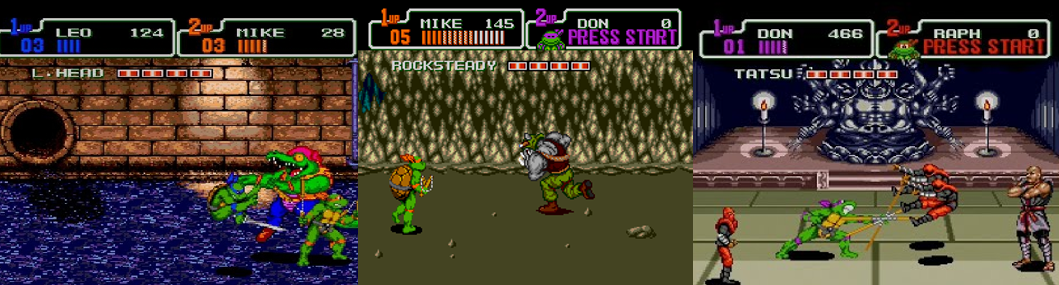
Game Corner [Turtle Tuesday]: TMNT III: The Manhattan Project (Xbox Series X)


The first issue of Kevin Eastman and Peter Laird’s Teenage Mutant Ninja Turtles (TMNT) was published in May of 1984. Since then, the TMNT have gone on to achieve worldwide mainstream success thanks not only to their original comics run but also a number of influential cartoons, videogames, and wave-upon-wave of action figures. This year, I’m emphasising third entries and time travel shenanigans in the popular franchise every Tuesday in May!


GameCorner

Released: 30 August 2022
Originally Released: 12 December 1991
Developer: Digital Eclipse
Original Developer: Konami
Also Available For: Nintendo Entertainment System (NES), Nintendo Switch, PC, PlayStation 4, PlayStation 5, Xbox One, Xbox Series S

The Background:
The Teenage Mutant Ninja Turtles (or Teenage Mutant Hero Turtles here in the UK) were the in thing for kids like me back in the eighties or nineties thanks, largely, to the popularity of its influential cartoon and extensive toy line. After helping to define the term “NES Hard” with their original, incredibly successful TMNT title for the NES, developers Konami turned to the equally popular arcade game for the sequel, which proved to be a hit thanks to its ambitious recreation of its far superior arcade counterpart. By the end of 1991, Konami had mastered the art of bringing the TMNT to the arcades with the smash title Teenage Mutant Ninja Turtles: Turtles in Time (Konami, 1991), which also took 16-bit gamers by storm with its home console port. NES players weren’t forgotten in this time, however, with this 8-bit expansion of the previous NES title being critically lauded despite it never actually being released in the United Kingdom. Although TMNT III: The Manhattan Project was never ported or re-released to other consoles or digital services, the 2022 Cowabunga Collection remedied that for modern gamers by including it alongside many other TMNT games and quality of life features

The Plot:
While vacationing at the beach, the TMNT leap into action when their archnemesis, Oroku Saki/The Shredder, kidnaps April O’Neil and hijacks the entire borough of Manhattan, turning it into a floating island and daring them to challenge him.

Gameplay:
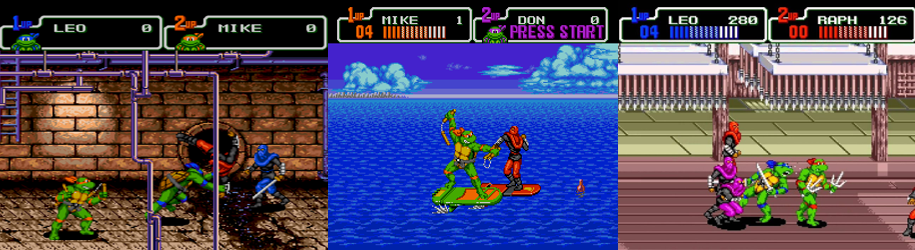
If you’ve played any of the TMNT’s arcade efforts, especially Teenage Mutant Ninja Turtles II: The Arcade Game (ibid, 1990), you’ll be immediately familiar with the controls, features, and gameplay of The Manhattan Project. As in those titles, the game allows up to two plays to pick from one of the four titular turtles and battle their way through waves of enemies in a variety of locations, many of them drawing from tried and tested environments such as the sewers and the Technodrome. The Manhattan Project offers two options for two players, one that allows friendly fire to be activated for an extra level of difficulty and one that disables it so you can play like a normal person. The controls couldn’t be simpler; you press X to attack and A to jump, with your chosen turtle pulling off a mid-air kick when you press X when jumping. Each turtle control exactly the same and is defined primarily by their colour scheme and the range of their weapon, with Raphael at an obvious disadvantage and Donatello having a longer reach. You can toss enemies overhead by pressing down and X, which seems to do greater damage, or pull off a power attack at the cost of some health by pressing X and A together. Each turtle has their own power move, with Michelangelo performing a handspring kick, Donatello barrelling across the screen in a cannonball, Leonardo flying into a sword cyclone, and Raphael performing an M. Bison-like torpedo attack, but I found actually getting them to execute these power modes to be surprisingly unreliable since all you have to do is press two buttons together.

The TMNT have more attack options and the game is decidedly more akin to its arcade brethren.

Overall, gameplay and combat is basically exactly the same as in the previous NES title and naturally lacks some of the additional animations and options seen in the superior 16-bit titles, with no dashing, elaborate combos, or throwing options available to you, but as a simple pick up and play arcade brawler it does the job pretty well for those who were stuck with the NES. Additionally, gameplay is once again mixed up slightly with a sidescrolling chase sequence in Scene 2 that sees you slashing across the ocean on a surfboard; there are also times when you’re asked to travel diagonally and where you can jump up to a higher level to avoid certain hazards. As ever, the TMNT need to watch out for holes and barrels, which will squash them flat, and new hazards like explosive pipes in the sewer and conveyor belts on the floor of the Technodrome, though you can switch to a different character when you run out of health. The Manhattan Project also includes an elevator section, as is the staple [https://www.digitiser2000.com/main-page/10-weird-rules-for-every-scrolling-beat-em-up] of any good beat-‘em-up, with this one taking you up the outside of a skyscraper like it’s Street of Rage (SEGA, 1991), but also includes some unique fighting stages that in themselves act as hazards. You’ll be fighting on top of a submarine, on a bridge strewn with holes, and on the aforementioned lift; in these areas, you need to be careful not to jump or be hit into the water or down the gaps as it’ll cost you some health. However, you can awkwardly manipulate your enemies into falling to their deaths in your place and, if you simply walk near the edge, you’ll hang on rather than simply slipping off as in most 2D games from this era.

Graphics and Sound:  
On the surface, The Manhattan Project really isn’t all that much different from the TMNT’s last NES title; however, the environments and overall presentation is far better. For starters, the game ambitiously recreates the cartoon’s iconic opening sequence and the game even includes a few sound bites here and there to evoke its technically superior arcade and 16-bit counterparts. While TMNT’s sprites don’t seem to be all that different, they have been tweaked a bit: Leonardo now holds two katana, for example, and there’s some animation on Donatello’s bo staff as he walks; even their idle animations have been expanded a little bit to include foot tapping and such. Although you can again remove the slowdown and sprite flickering, these elements are still somewhat present, with the same minor screen tearing and the screen still struggling to scroll properly; you’ll find yourself walking right at the edge of the screen and needing to hop back to get things moving less jerkily. The enemies are a little more diverse this time around; not only do they pop up from manholes, out of the water and sand, and from behind parts of the environment, but Foot Soldiers will scurry down poles, burst out of vehicles, and your turtle can get blinded by gas and sand this time around.

The Manhattan Project is undeniably graphically superior to its predecessor.

Environments are much improved over the TMNT’s last NES game; though still a far cry from the arcade and 16-bit titles, there’s much more detail, colour, and even a bit of animation here and there (such as the tide coming in on Scene 1). This is best seen in the Technodrome stage, which is far more visually interesting than before, and in the sewer, where you now cross through waist-high water rather than just being in a simple brick environment. There are some new stage types on offer here, such as the beach that opens the game and includes a pier, the aforementioned submarine, and even generic stages like the bridge are spruced up with large holes to avoid. Perhaps the most impressive environments are the subway, where enemies will jump out of subway trains, and those set on the rooftops of the floating city as you can see skyscrapers and other buildings in the background. Cutscenes and music are much improved this time around as well, with the TMNT transitioning between stages on their blimp more sprite art, voice samples, and speech bubbles being included, and even the heads-up display has been changed up to give it a more distinct visual identity.

Enemies and Bosses:
As ever, your most persistent enemies will be the robotic Foot Clan and their many variants; these guys will toss large shuriken at you (though you can deflect these with you weapons), burst up from the ground, blast at you from hovercrafts, hover about on floating discs, wield whips, and ride around on large rolling balls. The Foot also toss balls and weights at you to squash you, attack with swords, toss daggers in a spread, throw lances and boomerangs at you, and you’ll find two working in tandem to fry you to your shell with an electrical beam. The Rock Warriors are also back, though thankfully without their annoying charge attack; now, they still fire machine guns and heavy ordinance but can also temporarily stun you with gas grenades and send you flying across the screen with a swing of a girder! Robots also dog your progress, with flying bugs diving at you in a kamikaze run, humanoid robots firing projectiles at you, spider ‘bots dropping from the ceiling as rocks, and Mousers clamp down on your hands.

Familiar villains and accompanied by some newcomers as bosses and mini bosses.

As The Manhattan Project is a much bigger and longer game than the TMNT’s last outing on the NES, you’ll have to contend not only with a few more bosses but also a mini boss or two, all of whom come complete with a helpful life bar and will be immediately familiar both to fans of the franchise and anyone who’s played any of the TMNT’s arcade outings. As is often the case in these types of TMNT games, the first boss you’ll fight is Rocksteady and he’s not really changed his attack pattern up all that much; in addition to kicking and punching you when you’re up close and charge at you from a distance, he comes armed with a harpoon gun to launch projectiles your way. The second boss, Groundchuck, represents not just a rare venture into different villains but also an increase in difficulty as he charges around the screen erratically and swings a pipe at you after you deliver enough damage to him. Halfway across the bridge, you’ll get attacked by my favourite TMNT villain, Slash; this dark turtle jumps about the place, spins around on his spiky shell, and (appropriately) slashes at you with his jagged sword. He’s merely an appetiser for Bebop, who now comes equipped with a spiked mace that he twirls over his head and whips at you in a horizontal line. Down in the subway, you’ll fittingly do battle with Dirtbag, who comes rolling in on a mine cart and fires rings from his miner’s helmet; although he also wields his trademark pickaxe, he leaves himself wide open for an attack when it gets stuck in the ground.

Since the game’s bigger, it only makes sense that there’s more bosses and that they’re a bit tougher.

When you reach the end of the sewers, you’ll have to fend off the Mouther Mouser mini boss (a Foot Soldier on a larger Mouser who spits out fireballs and smaller Mousers) before finding yourself on a narrow path surrounded by rising water and once again doing battle with Leatherhead, who not only whacks at you with his tail but also fires a shot gun spread your way. Rahzar and his ridiculously disproportionate head is the mini boss of the Technodrome and again charges at you, swipes with his claws, and can freeze you into a block of ice with his spit. Defeating him sees you facing off with the Shredder, with April held hostage nearby; a cheap spam artist who can kick you clear across the screen, the Shredder slashes with his sword and has a devastating throw, but is thankfully lacking in his de-evolution powers this time around. Tokka attacks you on the rooftop; carrying a shield to block your flying attacks and able to uppercut you into the electrifying neon sign in the background, Tokka also likes to take a bite out of your face and punch at you. The Mother Mouser reappears on Krang’s ship, which is also where you’ll naturally battle Krang; again, his sprite leaves a lot to be desired but he’s a bit tougher this time around thanks to the electrical hazard in the arena, his rocket punch, missile barrage, and tendency to electrify his body while taunting. Krang can also split his android body into two, with his torso floating about firing eye beams at you as his legs stomp about trying to kick you. You’ll immediately face Super Shredder after this fight; Super Shredder can teleport and dash about, send you flying with a swipe, summon a lightning strike and even turn you into an ordinary turtle with a fireball…although this is now a temporary ailment rather than an instant death move.

Power-Ups and Bonuses:
Unfortunately, The Manhattan Project doesn’t expand on the available pick-ups in any way; the only power-up you’ll find here are the all-too-rare instance of some health-restoring pizza, which is a bit of a shame considering Turtles in Time had added a new power-up item.

Additional Features:
There aren’t any in-game options available to you in The Manhattan Project beyond picking between the two different two-player options unless you enter the legendary “Konami Code”. This means that your only options for replay here are to pick a different turtle or play with friendly fire on and off rather than setting different difficulty levels. The Cowabunga Collection does offer some additional features, however; first, you’ll earn yourself a respectable 70G Achievement for completing the game and you can the game’s box art and manuals, switch between the Japanese and American version, apply various borders and display options, and listen to the game’s soundtrack. The enhancements also allow you to remove slowdown and sprite flicker, allow for “easy menu navigation” (which I found no use for), and offer a super useful infinite lives and an easy mode if you’re struggling. Finally, you’re still about to rewind the game with the Left Bumper, access save states using Right Bumper, and watch the game play itself if you fancy it.

The Summary:
Teenage Mutant Ninja Turtles III: The Manhattan Project isn’t much compared to its arcade and 16-bit counterparts, for sure; it’s undeniably graphically inferior, the sound and music isn’t anywhere near as clear, and the gameplay and combat remains restrictive and clunky thanks to the limitations of the NES. However, it’s quite obviously a step up from the TMNT’s previous outing on the NES; not only are the sprites a little more alive, the environments are far more detailed and the game is almost double the length of its predecessor, meaning that it’s a pretty decent 8-bit alternative to the likes of Turtles in Time. It’s unfair to be too harsh on it considering the power of the NES simply can’t compete with its bigger brothers, but it’s a far more impressive effort that its predecessor and felt much more like a complete, concentrated effort rather than a downgraded port. The addition of mini bosses was a nice touch and I liked how the bosses had second phases or upped their attack strategies after you dealt enough damage. The cutscenes and story are far more impressive this time around, though the lack of additional options, power-ups, and gameplay mechanics keeps it from really being all it could be. Giving each turtle their own power move was a nice touch and I liked the additional animations and stage variety on offer here; in some ways, it’s like a remix and expansion of its predecessor, but it’s clearly the superior of the two so I had a pretty good time playing through this one.

My Rating:

Rating: 3 out of 5.

Pretty Good

Did Teenage Mutant Ninja Turtles III: The Manhattan Project make it into your NES library back in the day? What did you think to the gameplay and presentation of the game, especially compared to its predecessor and arcade counterparts? Which character’s power move was your favourite and what did you think to the new bosses and mini bosses? What did you think to the new, longer stages and the additional tweaks made to the visuals? Did you play with the additional features added to the Cowabunga Collection? What’s your favourite NES game? Feel free to drop your opinions on the TMNT’s third outing on the NES in the comments section down below or share them on my social media.

Game Corner [National Superhero Day]: Marvel: Ultimate Alliance (Xbox 360)


In 1995, Marvel Comics created “National Superhero Day” and, in the process, provided comics and superhero fans the world over with a great excuse to celebrate their favourite characters and publications.


Released: 24 October 2006
Developer: Raven Software
Also Available For: Game Boy Advance, Nintendo Wii, PC, PlayStation 2, PlayStation 3, PlayStation 4, PlayStation Portable (PSP), Xbox 360, Xbox One

The Background:
Perhaps few videogame publishers are as synonymous with Marvel Comics than Activision; the publisher has been spearheading adaptations of some of Marvel’s most popular properties since the year 2000. They weren’t all smash hits, of course, but some of their titles have been praised as among the best for characters like Peter Parker/Spider-Man and Marvel’s resident Mutant team, the X-Men. In 2004, the publisher teamed with developers Raven Software and saw big success with X-Men Legends, a team-based brawler that incorporated role-playing elements and simultaneous co-op gameplay. Following similar success with the sequel, Activision’s partnership with Raven Software expanded to incorporate much of the rest of Marvel’s line-up with this title, which was built on Vicarious Visions’ Alchemy engine. The game also greatly benefitted from utilising the Havok physics engine; in addition to including many of Marvel’s most popular characters alongside those added as downloadable content (DLC), Nintendo staples Link and Samus Aran were initially planned to be Wii-exclusive characters before being nixed. Marvel: Ultimate Alliance received generally favourable reviews; critics praised the game’s presentation and for improving and expanding upon its predecessors, and the game was successful enough to warrant an equally-successful sequel three years later and (eventually) a Nintendo Switch-exclusive third entry that received mixed reviews. Sadly, despite a remastered version being developed for PC, PlayStation 4, and Xbox One in 2016, Marvel: Ultimate Alliance is currently delisted from digital storefronts and quite difficult to come back for an affordable price as a result.

The Plot:
When Doctor Victor Von Doom and his Masters of Evil launch an attack against the Strategic Hazard Intervention Espionage Logistics Directorate (S.H.I.E.L.D.), Colonel Nick Fury sends out a distress call to all available superheroes for assistance. Steve Rogers/Captain America, Spider-Man, Thor Odinson, and Logan/Wolverine respond to the call and must soon join forces with a myriad of other Marvel heroes in order to put a stop to Dr. Doom after he attains incredible cosmic powers from Odin Allfather.

Gameplay:
Marvel: Ultimate Alliance is a top-down, team-based brawer peppered with some very light puzzle solving, opportunities for exploration, and role-playing mechanics. Players can (eventually) assemble a team of four from around thirty available superheroes and journey across a number of recognisable Marvel locations battling against the nigh-on endless minions of the Masters of Evil. Up to four players can play at once, though a single player is able to battle on alone, using the Left Trigger and directional pad (D-pad) to direct their computer-controlled team mates or switching to another superhero by pressing a corresponding direction on the D-pad. Players are given two primary attack options: A for a quick attack and B for a stronger attack, which can be charged up, and alternating between these commands will allow you to string together a few simple combos that will stun, trip, or blast your foe into the air, which can be essential to breaking through some enemy’s guards. X is the “action” button, allowing you to open doors, activate consoles, turn levers, or grab enemies to pummel, throw, or relieve them of their weapons, and Y allows you to swim and jump (you can also double jump, web-sling, or fly by double pressing and holding the button, respectively). Players can block incoming attacks by holding the Left Bumper or tap it to dodge out of the way entirely and each character has their own special abilities, which are accessed by holding the Right Trigger and selecting either A, B, X, or Y. Special powers can only be used if you have another energy, which is represented by glowing blue orbs dropped by enemies or uncovered from smashing crates or opening chests, and allow you to fire energy beams, toss projectiles, entrap enemies (by freezing or webbing them up, among other options), boost you (and your team mate’s) defense, attack, and other attributes, and cause status effects to your enemies like stunning, burning, or electrocuting them. While many of the effects are largely shared amongst the roster, each character pulls them off in their own unique way; Tony Stark/Iron Man’s Repulsor blasts are different from Mark Spector/Moon Knight’s projectiles, even though both can ricochet around the environment, and each character has a variety of special powers that you can power-up and assign to the face buttons from the “Hero Management” menu.

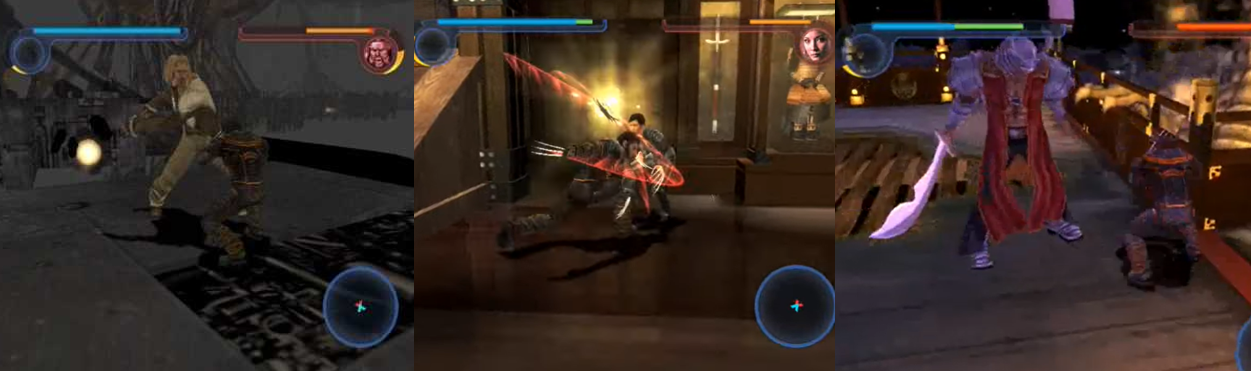
Assemble a team of four superheroes and battle the endless forces of the Masters of Evil.

Each character also has a big, character-specific attack that can be performed when your energy gauge is completely full and you press Y while holding RT this will see them unleash a huge, screen-clearing attack specific to them and each character will perform these in succession if their energy gauge is full. You’ll also earn additional bonuses if certain characters pull off their special moves at the same time, and this also happens if your team is formed of characters who have a history together, like the X-Men or the Fantastic Four. The game’s story mode is comprised of five “Acts”, which drop your team in a variety of locations that should be familiar to Marvel Comics fans. After clearing the first mission, which has you retaking a S.H.I.E.L.D. Helicarrier from Dr. Doom’s forces, you’ll be dropped into one of five hub areas where you can interact with Nick Fury, Natasha Romanoff/Black Widow, and other non-playable characters (NPCs) to learn more about your current or next mission, gain insight into the heroes and villains, and be given side quests to perform. In the hub area, and scattered throughout each location, are S.H.I.E.L.D. Access Points where you can save or load your game, change up and upgrade your team, or revive fallen teammates. Just as blue energy orbs can be acquired during gameplay, so too can red health orbs, but some environmental hazards or bottomless pits will see you or your teammates taken out of action. It can take about three minutes for your fallen ally to be ready for revival, but they can only be brought back into the fight from one of these save points. As you defeat enemies, you’ll earn experience points (XP) and level-up once you’ve gained enough XP, which will improve both your individual and team stats and unlock additional special moves for you to utilise. From the Hero Management screen, you can switch your character entirely, change their costume (which affords different abilities), equip gear to boost their stats, and name and improve the competence of your team to increase your odds when in a fight.

The tedious combat is broken up by some simple puzzles, QTEs, or short bites of variety.

Gameplay in Marvel: Ultimate Alliance quickly grows quite repetitive; you can charge through most missions by repeating the same combos and special moves over and over, and opportunities for exploration are quite limited as areas generally only give the illusion of being large and multi-pathed. Combat doesn’t get much deeper than tripping, stunning, or blasting enemies, or avoiding using physical or energy-based attacks, and it’s surprisingly easy to get turned around in areas even with the presence of a mini map as one dark, grey corridor looks the same as the last. Puzzles aren’t much of a head-scratcher here; you’ll generally fight your way to a console or power generator that needs to be activated or destroyed, though sometimes you’ll need to activate two switches at once with the either of a partner, and you’ll sometimes have to perform these tasks against a time limit. You’ll need to push or pull heavy objects onto pressure pads, redirect sunlight to free Balder Odinson, defend Dum Dum Dugen in a glorified escort mission, perform character-specific motions to activate statues, or complete quick-time events (QTEs) to open doors or take out larger, otherwise-invulnerable bosses. You’ll jump behind the controls of an anti-aircraft cannon, be joined by NPCs like Major Christopher Summers/Corsair, and have to rescue characters like Doctor Bruce Banner and Prince Namor McKenzie/The Sub-Mariner, though some of these are optional side quests. These optional missions appear during the main campaign and often having you searching for items for a specific character, or destroying certain targets along the way, and sometimes you’re faced with an impossible choice between two options which will fundamentally alter the multiple endings. Gameplay really gets interesting, though, when you end up in Murderworld, a twisted funfair featuring bumper cars, a giant pinball set, a hedge maze, and even an old-school Atari-style mini game that sees you awkwardly swinging from ropes and collecting Golden Tickets to rescue Doctor Jean Grey/Phoenix from Arcade’s clutches.

Graphics and Sound:
Marvel: Ultimate Alliance is largely an impressive looking title, despite how old it is now, thanks to the zoomed out, almost isometric camera perspective. This means that the in-game character models, while hardly the most detailed, pop out nicely against the various backgrounds and I liked how they all had their own unique flourishes, like Spider-Man being able to web enemies up when he grabs them and Norrin Radd/The Silver Surfer floating around on his cosmic surfboard. Unlike some similar team-based brawlers, this really helps it to feel as though each character plays a little differently since they don’t just share the same animations and have a little individuality to them; you’ll need a stronger character to move certain objects, for example, and it’s much easier to explore the environment with a character who can fly. While your customised team won’t appear in the pre-rendered cutscenes, they do all have a lot of unique dialogue during the game, and when talking to or fighting against other characters; dialogue trees exist so you can ask a number of questions to NPCs or pick different options, which either helps you answer trivia questions, kicks off a side mission, or has you picking to team up with or save a different character, and villains like “Lester”/Bullseye or Quinten Beck/Mysterio. Unfortunately, the music isn’t really on par with the voice acting; it’s all very generic superhero-y or militaristic themes, and the in-game tracks often awkwardly loop, which is very jarring; the music’s also very loud, so you might want to adjust the sound settings in the options.

While the cutscenes aren’t great, the in-game graphics are decent enough and there’s a lot of dialogue variety.

The pre-rendered cutscenes also often let the game down a bit; they haven’t aged too well, and have a very rubbery and surreal quality to them (though they are pretty epic, especially when the Masters of Evil are discussion their evil lot and when Galactus and Uatu/The Watcher enter the story) that I’d criticise more if I could actually see them but the cutscenes are very dark and the only way to brighten them is by changing your television’s settings. The game’s environments often don’t fare much better, either; while it’s fun visiting places like the Sanctum Sanctorum and Valhalla in the hub worlds, the actual mission locations quickly become confusing and boring. While there’s a lot to destroy and see in each area, and even some hidden paths to uncover, rooms, corridors, and sections all start to blend together and the levels themselves can outstay their welcome at times, which only makes the monotonous combat more glaring. That’s not to say that there aren’t some visually interesting locations, though; you’ll swim through the depths of Atlantis, travel to Hell itself, battle across the length of the Bifrost Bridge and through the frozen wastes of Niffleheim, and infiltrate the gothic, regal stone walls of Castle Doom. Easily the most impressive area you’ll visit, though, is the Skrull home world, which is currently under attack by Galactus. The World-Devourer is seen lumbering around in the background between the futuristic skyscrapers and even pursues your across the walkways in an exciting (if frustrating) sequence, though the gameplay and visual variety offered by Valhalla is equally fun as you can visit the Warrior’s Hall (where NPCs are enjoying revels) and hop across Viking ships amidst a cosmic backdrop.

Enemies and Bosses:
Since a gaggle of Marvel’s most notorious villains has joined forces in Marvel: Ultimate Alliance, you can expect to come up against a bevy of disposable goons during your adventure. It doesn’t take long for you to basically have seen everything the game has to offer in this regard, but each location does at least change up the appearance, dialogue, and some of the attacks of the enemies you face; you’ll battle Ultron’s minions, Loki Laufeyson’s trolls, and soldiers from the Shi’ar Empire and the depths of Atlantis, all of whom can be defeated using your standard combos or special powers. You can set your team mates to follow, attack, or defend formations, but I always like to choose an aggressive approach to overwhelm the hoards of enemies that can flood each area. Some of these carry weapons, either melee armaments like axes, spears, and swords which you can appropriate, or laser rifles for long-range attacks; others shield themselves and need to be attacked from behind or stunned. Some, like the imp-like demons from Mephisto’s Realm, leap onto you and drain your health, while others fly above taking pot-shots at you, and some are resistant to physical or energy attacks or need to be tripping, stunning, or blasted into the air. Some are larger, dealing and taking more damage, while others regenerate their health (or their allies), sap your health or energy, or boost the attack of other foes, so it’s best to take those guys out first.

A whole host of Marvel villains stand in your way, though most can just be beaten into submission.

The Masters of Evil have assembled quite the smorgasbord of allies; you’ll do battle with almost every single villain from Marvel Comics throughout the course of the game, sometimes more than once, as various underlings dog your progress throughout each mission. Often, you’ll battle at least two of these sub-bosses at a time; sometimes they flee after an initial encounter and need to be fought again, other times they’re powered up to be more formidable, and in other cases they’re able to heal or shield each other from your attacks by working together. However, defeating the likes of Mac Gargan/The Scorpion, Bullseye, James Buchanan “Bucky” Barnes/The Winter Soldier, Chen Lu/Radioactive Man, Valentin Shatalov/Crimson Dynamo, Aleksei Sytsevich/The Rhino, Herman Schultz/The Shocker, Doctor Curt Connors/The Lizard, Hussar and Neutron, Paibok, and even the corrupted superheroes you eventually fight really don’t require much more than you constantly attacking them with combos and special powers. Indeed, while it’s impressive that so many villains appear in the game, very few actually offer much in the way of a challenge beyond being a little tougher than the regular enemies you encounter, with even the likes of notorious villains like Ultron and Titannus proving quite disappointing encounters as, while they keep you at bay with laser blasts or destroy everything in a rampage, respectively, both can be similarly put down without any complicated strategies. Many of these villains are fought in teams, however, and they can also reappear in the simulator missions you unlock by finding discs, allowing you to battle them with different characters and in different situations, but as long as you string together your usual combos and unleash your best special attacks they go down pretty easily, even when bolstered by disposable minions.

Some of the best sub-bosses require a bit more strategy and forethought to put them down.

Other villains, however, do bring a little bit more to the table: Mysterio uses illusions to throw you off and, while Paul Pierre Duval/Grey Gargoyle can disable you by turning you to stone, Baron Carl Mordo, Kl’rt/Super Skrull, and the Mandarin disable you with elemental attacks to encase you in ice or send you flying with a blast of wind. The Mandarin also ends up being a particularly annoying boss as you need to lure his spider-like robots into teleporting to his safe spot to destroy his endless supply of Ultimos and actually bring him down for good. Mental/Mobile/Mechanized Organism Designed Only for Killing/M.O.D.O.K. challenges you to a trivia quiz to get closer to him, then brings in waves of Advanced Idea Mechanics (A.I.M.) minions to annoy you in addition to firing lasers and shockwaves at you. When battling Byrrah Thakorr-So and Krang, you also need to destroy sonic emitters to progress the mission, while Attuma and Todd Arliss/Tiger Shark can be difficult to hit as they’re swimming all over the place, making for a more aggravating encounter. Dragon Man randomly drops in as a tough obstacle to bypass since he’s capable of dishing out some formidable damage, while Blackheart employs multiple versions of himself to attack you and you’ll need to take on all three members of the Wrecking Crew at once (though they fall pretty easily if you’re wielding an axe or other weapon). Amora the Enchantress can allure you and your teammates into not attacking her, and will heal her brutish ally, Skurge the Executioner, Ulik and Kurse can only be defeated by attacking one with melee attacks and the other with energy attacks, and you’ll need to lower the shields protecting the likes of Kallark/Gladiator, B’nee and C’cil/Warstar, and Cal’syee Neramani-Summers/Deathbird (who flies around the arena tantalisingly out of reach and swooping down to grab you otherwise).

The bigger, more formidable bosses offer a bit more variety and spectacle.

Luckily, the game claws back a bit of challenge and intrigue by its large and engaging end of Act boss battles. After fending off Dr. Doom’s attack on the Helicarrier, you’ll battle Fing Fang Foom on the main deck; this gigantic alien dragon blasts fireballs at you from the air, covers the ground with shockwaves when it lands, and can only be brought down by firing anti-aircraft cannons at it and making good use of your ranged attacks. After making it past his robots and death traps, you’ll battle Arcade’s massive mech in a circus tent, which you need to fire yourself at using cannons and succeed at QTEs in order to have it damage itself in frustration. The eldritch Kracken is one of the ore frustating bosses as you can’t damage it directly and must lure it into attacking the nearby columns so you can complete a QTE sequence, but it seems completely random when it’ll actually smash into these columns, meaning the fight drags a bit. Fittingly, Mephisto awaits you in the depths of Hell; this demonic villain spews hellfire at you, protects himself from attacks with a shield, and can even screw up your controls with his powers, though you can disarm him and use his Hellsword to damage him. You’ll have to take extra care when Mephisto compels Kurt Wagner/Nightcrawler or Jean Grey to attack you, however, and will lose that character forever when they sacrifice themselves to stop Mephisto. At first, Loki isn’t really too much of a threat; sure, he’s got lightning attacks that stun you and is assisted by his Frost Giant minions, but he goes down pretty easily. However, it’s all a ruse as he then poses s Nick Fury to have you activate the indestructible Destroyer, which you must flee from while desperately searching for the ice-shielded Loki; once you find him, simply attack him until his shield breaks and the fight is ended. Galactus, however, is a threat far too big for you to tackle head-on; instead, you must desperately flee from him (destroying his drills if you have time) and then avoid his massive fists to activate three consoles and blast at him as the Silver Surfer in a QTE sequence. Finally, you must take on Dr. Doom himself; however, despite stealing Odin’s power to become a literal God, the mad doctor really isn’t too difficult to defeat even with the corrupted Fantastic Four acting as his personal guard. Simply destroy the four generators powering his shield, chase him down as he dashes and teleports across his throne room, mashing buttons when he grabs you, and pummel him as you would any other enemy or boss and, eventually, he’ll be defeated without too much problem regardless of his electrical attacks or shockwaves.

Power-Ups and Bonuses:
As mentioned, you can refill your energy and health by collecting blue and red orbs, which are dropped by enemies or found by destroying crates or opening chests. While some hazards can whittle your health down pretty quickly, or kill you immediately, health is pretty easy to come back, and you can also grab weapons to dish out greater damage to enemies (in fact, this is highly recommended as weapon attacks easily cut down even the most intimidating Super Soldiers and Doombots). You will also acquire S.H.I.E.L.D. Credits from enemies and the environment, which can be spent on upgrades to your character’s powers, costume-specific abilities, and upgrading your team’s stats; you cans et these to auto-upgrade, but they increase in cost each time you boost them so you can burn through Credits pretty quickly. Defeating the game’s many sub-bosses and bosses will also yield special gear that you can assign to each character; this will boost your attack, XP, or gauges, resist or inflict elemental damage, and offer numerous other perks but you can only equip one item to each character and your inventory has limits, meaning you’ll need to sell some to make way for new pick-ups as you come across them. Finally, as mentioned, you’ll get boosts to your stats and performance for forming teams of related characters, and performing special moves with certain characters, so it can be beneficial to experiment with different combinations and search around the environments for chests for more loot.

Additional Features:
There are forty-six Achievements on offer in Marvel: Ultimate Alliance, with the majority of them popping after clearing each Act and defeating bosses. Other Achievements include tossing enemies to their deaths, performing a certain number of finishing moves, defeating a certain number of enemies, unlocking every character and costume, and finishing the game on Hard mode, among others. Since the only difficulty-based Achievement you get is finishing on Hard, you may as well play through on Easy unless you’re going for that Achievement, and you’ll also get Achievements for finishing missions with another human-controlled character and upgrade every character’s special moves. Throughout each level, you’ll find a number of collectibles scattered about; art books unlock artwork to view, action figures allow you to unlock T’Challa/Black Panther and Matt Murdock/Daredevil as playable characters (and you can play a claw mini game in Murderworld to unlock Eric Brooks/Blade as well), and you can unlock Nick Fury by finishing the game once and the Silver Surfer by earning at least a Bronze medal in the game’s bonus simulator missions. These are unlocked by finding S.H.I.E.L.D. Simulator discs and recreate key moments and battles from each character’s history in a series of tough challenges. You can also take on five sets of trivia questions in each hub world for additional XP and Achievements, replay and revisit any Act, hub, and mission once you’ve finished the game, view movies and other unlocks in the gallery, and go head-to-head with your friends batting for points in an “Arcade” mode. By defeating numerous enemies with each character, you’ll eventually unlock up to four different costumes for each one, with these offering slightly different abilities that you can upgrade. Unfortunately, you can no longer purchase the two additional DLC packs, which added eight new characters to the roster in addition to twelve extra Achievements, none of which can be accessed on home consoles any more, which is a shame as I wanted to have Eddie Brock/Venom on my team and had to settle for symbiote Spider-Man.

The Summary:
I’d played Marvel: Ultimate Alliance before on the PlayStation 3 and, while I’d enjoyed it, I remember being put off by the lack of Trophies to earn and the fact that the DLC was only available on the Xbox 360 version. When I finally bought an Xbox 360, this game was on my buy list and, coincidentally, was a bit more expensive than I’d like and the DLC was still unobtainable, unless I wanted to shell out ridiculous amounts for an imported version. When I finally got it again, I enjoyed getting back into it; the game is very action-packed and chock full of playable characters, cameos, and villains to fight, but there’s really not a great deal to the combat, graphics, or the story. It’s fine and enjoyable enough, but things get repetitive very quickly and you’ve basically seen everything the game has to offer (apart from a few bells and whistles) after the first Act. You’ll beat on the same generic goons with the same tedious combos over and over, solving simplistic puzzles and spending your Coins on upgrades, but very rarely will you actually find much t set this apart from other, similar brawlers. The character selection and variety is great, and I like how they feel distinctive despite basically all being the same, and I enjoyed how some stages were more visually interesting than others, allowing you to swim or venture onto the hull of a space craft. While the sub-bosses weren’t up to much, the bigger bosses offered a bit more challenge and entertainment, but it feels a bit like the developers maybe crammed a little too much into the game without trying to make each villain a unique encounter. Overall, it’s a decent enough team-based brawler that’s probably more fun with a couple of friends to play with; there’s some decent replay value on offer with the different endings you can get based on your decisions and the extra missions and unlocks to find, but it does feel a little lacking in presentation and overall content to really score much higher.

My Rating:

Rating: 3 out of 5.

Pretty Good

Have you ever played Marvel: Ultimate Alliance? If so, what did you think to it and who made it into your team? What did you think to the combat, character selection, and the overall gameplay? Were you disappointed that the boss battles were mostly just a tedious slog? Which of the characters, villains, and locations was your favourite? What endings did you get and did you ever unlock all of the costumes and characters? Did you ever play as the DLC characters? Where would you rate this game against its sequels and other similar games? How are you celebrating National Superhero Day today? Whatever your thoughts, sign up to leave a comment below or leave a comment on my social media, and be sure to stick around for more superhero and comic book content throughout the year.

Game Corner [Robin Month]: Gotham Knights: Deluxe Edition (Xbox Series X)


In April of 1940, about a year after the debut of arguably their most popular character, Bruce Wayne/Batman, DC Comics debuted “the sensational find of [that year]”, Dick Grayson/Robin. Since then, Batman’s pixie-boots-wearing partner has changed outfits and a number of different characters have assumed the mantle as the Dynamic Duo of Batman and Robin have become an iconic staple of DC Comics. Considering my fondness for the character and those who assumed the mantle over the years, what better way to celebrate this dynamic debut than to dedicate every Thursday of April to celebrating the character?


Released: 21 October 2022
Developer: WB Games Montréal
Also Available For: PC, PlayStation 5, Xbox Series S

The Background:
In 2008, Eidos Interactive and Rocksteady Studios delivered one of the greatest superhero videogames of the modern era, Batman: Arkham Asylum, which proved to not only be a critical and commercial success after years of Batman games of varying quality but also kick-started an incredibly successful and well-regarded series of videogames. Batman: Arkham City (ibid, 2011) proved to be bigger and better and, despite criticisms of its driving sections, the final game in the series, Batman: Arkham Knight (ibid, 2015), was still met with largely favourable reviews. After the success of Arkham City, Warner Bros. Interactive Entertainment turned to WB Games Montréal to develop a prequel and give Rocksteady Studios time to produce their expansive and impressive finale. Although Batman: Arkham Origins (ibid, 2013) is often considered the black sheep of the franchise, I found it to be just as enjoyable as Arkham City and it still sold incredibly well and it even laid the foundation for a spin-off focusing on the Suicide Squad. Indeed, in August 2020, it was announced that Rocksteady would be returning to their popular spin-off franchise for a Suicide Squad title but, at the same time, WB Games Montréal were also revealed to be working on their own Bat-centric title, one that wasn’t connected to the Arkham series but still owed a lot to it in terms of its presentation and gameplay. Unlike the Arkham games, Gotham Knights was to be a multiplayer, open-world adventure set after the Dark Knight’s death and focusing on his four protégés; the game was built to incorporate role-playing elements and online functionality to allow players to co-operate in combat and missions. However, also unlike its spiritual predecessors, Gotham Knights was met with mixed reviews; while the customisation and visuals were praised, the combat and focus on grinding was criticised; the lack of variety offered by mission objectives and dull mechanics were also a negative, though the focus on character relationships was praised.

The Plot:
Batman is dead, killed in battle with Rā’s al Ghūl. In his place, his four protégés – Dick Grayson/Nightwing, Tim Drake/Robin, Barbara Gordon/Batgirl, and Jason Todd/Red Hood – must work together to combat the escalating crime sweeping the city, fill the void left by the Dark Knight, and investigate a mysterious secret cabal known as the Court of Owls.

Gameplay:
Gotham Knights is a third-person action game that takes place in an open-world environment, includes a great deal of role-playing game (RPG) elements, and allows players to pick between one of the four titular Gotham Knights and take on a variety of missions across different nights in Gotham City. Although each of the Gotham Knights has their own pros, cons, and special abilities, they all share the same control scheme, which, like many things in the game, is similar to that of the Batman: Arkham series but also a little different. You attack enemies with X; tapping the button will unleash a small combo that quickly gets a little repetitive and holding X charges up an attack for extra damage and to break through the enemy’s guard or shields. A is use to open doors, squeeze through gaps, interact with the environment, and to hop over obstacles using the game’s dysfunctional parkour mechanic; as you run around (accomplish by pressing in the left analogue stick), you can tap A to hop over gaps or up to higher levels, but the only time you can actually jump is after grappling to a ledge (accomplished by tapping the Left Bumper). Press Y sees you toss out a ranged attack, either with Batarangs or Red Hood’s apparently non-lethal pistols, and you can also hold Y to knock back and stun enemies with a wider ranged attack. B allows you to evade; there is no counter system like in the Batman: Arkham games but you can hop over and under incoming attacks and out of the way of gunfire (helpfully indicated by danger lines) and, if timed correctly, pull off a counter by tapping X after a dodge. Like the combat, it’s not as slick or intuitive as in the Batman: Arkham games, which again is something that comes up a lot here, but it does a decent enough job.

Each character has their own unique skills and abilities to fight crime in a Gotham without Batman.

The Left Trigger allows you to precision aim your projectile to attack specific enemies or interactable elements, such as exploding barrels, electrical boxes, or chains to create platforms; the Right Trigger lets you grab enemies after you’ve whittled their health down enough, allowing you to finish them off with a strike attack with X, interrogate them to fulfil mission objectives with Y, or toss them at other enemies (or off a rooftop!) with B. The Right Bumper brings up the onscreen “Ability” menu; as you pummel enemies and perform well-timed evades, a meter will build up that allows you to perform your character’s unique attacks, such as a flurry of strikes, unleashing an elemental attack, calling in a drone for a short time, or sending out a bunch of little nanobots. Some of these will boost your attack, other will create a hologram to distract enemies. Similar to the Batman: Arkham games, you can also crouch by pressing in the right stick and take to higher perches to scope out large groups of enemies; this allows you to pull off silent takedowns or ambush takedowns if you want to make a little more noise, disable any security cameras or turrets, and use the environment to instil fear in your enemies and cause them to hesitate. While there are no “Predator” sequences, the spirit of this mode is still alive here; you’re often encouraged to take a stealthy approach, something Robin is especially good at, but you can just as easily tackle most situations head-on since the Gotham Knights are much better at resisting and avoiding gunfire. Additionally, your health will no longer be restored after taking out enemies; instead, you carry a limited umber of health packs, which you can use by pressing right on the directional pad (D-pad); enemies will sometimes drop health packs when defeated so look out for these and, if you’re defeated, you’ll respawn but will have lost a chunk of the bootie you picked up in the mission. At first, the Gotham Knights seem a bit limited compared to their caped mentor; each has their own individual strengths, with Nightwing being more acrobatic and Red Hood a powerhouse brawler, for example, but none of them are capable of gliding, at least not at first. You’ll need to complete a series of side missions with each character, ranging from stopping the randomly-generated “procedural crimes” around the city, interacting with non-playable characters (NPCs) like Alfred Pennyworth and Renee Montoya, to eventually unlock each character’s unique traversal method (known as “Heroic Travel”). Nightwing gets a jet-powered glider, which is a bit clunky to control; Robin taps into the Justice League’s satellite’s to teleport short distances, Red Hood harnesses the power of the Lazarus Pit to pull off a mid-air leap, and Batgirl gets a conventional glide.

Race through the streets on the Batcycle and use the shadows and your detective skills to complete missions.

All of these are performed with RT and you’re encouraged to practice and master them using time trials scattered across the city, but I found them a bit unwieldy so I relied mostly on the grapple, which can be chained together to quickly cross horizontal and vertical distances, and the Batcycle. Summoned by pressing up on the D-pad, the Batcycle is a fast and nimble way to get around the impressively crowded city streets; RT accelerates, LT brakes, reverses, and lets you perform a drift, Y sees you perform your ranged attack (though you can plough through pedestrians and enemies as well), A performs a wheelie for a ramp boost, and you can even rocket off the Batcyle with LB. The Batcycle is much more fun than Arkham Knight’s Batmobile and Gotham Knight’s handy and familiar compass and waypoint system mean it’s easy to blast your way to each objective, but you can also unlock various fast travel points across the map by taking out drones as a story objective to make things even faster. Between missions, you’ll return to the Belfry to rest up, advance the story, interact with characters, and upgrade your gear but you can also quick launch missions from here, which will spawn you in a unique and enclosed section of the city to take on one of Batman’s rogues in a specific environment, such as Arkham Asylum or the city dam. Another holdover from the Batman: Arkham games is the ability to scan the environment; pressing or holding down on the D-pad lets you perform an AR Scan, which highlights interactable elements, allows you to tag specific enemies, and is essential for examining crime scenes. Here, you scan dead bodies, lab equipment, and other key areas for clues; sometimes you need to identify a specific item, other times you need to link two together, and you’re often given the option of quick-solving the puzzle if you take too long. It’s a decent system as you’re spending half the game in what’s essentially a wire-frame mode like in the Batman: Arkham games, but it can lead to you feeling obligated to AR Scan every nook and cranny for potential items of interest. When playing Gotham Knights, you have the option of focusing on the main story or taking care of numerous side missions, however this is often actually integral to completing the main story or upgrading your characters. Consequently, while you could glide past most of the random crimes and enemies in the Batman: Arkham games, that’s not the case here; playing on the “Normal” difficulty is quite a challenge, practically forcing you to engage with every premeditated crime and side mission to get stronger, so I definitely recommend playing on an easier difficulty to make things less repetitive. And things can get very repetitive: crimes range from punks trying to bring into cars or escaping police custody, to performing bank heists, hacking into terminals, attacking armoured cars, and even racing away down the streets. You’ll be retrieving organs from organ traffickers or Modchips from goons, defending your allies and other NPCs from attacks, tracking down pieces of Basil Karlo/Clayface, disrupting Doctor Harleen Quinzel/Harkey Quinn’s latest scam, and sneaking into areas through vents to take out enemies.

While you’ll be repeatedly stopping the same crimes, some missions are more memorable than others.

These missions repeat over and over, with stronger and more diverse groups of enemies being mixed in, but with very little deviation; sometimes you can gain bonus rewards if you stay undetected or take out enemies in certain ways or avoid damage, other times there’s a loot crate for you to collect, but mostly you’ll be swinging in to do the same tasks over and over, which can get repetitive very quickly. The main story is where the meat is at. While you often have to complete some side missions to advance it, such as repeatedly infiltrating Oswald Cobblepott/The Penguin’s Iceberg Lounge, disrupting enemy strongholds, rescue hostage strapped to bombs, avoid attracting the attention of the distrustful and trigger happy Gotham City Police Department, and exploring some of Gotham’s most notorious locations, such as Blackgate Prison and even the cavernous tunnels beneath the city. There’s generally a good balance of action, stealth, and puzzle solving when on mission; you might have to sneak into an area and quietly take out goons, but you can also bust heads if you feel like it and are strong enough to pull it off. Puzzle solving becomes more prominent as the plot thickens and the Court of Owls and League of Shadows get involved; you’ll be finding Owl’s Nests all over the city, interacting with hidden doors and taking on the zombie-like Talons to clear them out, as well as infiltrating a masquerade ball and staying undetected as you listen in on the Court’s conversations and examine various parts of stately homes for hidden doors. The Court like to test your mettle in a series of elaborate death traps; you’ll have to avoid instant-fail traps like bursts of flame and spinning blades while on a conveyor belt, for example, muddle through the dark caves and even the wreckage of the Batcave, and at one point are drugged and forced to endure a maze full of spike traps and tricky platforming while the game distorts around you. There are a lot of mazes, elevator shafts, and simple to tricky puzzles to solve, these latter being difficult mainly because the things you need to find are so small. Again, things can get very difficult and very frustrating very quickly on higher difficulties, where you absolutely must tackle every and any crime happening around the city to level- and power-up but, on easier settings, things are much more enjoyable, if still a bit repetitive. While you can upgrade and modify your gear at any time, you can only switch characters in the Belfry, which will end that night’s patrol. The city map reloads, with any incomplete missions still active, and it pays to swap characters between missions to unlock all their abilities and mix things up, and also because some are better suited for certain missions than others.

Graphics and Sound:  
Gotham Knights absolutely impresses in its visual presentation; Gotham City is bigger than ever, divided into different sections, many of which will be familiar to players of the Batman: Arkham games, and the city is awash in ominous darkness, glows with light, and often covered with rain. All the familiar locales you’d expect are here: Blackgate Prison, Arkham Asylum, GCPD headquarters, and the like, alongside chemical plants, docks, cemeteries, towering skyscrapers, dingy alleyways, and gothic cathedrals. Many areas include little references to other Batman villains and stories, which is fun to see, or house plaques and other scannable points of interest for you to interact with. Unlike the Batman: Arkham games, Gotham Knights’ overworld is fully populated not just with criminals, but pedestrians and traffic! Gothamites can be saved from attacks, run into with your bike, and will offer commentary when they see you, which really helps the city to feel alive for the first time. As ever, the thugs come in all shapes and sizes and are loyal to different gangs but also offer some amusing commentary when you stalk and batter them. Posters, scannable graffiti, and a variety of warehouses are also on offer; thugs will take over Robinson Park, break into banks, and cause disruption in the streets all around you, all of which helps make this the most lively, dangerous, and accurate Gotham City of any Batman game despite how repetitive some elements can be.

The game looks great and has lots of customisation options but is a bit unstable at times.

Gotham Knights is a very story-driven game, so it’s good to see that there’s basically no distinction between cutscenes and in-game graphics; if you customise your character a certain way, they will appear like that in every cutscene, and dialogue and interactions differ depending on which character you play as (and, presumably, how many of you are playing at once). While I’m not a fan of all the costume choices on offer, they do look impressive and the game only struggles whenever your character wears a cape; sometimes the cape physics go a little janky. While combat is noticeably stripped down compared to the Batman: Arkham games and much more reliant on special abilities, it is fun, especially when you level-up and/or lower the difficulty, but the game struggles to maintain a consistent framerate at times. More than once I experienced dramatic and game-breaking slowdown, with the action stuttering or the game out-right crashing at least five times in my playthrough, which I really don’t expect from an Xbox Series X game. Things can also get quite cluttered very quickly, especially when completing the organ harvesting missions; it was never clear to me where I was supposed to take the organ, meaning I’d often run out of time and would have to clear away other active missions before trying again with a clearer compass. Still, the interactions between the Gotham Knights are one of the best parts of the game; they’re united in their grief but still act like siblings at times, making jabs at each other and learning to live and move on together, which was great to see. More often than not, when you switch characters, you’ll be able to interact with parts of the Belfry to learn more about each character, in addition to completing missions for your allies out in the field, all of which allows you and the characters to grow into their roles as Gotham’s protectors.

Gotham is more alive than ever but the game really shines when the environments are visually altered.

Gotham City is an expansive open-world map full of overground trains, built on top of the Court of Owls’ grimy tunnels, and filled with colourful characters. However, certain missions will restrict you to a specific game area, an isolated and reskinned version of the map tailored to that villain, and this is where things really get visually interesting. When confront Doctor Victor Fries/Mr. Freeze at the Elliot Center and Blackgate Prison, Gotham is ravaged by a vicious snowstorm; ice and snow are everywhere, with innocents caught in the crossfire, and it really helps set the mood for the battles against Mr. Freeze. Similarly, you’ll explore the gothic and ransacked remains of Arkham Asylum, enter the Gotham General Hospital after it’s received a makeover by Harley Quinn, and even venture into the ruins of the Batcave, giant dinosaur and penny and all, as you track down the Court of Owls. While it’s often difficult to see in these areas and they’re fraught with danger, they help to mix up the gameplay and the visuals and the enemies you encounter, from Mr. Freeze’s Regulators to the sword-wielding League of Shadows, then start to appear on the overworld, and in stronger forms, to help keep things a little interesting even as you complete the same tasks over and over. It’s fun just barrelling through the streets or taking to the rooftops, stopping crimes along the way to your next objective and stumbling across side quests as you go; there are various items to examine or interact with, generally for exposition or to aid you in combat, and lots to see and do in terms of customisation, though I found the menus a little finnicky to navigate at times.

Enemies and Bosses:
As in the Batman: Arkham games, Gotham City is ravaged by a contingent of criminals, all of whom are loyal to one gang or another. You’ll encounter “Freaks”, street punks who follow Harley’s lead, the Regulators, who wield tech and often use Mr. Freeze’s toys, be attacked out of the blue by the League of Assassin’s ninjas and stir up the Court of Owl’s zombie-like Talons in their nests. Enemies come in different types, from regular grunts to ones with weapons (Molotov cocktails, rifles, freeze or electrical weapons, and even annoying drones), and bigger enemies who have shields or can tank your hits. Each gang has these different types of enemies so, if you fight three different types of Regulators, you’ll encounter similar versions when fighting the Freaks, though they do look different. The bigger Freaks have large metal shields and sometimes maces, for example, whereas the larger Talons wear ceremonial armour and carry axes and the larger Regulators can create an electrifying area attack. Generally, they all go down quite easily once you get the hang of combat; you can dodge out of the way of their attacks and gunfire, which also seems to damage enemies, and take advantage of any interactable elements to stun or defeat them, but things can get quite hectic as enemies mix and match and you take on waves of them to complete objectives or defend endangered Gothamites. You’ll also have to avoid the GCPD; police officers are often in the streets or will arrive at crime scenes after you’ve cleared out enemies; they won’t hesitate to shoot or chase you and you won’t gain experience points (XP) from taking them out, so it’s better to just avoid them.

Thankfully, Man-Bat is on hand to offer a bit of spice after pummeling Harley and her freakish thugs.

You’ll encounter each type of enemy in a dedicated fight as the story progresses, essentially making them almost like mini bosses. Tackling the larger enemies is good practice for the battle against Harley Quinn’s goons, Basher and Blazer; one is obviously a large brute and the other is smaller and likes to toss flaming bombs at you, all while other goons attack you and a series of bombs activate in an enclosed space that you need to disarm before the timer runs out. By this point, you’ll have encountered similar enemies to these two more than once, and many others after ape their strategy, so it’s not exactly hard to break through Basher’s guard with a heavy strike and pummel him while dodging Blazer’s projectiles and smacking him up too, but make sure to take care of the bombs as soon as possible. Harkey Quinn herself (now using the alias Dr. Q) is also fought later in the game after you disrupt her operation and confront her in the vandalised hospital. Harley’s a nimble little minx, deftly cartwheeling about while swinging first her giant hammer and then a sledgehammer infused with electricity. Harley also tosses playing cards are you and sends her goons against you, but you can take advantage of the environment to deal damage to her as long as you can dodge her manic swings and land a good combo once the window of opportunity opens up. Later in the game, after spending a great deal of time investigating Doctor Kirk Langstrom’s death and research, you’ll not only engage with the various Talons of the Court of Owls, who can poison you and are so quick that you need to stun them with a heavy ranged attack, but you’ll also battle a number of Man-Bats across the city. Though they look scary and vicious and can blast you away with  scream, swipe at you, and will pin you down to gorge on you, these monstrous freaks are actually quite a pushover, especially by that point as you’re pretty well powered up, and can easily be beaten into submission.

Mr. Freeze and Clayface represent two of the most frustrating and unfair encounters in the game.

However, before that, you’ll endure two of the most frustrating and game-breaking bosses battles I’ve ever experienced. The first is Mr. Freeze, who initially tries to freeze the city with a big machine that deals damage when you get too close. Mr. Freeze stomps about firing missiles at you and his freezing gun, both of which can freeze you on the spot or cause painful ice spikes to sprout from the ground. Mr. Freeze also has a habit of flying about the place, drops down with a slam, and swipes at you when you’re up close. After you deal a bit of damage, he retreats to the machine and it sends out freezing bolts that you have to frantically dodge and he unleashes blasts from a shoulder cannon. This is the first boss fight of the game and is honestly one of the worst experiences of my life; Mr. Freeze is an absolute tank, with your attacks barely fazing him, so you absolutely must have ice resistance and fire damage equipped, be at a higher level, or lower the game’s difficulty because this is an absolute chore of a fight otherwise. It only gets worse in the second bout; this time, Mr. Freeze has escaped Blackgate Prison inside a giant spider-like mech! He stomps about the place, causing a freezing effect, and bombards you with missiles from afar, so you’ll constantly be running and dodging and frantically attacking his legs to get a good shot on his cockpit. The fight then shifts to a frozen platform on the sea, where you need to quickly grapple up top to avoid being flash-frozen, some goons join the fray, and everything becomes even more frustrating and tedious. Clayface is just as bad; after tracking down his clones around the city and taking them out in a massive melee, you battle him in the sewers and your attacks barely do a dent without the right modifications; in my first encounter, he could one-shot me with his annoying grab attack and I was only able survive and beat him by lowering the game’s difficulty. Successfully avoid his swipes and grabs and you’ll have to outrace his liquid form and clay tendrils in the sewer tunnels, which can result in some unfair instant failures if you’re not careful, before fighting him one last time in a furnace. Here, he sprouts extra arms and become much more aggressive but things are significantly easier if you’re equipped right, correctly powered up, or playing on easier difficulties. Still, these boss battles were a pain in the ass, with unfair checkpoints and a startling difficulty spike that almost had me rage quitting!

Ultimately, you’re forced to battle a resurrected Bruce and a malicious Talia to safeguard Gotham.

These bosses are possibly so annoying and difficult because Gotham Knights really doesn’t feature many boss battles at all. The game is padded out by multiple encounters with Mr. Freeze and Clayface, meaning that you only interact with the Penguin rather than fighting him and have to settle for Man-Bats and tougher enemies as your main obstacle as the final portion sees you fending off Talons and the League of Assassins in the catacombs beneath the city. Here, Talia al Ghūl, predictably betrays you and sets a volatile, resurrect Bruce Wayne against you. Bruce is actually quite a fun boss but not too dissimilar from most of the enemies you’ve fought up to that point; you have to dodge his flurry of blows, break through his guard, and deal enough damage to drive him to his knees so you can tap A to appeal to his better nature. When this works, Talia engages you directly in a two-stage boss fight that takes place around a Lazarus Pit (that ironically hurts you if you step into it). Talia is swift and attacks like lightning, teleporting around the arena and striking with her sword, so you’ll need to be tapping that B button like a madman (or precisely, to pull of perfect dodges and counters) and landing combos wherever you can. She also fires arrows at you in a spread and a charged attack, and switches to an even faster and more aggressive spear for the final phase, which includes a big jumping strike that leaves her open to damage. While the fight is needlessly drawn out since your window or opportunity is so short, both Talia and Bruce are far less of a headache than Mr. Freeze or Clayface since they don’t just absorb your blows, you should be much stronger by then, and the fights are more diverse with more opportunities to land hits.

Power-Ups and Bonuses:
Even on the easier difficulty settings, you’ll want to engage with as many premeditated crimes and side missions as possible to earn the XP you need to level up, the AP you need to upgrade your special abilities. Gotham Knights incorporates a loot system; defeated enemies, chests, and mission rewards will include a whole bunch of scrap, “Modchips”, and other rewards that you can use to customise, craft, and enhance your gameplay experience. You’ll get different colours and parts for your suits and the Batcycle and the more you collect, the more you can craft to create better equipment. You can also unlock “Transmogs” (basically skins) to be applied over the game’s suits if you like (which I preferred; you miss out on being able to customise each part of the suit, but you also get to wear a strong outfit and avoid some of the game’s uglier designs). Mod chips can be applied (and up to four fused together) to your suit, melee, and ranged weapon for additional buffs, such as increasing your health, durability, and attack power, adding elemental attacks and resistance to your character, and other benefits that I honestly didn’t look too deep into as it was a bit of a cluttered and confusing system. I simply crafted and created the strongest elements I could and went from there, but you’ll definitely need to think about adding fire attacks and ice resistance to your character when taking on Mr. Freeze, for example. As you defeat enemies and complete mission objectives, you’ll also earn XP; earn enough XP and you’ll level-up, increasing your stats and awarding you Ability Points (AP) that can be spent upgrading each character’s unique skills. This is where you’ll unlock their more powerful abilities, but you’ll also be able to buff their damage output, gain a respawn for Batgirl, increase their stealthiness, and other useful perks that make gameplay more enjoyable. However, while each character levels-up at the same rate (if you only play as Nightwing, the other characters will level-up when he does and you’ll be able to use the same AP to upgrade them, making things less of a grind), there is a level cap; once you hit Level 30, you’re done and can’t earn any more AP until you overwrite your game save with New Game+, which ups the level cap to 40. The Gotham Knight’s headquarters, the Belfry, also changes as you progress through the story; more interactable elements are added and it becomes more homely and fit for purpose as you progress, just as your abilities become more honed from battle.

Additional Features:
Gotham Knights boasts forty-eight Achievements, at least eight of which are essentially unmissable as they’re awarded for clearing the story’s case files and taking out Batman’s leftover rogues. Achievements are also earned from defeating certain enemies, preventing crimes across the city, crafting certain gear, and fully upgrading each character. Unlike the Batman: Arkham games, there aren’t any riddles to worry about here; you can scan landmarks across the city, and graffiti, and find Bruce’s discarded Batarangs for more rewards and Achievements, but these are surprisingly difficult to find and thus not much fun to search for, as well as mysterious symbols strewn all over the place that I could never quite figure out. You’ll unlock audio files, comic book covers, information about the city, and details on all of the enemies, bosses, and allies you encounter as you do so, in addition to earning some Achievements, but there’s a lot less on offer compared to the Batman: Arkham games as the focus is more on the multitude of side missions. Gotham Knights has four difficulty settings but no Achievements tied to them so I absolutely recommend playing on “Very Easy” to help balance the more repetitive and frustrating aspects of the game. Clearing it unlocks New Game+, which overwrites your save file, increases enemy difficulty, and carries over your upgrades and unlockables, but it irked me that it meant losing my save file to play it. There is a lot of gear to find and craft, though a lot of it is superfluous; I don’t get why you’d wear a suit or use gear that’s weaker compared to others, so some of the customisation is lost there as I simply favoured the strongest setup and then applied a Transmog. The Batcycle can also be customised, to a degree, and this Deluxe Edition of the game comes with some additional gear and skins for it and the characters, though you’re not missing out on much if you just get the standard version. You can also play the arcade version of Spy Hunter (Bally Midway, 1983) in the Belfry, where you can battle even tougher versions of the bosses if you’re a sadist or take on training missions to learn new skills, but they’re nothing compared to the combat challenges of the Batman: Arkham games. Finally, Gotham Knights can be played in multiplayer; two players can play alongside each other and even team up to perform team attacks, and up to four players can take on challenges in “Heroic Assault” mode, though there are no Achievements tied to these features either, which is weird considering it’s a pretty big part of the game.

The Summary:
I’m sorry that my review has constantly made reference and comparisons to the Batman: Arkham games but it’s frankly unavoidable given how much of Gotham Knights’ gameplay and visuals takes from that series. in many ways, I feel the game could’ve easily been a continuation of Rocksteady’s franchise with just a few minor tweaks here and there, but it is unfair to make such comparisons as, for all its visual and gameplay similarities, it’s a very different game. Gotham Knights is a long, story-driven action experience; the focus on these characters continuing on after Batman’s death is very intriguing and I really enjoyed their interactions and camaraderie, as well as their individual playstyles. I thought I would favour Nightwing as my go-to character but all of them had their pros and I enjoyed swapping in and out and customising their costumes and gear. Gotham City has never looked better and it’s amazing to see it alive not just with crime, but civilians as well; it’s a massive city that can be daunting to traverse, especially with so much going on at any given time, but you’re given plenty of tools to navigate and address those issues. Unfortunately, the game is severely let down by its repetition and frustration; even on “Normal”, the game is unfairly and unnecessarily grind-heavy, especially considering the level cap. Bosses are an exercise in frustration without being properly prepared, making it less a game a skill and more a game of tenacity, and few of them were fun to play against. The instability of the game was also a factor; I was shocked by how often the game stuttered, glitched, or out-right crashed on me, forcing me to restart missions or even give up at certain points until things sorted themselves out. There are a lot of mechanics here that may appeal to RPG players, but they’re a bit complicated, cluttered, and annoying for me; I get that the point is that you’re learning and growing alongside the Gotham Knights and that’s conveyed very well, but it’s just tedious doing the same tasks over and over and cobbling together new gear that’s instantly rendered superfluous by better gear. In the end, it’s a decent game and I did enjoy it; it might be better (or worse) playing alongside a friend and there’s a decent amount on offer, but I can’t say I’ll be deleting my game save to tackle New Game+ any time soon.

My Rating:

Rating: 3 out of 5.

Pretty Good

What did you think to Gotham Knights? How would you rate it against the Batman: Arkham games and do you think that’s a fair comparison? Which of the four playable characters was your favourite and why? Did you also struggle against the game’s bosses and difficulty spike? What did you think to the combat and RPG elements of the game? Did you enjoy crafting and customising your characters? What did you think to the relationship between the Gotham Knights? Did you ever play the game online and, if so, how did it hold up? Which of Batman’s sidekicks is your favourite and how are you celebrating the Boy Wonder this month? To share your thoughts on Gotham Knights, leave a comment below or on my social media.

Movie Night [Crossover Crisis]: AVPR: Aliens vs. Predator – Requiem


In April 1985, the first issue of the ground-breaking Crisis on Infinite Earths (Wolfman, et al, 1986) released and saw the temporary destruction of the “Multiverse”. To celebrate this momentous event, I’m discussing multiversal crossovers all throughout April in an event I dubbed “Crossover Crisis”.


Released: 25 December 2007
Director: The Brothers Strause
Distributor:
20th Century Fox
Budget: $40 million
Stars:
Steven Pasquale, Ian Whyte, Johnny Lewis, Reiko Aylesworth, Kristen Hager, and Tom Woodruff Jr.

The Plot:
Following the last clash between Xenomorph and Predator, a “Predalien” (Woodruff Jr.) hybrid begins a bloody rampage in a small Colorado town. While former convict Dallas Howard (Rasquale), his troublesome younger brother Ricky (Lewis), and soldier Kelly O’Brien (Aylesworth) desperately try to survive as their town is overrun with viscous alien drones, a lone Predator, “Wolf” (Whyte), is dispatched to remove all traces of the creatures from the town by any means necessary.

The Background:
Starting life in the pages of Dark Horse Comics with a three-issue short story courtesy of writer Chris Warner, the Aliens vs. Predator concept quickly expanded into multiple follow-up stories, an expansive toy line, and videogames. After a lengthy stint in Development Hell in which notable figureheads from the Alien franchise (Various, 1977 to present) openly criticised a crossover between the two horror icons, Paul W. S. Anderson won over the studio with his pitch and turned a tidy profit with AVP: Alien vs. Predator (ibid, 2004). Though the film was subjected to largely negative reviews, brothers Colin and Greg Strause were brought in to helm a follow-up, having previously unsuccessfully pitched a similar crossover and making a mark in Hollywood with their work as visual effects supervisors. Excited at the prospect on working on such a film, the two insisted that the bulk of the film’s effects were achieved practically, with CGI being used sparingly to render alien spacecraft, the more elaborate sets, and to bolster the practical effects wherever possible. Amalgamated Dynamics, Inc. created the monstrous Predalien suit, which incorporated visually recognisable aspects of both species and was brought to life using an animatronic head and practical suit. Despite the brothers’ attention to detail and clear love of both franchises, and making a respectable $130.2 million worldwide gross, Aliens vs. Predator: Requiem failed to impress critics: many have cited it as one of the worst films in either franchise and critics dismissed the film as a mindless, violent mess akin to a videogame that suffered from dull human characters and poor lighting. While some were impressed by the film, especially compared to the first one, plans for another movie was indefinitely suspended and fans would have to settle for the 2010 videogame as a quasi-third entry as both franchises have continued on separately on the silver screen.

The Review:
As a big fan of both the Alien and Predator franchises, and of their crossover comic books and videogames, I was left pretty disappointed with the first AVP film. While I believe that the premise of pitting these two iconic extraterrestrial monsters against each other has a lot of potential, and should be a license to print money, the execution of their long-awaited clash fell flat thanks to a by-the-numbers, toothless effort on behalf of all involved. Despite some decent practical effects and an interesting expansion of the Predator lore, the film just played things far too safe and couldn’t live up to either the standards of its predecessors or the expectations set by other meetings between the two. Unfortunately, AVP: R had a bit of a mountain to climb in that regard as many audiences went into it with low expectations after the last film and because it picks up immediately where AVP left off, meaning the entire film beyond the opening sequence is set on then-modern-day Earth. And in the suburbs, no less! While I’ll never agree with the decision to set the conflict between the two creatures on Earth in the mid-2000s rather than in the far future and on another world, at least AVP: R doesn’t shy away from the gore and immediately delivers something new by quickly accelerating the birth of Scar’s (Whyte) progeny and bringing to life a truly gruesome Alien/Predator hybrid, the Predalien.

Sadly, AVP: R falters with its human characters, who are far too generic to make an impression.

After slaughtering the Predator’s on their shuttle and causing it to crash-land in the forests of Gunnison, Colorado, the Predalien immediately sets about establishing a nest for itself in the sewers under the town, while the ship’s payload of Facehuggers gets to work impregnating the unsuspecting townsfolk…including a little boy, showing that AVP: R really isn’t pulling any punches compared to the last film. One of the things I criticised about the first film was the strength and quality of its cast; however, at least AVP had Colin Salmon and Lance Henricksen to add some gravitas to the proceedings. AVP: R is completely robbed of this benefit, giving us a cast of no-name television actors who struggle to offer any kind of dimension or intrigue to the largely expendable human characters. The film ties to focus itself around Ricky, a normal, everyday high schooler who works a shitty job, is the target of farcical jock-like bullies, and pines after the unreasonably attractive Jesse Salinger (Hager). I guess we’re supposed to like and connect with Ricky because he’s just a regular kid, but he’s basically just every semi-rebellious, resentful teenager you’ve ever seen. While he’s not very appealing by himself, I ironically didn’t mind the relationship between him and his older, far more interesting brother, Dallas. A former convict with a no-nonsense attitude who’s trying to turn his life around, Dallas might be burdened by desperate attempts to make him appealing (he’s a rugged ex-con, he shares his name with Tom Skerritt’s Alien character, he shares an awkward flirtation with Kelly, and he even gets the iconic “Get to the chopper!” line) but at least he demonstrates a brief glimmer of character through his practical, if blunt, solutions to the escalating horror. Kelly is shoehorned into the mandatory “tough female protagonist” role made synonymous with the Alien films by Lieutenant Ellen Ripley (Sigourney Weaver); sadly, like Lex Woods (Sanaa Lathan) before her, Kelly struggles in this role; she’s not nearly dynamic or captivating enough to be a strong female protagonist, despite her being given a layer of vulnerability and maternal appeal in her strained relationship with her young daughter, Molly (Gade). Kelly is barely seen processing the death of her husband, Tim (Sam Trammell), before she’s flirting with ex-cons and blasting shotguns and Xenomorphs and it seems she’s primarily there in a half-hearted attempt to call-back to the far ore memorable Ripley and to have someone in the group who can pilot them to safety in the finale.

Gunnison is caught not just between the Aliens and Predator but the rampage of the monstrous hybrid.

Gunnison is naturally a central focus of the film; the Xenomorphs nest and rampage through the town and its inhabitants are picked off and impregnated by them for the first half of the film, with the town’s homeless and gung-ho hunters particularly suffering in the early going. Law and order is maintained in the town by Sheriff Eddie Morales (John Ortiz), a childhood friend of Dallas’s and former problem child himself who makes efforts to help him get his life back on track but who’s soon overwhelmed by the sudden invasion of bloodthirsty biomechanical monstrosities. Completely out of his depth, Morales calls in the National Guard (who are promptly slaughtered) and desperately radios for military aid; however, he refuses to heed Dallas and Kelly’s advice that Colonel Stevens (Robert Joy) is misleading them with the promise of an air evacuation and therefore dooms himself and his posse, who are so terrified that they’re focused only on escaping rather than using rational thought. Gunnison is also home to some disreputable characters; bullies Dale Collins (David Paetkau), Mark (Matt Ward), and Nick (Michal Suchánek) give Ricky more than his fair share of grief, with Dale beating him in the street for giving him backchat and eyeing up his girl, Jesse. Despite their differences, they’re forced to band together when they’re attack by a Xenomorph in the school pool and hunted through the school corridors, with the bullies soon paying for their misguided machismo. For all the focus AVP: R puts on the mutual attraction between Ricky and Jesse, it’s absolutely brutal when she is unceremoniously cut in half by Wolf’s shuriken-like Smart Disc; her death is so spontaneous that it’s both shocking and amusing and indicates just how much more ruthless AVP: R is compared to its predecessor. However, nowhere is this more evident when the Predalien stalks through a maternity ward at the local hospital, where it uses its proboscis to lay a bunch of Chestbursters into the bellies of the pregnant women in there! While this kind of cruelty may understandable frowned upon by some, I’m actually a big fan of shock value and AVP: R certainly delivers in that regard thanks to being unapologetically gory and violent.

Wolf comes to clean up the Alien infestation and proves to be the film’s most interesting character.

Similar to the last film, and true to the nature of the concept, the Predator takes an active role as an anti-hero throughout the film’s events, however I’d argue that Wolf is such a presence here that he’s almost portrayed as the film’s primary character. After the Predator shuttle crashes and the Facehuggers and Predalien escape into the wild, Wolf picks up the signal (giving us our first live-action glimpse of the Predator home world) and immediately sets out to contain the outbreak. An accomplished hunter and veteran, Wolf is far more capable and experienced compared to the rookies seen in the last film; carrying the acid scars on his face and missing a mandible, Wolf is portrayed as something of a “cleaner” and damage control for unwanted or unsanctioned Xenomorph infestations, but comes across more like a detective in his investigation of the crash site, which sees him arm himself with two shoulder cannons, and his meticulous destruction of all traces of either species using a corrosive blue goop. Though largely surreptitious and focused on this mission, Wolf does stray to partake in a little hunting, recreating scenes from Predator when interrupted by the Gunnison search party in the  forest (actually skinning his victims rather than just stringing them up as in the last film) and bringing undue attention to himself by causing a blackout when picking off Xenomorph’s at the town power plant. However, humans are of little interest to this Predator, meaning we’re thankfully spared any awkward and cheesy team ups between Wolf and Dallas; indeed, Wolf is largely nonplussed when the townsfolk get caught in the crossfire between him and his prey and he’s perfectly happy to blast their heads off if it means containing the outbreak. Sporting all the tried-and-true weapons and tactics associated with the alien hunter, Wolfe is given the tactical and technological edge that the humans sorely lack; he can view multiple spectrums and review recorded footage from his fallen comrades using his helmet, has all the tools and toys of his predecessors (but with two shoulder cannons), and is far more adept at dealing with Xenomorphs than any other Predator we’ve seen before.

Led by the grotesque Predalien, the Xenomorphs swarm through the sleepy, unassuming town.

As before, the Xenomorphs are portrayed as being more stereotypically and recognisably “bad” compared to Wolf, who’s firmly entrenched as a bad-ass anti-hero. Alien acid severs limbs and melts faces, and Facehuggers and scurrying to the sewers to set up a nest. The fully-grown Xenomorphs seem largely unfazed at their urban settings, easily skulking through town in the dead of night to pick off victims and being framed in a suffocating, near constant darkness that really helps to add to their terror (when you can actually see them, that is). In a nice change of pace, AVP: R doesn’t rely on the cliché of a Xenomorph Queen and instead has the creatures directed by a far more mobile and altogether more versatile and horrifying alpha, the Predalien. A hulking, drooling nightmarish mish-mash of Alien and Predator biology, the Predalien is framed very much like the original Xenomorph drone (Bolaji Badejo) and a figure of disgusting, uncomfortable sexually-charged horror rather than some disposable, squealing drone. Although I often think of the Predalien as being a masculine counterpart to the Alien Queen, it’s actually an asexual creature, able to impregnate multiple Chestbursters directly into a host using its proboscis. Not only does the Predalien sport the mandibles and dreadlocks of a Predator but it also rips the spines out of its prey much like the alien hunter; seen as an abomination by Wolf, the two have a deep-rooted instinctual hatred of one another and their inevitable conflict is so brutal that it would be a fight to the death even without the impending threat of nuclear destruction.

The Nitty-Gritty:
AVP: R tends to get a bad name primarily because of its poor lighting; when I went to see it in the cinema, I don’t remember it being that dark or difficult to make out what’s happening but it’s hard to deny that sections of the film are all-but impossible to see since they’re bathed in a pitch-black darkness. On the one hand, I don’t actually mind this; it recalls the dark atmospheric horror of the first Alien film and returns these creatures to their roots as frightening monsters rather than lessening their threat through over exposure, however I think the Brothers Strause went a little too far into the dark, perhaps in an attempt to keep the film from upsetting the censors by adding unnecessary monster horror to its gore, swearing, and violence. Fiddling with your TV settings and the lighting in your home can improve things, for sure, but it’s a shame that so much of the film, suits, and brutality is lost to this impenetrable blackness. Unlike the last film, AVP: R is unapologetically R-rated; characters swear throughout the film and blood and gore are far more prevalent, bringing the film more in line with the standards set by previous entries in the series. As alluded to, this also can be taken as a detriment as the Brothers Strause go super dark by having Chestbursters burst out of children and pregnant women, but these films have always had some uncomfortable gory scenes and I’m certainly not going to complain about this considering how toothless the first AVP film was. I also have to commend the Brothers Strause for their clear affection for the source material; this is evident right from the start, where the film’s credits are a mixture of both franchise’s fonts and the ambient sound is a mash-up of the classic motion tracker beeping and the Predator’s thermal vision, and the amalgamation of the franchises continues to be felt throughout the film in Brian Tyler’s score.

The increased focus on gore and recreating both franchise’s atmospheres is very much appreciated.

As ever, the main appeal of the film are the practical effects used to bring both species to life; again, this is why the low lighting is such a drawback as the Aliens finally include their most memorable design (the rigged skull variant from the second film) and we never really get a decent look at the Predalien thanks to the all-encompassing darkness and wash of rain throughout the movie. Still, the suits, puppets, and animatronics are as good as they’ve ever been and sometimes benefit from the darkness; Wolf sticks very closely to the classic Predator look defined in the first two films, though with a more visually interesting helmet and sporting the battle scars of his many hunts. The cloaking effect is much improved this time around, as are the CGI blasts used to represent his shoulder cannon projectiles, both of which harken back to the first two films and Wolf even uses the trajectory tracking system seen in the first Predator. Best of all, his face more resembles the classic Stan Winston design rather than the butt-ugly travesty we saw in AVP, and we get an all-too-brief glimpse of the Predator home world, a searing hot planet of ancient pyramids and structures that just cries out to be revisited in more detail some time, and the additional toys Wolf gets to play with. Wolf has the spear and the gauntlets but also has little mapping devices that double as laser traps he to cover his back and cut down any Xenomorphs, he can charge up his gauntlet to burst through solid concrete, has a slick razor-sharp whip, and he’s also easily powerful and adept enough to hold multiple Xenomorphs off at once. The Aliens not only have their signature squeal, but we also get to see them feeding on human brains; they’re also slimier and more grotesque than ever, though none more so than the Predalien. This thing is absolutely abhorrent to look at, drooling and stomping about with a real weight. In many ways, it reminds me of the Newborn (Tom Woodruff Jr./Joan La Barbara/Archie Hahn) in that it’s an even more monstrous variant of one of cinema’s classic creatures, though the Predalien enforces its will far more aggressively than the Queen, striking Xenomorphs when they try to eat or act before it and slashing at its victims with its huge claw-like hands and prehensile tail.

Sadly, the brawl is interrupted by a nuke that kills the town and puts an end to the alien threat.

Many of the human survivors are whittled down in their efforts to arm themselves thanks to Wolf using them as bait and picking them off simply for being armed; the National Guard and absolutely massacred by the Xenomorphs as well, and the remaining survivors split up after disagreeing about Colonel Steven’s evacuation plan. Colonel Stevens directs the survivors to the centre of town on the pretence of an evacuation but it’s actually to ensure that the Aliens all congregate on ground zero of his tactical nuclear strike, which obliterates the entire town and all traces of the alien infestation save for Wolf’s shoulder blaster. Before the town is destroyed, however, Dallas, Kelly, Molly, and a wounded Ricky fight their way to the roof of the town hospital (which has been partially converted into a horrific Alien nest) to get to the helicopter and escape the incoming blast in tense scenes awash in darkness and flickering lights that recall Ripley’s desperate last-minute escapes as much as Kelly’s drive through the wrecked streets calls back to Ripley’s rescue of the Colonial Marines in their armoured transports. Barely able to fend off the skulking Xenomorphs with their weapons, Dallas covers their escape by wielding Wolf’s repurposed shoulder cannon, but ultimately it comes down to a one-on-one, hand-to-hand slugfest between Wolf and the Predalien. This takes place on the rooftop of the hospital, in the dead of night, and amidst a torrential downpour with their destruction an inarguable guarantee since we know Stevens has a missile inbound. And yet, as in the last film, actually seeing the Predator go at it with the Aliens and that horrific hybrid are the highlight of the film despite the low lighting; overpowered by the Predalien and ready to fight to the death, Wolf discards his weapons and battles his rival in a test of strength that sees him rip out its inner mouth, stab it through the head, and be left impaling on its spear-like tail. Unfortunately, Wolf is incinerated along with his foe and the entire town by Stevens’ missile; although our human protagonists escape, the shockwave causes their helicopter to crash and they’re apprehended by military police shortly afterwards. In the aftermath, Colonel Stevens recovers Wolf’s damage cannon from Dallas and presents it to Ms. Yutani (Françoise Yip) of the Yutani Corporation, awkwardly implying that they were somehow able to reverse-engineer enough technology from this one weapon to eventually become a universe-spanning colonising force alongside the Weyland Industries some two-hundred years in the future.

The Summary:
I’m a firm believer that AVPR: Aliens vs. Predator – Requiem isn’t as bad as people make it out to be, but also that it still has plenty of undeniable flaws that keep it from being classified as under-rated and which also make me hesitate to rate it much higher. I’ve always enjoyed that the film veers back to the horror atmosphere that popularised each franchise; the swearing, blood, gore, and shocking violence all make quite an impact and make this film the extreme other end of the spectrum compared to the first AVP movie. I also enjoy Wolf’s character and presence throughout the film; in many ways, I almost wish that we’d followed him more as he’s far more interesting a character than any of the disposable humans, but I would be surprised if we ever saw something like that in a live-action movie. I also really enjoyed the Prealien; as much as I love the Xenomorph Queen, she’s very played out and it’s nice when the franchise uses a similar concept but in a different, uniquely grotesque way and the Predalien is such a striking character design and vicious concept that it really helps to up the ante in a more visceral way. In these regards, AVP: R is worlds better than its predecessor; the tone, presentation, and atmosphere are far more in line with what I expect from each franchise and I would choose to watch this one out of the two on any day of the week…but sadly it’s still a mess of a movie. The film’s just way too dark, there’s no denying it; some scenes are just a blank screen of darkness with the vaguest hint of movement and the sounds of gnashing, slobbering teeth, and the impressive practical effects are almost entirely lost in this death shroud. Furthermore, the characters and setting are just awful; an urban environment might be something different from the franchise but a present-day setting just doesn’t work for this concept and the lack of any strong, recognisable faces and human protagonists means it’s almost impossible to give a damn when they’re in danger or die. Overall, this was a step in the right direction in many ways but the execution again fell short of the mark; it’s a shame that we probably won’t see a proper Aliens versus Predator film set in space and in the future and that we’re left with these two largely disappointing live-action adaptations as the premise has so much potential but the studio clearly didn’t have faith to put the money and effort behind it so we’re left with these sub-par efforts that really could’ve, and should’ve, been much better.

My Rating:

Rating: 3 out of 5.

Pretty Good

Are you a fan of AVPR: Aliens vs. Predator – Requiem? How do you think it compares to the first film and other films in each franchise? Were you disappointed that it continued the modern-day setting? Did the poor lighting and shock value of the gore and horror bother you? Which of the humans was your favourite? What did you think to Wolf and his mission to erase all traces of the Aliens? Were you a fan of the Prealien or do you find it to be a little too unrealistic? Which of the Aliens vs. Predator stories or adaptations was your favourite? Would you like to see the two cross paths again in some form or another? Whatever you think about Alien vs. Predator, leave a comment down below or share your thoughts on my social media.

Movie Night [Robin Month]: Teen Titans Go! To the Movies


In April of 1940, about a year after the debut of arguably their most popular character, Bruce Wayne/Batman, DC Comics debuted “the sensational find of [that year]”, Dick Grayson/Robin. Since then, Batman’s pixie-boots-wearing partner has changed outfits and a number of different characters have assumed the mantle as the Dynamic Duo of Batman and Robin have become an iconic staple of DC Comics. Considering my fondness for the character and those who assumed the mantle over the years, what better way to celebrate this dynamic debut than to dedicate every Thursday of April to celebrating the character?


Released: 27 July 2018
Director: Peter Rida Michail and Aaron Horvath
Distributor: Warner Bros. Pictures
Budget: $10 million
Stars: Scott Menville, Hynden Walch, Khary Payton, Tara Strong, Greg Cipes, Will Arnett, Kristen Bell, and Nicolas Cage

The Plot:
Determined to be a Hollywood star, Dick Grayson/Robin (Menville) will go to any lengths to impress director Jade Wilson (Bell) to notice him and his team! With a few madcap ideas and musical numbers, the Teen Titans try to take the limelight, but when Slade Wilson/Deathstroke the Terminator (Arnett) messes with their plans, the Teen Titans will have to become true superheroes to save the world!

The Background:
About four years after the debut of the Justice League of America (JLA), their teen sidekicks came together to form the Teen Titans, presumably to appeal to younger readers. The team were a relatively consistent presence throughout the 1960s and 1970s but writer Marv Wolfman and George Pérez breathed new life into the concept with characters like Victor Stone/Cyborg and Princess Koriand’r/Starfire, who became synonymous with the team. No strangers to adaptation, the Teen Titans have seen some success in animated ventures; Teen Titans (2003 to 2006) was widely regarded as a popular spin-off of the incredibly well-regarded animated series pioneered by Bruce Timm and Paul Dini. Many long-term fans were therefore put off when the show was retooled into a more kid-friendly aesthetic with the slapstick Teen Titans Go! (2013 to 2022), though many praised the show for its bizarre nature and light-hearted humour. Additionally, the show was popular enough to spawn this feature-length production; universally praised for its metatextual comedy, its gleeful destruction of superhero tropes, and its unhinged comedy, Teen Titans Go! To the Movies also gave finally star Nicolas Cage the chance to portray Clark Kent/Superman after missing out on a live-action appearance in the nineties. With a box office gross of $52.1 million, the film was followed by a reasonably well received straight-to-DVD crossover between the Go! Titans and their more serious predecessors, as well as a couple of other similar features of varying quality.

The Review:
So, like a lot of kids my age, I watched a fair amount of Bruce Timm and Paul Dini’s DC cartoons back in the day; even into my late teenage years, I was enjoying Justice League Unlimited (2004 to 2006), and I really enjoyed the original Teen Titans cartoon. Although never explicitly stated to be a part of the same fictional universe, I always liked to think that Teen Titans was a spin-off from the main DC Animated Universe and I loved how it gave a bit of a gritty edge and a commanding presence to one of my favourite characters, Robin, and allowed him to be in the spotlight in a world where he’s often given the shaft in live-action movies. I’d be lying if seeing Teen Titans Go! for the first time wasn’t a little off-putting for me in this regard; however, it was clearly aimed at a younger audience and I found it to be quite funny the few times I did watch it, the same as Batman: The Brave and the Bold (2008 to 2011), which showcased a more light-hearted version of the Dark Knight but in a fun and action-packed way. There is room for both interpretations of these characters, as much as I prefer the darker interpretations as they’re truer to the original spirit of Batman and his world, and it’s not as if there weren’t other animated ventures that showcased this side of the likes of Batman and Robin, so it was still pretty exciting when a feature-length presentation was announced, especially as it aimed to poke fun at Warner Bros.’ tumultuous history with cashing in on their DC Comics franchises.

The happy-go-lucky Titans are distraught to learn the public and their peers see them as bumbling fools.

Things get off to a loud and action-packed start as Jump City is attacked by the megalomaniacal supervillain known as Balloon Man (Greg Davies), a ludicrous character who is quite literally a gigantic, anthropomorphic balloon who can easily smash his way into a bank and squeeze through small gaps by expanding and contracting his bulbous body. Although Jump City’s police are no match for the inflated villain, the Teen Titans soon arrive to help out; what follows is a fight scene, set to an electric guitar remix of the Teen Titans Go! main theme, that helps to establish the characters and abilities of the titular team for those who are unfamiliar. Robin is the leader, jumping head-first into the fight and partially tearing Balloon Man’s hide with his shuriken; Cyborg (Payton) is the enthusiastic muscle, able to transform his body into all kinds of heavy ordinance; Starfire (Walch) is a naïve, childlike misfit from another world who wields incredible cosmic power but is easily distracted by cute things; Rachel Roth/Raven (Strong) is the dark, stoic enchantress capable of manipulating others and creating constructs out of a black magical energy; and Garfield “Gar” Logan/Beast Boy (Cipes) is the team’s goofball shape-shifter, who delights in monkeying around and transforming into a range of green-hued animals (including becoming a porcupine to pierce Balloon Man’s butt for an extended fart gag). So consumed by their own hype are the team that they completely miss that the Justice League – Superman (Cage), Diana Prince/Wonder Woman (Halsey), and Jon Stewart/Green Lantern (Lil Yachty) – take out Balloon Man and are saddened to learn that both the public, and the superhero community, see them as a team of goofballs rather than “real” superheroes worthy of their own movies. Despite the fact that people “don’t talk” about Green Lantern’s movie, Superman advises the team that they’ll never be seen as anything other than a joke unless they shape up and start acting like real heroes rather than goofing off for food and dance numbers. Despite the evidence lobbied against them, Robin is adamant that he and his friends are not only world-renowned heroes but worthy of their own movie; it’s been his lifelong dream to have his own movie franchise, after all, and he’s determined to prove that he’s worthy of this accolade.

Robin’s so determined to get his own movie that he briefly messes up with the timeline.

Unfortunately, he and his friends are aghast to learn that they’re not on the list to attend the premiere of Batman’s (Jimmy Kimmel) newest film, and even more insulted when the Challengers of the Unknown, of all people, are more known than they are. Thanks to Raven’s ability to teleport them using her extradimensional portals, the team are able to gate crash the screening and steal the Challengers’ seats, introducing them to beloved superhero movie director Jade Wilson. Robin is dejected to see first-hand that he’s not only not slated to appear in a movie, but that the entire superhero community laughs him off as simply a sidekick and a nobody. After dispelling Robin’s depression with a musical number, the team head to Warner Bros. Studios in Hollywood, determined to demand that they get their own movie from Jade. Unfortunately, she’s not interested in the prospect of a solo Robin movie and states that she would only consider it if there were no other superheroes in the world, a dismissive comment that gives him the outrageous idea to travel through time to prevent the world’s superheroes from ever coming into being using their time cycles (because their regular time machine is too “boring”). Thus, the team prevents Krypton’s destruction (using disco-synth, no less), stealing Wonder Woman’s magical lasso when she’s just a girl, cause Arthur Curry/Aquaman (Eric Bauza) to get caught up in trash and drown as a baby, prevent four turtles from coming into contact with radioactive ooze, and redirect Thomas, Martha, and young Bruce Wayne (Kal-El Cage) from going down Crime Alley. As you might expect, this results in the world being overrun by supervillains in the present day and therefore no superhero movies being produced, so the Teen Titans immediately travel back to undo their efforts…resulting in them being directly responsible for Krypton’s destruction and gleefully pushing Thomas and Martha Wayne to their deaths with a smile and a thumbs-up!

Slade’s master plan to control the world brings him into conflict with the Teen Titans.

Since rewriting the space/time continuum did nothing to improve their standing in the superhero community, the Teen Titans resolve to prove themselves the old-fashioned way. Earlier, the others suggested to Robin that they’re not taken seriously because they lack a cool archnemesis with an ominous name and they attempt to address this by confronting Deathstroke (as ever referred to simply as “Slade”) as he steals “the perfect plot device”, the Ditronium Crystal, from Scientific and Technological Advanced Research Laboratories (S.T.A.R. Labs). A bombastic villain who mocks the Teen Titans pose and easily tricks them with simple illusions and distractions, Slade is nonetheless fully capable of holding the team off using only his skill, weapons, and vast array of gadgets. Still, by taking themselves seriously, the team is able to retrieve the crystal on their second encounter, but Slade easily escapes by preying on Robin’s ego and painting himself as his archnemesis. Incensed at their interference, Slade vows to divide the team to take away their greatest advantage, something made considerably easier when jade summons the team to Warner Bros. Studios, impressed by their fight, to start shooting their movie. However, when the others embarrass him by repeatedly pooping in a prop toilet, attacking their co-star and subduing Superman with Kryptonite, causing havoc, and almost destroying her Digitally Ordering Online Movies Streaming Directly At You (D.O.O.M.S.D.A.Y.) Device (Phil Morris), Robin angrily ditches his friends in order to have his own solo movie and shake the stigma of their idiocy from his character. Heartbroken at his decision, especially after they supported his dream all throughout the movie, the team leave him to indulge his greatest fantasies on the set of his very own movie, finally bringing him the adulation he has craved for so long, though all the digital enhancements and action sequences in the world can’t make up for the loss of his friends.

The Nitty-Gritty:
I gather there are a lot of people who dislike the art and animation style of shows like Teen Titans Go!; many comparisons are made to the likes of Steven Universe (2013 to 2019), though I’m not sure why that’s a bad thing as, while I’ve never watched it, I always thought the show was quite popular. Again, it’s potentially because of the nostalgia and love for Timm and Dini’s traditionally dark and moody visual style, and the anime influences seen in the original Teen Titans, but I thought the change in visual direction was a great way to immediately show that Teen Titans Go! is aimed at a completely different audience to its predecessor, and enjoyed the presentation because it, like some of the line-towing humour, reminded me of The Ren & Stimpy Show (1991 to 1996; 2003). Jump City is a bright maze of skyscrapers and beaches, its inhabitants all sport comically oversized heads and cartoonish proportions, and much of the allure of the movie’s visual style comes from the short, sharp movements characters make that remind me of traditional animation techniques such those using construction paper. The movie’s tongue-in-cheek approach is also evident right from the start, as DC’s heroes are chibi-fied in the opening credits to fit with the show’s more exaggerated art style; the movie even appears to ape the traditional Marvel Studios opening by rapidly flicking through pages of Teen Titans comics, only to subvert expectations and show that it’s simply a seagull flicking through a comic book! In this cartoonish world, the DC superheroes are such huge celebrities that they have their own merchandise and movie franchises, just like in the real world, with even the grim Dark Knight playing up to the paparazzi at the premiere of his new film, Batman Again, and heroes like Kara Zor-El/Supergirl (Meredith Salenger) and even Doctor Raymond “Ray” Palmer/The Atom (Patton Oswold) being treated as Hollywood starlets.

The movie is jam packed with references, cameos, and fun musical numbers.

This is taken to the nth level when we see just how many superheroes are being given feature-films and the lengths to which Hollywood is going to milk Batman’s popularity with movies about his loyal butler, Alfred Pennyworth, his high-tech vehicle, the Batmobile, and even his utility belt! Although a hilarious gag at the time, and with some basis in truth given how much Batman content had been produced by 2018, this lands even harder now considering Alfred received his own live-action television series and we even got a Cars-like (Various, 2006 to 2022) Batmobile cartoon! Even the D.O.O.M.S.D.A.Y. Device is a precursor to the stranglehold over the genre that Marvel Studios would get with the onset of Disney+, making the film scarily ahead of its time in its metacommentary. The film also stands out with its fourth-wall-breaking humour; this includes jabs not only at existing DC properties, but also gags like the Teen Titans mistaken Slade for Wade W. Wilson/Deadpool, a parody of the iconic opening of The Lion King (Allers and Minkoff, 1994), references to one of my favourite cartoons, Animaniacs (1993 to 1998; 2020 to present), Superman (Donner, 1978) and the Tim Burton Batman movies (1989; 1992), and the Back to the Future trilogy (Zemeckis, 1985 to 1990), a gratuitous and self-referential cameo by Stan Lee himself, a fantastic jab at the whole “Martha!” debacle during the filming of Batman vs. Superman: Part II by having the two come to blows because their fathers have different names, and having Robin’s team mates embarrass him when they kick the crap out of Shia LaBeouf (James Arnold Taylor). Musical numbers also play a huge role here; we get our first taste of this when Balloon Man insults and shocks the group by claiming not to know who they are (he thinks they’re “lesser members” of the Justice League of the Guardians of the Galaxy), leading to them performing a rap number running down their names, powers, and a bit of their background (“GO!”). Unfortunately, they get so wrapped up in their singing and dancing that they’re completely upstaged by the Justice League. Struggling with his sense of self-worth and disheartened at being mocked by everyone, even the team’s adorable hand-crafted movie fails to cheer Robin up; it takes an amusingly generic “upbeat, inspirational song” to reignite Robin’s spark and renew his enthusiasm (“Upbeat Inspirational Song About Life”). Additionally, Robin’s able to describe his perfect solo superhero through song, resulting in a montage and homages to Batman: The Dark Knight Returns (Miller, et al, 1986),  Batman: The Animated Series (1992 to 1995) specifically designed to emphasise Robin’s competency, cute butt, and totally adult hands (“My Superhero Movie”). When the Teen Titans travel through time to take out their competition, the sequence is brilliantly set to A-ha’s “Take On Me” and Huey Lewis and the News’s “Back in Time”, they play Krypton’s crystals like a DJ deck to prevent the decidedly Donner-esque planet from exploding, and Cyborg, Starfire, Raven, and Beast Boy get themselves kicked out of their own movie by pulling pranks all over the Warner Bros. Studio (“Shenanigans”).

In the end, the Titans come together to defeat Slade and earn the respect of their superhero peers.

Robin is so caught up in finally getting his time in the spotlight, away from the shadow of the Batman and the goofiness of his teammates, that he doesn’t even question Jade’s motivations or inputting the code to the vault as part of his movie’s finale. All too late, he realises that he’s been tricked into opening the actual vault and that Jade has been Slade in disguise all along in a surprising, and amusing, twist. Thanks to his manipulations as Jade, Slade has effectively subdued the Justice League by distracting them with their movies, leaving him free to steal the Ditronium Crystal, insert it into the D.O.O.M.S.D.A.Y. Device, and control the minds of the world’s populace as part of a diabolical scheme for world domination. Thanks to his baby hands and Bat-gadgets, Robin is able to escape the exploding Titans Tower; seeing his home and his friends’ possessions go up in smoke makes him realise how selfish and foolish he’s been but his friends enthusiastically return to his side to aid him in stopping the broadcast of Robin: The Movie to prevent Slade’s plans from coming to fruition. After unmasking Slade before their superhero peers, the Teen Titans are forced to battle the Justice League when Slade uses the D.O.O.M.S.D.A.Y. Device to turn them into his mindless slaves; thanks to a golf cart and Raven’s portal abilities, they’re able to take the Justice League out of the equation but, when Robin engages Slade in a one-on-one fight, Robin’s unable to resist watching footage of his film and is compelled to attack his friends. Robin’s brought to his senses when forced to watch the remainder of the homemade film the Titans made for him, reuniting the team in friendship just in time to battle Slade’s ridiculously oversized robot! Although Slade mocks them and boasts at his invincibility, Robin realises that their greatest asset is their goofball antics and they’re able to take out Slade’s robot using another of their dope songs (“GO! (Battle Remix)”) and an overwhelming combination of their unique powers and abilities. With the world freed from Slade’s control, the Ditronium Crystal destroyed, and Slade defeated, the Teen Titans finally earn the approval and respect of their peers, though Robin’s denied the chance to deliver a meaningful speech as everyone else insists that the movie’s over.

The Summary:
Teen Titans Go! To the Movies is a ridiculously over the top, slapstick romp in this exaggerated and cartoonish spin-off of the darker DC Animated Universe. Everything from the visuals, the gags, and the action is designed to appeal to younger audiences, ones who will delight at the instances of toilet humour and the fun music numbers, yet there’s a fair amount here for older audiences to enjoy as well. From cameos, references to other movies and DC properties, and some surprisingly dark inclusions that might go over the heads of little kids but had my spitting out my drink at times. The overriding narrative of the Teen Titans trying to earn respect for being superheroes is done pretty well, and wisely focuses on Robin’s obsession with being seen as more than a sidekick and worthy of his own movie, though the film doesn’t dwell too much on the wedge this causes between him and his friends. Similarly, the time travel side plot was primarily there as a gag, a funny one to be sure but one immediately undone to focus on the campaign against Slade. I would’ve liked to see the Teen Titans realise their worth in a world without the other superheroes, but it was fun seeing Slade mock them and wipe the floor with them and be revealed to have been disguised as Jade all along. While there isn’t much here for the other Teen Titans to do beyond be goofy, say their catchphrases, and sing and fight alongside Robin, the metacommentary on the influx of superhero movies was amusing and I found myself thoroughgoingly entertained through the film. I always enjoy it when animated movies sprinkle their narratives with little Easter Eggs for adults to enjoy and Teen Titans Go! To the Movies certainly succeeds in this regard, and with including some genuinely funny gags that keep the energy high, resulting in a very enjoyable animated romp.

My Rating:

Rating: 4 out of 5.

Great Stuff

Did you enjoy Teen Titans Go! To the Movies? Were you a fan of the cartoon or did the move towards slapstick put you off? Which member of the team was your favourite and what did you think to Robin’s desire to be taken seriously as a superhero? Did you enjoy the musical numbers and the sprinklings of dark humour laced throughout? What s your favourite incarnation of the Teen Titans? Who is your favourite Robin and how are you celebrating the Boy Wonder’s debut this month? Whatever your thoughts on this film, Teen Titans, and Robin, leave a comment either below or on my social media.

Mini Game Corner: Aliens: Fireteam Elite (Xbox Series X)

Released: 24 August 2021
Developer: Cold Iron Studios
Also Available For: PC, PlayStation 4, PlayStation 5, Xbox One, Xbox Series S

A Brief Background:
Over the years, the Alien franchise (Various, 1979 to present) has had a long and complex history with videogame adaptations that range from primitive pixelated messes to real-time strategies, crossover titles, survival/horror experiences, and first-person shooters. This latter genre has been one of the most revisited, especially after James Cameron was tasked with following up on Ridley Scott’s financially successful and highly influential Alien (ibid, 1976) with an incredibly profitable and well-regarded 1986 sequel that proved to be perfectly transferrable into the FPS genre. Although Alien: Isolation (Creative Assembly, 2014) proved to be a hit with gamers and critics alike, SEGA were disappointed by the sales and eventually lost the license after Disney acquired 20th Century Fox and the development of a new Alien game fell into the laps of Cold Iron Studios. Built from the ground up and specifically designed to focus on co-operative, online play, the developers drew from the vast array of Alien lore to craft the story and aesthetic of Aliens: Fireteam Elite. However, the game has been met by mixed to average reviews; while the action-heavy focus and chaotic shooting was praised, the lack of mission variety and AI was criticised. Still, Aliens: Fireteam Elite was the best-selling retail game in the UK in its week of release and it was soon followed by a bunch of downloadable content (DLC) that included new missions, weapons, and enemies from Alien: Covenant (Scott, 2017).

First Impressions:
Aliens: Fireteam Elite is a third-person, squad-based shooter in which you can customise and equip an avatar from one of seven character classes (Gunner (my choice), Demolisher, Technician, Doc, Phalanx, Lancer, and Recon) and then take on four story-based campaigns alongside two other online players or two A.I.-controlled ‘bots if you don’t feel like playing online. Sadly, and strangely, couch co-op is not an option and you cannot pause the game if you need to take a piss or stop for a second; compounding matters is the fact that, if you stand idle for too long, enemies seem to spawn in to push you onwards, all of which can make for some tense gameplay that borders on frustration. If you’ve ever played a third-person shooter before than the game’s default controls won’t be anything new to you: you fire your current weapon with the Right Trigger, aim down your sights with the Left Trigger, reload and interact with consoles and such with X, snap to cover with A, perform a dodge roll with B, press in the right stick for a melee attack, swap to you side arm or secondary weapon with Y. You can also use the directional pad to heal yourself if you have a first aid kit on hand, access your consumables menu, and communicate with or revive downed teammates. Each weapon and character class comes with a “Kit” and “Role” ability, which you can activate with the Left or Right Bumper, respectively; as you play and unlock “Perks” and other modifiers, you’ll be able to temporarily improve your damage output, accuracy, increase your rate of fire, swap weapons out for more powerful variants (like incendiary shots), drop turrets, unleash a missile barrage, and so forth.

Customise and equip your avatar and then get cracking on the latest bug hunt.

At the start of the game, you’re tasked with customising your avatar; these options are initially quite limited, though you can choose our gender, and you’ll unlock additional headgear and paint and such for your avatar and their weapons. You can only carry two weapons at a time, alongside your side arm, but these are instantly recognisable from the source material; you’ve got the Smart Gun, and the Pulse Rifle, and a familiar looking shotgun, amongst other similarly styled weapons. As you play, you’ll gain access to additional weapons, each with a bevvy of different perks and abilities, and acquire or purchase decals and add-ons for each’ these will increase your ammo capacity, damage output, and so forth but are few and far between without some serious grinding. Each mission can be played on one of three difficulties (with the two hardest modes being initially locked) and you’ll earn more experience points (XP), rewards, and credits for playing on higher difficulties. The sheer number of menus and onscreen text can be extremely daunting; navigating the menus is also a chore since you must use the aiming reticule like it’s a Nintendo Wii game, which can be disorientating. You can earn, buy, and equip special “Challenge Cards” before each mission to give additional perks and buffs (such as increasing XP gain and access to special weapons or turrets) and the game will offer daily “Tactical Opportunities” to award you additional bonuses for completing certain timed criteria. Gameplay wise, your generally tasked with patching into computer consoles, cutting through doors, downloading data, acquiring cranks and intel files, and rescuing or protecting key personnel all while fending off seemingly endless waves of Xenomorphs. You have the classic Aliens motion tracker on hand to alert you to the presence of enemies, who scramble out of vents and often just blink into existence right in your path. Some will also pounce on you, forcing you to complete a quick-time event (QTE) if no one’s on hand to save your ass.

Hold off against endless Xenomorph attacks or complete simple puzzles to progress.

It’s pretty easy to burn through your ammo, and to see your health whittled down to nothing from surprise attacks; Xenomorphs come in a number of varieties, from exploding aliens to acid spitters, to the larger drones who act as bosses and mini bosses. If that wasn’t bad enough, you’ll also have to contend with synthetic enemies who use cover tactics and weaponry similar to yours, forcing you to find ways to shoot around their armoured variants and take cover from their grenades, though the androids and the aliens will attack each other, which can be useful. Graphically and aesthetically, Aliens: Fireteam Elite very much evokes the atmosphere and presentation of Aliens; everything from the Marine’s hokey dialogue, the dark and dingey interiors and corridors, and the presence of recognisable weapons and technology are all pulled straight out of James Cameron’s movie but the game doesn’t stop there. You’ll eventually take a trip down to LV-895, a barren alien world where large, stone-like spaceships and environments are being plundered by Weyland-Yutani; these sections recall the Engineer architecture of Ridley Scott’s Alien films, as is a staple for most Alien videogames, and the game generally looks and sounds pretty good. That is, of course, if you ignore the cutscenes, dialogue, and character models; these are noticeably poor quality and remind me more of an Xbox 360-era videogame, but actually worse as there’s no lip synching and the amount of pop up, A.I.. tomfoolery, and graphical glitches (even when playing offline) make gameplay an awkward and unstable experience. The game tries to offer dialogue trees at certain points as characters drone on and on in a desperate attempt to give some context, but you can skip all of this as it basically means nothing; if you have an objective beyond shooting everything in sight, the game usually tells you, but it’s not always clear where you have to actually go to activate certain consoles so you can end up stuck in a never-ending shootout if you’re not paying attention.

My Progression:
To begin with, I started on the “Standard” difficulty and played online as it seemed as though there was no other option available to me. after struggling a bit with the controls and navigating the many dark, dishevelled corridors and areas, all of which look the same so it’s easy to get turned around, I managed to limp my way through the first couple of missions and even pull my weight in fending off Xenomorph attacks thanks to clever deployment of turrets and making use to the ammo refill stations. Scattered around the environment, you’ll also find other temporary power-ups that turn your shots into incendiary or electroshock rounds, all of which is great to thinning out the alien hordes, and you’ll occasionally find special hidden crates containing new weapons and gear. Eventually, though, the difficulty really starts to ramp up; larger and far more aggressive Xenomorphs soon become the norm, with jumping red variants and massive drones charging across the environment and sporting  hefty life bar. In these situations, you’re often trapped in a room or forced to activate a take-off sequence using various consoles while swarms of aliens spew in from all over and it can be pretty difficult fending them all off, especially when the game sometimes decides not to open doors for you to progress once all enemies are clear, thus forcing you to abandon the mission.

Numerous firefights, repetitive objectives, and graphical glitches make for a lacklustre experience.

After worrying about letting down my clearly superior human partners, I switched to private matchmaking and played with a couple of ‘bots. Unfortunately, you can’t seem to change their character classes; they simply mirror your current loadout, which is a bit annoying as it probably would’ve been helpful to have a Demolisher and Doc on hand). After tearing my hair out trying to overcome the endless gaggle of Aliens and drones set on keeping me from taking off, I lowered the difficulty to “Casual” and managed to clear the first campaign, ending up on LV-895 and hissing with frustration at the inclusion of more tactically capable android enemies. Thankfully, you can fight through the Engineer ruins and make it to a bridge where, after a short countdown, you’ll get some much-needed air support. This won’t help you as you press deeper into the temple, though, where the “Working Joes” come to “life” and attack en masse, flamethrower-wielding Synth Incinerators dog you at every turn, and you’re forced to not just download data from androids but also to recover a number of Synth Cores from destroyed androids. Annoyingly, you can only carry one of these at a time, forcing you to run back and forth in a near constant firefight, and this is about where my patience with the game ran out. Presumably, you stand a better chance at success if you take the time to grind up your levels, acquire/buy and equip better Perks, gear, and weapons, and play alongside human players who can offer more immediate assistance but the game seems to be tailormade for repetition. A lack of in-mission checkpoints means you only every get one shot to clear each mission, making it incredibly frustrating when you fail to crawl your way to a teammate for revival, and the sheer number of janky, overly aggressive enemies can make what is occasionally a fun-filled, if near mindless, shooter an unfair chore to sit through.

I clearly wasn’t paying attention to the marketing for Aliens: Fireteam Elite; either that or I saw that it was a team-based, online shooter and simply assumed that it would have a solo campaign as well. Thus, I was very disappointed when I loaded it up and found that it was geared towards online play only, and it took me some time to find an offline option so I wouldn’t be lumbered with strangers to look foolish alongside. Similarly, I was immediately overwhelmed by the sheer number of menus, text, options, and blinking notifications; it seems like every single little thing you can do or use has a little text box assigned to it and I found this very unintuitive and daunting. I just wanted to gear up and get into the action, but it felt as though I was forced to stop and consider every single thing, only to find I wasn’t at the right level to even use or get half the stuff on offer. Once you actually get into the game, the action is fast and frantic; you’re generally not asked to do much more than press, hold, or tap X to activate consoles and complete objectives, meaning the bulk of the game’s focus is on the firefights. Explosive barrels and the different character classes can make these fun and offer some variety, but you’re constantly forced to hold out against swarms of aliens, which gets a bit old quite fast and it seems like you’re never given a chance to catch your breath as there’s always another drone waiting to slash at you to get you moving. This frustration, alongside the sheer number of graphical glitches and janky A.I., to say nothing of the repetitive nature of the game, all add up to a budget title more akin to a pay-to-win mobile title and a Triple-A release, but maybe you had a different experience? Maybe you played online with friends using a variety of loadouts and had more fun? Maybe you didn’t and you prefer a different Alien game? Whatever the case, I’d love to hear about it so leave your thoughts below or on my social media.

Movie Night [Crossover Crisis]: AVP: Alien vs. Predator: Extreme Edition


In April 1985, the first issue of the ground-breaking Crisis on Infinite Earths (Wolfman, et al, 1986) released and saw the temporary destruction of the “Multiverse”. To celebrate this momentous event, I’m discussing multiversal crossovers all throughout April in an event I dubbed “Crossover Crisis”.


Released: 7 March 2005
Originally Released: 12 August 2004
Director: Paul W. S. Anderson
Distributor:
20th Century Fox
Budget: $60 to 70 million
Stars:
Sanaa Lathan, Raoul Bova, Colin Salmon, Ewen Bremner, Ian Whyte, Tom Woodruff Jr., and Lance Henriksen

The Plot:
When sickly, wealthy industrialist Charles Weyland (Henriksen) discovers a pyramid buried in Antarctica, he coerces experienced guide Alexa “Lex” Woods (Lathan) to lead a team of scientists, mercenaries, and archaeologists to investigate. However, they soon find themselves caught in a war as three Predators (Whyte) seek to prove their worth against the ferocious Xenomorphs (Woodruff Jr.), whom they breed within the ancient structure.

The Background:
The concept of Aliens vs. Predator originated in the pages of Dark Horse Comics; founded in 1980 by Mike Richardson, Dark Horse Comics stood out from its competition by by primarily publishing creator-owned titles and achieved mainstream success with its licensed adaptations of horror and science-fiction films, such as the original meeting of these two icons in a three-issue short story, courtesy of writer Chris Warner, which was then followed by multiple follow-ups, action figures, and videogames. Although it appears that plans for a live-action adaptation can be traced back to the late-nineties, these were paused to focus on Alien Resurrection (Jeunet, 1997) and, despite director James Cameron and actor Sigourney Weaver openly criticising the idea of diluting both creatures with a crossover, with director Paul W. S. Anderson spearheading the production after pursuing the project for eight years and winning over the studio with his pitch. While the comic books were set in the future like the Alien films (Various, 1977 to present), AVP was set in the then-modern day, but Anderson strived to maintain continuity by setting the film in the wilderness of Antarctica. Anderson’s focus on continuity and paying homage to the existing franchise compelled him to bring star Lance Henriksen back to play an ancestor of the Bishop seen in previous films, though star Arnold Schwarzenegger was unable to make an appearance. Amalgamated Dynamics Incorporated (ADI), who had worked on the last two Alien films, created AVP’s special effects, which focused on practical suits as often as possible, which led to ADI re-using many of the suits and animatronics from the previous movies. Although Alien vs. Predator eventually grossed over $177 million at the box office, it was met with overwhelmingly negative reviews; while some found it to be an enjoyably dumb action/horror flick, others saw it as a boring film filled with one-dimensional characters and lacking in either franchise’s trademark gore. The box office was clearly enough to convince the studio to push forward with a sequel, however, and, prior to that film’s release, this “Extreme Edition” of AVP was released on home video and contained a few extended scenes for home audiences.

The Review:
In all honesty, AVP was off to a bad start in my book right away with its rating; while it’s possible to have violent, gory, and sweary 15-rated films, scary monsters and subject matter need to be factored into the equation, meaning AVP lacks not only the iconic soundtracks from its forefathers but also completely wastes its one f-bomb and denies us the signature “Ugly motherfucker” line. This method of playing things way too safe extends to the film’s setting, which, unlike the comic books and videogames, takes place on then-present-day Earth, a decision that works for the Predator narrative but somewhat conflicted with the Alien timeline as we know it back then. It tries to get around this by having the bulk of the plot take place in secluded Antarctica, but it just doesn’t work for me. I feel like the simplest solution would’ve been to set it in the future, perhaps between the second and third Alien film, and have it take place on a remote ice world; you replace Weyland’s mercenaries with renegade Colonial Marines, splice in a bit more of the malevolent designs of his corporation, and maybe throw in an android (Maxwell Stafford (Salmon) would be my pick) and you’d already be on a better path than shoehorning Xenomorphs onto Earth long before their existence was discovered. Instead, we get the briefest tease of a space-based film before a Weyland satellite picks up an unexplained heat flare at a whaling station way down South and then we’re meeting Weyland’s recruits for an expedition to investigate. Just when you feel you can accept the setting presented, AVP immediately throws a few idiotic decisions at you within the first five minutes; Lex is supposed to be this experienced Arctic explorer and yet she’s climbing up a mountain without any face coverings and she somehow failed to hear Stafford’s helicopter land above her. Later, she even rushes out in the dark, bitterly cold temperatures of the whaling station in little more than a body suit, surely inviting hypothermia despite the scattered fires, but these are the least of AVP’s problems.

Lex and Sebastian are stuck between an age-old conflict between two alien races.

Lex is the best at what she does; she’s climbed everything and is highly recommended, so naturally Weyland seeks her out the lead his expedition. A hardened veteran of numerous climbs, Lex believes in being prepared; she’s far from intimidated or impressed by Weyland’s wealth or Stafford’s guns and balks at the idea of heading to the site without proper training or preparation. In fact, she chooses to abandon the expedition entirely when the two ignore her warnings and is only convinced to stay when archaeologist Professor Sebastian De Rosa (Bova) and chemical engineer Doctor Graeme Miller (Bremner) point out that they spend a better chance of surviving with her there and without her and, once they reach the site, she’s quick to enforce her rules to ensure their survival no mater how much it irks Stafford. There’s a subtle romantic tension between Lex and Sebastian, but thankfully it’s not dwelled upon all that much; a down on his luck digger who’s just about ran out of money for his excavations, he jumps at the chance to be a part of Weyland’s team and his expertise is invaluable first in recognising that the pyramid contains elements of Cambodian, Egyptian, and Aztec structures and, later, in translating the hieroglyphics contained within, though his warnings go unheeded by Weyland’s gung-ho mercenaries. Against his better judgement, Sebastian is left with no choice but to go along with Lex’s plan to side (or, at least, appease) the Predators since their true targets are the Xenomorphs infesting the pyramid; her entire character is built around survival, by any means necessary, while he’s more inclined towards braving the odds to find a way out. While I never for a second believed they had any chemistry, it was still a sad moment when Lex was forced to mercy kill him rather than let him suffer the agony of a Chestburster, but I can’t help but feel like this would’ve landed better if there’d been less disposable mercenaries and more time spent on developing their characters and interactions (and a better script…and a couple of better actors to boot…) Miller is primarily part of the group to be the somewhat awkward, likeable everyman who we will feel sorry for when he inevitably falls victim to the extraterrestrial menaces within the pyramid; you know he’s destined for a bad ending the moment he whips out pictures of his kids and, while he lasts a fair amount of time, this eventually comes to pass when he’s cocooned up for a Facehugger buffet.

Stafford and Weyland just about manage to stand out against a bunch of forgettable characters.

Still, at least he shows a bit of character, however cliché, which is a bit more than can be said about most of Weyland’s team; Adele Rousseau (Agathe de La Boulaye) seems like she’s channelling a bit of Private First Class Jenette Vasquez (Jenette Goldstein) in her snarky, non-nonsense attitude but she never even gets the chance to put up a fight and is the first of the team to be imploded from within by a disappointingly bloodless Chestburster. Mark Verheiden (Tommy Flanagan) cuts an intimidating figure with his facial scar and surly demeanour and for a second it seems like him and Miller are going to be to odd couple pairing of the group but then he’s unceremoniously offed in a scene that apes the fate of Captain Dallas (Tom Skerritt). Thankfully, Colin Salmon is on hand to lend some gravitas and presence to the proceedings; Stafford comes across as an arrogant, conceited mercenary who always believes that he’s right and that his weapons and training are more valuable than expert knowledge, but he’s sadly wasted here. It’s fun seeing his icy demeanour crack as the pyramid constantly shifts and changes around him; I also liked that he ends up giving Weyland some backchat after his obsession costs so many lives and that he met a suitably gruesome end, but I can always do with more Colin Salmon in my films and he was criminally underutilised here. That just leaves Charles Bishop Weyland himself; it’s always a blast seeing Lance Henriksen and he really lends a legitimacy to this farce of a film. Although incredibly wealthy, and powerful and influential enough to do almost anything, Weyland can see the end of his life coming and knows that his legacy will only be remembered as a businessman rather than anything tangible. Having witnessed her father die from his obsession with climbing and exploration, she recognises the condition in the deathly ill Weyland and cautions him about pursuing his fixation when he’s physically incapable of taking the strain; however, just as she earns his respect through her expertise, so too does he manage to convince her that he needs to explore the strange pyramid to feel like his life was actually worth something. His need to show that he’s not out of the fight just yet comes to bite him, however, when he angrily confronts the lead Predator (known as “Scar”) and ends up skewered after forcing the alien hunter to recognise him as a threat, thereby becoming one of only two actors to be killed by a Xenomorph, Predator, and a T-800.

With his comrades easily offed, Scar is left to achieve glory in the great hunt.

More than ever, the Predator is naturally a key character in the film; a novice hunter compared to the Predators we’ve seen before, Scar and his comrades – “Chopper” and “Celtic” (both also played by Whyte) – make landfall hoping to prove their mettle by hunting the ultimate prey. The pyramid is thousands of years old and the film very blatantly shows that the Predators were instrumental in the development of the human race; worshipped as Gods and using ancient humanity as slave workers and sacrificial victims to the Xenomorphs, the Predators are recast as being the inspiration for, at the very least, the Egyptian deities of lore. Scar and his comrades might be much bigger and sport shinier armaments but, without the ritual scar that one earns from a Xenomorph kill, they’re far less experienced than their predecessors. Indeed, these rookies don’t even come equipped with their signature shoulder blasters; these weapons are hidden within the pyramid and act as the trigger to set off the automated process that sees their captive Xenomorph Queen literally thawed out and laying eggs ready for the hunt. Still, that’s not to say that they’re completely useless; they sport all the same weaponry and technology as the “City Hunter” (Kevin Peter Hall), meaning they can bend light to appear invisible, have wrist-mounted blades, an extendable lance, an alternative version of the Smart Disc that appears more like a shuriken, and their razor-sharp net. As ever, they’re also afforded the benefits of their helmets, which allows them to see in a variety of spectrums and stalk their prey, but they’re woefully ineffectual against even a single Xenomorph; only Scar proves capable enough to earn his mark and even then he’s impregnated by a Facehugger with a ridiculous amount of ease and essentially a dead Predator walking for the rest of the film.

Lex and Scar team up against a hoard of Aliens led by their enraged Queen.

With all of her comrades dead, Lex is left no choice but to force a team up with Scar, something he’s understandably disinterested in. not only is there an obvious language barrier between the two, there’s also a cultural one; the Predator clearly sees her (and all humans) as little more than cannon fodder and he’s ready to kill her before she impresses him by killing a Xenomorph. Thus, in easily one of the cheesiest scenes in the film, franchise, and all of cinema, Scar cobbles together a weapon and shield for her and the two literally run off into the pyramid to fight their way out. As is often the case in these types of movies, one of the two monsters are cast as being more recognisably “evil” and, in this case, it’s the Xenomorphs. Vicious, brutal, and animalistic in nature, the Xenomorphs are little more than a swarm of near-mindless locusts intent only on killing, feeding, and defending their Queen. Since the Predators are more recognisably humanoid, and obviously have a twisted code of honour of sorts, it makes sense for them to be the more heroic of the two, but Scar is more of an anti-hero and his partnership with Lex is one of convenience more than anything. Also, it can’t be forgotten that the film makes it very explicitly clear that the Predators bred the Xenomorphs using humans and that the film’s entire events happen because they returned to embark on their great hunt, meaning that they’re just as destructive and dangerous as the more voracious Xenomorphs. Although largely interchangeable and disposable, one Xenomorph manages to stay out from the pack after being scarred by the Predator’s net; “Grid” crops up as a recurring threat throughout the film, but is naturally supplanted by the fearsome Alien Queen once she breaks free from her shackles and goes on a rampage for the film’s bombastic finale.

The Nitty-Gritty:
I’m not really sure that this “Extreme Edition” really makes the best use of its rare second chance to improve upon the theatrical release; this version of the film adds a very brief opening sequence showing a cloaked Predator chasing down some poor fool at the whaling station in 1904 but that really doesn’t add a whole hell of a lot to the film. We know the whaling station’s been abandoned, it’s said in the script, and the fact that a fuckin’ Predator pyramid is hidden beneath it kind of heavily implies that the creatures slaughtered whoever was there a hundred-plus years ago so it basically adds nothing except the short thrill of hearing that iconic Predator gurgle within the first two minutes. There’s a little bit ore time spent with some of the characters at the start of the film, none of which really amounts to all that much; we already know Sebastian is struggling for financing and that Verheiden is an asshole, though I did like the clarification that Sebastian was planning to decline and return to his dig with Weyland’s money). The main addition beyond the useless opening is some extra gore courtesy of some CGI blood; it’s not enough to salvage the film or bring it on par with its predecessors, but it helps to add a bit of colour to the proceedings and at least pretend to be an Alien/Predator film. The issue is, however, that there are fundamental missteps with the entire film from a script and concept level; AVP betrays its gory roots in favour of trying to capture a wider audience, reducing both franchises to a mindless action/monster film full of one-dimensional and forgettable characters. Try as she might, Lex is no Lieutenant Ellen Ripley (Sigourney Weaver) and Sanaa Lathan fails to impress as a tough leading lady. Of course, it doesn’t help that characters are constantly just saying the obvious simply to spell out what’s happening and to have something to say; subtlety was never Paul W.S. Anderson’s strong suit but he abandons it entirely for endless diatribes about the nature of the pyramid and its monstrous inhabitants just in case the kids watching can’t keep track of what’s happening.

When the two monsters actually go at it, it’s a pretty impressive and brutal physical affair.

AVP is a strange contradiction; on the one hand, the film is awash with CGI and green screen, shots, with the Predators’ cloaking effects and shoulder cannon being the most egregious, but, on the other hand, it employs traditional practical effects and composite shots. The result is that, for much of the film, the two creatures are brought to life using men in suits; specifically, the Xenomorphs recall (or are perhaps ripped straight from) Alien Resurrection and the Xenomorph Queen is a bigger and more complex animatronic than the original, though I can’t say that I’m a fan of the woeful redesign of the Predator’s face, which somehow looks even worse than the 1987 original thanks to a misguided attempt to make Scar appear more sympathetic. Other missteps can be found when the Predators slaughter the drilling team on the surface; this scene plays out like a rushed and toothless rendition of its predecessors, made all the more obvious by the bodies being strewn up but not skinned. When the two monsters do finally do battle, however, the film largely delivers; the scuffles we do see are primarily suit-on-suit or suit-on-animatronic action, though some odd creative licenses were made regarding the length of the Xenomorph’s tails and the Predators are disappointingly neutered in these conflicts. Chopper is impaled through the back like a loser and, despite Celtic absolutely dominating Grid during their destructive brawl, he ends up being pounced up and having his brains blasted out. Although Scar dispatches of a Xenomorph with a deft skill and earns his mark, even he’s unable to keep himself from being impregnated, though he is able to use his self-destruct device to destroy the pyramid and contain the Xenomorph outbreak in keeping with the traditions of his people. While I’m unimpressed with the digital coat of paint given to the Predator’s technology, it’s the impotent portrayal of the Xenomorphs that really lets this film down; the incubation time of the Chestbursters has been shortened from days or hours to mere minutes and they pop out with barely a splash of blood, and the only time we really see them splattering gore is when they’re spilling the vivid neon green blood of the Predators.

Although Lex earns the clan’s respect, Scar doesn’t make it and gives birth to an even greater threat…

Eventually, of course, Lex is the only human left standing; armed with the gutted skull of a Xenomorph and a modified spear, she accompanies her newfound partner to the exit of the pyramid, with Scar destroying the entire structure but getting injured following a surprise attack by a Xenomorph. Still, the two manage to escape to the surface, burying all evidence behind them and, in a moment of respect, Scar brands Lex with the sacred mark in recognition of her Xenomorph kill (despite the fact that she got lucky, something I’m pretty sure the Predators would’ve acknowledged). However, the Xenomorph Queen somehow escaped the blast to menace them in the film’s finale; here, the Queen is a combination of a massive animatronic, puppetry, and CGI and the result isn’t actually half bad, making for a pretty impressive last few minutes as Scar and Lex desperately try to fight it off with their weaponry. With Scar having lost his shoulder cannon during the escape, the two have to improvise somewhat; Lex takes cover in a frozen bone yard and the remains of the whaling station, which only riles the Queen up more, but Scar is able to impale her through the head with his lance. Unfortunately for the young hunter, Scar is run through from behind just like Weyland’s android counterpart while helping Lex to tangle the Queen up in a water tower; it’s thus Lex who not only delivers the coup de grâce to the rampaging matriarch, sending her plunging to the frigid depths of the ocean, but who is honoured by the Predator Elder (Whyte). Just like in Predator 2 (Hopkins, 1990), a group of Predators decloak before her and grant her a gift for her bravery before departing with Scar’s body, which I have to give props to as any film that actually acknowledges the under-rated Predator 2 gets a nod from me. While Lex’s fate is unknown (there’s a snowmobile nearby so presumably she uses that to get back to civilisation), Scar is taken back aboard the Predator ship and left on a ceremonial alter in reverence to his accomplishments (such as they are)…only for a disgusting little Alien/Predator hybrid Chestburster to emerge from his chest to set up for the sequel…

The Summary:
As a fan of both franchises, and the concept of Aliens Versus Predator, I was pretty disappointed by AVP: Alien vs. Predator. Everything that made the two franchises great has been stripped away and replaced by a by-the-number monster/action flickthat has none of the nuance of the Alien series or the machismo of the Predator films. It comes to something when the comic books are gorier than the movies and I think AVP really let itself and its honestly impressive practical effects down by toning back the violence and blood and slipping in some unnecessary CGI. Although it massively contradicted the mythology we’d seen in the films up until that point; I enjoyed the flashback to the conflict between the Predators and Aliens; I’ve always liked the idea of the Xenomorphs being the ultimate prey and even the idea that the Predators were frequent visitors to Earth has sone legs, I just find it questionable depicted the Aliens being on Earth in 2004. Still, there are still quite a few elements from the Dark Horse Comics here, most notably the Predator using a strung-up Xenomorph Queen to breed their prey and depositing them across the galaxy. Aesthetically, there’s a few noteworthy elements too; I like that the film’s set in the frozen wilderness as I think it’s important to place the Predators in new environments and the dark, claustrophobic corridors of the ever-shifting pyramid recall the atmospheric, oppressive nature of the first and third Alien film. Scar is a notable highlight of the film, for sure, and I did enjoy his brutal throwdown with the Xenomorph Queen and the inclusion of Lance Henricksen, but the overall toothless nature of the film really stops it from being everything it could’ve been. There’s enough here to like if you’re just looking for a mindless monster romp but, as both franchises are capable of so much more, I can’t help but remain disappointed by the end product, especially as it would’ve been so easy to bring it more in line with the standards set by its predecessors.

My Rating:

Rating: 2 out of 5.

Could Be Better

What did you think to the live-action version of Alien vs. Predator? Were you disappointed by the lack of gore, the modern-day setting, and the toothless execution of its titular monsters? Which of the humans was your favourite and what did you think to Lex and her alliance with Scar? What did you think to the alternations made to the Predator lore and the relationship/conflict between the two species? Which of the Aliens vs. Predator stories or adaptations was your favourite? Would you like to see the two battle again in some form or another? Whatever your thoughts on Alien vs. Predator, drop a comment down below or share your thoughts on my social media.

Movie Night [National Anime Day]: Street Fighter II: The Animated Movie


15 April has been designated National Anime Day to celebrate the stylistic genre, which achieved mainstream success thanks to animators like Osamu Tezuka.


Released: 6 August 1994
Director: Gisaburō Sugii
Distributor:
Toei Company
Budget: $6 million
Stars:
Hank Smith, Ted Richards, Mary Briscoe, Donald Lee, Steve Davis, and Phil Matthews

The Plot:
M. Bison (Matthews), the vicious and powerful head of the notorious Shadowlaw syndicate, is brainwashing street fighters across the world to carry out assassinations and has his sights set on Ryu (Smith), a formidable martial artist who bested one of Bison’s lieutenants. When he’s unable to track Ryu down, Bison targets Ryu’s friend and sparring partner, Ken Masters (Richards), and Ryu finds himself joining forces with Captain Guile (Lee) and Interpol agent Chun-Li (Briscoe) in an effort to track down Bison and stop his mad schemes.

The Background:
In 1987, Capcom brought the very first Street Fighter to arcades across the world; conceived of by Takashi Nishiyama, who sought to expand upon the boss fights of Kung-Fu Master (Irem, 1984) and inspired by The Game of Death (Lee, 1972), Street Fighter stood out from other videogames by utilising unique pressure-sensitive pads for its controls but was generally met with widespread criticism for its graphics and gameplay. Undeterred, Capcom chose to develop a sequel that expanded on the alternative, six-button control setup; Street Fighter II: The World Warrior (Capcom, 1991) expanded on everything from its predecessor, from the graphics to the roster of playable characters, and took the world by storm, ushering in an entire sub-genre dedicated to competitive fighting games that only expanded further when the game was bolstered by ports and upgrades. Such was the popularity of Street Fighter II that Capcom began expanding their franchise outside of the videogame industry; Street Fighter II: The Animated Movie was not just the first anime film I ever saw, but also the franchise’s first foray into animation. The slickly animated anime  couldn’t have been more different from the much-maligned live-action adaptation that released in the same year; it became one of the top-grossing films of that year in Japan and is widely regarded as one of the best videogame adaptations ever produced.

The Review:
I have a bit of a confession to make…I’m not actually a massive fan of the Street Fighter franchise. Sure, I researched it and wrote extensively about it for my PhD, but my actual experience with playing the games is quite limited. I grew up playing Street Fighter II on the Amiga, and my version was “cracked” so it had all kinds of helpful cheats to make playing through it a doddle. When I moved on to Super Street Fighter II: The New Challengers (ibid, 1993) and Street Fighter II’: Special Champion Edition (ibid, 1993), I didn’t have the benefit of any cheats so my tactic to just blindly flailing away as Blanka or Ken didn’t really amount to a whole hell of a lot. To this day, I struggle with the franchise, which is so dependent on frame cancels and complex button combos, but I do have an affinity for it and that’s mainly down to the glorious slice of cheese that was the live-action adaptation and this slick, beautiful anime that not only introduced me to the concept of anime but remains, for me, the quintessential Street Fighter II adaptation.

After defeating Sagat, Ryu looks for inner peace while Ken struggles to find a real fight.

Street Fighter II: The Animated Movie begins with a brief prologue, which takes place between the opening credits. Framed very much like the iconic opening of Super Street Fighter II: The New Challengers and bolstered by some rocking electric guitar chords, we are introduced to main character Ryu at conclusion of his violent battle against Muay Thai champion Sagat. Despite Sagat’s mountainous size and incredible speed, Ryu is able to match him blow for blow and even counter his ki-based attacks with one of his own, a devastating  Shōryūken that splits open Sagat’s chest and leaves him with a humiliating scar throughout the remainder of the movie. Driven to a mindless rage by the disgrace and his inability to put Ryu down, Sagat charges head-first into the blast of Ryu’s Hadōken, which puts Sagat down and earns Ryu worldwide respect as one of the world’s most powerful fighters. However, in the time following this fight, Ryu has become a nomad; travelling the world learning to focus his ki and carrying with him the lessons of his master (George Celik) and memories of sparring with his friend, Ken, Ryu makes a point to help others in need but, despite his fantastic abilities and fighting potential, is haunted by his master’s unanswered riddle: “What do you see beyond your fist?” In their youth, Ryu and Ken were like brothers; they constantly trained together, and Ken’s more playful, carefree nature often clashed with Ryu’s more pragmatic and focused mindset. While Ryu dropped off the face of the earth, Ken is a much more public figure who regularly participates in street fights for cash. Not that he really needs the money, judging by his fancy sports car; instead, Ken fights to try and find an opponent worth his time and effort, and is continuously disappointed to find that nobody can give him a fight quite like his old sparring partner. Despite the affections of the beautiful Eliza (Toni Burke), Ken is just as haunted by this lack of competition as Ryu is by his master’s riddle, and vehemently declines to fight glory hounds like T. Hawk (Richard Cardona) since he sees it as a waste of his time and skills. Since Bison’s unable to locate Ryu, he targets Ken, whose fighting potential is theorised to be equal, and personally arrives to “recruit” him into his organisation. Ken’s desire for a real fight is more than met when Bison comes calling and he’s easily overwhelmed and subjected to Bison’s intense and horrific mind control powers, transforming him into a violent and mindless assassin.

E. Honda adds a bit of levity, but sadly Chun-Li gets sidelined and Guile gets wrecked by M. Bison.

While wandering the world, Ryu is pushed into an underground fight by a raucous crowd, instantly besting his opponent with a headbutt to the nose. This attracts the curiosity of Fei Long (Phil Williams), a champion of the underground fight scene who has since become an arrogant and successful action movie star. Fei Long would much rather get into the ring with Ryu than heed the call of his director (Kevin Seymour) but, while he’s a talented and agile fighter with his own mastery of ki, Fei Long’s ego means he doesn’t know when to quit and results in him being badly beaten and defeated by Ryu. Still, the two find a mutual respect for each other from the fight and Fei Long gives Ryu the rundown on where Sagat headed after his defeated, bringing Shadowlaw to his attention for the first time. Ryu’s travels then take him to Calcutta, where his ki arouses the attention of Dhalsim (Don Carey) and intrigues him so much that he forfeits his fight against E. Honda (Patrick Gilbert). A bombastic and aloof sumo wrestler, E. Honda is the film’s comic relief and he offers both shelter for Ryu out of a sense of brotherhood and amusing commentary on the film’s events. The main plot kicks in right after the opening credits, when government minister Sellers (Peter Brooks) is brutally executed in front of a gaggle of reports and eyewitnesses. The assassin was Cammy White (S. J. Charvin), an MI6 special agent who was brainwashed into becoming a terrorist for Shadowlow, an underground criminal organisation that seeks out street fighters and subjects them to torturous mind control. Heading the investigation into Shadowlaw is Chun-Li, a pragmatic and committed Interpol agent who almost immediately clashes with Guile, who holds a personal vendetta against Shadowlaw’s head honcho, M. Bison, after he killed his best friend. Guile’s abrasive attitude and refusal to cooperate winds Chun-Li up, but they soon reach an understanding after she shares with him that she also has a personal stake in the investigation as Bison killed her father. Unlike the live-action movie, though, neither Chun-Li nor Guile really have that much impact on the plot; despite having the most personal investment in Bison’s schemes, they’re merely supporting characters there to deliver exposition on Shadowlaw, and Chun-Li ends up being hospitalised after a brutal attack. Guile does show up for the finale and gets to engage with Bison, but is pitifully cast aside with very little effort on Bison’s part and left a broken, helpless mess at the bottom of a ravine, leaving the heaving lifting to the real main characters of the franchise Ryu and Ken.

M. Bison is a cruel would-be dictator who bends others to his will with his extraordinary powers.

Bision’s cyborgs constantly monitor the street fighters, giving us a rundown of their fighting potential, strength, reflexes, and other statistics and keeping him a persistent and ominous presence throughout the film despite the fact that he only really appears sporadically. When he’s introduced, Bison is flanked by his three lieutenants (Sagat, Balrog (Joe Michaels), and Vega (Davis)) and cuts quite the intimidating figure; a massive muscle-bound freak garbed in a glorious cape, Bison strides through his hidden facility with purpose and wears both a constant grimace and stoic expression. Tellingly, both Bison and Sagat are completely devoid of pupils, giving them a demonic air; but where Sagat is a mostly silent underling whose only spark of individuality is his lust to settle the score with Ryu, Bison is a malicious individual who demands results and doesn’t tolerate any questions or insubordination. Cold-hearted and cruel, Bison thinks nothing of breaking minds with his “Psycho Power” or discarding his “puppets” once they’ve outlived their usefulness. Bison’s abilities are portrayed as near limitless and incredibly powerful; he exhibits a degree of psychic power, being able to lift and toss people around with his mind and can easily bounce back projectiles and move faster than the eye can track. Essentially superhuman and untouchable, Bison relishes the thought of toying with and punishing his prey, so drops his power down for the finale and yet remains a fearsome opponent even when the odds are stacked against him.

The sadistic Vega lays an unsettlingly and brutal beating on Chun-Li to take her out of action.

Bison’s mercenaries are a strange bunch; despite his big introduction in the anime’s prologue, Sagat is basically a non-factor throughout the film and his vendetta against Ryu has absolutely no impact on the film (he doesn’t even fight Ryu again, or appear in the finale). Similarly, Balrog really doesn’t get much of anything to do except stand around, look good in a tuxedo, and trade blows with E. Honda at the end. Thus, the standout from the group is easily Vega; hiding behind his blank mask and carrying a nasty claw, Vega’s physical threat is matched only by his perverse nature; he and Bison drool over security footage of Chun-Li and Vega takes a sadistic pleasure in targeting her right after she’s finished showering (making for one of the anime’s most memorable moments of full frontal nudity and, of course, a fight sequence where Chun-Li is brutalised while wearing very little). Fast and vicious, with a bloodlust that matches his sick fantasises, Vega mercilessly slices and beats on Chun-Li, licking her blood from her claws and overwhelming her but, of course, his greatest weakness is his narcissism; when Chun-Li attacks his exposed face, he flies into a rage that ultimately proves his undoing, as she’s able to summon the last of her strength to kick him out of a window. Although it’s stated that Sagat chose to work for Bison, presumably to get the power and opportunity to fight Ryu again, Bison subjects his underlings to the full extent of his Psycho Power, in conjunction with a sophisticated machine, to twist and individual’s mind into that of a cold, vicious servant. This easily allows him to prey on Ken’s passion for fighting and relationship with Ryu and fashion him into a replacement for Vega, but he underestimates the depth of the bond between the two friends and unwittingly brings about his own end as a result.

The Nitty-Gritty:
To clarify (and no doubt upset all the anime purists” out there), I am watching (and pretty much always watch) the American dub of Street Fighter II: The Animated Movie. There are, however, some fantastic benefits to this; first and foremost is the inclusion of songs from bands like Korn, Alice in Chains, and Silverchair and, perhaps even more memorably, some fantastically memorable lines from the dubbed script. Sure, Ken’s delivery is a little weird at times and Ryu’s very American for a Japanese guy, and there’s nothing to match or better Raul Julia’s iconic lines from the live-action adaption, there are some brilliant lines here: Ken scoffing at Bison and killing him “buffalo” is hilarious, as is Guile pointlessly and awkwardly flexing his muscles while vowing to avenge Chun-Li. Guile delivers again in the finale, when he promises to “rip [Bison’s] fucking heart out” and Bison wonderfully taunts him with this line soon after; Bison also delivers a brilliant callous “I don’t give a shit; if her jobs finished, she’s finished!” that’s equalled only by E. Honda’s random outburst of “I gotta kill this nut before I kill myself” and he and Balrog hilarious screaming “Oh shiiiiit!” while tumbling off a cliff edge!

The film is very violent and full of some tantalisingly adult content.

Although the lighting in anime is very dark at times, this actually gives it a real mood; the film is surprisingly adult and serious, especially compared to its live-action counterpart, and the fights are slick, fast, brutal, and beautifully animated. Guile is introduced at an airbase that greatly resembles his stage and the characters are all ripped right from the videogame artwork and all wear their game-accurate costumes and even adopt recognisable stances; even better, they all perform their signature moves, and even announce them more often than not, with no other explanation other than the idea of them being skilled fighters with a lot of potential. For a fan of the Street Fighter videogames, this is a dream come true and just goes to show that you don’t need to skirt around the concept of ki or superhuman abilities; you can just showcase them and have that be enough of an explanation because we’ve all played the games and we all expect them to have these abilities. However, it does have to be said that the anime is a little bloated and a little short on character development for a lot of its characters: Guile is little more than a gruff, buff guy with a personal vendetta and a rod up his ass. He develops a camaraderie with Chun-Li, who is revealed to have a far more playful personality than is first evident, simply because the plot demands that they get on the same page and the sidelining of Sagat for the finale is very odd considering how important he is seen to be at the start, but this prologue is mainly about establishing how strong Ryu is rather than placing any significance on the rivalry between him at Sagat.

Although some characters being mere cameos, the finale pitting is a slick and brutal affair.

However, there’s no tournament structure and street fights aren’t really a part of the plot; every character from Super Street Fighter II is included in some way, though many amount to little more than cameos, such as when Guile and Chun-Li ask Dee Jay (John Hammond) to help gather information about Shadowlaw but this is never revisited and serve sonly to alert Bison of Guile and Chun-Li’s presence. Sadly, this also means that characters such as Zangief (William Johnson) and my favourite fighter, Blanka (Tom Carlton), are reduced to bit parts, with these latter two simply showing up for an action-packed brawl in Balrog’s casino that is cut short to get to Chun-LI’s titties. Still, the main focus of the film is the bond between Ryu and Ken; rather than focusing on the politics or a military movement against Shadowlaw, the friendship between these two are their unfinished business is a central part of the anime. We get to see them training together, the brotherly bond between them, and origin of Ryu’s headband (Ken gave it to him after accidentally injuring him), and both have struggled to find an opponent or a purpose as meaningful as what they found in those years training together. This reaches a fantastic culmination in the finale, where Ryu refuses to fight his brainwashed friend despite Ken attacking him with a relentless brutality; Ryu is able to get through to Ken and help him remember their friendship, which breaks Bison’s control over him just in time for them to join forces and destroy Bison. Thanks to Bison lowering his power level, the two are able to double-team him very effectively with their most powerful and iconic signature moves, finally finishing him off with a double Hadōken and the United States/Interpol assault on Shadowlaw effectively ends Bison’s threat once and for all. In the aftermath, Ryu and Ken awkwardly part was and, as Korn’s “Blind” blares up, it’s randomly revealed that Bison actually survived and the anime ends on a massive cliff-hanger as Ryu leaps in to confront the would-be dictator once more.

The Summary:
I still have vague memories of spotting Street Fighter II: The Animated Movie scheduled to run late at night on the Sci-Fi Channel and setting up my VCR to record it. I’m pretty sure that this was my first ever exposure to anime and I was absolutely blown away by his crisp and beautiful the animated was, the memorable soundtrack and lines, and the level of violence, swearing, and nudity on offer. My interest in anime spring-boarded from there, though I’ll admit that I haven’t been exposed a huge variety of movies or shows since I used Street Fighter II: The Animated Movie as the bar of quality for the longest time. While the narrative is pretty bare bones and many of the characters are one-dimensional or inconsequential, Street Fighter II: The Animated Movie remains, for me, the best and most accurate adaptation of the source material ever produced; I’ve seen all of the subsequent cartoons and anime and still consider this to be the most entertaining and faithful of them all. Bison is a fantastically alluring, malevolent villain who exudes menace even when he’s just striding through a hallway or sitting in a chair, to say nothing of him being a fearsome opponent thanks to his Psycho Power. I love that the anime focuses on the relationship between Ryu and Ken and is framed around bringing them together for the first time in years to fight both against, and alongside, each other. While this does unfortunately mean that other characters do get pushed to the side, there’s plenty for series fans to enjoy here thanks to the accurate depiction of the characters’ looks, abilities, and special moves, and that’s not even mentioning Vega’s brutal attack against Chun-Li or the lewd showcase prior to that fight, which I’m sure has a great deal of appeal for horny teenagers. Still, the action and animation quality make Street Fighter II: The Animated Movie an endlessly appealing experience and I always enjoy revisiting it to see the action-packed fight scenes, rock along to the soundtrack, and marvel at the ridiculousness of some of the dubbed lines.

My Rating:

Rating: 5 out of 5.

Fantastic

Are you a fan of Street Fighter II: The Animated Movie? Did you like that it focused on Ryu and Ken or were you disappointed to see the other characters pushed aside? How do you think the anime compares to its live-action counterpart and which of the other Street Fighter cartoons and anime is your favourite? Did you enjoy the soundtrack and the fight scenes in the anime and what did you think to the adult content in the film? Which Street Fighter character or videogame is your favourite? How are you celebrating National Anime Day today? Whatever you think about Street Fighter II: The Animated Movie, or anime in general, please do sign up to comment below.
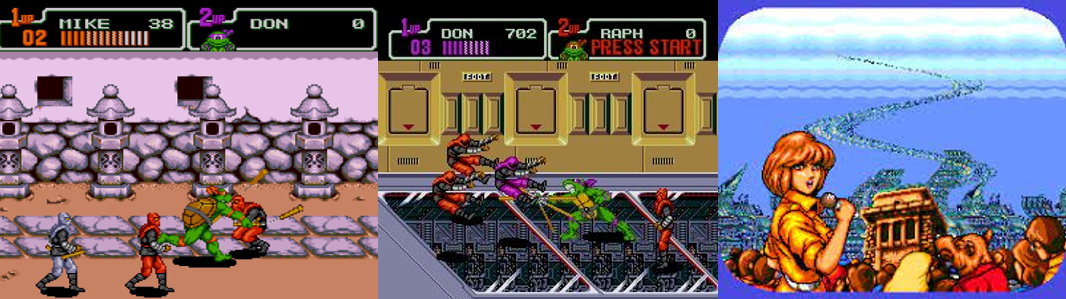
Movie Night: The Super Mario Bros. Movie

Released: 7 April 2023
Director: Aaron Horvath and Michael Jelenic
Distributor: Universal Pictures
Budget: $100 million
Stars: Chris Pratt, Anya Taylor-Joy, Jack Black, Charlie Day, Seth Rogen, and Keegan-Michael Key

The Plot:
Struggling plumber brothers Mario (Pratt) and Luigi (Day) are sucked into the magical Mushroom Kingdom, where Luigi is captured by the nefarious King of the Koopas, Bowser (Black). To rescue him, Mario must embark on a quest with Princess Peach (Joy), whose people are threatened by Bowser’s perverted designs for her.

The Background:
It didn’t take long for Nintendo’s portly plumber Mario to become a mainstream icon; there was a time when Mario’s popularity eclipsed even Mickey Mouse so it wasn’t all that surprising to see Super Mario Bros, expand into a multimedia franchise. However, while the plumber duo may have seen some success in cartoons and comics, they didn’t exactly take the world by storm when they made the jump to the silver screen. Super Mario Bros. (Morton and Jankel, 1993) wasn’t just a critical and commercial flop, it was derided by both its cast and crew, and Mario creator Shigeru Miyamoto was so disappointed by the film that Nintendo largely shied away from feature-film adaptations. Miyamoto’s position softened decades later when he believed such films had the potential to grow Nintendo’s brands and we got our first hint that a new Super Mario Bros. movie was on the cards following the November 2014 hack of Sony Pictures. After partnering with Illumination, whose animated ventures and proven critically and commercially popular, production on an all-CGI Mario movie was officially announced in November 2017. The production would push Illumination’s techniques to new heights and the filmmakers specifically aimed to make the film both cartoony and somewhat realistic so that the dangers would be taken seriously, when appropriate. Sadly, the film attracted toxic, unnecessary criticism after Chris Pratt landed the Mario role over long-term Mario voice actor Charles Martinet, though Martinet did cameo in the film and the filmmaker’s defended their decision as it tied into their desire to craft an origin story for the titular brothers. Although The Super Mario Bros. Movie has currently grossed over $445.3 million at the box office, the critical reaction has been mixed: some praised the film’s carefree presentation and narrative, the colourful visuals, and some of the performances, but others couldn’t get past their bias against Chris Pratt and criticised the simple plot and influx of fan pandering. Still, as of this writing, all involved have expressed interest in producing sequels and potential spin-offs

The Review:
Unlike the vast majority of audiences, I actually didn’t mind the first Super Mario Bros. movie; sure, it had barely anything to do with the source material but adaptation is all about change and reconfiguring media into new forms. Plus, videogame adaptations weren’t exactly commonplace back then and the medium wasn’t exactly well renowned at the time, so it made sense to try and alter the admittedly bizarre source material into something a little more accessible and mainstream. Finally, I thought it was a perfectly fun action/adventure for kids, and the whole family, with some enjoyable performances and a great visual style, but it can’t be denied that the poor reception to the film pretty much soured Nintendo on ever trying something like that again. Luckily, Mario and their other characters lived on in animated ventures and comic books but Nintendo has such a rich and diverse library of characters that it’s a shame we don’t see more feature films based on their properties; I’m still waiting for a Lord of the Rings (Jackson, 2001 to 2003) or Willow (Howard, 1988) inspired outing for the Legend of Zelda series (Various, 1986 to present) and an epic sci-fi/action film based on the Metroid games (ibid, 1986 to present). So, yes, I was very excited to hear that Nintendo were finally getting back in the cinema industry and teaming up with Illumination for an all-CGI Super Mario Bros. movie. Illumination have done some really fun films in their time and seemed like a perfect fit for the franchise, and going all CGI just makes so much more sense than doing a live-action film or even a hybrid as then there are far less restrictions on what the filmmakers can do and the gap between the source material and the movie screen is suitably shortened as the mediums are much easier to compare.

Mario’s never-say-die attitude drives him to overcome his failings and reunite with his beloved brother.

The Super Mario Bros. Movie once again has the titular brothers be depicted as blue-collar plumbers operating out of Brooklyn, New York. Having recently quit the employ of the Wrecking Crew corporation and sunk their entire life savings in building a recognisable, independent brand for themselves, the Marios are struggling to make it on their own; their colourful extended family disapproves of their decision and Mario struggles with the constant belittlement he faces for daring to dream big. In an effort to establish himself and his brother as legitimate, Mario insists that the two try and save the city from being flooded and the two are subsequently separated when they’re sucked through a mysterious pipe while venturing into the sewers. Mario is deposited into the Mushroom Kingdom, a surreal land of fungus, floating blocks, and populated almost exclusively by diminutive mushroom men like Toad (Key). The excitable Toad offers to bring Mario to the kingdom’s benevolent matriarch, Princess Peach, to help him rescue Luigi, who they theorise has almost certainly been captured by Bowser. Awestruck by the Mushroom Kingdom, Mario insists on accompanying Peach on her mission to recruit the King army from the nearby Jungle Kingdom in a bid to defend her lands from Bowser’s forces. However, while she’s excited to meet another human, Peach also questions Mario’s stature and suitability for such a mission and demands that he complete a hazardous obstacle course and get to grips with the various power-ups that are scattered throughout the land. Though Mario struggles with this, a montage is used to show him improving bit by bit and learning the jumping, fighting, and survival skills he’ll need later in the movie; crucially, though, this montage and much of Mario’s character arc is focused on his never-give-up attitude. Even when he fails time and time again or is being pummelled by a physically superior foe, Mario never quits and keeps getting back up; it’s this attitude as much as his love for his brother that pushes him to overcome the various platforming challenges set before him, take life-threatening risks when racing along Rainbow Road, and even find the courage to challenge Donkey Kong (Rogen) to a battle in order to recruit the Kong’s aid.

Surprisingly, it’s Luigi who needs rescuing and Peach leads Mario in recruiting help from the Kongs.

While Mario lands in the Mushroom Kingdom and embarks on a wacky adventure filled with fun references to the videogames, Luigi is unceremoniously spat out into the dark lands, a nightmarish landscape filled with lava and patrolled by Bowser’s forces. Unlike his bold, daring older brother, Luigi is far more cautious and resorts to running from danger rather than facing it head-on like Mario. In a surprising twist, it’s not Princess Peach who is captured by Bowser and must be rescued; it’s Luigi, who is picked up by a group of Shyguy and summarily trapped in a cage above a lava pit to be sacrificed as tribute to the Koopa King’s would-be bride. Still, despite his terror, Luigi puts up a good effort in resisting Bower’s torture, though he’s left with no choice but to give up his brother’s name when the Koopa King rips at his moustache. It’s interesting that the filmmakers chose to separate the Mario Brothers for the majority of the film; the dynamic between the two is charming and relatable and they absolutely feels like two brothers who love each other and work well together. Luigi does thankfully get some time to shine in the finale, but he doesn’t get to try out any of the power-ups Mario does and is basically a hostage for the entire film. this means that it’s Princess Peach who acts as Mario’s primary partner throughout; sure, Toad is there as well to whip up some goodies and offer his unwavering support, but it’s Peach who teaches Mario about the world and the power-ups and with whom Mario bonds over his relationship with his brother. Princess Peach is depicted as a strong, courageous, and incredible capable matriarch and fighter; she can easily conquer the obstacle course that continuously defeats Mario, makes effective use of her dress and the various power-ups in a fight, and is definitely not a damsel in distress. While I feel like we could’ve seen this and had both Mario and Luigi accompany her on her quest, there focus is still firmly on the brothers’ bond and I definitely think Luigi will have more time to shine in a potential sequel.

Mario is forced to fight Donkey Kong to sway the Kongs to Peach’s cause and net them some sweet wheels.

Mario and Toad join Princess Peach as she travels (on foot, strangely) across the land to the Jungle Kingdom. Confident that she can sway the Kongs to join her cause after Bowser decimates the Penguin Kingdom and steals the fabled “Super Star”, Peach is initially prepared to travel alone but allows Mario and Toad to accompany her after being impressed by their heart. The Jungle Kingdom sports Aztec-inspired ruins, a life-threatening series of racetracks through the treetops, and is ruled over by Cranky Kong (Fred Armisen), a cantankerous old ape who knows that he commands the greatest army in the land and initially has no interest in offering his aid. However, when he suggests that he’ll be swayed if Mario can defeat his son, Donkey Kong, in a fight, Mario doesn’t hesitate to take the challenge despite having no idea of what’s awaiting him in the arena. A natural showboat and possessing both great strength and an ego to match, Donkey Kong delights in pummelling his outclassed foe and, even when eventually trounced by Mario in his cat form, refuses to openly admit defeat or let go of his grudge against the plumber after he and the other Kongs get to work building special karts for the heroes to use to get the Bowser. However, Mario and Donkey Kong manage to build a mutual respect for each other after Mario goes out of his way to save DK’s life and the burly ape returns the favour, resulting in them fighting side by side against Bowser in the finale. Although its only briefly touched upon, there’s a surprising amount of emotional depth to the grandstanding ape; he’s riled up by the suggestion that all he has to offer is his incredible strength and he and Mario bond over their mutual desire to prove to their fathers that they’re not a joke.

The cruel and insecure Bowser wishes to use the Super Star to win over Princess Peach and rule the land.

Naturally, the film’s primary antagonist is the half-dragon, half-turtle Koopa King, Bowser. Bowser and his minions (including Koopas, Goombas, Parakoopas, Bullet Bills, Shyguys, and Piranha Plants) travel across the land on a gigantic slab of molten rock and lava and easily lay claim to the Super Star with a minimum of effort. While Kamek’s (Kevin Michael Richardson) magic and aid is of much assistance to Bowser, the Koopa King cuts an intimidating figure all on his own; alongside possessing incredible strength and surprising speed, he’s able to bring entire kingdoms to his knees with his fire breath and is not above leaving his prisoners to dangle over a lava pit or sacrificing them to prove his love to Princess Peach. Indeed, Bowser’s entire motivation for stealing the Super Star was not to harness its power for himself, but to impress Peach and convince her to marry him so that they could conquer all the lands side by side. Though he’s a cruel and merciless ruler, Bowser is deeply insecure; when he learns that Mario is accompanying the princess, he grows increasingly jealous and enraged and he’s in constant need of pep talks from Kamek and his minions to help him find the courage to propose to Peach. Bowser even takes the time to compose a ballad for his beloved “Peaches” and has no desire to destroy her kingdom unnecessarily, though he threatens to do so and kill all of her people if she doesn’t agree to marry him. Although they don’t actually meet until the film’s finale, Bowser’s hatred for Mario  is palpable since he views him not as a threat to his power, but a rival for Peach’s affections; he revels in the idea of immolating Luigi just to teach Mario a lesson and orders his troops to attack without mercy to intercept the heroes when they race along Rainbow Road. Here, Mario and the others encounter a particularly stubborn Koopa (Scott Menville) who delivers a decisive blow to the heroes by blowing up the Rainbow Road in his blue shell form, which allows all the Kongs to be captured and sees Mario and DK getting briefly swallowed up by a Maw-Maw before rocketing to Bowser’s domain to interrupt the ceremony at the film’s climax.

The Nitty-Gritty:
When I saw the first full trailer for The Super Mario Bros. Movie, I was a little worried that the film might be trying to do too much: in addition to the main plot, we have a fight between Mario and Donkey Kong, a kart race, and all these other elements being thrown at us but, thankfully, the pace, execution, and balance of these sequences is absolutely spot on. Also, the film is absolutely stuffed to the brim with Easter Eggs, references, and little background details to not just the Super Mario franchise, but other Nintendo properties as well: Mario and Luigi frequent a pizzeria themed after Punch-Out!! (Nintendo R&D3, 1987), Mario plays Kid Icarus (Nintendo R&D1/Tose, 1986) after being upset by his father (Charles Martinet), the heroes pass by a herd of Yoshis on their quest, Diddy, Chunky, and Dixie Kong cameo during the fight between DK and Mario (which also includes various references to Donkey Kong (Nintendo R&D1, 1981) and a Jumpman-themed Donkey Kong knock-off is also seen in the Punch-Out Pizzeria), and we even get a flashback showing Baby Mario and Baby Luigi (though, in my opinion, the filmmakers missed a trick by not having Wario be the bully who picks on Baby Luigi). Music and sound effects from the games are also included in the film’s soundtrack to great effect Mario and Luigi star in a hilarious and catchy ad for their plumbing services that sees them adopt comically exaggerated Italian accents, and there are numerous times when the film switches to a side-on perspective to recreate the platforming action of the videogames.

A fun-filled animated jaunt full of visual gags and references to the videogames.

The Super Mario Bros. Movie is a fun-filled action/adventure movie that’s full of visual gags, cartoonish humour, and a surprising amount of heart. The plot is simplicity at its best, but I fail to see how that’s a negative as the Super Mario games have never (or, at least, very rarely) showcased a deeper plot other than “rescue the princess”. Much of the humour comes from Mario’s struggles to adapt to the Mushroom Kingdom; he’s constantly being bashed about by the high-speed pipes, gets pummelled by Peach’s obstacle course, and is far less adept at holding onto his power-ups compared to the princess. Since he hates mushrooms, Mario is reluctant to devour the Super Mushroom but delights in being tall and super strong from its power; unfortunately, he’s so taken by this form that he falls victim to the shrinking Mini Mushroom in his fight with Donkey Kong, though he is able to make use of the cat and raccoon suits to best DK and keep Bowser’s gigantic Banzai Bill from destroying Peach’s castle. DK and Peach also get time to shine with the power-ups, making use of a Fire Flower and Ice Flower, respectively, when the wedding ceremony descends into all-out chaos. Mario’s fight with DK is a notable highlight; though overpowered and outclassed, Mario keeps getting back up and ultimately emerges victorious, leading to the Kongs building custom karts for him, Peach, and Toad. They, and the Kong army, take a shortcut along Rainbow Road to intercept Bowser and, when the Koopas give chase, we’re treated to a brief adaptation of the Mario Kart series (Various, 1992 to present) as characters toss banana peels and Koopa shells, switch to a glider and anti-gravity mode, and fire rockets at each other in a unexpectedly brutal race to the death. We even get a very brief underwater section where Mario and DK are trapped inside a Maw-Maw that, admittedly, is more there for dramatic effect and an obvious fake-out death, but it works to unite these two rivals for the finale. One last aspect I particularly enjoyed and didn’t see coming was the inclusion of the extended Mario family; since most of them delight in putting Mario down, they primarily act as a catalyst to push Mario into trying and fighting harder to prove that he’s not a joke.

Reunited and empowered by the Super Star, the Mario Brothers defeat Bowser and prove themselves heroes.

Although Mario’s victory over Donkey Kong means the Kongs agree to join Princess Peach’s fight, the ape army is denied the chance to actually fight against Boswer’s forces as they’re left stranded on Rainbow Road or locked up in cages alongside Luigi and Bowser’s other captives. To spare her people, Peach agrees to marry Bowser but this is simply a ruse to get close to him; using an Ice Flower, she’s able to temporarily freeze the Koopa King and free his captives, with Mario swooping in at the last second in his raccoon suit to save Luigi from a gruesome fate. Enraged by the betrayal and defiance, Bowser orders a gigantic Banzai Bill be fired at Peach’s castle; though Mario is able to entice the weapon away, and into a warp pipe, the explosion causes a dimensional vortex that sucks them all into the streets of Brooklyn. There, an incensed Bowser targets Mario relentlessly and briefly sends him running before he’s inspired by his own advertisement and stands alongside his brother and newfound allies to battle Bowser. I was very happy to see Mario and Luigi team up for the finale after spending most of the movie apart; it really reinforced their bond and allowed them to share the spotlight rather than simply having Mario be the one to single-handedly stand against Bowser. Thanks to Princess Peach, the reunited Mario Brothers are able to grab the Super Star, which turns out to actually be a Starman power-up rather than a Power Star; this grants them temporary invincibility and superhuman abilities, allowing them to charge through Bowser’s minions and put a beating on the Koopa King, pummelling him in submission and force-feeding a Mini Mushroom to end his threat. In the aftermath, the city celebrates its heroes, and the Mario Brothers finally earn the respect of their friends and family, however they choose to stay in the Mushroom Kingdom and help rebuild the damage caused by Bowser’s attack.

The Summary:
I had a good feeling about The Super Mario Bros. Movie right from the first announcement; each trailer just got me more excited for it as it really seemed to be a fun-filled, colourful adventure film that did justice to the source material and I still can’t get over the fact that people were more focused on unnecessarily targeting the casting, specifically Chris Pratt, than focusing on how good the film looked. You can count on one hand the number of times that the videogame cast have featured in an adaptation, so I really don’t understand the pushback against Chris Pratt, especially as he was perfectly fine in the role and his dynamic with Charlie Day went a long way to making the Mario Brothers a charismatic and relatable duo. For me, The Super Mario Bros. Movie is probably the best feature-film adaptation of a videogame (and I’m something of an expert in that field); it’s startling faithful to the source material, featuring a bevy of references and Easter Eggs for fans of the games as well as adapting the platforming action of the source material in a fun and visually engaging way. While it’s a shame that the brothers were separated throughout the film, their bond is at the heart of the story and they come together beautifully in the finale, and I loved that Princess Peach was a strong, independent character who could hold her own alongside Mario. Bowser was also a highlight; his comical buffoonery and swooning over Peach didn’t diminish his threat and it was great seeing Mario, Luigi, Toad, peach, and DK unite to stand against him. honestly, you couldn’t really ask for more from a Super Mario Bros. movie; it takes everything that made the games so popular and brings it to life as a thoroughly entertaining animated venture that’s only bolstered by the all-CGI presentation, the ideal format for these characters and their surreal adventures.

My Rating:

Rating: 5 out of 5.

Fantastic

Did you enjoy The Super Mario Bros. Movie? How do you feel it compares to the live-action film and Mario’s animated adventures? What did you think to the casting and the performances in the film? Do you agree that going all CGI was the best way to bring the source material to life? What did you think to Princess Peach having a more proactive role and would you like to see Luigi get more of the spotlight in a potential sequel? What Easter Eggs and references did you spot? Which Nintendo franchise would you most like to see get a feature-film adaptation? Whatever you think, leave a comment below or on my social media and be sure to check out my other Super Mario content on my site.