Game Corner: [Dinosaur Day]: Turok: Dinosaur Hunter (Xbox Series X)


Sixty-five million years ago, dinosaurs ruled the Earth. These massive beasts existed for about 180 million years before a cataclysmic event left them mere fossils. Fittingly, “Dinosaur Day” gives dino fans an ample opportunity to pay homage to these near-mythical titans.

Released: 28 February 2021
Originally Released: 4 March 1997
Developer: Nightdive Studios
Original Developer: Iguana Entertainment

Metacritic Scores: 85 / 8.0
Also Available For: Nintendo 64, Nintendo Switch, Nintendo Switch 2, PC (Original Release); Nintendo Switch, Nintendo Switch 2, PlayStation 4, PlayStation 5, Xbox One, Xbox Series S (Remaster)


Quick Facts:
Based on the Valiant Comics revival of Dell ComicsTurok, Son of Stone, Turok: Dinosaur Hunter came about after Acclaim Entertainment purchased Valiant in 1994. The fifteen-person team developed Turok as a first-person shooter (FPS) to showcase the power of the Nintendo 64. A critical and commercial success, Turok impressed at the time and spawned sequels and spin-offs of varying quality before being remastered for modern consoles to largely positive reviews.

Gameplay and Power-Ups:
Turok: Dinosaur Hunter is an early FPS title for the generation-defining Nintendo 64, actually the first FPS game developed for the system and, as such, set the bar for future FPS games released for the console (to the point where Turok’s control scheme was often a default or alternative for other shooters). Naturally, Turok takes a lot of inspiration from Doom (id Software, 1993) for its gameplay and controls, with  players assuming control of Tal’Set, the titular Turok (despite the original Nintendo 64 version depicting his successor, Joshua Fireseed), and journeying across eight levels (nine, if you include the hub world) to oppose the mysterious Campaigner’s plot to tear apart reality with his techno-organic army of dinosaurs and other minions. The game’s controls are entirely customisable, and I’d recommend tweaking them to your liking. For example, I set the “bindings” to have the Right Trigger attack with Turok’s current weapon, A to jump, and the Left and Right Bumpers switch weapons. I had X toggle between ammo types (where available), Y bring up the surprisingly useful wireframe map, and set the run toggle to the right directional pad. There’s no reloading in Turok, though you can tweak the settings to set whether or not you automatically switch weapons upon acquiring new ones, change the colour of the blood, toggle Turok’s head bob, and toggle various sound and graphic effects (such as draw distance and fog). Turok offers a “Training” mode for you to get accustomed to the gameplay, which mainly sees you exploring levels cutting down respawning enemies, collecting various keys, and tackling one of the worst affronts to FPS gameplay ever conceived: first-person platforming! Although this is a remaster of the classic Nintendo 64 game, Nightdive Studios haven’t implemented modern quality of life features like save states or rewinds, so you’ll still be relying on extra lives (acquired by collecting 100 Life Force points) and rare checkpoints and manual save points scattered across each level.
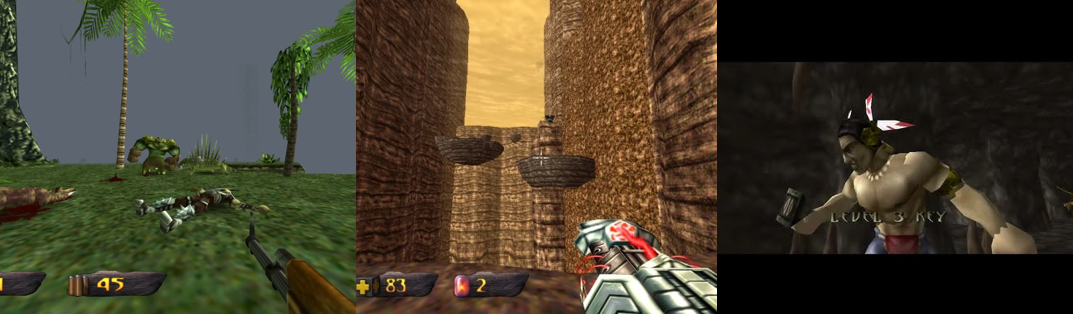
Shoot, jump, and explore to track down elusive keys in the classic but clunky FPS title.

Turok’s reasonably durable and can partially or fully recover his health with various pickups and can even permanently extend it by collecting “Mortal Wounds” that randomly drop when you kill enemies with your knife or basic arrows. “Spiritual Invincibility” temporarily makes you invincible and slows enemies, “Tek Armour” grant additional armour points, and backpacks increase how much ammo you can carry. Turok can (awkwardly) swim and climb vine walls and ladders; while he doesn’t take fall damage, he will be hurt by lava or boiling tar pits, and you lose a life if you plummet down a pit. This respawns you from your last checkpoint, though any collectibles and non-respawning enemies helpfully stay gone. Turok utilises a wide array of weapons, starting with a simple knife and a bow that fires regular and “Tek Arrows” that explode on contact. You quickly grab a pistol, a shotgun, and a fairly useless assault rifle. The automatic shotgun later became my default weapon, especially when you acquire explosive shells, while the minigun is great for shredding larger enemies. The rapid-fire pulse rifle is a far better alternative to the assault rifle, the grenade launcher is decent for blowing up enemies from a distance, and you even get a heavy-duty quad rocket launcher that’s best saved for bosses. Search around enough and you’ll find an alien weapon that fires explosive energy bursts, a shockwave cannon, and the ridiculously powerful particle cannon, though these all have very limited ammunition. Every level also hides part of the legendary “Chronoscepter”, the ultimate weapon that you’ll only complete right before the final boss and which decimates anything caught in its blast radius. Although ammo is plentiful, it’s usually best not to kill most enemies as they quickly respawn and most can just be avoided. However, there are times when you’re forced to defeat all enemies in a given area to lower barriers or raise platforms. It’s also worth noting that hazards like falls, falling boulders, and even some enemy attacks hurt your enemies, and also that some areas are rigged with flame bursts, spike pits and traps, wall lasers, and heavy cannons.
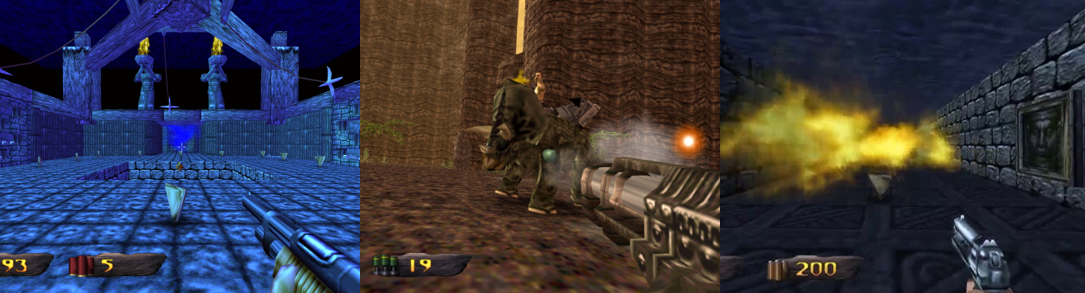
As if hazards and tough enemies weren’t bad enough, platforming becomes challenging as you progress.

Although things start fairly linear, later levels become much larger or more maze-like, which can leave you running in circles frantically searching for the right path. The map helps but it can be difficult following it when dealing with the respawning enemies. Each level contains several keys that must be found to unlock levels from the hub and these can be easily missed, meaning you must replay previous levels to hunt them down. The pause menu tracks which ones you’re missing and they’re fairly easy to spot, either being out in the open, across short jumps, or accessed via obvious alternative paths. Teleporters transport you across levels, pressure switches lower gates, raise paths, or open doors, and you must occasionally race from a switch to a door before it closes. Turok is littered with aggravating platforming challenges that start relatively safe (you’ll drop to water or a lower level if you fall and must climb back up to try again) but quickly become very tricky as you’re jumping to moving or extremely narrow platforms over lava or bottomless pits. The longer you hold the jump button, the further Turok jumps, and it can help to look down before you jump, but these platforms and columns eventually become so small that it’s very anxiety-inducing jumping to them. When on the Ruins level, you must jump to ledges so narrow they’re barely distinguishable from the rest of the environment or you must take running jumps from tiny platforms and will be frustrated by failure. The Lost Land sees you hopping to stone columns that rise and fall, making jumps difficult to judge while the Ancient City are more labyrinthine, offering higher paths and tunnels to goodies or shortcuts, and containing various doors and narrow corridors where enemies skulk around every corner. Blue portals also spawn all over, transporting you to relatively safe bonus areas where you must hop to or cross various platforms to stock up on ammo or Life Force points, though these are entirely optional.

Presentation:
I remember the original Turok. I think everyone had a copy on Nintendo 64 back in the day. It was a foggy mess whose environments popped in from the murk and your vision was largely obscured when underwater. Thankfully, this remaster fixes most of that but there’s still a lot of fog. The Treetop Village employs it as a gameplay mechanic, however, as you’re high up in villages built around giant trees, watching as gigantic Brontosauruses stomp around you. Fog also obscures much of the Ruins level to make jumps to narrow ledges or wooden platforms even more troublesome and there’s a murky haze in the Lost Land that’s explained by the volcanic activity. Surprisingly, and disappointingly, there’s no story in Turok, not even some text setting the stage. You get no in-game context behind anything, no ending beyond watching Tal’Set escape the Campaigner’s exploding citadel, and no introductory sequence beyond Tal’Set dramatically shooting an arrow at the title screen. Even the old instruction manual was light on context, which is a shame as even Doom had some text to set the scene. You rarely see Tal’Set during gameplay unless you mess up, then you’re treated to various fun death animations (if enabled), but you do hear him grunt and scream when attacked and loudly proclaim “I am Turok!” when you earn an extra life. Turok’s music is a largely forgettable mixture of tribal sounds, ambient noises, and thumping bass. I did like the growls and screeches of unseen animals lurking in the jungle and appreciated the sounds of enemies teleporting in, which kept me moving at a steady (if often frantic) pace. You’ll often see wild boar, deer, and monkeys wandering levels that can be attacked for extra health, fish in the water, and blood will splatter with each attack. Enemies have some fun death animations, like slowly choking to death as arterial spray juts from the necks or blowing to pieces when you fire grenades at their bodies.
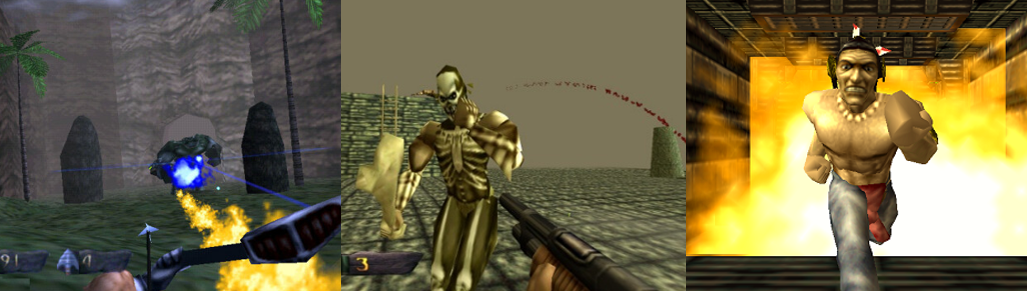
Sadly, the lack of story and visual variety drags the game down and the visuals remain as murky as ever.

Sadly, there’s not much visual variety to Turok. You start in the hub, which is a dense, linear jungle area consisting of various crumbling ruins, water pools, narrow canyons, and bottomless spits. This leads directly into the first level, the Jungle, which is mostly the same and establishes that you must find keys, press switches, and defeat waves of respawning enemies. The Jungle introduces log bridges, abandoned settlements, and that the Tek Arrows can blow up certain areas. You’ll venture into narrow, twisting caverns, wade or dive into water, and hop across some simple gaps as a taste for things to come. The Ancient City takes the jungle assets and muddies them up, placing more emphasis on vaguely Aztec ruins, temples, and structures made from dilapidated stone. The Ruins up the emphasis on platform as the level is based almost entirely around a cliffside area, with twisting log platforms winding around stone columns, narrow rope bridges threaten to drop you to your death, a maze of pillars, and various waterfalls and flooded areas. When in the Catacombs, things become more restrictive and maze-like as you avoid boiling tar and press switches to open various doors, dodging blade gears, raiding tombs, and being surprised when the brutish Pur-Lins burst through the stone walls. This ancient tomb also sees stone panels breathe fire at you, has you climbing blocky walls, and sees you pressing a specific switch to drain water and open a new area. The Treetop Village was surprisingly impressive, despite the fog, as you’re suspended high above, fighting past wooden huts, making numerous jumps to narrow cliff ledges, and battling waves of enemies against a thunderstorm backdrop. The Lost Land is a largely barren hellscape full of volcanos, lava pits, and the Campaigner’s heavily guarded, futuristic citadel. This level features some of the trickiest platforming as you hop to floating platforms and to extremely narrow columns, and narrow corridors within the highly advanced citadel that represents the game’s busiest location. It all gets a bit samey, however, as the same jungle environments, caverns, cliffsides, and ruins and recycled across each area, meaning many levels lack a strong visual identity.

Enemies and Bosses:
The Campaigner’s forces are many and varied, ranging from humanoid to dinosaur to alien warriors. You’ll encounter aggressive natives who wield knifes, pistols, spears, and shotguns, with some tossing grenades or unloading with assault rifles. These are upgraded to cyborgs in the Final Confrontation, with their shotgun-wielding commanders being notably durable. Demonic humanoids also appear, with their priests being particularly annoying as they launch fireballs and lightning and can take a lot of shots to put down, while their skeleton-painted minions spit darts. Acid-spitting, man-eating plants later appear, extremely annoying beetles and gremlin-like Lurkers hop around the various caverns, and giant prehistoric dragonflies flitter about in the skies of the Lost Land. You’ll also encounter giant grabs in the fetid sewers of the Campaigner’s citadel, giant burrowing sandworms, and heavily armoured battle robots who boast minigun arms and quad rocket launchers. The hulking Pur-Lins are smartly positioned like mini bosses, dropping in to guard keys, switches, or gates. They also produce a shockwave, launch fireballs, and tumble into you when downed so it’s best to keep your distance, especially if you’re near a pit. Various cybernetically enhanced, frog-like aliens also appear, firing plasma shots, flying with a jetpack, and occasionally initiating a self-destruct. You’ll also encounter voracious Utahraptors who bite, swipe, and jump kick you, slower Dimetrodons wander about snapping at your heels, and enemies will ride Triceratopses in the Lost Land. Like later Dimetrodons and Utahraptors, these are cybernetically enhanced, boasting miniguns and grenade launchers, which can make these usually simple (if annoying) enemies much more formidable as they’re packing serious heat!
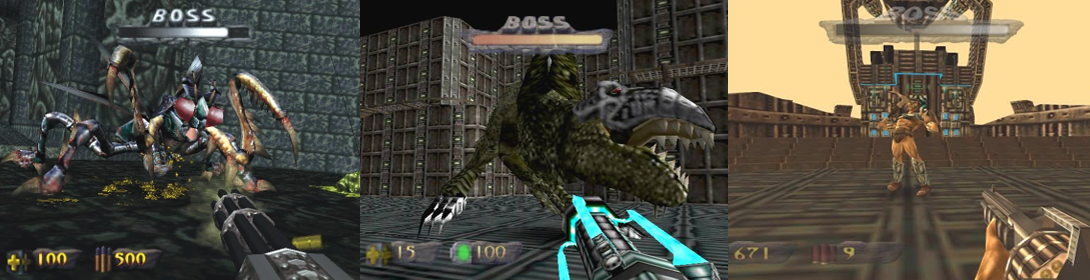
The gigantic and powerful bosses are impressive but sadly in short number.

Although Turok boasts eight levels, there are only five bosses to contend with so the battle robots, Pur-Lins, and Triceratopses often act as mid- or end guardians. When you do fight bosses, they boast a health bar and you respawn in the boss arena if you die, which is super helpful. You may encounter some bosses out of order depending on what keys you have, but you’ll most likely fight the Longhunter first. This is a two-stage battle that first sees you attacked by two Humvees that race around firing machine guns and rockets and ram into you if you get too close. Once they’re gone, the Longhunter rolls about firing plasma shots and tossing a boomerang-like razor blade that’s tricky to avoid. Oddly, the gigantic Mantis was a far easier fight despite it being much larger and having better attacks. The Mantis leaps about, destroying walls and spitting corrosive acid that lingers for a short time. It also swipes with its bladed arms and eventually flies about dropping gunk or scrambling about on the ceiling and firing explosive shots, though I did pretty good with the minigun and pulse rifle. After clearing out the aliens, cyborgs, and hulking robots littered throughout the Campaigner’s futuristic citadel, players area teleported to a circular arena and fight a titanic, cybernetically enhanced Tyrannosaurs rex named “Thunder”. A fast, huge enemy, Thunder quickly stomps towards you and will decimate your health if it bites you. If you stay back, Thunder produces a shockwave off a leap and breathes fire, eventually sweeping the arena with is laser eye as your attacks destroy its mechanical parts. Thankfully, you’re given a save point and loads of gear prior to battling the Campaigner, who frantically teleports about, hides behind an energy shield, and unleashes a barrage of enemy projectiles. He also attacks with an axe-like club and can restrict your more powerful weapons if they’re used, though the Chronoscepter drains huge chunk of his help if you have it and if you can get a clear shot.

Additional Features:
There are a paltry ten Achievements up for grabs in this remaster of Turok, with one being awarded each time you defeat a boss and when you complete the game on any difficulty. You’ll get another if you collect enough Mortal Wounds, another for killing three enemies at once with the knife (I recommended doing this against the beetles), and another for clearing the “Training” mode and assembling the Chronoscepter. Although the game has four difficulty modes, you’re better off sticking to “Easy” unless you really need a greater challenge, and there’s little point in jumping into the blue bonus portals unless you’re really low on resources. There are a bunch of secret areas to discover, which generally yield additional health or weapons, and finding them all grants you another Achievement. Though there’s no multiplayer option, there is a time trial mode that gifts another Achievement if you beat it fast enough. You can input a bunch of cheat codes to gain infinite lives, all weapons and keys, big head mode, invincibility, and more, however they disable the Achievements.

Final Thoughts:
Like I said, it seemed as though everyone owned Turok: Dinosaur Hunter back in the day, and that includes me. However, this is the first time I’ve ever legitimately beaten the game much less played through it from start to finish. I used to just mess around with cheats, blowing enemies up with the Chronoscepter and skipping to the bosses, so it was nice to finally sit down and play it. Sadly, Turok hasn’t aged well, despite the graphical and performance enhancements made to this remaster. It’s a very barebones FPS, even with the emphasis on exploration to find all the keys and Chronoscepter pieces. You’ll mostly see the same enemies in every level, the same assets recycled into tougher challenges, and repeat the same gameplay loop of shooting, pressing switches, and teleporting about until you reach the end. The game is disappointingly light on story, even for an FPS title or an early Nintendo 64 release, and I found myself holding back from using most of the heavier weapons as I wanted to save them for the bosses, only for bosses to be extremely rare and such bullet sponges that you quickly exhaust your best ammo. I really liked the cybernetic dinosaurs and wish these had been more prominent, with less humanoid enemies and more prehistoric or alien enemies to lean into the game’s unique setting. The environments also really needed more visual variety. The jungle setting and Aztec ruins are fine for the first two levels, and I loved the atmosphere of the Treetop Village, but the futuristic, alien aesthetic should’ve been incorporated more prominently, perhaps with crashed alien craft or outposts set up by the Campaigner in each area. The lack of multiplayer is a surprising omission given how popular “Deathmatches” were back then and the focus on FPS platforming really drags Turok down. It’s a fairly unique gimmick, for sure, but FPS platforming is never fun and some of the jumps are ridiculously finnicky and frustrating. Therefore, while Turok: Dinosaur Hunter may be a Nintendo 64 classic and have a place in the history books, it’s largely inferior to other FPS titles from yesteryear even with its bizarre enemies and setting.

My Rating:

Rating: 2 out of 5.

Could Be Better

Did you own Turok: Dinosaur Hunter on the Nintendo 64 back in the day or was this your first time discovering it? Did you ever read the Valiant comics? Were you also annoyed by the finnicky, first-person platforming? Did you also find the levels lacking in visual variety? Did you ever construct the Chronoscepter and defeat the Campaigner? Which Turok videogame is your favourite and how are you celebrating Dinosaur Day this year? Whatever your thoughts on Turok: Dinosaur Hunter, and dinosaurs in general, leave them below and donate to my Ko-Fi if you want to see more Turok content.

Movie Night [Dinosaur Day]: Jurassic World


Sixty-five million years ago, dinosaurs ruled the Earth. These massive beasts existed for about 180 million years before a cataclysmic event left them mere fossils. Fittingly, “Dinosaur Day” gives dino fans an ample opportunity to pay homage to these near-mythical titans.


Released: 12 June 2015
Director: Colin Trevorrow
Distributor: Universal Pictures
Budget: $150 to 215 million
Stars: Chris Pratt, Bryce Dallas Howard, Ty Simpkins, Nick Robinson, Vincent D’Onofrio, and Irrfan Khan

The Plot:
Brothers Zach and Gray Mitchell (Robinson and Simpkins) visit Jurassic World, an island theme park populated by dinosaurs. However, their workaholic aunt, Claire Dearing (Howard), is soon relying on unruly Velociraptor trainer Owen Grady (Pratt) when a genetically engineered dinosaur runs amok.

The Background:
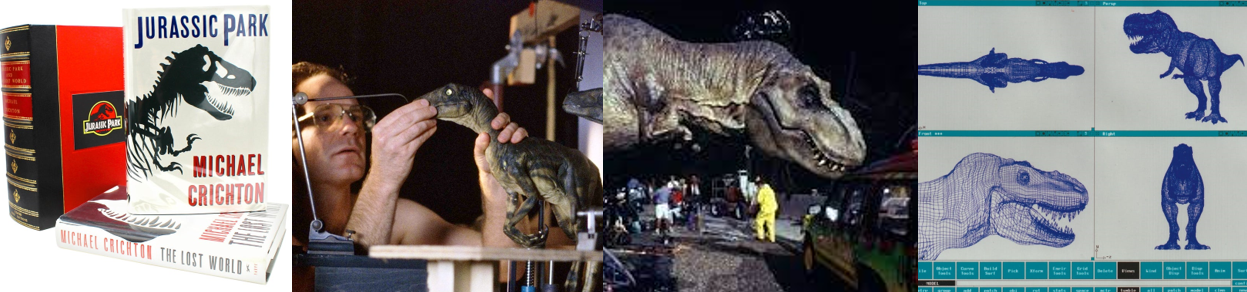
Legendary director Steven Spielberg and special effects wizards Stan Winston, Phil Tippett, and Dennis Muren turned Michael Crichton’s bestselling Jurassic Park (ibid, 1990) into a pioneering blockbuster back in 1993. Although Jurassic Park made over $1.030 billion and received widespread positive reviews, Crichton and Spielberg were reluctant to work on a sequel. The Lost World: Jurassic Park (Spielberg, 1997) may have broken box office records but it garnered mixed reviews and, feeling he failed to match expectations, Spielberg passed on Jurassic Park III (Johnson, 2001), the lowest-grossing and least popular of the franchise. Development of a fourth movie can be traced back to 2001 and initial ideas involved dinosaurs migrating to the mainland and, bizarrely, genetically engineered human-dinosaur mercenaries. This evolved into a character who would train dinosaurs and, eventually, Owen Grady. Following numerous failed proposals, the writers turned to both Spielberg and Crichton’s The Lost World novel for further inspiration and references to the two sequels were downplayed. Colin Trevorrow was hired to direct, Stan Winston’s Legacy Effects studio was brought in to develop the animatronic dinosaurs, and Industrial Light & Magic handled the CGI. With a worldwide box office of $1.671 billionJurassic World was a major hit and successfully revitalised the franchise, leading to two more sequels over the next seven years. The mould was further broken with the film’s largely positive critical reception. Reviews praised the exciting plot, the magnetic performances, and the natural evolution of the original concept. Spielberg and Jurassic Park star Sam Neill also praised the film, though it did draw some criticism for its unnecessary violence against women and its narrative similarity to Deep Blue Sea (Harlin, 1999).

The Review:
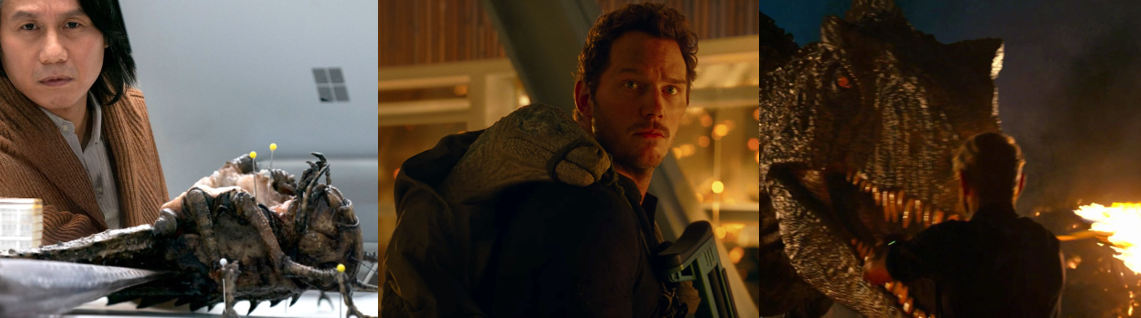
It’s been some years since John Hammond (Richard Attenborough) first dreamed up the idea of Jurassic Park. By employing the services of arrogant geneticist Doctor Henry Wu (BD Wong), Hammond created an awe-inspiring theme park populated by rides, gift shops, and, obviously, genetically recreated dinosaurs. Of course, Jurassic Park proved to be a disaster; the Isla Nubar theme park was left to rot and the remaining dinosaurs were abandoned to die from “lysine deficiency”. Although Jurassic World plays it fast and loose with references to the previous sequels, it begins with Hammond’s dream of a dinosaur theme park finally made a reality. Having been bequeathed ownership of InGen and all its assets, including the park and Hammond’s ideals, billionaire tycoon Simon Masrani (Khan) successfully brought Jurassic Park to life with Jurassic World, an expansive and fully-functional corporate sponsored theme park literally built on the bones of the original. Children of all ages flock to Isla Nubar to see the prehistoric creatures roaming the forests and wilds of the island, petting and riding baby Triceratops and other herbivores like they were lambs, watching daily performances from the titanic Mosasaurus, and freely exploring herds of dinosaurs while learning from Jimmy Fallon (of all people) in the park’s advanced gyrospheres. An eccentric businessman who prefers flying helicopters and wowing visitors with bigger, better dinosaurs, Masrani is notably hands-off regarding the park’s day-to-day functionality. He isn’t overly concerned with the bottom line since he’d rather everyone, humans and dinosaurs alike, enjoy the spectacle, and therefore mindlessly orders bigger, “cooler” attractions from Dr. Wu. Accordingly, it’s up to workaholic Claire to oversee Jurassic World and make sure everything’s running smoothly from her control room. Aided by underappreciated Lowery Cruthers (Jake Johnson) and his unrequited crush, Vivian (Lauren Lapkus), Claire treats her job very seriously but also very callously. She isn’t concerned with the welfare of the dinosaurs or whether the guests are enjoying themselves. All she cares about is increasing profits, gaining additional sponsorship, and keeping everything running like clockwork.

Tight-ass Claire is forced to rely on others and realise what really matters when she loses control.

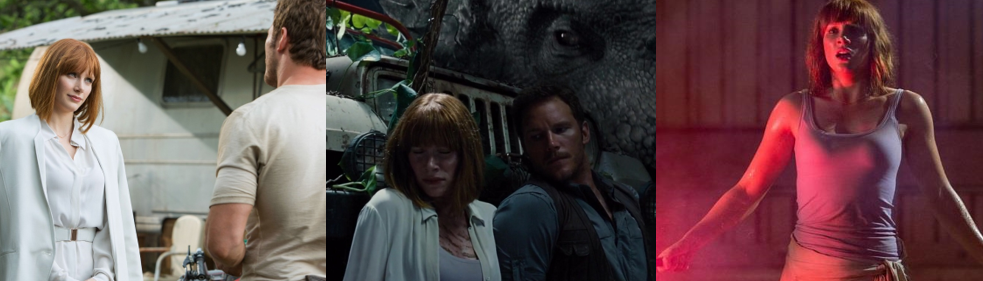
This means that, while she seems happy to see her nephews, Claire has no time to spare spending time with them and barely remembers their ages or what they look like when they ditch her overwhelmed assistant, Zara (Katie McGrath), in search of better, more exciting adventures. Claire’s noticeably uncomfortable in almost every social situation: she focuses on the numbers and practical matters, disregarding emotions and animal intelligence. Since Masrani ordered Dr. Wu to cook up a fantastic new attraction, Claire’s primary goal is securing sponsorship deals for the Indominus rex, a patchwork hybrid of numerous dinosaurs that Masrani hopes with “give […] parents nightmares” and reinvigorate ticket sales. Though impressed by the monster, Masrani requests that Claire ask their resident ex-Navy Velociraptor handler, Owen, to inspect the Indominus paddock and give his expert opinion. It’s through interactions with Owen that we see just how maladjusted Claire is: she brought an itinerary to their one disastrous date and is obsessed with being in control of every situation. She’s therefore as ignorant to the true threat the Indominus poses as she is to the feelings of others and the welfare of the park’s dinosaurs, which she constantly refers to as “assets” and “it” since they’re just numbers on a spreadsheet. When the Indominus escapes, Claire disregards Owen’s warnings and confidently deploys the Asset Containment Unit (ACU), only to be stunned when they’re systematically slaughtered. When Owen advises an evacuation of the park, Claire’s more concerned with their reputation than anyone’s safety and it takes a frantic call from her sister, Karen Mitchell (Judy Greer), and the suffering of the injured guests for Claire to finally realise the gravity of the situation. Her and Owen couldn’t be more different: where he’s sensitive and seasoned, she’s largely naïve and incompetent, especially regarding tracking and understanding dinosaurs. Owen frequently chastises her tight-assed demeanour and encourages her to just let loose, which eventually sees her defiantly shed her corporate outfit. She even saves Owen from a Dimorphodon attack and puts herself at risk to lure out the Tyrannosaurus rex in the finale…and all while wearing high-heels! Claire also prioritises Zach and Gray’s safety by the third act and is actively appalled by InGen’s head of security, Vic Hoskins (D’Onofrio), and his obsession with weaponizing Owens ‘raptors.

Zach and Gray must brave the park’s dinosaurs and draw strength from each other.

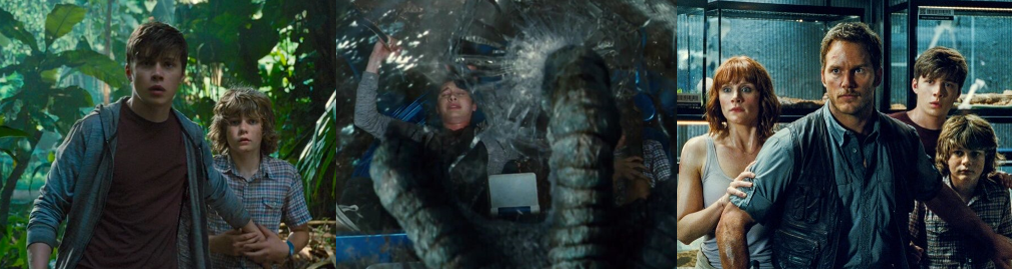
Much of Jurassic World focuses on Zach and Gray, two brothers with very different personalities. While Gray is younger and far more energetic, boasting an encyclopaedic knowledge of dinosaurs, Zach is sullen and moody and more concerned with staring at attractive girls. The two have been shipped to Jurassic World to see the awesome attractions and be with their aunt, only to be abandoned by Claire and left with a glorified babysitter, which only furthers their individual responses to their parents’ ongoing issues. While Gray is distraught at the idea of his parents getting a divorce, Zach hides behind an angsty bravado and is initially aggravated by his little brother’s exuberance, preferring to stare at his phone rather than dinosaurs. His mood lifts upon seeing the Mosasaurus and he encourages Gray to veer off when exploring in the gyrospheres, ignoring warnings to return to safety and stumbling upon the overgrown remains of the original park. Together, they get an old Jurassic Park jeep running and are stalked by the Indominus, eventually reuniting with Claire, who then makes them her top priority, and being immediately amazed by the charismatic Owen, who fends off the Pteranodon and Dimorphodon assault. While Zach doesn’t make a great first impression, being every moody teen you’ve ever seen, he soon shows a softer side and actively reassures and protects his little brother, recognising the danger and the trauma Gray’s feeling at both their personal and current situation. To be fair, Gray is irritating at times, constantly running around and babbling facts, but he embodies the excitement and wonder that Jurassic World elicits in its target audience. Unlike the kids from the first movie, who find a way to be useful by the film’s climax, Zach and Gray are mainly here to be put in peril and kept safe, but they go a long way to humanising Claire and showing the amusing dichotomy of Jurassic World. It’s amazing, yes, but there are some who are no longer impressed by genetically recreated dinosaurs and who demand “more teeth”.

Charismatic Owen impresses with his bad-ass attitude and ‘raptor buddies.

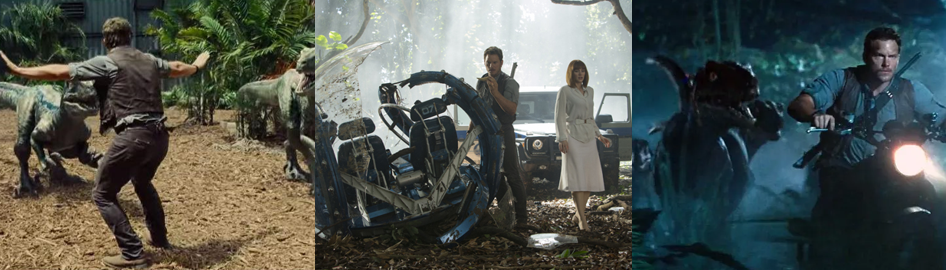
Luckily for Claire, Zach, and Gray, Owen is on hand to immediately recognise the potential and current dangers posed by the dinosaurs and to take charge of every situation. An ex-Navy veteran, Owen works with Barry Sembène (Omar Sy) to tame a pack of Velociraptors (of whom “Blue” is the favourite and most intelligent) to follow simple directions and commands. Unlike Claire, Owen fully understands and respects an animal’s intellect and needs, allowing him to subdue the ‘raptors as their “Alpha”. His skill impresses Hoskins, who believes this proves the creatures could be deployed as living weapons, despite Owen very emphatically stating that his relationship with the ‘raptors is tenuous. Though attracted to Claire and eager for her to stop being so uptight, Owen constantly clashes with her since she believes she has full control over every situation, meaning she doesn’t understand how dangerous and intelligent the Indominus is. Owen’s often at a disadvantage since Claire stubbornly refuses to divulge the exact genetic makeup of the Indominus, leading to many deaths (much to his anger) andhim temporarily losing favour with his ‘raptors since the Indominus turns out to have ‘raptor DNA. Owen also vehemently objects to Hoskins’ desire to employ the ‘rapors and a scaled down Indominus as military assets, only agreeing to his insane plan to have the ‘raptors hunt down the Indominus because they have no other choice. Hoskins sees Owen’s relationship with the ‘raptors and mistakenly, arrogantly, believes the creatures are tamed to be on “the same side” as him. Thus, he vastly underestimates the aggressive creatures and it costs him dearly, whereas Owen’s bond with Blue allows him to reaffirm his status as the ‘raptors’ Alpha by the finale. Unlike Claire, who thinks only about the park’s profits and reputation, Owen is in the business of saving lives. His demands to pull the ACU out are ignored, leading to their wholesale slaughter, and he actively braves danger to rescue Zach and Gray while also trying to keep his ‘raptors alive. The only exception to this rule is the Indominus, a creature Owen sees as an abomination that needs to be taken down as quickly as possible. He’s visibly distraught when the Indominus kills for sport and horrified by the reckless mad science used to create it, which practically guaranteed that it would endanger others.

The Nitty-Gritty:
It was amazing to see a fully functioning Jurassic Park onscreen, which added something new to the Jurassic formula. While Jurassic World touches upon many of the same themes as its predecessors (the moral debate of genetically recreating dinosaurs, discussions and depictions of nature vs. science, and dinosaurs going on a rampage), this had never been tackled in a fully populated theme park before. I loved how everyone accepted Jurassic World and flocked to see its attractions like it’s Disney World. While Owen and Masrani agree that dinosaurs are attractive enough, Claire and the Board disagree and constantly push for newer assets to draw in more visitors, even if it means building their own dinosaur. It’s an interesting position to take since Jurassic World is seen to be thriving; everyone there is having a great time and there’s no sense that they need anything more. This truly is John Hammond’s dream come to life, with dinosaurs performing shows and rides that take visitors into the dinosaur’s territory, though fully protected by seemingly impenetrable gyrospheres. Of course, just wowing the crowd isn’t enough, not for Claire and her bottom line and certainly not for Hoskins. I’ve always hated the idea of weaponizing dinosaurs; it seems like such a stupid thing to do, one guaranteed to backfire, and Owen echoes these sentiments. It’s outrageous to someone as seasoned as Hoskins would think dropping Velociraptors behind enemy lines would end well for anyone and it’s very satisfying seeing him get his comeuppance. It’s sad that so many lives are lost due to people disregarding Owen’s warnings, but it’s a harsh lesson about the reality of dealing with highly intelligent and aggressive predators. The Indominus goes on a slaughter, devouring humans and massacring an Apatosaurus herd simply to prove its dominance, and only Owen recognised its threat (sight unseen, I might add) since Masrani and Claire only cared about scaring and profiting from visitors, respectively. Jurassic World also reiterates the pseudo-science of its dinosaurs by bringing back Dr. Wu, an arrogant and selfish scientist who explicitly states that his dinosaurs have always been genetic monsters rather than 1:1 recreations. Dr. Wu also impassively reacts to the Indomonis’ rampage and various abilities since he was simply following Massani’s foolish demand for more awesome theme park attractions.

In a land where dinosaurs are theme park attractions, the Indominus rex reigns supreme.

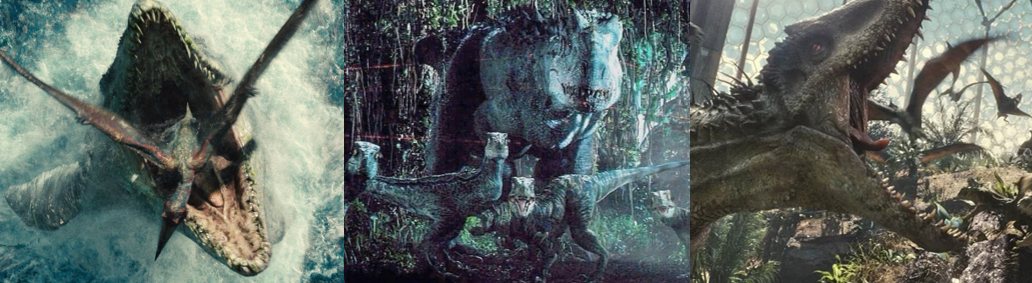
While Jurassic World stays close to the look and depiction of dinosaurs from the previous films, eschewing feathers and other scientific considerations, it does showcase a few new dinosaurs. The baby Triceratops were cute (though somewhat horrific as they’re resigned to a life of being manhandled by children) and I liked the Pteranodon and Dimorphodon attack. This is precipitated by the Indominus breaching their glass aviary and Masrani fatally crashing his helicopter into the structure, leading the flock of the ravenous, bat-like dinosaurs to cause mass panic. It was also cool to finally see an aquatic dinosaur; the Mosasaurus is initially introduced much like an orca whale, performing tricks and taking a subtle jab at Jaws (Spielberg, 1975) by devouring a Great White Shark. Naturally, the Velociraptors continue to be depicted as the most intelligent dinosaurs, though now somewhat tamed thanks to Owen. Mischievous and aggressive pack hunters, the ‘raptors obey Owen out of mutual respect but even he can’t turn his back on them and must be constantly on guard to admonish and reward them, as required. Hoskins sees unlimited potential in the creatures and relishes deploying them to hunt the Indominus, fitting them with night vision headsets and seeing them run alongside Owen’s motorcycle. Of course, the ‘raptors become a very real and horrifying threat when they’re swayed by the Indominus, leading Owen to put his knowledge to safeguarding others until he reasserts himself as the Alpha. Unsurprisingly, the Indominus rex is the star of the show here. Purposely portrayed as an exaggerated and ridiculous monster of a creature, the Indominus is like what you’d get if you asked a child to design their own dinosaur. It’s massive and aggressive like the T. rex, can camouflage and even mask its heat signature, and is as intelligent and swift as a ‘raptor, clawing out its tracking device, setting traps, and hunting for sport. It boasts massive, talon-like hands to grab and squeeze prey, easily devours humans whole, can breach the gyrosphere’s hull, and is largely immune to gunfire and even heavy explosives thanks to its super-tough hide.

After a big, brutal dino battle, the Indominus is bested and Claire learns to let loose a little.

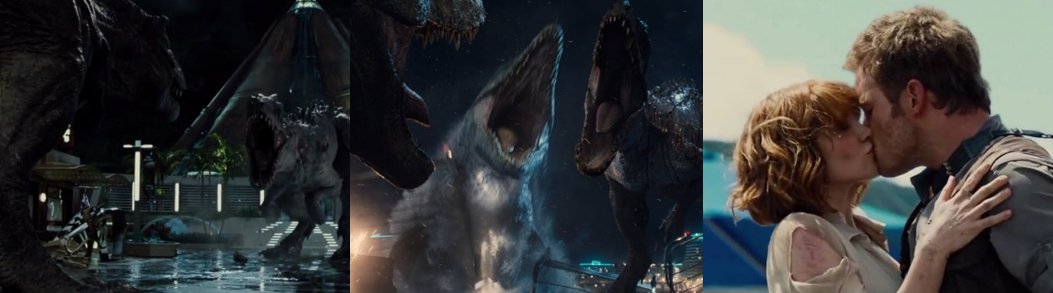
Although Jurassic World is in complete disarray due to many of the dinosaurs being loose, the primary concern of everyone (including Hoskins) is the Indominus rex, whose rampage easily made Jurassic World the goriest of the films at the time. People are swallowed, bit in two, trampled, and crushed by its sheer, savage power, to say nothing of the dinosaurs it mauls simply for fun and Zara’s unnecessarily horrific death. After getting Zach and Gray to safety, Owen reluctantly leads the ‘raptors against the Indominus but is forced to flee when they switch their allegiance. Although Hoskins is killed by “Delta”, Dr. Wu safely escapes reprisals (and the island) with his research intact so that he can continue working on refining the Indominus rex concept. With the park’s visitors either safely evacuated or awaiting rescue, Owen and the others find their path to the docks blocked by the raging Indominus. Luckily, Owen restores his bond with Blue and the remaining ‘raptors leap to their defence; however, Gray calculates that the dinosaurs won’t stand a chance against the monstrous abomination. Thus, Claire steps up and has Lowrey release the aged T. rex (the same one from Jurassic Park, judging by its scars) and lures it to the Indominus for a quasi-Kaiju finale! Unlike the disappointing fight between the T. rex and the Spinosaurus, this is a brutal and violent clash that sees the two chomp on each other’s necks, slash great gashes in each other’s hides, and crash through the park’s buildings. It’s a fantastic visual metaphor for nature literally tearing down corporate greed and the two don’t hold back, being evenly matched at times in terms of power and ferocity. That is until Blue enters the fray and leaps to the T. rex’s aid, clambering onto the Indominus and causing it to stagger towards the edge of the Mosasaurus tank. Wounded and exhausted and with its two rivals closing in, the Indominus prepares to continue the fight (and, honestly, probably would’ve won) when it is suddenly set upon by the Mosasaurus, which drags it underwater and ends its threat. In the aftermath, the T. rex and Blue part as mutual allies and they (alongside the other dinosaurs) reclaim Isla Nubar. Though shaken by their experiences, Zach and Gray’s bond is strengthened and they’re tearfully reunited with their parents. Claire realises the error of her ways and apologises to her sister, before seemingly being ready to rekindle her relationship with Owen, who reluctantly allowed Blue to return to the wild where she belongs.

The Summary:
I was sceptical when Jurassic World was first announced. While I can understand the idea of doing at least one Jurassic Park sequel, The Lost World and Jurassic Park III failed to capture the magic of the original movie and I figured it was better to leave it lie. However, Jurassic World was just the shot in the arm the franchise needed. As a legacy sequel and part re-quel, the film does a great job of hitting upon the familiar story beats of the franchise while delivering something fresh and new: namely, a fully operational dinosaur theme park. This alone was an inspired idea and I loved the parallels to Disney World, the juxtaposition of wanting to maximise profits while also aweing visitors, and the idea that the world has accepted that dinosaurs are a thing now. Jurassic World certainly impresses with its many visual effects, which still hold up today and are largely on par with Jurassic Park’s. It’s helped that animatronics and practical effects are also employed wherever possible, but the scale of the chaos is beautifully brought to life here and more than makes up for the previous two sequels. While Claire and the kids could be annoying at times, that was the point: Claire’s character arc was learning that she can’t control nature and atoning for being such a workaholic and neglecting the things that matter, and the entire experience was designed to bring Zach and Gray closer together. Chris Pratt is such a magnetic presence here; Owen oozes cool, being both sensitive and bad-ass and stealing the limelight as the pro-active voice of reason. I really enjoyed his relationship with the Velociraptors and how they were recast as good girls (or, at least, anti-heroes), giving us familiar ‘raptor action but with a twist since they’re largely on “our side”. The Indominus rex was a ludicrous monster in all the right ways; its bevy of abilities and sheer ferocity make it the stuff of nightmares and I loved how this one abomination was enough to threaten the entire island. The last-minute return of the T. rex for an awesome dinosaur fight was spectacular as well and set a new standard for the franchise. I liked this film more than I expected when I first saw it and it’s stood the test of time since then, easily being the second-best film in the franchise after the first, the best of the sequels, and the best of the second trilogy.

My Rating:

Rating: 4 out of 5.

Great Stuff

Were you impressed with Jurassic World? Were you also sceptical of revisiting the franchise at the time? What did you think to Owen’s characterisation, his relationship with Claire, and his taming of Velociraptors? Were you glad to see a fully functioning dinosaur theme park at last? What did you think to the Indominus rex and its many abilities? Which of Jurassic Park’s sequels is your favourite and how are you celebrating Dinosaur Day this year? Whatever your thoughts on Jurassic World, and dinosaurs in general, leave them below and go check out my other dinosaur content on the site.

Movie Night [Dinosaur Day]: Jurassic Park III


Sixty-five million years ago, dinosaurs ruled the Earth. These massive beasts existed for about 180 million years and came in all shapes and sizes, before finally going extinct following a cataclysmic event that forever changed our world and rendered these creatures mere fossils to be discovered and studied. Fittingly, “Dinosaur Day” is actually celebrated twice a year, giving dino fans the world over ample opportunities to pay homage to this near-mythical titans.


Released: 18 July 2001
Director: Joe Johnston
Distributor: Universal Pictures
Budget: $93 million
Stars: Sam Neill, William H. Macy, Téa Leoni, Trevor Morgan, Alessandro Nivola, and Laura Dern

The Plot:
When Paul (Macy) and Amanda Kirby’s (Leoni) son, Eric (Morgan), is stranded on Isla Sorna, the estranged couple enlist Doctor Alan Grant (Neill) to help them brave the genetically resurrected dinosaurs that reside there and rescue him.

The Background:
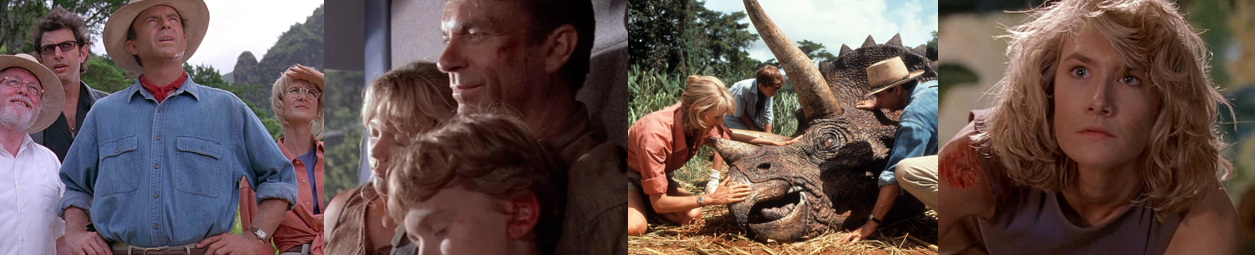
In 1993, legendary director Steven Spielberg teamed up with special effects wizards Stan Winston, Phil Tippett, and Dennis Muren to turn Michael Crichton’s bestselling Jurassic Park (ibid, 1990) into a pioneering blockbuster. Despite grossing over $1.030 billion at the box office and overwhelmingly positive reviews, both Crichton and Spielberg were reluctant to work on sequel. Ultimately, while The Lost World: Jurassic Park (ibid, 1997) broke box office records, it was met with mixed reviews and even Spielberg believed it failed to match expectations. Thus, he passed the director’s chair to his friend Joe Johnston since he felt the series needed fresh blood behind the camera. Initial ideas to have Dr. Alan Grant stranded on a dinosaur-infested island were scrapped, as was a sequence involving a motorcycle chase against a pack of Velociraptors, but the idea of characters being marooned on the island continued to persist. Star Sam Neill eagerly signed on, believing he could improve on his original performance, and Stan Winston and Industrial Light & Magic returned to provide the dinosaur effects. Various versions of the film’s newest dinosaur, the Spinosaurus, were created; it was purposely chosen as a more horrifying counterpart to the returning Tyrannosaurs rex and was so powerful that it tore the animatronic T. rex’s head off! Although Spielberg afforded Johnston complete creative freedom, he had a chair reserved for him on set and insisted that Pteranodons were included after the were cut from the last two films. With a box office gross just shy of $370 million, Jurassic Park III became the lowest-grossing film in the franchise and was subjected to near unanimous negative reviews that criticised the redundant narrative, muddled tone, and ridiculous moments. In time, Jurassic Park III has been re-evaluated and come to be regarded as the black sheep of the franchise, but this was far from the end for the series, which made a dramatic comeback in 2015 that (more or less) successfully revived the franchise.

The Review:
I think a lot of us take for granted just how big Jurassic Park was when it first released; undeniably, the film redefined what a modern blockbuster could be and brought cutting-edge CGI effects and animatronics to the forefront of cinema, to say nothing of the wave of “Dinomania” it unleashed. Although I have no love for the book or its literary follow-up, I, like pretty much my entire generation, was captivated by Jurassic Park and much of this enthusiasm meant that I was overly generous towards the sequel movie for the longest time. It made sense: I liked Jurassic Park, I liked Jeff Goldblum, so of course I had to like The Lost World. Unfortunately, time has not been kind to The Lost World, which fumbled in areas where the first film succeeded, but I definitely think that it pretty much tapped out the appeal and reach of the concept, especially once it showed dinosaurs in the outside world. All this is to say that I’ve always been disappointed by Jurassic Park III; sure, it features some new dinosaurs and even recycles sequences from the book into its content, but there’s a reason why it’s the shortest and most universally disliked of the franchise. In a word, the film is just unnecessary, and offers very little to entice fans of the original back, to the point where you may as well just watch Jurassic Park three times and you’d probably get more enjoyment than suffering through the surprisingly disappointing follow-ups.

Grant is horrified to find he’s been duped into fighting off his beloved dinosaurs once again.

The first indication that we’re simply retreading old ground is that the film immediately returns to Isla Sorna and the majority of it takes place in this setting. It makes sense; the unfamiliarity of an isolated island adds to the wonder and danger of the franchise, but we’d seen everything this setting could offer in the last two movies and Jurassic Park III really could’ve done with trying something different, especially after The Lost World established that dinosaurs were basically free to roam as they desired, within their capabilities. One way Jurassic Park III attempts to stand out is by addressing the scientific inaccuracies in the dinosaurs; even though the first film did cover this quite conclusively, Grant makes a point to clearly spell out that the island’s genetically-engineered dinosaurs were “theme park monsters” and that the real science is found in fossils, a sentiment that remains true today. However, the dinosaurs were real enough to haunt not only Grant’s scientific career but also his nightmares. While he remains awestruck at having seen close approximations to dinosaurs up close and personal, he has no desire to ever return to the island, much less encounter them again. But, as ever, he can’t turn down the chance to inject some serious cash into his Velociraptor research when Paul Kirby comes asking for his expertise in taking him and his wife on a tour of the island. Of course, this is all a ruse; the couple have no money to offer him and have simply tricked him into helping them navigate the island’s dangers to rescue their son, but Grant’s experience is immediately hampered by the fact that he’s never actually been to Isla Sorna before, to say nothing of the Kirbys’ foolishness when it comes to heeding Grant’s advice and warnings about the local wildlife.

Unlike their son, the Kirbys are woefully incompetent and in way over their heads.

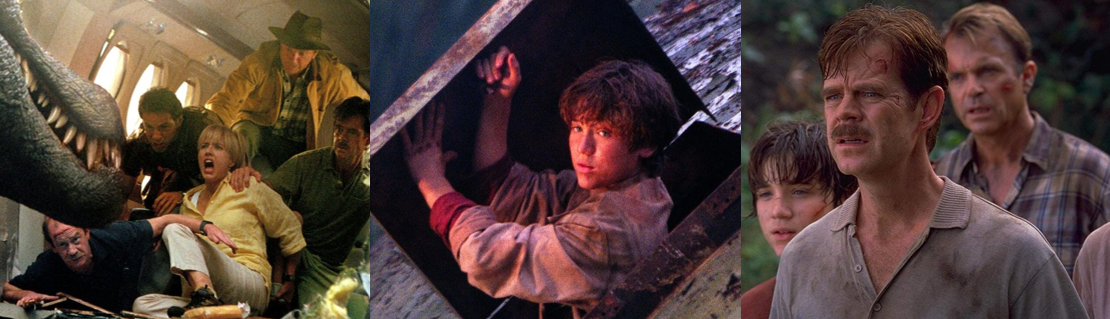
Despite Paul being little more than a painter and decorator, he and his estranged wife somehow pull together the funds not just to fly to Isla Sorna, but to hire some unscrupulous characters to transport them and stave off the ravenous dinosaurs with some serious firepower. However, these would-be mercenaries prove as ill-equipped as the Kirbys, who are immediately in over their heads and realise that they’ve vastly underestimated the dangers of the island. It doesn’t help that Amanda is painfully idiotic; not only does she yell into a megaphone as soon as they land but she, more than any of the other characters, constantly ignores or disregards Grant’s expertise, putting herself and the others in danger when the carnivores come sniffing around for their next meal. Grant is incensed to learn the truth and even more perturbed when the survivors are stranded after the Spinosaurus destroys their plane and devours their satellite phone, but even then his main concern is reaching the safety of the coast rather than actively searching for the couple’s lost son, Eric (indeed, it’s heavily implied that Grant thinks the boy is dead). Following a Velociraptor attack, Grant is separated from the couple but runs across Eric, who has done a decent job of surviving by himself thanks to his adaptability, knowledge of dinosaurs from Grant’s research, and resources afforded by InGen’s abandoned facilities. Grant, now far more comfortable with children thanks to his experiences in the first film and his close relationship with former flame Doctor Ellie Sattler’s (Dern) infant son Charlie (Blake Bryan), is very impressed by Eric’s survival instincts over the last eight weeks. Eric uses tear gas and even Tyrannosaurs rex urine to keep the dinosaurs at bay but he’s more upset at the prospect of his estranged parents trying to work together than he is by the locals. However, their shared trauma and determination to find Eric brings the two closer together but their joy at being reunited is cut short when they’re separated by a massive fence, with the Spinosaurus hot on their heels, and driven into the dilapidated aviary. Once he’s back with his parents, Eric reverts back to being a scared kid and fades into the background; he consoles Grant over the apparent loss of his assistant, Billy Brennan (Nivola), but basically just becomes another screaming would-be meal for the Spinosaurus.

Trumping any other dinosaur, the Spinosaurus obliterates every threat and constantly dogs the humans.

As ever, the humans are under constant threat from the genetically-recreated dinosaurs; while there’s a sense of wonderment about herbivores like the Corythosaurus and Parasaurolophus, the Velociraptors remain a persistent danger to the group. Grant continues to be enamoured with the pack hunters, which now sport rudimentary feathers and an intelligence beyond even his expectations as they call to each other, signal for help, and even use live, injured humans as bait to lure in other victims. This time around, the Velociraptor threat is only escalated thanks to Billy secretly stealing their eggs to sell on the black market to help fund Grant’s research, which causes the creatures to furiously hunt them throughout. For the first time, winged dinosaurs play a key role in the events of the franchise; in one of Jurassic Park III’s better sequences, one ripped right out of the first book, the group stumble into the twisted, rusted remains of a Pteranodon aviary and the giant, bat-like creatures briefly carry Eric off to their young before Billy successfully rescues him in what appears to be redemptive act of self-sacrifice but which the would-be black marketeer inexplicably survives. The franchise’s most recognisable dinosaur and brand mascot, the Tyrannosaurs rex, also reappears but, sadly, it’s little more than a cameo; the T. rex is primarily here to show off the bigger, badder Spinosaurus, which not only makes an immediate impression by splattering Cooper (John Diehl) all over the Kirbys’ plane but easily bests the T. rex and snaps its neck in a startling show of power. Unfortunately, this means that we’re denied a proper battle between the two or a suitable opponent to slay or challenge the Spinosaurus in the finale, though the Spinosaurus’ threat lingers over the entirety of the film and recalls the constant sense of dread the characters faced from the T. rex in the first. Far larger, with a crocodile-like jaw and massive talon-like claws, the Spinosaurus is Isla Sorna’s undisputed apex predator, unhindered by any weaknesses and capable of fending off any obstacle, swimming through water, and even…somehow…sneaking up on its prey despite not only its massive size but the constant ringing of the satellite phone in its stomach!

The Nitty-Gritty:
Jurassic Park III tries so hard to emulate the epic wonder of the first film but there’s just not enough material left to support it. John Williams’ sweeping, iconic theme still permeates the picture despite him being replaced by composer Don Davis, and the awesome sight of seeing dinosaurs brought to life onscreen remains, but it’s undeniable that it’s just not as impressive as it was the first time around. These issues are only compounded by some absolutely detestable characters; Paul and Amanda Kirby are clueless, deceitful morons who are difficult to root for, especially in the case of the foolhardy Amanda, whose desperate need to rescue her son costs the lives of three other people and endangers them all on numerous occasions. Téa Leoni is easily the worst part of this film; she’s so wooden and rigid and just mumbles her way through the narrative, dragging every scene down and making Amanda a thoroughly unlikeable and moronic character. Paul is a spineless fool who’s in way over his head and I can absolutely understand Grant’s exasperation at being surrounded by such ridiculous characters, and his admiration for Eric at somehow breaking the chain and being a smart and capable young boy. Billy’s side plot where he plans to sell the Velociraptor eggs is an interesting wrinkle, but it really doesn’t go anywhere and is basically a scaled down version of the plot seen in The Lost World, plus it’s difficult to really care about Billy’s betrayal of his mentor or his apparent death because about he only thing Billy has going for him before his greed is revealed is that he has a “lucky backpack”.

Somehow, the effects have worsened and, with some exceptions, everything seems rushed and lazy.

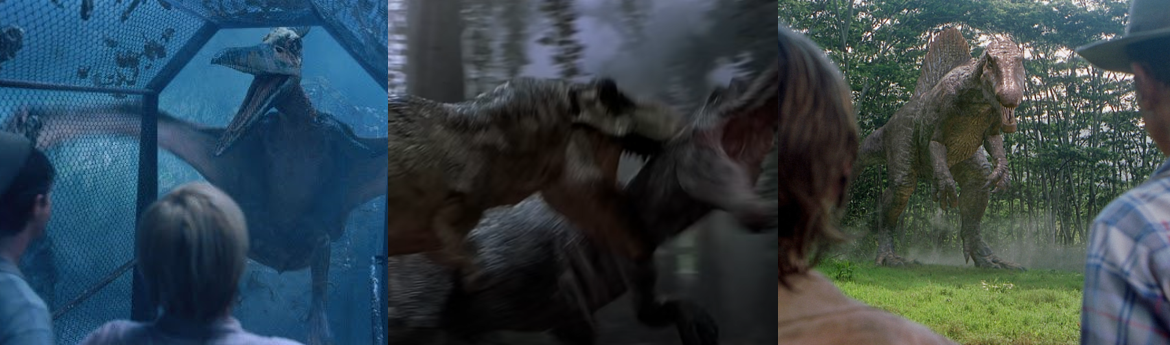
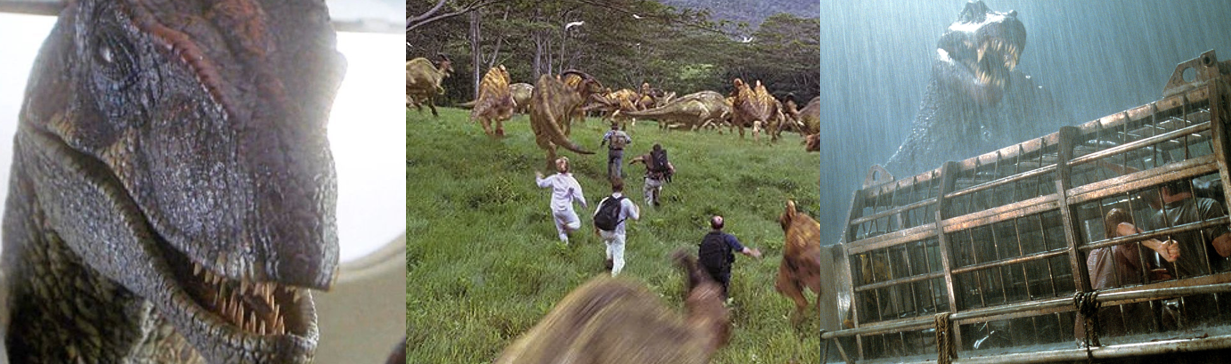
As ever, the main selling point is the dinosaurs. While, for the most part, they still look as amazing as ever, it’s clear that the quality of the animatronics and CGI have taken a hit despite Jurassic Park II having the highest budget of the original trilogy. The animatronic dinosaurs, especially, look far less realistic than before; it’s almost as if the filmmakers got lazy or rushed the process, coasting on the influential effects of the first film and putting in less effort, with the brief appearance by the Ceratosaurus being a particularly poor effect, but a lot of the CGI is surprisingly awful. I can’t help but be disappointed at how unconvincing the ’raptor puppets are this time around; it might not have been so bad if the film didn’t choose to explore the depths of Grant’s trauma by having him experience a nightmare involving a talking ’raptor (though, admittedly, I do find this scene hilarious!) A ’raptor does make an impression when the characters are exploring the ruins of an InGen facility, chasing them through the dark corridors, scaling cage walls to reach its prey and even signalling for help, much to Grant’s horror and amazement, though this does result in a pretty lacklustre chase through a herd of herbivores that is, again, a pale imitation of the first film. Although the Spinosaurus often also looks cartoonish and its battle with the T. rex is disappointingly brief, it is truly horrifying. Clearly chosen for its fearsome appearance and for looming over even the T. rex with an ominous poise, the Spinosaurus is a nightmarish creature that really pushes Jurassic Park III into monster movie territory as it glares at its prey and stalks them with vicious purpose. Indeed, Jurassic Park III’s better moments are when it leans into horror; the Pteranodon attack is especially evocative of this, with the massive prehistoric bird/lizards looming and flapping through the mist like something out of a slasher movie, to say nothing of the terrifying way the Spinosaurus cuts through the water in the dead of night during a torrential downpour. Although the Jurassic Park films have often strived to be more than monster movies, these more terrifying and intense sequences are a definite highlight and demonstrate that there was still some gas left in the tank for the franchise, it was just sadly hampered by an overall poor execution.

After inexplicably scaring off Spiney and placating the ‘raptors, the survivors are saved by the Navy!

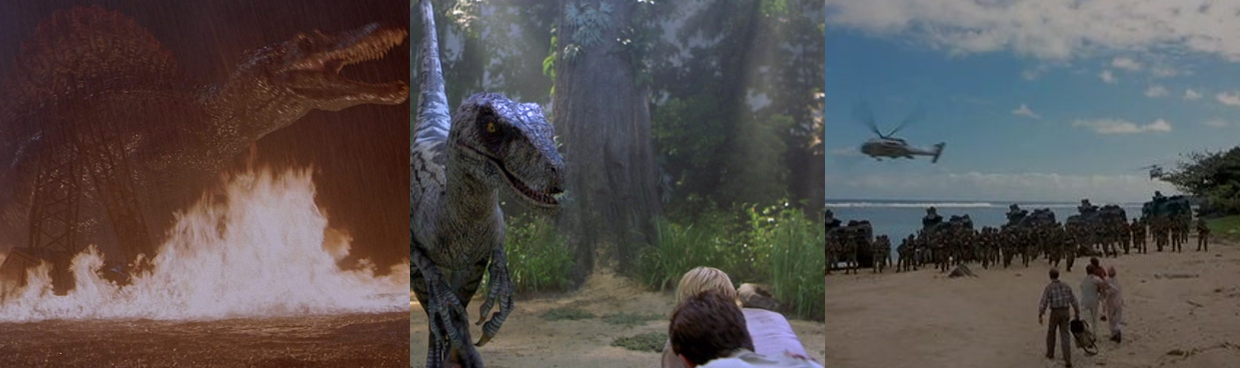
After narrowly escaping the Pteranodons, the survivors finally manage to retrieve Paul’s annoying satellite phone from a pile of Spinosaurus excrement (again evoking imagery from the first film) and Grant makes a frantic call for help to Ellie. The Spinosaurus attacks, however, while the group is sailing on a barge; since we were denied a proper T. rex vs Spinosaurus showdown, though, the franchise’s newest, most dangerous predator yet is simply scared off after Grant ignites some oil with a flare gun, making for a painfully unsatisfying final showdown with the vicious carnivore. Instead, as ever, Jurassic Park III falls back on the Velociraptors for one last scare; having tracked the humans and the eggs Billy stole, the Velociraptors corner them on the beach and appear ready to strike; however, Grant manages to confuse the pack by randomly blowing into a replica ’raptor larynx. Just then, the film simply comes to an end when Ellie was somehow not only able to understand that Grant was on the island but was also able to get the US Navy to storm the beach for a rescue, scaring off the raptors, who reclaim their eggs and run into the jungle. Just like in the first movie, Grant and the other survivors (even, inexplicably, Billy) are airlifted to safety and left to contemplate the beauty, awe, and danger of the long-extinct dinosaurs, but again this is simply the same ending as in Jurassic Park but with an additional bit of family drama slapped on top of it! The tension and horror of the island rekindles the relationship between the Kirbys, who are overjoyed to be reunited with their son, who is equally pleased to see his parents finally getting along, and all it took was a few lives and the threat of mortal danger to bring them back together. Although he isn’t going to get the funding he was promised, it seems as though Grant is content to have faced his fears, though I would argue that his experiences on Isla Sorna only galvanised his dislike for InGen’s genetically-engineered monstrosities.

The Summary:
It’s really hard to rate Jurassic Park II very high as the entire film just feels like an unnecessary cash-grab, one final desperate attempt to wring the life out of a franchise that, at the time, really only had enough gas for two movies (and even then, the second one was a questionable effort). Certainly, there’s enough material in Michael Crichton’s books and the prehistoric to be reconfigured into another movie, but Jurassic Park III plays things way too safe. It’s just a shorter, less fanciful, and far less thrilling retread of the first film: Grant is a grouchy traditionalist forced to adapt to a dangerous situation, he’s forced to bond and work alongside a kid, there are ill-prepared morons running around just looking to get eaten, and there’s a monstrous prehistoric predator stomping around looking to snap everybody up. Even the sub-plot about stealing the ’raptor eggs is half-baked and familiar, and the effects somehow look worse than in the original Jurassic Park despite the higher budget and what I would assume would be the refinement of those original techniques. Sam Neill puts in a great performance but even he can’t save this grating cast; Téa Leoni is always dreadful, and William H. Macy just lacks the charisma to be all that compelling. I did enjoy the sadly underutilised Pteranodons and the monstrous Spinosaurus, but the filmmakers really dropped the ball by not having a longer, more brutal fight scene between ol’ Spiney and the T. rex. Thankfully, the revived entries would correct this, and many of Jurassic Park III’s mistakes, but that doesn’t help wash the sour taste of this ill-conceived, rushed, and lazy entry out of the mouth. Just watch the first one again and then jump to the fourth, it’s the best way.

My Rating:

Rating: 1 out of 5.

Terrible

Are you a fan of Jurassic Park III? Do you think I’ve judged the film too harshly and that there are actually some positives to be found here? Were you happy to see Dr. Alan Grant return and what did you think to the Kirbys? What did you think to the Spinosaurus and would you have liked to see a more competitive fight between it and the T. rex? Do you agree that the film was too lazy and that the concept was tapped out by this point? Which of Jurassic Park’s sequels is your favourite or do you consider the first one to be the best? How are you celebrating Dinosaur Day this year? Whatever your thoughts on Jurassic Park III, and dinosaurs in general, leave them below or drop a comment on my social media.

Movie Night [Dinosaur Day]: The Lost World: Jurassic Park


Sixty-five million years ago, dinosaurs ruled the Earth. These massive beasts existed for about 180 million years and came in all shapes and sizes, before finally going extinct following a cataclysmic event that forever changed our world and rendered these creatures mere fossils to be discovered and studied. Fittingly, “Dinosaur Day” is actually celebrated twice a year, giving dino fans the world over ample opportunities to pay homage to this near-mythical titans.


This review has been supported by Chiara Cooper.
If you’d like to support the site, you can do so at my Ko-Fi page.

Released: 23 May 1997
Director: Steven Spielberg
Distributor:
Universal Pictures
Budget: $73 million
Stars:
Jeff Goldblum, Julianne Moore, Vanessa Lee Chester, Pete Postlethwaite, Vince Vaughn, and Arliss Howard

The Plot:
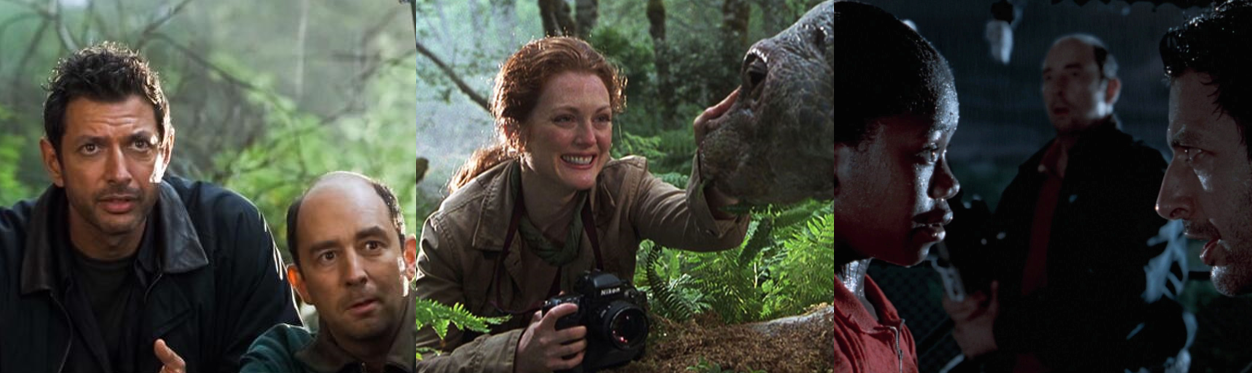
Four years after escaping from Isla Nubar and left disgraced after speaking out about the chaotic events on Jurassic Park, Doctor Ian Malcolm (Goldblum) is forced to head to the park’s “Site B”, Isla Sorna, to rescue his girlfriend, Doctor Sarah Harding (Moore). However, Malcolm’s worst fears about the genetically engineered dinosaurs soon come to pass when the immoral InGen seek to transport them from the island and to a new attraction in downtown San Diego!

The Background:
It was only fitting that Steven Spielberg helmed the big-budget adaptation of Michael Crichton’s bestselling Jurassic Park (ibid, 1990) since the book quickly caught Spielberg’s eye and, thanks to inspirations from classic movie monsters and special effects wizards Stan Winston, Phil Tippett, and Dennis Muren, created not only one of the biggest blockbuster releases of all time but also pioneered many of the CGI techniques we still see in Hollywood today. Bolstered by a huge merchandising campaign, Jurassic Park (Spielberg, 1993) grossed over $1.030 billion at the box office and was swamped with overwhelmingly positive reviews, so naturally there was a talk of a sequel. However, both Crichton and Spielberg were reluctant to work on a direct follow-up; Crichton due to having never written a sequel before and Spielberg due to a general fatigue from big-budget productions. After Crichton caved to fan demand and began writing a second book, however, Spielberg and writer David Koepp began pre-production on the sequel, which ditched Spielberg’s initial ideas and differed noticeably from the book of the same title to feature a more dramatic and visually entertaining finale that Spielberg originally envisioned for a potential third movie. Although the film featured an entirely new cast of characters, Jeff Goldblum was elevated to the leading man (despite his character dying in the original book) and a slew of new dinosaurs were added to the script alongside fan favourites like the Velociraptor and Tyrannosaurus rex. While the film still utilised a number of practical effects and animatronics, far more emphasis was placed on digital creations from the likes of Industrial Light & Magic and Stan Winston to bring these extinct titans to life. Two of the film’s biggest effects sequences involve the T. rex, with one having the actors dangling precariously over a cliff edge in the pouring rain and the other showcasing the T. rex rampaging through downtown San Diego, both of which required the use of miniatures, animatronics, and CGI to make everything work seamlessly. Like its predecessor, The Lost World: Jurassic Park was accompanied by a massive marketing campaign and, while its $618.6 million box office was noticeably less than the first film, it still broke several box office records and became the second highest-grossing film of 1997. Reviews, however, were somewhat mixed; critics were impressed by the special effects but disappointed by the characterisations. While Jeff Goldblum’s performance and the larger role of the T. rex was praised, even Spielberg felt the film failed to match expectations and the film is generally regarded as being inferior to the original. While its reputation is far stronger than that of its third entry, it wouldn’t be until 2015 that the franchise once again properly wowed audiences.

The Review:
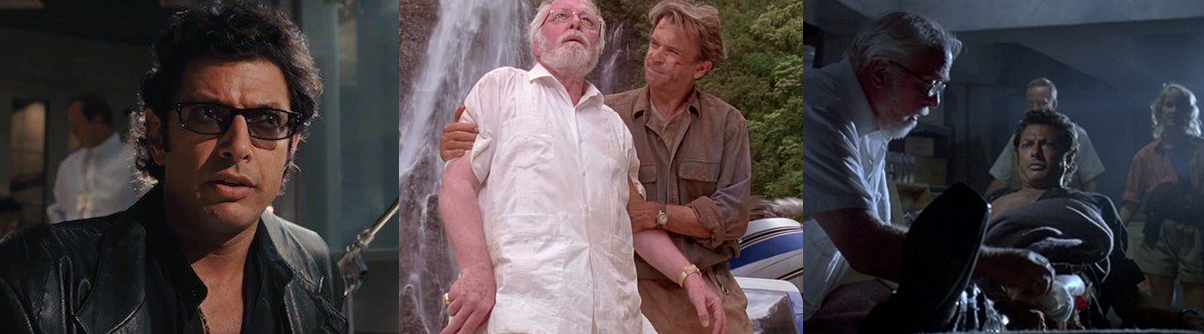
I mentioned in my review of Jurassic Park that I didn’t care for the book; I found it dry and dull and lacking in the visual spectacle offered by the big-screen adaptation, which took the concept and filtered out all the boring waffle and focused on overdelivering on the concept of dinosaurs being brought back to life through genetic engineering. If you’re hoping that I preferred The Lost World then you’re sadly mistaken; I found it to be just as bad, and actually worse in a lot of ways as it was essentially the exact same book except there were a few different characters and the they had a bigger, fancier truck. While a standout supporting character in the first film for his eccentric personality and scene-chewing performance, Dr. Ian Malcolm is now thrust into the spotlight. Despite his injuries from the first film, he’s physically fine but his reputation is in the gutter as he refused to adhere to the non-disclosure agreement he signed before visiting Jurassic Park and was branded a fraud as a result. Already a somewhat cynical individual, Malcolm is incensed to learn that Doctor John Hammond (Richard Attenborough) had a second dinosaur island all along, a far less restrictive breeding ground where the dinos would be incubated and bred before being transported to the main park. While Malcolm is no longer prone to expositing Chaos Theory, he’s still just as prone to judging Hammond’s poor decision-making skills and inability to understand or recognise that he’s still tampering with powers outside of his control. Vehemently refusing to visit the island and vowing to warn off the team that Hammond has convinced to document the thriving dinosaurs, Malcolm’s objections turn to fear and panic when he learns that his girlfriend, Sarah, is already there, pushing him to lead a rescue mission.

Despite his warnings, Ian’s family insist on venturing onto Hammond’s second, more dangerous island.

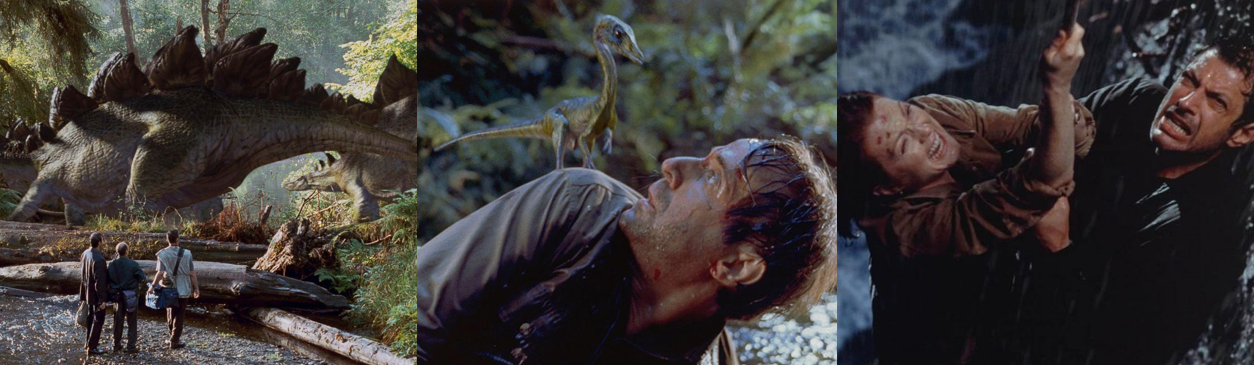
A running thread throughout the film is Malcolm’s repeated attempts to warn those around him of how dangerous the dinosaurs and Hammond’s islands are and everyone simply ignoring him; if they’re not outright dismissing his claims as paranoia, they’re fixated on the wonderous nature of witnessing dinosaurs up close and personal, meaning he gets multiple chances to rub it in their faces when his warnings turn out to be true and to feel further vindication of his objections when the body count rises. Although he spent much of Jurassic Park doped up on morphine, he brings with him knowledge and experience of the dinosaur’s habits, nature, and aggressive tendencies that are repeatedly ignored, leading to people constantly provoking or antagonising the dinosaurs and incurring their territorial wrath as a result. Even Sarah, despite having heard all of Malcolm’s horror stories, completely waves off his concerns for her safety; an experienced wildlife photographer, she leapt at the chance to document the dinosaurs in the wild and seemed to be confident to the point of arrogance in her ability to stay out of sight and undetected. While it can be argued that Malcolm’s frantic search for her was to blame for disrupting this and almost causing her to be killed by a herd of Stegosaurus, Sarah’s common sense and intelligence is somewhat unpredictable throughout the film; she chastises Nick Van Owen (Vaughn) when he rescues a baby T. rex from being used as bait to satisfy the corporate desires of Hammond’s nephew, Peter Ludlow (Howard), she doesn’t hesitate to help fix its broken leg and doesn’t realise until it’s far too late that her shirt is covered in the baby’s blood and thus attracting the attention of the adult T. rex’s. while Malcolm would rather never set foot on a dinosaur island ever again and Ludlow’s team are determined to transport them to a zoo in San Diego, Sarah is one of the many voices calling for the dinosaurs to be left to thrive in their own unique ecosystem and views them with an awe and respect that turns to abject terror as the more ferocious dinos begin hounding them. Malcolm’s desperation to get her off the island and to safety is so great that it means missing out on time with one of his many daughters, Kelly Curtis (Chester), a pouty and ignorant teenage girl who simultaneous adores and resents her fair-weather father after a lifetime of unreliability. Partially out of spite and partially as a lark, she sneaks her way onto the island and is a constant burden thanks to her argumentative, oblivious impetuousness. She does, however, eventually prove to be somewhat useful when she (or, at least, her stunt double) uses her gymnastics skills to kick a ‘raptor out a window but this is the one time she does anything worthwhile and it’s probably the most unrealistic and overly elaborate aspect of the entire film.

The Lost World certainly isn’t short on characters, with Roland being one of the few standouts.

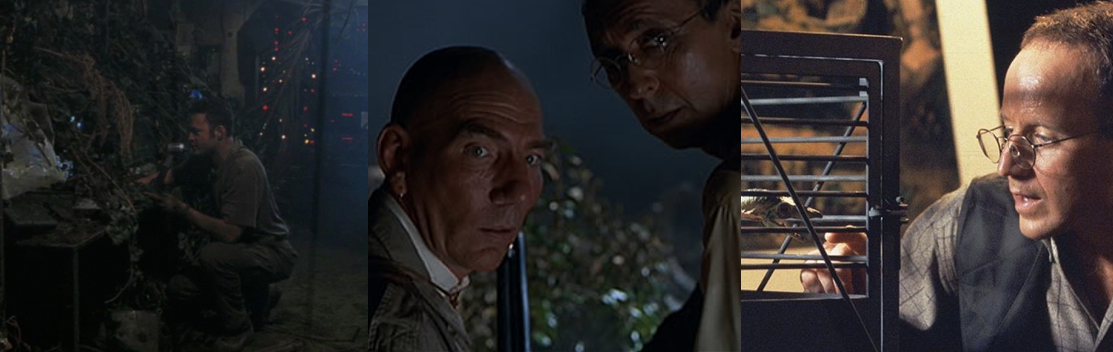
One thing The Lost World isn’t short on is characters; the movie is absolutely stuffed with actors as we follow Malcom’s rescue team and Ludlow’s capture team, following their different experiences on the island and seeing their storylines converge. Malcolm joins Eddie Carr (Richard Schiff) and Nick as they prepare to join Sarah on the island; Eddie is the field expert, though his satellite phone is more than a little temperamental and his “High-Hide” seems laughably impractical since it’d put its inhabitants in easy biting reach but actually proves quite effective during the T. rex attack. The team has this big, decked out truck full of all the equipment that require but it mainly exists to dangle precariously over a cliff while the T. rex makes a meal out of poor Eddie, and the movie expects us to believe that Vince Vaughn, of all people, is this bad-ass animal right activist sent by Hammond to disrupt Ludlow’s efforts to get the dinosaurs off the island. He succeeds only in disrupting their operating, endangering and indirectly costing the lives of many of Ludlow’s team through his actions, but we’re encouraged to root for him because he knows the value of the dinosaur’s lives and rights to freedom and Ludlow’s group is a little disreputable in their methods and motives. Ludlow himself is every slimy, corporate sleazebag you’ve ever known; while Hammond at least had some appreciation of the grandeur and beauty of his creations, Ludlow is concerned only with the bottom line and getting Jurassic Park – San Diego up and running to make a tidy profit. His troop is primarily made up of an assortment of unnamed victims and mercenaries, with Dieter Stark (Peter Stormare) being a rare standout for his cruelty to a Compsognathus which comes back to literally bite him when he’s separated from the others and viciously attacked by a pack of the tiny dinos. The sole standout of Ludlow’s team is veteran big-game hunter Roland Tembo (Postlethwaite); having hunted every animal on the face of the Earth and longing for the chance to hunt a male T. rex, Roland is largely dismissive of Ludlow’s dreams and the promise of financial compensation and a somewhat ambivalent character since he sees the jaunt as just another job. However, he shows an attentive side towards Sarah, a desire to shield Kelly from any death, and is so devastated by the death of his best friend, Ajay Sidhu (Harvey Jason), that he abandons his lifestyle completely after bagging his prize, finding no joy in his victory and having grown weary of being surrounded by death.

Dinosaurs old and new thrive, hunt, and breed in this makeshift ecosystem.

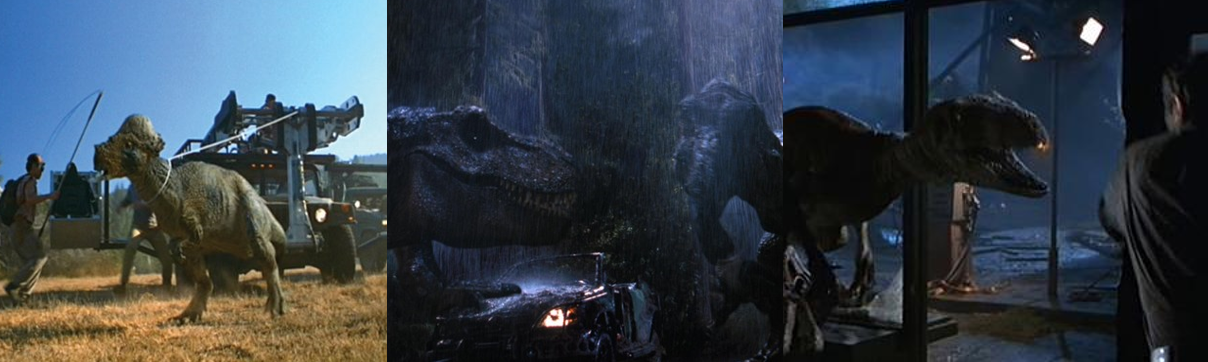
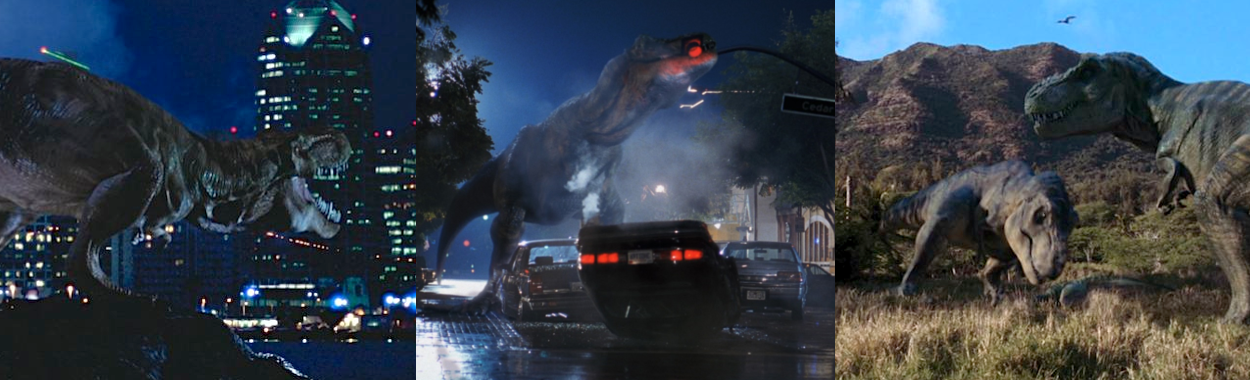
Once again, though, it’s the dinosaurs who are the real stars of the show and what we all came to see. The film starts somewhat similarly to the last one with a dinosaur attack but, this time, it’s the Compies who get the opening kill in a sequence actually lifted from the first book and which establishes right away that the dinosaurs are not afraid of man and can attack without provocation. There are a number of new dinosaurs in the film, including a fiercely protective Stegosaurus herd and a stampede of rampaging Pachycephalosaurus, whose powerful headbutt is played for laughs as Roland desperately tries to remember the names of the dinosaurs while capturing them. Many of the smaller and less aggressive dinosaurs are quickly rounded up by Roland and his team and showcased by Ludlow to InGen’s investors, but Nick sets them all three and causes them to run wild through the enemy camp, and decides the best course of action when finding the injured, captured baby T. rex is to bring it to their trailer for medical attention. Although Sarah has to guess the dosage of pain medication and Malcolm is concerned that the baby’s cries will attract its parents, the baby T. rex is patched up and returned to its parents, but the adult T. rex’s are driven to attack the trailer, driving it over the edge, and continue to hound the human characters as they desperately try to escape the island. Along the way, they have to pass through a large expanse of tall grass teeming with Velociraptors, which have a surprisingly subdued role in this film; in the first one, they were very much the primary antagonistic dinosaur but, while they are responsible for a pretty high body count here and deliver one of the film’s more terrifying sequences as they pounce on the characters as they race across the grass, they’re used sparingly this time around. The T. rex crops back up a couple more times, drawn to the scent of its offspring, leading to a harrowing sequence where it tramples people to death underfoot and gulps down InGen’s dinosaur expert and walking dino exposition machine Doctor Robert Burke (Thomas F. Duffy) after he’s spooked by a snake, of all things. In the end, Roland is successfully able to capture alive T.rex but it…somehow…manages to kill off an entire ship’s crew and then return to the cargo hold to make its dramatic appearance once the ship reaches San Diego so it can go on a rampage through the city.

The Nitty-Gritty:
It’s a shame that The Lost World never followed up on the lingering plot thread of the cannister of dinosaurs samples stolen and dropped in the first film; this could’ve been a natural jumping off point for Hammond’s rivals to be behind the new island and thus take Ludlow’s place as the main antagonists, which would’ve have changed the film all that much but would’ve felt a little more natural. The plot point of Hammond’s nephew trying to usurp and exceed his aspirations is somewhat interesting, as it shows there’s division within InGen, but I find it difficult to believe that Hammond is so wealthy that he can buy not one, but two islands, kit them out with all the facilities and equipment they need, and also just abandon a San Diego zoo project beforehand. And even if he could do all that, the losses and financial backlash caused from abandoning these projects, losing all of Jurassic Park’s dinosaurs to the lysine contingency, and presumably compensating or covering up the deaths from the last film would’ve surely bankrupted or heavily crippled InGen. Of course, this doesn’t happen and we get to visit Site B, which is where the dinosaurs were properly bred before being transported to Jurassic Park; the island is a curiosity to  the likes of Hammond and Sarah as, despite all the odds, the dinosaurs have been able to adapt and thrive there, changing sex to breed and overcoming their lysine deficiency and finding a way to survive without the interference of their human breeders, but for Malcolm it’s just another example of Hammond’s arrogance and a place no one should ever willingly visit due to the inherent danger posed by nature itself.

On paper, this had the potential to be a bigger, better film but it’s bogged down by pacing issues.

On paper, The Lost World has everything it needs to be bigger and better than the first film; more cannon fodder to add to the body count, more dinosaurs, and more action should’ve meant that it was even more of a visual spectacle and, in many ways, it is. The dinosaurs still look fantastic and, thanks to many of the bigger action sequence staking place at night and/or in the rain, they’re just as believable as ever and even more formidable. We get not one, but two T. rex’s, there are more instances of herds of dinosaurs grazing, living, or running in the wild, and the final shot even shows all kinds of different species living side by side in their makeshift ecosystem. However, the film suffers from incredibly dull pacing; it’s only a few minutes longer than the last film but it drags so much and so often that even the big dinosaur sequences can’t save it and I find myself tuning out and growing bored waiting for something to happen and to care about these characters. The story is just far too bloated; there’s too many throwaway mercenaries on Ludlow’s team, too few interesting and engaging characters in general, and even the amazing Jeff Goldblum can’t carry this to an enjoyable experience. In fact, he’s actually something of a detriment here; rather than playing an eccentric character, he’s just full-on quirky Goldblum and it’s actually quite distracting. Neither the always-dreadful Vince Vaughn or the incredibly miscast and aggravating Vanessa Lee Chester make for compelling performances and, if it wasn’t for Pete Postlethwaite, there wouldn’t be anyone interesting at all in the cast.

The film’s climax is certainly striking, but feels tacked on and should’ve had far more focus.

It’s a shame as the dinosaur sequences can be very entertaining; The Lost World is much more of a horror/monster film than its more subdued predecessor, even though numerous attempts are made to emphasise that the dinosaurs are just acting out of instinct and to protect their young and territory. The T. rex’s rip poor Eddie to shreds, squash nameless goons, and tear limbs off; one even eats a dog during the finale, which is always a step too far, and yet Nick goes out of his way to take Roland’s bullets away from him! The Compie attack, while somewhat comical, end sup being pretty terrifying as Stark is eaten alive just out of frame and the ‘raptor attack in the grass is an equally tense and distressing sequence sadly undermined by Kelly’s ridiculous athletics. The finale, which sees a T. rex go on a rampage in downtown San Diego, feels unnaturally tacked on (mainly because it was…) and I’m torn between wishing we’d seen more stuff like that to differentiate the sequel from the original or omitting it entirely. It does result in some of the best looking shots of the film; the juxtaposition of this massive, prehistoric beast barrelling down the street, crushing cars, and chomping on terrifying pedestrians is quite striking, but it’s very rushed and by the time it happens you’re just wanting begging for the movie to be over. In the end, Malcolm and Sarah manage to retrieve the baby T. rex and use it to lure its Mama or Papa (it’s not really made clear which it is) back to the boat, where Ludlow is left in the cargo hold as a tasty snack for their journey back to the island. It’s not made clear who, if anyone, is piloting the boat back but the incident becomes public knowledge, bringing a mainstream awareness of the island and the existence of dinosaurs, but the movie ends with Hammond imploring mankind to take a step back and let life find a way, which is presented as though he’s finally learned a lesson but could just as easily be an attempt to once again avoid any legal repercussions for his research.

The Summary:
When I was a kid, The Lost World: Jurassic Park was my favourite of the Jurassic Park films; the first one had been such a spectacle and made such a huge impression that anticipation was high for the sequel and I think I associated the success and appeal of the first movie to mean the sequel had to be just as good, if not better. I was (and still am) a massive Jeff Goldblum fan as well, so that just added to the appeal of the sequel since he took a lead role, but it can’t be denied that The Lost World is inferior in almost every aspect. Even the dinosaurs don’t always look as good; the CGI, while still impressive, is far more noticeable in a lot of shots, even though the animatronics and the likes of the T. rex look fantastic as ever. Unfortunately, the film is overstuffed with uninteresting, forgettable characters, bland and uninspiring performances, and is such a slog to get through that I find myself growing increasingly bored every time I watch it. The spectacle and allure is just missing, or dulled, despite how hard the film tries to recapture the magic of the first movie; it’s much more like a generic monster film in a lot of ways and borrows a little too much from the last film to really stand out. The areas where it is a bit more unique are sadly underdeveloped; the idea of a rival company building their own dinosaur island or theme park could’ve been interesting, as could dinosaurs running amok in the city, but it’s all just kind of crammed in here with very little rhyme or reason and not sense of urgency. It’s a shame, really, as there was such potential in a Jurassic Park sequel, but there’s just very little substance to The Lost World; it’s still technically very impressive at times and it has moments where its bigger and more impressive than the last film, but it falls flat overall and ends up being this plodding, lifeless affair filled with inane characters, bone-headed decisions, and lacklustre action that feels too much like a desperate, corporate attempt to make lightning strike twice rather than a genuine attempt to match the spectacle and wonder of its predecessor.

My Rating:

Rating: 2 out of 5.

Could Be Better

What did you think to The Lost World: Jurassic Park? Do you think I’m being too harsh on it and that it’s actually just as good, if not better, than the first film? Are you a fan of the book and, if so, did you still enjoy the film or was there too much changed in the adaptation process? Were you happy to see Ian Malcolm return and which of the new characters was your favourite? What’s your favourite dinosaur, either in this film or in general? Were you a fan of the finale or do you agree that the film suffered from pacing issues? Which of Jurassic Park’s sequels is your favourite or do you consider the first one to be the best? How are you celebrating Dinosaur Day this year? Whatever your thoughts on The Lost World: Jurassic Park, and dinosaurs in general, sign up to leave them below or drop a comment on my social media.

Movie Night: Jurassic World: Dominion

Released: 10 June 2021
Director: Colin Trevorrow
Distributor:
Universal Pictures
Budget: $185 million
Stars:
Chris Pratt, Bryce Dallas Howard, Campbell Scott, Isabella Sermon, Sam Neill, Laura Dern, and Jeff Goldblum

The Plot:
After being set into the wild in the last film, dinosaurs live amongst us and a thriving black market has arisen. When poachers kidnap the infant of Owen Grady’s prize Velociraptor, Blue, and the teenage clone he and Claire Dearing (Howard) have been raising and a swarm of genetically-engineered locusts threaten worldwide famine, they must team up with faces old and new to infiltrate a dinosaur conservation site.

The Background:
In 1990, writer Michael Crichton penned Jurassic Park, a cautionary tale about the dangers of genetic engineering that saw the long-extinction dinosaurs returned to life through science and running amok in a theme park; the novel was well received and its concept caught the attention of famed director Steven Spielberg, who spearheaded the production and not only revolutionised computer-generated special effects on film by marrying CGI with complex animatronics, but also produced an incredibly profitable, influential movie. Naturally, the film led to sequels, however these weren’t as well received and the franchise lay dormant for the better part of twenty years until being revitalised by director Colin Trevorrow with the ridiculously successful Jurassic World (ibid, 2015). Following this success, Spielberg and Trevorrow collaborated on a plan for a new trilogy; however, although reviews were notably mixed for the sequel, Jurassic World: Fallen Kingdom (ibid, 2018) yielded an impressive worldwide gross of $1.310 billion, which all-but guaranteed a third entry. Trevorrow and co-writer Derek Connolly penned a story that tackled the question of how the world reacted to dinosaurs being loose among the populace, how that impacts society, and the promise of different dinosaurs and genetic monstrosities being featured. Alongside crafted something of a redemption story for new generation of protagonists, Trevorrow brought back the three protagonists from Spielberg’s ground-breaking film, and actually used the down time afforded by the COVID-19 pandemic to make changes to the film based on fan feedback. After numerous delays, Jurassic World: Dominion released to the tune of a $1 billion box office; however, the film was met with disappointingly low reactions. Reviews criticised the film as a shameless cash grab that was largely derivative of its predecessors. However, while many of the effects and action sequences were praised, it was largely seen as squandering its primary premise, another revival followed some four years later.

The Review:
The Jurassic franchise has long suffered from the law of diminishing returns; the first was a blockbuster hit, a visual spectacle that captivated an entire generation and kicked off a short-lived fascination with dinosaurs across a variety of media. The special effects, interpretation, and behaviour of its impressive dinosaurs continues to be influential to this day, with many other books, comics, videogames, and documentaries utilising a similar presentation, no matter how scientifically inaccurate they may be, simply because of how realistic and detailed the effects were at the time. Unfortunately this success didn’t really carry through to the sequels; while they all made a massive profit, critical and audience reactions dipped as the film’s failed to really recapture the magic of the first, and the franchise laid dormant until Colin Trevorrow was somehow, able to revive it. I think, for me, one of the reasons for the series growing quickly stagnant was that the films didn’t really try anything new; we were always back on an island, with the same dinosaurs only with a bigger, more vicious carnivore each time and when they did try something new, it was either ridiculous (like weaponizing dinosaurs) or not as big a part of the plot as it should’ve been…like dinosaurs free in the world.

Owen and Claire are drawn back into the world of dinosaurs when Maisie is kidnapped.

I’d like to say that Jurassic World: Dominion bucks this trend but that’s not entirely true. Like the ending of the second and third films, the movie is framed around the idea of dinosaurs no longer being confined to a faraway island, but this plot point isn’t explored in any great detail. Instead, a newscast and a few scenes throughout the beginning set the stage, showing that these genetically resurrected creatures are caused sporadic havoc and deaths across the glove as humans and animals alike struggle to adapt to their presence, but it’s not long at all before we’re back in an isolated jungle and contending with new carnivores. Since the last film, Owen and Claire had retired to a secluded cabin where they keep Maisie Lockwood (Sermon) isolated in order to protect her from the government and malevolent corporations like Biosyn Genetics, who would seek to study or destroy her since she’s a human clone. Naturally, she’s a typical rebellious teen; tired of being cooped up and their lack of trust, she often defies them to journey beyond her limits, but she forms a bond with Blue’s asexually-produced baby, which she names “Beta”, which the two are found to be nesting nearby. While struggling to find a way to be good parents to Maisie, Owen and Grady are horrified when Biosyn mercenaries kidnap both Maisie and Blue and waste no time in calling in old favours and accepting help from pilot Kayla Watts (DeWanda Wise), who is seeking to atone for her part in the kidnapping.

Characters old and new must join forces to survive Biosyn’s newest and biggest dinosaur yet.

Their quest first takes them to Malta, where they witness first-hand the cruel depths of the dinosaur black market and clash with dinosaur smuggler Soyona Santos (Dichen Lachman), who has weaponised Atrociraptors who attack anything they’re directed to via a laser pointer to give us an excuse for a thrilling chase through the claustrophobic streets (and to still have antagonistic ‘raptors, but it wouldn’t be a Jurassic film without that). However, while the likes of the Mosasaurus and Apatosaurus cause a bit of a nuisance, the real threat to our society ae these genetically-engineered locusts; spliced with dinosaur DNA to be much bigger and aggressive, these ugly bugs have been swarming across the country devouring any crops that aren’t manufactured by Biosyn, raising concerns for the returning (and now divorced, in one of a handful of all-too-brief nods to the second and third films) Doctor Ellie Sattler (Dern). Having been invited to Biosyn’s secluded dinosaur preservation facility by chaotician Doctor Ian Malcom (Goldblum), who has been working closely with Biosyn director Doctor Lewis Dodgson (Scott), to keep the dinosaurs safe and study them for medical purposes. Ellie brings along her old flame and associate, Doctor Alan Grant (Neill), reuniting the original Jurassic Park trio for the first time since 1993, and the three investigate Biosyn, which is secretly manufacturing the locusts. Malcolm, and his protégé Ramsay Cole (Mamoudou Athie), have been working to scupper Dodgson’s plot to profit from his monstrosities, and the group infiltrate his facility to acquire concrete proof of his illegal activities. Dodgson was also behind the kidnapping of Maisie and Blue, though this was primarily the will of his lead geneticist, Doctor Henry Wu (BD Wong); having spent a lifetime recreating dinosaurs and cobbling together genetic abominations, Wu seeks to study Maisie and Blue’s unique genetic properties in order to destroy the locusts, though naturally the original protagonists are less than trusting of him due to his previous acts.

Unfortunately, we don’t really get to explore how dinosaurs have impacted the wider world.

If you were a fan of Franklin Webb (Justice Smith) and Doctor Zia Rodriguez (Daniella Pineda) from the last film then you’ll be disappointed to learn that they only get a brief cameo at the start of the film before disappearing entirely; in their place is Kayla, a mercenary pilot who inexplicably develops a conscience because she draws the line at kidnapping. Dodgson (who you may remember from his brief scene in Jurassic Park where he was played by Cameron Thor) is now this quirky, Steve Jobs-esque character who presents the image of a benevolent philanthropist but actually seeks to profit from the research he stole from Jurassic Park (many of the dinosaurs are from both islands and that can of shaving cream finally makes a reappearance). The real story, as ever, is the dinosaurs; this time around, we get to see how cruel they’ve been treated as poachers and other undesirables chain them up for sport, sell them, and even cook them up on the black market, though they’re allowed to roam freely at Biosyn’s secluded hideaway, where they’re even fitted with special chips to call them back to base in the event of an emergency. This time around, Wu has managed to (somehow…) resurrect a few dinosaurs in their purest form, without the need for other DNA to fill in the gene sequence gaps, meaning dinosaurs like the Pyroraptor now sport feathers; one of the most impressive shots of the film is dedicated to the mammoth Dreadnoughtus; and the entire site is also protected by a vaguely-defined air protection system that keeps the Quetzalcoatlus’ at bay (and, when it’s deactivated, they cause a pretty intense, if unbelievably survivable, plane crash). In addition to the long-awaited (for me, anywhere) return of the venom-spitting Dilophosaurus and the series staple, the Tyrannosaurus rex, was also get some fearsome new dinos: a bunch of vicious Dimetrodon stalk Grant, Ellie, and Maisie in the cave sunder the facility, Claire has a close encounter with the horrific long-clawed Therizinosaurus, and Biosyn have even brought back one of the largest and most aggressive carnivore ever known, the Giganotosaurus, which acts as the film’s primary dinosaur antagonist to rival the T. rex in the same vein as its predecessors, the Spinosaurus and Indominus rex.

The Nitty-Gritty:
Pretty much all of Jurassic World: Dominion’s marketing focused on three key elements: dinosaurs out in the world, the return of the original protagonists, and the rescue of Beta. Unfortunately, the film struggles a bit to juggle these elements in a satisfactory way; it almost feels like there’s two scripts stapled together as Ellie and Grant’s side mission feels a little tacked on to the primary concern of  simple kidnapping plot, and both of these take precedence over the concept of exploring what it means to have dinosaurs roaming through cities and suburbs. Sadly, this latter aspect is barely touched upon; we get some cool shots of them flying between skyscrapers and lumbering alongside elephants and such, and the stuff with the black market and the lip service of his disruptive it all is there, but it’s largely secondary compared to the locust swarm, which just isn’t as interesting when you’ve got Allosaurus’s stomping around. While it’s great to see the original trio back (and Goldblum toned his performance down a little), it does feel like a bit of a rewrite could’ve seen Franklin and Zia (or even Claire) will their role; I appreciate the filmmakers going all-in with trying to make this the biggest Jurassic film ever by bringing them back and having them team up with their younger counterparts, but their interactions are a bit weak (Ellie and Claire team up to reset the facility’s power, much like in Jurassic Park, while Grant reluctantly helps Owen and Maisie capture Beta to take her home) and all of them inexplicably survive the most unbelievable situations (with Malcolm now able to not only stand his ground against a Giganotosaurus but even toss a flaming spear into its mouth).

While the locust and kidnapping plots don’t land too well, the dinosaurs look as fantastic as ever.

So, while Biosyn’s facility might not be on an island, we are effectively back in Jurassic Park/Jurassic World for the majority of the film as Dodgson has built an advanced laboratory and sanctuary for the wild dinosaurs so he can study them alongside his team of scientists. Thankfully, the dinosaur effects look fantastic; there were some moments where it was clearly CGI, but others where I wasn’t so sure and there appeared to be a decent amount of animatronics and physical effects used throughout the film. While it’s hard to believe that Claire, Owen, and Kayla survive half the stuff they endure as they’re being chased, ejected, or crashing and there’s numerous times when the protagonists ae able to dodge, outrun, and even fight back against not just the smaller dinosaurs but the bigger ones too, there’s a decent amount of tension applied in certain scenes (particularly Claire’s escape from the Therizinosaurus). This time around, much of the carnage could’ve been easily avoided were it not for Maisie once again wreaking havoc by releasing a dinosaur, in this case Beta, even though Wu is clearly trying to atone for his mistake with the locust by studying the two (a fairly invasive and simple procedure, if the ending is anything to go by). Instead, her actions cause a chain reaction that see Dodgson reluctantly incinerate his locusts to cover up his involvement, which causes a forest fire when they are bizarrely able to stay flying and functional when ablaze. Though he tries to escape, he’s set upon by the Dilophosaurus’s and the protagonists are caught between another gigantic showdown as the T. rex and Giganotosaurus duke it out to decide which is the alpha male. Thankfully, the Therizinosaurus is also on hand this time to ensure that the T. rex remains the undisputed king and the film ends basically the same way as all Jurassic sequels do: the dinosaurs live on in the remains of the sanctuary as protected species and life will just have to find a way to co-exist with dinosaurs in the world.

The Summary:
I went into Jurassic World: Dominion just hoping that it’d be better than Jurassic World: Fallen Kingdom and, thankfully, it was…but not by much. As I say, the law of diminishing returns and normalising the dinosaurs to such an extent that it’d not even worth properly exploring what it means to see them out in our world rather than confined to an island really keeps the film from properly living up to its potential and exploring new avenues. We almost get that when Owen and Claire are tracking Santos, but it’s not long before we’re basically back in Jurassic Park again and going through the same beats as the first and third movies. The larger plot of the locust swarm is pretty weak and seems to be a ham-fisted way of tackling global concerns regarding food and the environment; even though they’re posing a real threat to our survival, no amount of locusts is every going to be as visually impressive or interesting compared to friggin’ dinosaurs! Seeing Grant, Ellie, and Malcolm return to the franchise, and in prominent roles, was great; they slipped back into it nice and easily and had some fun interactions with their younger counterparts, but again this really does feel like forced pandering and a way to cash in on nostalgia. The new dinosaurs, particularly the sadly under-utilised Pyroraptor and the pretty horrific Therizinosaurus were great additions, but the Giganotosaurus really didn’t offer anything we haven’t seen before from the Spinosaurus and Indominus rex besides giving the fan favourite T. rex something new to chomp away at. In the end, Jurassic World: Dominion is a decent enough action/monster film; it drags a bit a suffers from pacing issues, and there was some weird lines and delivery sprinkled throughout, but the effects were pretty awesome and there was a lot of fan service laced throughout. I, personally, would’ve liked to see more explicit references to the second and third film and feel it could’ve done with being a bit shorter, or spending more time exploring the impact dinosaurs have had on our world, but it was enjoyable enough for what it was and a decent enough note for the franchise to finally (hopefully…) go out on.

My Rating:

Rating: 3 out of 5.

Pretty Good

What did you think to Jurassic World: Dominion? Did you enjoy seeing the original cast come back or did you think they were a little unnecessary to the overall plot? What did you think to the threat of the locusts and do you think it was a mistake to not focus ore on the dinosaurs’ impact on the world? Which of the new dinosaurs was your favourite and were you disappointed to see the film was effectively set in another dinosaur park? Are you a fan of Jurassic Park’s sequels or do you consider the first one to be the best? Would you like to see another film in the franchise or do you agree that it’s time to let it die? Whatever your thoughts on Jurassic Park, leave them below.

Movie Night [Dinosaur Day]: Jurassic Park


Sixty-five million years ago, dinosaurs ruled the Earth. These massive beasts existed for about 180 million years and came in all shapes and sizes, before finally going extinct following a cataclysmic event that forever changed our world and rendered these creatures mere fossils to be discovered and studied. Fittingly, “Dinosaur Day” is actually celebrated twice a year, giving dino fans the world over ample opportunities to pay homage to this near-mythical titans.


Released: 11 June 1993
Director: Steven Spielberg
Distributor:
Universal Pictures
Budget: $63 million
Stars:
Sam Neill, Laura Dern, Jeff Goldblum, Joseph Mazzello, Ariana Richards, and Richard Attenborough

The Plot:
Wealthy eccentric John Hammond (Attenborough) invites a group of scientists and experts to his private island, where his team of scientists have created a wildlife park populated by genetically engineered dinosaurs! However, when industrial sabotage leads to a catastrophic shutdown of the park’s power facilities, a desperate bid for survival and escape ensues when the dinosaurs run amok across the island.

The Background:
In many ways, it’s fitting that director Steven Spielberg turned Jurassic Park into one of the most influential movies ever made as it originally began life as a screenplay by noted writer Michael Crichton; given how expensive genetic research is, his original idea to tell a story of a graduate student genetically recreating a dinosaur soon evolved into a cautionary tale about science, DNA tampering, and a theme park thrown into chaos when its star attractions get loose. Although I personally didn’t care for it, Crichton’s 1990 novel became a bestseller and easily his most celebrated work, and soon caught Spielberg’s eye as a thinking-man’s monster movie. Inspired by classic movie monsters like King Kong and Godzilla, Spielberg sought out special effects wizards like Stan Winston, Phil Tippett, and Dennis Muren to craft the complex animatronics, miniatures, and stop-motion effects needed to bring these long-dead titans to life. Although the special effects team produced high-quality results using “go-motion”, Spielberg made the bold decision to switch to computer-generated visual effects for many of his dinosaur shots, effectively creating many of the CGI techniques we still see in Hollywood today.

Inspired by Crichton’s book, Spielberg’s team used cutting-edge SFX to bring the dinosaurs to life.

Of course, the CGI is only half of the story; the effects still hold up so well today because they were worked alongside a series of practical puppets and animatronics, with the most impressive and complex being the mammoth hydraulic Tyrannosaurus rex created for the film; though this animatronic frequently caused trouble on-set, Spielberg recognised the T. rex as the true star of the film and changed the ending accordingly. Numerous changes were made from the source material, including excising other dinosaurs and changing the nature of some of the characters, and filming was also interrupted by the untimely arrival of a hurricane, footage of which can be seen in the film. Universal Pictures took advantage of the film’s lengthy pre-production period to accompany Jurassic Park with a merchandising campaign ironically not too dissimilar to the one seen in the film for the titular, fictional park, and the film went on to become the highest-grossing film released worldwide at the time. It grossed over $1.030 billion at the box office and was swamped with overwhelmingly positive reviews; critics praised it as a milestone picture and it was widely regarded as one of the greatest blockbusters of all time. Of course, Jurassic Park’s legacy speaks for itself: it was followed by two less-than-popular sequels before taking audiences by storm once more in 2015, and forever changed cinema with its innovative special effects and advances in CGI that became the foundation for many other films going forward.

The Review:
So, it’s only fair to preface this review with a couple of points. The first is that Jurassic Park was one of the first films I remember going to see at the cinema; I believe my parents took me and my sister for my eighth birthday, and I remember it not just because Jurassic Park and dinosaurs became the big thing in school and the media following the film’s blockbuster release, but also because we arrived about ten minutes late to the screening (not that it meant I really missed anything massively significant). The second point I need to make is that I’m really not a fan of the book upon which the film is based; I found it a slow, laborious text that was more concerned with the science behind the dinosaurs and the park than it was with the spectacle of dinosaurs being recreated. Many of the characters were very different in the book as well, and I found it a very impenetrable text in a lot of ways, so I was left disappointed that it wasn’t as thrilling as the big-screen adaptation.

Grant and Ellie are brought in to endorse the park and end up fighting for survival when things go awry!

Although Jurassic Park is very much an ensemble piece, palaeontologist Doctor Alan Grant (Neill) is the clear focus of much of the character development. Grant is a passionate excavator of dinosaur bones and remains who specialises in the ferocious Velociraptor; believing that dinosaurs eventually evolved into what we commonly know as birds and extremely respectful of the nature and instincts of the extinct titans, Grant is far more concerned with the traditional hands-on approach to his craft and emphasising how intelligent creatures like the ‘raptors were, but his efforts are stunted by a lack of funding and ignorant children. Hammond provides the key to both of these problems; not only is he willing to fund Grant’s research for another three years in return for his expert opinion and sign-off on Jurassic Park, but Grant’s trip causes him to meet Hammond’s grandkids, Lex (Richards) and Tim Murphy (Mazzello), forcing him to overcome his wariness of children by becoming a protector and surrogate father to them both when they’re left stranded in the middle of the dangerous park. As far as I remember, Grant is quite different from how he was portrayed in the book, where I believe he was a lot older and possibly a bit more cynical; one difference I definitely recall is that there was no romantic subplot between Grant and palaeobotanist Doctor Ellie Sattler (Dern) in the book but, in the film they’re very much an item. However, the two are portrayed far more as partners and scientific equals rather than being in a massively loving relationship; it’s clear that they are together, but they’re never shown kissing or really being that affectionate with each other. Grant’s difficulty with children is a point of contention between the two since Ellie is eager to have a child of her own, and she’s pleased to see that, by the end of the film, Grant has become much more comfortable with children. While Grant clearly gets more to do of the two, Ellie pulls her weight in other ways by deducing what’s made a Triceratops sick and quickly sets aside her amazement to admonish Hammond on the moral implications of his work, which has been fraught with assumptions and underestimation regarding nature.
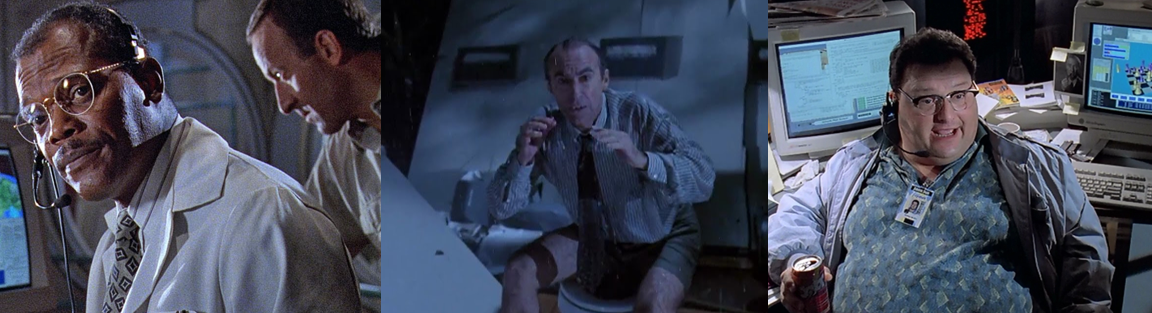
Malcolm openly questions Hammond’s morality, who’s forced to acknowledge his mistakes.

Contrasting the more subdued and logical Grant and Ellie is mathematician chaotician Doctor Ian Malcolm (Goldblum), an outspoken and excitable advocate of the morality surrounding Hammond’s park who effortlessly steals every scene he’s in with his whimsical delivery and endlessly quotable lines. Unlike the others, Malcolm specialises in chaos-theory, the idea that small events can have massive consequences, and his theories regarding the return of dinosaurs potentially upsetting the natural balance of the world are routinely waved off by Hammond due to Malcolm’s aggravating personality and irreverent sense of humour. While the others are concerned with the financial implications of the park or the question of whether it was right to bring dinosaurs back, Malcolm is aghast at how recklessly Hammond upset the balance of nature and his inability to recognise that nature is known to adapt (as he puts it, “Life, uh…finds a way”) and is thus the only one to truly get that the park (and the ability to genetically engineer any creature) is potentially dangerous. In contrast to Grant, Malcolm is a confident (crucially, overconfident) womaniser with many ex-wives and children; he’s also much more impulsive, which leads to him putting himself in danger and ending up critically injured for most of the film (in contrast to his book counterpart, who clearly dies despite the awkward retcon in the second book). Industrialist John Hammond is the driving force behind Jurassic Park; contrary to his book counterpart, Hammond is far from a grouchy, gruff, self-serving old man and is much more of a benevolent, if misguided, grandfatherly figure. A wealthy entrepreneur who has long wished to captivate audiences with attractions that will instil a sense of wonder, Hammond is like an excitable child who is far more concerned with putting on a good show regardless of the cost. However, while he’s clearly a visionary, his park and the research conducted to make it a reality are not based in science that he has any real understanding of or claim to; as Malcom so eloquently puts it, Hammond has “stood on the shoulders of geniuses to accomplish something as fast as he could” in order to, essentially, sell a product without any appreciation for the implications of his actions. Consequently, Hammond is absolutely blinkered to the potential danger of his park and the moral question of bringing dinosaurs back to life; he is absolutely convinced that the park’s teething problems are a mere hiccup and is so sure of his state-of-the-art park and fool proof systems that he even has his grandchildren visit alongside his experts. However, when the park’s safety measures are disrupted by sabotage, Hammond is eventually, begrudgingly, forced to admit that his reach has exceeded his grasp and refocus on atoning for his actions by leading the survivors, and his beloved grandchildren, to safety and left morosely contemplating the consequences of his recklessness.

Grant becomes a protector to Lex and Tim when they’re stranded on an island full of dinosaurs.

Hammond’s grandkids, Lex and Tim, are unexpected additions to the weekend tour for Hammond’s guests. Young, enthusiastic children who are clearly besotted with their grandfather, they’re only too happy to visit the island and witness the technological and biological wonders their grandfather has built there over the last five years. For Grant, this poses a bit of a problem as he doesn’t really know how to talk to children, but things are made even more uncomfortable for him when Tim exhibits a hero’s worship of him and his writing (he even models his look on Grant’s) and Lex immediately develops a schoolgirl crush on him, much to Ellie’s amusement. Representing Hammond’s “target demographic”, Lex and Tim are absolutely blown away when they get up close and personal to a sick Triceratops but they (and the others) are left disappointed when the park’s main attractions fail to adhere to Hammond’s expectations and schedule. The two bickering siblings quickly get more than they bargained for when the T. rex bursts free from its paddock and attacks their van, an experience that leaves Lex severely traumatised and in a state of shock after lawyer Donald Gennaro (Martin Ferrero) chooses to abandon them to their fate. Thanks to Grant’s knowledge of the T. rex, the kids are momentarily saved from danger, but he ends up stranded in the park with two shellshocked kids to look out for. This proves to be a surprising bonding experience for Grant, who comes to appreciate Tim’s dinosaur knowledge, and he repeatedly goes out of his way to keep the kids safe, teach them about dinosaur behaviours, and to encourage them to keep moving in order to get them to safety. The kids are also a little different from the book, as I recall, as Lex is now a gifted “hacker” and is instrumental in restoring Jurassic Park’s systems and safety protocols in the film’s final act and Tim proves almost as knowledgeable as Grant when it comes to dinosaur identification. While the two tend to descend into aggravating screaming and are often bratty and a hinderance to Grant, they’re surprisingly well-rounded child characters with a lot of personality and likeable qualities; Lex is a bit of a quiet introvert, whereas Tim is much more outspoken and cheeky, but both are left dazed and terrified by their experiences with the T. rex and ‘raptors, as one might expect. Still, while they squabble and bicker like all children and siblings, they work well as a team and look out for each other, which is most evident when they’re pinned down by two ‘raptors in the kitchen and must work together to outsmart and escape from the vicious carnivores.
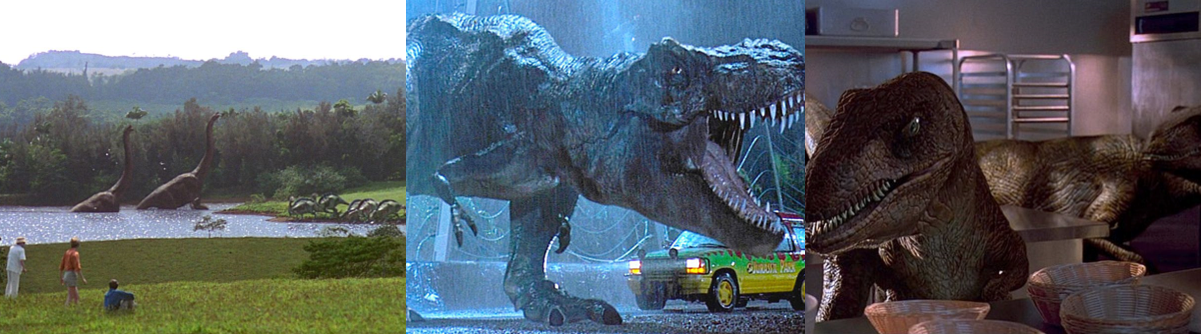
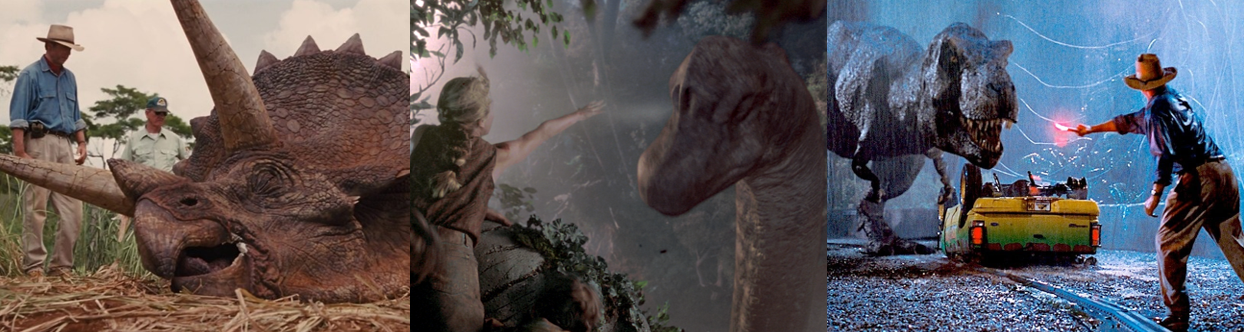
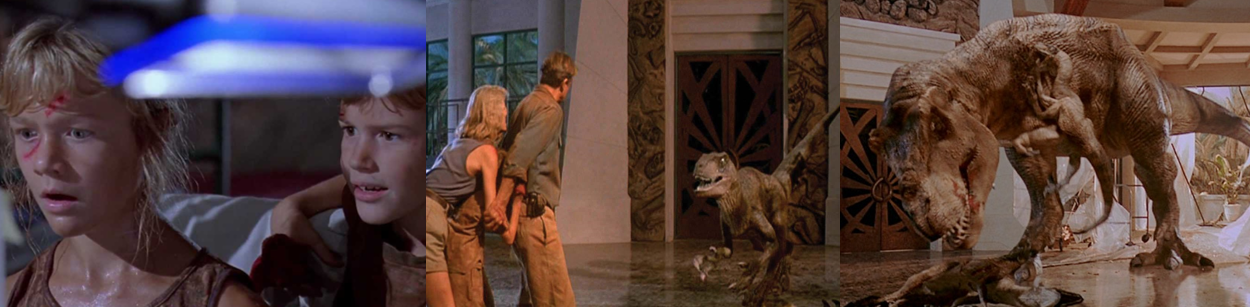
Thanks to Nedry, many of the other supporting characters become prey to the voracious dinosaurs.

Other notable names include Ray Arnold (Samuel L. Jackson), Jurassic Park’s chief engineer whose frustrations with the bugs and teething problems caused by the park are only exacerbated when industrial sabotage shuts off all the safety measures. Though cynical and crotchety, he works tirelessly to restore power to the park, which ultimately leads to his horrific offscreen death at the claws of the ‘raptors. Robert Muldoon (Bob Peck) knows the dangers of the park’s attractions only too well; the resident game warden, he, like Grant, has an incredible respect for the intelligence and ferocity of the dinosaurs, especially the ‘raptors, and takes handling and caring for the creatures very seriously. However, despite all of this (and presumably being an experienced hunter), he also falls prey to the ‘raptors when he underestimates their intelligence. Following the death of a park worker, Donald Gennaro is incredibly concerned about the potential danger that the park poses and, at the behest of Hammond’s investors, he is charged with launching a safety evaluation of Jurassic Park and thus invites industry experts to evaluate the facility to appease both himself and the underwriters. Although initially seen as little more than a cliché, pen-pushing bureaucrat, Gennaro is awestruck by the financial potential of Jurassic Park and keen to reap the rewards of its unique attractions, which quickly override his initial concerns about safety and lawsuits. Pragmatic and officious, he shows his true colours during the T. rex’s escape from her paddock and receives easily the most shocking and brutal death in the entire film simply because he let his fear and panic overwhelm him. Easily the most significant of the film’s side characters is programmer Dennis Nedry (Wayne Knight), a disgruntled and underappreciated member of Hammond’s staff who feels so underpaid and undervalued that he’s only too happy to sabotage the park and steal samples of the dinosaur DNA for Hammond’s rival, Doctor Lewis Dodgson (Cameron Thor). This, of course, is the catalyst for all of the troubles that befall the park as Nedry shuts down the security protocols and then stumps Arnold and the others with his “hacker crap”. Unfortunately for the selfish and egotistical Nedry, his escape from the park is hindered by a devastating storm and he ends up falling victim to a savage Dilophosaurus, thus meaning his betrayal of his employer was all for naught.

As spectacular as the dinosaurs are, the T. rex and ‘raptors are the stars of the show.

Naturally, the dinosaurs are the star of the show and, truthfully, what we all came to see. The sense of scale and wonder evoked by the creatures is perfectly captured right from the off as Grant, Ellie, Malcolm, and Gennaro are absolutely captivated at the sight of a massive Brachiosaurus and Parasaurolophus herds grazing on the open plains. Of course, we all came to see the true show-stealer, the T. rex; the undisputed king of dinosaurs is an elusive fascination for the first hour or so of the film but makes a dramatic and instantly memorable first appearance when she bursts out of her paddock to attack Hammond’s guests. A titanic, monstrous creature that exudes viciousness, her coming is heralded by the impact of her feet, the iconic rippling of water, and her screeching roar; the way she rips at the tour vehicles and charges relentlessly after her prey makes her a real and terrifying threat, made all the more tangible by the ridiculously impressive animatronic used during her first appearance. The T. rex remains a constant threat for Grant, Lex, and Tim as they make their way back to the visitor’s centre, slaughtering Gallimimus as they flee for their lives, but is rendered in a far more heroic light by the finale thanks to how fierce and calculating the ‘raptors have been in her absence. As massive and undeniably intimidating as the T. rex is, however, the Velociraptors are unquestionably the primary antagonists of the film and their threat is established right from the first scene. Grant also gives an intimidating lecture about how intelligent and dangerous the creatures were back in the day, a sentiment echoed by Muldoon, and it’s through both of them that the film very quickly and clearly establishes that the ‘raptors are highly intelligent and vicious creatures who used co-ordinated attack patterns to hunt down their prey. While the Dilophosaurus easily takes second place as a dangerous creature in the park and makes a lasting impression with its snake-like hiss, neck frills, and blinding venom, the ‘raptors are portrayed as surprisingly smart, incredibly fast and agile, and relentless pack hunters who quickly work out how to open doors by twisting handles, lure in prey using decoys, and claim the highest body count of all of the park’s attractions.

The Nitty-Gritty:
If you can’t suspend your disbelief to accept the science of the film then you’re probably better off reading the book, which devoted entire chapters to detailing the scientific process behind the dinosaur’s resurrection. The film makes things much more audience friendly thanks to an animated sequence in which the park’s mascot, Mr. DNA (Greg Burson), very simply explains how InGen’s scientists extracted dinosaur DNA from fossilised mosquitos, mapped the genetic code, and filled in any gaps in the DNA sequencing with frog DNA to create the park’s dinosaurs. The man behind all this is Doctor Henry Wu (B. D. Wong), who explains that Jurassic Park’s dinosaurs are carefully monitored and engineered to prevent unauthorised breeding by making them all female. Malcolm’s scepticism regarding this later turns out to be true as Grant discovers life has indeed found a way and some of the dinosaurs have spontaneously changed sex in order to breed like “some West African frogs”, but it’s also stated that Hammond’s scientists implemented a “Lysine Contingency” to ensure the dinosaurs can’t survive without regular doses of Lysine. I think it’s only fair to point out that the film never claims that their dinosaurs are 100% scientifically accurate; it’s openly stated that they’ve have been genetically altered, thereby explaining any physical or behavioural differences. What isn’t quite as easily explained is how Grant, the unquestionable expert on Velociraptors, isn’t able to recognise a baby ‘raptor when one is in his hands, but it’s a small issue compared to how entertaining the rest of the film is. So revolutionary is Hammond’s research that it attracts the attention of rival company Biosyn, whose head of research, Dr. Dodgson, pays Nedry an extortionate amount of money to steal viable dinosaur embryos from Hammond’s laboratory. If I remember right, Dodgson had a much larger role in the book (or maybe it was in the follow-up; it’s hard to remember as the books were so dull) but, in the film, Dodgson is simply a mysterious figure who wants to catch up to (and, presumably, overtake) InGen’s genetic engineering research. Although it’s only a small role, Dr. Dodgson can thus be seen as a dark opposite of Hammond since both took shortcuts to get ahead, but neither of them really got what they wanted in the end as Hammond loses faith in his vision for Jurassic Park and Dodgson is denied the embryos after Nedry is killed.

The CGI stands the test of time thanks to the incredible animatronics used to bring the dinosaurs to life.

I think it’s only fair to offer some praise to John Williams’ orchestral score, which is almost as iconic as the film’s much-lauded special effects and perfectly captures the sense of awe, amazement, and spectacle offered by the film. Indeed, “spectacle” is the most appropriate one-word summation of Jurassic Park; even comparatively trivial things like the arrival on Isla Nubar and the massive, King Kong-like gates are treated as a marvel, to say nothing of the sense of grandeur offered to the dinosaurs. It should be no surprise considering Spielberg’s body of work, but Jurassic Park does a wonderful job of building tension and anticipation to the reveal of its dinosaurs; the opening sequence is a pretty horrific snapshot of just how ferocious the ‘raptors are but it takes some time before we properly see the dinosaurs in full. Even after we’ve had a taste of the park’s residents thanks to the dramatic reveal of the Brachiosaurus, the guests (and Hammond) are left disappointed when the dinosaurs fail to appear during their tour, which only increases the anticipation of the dinosaur’s appearances. Of course, as fantastic as the CGI is, it holds up so well even today thanks to the incredible animatronics used to bring the dinosaurs to life; when Grant and the others tend to the sick Triceratops, it’s a fully practical effect that really helps to sell the weight and believability of the creatures. The special effects on show were not only pioneering and game-changing for cinema, but also forever set the standard for how dinosaurs are portrayed in media going forward; even now, the look, sound, and depiction of dinosaurs still takes a lot of its influence from Jurassic Park, despite how scientifically inaccurate a lot of the creatures are. Sure, we know now that Velociraptors were much smaller and had feathers and even the book debunked the belief that the T. rex was a purely visual hunter, but this was unquestionably the closest depiction of dinosaurs ever put to screen and it remains a genre and industry standard thanks to the ground-breaking special effects.

With the power restored, the T. rex to makes a last-minute save so the survivors can escape.

Jurassic Park is very much a mixture of genres; it’s primarily a sci-fi cautionary tale, but Spielberg does a fantastic job of weaving interpersonal dramas and morality tales into the narrative, as well as framing dinosaurs like the T. rex and ‘raptors as creatures ruled by their instincts but filmed in a way that evokes horror and monster movies. This is obviously most explicitly seen in the T. rex’s paddock escape, a harrowing sequence where the human characters are rendered defenceless, powerless bugs compared to the size and might of the T rex. Their only means of survival is standing completely still and quiet, something the kids obviously find near impossible to achieve given how terrifying the situation is, and Grant is constantly having to find ways to distract and get around the T. rex as there’s no question of being able to fight back against the mighty titan. Although the ‘raptors are smaller and the protagonists have weapons that could conceivably be used to kill them, they never get the chance to really fight back; Muldoon, the most experienced person on the island, is killed off before he can fire a single shot and the others are more concerned with survival than trying to fight off their attackers. This goes some way to explaining why Ellie didn’t use the shotgun to shoot the ‘raptors; she’s a palaeobotanist after all, not a game hunter. Ultimately, despite restoring power to the park, the survivors end up pinned down by the voracious ‘raptors but find an unlikely saviour in the T. rex, which shows up for a dramatic last-minute “rescue” of sorts that allows the survivors to slip away to safety and fly away from Isla Nubar forever changed by their harrowing experiences with the reborn dinosaurs.

The Summary:
There’s a reason that Jurassic Park has stood the test of time. It’s actually kind of crazy how well the CGI holds up even to this day and the reason for that is not just the meticulous attention to detail and tireless efforts of the team at Industrial Light & Magic (ILM) but also the incredibly realistic and complex animatronics used to bring the dinosaurs to life. The blend between the two is largely seamless and I’ve seen modern-day movies that can only dream of this kind of flawless digital composition. The spectacle on offer here is, quite literally, timeless and Spielberg crafted an instant classic based on the thrilling concept alone. However, it’s not simply a mindless monster movie and there’s more on offer than just the dinosaurs; the characters are all very well realised, with nuances and unique aspects to their personalities that make them all very believable and relatable. Even experts like Grant and Ellie are terrified when the dinosaurs are set loose, and I think it was a smart decision to frame the narrative around survival and the insignificance of man compared to these long-dead and dangerous, near-mythical beasts. There’s a fantastic blend of wonder and horror here, with the dinosaurs being awesome, remarkable creatures but also ferocious and surprisingly intelligent hunters. They’re portrayed as being both extremely gentle and terrifyingly vicious, acting purely on instinct and able to adapt to the then-modern world in ways that make them incredibly dangerous. Alongside this is, of course, the introspective commentary on our place as the dominant species of the planet, the morality of using science to play God and restore long-extinct creatures to life, and the ferocity of nature, with the overriding message being that man should never exceed his grasp lest he underestimate the consequences of his actions. Compared to the book, which was a tedious read from start to finish, Jurassic Park is an absolute thrill all the way through; the spectacle alone explains why it performed so well and remains a modern classic, and even the far less memorable sequels can’t dilute the allure of this original masterpiece of digital and practical effects wizardry.

My Rating:

Rating: 5 out of 5.

Fantastic

What are your thoughts and memories of Jurassic Park? If you saw it in the cinema when it first released, what was your reaction at the time and how do you think it holds up today? Are you a fan of the book and, if so, did you still enjoy the film or was there too much changed in the adaptation process? Which of the human characters was your favourite and were you shocked by the amount of blood and death seen in the film? What’s your favourite dinosaur, either in this film or in general? Are you a fan of Jurassic Park’s sequels or do you consider the first one to be the best? How are you celebrating Dinosaur Day this year? Whatever your thoughts on Jurassic Park, and dinosaurs in general, sign up to leave them below or drop a comment on my social media.