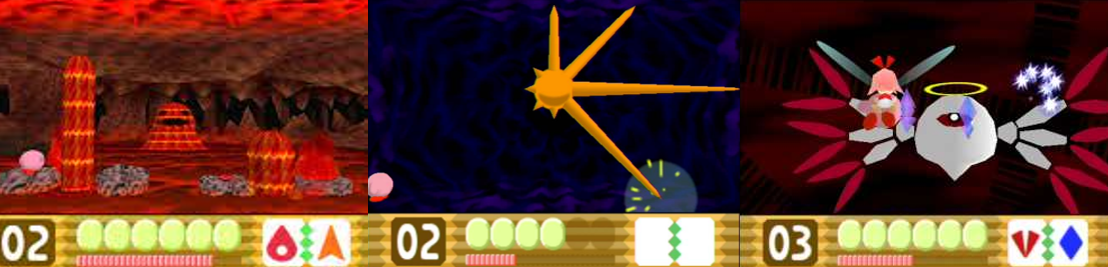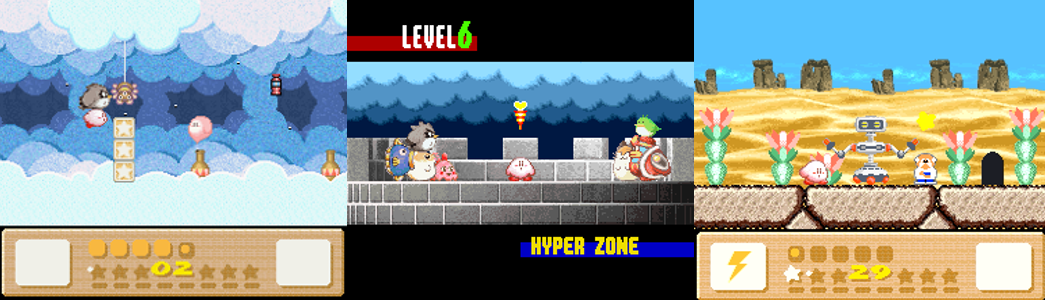
Game Corner [Sonic Month]: Sonic Chronicles: The Dark Brotherhood (Nintendo DS)


Sonic the Hedgehog was first introduced to gamers worldwide on June 23 1991 and, since then, has become not only SEGA’s most enduring and popular character but also a beloved videogame icon. Thus, in keeping with tradition, I’m dedicating some time to celebrate SEGA’s supersonic mascot.


Released: 6 August 2009

Developer: BioWare

Metacritic Score: 74 / 6/3

Quick Facts:
Forces to abandon console manufacturing, SEGA developed games for Nintendo’s GameCube and Game Boy Advance alongside Dimps. Following a highly praised trilogy and two very successful dual screen adventures, SEGA partnered with noted roleplaying game (RPG) developer BioWare for Sonic’s first RPG and BioWare’s first handheld title. Developed with a darker theme focused on characterisation and accessible combat mechanics, Sonic Chronicles was heavily criticised for its low quality MIDI soundtrack and forever changed Sonic’s comic book adventures when hack artist/writer Ken Penders sued SEGA for copyright infringement.

Gameplay and Power-Ups:
Sonic Chronicles: The Dark Brotherhood is an RPG in which players form a team of up to four characters from a roster of ten familiar faces from the franchise (two being optional and one being newcomer Shade the Echidna) and battle against the mysterious Nocturnus Clan across ten chapters. While Sonic is always on your team unless you’re asked to form two teams to handle separate objectives, you can switch the onscreen character by tapping the lower screen and the story progresses regardless of who’s in your team, with only some optional additional dialogue and exploration options being available for each. Sonic Chronicles goes all-in with the Nintendo DS touch screen, meaning every action is conducted via the stylus and touch screen, including controlling your characters, progressing dialogue, solving puzzles, and battling enemies. This is a touch jarring, and disappointing, as it can be difficult comfortably holding the Nintendo DS and I found tapping the screen inconsistent at times (though this could’ve been due to my touch screen). You start as Sonic but quickly hook up with Miles “Tails” Prower and Amy Rose to rescue Knuckles the Echidna, with each giving a sense of what the game has to offer. Characters come in three classes: “Power” (who focus on attacking), “Shifter” (who shift between attacking, supporting, and afflicting status ailments), and “Support” (who focus purely on supporting your team and have low attack power). Personally, I focused more on powering through battles, which will serve you well for the most part as the game doesn’t get too taxing until the final chapter, though you can heal and inflict status ailments on enemies, such as stunning them or putting them to sleep. Naturally, you earn Character Experience (XP) from battles that allows you to level-up and become stronger, adding special “Power/POW Moves” to your arsenal, though the highest level you can achieve is thirty and I found you don’t gain much XP compared to other RPGs.

Whether you’re exploring, fighting, or chasing, everything’s controlled via the touchscreen and stylus.

As you awkwardly explore, uncovering more of the map and interacting with various non-playable characters (NPCs), you’ll see context-sensitive actions pop-up to help you navigate. This means tapping the screen to make Sonic or Shadow the Hedgehog run through loops, flying across gaps as Tails or Cream the Rabbit, and smashing crates with Amy or Knuckles. Knuckles is a bit of a jack-of-all-trades as he can glide over short gaps, smash crates, and climb walls, but you’ll need Tails to fly further and Amy to smash metal crates. Enemies appear on the overworld, meaning you can avoid most battles if you wish, and you can flee most battles or fight for XP, items, and Golden Rings (used to purchase items or retry if you’re defeated). When in battle, you must deplete the enemy’s hit points (HP) before yours are drained, regaining HP from certain POW Moves, restorative items (like Health Roots and Health Seeds), or when meeting at safe houses like Tails’ lab. While your regular attacks deal decent damage, especially with the right setup, and require only that you tap the “Attack” command, POW Moves cost POW Move Points (PP) to execute and see you completing various touch screen actions. You must also complete these when enemies use their own POW Moves, reducing or even avoiding damage if you tap every icon, mash in a circle, or drag the stylus as directed. These can be finnicky and become tougher when executing or defending against stronger attacks, but they can deal greater damage, damage all enemies, and inflict status effects. You can also defend against incoming attacks, use items to heal HP or PP or revive fallen allies (with you still being able to attack after selecting an item), and flee. Enemies may also flee, triggering a chase sequence where you must grab Rings, tap the screen to jump over obstacles, and use dash pads to catch your foes or escape, with your success largely dictated by how accurately you tap the screen and how high your “Speed” stat is.

Sadly, the side missions, puzzles, and various gimmicks don’t add up to much.

The “Speed” stat also allows you to attack first, or multiple times per “Round”, while the “Luck” stat dictates how often you “ambush” enemies, avoid attacks, or deal critical hits. You can boost stats by equipping gloves, shoes, accessories, and a Chao to each character. These are either purchased, found in crates, earned from battles, or (in the case of Chao) found on the overworld and take time to hatch. These all boost your stats and maximum HP, allowing you to land one-hit KOs or inflict elemental damage (with some enemies being weak to lightning or ice attacks), and increase your rewards, among many other benefits. With the right setup, your team can be virtually unstoppable, especially in “New Game+” where you decimate enemies without taking a single hit. While your primary objective is investigating the Nocturnus Clan, initially determining whether Doctor Eggman is still a threat and then briefly teaming with him against a common foe, NPCs offer side missions to tie into the main plot or offer secondary rewards (usually item crates or Chao eggs). Objectives often involve exploring, battling or clearing out all enemies, recovering key items, and activating consoles to power or deactivate barriers, doors, and even flooded corridors. These appear in the final chapter and see you using air bubbles to avoid draining your PP. While these gimmicks can be tedious, especially as enemies respawn and it can be annoying navigating environments without the right characters (you need Big the Cat to pass through toxic clouds, for example), they’re relatively simple. There are also more aggravating switch-based puzzles that see you placing each character on a specific switch, either in the correct order or to activate various machinery (like a crane or a lift). Some of these, such as the puzzle leading to Dr. Eggman’s secret tunnel, are unnecessarily aggravating, while others are just trial and error. Optional objectives can further bolster your team with additional characters and rewards and the final chapters see you earning the trust of the various aliens in the “Twilight Cage” and splitting into two teams to lead an all-out assault against Nocturnus leader, Imperator Ix.

Presentation:
Sonic Chronicles opts for a cel-shaded, quasi-isometric aesthetic for the most part, with 3D modelled characters navigating what appear to be hand-drawn environments with some polygonal elements. Character models vary between the overworld and the battle screens, mostly appearing as chibi-style renditions somewhat reminiscent of Sonic Shuffle (SEGA, 2000), and are quite limited at times. Sure, they have some fun animations when idle, using their abilities, POW Moves, or succeeding in battle, but they also look a bit ugly, deformed, and low resolution. These co-exist alongside comic book-style animated sequences that badly echo the Sonic X (2003 to 2005) art style, resulting in some disturbingly off-model cutscenes. There are a fair few characters to pick from, however, with each offering different challenges in their POW Moves and most having decent story arcs. Knuckles largely takes centre stage as he’s reunited with his lost people, but there are some fun moments to mess with Sonic’s characterisation as the dialogue options see him mock, encourage, or dismiss his allies and enemies depending. I liked seeing outcasts like Shadow and newcomer Shade begrudgingly join forces with Sonic and the others, and seeing Sonic and Dr. Eggman team up (only for him to betray them in a sadly unresolved cliff-hanger), and that the story is peppered with references to the wider Sonic franchise. There’s talk of “Robotization”, for example, and you battle a few “Swat Bots”, and Imperator Ix delivers additional lore for the echidnas and the Gizoid fighting robots. While many complained about the game’s soundtrack, I never had an issue with it. It’s not the most memorable, save for a chip tune rendition of the “Doomsday Zone” theme in the final chapter that I always found fun, but it matches the action and events. There are also some recognisable sound effects from the games and a handful of sound bites peppered in, though even I have to admit that much of the presentation is very basic and lacking, with environments being clunky to navigate and largely empty.

Sadly, the intriguing story is bogged down by some confused and muddy visuals.

Sonic Chronicles sees you visiting and exploring some familiar, if drastically altered, locations from the videogames. Naturally, you start in Green Hill Zone, which acts as a tutorial, before venturing to Central City, where the Guardian Unit of Nations (G.U.N.) and Tails’ lab are. These areas also hide hidden bases used by Dr. Eggman and the Nocturnus Clan and see you using the Tornado to fast travel around. They also lead directly to the toxic Mystic Ruins and, after teaming with Dr. Eggman, players venture to his decimated main base, Metropolis, which gets further damaged after Imperator Ix steals the Master Emerald and causes Angel Island (a sadly limited play field) to crash into it. There are also some original areas to explore, like Blue Ridge Zone (an Old West style town that includes the remnants of Station Square and Dr. Eggman’s secret tunnel to Metropolis), and fun Easter Eggs (such as Eggrobos and a Mega Drive being strewn about Metropolis). Things really turn bizarre when Dr. Eggman helps Sonic and his friends travel to the Twilight Cage, a surreal, alternative dimension housing various wacky aliens. You’ll encounter the Kron, proud rock-monster miners, the gelatinous, slug-like N’rrgal, the Voxai (psychic manta ray-like aliens), and the warlike Zoah, who must be united against the Nocturnus Clan. The various areas in the Twilight Cage may be noticeably smaller than their predecessors, but they’re more visually interesting, including volcanic mines, bizarre alien fauna, and luminescent, high-tech cities. Imperator Ix’s citadel is a complex maze of paths and doors, one swarming with Gizoids and other powerful enemies, and desperately fending off the allied aliens’ assault. When in combat, things switch to a simple battle arena that reflects whatever area you’re in and, when exploring, you’ll constantly see the map on the top screen to keep track of alternative routes, your objective, and any Chao eggs you’ve missed.

Enemies and Bosses:
Unlike most Sonic videogames, you won’t be freeing cute woodland critters from Badniks here. As the game starts with Dr. Eggman defeated and presumed dead, you mostly fight enraged armadillos, wild boar, and wasp swarms and their queens. Giant scorpions, raptor hawks, and giant millipedes also appear, with them parrying your attacks, poisoning with their quills, regenerating HP, or blasting you with their tails. The Nocturnus Clan’s Marauders and Dr. Eggman’s Swat Bots toss grenades to stun you and self-repair, respectively. Dr. Eggman’s various sentry bots and drones use buzzsaws, bombs, and self-destruct, while rocket-firing or shield-carrying Pawns up their defence. When in the Twilight Cage, you must initially battle the locals, with the Kron Warriors being noticeably durable (unless you equip wind, water, or ice elements), the brainwashed Voxai firing psychic waves and hiding behind shields, and N’rrgal drones draining your HP. The Twilight Cage is also swarming with higher-level Nocturnus soldiers and various Gizoids that are both far more durable and deal greater damage, especially as their POW Moves are trickier to avoid. Nocturnus Praetorians, for example, target one character with a Hellfire blast, Nocturnus Triarius leech HP with their blades, and these enemies are more likely to parry or avoid your attacks, too. The Gizoids can utilise every playable character’s and Nocturnus’ POW Moves and regenerate their HP, making them formidable and unpredictable to the unprepared player. Some enemies appear as mini bosses, too, like the Swat Bots that guard Dr. Eggman’s bases, the three powerful “Overmind” Voxai, and the Gizoid “Prefects” Charyb and Scylla, who are initially unbeatable before your two teams solve some puzzles to make them vulnerable.

Battles are ridiculously easy until you reach the final chapters, where the difficulty noticably spikes.

Shadow is also fought as a mini boss in the Mystic Ruins and Blue Ridge Zone, where Sonic must fight him alone after chasing him down. Although Shadow is fast and can hurl his Chaos Spear, he’s not especially difficult. Shade is initially fought as a mysterious Nocturnus “Procurator” who can activate a cloak and attack with her Leech Blade. You must also battle one of Dr. Eggman’s malfunctioning Egg Bots to reach the Twilight Cage and endure a gauntlet on the Zoah Colony that sees you battling General Raxos’ minions and Commander Syrax, with no chance to heal or save between bouts. This culminates in a one-on-one fight between Sonic and General Raxos that can be troublesome as the Zorah regenerate HP, target your allies, and use shields. Charyb and Scylla can also be formidable as their Mighty Slash inflicts sleep, though your greatest test comes from Imperator Ix. You first fight him on Angel Island, which isn’t much to shout about, but he’s far more formidable in the final chapter, where he’s fought in a multi-stage battle. First, Knuckles and his team battle Imperator Ix and his Power Pylons. These regenerate Imperator Ix’s HP so it’s worth taking them out (though he can also resurrect them), but you must also watch out for Imperator Ix’s Doom Orb (which will put you to sleep and/or stun you), his aggravating counter attacks, and his sceptre blast that can easily KO you or your allies. When you fight him with Sonic’s team, he’s much easier as the Power Pylons can be ignored. You then form another team to chase him down (hopping over his energy balls) and battle him alongside a couple of Gizoid Guardians, which is also a lot easier than the first fight (though you must defeat the Gizoids as well as Imperator Ix). Imperator Ix then transforms into Super Ix using the Master Emerald for a final bout with Super Sonic. This is fought entirely using automatically executed POW Moves, meaning you must tap and drag the stylus to avoid taking damage. Since you cannot use your items and Super Ix regenerates a load of HP, you must perfectly execute your POW Moves and taps to avoid taking too much damage and finish Imperator Ix off for good.

Additional Features:
There are forty Chao to hatch in Sonic Chronicles, with numerous eggs scattered across every environment. There are also a bunch of treasure chests to find, each containing regular items and additional accessories to further boost your stats. Further rewards are earned by helping various NPCs and you’ll often need specific characters for this as you need different abilities to explore, but it’s not always mandatory unless you want a fully stocked inventory. I would advise helping E-123 Ω “Omega” in Metropolis, however, as he’s an absolute powerhouse who can really make a difference in a fight. I didn’t have as much use for Cream but, if you’re a fan, you can recruit her in Green Hill Zone. You can also review your Chao in the Chao Garden and even trade them with friends using multi-card play. Completing the game unlocks “New Game+”, which starts a new save file with all your skills, equipment, Chao, and XP carrying over. You must auto-level-up and set each character up, but this makes replaying the game a breeze as you’re so overpowered that nothing poses a threat until you reach the Twilight Cage.

Final Thoughts:
I’ve always been a fan of Sonic Chronicles: The Dark Brotherhood. It’s ridiculously easy at times, especially on “New Game+”, and incredibly basic for an RPG, but I’ve always found it a fun, hassle-free game for the most part. I enjoyed the story and how it expanded upon echidna lore in interesting ways, finally bringing in some new echidna characters and giving Sonic and his friends a chance to showcase more of their personalities through the dialogue options. I’m still annoyed we never got a resolution to the cliff-hanger and that Shade has vanished into obscurity, and have always defended the game as a decent enough adventure. Yet, Sonic Chronicles is far from perfect. The emphasis on the touch screen was a big mistake, in my opinion, and I would’ve much preferred being able to control my character and make selections with the left stick or directional pad rather than using the stylus. This control scheme makes it clunky and awkward to navigate the sadly barren worlds, whose puzzles are repetitive and often frustrating and amount to little more than accessing a new area or reaching another chest or Chao egg. I quite enjoyed the combat, as limited as it can be. Your enjoyment of the POW Moves may vary depending on how good your touch screen is, but they were a visually fun twist on the usual magic system of most RPGs and I quite liked the chase mechanic, as finnicky as it was. I do think more could’ve been done with this, the character-specific actions, and the character classes, however. It seems the only thing the developers did to make Sonic Chronicles unique was force you to complete touchscreen quick-time events, which is disappointing given the potential of the characters and this world. Graphically, the game’s okay and I never had an issue with the music, but I can see why these aspects are a turn off. Perhaps sticking to traditional 2D for everything but the combat would’ve been a better solution? Either way, I still think Sonic Chronicles is under-rated and over-hated. It’s not going to appeal much to die-hard RPG players but it’s a fun enough introduction to the genre that I’d love to see referenced again in the mainstream games.

My Rating:

Rating: 3 out of 5.

Pretty Good

Did you also enjoy Sonic Chronicles: The Dark Brotherhood or did you find it disappointing? Were you a fan of the touchscreen controls and mechanics? Did you find the graphics and music ugly and grating? Which characters made it into your final team? What did you think to Nocturnus Clan and Shade? Would you like to see these original characters return and get some resolution? Which of Sonic’s spin-off titles is your favourite and how are you celebrating Sonic’s anniversary this year? Let me know your thoughts on Sonic Chronicles: The Dark Brotherhood in the comments and go support me on Ko-Fi to fund more Sonic content!

Game Corner [Sonic Month]: Sonic Advance 3 (Game Boy Advance)


Sonic the Hedgehog was first introduced to gamers worldwide on June 23 1991 and, since then, has become not only SEGA’s most enduring and popular character but also a beloved videogame icon. Thus, in keeping with tradition, I’m dedicating some time to celebrate SEGA’s supersonic mascot.


Released: 7 June 2004
Developer: Dimps / Sonic Team
Metacritic Scores: 79 / 7.9

Also Available For: Nintendo Wii U (Virtual Console, Japan only)

Quick Facts:
When SEGA lost their stake in the home console market, they produced software for their rivals, Nintendo, teaming with Dimps for Sonic Advance (2001), 2D throwback to Sonic’s glory days and a Game Boy Advance best-seller. Following the equally lauded (if difficult) Sonic Advance 2 (2002), Yuji Naka conceived of the third game’s team-up mechanic. Sprite scaling created psuedo-3D rotation effects and the game surprisingly tied in to the under-rated Sonic Battle (Sonic Team, 2003) with its new robot antagonist, “Gemerl”. Like is predecessors, Sonic Advance 3 was met rather warmly, with the new team-up mechanics being widely praised but the level layouts criticised.

Gameplay and Power-Ups:
Unsurprisingly, considering the history of 2D Sonic titles and the previous Sonic Advance series, Sonic Advance 3 is a 2D, sidescrolling platformer in which players race across seven stages (or “Zones”), each with three levels (or “Acts”), collecting Golden Rings to avoid losing a life (and to gain a life once you collect 100) and bashing Badniks to add to your score tally. Like its predecessors, Sonic Advance 3 gives you the option to toggle off the timer, which I’d recommend as the series continues to be stingy with its lives and Sonic Advance 3 substitutes the breakneck speed into bottomless pits from the last game with frustrating surprise hazards, awful enemy placement, and bizarre level geometry that makes Sonic the Hedgehog CD (SEGA, 1993) look well designed! Sonic Advance 3 can also be played on “Easy” or “Normal” difficulties to make bosses easier or harder and players can reconfigure the buttons, though I wouldn’t say there’s a need for this. While each character controls a little differently, being faster or slower and having different jumping heights, they all share some common abilities. Therefore, A always jumps and attacks, B always performs a “Special Attack”, holding the Right trigger always calls your partner to you and allows you to charge and perform a “Tag Action”, and you can pretty much always perform a Spin Dash by holding down on the directional pad and pressing B. All the same power-ups appear in Sonic Advance 3, too, with players getting a speed boost, temporary invincibility, either five, ten, or a random number of Rings, an extra life, being thrust to their maximum speed, being shielded from a single attack, or attracting nearby Rings. This time around, Omochao also appears to give you tips, remind you of the controls, and tell you what stuff does on the hub world. Since there are ten Chao hidden in each Zone, you may need Omachao’s help to find them if you want to enter the Special Stages. Finally, all the usual gimmicks return, such as air bubbles to stave off drowning, springs, boost pads, loop-de-loops, spikes, bottomless pits, and ramps to fly off and perform tricks with R (depending on your team).
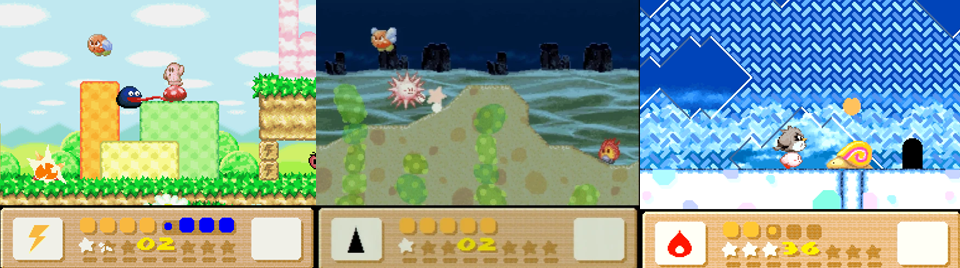
Team up characters to change their abilities and perform special Tag Actions.

Yes, like Knuckles’ Chaotix (SEGA, 1995) and Sonic the Hedgehog 4: Episode II (Dimps/Sonic Team, 2012), and in keeping with the theme of the “real superpower of teamwork!” emphasised in Sonic Heroes (Sonic Team USA, 2003), Sonic Advance 3 features a partner system. Players must make a two-person team, with Sonic and Miles “Tails” Prower being the default team and others being unlocked through the story mode. A second player can even jump in for some co-op action and some combinations have special team names, like Sonic and Amy Rose being “Lovely Couple”. While your partner often disappears from the screen due to the game’s fast-paced action and much of it can be played alone, there are times when it’s beneficial to use Tag Actions to bypass obstacles or reach hidden areas. Also, each team fundamentally alters the gameplay, adding or removing abilities from your characters. For example, Tails can still fly by twirling his tails, Knuckles the Echidna can glide and climb walls, Amy whacks Badniks with her Piko-Piko hammer, and Cream the Rabbit flies and commands her Chao, Cheese, to attack enemies, but these abilities change depending on their partner. Consequently, if you partner Tails with Knuckles, Tails cannot fly and instead performs a Knuckles-like glide; Knuckles’ glide gains a homing attack when partnered with Cream; Amy gains a jumping dash when teamed with Sonic; and Cream can spin Cheese in an attack when teamed with Knuckles. There are pros and cons to this; teaming Sonic with Cream, for example, lets him breathe underwater, but having Amy as a partner often leaves you defenceless when jumping. Holding R to summon them performs a Tag Action, such as blasting you ahead at breakneck speed, flinging you high into the air, having Tails carry you around, launching Knuckles as a projectile or gliding on his back, using Cheese as Cream would, and giving you better jumping options with Amy. It’s an interesting system, with some combinations working better than others (Sonic gains and loses his Insta-Shield, Tails his tail swipe, Knuckles his drill claw, and characters gain or lose their ability to perform tricks depending on their partner) but it’s not required to have specific combinations just to beat the game, so just find what works for you and experiment later when you’re hunting for Chao.

There’s a greater emphasis on platforming in this clunky, colourful title.

While the partner system is somewhat lacklustre, it’s a joy compared to Sonic Advance 3’s awful level layouts. The game’s faster than Sonic Advance but slower than Sonic Advance 2, blasting you along at high speeds but rarely to unfair deaths. This would be great if it didn’t still throw bottomless spits in the worst places, place Badniks and surprise spikes right in your path, and ask you to make leaps of faith into the void. You can swing on poles, dash up slopes, and run across gaps on moving platforms to falling stones (providing your partner doesn’t screw you over!) You hop in cannons, race across twisting paths, slide down (and jump up) waterfalls, fling into the air off bungees, and spring to higher ground using aggravating jack-in-the-boxes that randomly produce spikes! Often, Acts loop around unless you take the correct path, either using a spring, ramp, platform, or if you fall from a higher path, which gets very old very fast. Almost every time you build up speed, a hazard suddenly appears in your path or you run head-first into an insta-death trap, forcing you to slow down and get around them, Sonic Advance 3 features huge stages and, while the checkpoints help, your limited lives are whittled away by the game’s frustrating trial-and-error approach to gameplay. Sometimes, you bounce off balloons, grab rockets, or get fired from a freezing cannon to reach higher areas; often, you’ll be grinding on rails as shortcuts; and you run around spinning wheels or roll into pipes to reach new areas. Some Zones include platforms that carry you across a track, with you either having to duck or jump over hazards or even hop down to a lower platform to progress, and many include switches that temporarily spawn springs or moving platforms. Many Zones feature specific gimmicks, like Ocean Base largely being underwater, Cyber Track having a gravity gimmick that has you running on ceilings, while other mechanics (see-saw platforms and spinning handholds) are commonplace. Sonic Advance 3 forcibly breaks up the action with its annoyingly large hub worlds, which force you to manually enter each Zone and Act, though they also house minigames to break up the tedium. One sees you racing around an enclosed arena to defeat every Badnik, while the other has you hitting switches on a giant capsule to earn points, with players earning a handful of extra lives if they succeed.

Presentation:
Sonic Advance 3 is the visual peak of this spin-off series. The sprite sheets and assets provided loads of content for my old sprite comics and remain the most expressive and visually engaging renditions of these characters, at least in 2D, in my opinion. The team up gimmick adds a bunch of additional animations for the five characters, such as Tails sporting boxing gloves, Cream getting a life ring or an umbrella, Cheese changing sprite depending on who’s using him, and Amy’s hammer changing size and colour. Each has a very cartoony and fun idle pose, new victory poses where they’re running along (with a pseudo-3D effect applied after beating bosses), and the game includes more voice samples, with Doctor Eggman’s “You’re going to pay for this!!” never getting old. The game’s soundtrack isn’t much to shout about, though we do get yet another remix of Green Hill Zone in Sunset Hill. The Chao Garden theme also returns, despite the minigame being sadly absent, and the game utilises more cutscenes. This time, the game doesn’t just use partially animated sprite art and large mug shots of the characters over their speech bubbles but also includes more interactions between the player sprites as they encounter meet during the main story and are unlocked. Despite Dr. Eggman’s newest creation being a copy of Emerl, and players encountering Gemerl several times, no dialogue or cutscenes delve into their shock at seeing him. In fact, the characters don’t refer to Dr. Eggman splitting the world apart either, and no effects of this are seen, which is a bit of a shame as there was a lot of potential in both plots, but especially in the game acting as a quasi-sequel to Sonic Battle.

The colourful visuals and variety are saving graces for this awkward mess of a platformer.

Sonic Advance 3 continues the aesthetic of the last game, which switched from a somewhat blurry and basic 2D recreation of Sonic’s 3D adventures to a more plasticine world. This gives some depth and colour to the environments, though things can get very cluttered and chaotic. Foreground elements are plentiful, backgrounds are deep and busy, and the play area can be so indistinct that it adds to the frustration of surprise hazards. Badniks are ridiculously small, which doesn’t help, and they don’t even release animals when destroyed, just Rings! While I didn’t care for the hub worlds, most Zones are pretty colourful and lively, if a bit barren and overly designed. In a change of pace, players start in a busy highway in Route 99, racing up and down walls and around loops as an egg-shell blue cityscape looms in the background. Sunset Hill actually has more in common with Turquoise Hill Zone and the later Splash Hill Zone than Green Hill, except for some familiar gimmicks, making me wish the developers had worked a little harder rather than relying on nostalgia. Ocean Base somewhat makes up for that, with its nautical theme, wavy water backgrounds, and steampunk/industrial theming. Toy Kingdom is an upgraded Music Plant, featuring big toy construction blocks, fireworks, an ornate background palace, and circus gimmicks like spinning panda cars, balloons, and rockets. It’s all very colourful, but I don’t think this aesthetic suits the franchise. Twinkle Snow veers back to nostalgia, being very reminiscent of Ice Cap Zone and even Ice Mountain Zone, with its aurora borealis and snowy mountain peak aesthetic. I liked the frozen grind rails and icicle spikes, the mine carts, and that the snow slowed you down. Cyber Track echoes Cosmic Angel Zone and Techno Base, apparently taking place in cyberspace, but the Zone is so messy and busy that it ends up looking ugly and being a chore. Finally, Chaos Angel is a riff on Sky Sanctuary Zone and Sonic Advance’s Angel Island Zone, being ruins up in the sky, and is perhaps the most derivative and aggravating area as a result thanks to all the bottomless pits. However, I liked the lightning storm brewing in the clouds, the rolling boulders, and the forgotten ruin aesthetic. This all culminates in a battle before the Master Emerald and, naturally, a final battle in space (albeit set against a cosmic cloud of sorts rather than in orbit).

Enemies and Bosses:
While Buzzer and Spinner appear as returning Badniks, Sonic Advance 3 features an all-new selection of robots to smash. We’ve got little ladybug-like Badniks who wander about like Motobugs, jet-powered sharks who torpedo you at the worst possible moments, exploding penguins, crab-like robots who launch their shells, robot monkeys who toss bombs from trees, eel-like robots who burst from walls, and even a praying mantis Badnik who flings its scythe-like blades! Robot octopi hover overhead on propellers and spit projectiles, snowmen toss snowballs, little toy soldiers march along, robot frogs hop about and shoot their tongues at you, robot moles pop from the ground, and there are even robotic piggy banks and hanging spiders. Unfortunately, all these Badniks are way too small and often blend into the background or are placed in the worst places, making them extremely irritating since they’ll either damage you or send you careening down a bottomless pit! Players will battle Gemerl five times throughout the game, sometimes at the end of an Act 3 and sometimes prior to facing Dr. Eggman. In the first encounter, Gemerl is much like Silver Sonic and simply blasts across the screen; then, he gains a jump and homing attack to recall the Hidden Palace Zone battle with Knuckles. Then, he adds a slow-moving missile that gets upgraded into a full-blown airstrike, before protecting himself with a shield, learning to teleport, and taking a few more hits to defeat. However, what works in the first fight will work every time and he’s more a nuisance than a real threat, at least until the finale. Gemerl pulls double duty here and also gets plugged into Dr. Robotnik’s latest contraptions, occasionally popping out during boss fights but otherwise being a non-factor. Thankfully, the auto-runner bosses of the last game are gone, replaced with standard battles against Dr. Eggman, though they can still be a bit irritating.

Gemerl constantly gets in your way, eventually transforming into a massive mech!

Dr. Eggman tries to crush you in the spring-loaded Egg Hammer 3 (which is quite large and difficult to avoid), tries to run you down in the Egg Ball No.2, with players hopping to a temporary platform to time attacks on his cockpit, before hopping about in his frog-like Egg Foot that you can easily scoot under. The Egg Cube was a touch more threatening thanks to the gaps either side of the platform and its large homing missile, chained mace, and annoying toy soldiers. However, you must hit the cockpit enough times to force it over the edge and you can just to stay up close for an easy win. Things really ramped up with the Egg Chaser, where you desperately hop to falling platforms as Dr. Eggman clambers up an igloo tower. As if the bottomless pit wasn’t bad enough, it’s really easy to slip and you can only damage his craft by having the platforms drop on him, so it’s best to use someone who can fly. The Egg Pinball was also kinda annoying there are disappearing platforms either side of the arena and you must ricochet Dr. Eggman’s balls back at him. The best idea is to avoid Amy since she often removes your spin jump and just spam jump until you randomly hit him enough times. The Egg Gravity was a pain in the ass, too. You’re on this chain-like, spindly platform, and Dr. Eggman’s protected by an electric current and causes the platform hit into the spikes. You must run into the tubes on either side to quickly hit Gemerl’s head, which rams Dr. Eggman into the spikes, but this gets tricker as the battle progresses and things speed up. You then battle the gigantic, looming Hyper Eggrobo, who tries to crush you with his massive hands and temporarily removes platforms from the arena. However, you can hop onto those hands to attack the cockpit, but you’ll have to be quick as the Hyper Eggrobo produces spheres that can be tricky to avoid (but also act as platforms). Finally, Dr. Eggman tries to clap you between the mech’s hands and hit you with a wind-up punch! Grab all the Chaos Emeralds and you’ll battle the true final boss, Ultimate Gemerl, which unexpectedly sees Super Sonic team up with Dr. Eggman! In this fight, you must hold R to charge an attack that sees Dr. Eggman hurled at Ultimate Gemerl, though you’ll have to contend with your Rings constantly ticking down, Ultimate General’s long and spindly arms, his stunning laser, and his missile barrage.

Additional Features:
There are ten Chao hidden in every Zone. Unlike the last game’s Special Rings, these are much easier to find and you only have to find them once, and you can find them with any character. However, tracking them down can be a ball ache and, once you do, you have to replay an Act to find a Special Key, which you must then bring to a Special Spring hidden in the hub world and then you can challenge the Special Stage! Again, you can carry a stock of Special keys but I’ll never understand why the Sonic Advance games overcomplicated the Special Stages so much! Although I never got all seven Chaos Emeralds, I did get five of them, which is more than the last two games. The Special Stages are a vast improvement over their predecessors, but still quite finnicky. You must move the Tornado about a surreal landscape, collecting Ring clusters and hitting speed boosts for multipliers, while avoiding bombs and missiles. Collect all seven Chaos Emeralds and you unlock a special cutscene where Gemerl turns on Dr. Eggman and forces him to team up with Super Sonic to battle Ultimate Gemerl in the true final Zone, “Nonaggression”, which earns the game’s real ending that sees Tails reprogram Gemerl to live with Cream. Beyond that, Sonic Advance 3 offers different languages, a harder difficulty mode, a time attack feature, and a multiplayer mode. I’ve never experienced this but apparently you can play the main game in co-op or take on up to four players in a race to the goal or to find and hold on to a Chao. Clearing Altar Emerald unlocks the game’s sound test, and you’ll also unlock a boss time attack if you get bronze, silver, and gold medals for every Act and boss fight. These medals are awarded for how quickly you beat each Act, which I’m sure is an incentive for speed runners but I wasn’t all that bothered.

Final Thoughts:
As slow, dull, and uncreative as Sonic Advance was, I think Sonic Advance 3 is probably the worst of the series. There’s just enough here to keep it enjoyable and somewhat on par for the franchise, but my God did this game annoy me! I like the idea of the team up mechanic, and I enjoyed that different partners changed how characters played and what abilities they had, but all it really boiled down to was an extra layer of challenge if you pick a shite combination. There are rarely any instances where you need a specific duo, no significant alternative paths afforded to certain combinations, and your partner isn’t even on the screen half the time! It’s just so barebones and lacklustre that it makes me wonder why they bothered since even the Tag Actions rarely add much, especially if you use Tails or Cream to simply fly to where you need to go. The level layouts are also a mess this time around. Zones are a visual cacophony at times, which doesn’t help, with teeny-tiny Badniks and way too many surprise hazards, but the geometry had me running into walls or looping around in frustration. I honestly preferred the high-speed mechanic of the last game to this, which might’ve worked better here given Sonic Advance 3 is a bit fairer with its pits. They still appear and they’re still annoying, but I felt they were less prevalent, likely because the game’s focused more on platforming than racing. The lack of emotional significance given to Gemerl was also disappointing, though I did like the large role he played in boss battles (even if the two-on-one fights against him were quite tame). The lack of a Chao Garden was a shame, and I didn’t like that the game still massively overcomplicates accessing Special Stages (even if I was able to actually play and beat some this time). Ultimately, I feel Sonic Advance 3 failed to (dare I say it) advance the series to a satisfying conclusion as it replaced fast-paced action with muddling platforming and annoying mechanics, ending things of a bit of a downer for what was supposed to be a throwback to Sonic’s 2D glory days.

My Rating:

Rating: 3 out of 5.

Pretty Good

What did you think to Sonic Advance 3? Did you enjoy the team-up mechanic and, if so, which combination was your favourite? What did you think to Gemerl, the battles against him, and the game’s ties to Sonic Battle? Did you also struggle with the level layout and focus on platforming? Were you also annoyed by the annoying requirements to enter the Special Stages? Did you ever collect the Chaos Emeralds and defeat Ultimate Gemerl? Which of Sonic’s Game Boy Advance titles is your favourite and how are you celebrating Sonic’s anniversary this year? Whatever your thoughts on Sonic Advance 3, leave a comment below, support me on Ko-Fi, and go check out my other Sonic content!

Game Corner [Sonic Month]: Sonic 3D Blast / Flickies’ Island (Mega Drive)


Sonic the Hedgehog was first introduced to gamers worldwide on June 23 1991 and, since then, has become not only SEGA’s most enduring and popular character but also a beloved videogame icon. Thus, in keeping with tradition, I’m dedicating some time to celebrate SEGA’s supersonic mascot.


Released: 8 November 1996
Developer: Traveller’s Tales / Sonic Team
MobyGames Score: 6.9

Also Available For: GameCube, PC, Nintendo Wii (Virtual Console), PlayStation 2, PlayStation 3, PlayStation 4, PlayStation 5, SEGA Saturn, Xbox, Xbox 360, Xbox One, Xbox Series S/X

Quick Facts:
After Sonic became a pop culture icon, SEGA quickly capitalised with spin-off titles. However, costly add-ons for the Mega Drive meant there were in a tough spot when their expensive, cult classic SEGA Saturn, launched in 1994/1995. SEGA struggled to translate Sonic to 3D, leading to the cancellation of the ambitious Sonic X-treme. To fill the void, SEGA ported Sonic 3D, a game intended to be Sonic’s 16-bit swansong, resulting in some much-needed improvements to the title. Impressed by their work with Disney videogames, SEGA approached Traveller’s Tales to develop the game, which was created in just eight months. Inspired by Donkey Kong Country (Rare, 1994), the developers used the tried-and-tested isometric perspective to simulate a 3D environment. Sonic 3D was surprisingly praised for its gameplay mechanics and ambitious visuals, though many criticised the game’s easy difficulty and clunky gameplay.

Gameplay and Power-Ups:
Sonic 3D: Flickies’ Island (as I’ve always known it) advertises itself as Sonic’s first 3D romp but is actually an isometric action game that’s basically a remake of the classic SEGA arcade game Flicky (SEGA, 1984). While many of the traditional Sonic mechanics and tropes remain, the new perspective and focus on rescuing Flickies significantly changes the usual gameplay, slowing the action and putting more emphasis on exploration. As ever, players collect Golden Rings to stay alive; 100 grant an extra life and players get a score bonus at the end of each level (or “Act”). There are no underwater sections in Sonic 3D so there’s no danger of drowning, and (thankfully!) no bottomless pits. Even insta-kill crushing hazards are few and far between, though players must avoid spikes, lava, and slippery ice. There are seven worlds (or “Zones”) to play through, each with three Acts (the third being a boss battle against Dr. Eggman), and no time limit (though, again, players get a time bonus upon competing an Act). From the main menu, players can tinker with the controls but they’re ridiculously simple: two buttons see you perform Sonic’s iconic spin jump to bop Badniks and hop to springs and platforms, while one sees you rev up and blast away with his Spin Dash. Both are quite irksome as Sonic 3D isn’t built for speed and Sonic slips and slides about even on stable ground, and the isometric perspective makes it tricky to judge the angle of your attack. Players can smash monitors to gain additional Rings, a near useless speed boost, an extra life, or a limited invincibility. There are also three shields to find that protect you from one hit: a regular blue shield, an extremely useful red shield that also makes you fireproof, and a gold shield that adds a super helpful homing attack to your jump to easily smash nearby Badniks. Players start with three lives and no continues, but can earn continues by collecting Sonic icons floating above springs; get ten and you get a continue.

Search all around for Flickies, using Zone gimmicks to rescue and safeguard the elusive birds.

Sonic uses boost pads, loops, springs, and special fans to twirl around like a tornado and smash pillars in Rusty Ruin Zone to reach other areas. You must also keep an eye out for cracked walls as these can be Spin Dashed into to access hidden areas. Sometimes, cannons blast you across stages; other times, pipes and teleports blast you across the surprisingly large maps. You’ll need all these gimmicks, and more, to hunt down the Badniks roaming the first and second Acts of each Zone. Unlike in other Sonic games, where bashing Badniks is somewhat optional, it’s mandatory in Sonic 3D as you must collect the Flickies each robot releases. Each Act has up to three areas in it, each with five Badniks (and therefore five Flickies) to find and bring to a Dimension Ring. Flickies trail behind you, giving you extra reach to snag Sonic icons, and are protected by your shields and invincibility, but you lose them if your trail is hit. You must then recollect the Flickies you’ve lost, which can be tricky as each has a different personality. The traditional blue Flickies actively fly towards Sonic or circle around; the pink ones are the same but fly in bigger circles; red Flickies don’t try to find Sonic and are hard to snag due to their large jumps; and green Flickies wander around at random, sometimes avoiding Sonic! Acts can be quite large and have many branching paths or sections, meaning you must often do multiple laps to find all the Badniks and Flickies, though the heads-up display helpfully keeps track of how many you’ve found. When you reach Panic Puppet Zone, the Badniks are empty so you must liberate Flickies from capsules, and every time you bring them to a Dimension Ring, you get a point bonus and activate a transport or path to another section. This mechanic is quite fun, on paper, and adds extra incentive to smash Badniks, but it can get frustrating running in circles looking for Badniks or if your Flickies get separated near dangerous sections. Sonic’s so slippery and sluggish that it makes precise movements difficult, to say nothing of jumps, attacks, and retrieving Flickies being compounded by the isometric angle.

The game’s simple difficulty is compounded by the awkward camera and clunky controls.

This is even more annoying in the many sections where players must jump, spring, or float to shifting or temporary platforms on angled slopes. It’s extremely difficult to angle Sonic correctly, causing you to constantly slip and have to retry, something even more aggravating when you must take a long route back around. Spikes jut from the floor or buzz along the walls, destructible stones reveal lava tiles surrounding shortcut tubes, the floor is often electrified or defending by land mines, and flames burst from the walls or up from lava. Sonic can hop to ballons (if you can angle him right) to avoid many hazards, or float about using floor fans, and high-speed tubes and teleports or hidden passageways will provide shortcuts. Often, areas are defended by turrets that fire laser bolts or rapid-fire projectiles. Some springs are buried beneath destructible snow drifts in Diamond Dust Zone, and you’ll bounce around like a pinball by Spring Stadium Zone’s bumpers and spring tiles. Diamond Dust Zone also features rushing water you must frantically jump across to avoid being pushed into icicles. Spear-like spikes jut from the floor, you’ll sometimes use wall springs or awkward jumps to cross gaps or hop to moving or temporary platforms (thankfully not that often, given the janky perspective), and you’ll be frantically seeking out a red shield in Volcano Valley Zone to safely cross lava and survive the many flaming hazards. Even when floor tiles open, you won’t fall to your death, at least, and the game is mostly pretty easy. It can be aggravating running around looking for Badniks and Flickies, especially in the more confusing Zones like Gene Gadget Zone, and hazards increase as you reach the endgame, but there are no cheap deaths in Sonic 3D. Still, the pacing can be very draining since the areas are so big, and the Badniks only pose a significant threat in Panic Puppet Zone, where you can largely ignore them.

Presentation:
I remember getting Sonic 3D for Christmas as a kid. Back then, I was super excited for it and really enjoyed the new graphical approach, especially as the game ambitiously sticks pre-rendered videos and imaging onto a Mega Drive cart. Unfortunately, Sonic 3D hasn’t aged very gracefully and Donkey Kong Country was never at risk of being surpassed by it. The game makes a bad impression right away, replacing the iconic “SE-GAA!” fanfare with a desperate scream, before treating players to one of the blurriest and most pixelated pre-rendered openings of the era. The pre-rendered stills used in cutscenes are much more effective, and Sonic 3D is one of the few classic Sonic titles to use story text and even dialogue for Sonic in its cutscenes. Players are then dropped into an isometric landscape that is a real mixed bag. On one hand, the environments are somewhat impressive and fun to look at, particularly the outer edges, but the checkerboard floor tiles are ridiculously basic and really distract from the pre-rendered environments. In this regard, the Saturn fares much better, bringing environments to life with much more detail. Sonic looks pretty good and still taps his foot impatiently when left idle, but his sprite is very blurred and indistinct, and he hobbles about like he’s on rollerskates most of the time. Miles “Tails” Prower and Knuckles the Echidna appear as cameos, performing their own idles, which is a nice touch (though Knuckles’s socks are the wrong colour…) and I liked that Dr. Eggman’s crafts show battle damage as you land hits and that the Flickies had distinct personalities. While Sonic 3D recycles some sound effects from Sonic & Knuckles (SEGA Technical Institute, 1994), which is a bit cheap, they’re some of the best, bombastic sound effects in the classic games and the excellent soundtrack, courtesy of Jun Senoue, more than makes up for it. The boss themes and the likes of Green Grove Zone and Panic Puppet Zone, especially, really stood out for me and I’m glad some of the game’s music was repurposed for Sonic Adventure (Sonic Team, 1998) as Sonic 3D has some of the best tunes in the classic games.

As colourful and ambitious as Sonic 3D is, the Saturn version is visually superior.

It’s thus a shame that the Zones are so painfully lacklustre. The action begins in Green Grove Zone, which is essentially just Green Hill Zone in a pseudo-3D style. There are loops, ponds, grassy verges, and hills and dips all around this simplistic sandbox that allows players to get to grips with Sonic 3D’s clunky controls and gameplay mechanics. Things improve with Rusty Ruins Zone, where you explore the ruins of an ancient civilisation, smashing pillars and spotting vases and suits of armour in the moss-encrusted brickwork. This Zone uses a unique mechanic where players must carefully manoeuvre Sonic as he spins like a top, trying not to bounce off walls and into the spinning maces, to break open new areas. Spring Stadium Zone is an isometric rendition of the classic pinball trope, with players being bounced around by bumpers and spring tiles. Balloons help get you to higher ground, spiral tubes blast you around, and there’s far more emphasis on vertical traversal. Diamond Dust Zone is a frozen landscape of snow, freezing cannons, slippery slopes, and rushing water. Sonic can be frozen into an ice cube, must avoid exploding snowmen, and will skid along uncontrollably on ice. Volcano Valley Zone is kind of an isometric interpretation of Lava Reef Zone, featuring painful lava all over, flame bursts, hidden tubes, and elevators you must activate with your Spin Dash. Gene Gadget Zone is one of Dr. Eggman’s mechanical facilities, featuring a mess of tubes and wires, propellers to float you across gaps, energy barriers to dispel with Flickies, and teleporters to disorientate you. Panic Puppet Zone is the heart of Dr. Eggman’s operation, as indicated by his gigantic statue which you must work your way into. Flickies are held in capsules here, conveyor belts must be reversed so you can progress, and there are many annoying slopes with moving platforms on them. Things end up very basic in the finale, which is largely a black void filled with sparkling tiles, and even the Special Stages are disappointingly simple as you just run along a blurring path, the Rings vanishing with no special effect, compared to the Saturn version’s polygon halfpipe challenges.

Enemies and Bosses:
Naturally, Dr. Eggman’s encased the local Flickies into robotic Badniks, the most useless and ineffectual to date! Their primary threat comes from the game’s isometric angle, which makes targeting enemies difficult unless you have the gold shield, as Badniks don’t even fire projectiles until late in the game! Anyway, we’ve got a pretty mediocre affair here, with some recognisable faces tossed in for good measure. The Snake, for example, resembles a Caterkiller; the Bug is not unlike a Motobug; and the Octopus turret is a bit like an Octus. While the likes of Hunter, Shell, and Scorpy have spiked appendages, these are little threat unless you’re at the wrong angle. Mouses are quite fast and tend to wander near hazardous floor tiles, Spiders spit projectiles (but also don’t contain Flickies), and the robotic puffer fish inflate themselves to skewer you, forcing you to properly time your spin attack. Some are less than useless, however, like a Charmy Bee lookalike, defenceless robotic penguins, crocodiles, and dragonflies, and pogo-riding rabbits. Honestly, it’s the various turrets, floor tiles, spikes, and wall defences that give you the hardest time as these cannot be defeated. Most Badniks just wander in a circle or stand still, making them easy targets, but it can be tricky retrieving their Flickies. Naturally, every third Act features a battle against Dr. Eggman. These take place in an enclosed arena with a handful of Rings, but can also contain environmental hazards, like spikes and lava, and the final fights also have multiple phases. Again, the biggest challenge here is getting the angle of your attack right as you can often only attack when Dr. Eggman descends in his craft. Jump too soon and you’re liable to take a hit; jump too late and you might just bounce off without dealing damage.

Angle your jumps just right to smash Dr. Eggman’s pre-rendered crafts.

In the first fight, Dr. Eggman circles the arena and drops a spiked ball that bounces around; you can ram him when he descends to retrieve it. In the second, he hides inside an armoured suit and tries to crush you with stone paws. You must hop to these to ram his cockpit while avoiding pellets from his belly cannon. Spring Stadium Zone sees Dr. Eggman frantically slap his craft’s spiked arms to the floor, making him very difficult to hit due to the deceptive angle. Although he drops exploding snowmen and his craft is protected by freezing appendages in Diamond Dust Zone, this boss is far easier as you’ll destroy his defences with each hit. Volcano Valley Zone’s boss is a bit trickier, despite Dr. Eggman being stationary, due to the travelling flames, the flames bursting from the pipes, and the lava. However, you can stand in one spot and spam your spin attack as long as you keep collecting a Ring. Gene Gadget Zone’s boss is a bit like Quartz Quadrant’s as you’re on a treadmill and must keep running to avoid the wall spikes, while also dodging projectiles, though you still ram his craft to win. Panic Puppet Zone concludes in a three-stage battle, with Dr. Eggman fleeing to lower levels and utilising different attacks each time. You must lure his arms to slam the floor in the first phase, dodge his flames in the second, and frantically avoid the ricocheting bullets in the third, targeting the shoulders of his craft each time and disabling each appendage in turn. If you collect all seven Chaos Emeralds, you’re taken to “The Final Fight”, where Dr. Eggman’s battlecraft uses five different attacks across a looping stage and can only be hit once per section, when it briefly moves forwards. First, you must avoid the lasers shot by his fingers; then, you must dodge dancing flames; then, avoid his slamming spiked hands; he rains missiles in the fourth section, and fires ricocheting projectiles in the fifth. As long as a you hit him each time, you can beat this in two loops, but don’t linger when moving to each section as you’ll lose a life!

Additional Features:
There are loads of Sonic icons to find in Sonic 3D, with many requiring all five Flickies to reach. Ten grant a continue, which aren’t really necessary, but it gives you something else to do as you’re playing. Many areas sport hidden paths, tunnels, islands, or sections containing goodies like extra lives or shields, and you’ll encounter Tails and Knuckles in almost every Act. If you give them 50 Rings, you’ll warp to a Special Stage to challenge for one of the seven Chaos Emeralds, and Sonic 3D offers perhaps the easiest Special Stage in the entire series! You must run across a winding bridge, avoiding mines and collect 50, 100, then 150 Rings to get a Chaos Emerald, which is ridiculously easy to do (though finding Tails and Knuckles can be difficult). Though you won’t unlock Super Sonic, the seven Chaos Emeralds allow you to play “The Final Fight” and see the game’s true ending. If you fiddle with the Mega Drive cartridge, you can legitimately to unlock a level select feature (though a traditional push button code also exists on both this and the Saturn version). When playing on the SEGA Mega Drive Classics (SEGA/D3T, 2018), you can use the Right and Left triggers to rewind and fast forward the game, create and load save states, apply filters and borders, and earn a couple of Achievements.

Official and unofficial re-releases offer additional features alongside the standard true final boss.

If you’re lucky enough to own a SEGA Saturn, Sonic 3D has some additional features. Obviously, this version benefits from improved visuals, particularly in the appearance of the Zones, including textured floors and weather effects. The Special Stages are also completely different, featuring new cutscenes and a polygonal recreation of the iconic halfpipe stages. This version also features an improved and remixed soundtrack, clearer and longer pre-rendered cutscenes, and limits you to collecting one Chaos Emerald per act. However, the most definitive way to play Sonic 3D must be the Director’s Cut ROM hack by Jon Burton. This unofficially official re-release adds a world map so you can replay any Zone or Act, a time attack mode, a level editor, and a password feature to save your progress. Collecting the seven Chaos Emeralds also unlocks Super Sonic when you collect 50 Rings, giving you the benefits of all the game’s power-ups, as well as a score attack mode after attaining 100% completion. Sonic is made faster, the camera is vastly improved, and Sonic only loses one Flicky at a time when hit. As in the Saturn version, you can only get one Chaos Emerald per Zone, Sonic icons are now simply collectibles rather than gifting continues, scrapped Badniks have been programmed back in, and the HUD now flashes to alert you when you’ve lost Flickies. While the game still has its flaws, this is easily the best and most enjoyable way to play Sonic 3D due to the many gameplay and graphical improvements and it really goes to show the potential the game had, and how little effort SEGA often puts into its ports and remasters of the classic titles.

Final Thoughts:
I have a lot of nostalgia for Sonic 3D: Flickies’ Island. My Sonic fandom was at its peak when I first got it and I was consuming Sonic any way I could, so naturally I had to enjoy his newest and most ambitious release yet. And, yet, I remember being disappointed by it even back then. Sure, it uses “3D graphics”, but it limits you to playing as Sonic, the usual fast-paced, action-packed gameplay is gone, and the new mechanics can be laborious at times. The visuals are a mixed bag for me, with some aspects of the Zones being quite impressive and others being very bland. The size of the areas is impressive, until you realise how much backtracking and exploring you have to do, which just drags the game out as you’re shunted about the different areas. Sonic looks okay as a pre-rendered sprite but is so slippery and ungainly that he loses his trademark speed and it’s far too easy to take damage or miss your target due to the annoying angle. I’ve always disliked isometric games for this very reason and, while Sonic 3D isn’t too aggravating with this perspective, some platforming challenges are infuriating because you can’t properly see what you’re doing or where you’re going. I didn’t mind the scavenger hunt for the Flickies, and it was a fun, unique way to reinterpret Flicky (SEGA, 1984) and change up the gameplay, but it gets quite tedious after a while and Sonic 3D doesn’t offer anything to break up the monotony. I like that the game, and its Special Stages, are easy, but you can’t save your progress, so you have to do it all over every time, and it’s barely worth it to get 100% completion. Just about the only think worth mentioning about this disappointing title is the amazingly catchy soundtrack and the incredible work Jon Burton did improving its many flaws years after its release. It’s not a Sonic title I often revisit, and I wish SEGA would port the Saturn version, but Sonic 3D is okay if you haven’t played it before or in a while, just perhaps trying a little too hard to do something different and therefore losing what makes Sonic special in the process.

My Rating:

Rating: 3 out of 5.

Pretty Good

Are you a fan of Sonic 3D: Flickies’ Island? Which version did you grew up with, which do you think is superior, and have you ever played the Director’s Cut ROM hack? What did you think to the Flicky rescuing gimmick and isometric perspective? Were you also a fan of the soundtrack? Did you ever collect the seven Chaos Emeralds and see the true ending? Which Sonic spin-off is your favourite and how are you celebrating SEGA’s mascot this month? Let me know your thoughts on Sonic 3D in the comments, support me on Ko-Fi, and go check out my other Sonic content.

Back Issues [Sonic Month]: Doomsday / The Final Victory


Sonic the Hedgehog was first introduced to gamers worldwide on June 23 1991 and, since then, has become not only SEGA’s most enduring and popular character but also a beloved videogame icon. Thus, in keeping with tradition, I’m dedicating some time to celebrate SEGA’s supersonic mascot.


Story Title: “Doomsday” (Part 1 to 3)
Published: 5 February 1997 (cover dated: 18 February 1997) to 5 March 1997 (18 March 1997)
Writer: Nigel Kitching
Artist: Richard Elson

Story Title: “The Final Victory” (Part 1 to 4)
Published: 18 March 1997 (cover-dated: 1 April 1997)
Writers: Nigel Kitching and Lew Stringer,
Artists: Richard Elson, Nigel Dobbyn, Roberto Corona, and Nigel Kitching

Quick Facts:
Thanks to an aggressive marketing campaign, Sonic briefly usurped Super Mario and his mainstream popularity saw him expand into comics. Sonic the Comic (StC) was published fortnightly in the United Kingdom, based its lore from the now defunct Mobius storyline, and boldly portrayed Sonic as an egotistical narcissist. Though eventually cancelled and survived by an online continuation, these four issues spelled the end of both an ongoing story arc and Doctor Ivo Robotnik’s dictatorship over planet Mobius.

The Review:
“Doomsday” and “The Final Victory” marked not just the historic 100th issue of StC, but also the culmination of a months-long story arc that saw pig-headed freedom fighter Sonic the Hedgehog trapped in the Special Zone. This happened after he went on a rampage as Super Sonic, his demonic, Chaos-powered alter ego. Using a Star Post, Sonic’s allies – namely Miles “Tails” Prower and Amy Rose – separated Sonic and Super Sonic into separate beings. Sonic then ventured into the Special Zone (a chaotic alternate dimension guarded by the Chaotix Crew) to keep his destructive alter ego from hurting anyone, eventually being stranded when Super Sonic was time locked within the Omni-Viewer, a benevolent, sentient television screen that was Sonic’s only way home. This meant Tails, Amy, and the other Freedom Fighters faced an uphill battle against Doctor Ivo Robotnik, who had conquered Mobius some years prior, without their point man and Sonic embarked on many strange adventures in the Special Zone trying to find a way home. This brought him into conflict with devious crime boss Lord Sidewinder and his gang, who seek to harness Super Sonic’s power for their own nefarious ends in part one of “Doomsday”. This story also sees Sonic and the Chaotix Crew (fresh off being framed as criminals) stopping Doctor Plague from unleashing a deadly virus upon New Tek City. Even when Dr. Plague launches a bunch of vials into the air, Sonic quickly retrieves them with a flourish. His gloating is interrupted by a desperate call from Porker Lewis, his neurotic childhood friend, and the sudden appearance of two suns in the sky. Super strong Mighty the Armadillo states such an occurrence is said to herald the end of the world, an event more likely than ever as the damaged and panicked Omni-Viewer soon appears.

Sonic is torn between battling his demonic double in the Special Zone or helping his friends on Mobius.

The Omni-Viewer reveals that he was unable to trap Super Sonic within his interdimensional vortex since the demon was far too powerful. Instead, he slowed time to a crawl, meaning it should’ve taken years for Super Sonic to escape. Instead, he somehow retained his consciousness and slowly built his power, turning the Black Asteroid he was imprisoned in into an electron bomb, hence the “second sun”. Although Sonic demands that the Omni-Viewer transport him back to Mobius to help Porker, team leader Vector the Crocodile begs him to stay to combat Super Sonic. It’s all moot anyway, though, as the Omni-Viewer is too weak to help and Lord Sidewinder’s mage, Lightmare, suddenly appears. Naturally, Sonic and the Chaotix Crew attack Lightmare before she can explain, forcing her to trap them in living nightmares using her Pandora’s box. After being surprised by Espio the Chameleon’s invisibility, Lightmare reveals she’s Lord Sidewinder’s daughter and begs them to stop to her father’s plot before it kills him and their gang. While Sonic and the others go to stop Lord Sidewinder, who loads himself and his gang into a rocket to head to the Black Asteroid, Vector stays behind to help the Omni-Viewer think up a plan to deal with Super Sonic. Vector restores the Omni-Viewer at the Equinox laboratory, where a scientist also reveals that an electromagnetic pulse (EMP) will be generated when the Black Asteroid explodes, causing chaos as every computerised system will immediately fail. Apparently driven mad by his ambition, Lord Sidewinder scoffs at any danger posed by the Black Asteroid, causing the oafish Bio-Hazard and Mister Fry to question his sanity and logic. This, as much as the pressing threat, allows Sonic and Mighty to easily rough up Lord Sidewinder’s goons, though Sonic remains conflicted between his duty to protect Mobius and the imminent destruction of the Black Asteroid.

An EMP knocks out Dr. Robotnik’s machines, finally ending his rule over Mobius.

However, upon learning of the EMP, Sonic has a genius brainwave and demands that the Omni-Viewer transport the Black Asteroid into the skies above Mobius, where it promptly explodes. As Dr. Robotnik’s entire army and operation consists of or is run by machines, this effectively disables all his Badniks and systems, releasing all the woodland critters from their mechanical prisons, shutting down the biological computer Dr. Robontik hooked the Emerald Hill residents up to on the Floating Island, and disabling Vermin the Cybernik, thus saving Sonic’s allies and allowing Knuckles the Echidna to rescue the Emerald Hill folk. Naturally, the demonic Super Sonic immediately goes on a warpath, desperate to destroy Metropolis City and attacking Sonic right as he reunites with Tails, Amy, and Johnny Lightfoot. Initially toying with his prey, Super Sonic unleashes a barrage of energy beams, cackling maniacally and overwhelming his more benevolent doppelgänger. However, right as Super Sonic is poised to deliver the killing blow, his energy suddenly drains and he’s forced to flee, with the Omni-Viewer revealing that the explosion somehow changed Super Sonic’s biology. With no time to ponder this or celebrate, Sonic has the Omni-Viewer transport him to the Floating Island, where a confused and troubled Dr. Robotnik orders his ally, turncoat, semi-cybernetic echidna Doctor Zachary, to destroy Knuckles. Although Dr. Zachary can’t use the ancient Guardian robots due to the EMP, he’s somehow still able to use his cybernetic weapons, though he’s quickly blasted by Sonic right as Knuckles was playing possum and summarily trapped in a gorge courtesy of the super strong echidna. Despite the two realising they’ve been so distracted with their rivalry and battling Dr. Zachary that they’ve forgotten about Dr. Robotnik, they’re amazed to find Porker has apprehended the tyrant.

Sonic stops Dr. Robotnik’s attempts to get back online and finally liberates the planet from his rule.

While a confused, powerless, and amnesiac Super Sonic wanders Metropolis City and is taken in by a kindly resident, Sonic wastes no time in parading the fallen despot through the city, gleefully proclaiming the end of his rule to the cheering masses and delivering him to the city courthouse so he can be locked up and eventually tried for his crimes. Though humiliated, Dr. Robotnik remains defiant, even more so when his long-abused assistant, Grimer, suddenly shows up riding an antique, steam-powered robot and promptly rescues his master. Although Sonic easily smashes the machine, the confusion allows Grimer to get Dr. Robotnik to safety. As they know every inch of the city, the two promptly vanish, frustrating Sonic so much that he chastises Tails for distracting himself with Vermin. Prompted by Johnny, Sonic realises that Dr. Robotnik and Grimer must’ve fled back to their ominous citadel using the city’s sewer system and promptly gives chase, crashing in right as Dr. Robotnik is ordering Grimer to start up the clunky emergency generator. Desperate to keep Dr. Robotnik from getting his machines back online, Sonic knocks Grimer aside and speeds around the generator, which overloads the power core and causes the ostentatious citadel to dramatically explode. With the immediate threat ended and the symbol of Dr. Robotnik’s rule in flames, Sonic finally celebrates their victory alongside his friends and the liberated inhabitants of Metropolis City. However, Dr. Robotnik and Grimer escaped the explosion using the sewers and retreat to the outskirts of the city. Although Grimer wallows in despair, Dr. Robotnik is practically frothing at the mouth at the indignity and vows to take a terrible revenge upon his enemies for ousting him from power.

Final Thoughts: 
As an avid collector of Sonic the Comic back in the day, I was beyond hyped for these four issues and StC’s big 100th issue release. The months leading up to “Doomsday” had seen all the Sonic-related back-up stories deal with his exile to the Special Zone and Dr. Robotnik’s plot to use the Emerald Hill folk to power his giant supercomputer, meaning “The Final Victory” was the culmination of not just years of the dictator’s stranglehold over Mobius but months of semi-connected storytelling. It’s therefore fitting that “The Final Victory” takes up the entirety of issue 100 and showcases many of StC’s artists, though Richard Elson remains the gold standard and I do wish he’d illustrated the entire story as it’s very jarring to go from his beautiful, epic artwork to the comparatively basic and cartoonish illustrations of Nigel Kitching. Although you could argue that using an EMP was a contrived and convenient way to defeat Dr. Robotnik in one fell swoop, it was also the best and most efficient way. For years, Sonic and his friends settled for scoring minor victories, liberating the odd Zone or taking out garrisons, battleships, or Dr. Robotnik’s commanders, but were unable to strike a decisive blow against the tyrant. As Dr. Robotnik is all about machines and robots, an EMP is the perfect way to knock out his army and end his rule, ushering in a new age of StC as Sonic struggles to define his role in a world without war and conflict and Dr. Robotnik schemes to return to power. This story also saw the Emerald Hill folk return home after being given sanctuary on the Floating Island, Super Sonic have a few side adventures as a distinct character, and marked the beginning of Amy’s journey into an independent character.

A cathartic end and start of a new era that would’ve been made even better by Richard Elson.

The timeline of events are a bit strange, however. Super Sonic apparently frees himself, or the Omni-Viewer decides to abandon him to get help for the impending explosion, and is seemingly unable or unwilling to stop charging his power for his dramatic escape. Given how powerful Super Sonic is, it’s strange that he wouldn’t just burst free of the Black Asteroid as soon as possible. This threat is also subdued very quickly, which is a shame as it might’ve been fun to somehow involve him in Dr. Robotnik’s scheme to restart his systems (perhaps he could’ve taken Super Sonic’s unconscious body and used it as a battery?) Knuckles also gets a bit side-lined, though it’s clear his focus is on helping the Emerald Hill folk since Dr. Zachary’s been taken care of and Dr. Robotnik’s in custody. I liked that Sonic never broke character here: he still gives Tails shit, mocks Knuckles, and acts like a jackass even though he’s won the day. I also liked how conflicted he was between helping the Special Zone and getting back to Mobius. StC-Sonic might be an insufferable prick most of the time, but he’s dedication to defeating Dr. Robotnik and saving lives is never in question, even if he does alienate those closest to him. I also enjoyed seeing Dr. Robotnik humiliated and aggravated by Sonic’s taunting and the cheers of the Mobians, and that he still had a few tricks up his sleeve despite his machines being knocked out. I’m not sure why Dr. Zachary’s weapons were unaffected by the EMP, but the steam powered robot was a nice touch, so much so that I kind of wish Dr. Robotnik had hopped in a steam-powered mech for one more brutal fight with Sonic. Still, this as a satisfying conclusion to years and months of storylines. It was great to finally have Sonic back home and to see Dr. Robotnik so utterly defeated so quickly, and to finally give the good guys a decisive victory after years of simply chipping away at Dr. Robotnik’s rule.

My Rating:

Rating: 3 out of 5.

Pretty Good

Were you impressed by Sonic’s final victory over Dr. Robotnik? Were you a little confused about how Super Sonic escaped from the Omni-Viewer? Would you have liked to see Super Sonic play a greater role as a villain in the end? Do you agree that Richard Elson should’ve illustrated the entire final story? What are some of your favourite StC stories and how are you celebrating Sonic the Hedgehog this year? Whatever your thoughts on Sonic the Comic, or Sonic in general, drop a comment below and donate to my Ko-Fi to suggest other Sonic comic stories for me to review.

Back Issues [Sonic Month]: Sonic the Hedgehog: Genesis


Sonic the Hedgehog was first introduced to gamers worldwide on June 23 1991 and, since then, has become not only SEGA’s most enduring and popular character but also a beloved videogame icon. Thus, in keeping with tradition, I’m dedicating some time to celebrate SEGA’s supersonic mascot.


Writer: Ian Flynn Artists: Patrick “Spaz” Spaziante and Tracy Yardley

Story Title: “Part One: In the Beginning…”
Published: 29 June 2011 (cover-dated: August 2011)

Story Title: “Part Two: Fate and Friends”
Published: 3 August 2011 (cover-dated: September 2011)

Story Title: “Part Three: Divide and Conquer”
Published: 31 August 2011 (cover-dated: October 2011)

Story Title: “Part Four: Reset”
Published: 5 October 2011 (cover-dated: November 2011)

Quick Facts:
SEGA quickly capitalised on Sonic’s mainstream popularity by commissioning two concurrent cartoons for their famous mascot. Sonic the Hedgehog (1993 to 1994), or “SatAM”, was the clear favourite compared to ita slapstick counterpart, though Archie Comics awkwardly mashed both together for a four-part miniseries. Unfortunately, the longest-running videogame comic book hit a road block when a former writer filed a ridiculous lawsuit that eventually saw the license acquired by IDW. Before then, Archie Comics scrambled to retool their continuity to bring it closer to the source material for Sonic’s 20th anniversary.

The Review:
This back-to-basics celebration of Sonic’s history arguably echoes the videogames closer than Archie’s previous efforts, which were always an odd amalgamation of the cartoons, videogames, and convoluted original lore. Accordingly, the event is kick-started by the startling revelation that Doctor Ivo Robotnik (initially a semi-cybernetic dictator but now a flesh-and-blood “Overlander” referred to as and physically resembling Doctor Eggman) has rebuilt his horrifying space station, the Death Egg. This leads to a temporary truce between the Knothole Freedom Fighters and bizarre mage Ixis Naugus and a desperate assault against the heavily fortified space station, which saw Sonic and fearless leader Princess Sally infiltrate the Death Egg. Unfortunately, Sonic gets distracted fighting a bigger, fiercer version of Silver Sonic and is both unable to save Sally from being gunned down or stop Dr. Eggman activating the “Genesis Wave”, a Chaos Emerald-powered, reality altering shockwave that creates a new timeline. Thus, Sonic finds himself racing through Green Hill Zone with no memory of his friends or previous complicated dramas and simply investigating recent disappearances. Accordingly, Sonic is surprised to find Green Hill Zone populated by Motobugs, bug-themed Badniks powered by the missing woodland critters. Sonic commandeers a nearby Newtron and orders it to take him to its leader, meeting not Dr. Eggman but his nephew, Snively, who’s fiercely loyal to his uncle’s dream of conquering the planet with machinery and technology. Snively attacks in the Egg Wrecker, succeeding only in damaging the natural environment with his giant wrecking ball as Sonic is too fast to hit. A couple of hits to Snively’s craft sends the little weasel packing and Sonic rescues a bunch of animals from the capsule Snively was defending, three of whom are well known to Archie’s readers but are just meeting Sonic for the first time.

Though Dr. Eggman resets reality, Sonic’s fated to fall in with his old friends and oppose his schemes.

Sally Acorn, Boomer Walrus, and Antoine Depardieu reveal they’ve been actively investigating both the mysterious earthquakes ravaging the land and Dr. Eggman, and have even pinpointed a direct route to his stronghold, convincing Sonic to join their efforts. Their first stop is the ruins of the Marble Zone, where Sonic is surprised when the name “Caterkiller” mysteriously comes to mind upon seeing the Badnik. Although Boomer trashes it, Antoine is so terrified that he disturbs a flock of Batbrains, leading Sonic to scoff when Sally praises Antoine for alerting them to an ambush. Boomer reprograms a smashed Buzz Bomber and Sally convinces a passing Flicky to power it, giving them some additional firepower as they traverse the hazardous ruins, which are wracked by an earthquake. Thanks to Sonic’s speed and the friendly Buzz Bomber, the group avoids falling into boiling hot magma, only to be confronted by Dr. Eggman (in his classic attire, no less). Eager to test his speed against this new foe, Sonic races off, deftly dodging fireballs from the Egg Scorcher and giving Sally the strangest sense of déjà vu. Distracted by breaking his turncoat Badnik, Dr. Eggman gets wrecked by Sonic and flees to prepare his master plan, though even he is unsure of what that is due to memory lapses. Victorious, Sonic leads the group into the flooded, cavernous Labyrinth Zone, where Sonic’s concerns about Sally’s relationship with Antoine are quickly superseded by his fear of water. Encouraged by Sally, Sonic dives in and even blasts them clear of an Orbinaut swarm, though an earthquake seemingly spells doom for Antoine. As they emerge in the Starlight Zone, Sonic’s amazed at how nonplussed his new friends are about Antoine’s death but agrees that something’s definitely not right as they keep sharing the same thoughts and feeling the same things. Determined to avenge Antoine, they quickly push past the Zone’s Badniks and hazards to reach the Scrap Brain Zone, though Sonic thinks “Robotropolis” sounds far better.

Although they all suffer from amnesia, the characters are naturally drawn into conflict with each other.

Zapped by electricity, Sonic is almost too slow to save Boomer from also plummeting to his death and the three stumble into another confrontation with Dr. Eggman, who states his hatred of that nickname and traps Sonic in a forcefield. Dr. Eggman then tries to fry and crush Sonic with the piston-like Egg Crusher, only to be surprised when Antoine comes flushing down his pipe and frantically swats Dr. Eggman, giving Sonic the opening to trash his machine. Sonic then busts Dr. Eggman’s craft and sends him packing, sure to return. Sonic then introduces his new friends to his little buddy, Miles “Tails” Prower, who immediately hits it off with the equally scientific and mechanically minded Boomer. Although Sally’s sceptical about Tails due to his age, Sonic vouches for him and the three set off to tackle Dr. Eggman’s Westside Island facilities, unaware that Dr. Eggman has already launched his Death Egg. Although neither Dr. Eggman or Snively remember firing the Genesis Wave, they console themselves with the knowledge that the seven Chaos Emeralds will soon recharge the Death Egg to robotize Mobius in one shot. While Snively thinks his uncle should focus more on the interdimensional disturbances ravaging Mobius, Dr. Eggman is obsessed with destroying his newfound foe, whose unpredictability represents a significant risk. Disgusted by the pollution pumped out by the maze-like Chemical Plant Zone, Sonic and Tails still find time to have fun racing around and through the pipes, though the threat of drowning in toxic mega muck sees them air lift their friends to safety. After flirting with Sally, Sonic’s hit by a distorted memory of her death while debating their next move and opts to split from the group with Tails to tackle the source of the problem while they shut down the facility.

Super Sonic’s climatic showdown with Dr. Eggman sees him resetting reality…for better or worse.

Sonic and Tails take the Tornado biplane to Metropolis Zone, where Sonic immediately regrets his decision when he sees how heavily guarded the mechanical hellhole is. Sally expresses similar regrets over not trying harder to convince Sonic to stick around as they’re attacked in the hazardous Oil Ocean Zone, where a near-death experience suddenly triggers brief memories of the old world, where her and Sonic were an item, before the trio successfully shut down the facility. After besting Dr. Eggman’s traps, Sonic faces the rotund madman in his Egg Bouncer craft. Sonic also experiences déjà vu when Dr. Eggman calls him “rodent”, though he easily bounces past the villain and hitches a ride on the Tornado, bypassing the Wing Fortress Zone to leap to Dr. Eggman’s shuttle and reach the Death Egg. There, Sonic sees the devastating extent of the earthquakes and learns they’re caused by reality trying to force itself back together. When Dr. Eggman boasts that his roboticizer will cement the dimensional shift and ensure his victory, Sonic’s again bombarded by vague memories of their past conflicts and rushes to stop him, only to be attacked by the gigantic Death Egg Robot. As Sonic desperately dodges the mech’s detachable, spiked arms and stomps, Dr. Eggman reveals that he’s remembered enough to know that he reshaped reality to try and keep Sonic from interfering with his plans and lets slip that the Chaos Emeralds power the battle station. This allows Sonic to power-up into Super Sonic, much to Dr. Eggman’s disbelief, and he easily overpowers the mech. After overhearing from Snively that their battle is making the situation worse for Mobius, Sonic desperately initiates Chaos Control, another reality-altering shockwave that restores the world and everyone’s memories. However, while this allows Sonic to rescue Sally and bring down the Death Egg, it does result in Sally being roboticized.
Final Thoughts: 
Despite part three this arc featuring a beautiful recreation of the North American box art of Sonic the Hedgehog 3 (SEGA, 1994), no elements from this videogame or its add-on are featured here and Knuckles the Echidna is entirely absent. Instead, “Genesis” is more of a homage to and recreation of the first two games and does what I’ve longed hoped for from Archie Comics, which is to stick closer to the action-packed adventure of the source material rather than short-changing recognisable locations and elements. “Genesis” also impresses by featuring gorgeous artwork from Spaz and Tracy Yardley, Archie’s best artists by a country mile, whose work shines in this much more focused, back-to-basics story. While I admit sticking closely to the plot of the videogames isn’t sustainable for hundreds of issues, there’s something to be said about the simplicity of avoiding all the interpersonal drama, slapstick, and dark and gritty atmosphere for a fun, action-packed story. “Genesis” still includes humorous moments, mainly involving Antoine or Sonic and Tails having fun, and has reasonably high stakes as Dr. Eggman is polluting the world, enslaving its inhabitants, and threatens to cement his rule once more with the Death Egg. There’s also the greater concern of the earthquakes rocking Mobius, which split apart the Marble Zone and almost kill Antoine. These are the direct result of Dr. Eggman’s Genesis Wave, which alters reality to create an all-new world much closer to the videogames but one that’s unstable and desperately trying to return to normal. This also alters everyone’s memories and even returns Rotor to his original name, causing even Dr. Eggman to have no idea what he did to the world, just that he must fire the Death Egg again to be victorious.

The soft reboot gives us a chance to refamiliarise ourselves with these characters and their relationships.

I really enjoyed seeing Sonic bashing Badniks, rescuing critters, and racing through recognisable Zones from the first two games. In many ways, “Genesis” reminds me of the Sonic the Hedgehog Story Comic (Unknown, 1991) in how it quickly blasts through the hazards, Badniks, and bosses of the first game, uniquely replacing Dr. Eggman with Snively for the Egg Wrecker encounter and having Sally and the others accompany Sonic to Marble Zone and Labyrinth Zone, where various pitfalls await. Boomer’s side plot where he reprograms a Buzz Bomber was a fun way to show his mechanical prowess, though it didn’t really lead to much beyond this and showing that Sally can speak “Flicky”. Antoine doesn’t get much to do either and is reduced back to being a snivelling little coward and French stereotype, but I did like him having a much closer relationship with Sally, to the point where Sonic’s jealous of their connection and she must clarify that they’re just “close friends”. More of a nuisance than anything, Antoine is the butt of Sonic’s pranks and ridicule but his apparent death hits Sonic so hard that he’s baffled that his newfound friends aren’t more upset. This was an odd moment. I think the implication was supposed to be that Sally and Boomer sensed the death wasn’t real or permanent, implying that Antoine would come back if the world returned to normal, or perhaps it was a metacommentary on how characters never (or rarely) die. Either way, it was a strange moment rendered completely moot as Antoine shows up alive anyway. It was fun seeing the characters be confused by their déjà vu and remembering events from past issues, though it might’ve been nice to see these solidified across the story to more explicitly change their interactions. Sure, Boomer and Tails immediately click and Sonic and Sally naturally flirt and Dr. Eggman is immediately incensed by Sonic, but they’re all largely acting on blind instinct rather than piecing their true personalities together across the four issues.

The back-to-basics approach does wonders for the action and is a fitting homage to the videogames.

Still, the artwork is impeccable here and it was fun seeing this alternative first meeting between Sonic and the Freedom Fighters. I liked that Sonic just goes where he pleases and rescues the critters because it’s the right thing to do, but was convinced to team with Sally and the others since they’ve already made headway in tracking Dr. Eggman and because he feels he knows them. The relationship between Sonic and Tails was also super adorable, with Tails being closer to how he appears in the videogames while still being a capable pilot and avid mechanic. I loved seeing Dr. Eggman in his classic outfit and the classic Egg-O-Matics being put to use, and watching Sonic and the others deal with familiar hazards like spikes, pits, and crumbling platforms in locations lifted directly from the games to fit this world rather than being magically created, temporary Zones that make little narrative sense. I really enjoyed seeing how the Zones fitted together in a coherent way and that they group split up to tackle Oil Ocean Zone and Metropolis Zone separately, with each lamenting the decision since it feels right for them to be together. It’s a shame that Wing Fortress Zone got shafted but it was a neat touch bookending the arc with battles against Silver Sonic and finally seeing Sonic battle the Death Egg Robot (which I don’t think had appeared in Archie’s comics). I also liked the twist that the battle between Super Sonic and the Death Egg Robot was exacerbating the threat to Mobius and that Sonic took a gamble on Chaos Control to set things right, though it might’ve been nice to spread this arc out over a few more issues just to help usher in the new era. Overall, though, “Genesis” was a perfect soft reset to attract new readers and a fun way to reset Archie’s convoluted lore into a narrative that is closer to the videogames, recontextualising characters and elements to make them accessible while also being a fitting homage to the Blue Blur’s storied career.

My Rating:

Rating: 4 out of 5.

Great Stuff

Did you enjoy the “Genesis” arc? Were you happy to see a more back-to-basics approach for a change or did you enjoy all the drama of Archie’s comics? Do you think Archie should’ve gone all-in and just rebooted the comics here? Which of Archie’s original characters was your favourite and what did you think to their award-winning run? How are you celebrating Sonic the Hedgehog this year? Share your memories of Archie’s Sonic comics below and donate to my Ko-Fi and suggest more Archie Sonic stories for me to review.

Back Issues: Aliens vs. Predator: Duel

Story Titles: “Duel: Book One” and “Duel: Book One”
Published: March 1995 to April 1995

Writer: Randy Stradley
Artist: Javier Saltares

Quick Facts:
As Dark Horse Comics achieved mainstream success with licensed adaptations of horror and science-fiction films, it made sense to pit the Alien (Various, 1977 to present) and Predator (Various, 1987 to present) franchises against each other. The initial mini series spawned numerous follow-ups and eventually debuted the Xenomorph/Alien “Predalien” hybrid in this two-part story.

The Review:
“Duel” is a follow-up to the five-issue “Aliens vs. Predator” story arc that followed the first three-issue clash between the two species and set the foundation for the sub-franchise that followed. Like in that story, “Duel” is set on the planet Ryushi, a desolate wasteland where Xenomorphs roam freely amongst the remains of Prosperity Wells and other outposts. The story begins thirty-odd hours after a squad of United States Marine Corps (USMC) respond to a distress beacon, only to be caught between the Aliens and Predators, who slaughter anyone who either crosses their path or interferes with the sanctity of the “hunt”. There’s some uncertainty when the only human inhabitant of the planet, Colony Administrator Machiko Noguchi, doesn’t respond to their communication attempts and the planet, formally controlled by the Chigusa Corporation, is a known dead zone (though the USMC aren’t privy to the slaughter that occurred there). Led by Captain Glass, the Marines explore the abandoned settlement and conclude that Noguchi is a “write-off”. It’s revealed that Weyland-Yutani were forced to share information about the Aliens for their own protection, meaning the Marines are far more knowledgeable than their Aliens (Cameron, 1986) counterparts and they’re understandably stunned when the alien craft they stumble upon is nothing like the Engineer’s crescent ship they expected. Unaware they’re being watched and sweltering in the intense heat, they instinctively open fire upon a monstrous Briar Wolf, a native of Ryushi, when it attacks.

While investigating Ryushi, a group of Marines are attacked by Aliens, Predator, and a monstrous hybrid!

As the Marines explore, they find an unconscious Yautja warrior. After making preparations to transport the bizarre creature back to their ship, the Marines find a chained-up Xenomorph Queen. Though they arrogantly believe she’s dead, Lieutenant Sali is splattered by the bitch’s extendable mouth when she suddenly revives and attacks, leading the Marines to blast her to corrosive chunks. As the Marines carry the Predator outside, they’re suddenly ambushed by Alien drones, who leap from the sands and quickly surround them. When a group of semi-cloaked Yautja appear to join the fray, Captain Glass orders his men to stand down, identifying the creatures as “survivors” from the wreckage, though he later notes that this was a mistake, despite the Predators seemingly helping them by dicing the Xenomorphs with axe-like spears. While the aliens renew their rivalry, the Marines race to their All-Terrain Vehicle (ATV), where they’re confronted by one-armed Predator veteran “Light-Stepper”, who appeared in previous Dark Horse publications. Though apprehensive, the Marines attempt to make contact, only for Private Cogeletti to get speared through the chest! Naturally, the Marines open fire and, though Light-Stepper easily evades them, one of his cohorts isn’t so lucky and the Marines learn that, despite the Predator’s technology, they are as vulnerable as any other creature. The Marines quickly prepare to evacuate, with Captain Glass insisting they keep their survivor alive so the species can be further studied, a decision that also backfires when the Yautja violently spasms and births a particularly gruesome Chestburster! Although the Marines try to blast the scurrying little hybrid, it’s too quick and Sergeant Lesser is picked off by a Predator’s plasma cannon during the fracas. Spooked and sure that the Yautja have them surrounded, the Marines lay down crossfire against their invisible foes, though their hopes are quickly raised when they see their pilot, Murphy, flying in to pick them up in a “Cheyenne” class Utility Dropship.

With his squad dead, Captain Glass is forced to help Light-Stepper defeat the Predalien.

However, just as they’re scrambling to reach the rendezvous point, the Marines are stunned when Light-Stepper hefts a massive shoulder cannon and blows the dropship to smithereens! With no choice but to flee and try to think of an alternative escape plan, the Marines frantically race off in the ATV, shredding another Yautja with the vehicle’s blaster cannons and desperately trying to keep from being overwhelmed by their need for revenge. Spotting the remains of Prosperity Wells, Captain Glass heads to the ruins and has the Marines set up defenses to fend off their assailants. As night falls and his men take turns resting, Captain Glass remains vigilant, determined to make the creatures pay for murdering his troops, though they’re caught completely off-guard when the fully grown Predalien sneaks in and massacres two of his men! Bigger, more aggressive and uglier than either species, easily capable of crushing heads with one malformed claw, Captain Glass theorises that the Predators are pursuing them for allowing such an abomination to be born. After the Predalien gives them the slip and another plasma cannon shot offs one of his squad, Captain Glass detonates the mines they placed around the perimeter and kills two Predators, eventually leaving himself and Light-Stepper the only survivors. Thus, an unlikely alliance is forged when the Predalien reappears, with Captain Glass distracting the abomination long enough for his one-armed ally to cut the creature’s throat and stab it to death. With both warriors exhausted, neither has the strength or will to fight, with Captain Glass hypothesising that they’ve developed a mutual respect. Thus, the two simply sit and wait and are left to wonder which of their allies will arrive first, and what will happen when they do.

Final Thoughts:
“Aliens vs. Predator: Duel” was a decent enough continuation of the dual narrative first thought up by Dark Horse Comics in 1990, and certainly influenced both franchises, but I was left a bit disappointed by the overall presentation. While some lauded the artwork, I found things were overly simplistic, with the environment barely standing out and the Marines being largely interchangeable. I had a hard time telling who was who or even caring about them since none of them receive any characterisation beyond being “Oorah!” meatheads except for Captain Glass, a man so bland and forgettable that he pales in comparison to even the most one-dimensional Marines from Cameron’s sci-fi classic. Ryushi has never made for a compelling location, being mostly a barren wasteland, and it’s even more difficult to connect with it now that the few bastions of civilisation have been abandoned or destroyed. Thus, I’m glad “Duel” was only a two-part tale as it could jump into the action a lot faster, but it does feel oddly paced despite its short length. There is barely any conventional Alien action here and, when the Xenomorphs do appear, they’re slaughtered like “bugs” and don’t even factor into the finale. Captain Glass theorises that the Predalien is some kind of affront to the Yautja, but we never see how the Aliens react to it. Would they obey it as a superior creature or turn against it? Either scenario would’ve added to the gore, action, and intrigue but, instead, the Aliens disappear from the narrative, despite the presence of a prisoner Queen indicating that Ryushi should probably be overrun by them. Returning to the artwork, Javier Saltares seems to be going for a stylised, minimalist approach but it comes across as amateurish to me. Aliens, Predators, and Marines alike lack detail, most of the gore is obscured in shadows, and it’s difficult to make out what’s happening in some panels.

A disappointing debut for the Predalien that doesn’t live up to its full potential.

Captain Glass is defined as the quintessential Marine. A tough, no-nonsense leader who’s simply following orders but is very protective of his troops, meaning he takes it very personally when they’re killed and actively organises them to dig in and fight back against their aggressive alien enemies. He admittedly makes numerous mistakes throughout, ultimately hedging his bets on aiding Light-Stepper simply to try and survive. Light-Stepper (who should be familiar to long-time Dark Horse Comics readers) is depicted as a wily and hostile Yautja, one far more experienced, durable, and capable than his peers despite only having one arm. He seems to have a personal, perhaps even religious obsession with slaughtering the Marines after they take the infected body of one of his kin, leading to him systematically picking off Captain Glass’s troops to recover the body and contain the situation. That being, of course, the Predalien, which is honestly the only saving grace of this story and, even then, it’s so poorly brought to life that, at first, I mistook it for a regular Xenomorph! The Predalien is a bastardised hybrid of the two species, sporting the iconic Yautja dreadlocks and greater bulk, and showcases augmented strength and speed, but is otherwise indistinguishable from a drone. The battle between it and Light-Stepper is short and violent and the creature is killed with relative ease, with Captain Glass barely contributing. This is a shame as it would’ve been cool to see a long, violent battle between the three, with man and Yautja setting aside their differences against a common enemy to showcase what makes the Predalien truly unique. Instead, it’s a few indistinct panels and then that’s it, with Light-Stepper not even injured by the abomination’s acidic blood. So, yeah, “Duel” may be important to the Aliens vs. Predator canon, but it left a lot to be desired in terms of its visuals, narrative, and action. I would’ve preferred to see the Predalien already fully grown, perhaps having slaughtered a hive and battling a Queen for dominance, and to see the Predators actively hunting it, with the Marines caught in the crossfire. Instead, I was left with a bit of a mess that didn’t quite live up to its potential.

My Rating:

Rating: 3 out of 5.

Pretty Good

Have you ever read “Aliens vs. Predator: Duel”? If so, what did you think to it and how it continued this spin-off canon? Were you also disappointed by the artwork and the narrative or were you impressed by the fidelity to the source material? What did you think the this batch of Marines, specifically Captain Glass, and their lack of characterisation? Were you impressed by the Predalien or do you agree that it should’ve had a bigger role in the story? Which of the Aliens vs. Predator stories or adaptations was your favourite and how are you celebrating the Predator franchise this month? Whatever your thoughts on Aliens vs. Predator, drop a comment down below, send me some love on Ko-Fi, and go check out my other Predator (and Aliens) content.

Screen Time [Captain Picard Day]: Star Trek: The Next Generation: “The Best of Both Worlds” (S3: E26/S4:E1)


As seen in the Star Trek: The Next Generation (1987 to 1994) episode “The Pegasus” (Burton, 1994), the U.S.S. Enterprise-D celebrates “Captain Picard Day” on Stardate 47457.1, which roughly translates to June 16th, and I am no different.


Season Three, Episode 26 and Season Four, Episode 1:
“The Best of Both Worlds (Part I and Part II)”

Director: Cliff Bole
Air Date: 18 June 1990 and 24 September 1990
UK Network: Sky One

Original Network: Various (syndication)
IMDb Rating: 9.3/10

Quick Facts:
Amazed by the continued popularity of Star Trek: The Original Series (1966 to 1969) and the success of their feature films, Paramount Pictures finally approved a new series with an all-new cast. After The Next Generation’s early success and some retooling, the producers ended season three on a daring cliff-hanger focused on breakout villains the Borg, who were redesigned by make-up supervisor Michael Westmore. This consistently popular two-parter laid the foundation for future Borg appearances and forever shaped the character of Captain Jean-Luc Picard (Patrick Stewart).

The Review:
Although the Borg are well established as a significant threat across all Star Trek media, at this point there were still a mystery and a source of great fear for both viewers and the Next Generation characters. First introduced in “Q Who” (Bowman, 1989), the Borg were an aggressive semi-cybernetic race who posed a threat to all living creatures but were far away in the Delta Quadrant, meaning the likes of Admiral J.P. Hanson (George Murdock) and Captain Picard had hoped the United Federation of Planets would have more time to prepare for an invasion from the all-conquering species. Since being alerted to the Borg, Admiral Hanson and other Federation officials scrambled to come up with defensive measures against their terrifying ability to “adapt” to weapons, technology, and strategy, which renders consistent attacks minimal, at best. Admiral Hanson’s efforts at designing new weapons and tactics were greatly aided by the ambitious Lieutenant Commander Elizabeth Shelby (Elizabeth Dennehy), a Borg expert who joins the Enterprise-D for this two-parter. Initially, the Enterprise-D is unaware of the Borg threat when they respond to a distress signal from Jouret IV, though an initial investigation by Commander William T. Riker (Jonathan Frakes), Lieutenant Worf (Michael Dorn), and Lieutenant Commander Data (Brent Spiner) suggests the Borg wiped out the colony. Shelby confirms the threat with a smug confidence and an eagerness to impress that ruffles Riker’s feathers and puts the Enterprise-D and the Federation in a state of war as they prepare to engage and counter the pending Borg treat, represented by a single Borg cube heading for Earth.

Shelby’s ambitious nature clashes with Riker and forces them to find common ground against the Borg,

Although a plot thread throughout both parts, part one is especially focused on Riker and his rivalry with Shelby. Shelby arrives with a fire in her belly, in awe of Picard and the Enterprise-D and desperate to impress him and be assigned as First Officer. Ambitious, driven, and determined, she tirelessly prepares the Enterprise-D for battle with the Borg, exploring all options to stand a chance against the Borg cube and their drones (Adrian Tafoya, Christopher Doyle, Keith Rayve, Lynn Salvatori). This includes randomly fluctuating the frequencies and power of their phasers and shields to deal damage before the Borg can adapt and working with Lieutenant Commander Geordi La Forge (LeVar Burton) to reconfigure the ship’s deflector dish into a destructive energy discharge. Shelby’s ambition impresses Admiral Hanson and Picard but clashes with Riker, who’s not ready to stand aside despite being offered another captaincy and who finds Shelby’s reckless and insubordinate as she takes too many risks and lacks his “seasoned” experience. This creates something of a crisis for Riker, who questions why he keeps refusing the captain’s chair and his place aboard the Enterprise-D and is dismayed to think he’s lost the hot-headed qualities that Shelby possesses. Riker discusses this with Counsellor Deanna Troi (Marina Sirtis) and Picard, who’s eager for him to take the next step in his career, and routinely puts Shelby in his place, maintaining his composure around the crew but chewing her out for going over his head and defying his orders. Shelby sees Riker as an obstacle. She respects him as her senior officer but she’s happy to step over him if it means advancing her career, especially as she sees him as being too comfortable in his role as Picard’s second, leading them to clash on multiple occasions and be begrudgingly forced to find a middle ground to combat the Borg.

Assimilated by the Borg, Picard’s knowledge and experience are used against his crew and comrades.

Though focused on conquering and assimilating Earth, the Borg exhibit an uncharacteristic interest in Picard here, deviating from their course to order him to submit to them and act as their representative for their attack. Although Picard naturally refuses, he quickly uses this to his advantage and lures the Borg cube into a nearby nebula to repair the damage caused by the Borg and strategise for their next attack. Picard receives counsel from mysterious bartender Guinan (Whoopi Goldberg), whose race were driven to near extinction by the Borg, and is fully prepared to give his life, and sacrifice the Enterprise-D, to stop the Borg’s advance. Picard remains steadfast in his defiance of the Borg and resolute in leading the charge against them, utilising every option available to score even the smallest of wins and fully confident that the deflector dish plan will work. Even when he’s abducted by the Borg, Picard remains insolent, despite their claims that “resistance is futile”, which makes it even more impactful when he’s transformed into “Locutus of Borg” and his knowledge and experience are twisted to serve the Borg. Locutus is cold and unemotional, using Picard’s knowledge and familiarity with the Enterprise-D crew to to mock them and shrug off even their energy beam. Using Picard’s intel, the Borg easily wipe out Admiral Hanson’s armada at Wolf 359 and counteract every strategy the Enterprise-D comes up with since Picard was fully briefed on their plans and knows the crew, especially Riker, intimately. Although extremely lucky to not have any of his appendages or organs replaced by Borg technology, Picard is nonetheless riddled with Borg implants and transformed into their malicious representative. However, it’s made clear that Picard is fully aware of his actions and conscious of the torture he’s enduring, which allows him to reaffirm his personality thanks to Data circumventing the Borg neural network.

The crew struggles to adapt to losing their beloved commander and come up with new strategies.

Picard’s assimilation rocks the crew. Worf is especially shaken to see his captain transformed, Doctor Beverly Crusher (Gates McFadden) is heartbroken and desperate to try and recover him so they can try and save him, and Riker struggles to acclimate to his field promotion in the wake of the tragedy, especially as Picard “wrote the book” on the Enterprise-D and was such a commanding and inspirational force. Riker adapts to his command very well, taking charge and even publicly burying the hatchet with Shelby to promote her to First Officer, but it’s clear Picard’s “ghost” haunts him. Riker’s mannerisms and command style emulate Picard, to the point where Guinan encourages him to “let Picard go” as it’s damaging to his authority and their mission. I loved how threatening the Borg are here. While their drones and even the cube is partially damaged by modulating phaser fire and forced to slow when the away team damage critical power nodes to “make them scratch”, they’re presented as an unconquerable force who immediately adapt to every situation. Their cutting beam devastates the Enterprise-D, their technology drains their shields, and they’re seen as so superior that they don’t even care when the crew transport aboard the cube as they don’t consider them a threat! As the Borg rip through Earth’s defences, Riker desperately tries to keep pace and slow them down but is forced to make repairs and re-strategise. Knowing that Locutus will be fully aware of their plans, Riker uses this against their corrupted captain and pretends to employ a diversionary tactic they discussed, distracting Locutus with talk of surrender while the separated saucer section unleashes anti-matter that allows Data and Worf to penetrate the Borg’s defences and reacquire their former captain. Beverly is practically giddy at the prospect of studying a captive Borg, as fascinated by their technology as Data is, and is confident she can remove all the relatively non-invasive implants but not while Locutus is still “plugged in” to the Borg neural network.

The crew manage to reach Picard and halt Locutus’s rampage, though he’s left shaken by the experience.

Though slowed by the abduction of their figurehead, the Borg continue on regardless and Locutus promises not to harm the shellshocked crew (though he does amusingly threaten and mock Data and Worf). Collaborating with Beverly and Troi, Data desperately works to bypass the Borg neural network to slow or stop the Borg by planting commands into their systems. The effort allows Picard’s consciousness to break through and make basic contact as Data struggles to access vital systems and the Enterprise-D faces imminent destruction. Picard’s simple statement, “sleep”, inspires Data to trick the Borg into entering their regeneration cycle, causing their weapons and systems to shut down. Somehow, this also causes a feedback loop throughout the Borg cube that sees it self-destruct, which Riker decides to risk not preventing in favour of getting to safety. Luckily, this pays off as Picard is restored following the cube’s destruction and Beverly easily removes his implants. However, Picard is left rattled by his experiences with the Borg, clearly disturbed by the ordeal, despite the Federation making plans to strengthen their defences against the Borg. It’s actually crazy that Picard returns to duty so quickly considering everything. This also might’ve been a great opportunity to spend at least half of the fourth season with Riker in command of the Enterprise-D while Picard recovers in various sub-plots. Of course, Picard’s experiences with the Borg and his time as Locutus would come back to haunt him throughout his life, and beyond, and these episodes represented something of a turning point for Picard and the show as it explored the fallout from this arc and ensured that the Borg would be a terrifying threat throughout the entire franchise.

Final Thoughts:
I’m extremely biased when it comes to “The Best of Both Worlds”, which are two of my favourite episodes of The Next Generation (and in all of Star Trek). The Next Generation was my main source of Star Trek as a kid beyond the movies with the old crew and I’ve always enjoyed their adventures. Additionally, the Borg are one of my favourite antagonists from the franchise for how disturbing they are. Piloting simple, unassuming cube-shaped ships, the Borg are a horrifying threat as they don’t just conquer and destroy, they transform and supplant entire cultures with their own. Assimilating the technology and knowledge of entire civilisations, the Borg are extremely formidable in their ability to adapt. Their hive mind culture means they are in perfect harmony and unison, lacking empathy and emotion and focused only on expanding their empire and getting closer to “perfection”. Their assimilation of others, especially Picard, is seen as a physical violation akin to torture or even rape. Picard is forced from his loved ones, his personality erased, his body transformed, and becomes little more than a soulless puppet for the Borg as Locutus, who wields Picard’s knowledge like a weapon and uses it to effectively decimate the Federation and the Enterprise-D, forcing the crew to fight against their enigmatic and inspirational captain. The visual imagery of Picard transformed by the Borg is striking, even if the Borg look quite cheap and tacky at this point, and seeing him slowly lose more of his humanity, even weeping a single tear for his fate, is incredibly impactful for both audiences and the crew, who must adapt to the new threat,

A fantastic, emotional showcase for Picard, Riker, and the Borg, who’s threat was cemented here.

If you’re a fan of Riker, then this is the story for you as Will is forced to take centre stage and assume command of the Enterprise-D. Obviously, it would upset the status quo of the show if Riker did the natural thing and graduated to his own command, but “The Best of Both Worlds” explores why he chooses to stay where he is and gives a glimpse of his capability as captain. He does a decent job, but he struggles to shake off Picard’s influence in his mannerisms and decisions. It’s a hell of a test for him to go head-to-head with his former captain, who anticipates and derails his every move, forcing Riker and the crew to come up with new solutions to outwit Locutus. Shelby makes for a perfect rival for Riker as she’s everything he once was (ambitious, headstrong, and a risk taker) and forces him to confront the fact that he’s not that person anymore and has matured. She is a royal pain in the ass and I’m always a little sad she didn’t get some comeuppance but she was invaluable to besting Locutus and I enjoyed seeing Riker chastise her insubordination. This two-parter gives most of the bridge crew something to do, with even Beverly aiding Picard’s restoration and Troi helping Riker to acclimatise to his new role. I would’ve liked to see a bit more from Worf, perhaps a more interesting fight between him and the Borg and focus more on his anger at Picard’s transformation, but I enjoyed Data’s solution to defeating the Borg and it went a long way to showing that innovation and adaptability are key to overcoming the Borg. Though I would have loved to see the status quo mixed up for a few episodes after this, I really loved the long-term implications this two-parter had for Picard and how it established the Borg’s threat. It’s one of the quintessential Next Generation stories and led to bigger and better things, so it’s always a blast to put this one on and see Locutus act so cold and cruel towards his beloved former crew.

My Rating:

Rating: 5 out of 5.

Fantastic

Is “The Best of Both Worlds” one of your favourite Next Generation stories? Were you shocked to see Picard transformed into Locutus? Did you enjoy seeing Riker take command or do you think he’s better as the First Officer? Were you a fan of the rivalry between Riker and Shelby? Did you like how fearsome the Borg were presented, even with the dodgy costumes? What are some of your favourite Borg episodes and how are you celebrating Captain Picard Day this year? Whatever your thoughts on “The Best of Both Worlds”, support me on Ko-Fi and leave a like and a comment.

Movie Night: Predator: Badlands

Released: 7 November 2025
Director:
Dan Trachtenberg
Distributor:
20th Century Studios

Budget: $105 million
Box Office: $184.6 million
Rotten Tomatoes Scores: 87% / 95%

Quick Facts:
After 20th Century Fox was purchased by the Walt Disney Company in 2017, director Dan Trachtenberg revitalised the Predator franchise (Various, 1987 to present) with Prey (2022) and a successful anthology film. Trachtenberg followed these efforts with this Western-inspired, Yautja-centric film that aimed to further expanded the species’ culture. Wētā Workshop contributed to the redesigned hunter and intricate effects work, and the movie even revisited combining the Alien (1979 to present) and Predator franchises for a celebrated entry more than worthy of discussing on “Predator Day”.

The Review:
I’ve said for years that the Predator franchise is severely misused in cinema. There is so much potential with where you can place the Yautja, how you can change up their technology and settings, from dropping them in the Old West to exploring other alien worlds. Thankfully, Dan Trachtenberg seems to fully understand this as his efforts have done a masterful job of expanding upon Yautja society and showcasing the alien hunters in new locations. Predator: Badlands finally gives a better look at their home world, Yautja Prime, which is noticeably different from the glimpse we got in AVPR: Aliens vs. Predator: Requiem (The Brothers Strause, 2007). In a barren, rocky, but no less dangerous sector of the planet, “unblooded” Dek (Dimitrius Schuster-Koloamatangi) matches himself against his bigger, older brother, Kwei (Mike Homik/Stefan Grube), in hopes of earning his cloak. Fuelled by rage and with a chip on his shoulder, Dek fights furiously with a plasma sword and shoulder-mounted grapnel, having not yet earned his plasma cannon or blades, but fails to best his brother, who’s not only bigger and stronger but also far more experienced at using the environment to his advantage. Considered the “runt” of their clan and the embarrassment of their decorated father, Njohrr (Reuben De Jong/Dimitrius Schuster-Koloamatangi), Dek is desperate to prove himself as worthy as his brother and thus eagerly demands to head to Genna, a hostile world home to the dreaded Kalisk, an unkillable apex predator even Njohrr fears. Enraged that Kwei protected his brother rather than cull him, Njohrr summarily executes Kwei as a helpless Dek watches on, furious at the loss and remotely transported to Genna with his brother’s last breath.

Runt hunter Drek must team with a damaged android to find his prey.

Though he hasn’t earned the iconic Yautja gear, Dek still crash lands with an assortment of weapons that he promptly loses when Genna’s forest attacks him. Left with only his plasma sword and a glaive, Dek continues through the hazardous world on the trail of the Kalisk, only to stumble into a field of explosive plants that threaten to leave him helpless against a gigantic, winged lizard. Luckily for Dek, Thia (Elle Fanning), a dismembered Weyland-Yutani Corporation synthetic who speaks Yautja, is nearby to convince the stubborn, prideful Dek to accept her help. After being torn in two by the Kalisk, her entire synthetic crew destroyed by the beast, and separated from her “sister”, Tessa (Elle Fanning), Thia offers to guide Dek to the Kalisk to reunite with her sister (and her legs) and get Dek his trophy. Though reluctant to accept help, and annoyed by Thia’s chatty nature, Dek agrees, viewing her as a “tool” to assist him, and lugs her around, encountering more of Genna’s dangers such as razor-sharp grass, acid-spitting worms, and exploding slugs. Dek’s forced to take on another straggler when the armour-plated, goblin-like “Bud” (Rohinal Nayaran) helps him bring down a Bone Bison amidst the razor grass, being branded by the creature but hesitant to accept her, or Thia, as he’s been rejected by his people and determined to claim his prize alone, as per Yautja creed. Still, Dek reluctantly shares some of his past and motivations with the inquisitive Thia, betraying his grief for his brother and inspiring him to be a protector rather than an apex predator. The relationship between Dek and Thia is a highlight, with the Predator showcasing a sarcastic sense of humour. Still, he’s blinded by his determination, learning the hard way that the Kalisk has an uncanny healing factor that makes it virtually unbeatable. Dek also abandons Bud since he has no use for him, yet rages when Thia alerts the Company to their location so she can reunite with Tessa.

The hostile environment is made worse by Tessa and the Company’s synthetics.

After being critically damaged by the Kalisk, Tessa is repaired and reprimanded by MU/TH/UR (Alison Wright), learning that her compassion for her sister led to their failure to capture the Kalisk and exploit its incredibly regenerative powers. Driven by this prime directive, Tessa has a far less empathy than her sister and is noticeably more cold-hearted, stealing Dek’s weapons to combat the environment and using Yautja freeze grenades to capture the Kalisk and the Predator. Thia’s joy at being reunited with her sibling quickly dissipates when she witnesses Tessa’s callous treatment of Dek and her, with Thia ordered to be deactivated and Tessa having the other synthetics (Cameron Brown) transport their quarry off-world. Thanks to Thia’s intervention, Dek is freed and re-evaluates his priorities, cobbling together makeshift “weaponry” and armour from the planet’s ecosystem and inhabitants. He feeds some of the acid worms to use them as substitute plasma blasters, uses the slugs as explosives, protects himself in Bone Bison hide, and even uses Thia’s dismembered legs to distract the synths. Finally recognising Thia and Bud as allies, Dek storms the Weyland-Yutani base, gloriously slaughtering the synthetics without a drop of red blood. He also showcases his growth into a protector as he becomes determined to rescue to Kalisk after realising it’s Bud’s mother and spared his life thanks to Bud marking him with her scent. He might be a runt and lack the regular Yautja weaponry, but Dek is still a capable and impressive hunter. He’s stubborn and determined to prove himself, but far from naïve and has clearly tested himself in the past. As the lead, he showcases more emotion and personality than previous Predators, revealing more about their culture and their code of honour and initially reluctant to work with others. He’s highly adaptable and refuses to quit, utilising the environment that’s tried so hard to kill him to rescue his makeshift clan and tearing through the synthetics despite being outnumbered and outgunned.

Dek forms an unlikely clan to claim his honour.


I was surprised by how big a role Weyland-Yutani played in Predator: Badlands. I assumed Thia would be the only link to the Company, but Weyland-Yutani are all over Genna, their synthetics act as cannon fodder for Dek, and Tessa is positioned as a heartless antagonist. It’s difficult to place where the film fits in the combined Alien and Predator timeline but I liked that the Company is aware of the Yautja, to the point where Thia can speak their language, and that the film finally brought both franchises together again. Despite the size, ferocity, and reputation of the Kalisk, Dek faces it without fear, ready to die with honour but eager to succeed where others (and his father) failed. Unfortunately, he fails to heed Thia’s warnings and underestimates the voracious beast, just as he underestimates Tessa’s capabilities as she attacks him in a massive power loader equipped with buzzsaws, mechanical fists, and Dek’s plasma cannon. Thanks to Thia and Bud, Dek holds Tessa off long enough to disable the power loader with one of his freeze grenades, leaving her as food for the Kalisk, which Dek affectionately bonds with moments before Thia freezes and explodes it from the inside out! Disgusted by Thia’s emotions, Tessa moves to execute her with the plasma cannon, rejecting their familial bond, only to be skewered by Dek, her head claimed as a trophy that Dek and his newfound clan return to Yautja Prime sometime later. Dek demands that Njohrr gift his cloak as a reward and clashes with his father when he continues to dismiss him for his smaller stature, leading Dek to attack. Though still outmatched by Njohrr, Dek’s experiences allow him to disarm his father and restrain him with a plasma trap, just as he did Kwei, driving the humbled Njohrr to finally acknowledge Dek’s strengths and offer him a place with the clan. Dek refuses, however, having already found his people, leaving the grown-up Bud to devour his father’s head and claiming his cloak, only for Dek and his allies to face the looming threat of his mother (though it would’ve been fun to have the three hunted by the Grendel King (Britton Watkins)).

The Summary:
After years of uncertainty or questionable absences from cinema screens, it’s wonderful to see the Predator franchise going through this newfound resurgence. I find it amazing that we’ve reached a point where a Yautja can be cast as the lead in one of these movies and for it to still be an enjoyable and surprisingly complex experience. While I still find Dex’s ponytail look a bit unflattering for a Predator, I really enjoyed the further insight into Yautja culture and language. It was a nice change of pace to focus on a young, inexperienced, and outcast hunter who is compelled to prove himself, especially as this gave Dek an engaging narrative arc where he learns there’s more to life than the strict Yautja code. Dek faces an uphill battle no matter where he is as even his own people turn against him, to say nothing of Genna’s hostile inhabitants and flora, which Dek wisely utilises to his advantage in the finale. Dek’s relationship with Thia was a highlight of the film, with her constantly needling him and in many ways mirroring him, especially in her relationship with Tessa, who becomes almost a mirror of Dek as the film goes on. Predator: Badlands looks incredible and smartly splashes only alien and synthetic blood, allowing for some gruesome kills that don’t detract from the film’s mainstream appeal, and I was super excited to officially get back on the road towards a more faithful Aliens vs. Predator film. I always enjoy seeing new sides to the Predator and fleshing out their species, and seeing different variations of the hunters in actions, and Predator: Badlands easily stands as one of the best and most engaging entries in the series.

My Rating:

Rating: 4 out of 5.

Great Stuff

Did you enjoy Predator: Badlands? What did you think to the relationship between Dek and Thia? Did you like the idea of following a Yautja runt or did the subtitles bother you? Were you surprised by how big a role Weyland-Yutani played? Where do you see Dek and his clan going next? What time periods or settings would you like to see the Predator placed in? How are you celebrating the franchise today? Whatever you thought about Predator: Badlands, comment below and then donate to my Ko-Fi if you liked this review.

Screen Time [Ghostbusters Day]: The Real Ghostbusters: “Citizen Ghost” (S1: E11)


June 8th is “Ghostbusters Day”! Ghostbusters (Reitman, 1984) was first released on this day back in 1984 and, since then, has become a major pop culture franchise.


Season One, Episode Eleven: “Citizen Ghost”

Director: Richard Raynis
Air Date: 22 November 1986

Original Network: ABC
Rotten Tomatoes Scores: 100%/ 88%

Quick Facts:
Produced following the universal success of Ghostbusters and retitled to avoid a potential lawsuit, the beloved Real Ghostbusters was a cultural phenomenon for a time. After initially mirroring their film counterparts, the characters were redesigned, with Ernie Hudson famously failing to reprise his role. Though later irrevocably damaged by studio interference, The Real Ghostbusters spawned a wave of merchandise and remains one of the defining cartoons of its era.

The Review:
While it may seem odd to review the eleventh episode of the first series of this classic cartoon, there are a few good reasons for it. Firstly, “Citizen Ghost” acts as a direct follow-up to Ghostbusters, with the main plot a flashback narrated by Doctor Peter Venkman (Lorenzo Music) to reporter Cynthia Crawford (Julie Bennett). Secondly, the episode explains how and why the Ghostbusters adopted the ravenous, mischievous ghost Slimer (Frank Welker). Thirdly, it explains why the Ghostbusters wear distinctly “toyetic” uniforms. And, finally, it explains why they refer to themselves as the “real” Ghostbusters, so there’s a lot of important stuff here. “Citizen Ghost” sees Cynthia navigating the bizarre day-to-day operations of the Ghostbusters’ firehouse to interview Peter regarding the team, who are still quite a mystery to New York City. Eager to understand more about them, and why they keep a ghost as a pet despite dedicating their lives to bustin’ spirits and trapping them within their ecto containment unit, Cynthia presses the besotted Peter and he happily tells her about what happened right after they defeated Gozer the Gozerian and the Stay Puft Marshmallow Man. The exhausted Ghostbusters returned to find their firehouse a shambles from the containment unit breach and their uniforms splattered in psychokinetic energy from the destroyed Mister Stay Puft. While Doctor Egon Spengler (Maurice La Marche), Doctor Raymond “Ray” Stantz (Frank Welker), and Winston Zeddemore (Arsenio Hall) rebuild the fire station and the ecto containment unit, Peter is given the simple task of disposing of the contaminated uniforms. However, he’s too tired and lazy to do so and leaves them by the ecto containment unit, unaware that they’re dosed in spirit energy leaking from the storage facility.

When spirits possess the Ghostbusters’ uniforms, Slimer helps the team to win them over.

Once the firehouse is fixed up, the team celebrates with Janine Melnitz (Laura Summer), only for the ravenous Slimer to burst in and steal their meal. Recognising the “little spud” as the one who slimed him in the Sedgewick Hotel, Peter leads the Ghostbusters in pursuing the ghost, only to be frustrated by failure. Over the next few days, Slimer reappeared again and again and each of the team reacted differently to him: Egon attempted to study Slimer, Winston was friendly to him, and Ray tried to teach him tricks. Peter, however, attacked Slimer on sight, leading the others to shelter the ghost and unofficially adopt him to annoy Peter. Peter’s issues with Slimer take a backseat, however, when the excess spirit energy brings the Ghostbusters’ old uniforms to life, birthing “spectral” doppelgängers made of ectoplasm who immediately try to replace their originals. The spectral Ghostbusters vanish for several days, then attack as the Ghostbusters are working in the city, firing blasts of ectoplasm from their warped proton packs and forcing the Ghostbusters to race back to base. Theorising that the spectres will be weakened if they can be tricked into firing more than necessary, the Ghostbusters attempt to defeat their doppelgängers, only to have their equipment stolen when their ghostly counterparts boost Ecto-1. With only one spare proton pack, Ray prepares to potentially sacrifice himself to distract the spectres but Slimer, having grown fond of Ray, eagerly swoops in to take his place. Cheered on by the Ghostbusters, Slimer flies rings around the spectres, goading them into literally blowing their loads, weakening them so the Ghostbusters can reclaim their proton packs, entrap the spectres, and assert themselves as the “real” Ghostbusters. Impressed by Slimer’s bravery, Peter begrudgingly accepted him onto the team, though he was left mildly annoyed when Cynthia turned her news report into an exposé on Slimer rather than him.

Final Thoughts:
Despite being a big fan of the films, I was only a fair-weather fan of The Real Ghostbusters. I had a lot of the comics, a handful of toys, and maybe one VHS tape but that was about it. I don’t really remember watching it on television at the time, but I’ve always enjoyed what I have seen. I find “Citizen Ghost” fascinating as it’s one of the few episodes to explicitly reference the movie, thereby establishing the cartoon as a direct spin-off from the films (or, at least, an animated alternative). There’s something really enjoyable about seeing the Real Ghostbusters wearing the film uniforms, covered in residual goo from Mr. Stay Puft, and repairing the damage caused by Walter Peck (William Atherton). Considering the cartoon didn’t follow a serial format, meaning it was perfect for syndication, it makes sense that “Citizen Ghost” (or a version of it) wasn’t used as the pilot or first episode of the cartoon and the flashback framing narrative means you can watch it at any point and it makes perfect sense. While the animation can be a bit wonky and cheap, The Real Ghostbusters has always been a colourful and visually engaging show. We don’t see many wacky ghosts in this episode but the spectral Ghostbusters were impressive enough and fittingly spooky, with their wispy heads and distorted voices and violent desire to displace their organic counterparts.

An important episode that ties directly into the first movie and establishes the style for the cartoon.

“Citizen Ghost” is a great episode at showing just how arrogant, self-absorbed, and lazy Peter is. The spectral Ghostbusters only appear because he’s too lazy to burn the uniforms and he routinely avoids taking responsibility for his mistakes. He also spins the entire narrative into a heroic moment for him, so it’s fun seeing him be denied the spotlight by the end. As would become increasingly evident, this is a Slimer-centric episode that shows how Slimer was adopted by the Ghostbusters. Clearly lonely and eager for company, Slimer is a mischievous and troublesome spirit, but one who’s good-natured and just wants to help and be accepted. He gladly goes along with Egon’s experiments (even if his breath is too much for the curious scientist) and happily helps Ray fix Ecto-1 but is relentlessly hounded by Peter despite showing great affection for him (and the others). It’s this appreciation for the Ghostbusters that drives Slimer to risk his existence against their ghostly doubles and sees him hurt by their ectoplasmic blasts. Surprisingly, even Peter rallies behind Slimer in this moment, showing that he does begrudgingly care for the little spud, which becomes a running joke throughout the cartoon. Ultimately, while you can’t really go wrong with most episodes of The Real Ghostbusters, especially in the first series, “Citizen Ghost” is a great one for those (like me) who were curious to see how the film versions transitioned to their animated counterparts.

My Rating:

Rating: 3 out of 5.

Pretty Good

Is “Citizen Ghost” one of your favourite episodes of The Real Ghostbusters? Were you an avid fan of the show as a kid? Did you like seeing how Slimer was adopted by the team? What did you think to the spectral Ghostbusters and the way the episode follows on from the movie? Which Ghostbuster was your favourite and how are you celebrating Ghostbusters Day today? Whatever your thoughts and memories of Ghostbusters, share them below and donate to my Ko-Fi to fund other Ghostbusters reviews on the site.

Movie Night: A Million Ways to Die in the West

Released: 30 May 2014
Director: Seth MacFarlane
Distributor: Universal Pictures

Budget: $40 million
Box Office: $87.2 million
Rotten Tomatoes Scores: 33% / 41%

Quick Facts:
Seth MacFarlane and co-writers Alec Sulkin and Wellesley Wild conceived of this Western comedy while watching Hang ’Em High (Post, 1968) and musing about how dangerous the Wild West was. McFarlane’s second foray into live-action directing saw Charlize Theron jump at the chance to be in a comedy and gave Liam Neeson (who was born on this day in 1952) a rare opportunity to use his natural Irish accent, though the film’s critical response was largely mixed.

The Review:
It’s only fair to begin by saying I’ve never been a huge fan of Westerns. I don’t like to say it because it applies to so many genres, but they really are one of the most predictable types of movies. There’s always a dusty town in the middle of nowhere with little to no law, a bar, probably a square dance, and a shoot out or two, and usually a gruff loner or gunslinger to boot. In A Million Ways to Die in the West, our dusty town is Old Stump, Arizona, an unremarkable location in the grand scheme of things and yet no less dangerous. As pointed out by timid sheep farmer Albert Stark (Seth MacFarlane), 1882 is a bad time to be alive. There are literally a million ways to meet your end in the Old West, from diseases like cholera and dysentery, to wild animals like wolves, coyotes, and rattlesnakes, to bandits, enraged “Indians”, bar fights, and even visiting the doctor. As related by our unseen narrator (Rex Linn), Albert was born in the wrong era. While everyone else in town barely blinks an eye at the sight of the mayor laying dead in the street or a worker being smushed into red paste while unloading a block of ice, or Pastor Wilson (John Aylward) gunning down a man and his son, Albert is mortified by the constant threat of danger. A distinctly twentieth century soul who makes anachronistic allusions, Albert desperately tries to make people see how disgusting, hazardous, and awful life is in the Old West and is generally laughed off, even by his good friend Edward (Giovanni Ribisi), who simply shrugs off their ludicrous situation. Armed with this metatextual awareness, Albert does everything he can to stay safe and out of trouble, talking his way out of gunfights by promising to pay off those he’s inadvertently wronged and meekly burying his head in the sand and despair at his lot in life.

Heartbroken, aggrieved sheep farmer Albert finds a kindred soul in Anna, who boosts his confidence.

As Albert would rather avoid confrontation and danger whenever possible, his meek character is met with apathy and dismissal by his long-term girlfriend, Louise (Amanda Seyfried), who callously dumps him for being “yellow” and leaves him distraught as she was the only good thing in his life. Faced with a lifetime of misery as a near useless sheep farmer cursed with a flock of unruly and incompetent sheep, Albert drowns his sorrows with Edward and frequently rages at the state of the world, even contemplating suicide since he hates the Old West so much. While Edward tries to lift his friend’s spirits, he’s faced with his own dilemma as he tries to stay a devout Christian while clumsily desiring his prostitute girlfriend, Ruth (Sarah Silverman), who is amusingly happy to perform unspeakable sex acts with her patrons but hesitates to have pre-marital sex as she’s very beholden to her religious beliefs. Though stuck in a quagmire of self-loathing, Albert can’t help but help newcomer Anna Barnes-Leatherwood (Charlize Theron) during a bar fight started by her “brother”, Lewis (Evan Jones). Out of gratitude, Anna offers Albert a sympathetic ear and they quickly become friends, with her questioning his heartache over Louise, a flaky and shallow beauty who hooks up with well-to-do moustache connoisseur Foy (Neil Patrick Harris) since he’s so conceited, arrogant, and rich that she can have everything she wanted. Initially, Anna happily poses as Albert’s new girlfriend, helping him to make Louise jealous and get one up on Foy, a wealthy businessman with great social stature who constantly mocks Albert out of smug superiority. Emboldened by Anna’s support, Albert surprises himself by challenging Foy to a duel and, after seeing how awful his marksmanship skills are, Anna offers to help him since she’s a crack shot with a six-shooter. In the process, Albert finds a kindred spirit as Anna also recognises the absurdity of the Old West, where even something as simple as the county fair is fraught with death and danger.

Abused by her outlaw husband, Anna is smitten by Albert’s kindness and down-to-earth attitude.

While Albert is understandably smitten by Anna thanks to her kindness and companionship, eventually kissing her after a barn dance and in her debt after she slips Foy a laxative that humiliates him with a bout of public diarrhoea, he’s sadly unaware of her true background. Arriving in town with Lewis and standing out for her beauty and rationality, Anna is actually the abused wife of infamous outlaw Clinch Leatherwood (Liam Neeson), a quietly psychotic gunslinger who orders Anna to wait in Old Stump while he and his men pull off another job. After a lifetime of Clinch’s abuse and violence, Anna is relieved to be amongst normal people and appreciates Albert in a way Louise never could, seeing him as a kind-hearted soul beaten into self-loathing by a dangerous world and the people around him. Somewhat unaccustomed to social norms, Anna struggles to acclimatise to formal functions and is much happier knocking back shots or blasting bottles with her keen eye. Sharing many of Albert’s observations on the Old West, Anna gets swept up in what he sees as his boring, humdrum, everyday life but to her is a welcome reprieve from Clinch’s brutality. Albert is devastated when Clinch arrives, having been alerted to his wife’s infidelity by Lewis, and is ready to pack up and leave after the betrayal. Although Anna tries to explain and protect him, she’s forced to reveal Albert’s name to Clinch to protect her adopted dog, Plugger (Unknown). However, realising she loves Albert, Anna fends Clinch off when he tries to rape her and Albert, returning her feelings, cannot help but shield her when Clinch comes looking for her, leading Albert to race into the desert where he’s aided by Apaches led by Chief Cochise (Wes Studi), who subject Albert to a drug-induced mind fuck that sees him gather his resolve to meet Clinch’s challenge to a duel.

While Clinch is sadly absent, Foy makes for an amusing and snarky rival for Albert.

A notorious and widely feared outlaw, Clinch isn’t a man to be trifled with. While he routinely snaps at and belittles his wife, exerting his physical dominance and barking orders, he’s also extremely possessive of Anna and thinks nothing of gunning down a random bystander (Ryan Reynolds) when he hears she’s been unfaithful or an elderly prospector (Matt Clark) just to prove a point. Though she hates her husband, Anna is terrified of his wrath and desperately tries to shield Albert from him, to the point where she’s reduced to being a hostage to force Albert into a duel. Although Anna helps improve Albert’s shooting skills, he knows he’s no match for Clinch and instead choose to fight smarter, using the knowledge that Clinch will fire on “two” to wound the outlaw with a grazing shot laced with snake venom. Thus, Albert uses his dislike of the hazardous Old West to his advantage and, while Clinch dies without hearing Albert’s plan, it’s enough to impress the town, and Louise, who Albert happily snubs in favour of Anna. While Liam Neeson oozes quiet menace as Clinch, he’s sadly absent for most of the film and even Lewis is a minor antagonist, at best. Thus, Albert largely clashes with Foy, played with expert comedic charisma by Neil Patrick Harris. An egotistical blowhard who is especially proud of his beautiful moustache, Foy sees Albert as inferior in every way and relishes the chance to rub his wealth and social stature in his rival’s face, happy to shoot Albert to cement his claim to Louise. Since he can’t hope to afford the products required for a moustache and is awful at dancing, Albert’s overwhelmed and pushed to his limit after Foy leads a scathing dance number in the film’s most amusing moment. Sadly, Albert and Foy’s rivalry ends in little more than toilet humour when Anna induces explosive diarrhoea in him, which was a bit disappointing considering their bickering had been so amusing prior to that.

The film’s comedy is at its best when it’s criticising the genre and focusing on Albert and Foy’s rivalry.

I always find reviewing comedies tough as it’s difficult to relate what makes something funny and how the jokes work. A Million Ways to Die in the West bases much of its humour around the absurdity of the Old West, a time when just going to the outhouse could be fatal, when doctors prescribe potential lethal remedies, and when stampeding bulls can gore through the annual fair. Albert comments upon all of this, and more, with an alarmed and disgusted manner, raging at how violent and dangerous the Old West is and begging those around him to admit that life is unreasonably hard, only to be met with apathy. Seth MacFarlane delivers this comedy with his trademark deadpan, metatextual delivery as Albert casually talks about horrendous diseases and events as being part of everyday life. Albert is an awkward and timid soul who’s initially unsure of himself and desperate to avoid conflict, so he rambles to get out of gunfights and stages a playfight during a barroom brawl to avoid injury. While Clinch doesn’t give Neeson much of a chance to flex his comedic chops, his growling delivery and surly nature make him the perfect comedic foil when Anna blasts him with a rock and sticks a flower into his ass crack. The film excels when focusing on the rivalry between Albert and Foy, however, with the two trading insults at a rapid and witty pace, or when demonstrating how hazardous the Old West can be as a single gunshot is enough to incite a brawl and you never know when some stranger (Jamie Foxx) is going to show up to gun you down for your racist shooting gallery. While the comedy lands most of the time, the film wasn’t as funny as McFarlane’s animated efforts, lacking his signature cut-away gags and over the top violence. There are still some amusing bits, though, like the running gag about Albert’s sheep being on his roof and Ruth’s questionable sexual activity, the hilarious moustache song, and Albert’s bizarre mind trip courtesy of Chief Cochise.

Final Thoughts:
I feel like A Million Ways to Die in the West is largely overlooked, especially compared to Seth McFarlane’s other works, and that is a bit of a shame as there’s a lot to like here. Albert Stark was an amusing character and a fun underdog to get behind. Since I’m not a fan of Westerns, I really enjoyed him commentating on and criticising the Old West and the ludicrous depiction of how dangerous life on the frontier could be. I felt he and Anna had great chemistry as kindred spirits, with her bolstering his self-esteem and him showing her the affection and respect she so lacked in her marriage. While Liam Neeson commanded the screen every time he appeared, Clinch was sadly far too absent for my liking. It worked to paint him up as a near-mythical, feared figure but I can’t help but wonder if the film might’ve been better if Clinch had set himself up as the town mayor or something. Thankfully, Foy is on hand to make a great rival for Albert, being a slimy, arrogant snob who delights in belittling Albert and gets off on his wealth and social status. The bickering between Albert and Foy was a highlight of the movie and again something that might’ve been better to focus on as the film loses some momentum after Foy shits himself in the street. I can see why many would dismiss and forget this film as it’s not as memorable as McFarlane’s animated shows or other filmic ventures and a lot of the comedy doesn’t land unless, perhaps, you’re a fan of seeing the genre be picked apart. Even some fun cameos by the likes of Christopher Lloyd don’t help bolster A Million Ways to Die in the West, which remains a somewhat amusing venture that sadly isn’t as gut-burstingly hilarious as it might like to be.

My Rating:

Rating: 3 out of 5.

Pretty Good

Are you a fan of A Million Ways to Die in the West? Are you a fan of Westerns and, if so, did you like seeing the genre mocked? Did you enjoy Albert’s outbursts about how dangerous and ridiculous the Old West was? Do you agree that Clinch should’ve featured more prominently? Did you also enjoy the rivalry between Foy and Albert? Do you have a moustache? How are you celebrating Liam Neeson’s birthday today? Leave a like and comment below with your feedback and donate to my Ko-Fi to support the site.