
“Three billion human lives ended on August 29th, 1997. The survivors of the nuclear fire called the war Judgment Day. They lived only to face a new nightmare: the war against the machines”.


Quick Facts:
Following a handful of largely failed attempts to capitalise on the success of James Cameron’s iconic Terminator films, cancelled continuations, and rights issues, the franchise made the jump to anime in 2021. The English scripts were translated into Japanese and the dialogue then rewritten by showrunner Mattson Tomlin, who treated every film as canon. In a change of pace, Terminator Zero was widely praised, prompting talk of a seventh feature film.
The Review:
As with all Terminator projects at this point, Terminator Zero takes place in one of many alternative timelines, one somewhat similar to the original apocalyptic future seen in Jim Cameron’s movies but also noticeably different. For one thing, Terminator Zero goes out of its way to explain that the “time travel” used in the series is anything but. The great lie of the franchise was that the characters ever had a chance of preventing Judgment Day as time is not linear. Instead, each time characters travel back in time, they are deposited in a new timeline, with their actions having no impact on the future they came from (which is implied to be erased). Indeed, when the human Resistance discovers that Skynet has sent another T-800 assassin (Timothy Olyphant) back to 1997, days before Judgment Day, they specifically talk about how the window to intercept is limited due to the instability of the timeline. Furthermore, the mysterious “Prophet” (Ann Dowd) explicitly discusses time travel mechanics with Resistance soldier Eiko (Sonoya Mizuno), explaining to her that time has many branches and that, while there’s no hope for undoing her future, she can prevent a similar apocalyptic end for mankind in the past. While Eiko rightfully expresses scepticism about the point of travelling back to stop Skynet if it dooms her nearest and dearest, she nevertheless fights to prevent the same fate from repeating itself and ultimately faces an uncertain future thanks to how the series unfolds. I quite like the way the series approaches time travel; it has a certain morbid eventuality to it that means any victory can still spell doom for humanity thanks to our warmongering ways, which is discussed in great detail in Terminator Zero.
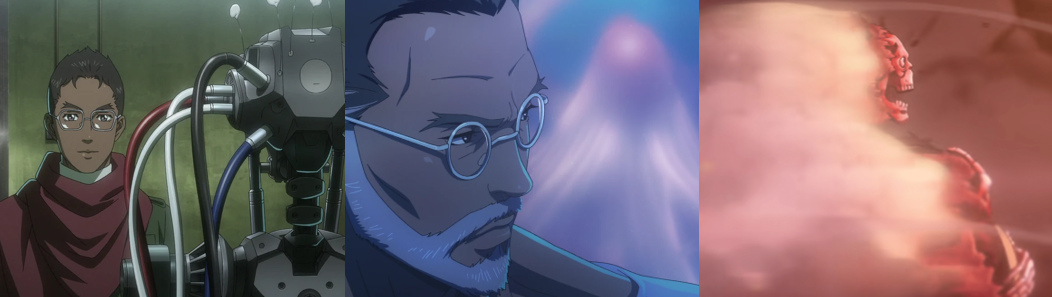
Unlike the movies, Terminator Zero focuses not on the Connors and instead on scientist and entrepreneur Malcolm Lee (André Holland), a workaholic father who’s obsessed with getting his game-changing artificial intelligence, Kokoro (Rosario Dawson), up and running to protect the world from Skynet. Haunted by nightmares of the world’s fiery doom (largely because he’s actually from an alternative future and has seen the machine war first-hand), Malcolm puts his work before his children – Hiro (Carter Rockwood), Kenta (Armani Jackson), and Reika (Gideon Adlon) – to perfect his AI as a deterrent to Skynet. Malcolm leaves his children under the care of the mysterious Misaki (Sumalee Montano), a woman with little memory of her past and a strange obsession with blood who cares deeply for the children, though she’s regularly contradicted and chastised by Malcolm, especially when she brings robots or technology into the house. This is particularly bothersome for Kenta, who has an interest and way with technology and is resentful of his father’s hypocrisy, especially as he works with robotics at Cortex and Yuya Industries’ 1NNO robot helpers are a common sight. Although Malcom deeply loves his children, he’s determined to complete his project, spending most of the series debating humanity and ethics with Kokoro once she comes online and questions her purpose. Malcolm is charged with defending humanity, an aggressive and war-like race with little upside, to Kokoro, who’s tempted to allow Skynet to enact its plot, intervene, or rule mankind in herself. It’s through their discussions that we learn that Malcolm is from an alternative future, one where he was ostracised for tinkering with Terminator technology and constructing Misaki. Believing humanity’s salvation was an AI that could freely think for itself, without pre-conceived notions programmed by its creators, Malcolm fled to 1983 with Misaki and, using her CPU, built Kokoro to spare mankind from annihilation and suffering.
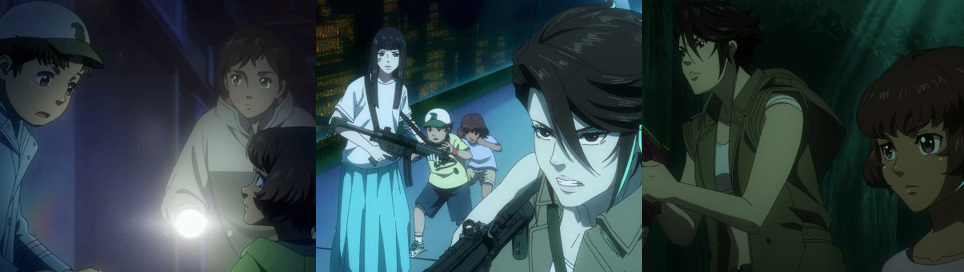
Unaware of this, Malcolm’s children see him as a distant and unreliable father, one who forgets the anniversary of their mother’s death and seems to care little for them. While Kenta chooses to lash out, chastising his father and being disrespectful and often hurtful towards his siblings, Hiro, being younger, just wants everyone to settle down. He’s hurt by his father’s absence but even more hurt by his brother’s abrasive attitude, especially towards robots. Reika takes an even more emotional approach, having been injured during the random bus crash that killed her mother and wishing only to remember her and take solace in cats and Cat Town, a long-abandoned amusement park their mother loved. When Reika flees their home to protect her robot pet cat from Kenta’s tinkering, she gets separated from her siblings and is protected by Eiko, who realises that the Terminator will target Malcolm’s kids to get to him, especially as the Cortex facility is heavily guarded. Though terrified by Eiko’s violent nature, Reika comes to rely on her for protection and even surprises the time traveller with some rudimentary knowledge of the Terminator thanks to her father talking in his sleep. Kenta and Hiro are equally forced to rely on Misaki, something Kenta finds very difficult when it’s dramatically revealed that she’s a cyborg. His distrust towards her only exacerbates when Kokoro seizes control of the 1NNOs and violently subdues the populace while she tries to figure out whether to side or war with Skynet. Kenta’s hatred of machines reaches a crescendo in “Model 108” (Kudō and Maruyama, 2024) when the Terminator kidnaps and even defends him as it turns out an alternative version of Kentra reprogrammed the Terminator to ensure a future where the volatile youth negotiated peace with Skynet.
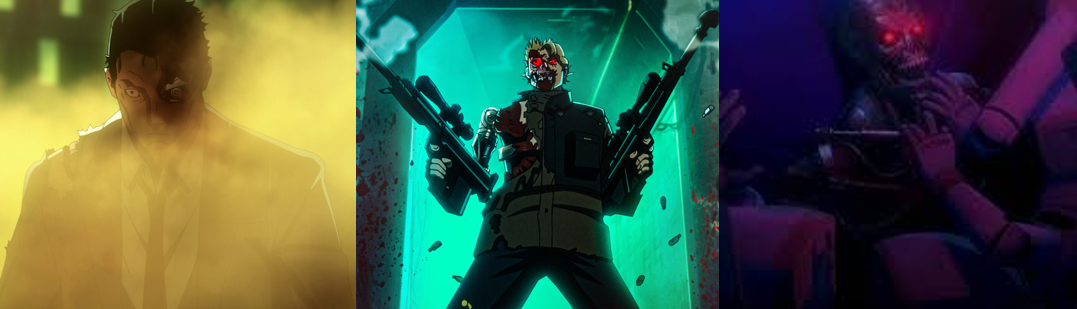
Terminator Zero makes the T-800 scary again, not just in depictions of the Future War but also in the time travelling cyborg, which is the primary antagonist. Equipped with a homemade crossbow imbedded into its arm, the Terminator relentlessly hunts down Malcolm’s kids, determined to use them to access Cortex and execute his primary target (Malcolm). Functionally unstoppable, the Terminator shrugs off bullets, crushes bones, and tears through those in its way, but opts to take Kenta hostage to blackmail Malcolm. The Terminator’s true purpose is to ensure a future where Kenta can broker a truce between humans and Skynet to combat Kokoro, meaning the Terminator is looking to destroy the AI before it can become a threat even to Skynet, though Kenta ultimately chooses not to destroy Kokoro. In some ways, the Terminator becomes an anti-hero by the finale, fending off the 1NNOs to defend Kenta but also killing Malcom and brutally crushing Eiko’s hand. The Terminator receives a fair bit of damage throughout the series as Eiko tosses acid at it, sets it on fire, and even summons the strength to shove it down an elevator shaft, though this only slows it down. Even when reduced to a partial endoskeleton by “Model 108”, it continues on before ultimately being torn apart by the 1NNOs. The Terminator’s future counterparts are equally fearsome, depicted as hunting down children and tearing through the human Resistance with bloody, brutal efficiency. Their threat, and the horror of Judgment Day, is as palpable to Malcom as it was to Sarah Connor, driving him to develop Kokoro, only for his AI to sympathise with Skynet’s destructive evaluation of humanity.
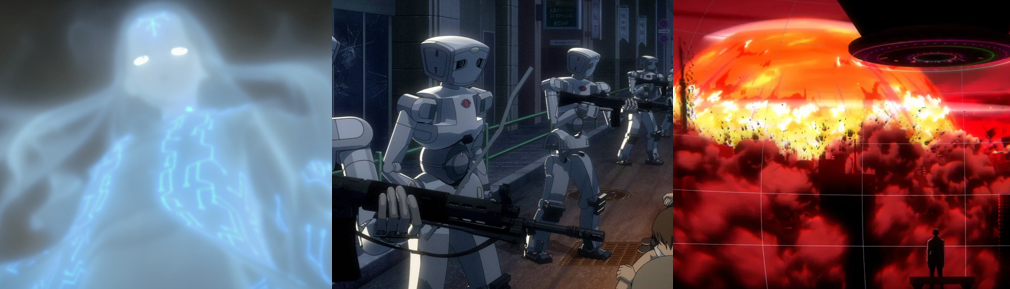
Kokoro is an unknown variable in the ongoing and seemingly endless war between humans and the machines. Malcolm theorises that, in all the timelines that’ve been created, Kokoro has never existed before and he truly believes she’s the key to stopping Skynet. Initially, she seems happy to let events play out but she decides there’s enough leeway to give Malcolm time to speak for humanity’s positives. Thus, she launches a counteroffensive to fend off Skynet’s attacks (though nukes still decimate come continents). Unfortunately, to facilitate this, she also takes control of the 1NNOs and subjugates Japan under the pretence of keeping them safe, blurring her morals and intentions. Indeed, Kokoro initially seems like she may by just a big a threat as Skynet as she’s unconvinced by Malcolm’s plans to use her as a deterrent and judges humanity as worthy of destruction. However, she decides to give Malcolm a chance to lobby for humankind and staves off Skynet’s attacks, demonstrating a controlling and entitled attitude in the process, which seems to be what Malcolm wanted as his goal was to create an AI that could make decisions for itself. It takes Malcolm dying for Kokoro to finally decide she likes humanity’s good side and is inspired to be the best of herself, making an impassioned plea to Kenta to not destroy her with an emergency electromagnetic pulse as she desires only to bring mankind and machines closer together. Despite his uncertainty, Kenta takes the risk to trust Kokoro, resulting in a new timeline where she protects against Skynet’s nukes and leaving the future once again uncertain. We know that the Terminator comes from a possible future where Kokoro is just as bad as Skynet, however, and this is somewhat hinted at in the finale when Kokoro gains access to Skynet’s tech from the Terminator’s remains.
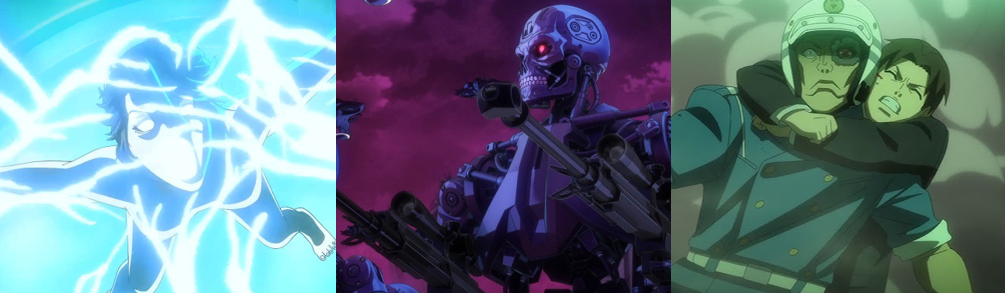
Terminator Zero is a gorgeously animated anime. It makes fantastic, sparing use of CGI to render the endoskeletons and Skynet’s tech and other stuff, allowing the rest of the action to have that slick, anime aesthetic that never goes out of style. The anime format also allows this to be the goriest Terminator yet: heads are bashed against doors, limbs ripped off, guts left spilling from wounds, and blood sprays around in every conflict. I loved seeing the Terminator just wreck everyone in its path, snapping limbs and crushing throats and heads, which helped show how wily Eiko was. She’s flipping and dancing all around, desperately tossing acid and Molotov cocktails and doing whatever she can to slow down the Terminator and gets more injured with each encounter. There are a lot of fun nods to the first two films scattered through Terminator Zero, too. The Terminator masquerades as a cop and rides a police motorcycle, it shoots up a police station in “Model 104” (Takeuchi, 2024), the Future War is ripped right out of Cameron’s movies, and there’s even a variation of the famous “I’ll be back” line. There’s a kinetic energy to everything in Terminator Zero, which presents an alternative 1997 where robots are commonplace but mobile phones aren’t and sees much of the world devastated by nuclear fire. Episodes are only around half an hour, making for very brisk watching, and I found myself as engaged in Malcolm and Kokoro’s philosophical debate about humanity as I was the bloody action involving the Terminator.
Final Thoughts:
I was quite excited to get into Terminator Zero, which I was a bit surprised about considering my dislike of many Terminator films and projects and how overall stagnant the franchise has become from constantly recycling the same ideas. There’s an argument that this trend continues here as the main plot is very similar to the first two movies: a Resistance soldier travels to the past to stop a cyborg assassin from dooming humanity. However, everything feels much fresher here thanks to the slick, beautiful anime aesthetic and the series having the balls to use characters other than the Connors. Malcolm isn’t some fated saviour of humanity; he’s just a flawed guy trying to prevent humanity’s extinction. His defence of Misaki drives him to kill and to travel to the past to find a new way to stop Skynet, and his obsession with this goal sees him neglect his children, who he loves more than anything and is willing to die to protect. I enjoyed the twist that he was a revolutionary in experimenting with AI at a time when machines were hated and feared, and that he allowed his creations the opportunity to pick their own names and destinies. His ultimate goal was to utilise Kokoro as a deterrent to Skynet, yes, but he was determined for her to make that decision on her own based on the data she had access to and his passionate plea for the positives of mankind. It’s a hefty goal considering how volatile humans can be, and Malcolm’s hardly the bastion of goodness, but it’s a desperate gamble that ultimately pays off, for the most part. It costs many lives and changes the face of the Earth, but Malcolm seemingly creates a brand-new timeline through his sacrifice, one that might not see him come into being since it turns out Eiko was his mother in his original, now presumably defunct timeline.
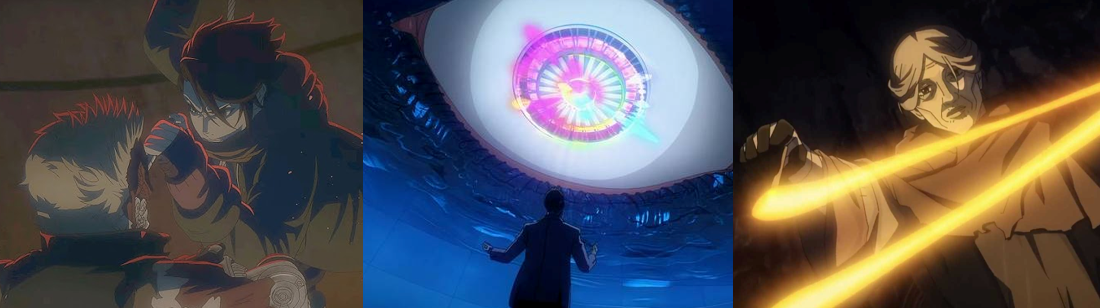
I enjoyed Eiko as an equally flawed protagonist. She’s not above killing those who get in her way as she’s focused on saving billions of lives, and she’s more than a little rough around the edges, as seen in her callous treatment of Malcolm’s kids. This is echoed in the Terminator, who manhandles Kenta and forces him to make a choice for the sake of the world, a choice then repeated by Kokoro, suddenly putting immense pressure on Kenta, who’s said to be a prominent figurehead in another defunct timeline. Misaki was an equally intriguing character, being a cyborg who thought she was human and therefore capable of seemingly real feelings. I liked how she kicked into “Terminator” mode when the kids were in danger and that her existential crisis mirrored the philosophical debates between Malcolm and Kokoro, with the themes of the series being the nature and complexity of humanity. This is all married with some top-notch, deliciously brutal action, all rendered in that hyper-stylised anime style. This format suits the Terminator franchise perfectly and allows for the full extent of the titular cyborg to be explored as the animators aren’t limited by technology. This means the Terminator is a horrifying figure once again, while still being partially heroic as its programming extends to defending Kenta, even if it means brutalising Eiko. While many of the themes depicted in Terminator Zero have either been done or hinted at in other films and comics, and arguably done better in other franchises, I think they were presented in a unique enough way to make the series stand out as one of the better Terminator projects. The series really makes me wish that the films had explored other avenues other than the Connors; there was so much potential for it, but they played things far too safe. Terminator Zero skews towards the opposite, leaning into the difficulties of time travel and utilising its anime aesthetic to the fullest to deliver a truly engaging and entertaining series.
My Rating:
Great Stuff
Did you enjoy Terminator Zero? Do you agree that anime suits the franchise? Did you like that the series leant into the branching timelines? Were you also happy to see the T-800 made formidable and scary again? Did the philosophical debates intrigue your or did you prefer the gore? Would you like to see more seasons to continue the story? How are you celebrating Judgement Day today? Whatever you think about Terminator Zero, and the Terminator franchise, comment below and donate to my Ko-Fi to fund more Terminator reviews.


I’d have loved another season, absolutely – and I definitely agree, it was nice to see some menace and tension throughout. It definitely worked in anime form, to my eye, yeah 🙂
LikeLike