Released: 21 August 2021 Director: Nia DaCosta Distributor: Universal Pictures Budget: $25 million Stars: Yahya Abdul-Mateen II, Teyonah Parris, Colman Domingo, Nathan Stewart-Jarrett, and Michael Hargrove
The Plot: Thirty years after Candyman(Rose, 1992), the once crime-ridden area of Cabrini-Green has become an upstanding neighbourhood. However, when struggling artist Anthony McCoy (Abdul-Mateen II) learns of hook-handed bogeyman Candyman, his mental and physical state deteriorate as the fearsome killer begins a new campaign of terror.
The Background: In 1985, visionary British horror writer Clive Barker wrote a short story titled “The Forbidden”, which was published in the fifth volume of his Books of Blood series (ibid, 1984 to 1985). The story was adapted into the critically and commercially successful Candyman (Rose, 1992), a haunting horror story that immediately turned star Tony Todd into a modern horror icon. While its two sequels were far less successful, the first film stood the test of time for its depiction of racial tensions in American society. Although many parties attempted to get a fourth Candyman film off the ground, the production was stuck in Development Hell for nearly twenty yearsbefore Jordan Peele, fresh off presentingsimilar themesin his lauded films Get Out (ibid, 2018) and Us (ibid, 2019), came onboard to produce a direct sequel to the 1992 original, much to the approval of Tony Todd. After being delayed due to the COVID-19 pandemic, Candyman was finally released to largely positive reviewsand eventually produced a box office gross of over $77 million.
The Review: The original Candyman, while a cult classic, is often lost to the mists of time; in many ways, it’s an under-rated horror classic that often gets overshadowed by bigger budget or more popular horror films and franchises. Yet, with its haunting soundtrack, visceral and shocking kills, and Tony Todd’s enigmatic charisma, the film remains one of the most memorable of its genre. When I heard that it was getting the same “requel” treatment as Halloween (Green, 2018), I was intrigued; unlike many horror franchises, Candyman was never beaten into the ground with endless sequels and remakes so doing a follow-up thirty years later actually felt like a fresh concept. Throw in Jordan Peele, the alluring Yahya Abdul-Mateen II, the advertised return of Tony Todd, and some intriguing trailers and I was left thinking that this follow-up could have a lot of potential.
Brianna loyally supports Anthony as he struggles to find artistic inspiration.
The film picks up some thirty years after the events of the first film; Cabrini-Green, once a crime-ridden ghetto, has been gentrified and largely transformed into a modern, affordable housing estate for artists and creative types like our main character, Anthony McCoy. A struggling artist, Anthony hasn’t produced a worthwhile piece of artwork for some time and is having a hard time finding suitable inspiration; not only that, but his pride is constantly taking hits when friends and family alike continue to insinuate that he’s only able to remain relevant because of the influence of his girlfriend, art gallery director Brianna Cartwright (Parris). Despite this, the two have a very stable and loving relationship; she is incredibly supportive of him, doesn’t seem to mind that she’s having to shoulder their financial responsibilities, and offers both constructive criticism of his artwork and defends him to others not just out of love for him but out of a genuine belief in his artistic talent.
After learning of Daniel Robitaille, Anthony becomes obsessed with the Candyman legend.
Anthony finds himself creatively inspired when he learns of the events of the first film; Cabrini-Green resident and laundromat operator William Burke (Domingo) recaps for Anthony how art student Helen Lyle (Virginia Madsen) came to the area investigating the urban legend of Candyman and then apparently snapped and kidnapped a baby before burning herself to death in a bonfire. These sequences are all beautifully rendered using cardboard cut-outs and shadows to create visually interesting and ominous scenes rather than simply reusing footage from the first film, with Madsen returning in photographs and voice clips when Anthony acquires her tape recorder and notes to learn more about the legend of Candyman. Becoming obsessed with the tale of Daniel Robitaille, who was tortured to death simply for falling in love with a wealthy white woman, Anthony finds his career on the turnaround when his abstract piece “Say My Name”, which hides paintings of violence and strife behind a mirrored façade, is mentioned on the news following a violent killing at the art gallery.
Anthony’s mental and physical state deteriorate as the Candyman is evoked.
Unbeknownst to Anthony, his work summons the Candyman’s vengeful spirit once more; now depicted as a “hive” of unjustly murdered African-Americans, the Candyman in his film is the spirit of hook-handed Sherman Fields (Hargrove), a strange but ultimately harmless Cabrini-Green resident from Burke’s childhood who was discriminatorily beaten to death by overzealous cops after being fingered for placing razorblades in the sweets he offered to Cabrini-Green’s kids. Thanks to Anthony’s work, more and more people feel compelled to try out the legend and say Candyman’s name five times in a mirror, which not only results in their brutal death at his hooked hand but also increases the spirits strength and influence over Anthony, whose physical state deteriorates after suffering a seemingly innocent bee sting and whose mental state crumbles as he becomes both obsessed with Candyman and guilt-ridden over his part in summoning the phantom and enabling his killing spree.
The Nitty-Gritty: One of the many things that made Candyman so memorable was the haunting score and methodical, ominous shots of rundown urban areas often overlooking in film (and in real life). a prominent theme in Candyman was that Cabrini-Green had basically become a lawless area where gangs and violent criminals were free to terrorise the residents and any passers-by with few repercussions as the police had little authority there, and the real-life danger of the destitute area and its overlooked populace only added to the first film’s menace and mystique. In this new Candyman, Cabrini-Green has been robbed of its ambiance; having been largely torn down and replaced with high-rise condos or left to be reclaimed by nature, the area may no longer home to gangs or downtrodden minors but it is still regarded unfavourably by both the social elite and former residents.
The use of mirrors makes for some great kills but Tony Todd’s absence is notable.
Unlike the original film (and, quite possible, the sequels, though I can’t really speak to this), Candyman places a great emphasis on mirrors; once summoned, Candyman is intangible and invisible and only appears when seen in a reflective surface. This results in a number of unique and memorable kills as Candyman flashes in and out of shot depending on how many mirrors are in the scene and means that you’re left staring intently at the screen any time mirrors or windows are present to try and catch a glimpse of the hook-handed killer. Candyman’s kill count is incredibly high in this film compared to the original; Sherman Fields is much more a sadistic supernatural killer rather than an enigmatic phantom and has no interest in captivating targets into continuing his legend in the same way Daniel Robitaille did. While this results in some vicious, brutal kills and some shocking and well-executed jump scares and shots of Sherman leering through mirrors, I couldn’t help but feel a little disappointed. Candyman is one of the handful of horror villains who is actually as eloquent and charismatic as he is terrifying and, while this new Candyman definitely captures the same ominous atmosphere of the original and is an intense horror experience, it definitely feels as though something is missing without Tony Todd’s booming baritone enticing people to “be [his] victim” and kind of reduces Candyman more to a typical slasher villain with a fancy gimmick rather than the tragic figure he was in the original film.
The film succeeds at standing by itself and being a follow-up, as well as being culturally relevant.
Overall, the film does a great job of continuing the urban legend of Candyman; since the characters discover the events of the first film throughout, it’s not really necessary to have seen to original Candyman before seeing this one; if anything, this new Candyman could inspire new audiences to seek out the original movie to add additional context to some of the revelations brought forth here but I think it does a decent enough job of standing by itself and being a follow-up. As you might expect, bigotry and racism are central themes in Candyman; for the most part, they’re subtle, with the likes of art critic Finley Stephens (Rebecca Spence) casting shade on “people” like Anthony and quickly clarifying that she meant artists rather than racial minorities and her only really becoming interested in “Say My Name” after it is linked to a series of horrific murders. Similarly, Burke relates how white people purposely create ghettos like Cabrini-Green simply so that they have more ammo to use against their people and then profit from gentrifying the areas, and feels an empathy for the original Candyman, Daniel Robitaille, whose only crime was falling in love. Nowhere are the racial tensions more explicit, however, and the film’s message at its most uncomfortable and relevant, in the depiction of local law enforcement; particularly in the ending, but throughout the film, the police are a law unto themselves who literally shoot first and ask questions later. As uncomfortable as this may be, the depiction of police violence against racial minorities has never been more relevant and Candyman is a perfect platform to explore this issue; indeed, Candyman recontextualises the vengeful spirit into one of retribution as he can be evoked to strike back at the same bigotry that created him in the first place.
The Summary: Unquestionably, Candyman is one of the most intense and gripping horror films I’ve seen in recent memory. The film spectacularly evokes the same haunting atmosphere of the original and is bolstered by some unique cinematography, especially when presenting the titular phantom. Seeing characters be cut to shreds and manhandled by an invisible force that only reveals itself in mirrors makes for some brutal and powerfully violent kills and horror; the fact that Candyman often floats ominous through the air and haunts his victims from the shadows of mirrors only adds to the tension. Candyman does a great job of showing Anthony’s mental and physical degradation as the urban legend begins to literally consume him and, thanks to its resonating themes of racism and bigotry, Candyman is definitely an incredibly relevant film that speaks to today’s society. While I felt a little disappointed by Tony Todd’s absence and Candyman’s depiction as more of a groaning slasher than an enigmatic phantom, Candyman remained a chilling and impressive reintroduction and recontextualization of the titular character and ended up being a more-than-worthy follow-up to the haunting original.
My Rating:
⭐⭐⭐⭐
Rating: 4 out of 5.
Great Stuff
Have you seen Candyman? If so, what did you think to it and how do you feel it compares to the original film? What did you think to the film’s performances and the depiction of its new Candyman? Were you a fan of the use of mirrors and which of the film’s kills was your favourite? Which of the Candyman films is your favourite and what do you think to this tendency to create follow-ups that ignore existing continuity? Would you be interested in seeing a sequel to this film or do you think it’s better to leave it as a stand-alone sequel? Whatever your thoughts on Candyman, feel free to share them below.
Released: 18 February 2005 Director: Francis Lawrence Distributor: Warner Bros. Pictures Budget: $70 to 100 million Stars: Keanu Reeves, Rachel Weisz, Tilda Swinton, Shia LaBeouf, and Djimon Hounsou
The Plot: Cynical exorcist John Constantine (Reeves) spends his days smoking and “deporting” demons to Hell in a desperate attempt to earn salvation before he dies from lung cancer. However, in begrudgingly helping troubled police detective Angela Dodson (Weisz) learn the truth about her twin sister’s death, he stumbles upon a much larger and darker plot to bring about the apocalypse.
The Background: Constantine is an adaptation of DC Comics’ popular cult comic series John Constantine, Hellblazer. Created by Alan Moore and Stephen R. Bissette and first appearing in the pages of The Saga of Swamp Thing #37 (Moore, et al, 1985) and visually inspired by British musician Sting, Constantine earned his own solo series in 1988 and became a popular anti-hero thanks to his grouchy demeanour and surreal occult misadventures and plans for a live-action adaptation of the character can be traced back as far as 1997. After passing through the hands of different directors and having a variety of actors attached to star, Constantine finally gained traction in 2002 but the title change wasn’t the only alteration the filmmakers made to the character: despite drawing inspiration from the “Dangerous Habits” storyline (Ennis, et al, 1991), the character was changed from a blond-haired, brown trenchcoat-wearing Liverpudlian conman to Keanu Reeves in a black coat with a cantankerous attitude. Despite this lack of fidelity to the source material, Constantine did relatively well at the box office, earning over $230 million; sadly, despite earning a well-deserved cult following over the years, the film was met with lukewarm reactions upon release, which has cast doubt over the chances for a sequel. As much as I enjoyed the later, unrelated Constantine series (2014 to 2015) and Matt Ryan’s remarkable turn in the role as part of the “Arrowverse”, I’ve always had a soft spot for Constantine and, considering that today is Keanu Reeves’ birthday, this seems like the perfect time to revisit this underrated gem.
The Review: While not a snarky, Liverpudlian conman, Constantine is a moody, blunt, egotistical prick through and through; he’s thoroughly unlikeable in many ways with his demanding and condescending attitude but, while he acts like he has no interest in the welfare and interests of others, Constantine goes out of his way to help those in need and to exorcise any demons that are brought to his attention. Of course, he only does this out of his own self-interests; slowly and painfully dying of inoperable lung cancer, he is determined to buy his way into Heaven by “deporting” any demons and spirits that violate the rules and try to cross over. Yet, he doesn’t appear to take payment for his actions and tries, in his own grouchy and irritable way, to keep those around him safe (primarily by pushing them away to keep his conscience clean but still…) Though irritable and cantankerous, Constantine instantly recognises that something is amiss when a demon attempts to cross over to the living world and believes that something bigger and more threatening is coming as a result. He is disgusted when neither Good nor His God’s emissary, the Archangel Gabriel (Swinton), offer any assistance and resolves to sort the issue out by himself in his own sullen way.
Initially sceptical, Angela comes to warm to Constantine’s abrasive demeanour.
Constantine isn’t a man who suffers fools gladly and has no time for red tape, excuses, or time-wasters and, though he knows that he is destined to go to Hell for his sins, and to die from his habitual smoking, he nevertheless continues to oppose demons and angels alike as much as he continues to smoke. Constantine’s investigations into this larger threat eventually cause him to cross paths with Angela, a cop who is haunted by her uncanny ability to sense where her targets are without even seeing them and tormented by the sudden apparent suicide of her twin sister, Isabel (also Weisz). Raised as a Catholic, Angela repeatedly repents for her actions as a cop and her conviction that her sister would never had killed herself leads her to Constantine, with whom she initially has a frosty relationship due to his rude and bitter nature. As the audience surrogate, we learn alongside Angela as Constantine exposits the “rules” of the wager between God and the Devil, Lucifer Morningstar (Peter Stormare), and take a dive through the nightmarish landscape of Hell itself. Angela is a tough and capable character with a real vulnerability to her; Isabel’s death clearly rattles her and there’s a definite sense that she’s way out of her element with all the supernatural mumbo-jumbo that follows Constantine and, yet, she repeatedly calls out his shit and holds her own and she only ends up in need of rescue because of her latent psychic abilities.
Constantine’s allies have complete in faith in him despite their nasty tendancy to die.
Constantine’s investigation is aided by a variety of his old allies; his constant companion is Chas Kramer (LaBeouf), here interpreted as a young and enthusiastic cab driver who is eager to be more involved with Constantine’s work and continually annoyed at the way he keeps him at arm’s length. Two more of Constantine’s allies, Beeman (Max Baker) and Father Hennessy (Pruitt Taylor Vince) help him to piece together the puzzle of the looming threat because they genuinely believe in and care for Constantine. Papa Midnite (Hounsou), meanwhile, is a far more reluctant ally; operating a bar that is “neutral ground” for Heaven and Hell, he refuses to get involved or to favour one side or the other. As detestable as Constantine can be at times, it’s heart-breaking to see his friends and allies die purely by association with him and it really lends a sense of tragedy to the character as it’s easy to see why he keeps them at arm’s length and is the way he is as he “doesn’t need another ghost following [him] around”. One thing I also really like about Constantine is the suggestion that Constantine, Midnite, Beeman, and Hennessy were once this team of exorcists and demon hunters and I would have loved to see their past expanded upon more in a sequel or prequel.
Constantine battles many demons but his true antagonist remains elusive.
A slight downside to Constantine is the lack of a tangible primary antagonist; Manuel (Jesse Ramirez) fulfils this role to a degree as, after finding and being possessed by the Spear of Destiny, he ominously makes his way towards Los Angeles as a constant reminder of the looming threat but he’s not an actual villain of the film and is quickly discarded once the finale kicks in. Balthazar (Gavin Rossdale) somewhat fulfils this role as a scheming, devious puppet master but, again, he’s more of a lingering threat rather than a central one and, for the most part, Constantine battles against various demons and denizens from Hell, such as the decomposing soldier demons and bat-like scavengers. As a result, for most of the runtime, the mystery of the Spear of Destiny and the impending resurrection of Mammon, the son of the Devil, takes centre stage until the very end of the film, where it’s revealed that Gabriel has been conspiring with Mammon. It turns out that Gabriel is just as jaded and weary with humankind as Constantine is with Heaven and Hell; appalled that humanity is allowed the chance to repent, no matter what their sins, and believing that people should earn their place in Heaven through true suffering, Gabriel goes behind God’s back to bring Hell to Earth through Mammon. It’s definitely a twist, especially for Constantine, who would never have guessed that an angel and a demon would join forces, and renders all of his incantations and wit mute since Gabriel’s power is unmatched, forcing him to make the ultimate sacrifice to end their combined threat.
The Nitty-Gritty: One thing Constantine definitely really has going for it is snark; Constantine has a dry, cynical wit and biting, abrasive tone at the best of times but it makes for some amusing moments, such as when he literally points Angela in the right direction and compares Chas to other famous sidekicks, and it seems he always has a snarky comment and sardonic response to everything happening around him. Despite this, and his demanding and patronising personality, Constantine inspires a great deal of awe and loyalty in those around him; Hennessy willingly communes with the dead and puts himself at risk even though it gives him horrible nightmares and leads to his death simply out of loyalty to Constantine and Beeman sums it up nicely, and emotionally, when, right before his own death, he tells Constantine that, despite his lack of faith, his friends have faith in him. Such is Constantine’s allure that he is able to convince reluctant middleman Midnite to get off the fence and help him (commenting that he (as in Midnite) is the “only one following the rules”) and, despite their rough start and Constantine’s abrasive nature, he builds a natural chemistry and rapport with Angela. Initially, she detests him and his rudeness but, the more she becomes exposed to his world and his beliefs, the more she comes to relate to and warm towards him. Their clear and obvious attraction is handled well and the two have great chemistry despite their conflicting personalities; they never truly consummate on this attraction, which is both surprising and frustrating since I just wanted to see them break that sexual tension.
Constantine depicts a nightmarish, fire-strewn version of Hell based largely on Catholicism.
Constantine’s approach to religion is largely based on Catholicism; rather than explore other religions or consolidate them into one, the idea seems to be that Catholicism sets the rules for this world and, as a result, suicides are condemned to Hell and repentance is the road to salvation. This simplifies matters considerably, but it does make one question how other religions fit into this world since we clearly see that Heaven, Hell, demons, angels, God, and the Devil are all real. This is best seen in Constantine’s frequent trips to Hell within the film, which is a nightmarish, post-apocalyptic mirror of our world populated by demons, tormented souls, and full of fire and suffering and even home to an extended version of the Bible. It turns out that travelling to Hell is incredibly easy and that all one has to do is die under the right circumstances for even the shortest length of time or simply sit in a bowl of water with a cat on your lap (though, to be fair, this appears to be a trick that only Constantine can pull off).
Constantine is a much more action-orientated character in the film.
As far as I can tell, Keanu’s Constantine differs from his comic book counterpart in that he is one of the few born with the ability to see demons, angels, and the “half-breeds” that walk among the living; Angela and Isabel also have this ability but, while Angela suppressed it, Isabel was constantly haunted and driven to her death by it. The same thing happened to Constantine, forever damning him to Hell upon death and driving his mission to deport half-breeds from either side when they break the “rules”. Constantine’s sorcery and magicks are downplayed compared to the source material; while Constantine has various religious and spiritual tattoos to help ward off evil spirits and is able to bring Gabriel forth at the conclusion, he primarily relies on special weaponry and gadgets provided to him by Beeman. This makes him a far more action-orientated version of the character; whereas his comic book counterpart would trick his enemies into defeating themselves or con his way out of confrontations, Keanu’s Constantine beats Balthazar into submission with a Holy knuckle duster and loads up a shotgun that blasts dragon’s breath and Holy bullets.
In the end, Constantine gets the last laugh on Lucifer through his selfless sacrifice.
Still, this is only really for one scene and, for the most part, Constantine is still more of a detective than a superhero; his methods involve a degree of preparation but he’s also able to think on the fly and use whatever he has around or on him to ward off demons (such as when he amusingly threatens Balthazar not with being deported to Hell but by reading him his last rites!) In the finale, when faced with Gabriel’s Holy power and Mammon’s inevitable resurrection, he performs the ultimate con, however, by slitting his wrists and bringing Lucifer to Earth to personally collect his soul. In the process, he’s able to bargain for the release of Isabel’s soul and is fully prepared to die and take her place in Hell, only to be lifted towards the Golden Gates of Heaven because of his selfless act. This results in one of the greatest moments in the film when Constantine flips Lucifer the middle finger as he slowly ascends to Heaven, which I always find to be incredibly in-character and enjoyable. Ultimately, though, Lucifer heals Constantine of his cancer and allows him not only to live but also gives him the chance to earn his place in Heaven; while it’s clear that Lucifer believes that Constantine won’t be able to change his cynical ways or contemptible personality, the film ends with him swapping cigarettes for gum and sardonically commenting that, after dying twice, he has come to believe that God truly does have a plan for everyone.
The Summary: Going into Constantine, I had pretty much no knowledge of the comic book, so this was my first introduction to the character. Instead, I went in as a fan of Keanu Reeves and supernatural films and, as a result, was pleasantly surprised by what I saw. Even now, as big a fan as I am of the character and Matt Ryan’s work, my experience with Hellblazer is pretty much limited to the character’s sporadic adaptations and the Original Sin (Delano, et al, 1993) graphic novel but, even so, it was this film that first made me aware of and spurred my interest in the character. As a result, if you’re unfamiliar with Constantine, I’d highly recommend this as your first exposure to the character; long-time fans of Hellblazer may have been disappointed by the many changes but, even as a Brit myself, I still really enjoy this movie for what it is: a supernatural action/horror film. There’s a lot to like here, from Keanu’s cynical portrayal of the character and his dry, bitter wit and cool, undeniable charisma to a striking and suitably terrifying interpretation of Hell and a pretty fantastic turn by Stormare as Lucifer. Obviously, Matt Ryan has delivered a far more faithful rendition of the character in the years since but, as an Americanised version of a notable British character, I think the film does really well at staying true to the spirit of Constantine and his comic books and I would definitely recommend this to anyone remotely interested in the concept.
My Rating:
⭐⭐⭐⭐
Rating: 4 out of 5.
Great Stuff
Are you a fan of Constantine? What did you think of the film’s concept and characters, especially Keanu’s performance? Have you ever read the Hellblazer comics? If so, what are some of your favourite stories and moments from Constantine’s history and how do you think Constantine holds up as an adaptation? Were you put off by the Americanisation of the character and, if so, do you prefer Matt Ryan’s portrayal? Would you have liked to see a sequel or Keanu return to the character in some way? How are you celebrating Keanu Reeves’ birthday today and what are some of your favourite roles of his? Whatever you think, go ahead and leave a comment down below.
“Three billion human lives ended on August 29th, 1997. The survivors of the nuclear fire called the war Judgment Day. They lived only to face a new nightmare: the war against the machines”.
Released: 26 October 1984 Director: James Cameron Distributor: Orion Pictures Budget: $6.4 million Stars: Arnold Schwarzenegger, Michael Biehn, Linda Hamilton, and Paul Winfield
The Plot: The Terminator (Schwarzenegger), a ramosely, relentless cybernetic killer, is sent back in time from the year 2029 to kill Sarah Connor (Hamilton), who is destined to give birth to the saviour of humankind. Her only hope is Kyle Reese (Biehn), a human Resistance fighter sent back in time to protect her and safeguard the future for humanity.
The Review: The Terminator opens with one of the most startling and iconic visions of the future ever put the film; in a dark, post-apocalyptic landscape literally littered with human skulls, remains, and the remnants of a once bustling society, machines reign supreme. Gigantic tank-like constructs and airborne fighters are only a part of Skynet’s vast mechanical army, however, which has over-run the world after directly causing a nuclear apocalypse. With the last vestiges of humanity reduced to a rag-tag group of guerrilla soldiers and desolate, frightened civilians, this is a world where humankind is on the very brink of extinction thanks to Skynet’s superior forces and weaponry. However, the fate of the world is not destined to be decided in 2029; instead, that grim future lives on in the nightmares and memories of Kyle Reese and hangs in the air like an ominous cloud as he desperately attempts to keep Sarah Connor alive.
Reese is determined to see his mission through even at the cost of his humanity and empathy.
After the human resistance, led by Sarah’s future son, John, scored a decisive and crippling victory over their mechanical oppressors in the future, Skynet activated its most daring plan yet by sending a Terminator, a T-800 model, back to 1984 to kill the mother of its enemy to pre-emptively win the war before it can even begin. In the world of The Terminator, time is like the branches of a tree, splitting off down multiple paths, with no one future being set in time; however, victory in one timeline is deemed victory enough for Skynet and so begins one of the more convoluted science-fiction franchises. Disorientated and overwhelmed by the time travel experience (and the sights, sounds, and hustle and bustle of then-present-day Los Angeles), Reese is an agitated, highly-strung, and unpredictable individual. He quickly acclimatises himself to his environment, acquiring a degree of clothing and weaponry, and begins to track down (more like stalk) his assignment. Reese is extremely focused and absolutely dedicated to his mission, determined to protect Sarah even at the cost of his own life and over all other concerns; he never gets unduly distracted and is almost as obsessed and determined as the titular Terminator. Haunted by his traumatic experiences in the future war, Reese has no time for frivolities and very little patience for wasting his time; when psychoanalysed by Doctor Silberman (Earl Boen), he flies into a furious rage at having to answer his questions and being held captive when the Terminator is out there, relentlessly hunting its prey.
Sarah slowly evolves from a meek, frightened victim to a capable and proactive young woman.
Far from the capable and competent character she would later become, Sarah is a meek and relatively uninspiring waitress in The Terminator; the literal definition of a nobody, she’s overworked, underpaid, and underappreciated at work and, despite having friends and a social life, is relatively lonely and unassuming at the start of the film. Disturbed to find that women baring her name have been brutally shot to death across town, Sarah does the smart and logical thing by trying to contact the police but her distress is only increased when she notices Reese following her. When Reese saves her from the Terminator and begins to bark orders at her and rant about a dystopian future and cyborg assassins, she is overwhelmed, clearly scared out of her mind, and, naturally, doesn’t believe a word of what he says. In their earliest moments together, Sarah actually shows some fire when she tries to fight Reese off but, gradually, she comes to see that his ravings are all too true and shows a shadow of the potential she has as an assertive individual by first tending to Reese’s gunshot wound and, in the finale, inspiring him to continue fighting even while mortally wounded and, ultimately, overcoming her pursuer through her own initiative.
The T-800 is a remorseless cyborg assassin who won’t let anything stand between it and its target.
Of course, when you’re talking about The Terminator, you have to talk about Arnold Schwarzenegger; since he’s a walking mountain of a man, it may be difficult to believe that the T-800 was ever an effective infiltration machine but Arnold plays the part of a cold, emotionless cyborg to absolute perfection. The T-800’s monotone voice, unblinking stare, and relentless tenacity make it a chilling villain alone but its menace is only increased by its human appearance; unlike slasher villains and other movie monsters, the Terminator looks and acts human, even sweating and bleeding, and its inhumanity is only revealed in its fittingly machine-like efficiency and the degradation of its outer skin over the course of the film. Cold, remorseless, lacking both empathy and pity, the Terminator doesn’t hesitate to gun down or eviscerate those on its path and is, for all intents and purposes, absolutely unstoppable with the weaponry available to Reese.
Relentlessly hounded by the T-800, Sarah and Reese take advantage of every precious moment.
Because of this, The Terminator is, largely, an escort mission for Reese and a constant race against a unrelenting antagonistic force. Constantly on the defensive, hounded by the Terminator and the police at every turn, Reese and Sarah have few chances to stop and catch their breath but make use of every moment they have together. At first, this means acquiring new vehicles to evade pursuit, finding lodgings, and cobbling together more effective weaponry but, in time, Reese, admits that his motivation to travel through time wasn’t just out of blind devotion to his much-respected commander-in-chief, it was also out of love for Sarah. Though he struggles with these feelings and to stay completely focused on his mission, Sarah, grateful for his affections, protection, and all that he has sacrificed for her (and deeply sympathetic towards the unspeakable horrors he’s lived through in the future), reciprocates his feelings and, amidst the terror of their predicament, they come together (both literally and figuratively).
The Nitty-Gritty: One of the first and most striking things about The Terminator, thanks to its simple but effective title sequence, is Brad Fiedel’s iconic Terminator theme; a rhythmic, synthetic symphony that resembles a heartbeat, the theme is both memorable and versatile, emphasising the Terminator’s ominous presence whenever it is onscreen and being sped up, slowed down, or played on different instruments to punctuate more emotional or energetic moments of the film. The Terminator also has a grimy, bleak aesthetic and tone that is in stark contrast to its more outlandish science-fiction elements in a style that Cameron described as “Tech-Noir”; sadly, too few films try to emulate this style of filmmaking, to say nothing of The Terminator’s many sequels, which emphasised blockbuster action over tense, atmospheric dread and the unsettling horror of the T-800.
The Terminator’s true nature is revealed the more it takes damage, stripping it of its humanfaçade.
The Terminator is almost genius in its premise; the idea of a cybernetic assassin that is purposely made to appear human means that the film can build towards its more striking sci-fi elements and allows it to use its budget wisely in service of a steadily increasing pace. It isn’t until nearly forty minutes into the film that we first see through the T-800’s eyes or see (and hear) how ineffective conventional firearms are against it and, as the T-800 is further damaged by gunfire, car crashes, and explosions, more and more of its mechanical innards are revealed. This leads to some ambitious practical effects and animatronic shots, such as the T-800 fixing damaged servos in its wrist, amputating a wounded eye, and sporting a bloodied chrome skull beneath its torn skin. While many of these shots now look rather dated, especially compared to the vastly superior special effects of the second film, they’re still impressive for the time and considering the budget of the film. The Terminator also features some complex and remarkable model shots and miniatures, specifically whenever it jumps to Reese’s nightmares of the future war, and concludes with an ambitious, if clunky, stop-motion effect to bring the exposed T-800 endoskeleton to life.
Though necessary to the escalation of the film’s villain, it’s a shame to lose Arnold’s presence.
Thankfully, this is only for a brief scene and animatronics and puppets are used for the remainder of the conclusion and to astonishing effect; with a practical, tangible effect to work against, Reese’s final and tragic last stand against the T-800 and its ultimate destruction are all the more compelling and cathartic since it actually feels as though these characters have overcome a very real and very dangerous threat. If there’s a downside to The Terminator, though, it’s that Arnold’s alluring screen presence is lost in this finale; although it hardly speaks a word throughout the film, the T-800 has a commanding and captivating screen presence thanks to its unflinching, stoic expression and ability to emulate voices to pass as human. Its human façade erodes over time just as Reese’s rational, machine-like efficiency gives way to human emotion and affection, and it becomes noticeably more aggressive and bolder in its pursuit of Sarah. Initially, there’s a sense that you could survive an encounter with the T-800 if you simply acquiesced to its demands for clothes and weapons but, by the end, it’s storming a police station and gunning down countless police officers without any hint of subterfuge or subtlety. Similarly, while it initially tries to mask its decaying exterior, it abandons all pretence and pursues them, gammy leg and all, as little more than a remorseless, inhuman, mechanical monster.
The film isn’t about changing the future, but preserving it to ensure mankind’s ultimate victory.
Of course, a central theme to The Terminator, and the entire Terminator franchise, is of fate. Reese carries with him a message from John, to Sarah, that there “is no fate but what we make”, which is designed to inspire her to allow Reese to protect her and to fight to change the future. Reese describes 2029 as a “possible future”, again indicating that humanity is not necessarily doomed to extinction and extermination, but the very fact that Sarah and Reese’s unity results in her pregnancy ends the film on an ominous cliff-hanger that suggests that, while the future may not necessarily be set in stone, it is destined to happen one way or another. Later films and Terminator media would greatly expand upon this and use it as an excuse to continue the franchise, even when it doesn’t make sense to do so, but, thanks to an excised sub-plot, there’s little in the film to suggest that the goal is to change the future. Instead, the idea is to preserve the future; by ensuring Sarah’s survival, Reese ensures (at the cost of his own life) that John is born, and humanity is victorious in the future. Fate, however, dictates that this future timeline remains on course since not only does Reese inadvertently become the father of the future (so to speak) but they practically bring about the creation of Skynet through their final confrontation with the Terminator; while this is, obviously a major part of the sequel, the fact that the film purposely ends on a cliff-hanger and with a few unresolved loose ends suggests, however implicitly, that fate is as inexorable as the Terminator itself.
The Summary: The Terminator is another of the formative films of my childhood; it was, to my earliest recollection, one of the first films I watched to revolve around time travel and present a dystopian, nightmarish future where humanity has been reduced to pockets of underequipped soldiers. It had a lasting effect on my imagination thanks to its bleak visuals, horrific special effects, and thought-provoking approach to time and fate, and was directly responsible for my appreciation and affection for the works of Arnold Schwarzenegger over the years. Though the future is a dismal, desolate landscape filled with ruins and suffering, The Terminator is a film as much about hope as it is about inescapable destiny; even with everything lost, humanity continues to fight back against the machines and, even though he’s far from the ravages of that war-torn future, Reese continues to adhere to his mission, whatever the cost, in order to ensure that humanity will, ultimately, triumph. It’s tricky to decide which is better between this and the sequel but, while Terminator 2: Judgment Day (Cameron, 1991) may be bigger, better, and more impressive in almost every way, sometimes it’s just as entertaining to return to the grim, gritty original, which is much more like a traditional slasher or horror film than a sci-fi/action piece and, as a result, just as entertaining in its own right thanks to its simple, but ambitious, story and effects.
My Rating:
⭐⭐⭐⭐⭐
Rating: 5 out of 5.
Fantastic
What are your thoughts on The Terminator? How do you think it holds up today, especially compared to its other sequels? What did you think of Arnold Schwarzenegger’s performance in the film and do you think it made sense for him to play the titular cyborg? What did you think to the film’s portrayal of fate, especially considering how the later films skewed the concept somewhat? Would you like to see another Terminator film more in the style of this one rather than the bombastic sequel or do you think it’s better to leave the franchise as it is after everything its been through? How are you celebrating Judgement Day today? No matter what you think about The Terminator, and the Terminator franchise, feel free to leave a comment down below.
Easily Marvel Comics’ most recognisable and popular superhero, unsuspecting teenage nerd Peter Parker was first bitten by a radioactive spider and learned the true meaning of power and responsibility in Amazing Fantasy #15, which was first published in August 1962. Since then, the Amazing Spider-Man has featured in numerous cartoons, live-action movies, videogames, action figures, and countless comic book titles and, in celebration of his debut and his very own day of celebration, I’ve been dedicating every Wednesday to talk about everyone’s favourite web-head!
Released: 1991 Developer: Technopop Also Available For: Game Gear, Master System, and Mega-CD
The Background: Shortly after debuting in the pages of Amazing Fantasy, Peter Parker/Spider-Man graduated to his own solo title and quickly became Marvel’s most popular comic book character. Accordingly, Spider-Man was one of the first of Marvel’s superheroes to make the jump to videogames. In the early nineties, SEGA held the licensing rights to produce home console games based on Marvel Comics characters and one of the first, and most popular, of these was Spider-Man (also known as Spider-Man vs. The Kingpin), a game I first played on the Master System before switching to the 16-bit version after being won over by the superior graphics.
The Plot: Wilson Fisk, the Kingpin of Crime, has planted a nuclear bomb in New York City that is set to explode in twenty-four hours, distributed the keys to disarming the bomb to some of Spider-Man’s most lethal foes, and has even framed Spidey for the crime! And, as if all that wasn’t bad enough, Eddie Brock/Venom is stalking the city, further stacking the odds against the web-slinger.
Gameplay: Spider-Man is a 2D, sidescrolling action/platformer with an emphasis on exploration and combat; given the nature of the plot, players have just twenty-four in-game hours to complete the game. Dawdle too long in the game’s locations and you’ll doom the entire city to destruction, which places a real anxiety into the gameplay which is, sadly, not reflected in the game’s mechanics.
Spidey’s webbing allows him to take out crooks and quickly traverse levels.
Obviously, you take control of Spider-Man, a clunky, stilted, and awkward character who displays all of Spidey’s trademark abilities: he can punch out goons with B, jump with C (be sure to hold the button for a higher jump), and cling to walls, ceilings, and backgrounds by pressing jump twice. He can also shoot webbing with A, which is perfect for taking out goons from a distance or up high as you can diagonally direct Spidey’s web; while you can’t shoot upwards, you can shoot a web out while jumping to swing along horizontally but, while this is great for covering large distances quickly, it’s not so great for the many instances of vertical movement.
Spidey’s webbing is super useful but you’ll need to earn cash from selling photos to refill it.
From the pause menu, you can select between two webs: a sticky web projectile and a web shield to help protect Spidey from damage. However, Spidey has a finite supply of webbing and, when he runs out, you’ll have to rely on your punches and jump kicks. After retrieving Parker’s camera from the Daily Bugle though, you can select his camera from the pause menu and take pictures of goons and bosses to earn cash and refill your webbing, but you only have a limited number of shots available so it’s best to save these for getting pictures of Spidey’s more recognisable enemies.
Control is sluggish and awkward, meaning Spidey lacks his trademark grace and agility.
Control is a major issue in Spider-Man; Spidey is slow moving, his punch doesn’t have a lot of reach, and not only is his hit box quite large but so are the ones of his enemies. You can get around this a bit with his webbing, jump kick, and crouching kick but, more often than not, you’ll clip through enemies and fly backwards when hit with attacks. However, the most frustrating thing about Spider-Man, and the game in general, is how janky the jumping and wall-climbing mechanics are; some levels, such as the city streets, easily allow you to climb walls in the backgrounds but others, like the caverns, don’t. In the warehouse and sewers, you’ll need to climb up vertical walls and ceilings to get through air vents and tunnels and navigate past crates and such, but you need to keep C held down to stay attached to the surface. Nowhere is the control more annoying than in the caverns level, a cramped and maze-like environment that restricts your movement and requires you to perform some tricky web-swings and jumps to progress, which can be frustrating to pull off as Spidey prefers to either just drop off ledges or bump his head on ceilings (or just get shot when he finally makes the jump).
Graphics and Sound: Spider-Man is a bright and relatively detailed videogame; it was, however, an early release for the Mega Drive so it’s not exactly making the most of the 16-bit machine’s “blast processing” power. Spider-Man and his recognisable villains all look pretty good, especially Venom and Doctor Otto Octavius/Doctor Octopus, but the regular goons and enemies leave a lot to be desired.
While sprites are colourful and detailed enough, the levels are noticeably lacking in detail.
Where the game’s graphics really fall flat, though, are in the environments; New York City looks pretty good and you can clamber up the sides of buildings, stop a random street mugging, and even encounter J. Jonah Jameson on the streets but the warehouse isn’t exactly exciting or impressive. Central Park is quite dynamic, with benches, trees, water fountains, and an intractable fire hydrant but, like all of the game’s locations, it’s surprising barren in the background and lacking in depth. The power station tries to make up for this but ends up being more of a mess of greys and yellows, though there are, occasionally, some interesting elements to some levels (debris floating in the polluted sewer water, for example).
A variety of cutscene styles are employed to tell the game’s story, though the music is pretty poor.
Spider-Man’s story is told through the use of various different types of cutscenes: one is simply the Kingpin making spurious claims through news reports, another is simply the Spider-Man sprite walking in a black void while text scrolls on screen, another uses comic book-like panels and text to show Spidey interrogating his foes, and another use in-game sprites and a bit of text. As you might expect, the comic book panels and sprite-based cutscenes are much more interesting to look at but, even for an early Mega Drive title, they’re very basic. The music is even worse, being bland and uninspiring and, overall, the graphics, music, and presentation were actually better on the Master System, which also featured additional characters and features.
Enemies and Bosses: While racing to confront his rogue’s gallery, Spidey comes up against a handful of hired goons; these guys will shoot at you with handguns from a distance and try to knife you when you get up close and, later, switch to using sniper rifles. You’ll also come up against such cliché enemies as bats, snakes, dogs, and rats and, in the first mission, will be attacked be one of New York’s finest as well. Levels also feature more formidable and elaborate enemies as well as alligators and “Mutant Jumpers” await you in the sewer, electrified bats fly at you at the power station, laser-firing turrets and ED-209-like robots patrol the caverns, and a giant ape will randomly show up in Central Park!
Ducking and using your webbing is the key to besting both Doc Ock and the Lizard.
The only way to disarm the Kingpin’s bomb is to retrieve five keys from some of Spidey’s most notorious foes; you’ll know when a boss or more powerful foe is near because Spidey’s spider-sense will go off and the music will change. The first you’ll battle (once getting past a rampant forklift truck) is Doc Ock, who awaits you in a dank warehouse and attacks you with his trademark arms. In the Master System version, you could web up his arms to hold his attacks at bay but, here, I found that didn’t seem to work so I just crouched under his attacks to get closer and attacked him that way. In the sewers, you’ll encounter Doctor Curt Connors/The Lizard, who scrambles about the place and whips at you with his tail; however, he also has a tendency to just crouch there looking scary so it’s pretty easy to fire webs at him and jump kick him into submission.
You’ll need to watch out for, and use, the environment to defeat Electro and the Sandman.
As you navigate through the power plant, you’ll be attacked by annoying bolts of electricity that, as you might expect, come from Max Dillon/Electro; Electro flies about the place on a cloud of lightning and shoots thunderbolts at you but his true threat comes from his ability to electrify the girders that you’ll no doubt be standing on so…make sure you’re not on them when that happens! Easily the most unique of the game’s bosses, though, is Flint Marko/The Sandman, who emerges from a sandpit in Central park, turns into sand to avoid your attacks, and attacks with extendable arms and by shooting sand-fists your way. He’s also invulnerable to your attacks so you need to turn around and web-swing back to the start of the level and use the fire hydrant to douse him in water and put an end to him.
Venom shows up more than once to constantly dog your progress and cause you grief.
One of the game’s more persistent bosses is Venom; Venom often shows up at the worst possible moments, such as during other boss fights and at the beginning of the street level (where you’ll also have to watch out for Jameson, who berates you and hurts you if you get too close). Each time you fight Venom, they bound overheard, fire webs at you, and punch you in the face but, generally, the best method of attack is to let them jump over your head, fire your own webs, and punch them whenever they come close. These fights get more difficult as the game progresses thanks to the presence of other enemies and bosses but, in the caverns, I found Venom got a bit stuck on a ledge just out of reach so I could just finish the level without fighting them.
After defeating Hobgoblin, you’ll battle basically every boss at once to get to the bomb!
The main enemy of the city level, though, is Jason Macendale, Jr/Hobgoblin, who flies around the rooftops of the city on his goblin glider and tosses a bunch of explosive pumpkin bombs down at you. Luckily, your diagonal webbing can make short work of Hobgoblin but his threat is magnified when you reach the Kingpin’s bomb, which is protected by all the bosses you’ve fought so far (with the odd exception of Doc Ock). Thus, you must battle the Lizard, Electro, Venom, and the Hobgoblin all at once, which is an impressive sight but extremely chaotic. It’s best to try and focus on one at a time, if possible, and take out guys like Hobgoblin and Electro because they can cause major headaches from the air.
If you’re able to keep M.J. from dying, you can batter the Kingpin into submission to win the day.
After defeating them all, you must select each of the five keys you’ve collected from the pause menu and insert them into the bomb in the correct order; each time you put a key in wrong, you’ll lose a chunk of time but, as long as you get it right and avoid a game over, you’ll be spared the constantly timer counting down. Next, you can pick up some health from the air vents and go one-on-one with a very squat and hunchback-looking Kingpin. This is easily the game’s toughest boss fight as the Kingpin deals massive damage with his big, meaty fists and it’s hard to tell when you’ve actually hit him. To make matters worse, Peter’s wife, Mary Jane Watson-Parker (who was kidnapped by Venom earlier in the game) is suspended over a fiery pit and you must web her chains to keep her from being lowered to her death. This is really tricky to do because your target is just off-screen and it’s hard to get the angle right to web her chains, to say nothing of the Kingpin’s persistent attacks. If M.J. is lowered into the pit, then it’s an instant game over…which is always fun.
Power-Ups and Bonuses: Scattered throughout many of the game’s levels, you’ll find little Spider-Man icons which, when collected, will refill your health. From the pause menu, you’ll also see a little head icon; this is Peter’s head and selecting it will instantly teleport you to Peter’s apartment, where his health bar will slowly refill at the cost of your precious time. This is somewhat pointless as, when you return to the game, you have to start the level from the beginning again but you may have to sacrifice time for health in the game’s tougher moments since you only get one life to finish the game. You can continue if you fail but, again, this will cost you precious time. Otherwise, that’s it; the only way to refill your webbing is to take pictures of Spidey’s famous foes and there are no temporary power-ups or abilities available throughout the game.
Additional Features: From the main “Options” menu, you can select from four different difficulty settings: Practice, Easy, Normal, and Nightmare. Be warned, however, as while these will, obviously make the game easier or harder depending on your choice, you can’t progress beyond the sewers if you play on “Easy”. From the same menu, you can also set your stamina level and the amount of web cartridges you carry, which can be beneficial to keeping you alive and in the fight on the game’s more challenging levels. Sadly, that’s technically as far as it goes; in the Master System version, you could perform a trick to have Spidey wear his black suit and even play a cheeky mini game but you can’t to that here so the only other benefit available to you are the cheats. While in the “Options” menu, place your cursor on the “Difficulty” option and hold Start on controller two; hold A, B, and C and controller one and press up/right and you’ll see a !!! icon appear in the menu. Once you start the game, if you pause the action and press A, you’ll completely refill your webbing; B will refill your health, C will grant you a few seconds of invincibility, and pressing A, B, and C will skip you ahead to the next level. This is useful to progress you through the game but means nothing if you screw up with the bomb or in the final battle as you’ll still fail the game if you don’t defuse the weapon or keep M.J. safe.
The Summary: I really enjoyed the Master System version of Spider-Man; I never finished it in the years when I owned it and stupidly sold it some time ago but it was bright and entertaining with some detailed sprites and backgrounds. As a result, I was really excited to play the Mega Drive version of the game, having been won over by screenshots of the game’s superior graphics. However, graphical superiority doesn’t actually translate into a better game; yes, Spidey and his villains look great but the game is a slow, plodding, awkward experience. Climbing walls and navigating through the game’s unfortunately cramped areas is a pain, the lack of viable health power-ups and extra web abilities is disappointing, and the challenge on offer is artificially high and ridiculously unfair at times. It’s a shame as it wouldn’t take much to make the game a bit more enjoyable; upping Spidey’s speed a bit and giving him a vertical web shot would have been a big help but, in the end, it’s a decent enough title but there are definitely better Spider-Man games to play on the 16-bit consoles.
My Rating:
⭐⭐
Rating: 2 out of 5.
Could Be Better
Have you ever played the Mega Drive version of Spider-Man? If so, what did you think to it? How do you feel it holds up compared to the other versions of the game? How did you find the game’s controls and mechanics? Which of the bosses was your favourite? Did you ever defuse the Kingpin’s bomb and save M.J. or did you fail at the last hurdle? Which Spider-Man videogame is your favourite? Whatever your thoughts, feel free to leave a comment down below.
Sonic the Hedgehog CD (Sonic Team, 1993) released on this day back in 1993. Produced alongside the blockbusterSonic the Hedgehog 2(SEGA Technical Institute, 1992), Sonic CD expanded upon the Blue Blur’s original debut title with lush graphics, a time travel mechanic, gorgeous anime cutscenes, and introduced players to Metal Sonic (one of Sonic’s most popular and enduring rivals) and Amy Rose. Considered by many to be one of the best of the classic Sonic titles, Sonic CD might not be one of my favourites but it’s still a classic in it’s own right and it’s worth looking back on today of all days.
Released: 14 December 2011 Originally Released: 23 September 1993 Developer: Christian Whitehead Original Developer: Sonic Team Also Available For: GameCube, Mega-CD, PC, PlayStation 2, SEGA Mega Drive Mini II (Original); Mobile, PlayStation 3, PlayStation 4, PlayStation 5, Xbox 360, Xbox Series S/X (Remaster)
The Background: Sonic the Hedgehog (Sonic Team, 1991) was specifically created and marketed as SEGA’s Nintendo-beater and, thanks to selling over 15 million copies, succeeded in its goal. Naturally, SEGA were eager to produce a sequel but, rather than create one game, they ended up making two! With Sonic creator Yuji Naka having moved to America to work on Sonic 2, Sonic’s designer, Naoto Oshima, spearheaded an entirely separate title built on the bones of the first game that would be exclusive to SEGA’s ill-fated CD add-on for the Mega Drive.
Sonic CD is largely known as one of the best Sonic games and was made widely available in 2011.
With Sonic 2 more focused on speed, Oshima placed Sonic CD’s focus more on platforming and exploration with its speed-based time travel mechanic (which was cut from Sonic 2) and included gorgeous anime cutscenes from Toei Animation (which would later be the basis for the feature-length original video animation). Artist Kazuyuki Hoshino designed Sonic’s metallic doppelgänger and biggest fan, Amy Rose (though that character actually debuted, in a slightly different form, in a 1992 manga), both of which were as pivotal to the game as the time travel elements. Despite the game’s U.S. release being delayed for an entirely new soundtrack, Sonic CD was met with widespread critical acclaim but, for many such as myself, the game was somewhat elusive since no one I knew had a Mega-CD and it just wasn’t the same playing the PC version. I first played the game properly when it was included in Sonic Gems Collection (Sonic Team, 2005) but jumped at the chance to play the HD remaster when it first dropped on the PlayStation 3. Developed by Christian Whitehead, this new version of the game was widely available, included Achievement support, numerous bug fixes, and a whole host of new elements that make it the definitive version of this cult classic entry in the franchise.
The Plot: When the mysterious Little Planet has makes its annual appearance, Sonic travels to Never Lake but finds the planet has been overtaken by Doctor Eggman’s Badniks! When Sonic’s number one fan, Amy Rose, is kidnapped by his robotic doppelgänger, Metal Sonic, Sonic must race across time itself to keep Eggman from polluting the past, recover the seven Time Stones, and ensure a good future for Little Planet!
Gameplay: Sonic CD is a 2D, sidescrolling action platformer that once again sees you guiding the titular blue hedgehog across seven stages (known as “Zones”), each split into three parts (simply called “Zone 1” to “Zone 3” rather than being called “Acts”). At the end of each third Act, Sonic must battle Eggman in one of his contraptions but there’s quite a twist this time around. This time, as well as passing Lampposts to create a checkpoint, Sonic will also run past special signposts; once one of these has been triggered, Sonic will begin to sparkle as he runs and, if he builds up enough uninterrupted speed, he will travel to the past or the future depending on which post he activated. While the general layout of the Zone remains the same in the past, present, and future, there are numerous aesthetic and difficulty differences in each one. The past is generally much more lush and vibrant, lacking many of Eggman’s traps and Badniks; the present is a standard-fare Sonic stage; and the future is a pollution and hazard-infested mechanical hell. When in the past, Sonic must search high and low for a Robot Transporter and a holographic projection of Metal Sonic; destroying both in Zone 1 and 2 ensures that Zone 3 earns a good future, which strips it of all Badniks and hazards and even makes the boss battles noticeably easier.
Sonic CD‘s biggest gimmick is the speed-based time travel mechanic.
If you’ve played the first Sonic game then you’ll be immediately familiar with Sonic’s controls and physics. Sonic’s speed, jumping power, and abilities all carry over, making him as tight and responsive as ever, but he is afforded two new abilities. One is a variation on the Sonic 2 Spin Dash (it’s not quite as useful or as fast as in that game, though) and the other is Sonic’s Super Peel-Out manoeuvre, which sees Sonic rev up his legs until they become little more than a blurry figure eight and then rocket ahead at full speed, which is perfect for the few instances where you have the room to travel fast enough to time travel. Sadly, there’s not always the opportunity to do this; like in the first game, Sonic has to earn his breakneck speeds and, all too often, you’ll go running or rolling ahead in a blur of spikes only to slam head-first into a wall, a pit, a bumper, or poorly-placed enemies and hazards. This makes the time travel much harder to pull off than it needs to be as you’ll constantly be fighting to find a long enough stretch of ground or the right opportunity to build up your speed only to accidentally screw up the attempt at the last minute. Similarly, there’s a much greater emphasis on exploration and platforming this time around; every Zone feels like a mixture of speed, loops, and obstacles and the level design is questionable at best and haphazard at worst, with Golden Rings floating inside of the environment and your progress to the many alternate paths either blocked or protected by dead-ends and endless loops. As a result, when you travel back to the past, it can be extremely difficult to navigate through the Zones to find the Robot Transporters and projectors even in the more linear Zones; the bigger, more complicated Zones like Wacky Workbench and Metallic Madness make it nearly impossible to do without a guide or copious amounts of trial and error.
There’s still plenty of opportunities to be bounced around despite the many stage hazards.
Still, speed is a prominent factor in the game; thanks to the Super Peel-Out and new gameplay mechanics, Sonic is much faster than he was in the first game and is still bounced all over the place like a pinball in Zones like Collision Chaos. Indeed, there are technically two ways to play; the slow, methodical Sonic CD way which has you hunting down objects in the past or the faster, more Sonic 2 way which has you racing through Zones as fast as possible and completing them holding fifty Rings or more to enter the game’s Special Stages. Once again, Golden Rings act as your protection from damage; they’ll scatter everywhere when you’re hit and, as always, Sonic is in danger of drowning when underwater in the distinctly Labyrinth Zone-like Tidal Tempest but, thankfully, you don’t seem to spend anywhere near as much time underwater in this Zone. As is to be expected, every Zone has different gimmicks (such as moving or crumbling platforms, tubes, conveyor belts, bumpers, and the like) but these actually change when you travel through time, meaning different routes become accessible in each time period. Zones also take on more and more gimmicks (most of them very dangerous) as you progress but even the first Zone, Palmtree Panic, is crammed full of different ways to navigate. As a result, you’ll be bouncing all over the place in Wacky Workbench but fighting against treadmills and cogs in Quartz Quadrant, racing along tunnels and vast stretches of ground in Stardust Speedway, and dodging spikes, buzzsaws, and a bevy of hazards in Metallic Madness (which also features a unique shrinking mechanic). Thankfully, bottomless pits are a rarity in Sonic CD but crushing weights, sudden spikes, electrified coils, and falling boulders and stalactites more than make up for that! Also, Sonic CD is as difficult as you make it be; if you choose not to try and take the higher, easier, and faster routes or purposely visit the bad futures, then you’re going to have a much tougher time of it than if you actively try and create a good future. This places much more emphasis on your actions actually having consequences as, normally, you only restore (or fail) the world when you lose all of your lives or fail to collect all the jewels but, in Sonic CD, you can actively affect and improve each Zone on a case-by-case basis by collecting the Time Stones or destroying Eggman’s machinery in the past.
Graphics and Sound: Thanks to the graphical enhancements of the Mega-CD, Sonic CD may very well be one of the most visually striking and vibrant games in the franchise, especially amongst the classic titles. Every Zone is awash with colour and life and full of little details and background elements; every time you travel to the past or future, the Zone gets a complete facelift and takes a much more verdant or ominous light depending on how well you play which really adds to the replayability of the game as every Zone has, essentially, four parts to it (past, present, good future, and bad future) that all present a different aesthetic and challenge while still maintaining the basic structure of the Zone.
Zones are packed full of details and vibrant colours but can look a little busy at times.
Zones have a real depth to them, allowing you to see into the distance and take in just how badly Eggman has affected each environment. You might see a vast sea full of ruins in the past of Palmtree Panic but all you’ll see is pollution and machinery in the bad future; similarly, Tidal Tempest is an unblemished cave in the past but has been transformed into a mechanical base in the future. Zones are also full of interesting and unique graphical mechanics, such as the pseudo-3D ramp at the start of Palmtree Panic, the Mode-7-like Special Stages, how a certain tube in Palmtree Panic will send Sonic smashing through the background and leave a Sonic-shaped hole in his wake, and the way graphics change size as you bounce and run all over the place. Unfortunately, though, I often find Sonic CD’s Zones to be a little too busy; there’s a lot going in the background and foreground, a lot of competing, clashing colours (especially in the garish pink of Collision Chaos), and it can be difficult to keep track of where you are and what’s going on sometimes.
The power of the Mega-CD makes for some gorgeous and well-animated sprites.
The sprites have, however, benefitted greatly from the graphical upgrade; Sonic has more animation frames and a more dynamic moveset and seems far more lively and energetic despite the majority of his assets being lifted from the first game. Sonic also speaks a little bit, shouting out “Yes!” when he grabs and extra life and “I’m outta here!” when left idle for a few minutes (which causes an instant game over). Other sounds, however, are not quite as appreciated, such as the sound Sonic makes when he jumps (which is decidedly squeakier and much more annoying and it also bugs me when it is recycled in both fan-made and official Sonic games). The bosses, too, are bigger and more elaborate than in the first game, requiring actual strategy on your part to defeat and even Amy Rose gets a lot of personality as she follows Sonic around like a love-sick puppy, desperately trying to hug him while love hearts adorably fly from her head.
The anime sequences really bolster the game’s appeal and capture Sonic’s essence.
Of course, you can’t talk about Sonic CD without mentioning the anime cutscenes and the soundtrack. The opening and ending of the game features gorgeously animated anime sequences that showcase Sonic at his best, in my opinion; I loved that these were expanded upon in Sonic the Hedgehog (Ikegami, 1999) and I would absolutely be over the moon if they were brought back for future Sonic games. Sonic CD’s soundtrack is also one of the most beloved and contested in the franchise; many prefer the original Japanese soundtrack and, while that is good, it’s much more peppy and vibrant and happy-go-lucky than Spencer Nilsen’s version for the U.S. As a result, while I prefer some tracks from the Japanese soundtrack, overall I prefer the U.S. one; the invincibility music is better, the boss theme is better, and the U.S. soundtrack is much more in the style of rock and metal than anything else, which I prefer.
Enemies and Bosses: Once again, Sonic must contend with Eggman’s Badniks; unlike in the majority of the classic Sonic titles, Badniks don’t drop cute woodland critters and, instead, blossom flowers upon defeat (again tying into the game’s overall theme of restoring Little Planet to health) and, honestly, they’re far less prominent than in other 2D Sonic titles. Indeed, Sonic CD’s Badniks mainly exist to screw up your run-up to a time travel attempt and cost you your hard-earned Rings right before the goal and they’re probably some of the most unremarkable in the original games. Eggman’s theme this time around is definitely geared more towards bugs than anything else as needle-nosed Mozzietrons try to skewer you from above, Arachnisprings jump out at you, Damsiltron and Buzz Bomber 2s hover overhead and take shots at you, and Poghoppers bounce around the place on their springy bases. Probably the worst enemies are the Snail-Spikers due to their spikes, Motherbombs (which are invulnerable to your attacks and explode into a shower of projectiles), and the Flashers, which must be hit at just the right time to avoid taking damage from their laser beams. Your main opponent, though, will be the abundance of spikes, springs, bumpers, and other obstacles that mess up your momentum and cost you valuable Rings.
The first boss is, quite possibly, the easiest of any of the classic Sonic videogames.
The bosses, though, are a completely different story. Sonic CD features some of the biggest and most unique and interesting boss battles of all the classic games and, while each boss only takes three hits to defeat, they all require different strategies on your part and are affected by whether you battle them in a good or bad future. The first time you battle Eggman, he’s inside of his EGG-HVC-001 mech, which is either a striking pink or an ominous red and sports spikes on the feet. Eggman protects himself from attacks with two bumpers but, after a couple of hits/bounces, these will break off and allow you to land the decisive blow. It’s, quite possibly, the easiest first boss in any Sonic game as even Sonic 2’s Eggmobile took eight hits to defeat.
Bosses require a bit of strategy on your part but are extremely fragile once you get your hits in.
In Collision Chaos, Eggman hides at the top of a giant pinball table and drops weighted balls down at you that can force you to drop down to the lowest level or into some annoyingly-placed spikes. The whole battle is structured very similar to the Star Light and Casino Night Zones and is a clear precursor to Sonic the Hedgehog Spinball(SEGA Technical Institute, 1993) in that players must make use of the flippers to bounce Sonic up each level of the arena, ricocheting off of bumpers and such to ram into Eggman’s machine three times. Your enjoyment of this boss may vary as it all depends on how well you get on with the pinball-based Zones and mechanics of Sonic games; for me, this meant it was quite an annoying boss as it can be tricky to get the angle of your trajectory right to go where you need to. At the end of Tidal Tempest Zone 3, you’ll have to chase Eggman around a short maze similar to the end of Labyrinth Zone; unlike in that encounter, though, this time it’s a simple loop that repeats until you land a few hits and you don’t need to worry about spikes or other hazards. Also, after Eggman flees, he floods the area and surrounds his craft with air bubbles and shoots projectiles at you; in order to finish Eggman off, Sonic has to suck up a couple of the bubbles to make a gap in his defences, which is certainly a unique spin on Sonic’s notorious underwater mechanics.
Compared to some of the other bosses, the final battle is a walk in the park!
Probably one of the more frustrating bosses is encountered in Quartz Quadrant; here, Eggman hides behind a giant piston and Sonic is forced to perpetually run on a treadmill lest he be skewered by spikes on the far left of the arena. Unlike the other Eggman bosses in Sonic CD, this boss isn’t about attacking but surviving as Eggman drops bombs onto you, which must be avoided, and you have to wait for the friction of the treadmill to destroy Eggman’s machine and defeat him. Because of how difficult it can be to maintain your speed and footing when avoiding the bombs and their projectiles, this can be a particularly challenging boss for your patience, if nothing else. In comparison, the final boss is a fairly anti-climatic and simple affair; Eggman surrounds his craft with four blades and hovers in a slow pattern around the arena, shooting them at you or occasionally spinning your way. However, it’s ridiculously easy to attack between the blades and, each time you land a hit, he loses one of them so, even though he speeds up and becomes more erratic, he’s made more vulnerable to attack and, honestly, this final boss is easier than the one in the first game!
The race against Metal Sonic might be Sonic CD‘s most iconic, and annoying, boss battle.
Of course, the most iconic boss battle of Sonic CD comes in Stardust Speedway where you’re forced to race against Metal Sonic! This is a thrilling, if frustrating, experience as Eggman flies along behind you firing an instant-death laser and it can be difficult to get up a good run of speed because, again, of spikes, obstacles, and sudden drops or edges in the path. Metal Sonic is completely invulnerable to harm and will charge at you full-speed or electrify its body, which is helpful for breaking spikes and clearing a path for you. Because of the way the screen is locked, though, this isn’t quite the fast-paced experience it’s often thought and interpreted as and is, instead, a strangely-paced, annoying affair that generally comes down more to luck than anything else. The best thing to do is to stay ahead where you can, jump over Metal Sonic, and then blast past it at every opportunity so that you’re on the right side of that wall when it comes crashing down.
Power-Ups and Bonuses: As is the standard for most Sonic games, a number of power-up monitors are scattered throughout the game’s Zones. Unfortunately, though, there are no new or exclusive items to be found in Sonic CD; instead, you’ll have to make do with either ten Rings, a shield that protects you from damage for one hit, an extra life, speed-up shoes, or a brief invincibility just like in the first two games.
Additional Features: Sonic CD has twelve Achievements for you to earn, some of which are pretty simple; you’d be hard-pressed to play through the game without travelling through time, for example, and you’re guaranteed to get a hug from Amy after defeating Metal Sonic. Others, though, are a bit trickier, requiring you to collect two hundred Rings rather than the usual one hundred, or to find the upper goal signpost in Collision Chaos 2 and a hidden angel statue in Wacky Workbench. Probably the most troublesome Achievements, though, involve beating Metal Sonic without being hit and destroying all of the Robot Transporter and holograms in the past.
Conquer the seven psychedelic Special Stages to get the Time Stones and the best ending.
As in the first game, finishing every Zone except the third with fifty Rings or more allows you to enter a Special Stage by jumping through a Giant Ring. These Special Stages are much more elaborate than in the first game, though, and arguably a bit more forgiving than in the second; here, you must race around a flat area against a tight time limit, avoiding water and other obstacles as you hunt down and destroy a number of UFOs. If you land on water, or similar surfaces, your time will drain exponentially so be sure to avoid these at all costs but don’t go too fast on the booster pads as it can be very difficult to make tight turns. As you destroy UFOs, you can earn Rings and even a time bonus, which is helpful, but while fans can be used to float into UFOs, spiked grates will cost you valuable time. Depth perception is a real issue here as you have to be very precise with your jumps but, if you see your time is about to run about (when it hits, say, ten seconds), you can pause and quit to the main menu and then retry the Special Stage from your save slot, meaning you basically have unlimited tries at each Special Stage and can easily grab all seven Time Stones and get the best ending.
The Xbox Live version of the game includes a host of bonus features, including a playable Tails!
I mentioned before that this was the definitive version of the game and it’s true; you can pick from a variety of display options in the menu, choose between the U.S. and Japanese soundtracks (but can’t mix and match, unfortunately), choose which Spin Dash you want (I recommend the superior Sonic 2 one), and have access to four save slots. Unfortunately, these don’t work like in Sonic the Hedgehog 3(SEGA Technical Institute, 1994), meaning you can’t pick and choose a Zone to replay, which is disappointing. You can, however, unlock a stage select, D.A. Garden (basically a sound test which you can also use to enter a variety of cheats, though Achievements can’t be earned this way), and “Visual Mode” (a gallery for viewing the anime scenes) by completing the “Time Attack” mode fast enough. Perhaps the most notable addition to this version of the game is that you unlock Miles “Tails” Prower after beating the game in any way; Tails controls exactly like he did in Sonic 3, meaning he can fly and swim, but Achievements are disabled when playing as Tails as it’d be too easy to get around Sonic CD’s more annoying level layouts.
The Summary: Sonic CD is an absolutely gorgeous game; it took everything that worked about the first game and expanded upon it wonderfully, bringing a much greater sense of speed and liveliness to the core gameplay and really utilising the power of the Mega-CD to its fullest with its anime sequences, animations, music, and unique time travel mechanic. Yet, as much as I love how visually appealing the game is, I find it lacking in a lot of ways; it’s frustrating at times, the level layouts are massively annoying for a game whose main mechanic is based on speed, and the amount of exploration and trial-and-error needed can get annoying at times. Still, I love how every boss battle is unique and how your actions have actual, visible consequences as you play; it really invites multiple playthroughs to see what each Zone looks like in different situations but, similar to the first game, I find myself less excited to replay Sonic CD and more aggravated as it can be a chore at times. When it shines, it shines brightly and I’d love to see more of this style of 2D Sonic in the future but its more irritating features and mechanics definitely need polishing up first.
My Rating:
⭐⭐⭐⭐
Rating: 4 out of 5.
Great Stuff
Did you enjoy Sonic CD? Did you own this, and a Mega-CD, back in the day or did you first experience it on PC or through some other port? What did you think to the game’s presentation and which of the two soundtracks is your favourite? Were you a fan of the level layouts and time travel gimmick or, like me, do you think they could have been better implemented? Which of the game’s Zones and bosses is your favourite? Are you a fan of Metal Sonic and Amy Rose? How are you celebrating Sonic CD’s anniversary this year? Whatever your thoughts on Sonic CD, or Sonic in general, feel free to leave a comment below.
Released: 15 November 2019 Developer: Dlala Studios and Rare Also Available For: PC, PlayStation 4, and PlayStation 5
The Background: The Terminator franchise (Various, 1984 to 2019) has quite a long history with videogame adaptations; every film in the franchise has been adapted to at least one videogame over the years and the franchise even crossed over with RoboCop(Verhoeven, 1987) back in the day. Just as the movie rights continually get shopped around Hollywood, so too have the videogame rights done the rounds in the industry; in 2013, though, Reef Entertainment purchased the Terminator rights and their original plan was to create a videogame tie-in to the classic Terminator 2: Judgment Day(Cameron, 1991). Poland-based developers Teyon came onboard to develop the game which, after a delayed North American release, was met with generally unfavourable reviews.
The Plot: On August 29th, 1997, computer defence system Skynet became self-aware and initiated a massive nuclear strike against humanity, who form a fragmented resistance under the command of John Connor. After his entire unit is wiped out by a mysterious new infiltration unit, a T-800 Terminator, Resistance fighter Private Jacob Rivers is forced to ally himself with scavengers to survive and reunite with the Resistance and continue opposing their mechanical enemy.
Gameplay: Terminator: Resistance is a first-person shooter (FPS) in which you are placed in the role of Private Jacob Rivers, a Resistance fighter in the war against the machines in a war-ravaged future. Unlike many FPS protagonists, Rivers can actually talk, which greatly helps to flesh out the story and his characterisation, which is also dictated by the choices you make during the story. In terms of controls, it’s all pretty standard FPS fare: A allows you to jump (which is mainly to clear some low obstacles or to hop out of some glitchy parts of the environment), B puts you into a stealthy crouch, Y sees you swinging a metal pipe in a melee attack, and you can press in the left analogue stick to run indefinitely. It takes some time for you to acquire a firearm but, once you do, you can hold the Left Trigger to aim, press in the Right Trigger to fire, and use Y to reload and, in a nice change of pace, you can hold up to four weapons at any one time. You can also throw a variety of explosives and other weapons by pressing the Right Bumper and bring up the weapon wheel with the Left Bumper to switch weapons on the fly (though be warned as this doesn’t pause the in-game action so it does leave you vulnerable).
Combat and controls are all pretty standard FPS fare, though you can hold more than two weapons.
The first portion of the game is extremely light on combat and is focused more on stealth, survival, and scavenging; Rivers can pick up a whole bunch of junk (or “Trade Resources”) and other items that are used in the game’s rudimentary crafting system to create explosives, Medkits, ammo, and other items but, while it is worth searching high and low and all around to find these items, you can only carry so many in your inventory and, to be honest, I never really found myself lacking for ammo and Medkits and such. In the early going, though, your greatest ally (besides your trust metal pipe) is your ability to stay out of sight; Skynet’s machines will detect you if they spot or hear you, so you must sneak around them and keep an eye on the Motion Detector bar if you don’t want to get into a fight. It’s easy enough to pick off the small Spider Scouts but, when the T-800s come onto the scene, you won’t stand a chance and they’ll hunt you down relentlessly, smashing through doors and choking the life out of you if you’re not careful.
The Ultravision Goggles and comprehensive in-game map help you to track your objectives.
To aid you in getting about during these vulnerable times, you can press in the right analogue stuck to use the Ultravision Goggles, which let you see through walls to a limited extent, point our nearby machines, and show you their health and current weapon (though, annoyingly, you can neither attack or run while using these goggles). You can also enter vents to get around, close and barricade doors to slow the machines down, and toggle a torch (or “flashlight” for you Americans) by pressing down on the directional-pad (D-Pad). A helpful mini map is located in the very clean and limited heads-up display (HUD) and you can bring up a bigger map of the immediate area, and a list of your current objectives and side quests and such, by pressing ‘Select’. Eventually, you do acquire firearms which, like the enemies you encounter, start small and ramp up as the game progresses; you start off with a pistol and a shotgun battling smaller machines or drones, before eventually acquiring the iconic Phase Plasma Rifle and battling variations of the T-800s. Every time you destroy a machine, complete side quests or missions, or find notes and Skill Books you can increase your skills by spending experience points (XP) on one of three skill trees: Combat (which increases your stealth and allows you to utilise better, more powerful weapons), Science (where you can increase your lockpicking, crafting, and hacking skills), and Survival (which increases the size of your inventory, your health bar, and how quickly you level-up). The maximum level you can reach is twenty-eight and you’ll need to reach level twenty-four to unlock everything but, as long as you stay the course and engage enemies and complete your quests, that’s pretty easy to do.
A couple of mini games help to break up the sneaking and shooting mechanics.
Once you become better equipped, your combat options become much more versatile and you can be much more proactive against the machines. Still, you can’t just go in all guns blazing against rooms full of T-800s and may have to content with multiple different enemies in a single environment, meaning you’ll have to switch between staying out of sight of HK-Aerials, picking off Silverfish with your sound decoys, and blasting T-800s in the face from behind or around cover. If worst comes to worst, though, you can always try to run past enemies but a lot of the time your objectives are directly tied to clearing areas of enemies. Luckily, other Resistance fighters are often on hand to offer back-up (or be invulnerable human shields) but make sure they don’t steal your kills (and, thus, your XP in the process). It’s not all sneaking about and combat, though; often you’ll need to use a lockpick to open doors. Lockpicks can be found and crafted and you’ll need a lot of them as they tend to break on the harder games and because the controls are so finicky; basically, you have to rotate each analogue stick to find the sweet spot, which can be tough the first few times but then either you eventually get into the rhythm or the game just decides to let you win (though you can also try to force the lock, which is generally easier despite the higher risk of the pick breaking). You’ll also make use of a hacking device to hack turrets (which is super useful as they’ll attack other machines on your behalf) or open doors, especially in Skynet bases and facilities; these mini games are basically a horizontal version of Frogger (Konami, 1981) and see you moving a small, 8-bit dot across moving pathways while avoiding collisions.
There’s a heavy emphasis on character interactions, which will determine events and endings.
One of the big mechanics of Terminator: Resistance is the emphasis on story and character interactions; you’ll talk to a wide variety of non-playable characters, from scavengers to children and other Resistance fighters and commanders, all of whom have their own stories and opinions. Often, you’ll be asked to pick from a couple of options and what you choose depends on how close your relationships with these characters grow and the endings you’ll get. As there are no Achievements tied to these interactions, you can simply skip through all the dialogue and pick whatever you want and the only real consequence will be that some characters live, die, or fuck you depending on how well you do. These NPCs will also set you optional side quests, which are generally easy enough to accomplish so it’s worth taking the time to complete them if only to take in more of the game’s environments and earn some more XP; in fact, there’s only one point where you absolutely will fail one of two side quests as you’re given the option of killing a man or sparing him, which is a bit of a black mark on your record.
Graphics and Sound: In many ways, Terminator: Resistance does a fantastic job of recreating the look, feel, and atmosphere of the Future War scenes of the first two Terminator movies; environments are a mess, with bodies, skulls, debris, wreckage, and smashed up cars and buildings all over the place. Every area is a bleak, desolate location where humanity is holding on by the skin of its teeth, with rundown interiors, gaping holes, exploded buildings, and all kinds of post-apocalyptic horror strewn all over the place. In a common issue with the Terminator films, though, it’s odd how many buildings are still standing, vehicles still work, and technology that still operates with little issue but, for the most part, it definitely sets the mood for the game and works best in the night-time sequences.
The game includes some welcome, and surprising, faithful references to the first two films.
The best thing about this is when the game includes references to the first two films; you’ll spend a lot of time in Pasadena, a common location from the films, including paying a visit to Big Jeff’s (Big Buns is even standing right outside of it) and what appears to be Miles Dyson’s house, and, while Arnold Schwarzenegger doesn’t make an appearance, a body in the hospital bares more than a little resemblance to Robert Patrick’s T-1000. The desolation of the world is juxtaposed with Skynet’s smooth, shiny, horrific technology; Skynet encampments can be infiltrated here and there and large mechanical prisons and structures are all over the place, all of which are highly technologically advanced and stand out from the misery and suffering of other recognisable environments, such as the Resistance base.
Sadly, as good as the machines look, the human character models leave a lot to be desired.
Sadly, though, while a lot of the environments look great, they’re very drab and grey and, while the T-800s and other machines are faithfully recreated, character models look absolutely dreadful; they, and the game in general, resemble something more suitable for the Xbox 360 and I can imagine people who paid full price for the game were quite disappointed with these graphical features. Since story and character interaction is a big part of the game, it’s very noticeable during gameplay even with the comparative lack of cutscenes and no amount of awkward first-person sex scenes can really save that. I also noticed a fair amount of graphical issues, such as renderings and items popping up and a delay in them loading properly and, as if some long load times weren’t bad enough, I also had a weird moment where the game crashed on me. There are also some odd grammatical errors in a lot of the dialogue sequences (“you’re” instead of “your”) but where the game excels is not only recreating the bleak Terminator mood and allowing you to take part in the penultimate campaign against Skynet’s defence grid but also in the use of music and sound effects ripped straight from the films. The ominous T-1000 theme, especially, stood out to me as a highlight during the more action-packed moments and the iconic “duh-duh-dun-da-dun” plays frequently throughout the game, which never gets old, though I found the user interface to be a little too boring and simplistic.
Enemies and Bosses: One thing I really enjoyed about Terminator: Resistance is that, unlike some othergames I could mention, you never had to fight against human enemies (though you can kill any of the really shittily animated rats you find for a Trade Resource); it’s fitting that, even though the human survivors don’t always agree or even like each other, they’re still united against the common, prevailing threat Skynet poses. Instead, you’ll battle a range of mechanical enemies; the first you’ll encounter are the Spider Scouts, which are small spider-like machines that zap you with an electrical blast if you come too close but are easily smashed into junk with your lead pipe or some pistol bullets. Scout Drones hover overhead and protect their vulnerable “eye” with their armoured flaps and Armoured Spiders scuttle about and blast at you from their twin guns; again, the key here is to target the red eye when it’s exposed and shoot from behind nearby cover. Silverfish pose a bit more of a problem as they pop out of their metal hidey-holes and roll at you in a suicide run (you can coax them into destroying themselves, though, with a sound decoy and they’re easy enough to pick off with a shotgun).
At first, you’ll need to hide from the T-800s but, by the end, you’ll be blasting them to smithereens.
Eventually, of course, you’ll come up against the Plasma Rifle-wielding T-800s; these horrific mechanical endoskeletons patrol around and relentlessly clomp after you to blast you to smithereens or crush you to death and must, initially, be evaded or put down with pipebombs until you acquire Plasma Rifles of your own. You’ll also encounter slightly different variants of these machines which utilise flamethrowers, more powerful Plasma Rifles, or even dual-wield weapons, though they’re often indistinguishable from each other beyond the number of weapons they use and the colour of their laser blasts. Terminator: Resistance is surprisingly light on boss battles; you’ll have to hack into and destroy Skynet outposts by overloading the main console and will come up against larger versions of the T-47 Walker every now and then. These like to fire rockets or plasma blasts at you but, because they’re so big and clunky, it’s pretty easy to pick them off from a distance and from behind nearby cover and it’s definitely worth doing for the XP and to take them off the battlefield. Later on, though, you’ll have to battle them alongside other machines and multiple Walkers at once, though your more powerful weapons and explosives will turn the tide in your favour.
The T-850 infiltrator is a far more formidable killing machine, but easily duped.
You’ll also do battle against the T-850, which is the infiltrator model of the T-800, covered in human flesh, and wields a far more powerful Plasma Rifle. The T-850 can also absorb a great deal of punishment (with more and more of its exterior suffering damage as the fight goes on), retreats behind cover and out of range, and even throws pipebombs at you from a distance. Eventually, you’re left to finish it off by yourself, which can be a daunting battle but it’s also ridiculously easy to trick it into going around in circles around parts of the environment. Later in the game, you’ll be stuck in a narrow corridor with only a few pillars for cover and trapped in the burning remains of the Resistance base but, in both cases, you’ll have access to far more powerful weapons to make short work of the T-850.
The final mission sees you storming the defence grid in a massive campaign against Skynet.
A persistent threat in many of the game’s missions is the iconic HK-Aerial; similar to when you first encounter the T-800, at first all you can do is hide when this flies overhead and you can only bring them down when you get your hands on a rocket launcher and the game’s more powerful plasma weapons. One of the standout boss battles is against the titanic HK-Tank; though completely stationary, it will unleash a barrage of plasma shots at you if it spots you and you’re forced to desperately run around the ruins of the environment, grabbing rockets and stunning it with shots to its head to score a damaging blow at its exposed generator. It’s quite a harrowing battle, made all the more tense by waves of different machines that distract you from your main objective. Terminator: Resistance is at its most enjoyable when you’re out in the field trading shots against a variety of metallic machines and the game’s final mission is all about that. Loaded up with the most powerful weapons, with a Resistance-piloted HK-Tank at your back, you’ll blast down every single variant of Skynet’s forces as you help to smash through the defence grid, including T-800s, T-850s, HK-Aerials, and another HK-Tank, all of which are reduced to mere cannon fodder by this point thanks to the weaponry at your disposal and makes for a thrilling conclusion to the game.
Power-Ups and Bonuses: As you explore the game’s various bleak or ruined environments, you’ll pick up all kinds of junk and other items that can either be used to craft useful resources or traded with other survivors for ammo and weapons. When you destroy machines, you’ll be able to loot them for weapons, ammo, items, and chips; these can be grafted to the Plasma-based weapons to power them up, increasing their fire rate, ammo capacity, handling, and damage output, but must be placed in a specific order so that they actually work. Weaponry is largely tied to your current level, the progression of the story, and how you unlock upgrades through the skill tree. At first, you’ll have your lead pipe, pistol, shotgun, and rapid fire weapons like the uzi and machine gun but, eventually, you’ll be able to wield a far more powerful Plasma Rifle that will even the odds against T-800s and Skynet’s more powerful machines.
Your standard firearms soon get replaced by heavy-duty plasma weapons to deal serious damage.
A major plot point of the story is the acquisition of the VSB-95 plasma minigun (as seen in the first film) and, while you can eventually wield this beast of a weapon, you can also acquire other plasma-based weapons, such as a sniper rifle-esque gun and more powerful plasma weapons. The most powerful of these don’t require reloaded but will overheat if overused, which adds an extra dimension to combat as you’ll be left vulnerable while waiting for the weapon to cool down but can blast the machines to smithereens in seconds on the flip side. Rivers can also utilise a number of sub weapons, such as pipebombs like in the first film, decoys to take out Silverfish, and more powerful explosives. You can also pick up and craft Medkits to replenish some, or all, of your health and also acquire (or, again, craft) a series of stimulants that will give you an edge in combat by temporarily slowing down the action or increasing your attack and defence. Then there’s the so-called “Termination Knife”, a specially crafted electrical shiv that will instantly dispose of a Terminator if you manage to sneak up behind them for an instant kill move.
Additional Features: Terminator: Resistance features twenty-five Achievements for you to earn, most of which are tied into story progression. Although there are four difficulty modes, no Achievements are tied to them so you may as well play through on ‘Easy’ to sweep them up, but I’d advise upgrading your lockpicking skills to the maximum as quickly as possible as you can miss the ‘No Hope’ Achievement otherwise. Other Achievements include setting off a boombox to annoy an NPC, destroying the T-47 in Pasadena, and simple things like hacking a device or crafting items so it’s pretty easy to get all of the Achievements on offer. Sadly, there’s no a lot of incentive to replay the game beyond reliving some of its more entertaining moments; when you finish it, there’s no ‘New Game+’ mode and, while you can reload previous chapters to try out different dialogue options, endings, and grab a few missed Achievements, none of your skills or weapons carry over. There’s also no multiplayer option but a later update does allow you to download “Infiltrator” mode that puts you in the shoes of the iconic T-800 and sets you against the human resistance. Unfortunately, there are no save points, no new Achievements, and you have to plough through the mode in one sitting, with few opportunities to replenish your health and a surprisingly fragile T-800 at your command.
The Summary: Terminator: Resistance is probably the best and most accurate Terminator videogame ever made; it perfectly captures the atmosphere and mood of the first two movies and recreates some of the dread and tension of the first film alongside the action and desperation of the second film. Numerous references and allusions to the first film help to emphasise the legitimacy of the title, which does a much better job of continuing the franchise than the last movie, and the game does a great job of bringing the machines to life even without some of the more iconic celebrity licenses. Sadly, though, the game’s graphics, character models, and glitchier moments let it down; it feels like a step back, technologically speaking, and, while it’s not a game-breaker, it was noticeable. It’s also little more than a fairly bog standard FPS; the stealth elements and tenser moments of the early going were an interesting change of pace and I was happy to see that the crafting system was nice and simple, but there’s a lot of extraneous collecting and some wasted potential here and there (particularly in the branching story paths) that also bring the game down a bit. Without the Terminator name attached to it, it would be little more than another unremarkable FPS title but, as it is, it’s enjoyable enough if you pick it up cheap.
My Rating:
⭐⭐
Rating: 2 out of 5.
Could Be Better
Have you ever played Terminator: Resistance? If so, what did you think of it and how do you think it holds up against other Terminator games and FPS titles? What did you think about the game’s graphics and its attempts to recreate the look and feel of the Future War? Did you enjoy the stealthier sections or are you more a fan of the more action-orientated parts of the game? Do you feel like it failed to properly live up to its potential or do you think it’s decent enough for what it is? Would you like to see more Terminator games in the future and which Terminator videogame is your favourite? Whatever your thoughts on Terminator: Resistance, feel free to leave a comment below and be sure to check back in next Sunday as I’ll be celebrating Judgment Day!
Easily Marvel Comics’ most recognisable and popular superhero, unsuspecting teenage nerd Peter Parker was first bitten by a radioactive spider and learned the true meaning of power and responsibility in Amazing Fantasy #15, which was first published in August 1962. Since then, the Amazing Spider-Man has featured in numerous cartoons, live-action movies, videogames, action figures, and countless comic book titles and, in celebration of his debut and his very own day of celebration, I’ve been dedicating every Wednesday to talk about everyone’s favourite web-head!
Released: 14 December 2018 Director: Bob Persichetti, Peter Ramsey, and Rodney Rothman Distributor: Sony Pictures Releasing Budget: $90 million Stars: Shameik Moore, Jake Johnson, Hailee Steinfeld, Mahershala Ali, John Mulaney, Kimiko Glenn, Nicolas Cage, and Liev Schreiber
The Plot: After being bitten by a radioactive spider and gaining the proportionate strength and agility of the arachnid, Miles Morales (Moore) finds himself caught up in an elaborate plot by Wilson Fisk/The Kingpin (Schreiber) to cross dimensions. In the process, Miles is mentored by, and joins forces with, other incarnations of Spider-Man from across the multiverse while stull struggling to carve out his own identity in the role.
The Background: In 2011, writer Brian Michael Bendis decided to kill off Peter Parker/Spider-Man and replace him with a younger character in the pages of Ultimate Spider-Man (2000 to 2011), Miles Morales, an African American youth of Puerto Rican descent, a decision which created much controversy at the time. Miles, however, soon became a popular character and appeared not just in cartoons and other merchandise but also the mainstream Marvel continuity (“Earth-616”). After the poor reception of The Amazing Spider-Man 2 (Webb, 2014) led to Spider-Man finally being incorporated into the Marvel Cinematic Universe (MCU), Sony were determined to continue producing Spider-Man films and spin-offs separate from the MCU. Writers Phil Lord and Rodney Rothman chose to focus their efforts on Miles since he hadn’t yet featured in a film and, to further separate the project, it included not only Spider-People from across the multiverse but also a distinct and intricateanimation style that was as vital to the story as the music and dialogue. Spider-Man: Into the Spider-Verse received unanimous praise upon release and made over $375 million at the box office, won numerous awards, and is highly regarded as one of the best and most unique Spider-Man movies ever made. Its massive success meant that both a sequel and a spin-off were soon announced and no doubt contributed heavily to Miles’ continued popularity.
The Review: First and foremost, Spider-Man: Into the Spider-Verse is Miles Morales’ story, even amidst all the chaos and multiverse madness permeating the plot; unlike the traditional Peter Parker, Miles’ parents are still alive and, while he struggles to adjust to boarding school and to make new friends, he’s nowhere near the social outcast Peter is often portrayed as during his teenage years. A big fan of music (though he is amusingly poor at reciting lyrics) and with an artistic flair, Miles is a slightly rebellious and resentful youth who struggles to live up to the expectations of his father, Jefferson Davis (Brian Tyree Henry), a police officer who regards Spider-Man (Chris Pine) as a menace and delights in embarrassing his son at his new school with typical dad humour. A somewhat streetwise kid who was a popular figure at his old school, Miles is largely an outsider at his more officious and pretentious boarding school; he’s uncomfortable in the mandatory uniform, feels like he doesn’t really fit in, and is intentionally trying to sabotage his future there so he can go back to his old school and his old friends. Believing that his father doesn’t really understand him or his dreams, Miles has a far closer relationship with his uncle, Aaron Davis (Ali), who encourages his penchant for street art and actually takes the time to connect with him on a more peer-to-peer level. To Jefferson’s chagrin, Miles idolises his uncle, who indirectly leads to him gaining his spider powers.
Miles’ struggles with his spider powers are directly paralleled to the onset of puberty.
Already somewhat uncomfortable in his new environment, Miles’ newfound spider powers (which are explicitly compared to the onset of puberty) only increase his agitation; he struggles to adapt to and master his abilities, gaining a far louder and more noticeable internal monologue and accidentally attaching himself to Gwen Stacy’s (Steinfeld) hair in an awkward attempt to flirt with her. Interestingly, Miles’ exploration of his abilities is a source of as much entertainment and amusement as it is an integral part of Miles’ character development; throughout the film, Miles struggles to master his powers, which seem to trigger unconsciously or involuntarily, and a massive part of Into the Spider-Verse revolves around Miles living up to the lofty expectations now placed upon him by his amazing new abilities.
In Miles’ world, Peter is a competent, renowned, and experienced superhero.
Miles lives in an alternative world that isn’t quite Earth-616 or the Ultimate universe; it’s one that draws inspiration from all over Spider-Man’s various adaptations and interpretations but one where Spider-Man is a renowned and experienced superhero. Carrying himself with the confidence of a veteran of many battles, life lessons, successes, and failures, this Spider-Man is, honestly, uncharacteristically competent in a lot of ways (he’s still married to Mary Jane Watson (Zoë Kravitz), has the full support of his beloved Aunt May Parker (Lily Tomlin), and even has a Spider-Cave full of different Spider-Suits, for God’s sake). During an intense battle with the monstrous and demonic Norman Osborn/Green Goblin (Jorma Taccone) and the slick and efficient Prowler, Peter is shocked to meet Miles, someone who shares his abilities, and vows to train him and give him the opportunities he never had when he was first starting out, such is his commitment to using great power with great responsibility.
Kingpin may look ridiculous but he’s a formidable threat who killed Peter with his bare hands!
Sadly, and unexpectedly, Peter is killed right before Miles’ eyes by the Kingpin; Fisk, who blames Spider-Man for exposing his criminal deeds to the world and thus driving away his wife and son, has built a gigantic Super-Collider which he plans to use to rip a hole between dimensions and retrieve his family from another time and place. When Peter costs him this opportunity, Fisk beats him to death in a brutal and surprising scene and spends the remainder of the movie desperately trying to track down and reacquire the USB flash drive that allows the collider to work. Like Green Goblin, Fisk is a comically exaggerated version of himself, even compared to the creative flair of some comic book artists, but as preposterously absurd as Kingpin looks, his threat has, arguably, never been more tangible and brutal than in Into the Spider-Verse. Exuding unmatched power, wealth, and authority, he commands some of Spider-Man’s most notorious foes with a cold menace and is more than happy to get his hands dirty in his desperate attempt to be reunited with his family.
Peter B is an out of shape, world-weary version of Spider-Man who’s far from his prime.
Shaken by Peter’s death, and overwhelmed by the immense responsibility now in his hands, Miles is shocked to meet an alternative version of Peter, Peter B. Parker (Johnson), who arrived during the brief period that the Super-Collider was active. Unlike his counterpart from Miles’ world, Peter B is an out of shape, jaded, wreck of a man who has lost his way, and everything near to him, and yet, despite his crushing losses, obvious depression, and having grown weary of the power and responsibility that comes from being Spider-Man, Peter B still continues to be Spider-Man and does his best to tutor Miles in coming to grips with his powers. He’s obviously not as effective or competent a mentor than his counterpart promised to be but he does what he can regardless and is fully willing to put his life on the line to allow his fellow Spider-People to return home.
Thanks to her friendship with Miles, Gwen learns to open herself up to others once again.
Speaking of which, Miles is also joined by a whole host of unexpected Spider-People; the first one he meets is Spider-Woman, Gwen Stacy, although he is unaware of her true identity at the time. A vastly different version of the traditional Gwen, Spider-Woman gained her powers in Peter’s place in her world and is a tough, sarcastic character who, while having a soft spot for Miles, is reluctant to open herself up to him, or anyone else, for fear of losing them. In a film arguably crowded by Spider-People, Gwen stands out by being one of the more recognisable and fleshed out characters and is, basically, a tertiary protagonist as her growing friendship with Miles is a major part of her (and his) character development. Sadly, the same can’t really be said about the rest of the Spider-Crew; Peni Parker/SP//dr (Glenn) is perhaps the least developed and expendable of the group. While she is rendered in an outstanding anime aesthetic and has a heart-warming bond with her spider mech, she’s largely inconsequential to the story and could have been spliced out with any other version of Spider-Man. Spider-Noir (Cage) and Peter Porker/Spider-Ham (Mulaney) manage to stand out a little better thanks to being rendered in monochrome and talking like a thirties gangster or being a literal cartoon character, respectively, but we don’t really learn a great deal about them and they’re mainly there to emphasise that every universe has a Spider-Man and that Spidey’s legacy and ideals are carried by a variety of characters all throughout time and space, which all directly ties into Miles’ character arc of growing into, and finally accepting, his role as Spider-Man.
The Nitty-Gritty: Spider-Man: Into the Spider-Verse immediately sets itself apart from other Spider-Man movies not just by focusing on Miles as its main character and its cross-dimensional subplot but also by virtue of being an animated movie. Truthfully, animation suits Spider-Man down to the ground as, often, some of the more exhilarating sequences in Spider-Man movies are the computer-generated fight scenes and web-slinging moments and Into the Spider-Verse definitely uses its medium to its full advantage, featuring a unique aesthetic, comic book-like sound effects for emphasis, and even varying the frame rate to emphasise the differences between the various Spider-People and Miles’ comparative inexperienced compared to them. Humour is an important element of the film; Into the Spider-Verse is full of amusing lines, sight gags, and comedic moments that come naturally and are incredibly amusing thanks to some effortless and believable line delivery from the likes of Moore, Pine, and Johnson (Spider-Man’s quips during tough situations and battles are a notable highlight). Characters have an easy banter and sass to them that allows even the least developed of them to appear far more nuanced in the short space of time they have to shine and humour is emphasised through Miles’ inexperience with his powers, wry commentary on his increasingly chaotic situation, and the frantic nature of the action scenes and character beats.
Action and fights are colourful and frantic, ensuring no two fights are the same.
Speaking of action, Into the Spider-Verse is crammed full of some of the most impressive, intense, and frenzied action scenes in any Spider-Man movie; the freedom offered by relying on animation allows for some of the most diverse and varied web-slinging as each Spider-Person swings, fights, and moves differently. The use of music and onomatopoeia emphasises the action, which is fast-paced, memorable, and impactful thanks to the film showcasing a wide variety of Spider-Man’s rogues gallery, which includes the likes of the Green Goblin, Lonnie Lincoln/Tombstone (Marvin “Krondon” Jones III), and Mac Gargan/The Scorpion (Joaquín Cosio).
Though a vicious mercenary, Aaron’s hesitation to kill Miles costs him his life.
Apart from Fisk, though, the most prominent villains of the film are Doctor Olivia Octavius/Doctor Octopus (Kathryn Hahn) and the Prowler; while Doc Ock is a sadistic and formidable, half-crazed scientist, it is the Prowler who has the most emotional significance to both the plot and to Miles. Constantly accompanied by an ominous, animalistic theme, the Prowler is portrayed as Fisk’s top mercenary; a brutal and vicious, cat-like fighter in a sophisticated suit of armour, Prowler stops at nothing to hunt down Fisk’s missing USB drive. Miles is absolutely devastated to find that the one person he thought he could rely on in the whole world, his Uncle Aaron, turns out to be the Prowler and even more crushed when, upon discovering Miles’ identity, Aaron chooses to spare his nephew and is executed by the Kingpin as a result and dies in Miles’ arms while urging him to continue on as a hero.
Miles finally embraces his role as Spider-Man, defeats Kingpin, and returns his new friends home.
In the end, against all the odds and his own doubts and inexperience, Miles customises one of Peter’s suits (crafting an absolutely bad-ass variant in the process) and fully embraces his role as Spider-Man to confront the Kingpin and put an end to his destructive scheme. It’s a real coming of age moment for Miles, who previously could only look up in awe at Spider-Man’s legacy, and allows him to not only finally live up to the lofty expectations placed upon him by his father and the various Spider-People but also repair his relationship with his father (and his father’s opinion of Spider-Man) through his actions. With the Spider-People returned home, Miles becomes the one true Spider-Man of his world, gaining lifelong friends and a renewed sense of responsibility, confidence, and identity in the process. It’s a strikingly effective story largely thanks to how relatable and complex Miles is portrayed throughout the film, being a rebellious and well-meaning kid who is simply struggling to find his place in an ever-changing world.
The Summary: If I’m being completely honest, I’m not really a fan of how often a street-level superhero like Spider-Man gets caught up in multiversal misadventures and meets alternative versions of himself; just like how I’m often a bit perturbed by how often Bruce Wayne/Batman has to put up with the same events, I feel like Spider-Man works better as a more grounded hero who only occasionally dabbles in cosmic-level events. To that end, I feel like Into the Spider-Verse would have been just as appealing to me, if not more so, had the multiverse elements been dropped; Peter B could have just been the version of Spider-Man in Miles’ world, Gwen could have been the same or swapped out with Cindy Moon/Silk, and the other Spider-People could have been replaced by, say, Ben Reilly or Kaine Parker and the idea of a multiverse of Spider-Man could maybe have been saved for the next movie. However, having said that, that doesn’t mean I’m not a huge fan of Into the Spider-Verse as it is; make no mistakes about it, this is a fantastic movie from start to finish, with an extremely appealing aesthetic identity and some absolutely fantastic action. It also carries a very emotional heart to its story, which is one of identity, legacy, and expectation; a coming of age story that follows a young, emotional kid who is struggling to live up to the role his mentors expect of him, Into the Spider-Verse says a lot about not only the nature of Spider-Man but also the struggles of youth and puberty. I’m glad Into the Spider-Verse did so well and I’m genuinely looking forward to the sequel delivering more of the same high-octane action and heartfelt emotion, visual flair, as well as introducing more Spider-People and, hopefully, expanding upon the brief cameo from one of my favourite Spider-Man, Miguel O’Hara/Spider-Man 2099 (Oscar Isaac).
My Rating:
⭐⭐⭐⭐⭐
Rating: 5 out of 5.
Fantastic
What are your thoughts on Spider-Man: Into the Spider-Verse? Where does it rank among the various other Spider-Man movies for you and what did you think of the artistic style and focus on Miles Morales and the other Spider-People? Which of the alternative Spider-Man was your favourite? Would you have liked to see one, or more, get a bigger role and if so, which one? What other alterative version of Spider-Man would you like to see show up in the sequel? Are you a fan of Spider-Man always having adventures with alternate versions of himself or would you prefer to see him tackling more street-level threats? Are you a fan of Miles, and what did you think to Peter’s death both in Ultimate Spider-Man and in Into the Spider-Verse? Whatever your opinion on Into the Spider-Verse, go ahead and drop a reply down in the comments and be sure to check back in next Wednesday as Spider-Man Month continues!
Released: 1992 Developer: Probe Software Also Available For: DOS, Game Gear, Master System, Mega-CD, Nintendo Entertainment System (NES), Super Nintendo Entertainment System (SNES)
A Brief Background: The Terminator (Cameron, 1984) was a massive box office hit, catapulting star Arnold Schwarzenegger to superstardom, and making nearly $80 million at the box office against a paltry $6.4 million budget and quickly becoming a cult classic. Its incredible success not only led to numerous sequels and spin-offs at the cinema and in comic books but also a number of videogame adaptations, despite the film’s violence and mature content, released for virtually every home console available at the time. The Terminator was generally well-regarded at the time, with critics praising its digitised graphics and catchy music, although the game’s length and difficulty have drawn criticism.
First Impressions: The Terminator begins hopefully enough; it features the opening text of the movie alongside a pretty decent recreation of the iconic Terminator theme and opening credits. It even includes a further piece of introductory text and dialogue between main character Kyle Reese and his commanding officer that gives the player the rundown on the game’s first mission. Once you move past these opening sections (and choose from a range of difficulty options in the game’s main menu), you’re dropping into the role of Reese in the middle of the war-ravaged Los Angeles of 2029. The controls are just about what you would expect from a run-and-gun title like this; the directional pad moves Reese around and allows him to duck to avoid incoming fire and scale ladders, the A button has you drop and detonate one of your few smart bombs to break down certain walls, B will cause you to either toss an infinite number of grenades or fire your weapon, and C performs a jump. You can alter these controls in the game’s options but, sadly, the controls aren’t the issue here; it’s the game’s literal immediate difficulty spike as, after a few steps to the right, you’ll immediately be fired upon by a Hunter Killer (HK) Tank! Touch its treadmills or get hit by its diagonal blasts and Reese will lose health; since you don’t have a gun, your only option is to lob grenades and it takes a shit load to finally put it down.
Once you enter the complex, you’re beset by an endless swarm of Terminators.
After that, a couple of steps after this, a HK Aerial will fly overhead dropping bombs on you! This one can’t be taken out so you’ll have to desperately try to avoid its bombs to make it down the ladder and into the Terminator base. Once in the underground base, you’ll be faced with an endless swarm of what appear to be T-600 model Terminators who blast at you with Plasma Rifles. Luckily, they’re quite slow and you can generally duck beneath their shots but they’ll also duck and shoot at you, which can be tricky to avoid as the ceiling’s quite low and stunts your jump. The main issue is the fact that the Terminators just. keep. coming without end; add to that the little mini tanks that are also in the area and that fact that you only get one life to complete the entire game and you’re in for a troublesome time right off the bat.
Fight through the maze to plant a bomb and get yourself off to the past.
The absolute worst thing, though, is that this opening stage is a bloody maze! It’s almost impossible to figure out where you’re supposed to go as everything looks the same. Sometimes you’ll reach a wall you can’t pass and will need to blow it up but if you waste your smart bombs, you can’t progress; other times, you’ll run around in circles being whittled down by the endless onslaught of Terminators desperately trying to find some health and ammo only to be gunned down. Eventually, you may stumble upon an orange section of the environment (the “Time Displacement Reactor” according to the manual) where you’re supposed to place a smart bomb to blow the facility but there’s no indication that you have to do this and, once you do, you’ll have to run out of the complex before it explodes! If you try to run to the right on the top level before doing this, you’ll be immediately killed by Skynet’s defence systems but you can just as easily be killed trying to escape.
My Progression: If you’ve read some of my shorter features before, and the text above, then you know where this is going. I couldn’t even get past the first damn mission! A longplay I watched actually made this first mission seem pretty simple but, when trying to figure it out for myself on “Easy”, I kept getting turned around, running out of smart bombs, and trapped in the underground complex.
Get past the first mission (if you can…) to recreate more iconic scenes from the film.
From what I can gather, The Terminator isn’t an especially long game and can be beaten fairly quickly; sadly, I cannot comment on this as the developers sought to artificially extend the playtime of the game by making it a right ball-ache just trying to get through the first mission. Seems to me that they could have just as easily taken inspiration from the likes of Contra (Konami, 1987) and other run-and-game games available at the time. Endless swarms of enemies and a bit of a puzzle/maze layout aren’t necessarily bad gameplay mechanics in-and-of themselves but, here, they made the game needlessly frustrating and, even worse, the PAL version of the game doesn’t even include any cheat codes to help bypass these issues, meaning I’ll have to actually get good in order to progress!
I was super excited to play The Terminator and pretty damn disappointed to find that the first mission is all-but impassable without knowing exactly what you have to do, where you need to go, and was full of endlessly spawning enemies. Add to that the fact that you only get one life for the whole game and it was a pretty dissatisfying experience. Still, have you ever played The Terminator on the Mega Drive? If so, were you able to get past the first mission and complete the game? Do you think I need to suck it up and give it another go or would you recommend playing a different version of the game, perhaps the Mega-CD version? Have you ever played a videogame where everything about it was really good and appealing but you just kept hitting a wall and couldn’t progress? What is your favourite Terminator or run-and-gun game? Are you excited for Judgment Day later this month? I have a few more Terminator articles coming to celebrate it so be sure to check back in next Sunday for more Terminator content.
Long considered to be an unlucky day due to superstitions involving the number thirteen and religious connotations, Friday the 13th is perhaps equally as well-known as being the title for a long-running series of slasher movies. As a result, this is clearly the best opportunity to take a look at the Friday the 13th(Various, 1980 to 2009) horror series and to commemorate this unlucky and dreaded date.
Released: 9 May 1980 Director: Sean S. Cunningham Distributor: Paramount Pictures/Warner Bros. Pictures Budget: $550,000 Stars: Adrienne King, Harry Crosby, Jeannine Taylor, Kevin Bacon, Peter Brouwer, and Betsy Palmer
The Plot: Camp Crystal Lake is attempting a reopening some twenty-odd years after a series of grisly murders and unfortunate events. However, when the enthusiastic crop of would-be camp counsellors begin dying in gruesome ways, the few survivors are left at the mercy of a relentless serial killer out for revenge…and blood!
The Background: Inspired byJohn Carpenter’s Halloween(Carpenter, 1978), which is generally regarded as giving birth to the “slasher” sub-genre of horror cinema, filmmaker Sean S. Cunningham desired to make his own slasher film, one that would be visually striking and brutal in its execution. Though Cunningham thought up the basic concept, the screenplay was completed by Victor Miller, who delighted in crafting the vicious and surprising twist for the film’s antagonist. Although Betsy Palmer famously only took this role to buy a new car and found the experience to be somewhat degrading and embarrassing, she later shared some interesting insights into the character’s psychology and motivation that would come to inform the film’s many sequels. Friday the 13th eventually made nearly $60 million at the box office, a financial success that was mired only by scathing reviews that attacked the plot, its derivative nature, and excessive violence. Over time, opinions haven’t really changed much but, regardless of this, the numbers spoke for themselves and Friday the 13th soon inspired one of the longest running and most iconic, influential, and successful slasher franchises in horror history thanks to the iconography of later antagonist, Jason Voorhees (Various), and the gruesome punishment of a slew of horny teenagers for engaging in debauchery.
The Review: Friday the 13th begins in 1958 where an unseen killer stalks and brutally murders two camp counsellors right in the middle of having sex; the influence of Halloween can immediately be felt as Cunningham borrows wholeheartedly the first-person perspective used by Carpenter at the start of his film. However, while Carpenter did this to hide the fact that his killer was a young boy, Cunningham maintains the perspective throughout the majority of Friday the 13th’s kills. The mystery of the killer is maintained throughout the movie, with only brief glimpses given on the assailant’s hands; we never hear their voice or name and all we really know is that they’re at least the size of a full-grown adult and driven by a vicious obsession to punish all who dare try to reopen the camp. This mystery permeates the film and lingers in the air like an ominous cloud when the story jumps ahead to then-present day; it helps that the film is stuffed with characters, many of whom are intentionally set up as red herrings and to fool us into thinking they are the killer, like “Crazy” Ralph (Walt Gorney), who desperately tries to warn the unsuspecting kids about the camp’s “death curse”.
Steve is a hard taskmaster with a killer moustache and a hands-on attitude.
Indeed, the legend of Camp Crystal Lake is a horror story all unto itself; the townsfolk refer to the camp as “Camp Blood” and are largely distrustful and fearful of the site. Annie Phillips (Robbi Morgan) is told the tragic story of how a boy drowned in the lake in 1957 and how mysterious fires and poisonings have contributed to the camp’s notorious reputation. However, the new crop of camp counsellors are, for the most part, oblivious to the camp’s storied history thanks to the owner, Steve Christy (Brouwer), attempting to maintain order around the camp by intentionally leaving out Camp Crystal Lake’s more gory details; a rugged, hands-on kind of man with one hell of a moustache, Steve is a hard taskmaster who is determined to get the camp refurbished and ready to go and to silence the naysayers from town. Despite this, he disappears for most of the film, leaving his new counsellors to fend for themselves, thus setting himself up as another potential suspect.
She might be one of the original “final girls” but Alice isn’t the most interesting protagonist.
In Steve’s absence, the camp is kept ticking over by his, right-hand woman, Alice (King), an aspiring artist who seems to have a bit of an unresolved or troublesome relationship with Steve; Alice is just as hands-on as Steve and generally acts as his go-between, ferrying messages and jobs to the other counsellors. Despite being the default authority figure, Alice is no more prominent or outstanding than any of the other characters, who are actually slightly more interesting and dynamic thanks to their more memorable, if cliché, characteristics. They might be horny goofballs at times, with few complexities to them, but Alice is a comparatively bland and boring character by comparison; retroactively, of course, her more grounded and responsible nature make her the ideal “final girl” but, unlike some of her contemporaries and counterparts from around the same time, Alice still falls short for me and, even in the finale, is little more than a screaming wreck who gets lucky rather than being an adaptable and capable young woman.
Despite the presence of Kevin Bacon, the counsellors are all largely disposable victims.
To be fair, most of the counsellors are far more interested in mucking about setting the place up, flirting, and shagging; Ned (Mark Nelson) is especially interested in the prospect of hooking up while at camp, mainly because of how brazen and affectionate his friends, Marcie (Taylor) and Jack (Bacon) are. The teens, who are rounded out by Bill (Crosby) and Brenda (Laurie Bartram), quickly bond, finding plenty of time to sunbath, relax, and play lewd pranks on each other all while largely unaware that they’re being watched and stalked from the dense forest. You might think that, maybe, future star Kevin Bacon stands out from the pack but, to be honest, he simply blends in as another disposable victim for the film’s killer and only a die-hard Kevin Bacon fan would say any different. In the end, he like his peers, exists to get laid and then meet a hauntingly gruesome end.
The Nitty-Gritty: Like any good horror film, Friday the 13th is bolstered by two things first and foremost: the brutality of the kills and the haunting nature of its soundtrack. Just as Carpenter’s iconic Halloween theme helped to increase its dread and horror, so too does Harry Manfredini’s memorable “ki-ki-ma-ma” chant help to personify and represent the largely-unseen killer and takes on additional significance once the killer’s identity and motives are revealed as it represents the desperate pleas of a wronged son for vengeance.
Gruesome special effects and gory deaths are the order of the day in Friday the 13th.
Of course, you can’t talk about any horror film, much less a Friday the 13th, without mentioning the special effects; born from the mind of effects maestro Tom Savini, Friday the 13th’s practical effects and horrific kills might be some of the more subdued in the franchise but they’re still an undeniable highlight of the film. Friday the 13th features such gruesome moments as Annie getting her throat slit (and Ned’s similarly mangled corpse), Marcie taking an axe right to the face, and, of course, the iconic visual of Kevin Bacon getting an arrow thrust through his throat from beneath his bed! Later, Alice is traumatised when she stumbles upon the bloodied and desecrated corpses of the counsellors (with Brenda’s body being launched through a window as she attempts to hide) and the film concludes with a pretty impressive, if now somewhat preposterous, decapitation effect.
Pamela was driven to a murderous rage after her son, Jason, apparently drowned in the lake.
Naturally, with the killer’s identity remaining a mystery throughout the film, the reveal of the killer for the film’s finale is probably one of the most memorable moments of Friday the 13th beyond the score and the gore. As I mentioned, many characters are set up as red herrings throughout the film but the killer is, eventually, revealed to be Pamela Voorhees (Palmer), an old friend of the Christy’s and the camp’s former cook. While this is a shock (mainly because it appeared as though the killer was a male, judging by the hands), it’s also pretty damn obvious that she’s the culprit as she appears literally out of nowhere right at the end of the film after everyone else but Alice has been brutally murdered, although this may still come as a shock to many newcomers or those ignorant to the franchise who believe that the more iconic Jason was the killer all along. Pamela, though, was the original killer of the franchise; driven to a murderous rage after her son, Jason (Ari Lehman), drowned in the lake years ago due to the negligence of the camp counsellors, Pamela is revealed to be the one behind all the killings and unfortunate events that have plagued Camp Crystal Lake ever since. Unlike Jason and Michael Myers/The Shape (Nick Castle/Various), Pamela is an articulate and deviously calculating villain, mimicking the cries of her child to lure Brenda to her death and initially fooling Alice with her affable nature. It doesn’t take long, though, for the extent of Pamela’s psychosis to be revealed and, much like the finale of Psycho (Hitchcock, 1960), she spells her motivations out as plain as day and pursues Alice with a crazed aggression. Luckily for Alice, Pamela becomes massively inept and far less efficient with her final victim, which ultimately leads to her grisly decapitation at Alice’s hands.
The Summary: While Pamela’s eventual reveal makes for a frantic and exhilarating finale, it comes all-too late to really make up for the tedious monotony of the rest of the film; Friday the 13th does almost too good a job of building tension towards its dramatic conclusion as we’re forced to follow a group of largely uninteresting and dull characters through plodding scenes devoid of energy or intrigue. It’s one thing to establish a foreboding mood but it’s quite another to just be out-right boring and, with a surprisingly low body count and few instances of sex and debauchery, Friday the 13th is largely a chore to get through until Mrs. Voorhees enters the proceedings. The film then pulls a shock twist completely out of nowhere, purely becauseCarrie (De Palma, 1976) pulled a similar trick, by having Jason’s mangled and monstrous form attack Alice right at the end of the film…only for it to be revealed as a nightmare…or something. The Friday the 13th franchise is full of clunkers and poor efforts but, honestly, one of the weaker entries has to be this original film; while it’s memorable and influential for taking the concepts and troupes of Halloween and largely mapping out the template for slasher films for years (even decades) to come, it can’t be denied that it’s a bit of a slog to get through. Sadly, even for a someone who is as big of a fan of the franchise as myself, all the superbly gory special effects and crazed performances by Betsy Palmer in the world can’t change my aversion towards this first film which, while a classic to be sure, is more of a snooze-fest than anything else.
My Rating:
⭐⭐
Rating: 2 out of 5.
Could Be Better
How do you feel about Friday the 13th? Do you believe it to be a horror classic or do you agree that it’s largely unspectacular, especially now after the film’s many sequels? Which of the camp counsellors was your favourite and why, and do you think Alice made for a compelling character or would you have preferred to see someone else survive to the finale? Who did you think the killer was the first time around and what did you think to Mrs. Voorhees’ dramatic reveal? Were you even aware the she was the original killer or have I just spoiled the film for you? Which of the Friday the 13th movies is your favourite? Perhaps you prefer a different slasher film or franchise; if so, what is it? Do you consider Friday the 13th to be unlucky? Are you watching a Friday the 13th movie today? Whatever your thoughts on Friday the 13th (the movie, franchise, and day), go ahead and leave a comment down below and be sure to check in again for more horror content in the near future!
Released: 13 February 2018 Originally Released: 4 March 2014 Developer: Obsidian Entertainment Also Available For: Nintendo Switch, PC, PlayStation 3, PlayStation 4, Xbox 360
The Background: Back in 1992, Matt Stone and Trey Parker took some glue, construction paper, and an old 8 mm film camera and created The Spirit of Christmas, a short animated film in which four young boys accidentally bring to life a killer snowman. A Fox Broadcasting Company executive then commissioned the duo to create a follow-up short, Jesus vs. Santa, in 1995, which quickly became one of the first viral videos and led to the commission of a full series airing on Comedy Central. Originally entirely hand-animated, the duo (now joined by team of around seventy employees) soon switched to replicating their cardboard cut-out aesthetic using computers and managed to produce episodes within just a few days to stay right on the pulse of current events. Since then, South Park has expanded not just in its animation and cast but also into a whole host of other media, however South Park’s history with videogames has been…tumultuous, to say the least. Unlike previous games inspired by the show, The Stick of Truth was created with the direct involvement of Stone and Parker, who insisted that this new title actually mirrored the look of the show and would be a role-playing adventure game that utilised the duo’s script and ideas.
South Park had a number of videogame spin-offs, most of them ugly and pretty bad.
Unfortunately, however, the game ran into difficulties after THQ (who had agreed to help work on the game) filed for bankruptcy in 2012; the rights to the game were then bought by Ubisoft, who delayed the game’s release date to make significant changes to its direction. South Park: The Stick of Truth finally released in March 2014; although the game was heavily censored in Europe, it became the best-selling game available within its first week of release here in the United Kingdom and, by February 2016, had shipped over five million copies. Reviews were generally favourable, despite some criticism of the game’s mechanics, but the game performed well enough to earn a sequel in 2017. I, personally, first played through The Stick of Truth on the PlayStation 3 and loved its simple, yet surprisingly deep mechanics, its graphical fidelity to the source material, and its outrageous sense of humour so I jumped at the chance to cash-in a free download code for the Xbox One version to relive the original title in all its sardonic glory.
The Plot: A new kid has moved to South Park and quickly finds himself drawn into a fantasy role-playing game the kids are playing involving control of the all-powerful “Stick of Truth”. However, after an alien spacecraft crash-lands in the small mountain town and toxic waste from the ship begins infecting citizens and wildlife, the new kid and his newfound friends suddenly find themselves embroiled in a very real fight for their very lives!
The Gameplay: South Park: The Stick of Truth is a 2.5D, sidescrolling action/adventure game with heavy elements of role-playing mechanics and an emphasis on story, character interactions, side quests, and acquiring new weapons, armour, and buffs. When you first start the game, you’re tasked with creating your avatar, the otherwise-entirely-silent “New Kid”; here, you’re given a few options to customise the New Kid’s hair, skin tone, clothing, and other elements before you’re thrust into the game’s story and tasked with exploring the quiet little mountain town of South Park.
Customise your avatar and choose from four classes, each with their own unique abilities.
Luckily, you live next door to one of my favourite characters in the series, Butters Stotch, who introduces you to Eric Cartman and the game the kids are playing; a role-playing fantasy game very much inspired by the likes of Dungeons & Dragons. As a result, you’re quickly asked to pick from one of four classes: Fighter, Thief, Mage, and Jew. While each has its own specific abilities, positives, and negatives, weapons and armour and such aren’t limited to each class so you can pick a Fighter and still focus on Mana-based attacks like a Mage if that’s your bag. However, unlike in the sequel, you cannot switch or mix and match classes in this game so, once you pick a class, you’re locked into it for the rest of the game.
Be sure to explore thoroughly before a new day starts or else you might miss collectables.
Stick of Truth divides its story up into days, rather than chapters; you’re free to explore the town as much as you wish but certain areas and houses and such are either locked or barred off until you complete story quests, side quests, or learn new fart-based magic. As a result, it’s entirely possible to explore a good percentage of the town on the first day, meeting people and getting side quests going, uncovering loot and as much as you possibly can before night falls and you enter certain areas that can’t be revisited. This means it’s advisable to explore every inch of your environment in case you miss something because you might not be able to go back and grab it when the sun rises.
Combat is a simple, but surprisingly deep, affair.
The game has a difficulty slider for you to utilise but there are no Achievements associated with playing the game on a harder mode so the only reason you’d turn this is up is if you found the game’s combat too easy. And, to be fair, that’s entirely possible; as you explore, you’ll come up across fellow kids, rabid dogs, drunken vagrants, and Nazi zombies (you know, the usual) around town; you can easily bypass them but then you won’t earn experience points (EXP) or level-up. Luckily, though, you can strike them on the overworld to gain an advantage in combat. Battles take place on a traditional 2.5D battlefield and are entirely turn-based; you can wait as long as you like to take your turn without fear of being attacked, which is nice, and can select your character’s abilities or use an item as well as cast magic or attack, meaning you generally always have the advantage. Battles usually boil down to selecting an attack and pressing either A, X, Y, rotating the analogue stick, mashing buttons, or a combination of all of these elements to land attacks. Before you strike, your weapon will flash; pressing the right button at this time will unleash a stronger attack, or allow a combination of moves to be performed. It’s pretty simple to get the hang of and you can buff your attacks with equipment patches and farts to deal additional damage.
Each of your buddies has their own attacks and abilities to help you in and out of battle.
Generally speaking, though, combat comes down to how easily you adapt to the wheel-based menu (which can be a bit janky at times) and how accurate you are at pressing A; when an enemy attacks, you’ll have a small window to press A to defend yourself and reduce the damage done to you or keep yourself safe from status effects. This window can be very small at times so you’ll need to have your wits about you but, luckily, you are joined by a number of buddy characters in battle who have abilities and capabilities of their own (or act as a punching bag, if necessary). Butters, for example, can heal you without you having to waste an item, while Kenny McCormick continuously resurrects after death and Kyle Broflovski can increase your attack power. Additionally, you can switch your buddy at any time in battle at the cost of a turn, instantly allowing you to have a fresh buddy ready to lend a hand.
You can inflict multiple status effects on your enemies to aid you in battle.
Combat is simple to learn, easy to master, and fun to experience; with patches and perks, you can make your character incredibly overpowered in a very short period of time, dealing multiplier status effects to your enemies (such as bleeding, burning, and grossing them out), regenerating health (HP) or Power Points (PP), and dealing additional damage or upping your abilities or defences. It’s pretty easy to double up these effects with the natural abilities of your weapons to wipe out your enemies, even when they armour up or reflect and deflect your ranged or melee attacks.
Interact with your environment to take out enemies quickly and efficiently.
The New Kid has quite a few resources at his disposal to make things even easier as well; often, you can shoot or fart on objects in the overworld to either damage or defeat enemies and you can learn various types of fart-based magic to open up new areas or aid you in battle. These are sometimes cumbersome, however, as they require some tricky or imprecise movements of the right analogue stick to pull off and are made even more inconvenient by the fact that your Mana Meter doesn’t automatically refill after a battle like your HP and PP. This means that you have to buy and consume Mana-restoring food to keep it up (but not too high, lest you shit your pants in battle); luckily, though, as I said, HP and PP are restored and all status effects wiped away once a battle ends, allowing you to keep HP and PP restoring items for the more difficult boss battles.
Use your hard-found cash to buy weapons, armour, and other wares.
As you explore South Park, it’s recommended that you attack and interact with everything you see to find new armour, patches, weapons, items, junk, and cash. Fittingly, the game’s money is measured in small amounts; you’ll generally find a few cents lying around and resources only cost a few dollars or so but you can sell your useless junk or unwanted items to make more money. When you venture to Canada, though, you’ll have to contend with their higher prices and exchange rate but I never found myself strapped for cash or wanting for resources; if your inventory is full, you can usually return to the item chest or location and pick up whatever you couldn’t carry later on if you really want to.
The New Kid gains numerous abilities to help him progress further and access new areas.
The New Kid also gains access to a few additional abilities to help him out; when you’re abducted by aliens, you’ll get an anal probe inserted into you that allows you to access alien tech to open doors or teleport around the map. Later, when you meet the Underpants Gnomes, you’ll also gain the ability to shrink to access new areas, in addition to using the New Kid’s fart abilities and various buddies. This latter aspect was significantly expanded upon in the sequel and it can sometimes be unclear exactly what you need to do and with which buddy. The entirety of the town in accessible and faithfully recreated, though (except for Mephisto’s laboratory and the Mall…), which really adds to the game’s level of detail and fidelity and you can use Timmy to fast travel across the map (though I found myself running about the place more often than not to find more loot and level-up through battling).
Talk to, and befriend, everyone in South Park.
You’ll also gain EXP by completing the many and varied side quests that The Stick of Truth has to offer; at any one time, you can have as many as ten quests on the go at once, including those that are story-based, and you can keep track of these at all times using the New Kid’s phone and Facebook feed. Much of the game’s plot revolves around rallying others to your cause or making Facebook friends with the townsfolk so you’ll need to talk to everyone you see to gain followers and be given side quests to complete to earn EXP, get more followers, and even acquire certain iconic South Park characters as Summons to help you out in battle.
The story is as wacky and crude as you would expect from South Park.
The game’s hilarious and multi-faceted story, which involves all the familiar faces of the show and even recycles or addresses jokes and loose ends from the episodes, is just as wacky and insane as the show has become over the years; what starts as a simple (yet surprisingly elaborate) war between Cartman’s human forces and those of Kyle’s elf-kind quickly escalates into a battle against Nazi zombies and gun-toting government agents looking to destroy the town. After both groups are betrayed by Clyde, the New Kid has to travel to Canada to translate a message; this is where the game’s presentation takes a sudden and hilarious left turn as Canada is rendered through traditional 8-bit graphics, complete with an 8-bit rendering of “Blame Canada” and the Canadian national anthem. It’s a hilarious and mental detour that, sadly, doesn’t last as long as it could do (though, thankfully, you can return to Canada to fight Dire Wolves whenever you want). Ultimately, all of the kids you’ve befriended lay siege to Clyde’s elaborate dark tower and you end up having to disarm a nuclear bomb inside of Mr. Slave’s ass, battle a zombified Chef, and finally defeat Kenny after he claims the Stick as his own and transforms into a Nazi zombie himself.
Graphics and Sound: The Stick of Truth is beautiful in its simplicity; in every respect, it looks exactly like an episode of the popular cartoon show, with the entirety of the town and its many houses, areas, and districts rendered in the finest cardboard cut-out-style 2.5D available. It’s literally like you’re playing an extended episode of the show as you’re able to visit the school, the houses of all the show’s popular characters, and the many businesses and iconic locations South Park has to offer.
The entirety of South park is recreated in stunning detail.
I honestly cannot gush about this presentation enough; too often, videogames based on cartoons (especially the South Park titles) slap an ugly, polygonal 3D effect on the presentation that ruins the game’s look and feel. Here, though, everything is just as crude and charming as in the cartoon; weapons and armour all look distinctly child-like, as though cobbled together by kids, and the way the game incorporates its more elaborate elements into the show’s aesthetic is impressive. Add to that the fact that the game not only uses music from the show but the voices of the entire cast and you’ve got a really special package and the result is a game adaptation that is more than 100% faithful to its source material, utilising so many jokes, characters, and words of dialogue that it’s actually quite mind-boggling.
Enemies and Bosses: As you explore the town, you’ll get into fights with other kids and wild dogs in the game’s early going; these battles generally take place in a two-on-two format but you’ll face groups of about six at some points as well. Each of your enemies has similar abilities to you, meaning they can cast magic to slow you down, cause you to bleed, set you on fire, or gross you out but enemies will also enter a “Riposte” stance to automatically counter a melee attack or a “Reflect” stance to automatically parry ranged attacks. Enemies can also armour up and erect shields, which must be broken through with regular attacks before you can deal real damage, or have healers on hand to replenish their HP or remove status effects.
Enemies soon become hilariously ridiculous.
Later in the game, the townsfolk become infected with alien goo and become Nazi zombies; unlike other enemies, these guys will resurrect after a few turns, meaning you need to either end battles against them quickly our utilise attacks that hit multiple foes to clear their corpses from the field. When you reach Canada, you’ll have to contend with Dire Wolves, Bears, and Snakes, all of which are a bit more formidable than the town’s usual foes and can infect you with “Dire AIDs” if you’re not careful. Generally, though, battles against common enemies are pretty much a foregone conclusion; you’ll be so overpowered and have mastered the battle system so well that even groups of difficult enemies will be no match for you with the right setup.
Watch out for your Dad’s swinging balls when you’re battling the Gnome Warlock!
Of course, you’ll also have to take part in a number of more challenging boss battles throughout the game’s story. Stick of Truth’s boss battles involve a lot of variety compared to regular battles and have you performing slightly more complex actions, such as resisting the sleeping effects of Jimmy Valmer’s stuttering limericks, keeping the Hallway Monitor from calling your parents, and dodging the swinging testicles of your father as you battle the Gnome Warlock.
Al Gore is a serious pain the ass as both a character and a boss.
One of the game’s more difficult and annoying bosses is former Vice President of the United States Al Gore; after a long side quest involving Gore’s vendetta against “ManBearPig”, you’ll enter a lengthy and difficult battle against Gore and his bodyguards where the former Vice President will try to put you to sleep with a presentation on global warming, up his attack and regenerate his health, and bombard you with rapid slaps all while his constantly-respawning bodyguards take shots at you. It’s a tough fight but one that can be completely avoided (though you’ll lose out on Achievements if you do skip it) and made easier by having Jimmy as a buddy. You’ll battle Al Gore again later on, this time when he is under the guise of ManBearPig, but this is a walk in the park compared to the first fight.
Despite the censoring, Stick of Truth goes above and beyond to shock and entertain.
Things continue pretty smoothly until a breakout of the Nazi zombie virus as the Unplanned Parenthood facility; here, you’ll have to battle a gigantic Nazi zombie foetus, which has a staggering amount of HP and comes alongside an umbilical cord that leeches your HP. Because of this, it is absolutely essential that you destroy the umbilical cord first and remove it from the battlefield, avoid trying to gross the foetus out (as zombies are resistant to that), and focus on chaining bleeding and burning multipliers while swapping out your buddy.
The Sparrow Prince can present a real challenge.
Later, when you venture inside of Mr. Slave, you’ll have to face another annoying boss: the Sparrow Prince. As a spirit, the Sparrow Prince is immune to the bleeding status effect and is accompanied by constantly-respawning globs of Nazi zombie bacteria. It’s not an impossible battle with the right class type and setup but it can be frustrating since the Sparrow Prince’s attacks deal high amounts of damage and hit quite quickly, making it difficult to defend yourself in time.
In the finale, you’ll run a gauntlet against Nazi zombie versions of your friends and allies.
The game’s finale sees you run a gauntlet, of sorts, of tough enemies in Clyde’s fortified tower and then a number of bosses, the first being against a reanimated, Nazi zombie Chef. This isn’t much of a hassle, though, and you’ll eventually face off with Kenny in quite a long-winded battle that sees your damage carry over between Kenny’s different phases and you automatically swap between buddies as the story dictates. It’s not especially difficult (especially compared to Al Gore or the Sparrow Prince) but it can get frustrating as you’re right at the end of the game but Kenny keeps getting back up and regenerating until you fart on his balls and bring the game to an end.
Power-Ups and Bonuses: As an RPG, you obviously have access to a wide variety of weapons, armour, and power-ups to aid you in your journey. Levelling-up generally allows access to battle abilities rather than affecting your stats and the game caps your level at fifteen, though by the time you hit that you will be massively over-powered if you have equipped the right gear.
Attack up close or from afar, buffing your weapons with various patches and abilities.
You have access to two weapons: a melee weapon (swords, staffs, crutches, dildos, and the like) and a ranged weapon (dodge balls, darts, crossbows, and so forth). As you explore, you’ll find more powerful variations on these weapons, or you can buy them from various merchants about town. Each weapon comes with various buffs (such as causing an opponent to bleed, leeching HP, or powering up your abilities) can be assigned up to two equipment patches to increase your buffs further (this can add additional damage, leeching, or regenerative properties, among other options).
Weapons and armour can all be powered up to make battles a walk in the park.
Similarly, your helmet, armour, and gloves can be equally powered up by equipment patches to make your avatar quite the formidable fighter; thanks to patches and buffs, you can combine status effects and other buffs to ensure you always have the edge in battle and you can even customise the colour scheme of your equipment with various dyes.
Learning new fart magic can be a tricky task to master.
Completing side quests also nets you the ability to use Summons; while these can only be used once per game day and are useless in boss battles, they can turn the tide further in your favour if you’re struggling against certain enemies. As the story progresses, you’ll also unlock additional fart powers to use in and outside of battle; these can be awkward to learn and to use in the field, requiring vague movements of the analogue sticks to pull off, and frankly are nowhere near as user-friendly or as prominent as in the sequel.
Additional Features: South Park: The Stick of Truth comes with fifty Achievements for you to earn, the majority of which are pretty standard fare (defeating certain numbers of enemies, completing story-based tasks, using certain attacks and so forth) but others can be easily missed or will require a bit of preparation on your part. There’s one that requires you to wear a bald cap and a goatee or ginger freckles to battle certain enemies, for example, another for completing the game without selling any items or wearing certain outfits, and even one for finishing the game without a single buddy being knocked out.
You’ll need to search high, low, and all around to find all thirty Chinpokomon.
The game is absolutely packed full of content but, unfortunately, most of this is confined to the main game rather than the post-game; as many areas become inaccessible after you complete them, you may find you have to restart from a previous save (or start a new game entirely) to find everything you need or befriend everyone in town. Scattered throughout the game are thirty Chinpokomon for you to find, for example, and 121 people to become friends with on Facebook. Talk to the wrong people at the wrong time or fail to explore your surroundings properly and you may find that you miss your one and only chance to tick these off your to-do list, meaning you’ll have to start all over again.
Side quests will take you all over town and even to the chilly mountains of Canada.
There’s so much to do around town thanks to the game’s side quests; you’ll be finding kindergarteners in a game of hide-and-seek, tracking down Mr. Hankey’s lost pooplings, ferrying messages between South Park characters, attacking Mongolian children on behalf or Mr. Kim, and you can even have surgery performed to look like David Hasselhoff! Jimbo and Ned send you on a side quest that sees you battling a number of option bosses as well, such as a rabid dog, the iconic mouse-penis, and the Canadian Barking Spider of the Queefing Caverns.
The Summary: South Park: The Stick of Truth is a great little RPG; it’s not especially difficult, and this will probably turn off hardcore RPG players, but there’s a surprising amount of depth to its simple presentation and battle system. There’s a lot going on in the game but it never feels like you’re overwhelmed or can’t remember how to do stuff; it’s very intuitive and user-friendly, for the most part, and the story is hilariously crude and quite long.
The game won me over with its many quests, outrageous humour, and fidelity to the show.
The game’s length is padded by the sheer amount of side quests and things to do, see, and collect; it’s easy to waste a lot of your time veering away from the main story mission to beat up homeless people on behalf of the Mayor or transport messages across the length and breadth of Canada. Battles are quick and fun, requiring a bit of strategy at times but nothing that’s going to cause you game-breaking frustrations (with the possible exception of learning the “Sneaky Squeaker” from Randy Marsh), and I never found myself bored while playing. Quite the contrary, in fact, as I constantly found myself being immersed in the South Park world thanks to the game’s top–tier presentation. For as long as it is, though, the game is quite short but, thankfully, the sequel offers more of the same, expanding and improving upon it where necessary and, between the two of them, both games really exemplify the right way to adapt cartoons into a videogame.
My Rating:
⭐⭐⭐⭐⭐
Rating: 5 out of 5.
Fantastic
What are your thoughts on South Park: The Stick of Truth? Did you enjoy the game or do you prefer a bit more challenge in your RPGs? Which character class did you choose, and did you side with Cartman or with Kyle when the story asked? Which parts of the game were your favourite, or least favourite, and which of the two did you prefer? Perhaps you prefer a different South Park videogame; if so, what is it, and which South Park character or episode is your favourite? How are you celebrating South Park’s anniversary this year? No matter what your thoughts on South Park: The Stick of Truth, or South Park in general, I’d love to hear from you so feel free to leave a comment below.






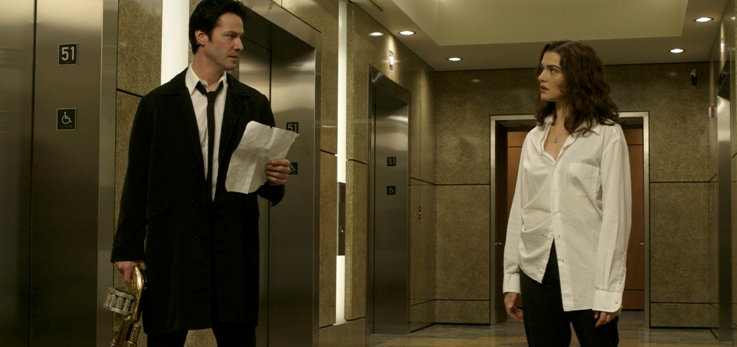
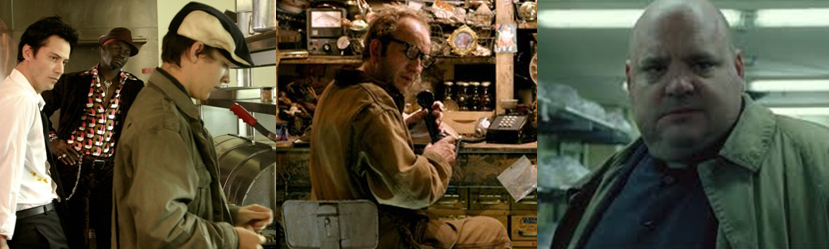
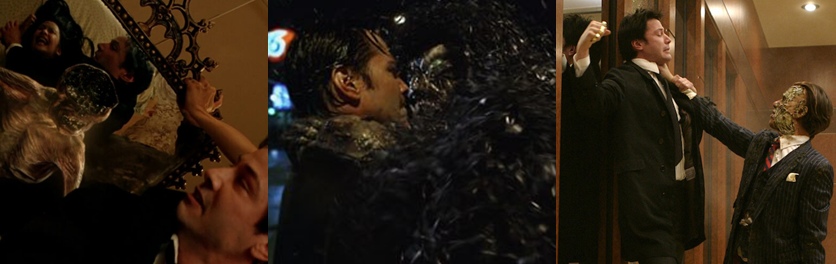
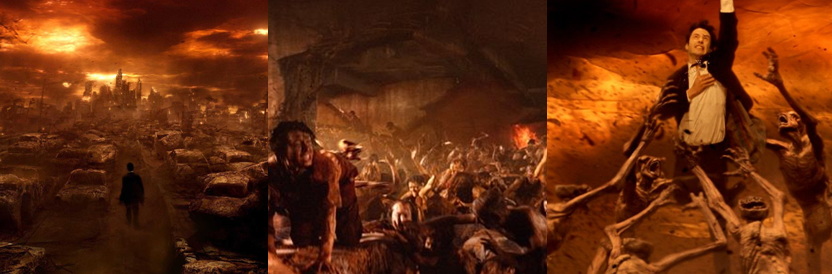






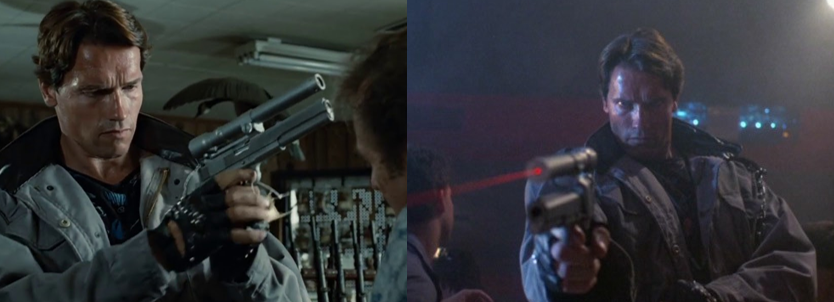






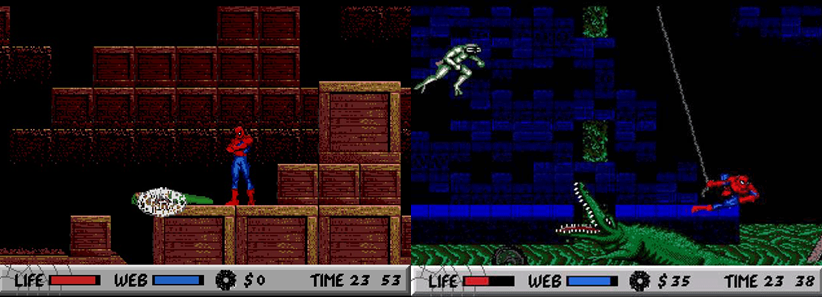
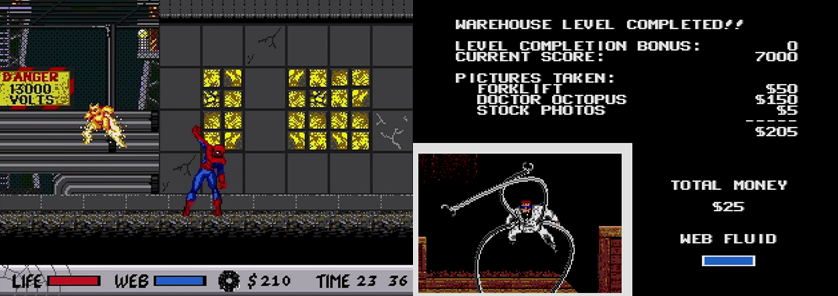
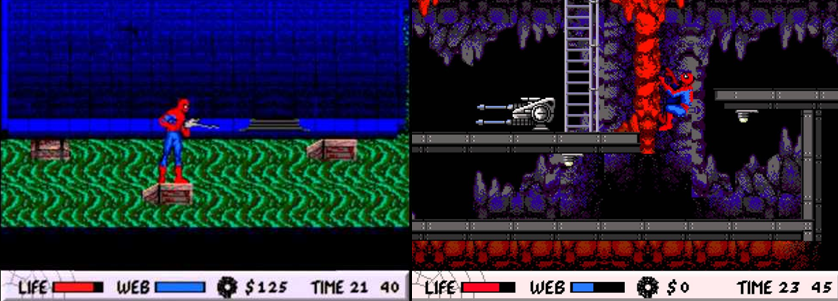
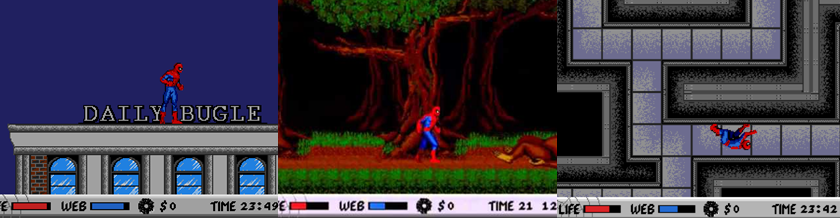
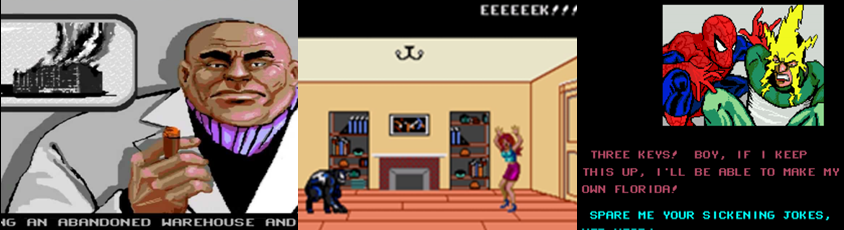
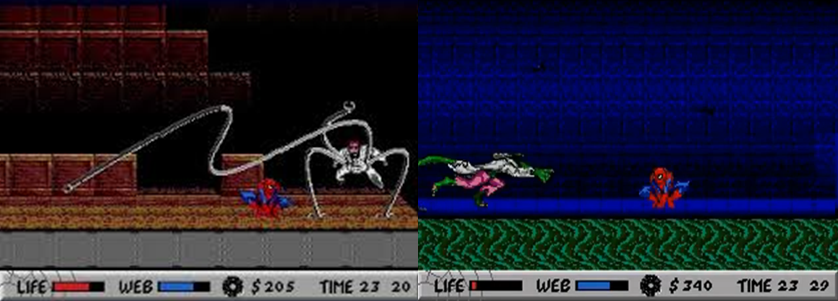
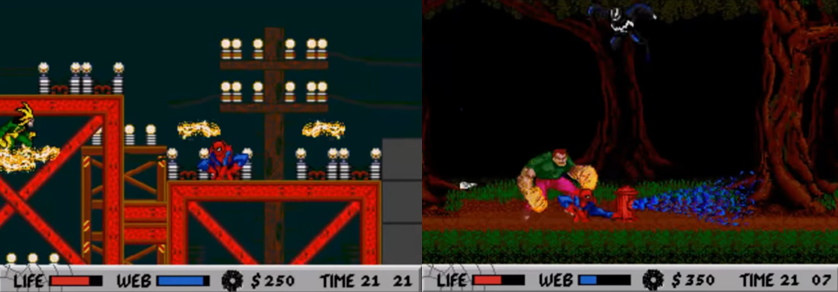
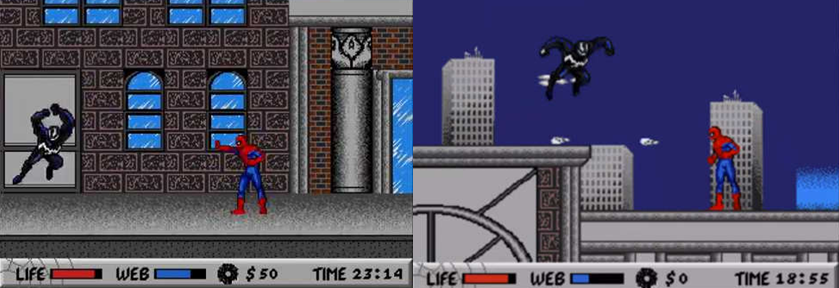
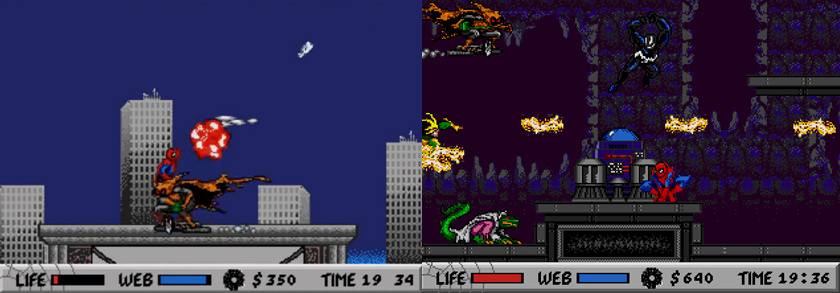
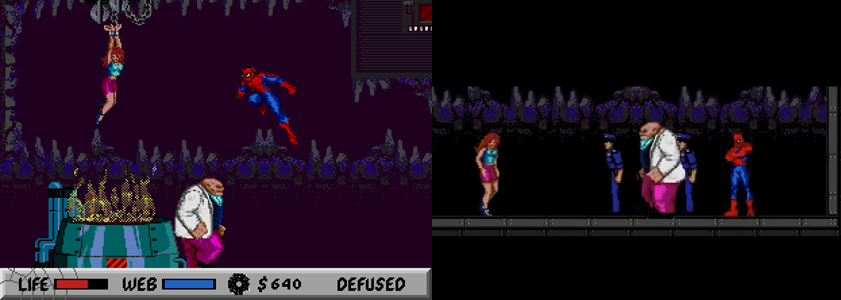





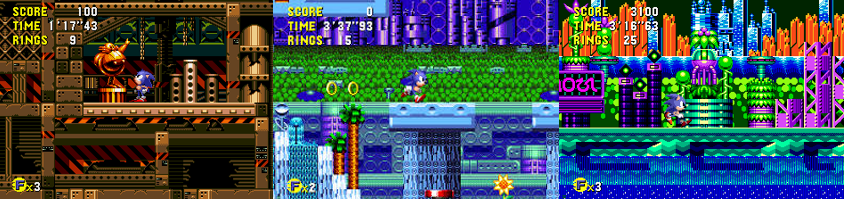
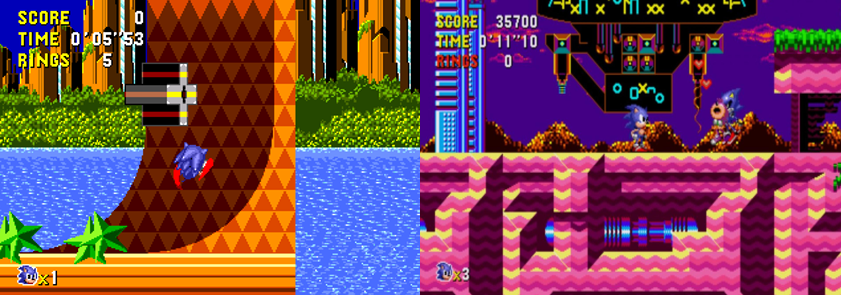

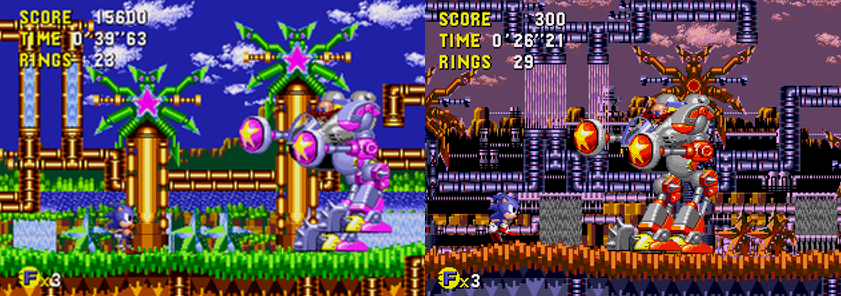
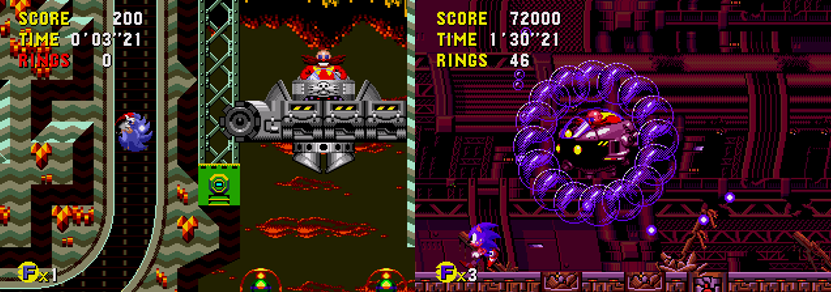
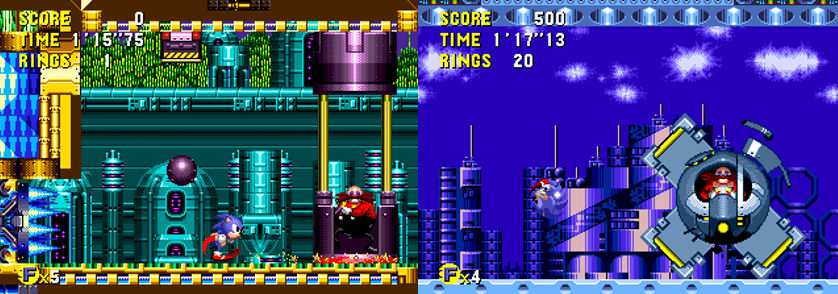
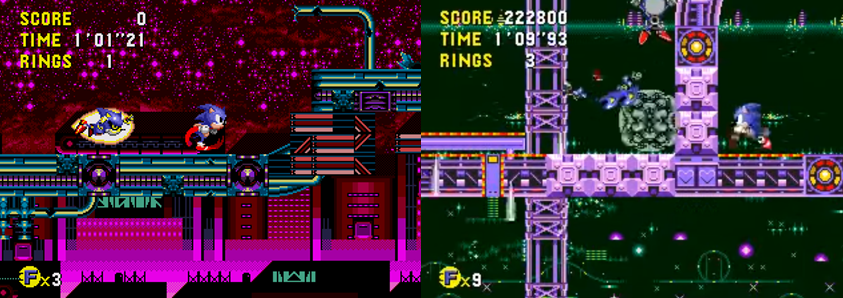

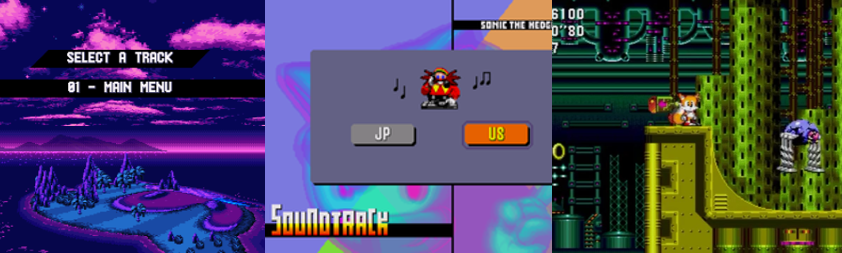











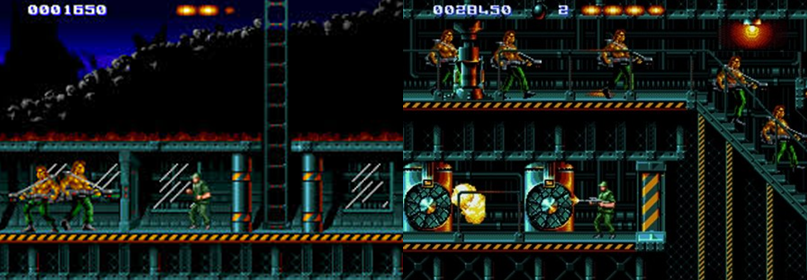






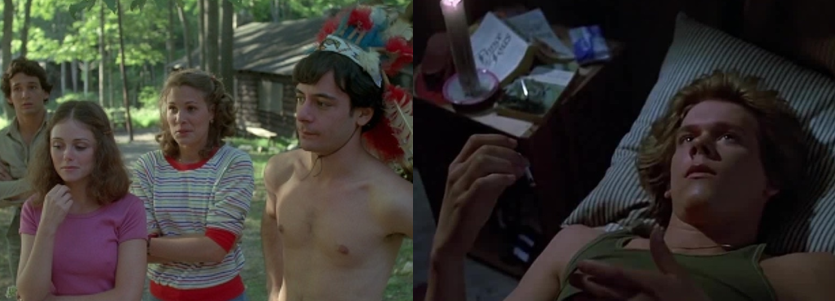




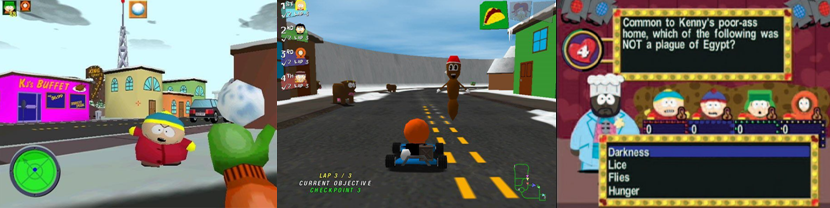











You must be logged in to post a comment.