
So, for no better reason than “Mar.10” resembling Mario’s name, March 10th is widely regarded as being “Mario Day”, a day to celebrate Nintendo’s portly plumber, an overalls-wearing mascot who literally changed the videogame industry forever and shaped the home console market of the nineties.

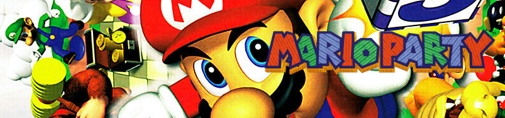
Released: 2 November 2022
Originally Released: 18 December 1998
Developer: Nintendo
Original Developer: Hudson Soft
Also Available For: Nintendo 64
Metacritic Scores: 79 / 7.8
Quick Facts
After Super Mario 64’s (Nintendo EAD, 1996) critical and financial success. Nintendo followed up with a series of spin-off titles, with Mario Party being one of the most lauded. Mario Party was geared towards multiplayer gameplay and set the blueprint for a sub-series of Mario videogames (and numerous copycats). Widely praised, especially when played with friends, Mario Party’s mini games were celebrated for their variety and challenge, though some complained of hand injuries. Nintendo long avoided re-releasing the first title in favour of its sequels or new games, though some of its mini games were revamped in the Mario Party: The Top 100 (NDcube, 2017).
The Review:
As you might’ve guessed, Mario Party is a party game where players compete against their friends or computer-controlled opponents, rolling dice and making moves and playing various Mini-Games, across six initial board-like stages and two unlockable areas, to become the “Super Star”. Players pick from six recognisable characters, though they all play the same, which is a shame considering Wario (my go-to) and Donkey Kong are known for their strength and Luigi is known for his low traction and high jumping, characteristics that sadly don’t factor into the Mini-Games. Players are guided by Toad and a friendly Koopa Troopa, who teach the rules, award Coins and Stars, and detail the controls and objectives. When starting a game, you can set the number of human and computer players, set the difficulty level, and establish how many “turns” it takes to finish. You then select a board, with each sporting different gimmicks and difficulty ratings, and finally hit a rolling dice to decide the order of play. Unfortunately, there’s no way to speed up the games and you must sit and watch as each player takes their turn, navigates the board and its hazards and gimmicks, and competes in single-player Mini-Games, which gets very tedious. Mario Party’s controls are super simple: you press A to hit dice and confirm selections or to jump or swim in some Mini-Games, press B to exit menu screens, view the entire map from the main board, or attack or speed up in some Mini-Games, use A and ZL to perform a butt stomp, and press the Right trigger for an alternative view of the main board map. Your goal is to do circuits of the board, collecting Coins from Blue Spaces and Mini-Games and reaching Toad to buy a Star, avoiding Red Spaces (which sap your Coins) and Bowser spaces, where possible. The player with the most Stars (or Coins, in the event of a tie), wins, and players are awarded additional Stars for having the most Coins, winning the most Mini-Games, or landing on the most “Happening Spaces”.
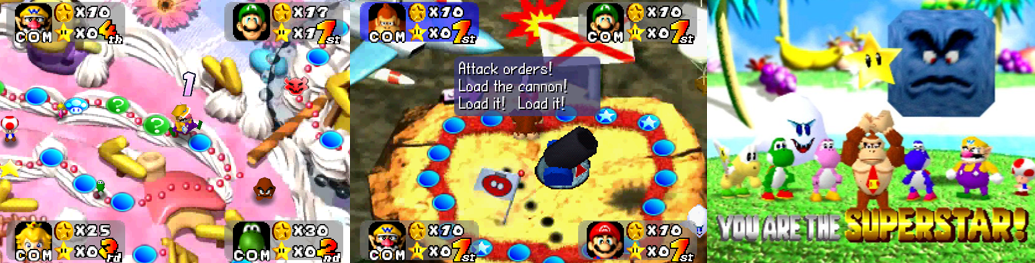
Happening Spaces do different things depending on the board but generally swap Toad’s position with Bowser’s, which can be good or bad depending on where you are on the board. If you land on a “Chance Time Space”, you play a roulette-style game where you hit spinning dice to swap Coins or Stars between players, which can again aid or hinder you. Bowser Spaces see the Koopa King challenging you to tougher Mini-Games where you lose more Coins if you fail, or initiate a faster Chance Time game where he steals your Coins, or he forces you to buy a useless item. You’ll also encounter ghostly Boos who steal Coins from any player for free or grab a Star from them for a small fee, Bob-Ombs blast you across Wario’s Battle Canyon, and Koopa Troopa awards 10 Coins each time you pass him. When you’re close to the end, this is upped to 20 and each Blue and Red Space gifts or removes additional Coins. Players can take alternate paths in most boards, either by selecting an arrow, paying to pass a Thwomp or a Whomp, activating a trap, or depositing Coins to open or shut doors. When playing Princess “Peach” Toadstool’s Birthday Cake board, you can plant one of four seeds to be shunted towards Bowser or Toad or plant Strawberry Seeds to spawn Piranha Plants that steal Stars from passing players. Upon completion, your Coins and Stars are deposited in the Mushroom Bank to spend them at the Mushroom Shop to purchase helpful items. These earn you additional interest on your Coins, double or half your current Coin stock, unlock the credits and sound test, and can remove Boos or Koopa Troopas from some boards. Other items randomly award or take away Coins, randomly switch player positions, and randomly spawn a Boo, Bowser, or Koopa Troopa, none of which I found particularly useful. While some boards are quite simple to navigate, others force you to take different paths to avoid Bowser or reach Toad, while others have you hopping around seemingly at random to reach Toad. Wario’s Battle Canyon was the worst for this as the Bob-Omb cannons keep switching targets and some areas are filled with Mini-Game Spaces or Red Spaces, which drags the tedious game out even more.
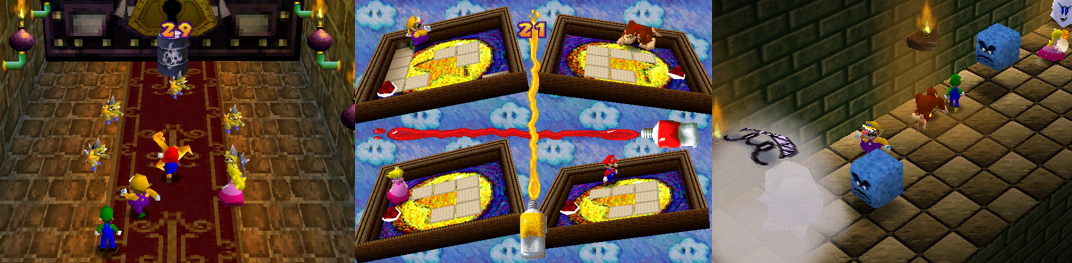
The main draw of Mario Party are the Mini-Games, which are played either solo, in a free-for-all, in teams, or pit one character against the other three. It seems to be random which player is fought against in these latter Mini-Games unless you land on a Bowser Space, where you’re usually on the defensive. Each Mini-Game has a time limit and has you capturing the most Coins. You’ll dig through dirt to locate treasure chests, dive to the ocean floor (with or without a partner) to grab treasure while avoiding Bloopers and sharks, toss a Bob-omb between players to avoid being blown up, and play a Mario-themed version of musical chairs where you must race to the big red mushroom and its treasure when the music stops. You’ll be desperately cutting out shapes as accurately as possible, warping Bowser’s face like the face manipulation minigame in Super Mario 64, alternating button presses to inflate a Bowser balloon, and smashing Coin Blocks. In Skateboard Scamper, you must frantically tap B to skateboard along a crumbling path, jumping over Thwomps and snagging floating Coins, while Box Mountain has you smash boxes for Coins, Grab Bag has you playing “capture the flag” with loot, and Platform Peril has you awkwardly hopping between falling platforms not unlike Rainbow Ride. Some Mini-Games have you frantically wrestling the game’s odd momentum and physics to avoid falling in water, such as Mushroom Mix-Up, Bumper Balls, Hammer Drop, and Bombs Away. Tipsy Tourney sees you completing a picture puzzle by running over squares, Mario bandstand has you tapping A at the right time to play a song, Shy Guy Says has to tapping either A or B to avoid being set adrift, and Cast Aways sees you clumsily flicking the left stick to try and snag floating loot. You’ll be running from Boos as you carry a lightbulb through a haunted corridor, playing jump rope with flames, spinning about like crazy in Slot Car Derby, and trying to (or hoping that) drop a treasure chest through a pipe maze.
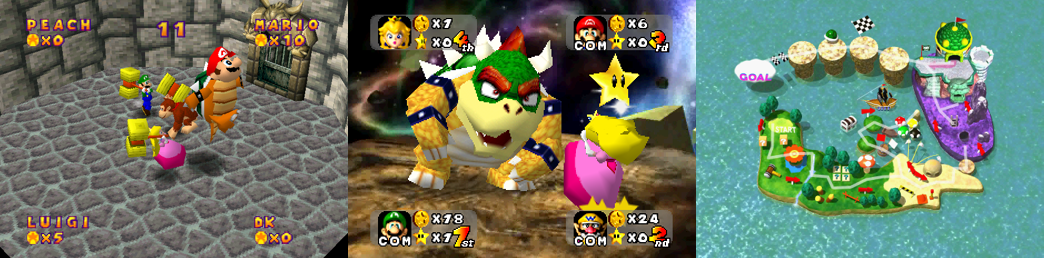
In one-on-three Mini-Games, you must all attack a player dressed as Bowser (or avoid those attacks), play bowling, smash Coin Blocks with a massive hammer, gingerly cross a tightrope (or blast the player with your cannon), try not to snap your console futility wriggling free in the Crane Game, butt stomp a raincloud to have a Piranha Plant eat a player (or desperately outrun it), play tug o’ war, and splash about in a paddle boat. Two-on-two games see you randomly paired with another player for some bobsled racing, wiggling the left stick to hobble across a desert, stealing and dunking a bombsketball, and pumping a handcar and steering into tight corners to avoid falling in lava. I rarely got to play a single-player Mini-Game but these see you matching picture squares, playing a slot machine, smacking the right Boo out of a gaggle of ghosts, playing whack-a-mole with Piranha Plants, and pounding tree stumps. Mini-Games are purchased from the Mini-Game House to be freely played but, while they’re the best part of the game, it does get tedious when you play the same ones over and over or must watch players tackle them alone. Mario Party is also quite challenging even on the easiest difficulties as it’s very easy to do laps of a board and not buy any Stars or for players to steal all your Coins and Stars. While the Nintendo Switch’s save state feature helps with this, it won’t help with the game’s janky-ass mechanics that see what should be random actions be pre-determined, ensuring you land on the wrong spaces or are robbed. The computer generally always targets you, which doesn’t help, and it gets very annoying being denied a Star thanks to the board shifting. If you collect 100 Stars, you unlock the Eternal Star board and you can buy Bowser’s Magma Mountain for a mere 980 Coins, finishing each board sees the Power Stars change the map and title screen, and there’s even a special Mini-Game Island that challenges you to play and win all fifty Mini-Games. This mode utilises a life system, with players earning extra lives for every 100 Coins and losing lives when they fail a Mini-Game, and also includes some helpful shortcuts. Clearing every Mini-Game and setting records and beating Toad to the goal unlocks the Bumper Ball Maze Mini-Games, though I’d say this mode is only for die-hard Mario Party players.
Final Thoughts:
I was hesitant to play Mario Party as I didn’t like the idea of being screwed over by chance or landing on bogus spaces, but I figured I could manipulate the save state system to counteract this. Unfortunately, the game isn’t designed that way; if Mario rolls a six, he rolls a six each time you reload and if Yoshi chooses to swap your Stars with Peach then you’re losing those Stars. Things started out decent enough; the game’s very colourful and whimsical, even with the low-poly models, and I liked how each board had different gimmicks. Unfortunately, things become very tedious very quickly as there’s no way to fast forward or skip computer-controlled player turns, dragging each game out even with the least amount of turns selected. It’s also frustratingly easy to lose Coins and Stars thanks to spiteful players, some games see you earn less Stars because Toad keeps fucking moving (!), and I got annoyed at being forced to watch or play a Mini-Game every thirty seconds. Luckily, the Mini-Games are fun and, in many ways, the campaign is just window dressing for these games, which I’m sure led to many fallouts between friends back in the day. While some or more aggravating than others, they’re bite-sized challenges that can (mostly) be easily mastered, meaning it’s probably better to stick with Mini-Game Island than tackle the main boards. My opinion may be skewed because I played alone against three computer-controlled opponents, but I quickly lost patience with Mario Party. It annoyed me that the characters didn’t have different stats or abilities to make them unique and I wasn’t enthusiastic about grinding for all the Coins and Stars to unlock the bonus boards. I’m also even less enthusiastic about the series as a whole and have no plans to play other Mario Party games, though maybe that Top 100 game would be more my speed.
My Rating:
Could Be Better
Do you think I was too harsh on the original Mario Party? Which of the playable characters was your go-to and were you also disappointed they didn’t have unique attributes? Did you also find the main game tedious or do you have fond memories of playing with your friends? Which of the boards, Mini-Games, and gimmicks was your favourite? Did you ever unlock the bonus boards and best Mini-Game Island? Which Mario Party game is your favourite and how are you celebrating Mario’s birthday this year? Whatever your thoughts on Mario Party, share them below and, if you want to see me tackle other Mario Party titles, drop a donation on Ko-Fi!




























 Dr. K's Waiting Room
You must be logged in to post a comment.