Easily Marvel Comics’ most recognisable and popular superhero, unsuspecting teenage nerd Peter Parker was first bitten by a radioactive spider and learned the true meaning of power and responsibility in Amazing Fantasy #15, which was first published in August 1962. Since then, the Amazing Spider-Man has featured in numerous cartoons, live-action movies, videogames, action figures, and countless comic book titles and, in celebration of his debut and his very own day of celebration, I’ve been dedicating every Wednesday to talk about everyone’s favourite web-head!
Released: 1991 Developer: SEGA
The Background: Having achieved success with the creation of the Fantastic Four, Marvel Comics editor and head writer, the immortal Stan Lee, was searching for another title to match the success of Marvel’s first family. Inspired by a spider climbing up a wall, influenced by pulp vigilante the Spider, eager to capitalise on the surge in teenage demand for comic books, and working alongside artist Steve Ditko, Lee conceived of Spider-Man and was granted permission to feature the teenage superhero in the final issue of Amazing Fantasy. Marvel publisher Martin Goodman was shocked to find that Amazing Fantasy #15 was one of the publication’s highest-selling comics and a solo Spider-Man series soon followed, with Spidey quickly becoming Marvel’s most popular comic book character. Since then, Spider-Man has seen success in numerous other media; in 1967, he featured in a self-titled animated series, he famously appeared as a guest character on The Electric Company (1971 to 1977) and starred in his own live-action series in 1978, and heavily influenced my childhood through the fantasticSpider-Man cartoon (1994 to 1998) before eventually featuring in a numberof live-action films. Furthermore, Spider-Man has also featured in numerous videogames, the first of which was the aggravatingSpider-Man (Parker Brothers, 1982) for the Atari 2600. Before debuting in arcades, the majority of Spidey’s videogame efforts were sidescrolling action/platformers but this was the early nineties and button-mashing beat-‘em-ups were all the rage thanks to titles like Double Dragon (Technōs Japan, 1987), Final Fight(Capcom, 1989), and The Simpsons (Konami, 1991) so Spidey’s arcade debut naturally came in the form of a sidescrolling beat-‘em-up.
The Plot: Wilson Fisk, the Kingpin of Crime in New York City, has sent his minions out into the city to retrieve a mystical artefact and only Spider-Man and his allies (Prince Namor McKenzie/The Sub-Mariner, Clint Barton/Hawkeye, and Felicia Hardy/Black Cat) can hope to defeat some of Spidey’s most powerful and iconic villains and oppose the Kingpin’s plans for domination.
Gameplay: Spider-Man: The Video Game is a fairly standard sidescrolling beat-‘em-up in which players can pick from one of four characters (Spider-Man (obviously), Sub-Mariner, Hawkeye, and Black Cat) and make their way from the left side of the screen to the right beating up wave-upon-wave of nameless thugs. The game allows any player to select any character and allows for up to four players to play simultaneously, which is always an appreciated feature of such titles.
Each character is sluggish andgameplay is shaken up by some ugly platforming sections.
Upon selecting your character, you’re dropped into the streets of New York and quickly learn that the game is quite limited in terms of the moves available to you. Each character controls in exactly the same way, with a few subtle differences: Spidey and Black Cat can swing from webs/lines to attack enemies (if you can pull off the attack, which kind of requires a very specific combination of jumping and attacking) and each has a slightly different jumping attack (Namor dives fist-first down into enemies, for example) and melee attacks (Black Cat is much more about the fancy kicks than Hawkeye). While you can perform a signature special attack (shooting webs or arrows, for example) at the cost of some health points, each character is just as sluggish and apathetic as the next thanks to a lack of a dash function. However, after beating up a few thugs and taking out a sub-boss, the game suddenly shifts to an entirely different perspective; the camera zooms out and the game becomes more of an action/platformer as your character must scale a vertical and horizontal map taking out more goons as they go. In this zoomed out mode, your characters are no longer able to perform melee attacks and must rely on their projectile attacks: Spidey shoots webs, Hawkeye shoots arrows, Black Cat attacks with a grapple hook, and Namor….shoots lightning…? Spidey and Black Cat can also scale and climb walls to navigate these areas faster and Hawkeye and Namor can hang on to overhead platforms to shoot at enemies but it’s a bit weird that you’re not given full access to each character’s abilities in this mode.
Your health drains constantly and players are rated after each stage.
Unlike many videogames and beat-‘em-ups, inserting coins not only allows you to continue from death but also boosts your health, which is represented by a series of numbers under your character’s name. Your health numbers also double as a time limit as they’re constantly ticking down and this is quite a unique and clever way to get kids to waste their hard-earned pocket money as, while you can find health (in the form of hearts) strewn around the game’s stages at various points, you’ll quickly be pummelled into submission by the game’s enemies and forced to drop more coins to pump up your health and continue on a little further. Sadly, in a marketplace crowded by fantastic beat-‘em-ups, Spider-Man: The Video game fails to stand out in a lot of ways; you can attack and destroy parts of the environment but there’s not much motivation to do this as there are no weapons to find and use and no items to pick up to increase your score. Your score isn’t even displayed onscreen as you play, for God’s sake, which is really unusual, despite the fact that your progress is rated at the end of each stage. Instead, the game’s primary selling point appears to be exclusively the Spider-Man brand and the odd inclusion of action/platforming sections.
Graphics and Sound: For the most part, Spider-Man: The Video Game looks serviceable enough; sprites are large and colourful but, like the backgrounds, are a little lacking in variety and detail. None of the playable characters have an idle animation, which lets the game down somewhat, and Spider-Man, especially, just looks bored and depressed as he plods around at a sluggish speed. When the game zooms out for its platforming sections, sprites take on a largely pixelated appearance but the backgrounds become much bigger and more detailed. Stages initially seem quite short as you come up against your first sub-boss in almost no time at all and, after defeating them, you’re tasked with climbing up to the rooftops of New York’s skyscrapers and the stages really open up.
Platforming sections expand the game, with “Latvelia” being the most visually interesting.
As you attack enemies, and are attacked, big comic book-style sound effects appear onscreen (as is pretty standard for comic book beat-‘em-ups) but I found sprites go a bit transparent when they pass over other sprites and graphics (though this could be due to emulation issues rather than a flaw of the title itself). The game does feature some limited voice acting but, despite featuring a female voice (who just loves to cry out “Spider-Man!” every time you insert a coin), no female voice work accompanies Black Cat. This isn’t necessarily a bad thing as the male voice acting is the same for every character and hardly of a high standard and when you realise that Namor and Black Cat’s attacks are accompanied by some really weird sound effects that make them sound like they’re drowning or a robot, respectively. As you might expect, comic book-style cutscenes tell the game’s story; these take the form of still images with some accompanying text (though these don’t change depending on your character and mostly just feature Spidey by himself) and in-game cutscenes with some fitting word balloons. Finally, while the game’s stages are fairly standard (the streets, the rooftops, flying through the skies, construction sites and the like), they don’t really stand out much until you crash-land into the hellscape of “Latvelia” and the game suddenly busts out some decent fire effects. Finally, the game’s music, while interesting and serviceable enough, doesn’t really feel very unique to the Spider-Man brand or compared to other beat-‘em-ups.
Enemies and Bosses: The majority of the enemies you’ll encounter throughout your journey are literally nameless, faceless goons; weird kabuki-mask-wearing, purple-spandex-clad thugs are the order of the day here but they are soon joined by such cliché beat-‘em-up enemies as martial artists (who can duck your attacks), rotund enemies (who can belly flop you), and robots (which shoot projectiles). Spider-Man: The Video Game honestly doesn’t have much going for it in terms of enemy variety; you’ll fight the same enemies over and over and only encounter some weird and memorable foes with you reach “Latvelia” and encounter some weird ape-like monstrosities. However, Spider-Man: The Video Game is absolutely loaded with some of Spidey’s most iconic villains; after only a couple of minutes into the first stage, you’ll encounter Mac Gargan/Scorpion and, just as you’re getting into that fight, a massive containment unit opens up and Eddie Brock/Venomemerges.
You’ll face Spidey’s most iconic foes while swarms of enemies pile in on the action!
Although Scorpion soon runs off after a few hits, you’ll have to endure a handicap situation for a while as enemies spawn in, Venom teleports around the arena and chokes you with their goo, and Scorpion attacks you relentlessly. Once you whittle down Venom’s health, they use a mysterious artefact to grow to monstrous size and you’ll have to chase them to the rooftops for another encounter. This becomes the basic set-up for the majority of the game’s sub-bosses and bosses; you’ll fight them at one point and then have to give chase and battle them again in a slightly different situation after navigating the game’s zoomed out sections. You’ll battle Dr. Curt Connors/The Lizard (who has a nasty tendency to chomp down on your crotch), Flint Marko/Sandman, and Venom in a pretty standard beat-‘em-up format where you’ll be confined to an arena and have to fend off waves of additional enemies. Each boss reappears for a rematch later in the game but the strategy remains largely the same; keep your distance and land attacks while dispatching their support and things only really get hairy when Venom spawns a bunch of symbiote clones to fight alongside them!
While Kingpin is a marginal threat, Electro and Doc Ock really get the shaft!
Boss battles are mixed up a bit when you take on Norman Osborn/Green Goblin and Jason Macendale/Hobgoblin; while you’ll battle the Green Goblin on the ground, dodging his weird glowing hand attack, these two bosses stand out by taking to their iconic gliders and rushing at you from the air while tossing pumpkin bombs at you. These can be troublesome encounters as it’s difficult to judge where the Goblins are positioned to land your attacks or to successfully hit them with your jump attacks. Plus, when you battle Hobgoblin, you’re limited to your zoom-out attacks and will have to blast him with your projectiles and destroy large cannons to make things easier. You’ll also do battle with the Kingpin in a standard beat-‘em-up encounter; Kingpin’s attacks are limited to headbutts, swipes, and a shoulder barge, making him little more than an inconvenience than a formidable boss fight even in his second phase. Still, at least he actually gets a proper boss fight; Max Dillon/Electro and perhaps Spidey’s most famous foe, Dr. Otto Octavius/Doctor Octopus are relegated to mere semi-sub-bosses who randomly appear as you’re navigating the game’s later platform stages and they’re little more than a joke as you can easily damage boost through their attacks and pummel them into submission.
Doctor Doom is the game’s final boss and takes numerous forms.
After defeating the Kingpin, though, Dr. Victor Von Doom/Doctor Doom randomly appears to claim the mysterious artefact and reveal himself to be the game’s true big bad. When you reach Doom’s Castle, you’ll have to dodge mines and battle through the game’s previous sub-bosses and bosses to confront Doctor Doom…only to find you’ve battled a Doombot all along! However, when you finally do get your hands on the real Doctor Doom, the fight is still little more than a standard affair once you take out Doom’s nifty floating battle craft: Doom is fast and slippery but doesn’t attack with magical bolts until the final confrontation and even then he’s not much more of a threat than the likes of the Sandman or the Lizard.
Power-Ups and Bonuses: As mentioned, there’s pretty much nothing on offer to spice up your gameplay in Spider-Man: The Video Game. You can’t pick up and use weapons or power-ups and the only thing for you to pick up is hearts to increase your health, making gameplay decidedly more repetitive and monotonous compared to other beat-‘em-ups.
Additional Features: Again, there’s basically nothing here (as is pretty much the standard for most arcade games). However, the fact that you can select any character to play as and play with up to four players, each who accumulate their own separate score at the end of each stage, does add some replay value (if you have friends to play with, of course…)
The Summary: Spider-Man: The Video Game is a decent enough beat-‘em-up; it’s bright and colourful and includes all of Spider-Man’s most iconic villains but it doesn’t really offer a whole hell of a lot when it comes to gameplay or variety. Beat-‘em-ups are generally quite monotonous as a rule but they usually compensate for this with kick-ass music, detailed sprites, and some cool weapons and super moves; Spider-Man: The Video Game has none of these attributes, meaning it’s a step behind other arcade titles released at the same time and even ones released years prior. The game’s unique selling point of having action/platforming sections incorporated into the usual beat-‘em-up formula is interesting but its execution is flawed thanks to the graphics taking a hit. Throw in an odd assortment of playable characters (I get why Black Cat is there but why are Namor and Hawkeye here?), some repetitive boss battles, and disappointing use of some of Spidey’s more visually striking foes and you have a gameplay experience that is fun enough (and probably better alongside friends) but hardly worth choosing over the likes of Final Fight or even Double Dragon. Put it this way: X-Men(Konami, 1992) released the very next year and is everything Spider-Man: The Video Game wishes it could be; hell, even Captain America and the Avengers(Data East, 1991) offers more in terms of gameplay variety and character abilities despite being graphically less impressive and that’s really saying something.
My Rating:
⭐⭐
Rating: 2 out of 5.
Could Be Better
Did you ever play Spider-Man: The Video Game out in the wild? Which character did you pick, or get lumbered with, and which did you think was the best or the worst? What did you think of the game’s unique incorporation of platforming elements and the way it handled Spidey’s villains? Which characters do you think would have been more suitable to play in place of Namor and Hawkeye? Which Spider-Man videogame, or arcade beat-’em-up, is your favourite? Whatever you think, feel free to drop a comment below and be sure to check out my other Spider-Man content.
Easily Marvel Comics’ most recognisable and popular superhero, unsuspecting teenage nerd Peter Parker was first bitten by a radioactive spider and learned the true meaning of power and responsibility in Amazing Fantasy #15, which was first published in August 1962. Since then, the Amazing Spider-Man has featured in numerous cartoons, live-action movies, videogames, action figures, and countless comic book titles and, in celebration of his debut and his very own day of celebration, I’ll be dedicating every Wednesday of August to talk about everyone’s favourite web-head!
Story Title: Spider-Man! Published: August 1962 Writer: Stan Lee Artist: Steve Ditko
The Background: The year was 1962 and Marvel Comics had seen incredible success with the Fantastic Four; wishing to capitalise on this, Marvel editor and head writer Stan Lee wanted to create a teenaged superhero for his younger readers to identify with. After being inspired by a fly climbing his office wall, Lee experimented with different insect names before settling on Spider-Man (eventually placing emphasis on the hyphen to avoid associations with Clark Kent/Superman) and, after being dissatisfied with Jack Kirby’s interpretation of his new young superhero, Lee turned to artist Steve Ditko to finalise Spider-Man’s costume and accessories.
Spider-Man was an incredible success and has gone on to become a mainstream pop culture icon.
Stan Lee purposely set out to make Spider-Man a troubled young teenager rather than a flawless character or the sidekick to an older hero, one who was constantly struggling with relatable issues such as money, love, and the health of his family. Despite the success of the Fantastic Four, Stan Lee also still needed the approval of Marvel publisher Martin Goodman, who disliked the character and the concept and only allowed Lee to feature Spider-Man in Amazing Fantasy as the comic was scheduled to be cancelled with its fifteenth issue. Despite this, Amazing Fantasy #15 proved to be one of the company’s best selling titles and the character’s popularity led to him not only getting his own solo title, The Amazing Spider-Man, in 1963 barely a year after his debut but also catapulting Spider-Man into mainstream popularity that endures to this day.
The Review: “Spider-Man!” immediately begins with Stan Lee’s peerless narration setting up just how different the concept is and the art delivers on this promise by introducing us to Peter Parker, a bespectacled teenager who is the subject of much abuse and ridicule from his peers who ostracise him and see him as nothing more than a bookworm and a wallflower.
Peter has a loving home life and excels in his studies but is relentlessly teased at school.
Peter lives with his aged and doting Uncle Ben and Aunt May, who shower him with love and affection, and excels in his studies, particularly in science (which his aunt and uncle actively encourage), but is incredibly shy and awkward around his fellow students. When he ineptly attempts to ask Sally out, she rudely rebuffs him and his efforts to impress her, and the others, with an invitation to a science exhibit are drowned out by the braying taunting and arrogance of Flash Thompson, the most popular guy in school.
The dying radioactive spider bites Peter’s hand and he immediately feels its effects.
Though upset at the mockery of his classmates, Peter joins a number of other attendees in witnessing a demonstration of the latest in cutting edge atomic science, specifically the mysterious power of radioactive rays. As the head scientist begins the experiment, though, an unassuming spider, unseen and unnoticed by all, is bathed in a full blast of radiation and, with its dying breath, bites the back of Peter’s hand and immediately sends him a bit queasy (to the mockery of those in attendance because it’s not just teenagers who take the piss out of poor old Peter!)
Peter is startled to discover he has all the strength and abilities of a spider!
Distracted by the sudden charge of energy that flows through his body, Peter narrowly avoids being run down in the street but leaping up a nearby building! Astounded, Peter finds he can cling to the wall as easily as…well, a spider…and that he can crush a steel pipe as though it were mere paper! As if that wasn’t enough, he suddenly has superhuman dexterity and balance, which allows him to easily and fearlessly traverse a cable as effortlessly as a spider would crawl along a web.
Proto-Spidey easily overpowers and humiliates Crusher Hogan.
Excited at his newfound powers, Peter does the first thing anyone would in this situation and throws on a makeshift disguise to test his abilities in the ring against Crusher Hogan (and earn a cushy $100 in the process). Though initially dismissive of the proto-Spider-Man’s slight physical stature, Hogan is almost immediately left flustered and humbled when Peter effortlessly dodges his attack, hoists him up, and holds him precariously over the ring.
Peterputs his skills to use creating a spider-themed costume and accessories.
After the match, as Peter is counting his winnings, a television producer approaches him with an offer to appear on Ed Sullivan’s show. Overwhelmed at his incredible abilities and enthusiastic at appearing on television, Peter sets to work designing a colourful costume for himself; it’s not made clear why he choose red and black/blue but it certainly makes for a colourful, striking appearance. As if Peter’s sewing skills weren’t impressive enough, he also uses his scientific aptitude to construct a pair of mechanical web-shooters so that he can fire off webs just like a spider. Honestly, as much as I like Peter’s practical web-shooters, I always felt like the organic web-shooters made much more sense rather than him being “imparted” with the knowledge of how to make his own web-shooters because…you know, he gets a spider’s strength, speed, agility, well-clinging, and a version of their multiple eyes with the spider-sense but he can’t naturally produce webs?
Spider-Man revels in his newfound fame and refuses to stop a thief from escaping.
Anyway, Spider-Man makes his big television debut, wowing the audience with his many abilities; he becomes an immediate headline sensation and is suddenly inundated with offers for interviews, photo shoots, and even movies (imagine that!) However, as he is making his way back to the changing room, a security guard is in the process of chasing down a thief; Spider-Man allows the thief to escape unhindered to the elevator, rightfully but crucially stating that it’s not his job to stop criminals since he’s a performer, not a cop!
Peter is horrified to find his uncle dead and angrily confronts the man responsible.
Peter revels in his newfound fame but, one fateful evening (not that same evening, it’s interesting to note), he returns home to be told the news that his beloved Uncle Ben has been shot and killed by a house burglar! Overcome with grief and a burning desire for revenge, Peter races to his bedroom and pulls on his Spider-Man costume to confront the burglar after the cops tell him (Peter) where he’s holed up. Thanks to his web-slinging abilities, Spider-Man easily crosses town to reach the warehouse where the thief is hiding out and gets the drop on him.
Peter learns a harsh and humbling lesson to use his great powers selflessly.
Of course, Spider-Man is easily able to corner the thief, disable his gun with his webs, and knock him out with one right hook. However, Peter is devastated when he sees the face of his uncle’s killer and recognises him as the same thief he refused to stop a few days earlier! Peter leaves the thief in the custody of the police and wanders off into the night, distraught with grief and guilt at his selfish ways and learning, as the narrator sombrely informs us, the harsh lesson that “With great power there must also come — great responsibility!”
The Summary: “Spider-Man!” is a brilliant, almost timeless tale; of course, it’s obviously full of allusions and references to the time period it was created in but none of these elements really overwhelm the general pace, direction, and themes of the story. Spider-Man was the first superhero to be a normal, everyday, awkward teenager; shunned by his peers for being a bookworm, he’s far outside of the popular social circle yet, though he’s clearly affected and upset by the teasing he constantly endures, he never falls into angst or despair and, instead, revels in the love and affection his adoring aunt and uncle constantly show him.
After years of being bullied for being a wallflower, Peter revels in his newfound fame.
Upon being granted his amazing spider abilities, Peter is immediately fascinated and excited and jumps at the chance to flex his newfound muscles in the ring. Finally, after years of persecution for being a wallflower, he has the power to topple even large, muscular wrestlers like Crusher Hogan and quickly becomes a television sensation. It’s clear that Peter is both overwhelmed and enthusiastic by the fame (and, presumably, brief fortune) his celebrity status brings him; there’s a sense that all these opportunists and media moguls are simply using Spider-Man and taking advantage of him but Peter is too distracted by the applause and adulation to even care.
Spidey’s dramatic origin is easily one of the most iconic and memorable in all of comics.
So overcome by this admiration and fame is Peter that his selfish actions cause him to make one fateful error in letting a seemingly harmless thief escape punishment and, of course, pays for it when that same thief kills his beloved Uncle Ben. The sight of Peter staring at the face of his uncle’s killer and realising that he (Peter) could have easily stopped him is a haunting and enduring image, as is the valuable life lesson that would go on to not only define Spider-Man’s superhero career but also become largely synonymous with the character. This origin, one born out of pure, unadulterated grief, is perhaps second only to the traumatic murder of Thomas and Martha Wayne in its significance, iconography, and impact on both the character and the comics and subsequent media he appeared in and ensures that Spider-Man’s dramatic debut is both memorable and relatable since Peter’s actions, though selfish, were completely understandable and natural. He didn’t get his powers and immediately become a crimefighter; he used them for fortune and glory and who among us can say we wouldn’t do the same?
My Rating:
⭐⭐⭐⭐
Rating: 4 out of 5.
Great Stuff
What are your thoughts on Spider-Man’s iconic debut? Were you a fan of the character at the time or were you introduced to him through some other means and, if so, what were they? How would you rank Spider-Man’s traumatic origin story and how important would you say it is to the character and the comics industry as a whole? What is your favourite Spider-Man storyline, costume, or character and why? Do you prefer mechanical or organic web-shooters? Why do you think Peter chose red and black/blue for his costume? How are you celebrating Spider-Man Day today? Whatever your thoughts on Spider-Man, leave a comment below and be sure to stick around for Spider-Man Month starting this Wednesday!
Story Title: “Venom” Published: May 1984 Writer: David Michelinie Artist: Todd McFarlane
The Background: In 1982, Marvel Comics’ editor-in-chief Jim Shooter took a liking to an illustration from reader Randy Schueller that depicted Spider-Man in a smooth, black outfit with a large red spider motif across the chest; after purchasing the concept for a mere $200, writer Tom DeFalco and artist Ron Frenz conceived of the costume being a living organism and Spidey’s new black suit debuted without explanation in The Amazing Spider-Man #252 before Marvel Super Heroes Secret Wars #8 revealed that Spidey acquired the suit during the “Secret Wars” event. Over the next year or so, Spidey revelled in the costume’s unique and helpful ability to form both clothing and organic webbing until Doctor Reed Richards/Mister Fantastic revealed its true nature as a symbiotic lifeform. Out of fear, Spidey rejected the symbiote, using the cacophony of church bells to drive it from his body and began wearing a cloth version of his black suit. At the conclusion of Web of Spider-Man #24, though, a mysterious assailant attempted to push Peter in front of an oncoming train and a shadowy figure was clearly stalking him throughout 1988 before the symbiote, now known as Venom, made its full and dramatic reappearance. Since then, Venom has evolved from a gruesome, twisted killer into a violent anti-hero and a more morally righteous hero, with the symbiote jumping from numerous hosts and spawning a number of similarly-powered offspring. Acting as Spider-Man’s dark doppelgänger, Venom was an immediate favourite for me and many readers thanks to their knowledge of Spidey’s true identity, resistance to his spider-sense, and having all of Spidey’s powers (and more) but being far for vindictive, sadistic, and lacking Peter’s strong moral compass.
The Review: “Venom” opens with the startling image of Mary Jane Watson-Parker, Peter’s former fling turned wife, huddled in the corner of their apartment nearly out of her mind with fear. When Peter returns home, still garbed in his cloth black costume, initially Mary Jane recoils in horror before gratefully embracing Peter. Peter, though disturbed by Mary Jane’s condition and the fact that she was attacked in their apartment, is even more troubled by her description of her attacker and worries that the alien costume might have survived their dramatic break-up. Mary Jane, ever the feisty and capable woman, is largely back to her old self after a good night’s rest in a hotel and immediately makes arrangements for them to move so she can put the whole thing behind her.
The usually strong-willed and brazen Mary Jane is left a trembling wreck by Venom.
However, overcome with his characteristic worrisome nature, Peter retrieves a Sonic Blaster from the Fantastic Four (a formidable weapon against the symbiote, which is highly vulnerable to sonic waves and intense heat), but is too highly strung to notice a mysterious stranger stalking him or to properly socialise with his friends and family, despite Mary Jane’s best efforts to perk him up. It’s an extremely effective way to introduce Venom without even seeing them on-panel; although Venom doesn’t physically hurt or molest Mary Jane, their mere presence and alien nature are enough to reduce her to a shivering wreck. Her condition greatly disturbs Peter, who points out through his internal monologue what a strong, impendent, and capable woman Mary Jane usually is; she’s always been very brazen and outspoken so to see her reduced to little more than a frightened child is a chilling moment for him (and us, the reader). At their house-warming party, Peter suddenly leaves after spotting his alien costume swinging around town and is immediately blind-sided by a muscular doppelgänger of himself baring a horrific grin. Although the reader was introduced to Eddie Brock, a large, stone-faced, muscle-bound man who is in possession of the alien costume, earlier, we don’t actually learn who he is or any of his backstory until this moment. Previously, we saw that he lives in a rundown apartment full of weightlifting equipment and newspaper clippings of Spider-Man, openly converses to the symbiote (though it doesn’t answer him back), and that he religiously pumps iron to increase both his physical strength and the strength of the symbiote.
Brock was driven to the edge before bonding with the symbiote and becoming Venom.
Peter, however, recognises not only the symbiote but also Brock, who is revealed to have been a respected reporter whose reputation was tarnished when he was duped by a compulsive confessor. Because Spider-Man captured Stan Carter/The Sin-Eater, Brock’s big story was discredited and he blamed Spider-Man for the sudden downturn in his fortunes. Brock’s mania was so complete and had blinded him so completely that he was driven first to strenuous exercise and, finally, to suicide; however, right as Eddie was contemplating the worst sin imaginable to his Catholic upbringing, the symbiote found him and, joined in their hatred of Spider-Man, they formed a bond so complete that Venom was born.
Spidey’s mercy proves to be his downfall as Venom are easily able to overpower and defeat him.
Though Spidey tries to use Brock’s monologue to edge his way towards his Sonic Blaster, Venom easily overpowers him with their superior strength. Spidey is, however, able to knock Venom down with a massive girder and blast him with the Sonic Blaster; Spidey hesitates, though, when he realises that the two have formed an unbreakable symbiotic bond and that further exposure to the high-intensity sound waves could kill Brock and decides to regroup and think of a new plan. This is all the hesitation Venom needs to recover, though, and with one massive blow, they knock Spidey out. When he awakens some hours later, Spidey finds that he has been webbed up to a church bell by Venom’s far stronger and much thicker webbing. Brock, now garbed in a priest’s robe, revels in the delicious irony and fitting nature of Spidey’s impending death since Peter tried to use the same massive bells to destroy his “Other”. Like any good, overconfident villain, Venom leaves Spider-Man to his fate and, as such, misses their chance to keep Peter from using his sheer force of will and brute strength to keep himself from being pounded into mush and breaking free of Venom’s webbing.
Spidey outsmarts Venom by forcing them to expend their webbing and tire out.
Unable to match Venom’s strength and at a serious disadvantage since Venom doesn’t set off his spider-sense and appears to have all of his strengths and abilities, Spidey decides to outsmart Venom by forcing them to expend their webbing and tire themselves out, draining the symbiote’s energy and sending Brock crashing to the street below. The story ends with Brock, and the symbiote, being held captive at Four Freedoms Plaza, the high-tech home of the Fantastic Four; there, encased within a cylinder and rendered inert by a constant barrage of sonic waves, Venom’s threat is effectively neutralised. Upon safely returning to Mary Jane, Peter and his wife agree that it is no longer appropriate for him to wear the black costume given Venom’s sadistic nature and he finally returns to the classic red and blue for the first time in about four years.
The Summary: “Venom” is a really great introduction for one of Spider-Man’s most complex and vicious foes; this story took place during the much lauded Micheline/McFarlane pairing, which results in some absolutely fantastic and detailed artwork. McFarlane always drew a brilliant Spider-Man, emphasising the complexity of his webs, the inhuman positions and poses he would strike while web-slinging, and giving every character an edgy, nineties make-over to help them stand out a little more. Venom, in comparison, is far more subdued, visually, than he would later be, appearing as simply a jet-black, muscular version of Spider-Man with a demonic grin; it wouldn’t be until Mark Bagley came onto the title that Venom would take on some of their more recognisable characteristics, such as the writing tentacles, mass of teeth, and long, drooling tongue.
Brock is a hypocrticial, deluded, sadistic individual in his debut.
Still, Eddie Brock makes for a unique and interesting new addition to Spidey’s rogues gallery; Brock is one of a handful of Spidey’s villains who actually knows his secret identity and the only one (at the time) able to use that information to his full advantage thanks to his ability to circumvent Peter’s spider-sense and the many attributes of his alien costume. Brock is, of course, a complete madman here and in his early appearances; slighted by Spider-Man’s involvement, he blames all of his failings on Spidey rather than admit to being duped by a compulsive confessor. Eddie believes that Spider-Man is an evil and malevolent individual and that it is his sacred duty to put an end to his (Spidey’s) menace; his obsessive mania is so complete that he kills an innocent police officer and then justifies it as being necessary to his “righteous revenge”. He openly admits to being disgusted by innocent death but is all-too-happy to torment Mary Jane, stalk Peter, and attack Spider-Man with a maniacal glee.
Despite all their power, Venom are defeated quite easily through Spidey’s guile and cunning.
If there’s a downside to the story, it’s simply that Venom is defeated rather anti-climatically; the Sonic Blaster proves effective but Peter is too concerned with Brock’s well-being to press his advantage and, unable to match Venom’s brute strength (which is on par with Spidey’s and further augmented thanks to Brock’s intense physical training), Spidey simply has the symbiote exhaust itself and that’s it. However, Venom’s threat wouldn’t end here by a long shot and this is a simple way to leave the door open for their subsequent, far more impressive return and defeats. Furthermore, this tactic shows how blinded by his rage and spite Venom are and how adaptable and intelligent Peter can be; he doesn’t win through sheer mindless brute strength, as Venom are attempting to do, and must instead rely on his wiles and intelligence to overcome Venom’s very real and lethal threat.
My Rating:
⭐⭐⭐⭐
Rating: 4 out of 5.
Great Stuff
Have you read “Venom”? Did you purchase a copy of The Amazing Spider-Man’s landmark 300th issue back in the day? What did you think to Venom’s introductory story; were you a fan of the concept and character or do you feel they are a product of a darker time in comics? What did you think to Spider-Man’s black costume and the revelation that it was an alien symbiote? What is your favourite Venom story? How are you celebrating Venom’s dramatic debut today? Whatever your thoughts on Venom, do please leave a comment below.
Story Title: The Punisher Strikes Twice! Published: February 1974 Writer: Gerry Conway Artists: Ross Andru, Frank Giacoia, and Dave Hunt
The Background: By February 1974, Marvel’s iconic web-slinger had become a mainstay of the publication since his 1962 debut in Amazing Fantasy #15. Having earned his own ongoing title, The Amazing Spider-Man, the following year and already running afoul of the likes of Doctor Otto Octavius/Doctor Octopus, Flint Marko/The Sandman, and, of course, Norman Osborn/Green Goblin, who had recently played a pivotal role in the death of Parker’s long-term girlfriend, Gwen Stacy. It’s into this tumultuous and emotional time of Spidey’s life that Gerry Conway and Ross Andru introduced not only the Jackal, a crazed scientist whose cloning technology would later result in one of Spider-Man’s most infamous storylines, but also the Punisher. Inspired byThe Executioner (Pendleton, et al, 1969 to present), designed by Gerry Conway, and named by Marvel mastermind Stan Lee, the Punisher was a hit with readers, despite being introduced in more of an antagonistic role, and began to appear in other Marvel comics, as well as his own self-titled series in 1986, with each subsequent appearance adding more layers and motivations to his character.
The Review: The Punisher, and the Jackal, are first seen in the Jackal’s hidden laboratory where the goblin-like villain expresses great admiration for the Punisher’s ability to shoot a stone statue of Spider-Man…as though destroying a static target is any indication of the Punisher’s prowess against a moving target, especially one as acrobatic as Spider-Man. The Punisher echoes these sentiments, stating that he’ll need his “Mechanic” to look over the Jackal’s concussion rifle before he takes on the real thing. While the Jackal also describes the Punisher as “[liking] the death – the killing – the joyful revenge”, Punisher rebukes this and claims that he only kills those who deserves to die….and that Spider-Man deserves such a fate.
Spider-Man is just as angst-ridden and burdened by guilt and responsibility as ever.
Speaking of Spider-Man, we join our heroic web-head in the midst of breaking up an armed robbery; it’s pretty standard fare for Spider-Man, showcasing his impressive agility, strength, and dexterity with his web-shooters as he stops the crooks and leaves them at the mercy of New York’s finest. Still, even with the prospect of earning some coin from his action-packed photographs of the bust, Spidey is tormented not only by the fact that the entire city is convinced that he killed Norman Osborn but also by the death of his beloved Gwen Stacey and the fact that he cannot bring himself to reveal Norman’s identity as the Green Goblin out of fear of devastating Norman’s son, Peter’s best friend, Harry Osborn (oblivious that Harry is already aware of this fact).
The Punisher lands the first strike against Spider-Man!
After flirting with J. Jonah Jameson’s secretary Betty Brant, Peter tries to sell his newest pictures to Jonah and is made aware of the Punisher’s one-man war against the mob. Chomping at the bit for a piece of “the most newsworthy thing to happen to New York since Boss Tweed”, Jonah orders Peter to bring him pictures of the Punisher yesterday! Switching to Spider-Man, Peter has barely enough time to worry about how he’s going to track the Punisher down when he is immediately fired upon by the skull-garbed mercenary! Saved by his patented spider-sense, Spider-Man confronts the Punisher on a rooftop where the hitman momentarily ensnares Spidey in a titanium alloy wire, brands Spidey a murderer, and expresses his hatred of criminals no matter what form they take.
The Punisher is angered and insulted by the Jackal’s interference.
Breaking free of his bonds, Spidey begins to pummel the Punisher but is attacked from behind by the Jackal; disorientated and stunned by the Jackal’s “negatively-charged electro-prods”, Spidey tumbles from the rooftop (much to the Punisher’s dismay) but manages to save himself on instinct. After recovering and returning to the scene of the battle, Spidey discovers a clue on the Punisher’s discarded weapon but returns home, exhausted, to repair his damaged costume and catch his breath, unaware that an increasingly paranoid and disturbed Harry is eavesdropping at his door. After a brief segue to Mary-Jane Watson (who is still in her annoying, flaky “party girl” mindset at this point), the story dramatically cuts to the Punisher swatting the Jackal and berating him for interfering in his battle against Spider-Man. Punisher is angered at being roped into the Jackal’s murderous ways as Frank desires the complete destruction of crime, not the deaths of innocents.
Spider-Man subdues the Punisher and reveals the truth of the Jackal’s deception.
Later that day, Spider-Man follows through on his clue and arrives at the Punisher’s armoury on to find his “Mechanic”, Reiss, dead on the floor. The Punisher manages to get the drop on him (no spider-sense to save Spidey this time) and immediately pins the crime on Spider-Man. Refusing to believe Spider-Man’s pleas of innocence and yet unable to counteract his superhuman speed, strength, or agility, the Punisher is eventually subdued and forced to listen to reason when Spidey shows him the all-too-familiar claw marks on Reiss’ body and reveals that the Punisher’s gun was labelled up specifically to incriminate him. Realising that he has been manipulated by the Jackal, the Punisher swears revenge and heads off into the night. Spider-Man beats a hasty retreat as the police arrive and the Jackal looks on, vowing to destroy them both and ending the issue on a cliff-hanger that would later lead to Spider-Man doubting his very identity!
The Summary: “The Punisher Strikes Twice!” is a fairly run-of-the-mill Spider-Man story, indicative of the story style of Marvel Comics back in the day; there’s a lot of extraneous dialogue, text boxes, and thought balloons that constantly keep the reader up to date with where we are and what characters (specifically Spider-Man) are thinking and feeling. It’s not necessarily a bad thing but it hasn’t aged well for me and I often find it a bit of a chore to read through some of the older Marvel stories because of their tendency to favour stilted writing, exposition-heavy dialogue, and antiquated narrative devices. Still, it’s quite a pivotal issue, introducing one of Spidey’s most nefarious foes in the Jackal and continuing his sense of guilt and dismay over the whole Gwen Stacey/Green Goblin/Harry Osborn saga. The Jackal isn’t much to shout about here in his debut, being little more than a monstrous ghoul who manipulates the Punisher into trying to kill Spider-Man presumably so that he can take over New York as the top crime boss. The issue does a decent job of establishing the Jackal as a manipulative asshole but we learn almost nothing about him beyond his desire to want Spider-Man dead; considering the Green Goblin has only just been taken off the board, it might have been a little too soon for another mysterious, imp-like puppet master enemy whose identity is a secret to crop up.
The Punisher is pretty durable and parts ways with Spidey on…partially amicable terms.
Yet, the issue is exciting and action-packed thanks not only to Marvel’s distinct, eye-catching colours and Spidey’s dynamic versatility when in action but also due to the inclusion of the Punisher. Introduced with a bang (despite how lame destroying a statue is…), the Punisher wastes no time trying to kill Spider-Man, believing him to be a murderer and little more than a masked criminal thanks, no doubt, the Jonah’s numerous news stories in the Daily Bugle and the city’s belief that he killed Norman (and, as I recall, Gwen and George Stacey as well). We don’t learn much about the Punisher in his debut appearance but we learn enough; he’s decked out in his iconic skull costume (which makes an immediate impression) and his aggressive, focused mindset separates him from the usual hired guns seen in Marvel Comics at the time (who were generally little more than just generic thugs with guns). As the issue progresses, we learn that the Punisher has a strict moral code (he is angered when the Jackal’s interference nearly causes Spider-Man’s death in a dishonourable way), an intense hatred of crime and criminals, and that he was a Marine for three years. The Punisher is also quite a sturdy and formidable opponent; not only is he a crack shot and loaded with little gadgets and tools to help give him the edge in battle but he’s also fast and strong enough to get the drop on Spider-Man, take blows from Spidey, and to cause the web-head pain when he lands a good, solid kick.
It’s a fairly standard Spider-Man story elevated by the debut of the Punisher.
In the end, he remains tight-lipped about his past and his exact motivations but is satisfied enough that Spidey isn’t the true enemy and returns to his endless war on crime maybe not on “friendly” terms with the web-head but certainly on far more amicable terms than they began at the issue’s start. Overall, it’s a pretty decent story; it’s standard sixties/seventies Spider-Man fare, with all the angst and action you can expect from this era of Marvel and Spider-Man, with the added bonus of a mysterious, intriguing new anti-hero at a time when violent anti-heroes weren’t as played out as they would come in later years. Thanks to Spidey’s endless internal monologue, it’s easy to pick up the issue and get right into the story and catch up with where the characters are and the art is both simple and yet beautifully detailed at the same time. Obviously, this was just the tip of the iceberg for the Punisher but Marvel certainly had a way with introducing dynamic, complex new characters as antagonists and then fleshing them out later on and I’d say they did just as good a job with the Punisher in his debut as they did with other characters who got a full-blown origin story in their first appearance.
My Rating:
⭐⭐⭐⭐
Rating: 4 out of 5.
Great Stuff
Did you read “The Punisher Strikes Twice!” when it was first published? What did you think of the Punisher’s dramatic debut? What do you think of the Punisher as a character and which storyline of his do you think is the best, or the worst? How are you celebrating the Punisher’s debut this year? Whatever you think about the Punisher, drop a comment below.
If there’s one thing comic books allow, it’s the grandiose crossover between characters. Ever since Barry Allen met Jay Garrick all the way back in 1961 and introduced the idea of multiple parallel universes, comic book characters have existed in both isolated shared universes and travelled across a near infinite multiverse. However, while it’s relatively common to see Bruce Wayne/Batman and Clark Kent/Superman interact with the Justice League or the Teen Titans, or to have Peter Parker/Spider-Man randomly join forces with the Fantastic Four or the X-Men, we’ve also seen the characters of DC and Marvel Comics interact with each other. We’ve seen Superman and Batman both cross paths with Spider-Man, the X-Men team with the New Teen Titans, and both publishers’ greatest heroes go head-to-head in the epic DC Versus Marvel Comics (Marz and David, et al, 1996) crossover.
There have been some weird crossovers in comics.
In addition, Dark Horse Comics snapped up multiple science-fiction and horror film franchises, giving us crossovers such as RoboCop Versus The Terminator (Miller, et al, 1992) and a whole slew of Aliens vs. Predator (Various, 1989 to present) comics. It doesn’t end there, either; we’ve seen Batman cross paths with Judge Dredd on multiple times and Frank Castle/The Punisher team up with not only Eminem but also pop up in Archie Comics, and it was thanks to such comic book crossovers that we finally got to see the three-way mash-up between Freddy Kruger, Jason Voorhees, and Ash Williams! Yet, as many and varied and seemingly limitless as these crossovers can be, it seems like we’ve missed out on a few seemingly-obvious crossovers. Maybe it’s because of licensing issues or the fact that DC and Marvel Comics don’t tend to do a lot of business together lately, but, either way, I figured I’d talk about ten crossovers I’d love to see in comic books.
10 Justice Society/Watchmen
After DC Comics finally put an end to the largely-awful New 52 run, they teased Alan Moore’s seminal work, Watchmen (ibid, et al, 1986 to 1987), becoming part of DC canon when Edward Blake/The Comedian’s iconic smiley-face button turned up in the Batcave. Cue the extremely delayed publication schedule of Doomsday Clock(Johns, et al, 2017 to 2019), a storyline that revealed that Doctor Jon Osterman/Doctor Manhattan had been influencing DC canon for decades. While this, obviously, brought the characters of Watchmen (or, at least, versions of them) into conflict with Superman, Batman, and other versions of the Justice League, it’s the older, more seasoned members of the Justice Society of America (JSA) I’d like to see have extended interactions with the Crimebusters. The JSA were at their peak around the time of World War Two, meaning they are decidedly more optimistic and pragmatic about their approach to crimefighting. The Crimebusters, meanwhile, existed in a largely dystopian version of the 1980s that was pretty bleak and constantly on the verge of another World War, meaning this team up could produce an interesting clash of styles and philosophies that would probably be more in keeping with Moore’s more reflective text rather than an all-out brawl. Plus, who doesn’t want to see who would win a battle between Jim Corrigan/The Spectre and Doctor Manhattan?
9 Pulp Heroes United
Before Batman and Superman, there were the pulp heroes of the 1930s to 1950s. Names like the Phantom, the Shadow, the Spirit, the Rocketeer, and Green Hornet may have faded from mainstream relevance in recent years, but they live on thanks to publications from Dynamite Comics and crossovers with DC Comics. Speaking of Dynamite Comics, they came very close to this crossover with their Masks (Various, 2014 to 2016) series, which saw the Shadow teaming up with the Green Hornet and Kato, a version of Zorro, and the Spider but this crossover has so much potential to really pay homage to the heroes of yesteryear. Ideally, such a comprehensive team up would be similar to The League of Extraordinary Gentlemen (Moore, et al, 1999 to 2019) in its scope and legacy; hell, I’d even have the Phantom, the Shadow, the Spirit, the Rocketeer, Green Hornet and Kato, Zorro, Doc Savage, the Lone Ranger and Tonto, and the rest of their ilk butting heads with the Martians from The War of the Worlds (Wells, 1897) at the turn of the century. A proper sepia-toned, steampunk-filled piece that sees these wildly different pulp heroes begrudgingly working together to save the world could be a great way to thrust these overlooked classic heroes back into the spotlight.
8 Red Hood/Winter Soldier
If the comic industry was like it was back in the mid-nineties, we would surely have already seen this crossover, which is as obvious and as fitting as the team up between the Punisher and Jean-Paul Valley/Azrael during his brief tenure as Batman. Speaking of which, a team up between Jason Todd/Red Hood and the Punisher is just as enticing but, in terms of thematically complimentary characters, you’re hard pressed to find two more fitting that Jason Todd and Bucky Barnes. Both characters were well-known sidekicks to greater heroes whose deaths shaped, influenced, and affected their mentors for years, and both even returned to life as violent, broken anti-heroes around the same time.
Jason and Bucky’s deaths weighed heavily on Bat and Cap for years.
Yet, while Bucky has gone on to not only redeem himself and assume the mantle of Captain America (and is largely far more mainstream thanks to his prominentinclusion in the Marvel Cinematic Universe), Jason Todd has floundered a little bit. It didn’t help that Jason’s resurrection was directly tied to DC’s latest reality-shattering Crisis for years (even though there have since been far less convoluted explanations, and he really should have been Hush all along) but, even ignoring that, Jason’s place is skewed as one minute he’s a sadistic killer, then he’s a violent anti-hero, then he’s wearing the Bat embalm and is an accepted (however begrudgingly) member of the Bat Family. However, both characters have carved a name out for themselves as being willing to go to any lengths to punish the guilty; each has blood on their hands, a butt load of emotional and personal issues, and a degree of augmented strength, speed, and skill thanks to their training or resurrection. While both are similar, Bucky is far more likely to be the bigger man and take the more moral ground, which would be more than enough to emphasise the differences between the two (provided Jason feels like being more antagonistic in this theoretical crossover).
7 Judge Dredd/RoboCop
It’s no secret that RoboCop exists almost solely because of Judge Dredd; without 2000 A.D.’s no-nonsense lawman, we’d likely never have seen the excellently gore-and-satire-filled sci-fi action that is RoboCop (Verhoeven, 1987). While Batman has had more than a few run-ins with Judge Dredd, Detroit’s resident cyborg supercop has yet to meet his cinematic counterpart. The story is so simple is basically writes itself; you could have RoboCop awakened from suspended animation or reactivated after decades of being offline in the war-ravaged dystopia of Mega City One and briefly come into conflict with Dredd. I’d wager that RoboCop would be the more likely of the two to be more morally inclined; RoboCop generally operates based on very specific, law-abiding directives (or, depending on the version, his own conscience) that justify violence in service of protecting the innocent. Dredd, meanwhile, is just as likely to arrest victims of crimes as those who perpetrate them and is generally more an example of totalitarianism and uncompromising brutality in the name of the “law!” Yet, just as Dredd and Batman were able to work together despite coming to blows over their methods and philosophies, these two would make quite the formidable team once they’d ironed out their differences…though RoboCop may need an upgrade or two to survive in the future.
6 Deadpool/The Mask
DC Comics have had many crossovers with Dark Horse over the years, resulting in numerous interactions between DC’s finest and the Xenomorphs, Predators, and Terminators. Similarly, both companies worked together on a number of crossovers revolving around the violent, big-headed cartoon anti-hero “the Mask”. It stands to reason, then, that if the Joker acquiring the magical mask and gaining its powers is a natural fit, a crossover between the near limitless power of the mask and everyone’s favourite fourth-wall breaking Mutant, Wade Wilson/Deadpool, would be just as fitting. Both characters are known for their over-the-top, cartoony violence, springing weapons out of thin air, directly addressing the reader, and busting heads with a maniacal glee. Hell, DC and Dark Horse had Lobo team up with “Big-Head” and even acquire the mask in another crossover and, given Lobo’s similarities to Deadpool, it wouldn’t bee too hard to imagine a crossover between these two being little more than a non-stop bloodbath as they tried in vain to damage each other, before Deadpool inevitably acquires the mask for himself and, in all likelihood, reduces all of conscious reality to a cheesy puff.
5 RoboCop vs. Terminator vs. Aliens vs. Predator
Speaking of Dark Horse Comics, they really have brought us some great crossovers over the years; RoboCop Versus The Terminator and Aliens vs. Predator were natural stories to present in comics, videogames, and toys that were (arguably) too big for movies. They also merged three of these franchises together in Aliens versus Predator versus The Terminator (Schultz, et al, 20000), though that story was more a sequel to Alien: Resurrection (Jeunet, 1997) and a continuation of the Aliens vs. Predator comics than anything to do with the Terminator(Various, 1984 to 2019) films. Instead, this four-way crossover would give Dark Horse a chance to take the time-hopping, action-packed story of RoboCop Versus The Terminator and merge it with their complex Aliens vs. Predator comics. RoboCop would probably be best served as the central character of the story; a member of the human resistance could travel back in time to try and eliminate RoboCop, only to run into a T-800 right as Predators come to clean up a Xenomorph outbreak in Detroit. A time dilation could transport them to the war-ravaged future, where RoboCop could team up with a reprogrammed T-800 (or John Connor) against the aliens, or perhaps the future war would be changed by the reverse-engineering or Predator technology. There’s a lot of potential in this crossover but, for me, it only really works if you include RoboCop. Without him, you end up with a poorly-executed concept like Aliens versus Predator versus The Terminator, which really didn’t utilise the Terminator franchise enough. But imagine a Terminator/Xenomorph (or Predator) hybrid exchanging plasma blasts with a Predator-tech-upgraded RoboCop and tell me that doesn’t sound cool!
4 Hellboy/Constantine
We’re scaling back a bit with this one. Honestly, I am very surprised we’ve never seen these two team up before, especially considering the amicable relationship DC and Dark Horse Comics have had over the years. Hell, we did get a brief team up between Hellboy and Batman but, arguably, this is the far more fitting choice. In this concept, I would go with the idea that John Constantine and Hellboy co-exist in the same world and have them cross paths when investigating the same supernatural threat or mystery. Obviously, they’d have to fight before teaming up (or, perhaps, they’d just rub each other the wrong way after being forced to team up), but can you imagine the quips and taunts and insults Constantine would have for Hellboy all throughout this crossover? Toss in guys like Swamp Thing and Etrigan, or even the Justice League Dark and the rest of Hellboy’s buddies (and absolutely have Mike Mignola provide his distinctive art style to the piece alongside co-authoring the story with either Grant Morrison or Neil Gaiman) and you could have a very dark, moody, and entertaining paranormal crossover.
3 Batgirl/Spider-Gwen
This one is more of a light-hearted pick but there’s nothing wrong with a bit of unapologetic fun amidst all the big action set pieces and violent action. After her debut in the “Spider-Verse” (Slott, et al, 2014 to 2015) storyline and prominent inclusion in Spider-Man: Into the Spider-Verse (Persichetti, Ramsey, and Rothman, 2018), this alternative version of Gwen Stacy has gained quite the fan following over the years and has become firmly entrenched in Marvel canon as Ghost-Spider. Meanwhile, since the New 52, DC have returned Barbara Gordon to the role of Batgirl; this wasn’t without some controversy as, for years, Barbara had operated just fine as a paraplegic and the Batgirl mantle had been assumed by other, far more suitable candidates. Yet, DC have continued unabated, largely changing Barbara from a smart and capable tech and information wizard, to a far more catty, athletic, and socially-conscious young lady. Despite this, this has the potential to be a really fun crossover between these two; while Babs should really be the older and more mature of the two, they’re both around the same age these days (somewhere between fifteen and twenty-one, depending on DC and Marvel’s sliding timelines), meaning there would be a lot of common ground between the two. No doubt they would have plenty to say about each other’s costumes, hair, and ex boyfriends (throw Nightwing in there and have that cause a bit of tension between the two) and I would even have them team up against C-list villains, like the Vulture, Chameleon, Shocker, Mad Hatter, or Killer Moth, just to keep the focus on fast-paced, witty action rather than getting all sour and bleak.
2 Spider-Man 2099/Batman Beyond
I know what you’re thinking: Shouldn’t this be a crossover between Batman Beyond (1999 to 2001) and Spider-Man Unlimited (1999 to 2001), considering both cartoons aired at the same time and both characters wore similar, futuristiccostumes? Well, you might be right, but Spider-Man Unlimited really should have been based on the initial Spider-Man 2099 (Various, 1992 to 1996) comics as that cartoon is largely remembered for being a poor follow-up to the superior Spider-Man (1994 to 1998) animated series and for featuring a pretty neat new costume for Spidey. Instead, I’d go with Spidey’s futuristic counterpart, Miguel O’Hara, who is more famous for operating in an alternative future of Marvel Comics. Again, the easiest way for him to interact with Terry McGinnis would be to have them exist in the same world but there’s a bit of an issue with that: Batman Beyond was set in 2039 when Terry was sixteen. The Justice League Unlimited (2004 to 2006) episode “Epilogue” (Riba, 2005) jumps to fifteen years later and Terry is a thirty-one-year-old Batman but the story would probably need some kind of time travel plot to bring these characters together at their peak.
Both characters come from similar futuristic worlds.
Luckily, neither character is no stranger to time-hopping adventures; perhaps the best way to do this would be to have two similar villains in each world experimenting with time/reality-bending technology and cause a dilation that threatens to merge both timelines unless Miguel and Terry can stop them. I’d even have them both swap places; have Miguel wake up one morning in Neo-Gotham, running into the aged, grouchy Bruce Wayne (Kevin Conroy) and battling some of Terry’s foes, while Terry randomly finds himself dumped in Nueva York and running afoul of Alchemax. After two issues of them exploring each other’s world, the third issue would be the obligatory fight between the two before they agree to team up for the fourth and final issue and sort out the problem. Both characters’ futuristic costumes have very similar traits and exist in visually interesting futuristic worlds, making a potential clash and eventual team up between them an exciting prospect for the art work and banter alone.
1 Batman/The Crow
Easily the top choice for me, and the genesis of this list, I literally cannot shake how perfect a crossover between Batman and Eric Draven/The Crow would be. Neither are strangers to inter-company crossovers but, while the Crow has had to settle for teaming up with the likes of Razor, The X-Files (1993 to 2018), and Hack/Slash (Seeley/Various, et al, 2014 to 2018), Batman has met Al Simmons/Spawn, Spider-Man, Judge Dredd, and even Elmer Fudd and the Teenage Mutant Ninja Turtles. Yet, this crossover provides the opportunity to get Batman back to the gritty, noir-inspired style of stories like The Long Halloween (Loeb, et al, 1996 to 1997) utilising an art style that is part Dave McKean and part James O’Barr. As for the plot, I’d have Eric return to his undead life once again after it is revealed that there was another figure pulling the strings of Top Dollar’s gang. This would, of course, bring Eric to Gotham City, where he’d start killing members of this extended gang of thugs with his usual brand of violence and poetic justice. Naturally, this would lead him into conflict with Batman but, rather than the two descending into a poorly written, childish brawl as in Spawn/Batman (Miller and McFarlane, 1994), it would probably be better to focus on Batman’s detective skills as he investigates Eric’s murder, those behind the murder, and Eric’s violent actions on the streets of Gotham. In fact, I probably would only have the two interact right at the conclusion of the story, just as Eric is about to kill his final target; they could have a discussion on morality and the meaning of justice but, ultimately, Eric would fulfil his mission and return to the grave regardless of Batman’s protestations, leaving Batman to ponder the line between justice and vengeance.
What comic book crossover would you like to see? Which comic book crossover has been your favourite, or most reviled? Whatever you think about comic book crossovers, leave a comment below.
Before I earned my PhD writing about adaptations of videogames, I studied towards a Master’s degree in the same subject only, for my Master’s dissertation, I wrote about adaptations of comic books and superheroes. As many of you are probably aware, movies based on the likes of DC Comics and Marvel Comics costume-clad crimefighters are a prevalent subgenre in cinema these days but, back then, the boom was still reaching its apex; Marvel’s The Avengers/Avengers Assemble(Whedon, 2012) was still a year or two away from changing the genre, and cinema, and The Dark Knight(Nolan, 2008) had just been released. It was an exciting time not just for move lovers but also for comic book fans; superheroes and comics have long been the basis of movies, cartoons, videogames, toys, and other media and have always been ripe for adaptation but, in the last ten years especially, they have really emerged as a successfully subgenre of cinema to dominate box offices and, thanks to the interconnected movies of the Marvel Cinematic Universe (MCU), change the way movie studios approach not just comic book movies but movies in general.
However, as with all adaptations, we’ve seen some changes to the source material during the act of taking these beloved characters from the restrictive panels and plash pages of comic books and transferring them to the big screen. The first thing you learn when studying adaptations is the inevitability of this change yet even when knowing this, those who critique adaptations do so to test their faithfulness and equivalence to a source material that is, by comparison, awarded primacy and authority simply because it “came first” (Hutcheon, 2006: 16). Similarly, Dicecco (2015: 164) observed that adaptation theorists are generally exhausted with the concept of “fidelity” and the subsequent rejection of fidelity as constructive analytical discourse has been described as essential to adaptation theory as it “does not make sense as a critical framework because literal reproduction, which may or may not even be a formal possibility, is actually a relatively uncommon motive for adapters” (ibid, referencing Hutcheon and Leitch). Indeed, the very act of discussing fidelity is to express personal disappointment when an adaptation “fails to capture what we see as the fundamental narrative, thematic, and aesthetic features of its literary source” (ibid, quoting Stam), none of which is generally viewed as constructive to adaptation theory.
No matter how good or faithful the adaptation, changes are inevitable.
And yet, for those of us who are particularly close to the source material and heavily invested in it, it can be difficult to accept when a movie changes something fundamental about our beloved characters; from having Jack Napier/The Joker (Jack Nicholson) be responsible for killing Bruce Wayne/Batman’s (Michael Keaton) parents, to the Mandarin (Ben Kingsley) being little more than a drunken actor playing us all for fools, to Peter Parker/Spider-Man (Tom Holland) being the idealistic protégé of Tony Stark/Iron Man (Robert Downey, Jnr), comic book fans often lament startling changes and, with the internet and social media giving them the perfect platform to vent their frustrations, are never shy about letting others know exactly how they feel when movies alter their favourite comic book characters.
But perhaps the biggest and most enduring debate amongst the superhero fan community is the question of whether or not their favourite heroes should be depicted as killers. It seems like every other day my Twitter feed comes alive with people raging endlessly about whether Batman should kill, protesting that Clark Kent/Superman (Henry Cavill) snapped General Zod’s (Michael Shannon) neck in Man of Steel(Snyder, 2013), and generally raging endlessly whenever someone dares to suggest otherwise. Honestly, it gets very old and aggravating; it’s almost as annoying and insulting as when these same fans decry superhero costumes in movies and television shows (no matter how faithful the design is to the source material, they still find something to complain about). So I figured that I’d go back to my Master’s dissertation and throw my two pennies into the well; however, as this debate could honestly go on forever and contain numerous example, I’m going to try and limit it to a couple of choice franchises: Batman, Superman, Spider-Man, the Avengers, and Star Wars.
While Bale’s Batman refused to kill, Affleck’s had no such qualms.
When I wrote my Master’s dissertation, the first chapter was all about Batman; his origins, his code, his various intricacies and how these had been summarised, distilled, and changed by the adaptation process when the character was brought to life in movies. At the time, the Christopher Nolan films were at their peak and it was generally understood that Batman (Christian Bale) had one simple rule: he would not kill, no matter the circumstances. Fast-forward to sometime later, after the release of Batman v Superman: Dawn of Justice(ibid, 2016) and I revisited this piece in an attempt to get it published in a journal. However, when I came back to it, my entire argument had changed; having seen the way Batman (Ben Affleck) was portrayed in Batman v Superman, and actually being perfectly fine with a Batman who killed, my original piece was suddenly completely contradicted and it is this contradiction that I want to tackle first and foremost. Personally, I feel Nolan’s movies hammered home Batman’s no-killing rule in a way that is massively exaggerated for the source material. Whenever the subject is raised, people inevitably point to examples from Batman’s earliest days of publication, back when he was little more than another gun-toting pulp vigilante in the spirit of the Shadow or the Phantom. The “Bat-Man” as originally depicted by Bob Kane and Bill Finger was very nonchalant about killing criminals; he would kick them into vats of chemicals, snap their necks, or hang them from the Batplane, all while spouting a cutting quip or dry comment.
Whenever talk about Batman killing crops up, these same panels appear.
However, examples of Batman killing in comics are few and far between and he is seen far more often opposing the killing of others than he is executing criminals. This was a driving force in the Under the Hood (Winick, et al, 2004 to 2006) in which Jason Todd, freshly returned to life, laments the fact that Batman would prefer to let criminal, murdering scum like the Joker live rather than end their threat once and for all. this idea of Batman resisting the urge to kill because it would be “too easy” and would start him on a downward path of death and destruction has been explored numerous times in Batman comics and is of particular relevance in Nolan’s films. In Batman Begins(Nolan, 2005) Bruce Wayne is fully prepared to avenge the death of his parents by shooting the man who killed them, Joe Chill (Richard Brake) right in front of entire host of witnesses. When the opportunity is taken from him, he becomes disgusted at himself for taking up the same weapon that brought such pain and loss to his life and, in that moment, literally and figuratively rejects such instruments of death. Later, when told that he must execute a murder to graduate from the League of Shadows, Bruce’s resolve remains steadfast (emphasis mine):
BRUCE (refusing the sword offered to him) No. I’m no executioner.
DUCARD: Your compassion is a weakness your enemies will not share.
BRUCE: That’s why it’s so important. It separates us from them.
DUCARD: You want to fight criminals? This manis a murderer!
BRUCE: This man should be tried.
DUCARD: By whom? Corrupt bureaucrats? Criminals mock society’s laws! You know this better than most!
It’s a great scene, and a great moment, in which Bruce outright refuses to follow the League’s gospel to the letter and, instead, chooses to take their teachings and bring criminals to justice rather than end their lives. However, when faced with the choice of killing the man, Bruce takes drastic action and causes a fire to start in the League’s temple and ends up fighting with “Ra’s al Ghul” (Ken Watanabe); the fire causes the temple to become structurally unstable and, as a result, “Ra’s” is crushed to death by falling timber and, shortly after, the temple is rocked by a series of explosions. While Bruce risks his life to save his friend and mentor, Ducard (Liam Neeson, later revealed to be the true Ra’s), how many members of the League perished because of Bruce’s actions?
In Year One, Batman put himself at risk to save a falling criminal.
This scene is, structurally, reminiscent of a sequence in Batman: Year One(Miller, et al, 1987) in which a young, inexperience and exuberant Batman is so frightening that he causes a robber to almost tumble over a balcony and to his death. Despite the fact that Batman takes a great amount of punishment from the other criminals (he gets a television bashed over his head, and not one of our light-weight flatscreens!), Batman makes a concentrated, deliberate effort to save the man from falling. “Lucky,” he remarks afterwards, “lucky amateur”. However, despite all of this, Batman is faced with a choice at the conclusion of the movie: the Gotham monorail is out of control and heading right to Wayne Tower and cannot be stopped. It’s breaking apart around him and his only option is to escape and let the train crash, destroying Ra’s’ microwave emitter in the process and saving Gotham City. Yet, he’s not along: Ra’s is with him in this moment:
RA’S: Have you finally learned to do what is necessary?
BATMAN: I won’t kill you…but I don’t have to save you!
And, with that, Batman unfurls his cape and is flown clear of the train, and of danger, and Ra’s is left to accept his fate. So, explain to me how killing a man and letting a man die are two different things? Remember, Batman has an entire utility belt full of gadgets and gizmos, the most prominent of which is his gas-powered magnetic grapnel gun. Rather than gliding away, he could have swung them both to safety or, better yet, took Ra’s with him as he escaped but, instead, he let Ra’s die through his inaction. Had Ra’s made a move or a fatal error that Batman was powerless to stop, this debate wouldn’t exist; we saw something similar in Batman Beyond: Return of the Joker(Geda, 2000) where Batman (Kevin Conroy) was too injured to stop Tim Drake (Mathew Valencia) from killing the Joker (Mark Hamill) but he most like would have tried to interject had he been physically capable.
Alfred encouraged Bruce not to give in to the Joker even if it meant more would die.
In The Dark Knight, Batman’s code against killing is so widely known that not only does he rasp it at criminals at any given opportunity, but Gotham’s criminal underworld is “wise to [his] act”. Spurred on by Batman’s “morals” and his “mode”, the Joker (Heath ledger) wages a reign of terror across Gotham in an attempt to have Batman unmask and expose himself as a fraud. Interestingly, it is Bruce’s loyal butler and father-figure, Alfred Pennyworth (Michael Caine), who tries to talk Bruce out of complying with the Joker’s demands:
BRUCE: People are dying, Alfred. What would you have me do?
ALFRED: Endure, Master Wayne. Take it. They’ll hate you for it but that’s the point of Batman. He can be the outcast. He can make the choice that no-one else can make. The right choice.
This isn’t the first time Alfred has encouraged Bruce to accept that casualties are inevitable in his war on crime; in Batman Forever(Schumacher, 1995), Alfred (Michael Gough) actively encourages Bruce (Val Kilmer) to offer guidance to Dick Grayson (Chris O’Donnell) just as he encourages Grayson to follow his own path towards vigilantism: “One day, Robin will fly again” he tells the troubled youth and he not only not only is conveniently lax about keeping the secret entrance to the Batcave hidden from Grayson he also “[takes] the liberty” of creating an armoured Robin costume for his young master.
Bruce repeatedly tried to convince Dick not to kill Two-Face.
Batman Forever is an interesting example as, whether fans want to admit it or not, this movie is tangentially connected to the two prior Batman movies, both of which depicted Batman as fully capable of killing. By Forever, though, Bruce has become so lost in his crusade that’s actually forgotten a pivotal motivation behind becoming Batman in the first place: the vow to keep anyone from experienced what he had to as a child. When it becomes apparent that Grayson is fixated on tracking down and killing the man responsible for the death of his family, Harvey Dent/Two-Face/“Harvey Two-Face” (Tommy Lee Jones), it is Bruce, not Alfred, who tries to talk him out of it:
BRUCE: So you’re willing to take a life.
DICK: As long as it’s Two-Face.
BRUCE: Then…it will happen this way. You make the kill. But your pain doesn’t die with Harvey, it grows and so you run out into the night to find another face. And another. And another. Until one terrible morning you wake up and realise that revenge has become your whole life…and you won’t know why.
Grayson, however, is unconvinced at the time and Bruce’s words don’t truly start to sink into him until much later in the film, when he’s suited up as Robin: “I can’t promise I won’t kill Harvey,” he says…and Batman accepts this, having completed his own character arc and learned that he can’t deter Grayson from his path, all he can do is help guide him. However, when he finally gets his hands on Two-Face, Robin stops short of killing him and, ironically, it is Batman who causes the villains demise, in that moment, the shot clearly lingers on Robin’s face as he gets the catharsis he so desperately desired from Two-Face’s death but is spared having to commit the act himself thanks to Batman.
Dent died as a direct result of Batman tackling him off a building!
Batman’s willingness to get his hands dirty, to “plunge [his] hands into the filth” so that others can keep theirs clean, is a pivotal plot point of The Dark Knight Rises (Nolan, 2012). This film is a culmination of the idea that Batman, as a concept, is not a hero; he’s a legend, an icon, an inspiration to others. We saw this in The Dark Knight when Harvey Dent (Aaron Eckhart) believed so strongly in the Batman that he lied to the press and said that he was Batman right as Bruce was about to out himself to stop the Joker’s killings. We saw Bruce do a similar thing in Batman Forever where he didn’t hesitate to stand up and shout his secret identity to the world when Two-Face threatened the circus but, whereas his cries were drowned out by screaming Gothamites in that film, Dent is arrested and publicly believed to be Batman until he dies. And how did Dent die? Batman tackled him off a high ledge! Harvey fell and broke his neck on impact and, with their “White Knight” dead, Batman chose to take the fall for his crimes: “I killed those people. That’s what I can be […] Because I’m not a hero. Not like Dent”. Only Batman and Jim Gordon (Gary Oldman) know the truth and this truth, and guilt, is what drives Gordon to become a shell of his former self in The Dark Knight Rises. The Dark Knight ends with the prospect of Batman being hounded by the Gotham police, who believe him a murderer, as well as the galvanised criminals of the city but, instead, Bruce simply retires from the role due to the physical and mental impact it has on his body.
Batman’s got some nerve criticisng Batwoman considering some of the company he keeps.
When he finally returns to the cape and cowl, Batman picks up right where he left off, to his detriment. When he crosses paths with Selina Kyle/Catwoman (Anne Hathaway), he immediately discourages her from using guns or killing people; this is consistent with Batman’s methods in the comics where, despite referring to his crusade as a “war” and his protégés as “soldiers”, Batman constantly forbids members of his “family” from taking lethal action. This despite the fact that Batwoman, Kate Kane, is former military and has killed before, that Jason Todd/Red Hood regularly engages in gunplay and murder, that Batman’s own son, Damian Wayne/Robin, has killed before, and the fact that Alfred regularly patrols and defends the Batcave with either a shotgun or a musket! Furthermore, when Catwoman uses the cannons on his Bat-Pod to kill Bane (Tom Hardy), Wayne is still perfectly happy to retire from crimefighting with Selina by his side.
This simple shot says more than words ever could about Bruce’s mindset.
So you’ll forgive me if seeing Ben Affleck mowing down criminals with machine gun fire and breaking them in two doesn’t offend my opinion of Batman. Of course, Batman films are often regarded as being especially important to comic book fans because they depict “a supposedly definitive representation” of Batman, belonging to a “multi-national conglomeration and the global audience” who buy tickets and merchandise, “rather than to the dedicated comic book readers” (Brooker, 2001: 293). Honestly, I think one of the issues hampering Batman v Superman and the film’s portrayal of Batman is the fact that Snyder’s directing style tends to be very loud and bombastic and on the nose but, when it comes to Batman, he is uncharacteristically subtle. I’ve mentioned this before but Batman’s entire motivation in this film can be explained in that one lingering shot of him first looking at the Batsuit with a mixture of disgust and conviction and then gazing in anguish at the Robin suit left on display. I fully believe that the visuals tell us more than words ever could in this scene, which clearly shows that this is a broken, desolate Bruce who, after twenty years (twenty years!) of being Batman, has become so jaded by his crusade that he has given up all hope: he now freely kills criminals or brands them with his symbol, ensuring they will die in prison:
ALFRED (handing Bruce a newspaper): New rules?
BRUCE (barely glancing at the headline: “Bat Brand of Justice!”): We’re criminals, Alfred. We’ve always been criminals. Nothing’s changed.
Sadly, Alfred (Jeremy Irons) then elaborates that things have changed…because of the arrival of Superman and alien beings on their world, rather than because of recent events in Bruce’s life. Yet, nevertheless, this is a Bruce so jaded and lost in his crusade for justice, that’s willing to pre-emptively kill Superman in order to actually affect real change in the world. Perhaps if the film had included a more explicit line of dialogue or explanation regarding Bruce’s state of mind rather than relying on the audience filling in the gaps through subtext, audiences would have reacted a little better to Affleck’s portrayal (or, at least, understood it better). While the eventual change in his perspective is quite jarring, Bruce spends the remainder of the film and the entirety of Justice League(Snyder/Whedon, 2017) trying to make amends for his actions. Indeed, in Justice League, Batman is so devoted to forming a superhero team and bringing Superman back to life that he’s willing to die to see this through. Superman’s sacrifice galvanises Bruce and he sees how far he has fallen and believes he has to atone for his sins; however, the team worked too well and saved him from not only death but himself as well.
This issue is also referred to whenever the subject of Superman killing comes up…
Speaking of Superman, every other day I see the debate raging on Twitter that killing should, under no circumstances, ever be a part of Superman’s nature. No matter what the situation is, Superman, as the pinnacle of “Truth, Justice, and the American Way” should always find another way to resolve the issue and never resort to killing.
Which, quite frankly, is utter rubbish.
If Star Trek II: The Wrath of Khan (Meyer, 1982) taught us anything it’s that, sometimes, you’re in a no-win situation and there is no other way. To deny Superman, or any superhero, that kind of desperate situation is to deny us the chance to read interesting stories dealing with the fallout from that situation. If Superman always prevails and never has to address the fact that his actions may have fatal consequences, than surely that limits him as a character? In the comics, Superman has killed a few times, the same as Batman and other superheroes (even Spider-Man once accidentally killed a woman), but examples are far less prominent for the Man of Steel. One particular story that often gets brought up time and time again as an example of Superman killing is “The Price” (Byrne, et al, 1988), in which Superman is forced to execute some Kryptonian criminals with a chunk of deadly Kryptonite. This decision weighed heavily on Superman’s conscience for some time as he had taken an oath to never use his powers to kill and, as a result, tied into John Byrne’s over-arching goal of humanising Superman and making him more relatable to readers rather than him being some all-powerful, infallible demigod.
Never forget that Reeve’s Superman killed Zod as well.
Typically, though, Superman (like Batman and other superheroes) is generally depicted as killing one of the many parallel worlds that crop up in comics, with Superman generally becoming a merciless dictator once he starts down that path. In this story, though, one of the Kryptonians Superman killed in this story was none other than General Zod; of all the villains Superman has faced, Zod has perhaps met his ends at the hands of the Man of Steel more than any other. People forget that Superman (Christopher Reeve) threw Zod (Terrance Stamp) to his death after removing his Kryptonian powers, crushing his hand, and throwing him down a bottomless pit in Superman II (Lester, 1980). Sure, the Richard Donner Cut(Donner, 2006) showed that Superman was originally going to reverse time to restore Zod to life but, even if you consider this canon, he still killed Zod so how is this any better than what we see in Man of Steel?
Superman and Zod’s fight caused untold devastation and, surely, death in Metropolis.
In this revised origin story, Clark has finally discovered his true heritage and only just put on his Super-Suit for the first time when, all of a sudden, General Zod arrives and demands that he surrender to him. He’s not had a chance to properly reveal himself as Superman, much less use his powers in a fight, and he’s suddenly forced to battle against a group of dangerous, highly-trained Kryptonians who threaten his mother. How would you react in that situation? Would you calmly assess the situation and try to think of a way around the issue or would you attack head-first in an emotional attempt to save the woman who raised you? Obviously, the ensuing battles are quite devastating in their impact; Superman trashes most of downtown Smallville and never once during his subsequent fight with Zod does he try to direct the fight away from Metropolis. While this is mainly due to Zod blocking his path or forcing the fight to stay on ground level, there is that one sequence where the fight ends up in outer space and the two come crashing down right on top of Metropolis like an Earth-splitting meteor. This was easily Superman’s best opportunity to direct the fight away from the city but, again, this is a Superman who hasn’t been in action longer than a day and is overwhelmed by his emotions so of course his solution is to try and end the fight through brute force.
Sometimes, even the most righteous heroes have accidentally or indirectly killed.
Whether talking about Batman, Superman, or any other costumed hero, you have to factor in a degree of plausible realism; how likely is it that entire skyscrapers or cities would be evacuated when Doomsday comes crashing down into Metropolis? In the “Death of Superman” (Jurgens, et al, 1992 to 1993) story, Metropolis gets a great deal of advance warning before Doomsday rocks up, despite Superman’s best efforts to keep the creature from the city, and there are still countless civilians watching the fight and caught in the resulting destruction. We’ve also seen in comics before how, when dodging automatic gunfire, Batman has allowed others to be gunned down; is this not killing? By the logic of the internet, Batman should have taken those bullets and died right then and there rather than let someone die through his actions. As I briefly mentioned before, even Spider-Man has been guilty of this in the past; despite Peter Parker doing everything in his power to save lives, sometimes he fails to do so and, sometimes, his actions (or inactions) lead to yet more death and he is forced to deal with the consequences of that. Yet, apparently, according to some people, Superman doesn’t have to. In Sam Raimi’s Spider-Man trilogy (2002 to 2004), Peter Parker/Spider-Man (Tobey Maguire) is guilty of causing at least two deaths that we know of, intending to kill two others, and directly responsible for at least one death.
Could Spidey have done more? Maybe…and he’s haunted by that knowledge for the rest of the films.
In Spider-Man, enraged at the death of his beloved Uncle Ben (Cliff Robertson), Parker chases down the culprit, Dennis Carradine (Michael Papajohn), breaking his wrist and confronting him in a fit of anger. Peter demands answers from the murderer who, spooked by Peter’s enhanced strength and abilities, conveniently trips and falls to his death. Could Peter have saved him? Well…yes, of course he could have. He could have shot out his webbing and saved Carradine but, in the heat of the moment, he was powerless to stop the carjacker from falling to his death and, in the aftermath, vows to take his uncle’s words to heart and use his great powers responsible. And it works, for the most part, until he ends up locked in combat with Norman Osborn/Green Goblin (Willem Dafoe); beaten to a pulp by the chemically-enhanced madman, Peter is shaken when he discovers that the Green Goblin is the father of his best friend, Harry (James Franco) and, taking advantage of that distraction, the Goblin summons his rocket-powered glider to impale Spidey in the back, luckily, however, Peter’s spider-sense warns him of the danger and, acting purely on instinct, Peter flips out of the way and Norman is impaled by his own glider and dies. Should Peter have taken that fatal blow rather than saving himself? Could he have used his webs in mid-flip to knock the glider off course? Who can say, but the guilt of being directly responsible for Norman’s death haunts Peter throughout the next two movies.
Black-suit Spidey fully intended to kill Sandman when they fought.
I’ll cut Spidey some slack for the conclusion of Spider-Man 2(ibid, 2004) as I don’t think anyone can really pin the death of Otto Octavius/Doctor Octopus (Alfred Molina) on Spidey but, still, you could make the argument that Spidey could have swung in and saved the misguided scientist from his death, no matter how willingly Otto went to meet his fate. In Spider-Man 3, however, Peter again lets his rage consume him when he discovers that Flint Marko/The Sandman (Thomas Haden Church) is actually the man responsible for the death of Uncle Ben. Fuelled by the symbiotic black suit, Peter obsessively monitors police radio frequencies and, as soon as he gets a lead on Sandman, tracks him down and washes him away with a jet of water. The liquid dissolves Sandman into a mushy mess as Spidey remarks: “Good riddance!” Clearly, in this moment, Spider-Man believes Sandman is dead and is glad to have killed him; he later admits to his Aunt May (Rosemary Harris) that Spider-Man killed Marko and she is shocked:
AUNT MAY (confused, shocked): Spider-Man? I don’t understand…Spider-Man doesn’t kill people. What happened?
AUNT MAY: I don’t think it’s for us to say whether a person deserves to live or die.
The revelation that Aunt May no longer wishes harm upon the man responsible for her husband’s death clearly knocks Peter for a loop and he questions his actions…but not enough to keep from tossing a pumpkin bomb right in Harry’s face when they fight later in the movie. Up until that point, the only person to survive such a blast was Spidey himself so, even if you want to make argument that Peter knew Harry’s enhanced strength would keep him from dying, he clearly set out to kill, or at least permanently maim, his childhood friend with that explosive.
Aliens are, apparently, exempt from a superhero’s “no kill” rule.
Later still, having finally freed himself from the black suit’s corrupting influence, Peter prepares to kill once again; this time, his target is the alien symbiote itself, which he has contained within a bunch of vibrating bars. This is a common theme in superhero movies and comics where heroes like the Justice League and the Avengers are perfectly happy with killing sentient alien creatures; whether they’re part of an insect-like hive mind or mindless brutes, they’re still living creatures and the likes of Batman and Superman are more than happy to off them without a second’s hesitation. In this particular instance, though, Parker actually ends up killing Eddie Brock, Jnr (Topher Grace), who was so obsessed with the power and freedom offered by the symbiote that he leaps right into the blast and was summarily incinerated. Peter’s reaction? A look of shock, a scream of “EDDIE!!”, and he shrugs it off as just one of those things. The symbiote was a drug, after all, and Eddie couldn’t kick the habit and he paid for it. plus, to be fair, there was very little Peter could do to save Eddie in those final moments, certainly far less than he could have done to save Norman and Otto, and it’s obvious that he never intended for the bomb to kill Eddie but, still, a young man died as a direct result of Peter throwing that bomb.
Cap has a sizeable body count in the MCU thanks to his time as a soldier.
I mentioned the Avengers earlier so let’s go back to them real quick; while everyone cries and gets all stressed and upset when Batman launches a crate right in a goon’s face and smashes his skull open, no one bats an eyelid when the Avengers make killing a routine habit of their day-to-day lives. Obviously, Steve Rogers/Captain America (Chris Evans) gets a pass though, right? He was a soldier in the war and we clearly see him gunning down Nazis and Hydra agents in Captain America: The First Avenger(Johnston, 2011) like any good soldier would be expected to do. Steve even says: “I don’twant to kill anybody” (emphasis mine) in his debut movie but it’s war: of course he’s going to and he does and nobody questions it. Yet Batman has the nerve to lecture Kate Kane about not using lethal force in DC Comics and Kate (Ruby Rose) even has a crisis of conscious when she kills in her self-titled television show (2020 to present)…which is doubly ridiculous when you consider that Oliver Queen/The Hood/The Arrow/Green Arrow (Stephen Amell) and his allies routinely went around killing criminals and goons in Arrow(2012 to 2020) and it was perfectly acceptable! Hell, it was even part of Ollie’s character arc as he swore off killing for a time but, when he returned to murdering bad guys, nobody questioned it so why is there this double standard when it comes to superheroes killing? Similarly, in Avengers Assemble, we clearly see Cap gunning down those under the influence of Loki (Tom Hiddleston); these men aren’t actually evil or deserving of death, they’re just under a magic spell, but Cap offs them anyway and never gets a lecture for it. similar, billionaire industrialist Tony Stark, who is so horrified and traumatised by his time as a prisoner of war and seeing his technology and weapons being used to kill American soldiers that he builds highly advanced suits of armour and flies halfway across the world to murder terrorists! The criminally under-rated and unfairly lambasted Iron Man 2 (Favreau, 2010) tries to explore the consequences of this but Tony simply laughs in the face of the American government…and is literally cheered for it!
Secretary Ross wants the Avengers to be put on a leash to control what they do, when, and where.
For that matter, all of the Avengers are publicly lauded as heroes despite that fact that each and every one of them is a cold-blooded killer; Natasha Romanoff/Black Widow (Scarlett Johansson) is a former Russian spy with “red in her ledger” that she may never be able to erase no matter how much good she does, Clint Barton/Hawkeye (Jeremy Renner) was sent to assassinate Romanoff and, while he made a “different call”, he’s clearly trusted enough to perform such an action, and even Bruce Banner/The Hulk (Mark Ruffalo) was guilty of causing untold amounts of mayhem, destruction, and deaths when he was Edward Norton in his also-under-appreciated solo movie. Later in the MCU, Doctor Stephen Strange (Benedict Cumberbatch) reacts with horror when he kills a man even though it was a clear case of self-defence. Dr. Strange’s position is unique within the MCU; as a Doctor, he’s more accustomed to saving lives than taking them so his perspective on the matter, and approach to superheroics, is naturally very different to that of his fellow costumed peers. The consequences of collateral damage and the Avengers’ actions are explored in Captain America: Civil War(The Russo Brothers, 2016); here, the Avengers are placed under scrutiny when their largely unilateral actions result in a lot of innocent deaths. Up until this point, they have operated with “unlimited power and no supervision” and the decision is passed that, going forward, they should answer to the United Nations before jetting off to fight super criminals and terrorists, a decision which divides the team. Captain America’s outlook is very black-and-white and fitting for a soldier; he understands and sympathises with the guilt and shame Wanda Maximoff (Elizabeth Olsen) feels following her actions but doesn’t believe that it should spell the end of the Avengers’ effectiveness as an independent team:
STEVE: People died. That’s on me. This job…we try to save as many people as we can. Sometimes that doesn’t mean everybody but, if we can’t find a way to live with that, next time…maybe nobody gets saved.
For Tony, the resultant Sokovia Accords are a means to alleviate some of his guilt and to show to his estranged girlfriend, Pepper Potts (Gwyneth Paltrow), that he’s willing to step away from his role as Iron Man and hold himself accountable for his actions. Up until this movie, though, Tony’s view and methods reflected Cap’s more pragmatic view on the matter, as did the rest of the Avengers; they generally identify who the enemy is, engage them, and subdue them by any means necessary. In the course of their battles, which natural escalate, collateral damage is not just expected but all-but-inevitable; Cap understands this and, yet, even in the midst of city-wide destruction, will direct his team (and emergency and public services) to take the time to minimise civilian casualties wherever possible. As a result, Cap and the Avengers are never seen killing criminals indiscriminately and make every attempt possible to contain and reduce damage and casualties, but are not only willing to kill when necessary but accept that causalities are bound to happen. We see this when Cap goes to talk sense into James Buchanan “Bucky” Barnes/The Winter Soldier (Sebastian Stan) and they end up having to fight off a riot squad; though he says he’s not going to kill anybody, Bucky, his head twisted by years of Hydra programming, is desperate to escape by any means necessary, is extremely aggressive towards his would-be-captors and Cap has to go out of his way to save them from serious harm and death. Cap recognises that these are the local authorities, not some Hydra goons, and therefore shouldn’t be killed or harmed at all, if possible, but has already showcased in the first Avengers movie that he’s used to seeing team-mates and innocents get caught in the crossfire during battle and has learned to compartmentalise that in such a way that allows him to continue function to save countless other lives whenever possible.
Batman arrests Deadshot, kills random thugs, but lets the Joker live. It’s a bit inconsistent.
Let’s apply this to Ben Affleck’s Batman; despite popular believe, he isn’t some unhinged, murdering psychopath. He exists in a world where he’s perfectly happy to arrest the likes of Floyd Lawton/Deadshot (Will Smith) and where Harley Quinn (Margot Robbie) and the Joker (Jared Leto) remain alive and well; Batman v Superman implies that it’s only very, very recently that Batman has taken to taking more violent and extreme actions against criminals and he’s understandable a bit distracted by the oncoming battle against the forces of Apokolips but you have to believe that, if he wanted the Joker dead, he would be dead…but he’s not. Batman also doesn’t kill every criminal he crosses paths with; some are clearly only as maimed or injured as the countless goons Batman disables in the comics, while others are left completely unmolested. His methods are quite inconsistent but, for this Batman, the end goal is far bigger than just his city; in these movies, he’s concerned with the safety of the entire world and actually having a lasting impact outside of Gotham City. As a result, is approach seems to be one of sacrificing a few to save many, which isn’t a million miles away from Cap’s philosophy but, obviously, far more explicitly violent.
Han wasn’t allow to shoot first but he could gun down countless Stormtroopers…
Finally, lets take a look at the characters of the Star Wars (1977 to present) movies. In Star Wars: Episode IV: A New Hope(Lucas, 1977), we’re introduced to two characters who would become staples of the franchise: the innocent, wide-eyed farm boy Luke Skywalker (Mark Hamill) who dreams of fighting space battles against the Galactic Empire and the rough-and-ready lovable rogue Han Solo (Harrison Ford), who wants little more than to be paid for his services. Famously, Lucas has butchered his original movie time and time again to alter the scene in which Han has a tense confrontation with Greedo (Paul Blake). Originally, Han blasted Greedo and killed him in a bad-ass moment that showed Han had no fucks to give but, feeling this made Han seem too cold-blooded, Lucas altered the scene again and again to have Han awkwardly “dodge” Greedo’s laser bolt and the two of them to shoot simultaneously. My question, as I’m sure many Star Wars fans also have, is…why? It seems completely redundant as, not long after this scene, both Han and Luke are blasting away at Stromtroopers without a care in the world. Is it somehow “better” because they’re being shot at? To me, it’s the same thing; killing is killing, the only question is how you can justify that killing and, in the case of Han murdering Greedo, he’s totally justified: Greedo confront Han with the specific intent on killing the smuggler so Han is simply defending himself by pre-emptively eliminating the immediate threat to his life.
How many innocents died when Luke blew up that Death Star?
Plus, like, Han is a galaxy-weary smuggler who has been around a while; he carries a blaster and is expecting trouble everywhere he goes so of course he would have had to have killed before so why Lucas chose to meddle with this scene but thought it was perfectly okay for bright-eyed and eternally optimistic Luke Skywalker to start murdering Stromtroopers (most of whom are simply following orders) with reckless abandon is beyond me. Oh, and let’s not forget the fact that Luke destroyed the Death Star! We know the Rebellion has spies within the Empire; how many of those were onboard those space stations when they blew? How many innocent lives were snuffed out? How sure are we that everyone on those battle stations was pure evil? Half of the Rebellion is made up of defected Imperial soldiers, for God’s sake! Even Han was an Imperial once and he ended up becoming a pivotal member of the Rebellion so who’s to say that a significant number of those hundreds of thousands of people actually “deserved” to die?
There are bound to be casualties in war, no matter what your super powers are.
Again, though, it’s war so I guess that makes it “okay”, right? The fact that Batman often refers to his cruse as a “war on crime” never seems to factor in since it’s assumed that, obviously, there are different “types” of war. War is war; if you declare war, you’re at war and, in any war, there are casualties. Batman, of all people, should understand that. But don’t misunderstand me: I’m clearly not saying that Batman and every superhero should go out there and kill every criminal indiscriminately. That’s obviously not the point I’m making. What I am saying, though, is that if we’re to believe that a man dresses like a bat or an archer or wields incredible powers and regularly engages in city-wide battles or highly dangerous fights against armed foes, death is an inevitability. It should be avoided at all costs, sure, but it’s going to happen even if it’s just because our spandex-clad hero jumps out of the way of incoming gunfire. Hell, this was even a theme in the universally-maligned Batman & Robin(Schumacher, 1997) for God’s sake:
ALFRED: For what is “Batman” if not an effort to master the chaos that sweeps our world? An attempt to control death itself?
BRUCE (contemplating, clearly affected by this): But I can’t. Can I?
ALFRED (resolutely): None of us can.
So what is it that makes killing acceptable for some characters but not others? Is it literally because these characters haven’t been so closely associated with not killing as Batman has (thanks, again, to the Nolan movies) or because Superman, with all his powers, should be capable of more? Okay, well, Thor (Chris Hemsworth) is an actual God and he kills people all the time during battle and when his back is against the wall so why shouldn’t Superman? Diana Prince/Wonder Woman (Gal Gadot) is obviously the better analogy as, like Thor, she’s this superpowered, God-like character from the pages of mythology and she kills so why is that okay but it’s not okay for Superman to snap a madman’s neck when he’s not only threatening to roast an innocent family alive but literally screaming about how he is genetically engineered to continue killing and causing as much destruction as it takes to resurrect Krypton? Of course, a lot of these examples are circumstantial; you could read an entire year’s worth of Batman comics and never see him kill, or through action or inaction allow someone to die, so it’s true that it’s hardly a normal, everyday occurrence for superheroes to kill (unless you’re talking about the likes of Spawn, Wolverine, or the Punisher, where it’s a given). Yet, it does still happen and, when adapting any character with as rich a history as the likes of Batman to the screen, writers and directors often tend to draw from the entirety of the character’s history, distilling their essence and reinterpreting the character in a way that hits all the familiar beats (and even introduces some new ones).
Comics should never limit themselves in the stories they can tell.
Now, don’t get it twisted: I’m clearly not calling for these heroes to start killing their enemies indiscriminately but I’ve been a fan of all the superheroes and franchises I’ve talked about in this article for pretty much my entire life; I’ve seen Batman kill, abstain from killing, kill by coincidence, and lecture his fellow heroes on taking a strictly non-lethal approach and, yet, I am perfectly happy with either approach. Not minding (or even caring) when the likes of Batman kill doesn’t make me any “less” of a Batman fan; instead, it opens the door for deeper explorations of the character if you choose to look at the subtext of this approach and see what it does for the character. Personally, I am always open to the endless possibilities offered by comic books and their many adaptations and feel it is extremely short-sighted and limited to limit oneself to the types of stories they can tell. Use the pages to explore how killing this affects Superman and his faith in himself and his abilities; people always complain that Superman is too powerful to be relatable so any chance to humanise him and make us understand him better is an opportunity for a poignant tale without having him become some crazed dictator. It’s the same for Batman; he’s always preaching and lecturing his protégés and extended family of vigilantes on the virtues of saving lives rather than taking them so what would it do to batman, to Bruce Wayne, if he were responsible for innocent lives being lost and caused a criminal to die? Would he quit, go on another voyage of self-discovery, change his tactics, go on a killing spree? Most stories tend to lean towards that latter and even the comics have basically said that, once Batman starts killing, he wouldn’t stop but…wouldn’t he? He didn’t kill every criminal in the Tim Burton or Snyder movies so is it really fated that he’d become a pseudo-Punisher once he took a life or could he, perhaps, have the strength of will to work through the knowledge that his crusade had led to someone losing their life and be a better, stronger character for it?
I hesitate to ask you to leave your opinions on this matter as it’s a massively divisive can of worms, to say the least, but please do feel free to comment below on your opinions regarding this subject. Do you feel death is an inevitable part of a superheroes chosen career or do you think superheroes should be above that sort of thing? If so, why? Who is your favourite superhero? How would you feel if they took a life or, if your favourite superhero is already a killer, why do you feel it’s acceptable fort hem to kill but not others. Literally no opinion is “wrong” regarding this matter; it’s all a matter of interpretation so, whatever you think, leave a comment and, the next time you think about ranting about a superhero killing on twitter, stop and think about why it upsets you so much and maybe do a little research or dig a little deeper into the lore and the subtext before lynching those who disagree with your opinon.
If there’s one thing any hero can count on it’s that, at some point in their illustrious career, they’re going to have to face off against themselves. Sometimes, like with the classic Demon in a Bottle (Michelinie, et al, 1979) this is a metaphorical battle against their own inner demons and foibles but. More often than not, it’s a literal battle against an evil version of the themselves. Sometimes they’re from another world or a parallel dimension, perhaps they’ve used stolen technology or been cloned from the hero; other times, they are of the same race or seek to replicate the hero’s powers and usurp them. Whatever the case, I’ve always enjoyed a good doppelgänger, generally because they’re just like the hero but dark and edgy or more violent and, being as I grew up in the nineties, I like that kind of stuff. An evil version of a hero can help to elevate the hero by allowing them to overcome their failings and, sometimes, will even edge out of villain territory and become either a full-fledged hero in their own right or a line-towing anti-hero. In either case, today I’m going to run through ten of my favourite dark doppelgängers; evil versions of heroes who are just cool through and through.
10 Dark Link / Shadow Link
First appearing in Zelda II: The Adventure of Link(Nintendo EAD, 1987) this shadowy version of the heroic Link gets the number ten spot purely because he isn’t really much more than a glorified henchmen for main series villain, Ganon. In true Peter Pan (Barrie, 1902) fashion, Dark Link often takes the form of a pitch-black shadow or a dark, distorted reflection and is able to perfectly mirror all of Link’s attacks and abilities. In recent years, he’s appeared more as a phantom and been given more definition but he’s generally relegated to being a sub-boss for a game’s dungeon and never the true threat to the land of Hyrule.
9 Wario
Debuting in Super Mario Land 2: 6 Golden Coins(Nintendo R&D1, 1992), this bloated, disgusting, twisted version of Mario is everything Nintendo’s cute and cuddly mascot isn’t: he’s rude, crude, mad, bad, and dangerous. Where Mario jumps on blocks and Koopa heads to save a delightful Princess, Wario barges through walls and tosses his enemies at each other to steal, loot, or recover treasure. Wario even has his own version of Luigi, Waluigi (who exists more for the sake of existing, I would argue) but, while he crashed onto the scene in a big way by taking over Mario’s castle, Wario has softened over the years. He’s transitioned from an anti-hero and begrudging ally to simply a master of ceremonies as Nintendo moved him away from being the star of his own series of unique games and more towards party games and mini games.
8 Black Adam
Created by Otto Binder and C. C. Beck, Teth-Adam was originally gifted the magical powers of the wizard Shazam and chosen to be his champion, Mighty Adam. After being bewitched and corrupted, however, Adam was stripped of his powers and withered away to dust but, centuries later, was reborn when his ancestor, Theo Adam kills Billy Batson’s parents to lay claim to Adam’s power. Black Adam possesses all of the same powers as Captain Marvel/Shazam but is also gifted with a pronounced mean streak and tactical genius; he briefly reformed for a time, even joining the Justice Society of America and building a family of his own, but his quick temper and deep-seated contempt for humanity generally always drives him into a murderous rampage that few heroes can hope to oppose.
7 Alec Trevelyan / Janus
Appearing in what is still probably the best James Bond film ever made, GoldenEye (Campbell, 1995), Alec Trevelyan (masterfully portrayed by Sean Bean) was one of MI6’s top 00 agents. However, wanting revenge against the British government for the death of his family and comrades during World War Two, Trevelyan faked his death and formed a criminal organisation named after his new alias, Janus. Trevelyan makes the list because he’s everything James Bond (Pierce Brosnan) was but twisted towards villainy; he and Bond were close friends and partners and his “death” weighed heavily on Bond’s conscious for nine years, making his betrayal even more sickening. In facing Trevelyan, Bond not only faces his biggest regret and mistake but also himself and what he could easily become if the fates were different.
6 Slash
First appearing in ‘Slash, the Evil Turtle from Dimension X’ (Wolf, et al, 1990), Slash was originally an evil violent mirror of the heroic Teenage Mutant Ninja Turtles who often appeared in Turtles videogames and merchandise as a sub-boss for the Turtles to fight. For me, his most iconic look is when he’s sporting a black bandana, some spiked apparel, razor-sharp, jagged blades, and a heavy, armour-plated, spiked shell. Slash’s look and characterisation have changed significantly over the years as he’s gone from a somewhat-eloquent villain, to a rampaging monster, to an ally of the Turtles depending on which version you’re reading or watching.
5 The Master
Originally (and, perhaps, most famously) portrayed by Roger Delgado, the Master was a renegade Time Lord who rebelled against his overbearing masters to freely wander through time and space. While this closely mirrors the story of his childhood friend, the Doctor (Various), the Master was the Doctor’s exact opposite: evil where the Doctor was good, malicious where the Doctor was kind, and wanted nothing more than to extend his lifespan, conquer other races, and destroy (or break) his oldest rival. Though sporting a deadly laser screwdriver and able to hypnotise others, the Master gets the number five spot simply because he’s been overplayed to death in recent years. Time and time again we’ve witnessed the Master at the end of his regeneration cycle, or destroyed forever, only for yet another incarnation to appear and wreck more havoc. He’s even redeemed himself and turned good before, and yet still returns to his wicked ways to plague the Doctor even when his threat should long have ended.
4 Metal Sonic
Speeding onto the scene in Sonic the Hedgehog CD(SEGA, 1993), Metal Sonic stands head-and-shoulders above all over robot copies of Sonic the Hedgehog simply by virtue of his simplistic, bad-ass design. A fan favourite for years, Metal Sonic has made numerous appearances in multiple Sonic the Hedgehog (Sonic Team/Various, 1991 to present) videogames, comic books, and other media. Sporting a sleek, aerodynamic design, chrome plating, and a massive jet engine on his back, Metal Sonic did something no one had done at the time of his debut and not only matched Sonic’s speed, but outmatched it on more than one occasion. While Sonic CD is far from my favourite Sonic title, it’s hard to downplay the iconic race against Metal Sonic in Stardust Speedway or his impact on the franchise.
3 Reverse-Flash
Versions of the Reverse-Flash have plagued DC Comics’ speedsters over the years, most notably Edward Clariss (The Rival), Eobard Thawne (Reverse-Flash), and Hunter Zolomon (Professor Zoom). Sporting a yellow variant of the classic Flash suit and shooting off sparks of red lightning, the Reverse-Flash is generally characterised as using his powers to torture the Flash out of a twisted desire to make him a better hero. Reverse-Flash’s threat is increased by his tendency to travel through time, evading death and plaguing different generations of the Flash; Professor Zoom was even able to manipulate the Speed Force to jump through time and appear to be faster than the Flash. Reverse-Flash has also been the cause of numerous agonies in the lives of multiple Flashes; he’s killed or threatened those closest to him (including Barry Allen’s mother) and delights in bringing the Flash to the brink of his moral code.
2 Judge Death
Hailing from an alternate dimension where life itself is a crime (as crimes are only committed by the living), Judge Death is the dark counterpart to no-nonsense lawman Judge Dredd. First appearing in 1980 and created by John Wagner and Brian Bolland, Judge Death assumes the appearance of the Grim Reaper and uses his demonic powers to kill with a touch. Rocking a metal design (recently evoked by the Batman-Who-Laughs, another contender for this list), Judge Death takes Dredd’s uncompromising enforcement of the law and ramps it up to eleven. Alongside his fellow Dark Judges, he once slaughtered over sixty million citizens of Mega City One and, despite his corporeal form being destroyed or trapped, has returned time and time again to bring judgement upon the living.
1 Venom
Perhaps the most popular (or, at least, mainstream) of all dark doppelgängers is the alien symbiote who, when bonded to Eddie Brock (or others), is known as Venom. Created by David Michelinie and Todd McFarlane, Venom began life as a black alien costume that absorbed Spider-Man’s powers and abilities and sought to permanently bond with him. When Spidey rejected it, it turned to Brock and, through their mutual hatred of Spider-Man, Venom was born. Sporting a super simple design (pitch-black with a white spider logo, emotionless white eyes, deadly fangs and claws, and a long, drooling tongue), Venom plagued Spidey for years. Immune to Spidey’s Spider-Sense and sporting all his powers, but double the strength and viciousness, Venom has evolved from a sadistic villain, to an anti-hero, to all-out hero over the years but, thanks to their equally violent offspring, has been the source of much death and woe to Spider-Man since day one.
What dark doppelgänger is your favourite? Were there any I missed off this list, or do you, perhaps, feel the evil copy is a played out trope? Drop a line in the comments and pop back for more lists and articles.
Superheroes may dominate television screens these days, but it all started back in the seventies. Long before the Marvel Cinematic Universe (MCU) took cinemas by storm and drummed up enough cash to sink a small cruise liner, Marvel Comics had ventured into live-action adaptations of their comics books by licensing their properties to studios like CBS and Universal Television. This produced the iconic Incredible Hulk (1977 to 1982) television show that firmly entrenched the Green Goliath in the cultural consciousness and produced tropes that became synonymous with the character for years to come.
You wouldn’t like him when he’s angry…
However, The Incredible Hulk wasn’t the only live-action adaptation of a Marvel Comics property to be produced in the seventies; in fact, there were so many productions (or, at least, so many Marvel characters) around this time that a version of the MCU can be seen to have existed long before Iron Man(Favreau, 2008) graced cinema screens. So, today, I’m going to take a quick look back at some of these productions and have a chat about the MCU we very nearly saw come together back in the days of Pink Floyd, frayed jeans, and mullets…
As I mentioned, The Incredible Hulk kicked all of this off; starring Bill Bixby as Dr. David Bruce Banner, the show depicted a scientist recklessly experimenting on himself with gamma radiation in a bid to unlock the hidden strength and potential of the human body. When he absorbs too much gamma radiation, moments of stress and anger cause him to transform into the green, bestial Hulk (Lou Ferrigno), a creature of limited intelligence, immense rage, and incredible strength.
McGee relentlessly hounded Banner.
Believed dead at the Hulk’s hands, Banner is forced to wander around the country in search of a cure, helping those in need with both his intelligence and the strength of the Hulk when pushed too far, all while being relentlessly pursued by reporter Jack McGee (Jack Colvin). The show was famous for coining the phrase: “Don’t make me angry. You wouldn’t like me when I’m angry”, which has since become so synonymous with the character that it has appeared in most Hulk adaptations. Equally popular was both Bixby’s portrayal of Banner as a wandering nomad, desperate to cure himself of his alter ego and return to normal life, and Ferrigno’s portrayal of the Hulk (a role that Arnold Schwarzenegger auditioned for and that originally went to mammoth actor Richard Kiel).
Ferrigno always had a place in Hulk adaptations.
Ferrigno has since become so associated with his role as the Hulk that he went on to not only voice the character in the animated Incredible Hulk (1996 to 1997) television series but also collaborated with Mark Ruffalo in voicing the Hulk in the MCU and cameoed in both Hulk(Lee, 2003) and The Incredible Hulk(Leterrier, 2008), a movie that was heavily influenced by the ‘70s television show. If there’s any downside to the show, and Ferrigno’s performance, it’s that they both popularised the notion that the Hulk is a feral, growling creature rather than a semi-to-impressively articulate individual. While Stan Lee himself may have signed off on this at the time (“I had the Hulk talking like this: “Hulk crush! Hulk get him!” […] that would have sounded so silly if he spoke that way in a television show” (Lee, quoted in Greenberg, 2014: 19 to 26)), I feel this was more a case of Lee signing off on anything for the licensing revenue. This portrayal even carried over into the MCU, where the Hulk was capable of rudimentary speech (one or two growling lines here and there) but did not properly articulate until Thor: Ragnarok (Waititi, 2017); to compare, Bradley Cooper was snarking up cinema screens as Rocket Raccoon in Guardians of the Galaxy(Gunn, 2014) before Hulk was allowed to properly talk.
The Incredible Hulk returned with a bang.
In any case, The Incredible Hulk ran for eighty episodes before finally coming to an end on 12 May 1982. Banner’s adventures, however, continued in the made-for-television film The Incredible Hulk Returns(Corea, 1988). While the TV show shied away from including any Marvel characters aside from Banner and the Hulk, much less his fellow Marvel cohorts, The Incredible Hulk Returns featured two of the most unlikely inclusions you could imagine given the show’s relatively rounded approach to its source material. After successfully suppressing the Hulk for two years, Banner’s idyllic life is turned upside down when an old student of his, Donald Blake (Steve Levitt), seeks him out. Right as Banner is on the cusp of finalising a potential cure in the Gamma Transponder machine, Blake reveals that he discovered an enchanted hammer in Norway that, upon his command, releases the mighty immortal warrior Thor (Eric Kramer) from Valhalla.
I honestly can’t tell the difference…
When Thor upsets Banner, he briefly battles with the Hulk and damages Banner’s the Gamma Transponder, but the two (three, I guess) are forced to work together to stop criminals from stealing Banner’s research and harming his life interest, Dr. Margaret Shaw (Lee Purcell). In the end, while Shaw is rescued, Banner is forced to destroy a vital component to the Gamma Transponder and, with the Hulk’s presence catching McGee’s attention, promptly returns to the road to seek out a new cure for himself. When I was a kid, I never got the chance to watch The Incredible Hulk, so one of my first exposures to it was with The Incredible Hulk Returns, which I found to be hugely enjoyable largely because of the thrill of seeing the Hulk in live-action and the banter between Blake and Thor. Rather than transforming into Thor, as in the comics, Blake instead brings Thor forth with the hammer and is charged with guiding him in life and in the fulfilment of a number of heroic deeds so he can take his place at Odin’s side in Valhalla. It’s absolutely mental, especially as a continuation of the TV show, but Kramer is so much fun as the loud-mouthy, arrogant, meat-headed Thor that you can’t help but smile when he’s onscreen, especially when he’s drinking and fighting in a bar or battling with (and alongside) the Hulk.
Banner forms a kinship with Daredevil.
I said I never really watched the show but, in truth, my first ever exposure to the Bixby and Ferrigno team was the follow-up movie, The Trial of the Incredible Hulk (Bixby, 1989), in which Banner, now a desolate soul who’s lost all hope, wanders into a city and, after disrupting a mugging on an underground train, is wrongfully imprisoned. As luck would have it, his appointed attorney is none other than Matt Murdock (Rex Smith), a blind lawyer who also patrols the streets at night as the black-clad vigilante Daredevil. Murdock is pursuing evidence against Wilson Fisk (John Rhys-Davies), an entrepreneur whom Murdock (rightfully) believes is a dangerous crime boss. While Banner is content to stay safely locked up in jail, the idea of being put on trial causes him to Hulk out and, eventually, team up with Murdock/Daredevil in bringing Fisk to justice.
John Rhys-Davies was great as Fisk.
The Trial of the Incredible Hulk is notable for a couple of reasons; it features Stan Lee’s first-ever live-action cameo in a Marvel production, it heavily adapts elements of Frank Miller’s iconic run on the Daredevil comics, and the titular trial only actually takes place in a nightmare Banner has while imprisoned. Nevertheless, Rhys-Davies is exceptional as Fisk; he’s never referred to as the Kingpin onscreen but that doesn’t stop him being a cool, calculating puppet master of a villain; his eventual escape (in a God-damn rocket ship!) is a loose end that was never tied up as the final TV movie, The Death of the Incredible Hulk(Bixby, 1990), chose to bring an end to the Incredible Hulk series and did not feature any additional Marvel characters.
Hammond was a decent Peter Parker…and he had a great stunt double.
Hulk wasn’t the only one to get his own live-action TV show though; after the feature-length pilot, Spider-Man(Swackhamer, 1977), proved popular, Marvel’s web-head got his own thirteen episode series in the form of The Amazing Spider-Man (1977 to 1979). In addition, episodes of the show were edited (“cobbled”, is probably a better word) together into two made-for-television movies, Spider-Man Strikes Back (Statlof, 1978) and Spider-Man: The Dragon’s Challenge (ibid, 1981), both of which (along with the pilot) are the only exposure to this show I’ve had. The Amazing Spider-Man starred Nicholas Hammond as Peter Parker (with the show’s stunt co-ordinator, Fred Waugh, taking the role of Spider-Man, which was pretty obvious given their wildly contrasting size and builds) and, if you thought that this show took more from the source material than The Incredible Hulk then you’re going to be woefully disappointed.
I mean…they did the best the could…
Jonah Jameson (played by both David White and Robert F. Simon) featured quite prominently but Robbie Robertson (Hilly Hicks) and Peter’s Aunt May (Jeff Donnell) only appeared in the pilot episode and, though Spidey tussled with hypnotists, terrorists, and gangs, he never once butted heads with any of his colourful rogues gallery. Spidey (and Parker) also initially ran afoul of Police Captain Barbera (played with gruff, loveable glee by Michael Pataki), but this character was sadly dropped for the show’s second season. The Amazing Spider-Man was an ambitious project, especially for the seventies; Spider-Man is a character who requires a lot of effects and stunt work to pull off correctly and is arguably far more dependent on modern computer effects than the likes of even the Hulk. As a result, while the show featured an incredibly faithful recreation of Spidey’s origin, costume, and web shooters and did its best to portray Spidey’s wall-crawling and web-slinging through wires, pulleys, and other camera tricks, the show always came across as being far more absurd than its Universal counterpart.
For whatever reason, Doctor Strange got a movie too.
There was more to come from Universal Television, however, as they also produced a Dr. Strange (DeGuere, 1978) made-for-television movie that featured Peter Hooten in the title role (I guess Tom Selleck was unavailable…) and Jessica Walter as Morgan Le Fay. This one’s especially obscure and many have probably never heard of or seen it; it actually got a DVD re-release in 2016, coincidentally around the same time as Doctor Strange (Derrickson, 2016) was released in cinemas. Interestingly, Stephen Strange is portrayed as a psychiatrist rather than a physician and stumbles into his destiny as the Sorcerer Supreme when Le Fay possesses one of his patients, Clea Lake (Eddie Benton). The movie also featured other recognisable faces from the source material, such as Wong (Clyde Kusatsu) and the Ancient One (Michael Ansara), which is already a bit of a leg up on the Hulk and Spider-Man outings. What scuppered Dr. Strange, though, was, again, the fact that it was produced at a time when special effects simply were not up to the task of doing the character justice. It also didn’t help that the film was criticised for being overly long and boring and lacking any real urgency. In all honesty, there really isn’t much to see here that’s worth you rushing out to watch except the novelty of seeing a C-list character like Strange get a live-action movie well before his time.
Yeah, I don’t think K.I.T.T. had anything to worry about…
CBS also had one another Marvel character to offer the seventies; Captain America (Holcomb, 1979) brought the star-spangled Avenger to life on television screens and…dear Lord, is this a sight to behold! Reb Brown starred as Steve Rogers, a former marine-turned-artist living in the present day whose patriotic father was known as “Captain America”. After he’s nearly killed by an attempt on his life, he’s inexplicably chosen to be administered with the super-serum F.L.A.G. (Full Latent Ability Gain), which turns him into a superhuman. He then decks himself out in a horrendous version of the Captain America costume and takes to the streets on a modified super-cycle so massively over-the-top with gadgets and features than even K.I.T.T. would blush! Luckily, by the end and the sequel, Captain America II: Death Too Soon (Nagy, 1979), Rogers adopts a more faithful version of the costume and uses his abilities to oppose the plans of General Miguel (inexplicably played by Christopher Lee!), who desires to create a dangerous chemical. I’m actually far more familiar with the equally-lambasted Captain America (Pyun, 1990), which is still a guilt pleasure of mine. Nevertheless, both films were released on DVD and, while Dr. Strange was lost to the mists of time and obscurity, these films appear to have at least partially influenced the MCU as Cap (Chris Evans) does favour a motorcycle (but, to be fair, so did the comics Cap…).
I would’ve watched a show with either of these two in.
Both The Incredible Hulk Returns and The Trial of the Incredible Hulk introduced Thor and Daredevil with the intention of setting them up for spin-off shows of their own but, for a variety of reasons, this never came to be and that’s a bit of a shame. Smith is no Charlie Cox but, while his Murdock was quite dull and boring, he gave a pretty good turn as Daredevil and it would probably have been easier and far cheaper to produce a Daredevil TV show than a Hulk or even Thor one. Similarly, I love the portrayal of Thor in Trial; sure, he doesn’t look or act anything like his Marvel Comics counterpart, but it could have been pretty fun to see him tossing fools around, getting into bar fights, and learning lessons in humility on an episodic basis. One thing that is equally unfortunate about all this is that the inclusion of Thor and Daredevil really took a lot of the focus off of Banner and the Hulk; sure, in the show, he was often a supporting player in a bigger story and other character’s lives, but these movies devoted so much of their runtime to pushing and establishing their new characters that it’s easy to forget that Banner and Hulk are even in them. The Death of the Incredible Hulk rectified this, but at the cost of killing both characters off in what was, while emotional (as a child, anyway), probably the lamest way imaginable.
All these guys co-existed at about the same time…
Unfortunately, there hasn’t been much love shown to The Amazing Spider-Man over the years; it’s never been released on home media outside of a few VHS tapes and, while Hammond appears to have been the basis for Parker’s design in the Spider-Man (1994 to 1998) animated series, he’s never returned to the character or the franchise again, not even for a quick cameo or a voice role (though I’m hoping the sequel to Spider-Man: Into the Spider-Verse (Persichetti, Ramsey, and Rothman, 2018) will rectify that). Interestingly enough, there were apparently talks in 1984 to produce a movie that would see Spider-Man cross paths with Banner and the Hulk, with Spidey even donning the black costume during the film. There were, apparently, also talks of an additional made-for-television Hulk movie, The Revenge of the Incredible Hulk, which would have seen Banner (somehow) revived and forced to recreate the accident that turned him into the Hulk (or be reborn as the Hulk with Banner’s intellect, depending on what you read) but neither of these ideas ever came to fruition and were ultimately halted when Bixby sadly died in 1993.
Magic linked these shows together, however tenuously.
However, none of this changes the fact that, sometime around 1978 to 1979, there were all these Marvel characters running around on television screens at about the same time, all produced by two studios and, in some cases, airing on the same networks. What this effectively means, then, is that it’s easy to imagine an alternative world where negotiations never broke down and the shows and movies proved popular enough for Spider-Man to crossover with the Hulk and, by extension, interact with Thor and Daredevil. So, what if…? What if there were a threat so big, so far beyond petty street crooks and one-note villains that these heroes would be forced to band together? Dr. Strange was heavily steeping in magic and mysticism, which was already (however unfitting) be proven to be a part of The Incredible Hulk’s world; hell, even The Amazing Spider-Man dabbled in the paranormal at times.
It’s easy to image these guys existing in the same place and time.
Perhaps the threat would involve Fisk waging a war against Daredevil and all costumed heroes? The city is never named in The Incredible Hulk Returns but it could easily be New York City, the same New York City that Spider-Man swings around in. Perhaps this would be a chance to do a supervillain team-up, of sorts, between Fisk and Le Fay or to introduce other classic Marvel villains, such as Loki and the Red Skull. I would have loved to have worked Nick Fury (David Hasselhoff) into this imaginary Marvel team-up but it’s difficult to do that seeing as Bixby died in 1993 and Nick Fury: Agent of S.H.I.E.L.D. (Hardy, 1998) didn’t release until 1998 but what if…? What if Bixby hadn’t suffered from cancer, or had beaten the disease and Banner had been resurrected in The Revenge of the Incredible Hulk? Perhaps we would have seen a version of the Professor Hulk or Grey Hulk personas, one that merged the brawn and the strength together, and Fury could have banded these heroes together to fight a common enemy.
Spidey and Daredevil often work well together.
Personally, though, I would have preferred to see Banner and Hulk as they were portrayed in the television series; Bixby would have been the veteran actor who held this team up together and I would have limited his Hulk outs to two or three occurrences. Have him be the team’s moral compass, the hesitant advisor who learns to reconcile with his enraged alter ego through working with the other heroes. Murdock, as the older of the two, could have also acted as a kind of mentor to Spider-Man as the two are often portrayed as friends in the comics and have a lot in common with their “everyman” approach to super heroism. While the effects would not have allowed us to properly see the two swing across the New York rooftops, I think they could have cobbled together enough to produce some semi-decent, maybe even slightly acrobatic, fight scenes between the two.
These guys are worlds apart.
You’d obviously think that Captain America would be the natural leader of this group but, remember, this isn’t the war-tested superhero we all know and love and I am not proposing an Avengers movie; Brown’s Cap is more of a secret agent, an enhanced super soldier who hasn’t nearly a fraction of the combat experience that Cap is usually known for. Because of that, I’d imagine him as the public face of the group and (in the absence of S.H.I.E.LD.), a source of the group’s intelligence resources. Perhaps Cap prefers to work alone and he has to learn to work with a group, rather than tackling everything head-on.
Thor still had a lot to learn about humility.
Instead, I’d have Doctor Strange be the de facto leader of the team by virtue of his age and power as the Sorcerer Supreme. His arc, perhaps, would have revolved around him needing to shift his focus from the bigger picture to factoring in the smaller issues that his peers face on a daily basis, effectively making himself both a public figure of the superhero community and improving his interpersonal skills. And then there’s Thor (and Blake, of course); Thor would be the group’s hot-headed jock, the guy who runs in, hammer swinging, trying to fix every problem with brute strength. This team up would be the perfect opportunity to teach Thor proper humility, to accept that he must work alongside mortals and lead by example rather than being a blundering buffoon. While he learned some of this in The Incredible Hulk Returns, it was clear that there was more to tell with his story and, perhaps, this team up and his learning of humility would be the final heroic act that would earn him his place in Valhalla, allowing Blake to, however sorrowfully, begin his life anew.
In the end, for as hokey and cringe-worthy as a lot of these seventies Marvel shows were, it does disappoint me that we never got, at least, to see Spider-Man, Hulk, and Banner crossover onscreen. There was a lot to like about each of these, from the impressively realised costumes to the heart-felt emotion, to even the woeful action scenes and I would honestly have loved to see all of these characters come together to battle a common enemy. What do you think about Marvel’s television show and movies from the seventies? Do you have fond memories of The Incredible Hulk? Do you also wish that The Amazing Spider-Man would get a release on DVD? Perhaps you hated the monotony and ridiculousness of these shows. Whatever your opinion, leave a comment below and get in touch.
So, when it comes to movies, I am surprisingly optimistic. This may be because I would never pay to see a movie if I wasn’t reasonably sure that I was going to enjoy it and because I stick to genres and franchises that I know I like, but I usually go into a film with certain expectations and, as long as those are met, I am generally satisfied. With that said, there are some things about movies that drive me mad…or, at least, annoy me. Tropes that I would like to see less or, if not phased out entirely, and I’m come up with ten of them to rant about right now.
10 Lack of Opening Credits
I’m fairly certain I’m the only person who cares about these days, where everyone is all about cutting right to the action, and I do understand that but there’s something I find innately lazy and annoying about not even seeing the movie’s title appear onscreen at the start of a film. We have to sit through grandiose logo sequences for movie studios, some that last about three minutes and sometimes watching up to five in quick succession, but we can’t just plaster the movie’s title on the screen? I believe the earliest I was exposed to this was in RoboCop 2 (Kershner, 1990) but it’s become especially noticeably in the works of Marvel Studios. I’m not expecting entire cast credits, as these can be admittedly annoying to sit through (though you can just place them over the opening scene, as in Batman v Superman: Dawn of Justice(Snyder, 2016) or the Guardians of the Galaxy (Gunn, 2014 to 2023) films, but just throw the movie’s title up there and help me out a bit!
9 Pointless Post-Credit Scenes
I am a sucker for post-credit scenes; Marvel Studios have popularised this to the point where it’s now expected that every movie has some kind of pre-, mid-, or post-credits scene. Unfortunately, a lot of them aren’t really worth sitting through ten minutes of credits for. Marvel have become especially lazy with this in recent years; no longer to their post-credit scenes set up further events or hints of things to come and, instead, they’re usually just throwaway gags or scenes purposely made to troll us (I’m looking at you, Spider-Man: Homecoming(Watts, 2017)!) These days, it seems like the pivotal, must-see scenes for Marvel movies now come before the credits rather than after them and the worst thing about a lot of these is that they are often used to hint at sequels that either never come or are fundamentally altered between movies; this is especially true of the DC Extended Universe but it also applies to the Dark Universe, which is seemingly dead in the water.
8 Mismatching Title Fonts
Another thing that really bugs me is when movies use a specific title font for the posters, merchandise, and DVD covers but never actually use this font or logo in the film. Take Raiders of the Lost Ark(Spielberg, 1981), which has that awesome orange font for its logo but instead uses a simpler, less grandiose font in the film. What’s worse is that Spielberg used the Indiana Jones logo for Indiana Jones and the Temple of Doom(ibid, 1984) but reverted back to the much less exciting font for the subsequent Indy films. While Christopher Nolan’s Dark Knight trilogy (2005 to 2012) may not have had the most exciting title font ever, at least this was uniform across the film and merchandise. It seemed like Warner Brothers were employing this as the standard font for their DC movies…until Green Lantern(Campbell, 2011) ruined it by using the basic font on the posters and a far more exciting, comic-inspired font in the movie!
7 Prequel Sequels
You know what really gets my arse up? Numbers in movies are sequential; you have the first movie, then the second, then the third and so forth so, when movies use a number in their title, a 2 should mean it’s the second movie and, therefore, a continuation of the first. But, instead, movies like to slap a 2, 3, or even a 4 on there when, in actual fact, it’s a prequel! Tarzan 2 (Smith, 2005) and Insidious: Chapter 3 (Whannell, 2015) are perfect examples of this but, for a better example, take a look at the Scorpion King (2002 to 2018) franchises! The Scorpion King (Russell, 2002) is a spin-off of the Mummy (1999 to 2008) franchise, taking place before The MMovie Night: The Mummy (1999)ummy(Sommers, 1999). Its sequel, The Scorpion King 2: Rise of a Warrior, despite having a 2 in its title, is actually a prequel with the subsequent three sequels all being sequels to The Scorpion King, resulting in the following viewing order:
The Scorpion King 2: Rise of a Warrior The Scorpion King The Scorpion King 3: Battle for Redemption (Reine, 2012) The Scorpion King 4: Quest for Power (Elliot, 2015) The Scorpion King: Book of Souls (Paul, 2018) The Mummy The Mummy Returns (Sommers, 2001) The Mummy: Tomb of the Dragon Emperor (Cohen, 2008)
6 Senseless CGI
I grew up in an age where special effects were constantly evolving, where complex camera techniques and detailed prosthetics were the order of the day. Consider the laborious effort that went into composting all of the matte paintings, models, and sets in Aliens(Cameron, 1986), a film that also employed fantastic suits, miniatures, and puppets that really made it seem as though there were hundreds of Xenomorphs out for Sigourney Weaver’s blood. Nowadays, filmmakers just CGI the hell out of it and be done with it and, while this can result in some breath-taking movies and action scenes, often it’s an egregious use of a tool that should be used to enhance films rather than overwhelm them. Let’s talk, again, about George Lucas, one of the pioneers of practical effects, who used puppets, models, and complex filming techniques to craft his original Star Warstrilogy (1977 to 1983). However, when it came time for him to produce the prequel trilogy (1999 to 2005), he used nothing but green screens, digitally adding almost every element of the films in after this actors stumbled through scenes with no frame of reference. Honestly, just because you can use CGI to create all the Clone Troopers doesn’t mean you should and, to me, it just seems unnecessarily lazy and an arrogant use of your time, budget, and resources.
5 Panic Stations
I’m probably the only person who will admit to liking the Marc Webb/Andrew Garfield Amazing Spider-Man films (2012; 2014). I loved the suit in The Amazing Spider-Man, the slightly different take on Peter Parker’s origin, and that it looked like Sony were finally going to be setting up the Sinister Six…and then The Amazing Spider-Man 2 happened. Despite making $700 million worldwide against a nearly $300 million budget, reception of the film was mixed and, rather than finish the series off with a finale, Sony finally decided to cooperate with Marvel Studios and opted to bring Spider-Man into the MCU. However, rather than integrate the MCU with the Amazing films (as had been previously suggested), Marvel Studios opted to complete recast the character, bringing in Tom Holland. Now, I like Holland as Peter/Spidey, but his introduction in Captain America: Civil War(Russo Brothers, 2016) came just two years after Garfield’s last appearance. Considering The Amazing Spider-Man rebooted the franchise only five years after Spider-Man 3 (Raimi, 2007), that is a lot of reboots and changes to Spider-Man in a very short amount of time. Halloween(Green, 2018), Hellboy(Marshall, 2019), and Terminator: Dark Fate(Miller, 2019) are also guilty of this, falling back on rebooting, retconning, or straight-up ignoring previous movies and returning “to their roots”. The DCEU has also suffered from Warner Brothers panicking to the reactions to their darker, gritty comic book movies, which caused Justice League(Snyder/Whedon, 2017) to suffer from rewrites and drastic changes.
4 The Wilhelm Scream
The Wilhelm Scream used to be cute, a fun little recurring gag in movies. Like the creator cameos (popularised in recent years by Stan Lee showing up in Marvel movies), this used to be a fun Easter Egg for knowing audiences. Now, though, I have come to really despise this over used sound effect. It has been done to death in the Star Wars and Indiana Jones films alone but seems to crop in every movie you see these days and I am just so sick of hearing it; it really takes me out of the experience and just makes me grimace every time it gets snuck in there.
3 Daft Movie Titles
Movie titles should be simple and striking; they should relate what’s going to happen and give the general gist of the movie. They should not be a chore to read or be indistinguishable from other film titles and, yet, we live in a world with films like The Mummy: Tomb of the Dragon Emperor, Batman v Superman: Dawn of Justice, Fantastic 4: Rise of the Silver Surfer(Story, 2005), and Rise of the Planet of the Apes (Wyatt, 2011). Here’s some alternative titles just for those movies: Tomb of the Mummy, Fantastic 4: Doomsday, Rise of the Apes. As for Batman v Superman, I don’t think it ever should have had a title at all; it literally should have just been the Batman and Superman logos on top of each other, with the film referred to as Batman/Superman. Let’s not forget such lazy titles as Solo: A Star Wars Story(Howard, 2018), The Wolverine(Mangold, 2013), and The Dark Knight Rises, all of which could have easily been called Smuggler’s Run, Wolverine: Ronin, and Knightfall. Don’t even get me started on all the movies we got with Rise of, Age of, and Dawn of in their titles not that long ago!
2 Repeating Past Mistakes
I’m looking at Spider-Man 3 for this one; by the time that movie came out, it was pretty well known that a lot of comic book fans weren’t too happy with the revelation that Jack Napier/the Joker (Jack Nicholson) was the man who gunned down Bruce Wayne’s (Michael Keaton) parents in Batman(Burton, 1989). Yet, Sam Raimi seemingly didn’t hesitate at all to do exactly the same thing when he fingered Flint Marko/Sandman (Thomas Hayden Church) as the gun man in his movie. And why? Just so there would be a “connection” between Peter Parker/Spider-Man (Tobey Maguire) and Sandman…despite the fact we already had a personal connection between Spidey and Harry Osborn/”New Goblin” (James Franco). It wasn’t the only mistake he made in that movie but it was one of the most baffling, especially considering all the controversy surrounding the Joker revelation. We saw a similar situation when Green Lantern decided that Parallax (Clancy Brown) would be much more effective as a big ol’, CGI mess of a space cloud, something that worked out just as well for Galactus in Rise of the Silver Surfer. Similarly, Justice League didn’t earn itself any favours by repeated the same “big fight against a CGI monstrosity” from both Batman v Superman and Suicide Squad (Ayer, 2016), which were its direct predecessors and the subject of a lot of online backlash.
1 Ignoring Continuity
I touched on this earlier but there’s nothing I hate more than a film series or sequels completely ignoring their established continuity. The X-Men(Various, 2000 to present) series is the worst offender of this, throwing continuity out of the window with every entry and thinking it’s cute to poke fun at it in their Deadpool (Various, 2016; 2018) spin-offs. The Terminator series (Various, 1984 to present) is also just as bad with this, mainly because the film rights keep being passed between different studios and bodies, but it seems like every new Terminator movie disregards chunks of, if not the entirety of, their previous entries, making for a disjointed franchise that’s difficult to care about, with Terminator: Dark Fate being a mish-mash of its predecessors rather than something fresh and new. I get that, sometimes, aspects of films or entire movies/sequels aren’t received too well but I would much rather the screenwriters tried to address and move on from any problems rather than simply ignoring them or waving them away. If you’re just going to ignore what’s come before, make a remake or reboot and start completely fresh; otherwise, try something a little lazy than just ignoring entire movies.
How about you? What tropes of movies and cinema do you dislike? Let me know in the comments, or if you think I’m full of shit.
Released: July 2019 Director: Jon Watts Distributor: Sony Pictures Releasing Budget: $160 million Stars: Tom Holland, Jake Gyllenhaal, Zendaya, Jacob Batalon, Samuel L. Jackson, and Jon Favreau
The Plot: Following Avengers: Endgame(Russo Brothers, 2019), Peter Parker/Spider-Man (Holland) is struggling with the death of his friend, mentor, and father-figure, Iron Man/Tony Stark (Robert Downey, Jnr). However, he is once again forced to choose between living his life as a normal high school student and saving the world when he is recruited by Nick Fury (Jackson) to battle monstrous elemental creatures alongside the charismatic Quentin Beck/Mysterio (Gyllenhaal).
The Background: Spider-Man: Homecoming(Watts, 2017) fleshed out Spider-Man’s role in the Marvel Cinematic Universe as a quirky, inexperienced-but-enthusiastic young superhero who longed to be an Avenger but, eventually, learned to keep his feet on the ground as a friendly neighbourhood Spider-Man. However, after his excursion into outer space and his efforts in standing against Thanos (Josh Bolin), it’s safe to say that a lot of things have changed for Spider-Man. As the first MCU movie post-Endgame, Far From Home serves not only as the final movie in Marvel’s third phase of movies but also the first step in an uncertain future for the MCU, where, seemingly, anything can happen.
The Review: Spider-Man: Far From Home is, once again, a high school comedy first with a high-octane superhero film threaded through it; as a result, the film’s primary focus is on comedy and awkward moments, particularly involving Peter and his attempts to express his feelings for MJ (Zedanya) and his ongoing friendship with Ned Leeds (Batalon). While it could be argued that the MCU’s increasing focus on comedy undermines some of the more dramatic moments in their bigger, more cosmic-focused movies, it’s perfectly at home in a Spider-Man film as the character has always been about his snarky sense of humour.
At its core, Far From Home is a high school comedy first.
That’s not to say that Far From Home doesn’t have its fair share of impressive action sequences, though. As in Homecoming, Marvel have taken one of Spidey’s lesser foes and not only cast a spectacular actor in the role but also improved the character by leaps and bounds by casting him as a potential replacement for Iron Man. Mysterio, who is decked out in a fantastically realised version of the character’s classic costume, is at the heart of the film’s action sequences as he goes toe-to-toe with the gigantic Elementals, creatures made of earth, wind, fire, and water that threaten to destroy entire cities. Additionally, Beck acts as a mentor and confidante to Peter, offering advice and understanding at a time when he is struggling with his identity and responsibility.
The Elementals threaten to destroy entire cities!
Seeking a brief hiatus from his duties as Spider-Man and the pressure of living up to Iron Man’s legacy, Peter jumps at the chance to go on a trip to Europe with his class. However, soon after landing, he is approached by Nick Fury and reluctantly recruited to help battle the Elementals. This brings the MCU Spidey much closer to his classic comic book portrayal as he is now forced to constantly choose between his desires and dreams and living a normal life and using his powers to do good while also struggling with the idea that he cannot live up to Stark’s expectations.
The Nitty-Gritty: The moment I saw that Mysterio was the villain in this movie, I knew that he would turn out to be the bad guy; I mean, we all did, right? Beck claims to be from a parallel world, confirming a multiverse in the MCU, and appears to be a charismatic, confident, and well-honed superhero in his own right. Beck ticks every box for Fury and, especially, Peter, who is struggling to assume the role of Iron Man, and Peter is only too happy to hand over control of Stark’s A.I. to Beck…only for Beck to reveal his true nature as a complete and utter fraud.
Peter is still reeling from Stark’s death.
A former Stark employee, Beck created the virtual reality technology we previously saw Stark showcase in Captain America: Civil War (Russo Brothers, 2016) and grew embittered when he was fired by Stark. Feeling used and undervalued, he teamed up with other resentful Stark employees to use drones and virtual reality tech to create a superhero so universally loved that he would not only become an Avenger but also get his hands on Stark’s limitless technology.
Only the MCU could take something as lame as this and make it awesome.
As I said, I knew this twist would come but even I was starting to get fooled by the character, so great is Gyllenhaal’s performance; Beck not only defends and befriends Peter, he seems to have all the motivation and experience necessary to be a trusted and reliable hero. Once the turn is revealed, though, the character’s darker side starts to come through wonderfully, making for some fantastically nightmarish fight scenes. This is where the idea to use a lame villain like Mysterio is totally justified as the best part about using Mysterio is the potentially limitless visuals his illusion-tech offers, and Far From Home definitely delivered on that front. So far, I am really happy with the portrayal of Spider-Man’s villains in the MCU; if they can make his lesser villains this interesting and dangerous, imagine what they will do with his heavy-hitters!
Who will be the next Iron Man…?
As per the trailer, it is revealed that MJ has figured out that Peter is Spider-Man; MJ is featured pretty strongly before this but actually has something to do and plays a small role in the finale once she reveals this knowledge. This also culminates in Peter and MJ officially hooking up, though the film’s first post credits scene may put some strain on that relationship going forward. So, with his illusions revealed and Spider-Man wading through an army of drones, Mysterio takes a stray bullet and dies, self-righteous to the end. Fury has accepted Spider-Man and given him props, Peter is finally with MJ, and everything seems to be tied up in a nice little bow…and then J.K. Simmons returns as J. Jonah Jameson to reveal that Beck used doctored footage to frame Spider-Man for his death and the drone attacks and to reveal Peter’s true identity to the world! It was amazing to see Simmons back in the role, though I am curious to see another actor’s take on Jameson, but the revelation of Spidey’s identity will no doubt cause him some serious issues in future Spider-Man movies.
The Summary: Spider-Man: Far From Home is a rollercoaster ride of action, comedy, and heart as Peter struggles with his relationships, the expectations placed upon him, and some potentially world-ending situations. Gyllenhaal shines as Beck and raises Mysterio’s profile wonderfully, providing a perfect substitute for Iron Man in Spidey’s life, and the dialogue, action scenes, and tone of the film are an exhilarating ride that takes everything that was good in Spider-Man: Homecoming and dials it up to eleven while still laying some interesting foundations for the future of the MCU.


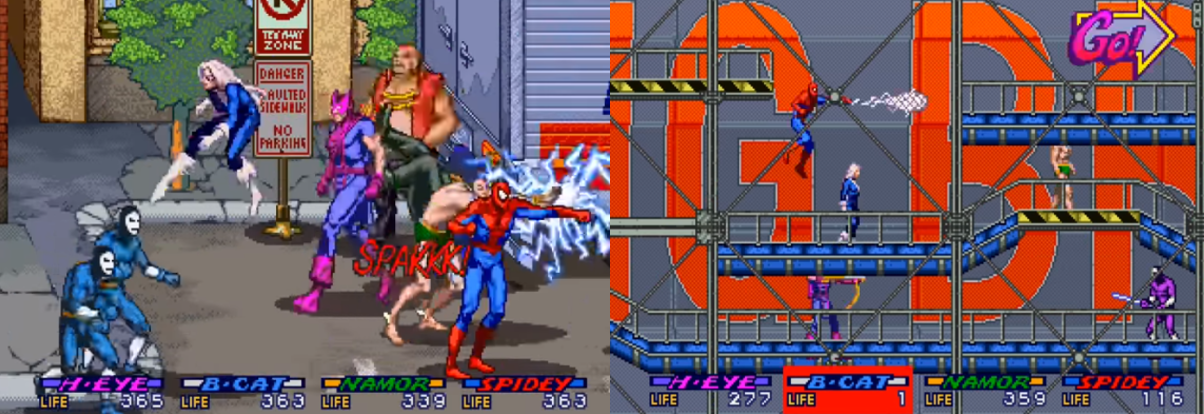
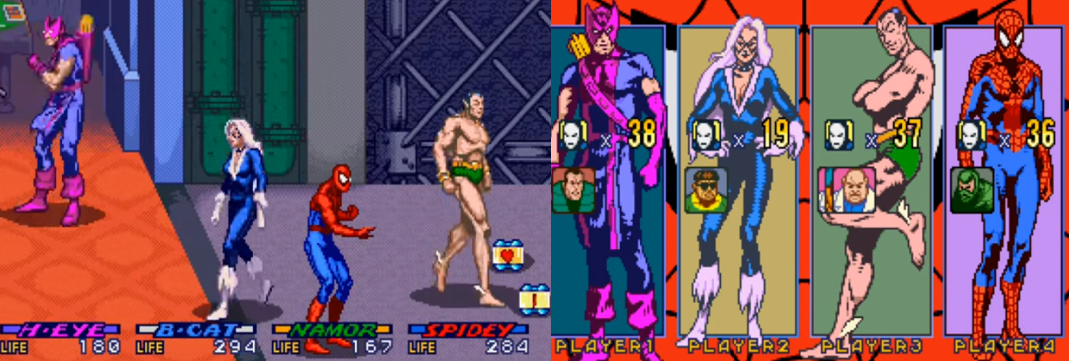
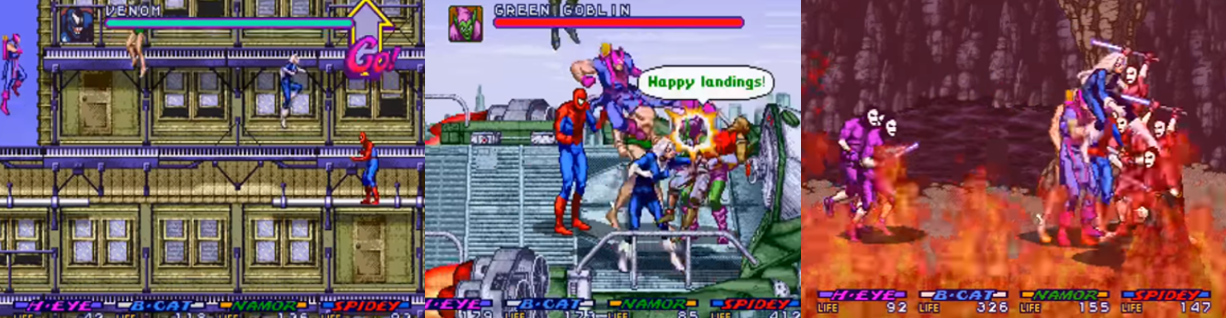
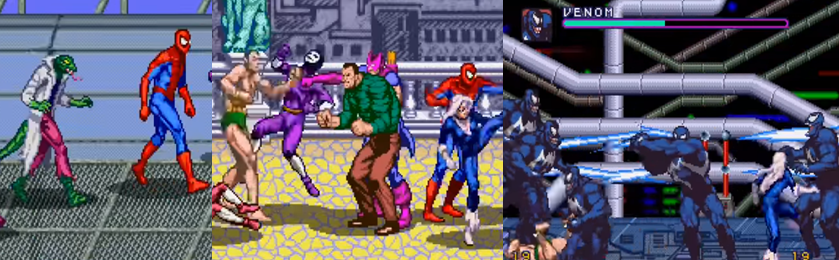
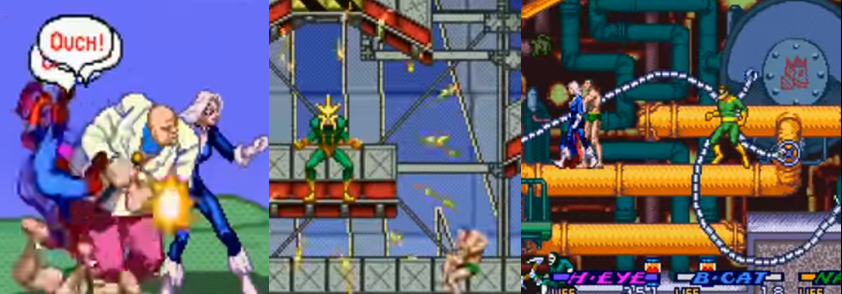
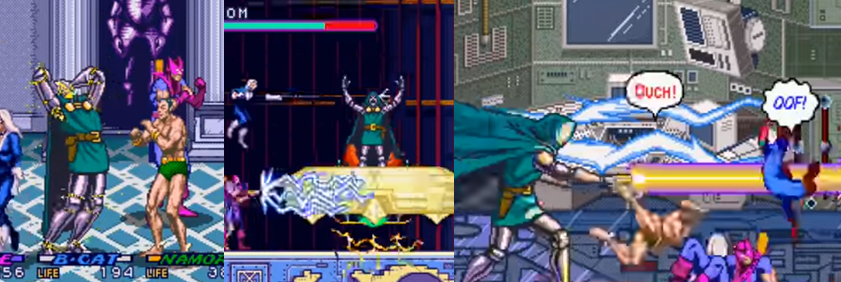
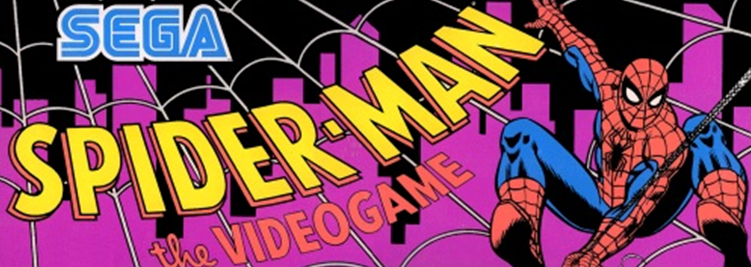


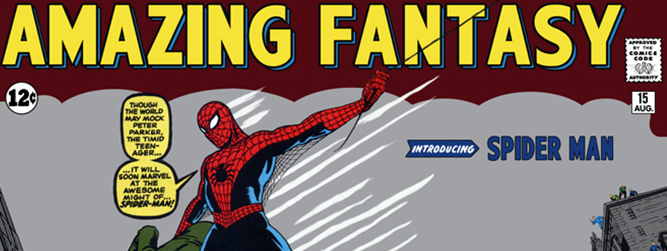
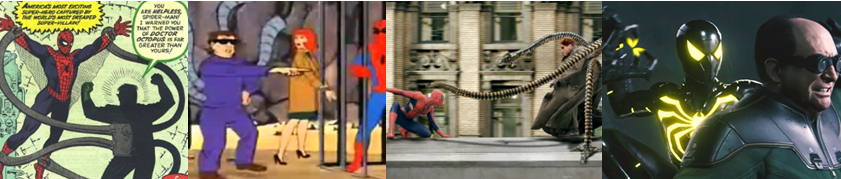
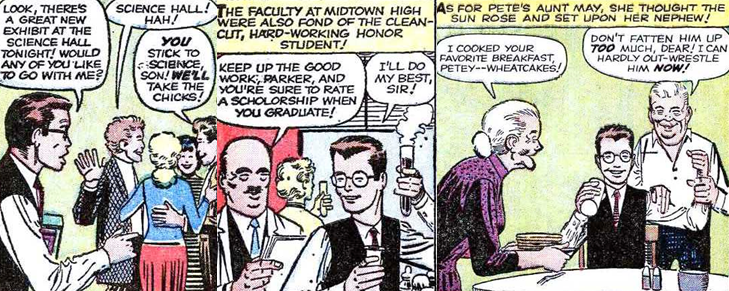
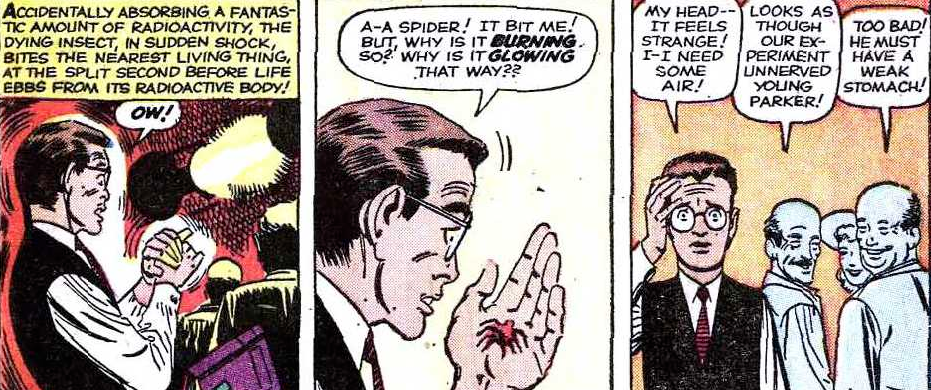
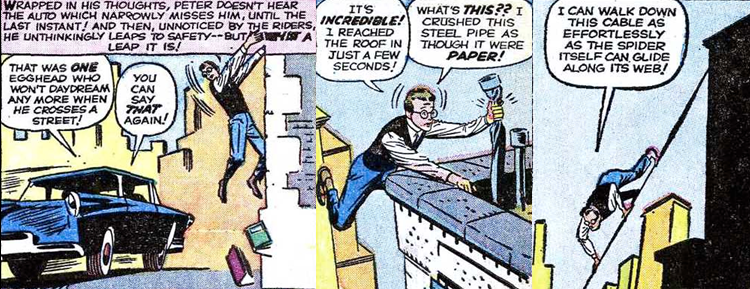
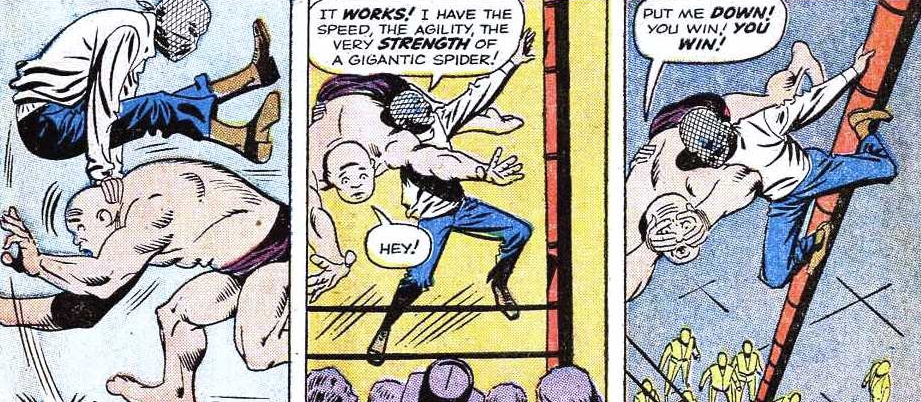
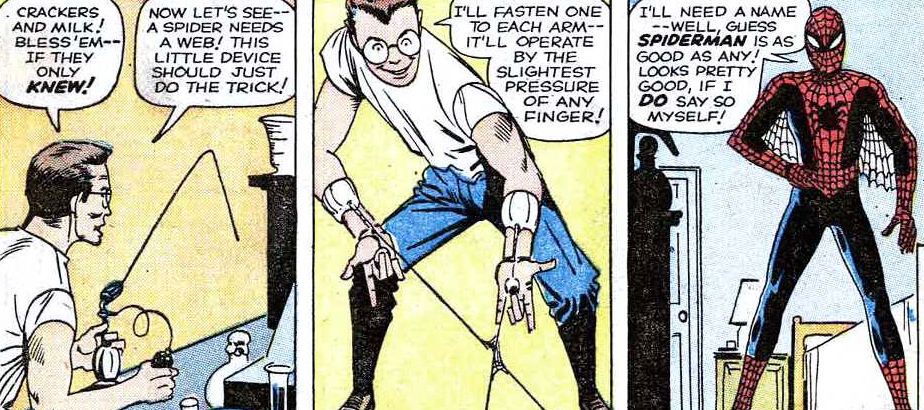
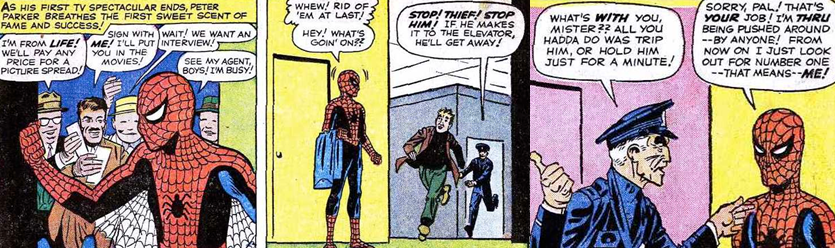
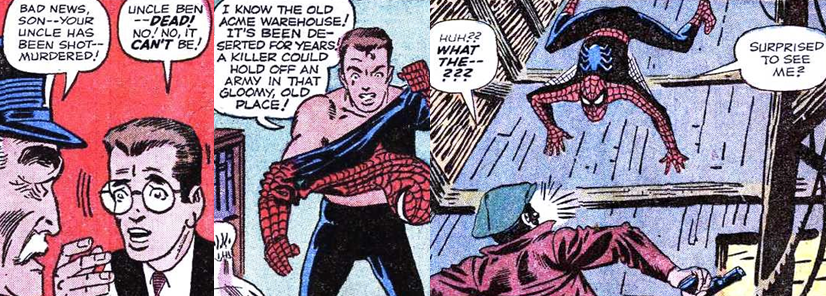
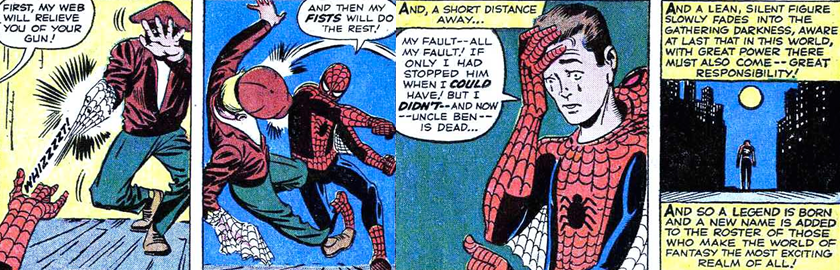
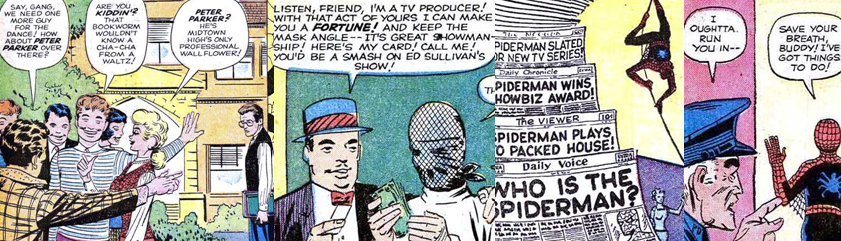
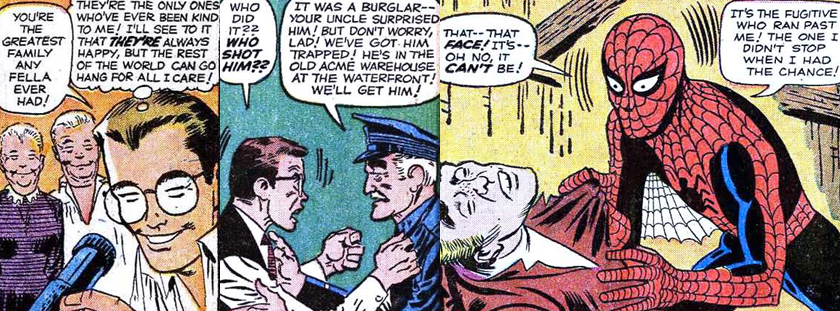

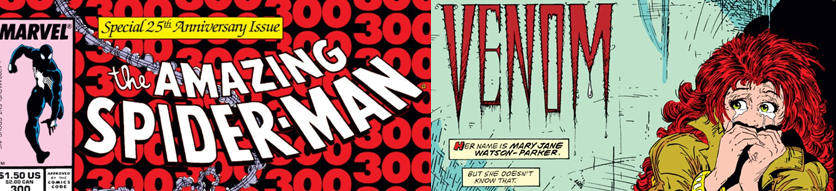

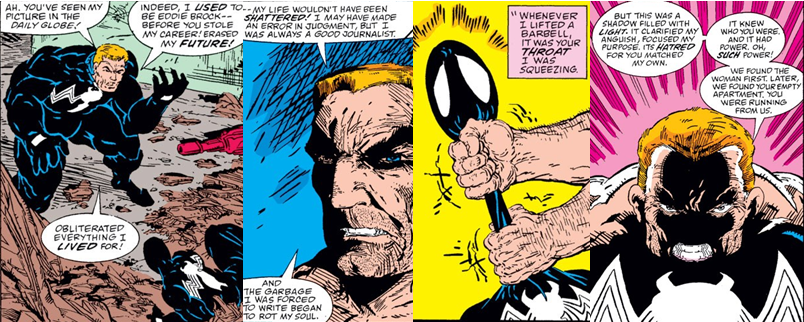
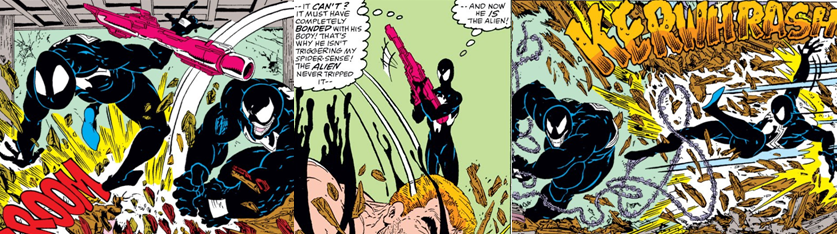

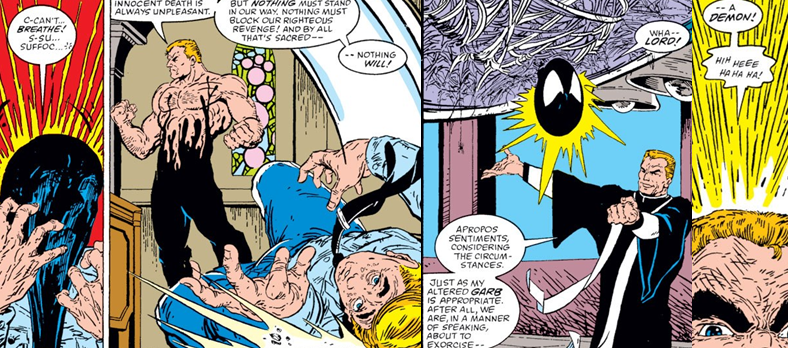
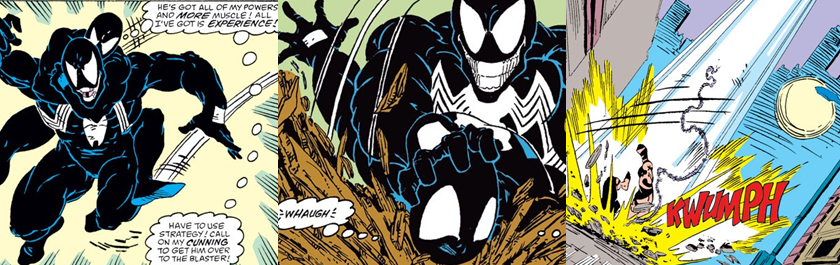

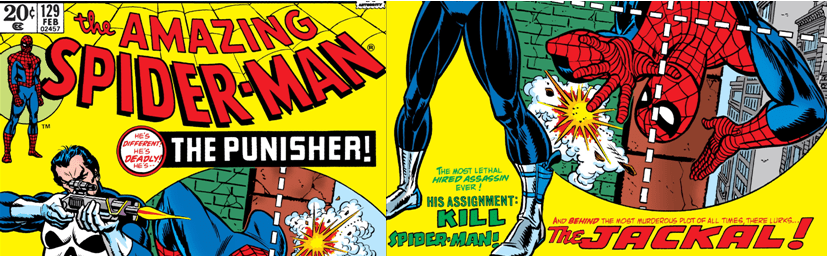
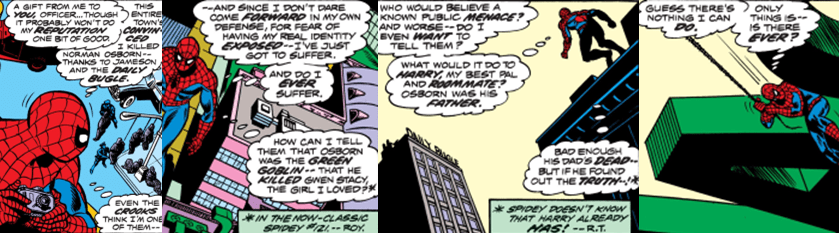
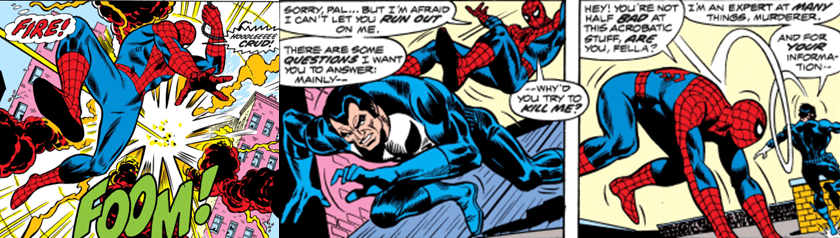
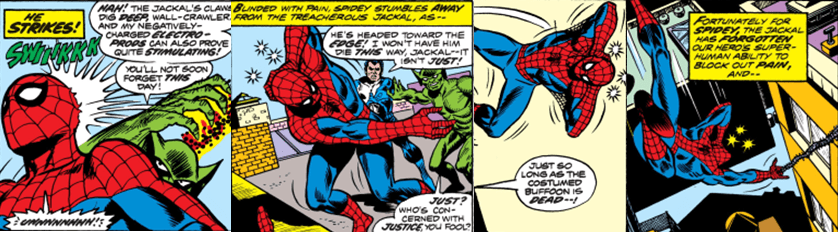
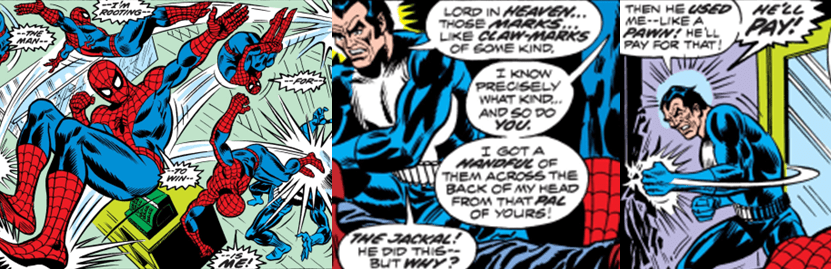
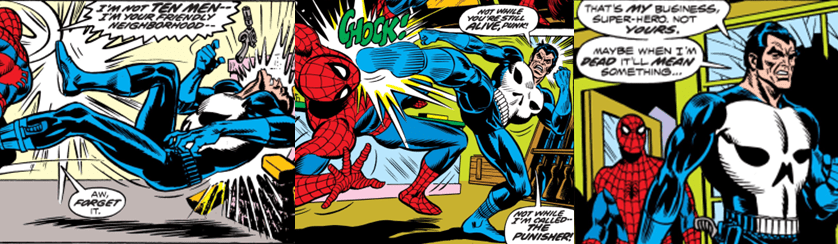
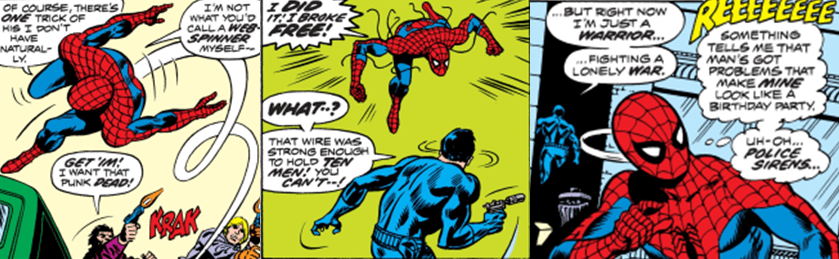


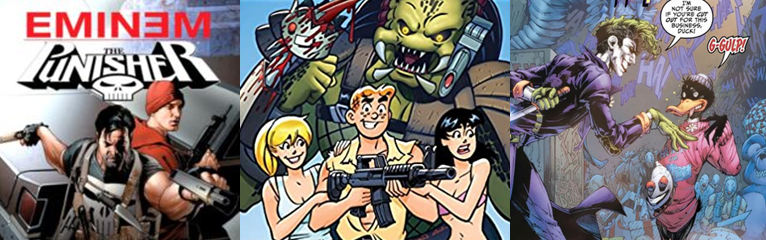
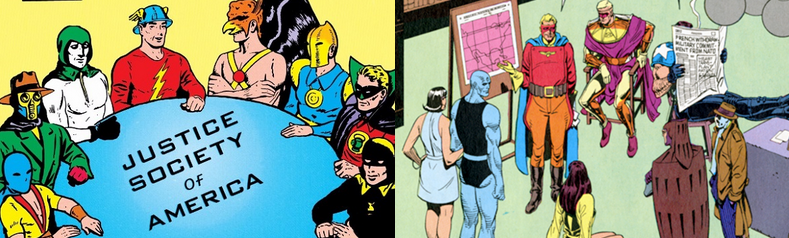
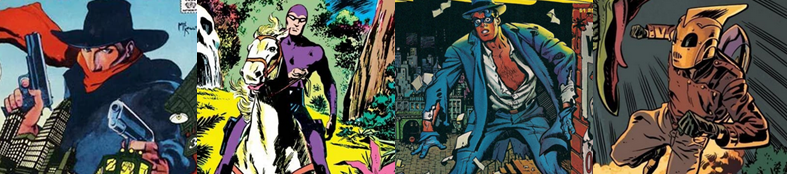
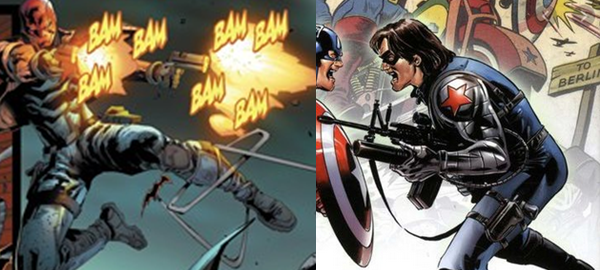
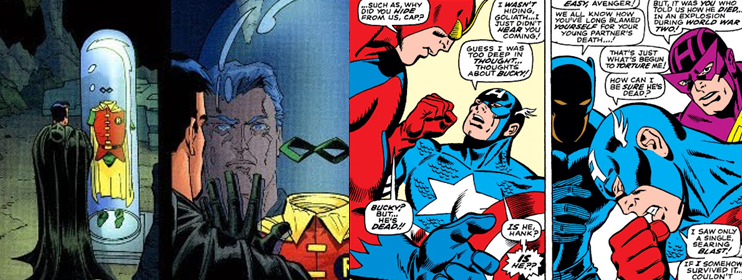
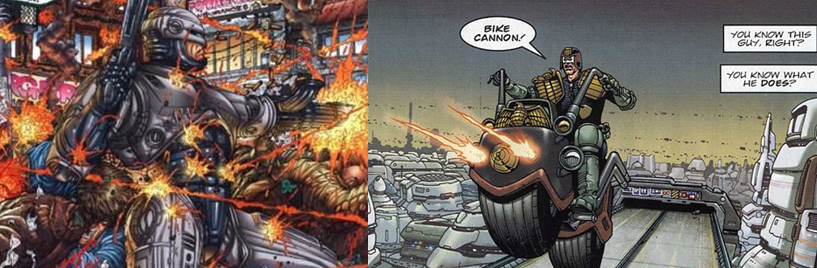
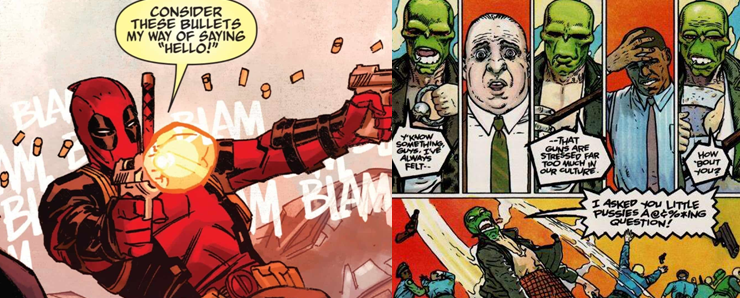
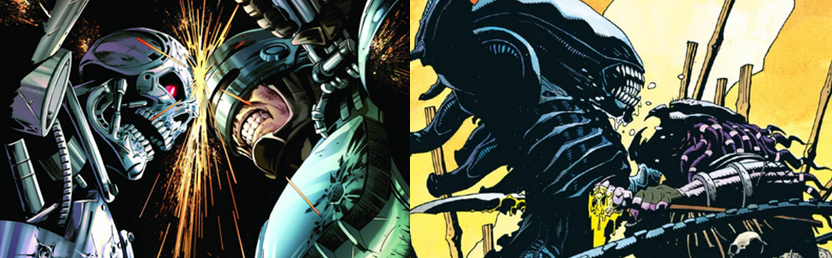
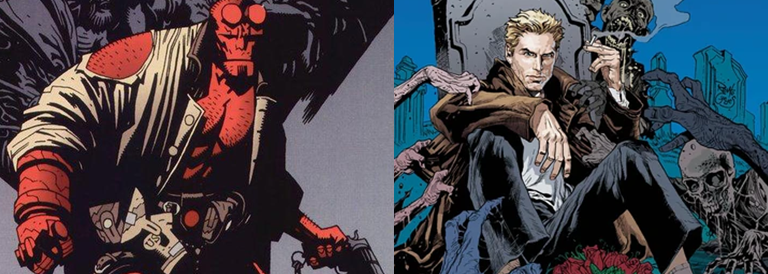
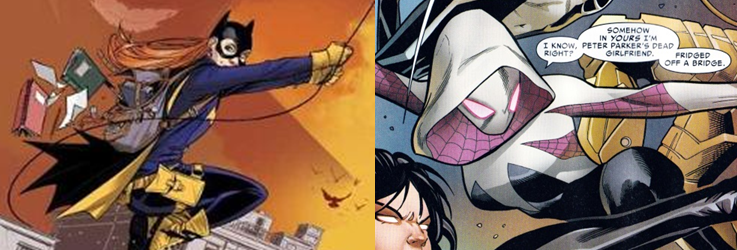
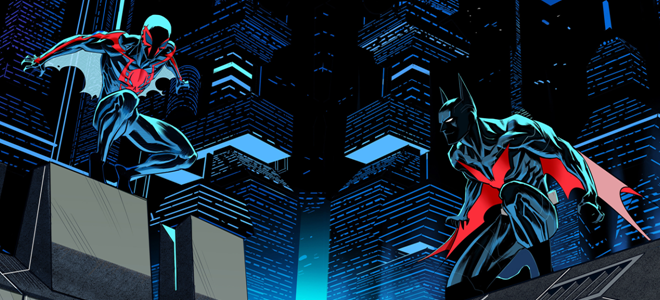
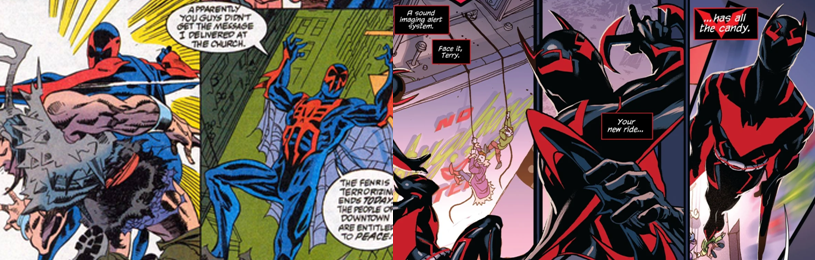
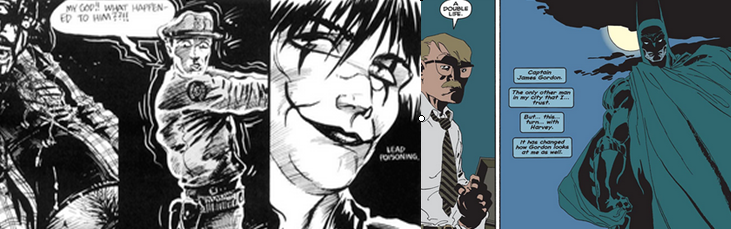
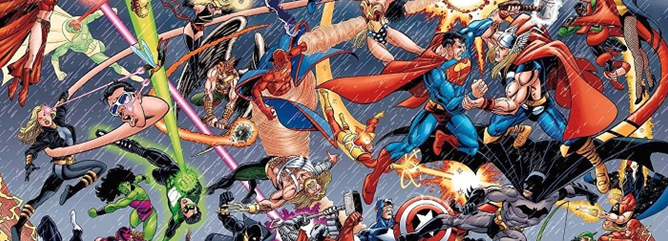


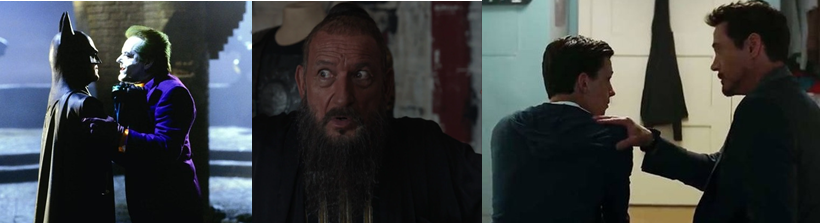
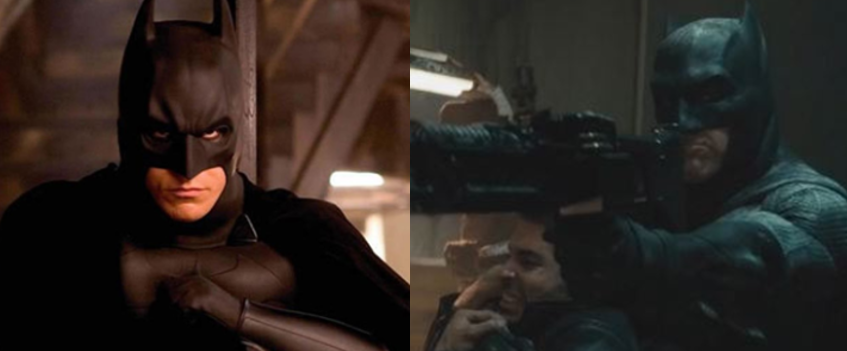

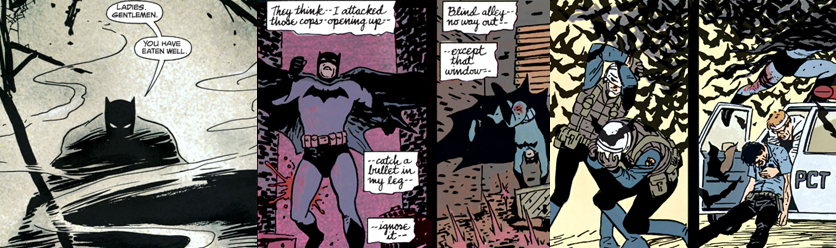
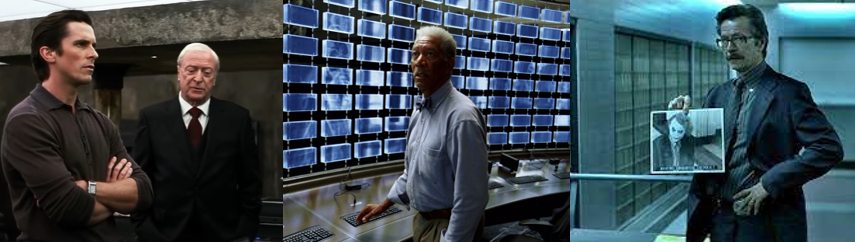

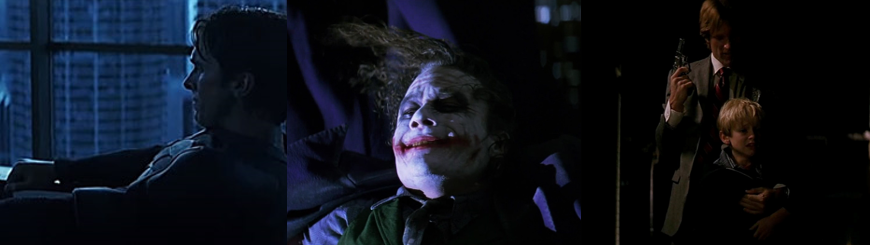
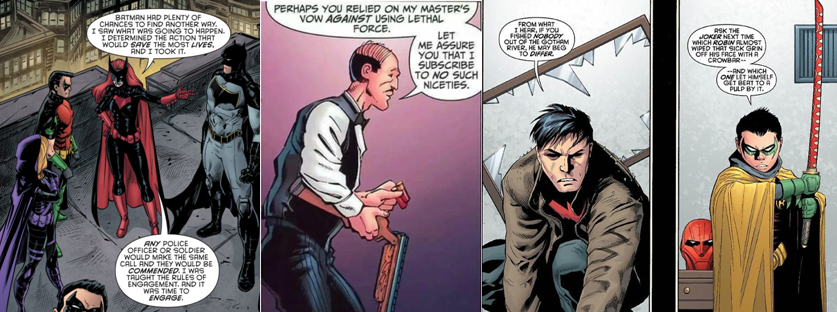

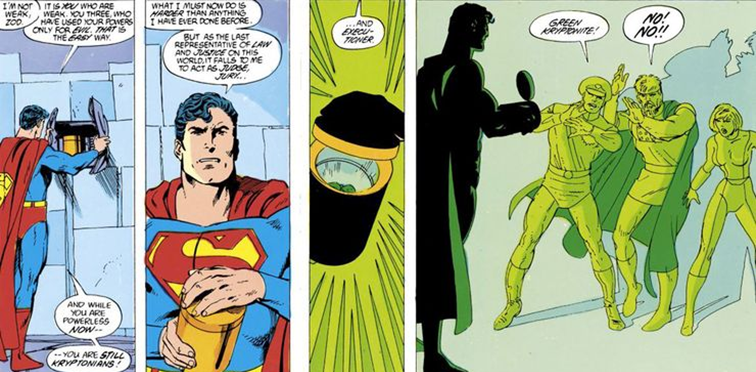

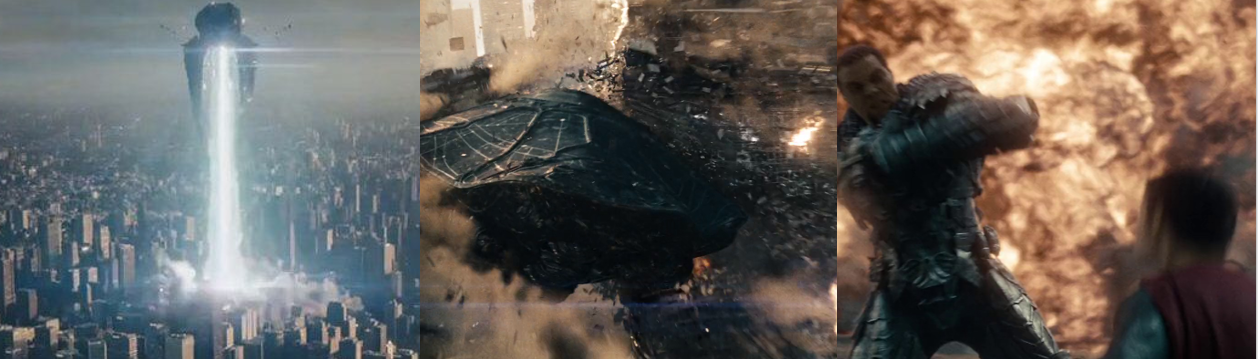
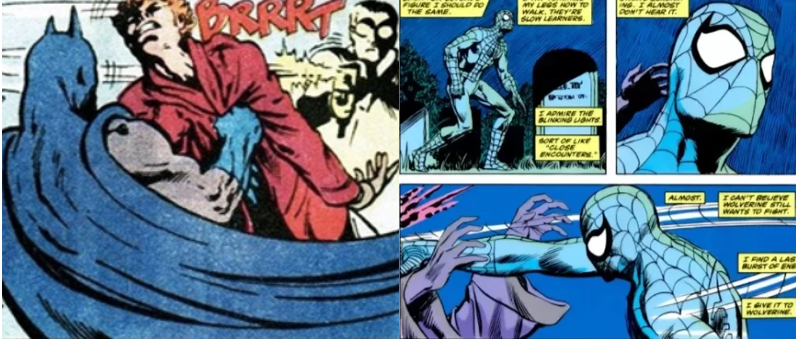
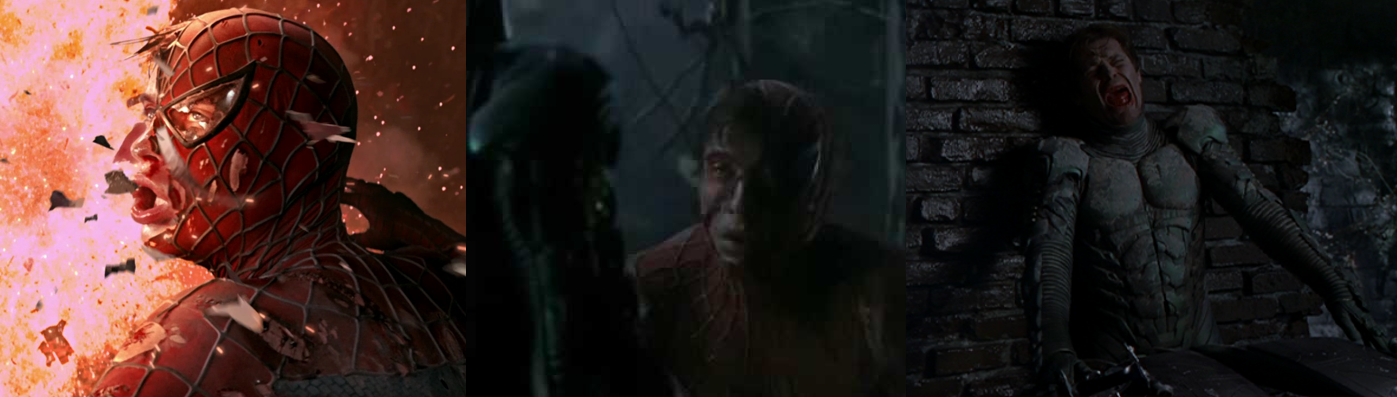
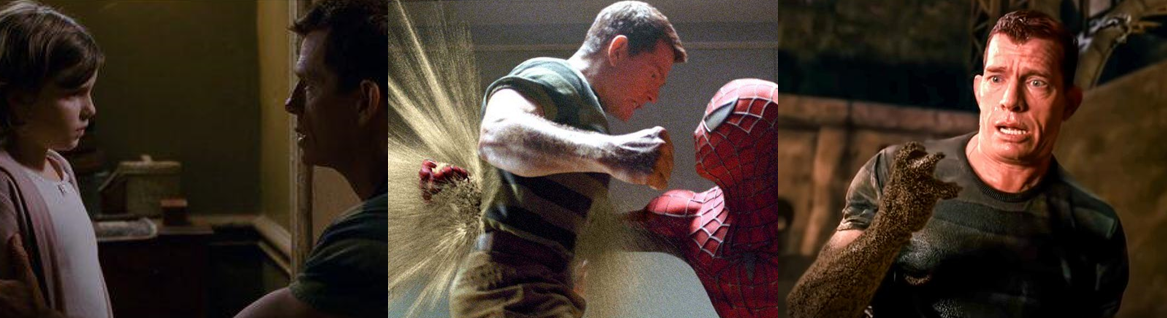

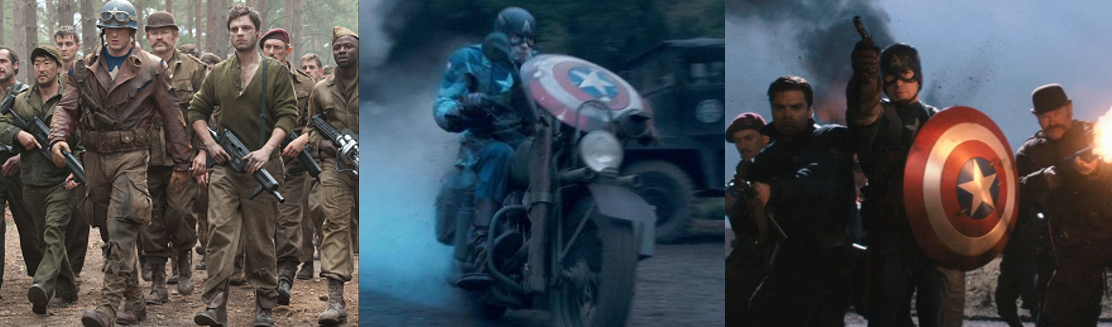
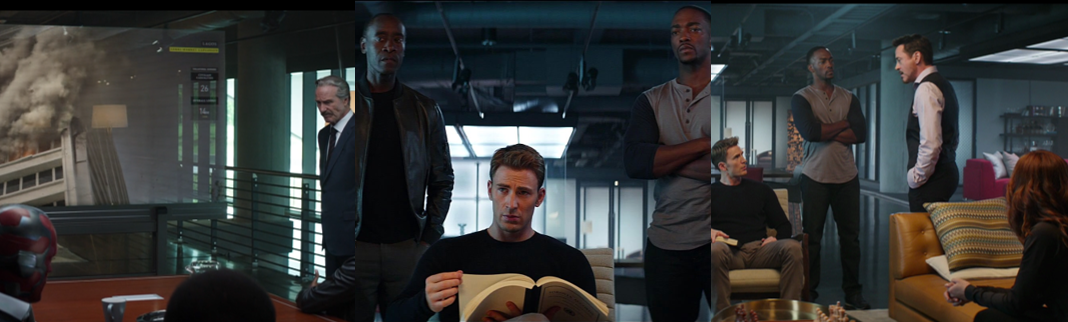

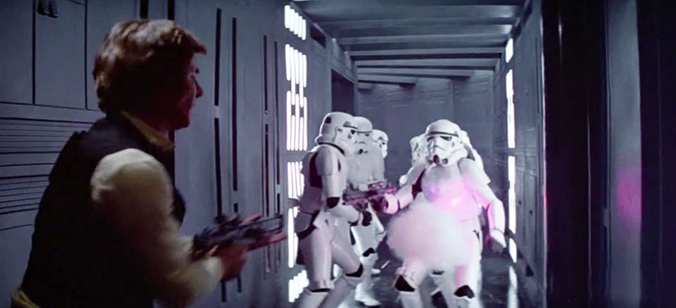








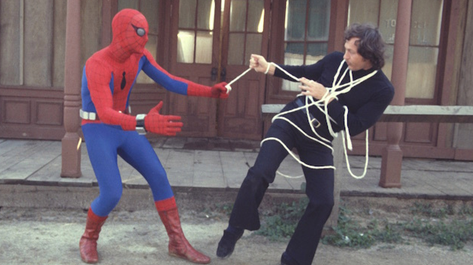







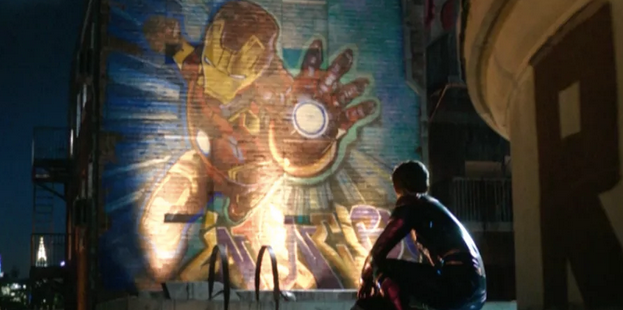
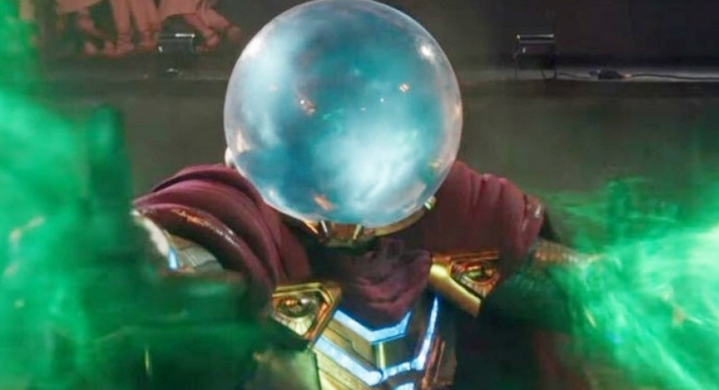
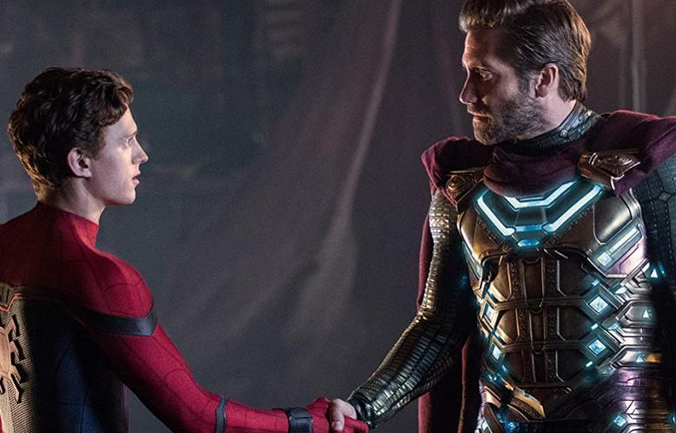



You must be logged in to post a comment.