Easily Marvel Comic’s most recognisable and popular superhero, unsuspecting teenage nerd Peter Parker was first bitten by a radioactive spider and learned the true meaning of power and responsibility in Amazing Fantasy #15, which was first published in August 1962. Since then, the Amazing Spider-Man has featured in numerous cartoons, live-action movies, videogames, action figures, and countless comic book titles and, in celebration of his debut and his very own day of celebration, I’ll be dedicating every Friday of August to talk about everyone’s favourite web-head!
Story Title: “Spider-Man” and “Spider-Man vs. The Chameleon!” Published: 1 March 1963 Writer: Stan Lee Artist: Steve Ditko
The Background: By 1962, Marvel Comics had achieved incredible success with the Fantastic Four and, eager to follow up on this, Marvel editor and head writer Stan Lee sought to create a teenaged superhero for his younger readers to identify with. Inspired by a fly climbing up his office wall, Lee created Spider-Man (with the emphasis on the hyphen) and turned to artist Steve Ditko to finalise the character’s costume and accessories. Spider-Man’s debut almost didn’t happen, however, as Marvel publisher Martin Goodman disliked the concept and relegated the story to the final issue of Amazing Fantasy. However, Amazing Fantasy #15 proved to be one of Marvel’s best selling titles at the time; Spider-Man’s subsequent popularity led to him getting his own solo title barely a year later and The Amazing Spider-Man has been in publication ever since.
The Review: The issue begins with what has, in my experience, become a tried and true staple of all Spider-Man comics and that is the recap of Spider-Man’s origin. Some time after the death of Uncle Ben and bringing his murderer to justice as Spider-Man, Peter Parker recounts to himself (and the reader) the story of how he was bitten by a radioactive spider, took on a costumed persona to try and earn some money, and inadvertently caused his uncle’s death by not using his powers responsibly.
Maybe the other kids are right to mock Peter; he should have taken cash in hand!
Now, he and his beloved Aunt May are in a bit of a bind; they have no money to pay their bills and the landlord is literally on their doorstep demanding the rent! Although Peter offers to quit school to get a job, May insists that he continue his studies to become the scientist his uncle always dreamed he would be and, very briefly, Peter considers using his superhuman abilities to commit crimes to pay the bills. Quickly, though, he realises that his Aunt May would be devastated if he was ever caught and imprisoned and, instead, decides to fall back on show business. His duel commitments as Spider-Man and bookish nature continue to make Peter a laughing stock at school since all the hip kids of the sixties want to do is have fun and “jive” rather than study. Still, they would be amazed if they knew that Peter was really Spider-Man, who puts on a dazzling show at the town hall but, while he gets paid, he’s unable to actually get a hold of the money since he not only foolishly asks for a cheque but he asks that it’s made out to “Spider-Man”! I mean, come on, Pete; at least take cash in hand! At the same time, Spidey finds public opinion of him is immediately swayed thanks to the efforts of J. Jonah Jameson, writer and editor of the Daily Bugle, who not only writes a scathing editorial branding Spidey a “menace” but also goes all over New York City delivering lectures that paint Spidey as a bad influence and an outlaw compared to “real heroes” like his son, astronaut John Jameson, because he hides behind a mask.
Spider-Man runs rings around the Fantastic Four when they try to contain him.
Although many aren’t taken in by Jameson’s words, his efforts are enough to put an end to Spidey’s media appearances. Peter is similarly driven to frustration at his inability to get a part-time job and the fact that Aunt May has resorted to pawning her jewellery to make ends meet. The next day, Peter is on hand to witness John Jameson lose control of a space capsule shortly after launch after the guidance device malfunctions. While the guys in charge of the launch fail to think of a way to save the astronaut, Peter suits up as Spider-Man and, despite Jameson’s protests, hitches a ride on a plane to intervene. After webbing himself to the capsule, Spidey is able to manually engage the emergency chute and the capsule glides safely to the ground. However, despite his good deed, Peter is shocked and angered to find that Jameson has called for Spider-Man’s arrest following the incident and has even publicly blamed the wall-crawler for the entire thing as a means to fool the public into thinking him a hero. This time, public opinion is swayed massively in Jameson’s favour and a wanted notice is posted for Spidey’s capture; even worse, Aunt May also believes Spider-Man to be a dangerous criminal. Thankfully, in the next story, Peter hits upon the genius idea of trying to repair his reputation (and make some cash) by joining the much-loved Fantastic Four, thinking the team would jump at the chance to work with a super-powered teenager (why, especially when they have Johnny Storm/The Human Torch on the team already, is anybody’s guess). Since you apparently can’t just walk into the Baxter Building, Peter does the only natural thing and breaks in as Spider-Man; unsure of his intentions, Doctor Reed Richards/Mister Fantastic activates the building’s self-defence measures and tries to hold him captive in a plexi-glass cage.
The Chameleon impersonates Spider-Man to steal military plans!
Contrary to the now-iconic front cover image, Spidey immediately breaks free of this trap and, as a result, gets into a tussle with the Fantastic Four. He tosses Benjamin Grimm/The Thing aside with ease, webs up Mr. Fantastic’s elastic arms, easily outmanoeuvres Susan Storm/The Invisible Girl’s pathetic efforts to ensnare him in a rope thanks to his spider-sense, and uses his fantastic agility to run rings around the Human Torch. Eventually, cooler heads prevail and the five are able to talk it out. However, when Spidey learns that the Fantastic Four are a non-profit organisation, and that they are in doubt about his reputation thanks to Jameson, he promptly leaves, disgruntled. Meanwhile, at a military installation across the city, Dmitri Smerdyakov/The Chameleon uses his incredibly life-like masks and disguises to steal documents from a restricted area to sell to Soviet Russia. After hearing of Spidey’s failed attempt to join the Fantastic Four, and his status as a public menace, the Chameleon not only deduces that Spidey must be desperate but also that he would make for a perfect fall guy for his plot to steal more missile defence plans. To that end, he uses his fancy technology to broadcast a message that only Spider-Man, with his heightened senses, would be able to hear (the Chameleon apparently being smart enough to work that out as well, conveniently) and, unable to pass up the chance to make some money, Peter (oddly referred to as “Peter Palmer” in one panel) heads to respond to the call.
Spidey apprehends the Chameleon but does little to repair his reputation.
At the same time, the Chameleon masquerades as Spidey and steals the plans using a specially-created web gun and fleeing in a helicopter right as the real Spidey arrives to be accosted by the cops. Realised he’s been played for a fool, and having spotted the helicopter’s escape, Spidey dramatically slingshots and parachutes his way across the city using his webs and then steals a motorboat to track the Chameleon to a Soviet submarine. Despite the Chameleon’s best efforts, Spider-Man is able to force him to the ground and convince the cops of his innocence. However, the Chameleon escapes custody using a smoke pellet and slipping into another face mask, that slippery devil! Despite being out of web fluid, Spider-Man is easily able to track the Chameleon down in the local vicinity using his spider-sense but, just as he nabs the crook, the cops accost Spidey, believing him to be the fake! Enraged and despondent, Spider-Man escapes into the night completely unaware that the cops did catch the Chameleon in the very next panel and thus proving that he was innocent all along.
The Summary: The Amazing Spider-Man #1 is a pretty decent comic, overall. Like all comic books published in the sixties, it suffers a little bit from the narrative style of the time but, unlike others I’ve reviewed from around this time, these are nowhere near as bad; characters aren’t constantly yabbering on in “hip” slang, for instance, and while Spidey and the Chameleon do constantly narrate their actions as they go, it’s not as intrusive as in other comics. As a result, I found this an enjoyable enough read but it’s not as good as it could be simply because it wastes quite a bit of time reminding readers of Spider-Man’s origin. Still, The Amazing Spider-Man #1 quickly establishes many of the character traits and recurring themes that would plague Peter throughout his career; mainly, money troubles, public opinion, Jameson’s endless crusade, and the frail nature of his Aunt May.
I’ve always found the Chameleon to be an underwhelming villain but he’s good enough here.
Peter Parker is a youth constantly on the short end of life; nothing ever seems to work out for him in either of his guises and he is constantly beaten down by society no matter what he does, and yet he perseveres. This aspiring quality is emphasised here; though Peter does get angry and dejected at his lot in life, he never gives in to the temptation towards crime and is steadfast in his decision to use his powers for good. One good thing that comes from this issue is the answer to the question of who Spidey’s first super-villain was and the answer, disappointingly, was the Chameleon. It might just be me but I’ve never been a fan of this character, or of stories of mistaken identity and fraud in my superhero comics, but thankfully that latter aspect is only a small part of The Amazing Spider-Man #1. If anything, more time could have been spent on the Chameleon framing Spidey for crimes; this would have made Jameson’s tirade against the web-slinger make a little bit more sense (he just comes across as an asshole and a blowhard here), to say nothing to turning the public (and the Fantastic Four) against him and adding to Peter’s woes.
The Fantastic Four dropped in for what amounted to a quick cameo amidst some classic Spidey action.
Also, I feel like the front cover is deliberately misleading; clearly designed to attract readers of the Fantastic Four, who were Marvel’s first big superhero success story, it kind of implies a greater conflict with the group that, in reality, is confined to just a few panels. This is good, on the one hand, as Spidey never needed their help in getting out of danger or anything but it does kind of set the foundation for a bad practice in Marvel (and all of comics for that matter) to use popular or established characters to sell their new releases (ironically, Spider-Man would come to be one of the most infamous examples of this). Still, the comic is full of relatable teenage woes and angst, colourful and larger-than-life characters, and set the standard for Spidey’s status quo going forward. There could maybe have been a little more action and web-slinging amidst all the angst but it’s still an enjoyable read and a must-have for any die-hard Spider-Man fan.
My Rating:
⭐⭐⭐⭐
Rating: 4 out of 5.
Great Stuff
What are your thoughts on Spider-Man’s iconic debut solo outing? Were you a fan of the character at the time or were you introduced to him through some other means and, if so, what were they? How relatable did (or do you) find Spider-Man as a character? What is your favourite Spider-Man storyline, costume, or character and why? What did you think to the Chameleon being his first villain? Do you like the angle that the public is so easily turned against Spidey or do you think it doesn’t make much sense given how many superheroes run around New York? How are you celebrating Spider-Man Day today? Whatever your thoughts on Spider-Man, leave a comment below and be sure to stick around for Spider-Man Month starting this Friday!
Released: 6 May 2016 Director: Anthony and Joe Russo Distributor: Walt Disney Studios Motion Pictures Budget: $250 million Stars: Chris Evans, Robert Downey Jr., Scarlett Johansson, Sebastian Stan, Anthony Mackie, Elizabeth Olsen, Daniel Brühl, and Chadwick Boseman
The Plot: After saving the world, Steve Rogers/Captain America (Evans) and Natasha Romanoff/Black Widow (Johansson) work alongside a new team of Avengers. However, Wanda Maximoff’s (Olsen) unpredictable nature threatens to the the team unless they fall under governmental jurisdiction. This causes tensions between Steve and Tony Stark/Iron Man (Downey Jr.) that are exacerbated when Helmut Zemo (Brühl) activates James Buchanan “Bucky” Barnes/The Winter Soldier’s (Stan) brainwashing.
The Background: Considering that Captain America: The Winter Soldier (Russo and Russo, 2014) was such a massive hit and that, by 2016, the Marvel Cinematic Universe (MCU) had basically become an unstoppable franchise juggernaut, a third Captain America movie was never in question. The first film of Phase Three of the MCU was originally revealed under a very different title before it was revealed to be taking inspiration from the controversial storyline of the same name. Pitched as a psychological thriller, Captain America: Civil War quickly became the biggest solo Marvel movie when many returning characters and Avengers signed on to feature. The film saw not only the debut of a new team of Avengers and the introduction of T’Challa/Black Panther (Boseman) but also the long-awaited inclusion of Peter Parker/Spider-Man (Tom Holland) to the MCU. The directors lobbied hard to include Spider-Man and, after much negotiating, Marvel were able to reach an agreement with Sony Pictures to recast and share the character. Though ostensibly Avengers 2.5, Captain America: Civil War was incredibly successful; it made over $1.150 billion and was the highest-grossing film of 2016. Like its predecessor, the film was almost universally praised; while some criticised the film’s bloated cast and premise, many were impressed with the film’s action and intrigue and the dramatic wayit fractured the Avengers to set the stage for the MCU’s biggest film yet.
The Review: I honestly can’t say that I really had much of a reaction when I found out that the third Captain America movie wouldn’t be tackling the Serpent Society; I only really know the group from the Avengers: Earth’s Mightiest Heroes (2010 to 2012) cartoon, where I found them to be annoying and over-used. However, I was a bit concerned when it was revealed that Marvel Studios would be adapting the “Civil War” (Millar, et al, 2006 to 2007) storyline as not only was I not a fan of how out of character everyone (especially Iron Man) acted in that story but the MCU Avengers had just ended Avengers: Age of Ultron(Whedon, 2015) on a high note and, like the downfall of the Strategic Homeland Intervention, Enforcement and Logistics Division (S.H.I.E.L.D.), it seemed a bit too soon to be tearing these characters apart when they were still so new as a group.
Cap’s efforts to train a new Avengers team are disrupted when his loyalties are divided.
One thing I’ve always found odd about the “Civil War” storyline is the fact that Captain America, the living embodiment of America’s ideals, is the one fighting against the government and Stark, the arrogant industrialist who actively spits in the face of governmental boards, is the one pushing for registration and culpability. Yet, it sends a clear message when the bastion of truth and freedom finds something oppressive about the ruling body and Steve is a proud man who sees the world in old-fashioned shades of black and white and has learned enough about the modern world to become suspicious of those who wield too much political power and who just wants to do the right thing without compromise. The trailers and hype for the film excited me and I was keen to see a Marvel solo movie featuring so many additional costumed characters in supporting roles as I am a big fan of that in my superhero movies after years of them all living in isolated bubbles. Plus, even with the expanded cast, the film remains, at its core, a Captain America story and is completely focused on Cap’s divided loyalties between his Avengers team-mates and his old friend-turned-brainwashed assassin, Bucky. Cap begins the film as the field commander of the newly-formed team of Avengers we first saw at the end of Age of Ultron; as always, he is all business when on the job and determined to teach the younger members of the team, like Wanda Maximoff, how to best scope out potential targets and situations and build a rapport as a team.
Wanda’s unpredictable powers are the catalyst for the film’s events.
The catalyst for the eventual conflict within the Avengers is Wanda; unlike the other members of the Avengers, she’s still very young, inexperienced, and an outsider. Add to that the fact that her “Hex Powers” are both unpredictable and volatile and she is a bit of a powder keg, despite her generally calm and composed demeanour. Deep down, she just wants to help people and do the best she can so, when she instinctively uses her powers to hurl Brock Rumlow/Crossbones (Frank Grillo) into the air to keep his suicide bomb from killing innocents, she is devastated when her throw goes awry and kills several Wakandan humanitarians. Although Steve tries to console her, rightfully pointing out that no-one, however (super)powerful can save everyone, she only really feels a connection with the Vision (Paul Bettany), another being born of an Infinity Stone to whom she has grown very close and who desires to not only explore his abilities and humanity but who also seeks to understand the nature of the Infinity Stone embedded in his forehead.
The Avengers are divided on the Sokovia Accords, which would see them conform or retire.
Cap’s team is also comprised of his friends, Sam Wilson/The Falcon (Mackie) and Black Widow. Now much more comfortable in his role as a superhero, the Falcon has built a camaraderie with the other Avengers and is a vital member of the team thanks to his drone, Redwing, and his specialised flight suit, both of which allow him to provide unprecedented air support. Natasha, meanwhile, continues to be an absolute bad-ass in the field, striking with speed, precision, and power, while also sharing the responsibility of teaching Wanda how to conduct herself out in the field. They, and many of their team mates, live and train at a specialist compound, paid for by Stark’s not-inconsiderable funds. Stark, meanwhile, has semi-retired from the superhero life and is only brought back into the fold after the incident in Lagos which, especially after the devastating events in Sokovia in Age of Ultron, call into question the unchallenged actions of the Avengers. Thus, in a continuation of his growing sense of impending cosmic danger and his desire to protect the planet by any means necessary (and due to his guilt at being responsible for collateral damage caused by the Avengers’ actions), Stark is immediately onboard with the “Sokovia Accords”. Although Thaddeus “Thunderbolt” Ross’s (William Hurt), now promoted to Secretary of State, acknowledges that the world owes the Avengers an unpayable debt, he stresses that they must register to answer to a democratic committee before acting so that they can be properly held accountable for their actions. The Sokovia Accords rattle each member of the team in different ways based on their previous experiences and relationships; James “Rhodey” Rhodes/War Machine (Don Cheadle) and the Vision, for example, look at the numbers and the orders and, influenced by their relationship with Stark, believe that signing the Accords is the only logical action whereas Sam is adamant that it will only be a matter of time before the government screw them over.
Zemo plots to destroy the Avengers from the inside out and is focused only on his vengeance.
Steve, ever the soldier and pragmatist, argues against “[surrendering] their right to choose” and his conviction to take a stand against being controlled, even by the United States government, is galvanised after the death of his former flame, Peggy Carter (Hayley Atwell), who firmly believed in standing up for her beliefs. However, when it appears as though Bucky has attacked the ratification of the Accords and killed the peace-affirming Wakandan king, T’Chaka (John Kani), Steve makes it his mission to personally track down his former friend and bring him in before he can be arrested by the authorities. T’Chaka’s son, T’Challa, overwhelmed by grief and bloodlust, dons the ceremonial Vibranium suit of the Black Panther to hunt down and kill Bucky, causing tensions to bubble to boiling point. It is into this tumultuous storm of ideals, emotions, and conflicting beliefs that Zemo enters the fray. A survivor from Sokovia who relentlessly goes on a hunt torturing and murdering Hydra operatives to acquire “Mission report. December 16. 1991”, a document that proves the final spark to ignite the titular civil war within the Avengers. Zemo has acquired the Soviet’s book of codewords and is able, through his charm and false documents, to gain access to Bucky after he is arrested and activate him in order to acquire the information he seeks. Bucky, who has been living off the grid and on the run since the end of The Winter Soldier, continues to suffer from decades of cryogenic stasis, manipulation, brainwashing, and memory wiping, which have made him a confused and purely instinctual creature. Although Steve still remembers their time together as friends and the entirety of Bucky’s past, Bucky is haunted by fragmented memories of his time as an assassin and naturally paranoid, lashing out at friend and foe alike when they try to reach him.
Everyone, especially Black Panther, is after Bucky thanks to Zemo’s machinations.
While Wanda shoulders a lot of the guilt for what happened in Lagos, Steve feels he is also to blame as he was distracted by Rumlow’s mention of Bucky. Still, he is steadfast that what he, and the other Avengers, do cannot be regulated by a governing body, especially after how deeply entrenched Hydra was into S.H.I.E.L.D. This causes a clash of ideals and beliefs between and Stark; showing his partial growth as a character, Stark is now more than willing to compromise and work within the system to keep them in check and also to ensure that the team stays together but Steve is adamant that they shouldn’t have to answer to anyone lest they be stopped from intervening where they are most needed. While the Sokovia Accords themselves probably would have divided the Avengers enough to cause some kind of conflict, they potentially wouldn’t have come to blows if it wasn’t for Zemo’s manipulations and Bucky’s apparent culpability in T’Chaka’s death. When he comes to his senses, Bucky reveals that he was just one of many Winter Soldiers created by the soviets and that Zemo was responsible for the bombing at the ratification. Stark, however, remains oblivious to the deception that has taken place and takes it upon himself to lead his allies in apprehending Bucky, even if it means recruiting the young and relatively untested Spider-Man to help throw Cap off his game and fighting against his allies for the greater good. Steve, realising that he is now, once again, a fugitive, puts together a team of his own to defend Bucky and fight their way to uncovering and exposing Zemo’s plot. To this end, he recruits Clint Barton/Hawkeye (Jeremy Renner) and, on Sam’s suggestion, Scott Lang/Ant-Man (Paul Rudd) to help him out, and such is the strength of Captain America’s conviction and fortitude that he is able to convince ex-cons like Scott, retired heroes like Clint (both of whom have familial responsibilities), and Agent Sharon Carter (Emily VanCamp) to put themselves and their careers at risk to help his cause.
The Nitty-Gritty: Being as it’s basically an Avengers movie in disguise, Captain America: Civil War is a natural escalation of The Winter Soldier in every way. As a result, it’s bigger and far more intricate and bombastic than the previous Captain America movies but, arguably, maybe not the definitive ending to a trilogy of standalone movies in the same way as, say, Iron Man 3(Black, 2013) tried to be. However, there is a very good reason for this and that is that, at this point, MCU movies were much more about focusing on a singular hero but also expanding their shared world exponentially in the lead-up to their biggest movies ever. Despite its heavy subject matter and action-packed events, the film also has time for absolute tone-perfect comedy; Bucky and Sam’s reaction to Steve’s admittedly awkward kiss with Sharon, Scott’s gushing over meeting Captain America and the other Avengers, and Spider-Man’s incessant quips and references during the big airport fight all brilliantly break the tension and add some pitch-perfect levity to the film.
Tom Holland made an immediate and exhilarating impression as the all-new Spider-Man.
Of course, one of the main selling points of the film is the climatic fight between Team Cap and Team Iron Man and the introduction of Spider-Man to the MCU. As much as I loved Andrew Garfield in the role and still think it would’ve been a lot simpler and easier to simply fold him and the Amazing Spider-Man films (Webb, 2012 to 2014) into the MCU, casting a younger actor as an inexperienced version of the character was a great way to introduce Spider-Man with a clean slate and Tom Holland played the role to perfection. Although enthusiastic about getting a shot to team up with heavy-weights like Iron Man and the Vision and eager to impress both Stark and the Avengers, Spider-Man is in way over his head; still he holds his own and delivers both quips for days and some of the best web-slinging in just one big fight scene even after (at the time) nearly fifteen years of Spider-Man movies. Though young and operating in a homemade suit that allows him to use his powers responsibly, Peter is still portrayed as something of a child prodigy as he manufactures his own webbing and web shooters and, despite not mentioning his beloved Uncle Ben by name, has the same strict moral code as any other iteration of the character, making for perhaps the most well-rounded portrayal even after many decades of Spider-Man adaptations.
The fight between the two teams soon escalates when Rhodey is critically injured.
The clash between Team Cap and Team Iron Man isn’t just about Spider-Man, though, or even Steve and Stark; instead, it’s a reluctant fight between close friends and allies, many of whom use known weaknesses against their team mates in order to gain a bit more ground. While you might think that a guy like Hawkeye is no match for the Vision, his various trick arrows do a decent job of disrupting the synthezoid and burying Iron Man beneath a pile of cars. Similarly, Cap is technically physically outmatched and reluctant to fight against a teenager like Spider-Man but is able to best him using his shield and distracting him with falling debris. Another star of the conflict is Ant-Man who, in addition to enlarging vehicles with Pym Particles, makes an entertaining and amusing debut as Giant-Man, and we even get to see Hawkeye and Black Widow go at it, albeit with an acknowledged reluctance. Even Stark doesn’t actually want to fight; he brings his team to the airport to convince Cap to stand down out of respect for their friendship and for the sake of the team, and specifically orders them to subdue their former allies rather than grievously harm them. However, despite this, and as entertaining as this clash between the two groups of Avengers is, things end up becoming much too real when an errant shot from the Vision ends up crippling Rhodey from the waist down, which only adds further fuel to Stark’s fire.
Cap is forced to defend Bucky from Stark in the finale as the Avengers implode from within.
Both Steve and Stark make compelling arguments for and against signing the Sokovia Accords but, as is to be expected of the storyline and these larger than life characters, take their argument to the extreme. In the source material, this led to Stark hunting down and imprisoning his fellow heroes in the ultimate act of uncompromising betrayal, becoming something of a tyrant in the process. Here, he doesn’t go quite that far until he has absolutely no other choice; despite his grating personality, it’s clear that Stark sees Steve and the others as trusted friends and allies and like Natasha, is more than willing to compromise to keep the team together, in check, and to advocate for amendments to the Accords later down the line. However, both Steve and Stark are pushed too far when the others continuously refuses to see things from their perspective and to compromise their integrity or conscience. After the climatic airport fight, however, and the truth of Zemo’s manipulations is revealed, Stark swallows his pride and heads to Siberia to investigate the other Winter Soldiers. Unfortunately, his conflict with Steve and Bucky is reignited when it is revealed that Bucky was brainwashed into killing Howard and Maria Stark (John Slattery and Hope Davis, respectively) to acquire super soldier serum for the Soviets. Stark’s introduction to the film, and a major sub-plot of his previous appearances, dealt with his unresolved issues with his father and, upon learning that both of his parents were taken from him, he flies into a mindless rage and attacks the two in a fantastically realised and emotional fight scene. Though torn between his friendship with Stark and his loyalty to Bucky, Steve ultimately has no choice but to choose to defend his old friend in order to get him the help he needs and, in the process, Zemo’s master plan succeeds as the Avengers are torn apart and Cap gives up his shield to go on the run with Bucky.
It’s a bittersweet ending as the Avengers are left divided andscattered thanks to Zemo’s efforts.
This finale is the perfect culmination of a film that is packed full of fantastic action sequences and fight scenes; expanding upon the brutal, gritty action of The Winter Soldier, Civil War continues to deliver some hard-hitting action from the likes of Cap and Black Widow, especially. Their fight against Rumlow is a great way to open the film and, following an equally engaging conflict of ideologies and beliefs, the action only escalates as Steve desperately tries to reach Bucky and bring him in independently only to end up fighting against the German police in a cramped stairwell and racing across the rooftops and streets of Berlin. Black Panther joins the battle for this latter sequence in a brilliant introduction to the character that only scratches the surface of his physical capabilities. Unlike other MCU villains who, by this point, showed glimmers of complex personalities and had somewhat multi-faceted personalities but were often just dark mirrors of the titular heroes, Zemo is quite the layered villain. Unlike his comic book counterpart (who, visually, he wouldn’t come to resemble for some time), Zemo isn’t some crazed fascist dictator or maniacal supervillain. Instead, he’s a former Sokovian soldier haunted by the loss of his family in Sokovia due to the Avengers’ actions and who wants to bring them down from the inside out in order to ensure that they never again threaten the safety of innocents. Simultaneously, Zemo has no love for Hydra either and wishes to see both costumed heroes and villains made a thing of the past; he also views his crusade to be a suicide mission as, once he sees Iron Man driven to the point of murderous rage, he considers his mission complete and prepares to kill himself. He is stopped, however, by Black Panther who, having witnessed the Avengers tear themselves apart over grief and rage, chooses to spare his father’s killer and see him brought to true justice. The damage, however, is done; even though the film ends with Cap going to rescue his friends from imprisonment on the Raft and offering an olive branch to Stark, the Avengers are effectively disbanded and wouldn’t come together again until the greatest threat imaginable came knocking.
The Summary: As brilliant as the last two Captain America films were, Captain America: Civil War was a massive escalation for the character. In many ways, you could make the argument that Marvel Studios could have had the third Cap film focus solely on his hunt for Bucky and made a third Avengers movie for the “Civil War” storyline, but it does a surprisingly good job of balancing its different characters and themes. None of the extra Avengers or the wider conflict between them overshadow Cap’s story or the continuation of his character arc and story with Bucky and, if anything, all of the different conflicts and personalities help to bolster this narrative. At its core, Civil War is a film about secrets, truths, and complex ideologies; both Steve and Stark have valid points for and against superhero registration and Bucky is a tortured soul responsible for an untold number of tragedies and atrocities and yet he wasn’t in full control of himself and was forced into perpetrating those acts and that, as much as their friendship, motivates Steve to protect him to see that he gets help rather than be unjustly imprisoned or killed. Black Panther vows to kill Bucky to avenge his father but chooses to spare Zemo when he learns the truth, showing a fundamental moral compass that helps to define him in his brief screen time. Stark is also driven to avenge his parents when he learns that the Winter Soldier killed them and the result is the complete fracturing of any trust between him and Steve, disassembling the Avengers and, similar to the destruction of S.H.I.E.L.D. in The Winter Soldier, fundamentally changing the nature of the MCU to ensure the stakes are as dire as possible for when Thanos (Josh Brolin) comes calling. As under-rated a gem asCaptain America: The First Avenger(Johnston, 2011) is and as impressively thrilling as The Winter Soldier is, Civil War edges both out in terms of sheer spectacle and showed that even a solo MCU film could have Avengers-level implications for Marvel’s shared universe.
My Rating:
⭐⭐⭐⭐⭐
Rating: 5 out of 5.
Fantastic
Were you a fan of Captain America: Civil War? What did you think to the conflict between Steve and Stark and were you on Team Cap or Team Iron Man? Did you enjoy seeing the other Avengers in the film or do you feel like it got a bit too crowded for a Captain America movie? What did you think about Zemo, his character and motivations, and Bucky’s overarching story? Are you a fan of the “Civil War” comic book? Did you enjoy the debut of Black Panther and Spider-Man? What did you think to the decision to tear the Avengers apart at that stage in the larger MCU story? Are there any Captain America stories and villains you would have liked to seen make it to the big screen? How have you been celebrating the Star-Spangled Avenger this month? Whatever you think about Civil War, or Captain America in general, drop a comment down below.
In September 1961, DC Comics published “Flash of Two Worlds” (Fox, et al), a landmark story that brought together two generations of the Flash: the Golden Age Jay Garrick and the Silver Age Barry Allen thanks to the concept of the multiverse, an infinite number of parallel universes that allowed any and all stories and characters to co-exist and interact. Marvel Comics would also adopt this concept and, to celebrate the release of Doctor Strange in the Multiverse of Madness(Raimi, 2022) this month, I’ve been both celebrating the Master of the Mystic Arts and exploring the Marvel Cinematic Universe’s (MCU) equivalent of the multiverse every Sunday of May.
Air Date: 11 August 2021 to 6 October 2021 Network: Disney+ Stars: Hayley Atwell, Chadwick Boseman, Samuel L. Jackson, Benedict Cumberbatch, Mark Ruffalo, Michael B. Jordan, Chris Hemsworth, Ross Marquand, and Jeffrey Wright
The Background: As a big comic book fan, it’s been absolutely amazing seeing the MCU become a multimedia juggernaut and some of Marvel Comics’ most beloved characters and concepts come to life on screen. Although Marvel Studios dabbled in television ventures with the likes of Agents of S.H.I.E.L.D. (2013 to 2020) and their Netflix shows, they really doubled down on TV productions for the MCU’s fourth phase to produce content for their parent company’s streaming service, Disney+. With MCU head honcho Kevin Feige behind them, the Disney+ shows aimed to maintain and expand the ongoing continuity of the MCU, but I don’t think anyone could have predicted that Marvel Studios would delve so deeply into the multiverse that we’d seen an adaptation of What If…?What If…? began life as a semi-consistent series of hypothetical, often light-hearted (or downright dark), stories that presented Marvel heroes and storylines with subtle (or major) changes. The Disney+ show followed this format and recontextualised the premise as an animated anthology series that would explore what the MCU would be like if characters or events had unfolded differently. The show’s animation was headed by Stephan Franck and sported a cel-shaded design that emphasised hyper-realism; as the MCU was officially exploring the concept of the multiverse, episodes could be part of the franchise’s overall canon and many recognisable faces, names, and voices returned to put a new spin on their iconic roles; however, although voice recording was able to continue remotely during the COVID-19 pandemic, this production sadly marked the final performance of the late Chadwick Boseman as T’Challa/Black Panther. What If…? was received extremely well and the series was praised as a love-letter to the fans; despite some reservations about the format and presentation, reviews were primarily positive and spin-offs were quickly announced as either being in production or on the cards. Crucially, the multiversal scope of the series would be revisited in the live-action MCU films and characters and concepts from the show even seem set to cross over into the main MCU canon going forward.
The Plot: From beyond the multiverse, the cosmic being known as Uatu the Watcher (Wright) observes as the events of the MCU unfold differently, resulting in Peggy Carter (Atwell) becoming Captain Carter, Doctor Stephen Strange (Cumberbatch) becoming a force for evil, a zombie infection running rampant, and T’Challa (Boseman) becoming Star-Lord. However, when a version of Ultron (Marquand) acquires the Infinity Stones and threatens the entire multiverse, the Watcher must break his oath of non-interference to assemble a heroic force capable of fending off this threat.
The Review: Because of the nature of the series, I think it’d be much better to look at each individual episode, what they do and how they work by themselves, and then talk about some overall themes and give my opinion on the entire concept down in the summary. The first season of What If…? is a nine-episode series of animated adventures that examine familiar characters and events in the MCU but change things about in subtle, or major, ways to create entirely new stories as part of the MCU multiverse. These alternate realities are observed by the enigmatic Watcher, a cosmic being bound only to observe and never directly interfere, and who acts as the narrator of the show. The Watcher’s opening narration explains the basics of the multiverse; as we were told in Avengers: Endgame(Russo and Russo, 2019), time and reality in the MCU is not a single, linear, fixed path. Instead, multiple timelines and alternate universes exist, with the deviations occurring from different decisions being made at key moments in time, however big or small. In this regard, time is less like a line and more like a river, with an infinite number of paths trailing off all over the place, and the Watcher acts as our impassive guide to this vast multiverse. The Watcher also serves as our narrator, quickly catching us up on the events preceding the episode and explaining when, where, and how each divergent timeline was created; however, he has taken a solemn vow to never interfere in the events he witnesses, no matter how gruesome or extreme they are.
Peggy takes Steve’s place and is forced to make the ultimate sacrifice to stop Hydra’s interdimensional beast.
The series kicks off with “What If…Captain Carter Were the First Avenger?” (Andrews, 2021), essentially a retelling of Captain America: The First Avenger (Johnston, 2011). Unlike in the original timeline, Strategic Scientific Reserve (SSR) Agent Peggy Carter chooses to stay and watch on the ground as skinny, ill-bodied Private Steve Rogers (Josh Keaton) prepares to become a super soldier. However, when the Nazi sleeper agent attacks the experiment this time around, Peggy manages to keep him from escaping with a sample of the serum but Steve is wounded, so Peggy ignores the orders of her commanding officer, John Flynn (Bradley Whitford), and voluntarily becomes enhanced to the peak of human physical conditioning before the experiment is lost forever. Promoted to head of the SSR, Flynn is outraged at the result; disgusted that the super soldier serum was wasted on a woman, he refuses to allow Peggy to actively participate in the war, much less on the front line, out of sheer prejudice, much to her chagrin and fury. As before, Hydra figurehead Johann Schmidt/The Red Skull (Marquand) seeks to usurp Adolf Hitler and claim victory for himself with the mysterious and all-powerful Tesseract. Flynn, however, is unimpressed by the threat and unwilling to risk even one man, let alone an entire platoon, on recovering the cube; luckily, inventor Howard Stark (Dominic Cooper) believes so strongly in the Tesseract’s threat that he furnishes Peggy with a striking Union Jack-style costume and a familiar Vibranium shield so that she can single-handedly recover the Tesseract from Schmidt’s Hydra colleague, Doctor Arnim Zola (Toby Jones), decimating an entire convoy of Hydra’s soldiers with efficiency and glee and earning herself an official promotion to “Captain Carter”. Although he lost his best shot at fighting alongside his friend, Sergeant James Buchanan “Bucky” Barnes (Sebastian Stan), Steve is fully supportive of Peggy’s newfound strength and abilities and only too glad to pilot Stark’s Tesseract-powered “Hydra Stomper” armour. However, following an action-packed montage, Steve is apparently lost during a familiar assault on an armoured train; though grief-stricken, Peggy forces information out of Zola and leads an all-out assault against the Red Skull’s fortress, where they find Steve alive but are too late to stop the Red Skull from opening a dimensional rift with the Tesseract. The tentacles of a gigantic, interdimensional, Lovecraftian creature breach the portal, killing Schmidt and threatening all life on Earth; Peggy and Steve fend off the beast as Stark tries to shut down the portal, but Captain Carter is forced to sacrifice herself to the unknown by physically forcing the creature through the rift. The story then skips ahead to find the Tesseract being reactivated, spitting Peggy and the remains of the beast’s tentacles out into a Strategic Homeland Intervention, Enforcement, and Logistics Division (S.H.I.E.L.D.) facility where she meets Director Nick Fury (Jackson) and Agent Clint Barton/Hawkeye (Jeremy Renner) and learns the bittersweet news that the Allied Forces won the war but she is now seventy years in the future, and thus forever cut off from her friends and loved ones.
T’Challa is a galaxy-renowned force for good who has a positive influence on even the Mad Titan!
While the first episode arguably played things a little safe, we really see the potential of a What If…? series with the second episode, “What If…T’Challa Became a Star-Lord?” (Andrews, 2021), which wildly deviates from the story of Guardians of the Galaxy(Gunn, 2014). Young T’Challa (Maddix Robinson) longed to explore beyond Wakanda but was shielded from the chaotic outside world by his beloved and overprotective father, T’Chaka (John Kani), only to be abducted due to a mistake by Yondu Udonta’s (Michael Rooker) subordinates. Surprisingly, he was excited at embarking on adventures throughout the cosmos with the Ravagers and, while T’Challa doesn’t possess the Black Panther’s near-superhuman abilities, he sports all of Peter Quill’s (Brian T. Delaney) gadgets in addition to his Wakandan fighting prowess. His greatest assets, however, are his charisma, diplomacy, and reputation as a Robin Hood-type figure. Indeed, T’Challa is far more competent, notorious, and respected than his mainstream MCU counterpart; not only does Korath the Pursuer (Djimon Hounsou) know who he is, he views sparring with Star-Lord as the greatest honour and willingly joins his crew. T’Challa’s positive influence means the Ravagers put their skills towards helping others rather than for personal reward, thus sparing Drax the Destroyer’s (Fred Tatasciore) family and even convincing Thanos (Josh Brolin) that his destructive aspirations weren’t the answer to the galaxy’s problems! Touched by T’Challa’s mission to save others after the presumed destruction of Wakanda, Nebula (Karen Gillan), now a far less violent and far more beautiful woman, proposes a heist to steal the Embers of Genesis, a cosmic dust capable of ending galactic hunger, from Taneleer Tivan/The Collector (Benicio del Toro). While sneaking around the Collector’s museum, T’Challa finds a Wakandan spacecraft and is angered to find that Yondu lied to him about Wakanda in order to help him realise his true calling as an adventurer. The two reconcile in the best way possible: by teaming up to fight with this much more formidable version of the Collector, who is enhanced by weapons, technology, and items retrieved from some of the MCU’s most powerful and prominent individuals and races. Thanks to their teamwork, the Collector is disarmed and left at the mercy of his captives, and T’Challa forgives Yondu’s deception before reuniting with T’Chaka and his people in Wakanda, bringing his two families together in celebration over their mutual friend. Across the world, however, a greater threat awaits when Ego (Kurt Russell) comes looking for his son, here a mere Dairy Queen employee.
Pym is revealed as the culprit but, after he’s apprehended, Loki usurps his threat and conquers the world!
“What If…the World Lost Its Mightiest Heroes?” (Andrews, 2021) takes us back to the middle of Iron Man 2 (Favreau, 2010) and Nick Fury and Natasha Romanoff/Black Widow’s (Lake Bell) latest effort to recruit Tony Stark/Iron Man (Mick Wingert) to the Avengers Initiative. Fury is horrified when his attempt to stave off Stark’s palladium poisoning apparently has the unexpected side effect of killing the would-be Avenger; this tragedy is quickly followed by Thor Odinson (Hemsworth) being accidentally killed by Hawkeye’s errant arrow and the archer later being found dead while locked in an impenetrable S.H.I.E.L.D. cell. Fury suspects that his recruits are being targeted by an unknown party, and charges Natasha to escape Brock Rumlow’s (Frank Grillo) custody and make contact with Doctor Betty Ross (Stephanie Panisello). Though initially distrustful of Natasha due to her association with those who’ve hounded her friend, colleague, and former lover, Doctor Bruce Banner/The Hulk (Ruffalo), Betty is convinced to take a closer look at the injector used on Stark and theorises that a microscopic projectile fired from the needle killed the superhero. Hungry for blood after learning of Hawkeye’s death, Natasha agrees with Fury’s theory that their killer is targeting Avengers recruits; unfortunately, General Thaddeus “Thunderbolt” Ross (Mike McGill) arrives looking to arrest Banner and sparks his transformation into the rampaging Hulk as in his solo film. However, the seemingly immortal Green Goliath also falls victim to the mysterious killer when he violently explodes from the inside out, and things escalate even further when Loki Laufeyson (Tom Hiddleston) arrives looking to avenge Thor’s death. Fury manages to buy himself one day to solve Thor’s murder on the promise of delivering the culprit to the God of Mischief and, when Natasha finds that a dead agent’s credentials were used to access S.H.I.E.L.D.’s database, she’s brutally beaten to death by an unseen assailant, and only able to tell Fury that all the deaths are relating to “hope”. This, however, is enough to piece together the perpetrator’s true identity: Doctor Hank Pym (Michael Douglas), who targeted Fury’s recruits in the guise of the size-altering Yellowjacket after his daughter, Hope van Dyne (Evangeline Lilly), died while working for S.H.I.E.L.D. A broken, bitter, twisted old man, Pym blames Fury and has become a deranged killer due to his grief and anger. However, Pym and his tech are outmatched when Fury is revealed to be Loki in disguise but, after Pym is defeated and taken into Asgardian custody, Loki double-crosses Fury and declares himself ruler of humanity. To combat this threat, Fury gets back to work assembling his super team, starting with calling Carol Danvers/Captain Marvel (Alexandra Daniels) back to Earth and uncovering Captain America’s frozen body.
A grief-stricken Dr. Strange finds he cannot save his love no matter how much he alters the past.
The show shifts over to the world of magic and mysticism for “What If…Doctor Strange Lost His Heart Instead of His Hands?” (Andrews, 2021), which presents a world where Dr. Strange and Doctor Christine Palmer (Rachel McAdams) are still a couple in a loving relationship. Fully supportive and enamoured by Dr. Strange, Christine encourages his ego and his skills as a surgeon, but sadly her influence doesn’t extend to his driving skills. However, in this world, Dr. Strange is relatively unharmed from the car crash that took his MCU counterpart’s hands but is left grief-stricken when Christine dies as a result of his negligence. In a bid to fill the void in his life, and his heart, Strange travels the world and, once again, ends up studying the mystic arts at Kamar-Taj under the tutelage of the Ancient One (Tilda Swinton). Like his mainstream counterpart, Strange becomes the Master of the Mystic Arts after the Ancient One’s death and successfully bargains with the Dread Dormammu (Cumberbatch), but remains preoccupied with the mistakes of his past and the promises offered by the Eye of Agamotto’s time-bending abilities. Haunted by memories of happier times with Christine, Strange ignores the warnings of the Ancient One and his manservant, Wong (Benedict Wong), and uses the Eye to place his current consciousness into the body of his past self. Unfortunately, the tragedy still occurs no matter how safely he drives, which route he takes, or even his refusal to go to the award speech as Christine dies again and again whether he’s there or what he does. Dr. Strange’s anguish at being unable to save Christine isn’t helped by the Ancient One’s explanation that her death cannot be averted as it would create a potentially universe-destroying time paradox (if Strange prevents her death, he won’t become a sorcerer and be able to go back and save her).
Strange Supreme saves Christine, but only briefly and at the cost everything that ever is or was in his reality.
Refusing to believe that Christine is fated to die, and angered at the Ancient One’s refusal to help him break this “absolute point” in time, Dr. Strange uses the Eye to flee from the confrontation and consult the ancient tomes of the Lost Library of Cagliostro. There, he meets O’Bengh (Ike Amadi) and learns that one can potentially gain the power he requires by absorbing magical beings; thus, Dr. Strange conjures a variety of demonic, Lovecraftian, and magical creatures (including gnomes, familiars, dragons, and even the octopus-like creature Captain Carter fought). When they won’t willingly share their power, he resolves to forcibly take it, and quickly becomes obsessed with gaining more and more magical power from these entities over the course of centauries to become “Strange Supreme”. As he does so, he grows increasingly monstrous and takes on more of their attributes, but is shocked to learn from O’Bengh that he’ll never be powerful enough to achieve his dreams due to the Ancient One using magic from the Dark Dimension to split him in two and create two concurrent timelines. His other half, who took Wong’s advice and moved on from Christine’s death, is charged by an echo of the Ancient One to oppose his dark doppelgänger before his ambition erases all of reality. When Strange Supreme’s attempts to coerce his other half into joining his cause are rejected, a magical battle ensues that spans multiple dimensions. Despite Wong’s protective spells and Strange’s efforts to talk down his dark half, Strange Supreme’s centauries of basking in the powers of countless magical beings makes him the superior and he’s ultimately able to absorb his missing half. Finally whole again, Strange Supreme succeeds in undoing Christine’s death but is transformed into a demonic being by the effort this requires; understandably, she is horrified by his nightmarish appearance, and he’s left helpless to stop the time paradox from devouring all of his reality. Desperate to preserve the world, he begs the Watcher for help but he refuses to get involved, despite wishing to punish Strange Supreme’s reckless arrogance, and the once Sorcerer Supreme is left alone, despondent, and remorseful in the tiniest pocket of reality with nothing but his grief and regret for company.
Banner is horrified to find the world, and many of its heroes, infected by a zombie virus.
One popular, recurring storyline in Marvel Comics in recent years has been the Marvel Zombies spin-off (Various, 2005 to present) that tells of a devastating zombie plague overwhelming the Marvel universe (and beyond). A version of this reality is explored in “What If…Zombies?!” (Andrews, 2021), which finds the Hulk crash-landing into the Sanctum Sanctorum as in Avengers: Infinity War (Russo and Russo, 2018) only to find it, and the streets of New York City, deserted. When Iron Man, Dr. Strange, and Wong arrive to take care of Ebony Maw (Tom Vaughan-Lawlor) and Cull Obsidian (Terry Notary), Banner’s elation soon turns to horror when the three are revealed to be vicious, flesh-eating zombies who tear Thanos’s children to shreds, instantly infecting them in the process, and Banner is only saved from the same fate thanks to the timely intervention of Dr. Strange’s Cloak of Levitation, a swarm of ants commanded by Hope van Dyne/The Wasp, and Peter Parker/Spider-Man (Hudson Thames). Spider-Man’s amusing orientation video shows that the MCU’s zombies largely confirm to the “rules” commonly associated with their kind; they’re decomposing corpses with a voracious hunger who turn others with a single bite and can only be killed by removing the head or destroying the brain. However, they’re not as mindless or shambling as traditional zombies; they’re intelligent enough to co-ordinate their attacks and utilise tech like the Iron Man armour and magic like the Sling Rings. In a change of pace, the Watcher reveals a definite origin for the zombie outbreak by relating how Janet van Dyne (Michelle Pfeiffer) became infected with the virus while stuck in the Quantum Realm; when she bit Hank Pym, he brought the virus back with him and the entire world was quickly overrun once the Avengers were turned.
The survivors narrowly escape Zombie Wanda, completely unaware of a greater threat waiting in Wakanda.
Banner joins up with the few uninfected survivors and learns from Okoye (Danai Gurira) of a possible cure at Camp Lehigh, New Jersey; the group travel to the Grand Central Station, where they’re attacked by zombified versions of Sam Wilson/The Falcon (Anthony Mackie), Hawkeye, and Captain America. Although they lose Harold “Happy” Hogan (Jon Favreau), the group is able to get the train working and fend off the zombies thanks to Okoye and the Wasp. However, the train is attacked by Zombie Cap, who infects Sharon Carter (Emily VanCamp) and forces Bucky to end his undead existence, retrieving his shield in the process, but Hope is also infected from a small cut she receives after disposing of Sharon. Although Peter tries to remain optimistic that she’ll be cured before she can turn, Hope sacrifices herself to atone for her part in causing the outbreak by carrying the group through a horde of zombies and dropping them off at Camp Lehigh. There, they find the zombies refuse to breach the camp thanks to the presence of the Mind Stone in the Vision’s (Paul Bettany) head; he and the severed head of Scott Lang (Paul Rudd) reveal that the Mind Stone’s properties can reverse the zombie virus, and the group is excited to spread the cure throughout the world from Wakanda. However, Banner learns that they’re not the first to respond to the Vision’s beacon, and Bucky is horrified to find that the Vision has been feeding parts of other survivors (including T’Challa) to a zombified version of Wanda Maximoff (Elizabeth Olsen) since she’s proven resistant to the Mind Stone and he’s been unable to kill her due to his love for her. When Wanda breaks free and proves uncontrollable due to her powers and hunger, the Vision rips the Mind Stone out of his head to atone for his actions and the group’s escape is covered by Bucky and the Hulk, who finally emerges from Banner’s psyche and is able to resist the zombie’s bite and hold back Wanda so the others can take off. The one-legged T’Challa, beheaded Lang, and shellshocked Peter console themselves with the knowledge that they’ll be able to save the world once they reach Wakanda, completely unaware that the nation has already succumbed to the infection and is under the rule of a zombified Thanos and his partially-completed Infinity Gauntlet!
Killmonger rescues Stark and becomes his most trusted confidante to kill his way to his birthright.
We then go back to where the MCU all started in “What If…Killmonger Rescued Tony Stark?” (Andrews, 2021), which recreates the opening moments of Iron Man(Favreau, 2008) with one key difference: right as Tony Stark is about to be injured by one of his own missiles, he’s saved by N’Jadaka/Erik Stevens/Killmonger (Jordan), who fends off the Ten Rings soldiers looking to kidnap Stark and thus means that the genius, billionaire philanthropist never learns the humility or courage that led to him becoming Iron Man. Instead, he remains a conceited, arrogant, self-serving glory hound who believes that he needs to build bigger, better weapons to protect America’s interests. To that end, he drafts in Killmonger, who wastes no time in publicly outing Obadiah Stane (Kiff VandenHeuvel) as the man who bankrolled the Ten Rings’ attack on Stark, and Stark is so grateful to his saviour that he quickly promotes Killmonger to his new Chief Operations Officer, alienating Virginia “Pepper” Potts (Beth Hoyt) in the process. Killmonger swiftly becomes Stark’s closest friend and confidante and, together, they create robot drones, the “Liberators”, based on Killmonger’s fandom for anime. Killmonger pushes Stark to use Vibranium as a power source for the Liberators, and Stark sends in Colonel James “Rhodey” Rhodes (Don Cheadle) to steal some from Ulysses Klaue (Andy Serkis). However, the Black Panther attacks the meeting to recover stolen Vibranium, only for Killmonger to reveal his true intentions and kill T’Challa with one of Stark’s weapons. He chastises Rhodey for wearing the uniform of his oppressors and kills him with the Black Panther’s claw to make it seem like they killed each other; thanks to Just A Rather Very Intelligent System (J.A.R.V.I.S.; Bettany), however, Killmonger’s actions are revealed to Stark. Stark tries to avenge his friend’s murder using a Liberator, but Killmonger easily bests the drone and kills Stark with a Dora Milaje spear, which escalates the tensions between the United States and Wakanda into all-out war. General Ross assumes control of Stark’s assets and the Liberators are pushed into mass production; Killmonger then kills Klaue in order to deceive the Wakandans, then seizes control of the Liberators to lead his people in “defeating” the invading army. His victory and battle prowess wins over his uncle, T’Chaka, and earns him the mantle of the Black Panther; however, T’Challa’s astral warnings of Killmonger’s impending defeat are left a distinct possibility not only due to Ross’s obsession with continuing the war but also when Pepper and Shuri (Ozioma Akagha) agree to work together to expose Killmonger’s deception.
This Thor just wants to party, but his good time is spoiled by Captain Marvel and Jane blabbing to Frigga.
“What If…Thor Were an Only Child?” (Andrews, 2021) lightens things up a bit by retelling the events of Thor(Branagh, 2011); in this version of the story, in the absence of a brother to grow up alongside, Thor is little more than a lackadaisical, party-loving frat-boy who, despite still being worthy of Mjölnir, is far more interested in wasting time revelling with his friends than following his mother, Frigga’s (Josette Eales), instructions to behave or becoming a bore like his father, Odin Allfather (Anthony Hopkins). To avoid the all-seeing gaze of Heimdall (Idris Elba), Thor and his drinking buddies head the Midgard, the most backwater, insignificant world in all the Nine Realms, and invite guests from all over to join them in a massive, nonstop party. Tracking the cosmic disturbance and fearful of an alien invasion, Doctor Jane Foster (Natalie Portman) investigates and is both disturbed to find that Thor’s parties are so out of control that they can kill planets and won over by the Thunder God’s otherworldly charm. Jane and her intern, Darcy Lewis (Kat Dennings), join the party, quickly being swept up in all the intergalactic chaos and merriment on display; Darcy even marries Howard the Duck (Seth Green), and Jane and Thor get matching tattoos, but soon wake up to massive hangovers and the arrival of S.H.I.E.L.D. Acting Director Maria Hill (Cobie Smulders) is deeply concerned that Thor is leaving a trail of destruction as he takes his party on the road, and calls in Captain Marvel to assist with the perceived threat. Thor’s reunion with fellow party animal Prince Loki of Jotunheim is interrupted by Captain Marvel’s arrival; Thor brushes off her demands that he leaves, and a fight ensues that sees the two battle all across the globe. Despite Thor’s petulant, childish nature, the two are seemingly equally matched in terms of power and durability, but Carol’s forced to hold back her full power to avoid damaging the world or endangering lives. Since Jane disagrees with attacking or eliminating Thor since she’s so enamoured by him, she uses her tech to contact Heimdall and literally tells on Thor to Frigga. As Hill prepares an all-out nuclear strike against Thor, he’s terrified by Frigga’s impending arrival and begs his guests to help him clean up all evidence of their shenanigans. Despite Thor’s best, most frantic efforts to put right all the anarchy he and his friends had caused, she sees through his deception; however, rather than being mad at Jane for selling him out, he thanks her for teaching him a lesson in humility and asks her out…only for he, and the Watcher, to be stunned by the sudden appearance of an alternate version of Ultron!
This alternate version of Ultron is such a threat to the multiverse that the Watcher is forced to intervene.
This cliff-hanger is explained in the following episode, “What If…Ultron Won?” (Andrews, 2021), which presents a post-apocalyptic world where Black Widow and Hawkeye are the only Avengers left to oppose the all-powerful Ultron. In this world, Hawkeye not only sports his ridiculous mohawk and a mechanical right arm, but Ultron successfully fulfilled its goal to cause an extinction-level event by claiming the Vision’s body as its own, killing Iron Man, Cap, and Thor, and launching a worldwide nuclear attack that decimated humanity. When Thanos arrived looking to retrieve the Mind Stone, Ultron split him in two with one shot and claimed the Infinity Stones for itself, becoming a God-like being capable of laying waste to entire worlds and Realms with its endless supply of drones. Asgard, Ego, Xandar, and countless others all fall before Ultron’s power and even Captain Marvel is unable to oppose it; having eradicated the vast majority of life across the universe and ascended to a higher pane of existence, Ultron not only sees but also hears the Watcher. Although the Watcher previously considered intervening in Dr. Strange’s story, he held true to his vow of non-interference since he deals in a cosmic balance beyond the lives of mere mortals, even ones as powerful as the Master of the Mystic Arts. However, Ultron’s threat is so terrifying even to this cosmic observer that the Watcher is sorely tempted to assist Natasha and Clint in their efforts to coerce Zola’s artificial intelligence into helping them. The Watcher is pleased when their perseverance pays off but, although Zola is able to possess one of Ultron’s drones, he cannot shut down Ultron’s hive mind as Ultron is outside of the known universe, meaning Clint is forced to sacrifice himself so that Natasha and Zola can escape. The Watcher is aghast when Ultron not only does the impossible and breaches his cosmic observatory but is also able to match even the Watcher’s cosmic power. Their battle sees them literally smashing the dimensional barriers into numerous alternate realities and sees Ultron devour a whole universe and force the Watcher to flee. While Ultron prepares to lay waste to the entire multiverse, the Watcher is forced to turn to Strange Supreme for help in opposing Ultron’s threat.
The Guardians of the Multiverse join forces to end Ultron’s threat.
This story, and the entire show, comes to a head in the final episode, “What If…the Watcher Broke His Oath?” (Andrews, 2021), which sees the Watcher recruiting Captain Carter, T’Challa Star-Lord, Killmonger, Party Thor, and a previously unseen version of Gamora (Cynthia McWilliams) to join Strange Supreme as the Guardians of the Multiverse. He enlists each of them right as they’re in the middle of tying up loose ends from their respective episodes and emphasises that every one of them is needed to protect something even bigger than their individual lives or concerns. Captain Carter immediately recognises the gravity of the situation, while Strange Supreme sees this as his chance at true redemption, and, despite the odds, they all tentatively agree to work together to combat Ultron, steal his Soul Stone, and destroy it using Gamora’s “Infinity Crusher” device. While Strange Supreme struggles to contain the dark magics within his body, Gamora is troubled by Killmonger’s obsession with Ultron’s technology, and Thor accidentally attracts Ultron’s attention, but the group is thankfully shielded by Strange Supreme’s protection spell. Following Captain Carter’s lead, the Guardians are able to launch a co-ordinated attack that allows T’Challa to swipe the Soul Stone; when Ultron makes short work of Zombie Wanda and follows the Guardians to its home reality, it gets summarily pummelled by the Guardians’ repeated attacks and Strange Supreme’s ability to counteract both Ultron’s Time Stone and match its enlarged form with his monstrous magic. Although they’re stunned to find the Infinity Crusher ineffectual because it and the Infinity Stones are from different realities, Ultron’s threat is ended when Captain Carter helps Natasha avenge Clint and fire an arrow containing Zola’s consciousness into Ultron’s armour, erasing its sentience once and for all. In the aftermath, Killmonger claims Ultron’s armour and proposes using the Infinity Stones to “fix” their universes; when they refuse, he attempts to destroy them and they’re saved by a Zola-controlled Vision, who tries to take the Infinity Stones for himself. Before they can properly get into a potentially devastating battle over the gems, Strange Supreme freezes them in time and seals them within a pocket dimension, ending their threat once and for all. The Watcher trusts Strange Supreme with watching over the two, and returns everyone to their proper place and time; since Natasha’s world was left lifeless by Ultron, the Watcher sends her to help Nick Fury overthrow Loki, and then alters his vow of impassive observation to a pledge to protect the multiverse when needed.
The Summary: At first, I wasn’t too sold on What If…?’s animation style; the slick, computerised cel-shaded look has never been a favourite of mine, but I was quickly won over by it due to how closely each character and episode mirrors their live-action counterparts. Everything from the recreation of certain shots, to the musical cues, to the costumes and likenesses perfectly emulates the source material each episode is based on, meaning we get the brown-hued colour scheme of World War Two for Captain Carter, the barrage of bizarre cosmic colours for Star-Lord, and the industrial, high-tech grey of Stark and S.H.I.E.L.D. facilities. Although some notable names from the MCU didn’t return to lend their voices to their iconic characters, What If…? employs the services of some incredibly gifted soundalikes and even goes the extra mile in presenting a version of Bruce Banner that resembles both Edward Norton and Mark Ruffalo, which is fitting considering we encounter this character between his solo film and his first big MCU crossover. Animation also means that What If…? is theoretically able to do absolutely anything it desires, regardless of budget, and is limited only be the imagination of the animators; thus, while things are a little on the safe side with slightly different retelling of Captain America: The First Avenger, Thor, and other MCU films, it’s not long before we’re seeing massive Lovecraftian creatures, a whole host of Marvel heroes interacting in ways we’ve not really seen before, an additional taste of the cosmic madness of the universe (and multiverse), and a wide variety of both horrifying and oddball concepts to really test the waters of what the MCU is capable of going forward.
Captain Carter and T’Challa Star-Lord are just as competent, if not more so, as their MCU counterparts.
I really liked that, despite their reversed roles, Peggy and Steve still have a mutual attraction based on mutual respect and their respective struggles; Peggy faces an uphill battle due to being a woman in a male-orientated world (and war) that constantly weighs her down even after she’s enhanced by the super soldier serum, and of course Steve has been overlooked and undervalued his entire life due to his gaunt frame and sickly nature. While everyone else is either incredulous due to her being a woman or impressed by her fighting prowess because she is a woman, and she must prove her worth through her deeds to win them over, Steve admires the person that she is and her fighting spirit; he’s the only one that doesn’t judge her for her gender and who doesn’t need convincing that she’s the right person for the job and is only too grateful to be an active combatant alongside her in the Hydra Stomper. Peggy is also quite different in the role; like Steve, she attacks it with a sense of duty and honour, but she also takes far more joy in her newfound abilities. There’s a sense that she’s finally able to let loose, that she’s been given the physical gifts to realise her full potential, and she literally dives head-first into making the most of that opportunity. T’Challa’s characterisation as a galaxy-wide force for good is a fitting tribute to the late Chadwick Boseman; unlike Peter Quill, T’Challa is a well-respected and competent space mercenary, and I loved the running gag that he’s somehow able to convince even the most maladjusted individuals to give up their villainous or tyrannical ways simply through presenting a convincing argument. Korath is only too willing to change sides simply out of his worship of Star-Lord, and his crew follow his lead into doing good deeds simply because he was such a positive influence on them. Unfortunately, he’s not able to have the same influence on the Collector, who’s not only blinded by his position in this universe, but also driven by his inherent greed and given a major power boost thanks to his artefacts. However, while threats still remain in this timeline, on the surface it seems to be a far more peaceful and united universe simply thanks to T’Challa’s positive influence on others.
What If…? isn’t afraid to get very dark and show twisted or corrupted versions of these popular characters.
Things take a turn to the dark side once the Avengers (especially Stark) start getting killed off; What If…? is a self-contained show within the larger MCU multiverse, meaning literally anything can happen to anyone, and seeing the franchise’s core six heroes be so brutally murdered really hammers that home. It also gives Hank Pym, someone introduced later into the MCU, a chance to be a more prominent player in this sandbox; seeing him active in the MCU’s first phase is a great way of fleshing out the world in a unique way, especially as he’s become a murdering psychopath. This is a Pym whose neuroses and paranoia have been pushed to breaking point, which deftly showcases just how much of a threat a guy with Pym’s intellect and technology can be to even the most superhuman individuals. Of course, the epitome of dark character turns is the tragic tale of Strange Supreme; it’s absolutely heart-breaking to see Dr. Strange left so desperate and despondent by Christine’s loss that he fell deeper and deeper to the darkness. His frustration and anguish at being unable to change the past see him become obsessed with gaining more and more power, to the point where he is fixated only on being reunited with his love. This makes him blind to all pleas, even those of his uncorrupted counterpart, and it isn’t until all of reality is about to be erased forever that he realises the error of his ways. Sadly, by then, it’s much too late for him to undo anything; Christine once again dies in his arms and everything that ever was is unravelled due to his time paradox; even the Watcher judges his heinous actions, and the once mighty Strange Supreme is left alone and repentant in the tiniest slither of reality. It’s a poignant and gut-wrenching take on the snarky, stubborn, and arrogant Sorcerer Supreme, one that shows just how dangerous a threat he could be if he lost his strong moral compass, and it’s a testament to the show that the character remained a tragic and relatable figure right up until the end rather than simply being a malevolent antagonist.
What If…? showed characters are their grimmest and worst and also at their most carefree.
Easily the darkest tale is the inclusion of zombies; never before has the MCU veered so closely towards traditional horror and I really appreciated the bleak, gory change of pace. It was fantastic seeing the MCU’s most powerful characters reduced to animalistic ghouls, forcing the few survivors to battle their lifelong friends and making painful sacrifices to ensure the safety of others against overwhelming odds. This was also a prime opportunity to show a new side to the Vision; him luring in survivors just to feed his love is a haunting glimpse at the darker side of his cold, calculating logic. We’ve seen such behaviour, this overpowering sense of denial, in zombie films before and, here, it served as a gruesome reminder of just how close to the brink this alternate reality is to total collapse. This continued in Killmonger’s welcome reappearance, with his alternate tale basically showing what could have happened if he had succeeded in his goals of reclaiming his Wakandan birthright; Killmonger was always one of the MCU’s more driven and dangerous antagonists and his episode showed just how truly vindictive and sadistic he really was. He had no qualms about deceiving or using anyone and any resource at his disposal, and even incited an all-out war just so that he could get himself into a position of trust and power, which serves as a stark reminder to just how ruthless a villain he really was. The party-loving version of Thor is the polar opposite; Party Thor cares little for battle or being a king and just wants to enjoy himself. He revels in being the centre of attention and throwing the biggest, most outrageous parties in all the Nine Realms and is lauded amongst his guests as being the wildest party animal around. Thor is a consummate free spirit and a friend to all; alien races, Gods, and recognisable beings from all across the cosmos cheer his name and share in his revelry, making for some of the most light-hearted and amusing moments in the entire series as Surtur (Clancy Brown) tries it on with Lady Liberty and Frost Giants deface Mount Rushmore. This episode also leads to one of the best fist fights in the series as Thor and Captain Marvel trade blows, but he delights in the fight as much as he does in enjoying himself with mead, and only the disapproval of his mother finally shakes Thor from his apathy and pushes him to make amends for his reckless merriment.
The Watcher is forced to take action for the first time in his long life in order to defend the multiverse.
Of course, things come to a suitably dramatic and action-packed conclusion with the final two episodes, which finally force the Watcher into action. Up until then, the watcher existed outside of the normal universe, powerful and cosmic enough to remain completely undetected, but Ultron’s sentience and force grows to such an extent that it’s able to sense the Watcher, breach his observatory, and begin a maniacal campaign to conquer and destroy the entire multiverse. Untold aeons of quietly observing the multiverse haven’t exactly dampened the Watcher’s power cosmic, but in the face to Ultron’s might, enhanced by the six Infinity Stones, the enigmatic onlooker is forced to do the one thing he has never done and ask for help, calling upon the characters he has been observing and asking them to intervene where he cannot. Seeing these wildly different versions of these characters interacting was a blast; they arguably got on the same page much faster than the regular Avengers (which is no doubt due to the short length of the episodes) and were able to launch a united attack on Ultron as a result. Indeed, Ultron kind of got a bit shafted in the last episode; it went from going toe-to-toe with a cosmic being to getting battered about by a handful of mortals and Godlings simply because the Guardians were able to keep the pressure on and keep Ultron from activating the Infinity Stones. Realistically, Ultron could’ve just “snapped” them all away, but then that wouldn’t be anywhere near as exhilarating for a final battle now, would it? Seeing Killmonger claim the gems and just the idea of what his twisted imagination would use them for was a cool moment, as was the idea that he might someday escape his trap to threaten the multiverse again, and just about the only issue I had with that last episode was the random inclusion of a Gamora when they could’ve maybe employed Zombie Wanda instead. Overall, though, I thoroughly enjoyed this series; the presentation, the humour, the fun twists on established characters, and the bizarre stories were all really fun and engaging and I can’t wait to see more from this as the MCU continues to expand into more and ore obscure concepts.
My Rating:
⭐⭐⭐⭐⭐
Rating: 5 out of 5.
Fantastic
Did you enjoy What If…?? Which episode was your favourite, and which of the alternate characters did you like the most? Did you enjoy the Watcher’s inclusion and characterisation? What did you think to all the cameos and the animation style? Did you enjoy seeing Ultron as an all-powerful force and what did you think to its battle with the Watcher? Were you also disappointed that Gamora didn’t get her own episode? Are you a fan of the What If…? comics and, if so, which was your favourite? What other hypothetical scenarios would you like to see explored in a future season? Whatever your thoughts on What If…?, sign up to drop a comment down below and check back next Sunday for the final instalment of Multiverse Madness.
Released: 28 January 2022 Director: Daniel Espinosa Distributor: Sony Pictures Releasing Budget: $75 million Stars: Jared Leto, Matt Smith, Adria Arjona, Tyrese Gibson, Al Madrigal, and Jared Harris
The Plot: Doctor Michael Morbius (Leto) is a Nobel Prize-nominated scientist desperate to find a cure for his crippling blood disease. After experimenting with vampire bats, he becomes imbued with the strengths and abilities of a vampire, but also cursed with a thirst for blood! However, his life becomes even more complicated when his friend and colleague, Milo (Smith), seeks to learn the secrets of Morbius’ newfound abilities…by any means necessary!
The Review: I’ll never understand Sony; they were making big bank with the Spider-Man license after the success of the first two live-action films, but then they let Avi Arad stick his oar in and complicate Spider-Man 3 (Rami, 2007) with a multitude of villains and plot points. Then they rebooted the franchise, which is fair enough, but chose to retell the origin story in its entirety all over again and, rather than building up their audience with a measured approach, they threw all of Kevin Feige’s notes out of the window and crammed at least three movie’s worth of content into The Amazing Spider-Man 2 (Webb, 2014) in a long-running, misguided attempt to get a Sinister Six movie off the ground. Then they had the audacity to make a Venom solo film without Spider-Man in it…Spider-Man, y’know, the who caused Venom in the first place ,was omitted from the film and there was this weird, awkward question of whether Sony’s films were linked to the MCU or not. And yet, annoyingly, Sony persisted because their films continue to make money regardless of things like this and, in a desperate bid to make tangentially related Spider-Man properties without actually including Tom Holland (why they don’t just make live-action Miles Morales films is beyond me!), they’ve given Morbius, of all people, his own solo film I just…I just can’t. To me Morbius is a nobody; he doesn’t deserve his own solo film at all. Hell, I’d be hard pressed to be excited if he showed up as supporting character in Moon Knight (Various, 2022) or the upcoming Blade reboot, but to give him, of all people his own film? And to cast Jared Leto, a guy who I really don’t get the hype for considering how bat-shit crazy he is, really had me doubted that this would be any good at all and I literally went to see it out of sheer, morbid curiosity.
Sickly Dr. Morbius is transformed into a monstrous vampire with a thirst for human blood.
Naturally, given he’s the title character, Morbius is the story of Dr. Michael Morbius, who begins the film as a frail, sickly, but brilliant scientist. Despite being crippled by an undisclosed and unspecified blood disease, has become the world’s foremost authority on blood-related illnesses. Morbius is so accomplished that his artificial blood has, somehow, “saved more lives then penicillin” (which a quick Google search will tell you is pretty much an impossible claim) but, for all his genius, Morbius is crippled not just physically but also by arrogance. He not only refuses to accept his Nobel Prize, but apparently insults his peers, the nation of Sweden, and the entire scientific community at the ceremony (though we don’t actually hear what he says and there are pretty much no repercussions from this accept some rolled eyes and, presumably, the loss of the substantial cash prize that comes with the award). Morbius has lived his whole life in agonising pain, requiring multiple blood transfusions a day just to stay alive, and also being the smartest person in the room; even as a child (Charlie Shotwell), his brilliance impressed, and he has dedicated his entire life to finding a cure not just for himself, but also for the only friend he has in the entire world, Lucien, whom he treats as a brother despite lumbering him with the nickname “Milo” since he was used to his dormitory buddies having a short life expectancy. Morbius’s search for a cure naturally leads him to studying the unique blood-eating properties of vampire bats, which allows him to develop a serum that promises to reverse his condition. Thanks to Milo’s wealth and resources (which the film makes no effort to explain the source of), Morbius and his absolutely stunning fellow doctor and co-worker, Martine Bancroft (Arjona), sail out into international waters to test the serum out on his rapidly deteriorating body and, to the surprise of them both, he undergoes a startling transformation. The serum fundamentally alters his DNA structure, transforming him into a bat-man hybrid (a “Living Vampire”, if you will) who craves human blood and is (…somehow…) bestowed a range of superhuman abilities: he’s transformed to the peak of human physical condition…and beyond, capable of manhandling armed foes, ripping through human flesh with his talon-like claws, leaping vast distances and scaling walls with ease, and apparently gaining high levels of durability. Furthermore, he acquires a form of echolocation, which leads to some of the films more visually interesting moments as his ears ripple, his eyes turn all goopy, and the world gains this distorted, smoky, rippley x-ray-like sheen whenever he focuses his hearing. Morbius also develops a kinship with vampire bats, which “welcome him like a bother” and obey his commands, learns how to travel along air currents to glide and fly (it’s not state din the film but I assume he has hollow bones as a result of his transformation…maybe..?), but all of these fantastic abilities come at the cost of his humanity.
Unlike Morbius, Milo has no qualms about indulging his bloodlust and revelling in his newfound powers.
The taste of human blood turns Morbius into a monstrous, fanged creature who attacks those around him in a rabid bloodlust; though he’s able to stave off his cravings using his artificial blood, it very quickly (and I mean within a matter of days) loses its effectiveness and, terrified of becoming a bloodsucking monster, Morbius tries to do everything he possibly can to reverse his transformation. He can’t simply go without blood either, as this causes his debilitating condition to return in full force and threatens to kill him from blood starvation, so he spends the remainder of the film trying to repress his inner monster while also searching for a solution to his problem. Morbius’s plight becomes all the more complicated when Milo discovers his condition and is slighted that his life-long friend denies him access to the life-saving condition. Wishing to spare his friend from the curse of vampirism, Morbius instead drives Milo to steal the serum and take it for himself by pushing his friend away and appearing to be a selfish prick who has no interest in sharing. Unlike Morbius, Milo has no compunction about embracing the physical benefits of the serum, and delights in indulging his bloodlust at every opportunity. This means, you guessed it, that not only does he become a dark mirror of the titular anti-hero (Morbius has his fair share of bloodshed in this film, and it’s barely touched upon how betraying his Hippocratic Oath affects him beyond inconveniencing his life) but he also dons a suit and a tie to stalk the streets as a bloodthirsty vampire. Although Milo shares many of the same powers as Morbius some are inexplicably denied him; he can’t fly like Morbius, and never demonstrates the ability to control bats, though both are able to leap and seemingly teleport vast distances accompanied by an unexplained ethereal smoke. It should also be noted that neither of these artificial vampires are vulnerable to sunlight, and other traditional tropes like Holy Water and a stake through the heart are openly mocked in the film, meaning that Morbius’s only hope of putting an end to Milo’s rampage is to synthesise a fatal anti-serum in his makeshift lab (which, of course, he’s able to do without any difficulty at all). The film wants you to see Morbius and Milo’s relationship as a tragedy of two brothers coming to blows because of a fundamental difference in ideology; Milo wants to embrace his new lease of life and is only too happy to suck the blood from anyone he can to stay healthy and strong, while Morbius sees himself as a monster who has brought an unspeakable atrocity into the world, and his efforts to create a cure and confront Milo are only compounded when Milo’s actions lead to him (as in Morbius) being arrested for murder.
Sadly, the supporting cast really doesn’t get much to do or time to shine and are pretty one-note.
Indeed, Morbius’s actions don’t go unnoticed, or unpunished, throughout the film. He slaughters the ship full of trigger-happy mercenaries in a pretty creepy scene and the bodies catch the attention of Federal Bureau of Investigation (FBI) agents Simon Stroud (Gibson) and Alberto “Al” Rodriguez (Madrigal), who quickly piece together that the ship was being used by Morbius for some bizarre experiment. These two, while a highlight, are severely underused and underdeveloped in the film; they have a bit of back and forth banter, which is amusing, and are readily accepting of the possibility that Morbius is an actual vampire, but they really don’t actually get to do all that much accept discover the crime scenes, interrogate Morbius, and arrive too late to really help with anything, and we learn next to nothing about them beyond the fact that they’re dedicated FBI agents who’ve worked together for a while. Sadly, the same can be said about all of the film’s supporting characters, particularly Martine and Morbius and Milo’s lifelong doctor and father figure, Doctor Emil Nicholas (Harris).Martine isn’t just some assistant to Morbius or the object of his affections; she’s a smart and capable doctor and, while he’s clearly attracted to her (how could he not be, after all?), his focus has always been on the research since he believes he has nothing to offer because of his crippling condition. After witnessing his starling transformation, Martine works to protect and help cure him, covering for him even when seeing the monster Milo has become, and the two (as in her and Morbius) develop a romantic attraction that has all the chemistry of a wet paper bag simply to emphasise that Morbius has more of a heart and a conscience than his bloodthirsty counterpart. Still, she has a bit more to do than Emil, who’s mainly there to support Morbius’s brilliance and take care of Milo, and to give one a kindly target to rip open and the other a mentor to avenge.
The Nitty-Gritty: Morbius primarily focuses on many of the same cliché tropes as any other “man-made-monster” film you’ve seen before, or any movie that deals with the potential horrors of reckless scientific experimentation. Morbius is an arrogant and brilliant scientist, but one driven to desperation by his rapidly deteriorating condition and the promise he made to Milo to cure them both. When he turns, he’s horrified by his actions and struggles to keep his monstrous side at bay, while also relishing the power and freedom offered by his abilities. though he goes out of his way to target disreputable types, he can’t help but deliver some smarmy backtalk to Stroud and Rodriguez when they start asking questions, and even tells a horrified money forger “I am Venom!” when intimidating him and his friends into vacating their makeshift lab. As I expected upon seeing the many different trailers to this film, many of the more explicit references to Spider-Man and the MCU have been excised from Morbius; this “Venom” line and a throwaway comment by Rodriguez seem to suggest that it takes place in the same universe as the Venom films, but the “Murderer!” graffiti over a Spider-Man poster is missing and, while Adrian Toomes/The Vulture (Michael Keaton) does make a cameo, it’s in completely different scenes and contexts first suggested and only serve to muddy the waters when it comes to these standalone Sony films. Indeed, this cameo along makes absolutely no sense as Toomes somehow transports over to this world thanks to the events of Spider-Man: No Way Home (Watts, 2021), somehow cobbles together a new flight suit, and then suggests the two team up…which Morbius randomly agrees to for no reason. Why they couldn’t have just had Eddie Brock/Venom (Tom Hardy) make a cameo, or even Andrew Garfield’s Spider-Man, is beyond me; instead, Sony continue to just desperately try to get in with the MCU in the most ham-fisted way possible and I dread to think what sort of ridiculous Sinister Six they’ll eventually put together will look like.
Despite some cool visuals and horror elements, Morbius is a confusing mess of a film.
I went into Morbius with low expectations; I make no apologies over not being a fan of the character, the lead actor, to the concept of wasting millions of dollars on a standalone film for the character, but there were times when Morbius impressed me…just a little. While the film plays it as safe as the Venom movies when it comes to violence and gore, and it doesn’t even contain the one f-bomb its rating would allow, some of the scenes of Morbius’s feral attacks are framed quite well, with a good use of shadows, tension, and quick, brutal cuts to imply some ferocious action without necessarily dwelling on the gore. Morbius rips open people’s throats, mauls them, and drains their blood all, mostly, offscreen, making for a decidedly toothless vampire film but I was actually okay with this as at least something interesting was actually happening. Morbius looks pretty decent when he’s all vamped up as well; while his monstrous visage comes and goes and is realised pretty much entirely through CGI, it’s present a lot more than I expected (I was almost certain he wouldn’t go full on vampire until the very end) and a pretty decent adaptation of the source material. While it makes no sense that he’s able to teleport in a puff of smoke or slide like he does, Morbius generally looks pretty cool when he’s bouncing all over the place, swinging from poles, and going all feral, so it’s a shame that his scuffles with Milo descend into a confusing and blurry CGI slugfest full of gratuitous slow motion and frantic, poorly lit shots. I can understand when the Venom films generally become a CHI mess since those characters are brought to life exclusively through CGI, but Morbius offered the opportunity to craft a ore traditional, cheaper horror/action film that relied more on practical effects than bonkers CGI someone at Sony, however, clearly didn’t get that memo and what we’re left with is a confusing mess of a finale that pits the two Living Vampires against each other in a wild brawl of questionable CGI and nonsense editing.
The Summary: As I said, I had low expectations for Morbius; I don’t even like the character so I couldn’t even begin to hope that it’d be this sleeper hit or a surprisingly enjoyable action/horror romp as I would forever be questioning just why the hell anyone would ever invest millions of dollars in a standalone film about Michael friggin’ Morbius of all people! If you’re gonna do Morbius, you stick him in a Blade film or in an episode of one of Marvel’s many TV shows, you don’t give him his own movie, let alone one that doesn’t even have Spider-Man in it. Yet, Sony continues to be absolutely clueless regarding their license rights, and it boggles my mind how they were ever able to be successful with the Spider-Man property in the first place with decisions like this! Setting aside my bias, Morbius wasn’t as bad as I was expecting it to be; there are some decent moments, Jared Leto actually does a decent job in the title role, and I quite liked seeing Morbius go full-on vampire and bamf! all over the place, slashing at people and baring his fangs. Sadly, though, those moments are fleeting and tarnished by an abundance of cartoony, dodgy CGI; both Morbius and Milo’s vampiric forms look like something out of a videogame, and the film itself is a massive step back fort he superhero genre, almost back to the mid-2000s era of throwing messy CGI fights at the screen amidst a few quips, attractive actors, and middling action scenes and hoping it’ll stick. I can just about understand banking on Venom, even without Spider-Man, since Venom have always been popular but…Morbius is a nobody. Even if Spider-Man had been in this, or if it had been part of the MCU, this film would have been dead on arrival for me and the only way it could’ve even been remotely salvaged is if it had been part of the Venom franchise but Sony couldn’t even do that right! In the end, it was a poorly paced, messy piece of nonsense with a few decent visuals and action scenes but which squanders whatever potential it could’ve had with a middling narrative and crippling case of identity crisis.
My Rating:
⭐⭐
Rating: 2 out of 5.
Could Be Better
Did you enjoy Morbius? If so…what’s the matter with you? What did you think to Jared Leto’s performance and Morbius’s relationship with Milo? Did you enjoy how the film portrayed Morbius and his powers? Which villain or context do you think would’ve worked better for the Living Vampire? Were you confused by the film’s identity and the odd post-credits scenes? Are you a fan of the character in general (and, if so, again…why?) and would you like to see Morbius return in some capacity? What Spider-Man villain would you like to see get a standalone movie? I’d love to know your opinion of Morbius, so leave them below and be sure to check in for more Spider-Man and Marvel content in the near future.
Story Title: “Vampire at Large!” (also includes “–The Way it Began” and “The Curse and the Cure!”) Published: November 1971 Writer: Roy Thomas Artist: Gil Kane
The Background: After achieving incredible success with the Fantastic Four, Marvel editor and head writer Stan Lee created Peter Parker/Spider-Man, a teenage superhero who unexpectedly became one of Marvel’s best selling titles. Spider-Man’s popularity was such that he featured in a number of spin-offs, including Marvel Team-Up, which partnered him with other, less mainstream superheroes, and he quickly amassed one of the most colourful and memorable rogues galleries in all of comicdom. Doctor Michael Morbius was just one of these; the creation of writer Roy Thomas and Gil Kane, and billed as a “Living Vampire”, Morbius came into being thanks to the Comics Code Authority finally relaxing its ban on vampires and other supernatural beings in comic books, but was actually the product of science rather than magic. Morbius would go on to feature in a number of Marvel crossovers and stories, generally those involving supernatural characters such as Eric Brooks/Blade and the various Ghost Riders, but the only time I’ve ever encountered him is in his neutered depiction in the 1990’s Spider-Man cartoon. After years of stop/start efforts to make it onto the silver screen, Morbius inexplicably made his live-action debut recently, so I figured now is as good a time as any to revisit the Living Vampire’s debut and see if he’s really worth his own solo movie.
The Review: Before tackling “Vampire at Large!”, it’s probably best to also give a bit more background on Morbius and the events surrounding his introduction. The character actually appeared in “A Monster Called…Morbius!” (Thomas, et al, 1971), a story which opened with Spider-Man startled to find that his attempt to cure himself has resulted in him growing four additional arms! Struggling with the despair and horror of his newfound predicament, Peter makes a desperate call to Doctor Curt Connors/The Lizard and is invited to stay at the Connor’s Long Island beach house until he can find a solution. However, after working tirelessly for two days straight, Spider-Man is frustrated by failure, but has little time to dwell on his misery as he is attacked by a grotesque, pale figure garbed in an elaborate cape ensemble.
While trying to rid himself of his for extra arms, Spidey is attacked by first Morbius…and then the Lizard!
This previous story also details how this vampiric man known as Morbius was found adrift in the ocean and slaughtered the crew of a vessel under the darkness of night. Washing ashore, Morbius flees to Connor’s summerhouse to sleep in the belfry and avoid the draining influence of the daytime sun, but awakens to find the six-armed Spider-Man awaiting him. The Living Vampire isn’t one for villainous monologues; he simply attacks, surprising the wall-crawler with his deathly visage, his superhuman strength, and his sharp fangs. Fatigued after working without a break for two days, Spider-Man is in little condition to fight and is knocked unconscious following a massive blow. Morbius’s meal is interrupted, however, by the unexpected arrival of Dr. Connors; stunned by the vampire’s horrific appearance, Connors transforms into the Lizard and “Vampire at Large!” begins with Spider-Man being caught between a brutal throwdown between the two tortured monstrosities.
Dr. Connors struggles to maintain his humanity and help Spider-Man whip up a cure.
With Morbius desiring to feed on Spider-Man’s blood and the Lizard fixated on killing the wall-crawler, the two monsters are almost evenly matched in strength and ferocity; however, Morbius gains the upper hand by sending the Lizard flying into an electrical gizmo, which renders the reptilian unconscious and easy prey for the Living Vampire. Unable to see anyone, least of all a tragic soul like Dr. Connors, fall victim to such a fate, Spider-Man intervenes and tries to get answers from Morbius, but the enigmatic vampire chooses to fly out into the night, unaware that Spidey has tagged him with one of this spider tracers, and leaving him with the weakened Lizard. Although Connors briefly returns to a reptilian version of his human form, he finds himself trapped as the Lizard but retaining some semblance of his humanity thanks to the effects of Morbius’s bite. Spider-Man and the Lizard resolve to combine their resources and intelligence to help cure both of their conditions; the Lizard theorises that Morbius’s vampiric bite must have infected him with an enzyme, but time is against them as the Lizard grows wilder and more animalistic with every passing minute.
In trying to cure his mysterious fatal disease, Morbius becomes a Living Vampire craving human blood!
We then re-join Morbius in the throes of another soliloquy regarding the anguish he feels during the day time, the screams and accusations of his victims, and his need to sleep through the day to keep those nightmarish thoughts out and remain at full strength. As he sleeps, however, Morbius not only begs for forgiveness from his victims but dreams about how he came to be; it seems he was once Doctor Michael Morbius, a Nobel Prize winning scientist stricken by a facial deformity and ravaged by a rare disease that he hoped to cure by conducting research on vampire bats using experimental shock treatment. Desperate for a cure so that he can give his beloved Martine the life she deserves, Morbius has his friend and colleague Nikos help him by subjecting him to an untested dosage of electrical current while garbed in a special suit; however, Morbius emerges forever changed, transforming into a monstrous, man-made vampire during the night and he accidentally kills Nikos with his bare hands. Horrified by the monster he has become, Morbius attempts to lose himself in the ocean’s tumultuous waves, only for his survival instinct to kick in, forcing him to the surface…and to an undead life of feeding upon the blood of the living.
Although Spidey recovers the serum, Morbius is seemingly lost beneath the sea.
While Peter’s friends, family, and colleagues worry after him, Spider-Man and the unpredictable Lizard finally manage to track Morbius down and, conscious of time being against him, Spidey is able to finally render the Living Vampire unconscious so that the Lizard can extract the enzyme they need from Morbius’s blood. Without even waiting to test it, the Lizard injects the serum into himself and becomes Dr. Connors once more; however, Morbius suddenly awakens, catching Spidey off-guard and making off with the serum in order to drink it for himself. Dr. Connors finally recognises Morbius as Morbius (I mean…the clue’s in the name, right?) and Spider-Man is compelled to help him, sympathising and identifying with his horrific fate, but Morbius is so determined to escape and live free that he collides a bridge and appears to drown in the river. On the plus side, Spider-Man is able to snag the serum before Morbius disappears beneath the water and successfully rids himself of his additional limbs, but guilt over Morbius’s fate weighs heavily on the web-slinger’s mind.
The Summary: “Vampire at Large!” is a very different, and yet very familiar, Spider-Man story; of course you’ve got all the usual tropes you’d expect from a swingin’ Spidey tale set in the late seventies, but Peter’s usual depression, bad luck, and lamentations are made all the worse by the presence of his additional arms. Although Peter is cured of his four extra arms by the conclusion of the story (and you can bet such a plot point would be dragged out for months or even years today), it’s an entertaining and visually interesting sight to see Spider-Man swinging around with these four extra arms sticking out of his side, but they don’t really factor into the story that much beyond giving Peter something new to despair over and driving him to tirelessly find a cure for his condition. What I mean to say is that he doesn’t really get to use the extra arms in an interesting way; they’re simply a plot point, something to make him feel like a freak and an outcast and thus relate to the plight of the Lizard and the debuting Morbius even more.
Morbius’s superhuman strength and unending hunger make him a formidable foe.
I have to say that I wasn’t expecting the Lizard to show up in this story, but it does make sense that Spider-Man would turn to the one man who has experience in trying to cure a limb problem (even though Dr. Connors has been…less than successful in his attempts) and it’s a good job that he does go to Dr. Connors for help or else he would have been another of Morbius’s very victims. Morbius himself is, of course, the big star of the story; mysterious and enigmatic, Morbius makes a visual impression with his chalk-white skin, gruesome bat-like visage, and elaborate outfit that is like a superhero reimagining of Count Dracula’s regal attire. Able to fly at will, sporting superhuman strength, and driven by an overwhelming need to drink human blood, Morbius is a conflicted individual; he sought to cure himself of his fatal ailment, and instead became a monstrous creature of the night that laments having to prey upon his fellow man, and his condition, and yet is also motivated by an irresistible desire to survive at any cost. Initially, Morbius attacks with a silent, driven fury and, thanks to Spidey’s fatigue, easily overwhelms the web-slinger but, as the story progresses, he becomes much more loquacious and prone to the same soliloquies and grandiose boasting so closely associated with comic book villains.
All three struggle with their monstrous afflictions but only Morbius gives into it completely, to his undoing.
And yet, Morbius remains a tragic figure. There’s a definite theme in “Vampire at Large!” regarding humanity as each character has a monstrous condition that leaves them a freak of nature and a threat to their loved ones and fellow man: Peter is distraught that his four arms could shock his beloved Aunt May to death and spell the end of his secret identity and the few relationships he has left, Dr. Connors is continuously battling for control of his mind and body and against the animalistic urges of his scaly other half, and Morbius has seemingly given in to his gruesome urges. Indeed, he actively shuns the daylight not just because it weakens his vampiric abilities but also because he sees only the faces of those he has killed and is haunted by the screams of his victims. Initially, he is so horrified by his condition that he seeks to end his existence, but chastises himself for his short-sightedness, his survival instinct overriding his anguish, and is seemingly destroyed by his obsession with maintaining his freedom by the finale. Personally, I’ve never really been that big a fan of Morbius; he’s okay, but hardly a character I would deem to be a game-changer but his debut here was well handled as it was tied so closely with Spider-Man’s bizarre appendage predicament. He definitely had a mystery and aura around him, though his origins were ill-defined and vague compared to later iterations, and he had a striking appearance that set him apart from Spidey’s abundance of green-and-purple-garbed villains, but he’s definitely more at home in Marvel’s more supernatural and horror-themed books and, for me, little more than a footnote in Spider-Man’s history.
My Rating:
⭐⭐⭐
Rating: 3 out of 5.
Pretty Good
What are your thoughts on Morbius’s debut? Are you a fan of the character and, if so, what are some of your favourite Morbius tales? Were you disappointed with how brief Peter’s struggles with his four extra limbs was or do you think it was a good idea to not drag the concept out too long? What did you think to Morbius’s depiction, origin, and powers? Do you think the Lizard was necessary to this story? Are you excited for Morbius’s live-action debut or, like me, do you consider it a waste of time and money? Sign up to leave your thoughts on Morbius below or comment on my social media, and be sure to check back in next Friday for my review of Morbius’s big-screen debut.
Released: 17 December 2021 Director: Jon Watts Distributor: Sony Pictures Releasing Budget: $200 million Stars: Tom Holland, Zendaya, Jacob Batalon, Willem Dafoe, Alfred Molina, Jamie Foxx, and Benedict Cumberbatch
The Plot: After having his secret identity publicly outed, Peter Parker/Spider-Man (Holland) finds himself branded a murderer and requests Doctor Stephen Strange (Cumberbatch) cast a spell to make everyone forget his identity. However, when the spell is corrupted, reality is fractured and Peter is beset by foes from across the multiverse seeking to avenge themselves against Spider-Man, no matter what world he’s from!
The Background: Following the massive success of the original Spider-Man trilogy (Raimi, 2000 to 2007) and the largely mediocre reception of the poorly-timed reboot films, Marvel Studios were finally able to achieve the impossible when they reached an agreement to include a new version of the iconic web-slinger in their interconnected Marvel Cinematic Universe (MCU). Tom Holland took on the role of a young, fresh-faced take on the character and debuted in spectacular fashion in Captain America: Civil War(Russo and Russo, 2016) before spinning off (no pun intended) into the incredibly successfulSpider-Man: Homecoming (Watts, 2017). Spider-Man: Far From Home’s (ibid, 2019) impressive $1.132 million box office proved that the MCU could sustain the success it had amassed even after the cataclysmic events of Avengers: Endgame(Russo and Russo, 2019) but development of a third outing for the character was initially stalled when financial disputes threatened to see the character once again pulled from Marvel’s control. After these issues were resolved, and following a delay due to the Covid-19 pandemic, production finally got underway in late-2020 and, almost immediately, rumours began circulating regarding the possible return of actors from the previous Spider-Man franchises. These were only exacerbated when Benedict Cumberbatch was confirmed to reprise his role as Dr. Strange, a character who was already scheduled to have his own multiversal adventure, and when the long-awaited trailer was finally released following a leak, confirming that Alfred Molina would be returning as Doctor Otto Octavius/Doctor Octopus thanks to digital de-aging. Finally, after months of speculation and wild fan rumours, the film’s final trailers confirmed that this story would tackle Spider-Man’s varied cinematic multiverse and the film received an official release date. Thanks to bringing together elements from across Spider-Man’s cinematic legacy, Spider-Man: No Way Home was met by unanimous praise; critics lauded the performances and heart of the film, in addition to atmosphere and chemistry between the actors, and the film made a mammoth $1.916 billion at the box office.
The Review: I feel it’s only fair to emphasise here that I simply cannot find the language to talk about this film without using spoilers. If the title and various warnings aren’t enough for you, then this text should be: here be spoilers, and I’m not planning on holding back as I feel the movie deserves to be discussed in detail and the only way to do that is to talk about spoilers. Also, I was initially torn when it came to this film; the build up to it saw some really toxic opinions and members of the fandom rear their ugly heads, and the marketing has been a bit all over the place. Sony showed a surprising amount of restraint with their trailers, and maybe held them off a little too long, but it definitely built up a great deal of hype and intrigue surrounding it and it felt good to be excited and curious about a movie for a change. Having said that, though…be better, people, come on. If you have a favourite Spider-Man, that’s great, but don’t rag on people for having a different opinion. Spider-Man is really lucky as he has had so many adaptations and so much representation, so many live-action portrayals, and all of them have been extremely accurate to the source material and exciting outings in their own right, so maybe just be thankful that the web-head gets so much love and is so popular rather than being ungrateful or attacking others for their opinions?
Jameson’s smear campaign spells personal trouble for Spider-Man and his friends.
Spider-Man: No Way Home picks up immediately where Spider-Man: Far From Home left off, with blustering, loud-mouthing online personality J. Jonah Jameson (J. K. Simmons) gleefully broadcasting edited footage sent to him by Quentin Beck/Mysterio (Jake Gyllenhaal) that not only implicates Peter as a murderer but also outs his secret identity to the entire world. Naturally, this sends New York City into a bit of an uproar and, pretty much immediately, both Spider-Man and his new girlfriend Michelle Jones-Watson/M. J. (Zendaya) are swamped by a mob that is split between worshipping and condemning Spider-Man, paparazzi looking to get a sound bite, and cops seeking to question Peter’s involvement in Beck’s death. Despite his best efforts to escape the chaos, and to break the news to his beloved Aunt May (Marisa Tomei) and his begrudging friend and handler, Harold “Happy” Hogan (Jon Favreau), Peter and his friends and family are soon apprehended by the Department of Damage Control (DODC), which has now extended its scope into being a federal agency responsible for such matters. Although M. J. and May remain tight-lipped on the matter, Peter’s bungling but loyal friend Ned Leeds (Batalon) and Peter himself don’t exactly help his case, and Peter is left overwhelmed by the barrage of accusations and the public’s awareness of his true identity. Any legal ramifications concerning these matters are quickly swept under the table, however; although Happy and May recently ended their fling (much to Happy’s dismay), the Parkers are given sanctuary at Happy’s secure apartment and an especially good blind lawyer is able to ensure that the charges against Peter are dropped. However, public opinion remains divided; since the world considers Mysterio a hero, many people condemn Spider-Man (which isn’t helped by Jameson’s continuing smear campaign against Peter) and Peter is treated with both awe, fear, and adulation by his fellow pupils. Thankfully, he has M. J. and Ned there to support him through it; despite the revelation uprooting their lives and thrusting them into the spotlight as well, they remain his loyal and understanding companions, which is always sweet to see. While Peter appreciates this, and could probably have adjusted to the major changes in his life with their support, his guilt and shame are magnified when neither her, Ned, or M. J. are able to successfully get into college.
Peter turns to Dr. Strange for help, but muddles the spell and causes reality to fracture as a result.
Because of the media storm and controversy surrounding Peter, no college wants to risk being associated with any of them, and Peter is guilt-ridden at having cost his loved ones the chance of realising their dreams. Yet, even though this has happened, M. J. and Ned still take it on the chin and remain optimistic (or, at least, put on a brave face, in M. J.’s case) and neither of them blame Peter for this, but it does little to alleviate his guilt. Desperate for a solution, Peter seeks out the council of Dr. Strange (who, it is amusingly revealed, is no longer the Sorcerer Supreme thanks to being snapped away for five years; Wong (Benedict Wong) has assumed the position instead, which could potentially be explored to greater humourous effect in Strange’s upcoming movie). Although Wong cautions against it, Dr. Strange offers to cast a complicated and dangerous spell that will erase the knowledge of Peter’s secret identity from everyone in the world; however, Peter starts to panic mid-way through the spell and requests that May, M. J., Ned, and Happy be exempt from the erasure, which causes Strange to lose control of the spell and contain it within a jewel least it wreak havoc upon the world…and the multiverse. The relationship between Dr. Strange and Peter is notably different to what we saw between Peter and Tony Stark/Iron Man (Robert Downey, Jr); Strange isn’t a mentor to Peter, he’s more like a work associate, and he’s willing to help the kid out because of his efforts at restoring half the population, but he’s easily frustrated by Peter’s naivety and ignorance, especially when it comes to the world of magic, and angered that Peter risked tampering with the fabric of reality before properly exploring all of the real-world options available to him or learning to adapt to the changes in his life.
Molina makes a triumphant return as the crazed Doc Ock, who’s intrigued by the MCU.
Determined to make up for this, Peter tracks down a college professor to plead M. J. and Ned’s case, only to suddenly be attacked by a face very familiar to us but completely alien to him as Dr. Octopus attacks the Queensboro Bridge in a confused rage, ranting at Peter and demanding to know what happened to his “machine”. Though confused by the villain’s sudden appearance, Spider-Man holds his own in impressive fashion thanks to the advanced technology and gadgets built into his Iron Spider costume, saving lives while fending off Doc Ock’s mechanical arms; his genius mind addled by the corrupting influence of his mechanical tentacles, Doc Ock is intrigued by the Iron Spider’s nanotechnology but startled to find a very different face behind the mask. His confusion soon turns to manic frustration when Peter is able to use the suit’s nanotech to take control of Doc Ock’s arms and render him helpless, and Octavius’s rage is only incensed further when he suddenly finds himself a prisoner in a dark catacomb beneath Dr. Strange’s Sanctum Sanctorum. Although dismissive of the idea of magic and vehemently rejecting the idea that he needs help or to be fixed, Doc Ock is intrigued to see the evidence of a multiverse surrounding him; not only has he met the MCU version of Peter and M. J., but he shares his prison with Doctor Curt Connors/The Lizard (Rhys Ifans), a monstrous creature Dr. Strange was able to subdue offscreen and who is very clearly from another reality. Ock’s curiosity is only piqued further when he and Peter catch a fleeting glimpse of another Spider-foe Octavius knows all-too-well, Doctor Norman Osbourn/The Green Goblin (Dafoe), before being imprisoned.
Peter finds a number of monstrous, and maniacal, villains have crossed over into the MCU.
Angered at the incursions that have slipped into their world because of Peter’s ignorance, Dr. Strange demands that he and his friends “Scooby-Doo this shit!” and round up the visitors so they can be sent home; he grants Peter a magically-charged gadget that allows him to shoot a web that instantly teleports the villains to the prison, and Peter is forced to turn his suit inside-out after it gets ruined by paint thrown by a mob. Although he initially heads out to track down the Green Goblin, Peter instead finds Max Dillon/Electro (Foxx), who draws power from electricity lines to regain his physical form and alter the nature of his powers. Disorientated at having being violently ripped from his reality, Electro lashes out in anger, and Peter is only saved by the timely intervention of Flint Marko/The Sandman (Thomas Hayden Church), who helps Peter subdue and capture Electro. However, upon realising that he’s trapped on another world, the Sandman also grows antagonistic and winds up confined as a result, and Peter learns from each of them the nature of their personalities, their worlds, and their fates: Green Goblin, Doc Ock, and Electro are all fated to die in battle with Spider-Man, and returning them home would seal that fate, and that’s something Peter cannot, in good conscience, allow.
The Green Goblin quickly re-establishes himself as Peter’s greatest threat.
This brings him into conflict with Dr. Strange, who is determined to activate the jewel and send the visitors back home regardless since he’s weighing the fate and stability of the entire multiverse rather than the lives of a few villains. When Peter tries to take the jewel from him, a bit of a scuffle ensues in which we see Peter is able to control his body even while forced into his astral force thanks to this spider-sense, and his knowledge of geometry also allows him to figure out the mirror dimensions, web up Strange, and leave him stranded there while he works to cure the villains. While he has good intentions, and his friends and family support his efforts, and he is even able to convince the villains to trust him to help keep them alive, Peter underestimates the depths of Norman’s psychosis. Rendered a meek, bewildered scientist who is lost and in pain, Norman willingly works alongside Peter to help fix Doc Ock, returning the tentacled menace to his more good-natured self, but Norman’s dark half, the Green Goblin, soon resurfaces to throw Peter’s entire plan out the window. I got a real kick out of seeing Norman and Otto being familiar with each other, and the Lizard and Electro also having a familiarity with each other, it really helped to flesh out their respective worlds and deliver exposition regarding the characters to those who might not be familiar with them. While it’s disappointing that the Sandman was rendered entirely in his sand form for 90% of the movie, and the Lizard was basically a non-factor (there’s even a moment where he is simply confined to a van and forgotten about until the film’s big climax needs to happen), both Doc Ock and the Green Goblin play significant roles in the story. The Goblin wraps the remains of his God-awful suit in a tatter cloak and Dafoe’s demented facial expressions get to shine trough as he operates entirely unmasked throughout the film; he’s also far more vicious and deadly than ever before, cackling in Peter’s face and taunting him at every turn. While all of these returning actors slipped back into their roles perfectly (and even got a chance at redemption, in Electro’s case), Dafoe steals the show ones again as a maniacal and vicious villain who simply wants to cause Peter pain, no matter which Peter it is!
The Nitty-Gritty : When I first heard that Tom Holland’s third solo movie was going to delve into the multiverse, I have to admit that I was disappointed and annoyed; I enjoyed Spider-Man: Into the Spider-Verse (Persichetti, Ramsey, and Rothman, 2018) but even with that film I questioned the logic of confusing matters with multidimensional shenanigans. The MCU definitely seems to be gearing towards exploring the multiverse, but I expected this to be confined to Dr. Strange’s solo films and worried that bringing in faces from the Sam Raimi and Marc Webb films would just be pandering and confusing. Not only that, but I’m of the firm belief that every role can be recast: Dafoe, Simmons, and Molina were all fantastic in their previous iterations but who’s to say that another actor wouldn’t be just as good, if not better? I expected this third Spider-Man movie would be the perfect excuse to finally bring the Sinister Six to life using the villains already established in the MCU: Adrian Toomes/The Vulture (Michael Keaton), Herman Schultz/The Shocker (Bokeem Woodbine), Mac Gargan/The Scorpion (Michael Mando), and even Mysterio (he was the master of illusions, after all) could all have returned and joined forces with two new villains (ideally an all-new Doc Ock) to collect a bounty on Spider-Man. Hell, I was more excited at the prospect of Charlie Cox returning as Matt Murdock/Daredevil or Spider-Man being forced to go on the run and teaming up with the Netflix Defenders than complicating things with multiverse hijinks, and I still maintain that it makes zero sense to have Eddie Brock/Venom (Tom Hardy) exist in a separate universe when it would have been far simpler to have him be based in San Francisco but still exist in the MCU (like how other MCU heroes and movies take place in different cities but those characters don’t have to be transported through time and space to interact).
Spider-Man butts heads with Dr. Strange regarding how to deal with the villains.
And yet….man, was it a thrill to see Alfred Molina return in the role! Bringing back these iconic actors in their most famous villain roles might be unapologetic fan service but it was fan service executed almost to perfection. I say “almost” as we were one villain short from an iteration of the Sinister Six; Eddie doesn’t show up into the mid-credits scene and he is teleported back where he came from without having any impact on the movie (though he does leave a part of himself behind…) and there was no secret sixth villain added to the roster. However, that’s not to say that the five villains we did get were disappointing…far from it! Since the MCU is different to where he came from, Electro is able to not only reconstitute his body, but also alters his powers; the addition of an Arc Reactor only pushes his powers even further, allowing him to resemble his traditional comic book appearance far closer than in his original iteration. The Sandman may be in sand form for the majority of the film, but he remains an emotionally conflicted character; at first, he helps Peter, and even tries to talk sense into some of the villains, but the idea of being kept from his home world and his daughter pushes him against the web-slinger out of pure self-preservation. This motivation is the driving force behind many of the villains, as they have either accepted their monstrous new powers or have no wish to be sent away to die. In the case of Doc Ock and the Lizard, this is due to technology or mutation clouding their judgement; when Peter repairs the inhibitor chip on Ock’s neck, he becomes much more agreeable and even helps Peter to hold off the villains in the finale, and when the Lizard ingests the cure and returns to his human form, he returns to his more docile personality.
Peter is devastated by loss and pushed to the edge by the Green Goblin.
The same is also true of the Green Goblin, however Norman’s psychosis is far more manipulative, calculating, and violent. He has no desire to return home to meet his end and absolutely brutalises Peter to keep him from trying to cure him; the Goblin quickly re-establishes himself as Peter’s most dangerous and notorious foe not only by swaying the other villains into turning on Peter, but delivering a massive beatdown on him that leaves him helpless to keep his Aunt May from harm. Although Peter manages to shield May from the Goblin’s pumpkin bomb, the glider blindsides her and leaves her with a fatal wound, and she tragically dies in his arms, leaving him heartbroken and with her final words of encouragement ringing in his ears: “With great power, there must also come great responsibility.” May’s death devastates Peter, and drives him into a quest for revenge against the Goblin; no longer merely satisfied to cure or help the villains, he wishes nothing less than the Goblin’s death at his hands, and it’s a true moment of despair for the young Avenger. No Way Home really puts Peter through the wringer, pushing his morals and optimistic outlook to breaking point, and really burdens him with the guilt of having indirectly caused his mother-figure’s death by trying to help the villains rather than allowing them to return home and potentially die as fated.
Spider-Man gets some unexpected help to fend off the combined threat of these multiversal villains.
Desperate to find Peter and give their support, M. J. and Ned mess about with one of Dr. Strange’s sling-rings and discover the presence of two more familiar faces who slipped through the dimensional barriers and are determined to help and let me tell you…I have never seen a cinema explode into rapturous applause before but my screening blew the roof off when Andrew Garfield and Tobey Maguire made their long-awaited, and long-rumoured, return to their famous roles. Both arrived due to Strange’s spell and have been trying to track down MCU-Peter, and both have arrived from later in their careers, finally giving us a coda to their stories: Webb-Peter reveals that he struggled to cope after failing to save Gwen Stacy (Emma Stone), and almost lost himself to his rage at one point, and that he has thrown himself into his duties as Spider-Man to cope. Raimi-Peter is noticeably older, but still in good shape, and, though haunted by his failures and losses, maintains that he and M. J. (Kirsten Dunst) found a way to carry on). The scenes with the three Peters are an obvious highlight and they share some fantastic line sand banter together; Webb-Peter is elated to have found “brothers” and they work together to synthesise cures for the villains based on their previous experiences and scientific acumen. They also share stories of their adventures and powers, with Webb-Peter and MCU-Peter both being astounded (and a little disturbed) by Raimi-Peter’s organic webbing, Raimi-Peter extending a much-needed pep talk to Webb-Peter, and both Webb- and Raimi-Peter being impressed by MCU-Peter’s space adventures. Seeing them work together, offering MCU-Peter support and understanding, is fantastic as Webb-Peter delivers an emotional soliloquy about his failures (and gets to make amends for it by catching M. J. in a truly emotional moment) and Raimi-Peter relates the messages passed on to him by his beloved Uncle Ben (Cliff Robertson), and MCU-Peter is even able to help them get past being solo heroes and work together using his experiences of teamwork as an Avenger.
The multiversal breach rages out of control, leading to Peter making a selfless sacrifice…
With three Spider-Man working together, the Lizard, the Sandman, and Electro are all subdued and returned to their human forms, presumably alleviating them of their madness and violent tendencies, in a mind-blowing final confrontation around the Statue of Liberty (which is being refurbished to hold Captain America’s shield aloft). Despite the best efforts of his alternative counterparts, though, MCU-Peter is driven into a rage and attacks the Green Goblin mercilessly and even prepares to deliver a fatal blow with his own glider, only for Raimi-Peter to intervene (and get stabbed in the back for his efforts). Ultimately, MCU-Peter delivers a cure, rather than a kill, to his newest foe and Norman is left an emotional and remorseful wreck, though this pales in comparison to the threat unleashed by one of his pumpkin bombs as Strange’s spell is blown free and miscellaneous, vaguely-defined villains and intruders from all across the multiverse threaten to converge on the MCU. Dr. Strange struggles to contain the spell and, determined to make amends for his previous mistake, MCU-Peter decides to make the ultimate sacrifice and has Strange cast a new spell that will make everyone, everywhere, forget all about Peter Parker. He thanks his counterparts for their help and bids an emotional farewell to M. J. and Ned, promising to find them and rekindle their friendship/relationship after the spell is cast, but hesitates upon seeing how happy and better off M. J. and Ned are without him in their lives. Ultimately, Peter chooses to leave them be and fashions a new, 100% comic accurate costume for himself using his counterparts’ suits as inspiration and finally gets his big, triumphant final swing as he begins a new life safe in the knowledge that no one knows his true identity any more…and that he’s not alone in the vast, dangerous multiverse.
The Summary: After viewing that first trailer and seeing Doc Ock show up once again, my mind was pretty much blown when it came to this movie. It raised so many questions, many of them being concerns that Tom’s third solo outing would get overwhelmed or bogged down by multiverse shenanigans and blatant fan service. Subsequent trailers helped shed a bit more light on the film, and I began to calm down a bit and predict that these returning characters wouldn’t be as integral to the narrative as many were making out. This turned out to be true, to a degree; the villains are definitely a big part of the film, but Spider-Man: No Way Home still does a fantastic job of focusing on Peter, his relationships, his growth, and his identity crisis. Could we have seen a grittier, more grounded film that dealt with him being on the run and learning to adapt to his tumultuous new public life? For sure, yes, and I would also argue that many of these villains could have been recast and reimagined as MCU characters and it would have worked just as well, but again there is such a thrill to be had at seeing these actors return to their iconic roles and, in many cases, reinvigorate their characters with the benefit of hindsight. I loved that Peter’s focus was on others the entire time; his selflessness is a driving force of his character, and every decision he makes is to try and benefit either his friends or family or to save lives. This is motivated by his guilt, of course, as they would only be in danger because of him, and he remains a flawed character trying to make amends for his mistakes, which is the quintessential essence of Spider-Man for me. More than any other Spider-Man, MCU-Peter tries to help even the most villainous characters rather than condemn them to death, it was truly heart-breaking to see him o devastated by Aunt May’s death that he was willing to cross that line. Of course, the undisputable highlight is seeing Tom Holland share the screen with Tobey Maguire and Andrew Garfield; while it’s painfully obvious that all three actors weren’t on set or in the studio at the same time for every shot (whether due to Covid or scheduling), it’s still a blast to see them interacting, hearing those iconic themes, and seeing them in action. Once I accepted that No Way Home was going to be a multiverse adventure, my hope was that the film would go all-out to deliver on its potential…and I’m happy to say that it went above and beyond! Action-packed, emotional, and amusing throughout, Spider-Man: No Way Home may very well be in the top-tier of Spider-Man adventures and I am very excited to see where Peter’s journey takes him now that his status quo has been so dramatically changed.
My Rating:
⭐⭐⭐⭐⭐
Rating: 5 out of 5.
Fantastic
Have you seen Spider-Man: No Way Home? Were you excited at the idea of iconic Spider-Man villains making their return or do you think that the multiverse stuff should stay in the Dr. Strange movies? What did you think to the way the film handled the public’s knowledge of Spider-Man’s identity and would you have preferred to see this explored a little more in-depth? Which of the returning villains was your favourite, and how excited were you to see Tobey Maguire and Andrew Garfield return (and Charlie Cox finally be incorporated into the movies)? Were you disappointed that we came so close to the Sinister Six and that Venom didn’t have a role in the film? Where do you see the MCU-Spider-Man’s story going from here? Whatever your thoughts on Spider-Man: No Way Home, leave a comment below.
In September 1961, DC Comics published a little story called “Flash of Two Worlds” (Fox, et al), a landmark story that featured in The Flash #123 and brought together two generations of the Flash: the Golden Age Jay Garrick and the Silver Age Barry Allen. In the process, DC Comics created the concept of the multiverse, the idea that DC Comics continuity was comprised of an infinite number of parallel universes that allowed any and all stories and characters to exist and, more importantly, interact and I’ve been celebrating this ground-breaking concept every Sunday of September!
Story Title: “The Battle of the Century!” (Includes four chapters: “A Dual of Titans”, “When Heroes Clash!”, “The Call of Battle!”, and “The Doomsday Decision”) Published: March 1976 Writer: Gerry Conway Artists: Ross Andru and Dick Giordano
The Background: Despite the fact that the two companies were both producing colourful, superpowered costumed heroes in a cut-throat industry, relations between DC Comics and Marvel Comics have been surprisingly collaborative and amicable over the years (they’ve certainly been more civil with each other than many of the toxic “fans” I see arguing on social media every day…) Sure, there’s been lawsuits and underhanded tactics from both companies, but not only were the legendary Stan Lee and the disreputable sham Bob Kane actually good friends but the two companies both borrowed from and inspired each other and they’ve even collaborated on numerous joint publications in the past. The idea of pitting Clark Kent/Superman against Peter Parker/Spider-Man was first suggested by author and literary agent David Obst, who pitched the idea to Marvel Comics publisher Stan Lee and DC Comics editorial director Carmine Infantino as a live-action feature film. Writer Gerry Conway and artist Ross Andru, two of the few who had worked on both characters in the past, were brought in to bring the concept to life, which was treated as more of a fantasy tale (despite the fact that DC had introduced the concept of the “Multiverse” over a decade previously). The comic, which generally sells for quite a high price these days, wouldn’t be the last time Superman and Spider-Man (or DC and Marvel, for that matter) crossed paths as the two would collaborate on a number of inter-company crossovers during the eighties and nineties.
The Review: Our story begins with just another normal, boring day in Metropolis as a gigantic mechanical construct is tearing its way through the city. Even Superman laments the frequency of such events but is unable to see who is controlling the robot thanks to it being lined with lead and is equally unable to stop it thanks to its incredible strength, an “inertia ray”, and gravity beams being emitted from its mechanical feet that crush Superman with “ten times the gravity of Krypton”. All of this means that Superman is smashed through the nearby buildings (which are, we later learn, conveniently empty despite the fact that the robot is rampaging through downtown Metropolis with reckless abandon and Superman even has to save innocent civilians from falling debris) and is unable to keep the robot from stealing a computer console from Scientific and Technological Advanced Research Laboratories (S.T.A.R. Labs). Indeed, Superman is so distracted with trying to retrieve this from the robot’s head that he completely misses that the mastermind directing the machine’s attack was none other than Lex Luthor himself!
Superman tracks Luthor down, gets his ass kicked again, and rescues Luthor from certain death.
Superman returns to his civilian life as Clark Kent, reporter for the Daily Planet (owned by Galaxy Communications at the time), who avoids one of Steve Lombard’s mean and unprofessional pranks thanks to his super powers, gets chewed out by his boss, Morgan Edge, for not covering the attack (quite why Edge chooses to target Clark over Lois Lane or Lombard is beyond me), and realises from watching the footage back that he can track the robot’s obvious trail of destruction and gigantic footprints to Metropolis Bay There, beneath the water, he immediately discovers (and is attacked by) a walking undersea laboratory. Inside the lab, Superman confronts Luthor and after trying, and failing, to convince him to renounce his evil ways and rekindle heir former friendship, is attacked by a series of high-intensity laser beams. Though he’s able to dart through them, one blasts him into his eyes and, thanks to essentially being red sun radiation (which weakens Superman), dazes him and causes him to wreck Luthor’s lab. Luthor manages to spirit away the programming circuit he stole from S.T.A.R. Labs but ends up being apprehended by Superman after almost drowning to death.
Spider-Man almost immediately tracks Doc Ock down and puts him out for the count for the cops.
The story then switches to New York City right as Spider-Man is swinging in to take care of a handful of crooks who are in the middle of robbing the Metropolitan Museum. Of course Spidey easily trounces the crooks with his spider-powers but things quickly escalate when the mastermind behind the plan, Doctor Otto Octavius/Doctor Octopus, suddenly attacks with his mechanical limbs and, thanks to the element of surprise (and a good old whack to the back of the head), is able to temporarily knock Spider-Man unconscious and escape in his ridiculous looking “Flying Octopus” craft with boxes and boxes of loot. After fleeing from the police (who naturally assume Spider-Man to have been involved in the robbery), Spidey (as Peter Parker, obviously) presents the photographs of the entire event to his boss, J. Jonah Jameson, but earns the cantankerous editor’s wrath when Jameson prints the shots unseen and is left with nothing but a blurry, instinct picture on page one of his newspaper, the Daily Bugle. When his spider-sense suddenly alerts him to a passing blimp overhead, Peter ditches Mary Jane Watson and heads off to investigate as Spider-Man only to discover (after having to think on the fly thanks to his web fluid having run dry) that the blimp was disguising Doc Ock and his flying machine. The ensuing fight wrecks the blimp, causing it (and them) to crash into the Central Park reservoir and, with one swift punch to the jaw, Spidey successfully apprehends Doc Ock and heads off to try and smooth things over with Mary Jane.
Mere hours after being locked in an escape proof prison, Luthor escapes and takes Doc Ock with him.
As luck (or fate, or simple plot convenience) would have it, both Lex Luthor and Doc Ock end up being shipped off to “Federal Maximum-X Security Penitentiary Number One, the most “escape proof” prison in the world” out in New Mexico and the two immediately bond over their respective losses and enemies and agree to join forces upon escape. Though Doc Ock is sceptical of their chances, Luthor quickly uses a number of small, high-tech devices hidden under a layer of fake skin to disrupt the prison’s security cameras and guards and allow Doc Ock to regain control of his mechanical limbs and literally carry them both to safety within just a few hours of Luthor’s arrival, The story proper begins with Clark, Lois, and other members of the Daily Planet staff attending the world news conference in New York; as you might expect, Peter is also there and, after being berated by Jameson, snaps at his boss and quits his job, shocking (but also impressing) Mary Jane with his sudden outburst. Meanwhile, Clark is stunned to hear that Edge doesn’t want him covering the news conference and, again, alludes to his temptation to replace Clark with a more well-known newscaster. Frustrated that Clark is happy to roll over and allow himself to be forced out of the “biggest story of his career”, Lois storms off in anger at his cowardice and her inability to truly hate him since he’s so charming and likeable. In true Lois Lane fashion, she risks her life climbing up a scaffold to get some better pictures (because Jimmy Olsen couldn’t make the trip, apparently) and nearly falls to her death when she’s saved by Peter. They bond over their respective professional accomplishments, much to Mary Jane’s displeasure, but Peter is left flabbergasted when Superman suddenly swoops in and seemingly vaporises them both right before his eyes!
When reason doesn’t work, Superman nearly kills Spider-Man before the web-slinger calms down.
Clark also witnesses this event and is equally stunned and changes to Superman to investigate while Peter frantically switches to Spider-Man using the staircase (because, in a cute moment, the convention doesn’t have traditional phone booths). The two superheroes instantly run into each other in the skies above the building and come to blows (Superman having assumed, as many often do, that Spidey is connected to his doppelgänger). Although Superman immediately begins to be the voice of reason, Luthor and Doc Ock (who were behind the fake Superman; Luthor’s even still wearing the costume and has the lifelike mask nearby!) decide to escalate their conflict by surreptitiously blasting Spider-Man with red sun radiation to power him up for the fight. Thanks to the red sun radiation, his anger at being pushed around, and believing the Superman has captured or killed the woman he loves, Spider-Man attacks relentlessly; his strength knocks Superman off balance and his fury causes him to stubbornly refuse to listen to reason, all of which makes Superman mad enough to throw a killing blow at Spidey’s head. At the very last second, Superman is able to pull his punch but the resulting “wind-blast” sends Spider-Man flying through buildings and across the city. Disgusted at having nearly killed a man, Superman tries one more time to get Spidey to listen to reason and, when the red sun radiation wears off and amusingly leads to Spidey simply hurting his fists on Superman’s steel-hard body, Spider-Man finally relents. After comparing notes, they quickly bury their issues and agree to work together to uncover the truth about what happened but the proof of the pudding is clear: Spider-Man dominated the fight between the two and had Superman reeling throughout.
Lex Luthor and Doc Ock appropriate the Injustice Gang’s satellite to hold the world to ransom.
Following the “energy residue” of the imposter to the Penn Central railroad yard, Superman shows that he hasn’t quite shaken off the dickish ways of his sixties incarnation by allowing Spider-Man to go in first and run a gauntlet of traps and hazards before he (as in Superman) just ploughs right in there and they both confront the combined might and intelligence of Luthor and Doc Ock. Revealing that Lois and Mary Jane have simply been taken captive to lure the two heroes into a trap, the villains quickly vanish, having been mere projections all along (which you’d think Superman and Spider-Man would be able to register with their enhanced sense but apparently not…), and nearly manage to kill Spidey with a booby trapped computer console before Superman intervenes. Superman then rebuilds the wrecked computer at super speed and down to the smallest detail, apparently somehow managing to repair and restore the destroyed files that would have been on it in the process, which leads the two to Mount Kilimanjaro. There, a local nomadic Masai tribe lead them to another of Luthor’s secret bases. After battling and defeating a superpowered tribesman (who also wields a sword charged with red sun radiation), the two discover that Luthor and Doc Ock have headed to the upper atmosphere and the abandoned satellite headquarters of the Injustice Gang. There, Lois and Mary Jane are held hostage and are privy to the supervillains’ mad scheme: using the programming circuit he stole from S.T.A.R. Labs, Luthor is able to disrupt and hijack Comlab (a massive, missile-like communications tower in orbit) and cause it to fire a “high-intensity laser probe” into the Earth’s atmosphere and hold the world to ransom or face untold death and destruction from the violent storms the laser causes.
Thanks to Spidey, Otto turns on Luthor, Superman stops a deadly tidal wave, and the heroes triumph.
Superman and Spider-Man (piloting a shuttle of his own with surprising efficiency) head up to stop them but are immediately overwhelmed by Luthor’s lasers and captured. Although they catch their foes off-guard by feigning helplessness, Superman and Spider-Man are thrown off balance when Luthor suddenly shuts off the satellite’s artificial gravity (quite how this would affect Superman is beyond me…), which allows the villains to topple the costumed heroes with a humiliating ease. Quickly recovering, the two turn the tide when Superman is able to get close enough to Doc Ock to…remove his glasses! Distracted by recovering his comrade’s glasses, Luthor is unable to defend himself against Spider-Man, and Spidey is able to turn Doc Ock against Luthor by appealing to his greed because, after all, what use is money if Luthor plans to decimate the world? Although this is enough to disable to destructive laser and cause the two villains to come to blows, Superman must still take care of a gigantic tidal wave that threatens to engulf the entire United States! Of course, Superman is able to dispel the wave by flying at it at super speed and, with the villains subdued and the threat ended, Superman and Spider-Man part as allies and return to their respective lives, with both men able to win over (and back) their employers with their exclusive insight into this one of a kind team up.
The Summary: I grew up reading Superman, Batman, and Spider-Man stories from the 1970s so, for me, Superman vs. The Amazing Spider-Man feels like a very familiar and nostalgic little tale. The artwork and characterisations are representative of this era; both the main characters and their villains pop out nicely, with Luthor being more of the scheming supervillain rather than a manipulative businessman. While Spider-Man is just as troubled by his angst and anxieties and spouts the usual quips and puns that were “hip” at the time, Superman is far from an unstoppable demigod while still having one foot in the ridiculously overpowered nature of his Golden Age counterpart. If you’re a fan of Lois and Mary Jane then this isn’t the comic for you; the two barely factor into the plot at all and, arguably, could have been excised completely and the villains’ scheme would have carried on largely unchanged. Similarly, characters like Jameson, Morgan, and Lombard are mainly just there for comic relief or to flesh out and contrast the normal, everyday lives of our two heroes. This is a bit of a missed opportunity, in many ways, as we’re denied a meeting between Jameson and Clark’s usual boss, Perry White, or even a sub-plot where Lois and Mary Jane have to work together to either escape or help stop the villains. Maybe if the story hadn’t suddenly veered off to waste time on the Marais tribe or wasted pages recapping the origins and powers of the heroes and villains we could have seen more of these interactions or had Spider-Man visit Metropolis.
The fight between Superman and Spider-Man, brief as it is, is the main appeal of the comic.
Still, the comic is called Superman vs. The Amazing Spider-Man and we definitely do get that; the two fight for about twelve pages and it’s a fairly evenly matched affair thanks to Spidey being supped-up by Luthor’s special red sun ray. Superman, ever the Boy Scout, spends most of the fight reeling from Spidey’s surprising strength and trying to calm the web-slinger down and, every time he tries to fight back, Spider-Man is right there to shut him down and press the attack. In fact, Superman only throws one punch in the entire fight but it’s enough to send Spidey flying with “the force of a compact hurricane”. Interestingly, there’s a lot of subtext that can be gleaned from this bout; Spidey, representing Marvel Comics, is the young, hot-tempered upstart who hits first and asks questions later and Superman, representing DC Comics, is the older, more level-headed veteran who seeks to resolve conflict peacefully but will strike back if pushed too far. Naturally, the two pool their respective talents far more than they clash and, after resolving their issues, never come to blows or conflict again. I suppose it’s nice that there wasn’t a lame excuse for them to fight again, like hypnotism or whatever, but the actual inciting incident is pretty paper thin (even though he saw “Superman” vaporise Mary Jane and Lois, Peter knows Superman by reputation so you’d think he’d hesitate to suddenly think he’d gone rogue) and I would have liked to see a bit more of how their different approaches to situations clash. We only really got to see this once when they reached the rail yard and it seemed petty and mean on Superman’s part to send Spidey in alone when he (again, as in Superman) could just burst in there without issue. It’s a good job that the clash and interactions between the two heroes pays off as the supervillain team up is a bit lacklustre; Doc Ock is reduced to a mere common criminal and a henchman here, having no real agency and playing very little role in the story other than giving Luthor someone to talk and boast to and acting as Luthor’s muscle. It’s a shame as Doc Ock is one of Spidey’s most devious, intelligent, and imposing villains but he may as well not be in the story at all since everything (from the prison escape, to framing Superman, to the red sun ray, and the orbiting satellite/laser plot) is Luthor’s plan and Lex may as well have teamed up with Flint Marko/The Sandman for all the use Octavius’s arms and demented genius were.
Sadly, the potential of this team is never realised as Doc Ock is reduced to being Luthor’s henchman.
As a result, Luthor comes out of this looking like a scheming, diabolical madman who is happy to threaten and kill millions for a measly ten billion dollars; his genius allows him to create all kinds of fantastic technology and even duplicate red sun radiation to weaken Superman but, in the end, he’s undone because Spidey was able to manipulate Octavius to turn against him. Overall, it’s a decent enough story; well drawn and full of big, action-packed panels when the two heroes clash and take on their foes but the main appeal of Superman vs. The Amazing Spider-Man is, unsurprisingly, in seeing two of Marvel’s premier superheroes butting heads and joining forces. In that regard, the story works but just barely; it reads like a typical, run of the mill Superman story from the time just with a guest appearance by Spider-Man and some of his supporting characters. When the Marvel characters do appear, they’re written exactly as you’d expect from that era as well and no one side really looks better or dominates the other…unless you look at the subtext at work. Superman and Spider-Man appear to be evenly matched in their fight but Spider-Man is clearly the aggressor; Luthor outshines Doc Ock at every turn, relegating him to being a mere henchman, so I guess everything just about evens out on both sides but I can’t help but feel like the story was lacking a little. It would have been nice to see Spidey in Metropolis, more interactions between the two in and out of costume, and the two having to deal with their counterpart’s villains in a more interesting way than flailing around on a space station but there’s an appeal to Superman vs. The Amazing Spider-Man, if only because of the comic’s rarity and the chance to see these two heroes, and worlds, collide for a change so it’s probably worth seeking out for the sheer spectacle of it if nothing else.
My Rating:
⭐⭐⭐
Rating: 3 out of 5.
Pretty Good
Have you ever read Superman vs. The Amazing Spider-Man? If so, what did you think to it? Do you own a copy of the original comic or do you remember reading it when it was first published? Were you also disappointed that the comic didn’t make better use of its concept, supporting characters, and villains or were you happy with the story we got? Which of the two heroes, and publishers, was/is your preference? Do you enjoy all comic books and superheroes equally or are you one of those toxic fans who actively hates other characters and companies? Would you like to see DC and Marvel collaborate again in the future and, if so, what stories would you like to see? Whatever your thoughts on Superman vs. The Amazing Spider-Man, and comic book crossovers of this kind, drop a comment down below and check out my other multiverse reviews.
Easily Marvel Comics’ most recognisable and popular superhero, unsuspecting teenage nerd Peter Parker was first bitten by a radioactive spider and learned the true meaning of power and responsibility in Amazing Fantasy #15, which was first published in August 1962. Since then, the Amazing Spider-Man has featured in numerous cartoons, live-action movies, videogames, action figures, and countless comic book titles and, in celebration of his debut and his very own day of celebration, I’ve been dedicating every Wednesday to talk about everyone’s favourite web-head!
Released: 1991 Developer: Technopop Also Available For: Game Gear, Master System, and Mega-CD
The Background: Shortly after debuting in the pages of Amazing Fantasy, Peter Parker/Spider-Man graduated to his own solo title and quickly became Marvel’s most popular comic book character. Accordingly, Spider-Man was one of the first of Marvel’s superheroes to make the jump to videogames. In the early nineties, SEGA held the licensing rights to produce home console games based on Marvel Comics characters and one of the first, and most popular, of these was Spider-Man (also known as Spider-Man vs. The Kingpin), a game I first played on the Master System before switching to the 16-bit version after being won over by the superior graphics.
The Plot: Wilson Fisk, the Kingpin of Crime, has planted a nuclear bomb in New York City that is set to explode in twenty-four hours, distributed the keys to disarming the bomb to some of Spider-Man’s most lethal foes, and has even framed Spidey for the crime! And, as if all that wasn’t bad enough, Eddie Brock/Venom is stalking the city, further stacking the odds against the web-slinger.
Gameplay: Spider-Man is a 2D, sidescrolling action/platformer with an emphasis on exploration and combat; given the nature of the plot, players have just twenty-four in-game hours to complete the game. Dawdle too long in the game’s locations and you’ll doom the entire city to destruction, which places a real anxiety into the gameplay which is, sadly, not reflected in the game’s mechanics.
Spidey’s webbing allows him to take out crooks and quickly traverse levels.
Obviously, you take control of Spider-Man, a clunky, stilted, and awkward character who displays all of Spidey’s trademark abilities: he can punch out goons with B, jump with C (be sure to hold the button for a higher jump), and cling to walls, ceilings, and backgrounds by pressing jump twice. He can also shoot webbing with A, which is perfect for taking out goons from a distance or up high as you can diagonally direct Spidey’s web; while you can’t shoot upwards, you can shoot a web out while jumping to swing along horizontally but, while this is great for covering large distances quickly, it’s not so great for the many instances of vertical movement.
Spidey’s webbing is super useful but you’ll need to earn cash from selling photos to refill it.
From the pause menu, you can select between two webs: a sticky web projectile and a web shield to help protect Spidey from damage. However, Spidey has a finite supply of webbing and, when he runs out, you’ll have to rely on your punches and jump kicks. After retrieving Parker’s camera from the Daily Bugle though, you can select his camera from the pause menu and take pictures of goons and bosses to earn cash and refill your webbing, but you only have a limited number of shots available so it’s best to save these for getting pictures of Spidey’s more recognisable enemies.
Control is sluggish and awkward, meaning Spidey lacks his trademark grace and agility.
Control is a major issue in Spider-Man; Spidey is slow moving, his punch doesn’t have a lot of reach, and not only is his hit box quite large but so are the ones of his enemies. You can get around this a bit with his webbing, jump kick, and crouching kick but, more often than not, you’ll clip through enemies and fly backwards when hit with attacks. However, the most frustrating thing about Spider-Man, and the game in general, is how janky the jumping and wall-climbing mechanics are; some levels, such as the city streets, easily allow you to climb walls in the backgrounds but others, like the caverns, don’t. In the warehouse and sewers, you’ll need to climb up vertical walls and ceilings to get through air vents and tunnels and navigate past crates and such, but you need to keep C held down to stay attached to the surface. Nowhere is the control more annoying than in the caverns level, a cramped and maze-like environment that restricts your movement and requires you to perform some tricky web-swings and jumps to progress, which can be frustrating to pull off as Spidey prefers to either just drop off ledges or bump his head on ceilings (or just get shot when he finally makes the jump).
Graphics and Sound: Spider-Man is a bright and relatively detailed videogame; it was, however, an early release for the Mega Drive so it’s not exactly making the most of the 16-bit machine’s “blast processing” power. Spider-Man and his recognisable villains all look pretty good, especially Venom and Doctor Otto Octavius/Doctor Octopus, but the regular goons and enemies leave a lot to be desired.
While sprites are colourful and detailed enough, the levels are noticeably lacking in detail.
Where the game’s graphics really fall flat, though, are in the environments; New York City looks pretty good and you can clamber up the sides of buildings, stop a random street mugging, and even encounter J. Jonah Jameson on the streets but the warehouse isn’t exactly exciting or impressive. Central Park is quite dynamic, with benches, trees, water fountains, and an intractable fire hydrant but, like all of the game’s locations, it’s surprising barren in the background and lacking in depth. The power station tries to make up for this but ends up being more of a mess of greys and yellows, though there are, occasionally, some interesting elements to some levels (debris floating in the polluted sewer water, for example).
A variety of cutscene styles are employed to tell the game’s story, though the music is pretty poor.
Spider-Man’s story is told through the use of various different types of cutscenes: one is simply the Kingpin making spurious claims through news reports, another is simply the Spider-Man sprite walking in a black void while text scrolls on screen, another uses comic book-like panels and text to show Spidey interrogating his foes, and another use in-game sprites and a bit of text. As you might expect, the comic book panels and sprite-based cutscenes are much more interesting to look at but, even for an early Mega Drive title, they’re very basic. The music is even worse, being bland and uninspiring and, overall, the graphics, music, and presentation were actually better on the Master System, which also featured additional characters and features.
Enemies and Bosses: While racing to confront his rogue’s gallery, Spidey comes up against a handful of hired goons; these guys will shoot at you with handguns from a distance and try to knife you when you get up close and, later, switch to using sniper rifles. You’ll also come up against such cliché enemies as bats, snakes, dogs, and rats and, in the first mission, will be attacked be one of New York’s finest as well. Levels also feature more formidable and elaborate enemies as well as alligators and “Mutant Jumpers” await you in the sewer, electrified bats fly at you at the power station, laser-firing turrets and ED-209-like robots patrol the caverns, and a giant ape will randomly show up in Central Park!
Ducking and using your webbing is the key to besting both Doc Ock and the Lizard.
The only way to disarm the Kingpin’s bomb is to retrieve five keys from some of Spidey’s most notorious foes; you’ll know when a boss or more powerful foe is near because Spidey’s spider-sense will go off and the music will change. The first you’ll battle (once getting past a rampant forklift truck) is Doc Ock, who awaits you in a dank warehouse and attacks you with his trademark arms. In the Master System version, you could web up his arms to hold his attacks at bay but, here, I found that didn’t seem to work so I just crouched under his attacks to get closer and attacked him that way. In the sewers, you’ll encounter Doctor Curt Connors/The Lizard, who scrambles about the place and whips at you with his tail; however, he also has a tendency to just crouch there looking scary so it’s pretty easy to fire webs at him and jump kick him into submission.
You’ll need to watch out for, and use, the environment to defeat Electro and the Sandman.
As you navigate through the power plant, you’ll be attacked by annoying bolts of electricity that, as you might expect, come from Max Dillon/Electro; Electro flies about the place on a cloud of lightning and shoots thunderbolts at you but his true threat comes from his ability to electrify the girders that you’ll no doubt be standing on so…make sure you’re not on them when that happens! Easily the most unique of the game’s bosses, though, is Flint Marko/The Sandman, who emerges from a sandpit in Central park, turns into sand to avoid your attacks, and attacks with extendable arms and by shooting sand-fists your way. He’s also invulnerable to your attacks so you need to turn around and web-swing back to the start of the level and use the fire hydrant to douse him in water and put an end to him.
Venom shows up more than once to constantly dog your progress and cause you grief.
One of the game’s more persistent bosses is Venom; Venom often shows up at the worst possible moments, such as during other boss fights and at the beginning of the street level (where you’ll also have to watch out for Jameson, who berates you and hurts you if you get too close). Each time you fight Venom, they bound overheard, fire webs at you, and punch you in the face but, generally, the best method of attack is to let them jump over your head, fire your own webs, and punch them whenever they come close. These fights get more difficult as the game progresses thanks to the presence of other enemies and bosses but, in the caverns, I found Venom got a bit stuck on a ledge just out of reach so I could just finish the level without fighting them.
After defeating Hobgoblin, you’ll battle basically every boss at once to get to the bomb!
The main enemy of the city level, though, is Jason Macendale, Jr/Hobgoblin, who flies around the rooftops of the city on his goblin glider and tosses a bunch of explosive pumpkin bombs down at you. Luckily, your diagonal webbing can make short work of Hobgoblin but his threat is magnified when you reach the Kingpin’s bomb, which is protected by all the bosses you’ve fought so far (with the odd exception of Doc Ock). Thus, you must battle the Lizard, Electro, Venom, and the Hobgoblin all at once, which is an impressive sight but extremely chaotic. It’s best to try and focus on one at a time, if possible, and take out guys like Hobgoblin and Electro because they can cause major headaches from the air.
If you’re able to keep M.J. from dying, you can batter the Kingpin into submission to win the day.
After defeating them all, you must select each of the five keys you’ve collected from the pause menu and insert them into the bomb in the correct order; each time you put a key in wrong, you’ll lose a chunk of time but, as long as you get it right and avoid a game over, you’ll be spared the constantly timer counting down. Next, you can pick up some health from the air vents and go one-on-one with a very squat and hunchback-looking Kingpin. This is easily the game’s toughest boss fight as the Kingpin deals massive damage with his big, meaty fists and it’s hard to tell when you’ve actually hit him. To make matters worse, Peter’s wife, Mary Jane Watson-Parker (who was kidnapped by Venom earlier in the game) is suspended over a fiery pit and you must web her chains to keep her from being lowered to her death. This is really tricky to do because your target is just off-screen and it’s hard to get the angle right to web her chains, to say nothing of the Kingpin’s persistent attacks. If M.J. is lowered into the pit, then it’s an instant game over…which is always fun.
Power-Ups and Bonuses: Scattered throughout many of the game’s levels, you’ll find little Spider-Man icons which, when collected, will refill your health. From the pause menu, you’ll also see a little head icon; this is Peter’s head and selecting it will instantly teleport you to Peter’s apartment, where his health bar will slowly refill at the cost of your precious time. This is somewhat pointless as, when you return to the game, you have to start the level from the beginning again but you may have to sacrifice time for health in the game’s tougher moments since you only get one life to finish the game. You can continue if you fail but, again, this will cost you precious time. Otherwise, that’s it; the only way to refill your webbing is to take pictures of Spidey’s famous foes and there are no temporary power-ups or abilities available throughout the game.
Additional Features: From the main “Options” menu, you can select from four different difficulty settings: Practice, Easy, Normal, and Nightmare. Be warned, however, as while these will, obviously make the game easier or harder depending on your choice, you can’t progress beyond the sewers if you play on “Easy”. From the same menu, you can also set your stamina level and the amount of web cartridges you carry, which can be beneficial to keeping you alive and in the fight on the game’s more challenging levels. Sadly, that’s technically as far as it goes; in the Master System version, you could perform a trick to have Spidey wear his black suit and even play a cheeky mini game but you can’t to that here so the only other benefit available to you are the cheats. While in the “Options” menu, place your cursor on the “Difficulty” option and hold Start on controller two; hold A, B, and C and controller one and press up/right and you’ll see a !!! icon appear in the menu. Once you start the game, if you pause the action and press A, you’ll completely refill your webbing; B will refill your health, C will grant you a few seconds of invincibility, and pressing A, B, and C will skip you ahead to the next level. This is useful to progress you through the game but means nothing if you screw up with the bomb or in the final battle as you’ll still fail the game if you don’t defuse the weapon or keep M.J. safe.
The Summary: I really enjoyed the Master System version of Spider-Man; I never finished it in the years when I owned it and stupidly sold it some time ago but it was bright and entertaining with some detailed sprites and backgrounds. As a result, I was really excited to play the Mega Drive version of the game, having been won over by screenshots of the game’s superior graphics. However, graphical superiority doesn’t actually translate into a better game; yes, Spidey and his villains look great but the game is a slow, plodding, awkward experience. Climbing walls and navigating through the game’s unfortunately cramped areas is a pain, the lack of viable health power-ups and extra web abilities is disappointing, and the challenge on offer is artificially high and ridiculously unfair at times. It’s a shame as it wouldn’t take much to make the game a bit more enjoyable; upping Spidey’s speed a bit and giving him a vertical web shot would have been a big help but, in the end, it’s a decent enough title but there are definitely better Spider-Man games to play on the 16-bit consoles.
My Rating:
⭐⭐
Rating: 2 out of 5.
Could Be Better
Have you ever played the Mega Drive version of Spider-Man? If so, what did you think to it? How do you feel it holds up compared to the other versions of the game? How did you find the game’s controls and mechanics? Which of the bosses was your favourite? Did you ever defuse the Kingpin’s bomb and save M.J. or did you fail at the last hurdle? Which Spider-Man videogame is your favourite? Whatever your thoughts, feel free to leave a comment down below.
Easily Marvel Comics’ most recognisable and popular superhero, unsuspecting teenage nerd Peter Parker was first bitten by a radioactive spider and learned the true meaning of power and responsibility in Amazing Fantasy #15, which was first published in August 1962. Since then, the Amazing Spider-Man has featured in numerous cartoons, live-action movies, videogames, action figures, and countless comic book titles and, in celebration of his debut and his very own day of celebration, I’ve been dedicating every Wednesday to talk about everyone’s favourite web-head!
Released: 14 December 2018 Director: Bob Persichetti, Peter Ramsey, and Rodney Rothman Distributor: Sony Pictures Releasing Budget: $90 million Stars: Shameik Moore, Jake Johnson, Hailee Steinfeld, Mahershala Ali, John Mulaney, Kimiko Glenn, Nicolas Cage, and Liev Schreiber
The Plot: After being bitten by a radioactive spider and gaining the proportionate strength and agility of the arachnid, Miles Morales (Moore) finds himself caught up in an elaborate plot by Wilson Fisk/The Kingpin (Schreiber) to cross dimensions. In the process, Miles is mentored by, and joins forces with, other incarnations of Spider-Man from across the multiverse while stull struggling to carve out his own identity in the role.
The Background: In 2011, writer Brian Michael Bendis decided to kill off Peter Parker/Spider-Man and replace him with a younger character in the pages of Ultimate Spider-Man (2000 to 2011), Miles Morales, an African American youth of Puerto Rican descent, a decision which created much controversy at the time. Miles, however, soon became a popular character and appeared not just in cartoons and other merchandise but also the mainstream Marvel continuity (“Earth-616”). After the poor reception of The Amazing Spider-Man 2 (Webb, 2014) led to Spider-Man finally being incorporated into the Marvel Cinematic Universe (MCU), Sony were determined to continue producing Spider-Man films and spin-offs separate from the MCU. Writers Phil Lord and Rodney Rothman chose to focus their efforts on Miles since he hadn’t yet featured in a film and, to further separate the project, it included not only Spider-People from across the multiverse but also a distinct and intricateanimation style that was as vital to the story as the music and dialogue. Spider-Man: Into the Spider-Verse received unanimous praise upon release and made over $375 million at the box office, won numerous awards, and is highly regarded as one of the best and most unique Spider-Man movies ever made. Its massive success meant that both a sequel and a spin-off were soon announced and no doubt contributed heavily to Miles’ continued popularity.
The Review: First and foremost, Spider-Man: Into the Spider-Verse is Miles Morales’ story, even amidst all the chaos and multiverse madness permeating the plot; unlike the traditional Peter Parker, Miles’ parents are still alive and, while he struggles to adjust to boarding school and to make new friends, he’s nowhere near the social outcast Peter is often portrayed as during his teenage years. A big fan of music (though he is amusingly poor at reciting lyrics) and with an artistic flair, Miles is a slightly rebellious and resentful youth who struggles to live up to the expectations of his father, Jefferson Davis (Brian Tyree Henry), a police officer who regards Spider-Man (Chris Pine) as a menace and delights in embarrassing his son at his new school with typical dad humour. A somewhat streetwise kid who was a popular figure at his old school, Miles is largely an outsider at his more officious and pretentious boarding school; he’s uncomfortable in the mandatory uniform, feels like he doesn’t really fit in, and is intentionally trying to sabotage his future there so he can go back to his old school and his old friends. Believing that his father doesn’t really understand him or his dreams, Miles has a far closer relationship with his uncle, Aaron Davis (Ali), who encourages his penchant for street art and actually takes the time to connect with him on a more peer-to-peer level. To Jefferson’s chagrin, Miles idolises his uncle, who indirectly leads to him gaining his spider powers.
Miles’ struggles with his spider powers are directly paralleled to the onset of puberty.
Already somewhat uncomfortable in his new environment, Miles’ newfound spider powers (which are explicitly compared to the onset of puberty) only increase his agitation; he struggles to adapt to and master his abilities, gaining a far louder and more noticeable internal monologue and accidentally attaching himself to Gwen Stacy’s (Steinfeld) hair in an awkward attempt to flirt with her. Interestingly, Miles’ exploration of his abilities is a source of as much entertainment and amusement as it is an integral part of Miles’ character development; throughout the film, Miles struggles to master his powers, which seem to trigger unconsciously or involuntarily, and a massive part of Into the Spider-Verse revolves around Miles living up to the lofty expectations now placed upon him by his amazing new abilities.
In Miles’ world, Peter is a competent, renowned, and experienced superhero.
Miles lives in an alternative world that isn’t quite Earth-616 or the Ultimate universe; it’s one that draws inspiration from all over Spider-Man’s various adaptations and interpretations but one where Spider-Man is a renowned and experienced superhero. Carrying himself with the confidence of a veteran of many battles, life lessons, successes, and failures, this Spider-Man is, honestly, uncharacteristically competent in a lot of ways (he’s still married to Mary Jane Watson (Zoë Kravitz), has the full support of his beloved Aunt May Parker (Lily Tomlin), and even has a Spider-Cave full of different Spider-Suits, for God’s sake). During an intense battle with the monstrous and demonic Norman Osborn/Green Goblin (Jorma Taccone) and the slick and efficient Prowler, Peter is shocked to meet Miles, someone who shares his abilities, and vows to train him and give him the opportunities he never had when he was first starting out, such is his commitment to using great power with great responsibility.
Kingpin may look ridiculous but he’s a formidable threat who killed Peter with his bare hands!
Sadly, and unexpectedly, Peter is killed right before Miles’ eyes by the Kingpin; Fisk, who blames Spider-Man for exposing his criminal deeds to the world and thus driving away his wife and son, has built a gigantic Super-Collider which he plans to use to rip a hole between dimensions and retrieve his family from another time and place. When Peter costs him this opportunity, Fisk beats him to death in a brutal and surprising scene and spends the remainder of the movie desperately trying to track down and reacquire the USB flash drive that allows the collider to work. Like Green Goblin, Fisk is a comically exaggerated version of himself, even compared to the creative flair of some comic book artists, but as preposterously absurd as Kingpin looks, his threat has, arguably, never been more tangible and brutal than in Into the Spider-Verse. Exuding unmatched power, wealth, and authority, he commands some of Spider-Man’s most notorious foes with a cold menace and is more than happy to get his hands dirty in his desperate attempt to be reunited with his family.
Peter B is an out of shape, world-weary version of Spider-Man who’s far from his prime.
Shaken by Peter’s death, and overwhelmed by the immense responsibility now in his hands, Miles is shocked to meet an alternative version of Peter, Peter B. Parker (Johnson), who arrived during the brief period that the Super-Collider was active. Unlike his counterpart from Miles’ world, Peter B is an out of shape, jaded, wreck of a man who has lost his way, and everything near to him, and yet, despite his crushing losses, obvious depression, and having grown weary of the power and responsibility that comes from being Spider-Man, Peter B still continues to be Spider-Man and does his best to tutor Miles in coming to grips with his powers. He’s obviously not as effective or competent a mentor than his counterpart promised to be but he does what he can regardless and is fully willing to put his life on the line to allow his fellow Spider-People to return home.
Thanks to her friendship with Miles, Gwen learns to open herself up to others once again.
Speaking of which, Miles is also joined by a whole host of unexpected Spider-People; the first one he meets is Spider-Woman, Gwen Stacy, although he is unaware of her true identity at the time. A vastly different version of the traditional Gwen, Spider-Woman gained her powers in Peter’s place in her world and is a tough, sarcastic character who, while having a soft spot for Miles, is reluctant to open herself up to him, or anyone else, for fear of losing them. In a film arguably crowded by Spider-People, Gwen stands out by being one of the more recognisable and fleshed out characters and is, basically, a tertiary protagonist as her growing friendship with Miles is a major part of her (and his) character development. Sadly, the same can’t really be said about the rest of the Spider-Crew; Peni Parker/SP//dr (Glenn) is perhaps the least developed and expendable of the group. While she is rendered in an outstanding anime aesthetic and has a heart-warming bond with her spider mech, she’s largely inconsequential to the story and could have been spliced out with any other version of Spider-Man. Spider-Noir (Cage) and Peter Porker/Spider-Ham (Mulaney) manage to stand out a little better thanks to being rendered in monochrome and talking like a thirties gangster or being a literal cartoon character, respectively, but we don’t really learn a great deal about them and they’re mainly there to emphasise that every universe has a Spider-Man and that Spidey’s legacy and ideals are carried by a variety of characters all throughout time and space, which all directly ties into Miles’ character arc of growing into, and finally accepting, his role as Spider-Man.
The Nitty-Gritty: Spider-Man: Into the Spider-Verse immediately sets itself apart from other Spider-Man movies not just by focusing on Miles as its main character and its cross-dimensional subplot but also by virtue of being an animated movie. Truthfully, animation suits Spider-Man down to the ground as, often, some of the more exhilarating sequences in Spider-Man movies are the computer-generated fight scenes and web-slinging moments and Into the Spider-Verse definitely uses its medium to its full advantage, featuring a unique aesthetic, comic book-like sound effects for emphasis, and even varying the frame rate to emphasise the differences between the various Spider-People and Miles’ comparative inexperienced compared to them. Humour is an important element of the film; Into the Spider-Verse is full of amusing lines, sight gags, and comedic moments that come naturally and are incredibly amusing thanks to some effortless and believable line delivery from the likes of Moore, Pine, and Johnson (Spider-Man’s quips during tough situations and battles are a notable highlight). Characters have an easy banter and sass to them that allows even the least developed of them to appear far more nuanced in the short space of time they have to shine and humour is emphasised through Miles’ inexperience with his powers, wry commentary on his increasingly chaotic situation, and the frantic nature of the action scenes and character beats.
Action and fights are colourful and frantic, ensuring no two fights are the same.
Speaking of action, Into the Spider-Verse is crammed full of some of the most impressive, intense, and frenzied action scenes in any Spider-Man movie; the freedom offered by relying on animation allows for some of the most diverse and varied web-slinging as each Spider-Person swings, fights, and moves differently. The use of music and onomatopoeia emphasises the action, which is fast-paced, memorable, and impactful thanks to the film showcasing a wide variety of Spider-Man’s rogues gallery, which includes the likes of the Green Goblin, Lonnie Lincoln/Tombstone (Marvin “Krondon” Jones III), and Mac Gargan/The Scorpion (Joaquín Cosio).
Though a vicious mercenary, Aaron’s hesitation to kill Miles costs him his life.
Apart from Fisk, though, the most prominent villains of the film are Doctor Olivia Octavius/Doctor Octopus (Kathryn Hahn) and the Prowler; while Doc Ock is a sadistic and formidable, half-crazed scientist, it is the Prowler who has the most emotional significance to both the plot and to Miles. Constantly accompanied by an ominous, animalistic theme, the Prowler is portrayed as Fisk’s top mercenary; a brutal and vicious, cat-like fighter in a sophisticated suit of armour, Prowler stops at nothing to hunt down Fisk’s missing USB drive. Miles is absolutely devastated to find that the one person he thought he could rely on in the whole world, his Uncle Aaron, turns out to be the Prowler and even more crushed when, upon discovering Miles’ identity, Aaron chooses to spare his nephew and is executed by the Kingpin as a result and dies in Miles’ arms while urging him to continue on as a hero.
Miles finally embraces his role as Spider-Man, defeats Kingpin, and returns his new friends home.
In the end, against all the odds and his own doubts and inexperience, Miles customises one of Peter’s suits (crafting an absolutely bad-ass variant in the process) and fully embraces his role as Spider-Man to confront the Kingpin and put an end to his destructive scheme. It’s a real coming of age moment for Miles, who previously could only look up in awe at Spider-Man’s legacy, and allows him to not only finally live up to the lofty expectations placed upon him by his father and the various Spider-People but also repair his relationship with his father (and his father’s opinion of Spider-Man) through his actions. With the Spider-People returned home, Miles becomes the one true Spider-Man of his world, gaining lifelong friends and a renewed sense of responsibility, confidence, and identity in the process. It’s a strikingly effective story largely thanks to how relatable and complex Miles is portrayed throughout the film, being a rebellious and well-meaning kid who is simply struggling to find his place in an ever-changing world.
The Summary: If I’m being completely honest, I’m not really a fan of how often a street-level superhero like Spider-Man gets caught up in multiversal misadventures and meets alternative versions of himself; just like how I’m often a bit perturbed by how often Bruce Wayne/Batman has to put up with the same events, I feel like Spider-Man works better as a more grounded hero who only occasionally dabbles in cosmic-level events. To that end, I feel like Into the Spider-Verse would have been just as appealing to me, if not more so, had the multiverse elements been dropped; Peter B could have just been the version of Spider-Man in Miles’ world, Gwen could have been the same or swapped out with Cindy Moon/Silk, and the other Spider-People could have been replaced by, say, Ben Reilly or Kaine Parker and the idea of a multiverse of Spider-Man could maybe have been saved for the next movie. However, having said that, that doesn’t mean I’m not a huge fan of Into the Spider-Verse as it is; make no mistakes about it, this is a fantastic movie from start to finish, with an extremely appealing aesthetic identity and some absolutely fantastic action. It also carries a very emotional heart to its story, which is one of identity, legacy, and expectation; a coming of age story that follows a young, emotional kid who is struggling to live up to the role his mentors expect of him, Into the Spider-Verse says a lot about not only the nature of Spider-Man but also the struggles of youth and puberty. I’m glad Into the Spider-Verse did so well and I’m genuinely looking forward to the sequel delivering more of the same high-octane action and heartfelt emotion, visual flair, as well as introducing more Spider-People and, hopefully, expanding upon the brief cameo from one of my favourite Spider-Man, Miguel O’Hara/Spider-Man 2099 (Oscar Isaac).
My Rating:
⭐⭐⭐⭐⭐
Rating: 5 out of 5.
Fantastic
What are your thoughts on Spider-Man: Into the Spider-Verse? Where does it rank among the various other Spider-Man movies for you and what did you think of the artistic style and focus on Miles Morales and the other Spider-People? Which of the alternative Spider-Man was your favourite? Would you have liked to see one, or more, get a bigger role and if so, which one? What other alterative version of Spider-Man would you like to see show up in the sequel? Are you a fan of Spider-Man always having adventures with alternate versions of himself or would you prefer to see him tackling more street-level threats? Are you a fan of Miles, and what did you think to Peter’s death both in Ultimate Spider-Man and in Into the Spider-Verse? Whatever your opinion on Into the Spider-Verse, go ahead and drop a reply down in the comments and be sure to check back in next Wednesday as Spider-Man Month continues!
Easily Marvel Comics’ most recognisable and popular superhero, unsuspecting teenage nerd Peter Parker was first bitten by a radioactive spider and learned the true meaning of power and responsibility in Amazing Fantasy #15, which was first published in August 1962. Since then, the Amazing Spider-Man has featured in numerous cartoons, live-action movies, videogames, action figures, and countless comic book titles and, in celebration of his debut and his very own day of celebration, I’ve been dedicating every Wednesday to talk about everyone’s favourite web-head!
Air Date: 14 September 1977 Network: CBS Stars: Nicholas Hammond, Lisa Eilbacher, Thayer David, David White, and Michael Pataki
The Background: Following his debut in the pages of Amazing Fantasy #5, Spider-Man soon graduated to his own solo comic series and, by the mid-1970s, had become an icon of mainstream pop culture thanks to numerous merchandise and adaptations in other media such as the 1960s cartoon. It was during this time that CBS bought the rights to produce a live-action show for prime-time television; however, rather than debuting as an episodic series, The Amazing Spider-Man first aired as a feature-length episode that served as a back-door pilot. The pilot actually received a theatrical release outside of the United States, though I only remember seeing it on TV here in the United Kingdom once as a kid; regardless, the pilot was a success and led to the commission of a thirteen episode series that aired between 1977 and 1979.
Spider-Man’s feature-length pilot led to a thirteen episode TV series.
Despite drawing favourable ratings during its airing, CBS were reluctant to continue the show as it was expensive to produce and underperformed with older audiences. As a result, the show was eventually cancelled and has never seen a re-release outside of a few VHS tapes back in the day. Although the series was lacking in any of Spider-Man’s recognisable rogues gallery, it’s rumoured that there were tentative plans to produce a crossover with the long-running Incredible Hulk series (1977 to 1982) but these, obviously, never came through. Today, the series is largely forgotten, having been long overshadowed by Spider-Man’s big budgetlive-action ventures but Peter’s likeness in the 1994 cartoon always reminded me of Hammond’s.
The Plot: When freelance photographer Peter Parker (Hammond) is bitten by a radioactive spider and gains the proportionate strength, speed, and agility of a spider, he adopts a crime-fighting persona dubbed Spider-Man to oppose the aspirations of the malicious Edward Byron (David), who plans to hold the city to ransom with his mind control technology.
The Review: After the introductory titles (which features both a glimpse of the spectacular stunt work that the pilot and series was known for and the show’s super funky seventies theme music), Spider-Man immediately introduces the central antagonistic force of the plot as a doctor and a lawyer are inexplicably compelled to walk out in the middle of their jobs and perform a bank robbery, with the only thing relating the two being mysterious pins attached to their suits.
Peter struggles to sell photos to, or get assignments from, the grouchy Jameson.
Next, we’re introduced to Peter Parker, a freelance photographer who suffers from allergies and is attempting to work his way through college by selling photographs to J. Jonah Jameson (White), to little avail. While Jameson is far less as explosive and grouchy than his usual iterations, he’s still volatile and a natural cynic at heart, especially when faced with the seeming randomness of the opening crime and the subsequent threat for further crimes to follow.
A lone spider is bathed in radiation during one of Peter’s experiments…
While Peter can’t catch a break with Jameson and is thus constantly low on cash, he’s intrigued by the threat of mass mind control that has been levied against the city and has far more luck in the field of science. Peter works in a laboratory alongside his friend and fellow student Dave (Larry Anderson) and the two of them are conducting experiments on radiation. However, while dealing with some radioactive waste, a lone spider is bathed in over 400 rads’ worth of radiation and, in its last desperate act, bites Peter’s hand.
Peter is exhilarated to find he can cling to walls and surfaces just like a spider!
I’m not entirely certain but I think this is the first time the spider bite was indirectly caused through Peter’s own actions and it’s an interesting change. Rather than going through any kind of adjustment period or troublesome transformation, Peter experiences the effects of the spider bite almost instantaneously, being aware of incoming danger thanks to his spider-sense and racing up a wall with ease and on pure instinct. It’s not until later, after a particularly gruelling night’s sleep, that Peter pieces together the fantastic event and realises that he has been genetically altered; this leads to a montage in which he explores the lengths of his new abilities on the outside of his Aunt May’s (Jeff Donnell) through the use of camera trickery.
After being dubbed “Spider-Man”, Peter throws together a costume to sell pictures to Jameson.
It’s not a great effect, and certainly nothing on the practical wire work seen later in the pilot, but it’s certainly ambitious for the time. Peter first puts his powers to good use while clambering up a wall in the city, which is startling enough to stop a purse snatcher (Barry Cutler) in his tracks. This leads to eyewitnesses dubbing him “Spider-Man”, which piques Jameson’s interest and, in that moment, gives Peter the inspiration to construct a colourful outfit and persona befitting of such a name and to explain Spider-Man’s logistics and capabilities to the pessimistic Jameson (and, in the process, the audience). While Peter acts on instinct to stop a criminal, his primary motivation for becoming Spider-Man is to sell Jameson pictures; there’s no Uncle Ben or lessons about power and responsibility here (which, I’m sure, today’s Spider-Man “fans” would throw a fit over!), just a regular kid trying to do the right thing and make some money out of little more than an ingrained sense of right or wrong.
Captain Barbara’s cantankerous, gruff demeanour was a real highlight for me.
In the course of the pilot, Peter runs afoul of the temperamental Captain Barbara (Pataki), a grouchy, cantankerous, and suspicious police captain who is kind of like the Jack McGee (Jack Colvin) of the show; perhaps because of his jaded nature, he is almost immediately suspicious of Peter and becomes even more so when Peter continues to show up at the scenes of the inexplicable crimes. Barbara is equally unimpressed with Spider-Man’s debut, believing (with little reason) that the wall-crawler is somehow involved in the mysterious events and voicing many of the more aggressive objections to the vigilante that are usually attributed to Jameson, who is skeptical of Spider-Man but never exhibits the hatred normally associated with the character.
Peter and Judy attend one of Byron’s aggressive seminars on the futility of life.
When covering the aftermath of another of the incidents in which Professor Noah Tyler (Ivor Francis) randomly committed a robbery and then crashed head-first into a wall, Peter meets his daughter, Judy (Lisa Eilbacher). Judy confides in Peter that her father has been attending a special group to teach people the “true meaning of themselves” through unusually aggressive lectures. This group, which is more like a cult or twisted church, is led by the pilot’s big bad, Edward Byron; Byron uses specialised radio signals to compel his victims to commit their crimes and is basically able to force anyone wearing one of his pins and subjected to his mind control device to follow his explicit instructions. Specifically, Byron has them commit robberies and then kill themselves and his end goal is extortion, as he threatens to kill several citizens unless he’s paid a ransom of $50 million. Byron exhibits a disdain for those in his group, and humanity in general, and believes himself to be above them both in terms of intelligence and stature; for all his grandiose speeches, though, he’s little more than a madman who wishes to exert and abuse his power and technology purely to satiate his greed.
Peter’s far from the hapless nerd from the comics and his ingenuity is heavily emphasised.
While Peter has some bad luck in the pilot, it’s generally more around trying to make money off the pugnacious Jameson and he’s far from the hapless, down on his luck nerd he is often pigeon-holed as. Instead, he’s a relatively well-adjusted young man who bonds with Judy extremely quickly and a central theme of the pilot is Peter’s intelligence and scientific acumen. Not only does he put together an impressive costume for himself but he quickly cobbles together his patented web-shooters and not only stumbles upon Byron’s hypnotic signal with his microwave emitter but also puts together a gadget to led him to the source of the signal.
Stuntman Fred Waugh took over once Peter donned the suit to perform the pilot’s dangerous stunts.
When in the costume, Spider-Man duties mostly fall to stuntman Fred Waugh, who adopts an agile grace and insectile posture that, possibly, was a conscious decision on Waugh’s part to emphasise the physicality of the character. The pilot features a number of complex and incredibly dangerous stunts achieved through the use of wire work, cables, rigging, and rotating sets; though you can make out some of the wires here and there, that doesn’t take away from the ambition of those involved and it’s because of this practical approach that, for the first time, we get to see a live-action Spider-Man literally climbing up the sides of buildings, leaping to ceilings and walls, and swinging across rooftops (something, even now, which is more likely to be achieved through CGI than traditional filmmaking techniques).
Spidey’s intelligence wins the day as much as his incredible strength and agility.
While these instances showcase Spider-Man’s agility, a protracted fight scene between the web-head and Byron’s three mind-controlled goons does a decent job of showing how formidable Spider-Man is (and, in a follow-up confrontation, his amazing recuperative powers); it’s not an especially thrilling fight scene as it’s a very slow and co-ordinated affair but, nevertheless, he’s easily able to outmanoeuvre and overpower the three. This also gets paid off at the conclusion of the pilot in one of my favourite scenes where Spidey, in the quest to bring Bryon to justice, makes friends with the three. Indeed, in the end, it’s not strength or agility that wins the day but a combination of luck (Peter’s control pin gets dislodged from his jacket) and intelligence as he not only discovers but also decodes Byron’s hypnotic microwave technology. This allows Spider-Man to tear down Byron’s control antenna and turn his technology against him, rendering him little more than a mindless puppet to face Barbara’s not-inconsiderable-wrath.
The Summary: I’m well aware that I’ve used the word “ambitious” a lot in this write-up but it’s the best word I can think of to describe Spider-Man; it’s impressive how much the filmmakers were able to pull off given the limitations of the seventies and I would argue that, despite a lack of recognisable characters and villains, Spider-Man is actually a far more accurate adaptation of the source material, in many ways, than The Incredible Hulk. They’re both relatively grounded and far more realistic takes on Marvel’s colourful heroes but Spider-Man features far more innovative special effects to bring the character to life.
Despite the lack of Uncle Ben and May’s reduced role, Peter still uses his abilities responsibly.
I have to say, even now, that the Spider-Man costume is pretty impressive; it’s kind of like an all-in-one body suit but the colours are suitably bright and vibrant and I love the simplicity of the design, which includes reflective lenses and, in time, mechanical web-shooters of Peter’s own design that allows him to swing between buildings and stop crooks with a variety of webbing. It’s rarely, if ever, Hammond in the suit but the plus side to that is that Spider-Man is pretty much always wearing his mask and fully capable of performing the pilot’s complex and ambitious stunts and fight scenes. Thanks to the alterations to the character’s origin, Uncle Ben is no longer a factor (he’s not even mentioned or even hinted at) and Aunt May has a much smaller, inconsequential role where she’s a doting matriarch rather than a decrepit, fragile figure (something subsequent live-action movies would emulate). Regardless, Peter is still compelled to use his powers for good (…and to make a little money at the same time) simply because he’s a good kid; he may lack the tragedy and pure motivation often associated with the character but he’s nonetheless as determined to help others.
I’ve got a lot of nostalgia for the pilot and I’ve love to see the show made more accessible.
Neither the Amazing Spider-Man or Incredible Hulk TV shows were on when I was a kid so the only exposure I had to either was in their feature-length spin-offs and, for the longest time, Spider-Man was about as good as you could get for a live-action adaptation of the character. I remember preferring the subsequent features that were produced some time after this and were comprised of combined episodes of the show but, revisiting this pilot episode after a good twenty years was an entertaining experience, to say the least. Sure, many of the effects haven’t aged too well and it’s disappointing that it doesn’t adhere more closely to the source material but I am very forgiving of this pilot and have a real fondness for it, and Hammond’s portrayal of the character, so I can only hope that, one day, the entire series gets a much-needed release on DVD so more people can experience this early and ambitious take on the character.
My Rating:
⭐⭐⭐
Rating: 3 out of 5.
Pretty Good
Have you ever seen Spider-Man or the Amazing Spider-Man TV show? What did you think of them at the time and how do you think they hold up today? What did you think to the show’s costume, stunt effects, and Hammond’s performance as Parker? Were you a fan of original characters like Captain Barbara and Edward Byron or would you have preferred to see more comic-accurate characters and villains in the show? Would you like to see a release of the series on home media or Disney+ or do you think it’s best to leave the show to obscurity? Whatever your thoughts on the seventies Spider-Man adaptation, go ahead and leave a comment below and be sure to check in again next Wednesday for more Spider-Man content!

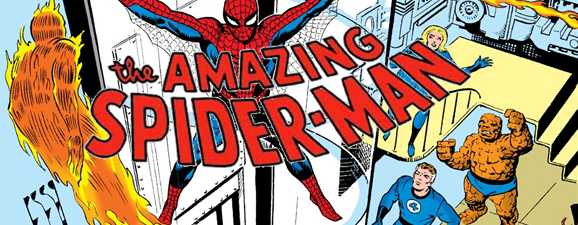
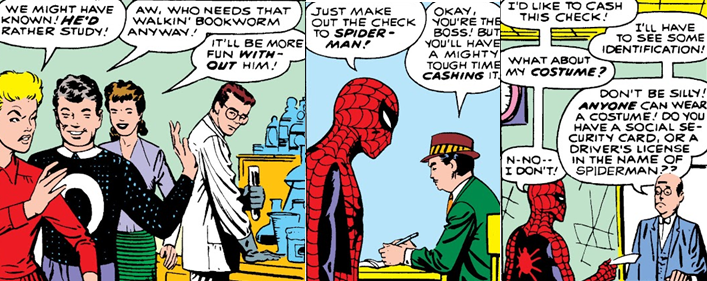
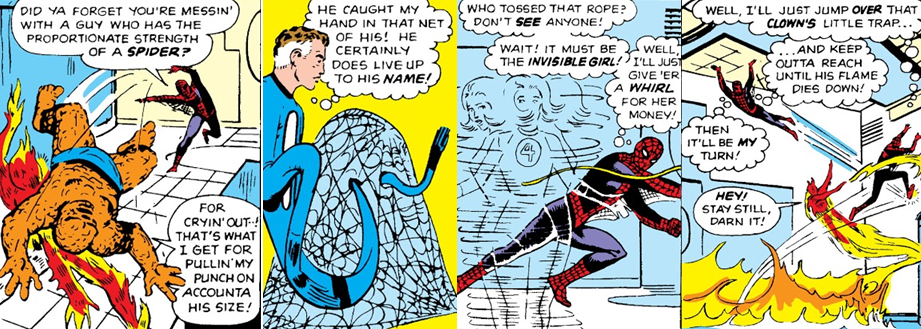
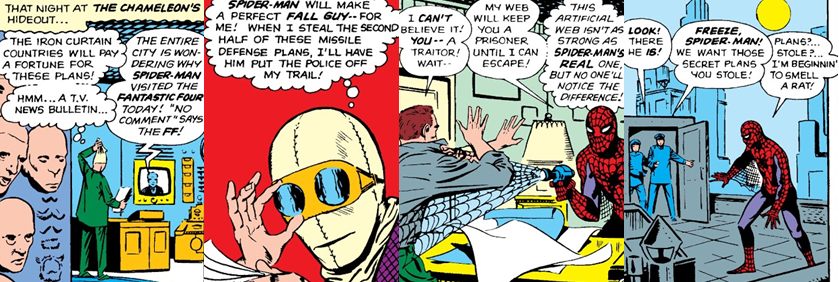
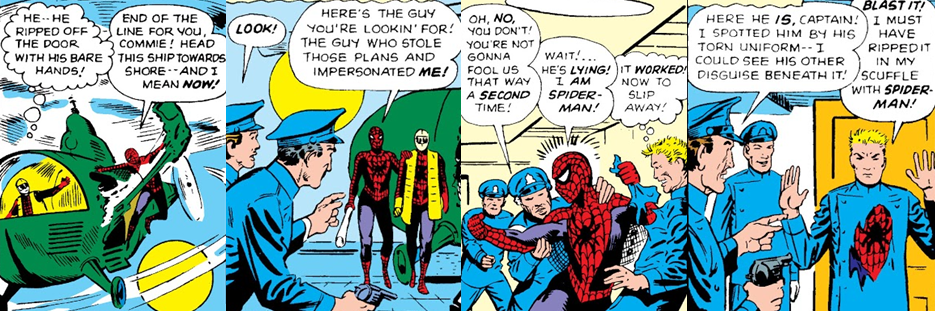
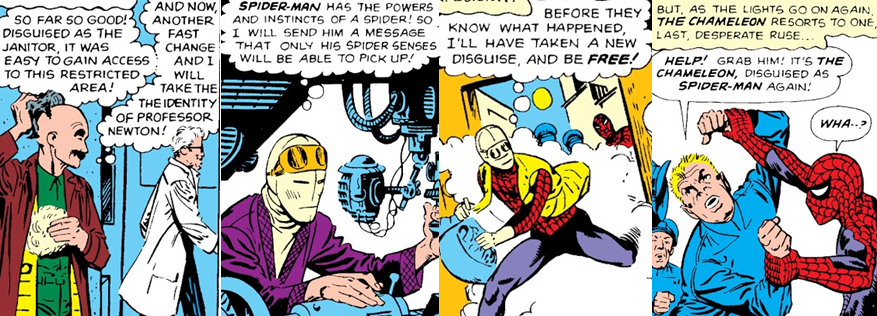
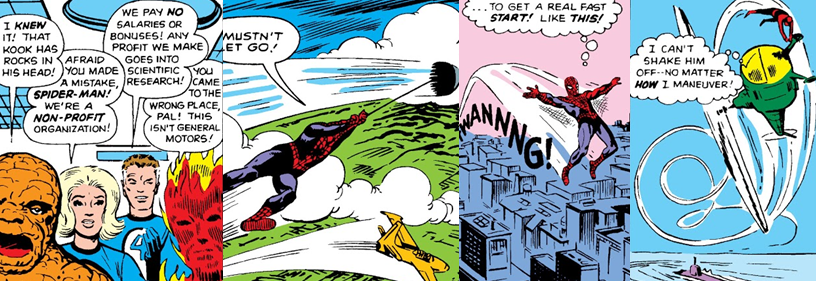


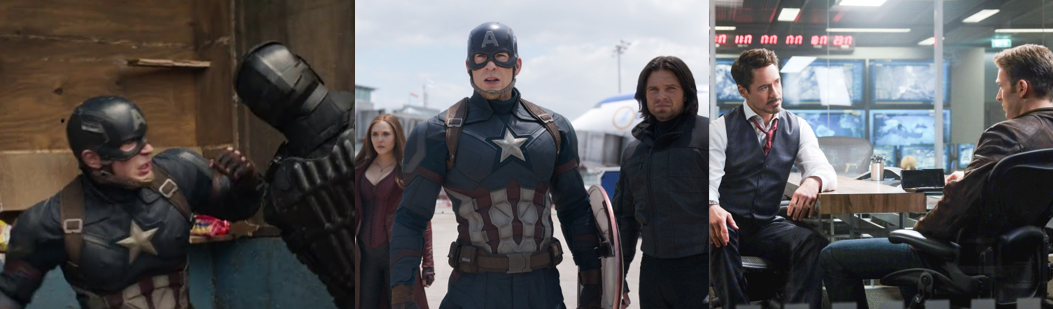

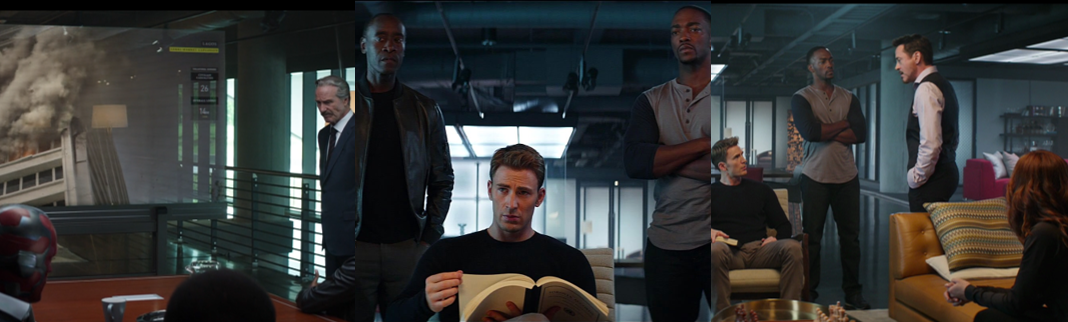


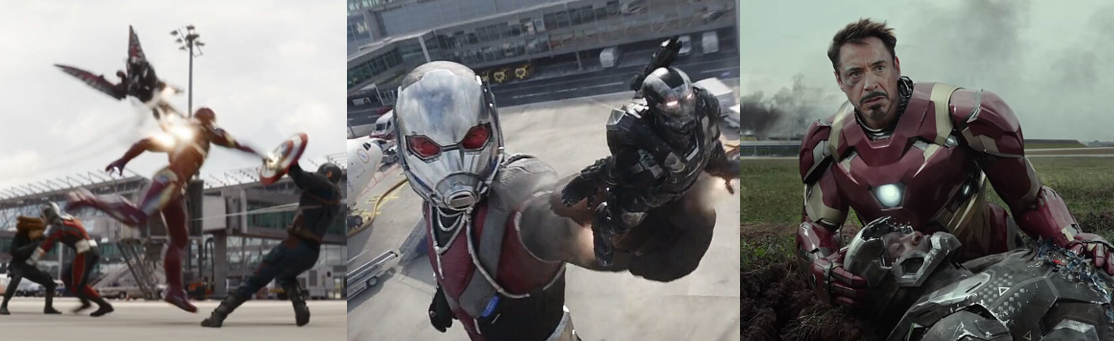
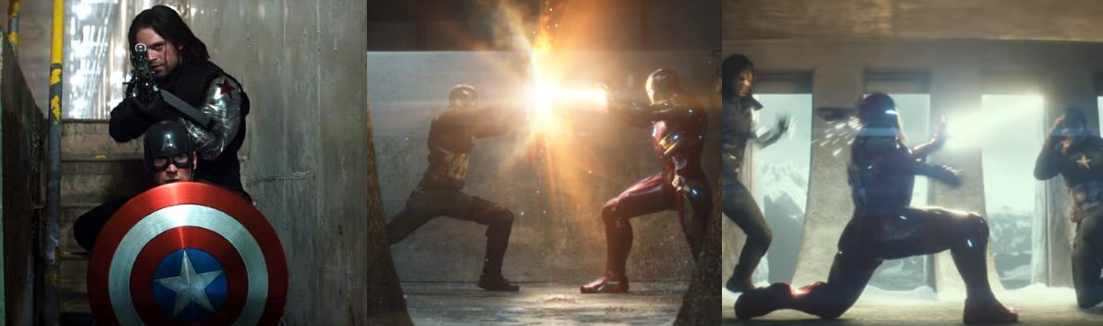
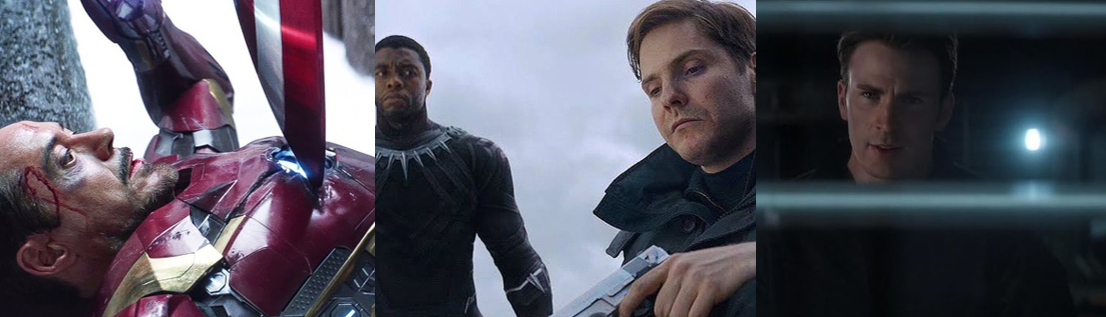



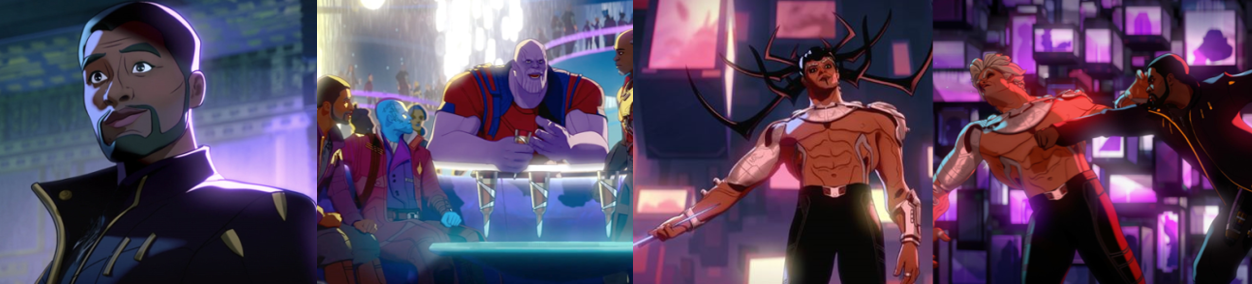
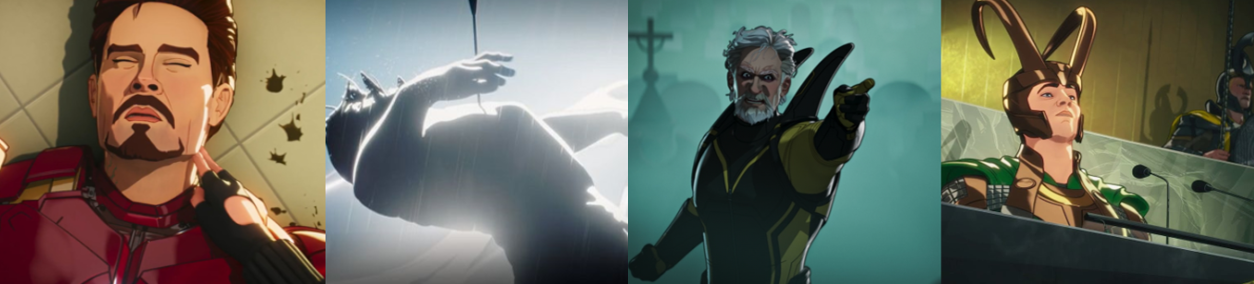


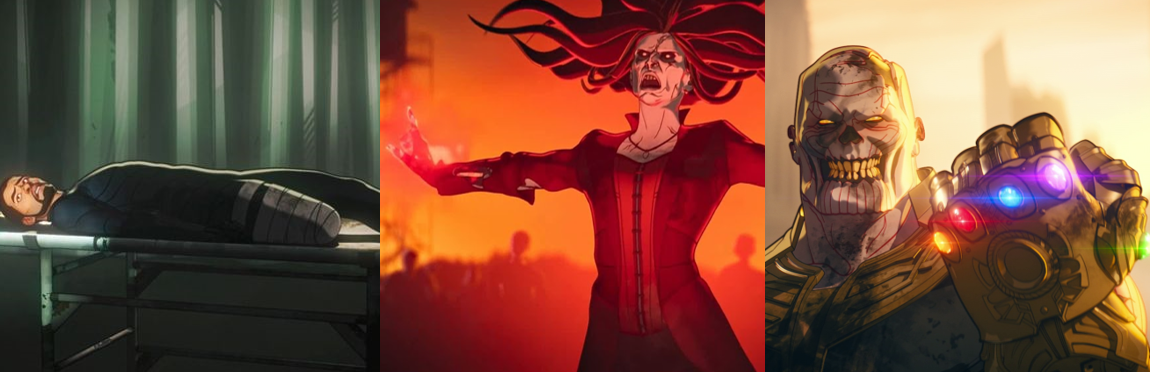

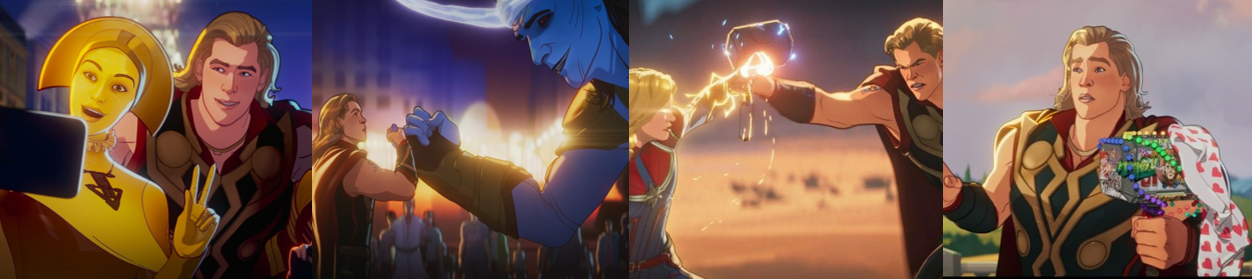
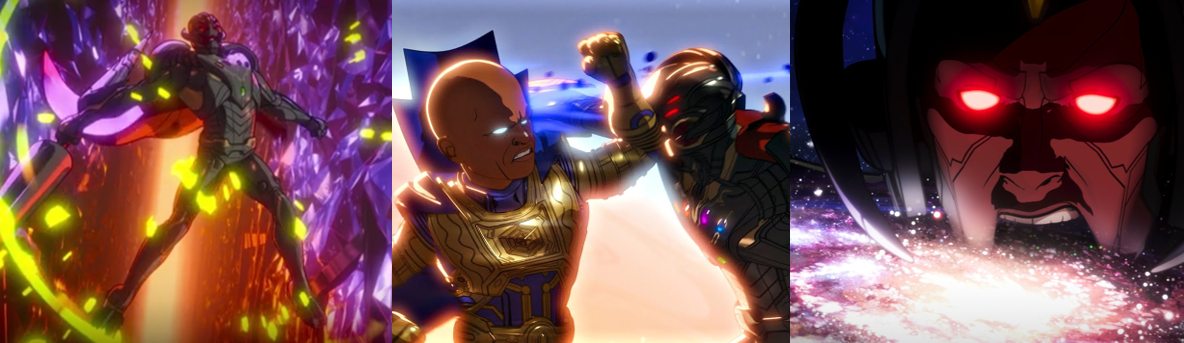


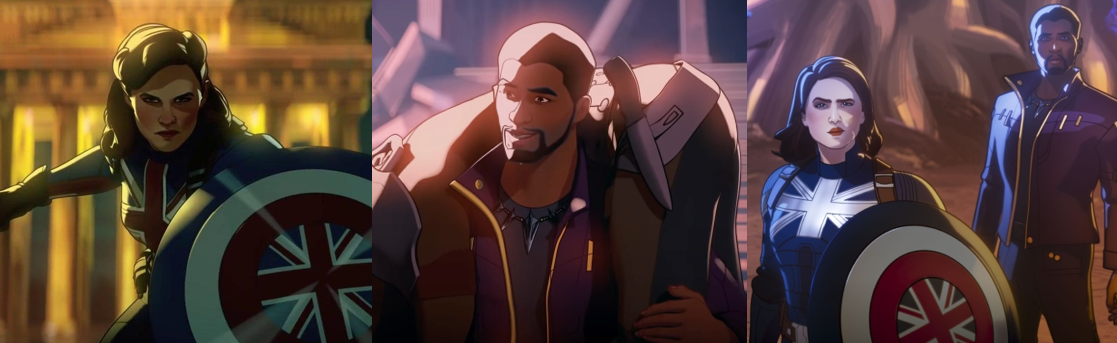
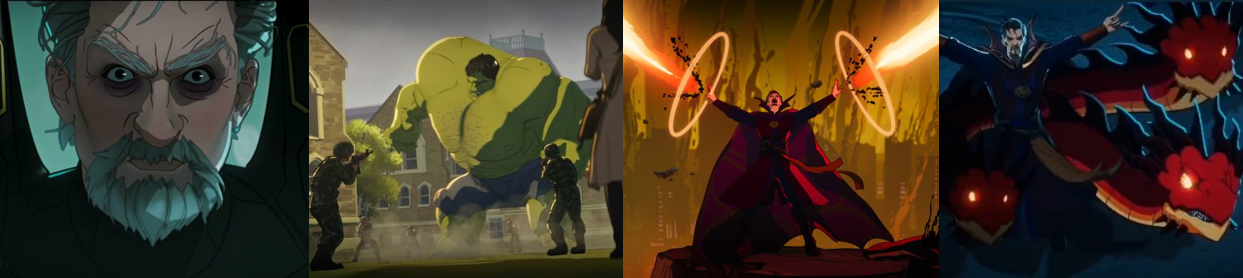
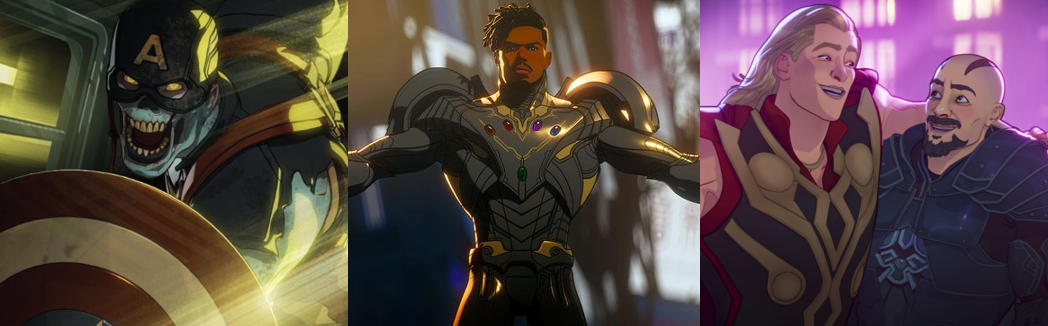
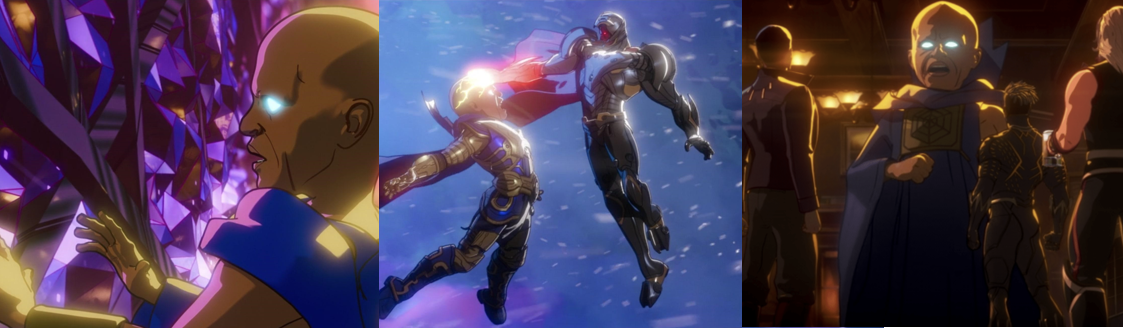



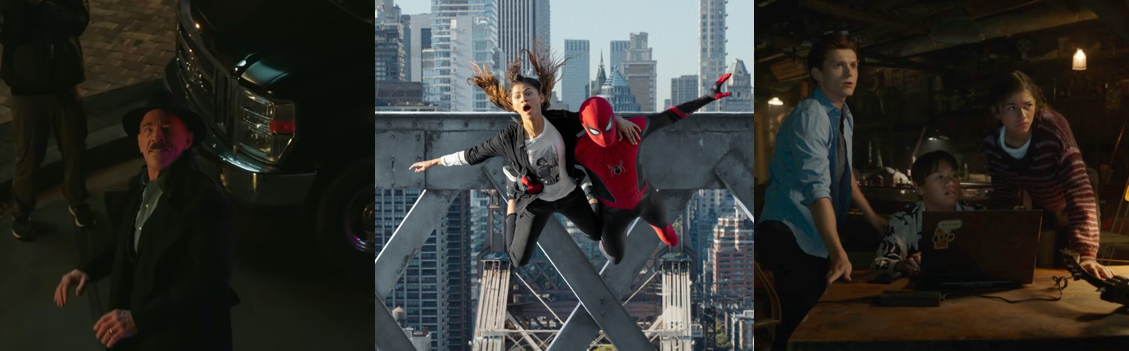
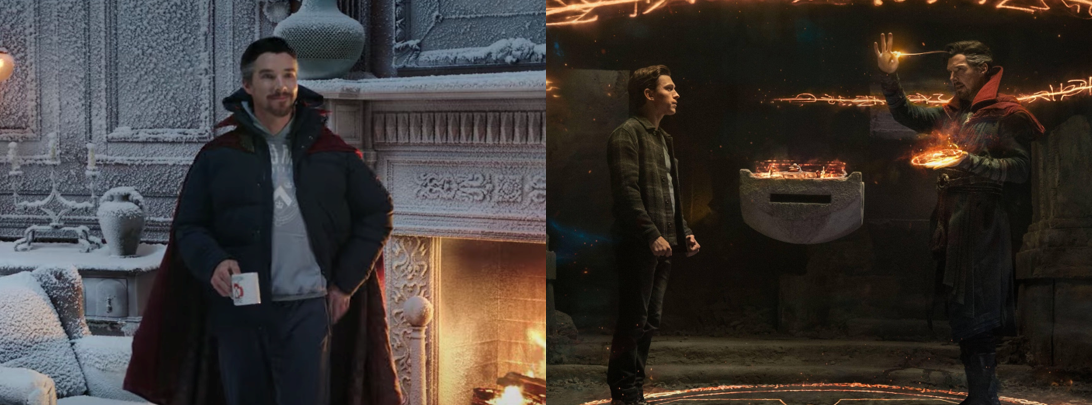

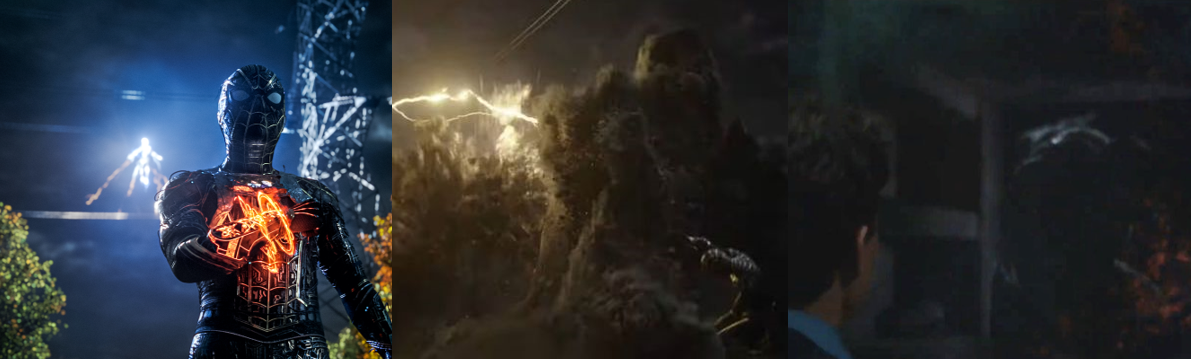
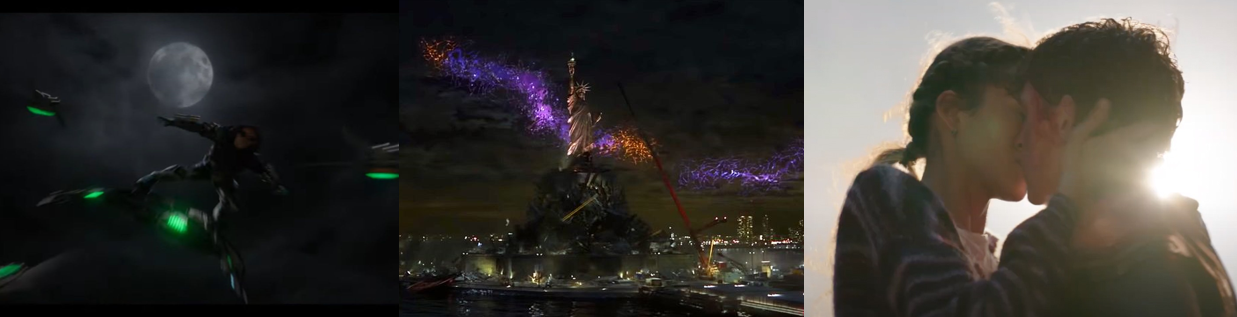

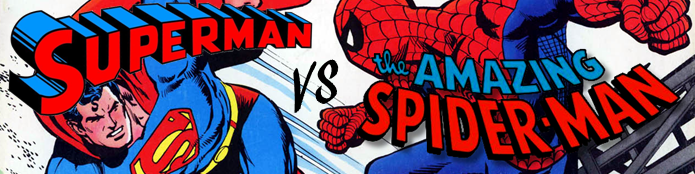
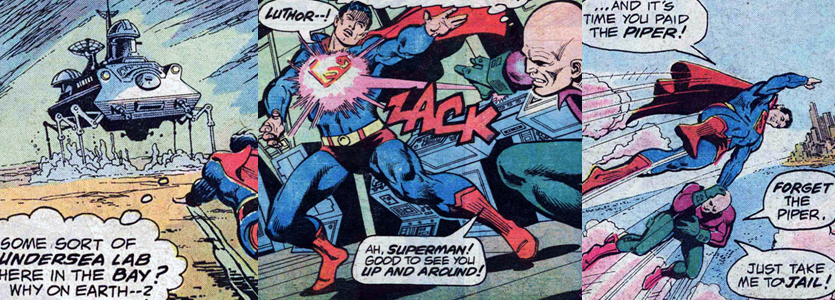












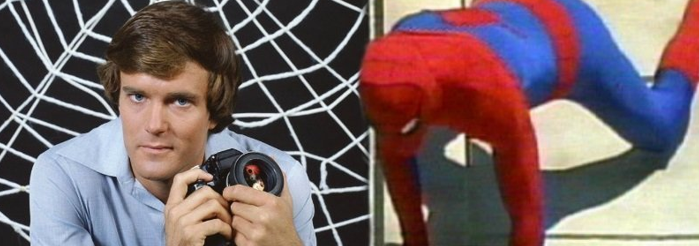


You must be logged in to post a comment.