Mini Game Corner [Sonic Month]: Sonic the Hedgehog Spinball (Mega Drive)


Sonic the Hedgehog was first introduced to gamers worldwide on June 23 1991 and, since then, has become not only SEGA’s most enduring and popular character but also a beloved videogame icon. Thus, in keeping with tradition, I’m dedicating some time to celebrate SEGA’s supersonic mascot.


Released: 23 November 1993
Developer: SEGA Technical Institute
Also Available For: Game Boy Advance, GameCube, Game Gear, Master System, Nintendo Switch Online, PC, Nintendo Wii (Virtual Console), PlayStation 2, PlayStation 3, PlayStation 4, PlayStation 5, Xbox, Xbox 360, Xbox One, Xbox Series S/X

A Brief Background:
At the beginning of the 1990s, SEGA sought to create a videogame mascot iconic enough to knock Super Mario from his perch at the top of the videogame industry, kicking off the “Console Wars” of the era when Sonic the Hedgehog proved a big success. This evolved into mainstream popularity with Sonic the Hedgehog 2 (SEGA Technical Institute, 1992); soon, Sonic was everywhere (including comics and cartoons) and SEGA was quick to capitalise with a slew of spin-off titles. SEGA put everything into crafting a massive third outing for their super-fast mascot, a game so large that it ended up being split into two parts. Realising the highly anticipated title wouldn’t be ready for the 1993 holiday season, SEGA commissioned another Sonic title to fill the void, one developed entirely in the United States. Loosely tying into the popular Sonic the Hedgehog (1993 to 1994) cartoon, Sonic Spinball expanded upon the celebrated pinball-based mechanics seen in the first two games and was hastily put together within a tight deadline. Sonic Spinball was largely well received, with reviews praising the visuals and soundtrack, though many criticised the slowdown and clunky gameplay. Still, Sonic Spinball lived on not just through multiple ports over the years but also a slew of adaptations, with the game providing the basis for not just the cartoons and comics but also a real-world theme park.

The Review:
Sonic Spinball, unlike the mainline games, is a 2D pinball-based action title in which players control Sonic the Hedgehog and bounce around inside Doctor Ivo Robotnik’s ominous Veg-O-Fortress, a volcano-based robot factory. Players can customise the game’s controls to operate different flippers with either A, B, or C or do the smart thing, like me, and map both the left and right bumpers to the A button for convenience. If you’ve played Spring Yard Zone and/or Casino Night Zone from the first two games, or any of those old pinball-based videogames, Sonic Spinball will be mildly familiar to you as you control flippers to send Sonic flying across a vaguely pinball-themed environment, bouncing off bumpers and hitting targets to score points. The difference comes from the awkward incorporation of some Sonic’s more traditional moves. In the rare moments where you’re not bouncing about like a madhog, you can run about and use Sonic’s Spin Dash to blast ahead. Unfortunately, Sonic’s controls are very clunky when he’s on the ground. He feels very heavy, shambling about with none of the grace or speed that you’d expect, the Spin Dash is weak and stunted, and Sonic’s jump is very short and awkward. When you do have to jump over walls, the jump tends to glitch and cause Sonic to fail or judder about on the environment, though thankfully these moments are few and far between. Sonic is also missing all his power-ups – there are no monitors to smash here – and Golden Rings are collected merely for points and to score yourself an “extra ball”. Sonic Spinball is also the only Sonic title that directly ties into SatAM; Sonic’s design heavily evokes the cartoon (though, oddly, Dr. Robotnik’s doesn’t) and his Freedom Fighter pals make cameos in the game’s bonus stages. The link is tenuous at best, however, with the game primarily serving as a pinball-based spin-off whose canonicity can be debated. Finally, unfortunately, Sonic is the only playable character here. Up to four plays can play at any one time, but in a classic turn-based format, which is pretty lame.
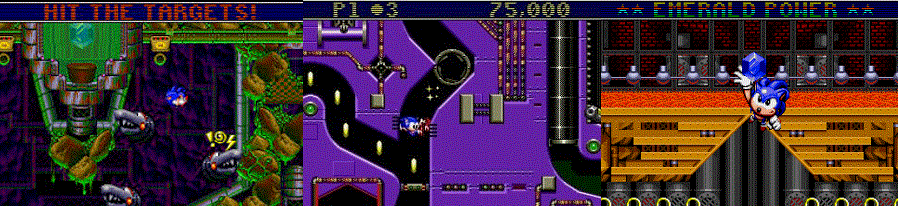
Bounce around a pinball nightmare to snag the many Chaos Emeralds.

On paper, Sonic Spinball is a very short game without much happening in it (hence this shorter review). There are only five stages to play through, though each stage is quite large and has multiple paths accessed via teleporters, narrow tubes, or by clearing the way of obstacles. This might mean smashing a door a few times, or pulling switches, or powering up generators. Either way, you’ll be repeating these actions a few times to open new paths or collect one of the many Chaos Emeralds powering the Veg-O-Fortress. Each stage has either three or five Chaos Emeralds to collect and finding them can be a bit of a headache. Not only do you have to factor in alternative paths and these tricky puzzle elements but directing Sonic’s momentum is crucial to obtaining the gems. This is easier said than done as Sonic seems to fly off like he has a mind of his own most of the time, though you can direct his momentum in mid-air. Every stage features instant death hazards at the bottom, though you’re given some leeway in Toxic Caves, and you’ll occasionally be spared by a burst of steam to stay in the fight. Badniks modelled after those seen in SatAM patrol every stage but are mainly used to score points or bounce to higher areas. You’ll be pushed along on jets of steam, ride mine carts, pinball about on balloons and cages, and ride flippers up vertical shafts, often dropping to the first screen and fighting your way back up to reach the boss. Targets, lights, and plugs can all be bounced into or past to score points. The neon billboard overhead constantly updates you on what’s happening, though it’s not always clear if it’s relevant to you getting a Chaos Emerald or not. Lava Powerhouse is easily the most maze-like stage, forcing you to time your steam-boosted attacks on Cluckbirds to enter pressure dial tubes and be blasted further up. The Machine is probably the most dangerous stage, with its grinding gears, collapsible gantries, and being the heart of Dr. Robotnik’s Badnik processing plant. Showdown, meanwhile, is the most open and vertical stage, with you hitting balloons, pulling hooks, blasting about using windsocks, and hopping to bombs to reach Dr. Robotnik’s ship. Once there, there’s a greater risk of plummeting all the way down thanks to the holes and destructible windows, something you want to avoid given how aggravating it is to get Sonic’s lead-filled ass moving in this game.
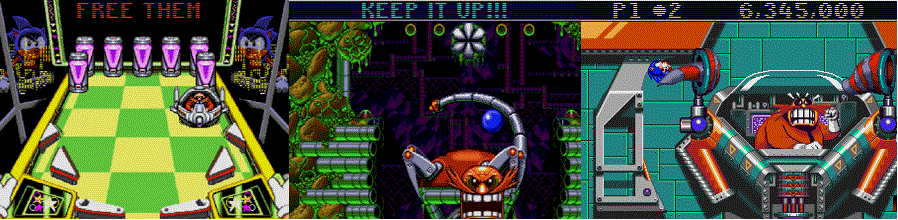
Rack up a high score and battle Dr. Robotnik’s gigantic mechanical monsters.

Graphically, Sonic Spinball is a mixed bag. The environments look good; every stage is large and detailed and pops with 16-bit goodness. The SatAM-style sprites are serviceable enough but Sonic looks really weird; he’s very squat and out of proportion when not curled into a ball. Things get pretty impressive in the bonus stages, where you see Sonic’s reflection as he controls a real pinball across a giant table, smashing Scratch’s and the Badnik processors to free his furry friends. The game mostly impresses with its music, with memorable tunes punctuating the frustrating and chaotic action. It may lack all the traditional Sonic tunes, but that Toxic Caves theme is an earworm, for sure. Every stage culminates in a boss battle at the very top where your biggest threat is screwing up your momentum and dropping out of the arena. Sonic can’t be hurt or killed by the bosses, but you must aim your shots to deal damage, which gets trickier with each boss. Things start [pretty simple with Scorpius; simply avoid the sewer warp tube and the acidic gloop it spits and flip Sonic into the sweet spot between its tail and its back to clobber it. The Robo-Boiler is a little trickier as you must flip up to a temporary platform on either side and time your jump to avoid the steam vents and smash the Robotnik faces floating inside, though it’s very easy just to fly all over the place. The Veg-O-Machine was another tricky one since it constantly spews Badniks and you must target the tubes on either side to halt their production before finishing it off from the inside. You finally confront Dr. Robontik aboard his ship as he flees the crumbling Veg-O-Fortress. This is the most aggravating fight of the game as Dr. Robotnik is shielded by claw arms and windsocks, which must be deactivated by hitting the button beneath his cockpit. Fail and you could be dropped to the beginning of the stage! However, even when you do deactivate the obstacles, you have only a short window to land hits, making this a tedious final fight. Despite all those Chaos Emeralds, beating the game only earns you a high score for the table and there’s nothing else to come back for. You can use cheat codes to skip ahead or the rewind and save state functions of other ports to make the game easier, however.

The Summary:
There’s always been something about Sonic Spinball. I remember getting my copy as a kid and I have a strange amount of nostalgia for it, despite barely clearing the first stage in my youth. Even now, I’m only able to finish the game through persistence or more modern means and I can’t say I’ve ever enjoyed my time when playing it. It is fun at times, don’t get me wrong. Visually, it’s quite striking and I like little quirks like the alarm and Sonic’s shocked face when he falls, him landing in a little bucket in the Toxic Caves, and the radical nineties slang displayed in the neon bar. It can be fun bouncing around searching for Chaos Emeralds and it’s quite rewarding figuring out how to obtain them and flipping Sonic just right to snag them, and the tie-in to the cartoons is a nice touch (if half-assed) but it’s a very barebones and frustrating experience. There are a lot of bonus stages and a lot of variety in the main stages, but it quickly becomes repetitive as you repeat the same tasks (or variations of them) multiple times to progress. It doesn’t help that Sonic looks and controls like ass; you basically need to be bouncing around all the time or else you’re controlling this sluggish, ungainly hedgehog meandering to the next spring. Sonic’s controls when bouncing aren’t much better; I found it very difficult to properly aim him and his momentum seems to have a mind of its own. It’s also not immediately clear where you need to go and what you need to do to get the Chaos Emeralds, leading to constant falls, warps, and deaths if you’re not careful. The bosses were large and enjoyable, if paradoxically both irritating and simple, and I really dig the music, but there’s just so little to come back to here. I think it might’ve been better to have smaller stages and divide some of the gimmicks between, say, eight distinct areas, with a boss battle after every second one. The pinball mechanics wear out their welcome very quickly thanks to the awful controls and madcap nature of the game, which ruins a lot of the fun and makes Sonic Spinball little more than a visually interesting, quirky little cash grab that fails to engage as powerfully as its mainline cousins.

My Rating:

Rating: 2 out of 5.

Could Be Better

Did you enjoy Sonic Spinball? Were you a fan of the pinball mechanics or did they aggravate you after a while? What did you think to the visual style and the inclusion of elements from the cartoons? Which of the stages and bosses was your favourite? Do you agree that the controls and replay value are lacklustre? Which Sonic spin-off is your favourite and how are you celebrating SEGA’s mascot this month? Let me know your thoughts on Sonic Spinball in the comments and go check out my other Sonic content.

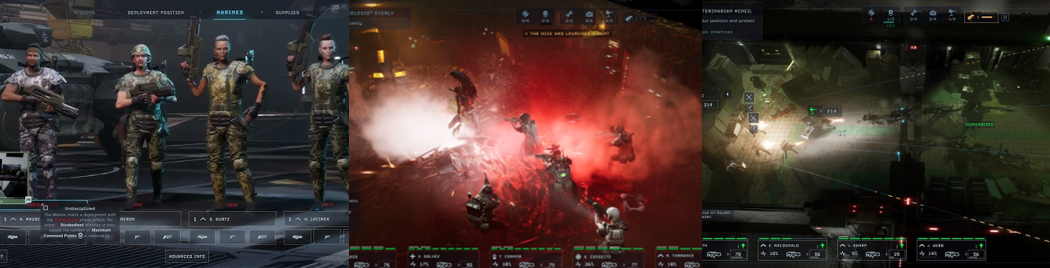
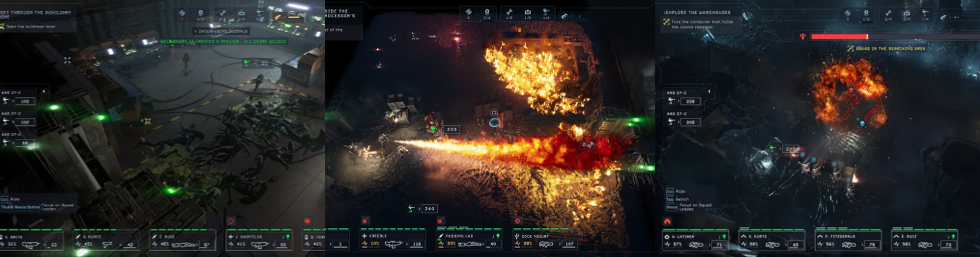
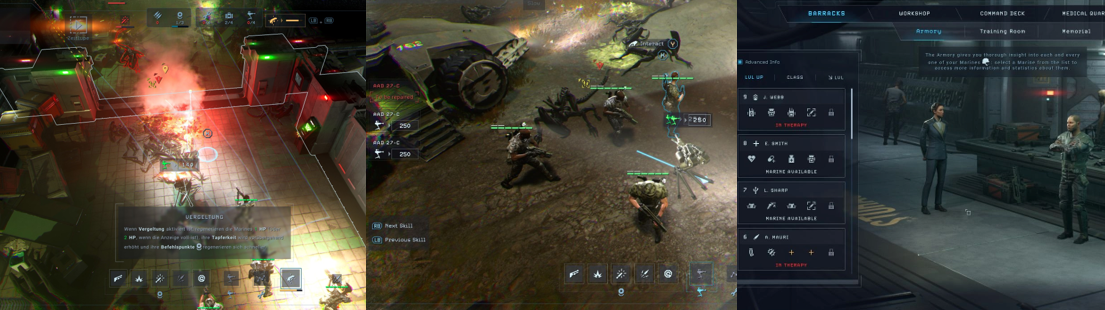
Mini Game Corner: Aliens: Dark Descent (Xbox Series X)

Released: 20 June 2023
Developer: Tindalos Interactive
Also Available For: PC, PlayStation 4, PlayStation 5, Xbox One, Xbox Series S

A Brief Background:
The Alien franchise (Various, 1979 to present) has had a long and complex history with videogame adaptations over the years. The films have been adapted into everything from primitive pixelated messes to crossover titles, survival/horror experiences, and first-person shooters. We even got a real-time strategy title back in 2003, one that garnered a lukewarm reaction from critics. While it may be surprising that Tindalos Interactive chose this genre for their adaptation of Aliens (Cameron, 1986), there was precedent for this given their success in the genre with Battlefleet Gothic: Armada (2016). While there isn’t much information about the game’s development available online, I can tell you that Aliens: Dark Descent was received rather favourably and that critics praised the foreboding atmosphere and immersive gameplay while criticising its performance and the unwieldy nature of certain control options.

My Progression:
Aliens: Dark Descent is a real-time tactics games that borrows many visual cues, dialogue, and audio from Aliens. Played from a top-down, isometric perspective, the game has players control a squad of four Colonial Marines and take on various missions on Lethe, a planet they’re stuck on following a Xenomorph outbreak on an orbiting Weyland-Yutani space station. Initially, you learn some of the basics by controlling a single character, Deputy Administrator Maeko Hayes, who’s responsible for them being stranded on Lethe. While nowhere near as capable as the Marines, controlling Hayes teaches you the basics of character and camera movement, the interactions you’ll need to progress, and the importance of stealth in later missions. She also tours the downed USS Otago between missions, promoting Marines, assigning Physicians to heal injured troops, and deploying missions across Lethe. When on a mission, you press X to have your Marines move to a point on the environment. You can also double tap X to have them run, though they’re inexplicably unable to shoot and run at the same time. Y allows them to interact with the environment, activating consoles, calling lifts, extracting samples from downed Xenomorphs, and repairing sentry guns or healing teammates. You can also hold Y or press in the right stick to activate a flashlight, which is super useful for exploring the game’s dark, ominous areas. A confirms your menu selections, B cancels them, and the Xbox’s ‘View’ button opens a full-sized map (though I found the smaller mini map, with built-in motion tracker, more useful). From the map screen, you can select any security cameras you’ve activated, see primary and secondary objectives, and call the M540 Armoured Reconnaissance Carrier (ARC) for some heavy ordnance support or to extract your team. The Left Trigger allows a grapnel function, though I never utilised this so I can’t comment on it, and you can focus on your team leader or reload your weapons by using the directional pad.

Assemble a team of Marines to investigate and exterminate the Alien infestation.

Your squad will automatically open fire on any nearby targets or if manually directed by your inputs. They don’t have infinite ammo, however, so you must loot corpses and crates to boost your stock, though your inventory is limited. You can select a Marine with Y to apply first aid or give them a booster to calm their nerves as your troops will grew more and more anxious as you engage in combat. The Right Trigger opens the “Skill Menu”, allowing you to utilise additional weapons (such as a shotgun spread, suppressive fire, a flamethrower, and a grenade launcher) at the cost of “Command Points”. Command Points regenerate over time, but you can fully restock them, calm down your squad, and manually save the game by welding shut doors in enclosed spaces to create a “Shelter”. This can only be done as long as you have “Tools” points and will not refill their health, unfortunately, but it gives you a chance to catch your breath. Each Marine has a personality trait that affects their gameplay; they may be cowardly, or quick to panic, or clumsy. These negatively impact their performance, reducing accuracy, increasing the chances of exhaustion, and lessening their attack power. Even if your Marines survive their mission, they are left traumatised by several afflictions. While some are cured by a Physician, others escalate, especially as you pass days to give them time to recuperate. You can level-up and Promote your Marines, however, adding additional buffs such as increasing their armour or their build/health speed. You also spend points in the workshop purchasing new weapons, such as the Smart Gun and mines, and accessories like the sentry guns and tactical analysis, which can be lifesavers out in the field. While you can heal, save, and often carry downed Marines to safety, any you lose are gone forever and memorialised on the USS Otago, forcing you to strategize and make smart use of your resources and surroundings to keep them healthy and alive.

Alien hoards will wipe out or traumatise your squad if you’re not careful.

This adds a level of tension and dread to Aliens: Dark Descent that’s exacerbated not just by the foreboding visuals and obscured map but also the game out-right warning you of its difficulty. You can adjust the game’s difficulty settings and the enemy intelligence before starting a campaign, though the standard settings were challenging enough for me. Lethe is crawling with Xenomorphs who scurry about on walls and ceilings and burst from pipes and the shadows. Aliens swipe with their claws and tails, attack with their little mouths, spit and bleed acid, and abduct your Marines and non-playable characters (NPCs) to be cocooned elsewhere. You’ll occasionally free these victims, though most die from a Chestburster, and encounter numerous Alien eggs and Facehuggers, which must be dispatched before they impregnate your troops. Even bog standard Xenomorph drones can take a lot of firepower to put down, especially if your squad is weak, injured, or panicked. Your best bet is to either use cover or stay back, laying down suppressive fire or deploying sentry guns in a kill box to thin out the Aliens. While they usually attack in small groups, their aggressiveness will increase, they will actively hunt you, large swarms spawn in for a short time, and their numbers and aggression only increase the more days you waste recuperating. Eventually, you’ll encounter a larger Alien variant, a “Charger”, that…well, charges at you like a rhino. Though big and cumbersome, the first encounter in the slaughterhouse isn’t too bad as long as you stay back and rest your troops, but they spelled disaster for my repeated excursions into the mine. An Alien nest is found here, with cocooned scientists and eggs everywhere, and sheltering a gigantic Xenomorph Queen. Ironically, this battle was easier than exploring the mines! I laid down suppressive fire, unloaded with the grenade launcher and flamethrower, and placed a sentry gun or two and she went down on my second try, though I think the strength of my squad had a lot to do with that as I had to extract and heal up to even reach her lair. It seems like you’ll also battle malfunctioning synthetics as well; this happened once during my playthrough so I imagine they, and other Aliens, crop up later in the game.

A tactical retreat to heal and regroup is often necessary to win the day.

Aliens: Dark Descent certainly looks the part. The perspective obviously makes the game far less detailed than FPS or third-person Alien titles, but the environments are all ripped right out of Aliens and I loved how all the tech and readouts aligned with what we saw in the first two films. Character models are very basic, however, often disappearing into the dark environments and not featuring much variety unless your troops are limping from wounds. They express themselves more through dialogue, shamelessly stealing the best lines from Aliens and commenting on every situation, and through the many pre-rendered cutscenes. Hayes’ time on the USS Otago recalls similar third-person sections from Aliens: Fireteam Elite (Cold Iron Studios, 2021) and sees her meeting new recruits, prioritising her troops, and being assigned side missions by other NPCs. If you choose not to deploy your squad, the infestation increases and your troops suffer; oddly, demanding they rest causes them to become exhausted, which was very strange. Passing the time often gives you the option to undertake offscreen missions for additional resources, though at the cost of a deployment, meaning you have to weigh the pros and cons of obtaining additional bonuses versus increasing the Alien resistance. Eventually, I got into a routine of deploying, accomplishing a mission or two, and fleeing Lethe with more of my squad, meaning the bulk of my gameplay was focused on repetition, trial and error, and revisiting the same locations with a bit more experience. It took everything I had just to clear the first mission, which took a good few hours, which tells me that Aliens: Dark Descent has a lot of play time in it, likely focused on grinding and exploration to nab all those hidden Achievements, though it’s possible those better versed in this genre of game may have better luck than I did during my frustrating play time.

When I first started Aliens: Dark Descent, I was expecting a game akin to the Command & Conquer games (Various, 1995 to present) I dabbled in as a kid. This turned out to not be entirely true as it’s much more focused on stealth and action rather than building bases and such, though the Shelter mechanic masquerades as a base, I suppose. This genre of game isn’t really one I’ve had that much experience with; it seems more geared to mobile players or fans of “roguelike” titles, and therefore was quite a chore and a challenge to play. I was hoping for a mission-based title where you strategically place troops and build forces to hold off the Xenomorphs, and instead was beaten over the head with a moody, difficult, and often tedious gameplay experience. The visual fidelity to the first two movies is amazing; the atmosphere is perfectly foreboding and the dread of every encounter, however minor, definitely echoes the dire straits faced by the Marines in Cameron’s sci-fi classic. Aliens: Dark Descent can be very unforgiving, though; even if you take the time to heal and prepare, the odds are always against you. Just one Xenomorph can wipe out your squad, especially if they are injured or fresh-faced recruits, and it’s very easy for the tide to turn against you, even if you set up a well-armed kill box and farm nearby resources. I can see that Aliens: Dark Descent is going to demand a lot of my time as the first mission took me most of an afternoon to get through, meaning it’s a game I will likely revisit in the same manner I played: “short, sharp bursts” to whittle away at each objective, no doubt to be wiped out by some unforeseen new Alien variant. But maybe I just suck. Maybe you had a better strategy. Maybe you found all the data pads and creamed this game. If so, tell me about it in the comments, tell me your favourite Alien game, and check out my other Alien content.

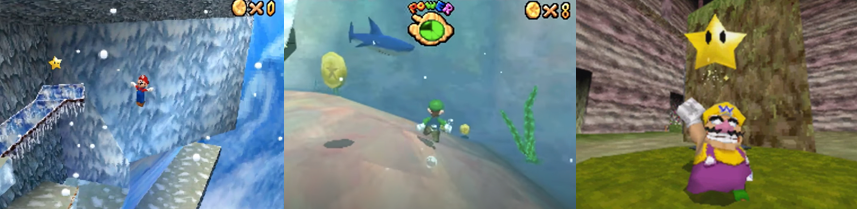
Mini Game Corner [Mario Month]: Super Mario 64 DS (Nintendo DS)


So, for no better reason than “Mar.10” resembling Mario’s name, March 10th is widely regarded as being “Mario Day”, a day to celebrate Nintendo’s portly plumber, an overalls-wearing mascot who literally changed the videogame industry forever and shaped the home console market of the nineties.


Released: 21 November 2004
Originally Released: 23 June 1996
Developer: Nintendo EAD
Also Available For: Nintendo 64, Nintendo Switch, and Nintendo Wii (Virtual Console, original version only)

A Brief Background:
After rebuilding the videogame industry following its horrific crash in 1983, Nintendo embarked on a “Console War” with SEGA. Their two mascots – Super Mario and Sonic the Hedgehog – were at the forefront, creating celebrated 16-bit classics that defined a generation. By the end of the nineties, though, 2D graphics were out and the race was on to produce the first commercially viable 3D home consoles. While SEGA struggled to get started with expensive add-ons for the Mega Drive, Nintendo shunned CD-based technology in favour of traditional cartridges, and launched their Nintendo 64 console with Super Mario 64, a critical and financial success that set the standard for 3D platformers. In mid-2002, former Nintendo president Hiroshi Yamauchi proposed the idea of a dual-screen console, a portable system Nintendo hoped would propel them back to the top of the industry. An expanded version of Super Mario 64 was developed as a launch title for this new console, the Nintendo DS. Originally titled Super Mario 64 x4, the game featured graphical upgrades to the textures and character models and was a huge success, selling 11.06 million copies worldwide. It was also met with rave reviews that praised the addictive gameplay and additional characters but criticised the clunky control scheme.

The Review:
So, let’s address the elephant in the room first: why just a mini review for this remaster of Super Mario 64? Well, primarily it’s because much of the core gameplay, mechanics, and elements of the original game are retained here. The story is largely the same: Princess “Peach” Toadstool invites Mario, Luigi, and (strangely) Wario to her castle for cake but, when they disappear inside, Yoshi has to go rescue them. The gameplay loop is the same (enter magical paintings to be transported to action stages where you collect Power Stars to open new doors and access new areas of the castle), and everything I said about the original game in my initial review still stands here. Thus, I think it’s more productive to focus on what’s different about this version. Namely, the controls; while all four characters perform the same basic actions as Mario (though only he can wall jump), you now control them with the directional pad (D-pad) or, *shudder*, the touchscreen and stylus. This is problematic in many ways; Super Mario 64 DS is a fully 3D gaming world, and yet these controls make the characters clunky and tank-like. It’s also not helpful having to hold Y to dash, which can make performing long jumps or running attacks problematic as your fingers get in the way. If you play the game on the Nintendo 3DS, as I did for this playthrough, you can use the analogue stick but you don’t get true analogue control. Instead, the same janky tank controls are mapped to the stick, making the precision platforming, running, and combat mechanics much more of a chore to pull off in this version, which is a real shame. Although you have greater camera control with the Left bumper, touch screen, and X (which zooms out), the camera is still aggravating, regularly getting stuck on the environment or adopting a poor angle. However, I did like how the touchscreen displays a helpful map at all times and highlights any available Power Stars or character caps. One of the most noticeable changes to the gameplay is that Super Mario 64 DS now features 150 Power Stars rather than the original 120, and you now need 80 of them to access the final confrontation with Bowser, King of the Koopas. As I’ve 100% both this and the original version before, my goal for this playthrough was simply to reach that final fight, hence again why this is just a mini review as I didn’t strive for 100% completion.

You’ll need everyone’s unique powers and skills to hunt down a whopping 150 Power Stars!

Although each character has their own unique mechanics, attributes, power-ups, and controls a little differently, they all share a basic move set that’s immediately familiar to players of the original game. B allows them to jump; tapping it three times while running executes a triple jump to reach higher areas. Holding R and pressing B pulls off a backwards somersault and doing the same while running performs a long jump, while holding left or right on the control stick and pressing B executes a side jump. Tapping B also allows you to swim; you can hold the button for slower, more precise movement but keep in mind that some characters also swim faster than others. A allows you to talk with non-playable characters (NPCs), read signs for tips, pick up certain objects, and perform a melee attack. You tap A three times for a three-hit combo, press A when running for a dive, or hold R and press A for a sweeping kick. You can also jump and press R in mid-air to perform a ground pound to crush enemies, and simply hop on most enemies to defeat them or get a boost to higher levels. Your health is measured in a colourful pie chart that depletes as you take damage, get set on fire, or when underwater. You must collect coloured Coins or run through Hearts to replenish it or grab an air bubble or resurface when swimming. The basic gameplay structure remains unchanged except each level (or “Course”) has an additional mission, and some missions have been altered to take advantage of the new characters’ abilities. You’ll still be jumping to moving, spinning, and temporary platforms, activating switches, running up walls, utilising cannons, smashing blocks, pounding stakes, raising and lowering water, catching rabbits, climbing fences, defeating enemies, finding Red Coins, and speeding down slides on your butt to complete missions.

Alongside their shared skills, characters have unique abilities modelled after the original game’s caps.

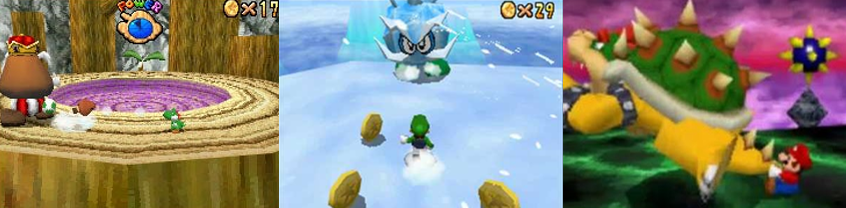
The biggest change to the gameplay is the inclusion of three new characters. You begin controlling Yoshi, who swallows enemies with A, lays an egg with R, and tosses said egg with A (or simply spits the enemy out if you prefer). Yoshi also performs a “flutter” jump by holding B to give him a bit more airtime and temporarily breathes fire with a Power Flower, which is great for melting ice blocks. Luigi is the fastest, slipperiest of the characters; he also has a flutter jump but can spin in the air off a back somersault to cross wider gaps. Luigi can also briefly run across the surface of water and temporarily turn invisible when he grabs the Power Flower, effectively replacing the Vanish Cap from the original game. Wario is the smallest, stoutest, and slowest of the four but also the most powerful. He can break black blocks swing and throw opponents in Vs. Mode, and temporarily turn invincible when grabbing the Power Flower, meaning he replaces the Metal Cap. Mario has all his original abilities, including temporarily flying with the Wing Cap with a feather (which remains as awkward as ever) but he can now inflate like a balloon and float with the Power Flower. Although you must unlock Mario, Luigi, and Wario, you can assume their form and powers by defeating enemies who wear their caps or finding their caps in the Courses, though you’ll lose their abilities when you take damage. You can manually switch characters by visiting the switch room, which is located where the Princess’s Secret Slide was (and still is) but you can only battle Bowser as Mario. The Super Mushroom also makes a return here, briefly enlarging your character and allowing them to plough through enemies and obstacles and earn extra lives. You can also still ride discarded Koopa shells to speed around Courses, and all the character models and game textures have received a nice upgrade, making everything even more colourful and detailed even on the DS’s smaller screen.

Old bosses have received a graphical overhaul and been joined by new baddies and Courses.

While the same selection of Courses are present here, there are some new bonus areas to visit to find new Secret Stars or character portraits, which take you to new mini obstacle courses not unlike the Bowser Courses. These culminate in a boss battle against the three new bosses who guard the keys needed to rescue Mario, Luigi, and Wario. The first, Goomboss, is fought with Yoshi; this enlarged Goomba chases you around a tree stump platform. He gets faster as the fight progresses and can only be damaged by dashing behind him, swallowing his Goomba minions, and spitting them at him. Luigi is rescued by clearing a small looping carousel maze and battling King Boo, who’s the same as the Big Boo bosses except you sometimes use the giant mirror to spot him closing in. Finally, Wario’s key is guarded by Chief Chilly, a larger version of the Chilli Bully from Snowman’s Land and fought similar to other Bullies, but with the twist that the arena is super slippery, surrounded by burning cold ice water, and Chief Chilly destroys the stage as the fight progresses. All the previous bosses return, unchanged except for their new character models and altered dialogue depending on who you’re playing with, but there are now two battles against King Bob-omb, with the first one being fought with Yoshi and containing new mechanics. This time, King Bob-omb hurls his explosive minions at you and you must spit them back, which is kinda fun, though you can fight him in the same way as before (running behind him and tossing him) when playing as other characters or using their caps. Bowser’s battles are also the same, though slightly more challenging thanks to the clunky controls. You must best a dangerous obstacle course beforehand that’s now home to two hidden Power Stars before battling Bowser in borderless arenas. Bowser will stomp about, spitting fire (which homes in on you and rains from the sky in the final bout) and even tip or destroy the stage in later encounters. You defeat him by running behind him, grabbing his tail, and swinging him into one of the nearby mines. You’ll need to do this once in the first two fights and three times in the last to be victorious and see the slightly altered ending, where all the characters get cake.

There are more missions, more Power Stars, more rabbits, and even loads of unlockable mini games.

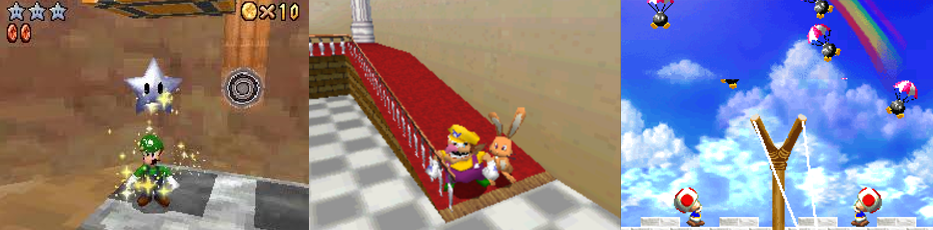
As mentioned, every Course now has eight Power Stars to collect rather than seven. You complete missions for seven of them but earn an eighth for collecting 100 Coins in every Course, and each Course has an additional mission tied to one of two new mechanics. One is the Star Switch, which causes a Power Star to temporarily spawn somewhere in the Course and gives you a short time limit to get to it, usually by platforming, wall jumping, or utilising the character’s Flower powers. The other is collecting five Silver Stars, smaller Stars dotted around Courses that fly out of you when hit and spawn a Power Star when collected. There are also a bunch of rabbits to catch in and outside Peach’s castle; seven for each character (as indicated by their colour) that appear when you’ve collected a certain number of Power Stars. Catching them doesn’t award you a Power Star like when you catch Mips in the original game, but instead unlocks mini games to play in the Rec Room. These are assorted button- and touchscreen-based distractions that see you matching pairs of cars, rubbing the screen to reveal Boos, touching the right character faces amidst a sea of others, bouncing Mario past Shy Guys, playing slot machines, launching balls, and shooting parachuting Bob-ombs from the sky. There are thirty-six mini games to unlock and play, with each one awarding you Power Stars as points, and they’re an interesting addition, though I didn’t spend much time on them. The squishy Mario face mechanic from the original game has been expanded to other characters and a limited drawing canvas, you now only get three save files instead of four, and while the cannon outside the castle does unlock after you get 150 Power Stars, it simply leads to a Wing Feather for Mario and another rabbit for Luigi. Courses have had some graphical updates as well: Coins are now 3D objects, Peach has a new hairstyle, Bob-omb Battlefield is noticeably more autumnal than before, Hazy Maze Cave’s toxic gas is a different colour and Dorrie now wears swimming goggles, and the secret Courses where you once activated the different caps are now just challenges for Power Stars. Everything looks far superior, despite the smaller screen size, and sounds way better, but issues from the original game still persist. The camera, obviously, is the main one, as is the character’s tendency to just randomly slip or detach from platforms. Finally, while you get more guidance this time around, it can still be difficult to know how to clear certain missions without consulting an online guide.

The Summary:  
I loved Super Mario 64. Like almost everyone back in the day, it was the first Nintendo 64 game I owned and I played it constantly, though I was never able to get all 120 Power Stars. Ironically, however, I was able to get all 150 Power Stars when I first owned Super Mario 64 DS. I sold the game back then, choosing the more traditional, refined, and enjoyable experience offered by New Super Mario Bros. (Nintendo EAD, 2006) but, after playing the Nintendo Switch port and realising the 3DS analogue stick could be used to play the game (and being a big fan of Wario), I felt compelled to revisit it. Sadly, the analogue stick didn’t help with the game’s clunky control scheme and the camera is just as bad as ever, so this is a bit of a step down compared to its Nintendo 64 predecessor despite all the extra features, but it’s still a really fun game. I think that’s a testament to just how well Super Mario 64 was made. It’s still a readily accessible and surprisingly deep 3D platformer with a lot of varied locations and missions to playthrough. This version of the game impresses with its graphical overhaul, new Courses and boss battles, and the three new characters. While I rarely played as Yoshi, I enjoyed running around as Luigi and Wario and the cap-swapping mechanic and I liked how they each took on the cap power-ups from the original game. It’s a shame the Bowser fights weren’t tweaked to utilise each character’s unique move set, but they get Courses and missions tailored to them, so I think it balances out. While I didn’t play the mini gams or the Vs. Mode, I had a lot of fun plugging away at this remake of a classic. I’d love to see this get a proper HD port to the Nintendo Switch, though, to further refine its niggling issues. Still, as is, this is a great way to revisit Super Mario 64 and well worth your time, if you can cope with the odd tank-like control scheme.

My Rating:

Rating: 4 out of 5.

Great Stuff

Was Super Mario 64 DS a part of your Nintendo DS library? What did you think to the new control scheme and visual overhaul? Which of the new characters and power-ups was your favourite? What did you think to the new missions, additional Power Stars and Courses, and the new bosses? Did you ever collect all 150 Power Stars? What other Nintendo 64 game do you think deserve a remaster? How are you celebrating Super Mario this month? Whatever you think, comment below and let me know and don’t forget to check out my other Mario content.

Mini Game Corner [Mario Month]: Super Mario Kart (Nintendo Switch)


So, for no better reason than “Mar.10” resembling Mario’s name, March 10th is widely regarded as being “Mario Day”, a day to celebrate Nintendo’s portly plumber, an overalls-wearing mascot who literally changed the videogame industry forever and shaped the home console market of the nineties.


Released: 2 April 2010
Originally Released: 27 August 1992
Developer: Nintendo EAD
Also Available For: Nintendo 3DS, Nintendo Wii, Nintendo Wii (Virtual Console, original version only), Super Nintendo Entertainment System (SNES), SNES Classic Edition

A Brief Background:
After the videogame industry crumbled under the weight of overpriced consoles and mediocre titles, Nintendo stepped in and revitalised the industry with the runaway success of Super Mario Bros. (Nintendo EAD, 1985). In spite of its bizarre development, Super Mario Bros. 2 (Nintendo R&D4, 1986) was also a highly praised best-seller, and Mario’s popularity and success was assured following the unique marketing strategy of the third title. By 1992, right in the midst of the “Console Wars”, Mario had made an impressive leap into the 16-bit arena and branched out into numerous spin-offs, including cameos, puzzle games, and even educational titles, but Mario Kart is perhaps Mario’s greatest spin-off series. Now known for birthing the mascot racer subgenre and comprised of multiple titles, Super Mario Kart was developed with the simple goal of simultaneously displaying two players at the same time, a mechanical feature that separated it from other racers and would be present even in single-player mode. It wasn’t until the game was a few months into development that the idea of adding Mario characters was hit upon, and the game impressed at the time by taking advantage of the SNES’ “Mode 7” capabilities. Indeed, Super Mario Kart was a critical and commercial hit lauded for its innovative gameplay, its challenging (yet fun) difficulty, and it was highly ranked as one of the greatest SNES titles.

The Review:
I was a SEGA kid growing up. My only experiences of the Super Mario franchise came from his Game Boy titles and the times I would visit a friend and play SNES with him. I don’t believe he ever owned Super Mario Kart, so my experiences with the game came much later, when I was older and more jaded. Indeed, I’m not a big fan of racing games; I enjoyed Sonic the Hedgehog’s attempts to ape Super Mario Kart’s success, but I’ve never been a fan of racers. Super Mario Kart has always had an appeal to me, though. I may have had more experience with its Nintendo 64 follow-up as a kid, but its cartoony graphics and brand appeal have always called to me. This is the first time I’ve really spent any time with the game, though. Sure, I’ve raced a bit here and there, but I’d never sat down and played through it before. It turns out that, for all its visual appeal and its undoubtable gaming legacy, Super Mario Kart is quite short on features, meaning a shorter review feels more appropriate. Following the fun title screen where the racers mess with each other on a 2D plane, players are given a few options. You can play a one- or two-player game, tackle the grand prix (GP) or time trial modes, and pick a “class” to play on. For my playthrough, I chose the “50cc” class but the harder “100cc” class is also available, with the even more challenging “150cc” class and nightmare-inducing Rainbow Road course being unlocked if you best these latter courses (or choose to play the “SP” version on Nintendo Switch, which has every course unlocked). From there, you select your racer; I imagine each character has different states, with Toad being faster and weaker and the likes of Bowser and Donkey Kong Jr. being slower and tougher. I played as Mario, Luigi, Bowser, and Toad and found they all handled about the same, but I’m pretty sure some are faster than others (bigger characters certainly make for larger targets, if nothing else).

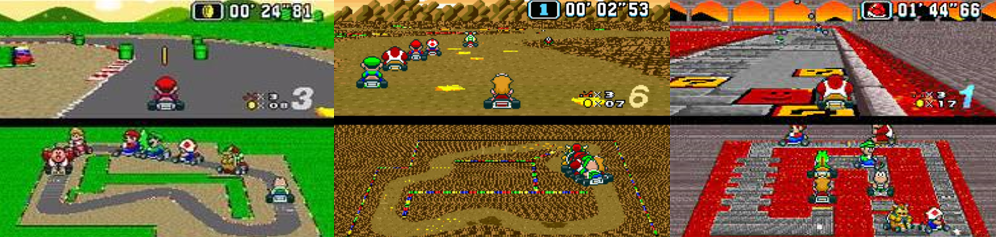
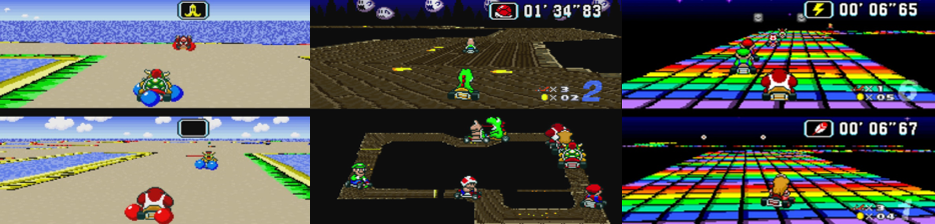
Race across colourful courses as some of gaming’s most recognisable characters.

You can then pick a cup to race for. You’ll race on five courses for each cup and must finish in the top three to qualify, earning points for where you place and gaining 1-ups and a spot on the coveted podium if you race well. B sees you accelerate, A brakes, allows you to drift, and uses an item, X changes the view on the lower screen to either the course map or a rear view, and L and R let you hop over hazards. Since many courses include tight bends and turns, it’s probably beneficial to master the drift function. Unfortunately, I found it a bit finnicky and often span out more often than not, so it was easier for me to simply plough ahead and release B to make those tight turns. Players collect Coins scattered around every course that increase their acceleration, losing them whenever they bump into other racers, and can drive over ? blocks to acquire a random item. Players can place banana peels to cause other racers to spin out, get a much-needed boost from a Mushroom (though I found few courses had straight paths to take full advantage of this), blast other racers with either a Green Shell (which fires straight ahead or can be left on the track like the banana peel) or a Red Shell (which targets the nearest racer), gain a few extra Coins, hop over obstacles with the Feather’s spinning jump, shrink the other racers with a lightning bolt, or gain temporary invincibility with a Starman. In the game’s two-player “Battle Mode”, you can also acquire a Boo, which turns you invisible, invulnerable, and steals an item from an opponent. Additionally, the computer-controlled racers have access to extra items that you never get: Yoshi, for example, tosses eggs onto the track, Bowser spits fireballs, and Princess “Peach” Toadstool and Toad lay Poison Mushrooms that shrink anyone that drives over them. As you progress through the courses, the racetracks not only become more challenging but include ramps and speed boost arrows that can give you an advantage.

Take on the battle mode, or harder classes, to access the game’s most challenging tracks.

Courses are themed after recognisable locations from the Mario series, including Chocolate Island, Boo’s Mansion, and Bowser’s Castle. While things start off pretty easy on Mario Circuit 1, even this course has warp pipes you must avoid and some tricky bends. Hazards become more apparent very quickly, with Donut Plains 1 including a lake you can fall into and muddy water that’ll mess up your controls, and Ghost Valley 1 introduces ramps and gaps in the course you can fall down. If you take a plunge into water or off the course, you’ll lose valuable time (and probably your position) as Lakitu sets you back down, though Super Mario Kart oddly forces players to complete five laps to win, so you’ll probably catch up if you’re lucky. Courses are relatively short, to be fair, which probably explains why you complete five laps instead of the traditional three. Bowser’s Castle usually represents the toughest challenge of any cup, featuring lava pits and Thwomps that squash you or push you back. Other hazards include oil slicks, cracked ice, and Monty Moles that pop up from holes and cling onto your racer. The Star Cup and unlockable Special Cup contained the most visually interesting tracks for me, with Koopa Beach being a fun dash over shallow water and between sandy land masses and Vanilla Lake offering a unique challenge with its ice blocks and snow drifts. Graphically, the game is very impressive; racers all react and showcase a lot of personality both on the course, on the map, and on the podium. Courses are bright and colourful, for the most part, and have a lot of variety, from wooden tracks to stone paths, with the tougher tracks either having destructible blocks or not barriers at all to cause a fall, bumpy surfaces to jiggle you about, or even alternate routes or bridges.

The Summary:
I can totally see why people enjoyed Super Mario Kart so much back in the day. I’m sure it was a blast playing against friends and battling for pole position, as well as racing to complete each cup. I completed the “50cc” class, getting first place in every race (thanks, largely, to the Nintendo Switch’s rewind function, I admit) and enjoying each character’s podium celebration. The game definitely ramps up in the “100cc” class, though, with the CPU racers blasting off and gaining on you with a surprising aggression. It was only by booting up the “SP” version that I got a taste of the “150cc” class, which is even tougher, and had a quick race on Rainbow Road, a psychedelic track of twists and turns designed to send you plummeting into the void. Still, I enjoyed the time I put into the game. Each character is full of personality and it’s fun to see them idling around the course on the bottom screen or reacting to a win (or loss). However, I did have some issues with Super Mario Kart. Five courses for each cup with five laps each got a bit tiresome for me, some of the turns and hazard placements were aggravating, and I never seemed to get any good items when I was racing, often being lumbered with Coins or banana peels. While the game does look great, it’s a bit hard on the eyes at times; courses and the backgrounds get very pixelated and distracting, which caused me to make mistakes. Vanilla Lake and Coco Island, for all their unique appeal, were the worst offenders in this regard. Still, it’s pretty fun to tackle the easier courses and cups and just blast around a colourful track with some of gaming’s most recognisable characters. The music is jaunty and memorable, the gameplay is pretty solid (as long as you make good use of your brake and items), and I can’t deny the game’s impact on the genre. However, it’s possible that I would enjoy Super Mario Kart more if I played with a friend, and I do think I’d be more inclined to play one of the modern iterations of the game rather than this classic, but obviously dated, title.

My Rating:

Rating: 3 out of 5.

Pretty Good

Was Super Mario Kart part of your SNES library back in the day? Which racer was your favourite? Did you ever best the “150cc” class? Which item did you find the most enjoyable to use? Do you think the game still holds up today? Which Mario Kart title is your favourite? How are you celebrating Super Mario this month? Whatever you think, comment below and let me know and don’t forget to check out my other Mario content.

Mini Game Corner [Sci-Fanuary]: Metroid: Zero Mission (Nintendo Switch)


January celebrates two notable dates in science-fiction history, “National Science Fiction Day” on January 2 and Arthur C. Clarke’s HAL 9000’s birthday on January 12. Accordingly, I’m dedicating January to celebrating sci-fi in an event I call “Sci-Fanuary”.


Released: 19 June 2024
Originally Released: 9 February 2004
Developer: Nintendo R&D1
Also Available For: Game Boy Advance (Original); Nintendo 3DS, and Nintendo Wii (Virtual Console)

A Brief Background:
Metroid (Nintendo R&D1/Intelligent Systems, 1986) owes its creation to Nintendo’s success with their industry-saving Nintendo Entertainment System (NES), producer Gunpei Yokoi and directors Satoru Okada and Masao Yamamoto collaborated on the title, and Alien (Scott, 1979). Alongside Castlevania (Konami, 1986), the game birthed a videogame subgenre dubbed “Metroidvania” and Metroid was praised for its challenging gameplay. Since being recognised as one of the greatest games ever made, Metroid spawned numerous sequels and spin-offs and was ported to many subsequent Nintendo consoles. Nintendo (and Metroid) veteran Yoshio Sakamoto oversaw the development of this Game Boy Advance remake, which came about when someone working on Metroid Fusion (Nintendo R&D1, 2002) suggested porting Super Metroid (Nintendo R&D1/Intelligent Systems, 1994) to the console. The developers fittingly sought to return to the franchise’s roots, while still adding new elements to make the game feel fresh and modern. Principally, this involved placing greater emphasis on the story, allowing players to pick between difficulty settings, providing Samus with a new form-fitting suit, and adding an epilogue to the story. Reviews for the enhanced remake were largely positive; its content and features and refined controls were praised, though many complained of its short length and that newcomers would get more from it. Still, Zero Mission was said to be one of the best Game Boy Advance titles and it finally found a life outside of its system once Nintendo made it available through their online consoles.

The Review:
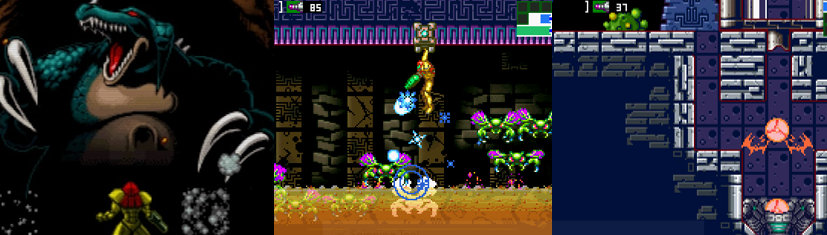
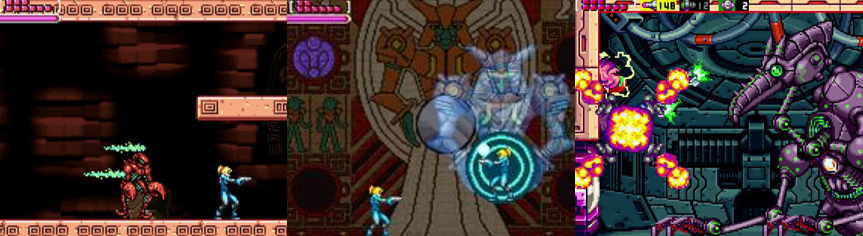
Metroid: Zero Mission is a Game Boy Advance remake of the original game, following essentially the same narrative structure (bounty hunter Samus Aran explores Zebes, conquering monstrous bosses to confront Mother Brain, leader of the Space Pirates) and offering the same power-ups, but with a decidedly 16-bit glow up that basically reimagines the original game as though it were a 16-bit title. Consequently, the game looks, sounds, and plays almost exactly like Super Metroid and Metroid Fusion, enhancing Samus’s abilities with moves like the Speed Boost, Spineshark, and ledge grab and allowing her to better dispatch her enemies with an expanded move set, one ripped entirely from those aforementioned games. You fire her trademark blaster arm with B or X (eventually acquiring power-ups that allow you to charge a shot, temporarily freeze enemies, and fire through enemies and obstacles), jump with A (again upgrading this to the iconic Screw Attack and Hi Jump Boots), hold the Left trigger to stand in place and aim in multiple directions, and quickly acquire the Morph Ball to squeeze through tunnels. As you’d expect, you can acquire upgrades that let Samus jump and lay bombs in this form and upgrade her suit to reduce the damage she takes or resist extreme heat and acid pools. Zero Mission adds not only a mini map to the main screen but a large, detailed map for each area of Zebes, expanded whenever you find a Map Room and easily allowing you to see where you need to go (thanks to Chozo Statues highlighting your next objective) and any hidden secrets to find or bosses to confront. Pausing the game lets you review this map, see Samus’s currently available weapons and upgrades, and enter sleep mode. From the main menu, you can select up to three save slots (manually saving in various save rooms) and choose to play on either “Easy” or “Normal” mode.

Alongside the 16-bit glow up, Samus sports some returning and new abilities.

Thanks to the graphical upgrade, Zero Mission is almost completely indistinguishable from the original Metroid and aesthetically has much more in common with Super Metroid and Metroid Fusion as a result. The basic layout is still there (go left at the start of the game and you’ll still find the Morph Ball, for example), with you still ploughing through hallways, dropping down vertical shafts, and riding elevators to explore Brinstar, Norfair, Kraid’s Lair, Ridley’s Lair, and Tourian, but each area is far more visually interesting compared to its 8-bit predecessor. Lava and acid bubbles beneath you, platforms crumble, enemies constantly spawn, and you’ll be backtracking and finding alternate routes as your abilities expand, as always, all while traversing various rocky, mechanical, and ominous environments. Backgrounds are given far more depth and detail, rain effects sweep across the terrain, volcanic caverns smoulder, and enemies are far more detailed (and much bigger) this time around. The game’s story is also given an upgrade with partially animated sequences, Samus’s inner monologue, and in-game graphics providing suitably dramatic cutscenes. The soundtrack has also been upgraded, featuring 16-bit versions of Metroid’s tracks and various remixes that work in tandem with the graphical improvements to again allow the game to stand side-by-side with its 16-bit counterparts. Areas also have new gimmicks, such as the Morph Ball Launcher (which blasts you to new areas), overhead zip liners, and power generators and Chozo Statues that require your Morph Ball and recharge your health and missiles. The Speed Boost is incorporated to break through walls and reach new areas, some doors are barred by grotesque eyes, you’ll occasionally have to unleash small bugs to clear out vine blockages, dead bodies, discarded carcasses, and creeping vegetation are commonplace. Indeed, the entire world seems much bigger and more alive and dangerous than ever thanks to the updated visuals and ominous soundtrack.

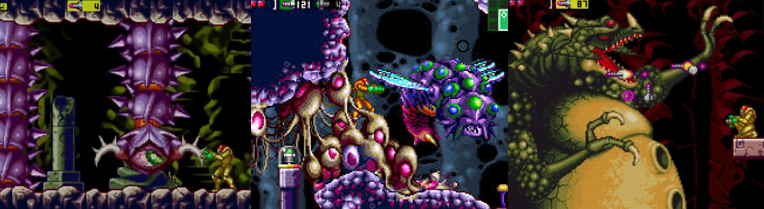
New bosses and Super Metroid inclusions basically make this an entirely new game.

Those familiar with Metroid may also be surprised to find a few new enemies here: the hopping Barisutes act almost as mini bosses with their tough armour plated hides, larva-like Kiru Giru fill narrow tunnels and must be baited in to attack their underside with bombs (or shot from below), and Space Pirates shrug off even your strongest missiles. These appear alongside improved versions of the original enemies and Samus will have to hunt down, freeze, and explode every energy-draining Metroid in Tourian if she hopes to escape. Zero Mission also boasts five new bosses in the main portion of the game: two of these are gigantic, spiked, worm-like creatures that burst through the environment or up through acid, lunging at Samus and firing spores or spikes. The first, the Deorem, uses its spiked body to box you in and must be shot in its eye when it appears. The second, the Mua, lunges from an acid pit, giving you a small window to target its pulsating weak spot. Norfair itself later attacks by ensnaring a Kiru Giru in vines and unleashing spores. You must freeze the Rippers in the arena to hop to and attack the vines to send the enslaved creature crashing down. This monster lands in Ridley’s Lair, sheds its skin, and mutates into a grotesque wasp, the Imago, that flies around its nest, charging about and firing spikes from its stinger. You must use yourself as bait and then pelt the stinger with missiles to finally end it. Metroid’s classic bosses also appear in their respective areas, but they’re now reimagined duplicates of Super Metroid. Kraid is a gigantic, bulbous beast you must shoot in the head and mouth while hopping to temporary platforms, while Ridley flies about breathing fire, striking with his spiked tail, and trying to get his claws on you. Samus still braves a nightmare of projectiles and lava hazards when confronting Mother Brain, whose glass case must be shattered with missiles before you can attack her single eye, but her eye blast and the knockback from the swarming projectiles makes this a tricky affair.

A tense stealth section and all-new bosses await in the extended finale.

After making a desperate escape from Zebes, Samus’s ship is attacked and crash lands in the all-new Chozodia sector. Robbed of her armour and abilities, Samus has only her form-fitting Zero Suit and a crappy pistol on hand, meaning players must sneak past Space Pirates, laser traps, and spotlights, desperately running to safety when they inevitably trigger the alarm and only being able to briefly stun enemies. This is quite a tense and frustrating section; when you’re spotted, an alarm sounds, all doors lock, and Space Pirates chase you relentlessly. You can hide behind pillars or in dark corners, but it can be tough to find these when you’re in a panic and the Space Pirates sometime crawl through alternate paths or blast through destructible blocks to find you. Eventually, Samus makes it to the main bridges and the Chozo Ruins, where her mettle is tested by a holographic, lighting-casting projection. Make sure you don’t attack when the mirror of Samus is in the sphere as you’ll take damage. Instead, target the central sphere when images appear and you’ll regain all your abilities, and more. Previously, you’ll have explored different Chozo Ruins and acquired “unknown items” that were incompatible with your suit; these are enabled here. This allows you to plough through Space Pirates with ease with the Plasma Beam, continuously jump with finnicky Space Jump, and freely move through liquid with the Gravity Suit. You’ll also acquire the Power Bombs here and it’s advisable to backtrack to use these new abilities to uncover previously hidden expansions to your health and ammo. When you’re ready, you challenge Mecha Ridley which, though intimidating and powerful, is actually a pretty anti-climactic final boss. You can simply jump over its claw swipes, fireballs, and lasers and pummel the glowing core on its chest to defeat it with much less trouble than its biological counterpart. Samus then has five minutes to make it to an escape shuttle to finish the game, and players are of course treated to different ending images depending on how fast they made it to the end and how many power-ups they acquired. Completing the game also unlocks an additional gallery mode and, impressively, a fully playable port of the original Metroid.

The Summary:
Given I much prefer Samus’s 16-bit adventures to her original game, I was pleasantly surprised by Metroid: Zero Mission. The game is similar enough, but different, featuring a far more visually appealing graphical style that perfectly matches its 16-bit counterparts and updates the original game to be comparable to its successors. If anything, I feel like more could’ve been changed; the Chozodia was a fun addition, but it was more of an unexpectedly epilogue that served as padding. Perhaps if each area featured stealth sections where Samus was reduced to her Zero Suit as part of a Chozo test it might’ve helped with the game’s pacing. The new bosses could’ve been fought at the end of these sections, with the “unknown item” power-ups being rewarded and allowing Samus to get progressively more powerful, as usual. It was a tense and surprising inclusion, though, one that fundamentally changed how you play. I just wonder if more could’ve been done with it, perhaps allowing players to try the whole game with the Zero Suit? The other changes were very welcome (except for the Spineshark; I’ll never enjoy that ability), especially to the returning bosses. Sure, seasoned Metroid players will have a distinct advantage but recreating the Super Metroid battles made these bosses far more intimidating and epic. It’s a shame Samus didn’t get any new abilities beyond the standard Super Metroid ones, which again I feel could’ve been addressed by emphasising the Zero Suit more, but Zero Mission does a fantastic job of bringing the original Metroid up to par with its successors. As if that isn’t enough, you unlock the original game, so anyone who doesn’t like the changes can just play the original game after!

My Rating:

Rating: 3 out of 5.

Pretty Good

Have you ever played Metroid: Zero Mission? How do you think it compares to the original game? Did you like the graphical upgrade and the changes to the bosses? What did you think to the Chozodia section, and do you agree the pacing was a little off? Did you ever get the best ending and play through the original Metroid? Which Metroid game is your favourite? Whatever your thoughts, feel free to leave a comment below and be sure to check out my other Metroid reviews.

Mini Game Corner [Sci-Fanuary]: Star Fox 2 (Nintendo Switch)


January celebrates two notable dates in science-fiction history, “National Science Fiction Day” on January 2 and Arthur C. Clarke’s HAL 9000’s birthday on January 12. Accordingly, I’m dedicating January to celebrating sci-fi in all its forms in an event I call “Sci-Fanuary”.


Released: 12 December 2019
Originally Released: 9 September 2017
Developer: Nintendo EAD / Argonaut Software
Also Available For: Super Nintendo Entertainment System (SNES) Classic Edition

A Brief Background:
While working to enter the 16-bit market, Nintendo had a close relationship with Argonaut Software that saw the creation of the ground-breaking “Super FX” chip, which allowed the SNES to process 3D graphics. To best showcase the chip, the two companies took inspiration from the original Star Wars trilogy (Various, 1977 to 1983) and created Star Fox (1993), an arcade-style space shooter that became the fastest-selling videogame in North America. Despite this, and rave reviews, its sequel was unceremoniously cancelled so Nintendo could focus on the more powerful Nintendo 64. Prior to this, Star Fox 2 was reportedly 95% complete. Powered by the Super FX 2, the game boasted improved visuals and a degree of free-roaming gameplay, alongside additional playable characters and even a mech walker form for the Arwing craft. For decades, Star Fox 2 remained an elusive piece of lost media playable only through buggy, illegally leaked ROMS and emulators. However, thanks to Nintendo archiving the title, Star Fox 2 finally saw the light of day when it was included in the line-up of the SNES Classic, resulting in positive reviews that praised the ambitious gameplay and expanded mechanics while criticising its short length.

The Review:
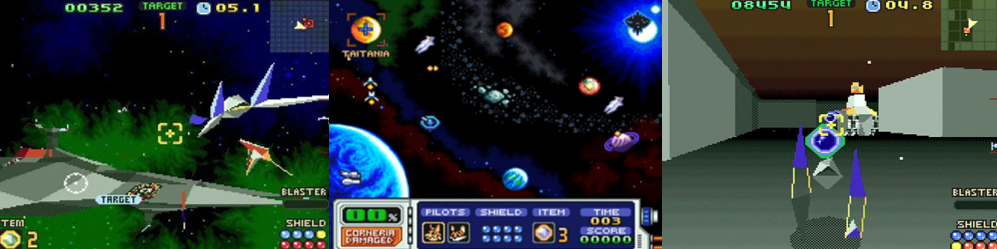
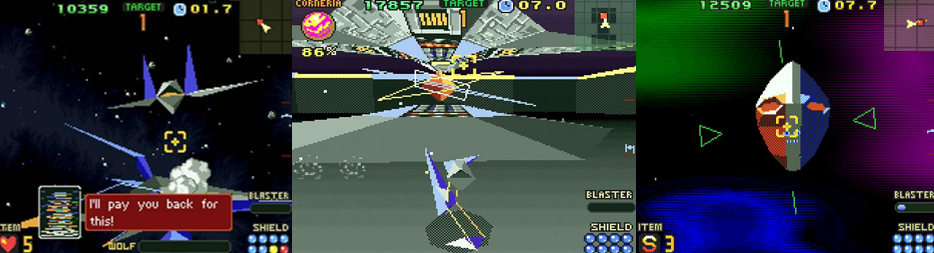
Those reviews were right about one thing: Star Fox 2 certainly is a short game, perhaps even shorter than the first. Because of this, it didn’t seem worthwhile doing one of my usual long, in-depth reviews, though I did play enough of the game to share some thoughts. Fundamentally, Star Fox 2 is very much the same game as its predecessor, but with aspects changed or expanded and mechanics tweaked into something resembling a strange hybrid of an arcade shooter and a real-time strategy (RTS) game. This time around, you can pick which member of the Star Fox team to play as, with two new, never seen again characters tossed into the mix. Not only does each character have their own unique craft, but they have different stats, too, with some being faster, stronger, or taking less time to charge their weapons. You also pick two characters, a lead pilot and a wingman, and can switch between them by pressing – on the main map screen. I believe this allows you to send one character one way and the other in a different direction, and allows two player simultaneous co-op, but the craft simply followed each other in my playthrough. Star Fox 2 also offers four control schemes, with the default settings seeing A brake, B firing your primary blaster, X unleashing a limited supply of special weapons (a smart bomb, a shield, or replenishing your regular shields), and Y letting you boost towards targets. Holding B charges a more powerful shot, but this doesn’t home in on your target so I usually missed unless the target was stationary or flying right at me. Double tapping L or R lets you “barrel roll” out of harm’s way and, when on a planet’s surface, – will transform your Arwing into its mech walker mode.

The expanded dogfight gameplay is joined by odd RTS mechanics and a mech walker mode.

In this state, the controls change slightly. Now, A jumps and L and R are used to awkwardly spin around and your shots do seem to home in on targets. In this mode, you’ll mainly clomp about blasting enemies and stepping on switches to unlock doors, but it’s also the recommended state for destroy the heavily armed energy cores that lie in the centre of Andross’s bases. Another new aspect here is the aforementioned RTS mechanics. When on the map or engaging with Andross’s forces, cruisers, or bases, Corneria is under constant threat of attack. Missiles fire at the planet and Andross rocks up in his Star Destroyer-esque cruiser to fire a devastating shot, so you’ll need to intercept these and even quit out of stages to defend the planet. If Corneria’s damage percentage reaches 100%, it’s game over, which was honestly an aggravating mechanic as it interrupted the gameplay flow. By default, your forced into a first-person cockpit view; you can change this with + but the third-person view isn’t much better. There’s a lot of clutter on the screen, from arrows pointing you towards targets, the mini map, and the heads-up display, none of which can be turned off. You’re not on rails this time so it can be disorientating and difficult to fly about and focus on your target, especially if you don’t invert the controls. You no longer replenish your shield’s defences with rings; instead, you grab energy tanks and medals for a power-up. If you’re destroyed, you can choose to quit or switch to your wingman to carry on, effectively meaning you get two lives per game. There are also three difficulty settings available (though only “Normal” and “Hard” are selectable at the start), with enemy aggression and numbers increasing on harder difficulties.

Take out Star Wolf and Andross’s forces to confront the main man himself.

There’s a degree of chance at work in Star Fox 2. Andross randomly picks which worlds to establish his bases on and places his battle cruisers in different locations each game, eliminating the branching paths of the first game but ensuring no two playthroughs are ever the same. A simple gameplay loop quickly becomes apparent, however. You either intercept missiles to defend Corneria or engage with one of Andross’s cruisers, battling past the defences and flying inside its narrow corridors to destroy the core. This will give Corneria a reprieve, but you’ll only get to confront Andross directly after destroying his planetary bases. To do this, you’ll fly to a planet, open his base with the walker, and then fly or stomp through the same narrow corridors, blasting turrets and insectile craft to destroy the power core. Once you’ve cleared all Andross’s forces, you’ll warp to his main base for the final confrontation. In between this gameplay loop, additional challenges will arise: Andross’s mega powerful laser cannon, for one, or his projectile spitting Mirage Dragon for another. Yet, the bulk of the game’s challenge comes from rival space team Star Wolf. Its members lurk around the planets and asteroid belt and challenge you to a dog fight, a prospect that’s pretty daunting given how fast they are, their capabilities (which match yours), and how hard it is to track targets. Star Wolf himself challenges you right before you head to Andross’s base and these battles are even tougher on “Hard” mode. Andross’s base includes every hazard you’ve overcome so far (narrow hallways, tight corners, turrets, flame walls, and doors) and houses a disturbing Andross cube at its core. Destroying this is child’s play and no different to the other central cores, but you’re ejected into a psychedelic final battle battle against Andorss afterwards. Like before, he encases his cuboid core behind a projectile-spewing mask. You must fire at his eyes to drop his defences and then attack the cube as it spits out rectangular Andross projectiles, a prospect that’s far from challenging compared to the dogfights against Team Star Wolf. Once you’re victorious, you’ll get a rundown of the game’s enemies over the credits, a final score tally, and can challenge the next difficulty level if you like.

The Summary:
Star Fox 2 is a very strange game. Its very nature means you spend more time flying in the void of space or dodging asteroids as you desperately try to destroy missiles or enemy craft, which doesn’t make for the most inspired presentation. Similarly, the battle cruisers and Andross’s base are a mess of grey corridors and bland textures, and things are only slightly better when you’re clomping about on a planet’s surface. The planets themselves are far more restrictive this time, confining you to a small play area where your only objective is to activate switches. The music doesn’t fair much better, being nowhere near as memorable, though the game boast far more cutscenes are more detailed sprite art. The character variety is appreciated, as is the ability to avoid Slippy’s constant cries for help, but the screen is constantly bombarded by text from your wingman or arrows or other mess that clogs up the view. The RTS mechanics were an interesting inclusion; it kind of works to mix up the formula but adds unnecessary pressure to the admittedly shallow gameplay loop. If Corneria was spared danger when you were in a space battle, at least on “Easy” mode, that might’ve helped but, as presented, you’re encouraged to quit mid-mission to defend the planet, which interrupts the action. The polygonal models are as ugly as ever; they seem slightly improved, but they’re still a mess to look at and it makes it difficult to focus at times since the hardware seems to be struggling to bring the game to life. Ultimately, Star Fox 2 is just way too short. It lacks the epic boss battles of its predecessor and the final “choose your own adventure” mechanics and plays very much like an advanced tech demo for a Star Fox RTS spin-off rather than a capable sequel. It doesn’t expand upon what came before (and actually limits you more than you’d expect) and is more a curiosity than anything. It’s a shame as there was definite room for improvement over the original, but it seems the developers got ahead of themselves a bit by being too ambitious for their own good.

My Rating:

Rating: 2 out of 5.

Could Be Better

Have you played Star Fox 2? What did you think to the RTS mechanics? Which character was your go-to? Were you disappointed by the lack of big boss battles? Did you ever go to great lengths to emulate this game back in the day? Which Star Fox game is your favourite? Whatever your thoughts on Star Fox 2, please share them below orand check out my other sci-fi content across the site! 

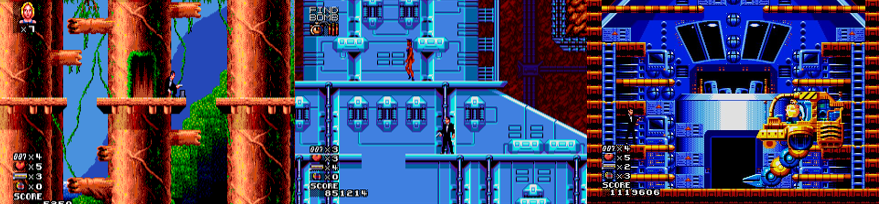
Mini Game Corner [00-Heaven]: James Bond 007: The Duel (Mega Drive)


To celebrate the release of Dr. No (Young, 1962), the first of the James Bond movies (Various, 1962 to present), October 5th is known as “Global James Bond Day”. This year, I’m spending every Saturday commemorating cinema’s longest-running franchise, and one of the most recognised and popular movie icons.


Released: December 1992
Developer: The Kremlin
Also Available For: Game Gear and Master System

A Brief Background:
Although videogame tie-ins have a reputation for being rushed, bugged, and unfulfilling titles, James Bond/007 seems to have fared quite well in videogame endeavours. Obviously, everyone knows about the best-selling GoldenEye 007 (Rare, 1997), but Bond’s headlined videogame titles since 1983. He’s featured in racers and adventure games, but is most notable for this third- and first-person escapades. In 1987, Timothy Dalton took over the famous role, starring in two reasonably successful, if polarising, Bond movies. Although Dalton signed a three-picture deal, legal issues stunted his return and he was ultimately replaced in the role, though his likeness was used for this videogame, the first Bond game to feature an original storyline. Developers the Kremlin and publisher Domark actually had previous experience adapting Bond’s adventures, but James Bond 007: The Duel attracted mixed reviews that criticised its short length, repetitive gameplay, and sharp difficulty curve.

My Review:
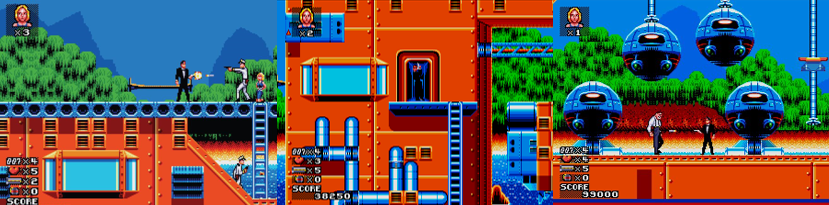
James Bond 007: The Duel is a 2D, sidescrolling run-and-gun with mild platforming elements. Naturally, players assume the role of the famous super spy and are tasked with journeying across five levels in the battle against Professor Gravemar, a maniacal terrorist who not only threatens the world with his satellites but has built a cloning machine to resurrect Bond’s greatest enemies as his personal guard. After an absolutely awful pixel art rendition of Timothy Dalton, garish title screen, and mildly impressive MIDI recreation of the iconic Bond theme, players can customise their controls, pick from three difficulty levels (“Normal”, “Hard”, and “Manic”), or play the game’s tunes in the sound test. By default, A sees Bond jump (with 007 frequently performing an impressive and wholly uncharacteristic somersault), B sees him shoot his signature Walther PPK, and C tosses any grenades he acquires from Q Cases hidden in each level. Bond’s combat and traversal options are a bit limited; he can climb ladders, shoot diagonally up and down and whilst on ladders or when jumping or crouching (though he can’t shoot straight up or down). Furthermore, he flies backwards comically when shot, takes fall damage and will even die if he falls from a great enough height, and has frames of animation when ducking or picking up ammo and items that leaves him wide open to attack.

Bond’s mission to rescue hostages on a garish ship was too tough for me to beat.

Each mission is preceded by a map screen of the professor’s private, heavily guarded island. After flying in on the Thunderball (Young, 1965) jetpack, Bond must navigate a large ship rescuing hostages. On “Normal”, Bond starts with four lives and must rescue three hostages (all scantily clad babes); he has limited ammo, reloading his gun when he runs out, and his health is measured in hit points. Players can replenish Bond’s health by rescuing hostages, and every goon they gun down and mission they complete will earn them points to increase their standing on the high score table. Unfortunately, there’s no indication of where the hostages are, so you’ll need to search high and low, hopping from platforms and lifeboats and avoiding falls, being shot to death, or being crushed by a falling submersible. Thankfully, there’s no time limit and any hostages you’ve rescued will stay rescued if you lose a life. Unfortunately, while you have unlimited continues and hidden checkpoints in each level, you’ll have to replay the stage from the start if you use a continue. Bond can hide in doorways to avoid enemies and bullets by pressing up and, though his sprite isn’t very detailed and lacks idle animations, Bond does switch his gun between his hands when you turn from left to right. Enemies appear to respawn as you play and, once you rescue all the hostages, you’ll need to find a bomb and then frantically search for the exit against a tight one-minute timer. Sadly, I wasn’t able to achieve this; although I found an optimal route to rescue the hostages and defuse the bomb, I would either slip and fall to my death or be throttled and tossed to my doom by the brutish Jaws before I could even find the exit.

Later levels see Bond braving deadly hazards and battling his most famous foes.

James Bond 007: The Duel has a strange presentation. It’s very bright and colourful, with a jaunty soundtrack, and the backgrounds remind me of James Pond 2: Codename: RoboCod (Vectordean, Intellectual Software, Consultants Limited, 1991), which is a strange fit for Bond. The background scrolls as you move but is otherwise completely static; it also shifts up and down as you hold those directions, which can be quite disorientating. You need be careful not to fall into the water as, while you can grab ladders to climb out, the current will take you towards a frenzy of sharks. I gave the game a good shot, but it can be very unforgiving; if you’re shot, Bond is so slow to get up and often aims diagonally downwards rather than crouching, meaning it’s easy to get stun-locked in a continuous cycle of being shot at until you’re killed. With no passwords or cheat codes to mitigate the difficulty, and the level forcing you to restart from scratch when your lives are exhausted, I was neither able to defeat or bypass Jaws in this playthrough. Looking ahead, it seems more competent players can beat the game in about twenty minutes and Bond will traverse vines, dodge spike pits, battle Baron Samedi (who tosses bones at you) and encounter a massive futuristic tank in the jungle, avoid being roasted alive by lava and fireballs and encounter Mayday (who launches at you with flying kicks) and a claw-machine in a volcano, and gun down scientists, dodge flame bursts and take down Oddjob (who tosses his hat a painfully short distance) and a flame-shooting mech in the shuttle base. The game’s final level is dedicated to a boss battle against Jaws. Yes, rather than take on the mad Professor Gravemar, Bond faced Jaws once more, with the brute now piloting a mech that spits grenades and sports a scorpion-like tail. Defeating Jaws earns you another terrible piece of sprite art and a brief credits sequence, with no story text being included in the game at any point.

I know that James Bond 007: The Duel was only a mediocre title, at best, but I suddenly felt the urge to add it to my Mega Drive library and give it a go. I was hoping it would be a tough, but generally enjoyable platform shooter than I could maybe breeze through using a cheeky infinite health code or abusing the infinite continues, but it sadly didn’t go that way. This is a game that requires a great deal of patience and persistence from the player; I have no doubt that I probably could do better with a little more time, but the lack of passwords means you basically have to complete it in one sitting, which isn’t an appealing prospect. Although the game looks good, it has a very confused presentation; the large pixel art is dreadful, the locations are garish and cartoonish, but Bond and his enemies look pretty good despite their lack of detail. I liked seeing Bond’s enemies pop back up and little Easter Eggs like the jetpack and the map screen changing as you progress, but the gameplay is very clunky and repetitive. Every level requires the same functions from you (rescue hostages, disarm bomb, reach exit, battle bosses) with no variety beyond a greater emphasis on vertical exportation. Perhaps with a little more to do, some additional weapons, and some useful codes, James Bond 007: The Duel could’ve impressed me more but as is, it’s a little too punishing for me to sink my teeth into right now. But perhaps you’ve beaten it. Perhaps you enjoy it as a hidden gem for the Mega Drive. Perhaps you had no difficulty blasting through it and besting Bond’s resurrected baddies. Perhaps you think I should try harder or give the 8-bit version a try. Perhaps you prefer a different Bond game. Whatever you think, drop a comment below.

Mini Game Corner: Predator 2 (Mega Drive)

Released: 1992
Developer: Teeny Weeny Games
Also Available For: Game Gear and Master System

A Brief Background:
Predator (McTiernan, 1987) was birthed from a simple concept: Rocky Balboa (Sylvester Stallone) versus aliens! However, it soon evolved into a B-movie with a budget that became a critical and commercial hit. Predator was accompanied by a middling and bizarre sidescrolling shooter that was a far cry from the celebrated action brawlers and crossover shooters it would later inspire. Although development of the under-rated Predator 2 (Hopkins, 1990) took some time and resulted in a less profitable, but more critically lauded, movie that not only developed a cult following but was also followed by a videogame adaptation. There were actually two Predator 2 videogames: the first came in 1990 and was a frustrating rail shooter released for Amiga, Atari ST, DOS, and other platforms, and the second was this semi-isometric shooter which released exclusively for SEGA’s consoles. Though largely regarded as merely an average shooter, Predator 2 made it into my Mega Drive library and was the last solo Predator videogame for twelve years. Although the fan-created “Predator Day” clashes with “Superman Day”, I still like to celebrate the Predator franchise around this time so this seems like a good excuse to see what this videogame has to offer.

The Review:
I’m doing things a little differently for this review of the Mega Drive adaptation of Predator 2; it’s mainly getting a shorter review because it’s not a very lengthy game so I don’t see the point in dragging things out that much, but I was also able to finish it so I want to discuss it and give it a proper rating. Predator 2 is primarily a semi-isometric arcade-style shooter that looks and plays a lot like the amazing Smash TV (Williams, 1990), with some levels in Predator 2 even adopting more of a top-down perspective. Like the movie, the game follows the efforts of hardened Lieutenant Mike Harrigan in quelling the violent gangs of Los Angeles and you basically do this by blasting everything and everyone in sight. This is accomplished by tapping or holding A to fire your current weapon; you can use B to lock Mike in place to open fire on specific targets, but I found it much more beneficial to keep moving as there are a lot of respawning enemies in Predator 2’s maps. C selects a different weapon and there’s a decent range to pick from apart from your default rifle, which has unlimited ammo: you can grab a scattergun for a spread shot, a ridiculously powerful sawed-off shotgun, grenades, and eventually make use of the Predator’s own weapons, such as a circling smart disc, a spear, and a net to pin enemies to walls or push them back. All of these additional weapons have limited ammo so, despite them being quite prominent, they’re best saved for when you need to destroy taxis, large trucks, or battle the Predators.

Blast through city scum and rescue hostages before the Predator can strike!

Predator 2 sees you shooting your way across seven levels, all ripped right out of the movie; your main objective is to rescue a certain number of hostages, with a helpful onscreen arrow and cries for help pointing you in the right direction, before the Predator can kill them with its plasma cannon. You’ll know when one’s in immediate danger as you’ll see the familiar red dots of the Predator’s aiming reticule appear onscreen. A red skull icon will also pop up to show when a hostage has been killed and the game’s difficulty is directly tied to how many hostages can be lost before your mission fails as well as how many shots the flak jacket power-up protects you from. On “Easy”, four hostages can be lost and Mike can take eight hits; on “Normal”, its three and six, and on “Hard” it’s one and four, meaning the game can get pretty challenging on harder difficulties as enemies constantly spawn into the map and locations can get a bit maze-like at times. Although there isn’t a timer in the strictest sense, there kind of is; you’re in a race against the Predator to find those hostages and, after you have freed them all (which isn’t tracked in any way; you’ll only know when you’ve succeeded, failed, and how many have died, not how many are left), you need to hurry to the exit before the Predator one-shots you with its cannon. Every enemy you gun down drops a variety of drug-related paraphernalia (such as bags of cocaine, syringes, and pill bottles) that you can pick up for points. Although this is in keeping with the movie, I was still a bit surprised to see drugs make it into a home console game! You can also grab the aforementioned flak jacket to reduce damage taken and restore your health and a first aid kit for an extra life, but it’s game over with no continues once all your lives are exhausted. Thankfully, the game is super generous with its checkpoints; if you rescue all the hostages and then die, for example, you don’t have to find them all again. After clearing each level, you’ll also get a password that you can use to continue at a later date and there are also passwords to award infinite health (though the Predator can still kill you) and other perks.

Although its difficulty is often unfair, Predator 2‘s environments are surprisingly detailed.

Although the character and enemy sprites aren’t very detailed and have very little animation (most enemies just walk into you to damage you), the environments are surprisingly complex. Enemies pop up from manholes, come through doors, and Predators decloak in each environment, which sometimes bars your progress with taxis that need to be destroyed and barriers that’ll only lower when you’ve rescued enough hostages. I really enjoyed level 2, 4, and 7, which have you exploring the city rooftops, subway, and the Predator ship, respectively. There’s some fun, quasi-3D effects happening on the rooftops and a lot of depth given to the skyscrapers by the isometric perspective; enemies pour out of heavily-graffitied subway trains in the subway and the Predator will even take shots at you from atop the trains; and the spaceship is unexpectedly faithful to the movie in its details with its mist-covered floor, alien architecture, and even trophy walls featuring the Predator’s previous victories. I think I disliked the levels that take place on the streets and in the slaughterhouse the most; the streets can get very repetitive and it’s surprisingly easy to get lost with the limited perspective and wide-open areas. The slaughterhouse, while suitably gory and full of hanging carcasses, was quite frustrating as it’s a very large map with multiple vertical levels so it can be a bit hectic trying to rescue all of those hostages. As much as I enjoyed the visuals of Predator 2, which also features an impressive thermal image of Los Angeles on the title screen and some pixelated movie stills before each level, the sound was really jarring; the game is full of this strangely upbeat music that really doesn’t fit with the franchise (though it does keep your adrenaline pumping). There’s also no in-game story text and the ending is really anti-climactic, but I liked how a big image of the Predator appears in the foreground at times to let you know to hurry to the exit. The game over screen features the Predator standing on a rooftop holding a skull and spine (presumably Mike’s), and Mike explodes into bloody chunks if he gets blasted by the Predator’s cannon so, overall, the game was visually impressive considering how simple it can be.

The Predator hounds you throughout the game but beating it gives you access to its weapons.

The streets are littered with the scum of society; punks are everywhere and will attack you with their bare hands and baseball bats or shoot from a far. Enemies also ride around on motorcycles and in taxi cars or blockade your progress and the exit in large trucks. These latter often serve as mini bosses: three enemies will constantly pop out from the cab and trailer of the truck to blast at you and it can take quite a few shots to blow these trucks up, though you do get a hefty supply of drugs to add to your score as a reward. Enemy choppers also fly overhead and shoot at you and can be found on the ground to fulfil very much the same role, similar to the taxi cabs that you’ll have to destroy to reach power-ups, hostages, or exits, but the sheer number of enemies that swarm the screen can compound these encounters. You’ll also encounter the Predator as a boss on numerous occasions; the first time you battle it, its at the end of the subway and from a top-down perspective. The Predator crackles with electricity when hit, fires bolts from its shoulder cannon, and pins you against the far wall with its net but you’ll be rewarded with its smart disc upon defeating it. In level 5, the Predator appears multiple times to block your progress; this time, you fight from a side-on perspective and it also uses its smart disc, which rotates around almost as a damaging shield. In level 7, Predators act as the primary enemy aboard the alien ship; they’ll decloak, blast at you, toss out multiple nets, throw their spears, and have smart discs circling about the place but will run off or cloak after a few hits. You’ll also have to watch out for wall cannons and the ship’s labyrinthine layout, but if you’re able to rescue all twenty-five hostages and survive the gauntlet of enemies and projectiles, you’ll get into a final showdown with a bigger, unmasked Predator. This also takes place from a top-down perspective and isn’t really any different from previous battles except that the Predator ungainly plods about and managed to kill me even with the infinite health cheat activated! Once defeated, you’re told to escape the ship before it takes off but this simply plays out in a cutscene; you then enter your high score and that’s it, game over, move on.

The Summary:
If it wasn’t clear in my review, I played through Predator 2 with the infinite life cheat activated, which admittedly accounts for how quickly and easily I was able to beat it. However, even with this cheat enabled, you need to have some level of speed and skill to find all those hostages and you’re still capable of dying, but even with it on and a brief playthrough with it off I can see how unfairly difficult Predator 2 can be. The sheer influx of enemies and how quickly they can drain your life bar is astounding, quite frankly. This maybe wouldn’t be so bad if rescuing hostages restored some health or if you had infinite continues, but that’s not the case so you really need to be quick, have a firm understanding of each location, and conserve your more powerful ammunition just to power through the gaggle of baddies much less take on the super strong (and ridiculously cheap) Predator. However, I really enjoyed this game; it was short and simple and a bit mindless, but the environments are surprisingly detailed and fun to run around in and its enjoyable to blast druggies into bloody chunks and outrun the Predator’s reticule. I do think that the game needed a little bit more to it, though; perhaps some racing levels or some kind of bonus stage, maybe a two-player mode where a friend plays alongside you as Mike’s partner, Detective Danny Archuleta, or definitely including Special Agent Peter Keyes in an antagonistic role. Still, this was a harmless enough experience; it works as an action-orientated shoot-‘em-up and I enjoyed the tension of having to outrace the Predator to its targets. However, it gets very messy and cheap with enemies and health-draining hazards very quickly so I can understand why some would be put off by it, but take my advice and slap on the infinite health cheat and this is a decent way to spend about half an hour of your time.

My Rating:

Rating: 3 out of 5.

Pretty Good

Have you ever played the Mega Driver version of Predator 2? What did you think to the game’s perspective and action-oriented gameplay? Did you struggle with the game’s difficulty, or did you enjoy the challenge out avoiding the Predator and rescuing all the hostages? Which Predator game is your favourite? How are you celebrating the action/horror franchise this month? Whatever your thoughts on Predator 2, please feel free to leave a comment below or on my social media and go check out my other Predator content.

Mini Game Corner: RoboCop 3 (Mega Drive)

Released: 1993
Developer: Digital Image Design
Also Available For: Amiga, Atari ST, Commodore 64, DOS, Game Gear, Master System, Nintendo Entertainment System (NES), Super Entertainment System (SNES), ZX Spectrum

A Brief Background:
Director Paul Verhoeven’s RoboCop (1987) proved profitable enough to earn a sequel, one that was unfairly met with mixed reviews. Both RoboCop and RoboCop 2 (Kershner, 1990) were accompanied by videogame adaptations courtesy of Ocean Software, a British developer known for adapting film and television franchises, and Data East. While RoboCop 3 (Dekker, 1993) was a critical and commercial bomb, it also received a handful of tie-in videogames. Unlike the other versions of the game, which were again published by Ocean Software, the Mega Drive version was developed by Digital Image Design, who had only one game under their belt at the time. RoboCop 3’s delayed production also meant that many played the game before seeing the movie. Not that it mattered since Orion Pictures kept the specifics of RoboCop 3’s plot a secret, so the developers had to make educated guesses based on rumours and production stills, leading to them wasting weeks of time creating motorcycle sequences that weren’t included in the movie. Although the Amiga and ZX Spectrum versions of the game have been praised for their cinematic atmosphere and gameplay mechanics, the SNES and Mega Drive versions were criticised for their unfair difficulty, uninspired environments, and crude graphics, and the game was ultimately labelled as being one of the worst videogame outings for the famous cyborg cop.

First Impressions:
Similar to the first two RoboCop arcade games, RoboCop 3 is a sidescrolling shooter with some minor platforming mechanics. Players must lug RoboCop’s notoriously bulky ass across six levels filled with street punks and robotic enemies all looking to turn him into scrap metal. Like all the best Mega Drive games, RoboCop 3 allows you to set your life count (between one and three), the amount of continues you have (between none and two), and the game’s difficult (Easy, Medium, or Hard; I opted to try out the Easy mode for this play session), but there are there’s no option to disable the in-game timer. By default, A allows you to switch between RoboCop’s different weapons (acquired from item drops during gameplay), B fires his current weapon, and C allows him to jump. These controls didn’t work for me so I took advantage of the customisation options to change them to something that actually makes sense: A to fire, B to jump, and C to change weapons. I should also note that you can hold the fire button to continuously shoot, but this will burn through your ammo pretty quickly (when you run out completely, you’re left relying on RoboCop’s weak-ass punches until you grab some ammo), and you can also shoot upwards, diagonally, and while crouching and jumping. Although the options also include a music and sound effects test, the iconic RoboCop theme is missing and, in its place, are a series of generic, cyberpunk-style rock tunes.

RoboCop is beset by tough enemies and tricky platforming sections that his bulky frame struggles with.

Although we’re treated to a big, detailed graphic of RoboCop and the RoboCop 3 logo, there’s no story graphics or even text here; we’re simply dropped right onto the streets of Detroit, which actually makes a pretty good first impression. You can see the city in the background, RoboCop’s police cruiser, dilapidated buildings (with eviction notices slapped onto them), flickering lampposts, and even signs advertising the impending arrival of Delta City. RoboCop also looks pretty good, far better than the generic and uninspiring enemies he faces, though he has no idle poses and remains an unwieldy and bulky character. You’ll need to make use of the various crates piled about to take cover and avoid incoming fire, but enemies can simply walk and shoot right through them and it’s almost impossible to avoid taking a bullet or rocket to the face as RoboCop is so chunky, meaning you’re liable to see him downed in a dramatic explosion if you’re not careful. RoboCop can pick up a couple of additional ammo types as he goes, including a helpful three-way shot and a powerful laser (that even alters his sprite to include his new gun arm attachment from the movie), and replenish his health using rare pick-ups, but you’ll have to be careful of stage hazards. Falling wrecking balls and bottomless pits are abound and RoboCop’s platforming skills leave a lot to be desired. There’s only one checkpoint in the stage, meaning you have to be really on the ball hopping to small moving platforms and taking out the bullet-sponge tanks and drones that patrol the streets and skies above.

My Progression:
I’d heard RoboCop 3 was a difficult game but I didn’t really have many expectations; I vaguely remember playing an polygonal, first-person shooter version of the game on the Amiga (I think…) and enjoying the arcade versions of the previous two adaptations, but there’s one advantage to playing games like those: emulation generally allows you infinite chances to succeed. Mega Drive games don’t always have this luxury and RoboCop 3 is one of those titles where the only cheat available is a level skip, so I decided to go into it with as much of a pure experience as I could and ended up getting quickly frustrated. I really don’t understand why developers had such a problem making RoboCop videogames back in the day; Contra (Konami, 1985) would’ve been a good source of inspiration, hell they could’ve just copied from Turrican (Factor 5/Various, 1990) and been on the right track. Instead, we got these awkward, aggravating platforming/shooter mash-ups that just didn’t work with a character as ungainly as RoboCop. RoboCop Versus The Terminator (Virgin Games USA/Various, 1994) remains the best of the bunch so far and even that game plods along thanks to how unwieldy RoboCop can be. Here, he has no chance against the barrage of enemies (with more appearing on harder difficulties) and you can’t afford to waste too much time as there’s a damn timer ticking down overhead!

Some vague movie references and a top-down shooting section help bolster the mediocre gameplay.

So, no, I didn’t even get past the first stage. With a great deal of patience and abuse of save states, I reached the first boss with full health and armed with RoboCop’s three-way shot and laser, but I stood little chance against the wave-upon-wave of rocket launcher-toting baddies since they attacked from both sides and RoboCop’s crouch is next to useless for avoiding incoming fire. I’ll admit that I kind of rushed a bit and lost patience with the game a lot faster than normal just because of how cheap some of the platforming and challenges were, but I had to tap out in the end as I just couldn’t be bothered to fight my way back to that part. It’s a bit of a shame as the game looks pretty decent; there’s a lovely, detailed graphic of RoboCop on fire and the Enforcement Droid-209 (ED-209) when you die (that even includes a voice sample) and there’s some visual promise to the game, and playthroughs of the game show that it can easily be beaten in less than fifteen minutes if you’re able to stick with it. Looking ahead, there’s more voice samples (all of them from the first movie) and RoboCop fights up and across rooftops, battles waves of Rehab mercenaries alongside a reprogrammed ED-209 (Nikko Halloran even pops in for a cameo), acquires a flame burst, and even encounters a gigantic robotic Satan in a parking garage! Other movie locations include the church (where RoboCop must find keys to open doors and fight the agile robot ninja Otomo in the sewers) and the Omni-Consumer Productions (OCP) tower, where players must defeat two Otomos to finish the game and finally earn some story text. The gameplay is even broken up by some fun-looking, bullet hell overhead shooter sections where RoboCop flies above the city streets in his jetpack blasting at demonic-looking robots and drones, but I honestly can’t be bothered to fire up this drek of a game to try and play them.

I admit that I probably didn’t give RoboCop 3 a fair shake of the stick. Since a boxed, complete version of the game can fetch quite a high price, I settled for emulating the game, but I couldn’t be bothered to hook a second controller up to my Raspberry Pi to input the level select code and I kept accidentally overwriting my save state, so I grew very frustrated with the game myself very quickly. But as I say, even when I reached the first enemy swarm that masqueraded as a boss battle, I couldn’t beat it even with full health, though I’d wager that I might be able to get a little further now that I know what to expect from the game. However, I have no desire to; there are far better similar games on the Mega Drive, the RoboCop arcade games are a much better use of your time, and there’s no way you’d ever pick this game over RoboCop Versus The Terminator. But maybe my opinion doesn’t count as I gave up too quickly. Maybe you actually enjoyed this game. Maybe there are some positives that I missed, or I just didn’t connect with it like you did. If so, I’d love to hear about it. tell me your experiences of RoboCop 3, or RoboCop games in general, in the comments and go check out my other RoboCop reviews across the site!

Mini Game Corner [Ghostbusters Day]: The Real Ghostbusters (Arcade)


Throw on your proton pack and get ready to bust some ghosts because June 8th is, officially, “Ghostbusters Day”! Ghostbusters (Reitman, 1984) was first released on this day back in 1984 and, since then, has become a major pop culture franchise that includes comic books, a popular cartoon and line of action figures, and videogames and it is, easily, one of my favourite films and franchises from that era.


Released: 1987
Developer: Data East
Also Available For: Amiga, Amstrad CPC, Atari ST, Commodore 64, and ZX Spectrum

A Brief Background:
After Ghostbusters became a big hit, it spun off into a pretty significant franchise comprised of an under-rated sequel, a questionable reboot, some okay modern follow-ups, and a handful of videogames. The first Ghostbusters-branded videogame was a multi-platform release from Activision that was a huge success despite being wildly different across each home console and containing humorous grammatical errors. This was followed up by an arcade title loosely based on one of the most memorable Ghostbusters spin-offs, the much-loved cartoon. Licensing issues saw the game released as Meikyuu Hunter G in Japan, which included redrawn sprites, the removal of the iconic Ray Parker Jr. song, and the multi-player stripped down to two players instead of three. Unlike the beloved cartoon, The Real Ghostbusters attracted mixed reviews across its various iterations; while some praised the fun gameplay and graphics, many others disagreed and criticised it as an ugly, repetitive, unfair and undemanding, and overall unimpressive shooter.

The Review:
I’m doing things a little differently for my review of the Real Ghostbusters arcade game. It’s a naturally shorter review but that’s mainly because the game is so short and simplistic that I don’t see the point in dragging it out too much, but I was also able to finish it so I want to touch base with everything I saw and give it a proper rating. The Real Ghostbusters is a top-down, semi-isometric shooter not unlike its successor, Smash TV (Williams, 1990), perhaps the most popular of this genre. The game allows up to three players (because, once again, Winston Zeddemore gets the shaft) to play simultaneously, but your character is never identified onscreen by name (they’re just “1Up”, “2Up”, and “3Up”) and their sprites are just palette swaps, so you have to go by the colour of their uniforms (blue for Doctor Egon Spengler, yellow for Doctor Ray Stantz, and orange for Doctor Peter Venkman). They also all play exactly the same; there are no stats or attributes to differentiate them, so it really doesn’t matter which character you play as (though “2Up”/Orange/Venkman stands out a little more against the backgrounds). The Real Ghostbusters offers basic, arcade-style gameplay; you simply move your character around the ten stages and blast at monsters with your proton pack using two buttons: one that fires a slower, infinite projectile shot and one that unleashes your proton stream. The proton stream is tied to a yellow meter under your character’s name and score. As you fire it, the meter depletes and you’ll need to grab power-ups or insert a coin to replenish it, which is necessary as the proton stream is the only way of sucking up the ghosts that pop out from defeated baddies and earning points to both out-do your friends between stages and work towards earning extra lives, which are awarded for every one hundred ghosts you capture.

Players compete against each other to grab power-ups and capture the most ghosts.

Following the big title font and a fun scene of Ecto-1 pulling up outside of the Ghostbusters’ headquarters, you’re dropped into the first stage and tasked to “Capture the ghosts, collect the keys, save the city” which is done by zapping the bizarre monsters and ghouls that swarm every area and confronting a boss at the top of the stage. This earns you a key to move on to the next stage, but the game very quickly recycles its environments; you’ll explore the dilapidated rooftops on the first and final stages, then play through a canyon (with bones scattered all about), a graveyard (containing gravestones and tree stumps), a moss-infested catacomb, and a more Hellish variant of the graveyard over and over between the first and last stages. While the environments are quite repetitive, the action is thick and fast. Ghoulies, goblins, and nightmarish creatures infest every screen, constantly respawning, shooting lightning bolts or other projectiles, and making a beeline towards you. As if that wasn’t bad enough, laughing spikes pop up from the floor and the excised spirits will steal power-ups if you’re not fast enough. You’ll also have to climb (well, just walk up) ladders and cross tree trunks to progress, sometimes by blasting rocks or trees to make them appear. Be careful, though; there are a lot of things you can blast, like toxic waste bins and barrels and such, but some of these are just as likely to spawn more enemies as they are power-ups! Power-ups include upgrades to your proton stream and projectile shot to make them more powerful and replenish your meter, an “aura” shield that protects you from damage, and a “Green Ghost” (because, apparently, Slimer wasn’t a popular name just yet?) that both protects you and takes out enemies for a short time. There is also a power-down item, helpfully indicated by its skull-and-crossbones symbol, that debuffs your shot, so watch out for that, but two or more players are able to cross their streams for a more powerful attack. You also have to deal with a timer; you have five in-game minutes to clear each stage, but you can earn more time by inserting a coin or grabbing a power-up. Finally, The Real Ghostbusters is classic coin-muncher if I ever saw one; it’s one-hit kills here and you’ll die a lot throughout the course of the game as the enemies just never stop coming. It’s actually quite impressive how many appear onscreen at once and the sheer variety on offer; it’s a shame that the music didn’t get the same attention as the chip-tune rendition of the iconic Ghostbusters soon wears out its welcome after a few minutes.

The gruesome bosses are recycled and poor substitutes for more iconic Ghostbusters foes.

The Real Ghostbusters is similarly limited in its gameplay variety; between each stage, the Ghostbusters deposit the spirits they’ve captured into the containment unit for bonus points and extra lives, but this is purely a non-interactive cutscene and there are no bonus games to break up the action here. The same goes for the game’s bosses; sure they’re bigger and tougher than the regular enemies and are accompanied by a boss theme, but they don’t require any more skill on your part than to keep blasting and avoiding taking a hit. As if that wasn’t bad enough, the game both recycles bosses and substitutes a boss battle with a gauntlet against swarms of enemies. I gave this a pass at first since the first two introduced two new enemies to the game (weird rotund bird-things that extend their beaks and scythe-wielding demons), but the third gauntlet is simply against the bulbous purple bolt-shooting monsters you’ve been busting all along. The first boss is two large, cloaked figures that resemble the Grim Reaper and bop about shooting spooky napkins. The second is a disgusting, blob-like monster with a gnashing face in its stomach and a single, disgusting eye at the end of an extendable neck, and both of these guys appear again at the end of stage nine. Extendable appendages and swarms of projectiles are commonplace with The Real Ghostbusters’ bosses; the two wall-mounted demons in stage four, the scarier robed priests of stage six, and the lava/rock golems of stage seven all featured these tactics though the priests mix things up a bit by being able to teleport and the golems come armed (literally) with swinging maces. Rather than taking on the iconic Stay Puft Marshmallow Man, your final challenge is to fight to the end of the rooftops and battle two of these golem-like giants, something that’s barely a challenge at all since you can easily make mincemeat of all the game’s enemies with three players. Defeat them and you’re treated to an odd scene of the ghosts and monsters all escaping the Ghostbusters’ firehouse (it’s almost as if the intro and outro cutscenes should’ve been reversed to show the ghosts escaping and the Ghostbusters returning home victorious), a bit of congratulatory text, and the chance to enter your initials into the high score table.

The Summary:
I love a good, mindless arcade title, especially one where you can just keep pumping in coins and mowing down waves of enemies to achieve victory. I actually have memories of playing the Amiga version of The Real Ghostbusters back when I was a kid and quite enjoying it, especially compared to the more confusing and taxing Ghostbusters (Activision, 1984), and I could definitely see myself and other kids blowing our pocket money on this fast-paced action shooter back in the day. Having said that, the game is painfully basic; the lack of bonus stages and gameplay variety is staggering, even for an arcade title, and things quickly become repetitive and chaotic. I was obviously emulating the game, so I had unlimited credits, making it a breeze to blast through; while enemies swarmed the screen and took me out again and again, I was back in action at the press of a button but all this tells me was that The Real Ghostbusters was unfairly cheap and designed to rid you of your hard-earned coins with its one-hit kills, strict timer, and sheer amount of enemies. While the chip-tune music gets grating and the semi-isometric perspective can be a little confusing, the game looks decent enough. The Ghostbusters might look awful, but the monsters are all suitably bizarre, Lovecraftian creatures, though this visual appeal is diminished by the fact that most of them just bounce, fly, or wander about shooting the odd projectile. The power-ups are kind of fun but, again, basic; why not change up the projectiles the Ghostbusters shoot or have a screen-clearing bomb or something? Also, the lack of Mr. Stay Puft really diminished the appeal and finale of the game; he was the obvious final boss, but The Real Ghostbusters chose to play it cheap and safe and cycle previous bosses instead. Overall, The Real Ghostbusters was a decent enough arcade game, especially with three players, but nothing massively memorable or innovative.

My Rating:

Rating: 2 out of 5.

Could Be Better

Have you ever played the Real Ghostbusters arcade game? If so, what did you play it on and did you enjoy it? Which Ghostbuster did you play as, and were you upset by Winston’s absence? Were you disappointed by the recycled bosses and environments? What are your memories of The Real Ghostbusters and how are you celebrating Ghostbusters Day today? Whatever your thoughts and memories of Ghostbusters, feel free to share them below and be sure to check out my other Ghostbusters reviews across the site.