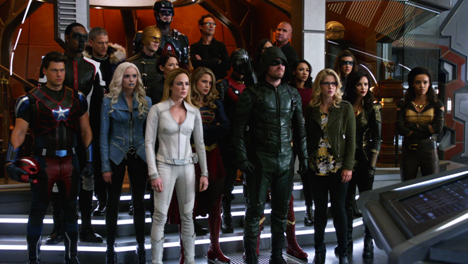
Screen Time: Batwoman (Season One)

BWLogo
Season One

Air Date: October 2019 to May 2020
UK Network: E4
Original Network: The CW
Stars: Ruby Rose, Rachel Skarsten, Meagan Tandy, Nicole Kang, Camrus Johnson, and Dougray Scott

The Plot:
Three years after Bruce Wayne (Warren Christie) disappeared from Gotham City, taking his vigilante persona Batman with him, Kate Kane (Rose), Wayne’s cousin, returns to Gotham to confront her childhood demons and ends up becoming Gotham’s newest vigilante protector, Batwoman.

The Background:
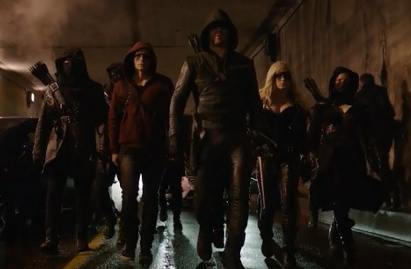
Ever since the “Arrowverse” began with the first episode of Arrow (2012 to 2020), we have seen hints and references towards Gotham City and its resident bat-themed vigilante. Nowhere was this more explicit than in Arrow, where Oliver Queen/The Hood/The Arrow/Green Arrow (Stephen Amell) mostly occupied himself not with being a left-wing protector of the socially handicapped and more with being a pseudo-Batman, adopting not only many of the Dark Knight’s more grim and stoic mannerisms but also the majority of his rogue’s gallery. By the time the Arrowverse eventually swelled to the point where they were actually able to pull off a pretty decent adaptation of Crisis on Infinite Earths (Wolfman, et al, 1985 to 1986), things had changed quite considerably. Not only had an unconnected show, Gotham (2014 to 2019) delved into the origins of almost every one of Batman’s popular villains, Batman (Alain Moussi and Maxim Savarias) and Bruce Wayne (Iain Glen) had appeared and featured quite prominently in Titans (2018 to present) and, prior to the Arrowverse’s “Crisis on Infinite Earths” (2019 to 2020) crossover, Kate Kane/Batwoman had been introduced in the CW’s previous crossover, “Elseworlds” (2018). Unfortunately, like many other DC television projects, the Arrowverse is slightly handicapped by not currently being able to include Bruce Wayne or Batman in any direct capacity. I honestly feel like, were The CW allowed to use Batman, we would have gotten nine years of the Caped Crusader rather than the Emerald Archer but, despite this block (which, to be honest, makes no sense because of Titans and Gotham), the Arrowverse had been able to make sly nods to familiar elements of the Batman mythos. Kevin Conroy even appeared as an aged, disillusioned alternative version of Batman in “Crisis on Infinite Earths” but it’s safe to say that the shadow of the Bat loomed heavily over not just the Arrowverse but, somewhat obviously, over Batwoman especially.

The Review:
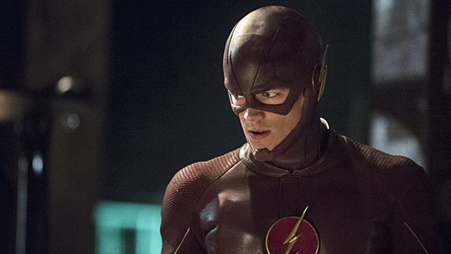
It’s no secret that I am a massive fan of Batman and, yet, I’ve struggled a bit with the way he’s represented in live-action. I got into Arrow quite late into its run but really came to resent how it transposed Batman’s characteristics and rogues onto Green Arrow, even though it worked in the context of the Arrowverse where Oliver’s more stoic and serious approach to crimefighting juxtaposed with the more optimistic approach of Barry Allen/The Flash (Grant Gustin). While I am also somewhat familiar with Batwoman from the comics, I can’t say I’m a massive expert on her beyond the basics and basically went into Batwoman hoping more for an interesting female-led superhero show. I couldn’t really get into Supergirl (2016 to present), despite how good Melissa Benoist looks and is as the titular Supergirl/Kara Danvers or the inspired decision to cast Jon Cryer as Lex Luthor in its later seasons; honestly, the show seemed to be filled with way too much sexual tension between Supergirl, her female co-stars, and basically between every female character in the show…which is weird as I never got that vibe from the male-led Arrowverse shows. Batwoman, however, has the distinction of already being a lesbian character; not only that, she’s quite a guarded, tough character, meaning that the show is less about her desperately trying to repair failed relationships with her friends to the point where you suspect she is in love with them and more about her standing up, loud and proud, as being an equal to the men in her life. As such, Ruby Rose is a great choice for Kate Kane/Batwoman; she looks fantastic in the suit (when its shot in minimal lightning and kept in shadow), and has a tough-as-nails demeanour about her made all the more apparent by her signature snark, scowl, and abundance of tattoos. Unfortunately, like Supergirl, Batwoman faces many comparisons to Batman throughout the show; episodes are frequently intercut (and, in my view, ruined) by voiceovers from media gossip Vesper Fairchild (Rachel Maddow), who comments on Batwoman’s hair, wardrobe, and effectiveness compared to Batman and Kate is constantly asking Luke Fox (Johnson) for input on how Batman would handle certain situations (she even had to have her Batarangs “recalibrated” to account her for having shorter, weaker arms).
BWArrowAlice
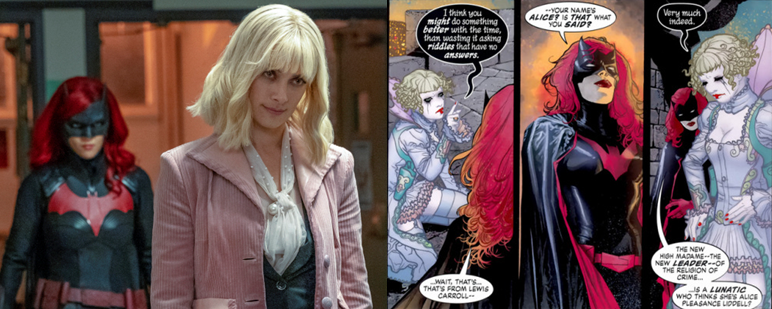
Batwoman‘s main plot is adapted from the “Elegy” story.

Despite this, Kate is very much her own character; she never sought to become Batwoman and, instead, utilised a modified version of Bruce’s suit and technology to assist in her investigation into Alice (Skarsten), a mentally unstable maniac who themes her crimes after her namesake from Alice’s Adventures in Wonderland (Carroll, 1865). You might think having the show’s main villain being a knock-off of D-list Batman villain the Mad Hatter is a mistake but, it turns out, that the link between Batwoman and Alice was a big part of the “Elegy” (Rucka, et al, 2009 to 2010) storyline during Batwoman’s time in Detective Comics (1937 to present). As a result, the main plot of Batwoman focuses on Kate’s discovery that Alice is actually her long-lost, long-presumed-dead twin sister, Beth. Like Arrow, the story of Kate and Beth’s childhoods and pasts is told through flashbacks, through which we see how Batman (in broad daylight, the first of many issues this show has) failed to properly secure the car young Kate (Gracyn Shinyei) and Beth (Ava Sleeth) were in, resulting in the death of their mother and Beth ending up a prisoner of the sadistic August Cartwright/Dr. Ethan Campbell (John Emmet Tracy and Sebastian Roché) and forced to befriend his disfigured son, Jonathan Cartwright/Mouse (Sam Littlefield). Unfortunately, after only a few episodes, I kind of lost interest in Alice as a character and a villain; she’s just crazy for the sake of being crazy and is more annoying than anything, especially as she often flip-flops between being a full-on murderous sadist and being a scared girl desperate for help. As a villain, she’s just not that compelling and it gets very annoying how she is constantly captured, only to escape, or seems to be on the road to rehabilitation only to immediately do a 180 and Kate falls for her act every. single. time.

BWDougray
Dougray Scott is a welcome addition to the cast.

Left mentally unbalanced by her time in captivity, Alice leads the Wonderland Gang in targeting her estranged father, Commander Jacob Kane (Scott); quite how Batwoman managed to snag Dougray Scott is beyond me but he’s a great addition to the show, lending a gravitas and feeling of professionalism that is sorely missing due to Batman, Alfred Pennyworth, and Commissioner James Gordon all being absent. Jacob heads up a private security agency known as the “Crows”; for all intents and purposes, they are Gotham’s police department as, while they work with the Gotham police, they’ve basically transplanted them in Batman’s absence. Scott has great chemistry with Rose; the two have a frosty relationship with many wrinkles and a lot of friction as Kate believes her father gave up on Beth and turned his attention to blaming, and hating, Batman instead. She also strives to be seen as an equal and beneficial to his cause, though repeatedly turns down his offers to join the Crows as she comes to accept her role as Batwoman. Eventually, their relationship improves but his views and opinions on Batwoman begin to sour, with the season ending with Kane declaring all-out war on Batwoman and any who aid and abet her. Rounding out the cast, and the drama, is Kate’s ex Sophie Moore (Mandy), who denied all knowledge of their same-sex affair in order to graduate from military academy and join the Crows. Kate is heartbroken when she returns to Gotham and finds Sophie married to fellow Crows agent Tyler (Greyston Holt) and much of the show’s wonky relationship drama hinges on their “will-they, won’t-they” back and forth as Kate attempts to move on to other relationships and finds a decent distraction in her vigilante activities. This becomes more complicated when Sophie’s relationship breaks down after her past with Kate is revealed to Tyler and when Sophie inexplicably becomes attracted to Batwoman (who publically outs herself as a lesbian, thus becoming instantly attractive to all lesbians).

BatwomanJulia
Julia is pretty and bad-ass but ends up being a bit of a stereotype.

The seeds for this were planted a few episodes in with the inclusion of Alfred’s little-know-of daughter, Julia Pennyworth (Christina Wolfe), a semi-cockney, bad-ass spy who Kate has a past sexual relationship with, because if it’s one thing that is true across not only the Arrowverse but all fictional television, all gay people are immediately and uncontrollably attracted to each other. This is exemplified further when Julie starts making semi-regular appearances; circumstances see her working alongside Sophie and growing closer to her and, of course, a sexual relationship builds between them. We’ve also got Kate’s younger stepsister, Mary Hamilton (Kang), who operates perhaps the most well-known illegal clinic where she treats castaways from Gotham’s hospitals and basically functions as Batwoman’s medical support as the show goes on. Once Alice is revealed to be Beth, Mary and Kate’s relationship begins to suffer and comes to a breaking point after Alice fatally poisons Mary’s mother (and Kate’s stepmother), Katherine Hamilton-Kane (Elizabeth Anweis), and she dies in Mary’s arms. Kate is then torn between her desire to both reach Beth, bring Alice to justice, repairing her relationship with Mary, and the fact that Alice has ensured that Jacob is framed for the crime, which shakes the city’s faith in the Crows and has them clamouring for Batwoman instead. Eventually, however, Mary figures out Kate’s dual identity and feels slighted for some time at her step-sister keeping her in the dark about her actions; this relaxes somewhat after she is officially let in on the secret and then desperately tries to become part of Kate’s Bat-Team. Honestly, far too many people find out Kate’s identity over the course of the season, which really compromises her integrity as Batwoman for me.
BWBatCave
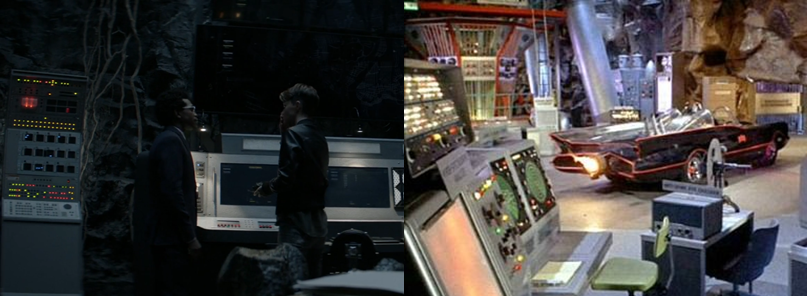
Batwoman‘s Batcave is like an updated version of the 1960’s ‘cave.

As a result, Batwoman becomes a far more public figure than I am honestly comfortable with for a Bat-branded vigilante. It is very heavily implied that Batman was just as publically celebrated and the subject of news reports but Batwoman straight-up ends up plastered all over social media and even explicitly outs herself as gay when the city begins to “ship” her with Samuel “Slam” Bradley (Kurt Szarka), an attractive hero cop who makes a brief appearance. Other characters from the Arrowverse also appear in the series’ tie-in to the “Crisis on Infinite Earths” crossover which, honestly was the only reason I actually watched this show week to week. Moving on from the casting, I have to talk about the show’s aesthetic; first, while the Bat-Signal is present, it has to be the lamest iteration I’ve ever seen. Normally, it’s this massive floodlight but, in Batwoman, it’s this piddling little thing that looks like it’s struggle to light a hallway much less cast the iconic Bat embalm into the night sky. Second, like Arrow, much of Batwoman takes place in cityscapes. This means there’s a lot of offices, conveniently abandoned warehouses, and scenes that take place on the city streets. Despite the fact that Gotham has been without Batman for three years, the city has, arguably, never looked cleaner and more well-kept; similar to how Gotham appeared flawless during the daytime scenes of The Dark Knight (Nolan, 2008), Batwoman’s Gotham seems like a relatively safe place to life for the most part. This is implied to be because of the presence of the Crows and the convenient absence of Gotham’s more colourful super criminals but, still, I kind of expect my Gotham to be just as dark and dirty as Star City was in Arrow, which was rarely ever shown in the daytime. Like all of her Arrowverse cohorts, Batwoman has a secret base of operations where she can suit up and monitor events in the city. You might have heard of it; it’s called the Batcave. Batwoman’s Batcave, though, is perhaps the cleanest and most simplified version of the ‘cave I’ve ever seen. Even the Arrow’s Arrowcave, with all its obnoxious high-tech furnishings, looked more like a Batcave than Batwoman’s, which seems to be a cross between the Bat-bunker from The Dark Knight and the iconic Batcave from the 1960’s Batman television series (1966 to 1968) with its sixties-style flashing lights and terminals (it even has a little toy Tyrannosaurs rex which, to be honest, is a nice little allusion to the impractically gigantic T-Rex Bruce likes to keep in he Batcave).
BWSuit
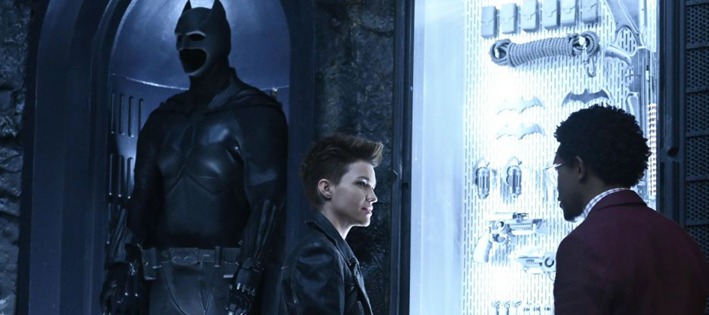
Luke adapts the Batsuit to fit Kate’s…specifications…

Luke Fox practically lives in the ‘cave, functioning as Batwoman’s tech support and “guy in the chair”; you’d think this would be a great way to introduce the wheelchair-bound Barbara Gordon/Oracle and inject some sexual tension between her and Kate but, instead, we have a hybrid of Lucius Fox and Alfred. In the comics, Luke became the Bat-themed vigilante Batwing and I wouldn’t be surprised if Luke doesn’t take up this codename at some point in the show’s run; hell, if Jimmy (sorry, “James”) Olson (Mehcad Brooks) can suit up as the vigilante Guardian over on Supergirl than anything is possible. While Fox is initially relegated to Batwoman’s tech support (developing her gadgets and suit, monitoring and communicating with her when she’s out in the field, and so forth), he gets a bit more focus as more and more people join their team and, especially, when he feels compelled to confront the man who killed his father (yeah, Lucius Fox is also dead in this series…) right when Kate is struggling with having taken a life. Fox is apparently some kind of genius as Batwoman’s suit is apparently so sophisticated that it’s full of technology that monitors her heartbeat, oxygen levels, and all kinds of stuff that I find difficult to believe is weaved into a far more form-fitting outfit than anything Batman is known to wear. Initially, Kate wears a modified version of the standard Batsuit as she takes to the streets and is thought to be Batman but, after she sees all the good she’s doing and the hope she’s bringing, she has Fox alter it further to include a wig and her signature red colouring and is officially announced as Batwoman.
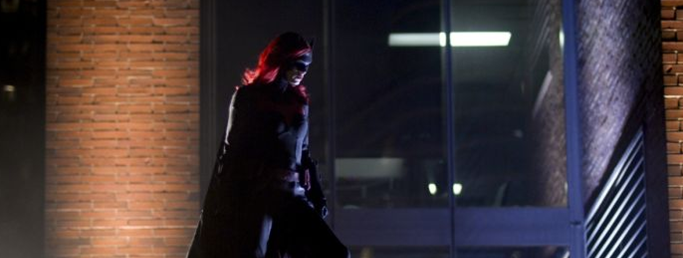
BWHero
The Bats are publicly celebrated as heroes and saviours rather than myths.

This is one of the things I actually have an issue with in the show; when Batwoman was introduced in “Elseworlds”, Batman was a myth so powerful that even Oliver Queen didn’t believe that he was real. Jump over to Batwoman, though, and not only is Batman openly the subject of media gossip and coverage, he’s a widely known and celebrated hero of Gotham City. The Crows, especially Jacob, despise Batman for his anonymity and for abandoning the city and even Kate was distrustful of the Caped Crusader until she found out who he was; once she did, she was inspired by his legacy and began continuing Bruce’s journals to chronicle her own journey. My issue here is the idea of Batman as a “hero”; as I prefer Batman to be an urban legend, feared by criminals, distrusted by the police, and a figure of mystery to the general public, something about gossip columnists openly discussing his methods and the entire city acknowledging his presence and celebrating him as they would the Flash rubs me the wrong way. Even Arrow handled this aspect of its titular vigilante better, with Oliver’s hooded alter ego not really being publicly acknowledged or celebrated for some years so it’s a bit weird for me to see Gotham’s citizens “crying out” for their hero’s return. And then there’s Batwoman’s portrayal of Bruce Wayne; through dialogue with Fox, Kate learns more about Bruce’s motivations, how he handled the burden of his duel identity, and the reasons behind him walking away from Batman and Gotham. To begin with, Bruce/Batman is almost this mythic figure, some lofty ideal that Kate can only dream to live up to, much less match. But then some cracks begin to form, the first being when Fox reveals that Bruce commissioned the creation of a gun that could penetrate the Batsuit, with the implication being that, were his technology to fall into the wrong hands, Bruce would be happy to kill the perpetrator. The second, and most egregious, is the revelation later in the series that Bruce quit being Batman after he killed the Joker (here also referred to as Jack Napier).

BWKill
Batwoman wasn’t too shaken when she killed the alternate Bruce Wayne…

Let that sink in for a second: Batman was not only willing to kill to stop someone who stole his Batsuit, he also killed the Joker, and felt he had to quit being Batman because of it. While I don’t actually mind Batman killing, it’s unsettling when so much emphasis is put on Bruce’s uncompromising moral standing only to throw it all away by him creating a gun and killing his greatest enemy. Worse still is that Fox only reveals this to Kate after she has strangled August Cartwright to death for what he did to her sister and mother. Now, again, I don’t mind Batman killing under the right circumstances; I grew up with Michael Keaton’s fantastically haunting portrayal of the character so I’m used to a Batman who is willing to cross the line now and then and fully believe that, in his line of work, casualties and fatalities are bound to happen. It’s also worth noting that Batwoman is a former soldier and, especially in the comics, is not adverse to killing when it’s absolutely necessary. Over the space of three episodes or so, though, Kate struggles with her actions in a way that, again, Oliver Queen never really did; when he first returned to Star City, Oliver killed specific targets and his enemies without a second’s thought. Later on, he tried to “do better” by not killing but easily went back to shooting arrows through people’s hearts not long after and he’s no less a hero for it, so why would Batwoman (or Batman, for that matter) be? Still, Batman’s code against killing is an important aspect of the character and going against that is always going to ruffle a few feathers; it also seems like a really lame, super easy excuse to write Bruce/Batman out of the show. It’s also worth noting that it was taking a life that led to the aged Bruce becoming a remorseless killer in “Crisis on Infinite Earths” and that Kate killed him (whether by accident or design) during a fight and showed very little remorse over this.
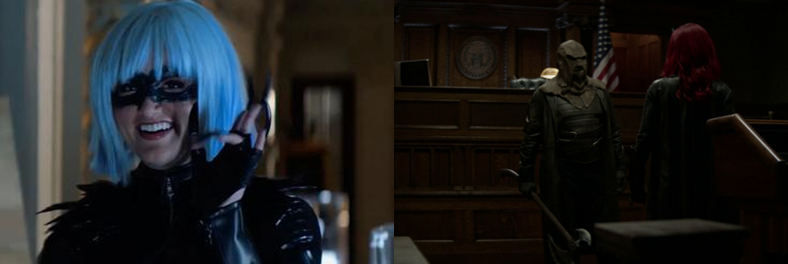
BWVillains
Batwoman featured a few of Batman’s D-list rogues.

Moving on, though, the show features a small selection of Batman’s D-list rogues; though she has no ties to the Mad Hatter, Alice’s mere presence alludes to his existence; the Joker, as mentioned, is disappointingly dead; and a version of the Executioner (Jim Pirri) also appears. Being that this is a female-led show, and a lot of the show’s plot is focused on female empowerment, there are a few female villains in Batwoman (the oft-forgotten Magpie (Rachel Matthews) and Nocturna (Kayla Ewell), for example) but most episodes revolve around Alice in some way, shape, or form, and her efforts to get revenge on Kate and her father and temptation towards redemption. Thomas Elliot (Gabriel Mann) also shows up early in the season as a friend and rival of Bruce’s but is quickly revealed to have deduced Bruce’s identity as Batman and to be as crazy as a bag of cats so he ends up in Arkham Asylum. Thankfully, though, Batwoman is full of face transplants and glorified plastic surgeons and, through the influence of Alice and Mouse, Elliot breaks out of Arkham, gets his face sliced off, and ends up wrapped up in bandages and taking on the persona of Hush. Unfortunately, though, Elliot is both just another crazy guy and another rich guy in a suit, so he’s far from the physical or intellectual threat as the comic book Hush, though the season does end with a massive cliff-hanger as Elliot applied a patchwork skin to his face to assume Bruce Wayne’s identity. Something Batwoman likes to employ, for whatever reason, is the implementation of licensed songs to punctuate its more dramatic (read: soap opera) moments. Songs like these may have fit into teen dramas like Smallville (2001 to 2011) but they seem massively out of place in a Bat-centric show. Luckily, Batwoman takes its lead more from Arrow for its action sequences and fight scenes; generally, episodes will open with some kind of chase, kill, or action sequence. Kate (and/or Jacob) will then investigate something, or have some kind of confrontation, and then she’ll hit the streets as Batwoman, maybe take out some goons, before working towards a finale against whomever is the main threat of the episode. Fight scenes are far more hands on and up close and personal than in Arrow, though, as Batwoman favours hand-to-hand combat over a bow and arrow. Like Green Arrow, Kate masks her voice with a voice synthesiser, which I always prefer over the idea of the Bat-characters putting on a voice (despite how good these voices have been), but this doesn’t stop multiple characters guessing or knowing her identity within only six episodes.
BWConclusion

The Summary:
Ultimately, the season started off quite well and had a lot of promise but fell off a cliff very quickly; after a few episodes, Batwoman becomes very formulaic, makes some questionable decisions regarding Batman’s legacy and the inclusion (or exclusion) of famous Bat­-characters, and ended on a massive cliff-hanger that, by the looks of it, we either won’t get resolved in a second season or it will be significantly different because of the behind the scenes shenanigans. After flip-flopping about a hundred times, Alice decides she hates Kate and Batwoman as they betrayed her and got her locked up in Arkham Asylum. Thankfully, she makes fast friends with Thomas Elliot, who has snapped and basically believes Bruce Wayne to be his best friend, and she and Mouse concoct a bizarre plan to cut off Elliot’s face (and have him disguise himself ((because face transplants are super easy and impossibly convincing in Batwoman)) so they can get out of there. The remainder of the season focuses on Alice trying to acquire, and then decode, Lucius’ journal so she find out how to penetrate the Bat-Suit and kill Batwoman…despite the fact that she had a means to do this earlier in the season.
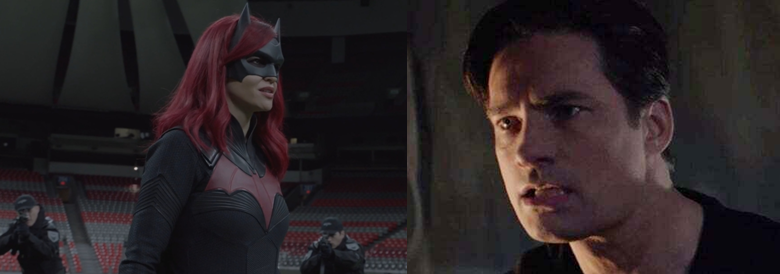
BatwomanFinale
Batwoman ends on quite a cliffhanger that will probably have a poor resolution in Season Two.

In a contrivance that makes my head spin, it turns out the Kate’s suit is so incredibly bullet proof that the only thing in the world that can penetrate it (beyond the special bullet introduced earlier in the season that the writers forget about) is…Kryptonite. This presents a problem as Supergirl (whom Batwoman has a very rushed but quite charming, friendship with) entrusted Kate with a shard of Kryptonite to use against her if she ever went rogue. Although Luke compresses the only other shard into powder, Alice is heartbroken when she is forced to kill Mouse as he threatens to leave without her and swears to kill Kate once and for all. This coincides with Elliot assuming the role of Bruce Wayne and Jacob’s vow to end the Bat infestation in Gotham City to keep vigilantes from supplanting his organisation and leaves Batwoman on a massive cliff-hanger but most likely will get swept under the carpet when the series returns to television. I was interested in Batwoman for a couple of reasons: first, I wanted to see the second part of “Crisis on Infinite Earths” and the legendary Kevin Conroy as a live-action Bruce Wayne and, second, I was interested to finally see a Bat-themed show as part of the Arrowverse. Unfortunately, despite some decent casting, action sequences, and costume design, Batwoman started to lose me around the third episode (basically the moment it was revealed that Bruce had developed that Batsuit-ending gun).

BWSupergirl
Seriously, these two need to just get a room!

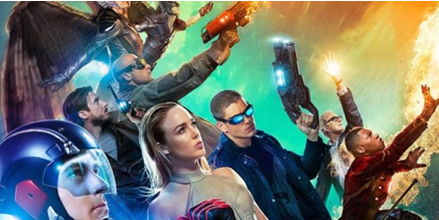
It wasn’t as annoying as Supergirl or as pointless as DC’s Legends of Tomorrow (2016 to 2020) but it’s still not on the same level as The Flash (2014 to present) or even Arrow; I pretty much only dip in and out of Legend of Tomorrow because they made the smart decision to put John Constantine (Matt Ryan) on the team and completely gave up on Supergirl after the show devoted all of its runtime to Kara desperately trying to repair her relationship with Lena Luthor (Katie McGrath), which descended to the point of parody when it seemed like they were desperately in love with each other but in vehement denial over it. Yet, I feel the same thing is going to happen with Batwoman; it wasn’t as explicit with its comparisons of Batwoman to Batman or at pushing its pro-female agenda, so it’s much easier to watch than Supergirl, but a lot of its narrative decisions were questionable. Not having Bruce Wayne/Batman in the show really hurts it, in my opinion; this would have been a great opportunity to combine the Arrowverse series with Titans and have Iain Glen reprise his role in an older, mentor role after being incapacitated. Instead, Bruce is just…gone and, while his retirement kind of worked for Nolan’s films, it never sits well with me when Batman just gives up his life-long crusade. And what about Dick Grayson? Jason Todd? Tim Drake? All the rest of Batman’s cast of characters, both friend and enemy? Where are all of them in this world? The questions Batwoman raise far overshadow any of its positives and I can’t say that Batwoman really impressed me in its first season and, considering that Ruby Rose has decided to walk away from the show and the role will be completely recast and supplanted, I doubt that it’ll be a suitable replacement for Arrow, no matter how many seasons it runs for.

My Rating:

Rating: 1 out of 5.

Terrible

What did you think of season one of Batwoman? Are you interested in seeing subsequent seasons and appearances by Ruby Rose in the Arrowverse or would you rather the CW pulled the plug on this show? What are your thoughts on the way Batwoman handled the portrayal of Bruce Wayne/Batman and Gotham City? Whatever you think about Batwoman and the Arrowverse, feel free to leave a comment below.


10 FTW: Dark Doppelgängers

10FTW

If there’s one thing any hero can count on it’s that, at some point in their illustrious career, they’re going to have to face off against themselves. Sometimes, like with the classic Demon in a Bottle (Michelinie, et al, 1979) this is a metaphorical battle against their own inner demons and foibles but. More often than not, it’s a literal battle against an evil version of the themselves. Sometimes they’re from another world or a parallel dimension, perhaps they’ve used stolen technology or been cloned from the hero; other times, they are of the same race or seek to replicate the hero’s powers and usurp them. Whatever the case, I’ve always enjoyed a good doppelgänger, generally because they’re just like the hero but dark and edgy or more violent and, being as I grew up in the nineties, I like that kind of stuff. An evil version of a hero can help to elevate the hero by allowing them to overcome their failings and, sometimes, will even edge out of villain territory and become either a full-fledged hero in their own right or a line-towing anti-hero. In either case, today I’m going to run through ten of my favourite dark doppelgängers; evil versions of heroes who are just cool through and through.

10DarkLink
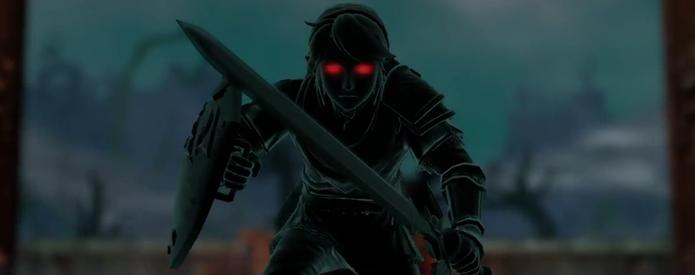
10 Dark Link / Shadow Link

First appearing in Zelda II: The Adventure of Link (Nintendo EAD, 1987) this shadowy version of the heroic Link gets the number ten spot purely because he isn’t really much more than a glorified henchmen for main series villain, Ganon. In true Peter Pan (Barrie, 1902) fashion, Dark Link often takes the form of a pitch-black shadow or a dark, distorted reflection and is able to perfectly mirror all of Link’s attacks and abilities. In recent years, he’s appeared more as a phantom and been given more definition but he’s generally relegated to being a sub-boss for a game’s dungeon and never the true threat to the land of Hyrule.

9Wario
9 Wario

Debuting in Super Mario Land 2: 6 Golden Coins (Nintendo R&D1, 1992), this bloated, disgusting, twisted version of Mario is everything Nintendo’s cute and cuddly mascot isn’t: he’s rude, crude, mad, bad, and dangerous. Where Mario jumps on blocks and Koopa heads to save a delightful Princess, Wario barges through walls and tosses his enemies at each other to steal, loot, or recover treasure. Wario even has his own version of Luigi, Waluigi (who exists more for the sake of existing, I would argue) but, while he crashed onto the scene in a big way by taking over Mario’s castle, Wario has softened over the years. He’s transitioned from an anti-hero and begrudging ally to simply a master of ceremonies as Nintendo moved him away from being the star of his own series of unique games and more towards party games and mini games.

8 Black Adam

Created by Otto Binder and C. C. Beck, Teth-Adam was originally gifted the magical powers of the wizard Shazam and chosen to be his champion, Mighty Adam. After being bewitched and corrupted, however, Adam was stripped of his powers and withered away to dust but, centuries later, was reborn when his ancestor, Theo Adam kills Billy Batson’s parents to lay claim to Adam’s power. Black Adam possesses all of the same powers as Captain Marvel/Shazam but is also gifted with a pronounced mean streak and tactical genius; he briefly reformed for a time, even joining the Justice Society of America and building a family of his own, but his quick temper and deep-seated contempt for humanity generally always drives him into a murderous rampage that few heroes can hope to oppose.

7Janus
7 Alec Trevelyan / Janus

Appearing in what is still probably the best James Bond film ever made, GoldenEye (Campbell, 1995), Alec Trevelyan (masterfully portrayed by Sean Bean) was one of MI6’s top 00 agents. However, wanting revenge against the British government for the death of his family and comrades during World War Two, Trevelyan faked his death and formed a criminal organisation named after his new alias, Janus. Trevelyan makes the list because he’s everything James Bond (Pierce Brosnan) was but twisted towards villainy; he and Bond were close friends and partners and his “death” weighed heavily on Bond’s conscious for nine years, making his betrayal even more sickening. In facing Trevelyan, Bond not only faces his biggest regret and mistake but also himself and what he could easily become if the fates were different.

6Slash
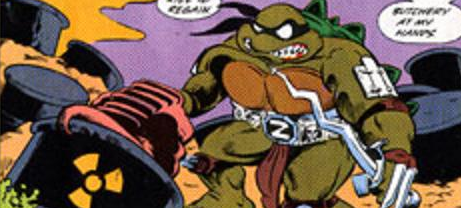
6 Slash

First appearing in ‘Slash, the Evil Turtle from Dimension X’ (Wolf, et al, 1990), Slash was originally an evil violent mirror of the heroic Teenage Mutant Ninja Turtles who often appeared in Turtles videogames and merchandise as a sub-boss for the Turtles to fight. For me, his most iconic look is when he’s sporting a black bandana, some spiked apparel, razor-sharp, jagged blades, and a heavy, armour-plated, spiked shell. Slash’s look and characterisation have changed significantly over the years as he’s gone from a somewhat-eloquent villain, to a rampaging monster, to an ally of the Turtles depending on which version you’re reading or watching.

5TheMaster
5 The Master

Originally (and, perhaps, most famously) portrayed by Roger Delgado, the Master was a renegade Time Lord who rebelled against his overbearing masters to freely wander through time and space. While this closely mirrors the story of his childhood friend, the Doctor (Various), the Master was the Doctor’s exact opposite: evil where the Doctor was good, malicious where the Doctor was kind, and wanted nothing more than to extend his lifespan, conquer other races, and destroy (or break) his oldest rival. Though sporting a deadly laser screwdriver and able to hypnotise others, the Master gets the number five spot simply because he’s been overplayed to death in recent years. Time and time again we’ve witnessed the Master at the end of his regeneration cycle, or destroyed forever, only for yet another incarnation to appear and wreck more havoc. He’s even redeemed himself and turned good before, and yet still returns to his wicked ways to plague the Doctor even when his threat should long have ended.

4 Metal Sonic

Speeding onto the scene in Sonic the Hedgehog CD (SEGA, 1993), Metal Sonic stands head-and-shoulders above all over robot copies of Sonic the Hedgehog simply by virtue of his simplistic, bad-ass design. A fan favourite for years, Metal Sonic has made numerous appearances in multiple Sonic the Hedgehog (Sonic Team/Various, 1991 to present) videogames, comic books, and other media. Sporting a sleek, aerodynamic design, chrome plating, and a massive jet engine on his back, Metal Sonic did something no one had done at the time of his debut and not only matched Sonic’s speed, but outmatched it on more than one occasion. While Sonic CD is far from my favourite Sonic title, it’s hard to downplay the iconic race against Metal Sonic in Stardust Speedway or his impact on the franchise.

3ReverseFlash
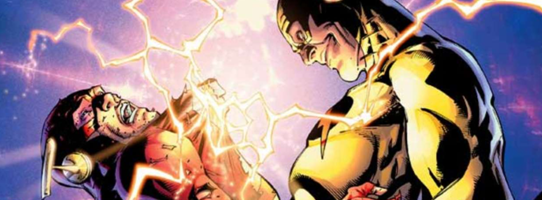
3 Reverse-Flash

Versions of the Reverse-Flash have plagued DC Comics’ speedsters over the years, most notably Edward Clariss (The Rival), Eobard Thawne (Reverse-Flash), and Hunter Zolomon (Professor Zoom). Sporting a yellow variant of the classic Flash suit and shooting off sparks of red lightning, the Reverse-Flash is generally characterised as using his powers to torture the Flash out of a twisted desire to make him a better hero. Reverse-Flash’s threat is increased by his tendency to travel through time, evading death and plaguing different generations of the Flash; Professor Zoom was even able to manipulate the Speed Force to jump through time and appear to be faster than the Flash. Reverse-Flash has also been the cause of numerous agonies in the lives of multiple Flashes; he’s killed or threatened those closest to him (including Barry Allen’s mother) and delights in bringing the Flash to the brink of his moral code.

2JudgeDeath
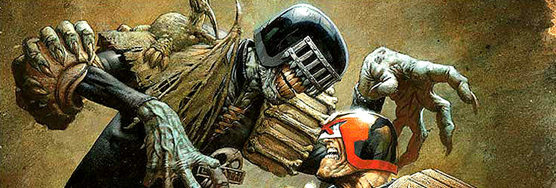
2 Judge Death

Hailing from an alternate dimension where life itself is a crime (as crimes are only committed by the living), Judge Death is the dark counterpart to no-nonsense lawman Judge Dredd. First appearing in 1980 and created by John Wagner and Brian Bolland, Judge Death assumes the appearance of the Grim Reaper and uses his demonic powers to kill with a touch. Rocking a metal design (recently evoked by the Batman-Who-Laughs, another contender for this list), Judge Death takes Dredd’s uncompromising enforcement of the law and ramps it up to eleven. Alongside his fellow Dark Judges, he once slaughtered over sixty million citizens of Mega City One and, despite his corporeal form being destroyed or trapped, has returned time and time again to bring judgement upon the living.

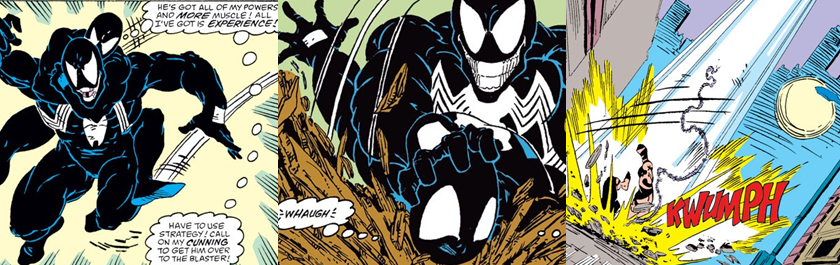
1 Venom

Perhaps the most popular (or, at least, mainstream) of all dark doppelgängers is the alien symbiote who, when bonded to Eddie Brock (or others), is known as Venom. Created by David Michelinie and Todd McFarlane, Venom began life as a black alien costume that absorbed Spider-Man’s powers and abilities and sought to permanently bond with him. When Spidey rejected it, it turned to Brock and, through their mutual hatred of Spider-Man, Venom was born. Sporting a super simple design (pitch-black with a white spider logo, emotionless white eyes, deadly fangs and claws, and a long, drooling tongue), Venom plagued Spidey for years. Immune to Spidey’s Spider-Sense and sporting all his powers, but double the strength and viciousness, Venom has evolved from a sadistic villain, to an anti-hero, to all-out hero over the years but, thanks to their equally violent offspring, has been the source of much death and woe to Spider-Man since day one.

0CrimeSyndicate

What dark doppelgänger is your favourite? Were there any I missed off this list, or do you, perhaps, feel the evil copy is a played out trope? Drop a line in the comments and pop back for more lists and articles.

Game Corner: Injustice 2: Legendary Edition (Xbox One)

GameCorner
Injustice2Logo

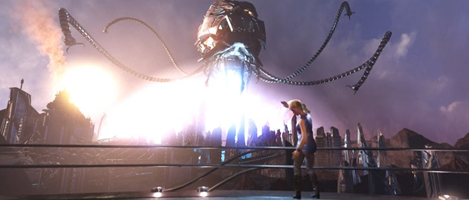
Given that Warner Brothers bought Midway back when they were forced to shut up shop, it should have been seen as inevitable that a videogame would be made that mashed together characters from the Mortal Kombat series with those of the DC Universe. Of course, Mortal Kombat vs. DC Universe (Midway Games, 2008) was quite the barebones, lacklustre effort compared to the spiritual successor, Injustice: Gods Among Us (NetherRealm Studios/Warner Bros. Interactive Entertainment, 2013).

Injustice2Brainiac.png
Brainiac is coming to collect the Earth!

Injustice was generally applauded not only for its graphics, gameplay, and competitive fighting mechanics but also its story mode; NetherRealm Studios have seemingly perfected the art of infusing their fighters with an in-depth and genuinely captivating single play story and Injustice 2 (ibid, 2017; 2018) continues this trend. After the Justice League travel to a parallel world to help end the reign of a dictator-like Superman and his regime of similarly-evil former heroes, the Injustice-world faces a new threat in the form of Brainiac. Though Batman attempts to rally a new generation of heroes against Brainiac, they have no choice but to free Superman from his red sun prison cell in order to combat the threat and enter into an uneasy alliance.

Injustice2Roster
A good roster, bogged down with one-too-many Batman characters.

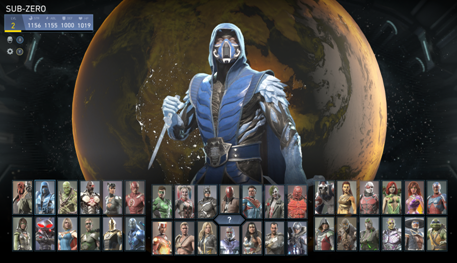
A fighting game is only as good as its roster; like Injustice, Injustice 2 has an unhealthy obsession with Batman characters – Batman, the Joker, Robin, Poison Ivy, Red Hood, Scarecrow, Bane, Catwoman, Harley Quinn, and Deadshot bloat out the roster. While it is a little disappointing that this appears to have caused other, unique characters such as Booster Gold or Doctor Sivana miss the cut, Injustice 2 does bring some welcome new faces to the game; Firestorm, Blue Beetle, Atrocitus, Gorilla Grodd, and Doctor Fate are just some of the new heroes and villains available to play as. The Legendary Edition also includes some fantastic downloadable characters, such as Hellboy, Black Manta, and even the Teenage Mutant Ninja Turtles!

Injustice2Unique
Every character has a unique play style.

Every character boasts their own unique combos, special moves, and super moves and plays a little differently; Darkseid, for example, is slow and methodical, Supergirl is a much faster character, while characters like Green Arrow and Batman rely more on their gadgets and skills to succeed. Successfully pulling off combos, counters, and landing attacks allows players to build up their super meter and power up their special moves or execute a world-ending super move. Each character starts with three loadout slots, which can be increased to five, that allow you to gear up Aquaman, for example, to have one loadout the favours attack, one that favours health, one that favours special moves, and so on, depending on the gear you apply. You can also apply this gear to AI Loadouts and have them fight for you, which is kind of weird and I’m not sure why you would want to do that rather than play the game yourself but it is useful for the game’s Endless and Survival modes.

Injustice2Stages
Injustice 2‘s stage selection levels much to be desired.

While Injustice 2 has a decent roster, it doesn’t have much in the way of stages; there are only twelve stages to pick from and they’re not really that dynamic or interesting. You can still send characters flying to other parts of the stage, which is fun, but it seems there’s a lot less opportunities to do this than in Injustice. There are also some fun stage interactions to be had, like smashing Swamp Thing over the head with a crocodile in Slaughter Swamp, but, again, it seemed that there were more and better stage interactions in Injustice. The primary selling point of Injustice 2 is the Gear System; winning matches not only earns experience points for each character and the player’s profile but also awards numerous gear. Players can then apply this gear to each character to boost their attributes, gain performance buffs (such as greater attack strength against Metahumans), alter the character’s costumes, and even unlock different special moves. Winning matches also earns the player coins and crystals, which can used to buy Mother Boxes and unlock more gear, transform or combine gear to make it stronger, or unlock Premier Skins for certain characters.

Injustice2Skins
Premier Skins are available…at a price.

Premier Skins allow you to play as new characters; Cheetah, for example, has a Premier Skin that turns her into Vixen and Raiden’s Premier Skin is Black Lighting. This is great, as it effectively adds even more characters to the game’s roster; the only downside is that, to purchase Premier Skins, you need Source Crystals, which are few and far between. You’re therefore forced to grind over and over, levelling up your profile and characters, to earn a pittance of Source Crystals or spend real money. This latter appears to be what NetherRealm Studios want you to do as it is extremely difficult to earn enough Source Crystals as the Premier Skins carry a hefty price tag, and only the best Mother Boxes and rewards can be earned through spending real money, it seems, making the in-game currency all but worthless. Unlocking gear and applying it to characters is fun but, let’s be honest, you won’t be applying all of your gear to every character as some characters are better than others and some or just dead weight. The biggest downside to the Gear System is that, unlike in Injustice, it is the gear that determines what your character will look like; therefore, you can’t just select Green Lantern and choose to play as Yellow lantern, you have to unlock the correct gear and colour palette (which also require Source Crystals), which is quite disappointing and annoying.

Injustice2Clash
The clash mechanic as as annoying as ever.

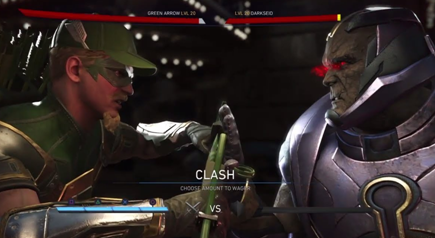
In terms of gameplay, Injustice 2 is very similar to its predecessor with a noticeable increase in AI competency; I played the entire game on Very Easy and, on more than one occasion, noticed that the AI doesn’t take any shit. If you spam moves or favour a certain tactic, the AI calls you out on it and gives you a competitive match more often than not. The story mode is fun to play through but a breeze; I finished it in within two casual days of gameplay and only went back to it to finish off the branching paths. The clash mechanic returns from Injustice and it’s just as annoying as ever; as you take damage, you can spend your super meter initiating a clash and pressing a button in a rock/paper/scissors type of mini game, which will either deal additional damage or restore your health. It seems that the AI always busts out a clash at the worst or most annoying opportunities and it’s easily to most frustrating part of the game.

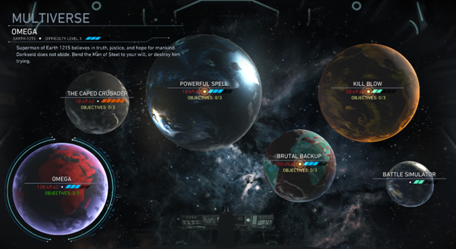
Injustice2Multiverse
Take on the entire Multiverse…once you’re levelled up enough…

Similar to Mortal Kombat X (ibid, 2015), Injustice 2 utilises an ever-changing Multiverse mode that allows players to fight a number of opponents and obtain better rewards. These change hourly, daily, weekly, and monthly and often carry certain themes that will be familiar to DC Comics fans; you can also use the Battle Simulator to play traditional tournament modes or battle endless opponents. One thing I will praise about Injustice 2 is that every battle is different; I don’t think I ever fought the same version of a character twice as it seems every match sees random gear and colour schemes applied to the opponent. You can also join a Guild and take part in Guild Multiverses and challenges to unlock even more Mother Boxes and rewards; these are far more challenging than the regular Multiverse modes and, similarly, the best Multiverse rewards are only available when you’ve levelled a character up to level twenty or thirty, meaning that you’re going to have to play again and again and grind over and over to reap the benefits. Honestly, maybe I’m a bit jaded, but I don’t find myself particularly enthusiastic about stepping up to this challenge; Injustice 2 features a wealth of Achievements, many you can sweep through regular gameplay, but the more specific ones (such as maxing every character’s level out) just seem like too much of a chore. I really don’t like that I have earned so many in-game coins and yet I cannot use them to purchase Premier Skins or extra colour palettes; I don’t really want to spend my actual money buying them, was disappointed to see that they weren’t already unlocked in the Legendary Edition, and am not sure I can be bothered to grind over and over to unlock them.

Injustice2Batman
Want the best stuff? You better have deep pockets!

In the end, Injustice 2 is good; it’s fun to play, the story mode is decent, and the graphics are very impressive but there’s not too much calling me back to it. I played Injustice pretty much to death working my way through the challenge mode but you have to put some serious effort in to challenge the best Multiverses and the motivation is severely lacking this time around just because the best gear and rewards are either really rare or too expensive. Maybe, next time around, NetherRealm Studios should limit the in-game currency to two forms (one to buy stuff, one to upgrade stuff) and move away from forcing players into spending their real-world money on additional extras, especially if they’re going to bring out a Legendary Edition after the initial versions.

My Rating:

Rating: 2 out of 5.

Could Be Better

Talking Movies: Justice League

Talking Movies
JusticeLeagueLogo

It’s no secret that DC Comics and Warner Bros. are a bit late to the superhero renaissance we are still experiencing thanks to the runaway success of the films put out each year by Marvel Studios. They lost a lot of ground with films like the dull Superman Returns (Singer, 2006) and Green Lantern (Campbell, 2011) – even though I personally actually enjoyed Green Lantern and thought the movie was worth salvaging in further DCEU films – and often focus too much of their attention on Batman at the expense of their massive cast of superheroes. However, amidst the many and ongoing critical debates surrounding Man of Steel (Snyder, 2013) and Batman v Superman: Dawn of Justice (ibid, 2016) and the disappointment of Suicide Squad (Ayer, 2016), they apparently scored a far more meaningful success with Wonder Woman (Jenkins, 2017) and their films have been profitable enough to keep the idea of a cinematic universe alive, even if rumours abound every day that it is on life support. Now, I never saw Wonder Woman, for reasons of my own, and I actually really enjoyed not just Man of Steel but also Batman v Superman so, for me, anticipation was high for Snyder’s third cinematic effort, Justice League. While a personal tragedy saw him leave the production process and be replaced by formal Marvel guru Joss Whedon, the film is still credited to Snyder and carries many of his themes and ideas over but does it deliver?

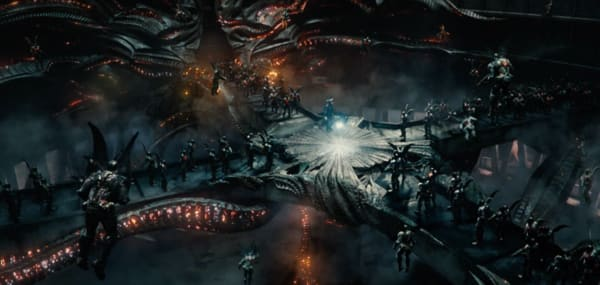
JusticeLeagueInvasion
An invasion from Apokolips is all-but inevitble!

Justice League begins in a world still mourning the loss of Superman (Henry Cavill), which hasn’t resulted in world-wide chaos but has resulted in appearances of insect-like Parademons across the globe. Having witnessed a glimpse into a nightmare dystopian future where these creatures have overrun humanity, Bruce Wayne/Batman (Ben Affleck) has been investigating the creatures and their weaknesses amidst attempting to recruit a superpowered team alongside Diane Prince (Gal Gadot) to fight what he believes to be an inevitable invasion. On Themyscira, Diana’s home island of Amazons, the ancient Mother Box suddenly awakens and opens a Boom Tube, through which appears Steppenwolf (Ciarán Hinds) and an army of Parademons. Slaughtering the Amazonians, he claims their Mother Box and promptly disappears, forcing Bruce and Diana to step up their timetable. Bruce is initially unable to convince Arthur Curry/Aquaman (Jason Momoa) to join their cause due to his desire to be left alone but has far more luck in recruiting Barry Allen (Ezra Miller) who, disillusioned by the wrongful incarceration of his father (Billy Crudup) and struggling to live in a world that now seems painfully slow in comparison to his superspeed, joins up as the Flash without a second’s hesitation. Meanwhile, Diana is able to channel her own experiences with isolation and loss to convince Victor Stone (Ray Fisher) to put his recently-acquired and still developing cybernetic powers to good use in the fight against Steppenwolf.

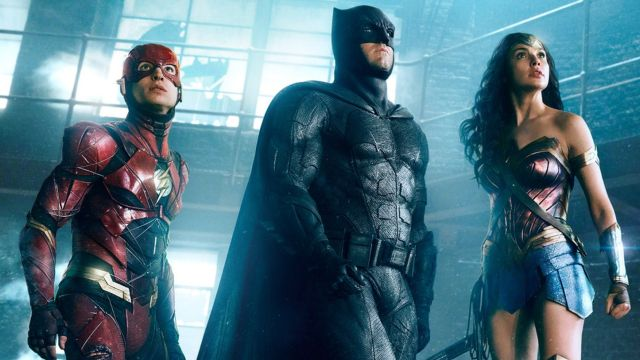
JusticeLeagueTeam.png
It’s going to take everyone to fight off Steppenwolf.

Aquaman is finally convinced to join the team when he is forced to return to Atlantis to defend the second Mother Box from Steppenwolf, only to be suitably humbled. With two of the boxes in the hands of the enemy and the countdown to the destruction of the planet imminent, Batman struggles to galvanise the team in using the final Mother Box to resurrect Superman to lead the final battle for the fate of humanity. I’m going to say something now that may cause a stir; I’m a fan of both DC Comics and Marvel. Yes, it is possible; for me, just seeing comic book superheroes on screen and coming together is a thrill in and of itself. I don’t get weighed down with debates between which company is better or criticise DC for failing to follow Marvel’s gameplan; however, I do admit that they are very clearly playing catch-up. This was massively evident in Batman v Superman, where Wonder Woman was introduced with a lot of intrigue and mystery surrounding her but which also wedged in cameos from the Flash, Aquaman, and Cyborg. It felt like the movie was trying to do to much but, at the same time, those small glimpses served the purpose of a larger narrative and didn’t distract from the film at all; instead, they were weaved into Batman’s character arc of moving past his misguided vendetta against Superman and towards rejoining the world and uniting a team.

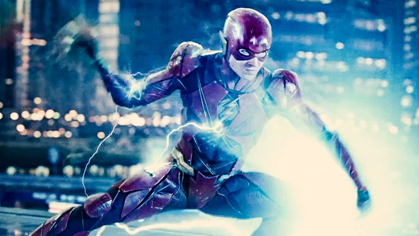
JusticeLeagueFlash
Ezra Miller brings some welcome levity to the DCEU.

While Justice League does suffer form some pacing issues in the first act, each member of the team gets an ample amount of screen time to shine and show some layers. Although I could’ve done without it as we have seen the tale of Barry’s father played out in the first season of The Flash, it nevertheless helped to establish that Barry is currently in a very lonely and confused place in his life and that his powers only make things more difficult for him. Barry primarily serves as the comic relief, once again being infused with more of the characteristics commonly associated with the Wally West version of the character, but shows significant growth when he admits to Batman that he’s never actually been in a real fight before and, upon Batman’s prompting, learns how to be a superhero by simply saving one life.

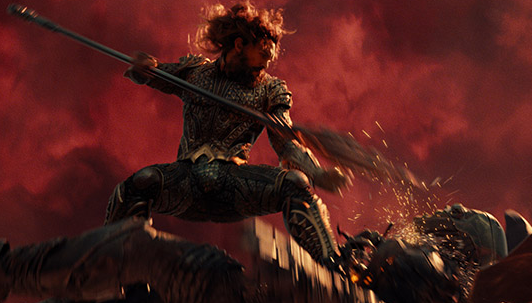
JusticeLeagueAquaman
Probably the greatest interpretation of Aquaman we’ll ever see!

Before the movie came out, I hedged my bets on Jason Momoa’s Aquaman being a kick-ass, breakout character; for years, people have ridiculed Aquaman because “all he does is talk to fish” when that’s simply not the case. Now, I’m not the biggest Aquaman fan because, honestly, he can still be pretty lame for other more pressing reasons, but I am a fan of the Peter David version of the character, which had long hair, a beard, a more armoured outfit, and was a no-nonsense, stern ass-kicker. Momoa’s Aquaman may not have a harpoon for a hand but, man, is he bad-ass! He’s more like a rock star than a clean-cut prince, revelling in the heat of battle, carrying himself with a sense of narcissism, and generally approaching every situation with a nonchalant attitude. He looks fantastic and really brings the muscle to the team in Superman’s absence, but there’s also a sense of a much larger world and backstory behind him through his return to Atlantis and interactions with Mera (Amber Heard).

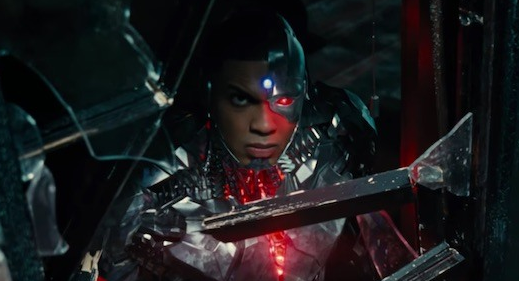
JusticeLeagueCyborg
Obviously a character mostly created in CGI is going to be CGI!

Probably the character with the most controversy surrounding him is Cyborg; personally, I’ve never liked the idea of Cyborg being on the Justice League, primarily because he’s so closely associated with the Teen Titans and I feel it’s a just a reason to have racial diversity on the team. However, for the purposes of this film, he serves a key purpose; having been created through the machinations of a Mother Box, Victor’s cybernetic parts are constantly evolving and hold the key to interacting with and stopping the Mother Boxes from uniting and destroying the world. Everywhere I look people are bad-mouthing the CGI on Cyborg and, honestly, I don’t see why; Justice League is filled to the brim with top-notch special effects, to the point where even a $300 million budget can be stretched pretty thin. Cyborg is a 90%, at least, CGI character so, obviously, he’s going to have a lot of CGI used on him. Would it have been better if they’d tried more of a Robocop (Verhoeven, 1987) route? Probably, yes. Did I think the sleeker, Teen Titans-inspired look he adopted at the end of the film would’ve looked better than the Transformers (Bay, 2007 to 2017) look? Definitely, but I never let the fact that he was largely comprised of CGI parts distract me from the film and, honestly, if you do then you’re clearly not that interested in the film to begin with.

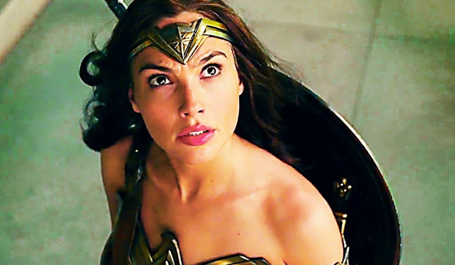
JusticeLeagueWondy
Gal Gadot continues to impress/surprise.

Gal Gadot continues to impress as Wonder Woman; despite my reservations about her, she is an extremely attractive young lady and her accent actually becomes less distracting the more you hear it. Diana’s arc here is directly tied in to the events of Wonder Woman as she is still apprehensive about rejoining society in the spotlight. Bruce even calls her out on it and accuses her of not being able to move past the death of Steve Trevor (Chris Pine), which only galvanises Wonder Woman’s resolve. Henry Cavill also returns after the team successful manage to resurrect Superman using the same Kryptonian birthing chamber that spawned Doomsday. Unlike the comics, he does not sport a mullet or a black costume, but his memories are briefly fragmented, leading to an awesome fight between Superman and the rest of the team. Superman is actually amazing in this film; he’s clearly overjoyed to be alive again, smiling and cracking jokes, and finally shines as an optimistic symbol of hope to rally behind. His initial period of disorientation also showcases his intense rage as he spits Batman’s “do you bleed” line back into Batman’s face as he is poised to crush Batman’s head. The only things I slightly disliked about Superman were that they didn’t make any effort to address how they explained Clark Kent’s sudden return to life and his resurrection felt like it came too soon; I expected him to return right at the very end, but it comes just before the third act, so it does raise the question of why kill him off in the first place (though I’m glad they did because at least it meant they got that aspect of Doomsday right).

JusticeLeagueBatman
Seriously, how can you not love shots like this!?

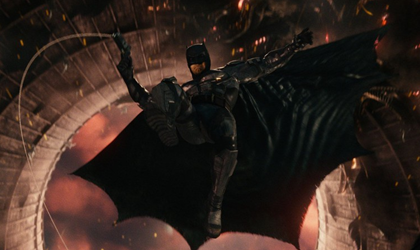
Ben Affleck returns as Batman, despite a new rumour springing up online almost every day saying that he wants out of the franchise. When he was first cast, I had my doubts that he would stick around for sequels and, honestly, the more I hear about him wanting to leave the more annoyed I am that he was ever cast in the first place. The fact that he is a fantastic Batman makes it all the more annoying; Warner Bros. seem to want to evoke Marvel Studios’ attitude towards Robert Downey Junior and build their DCEU around Affleck so I really hope that they do everything they can to convince him to see it through because he put in another brilliant performance here. Now focused on facing Steppenwolf’s impending threat, Batman has turned his mission from vengeance and death towards forming a team, saving the world, and atoning for the decisions he made that led to the death of Superman. The guilt he feels is evident and he even descends into some trademark Bat-dickery by manipulating Diana into following Superman’s example and being an inspiration for others. Additionally, the idea that he is so worn down and beaten up from twenty years of being Batman and that he now craves an honourable death continues in Justice League as, even with the team assembled, many of his plans revolve around him making a suicide run; during Superman’s resurrection, Batman even faces him head on with the intention of dying so that Superman can take his place as the more suitable leader of the team, and his joy at seeing Superman returned to life is clear on his face even if he quickly adopts a more stoic façade to save face.

JusticeLeagueSteppenwolf
The traditional bland villain does equal fleshed out heroes…

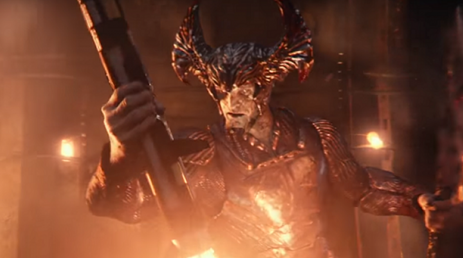
The action in Justice League is very big and very loud; explosions happen all over the place, water crashes everywhere, buildings topple, and hits land with a satisfying impact. Amidst what could be described as chaos, but actually is a far more cohesive end-of-the-world scenario than the one seen in Suicide Squad, is a fabulous score by Danny Elfman. Elfman even weaves not only his classic Batman (Burton, 1989) theme into the score but also John William’s classic Superman (Donner, 1978) theme; as much as I enjoyed the score from Snyder’s previous films, hearing the return of those classic, iconic, and irreplaceable themes brought a warm feeling of joy and nostalgia to my heart. Probably the biggest issues with the film are easily the most predictable; pacing and the villain. With the film being mandated to be two hours long, there’s a real sense that a lot of content was trimmed back and I look forward to seeing it inserted back in for an extended cut. While I did not experience any jarring leaps in continuity or pacing, it is unavoidable that a large chunk of the film’s early runtime is devoted to introducing and fleshing out not just the new characters but also existing ones; the plus side of this though is the clear influence of Joss Whedon, who not only infused a bright, vibrant colour palette but clearly worked on the film’s dialogue, resulting in a truly enjoyable rapport between the protagonists. As for Steppenwolf, he’s there for the team to unite against and defeat and his motivations are as one-note as possible; he wants to destroy the world, no more and no less. Diana relates his backstory through a pretty impressive flashback that shows that Amazons, Atlanteans, tribes of men, Old Gods, and even a Green Lantern fighting against Steppenwolf and his Parademons, which helps give a sense of the scale of his threat. His name-drop of Darkseid hints that a greater threat could be looming on the horizon but it cannot be avoided that he largely disappears for a big portion of the film. Again, though, this results in better characterisations of the protagonists and, unlike some Marvel villains, Steppenwolf actually makes up for it in the third act by not being a complete push-over and taking on the entire League all at once.

Given the after credits scene, in which freshly-escaped Lex Luthor (Jesse Eisenberg) recruits Slade Wilson/Deathstroke (Joe Manganiello) for a League of their own, I really hope that Justice League does well enough to continue the DCEU and help flesh the protagonists out even more in future films and therefore allow for better characterisations of the villains when they appear. While I may have criticised Eisenberg’s Luthor, I am still glad that he returned as it means there is a chance for the character to grow and evolve beyond Eisenberg’s madcap portrayal; if they had simply recast or abandoned the character, that hope would have been completely dashed and we would be forever deprived of the possibility of a good interpretation of Superman’s greatest nemesis. Honestly, the fact that I’ve heard so much negative criticism about this film really bugs me. Similar to Batman v Superman, I just don’t get it; sure, it isn’t perfect and it has flaws, but it’s actually a really good action romp, with some witty dialogue and some fantastic cinematography. Also, unlike the films of Marvel Studios, the thrill of seeing DC superheroes onscreen individually and as a group has not worn thin yet; it’s pretty amazing to finally see Batman, Superman, Wonder Woman, Aquaman, the Flash, and (I guess) Cyborg all together onscreen at last. I really hope Affleck sticks around and that Justice League does well enough to continue to DCEU as this felt like a massive step in the right direction towards forging the distinct big screen superhero universe that they have wanted for so long now.
My Rating:

Rating: 4 out of 5.

Great Stuff


Recommended: For comic book fans and DC fans, definitely, for the thrill of finally seeing the Justice League on screen, and also for fans of action movies. For those expecting something other than a fun action romp? Maybe stay away and keep your mouths shut.
Best moment: Any time the entire League is onscreen together is always great, especially in the finale, but also the scenes involving Batman and Commissioner Gordon (J.K. Simmons).
Worst moment: Three things were annoying: Steppenwolf, as you’d expect, though again I’d rather have more screen time for the protagonists in a team-up movie; Cyborg, just because I prefer him on the Teen Titans, and all the Amazonians except for Diana were pretty disappointing actresses.

Back Issues: DC’s Crisis Conundrum

BackIssues

Ever since the 1938 introduction of Clark Kent/Superman, DC Comics has been known for its vast array of costumed crimefighters and interconnected, densely populated fictional narratives. For decades, continuity was played fast and loose; Superman evolved from being a moderately powerful superhuman who could leap over tall buildings into a God-like figure who could turn back time, possessed a super-human intellect, and could tow entire worlds through space with ease. Similarly, Bruce Wayne/Batman was depicted as being as youthful as ever despite having been active since 1939 and having taken part in World War Two. Some of these issues were resolved when, in the 123rd issue of The Flash, DC Comics introduced the concept of the multiverse. The issue postulated that there were an infinite number of parallel worlds co-existing in the same space and time but slightly out of synch with our own world due to being on a different vibrational frequency. The fallout from “Flash of Two Worlds” (Fox, et al) was the revelation that DC’s Golden Age superheroes, such as the Justice Society of America and older versions of Superman and Batman, existed on the parallel world known as Earth-Two while their Silver Age contemporaries (Hal Jordan, Barry Allen, and the like) in the Justice League of America existed on Earth-One.

CrisisStupidlySuperman
Superman was originally more like a God than a man.

This concept allowed DC Comics to portray multiple iterations of their most popular characters as existing side-by-side, as well as numerous alternative worlds; Earth-Three, for example, was home to the Crime Syndicate, made up of villainous versions of the Justice League, while Earth-S was home to Freddy Freeman/Captain Marvel and other characters DC acquired from their purchase of Fawcett Comics. Unfortunately, decades of over-reliance of the multiverse concept meant that, by the 1980s, DC continuity was extremely difficult to keep track of and DC Comics were virtually inaccessible to new readers who had no idea what the multiverse was, much less how it worked. As a result, DC embarked on their most ambitious inter-company crossover yet. Crisis on Infinite Earths (Wolfman, et al, 1985) saw the entirety of the DC multiverse under threat from the malevolent Anti-Monitor. Seeking to rule in the desolation of nothingness, the Anti-Monitor begins destroying entire parallel worlds with an anti-matter wave, reducing their number from infinite to a mere five and causing the deaths of Barry Allen/The Flash and Kara Zor-El/Supergirl. In the end, Kal-L/Superman of Earth-Two, Alexander Luthor of Earth-Three, and Superboy of Earth-Prime end the Anti-Monitor’s threat and retreat to a “pocket dimension”, alongside the Lois Lane of Earth-Two, where they are protected from the merging of the remaining worlds.

Crises were commonplace in the Silver Age before DC tried to streamline their complex continuity.

It seemed like DC had come up with the perfect way to consolidate their continuity; the concept of parallel worlds was done away with and one singular reality was established. Stories like Superman: The Man of Steel (Byrne, et al, 1986) and Batman: Year One (Miller, et al, 1987) re-established the origins of DC’s flagship characters and, over the next few years, DC established that, while the events prior to the Crisis had occurred, very few of the characters who survived remembered much beyond vagaries (Wally West, for example, was now the Flash and knew, like everyone else, that Barry had died saving the world but not the exact specifics of how and why). Additionally, DC Comics began emphasising the idea of legacy superheroes; the Justice Society of America was established as having been active during World War Two and, while some of their members were active in present day continuity, they were noticeable aged and took on more of a mentorship role. Unfortunately, DC dropped the ball with Crisis. Rather than simply end every existing comic they published and reboot with brand new issue one’s and origin stories, some characters (such as Diana Prince/Wonder Woman) were not reintroduced into the new canon until much later. Others, like the Legion of Superheroes, had their entire origins altered forever by the removal of Superboy from the new canon (something that could have easily been remedied had DC simply rebooted the Legion and had them be inspired by Superman; instead, writers hastily incorporated an alternative Superboy from a pocket dimension or substituted him with Mon-El).

Zero Hour tried to fix DC’s post-Crisis lore but actually did more harm than good.

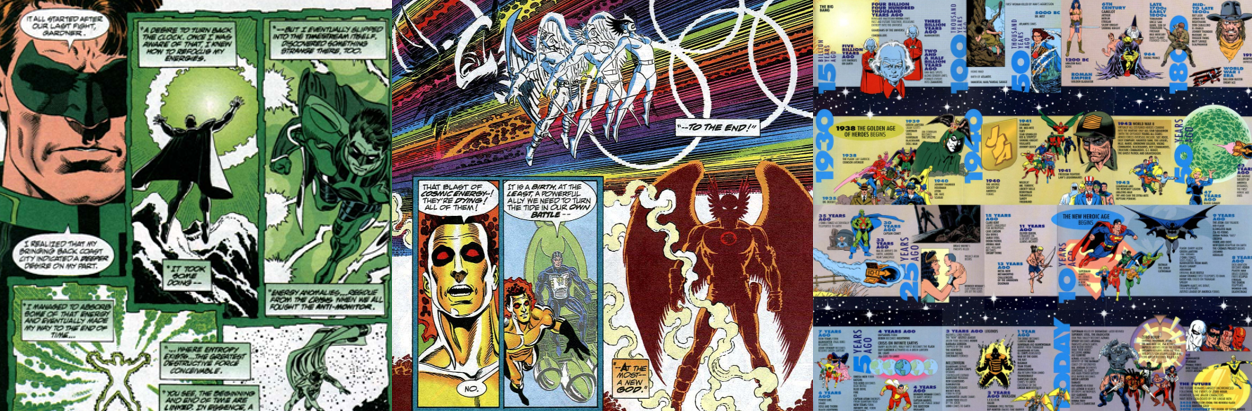
In an effort to address some of these lingering issues, and further incorporate some of the popular Pre-Crisis characters and ideas into modern continuity, DC capitalised on Green Lantern Hal Jordan’s recent descent into madness, genocide, and villainy with another massive inter-company event. Zero Hour: Crisis in Time! (Jurgens, et al, 1994) saw Jordan, as Parallax, absorbing vast amounts of cosmic and chronal energy with which he planned to remake reality and undo all the wrongs that had happened since the death of Superman. Due to Parallax messing about with time, many continuity changes were forced into DC canon; Superman was explicitly described as having debuted “ten years ago”, the Legion of Superheroes were (finally) completely rebooted, Batman’s killer became anonymous and at large, and all conflicting versions of Carter Hall/Hawkman were consolidated into one singular character since DC never really bothered to reboot his origin story following the original Crisis. With the bulk of Zero Hour’s five-issue run being made up primarily of exposition from Richard Rider/Waverider or Parallax, many of the consequences of Parallax’s actions were told in DC’s individual comics. In the end, despite the insanity of time literally being ripped apart around them, the heroes were able to thwart Parallax’s efforts and allow time and reality to unfold naturally, albeit with many changes. Zero Hour resulted in many changes to popular DC characters; Guy Gardner suddenly became a shape-changing Vuldarian, many of the Justice Society were rapidly aged or killed off, Connor Hawke was introduced as the new Green Arrow, and Arthur Curry/Aquaman now sported an unkempt look and a harpoon for a hand.

Infinite Crisis returned the multiverse to the DC universe.

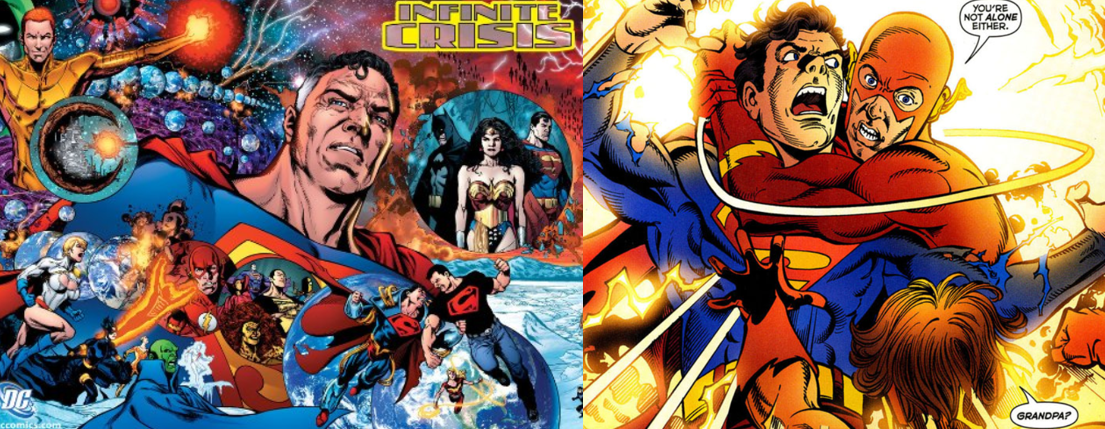
However, Zero Hour actually created more problems than it solved; Hawkman’s origins were no more clearer now than they had been before. Eventually, The Return of Hawkman (Goyer, et al, 2002) returned the character to mainstream continuity, explaining that the character was locked in a constant cycle of death and rebirth. Additionally, DC sought to address their ongoing continuity issues (and tell out of continuity stories) through the concept of Hypertime, which, much like the previous infinite Earths concept, allowed for alternative versions of events to be played out. Eventually, and with the twentieth anniversary of the original Crisis looming, DC decided to commission their biggest inter-company crossover yet. Consisting of multiple ongoing stories all building up to its central narrative, Infinite Crisis (John, et al, 2006) aimed to not only re-establish the multiverse concept and finally tie-up all of the lingering continuity issues left in the wake of Crisis on Infinite Earths and Zero Hour, but also move the company away from the dark stories that had dominated during the mid-nineties. After numerous event-scale storylines, the DC trinity (Batman, Superman, and Wonder Woman) were divided and the DC universe was in turmoil. Frustrated with how bad Earth heroes have let things get and perceiving that they have squandered their new world, Kal-L, Alexander Luthor, and Superboy-Prime break free from their pocket dimension and set about cannibalising the Anti-Monitor’s corpse to re-establish the multiverse and return peace and order to the universe. However, it turns out that seeing his world destroyed and having his youth ripped away from him, coupled with living in isolation and the machinations of Alexander Luthor, have driven Superboy-Prime mad. While Alexander straps various heroes and villains to an inter-dimensional tuning fork, Superboy-Prime goes on an accidental murder spree before Bart Allen/Kid Flash forces him into the Speed Force itself, at the cost of Wally West and his family.

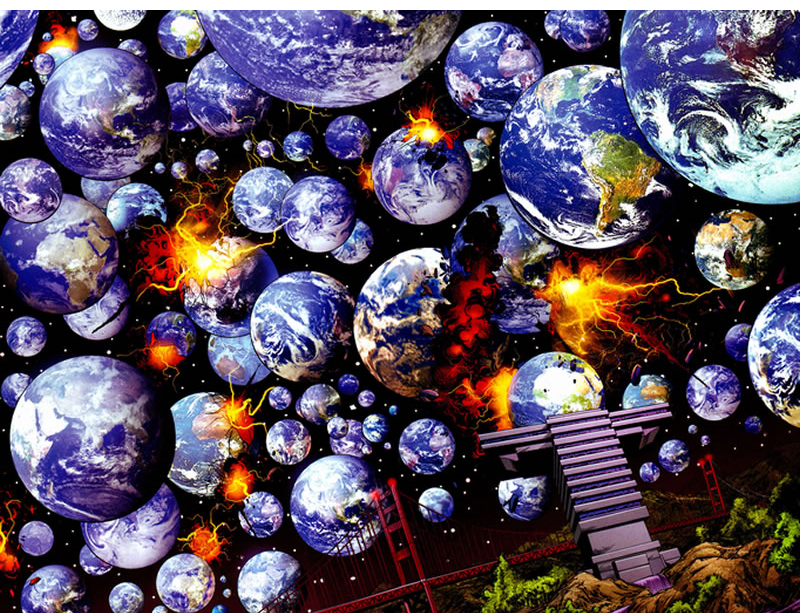
CrisisEarths
Infinite Crisis smashed together parallel worlds created 52 alternate Earths.

However, Superboy-Prime escapes, sporting a modified version of the Anti-Monitor’s armour and driven completely insane. With no regard for himself or others, he goes on a rampage; although Conner Kent/Kon-El/Superboy destroys Alexander’s inter-dimensional tower, it costs him his life and, finally convinced that Alexander’s plan would mean the genocide of countless lives, Kal-L joins forces with Superman to end Superboy-Prime’s threat. Infinite Crisis ends with the multiverse restored; though instead of there being an infinite number of parallel worlds, there were now a much more easy to wield fifty-two alternate Earths. In the aftermath, DC’s titles all jumped forward one year later, while the weekly 52 series explored the fallout of the events from the main crossover. This New Earth restored Superboy to Superman’s origin, depicted multiple non-canon stories as existing on the alternative Earths, introduced a new all-powerful villain in the form of Superboy-Prime, and resulted in Batman becoming far more trusting and open with his allies and family. For me, this was a great time to be reading DC comics. Unlike previous Crisis-level events, Infinite Crisis felt like a soft reboot that would be accessible to new readers; the multiverse existed but rarely impacted mainstream DC continuity and it felt like DC had finally closed the door of the events of the original Crisis and had finally moved on.

And then Grant Morrison happened.

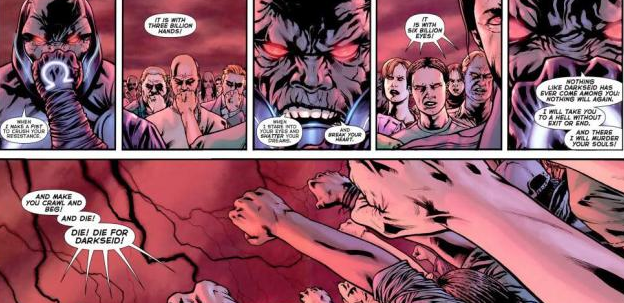
CrisisFinal
somethingsomethingsomething Darkseid somethingsomething…

Morrison spearheaded an inter-company crossover that would change the DC universe forever. Unfortunately, DC decided to spend an entire year building up to this event with the weekly Countdown (later Countdown to Final Crisis) series, in addition to numerous tie-in and spin-off titles. As Countdown was of far less writing and artistic quality compared to 52, and due to the fact that many of its events contradicted what was happening in the associated titles, the build up towards Final Crisis (Morrison, et al, 2009) was lacklustre and confusing, to say the least. The basic premise, as far as I can understand it (Morrison’s writing is confusing and disjointed at the best of times) is that the New Gods have all died and been reincarnated on New Earth, causing a tear in space, time, and reality. Reborn, Darkseid finally solves the Anti-Life Equation and enslaves the planet; however, using a radion bullet, Batman mortally wounds Darkseid, before being erased from existence. As his essence dies, Darkseid attempts to obliterate all of reality until he is finally thwarted by Superman; Superman, and an army of his counterparts from across the multiverse then restore Earth and reality before it can be destroyed by Darkseid and Mandrakk, the Dark Monitor. Once you got past the mess of Morrison’s writing and the mess of a build-up to the main event, the fallout from Final Crisis made for very accessible stories. DC also focused on using the Green Lantern titles to expand their universe through sprawling, inter-connected stories.

Dick Grayson took over as Batman before Flashpoint gave us an angst-ridden jerk version of Superman.

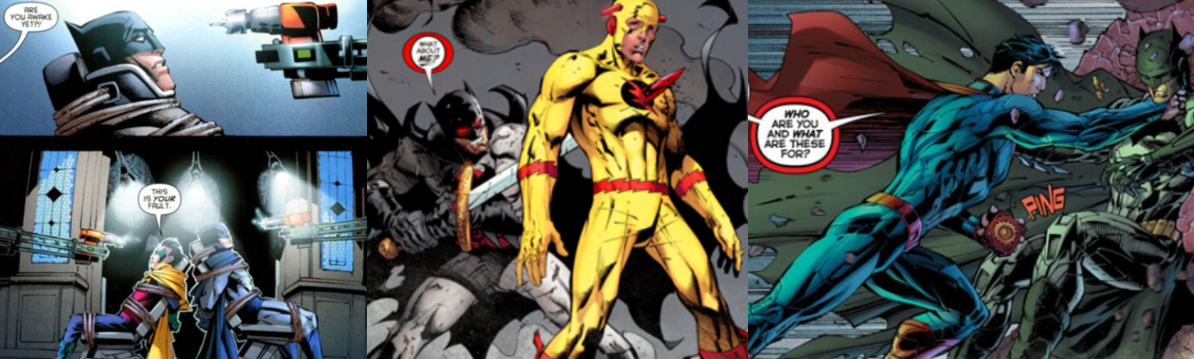
However, rather than fully capitalise on this (by, say, returning Bruce Wayne to life as an aged man, killing off Alfred, and having an elderly Wayne take his place as mentor to the new Batman and Robin), DC instead decided to undo all of their recent efforts a mere two years after the end of Final Crisis. The best thing about Final Crisis was the fallout; Batman, thought dead, actually embarked on a trip through time and space that threatened all reality until he was safely returned home by the Justice League. However, in the meantime, his duties were performed by Dick Grayson and Damian Wayne as an all-new, fresh take on the Batman and Robin duo. Additionally, both Kon-El and Bart Allen were resurrected and, for fans of the Silver Age, Barry Allen finally returned to the land of the living to become the Flash once more (though, personally, I am more of a fan of Wally West). In Flashpoint (Johns, et al, 2011), Barry Allen’s grief apparently got the better of him, causing him to go back in time and save his mother’s life. This results in a vastly altered timeline, which threatens to solidify itself as the true reality unless Barry can set things right. Teaming up with Thomas Wayne, here a violent version of Batman, and amidst an ongoing war between Atlantis and the Amazons, the Reverse-Flash reveals the key to restoring reality to Barry, allowing him to undo his actions. However, instead, we got what DC marketed as the “New 52” reality for the better part of five years. In this radically altered version of events, the DC universe has only existed for five years (meaning that Batman burned through one Robin every year-and-a-half or so), Barbara Gordon controversially recovered from the Joker’s attack and continued to fight crime as Batgirl, and many characters got entirely new origin stories (Superboy, Supergirl, and, in particular, Superman was changed so drastically that I swear he was a completely different character).

CrisisConvergence
Convergence slightly altered the original Crisis.

Additionally, Wildstorm and Vertigo publications were officially absorbed into the DC universe, while many recent events, particularly in Batman and Green Lantern titles, continued with very little alteration, truly begging the question as to why DC even bothered to reboot their continuity so severely just as their titles had become engaging and accessible for new and long-term readers. The biggest problem with the New 52, however, was that while DC still incorporated a version of the multiverse (complete with slightly different versions of Earth-Two and Earth-Three), it took DC almost a year to properly establish their new continuity; many characters went without detailed revised origins until this time, causing a great deal of confusion as to what events and characters were still canon, and largely alienating me in the process. Eventually, though, DC decided to bring the New 52 to a close and restart everything…again…using the Convergence (King, et al, 2015) storyline to kick-start their Rebirth titles. In Convergence, Brainiac has collected numerous cities and their inhabitants from across the multiverse (even some from prior to the original Crisis) and deposited them on Telos, a sentient planet that forces them to fight each other to see which is superior. Amidst the chaos and the fighting, the sorcerer Deimos usurps Telos and declares himself ruler and protector of this imprisoned on there. Eventually, Deimos is defeated by Parallax (drawn straight out of Zero Hour), which causes a chain reaction that threatens to annihilate the entire multiverse (…again). Brainiac, seeking to atone for his misdeeds, intervenes and sends pre-Flashpoint Superman and Zero Hour-Parallax back to the original Crisis to change its outcome and save the multiverse from collapsing.

Rebirth returned pre-Flashpoint characters and brought the Watchmen to the DC Universe.

Convergence concluded with the return of the multiverse proper, with a potentially infinite number of worlds once again present in DC comics, while absorbing yet more commonly displaced titles into DC continuity; an ongoing theme throughout the resultant Rebirth-branded comics has been the introduction of characters from Watchmen (Moore, et al, 1987) into the larger DC universe for the first time. Perhaps the best thing to come out of Convergence and the resultant Rebirth titles was not only the death of the New 52-Superman but the return of the pre-Flashpoint Superman and the true Wally West. The pre-Flashpoint Superman is revealed to have been living a quiet family life with his version of Lois Lane and their young son and, despite starting as a separate character, has recently been amalgamated with and replaced the new 52-Superman entirely. Additionally, Wally now exists alongside his biracial counterpart, retconned as being his cousin, and even explains that Flashpoint was actually caused by Doctor Jon Osterman/Doctor Manhattan rather than Barry Allen. So, once again, DC Comics have been softly rebooted to attract new readers while reintroducing numerous popular concepts and characters into mainstream continuity. The return of the pre-Flashpoint Superman, a confidant married man with a superpowered child, is enough to bring me back to DC after the debacle of the New 52 yet their ongoing titles (particularly, again, Batman and Green Lantern, and even The Flash) continue the stories from the New 52 and with little consequence from the events of Convergence save for Batman and the Flash’s investigation of the Comedian’s button.

While Crises can be fun, they often cause more problems than they solve.

One of the things I love about DC Comics is that they’ll cook up a massive story whenever they want to make major continuity changes (as opposed to Marvel, who usually just quietly retcon stuff away, ignore it completely, or constantly update their sliding timescale to keep everything within an approximate five year timeline). While this means that everything can be canon at any one time, DC have notoriously dropped the ball with every Crisis-level event they produce. After Crisis, every title should have reset to zero and all continuity should have been rewritten and reset to accommodate the major changes they had made; to only have a few titles do this is ludicrous and created a knock-on effect that led to the disastrous Zero Hour event. It wasn’t until Infinite Crisis and Final Crisis that DC finally resolved the fallout from the original Crisis, and then they went and threw it all away with Flashpoint in an obvious attempt to bring in new readers unfamiliar with the events that had already transpired. Ironically, as a long-time comics fan, even I sometimes struggle with these massive Crisis events because they require a lot of background reading. As I mentioned, the New 52 publications alienated me completely and it’s only recently, now that DC has moved on to the Rebirth branding, that I have bothered to collect some key New 52 graphic novels. The worst part is that DC and Warner Bros. apparently would rather reference and incorporate elements from the multiverse concept in their movies and television shows. For example, the Flash seen in The Flash television show is not the Flash we see in Batman v Superman: Dawn of Justice (Snyder, 2016). This goes even further though as the Superman seen in Supergirl is not the Henry Cavill version of the character and Supergirl is not only separate the DC movies but also from The Flash, Arrow, and DC’s Legends of Tomorrow television shows (The Flash even goes to great lengths to introduce and explore the concept of the multiverse, again represented as 52 parallel worlds).

The DCEU is quite divided, to say the least.

This basically means that we will never see Stephen Amell appear as Green Arrow alongside Ben Affleck’s Batman and has resulted in two versions of the Flash, two wildly different versions of Batman’s origin between Batman v Superman and Gotham, two iterations of the Suicide Squad, and many more all existing simultaneously on television and in movies. DC and Warner Bros. then compound things even further by constantly talking about the multiverse and hinting that their movies are not all connected all with the intention of presenting themselves as doing things differently from Marvel Studios. However, the multiverse concept is incredibly complex and something only die-hard fanboys really understand. The general audience might not quite be ready for it and, besides that, it seems really stupid to want to have three different versions of Superman on screen at any one time, especially as DC have previously placed an embargo on Batman crossing over into other television properties. The multiverse has worked in comics because it has existed for so long and been explored to death; The Flash has done a great job of introducing the concept but that had three entire seasons to explore and discuss it at length. For a movie to do it would surely be far more trouble than it’s worth beyond simplifying it to a great degree, perhaps by introducing the Crime Syndicate or stating that a villain such as Darkseid has devoured parallel worlds or something.

Hopefully, however, DC has learned to better manage their Crisis-level events from now on, and also to limit them to one every ten or fifteen years or so; having massive inter-connected plots where the fate of the multiverse is at stake (and sticking guys like Batman at the centre of them!) occur every two to five years is just overkill, in my opinion, especially if DC screw the pooch as badly as the did with the New 52.

Screen Time: Superheroes on Television

Okay, I’ll admit: I’ve never been a big fan of superhero properties on television. Growing up, I never watched The Incredible Hulk (1977 to 1982) as it was never on television when I was a kid – the closest I got were the three made-for-television movies that came out of it (which, incidentally, I liked as a kid). Similarly, the only exposure I had to the old Amazing Spider-Man television show (1977 to 1979) was from the three “movies” that came out of it. In fact, probably the only superhero television show I was regularly exposed to as a kid was, of course, the 1960’s Batman show and even that was primarily through the movie. No, as a kid, I grew up watching superheroes in animation: Batman: The Animated Series (1992 to 1995), the ‘90’s Spider-Man cartoon, ad basically all of the Marvel properties at the time. That was where it was at; animation was much, much closer to the comic books than anything in live action at the time, even compared to the live action movies that were coming out as I grew up. When Smallville (2001 to 2011) first started airing, I pretty much gave it the pass by. I watched a few of the early episodes, but not much more. This really came out at a time when I was in my mid-teens, I believe, when loads of teen-centric shows were on E4 and the like (One Tree Hill (2003 to 2012), Dawson’s Creek (1998 to 2003), all that stuff) and I didn’t have time for any of it. Smallville easily fit into those categories, which was enough for me to ignore it, but when I did flick on to it over the years I became increasingly turned off by the deviations from the source material and the creative licensing taking place on the show.
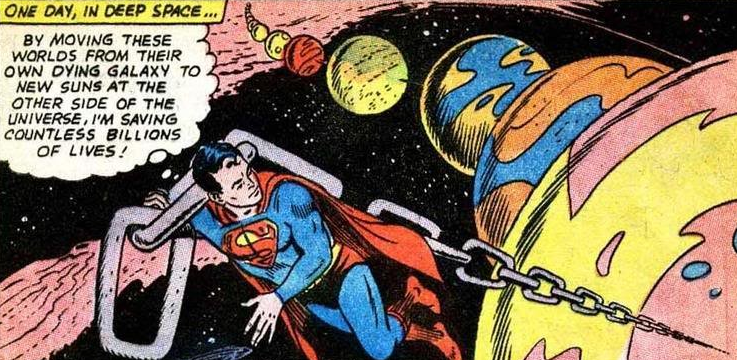
SuperTVJSA.png
Smallville got way more interesting once it included more comic book elements.
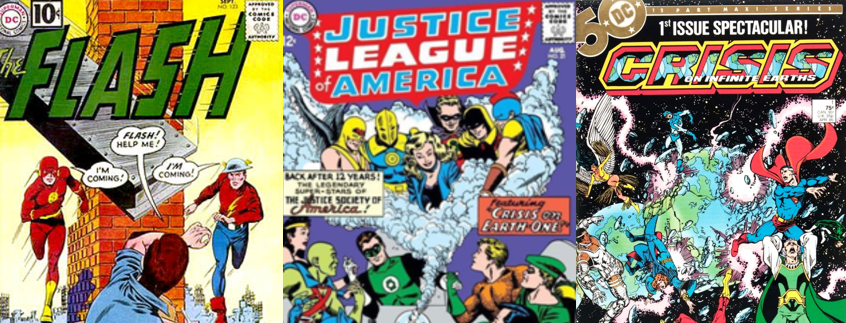
Ironically, I believe that Smallville actually did improve over time, especially by referencing and including more comic book-related stuff, but when I realised it had hit the ninth series and Clark Kent (Tom Welling) was no longer living in Smallville, was working at the Daily Planet, basically married to Lois Lane (Erica Durance), and saving lives daily in multiple variations of his eventual Superman costume, and yet despite all this he was not Superman, I was irked, to be frank. I never quite understood the logic of making a show that is about a young Clark Kent, that charts his journey from an unsure teen to the eventual saviour of humanity, and yet never actually evolved into a Superman show for the last season even though it practically was given that Clark was battling Davis Bloome/Doomsday (Samuel Witwer), of all people, and chumming around with Oliver Queen/Green Arrow (Justin Hartley). The final episode finally capitalised on this and had Clark assume his birthright to defeat Darkseid, but many were disappointed that we never got a decent shot of him as Superman. I guess they were trying to avoid degenerating into Lois & Clark: The New Adventures of Superman (1993 to 1997) but, surprisingly, I enjoyed that show as a kid – it struck a very similar balance between drama and superheroics and didn’t have half of the comic book inclusions as Smallville and, if I’m not mistaken, was pretty popular and successful at the time.

SuperTVArrow
I didn’t start watching Arrow right away.

Anyway, after Smallville ended, I watched a few re-runs and my 50/50 split of the show only increased. Simultaneously, there were persistent rumours that Warner Bros. were trying to fill the gap with a potential Batman prequel show, following a young Bruce Wayne (apparently this was even the initial pitch for Smallville but Batman was toxic at the time due to Joel Schumacher), one that charted a pre-Robin Dick Grayson, an attempt at an Arthur Curry/Aquaman and Bart Allen/The Flash spin-off, and even a Green Arrow series! Ultimately, only one came to fruition but, rather than a spin-off featuring Hartley’s Green Arrow, we got an entirely new, unconnected series depicting the origin and evolution of the Emerald Archer. Again, I don’t recall actually watching much of Arrow when it first aired as it conflicted with work and my life and such, but I did watch the first episode at least, an a few episodes here and there. My resistance to Arrow stems from the fact that Warner Bros. seem to desperately want to make a Batman television show but were unable to due to Christopher Nolan’s Dark Knight films (2005 to 2012), so they used Green Arrow as a substitute. This rubbed me the wrong way, as Green Arrow – or “The Hood”, or “The Arrow”, or “The Archer”, or “Steve” – (Stephen Amell) would frequently clash not with classic Green Arrow villains but with Batman villains – Deathstroke (Manu Bennett) was a prominent villain in the fist season, just as he had been in Smallville and Teen Titans. Now, in the comics, Green Arrow initially did start out as a rip off of Batman – he had an Arrow-Cave, an Arrow-Mobile, a kid sidekick, and even an Arrow-Signal. However, for far longer, Green Arrow has been portrayed as a street-level vigilante who targets the corrupt and those untouchable by law, frequently killing them, and protecting the “little people”. This has existed alongside the more adventurous version that was a member of the Justice League; Green Arrow’s right-wing sensibilities and strong moral beliefs often clashed with other, more conservative superheroes, and his everyday life as Oliver Queen, multi-millionaire, often facilitated his vigilante actions through urban renewals and the like. Arrow follows some of this tangent, with Queen returning to “Starling City” after being marooned on an island (and, later, in Hong Kong) and surviving against nature and a clandestine organisation using the impractical weaponry of a simple bow and arrow. Queen’s mission is to take down the corrupt of the city and avenge his father’s death, which means he kills a great deal of people in the name of the greater good, which I agree with and like – Green Arrow has often been portrayed as a slightly more morally-unhinged version of Batman and, for all their similarities, they have often clashed because of this.

SuperTVTeamArrow.png
Arrow became much more of a team-based affair.

As Arrow went on, I largely ignored it because I didn’t agree with the seeming lack of faith Warner Bros. had in the character or the series. Like Smallville before it, the show avoids naming its titular hero even though he was popularly known as Green Arrow in Smallville. I’m sure there’s the case for this, that the show is meant to show Queen’s progression from a simple vigilante to the city’s hero (things like him upgrading his tech, adopting an actual mask, and renouncing killing support this) but why not just call him Green Arrow?  Ironically, I actually dislike the Green Arrow moniker as it’s kind of redundant – he wears green and shoots arrows, no shit!  Much like Green Lantern, I have an aversion to superheroes who preface their name with a colour and much prefer the show’s moniker of “The Hood” as it’s far more fitting. I got more into Arrow as the second season drew to a close due to the inclusion of Roy Harper/Arsenal (Colton Haynes) and the series-changing events initiated by Slade Wilson/Deathstroke (Manu Bennett). With Deathstroke having practically levelled the city and Queen basically poor, the show had raised its stakes for season three. Additionally, Queen had built a tight-knit group of allies, with Roy actually adopting the suit and outfit of Arsenal to become his sidekick! After years of Batman movies dodging, avoiding, criticising, and suppressing Robin, we finally had a depiction of a young teen sidekick that fit and actually made sense. My hope is that Arsenal’s inclusion and increased exposure will relax the embargo surrounding Robin and Nightwing at Warner Bros. and allow for their inclusion in their stupidly-unconnected series of DC films.

SuperTVSHIELD
Agents of S.H.I.E.L.D. is still tenuously related to the larger MCU.

Now, a big part of the reason I avoided Arrow was also because of the growing Marvel Cinematic Universe, which eventually spread into television with Agents of S.H.I.E.L.D. (2013 to 2020). After the events of The Avengers/Avengers Assemble (Whedon, 2012) Agent Phil Coulson (Clark Gregg) is revealed to be alive and builds a team of agents to investigate supernatural, paranormal, extraterrestrial, and superhuman incidents across the globe. The main thrust of the first series was the team coming together, leaning to trust each other, and the quest for answers regarding Coulson’s resurrection. However, this soon overlapped with the emergence of Hydra agents within the Strategic Homeland Intervention, Enforcement, and Logistics Division (S.H.I.E.LD.), which crossed over with the events of Captain America: The Winter Soldier (Russo and Russo, 2014), which saw the destruction of S.H.I.E.LD. Many supporting characters, and main character Grant Ward (Brett Dalton), were revealed to have been Hydra agents, and the unlimited resources available to Coulson were stripped away by the end of season one. Simultaneously, it is revealed that Director Nick Fury (Samuel L. Jackson) used an experimental serum and procedure, derived from an as-yet-unnamed alien source (it was recently revealed to be of Kree origin), to facilitate Coulson’s resurrection – this same serum drove HYDRA double agent Dan Garrett (Bill Paxton) mad and gave him superhuman abilities. Season one also included a side plot detailing the origin of a version of Mike Peterson/Deathlok (J. August Richards), a cyborg created to assist Garrett who eventually overcame his programming. Season two features a smaller team, with new characters, who are attempting to rebuild S.H.I.E.L.D. and uncover further truths behind their pasts, and future, as Coulson continually suffers from episodes induced by the alien serum that lead him, like Garrett, to scrawl strange alien symbols.

SuperTVFlash.png
The Flash became my favourite of the DC TV projects.

Truthfully, Marvel’s Agents of S.H.I.E.L.D. is far from perfect, or great. The best things about the show are the dialogue, which is witty and clever and full of Whedon-isms, the references and inclusion of lesser-known comic books characters (again, Deathlok…Deathlok, of all people!), and the fact that it ties directly in to the largely Marvel Cinematic Universe. Events from the films are often referenced directly in the show, supporting characters often appear, and it really feels as though the show is helping to build and expand upon the Marvel Cinematic Universe even though it is highly unlikely that any of the characters featured on the show will appear in the films. As a result, the show doesn’t feel “pointless”, unlike Warner Bros.’ efforts. After guest starring in Arrow, Grant Gustin returned as Barry Allen in his own spin-off, The Flash, which I initially decided to watch over Arrow as I was pretty sure there was no way they could shoe-horn in unfitting Batman elements into the show. The Flash is, in many ways, a carbon copy of Arrow; very quickly (hah!), like Queen’s base at Verdant, Barry based his team in Scientific and Technological Advanced Research Laboratories (S.T.A.R. Labs) nd has a team of specialists and supporting characters helping him that are analogous to Team Arrow and Oliver’s associates. The principal difference is The Flash’s inclusion and portrayal of metahumans. Barry gained superhuman speed after being struck by lightning during an explosion at S.T.A.R. Labs, which resulted in a wave of radiation emanating out from Dr. Harrison Wells’ (Tom Cavanagh) particle accelerator. The wave affected many members of Central City, bestowing them with superhuman abilities, and it is up to Barry and his team to subdue or assist all of them. This is in contrast to Arrow, which largely avoids metahumans for corrupt officials, ninjas, and grounded, street-level threats. Exceptions are usually the case of serums and scientific experiments, or clandestine organisations like the League of Assassins (another Batman-orientated organisation!). The Flash aired alongside Arrow’s third season, and the two frequently overlap and interact – characters often appear on both shows, which has increased my stake in both and, alongside the fact that they both air on days I can watch them, means I can now follow both.

SuperTVGotham
I wasn’t a fan of Gotham

Alongside The Flash, Warner Bros. finally got their Batman-prequel series underway with Gotham, which follows a young James Gordon (Ben McKenzie) in a pre-Batman Gotham City. This series is completely unrelated to The Flash and Arrow, however, and the three do not occupy the same continuity. Like The Flash, however, Gotham (2014 to 2019) had numerous problems with pace, particularly in the first episode. Both debut episodes threw so much at the viewer, introduced so many characters, plot lines, and comic book references that even I, an avid comic book fan, felt overwhelmed and actually a little insulted. Arrow took its time establishing Queen, his city, and his crusade – despite how much it annoys me that he isn’t known by the right name and constantly feels like a Batman substitute, I can’t fault Arrow for pace. Like Smallville before it, the show has been around a while now and has established a tone, pace, and atmosphere and can now afford to become more “comic book” and introduce more comic book elements – Ray Palmer (Brandon Routh) debuted in season three, hinting at the possibility of The Atom appearing at some point. The Flash, however, opened by throwing everything at us all at once: Barry’s mother was killed by a mysterious man-in-lightning when he was a boy, his father (John Wesley Shipp, from the old Flash TV series!) was arrested for it, Barry was raised by Detective Joe West (Jesse L. Martin) alongside his daughter, Iris (Candice Patton), whom Barry has been in love with for years. Barry grew up to become a forensic scientist, he was struck by the lightning, went into a coma, and when he woke up, Iris was dating Joe’s partner, Eddie Thawne (Rick Cosnett), and Barry secretly began working with Dr. Wells and his team to subdue metahumans…oh and, also, there’s all the mystery surrounding Wells’ true motivations.

SuperTVPenguin.png
Gotham‘s Penguin doesn’t really do it for me.

Think that’s a lot to take in in one episode? Try Gotham, which debuted with the murder of Bruce Wayne’s (David Mazouz) parents, Gordon’s initial partnership with the corrupt detective Harvey Bullock (Donal Logue), the tension between Gordon and his girlfriend regarding both his police work and her past as a lesbian, the suspicious of the Major Crimes Unit about Gordon, the length and breadth of Gotham’s corruption, the introduction of Selina Kyle (Camren Bicondova) as a cat-like street urchin, Edward Nygma (Cory Michael Smith) as a riddle-spouting forensic scientist, Oswald Cobblepott (Robin Lord Taylor) as a limping “Penguin” who angers his mob bosses, and Wayne’s stern-yet-protective butler Alfred Pennyworth (Sean Pertwee). Gordon, moved by Bruce’s plight, pledges to find his killer and is set up to kill a patsy, the father of a girl who greatly resembles Pamela Isley/Poison Ivy, by the mob. The mob consists of Carmine Falcone (John Doman) and Salvatore Maroni (David Zayas), who have both the police department and the mayor on the payroll, but is principally represented by “Penguin’s” boss, Fish Mooney (Jada Pinkett Smith), who is scheming to usurp Falcone’s power. “Penguin” learns of this and Gordon is forced to kill him to prove his loyalty. Gordon fakes the act, leaving “Penguin” to embark on a revenge plot and casting doubt on Gordon’s stature as a police officer. Meanwhile, young Bruce has decided to turn detective and investigate his parent’s killing, believing it to be a conspiracy, and also begin to train himself not to feel fear.

Damn, that is a lot to take in in one episode!

Thankfully, The Flash calmed it down after an episode or two and established a comfortable routine: Barry acts awkward with Iris and has come kind of self-doubt, a metahuman emerges, fight, Wells acts suspicious, the end. This “monster-of-the-week” formula dominates the show even to this day, but the show mixes it up with side-plots concerning the mysterious death of Barry’s mother, Iris’s obsession with “The Streak” (the show took quite a while to brand Barry as the Flash yet…despite all of his metahuman villains have carried their names) and their later romance, Wells’ suspicious nature, the presence of mysterious evil speedsters, exploring the multiverse, etc. Gotham, on the other hand, was far more violent and apparently attempting to channel police-procedural shows like CSI: Crime Scene Investigation (2000 to 2015), only with multiple references to Batman and Batman villains thrown at us in the most unsubtle way possible every episode. My continuation with the show was based on Sean Pertwee, whose presence as Alfred made the show somewhat bearable but I can’t say that I was too upset when it was finally concluded.

SuperTVLegends
Man, screw this show!

Warner Bros. also produced Supergirl (2015 to 2021) and DC’s Legends of Tomorrow (2016 to present). Easily the weakest offerings of their television line-up, DC’s Legends of Tomorrow is a direct spin-off of Arrow and The Flash, featuring characters introduced shows. However, the show is largely loud, overly complex, and suffers from even more pacing issues. Not only was the first episode a convoluted mess that rushed through its character introductions to set up the on-going narrative, every episode is a rush of plot conveniences, hammy dialogue, and poor scripting. In the first season, for instance, the team travel through various points of time and space in an effort to save the future from Vandal Savage (Casper Crump) but…if they have a time machine, why bother wasting time going back to various points to prevent him accumulating his power when they could travel back to just before his takeover and kill him then? Indeed, in the case of DC’s Legends of Tomorrow, the only stand-out characters for me were Leonard Snart/Captain Cold (Wentworth Miller) and Mick Rory/Heat Wave (Dominic Purcell), whose gruff, anti-hero ways and pre-existing partnership set them apart from the rest of the stilted, awkward group. Both actors chewed the scenery and stole the show at every opportunity, and Mick gained a decent character arc where the heroic sacrifice of his partner made him more accepting of his otherwise more naturally heroic partners.

SuperTVSupergirl.png
Supergirl was fun but a little too annoying for me.

Supergirl, however, is a horrific mess. I have times where I can be pretty pro-feminist but this show really grinds my gears. It seems as though Supergirl is incapable of conveying strong, independent female characters without making them soft, overly effeminate, or lesbians. Seriously, this show is rife with explicit lesbianism; even heterosexual female characters carry a lesbian vibe from them. This boggles my mind; Arrow, a show largely aimed more at the male demographic, doesn’t feature a load of gay males or in-your-face sexual tension between the males so why does a female-driven show feel the need to do so? Also, throughout the first season, Kara Zor-El (the titular Supergirl, portrayed by the sweet, cute, and incredibly likeable Melissa Benoist) is constantly playing second fiddle to her more famous cousin (later portrayed by Tyler Hoechlin); Supergirl is constantly having to prove herself and to live up to Superman’s legacy and constantly compared to him, and judged by how much more impressive he is. I find this quite disturbing, to be honest. Today’s society is much more female-dominated and driven than ever before; woman are in positions of power and have far more equality than ever before, yet Supergirl prefers to send the message to young girls that they will constantly be held down by those around them until they prove that they are just as good, if not better, than males. Plus…she constantly keeps fiddling with her glasses! Even when she is around people who are aware of her duel identity!

SuperTVArrowverse
One big happy family.

Additionally, although set on an alternative Earth, Supergirl has crossed over with The Flash (and, by extension, its other shows) by utilising the multiverse aspects introduced in season two of The Flash , unlike Marvel, whose shows all take place within the larger cinematic universe, none of Warner’s DC properties tie in, or relate in any way, to their own cinematic universe that tentatively began with Man of Steel (Snyder, 2013) and continued with Batman v. Superman: Dawn of Justice (ibid, 2016). In fact, Warner Bros. included the Flash in their upcoming cinematic line-up and, as they often have concerning Green Arrow’s inclusion, have consistently gone on record as stating that the character’s will be entirely separate from those on television. Similarly, Gotham does not serve as a prequel to Ben Affleck’s Batman; as a result, we have a situation similar to when Superman Returns (Singer, 2006) came out whilst Smallville was still on the air in that conflicting versions of the same character will co-exist at the same time onscreen. For us comic book fans, this is not a problem: comic book aficionados are well versed in handling multiple, conflicting portrayals of the same characters, but the general audience…not so much. Indeed, Warner Bros. often reference the DC multiverse when justifying this decision, which is crazy beyond belief as the DC multiverse is a concept so confusing that they’ve had to destroy and rebuild it about three times in the last five years! Surely Arrow’s popularity alone, which arguably has helped to facilitate a DC Cinematic Universe, justifies its place in the oncoming cinematic canon?

SuperTVSHIELD2.png
A bit more continuity between TV and film would be nice.

This ties back in to my early remark about Marvel’s Agents of S.H.I.E.L.D. not feeling “pointless”. Sure, the show has flaws. Sure, the characters may not reintegrate with the Marvel Cinematic Universe for some time, if at all. But events matter. What happens in a Marvel Studios movie will impact another character, and those events may often be referenced in Marvel’s Agents of S.H.I.E.L.D. When the Arrowverse collides in their crossovers, it has little impact on the big-screen offerings, which also never really factor into their television counterparts in a meaningful way. This is what separates my enjoyment of current superhero television shows: continuity. It’s important for consistency, it’s important to maintain audience (especially the generally, non-comic book audience), and it’s important for integrity. It’s why I can forgive Marvel’s Agents of S.H.I.E.L.D.’s flaws, because the show is expanding upon and a direct part of Marvel’s larger cinematic universe, and it’s why I can forgive Arrow constantly portraying “The Arrow” as a bastardised version of Batman, because it’s integrating with The Flash is the closest thing we have to continuity between DC properties at the moment. Whether or not the films will offer an equal alternative remains to be seen.