Movie Night: Hellraiser (2022)

Released: 7 October 2022
Director: David Bruckner
Distributor:
Hulu / Paramount+
Budget: $14 million
Stars:
Odessa A’zion, Brandon Flynn, Drew Starkey, Adam Faison, Goran Višnjić, and Jamie Clayton

The Plot:
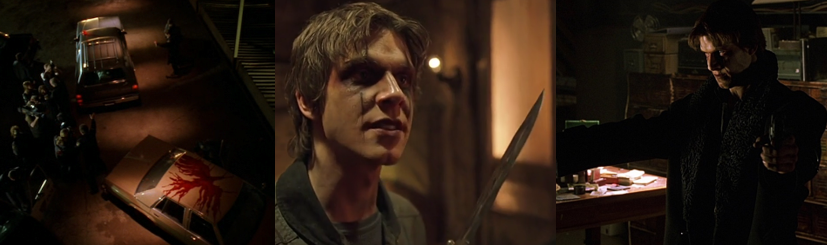
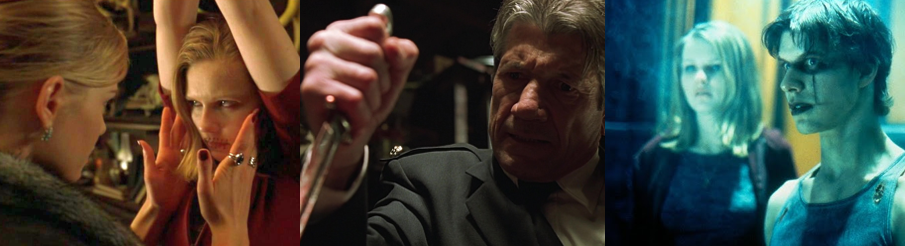
Recovering drug addict Riley McKendry (A’zion) steals a mysterious puzzle box that summons the Cenobites, who demand six sacrifices. When her brother, Matt (Flynn), is taken by the Cenobites, Riley attempts to uncover the truth behind the box and avoid her fate.

The Background:
In 1986, British novelist, playwright, and filmmaker Clive Barker published volume three of his Night Visions anthology series, which included the novella The Hellbound Heart, a horror story heavily influenced by his time as a hustler and experiences in S&M clubs. Just as Barker was being heralded by iconic horror author Stephen King as “the future of horror”, The Hellbound Heart caught the attention of Hollywood and, unsatisfied by previous adaptations of his writings, Barker insisted on writing and directing the adaptation himself despite his lack of experience. Thanks to the macabre Cenobites and the alluring presence of actor Doug Bradley, Hellraiser proved to be a critical and commercial hit, kick-starting a horror franchise that, unfortunately, failed to live up to the original and quickly descended into direct-to-video releases that removed all subtlety and nuance from the concept. For years, Barker distanced himself from later entries, particularly the rushed “ashcan” sequel/remake that was so awful that slasher icon Bradley refused to participate for the first time. The series finally got a shot in the arm with the generally well-received Hellraiser: Judgment (Tunnicliff, 2018) and, after years of fighting to regain the rights to produce a much-needed reboot, Barker finally got his wish to revitalise and return to the franchise when this remake was announced in 2019. Although Bradley turned down a chance at a cameo to preserve his legacy, the real story here was the announcement that his iconic role as “Pinhead” would be played by a woman, a decision that caused a ridiculous amount of backlash that even Bradley admonished. Specifically said to be drawing more from Barker’s original novella and film and with make-up effects by Josh and Sierra Russell, this new Hellraiser made its debut exclusively on streaming platforms like Hulu and Disney+. Hellraiser made a modest $12,640 and garnered mostly positive reviews. Critics lauded the return to form for the redesigned Cenobites and praised it as the best entry in years, despite criticisms of the characterisations. The film’s success was enough to warrant the production of a sequel, though development of an unrelated television series continued to tread water.

The Review:
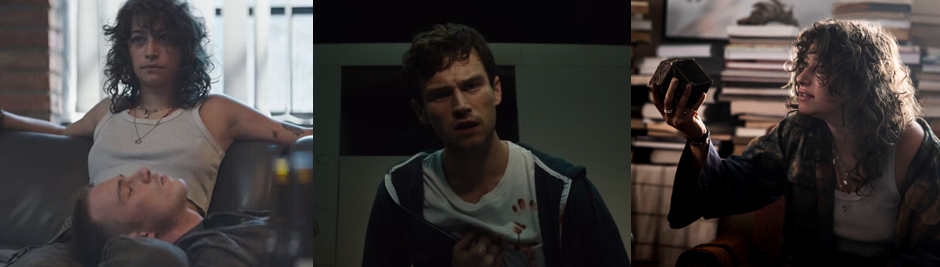
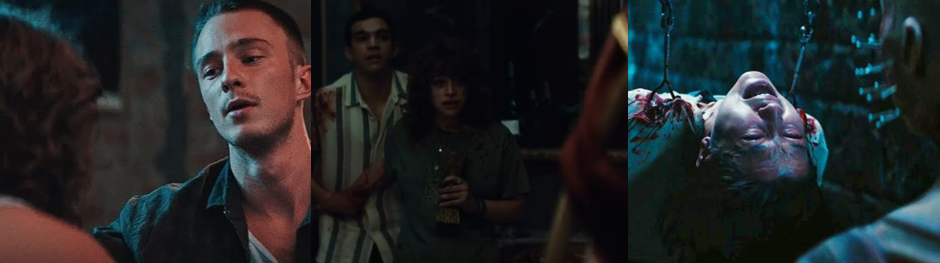
At first glance, Hellraiser has much in common with another horror remake, Evil Dead (Álvarez, 2013). Not only is it more of a “re-imagining” of the source material, but the main plot revolves around a damaged, recovered addict. Riley McKendry has wasted most of her life to drink and drugs but, after putting her brother, Matt, his boyfriend, Colin (Faison), and their friendly roommate, Nora (Aoife Hinds), through hell with her mood swings and antics, she’s finally on the right path towards sobriety. However, for the long-suffering Matt, there’s still a problem: Riley’s boyfriend, Trevor (Starkey), who she met while going to group therapy and following the “12 Step” program. Not only is Matt immediately suspicious of Trevor because of this and because he so obvious looks like a drug dealer and user, he’s also worried that Riley mixing with a recovering addict will only drag her down when Trevor inevitably relapses. Riley naturally lashes out against Matt’s judgements; whatever trauma drove her to addiction is clearly deep-rooted within her and she latches onto Trevor as a source of escape and sexual comfort. Indeed, when Matt suddenly vanishes after being cut by the mysterious puzzle box, the first thing Riley does is find comfort in Trevor’s arms and it’s in him, not her friends, that she confides in and turns to to help her figure out what the deal is with the box. Speaking of which, it’s Trevor’s fault the puzzle box even ends up in Riley’s hands in the first place. When she mentions that she needs to find a “better job” to start paying her share of the rent and get Matt off her back, Trevor encourages her to help him break into an abandoned warehouse and swipe whatever’s inside, said to belong to some rich asshole, and split the profits. Unfortunately for her, and all of them, what they find is a strange, gold-and-brass puzzle box that immediately enthrals Riley. However, when she returns home drunk and gets into a blazing row with Matt, her brother finally snaps and throws her out, leaving her wandering the city streets late at night in an alcohol and pill-fuelled daze.

Troubled Riley is desperate to solve the mysterious puzzle box when her brother vanishes.

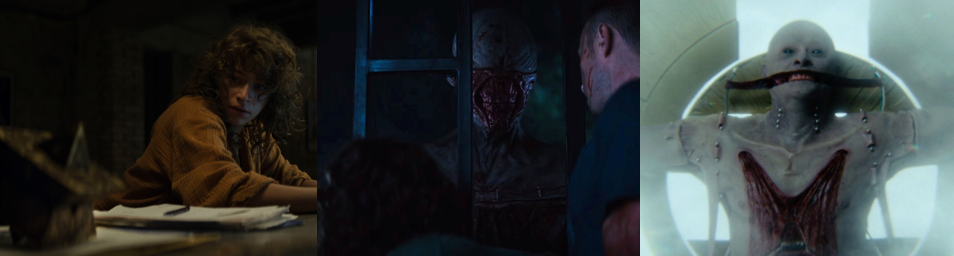
Riley finds solace in a playground. There, her head spinning from the drugs, she tinkers with the puzzle box and is amazed when it starts to move and shift, changing form in her hands. Unlike hapless stooge Joey Coscuna (Kit Clarke) in the film’s prelude, Riley avoids a nasty cut from the box’s blade but is suddenly overwhelmed by a bout of nausea and the distant tolling of bells. As she drifts in and out of consciousness, Riley spies a horrific, scarified creature –The Gasp (Selina Lo) – who demands that Riley offer a blood sacrifice since she missed being sliced. Riley’s thoughts turn to Matt who, either sensing his sister’s plight or enchanted by the Cenobites’ power, heads out to find her, suddenly convinced she’s in danger. Though Matt finds her half out of it in the playground, he accidentally stabs himself on the box and, when he goes to clean up, the Cenobites hungrily abduct him. When Colin and Nora accompany the ambulance crew in finding Riley, they’re all driven out of their minds with worry by Matt’s disappearance. None of them believe Riley’s claims that it’s tied to the box, believing she was off her head at the time. Frustrated, terrified, and burdened by guilt (to say nothing of being haunted by visions of the Cenobites), Riley turns to Trevor to get answers. Though he claims to believe her and shelters her, Trevor’s clearly disturbed by the box. When he tries to dispose of it, Riley launches into a tirade, obsessed with understanding its secrets so she can find her brother and atone for her awful behaviour. Reluctantly, Trevor accompanies Riley to an assisted living facility, where they question former lawyer Serena Menaker (Hiam Abbass), who’s listed as the owner of the warehouse they found the box in. She reveals that box belongs to disgraced corporate mogul Roland Voight (Višnjić). She also exposits some titbits about the box, freaking Riley out as she describes a lot of the same stuff she’s been seeing, and then forcibly tries to take it for herself, ending up cut in the process and being claimed by the Cenobites. Riley then uses the power of the internet to read up on Voight, a hedonistic millionaire who disappeared and was presumed dead, and fixates on breaking into his fortress-like mansion, no matter how hard Trevor tries to dissuade her.

Despite Trevor’s concerns, Riley gets her friends mixed up in her nightmarish situation.

While Matt takes an instant dislike to Trevor, primarily out of concern for Riley’s wellbeing, his assumptions are a little off the mark, at least initially. Trevor’s a surprisingly attentive miscreant; he genuinely seems to care for Riley, even accidentally letting slip that he loves her during sex, and enables her wild claims at every turn. He does, however, try to inject some logic into her increasing mania, which she doesn’t appreciate. No matter how often he tries to dissuade her from investigating the box and Voight, Riley persists like a rebellious child and Trevor’s forced to tag along to keep her safe, seemingly presenting himself as the opposite of the bad influence Matt believes him to be (even if Trevor does encourage her to steal the box in the first place). Matt doesn’t get much screentime but he’s a pivotal plot point since Riley’s entire journey is first about finding and making amends with him, and then about saving and resurrecting him. It’s clear he loves his sister and desperately wants her to turn her life around, but he’s grown tired of her reckless and self-destructive ways and can’t help but lose his patience when she repeatedly throws her life away with Trevor, drink and drugs. Matt’s spectre haunts Riley as much as the Cenobites; she dreams of him, hears him calling for help, and is even confronted by his presence in Voight’s mansion. This is potentially a Cenobite trick since he asks, “Do you want me to be?” when she asks if it’s really him. Embracing him and tearfully apologising for her actions, Riley’s horrified when she catches a glimpse of Matt’s true, skinless form. Reading Voight’s notes teaches Riley about the “gifts” offered by the Cenobites’ “God” and she becomes obsessed with solving the box and bringing Matt back using the box’s dark magic. Matt’s disappearance devastates Colin, who struggles to wrap his head around what’s happened and understand Riley’s babbling about the box and its demons. Then there’s Nora. Nora’s kinda just…there. She’s friendly enough and clearly has Riley’s best interests at heart, but she’s mainly there to add to the body count once they all end up trapped in Voight’s mansion.

Voight desperately seeks to summon the malformed Cenobites and relieve his pain.

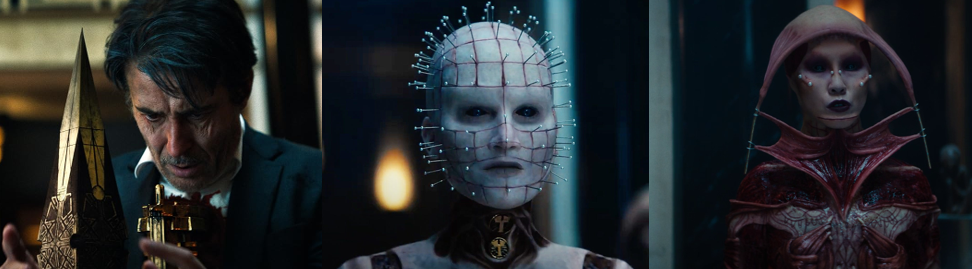
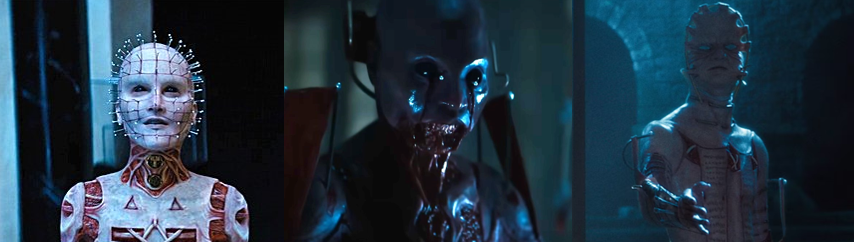
The Cenobites are very different to what we’ve seen before. Gone is the bondage leather and dark robed façade, replaced with rendered, pinky-white flesh. It’s a startlingly alternative look, making them more like mutilated angels than gothic demons. They walk around completely naked, exposed muscles and weeping genitals on full display, unashamed of what they perceive as their “beauty” and “perfection”. While I’m not against a drastic redesign for the Cenobites and they each have enough similarity to their predecessors to be identified as suitably Clive Barker-esque, I do think a slightly more traditional look should’ve been used for the pin-headed Hell Priest (Clayton). As is, the Priest is easily mistakable for the Gasp from a distance, and I just feel a being of their stature and authority would’ve benefited from some slick, gory black leather robes. Still, Clayton exudes a cold menace akin to that of the legendary Doug Bradley in bringing this androgynous creature to life. The Hell Priest is ruthlessly stoic, demanding Riley make blood sacrifices – or sacrifice herself – to appease their carnal desires. The Hell Priest may speak in riddles but they’re brutally honest, promising gifts like “power”, “sensation”, and “resurrection” to those who complete ethe puzzle box. Voight, however, learned too late that the Cenobites’ idea of “pleasure” is twisted and sadistic, offering only exquisite suffering, relishing in the agony of their victims. A decadent, self-serving millionaire who thinks nothing of sacrificing others to the Cenobites’ lusts, Voight relished an audience with their God, Leviathan, desiring to experience true sensation. He was rewarded with a horrendous device lodged in his chest that continuously twisted his nerve endings, keeping him in perpetual agony and unable to die. Desperate for relief, Voight spent the next six years trying to summon the Cenobites once more, finally manipulating and bribing Trevor into bringing him a suitable patsy while he lurked in the hidden passageways of his mansion. The box is also very different, sporting six “configurations”, each with a different solution and thankfully being more taxing to solve than just…rubbing it like in previous Hellraiser films. Interestingly, neither the box or the Cenobites care who is sacrificed to its power, allowing Riley to stab and summarily tear apart the gruesome Chatterer (Jason Liles) and concoct a scheme to use Voight’s specially prepared mansion to do the same to the remaining Cenobites and escape her predicament.

The Nitty-Gritty:
It’s inaccurate to describe Hellraiser as a “remake”. It’s more akin to a re-imagining or an all-out reboot since its ties to The Hellbound Heart and Barker’s original adaptation are tenuous, at best. Indeed, this isn’t a suburban tale of hedonistic sex, violence, and lust; instead, it’s a rumination on an addict’s guilt and torment. The characters are all original to the series, with only Voight being analogous to one of Barker’s characters, and the situation is very different. Thanks to the changes made to the Cenobites and the puzzle box, there’s a persistent sense of dread hanging over Riley. She’s not braining unsuspecting bankers to sacrifice them to her lover, or even her brother. Matt may be trapped in what we’ll call “Hell” for simplicity’s sake and sport a skinned form, but he doesn’t escape the Cenobites nor does he truly appear after being taken. Instead, Riley has a ticking clock hanging over her head as she desperately tries to figure out what the box is and how it works to find a way around the Hell Priest’s demands for a sacrifice. The box has a mesmerising power, seemingly calling to any who see it and compelling them to mess with it. Once cut, its victims become dazed and confused and reality shifts, allowing the Cenobites to arrive and claim their victim. When Riley drags her feet appeasing the Hell Priest, the mutilated cleric forcibly cuts her, delivering a final ultimatum and spurring Riley to venture to Voight’s ominous mansion. Although Voight claims that the box is one of a kind, I feel there’s enough leeway here to imagine this is one of many puzzle boxes (we’ve seen copies before, after all) and you could easily think of Hellraiser as a re-quel without too much effort (the Hell Priest has changed forms before, as well). Still, the links to the original are strong, both visually and thematically. The Cenobites favour barbed chains, we see their spinning column of human flesh, Hell is represented as a cold, stone maze, Leviathan (a welcome and unexpected return) is visually similar to what we’ve seen before, the Hell Priest grimly and expertly delivers some of Doug Bradley’s most famous threats and, above all, Ben Lovett’s haunting score draws upon Christopher Young’s previous work, the music now diegetically linked to the puzzle box and the coming of the Cenobites.

The Cenobites return to their roots as disturbing, terrifying, and alluring creatures.

Of course, it wouldn’t be a Hellraiser film without some sex and gore, and there’s plenty of that here. Riley throws herself at Trevor whenever she’s stressed to try and block out her pain and guilt, only to be tormented by visions of the Cenobites or face the judgemental looks of her friends and family. Voight has a fully stocked sex dungeon and is said to be a sadistic hedonist, though it’s very much a case of “tell, don’t show” when it comes to exploring the depraved things he got up to before solving the puzzle box. Hellraiser wisely takes its time building up to the reveal of the Cenobites and their power; Joey’s torn apart in the background and Matt vanishes offscreen with a scream. When the Cenobites appear, they’re initially visions that bombard the drug-addled Riley. However, they soon appear in all their scarified glory, callously observing and patiently stalking their prey, savouring every moment. Of course, we have the familiar Hell Priest with their signature pins, and the ghastly Chatterer, but the Gasp is somewhat analogous to the Female Cenobite (Grace Kirby) as well. Like the Hell Priest, the Gasp is eloquent and vindictive, taking a perverse pleasure in Serena’s pleas for forgiveness just as the Priest delights in tormenting the strung-up Nora. There’s also the strangely fish-like Weeper (Yinka Olorunnife), the Asphyx (Zachary Hing) which wanders around blindly, its vision obscured by its own taught flesh, a disturbing pregnant Cenobite (Gorica Regodić), and, briefly in the finale, the Masque (Vukašin Jovanović), a Cenobite whose face has been removed from its skull! While their primary method of subduing and torturing their victims is their hooked chains, the Cenobites also employ metal wire, pins, and sheer brute force when necessary. Flesh tears and wounds spurt with gore as the Cenobites impale and torment their victims, stringing them up like puppets, drinking their blood as they bask in their agony, and finally tearing them apart. Perhaps the most memorable is poor Nora, who’s stabbed by Voight and drawn into Hell while in the back of a van. It’s a disturbing visual, seeing the back of the van extend into the Labyrinth’s stone corridors. While Riley catches a glimpse of Nora’s predicament, she’s too late to help her and all that’s left is a splatter of blood.

Riley’s research proves key to evading the Cenobites, who further reward Voight’s carnal desires.

Riley pours through Voight’s diaries and learns of the different gifts offered by the puzzle box, believing that she can bring Matt back by asking for his resurrection. When she learns that that the Cenobites are happy to slaughter one of their own as a sacrifice, Riley desperately plots to use Voight’s mansion to lure in the remaining demons and stab them with the box, sparing herself and her friends. While Voight has transformed his mansion into the perfect trap for the Cenobites, keeping them and their chains at bay with a series of gates and doors, Riley’s horrified when Voight, half-mad from his constant torment, lurches from the shadows and stabs Colin to solve the box. She’s even more enraged to learn that Trevor was working for Voight all along, though is numb to his claims that he tried to warn her off and blind to the fact that he did everything he could to keep Riley and her friends from being harmed. When Colin gets tied up in the Cenobites’ metal wire and prepared for a filleted, Riley first begs the Gasp to spare him then offers Trevor as a substitute, stabbing him in the gut when he tries to retrieve the box from her and sparing Colin from a gruesome fate. Meanwhile, Voight finally gets the audience with God he so longed for when Leviathan descends from the tumultuous skies. Confronted by the Hell Priest, Voight demands to be relieved of his pain so he can finally die and is distraught to learn that his gift cannot be taken away, merely exchanged. Impassively stunned that Voight is displeased by his agony, the Hell Priest offers to grant him that which he has truly coveted his entire life: power. Voight readily accepts and is giddy with euphoria when the archaic device falls from his chest and his wounds heal, restoring him and freeing him from his pain. His elation is short-lived, however, as he’s summarily impaled by Leviathan’s gigantic chain and dragged into the heavens to be granted the Cenobites’ greatest gift. With Voight taken away to be brutally transformed into a new Cenobite, a process that sees his flesh peeled back and his body and mind horrifically altered by Leviathan’s unknowable lights, Riley has her own confrontation with the Priest. Although she’s offered her brother, Riley realises that Matt is gone and that the Cenobites gifts are twisted promises and choses to live with her guilt. The Hell Priest is pleased since choosing a life of regret with bitter and brief suffering is almost as torturous as their barbed chains. The Cenobites then vanish and Riley leaves the puzzle box behind, her and Colin wondering if they made the right choice in the end.

The Summary:
Despite my childhood trauma watching Kirsty Cotton (Laurence) unwittingly summon the Cenobites, I’ve become quite accustomed to the Hellraiser franchise. I consider the first the best, have a soft spot for the fourth, and have long hoped for a dark, gritty, atmospheric remake that returns to the ambiguous and intriguing notions raised in the first film rather than muddying the concept with overtly religious nuances that don’t really fit with the franchise since the “Hell” depicted isn’t the Judeo-Christian version. It took a while but, thankfully, we finally got there! Hellraiser may be as far removed from the source material as the other sequels, but it captures its spirit far better than any previous entry. The Cenobites are once again unknowable, strangely alluring creatures that callously mix pain and pleasure into a cacophony of vindictive torture and, while they appear as twisted angels and are referred to as demons, they’re not tied down to religious constructs. I love their redesign, and the changes made to the box; the torment Riley feels trying to figure it out before they take her and her friends is palpable and presented the narrative in a fresh, new way. Riley was a compelling protagonist; damaged and flawed, she’s ripe for the Cenobites’ manipulations, but she’s constantly trying to find ways to outsmart them. Her desire to be reunited with Matt drives her forward and her arc is learning to let him go, to live with what she’s done and, hopefully, grow from it. While Nora and even Colin weren’t much to shout about and Goran Višnjić was hamming it up a bit as Voight, the characters were decent enough and it was a blast seeing them be so cruelly tormented by the Cenobites. Hellraiser has a lull in the middle and a few performance flaws but, overall, is a fantastic reimagining of the concept. It mixes and matches elements from the book and the various films into a bold new presentation that finally makes the Cenobites scary again and leaves an indelible impression that’s on par with the original movie, finally delivering a Hellraiser worthy of the name.

My Rating:

Rating: 4 out of 5.

Great Stuff

Did you enjoy this reimagining of Hellraiser? How did you think it compares to The Hellbound Heart, the original adaptation, and the other sequels? What did you think to the redesign of the Cenobites and Jamie Clayton’s performance as the Hell Priest? Did you like the changes made to the puzzle box and Cenobite lore, and the influences from the other films? What did you think to Riley, her issues, and her desire to resurrect Matt? Which of the Hellraiser sequels was your favourite, if any, and would you like to see a sequel to this movie? Whatever your thoughts on Hellraiser, feel free to share them below and go check out my other horror content on the site!

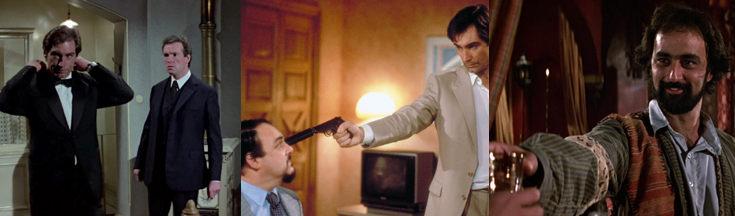
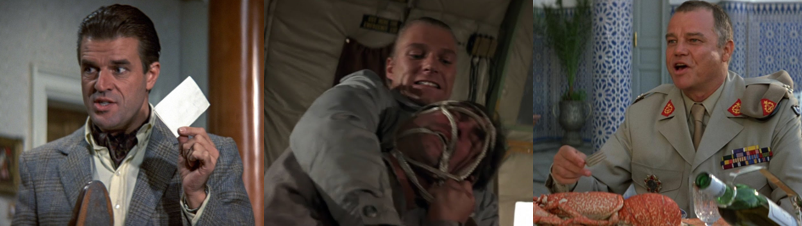
Movie Night [00-Heaven]: The Living Daylights


To celebrate the release of Dr. No (Young, 1962), the first of the James Bond movies (Various, 1962 to present), October 5th is known as “Global James Bond Day”. This year, I’m spending every Saturday commemorating cinema’s longest-running franchise, and one of the most recognised and popular movie icons.


Released: 31 July 1987
Director: John Glen
Distributor: United Artists
Budget: $40 million
Stars: Timothy Dalton, Maryam d’Abo, Jeroen Krabbé, Joe Don Baker, Art Malik, and John Rhys-Davies

The Plot:
British secret agent James Bond/007 (Dalton) helps KGB officer Georgi Koskov (Krabbé) defect and learns that a policy of assassinating defectors has been instated by new KGB head Leonid Pushkin (Rhys-Davies). After being betrayed by Koskov, Bond’s only lead to him – and a greater plot involving shady American arms dealer Brad Whitaker (Baker) – is naïve cellist Kara Milovy (d’Abo), whom he must coerce into helping him track Koskov down before it’s too late.

The Background:
MI6 super spy James Bond was created by writer Ian Fleming in 1953 based on his time as a Navy intelligence officer. The character was most famously brought to life by Sean Connery, kicking off an unparalleled cinematic franchise. When Connery tired of the role, Roger Moore stepped in and made it his own as a softer, gentler Bond. Though Moore was beloved in the role, his movies took a critical and financial downturn after twelve years and seven films. Moore stated he left the franchise due to aging out of the role, and the search was on for the new James Bond. Although San Neill was initially considered, it was actually Pierce Brosnan who was first cast based on his work on the television series Remington Steele (1982 to 1987). However, the announcement caused renewed interest in the show, meaning contractual obligations would keep Brosnan from the role until 1995 and Timothy Dalton (eventually) agreed to sign on in his place, eager to separate himself from Moore’s portrayal with one more in line with the source material. Although the film’s title was taken from Octopussy and The Living Daylights (Fleming, 1966), very little material was taken from the book beyond the opening sequence, with the film initially planned to include recurring KGB General Anatol Gogol (Walter Gotell) in Pushkin’s role, but Gotell was too sick to handle such a large part. The film saw the return of Bond’s iconic Aston Martin, and complex (and dangerous) mid-air stunts made more troublesome by unfavourable weather. Perhaps due to Bond’s nearly-five-year absence, The Living Daylights outperformed Moore’s last film with its $191.2 million box office (actually making it more profitable than five of Moore’s movies), but was met with mixed reviews. Many both praised and criticised Dalton’s more gruff and serious Bond; while the stunts impressed, the middling plot and unappealing villains drew criticism and, while some have argued that it is an under-rated entry, others maintain Dalton’s second attempt was more fitting for his version of Bond.

The Review:
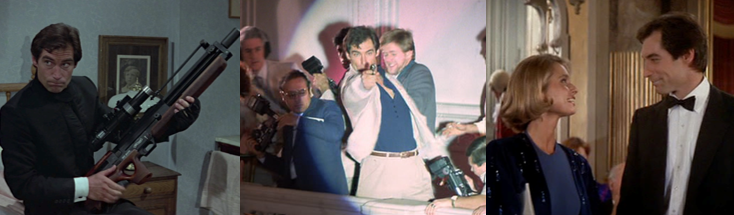
Everyone has their favourite Bond, and everyone has the Bond of their generation; sometimes they don’t align, and sometimes people prefer aspects of one Bond to another. For me, Pierce Brosnan was both my Bond and the Bond of my generation thanks to 007’s lengthy absence from cinema screens during my childhood. Yet, when I first started getting into the Bond franchise, I had an affinity for the suave, light-hearted take offered by Roger Moore. It might be surprising to learn, then, that I’ve always been a fan of Timothy Dalton’s edgier, more serious take on the character. While this was influenced by his short time in the role and thus often being underappreciated, when I later researched Bond for my Master’s degree, I developed a greater appreciation for his surprisingly faithful portrayal of the character, who’s often a pretty dark character. The differences between Dalton and Moore are apparent right from the start: he takes the deaths of his fellow agents very seriously (almost personally), and throughout the film he’s shown to have more of an edge than his predecessor. He is visibly frustrated with Kara throughout the film and barking his displeasure and just exuding a feeling of exasperation at having to hold himself back because of etiquette or duty. At the same time, Dalton shows a softer, caring side; he begrudgingly goes out of his way to retrieve Kara’s cello and enjoys wooing her while on the move. Yet, he has a ruthless, biting delivery and always seems to be on the verge of snapping into a violent rage, which makes him seem volatile and unpredictable, qualities that I find really enjoyable after the previous flawless, almost superhuman incarnations of the character.

Dalton gives Bond an edge, making him a gruff and blunt character despite his natural charisma.

The Living Daylights coyly toys with the audience in its opening sequence by masking Dalton’s appearance, making the unveiling of the new Bond a dramatic reveal that’s designed to explicitly say, “This is the new guy!” To me, this is plainly establishing that The Living Daylights is supposed to be a soft reboot of the franchise, but this does get decidedly muddled. “M” is still portrayed by Robert Brown, who previously portrayed Admiral Hargreaves but was presumably promoted during Moore’s era, and “Q” is still portrayed by Desmond Llewelyn, suggesting Dalton’s Bond is the same character as the previous iterations. Yet the sudden youthful appearance of both M’s secretary, Miss Moneypenny (Caroline Bliss), and Bond himself lends credence to this being a soft reboot, one that retains many of the previous actors and in which it can be implied that Bond went on similar missions to his predecessors. I think this is probably what The Living Daylights is going for but it’s understandably a little muddled since reboots ad re-quels weren’t part of the mainstream cinema lexicon at this time. This is a Bond with very little time for quips and glib remarks; sure, he does make them but they’re drier than the desert sand. He also tends to be late, flippant, and easily distracted especially by his vices, (booze and women, for example). This, as much as Bond’s arrogance and his standoffish, “lone wolf” persona irks the likes of Saunders (Thomas Wheatley), who prefers to go by the book rather than improvise like 007. Yet, Bond’s reputation as “the best” precedes him; Koskov only agrees to defect if Bond personally protects him, yet Bond has little regard for his orders. Indeed, he seems to welcome the idea of being fired for his insubordination and is portrayed more as a man living on the edge, facing the threat of death every day, and preferring to take the most direct course of action to achieve his objectives. Bond’s instincts do earn him the disapproval of M, meaning he’s reprimanded for sparing Kara, and his disbelief at Koskov’s claims about Pushkin, a man Bond knows quite well, is dismissed after the General is spirited away by KGB enforcer Necros (Andreas Wisniewski). Although Bond refuses to hunt down and kill Pushkin, despite his name being on his Smiert Spionam, he agrees to take the assignment only so he can more efficiently circumvent M’s orders and follow his gut, which tells him to investigate the sniper he wounded.

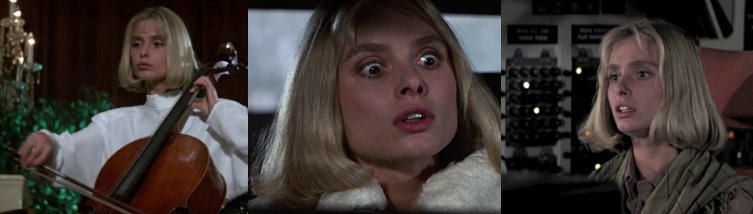
Naïve cellist Kara fails to impress with her wide-eyed awe and abject cluelessness.

Kara catches Bond’s ear (and eye) almost immediately; he picks her out of her entire choir and admires his beauty and talent, but even he is stunned when she pulls out a sniper rifle. Recognising that the girl has been setup as a decoy, Bond purposely shifts his aim to only graze her since he “only kills professionals”, angering Saunders but showing that Bond has the wherewithal to spot a patsy. Intrigued by her, Bond follows her to discover her exact involvement in the narrative, only to find she’s simply a naïve girl blinded by love and loyalty. Of course, Bond’s instincts are dead right and it turns out Koskov manipulated her to make his defection appear genuine, but Kara’s so infatuated with Koskov that she defends him, even when interrogated by Pushkin and the KGB, and is visibly excited at the knowledge that his “friend”, Bond, has been sent to take her to him as promised. Naturally, Bond is perfectly happy to manipulate her feelings by assuming the role of a concerned mutual friend and keeping her on the move, placated with false promises, half-truths, and sightseeing, in the hopes of luring Koskov out. Bond assumes an almost paternal relationship with her, even requesting two bedrooms and treating her to lavish gifts and experiences, all under the guise of looking after her in Koskov’s absence. Despite her love and devotion to Koskov, Kara is smitten by Bond, whose mask slips the more he gets close to her, but Koskov’s influence runs deep. All it takes is one phone call and a few kind words and Kara is convinced to drug Bond, believing him to be a KGB agent. However, even as he’s crippled by the poison, Bond reveals Koskov’s true nature and that he spared her life while Koskov wanted her dead. Kara realises she’s been taken for a fool when Koskov hands her over to Colonel Feyador (John Bowe) as Bond’s accomplice and, while she shows some fighting spirit in the action-packed finale, remains little more than a wide-eyed, cheerfully enthusiastic (and, ultimately, extremely forgettable) hinderance.

Despite his abrasive nature, Bond finds allies in high, low, and the strangest of places.

At the start of the film, Bond is paired with Saunders and immediately gets on his bad side by being late, distracted, and overly critical of Saunders’ carefully planned out extraction plan for Koskov. Saunders goes by the book and thinks very little of Bond’s cavalier attitude; his anger at Bond deliberately missing Kara turns to humiliation when Bond usurps his operation, showcasing a field awareness and experience that paints Saunders as ineffectual and bumbling, but is convinced by Bond to investigate Koskov. While Saunders comes through and reveals Koskov’s partnership with American arms dealer Brad Whitaker (Baker), and he and Bond find a mutual respect, it indirectly leads to his death as Necros murders him before Bond’s eyes, enraging the already uptight 007. Although he’s a new character to the franchise, Pushkin is said to be a former acquaintance of Bond’s. Bond, ever the remarkable judge of character, smells a rat when Koskov claims that Pushkin has designs on being the next Joseph Stalin but is driven to confront him after Saunders’ death. Holding Pushkin at gunpoint and callously using his mistress, Rubavitch (Virginia Hey), as a distraction to subdue his guard, Bond demands answers and prepares to execute Pushkin as per his orders. However, Bond is convinced to stage an elaborate public execution of Pushkin to try and draw Koskov out, which attracts the local authorities and Bond’s his old ally, Felix Leiter (John Terry), who’s also been monitoring Whitaker’s operation and later helps him breach the arms dealer’s fortified base in the finale. While escaping from his cell in Afghanistan, Bond casually frees Kamran Shah (Malik), who turns out to be the leader of the rag-tag Mujahideen rebels and helps them flee the Soviet air base. Though he shelters them and is grateful for their assistance, Kamran initially refuses to help Bond due to the insurmountable odds and finds his resolve amusing but is convinced to provide him with what little arms and aid they can offer when he learns of the greater threat posed by Koskov’s plot.

Koskov allies with the psychotic Necros and militant Whitaker for a complex scheme to usurp power.

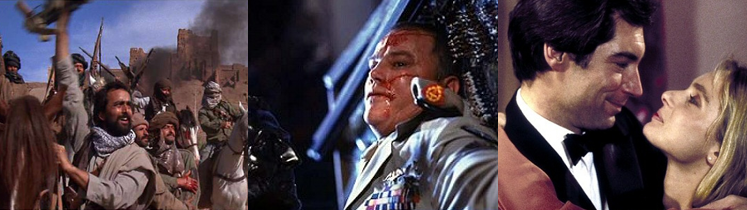
Koskov is initially portrayed as a willing defector to the British government; a terrified, almost bumbling Soviet General who greatly admires Bond, much to 007’s chagrin (though they do share an affinity for fine foods and wines). In exchange for amnesty, he offers information on Pushkin that paints the General as a threat not just to the free world but to Western spies through his Smiert Spionam initiative. Koskov claims Pushkin is targeting spies as part of a diabolical scheme to create political unrest due to a mad lust for power, but it’s simply a ruse conjured by Koskov to coerce Bond into eliminating his chief rival. Of course, this deception isn’t uncovered until later in the film, meaning Bond plays right into Koskov’s hands in his frantic search for the turncoat General, which leads him into conflict with Pushkin and the revelation that they’ve all been fooled by the same man. Koskov. Koskov’s primary enforcer is Necros, a psychopathic KGB assassin who stands out like a sore thumb with his large physique and yet fools everyone with his disguises and accents, Necros makes an immediate impression by infiltrating the highly secure MI6 state house, garrotting victims and tossing explosive milk bottles, and applying a brutality and surprising theatricality to his methods, fully capable of holding his own when his cover’s blown and killing without remorse. Instantly recognisable by his headphones and that annoying song that plays through them, Necros acts as Bond’s physical threat. Easily able to take and dish out punishment, Necros embodies the callous ruthlessness of the “Red Menace” yet takes pride in his methods and is also said to be part of a revolutionary operation. Koskov’s backed by would-be conqueror Brad Whitaker, whose military credentials and credibility are questioned by Pushkin, who terminates their arrangement after learning of his disrepute. An aggressively patriotic nutjob with a fascination for warfare and military tactics, Whitaker has his own private war museum all setup with model recreations of history’s most infamous battles for him to study and even life-like mannequins of him dressed as infamous military leaders (or “surgeons”, as he views them), much to Pushkin’s disgust. Although a blowhard who’s more talk than action, despite his short temper, Whitaker proves a surprisingly threatening opponent for Bond thanks to his proficiency with cutting edge weaponry, his use of theatrics to disorientate 007, and being garbed in “the latest body armour” to essentially resemble a futuristic riot cop.

The Nitty-Gritty:
We might have a spirited, aggressive new Bond but, sadly, the trademark title sequence is still as lacklustre as ever. I know it’s kind of blasphemous to say but very few of the early title sequences wowed me thanks to featuring bland font and surreal, often nonsensical visuals of women and guns, and The Living Daylights is no exception. Sure, the song by a-Ha is a banger but I’m not sure what all the sultry women holding guns and projected 007 logos is supposed to be suggesting, or their relevance to the film’s plot. Still, it’s as traditional as the opening gun barrel sequence and many of the usual Bond cliches are here, too, including a mission debriefing from M, overt flirtation with Miss Moneypenny, and Q’s continued exacerbation with Bond’s childish antics. Indeed, Dalton’s Bond may have more of an edge to him, but he still relishes in winding Q up with his antics, though I’d say that the age gap has slightly altered their relationship into something more akin to a rebellious son acting out against a father figure. Tonally, The Living Daylights can be a little jarring. For all Dalton’s grouchy edge, there are strange moments of levity (no doubt holdovers from Moore’s era), such as his ally, Rosika Miklos (Julie T. Wallace), using her curvaceous girth to distract from Koskov’s escape, the escape itself (which sees the General blasted through a gas pipeline), and the usual shenanigans at Q branch with “ghetto blasters” and trap sofas. While I’m not against comedy in Bond films, and it’s nowhere near as bizarre as that seen in Moore’s outings, it does noticeably clash with the more serious focus on Smiert Spionam. Indeed, “Cold War” tensions are perhaps more rampant than ever here as the lines between ally and enemy are blurred through deception and subterfuge.

Despite being a more grounded Bond, the film still features some wacky and inventive stunts.

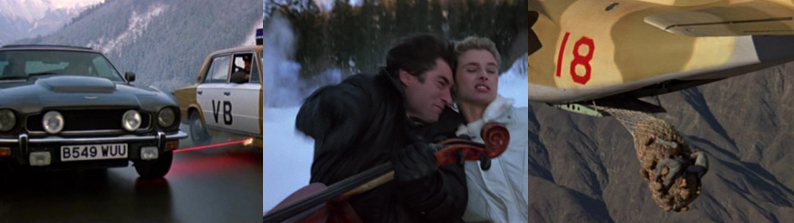
Dalton certainly looks the part in sharp suits and Bond’s trademark tuxedo, and wielding 007’s trademark Walther PPK, but his entire demeanour is one of disinterest, frustration, or childish banter, especially on the job (he brazenly smokes in the MI6 offices, appears visibly frustrated with the daily red tape, and takes pleasure whenever he can since his job is so dangerous). Despite Q branch being as wacky as ever, Bond’s field gadgets are noticeably toned down in The Living Daylights to keep things more grounded. He has a fancy looking but otherwise entirely unremarkable pair of binoculars (especially compared to Saunders’ night vision goggles), a practical tuxedo jacket that turns into a stealth suit with a simple strip of Velcro, yet Q’s built a firing ghetto blaster, Bond lugs around a massive sniper rifle at the start, and Q provides him with a whistle-operated explosive device (with built-in skeleton key) that seems more impractical than a simple grenade. The Living Daylights sees Bond back behind the wheel of an Aston Martin, this time the sleek, sexy V8. Yet, in another example of the film’s inconsistent tone, Bond’s car is outfitted with a bevvy of gadgets that include a laser that severs a pursuing police car from the rims, hidden missile launchers in the front bumper, bulletproof glass, and even ski attachments and a self-destruct! Amusingly, Bond not only ends up escaping the Czech police by driving across a frozen lake and blasting over their blockade with a rocket boost (the naïve and awestruck Kara too exhilarated by all the gunfire and explosions to question his implausibly explanations) but also evades his pursuers and crosses into Austria by using Kara’s cello case as a makeshift sledge! After “assassinating” Pushkin, Bond makes a dramatic escape across the rooftops of Tangier, and the third act culminates in a massive shootout between the Mujahideen and the Soviets and Bond fighting with Necros while dangling precariously out the back of a cargo plane in mid-flight!

Despite an explosive finale and showdown with Whitaker, this was a dull first outing for Dalton.

As you expect from a Bond movie, The Living Daylights is quite the globe-trotting adventure. Thanks to Bond bouncing Kara all over the place to rendezvous with Koskov, the film journeys to Vienna, Austria, Whitaker’s personal museum in Tangier, and ends in a Soviet air base in Afghanistan. Bond is taken there by Koskov, who plans to turn him in for Pushkin’s “murder” and be heralded a hero, installing him and Whitaker into a position of wealth and power. While travelling with Mujahideen, Bond also learns that Koskov and Whitaker have been buying opium from them to sell for a profit to fund their arms dealings with the Russians, thus putting the Mujahideen and many others at considerable risk. With Kamran’s help, Bond smuggles some C4 into the bags of opium, ending up trapped in the cargo plane when his flimsy disguise fails him. While the Mujahideen provide a distraction, Bond commandeers the plane and takes off with Kara onboard, only for Necros to leap on at the last second and attack Bond in mid-flight. Massively outmatched by the larger foe and facing a ticking clock thanks to the C4, Bond’s forced to improvise and send the cruel assassin plummeting to his death, disposing of the bomb (and saving the Mujahideen from the Soviet forces in the process), and inexplicably escaping the crashing plane in a jeep when it runs out of fuel. With Felix guiding him, Bond then confronts Whitaker at his museum who surprises Bond with his tenacity, tricks, and advanced weaponry; pinned down and outgunned, Bond gets the upper hand with Q’s quirky explosive gadget, felling Whitaker with one of his own statues. Having narrowly escaped a fiery death at the air base, Koskov swoops in and tries one last deception, but Pushkin doesn’t buy it and has Koskov arrested (and, presumably, sentenced to death). In the aftermath, back in Vienna, Kara receives a standing ovation for her solo performance, which M, General Gogol, and Kamran and his soldiers also attend to offer their congratulations. Although upset by Bond’s absence due to a mission, Kara is overjoyed to find him waiting in her dressing room, with a veritable forest of flowers, for a more personal celebration.

The Summary:
I definitely feel like Timothy Dalton is perhaps the most under-rated James Bond. It’s certainly jarring going from the charming, whimsical Roger Moore to the more gruff and serious Dalton, but, though he really does capture the edge of the character as conceived in the books (at least the ones I’ve read), it’s difficult for Dalton to really impress here. Not only is The Living Daylights bogged down by a pretty middling and confusing plot, but it also still contains a lot of the same over the top elements that made Moore’s run paradoxically so enjoyable and so fantastical. Just as it didn’t suit Moore to be channelling Sean Connery’s meaner spirit, so too does it not suit Dalton’s strengths to be in some of these ridiculous situations, turning a witty quip into a spiteful bark and clashing with the more grounded nature of the film. Still, he is one of my favourite Bond’s; I love how he seems so tense and ready to snap at any moment, his disregard for the rules, and this sense that he does what he does because it’s his job, but that he also takes it very personally. Sadly, Kara didn’t really impress me as a Bond Girl; she’s just kind of there and this naïve, lovesick girl who I have a hard time believing Bond would fall for beyond a passing fancy. Koskov and Whitaker were more enjoyable with their bombastic, almost cartoonish personalities, but Necros really stood out for me. Barring that annoying song that’s always accompanying him, I think he was a really good physical foil for Bond, and I would’ve liked to see more of him. There are some decent stunts and set pieces here, but I find The Living Daylights quite tedious. The tone is all over the place, the plot isn’t that engaging, and I always find myself tuning out near the third act. Dalton was capable of more, and his next film leaned into his strengths a bit more, but this was a pretty disappointing first outing for him and probably doesn’t help bolster his reputation as a Bond actor.

My Rating:

Rating: 2 out of 5.

Could Be Better

Are you a fan of The Living Daylights? Where does it rank against the other James Bond films for you? What did you think to Timothy Dalton’s edgier take on James Bond? Did you find the tone jarring and the plot a bit dull? What did you think to the collusion between Koskov, Whitaker, and Necros? Were you impressed by the film’s stunts, or did they clash with the more serious atmosphere? Which Bond actor, film, story, villain, or moment is your favourite? How are you celebrating Global James Bond Day today? Whatever you think about The Living Daylights, or James Bond in general, feel free to leave a comment on my social media or drop your thoughts down below.

Back Issues: Doom

Story Title: Untitled (or, perhaps, simply “Doom” or “Kneed Deep on the Dead!”
Published: May 1996
Writers: Steve Behling and Michael Stewart
Artist: Tom Grindberg

The Background:
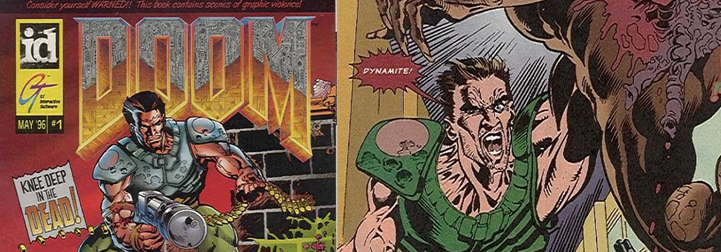
First-person shooters (FPS) existed before Doom (id Software, 1996) but, thanks to having been ported to every console and format available, the genre was basically defined by Doom, which inspired a craze of copycats and popularised online “Deathmatches”. The brainchild of id co-founder and lead programmer John Carmack, Doom’s deathmatches were so popular that it caused servers to crash and it was installed on more computers than Windows 95! Doom’s success inspired both controversy and sequels, but also some ancillary media. Of course, there was the critically-mauled live-action adaptation, but there was also a one-shot comic book created a part of a 1996 giveaway. An obscure piece of merchandise that was as gory and over-the-top as its source material, Doom was a true collector’s item for fans of the game that fetches a high price for those unlucky enough to have missed out winning a copy.

The Review:
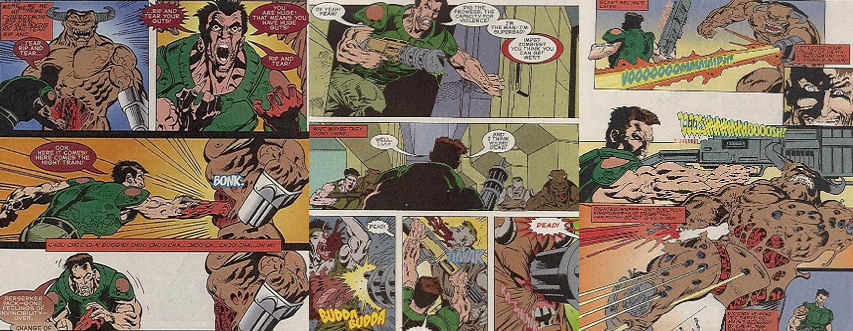
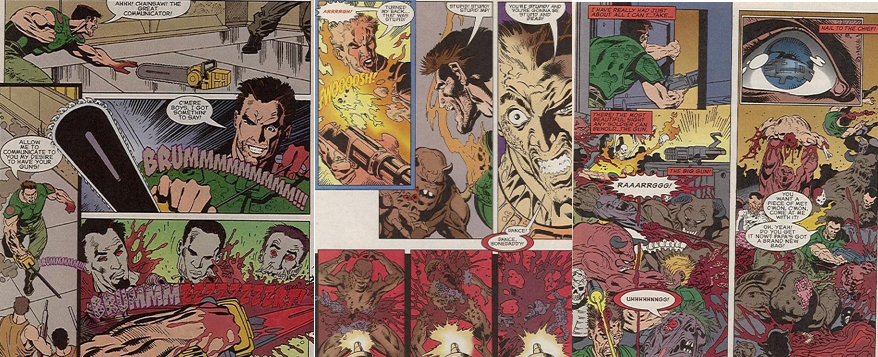
The Doom one-shot comic book doesn’t waste any time getting to the advertised “scenes of graphic violence”, beginning with the unnamed Union Aerospace Corporation (UAC) marine (henceforth referred to as the “Doomguy”) in the midst of a Berserker rage. Doomguy’s bloodlust is so overpowering that even his inner monologue reads like a man half-addled by insanity. Enraged and empowered, he believes himself to be invincible, untouchable, and effortlessly rips a roomful of Imps, zombies, and other assorted demons to shreds with his bare hands. Driven to a gibbering madness, the Doomguy screams at his felled foes, clutching a severed spinal cord, and eagerly kicks a door down in search of his next victim. Despite coming face-to-face with a mammoth Cyberdemon, the Doomguy launches into a full-frontal attack, determined to “rip and tear” the horned demon’s guts out, only for his punch to have no effect. The Berserker rage quickly leaves him, returning his thoughts and speech bubbles to normal and turning him to more rational ideas, such as fleeing for his life in such of “a gun […] a big gun”. Running head-first into a roomful of gun-packing zombies, the Doomguy grabs a convenient nearby chainsaw and gets to slicing, severing their heads with one swipe and taking a double-barrelled shotgun for himself. Faced with a pitch-black room and fresh out of torches (or “flashlights”), the Doomguy fires off a few shots to light his way before finding a light switch and revealing his errant shots have blown holes in a fresh crop of demonic nasties. Poking around in their corpses, the Doomguy is elated to upgrade his arsenal to a hefty chaingun, which he readily turns on an Imp that catches him from behind with a burst of flame.

Despite his maniac rage, the Doomguy desperately seeks a big gun to destroy the demons.

Suitably emboldened, the Doomguy guns down more Imps and zombies, daring any and all challengers to try their luck against him. Even when he’s tackled to a sewer full of radioactive ooze by a slobbering Pinky, the Doomguy is ceaseless in his slaughter, tearing through the bullish demon with round after round and leaving it little more than two dripping halves. Covered in radioactive goop, the Doomguy takes a moment to decry humanity’s inability to safely dispose of such dangerous materials and our predication for poisoning future generations with our reckless ways….then notices his gun’s out of ammo and realises the environment is the least of his concerns. Taking a convenient teleporter, the Doomguy materialises right in front of a couple of Cacodemons. Luckily, a plasma rifle is lying right there, allowing him to fry the grinning spheres and flee into a storage room full of barrels of toxic waste. When he’s blindsided by an invisible Spectre, the Doomguy lights up the barrels, blowing the demon to pieces, before finally spotting his goal: the Big Fucking Gun (BFG). All that stands in his way is a slaughter of bloodthirsty demons currently engaging in in-fighting. However, the Doomguy simply shrugs his way through the fracas and tearfully claims his prize, strolling over to the Cybderdemon and taking it out with one shot from the massive cannon. Having proven his superiority over the demonic masses, the Doomguy stands victorious and prepares to head to Earth and take out the rest of the invading creatures, his resolve boosted by the knowledge that “righteous” power in the hands of a “strong man with the biggest, baddest gun in the world” can restore order to chaos.

The Summary:
Doom is a very brief and shallow reading experience. In many respects, it’s the perfect adaptation of the source material, which honestly had the simplest plot you could ask for. Rather than wasting time establishing the setting, the plot, or even delving into the Doomoguy’s life before things literally went to Hell, Doom just drops us right into the middle of the action and barely lets up across its scant page count. Driven into an insane bloodlust by the Berserker rage, the Doomguy’s thought and comments dwell on nothing other than his physical superiority and his lust for demon blood. How did he get in this state? What does the Berserker power-up look like in this context? Who knows…and who cares? All that matters is that the Doomguy is powerful enough to render skin and muscle from bone…until the power fades and leaves him desperately seeking the biggest gun he can find. Though his thoughts are no longer clouded by the Berserker rage, the Doomguy is no less crazed. When he’s not stealing other hero’s catchphrases, he’s flip-flopping between childishly simple comments and strangely eloquent mediations on the nature of humanity, the struggle of good against evil, and our destructive nature, especially regarding our environment. These polarising character changes paint the Doomguy as either out of his mind or suffering from a personality disorder and there’s little compassion or nuance to the Doomguy beyond these conflicting moments. He offers no explanation of what’s happened or how, doesn’t seem to care that his fellow marines are either being slaughtered or have been turned into zombies. He is simply a ravenous, crazed lunatic giving a taste of what the first two Doom games have to offer players.

A brief, bloody story that offers a tease of the mayhem available to players.

In this regard, Doom works quite effectively. You get a sense of what one of the most iconic power-ups does to a player, see the chainsaw and double-barrelled shotgun in action, and witness the Doomguy retrieving bigger, better guns from corpses or the environment. The battle for the BFG is a simple affair for the Doomguy, one that effectively brings the story and any further conflict to a close due to the gun’s awesome power (here sadly represented as merely a streak of energy that shreds holes in the Cyberdemon). Similarly, Doom showcases some of the game’s most common and memorable enemies and even gives hints on how to defeat them. The Doomguy is surprised by an Imp, which pops up out of nowhere and tosses a fireball just like in the games. A Pinky tackles him out the blue and he expresses brief concerns about the dangers of toxic waste, two things that can sap your health in seconds in the game. A Spectre also blind-sides him and the Doomguy demonstrates the effectiveness of using explosive barrels as an assist and, most notably, he showcases the intelligence of fleeing from an unwinnable fight until you have a more powerful weapon. In fact, the only gameplay mechanics Doom doesn’t delve into are the collection of keys and maze-like structure of the games, but the bare basics of the Doom experience are on offer, however briefly. While I didn’t really care for the Doomguy’s characterisation (an omniscient narrator talking us through things would have been better than the traditionally mute avatar gnashing his insanity all over the pages), the depiction of blood and gore satiate my needs as a Doom fan. It’s not an especially deep or complex story, but Doom does an effective job of advertising the first two videogames, though you’re not missing much if you’ve never flicked through its obscure pages.

My Rating:

Rating: 2 out of 5.

Could Be Better

Were you lucky enough to snag a copy of Doom? What did you think to the Doomguy’s characterisation? Did you enjoy the gore and monster selection on offer? Do you prefer it when the Doomguy is mute? Would you like to see more Doom comics be published? Whatever your thoughts on Doom, drop a comment below and go seek out my other Doom reviews.

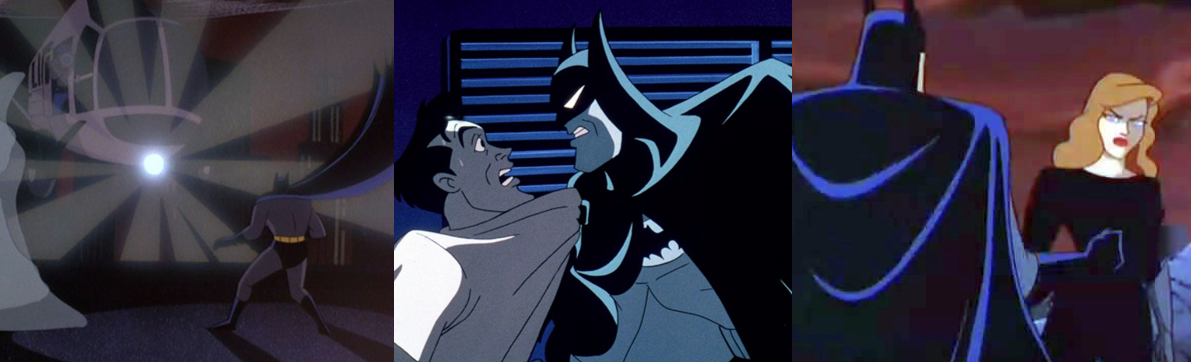
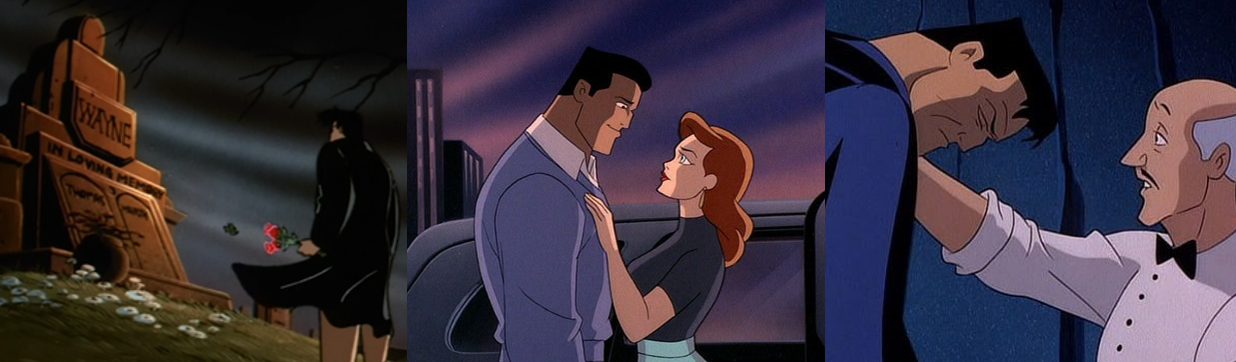
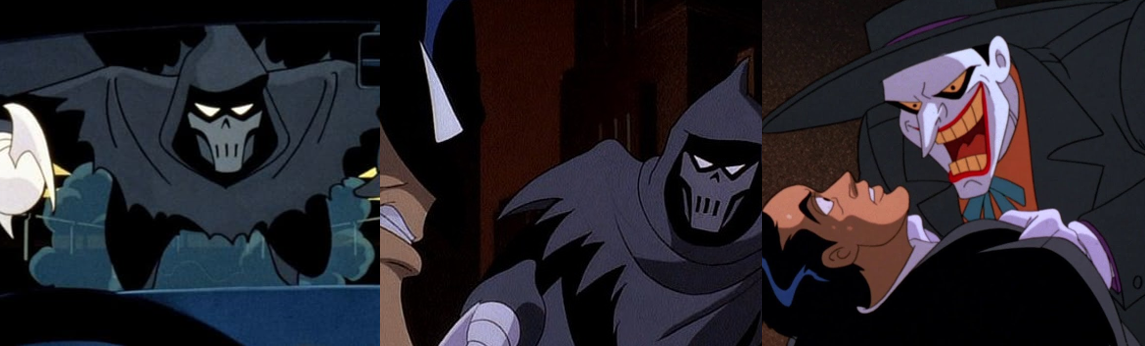
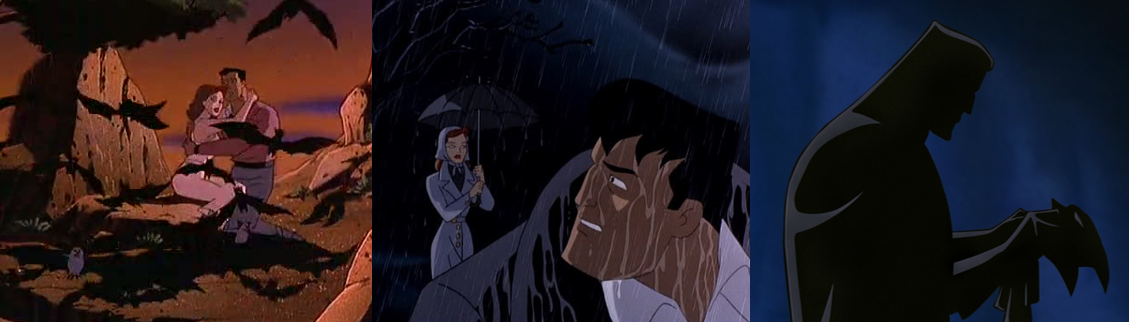
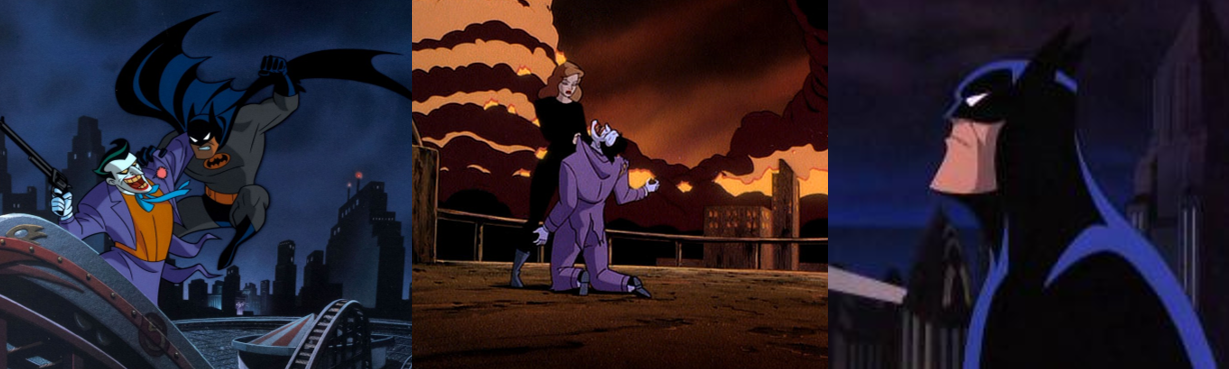
Movie Night [Bat-Month]: Batman: Mask of the Phantasm


In the decades since his first dramatic appearance in the pages of Detective Comics, Bruce Wayne/Batman has become a mainstream, worldwide, pop culture icon. The brainchild of writer Bob Kane, Batman was brought to life by artist Bill Finger and has been a popular staple of DC Comics and countless movies, videogames, and cartoons over the years. So, as today is “Batman Day”, I figured this was a perfect excuse to spend every Saturday celebrating comic’s grim and broody vigilante.


Released: 25 December 1993
Director: Eric Radomski and Bruce Timm
Distributor: Warner Bros.
Budget: $6 million
Stars: Kevin Conroy, Dana Delany, Hart Bochner, Bob Hastings, Efrem Zimbalist Jr., and Mark Hamill

The Plot:
Early into his crimefighting career as the Batman, Bruce Wayne (Conroy) finds mobsters being slain by a mysterious and vicious, Grim Reaper-esque vigilante “The Phantasm” (Stacy Keach). In trying to uncover the Phantasm’s identity, Batman reconnects with his lost love, Andrea Beaumont (Delany), and uncovers a terrible connection between the two.

The Background:
Artist Bob Kane may have dreamed up the idea of a new masked crimefighter to capitalise on the success of Clark Kent/Superman’s debut, but it was the long-suppressed efforts of artist Bill Finger that the “Bat-Man” became such an iconic figure. Decades later, the likes of Dennis O’Neil sought to correct the Batman’s image following the gloriously camp (and incredibly popular) 1960s television show, but the release and relative success of Batman (Burton, 1989) and Batman Returns (ibid, 1992) saw renewed interest in the character. Consequently, Bruce Timm, Paul Dini, and Eric Radomski spearheaded a new animated series influenced by both films that became one of the most beloved and influential cartoons of its era. Batman: The Animated Series aired eighty-five episodes between September 1992 and 1995 before being succeeded by twenty-four episodes of The New Batman Adventures (known as The Adventures of Batman & Robin in the United Kingdom) between 1997 and 1999, but its initial success convinced Warner Bros. to task Alan Burnett with writing a full-length animated feature. Heavily influenced by Batman: Year Two (Barr, et al, 1987), the film was set to feature a Grim Reaper-like counterpart to Batman while also acting as something of an origin story for both the Dark Knight and his long-standing nemesis, the Joker. Filming was completed within eight months, and Warner Bros. made the last-minute decision to release it theatrically. Although this negatively impacted its box office return, Batman: Mask of the Phantasm made up for this in home media sales and is widely regarded as one of the best superhero films ever made. Critics praised the presentation and score, the slick animation, and its mature themes, and it remains one of the quintessential adaptations of the character for many Batman fans.

The Review:
I watched Batman: The Animated Series as a kid, alongside a host of other popular cartoons at the time, but my memories aren’t massively clear. This is a general statement of my childhood in this regard, and I think it’s because I usually slept in at the weekends and didn’t get up until after a lot of the big cartoons had already been on, then I’d spend the rest of my time eating, playing videogames, or watching the same video cassettes over and over. Still, Batman: The Animated Series definitely made an impression on me. It was dark, surprisingly violent, and probably the most readily available incarnation of Batman since it didn’t involve buying any books or comics, so it was massively exciting when this animated feature aired on television for the first time or you saw the VHS available for purchase. The film begins in present day Gotham City, where Batman has established himself as a nocturnal vigilante but is still early enough in his career to large be considered an urban myth. As a result, Chuckie Sol (Dick Miller) has no qualms about conducting his business in the dead of night, which naturally means his money laundering deal is interrupted by the Batman. Although Chuckie slips away with his counterfeit money, he’s intercepted by a mysterious, Grim Reaper-like figure we now know as the Phantasm and so intimidated by the spectre that he drives out of the parking lot to a violent death.

The mystery of the Phantasm puts Batman in the frame, but their true identity may surprise you!

Thanks to the Phantasm, and the testimony of bystanders, Batman is fingered for Chuckie Sol’s death and councilman Arthur Reeves (Bochner) wastes no time publicly declaring Batman a violent vigilante who needs to be brought to justice. When Commissioner Jim Gordon (Hastings) remains adamant that sensationalist claims that Batman has snapped and gone on a killing spree are against Batman’s very nature and washes his hands of the entire debacle, Reeves personally leads numerous unsuccessful attempts to apprehend the Dark Knight. Batman is more concerned with analysing a piece of Chuckie’s windshield, which is stained by chemical residue from the Phantasm’s smoke, and investigating the graveyard where Buzz Bronski (John P. Ryan) was killed. Batman: Mask of the Phantasm does a wonderful job of depicting Batman’s detective skills and it’s a nice change of pace from all the thrilling action, chase, and fight sequences to follow his investigation into the murders. Additionally, there are two pressing mysteries in the feature: the identity of the titular Phantasm and the connection between the mobsters left dead in their wake. Of course, these end up overlapping but there’s a decent attempt to throw some red herrings our way. Reeves, Andrea’s father Carl (Keach), and Andrea are all potential suspects but it’s the latter who turns out to be behind the cloak and hand-scythe of the Phantasm. There’s an argument to be made that this isn’t too surprising given we’ve never heard of Andrea before this film, but the stature and physicality of the Phantasm definitely helps to keep this a dramatic reveal at the finale. Unlike the Batman, the Phantasm isn’t above killing; Andrea utilises theatricality to equal Batman, appearing to appear and disappear in a cloud of smoke, brandishes a dangerous scythe-like gauntlet, and is garbed in a heavy-duty armoured suit that makes her more than a match for Batman’s skills and gadgets when they inevitably come to blows.

Kevin Conroy delivers another stellar performance as Bruce is torn between his vow and his heart.

While Michael Keaton may have set the bar for live-action portrayals of Batman, make no mistake that Kevin Conroy remains the standard for depictions of Batman. Any actor looking to take on the iconic role must depict his three dominant personas: Public (Bruce Wayne, socialite and playboy), Private (Bruce Wayne, brooding and melancholy), and Vigilante (the grim and stoic Batman) and Conroy perfectly nails all three of these. When Bruce is attending functions and banquets, he’s a suave and smooth-talking ladies’ man known for being extremely generous with his family’s wealth, hands-on with charities and opportunities from growth and employment in Gotham, and for stringing along a seemingly endless parade of bimbos and lusty women. At home, in both the solitude of Wayne Manor and the sanctity of the Batcave, this public mask slips, allowing Bruce to confide in his faithful butler and father-figure, Alfred Pennywoth (Zimbalist Jr.), and is the closest he gets to being truly honest with anyone. And, of course, under cover of night, he stalks the criminal underworld as a theatrical vigilante, and Conroy expertly depicts the differences in each of these personas and situations with subtle changes to his tone, line delivery, and inflections that really went a long way to making this version of Batman one of the most well-realised, complex, and layered interpretations of the character. This really comes to the forefront here thanks to repeated flashbacks to an earlier time in Bruce’s life where he struggled with how to make good on the vow he made to avenge his parents’ death by tackling the criminal scum that took their lives. At this point, he’s still an angry, directionless young man whose vigilante debut goes sideways because, while he has the physical means to overpower even armed crooks, he’s at a disadvantage because he’s seen as just a man, rather than a force of darkness and justice (as he puts it: “They weren’t afraid of me!”) While brooding at their gravestone, he crosses paths with the beautiful Andrea Beaumont. Though she comes across as dismissive and aloof, she’s actually intrigued and somewhat taken by him since he has all this wealth and privilege but always seems so melancholy. As she’s also lost someone, her beloved mother, the two bond over their shared grief and, when she comes to visit him, she impresses him with her combat prowess and the two begin a whirlwind romance.

As if the mysterious and brutal Phantasm wasn’t enough, the Joker shows up to steal the show!

Bruce is so taken by Andrea that he questions his vow and contemplates a life of happiness as a benevolent entrepreneur with her by his side. He is therefore devastated when she suddenly rejects his proposal and leaves the city, forever setting him on a path of grim vigilantism. When Andrea returns to Gotham some years later, in the present day of the story, Bruce is a fundamentally changed man. A chance encounter between her and Batman accidentally reveals his true identity to her, and she greets the Batman with a cutting hostility when he’s forced to question her as part of his investigation into the recent killings (delivering a biting jibe about how he’s controlled by his parents). Buzz Bronski, a mob associate of Chuckie’s, is the Phantasm’s next target; his henchmen see him chased by the cloaked figure and crushed to death under a gravestone and mistake the “Angel of Death” for Batman, which causes a media sensation. Startled by the murders of his associates, the decrepit Sal Valestra/The Wheezer (Abe Vigoda) fears for his safety and turns to the Joker (Hamill) for protection. As if touching upon Batman’s origins wasn’t enough, Batman: Mask of the Phantasm thus provides a glimpse into the background of the typically mysterious Clown Prince of Crime. Although not named as such here, the Joker was once Jack Napier like in Batman, but we also learn that he was once a chauffeur and assassin for the mob before taking his dive into disfiguring acid. While I appreciate the effort to flesh out the Joker’s backstory a little, and the film does a decent jump of bringing him in late into the runtime, I can’t help but feel like the Joker’s inclusion was a little forced and unnecessary. It’s as though the filmmakers didn’t quite trust the intriguing mystery of the Phantasm, the glimpse into Bruce’s past, or the narrative of Batman being hunted by the police and felt they had to shoehorn the Joker in to make things more exciting.

The Nitty-Gritty:
Of course, I’d be doing Batman: Mask of the Phantasm a disservice if I didn’t mention the absolutely haunting score from the late, great Shirley Walker. Having collaborated with composer Danny Elfman for Batman, Walker was the perfect choice to evoke the same melancholic, gothic undertones of Burton’s blockbuster reinvention of the character, and she’s at her absolute best here. The sweeping, operatic score really gives Gotham City an ominous, looming character, punctuates the action, and makes the more poignant moments of the film all the more heart-breaking and that’s all thanks to Walker’s absolutely iconic and memorable orchestral number. The animation must also be praised; thanks to an emphasis on shadows and darkness, Batman moves like a slick, otherworldly figure and comes across as fearsome, intimidating, and efficient all at once. Nowhere is the use of lighting more impressive than in scenes in the Batcave, where deep, never-ending shadows and darkness are at their most prominent, and this all really adds to the stark contrast between the inky black of night and the brighter, dull pastels of the few day time scenes.

The feature provides a tantalising glimpse into Bruce’s motivation to become the Dark Knight.

One thing that helped Batman: Mask of the Phantasm stand out as an animated feature was how surprisingly adult it was. Batman: The Animated Series always expertly towed the line with the censors by depicting guns and bullets rather than laser pistols, and the feature film gets away with even more to depict people smoking, modern-day pistols rather than Tommy guns, a bit of blood when Batman takes a beating, and an unexpectedly high body count for a “kid’s film” thanks to the murderous Phantasm. A central aspect of the film is the exploration into the motivation and tragedy that pushed Bruce into assuming the Batman guise. Despite travelling the world and gaining the physical and deductive skills to be a crimefighting detective, Bruce is torn between seeing his vow to the fullest extent and using his wealth to benefit the city while living a happy life with Andrea. Alfred naturally pushes him towards the latter, and Andrea even believes that his parents “sent [her]” as a sign that he can go back on his vow. Unfortunately, fate intervenes. Right after she accepts Bruce’s proposal, Carl Beaumont forces Andrea to leave the city after his dealings with the mob threaten both of their lives and, rather than explain the situation to her love, Andrea left him heart-broken and rejected. With his one last chance of a happy, normal life denied him, Bruce returns to his vow and, in a hauntingly impactful scene, embraces the cape and cowl of the Batman, losing himself to the darkness of his never-ending crusade and shocking even Alfred with his monstrous transformation.

The climatic finale sees Batman engage with the Joker, and seemingly lose his one true love forever.

Batman takes his investigation up a notch after figuring out that the Joker is involved, and the cackling madman quickly takes a perverse pleasure in hunting down the one responsible for killing his old buddies. This involves murdering Valestra and wiring to explode, reducing Reeves to a hysterical mess with his laughing gas, and trying to off the Batman with ludicrous contraptions cobbled together from the abandoned world’s fair that the Joker’s taken as his hideout. Oddly enough, once Andrea’s true identity is revealed, the Joker actually holds his own in a fight with her thanks to his acid-spitting flower and turning the fair’s animatronics and rides into death traps. Andrea, however, is driven by a murderous bloodlust. Since the Joker was responsible for killing her father, she has no problem fighting dirty, kicking him in the nuts and tracing him across the hazardous amusement park in a bid to have her revenge. Naturally, Batman makes a dramatic save and chases down his most persistent nemesis, leading to a somewhat ludicrous conclusion where Batman battles a jetpack-wearing-Joker through the skies of a dilapidated amusement park wired to explode. Determined to see the Joker pay, Andrea ignores Batman’s pleas to leave and seemingly perishes along with the Clown Prince of Crime as the world’s fair is dramatically engulfed by explosions, leaving Batman not only heart-broken but guilt-ridden at his failure to save his former flame. In the darkness of the Batcave, he finds solace in Alfred’s reassuring words and Andrea’s pendant, giving him hope that she’s still alive. Hardened by the experience, he returns to the night as the Batman, grim avenger of injustice, while Andrea sails off to an unknown future with only her own heartbreak for company.

The Summary:
It’s hard to get much better than Batman: Mask of the Phantasm for pure, unadulterated Batman action. In many ways it, like the cartoon it spun out from, is one of the most striking, influential, and unapologetically faithful renditions of DC’s Dark Knight ever put to screen and perfectly captures the dark, gothic melancholy of the titular vigilante, his city, and his never-ending crusade against crime. This was one of the rare, few glimpses into a time of Bruce’s life where he was struggling to make the transition from angry, vengeful young man to grim avenger of the night and it’s absolutely tragic to see how close he came to abandoning his crusade for true love and was forced to fully commit to his dark alter ego once fate set him on that path. One of the things I absolutely love about Batman: Mask of the Phantasm is that it’s not afraid to show Batman’s more cerebral side. The mystery of the Phantasm and the killings is as crucial to the narrative as the romance between Bruce and Andrea, and is far more of a focus than the handful of fantastically realised and slickly animated fight and chase sequences. Batman also feels fallible and human while still being a fearsome and intimidating figure. He easily outmatches street level scum but can be hurt by the likes of the Phantasm and the Joker thanks to their skills and/or gadgets. As I’m also a big fan of Batman: Year Two, the Phantasm struck me as a brilliant foil for Batman. As cold and stoic as the Dark Knight, Andrea’s gruesome, cloaked persona is a dangerous and ruthless foe out for blood and nothing more, but more than a match for the Caped Crusader thanks to gadgets, theatricality, and a degree and physical ability. While I find the finale a bit over the top thanks to the focus shifting towards the Joker, you can’t deny that Mark Hamill steals the show at every turn with his maniacal performance, delivering every line with a sadistic glee that makes the Clown Prince of Crime a joy to watch. Honestly, if you know anyone who isn’t sure if they want to get into Batman or who wants to learn more about Batman, I would absolutely recommend you point them towards Batman: Mask of the Phantasm as you’ll be hard-pressed to find a better representation of everything that makes the Dark Knight such an enigmatic and alluring character.

My Rating:

Rating: 5 out of 5.

Fantastic

Are you a fan of Batman: Mask of the Phantasm? Where would you rank it against other Batman films, live-action or otherwise? What did you think to the Phantasm, their depiction, and the reveal of their identity? Were you a fan of the Joker’s inclusion or, like me, did it kind of overshadow the rest of the plot for you? Did you enjoy Batman: The Animated Series growing up? What are some of your favourite episodes, and where would you rank Kevin Conroy’s performance? What was your first experience of Batman and how are you celebrating his debut this month? Feel free to share your thoughts on Batman: Mask of the Phantasm down below, or leave a comment on my social media, and be sure to check back in for more Batman content in the near future!

Screen Time & Knuckles: Sonic Underground & Knuckles


With the release of Sonic the Hedgehog 3 (SEGA Technical Institute, 1994), gamers were introduced to Knuckles the Echidna. This mischievous, dreadlocked antagonist was created by Takashi Yuda and his debut was made all the more impressive by virtue of the fact that Sonic 3 was too big to fit on one cartridge. This meant that Knuckles was the first of Sonic’s supporting characters to co-star in a main series videogame when Sonic & Knuckles (ibid) was released on this very day in 1994.


Episode Title: “Friend or Foe?”
Air Date: 28 February 1999

Episode Title: “Flying Fortress”
Air Date: 31 March 1999

Episode Title: “No Hedgehog is an Island”
Air Date: 7 April 1999

Episode Title: “New Echidna in Town”
Air Date: 13 April 1999

Directors: Marc Boreal, François Hemmen, and Daniel Sarriet
US Network:
BKN Kids II – UK Network: Channel 4

Stars: Jaleel White, Brian Drummond, Garry Chalk, Maurice LaMarche, and Peter Wilds

The Background:
After Sonic the Hedgehog blasted onto the videogame scene with Sonic the Hedgehog (Sonic Team, 1991), SEGA’s aggressive marketing campaign paid off dividends. Sonic’s popularity exploded after the release of Sonic the Hedgehog 2 (SEGA Technical Institute, 1992) and, suddenly, Sonic was everywhere, including two concurrent cartoons courtesy of DIC. While Adventure of Sonic the Hedgehog (1993; 1996) is generally criticised for its slapstick comedy, its darker counterpart, Sonic the Hedgehog (widely known as “SatAM”) is regarded as one of the defining cartoons of the nineties for its darker tone and mature themes. Although the cartoon inspired the original Archie Sonic comics, fans were left confused and disappointed when SatAM ended on an unresolved cliff-hanger. When the time came for SEGA to promote their up-coming Dreamcast, a new Sonic cartoon was commissioned, one that oddly took many visual inspirations from SatAM but told an entirely original story, one that owned more to Alvin and the Chipmunks (1983 to 1990) than its fan-favourite predecessor. Although Jaleel White returned to voice Sonic and his new siblings and writer Ben Hurst had some influence on the show, Sonic Underground became notorious for its musical interludes and struggled to find an audience thanks to the episodes being aired out of order. While the concept had even less to do with the source material than its predecessor (Sonic’s sidekick, Miles “Tails” Prower is nowhere to be found) and is widely regarded as one of the worst Sonic adaptations, Sonic Underground featured the debut of Knuckles the Echidna in Western animation and there was a sadly cancelled attempt to publish an epilogue to the much-maligned cartoon in 2013.

The Plot:
Whilst searching Planet Mobius for their mother, siblings, rebels, and rock stars Sonic, Manic, and Sonia (all voiced by White) cross paths with the distrustful and hot-headed Knuckles (Drummond). However, when the dastardly Doctor Robotnik (Chalk) manipulates Knuckles into providing him with a legendary Chaos Emerald, these four conflicting personalities must set aside their differences to oppose the doctor’s latest evil scheme.

The Review:
I watched all of Sonic’s cartoons when I was a kid. I distinctly remember watching Adventures of Sonic the Hedgehog every weekend, usually recording episodes for prosperity, and enjoying Sonic’s slapstick antics so much that I was shocked and confused when the entire tone and cast of the show suddenly changed. Sonic was no longer ridiculing Dr. Robotnik (Long John Baldry) and his minions and was instead the point man in an outnumbered resistance movement against a far darker, semi-cybernetic dictator much like in Sonic the Comic (1993 to 2002). I adapted to the new format and found myself enjoying Sonic’s dark escapades, only to be left further confused when SatAM ended on a massive cliff-hanger that teased a larger role for Dr. Robotnik’s long-suffering nephew, Snively (Charlie Adler) and a mysterious, red-eyed figure who I hoped would be Metal Sonic or even Knuckles! Sadly, we never got to see this ending resolved, even in the comics, and I was forced to adapt once again to an all-new Sonic cartoon, one that looked very similar to SatAM but was widely different and made the bold and frankly bizarre choice to lumber Sonic with two siblings. Why Tails and Amy Rose weren’t used in these roles I’ll never know but I was still a Sonic fan so I tried to give it a go, but to be fair I was about fourteen in 1999 so I was starting to veer away from cartoons like this.

After some initial antagonism, Knuckles and Sonic team up to safeguard the Chaos Emerald.

Although “Flying Fortress”, “No Hedgehog is an Island”, and “New Echidna in Town” make up a three-episode story arc revolving around Knuckles and the Chaos Emerald, they were broadcast out of order and the character actually made his first appearance in the standalone story “Friend or Foe?” Following the surprisingly catchy opening theme song (one of the few highlights of the cartoon), the episode finds Sonic, Sonia, and Manic travelling to the “dreaded” Floating Island in search of their long-lost mother, Queen Aleena Hedgehog (Gail Webster, and running afoul of boobytraps laid across the island by its mysterious echidna guardian. As ever, Dr. Robotnik is lumbered with two bungling minions: sleazy-but-cunning wolf Sleet (LaMarche) and the block-headed Dingo (Wilds), who transforms into different forms at the touch of Sleet’s remote controller. The two are ordered to the Floating Island to poison Knuckles’ mind against the hedgehogs, distracting him so they can steal the Chaos Emerald and send the island (and their enemies) plummeting to the ground. Thanks to a hilariously bad holographic fake, Knuckles is easily tricked and takes off to confront the three hedgehogs right as they learn from one of the island’s “sacred pools” that their mother was (and possibly still is) there. Despite Sonia’s best attempts to keep the peace, a sluggish and awkward scuffle breaks out between Knuckles and Sonic, which ends with the Sonia and Manic exploring the island’s underground caverns (in a close approximation of the Hidden Palace Zone) and learning of Knuckles’ deception. Although Sonic talks sense into Knuckles, they’re too late to stop Sleet and Dingo from stealing the Chaos Emerald and endangering the island. Luckily, Dingo is distracted by his lust for Sonia and the baddies are forced to flee without the emerald while the three fend off a contingent of SWATbots. In the aftermath, the siblings make amends with Knuckles, who reveals that he knows Queen Aleena and that she left a message indicating that he would become a pivotal ally in their crusade.

The siblings recruit Knuckles to help defeat the flying fortress, only for Sleet and Dingo to steal its Chaos Emerald.

A few episodes later, the siblings are relaxing at the beach when they’re attacked by Dr. Robotnik’s spherical “Fortress of Altitude” (almost a downgraded version of the Death Egg or the Egg Carrier), a flying fortress capable of bombarding his foes and shrugging off the laser blasts from their magic weapons thanks not only to being comprised of “Mobibindum” but also being powered by a Chaos Emerald, which atomises everything it touches. After fending off Dr. Robotnik’s SWATbots and evading the flying fortress, the siblings seek out Knuckles’ help. Initially reluctant to leave the Floating Island, Knuckles is convinced by their awful song (“No One is and Island”), though his resolve falters when the astral spirt of his great-grandfather, Athair (LaMarche), warns that this will result in a greater calamity. After easily fooling Dr. Robotnik with a decoy, Knuckles and the others slip aboard the flying fortress, avoid the ship’s defences, and burrow their way to the Chaos Emerald thanks to Knuckles’ super strength. However, after being callously dismissed by Dr. Robotnik, Sleet and Dingo claim the Chaos Emerald for themselves to both stand on their own and to try and prove their worth to their master. This causes the fortress to fall from the sky and into the sea below. Crippled by hydrophobia and unable to swim, Sonic relies on his family and friend to help get him to safety, but Sleet is stunned when usually thick-headed Dingo swipes the gem for himself! However, Dingo accidentally drops the Chaos Emerald, shattering it and unleashing a wave of unbridled Chaos Energy across the land that causes storms, earthquakes, and threatens the entire planet.

The heroes forge unlikely alliances to save the planet from being torn apart by Chaos Energy.

After his despair is lifted by another of the band’s terrible songs (“Learn to Overcome”), Knuckles leads them to his great-grandfather, who gifts them a special canister to house the shattered pieces and reveals that the only way to save the world is to ally with Dr. Robotnik. Naturally, Sonic and his siblings are aghast at this, but Knuckles is reluctant to defy his elder, especially with the fate of the world at stake. With the planet literally shaking apart from the rising Chaos Energy, the siblings race to find Knuckles and find another way to solve their problem, only to find that he’s been coerced into capturing them on Dr. Robotnik’s orders in exchange for the tyrant’s help in saving the world. Regretfully, Knuckles betrays his friends, only to be immediately double-crossed when Dr. Robotnik reneges on his promise not to roboticize the hedgehogs. Angered by this, a remorseful Knuckles fights back and frees his friends from their sticky bonds and joins them in searching for the Chaos Emerald, but they’re too late to keep Sleet from finding it and containing it in Dingo. This results in Dingo absorbing a full dose of Chaos Energy and transforming into a mindless, clay-like beast that threatens friend and foe alike. In what could arguably be described as a very loose adaptation of Sonic Adventure (Sonic Team, 1998), Dingo goes on a rampage that not only causes a series of volcanic eruptions but also destroys Manic’s magic drum set before heading to nearby Robotropolis, forcing Sonic to manipulate Dr. Robotnik’s ego to help subdue the beast. Toppled by the band’s music (“The Mobius Stomp”) and Dr. Robotnik’s special glue, Dingo spits out the Chaos Emerald, reverting to normal and saving the world and earning him his master’s ire. Knuckles then delivers the reassembled Chaos Emerald to Athair. Although the old echidna charges him with safeguarding the gem on the Floating Island, but the band promises that Knuckles will always have a place with them whether near or far.

The Summary:
Although the show has little in common with SatAM, Sonic Underground’s Sonic remains the same boastful, reckless speedster. In place of Princess Sally Acorn (Kath Soucie), Sonia acts as the voice of reason and intelligence in the trio, chastising Sonic’s irresponsible nature and emphasising diplomacy over impulsiveness wherever possible. Manic is characterised as a laid-back surfer dude who’s not as reckless as Sonic but still isn’t as attentive as Sonia. However, while Sonia might be the smartest of the bunch, she’s from an entirely different world to both. Sonic was raised to be a Freedom Fighter by his beloved Uncle Chuck (LaMarche) and has been fighting Dr. Robotnik for as long as he can remember, Manic is a streetwise thief, and Sonia comes from a life of privilege and luxury. All three were united by a common enemy when Dr. Robotnik roboticized the only family they ever knew and wield magic medallions that transform into music instruments that act as weapons, but Sonic Underground continuously emphasised their strength as a unit more than any previous Sonic cartoon. While Sonic possesses incredible speed, he’s impulsive and also crippled by hydrophobia. Sonia might have some fancy martial arts moves but she’s often too easily trusting of wealthy folk, who are often in Dr. Robotnik’s pocket. And Manic generally gets himself into trouble since he can’t help but half-inch when the temptation arises.

Though tough and wily, Knuckles is easily duped and fiercely loyal to this duties as the island’s guardian.

Of the three Sonic cartoons that aired in the nineties, Sonic Underground is somehow the most bizarre. Its tone is all over the place, lacking the ominous menace of SatAM but also veering more towards comedy like Adventures. Despite still being lighting fast and capable of bending physics, Sonic is surprisingly weak here. Perhaps because of the need desire emphasise themes of teamwork and friendship, Sonic is not only hampered by recklessness but shows fear when confronted by large groups of SWATbots, sluggishly fumbles through his initial fight with Knuckles, and succumbs to an uncharacteristic panic when left floundering in the ocean. Although the Floating Island is common knowledge in Sonic Underground and easily accessible, it’s far more accurate compared to the small mass seen in SatAM. It’s large, with a variety of different environments and wildlife on its soil, and Knuckles is later seen using a radar and communications system, and anti-aircraft cannons to fend off intruders. Knuckles’ reputation proceeds him to the point where even Sleet is aware of how tough he is and his skill at laying traps, and he makes an immediate impression by capturing the two dolts and roasting them over a spit for the local wildlife! However, as fleet-footed and super strong as he is, and despite showcasing a distrustful and snarky attitude, Knuckles is easily duped by Slate and Dingo and, like every character here, suffers from atrociously bad animation, appearing pudgy and disproportionate every time he moves. Knuckles’ go-to move is to spin his arms like a buzzsaw to rapidly burrow through surfaces. Just doing this is enough to knock Sonic on his ass and impress Manic, and Knuckles proves durable enough to withstand Sonic’s patented “Triple Spin Attack” and wily enough to use his knowledge of the island against his foe. Knuckles takes his role of guarding the Floating Island very seriously, to the point where he’s isolated himself from the rest of the world, but he’s equal loyal to his newfound friends and defies his instincts, and the will of his great-grandfather to aid them even though he’s extremely uncomfortable with leaving his island unguarded.

As if Dr. Robotnik wasn’t bad enough, the siblings must content with Knuckles and a rampaging Dingo.

There are some benefits to this for Knuckles; namely, that he spends more time socialising with his friends and bonding with Sonia, with whom he develops a mutual attraction. However, there are major drawbacks, too. Most notably, Knuckles is naïve and easily fooled; not only does he fall for Sleet and Dingo’s lies about the hedgehogs, he trusts his great-grandfather’s word so blindly that he willingly allies with Dr. Robotnik despite knowing full well of the semi-cybernetic dictator’s malicious nature. While he looks just like SatAM’s Dr. Robotnik (save for sporting two robotic arms) and even resides in a similar citadel in the heart of Robotropolis, this Dr. Robotnik lacks the gravelly, mechanical voice, employs wildly different SWATbots, and often spares the aristocracy the indignation of roboticization in return for hefty bribes. Although Dr. Robotnik appears to be at his most dangerous when he launches his Fortress of Altitude, the airship is as disproportionate and inconsistent as everything else on the show. The Mobibindum apparently makes it super heavy and tough, yet both Sonic and Knuckles smash through its structure without issue and a simple drop in the ocean is enough to trash the fortress and leave it literally blowing up in the dictator’s face. Even when Mobius is being torn apart around him, Dr. Robotnik finds a way to turn things in his favour. He’s willing to see the world destroyed if it means being rid of Sonic and strong-arms Knuckles into doing his bidding so that he can have the final victory of his hated enemies. Honestly, there are only a few episodes of Sonic Underground that are worth watching and these four are a handful of them. The animation and voice acting is atrocious (it’s insane that Jaleel White voices all three siblings), with Knuckles sadly getting the worst of both, but it was nice to finally see him in a Western Sonic cartoon. It’s not enough to salvage the series but it certainly makes these episodes more enjoyable. If only it had been an actual continuation of SatAM, it could’ve been even better.

My Rating:

Rating: 2 out of 5.

Could Be Better

Were you a fan of Sonic Underground? What did you think of the four Knuckles-centric episodes? Were you disappointed that we never got a continuation of SatAM? Which of Sonic’s siblings was your favourite and what did you think to the use of rock music in the show? Are you celebrating Knuckles’ big day today? Whatever you think about Sonic Underground, and especially Knuckles, leave a comment down below or let me know by commenting on my social media.

Movie Night [MK Day]: Mortal Kombat (2021)


This image has an empty alt attribute; its file name is mortalmonday.png

To celebrate the simultaneous worldwide release of Mortal Kombat (Midway, 1992) on home consoles, 13 September 1993 was dubbed “Mortal Monday”. Mortal Kombat’s move to home consoles impacted not only the ongoing “Console War” between SEGA and Nintendo but also videogames forever thanks to its controversial violence. Thus, it’s only fitting that we continue celebrating this influential fighting series every September 13th…except this year that clashes with Friday the 13th so…


Released: 23 April 2021
Director: Simon McQuoid
Distributor: Warner Bros. Pictures
Budget: $55 million
Stars: Lewis Tan, Jessica McNamee, Josh Lawson, Joe Taslim, Mehcad Brooks, Tadanobu Asano, and Chin Han

The Plot:
Struggling fighter Cole Young (Tan) is targeted by the relentless Bi-Han/Sub-Zero (Taslim), an assassin working under orders by the malevolent sorcerer Shang Tsung (Han) to kill Earthrealm’s chosen warriors before they can compete in the ages-old martial arts tournament known as Mortal Kombat.

The Background:
Inspired by the success of Street Fighter II: The World Warrior (Capcom, 1991), developers Ed Boon and John Tobias used innovative digitised sprites to unleash Mortal Kombat upon impressionable gamers. Attracting both popularity and controversy for its bloody content and gruesome “Fatalities”, Mortal Kombat soon expanded its scope not just with additional videogames but also into mainstream media thanks, largely, to catching the eye of producer Lawrence Kasanoff. Kasanoff envisioned a multimedia venture for the franchise and initially got off to a great start with the first live-action adaptation. Mortal Kombat (Anderson, 1995) became a cult hit that’s still one of the most highly regarded videogame adaptations ever made. Unfortunately, this success didn’t pan out quite as Kasanoff originally planned. A universally panned sequel was followed by lukewarm television ventures and talks of a third film evaporated into Development Hell. After the series made a dramatic comeback following Midway’s bankruptcy, hopes for a new Mortal Kombat movie were raised through the web series helmed by Kevin Tancharoen. Although he never got to direct a big screen adaptation, Tancharoen’s efforts were picked up by producer James Wan, writer Greg Russo, and director Simon McQuoid, with the trio determined to bring the franchise’s gory violence to life in all its glory. Despite long-running rumours of the original movie’s cast returning for another film, this new Mortal Kombat featured an all-new cast and attracted early controversy for creating a new audience surrogate and its poor use of Goro, now a disappointing CGI creature rather than a traditional effect. While the film’s $84.4 million box office made it a mild success, reviews were somewhat mixed. The fights and gore were praised but the characters, acting, and plot all drew criticism. Yet, despite it not living up to the standards set by the 1995 film, Mortal Kombat delivered some stellar fight scenes between the franchise’s most popular characters and was successful enough to warrant a 2026 sequel.

The Review:
I’ve always enjoyed the original Mortal Kombat movie. Even now, it’s still my favourite live-action adaptation of a videogame, to the point where I wrote an entire chapter of my PhD thesis about the film and its infamous legacy! I waited eagerly for the follow-up, only to be met with a surreal, nonsensical bombardment of noise and mess that basically killed the franchise dead. Even the relatively enjoyable television ventures couldn’t undo the damage, and Mortal Kombat was left to fester for years as fans waited for news of a third film or an all-out reboot. Those dreams were almost answered by Kevin Tancharoen, whose online videos showed a certain promise, but Warner Bros. randomly decided to go in a different direction and sign-off on this reboot instead. From the first trailers, things looked somewhat promising by focusing on bloody combat, the franchise’s trademark Fatalities, and with much of the marketing revolving around fan favourite ninjas Hanzo Hasashi/Scorpion (Sanada) and Sub-Zero. Indeed, Mortal Kombat immediately makes up for the character assassination these icons received under the direction of Paul W.S. Anderson by opening in 17th century Japan and depicting the wholesale slaughter of Hasahi’s ninja clan, the Shirai Ryu, at the hands of Bi-Han and his own ninja assassins, the Lin Kuei. Hasashi, an honourable family man who lives a relatively peaceful life tending to the land with his wife, Harumi (Yukiko Shinohara), and young son, Satoshi “Jubei” Hasashi (Ren Miyagawa), and infant daughter (Mia Hall). However, when his family and clan are threatened, Hasashi becomes a force to be reckoned with, making use of a digging trowel as a makeshift kunai to oppose the assassins, only to realise all-too-late that the attack was merely a distraction so the sadistic Bi-Han could leave Harumi and Jubei little more than ice sculptures for the grief-stricken Hasashi to find. 

A strong opening soon gives way to an audience surrogate no-one asked for.

Naturally, a fierce battle ensues between the two rivals that sees Bi-Han’s face permanently scarred and Hasashi stabbed and killed by his own weapon, condemning his soul of the hellish Netherrealm, ending his bloodline, and leaving the Lin Kuei victorious. Well…not quite, for Hasashi’s baby survived and was recovered by Raiden (Asano), God of Thunder and protector of Earthrealm, since it was foretold that the “blood of a Hasashi” would unite Earth’s champions against the realm-conquering Outworld. Honestly, Mortal Kombat might’ve fared better if the entirety of its runtime was built around the Hasashi/Bi-Han rivalry, taking place in the past and including select appearances from other prominent franchise characters. Instead, the story jumps ahead to 2021, a time when Outworld has won nine out of ten Mortal Kombat tournaments and needs just one more victory to legally invade our world. They have succeeded in this endeavour thanks to the unmatched sorcery and deceitful nature of Outworld representative Shang Tsung, an enigmatic man who uses any means at his disposal (including bending the sacred rules of the tournament) to preemptively target those destined to fight against Outworld. Thus, any Earthrealmer bearing a dragon-shaped birthmark is targeted by Shang Tsung’s lead assassin, Bi-Han, now clad in armour and taking the name Sub-Zero, who presumably retains his youth and vigour thanks to the sorcerer’s influence. Sub-Zero’s latest target is Cole Young, a down-on-his luck mixed martial artist who’s struggling with self-doubt and to make a career out of his skills to provide for his family, wife Allison (Laura Brent) and daughter Emily (Matilda Kimber). Once a champion fighter, Cole has been reduced to taking $200 fights to put food on the table and is thus incredulous when Jax shows up inquiring about his unique dragon mark. 

Cole is amazed when he’s drawn into a world of supernatural violence.

Cole is drawing into the crazy world of Mortal Kombat when Sub-Zero attacks him and his family at dinner, and it’s only the intervention of Jax that allows the Asano to escape. While Cole follows Jax’s instructions to meet with his partner, Sonya Blade (McNamee), Jax ends up mutilated when he battles Sub-Zero to cover Cole’s escape. Hopelessly outmatched despite his size and power, Jax has his arms frozen and shattered by the cruel cyromancer. Unlike Cole, and the other chosen warriors, Sonya does not carry a dragon mark, which is a source of great distress for her and something adversarial mercenary Kano (Lawson) and even Raiden mock her for. However, Sonya is acutely aware of Mortal Kombat, the threat against Earth, and the bizarre individuals associated with it. While Cole is sceptical, despite witnessing Sub-Zero’s abilities, his cynicism is quashed when another of Shang Tsung’s assassins, the voracious Syzoth/Reptile, who viciously attacks Sonya’s hideout. Since he’s her only chance to track down Raiden’s hidden temple, Sonya is forced to free Kano to assist in the fight. Although his face is mauled by the beast, Kano circumnavigates Reptile’s camouflage by stabbing him with a flare and proves his viciousness by tearing the Saurian’s heart out. While he’s a crude, crass, antagonistic criminal who can’t be trusted, Sonya is forced to bribe Kano with money she doesn’t have and he reluctantly joins the group, and the allies they find there, delighting in lording his superiority, verbally tearing them down, and excited at the prospect of gaining superpowers under Liu Kang’s (Lin) tutelage. Similar to Tancharoen’s previous adaptation, Mortal Kombat explains the videogames’ special moves not just in explicitly bestowing them to Shang Tsung’s demonic forces but in the concept of “Arcana”,  abilities unique to those with the dragon mark. Since she doesn’t have a mark, Sonya can’t unlock her power but is permitted to stay and help train the others, giving Kano ample opportunity to rile her up, though Cole also struggles to unlock his Arcana despite his efforts.

Raiden is unimpressed by Earthrealm’s chosen fighters.

Protected from Shang Tsung’s assassins by Raiden’s mystical barrier, Cole, Sonya, and Kano train alongside warrior monks Liu Kang and Kung Lao (Max Huang), who also tend to Jax’s wounds and furnish him with a rudimentary set of cybernetic arms. Like Cole, Jax is frustrated by his newfound handicap, but Liu Kang and Kung Lao strive to push them all to unlock their true potential to defend Earthrealm. Staunch believers in Raiden’s cause, Liu Kang and Kung Lao have already unlocked their Arcanas, demonstrating incredible abilities such as fireballs and teleportation, and Kung Lao also utilises his iconic razor-sharp hat. Although Liu Kang is sympathetic to their confusion, time is against the would-be champions and he and his fellow Shaolin repeatedly subject the group to intense sparring sessions to push their bodies and minds to the absolute limit. Unfortunately for them, the only one who achieves this is Kano who, angered by “Kung Pow’s” dismissive attitude towards him, suddenly fires lasers from his injured eye. Far from the wise, playful mentor of previous adaptations, this version of Raiden is a blunt deity. Indeed, he’s so disappointed by the fighters and Cole’s progress that he regularly runs them down and even out-right dismissing Cole when, after revealing his lineage as Hasashi’s ancestor, he expresses displeasure that the struggling fighter didn’t live up to the expectations set by his forefather. When returned to his family, however, Cole finally unlocks his Arcana to defend them from Prince Goro (Angus Sampson), a four-armed Shokan who attempts to kill them and is instead torn to pieces when Cole spontaneously grows organic armour that allows him to absorb any attack, grow tonfas to attack with, and grants him superhuman strength. 

Outworld’s monstrous forces meet gruesome ends at the hands of our heroes.

Galvanised by his awakened abilities and his victory over Goro, Cole reunites with his allies, now shaken following Kano’s betrayal. After a discussion with former ally Kabal (Daniel Nelson/Damon Herriman), Kano is convinced to betray Raiden, lowering the shield and allowing Shang Tsung’s assassins to attack. In the fracas, Jax unlocks his Arcana to save Sonya, upgrading his gaunt metal arms to more formidable appendages, but Kung Lao is lost when Shang Tsung steals his soul. Retreating to a void between realms to regroup, Cole shares a plan to target Shang Tsung’s warriors individually before teaming up to tackle Sub-Zero, their greatest threat, together. Like the original movie, Shang Tsung’s minions are given very little characterisation outside of two exceptions, Sub-Zero and Kabal. It’s genuinely upsetting seeing Goro reduced to an easily-dispatched underling and that more time wasn’t spent making Nitara (Mel Jarnson), Mileena (Sisi Stringer), and Reiko (Nathan Jones) more than lifeless minions for the good guys to fight. It seems the filmmakers were banking on Nitara’s and Mileena’s sex appeal (and the former’s unique, if poorly realised, vampiric abilities) and Reiko’s gargantuan stature to make up for this, but it doesn’t really work and it’s hard to care when they’re defeated, however gory it is, making me wish that Goro had taken Reiko’s place. Thankfully, Kabal somewhat makes up for this. He and Kano have the same snarky demeanour and Kabal has an awesome look, but we learn very little about their time together in the Black Dragon Clan and it’s weird that Liu Kang believed killing Kabal avenged Kung Lao’s death when Shang Tsung dealt the finishing blow. Similarly, Chin Han is as miscast as the sorcerer as Tadanobu Asano is as Raiden; neither can hold a candle to their predecessors or even their television counterparts and, while Han tries to exude an authoritative menace, both are very weak and forgettable in their roles. 

The Nitty-Gritty:
Similar to the much-maligned Mortal Kombat: Annihilation, faith in yourself and teamwork are core themes of this new Mortal Kombat. Much of Cole’s characterisation comes from his declining martial arts career; he went from a champion to a chump and he struggles with feelings of inadequacy and self-doubt, despite having a caring and supportive family behind him. It’s this, as much as his scepticism, that holds him back while training, and these issues are only compounded when Raiden literally tells him he was destined for more and has failed to accomplish even half of his potential. It’s thus telling that Cole’s Arcana awakens when he’s defending his loved ones, but it’s hard to deny that Cole’s bland and completely unnecessary character. The Mortal Kombat franchise has one of the biggest and most diverse rosters in all its genre but the filmmakers created a brand-new audience surrogate when Johnny Cage would’ve fulfilled this role just as well. Hell, it would only have taken a couple of slight tweaks to have Cage assume Cole’s role, and all the hints towards Cage’s future involvement can’t make up for his absence here. Cole’s struggles are echoed in both Jax and Sonya, who both face an uphill battle to overcome either their physical limitations or their lack of an official brand to contribute to Earthrealm’s defence, something they ultimately accomplish when forced to go beyond their limits to save their friends or avenge their losses. 

This adaptation is much more faithful to the violent nature of the source material.

While the first Mortal Kombat unquestionably captured the spirit of the source material, smartly drawing from martial arts cinema to focus more on memorable characters and fights than the trademark gore, this Mortal Kombat clearly draws from NetherRealm’s modern titles and even explicitly recreates Kung Lao’s infamous “Razor’s Edge” Fatality by having him slice Nitara in two with his hat! Similarly, Jax crushes Reiko’s head and Liu Kang conjures a flaming dragon to take out Kabal, just like in the videogames, and of course there’s Kano’s classic heart rip Fatality, which are all suitably gruesome and give the film an entertaining edge since it’s the first time we’ve seen such explicit gore in an official live-action adaptation of the famous franchise. Similarly, the film is full of cursing, with Kano clearly channelling the late Trevor Goddard into his performance as the bombastic and outrageous Kano to steal the show like his predecessor did with his rude quips and abrasive attitude. I do enjoy these more adult aspects of the film and, in many ways, they make it a superior and more faithful adaptation than the original film, but all the blood and swearing in the world can’t make up for bland characters and uninspiring acting. Say what you will about the original’s tame content but at least the main cast was charismatic and embodied their roles. I like the performances from Liu Kang and Kung Lao here but they show up so late into the story and we learn so little about them that it’s difficult to be too attached to them. Raiden is an unlikeable jackass, most of Shang Tsung’s underlings are disposable baddies to be offed, and once again Sonya fails to impress as a bad-ass female protagonist, coming across more like a spare part since she isn’t even a chosen warrior. It’s as though the filmmakers did the opposite of the original film, focusing on gore and spectacle over character and heart, meaning it also falls short of being a definitive adaptation and can’t even rely on a memorable soundtrack to get by since the remix of “Techno Syndrome” isn’t used as prominently as in the original film. 

The film’s bookended by the best parts and limp’s to an uninspired finish.

Mortal Kombat tries to claw back some credibility in the finale when, after dispatching Shang Tsung’s dull minions and finally granting Sonya an Arcana and a dragon mark when she kills Kano, Cole is drawn into a confrontation with Sub-Zero after he kidnaps Allison and Emily. Unfortunately, even with his organic armour, Cole is no match for the cold-blooded assassin. Luckily, however, Raiden gifted Cole his ancestor’s kunai, which returns Hasashi from the Netherrealm as the vengeful Scorpion. Thus, the film comes full circle as the two most popular characters battle once more, completely stealing the thunder from Cole and making all the time spent with the other characters largely superfluous. If Johnny Cage wasn’t going to be used in Cole’s place, Cole could’ve at least been a reincarnation of Hasashi or have been transformed into Scorpion by the Arcana or the kunai. Instead, Cole’s left freeing his family and watching from the sidelines as his ancestor avenges himself on his killer in a bloody battle that’s easily the best of the film. Again, this is why these two should’ve been the primary focus. If you’re not going to do the tournament anyway, you may as well focus on the two most interesting characters in the franchise, and Taslim and Sanada excel in their kinetic, brutal fight scenes. In this rematch, the two are far more equally matched and Scorpion takes his revenge, immolating the injured assassin alive. Strangely there’s a moment of sympathy for Sub-Zero that, like Shang Tsung’s throwaway line regarding the resurrection of his fallen forces, is potentially a hint at his return in the next instalment, possibly as Noob Saibot. In the aftermath, Hasashi charges Cole with protecting their bloodline and returns to the Netherrealm. As Shang Tsung threatened to bring an entire army to their door, the galvanised Cole readily accepts Raiden’s offer to find and train new warriors and heads out to recruit movie star Johnny Cage (Unseen) to the cause. 

The Summary:
I was pretty excited about Mortal Kombat at the time. I’d wanted to see a new adaptation for years and truly believed the original movie could be outdone if the filmmakers drew inspiration from it as much as the modern videogames. Obviously, nostalgia is a huge factor in the original’s appeal. Truthfully, it has many flaws that go beyond its tame nature, but it’s still an enjoyable action film, primarily because of the cast and execution. This Mortal Kombat stumbles somewhat in this aspect, predominantly because of its bland and unnecessary main character. Lewis Tan may have a good look and fight well, but he’s not much of an actor and it’s hard to be invested in Cole since I spent the entire time wondering why he’s even there. His Arcana wasn’t that great, either, and I’m not sure I liked this concept, while I’m on the subject. It worked as a goal for the characters to strive towards, but I honestly think it’s better to have the mortal warriors have to overcome fantastic abilities rather than giving everyone superpowers. The gore and Fatalities were great, as were many of the fight scenes and action sequences, and I enjoyed how closely these aspects mirrored the videogames. Sadly, this is juxtaposed with lacklustre version of Shang Tsung (because it’s hard to improve upon Cary-Hiroyuki Tagawa), an unlikeable rendition of Raiden, and a bizarrely unimpressive Goro who not only goes out like an idiot but is an awful CGI monstrosity. Indeed, for every aspect that works here, there’s two or three things that don’t, making this enjoyable enough but far from an improvement over the original film. It’s a shame as there’s a lot of potential here, and I’m sure viewers unfamiliar with the original movie will find a lot to like in this version. However, it missed the mark in a lot of ways for me, primarily in overcomplicating and overstuffing the narrative, making it a bit of a mess at times. 

My Rating:

Rating: 3 out of 5.

Pretty Good

Did you enjoy Mortal Kombat? What did you think to Cole Young; was he an interesting enough protagonist for you or did you find him a bit bland? Would you have preferred to see Johnny Cage in his role? What did you think to the blood, Fatalities, and fights? Were you also disappointed by the depiction of Raiden, Shang Tsung, and the underling villains? Would you have preferred to see Scorpion and Sub-Zero be the primary focus? Which Mortal Kombat characters would you like to see featured in a future film? How are you celebrating Mortal Kombat today? Whatever your thoughts, leave a comment below or on my social media and be sure to check out my other Mortal Kombat content across the site. 

Movie Night: The Crow (2024)

Released: 23 August 2024
Director: Rupert Sanders
Distributor: Lionsgate
Budget: $50 million
Stars: Bill Skarsgård, FKA Twigs, Danny Huston, Laura Birn, and Sami Bouajila

The Plot:
When troubled youth Eric (Skarsgård) and his girlfriend, Shelly (Twigs), are brutally murdered on the orders of demonic crime lord Vincent Roeg (Huston), a supernatural crow resurrects Eric to take his revenge.  

The Background:
Created by James O’Barr in 1989, The Crow was an underground success that reflected O’Barr’s anger and pain after a tragic loss to. Since dark comic book narratives were all the rage in Hollywood at the time, the comic soon transitioned into a critically and commercially successful film adaptation, one that achieved cult status and infamy after the accidentally on-set death of star Brandon Lee. Determined to capitalise on The Crow’s (Proyas, 1994) success, series producers Edward R. Pressman and Jeff Most signed off on a slew of sequels and even a short-lived television show that was notably better received than the three cinematic and direct-to-video follow-ups. Following the universally panned fourth movie, the franchise entered Development Hell for nearly twenty years as various writers, directors, and actors were attached to a potential reboot. Stephen Norrington was in talks to direct at one point, stars Bradley Cooper and Jason Momoa were tapped for the lead role, production was stalled by financial issues, and series creator James O’Barr stated repeatedly that the new film would be a “re-adaptation” of the source material rather than an outright remake just as Alex Proyas slammed its production. Finally, in 2020, the project was revived and gained traction; Bill Skarsgård won the lead, impressing director Rupert Sanders with his conditioning and enthusiasm, and harmless firearms were mandatory onset to avoid a repeat of Brandon Lee’s tragedy. Upon release, The Crow was met with largely negative reviews that reflected the reactions to the film’s trailers. The chemistry and performances of the leads was questioned, the pacing was slandered, and even more positive spins decried it as derivative of the original and ultimately unable to escape the shadow of its predecessor. Given the franchise’s persistence, it should be no surprise that the ending was reportedly tweaked (against Skarsgård’s objections) to leave the door open for a sequel, though the film’s dismal $24 million box office makes the prospect unlikely.

The Review:
I’ve been a fan of the Crow concept since I was a kid and we first taped the original movie off the television. From there, I discovered the original graphic novel (which, honestly, took me a little while to properly appreciate) and I delved into the movie sequels hoping to at least see more of the same. Unfortunately, it seems The Crow was lightning in a bottle and none of the follow-ups came close to matching the movie’s aura and appeal, which is weird to me as the concept is pretty simple and I maintain there’s a lot of material in the comic (and its follow-ups) that could make for a good film. Like, why not do it hyper-stylised and hyper-violent, like the Sin City movies (Rodriguez and Miller, 2005;2014)? Or take inspiration from The Crow: Dead Time (O’Barr, et al, 1996) or The Crow: Flesh and Blood (Vance, et al, 1996), maybe put a twist on the story and have Shelly be the one resurrected? I was cautiously optimistic for this long-gestating remake, hopeful that it would go for grim and gritty and try to get back to the roots of the concept, but immediately lost faith once I saw the first trailers and went into it hoping that it would at least be full of enjoyable, bloody action. My first wish (that it does something different with the concept) was kind of granted in that a huge portion of the film focuses on Eric (not Draven) and Shelly (no last name) and their budding attraction to each other. Unlike in the original, we spend a significant amount of time hanging with the two, seeing them flirt and play and fuck and apparently fall in love, and the entire time I was thinking to myself…I just don’t care. It’s so weird. Like, I felt more of an emotional connection to Shelly Webster (Sofia Shinas) in the original film and she only appeared in flashbacks or as an apparition. Her and Eric’s (Brandon Lee) love and relationship was conveyed through fragmented memories, both happy and agonisingly violent, and through Eric’s pained, righteous anger. Yet, here, we see the two coming together and finally finding some peace together and I just couldn’t buy into it was it seemed so shallow and hollow.

When he and Shelly are murdered, emo try-hard Eric returns to mope about and eventually get revenge.

It doesn’t really help that we really don’t learn much about them. The film opens with a dream sequence from Eric’s childhood where he was apparently traumatised by the death of his beloved horse and it’s implied that his alcoholic or addict mother (Unknown) was abusive, then jumps to him in rehab, covered in ludicrous tattoos, and moping about, barely speaking and being further abused by his fellow inmates and the strangely aggressive guards. We’re told he turned to drink and drugs but never learn what he went through in the interim or what drove him to cut his wrists, and instead are presented with this sullen, damaged young man who’s essentially sleepwalking through life. In contrast, we do eventually learn a bit more about Shelly, but it still feels like pieces are missing from her puzzle. She begins the film freaked out because her friend, Zadie (Isabella Wei), is killed for recording some mysterious video of them and their friends at some party, then randomly gets arrested for possession and is locked up with Eric, whom she becomes attracted to because the script says so. when her mother, Sophia (Josette Simon), shows up with the mysterious Marian (Birn), Shelly has a partial panic attack and Eric encourages the two to flee. After escaping with ridiculous ease, the two then hole up in Shelly’s apartment and her pursuers never think to check there while the two shack up, befriend a bunch of unnamed fellow lowlifes, and revel in their freedom, despite apparently having no jobs or income (beyond, I guess, drug dealing?) eventually, Shelly opens up about being her past as a piano prodigy and Eric later learns that she was targeted by the enigmatic Vincent Roeg, who preys upon innocent souls and corrupts them with a demonic whisper. Since Shelly had video evidence of Roeg’s supernatural abilities, he eventually has his men storm the couple’s digs and suffocate them to death with plastic bags, condemning Shelly’s soul to eternal damnation since she was manipulated into stabbing a girl to death by Roeg’s influence. While Eric returns from the grave, Shelly also pops up here and there as a phantom, in Eric’s memories, or as he uncovers more of her past and she’s honestly a more fleshed out character than he is, and she’s cute and serviceable enough, but I struggled to believe the strength of their love since I didn’t see a lot of chemistry between the two.

Despite constant exposition and the obvious, Eric remains largely clueless for most of the film.

Upon being killed, Eric immediately awakens in a mysterious, desolate landscape dominated by crows (what I would describe as purgatory). There, he meets a shadowy figure the credits call Kronos (Bouajila) who basically acts as an exposition dump for what’s happened, delivering the famous “People once believed…” line from the original film and describing Eric’s situation and abilities. It’s honestly a little insulting, especially as we didn’t need such ham-fisted exposition in the original film; probably due to Brandon’s untimely death, all of his supernatural powers were conveyed using a simple “show, don’t tell” method but here, Kronos lays it all out to the stunned Eric, who returns to the living world a short time later not by bursting from his grave but by waking up on the apartment floor. Confused and disoriented, he attacks and kills corrupt cop Detective Milch (Dukagjin Podrimaj) when he comes to search for Shelly’s phone and discovers that he can heal from any wound, though isn’t spared the agony of bullet wounds and broken bones. Guided by a supernatural crow, Eric wanders about the streets, largely in disbelief about what’s happened, desperately trying to put names to the faces of his murderers; although he ends up as clueless as we are until the credits, he does stumble upon one of Roeg’s men, only for him to commit suicide rather than talk. Even Sofia is largely tight-lipped about providing him with information, though “luckily” Roeg is aware of the crow’s nature and sends his goons out to find Eric so he can steal his powers, meaning Eric gets to take out some baddies and the guys that wronged him, but he’s hardly as proactive as his predecessors.

Probably the biggest sin of the film is it’s dull and forgettable villains.

Although he lacks any formal fighting training and is unfamiliar with guns, Eric attempts to outfit himself and largely holds his own in a fight by relying on his supernatural healing. He simply ploughs ahead, absorbing damage and enduring the pain of resetting broken bones or healing from wounds. This time around, he remains virtually indestructible as long as his love for Shelly remains pure. While I would’ve expected this to factor into the finale, rendering him mortal as in previous iterations, this becomes a throwaway moment in the second act, when his belief in Shelly falters after watching her video and he dies a second time, forcing him to barter his soul for hers to return once again, finally donning a version of the iconic face paint and committing himself to his mission. This turns him from a melancholy, reluctant avenger to a stoic, enraged crusader as he systematically slaughters a bunch of goons with a sword, cutting his way through a wave of nine-to-fivers to reach Marian, who finally points him in Roeg’s direction. It’s hard to watch The Crow without comparing it to The Crow, but one area where it really fumbles the ball is in the bad guys. Instead of an eclectic bunch of over the top, memorable, despicable glorified street punks, we have a handful of unnamed goons who get so little screen time that I found myself forgetting which ones were responsible for Eric and Shelly’s death. The only one who stands out is Marian and, again, I have no idea who she is or what her motivations are. Roeg’s power is said to manipulate, corrupt, and control, so I assume they all follow him out of a desire for power or because he has leverage over time, but we learn nothing about any of them. They’re just people for Eric to kill, and while he may gain some catharsis and satisfaction from their deaths, I was briefly entertained by the blood splatter and then immediately forgot them. The exception, of course, is Roeg, played with quiet menace by the ever-reliable Danny Huston. He’s said to be centuries old, to have made a deal with the Devil, and corrupts innocents to keep himself out of Hell but…we never learn how this deal came about or anything about him except his predication for young piano players. He desires Eric’s powers, of course, and seems to covet power in general over everything else, but he’s such a vacuous and forgettable character compared to Michael Wincott’s Top Dollar and none of his underlings were as memorable as the latter’s gang of sadists.

The Nitty-Gritty:
As is to be expected, a central theme of The Crow is love. Eric and Shelly are both damaged and lonely individuals, one seemingly tortured by an abusive childhood and the other forced into horrendous acts against her will. Shelly apparently sees a reflection of herself in Eric, or perhaps feels whole with his damaged parts literally and figuratively filling the void in her soul, and they’re portrayed as carefree youngsters who live outside the system. Yet, while they may make for passionate lovers, I never felt like their love was anything more than the fiery lust of the young and attractive. Draven and Webster were a proper couple, set to be married, when they were killed, having built a life together filled with passion, fashion, and music. Eric and Shelly get drunk and high and doss about with their mates. Considering the threat Shelly knows Roeg represents, it seems weird to me that they didn’t go on the run and stayed not only in town but in her apartment; almost as weird as Roeg not sending his men there right away. Eric is especially disappointing; even if he’d had a different name so as not to be associated with Brandon Lee’s character, he’s such a sulky little emo try-hard, with his “edgy” tattoos and lethargic attitude, that I found it hard to care about him. He has none of Draven’s charisma or concern for others; he’s purely motivated by his emotions, slaughtering anyone in his way and struggling to understand what’s going on. He’s a very ineffectual avenger, something Kronos chastises him for, until the finale, where he finally accepts the responsibility placed on him and comes close to giving a decent interpretation of the character. Similarly, the soundtrack is noticeably lacking; sure, I’m an old man who isn’t into the weird tunes featured in this movie, but the lack of emo-infused, gothic rock and traditional heavy metal really works against the aural identity of the film as much as the bland setting keeps it from standing out visually.

By the time Eric embraces his mission, it’s too little, too late for this snooze-fest.

So, okay, maybe The Crow makes up for all this with action and gore. Well…no. yes, there is a lot of blood splatter and some creative, gory kills (certainly more than in the original film) but they’re not seen until the final act. Eric and Shelly are killed in a terrifying, but toothless manner compared to their counterparts and many of Eric’s later kills boil down to headshots and quick swipes of his sword. The opera slaughter (easily the best sequence in the film) is thus a highlight, with Eric cutting through waves of henchmen, slicing off arms, cutting through jaws, and absorbing every shot like a juggernaut, revelling in his bloodlust. His earlier freeway fight was okay, but lacked the focus and physicality of this scene, though naturally none of the antagonists offer a physical challenge to him given his supernatural abilities. There was a brief moment where this seemed to be a point of contention: Marian mentions how Eric, covering in the blood of his victims, has “the same look” as Roeg and Roeg explicitly states that Eric’s lust for revenge has cost him his humanity. Then it’s just swept under the rug and forgotten. Similarly, it seems Roeg is set to follow in Judah Earl’s (Richard Brooks) footsteps and steal Eric’s power using a combination of his demonic voice and Eric’s “black blood”, but that doesn’t happen either. Instead, Eric transports them to the crow’s realm and beats the old man to a pulp until he’s spirited away by demons. As per his deal, Shelly is returned to him and to life, with time apparently rewinding slightly to see her resuscitated soon after being suffocated. Eric remains dead, but seemingly chooses to wander purgatory, halfway between life and death, sure that their souls will reunite someday. Honestly it’s a bit of a confusing ending; almost as confusing as Roeg’s powers and background. Personally, I’ve always disliked that the Crow franchise has included other supernatural elements as they’ve progressed; to me, the avatar should be the only supernatural thing, set against earthly beings who must find other ways to combat him. But then again I also think The Crow is worthy of being more than just a plodding, generic, confuddled mess of a film. A sentiment Hollywood seems not to share.

The Summary:
I wanted to bee excited for The Crow. I genuinely believe a new version or adaptation of the story or concept could work, especially if it took a hyper-stylised or gritty, gothic aesthetic. Instead, The Crow is as generic as I feared and, I suspect, spent way too much time overthinking the concept. We didn’t need everything explained to us by Kronos and, arguably, we gained very little from following Eric and Shelly up to and past their deaths. I didn’t feel an emotional connection to them and, trust me, I wanted to. I kept waiting, begging, for the film to kick into gear and get started only for it to keep dragging its feet, giving us mopey emo-dude looking clueless when the obvious happens around him or is explained to him. For me, he should’ve taken on the familiar guise after his second resurrection and been all-in from there. I also wonder if the film would’ve been fitted from being told out of sequence, with the relationship aspects scaled down and reduced to nightmares and flashbacks. Also, the villains just missed the mark completely. There’s only so much Danny Huston can do with such limited screen time and development, and none of his underlings were as remotely memorable as those seen before. Even the brutal action sequences and copious blood can’t save The Crow, which is so far away from the spirit of the original that I wouldn’t call this a remake or a reboot, more a re-imagining. It’s a real shame as we’ve endured so many terrible Crow sequels and the concept deserves so much better, but do yourself a favour and just watch the original again because this tripe is as dull as dishwater and, worst of all, completely and immediately forgettable.

My Rating:

Rating: 1 out of 5.

Terrible

Did you enjoy The Crow? Do you think the film added some interesting new wrinkles to the formula or did you find it generic and tasteless? What did you think to Bill Skarsgård’s performance and Eric’s characterisation? Did you like the addition focus on his relationship with Shelly? What did you think to Roeg and his largely forgettable henchmen? Which of The Crow’s sequels was your favourite, if any, and would you like the see the character return again? Whatever you think about The Crow, join the discussion below and go check out my other Crow reviews.

Screen Time [Sonic CDay]: Sonic the Hedgehog: “Blast to the Past” (S2: E17/18)


Developed alongside the blockbuster Sonic the Hedgehog 2 (SEGA Technical Institute, 1992), Sonic the Hedgehog CD (Sonic Team, 1993) released on this day back in 1993. Expanding upon the Blue Blur’s debut title, Sonic CD introduced Metal Sonic (one of Sonic’s most popular and enduring rivals) and Amy Rose, and is considered by many to be one of the best of the classic Sonic titles.


Season Two, Episode 17 and 18:
“Blast to the Past”

Air Date: 1 October 1994 and 8 October 1994
Director: Ron Myrick
US Network: ABC
UK Network: Channel 4
Stars: Jaleel White, Kath Soucie, Jim Cummings, Tahj Mowry, Lindsay Ridgeway, Tim Curry, and William Windom

The Background:
Sonic the Hedgehog took the videogame industry by storm thanks to SEGA’s aggressive marketing campaign. Sonic the Hedgehog (Sonic Team, 1991) was a huge success and Sonic’s popularity exploded after the release of Sonic the Hedgehog 2. Suddenly, Sonic was everywhere: not only was he included in the Macy’s Day Parade but he also made the jump to television with two concurrent cartoons. After seeing the success that DiC Entertainment had producing cartoons that were effectively little more than half-hour advertisements for Nintendo’s videogames, SEGA of America partnered with DiC to develop an animated series for their super-sonic mascot. To help sell their pitch to ABC, DiC signed Jaleel White for the title role but ABC believed their original slapstick pitch was unsuitable for a Saturday morning slot. Undeterred, producer Robby London simply developed an entirely separate Sonic cartoon for the prime Saturday morning slot, giving audiences two very different Sonic cartoons, each with their own tone and animation style. While Adventures of Sonic the Hedgehog (1993; 1996) emphasised over-the-top, memeworthy, slapstick humour, Sonic the Hedgehog (or “SatAM”) was a far darker take on the franchise. Though both cartoons awkwardly collided when Archie Comics published Sonic comic books, the majority of Adventures’ influence was eventually stripped away in favour of those from SatAM and Adventures is generally regarded less favourably than its darker counterpart. For many, SatAM was a defining aspect of their childhood and impressed with its more mature themes. Although it exhibited only questionable fidelity to the source material, SatAM did, occasionally, include elements from the videogames, with this two-part story being one of the most notable examples.

The Plot:
In a bid to stop Doctor Robotnik (Cummings) from conquering the Planet Mobius, Sonic the Hedgehog (White) and Princess Sally Acorn (Soucie) use the legendary Time Stones to travel back in time, only for an error to land them right in the middle of the dictator’s life-changing coup d’état.

The Review:
When I was a kid, I used to watch Adventures of Sonic the Hedgehog religiously. Every Sunday morning (as I recall; it might’ve been Saturday…), I would sit and watch it, usually record it, and delight in seeing Sonic’s slapstick antics. Then, one morning, something was different. The entire tone and cast of the show had changed; suddenly, Sonic wasn’t dressing up in ridiculous costumes and acting like a super-fast version of Bugs Bunny (Mel Blanc/Various) and Dr. Robotnik (Long John Baldry) wasn’t a comical, bumbling buffoon. Instead, Sonic was the point man in an outnumbered resistance movement against a far darker, semi-cybernetic dictator. Miles “Tails” Prower (Christopher Stephen Welch; Bradley Pierce) was completely absent in the first episode I watched, “Sonic Boom” (Sebast, 1993), and the bright, zany world of Adventures was replaced with a grim, polluted hellhole. It was a jarring change for me, but I loved Sonic so I quickly adapted. It helped that SatAM opened with an absolutely jamming theme song and that a lot of its presentation was very close to what was happening in Sonic the Comic (1993 to 2002) at the time, and that the visual style of the show and Sonic’s battle against this far more malevolent Dr. Robotnik were so compelling.

Desperate to defeat Dr. Robotnik, Sonic and Sally seek out the legendary Time Stones.

Although SatAM’s second season would later include concurrent narratives, and there was always an ongoing theme of the Knothole Freedom Fighters desperately opposing Dr. Robotnik’s regime, “Blast from the Past” is the only two-part story arc in the series. The first part opens, as many episodes do, with Sonic, Sally, and some unnamed Freedom Fighters on a covert mission in the polluted hellscape known as Robotropolis. Although a brash and reckless egomaniac, Sonic is instrumental to the Freedom Fighters; he’s classified as “Hedgehog: Priority One” by Dr. Robotmik’s SWATbots (Frank Welker), which immediately deviate from their regular patrols to chase him. While this creates enough of a distraction for their unnamed allies to sabotage Robotropolis’s main power grid, their friends are captured and taken to Dr. Robotnik’s citadel, and summarily roboticized. Although the jovial dragon Dulcy (Cree Summer) tries to alleviate the guilt Sonic and Sally feel for this loss by pointing out that all the planning and moxie in the world can’t oppose Dr. Robotnik’s resources or malice, Sonic can’t help but wish they’d fought back harder when Dr. Robotnik first took over, even though they were only five years old back then. Dulcy suggests that they use the legendary Time Stones to travel back in time and fulfil this wish. Sceptical, an exasperated Sally initially shoots down the plan as she believes the Time Stones and their equally mythological home, the Floating Island, are nothing more than a fantasy, to say nothing of the moral and scientific dangers of violating the time stream. However, Sally reluctantly agrees when the clumsy Dulcy reveals that she once crashed into the Floating Island, but she remains sceptical until Dulcy braves a tumultuous storm and crashes the three on the fabled island. Rather than being home to Knuckles the Echidna and the Master Emerald, the Floating Island is represented as a much smaller land mass that houses an ornate palace guarded by two stone gargoyles. Sonic outraces the guardians and causes them to vanish by running himself and Sally off the island. After being rescued by Dulcy, the two enter the palace and navigate a confusing M. C. Escher-esque labyrinth before being confront by the owl-like Keeper of the Time Stones (Curry). Despite Sonic’s blockheadedness, Sally solves the Keeper’s riddle (the answer is “time”) and the Keeper explains how to use the Time Stones’ power.

Unfortunately, Sonic and Sally are too late to stop Dr. Robotnik enacting a destructive coup d’état.

However, despite Sonic’s best attempts to focus only on the palace fountain in Mobotropolis circa 3224, his mind wanders to chili dogs, throwing off their arrival. The two are overwhelmed to find their home lush and verdant and alive, but even more stunned when their younger selves (Mowry and Ridgeway, respectively) wander by. It turns out that Sonic never really grew out of his childish, arrogant ways as his younger self delights in gobbling down chilli dogs and boasting of his super speed, much to the chagrin of the younger princess. Sonic and Sally go straight to Sonic’s beloved uncle, genius inventor, and loveable father-figure Sir Charles “Chuck” Hedgehog (Windom) and reveal the impending threat to the city. Back in this time, Sally’s father, King Maximillian Acorn (Curry), ruled a thriving, technologically robust city thanks to support from his Grand Vizier, Julian. Julian helped Mobotropolis win the “Great War” with his machinery, earning him a promotion to Minister of Science, though he secretly conspires with his long-suffering nephew, Snively (Charlie Adler), to take over Mobotropolis using not only the decommissioned war machines but Uncle Chuck’s Roboticizer machine. As shocked as Sonic and Sally are to discover that Uncle Chuck invented the nightmarish device, Uncle Chuck is horrified to learn this his invention (which was created to help old people “live longer”) is to be perverted into a tool for evil. Although they initially stay avoid their younger selves, they inevitably meet; introducing themselves as “Alicia” and “Juice” and presented as distant cousins, the Sallys despair of their childish antics and Sonic is stunned to find that his younger self is actually faster than him! However, their fun is interrupted by the realisation that they’ve arrived on the eve of Julian’s destructive coup d’état. Uncle Chuck has Sally’s nanny, Rosie (April Winchell), take the kids to safety in Knothole then introduces Sally to her father. Understandably emotional given that her father has been trapped in the “Void” for most of her life, their heartfelt reunion convinces King Acorn to trust Uncle Chuck’s warnings about Julian. Unfortunately, they’re too late to intercede; Julian reprograms the city’s robotic defences to recognise his commands and sends them to capture the inhabitants, including the young Sonic and his friends, before storming into the king’s throne room. Now garbed in his iconic red outfit, Julian rechristens himself Doctor Robotnik, and Mobotropolis “Robotropolis”, much to the anger and horror of Sonic and his friends.

Although they humiliate Snively, Sonic and Sally are faced with a race against time to salvage the timeline.

After a brief recap, part two picks up with Uncle Chuck disabling the SWATbots and causing a distraction so that Sonic can speed Sally to safety. However, they’re quickly imprisoned alongside their younger counterparts and forced to watch from their cell as Dr. Robotnik’s massive mechanical blimp, the Destroyer, spreads a polluting cloud over Mobotropolis that instantly kills all plant life, transforms the once idyllic landscape into a mechanical hell, just like before. Thanks to the schematics of Dr. Robotnik’s citadel on her pocket computer, Nicole (Soucie), Sally directs Sonic in burrowing them to safety, though Dr. Robotnik arrogantly dismisses the potential threat since he’s already imprisoned 80% of the population. Unfortunately, Sonic and Sally are too late to save their younger selves; since their very existence is threatened by this, the two buy themselves some time by having Nicole cause a brief power outage in the Roboticizer. To amuse himself in the meantime, Dr. Robotnik takes great pleasure in banishing King Acorn to the Void, an extradimensional portal where he once banished his rival, the sorcerer Ixis Naugus (Michael Bell). Luckily, the power outage allows Sally to download the machine’s schematics for future reference, but things are exacerbated when they spot the Destroyer heading for the Great Forest and threatening Knothole and, once again, their futures. Faced with a ticking clock, the two blast away to intercept the Destroyer, earning Snively’s ire by stripping him of his hair with a sonic boom and briefly stopping to rescue Dulcy’s mother, Sabina, from Dr. Robotnik’s forces.

Although they fail to save Mobius, Sonic and Sally’s jaunt isn’t a total loss and renews their fighting spirit.

Using a Power Ring for a speed boost and his anti-gravity sneakers, Sonic rockets himself and Sally up to the Destroyer, where even Sonic’s breezy demeanour is strained by Dr. Robotnik’s inexhaustible forces. Luckily, Sabina fends them off and brings the Destroyer crashing to the ground, so Sonic and Sally race back to Robotropolis to save their younger selves. Sadly, Sonic fails to prevent his defiant uncle’s roboticization, meaning his younger self has to endure the horror of watching the only family he has be transformed into a mindless robotic slave, though Sonic assures the grieving boy that Uncle Chuck will be restored in time. Sonic and Sally get the kids to safety and, in the process, Sonic earns Dr. Robotnik’s boundless fury by not only mocking and defying him, but also roboticizing his left arm. After teaching the younger Sonic a thing or two about trashing robots, the kids are brought to Rosie and spirited to the safety of Knothole. Before she goes, Sally makes Rosie promise to never leave the village to avoid her becoming another of Dr. Robotnik’s minions in the near future. With Dr. Robontik’s full force closing in, Sonic and Sally use the Time Stones to return to the future, infuriating the newly-crowned dictator. Although Sonic believes the entire escapade was a waste of time since they never changed the past like they intended, Sally is bolstered by the odds now that they have the Roboticizer plans, and Sonic is left nursing a migraine when he tries to understand how Rosie is still in Knothole…despite being right there when Sally told her not to leave.

The Summary:
I’ll be the first to admit that reviewing “Blast to the Past” as an adaptation of Sonic CD is a bit of a monumental stretch. To be honest, the tangential link was enough of an excuse for me to talk about SatAM, one of a handful of cartoons that defined my childhood. While, on the surface, there doesn’t appear to be much of a relation between the two, they actually have a fair amount in common: obviously, the Time Stones appear (though in a vastly different format) and Sonic travels through time (again, in a very different way to Sonic CD), but there’s also shared themes of pollution and time paradoxes at work in the episodes. Sonic and Sally travel to the past, where Mobius and Mobotropolis especially were free from pollution and war, in an attempt to stop Dr. Robotnik before he can rise to power. When they fail in this endeavour, the once lush and thriving landscape becomes a dark, grimy, mechanical hellhole (a “Bad Future”, if you will) and we clearly see the consequences of their time travel onscreen just like in Sonic CD’s gameplay. Again, that might seem like a stretch, but you have to remember how few inspirations SatAM took from the source material. While I was disappointed that we never got Knuckles, the Chaos Emeralds, Metal or Super Sonic in the series (especially the first two in these episodes), it was still fun to see gameplay elements adapted to fit the context of this dark and mature series.

While things get very bleak very quickly, the time travel plot showcases our hero’s vulnerable sides.

“Blast from the Past” is easily one of the strongest arcs of SatAM. For the first time, we get to see what life was like before Dr. Robotnik took over. We’re so used to seeing Knothole and the Great Forest being the one bastion of nature in an otherwise ransacked, almost post-apocalyptic world that it’s extremely poignant to see Sonic and Sally react in awe when they walk the streets of the thriving Mobotropolis once more. The episodes give both characters a chance to show some vulnerability; this wasn’t uncommon in SatAM given how bleak their situation was, but it’s heart-warming (and breaking) to see Sonic reunited with his unroboticized uncle and Sally finally reunited with her beloved and long-lost father. It was also quite fun seeing Sonic and Sally interact with their younger selves; their personalities haven’t changed much over the years, with Sonic being impulsive and Sally being more restrained, but the younger Sonic makes an impression by outpacing his elder (and even referring to Sonic as “old”) and breaking down in tears when his cherished uncle is roboticized before his eyes. Although characterised as a brash, headstrong, and snarky speedster, Sonic showcased some surprising emotional depth in SatAM and “Blast to the Past” emphasises that beautifully. We see his anger at Dr. Robotnik’s heinous actions, his desperation to save the future, and the guilt he feels at having potentially screwed up their best chance of saving the world before it goes to hell. Although functionally unstoppable and capable of physics-bending feats, Sonic isn’t beyond fatigue or weakness. Mainly, this is realised in his inability to sit still, focus, or think of or work to a plan, which is why he and Sally work so well together as she does the thinking and he does the fighting (though she’s perfectly capable of holding her own in a pinch, too).

Dr. Robotnik is at his most malicious in SatAM and this two-parter showcases his rise to power.

As ever with SatAM, the star of the show is the reprehensible Dr. Robotnik. Never before or since has the rotund dictator been portrayed as such a malevolent and spiteful force (well, maybe in Sonic the Comic and obviously in the Archie comics…). SatAM-Robotnik was a serious threat, even when he was doing more comical stuff or being humiliated by his foes. Thanks to his incredible resources and relentless craving for power and conquest, Dr. Robotnik delights in subjecting his captives to the Roboticizer and turning them into his mindless, obedient slaves. Abusive towards his long-suffering nephew, Dr. Robotnik cares only about himself and his insane lust for power. Despite his prominent position of trust and authority alongside King Acorn, Dr. Robotnik has grander designs for himself and easily takes what he wants by force, without any real resistance. This oppressive, suffocating malevolence makes battling Dr. Robotnik an uphill, almost unwinnable battle even when Sonic has the speed and power advantage, and even time on his side as in this two-parter. Ultimately, Sonic and Sally’s efforts to prevent Dr. Robotnik’s coup d’état are met with failure but they are bolstered enough to continue fighting after remembering what they’re fighting for. While Rosie ironically didn’t actually show up in future episodes, “Blast to the Past” led to the creation of the De-Roboticizer and the Freedom Fighters’ attempts to restore Dr. Robotnik’s victims to normal. So, yeah, while it may have almost nothing to do with Sonic CD and vastly reimagines the Floating Island, “Blast to the Past” is still an enjoyable and significant two-part arc. SatAM remains one of the most influential Sonic canons and is still heralded as one of the best cartoons of the nineties. While it wasn’t exactly true to the source material and has, in my view, since been surpassed, I can’t deny my love for the series, especially darker and more introspective episodes like these two, so I’m always happy to return to the series and relive my youth.

My Rating:

Rating: 4 out of 5.

Great Stuff

Did you enjoy “Blast to the Past”? Were you disappointed by how few elements from Sonic CD were present in the story or were you just happy to see videogame elements incorporated into SatAM? Did you enjoy SatAM as a kid? What did you think to the depiction of Dr. Robotnik’s rise to power? Which of SatAM’s original characters was your favourite and what did you think to Sonic’s characterisation in the show? How are you celebrating Sonic CD’s anniversary this year? Whatever your thoughts on Sonic CD, or SatAM in general, feel free to leave a comment below or on my social media.

Movie Night [Spidey Month]: Spider-Man 3


Easily Marvel Comics’ most recognisable and popular superhero, unsuspecting teenage nerd Peter Parker was first bitten by a radioactive spider and learned the true meaning of power and responsibility in Amazing Fantasy #15, which was first published in August 1962. Since then, the Amazing Spider-Man has featured in numerous cartoons, live-action movies, videogames, action figures, and countless comic book titles and, in celebration of his debut and his very own day of celebration, I’ve been dedicating every Tuesday of August to talk about everyone’s favourite web-head!


Released: 4 May 2007
Director: Sam Raimi
Distributor: Sony Pictures Releasing
Budget: $258 to 350 million
Stars: Tobey Maguire, Kirsten Dunst, James Franco, Thomas Haden Church, Topher Grace, and Bryce Dallas Howard

The Plot:
Having finally gotten the girl of his dreams, Peter Parker (Maguire) finds his life on the upswing, but an attack by vengeful Harry Osborn (Franco), and the discovery that recently-superpowered thief Flint Marko (Church) killed his beloved uncle see Peter giving in to the power and allure of a mysterious black suit from space.

The Background:
Following his debut issue becoming one of Marvel’s best selling titles at the time, Spider-Man’s popularity saw him become their flagship character. Soon, the wall-crawler fronted numerous team-up comics, videogames, cartoons, and even a live-action series. Although his cinematic debut was constantly delayed by script and legal issues, Sam Raimi and Sony Pictures Entertainment landed a critical and commercial success with Spider-Man (Raimi, 2002) and followed this two years later with Spider-Man 2 (ibid, 2004), which is widely regarded as one of the greatest superhero movies ever made. There was never any question that a third film would follow and Raimi initially planned to explore Peter’s morality, the humanity of his villains, and themes of forgiveness; However, his wish to cast Ben Kingsley as Adrian Toomes/The Vulture was blocked by producer Avi Arad, who insisted that the more popular Eddie Brock/Venom be included instead. Although Raimi was initially hesitant, he acquiesced after relating to the character as a dark mirror of Peter, but soon found his script so bloated that he initially toyed with filming two films back-to-back. Spider-Man 3 upped the ante for its special effects; painstaking hours went into crafting the scene in which the Sandman reconstitutes himself, an amputee stuntman was brought in to bolster Spidey’s fight with the Sandman, and Spidey’s iconic black suit was redesigned to emphasis it corrupting his morals. Although it was the most financially successful of Raimi’s Spider-Man films, Spider-Man 3 divided critics; while reviews praised the action and drama and the mixture of humour and visual spectacle, many felt the film was overstuffed with villains and failed to live up to the expectations set by its predecessors. Though accompanied by a comic book tie-in and videogame adaptation, Spider-Man 3 would mark the end of Raimi’s time with the web-slinger. Although plans for a fourth film got as far as casting and storyboarding, they were ultimately scrapped in favour of a complete reboot, though Tobey Maguire and Thomas Hayden Church would later reprise their roles nearly twenty years later for the multiversal epic Spider-Man: No Way Home (Watts, 2021).

The Review:
These days, with superhero films dominating the box office, many of them involving one or more heroes teaming up and a variety of villains, it’s easy to forget both the impact that Sami Raimi’s first two Spider-Man films had and state of the genre back in 2007. Superhero films were cropping up more and more and they didn’t always stick the landing; often, they struggled with too many villains, a lack of fidelity to the source material, or just being a bit of a tonal and narrative mess as studios tried to cash-in on the success of Raimi’s films and 20th Century Fox’s X-Men movies (Various, 2000 to 2020). Still, anticipation was high for Spider-Man 3; Spider-Man 2 was well-regarded as one of the best superhero movies ever made and it ended with a lot of plot threads to carry over into the third film, primarily the inevitable clash between Peter and Harry and the question of whether Mary-Jane Watson/M. J. (Dunst) was truly ready to accept the responsibility of being Spider-Man’s girlfriend. Unfortunately, little else from Spider-Man 2 directly carries over to Spider-Man 3 and this is made evident right from the opening titles, which barely feature Doctor Otto Octavius/Dr. Octopus (Alfred Molina) or any plot points from the second film beyond those that involve Peter, Harry, and M. J. Regardless, things get off to a decent start; the tension between Peter and Harry is emphasised in the reveal that Harry not only stalks Peter at every opportunity but refuses to listen to his explanations regarding the death of his father, Doctor Norman Osborn/The Green Goblin (Willem Dafoe). Although Peter doesn’t really make that much of effort to absolve himself of Norman’s murder, Harry’s mind is clouded by rage and stubbornness, which directly lead to him subjecting himself to a version of his father’s Goblin formula to give him the power to go toe-to-toe with his former friend.

Peter’s attempts to propose are interrupted by his inflated ego and the influence of his black suit.

For Peter, life is pretty good; he’s finally found a balance between his dual identities, or at least feels less conflicted now that he has M. J.’s full support. It’s not made clear how much time has passed between the two films (honestly, given how well the actors have aged and the way Peter and Harry treat each other, it feels like it could only be a few weeks) but Peter’s so at peace with himself and the world that he plans to propose to M. J., despite him still living in a crummy apartment and being stiffed on his wages by the cantankerous J. Jonah Jameson (J. K. Simmons). After receiving his Aunt May’s (Rosemary Harris) blessing, Peter heads out to seal the deal, only to be suddenly attacked by Harry, how sporting sleek, Goblin-inspired armour and weapons of his own. Peter battles this…*sigh*…“New Goblin” through the city skies but is both horrified and relieved when Harry takes a nasty bump to the head and recovers with no memory of Spider-Man’s true identity. This brings even more joy to Peter’s life as he rekindles his brotherly relationship with Harry and basks in the adulation of the city as Spider-Man. In fact, Peter’s so blinded by his own success and happiness that he fails to notice that he’s being a bit self-absorbed and that M. J. is having her own issues, faults that cause him to make the bone-headed mistake of kissing Gwen Stacy (Howard) in front of an adoring crowd and completely disregarding M. J.’s struggles to make it as a successful Broadway actress.

Peter’s relationships suffer because of his actions, leading to a brutal brawl with his former best friend.

Despite the fact that she made it into the cast, to the point where she received top billing, M. J.’s producers aren’t happy with the reviews about her performance and summarily drop her from the play, rattling her confidence and digging up bad memories of her childhood under her abusive father. Although she tries to confide in Peter and understand that his superhero commitments make him very busy, a rift forms between them when Peter fails to recognise how upset she is and keeps focusing on his own success. This scuppers Peter’s carefully-planned proposal dinner and drives M. J. to seek comfort from Harry, who’s only too happy to make time for her now that he’s rediscovered his carefree personality. They grow so close that they even share a brief kiss, though M. J. quickly comes to her senses and leaves before anything else can happen. This humiliation is enough for Harry’s mind to snap once more; visions of his dead father restore his memories and he resumes his vendetta against Spider-Man. He targets M. J. and blackmails her into breaking up with Peter, breaking his heart, and then twists the knife in further by insinuating that he and M. J. are having a love affair. Although Harry plays this conniving, manipulative role well, he can’t resist revelling in Peter’s anguish, meaning Peter immediately figures out that Harry has been using M. J. against him but, by that point, Peter is not only consumed by rage and ego but also fuelled by the negative impulses of his black suit. When Peter confronts Harry in the Osborn home, a brutal fight to the death breaks out between them; previously, Peter simply tried to avoid and quell Harry’s rage but, this time, he unleashes the full extent of his power and easily manhandles his former friend. Stubborn to the last, Harry attempts to blow Peter up with a pumpkin bomb, only to have the explosive tossed back in his face, permanently scarring him and leaving him an embittered recluse.

The Sandman might do bad things with good intentions but his mistakes raise Spidey’s ire.

Peter’s good mood is shattered when he and Aunt May are randomly called into the office of police captain George Stacy (James Cromwell) and told that they’ve been sitting on evidence for the last few years that proves thief Dennis Carradine (Michael Papajohn) didn’t killed Peter’s beloved Uncle Ben (Cliff Robertson). Instead, Carradine is retroactively revealed to have been working with a partner, Flint Marko, who recently (somehow…) escaped from jail. Peter had already had a run-in with Marko not long before this, but by that point the crook had already conveniently fallen into a random particle accelerator and been molecularly altered into a living man of sand. Now able to shift and alter his appearance at will, becoming almost intangible and rock-hard, the Sandman easily robs armoured cars to steal the cash he needs to help his critically ill daughter, Penny (Perla Haney-Jardine), as well as fend off Spider-Man when he inevitably arrives to stop him. Now armed with the knowledge that the Sandman killed his uncle, Peter seethes and obsesses over tracking down the thug and make him pay out of a combination of guilt over the death of both Uncle Ben and Dennis Carradine and the aggression encouraged by his mysterious black suit. Although generally a sympathetic and reluctant villain in the comics, the Sandman is reconfigured into a tragic figure here; he’s painted as a good man driven to crime and hampered by poor choices, and carrying a sense of guilt and responsibility over the evils he’s done and his love for his sick daughter. However, Peter has little time for the Sandman’s sob story and willingly succumbs to the black suit’s influence when they fight in the New York subway. Spider-Man angrily confronts the Sandman over his murderous actions and attacks without quarter, eventually dissolving him into a gloopy, muddy mess with a dismissive “Good riddance!” As if this battle didn’t hammer it home enough, Peter’s discussion with Aunt May reveals that he fully intended to kill the Sandman to make him pay for what he’d done. However, despite being heartbroken by Ben’s loss, May makes it clear that revenge is never the answer and lays the groundwork for Peter finding the courage to forgive the Sandman for his misguided actions.

Peter’s personality is corrupted by the symbiote, which finds a willing host in demented Eddie Brock.

That takes a bit of time, though, as Peter is under the poisonous influence of a mysterious alien goo that randomly (and conveniently) crashed to Earth right by his scooter. Latching on to him in the midst of a terrible nightmare, the viscous substance (later identified by Doctor Curt Connors (Dylan Baker) as a “symbiote”) turns Peter’s colourful costume a deep black and enhances his abilities considerably, granting him a strength and sense of exhilaration beyond his usual web-slinging. However, it also feeds and enhances his negative emotions; anger, fear, and aggression are all heightened by the creature, but Peter is so captivated by the allure of the black suit that he can’t deny himself its power when he gets a lead on the Sandman. Like an addict who doesn’t know when to quit, Peter wears the black suit under his clothes, caressing and stroking it, and even alters his appearance to match the sense of confidence and power the suit inspires in him. After his confrontations with Harry and the Sandman, Peter fully gives in to this rush, parading himself down the street like a dork and believing he’s God’s gift to the world. He all-but-demands a permanent position at the Daily Bugle, takes Gwen to a jazz bar and performs an elaborate dance number to make M. J. jealous, and angrily confronts rival photographer Edward “Eddie” Brock Jr. (Grace) over his doctored pictures of Spider-Man. However, after lashing out at M. J. in a rage, Peter finally sees that the suit is turning him into a literal and metaphorical monster. Fleeing to a church, he tries to remove the suit and is shocked to find that it truly is a living organism. Although the symbiote desperately tries to defend itself, it’s driven off Peter’s body by the ringing of the church bell, leaving him guilt-ridden and despondent over his recent actions, but the creature finds itself a new host when it latches onto Eddie. A snivelling little creep of a man, Eddie is driven to begging the All-Mighty to avenge his recent slights after failing to win Gwen’s heart or cheat his way into a full-time job. This bitterness and borderline psychopathy is all the symbiote needs to birth the film’s third villain, a “strange black-suited figure” (because he’s never referred to as “Venom” onscreen), and immediately set about making Peter pay for his actions.

The Nitty-Gritty:
There’s a lot happening in Spider-Man 3; so much so that it’s difficult to watch and not think about how easy it would’ve been to streamline things. I get that Sam Raimi was basically forced to include Venom in the film and I can see how that might’ve clashed with his ideas for the final entry, but just doing another couple of script rewrites really would’ve helped tighten things up because, as is, there’s just too much crammed in here. This is one of the few times where I would’ve been happy to see the film split into two parts to actually do Venom justice, but a far easier solution would’ve been to omit Eddie Brock entirely and just have the symbiote attach itself to Harry. Yes, it goes against the comic lore, but I think it would’ve tied in perfectly with the film’s themes of obsession, revenge, and forgiveness. Plus, it’s not like the Venom mantle hasn’t been assumed by others before. I also think the Sandman should’ve either stayed dead after his fight with Symbiote Spider-Man or been revealed to be alive in a post-credits scene (either using him emerging from the sewer as seen in the film or by repurposing a cut scene with his daughter), which not only would’ve made the final fight between Spider-Man and Venom/Harry less of a cluttered mess but also would’ve shown that the symbiote’s influence had real consequences for Peter as he would’ve had to live with the guilt of killing another man (or, at least, assuming he had).

Some odd decisions, cringe-worthy scenes, and pointless retcons bog down an already bloated film.

However, there is a decent film in here somewhere, it’s just buried beneath odd decisions, bizarre sequences, and a whole mess of characters. Did we really need Gwen Stacy in this when she barely has any relevance to the plot, for example? She’s nothing like her comic book counterpart and is literally there to emphasise what a creep Eddie is. She doesn’t even have a rivalry with M. J. or factor into the climax, so it feels like she was shoe-horned in as fan service more than anything. Peter’s cornball demeanour once he gives into the black suit is also extremely cringey; many have come to defend this decision, claiming that Peter is living out his idea of what it means to be “cool” and I totally get that he would have this dorky perception of what’s “hip” and such. But it’s surreal to see him strutting down the street and then doing this cartoonish dance number in the jazz club that’s immediately juxtaposed with him smacking M. J. and being so wracked by guilt that he goes and broods in the rain on a church! Spider-Man 3 also commits the cardinal sin of retconning the character’s origin to awkwardly wedge Flint Marko in as the man who killed Uncle Ben. Just…why? People moaned to high heaven when this happened in Batman (Burton, 1989) and it just confuses things here. Spider-Man 3 has the perfect means to tell its story of forgiveness in the Peter and Harry story. It didn’t need to complicate matters by forcing a link between him and the Sandman, especially as Marko already had a perfectly understandable and relatable tragic motivation that’s barely touched upon no matter how many times he stares at that damn locket. And then there’s the weird side plot of Harry’s amnesia. Again, I get it, they wanted to show how deep the bond between Harry and Peter is and explore their relationship as brothers, but it just leads to more goofball scenes and unnecessary drama between Peter and M. J. I feel like a similar outcome could’ve been achieved by just having Harry play mind games with Peter throughout the movie, especially if he adopted some of Eddie’s comic book antics and used his knowledge of Peter’s identity against him. And don’t even get me started on this “New Goblin” crap. Just make him the damn Hobgoblin! They even made a damn mask!

Unfortunately, all the impressive visuals and action sequences can’t counterbalance the muddled plot.

Luckily, amidst all of this negativity, Spider-Man 3 has some of the best action sequences and special effects of the entire trilogy. The mid-air fight between Peter and Harry may suffer from a little too much obvious green screen, but it’s far more versatile and fluid compared to the battles between Spidey and the Green Goblin, which were a bit clunky and grounded at times. While I have little love for the Sandman and could take or leave his inclusion, he does allow for some more visually interesting fight scenes. Seeing Spidey punch right through Marko, blast him into particles, and be smashed by his rock-hard appendages makes for some fun sequences. Unfortunately, all this goodwill is undone in the climax where any personality and nuance the Sandman has is completely washed away as he adopts a gigantic, mindless, rampaging sand monster form that, while intimidating and a suitable escalation of his threat, pales in comparison to the surprising emotional depth he shows beforehand, particularly in the admittedly beautiful and heart-breaking scene where Marko first pulls himself together after his accident. As ever, the Spidey suit looks great but it looks even better in black. While I prefer the classic white logo for the symbiote suit, saving it for Venom was a great idea to help him stand out more (even if it doesn’t make much sense for him to randomly have a big-ass symbol) and I loved the twisted, torn webbing and claws used on Venom. Indeed, the fact that Venom barely appears in the film and only for the finale is a massive disservice to both the character and his look in the film. Venom may lack the bulk and plural identifiers, but he looks fantastic when he’s got his claws out and is adopting his ironic, drooling, fang-filled visage. As much as I rag on the film, I do enjoy the visuals of the climax; seeing the construction site covered in Venom’s twisted webbing, the monstrous Sandman looming, and Venom screeching and attacking from the shadows makes for a very different and intense finale. It’s just a shame it’s intercut with cringe-inducing performances from tertiary characters.

Through the sacrifice of his friend and letting go of his hate, Peter earns a bittersweet ending.

After shedding the symbiote, Peter is left trying to pick up the pieces of his fractured life; M. J. has rejected him and is ready to leave town, he’s tried to kill his best friend, and his reputation has been sullied somewhat by his poor decisions. Thankfully, Eddie easily tracks down the Sandman and convinces him to forge a partnership, one primarily based on Eddie avenging himself on Peter by humiliating him and taking away his true love. Unlike Peter, who realised the damaging influence of the symbiote, Eddie is only too happy to give into it’s power (“I like being bad. It makes me happy!”) and refuses to listen to reason since he’s so consumed by hatred and a twisted sense of injustice. Ultimately, he’s unable to resist the power and temptation offered by the symbiote and perishes (quite violently) in a grenade blast, a disappointingly weak ending for a disappointingly weak version of Venom. However, Eddie does leave a lasting impression on Peter by delivering a fatal blow to Harry, who heroically sacrifices his life to save his best friend. Unfortunately, as cool as it is to see Peter and Harry team up for the finale (and it really is an awesome feel-good moment with some great team-up attacks from the two), it comes after Harry’s entire philosophy and vendetta is reversed thanks to a pep talk by his family butler, Bernard Houseman (John Paxton), who decided to wait until the last minute to be honest. Although the result is seeing Harry and Peter set aside their differences and finally make peace as Harry dies in his friends’ arms, this random revelation really detracts from it and takes all the agency out of Harry’s character. The Sandman is equally rattled by all the death; he regrets his actions and tries to justify them, and it’s clear that a massive weight lifts from his shoulders when Peter forgives him (why he let him get away is beyond me, though). Unlike the last two Spider-Man films, Spider-Man 3 ends on an emotional note with Peter having learned valuable lessons about forgiveness and him and M. J. sharing an emotional embrace, apparently ready to start over, rather than ending on a high with the traditional final swing.

The Summary: 
Spider-Man 3 just can’t help but be a disappointment. There’s just way too much happening in it, too many missteps and odd decisions, and too much of that goodwill tossed aside to rate it much higher. It’s such a shame, too, as it could’ve been an emotional and intense finale to Sam Raimi’s trilogy if only another attempt had been taken at the script to tidy things up. I just can’t help but think it would’ve been so much better to drop Eddie Brock and have Harry become Venom as a nice compromise between the filmmakers because the desperation to do everything and please everyone just results in a disappointing effort. It’s doubly disappointing for me as I’m a huge Venom fan and Venom did look really fantastic for the few minutes he was onscreen, but they really deserved their own dedicated movie or to be incorporated better to justify including them. Although I didn’t really like the forced drama between Peter and the Sandman, I did enjoy how human and relatable Flint Marko was. Ultimately, though, he feels like a bit of an afterthought and the only reason you remember him is because they made an unnecessary retcon to the first film. The drama between Harry and Peter was honestly strong enough to carry the entire film but it’s lost between all the other moving parts and has its legs completely cut out from under it by the amnesia side plot and that damn butler! Sadly, all the effects and impressive visuals in the world can’t salvage this film, which will forever go down as one of the genre’s biggest missed opportunities no matter how hard people try and defend it.

My Rating:

Rating: 2 out of 5.

Could Be Better

Are you a fan of Spider-Man 3? Where does it rank for you against the many other Spider-Man movies? What did you think to Peter’s struggles with the temptation of the black suit? Were you also disappointed by the execution and screen time of Venom? What did you think to Harry’s character arc and were you sad to see him die a hero in the end? What changes would you have made to the film to try and salvage it? Whatever your opinion on Spider-Man 3, leave a comment and be sure to check out my other Spider-Man content.
Movie Night: Deadpool & Wolverine

Released: 26 July 2024
Director: Shawn Levy
Distributor: Walt Disney Studios Motion Pictures
Budget: $200 million
Stars: Ryan Reynolds, Hugh Jackman, Emma Corrin, Matthew Macfadyen, and Aaron Stanford

The Plot:
Struggling with doubt, Wade Wilson/Deadpool (Reynolds) jumps at the chance to join the “Sacred Timeline” of the Marvel Cinematic Universe (MCU). However, when he learns the cost is his universe, he scours the multiverse to recruit a disillusioned version of James “Logan” Howlett/Wolverine (Jackman) to help save his loved ones.

The Background:
Created by Fabian Nicieza and Rob Liefeld in 1991, Deadpool as originally an X-Force antagonist before his self-aware humour and creative violence catapulted him to mainstream popularity. This eventually led to his live-action debut in the much-maligned X-Men Origins: Wolverine (Hood, 2009), with Ryan Reynolds finally assuming the role, with a spin-off teased. However, after X-Men Origins and the Reynolds-led Green Lantern (Campbell, 2011) flopped, 20th Century Fox got cold feet about producing an expensive, R-rated superhero movie. However, after director Tim Miller’s early test footage mysteriously leaked online, the positive reaction saw Fox backpedal, resulting in a critical and commercial success for the “Merc with a Mouth”. Deadpool’s (Miller, 2016) success naturally led to a sequel; Deadpool 2 (Leitch, 2018) upped the ante with an increased budget and bringing in Josh Brolin as fan favourite, time travelling cyborg Nathanial “Nate” Summers/Cable, and was met with similar success, and Disney higher ups were adamant about including Deadpool in the MCU after their acquisition of 20th Century Fox. During development, Reynolds was contacted by Hugh Jackman – who had famously retired from his iconic Wolverine role in Logan (Mangold, 2017) – and, despite concerns about undoing that film’s poignant ending, actively lobbied to portray an alternative version of the character for a long-awaited team-up. Finally garbed in a comic book-accurate suit courtesy of costume designers Graham Churchyard and Mayes C. Rubeo, Jackman joined Reynolds for what was to be a love letter to the X-Men films (Various, 2000 to 2020) and their legacy, as well as a slew of fan service cameos. After enduring the SAG-AFTRA strike, Deadpool and Wolverine released to largely positive reviews; critics praised Jackman’s return and the film’s buddy comedy/road trip vibes, and that it remained true to the raunchy humour of the previous films. Though some criticised its shallow plot, Reynolds’ performance was lauded and the film quickly became Disney’s highest-grossing R-rated release, bringing in over $1.300 billion and seemingly cementing the character’s place in the future of the MCU.

The Review:
It was genuinely shocking, and heartbreaking, when Logan finally met his end in Logan. After living and fighting and struggling for so long, after an unprecedented run from an actor in a role, the character was finally laid to rest. So, naturally, Deadpool & Wolverine opens with Deadpool digging up Logan’s corpse, convinced he’s still alive, and then massacring an army of soldiers from the Time Variance Authority (TVA) with the dead Mutant’s Adamantium skeleton, even donning Logan’s signature claws at one point, all to the tune of NSYNC’s “Bye Bye Bye”. It turns out that Wade’s life took a bit of a downturn after Deadpool 2; he struggled with his mercenary lifestyle and his place in the world, pushing his lover, Vanessa Carlysle (Morena Baccarin) away after everything he did to save her life and ending up selling used cars in a bad toupee alongside Peter Wisdom (Rob Delaney). While celebrating his birthday alongside his returning supporting cast, Wade is accosted by the TVA and brought to Mr. Paradox (Macfadyen) at their headquarters. Despite Wade’s flagrant misuse of Cable’s time machine in Deadpool 2 (and him using it to sidestep into the MCU and lobby for application with the Avengers), the TVA are seeking to recruit him rather than “prune” him. Wade’s told that Logan’s tragic death is causing his universe to collapse; since Logan was an “Anchor Being”, Earth-10005 literally cannot sustain itself without him and will die out in a few thousand years. Wade’s given the opportunity to avoid this fate and join the MCU (Earth-616), finally taking his rightful place alongside Earth’s Mightiest Heroes and proving that he matters not just to himself, but to Vanessa and the entire world.

Deadpool recruits a jaded version of Wolverine to save his world, and the two naturally clash..

However, Deadpool’s dreams of raking in the Disney cash are quickly dashed when Mr. Paradox immediately reveals that he doesn’t care for Earth-10005 and has aspirations to take over the TVA and take a more direct approach to such events. Realising that Mr. Paradox’s “Time Ripper” device will destroy his world and everyone he loves within 72 hours, Deadpool immediately defies the TVA, steals once of their time devices, and embarks on a short jaunt throughout the multiverse to find a “Variant” of Wolverine to replace his one. After some fun homages and being attacked at every turn, he finally finds a disillusioned Wolverine drowning his sorrows in a bar. However, when Mr. Paradox scoffs at the idea of this Variant (widely known as the “worst” version of Wolverine) could ever replace Logan, he zaps the two to the “Void”, a barren wasteland filled with discarded remnants from deleted or forgotten timelines. While Deadpool is determined to find a way back and safe his universe, Wolverine has no interest and lashes out at Wade at every turn for getting him involved. Surly, jaded, and wracked with guilt after failing to save his X-Men, this Wolverine may wear the most comic accurate suit of any live-action portrayal (not counting some of his other Variants seen in this film) but he’s not interested in playing the hero anymore. Deadpool and Wolverine’s relationship is antagonistic and strained from the start; Logan is constantly frustrated by Wade’s motormouth and is incensed to find Deadpool lied to him to get him to help. The banter and interactions between Jackman and Reynolds are the highlight of the film, as are their many bloody fights against and alongside each other. The two bounce off each other so well, with Deadpool being like an annoying, peppy, snarky younger brother to the older, cynical Wolverine. Wolverine’s attitude towards Deadpool is only further soured when his childishness and blatant lies cause newfound allies to be killed, yet he’s forced to help the Merc with a Mouth on the slim chance that Logan’s timeline can be corrected and his mistakes can be undone.

Nova sets her sights on the TVA’s tech and is protected by a misfit army of Variants.

Unfortunately for the two, they’re stuck with each other in a desolate world outside of time, one filled with cameos, Easter Eggs, and Variants who are both out to help and hider them. The first they encounter, Johnny Storm/The Human Torch (Chris Evans), tells them that the Void is not only constantly preyed upon by the monstrous Alioth but also ruled over by the psychotic Cassandra Nova (Corrin), the telepathic twin sister of Professor Charles Xavier/Professor X (Patrick Stewart/James McAvoy) who resides within the colossal skeletal remains of Scott Lang/Ant-Man (Paul Rudd). Nova, who was sent to the Void by the TVA as a child, has known nothing but hardship. Resentful towards her brother and craving only power, she has a tentative arrangement with Mr. Paradox to dispose of his trash, but is delighted to finally have a Wolverine in her midst. Unlike Xavier, Nova prefers to get (literally) hands-on when probing her victim’s minds, twisting their memories and reality to learn their secrets and showcasing incredible recuperative powers as well as telekinesis. Surrounding by an army of disgruntled cast-offs (including right-hand-man John Allerdyce/Pyro (Stanford), Cain Marko/Juggernaut (Aaron W. Reed), and cameos from other disposable Brotherhood characters), Nova makes a sport of torturing and executing both her enemies and allies. Although she shows a glimmer of humanity when she learns of her brother’s loving ways from Wolverine, her desire for conquest is sparked when she learns of Mr. Paradox’s Time Ripper and she doesn’t hesitate to leave the Void via a stolen Sling Ring to get her hands on it, determined to eradicate world after world until all that’s left is the Void’s blissful emptiness. Although Deadpool and Wolverine can take on Nova’s minions (with some help), they’re no mater for her in a one-on-one fight due to her incredible psychic powers. As if that wasn’t bad enough, there’s an entire legion of Deadpool Variants wandering the Void, all of them devoted to protecting Nova, and this army of wise-cracking psychos literally stands between our heroes and their target in the finale, leading to one of the best and bloodiest action sequences in the film, made all the more enjoyable not just by Logan’s happiness at slaughtering so many Deadpools but him finally donning his comic accurate mask!

The Nitty-Gritty:
Considering Deadpool & Wolverine is largely focused on delivering the much-needed spectacle of seeing the titular characters interact and cut each other to ribbons, the film has a surprising emotional depth. I guess this shouldn’t actually be that surprising as the previous films had an unexpected pathos to them as well, but it’s incredibly effective here. While still a loquacious, self-referential, crude dervish, Wade is struggling with his purpose in life. When Harold “Happy” Hogan (Jon Favreau) rejects his application to the Avengers, Wade enters a slump so deep that Vanessa leaves him, he gives up his mercenary ways, and he’s resigned to a boring, normal life. He’s elated at the idea of joining the MCU but cannot bring himself to sacrifice his loved ones to do so, and is so determined to stop Mr. Paradox that he defies the entire TVA. However, it’s through Wolverine that the film finds most of its emotion. While similar to the Wolverine we knew and loved, this one is notably different; he’s at the bottom of the barrel, regularly drinks away his pain, and is wracked by guilt after his selfish actions caused the death of the X-Men and persecution of Mutants on his world. He’s dismissive of his counterpart’s more heroic stature and openly scoffs at Wade’s aspirations to save his world, but his heart is still flickering beneath his pain. Its flame is once again fanned by Laura Kinney/X-23 (Dafne Keen), who’s heartfelt thanks to Logan convince him to oppose Nova, and by the finale he’s even prepared to make the ultimate sacrifice once again to save Wade’s world and gain some redemption. While Logan was a perfect swansong for the character and actor, Jackman continues to nail Logan and bring new nuance to the role. He’s in phenomenal shape for his age and better than ever here as an unhinged, broken version of the character, and it’s a delight not just to see him back but to see him donning the iconic costume and portraying other Wolverine Variants, such as Patch, Age of Apocalypse, a hilarious pint-sized Variant,  and even one in the middle of a fight against Doctor Bruce Banner/The Incredible Hulk (Mark Ruffalo). However, he does have some competition for the role when Deadpool briefly meets a gruff and buff variation played by Henry Cavill!

Violent, crude, and packed with cameos, Deadpool & Wolverine also features some surprising pathos.

Although some were sceptical that Disney could stay true to Deadpool’s R-rated roots, Deadpool & Wolverine is just as crude and bloody as its predecessors. Wade has lost none of his fourth-wall-breaking charm, regularly making digs at Disney, MCU head honcho Kevin Feige, 20th Century Fox, and even the mixed reception of the MCU’s fourth phase of movies. Both he and Wolverine cuss up a storm here, ripping into each other and their enemies (and allies) with quips, barbs, and even “fucks” to make a vicar blush. Not only that but the two regularly engage in bloody fights with each other; since both are functionally immortal and have rapid healing, they can carve seven kinds of shit out of each other all day and never get tired. While this could get boring, the film mixes up their fights and has them engage in a barroom scuffle, and all-out knife fight in the Void, and a brutal punch-up in a car! The action continues as their fights are momentarily derailed to focus on Nova’s underlings, including a short (but satisfying) rematch between Wolverine and Victor Creed/Sabretooth (Tyler Mane), and a massive brawl against Nova’s ragtag army. Although Johnny meets a rather gruesome end thanks to Wade’s motormouth, Deadpool and Wolverine are regularly aided by “Nicepool” (Reynolds) and his super-ugly pup, Mary Poppins/Dogpool (Peggy). X-23 also brings them to Elektra Natchios (Jennifer Garner), Eric Brooks/Blade (Wesley Snipes), and Remy LeBeau/Gambit (Channing Tatum), forgotten characters who are eager to have their chance in the limelight. These cameos were some of the best and most unexpected parts of the film; never in a million years would I have thought Snipes and Reynolds would work together again, but he’s still got it as Blade and (while I’m not fan of his) Tatum overdelivered in finally getting to play Gambit. It was also fun seeing Evans swear like a trooper as Johnny and to see X-23 all grown up, still as ferocious as ever. Although Deadpool’s other Variants remain masked, this army of psychos was quite the highlight as well; we had a Lady Deadpool (Unknown/Blake Lively), a “Cowboypool” (voiced by Matthew McConaughey), a disembodied floating head (voiced by Nathan Fillion), samurai Deadpool, Deadpool 2099, and so many others (though, strangely, no “Barakapool”).. The cost of all these amazing cameos and returning characters was the side-lining of Deadpool’s supporting cast, who mainly bookend the film, with the exception of Peter, who’s presence is enough to stop the Deadpools from fighting since all of them love him in every reality!

Deadpool and Wolverine must set aside their differences to stop Nova from destroying the multiverse.

Trapped in the Void, Deadpool and Wolverine’s only way home is through Cassandra Nova. Thus, wade convince Elektra, Blade, Gambit, and X-23 to help them storm Nova’s compound and get them home. While they’re able to appeal to her humanity to help them, she soon follows, eager to get her hands on the Time Ripper, and Deadpool and Wolverine have to lice and dice their way through the Deadpool army to get to her. Thanks, as mentioned, to Peter, they reach the TVA facility, where Nova has forcibly coerced Mr. Paradox into activating the machine. The only ay to stop it is for one of them to connect the matter/anti-matter coils, an act that would vaporise them instantly. Reinvigorated by this time with Deadpool, Wolverine offers (almost begs) to take the fall and redeem himself in death, but Deadpool swaps places with him at the last minute, determined to give Logan a second chance and prove that he’s worthy as a hero. With time running out and Deadpool struggling to connect the wires, Wolverine joins him and, together, they endure the strain of the connection, creating a feedback loop that destroys Nova and has the unexpected side effect of saving Earth-10005 from destruction. Although Mr. Paradox tries to talk himself out of a reprimand, he’s scuppered when the Mutants survive their ordeal and turn him in to Hunter B-15 (Wunmi Mosaku), who agrees to free Deadpool’s allis from the Void but refuses to change Logan’s world since those experiences made him into a hero. Victorious, Deadpool and Wolverine make amends, finding common ground from shawarma and their adventure, and Wade invites him to meet his friends, restoring Wolverine to Earth-10005. Although the post-credits scene is nothing to shout about and simply shows Johnny Strom cussing out Cassandra Nova, a beautiful tribute to the 20th Century Fox Marvel films plays during the credits that shows the love and heart that went into the X-Men films, in particular, and shows that Marvel Studios are more than willing to acknowledge their presence and contribution to the genre.

The Summary:
The promise of seeing Deadpool and Wolverine, Ryan Reynolds and Hugh Jackman, match wits and weapons in live-action has been an enticing one for fifteen years, ever since Reynolds took his first tentative steps into the role. Even after Deadpool got a second chance and became a solo success, a team-up between the two has been teased and it seemed we’d never get it after Logan’s poignant end. While I had no doubt we’d see Deadpool transition into the MCU, I never expected Jackman to return to his iconic role beyond a sly cameo here and there, so to se the two finally together, in uncompromising action and wearing glorious comic-accurate suits, was a joy. Deadpool & Wolverine might alienate some who haven’t been keeping up with the MCU’s multiverse shenanigans, but it goes out of its way to emphasis time and again that this Wolverine is a different version to what we’ve seen before and Jackman delivers probably his best performance as the character to date. His Wolverine is at his lowest end, bad-tempered and burdened by impossible guilt, and quick to animalistic violence. He’s the gruff “straight man” to Deadpool’s wacky, outrageous humour and the two have such chemistry that every interaction and punch thrown is a delight. Seeing Wade go to such lengths to save his loved ones and prove himself is as emotional as seeing Wolverine try one last time to do the right thing, with both having to overcome incredible emotional baggage to save the world despite neither being the right man for the job. Emma Corrin made for an unsettling villain; a twisted version of Professor X, she’s both unhinged and psychotic, perfectly matching Deadpool’s eccentricities and Wolverine’s ferocity, and I liked that she was powerful enough that they had to think of other ways to stop her. Of course, a huge highlight of the film is all the cameos, Easter Eggs, and returning characters, allowing Deadpool & Wolverine to not just be a homage to the X-Men movies but also an acknowledgement of the Marvel properties that paved the way for the MCU. It’s stuffed with crude humour, gratuitous violence and swearing, and fanboy pandering in all the right ways, making Deadpool & Wolverine a fantastic step in the right direction for the MCU and laying the foundation for further fan service later down the line.

My Rating:

Rating: 5 out of 5.

Fantastic

Did you enjoy Deadpool & Wolverine? Were you excited to see the two finally team up, and to see Hugh Jackman back as Wolverine? What did you think to Wolverine’s comic-accurate costume? Which cameo was your favourite and which did you least expect? What did you think to Cassandra Nova as a threat and which of the fight scenes was your favourite? Which of the X-Men films was your favourite and how do you think the X-Men will be introduced into the MCU? Whatever your thoughts on Deadpool, Wolverine, and the X-Men, drop a comment below.