Throw on your proton pack and get ready to bust some ghosts because June 8th is, officially, “Ghostbusters Day”! Ghostbusters (Reitman, 1984) was first released on this day back in 1984 and, since then, has become a majorpopculture franchise that includes comic books, a popular cartoon and line of action figures, and videogames and it is, easily, one of my favourite films and franchises from that era.
Released: 1987 Developer: Data East Also Available For: Amiga, Amstrad CPC, Atari ST, Commodore 64, and ZX Spectrum
A Brief Background: After Ghostbusters became a bighit, it spun off into a pretty significant franchise comprised of an under-ratedsequel, a questionable reboot, some okay modernfollow-ups, and a handfulofvideogames. The first Ghostbusters-branded videogame was a multi-platform release from Activision that was a huge success despite being wildly different across each home console and containing humorous grammatical errors. This was followed up by an arcade title loosely based on one of the most memorable Ghostbusters spin-offs, the much-loved cartoon. Licensing issues saw the game released as Meikyuu Hunter G in Japan, which included redrawn sprites, the removal of the iconic Ray Parker Jr. song, and the multi-player stripped down to two players instead of three. Unlike the beloved cartoon, The Real Ghostbusters attracted mixed reviews across its various iterations; while some praised the fun gameplay and graphics, many others disagreed and criticised it as an ugly, repetitive, unfair and undemanding, and overall unimpressive shooter.
The Review: I’m doing things a little differently for my review of the Real Ghostbusters arcade game. It’s a naturally shorter review but that’s mainly because the game is so short and simplistic that I don’t see the point in dragging it out too much, but I was also able to finish it so I want to touch base with everything I saw and give it a proper rating. The Real Ghostbusters is a top-down, semi-isometric shooter not unlike its successor, Smash TV (Williams, 1990), perhaps the most popular of this genre. The game allows up to three players (because, once again, Winston Zeddemore gets the shaft) to play simultaneously, but your character is never identified onscreen by name (they’re just “1Up”, “2Up”, and “3Up”) and their sprites are just palette swaps, so you have to go by the colour of their uniforms (blue for Doctor Egon Spengler, yellow for Doctor Ray Stantz, and orange for Doctor Peter Venkman). They also all play exactly the same; there are no stats or attributes to differentiate them, so it really doesn’t matter which character you play as (though “2Up”/Orange/Venkman stands out a little more against the backgrounds). The Real Ghostbusters offers basic, arcade-style gameplay; you simply move your character around the ten stages and blast at monsters with your proton pack using two buttons: one that fires a slower, infinite projectile shot and one that unleashes your proton stream. The proton stream is tied to a yellow meter under your character’s name and score. As you fire it, the meter depletes and you’ll need to grab power-ups or insert a coin to replenish it, which is necessary as the proton stream is the only way of sucking up the ghosts that pop out from defeated baddies and earning points to both out-do your friends between stages and work towards earning extra lives, which are awarded for every one hundred ghosts you capture.
Players compete against each other to grab power-ups and capture the most ghosts.
Following the big title font and a fun scene of Ecto-1 pulling up outside of the Ghostbusters’ headquarters, you’re dropped into the first stage and tasked to “Capture the ghosts, collect the keys, save the city” which is done by zapping the bizarre monsters and ghouls that swarm every area and confronting a boss at the top of the stage. This earns you a key to move on to the next stage, but the game very quickly recycles its environments; you’ll explore the dilapidated rooftops on the first and final stages, then play through a canyon (with bones scattered all about), a graveyard (containing gravestones and tree stumps), a moss-infested catacomb, and a more Hellish variant of the graveyard over and over between the first and last stages. While the environments are quite repetitive, the action is thick and fast. Ghoulies, goblins, and nightmarish creatures infest every screen, constantly respawning, shooting lightning bolts or other projectiles, and making a beeline towards you. As if that wasn’t bad enough, laughing spikes pop up from the floor and the excised spirits will steal power-ups if you’re not fast enough. You’ll also have to climb (well, just walk up) ladders and cross tree trunks to progress, sometimes by blasting rocks or trees to make them appear. Be careful, though; there are a lot of things you can blast, like toxic waste bins and barrels and such, but some of these are just as likely to spawn more enemies as they are power-ups! Power-ups include upgrades to your proton stream and projectile shot to make them more powerful and replenish your meter, an “aura” shield that protects you from damage, and a “Green Ghost” (because, apparently, Slimer wasn’t a popular name just yet?) that both protects you and takes out enemies for a short time. There is also a power-down item, helpfully indicated by its skull-and-crossbones symbol, that debuffs your shot, so watch out for that, but two or more players are able to cross their streams for a more powerful attack. You also have to deal with a timer; you have five in-game minutes to clear each stage, but you can earn more time by inserting a coin or grabbing a power-up. Finally, The Real Ghostbusters is classic coin-muncher if I ever saw one; it’s one-hit kills here and you’ll die a lot throughout the course of the game as the enemies just never stop coming. It’s actually quite impressive how many appear onscreen at once and the sheer variety on offer; it’s a shame that the music didn’t get the same attention as the chip-tune rendition of the iconic Ghostbusters soon wears out its welcome after a few minutes.
The gruesome bosses are recycled and poor substitutes for more iconic Ghostbusters foes.
The Real Ghostbusters is similarly limited in its gameplay variety; between each stage, the Ghostbusters deposit the spirits they’ve captured into the containment unit for bonus points and extra lives, but this is purely a non-interactive cutscene and there are no bonus games to break up the action here. The same goes for the game’s bosses; sure they’re bigger and tougher than the regular enemies and are accompanied by a boss theme, but they don’t require any more skill on your part than to keep blasting and avoiding taking a hit. As if that wasn’t bad enough, the game both recycles bosses and substitutes a boss battle with a gauntlet against swarms of enemies. I gave this a pass at first since the first two introduced two new enemies to the game (weird rotund bird-things that extend their beaks and scythe-wielding demons), but the third gauntlet is simply against the bulbous purple bolt-shooting monsters you’ve been busting all along. The first boss is two large, cloaked figures that resemble the Grim Reaper and bop about shooting spooky napkins. The second is a disgusting, blob-like monster with a gnashing face in its stomach and a single, disgusting eye at the end of an extendable neck, and both of these guys appear again at the end of stage nine. Extendable appendages and swarms of projectiles are commonplace with The Real Ghostbusters’ bosses; the two wall-mounted demons in stage four, the scarier robed priests of stage six, and the lava/rock golems of stage seven all featured these tactics though the priests mix things up a bit by being able to teleport and the golems come armed (literally) with swinging maces. Rather than taking on the iconic Stay Puft Marshmallow Man, your final challenge is to fight to the end of the rooftops and battle two of these golem-like giants, something that’s barely a challenge at all since you can easily make mincemeat of all the game’s enemies with three players. Defeat them and you’re treated to an odd scene of the ghosts and monsters all escaping the Ghostbusters’ firehouse (it’s almost as if the intro and outro cutscenes should’ve been reversed to show the ghosts escaping and the Ghostbusters returning home victorious), a bit of congratulatory text, and the chance to enter your initials into the high score table.
The Summary: I love a good, mindless arcade title, especially one where you can just keep pumping in coins and mowing down waves of enemies to achieve victory. I actually have memories of playing the Amiga version of The Real Ghostbusters back when I was a kid and quite enjoying it, especially compared to the more confusing and taxing Ghostbusters (Activision, 1984), and I could definitely see myself and other kids blowing our pocket money on this fast-paced action shooter back in the day. Having said that, the game is painfully basic; the lack of bonus stages and gameplay variety is staggering, even for an arcade title, and things quickly become repetitive and chaotic. I was obviously emulating the game, so I had unlimited credits, making it a breeze to blast through; while enemies swarmed the screen and took me out again and again, I was back in action at the press of a button but all this tells me was that The Real Ghostbusters was unfairly cheap and designed to rid you of your hard-earned coins with its one-hit kills, strict timer, and sheer amount of enemies. While the chip-tune music gets grating and the semi-isometric perspective can be a little confusing, the game looks decent enough. The Ghostbusters might look awful, but the monsters are all suitably bizarre, Lovecraftian creatures, though this visual appeal is diminished by the fact that most of them just bounce, fly, or wander about shooting the odd projectile. The power-ups are kind of fun but, again, basic; why not change up the projectiles the Ghostbusters shoot or have a screen-clearing bomb or something? Also, the lack of Mr. Stay Puft really diminished the appeal and finale of the game; he was the obvious final boss, but The Real Ghostbusters chose to play it cheap and safe and cycle previous bosses instead. Overall, The Real Ghostbusters was a decent enough arcade game, especially with three players, but nothing massively memorable or innovative.
My Rating:
⭐⭐
Rating: 2 out of 5.
Could Be Better
Have you ever played the Real Ghostbusters arcade game? If so, what did you play it on and did you enjoy it? Which Ghostbuster did you play as, and were you upset by Winston’s absence? Were you disappointed by the recycled bosses and environments? What are your memories of The Real Ghostbusters and how are you celebrating Ghostbusters Day today? Whatever your thoughts and memories of Ghostbusters, feel free to share them below and be sure to check out my other Ghostbusters reviews across the site.
Sixty-five million years ago, dinosaurs ruled the Earth. These massive beasts existed for about 180 million years and came in all shapes and sizes, before finally going extinct following a cataclysmic event that forever changed our world and rendered these creatures mere fossils to be discovered and studied. Fittingly, “Dinosaur Day” is actually celebrated twice a year, giving dino fans the world over ample opportunities to pay homage to this near-mythical titans.
Released: 18 July 2001 Director: Joe Johnston Distributor: Universal Pictures Budget: $93 million Stars: Sam Neill, William H. Macy, Téa Leoni, Trevor Morgan, Alessandro Nivola, and Laura Dern
The Plot: When Paul (Macy) and Amanda Kirby’s (Leoni) son, Eric (Morgan), is stranded on Isla Sorna, the estranged couple enlist Doctor Alan Grant (Neill) to help them brave the genetically resurrected dinosaurs that reside there and rescue him.
The Review: I think a lot of us take for granted just how big Jurassic Park was when it first released; undeniably, the film redefined what a modern blockbuster could be and brought cutting-edge CGI effects and animatronics to the forefront of cinema, to say nothing of the wave of “Dinomania” it unleashed. Although I have no love for the book or its literary follow-up, I, like pretty much my entire generation, was captivated by Jurassic Park and much of this enthusiasm meant that I was overly generous towards the sequel movie for the longest time. It made sense: I liked Jurassic Park, I liked Jeff Goldblum, so of course I had to like The Lost World. Unfortunately, time has not been kind to The Lost World, which fumbled in areas where the first film succeeded, but I definitely think that it pretty much tapped out the appeal and reach of the concept, especially once it showed dinosaurs in the outside world. All this is to say that I’ve always been disappointed by Jurassic Park III; sure, it features some new dinosaurs and even recycles sequences from the book into its content, but there’s a reason why it’s the shortest and most universally disliked of the franchise. In a word, the film is just unnecessary, and offers very little to entice fans of the original back, to the point where you may as well just watch Jurassic Park three times and you’d probably get more enjoyment than suffering through the surprisingly disappointing follow-ups.
Grant is horrified to find he’s been duped intofighting off his beloved dinosaurs once again.
The first indication that we’re simply retreading old ground is that the film immediately returns to Isla Sorna and the majority of it takes place in this setting. It makes sense; the unfamiliarity of an isolated island adds to the wonder and danger of the franchise, but we’d seen everything this setting could offer in the last two movies and Jurassic Park III really could’ve done with trying something different, especially after The Lost World established that dinosaurs were basically free to roam as they desired, within their capabilities. One way Jurassic Park III attempts to stand out is by addressing the scientific inaccuracies in the dinosaurs; even though the first film did cover this quite conclusively, Grant makes a point to clearly spell out that the island’s genetically-engineered dinosaurs were “theme park monsters” and that the real science is found in fossils, a sentiment that remains true today. However, the dinosaurs were real enough to haunt not only Grant’s scientific career but also his nightmares. While he remains awestruck at having seen close approximations to dinosaurs up close and personal, he has no desire to ever return to the island, much less encounter them again. But, as ever, he can’t turn down the chance to inject some serious cash into his Velociraptor research when Paul Kirby comes asking for his expertise in taking him and his wife on a tour of the island. Of course, this is all a ruse; the couple have no money to offer him and have simply tricked him into helping them navigate the island’s dangers to rescue their son, but Grant’s experience is immediately hampered by the fact that he’s never actually been to Isla Sorna before, to say nothing of the Kirbys’ foolishness when it comes to heeding Grant’s advice and warnings about the local wildlife.
Unlike their son, the Kirbys are woefully incompetent and in way over their heads.
Despite Paul being little more than a painter and decorator, he and his estranged wife somehow pull together the funds not just to fly to Isla Sorna, but to hire some unscrupulous characters to transport them and stave off the ravenous dinosaurs with some serious firepower. However, these would-be mercenaries prove as ill-equipped as the Kirbys, who are immediately in over their heads and realise that they’ve vastly underestimated the dangers of the island. It doesn’t help that Amanda is painfully idiotic; not only does she yell into a megaphone as soon as they land but she, more than any of the other characters, constantly ignores or disregards Grant’s expertise, putting herself and the others in danger when the carnivores come sniffing around for their next meal. Grant is incensed to learn the truth and even more perturbed when the survivors are stranded after the Spinosaurus destroys their plane and devours their satellite phone, but even then his main concern is reaching the safety of the coast rather than actively searching for the couple’s lost son, Eric (indeed, it’s heavily implied that Grant thinks the boy is dead). Following a Velociraptor attack, Grant is separated from the couple but runs across Eric, who has done a decent job of surviving by himself thanks to his adaptability, knowledge of dinosaurs from Grant’s research, and resources afforded by InGen’s abandoned facilities. Grant, now far more comfortable with children thanks to his experiences in the first film and his close relationship with former flame Doctor Ellie Sattler’s (Dern) infant son Charlie (Blake Bryan), is very impressed by Eric’s survival instincts over the last eight weeks. Eric uses tear gas and even Tyrannosaurs rex urine to keep the dinosaurs at bay but he’s more upset at the prospect of his estranged parents trying to work together than he is by the locals. However, their shared trauma and determination to find Eric brings the two closer together but their joy at being reunited is cut short when they’re separated by a massive fence, with the Spinosaurus hot on their heels, and driven into the dilapidated aviary. Once he’s back with his parents, Eric reverts back to being a scared kid and fades into the background; he consoles Grant over the apparent loss of his assistant, Billy Brennan (Nivola), but basically just becomes another screaming would-be meal for the Spinosaurus.
Trumping any other dinosaur, the Spinosaurus obliterates every threat and constantly dogs the humans.
As ever, the humans are under constant threat from the genetically-recreated dinosaurs; while there’s a sense of wonderment about herbivores like the Corythosaurus and Parasaurolophus, the Velociraptors remain a persistent danger to the group. Grant continues to be enamoured with the pack hunters, which now sport rudimentary feathers and an intelligence beyond even his expectations as they call to each other, signal for help, and even use live, injured humans as bait to lure in other victims. This time around, the Velociraptor threat is only escalated thanks to Billy secretly stealing their eggs to sell on the black market to help fund Grant’s research, which causes the creatures to furiously hunt them throughout. For the first time, winged dinosaurs play a key role in the events of the franchise; in one of Jurassic Park III’s better sequences, one ripped right out of the first book, the group stumble into the twisted, rusted remains of a Pteranodon aviary and the giant, bat-like creatures briefly carry Eric off to their young before Billy successfully rescues him in what appears to be redemptive act of self-sacrifice but which the would-be black marketeer inexplicably survives. The franchise’s most recognisable dinosaur and brand mascot, the Tyrannosaurs rex, also reappears but, sadly, it’s little more than a cameo; the T. rex is primarily here to show off the bigger, badder Spinosaurus, which not only makes an immediate impression by splattering Cooper (John Diehl) all over the Kirbys’ plane but easily bests the T. rex and snaps its neck in a startling show of power. Unfortunately, this means that we’re denied a proper battle between the two or a suitable opponent to slay or challenge the Spinosaurus in the finale, though the Spinosaurus’ threat lingers over the entirety of the film and recalls the constant sense of dread the characters faced from the T. rex in the first. Far larger, with a crocodile-like jaw and massive talon-like claws, the Spinosaurus is Isla Sorna’s undisputed apex predator, unhindered by any weaknesses and capable of fending off any obstacle, swimming through water, and even…somehow…sneaking up on its prey despite not only its massive size but the constant ringing of the satellite phone in its stomach!
The Nitty-Gritty: Jurassic Park III tries so hard to emulate the epic wonder of the first film but there’s just not enough material left to support it. John Williams’ sweeping, iconic theme still permeates the picture despite him being replaced by composer Don Davis, and the awesome sight of seeing dinosaurs brought to life onscreen remains, but it’s undeniable that it’s just not as impressive as it was the first time around. These issues are only compounded by some absolutely detestable characters; Paul and Amanda Kirby are clueless, deceitful morons who are difficult to root for, especially in the case of the foolhardy Amanda, whose desperate need to rescue her son costs the lives of three other people and endangers them all on numerous occasions. Téa Leoni is easily the worst part of this film; she’s so wooden and rigid and just mumbles her way through the narrative, dragging every scene down and making Amanda a thoroughly unlikeable and moronic character. Paul is a spineless fool who’s in way over his head and I can absolutely understand Grant’s exasperation at being surrounded by such ridiculous characters, and his admiration for Eric at somehow breaking the chain and being a smart and capable young boy. Billy’s side plot where he plans to sell the Velociraptor eggs is an interesting wrinkle, but it really doesn’t go anywhere and is basically a scaled down version of the plot seen in The Lost World, plus it’s difficult to really care about Billy’s betrayal of his mentor or his apparent death because about he only thing Billy has going for him before his greed is revealed is that he has a “lucky backpack”.
Somehow, the effects have worsened and, with some exceptions, everything seems rushed and lazy.
As ever, the main selling point is the dinosaurs. While, for the most part, they still look as amazing as ever, it’s clear that the quality of the animatronics and CGI have taken a hit despite Jurassic Park II having the highest budget of the original trilogy. The animatronic dinosaurs, especially, look far less realistic than before; it’s almost as if the filmmakers got lazy or rushed the process, coasting on the influential effects of the first film and putting in less effort, with the brief appearance by the Ceratosaurus being a particularly poor effect, but a lot of the CGI is surprisingly awful. I can’t help but be disappointed at how unconvincing the ’raptor puppets are this time around; it might not have been so bad if the film didn’t choose to explore the depths of Grant’s trauma by having him experience a nightmare involving a talking ’raptor(though, admittedly, I do find this scene hilarious!) A ’raptor does make an impression when the characters are exploring the ruins of an InGen facility, chasing them through the dark corridors, scaling cage walls to reach its prey and even signalling for help, much to Grant’s horror and amazement, though this does result in a pretty lacklustre chase through a herd of herbivores that is, again, a pale imitation of the first film. Although the Spinosaurus often also looks cartoonish and its battle with the T. rex is disappointingly brief, it is truly horrifying. Clearly chosen for its fearsome appearance and for looming over even the T. rex with an ominous poise, the Spinosaurus is a nightmarish creature that really pushes Jurassic Park III into monster movie territory as it glares at its prey and stalks them with vicious purpose. Indeed, Jurassic Park III’s better moments are when it leans into horror; the Pteranodon attack is especially evocative of this, with the massive prehistoric bird/lizards looming and flapping through the mist like something out of a slasher movie, to say nothing of the terrifying way the Spinosaurus cuts through the water in the dead of night during a torrential downpour. Although the Jurassic Park films have often strived to be more than monster movies, these more terrifying and intense sequences are a definite highlight and demonstrate that there was still some gas left in the tank for the franchise, it was just sadly hampered by an overall poor execution.
After inexplicably scaring off Spiney and placating the ‘raptors, the survivors are saved by the Navy!
After narrowly escaping the Pteranodons, the survivors finally manage to retrieve Paul’s annoying satellite phone from a pile of Spinosaurus excrement (again evoking imagery from the first film) and Grant makes a frantic call for help to Ellie. The Spinosaurus attacks, however, while the group is sailing on a barge; since we were denied a proper T. rex vs Spinosaurus showdown, though, the franchise’s newest, most dangerous predator yet is simply scared off after Grant ignites some oil with a flare gun, making for a painfully unsatisfying final showdown with the vicious carnivore. Instead, as ever, Jurassic Park III falls back on the Velociraptors for one last scare; having tracked the humans and the eggs Billy stole, the Velociraptors corner them on the beach and appear ready to strike; however, Grant manages to confuse the pack by randomly blowing into a replica ’raptorlarynx. Just then, the film simply comes to an end when Ellie was somehow not only able to understand that Grant was on the island but was also able to get the US Navy to storm the beach for a rescue, scaring off the ’raptors, who reclaim their eggs and run into the jungle. Just like in the first movie, Grant and the other survivors (even, inexplicably, Billy) are airlifted to safety and left to contemplate the beauty, awe, and danger of the long-extinct dinosaurs, but again this is simply the same ending as in Jurassic Park but with an additional bit of family drama slapped on top of it! The tension and horror of the island rekindles the relationship between the Kirbys, who are overjoyed to be reunited with their son, who is equally pleased to see his parents finally getting along, and all it took was a few lives and the threat of mortal danger to bring them back together. Although he isn’t going to get the funding he was promised, it seems as though Grant is content to have faced his fears, though I would argue that his experiences on Isla Sorna only galvanised his dislike for InGen’s genetically-engineered monstrosities.
The Summary: It’s really hard to rate Jurassic Park II very high as the entire film just feels like an unnecessary cash-grab, one final desperate attempt to wring the life out of a franchise that, at the time, really only had enough gas for two movies (and even then, the second one was a questionable effort). Certainly, there’s enough material in Michael Crichton’s books and the prehistoric to be reconfigured into another movie, but Jurassic Park III plays things way too safe. It’s just a shorter, less fanciful, and far less thrilling retread of the first film: Grant is a grouchy traditionalist forced to adapt to a dangerous situation, he’s forced to bond and work alongside a kid, there are ill-prepared morons running around just looking to get eaten, and there’s a monstrous prehistoric predator stomping around looking to snap everybody up. Even the sub-plot about stealing the ’raptor eggs is half-baked and familiar, and the effects somehow look worse than in the original Jurassic Park despite the higher budget and what I would assume would be the refinement of those original techniques. Sam Neill puts in a great performance but even he can’t save this grating cast; Téa Leoni is always dreadful, and William H. Macy just lacks the charisma to be all that compelling. I did enjoy the sadly underutilised Pteranodons and the monstrous Spinosaurus, but the filmmakers really dropped the ball by not having a longer, more brutal fight scene between ol’ Spiney and the T. rex. Thankfully, the revived entries would correct this, and many of Jurassic Park III’s mistakes, but that doesn’t help wash the sour taste of this ill-conceived, rushed, and lazy entry out of the mouth. Just watch the first one again and then jump to the fourth, it’s the best way.
My Rating:
⭐
Rating: 1 out of 5.
Terrible
Are you a fan of Jurassic ParkIII? Do you think I’ve judged the film too harshly and that there are actually some positives to be found here? Were you happy to see Dr. Alan Grant return and what did you think to the Kirbys? What did you think to the Spinosaurus and would you have liked to see a more competitive fight between it and the T. rex? Do you agree that the film was too lazy and that the concept was tapped out by this point? Which of Jurassic Park’s sequels is your favourite or do you consider the first one to be the best? How are you celebrating Dinosaur Day this year? Whatever your thoughts on Jurassic ParkIII, and dinosaurs in general, leave them below or drop a comment on my social media.
The first issue of Kevin Eastman and Peter Laird’s Teenage Mutant Ninja Turtles (TMNT) was published in May of 1984. Since then, the TMNT have gone on to achieve worldwide mainstream success thanks not only to their original comics run but also a number of influential cartoons, videogames, and wave-upon-wave of action figures. Even now, the TMNT continue to be an influential and popular commodity, proving that some fads don’t die out…they just get stronger!
Released: 24 May 2016 Developer: PlatinumGames Also Available For: PC, PlayStation 3, PlayStation 4, Xbox One, Xbox Series S/X
The Background: Kids were mental for the Teenage Mutant Ninja Turtles back in the late-eighties and early-nineties. Though the Teenage Mutant Ninja Turtles cartoon (1987 to 1996) was a drastically toned down version of the original Mirage Comics, it was a veritable merchandise machine that saw the Heroes in a Half-Shell expand out to live-action movies of varying quality, further comic books, a fantastic line of action figures, and a whole host of videogames. At the time, Konami’s arcade efforts set the standard for TMNT videogames and, with few exceptions, most subsequent videogame adaptations would be brawlers of some variety. By 2016, the TMNT weren’t the dominating juggernaut that had been back in the day, but they were still very popular. A new, slightly darker cartoon ran between 2003 and 2009 before giving way to a much lighter, all-CG animated series from 2012 to 2017, and the franchise saw a resurgence in IDW’s popular comic book series. These comics became the primary inspiration behind PlatinumGames’ newest Ninja Turtles videogame. However, the developers also wanted to pay homage to the ever-changing nature of the franchise despite featuring an original story and sought to create an action-orientated, co-operative experience built on flashy moves and signature abilities. The result, however, was a mediocre brawler that failed to impress critics; reviews almost unanimously agreed that Mutants in Manhattan was a let-down that would prove to be a disappointment to even die-hard franchise fans, with very few redeeming qualities being highlighted in reviews.
The Plot: When Oroku Saki/The Shredder and Krang once again join forces and swarm the streets with their mutant lieutenants and Foot Clan soldiers, the Teenage Mutant Ninja Turtles leap into action. Aided by their ally, April O’Neil, they respond to various crimes and disturbances before confronting the Shredder in an epic showdown.
Gameplay: Teenage Mutant Ninja Turtles: Mutants in Manhattan is a mission-based, quasi-open-world hack-and-slash brawler in which one to four players take control of the iconic TMNT and battle against some of their most memorable foes across nine different stages. The game offers four control schemes, though the default settings were perfectly fine for me: X and Y perform light and heavy attacks, respectively, using the TMNT’s signature weapons. You can string button inputs to pull off various combos, but as ever you’ll have to consider the range of your chosen character when fighting as Raphael favours close-quarters combat compared to, say, Donatello, who has a longer reach. A sees you jumping and pressing A in mid-air pulls off a double jump and holding it lets you glide on a shell-themed parachute, and B is used for actions, such as picking up or riding objects or mounting turrets. The Left Bumper puts you into an over the shoulder aim mode so you can toss unlimited shuriken with the Right Bumper and the Right Trigger is used for dodging and blocking; pressing RT at the right time will execute a back attack and counters, but mindlessly mashing it can leave you dizzy and vulnerable.
Utilise the TMNT’s diverse combat, gadgets, and abilities to stop incursions and safeguard the city.
You can switch to any character at any time by holding the Left Trigger and pressing a direction on the directional pad; when playing alone, you can use the ‘Back’ button to issue various commands to your AI-controlled partners, such as asking them to wait or to protect you, or communicate with other players using limited options. If you choose the “Go All Out” option, the AI will respond accordingly; while I spotted some instances where the AI got a little stuck, most of the time it was super aggressive, tackling enemies without hesitation and always running over to revive me when my health was drained. Sometimes, you’ll need to press B or mash A as a team to open large manholes or shutters to progress, and you’ll also make copious use of the TMNT’s ability to clamber up walls and grind on rails and wires to speedily reach your objectives. You can review these and get a layout of the environment at any time by pressing in the right stick to activate the Turtle Glass (T-Glass); this enables a digital overlay of the screen to pinpoint enemies and interactive objects, not unlike the Detective Vision from the Batman: Arkham games (Rocksteady Studios/Various, 2009 to 2016). The comparisons continue as, while in this mode, you can sneak up behind unsuspecting enemies and take them down with X or Y for a quick victory, and you’ll be in constant communication with April and the other TMNT to identify objectives, secrets, and incoming waves of enemies.
Each Turtle has a variety of special attacks and can be revived by scarfing down pizza.
As is often the case with a TMNT game, combat is at the heart of Mutants in Manhattan; while combos are simple and satisfying to pull off, each Turtle has their own “Ninjutsu” powers, activated by holding the Left Trigger and pressing one of the face buttons. You can customise, acquire, and upgrade each of these attacks using the Battle Points (BP) and loot you acquire from combat and gameplay and there are a range on offer, from tossing a larger shuriken to creating a healing circle, to teaming up with another Turtle for a shell shock attack or unleashing a powerful flurry. Each carries a different cooldown time that automatically refills to avoid you spamming them, but you can conceivably execute them and then quickly switch to another Turtle to keep the chain going. You can also pick up and throw or set off explosive barrels to take out large groups of enemies, lock on to an enemy with the right stick to focus your attacks, and take control of gun turrets to bring down helicopters and other airborne threats. Between stages, you can customise each Turtle’s moves but you can also return to the lair using one of the many manholes scattered around each location. This is also where you purchase health, power-ups, and items if you’re running low but these are so commonplace in normal play that I never had much need to stock up. Each Turtle also has their own life bar and can be revived with a press of B when required. If you fail to be revived, you’ll be dumped into the TMNT’s sewer lair and be forced to mash A to eat pizza and refill your health. Be warned, though, as the pizza can get very hot and if all four TMNT are defeated at the same time, the mission will end, and you’ll need to use a continue to jump in from your last checkpoint.
Various random and predetermined missions advance the plot and earn you rewards.
Each stage sees you embarking on various missions; depending on the stage, some of these might be randomised, but generally you’ll be fending off waves of different enemies in different situations. April may direct you to an enemy hideout, for example, or waves of enemies and reinforcements may appear on the map that need to be taken out in order to progress the story. Other times, you’ll need to protect something, like a pizza stand or a power generator, from enemy attacks, or you’ll need to disarm bombs or download data from terminals while fending off waves of enemies. When in the city, enemies may hijack cars that need to be stopped or rob banks; in these instances, you’ll need to roll bags of cash to a set point on the map or carry large gold bars to the same goal to complete the mission. Later, Krang’s Krangdroids launch an all-out assault on New York City and you’ll need to take them out, something made all the easier when you commandeer one of them for yourself! You’ll be travelling to different subway stations, taking out spherical lasers, riding the waves down in the sewers, avoiding sticky slime and lightning strikes, carrying Krang’s bombs to safe zones using beams of electrical energy, avoiding enemy scouts and helicopters (or taking them out entirely), bouncing from nets across the rooftops of the skyscraper distract, and surviving an assortment of enemies in enclosed arenas, all within a time limit that determines the rewards you receive. It can get a little annoying as the game is constantly interrupted by April banging on about the latest emergency, but it’s just varied and random enough to keep things from growing stale, the time limits are pretty generous, and the combat is fluid and deep enough to keep things enjoyable.
Graphics and Sound: Mutants in Manhattan opts for a cel-shaded style that mimics both the IDW comics and the original Mirage Comics at times. The TMNT look really good; I enjoyed their characterisations, banter, and animations, though I was a bit put off by the bizarre decision to give them noses. While they don’t have very interesting idle animations, their weapons come out as they run along and you can command them to strike a pose or start dancing, which is fun. Everything runs really smoothly and I had no instances of slowdown or major glitches; the controls are responsive and attacks hit with a meaty impact that is very satisfying. Even better, the game uses the in-game models, with some upscaling, for its cutscenes, which are fully animated and voiced, though the game opts for a sound-a-like rap/rock soundtrack rather than recreating the classic TMNT theme. The plot might not be the most original TMNT story in the world and there was some obvious assumptions on the player’s familiarity with TMNT lore, especially from the IDW comics, but I enjoyed it and like the characterisation of the TMNT. It also helped that April and Splinter appear in the cutscenes and throughout to offer advice and upgrade your gear, and that the bosses you encounter are large, detailed, and varied even if the regular goons aren’t much to shout about.
The cel-shaded stylereally works for the game and its appealing characterisations of the TMNT.
Equally, the game’s environments aren’t anything you haven’t seen in basically every other TMNT videogame; you’ll battle on the city streets and rooftops, traverse the somewhat maze-like sewers, and end up in the Shredder’s futuristic, neon-filled lair, but the presentation benefits from the cel-shaded visuals. Stages also mix things up by using different times of day, switching to different areas (you’ll be downtown in one mission and then up high on skyscrapers later on), and even depicting the city under attack and on fire from Krang’s assault! The sewers were surprisingly engaging; you’ll have to open shutters, dive down manholes, and avoid toxic gunk that turns you into a mindless zombie on contact. When battling Slash, the arena is in near total darkness, giving it a horror edge, though you can activate a light switch to see things better. You’ll also descend into the subway, where you’ll take out various colourful gangs and have to avoid speeding trains that can hit with devastating force. While opposing Karai and Wingnut, you’ll need to bounce and glide between skyscrapers, avoid lightning strikes, and ride wind currents to traverse the skyline, and even briefly battle enemies on top of a speeding subway train! For the most part, stages are just big enough where it’s fun to explore to find optional missions or collectibles but not so big as to be intimidating or outstay their welcome.
Enemies and Bosses: Mutants in Manhattan doesn’t exactly deviate from the usual TMNT formula when it comes to its enemies. You’ll be pummelling the Foot Clan, punk-like Purple Dragons, robotic Mousers, and formidable Rock Soldiers throughout each level, with the enemies being so interchangeable that they’re rarely referred to be name and simply called “the enemy” whenever they spawn in. The Foot can appear in a puff of smoke and sometimes wield bags of explosives (which you can use to your advantage) or briefly tie you up using thrown bola-like chains; “elite” versions of the Foot are also present and are more proficient in swordplay, requiring better use of your blocking and dodging. Enemy helicopters and scouts often pop into the area and will increase the aggression of the enemies if you’re spotted; you’ll also have to watch out for Utroms in little UFOs that fire beams at you that mess up your controls or encase you in a bouncy bubble, amongst other negative effects (though these can also affect enemies, too). Mousers aren’t really a bother, though they will explode in your face if you don’t dispatch them first, meaning the game’s most formidable enemies are the Rock Soldiers. These guys absorb attacks like a sponge and their larger, hammer-wielding elites can be a serious headache thanks to constantly causing shockwaves with their attacks, and you’ll also battle nine iconic TMNT antagonists. As is often the case, the first two bosses you’ll come up against are Bebop and Rocksteady; in fact, Bebop has a random chance or appearing during Rocksteady’s boss battle and the two exhibit attacks and capabilities not unlike their arcade counterparts. Bebop, for example, is fought in a claustrophobic bank vault; he’ll hop about a bit, swipe at you with his chainsaw, and blast at you with a futuristic laser pistol.
After enduring four monstrous mutants, your skills will be tested by the agile Karai.
Rocksteady is fought in the subway so you’ll need to be just as mindful of any speeding trains as you are his sledgehammer attacks, grenade launcher, and the grenades both mutant monsters rain into the arena. Neither are much of a bother if you stay locked onto them, though, and make use of your Ninjutsu attacks and the dodge mechanics. Even when they team up, they’re not too tough and you can even make use of the trains to deal additional damage. The third boss is a bit more formidable; you’ll fight the rampaging Slash in a dark area of the sewers, avoiding his manic claw swipes, rolling attack, and charges. He’s definitely a bit more aggressive than the previous bosses and it can be difficult to see him if you don’t flick on the lights; he can also be joined by another boss, Armaggon, to increase the challenge on offer. After defusing her bombs and taking out her goons, you’ll battle Karai in the girders of a skyscraper. Unlike the other bosses fought in the game, Karai is swift and agile, easily leaping out of harm’s way, attacking with a sword dash, and sending you flying with a tornado spin. She’s also the only boss who sends her minions after you during the battle, meaning you have to employ a little more skill than with the other bosses. After that, you’ll face Armaggon in the submerged sewers; Armaggon pops out of the toxic goo surrounding a circular platform and attacks with frantic chomps of his ravenous jaws, an impressive cartwheel tail swipe, and even spits purple goo at you to leave you disorientated.
The endgame bosses prove a greater challenge and there are even secret, even tougher versions to face!
One of the most diverse bosses is Wingnut; this mutated bat initially attacks in a large UFO, from which he fires missiles and lasers, though you can make use of the handy-dandy nearby turrets to bring him down. Although he’s relieved of his fancy toy in the second phase, he’s by no means less dangerous; in fact, Wingnut was the toughest boss I’d faced up to that point and actually caused me to use a continue to best him. He hovers above you swiping with his talons and sending out a spread of lasers and a larger, far more devastating laser blast from the orbs that circle him. Wingnut covers a large portion of the arena with a big spin attack; though this leaves him dizzy, it can deal big damage to you and your allies, making him a surprisingly formidable opponent considering how comical he is. When you infiltrate the Techno Cosmic Research Institute (T.C.R.I.), you’ll have the joys of battling all of these bosses once again with hallways filled with power-ups, enemies, and security cameras placed between each bout, though nothing has changed from any of the fights except the environment and that Wingnut no longer attacks in his UFO. Once you beat them all again, you’ll reach the control room and battle Krang in his oddly-designed android body. Although Krang sports an intimidating arsenal, from homing missiles to explosive bolts and a massive laser attack, he’s very slow and can get temporarily stuck in the floor when he executes his melee attacks. The next stage sees you battling Mega Krang, however, and he’s absolutely nothing to sniff at. Here, you’re best off making use of the Krangdroids to fire lasers, missiles, and charged punches because this gigantic version of Krang can temporarily destroy the buildings you’re standing on, send huge orbs of energy at you, and fire missiles and lasers from his hands. He’s a massive target, though, and his attacks are easy to avoid and telegraph; he also briefly collapses after you deal enough damage, allowing you to pummel his big holographic, brain-like head, but he’s definitely the toughest boss in the game. After you defeat him, you’ll finally confront the Shredder on a rotating helipad platform high above the city. Like Karai, the Shredder is more agile and swift in his attacks; he slashes at you, delivers martial arts kicks, tosses out barbed traps, and even sends pieces of rock flying at you. He sports a charging dash, a tornado spin, and the longest health bar of any boss in the game, and there’s also an even tougher secret version of the Shredder you can battle as well!
Power-Ups and Bonuses: Every stage features a number of green and red orbs floating about the place; while you can just touch the green orbs to collect them, the red ones will need to be broken with your shuriken and each will offer a different item for you to use in battle. These range from a slice to a full pizza to restore your health, drinks to temporarily buff your speed, power, or defence, and more offensive weaponry such as fireworks, bombs, turrets, and freezing blocks. You can purchase more of these from the TMNT’s lair using the manhole covers and you’ll also gain them from defeating enemies, and they can be really useful against large groups of enemies and in boss battles. You’ll also earn BP that you can use to acquire new Ninjutsu abilities and upgrade them, alongside loot, when modifying your characters. You can also equip up to three Charms (depending on what difficulty you’re playing on) to each Turtle; these can also be upgraded (or dismantled for new loot) to be more effective and provide buffs such as inflicting poison on enemies, reducing cooldown times, earning you a discount on items, and increasing the drop rate of items. If you accomplish certain feats in battle, such as using takedowns or defeating certain numbers of enemies and such, you’ll also earn Emblems you can equip to each Turtle, though this doesn’t seem to serve a useful in-game function. Each Turtle also levels up from battle, which doesn’t increase their stats or anything but instead allows you to purchase new Ninjutsu moves to use, effectively functioning as a means to purchase new abilities from a skill tree, of sorts.
Additional Features: There are fifty Achievements up for grabs in Mutants in Manhattan and, surprisingly, they actually require a bit of effort to earn. Rather than simply being awarded an Achievement for beating each boss, you’ll need to travel a certain distance, both on foot and on rails, detonate explosive barrels, take out security cameras and devices, and complete a set number of missions to earn your G. Achievements are also dished out for playing online, battling secret bosses, and being in specific situations during the snapshots that play whenever a boss is defeated. It’s advised to play alongside friends in order to better sync up your chances of earning some of these Achievements, and a fair few of them depend on luck and replaying stages over and over to spawn in specific missions. There are three difficulty settings to choose from, with a fourth being unlockable, and numerous collectibles to find, including comic book covers and movies but, sadly, no additional characters or skins to unlock (you’ll need to have been lucky enough to get the downloadable content to access those).
The Summary: I was actually presently surprised by Teenage Mutant Ninja Turtles: Mutants in Manhattan. I’d heard that it was a bit of a disappointment, so I wasn’t exactly expecting too much from it, but it turned out to be a pretty good brawler. At first, I was worried it was going to be too open-world, and then I was a bit frustrated by the mission-based structure of it, but it quickly became an enjoyable romp with just enough depth to be interesting but not too much stuff happening that it becomes confusing and full of grinding and micromanagement. The TMNT were fun to play as and brought to life really well; the AI system was ridiculously competent (almost too competent in some instances, especially when I was trying for Achievements) and the stages are just the right length and have just enough variety to not get boring. Things are very linear but there’s a degree of randomness to certain events; exploration is limited but usually rewarding; and it’s fun to experiment with different Ninjutsu combinations and Charm effects. The highlight of the game for me were the boss battles; large, intimidating, challenging, and recognisable TMNT villains act as the focal point of each stage and they were really enjoyable to battle against, with each one being just different enough to not be boring or aggravating, and I honestly didn’t even really mind the forced boss rush in the endgame since they were so much fun to fight. I imagine the game is even more fun to play with a friend and this was the closest I’ve seen a 3D TMNT videogame come to emulating the pick-up-and-play arcade-style action of the games I enjoyed so much as a kid. It’s not perfect by any means and is maybe a little too short and too lacking in content, but it’s certainly more appealing than some TMNT videogames and I definitely wouldn’t say no to jumping back in and trying to grind out some more of those Achievements.
My Rating:
⭐⭐⭐
Rating: 3 out of 5.
Pretty Good
Have you ever played Teenage Mutant Ninja Turtles: Mutants in Manhattan? What did you think to the combat and abilities of the TMNT? Which of the bosses was your favourite to battle and what did you think to the forced boss rush? Did you struggle with any of the missions on offer? What did you think to the BP and Ninjutsu system? Did you ever experience all the secret bosses and earn all of the Achievements? How did you celebrate the TMNT’s debut this month? Whatever your thoughts on Mutants in Manhattan, leave a comment down below or on my social media and check out my other TMNT content across the site.
The first issue of Kevin Eastman and Peter Laird’s Teenage Mutant Ninja Turtles (TMNT) was published in May of 1984. Since then, the TMNT have gone on to achieve worldwide mainstream success thanks not only to their original comics run but also a number of influential cartoons, videogames, and wave-upon-wave of action figures. Even now, the TMNT continue to be an influential and popular commodity, proving that some fads don’t die out…they just get stronger!
Released: 20 March 2007 Developer: Ubisoft Montreal Also Available For: GameCube, Nintendo DS, Nintendo Wii, PC, PlayStation 2, PlayStation Portable (PSP)
The Background: The Teenage Mutant Ninja Turtles (known as Teenage Mutant Hero Turtles here in the United Kingdom) dominated playgrounds during my youth thanks to the super popular cartoon and toys, but the impact of their videogames cannot be understated. Konami’s original arcade title was one of the defining titles of the beat-‘em-up genre, the Nintendo Entertainment System (NES) title all-but defined what it meant to be “NES Hard”, and the Heroes in a Half-Shell saw success in a variety of genres. Although the critical and commercial mauling of their much-lambastedthird live-action venture meant it took the better part of fifteen years for them to return to cinema screens, new TMNT videogames, cartoons, and toys continued to be produced. With TMNT(Munroe, 2007) set to be the franchise’s big return to cinema, one that would encompass different aspects of the franchise, it was only natural that it was accompanied by a videogame adaptation; this was the style of the time, after all. At this point, the licensing rights were owned by Ubisoft and the developers sought to take the family-orientated nature of the TMNT and translate it into a brawler for unique gameplay mechanics. Unfortunately, TMNT was met with mixed reviews that criticised its simplicity, repetitive combat, and lack of content. Direct comparisons were made to the arcade games of yesteryear and the reviews felt as though TMNTfailed to measure up to these standards as, despite capturing the visual style of the movie, the focus on platforming and mind-numbing gameplay failed to excite compared to what had come before.
The Plot: Following the defeat of Oroku Saki/The Shredder, the TMNT have drifted apart; leader Leonardo is off training in Central America and hot-headed Raphael is secretly busting heads as a masked vigilante known as the Nightwatcher. However, the brothers come together again when mythical creatures rampage through New York City as part of an ancient ritual.
Gameplay: TMNT falls into the rare and frankly bonkers category of being a TMNT videogame that is focused solely on a single player experience, despite the fact that many levels see you not only switching between the four brothers but also pulling off team-up attacks! Instead, the game is framed as the TMNT reminiscing about their newest big-screen adventure alongside their master and father-figure, Splinter. The player controls each of the Turtles individually, and eventually gets access to all four of them, across sixteen story-based levels heavily inspired by locations and events from the movie and focused heavily on combat and, surprisingly, a great deal of platforming. The player can jump with A (executing a double jump if A is pressed again in mid-air), use Y to knock enemies flying with a spin attack (or hold the button for a flurry of attacks), strike hard and fast with their signature weapons by pressing B (holding it for an overpowered dash attack that sees you automatically zip towards any nearby enemies or mashing the button to string together basic combos), and switch characters, when available, with X. The player can also use the shoulder buttons to dodge and block when in combat, though I had no need for this for the most part, and holding one of these shoulder triggers in conjunction with X pulls off co-operative attacks, such as tossing your Turtle across large gaps or at enemies.
While the TMNT have their own signature styles, repetitive combat and platforming runs rampant.
As you’d expect from a TMNT videogame, the four mutants all look and play very similar and are separated by their slightly different voices and quirky personalities and their signature weapons. The very nature of these weapons means that characters like Leonardo and Donatello have greater reach than Raphael and Michelangelo and, for the most part, TMNT doesn’t get more complicated than categorising Leo as the “balanced” character and having Mikey focus more on executing a flurry of melee attacks. However, they do have distinctive special abilities that can be pulled off by holding the Right Bumper and pressing X or B: Leo can phase through bars, Don can “bo vault” across large gaps, Mikey spins his nunchakus like helicopter blades to float for a short period of time, and Raph can climb certain walls (as indicated by glowing red rectangles and dialogue prompts) with his sais. The player will also get to control Raph’s armoured alter ego, the Nightwatcher, at various points. Although he plays very similar to Raph and the others, he builds up an additional “Rage Meter” that, when full, allows him to pull off an area blast with RB and B or gives him a power boost when only partially full. Success in combat awards you stars and builds your “Family Bond Meter”, allowing you to pull off the aforementioned team attacks and a screen-clearing “Mega Attack”, and you can execute a ground punch to get some breathing room by pressing B in mid-air. You also have a decent variety of traversal options in the game’s platforming sections. The TMNT can grab ledges to shimmy across gaps or simply run along walls for a short period. They can also scale vertical walls using handholds, swing from poles, and, if you stand completely still, your Turtle will meditate and slowly regain health (though the Nightwatcher seems exempt from this).
The game offers little challenge or variety, featuring simple platforming and button mashing.
There’s no real incentive to do this, however, as you’re not only penalised with a lower grade if you take too long to complete stages but you can simply mash the A button when your health is drained to return to the fight, with no danger of failure at any time. Each stage is incredibly linear and filled with checkpoints, allowing you to easily respawn if you miss a jump or plunge to your doom, and you can simply mash A if you get stuck in toxic waste. Stages demand very little from you other than to follow a set path, hopping across rooftops, fences, and from platform to platform in a shameless aping of Frogger (Konami, 1981) as you traverse the game’s limited and repetitive environments. Occasionally, you’ll encounter various hurdles to break up the monotony: the Foot Clan will have placed trip wires that activate arrow hazards, the game switches to a 2.5D perspective a few times as you scale the outside of buildings, you’ll hop to temporary or moving platforms, and at one point have to quickly scale a shaft, battling with the stubborn camera, to avoid regular laser blasts. A couple of other times, you’ll have to race towards the camera Crash Bandicoot-style (Naughty Dog, 1996) as the environment crumbles around you, avoid bursts of flame, electrified hazards, and laser traps, run through a super simplistic hedge maze, and cross the New York skyline using parade balloons but it all gets very samey very quickly. Combat is much of the same; each combat encounter takes place in a pre-set area, meaning a variety of goons come at you at specific points and you’re forced to fend them off to progress. I had very little use for the block or dodge mechanics and found it much easier to simply knock the enemies away, charge up an attack, and then pummel them with simple weapon combos in order to move on as quickly as possible.
Graphics and Sound: Graphically, TMNT is a bit of a mixed bag; the four Turtles look really good, emulating their big-screen counterparts and even their voice actors reprise their roles. Depending on the story chapter you’re playing, the TMNT will slightly change up their looks; Leo sports a cloak when in the jungle, for example, and Mikey’s first stage sees him garbed in his “Cowabunga Carl” costume, though there are no options to unlock these as permanent skins. As you play, the TMNT will offer the usual commentary praising your fighting skills but also chime in to advance the story with the benefit of hindsight. Unfortunately, the music is incredibly generic and, like the movie, opts for more of a sound-a-like than anything resembling the classic TMNT theme song. The goons you fight aren’t very visually interesting either, and the game’s cutscenes have a serious case of identity crisis. For the most part, the story progresses using barely-animated comic book panels that are visually inconsistent with the source material. In-game cutscenes are few and far between, with only a handful occurring near the end of the game, and, most surprisingly of all, TMNT features very little film footage, and what is there is grainy and oddly placed.
The game’s visuals are all over the place, though the Nightwatcher’s noir-style stages stand out.
Most disappointing of all is the level variety. New York City has never looked more blocky and deserted in a TMNT videogame; you’ll constantly be running and jumping across rooftops and alleyways that all look and feel very similar, despite the time of day changing or tossing in parts of Chinatown and recognisable landmarks in the background. When you’re not on the streets or rooftops, you’re in the sewers, hopping to platforms or running along the tunnel walls, or in Max Winters’ high-tech building riding elevators and avoiding lasers. There is a part where you enter a Chinese-style temple full of lily pads and ornate decorations, which was kind of interesting, and you’ll have to traverse water wheels and a steel mill full of molten lava in order to progress, too. Generally, the game runs okay but I did experience odd periods of slowdown and it’s all very bland and by-the-numbers and feels very padded out, but things do get visually interesting when playing as the Nightwatcher. Not only is Raph’s vigilante persona chunkier and a little different to control but his levels all take place in a black and white filter that emulates the original Mirage Comics and helps to break up the visual repetition of the game. There’s also a point where Leo confronts the Nightwatcher and chases him across the city; when Leo is ambushed, the player switches to controlling an unmasked Nightwatcher and backtracking to help their brother, which did mix things up but these cutscenes were let down by the rigidity of the in-game models and the reliance of pop-in character portraits rather than mouth animations.
Enemies and Bosses: There are a few different factions of enemies that will oppose you throughout TMNT, none of them being all that interesting conceptually, visually, or as enemies. In the jungles, you’ll encounter machete- and gun-wielding mercenaries; street punks come at you with blunt weapons and bravado; and you’ll occasionally encounter more tech-orientated goons in the sewer who jab at you with electrified sticks. Naturally, you’ll also battle the Foot Clan on more than one occasion; these black-clad ninjas attack with swords and arrows but aren’t much of a threat, despite their numbers. Other enemies may toss projectiles, such as acid beakers, and you’ll generally face far more goons as the Nightwatcher in order to build up his rage meter faster, but there aren’t any of the classic TMNT enemies to find here, like Mousers or the Stone Warriors, most likely because they didn’t feature in the movie and the developers were hyper-focused on bombarding you with 3D platforming sections.
Of the thirteen ancient monsters, you’ll only fight four and they’ll flee before you can finish them off!
Considering the source material revolves around thirteen mythical beasts rampaging through New York City, you’d think that TMNT would include a decent variety of boss battles but, sadly, you’d be mistaken. You’ll encounter seven bosses throughout the game; four of those are fought on two separate occasions, which is already pretty cheap, but you also won’t even defeat a boss until your reach the boss gauntlet at the end of the game. The first boss you encounter is General Gato, who hops around a circular arena tossing spines at you, lunging at you with blade swipes, or charging up a spray of projectiles in the middle of the arena. Simply dodge and jump over his projectiles and deliver a beatdown when he comes close and you’ll soon have him on the run. Next, you encounter the Yeti crashing his way through buildings before settling in a construction site. This ape-like brute throws slow, powerful haymakers, delivers a ground slam, and goes absolutely mental after you drain enough of his health but, again, flees before you can deliver a decisive blow. General Mono is easily the worst of the bosses; this hulking brute wields a massive hammer that he constantly smashes to the ground to create shockwaves; he also leaps into the air to come crashing down on you and is easily able to tank your combos. The fourth mystical creature you battle is Serpientei, easily the most agile and versatile of the group thanks to her ability to teleport, spit acid, race at you with a dashing strike, and unleash a charged strike. Halfway through the fight, Serpientei spews acid on Raph and the other TMNT will arrive to help, allowing you to make full use of your Mega Attacks to finish her off.
Besting Shredder and the final boss is much easier with your team-up attacks.
All four of these bosses reappear in a boss rush at the end of the game and are fought one after the other, with checkpoints and a barrage of lightning to avoid between each one. This time, you fight them in a circular arena that, if you fall out of, will see you instantly fail and have to retry from the last checkpoint, something which is incredibly frustrating when battling General Mono again. Of the four bosses, this guy easily poses the biggest problem as he absorbs your attacks like a sponge and unleashes a massive explosive hammer slam that will instantly KO you off the arena unless you interrupt his attack by tossing a Turtle at him. Despite only briefly appearing in the movie, you’ll also battle the TMNT’s archenemy, the Shredder, courtesy of a flashback; much like Shredder battles from the TMNT’s arcade games, Saki summons duplicates of himself and tosses kunai, but he’s not a very intimidating foe and is easily dispatched without much trouble. Finally, after defeating the Shredder and dealing with the four mystical creatures once again, you’ll battle General Augila, who immediately reduces the size of the boss arena and proves invulnerable to conventional attack. General Augila will attack with a spread of laser beams, tossing out multiple arrows, raining fireballs, and firing energy waves at you while spinning his sword; he also constantly floats around the arena between attacks, making him a difficult target, and can restore his health. However, you’ll notice that each of his attacks is colour-coded and this is your key to victory; simply switch to the appropriate Turtle and unleash your Mega Attack to damage him and he goes down without much fuss (certainly easier for me than the second battle with General Mono!)
Power-Ups and Bonuses: Strangely, unlike pretty much every single TMNT videogame, there aren’t any power-ups or pick-ups in TMNT. As the Turtles restore their health through meditation and there is no life system, you won’t be picking up pizzas or extra lives and there are no temporary power-ups to find; you simply need to pummel enemies to build your meters and that’s it. There are no fire hydrants to attack, no additional weapons to pick up, no explosive barrels, or anything like that, making it a bit of a step back compared to its arcade predecessors.
Additional Features: There are twenty-three Achievements to grab here, and you should have no trouble earning all of them in no time at all. Sixteen of them are awarded simply for completing each of the game’s stages; you’ll get another four for using each of the TMNT’s special moves, one for finishing a level without taking damage, one for doing a co-op attack, and one for collecting your first Gold Coin. There are no difficulty settings here so you don’t have to worry about finishing the game on harder modes and, while you do get a rank at the end of every stage, there are no Achievements tied to getting any of these, making these Achievements a breeze to get. Every level contains a number of Silver Coins; collecting these adds to your rank and allows you to purchase “goodies” from the main menu. Sadly, rather than these unlocking new skins or characters (April O’Neil and Casey Jones are nowhere to be found here), you simply unlock big head mode and daft weapons and sound effects. Clearing a level allows you to replay it and grab a Gold Coin for more points and that Achievement and also unlocks a virtual reality Challenge Map, where you must complete a wireframe obstacle course in a time limit (though, again, there’s nothing to gain from this).
The Summary: I have a certain expectation when it comes to TMNT videogames; it’s not exactly a high standard or anything, I just expect them to be fun, colourful, arcade-style brawlers and not much else. In this respect, I was fully expecting to still enjoy TMNT despite it having the stigma of being a videogame adaptation, but this game really misses the mark. As much as I enjoy the movie it’s based on, I can’t say the same for the game, which pads out its playtime with an overabundance of visually boring platforming sections and repetitive combat. It’s not long before you’ve seen everything TMNT has to offer and the level of challenge here is so low that you’ll quickly become bored by it all. There’s no skill to the game, no new moves or power-ups to earn, and you can’t even play it with a friend, which has to be some kind of cardinal sin for a TMNT videogame at this point. Bland environments and a stubborn unwillingness to expand or deviate from the source material clashes with a disjointed visual style and a lack of content from the movie, making the whole experience very basic and slapped together. The game controls well and, at times, does look pretty good, but the lack of options, disappointing bosses, frustrating camera and finicky controls, and mediocre challenge on offer make it only really worth playing to bump up your gamer score. If you can find it cheap, I’d say it’s worth snapping up for this reason alone and to make you appreciate the TMNT’s 2D adventures all the more, but the lack of playable characters and lacklustre Achievements and gameplay modes mean this game is easily forgettable and little more than a barebones brawler/platformer designed to cash-in on a popular franchise.
My Rating:
⭐⭐
Rating: 2 out of 5.
Could Be Better
Have you ever played TMNT? If so, what did you think to it, especially compared to other TMNT videogames? What did you think to the presentation of the game and its focus on 3D platforming and repetitive combat? Which of the TMNT was your favourite to play as? Were you also disappointed by the lack of content and challenge on offer here? Which of the bosses was the most frustrating for you? Did you ever clear all the Challenge Maps? What are some of your most, or least, favourite videogame adaptations and how are you celebrating the TMNT’s debut this month? Whatever your thoughts on the TMNT, leave a comment down below.
The first issue of Kevin Eastman and Peter Laird’s Teenage Mutant Ninja Turtles (TMNT) was published in May of 1984. Since then, the TMNT have gone on to achieve worldwide mainstream success thanks not only to their original comics run but also a number of influential cartoons, videogames, and wave-upon-wave of action figures. Even now, the TMNT continue to be an influential and popular commodity, proving that some fads don’t die out…they just get stronger!
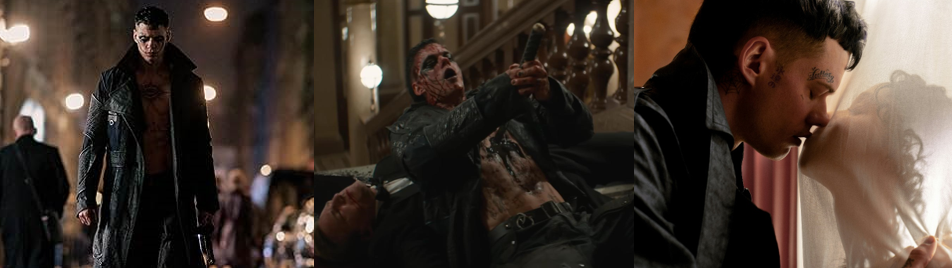
Released: 23 March 2007 Director: Kevin Munroe Distributor: Warner Bros. Pictures / The Weinstein Company Budget: $34 million Stars: James Arnold Taylor, Nolan North, Mikey Kelley, Mitchell Whitfield, Patrick Stewart, Zhang Ziyi, and Mako Iwamatsu/Greg Baldwin
The Plot: Since defeating Oroku Saki/The Shredder, the TMNT have drifted apart; leader Leonardo (Taylor) is training in Central America and hot-headed Raphael (North) is secretly busting heads as the masked vigilante the Nightwatcher. However, the brothers are forced to come together again when thirteen mythical creatures rampage through New York City as part of an ancient ritual.
The Review: It’s always surprising to me how a premise as bonkers as Teenage Mutant Ninja Turtles finds ways to go even further out there with its content and stories. As early as their initial issues, the TMNT were battling robots, travelling across the galaxy, and encountering strange semi-cybernetic alien lifeforms. As much as I prefer the street-level adventures of the TMNT, I have enjoyed their more bizarre escapades and enemies, which have come from different dimensions, timelines, and worlds and have long expanded the TMNT’s world beyond simply battling ninjas on the streets of New York City. However, for the most part, the TMNT’s cinematic adventures tend to be more grounded; this, as much as anything, made Teenage Mutant Ninja Turtle III stand out as quite the anomaly, but TMNT also offers up a surreal plot for the mutant brothers, though the differences between the two can be chalked up to their execution and tone. It helps that TMNT opens with a narration from the always-awesome Laurence Fishburne that not only positions this film into the loose canon of the existing movies (Splinter’s (Iwamatsu/Baldwin) trophy shelf also reinforces this, containing mementos from the previous films, even if the TMNT’s characters are slightly different) but also gives some insight into the legend of warlord Yaotl. Three thousand years ago, the warrior king and his brotherhood carved a path of destruction and conquest across the globe that culminated in him opening a portal into a parallel universe to gain immortality but at the cost of his generals being turned to stone and thirteen immortal monsters being unleashed from the rift, eventually serving as the inspiration for famous mythical monsters over the centuries.
While Leo has been off training, the TMNT have fractured and lost their camaraderie.
When we rejoin the titular turtles, they’ve been fractured; Leonardo has spent over a year in Central America on the orders of his master and father-figure, Splinter. Although Leo’s training ended some time ago, he feels he hasn’t yet fulfilled his mission to become a better leader and has come to believe his efforts to protect the locals as the “Ghost of the Forest” is more important than his duties back home. However, Leo is stunned when his old friend and former news reporter turned-antiquities-dealer April O’Neil (Sarah Michelle Gellar) arrives in Central America looking to source rare pieces for her boss, business tycoon Max Winters (Stewart), and tells him all about how Donatello (Whitfield) now “does machines” by working an exasperating job as a remote tech support, Michelangelo (Kelley) dresses up as “Cowabunga Carl” to act as a children’s entertainer, and Raphael (North) has largely ostracised himself from the group, sleeping all day to recover from his nightly jaunts as the armour-clad vigilante the Nightwatcher. Each of Leo’s brothers are aggravated by their situation in their own way; while Don appears content to let the past go and focus on contributing to their welfare, even Mikey, traditionally the most jovial of the bunch, expresses frustration at how boring their lives have become. While Mikey is in awe of the Nightwatcher, Don isn’t so convinced, believing he’s doing more harm than good, while Raph is obviously all for the vigilante filling the void his “has-been” brothers have left behind. Proud of his son for having grown stronger, Splinter encourages Leo to bring his brothers back together as a team before they return to vigilantism and encourages each of them to see their situation as a learning opportunity to acknowledge their flaws and grow stronger, though there’s a definite sense of scepticism amongst his sons even when Leo returns as they’ve gotten a little rusty working together.
Resentful of Leo’s leadership, Raph frequently clashes with his brother and lashes out in frustration.
Strangely, Leo is also unimpressed by the Nightwatcher’s efforts; while he accepts fellow vigilante Casey Jones (Chris Evans) as a trusted ally and the TMNT have their ninja training to fall back on, Leo believes the Nightwatcher is putting himself in unnecessary danger by meddling in crimefighting. While the others may be unaware of Raph’s nightly activities, Casey isn’t; constantly shirking his chores and missing appointments as April’s muscle thanks to his late-night excursions, Casey not only delights in busting heads alongside Raph but also opens up to him about his fears of a long-term commitment with April since he doesn’t feel mature enough to be the man she needs. Raph also opens up about his frustrations with Leo, which are surprisingly complex; he resents his brother for leaving, but also admits that he would probably do the same if he could only let go of his love for the noisy, violent city they call home. Despite Raph constantly criticising him, Leo tries his best to pull his brothers together but they’ve grown impulsive and immediately disregard his (and even Splinter’s) orders to avoid fighting, which results in them not only failing to subdue the Bigfoot but also taking quite a beating, too. Raph’s recklessness and loyalty to his friend later sees him drugged by a Foot dart and once again finds himself unconscious in April’s care. Luckily, he has one of the Stone Generals’ throwing stars stuck in his shell, and April’s knowledge of ancient lore allows her to piece together not just an explanation behind the monsters that’ve cropped up in the city but also Winters’ involvement in the plot.
Although he seems evil, Winters actually wants to atone for his past and end his immortality.
April is now capable enough to work with Don to calculate when and how the dimensional rift will open and also showcases enough ninja training to join her allies in the finale. April also assists Winters in obtaining the legendary petrified generals but, while he assumes the façade of a charming and affluent collector of ancient relics, Winters secretly hires the remnants of the Foot Clan, led by Shredder’s former lieutenant, Karai (Zhang), to capture the thirteen monsters and bring them to him. When inside Winters’ vast skyscraper, the film veers towards the absurd somewhat; Winters favours a distinct stone-and-marble aesthetic, one that’s made up of centuries of relics and an unnaturally long life amassing an impressive fortune, but that’s also home to an impossibly large, steampunk-themed facility specifically designed to siphon the interdimensional power of the rift by sacrificing the captured monsters. No mere businessman, Winters easily intimidates Karai and the Foot after awakening his old allies, General Aguila (Kevin Michael Richardson), General Serpiente (Paula Mattioli), and General Gato (Fred Tatasciore), imposing, nigh-immortal warriors who eventually conspire against Winters when they realise that his goal is no longer world conquest. Although thirteen monsters cause havoc throughout the city, only a handful feature prominently, and some are barely glimpsed. The first one seen is the gargoyle-like Succubor, which feasts on birds and Raph and Casey witness being captured by the Foot and the Stone Generals. However, the first monster that the TMNT encounters is the Bigfoot, a rampaging, ape-like yeti that manhandles the Foot atop a construction site before being captured by General Aquila. Through the power of a montage, the Foot and the Stone Generals subdue all but two of the legendary monsters in quick succession, meaning the most prominent monster is the diminutive, voracious Jersey Devil, which the Nightwatcher battles in a diner kitchen. After deciding to maintain their immortality and unleash a legion of monsters upon the world, the Stone Generals turn against Winters and substitute Leo for the final monster, reducing these visually interesting creatures to mere plot points.
The Nitty-Gritty: As much as I enjoyed the first two TMNT movies and admire the excellent suits and animatronics used to bring them to life, there’s no doubt in my mind that going all CGI is a much better way to bring these bizarre characters to screen. In fact, the only downsides I have about the TMNT’s appearances in this movie are that they’re not as easy to tell apart as their predecessors and successors. Yes, they have different weapons, voices, and bandanas but they’re not as physically distinct; like, usually they have different colourings or Raph is bulkier, for example. Additionally, they’re a little too frog-like in their movements. I’m okay with this, however, as they move and fight with a kinetic, superhuman quality that results in some fun and fast-paced sequences. TMNT also gets extra points not just for evoking the original Mirage Comics in its visuals, especially when the TMNT are traversing the city at night, but in its violence. While there’s no blood or bodily dismemberment, there’s a surprising amount of explicit and implicit violence in TMNT; Leo is very heavily implied to have killed the soldiers who ransacked the village under his protection and the film opens with Yaotl and his brotherhood ruthlessly cutting down their enemies. Committing to an all-CGI production certainly allows TMNT to maintain a consistent visual style; while the TMNT and the various monsters are obviously fantastical creatures, this is a hyper-realistic animated world, where stick-thin characters like April co-exist alongside the absurdly broad-shouldered Winters. The entire film is steeped in a murky darkness that really adds to the atmosphere and again harkens back to the original Mirage Comics; Leo’s brutal confrontation with the Nightwatcher notably stands out due to the rain and storm effects adding to the emotional conflict. Although the city can appear a little barren at times, there are a few instances of armed street punks running afoul of the Nightwatcher to help give the location a bit of life.
Raph’s hot-headed attitude leads to him clashing with Leo and being forced to make amends.
It’s not uncommon for TMNT stories to focus on themes of family and brotherhood, but TMNT is the first movie to really delve into these aspects beyond just depicting a sense of camaraderie and rivalry between the four. The film begins with the family dynamic splintered (no pun intended) in a way we rarely see; Leo is in Central America, honing his ninja and leadership skills, leaving his brothers to fend for themselves with menial jobs and a general lack of excitement. Feeling abandoned by his brother and frustrated by being stuck in their underground lair all the time, Raph has taken to stalking the streets as the Nightwatcher; as ever, his hot-headedness and antagonistic attitude causes friction between him and Leo when the latter returns since Raph is slighted by Splinter’s apparent favouritism towards his brother. Thus, while Mike and Don are elated to be reunited with their brother, it’s clear that the group’s effectiveness has waned in his absence and a central aspect of the movie is about them learning to trust each other and work collectively as an ass-kicking unit once more. Raph’s resentment towards Leo eventually boils over, causing him to quit the team and his family. When Leo goes to make amends, he confronts the Nightwatcher and, unaware that it’s Raph under the helmet, tries to reason with him following a thrilling rooftop chase across the city. Leo easily dodges the Nightwatcher’s heavy chains but is stunned to find his hot-tempered brother beneath the helmet; the two have a heated exchange and, with their tempers and egos flared, they engage in a brutal scuffle to settle their differences. Although seemingly evenly matched, Raph comes out on top after breaking Leo’s katana but he’s so ashamed at how close he came to killing his brother that he flees into the rainswept night and is unable to keep Leo from being captured by the Stone Generals. Guilt-ridden, Raph confesses his shame to Splinter; after his father commends Raph’s strength of character, Raph resolves to work with his family and friends to storm Winters’ tower and rescue Leo in order to make amends for his recklessness.
After reuniting as a team and family, the TMNT bring Winters the peace he’s longed for.
The theme of family permeates further as it turns out that Winters’ entire motivation is not for conquest or power, but to rid himself and his generals of their immortality and remove the monsters from the world so they can all finally be at peace. As they have no desire to lose their immortality, the Stone Generals capture the monsters for their own ends and force Karai and the Foot Clan to swear allegiance to them. Thus, the TMNT and their allies are forced to fight through an entire legion of Foot Soldiers in a large-scale fight scene that’s far and away beyond anything we’ve seen in a live-action TMNT movie; even Splinter, April, and Casey get in on the action, easily fending off the Foot’s greater numbers to the infectious beat of P.O.D.’s “Lights Out”. With an intense sky beam acting as a ticking clock before the dimensional rift is reopened, the TMNT breaches the tower and successfully rescue Leo; Raph apologises, gifts Leo new katana, and finally recognises his brother’s place as their leader. To his credit, Leo also acknowledges Raph’s importance to the team and family dynamic, and the heroes are surprised to find Winters actually desire the same goal as them: to save the city, dispense of the monsters, and end his long centuries of agonising immortality. Remaining loyal to Winters out of a sense of honour, Karai forges a temporary truce with her enemies. While Casey and April join her and her ninjas in tracking down the final monster, the TMNT finally come together as an efficient and co-ordinated unit to oppose General Aquila and his stone brethren with Winters and Splinter try to contain the beasts from escaping the swirling vortex. Due to the Stone Generals’ immortality, it doesn’t matter how hard or well the TMNT fight but, luckily for them, the Foot and their allies find the last monster, dispel the portal, and finally free Winters of his immortality. Despite Karai threatening that she and the Foot will resume hostilities on their next meeting, the TMNT return to the city streets finally reunited and stronger than ever; Splinter adds a few more mementos to his collection and the brothers head out into the night ready to defend their city from injustice…together at last.
The Summary: I really enjoyed TMNT; when I first saw it, the “Heroes in a Half-Shell” had been absent from cinema screens for way too long and I was really digging the visual presentation of the film at the time. While the TMNT had returned to their darker, more violent roots in the intervening years, it always hits a little different when the TMNT make it to the big screen and push those boundaries a little further. While TMNT adopts a very different visual style, one that’s clearly very different from the previous films, it emulates the same tone and gritty atmosphere as the first film and works nicely as a semi-connected continuation of those movies. I really enjoyed the kinetic action and the animation style used to bring the TMNT to life; for the first time on film, they could hop about and perform all kinds of crazy moves that no suit performer could ever match and could encounter many visually interesting creatures. While it’s unfortunate that the monsters and even the Stone Generals aren’t spotlighted more, the focus on the family dynamic more than makes up for this; this wouldn’t be the first or last time that Leo and Raph would butt heads but it’s realised in an intriguing way here. Raph’s resentment towards Leo clashes with his begrudging respect for him, but he’s ultimately unable to contain his temper, leading to them having one of their most intense battles in the entire franchise. I enjoyed the sub-plot of Raph operating as the Nightwatcher and that there was a little more for April, Casey, and even Splinter to do in the finale, but the twist of the bad guy actually seeking to release himself and his family from their never-ending torment was greatly appreciated. I do think TMNT might have benefitted from playing things a little safer and focusing on Karai’s revenge against the TMNT, but I appreciate that the filmmakers tried to do something new and make the most of the revised genre to deliver a fun, mature, and apparently under-rated return to form for the fightin’ mad mutant turtles.
My Rating:
⭐⭐⭐⭐
Rating: 4 out of 5.
Great Stuff
Are you a fan of TMNT? How do you think the film holds up against the other TMNT films? Did you like the all-CGI format or do you prefer the live-action/CGI hybrid format of the previous films? What did you think to the fractured relationship between the TMNT? Did you enjoy seeing Raph operate as the Nightwatcher and go at it with Leo? What did you think to Winters and were you disappointed by the brief screen time of the thirteen monsters? Which of the TMNT is your favourite and why? How are you celebrating the TMNT’s debut this month? Whatever your thoughts on the TMNT, leave a comment down below or share your thoughts on my social media, and be sure to check out the other TMNT content across my site.
To commemorate, the culmination of their long-running and successful X-Men movies, 20th Century Fox declared May 13th as “X-Men Day”, a day to celebrate all things Mutant and X-Men and celebrate Marvel’s iconic collection of superpowered beings who fight to protect a world that hates and fears them.
Released: 14 December 2010 Originally Released: 31 January 1992 Developer: Backbone Entertainment Original Developer: Konami Also Available For: Arcade, Mobile, and Xbox 360
A Brief Background: After Stan Lee and long-time collaborator Jack Kirby introduced the X-Men in 1963, Mutants have featured prominently not only in Marvel Comics but also in videogames. The first X-Men videogame was essentially a vertical shooter on the Nintendo Entertainment System, but the characters saw their greatest early success in arcade ventures and team-based brawlers. Indeed, in 1992, the arcade scene was still a popular staple of the industry and beat-‘em-ups were at the forefront of that; the biggest names in this genre were Capcom and Konami, who pumped out licensed and first-party titles and defined a generation. X-Men was one of Konami’s most celebrated efforts; based on the vastly different pilot episode of the incredibly popularX-Men animated series (1992 to 1997), X-Men’s widespreadacclaim was matched only by its scarcity. The title never made it to home consoles and it would take about twenty years for it to finally be ported from the arcades. This digital-only version was praised for its nostalgia, though criticised for being far too easy, and was sadly delisted from digital store fronts in 2013 due to licensing issues and hasn’t been seen since.
The Plot: Erik Lehnsherr/Magneto leads an all-out war against humanity with an army of Sentinels and his human-hating loyalists, the Brotherhood of Evil Mutants, even kidnapping his old friend and rival, Professor Charles Xavier/Professor X, and the X-Man Kitty Pryde/Shadowcat. It’s up to the X-Men to use their unique Mutant powers to topple Magneto’s forces, rescue their allies, and put an end to his mad schemes!
The Review: X-Men is one of the quintessential arcade beat-‘em-ups from the heyday of the era, allowing up to six players to battle it out across eight stages beating the crap out of an unending series of robotic or animalistic enemies and vying to be top of the leaderboards. The controls are as simple as you could want from a game like this: you use Circle or Square to attack, landing a series of combos with each button press and attacks that are unique to each character, jump with X, and perform a jumping attack by pressing Circle or Square in mid-air. When enemies are on the ground, you can press Circle or Square to pound on them or press Square when close to most enemies to throw them across the screen or into other enemies for good crowd control. Unfortunately, there’s no dash attack here and few other attack options available beyond pressing Triangle to unleash your character’s Mutant power, which will drain a bit of your health or cost you a “Mutant Orb”. These attacks are unique to each character and will wipe out all enemies on screen, but have some limitations; James “Logan” Howlett/Wolverine and Scott Summers/Cyclops’s Mutant powers are great for clearing what’s right in front of you but you’ll want to pick Kurt Wagner/Nightcrawler of Piotr “Peter” Rasputin/Colossus if you want to target enemies all around you. Unlike other beat-‘em-ups, there are no weapons to get, no crates or barrels to smash, and no interactive objects to aid you (there are no explosive barrels here, for example); hell, there aren’t even any health pickups to find. Supposedly, the Japanese version of the game does have them, and other pick-ups that are dropped by defeated enemies, and I didn’t see one when I did a quick check after my first playthrough.
Plough through endless robotic enemies using the X-Men’s uncanny Mutant powers!
Indeed, despite its much-deserved reputation as one of the greatest arcade games of all time, there’s not much that makes X-Men particularly innovative. Its appeal comes down to the enjoyable mindlessness of its action, the colourful visuals, and the atrociously entertaining voice acting. The goal here is little more than to travel from the left side of the screen to the right, ploughing through disposable enemies until you reach the boss of each level. You’ll need to watch out for hidden turrets, cliff drops and lava pits, and a bunch of palette-swapped Sentinels who throw rocks, detach their hands, or fire projectiles. They’re joined by bulkier robots armed with cannons who fire missiles, low fireballs, or high laser shots, lizard men who attack with their tails or breathe fire, and even anthropomorphic mud and plant monsters and robotic arms, though these enemies are constantly recycled and become quite samey quite quickly, even when they’re riding in on trucks or these weird gun-toting cyborgs on treadmills. The environments are a bit hit and miss, too; the opening city is suitably wrecked, there’s a thunderstorm raging in the background of the cave stage, you’ll see the Giant Sentinel, X-Jet, and the captured Professor X and Kitty in other stages, but few levels were as visually interesting as the wild jungles of Island M and lava-filled dangers found in “The Trap”. You’ll be transported up and down lifts, as is expected in a beat-‘em-up, but won’t really be battling a host of enemies in these sections; there is one part where you’re confronted by a missile-spewing wall, but you don’t actually have to destroy it, and the only character with anything close to an idle animation is Wolverine, who sheathes and unsheathes his claws when left standing (but don’t linger too long or the game will punish you with an explosive death!)
Magneto’s monstrous Mutant minions are itching to welcome you to die!
Yet, the character and enemy sprites are big, colourful, and evoke both the comic books and the pilot of the animated series. The story, paper-thin as it is, is related through large, partially animated cartoon-esque sprite art and in-game graphics, with Raven Darkhölme/Mystique’s deceptive tricks and the Brotherhood’s explosive, boastful entrances being as notable a highlight as Professor X’s many words of wisdom. Of course, one reason X-Men is so fondly remembered is the awful dialogue, lovingly recreated here so as not to rob us of such meme-worthy statement as “X-Men! Welcome to die!”, “Magneto is in another place”, and “You’re dead, X-Chicken!” In terms of bosses, X-Men doesn’t offer much in the way of challenge or strategy and you can generally get by with a simple technique of jumping in for an attack, landing a quick combo, and jumping out of harm’s way, maybe landing a special attack if you have a spare orb or enough health. This is established from the first encounter with St. John Allerdyce/Pyro and is largely true of all bosses: they’ll burst into the scene, taunt you (leaving themselves vulnerable to an early attack), and use their various powers to whittle down your health. While Pyro is quite nimble and spams screeching flame projectiles and roasts you with a flame burst, Fred Dukes/The Blob is much slower, plodding about and landing big punches or swings with his spiked mace, causing the screen to shake when you knock him down for a few seconds, and tanking your hits. A version of the Wendigo is also fought, with it pouncing at you and performing a head grab/throw combo shared by subsequent bosses, such as Nimrod, another large, clunky, slow boss who’d rather waste time taunting you than attacking in an interesting way. Cain Marko/The Juggernaut is similarly large and cumbersome but makes up for it with a screen-crossing charge and a huge cannon that fires a large blast across the screen. There are also a couple of mini bosses to contend with, such as the mental bolt-throwing Emma Frost/White Queen, a battle against three Egyptian statues, several Pyro clones, and additional encounters with all previous bosses when battling through Asteroid M. You’ll fight Magneto twice; the first time, it’s Mystique in disguise and he/she’s limited to punches and kicks but defeating her sees you battle the true Magneto. This is the toughest fight yet thanks to his impenetrable shield, but his attacks are still limited to slightly faster and very powerful punches and kicks. He also likes to mock you, though, so you can get in a good combo in those moments, and you’ll be immediately trust into another playthrough after the ending and credits roll when playing the American version of the game.
Colourful visuals and fun bosses were offset by some repetitive backgrounds and enemies.
Yes, this version of X-Men allowed you to pick between the American and Japanese versions; the main difference between the two was that you get a free, non-health-sapping Mutant Orb after every boss in the American version, but you start each new life with one in the Japanese version, and there’s apparently more to pick up from defeated enemies in that version, too. X-Men also allowed for local and, at one time, online multiplayer, allowing up to six players to fight together like in the arcade days of old. You can head into the “Options” menu and turn smoothing on or off, set whether you want a wallpaper to fill in the gaps around the action, show or hide the in-game timer used for speed runs and such, change the screen size, and change where the player’s health and lives and score are displayed. Every time you clear a stage, it’s unlocked to select for next time, allowing you to pick up where you left off or freely jump to any level. While you strangely can’t change characters when you die (or, at least, I wasn’t able to; there was no way when the continue countdown appeared and the option was greyed out on the pause menu), you do get unlimited credits and you can test your skills on three difficulty stings: Normal, Hard, and Hardcore, with even more enemies swarming the screen on the harder settings. X-Men had twelve Trophies for players to earn, with Trophies popping when you used a Mutant power five times, earned at last 250 points in one game, completed it on Expert difficulty, and defeated Pyro without using your Mutant powers. Tougher challenges included beating Magneto with every playable character, finishing the game in 25 minutes or less, and being fooled by Mystique in a six-player game (which I achieved by mapping all six characters to one controller). Otherwise, that’s it; there are no skins, no new characters to unlock, and no additional game modes here; just the classic arcade machine in all its punchy, ridiculous, and colourful glory.
The Summary: It’s such a shame that X-Men got delisted and hasn’t been made widely available for download since 2013; almost as much of a shame that it never came to home consoles back in the day and we were stuck with all those mediocre X-Men platformers. It’s a really fun game that ends just as things are about to become too repetitive and mindless, with a surprising amount of variety to each character despite the lack of pickups and power-ups. Each character plays a little differently (Nightcrawler is fast and has lots of elaborate attack animations while Colossus is much slower and bulkier, for example) and has some fairly good special attacks, though the lack of team-based moves and temporary power-ups is a bit of a shame. Similarly, the environments are quite bland and uninspired, especially compared to other beat-‘em-ups and even the colourful sprites on offer here. Considering the vast library of X-Men characters and enemies, there’s very little enemy variety (potentially because it’s more appropriate to have players smash up robots than people) and, while the bosses make up for this, there’s not much strategy to defeating them. I liked that there was a lot of voice samples used here, and in the engaging tunes, and the quality of the cutscenes was very much like a cartoon, which was very fitting considering the source material. Although X-Men doesn’t offer anything new to the genre and is, in many ways, inferior to other titles that don’t have the luxury of such a big licensing name being attached to them, it’s a short burst of entertaining fun that’s best enjoyed with a couple of friends. I’m really hoping Konami work out some kind of deal to make this accessible to new players sometime soon so I can revisit it again, maybe as a collection of titles or something, and add in some additional materials like concept art, the option for HD graphics, and maybe a couple of extra characters and game modes. If you missed out on playing this version of the game, which is nevertheless the definitive version, there’s always the Arcade1Up cabinet or…you know…emulation, the latter of which I’d highly recommend as this is a great game that should be more easily available to play despite its lack of core features.
My Rating:
⭐⭐⭐⭐
Rating: 4 out of 5.
Great Stuff
Were you lucky enough to play X-Men when it came to PlayStation 3 and Xbox 360? Have you ever played it out in the wild? Which character was your favourite and were you surprised by Magneto’s polite welcome to die? Do you agree that the levels and features were a bit sparse, or do you think there was just enough here to compensate? Would you like to see X-Men more widely accessible for modern gamers? What’s the worst (or best) videogame tie-in you’ve ever played? Which X-Men videogame is your favourite and how are you celebrating X-Men Day today? Whatever you think about X-Men, and arcade games in general, feel free to share your thoughts below or leave a comment on my social media.
When the Great Demon King Piccolo was released upon the world, he broadcasted a message on television declaring May 9th as “Piccolo Day”…and promptly celebrated by announcing his ownership over the planet. Since then, May 9th has been officially recognised as “Goku Day” but, to make things simpler, I’m using this as a good excuse to celebrate all things Dragon Ball,
Released: 26 January 2018 Developer: Arc System Works Also Available For: Nintendo Switch, PC, PlayStation 4, PlayStation 5, Xbox One, Xbox Series S
The Background: Akira Toriyama’s Dragon Ball franchise, particularly Dragonball Z, is no stranger to videogame adaptations. In 1990, the first Dragonball Z videogame released for the Family Computer (Famicom) and, since then, various titles based on the long-running manga and its popularanime counterpart have been released, generally as shameless rip-offs of Street Fighter II: The World Warrior(Capcom, 1991), tournament fighters or one-on-one beat-‘em-ups that retell the events of the anime over and over again. After Bandai Namco acquired the rights to the franchise in 2009, they routinely released new Dragon Ball titles on an annual basis, with the games now incorporating elements from the long-awaited Dragon Ball Super (2015 to 2018). Following the critical and commercial success of Dragon Ball Xenoverse 2 (Dimps, 2016), the publishers turned to Arc System Works, known for their Guilty Gearfighting games (ibid, 1998 to present), to develop a three-on-three fighter to address issues with power balances. Akira Toriyama designed a brand-new character to act as the game’s antagonist and the game was initially met with a great deal of enthusiasm. This was reflected in the sales, with Dragonball FighterZ becoming the fastest-sellingDragon Ball game at the time, and the reviews, which praised the anime-style visuals and explosive combat, with the game seen as one of the best in the franchise. While some criticised aspects of the gameplay, the game performed well enough to not only be bolstered be additional downloadable content (DLC) but also to receive an updated PlayStation 5 and Xbox Series S/X port.
The Plot: The Red Ribbon Army continues to plague Son Goku and his allies when the hitherto-unknown Android #21 uses the Dragonballs to resurrect their fiercest foes. Their powers dampened by Android #21’s energy waves and faced with an army of puppet-like clones, the Z Warriors join forces with their worst enemies and a mysterious possessing soul to combat Android #21’s threat.
Gameplay: Dragonball FighterZ is a 2.5D fighting game in which players initially pick from a roster of twenty-one characters from across the Dragonball Z and Dragonball: Super series’ to take part in fast-paced, cinematic bouts. From the moment you start the game, you’re bombarded with pop-ups, messages, and notifications and that’s before you even start to work out how to navigate the main hub, which is a chibi-fied recreation of famous locations from the franchise, such as the World Tournament arena and Master Roshi’s island. Thankfully, you can either guide your chubby little avatar to various gameplay options, warp there with the Left Trigger, or bring up the options menu to take a look at the game’s controls. As you might expect, a practice and tutorial mode are included and tutorials are commonplace throughout the “Super Warrior Arc” of the game’s story mode so you can quickly get to grips with the fighting mechanics. Although you’re initially taught the basics in a one-on-one scenario and you have the option of fighting one-on-one (as well as customising the difficulty level of the computer-controlled opponents, setting the rounds and timer limits, and other options before fights outside of the story and Arcade modes), Dragonball FighterZ is primarily a team-based fighter. You pick three characters to form a team and can tag in and out in, which continues to be an aggravation for me as I’ve never really clicked with team-based fighters and find it to be an even more overplayed cliché than a Street Fighter II clone.
Rush in to pummel your foes with attacks or finish them in explosive fashion with your ultimate attack!
Thankfully, Dragonball FighterZ only takes inspiration from Street Fighter II; the fighting mechanics, while obviously similar given the presentation, are noticeably different and perfectly suited to reacting the anime’s explosive, high-intensity battles. X sees you throwing a light attack, Y a medium, and B a heavy (which can send you opponent flying away or through the environment for a “Destructive Finish” if timed correctly). Successive presses of each button pulls off different combo moves; you can mix and match, but the focus is more on mashing, say, Y as your character will automatically pull off a Super Move at the end of that simple combo string, negating the need to perform quarter-turns on the left stick or directional pad. A tosses out a ki blast; you can hold or rapidly tap it and press A after pushing towards your opponent to swat away their projectiles, just like in the anime. Although you can jump, dash, and sidestep towards and away from your opponent, the Right Trigger and Right Bumper allow you to dart at them with a “Dragon Dash” and “Dragon Rush”, respectively, allowing you to close gaps quickly, land a hit, and pull off a quick combo in mid-air or on the ground. These will also break your opponent’s guard, sadly executed by holding away from your foe just as they land an attack. I would much prefer a dedicated block and counter button as pushing back isn’t very reliable, though you can always press Y and B together to instantly teleport behind the opponent for an attack as long as you have at least one bar on your ki gauge.
You’ll need to call upon your allies to help withstand the barrage of attacks from your foes!
The ki gauge builds up as you dish out and take damage, but you can also manually power up by holding X and A together. The more bars you have, the stronger and more elaborate special moves you can pull off and, when you’re at maximum power, you can pull off your character’s ultimate attack using a simple input of a quarter-turn back or towards your opponent and pressing RT or RB afterwards. These ultimate moves certainly are visually impressive and are a great way to end a match, and they’ll also partially destroy the stage for maximum impact. As it’s a team-based fighter, you can call in an assist from one of your teammates at any time with the Left Trigger and Bumper; this allows you to string together massive two- or three-way energy attacks or dish out an even bigger combo, though be warned as you can easily get inescapably caught in your opponent’s team attacks as well. Holding either trigger allows you to switch to one of your team mates; this is essential as switching allows those not in play to regain a bit of health and some characters are better suited for different situations, such as larger characters like Nappa being slow and powerful and smaller characters like Teen Gohan being more agile and nimble. When playing the game’s story mode, the damage you take carries over between fights; you’ll regain some health (and downed characters will be revived) after a victory, but it’s best to switch often during the more intense battles to keep your health up. However, while you can set the difficulty of the computer in local play, arcade bouts become progressively difficult depending on which route you take. The easiest sees you fighting past three teams and the hardest has you battling seven and defeating each route unlocks a harder version for a greater challenge, and you can also play online or take part in a tournament.
As annoying as it is to have to navigate a map screen, the repetitious clone fighting is just as bad.
At first, Dragonball FighterZ seems intimidating but the story mode and practice options help guide you through the basics and the game initially plays very simply. Combos are easy to pull off with just a few mashes of the same button and it’s pretty easy to get into a rhythm of dashing at your opponent, pummelling them with a light combo, then focusing on medium combos with a super finish and calling in a team assist to speed things up. When playing the story mode, you’re actively encouraged to battle as many opponents as possible to grow stronger as, narratively, this unlocks your character’s full power. Each chapter presents a map and a set number of turns; your goal is to move around the map, taking out opponents and earning rewards, on your way to the boss fight. You cannot simply skip to a space and must actively move step by step around the map, which is either painfully linear or slightly more complicated, but always very restrictive and annoying. I never ran out of turns so I’m not sure what happens if you use them all up but I do know that you need to manually save on this screen as a game over mean replaying the entire map from the start, which can be very annoying in the later, more difficult arcs. Generally, fights aren’t very difficult and you’ll breeze through them; even higher-level bouts against Kid Buu or boss battles against the likes of Perfect Cell and Frieza can be painfully easy, but don’t let yourself become complacent. I fought every single opponent across the three arcs, finishing the story at around level forty, and eventually did have to take the battles more seriously as the computer upped its game. You’ll see this difficulty spike more prominently in the arcade mode where, after the first fight or two, you’ll get absolutely decimated if you don’t keep your wits about you. The “Super Warrior Arc” likes to pepper the map with tutorial fights; completing these will earn you extra rewards, and you’ll earn similar additional rewards if you fight Kid Buu when he appears, but otherwise it’s just a series of fights over and over with little variety apart from recuing a new character or the amount of opponents you face or characters you control, meaning it gets very repetitive very quickly.
Graphics and Sound: In terms of presentation, Dragonball FighterZ is on a whole new level! Of all the Dragon Ball videogames I’ve played, this is the one that most closely emulates the kinetic action of the anime. Everything from the character designs to the stages, cutscenes, music, and voice acting is all ripped straight from the anime and the attention to detail is really impressive. Unlike some cel-shaded Dragon Ball videogames, Dragonball FighterZ sticks to a 2.5D aesthetic so characters never appear award or blocky and the illusion of playing as hand-animated sprites is very convincing. You can pick to have Japanese or English voices, which I know is a big deal for some “purists”, and the English voice cast all return to tell the game’s interesting (if somewhat derivative) story. The story is basically just a mish-mash of familiar arcs from Dragonball Z but I appreciated that it was an original story for a change and not just retelling the same story over and over, though the game does pepper in some classic story moments if you meet the right criteria for a “Dramatic Finish”. Indeed, it’s the fights where the presentation really shines; sticking to the 2.5D plane is admittedly a little more restrictive than more 3D-orientated Dragon Ball videogames but it makes the action so much easier to follow and all the attacks, special moves, and ultimate attacks are beautifully animated, with the game employing cinematic perspectives and drawing from the anime for the more destructive energy attacks.
The game does a fantastic job of recreating the look and energy of the anime.
Sadly, the game’s stages don’t fare quite as well. There are numerous stages to pick from, all of them very familiar, such as the Supreme Kai’s world, Planet Namek, a futuristic city, the rocky wastelands, and even the depths of space. Some stages will react to your attacks, breaking and crumbling apart around you, and you can even transition to other stages by finishing your opponent with a heavy attack in some locations. Unfortunately, there’s not a lot happening in them; you can’t directly interact with anything, there are no stage hazards to worry about, and they’re simply just there for the characters to have somewhere to fight, which is fine but I like it when there’s a little extra to do. The hub world takes on a completely different visual style; you pick a chibi-style character to wander about with and access different modes, which is cute and a little different but initially a bit puzzling. The story mode’s cutscenes can all be advanced with the press of a button, or skipped entirely, but they’re enjoyable enough. It’s fun seeing Goku interact with Perfect Cell and Frieza and you’ll trigger unique dialogue and interactions the more characters you rescue and recruit, though some characters are reduced to simply being silent clones for you to fight. Outside of the story mode, you can select different colour schemes for your characters but this is disappointingly limited; rather than selecting different skins for characters, they just take on a different hue, with the only bit of creativity I found being that you can apply Vegeta’s original colour scheme. It would’ve been nice to see different gi for certain characters, maybe Yamcha’s bandit look or Adult Gohan’s “Great Saiyaman” persona or Vegeta’s “Majin” form, but sadly we just have to make do with them sporting ill-fitting alternate colours.
Enemies and Bosses: There are twenty-one playable characters in Dragonball FighterZ; three more are unlockable and a further twenty can be purchased as downloadable content, meaning you’ll face forty-four different fighters from across the franchise between the different game modes. In the story mode, the vast majority of enemies you’ll face are cloned versions of the main roster; these guys sport a black colour scheme with red eyes (a look that is also missing from the colour options, I might add) but are otherwise indistinguishable in their fighting style. The game seems to categorise fighters in three ways: small and fast, balanced, and big, slow, and powerful. Thus, playing as Krillian is not exactly the same experience as playing as Tien Shinhan, which is also different from playing as Majin Buu, even though the button inputs remain largely the same for all characters. Sometime you’ll have to press down, down, A for a move; some characters have you pressing X more than A, and very rarely you’ll find they have unique aspects to their characters. Future Trunks, for example, uses his Z Sword and Frieza can temporarily transform into “Golden Frieza”.
While fighters can feel samey, there’s enough to distinguish them through their feel and specials.
This extends to even more unique traits at times. While both Kid Buu and Piccolo can extend their limbs, Majin Buu, Kid Buu, and Android #21 can turn their enemies into chocolates and sweet treats to deal massive damage and power themselves up. Some characters will even call on other recognisable faces to aid them in battle: Captain Ginyu, for example, sends the Ginyu Force to attack you in place of more traditional projectiles, Nappa spawns in Saibamen, and many of Android #18’s attacks see her working in tandem with her brother, Android #17, who appears only here and in cutscenes unless you shell out for the DLC. Consequently, while it’s useful to have an understanding of how the different fighters play and what they’re capable of, it’s rare that you have to alter your strategy too much, but it does factor into how you play. Android #16, for example, is slow and bulky but makes use of rocket-powered punches and grapples, piledriving you into the ground if you get too close; his ultimate move also sees him left with the tiniest slither of health, so that’s something to consider when fighting. Kid Buu can rain destruction across the arena with his “Human Extinction Attack”, Adult Gohan can power up to his “full potential”, and many characters, like Goku and Vegeta and their variants, make use of screen-filling energy attacks, sometimes even warping about for increased damage.
Alongside repetitive fights, you’ll face Kid Buu and Android #21 in more challenging encounters.
You’ll only encounter actual boss battles in the game’s story modes; here, you’ll battle some recognisable Dragonball Z villains and heroes in each arc, often recruiting them after victory. Generally, you’ll fight the same clones over and over and they don’t pose much challenge until later in the story, and the same is true of guys like Captain Ginyu, Perfect Cell, and Frieza. While they’re sold as formidable opponents, you often fight them with a three-on-one advantage so they can be complete pushovers, especially compared to other teams made up of ki-spamming assholes like Vegeta and Yamacha. As ever in Dragon Ball videogames, I found that the weak human characters were more of a problem than God-tier enemies like Majin Buu; Yamcha, Tien, and Krillan always seem to cause me issues in these games, though I’m not sure if that’s an actual gameplay feature so they can go toe-to-toe with Super Saiyan God Super Saiyan Goku or if it’s just a mental block on my part. As you explore the various maps, additional battles will spawn in and Kid Buu will sometimes take over a spot. These battles are touted as being tougher since Kid Buu is a few levels higher than you, but don’t actually become more challenging until the last story arc and, by then, you’ve pretty much mastered the fighting mechanics and team-based combos. Thus, the only real “boss” of the story mode is Android #21, a hybrid of android and majin who acts as the final boss for each of the three story chapters. Although she’s capable of consuming foes for massive damage, slicing an explosive energy blade across the arena, and attacking in a flurry of super speed, her most dangerous trait is that she can absorb abilities from her foes using her “Connoisseur Cut” technique. Each time this lands, a bar fills up above her health meter and, when it’s full, she’ll pull off a new attack, one dependant on the type of character she’s facing. Still, while she’s always at a higher level and far more aggressive than other enemies, she only poses a real threat at the end of the “Android 21 Arc”, where you first have to battle her with your team and then alone as you control her “good” half in a battle to the finish.
Power-Ups and Bonuses: In addition to building your ki gauge in battle, which allows you to pull off more elaborate special attacks, you can also power up your fighter and restore a little health by pressing RB and RT together once per match to enter a “Sparkling” state. By battling with specific fighters on specific stages and performing a specific attack, you can also recreate moments from the anime such as Goku obliterating Frieza on Planet Namek. Every battle earns you various rewards; primarily, you’ll earn Zeni, the currency of the Dragon Ball franchise, to spend in the shop, though there’s really not much worth buying in there. In the story mode, you’ll earn different Player Skills; up to three can be equipped at any one time and these will buff your attack, defence, regenerate health, or fill your ki gauge faster, amongst other perks. You’ll earn higher levels of Player Skills as you progress, but there’s no crafting, combination, or discard system here so it’s pretty basic. You’ll also earn experience points (EXP) in the story mode; earn enough and you’ll level-up, though I can only assume this raises your fighter’s stats as I never actually looked too deeply into it. Unfortunately, only fighters you play as earn EXP so you either need to mix up your team or stick with the same fighters to have the best chance as higher-level opponents definitely present more of a challenge; they’re faster, more aggressive, and string together greater combos and can easily down your lower-level fighters if you’re not careful. Each team member can be further customised to perform one of three assist actions when called into the fight and you will recruit more characters, though not every character will be playable and there are some restrictions based on the narrative. This isn’t the case in local or arcade fights, though you don’t need to worry about EXP or Player Skills or anything here, though you can acquire the seven Dragon Balls by pulling off combos outside of the story mode. Once you have all seven, another combo string will summon Shenron and allow you to pick from four wishes, including reviving an ally or regenerating your health, which is a fun bonus.
Additional Features: Dragonball Fighter Z offers thirty-five Achievements for you to earn, three of which you’ll automatically earn just by completing the story mode, though you’ll inevitably snag a few more just by playing through it. Defeat Kid Buu, for example, and you’ll snag some G; another will pop for triggering a “special conversation sequence”, and a couple more once you level-up high enough. You’ll also earn Achievements for clearing each of the different arcade mode paths, completing combo challenges and tutorials, and for playing online, but there aren’t many fun ones to get here. There are no Achievements to earn from Destructive Finishes, for example, or recreating the Father/Son Kamehameha against Perfect Cell for a Dramatic Finish or for summoning Shenron, which is a shame. You can purchase items from the shop, but they’re pretty pointless; you mainly buy new chibi avatars, colours, and stickers for use online. You can unlock Android #21 by beating story mode and there are a couple of ways to unlock Super Saiyan God Super Saiyan Goku and Vegeta, from clearing harder arcade paths or the story mode or buying them, but note that you cannot have two of the same character in your team at once (so, you can’t have Vegeta > Future Trunks > and Super Saiyan God Super Saiyan Vegeta in the same team). You can also play online or against a friend in a local battle, saving replays and such, and there are twenty DLC characters to add to the roster, though no additional story modes or Achievements tied to them so it’s probably better to wait for a sale as the packs are quite expensive and I’m not sure I’m that desperate to play as Bardock!
The Summary: I’d been waiting to play through Dragonball FighterZ for some time. I put it off not because I wasn’t interested in it, but because I wanted to wait to see if the game would be re-released with all the DLC included. Sadly, it wasn’t, so I bit the bullet and went for it, with only my lack of skill at Street Fighter II-style fighting games being a concern. Then it turned out to be a team-based fighter and my concerns grew; then the difficulty curve went all wonky, being ridiculously easy for most of the playthrough and then steeply rising as the story mode progressed or I tackled one of the arcade modes. As someone who is rubbish at “frame cancels” and all that nonsense, I really enjoyed how simple the game’s combat was; with just a few button presses, you can easily recreate the fast-paced, high-impact fighting style of the anime and I loved the big, explosive special moves and the voice acting on offer here. The game looks absolutely gorgeous, too; it’s easily the closest I’ve ever seen to playing the slick, action-packed anime. I also liked that it wasn’t just a retread of the same stories; while the original story might be a bit derivative, it’s still refreshing not to have to play the damn “Cell Games Saga” again! However, there’s a disappointing lack of content here; once you’ve beaten the story and arcade modes, there’s not much to come back to as the roster is pretty thin outside of the three unlockables and DLC characters, with no skins or variants to purchase or unlock. There’s also not much to the combat and gameplay beyond mashing buttons faster and making better use of your teammates; you can plough through most fights without issue and simply tank your way through others, but a little variety would’ve been nice, like maybe take a cue from the variables seen in Mortal Kombat X’s (NetherRealm Studios, 2015) Towers rather than just asking players to complete the same basic tutorials over and over. In the end, while it’s definitely the best looking Dragon Ball game I’ve ever played and I did really enjoy it, Dragonball FighterZ quickly outstayed its welcome with repetitive and mind-numbing fights akin to grinding and a lack of tangible rewards.
My Rating:
⭐⭐⭐
Rating: 3 out of 5.
Pretty Good
Did you enjoy Dragonball Z FighterZ? What did you think to the team-based mechanics and action-orientated gameplay? Who was your go-to team? What did you think to the original story and Android #21 as a villain? Were you also disappointed by the lack of skins and playable characters? Did you ever clear all of the arcade pathways? What is your favourite Dragon Ball videogame and how are you celebrating Dragon Ball day today? Whatever your thoughts on Dragonball Z FighterZ, or Dragon Ball in general, leave a comment below or on my social media and check out my other Dragon Ball content!
The first issue of Kevin Eastman and Peter Laird’s Teenage Mutant Ninja Turtles (TMNT) was published in May of 1984. Since then, the TMNT have gone on to achieve worldwide mainstream success thanks not only to their original comics run but also a number of influential cartoons, videogames, and wave-upon-wave of action figures. Even now, the TMNT continue to be an influential and popular commodity, proving that some fads don’t die out…they just get stronger!
Released: 9 November 2009 Developer: Ubisoft Nagoya
The Background: Like so many kids back in the day, I was super into the Teenage Mutant Ninja Turtles (known as Teenage Mutant Hero Turtles here in the United Kingdom). The “Heroes in a Half-Shell” dominated playgrounds in the years prior to the rise of Mighty Morphin’ Power Rangers(1993 to 1996) and Pokémon(1997 to present) thanks to a slew of toys, merchandise, videogames. Konami’s original arcade title largely set the standard for subsequent TMNT videogames, with many of the franchise’s most revered titles being arcade-style beat-‘em-ups. By 2009, almost forty TMNT videogames had been released in arcades and home consoles, with most of them either being sidescrolling beat-‘em-ups or brawlers. It’s perhaps no surprise, then, that developers Ubisoft Nagoya turned to this tried-and-true gameplay style for this Nintendo DS-exclusive title. Unfortunately, there’s not a lot of information out there about the development and thinking behind this game, but I can say that it doesn’t seem to be one of the franchise’s more successful or revered games. While the presentation, references, and concept of the game drew some praise, the gameplay, button configuration, and graphics were criticised and the game was seen as a shallow effort to lure in fans with the promise of a throwback to the celebrated arcade games of old.
The Plot: After returning from an adventure in the far future, the TMNT are faced with the threat of a cybernetic version of their greatest enemy, Oroku Saki/The Shredder, who sends his futuristic Foot Ninjas back through time in a bid for world domination!
Gameplay: Teenage Mutant Ninja Turtles: Arcade Attack is a 2.5D sidescrolling beat-‘em-up in which the bulk to the game’s action takes place on the bottom screen, while the top screen displays your current score, rank, and plays the story cutscenes. Players can pick between the four Ninja Turtles, with each one having different strengths and weaknesses in addition to their trademark weapons: Leonardo is an all-rounder, Donatello has the best reach but is the slowest, Raphael has the worst reach but is the most powerful, and Michelangelo is the fastest and most agile of the four. Each of the TMNT has their own combos that are performed with successive presses of B or A, with the former attacking with their weapon and the latter seeing them kick. You can jump with X and perform jumping attacks by pressing B or A in mid-air, or hold down or tap the Y button to block or counterattack enemy attacks. A also allows you to revive your partner when they’re knocked down and to pick up weapons and health restoring food, while Y and B lets you grab and toss or launch enemies and pick up or push objects like barrels and traffic cones. Although there’s no dash function here, you can press the directional pad and Y to back flip out of harm’s way (even launching into a flying kick with A or B) or to sidestep, though I found both of these actions to be finnicky and unreliable. As you wade through enemies, you’ll build up a Co-Op Gauge; when it’s full, and flashing, you can press Y and B together to perform one of three powerful co-op moves, such as a giant swing, a diving shell smash, or the classic tossing of enemies towards the screen. However, I was only ever able to pull off the swing so it’s probably better to try to others with a human partner using the DS’s wireless feature.
Battle through eight boring stages with repetitive and dull gameplay and combat.
Even when you’re playing alone, you’ll be accompanied by a computer-controlled partner who you can select before a stage; the CPU does a decent job of fending off enemies but, while you can revive them, there’s no option for them to return the favour. If you’re defeated, you can spend some Shells to continue on from that point; otherwise, it’s back to the beginning of the stage for you. Shells are earned by performing well in stages; as you pummel enemies, you’ll build up a combo meter that increases your grade. At the end of a stage, this is factored into your overall score (alongside other data, such as how many hits you landed, how much damage you took, whether you used a Shell to continue, and such) and translates into more Shells for you to use to either continue or unlock extra game modes from the main menu. These modes are also made available by playing through the game’s story mode, which is comprised of eight stages, each of which is surprisingly long and light on interactive elements. You’re asked simply to run at an awkward right angle towards the edge of the screen, fighting between one and four enemies at once, with no bonus stages or much in the way of gameplay variety beyond the odd instance where you have to jump up to a higher level, mash B in a quasi-quick-time event when your clash weapons with an enemy, or the obligatory rising/descending elevator stage near the end of the game. There are four difficulty modes to choose from, with enemies being faster, smarter, and tougher on the higher settings in return for higher scores being on offer. The easiest setting, “Normal”, isn’t especially difficult to play through as you rarely face more than four enemies at once, but the enemies can be quite cheap and the gameplay isn’t really rewarding enough to make bashing them up all that enjoyable.
Graphics and Sound: TMNT: Arcade Attack seems to be a little confused about its identity; the story is told using animated comic book panels that are modelled after the original Mirage Comics, which is amazing, but the plot seems to be rooted in the continuity of the 2003 to 2009 cartoon series despite the logo being closer to the original 1987 series. The game doesn’t include the classic TMNT theme song, or any notable music or voice acting, which really doesn’t help improve the experience or shake off the sense that this was a slapped together budget title to cash in on the franchise. While the black and white cutscenes are really good and perfectly capture the spirit of the original comics (and even include some funny running gags such as Mikey struggling with his nunchakus), the in-game graphics opt for a bright, colourful cel-shaded style that is similar to Teenage Mutant Ninja Turtles: Turtles in Time Re-Shelled (Ubisoft Singapore, 2009) but far less appealing; character models are distinctly low resolution, blocky, and lack idle animations. Their attacks are nice and fluid, however, and they have entrance and stage victory animations, and it is fun seeing them pull off more elaborate attacks when you punch in button combos, but the models are a far cry from the appealing sprite work of its predecessors.
While the cutscenes are great, the in-game presentation is generally clunky and lifeless.
Environments equally as disappointing; the game does its best to recreate the locations of previous TMNT brawlers, placing you on the city streets, in a construction site, having you battle trough dark alleyways, the surprisingly clean sewers, across rooftops, and through an office building but there’s no real personality or excitement in these environments. Even when you get transported to the far future, you’re restricted to a traditional Japanese temple and a futuristic lab, with only cyberspace really having much to offer in terms of visuals. None of the stages have any hazards or obstacles to avoid; there’s not much really happening in the background, enemies simply drop in from the top of the screen or dramatically appear on screen rather than bursting from behind signs and such, and the stages go on for far too long, which really makes the game a drag. You’re also restricted in your movements; you can’t always move beyond the awkward angle of the game’s linear path, or backtrack too far, and you’re never asked to climb ladders or to transition to other screens as the game does all of this automatically. Stages do try to be a little distinct from each other by featuring different breakable objects, from tyre stacks to discarded televisions and pixelated cubes, but it’s not enough to make the environments any more interesting and, again, they pale in comparison to the 2D arcade games of yesteryear.
Enemies and Bosses: Since this game is all over the place with its visual identity, I’m not really sure what you’re fighting here half the time. You start off beating up nameless, disposable street punks; the bigger variants attack with a hockey stick and can tank through your attacks, and you’ll learn that most of the enemies can block your attacks and grab and hurl you just like you can to them. Other punks will toss grenades, which can be hard to see and avoid as they seem to drop them right as you’re jumping in for an attack, but once you reach Stage 3 you’ll find some cybernetically enhanced members of the Foot Clan. As ever, these come in different colours and with different weapons; the basic ninjas can slide tackle you, others toss concussive grenades or shuriken, others wield laser pistols or will rush at you with katana swipes, and others shoot arrows or rockets. You’ll also battle hoards of Mousers, who swarm the screen and jump and bite at you or blast you with laser projectiles from their mouths, but at least you don’t have to worry about them clamping down on your hands and you can toss enemies into each other for extra damage and even send them flying with breakdance-style wake-up attacks.
Only four of the five bosses are worth talking about, and they’re all sadly disappointing experiences.
Eight stages means five bosses (strangely, the first, third, and sixth stages don’t have boss battle…), each sporting a life bar but lacking disposable minions to distract and frustrate you. Your first test is against a golden Foot Ninja variant who wields two katana swords, back flips about the place, slides at you, and sports a jump attack. He’s not too difficult to take out as he’s basically just a tougher version of the regular Foot Ninjas, but Hun represents the game’s first real challenge. This hulking bruiser carries a bazooka that allows him to not only fire missiles from a distance but also doubles as a devastating melee weapon; he can absolutely tank your hits and smash you in the middle of a combo, too, so it’s best to wait for him to taunt you or become momentarily stunned from his attacks. Karai attacks at the end of the sewer stage; easily the fastest boss, she attacks with katana blades, tosses shuriken from mid-air, flies at you with a kick, and loves to endlessly block your attacks to make the battle needlessly long and aggravating. A cybernetically enhanced version of Doctor Baxter Stockman awaits in the far-flung future, proving the most versatile boss so far. His enhancements let him hover about with a burst of flaming jet, he knocks you flying with an electrical burst if you get too close, has a sliding uppercut and an electrically-charged fist, and blasts a Kamehameha-like laser across the screen that leaves him momentarily vulnerable to a good combo. Finally, you’ll battle the Cyber Shredder in cyberspace; this fearsome foe sweeps the arena with a wide red laser, flies at you with a spinning attack, emits a concussive blast after being knocked down, causes the ground to burst into flames, whips at you with a tentacle-like appendage, and dashes with a claw swipe or knee strike. The trick here is to hit and run, really; just leap in, hit a combo, and side step away until he’s open for another flurry and he’ll eventually go down.
Power-Ups and Bonuses: As is to be expected from a TMNT game, you can restore your health by eating pizza found by smashing various objects around each stage; additionally, if you find some chop suey, you’ll restore a portion of your health. This is the first TMNT videogame I’ve ever played where you can actually pick up and use additional weapons; wooden boards, steel pipes, and stop signs can be tossed at enemies or used as temporary melee weapons and you can even toss shuriken, grenades, and destructible objects (though the latter will greatly reduce your walking speed).
Additional Features: Perform well in each stage and you’ll earn yourself Shells that can be used as a continue if you’re defeated or to unlock additional gameplay modes. You can take on a Stage Attack to compete for the highest score and rank, a Survival mode against an endless wave of enemies, and a boss rush, all of which must be purchased with your Shells. Completing the story unlocks every stage in the game for you to replay at your leisure, though there’s no way to rewatch the game’s cutscenes outside of playing the story. While there aren’t any skins or unlockable characters, the TMNT do receive a futuristic glow up from Stage 6, though you can’t apply these at will, and of course TMNT: Arcade Attack can be played on higher difficulties or alongside a friend if they also have a copy of the game.
The Summary: I’ve played a lot of Teenage Mutant Ninja Turtles videogames and, while many of them are basically mindless beat-‘em-ups with little on offer than the simple thrill of beating the piss out of countless colourful enemies, they still had more on offer than this misfire of a title. I get the idea behind Teenage Mutant Ninja Turtles: Arcade Attack: a quick, cheap, arcade-style brawler to appeal to fans of the TMNT’s old beat-‘em-ups, but the execution falls flat in almost every department except for the motion comic-like cutscenes and the shallow diversity of the combos. There’s a lot about the game that’s modelled after these arcade titles, particularly in the environments and the simple, pick-up-and-play format, but it just can’t live up to those titles because of the way it presents itself. Not only is it all over the place in terms of its identity, the presentation of the gameplay has this weird isometric angle, there are hardly ever any enemies onscreen, and the lack of environmental hazards or visual interest really hurts the title. It’s a shame as this would’ve been so easy to get right if the game had simply been a 2D brawler with 3D style backgrounds, or even more akin to Turtles in Time Re-Shelled, which was a far better 2.5D conversion of the classic arcade visuals. A disappointing lack of bosses and recognisable TMNT characters and enemies also keeps the game from being as good as it could be, as does the monotony of the strangely long stages, and I wasn’t impressed by the revive function not really working in single player. There are some decent unlockables, at least, but it’s undeniable that there are better TMNT games to play, with Teenage Mutant Ninja Turtles 3: Mutant Nightmare (Konami Computer Entertainment Studios, 2005) looking like a far better option for DS players.
My Rating:
⭐⭐
Rating: 2 out of 5.
Could Be Better
Have you ever played Teenage Mutant Ninja Turtles: Arcade Attack? How do you think it holds up against previous TMNT beat-‘em-ups? Which of the TMNT was your favourite to play as and why? Did you enjoy the Mirage Comics-style cutscenes and do you agree that the game’s identity is a bit muddled? Were you disappointed by the graphics, environments, and bosses? Did you ever unlock and clear every mode in the game? Which TMNT videogame is your favourite? How are you celebrating the TMNT’s debut this month? Whatever your thoughts on the TMNT, leave a comment down below or on my social media and pop back for more TMNT action!
May 4th is known the world over as Star Wars Day thanks to being one of the most fitting and amusing puns ever devised (“May the Fourth be with you” in place of the traditional “May the Force be with you”). The first and most popular of what can easily become a three day celebration of the influential science-fiction series, the day stands as the perfect excuse for Star Wars fans to celebrate the beloved franchise in various ways.
Released: 4 April 2000 Developer: LucasArts Also Available For: Dreamcast and Game Boy Advance
A Brief Background: Almost immediately following its 1977 debut, George Lucas’ science-fiction “space opera” became a massive multimedia juggernaut that expanded to include sequels, prequels, spin-offs, novels, videogames, comic books, and more. After wrapping up his Original Trilogy, Lucas was hesitant to return to the franchise, but the success of the “Expanded Universe” books led to a revived interest in Star Wars and Lucas not only produced “Special Edition” versions of the Original Trilogy in 1997 but also the divisivefirstchapter in his Prequel Trilogy, Star Wars: Episode I: The Phantom Menace(Lucas, 1999). Despite manylacklustre to average reviews, the film made over $1 billion at the box office and was accompanied by a huge marketing campaign. All these new toys, books, and comics were joined by ten different videogame adaptations released across numerous platforms, though this is the one I most remember playing as my friends and I used to muck about with it back in the day. The developers of Jedi Power Battles used paper cut outs to design the layout and features of the game’s environments and strived to give each character their own unique appearance, abilities, and lightsaber colours. Although numerous fixes and improvements were made to the subsequent Dreamcast version, this version of the game was received rather poorly; reviews criticised the game’s high level of difficulty and awful controls, though the co-op mechanics and arcade-style gameplay was highlighted as a positive.
First Impressions: Star Wars: Episode I: Jedi Power Battles is a 2.5D, arcade-style hack-and-slash adventure game that includes a little light puzzle solving, some aggravating platforming sections, and a touch of role-playing functionality. Up to two players can play at any one time, which can be useful for taking on the droid army of the Trade Federation but can cause some serious gameplay issues; for one thing, players share the Credit pool, so your game can end pretty quickly if you get defeated too many times. You also have to be mindful not to stray too far behind; if you linger or get left behind when your friend gets too far ahead, you’ll lose a life, and the game will end that much faster. Players can pick from five Jedi characters – Obi-Wan Kenobi, Qui-Gon Jinn, Mace Windu, Adi Gallia and Plo Koon – who all share the same basic control scheme. There are five control schemes to pick from, but the default sees you using Square, Triangle, and X to swing your lightsaber horizontally, heavily, or vertically, respectively, and Circle being used to jump and double jump. There aren’t any jumping attacks here, but you can string together combos using Triangle, X, and Circle and you can also run by holding R2. If you hold L1, you’ll block incoming attacks; tapping it will deflect laser bolts, which is a great way to defeat faraway enemies but keep an eye on your block meter as this depletes (and automatically fills) over time. You can lock on to the nearest enemy with R1, which also sees you circle that enemy and perform a dodge roll but be sure to disengage the lock on if you’re near an edge or hazard as you’re likely to get hurt or lose a life.
Team up with a friend to double the frustration and difficulty of this clunky hack-and-slash game.
Holding L2 allows you to use each character’s four unique Force powers; this also depletes a meter, and you’ll need to grab power-ups to replenish it, and these powers allow you to perform short, defensive, long-range, and special attacks by holding L2 and pressing Triangle, Circle, X, or Square. To start with, Obi-Wan has a saber dash and tosses a thermal detonator, Qui-Gon unleashes a shockwave to send enemies flying and tosses a pulse grenade, Mace Windu protects himself with a saber shield and also tosses a thermal detonator, Adi Gallia can mesmerise foes and protect herself with an energy shield, and Plo Koon has a saber cyclone attack and stim pack. As you defeat enemies, you’ll gain “Jedi Points”; defeating enemies with style, different combos, or with a variety of attacks rewards more Jedi Points while attacking protocol droids or local Naboo wildlife costs you points. These points are tallied up at the end of each level and can be traded in to extend your health or Force meter and also award new combo attacks and Force abilities, though the game doesn’t list these anywhere, so you’ll just have to remember or make a note of them. Finally, you can also find some helpful power-ups dotted around; beyond the usual health and Force-restoring items, you can grab an extra Credit, hit checkpoints for when you inevitably die, add a special item (like the thermal detonator) to your inventory, extend or power-up your lightsaber, and either refill all your meters or halve them for an added challenge. There are two difficulty modes to pick from, “Easy” and “Jedi” mode; I tried “Easy” and the game still presents quite a challenge. While regular battle droids go down pretty easily, their coloured variants are surprisingly tough and they can send you flying with melee attacks up close or absolutely wreck you with laser bolts from afar if you’re not careful!
Hazards, tough enemies, and annoying platforming sections drag down this ugly-looking title.
The presentation on offer here is pretty good by 2000 PlayStation standards; we get the traditional Star Wars opening and story scroll, pixelated screenshots from the movie, and a full score that is ripped right from John Williams’ orchestral suite. After being treated to a CG opening sequence that strangely places the five main characters in a black void, you’ll behold some of the ugliest polygonal representations of these characters ever created; I don’t begrudge Jedi Power Battles too much for this as this is genuinely what a lot of games looked like back then and, to be fair, the character models don’t look too bad once you’re playing the game and the camera isn’t zoomed in on their blocky faces. They don’t have any idle animations, but their combat moves are pretty swift and satisfying; it’s a shame, then, that the controls are so awkward. Despite allowing analogue control, the game feels very clunky; if you’re not locked on to a target, you’ll swing wildly (and slowly) at thin air and, when you are locked on, you’re trapped in one-on-one combat with the target and vulnerable to other enemies. Where the game really falls apart, though, is in the platforming; in the first stage (a pretty decent recreation of the Trade Federation’s battleship), you’ll need to jump across gaps in bridges, avoid electrified floors and hazards, and hop across pistons. In the second stage, the jungles of Naboo, you need to jump up giant mushroom-like platforms and across large branches and treetops, which is especially difficult to do because of the immovable camera. It can be very difficult to judge where you are and how far away things are from you; while characters do grab ledges to give you some leeway, it’s all too easy to just slip off to your death, be shot out of the air, or miss-time a jump and have to start all over. Gameplay is mixed up a little in the second stage, where you must run away from the Trade Federation’s droid carriers amidst a stampede of dinosaur-like creatures towards the camera in a shameless rip-off of Crash Bandicoot (Naughty Dog, 1996). The game’s environments, while detailed and very true to the movie, are very ugly at times; again, this is just how games were back then but it’s a bit of sensory overload at times as textures warp around you and the game world struggles to stay in one piece.
My Progression: As I mentioned, I’ve played Jedi Power Battles before in my youth; it was a long time ago but I knew I wanted the game in my PlayStation library once I started seriously collecting for the console, so I was excited to get into it and sure that I’d be able to finish the game one way or another. I picked Qui-Gon Jinn on “Easy” mode and got to work and, to start with, things weren’t too bad; when you’re running through corridors slicing up droids, the game is quite fun. But then you see the gaps, experience the awful jumping mechanics, and see how the game’s graphics are used against you; there’s one point where it looks like you need to jump between these electrical currents, but you actually need to jump along the side of the screen and will die if you drop down, which isn’t clear at all. Later, your path is blocked by some Droidekas, but they’re actually not that difficult to defeat, and you need to battle through some control rooms full of destructible elements to get to the hanger. After avoiding dropping to my death, I battled two bosses; the first was a large droid with two long, spiked arms and a platform for a head and the second was a droid ship that flew around firing lasers at me on a small gantry as droids distracted me. The first was definitely a challenge; the droid is quite large, and it can be hard to outrun or jump over its charge and spindly arms, but the hardest part of the second boss was dispatching the battle droids before they could ruin my chance to parry the bolts back at the ship.
Sadly, the game proved too frustrating for me to experience its later levels and battles.
Things fell apart in the second level, though; after being trampled to death in the opening stampede, I managed to get to safety and was charged with “protecting” Jar Jar Binks, who you’ll spot flailing about in the backgrounds. Before you can do that, though, you have to wade through a small army of battle droids (or, as I did later, simply race past them as it’s faster!) and take to higher ground. This was extremely frustrating as it was really hard to jump to the mushroom platforms; if you fall from too high up even in this section, you’ll die, to say nothing of being pummelled, blasted, or falling as you traverse the higher path. This sets you back quite a bit but there is an extra life you can snag before the mushroom tree, effectively giving you infinite continues; once you pass it, you enter a cave and must battle a giant worm creature. This thing appears to only be vulnerable on its underside, but it spits out these homing projectiles that can stun lock you, slams into the ground, and spins around with a tail attack. Deal enough damage and it retreats to the side and spits out small termite-like creatures, but this was where I had to call it a day as the worm just decimated my health bar in seconds and I didn’t want to have to play through the frustrating jungle section to try it again. It’s a bit of a shame as well because I know that later levels of the game represent other aspects of the movie, such as infiltrating the Naboo capital, utilising vehicles, and battling Darth Maul. There are also additional characters you can unlock after completing the game, such as the aforementioned Darth Maul and even Queen Padmé Amidala (who plays differently since she doesn’t have any Jedi abilities). Unfortunately, there are no passwords or cheat codes to help with progression in this game, doubling frustration and disappointment; once all your Credits are exhausted, you have to replay the last stage from the beginning, which is very tedious with the stunted camera and janky controls, all of which meant that I was barely able to limp through the first mission let alone even consider trying to conquer the Naboo jungles again!
I waited for years to play Star Wars: Episode I: Jedi Power Battles again; I had fond memories of it from my youth and was really excited to get into it, but it seems that my memories were tainted by time. Although the game has a bombastic score and aspects of the lightsaber combat are exciting, it looks atrocious, even by PlayStation’s standards, and the controls are sluggish and awkward. This probably wouldn’t have been so bad if it had been a mindless hack-and-slash with simple push/pull puzzles and a bit of jumping, but placing such a great emphasis on platforming when your depth perception and game engine are already frustrating is just asking for trouble. The game offers quite the challenge, even on “Easy” mode and even more so in two-player; just targeting and attacking an enemy without being blasted by another or slipping to your death is hard enough, to say nothing of the needless limitation on continues and messed up controls. It’s a shame as I was really looking forward to slicing my way through a fun melee title, but I don’t think I’ll be coming back to Jedi Power Battles any time soon. But perhaps you’ve beaten it without any issues. Perhaps I’m missing something, like playing as a different character or not sucking so hard? Maybe you know of a better Episode I-branded videogame? Whatever the case, there’s a comments section below and my social media is always open to hear your thoughts, good or bad, so feel free to share them and go check out my other Star Wars content!
In 1995, Marvel Comics created “National Superhero Day” and, in the process, provided comics and superhero fans the world over with a great excuse to celebrate their favourite characters and publications.
Released: 15 September 2009 Developer: Vicarious Visions Also Available For: Nintendo DS, Nintendo Wii, PC, PlayStation 2, PlayStation 3, PlayStation 4, PlayStation Portable (PSP), Xbox One
The Background: Few videogame publishers are as closely associated with Marvel Comics than Activision, who have been spearheading adaptations of some of Marvel’s most popular characters since 2000. Of course, these weren’t all smash hits but some of their titles are counted as being among the best outings for the likes of Peter Parker/Spider-Man and the X-Men. In 2004, Activision teamed with Raven Software and achieved big success with X-Men Legends, a team-based brawler that mixed role-playing elements and co-op gameplay, and its sequel, so the two expanded to incorporate the larger Marvel universe with Marvel: Ultimate Alliance (Raven Software, 2006), a sadly delisted title that was met with generally favourable reviews. For the sequel, Activision turned to Vicarious Visions, who developed the game engine for the first game, and tweaked the gameplay to focus on team-based “Fusion” attacks to encourage players to experiment with different character combinations. Rather than tell an original story like the first game, or deliver on the many optional endings for Marvel: Ultimate Alliance, the sequel drew inspiration from the controversial “Civil War” story arc (Millar, et al, 2006 to 2007) that saw Marvel’s heroes divided over a governmental registration act, though the game was met with positive reviews. The action-packed gameplay and branching storyline were particularly praised, though some decried the stripped down roleplaying mechanics; the game was also delisted in 2020 and it would take just under ten years for another developer to produce a third entry.
The Plot: After a series of devastating attacks on the United States, the American government passes the Superhero Registration Act (SRA), forcing all super-powered individuals to act under official regulation, to reduce the chaos that results from their battles. The superhero community is left divided; Tony Stark/Iron Man and his followers champion the Act while Steve Rogers/Captain America and his oppose it, but the two warring factions soon find themselves battling a new enemy that threatens global peace.
Gameplay: Like its predecessor, Marvel: Ultimate Alliance 2 is a team-based brawler with limited roleplaying mechanics, exploration options, and puzzle elements. Players can (eventually) assemble a team of four from a roster of around twenty-five characters, many of which return from the last game alongside some newcomers, though your options are limited by story-mandated restrictions and the decision you make partway through to side with the Pro-Registration side or the Anti-Registration side. Regardless of which character you pick, your basic combat and control mechanics remain the same: tapping A executes a light attack while B throws a heavy attack; you can hold B to charge up a stronger strike and mix these together to form basic combos, such as a pop-up attack to break an opponent’s guard. X lets you activate doors and consoles, grab anything from crates to cars to toss at enemies, pull shields off foes and even grab enemies to pummel or throw them to their doom. Y lets you jump; press an attack button in mid-air and you’ll crash to the ground with a slam and press Y again for a double jump or to web-sling, fly, or dart along on a glider or ice bridge depending on who you’re playing as. The Left Bumper allows you to block incoming attacks or dodge out of the way by wiggling the left stick at the same time; there are also times when you’ll need to hit LB to deflect incoming projectiles. The Right Bumper allows you to heal yourself or your allies or revive a fallen comrade as long as you have a Heal Token in stock; these are found scattered across each location, usually spawning in during boss encounters or after defeating enemies, and you can hold up to two at a time.
Characters boast new superpowers and can combine abilities in devastating Fusion attacks.
Although up to four players can play Marvel: Ultimate Alliance 2 simultaneously; you can also play alone with some competent A.I. companions and freely switch to another character using the directional pad when playing solo. You can press in the right stick for a handy arrow to point you to your next objective or bring up the game map from the pause menu. Each character as a life and stamina bar; the former is filled when you collect red Health Orbs or level-up and the latter fills automatically, and each character also comes equipped with their own Super Powers, which you activate by holding the Right Trigger and pressing A, B, X, or Y. Many of these are shared across characters, but with a unique flare to each; Spider-Man can web enemies towards him, for example, while Matt Murdock/Daredevil homes in with his grapple cane, but both can lash at foes with their whip-like weapons. Most characters tend to have a ranged attack (Johnny Storm/The Human Torch’s flaming projectiles, Iron Man’s Repulsor blasts, Ororo Munroe/Storm’s lightning strikes, etc) and a clearing attack (Doctor Bruce Banner/The Hulk’s ground pound, Doctor Reed Richards/Mister Fantastic’s tornado spin, and Remy LeBeau/Gambit’s kinetically-charged card barrage, etc), but some also have abilities that buff either their attacks or their team (Doctor Jean Grey/Phoenix can automatically revive characters or add fire damage to her attacks, Danny Rand/Iron Fist’s “Healing Hand” technique heals him, and Captain America can temporarily reduce the damage he takes, for example). Not only can these be improved by earning experience points (XP) and levelling-up and spending “Ability Points” (AP) in the character menu, but you can now combine powers for powerful “Fusion” abilities. As you dish out damage, you’ll build up the Fusion Meter and you can store up to two Fusion Stars at once and combine powers by holding the Left Trigger and pressing either A, B, X, or Y to team up with one of your allies. This produces various effects depending on the combination but, again, many of them are very similar and only made unique by the way the characters team up. For example, you can perform the iconic “Fastball Special” by combining James “Logan” Howlett/Wolverine, Daredevil, Iron Fist, and Mr. Fantastic with bruisers like the Hulk, Ben Grimm/The Thing, or Mac Gargan/Venom. Venom, Hulk, and the Thing can also do a dual stomping attack and you’ll be able to suck enemies in with tornados from the likes of Storm and Thor Odinson while adding elemental attacks to these twisters with the Human Torch and Phoenix.
Puzzles and objectives are simpler than ever and dialogue trees give the illusion of dramatic discord.
No matter the combination of characters, you’ll be prompted to tap A to increase the radius, target specific enemies, or hit successive foes to score extra points and unlock additional abilities and buffs for your characters. Tapping or holding X is also the most common way you’ll be solving the game’s puzzles; generally, you’re tasked with clearing out all nearby enemies and then activating a console or door with X, but sometimes you’ll need to push or pull amplifiers and giant batteries to power up (or down) generators or pass through barriers, rip off control panels, or destroy projectors. Other objectives include destroying anti-aircraft guns, defeating certain enemies, activating consoles in the correct order, and moving stone columns around to unlock doorways and paths, and some missions also contain optional objectives (such as destroying weapon stockpiles or teleporter pads) that net you additional rewards. Additionally, while you’re often told over your comms that you need to act quickly, only certain objectives actually carry a time limit (you’re given less than six minutes to defeat certain bosses, dispose of bombs, or escape collapsing facilities, for example) and you’re often given options to pick from in dialogue trees that will earn you buffs for being “aggressive”, “diplomatic”, or “defensive”. However, as near as I can tell, this doesn’t really alter the story or your character relationships like picking between Pro- and Anti-Reg, which will restrict the characters available to you and alter both the bosses and mission objectives you’re given (protecting or destroying a Strategic Hazard Intervention Espionage Logistics Directorate (S.H.I.E.L.D.) convoy, for example, or raiding or defending a S.H.I.E.L.D. base). Other missions will see you joined by an additional fifth character (technically not a non-playable character as many, like Captain America and Nick Fury, are playable) who will provide support; however, you can’t select them during gameplay, and you’ll still be met with failure if all four of your team are knocked out.
Graphics and Sound: There’s been a decent graphical upgrade between Marvel: Ultimate Alliance and its sequel, namely in the sense that the game is far less dark than before and environments are a little more varied, though the same issues with things becoming repetitive and visually dull persist despite how many additional destructible elements have been added. The game starts in Latveria and sees you infiltrating both the castle town, with its many statues of dictator Doctor Victor Von Doom, and Dr. Doom’s main castle, a location that featured in the last game and is now far more linear and less confusing. This is true of all of Marvel: Ultimate Alliance 2’s locations; it’s very rare that’ll you’ll need to explore off the beaten track, mazes and repeating areas are pretty much non-existent, and everything is much more straightforward this time around, which is great in the sense that levels tended to drag on a bit and be frustrating in the first game but disappointing as you don’t have much to do in, say, Wakanda, except follow a straight path taking out enemies and gun placements and simply walking past the waterfalls, jungles, and tribal trappings in the background. Additionally, Marvel: Ultimate Alliance 2 is way less fantastical; there are no trips to Atlantis, Asgard, or Hell here and, instead, you have to make do with such inspiring locations as…downtown, the rooftops of Hell’s Kitchen, train tracks, and high-tech facilities. Some, like Phineas Mason/The Tinkerer’s lab, T’Challa/The Black Panther’s throne room, and the Negative Zone prison are actually visually very interesting but, for the most part, this is a far more grounded affair, and the game loses a lot of its madcap appeal as a result since the focus is on the more grounded struggles of the Civil War.
While the characters and cutscenes look good, the game is noticeably less visually interesting than its predecessor.
This disappointment is also felt in the game’s soundtrack, which once again opts for very generic, military-esque tunes and rock-inspired beats that serve only to make the mindless gameplay all the more tedious. The voice acting and cutscenes are a lot better this time around; there’s still an obvious graphical difference between pre-rendered cutscenes and in-game graphics, but there’s more focus on character interactions and debating the merits of the SRA. Characters will continue to offer commentary during gameplay, with Wade W. Wilson/Deadpool regularly breaking the fourth wall and characters alerting you when they’re on low health, plus you sometimes get bonuses and additional dialogue if you have certain characters speak to each other. Character models seem better this time around, though; the animations used to bring their powers to life feel more unique and tailored to each hero, though it is disappointing (though, at the same time, understandable) that the same Fusion animations are recycled for certain team-ups. Once again, you’ll be operating out of various hub worlds, like Stark Tower and the White Star base, where you can chat to other characters and find collectibles, and performing certain deeds during gameplay will net you extra costumes (though, sadly, each character only has one this time around). Unfortunately, though, you won’t be treated to as many bizarre and wacky Easter Eggs or endings as before; you only really get one game-changing choice to make here, meaning there are only two endings to see, which is a shame as I really enjoyed all the different consequences of your actions in the first game and how it led to more replay value, whereas here you’re limited to picking Pro- or Anti-Reg.
Enemies and Bosses: A slew of disposable goons will be set against you throughout Marvel: Ultimate Alliance 2, from Dr. Doom’s soldiers and robots to S.H.I.E.L.D. forces and the nanite-controlled minions of “The Fold”, a rogue A.I. that springs up in the game’s final act to reunite the warring superheroes. Regardless of who you’re fighting, you’ll come across the same recycled enemy tropes again and again: gun-toting soldiers, grunts with shields, ones who block your attack or inflict elemental statuses on you (such as burning, electrocution, and poisoning), and larger mechs. Helicopters will need to be taken out by tossing their grenades back at them, enemies will fire missiles and rockets at you; some have swords, some need to be stunned with your charged attack, some are shielded, and some toss explosive barrels your way. You’ll also have to watch for flame-spitting turrets, laser guns imbedded in walls, loose wires, and flaming hazards that’ll need a dose of coolant (or Bobby Drake/Iceman’s ice powers) to get past. It all gets very repetitive very quickly; the basic enemies aren’t much of a threat to you with your various powers and abilities but can quickly whittle your health down as they start mixing and matched and increasing in number, with more enemies onscreen than the last game and many of them being called in to boost or interrupt the many mini and main boss battles that you’ll have to contend with throughout the story. Like the last game, a who’s-who of Marvel’s most obscure and memorable villains are encountered throughout the game’s three acts, many of which crop up again, often in tandem with other villains.
The Tinkerer, Lucia von Bardas, and the damn Titanium Man represent a dramatic difficulty spike.
The first supervillain you’ll face is Max Dillon/Electro, who teleports around a church in a burst of electricity, performs an electrical blast attack, and can recharge his powers at the capacitors dotted throughout the area. After that, you’ll come up against Bentley Wittman/The Wizard and Steven Hudak/The Scorcher, with the former capable of erecting a shield and the latter roasting you with flame blasts, but your first real boss battle is against the Tinkerer. The Tinkerer stomps about in a large, spider-like tank mech that fires homing missiles, stamps the ground and sets it aflame, and sweeps that area with a laser blast. He’s also supported by an endless swarm of robotic minions, but you can use these to build up your Fusion Meter to target the Tinkerer’s legs and turn his mech into scrap metal. The Shocker/Herman Schultz’s stunning pulses must then be endured to rescue Carol Danvers/Ms. Marvel, then you’ll have your first of many encounters with the scythe-handed Eric Williams/Grim Reaper, one of the most recurring mini bosses who’s actually pretty tough thanks to his fast speed and quick, targeted slashes. Electro, the Scorcher, the Shocker, and the Wizard all reappear during the chaotic battle against cyborg Lucia von Bardas, which takes place on the deck of a ship. You’ll need to avoid her blasts and destroy the four cannons in each corner of the deck, which is easier said than done as Lucia defends three of them with flaming jets and you’ll have to contend with her supervillain bodyguards. Lucia also rains bombs from the sky, protects herself (and her minions) with energy shields, regularly hovers out of reach, and compounds the entire fight with a time limit. In the last part of the game’s first act, which takes part in Washington, D.C., you’ll have to do battle with Deadpool (who teleports about and riddles you with uzi bullets) and hit a bit of a brick wall when you go up against the mysterious Titanium Man. At first this isn’t so hard (he sends you flying, slows you with a pulse, and showers you with a laser spread) but things get much tougher in the second phase, where he turns invisible, is bolstered by minions and floating cannons, sends out loads of annoying vortexes, and there are no checkpoints during this battle, making it all the more frustrating.
While Bishop and Deathstrike can be aggravating, the Yellowjacket boss fight was actually pretty fun.
After this, you’ll be forced to pick a side and this alters the characters you pick and fight against; I went with Anti-Registration (because, frankly, the was the right choice all along) so I’ll primarily talk about those bosses. First up is a scuffle with Natalia Romanova/The Black Widow, who keeps you at bay with her pistols, cartwheel kicks, and grenades, and your first battle with Colonel James Rhodes/War Machine, who’s basically a mirror of Iron Man and attacks with a rocket-powered punch and missiles, though both are pretty easy fights here, especially compared to the one against Lucas Bishop. Your energy attacks will actually heal the grenade-toting Bishop, so try to focus on physical attacks, but you’ll deal the greatest damage against him if you attack and destroy the terminals he plugs himself into. This actually gets pretty tricky as you have to hit three power terminals to cause feedback, then hit four nodes on other terminals to stop him regaining health, and finally hit all six nodes when he draws energy from the middle of the terminals, all while avoiding his rushes and shockwave attacks. In comparison, Melissa Gold/Songbird is a bit of a joke since all you have to worry about are her pink sonic waves, but the difficulty ramps up again when you butt heads with Yuriko Oyama/Lady Deathstrike, who attacks with her Adamantium claws like a whirling dervish. Though the Thing saves your ass, you’ll have to contend with S.H.I.E.L.D.’s soldiers and robots in the second phase; Deathstrike will repair these mechs, so it pays to quickly take them out, but that’s not easy thanks to her speed and aggression. Thankfully, this is followed by a fun and visually interesting fight against Doctor Henry “Hank” Pym/Yellowjacket, who pounds and slaps at you in his gigantic form; you need to attack his massive fists to build up your Fusion Meter and stun him, only then can you unleash a Fusion attack to deal big damage to him, though you’ll have to watch for his double-fist slam and the minions who swarm the rooftops. When in the unstable chemical plant, you’ll have a quick run-ins with Bullseye (who I had no issues with despite his triple-shot projectile), Simon Williams/Wonder Man (who’s also not too hard despite teleporting about the place and sporting powerful melee attacks), and even an unexpected alliance between Jennifer Walters/She-Hulk and Mark Raxton/Molten Man that sees you avoiding the former’s jumping slams and the latter’s flame bursts.
You’ll face different bosses depending on which side you choose, which also impacts the game’s difficulty.
You’ll also contend with a more formidable version of War Machine and have a brief fight with Iron Man (who’s basically the same as War Machine but with fancier laser attacks) before he tags in Mr. Fantastic (who’s actually a bit of a pain thanks to his stretchy limbs bursting up from the floor and his tornado spin). Iron Man and Mr. Fantastic prove quite the double team when you battle them together; even with Captain America on hand to help and with victory coming by defeating Iron Man alone, this can be a tough fight as Mr. Fantastic sometimes glitches and perpetually spins in place and Iron Man flies around the arena sending energy projectiles your way. Finally, you’ll need to help Nick Fury dispose of some bombs while fending off a joint attack from Doctor Norman Osborn/The Green Goblin and Venom; the former flies around dropping grenades or tosses pumpkin bombs in your face while the latter attacks with their tendrils and even webs up the bomb disposal vent and commandeers the Goblin’s glider! On the Pro-Reg side, you’ll have to quell Eli Bradley/Patriot after your betrayal, fend off Jessica Drew/Spider-Woman rather than Black Widow and Hercules instead of Wonder Man, as well as tangle with Nathanial Summers/Cable, who proves highly resistant to damage, constantly teleports about the place, and forces you to rely on your standard attacks and super powers since there are no minions to help build up your Fusion Meter. Ritchie Gilmore/Prodigy, Angelica Jones/Firestar, Tandy Bowen/Dagger, Piotr Rasputin/Colossus, and Jamie Madrox/Multiple Man also crop up, with the latter being quite the obstacle if you don’t have the right teammates, while Tom Foster/Goliath takes Yellowjacket’s place. Instead of fighting War Machine, Mr. Fantastic, and Iron Man, you’ll take on Iron Fist, Luke Cage/Power Man, and Captain America, with this latter fight complicated by plumes of fire and the Cage and Cap being able to pull off Fusion attacks!
After battling numerous foes, you’ll need all your powers to defeat the nanite-infused Nick Fury.
Before you enter the Negative Zone prison, Commander Maria Hill hands over a key card without issue and Robbie Baldwin/Penance is subdued and recruited after a brief fight. Terrance Sorenson/Equinox proved much tougher thanks to the nearby turrets and his health-draining elemental attacks, and you’ll battle the nanite-infected Grim Reaper, Bullseye, and Molten Man to rescue Luke Cage and Firestar. To escape the prison with the nanite samples, you’ll take on the combined might of David Cannon/Whirlwind, Karla Sofen/Moonstone, and Rachel Leighton/Diamondback; though Captain America and Iron Man help out, this can be a frustrating fight as Whirlwind is constantly spinning about and minions are always spawning in but focusing on one mini boss can help mitigate the danger. While in Wakanda, you’ll fight off Alexander Summers/Havok (whose concussive powers are bolstered by nearby vibrational pillars), the combined threat of Hulk-clone Rick Jones/A-Bomb and Vance Astrovik/Justice (who shields his nanite ally), and once again deal with the duo of Green Goblin and Venom, this time in the Black Panther’s throne room and with a wider, more versatile space for them to avoid your attacks (though having a flame-orientated character or buffs will help against Venom). Wonder Man and Spider-Woman guard the entrance to the Fold’s Iceland base, with both proving tougher than before, while She-Hulk, Firestar, Colossus, and Whirlwind await inside guarding amplifiers. You’ll also battle the Tinkerer again here; this time, he’s almost constantly shielded by the Fold’s enhanced elites, who you’ll need to destroy in order to deal damage to the mad inventor, though the sheer influx of enemies can make this a gruelling prospect. Finally, after battling on a rising elevator and reaching the top of the Fold’s amplifier tower, you’ll fight the nanite-infected Nick Fury. Using a coloured holographic projection, Fury emulates the powers of other characters and bosses to constantly keep you on your toes; he strikes with lightning, sends out energy pulses, rapidly moves and teleports all over the place, creates duplicates, absorbs and projects energy, blasts out a stream of light, and causes the ground to erupt in flames. Although a frustrating and long-winded bout, this was actually easier than some other bosses; switch characters to whoever’s closest, unleash your rapidly-filling Fusion Meter, and remember to deflect his projectiles when prompted and you should emerge victorious without having to expend a single revive, which is more than I can say for the damn Titanium Man!
Power-Ups and Bonuses: As mentioned, combat yields XP that levels you and your team up; all characters level-up regardless of whether you use them or not, but levelling-up alone isn’t enough to power-up your team. You need to spend AP boosting their four superpowers and all four will only be unlocked by levelling-up; thankfully, AP is easily earned by beating enemies, rapidly tapping A during Fusion attacks, and smashing crates and other onscreen destructibles. Each character also has “Passive” abilities that can be upgraded in the character menu; many of these are locked to a specific side, so you’ll never have full access to all abilities in a single playthrough, and they provide buffs such as raising your chances of landing a critical hit, allowing more frequent use of your powers, regenerating health, reducing damage, and increasing the stamina you gain. Defeating mini bosses and bosses also rewards you with medals that provide additional “Boosts”; you can manually or automatically equip up to three of these at a time to increase your health, teamwork, resistance to or ability to inflict elemental attacks, and other similar bonuses. It also pays to utilise your comic book knowledge; if you make a team comprised entirely of X-Men or the Fantastic Four, for example, you’ll get an additional boost to aid you. Finally, extra rewards are on offer for performing three “Heroic Deeds” per character; these range from defeating fifty enemies, performing specific Fusion attacks, or using certain superpowers and will unlock a new costume or ability for each character, as well as being a fun aside.
Additional Features: There are fifty Achievements to snag in Marvel: Ultimate Alliance 2, with sixteen being tied to the story mode alone, though you’ll need to do two playthroughs and experience both the Pro- and Anti-Reg missions to earn them all. You’ll also earn Achievements for completing missions in co-op mode, clearing the game on “Legendary” difficulty, performing ten Fusions with a friend, earning high scores from Fusions, unlocking costumes, collecting boosts, and finding the various dossiers and audio logs scattered throughout the game. You’ll unlock additional characters not just through the story mode, but also by collecting Asgardian Ruins, pieces of the M’kraan Crystal, and Gamma Regulators; some characters’ alternate costumes also act as skins, such as General Thaddeus “Thunderbolt” Ross/Red Hulk and Eddie Brock/Venom. You’ll also find simulator discs scattered about that once again let you take on special simulator missions from the game’s hub worlds, can put your Marvel knowledge to the test in various trivia games for more XP, and will be given the option of starting a new game, with all your unlocks and stats, but at the cost of your existing save file. There is no option to replay previous missions as far as I can tell so you’ll need to start over if you missed anything. I’d also advise making use of the manual save function as often as possible, especially before you pick a side so you don’t have to start right from the beginning to see the other side of the story. If you were lucky enough to own this game before it got delisted, you can also expand the roster with some downloadable characters, like Cletus Kasady/Carnage and Erik Lehnsherr/Magneto, though this feature is obviously unavailable these days; additionally, other versions of Marvel: Ultimate Alliance 2 include console-specific characters, like Eric Brooks/Blade.
The Summary: I was always hesitant about getting into Marvel: Ultimate Alliance 2, simply because of my hatred for the diabolical Civil War storyline. Even with that bias to one side, I wasn’t impressed that the sequel stripped back the story and scope of the franchise so much; the first game arguably tried to do a bit too much and touch base with a bunch of different locations and characters in the Marvel universe, but at least it embraced the bonkers spirit of the source material and wasn’t as blinkered as the sequel. I really missed the unpredictability at the first game; here, the only replay value is in picking a different side, especially as all characters are available to you in the finale, so all you’re really left with is the new-fangled Fusion mechanic. Sadly, this isn’t as good as the game makes it out to be; once you’ve seen a handful of them, you’ve basically seen them all and they weren’t as impressive as I had hoped. I also wasn’t a big fan of some of the character choices and the lack of extra skins, though overall I think I preferred the gameplay and combat; it’s still mindless and tedious and gets old really quickly, but at least the different superpowers felt a little more dynamic this time. While I have no complaints about the game’s linearity since it made it faster to play, it is a shame that exploration has been cut way back this time around and that many of the level-up and customisation mechanics have been stripped down. Once again, the game’s biggest issue is cramming so much into it; it’s great for a Marvel fan but it does impact the enjoyment and memorability of the mini bosses since a lot of them are just the same thing over and over with the same tactics used to overcome them. Overall, I feel Marvel: Ultimate Alliance 2 is no better or worse than the first game: I miss the different gameplay mechanics and visual variety of the first game, but the sequel feels a bit more refined and focused; I don’t like how grounded and restricted it is, but the graphics and ability options are a step up. I think the best thing to do (if you can afford it) is have both and play them back to back for a complete experience but if I honestly had to pick which one was better, I’d go with the first one since I’m much more inclined to play it and see what wacky endings I can earn rather than seeing the SRA repealed or lessened by the end of this game.
My Rating:
⭐⭐⭐
Rating: 3 out of 5.
Pretty Good
Have you ever played Marvel: Ultimate Alliance2? If so, how do you think it compares to the first game? Which side did you pick and who made it into your team? What did you think to the new Fusion mechanic and the changes to the roster? Were you disappointed that the boss battles were still mostly tedious exercises and that the scope was scaled so far back? Did you ever complete all the Heroic Deeds and simulator missions? How are you celebrating National Superhero Day today? Whatever your thoughts, leave a comment below or on my social media, and be sure to check out my other superhero and comic book content across the site!
You must be logged in to post a comment.