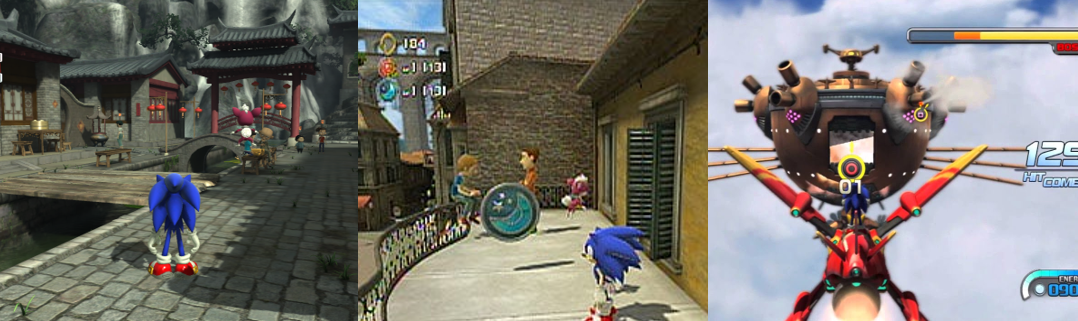
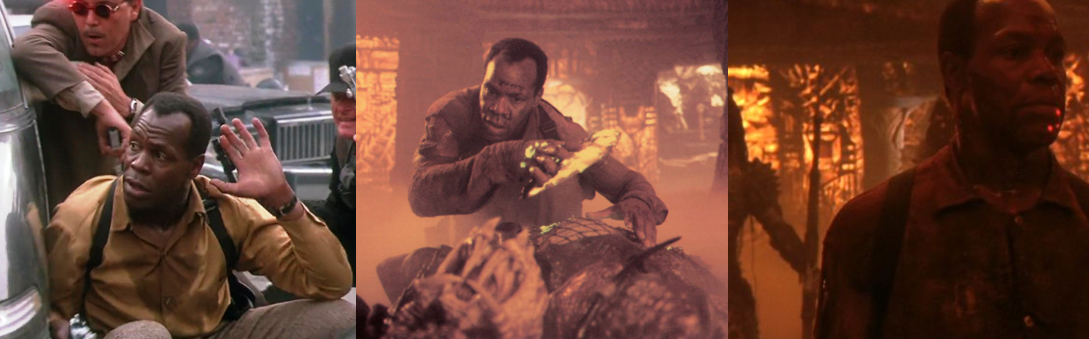
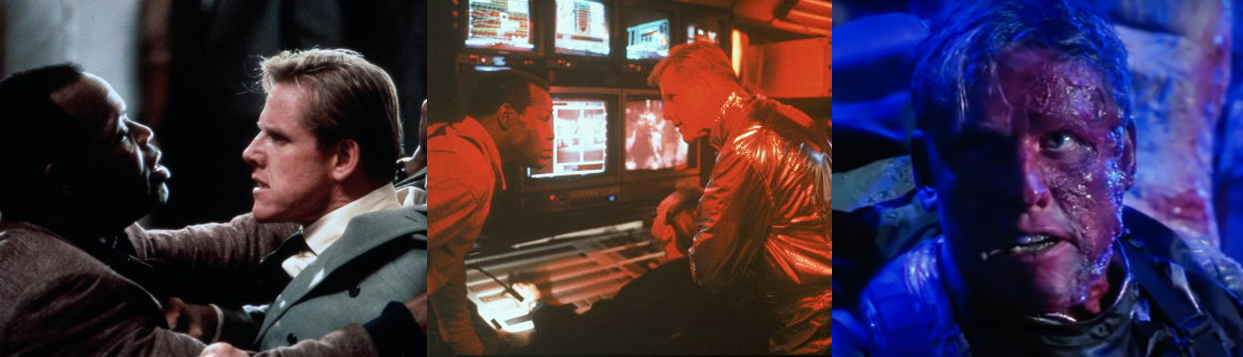
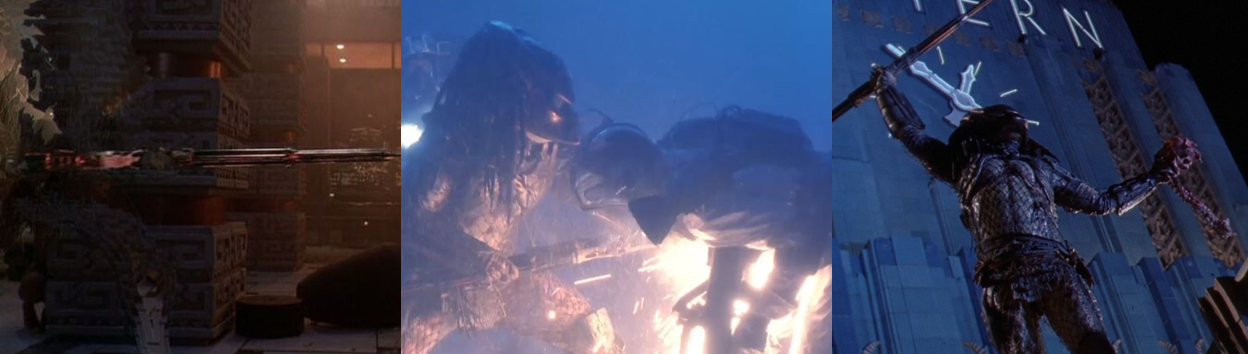
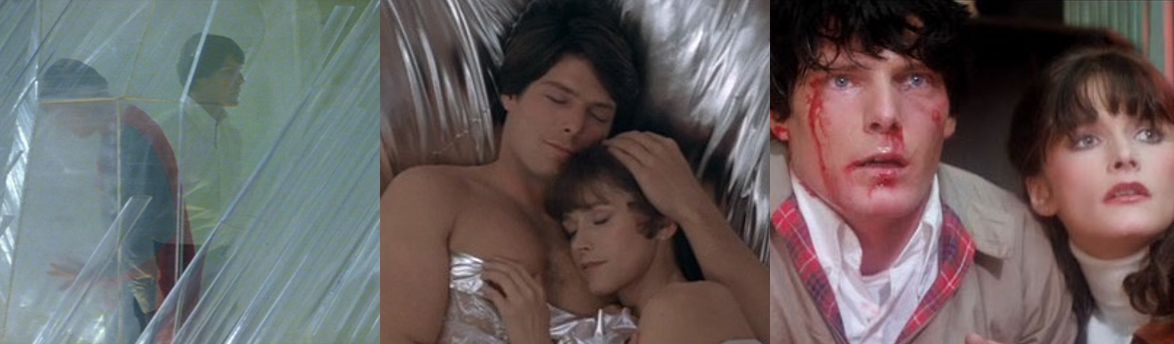
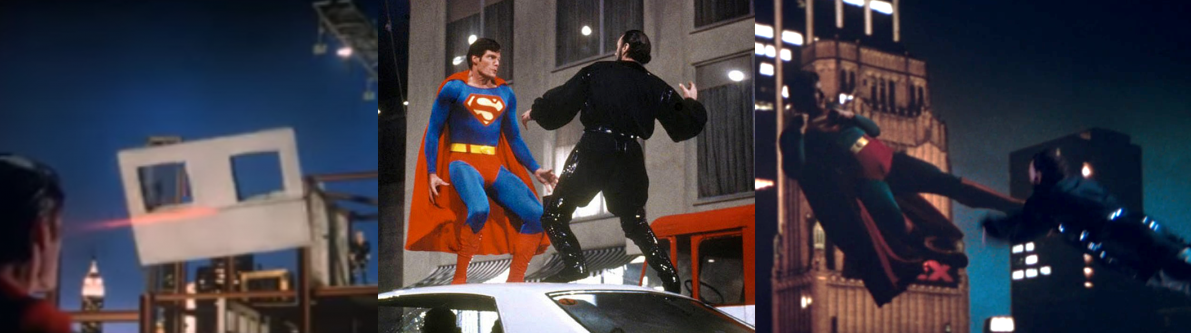
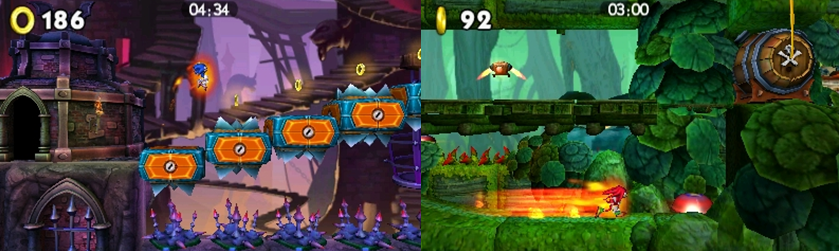
Game Corner [Sonic Month]: Sonic the Hedgehog (2013; Nintendo 3DS)


Sonic the Hedgehog was first introduced to gamers worldwide on 23 June 1991 and, since then, has become not only SEGA’s most enduring and popular character but also a beloved videogame icon and, in keeping with tradition, I will be dedicating an entire month’s worth of content to SEGA’s supersonic mascot.

GameCorner

Released: 13 June 2013
Originally Released: 25 October 1991
Developer: SEGA
Original Developer: Ancient
Also Available For: GameCube, Game Gear, Master System, Nintendo Wii, PC, PlayStation 2, Xbox

The Background:
I did a deep dive into Sonic’s complex and deliberate history in my review of his incredibly popular debut title for the Mega Drive; however, in October of the same year of Sonic’s 16-bit debut, SEGA also released an 8-bit version of the influential Mario-beater. The Master System version of Sonic was my introduction to the character as it came built-into my Master System II console; originally developed by Ancient specifically for the Game Gear, the Yuzo Koshiiro-lead team were also commissioned to make a version for its bigger brother. Since it was impossible to port the 16-bit game, Ancient started from scratch to craft a similar but fundamentally altered version of its 16-bit counterpart. Reviews were positive and, when the game was subsequently re-released onto the 3DS Virtual Console, it was again positively received and has been considered one of the best titles on SEGA’s 8-bit systems.

The Plot:
South Island is under siege! The maniacal Doctor Eggman (widely known as “Robotnik” during this time) has captured the island’s animals and polluted the landscape in his search for the six legendary Chaos Emeralds and only one super-fast, super-cool hedgehog can stop him!

Gameplay:
Just like the 16-bit version, Sonic the Hedgehog is a 2D, sidescrolling action/platformer in which players are placed into the red-and-white trainers of the titular blue hedgehog. Sonic is tasked with racing and navigating through six stages (known as “Zones”), with three levels (called “Acts”) each and, in each Zone’s third Act, Sonic will encounter Dr. Eggman and have to battle him to free a bunch of woodland critters from captivity. Sonic’s repertoire is exactly the same as in the game’s 16-bit cousin; moving Sonic in a direction for long enough will see him break from a walk, to a trot, to a super-fast run that turns his legs into a blur of motion. By pressing any button, Sonic will jump and become a ball of whirling blue spikes; this “Super Sonic Spin Attack” is your sole form of attack and can also be performed by pressing down on the directional-pad (D-Pad) while running to smash into Badniks. Pressing up and down on the D-Pad while standing still will allow you to vertically scroll the screen and pressing down when on a steep slope and jumping at the very end will see Sonic fly through the air and travel far across the Act at times. Otherwise, that’s it; there’s no Spin Dash or anything like that.
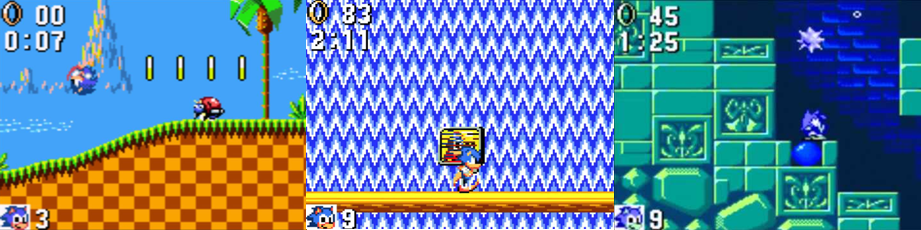
The game’s much more focused on platforming rather than speed and runs noticeably slower at times.

Consequently, the game remains a much slower experience than the advertising would have you believe. Thanks to the limitations of the 8-bit hardware, this version of Sonic is missing the iconic loop-de-loops that helped Sonic gain speed in the 16-bit version and replaces them (here and there) with the aforementioned ramps and a far more vertically-orientated approach. This means that the game is, at its core, a pure platformer and you’ll be jumping over (many) spiked and bottomless pits, hopping to platforms (moving, stationary, and temporary), and making your way up and across to reach the Goal Sign. While Sonic can still collect Golden Rings to protect himself from harm and death, he is again hampered by the system’s limitations. When hit, Sonic will appear to lose only one Ring but will actually drop all of his Rings and cannot pick them up again, which can easily lead to you getting killed on the very next hit. There are additional limitations on the heads-up display (HUD): if you collect over ninety-nine Rings, you’ll earn an extra life but also reset the Ring counter. Your life display is also capped at nine during gameplay but you can collect extra lives and they do show up on the score tally screen. Speaking of which, yes, you do accumulate points by smashing Badniks and finishing Acts quickly but you only see this score at the end of an Act. You are also still racing against a time limit but the game’s Acts are, for the most part, much shorter than in the 16-bit version so it’s not really much of a factor. Additionally, rather than including Signposts as checkpoints, 8-bit Sonic uses Arrow Monitors, which are worth hunting down if things are getting tough and, even better, your shield will carry across between Acts this time around.
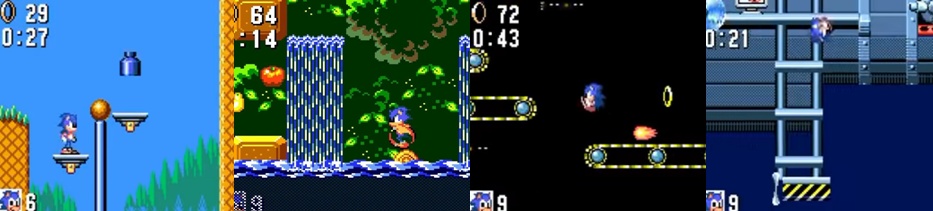
In addition to three new Zones, the game also has its own gimmicks to keep you on your toes.

As far as gameplay goes, though, 8-bit Sonic certainly mixes things up in many ways that separate it from 16-bit Sonic. Acts have different mechanics in them, such as warning signs before death pits, weight-based springboards, rapids, rolling logs to run on, and teleporters. It also includes three game-exclusive Zones: Bridge, Jungle, and Sky Base. Bridge focuses on horizontal platforming across an instant-death body of water and has you running across collapsing bridges while Jungle is focused more on vertical platforming. Both Zones include an autoscrolling section in Act 2, with Bridge Zone forcing you to the right and Jungle Zone forcing you up, which can be a pain as once the screen scrolls up to meet you, falling down will result in instant death. You once again have to find your way through Labyrinth Zone, now much more of a chore to play as it’s not only a fittingly maze-like Zone but the game noticeably slows right down whenever Sonic is in water or too much is happening onscreen. Scrap Brain, while similar to the 16-bit game, is also made noticeably different by the presence of a confusing teleporter loop in the second Act that sees you hitting switches to open certain doors, dodging numerous hazards, and going through the right tunnels and teleporters to reach the end. By the time you reach the game’s final Zone, Sky Base, the difficulty noticeably ramps up a bit; Act 1 is alive with hazards thanks to an impressive thunderstorm raging in the background and sending electrical currents running across the screen and the presence of numerous cannons. Act 2 takes place up in the sky with you suspended over a perpetual death pit and forcing you to hop across propeller platforms and dodge even bigger cannons all without the benefit of your precious Rings.

Graphics and Sound:
Even now, Sonic the Hedgehog remains one of the most impressive titles on SEGA’s 8-bit systems. Since the 3DS version is a port of the Game Gear version, it’s not quite the same as I remember it. Sonic’s sprite is noticeably different compared to the Master System one and actually resembles Greg Martin’s artwork thanks to his frowning eye. When left idle, he still taps his foot impatiently and pulls off some amusing expressions when killed, skidding, or gobbling air bubbles in Labyrinth Zone, though obviously the game’s zones aren’t going to be as vibrant and detailed as in the 16-bit version. Indeed, you’ll notice right away that the backgrounds are quite sparse and lack the same depth and level of detail as on the Mega Drive but there’s still quite a lot going on in each Zone; flowers blossom and dance in Green Hill Zone, water rushes by beneath Bridge Zone, and waterfalls and vines are all over the place in Jungle Zone.
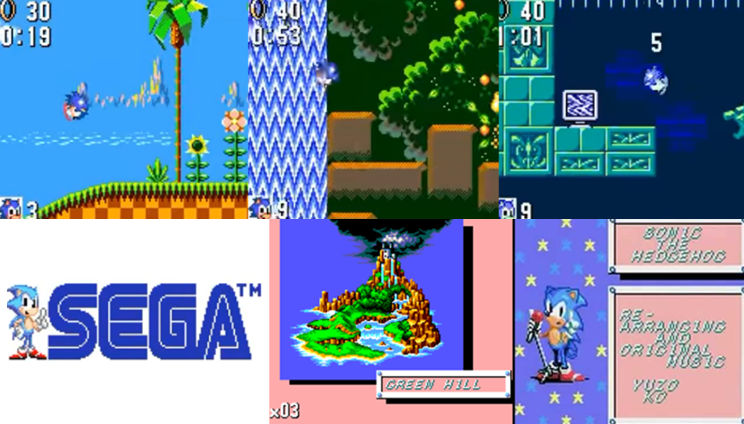
Zones are certainly shorter and more sparse but the game is surprisingly colourful and lively.

Labyrinth Zone also still has a lot of detail on the foreground elements and you still need to swallow air bubbles to breathe (though the iconic drowning music has been replaced by a simple ticking countdown); while Scrap Brain Zone remains a mechanical Hell, Sky Base is probably the most visually impressive Zone in the game thanks to its dark, foreboding first Act and the impressive scale of the second Act. One of the best additions to the game is the presence of a map before each Act; this shows your progression through South Island, displays the name of the Zone you’re about to play, and even shows Dr. Eggman hovering in to attack you, the level of pollution in the air, and Dr. Eggman’s Sky Base looming overhead. The game even has a much more elaborate introduction before the title screen and the music is even more impressive; again, largely different from the 16-bit version with the exception of the opening jingle and Green Hill Zone, the game is full of jaunty, catchy little chip tunes, with Bridge Zone, the game’s incredible Scrap Brain Zone track, and Sky Base Zone’s tracks being notable standouts for me. When you finish the game, you’ll also be treated to a large, partially-animated sprite of Sonic with a microphone while one of my favourite ending medleys plays over the credits.

Enemies and Bosses:
Even though 8-bit Sonic includes some new Zones, the Badniks remain exactly the same as in the 16-bit version; you’ll still bop on Motobugs, get blasted at by Buzz Bombers, surprised by Newtrons, and nipped at by Chompers. Some Badniks, like Bat Brain and Roller, are missing, however, and you won’t be seeing any fluffy little creatures hopping to freedom when you smash the ‘bots with your Spin Attack. Your main hazards will be the high abundance of spike pits, spike traps, and bottomless pits; spears will also try to skewer you in Labyrinth Zone, flame jets and electrical hazards try to fry you in Scrap Brain Zone, and platforms will constantly collapse beneath your feet.

Dr. Eggman attacks from overheard or underneath but is easy to send packing.

As in the 16-bit version, Sonic will battle Dr. Eggman in Act 3 of each Zone. Unlike in that game, Act 3 contains no Rings, some platforming hazards to navigate through, and a single extra life monitor hidden within it to help you out. Every boss in the game is also completely different from those seen in the Mega Drive version; in Green Hill Zone, Dr. Eggman simply flies overhead a few times (accompanied by a jaunty little boss theme), lowers slowly to the ground, and tries to ram into you but, thanks to the smaller screen size of the Game Gear, it’s pathetically easy to do him in as he flies overheard on the first pass. In Bridge Zone, Dr. Eggman switches to a submersible craft and pops up randomly between bridges to fire three shots at you; this actually differs from the Master System version, which sees you battling Dr. Eggman between two grassy platforms, and can be difficult as it’s very easy to fall through Dr. Eggman on his invincibility frames and lose a life. In Jungle Zone, Dr. Eggman again hovers overheard but this time you’re limited to a curved vine platform and he drops a rolling bomb at you but, just like in Green Hill Zone, it’s way too easy to just mess him up on his first pass.
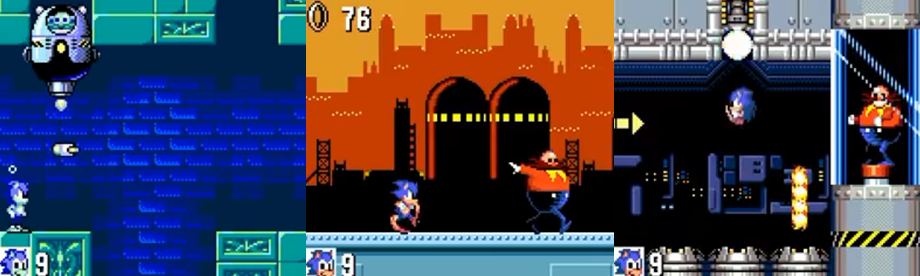
While he flees from you in Scrap Brain, Dr. Eggman puts up a decent fight in Labyrinth and Sky Base Zone.

Things appear to get more troublesome in Labyrinth Zone; unlike in the 16-bit version, you actually do fight Dr. Eggman here but it’s underwater and in a small arena with a bottomless pit to worry about. While there’s helpfully (if strangely) no danger of you drowning in this battle, you do have to watch out for Dr. Eggman’s rockets and projectiles but, while it can be tricky to jump over the pit thanks to how slow the game runs underwater, this isn’t that much of a chore to get through. In Scrap Brain Zone, you won’t actually fight Dr. Eggman; instead, you have to solve a tricky puzzle and then chase him to his teleporter and you’ll go one-on-one with him in the next Zone in a battle far more grandiose than on the Mega Drive. In Sky Base Act 3, Dr. Eggman hides within a glass tube and hops on a switch, which sends jets of flame randomly up from the floor or a ball of death to fly at you. Thankfully, it’s pretty simple to hop over both of these and bash into him. After he flees, a short cutscene pays that shows Sonic delivering the final blow via teleporter, defeating Dr. Eggman at last.

Power-Ups and Bonuses:
Sonic the Hedgehog includes all of the same power-ups as its Mega Drive cousin. You’ll find a number of monitors scattered throughout each Zone that will award you with ten extra Rings, a protective shield, or mark your progress so you can respawn later in the Zone if you die. Interestingly, the game features far more extra life monitors than it does speed-up shoes or invincibility monitors; indeed, I only encountered maybe two of these in my playthrough, to the point where I thought they weren’t even in the game.

Additional Features:
The 3DS version of 8-bit Sonic is one of the best ways to play the game thanks to not only being a portable title like the original Game Gear version, but also the inclusion of save states. While you can only create one save slot, this does make it dramatically easier to keep track of your progress and help you hunt down the game’s six Chaos Emeralds.
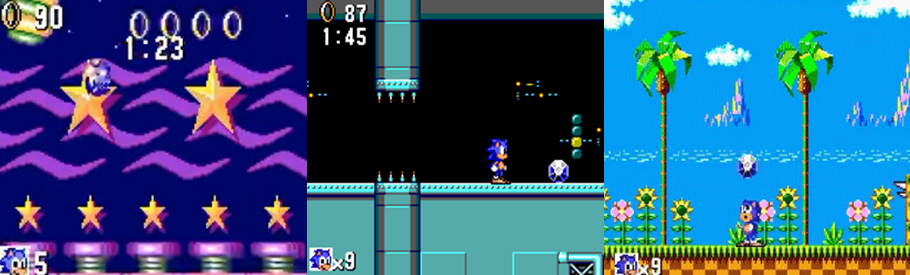
Bounce around Special Stages all you want but you need to hunt through Zones for Chaos Emeralds.

One of the things I always loved about 8-bit Sonic was its approach to Chaos Emeralds; if you finish an Act with fifty Rings or more, you’ll get to play a Special Stage. In this game, these are timed bonus stages full of bumpers and springs (basically functioning as the game’s version of Spring Yard Zone) and Rings. Here, you can bounce all over the place to stock up on lives or break Continue Monitors to gain an extra continue but you won’t find Chaos Emeralds in these stages. Instead, Chaos Emeralds are hidden within the game’s Zones. Finding them is sometimes pretty simple, such as just taking a certain path while underground in Green Hill or running on a log at the bottom of Jungle Zone, but can also be sneakily hidden behind death traps. To reach the Emerald in Bridge Zone, for example, you have to jump from a falling section of a bridge before you fall to your death and Scrap Brain’s Chaos Emerald is reached by falling down a specific pit that looks just like any other bottomless pit. Nabbing them all rewards you with a hefty score bonus and the game’s true ending, which sees South Island freed of Dr. Eggman’s influence.

The Summary:
Even though I grew up playing the Master System version of this game, which is graphically slightly superior, I still have an immense amount of nostalgia and fondness for the 8-bit version of Sonic the Hedgehog. The game is bright, fun, and endlessly charming and packs quite a lot in for an 8-bit title; one of the things I still really enjoy about it is that it’s not just a scaled down version of the 16-bit game. Instead, 8-bit Sonic features new Zones, new gimmicks, and changes up the way the game is played; having you hunt for Chaos Emeralds in the game’s Acts is a great way to tie into the game’s larger focus on platforming and exploration and I always kind of saw this and the 16-bit version as two parts of a greater whole that complimented each other beautifully. Colourful and featuring some extremely catchy tunes, 8-bit Sonic is both easier and slightly harder than its more popular counterpart; there are some glitches here and there (Sonic’s collision detection is a bit wonky and I found myself bounced into oblivion in the Special Stages more than once), there seems to be far more unfair death pits and traps, and the game runs much slower, especially when there’s a lot happening onscreen. Still, these issues are minor and, in many ways (again, most likely because of nostalgia) I actually prefer this game to the 16-bit version but, in my wholly biased opinion, it’s definitely at least on par with Sonic’s bigger, better Mega Drive outing.

My Rating:

Rating: 3 out of 5.

Pretty Good

What did you think about Sonic’s 8-bit debut? How do you think it compares to the 16-bit version and Sonic’s other 8-bit outings? Did your Master System come with Sonic built-in or did you buy it separately? What did you think to the Chaos Emeralds being hidden in the game’s Zones rather than in Special Stages? Did you own the original Game Gear version and what did you think to this 3DS port? How are you celebrating Sonic’s birthday this year? Whatever you think, feel free to share your thoughts and memories regarding Sonic below or on my social media.

Movie Night: Jurassic World: Dominion

Released: 10 June 2021
Director: Colin Trevorrow
Distributor:
Universal Pictures
Budget: $185 million
Stars:
Chris Pratt, Bryce Dallas Howard, Campbell Scott, Isabella Sermon, Sam Neill, Laura Dern, and Jeff Goldblum

The Plot:
After being set into the wild in the last film, dinosaurs live amongst us and a thriving black market has arisen. When poachers kidnap the infant of Owen Grady’s prize Velociraptor, Blue, and the teenage clone he and Claire Dearing (Howard) have been raising and a swarm of genetically-engineered locusts threaten worldwide famine, they must team up with faces old and new to infiltrate a dinosaur conservation site.

The Background:
In 1990, writer Michael Crichton penned Jurassic Park, a cautionary tale about the dangers of genetic engineering that saw the long-extinction dinosaurs returned to life through science and running amok in a theme park; the novel was well received and its concept caught the attention of famed director Steven Spielberg, who spearheaded the production and not only revolutionised computer-generated special effects on film by marrying CGI with complex animatronics, but also produced an incredibly profitable, influential movie. Naturally, the film led to sequels, however these weren’t as well received and the franchise lay dormant for the better part of twenty years until being revitalised by director Colin Trevorrow with the ridiculously successful Jurassic World (ibid, 2015). Following this success, Spielberg and Trevorrow collaborated on a plan for a new trilogy; however, although reviews were notably mixed for the sequel, Jurassic World: Fallen Kingdom (ibid, 2018) yielded an impressive worldwide gross of $1.310 billion, which all-but guaranteed a third entry. Trevorrow and co-writer Derek Connolly penned a story that tackled the question of how the world reacted to dinosaurs being loose among the populace, how that impacts society, and the promise of different dinosaurs and genetic monstrosities being featured. Alongside crafted something of a redemption story for new generation of protagonists, Trevorrow brought back the three protagonists from Spielberg’s ground-breaking film, and actually used the down time afforded by the COVID-19 pandemic to make changes to the film based on fan feedback. After numerous delays, Jurassic World: Dominion released to the tune of a $1 billion box office; however, the film was met with disappointingly low reactions. Reviews criticised the film as a shameless cash grab that was largely derivative of its predecessors. However, while many of the effects and action sequences were praised, it was largely seen as squandering its primary premise, another revival followed some four years later.

The Review:
The Jurassic franchise has long suffered from the law of diminishing returns; the first was a blockbuster hit, a visual spectacle that captivated an entire generation and kicked off a short-lived fascination with dinosaurs across a variety of media. The special effects, interpretation, and behaviour of its impressive dinosaurs continues to be influential to this day, with many other books, comics, videogames, and documentaries utilising a similar presentation, no matter how scientifically inaccurate they may be, simply because of how realistic and detailed the effects were at the time. Unfortunately this success didn’t really carry through to the sequels; while they all made a massive profit, critical and audience reactions dipped as the film’s failed to really recapture the magic of the first, and the franchise laid dormant until Colin Trevorrow was somehow, able to revive it. I think, for me, one of the reasons for the series growing quickly stagnant was that the films didn’t really try anything new; we were always back on an island, with the same dinosaurs only with a bigger, more vicious carnivore each time and when they did try something new, it was either ridiculous (like weaponizing dinosaurs) or not as big a part of the plot as it should’ve been…like dinosaurs free in the world.

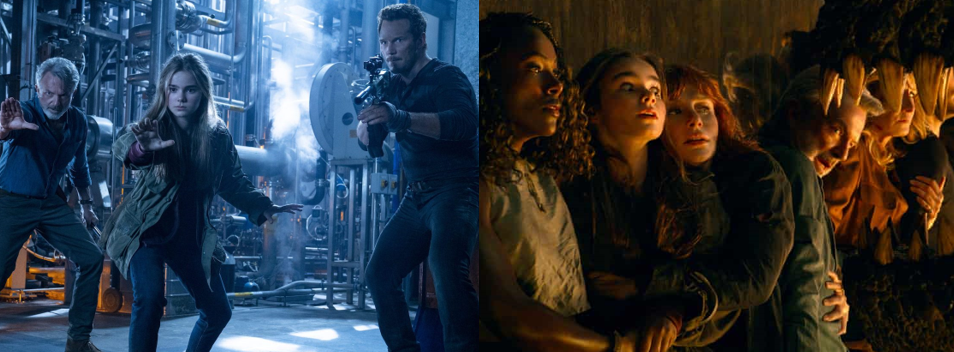
Owen and Claire are drawn back into the world of dinosaurs when Maisie is kidnapped.

I’d like to say that Jurassic World: Dominion bucks this trend but that’s not entirely true. Like the ending of the second and third films, the movie is framed around the idea of dinosaurs no longer being confined to a faraway island, but this plot point isn’t explored in any great detail. Instead, a newscast and a few scenes throughout the beginning set the stage, showing that these genetically resurrected creatures are caused sporadic havoc and deaths across the glove as humans and animals alike struggle to adapt to their presence, but it’s not long at all before we’re back in an isolated jungle and contending with new carnivores. Since the last film, Owen and Claire had retired to a secluded cabin where they keep Maisie Lockwood (Sermon) isolated in order to protect her from the government and malevolent corporations like Biosyn Genetics, who would seek to study or destroy her since she’s a human clone. Naturally, she’s a typical rebellious teen; tired of being cooped up and their lack of trust, she often defies them to journey beyond her limits, but she forms a bond with Blue’s asexually-produced baby, which she names “Beta”, which the two are found to be nesting nearby. While struggling to find a way to be good parents to Maisie, Owen and Grady are horrified when Biosyn mercenaries kidnap both Maisie and Blue and waste no time in calling in old favours and accepting help from pilot Kayla Watts (DeWanda Wise), who is seeking to atone for her part in the kidnapping.

Characters old and new must join forces to survive Biosyn’s newest and biggest dinosaur yet.

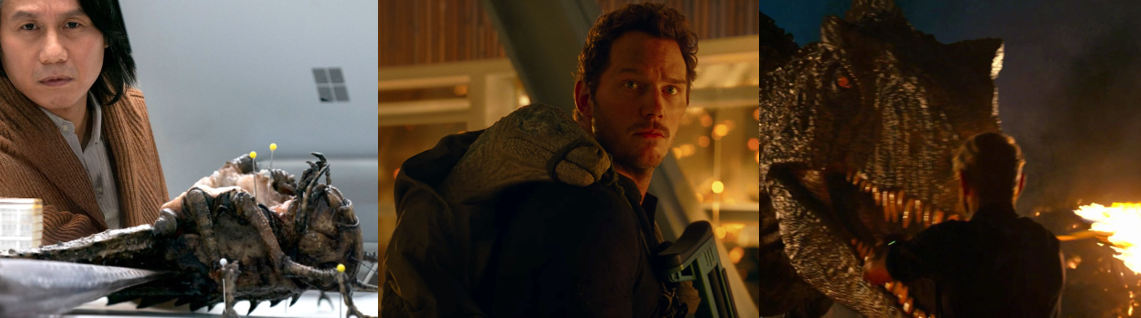
Their quest first takes them to Malta, where they witness first-hand the cruel depths of the dinosaur black market and clash with dinosaur smuggler Soyona Santos (Dichen Lachman), who has weaponised Atrociraptors who attack anything they’re directed to via a laser pointer to give us an excuse for a thrilling chase through the claustrophobic streets (and to still have antagonistic ‘raptors, but it wouldn’t be a Jurassic film without that). However, while the likes of the Mosasaurus and Apatosaurus cause a bit of a nuisance, the real threat to our society ae these genetically-engineered locusts; spliced with dinosaur DNA to be much bigger and aggressive, these ugly bugs have been swarming across the country devouring any crops that aren’t manufactured by Biosyn, raising concerns for the returning (and now divorced, in one of a handful of all-too-brief nods to the second and third films) Doctor Ellie Sattler (Dern). Having been invited to Biosyn’s secluded dinosaur preservation facility by chaotician Doctor Ian Malcom (Goldblum), who has been working closely with Biosyn director Doctor Lewis Dodgson (Scott), to keep the dinosaurs safe and study them for medical purposes. Ellie brings along her old flame and associate, Doctor Alan Grant (Neill), reuniting the original Jurassic Park trio for the first time since 1993, and the three investigate Biosyn, which is secretly manufacturing the locusts. Malcolm, and his protégé Ramsay Cole (Mamoudou Athie), have been working to scupper Dodgson’s plot to profit from his monstrosities, and the group infiltrate his facility to acquire concrete proof of his illegal activities. Dodgson was also behind the kidnapping of Maisie and Blue, though this was primarily the will of his lead geneticist, Doctor Henry Wu (BD Wong); having spent a lifetime recreating dinosaurs and cobbling together genetic abominations, Wu seeks to study Maisie and Blue’s unique genetic properties in order to destroy the locusts, though naturally the original protagonists are less than trusting of him due to his previous acts.

Unfortunately, we don’t really get to explore how dinosaurs have impacted the wider world.

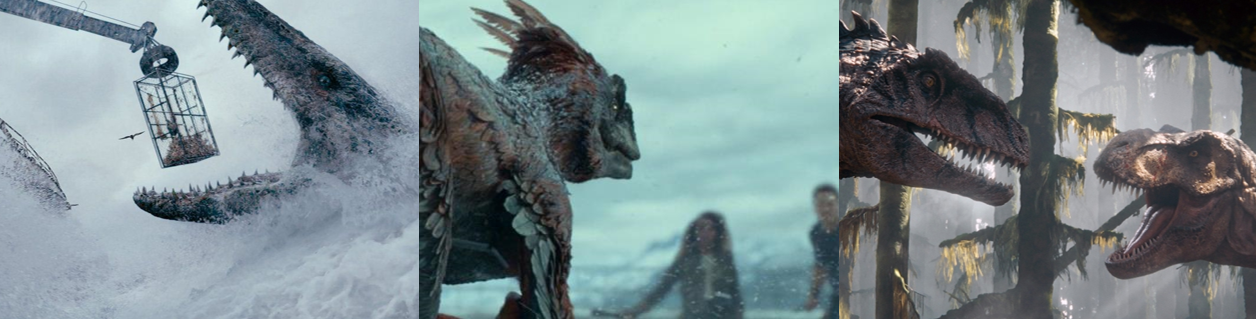
If you were a fan of Franklin Webb (Justice Smith) and Doctor Zia Rodriguez (Daniella Pineda) from the last film then you’ll be disappointed to learn that they only get a brief cameo at the start of the film before disappearing entirely; in their place is Kayla, a mercenary pilot who inexplicably develops a conscience because she draws the line at kidnapping. Dodgson (who you may remember from his brief scene in Jurassic Park where he was played by Cameron Thor) is now this quirky, Steve Jobs-esque character who presents the image of a benevolent philanthropist but actually seeks to profit from the research he stole from Jurassic Park (many of the dinosaurs are from both islands and that can of shaving cream finally makes a reappearance). The real story, as ever, is the dinosaurs; this time around, we get to see how cruel they’ve been treated as poachers and other undesirables chain them up for sport, sell them, and even cook them up on the black market, though they’re allowed to roam freely at Biosyn’s secluded hideaway, where they’re even fitted with special chips to call them back to base in the event of an emergency. This time around, Wu has managed to (somehow…) resurrect a few dinosaurs in their purest form, without the need for other DNA to fill in the gene sequence gaps, meaning dinosaurs like the Pyroraptor now sport feathers; one of the most impressive shots of the film is dedicated to the mammoth Dreadnoughtus; and the entire site is also protected by a vaguely-defined air protection system that keeps the Quetzalcoatlus’ at bay (and, when it’s deactivated, they cause a pretty intense, if unbelievably survivable, plane crash). In addition to the long-awaited (for me, anywhere) return of the venom-spitting Dilophosaurus and the series staple, the Tyrannosaurus rex, was also get some fearsome new dinos: a bunch of vicious Dimetrodon stalk Grant, Ellie, and Maisie in the cave sunder the facility, Claire has a close encounter with the horrific long-clawed Therizinosaurus, and Biosyn have even brought back one of the largest and most aggressive carnivore ever known, the Giganotosaurus, which acts as the film’s primary dinosaur antagonist to rival the T. rex in the same vein as its predecessors, the Spinosaurus and Indominus rex.

The Nitty-Gritty:
Pretty much all of Jurassic World: Dominion’s marketing focused on three key elements: dinosaurs out in the world, the return of the original protagonists, and the rescue of Beta. Unfortunately, the film struggles a bit to juggle these elements in a satisfactory way; it almost feels like there’s two scripts stapled together as Ellie and Grant’s side mission feels a little tacked on to the primary concern of  simple kidnapping plot, and both of these take precedence over the concept of exploring what it means to have dinosaurs roaming through cities and suburbs. Sadly, this latter aspect is barely touched upon; we get some cool shots of them flying between skyscrapers and lumbering alongside elephants and such, and the stuff with the black market and the lip service of his disruptive it all is there, but it’s largely secondary compared to the locust swarm, which just isn’t as interesting when you’ve got Allosaurus’s stomping around. While it’s great to see the original trio back (and Goldblum toned his performance down a little), it does feel like a bit of a rewrite could’ve seen Franklin and Zia (or even Claire) will their role; I appreciate the filmmakers going all-in with trying to make this the biggest Jurassic film ever by bringing them back and having them team up with their younger counterparts, but their interactions are a bit weak (Ellie and Claire team up to reset the facility’s power, much like in Jurassic Park, while Grant reluctantly helps Owen and Maisie capture Beta to take her home) and all of them inexplicably survive the most unbelievable situations (with Malcolm now able to not only stand his ground against a Giganotosaurus but even toss a flaming spear into its mouth).

While the locust and kidnapping plots don’t land too well, the dinosaurs look as fantastic as ever.

So, while Biosyn’s facility might not be on an island, we are effectively back in Jurassic Park/Jurassic World for the majority of the film as Dodgson has built an advanced laboratory and sanctuary for the wild dinosaurs so he can study them alongside his team of scientists. Thankfully, the dinosaur effects look fantastic; there were some moments where it was clearly CGI, but others where I wasn’t so sure and there appeared to be a decent amount of animatronics and physical effects used throughout the film. While it’s hard to believe that Claire, Owen, and Kayla survive half the stuff they endure as they’re being chased, ejected, or crashing and there’s numerous times when the protagonists ae able to dodge, outrun, and even fight back against not just the smaller dinosaurs but the bigger ones too, there’s a decent amount of tension applied in certain scenes (particularly Claire’s escape from the Therizinosaurus). This time around, much of the carnage could’ve been easily avoided were it not for Maisie once again wreaking havoc by releasing a dinosaur, in this case Beta, even though Wu is clearly trying to atone for his mistake with the locust by studying the two (a fairly invasive and simple procedure, if the ending is anything to go by). Instead, her actions cause a chain reaction that see Dodgson reluctantly incinerate his locusts to cover up his involvement, which causes a forest fire when they are bizarrely able to stay flying and functional when ablaze. Though he tries to escape, he’s set upon by the Dilophosaurus’s and the protagonists are caught between another gigantic showdown as the T. rex and Giganotosaurus duke it out to decide which is the alpha male. Thankfully, the Therizinosaurus is also on hand this time to ensure that the T. rex remains the undisputed king and the film ends basically the same way as all Jurassic sequels do: the dinosaurs live on in the remains of the sanctuary as protected species and life will just have to find a way to co-exist with dinosaurs in the world.

The Summary:
I went into Jurassic World: Dominion just hoping that it’d be better than Jurassic World: Fallen Kingdom and, thankfully, it was…but not by much. As I say, the law of diminishing returns and normalising the dinosaurs to such an extent that it’d not even worth properly exploring what it means to see them out in our world rather than confined to an island really keeps the film from properly living up to its potential and exploring new avenues. We almost get that when Owen and Claire are tracking Santos, but it’s not long before we’re basically back in Jurassic Park again and going through the same beats as the first and third movies. The larger plot of the locust swarm is pretty weak and seems to be a ham-fisted way of tackling global concerns regarding food and the environment; even though they’re posing a real threat to our survival, no amount of locusts is every going to be as visually impressive or interesting compared to friggin’ dinosaurs! Seeing Grant, Ellie, and Malcolm return to the franchise, and in prominent roles, was great; they slipped back into it nice and easily and had some fun interactions with their younger counterparts, but again this really does feel like forced pandering and a way to cash in on nostalgia. The new dinosaurs, particularly the sadly under-utilised Pyroraptor and the pretty horrific Therizinosaurus were great additions, but the Giganotosaurus really didn’t offer anything we haven’t seen before from the Spinosaurus and Indominus rex besides giving the fan favourite T. rex something new to chomp away at. In the end, Jurassic World: Dominion is a decent enough action/monster film; it drags a bit a suffers from pacing issues, and there was some weird lines and delivery sprinkled throughout, but the effects were pretty awesome and there was a lot of fan service laced throughout. I, personally, would’ve liked to see more explicit references to the second and third film and feel it could’ve done with being a bit shorter, or spending more time exploring the impact dinosaurs have had on our world, but it was enjoyable enough for what it was and a decent enough note for the franchise to finally (hopefully…) go out on.

My Rating:

Rating: 3 out of 5.

Pretty Good

What did you think to Jurassic World: Dominion? Did you enjoy seeing the original cast come back or did you think they were a little unnecessary to the overall plot? What did you think to the threat of the locusts and do you think it was a mistake to not focus ore on the dinosaurs’ impact on the world? Which of the new dinosaurs was your favourite and were you disappointed to see the film was effectively set in another dinosaur park? Are you a fan of Jurassic Park’s sequels or do you consider the first one to be the best? Would you like to see another film in the franchise or do you agree that it’s time to let it die? Whatever your thoughts on Jurassic Park, leave them below.

Author’s Spotlight: Alana K. Drex and A.W. Mason

Alana K. Drex and A.W. Mason, authors of The Scampering

1. First, introduce yourself a bit. What is your name (or pen name) and where are you from?

Alana: Alana K. Drex is a pen name and I’m from Missouri.

Mason: My name is A.W. Mason and I write everything from horror/terror/suspense to weird/experimental/contemporary fiction and hail from the Sunshine State (Florida).

2. Next, tell us a bit about your most recent work. Is this your first published book? What is it about and what genre would you classify it as?

Alana: My most recent work was a collaboration with A. W. Mason that resulted in The Scampering. It originated after I was devastated over hitting a squirrel. We had been looking for a subject to collaborate on and Mason said, “Let’s go with that.”

This is my second published short story. So, it is about Melinda who thinks it is her mission to eradicate squirrels because of her very personal vendetta with the poor furry things. I would definitely call it ‘Absurd Horror’. Mason and I wanted it to be outlandishly fun, but horrific.

Mason: The Scampering is an extreme horror story and really the brain hild of Alana. It’s my first standalone story and my first published collab as well. It’s a gory revenge tale with a bit of insanity sprinkled in.

3. Tell us a bit about your main character; what are they like, how did they come about, and what are some of their strengths and weaknesses?

Alana: Melinda is a widow who is on a mission. Her strength is culinary arts (you can find one of her favorite recipes at the end of the story) Her weakness is definitely letting bitterness consume her.

Mason: Alana did a wonderful job coming up with Melinda. She’s a bit eccentric and “distracted” by past traumas.

4. What was your hardest scene to write in this (or any) book?

Alana: I don’t know what it says about me, but this story is one of the few that just flowed from my brain to the keyboard. It was a fun, wild ride to be in the mind of such an unstable person. I really let myself explore some dark places, it was so much fun!

Mason: With this being a collab, Alana and I went back and forth on parts of the story until we had it all fleshed out. But the most difficult scene for me in any writing is when the author needs to make sure the reader can still suspend their own beliefs.

5. Did you go the traditional route when publishing your book or did you choose to self-publish?

Alana: We self-published this one. Thank you, Mason for handling the formatting and everything it took to release it out into the wild!

Mason: We chose to self-publish. We can control most of the creative process and the revenue coming in which we are donating to the Animal Welfare Institute.

6. What would you say is the most difficult part of your writing journey and what advice would you give to other writers?

Alana: So, for me, ideas pop up all the time, but it is hard for me to stick with something past the 50% mark of completion. I always want to keep starting new projects — I really have to make myself focus. I’ve learned it helps to have a place to store new story ideas, while continuing on my current WIP.

Mason: The most difficult part of the writing journey for me is seeing a clear picture in your head of what the story is that you’d like to write and getting that vision on paper with words. Sometimes I’m my own worst enemy when it comes to not getting what my mind is thinking on paper and my projects stall. My advice to other writers is to just write, get something down on paper because you’re going to work back through it when you’re editing anyway. A rough draft or first draft is always perfect because all it’s meant to be is just that, a rough draft.

7. Do you want each book to stand on its own, or are you trying to build a body of work with connections between each book?

Alana: All my stories (I have several completed that are unpublished as of this interview) are unconnected. Maybe in the future I will play around with connecting worlds.

Mason: A good story will stand on its own regardless of connections. However, I am very much a fan of world building and cross-overs; most of my stories in my first book A Haunt of Travels connect in one way or another.

8. What are some of your favourite authors and books and what inspired you to become a writer in the first place?

Alana: I loved Christopher Pike and R.L. Stine as a kid. As an adult it has been the many different horror styles put forth by authors like Stephen King to Joyce Carol Oates to Ronald Malfi to Richard Laymon, and so many more. I think I was inspired to write because I have always been one that enjoyed writing in notebooks. So to write actual stories, I basically just become the character(s) and write for them. I like learning about them as they’re written.

Mason: It’s probably cliché to say these days but Stephen King is a big reason why I write. I started reading him at a pretty impressionable age and the horror genre really appealed to me because you can peel it back like an onion and explore so many different real-world themes and issues. Joe Hill is quite good at that as well. Later on, I grew to enjoy the writing styles of Chuck Palahniuk, David Sedaris and Carl Hiaasen.

9. What would you say has been the best way to market your books?

Alana: I really haven’t done marketing so far. I’m pretty new to this thing. I enjoy sharing through Instagram, where I’ve been fortunate to be a part of the bookstagram community. I’m a reader first. Writer second. That’s not to say my writing comes second, but I think that without being a reader first, my writing would never be the quality it is. Writing is a craft, and I have the many authors whose books I’ve enjoyed over the years to thank for teaching me things like structuring my ideas into readable stories.

Mason: As far as marketing goes, I am a terrible self-promoter. Thankfully I have a good group of folks on Instagram in the book community that I have developed friendships with because of posting about current reads and neat editions of books we find. Within that community, there are so many wonderful indie authors and reviewers who are great at supporting each other and promoting each other’s work.

10. Are there any tropes, clichés, or writing styles that you dislike and, if so, what are they and why?

Alana: I read a variety of things and I’m not picky.  The only style I can think off the top of my head that’s hard to read is when things are too redundant. Sometimes less is more.

Mason: I’m fine with most tropes, I’d never want to discourage anyone from writing what they love even if some folks bash on the topic. The only thing I try to stay away from are adverbs. As King once said, “The road to hell is paved with adverbs!”

11. Do you read reviews of your book and, if so, how do you handle negative feedback?

Alana: I’ve been enjoying reading the reviews. I know those negative ones are coming. But so far, I’m new to this scene, and that has yet to happen. I know it will. I’ll remind myself how fun the story was to write and try to shove it out of my mind. Easy to say for me now, huh?

Mason: I read reviews for my work. I think it’s an important part of growing as a writer, seeing the criticisms and using them as tools to better your craft. I can understand how some negative reviews can be sensitive to some authors. It’s like, “Hey this is my baby, I’ve poured my heart and soul and blood, sweat and tears into this thing. How dare you not like it!” But writers have to realize that your work isn’t meant for everybody and never will be. I had a 1-star review left on Amazon that said none of my stories had endings, and they weren’t all that wrong. I do keep some stories ambiguous and leave it up to the reader. As a reader myself, I enjoy that style of writing.

12. What are some of your quirks as a writer? Do you like to plot everything out or do you prefer to just “wing it” and see where the story takes you? Do you listen to music when writing and, if so, what do you listen to?

Alana: I wing it for the most part. I am working on a novel currently and as I go, I type side notes in Scrivener (thanks Billy Ray Middleton Jr for the recommendation). Since it is the most involved story I’m writing to date, those little side notes will help remind me where to go with the story. I would say I wrote the first 10K words of my current novel in progress without any side notes. I love to wing it as much as I can and be surprised, too. Music can be inspiring — the novel I’m working on has a growing playlist.

Mason: My writing process is usually born from a thought or an idea like, “What happens if this were to occur?” and I start from there. I rarely ever outline, it’s too rigid of a structure to me for creativity, but I’ll make story notes when I need to keep continuity in check. When writing, I typically shut the door behind me and type away in silence. I’m distracted easily. But while editing, I’ll put a record on and lately it’s been Coheed and Cambria or The Wipers.

13. What is the best advice you’ve ever had when it comes to writing and what advice would you give to new writers?

Alana: Billy Ray Middleton Jr (@billyraymiddletonjr) told me to just write, write, write whatever because you can always go back later and delete some things. This has really kept my projects alive and I’ve only had to delete a little bit.

Mason: The best advice I’ve ever received, and the advice I give other writers (which I think is universal writing advice) is to just write. Put down words on the page. Don’t limit yourself or your ideas. Don’t beat yourself up if it’s only a couple hundred words you can come up with. Don’t think that you have to write every day. That may seem undisciplined but it’s what works for me and gives me the freedom and flexibility to create at my own pace.

14. What’s next for you? Are you currently working on any new books or stories?

Alana: I’m working on a Gothic Horror novel set in 1899. But before that I hope to release Volume 1 of my Holiday Horror short story collection this Fall. And then follow that in Spring 2023 with Volume 2.

Mason: Next, I have a novella that I’m in the final stages of formatting and reviewing. It’s a weird fiction story called The Cleanup Crew and it’s about a society that doesn’t recognize death.

15. Finally, feel free to plug your social media, website, and links to Amazon, GoodReads, and other relevant sites below, and detail any current offers available for your book/s:

If you’d like to be featured in an interview, please check out the interview submissions page to submit your answers.

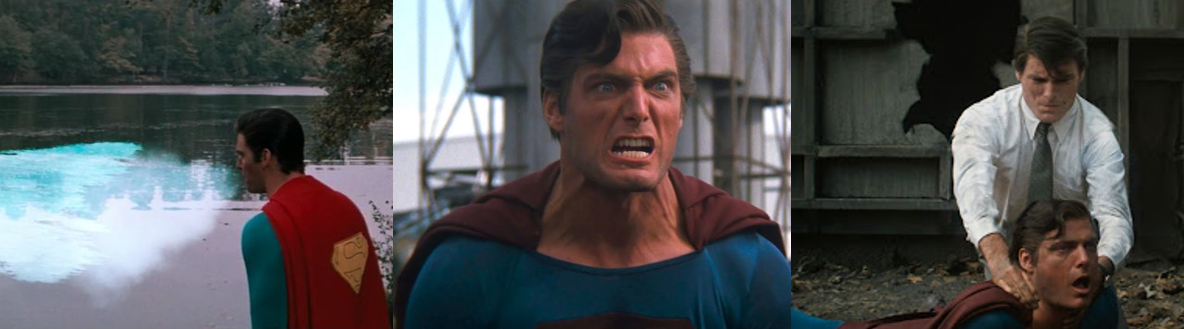
Movie Night [Superman Month]: Superman III


In 2013, DC Comics declared the 12th of June as “Superman Day”, a day for fans of the Man of Steel the world over to celebrate Clark Kent/Kal-El/Superman, the superpowered virtue of “Truth, Justice, and the American Way” who is widely regarded as the first ever costumed superhero. This year, I’m spending every Sunday of June celebrating the Man of Steel as I expand Superman Day to “Superman Month“.


Released: 17 June 1983
Director: Richard Lester
Distributor:
Warner Bros. / Columbia–EMI–Warner Distributors
Budget:
$39 million
Stars:
Christopher Reeve, Richard Pryor, Robert Vaughn, Pamela Stephenson, and Annette O’Toole

The Plot:
Clark Kent (Reeve) returns to his hometown of Smallville and reunites with his old flame, Lana Lane (O’Toole). However, conniving industrialist Ross “Bubba” Webster (Vaughn) hatches a devious plot to control the world’s oil supply by corrupting Kent’s alter ego, Supermen, using the computer genius of bungling programmer Gus Gorman (Pryor).

The Background:
Although, as I mentioned in my reviews, both Superman (Donner, 1978) and Superman II (Lester, 1981) were critically and financially successful, their production had been not only expensive but also tumultuous; behind the scenes tensions between director Richard Donner and the film’s producers saw him replaced by Richard Lester despite having plans for a third film in the series. Development of a third film continued regardless, with both Vril Dox/Brainiac and Kara Zor-El/Supergirl considered as inclusions; elements of this story, which also featured Mister Mxyzptlk (as played by Dudley Moore) corrupting Superman, remained prevalent throughout the long scriptwriting process. By the time filming began, the production continued to be fraught with bad blood; both Margot Kidder and Gene Hackman had publicly opposed the treatment of Donner and were removed or significantly downgraded for the third film, which was much more focused on slapstick shenanigans. Nowhere was this emphasised more than in the casting of comedian Richard Pryor, who was paid $5 million for his substantial role after declaring his affection for the previous films. With a worldwide gross of barely over $80 million, Superman III was the least financially successful of the series at that point; the reviews were even worse, especially regarding Pryor’s tomfooleries (though Reeve’s consistent portrayal of the Man of Steel (and his turn as the corrupted Superman) continued to be praised).

The Review:
Despite the fact that I had some issues with the first two films, there’s no denying the quality on display in Superman and Superman II; even with all the behind-the-scenes shenanigans, both films have pretty much the perfect balance of action, romance, intrigue, and humour and never veer too far into one element or the other. This means that they both manage to deliver perhaps the most influential portrayal of the Man of Steel while also including just the right level of camp, with both of these aspects being bolstered by some truly impressive and ambitious special effects. Here, things largely proceed as you might expect; with the status quo restored following the memory-wiping kiss of the last film, Clark continues to pose as an awkward, mild-mannered reporter while exuding confidence and reliability as the charismatic Superman.

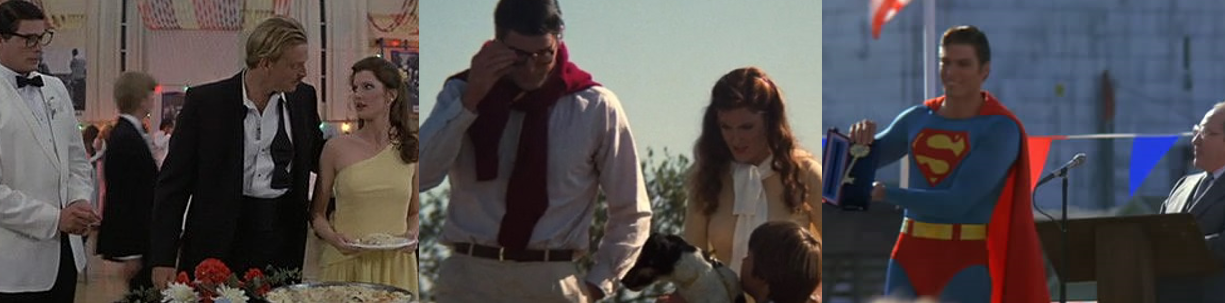
Clark returns to home, reconnects with old friends and earns the town’s adulation as Superman.

However, in a change from the last two films, Superman III sees Clark return to his hometown of Smallville for a high school reunion; there, he reconnects with old friend Lana Lang but continues to right wrongs with his superpowers. Crucially, this includes preventing a nearby chemical plant from a potentially disastrous meltdown, which earns the Man of Steel the adulation of the entire town. One aspect about the film that I really enjoy is seeing Superman interacting with ordinary civilians and emergency services more often; when approaching an emergency situation, Superman always defers to whoever is in charge before offering his assistance, which goes a long way to showing how polite and willing to collaborate with others he is and is a great parallel to his later turn towards the dark side. With Lois Lane (Margot Kidder) absent for the vast majority of the film thanks to an assignment in Bermuda, Lana fittingly takes over as Clark’s new love interest. A childhood friend and former flame of Clark’s, Lana is a struggling single mother to young Ricky (Paul Kaethler) who is constantly fending off the unwanted advances of the bullish borderline alcoholic Brad Wilson (Gavan O’Herlihy) and dreams of escaping the suffocating confines of Smallville. Though she’s maybe not quite as loud and feisty as Lois, Lana is a capable enough woman in her own right but still laments that she’s stuck without a husband since all the “good” men in Smallville are taken. Crucially, unlike her Metropolis counterpart, Lana’s far less besotted by Superman and is more appreciative and interested in Clark, whom she sees as a kind and caring alternative to the likes of Brad. Lana admires that Clark has made a life for himself out of Smallville and is grateful for his positive influence on Ricky, who is often shunned for being the only kid in town to not have a father, but there’s really not a whole much for her to do in terms of the film’s overall plot beyond be a pretty face for Clark to converse with and to ponder Superman’s later change of character.    

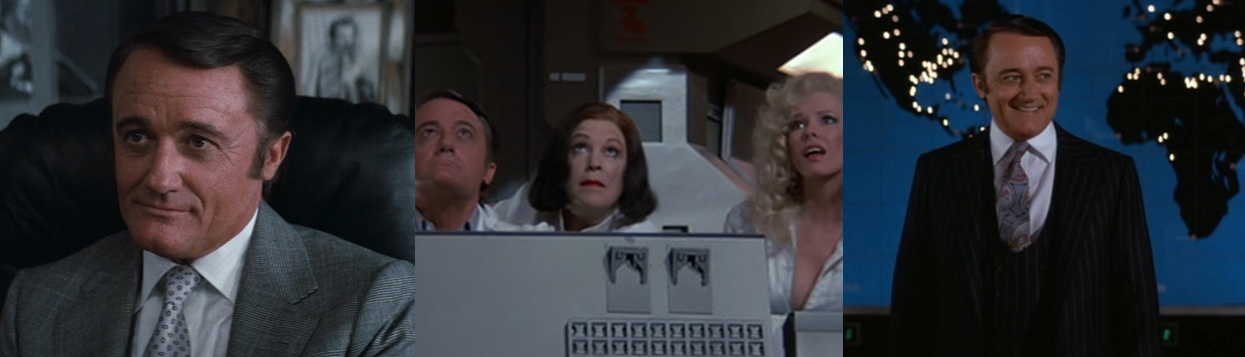
Webster is willing to do anything to add more power and wealth to his already-vast empire.

Also absent from the film is Lex Luthor (Gene Hackman); in his place is Ross Webster, a wealthy philanthropist who is, basically, a poorly veiled stand-in for Superman’s traditional archnemesis. Alongside his spiteful and cruel sister, Vera (Annie Ross), and the voluptuous Lorelei Ambrosia (Pamela Stephenson), Webster initially plots to avenge himself on the nation of Columbia after they refuse to do business with him but soon turns his attention towards the more profitable hording of oil, and makes destroying Superman his top priority after the Man of Steel interferes with his coffee plot. While Vera enables Webster’s ambitions and craves the acquisition of further power and influence (it’s her idea to target the oil, for example), Lorelei plays the part of an airheaded bimbo but is actually much smarter than she appears (it’s her idea to use Kryptonite against Superman). Unlike Luthor, who saw pitting his criminal genius against Superman as the ultimate challenge, Webster is largely dismissive of the Man of Steel and believes destroying him should be a simple task since they’re well aware of his weakness to Kryptonite. It can’t be understated how much Vaughn’s presence and allure elevates this film ever so slightly above mediocrity; thanks to him, Webster makes for a charismatic and manipulative villain. Webster is far more approachable and fair-minded than Luthor but no less dangerous and authoritative; he doesn’t care a lick for the lives he endangers with his schemes and is easily able to threaten and coerce the likes of Gus Gorman into doing his bidding thanks to the power and breadth of his wealth.

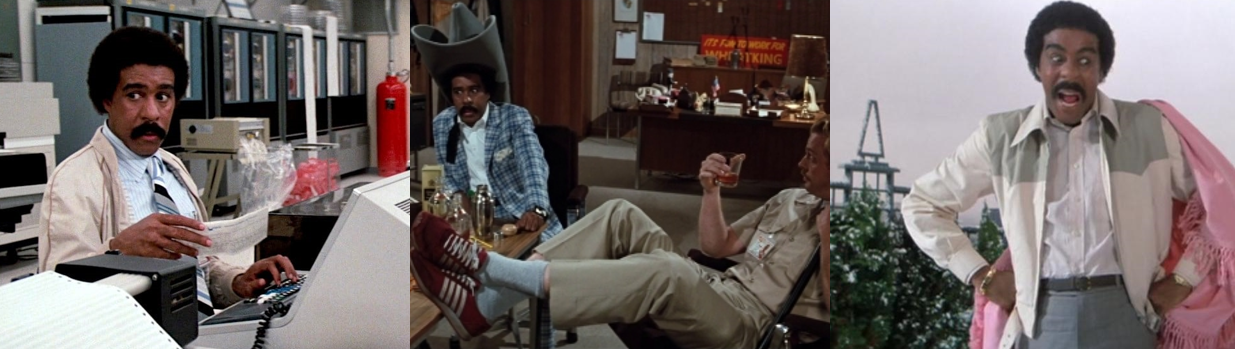
Sadly, the film is far too focused on Richard Pryor’s bombastic attempts at comedy.

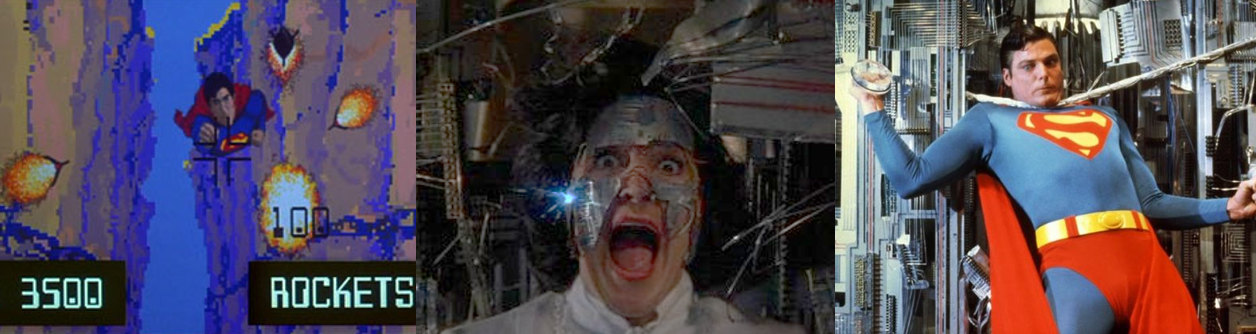
That, of course, brings us to the ultimate underdog, Gus Gorman, who begins the film as an out-of-work buffoon who finds that he has a talent for computer programming when he lands a job at Webscoe. Gus is a greedy, bumbling fool who believes that the world owes him more than it’s given and who wants to enjoy life now, while he’s young. While it’s child’s play for him to embezzle Webscoe’s funds into his mediocre pay cheque, Gus immediately regrets this decision when he is brought before Webster; however, Webster is as impressed by Gus’s capabilities as he is despondent by the man’s foolishness. To get out of being locked up for this crimes, Gus agrees to redirect space satellites and oil tankers for the industrialist but soon comes to realise that his talents make Webster’s threats obsolete and thus demands that the villain fund and construct a giant super computer of Gus’ own design. A selfish and outlandish figure, Gus only realises the error of his ways when his supercomputer is perverted by Webster into a tool for killing Superman but, sadly, Gus mainly exists to flood the film with all kinds of ridiculous pratfalls; providing both physical comedy and outlandish, energetic rants that appear to be ad-libs on Pryor’s part, Gorman is like a living cartoon and sticks out like a sore thumb as the one buffoon in a film full of mostly straight men.  

Synthetic Kryptonite alters Superman’s demeanour and splits him into two beings!

When Webster orders that Superman be killed, he has Gus synthesise a chunk of Kryptonite but Gus is forced to make some compromises in the element’s construction due to its alien nature. The result is a green hunk of rock that, rather than weaken and kill Superman, affects him more like the red variant from the comics. Initially, Superman becomes distracted and disinterested in his usual duties, which causes him to arrive too late to help out in a minor disaster on a Smallville bridge. Pretty soon, though, he’s flying all over the world and causing all kinds of nuisances, such as straightening the Leaning Tower of Pisa (brought to life through the finest green screens money can buy…), blowing out the Olympic Flame, and gulping shots at the bar. Soon, his costume and demeanour noticeably change for the worst; he wears a constant scowl, sports dark stubble and darker eyes, and his suit takes on a muddier, subdued hue. After being sexually manipulated by Lorelei to cause an environmental crisis with one of Webster’s oil tankers, Superman has a violent breakdown in a junk yard and literally splits into two beings! This leads to a violent brawl between the virtuous Clark Kent and his aggressive doppelgänger that ultimately results in Clark emerging victorious and returning as the one, true Superman. It’s quite a bizarre sequence, to be sure, and is mostly hand-waved away but I can’t deny that the fight between the two is a real highlight of the film.

The Nitty-Gritty:
Right off the bat, Superman III shows us exactly what it’s all about: slapstick, goofball attempts at comedy. Skipping the traditional title sequence (though I swear this was included when I first saw the film on television…), the film opens with this convoluted series of pratfalls and accidents as the people of Metropolis get into all kinds of madcap hijinx. These elements are only exacerbated every time Pryor is onscreen and we’re treated to such delights as him acting out Superman’s impressive feats; rather than spending the money on showing Superman stopping a tornado, we get to hear Gus tell us about it while wearing a makeshift cape which, as entertaining as Pryor can be, is never going to be as enjoyable as actually watching these events happen onscreen. Instead, we get to see Gus flailing around like a fool, falling from the roof of Webster’s skyscraper without injury simply because he’s wearing skis, and him getting into all kinds of scrapes such as impersonating a military officer, jumping at his own reflection, going off on wild tangents in an attempt at humour, and drinking Brad into a stupor to access his company’s computer.

The effects are surprisingly decent and the evil Superman gives Reeve more chances to shine.

These comedic elements are a stark parallel to the film’s darker elements; seeing Superman go from a virtuous paragon of truth, justice, and the American Way to an apathetic and mean-spirited villain is perhaps the best element in this otherwise ludicrous film and really belongs in a far better Superman movie. The dark Superman really gives Christopher Reeve a chance to show his range as an actor and he spits his lines with a real venom and spite and seeing him relish in causing trouble and indulging in his vilest whims really helps the film to keep its head above water. While Superman’s rescue of the trapped chemical plant workers and his solution to freeze a nearby lake and drop it on the inferno is ambitious and impressive, other special effects don’t hold up so well, especially the rendition of technology. Overall, though, the film’s special effects remain largely consistent with those from the previous two films; there’s far more in-camera shots of Reeve being propelled across through the air on wires (though there are some instances where the wires are a little too visible…) and the flying effects, in general, actually hold up a little better than in Superman II, potentially because the film’s budget is being used to slightly better effect or not being stretched across two films that are spiralling out of control.

Despite the awesome power of Webster’s supercomputer, Superman triumphs through his wits.

One of the main themes of the film is that of the growing reliance on computers and technology, which is depicted as being both mysterious and capable of almost anything. With just a few taps of a keyboard and a swipe of a screen pen, Gus is able to make all kinds of ludicrous stuff happen, and the depiction of computer “hacking” horribly dates the film since we know that there’s no way that he’d be able to issue the commands he’s making without utilising proper code. Later, Gus is able to manually reprogram everything from traffic lights to cash machines to send the city into a frenzy, the severity of which is, again, played to cringeworthy comedic effect (the traffic light men even inexplicably get into a fist fight!) Finally, when Superman heads off to confront the villains, Webster manually sends a number of rockets and a large ballistic missile his way using a crude videogame-like interface. While Webster is, in many ways, exactly the same as Luthor except without the same level of personal animosity towards Superman, what helps bolster him and make him slightly more distinct are his sister and lover and his commission of Gus’s supercomputer. Just as the dark Superman is basically a version of Bizarro, this supercomputer is kind of like a dumbed-down interpretation of Brainiac; sure, it doesn’t speak, or look or act anything like Brainiac, but it’s clear that the finale has some roots in the popular villain. The machine is capable of analysing and counteracting with a person’s weaknesses when it feels threatened and is constantly adapting to combat threats; this includes trapping Superman in an odd plastic bubble (that, somehow, manages to choke him even though he doesn’t need to breathe…) and bombard him with pure Kryptonite. Seemingly gaining sentience through its battle with Superman, the computer turns on its creators and even transforms Vera into a cybernetic avatar in a truly horrific scene. Ultimately, Superman takes a page out of Luthor’s playbook and opts for mind over muscle by utilising a highly corrosive acidic substance to fool the machine into destroying itself. Since Gus tried, in his own way, to help Superman in the finale, Superman spares him imprisonment (a favour that Gus immediately squanders) and Kent sets Lana up at the Daily Planet, ending the film with a hint towards a rivalry between her and Lois over Clark’s affections that, sadly, would be completely ignored in the sequel.

The Summary:
Honestly, this is a hard one for me. I remember really enjoying this film as a kid because it’s not like we had superhero films coming out of our asses like we do these days; however, as so many have said on many occasions, Superman III can’t be seen as anything other than a massive disappointment. There are some positives to be found here, though: Robert Vaughn adds a great deal of gravitas to the film and Christopher Reeve continues to be excellent in the title role and Superman III gives him some fantastic moments to show new sides of his personality; the fight between him and his dark self remains a highlight of the film, it’s just a shame that it’s wedged into this unfortunate mess of a film. There’s so much potential in Superman III that is sadly never fully realised because it’s more focused on giving the late, great Richard Pryor a chance to practise his stand-up routine; had the filmmakers exercised some restraint and pulled back on some of Pryor’s more outlandish outbursts and scaled back the slapstick comedy, and maybe even gone all-in with the supercomputer to bring Brainiac to the screen then there might have been something here. As it is though, what we’re left with is a film that’s probably enjoyable enough for little kids but is a bit of a slog to sit through unless you’re a big Richard Pryor fan.

My Rating:

Rating: 2 out of 5.

Could Be Better

Are you a fan of Superman III? What did you think to Richard Pryor’s inclusion in the film and his attempts at comedy? Did you enjoy the switch from Metropolis to Smallville and what did you think to Ross Webster as the film’s replacement for Lex Luthor? Were you a fan of the dark Superman sub-plot and the fight between him and Clark Kent or would you have preferred a more direct interpretation of Bizarro? What did you think to the themes of computer technology spiralling out of control? Where would you rank this film against Superman’s other live-action adaptations and how have you been celebrating the Man of Steel this month? Whatever your thoughts on Superman III, drop them down below and check out my review of the much-maligned fourth entry in the franchise.

Game Corner [Sonic Month]: Sonic Unleashed (Xbox 360)


Sonic the Hedgehog was first introduced to gamers worldwide on 23 June 1991 and, since then, has become not only SEGA’s most enduring and popular character but also a beloved videogame icon and, in keeping with tradition, I will be dedicating an entire month’s worth of content to SEGA’s supersonic mascot.


GameCorner

Released: 18 November 2008
Developer: Sonic Team
Also Available For: Mobile, Nintendo Wii, PlayStation 2, PlayStation 3, PlayStation 4 and PlayStation 5 (via PlayStation Network/Now), Xbox Series S/X, Xbox One (Backwards Compatible)

The Background:
These days, people would have you to believe that Sonic the Hedgehog (ibid, 2006) is an under-rated classic and worthy of your time and attention. Don’t listen to them. Play it if you must but make no mistake about it, take it from a life-long Sonic fan: Sonic ’06 is an absolutely dreadful experience. Great cutscenes and music, yes, but the gameplay (the core of any videogame) is diabolically bad and there’s a reason that the game was not only received terribly and is almost universally seen as one of the lowest points in the franchise…it’s because it’s a travesty of a videogame. Following that game’s dismal release and reception, Sonic Team scrambled to make good on their next mainline Sonic title, which started out as a semi-continuation of the Sonic Adventure games (ibid/Sonic Team USA, 1999 to 2002) but soon took on a life of its own and began the annoying trend of having Sonic be the only playable character. Sonic Unleashed saw the development of many new lighting, graphical, and gameplay mechanics for the series, chief amongst them the “Hedgehog Engine”, which allowed Sonic to boost ahead at breakneck speeds without losing graphical fidelity, while also incorporating 2.5D  perspectives to hearken back to the series’ roots. The game was somewhat controversial for also including brawling combat in the form of the “Werehog” in stages that were criticised for their length and tedium. Regardless, Sonic Unleashed was just the shot in the arm the franchise desperately needed after Sonic ’06; the game was a commercial success and critics lauded the speed and exhilaration offered by Sonic’s gameplay.

The Plot:
Sonic fails to thwart Doctor Eggman’s latest scheme and the mad scientist fires a giant laser cannon at the planet, blasting chunks of the surface to the atmosphere and awakening the ancient beast “Dark Gaia”. Though outpouring of evil energy causes Sonic to transform into the animalistic Werehog at night, he resolves to travel across the world, accompanied by an amnesic sprite nicknamed Chip and his old friends Miles “Tails” Prower and Amy Rose, to restore the power of the seven legendary Chaos Emeralds and undo the damage caused to the planet.

Gameplay:
Sonic Unleashed is a 3D action/platformer that switches to both a 2.5D perspective and a third-person brawler during your progression through the main story. Very similar to Sonic Adventure (Sonic Team, 1998), Sonic navigates a variety of hub worlds across the globe, talking with non-playable characters (NPCs) and performing a number of challenges and side quests in his quest to activate the seven Gaia temples (and the Chaos Emeralds) to restore the splintered planet.

Sonic boosts, grinds, and blasts his way through stages at breakneck speeds!

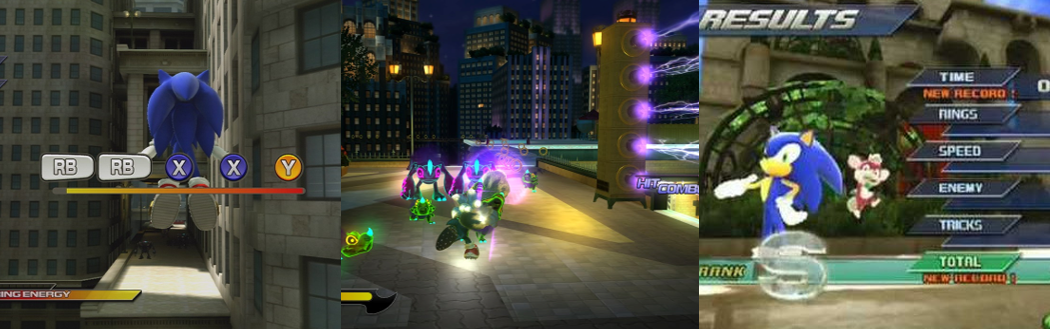
Players are put into the high-speed shoes of Sonic the Hedgehog; Sonic can jump with A (which you can tap for a hop and hold for a higher jump) and attack enemies either with his regular jump or by pressing X when in the air to perform his patented Homing Attack. An aiming reticule directs you towards the nearest target and you can chain together successive Homing Attacks to hit springs or cross gaps over bottomless pits to progress. Sonic can also crawl and slide (and perform a sweep kick) with a press of the B button; this doesn’t come up often but it’s essential for getting you through small spaces when running at high speeds. This is the big gameplay mechanic for Sonic in Sonic Unleashed. Similar to the God-awful “Mach Speed” sections of Sonic ’06, pressing and holding X while running will send Sonic boosting ahead at breakneck speeds. When boosting, you can charge right through enemies without fear and will also suck up any nearby Golden Rings, which are essential for maintaining your boost as they power the mechanic. While this can cause you to fly right off the edge of stages later in the game and can cause the game to spaz out on occasion when Sonic’s speed increases, you can perform quick-steps with the Left and Right Bumper to dart through narrow alleyways and such, and perform quick turns to stay on course on tight curves. Overall, the boost mechanic is exhilarating fun and it’s brilliant to fly through stages at full speed, crashing through enemies and bouncing and grinding your way towards the Goal Ring.

Fight, swing, and platform your way through slower, trickier stages as the Werehog.

Of course, you can also play as the much slower “Werehog” in the game’s night-time stages; Sonic Unleashed has a rudimentary day and night mechanic where, by attacking hourglasses in the hub worlds, passing time on the main map screen, or as dictated by the story, day will turn to night, transforming Sonic into this monstrous little brawler. Clearly taking inspirations from popular hack-and-slash titles, Sonic Team made the Werehog distinct by having him attack with his elongated limbs and perform grapples to take down his opponents. While the controls remain mostly the same, there are some differences: you can now perform a double jump with A and the X and Y buttons allow you to pull off different strikes and combos. Holding the Right Trigger allows you to dash on all fours (and can extend your jump) while LB puts up one of a limited number of shields to protect you from attacks. Pressing B lets you grab onto objects and ledges to save yourself from falls, grab objects to throw at enemies, or grapple enemies to pull of quick-time events (QTEs) to deliver massive damage. As the Werehog attacks enemies or smashes barrels and such, you’ll build up your “Unleash Meter”. Once it’s full, or hits the minimum marker, you can press RB to “unleash” the Werehog’s true power, which will dramatically enhance his strikes and speed to help you clear out groups of enemies or larger foes. The Werehog’s stages are far longer than Sonic’s and also involve a bit of puzzle solving (usually mashing B to pull switches or open doors or bringing gems to special alters to progress further) and some very tricky platforming. This involves a combination of jumping to and from platforms, grabbing to poles, and balancing on narrow beams, all of which can be extremely difficult as the game’s camera often makes it hard to judge the distance between your targets, button inputs can be a bit slow and clunky, and a lot of the platforms you’ll be grabbing and jumping to will either be moving, collapsing, slippery, or damaging in some way, which can lead to a lot of annoying deaths.

Perform QTE tricks and defeat enemies with style to get EXP and a sweet S rank.

As is the standard for Sonic titles, Sonic is protected from damage by Golden Rings. This time around, when Sonic is hurt, he won’t lose all of his Rings and, when playing as the Werehog, you have a more traditional health bar that is replenish by the Rings. Collecting one-hundred Rings awards you with an extra life, which you will also find scattered here and there around stages (usually right before a dangerous area), and you pass through checkpoints to allow you to continue from later in the stage should you die. Deaths can be quite frequent as Sonic gets a bit slippery at times and it’s pretty easy to blast off out of bounds or over the edge and to your death, and you can also fall to your death in hub worlds! When you complete a stage, though, you’ll be given a grade based on how fast you finished and how any tricks you performed as Sonic (by jumping through special hoops and performing QTEs), among other things. This, and defeating enemies, will provide you with experience points (EXP) that you can use to power-up Sonic’s base speed and Ring Energy, and the Werehog’s strength, Unleash Meter, maximum life, and learn new combos and attacks.

There are many hub worlds and Medals to collect but I could’ve done with more Tornado sections.

Out in the hub world, you can spend your Rings on food and other items and must perform a few tasks to open up stages. The main way you’ll access new areas, though, is by finding Sun and Moon Medals. I’ve heard many complain that this slows the game down as you have to replay stages or hunt around to find them just to progress but, honestly, I have never experienced this problem. There is a bit of backtracking and replaying of earlier stages required, though, as you sometimes need to farm for extra lives and need to hop from one location to another, playing stages out of order in order to access the next boss or area as part of the story. Gameplay is given a bit more variety when you acquire a camera that you can use to battle Gaia Beasts that have possessed NPCs and through the inclusion of auto-scrolling shooting sections in which Sonic mans the armaments of the Tornado while Tails flies him towards their next destination. Unlike in Sonic Adventure, this involves pressing the right buttons when they flash up on screen and alternate between mashing LB and RB to refill your power meter if you press the wrong button or are hit. Also, these sections only appear twice in the game, which is a shame as they’re quite fun, though you can replay them (and any other stage of boss) from the main world menu.

Graphics and Sound:
Even now, Sonic Unleashed looks absolutely fantastic; the game has a crisp, colourful presentation and everything really pops when onscreen, especially compared to how drab and muted Sonic ’06 was. Sonic looks fun and full of energy and has a number of idle animations in both his base and Werehog form; Sonic is also constantly accompanied by Chip, who acts as an annoying guide, and is voiced by Jason Griffith who was always my least favourite voice actor for the character. The rest of the Sonic X (2003 to 2004; 2005 to 2006) voice cast are fine, with Mike Pollock absolutely nailing Dr. Eggman, but I always found Jason to be so lifeless and boring as Sonic, though the game does stand out by briefly having Sonic’s usual confidence shaken by his monstrous appearance. Graphically, though, the game is gorgeous; Sonic, the Werehog, Tails, and Amy all look vibrant and full of life and fit perfectly with the game’s Pixar-like aesthetic for the NPCs. Rather than have the NPCs be realistic-looking humans like in Sonic Adventure, Sonic Unleashed’s are exaggerated, cartoony characters with large eyes, noses, and larger-than-life properties that help them to be visually interesting even when they mainly just wander around in short animation cycles, stand in one place, or communicate using text boxes and gibberish. The most prominent human NPC is the kindly Professor Pickle, who offers advice and exposition regarding Dark Gaia and has a penchant for cucumber sandwiches and souvenirs.

Stages are gorgeous and varied and full of unique elements, gimmicks, and jaunty music.

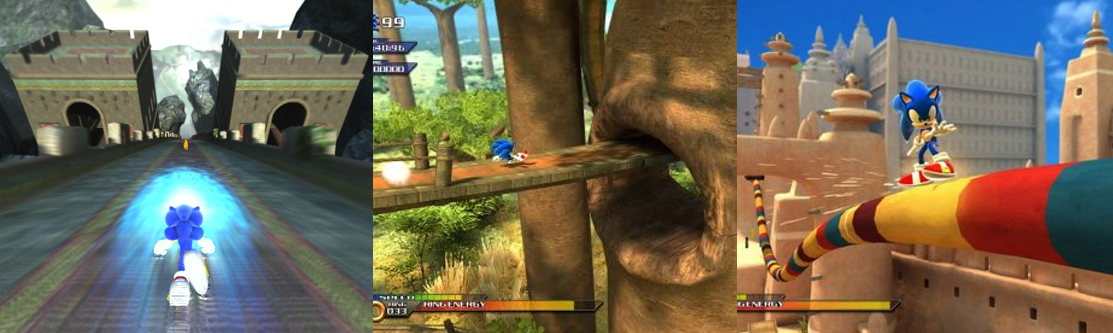
The game’s hub worlds and stages are all based on different societies and cultures of the real world. Apotos is based on Greece, Spagonia on Italy, Mazuri on Africa, Holosoka on Antarctica, Chun-Nan on China, Shamar on Egypt, Empire City on New York City, and Adabat seems to be based on the likes of Hawaii. This means that every area feels distinctive and unique, mainly thanks to having different seasons, hub worlds of various sizes that all look and feel different, and are populated by different NPCs. This translates into the playable stages as well as you’ll blast through the air, grind on rails, and plough through alleyways, race up winding paths, and fall through the sky in a variety of colourful and action-packed environments. When playing as Sonic, you’ll naturally often blast past your environment without really noticing little details here and there but, when the game switches to its 2.5D view or you tackle the Werehog stages, these subtleties are brought to life wonderfully. This means you can see markets, animals, and entire cities in the background, discover alternative paths by jumping through boost rings or hopping up walls and rails, and run up and along pathways at breakneck speeds while dodging axes, laser traps, and blasting through enemies. Stages become increasingly bigger and more complex as the game progresses, with you hopping from collapsing ice floats and using a killer whale and a bobsleigh to progress in Cool Edge, grabbing onto rockets and hopping to spinning platforms in Dragon Road, and running across water and through ruins making tight, dangerous turns in Jungle Joyride.

The game’s high-quality cutscenes are incredible and the best in the series at that point.

As beautiful and detailed as the game’s stages are, though, Sonic Unleashed goes above and beyond with its high-quality cinematics. While these are a notable highlight of Sonic ’06, even the cutscenes that use the in-game graphics are a joy to watch here as Sonic and Chip bond and overcome numerous obstacles on their journey. When the cinematics kick in, Sonic and his world are rendered magnificently and it honestly baffles me that Sonic Team never used this style of animation to produce a CGI feature film. These sequences, and the graphics in general, are only bolstered by the game’s jaunty, uplifting, and varied soundtrack; the game’s main theme, “Endless Possibility” by Bowling For Soup’s Jaret Reddick, is a catchy little punk-rock piece that captures the high-spirited adventure aspects of the game while the ominous Gaia themes help sell the threat and menace of the monstrous Dark Gaia. Even better is the fact that the day-time Savannah Citadel stage uses a remix of the ending credits theme from the 8-bit Sonic the Hedgehog (Ancient, 1991), which was especially pleasing to me since I am a big fan of that game and it was the first Sonic title I ever played.

Enemies and Bosses:
As you blast through Sonic’s stages at full speed, you come across a number of Dr. Eggman’s robots; mainly comprised of Egg Fighters, these robots will throw slow punches or swing swords at you and defend themselves with shields. Later, they’ll bounce you back with springs, blast at you with laser bolts or homing missiles, and attack with electrified swords but, for the most part, they’re largely disposable pawns that you can bash through with your Homing Attack or boost. You’ll also use the small robots (who sometimes blast at you or defend themselves with electrical shields) to get across gaps and have to watch out for spikes, Eggman-branded springs that often push you into spikes, crushing platforms, and other environmental hazards that can mess up your run. Although Sonic also has to fight Dark Gaia’s minions, you’ll mainly battle against these as the Werehog. Gaia’s creatures take a variety of forms, from small, annoying little critters to the larger, more commonplace “Nightmare” variants. These guys will attack as a group with their own punches and combos and even defend themselves from your attacks by putting their guard up. You’ll also have to contend with Dark Masters, wizard-like enemies who can fire elemental blasts at you or replenish the health of other Gaia creatures, and the ever-annoying Killer Bees, who always seem to hover just out of reach and dive at you with their stingers. The Werehog also has to battle the much larger Big Mothers and Titans, often while dealing with many other enemies at the same time; the Big Mother will endlessly spawn smaller Gaia creatures and its rotund belly allows it to absorb a great deal of punishment.

Sadly, as fun as they are, the boss battles against Dr. Eggman are all very similar.

The Titans are much worse, attacking with giant clubs and causing shockwaves to cover the immediate area, they can blast you into a stun (which you must desperately mash A to get out of) or even off rooftops and to your death with a ridiculous amount of ease. For both enemies, I recommend expending your Unleash Meter and using the Werehog’s QTE combos/grapples to take them down quickly. Just as there are two distinct playstyles in Sonic Unleashed, there are also two types of boss battles; those against Dr. Eggman and his latest contraption and those against Dark Gaia’s gigantic guardians. The battles against Dr. Eggman, however, are largely similar in each instance; when you battle the Egg Beetle, Egg Devil Ray, and Egg Lancer, you’ll be continuously running around an endlessly-looping track, collecting Rings to boost towards Dr. Eggman and ram into his cockpit. Each machine sports a variety of lasers, missiles, and bombs and tries to fry and bombard you with its armaments and you’ll have to use the quick-step and the advantages of the 2.5D sections to dodge these hazards. The battles do get more difficult as they, and the game, progresses, though; I recommend avoiding using the Homing Attack when running across walls or ceilings as you can sometimes drop to your death and you’ll also have to complete a QTE when hopping from wall-to-wall to land hits on the Egg Lancer. Dr. Eggman also erects protective shields and drops flaming hazards into the arena and also challenges you in the Tornado sections in the Egg Cauldron, though here it’s simply a case of hitting the right buttons to destroy his missiles and damage his weak spot. The Werehog’s boss battles are much more varied and interesting by comparison. When battling the Dark Gaia Phoenix, you need to throw barrels of water at it to douse its flames while avoid its flaming shockwaves and feather barrage. The Dark Moray is protected by a shield that can only be lowered by attacking the eel heads around the base of the arena, then you have to freeze the beast (while also avoiding being frozen yourself) to attack its glowing weak spot.

After conquering the gruelling Eggmanland, you’ll battle Dr. Eggman’s most dangerous machine yet!

The Dark Guardian is similar to a Titan, but a bit smaller, and must be stunned long enough for you to push blocks over to a switch to weaken it. In all three cases, the bosses become tougher and increase the rate of their attacks as the fight progresses and you’ll be tasked with performing a series of QTEs in order to deal massive damage and put them down. Thus, the length and difficulty of these fights depends greatly on how good you are at QTEs as, if you fail, you’ll have to go through all the motions to get to that point again, which can be annoying. Speaking of annoying, while the game is generally a lot of fun with only a few frustrating moments, Sonic Unleashed really kicks you in the balls when it presents you with its final stage, Eggmanland. A giant amusement park literally filled with traps, hazards, bottomless pits, and every kind of enemy and obstacle you’ve encountered so far, this stage is a true test of anyone’s mettle as you’re forced to switch between Sonic and the Werehog and take on a series of incredibly challenging platforming and combat tasks in order to progress. Easily the longest and most difficult stage in the game (or any Sonic game for that matter), Eggmanland can take up to an hour to get through and will have you tearing your hair out at its finicky platforming and frustrating sections. Once you finally get through his chore of a stage, though, you’ll have to battle Dr. Eggman one last time in his most interesting and dangerous contraption yet, the Egg Dragoon. You battle this as the Werehog and run around a small platform in freefall while avoiding Dr. Eggman’s shots and taking out his robots to attack the glowing green core on the machine’s tail. Once you do enough damage, you have to pull off another QTE sequence and then the fight moves to the next stage, which involves more aggressive attacks from Dr. Eggman and less windows of opportunity to strike. Still, it doesn’t seem as though you can fall off the platform you’re on and your attacks still do damage even when Dr. Eggman is guarding himself so just keep pressing your attack and make sure you don’t fail the QTEs and this boss is nowhere near as intimidating as it first appears.

Plot the unwieldy Gaia Colossus then battle the tricky controls and camera to finish Dark Gaia.

Although Dr. Eggman is defeated, Dark Gaia rises from the planet’s core so Chip, finally remembering his true purposes as Light Gaia, causes all of the Gaia Temples to come together as the titanic Gaia Colossus and engage with his dark counterpart one-on-one. To do this, you need to hold X to boost the slow, clunky ass of the Dark Colossus towards the beast, guarding against or desperately trying to punch the flaming boulders it sends your way. When Dark Gaia charges up its big energy beam, try to move out of the way but for God’s sake put your guard up as it can instantly drain all of your health otherwise! Once you get close enough, you’ll have to perform another QTE and then you’ll switch to Sonic and be given a few seconds to race past Dark Gaia’s deadly tentacles and energy blasts and bash it in the eye (again, after completing a QTE). This must then be repeated twice more, with Dark Gaia’s attacks and ferocity growing each time; thankfully, your health is restored for each phase of the battle and you don’t have to restart right from the beginning if you die but this is still one of the more frustrating parts of the game. Dark Gaia isn’t so easily defeated, though, and mutates into the gruesome Perfect Dark Gaia. Of course, Sonic uses the Chaos Emeralds to transform into Super Sonic for the final battle of the game. Unlike other Super Sonic levels, you don’t have to worry about a time limit as your Rings aren’t depleted over time. Instead, you must fly/boost towards Perfect Dark Gaia, who has encased itself in an impenetrable shield, collecting Rings to fill up your health bar and dodging asteroids. While the Gaia Colossus distracts the creature, Super Sonic must fly around the shield avoiding obstacles, flaming meteors, and that same massive energy beam to attack the snake-lake tentacles that poke out sporadically through the barrier. This is easier said than done, though, as it’s really hard to see where you’re going or target the heads (there’s no aiming reticule this time); there are also no extra Rings to get and it’s ridiculously easy to get hit by Perfect Dark Gaia’s attacks or ram into an asteroid and deplete your health bar. Once you do finally destroy all of the heads, you’ll of course have to complete one last massive QTE sequence but, as long as you hit the right buttons and mash them into oblivion, you’ll finally destroy the beast and return the planet to normal.

Power-Ups and Bonuses:
Unlike many Sonic videogames, there aren’t actually that many in-game power-ups on offer in Sonic Unleashed. Gone are the speed-up shoes, invincibility, and protective bubbles, replaced by simple Golden Rings and a few extra lives floating about the place. The Werehog is able to pick up power-ups that will instantly fill his health and/or Unleash Meter, power-up his attacks, increase his shield count, or bath him in a protective aura, though, which makes it worth your while to smash crates and doors in search of them. In addition to increasing Sonic and the Werehog’s abilities with EXP, Sonic can also purchase a variety of foods that, when he eats them, will award him additional EXP (they can also be fed to Chip to increase his bond with Sonic, though this has no impact on the actual gameplay). Furthermore, like in Sonic Adventure, you can acquire additional abilities by finding special shoes in the hub worlds; the Stomping Shoes allow Sonic to perform a stomp to bash downwards through glass and blocks and onto enemies with a press of B in the air, the Light Speed Shoes let you dash along rows of Rings, the Wall Jump Shoes allow you to jump vertically up walls to reach new areas, and the Air Boost Shoes let you blast through the air by pressing X while jumping in order to cover large distances quickly.

Additional Features:
There are fifty Achievements to earn in Sonic Unleashed; six of these are awarded simply by playing through the story and restoring the planet to normal but you’ll naturally also earn others through regular gameplay as you get Achievements for increasing Sonic and the Werehog’s abilities and finishing stages with an S ranking. Sadly, considering the vast potential for fun and quirky Achievements, most of Sonic Unleashed’s are quite by-the-numbers; finish a Tornado section without missing a shot, talk to every NPC all over the world, collect half of (and every) the Sun and Moon Medals, and use the different shoes and you’ll snag some G but by far the most challenging Achievement sees you having to complete the various “Hot Dog” challenges in each area. The various Hog Dog Vendors will let you take on a series of challenges for the cost of a few Rings; these have you collecting a certain number of Rings, defeating a certain number of enemies, or finishing stages in a certain time limit but these aren’t like challenges in some Sonic games as you still have to finish the entire stage even once you complete the objective, By far the most difficult of these tasks you with completing Eggmanland in just forty-five minutes, which is all-but-impossible given that you’re guaranteed to die at least once during this stage and dying in these challenges means having to restart from the beginning. In the hub worlds, and scattered throughout the stages, you’ll find CDs, books, and videotapes that allow you to view the game’s cutscenes, artwork, characters, and listen to music in Professor Pickle’s laboratory. To do this, though, you’ll need to buy certain furniture from the game’s various shops, where you can also purchase some of these items and souvenirs to gift to the Professor. Other NPCs will give you side quests, such as finding lost children or clearing out enemies, or even challenge you with answering quizzes to help mix things up a bit. Finally, you can take on perilous obstacle course-like additional stages in each area and these can be expanded upon with some downloadable content that truly test your speed and reaction times.

The Summary:
Sonic Unleashed was exactly the breath of fresh, exhilarating air the franchise needed at the time; after Sonic ’06 proved to be such a broken, glitchy, disappointing mess of a game, it’s no exaggeration to say that even I had started to lose faith in Sonic Team. Thanks to the Hedgehog Engine, which allowed for crisp, vibrant visuals and high-speed action to be the order of the day, Sonic Unleashed was an incredibly fun and exciting gameplay experience that was an absolute blast to play through again. At the time, Sonic had never looked or played better and the game’s many varied locations and fantastic music and graphics really went a long way toward making up for the awfulness of Sonic ’06. And then there’s the Werehog stages. Truthfully, I didn’t really mind these all that much; yes, they could get overly long and annoying and very repetitive but they did help to break up the gameplay a bit. I think if maybe they had been a bit shorter (and fairer), and if Sonic Team had scrapped the Sun and Moon medals, these stages might have been received a bit better (or if the Werehog had been scrapped completely and replaced with, say, Knuckles the Echidna!) If there’s one area that truly lets the game down, though, it’s the entire finale. Eggmanland is an absolute ball-breaker to get through and is less a test of the skills you’ve built up throughout the game and more a test of your sanity and patience. Similarly, while I enjoyed the Egg Dragoon fight and playing as Super Sonic, the final battles against Dark Gaia and its perfect form were a clunky, frustrating end to an otherwise solid gaming experience. Thankfully, once you clear the game, you never have to endure these sections again unless you’re a sadist and can focus on replaying the games other, more entertaining sections instead.

My Rating:

Rating: 4 out of 5.

Great Stuff

Are you a fan of Sonic Unleashed? Did you enjoy the boost-based mechanics introduced in the game or did you feel they made it too simple? What did you think to the Werehog and its gameplay sections and would you have preferred to see Knuckles used instead? What did you think to the story and Dark Gaia as the main antagonist? Which of the game’s stages or bosses was your favourite and why? Whatever your thoughts on Sonic Unleashed, sign up leave a comment below and be sure to check back in for more Sonic content.

Horror Hullabaloo: 17/06/2022

Gillian Church posts regular Writing Prompts on her Horror Prompts Instagram account and I like to take part with a few snippets and pieces of flash fiction.

The Prompt:
I know the sign says that the beach is closed, but what’s the worst that could happen?

The Submission:
“C’mon, Ste-ee-ve!” Poppy teased, tugging him by the hand.

“Pops, wait…we shouldn’t be here…”

“Oh, man up,” she giggled, sand flying as she danced around on the beach under the pale moonlight, the dark waves lapping  at her toes.

Steve held back, his skin crawling despite the warm wind. “C’mon, let’s get outta here, this place has bad vibes..”

“Startin’ t’sound like a pussy, boy,” Poppy  purred. She ran her hands through her thick, dark locks and over her perky breasts, tugging at her top to expose her tanned flesh.

Steve hesitated; he’d heard the rumours about the beach, and there was a reason it had been closed for the summer. He could still see the police tape fluttering in the breeze and the last thing he  wanted was to trip over the severed limb of some poor dismembered fool…

But Poppy was stripping before him, dancing on the sand, her body clean and smooth and beckoning…and he couldn’t resist.

He went to her, frantically tugging at his vest, but she slipped from his grasping hands, tittering and teasing him. assertively, he lunged at her, grabbing her by the wrist and spinning her into his arms and a deep kiss, groaning as she cupped his crotch.

“There’s my man…” she sighed, biting his lip.

Steve pecked at her neck, lightly nibbling, not even caring about the slight taste of salt from the sea air. He ran his hands over slick body, enjoying her low moans; she gasped, almost a shriek, and he felt himself grow more excited at how quickly she was getting into it.

A warm, oozing sensation dribbled down his collarbone and Steve looked up, confused, to see blood, viscous from sand, bursting from her trembling lips. “Gurk…” she choked, her eyes wide. Steve tried to step back from her, to run for help, but she held him tight, her nails digging into his flesh, and he screamed as her eyes burst with sickening gore as tendrils of sand wormed their way out of her every orifice.

Poppy’s body jerked violently, causing Steve to tumble to his ass in the sand; her arms and legs contorted outwards, as though she were doing a star jump, and Steve watched with horror as sand, shifting and flowing like the tentacles of some deep-sea kraken, snaked through her, flowing through her veins, and tore her to shreds, drenching him in vile gore and entrails. Steve scrambled backwards, sand flying all around him and into his screaming mouth as he tried to flee. He got maybe four steps before the searing grasp of a whip-like tentacle wrapped itself around his ankle and dragged him back…


What did you think to this piece? Did you submit anything for Gillian’s Horror Hullabaloo prompt? Have you ever written any flash fiction before? I’d love to know what you think to my snippets and writing prompts, so feel free to sign up and let me know what you think below or leave a comment on my Instagram page. You can also follow Gillian Church and Horror Prompts to take part in the Horror Hullabaloo challenge.

Screen Time [Captain Picard Day]: Star Trek: Picard (Season One)


As amusing detailed in the Star Trek: The Next Generation (1987 to 1994) episode “The Pegasus” (Burton, 1994), the crew and children of the U.S.S. Enterprise-D celebrate “Captain Picard Day” on Stardate 47457.1, which roughly translates to this day, the 16th of June. They do this by producing drawings, models, and paintings that the bewildered Captain Jean-Luc Picard (Patrick Stewart) must then judge. I, however, am using this as another good excuse to delve into some more Picard and Next Generation content.


Season One

Air Date: 23 January 2020 to 26 March 2020
UK Distributor: Amazon Prime Video
Original Network: CBS All Access
Stars: Patrick Stewart, Isa Briones, Alison Pill, Michelle Hurd, Santiago Cabrera, Evan Evagora, Harry Treadaway, Jeri Ryan, and Brent Spiner

The Background:
After the lacklustre critical performance of Star Trek: Nemesis (Baird, 2002) scarpered plans for further films featuring the lauded cast of Star Trek: The Next Generation (1987 to 1994), the Star Trek franchise (1966 to present) moved on to other shows before being expertly rebooted with Star Trek (Abrams, 2009). Star Trek returned to the series’ roots while still paying homage to the rich history and lore of the franchise with its split timeline. While the franchise saw something of a resurgence following this that generally explored the early days of Star Trek lore, showrunner Alex Kurtzman pushed to revisit the character of Captain Jean-Luc Picard in the original timeline and, alongside writer/director Akiva Goldsman, were able to convince Stewart to return to his famous role with the strength of their pitch. Upon being released, Star Trek: Picard immediately set a new streaming record on CBS All Access and was met with largely positive reviews. The show’s dark vision of Star Trek’s future was met with praise, as was Stewart’s performance, though some took exception to the pacing of the show; still, overall, the first season proved successful enough to justify the production of two further seasons.

The Plot:
Twenty years after the events of Star Trek: Nemesis, Jean-Luc Picard, former admiral and captain of the U.S.S. EnterpriseE, has resigned from Starfleet and retired to an obscure life at his family vineyard. However, when the mysterious Dahj Asha (Briones) visits him seeking sanctuary, Picard is intrigued to find that she is an android created from the remains of Lieutenant Commander Data (Spiner) and drawn into a conspiracy to suppress all synthetic life.

The Review:
The season opens with Picard playing poker with Data on the Enterprise-D in an amusingly heart-warming scene that depicts two old friends engrossed in a friendly game; Picard is desperate for the game not to end but is woken from this dream by the violent destruction of Mars. Disturbed and haunted by this vision, Picard awakes on his vineyard in France where he lives in solitude with his faithful dog, Number One (Dinero) and a couple of Romulan aides, Laris (Orla Brady) and Zhaban (Jamie McShane), for company. They help prepare him for his first-ever sit-down interview to commemorate the day that Romulus was destroyed by a supernova (as seen in Star Trek), an event that he was tragically unable to prevent. When the interviewer calls into question his efforts to aid one the Federation’s most lethal enemies, and the subsequent actions of a rogue group of synthetics in destroying Mars, Picard defends his motivations to save lives and vehemently opposing the ban on synthetics, and adamantly condemns Starfleet’s dishonourable actions during both events. Meanwhile, in Boston, the gorgeous Dahj is suddenly attacked by insurgents who attempt to kidnap her and end up absolutely decimated when she showcases superhuman strength and speed. Confused, scared, and hurt, Dahj is suddenly bombarded by visions of Picard following this incident and, after seeing Picard’s emotional outburst while walking the streets, Dahj seeks him out and desperately asks for his help.

Picard is devastated when Dahj is killed but soon learns that she has a twin sister in the galaxy.

Sympathetic to her plight, Picard is intrigued by her visions and familiarity with him and immediately takes her in and cares for her, exuding a grandfatherly warmth towards her. Picard’s visions of Data lead him to his archives at Starfleet and the discovery that Dahj is his (as in Data’s) “daughter”; Dahj is overwhelmed by this as androids have been vilified over the last twenty years and she is frightened at the prospect of being a synthetic, but Picard reassures her that her “father”, Data, was one of the most courageous and human men he ever knew and vows to protect her and guide her towards the truth. Dahj’s pursuers are revealed to be Romulans and soon track them down; though she viciously attacks them, she is immolated when one of them spits corrosive blood on her and causes her to explode. Heartbroken and distraught, Picard laments his wasted years sitting in solitude and vows to get to the root of Dahj’s origins; to that end, he visits Doctor Agnes Jurati (Pill) at the Daystrom Institute, who explains that Dahj was the result of an experiment by her colleague, Doctor Bruce Maddox (John Ales), to create synthetic lifeforms in organic bodies from the remains of Data’s neural pathways using “fractal neuronic cloning”, which was summarily shut down after androids produced by the Daystrom Institute caused massive devastation on Mars that saw the creation of synthetics forbidden.

Soji works as part of a groundbreaking project to bring relief and help to former Borg drones.

This information leads Picard to discovering that Bahj was one of a pair and he begins to formulate a plan to track down her “sister”, Soji Asha (Briones), Dahj’s exact duplicate, who works in a Borg Cube (referred to as the “Artifact”) that has been reclaimed by Romulan refugees. Unlike Dahj, who was a frightened and confused girl, Soji is a lot more mischievous and confident, though she has a real empathy towards the deceased drones (derogatorily referred to by others as “The Nameless”) within the Cube. An inherently trusting individual, Soji forms a relationship with Narek (Harry Treadaway) and the two of them assist with the Romulan’s efforts to harvest and remove the Borg’s cybernetic technology from the Artifact and the drones. When her dedication and empathy attracts the attention of the Borg Reclamation Project’s director, Hugh (Jonathan Del Arco), she is given the opportunity to interview Ramdha (Rebecca Wisocky), a Romulan girl who has also been freed from the Borg, in an attempt to construct a shared mythical framework as a therapeutic tool for the reclaimed Borg. However, Ramdha becomes distressed during this session and tries to kill herself while claiming that Soji is “The Destroyer”, which greatly disturbs Soji and leads her to discovering her true nature. Meanwhile, Picard is told by his old friend, Doctor Moritz Benayoun (David Paymer), that he is suffering from a terminal illness; though clearly moved by the news of his impending death, Picard remains resolute to track down Soji to protect her from the clandestine “Zhat Vahs” organisation (a group of Romulan fanatics who hate all forms of synthetic life) and get to the bottom of the recent events in his life. However, his newfound mission is obstructed by Admiral Kirsten Clancy (Ann Magnuson), who vehemently refuses to give him a starship after being angered at his comments in his interview and his comments about the state of Starfleet.

After recruiting the warrior Elnor, Picard’s crew of misfits is assembled and ready to go.

Undeterred, Picard pays a visit to his former first officer, Rafaella “Raffi” Musiker (Hurd). Jaded, bitter, and resentful of Picard, she initially adamantly refuses to get involved after he walked away from her and refused to support her in the intervening years but, does, reluctantly, research his story and gives him the name of a freelance pilot: Cristobal “Chris” Rios (Santiago Cabrera). Rios, a rogue who holds a resentment towards Starfleet due to the horrific losses he suffered while serving in the Federation, is eventually persuaded to assist Picard by both the promise of profit and by the many holograms (also Cabrera) that make up his crew. After saving Picard from an attack by the Zhat Vahs, Jurati joins Picard’s crusade on Rios’s ship, La Sirena, though she initially has some trouble acclimatising to the monotony of space travel. Picard is also overjoyed when Raffi decides to come along on the mission, which first takes the ship to the planet Vashti to recruit a young Romulan warrior, Elnor (Evan Evagora), to join their misfit team. Despite having relocated millions of Romulan refugees to Vashti in the past, Picard is disturbed at the civil and societal unrest on the planet, to say the least, and Elnor, resentful at being abandoned by Picard as a child, initially refuses to “bind his sword” to Picard’s cause. However, when Picard’s presence inspires anger and bitterness in a group of Romulans who resent the Federation for deserting them to their fate, Elnor doesn’t hesitate to defend him with brutal efficiency and joins his crew since the mission promises to be a lost cause worthy of his blade. Picard, however, is incensed at Elnor’s use of lethal action and demands that he promises only to act when Picard gives the order. A strange combination of Lieutenant Commander Worf (Michael Dorn) and Mister Spock (Leonard Nimoy), Elnor’s social awkwardness and naivety are used for some comedic relief and offset by the cold, brutal efficiency of his combat skills.

The Zhat Vahs are determined to eradicate synthetic lifeforms by any means necessary.

Their journey also causes them to cross paths with Seven of Nine (Ryan), a former Borg drone who was once part of the crew of Voyager and now operates as a “Fenris Ranger”, something of a bounty hunter, who leads them to the neon-and-hologram-drenched world of Freecloud, where Maddox is being held by a black market dealer, Bjayzl (Necar Zadegan). Seven uses herself as bait to get close enough to Bjayzl to kill her to avenge Icheb (Manu Intiraymi), another former drone who was basically Seven’s surrogate son and whom Bjayzl ripped apart for his Borg implants after betraying her. At the same time, Raffi attempts to reconnect with her estranged son, Gabriel “Gabe” Hwang (Mason Gooding), who is also on Freecloud; however, Gabe is unable to forgive Raffi for her abandonment and obsession with the conspiracy against the synthetics and refuses to forgive her or to entertain her desire to make amends, so she returns to La Sirena heartbroken, turning to drink and substances to numb her pain. Seven parts ways with the crew amicably and gives Picard the means to contact her but, when they finally get Maddox to safety, he is murdered by his lover, Jurati, in an action that leaves her devastated by complex feelings of grief and regret. Struggling after killing her lover, Jurati begins a physical relationship with Rios and it is eventually revealed that she was manipulated by the half-Romulan Commodore Oh (Tamlyn Tomita), Starfleet’s security chief, who is a member of the Zhat Vahs and in league with Narissa (Peyton List) to hunt down the androids as part of a prophecy the Romulans discovered that foretold of a future where synthetics are the dominant lifeform and have destroying all organic life. In a bid to stop this future from coming to pass, Oh terrified Jurati with visions of this future and her Zhat Vahs allies, Narissa and Narek, work to locate the synthetic’s homeworld of Coppelius through manipulation and brute force. Narek seduces and deceives Soji into uncovering the planet’s location while Narissa brutally slaughters Hugh’s deassimilated drones aboard the Artifact.

Picard reunites with Riker and Troi and Soji bonds with their daughter, Kestra.

Relentlessly hunted by these forces, Picard and Soji escape to Nepenthe for sanctuary at the home of his old friends and crew mates, former Captain William Riker (Jonathan Frakes) and Commander Deanna Troi (Marina Sirtis); Troi immediately senses Picard’s illness using her empathetic abilities and, upon embracing Picard, Riker activates the defence measures of their quaint little home and offers him sanctuary without question. Unquestionably loyal to Picard, Riker and Troi have lived with the grief of the death of their son, Thad, who was denied a lifesaving procedure because of the Federation’s ban on synthetics. Confused and hurt by the recent revelations in her life, Narek’s betrayal has left Soji broken and traumatised; feeling that everyone is lying to or using her, even through acts of kindness, she struggles with an existential crisis because her trusting nature has led to her being deceived and manipulated despite her forming forming a fast bond with Kestra Troi-Riker (Lulu Wilson), a quirky and likeable young girl playing the role of a wild maiden of the woods while with Soji. Though fearing for the safety of Kestra, Riker and Troi shelter him and Soji until La Sirena arrives to pick them up; Riker is intuitive enough to figure out that Picard is on the run from Romulans and desperate to protect Soji, who he instantly recognises as being Data’s progeny, and Deanna admonishes Picard for not recognising Soji’s pain and encourages him to be his true, compassionate self in order to earn her trust. Still, Soji’s presence causes Rios to suffer a sudden panic attack because she resembles a girl he travelled with during a traumatic mission that saw his beloved captain kill two people being committing suicide, an act that scarred Rios. However, Raffi puts together that these were actually synthetics and the crew head to Coppelius to protect her home and her family (her fellow androids) from the Zhat Vahs.

Picard is finally able to say goodbye to Data and then awakens in a renewed synthetic body.

Upon arriving, however, they find a colony of synthetics living in peace with Altan Inigo Soong (Spiner), the son of Data’s creator and Maddox’s partner, who guilt-trips Jurati for killing Maddox and offers her the chance at redemption to help him complete his work on transferring an organic mind to a synthetic body. Another of Soji’s duplicates, Sutra, manipulates her (and the other synthetics) into constructing a beacon to summon mysterious, Lovecraftian synthetic beings to eliminate all organic life before they can destroy them and Picard is forced to battle against his failing health and overwhelming odds before Riker arrives with the Federation armada and he (as in Picard) is able to finally convince Soji to shut down the beacon. Sadly, Picard’s ailment overcomes him and he dies peacefully while surrounded by his newfound friends. Thanks to Jurati and Soong’s work, however, Picard’s consciousness is salvaged and maintained in a “massively complex quantum simulation”, where he’s finally given the chance to properly say goodbye to Data (whose consciousness still lingers thanks to the efforts of Maddox and Soong and who requests that Picard shut him down for good) before awakening in his own synthetic body. Given a second chance at life in an artificial body that functions exactly like a human one rather than making him augmented or immortal, Picard fulfils Data’s last request (terminating the last strings of his consciousness to finally allow him to “die”); the Federation finally lifts the ban on synthetics and Picard returns to La Sirena with his new crew to continue his journey throughout the galaxy.

The Summary:
Star Trek: Picard is very different from other iterations of Star Trek that I have ever seen; returning to the original timeline is a breath of fresh air after all this time spent lingering on exploring and reinterpreting the events of the Original Series (1966 to 1969) and it’s pretty fantastic to see what happened post-Star Trek. This is, however, a vastly different world than we remember; normally, the Federation is all about peace and tolerance but, here, they’ve kind of lost their way a bit. Picard resigns as a last-ditch effort to try to convince them to aid the Romulan evacuation and they refuse, which seems incredibly out of character for them, and then they foster widespread xenophobia towards synthetics after the events on Mars rather than properly investigating it. You can tell that the world has taken a sudden shift away from the usual utopian depiction because Star Trek: Picard features an alarming amount of casual swearing; words like “shit”, “asshole”, “bullshit”, “fuck”, and “fucking” are dropped all over the place and even Picard says the phrase “pissing me off” at one point. I’m not sure I really appreciate that; I think maybe it would’ve been better to just have characters like Rios use curse words but, instead, everyone, even Starfleet admirals, toss out the “fucks” like nobody’s business.

Picard’s story is one of atonement and he finds a cause worth living, and dying, for.

Still, this is very much Picard’s story and his return to action; having walked away from the galaxy for some twenty years, Picard is haunted by his mistakes but jumps at the chance to do some good once again in an effort to atone for his past. Picard’s mental state is often called into question; characters comment on his seemingly irrational actions and suggest, more than once, that he is suffering from dementia or insanity. While he is suffering from a terminal illness of the brain throughout the season, he remains steadfast in his vow to get to the bottom of the mystery surrounding the Asha androids. Stubborn and fully believing that his actions are both just and noble, he uses his vaulted charisma and diplomatic abilities to sway even the most hardened rogues to his cause; even those like Raffi and Elnor, who have every reason to refuse to assist Picard, are convinced to aid him due to his reputation and conviction. Interactions with Soji help give Picard a measure of closure when she reveals that Data loved him and his relationship with her (and Dahj and many of the other new characters) is very similar to that of a father to a daughter; his desire to protect her and to make amends for walking away from his responsibilities is the driving force of his character and informs all of his actions and, in the process, he finds not only a reason to live once more but also to die.

Some familiar faces from the past show up radically changed in Picard.

Star Trek: Picard also sees the return of many other familiar faces in supporting roles to aid Picard on his quest; while it’s disappointing that B-4 was just scrapped and tossed aside rather than exploring the potential for Data to live on through his younger “brother”, it was great to see Data return as a figment of Picard’s imagination, a spiritual guide of sorts to hint at the events of the season, but his presence and legacy are very much at the heart of the story thanks to Dahj and Soji and the controversy surrounding synthetic life. Similarly, I enjoyed seeing the return of Riker, Troi, and Seven after all these years; older and very different from the last time we saw them, many of the characters have become hardened, jaded personalities. Only Riker and Troi are content to step away from the drama of space action and exploration to focus on their family life and truly seem content and happy for it; to be fair, Picard attempted this but, by his own admission, was simply hiding from the wider galaxy. Seven is a much different character than we last saw in Voyager; a rogue vigilante of sorts, she has carved a reputation for herself as notorious Ranger and seems to have settled into the life of a wanderer while still trying to avoid killing in cold blood. Riker and Troi, though, are perfectly happy living their idyllic family life; despite the grief at the loss of their son, they’re dedicated to keeping Kestra safe and take precautions to safeguard their home but, when Picard arrives, aid him without question out of their loyalty and friendship to him and Riker doesn’t hesitate to assist him in the finale.

Picard’s new crew includes some interesting characters, though some had unexplored potential.

Picard is also supported by a whole crew of entirely new characters. Obviously his fatherly relationship with Soji is a primary focus of the season but he has an interesting relationship with the rest of La Sirena’s crew: Raffi’s faith in Picard is shaken and she is carrying a lot of emotional baggage from the fallout of her previous relationship with him; Rios’ loyalty is often in doubt because of him having a resentment towards Starfleet; Jurati seems trustworthy and turns out to have been manipulated by Oh; and while Elnor seems to almost be a surrogate son to Picard, this isn’t really developed or focused on all that much and I feel his potential as a character was a bit wasted. A lot of this comes to a head in the final two episodes where many of these supporting characters take a backseat to the larger focus on Picard’s end and his relationship with Soji, which makes sense given that those are two pivotal aspects of the season, but it is a bit of a shame that there wasn’t a bit more for them to do in the end (though it was great to see them end the season as a full functioning unit rather than strangers forced to work together).

Enemies both deceptive, radical, and domestic dog Picard and his crew throughout the season.

Finally, there’s the season’s antagonists; Narissa and Narek are an interesting brother/sister who have complex relationships with many of the main characters. Narek’s choice to use seduction and deception to trick Soji and betray her trust makes him quite the reprehensible, slimy asshole but he actually ends up joining forces with the protagonists for the finale to stop the common threat posed by Sutra. Narissa, however, is a bad piece of work through and through; directly responsible for the death of a beloved Star Trek character, Narissa has no redeemable qualities at all and, like Bjayzl, fully deserved to be executed for her reprehensible actions. The main antagonistic race for the season is, of course, a contingent of Romulans but the officious and out of character nature of Starfleet also causes headaches for the main characters, to say nothing of the synths, who are easily swayed into conjuring God-knows-what to pre-emptively strike back at organics. There’s a lot happening and a lot of subterfuge at work in Star Trek: Picard but I was, for the most part, intrigued by the complexities of the villains and the Zhat Vash organisation and I’m interested to see where future seasons take the prophecy concept.

My Rating:

Rating: 3 out of 5.

Pretty Good

What did you think to the first season of Star Trek: Picard? Were you happy to see Patrick Stewart return to his iconic role and to finally return to the original Star Trek timeline or did the plot, swearing, and dark turn of the world put you off? Which of the returning and original characters was your favourite? What did you think to the prophecy regarding a nightmarish future for the characters? What other Star Trek characters would you like to see get their own spin-off? How are you celebrating Captain Picard Day this year? Whatever your thoughts on Star Trek: Picard, let me know in the comments down below.

Movie Night: Predator 2

Released: 21 November 1990
Director: Stephen Hopkins
Distributor: 20th Century Fox
Budget: $20 to 30 million
Stars: Danny Glover, Gary Busey, María Conchita Alonso, Bill Paxton, Ruben Blades, and Kevin Peter Hall

The Plot:
Ten years after the first film, stubborn and abrasive Lieutenant Mike Harrigan (Glover) battles Colombian and Jamaican drug cartels on the hot streets of 1997 Los Angeles. When a heavily armed extraterrestrial hunter (Hall) arrives and shady government agent Peter Keyes (Busey) try to capture the creature, Harrigan is forced to use all of his wits and resources to tackle the alien predator head-on.

The Background:
Predator (McTiernan, 1987) began as the ridiculous concept of pitting Rocky Balboa (Sylvester Stallone) against an extraterrestrial opponent, evolved into a B-movie with a budget that had Jean-Claude Van Damme running around a jungle in a big bug suit, and finally became a box office hit regarded favourably as one of the best of its genre. While development of a sequel took some time, the concept of placing the titular hunter in the “urban jungle” was a persistent idea right from the start. Although the original plan was for Arnold Schwarzenegger to return and be teamed up with either Patrick Swayze or Steven Segal, the Austrian Oak ultimately passed due to his dislike of the city-based setting and dispute over his salary. Under the direction of Stephen Hopkins, the titular hunter was slightly redesigned by the legendary Stan Winston to be more “hip”, fearsome, and both visually similar and also distinct from its predecessor. Sadly, Predator 2 grossed just under $60 million, substantially less than its predecessor; however, paradoxically, the critical reaction was far more positive. Considering I’ve long argued that the film is an under-rated entry in the franchise, I’m glad to see that it has developed a cult following over the years as its expansion of the Predator lore and society had a significant impact on the franchise’s subsequent sequels, videogames, and comic books. Since there was also a fan movement to declare June 12th as “Predator Day”, this seems like a perfect excuse to revisit this film, even if I’m a day late due to this date clashing with “Superman Day”.

The Review:
When I was a kid, I did not really care for Predator 2; Predator was such an influential film on me and I was such a huge Arnold Schwarzenegger fan that the sequel felt like a bit of a let down from his absence alone and, as other sequels from around that time didn’t suffer in this way, this definitely stuck out to me as a negative. Over time, though, I’ve really come to enjoy it for the new elements it brings to the franchise and the influence it had on the series; it also helps that I became a Danny Glover fan in the intervening years and I now regard it far more favourably than that naïve little kid who didn’t know any better. Glover stars as hot-headed Michael Harrigan, a Los Angeles cop with a lack of respect for authority, rules, and proper police procedure. Harrigan sees himself as a soldier fighting on the frontlines of an ever-escalating gang war and has little time to appease the whims of his superiors; he’s the kind of cop who cruises around with a boot full of small to heavy ordinance, drives head-first into a firefight to get injured cops to safety, and barges into a building full of armed gangsters rather than wait for a “bullshit special unit” since he wants to bust ass before the perps get a chance to dig themselves into a dominating position. Critically, Harrigan isn’t some infallible super soldier; he’s incredibly emotional, quick to anger, and deathly afraid of heights and yet remains deeply committed to fighting his war with a strong emphasis on cooperation and trust within his team.

Hot-tempered Harrigan finds his chaotic life turned upside down when an alien hunter arrives in town.

Harrigan’s service record is littered with instances of aggression, violence, and insubordination but also examples of bravery and an unparalleled arrest record; while his methods rub his superiors the wrong way, he definitely gets results but it’s pretty clear right from the start that he’s on very thin ice when a series of gruesome murders only escalate the tensions and violence on the streets. Luckily, Harrigan isn’t alone in his efforts as he’s part of a very close-knit team of detectives made up of his partner of fifteen years Danny Archuleta (Blades) and tough-as-nails Leona Cantrell (Alonso). While both are far more cool-headed than Harrigan, they willingly follow him into the fray, which ends badly for Danny after he begrudgingly agrees to return to a brutal crime scene to investigate further and ends up being killed by the new Predator. Danny’s death weighs heavily on Harrigan, who came up through the force with him, and his guilt only fuels his drive to track down whoever was responsible for his partner’s death no matter whose feathers he has to rustle. In an interesting change of pace, there is no romantic tension or subplot between Harrigan and Leona, who remains a strong and spirited independent woman who’s just as apt to offer emotional support to the grieving Harrigan as she is her skills with a gun and an aggressive retort to anyone who tries to get in her way. Initially, she turns this fire on newcomer Jerry Lambert (Paxton), a loud-mouthed braggart who, despite often being a source of comic relief, specifically transfers to Harrigan’s team in order to contribute to a greater cause. Known as the “Lone Ranger”, Lambert quickly proves to be a valuable asset to Harrigan’s team not just through his own tenacious nature but also his bravery in trying, in vain, to fend off the Predator.   

Keyes and Harrigan butt heads on how best to deal with the extraterrestrial hunter.

Although there’s friction between the team and Peter Keyes’ special operations unit, Harrigan quickly develops a fierce hatred towards the shady agent as their paths cross more and more; immediately suspicious of him (primarily because of Harrigan’s distrust of authority figures and his intense dislike for Federal government agencies), Harrigan initially feigns co-operation with the smooth-talking Keyes but tensions between the two only escalate when Harrigan continues to disregard orders regarding the Predator’s handiwork, especially after Danny’s death. Convinced from the start that Keyes is covering something up and keeping him out of the loop, both characters warn each other off for different reasons but Harrigan’s stubborn nature leads to him investigating Keyes almost as much as the mysterious killer the agent appears to be protecting. When Keyes reveals the truth to Harrigan, he displays a personal investment in the capture and study of the Predator that leads to him recklessly endangering his men and vastly underestimating the hunter all to show off to the hot-headed cop. While Keyes has certainly done his homework and is unquestionably the authority on the Predator’s capabilities, he massively miscalculates how clever the creature is; having set itself up at the slaughterhouse, the Predator is quick to notice something amiss and filter its vision accordingly, meaning that all of Keyes’ carefully-laid plans are for naught and Keyes ends up first horribly scarred and then skewered, despite a valiant effort to try and cryogenically freeze the alien in order to reverse engineers its technology.

This sexy new Predator’s in town with a few days to kill!

As mentioned, Los Angeles is a veritable warzone thanks to escalating and violent conflict between the Colombian and Jamaican drug cartels; the most prominent figure in this conflict is King Willie (Calvin Lockhart), who openly practises voodoo rituals and brutality to spread fear and intimidate his rivals. When both sides suffer losses from a vicious and mysterious third party, Harrigan arranges an unorthodox meeting between himself and the voodoo priest who, similar to Billy (Sonny Landham), exhibits some supernatural knowledge of the titular alien hunter. The Predator itself is largely very similar to the one from the first film; the build-up to the creature’s reveal is very familiar, though doesn’t take as long as in Predator, which results in a far more action-packed movie and a focus on the Predator’s brutal slaughter of gangbangers and cops alike. The Predator again stalks its prey using its camouflage and still has its shoulder-mounted plasma cannon but this one is also sporting a far more impressive and diverse array of weaponry compared to its predecessor: it wields a deadly spear, a razor sharp net, tosses a smaller sharped implement that kick-starts Harrigan’s investigation, and skewers Keyes with a circular disc. After Harrigan damages its weaponry, the Predator switches to a wrist-mounted blaster and has a far more intricate medical kit that allows it to cauterise gunshot wounds and its stump of a hand, and also shows off a whole range of different visual modes in its helmet that allow it to easily get around Keyes’ well-thought-out plan to capture it.

The Nitty-Gritty:
For me, moving the sequel to the urban jungle was an inspired move; the high-rise skyscrapers, dark alleys, and swelteringly hot Los Angeles streets make for a veritable boiling pot of tension and violence that is both relatable and outrageously dangerous. As overwhelmed as the city police are by the gang wars, even reporters are aghast at both the violence, the inability of governmental officials to step in and, paradoxically, the extreme measures used by the police. Plus, setting it in the city helps the sequel to be visually distinct from the original; if it’d been in the jungle again, it would’ve been criticised for being rehash so it did the best thing a sequel can do (in my opinion) and change the setting up a bit.

While some effects are better than others, they mostly hold up and the film is visually interesting.

The city setting allows for far more diverse and interesting scenes; the film opens with an all-out gunfight in the streets that results in a bunch of crackheads being cut to ribbons by the Predator, includes an extremely intense (if brief) sex scene that is followed by a brutal voodoo ritual that leaves a man with his heart cut out, and also allows for the Predator to be placed in all kinds of new and visually interesting environments. In addition to slaughtering his victims while fully cloaked, we also get an impressive shot of the invisible hunter as it stalks King Willie but two stand out scenes are obviously the subway massacre (where the Predator tears through criminals and pedestrians alike while bathed in ominous strobe lights) and Keyes’ futile effort to corner and freeze the creature in the slaughterhouse. Following an absolutely blinding rooftop chase, Harrigan eventually goes one-on-one with the hunter in its ship, which is a Lovecraftian nightmare filled with smoke, trophies of former kills, and all kinds of intriguing alien architecture. It’s pretty clear to me that the special and practical effects from the first film have only improved in the sequel; yes, the Predator’s camouflage can look a little dodgy and there’s a few dated composite shots, but I always found this to actually work in the context of the film since the Predator would obviously be actively bending light as it moved.

The cat-and-mouse game between Harrigan and the hunter escalates throughout the film.

The Predator tags Harrigan early in the film when he valiantly risks himself to break up a firefight and chases El Scorpio (Henry Kingi) to a rooftop; from there, the two cross paths again and again, with Harrigan constantly being one step behind the creature and left with little more than the blood-soaked aftermath of its slaughter and trace pieces of evidence. Like in the first film, this culminates in a massive showdown between Harrigan and the Predator that begins with the methodical massacre of Keyes and his team and sees Harrigan chase the creature halfway across the city. Although Danny Glover lacks the size and screen presence of Arnold Schwarzenegger, Harrigan is by no means a lesser protagonist; emotional and tenacious, he’s also as vulnerable and incredulous as he is fiery and adaptable. Rather than laying traps and resorting to makeshift weaponry like his predecessor, Harrigan arms himself with as many weapons as he can and even uses the Predator’s own weaponry against it; he makes notable use of the creature’s Smart Disc to slice its hand off, fend off its wrist blades, and finally deliver a killing blow aboard the alien’s ship. However, he also takes a lot more damage that his predecessor and is far more human in a lot of ways; he responds to pressure with a biting wit or explosive anger and uses those emotions to drive him forwards to a messy but impressive victory.

Predator 2 significantly expanded upon the creature’s lore and society.

Crucially, the film also does wonders for expanding upon the Predator lore and society. While visually similar to its predecessor, the new Predator is just visually distinct enough to be unique and, as mentioned, it has a whole bunch of new toys to eviscerate foes with. Like the first Predator, the hunter lures in prey with its voice synthesiser and demonstrates an unwillingness to kill unarmed or dishonourable prey; we see it hold off from blasting a kid with a toy gun and, most notably, it leaves Leona alive after seeing that she is pregnant. Thanks to an amusing scene that shows that practically all of the city is armed in some way or another, to say nothing of the violent war between the two factions, the Predator isn’t exactly short on victims to take as trophies for its collection. Like in the first film, the Predator resorts to honourable combat using melee weapons when challenged by a worthy foe, such as when King Willie pulls a sword out on it and at the end, when its other weapons have been disabled and it’s left to battle Harrigan in knife combat. Finally, after Harrigan emerges victorious, we see the extent of the code of honour amongst the Predator’s species as Mike’s left a trophy of his own, something that would be a prominent and recurring element in future Predator stories.

The Summary:
While I wasn’t initially as big a fan of Predator 2 compared to the original, I now have more than enough time for the sequel thanks to the way it takes everything that worked from the first film and expands upon it, bringing the alien’s technology and twisted code of honour to the big city and giving the creature far more opportunities to kill its targets. An intense and fast-paced action-packed sci-fi horror, Predator 2 is absolutely unrelenting; the tension and escalating conflict is palpable and, crucially, it’s both a very different film from the original while still hitting some familiar beats to satisfy fans of the influential first film. Augmenting the Predator’s skillset, weaponry, and lore to the point where the franchise and its spin-offs would have a wealth of material to pull from and expand upon, Predator 2 is bolstered by strong, memorable performances from Danny Glover and the late, great Bill Paxton (who looks like he’s having the time of his life as the grandstanding Lone Ranger) as much as it is by the ambitious practical effects used to bring the Predator’s advanced technology to life. While it may not be as notable or as impactful as the first film, it does more than enough to hold its own as a worthwhile follow-up; my fondness for it has grown to the point where I often choose to watch this one over the original and I’ll always defend Predator 2 as a worthy successor.

My Rating:

Rating: 4 out of 5.

Great Stuff

Are you a fan of Predator 2? How do you think it compares to both the first film and its successors? Were you disappointed that Schwarzenegger didn’t return for the sequel and what did you think to Danny Glover’s character in comparison? What did you think to the new Predator, its new weapons, and the way the film expanded upon the species’ code of honour? Which of the Predator sequels and merchandise was your favourite and did you celebrate Predator Day this year? Whatever your thoughts on Predator 2, feel free to leave a comment below or on my social media.

Movie Night [Superman Month]: Superman II


In 2013, DC Comics declared the 12th of June as “Superman Day”, a day for fans of the Man of Steel the world over to celebrate Clark Kent/Kal-El/Superman, the superpowered virtue of “Truth, Justice, and the American Way” who is widely regarded as the first ever costumed superhero. This year, I’m spending every Sunday of June celebrating the Man of Steel as I expand Superman Day to “Superman Month“.


Released: 9 April 1981
Director: Richard Lester
Distributor:
Warner Bros. / Columbia–EMI–Warner Distributors
Budget:
$54 million
Stars:
Christopher Reeve, Margot Kidder, Terence Stamp, Sarah Douglas, Jack O’Halloran, and Gene Hackman

The Plot:
Having thwarted Lex Luthor’s (Hackman) maniacal plans, Clark Kent/Superman (Reeve) faces a new challenge when intrepid reporter Lois Lane (Kidder) manages to deduce his secret identity. While Clark prepares to give up his incredible powers to be with Lois, General Zod (Stamp) and his two followers escape from the Phantom Zone and begin terrorising the planet, leading Clark to choose between his happiness and his responsibilities to mankind.

The Background:
As I detailed in my review of Superman (Donner, 1978), producers Ilya and Alexander Salkind and Pierre Spengler convinced Warner Bros. to produce a two-film adaptation of the character back in the late seventies. However, the production was fraught with issues, both financially and creatively; director Richard Donner frequently clashed with the producers and Richard Lester was brought in as a mediator to allow the filmmakers to focus on the first film, which was a financial and critical success. Despite having shot 75% of the sequel, Donner was replaced as director with Richard Lester, a decision that irked star Gene Hackman so much that he refused to return for the necessary reshoots. Lester shot an entirely new opening for Superman II in addition to making numerous changes to the tone of Donner’s original version to place more emphasis on slapstick silliness. Star Christopher Reeve returned to the project after negotiating a better deal with more artistic control for himself but Marlon Brando was excised completely from the film due to his unrealistic financial demands. Despite all the behind the scenes turmoil, Superman II was still a financial success; its worldwide box office gross of just over $190 million might’ve been less than its predecessor but it was still highly praised, with Stamp’s turn as Zod drawing particular acclaim. Many years later, of course, in the build-up to Superman Returns (Singer, 2008), Donner would finally return to the film to assemble a version that closely resembled his original vision of the film.

The Review:
As far as I can remember, Superman II is another of those instances where I actually saw the sequel before the original; consequently, the film had much more of an impact on my childhood and I remember being more entertained by it thanks to it having a far brisker, more action-orientated flow and featuring villains who could actually match Superman in combat rather than simply just outwitting him. Not that I have a problem with the “mind over muscle” concept, it’s just far more gratifying to me to see Superman getting into a superpowered scrap as Superman II definitely delivers in that regard. Thankfully, for those who haven’t seen the first film, the movie opens with both a quick recap of the first movie over the opening credits and a return to Krypton to show exactly how General Zod, Ursa (Douglas), and Non (O’Halloran) got themselves banished to the mysterious “Phantom Zone”. Basically, they broke into one of the Kryptonian council’s crystal chambers and destroyed one of their fancy little crystals; since Jor-El (Marlon Brando) is entirely absent from this film, the three are sentenced and imprisoned by the nameless Kryptonian council yet, as they’re being thrust into the void of space in their mirror prison, Zod vows revenge upon Superman’s birth father regardless.

Lois begins to suspect that mild-mannered Clark Kent isn’t all that he seems…

The film then picks up shortly after the events of the last film to find the Eiffel Tower overtaken by terrorists who are holding a bunch of people hostage and threatening to detonate a hydrogen bomb if their demands aren’t met. Being the feisty, fearless reporter that she is, obviously Lois Lane is right in the middle of the story and her boldness leaves her in danger of being killed; thankfully, Superman is again on hand to save her and disposes of the bomb-filled elevator by tossing it into space and unknowingly releasing the three Kryptonian criminals form their prison. Still playing the part of the lovable, bumbling goofball, Clark stumbles his way through his assignment with Lois in Niagara Falls but, after springing into action to save a young boy from a fatal fall into the waters, Lois’ suspicions are raised to the point where she willingly puts herself in danger in order to prove that the two are one and the same.

Luthor escapes from prisons, learns Superman’s secrets, and forges a fragile alliance with Zod.

Despite being arrested and locked up at the end of the first film, Lex Luthor (Hackman), the self-proclaimed greatest criminal mind of all time, quickly breaks his way out of prison with the help of a holographic projector of his own making and the assistance of Eve Teschmacher (Valerie Perrine), thankfully leaving the bumbling Otis (Ned Beatty) behind. Not only does Luthor now largely sport his traditional bald head, he also has a far better plan than simple real estate; having deduced that Superman has a tendency to travel north, he tracks the Man of Steel and discovers his Fortress of Solitude, boning up on the three Kryptonian criminals and using this knowledge to charm his way into General Zod’s good graces. There’s something disconcerting about seeing Luthor in the Fortress of Solitude and poking around in his private archives and materials; although Luthor doesn’t learn that Clark Kent is Superman from this excursion, he learns more than enough to be able to barter with General Zod and spare him from the Kryptonian’s unending wrath in exchange for being able to rule over Australia after the three Kryptonians consolidate their control over the entire world.

Led by power-hungry Zod, the Kryptonian criminals quickly claim dominion over the world.

Still, even Luthor is fearful of his new tentative allies; Zod, a verbose egomaniac who craves power and acknowledgement, strikes fear into the hearts of those around him with not only his sadistic and cold-hearted demeanour but also his inclination to fly into an intense rage when his power is defied. The alluring and callous Ursa revels in causing destruction and acquiring new badges and trinkets for her uniform, while the imposing brute Non is as childlike as he is silent and literally follows his General’s orders without question. The three quickly discover and reveal in the superhuman powers afforded by the Earth’s yellow sun, which immediately grants them all of Superman’s powers but with none of his moral compass. They start small, toying with a group of astronauts on the Moon and terrorising a small town in the United States before identifying where the true power of the U.S. lies and laying seize on the White House in a harrowing scene where he forces the President of the United States (E.G. Marshall) to transfer all control to their General.

The Nitty-Gritty:
Of course, it’s difficult to talk about Superman II without addressing some of the film’s more ridiculous aspects; Otis might not be around but his status as the comic relief is usurped by Non’s infantile nature. While things quickly take a turn for the dramatic when Zod steps in out of boredom, it’s initially played for laughs when the three are causing trouble in Houston; similarly, when the three are terrorising Metropolis to goad Superman into a conflict, there’s an awful lot of slapstick and tomfoolery for what is meant to be an imposing scene. And let’s not forget the outrageous superpowers introduced in the film; while traditional Kryptonian powers like heat vision, super breath, and freeze breath are all on display to great effect when the three are causing destruction and fighting with Superman, there’s all kinds of crazy stuff added to the film. Zod is somehow able to levitate objects with a point of his finger, the three of them deface Mount Rushmore by simply blasting it, all four Kryptonians are all able to duplicate themselves in the finale (which I can only assume was originally supposed to be some kind of depiction of superspeed that was limited by the technology of the time), and don’t even get me started on Superman’s weird s-shield attack-thing! Yet, as mental as all of this, it’s actually nowhere near as insane as some of the stuff Superman was doing in the comic books at the time!

Superman willing gives up his powers to be with Lois.

While a romantic element was present in the first film (and gave us the God awful cringey scene of Superman and Lois flying together), it’s far more prominent here. Although Clark is able to momentarily quash Lois’s suspicions about him, his dual nature is ultimately revealed after an accidental stumble. Of course, bearing in mind that Clark is clearly besotted with Lois and was tempted to reveal himself to her in the first film, both Clark and Lois suggest that this was anything but an accident and that Clark subconsciously wanted Lois to learn the truth and made sure that it happened. Regardless, the two embark on a romantic tryst that sees Clark focus on her above all other concerns. Busy wooing her with flowers and food from the far corners of the world at his Fortress, Superman ignores the chaos caused by General Zod and his subordinates and makes the ultimate sacrifice when the consciousness/artificial intelligence of is mother, Lara (Susannah York), dictates that to live with a mortal, he must live as a mortal. This wrinkle, which results in the destruction of the main control console in the Fortress, goes a long way to showing just how serious Clark is about his love for Lois; indeed, he willingly gives up all of his superpowers just to be with her despite the fact he can hear that people are pleading for his intervention. Clark’s adjustment to mortal life is a tough one; almost immediately, he feels the fatigue and pains of us normal folk and runs afoul of mouthy trucker Rocky (Pepper Martin). Humbled and humiliated, Clark is horrified to find that Zod has taken control of the world and immediately journeys back to the Fortress (from what looks like Canada…because I guess there’s a direct road from Canada to the Arctic now?) in a desperate bid to regain his powers. Although the Fortress appears dead and his father Jor-El doesn’t answer his son’s desperate plea, Clark finds the green crystal that birthed the Fortress and this, somehow, restores his powers. Although this whole sequence is a little sloppy, mainly thanks to the way the film was cut up and re-edited from Donner’s original version, I can’t say that I was ever really a fan of it; we’ve seen in the comics, and other adaptations, that Superman is fully capable of being in a relationship with Lois without having to give up his powers and it seems like this aspect was only included to give some humanity to the all-power Man of Steel. One part of it that does work for me was the emphasis on Lara; since Jor-El is entirely absent, Lara’s importance is greatly increased and makes Superman II an interesting companion piece to the first film by placing the focus on his mother rather than his father.

It’s clear the budget was stretched to its limit to depict the superpowered brawl.

Armed with Luthor’s knowledge of Superman’s true heritage and affinity for Lois Lane, Zod, who quickly grows bored of having absolute power, relishes the opportunity to exact his revenge upon Jor-El’s progeny. To this end, the three ransack the Daily Planet and then cause destruction in downtown Metropolis in entertaining scenes of devastation that were certainly ambitious and in stark contrast to the first film’s slower, more subdued tone. It’s clear that the budget is being pushed to its limits to show all four characters flying and fighting in the skies and streets of Metropolis and, while the special effects and the quality of the fight does suffer a bit as a result (there’s a lot of awkward standing around, posturing, and slow, easily telegraphed attacks on show), it’s still a commendable effort for the time. Crucially, Superman goes out of his way to draw the fight away from the city and to save lives rather than mindlessly ploughing his opponents through buildings and causing as much damage as the film’s villains, which goes a long way to emphasising Superman’s selfless and heroic nature (something that arguably needed to be reinforced after he seemed to abandon his responsibilities in favour of getting laid).

Superman turns the tide on his foes but is forced to erased Lois’s memory of his dual nature.

Although the three have the numbers advantage, and are clearly better fighters than he, Superman manages to hold his own but, realising that continuing the fight would only endanger further lives (despite the commendable spirit of the Metropolis citizens in their willingness to stand up to the three after Superman appears to be killed), he flees from the city and lures them to his Fortress for a final showdown. The three are led their by Luthor with Lois as their hostage; when Zod declares that Luthor has outlived his usefulness, the criminal mastermind attempts to double-cross Superman in order to regain favour with the General and, in the process, unwittingly plays right into Superman’s plan. Having reversed the molecule chamber so that Krypton’s red sun rays erase the three’s powers, Superman and Lois are easily able to best their foes and send them hurtling to their deaths. However, in the aftermath, Clark and Lois split up since Superman can’t prioritise one life over the lives of the world and, to spare his love further pain from the burden of knowledge, Superman busts out another new power: the ability to erase minds with a kiss. With Luthor back in prison, the Earth saved, and the status quo restored, Superman promises the President that he’ll never abandon his responsibilities again and heads off for his victory lap.

The Summary:
When I was a kid, I absolutely loved this film; it was probably the closest and most accurate depiction of a live-action Superman I had seen and definitely set a high standard for superhero movies in general for its mixture of heart, action, and comedy. Even now, thanks to the ambitious and impressive special effects, the film holds up surprisingly well; once again, it’s the performances that help bolster the film, with Terrence Stamp putting in a scene-stealing turn as General Zod. The inclusion of three evil Kryptonians to match Superman blow-for-blow was a great way to raise the stakes from the first film and Superman II definitely builds upon the themes and standards of the first film. While I still have a lot of affection for Superman II and definitely prefer it to the first movie, it’s difficult for me to rate it much higher as there are a number of aspects of Superman II that don’t sit too well with me. The same can be said of the first film, and the rest in the series, but I’m still a little baffled by the idea of stripping Superman of his powers and then immediately restoring them and the absurd memory erasing kiss that is almost as preposterous as Superman turning back time at the finale of the first film. Still, it’s easily the best film out of the original four for me and, crazy superpowers aside, deserves to be rated as being at least on par with the influential original and is well worth a watch of only for Stamp’s iconic performance and the battle between Superman and his Kryptonian adversaries.

My Rating:

Rating: 3 out of 5.

Pretty Good

What are your thoughts on Superman II? Did you feel like it measured up to the first film or do you perhaps consider it to be superior, or inferior? What did you think to the introduction of more physically capable villains for Superman to fight and were you a fan of Terrence Stamp’s performance as General Zod? What did you think to Superman sacrificing his powers for Lois and then erasing her mind with a kiss? Do you prefer the theatrical cut of the film or do you think the Donner Cut is the superior version? What is your favourite Superman story, character, or piece of media? How are you planning to celebrate Superman Day today? Whatever you think, feel free to share your opinion and thoughts on Superman in the comments below.

Game Corner [Sonic Month]: Sonic Boom: Fire & Ice (Nintendo 3DS)


Sonic the Hedgehog was first introduced to gamers worldwide on 23 June 1991 and, since then, has become not only SEGA’s most enduring and popular character but also a beloved videogame icon and, in keeping with tradition, I will be dedicating an entire month’s worth of content to SEGA’s supersonic mascot.


GameCorner

Released: 27 September 2016
Developer: Sanzaru Games

The Background:
As I mentioned in my review of Sonic Boom: Shattered Crystal (ibid, 2014), Sonic is no stranger to reinvention and adaptation; even before the release of Sonic the Hedgehog (Sonic Team, 1991), Sonic’s appearance and backstory were notably different from the Japanese designs and long-term Sonic fans saw the character interpreted as a slapstick Freedom Fighter, a rock star prince, and an angst-ridden superhero across numerous cartoons and comic books, to say nothing of the anime-inspired makeover he received in Sonic Adventure (ibid, 1998). Yet one of the more controversial redesigns for the character (aside from the initial design for the live-action movie) came when SEGA commissioned the production of a computer-animated series, Sonic Boom (2014 to 2017). For me, these new designs actually made a lot of sense (aside from the sports tape) and I think SEGA should have started over with a complete franchise reboot with these designs. Unfortunately, concerns over this new direction and the negative reception of the Wii U spin-off title significantly soured the impact of this new series. Although not nearly as derided as its Wii U counterpart, Shattered Crystal still considered to be a disappointment so the announcement of a sequel came as something of a surprise for me. Even more surprising to many was the fact that the developers’ claims to have learned from their mistakes actually paid off, resulting in Fire & Ice receiving a far more positive reception from critics and fans alike.

The Plot:
After discovering an element known as “Ragnium”, Doctor Eggman harnesses its powers to create robots fast enough to outrun Sonic and his friends and pollute the environment to his liking. With the planet suffering from a series of earthquakes, and opposed by Eggman’s newest creation, D-Fekt, Sonic and his friends race to put an end to Eggman’s schemes using their newly-acquired powers of fire and ice.

Gameplay:
Like its predecessor, Sonic Boom: Fire & Ice is a 2.5D action/adventure platformer that involves a fair amount of exploration and character switching. Interestingly, though, there is nowhere near as much of this as in the previous game; because the map (helpfully displayed on the lower screen) shows the entirety of every stage, exploration is easier than ever and, since Sonic Tokens are no longer a thing and the game simply unlocks automatically as you clear each stage, there’s far less emphasis on backtracking and replaying previous stages. You’ll have to do it if you’re going for 100% completion but, this time around, the rewards for this are tied to additional gameplay options rather than story progression so you’re free to blast through stages as just Sonic if you want.

All the characters return with a handful of new abilities and a new playable character in the form of Amy Rose.

Just like in the last game, you can only play as Sonic at the start but you’ll unlock the other playable characters (Miles “Tails” Prower, Sticks the Badger, Knuckles the Echidna, and Amy Rose) as you complete stages and advance through the story. Once again, you can switch between each character on the fly using either the directional pad or the touch screen, and all of their basic abilities carry over from the last game (they can all jump, use the Homing Attack, sprint along, and swing around using the “Enerbeam”). Their unique character abilities also remain intact but with a few added extras: when performing Knuckles’ dig move or Sticks’ boomerang throw, you no longer have to worry about a meter running down so you’re free to use them as much as you like and Tails’ Sea Fox sections have been moved to a dedicated spot on the overworld map.

Switch between fire and ice to create and destroy platforms and progress through stages.

Otherwise, things are very much the same but slightly tweaked: Sonic can still perform the Spin Dash and air boost and Tails can still hover along air currents but he now fires a reflecting laser rather than tossing bombs and Knuckles can also now perform a flying punch attack. The addition of Amy to the playable roster adds her patented Piko-Piko Hammer to your arsenal, which is primarily used to lower or move platforms and blocks with a tap of the X button. New to the game, though, are the random powers of fire and ice each character possesses; with a press of either L or R, you’ll switch between a fire and ice aura, each of which allows you to traverse stages in different ways. Switching to ice, for example, allows you to run across bodies of water by turning them into temporary ice blocks and using fire allows you to melt through ice; Tails’ laser can also be powered up with these elemental powers to reflect off surfaces and clear obstacles and, as the game progresses, you’ll be tasked with quickly switching between ice and fire to complete stages. As always, Golden Rings will protect you from damage and the continued absence of a traditional life system means that you’ll simply lose Rings if you fall down bottomless pits or enter water. As long as you passed by a checkpoint, you’ll respawn in the stage you were in if you fall or get hit without any Rings, once again meaning that the game is far easier than most traditional Sonic titles.

Challenge Rooms and Dragon Rings add a bit of variety to the stages and award you with collectibles.

Sadly, while much of the game is improved (or, at least, streamlined) over its predecessor, the controls are still a bit unintuitive (at least for me) since the developers made sure to use every single button available on the 3DS this time around. Thankfully, though, stages are no longer locked out by Sonic Tokens; instead, the overworld map (which is now much bigger than before and features more stages per island than the last game) opens up as you complete each stage. You can even fast travel to a specific stage and island from the main overworld screen, which is very helpful, but this fast travel screen doesn’t tell you anything other than the stage names so you’ll need to know where you missed any collectibles when using it. When playing stages, you no longer have to worry about being slingshot all over the place by Enerbeam points; instead, traditional springs and grinding rails are the order of the day, making the game far more linear. While this is great for blasting through it, it does mean you’ll have to replay each stage from the start if you missed any of the collectibles rather than being able to backtrack within the stage as before. Again, the average game speed is quite slow, meaning you have to hold Y to sprint ahead and control is frequently taken out of your hands by loops, speed boosts, and auto-running sections. Every stage also includes a “Challenge Room” that is hidden a little bit out of the way; enter it and you’ll be tasked with completing a short obstacle course of sorts and navigating through a few hazards to grab a Trading Card. Also, you’ll find “Dragon Rings” in each stage; grab one and ten more will spawn along a path for you to collect within a time limit to earn a piece of Ragnium.

Alongside returning Sea Fox and racing sections, the new hovercraft and tunnel races add some variety.

Trading Cards and Ragnium are essential if you’re going for 100% completion as they can be used to unlock courses and Bot Racers on Thunder Island. This new gameplay element is presented alongside the aforementioned returning Sea Fox sections; now found on the main overworld map, they are much bigger and have more hazards and requirements than before but the controls remain the same (tap the screen to activate the sonar and see hazards and collectibles and fire missiles with X). This time around, though, once you’ve blasted the Trading Card, the stage will end automatically and you can try to finish them (and every stage) faster for a Ragnium shard. The racing stages also make a return, though this time they take place in a three lap format and pit you against Eggman’s Bot Racers rather than traditional Sonic rivals. Again, you’ll need to switch between fire and ice and use rails, stomps, and the Homing Attack to win and these races are often quite tricky as the computer controlled Bot is easily able to overtake or match pace with you. Also returning are the Worm Tunnel stages from the last game but without the worms and themed after ice and fire instead; while you still boost along down an auto-run tunnel and switch lanes to avoid bombs, this time you’ll need to switch to ice to run across frozen surfaces and fire to blast through ice blocks and will have to avoid more obstacles and race against much tighter time limits than before. A new bonus stage is also included, however, which sees you piloting Tails’ hovercraft in a vertical shooter of sorts. You can boost ahead by holding R and shoot missiles at icebergs with X but also have to watch out for whirlpools and mines, collecting clocks to extend your time and trying to reach the goal to earn another Trading Card before you’re destroyed or run out of time.

Graphics and Sound:
Graphically, not much has really changed from the last game; in fact, everything basically looks and sounds and plays exactly the same except with a stronger emphasis on ice and fire scattered throughout each stage. The camera is still positioned in this awkward way where your character and enemies are big enough but you don’t necessarily get fair warning of any hazards that might be in your way but, again, the game’s slower pace does somewhat compensate for this. As before, the game’s overworld is divided into islands; this time, there are seven, with six being home to the playable action stages where you’ll progress the story and the seventh being home exclusively to your upgrades and Bot Racers.

Some islands feature a bit more life and unique aesthetic and mechanics but they’re few and far between.

Thanks to the emphasis on ice and ice, you can expect to see a lot of elemental hazards and themes used throughout each stage, which again largely stick to the usual platforming clichés such as forests, deserts, and volcanoes but each island does try to add some variety in its bonus stages (such as the race missions, for example, which take place in a much more industrial, mechanical environment and the tunnels, which are all in caverns). Just like the last game, though, stages often appear largely barren and lifeless even though they’re generally much brighter and more varied in their appearance. You’ll notice that there is an abundance of spikes this time around and far more rails to grind and springs to hit than there are Enerbeam swing points this time around, which contributes to the game trying to be a bit more like a traditional Sonic title, and islands like Cutthroat Cove and Gothic Gardens try to bring some visual flair to the proceedings by including skeletal remains, haunted graveyard-like aesthetics, and having you explode barrels with your fire ability but, again, stage variety mainly comes down to a reskin of the same mechanics, meaning that the game can get quite boring quite quickly even with the added mechanics.

Thankfully, not only does the game utilise CG cutscenes for its story but Dr. Eggman is back as the central antagonist.

Thankfully, Fire & Ice ditches the boring speech bubbles and partially-animated cutscenes of its predecessor and doubles down on the CG cutscenes. Any time there’s a new story element or the plot progresses, a fully animated and fully voiced cutscene is used to show this progression and, even better, these look and feel exactly like an episode of the cartoon, containing all of the same wacky banter and hijinx you expect from these characters. These cutscenes, and the game in general, are bolstered further by the presence of the bombastic Dr. Eggman, whose absence really sucked a lot of the life out of the last game, though, again, I can’t say that I was blown away by much of the music, with is serviceable enough, at best.

Enemies and Bosses:
Although Dr. Eggman returns as the primary antagonist, many of the robots you’ll encounter are just as uninspired as in the last game; again, they don’t release little woodland critters upon destruction and generally appear sporadically throughout stages to act as destructible platforms to higher areas or brief hazards to shed you of your Rings. You can still use the Enerbeam to relieve them of their shields and many of them will respawn when you leave the screen to be used again but, for the most part, they’re nowhere near as memorable or quirky as Eggman’s usual Badniks.

Switch between the different characters to dodge Unga Bunga’s hands and avoid sticky tar.

However, this time around Fire & Ice actually includes boss battles! Four of them, in fact, with each one featuring an auto tag mechanic that has you (as Sonic) switching out with another of your team mates during the battle (unlike the last game, which ditched your teammates altogether for its one boss battle). Each boss is a massive mechanical monstrosity piloted by D-Fekt in his desperate attempt to win his master’s affections by destroying Sonic and his friends and requires a bit more strategy than just bouncing into a cockpit to bring down. The first boss, Unga Bunga, sees Sonic and Amy team up against a giant series of totem poles that tries to smash you with its flaming hands. Once you’ve dodged out of the way and scored with the Homing Attack enough times as Sonic, Amy will tag in and needs to use her fire hammer to melt the ice blocks to that Sonic can alternate between fire and ice to climb the totem pole and attack the boss’s head. Honestly, the hardest part about this fight for me was the brief moment of stupidity where I didn’t realise that Amy needed to be in fire mode to destroy the ice blocks; once you crack that, though, it’s simply a case of having the right element equipped to attack its head. The second boss has Sonic and Tails take turns battling a giant golem-like robot that drops sticky blobs of tar into the arena; if you get stuck in the tar, you’ll have to mash B to free yourself before the boss attacks with its claw-like tentacles. When these fly across the arena, hop up and use the Homing Attack as Sonic to deal damage and then, as Tails, you’ll have to use the air vents on each side of the arena to hover between the floating bubbles and avoid dropping into the damaging tar that floods to floor until the golem collapses and opens itself up for another Homing Attack. You can also use Tails’ laser blaster to clear out the tar bubbles, which is handy to know was the hazards, speed, and aggression of the bosses attacks increase as the fight progresses, making this a bit more frustrating than the first boss simply because of the limited nature of Tails’ hover.

Disposing of the spider’s mines can be quite tricky, but the final boss is the easiest of the game’s bosses.

Next, Sonic and Knuckles team up against a huge spider cobbled together from nearby junk; the spider likes to try and ram into you in its first phase, though you can take advantage of the nearby temporary platforms to avoid it and hit it with a Homing Attack (but watch out for the lingering acid residue it leaves in its wake). After the first portion of its health bar has been drained (this is the only boss in the game with three health bars, oddly enough), it’ll spit web balls at you that you must hit back at it with a well-timed Homing Attack. Finally, you’re forced to burrow into the ground with Knuckles; the spider releases a number of mines into the dirt that will explode if you don’t burrow around them in a circle with the right element equipped to send them back at the boss, which I found to be one of the more frustrating parts of this boss as it can be a bit difficult to make a circle in the restrictive area you’re trapped in. Finally, after enduring the hardest race, Worm Tunnel, Sea Fox, and hovercraft stages in the game, you’ll have a final showdown with D-Fekt on the volcanic island of Ragna Rock. This time, Sonic teams up with Sticks and must either dodge the falling boulders or use Sticks’ boomerang (in conjunction with your elemental abilities) to destroy them as they rain from the sky while also jumping over the flaming shockwaves they leave as they land. When the two-headed dragon’s tail appears onscreen, quickly hit it with a Homing Attack with the right element equipped to deal damage and, before you know it, this disappointing final boss will be done and you’ll be victorious.

Power-Ups and Bonuses:
Like its predecessor, Fire & Ice is sadly missing many of the power-ups you might expect from a Sonic title and actually has even less on offer to help you out than Shattered Crystal as you can only find shield capsules in stages rather than ones containing additional Rings. On the flip side, though, the game is also much easier in a lot of ways since the stages may have increased but they’re also much shorter and, again, there’s little to no danger of dying and even less emphasis on collecting Rings as you don’t need to do this to earn collectibles this time around. Similar to the last game, though, each stage features a number of collectibles for you to find either by finishing the stage, completing Challenge Rooms, or exploring using the character’s unique abilities.

Trade your Ragnium for upgrades and Bots or collect hammers to equip reskins for Amy’s signature mallet.

Once you have collected enough Trading Cards, you can bring them to Knuckles at Tails’ Workshop on the overworld to complete a variation of the first game’s jigsaw mini games and unlock additional courses for your Bot Racers. You can also find junk in each stage that you must deliver to Sticks’ Burrow, similar to the crystal shards from the first game, in order to unlock a special Bot Racer. Every time you complete a stage, defeat enemies, or fulfil certain objectives, you’ll earn a piece of Ragnium; with enough of these, you can purchase additional Bot Racers and the same upgrades from the last game (an instant shield at your first checkpoint, a Ring attractor, and the ability to destroy enemies with the spring function) however these came at a much higher cost than in the last game. Finally, you’ll also be able to find hammers in each stage; collect enough of these and you’ll unlock different hammer skins for Amy that serve no function as far as I can tell other than looking different.

Additional Features:
Sadly, there’s far less on offer in Fire & Ice for 100% completion than in Shattered Crystal; you don’t need to collect every piece of Ragnium to finish the game, it doesn’t take much to find all the junk, hammers, and Trading Cards, and the rewards for finding these collectibles are minimal, at best. While you can still visit Sonic’s Shack to view cutscenes, listen to music, and read a bonus comic, the toy shop is gone so you can’t even view character models any more and you don’t even unlock a lame party like in the last game. Instead, the bulk of the game’s additional features are focused entirely around Bot Racing; you can purchase new Bot Racers on Thunder Island and use the 3DS’ wireless connectivity to race against other players across a variety of courses but I don’t know anyone else who has a copy of the game so this was completely wasted on me and I never got to experience it.

The Summary:
If you’ve played Sonic Boom: Shattered Crystal then there’s not much new on offer in Sonic Boom: Fire & Ice; the game looks and plays pretty much exactly the same just with a fire and ice mechanic tacked on with very little explanation and to add a slight wrinkle to the formula from the last game. Fire & Ice is both easier but artificially longer than Shattered Crystal thanks to the stages being better spread across the overworld, meaning it’s much easier to play in short bursts, and the story is much funnier and feels more authentic thanks to the inclusion of Dr. Eggman. However, while the team-based mechanic is better emphasised in the inclusion of actual boss battles, I found myself switching characters far less than in the first game; Knuckles, especially, is massively underutilised in the game and it’s perfectly viable to just stick with Sonic and still succeed without much issue. Separating the different gameplay mechanics like the Sea Fox into their own stages helps to make things a bit more manageable and provide a bit of variety to the gameplay and not locking progression behind arbitrary tokens make the game less of a chore to play, to be sure. However, much of the replayability is similarly arbitrary as Amy’s hammers are largely cosmetic and there’s far less reward for your efforts after finishing the game and collecting everything unless you’re able to connect to another player. It’s definitely better than the first game thanks to your abilities not being tied to a damaging meter and the improvements to the story and progression but it’s still a far cry from a classic Sonic title. I appreciate all the little improvements and additions but, in the end, it fails to really be any better or worse than its predecessor even with the improved cutscenes and more action-orientated gameplay.

My Rating:

Rating: 2 out of 5.

Could Be Better

What did you think to Sonic Boom: Fire & Ice? Do you think the game was an improvement over its predecessor or were you just as unimpressed with its offerings? Were you happy to see Amy Rose added to the playable roster and which of the characters was your favourite to play as? What did you think to the Sonic Boom cartoon, redesigns, and the introduction of Sticks? Would like to see more Sonic Boom content from SEGA or do you think it’s best to move on from that experiment? Whatever your thoughts on Sonic Boom: Fire & Ice, good or bad, leave a comment below and check back in next Saturday for more Sonic content.