Movie Night: Raiders of the Lost Ark

This review has been supported by Chiara Cooper.
If you’d like to support the site, you can do so at my Ko-Fi page.

Released: 12 June 1981
Director: Steven Spielberg
Distributor:
Paramount Pictures
Budget: $20 million
Stars:
Harrison Ford, Karen Allen, Paul Freeman, Ronald Lacey, John Rhys-Davies, and Denholm Elliott

The Plot:
Renowned archeologist and professor Doctor Henry Jones Jr. (Ford), better known as the adventure-seeking “Indiana Jones” (or simply “Indy”), joins forces with his former lover, Marion Ravenwood (Allen), on a globe-trotting quest to recover the long-lost Ark of the Covenant before the forces of Nazi Germany.

The Background:
Indiana Jones was the brainchild of George Lucas, who dreamt up the concept shortly after finishing American Graffiti (Lucas, 1973). Inspired by the heroic pulp serials of his youth, Lucas initially envisioned the adventurous archeologist as “Indiana Smith” and developed the idea alongside Philip Kaufman before being forced to shelve the project to focus on Star Wars: Episode IV: A New Hope (ibid, 1977). While vacationing in Hawaii, Lucas met with director Steven Spielberg, who was eager to direct a James Bond-style movie, and the two agreed to work together to on the project. Lawrence Kasdan worked with them to plot out action set pieces using miniatures and changed Indy’s surname to “Jones”, defining him as a fallible, but honest, thrill-seeker. Many compromises had to be made to get the script to an acceptable length, including omitting a minecart chase and large aspects of the romantic sub-plot, and Lucas struggled to find financing before Paramount Pictures came onboard. Insisting that a relatively unknown actor assume the title role, Tom Selleck was within arm’s reach of being cast before being forced to drop out to work on Magnum, P.I. (1980 to 1988); Lucas was reluctant to indulge Spielberg’s suggestion of Harrison Ford, but Ford happily signed on and offered his own insight into the character. Location shooting proved both costly and restrictive, meaning Spielberg favoured fewer takes during filming, and the production was hampered by sweltering temperatures in Tunisia; Ford’s later bout of dysentery also saw a lengthy sword fighting scene trimmed down to a far simpler and now iconic exchange. Finally, Lucas’ Industrial Light & Magic and special effects artist Steve Gawley created complex practical effects involving wax blood bags and various camera speeds to portray gruesome melting faces. Raiders of the Lost Ark’s nearly $390 million worldwide gross made it a big hit; it was also met with widespread critical acclaim, with reviews praising the cast, special effects, and pulp escapism on offer. The film kicked off another successful franchise for Lucas and became one of Ford’s defining roles; it spawned not only additional sequels, but also videogames, comic books, and even a prequel series, with the Indiana Jones franchise largely regarded as one of the most influential in all of cinema.

The Review:
Raiders of the Lost Ark does a masterful job of establishing the fortitude of its main character within its first fifteen minutes; framed from behind, in silhouette, and as a confident adventurer who isn’t disturbed by superstition or ages-old boobytraps, Indy leads a small expedition deep into a Peruvian temple. Wily, with his wits ever about him, he’s as capable of defending himself and the map to the golden idol with his crack skill with a bullwhip as he is of braving the temple, regardless of the creepy-crawlies and the dangers within. Unlike the unfortunate Doctor Forrestal, Indy is far more attentive to his surroundings; his whip also doubles as a lasso, allowing him to swing across bottomless pits, unlike his inept guide, Satipo (Alfred Molina, if you can believe that!) Satipo examples the impetuousness of greed and arrogance, a handicap not shared by Indy, thus allowing him to spot the deadly traps that prove Satipo’s downfall. Indy also has the foresight to fill a bag with sand so he can safely retrieve the golden idol from its pedestal and, when this results in the temple collapsing round him, is more than capable of escaping even after Satipo betrays him. Indy is also a professor of archelogy; his ventures are not for personal glory but to bring these long-lost relics into the public eye for the benefit of the museum (though he does profit from his finds). Still, Indy’s reputation proceeds him and sees him directly recruited by the United States military to intervene when it’s discovered that the Nazis are searching for the fabled Ark of the Covenant.
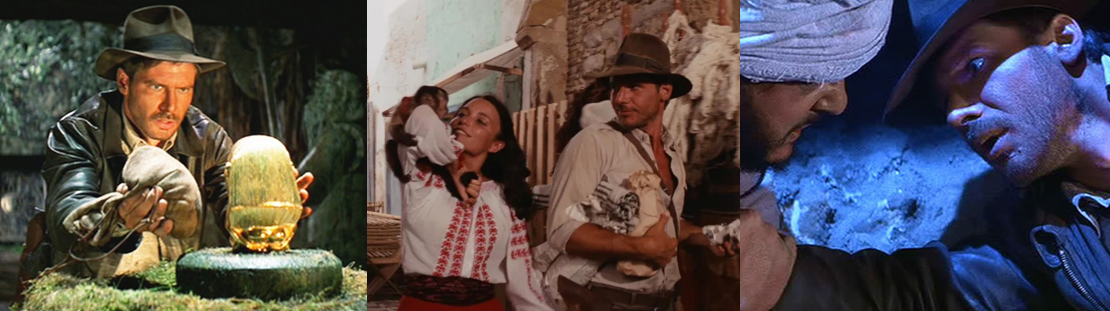
Adventurer Indiana Jones allies with a former flame to uncover the Ark of the Covenant.

Though fully aware of the mythology surrounding the Ark, Indy isn’t one for tall tales and sees the pursuit of the relic as perhaps his greatest challenge, and of incredible significance to the museum, literally laughing off the concerns of his friend and colleague, Marcus Brody (Denholm Elliott). Obviously a figure of sexual appeal thanks to his rugged good looks and physicality, Indy has more than his fair share of admirers; his classes are filled with lovestruck teens who are more interested in favouring him with forlorn stares and leaving him notes and gifts than paying attention to his lecture about the dangers posed by temples and local superstitions. He meets his match when his journey inevitably causes him to cross paths with Marion, the daughter of Indy’s old mentor, a strong, feisty, independent woman who owns a bar in Nepal and is more than capable of drinking men twice her size under the table and handling herself in a fight. Though angered at being left heartbroken by Indy some ten years ago, Marion has the medallion that reveals the location of the Well of Souls and demands to join his crusade after his actions see her bar go up in flames. Clearly still infatuated with her, Indy’s usually bold demeanour falters when it seems like Marion has been killed and it’s only the intervention of his old friend, Sallah (Rhys-Davies), that keeps him from throwing his life away seeking revenge. It’s thanks to Sallah, an Egyptian excavator who has no love for the poor treatment his people have receive from the Nazis, and his contacts that Indy is able to decipher the medallion, infiltrate the Nazi dig site, and discover the location of the Well of Souls. Indy is also overjoyed to discover Marion was alive and well in the hands of the Nazis, though he’s forced to leave her behind so he and Sallah can get to the Ark before the Nazis.
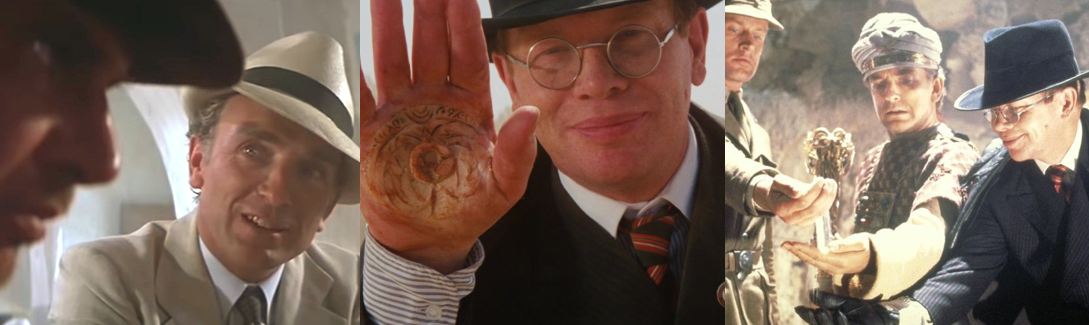
Belloq allies with the Nazis to fulfill his own desires for the fabled Ark.

Indy is dogged at every turn throughout the film by René Belloq (Freeman), a rival archaeologist who ends up allying with the Nazis to help them find the fabled Ark of the Covenant. We get an immediate sense of the differences between the two right from their first meeting; while Indy braves the dangers of his pursuits head-on, Belloq patiently waits on the side lines and simply takes what he wants by force without the need for physical dramatics. A twisted version of Indy whose respect for their profession has dissolved completely, Belloq openly admits to being Indy’s dark reflection, delights in flaunting his superiority over his rival at every turn, and is obsessed with perverting the Ark’s power for his own means. Accordingly, though allied with the Nazis, Belloq doesn’t believe in their cause and sees them as merely a “necessary evil”; when they threaten to torture Marion for information, he attempts to coerce her into telling what she knows willingly but is ultimately unable to defy his Nazi partners directly. The primary antagonist force in the movie, the Nazis have been scouring the globe in search of religious and superstitious artifacts to satisfy the desires of Adolf Hitler for power beyond the measure of mortal men. Their primary representative is Gestapo agent Major Arnold Toht (Lacey), slimy, sadistic man who relies on intimidation and torture to get what he wants. Toht is so committed to his Fuhrer’s will that he grabs the red-hot medallion and ends up permanently scarred meaning that, while the Nazi’s fail to acquire the artifact, they are able to produce a replica.

The Nitty-Gritty:
Just like Lucas’s popular sci-fi franchise, Raiders of the Lost Ark is bolstered by another of John Williams’ unforgettable scores; easily one of the most recognisable themes in movie history, the score from Raiders of the Lost Ark perfectly captures the adventurous spirit of the character and the franchise and brings every scene to life with a fittingly bombastic, pulp glory. The set design and visual presentation on offer here are just as important, and impressive, to the film; set in 1936 and in faraway locations such as the jungles of Peru and the sands of Cairo, the film definitely lives up to its pulp roots in its visual aesthetic. The opening sequence alone is a testament to this, featuring a boobytrapped Peruvian temple filed with tarantulas, cobwebs, impaled corpses, great stone walls and, of course, the gigantic rolling boulder that remains one of the most iconic set pieces of not only this film, but the entire franchise. Equally unforgettable are the scenes showcasing Indy’s globe-trotting travels as we see a red line drawn across a map every time he travels from one destination to another when the film could’ve easily relied on less visually interesting techniques like camera cuts, onscreen text, or fancy wipes.
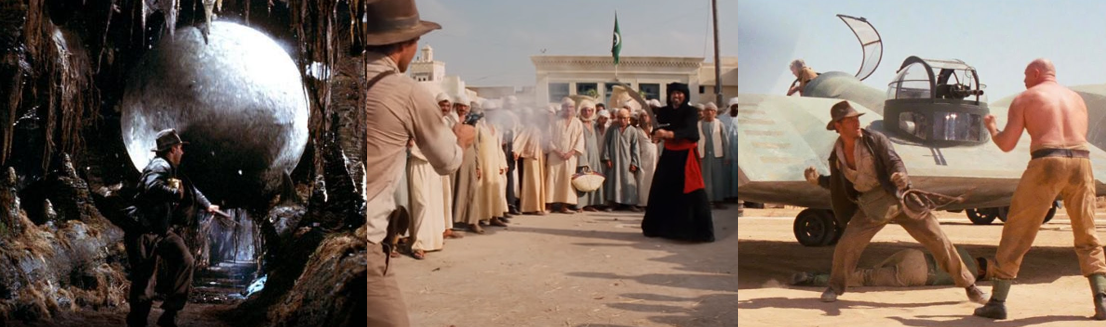
Raiders of the Lost Ark impressed with his visuals and the exciting nature of its action set pieces.

The film gives the very real sense that trouble naturally seems to find and follow Indy wherever he goes, which is exacerbated by the Nazi’s desperate search for the medallion and the Well of Souls. Consequently, Indy is forced to defend himself at all times; handy with his fists and as equally skilled with a gun as he is his whip, it’s Indy’s adaptability that often helps him out in a tight clinch. Despite being outnumbered and outgunned at Marion’s bar, he purposely spreads a fire to even the odds; he’s also not above fighting dirty, kicking opponents in the balls or simply gunning them down. Indy meets his physical superior when trying to escape from the Nazi’s dig site; here, relieved of his gun, Indy’s goaded into a fist fight by a large German (Pat Roach) who easily manhandles him and he’s only able to triumph thanks to the brute being skewered (thankfully offscreen) by a propeller blade in a sequence that also sees Marion take to a plane’s turret to provide cover. While he exudes confidence when out on an adventure and is clearly very learned, Indy isn’t some infallible action hero; he’s fully capable, yes, and highly adaptable, but he generally always has the odds against him, takes his fair share of punishment, and even gets grazed by a bullet. In fist fights, he’s usually outnumbered or facing armed foes and must use his wits to find ways to tip the balance in his favour. Indy also has a very specific Achille’s heel in his crippling fear, and hatred, of snakes; while this is initially played for laughs during his dramatic escape from Peru, Indy’s forced to face his fear head-on in the Well of Souls first to find the glorious solid chest and then to affect his and Marion’s escape by crashing through the walls of the buried stone crypt. Additionally, thanks to Belloq always being one step ahead of him, Indy is forced to think on the fly to intercept the Ark and commandeer the Nazi truck carrying it after a length brawl that doubles as a thrilling chase sequence.
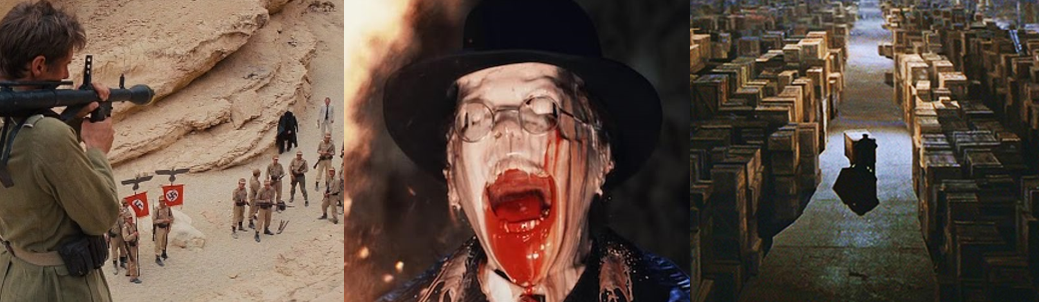
Ultimately, Indy survives the Ark’s destructive power and it’s sealed way by shady government agents.

Victorious in this endeavour, Sallah arranges for the Ark to be transported back to London by ship; onboard, Marion tends to Indy’s wounds, but their intimate moment is soon interrupted by the persistent Nazis, who recapture both Marion and the Ark. Indy manages to slip aboard their submarine and follow them to an island in the Aegean Sea, where Belloq plans to test and witness the Ark’s power before presenting it to Hitler to ensure they have the genuine article. When Indy threatens to blow them all to kingdom come, including the Ark, in exchange for Marion, Belloq calls his bluff; he knows that Indy is just as curious to see the Ark opened as he and, unable to deny it, Indy surrenders to the Nazis. Donning ceremonial robes, Belloq oversees the opening and is initially aghast to find it contains only sand; however, an electrical surge precipitates a wave of malevolent spirits and supernatural lightning that destroys all who behold it. It’s often said that Indy has little to no bearing on Raiders’ plot, that the Nazi’s would’ve been undone by the destructive power of the Ark without Indy’s presence. I’m not sure this is entirely true, however; after all, it’s only because of Indy that the Nazis are even led to the Ark in the first place, which at least accelerates the plot if not directly impacts it, and he’s the one who ensures that it isn’t just left lying around for others to stumble upon. Whatever the case, when faced with the true power of the mythical Ark, Indy orders Marion to close her eyes, sparing them the gruesome, flesh melting fate that befalls Toht and being consumed by the holy fire like Belloq and the other Nazis. Although they survive, and seemingly rekindle their romance, and Indy and Marcus are generously compensated by the United States government, Indy’s frustrated that he’s denied access to the Ark, which has been stored away in a vast warehouse alongside countless other artifacts.

The Summary:
It’s tough to pick between which is Harrison Ford’s more iconic role, Indiana Jones or Han Solo. I suppose it depends greatly on your genre preference; I know a lot of people who aren’t sci-fi fans, so they probably prefer the more pulpy adventures of the world’s most famous fictional archaeologist. It’s not hard to see why; Ford shines in the role, bringing a rugged appeal to the character, who is both very learned and physically capable while also being vulnerable and relatable. He absolutely carries the film, which is only bolstered by a series of impressive action set pieces and special effects, all of which have aged incredibly well thanks to being realised by tried and true practical means and camera trickery. As much as I enjoyed seeing how Indy would get out of each situation, watching him struggle and fight tooth and nail for every advantage, I also enjoyed the dynamic between him and Marion, who’s more than capable of holding her own and gives as good as she gets and really hammers home that, sometimes, Indy is quite a morally grey character. The parallels between him and Belloq were also interesting, if a little one-note thanks to the larger focus given to the more explicitly evil Nazis and the greater narrative concerning the Ark of the Covenant. Ultimately, Raiders of the Lost Ark is adventure in its purest form; a rollicking, enjoyable action-packed romp from start to finish with an alluring main character, a memorable score, and some iconic sequences that deliver as a fresh take on classic pulp troupes made fresh through the film’s undeniable visual presentation.

My Rating:

Rating: 4 out of 5.

Great Stuff

Are you a fan of Raiders of the Lost Ark? Were you impressed by Harrison Ford’s performance and what sort of impact did Indiana Jones have on you at the time? Did you enjoy the throwback to the pulp serials of old? What did you think to the dynamic between him and Marion and the parallels between Indy and Belloq? Which of the film’s action set pieces was your favourite? Do you think Indy is largely inconsequential to the main plot? Which of the Indiana Jones movies is your favourite? Whatever you think about Raiders of the Lost Ark, feel free to share your memories of Indiana Jones in the comments or on my social media.

Movie Night [RoboCop Day]: RoboCop 2


To celebrate the release of the dismal RoboCop (Padilha, 2014) on home media, June 3rd was declared “RoboCop Day” in the city of Detroit. While that movie wasn’t too impressive and had nothing on the original RoboCop (Verhoeven, 1987), this does give us the perfect excuse to talk, and celebrate, all things RoboCop on a specific day each year.


This review has been supported by Chiara Cooper.
If you’d like to support the site, you can do so at my Ko-Fi page.

Released: 22 June 1990
Director: Irvin Kershner
Distributor:
Orion Pictures
Budget:
$20 to 30 million
Stars:
Peter Weller, Nancy Allen, Tom Noonan, Belinda Bauer, Gabriel Damon, and Daniel O’Herlihy

The Plot:
Former police officer-turned-cyborg law enforcer RoboCop (Weller) becomes embroiled in a scheme by Omni Consumer Products (OCP) to bankrupt and take over the city. Faced with an identity crisis, and interference by psychologist Doctor Juliette Faxx (Bauer), RoboCop also comes into conflict with a vicious gang of drug dealers, led by zealot Cain (Noonan), who are spreading a highly addictive drug throughout the city.

The Background:
In 1987, Edward Neumeier and Michael Miner crafted a satirical take on 1980s commercialisation and media that director Paul Verhoeven turned into RoboCop. A modest hit, RoboCop was met with generally positive reviews and the studio urged Neumeier and Miner to pen a sequel. Unfortunately, mounting deadlines, a writer’s strike, and a breach of contract meant that their tentative plans to have RoboCop battle the complex, satirical politics of the future in RoboCop 2: The Corporate Wars never came to pass. Instead, writing duties passed to noted comic book writer Frank Miller. Unfortunately, the gritty violence and scope of Miller’s script was deemed “unfilmable”, though he would cameo in the film and later turn his rejected ideas into a comic book. RoboCop 2’s production continued to be stressful. Producer Jon Davison was already against the idea of sequels, and struggled to secure a director for the project since Verhoeven was busy making Total Recall (ibid, 1990). The studio announced a release date before the story was completed, resulting in a rushed filming schedule. Even star Peter Weller was reluctant to return and critical of the script, but reportedly enjoyed the shoot and praised the director’s drive and enthusiasm. Both special-effects guru Phil Tippett and suit designer Rob Bottin returned to work on the sequel; Bottin gave the suit a sleek new colour scheme and made it much easier to put on and take off, drastically reducing Weller’s time in the make-up chair. RoboCop’s cybernetic antagonist was brought to life using tried-and-tested special-effects techniques such as animatronics, miniatures, and painstaking stop-motion; RoboCain even exuded emotion thanks to a rudimentary computer-generated face. Despite RoboCop infamously making an appearance at World Championship Wrestling’s (WCW) Capital Combat pay-per-view to promote the film, RoboCop 2’s worldwide gross of $45.7 million was noticeably less than its predecessor, and the film was met with mixed reviews. While some praised its allusions to classic sci-fi and horror classics and (like myself) consider it an under-rated entry, critics bemoaned its redundant plot, excessiveness, and the depiction of a child as a violent drug lord. Still, we did get the aforementioned comic book detailed Miller’s rejected ideas, a videogame adaptation, and (eventually) a third film that was way, way worse in almost every aspect.

The Review:
Picking up about a year after the first film, the first thing you might notice about RoboCop 2 is that RoboCop himself has taken a bit of a step back. In the first film, the bulk of the narrative was focused on RoboCop regaining his memories and his humanity, evolving from a preprogramed tool of the malevolent OCP and reclaiming his status as a free-thinking human. However, in RoboCop 2, much of his stoic, robotic demeanour has returned to the forefront; his partner and friend, officer Anne Lewis (Allen), still affectionately refers to him as “Murphy” and he continues to exhibit a modicum of personality in the way he confronts and addresses others, but it’s like he’s been factory reset to where he was about mid-way through RoboCop rather than being the confident, free-minded Murphy we saw at the conclusion of the last film. Haunted by Murphy’s feelings and memories, RoboCop has taken to passing by the home of his former wife and child, Ellen (Angie Bolling) and Jimmy (Clinton Austin Shirley), presumably out of the temptation to reveal himself to them, which results in Ellen being so emotionally tormented that she’s filing a lawsuit against OCP. Despite being fully accepted by Lewis, Sergeant Reed (Robert DoQui), and his fellow officers, all of whom treat him as Murphy reborn, OCP force (basically bullied) RoboCop into admitting that he’s unable to provide for his former family as a man and is “simply a machine”.

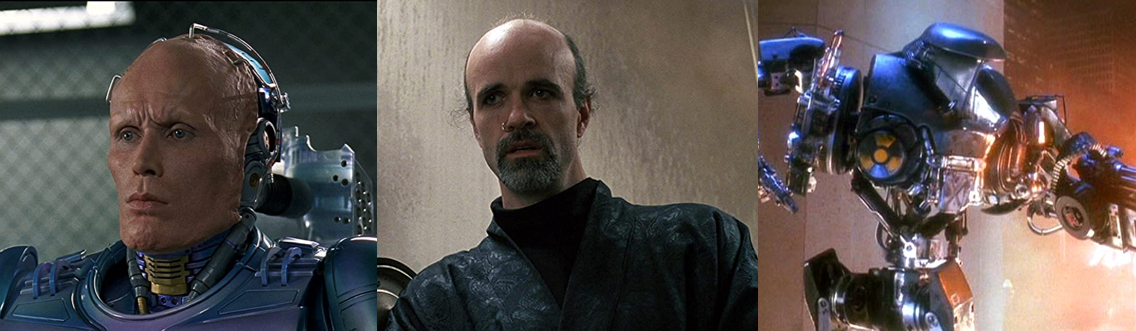
Still struggling with his humanity, RoboCop battles drug baron Cain, who’s transformed into a hulking cyborg!

Clearly heartbroken at having to admit this, he’s left with no choice but to lie to Ellen in order to spare her further grief and get OCP lawyer Holzang (Jeff McCarthy) off his back yet, despite his continuing struggles with his humanity, RoboCop continues to maintain order on the streets practically single-handedly. With the majority of the city’s cops on strike, RoboCop, Lewis, and a handful of uniformed officers find themselves continuously outnumbered and outgunned out on the violent city streets. Much of the violence is attributed to the spread of a highly addictive drug known as Nuke, which is manufactured and spread by the messianic Cain and his devoted followers (whom he refers to as his “flock”). Rather than simply being a gang of thugs and street punks, Cain’s inner circle is more like a cult; they hang on Cain’s every word, revere him as a leader and a father-figure, and are absolutely hooked on the “paradise” offered by Nuke. Cain is an enigmatic and alluring figure with a twisted sense of patriotism who exudes a subtle menace and showcases a sadistic streak when he’s wronged by others. Although he’s generally far more hands-off compared to Clarence Boddicker (Kurtwood Smith), he clearly takes a perverse pleasure in overseeing the torture, dismemberment, and punishment of his enemies and even forces Hob to observe this without filter. However, Cain gets a leg up on his predecessor when he’s subjected to the RoboCop 2 program after being critically injured by RoboCop. Although he doesn’t consent to this procedure, conniving psychologist Julia Faxx is completely on the money with her evaluation that Cain’s twisted mind makes him a perfect candidate to mentally survive the trauma of literally having his brain ripped from his body and placed into a massive mechanical, tank-like cybernetic body commonly dubbed “RoboCain”.

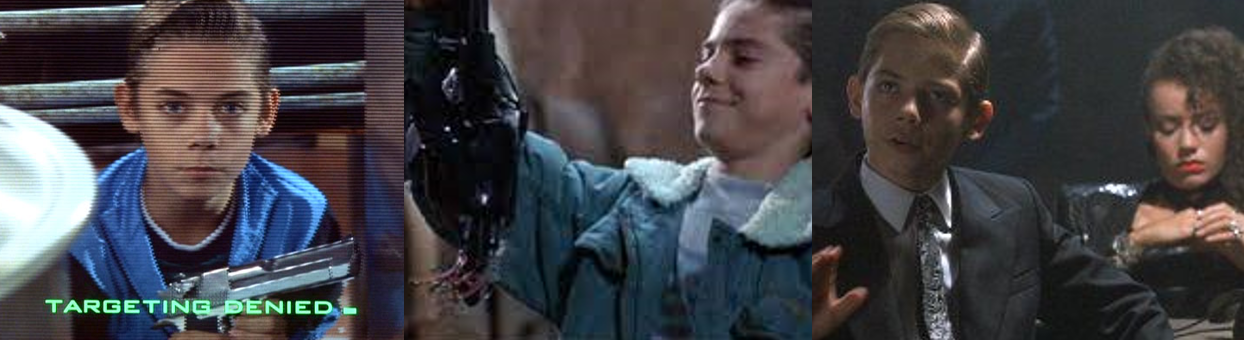
Hob usurps Cain’s position and plans to pay off the bankrupt city to spread his drugs unopposed.

Indeed, RoboCop 2 has a stringent anti-drug message as the super addictive Nuke is so sought after that Cain and his lead scientist, Frank (Frank Miller), produce it in vast quantities. Interestingly, though, very little time is spent explaining what Nuke’s effects (or side-effects) are; Cain suffers some unsettling effects as a result of a mix-up in the ingredients of the “Blue Velvet” variant, and users are said suffer painful withdrawal symptoms but it doesn’t seem to cause hallucinations or manic episodes. Instead, Nuke seems to induce a state of euphoria that becomes incredibly addictive to the user and people are literally fighting each other in the streets to fund their habit. Not that I’m saying it isn’t dangerous, of course, but we’re never actually shown that it is inherently dangerous, and more time is spent establishing that there’s a far more tangible danger in Detroit thanks to the police strike. Despite their loyalty to their enthralling leader, Cain’s followers are quick to write him off after he’s put in the hospital thanks to the ambitions of Hob (Damon), a spiteful delinquent who is very much Cain’s second-in-command and quickly usurps Cain’s position as Detroit’s top drug lord. He blackmails and manipulates Cain’s devoted lover, Angie (Galyn Görg), into falling in line by threatening to cut off her Nuke supply and seeks to broker a deal with the desperate and bankrupt mayor, Marvin Kuzak (Willard E. Pugh), that will allow him and his gang to manufacture and distribute Nuke without fear of prosecution in return for paying off the city’s debts to OCP. Thanks to being a child, RoboCop is unable to act against Hob, allowing the vicious little brat to continually evade reprisals and he gleefully oversees RoboCop’s dismemberment after the gang subdue the cyborg cop at their hideout. However, Hob’s ambition leads to him being caught in the crossfire when Faxx sends RoboCain to assassinate Mayor Kuzak and Hob, Angie, and many of their cohorts are killed by their former leader. Despite all of the pain and trauma Hob caused RoboCop, Murphy comforts the boy in his final moments and is deeply affected by the misguided youth’s death as Hob is around the same age as his own son.

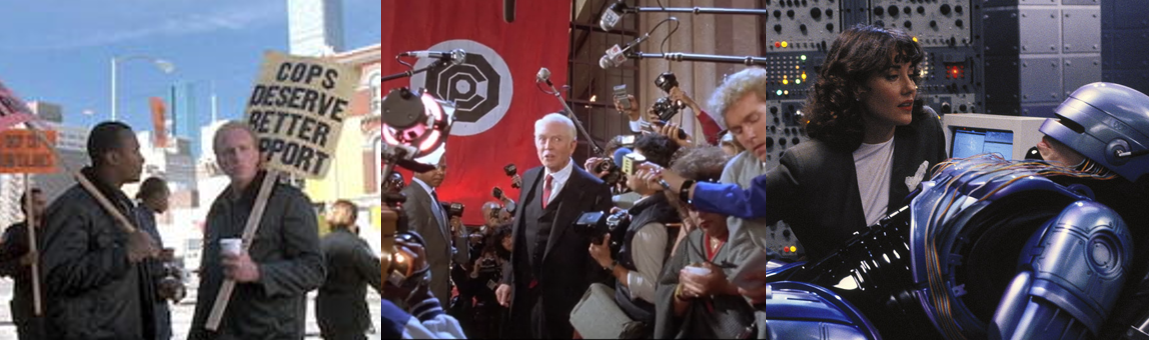
Thanks to OCP, Detroit’s on the verge of chaos and RoboCop is left screwed up by conflicting directives.

OCP remains a malicious and vindictive corporate entity but, this time around, the Old Man (O’Herlihy) has fully embraced his role as the head of a malevolent organisation; he’s more than happy to inform Mayor Kuzak that the city has defaulted on their contract and is eager to seize control of all of Detroit so that he can finally build Delta City on its ruins. To facilitate this, OCP continue to make life difficult for the city’s police; after numerous threats, the majority of the cops are on strike after having their pensions and salaries cut by their employers, causing chaos in the streets and leaving Detroit ripe for the picking. The Old Man is joined by Donald Johnson (Felton Perry) and Holzang, who advise and support his ambitious corporate takeover of the city, but has many of his decisions influenced by Faxx, who gets close to the Old Man (much to Johnson’s chagrin) and convinces him to screw around with RoboCop’s directives and programming to neuter his threat. When OCP’s efforts to replace RoboCop with a newer, more efficient model are met with constant failure, Faxx jumps in and suggests screening criminals rather than police officers as candidates for the RoboCop 2 program. While the Old Man is happy to keep RoboCop off the streets or otherwise disabled in order to push the city further into OCP’s hands, Faxx seems to get off on manipulating others and weaselling her way into a position of trust and power. While she’s largely successful and appears to have wooed the Old Man with her allure and impressed him with RoboCain’s slaughter of many of OCP’s opposition, her luck runs out by the end as Holzang and Johnson convince the Old Man to make Faxx a scapegoat for the death, destruction, and bad press caused by RoboCain’s rampage. However, little of RoboCop’s focus in the film is on confronting or opposing OCP; Holzang is continually dismissive of RoboCop’s humanity and he is solely concerned with the cost of repairing him and sorting out possible lawsuits caused by his actions, and Faxx is instrumental in screwing RoboCop up with over 250 contradictory directives, but RoboCop’s focus is squarely on Cain and the Nuke problem rather on exposing his creators as an unscrupulous corporate powerhouse concerned only with their own agenda rather than actually helping others.

The Nitty-Gritty:
RoboCop 2 does a decent job of replicating the dark satire of the original through its frequent cutaways to commercials and news program Media Break, which still casually comments on miserable local and worldwide news like it’s no big deal. Although Bixby Snyder (S.D. Nemeth) is sadly missing, the film opens with a particularly lethal solution to car theft, sells OCP Communications as the “only choice” to avoid office workers committing suicide over missed deadlines, and there’s an amusing commercial for “Sunblock 5000”, a product that protects against the destroyed ozone layer but causes skin cancer with frequent use! Although Basil Poledouris’ iconic RoboCop theme is absent, Leonard Rosenman’s new score isn’t anything to sniff at, punctuating RoboCop’s slick shooting and the film’s action sequences with a rousing, almost militaristic fanfare. One thing I do like about RoboCop 2 is how comfortable everyone is with RoboCop; he gets some odd looks of fear and awe from criminals, children, and everyday citizens, but he’s mostly just become a part of the city since the first film. All of his fellow officers refer to him as Murphy and he rallies them in an all-out assault on Cain’s main facility regardless of their money woes purely through the authority and respect his very being commands amongst them.

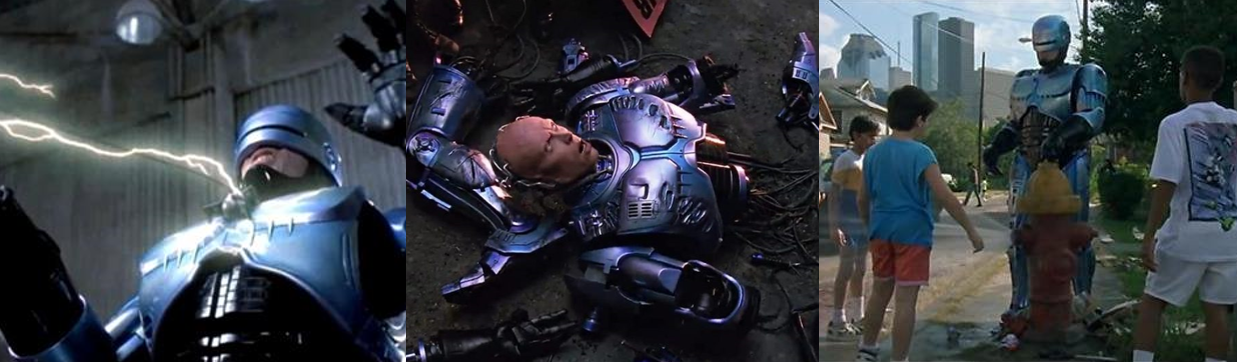
RoboCop is brutalised by Cain’s men and sapped of his violent edge in accordance with Faxx’s design.

In many ways, RoboCop 2 retreads much of the same ground as the first film; RoboCop struggles with his memories of a life that, arguably, was never his to begin with and has taken to stalking Murphy’s wife and son since he can’t quite let go of the ghosts of his past. When out on duty, RoboCop is all business and his personal issues never impede his duties; he busts up a Nuke production factory, beats information out of crooked cop Duffy (Stephen Lee), and confronts Cain and his followers alone all because that’s what he’s duty-bound to do (and, arguably, because of his three prime directives). However, when at rest, he’s a broken, distracted, confused man-machine who desperately wants to rediscover the love and affection Murphy felt but can’t because he’s simply the leftover echo of Murphy’s life trapped in a largely cybernetic shell. After he’s brutalised by Cain’s men, RoboCop is once again left torn to shreds and barely clinging to life in a startling call-back to Murphy’s vile execution in the first film; this is the perfect opportunity for Faxx to step in and load a whole bunch of nonsense directives into RoboCop’s program based on “consumer feedback” that the cyborg cop is too violent. Interestingly, Johnson actively speaks out against this, and Faxx’s decision to search for potential RoboCop 2 candidates, but more because of the “corporate image problem” than any sense of duty towards Detroit’s safety. Although Murphy initially resists Faxx’s programming thanks to clinging to his former life, she’s able to bypass his opposition by spoon-feeding him instructions, resulting in a far more chirpy, affable version of the cyborg cop who’s more interested in pleasantries and the Miranda Rights than busting heads. This leads to a ludicrous detour from the main plot as RoboCop, now more inclined to speak out against smoking, bad language (which “makes for bad feelings”), and youth violence and delivering impassioned speeches rather than gunning down criminals with his Auto 9. This doesn’t last very long, however, as RoboCop uses the last vestiges of his free will to subject himself to a near-lethal dose of electricity to, once again, erase all of his directives and clear his head of Faxx’s interference.

The film is punctuated by some impressive animatronics and practical effects.

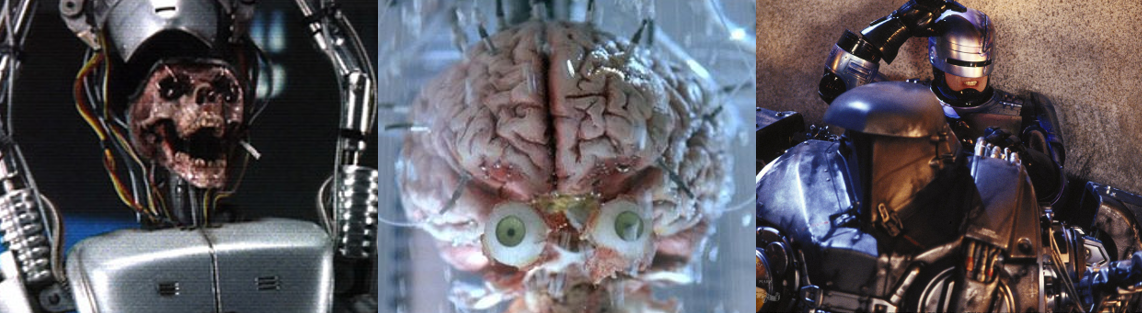
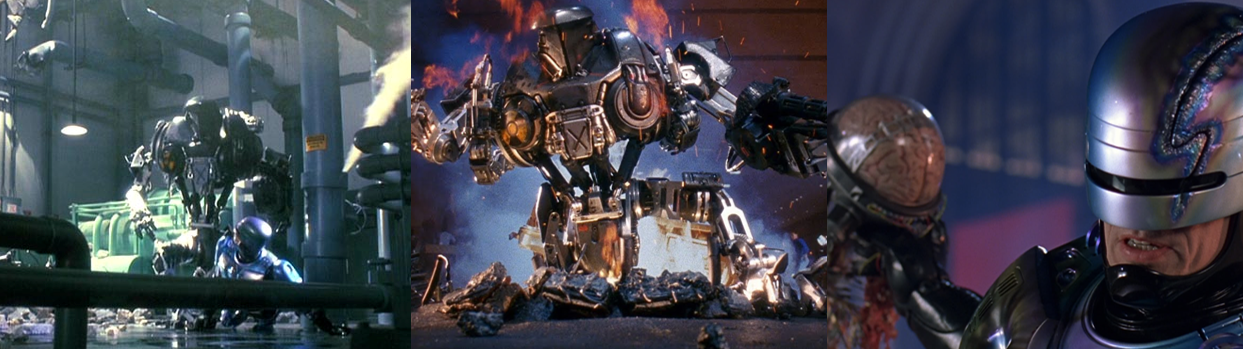
Although RoboCop 2 doesn’t feature such brutal scenes as a man being shot to death by a group of thugs, it’s still gloriously violent and gory in its own right, just in a slightly different way; as such, blood squibs burst with entertaining frequency, it’s fun seeing RoboCop manhandle Duffy in the arcade, and it’s always a thrill to see Peter Weller moving like a slick, efficient machine during RoboCop’s firefights. One of the more alarming scenes in the film comes when RoboCop is subjected to a horrific dismantling by Cain’s cultists, who blast off his hand and then drill through his joints to leave him a mangled mess. As traumatic as this is for Murphy, though, it’s nothing compared to the poor souls selected to undergo the RoboCop 2 program prior to Cain, who are all driven to suicidal insanity by their experience, with one cop left little more than a screaming skull beneath a cybernetic helmet! One scene that always landed with me as a kid was the shot of Cain’s brain and eyeballs suspended in a jar of liquid prior to his transformation, and the casual way his doctor and Faxx handle the drug lord’s facial remains, making for a disturbing scene. Effects-wise, things have been vastly improved this time around; RoboCop’s suit looks better than ever thanks to a shining coat of chrome-blue paint, and seeing him rendered a twitching, quivering mess of wires and armour is particularly harrowing thanks to a highly detailed animatronic puppet. RoboCain is a vast improvement over his spiritual predecessor, the Enforcement Droid-209/ED-209 (which, sadly, is reduced to a mere blink-and-you’ll-miss-it cameo), being bigger, more versatile, and far more dangerous and capable. A huge, lumbering machine, RoboCain is brought to life through a combination of miniatures, stop-motion, and practical animatronics and, while some of the shot composition hasn’t aged too well, it’s pretty bloody glorious to see this hulking cyborg gun people down with its machine gun arm and crush skulls with its claw-like hands!

After a brutal brawl, RoboCop exploits RoboCain’s dependency on Nuke to end his threat.

With OCP having all but eliminated their opposition and set to seize control over Detroit, manufacture more cyborg cops, and begin construction of Delta City, the climax naturally features a final confrontation between RoboCop and his would-be replacement. Unlike RoboCop, RoboCain doesn’t appear to retain very much of his humanity; after his transformation, Tom Noonan completely disappears from the film and is represented only by a 3D representation and his hulking robotic body, meaning RoboCain is a much more monstrous figure than Murphy and is motivated solely by his need to consume Nuke. Since RoboCain is bigger and far tougher than RoboCop, Murphy opts to bring a Cobra Assault Cannon with him to even the odds and take out some of Cain’s high-powered arsenal. Unlike the shambling ED-209, RoboCain features a massive machine gun arm (which doubles as an extendable battering ram), his own shoulder-mounted assault cannon, a laser cutter, and a number of claw-like appendages that allow him to scale walls, right himself when dropped, and afford him numerous options in combat. In comparison, RoboCop is as clunky as ever and is forced to rely more on his wiles than directly attacking RoboCain, since the former drug lord’s armour is much too tough to be damaged by RoboCop’s standard firearm or base strength. Thus, their battle sees them crashing through the floor, setting off gas lines, collapsing from a rooftop, and involves Lewis charging into RoboCain with an Armoured Personnel Carrier (APC), all of which barely fazes the enormous cyborg. However, RoboCain has one glaring weakness that RoboCop doesn’t share: his dependence on Nuke. RoboCop is able to use this addiction to distract his foe and rip through the plate armour on his back to wrench out Cain’s brain and smash it into mush, ending the would-be messiah’s threat once and for all and reclaiming his position as the city’s resident cyborg.

The Summary:
Even now, I genuinely feel lie RoboCop 2 is underserving of the dismissal it is often met with. While RoboCop might’ve been lightning in a bottle in many ways, I honestly think RoboCop 2 is a more than worthy follow-up as it does a decent job of replicating the mixture of satire, action, and metaphysical commentary of the original. While it’s admittedly disappointing that RoboCop’s character is walked back a bit and essentially undergoes exactly the same character arc (beginning as a stoic law enforcer, regaining his sense of self, and ridding himself of his directives) rather than starting off in the same place we left him, I found the further exploration of RoboCop’s humanity to be fascinating and heart-breaking. Here we have a cyborg police officer with the memories and feelings of a dead man, whom everyone treats as Murphy reborn, but the fundamental question of whether RoboCop actually is Murphy or if Murphy is just a ghost in the machine is endlessly intriguing to me and RoboCop 2 explores that in interesting ways. I also enjoyed RoboCop’s increased screen time, which made the film a bit more action-packed than the original, and the traumatic call-back to Murphy’s violent death in RoboCop’s dismantling, but what really impresses me about the film is the slugfest between RoboCop and his would-be successor. An under-rated triumph in practical effects filmmaking, an impressive mixture of animatronics, stop-motion, and traditional filmmaking techniques makes this sequence a thrilling and exciting climax and I am continually impressed with the RoboCain effects, which really up the ante as far as cyborg-on-cyborg action goes. For those who have slept on RoboCop 2, I definitely recommend looking at it again, as the Old Man would say, with “a fresh perspective” as it’s a more than worthy successor to the first film and, at the very least, isn’t handicapped by trying to appeal to a younger demographic like the third film.

My Rating:

Rating: 4 out of 5.

Great Stuff

Are you a fan of RoboCop 2? Would you agree that it’s under-rated or did it retread too much of the same ground for you? What did you think to RoboCop’s character arc, his struggles with his humanity, and the influx of crazy commands he receives? Did you enjoy seeing him tangle with a more competent cyborg opponent and what did you think to the effects this time around? Which RoboCop movie is your favourite? How are you celebrating RoboCop Day today? Whatever you think about RoboCop 2, feel free to drop your thoughts below or leave a comment on my social media.

Mini Game Corner [Sonic Month]: Sonic Origins (Xbox Series X)


Sonic the Hedgehog was first introduced to gamers worldwide on 23 June 1991 and, since then, has become not only SEGA’s most enduring and popular character but also a beloved videogame icon and, in keeping with tradition, I will be dedicating the entire month to celebrating SEGA’s supersonic mascot.


This review has been supported by Chiara Cooper.
If you’d like to support the site, you can do so at my Ko-Fi page.

Released: 23 June 2022
Developer: Sonic Team
Also Available For: Nintendo Switch, PC, PlayStation 4, PlayStation 5, Xbox One, Xbox Series S

A Brief Background:
Sonic the Hedgehog is no stranger to ports and compilations; over the years, there have been more conversations and re-releases of Sonic’s many adventures than you can shake a stick at, which has often been a point of contention within the Sonic fan community. Sonic’s 16-bit adventures were first packaged together in Sonic Compilation (SEGA, 1997), but one of the most memorable collections of his classic titles was Sonic Jam (Sonic Team, 1997), which gave us our first taste of 3D Sonic, and his games (particularly his 16-bit ventures) have been featured in numerous collections for a variety of platforms over the years, to say nothing of being ported and enhanced with additional features. Following the success of Sonic’s live-action debut, Sonic Team’s head honcho, Takashi Iizuka, announced the development of a new release of his most famous 16-bit titles for modern consoles, one that would incorporate the new features seen in the Christian Whitehead ports. While some previously unreleased Sonic titles were still unfortunately missing, compromises had to be made regarding some of the original music, and fans were unhappy with SEGA’s choice to hide some features behind downloadable content (DLC), Sonic Origins was mostly met with positive reviews. Reviews praised the nostalgia evoked by the compilation and the additional modes and features on offer, though the price tag and the bare bones content were both heavily criticised. Some of these addressed were addressed, however, when it was revealed that the game and all its DLC would be getting a physical release alongside even more content, including a bunch of Sonic’s Game Gear titles and even the ability to play as Amy Rose.

The Review:
Sonic Origins is a high-definition re-release of four classic Sonic games: Sonic the Hedgehog (Sonic Team, 1991), Sonic the Hedgehog 2 (SEGA Technical Institute, 1992), Sonic the Hedgehog CD (SEGA, 1993), and Sonic the Hedgehog 3 & Knuckles (ibid, 1994), each of which I have previously covered in-depth. As ever, the controls and mechanics are simple and intuitive: you can bust open Doctor Eggman’s Badniks with the Super Sonic Spin Attack, dash along at high speeds with either the Spin Dash or Super Peel-Out, and can reach new areas with characters like Miles “Tails” Prower and Knuckles the Echidna, who can fly, swing, glide, climb walls, and bust through certain walls, respectively. Sonic is also afforded different abilities depending on the game; in Sonic CD, he can time travel by passing special signposts and picking up speed and in Sonic 3 & Knuckles he can pull off an Insta-Shield, flame burst, bubble bounce, or double jump by tapping the jump button again and when protected by an elemental shield. Sonic Origins adds some of these abilities, and others, to other games as well; for example, Sonic can perform his Drop Dash move from Sonic Mania (Christian Whitehead/PagodaWest Games/Headcannon, 2017) in every game and inputting the classic Sonic 1 cheat code will allow you to activate elemental shields in that game. Tails can also carry Sonic both in co-op and when playing solo; though his flight is limited, he can now fly in every game and can even be teamed with Knuckles in Sonic 2. As ever, players will find that each game offers different routes, aesthetics, and even different bosses (in Sonic 3 & Knuckles) when playing as Knuckles, though he’s sadly and inexplicably absent from Sonic CD. Although the core gameplay isn’t changed – players protect themselves from death by grabbing Golden Rings; 100 grants an extra life and monitors are strewn all over the levels (referred to as “Zones”) that offer speed ups, extra rings and lives, invincibility, and protective shields – the traditional life system has been abandoned when playing the game’s “Anniversary” mode. In this mode, when you die, you simply restart with no penalties and any monitors or life-granted bonuses now award you Coins to be spent unlocking music, artwork, and movies.

The collection brings together four classic Sonic games alongside all-new features and modes.

In the Anniversary editions of the games, all three characters can be played as with the exception of Sonic CD; games that allow you to team Sonic or Knuckles with Tails allow for co-op play, though this is often more of a hinderance. The Anniversary editions not only do away with the life system but also present the games in widescreen, though the classic editions are exactly as you remember them, 4:3 ratio, life system, and all. Each game is broken into a number of Zones with anywhere between one and three “Acts” per Zone; Zones are littered with Dr. Eggman’s Badniks (quirky mechanical animals that fire shots at you, roll into you, explode in a shower of spikes, or send blades spinning your way) and defeating them nets you points and either frees a cute little woodland critter or plants a beautiful flower. Zones are also filled with a variety of hazards, from spikes, flames, bursts of freezing cold, and instant death traps like bottomless pits and crushing weights. One of your biggest adversaries will be water; while Tails is able to doggy paddle for faster movement, none of the characters can breathe underwater, requiring you to grab an air bubble, elemental shield, or reach the surface before the ominous timer counts down. Generally, you’re required to do little more than race to the end of the Act to win but you’ll sometimes have to press switches, bounce around in pinballs, or use pulleys to progress, and you’ll only achieve 100% completion of Sonic CD by travelling back to the past and creating a Good Future. At the conclusion of a Zone (or Act in Sonic 3 & Knuckles), players will battle against one of Dr. Eggman’s mechanical creations or against the mad scientist himself. Dr. Eggman is generally piloting his Egg-O-Matic, which is a versatile killing machine that sports increasingly dangerous appendages, from a swinging wrecking ball to dumping chemical waste to a large mech with bumpers for arms and a heavily armoured pod that can only be damaged by his own spiked balls. Dr. Eggman’s creations are equally formidable; many different robots oppose you in Sonic 3 & Knuckles, including a earthquake-inducing drilling machine, an iceball-spitting robot, a massive stone guardian, and a one-eyed, laser spewing droid protected by erratic spiked platforms! You’ll also have to content with a number of metallic Sonic duplicates: the Mecha Sonic defends its master aboard the Death Egg in Sonic 2, you’ll race Metal Sonic to the death to rescue Sonic’s number one fan, Amy Rose, in Sonic CD, and Knuckles has to contend with Mecha Sonic Mk. II in Sonic 3 & Knuckles. Knuckles himself is also fought in this game in the Hidden Palace Zone when playing as Sonic and/or Tails, matching you blow for blow, and defeating these bosses generally allows you to score extra points from a falling sign post or free a whole bunch of captive animals.

Grab the Chaos and Super Emeralds and Time Stones to get the best endings and benefits for each game.

While it’s pretty simple to blast through the Zones and finish them in record time, an extra level of challenge awaits in the form of Special Stages; by collecting fifty Rings and finishing an Act in Sonic the Hedgehog and Sonic CD, passing a Starpost with fifty Rings in Sonic 2, and hopping into a Big Ring in Sonic 3 & Knuckles, you’ll be transported to a bizarre extra stage where you’re tasked with navigating a swirling maze, racing against a time limit to destroy UFOs, blasting along a surreal halfpipe, or collecting Blue Spheres to acquire either the Chaos Emeralds or the Time Stones. In Sonic the Hedgehog and Sonic CD, this simply results in you receiving the best ending but, in Sonic 2 and Sonic 3 & Knuckles, it’ll also allow you to power-up into your Super form, making you completely invincible to everything but bottomless pits and being squashed and giving a massive speed boost for as long as your Rings last. Using the Sonic 1 cheat code, you can input an additional Special Stage and Chaos Emerald into the original game, thus allowing you to access your Super form, and Sonic 3 & Knuckles again expands on this with the Super Emeralds, which allow Sonic and Knuckles to become even more powerful in their Hyper forms, and by requiring you to have at least the seven Chaos Emeralds to challenge the hidden final area, Doomsday Zone. You can also enter Bonus Stages in this game to earn extra lives, continues, and power-ups and there are opportunities to mess around a bit in each game, with Zones like Spring Yard, Casino Night, and Carnival Night offering lots of interactable gimmicks to rack up your score and Rings. Sonic 2 and Sonic 3 & Knuckles allow two players going head-to-head in a split screen mode, while Sonic CD offers time trials for you to test your skills; you can also freely play the Blue Spheres special stages at your leisure, unlock a Mirror Mode for each game that sees you playing in reverse, and all of the additional unlockables in Sonic CD are still available, though the developers saw fit to disable to cheat codes for Sonic 2.

Despite the odd DLC, there’s lots of extra content here, including a playable Sonic 2 Hidden Palace Zone!

So far, it’s all very familiar but Sonic Origins also offers a wealth of additional features. As mentioned, you can acquire Coins to unlock artwork, music, and movies; these include, much to my enjoyment, the animated Sonic Mania Adventures (Hesse, 2018) shorts, various promotional and development videos and artwork, and music from across all four games (and the entire series). Unfortunately, you’re unable to create custom playlists for any of the games, rendering the sound test more of a novelty than a feature; many of the tracks are also hidden behind paid DLC, which is a bit odd considering you can only listen to it and create a playlist for the menus. Each game is proceeded and followed by a gorgeously animated cutscene that adds new layers to the story, such as adding a seventh Chaos Emerald to the first game’s six, Tails being awestruck by Sonic as he races by, and the first meeting between Dr. Eggman and Knuckles; these are even more integral when you play the game in Story Mode, which sees you playthrough all four games back-to-back in one unbroken session. Other features inexplicably locked behind a paywall are additional animations for the gorgeous menu screens, which are arranged in 3D islands and will feature characters moving around in the background once purchased, and harder missions to tackle in the game’s Mission mode. These amount to a series of increasingly difficult obstacle courses and challenges in reconfigured areas of the games; you’re awarded Coins for beating them quickly, with an S-rank offering the highest reward, and will be tasked with such challenges as collecting a certain number of Rings, destroying or sparing Badniks, crossing moving or temporary platforms, finishing the area without any Rings, and more. These are, honestly, quite fun and a nice little distraction; it helps that you get to play as Tails or Knuckles to complete certain objectives and it can get pretty tough meeting the success criteria in time, with some missions asking you to travel through time multiple times, bounce off seesaws, keep Tails safe from harm, and battle tougher bosses. Also on offer is a boss rush mode, additional quality of life tweaks to the Anniversary editions (such as being able to quit and restart from the last checkpoint and spend Coins to retry Special Stages) and, best of all, the addition of a new ending graphic and the cut Hidden Palace Zone to Sonic 2! If you fall down the Mystic Cave Zone’s infamous pit, you’ll land in this fully playable Zone and even face off against an all-new boss battle, one that’s strangely difficult and more akin to the quirky bosses seen in Sonic CD. It’s a wonderful addition that I’m really grateful was carried over from the mobile version of the game, but I would have also liked to see Wood Zone included in some way as well.

While there definitely could’ve been more games included, this is still an impressive collection.

There are thirty-five Achievements on offer in Sonic Origins and they’re painfully easy to acquire, which is good if you like to quickly rack up your gamer score but a little disappointing for lifelong Sonic players like myself. I’ve mentioned this before, but Rare Replay (Rare, 2015) really set a high standard for Achievements in game compilations, one I haven’t seen any other game collection even come close to, especially SEGA’s titles. Here, you’re awarded an Achievement for clearing each and all of the main games, defeating enemies and collecting Rings, turning into Super Sonic, and clearing ten missions for each game with an S rank. There is no benefit to collecting all of the Chaos Emeralds or Time Stones in every game as there’s no Achievements tied to this; you also only need to load up a Mirror Mode or Boss Rush to grab Achievements for playing those, rather than finishing them, and there are precious few quirky ones to strive for. Like, you get an Achievement for winning the race against metal Sonic but not for defeating Knuckles, and there’s no Achievement for discovering Sonic 2’s Hidden Palace Zone or clearing the Story Mode, which is a bit of a shame. Still, there’s a lot for your Coins to unlock in the Museum, if you like that sort of thing, and the Mission Mode adds a nice bit of spice to the collection. For some reason, I found Sonic 2’s missions much harder than the other games’, especially the missions that asked you to avoid projectiles and collect Rings in a reconfigured Sky Chase Zone. There are some fun additions in Sonic 3 & Knuckles, too, especially when transitioning from Launch Base Zone to Mushroom Hill Zone. However, yes, Carnival Night, Ice Cap, and Launch Base Zone all have new themes in them and no, I can’t say they’re good replacements, but I’m happy to compromise just to be able to play the game on modern hardware. There’s a remixed Super theme in the game as well, which is a little punchier, and I swear I saw some new sprites and inclusions that weren’t in the original game (though it has been a while since I played it). Finally, additional features have since been made available to the game, including Game Gear titles and even a playable Amy Rose!

My Rating:

Rating: 4 out of 5.

Great Stuff

What did you think to Sonic Origins? Were you disappointed by the game selection and the DLC? Were you happy to see these classic titles remastered for modern consoles? What did you think to the new additions and quality of life improvements? Were you disappointed by some of the missing content and the simplicity of the Achievements? Which Sonic compilation is your favourite, and which of the classic Sonic games is your favourite? Would you like to see the 16-bit gameplay of the classic games make a comeback or do you prefer the 3D titles? Whatever your thoughts on Sonic Origins, feel free to share them below and check out my other Sonic content across the site.

Movie Night [Dinosaur Day]: The Lost World: Jurassic Park


Sixty-five million years ago, dinosaurs ruled the Earth. These massive beasts existed for about 180 million years and came in all shapes and sizes, before finally going extinct following a cataclysmic event that forever changed our world and rendered these creatures mere fossils to be discovered and studied. Fittingly, “Dinosaur Day” is actually celebrated twice a year, giving dino fans the world over ample opportunities to pay homage to this near-mythical titans.


This review has been supported by Chiara Cooper.
If you’d like to support the site, you can do so at my Ko-Fi page.

Released: 23 May 1997
Director: Steven Spielberg
Distributor:
Universal Pictures
Budget: $73 million
Stars:
Jeff Goldblum, Julianne Moore, Vanessa Lee Chester, Pete Postlethwaite, Vince Vaughn, and Arliss Howard

The Plot:
Four years after escaping from Isla Nubar and left disgraced after speaking out about the chaotic events on Jurassic Park, Doctor Ian Malcolm (Goldblum) is forced to head to the park’s “Site B”, Isla Sorna, to rescue his girlfriend, Doctor Sarah Harding (Moore). However, Malcolm’s worst fears about the genetically engineered dinosaurs soon come to pass when the immoral InGen seek to transport them from the island and to a new attraction in downtown San Diego!

The Background:
It was only fitting that Steven Spielberg helmed the big-budget adaptation of Michael Crichton’s bestselling Jurassic Park (ibid, 1990) since the book quickly caught Spielberg’s eye and, thanks to inspirations from classic movie monsters and special effects wizards Stan Winston, Phil Tippett, and Dennis Muren, created not only one of the biggest blockbuster releases of all time but also pioneered many of the CGI techniques we still see in Hollywood today. Bolstered by a huge merchandising campaign, Jurassic Park (Spielberg, 1993) grossed over $1.030 billion at the box office and was swamped with overwhelmingly positive reviews, so naturally there was a talk of a sequel. However, both Crichton and Spielberg were reluctant to work on a direct follow-up; Crichton due to having never written a sequel before and Spielberg due to a general fatigue from big-budget productions. After Crichton caved to fan demand and began writing a second book, however, Spielberg and writer David Koepp began pre-production on the sequel, which ditched Spielberg’s initial ideas and differed noticeably from the book of the same title to feature a more dramatic and visually entertaining finale that Spielberg originally envisioned for a potential third movie. Although the film featured an entirely new cast of characters, Jeff Goldblum was elevated to the leading man (despite his character dying in the original book) and a slew of new dinosaurs were added to the script alongside fan favourites like the Velociraptor and Tyrannosaurus rex. While the film still utilised a number of practical effects and animatronics, far more emphasis was placed on digital creations from the likes of Industrial Light & Magic and Stan Winston to bring these extinct titans to life. Two of the film’s biggest effects sequences involve the T. rex, with one having the actors dangling precariously over a cliff edge in the pouring rain and the other showcasing the T. rex rampaging through downtown San Diego, both of which required the use of miniatures, animatronics, and CGI to make everything work seamlessly. Like its predecessor, The Lost World: Jurassic Park was accompanied by a massive marketing campaign and, while its $618.6 million box office was noticeably less than the first film, it still broke several box office records and became the second highest-grossing film of 1997. Reviews, however, were somewhat mixed; critics were impressed by the special effects but disappointed by the characterisations. While Jeff Goldblum’s performance and the larger role of the T. rex was praised, even Spielberg felt the film failed to match expectations and the film is generally regarded as being inferior to the original. While its reputation is far stronger than that of its third entry, it wouldn’t be until 2015 that the franchise once again properly wowed audiences.

The Review:
I mentioned in my review of Jurassic Park that I didn’t care for the book; I found it dry and dull and lacking in the visual spectacle offered by the big-screen adaptation, which took the concept and filtered out all the boring waffle and focused on overdelivering on the concept of dinosaurs being brought back to life through genetic engineering. If you’re hoping that I preferred The Lost World then you’re sadly mistaken; I found it to be just as bad, and actually worse in a lot of ways as it was essentially the exact same book except there were a few different characters and the they had a bigger, fancier truck. While a standout supporting character in the first film for his eccentric personality and scene-chewing performance, Dr. Ian Malcolm is now thrust into the spotlight. Despite his injuries from the first film, he’s physically fine but his reputation is in the gutter as he refused to adhere to the non-disclosure agreement he signed before visiting Jurassic Park and was branded a fraud as a result. Already a somewhat cynical individual, Malcolm is incensed to learn that Doctor John Hammond (Richard Attenborough) had a second dinosaur island all along, a far less restrictive breeding ground where the dinos would be incubated and bred before being transported to the main park. While Malcolm is no longer prone to expositing Chaos Theory, he’s still just as prone to judging Hammond’s poor decision-making skills and inability to understand or recognise that he’s still tampering with powers outside of his control. Vehemently refusing to visit the island and vowing to warn off the team that Hammond has convinced to document the thriving dinosaurs, Malcolm’s objections turn to fear and panic when he learns that his girlfriend, Sarah, is already there, pushing him to lead a rescue mission.

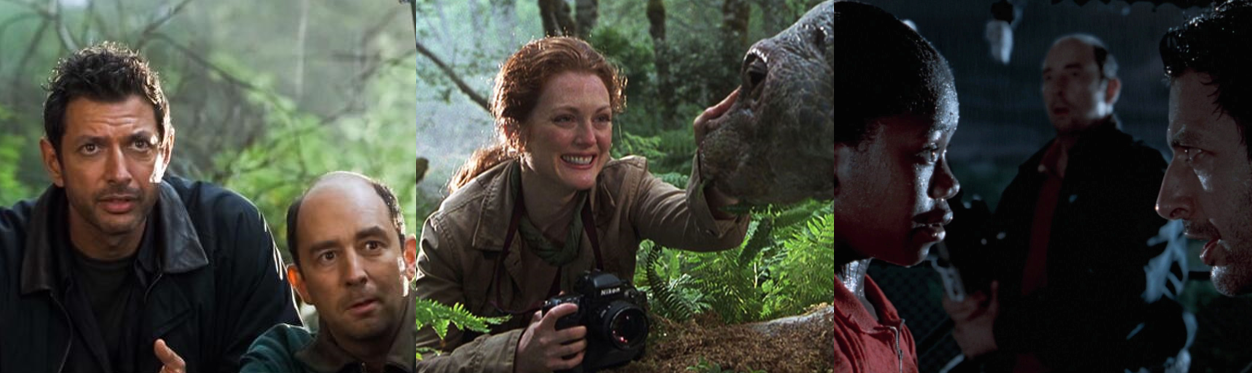
Despite his warnings, Ian’s family insist on venturing onto Hammond’s second, more dangerous island.

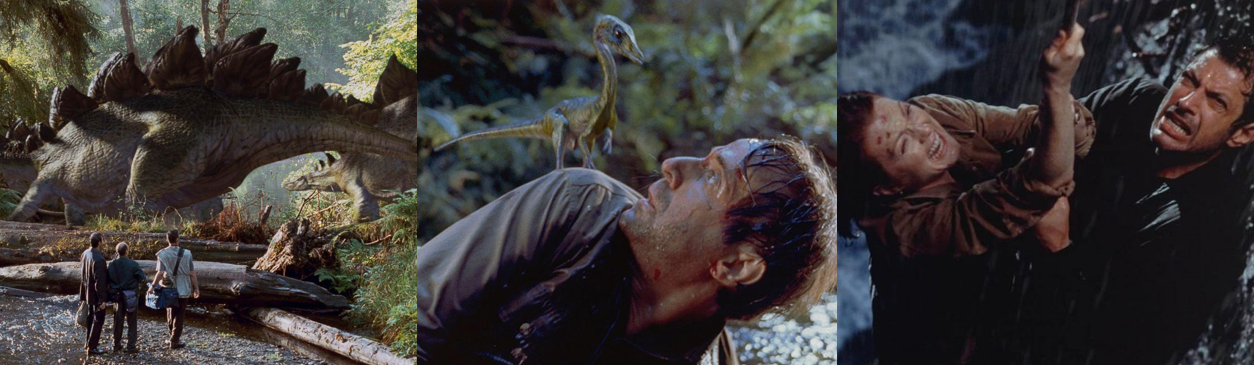
A running thread throughout the film is Malcolm’s repeated attempts to warn those around him of how dangerous the dinosaurs and Hammond’s islands are and everyone simply ignoring him; if they’re not outright dismissing his claims as paranoia, they’re fixated on the wonderous nature of witnessing dinosaurs up close and personal, meaning he gets multiple chances to rub it in their faces when his warnings turn out to be true and to feel further vindication of his objections when the body count rises. Although he spent much of Jurassic Park doped up on morphine, he brings with him knowledge and experience of the dinosaur’s habits, nature, and aggressive tendencies that are repeatedly ignored, leading to people constantly provoking or antagonising the dinosaurs and incurring their territorial wrath as a result. Even Sarah, despite having heard all of Malcolm’s horror stories, completely waves off his concerns for her safety; an experienced wildlife photographer, she leapt at the chance to document the dinosaurs in the wild and seemed to be confident to the point of arrogance in her ability to stay out of sight and undetected. While it can be argued that Malcolm’s frantic search for her was to blame for disrupting this and almost causing her to be killed by a herd of Stegosaurus, Sarah’s common sense and intelligence is somewhat unpredictable throughout the film; she chastises Nick Van Owen (Vaughn) when he rescues a baby T. rex from being used as bait to satisfy the corporate desires of Hammond’s nephew, Peter Ludlow (Howard), she doesn’t hesitate to help fix its broken leg and doesn’t realise until it’s far too late that her shirt is covered in the baby’s blood and thus attracting the attention of the adult T. rex’s. while Malcolm would rather never set foot on a dinosaur island ever again and Ludlow’s team are determined to transport them to a zoo in San Diego, Sarah is one of the many voices calling for the dinosaurs to be left to thrive in their own unique ecosystem and views them with an awe and respect that turns to abject terror as the more ferocious dinos begin hounding them. Malcolm’s desperation to get her off the island and to safety is so great that it means missing out on time with one of his many daughters, Kelly Curtis (Chester), a pouty and ignorant teenage girl who simultaneous adores and resents her fair-weather father after a lifetime of unreliability. Partially out of spite and partially as a lark, she sneaks her way onto the island and is a constant burden thanks to her argumentative, oblivious impetuousness. She does, however, eventually prove to be somewhat useful when she (or, at least, her stunt double) uses her gymnastics skills to kick a ‘raptor out a window but this is the one time she does anything worthwhile and it’s probably the most unrealistic and overly elaborate aspect of the entire film.

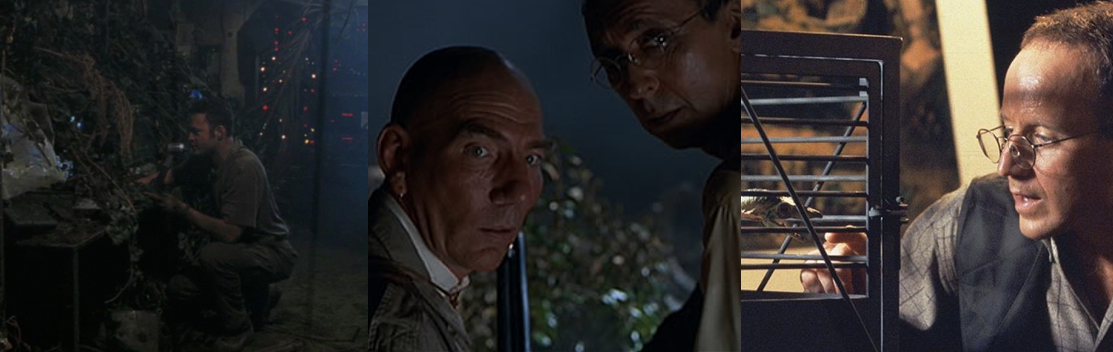
The Lost World certainly isn’t short on characters, with Roland being one of the few standouts.

One thing The Lost World isn’t short on is characters; the movie is absolutely stuffed with actors as we follow Malcom’s rescue team and Ludlow’s capture team, following their different experiences on the island and seeing their storylines converge. Malcolm joins Eddie Carr (Richard Schiff) and Nick as they prepare to join Sarah on the island; Eddie is the field expert, though his satellite phone is more than a little temperamental and his “High-Hide” seems laughably impractical since it’d put its inhabitants in easy biting reach but actually proves quite effective during the T. rex attack. The team has this big, decked out truck full of all the equipment that require but it mainly exists to dangle precariously over a cliff while the T. rex makes a meal out of poor Eddie, and the movie expects us to believe that Vince Vaughn, of all people, is this bad-ass animal right activist sent by Hammond to disrupt Ludlow’s efforts to get the dinosaurs off the island. He succeeds only in disrupting their operating, endangering and indirectly costing the lives of many of Ludlow’s team through his actions, but we’re encouraged to root for him because he knows the value of the dinosaur’s lives and rights to freedom and Ludlow’s group is a little disreputable in their methods and motives. Ludlow himself is every slimy, corporate sleazebag you’ve ever known; while Hammond at least had some appreciation of the grandeur and beauty of his creations, Ludlow is concerned only with the bottom line and getting Jurassic Park – San Diego up and running to make a tidy profit. His troop is primarily made up of an assortment of unnamed victims and mercenaries, with Dieter Stark (Peter Stormare) being a rare standout for his cruelty to a Compsognathus which comes back to literally bite him when he’s separated from the others and viciously attacked by a pack of the tiny dinos. The sole standout of Ludlow’s team is veteran big-game hunter Roland Tembo (Postlethwaite); having hunted every animal on the face of the Earth and longing for the chance to hunt a male T. rex, Roland is largely dismissive of Ludlow’s dreams and the promise of financial compensation and a somewhat ambivalent character since he sees the jaunt as just another job. However, he shows an attentive side towards Sarah, a desire to shield Kelly from any death, and is so devastated by the death of his best friend, Ajay Sidhu (Harvey Jason), that he abandons his lifestyle completely after bagging his prize, finding no joy in his victory and having grown weary of being surrounded by death.

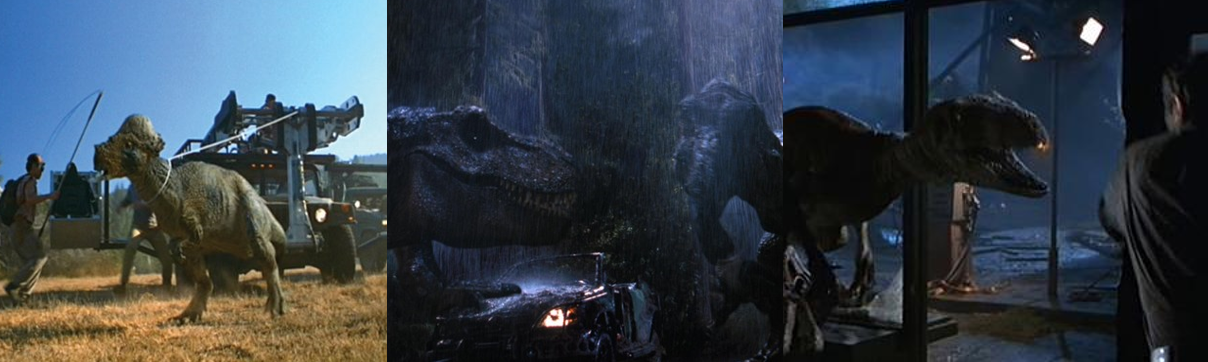
Dinosaurs old and new thrive, hunt, and breed in this makeshift ecosystem.

Once again, though, it’s the dinosaurs who are the real stars of the show and what we all came to see. The film starts somewhat similarly to the last one with a dinosaur attack but, this time, it’s the Compies who get the opening kill in a sequence actually lifted from the first book and which establishes right away that the dinosaurs are not afraid of man and can attack without provocation. There are a number of new dinosaurs in the film, including a fiercely protective Stegosaurus herd and a stampede of rampaging Pachycephalosaurus, whose powerful headbutt is played for laughs as Roland desperately tries to remember the names of the dinosaurs while capturing them. Many of the smaller and less aggressive dinosaurs are quickly rounded up by Roland and his team and showcased by Ludlow to InGen’s investors, but Nick sets them all three and causes them to run wild through the enemy camp, and decides the best course of action when finding the injured, captured baby T. rex is to bring it to their trailer for medical attention. Although Sarah has to guess the dosage of pain medication and Malcolm is concerned that the baby’s cries will attract its parents, the baby T. rex is patched up and returned to its parents, but the adult T. rex’s are driven to attack the trailer, driving it over the edge, and continue to hound the human characters as they desperately try to escape the island. Along the way, they have to pass through a large expanse of tall grass teeming with Velociraptors, which have a surprisingly subdued role in this film; in the first one, they were very much the primary antagonistic dinosaur but, while they are responsible for a pretty high body count here and deliver one of the film’s more terrifying sequences as they pounce on the characters as they race across the grass, they’re used sparingly this time around. The T. rex crops back up a couple more times, drawn to the scent of its offspring, leading to a harrowing sequence where it tramples people to death underfoot and gulps down InGen’s dinosaur expert and walking dino exposition machine Doctor Robert Burke (Thomas F. Duffy) after he’s spooked by a snake, of all things. In the end, Roland is successfully able to capture alive T.rex but it…somehow…manages to kill off an entire ship’s crew and then return to the cargo hold to make its dramatic appearance once the ship reaches San Diego so it can go on a rampage through the city.

The Nitty-Gritty:
It’s a shame that The Lost World never followed up on the lingering plot thread of the cannister of dinosaurs samples stolen and dropped in the first film; this could’ve been a natural jumping off point for Hammond’s rivals to be behind the new island and thus take Ludlow’s place as the main antagonists, which would’ve have changed the film all that much but would’ve felt a little more natural. The plot point of Hammond’s nephew trying to usurp and exceed his aspirations is somewhat interesting, as it shows there’s division within InGen, but I find it difficult to believe that Hammond is so wealthy that he can buy not one, but two islands, kit them out with all the facilities and equipment they need, and also just abandon a San Diego zoo project beforehand. And even if he could do all that, the losses and financial backlash caused from abandoning these projects, losing all of Jurassic Park’s dinosaurs to the lysine contingency, and presumably compensating or covering up the deaths from the last film would’ve surely bankrupted or heavily crippled InGen. Of course, this doesn’t happen and we get to visit Site B, which is where the dinosaurs were properly bred before being transported to Jurassic Park; the island is a curiosity to  the likes of Hammond and Sarah as, despite all the odds, the dinosaurs have been able to adapt and thrive there, changing sex to breed and overcoming their lysine deficiency and finding a way to survive without the interference of their human breeders, but for Malcolm it’s just another example of Hammond’s arrogance and a place no one should ever willingly visit due to the inherent danger posed by nature itself.

On paper, this had the potential to be a bigger, better film but it’s bogged down by pacing issues.

On paper, The Lost World has everything it needs to be bigger and better than the first film; more cannon fodder to add to the body count, more dinosaurs, and more action should’ve meant that it was even more of a visual spectacle and, in many ways, it is. The dinosaurs still look fantastic and, thanks to many of the bigger action sequence staking place at night and/or in the rain, they’re just as believable as ever and even more formidable. We get not one, but two T. rex’s, there are more instances of herds of dinosaurs grazing, living, or running in the wild, and the final shot even shows all kinds of different species living side by side in their makeshift ecosystem. However, the film suffers from incredibly dull pacing; it’s only a few minutes longer than the last film but it drags so much and so often that even the big dinosaur sequences can’t save it and I find myself tuning out and growing bored waiting for something to happen and to care about these characters. The story is just far too bloated; there’s too many throwaway mercenaries on Ludlow’s team, too few interesting and engaging characters in general, and even the amazing Jeff Goldblum can’t carry this to an enjoyable experience. In fact, he’s actually something of a detriment here; rather than playing an eccentric character, he’s just full-on quirky Goldblum and it’s actually quite distracting. Neither the always-dreadful Vince Vaughn or the incredibly miscast and aggravating Vanessa Lee Chester make for compelling performances and, if it wasn’t for Pete Postlethwaite, there wouldn’t be anyone interesting at all in the cast.

The film’s climax is certainly striking, but feels tacked on and should’ve had far more focus.

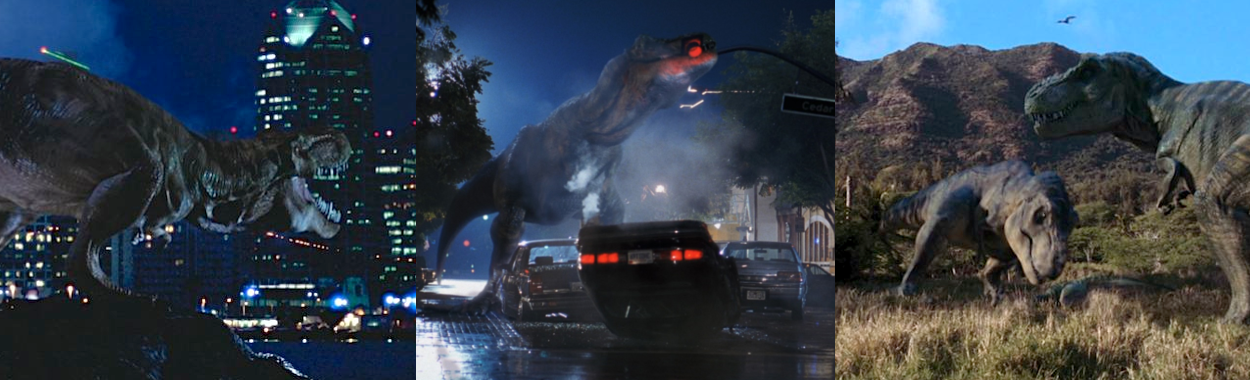
It’s a shame as the dinosaur sequences can be very entertaining; The Lost World is much more of a horror/monster film than its more subdued predecessor, even though numerous attempts are made to emphasise that the dinosaurs are just acting out of instinct and to protect their young and territory. The T. rex’s rip poor Eddie to shreds, squash nameless goons, and tear limbs off; one even eats a dog during the finale, which is always a step too far, and yet Nick goes out of his way to take Roland’s bullets away from him! The Compie attack, while somewhat comical, end sup being pretty terrifying as Stark is eaten alive just out of frame and the ‘raptor attack in the grass is an equally tense and distressing sequence sadly undermined by Kelly’s ridiculous athletics. The finale, which sees a T. rex go on a rampage in downtown San Diego, feels unnaturally tacked on (mainly because it was…) and I’m torn between wishing we’d seen more stuff like that to differentiate the sequel from the original or omitting it entirely. It does result in some of the best looking shots of the film; the juxtaposition of this massive, prehistoric beast barrelling down the street, crushing cars, and chomping on terrifying pedestrians is quite striking, but it’s very rushed and by the time it happens you’re just wanting begging for the movie to be over. In the end, Malcolm and Sarah manage to retrieve the baby T. rex and use it to lure its Mama or Papa (it’s not really made clear which it is) back to the boat, where Ludlow is left in the cargo hold as a tasty snack for their journey back to the island. It’s not made clear who, if anyone, is piloting the boat back but the incident becomes public knowledge, bringing a mainstream awareness of the island and the existence of dinosaurs, but the movie ends with Hammond imploring mankind to take a step back and let life find a way, which is presented as though he’s finally learned a lesson but could just as easily be an attempt to once again avoid any legal repercussions for his research.

The Summary:
When I was a kid, The Lost World: Jurassic Park was my favourite of the Jurassic Park films; the first one had been such a spectacle and made such a huge impression that anticipation was high for the sequel and I think I associated the success and appeal of the first movie to mean the sequel had to be just as good, if not better. I was (and still am) a massive Jeff Goldblum fan as well, so that just added to the appeal of the sequel since he took a lead role, but it can’t be denied that The Lost World is inferior in almost every aspect. Even the dinosaurs don’t always look as good; the CGI, while still impressive, is far more noticeable in a lot of shots, even though the animatronics and the likes of the T. rex look fantastic as ever. Unfortunately, the film is overstuffed with uninteresting, forgettable characters, bland and uninspiring performances, and is such a slog to get through that I find myself growing increasingly bored every time I watch it. The spectacle and allure is just missing, or dulled, despite how hard the film tries to recapture the magic of the first movie; it’s much more like a generic monster film in a lot of ways and borrows a little too much from the last film to really stand out. The areas where it is a bit more unique are sadly underdeveloped; the idea of a rival company building their own dinosaur island or theme park could’ve been interesting, as could dinosaurs running amok in the city, but it’s all just kind of crammed in here with very little rhyme or reason and not sense of urgency. It’s a shame, really, as there was such potential in a Jurassic Park sequel, but there’s just very little substance to The Lost World; it’s still technically very impressive at times and it has moments where its bigger and more impressive than the last film, but it falls flat overall and ends up being this plodding, lifeless affair filled with inane characters, bone-headed decisions, and lacklustre action that feels too much like a desperate, corporate attempt to make lightning strike twice rather than a genuine attempt to match the spectacle and wonder of its predecessor.

My Rating:

Rating: 2 out of 5.

Could Be Better

What did you think to The Lost World: Jurassic Park? Do you think I’m being too harsh on it and that it’s actually just as good, if not better, than the first film? Are you a fan of the book and, if so, did you still enjoy the film or was there too much changed in the adaptation process? Were you happy to see Ian Malcolm return and which of the new characters was your favourite? What’s your favourite dinosaur, either in this film or in general? Were you a fan of the finale or do you agree that the film suffered from pacing issues? Which of Jurassic Park’s sequels is your favourite or do you consider the first one to be the best? How are you celebrating Dinosaur Day this year? Whatever your thoughts on The Lost World: Jurassic Park, and dinosaurs in general, sign up to leave them below or drop a comment on my social media.

Game Corner [Turtle Tuesday]: TMNT: The Hyperstone Heist (Xbox Series X)


The first issue of Kevin Eastman and Peter Laird’s Teenage Mutant Ninja Turtles (TMNT) was published in May of 1984. Since then, the TMNT have gone on to achieve worldwide mainstream success thanks not only to their original comics run but also a number of influential cartoons, videogames, and wave-upon-wave of action figures. This year, I’m emphasising third entries and time travel shenanigans in the popular franchise every Tuesday in May!


GameCorner

Released: 30 August 2022
Originally Released: 11 December 1992
Developer: Digital Eclipse
Original Developer: Konami
Also Available For: Mega Drive, Nintendo Switch, PC, PlayStation 4, PlayStation 5, Xbox One, and Xbox Series S

The Background:
Kids in the late-eighties and early-nineties were enamoured by the Teenage Mutant Ninja Turtles (known as Teenage Mutant Hero Turtles here in the UK), with the game-changing cartoon dominated the airwaves years before Mighty Morphin’ Power Rangers (1993 to 1996) and Pokémon (1997 to present). Though the cartoon was far tamer than the original Mirage Comics, the TMNT’s popularity not only spawned a series of live-action movies (of varying quality), comic books, a whole slew of action figures, and numerous videogames. Konami’s laid the foundation for some of the franchise’s most memorable videogames with their original TMNT arcade game and the developers only expanded upon those efforts with the much-beloved sequel, Teenage Mutant Ninja Turtles: Turtles in Time (Konami, 1991). Not only was Turtles in Time bigger and better, while still retaining the simple pick-and-and-play mechanics of an arcade beat-‘em-up, it also gained further popularity thanks to a surprisingly faithful home console port. In addition to an unfairly criticised 2.5D remake in 2009, Turtles in Time served as the basis for this Mega Drive title, though there were some notable differences between the two versions, particularly regarding their length. Indeed, while The Hyperstone Heist was praised for its graphics and gameplay, its difficulty was criticised at the time. For decades, gamers were forced to pay through the nose for ridiculously expensive physical copies of the game, or resort to emulating the title, but that all changed when The Hyperstone Heist was included in this Cowabunga Collection alongside a host of other games and quality of life features.

The Plot:
The Turtles leap into action when their archnemesis, Oroku Saki/The Shredder, uses the power of the mysterious Hyperstone to shrink and capture half of Manhattan Island, battling through waves of Foot Soldiers to put an end to the Shredder’s bid for world domination.

Gameplay:
If you’ve played Turtles in Time then The Hyperstone Heist will be immediately familiar to you; the game is, essentially, a stripped down and patchwork reordering of the classic arcade time travel jaunt. Just like the two arcade titles that preceded it, The Hyperstone Heist is a 2D sidescrolling beat-‘em-up that allows up to two players to battle side by side across five stages, with each comprised of a number of different areas unlike Turtles in Time and even including some entirely new stages and bosses. Since I’m playing this version on the Xbox Series X, it should be no surprise that this game can now be played both on- and offline co-operative play, and you can even opt to turn friendly fire on or off to make things a little harder, or easier, on yourself when playing with a friend. Players can once again select from one of the four Ninja Turtles; each one controls exactly the same and are defined primarily by the reach of their weapons (putting characters like Leonardo and Donatello at an advantage). Gameplay couldn’t be simpler; you go from the left side of the screen to the right using X to pummel baddies with some simple combos, B to jump, and X in mid-air to pull off a couple of jumping attacks depending on how high you are when you press it. If you press B and X together, you’ll pull off a power attack at the cost of some health, and you can press Y to dash ahead. While you can pull off dash attacks in this way, it can be a bit clunky as I find the dash works better as a double tap of the directional pad and, while you can no longer toss enemies at the screen, you can still slam them by attacking up close and fend off enemies attacking from behind with a back attack.

Gameplay is ripped from Turtles in Time but includes some new stages and mechanics.

Although The Hyperstone Heist has less stages than Turtles in Time, they’re much longer and even include transitions between different screens/areas; so, while you start in the sewers in this game, you hop up to the streets and play through a section of Alleycat Blues before dropping down into an alternative version of the Sewer Surfin’ stage. As ever with these TMNT arcade titles, there are a few opportunities to interact with the environment; traffic cones, candlesticks, barrels, explosive drums and boxes of fireworks and fire hydrants can all be used to take enemies out. While the game is lacking some of the more memorable stage hazards like Krang’s giant android body and the wrecking balls, many of these still crop up throughout certain stages; you can fall down holes, without fear of damage, to avoid attacks, step on loose planks, and injury your toes on spiked hazards. Turrets will pop up to freeze you solid, enemies can still grab and hold you for a beating, and electrical bolts and lasers will also still fry you to your skeleton. While you’ll still hop onto a rocket-powered board to fend off enemies across the ocean, these autoscrolling sections are limited to just the one instance here; things are mixed up a little with a high abundance of health-restoring pizza, flying Mousers, and lots of wreckage from the ghost shop to dodge and interact with, however. The Hyperstone Heist also includes the Technodrome stage that featured in the home console port of Turtles in Time, complete with the traditional elevator gauntlet section (only now the elevator goes down instead of up), but also shows its limitations and laziness by dedicating an entire stage to a boss rush (without any pizza to heal yourself up).

Graphics and Sound:
On a base level, The Hyperstone Heist is functionally very similar to the home console port of Turtles in Time, sporting the same heads-up display, similar sprite work, and the same environments and enemies, but it can’t be denied that the whole game has suffered a visual downgrade. This is evident right from the title screen, despite a unique new introductory sequence, and the far less impressive voice clips and limited animation frames. The TMNT even seem to be slightly out of proportion compared to their enemies, something I never noticed in the two versions of Turtles in Time, and the game is far more reliant on text, with dialogue featuring before and after each boss encounter. Still, everything looks and feels very true to the game’s arcade roots and continues to capture the quirky, slapstick nature of the animated series with its cartoony presentation and sound effects. The gameplay is noticeably slower, however, thanks to the lack of a turbo mode and it feels like a longer, far more tedious experience thanks to the levels dragging on a bit and the sheer number and aggression of enemies at any one time.

Some new areas, a new ending, and reshuffling of stages help the game stand out.

For the most part, the game’s levels are ripped right out of Turtles in Time, specifically the home console port; Sewer Surfin’ has been reduced to an on-foot stage (though the Pizza Monster still somehow jump out of the water), Alleycat Blues is a transition between the two sewer stages, and the pirate ship has been redesigned into a ghost ship, with the cave from Prehistoric Turtlesaurus now a transition to the Shredder’s secret lair thanks to the lack of a time travel plot. The game has supplanted the time travel stages of Turtles in Time with entirely new environments, with this most apparent in Scene 3 where you battle across a cliff top into a Japanese temple and a dojo where Shredder trains his disciples. Turtles in Time’s more visually interesting stages, like Prehistoric Turtlesaurus and Neon Night Riders, are replaced by a simple damp cave and a less thrilling water chase sequence, though the Technodrome remains largely unchanged. The final stage is also largely the same, though the Statue of Liberty has been replaced by this weird eldritch abomination of a machine in the background. Some of Turtles in Time’s cutscenes are also included, though altered to fit the slightly changed plot, and an entirely new ending sequence and defeat animation for the Shredder has been included that features some decent sprite work and partially animated sequences.Finally, the game’s soundtrack is largely the same as Turtles in Time’s but noticeably sped up and lacking in the oomph heard in the arcade release.

Enemies and Bosses:
As far as I could tell, every enemy you face in The Hyperstone Heist is ripped right out of the home console version of Turtles in Time. This means you’ll be fending off an endless swarm of robotic Foot Soldiers, each sporting different coloured pyjamas and different weapons, including throwing stars, swords, nunchaku, daggers, and tonfa. There is one new variant, however; a magenta-coloured ninja who breaths fire at you! Also returning are the Mousers (which scurry about and bite your hand), Roadkill Rodneys (which electrocute you with whips and fire lasers at you), these little laser firing spider-bots, and the Xenomorph-like Pizza Monsters. The Rock Soldiers also make an unwelcome appearance, generally in groups of at least three, to charge at you and fire heavy-duty ordinance right in your face. While many of the stage hazards return from Turtles in Time, you’ll spot a couple of new ones in Scene 3 thanks to this being an entirely new stage; these include a spiked ceiling, spiked bamboo canes that pop up from the floor, and ceremonial armour that fires electrical lasers at you.

After two copy/paste boss battles, Tatsu is a welcome, if easy, addition.

Every stage ends in a boss battle, with all of the bosses but one being repurposed from the two previous TMNT arcade games, though each sport a helpful life bar like in Turtles in Time’s home console port. After battling through the sewers and the city streets, you’ll face off against the monstrous Leatherhead. While the arena might be different, Leatherhead’s strategy is exactly the same as in Turtles in Time; he hops and scurriesabout, punching you or swiping with his tail up close and tossing daggers from across the screen, and basically sets the template that’ll work for every boss in the game which is get in there, land a quick combo, and jump away before you take a hit. After fighting through the decidedly unhaunted ghost ship, you’ll fight Rocksteady; sadly, there’s no Bebop in this game and this is basically just a copy/paste of his solo fight from the original arcade game as he charges at you, fires a machine gun in a spread, and tosses a few grenades into the arena, leaving himself wide open for your attacks in the process. Thankfully, the game does include a new boss battle at the end of Scene 3; here, you’ll face Tatsu from the first two live-action movies. Although he threatens that you’ll have to defeat his minions first, the Foot Soldiers actually fight alongside him, but it’s pretty simply to focus on him, avoiding the darts he fires across and rains down the screen, and pummelling him when he stands still.

Although the final bosses can be challening, the boss rush was a lazy addition to the game.

As mentioned, The Hyperstone Heist drops the ball somewhat with Scene 4, which takes place entirely in a dank cave and forces you to battle all three bosses again, one after the other, in what is fittingly called “The Gauntlet”. To be fair, the Pizza Monsters do show up again and all of the enemy sprites now have a new colour palette, and there’s no health here or in the final stage to help you through, but it’s pretty damn lazy to just shoehorn in a boss rush like this. On the plus side, it does culminate in a battle against Baxter Stockman that’s again ripped from the first arcade game; Baxter hovers about in this craft dropping Mousers on you and generally being a hard target, but I would’ve preferred to see an original stage ending in this boss fight. Similarly, you’ll again face Krang in the Technodrome but its in an adapted version of the Neon Night Riders battle rather than him being in his UFO; Krang’s android body dashes at you with a kick, smacks you with a clap attack, fires missiles from his chest, and rains bombs into the arena, but he still likes to gloat and leave himself an open target. Finally, you’ll take on the formidable Super Shredder in the game’s last stage just like in the home console version of Turtles in Time. While Super Shredder’s attacks and strategy remain the same, he’s been tweaked slightly; his projectiles and aura are now coloured coded, with blue bolts freezing you, green fireballs instantly killing you by reverting you to a normal turtle, and red flames hurting your toes.Additionally, I was only able to land a hit on Super Shredder when he was firing his freezing shot and he still hovers and dashes about to make himself an annoying target.

Power-Ups and Bonuses:
The Hyperstone Heist features exactly the same power-ups as those seen in Turtles in Time, namely the odd pizza to restore your health and one single, solitary Pizza Power item that sends you into a short-lived frenzy. You will also be awarded an extra life at every 100, 300, 500, 700, etc points, which is useful if you find yourself struggling.

Additional Features:
Similar to the home console version of Turtles in Time, The Hyperstone Heist features a few options you won’t see in the arcade releases; you can play on three different difficulty levels (Easy, Normal, and Hard), with different endings assigned to each one, set your lives and continues to anywhere from one to five, enable or disable back attacks, and make use of a sound test. The game may have taken a further graphical hit during the conversion, and there’s no versus or time trial mode, but you can still pick between two colour schemes, “Comic” and “Anime”, which gives the TMNT new colour palettes in a nice touch. As you’d expect, the Cowabunga Collection adds some extra features to the game; you’ll earn a 70G Achievement for completing each game on any difficult level, rewind the gameplay with the Left Bumper, and use the Right Bumper to access save states and display options. You can also choose your starting level and enable some additional lives using the collection’s enhancements, flick through a strategy guide, choose between the American and Japanese versions (with minimal differences that I could see), view the game’s box art and manuals, or simply watch the game play itself.

The Summary:
Naturally, there’s a lot to like about Teenage Mutant Ninja Turtles: The Hyperstone Heist, specifically because it’s built on and is essentially a rejigged version of one of the most beloved TMNT arcade games ever made. However, while the gameplay and presentation owes pretty much everything to Turtles in Time, there’s just enough here to allow The Hyperstone Heist to stand on its own two feet. The new stages, environments, and the way it shuffles Turtles in Time’s stages around to fit its slightly changed narrative makes for a fun and action-packed gameplay experience that’s both similar and altogether very different. Most noticeably is the face that Turtles in Time was a short, sharp arcade style experience that never outstayed its welcome, but The Hyperstone Heist certainly drags on thanks to its long stages. While this is great for longevity, it equals not just unnecessary padding but also highlights just how repetitive the beat-‘em-up gameplay is and draws undue attention to the graphical hit the game has taken in the conversion to the Mega Drive. The same trappings that restricted its two arcade predecessors remain but are more glaring as there’s only one Pizza Power power-up and the inclusion of a lazy boss rush and lack of additional gameplay options and mechanics certainly makes it inferior to its arcade and Super Nintendo counterparts. However, it’s easily the best and most entertaining TMNT videogame on the Mega Drive; it’s not quite as good as Turtles in Time but it’s good enough to be a decent brawler for the system and, while the additional features in this version are somewhat lacking compared to other games in the Cowabunga Collection, it’s great to see this rare and expensive gem of a fighter readily available for a new generation of gamers.

My Rating:

Rating: 4 out of 5.

Great Stuff

Did you ever own Teenage Mutant Ninja Turtles: The Hyperstone Heist on the Mega Drive? How do you think it compares to both versions of Turtles in Time? What did you think to the redesigned and additional stages? Were you disappointed by the artificially enhanced length of the game and the lack of new boss battles? Which of the characters was your go-to and what did you think to the additional features added to the Cowabunga Collection? Whatever you think, feel free to share your memories of The Hyperstone Heist down in the comments or on my social media.

Movie Night [HulkaMAYnia]: The Death of the Incredible Hulk


Since his explosive debut in May 1962, Stan Lee and Jack Kirby’s gamma-irradiated Jade Giant has been one of their most recognisable and successful characters thanks, in large part, to the Incredible Hulk television show (1977 to 1982) catapulting the Hulk into a mainstream, pop culture icon. The Hulk has been no slouch in the comics either, being a founding member of the Avengers and undergoing numerous changes that have made him one of their most versatile and enduring characters, so what better way to celebrate all things Big Green than by dedicating every Sunday in May to the Green Goliath?


Released: 18 February 1990
Director: Bill Bixby
Distributor:
New World International
Budget:
Unknown
Stars:
Bill Bixby, Lou Ferrigno, Elizabeth Gracen, Andreas Katsulas, and Philip Sterling

The Plot:
Desperate to rid himself of his destructive alter-ego, the Hulk (Ferrigno), Doctor David Banner (Bixby) poses as a janitor to gain access to a research facility he believes may be the key to finding a cure. However, when the kindly scientists assisting him are kidnapped, he must join forces with an unlikely ally and once again rely on his monstrous persona to rescue them.  

The Background:
The brainchild of Marvel Comics legends Stan Lee and Jack Kirby after learning of a hysterical mother exhibiting superhuman strength, the Hulk initially struggled to find an audience with Marvel readers but shot to fame thanks to his popular television show, The Incredible Hulk (1977 to 1982). The show ran for eighty episodes and firmly established the Green Goliath in the cultural consciousness thanks to coining the unforgettable “Don’t make me angry. You wouldn’t like me when I’m angry” line and standout performances by star Bill Bixby and Lou Ferrigno, who would forever be associated with the character. About six years after the series finale, the first of three made-for-television movies was produced; apparently intended as a backdoor pilot for Thor (Eric Kramer), The Incredible Hulk Returns (Corea, 1988) was successful enough to warrant a follow-up that was also hoped to be a pilot for a potential Daredevil spin-off. The Trial of the Incredible Hulk (Bixby, 1989) was met with mixed reviews, but a third film followed regardless; initially believed to have featured the debut of Jennifer Walters/She-Hulk, The Death of the Incredible Hulk ultimately spelt the end for the long-running series following Bixby’s untimely death and plans for a fourth film that would’ve merged Banner’s intelligence with the Hulk’s strength were shelved.

The Review:
Growing up as a kid in the nineties, it was kind of tough for comic book fans such as myself; DC Comics characters received the most representation in live-action media at the time, so we mostly had to console ourselves with the awesome Marvel cartoons that aired during this period. If we wanted to see live-action interpretations of Marvel’s colourful heroes, we had no choice but to turn to the made-for-television efforts of the seventies and eighties but, honestly, I remember being awestruck seeing the likes of Peter Parker/Spider-Man, Steve Rogers/Captain America, and the Incredible Hulk brought to life in live action. Expectations were much lower then, and I was just a naïve youth who had no idea that these characters would come to dominate cinema screens so successfully; plus, The Incredible Hulk wasn’t airing on any channel I could watch at the time, so having access to these TV movies was seen as blessing. I say all this to provide a little historical context for the nostalgia I feel towards Bill Bixby and Lou Ferrigno’s efforts on The Incredible Hulk; while I actually have come to find many of the episodes I have watched to be quite laborious, I have a great appreciation for the TV movies giving me the briefest glimpse of the potential these characters had in live-action.

Banner finds himself with a surrogate family who enthusiastically try to help rid him of his curse.

The movie opens to find Banner now posing as “David Bellamy” and disguising his genius behind the persona of a well-meaning, but a mentally-challenged, janitor in order to secretly access to Doctor Ronald Pratt’s (Sterling) research on human healing. This masquerade allows Banner to win the hearts and sympathies of his co-workers, the security guards, and Dr. Pratt, who all see him as a harmless, if forgetful and easily confused, middle-aged man. Interestingly, Banner maintains this masquerade outside of work, and this, as much as the pocketful of cash, makes him an easy target for a group of street punks. Naturally, this triggers a transformation into the Hulk, which only accelerates his search for a cure; it turns out that Banner has been watching the routines of the guards, meaning he’s able to trick them with a tape recorder into thinking he’s left for the night, and has access to Dr. Pratt’s lab thanks to knowing his keycode. Luckily for Banner, the facility doesn’t have any security cameras, so he’s free to work throughout the night using Dr. Pratt’s resources, making corrections to his formulas in the hopes of finally discovering a cure to his monstrous affliction. Banner’s alterations to Dr. Pratt’s formulas do not go unnoticed, however; he’s stumped to find his notes changed for the better and incredulous when his wife, Amy (Barbara Tarbuck) suggests that his invisible partner is a ghost. Determined to find out who has been able to slip past the facility’s “high security”, Dr. Pratt hides out in his lab late one night and is shocked to find David is his mysterious helper; however, he’s even more shocked when David reveals his true identity, and is eager to hear about Banner’s research and what’s driven him to such desperate measures. Sympathetic to Banner’s plight, and believing that he can cure him while also potentially benefiting others by studying the Hulk’s incredible healing abilities, Dr. Pratt convinces Banner to work with him and, over the course of a heart-warming montage, Banner is taken in by the Pratt’s and becomes something of a surrogate son to them. After so many years alone and on the run, Banner is clearly grateful to have friends around him for the first time in forever; he forms a fast friendship with Dr. Pratt and Amy, who welcome him into their home and work with him to construct a machine capable of containing the Hulk and turning his strength against him. Dr. Pratt is infuriated when his superiors threaten to shut his experiments down unless he turns his research towards military applications, and they’re thus given one chance to rid Banner of the Hulk forever, and Banner is fully accepting that the procedure could cost him his life.

Jasmine, mistress of disguise, faces stern reprisals when she fails to steal Dr. Pratt’s research.

Unfortunately, Dr. Pratt’s Gamma research attracts the attention of Kasha (Katsulas),a powerful underworld figurehead who wishes to obtain the doctor’s secrets and sell them to the highest bidder. To fulfil this objective, he blackmails Eastern European spy Jasmine (Gracen) into taking on the assignment; having “served” Kasha since she was fourteen, Jasmine believes that she has completed her duty to her employers, who seem to be a kind of vaguely defined religious organisation. Somewhat akin to Natasha Romanoff/The Black Widow, Jasmine is a much-accomplished spy whose favoured tactic is to adopt a series of disguises and false identities to get close to her targets, usually luring them in with her sexuality, and take information from under the noses. Although she has no wish to further serve Kasha, she is easily overpowered by his sadistic henchman, Zed (Joh Novak), and compelled to obey when Kasha reveals that their sect’s mysterious new leader, Ashenko, threatens the life of Jasmine’s beloved sister, Bella (Anna Katarina). Jasmine throws on her best wig and fake accent to seduce one of the facility’s security guards and take his fingerprints, then disappears amidst the crowd with a simple costume change in order to pose as Betty (Chilton Crane), another of the lab’s security guards. Unfortunately for Banner, Jasmine chooses to carry out her mission at the exact moment that he’s strapped in to Dr. Pratt’s machinery, forcing Dr. Pratt to shut down the experiment and costing Banner his last, best chance at a cure. Naturally, this causes Banner to Hulk-out and his monstrous alter ego to be blamed for the resulting destruction and Dr. Pratt’s injury, despite the fact that he carried the comatose scientist to safety, and Jasmine is reprimanded for having failed in securing the data Ashenko required.

Banner and Jasmine’s romance is cut short when he’s compelled to save his loved ones.

Amy is as devastated by Dr. Pratt’s condition, which sees him lost to the slumber of a deep coma, as she is concerned for Banner’s safety; she covers for him when federal agents finger him as one of three terrorist infiltrators (with Jasmine and the Hulk being the other two) and creates a distraction so he can slip away. However, with Dr. Pratt incapacitated, Jasmine’s only lead is also Banner, which leads to him being pursued by Kasha’s minions; having seen her efforts to try and pull Dr. Pratt to safety in the lab, and unable to simply allow Kasha’s men to kill her in cold blood, Banner lashes out when she’s ordered to be killed and she’s left both distraught and shocked when her friend and minder, Pauley (Mina E. Mina), tells her with his dying breath that Ashenko is Bella and has taken control of their cause. Banner aids Jasmine after she she’s injured by a gunshot; despite her horror at Banner’s affliction, Jasmine helps Banner to get to Dr. Pratt in gratitude for his assistance and, thanks to his knowledge of Dr. Pratt’s work and life, Banner’s able to help wake him from his coma with an emotional plea. After Banner Hulks-out and Jasmine sees the tortured horror of the Green Goliath, the two enter into an unexpected romance in her secluded cabin; both are being hunted, both have spent years alone and being used or forced into being a weapon, and both are eager to escape from the world. However, their hopes of starting a new life together are dashed when Jasmine’s past comes back to haunt her; Bella has Dr. Pratt and Amy apprehended in the hopes of discovering his formula, and Banner is compelled to intervene, a decision that not only causes great dismay to Jasmine, who simply wants them to run away together and be free, but also ultimately spells the end of Banner’s long nightmare.

The Nitty-Gritty:
It’s a bit of a shame that The Death of the Incredible Hulk is lumbered with this uninterested spy-story subplot; maybe if Jasmine had been the Black Widow, that might have made it a bit more compelling (and also would have tied into the TV movies guest starring other Marvel heroes), but Jasmine’s not an especially interesting character and it’s difficult to really care to much about the cause she once served. The mid-movie reveal that Bella is the mastermind behind this malicious organisation doesn’t really carry too much weight for me as Banner was constantly running afoul of the criminal underworld and they took many different names and forms. It also doesn’t help that Bella, despite her steely demeanour and cold-hearted vindictiveness, isn’t as charismatic as Kasha or alluring as Zed, so she doesn’t make for a very interesting villain since all we really know about her is that she wants Dr. Pratt’s formula and will do anything to get it, including ordering her sister’s death.

The Hulk remains a highlight, and performs a number of heroic feats despite his reputation.

As ever, it’s the Hulk himself who proves to be the main highlight of the film for me; Lou Ferrigno absolutely dominates the screen with his stature, physicality, and animal fury and there’s some fun scenes of him tossing around street punks, crashing through walls, bending steel, and holding back two diggers to help sell the Hulk’s rage and strength. More than ever, the Hulk is treated as a devastating affliction that Banner is desperate to be rid of; obviously, by this point, Banner has lived with the Hulk or many years, and been on the run so long and lost so much that he’s literally at the end of his tether and just wants to be rid of the beast. In recounting his arrogance and impatience to harness humanity’s capacity for superhuman strength, Banner muses that the Hulk is a mutation, something inhuman, and perhaps a missing link in mankind’s evolutionary process, which firmly paints the beast as a disease that could one day cause serious harm to others. Thanks to Dr. Pratt’s experimentations, Banner is able to see the Hulk for the very first time and is utterly horrified by the beast’s rage and monstrous appearance, and yet there is still the capacity for good within the Green Goliath; not only is the creature generally depicted as either reacting ins elf-defence or coming to the aid of others (such as Jasmine), but it’s superhuman ability to heal wounds potentially spells a medical breakthrough for Dr. Pratt’s research. Indeed, both Banner and Dr. Pratt are not just in awe but almost terrified at the Hulk’s healing ability, which has left Banner without a physical scar but also haunted by his uncontrollable alter ego, which is functionally immortal. Banner theorises that catastrophic damage to the creature could kill it, but he’s more focused on ridding himself of the beast so that he can be fully human again, which leads to a series of tests being conducting by the two scientists to better understand the nature of the Hulk. Thanks to Dr. Pratt’s resources, the beast is effectively caged behind an energy field, and the movie goes a little further than its predecessors in examining the complex relationship between Banner and the Hulk since he sees it as a threat to others that has stolen his life, Dr. Pratt sees it as a once in a lifetime chance to potentially cure all diseases, and Amy believes that the creature is more human than either of them will admit.

Ultimately, the fall is too devastating for even the Hulk and Banner finally finds his freedom.

At first glance, it seems as though the movie’s title is referring to the fact that Banner will finally be rid of his monstrous alter ego, however it quickly becomes apparent that Dr. Pratt’s research is yet another dead end for the ill-fated Banner thanks to the machinations of Kasha and Bella. When Dr. Pratt and Amy are kidnapped, Banner’s last chance to escape the world with his newfound love is dashed as he cannot simply walk away from his surrogate family, and Jasmine begrudgingly leads him to an airfield, where Bella uses every means at her disposal to try and forcibly extract the information she requires from Dr. Pratt. Although Jasmine is unable to reach her sister, who has fully bought in to the brainwashing of her righteous cause, the two lead the Feds to the airfield, providing them with the backup and firepower they need to stave off Bella’s men; in the fracas, Bella guns down Kasha, the Pratts are rescued, but Bella and Zedd manage to escape in a small aircraft. The horror of seeing the two trying to run down jasmine is enough to trigger one last Hulk-out in Banner, who sprints across the landing strip and confronts the two aboard the plane. Naturally, Bella tries to fire on the Hulk but succeeds only in destroying the craft in mid-air, causing the Hulk to dramatically and tragically plummet to the cold concrete below. Having suffered a catastrophic fall, the Hulk is barely clinging to life and even his incredibly healing powers aren’t enough to save Banner this time; as Dr. Pratt and Amy look on, heartbroken, Jasmine begs Banner to stay with her and he bids her an emotional farewell, seemingly grateful to finally be free of his nightmare in death. Sadly, as poignant as this moment is, it is somewhat undermined by the ridiculousness of the Hulk’s plummet; filmed in slow motion and accompanied by a melancholy song, it’s hard not to focus on Ferrigno’s eye-popping face expressions. Thankfully, Banner’s final words (“Jasmine…I am free…”) and Joe Harnell’’s “Lonely Man” theme kick in just in time to allow Banner’s death to have the required emotional impact (there’s a definite sense of relief that he’s finally found the freedom he’s long searched for), but I can’t help but feel a slower, more tragic rendition of “The Lonely Man” would have been soundtrack enough for the character’s unexpected swansong.

The Summary:
Well, this was a sadly anticlimactic, disappointing, and forgettable end for the Jade Giant. It’s a shame that so many compromise shave to be made to appreciate The Death of the Incredible Hulk; obviously, there was no budget or the technological ability to have the Green Goliath go out in a blaze of glory like we’d see in the comics, making for an inconspicuous death that’s really selling the Hulk short. Long-term fans of the TV show, however, or those with little knowledge of the character outside of the show, would potentially have more to gain from this final outing. The story being told is decent enough; Banner has clearly reached a point that’s beyond desperation where he’s willing to accept the freedom offered by death if it means being rid of his curse. The exploration into the Banner/Hulk dynamic was interesting, and one not really explored in the same way in the previous two films, but isn’t capitalised on as well as it could have been. I think I would have preferred to see a less literal death and maybe more of an understanding between the two where Banner accepted that the Hulk was part of him and thereby, maybe, overcame his rage and hinted towards a merger of the two characters. Instead, that’s kind of swept aside in favour of reinforcing what we already know about the Hulk; he’s once again a rage-filled monster who’s ruined Banner’s life but it’s pretty clear that he just wants to be left alone, only lashes out at those who seek to harm him (or were harming Banner), and goes out of his way to protect others. Ultimately, the Hulk chooses to pursue those who’ve hurt his friends and loved ones and it costs him his life, but I think it might’ve been equally interesting if the Hulk had sacrificed himself to allow Banner to survive the fall, thereby proving Amy’s theory that he’s more human than anyone would care to admit. Sadly, we never got to see Bixby reprise his iconic role or to see the surely bat-shit crazy way that the producers would have undone this ending, which remains a relatively tragic finale for the character that really belongs in a far better movie.

My Rating:

Rating: 2 out of 5.

Could Be Better

Have you ever seen The Death of the Incredible Hulk? What did you think to the relationship between Banner and the Pratts? Were you hoping to see Banner finally cured of his affliction? Did you enjoy the spy subplot and what did you think to Jasmine? Did you believe her romance with Banner? What was your reaction when the Hulk plummeted to his death? What’s your favourite Hulk story, character, or piece of media? How are you celebrating the Hulk’s debut this month? Whatever your thoughts on the Hulk, feel free to leave them below after signing up or drop a comment on my social media.
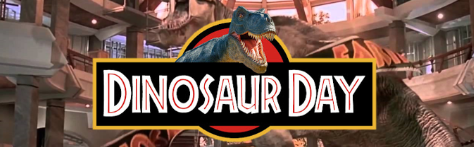
Movie Night: Guardians of the Galaxy Vol. 3

Released: 5 May 2023
Director: James Gunn
Distributor: Walt Disney Studios Motion Pictures
Budget: $250 million
Stars: Chris Pratt, Bradley Cooper/Sean Gunn, Chukwudi Iwuji, Zoe Saldaña, Karen Gillan, Vin Diesel, Dave Bautista, and Will Poulter

The Plot:
Still reeling from the death of Gamora (Saldaña) and the subsequent return of a past version of her, the Guardians of the Galaxy are attacked by superpowered bounty hunter Adam Warlock (Poulter). With Rocket (Cooper/Gunn) critically injured, Peter Quill/Star-Lord (Pratt) leads the Guardians in discovering their friend’s horrifying origins, which brings them into direct conflict with the deranged High Evolutionary (Iwuji).

The Background:
Although they’re one of Marvel’s more obscure properties and have undergone numerous changes over the years, the Guardians of the Galaxy turned out to be a massive financial success when they made their live-action debut in the Marvel Cinematic Universe (MCU) with Guardians of the Galaxy (Gunn, 2014). To capitalise on this, and to promote the team as being as integral to the MCU as the Avengers, the cast and crew returned for Guardians of the Galaxy Vol. 2 (ibid, 2017), which proved to be an even bigger financial success than the first film despite being met with mixed reviews. Despite having had plans for a trilogy right from the start, director James Gunn seemed to flip-flop on whether he’d return for a third movie; however, after completing a script and entering pre-production, his involvement was placed in serious jeopardy when he was fired after a series of offensive tweets made the headlines. Gunn publicly apologised for the tweets and fans and cast members rushed to his defense, and he was eventually brought back to helm the project later that year. However, much had changed in those few months; stars Dave Bautista and Zoe Saldaña expressed a desire to retire from their roles and Gunn was later named as the creative force behind a reboot of the rival DC Comics cinematic universe, not to mention Gunn’s displeasure at Gamora’s unexpected death in Avengers: Infinity War (Russo and Russo, 2018). Still, he worked around these issues and was even allowed to film a short, holiday-themed passion project surrounding these characters and craft an emotional finale for the franchise. While visual effects naturally played a large part in the third film, Gunn also strived to include more practical effects to bring the surreal locations and creatures to life; though he was largely kept in the dark about the character until shooting began, Will Poulter was cast as Adam Warlock to kick-start further explorations of the character in later MCU films, while Chukwudi Iwuji was cast as the High Evolutionary, beating out fellow cosmic villain Annihulus to create the MCU’s cruellest villain to date. Guardians of the Galaxy Vol. 3 eventually made nearly $850 million at the box office and was met with positive reviews; critics lauded the film as the best MCU movie in recent memory for its emotional and visually imaginative presentation, though it was also criticised for its depiction of animal cruelty and for its surprisingly brutal tone.

The Review:
As much as I enjoyed Guardians of the Galaxy (and I really did; it’s surprising how well it works as this bizarre, sci-fi/action romp, especially as it introduces a whole team of characters and explores a side of the MCU that’s so divorced from some of its more grounded action), it took me a few views to appreciate Guardians of the Galaxy Vol. 2. I was expecting bigger and better, only to find it was a more character-driven film that explored the dysfunctional family dynamic of the titular team; once I realised this, subsequent viewings allowed me to appreciate it more, especially the growth of the complex love/hate relationship between Gamora and her semi-psychotic, cyborg sister, Nebula (Gillan). Fate saw the Guardians of the Galaxy play a pivotal role in Avengers: Infinity War, one that actually ended up dooming half the life in all the universe for five years or so, but Avengers: Endgame (Russo and Russo, 2018) ended with the suggestion that the team would find new life searching the galaxy for a time-displaced Gamora alongside Thor Odinson (Chris Hemsworth). Unfortunately, this “Asgardians of the Galaxy” team didn’t really come to pass beyond a brief inclusion in Thor: Love & Thunder (Waititi, 2022); I do feel like there’s a bigger story to tell there with those characters, however, and hope that we get some kind of animated short or interlude that explored the adventures they got up to between films. Instead, Guardians of the Galaxy Vol. 3 picks up not long after the end of their Christmas special; the team operates out of Knowhere, the severed head of a Celestial that houses an entire community under their protection, and they’re still trying to wrap their heads around the fact that the Gamora they knew is dead, yet another version of her is still out there in the galaxy. This is particularly difficult for Quill, who has turned to alcohol and depression not just because he’s lost the love of his life, but because of a deep-rooted feeling of abandonment and pain as everyone he’s ever known and cared about has died. His surrogate family, the Guardians of the Galaxy, are on hand to care for him and support him, but they’re individually too maladjusted to properly communicate their feelings too him.

When Rocket’s life is endangered, the team embarks on a quest that sees Quill confronting his fears.

Drax the Destroyer (Bautista) is far too literally a thick-headed, living tree Groot (Diesel) is far too simplistic, and abrasive Rocket much too aggressive. Nebula, however, offers a surprising amount of support, caring for him in a way we’ve never seen before since she’s now come to regard the Guardians as her family and truly cares about them, even if her traumatic past makes it difficult for her to express emotions beyond violence. Quill takes some solace in his empathetic half-sister Mantis (Pom Klementieff), but her naïve optimism and observation that Quill has family waiting for him on Earth also do little to ease his pain. Luckily for Quill, the team is attacked by Adam Warlock, the child-like superhuman champion of the golden-skinned Sovereign; I say “luckily” as this brings the team together to fend off Warlock’s attack and defend Knowhere, a task they struggle to accomplish given his power, resulting in Rocket being critically injured. Faced with the stark reality that his self-professed best friend may die, an enraged Quill refuses to accept this and resolves to seek out Orgocorp, a highly advanced scientific research centre, in order to deactivate the kill switch attached to Rocket’s heart and keeping them from helping him. This sees them crossing paths with Gamora since Nebula arranges for Gamora and her Ravager allies to help the team infiltrate Orgocorp. This again forces Quill to be faced with the harsh truth that this Gamora isn’t the one he knew and loved; even Drax points out that she’s “dead to them” since this Gamora never hooked up with the team and has none of the memories or attachments to them. While this is a pretty simple prospect, even for the otherwise simple-minded Star-Lord, the film spends a lot of time reinforcing that he and the others don’t really understand what’s going on with Gamora; often, they talk about how she “doesn’t remember” them and Quill futilely tries to jog memories that just aren’t there and takes every opportunity to tell anyone within earshot about their complicated history, needlessly hammering home that this isn’t the same Gamora from the previous Guardians films. I understand it in a way; a big part of the film is Quill having to come to terms with death and loss, but it starts to get a little grating when he constantly harps on about it to everyone in earshot. This Gamora is much more cold-hearted and harsh compared to her counterpart; she has more in common with how Nebula used to be and there’s an interesting reframing of their narrative here as Nebula states that Gamora was “always like this” and Gamora is shown to have this dark, violent side to her that casts as more of an anti-hero. She begrudgingly helps the Guardians at Orgocorp but despairs of their ineptitude, constant bickering, and Quill’s insistence that he knows anything about her. She softens towards them over the course of the film after seeing how hard they fight to help Rocket and protect others, but nevertheless remains her own distinct character, separate from them, and it’s a testament to the film that it doesn’t just repeat the same will they/won’t they character between her and Quill from the first film.

Though aggravated by each other, the Guardians strive to help even their misguided enemies.

As for the rest of the team, Drax is mostly relegated to being the comic relief and mindless muscle of the group; his stoic demeanour allows him to process Gamora’s loss in a more productive way than Quill, but it’s clear that he misses her in his own way, too. He continues to have an attachment to Mantis and the film does explore how, despite her objections to the contrary, she uses her empathic abilities to manipulate him in ways that he’s not aware of. For example, she defends Drax’s infantile nature to Nebula, who lashes out at both of them for their incompetence, and he seems genuinely upset to learn that Mantis thinks he’s stupid (even though she loves him regardless) so she simply has him forget hearing that. despite Nebula’s anger at the two for endangering the group on countless occasions, Mantis and Drax prove their quality in the final act of the film where Mantis is able to tame the ravenous Abilisks and Drax is able to calm and communicate to the children held in the High Evolutionary’s ship since he not only unexpectedly speaks their language but also is a natural father. This theme of underestimating those around you is a prominent one in the film; even Kraglin (Sean Gunn) embodies this since he continues to struggle with mastering Yondu Udonta’s (Michael Rooker) arrow and proves invaluable in aiding the rescue effort at the end of the film, but it’s most prominently seen in Adam Warlock’s character arc. Having been born prematurely, Warlock is little more than a child in a man’s body; he’s been created as a perfect being, a living weapon to enact the will of his mother, the Sovereign High Priestess Ayesha (Elizabeth Debicki). While my knowledge of Warlock is somewhat limited, I was surprised to see him characterised as a childlike fool, but he undergoes a surprising journey in the film; he feels regret after incinerating space creature Blurp’s owner after a misunderstanding and adopts the cute little critter, then briefly abandons his crusade against the Guardians in an unsuccessful attempt to save his mother when the High Evolutionary callously obliterates her along with his “Counter-Earth”, and becomes an unexpected ally of the team by the film’s conclusion since his former enemies make efforts to save his life rather than leaving him to perish.

For his callous and cruel experiments, the High Evolutionary is easily the MCU’s most detestable villain.

For me, the High Evolutionary ends up being easily the most reprehensible villain in all of the MCU so far. While he still doesn’t get a huge amount of screen time or backstory and the exact nature of his gravity-based powers is a little vague, this is a villain who has absolutely no redeeming qualities; we’re given no reason to sympathise with him or to understand his perception of the galaxy, and this is perfectly acceptable given his heinous actions! The High Evolutionary is a maniacal despot obsessed with “perfection”; he sees the flaws in life and God’s plan and uses his superior intellect and scientific acumen to step in to correct these flaws. His ultimate goal isn’t conquest or destruction, it’s to create the “perfect” society, which has led to him being regarded as a God by many of his creations, like the Sovereign. However, while the Sovereign are basically the embodiment of beauty and perfection, the High Evolutionary is never satisfied and the majority of his experiments are geared towards creating anthropomorphic beings and semi-cybernetic monstrosities! These live out normal lives on an exact replica of Earth, yet while he was able to suppress their natural animalistic urges and craft a society that’s a mirror of ours, he wasn’t able to create a utopia, so he habitually exterminates his creations like a child bored of a toy. While this ritualistic genocide and the High Evolutionary’s unstable, erratic God complex are bad enough, what makes him so irredeemable and reprehensible compared to other MCU villains are his callous experiments on animals. Animal cruelty is at the forefront of Guardians of the Galaxy Vol. 3 as Rocket, near death, experiences a series of flashbacks to his time as one of High Evolutionary’s test subjects. A strangely curious raccoon, he was subjected to horrific procedures that grafted mechanical parts to his body and increased his intelligence and awareness, all under the pretence that he and his fellow prototype anthropomorphs would have a place in the “new world”. However, when Rocket’s intelligence exceeded the High Evolutionary’s for a split second, the madman ordered Rocket dissected and the execution of his friends, leading to the terrified and heartbroken creature to enact a daring escape that left him traumatised and the High Evolutionary gruesomely disfigured.

The Nitty-Gritty:
Like the last two Guardians of the Galaxy movies, music plays an important role in this film, both diegetically and non- diegetically; Quill is almost irrationally protective of the Zune gifted to him by his father-figure, Yondu, which Rocket borrows without asking to find solace in the songs contained within it. Almost all of the film’s action and fight scenes are accompanied by music tracks, as is James Gunn’s signature at the point, but they weren’t as memorable for me and seemed to be a little more random rather than sticking to one era or genre of music. However, the film is very much a culmination of the character arcs began in the first one; there’s always been a question hanging over Quill about why he never returned to Earth when he clearly has the means to do so, and it’s always come down to fear disguised as lust for adventure in space. Earth is where his mother died and he has no desire to return there, especially as his memory of that day is skewed to paint his grandfather, Jason (Gregg Henry), as having pushed him away, when the reality was they were all grieving their loss. Drax, whose life was upended when his family was killed, quickly found a new purpose with his surrogate family and struggles with the idea that the team parts ways by the finale, only to rediscover his true calling not as a destroyer, but a father. Even Mantis unexpectedly decides to forge her own path after years of just doing what she’s told, Nebula grows from this unyielding, murderous assassin into a caring (if blunt) matriarch whose priorities now extend to all of Knowhere, and the film’s events eventually lead Quill to realise that this Gamora is forging her own path with the Ravagers.

The film explores Rocket’s tragic and horrific backstory in gruesome detail.

However, while Rocket spends most of this film at death’s door on an operating table, this is Rocket’s film through and through. The team is united in going to any lengths, even infiltrating the notoriously heavily guarded headquarters of Orgocorp, challenging the might of the immensely powerful High Evolutionary, and killing anyone who gets in their way, to help their friend even if it costs them their own lives. We’re treated to some incredibly emotional flashbacks that show Rocket’s time as a simple test subject, one of many of the High Evolutionary’s efforts to increase the intelligence of animals and anthropomorphise them into the “perfect” society. Rocket shares his cage with three other sentiment animals, each one horrifically mutilated by cybernetic enhancements: otter Lylla (Linda Cardellini), who Rocket becomes particularly attached to, simple minded walrus Teefs (Asim Chaudhry), and hyperactive rabbit Floor (Mikaela Hoover). Despite their gruesome appearances and the traumatic experiments they’ve been subjected to, the four are generally in good spirits; they genuinely believe that the High Evolutionary is improving them and that they’ll have a place in his new world, and Rocket impresses of them all with his unprecedented ingenuity and aptitude for mechanics that allows the High Evolutionary to perfect his technology. In their dank, cramped cage, the four dream of having a home under the sky, of flying away together and being free, and it’s absolutely devastating when the High Evolutionary violently chastises Rocket for having the gall to outthink him…even though his goal is for his creations to have independent thoughts! Insulted and enraged, he cruelly rejects Rocket and his friends and orders them to be killed, forcing Rocket to affect a daring escape using a cobbled-together key card. Sadly, the High Evolutionary anticipated this and personally shoots Lylla in cold blood right before Rocket’s eyes, driving him into an animalistic rage that leaves the High Evolutionary’s face gruesomely mangled, his friends dead in the chaos, and Rocket a deeply traumatised and embittered abomination of science. It really is an abolsutely harrowing backstory, one that was hinted at in the first film but really paints the High Evolutionary as a despicable villain, an egotistical hypocrite who simply toys with animals for his own sense of gratification and it’s extremely satisfying to see the Guardians come together to beat the piss out of him in the finale.

The Guardians unite with allies old and new to end the High Evolutionary’s heinous plot.

Indeed, there are some stunning cosmic scenes in Guardians of the Galaxy Vol. 3; some really fun practical and special effects help to bring an even more bizarre flavour to the MCU (though I did feel like the scene at Orgocorp dragged on a bit too long), especially when they visit Counter-Earth and encounter all these weird anthropomorphic creatures. At first, I thought that safeguarding this world against the High Evolutionary’s reprisals would be the focus of the finale and the driving force behind galvanising the team but, no…the High Evolutionary just destroys the planet on a whim, murdered its countless misshapen inhabitants, and prepares to populate a new world with his latest creations. However, despite having rejected Rocket in the past, he’s come to see that Rocket is the only one of his creations that showed true, independent ingenuity rather than following pre-programmed patterns, so he becomes obsessed with reacquiring the specimen, to the point where even his loyal followers turn against him and he’s forced to kill them without a second thought to get what he wants. To counter the High Evolutionary’s cybernetic army and immense ship, the Guardians call in Kraglin to bring Knowhere to them for a massive final showdown, once that sees all of the Guardians lay waste to an entire corridor of the High Evolutionary’s soldiers before attacking the main man himself. As mentioned, it was deeply satisfying to see him take a beating and be left for dead, literally unmasked and a quivering, deposed wreck on the floor, though it did somewhat diminish his threat since he was previously seen as nigh-untouchable. With the High Evolutionary’s ship going down in flames, Rocket begs his friends to help save not just the children but the innocent animals held captive in his cages, a campaign that appears to leave Quill dead in the frozen vacuum of space! Luckily for him, Warlock comes to his aid, but I feel this should’ve happened before Quill’s body froze solid and was disturbingly bloated as he’s clearly dead or would be left severely injured from exposure. Instead, he survives…in fact, everyone does, which I was really surprised by; there’s a moment where it seems like Nebula might die piloting the High Evolutionary’s ship, Drax is almost killed in the Orgocorp battle, Groot is left a severed head by Warlock, and obviously Rocket’s life hangs in the balance throughout the entire film but, surprisingly, they all survive by the film’s end. However, they’re not left unchanged; Quill finally returns to Earth, Drax and Nebula pledge themselves to safeguarding Knowhere, Mantis goes off on a journey of self-discovery, and Rocket, Groot, Kraglin, Warlock, and one of the children they rescue form a new Guardians of the Galaxy team after bidding a heartfelt farewell to each other to bring their story to a definitive (if open-ended) close.

The Summary:
There was definitely a sense of foreboding heading into Guardians of the Galaxy Vol. 3; knowing that many of the actors and even the director were openly stating that they were done with the MCU and seeing the way the trailers were purposely produced to suggest that one of more of the titular characters would meet their end in the film, I was extremely taken aback to find that they all survived to the end, and were better for it after their adventures together. As disturbing as it is to endure the horrendous treatment Rocket and his fellow animals suffer at the hands of the High Evolutionary, it gave the film an emotional weight that’s often missing from MCU movies and really presented the High Evolutionary as an absolutely despicable person with no redeeming qualities. He was a maniacal character, obsessed with perfection but ruled by a cruel, vindictive childishness that saw him callously disregard everything, even his own creations, if they don’t immediately meet his expectations. This was a fantastic counter for the dysfunctional Guardians to throw themselves up against and unite to oppose; they’re all flawed, both collectively and individually, but still strive to do the right thing and protect people, even their enemies or horrifying abominations of science and torture. As is always the case with these films, the core conceit revolved around the family dynamic of the team; they’re really struggling with the whole Gamora situation and willingly risk their lives to help Rocket, who’s tragic backstory perfectly juxtaposes with the present-day action. While I would’ve liked to see a bit more involvement from Adam warlock beyond yelling and being a strange, overpowered man-child, it’s clear that he’s being setup for bigger things going forward and I think there’s a definite sense that we’ll see these characters again in some way, shape, or form later down the line. Phase Four of the MCU was a little hit and miss but Guardians of the Galaxy Vol. 3 is a terrific return to form; funny, action-paced, and filled with emotion that’ll have even the most soulless detractor teary-eyed, this was a fantastic swansong for the team and tied up their stories in a very fulfilling and moving way.  

My Rating:

Rating: 4 out of 5.

Great Stuff

Did you enjoy Guardians of the Galaxy Vol. 3? Were you surprised that it included the debut of the MCU’s first f-bomb? What did you think to Adam Warlock’s portrayal, and would you have liked to see more of him? Did you enjoy the focus on Rocket’s backstory and were you moved by his traumatic origins? Were you surprised that the team made it out alive? What did you think to the new depiction of Gamora? Where do you see the team going from here? I’d love to know your opinion on Guardians of the Galaxy Vol. 3, so go ahead and leave your thoughts below or on my social media, and be sure to check out my other Guardians of the Galaxy content.

Movie Night [Turtle Tuesday]: Teenage Mutant Ninja Turtles III


The first issue of Kevin Eastman and Peter Laird’s Teenage Mutant Ninja Turtles (TMNT) was published in May of 1984. Since then, the TMNT have gone on to achieve worldwide mainstream success thanks not only to their original comics run but also a number of influential cartoons, videogames, and wave-upon-wave of action figures. This year, I’m emphasising third entries and time travel shenanigans in the popular franchise every Tuesday in May!


Released: 19 March 1993
Director: Stuart Gillard
Distributor: New Line Cinema
Budget: $21 million
Stars: Brian Tochi/Mark Caso, Corey Feldman/Jim Raposa, Tim Kelleher/Matt Hill, Robbie Rist/David Fraser, Vivian Wu, Sab Shimono, Stuart Wilson, Paige Turco, and Elias Koteas

The Plot:
When reporter April O’Neil (Turco) purchases an ancient Japanese sceptre that allows those simultaneously holding it in different centuries to switch places in time, the Teenage Mutant Ninja Turtles travel to feudal Japan to rescue her from the clutches of the villainous Lord Norinaga (Shimono), teaming up with rebel leader Misu (Wu) and, in the process, opposing Norinaga’s oppressive campaign against her people.

The Background:
As I’ve detailed previously, the TMNT were originally created by Kevin Eastman and Peter Laird to be a violent pastiche of comic book troupes before being catapulted to mainstream success by the unbelievably popular 1987 cartoon. It was probably inevitable that this would lead to a live-action feature film, and Teenage Mutant Ninja Turtles (Barron, 1990) proved to be both a technically impressive financial success and a cult favourite. Although Teenage Mutant Ninja Turtles II: The Secret of the Ooze (Pressman, 1991) received comparatively mixed reviews, it still did well at the box office and I, for one, regard it as an under-rated entry in the franchise. The TMNT’s brand remained popular and successful, however, but there were a number of noticeable changes made for the third live-action film; first of all, Jim Henson’s studio was no longer involved in the production, and the animatronics created by All Effects Company were far less impressive. Secondly, their most iconic enemy, Oroku Saki/The Shredder, was entirely absent due to a slight case of death; and, finally, the film featured a time travel plot that took the narrative out of the sewers and often has it erroneously referred to as Turtles in Time. Although some of the original cast members returned after skipping the second film, and despite debuting at number one at the U.S. box office, TMNT III’s $54.4 million worldwide gross made it the least successful of the films so far, and the film was universally panned. Thanks to its dumbed down plot and characterisations, nonsensical narrative, and childish humour, TMNT III is widely regarded as one of the lowest points in the franchise; plans for a fourth film were scrapped and it would be nearly ten years before the TMNT made it back to cinema screens.

The Review:
Rather than opening up on the streets of New York City, a location more than prominent to the TMNT and the previous films, Teenage Mutant Ninja Turtles III begins in 1603 Japan and finds Prince Kenshin (Henry Hayashi) being captured by samurai warriors as Mitsu watches on helplessly. We’re then reintroduced to the TMNT, still in their awesome abandoned subway lair, not through a fun or gritty action scene but, instead, through a musical montage that has the four show off their dance moves alongside their ninja skills. Sadly, this is one of the few times that the TMNT will actually use their weapons in the film, and an early warning sign that the film is going to be focused much more on slapstick buffoonery than its predecessors. Things haven’t changed too much for the TMNT since the last film; they’re still pushed to hone their ninja skills by their master and father figure, Splinter (James Murray), still obsessed with pizza, and Raphael (Kelleher/Hill) is still the gruff hot-head of the group who’s constantly frustrated that all of their efforts to keep people safe go unrecognised by the general public since they’re forced to hide underground. Because of this tantrum, he storms off in a huff and misses the gift that their ace reporter human friend April O’Neil shows off to them: an ancient Japanese sceptre she bought from a flea market.

The TMNT travel to feudal Japan to rescue April and end up winning over a group of rebels.

Back in the past, Kenshin, the son of powerful warlord Lord Norinaga, also stumbles upon the same sceptre alongside a scroll depicting the TMNT (or “kappa”, as he calls them) and reads aloud the inscription on the sceptre. This activates the sceptre in the present time and causes April and Kenshin to switch places (and, inexplicably, clothing thanks to the sceptre’s magic); since Donatello (Feldman/Raposa) “does machines”, he’s somehow able to use his computer to study the sceptre and work out that it operates by switching individuals of equal mass and weight in time. Oh, and there’s also an arbitrary time limit on how long the TMNT have to rescue April, meaning they only have sixty hours to complete the mission before the space/time continuum goes “out of sync”. Swapping places with four of Lord Norinaga’s Honour Guard, the TMNT find themselves garbed in ceremonial armour and in the middle of a raid upon a nearby village and, in the confusion, Michelangelo (Rist/Fraser) is captured by Mitsu and her fledgling rebellion. Luckily, he and the others soon earn the respect and admiration of the rebels after they save the life of young Yoshi (Travis A. Moon), one of the few things that Leonardo (Tochi/Caso) gets to do beyond showcasing his bizarre lack of brainpower. This, as much as the purity of the unpolluted landscape, brings Raphael a serenity he never knew existed; he also forms a bond with Yoshi, surprising himself by imparting advice about the boy’s temper and desire to fight rather than have fun and enjoy his childhood. While Donatello and Leonardo are determined to construct a replica sceptre to return them home, Mikey and Raph are actually tempted to remain in the past, where they’re accepted and revered.

While Lord Norinaga uses the old ways and Walker opts for artillery, neither are intimidating villains.

There’s no question that Lord Norinaga is a poor substitute for the far more intimidating Shredder; I think one of the most undeniable failings of Teenage Mutant Ninja Turtles III is that it lacks a strong, iconic villain like the Shredder for the TMNT to go up against. A proud man who believes in maintaining his position and family name through power, Lord Norinaga is a power-hungry warlord shamed by his son’s rebellious ways and with a staunch belief in the might of his army. Lord Norinaga is aided by Walker (Wilson), an unscrupulous English trader who gleefully supplies him with gunpowder and other armaments and resources for his war. Walker scoffs at the Japanese clan’s ancient superstitions and their out-dated ways and is more of a futurist, believing in the unrivalled power of guns and artillery rather than ancient relics and fantasies. Surrounded by a gaggle of underappreciated buffoons, Walker is nevertheless intrigued by April’s spontaneous arrival in feudal Japan and goes to great lengths to track down the missing sceptre, including sacking a nearby village using his superior weapons and manipulating Lord Norinaga into purchasing his cannons and ammunitions in order to fend off the “demons” who now threaten his empire. A sneering, manipulative, and calculating opportunist, Walker delights in the fortune and power recent events bring him but is more of a pantomime villain than a truly intimidating foe; Michelangelo likens him to Clint Eastwood, but he’s more like the late, great Rik Mayall in his appearance and mannerisms.

Despite the bigger cast with new and old faces, most of them really don’t get much to do.

Although she played a prominent supporting role in the previous two films as an audience surrogate and a valued ally to the TMNT, April gets quite a bit more screen time in this third entry; when transported to the past, she’s branded a witch by Lord Norinaga and locked in a dungeon and the TMNT’s entire motivation this time around is going back in time to rescue her. Although April spends much of the film either locked in a cell or in need of rescue, April proves herself to be rather feisty and capable; she tries to play upon the superstitions of her captors to in an attempt to intimidate them and frequently hurls abuse their way. Since the TMNT need to swap places with those from the past, Michelangelo brings in their old ally, Casey Jones (Koteas), to watch over Splinter, their lair, and the time-displaced Japanese warriors. Sadly, this means that there really isn’t anything substantial for Casey to do in the film except babysit and be used for questionable comic relief, but Koteas does play a dual role in the film as April finds herself locked up alongside Whit after he unsuccessfully tried to lead a mutiny against Walker. The film is also populated by a number of new characters; Kenshin is the rebellious son of the warmongering Lord Norinaga, who openly opposes his father’s dreams of conquest and is anxious to get back to the past and reunite with Mistu. Though the headstrong leader of a vastly outnumbered rebellion, Mitsu also ends up becoming little more than a damsel in distress when Whit betrays them and takes her, and the real sceptre, to Lord Norinaga in a misguided attempt to broker a deal with Walker.

The Nitty-Gritty:
On the surface, Teenage Mutant Ninja Turtles III tries to coast off of the success and reputation of its predecessors and the mammoth franchise as a whole; it recreates the subway set from the second film, returns many of the same voice actors from the last two movies, and even reuses the soundtrack from the first film, none of which really help to improve its presentation. While the first movie was (and, in my opinion, still is) the perfect blend between the violent source material and the more family-friendly cartoon series, the second leaned a bit more into humour and cartoony shenanigans; however, Teenage Mutant Ninja Turtles III takes all of these latter elements and brings them right to the forefront. No longer are the TMNT shrouded by the darkness of night (which really doesn’t help hide how inferior their suits are) and they’ve been distilled down to the most basic of characterisations. Even Leonardo, typically the level-headed and intelligent leader of the group, is portrayed as a complete idiot here, and the focus of their dialogue is now firmly on cringey pop culture references, catchphrases, and idiotic statements that will probably make little kids laugh but will leave older viewers rolling their eyes. It is, essentially, a live-action cartoon and, while there’s nothing inherently wrong with that, it is a noticeable downgrade considering the first movie was also a live-action cartoon but it didn’t treat its audience like they were juvenile idiots or pander to the lowest common denominator. Here, all nuance is completely cast aside; the TMNT are generally too busy making fools of themselves and messing about, so when heartfelt moments like Raph’s bond with Yoshi do occur they fall flat because of all the tomfoolery that proceeds them.

The suits are bad, the dialogue corny, and the film’s stuck with an out of place time travel gimmick.

It’s undeniable that the TMNT suits, while still impressive practical and animatronic effects, have taken a noticeable downgrade. The actors seem to be able to move more freely in these suits, to be fair, but they look far less believable and much more like plastic, rubbery outfits than in the last two films. The heads are easily the worst aspect; the eyes are far less expressive, the mouths don’t sync up as well, and everything just feels much more cheap and low quality. By far the worst offender, though, his Splinter; not only does the wise old rat sensei look far worse than his previous incarnations, but he’s rarely ever shown in full body in a clear attempt by the filmmakers to hide his limitations and mostly just peeps out through window frames or sits in his chair. The action sequences are equally underwhelming this time around; while the TMNT are far more spritely in this film, and fights are filmed in full daylight, the TMNT continue to use their weapons either defensively or for comedic effect and everything seems far more choreographed and dumbed down, which is a shame considering how many more armed opponents the TMNT have to contend with in this jaunt. Additionally, the film is lumbered with an inexplicable time travel plot that really doesn’t seem to gel all that well with the atmosphere of the previous films; obviously, the TMNT have endured similar fantastical plots in the cartoons and comics but, for me, the natural next step is either interdimensional travel or facing an otherworldly, sci-fi threat like Krang and Dimension-X. Clearly, the decision to set the film in feudal Japan was a budgetary one, and that’s a shame as there was no way that Teenage Mutant Ninja Turtles III could hope to out-do the mutated opponents the TMNT faced in the last film when they’re stuck in the 17th century for the majority of the runtime.

Ultimately the TMNT are victorious and opt to return home for another cringey dance number.

With time fast running out, the TMNT have no choice but to join forces with the rebels in an all-out assault on Castle Norinaga in order to rescue Mitsu and reclaim the sceptre. This leads to them discovering that Lord Norinaga’s ancestor was previously defeated by four legendary kappa, and the odd insinuation that they’re somehow descended from these mythological creatures. It also involves a number of fight scenes pitting the TMNT and Mitsu against Lord Norinaga’s guards, and the rebels against his forces, though any kind of tension or danger is largely mitigated by an overuse of comical sound effects and embarrassing one-liners. Leo finally gets something significant to do, however, when he gets into an intense sword fight with Lord Norinaga that sees the warlord trapped in a giant bell after being bested. All the fighting bizarrely stops when Walker and his men hold everyone at gunpoint, such is the fear of his weapons, but he flees in terror after Leo ducks into his shell to avoid being killed by his cannon. Although Walker distracts them by throwing the sceptre at them to cover his escape, Whit ultimately finishes him off by blasting him with a flaming projectile and sending Walker plunging to his poorly-realised demise in the sea below.  Afterwards, the TMNT briefly debate whether they should return to the present; while Donnie is eager to return home and Leo considers staying, Mikey and Raph are strongly tempted to stay since Raph feels appreciated there and Mikey has, apparently, fallen for Mitsu. Ultimately, after a brief fake-out, all four return home, with April, and the status quo is restored, with Kenshin and Mistu being reunited and the TMNT enjoying one last embarrassing dance number to bring this mess to an end.

The Summary:
Teenage Mutant Ninja Turtles III was one of the first movies I remember seeing at the cinema; like almost everyone back then, I was a big TMNT fan and excited to see them on the big screen, but I honestly don’t remember what I thought to it back in the day and barely even remember going to see it. In the years since, I’ve rarely returned to the film since there are far better TMNT options out there, so it seems redundant to waste my time watching one of the more inferior productions. It doesn’t help that everyone and their mother has talked at length about how bad this film is compared to its predecessors, which really doesn’t make me excited to drop the disc in when I could just watch the first, and infinitely superior, movie instead. I guess there’s enough here for little kids to find some enjoyment; it’s very cartoony and full of one-liners and slapstick and daft fight scenes, but it’s just depressing to see how the property got some dumbed down so quickly. The whole production looks and feels so much cheaper, from the suits to the voice acting and the plot, and I’ll always find it odd how the comics and animated stories were able to do a better job appealing to their core demographic than a big-budget live-action production. Even die-hard TMNT fans will struggle with this one, and it’s best left to gather dust on the shelf.

My Rating:

Rating: 2 out of 5.

Could Be Better

Did you enjoy Teenage Mutant Ninja Turtles III? How do you think the film holds up against the other TMNT films? Which of the TMNT is your favourite and why? What did you think to the time travel plot and the increased emphasis on comedic slapstick? Would you like to see another live-action TMNT film using modern technology to create more practical versions of the TMNT? How are you celebrating the TMNT’s debut this month? Whatever your thoughts on the TMNT, leave a comment down below.

Screen Time [HulkaMAYnia]: She-Hulk: Attorney at Law


Since his explosive debut in May 1962, Stan Lee and Jack Kirby’s gamma-irradiated Jade Giant has been one of their most recognisable and successful characters thanks, in large part, to the Incredible Hulk television show (1977 to 1982) catapulting the Hulk into a mainstream, pop culture icon. The Hulk has been no slouch in the comics either, being a founding member of the Avengers and undergoing numerous changes that have made him one of their most versatile and enduring characters, so what better way to celebrate all things Big Green than by dedicating every Sunday in May to the Green Goliath?


Air Date: 17 August 2022 to 12 October 2022
Network: Disney+
Stars: Tatiana Maslany, Todd Phelps, Jameela Jamil, Josh Segarra, Ginger Gonzaga, Tim Roth, and Mark Ruffalo

The Background:
Following the incredible success of the Incredible Hulk television show, Marvel had Stan Lee create a female counterpart to the Green Goliath to beat Incredible Hulk producer Kenneth Johnson to the punch. A powerful feminist icon for Marvel who has been a member of the Avengers and the Fantastic Four, She-Hulk shared the spotlight with her cousin in the Incredible Hulk cartoon from the nineties and very nearly got her own live-action movie back then, too; Brigitte Nielsen was even cast to bring the character to life at the time. Decades later, Marvel Studios announced that She-Hulk would be joining the Marvel Cinematic Universe (MCU) with a nine-episode series streaming exclusively on Disney+, with Kat Coiro placed as the guiding hand behind the series and Tatiana Maslany cast in the dual role. She-Hulk’s visual effects were the work of multiple effects studios and initially caused some premature backlash, and the show promised not only to feature Mark Ruffalo as Doctor Bruce Banner/The Hulk in a mentor role but also the long-awaited return of Tim Roth as Emil Blonsky/The Abomination. After being delayed due to COVID-19, She-Hulk: Attorney at Law released to largely positive reviews; critics praised the performances and interpersonal slant towards a legal drama, and the comedic aspects were particularly lauded. Others, however, were not so impressed; some criticised the pacing, the CGI effects were a massive point of contention, and the show was slandered by online trolls throughout its run. Regardless, She-Hulk was also praised as an empowering series for female viewers that tackled the subject toxic masculinity and was highly regarded if only for returning a beloved, seemingly forgotten MCU character to the franchise. Finally, unlike other Disney+ MCU shows, Kevin Feige stated that She-Hulk had the potential to not only gain additional seasons but to also cross over into the MCU’s big-budget feature films.

The Plot:
After a car crash sees her blood contaminated with the Gamma-irradiated blood of her cousin, Bruce Banner, lawyer Jennifer Walters (Maslany) finds herself able to transform into a superpowered hulk. As she tries to adapt to her new situation, she tackles a series of unique superhero court cases and finds herself targeted by a slanderous online smear campaign.

The Review:
She-Hulk: Attorney at Law begins in medias res; Jen is already capable of becoming She-Hulk, her best friend and paralegal Nikki Ramos (Gonzaga) is aware of her abilities, and she immediately showcases her additional ability to address the audience to catch us up with her origin story. Jen was on a road trip with Bruce and the two of them were involved in a car crash caused by the sudden appearance of a Sakaaran spacecraft. While rescuing Bruce from the wreckage, some of his blood drips into her wound, instantly transforming her into a savage hulk in the first of many call-backs to the pilot episode of The Incredible Hulk. Disoriented and dishevelled, she’s unquestionably supported and fixed up by a gaggle of helpful women at a bar but is triggered by a group of pushy guys before being tackled by the Hulk and brought to his secluded island laboratory for testing and training. Jen is distraught at the idea of being handicapped by such a life-destroying condition and immediately annoyed and critical of the Hulk’s attempts to mentor her; this ends up going both ways, however, as the Hulk’s lifelong syllabus on controlling his rage is rendered mute by Jen’s natural ability to retain her personality and intelligence in her Hulk form since she’s so used to managing her emotions, both in public and at work, to avoid lashing out at every creep or being branded as inferior because of her gender, which allows her to willingly transform at will because, essentially, she’s always angry.

Jen’s transformation into a Hulk causes some major changes to her personal and professional life.

This presents the unique dichotomy of She-Hulk; while the Hulk strived for years to master his abilities and to reconcile his two warring halves, Jen immediately has full control of not only her strength but also her transformations; though she’s physically smaller and less savage than the Hulk, she showcases all of his abilities with the added benefit of greater physical control. However, despite the Hulk’s best efforts, Jen has no desire to abandon her life and her career to be a superhero; after a brawl, he reluctantly agrees to let her live her own life, but things quickly become complicated for the superpowered lawyer when, during a session in court, she’s forced to reveal her dual identity in front of the world when “superpowered influencer” Mary Macpherran/Titania (Jamil) literally crashes in and threatens lives. It takes Jen some time to embrace her superhero identity; she regularly distances herself from the She-Hulk name and constantly downplays the appeal and benefits of being a superhero, and her condition comes to negatively affect her when she’s fired and unable to find work at a conventional law firm. Holden Holliway (Steve Coulter) throws her a lifeline by offering her the chance to join a superhero law division at Goodman, Lieber, Kurtzberg & Holliway (GLK&H); though initially annoyed that she’s been hired to represent clients as She-Hulk and as more of a publicity stunt than for her legal skills, she’s won over by her new office and just being back at work. Unfortunately for Jen, her troubles only escalate; the press constantly hound her, reporting rumours as facts and often belittling her because of her gender, and she’s even forced to set aside her personal bias in order to represent Emil Blonsky/The Abomination (Roth) at his parole hearing. This all comes to a head when Titania releases a rage of beauty products using the She-Hulk name and sues her for misuse of the copyright, which ties into a central theme of the series, which revolves around Jen learning to embrace both sides of her personality, the meek and somewhat awkward Jen and the sexually confident and alluring She-Hulk; throughout the show, she takes great strides in reconciling both in the court room by embracing her moniker and even later donning a form-fitting superhero outfit to directly assist others.

Jen’s struggles at romance are compounded by an online group that targets and slanders She-Hulk.

This character growth is full of little stumbles, however. Not only is she faced with an overbearing family who clearly care for her but can’t help but interfere and put her down, her love life is a bit of a shambles. Even after she reluctantly changes her online dating profile to a She-Hulk one, Jen is forced to endure a series of disastrous dates with self-obsessed, disrespectful, and down-right creepy men who either disregard her entirely or care only about comparing her to her more famous cousin, such as the uncomfortably obsessed Todd Phelps (Jon Bass), who later forms an entire online movement, Intelligencia, designed to hate on She-Hulk. Because of this, and Jen’s low self-esteem and desire for attention, it doesn’t take much for Arthur (Michel Curiel) to make an impression; he seems genuinely interested in her and actually engages her in conversation, however he has no interest in Jen and thus isn’t interested in pursuing a serious relationship with her. While attending the wedding of her high school friend, Lulu (Patti Harrison), Jen is surprised to make a connection with the charming Josh Miller (Trevor Salter), especially as she’s forced to stay in her human form so as not to steal Lulu’s spotlight. Josh appears to be the opposite of Arthur; he’s only interested in Jen and never really asks about She-Hulk and they actually take the time to date rather than jumping into bed right away. Unfortunately, after they do sleep together, he ghosts her, driving her to distraction; while she finds a measure of closure and self-respect thanks to some unlikely advice from Blonsky and the gaggle of misfit, rehabilitated supervillains at his retreat, she’s driven into an uncontrollable fury when Josh leaks her personal information, including photos and videos of her, to Intelligencia, resulting in her briefly losing the support of the public and being imprisoned.

Of all the guest stars to feature, Daredevil undeniably steals the show with his long-awaited return.

Thankfully, it’s not all bad news for Jen in the romance department. While he initially rubs her the wrong way by proving to be a competent lawyer, blind, flirtatiously charming Matt Murdock (Charlie Cox) proves to be a suitable confidante and partner after not only encouraging Jen to help others with her powers when the law fails them but also being unmasked as the superpowered vigilante Daredevil. Together, they’re able to rescue a mutual acquaintance, eccentric superhero fashion guru Luke Jacobson (Griffin Matthews), from wannabe superhero-turned-supervillain Eugene Patilio/Leap-Frog (Brandon Stanley) and, in the process, She-Hulk learns a little bit about what it means to be a superhero. The chemistry between them boils over following their fight and the series ends with the suggestion that they’re going to be a regular thing going forward since he joins her and her family for a meal. Although he steals the show in every scene, Daredevil isn’t the only guest star to feature in She-Hulk: Attorney at Law; Wong (Benedict Wong) shows up a few times, first to help with Blonsky’s appeal and then to ask for She-Hulk’s aid in barring disgraced sorcerer Donny Blaze (Rhys Coiro) from threatening the fabric of reality with his reckless magic. Similarly, the Hulk also plays an important role in the first episode; initially appearing as Bruce Banner thanks to a convenient inhibitor, he assumes his “Smart Hulk” form and puts Jen’s abilities to the test. He’s frustrated by her not taking his lessons seriously and tries to emphasise the burden and responsibility of being a Hulk, but ultimately trusts her to live her life her own way and disappears into space for his own side story, one that we’re not privy to but see the results of in the finale when he returns from Sakarr with his son, Skaar (Wil Deusner). We even get a couple of celebrity cameos as David Otunga and rapper Megan Thee Stallion feature in the series but the show’s breakout original character is clearly the brazen Madisynn King (Patty Guggenheim), a career party animal who makes a shady deal with a demonic goat and ends up forming an unlikely bond with Wong over their shared love of television.

While spending a lot of time in court, She-Hulk also explores her duality and self-esteem.

At its core, She-Hulk: Attorney at Law is a superhero comedy with a fair amount of courtroom drama serving as the focal point or backdrop of each episode. Whether it’s Jen trying to find a job in her field, Nikki and their co-workers Augustus “Pug” Pugliese (Segarra) and Mallory Book (Renée Elise Goldsberry) working cases involving shapeshifting elves or immortal cuckolds, rogue sorcerers or bumbling heroes, superhero law is naturally a large focus of the show. Conjecture, hearsay, trademarks, and faulty manufacturing are all elements that need to be addressed in a court of law, just like in normal life, but the superhero slant definitely makes these aspects more entertaining to watch. She-Hulk is often representing or even defending individuals who have wronged her in the past; she puts her neck on the line to vouch for the rehabilitated Blonsky, is called to speak to misogynistic Dennis Bukowski’s (Drew Matthews) stupidity, and is even forced to parade her former dates in order to prove that she identifies as She-Hulk. That’s not to say that the show is without any action scenes; Jen may prefer to use her legal skills more than her fists to resolve conflicts but she gets into a number of scraps throughout the show, often for comedic effect. Her first fight with Titania, for example, is over in a single punch and Jen forgets herself for a moment when she’s jumped by Wrecking Crew – Dirk Garthwaite/The Wrecker (Nick Gomez), Eliot Franklin/Thunderball (Justin Eaton), Henry Camp/Bulldozer (Tennison Barry), and Brian Calusky/Piledriver (Kyle Murillo) – when they try to steal her blood using Asgardian-powered construction tools, before easily dispatching them as She-Hulk. She-Hulk is specifically recruited by Wong to fend off the goblin demons Donny unwittingly summons, and she throws down with Titania again at Lulu’s wedding, much to the delight of the guests, but she chooses to leave the violence to Daredevil when confronting Leap-Frog and instead offers him legal counsel. Indeed, She-Hulk largely subverts a lot of the usual expectations when it comes to action sequences; she openly criticises Daredevil’s reliance on stealth and denies him another fight in a hallway and even finds herself really opening up to Blonsky and the oddball guests at his retreat since they can relate to her identity crisis.

Jen’s so annoyed at the derivative nature of her narrative that she forces the show to change tack for the finale.

She-Hulk’s true enemy here isn’t the monstrous Abomination, who’s now repentant and committed to offering emotional support and spiritual guidance, or even Titania, who’s strength makes her almost as formidable a foe as her spiteful nature. Instead, She-Hulk’s greatest foe throughout the series is toxic masculinity. We get our first taste of this moments into the first episode when Dennis undermines Jen’s abilities and suggests he’s a more capable lawyer than her; he continues to talk down to her even when addressing She-Hulk and, later, refuses to have her or Mallory represent him as he’d rather have a man. A shallow, arrogant little man, he refers to women as “hot chick” and “it” but it’s this delusional nature which ends up winning him the case against catfisher Runa (Peg O’Keef). Although a small-time annoyance, Dennis is just one example of the persecution Jen faces, both as herself and as She-Hulk; when the Wrecking Crew confront her, they accuse her of flaunting herself when she’s simply living her life and the press are constantly using derogatory terms to label her. Very few males treat her as an equal or with the respect she deserves, allowing the likes of Pug, Murdock, and even Blonsky to stand out as they actually engage with her and don’t condescend her or try to undermine her intelligence and abilities. Male chauvinism isn’t limited to just She-Hulk either; Craig Hollis/Mr. Immortal (David Pasquesi) lands himself in hot water after abandoning his many marriages by faking his death, leading to him not only earning Mallory and Nikki’s ire but also being forced to agree to a fair settlement tailored for each of his slighted partners. No male is more troublesome to She-Hulk’s stature than Todd, however; using the online alias “HulkKing”, Todd forms Intelligencia specifically to slander her and create a following of likeminded assholes to steal a sample of her blood so they can take the power they feel she doesn’t deserve. Still, luckily for Todd and his vile followers, Jen herself takes issue with the redundant nature of their plot and literally demands that the show try something a little more original, tailoring the ending into something a little less derivative and seeing that the HulkKing and his cohorts are exposed for the toxic, petty-minded jerks they are.

The Summary:  
There’s a real nasty environment that’s brewed online in the last few years where any product that even dares to try something new or feature a strong female lead, or include any kind of diversity, is immediately labelled as “woke”. Personally, I have no idea what this is supposed to mean and find it extremely degrading as it’s just some catch-all term mindless, anonymous idiots use to slander anything they don’t like. She-Hulk: Attorney at Law deals very heavily in this topic; although she largely ignores her online haters (primarily because she knows they wouldn’t dare say anything to her face), Jen is constantly besmirched and belittled both subtly and explicitly throughout the show. It’s small wonder, then, that she goes on a rampage, one eerily reminiscent of Carrie (De Palma, 1976), when Intelligencia publicly slut shame her at an award ceremony. This ceremony is perhaps the best example of the struggles Jen faces in her career; multiple women are named Female Lawyer of the Year and they’re paraded on stage like it’s a Miss Universe pageant, and Jen even foreshadows this when she quite rightly rants to her cousin about how difficult it is for a women to succeed as she’s slandered the moment she shows any weakness.

She-Hulk’s CGI is admittedly dodgy but other characters fare much better in this regard.

But I know what you want to hear me really talk about: the special effects. First of all, the Hulk looks fantastic; his CGI model is on point, which is to be expected as they pretty much perfected the look in Avengers: Endgame (Russo and Russo, 2019), but still surprising for a television show, especially as a Hulk-centric show seems to me to be one of the more costly MCU projects. Similarly, the Abomination looks really good; I’m really digging his more comic-accurate redesign and even enjoyed seeing him as this rational pacifist rather than some mindless monster, though I will admit that his face was a little off and his transformation was a little too “clean”. She-Hulk suffers from this a bit as well; she simply grows larger or smaller, her custom-made clothes expanding to accommodate her, so we’re largely beyond the days of dramatic transformation sequences for these characters. As for She-Hulk…she mostly looks perfectly fine, but it does vary wildly. Given that she’s not as monstrous as the Hulk, I do wonder if it might’ve been better to use her on-set stand-ins, Maliah Arrayah and Devon Lewis, to actually portray the character and enhance her with CGI, imposing Maslany’s face onto the larger doubles as a modern take on the 1970’s show (something the show does actually do when it lovingly recreates The Incredible Hulk’s iconic opening sequence). I think the things that bother me the most is her hair, which looks like a bad wig most of the time, and her eyes and face, which are a little lifeless and blank at times. It definitely works but it does stick out quite a bit and I can see why people would be distracted by it; low lighting definitely aids the presentation, but I admire how often Jen is seen in broad daylight as She-Hulk. Thankfully, Daredevil is here to again make up for some of these effects; now garbed in a yellow and red number, this is a fantastic return to form for the character, who seems much more jovial and far less bleak than in his Netflix show, allowing him to kick ass and be intimidating but also be a fun and attractive prospect for Jen. Hell, I even enjoyed the Leap-Frog suit and the inclusion of small-time, ridiculous villains like William Taurens/Man-Bull (Nathan Hurd), Alejandro Montoya/El Águila (Joseph Castillo-Midyett), Saracen (Terrence Clowe), and Alexander Gentry/Porcupine (Jordan Aaron Ford). I always enjoy it when live-action adaptations turn to the more obscure and ludicrous characters, and they really worked in the context of this show and played a surprisingly poignant part in shaping Jen’s acceptance of herself and her duality.

She-Hulk’s ability to break the fourth wall results in a unique metatextual humour.

Of course, one major aspect that separates She-Hulk from most comic book characters is her ability to break the fourth wall, which is present right from the start and, while characters occasionally react to this, it’s mostly just played for laughs and ignored. Jen habitually addresses the camera, generally asking us not to judge her, addressing the abundance of cameos throughout the show, and questioning the plot at certain points. This metatextual approach extends to the title sequence, which changes a number of times to reflect what’s happening (such as Jen being out of work, Titania’s lawsuit, and Jen being barred from transforming into She-Hulk). The aforementioned recreation of the 1970’s intro was my favourite instance of this but all this metatextual commentary comes to a head in the finale; after being forced to wear an inhibitor after her rampage, Jen is at her lowest point when Todd transforms into a Hulk-like creature and even Titania and the Hulk show up at the last minute in a chaotic attempt to have all her separate storylines converge. She’s so unsatisfied with the conclusion that she literally escapes to the Marvel Studios: Assembled (Baruh, 2021) documentary to confront She-Hulk’s staff, who are amusingly non-plussed at a fictional character gate-crashing their meeting and direct her to “Kevin”, who turns out not to be MCU executive producer Kevin Feige but an artificial intelligence which makes all of the decisions about the MCU. Somewhat reminiscent of the divisive finale to The Matrix Reloaded (Wachowskis, 2003), Knowledge Enhanced Visual Interconnectivity Nexus/K.E.V.I.N. (Brian T. Delaney) continues the metatextual narrative by asking that she transform back into Jen as she’s “very expensive” and the visual effects team has “moved on to another project” and explaining that it uses advanced algorithms to create “near perfect” products, the quality of which is left up to the internet. Using her legal skills, Jen’s able to argue for more originality in her show, criticising Todd’s plot and the entire finale and demanding that she get the ending she deserves rather than what’s expected. She then goes on to address many of the issues people have with the MCU and even asks about the X-Men before being denied such a boon in the future and left to enjoy her happy ending.

A fun show with some great humour, action, and an empowering message that nicely expands the MCU.

I honestly didn’t expect to enjoy She-Hulk: Attorney at Law as much as I did; like a lot of people, I was mainly watching it to witness the glorious official integration of Daredevil into the MCU but the whole show was really good from start to finish. At nine episodes, it’s longer than usual for a Marvel Disney+ show and there’s an argument that a couple of the episodes could’ve been trimmed down or had their plot points combined into other episodes, but I have no complaints about the length or the content. It was a great introduction to this fresh new Hulk character, one who’s fully capable of defending herself and having a successful career and yet as conflicted and full of doubts as anyone else. Jen’s ability to break the fourth wall helps her to stand out even more and enabled the show to have a fun, carefree vibe while still holding up a mirror to the online trolls and toxic masculinity that is so prevalent in this day and age. While they were only minor roles, I also enjoyed Jen’s supporting cast; her doting, if annoying, family, Nikki’s endless enthusiasm, and Pug’s awkwardness at being forced to integrate with Intelligencia all made for some compelling and entertaining side characters. The courtroom drama was also very enjoyable; I liked seeing She-Hulk coming up with legal loopholes, even if it meant embarrassing herself, to win cases and I’d like to see the second season spend a little more time in the courtroom with some of Marvel’s more colourful and obscure characters. Alterations to the Abomination and the continuation of the Hulk’s mini arc also landed well with me; it was great to see Blonsky back, and cast in a sympathetic light and elevated into something more than just a brutish solider/supervillain and I was left really intrigued to see what’s next for the Hulk family. Yes, She-Hulk’s special effects can be wonky but I fully expect to see this addressed in another season; they work and can be impressive but you will have to get over it to fully enjoy the show. Also, if you’re one of these “woke” crusaders it’s probably better you watch something else as She-Hulk: Attorney at Law is very much geared towards sending a positive message about rising above hate and valuing people based on their ability and merits rather than belittling them because a small-minded minority think of themselves as somehow “superior”.

My Rating:

Rating: 4 out of 5.

Great Stuff

What did you think about She-Hulk: Attorney at Law? Did the CGI used to bring She-Hulk to life put you off? What did you think to her ability to break the fourth wall? Were you a fan of the legal drama and comedy aspects? What did you think to the Abomination’s character growth and the reintroduction of Daredevil? Did you enjoy the attack on toxic masculinity or was it too “woke” for you? Where would you like to see the character go in the future and are there any She-Hulk storylines or characters you’d like to see included in future seasons? Whatever you think about the show, or She-Hulk in general, leave a comment below or on my social media and be sure to check out my other Hulk content!

Movie Night: The Fast and the Furious (2001)

Released: 22 June 2001
Director: Rob Cohen
Distributor: Universal Pictures
Budget: $38 million
Stars: Vin Diesel, Paul Walker, Rick Yune, Jordana Brewster, Michelle Rodriguez, and Matt Schulze

The Plot:
Dominic Toretto (Diesel) enjoys the adrenaline of street car racing and his fans treat him like a rock star. After a blazing encounter with the ruthless Johnny Tran (Yune), Dom decides to take racing newcomer Brian (Paul Walker) under his wing, unaware that Brian is an undercover cop who’s investigating both Dom and Tran’s involvement in money laundering and hijacking.

The Background:
It’s easy to forget nowadays that the outrageously bombastic Fast & Furious franchise (Various, 2001 to present) originally started out as a grounded thriller revolving round street racing and knock-off DVD recorders, but the film’s origins can actually be traced back to a Vibe magazine article about street racing titled “Racer X” and more than a few influences from the similarly-themed Point Break (Bigelow, 1991). After coming to an agreement with Roger Corman, who released a film of the same title back in 1954, the producers initially reached out to rapper Marshall Mathers III/Eminem and Timothy Olyphant for the lead roles before settling on rising musclebound star Vin Diesel (who later became a driving force behind the franchise) and the late Paul Walker. Director Rob Cohen was adamant about including the right cars to reflect the no-holds-barred nature of the street racing scene; the sheer amount of vehicular muscle involved for the film’s notable “Race Wars” scene attracted over 1500 import car owners and enthusiasts to San Bernardino International Airport, where the scene was shot. Bringing in nearly $210 million at the box office, The Fast and the Furious was a massive hit, a success it emulated when it became the second-highest single-day DVD release of all time. Critics were somewhat divided, however; while some lauded it as a mindless, high-octane action picture and praised Diesel’s performance, others criticised it as unexciting and idiotic, Still, The Fast and the Furious kicked off one of the most successful film franchises of the modern era; by going bigger and more brazen with each entry, transitioning into a heist series and even incorporating bombastic, almost sci-fi logic, the franchise has become almost unexpectedly popular despite criticisms regarding its later over-the-top nature.

The Review:
If I’m being brutally honest, the Fast and the Furious franchise has never really been of much interest to me; I’m a big fan of Vin Diesel, especially his under-rated science-fiction efforts, despite his obvious limitations as an actor and bizarre off-camera antics, but cars and car racing just aren’t really my thing. The closest I come to enjoying anything about cars is watching old episodes of Top Gear (1977 to 2001; 2002 to 2012, specifically), though I was more interested in the hilarious shenanigans of its presenters than the cars themselves, and even the twist that this first film is more of an action/thriller as opposed to the more over-the-top nature of its sequels can’t really outweigh the fact that I’m just not all that thrilled by car-based action. For me, the franchise has always had its appeal in its outrageous action and stunts, the macho bravado on display, and for playing around with the genre in fun ways, such as inserting jump cuts to pedals being pressed and gears being changed instead of punches and kicks like in traditional action and fight scenes. Yet, I have had an on again/off again relationship with the franchise, mainly because two of my close friends are big fans, and I’ve had some enjoyment from it, but it’s always interesting coming back to this first, far more grounded entry after seeing how bonkers it became over time. For example, rather than opening in the sweltering heat of Brazil or a dramatic, high-speed escape from a prison van, The Fast and the Furious opens in the sweltering heat of downtown Los Angeles and with the dramatic, high-speed heist of a truck carrying a cargo full of electronics (televisions, DVD players, and the like). We don’t actually see the faces of any of the drivers involved in this heist, which creates an air of mystery surrounding the crime that is central to the main plot of the movie; Dom and his crew are extremely proficient high-speed drivers, after all, so they’re natural suspects for these types of unusual, road-based crimes.

Fresh-faced wannabe racer Brian ruffles a few feathers amidst Dom’s crew of street racers.

Next, we’re introduced to Brian Spilner and given a taste of the film’s depiction of racing; basically, this involves a lot of shaky camera work, cutting to the actors inside their souped-up vehicles, and inserts of them changing gears and stamping on pedals while the cars race along, drift, and careen past gorgeous scenery. Although clearly skilled behind the wheel, Brian is frustrated at his inability to get up to top speed on the track, something he’ll need to improve at if he hopes to stand a chance in the city’s illegal drag races. To blow off steam, Brian heads to Toretto’s, a family-run diner where he regularly visits to order the same tuna sandwich from gorgeous proprietor Mia Toretto (Brewster). Although Brian is clearly flirting with Mia, who makes no bones about sugar-coating how mundane her job is but has little time for bullshit in her life, he’s oddly fascinated by her grim, musclebound brother. However, Brian’s constant presence at the diner and obvious fawning over Mia raises the ire of one of Dom’s crew, the abrasive Vince (Schulze), who clearly has a thing for Mia himself; unimpressed by Brian’s “faggot” attitude, Vince starts a brawl in the street and it’s up to Dom to separate the two. While Dom is embarrassed by his friend’s actions, he also takes an instant dislike to Brian; he not only orders him to stay away but his clout as a famed racer almost costs him his job at the Racer’s Edge garage, which supplies fuel, add-ons, and the famed Nitrous Oxide Systems (NOS) that can give even the slowest car an almost supernatural boost of speed at the twist of a valve. Luckily for Brian, the owner, Harry (Vyto Ruginis), plays peacemaker, though he advises Brian that he needs to work on his driving technique rather than pump his car full of NOS. However, Brian feels he needs the boost if he’s ever going to have a chance at competing in the night-time races and impressing the likes of Dom; though he sticks out against the other racers primarily for his fresh-faced good looks and lack of an entourage, he manages to ruffle a few feathers by inserting himself into the race by putting up his modified 1995 Mitsubishi Eclipse as collateral.

Street legend Dom is the patriarch of his crew but is up to more than just racing for cash and pride.

Dom’s reputation as an expert racer proceeds him; everyone at the races knows him, women drool over him, and men both respect and envy him. Dom’s such a prominent face at the events that he’s able to set the rules of engagement, the buy-in price, and the rewards for the participants; while Brian has to psyche himself up for a race and packs his car full of NOS to try and compete, Dom is cool as a cucumber and unnervingly confident, carefully unleashing his supply of NOS at just the right time to out-race his opponents. Victorious, Dom immediately shoots down Brian’s happiness at almost pipping him to the post; Dom offers a scathing criticism of Brian’s driving, his overreliance on NOS, and his arrogance to assume that he would’ve won had his car not failed him, delivering easily one of my favourite lines of the film (and the franchise) when he bluntly tells him that “almost” isn’t good enough in a street race. Luckily for Brian, Dom’s notoriety extends to the cops; when he’s spotted on the streets, Dom is forced to accept Brian’s offer of a ride to escape to safety, which is enough to get him in Dom’s good graces and invited into his social circle. Having served two years hard time in the past for almost beating a man to death, Dom has no desire to return to prison, but the Corona-loving brute can’t deny himself the thrill of street racing; banned from ever having the chance to race legitimately, the only true freedom Dom has left comes from the inescapable exhilaration of a quarter-mile drag race. Dom’s story about his troubled youth exposes layers to him that surprise even Brian; portrayed as a tough, methodical force with an unbridled rage seething beneath his muscles, it’s surprising to find a vulnerability to Dom, who’s been forced to set aside whatever dreams he might’ve had and become this paternal, inspirational figure who, as Mia describes, pulls people towards him “like gravity” through his sheer charisma. Of course, it turns out that Dom’s garage and diner are just the front for his real operation; to fund his racing projects, he and his crew have been pulling off death-defying heists and selling knock-off electronics on the side, an operation that is causing truckers across the city to start arming themselves for protection and has attracted more police attention than his nightly drag races.

While Dom’s crew is fiercely loyal, Brian’s presence irks Vince, who has his sights set on Mia.

Dom’s crew is comprised of hyperactive statistician Jesse (Chad Lindberg), glorified lookout Leon (Johnny Strong), the aforementioned Vince, and Dom’s main squeeze, the only one tough enough to match him on the road and in the bed who doesn’t have a dick, Letty Ortiz (Rodriguez). Jesse acts as the team’s primary mechanic and is generally there to spout off the specifics of different cars (probably to keep Vin Diesel from having to remember any complicated lines), but this is instrumental in convincing Dom to allow Brian to race since the car he wagers is an attractive prospect and also in relaying Brian’s “history” to Dom through a quick internet search that is vital to Brian infiltrating the crew. Letty is clearly enamoured by Dom and in awe of both his physical presence and his driving skills, but their relationship is a little more complex than you might think; Dom appears almost dismissive of her in their first interaction, but eventually intervenes in the fight between Vince and Brian when she and Mia yell at him long enough, yet he acts quite sheepish when Letty later warns off the “skanks” sidling up to him. While Dom’s frustration with his crew at running to the hills also extends to Letty, but she endures his ire and curries favour with him by offering her body as stress relief. While Vince is pissed to find Brian invited into their social circle, Dom vouches for Brian since he was the only one to step up when the cops came calling. Although Brian infiltrates the crew and finds himself “owned” by Dom since he owes him a ten-second car, he continues to butt heads with Vince, especially after Dom publicly humiliates the tattooed Neanderthal; he gives Brian evils at Dom’s sumptuous barbecue and throws a tantrum when Mia drops her rule about dating Dom’s friends to go out with Brian. Thus, Vince is naturally aggrieved when he finds Brian snooping around a garage and immediately pegs him as a cop, a situation that Brian is barely able to talk himself out of, but Vince is left with his life literally in Brian’s hands after he’s shot during a later heist.

Brian’s true nature as an undercover cop changes his interactions and enrages Dom.

Things look bad for Brian after he’s apprehended by the cops, but rather than being taken to prison, he’s taken to a cushty safe house and asked for an update by Sergeant Tanner (Ted Levine) and given a grilling by agent Bilkins (Thom Barry) of the Federal Bureau of Investigation (FBI) for losing his Mitsubishi. Yes, it turns out that Brian Spilner is actually Brian O’Conner, a Los Angeles cop who’s been sent undercover to find out who’s behind the recent spate of hijackings, which have reached around $6 million worth of goods. Promised a promotion to detective for his efforts, Brian is faced with a ticking clock as the truckers are close to taking matters into their own hands but is confident that following Dom is the best way to figuring out whether he or someone else is the culprit. This reveal fundamentally alters the entire perception of Brian; previously quite aloof and a bit of a naïve goofball, he’s actually quite the snarky and intelligent cop. His longing to be part of Dom’s crew is reframed as the most efficient means of finding a lead, and his affection and interactions with his team, Mia especially, appear to simply be part of the job. Mia is intrigued by Brian; she’s surprised that he frequents the diner so much when their tuna is so famously bad and is aggravated by Vince’s dislike for the handsome goof yet is also clearly quietly impressed when he puts it all on the line to take part in the races in an effort to earn the respect of the other drivers. While she acts coy around him, Mia is clearly into Brian, and while Dom warns Brian not to break Mia’s heart, he doesn’t oppose their relationship; she’s genuinely happy to be put first for a change, and even showcases her own driving skills before ultimately ending up in bed with him. Mia is understandably hurt and angered when Brian is forced to reveal his true nature to her when Dom, Letty, and Vince head out on another heist, but begrudgingly agrees to lead him to them in order to protect her friends and family from being shot by armed truckers and hounded by every cop in the city.

Although Tran is clearly positioned as the bad guy, it’s Dom’s crew who are the true culprits.

After escaping from the cops when their drag race is interrupted, Dom and Brian accidentally drift into the territory of a rival racing gang led by Johnny Tran and his cousin, Lance Nguyen (Reggie Lee). Packing heat and favouring motorcycles, Tran’s gang has a tumultuous agreement with Dom to stay out of each other’s way and he delights in intimidating Dom by opening fire on Brian’s car and blowing it up. This first meeting is just a teaser for their upcoming showdown in the Race Wars, a massive drag race event for big money and fast cars that’s due to take place out in the desert, but the issues between Tran and Dom are as personal as they are professional since they fell out over a shady business deal and Dom getting a little too frisky with Tran’s sister. While investigating one of Tran’s garages, Brian watches as Tran and Lance sadistically torture Ted Gassner (Beau Holden) to get their engines for the Race Wars but is stunned when it turns out that Tran’s gang weren’t behind the hijackings. Indeed, when it’s confirmed that Dom and his crew are actually the culprits, these shady racers who we’ve been following and grown attached to throughout the film could actually be said to be the true villains of the piece. However, the term “anti-hero” is probably far more appropriate as they’re not out to maliciously hurt or kill anyone, and even the reprehensible Vince earns himself some sympathy when he’s shot by a trigger-happy trucker during what is meant to be the team’s last heist. Morality is further blurred when Tran, incensed by the bust at his house and the disrespect he feels has been thrown his way, publicly accuses Dom of being the one who called the cops on him; when he easily outraces Jesse at the Race Wars, Tran’s anger overflows when the heartbroken mechanic flees rather than part with his father’s MK3 Volkswagen Jetta and the two gangs get into a brief scuffle. Tran’s retribution is malicious and brutal; he and Lance ride past the Toretto home and viciously gun Jesse down, forcing Dom to face his fears and chase after them in his father’s Dodge Charger.

The Nitty-Gritty:
While themes of family eventually became so synonymous with the Fast and Furious franchise that it’s something of a running gag these days, it’s a reasonably subtle theme here; Dom’s crew is like his family and he acts as their undisputed patriarch, protecting, advising, and even scolding them when necessary. He issues orders with a gravelly tone and his word is the law since he’s the biggest and the best of them all; it’s very much a hybrid of a traditional, catholic Italian family unit and almost a mob situation as they look to him for guidance and direction and must follow his lead whether they agree with it or not. Of course, family is more explicitly represented in Dom’s protective relationship with his little sister, Mia; while showing off the pimped out 1970 Dodge Charger R/T he built with his father, Dom tell Brian how his father crashed and burned to death before his eyes, showcasing a vulnerability from the obvious trauma of this incident, which left him openly afraid to drive the Dodge Charger and driven into a mindless rage to punish the man responsible. Trust and loyalty are very important to Dom and key elements of the film; this, of course, makes things extremely difficult when it’s revealed that Brian is an undercover cop, something Vince takes great pleasure in learning since he had his suspicions about Brian from the start. However, while he realises that he’s jeopardised his relationships with Dom and Mia by deceiving them, Brian becomes so attached to the two that he’s forced to re-evaluate his position and set aside his orders to help Dom chase down Tran and Lance in the finale. One thing I do love about The Fast and the Furious is how utterly 2001 it is; this is reflected not just in the nausea-inducing shaky cam and perpetually sweaty, outrageously attractive cast and their loose-fitting clothes, but also the heavy rap-centric soundtrack (including one of my favourites, “Rollin’ (Urban Assault Vehicle” by Limp Bizkit). This hip-hop influence is reflected in the portrayal of many of the supporting characters, with rapper Ja Rule featuring in a small cameo, and in the thumping beats of the score; The Fast and the Furious even had the best of both worlds by releasing a second, more nu-metal-themed soundtrack that’s much more my jam.

Car racing is more of a spectacle than a selling point, with the races being mostly low-key thrills.

The opening heist gives a taste of how versatile and proficient the drivers are; not only is Dom’s team capable of driving at high speeds in the dead of night in modified cars, but they’re also packing large grappling hooks to anchor and rappel themselves to other vehicles, and wield both regular and tranquilizer guns. Their skills at driving are so sharp that they’re able to outrace most regular cars and Letty slips between and under trucks when bombing along at breakneck speeds. In The Fast and the Furious, the city’s nightly street races are a commonplace annoyance for regular citizens; Leon monitors a police scanner, and the drivers immediately disperse when they’ve been discovered, adding an element of danger to the proceedings that makes things all the more thrilling. And yes, the film’s racing is very thrilling; the first drag race pits Dom against Brian, Edwin (Ja Rule), and Danny (R.J. de Vera) and sees their exhausts literally spitting fire (thanks to an atrocious CGI sequence where their engines explode like rockets!) as they barrel through the city streets on a makeshift track. Though it’s often painfully obvious that the actors aren’t actually blasting along at nearly two hundred miles per hour and it’s pretty hilarious when Brian engages his NOS and enters warp speed, there’s an exciting sense of speed here and things only get more intense as Harry’s warnings come to pass and Brian’s car literally breaks apart from the extreme speeds. Interestingly, actual car racing is more of a side plot than a selling point of the film; much of the middle portion revolves around Brian working with Dom’s crew to get his ride ready for the Race Wars event and the mystery of who’s behind the hijackings. Considering how much it’s built up throughout the film, you’d expect that the Race Wars would be the climactic finale but it’s actually little more than a means to escalate the tensions between Dom and Tran; Brian and Dom don’t even race in the event, instead it’s just Jesse stupidly ignoring Brian’s warnings and being outclassed by Tran’s coveted Honda S2000. This leaves the team one man short for their last heist, which sees Vince clinging to and hanging from a truck as the others desperately race around trying to help him, leading to Brian dramatically jumping to the truck from a speeding car and being forced to call in emergency medical aid for the wounded Vince, thus exposing himself to Dom and the others.

Cars and sex go hand in hand here, with sparks flying between Brain and both Torettos!

The Fast and the Furious is openly, unapologetically, and explicitly car porn. If you like your cars, then this is the film for you and the movie goes to great lengths to introduce and showcase them as being as important as any of its characters. Indeed, the cars are extensions of the characters, representing their ego, bravado, masculinity, and reputation on the streets; when you hear these cars coming and see them come bombing along, you’re supposed to look up in awe and be impressed, and nowhere is this more explicit that at the drag races, where drivers stand proudly by their cars, engines exposed, and boast about their tunings and refinements. It’s a very sexual and sordid presentation; semi-naked woman and well-cut men accompany these vehicles, and the camera lingers on both with a perverse fascination; they are both to be lusted after and coveted, and this is reflected in Brian’s admiration for certain cars and desperate need to have a car powerful and capable enough to impress in the races. This, by extension, would not only raise his stock amongst the thugs, lowlifes, and braggarts who take part in the races, but also earn him Dom’s respect and Mia’s eye; in this regard, the races are not only metaphorical dick-measuring contests, a way to prove how macho and capable each racer is, but also an almost ritualistic form of courting since it’s not enough to simply “stand by your car” and look cool. Indeed, sex and cars go hand-in-hand in The Fast and the Furious; a racer’s attractiveness is explicitly related to the type of car they drive and their skill behind the wheel; this is most obviously expressed when Edwin is promised sex with his sumptuous babe (Tammy Monica Gegamian) and is denied this (and a proposed threesome) when he loses the race. It’s also seen in Dom’s relationship with Letty, which is based as much on her ability to hang with her male counterparts as it is their intense sexual chemistry, and in the way Brian desperately longs for Dom’s approval and respect. There’s an undeniable homoerotic nature to their relationship; Brian gazes at Dom with a mixture of awe, admiration, and shyness and is desperate to show that he has what it takes to hang with him and his crew. Sure, it’s all part of his cover and part of his assignment to infiltrate Dom’s inner circle (not a euphemism…), but he develops a real kinship and sense of respect for the hulking racer that directly informs his more rebellious actions in the film’s final act.

Revenge unites Dom and Brian, before Brian lets his target go free out of respect…and love…

Despite spending the entire film preparing for the Race Wars, Dom and his team never get the chance to race against anyone at the event, much less Tran and his lackeys. Instead, Jesse has a short and unsuccessful fun in the desert and ends up going into hiding rather than give up his father’s car. This leaves Dom a man down for his last heist, which sees an armed trucker open fire on him, totalling his car, Letty sent careening into the desert, Vince left severely wounded, and Brian’s cover completely blown. Although clearly seething at this revelation, Dom is forced to focus on keeping Vince alive and stable but gets into it with Brian when he goes to his house to confront him thinking that he’s going to go off half-cocked. However, after sending Letty and Leon to safety, Dom’s plan is to grab a gun and fire up his father’s Dodge Charger so he can find Jesse before Tran can get to him, but things get very heated between the two former friends before a desperate Jesse arrives begging for Dom’s protection and is gunned down by Tran and Lance. In that moment, Brian chooses to pursue the two rather than bring Dom in and he races after them through the hilly streets of suburban Los Angeles. Enraged by Jesse’s death, Dom joins the pursuit and sends Lance tumbling down a hillside while Brian manages to anti-climatically shoot and kill Tran; with the score settled, Brian immediately leaps back into his car and pursues Dom when he makes his big getaway. Dom challenges Brian to follow him in a quarter-mile drag race across a railroad line and, realising that Toretto would truly rather die than go to jail, Brian has no choice but to accept; thanks to his NOS, Brian’s able to keep up with the Dodge Charger and avoid being smashed by the train, but a spot of engine trouble and the sudden appearance of a truck see Dom taking what is clearly a life-ending barrel roll across the road. Of course, Dom survives with only minor injuries, but his beloved car is wrecked; with sirens closing in on them, Brian takes one last, lingering look at the man he’s come to admire so much and decides to hand over the keys to his car, thereby gifting Dom the ten-second car he owes him and allowing Dom to evade capture and head out to Mexico to start his life anew.

The Summary:
As I said up top, I’ve never really been a massive fan of the Fast and Furious franchise or car-based action films; hell, I’m not even really a big fan of Point Break, which kind of bored me by about hallway through. Injecting cars and high-octane races into the Point Break formula definitely makes it more appealing, though, and I’m surprised by how much I enjoyed The Fast and the Furious. It’s not a film I watch very often, even amongst the others in the franchise, but there’s something comforting about revisiting this simpler time in the series where character moments, low, far more personal stakes, and thrilling bursts of nonsense car action were the order of the day before physics-defying, superhuman feats. Don’t get me wrong, I do enjoy the mindless nonsense of this action/car/spy mash-up franchise, but the first film hits a little different; maybe it’s the 2001 trappings such as the fashion and music, maybe it’s how young and slim (though still buff) Vin Diesel looks, and maybe it’s just that there’s a gritty tension to The Fast and the Furious that’s missing from later films. There’s a constant sense that everything could just explode at any moment; scenes between characters are charged with sexual and emotional tension that often results in heated exchanges and fist fights, the streets are depicted as a dangerous place to be because of gangs, shootings, illegal drag races, and armed truckers, but the real meat of the piece is the allure of Brian’s dual nature. Once it’s revealed that he’s a cop, the complexion of the movie and his interactions change and it’s interesting seeing his layers be revealed in this way, almost as much as realising there’s more to Dom than just being a rough, gruff brute. There’s definitely a sense of danger to everything, from the races to Brain’s investigation as the context provided is of a violent life and violent people, meaning characters can get hurt, shot, or even killed at a moment’s notice rather than just shrugging everything off. While some of the effects haven’t held up too well and I would’ve liked to see a bit more racing, especially at the Race Wars, there’s a surprising amount to like here; it’s sexy and sweaty when it needs to be, bursting with content for car aficionados, and a decent enough action/thriller to throw on with a few beers Corona and a pizza barbecue when you have some friends over.

My Rating:

Rating: 3 out of 5.

Pretty Good

Are you a fan of The Fast and the Furious? How do you think it compares to later entries in the franchise? Do you prefer this more grounded, gritty approach or do you prefer the more outrageous, bombastic nature of the sequels? What did you think to the relationship between Brian and Dom? Did you enjoy the street races on show here and were you also disappointed by the Race Wars? Which of Dom’s crew is your favourite and what did you think to the rivalry between him and Tran? Let me know your thoughts in the comments and tell me your favourite Fast and Furious movie on my social media.