
Talking Movies: George A. Romero’s Resident Evil

Talking Movies
RomeroEvilLogo

As part of my PhD thesis, which revolved entirely around live-action and animated adaptations of videogames, I decided to dedicate an entire chapter to the Resident Evil films. Helmed by director Paul W.S. Anderson, these six movies largely veered quite far from the source material, only including popular franchise characters and situations when it was deemed necessary and financially lucrative. While I, personally, have come to loathe the series (with the exception of Resident Evil: Apocalypse (Witt, 2004), purely because it’s the closest adaptation of any of the Resident Evil videogames) because of Anderson’s insistence on pushing star and wife Mila Jovovich over recognisable videogame elements and his blatant disregard for the shitty continuity he created, they nevertheless reaped over $1,233million in worldwide gross over six movies. This, whether I or any one else wants to admit it or not, makes the Resident Evil films the most successful live-action adaptation of a videogame franchise to date.

While researching Anderson’s Resident Evil franchise, I discovered that the first movie was mired in a tumultuous period of development hell. Before Anderson was given the reigns to the survivor-horror videogame franchise, legendary grandfather of the zombie genre, George A. Romero, was offered the chance to direct a feature film adaptation. Although not a videogame fan, Romero’s 1998 script, available to read here, was produced from a screen story by himself and Peter Grunwald and is surprisingly closer to the aesthetic style and atmosphere of the original Resident Evil videogame than Paul W.S. Anderson’s eventual 2002 film. However, the script contains many issues that, rather than being addressed in subsequent re-drafts, were ignored in favour of a complete overhaul. These range from clichés often closely associated with Romero, to a close, almost uninspired fidelity to the source material. In this article I’ll go through the script and describe some of the plot points and characters and talk a little bit about how Romero’s efforts differed from those seen in Resident Evil.
RomeroEvilChrisJill2
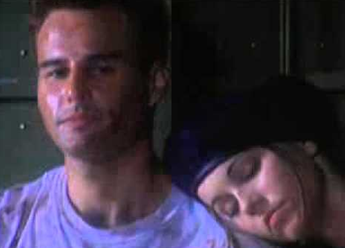
Chris and Jill are at it in Romero’s script.

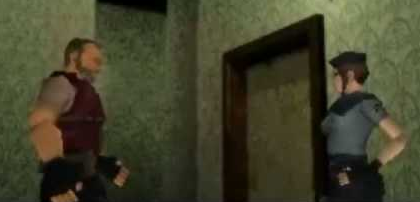
Like the videogame, Romero’s script features Jill Valentine and Chris Redfield as the central protagonists. Jill is largely similar to her videogame counterpart, being somewhat overwhelmed by the events surrounding her, rather insubordinate to her superiors, yet militaristic and direct in her actions and capabilities. Chris, however, undergoes a significant alteration; rather than being a member of Special Tactics and Rescue Service (S.T.A.R.S.; here a military organisation rather than being associated with the Raccoon Police Department), Chris is depicted as a “part Mohawk” Native American who has strong ties to the Arklay land and a close association with nature. As part of her cover story, Jill initiates a sexual relationship with Chris in order to gather intelligence on the Arklay Mountains and the mansion where the Tyrant-Virus (T-Virus) outbreak occurs; Chris is swept along due to his need to find answers concerning both the infected and Jill’s betrayal. These alterations are apparently intended to make Chris the voice of reason among the other S.T.A.R.S. members, who mostly follow orders or are concerned with their own survival rather than the implications the T-Virus has on natural life. Chris’s capabilities are severely downgraded from his videogame counterpart and he spends the majority of the script brandishing “an old Winchester rifle” in contrast to the well-armed S.T.A.R.S. members.
RomeroEvilSTARSMansion
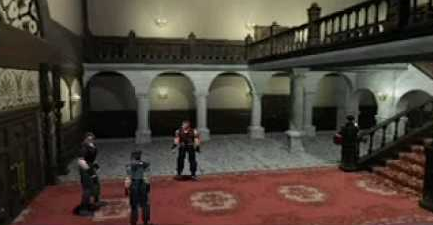
The entire S.T.A.R.S. team is represented in Romero’s script.

Jill’s Alpha Team, made up of Russo, Williams, and Disimone, is quickly massacred, leaving Jill the only survivor. Albert Wesker leads Bravo Team, twelve additional commandos (including Barry Burton, Brad Vickers, Rebecca Chambers, Richard Aiken, Kenneth Sullivan, Rosie Rodriguez, Forest Speyer, and Laguardia) to assist, and they are immediately beset by zombie dogs and forced into the mansion, as in Resident Evil (Capcom, 1996). Wesker and Barry are portrayed as old friends, almost like brothers; Rodriguez, ironically much like Michelle Rodriquez’s Rain from Anderson’s film, is a trash-talking tough girl, while Rebecca is a nearly non-existent and inconsequential medical officer. Nevertheless, they closely resemble Resident Evil’s S.T.A.R.S. members rather than being entirely original characters as in Anderson’s film, yet Anderson’s Umbrella Special Forces Commandos fill a very similar role.
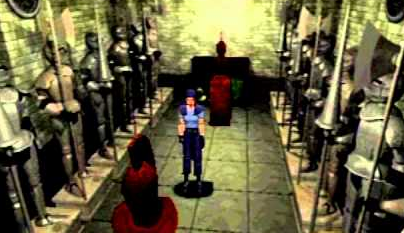
RomeroEvilPuzzle
The characters still have to solve Resident Evil‘s trademark puzzles.

Wesker also serves as Romero’s principal source of exposition as he relates the mansion’s history, the experiments being performed there, and their mission to rescue Dr. John Marcus and recover key research data. Much of this dialogue is mirrored by the Red Queen (Michaela Dicker) and serves as blatant exposition, sandwiched between moments of gore-filled action, reading very much like the videogame’s passive cutscenes. The team also navigates the mansion using various coloured key cards, solving some familiar puzzles involving grandfather clocks and crests, and utilising a map similar to the computerised system seen in Anderson’s adaptation. These aspects, excised completely from Anderson’s films, are depicted as security measures built in by the mansion’s eccentric architect, yet they make the mansion much bigger than usually depicted in order to encompass the script’s large, shifting labyrinth-like rooms and puzzles, and the decision to replace these with Anderson’s more practical key card/password system seems a wise and realistic aesthetic decision, especially considering the majority of Resident Evil’s puzzles simply provide keys to open new areas.
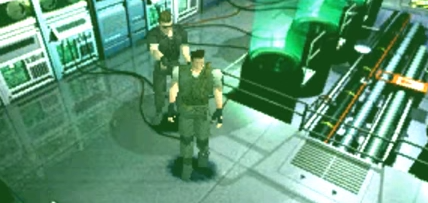
RomeroEvilChrisWesker
Chris really hates Wesker in this script!

Depending on the avatar, either Jill or Chris can go missing after S.T.A.R.S. take refuge in Resident Evil; in Romero’s script, both Jill and Chris rendezvous with S.T.A.R.S. at different points to reference this, with both eliminating multiple zombies along the way. Though Jill and Chris both exhibit an uncharacteristically aggressive disrespect for Wesker (Resident Evil depicted both as frustrated by Wesker’s secrecy but nonetheless trusting him until the finale), Chris is far more vocal, turning his confusion into anger at the events which have left his homeland a bloody mess. He directly blames Wesker for these events, and Jill for her betrayal, and he continues to butt heads with both throughout their investigation. Romero’s script draws principally from Resident Evil alone –Resident Evil 2’s (Capcom, 1998) only influences are the mysterious, bloodcurdling, roar echoing throughout the mansion similar to G’s and Ada Wong (albeit as a scientist who assisted in developing the T-Virus and delivering yet more superfluous exposition, rather than being a double agent).
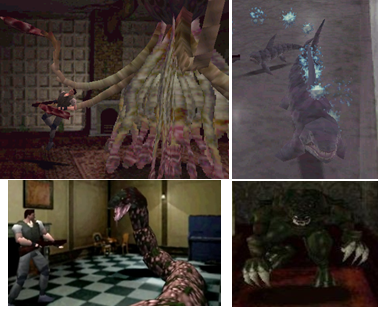
RomeroEvilBOWs
All of the game’s BOWs appear!

The mansion is beset by Plant 42’s destructive growth, infected sharks, a giant snake, and even the murderous Hunters, all lifted directly from the original videogame, and showcasing the scale of Umbrella’s research and the impact of the T-Virus beyond “simply” reanimating dead tissue. Whereas the exact implications of the T-Virus in Anderson’s films is left mostly unclear, Romero’s script openly lifts its purpose – to create nigh-indestructible bio-organic weapons (BOWs) for use in warfare – from the videogame, while this only become relevant in Anderson’s films after the T-Virus was released in the Hive.
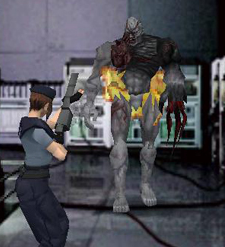
RomeroEvilTyrant
The Tyrant is the big bad of Romero’s script.

This research culminates in, like the videogame, the Tyrant, and its subsequent rampage mirrors the closing moments of the videogame very closely. By including these creatures, most of which are rather large, complicated, and cumbersome entities, the budget for Romero’s vision would conceivably far exceed that of Anderson’s originally far more low-key, fixed approach; in Resident Evil: Apocalypse’s director’s commentary, he claims that the Licker was only included in the final stages of the first film’s development, implying that the film lacked even that lacklustre “final boss”. Additionally, the script’s extremely graphic depictions of zombie and creature attacks, with victims being ripped apart and torn open and copious gore that mirrors Dawn of the Dead (Romero, 1978) and Day of the Dead (ibid, 1985), takes it far from an R-rating. Although these comparisons are not only fitting due to the influence Romero had on the creation of Resident Evil but also his involvement in the script, they were clearly at odds with the film studio and Capcom, who desired a more manageable budget and wider audience range, which is also at odds with Romero’s surprising faithful adaptation.
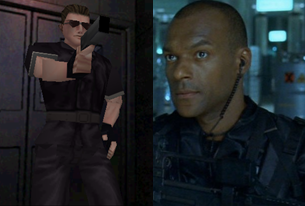
RomeroEvilWeskerOne
One takes on the script’s characterisation of Wesker.

In addition to incorporating more recognisable Resident Evil elements, Romero is not shy about self-gratification: characters draw comparisons to Night of the Living Dead (ibid, 1968) and call zombies “ghouls”, and the increased emphasis on both military presence and Umbrella’s surreptitious nature is extremely similar to the military’s depiction in The Crazies (ibid, 1973). Romero’s cynicism regarding government and corporate power is reflected in Wesker’s superiors being devoid of personality and appearance: “We see no faces. But expensive watches, sleeves with high-ranking stripes, indicate wealth, power, and a military presence”. Wesker’s depiction is much more military-orientated; his focus on the mission and barking orders reflects this, and it is easy to see how his characterisation could have evolved into One (Colin Salmon). Seemingly the only line of Romero’s to reach Anderson’s is “we live here now”, originally delivered by Rodriguez throughout the script in extraneous reference to her childhood. While the line becomes over-emphasised and is far from relevant in Romero’s script, when delivered by Rain it highlights the dire situation that she and the others are in. Romero’s closer adherence to gameplay mechanics is again evident in the conservation of resources; having been beset by enemies and rendered expendable, Wesker orders the division of ammo and supplies, mentioning that they came unprepared for the odds they face. While Anderson’s Commandos are similarly unprepared, they nevertheless enter the Hive fully equipped and fully armed; such resources allow the protagonists to gun down their zombie attackers without the fear of running out of ammunition, though their armaments are inevitably useless against the Red Queen’s defences. These, specifically the laser grid system, surprisingly appear in Romero’s script, though only as a quick jump-scare, with the true danger coming from the acidic steam the lasers trigger, which causes a gruesome death.
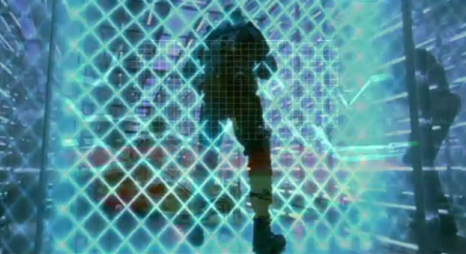
RomeroEvilLaser
Surprisingly, the famous “laser grid” is in this script.

Thus, both Romero’s mutated creatures and Anderson’s laser grid serve the same ends – the deaths of minor characters, though Romero’s approach to this is much closer to the videogame than Anderson, who has often openly voiced his appreciation for the source material, as opposed to Romero, who largely dislikes videogames. Whereas in Anderson’s film, the lasers are significant, in Romero’s script they are glossed over in favour of an overly complex battle against Plant 42 and a mutated copperhead snake, both more suitable inclusions to a Resident Evil adaptation given their prominence in the videogame, yet clearly more expensive to incorporate than Anderson’s more subdued lasers. As S.T.A.R.S. navigates Umbrella’s laboratory, they are beset by Hunters, which are given an extreme durability upgrade. In Resident Evil, the Hunters were far stronger, faster, and more aggressive than zombies, providing an effective difficulty spike, yet they could still be dispatched using small arms fire (though close-range weapons like the shotgun were more effective). Romero’s Hunters are practically indestructible as their skeletal structure is protected by a metallic coating – the only effective tactic is to aim for their joints (an action that Resident Evil’s stiff, restrictive controls would not allow), and even then they continue their relentless pursuit, crawling and dragging themselves along the floor.
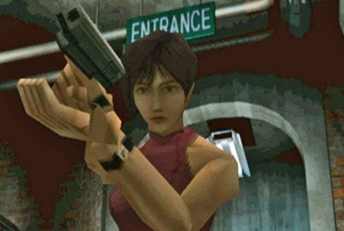
RomeroEvilAda
Ada also makes an appearance.

The survivors take refuge with Ada, who wishes to atone for her part in creating the T-Virus. Her videogame counterpart’s lost love, John, is amalgamated with Professor James Marcus, the videogame creator of the T-Virus, to become Dr. John Marcus, a markedly different character whose work Ada describes as being “for humanitarian purposes”, rather than specifically creating the T-Virus for military applications. This is pinned directly onto Umbrella, who corrupted Marcus’ research, and this concept was later explored through Resident Evil: Apocalypse’s Dr. Charles Ashford. Ada, far from her deceitful, untrustworthy, and sultry videogame counterpart, awkwardly explains the film’s events directly to the audience and the characters before the finale, rather than this information coming naturally. Ada’s attempts to keep Wesker out of D Lab are unsuccessful, as Wesker’s true motivations are revealed and he activates the Tyrant, confiding in Barry his intentions to retrieve the creature’s data, sell it to Umbrella, and split the money between himself and Barry as payback for Barry’s loyalty and friendship. Once Romero’s script enters D Lab, it closely follows the videogame’s finale, with Chris, Jill, and Barry openly opposing Wesker’s schemes and the Tyrant escaping and going on a rampage.
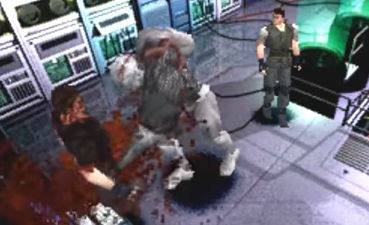
RomeroEvilTyrantWesker
This ended about as well as you might expect.

By not resorting to a mid-level enemy like the Licker for his finale, Romero’s conclusion is considerably augmented as the Tyrant is practically unstoppable. Its physical threat, imposing stature, unrelenting nature, and iconography as the classic Resident Evil final boss give the finale a danger and tension that we must be convinced of in Anderson’s finale as his Licker has to undergo a significant mutation into a less-recognisable version of itself in order to match the Tyrant. As in the videogame, the Tyrant tears Wesker apart during its rampage, although Romero’s script describes this death as being so total and horrific that it seems unlikely that Wesker could have revived himself as in the videogames. However, as this was retroactively introduced in Resident Evil – Code: Veronica (Capcom, 2000), Wesker’s gruesome death can be understood as being his much-deserved and overdue fate, rather than a deviation from the source material, as Wesker’s death seemed to be total and final in Resident Evil. As the final countdown to the destruction and eradication of all the evidence of the T-Virus takes place, the survivors are beset by zombies and infected crows, and forced to solve contrived puzzles to access a secret passage. The tension is somewhat numbed by these distractions; typically, Resident Evil players face relatively few enemies and some rudimentary but necessary puzzles while an ominous countdown flickers onscreen (like in Resident Evil 2 when players must activate an underground train to allow the survivors to escape) but few distractions that slow progress to a crawl, as in Romero’s script. Like the videogame, though, the final confrontation between the Tyrant and the survivors is short-lived, as a single Stinger missile is enough destroy it. This ending is more predictable than Anderson’s, which mirrored Resident Evil 2’s ending, but the specifics and fundamental impact deviated quite considerably due to Anderson’s belief that to simply copy the videogame eliminated any suspense or tension for Resident Evil veterans.
RomeroEvilJillSandwich
The script’s clunky dialogue can be worse than the original voice acting, if you can believe that!

Instead, Romero adheres closely to the source material’s finale, with the Tyrant dispatched almost identically and the final survivors escaping just as and the mansion explodes. Romero deviates by making this explosion powerful enough to eradicate Raccoon City, which has been overrun with zombies, effectively encompassing the ending of Resident Evil 3: Nemesis (Capcom, 1999) and seemingly eliminating the possibility of a direct sequel. Quite how the protagonists survive this is left unresolved, but the imagery suggests Romero intended on a big, gory, explosive finale, one that reads as being very abrupt and total rather than Anderson’s cliffhanger or the videogame’s various endings. Overall, there is very little doubt that Romero’s script is a very (very!) rough first draft; there are clear elements, such as dialogue and characterisation, which require re-drafts to make them less contrived, and the characters more three-dimensional. Largely, it ironically reads very much like the original Resident Evil videogame, with cheesy dialogue and awkward, flat characterisations. These issues were addressed in subsequent sequels and remakes, with the localisation improving over time and characters becoming more detailed and intricate. Thus, it is not too unbelievable that Romero’s script could have been improved and the constant repetition of “we live here now” and Chris’s cringe-inducing speech about evil “[residing] in all of us”, in a contrived justification of the film’s title beyond the simple and obvious fact that evil literally resides in the mansion, could have been eliminated altogether.
RomeroEvilZombies
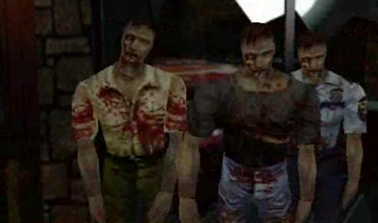
The movies love to use those zombies.

Additionally, rewrites could possibly eliminate the larger creatures and emphasise zombies, as in Anderson’s first film, which avoided BOWs completely. The Licker was the obvious exception, serving as the big effects finale, but Romero’s script is littered with BOWs – virtually every Resident Evil enemy is present. While enemy variation is important in videogames to maintain player interest and increase difficulty, on film the appearance of so many different creatures could potentially overwhelm it with underexplored monstrosities. Anderson’s films, after all, rely heavily on traditional zombies and utilise BOWs for the finale, rather than focusing on them, ironically making Anderson’s films more zombie films than Resident Evil movies, as the videogames are generally concerned with addressing the T-Virus’s communicability, and zombies are simply a by-product of this rather than the main objective, and this is very much reflected in Romero’s script. The result is that, oddly, Romero’s Resident Evil is less a Romero film infused with videogame elements, and rather more like a slavish videogame adaptation, with certain elements and characters altered in order to create, or force, friction between the characters and unpredictability. Rather than critiquing society, consumerism, or even videogame culture, Romero delivered a banal gore-fest, one that attempts to cram as much from its source material as possible to showcase its fidelity, rather than attempting to adapt gameplay elements and characters in smarter, more sophisticated ways.
RomeroEvilAlice
At least Romero’s script doesn’t include shit like this…

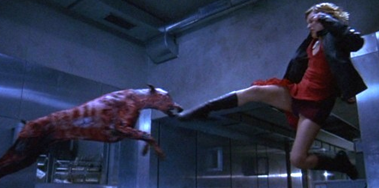
While Anderson failed to produce direct adaptations, he nevertheless strived to include a fresh, perspective; beyond Anderson’s quickly-redacted claims that his first film was a prequel to the first videogame, his films have always been more inspired by the videogames than adapted from. Romero’s script, however, is the opposite; even though he utilises videogame characters, they all read very similar, especially supporting characters, and utilising the videogame’s puzzles seems unrealistic within the mansion’s confines, whose architecture, on film, promotes realism rather than fantasy. Finally, while videogame purists and fans may yearn for absolute fidelity, there is a considerable difference between adapting smartly and adapting directly, and Romero appears to have produced the latter. For all Anderson’s faults, particularly in his first Resident Evil, Romero’s script reveals how attempting to incorporate every aspect of Resident Evil into a single movie causes characterisation to suffer and the impact of the various creatures to be lessened. Where Anderson infuses a sci-fi, action-horror aesthetic, pulling visual inspiration from various other successful action movie archetypes, Romero relies solely on gore. By creating a more marketable, accessible, and audience-friendly film, Anderson was able to improve upon any faults in sequels and introduce other videogame elements, even though they clash with their source material. As this aligned with the intentions of the multiple production companies behind the Resident Evil films, it is hardly surprising that Anderson’s vision won out over Romero’s, whose adaptation reads, for all its attempts at slavish fidelity, as unimaginative and lacklustre, literally as though he was given crib notes concerning the general aspects of the videogame and worked from them, rather than attempting to incorporate these elements in a smarter, more inspired way.


Talking Movies: Deadpool 2

Talking Movies
Deadpool2Logo

Honestly, after Deadpool (Miller, 2016) became the highest-grossing R-rated movie in history, I actually expected a new renaissance of action movies to flood cinema screens. Finally, I thought, the days of watered down 12/12A-rated action movies is behind us; I thought we would see the gloriously foul-mouthed, gory, over-the-top action movies of the 1980s make a return now that they had been proven to be critically and commercially viable prospects. Unfortunately, that didn’t actually happen and I’m still waiting for the action movie renaissance I’ve dreamed about for the last few years; but, in the mean time, director David Leitch takes the reigns of the highly-anticipated Deadpool sequel, a movie that, again, emphasises that audiences are ready for a return of the entertaining, bombastic action movies of yesteryear.

Deadpool’s forced to try and protect Russell from Cable’s wrath.

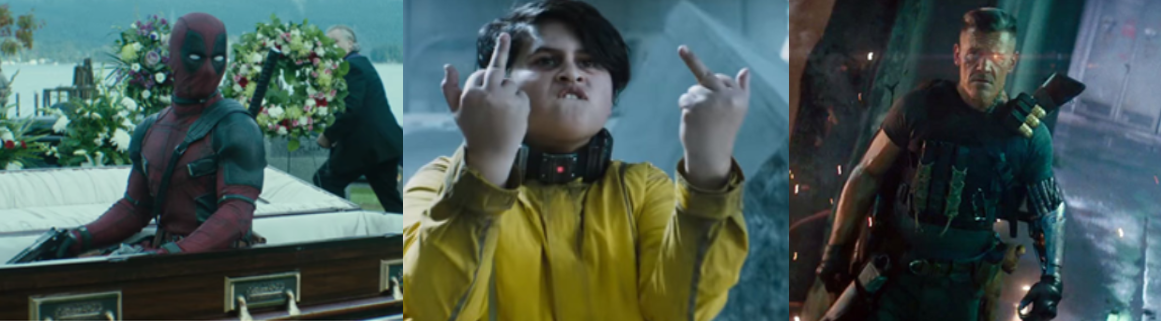
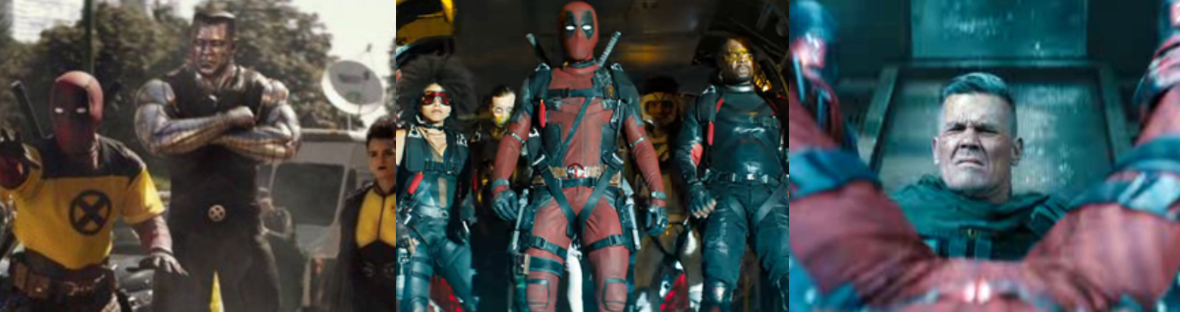
Picking up about two years after the first movie, the immortal, wise-cracking, maniacal mercenary, Wade Wilson/Deadpool (Ryan Reynolds, returning to the role he was born to play) has been carving a path of destruction through various criminal underworlds. Unfortunately, he suffers a personal tragedy when one of his targets returns for revenge; distraught and disillusioned, he attempts to kill himself in various hilarious and unsuccessful ways before Colossus (Stefan Kapičić) literally picks up the pieces and brings him to the X-Mansion. While attempting to find a place in the world as a rookie X-Man, Deadpool meets an angry, traumatised young Mutant named Russell Collins (Julian Dennison), who christens himself Firefist. Recognising that the boy has been mistreated by the Mutant-hating Headmaster (Eddie Marsan) and staff of the Essex Home for Mutant Rehabilitation, Deadpool kills one of the ordeals and the two of them are fitted with power-nullifying collars and sent to the Ice Box (a super-max prison for dangerous Mutants). Finally dying now that the collar keeps his powers from curing his cancer, Deadpool shirks Russell and wishes to die in peace; however, a cybernetic Mutant named Cable (Josh Brolin) travels back from the future and breaks into the prison to kill Russell, who is destined to grow into a dangerous killer. Torn between his desire to die and his urge to put Russell on the right path, Deadpool reluctantly finds himself assembling his own team of Mutants to protect Russell and keep Cable at bay.

With more action, more laughs, and more lewd humour than ever, Deadpool 2 definitely delivers.

Deadpool 2 had one job, in my eyes: to be everything the first movie was and more and, in many ways, it delivers. The movie has real heart, as Deadpool is forced to confront a very real loss and question his place in the world. This is, arguably, a ridiculous premise for a character that is aware that he is fictional by Reynolds pulls it off nicely; Deadpool is just as capable of pulling off some kind of over-the-top action sequence as he is cracking wise or emoting and you really root for his redemptive arc in the film. Similarly, Brolin, who brings fan-favourite Cable to life, is suitably grim and gritty; it’s as if Brolin watched all of Clint Eastwood’s Westerns and Arnold Schwarzenegger’s science-fiction movies to create this stoic brick of a man who is, nevertheless, razor-focused and carries a haunting sense of loss about him. Thankfully toned down from his comics counterpart, Cable is the straight man to Deadpool’s madcap insanity and the two play off of each other fantastically whenever they’re on screen. Brianna Hildebrand returns as Negasonic Teenage Warhead, now revealed to be in a same-sex relationship, though her role seems to be the same, if not reduced, from the first movie. Instead, Deadpool recruits Domino (Zazie Beetz), Bedlam (Terry Crews), Shatterstar (Lewis Tan), Zeitgeist (Bill Skarsgård), the Vanisher (Brad Pitt, in a blink-and-you’ll-miss-it cameo), and (hilariously) the entirely ordinary and nondescript Peter (Rob Delaney) to form X-Force, a Mutant team capable of doing what the X-Men refuse to do and kill Cable. While the team’s fate is ill-fated, to say the least, the recruitment process and their initial mission are a highlight of the movie. Unlike the first film, Deadpool 2 does not really feature a central antagonist; Cable is more of an anti-hero throughout the film and the Headmaster is not a physical threat to anyone. Once Russell decides to enact revenge against the Headmaster, he recruits some serious muscle in the form of an all-CGI Juggernaut (Ryan Reynolds), finally doing the character a modicum of justice, but the central theme of the movie is more about coping with loss and family. Deadpool, who was on the verge of having a family of his own, forms a surrogate family through X-Force and his X-Men allies and, through them, finds the means of both redemption and to seemingly correct the loss he suffers at the beginning of the movie. Filled with Easter Eggs, in-jokes, meta-humour, action, and enough blood to make Paul Verhoeven proud, Deadpool 2 does exactly what I wanted: it takes everything that made the first movie great, ramps it up to eleven or twelve, and then expands Deadpool’s world and cast of characters beautifully.
My Rating:

Rating: 4 out of 5.

Great Stuff


Recommended: Definitely, movies like Deadpool and Deadpool 2 are a lost art in these days of PG-friendly cinema.
Best moment: As mentioned, the recruitment process of X-Force and their first mission is pretty funny, while the rescue operation and the second fight between Deadpool and Cable is pretty bad-ass. There’s also some unexpected cameos in the X-Mansion that made me chuckle.
Worst moment: We don’t learn too much about Cable’s back-story beyond the basics (it’s not clear which future he’s from, for example) and the film did lack a central physical antagonist but, given Cable is due to return in future films and the theme of the movie, these are minor nit-picks.

Game Corner: Sonic Forces (Xbox One)

GameCorner
SonicForces Logo

So, as may already be apparent, I am a pretty big fan of the Sonic the Hedgehog franchise. I am, by no means, a “Sonic Apologist” though; I am more than capable of admitting to and pointing out flaws in individual videogames and the franchise as a whole. However, unlike what appears to be the majority of Sonic fans (seriously, is there a more toxic fan community that the one adopted by Sonic fans?), I tend to be quite pleased with most Sonic titles. Maybe it has something to do with the fact that, these days, I generally ask little from my videogames than a fun, engaging, pick-up-and-play experience that has some depth but not an infinite amount of depth. It probably also helps that I rarely, if ever, buy videogames first-hand on launch day and therefore spend less money per purchase so have less to complain about. With that in mind, I recently completed Sonic Forces (Sonic Team, 2017) for the Xbox One and figured I would share my thoughts on it. Created to commemorate Sonic’s twenty-fifth anniversary, Sonic Forces ostensibly positions itself as a loose sequel to Sonic Generations (ibid, 2011) and Sonic: Lost World (ibid, 2013) and was developed and released within the development and launch of the massively successful Sonic Mania (PagodaWest Games/Headcannon, 2017), a videogame that successfully (and finally) returned Sonic to his high-speed 2D roots.

SonicForces Good
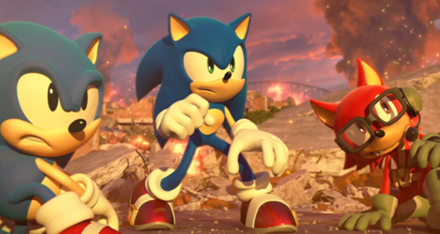
It’ll take two Sonic’s and a randomer to save the world!

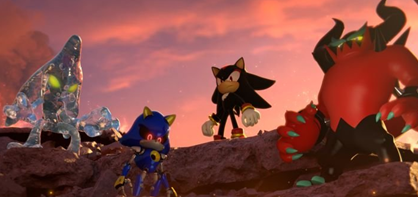
Sonic Forces, in comparison, sees players once again take control of “Modern Sonic” in 3D and 2.5D action stages and “Classic Sonic” (now retconned as being from “Another dimension” rather than being Modern Sonic’s past self) in 2.5D platforming sections. Players can also create their own custom Avatar from a variety of options, a feature that seems to have replaced the arguably more sensible idea of playing as the Sonic Boom iteration of Sonic. Narratively, Sonic Forces attempts to be the darkest in the series since Shadow the Hedgehog (SEGA Studio USA, 2005); during a routine battle against Doctor Eggman, Sonic is attacked and defeated by Eggman’s latest creation/ally (the exact specifics are a little…blurry, to say the least), Infinite, a villain so dark and emo that you’ll went to throw on a dirty black hoody and bust out some Taking Back Sunday while crying over that girl who cheated on you and writing badly composed poetry every time he’s on screen. Infinite appears to possess the Phantom Ruby from Sonic Mania and uses its reality-warping powers to conjure multiple illusions of some of Sonic’s greatest foes (Chaos Zero, Shadow the Hedgehog, Zavok, and Metal Sonic).

SonicForces Evil
Two of these will not feature as bosses…

With Sonic defeated, Eggman and his forces overrun the entire world and take control, leaving the world’s hopes in the hands of a rag-tag resistance led by Miles “Tails” Prower, Knuckles the Echidna, and (most of) Sonic’s other friends and allies. Vastly outnumbered, they recruit a rookie to help the cause (the player’s Avatar) and, randomly, Classic Sonic, and set out to first rescue Sonic from the Death Egg and then put a stop to Eggman’s nefarious regime.

SonicForces Modern
Boost through stages at break-neck speed as Modern Sonic.

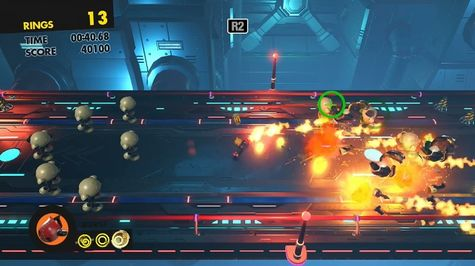
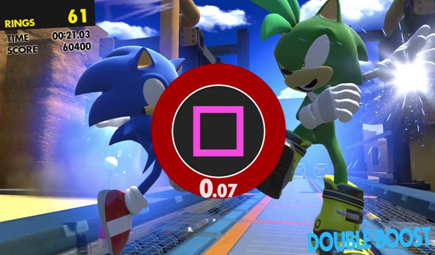
If you’ve played Sonic Generations, then you’ll be immediately familiar with Sonic Forces. Ditching the poorly-conceived “run button” of Sonic: Lost World, Sonic Forces once again sees players smash robots, collect Golden Rings, and collect Wisps to fill up a Boost meter as Modern Sonic. When the meter fills up, you can hold down the Boost button and blast through enemies and stages at break-neck speed; Modern Sonic can also utilise the now-classic Homing Attack to target enemies and other objects and team up with the player’s Avatar to perform a Double Boost or allow the Avatar to attack enemies.

SonicForces GreenHill
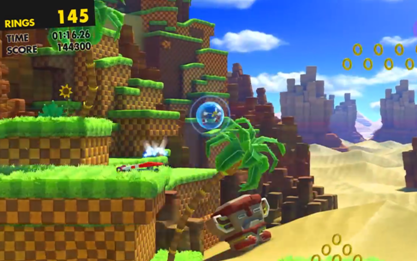
Struggle with dodgy controls as Classic Sonic!

Classic Sonic, meanwhile, can no longer collect Elemental Shields or be assigned different abilities like he could in Sonic Generations, but he does have the Drop-Dash from Sonic Mania (which I honestly used even less than in Sonic Mania, if that’s even possible). As in Sonic Generations, Classic Sonic feels very heavy and floaty and sluggish, especially compared to Modern Sonic’s gameplay and the picture-perfect controls of Sonic Mania and his inclusion in the videogame is an odd question mark for me as he doesn’t really factor into the plot that heavily.

SonicForces Avatar Creation
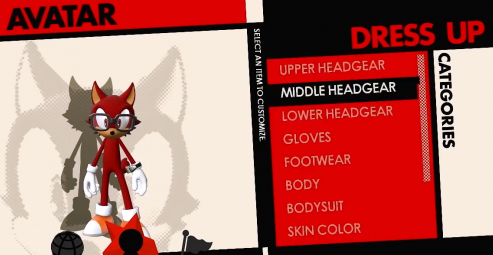
Create your own fan characters with the Avatar creation tool!

Players can create their own Avatar from seven species: hedgehog, dog, cat, bird, bear, wolf, and rabbit. You can customise the Avatar’s skin colour, fur colour, eye shape and colour, ear type, and pile all sorts of clothing and accessories onto them. For a fan community that loves to create recolours and their own characters, this is a fun opportunity to create your own Sonic character, with quite a few options to choose from, but the function does have a few limitations. Firstly, you can apply hats, gloves, and shoes to your Avatar but you cannot recolour them; secondly, you cannot alter their height or width (so you can’t create fatter Avatars); and, thirdly, most of the clothing and accessories must be unlocked by completing Missions during gameplay.

SonicForces Wispon
Try to not fly off stages using the Avatar’s Wispons!

You can use the Avatar function to create close approximations of Sonic characters, but they’ll never be perfect; for example, clothing for Tails, Knuckles, Shadow, and Amy Rose are available but you can’t really create any of them in picture-perfect detail. The Avatars attack using a whip-like lasso that allows them to do a poor-man’s Homing Attack and can be equipped with a variety of “Wispons”, gun-like devices that are powered by Wisps and allow the Avatar to perform awkward variations of Sonic’s Wisp abilities from Sonic Colours (Sonic Team, 2010). I say “awkward” because many of these abilities can cause the Avatar to go shooting off the stage and to their death or have a slight delay that cause you to take damage; honestly, I don’t really know why Wisps are even still a thing in the Sonic franchise.

SonicForces TeamUp
Mash that button for a Double Boost!

As mentioned earlier, you can complete a variety of Missions to unlock clothing and accessories for your Avatars, additional features for Wispons, and bonus stages. Some Missions are stupidly simple, like switching your Avatar’s footwear, and others are more tricky, like completing stages within a time limit. You’ll also be tasked with completing random SOS Missions; occasionally, a blue, green, or red SOS signal will pop up from a stage you’ve previously completed and you can revisit the stage to complete the Mission. These range from finding and freeing prisoners from familiar-looking prison pods, completing stages with your Avatar, or completing them with a random Avatar. Ironically, considering Sonic Forces continues the annoying trend of modern Sonic titles to hand hold you through every arbitrary function (“Press X to jump!” springs instantly to mind), you only ever get one notification about which colour equates to which SOS Mission, so you’ll have to make sure you know what you have to do or you might blast through a stage in record time only to fail the Mission like an idiot because you forgot what the red signal meant. Both Sonics can still collect Red Rings in stages; collecting these allows you to get Achievements and unlocks bonus stages. Bonus stages consist of annoying tasks like dodging lasers and making it through small stages where platforms randomly vanish beneath you, but collecting the Red Rings can be a fun task as it encourages exploration.

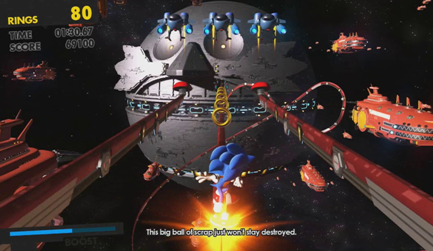
SonicForces Death Egg
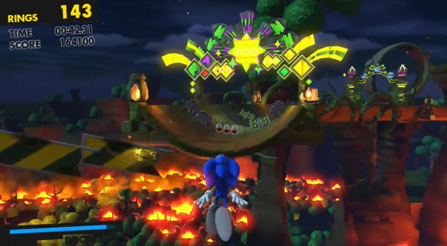
The level of graphic detail is quite high.

Graphically, Sonic Forces is gorgeous; running on an updated version of the Hedgehog Engine, you’ll marvel at the level of detail and layers in every stage. Blasting through Green Hill as it’s attacked by giant mechs or through a city under attack by Death Egg Robots is a real thrill and there’s clearly been a lot of thought put into the presentation. Gameplay-wise, there are still times when control gives way to automation (dash pads, boost pads, loop-de-loops, and quick-time events all take control away from the player) but, honestly, I didn’t really care because the game is all about speed and going forward so I am happy to be propelled along as long as it’s not into a bottomless pit. Despite my disappointment at having to play through Green Hill and Chemical Plant again, stages are fun and surprisingly layered; players can take multiple paths in many levels, some of them only accessible when you have certain Wispons equipped, others by simply using the Homing Attack, and they’re short enough that they never become tedious or boring. Indeed, the longest stages are saved for later in the game and, by then, it’s a real sign that the difficulty has ramped up a bit. For me, though, having fun stages to play in short-to-medium bursts makes for a far more enjoyable experience and really assists in speed runs.

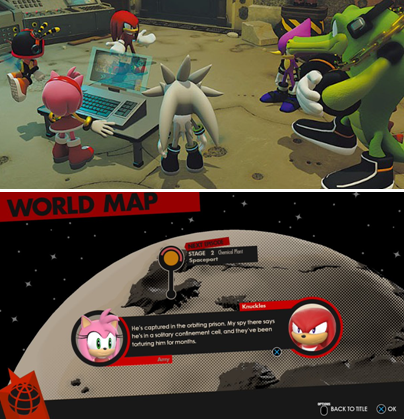
SonicForces Story
Sonic Forces‘ story is quite weak.

On a slightly related note, acquiring trophies/achievements is a blast in Sonic Forces, largely thanks to the short stages and the ease of their requirements; if you like getting trophies/achievements without much effort then you’ll love Sonic Forces. I know that I was so encouraged by how many I popped in my first playthrough that I was more than happy to try some of the more difficult ones and the game really lends itself to a pick-up-and-play mentality. Narratively though…oh boy. This is perhaps the weakest aspect of Sonic Forces; when the videogame uses CGI cutscenes, its amazing and, as always, Sonic Team excel in this area (graphically, anyway; the script still leaves a lot to be desired). Unfortunately, a great deal of the plot is told through talking heads on the world map or through simple white text on a black background. Quite how Eggman acquired the Phantom Ruby is never really explored and Infinite’s back-story (largely told in the free DLC, “Episode Shadow”) is paper thin; he got beaten up by Shadow and has apparently become some kind of weird cyborg-thing. It’s a neat twist to see Eggman win right from the start but there’s never a real sense of urgency or threat; you blast though stages and Eggman’s underlings with very little fear of failure.

SonicForces Boss
Bosses, at least, are larger, layered, and fun to battle.

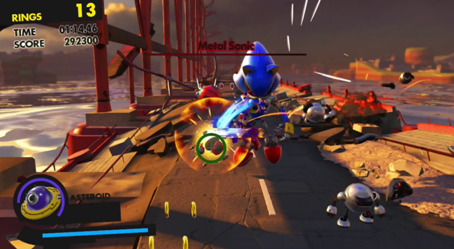
As for bosses, there’s a surprising lack of them here. You’ll do battle with Zavok, Eggman, Metal Sonic, and Infinite but Chaos Zero is depressingly taking out in a cutscene…by Classic Sonic…with one move…and you never battle against Shadow. Boss battles take three forms; either you battle on a 2.5D arena, race down an infinite highway towards the opponent, or take them on from a slightly skewed overhead perspective. Bosses have a variety of attacks and forms/stages, which can make them challenging but not too difficult, and sometimes require you to team up with the Avatar to win the day. There’s honestly a lot to like about Sonic Forces if you ignore the writing and the poorly-conceived plot; gameplay is fun, action-packed, and blasts along at a decent speed. It’s fun to create Avatars, unlock new gear for them, and to pop trophies/achievements. I do feel like more could have been done, though; honestly, Sonic Team really should have included Boom-Sonic as the third character (maybe include the Avatar function as well, though) because the Avatar is so blatantly and clearly there in place of him that it just feels weird. I also would have liked to see the ability to more accurately create Avatars of other Sonic characters and greater customisation in the Avatar function; it works but it feels very limited at times.

On the plus side, it’s really easy to get S-ranks if you blast through as fast as possible and don’t die, which is great for me, and I didn’t encounter that many cheap deaths or glitches while playing. Sure, sometimes you blast along so fast (especially as free DLC Super Sonic) that you’ll over shoot jumps, pits, or automated sections and fall to your death but I never glitched through anything or found any oddities and the game also ditches the lives system so you don’t have to worry about running out of tries. As great as Sonic Mania was at bringing Sonic back to his roots, I feel like the universal praise for that game has tainted the reception of Sonic Forces and that people are all-too-ready to tear apart the modern, Boost-heavy emphasis of 3D Sonic titles to focus on the positives. I feel there’s room for both, especially given how little funding and development is needed to make a top-notch 2D Sonic game compared to a Triple A 3D title; I just hope that Sonic Team either introduce more of Sonic’s cast back into the 3D games as playable characters or, at least, work on Classic Sonic’s gameplay as he feels jarringly slow and sluggish compared to his Modern counterpart.

My Rating:

Rating: 3 out of 5.

Pretty Good

Movie Night: Avengers: Infinity War

AvengersInfinityWarLogo

Released: 27 April 2018
Director: Anthony Russo and Joe Russo
Distributor: Walt Disney Studios Motion Pictures
Budget: $325 to 400 million
Stars: Josh Brolin, Robert Downey Jr., Chris Evans, Chris Hemsworth, Mark Ruffalo, Chris Pratt, Scarlett Johansson, Benedict Cumberbatch, Tom Holland, Chadwick Boseman, Paul Bettany, Elizabeth Olsen, and Zoe Saldaña

The Plot:
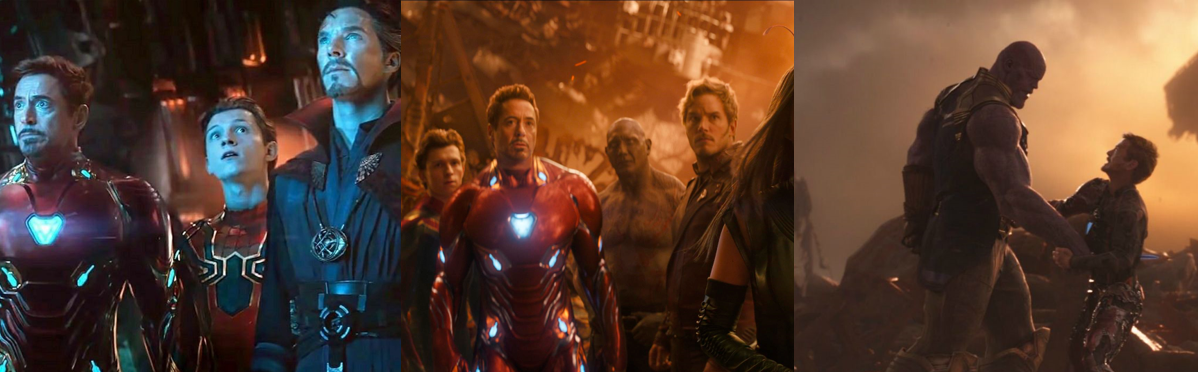
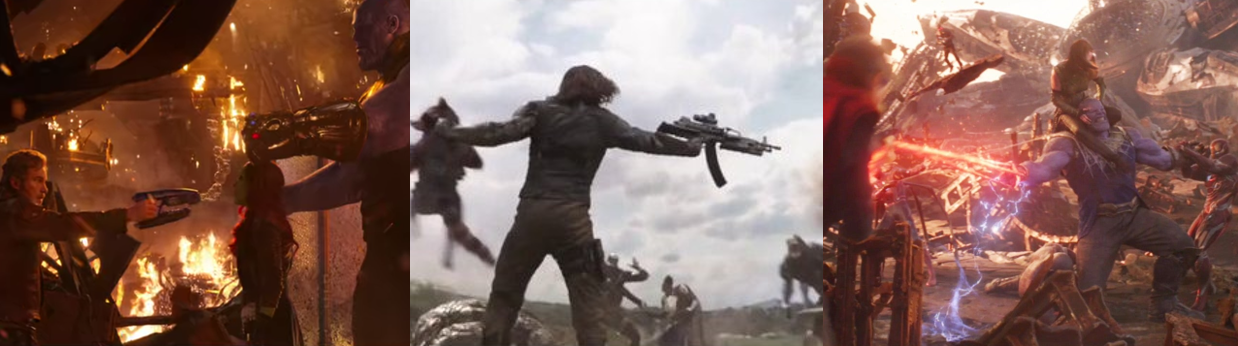
Thanos (Brolin) carves a path of self-righteous destruction across the universe in search of six all-powerful cosmic gems that will allow him to erase half of all sentient life with a snap of his fingers. Though fractured from recent events, the Avengers scramble to oppose the Mad Titan’s plot, and join forces with the Guardians of the Galaxy to seek out and protect the remining Infinity Stones and acquire the means to combat Thanos and his vast army.

The Background:
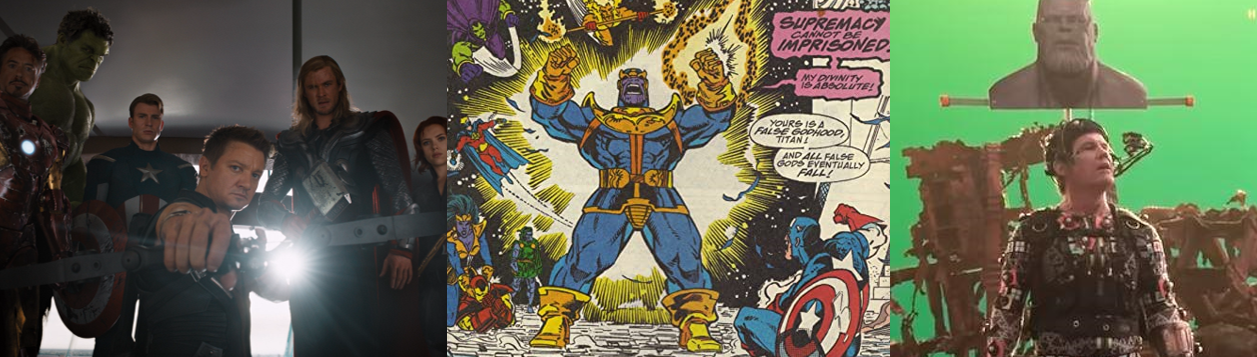
“There was an idea […] to bring together a group of remarkable people to see if they could become something more. To see if they could work together when we needed them to, to fight the battles that we never could”. For decades, superhero films existed in self-contained bubbles; sure, there would be sly hints towards other heroes, but costumed avengers primarily fought alone on the big screen. That all changed with Iron Man (Favreau, 2008), the first tentative step towards the largest interconnected series of movies ever created, but the unprecedented success of Avengers Assemble/The Avengers (Whedon, 2012) saw the MCU make massive strides towards becoming an unstoppable multimedia juggernaut. After success with characters both known and obscure, the MCU’s flagship characters came together once more; although Avengers: Age of Ultron (ibid, 2015) saw writer/director Joss Wheden part ways with the studio and critical reception was mixed compared to the first film, Age of Ultron still grossed $1,404 billion at the box office and Marvel pushed forward with their biggest venture yet, a two-part Avengers film shot back-to-back by established MCU directors Anthony and Joe Russo. Although Whedon initially had no plans for Thanos when he included the Mad Titan in a post-credits scene at the end of Avengers Assemble, Marvel head honcho Kevin Feige quickly began planting the seeds for Thanos’s quest for the mysterious Infinity Stones throughout the MCU for this massive production, which drew significant inspiration from the memorable Infinity Gauntlet (Starlin, et al, 1991) and Infinity (Hickman, et al, 2013) stories.

Multiple characters, comic inspiration, and complex CGI brought to life the MCU’s biggest film to date.

After explaining away a blink-and-miss it inconsistency regarding the all-power Infinity Gauntlet, writers Christopher Markus and Stephen McFeely set to work deciding which characters they would use, in which combinations, and gearing the first movie towards a series of unique interactions and set pieces. The Russos worked closely with other MCU directors, like James Gunn, to ensure that the tone and characterisation of the individual films could be retained, although characters from the popular Netflix shows unfortunately did not appear in the massive line-up. Central to the film was, of course, Thanos himself; though his obsession with Lady Death was removed from his motivation, Thanos was cast as the hero of the film and brought to life as a complex digital character thanks to the work of Digital Domain. Featuring nearly every character in the MCU and spanning the galaxy, Avengers: Infinity War boasted over 253 shots from animation studio Framestore alone, to say nothing of 200 digital shots of Thanos produced by Weta Digital, and over 3000 overall digital shots from a variety of studios to bring to life the Russo’s ambitious and complex plan for the unprecedented team-up. Avengers: Infinity War was the very definition of hype, with the first trailer alone becoming the most viewed trailer of the time; this, naturally, translated into astronomical financial success as the film made nearly $2.050 billion at the box office and became the fourth-highest-grossing film of all time. Reviews gushed over the film’s perfect balance between drama, action, and humour, the characterisation of Thanos, and the sudden gut-punch of its ending. After a year of agonising hype, speculation, and anticipation, the story continued in Avengers: Endgame (Russo and Russo, 2019), which was actually more critically and commercially successful and the MCU continued on into its fourth phase with more momentum than ever before.

The Review:
If you’d told me all those years ago when Tony Stark/Iron Man (Downey Jr.) graduated from a C-list Marvel hero to the face of the largest, most successful superhero franchise ever conceived, that we’d see him not only team up with some of Marvel’s most iconic superheroes but also end up rocketing into space to fight alongside obscure characters like the Guardians of the Galaxy and punching a massive purple alien in the face to safeguard half of all sentient life from the misuse of six cosmic space gems…well, I would’ve called you mad. Superhero films just didn’t do this sort of thing; they were always “grounded”, based in some kind of reality, even when they dealt with cosmic subject matter. And they never, ever interconnected. The closest we ever got were some sly references, or teams of characters who already existed together, but we never got to see an interconnected universe like in the comics. And, quite frankly, I couldn’t be happier. Go and pick up The Amazing Spider-Man Annual #1 (Lee, et al, 1964) and see how many gratuitous cameos are wedged into the Sinister Six’s first appearance alone! Marvel, DC, hell almost every comic publisher has a shared universe of heroes and, as much as I’ve enjoyed the solo superhero movie efforts of the last forty-odd years of my life, I couldn’t be happier that the MCU actually has the balls, and the skill, to pull of such a vast, interconnected series of movies that is both respectful of the source material rather than ashamed by it and offers a fresh, new take on these beloved characters.

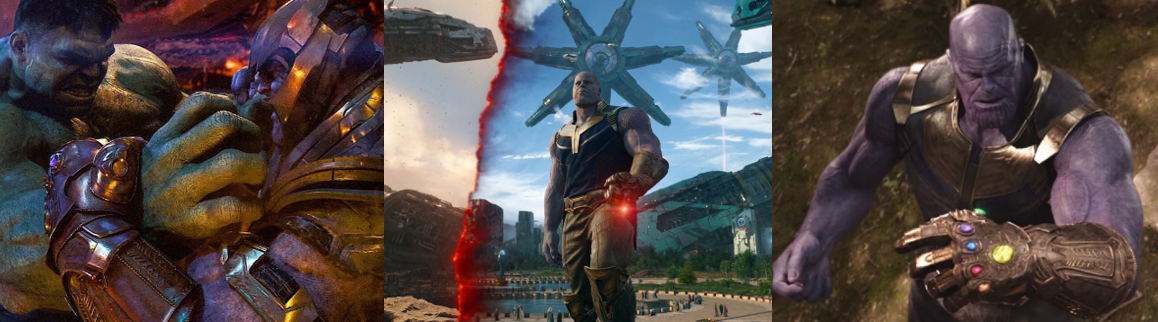
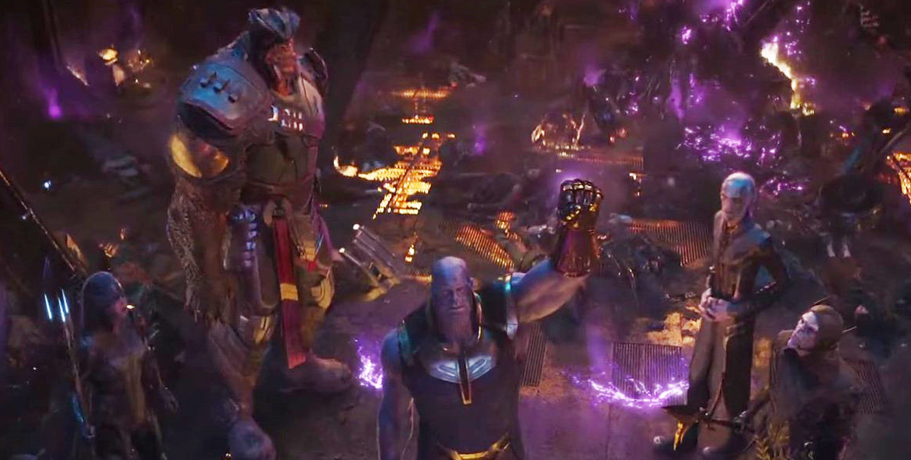
Thanos, and his mad desire to bring a twisted “balance” to the universe, is the focus of the movie.

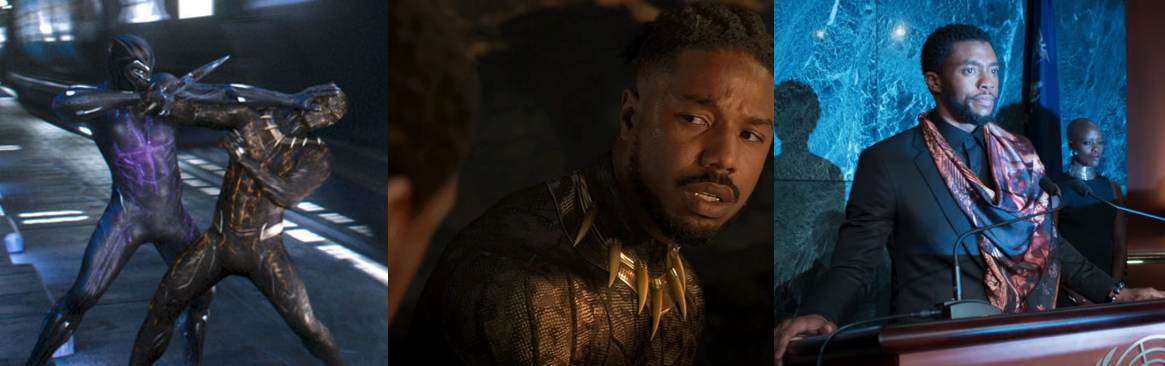
However, with all that said, Avengers: Infinity War isn’t about Iron Man; it’s not the story of the titular Avengers, or a celebration of Earth’s Mightiest Heroes coming together to oppose a maniacal despot. No, this is the story of Thanos, the hulking, conquering Mad Titan himself. Previously cameoing at the end of the last two Avengers films, and popping up in Guardians of the Galaxy (Gunn, 2014), Thanos was more of an ominous, looming force throughout the galaxy. Unless you’d read the comics, you probably had no idea why he was such a big deal but Infinity War establishes his threat immediately by having him ransack the Statesman alongside his “children”, the Black Order, in search of the Space Stone. In the build up to this film, I always assumed Thanos would be introduced by slaughtering Odin Allfather (Anthony Hopkins); after all, what better way to establish the biggest bad in the MCU than having him kill an actual God? However, since Odin is already dead, Infinity War establishes Thanos’s power by having him already be in possession of not only the Infinity Gauntlet, but also the Power Stone, having sacked Xandar off-screen. Thanos then has his henchman kill half of the remaining Asgardians, puts a sound beating on Doctor Bruce Banner/The Hulk (Ruffalo), and chokes the life out of beloved anti-hero Loki Laufeyson (Tom Hiddleston). Unlike in the comics, were Thanos was driven by a desperate desire to win the affection of Mistress Death, the MCU Thanos has a twisted take on the destructive and wasteful nature of the universe; since his warnings failed to save his home world, Thanos made it his life’s mission to purge half of all life on every world so that billions more will be saved in the long run. After realising that the six Infinity Stones can make his dreams come true with a literal snap of his fingers, Thanos sets his minions out into the cosmos to acquire them while he tracks down his adopted daughter, Gamora (Saldaña), the only person who knows the location of the Soul Stone.

Blasted into space, Iron Man is determined to bring the fight to Thanos before he can threaten the Earth.

Since Thanos brings death in his wake, the arrival of his minions, Ebony Maw (Tom Vaughan-Lawlor) and Cull Obsidian (Terry Notary), on Earth naturally causes quite a stir. Forewarned of Thanos’s impending arrival by the shellshocked Banner, Doctor Steven Strange (Cumberbatch) and Wong (Benedict Wong) quickly recruit Stark to help them prepare a defence. Despite having retired (…again…) from the superhero life and ready to start a family with Virginia “Pepper” Potts (Gwyneth Paltrow) Stark doesn’t hesitate to show off his brand new nanotech armour and stand against the alien invaders, though his arrogance and recklessness causes him to quickly butt heads with Dr. Strange. Still in possession of the Time Stone, housed within the Eye of Agamotto, Dr. Strange is as focused on the big picture as Thanos, in many ways; while Stark wants to commandeer the alien spacecraft and bring the fight to Thanos in a pre-emptive strike, Dr. Strange is more concerned with keeping the Time Stone from being misused and, despite his Hippocratic Oath, is fully prepared to let Stark and even Peter Parker/Spider-Man (Holland) die if it means protecting the greater good from the Time Stone. Having sensed the Black Order’s arrival, Spider-Man jumps in to help with his usual blend of heroism, enthusiasm, and desire to impress his mentor, but soon ends up blasting through the cosmos in an alien vessel and garbed in his “Iron Spider” outfit. Although Stark is pissed that Spidey tagged along for the ride, he dubs him an Avenger (much to Peter’s immense pride) and prepares his make-shift allies for the coming battle. While Dr. Strange is right that Stark is bolstered by his overinflated ego and sense of superiority, Stark’s reasoning for wanting to confront Thanos is fully understandable considering that he’s been taking the direct (if reckless) approach ever since he escaped from that cave. Traumatised by his brief glimpse of the vast danger that awaits in the universe, Stark wishes to protect the world in a suit of armour and has constantly been working to find ways to prepare the planet for greater threats. His methods, however, have been highly questionable; not only did they lead to the creation of Ultron (James Spader), but his willingness to sign the Sokovia Accords directly led to the disassembling of the Avengers right when they’re needed the most, and yet he’s determined to power through and to prove he was right by ending Thanos’s threat before it can begin.

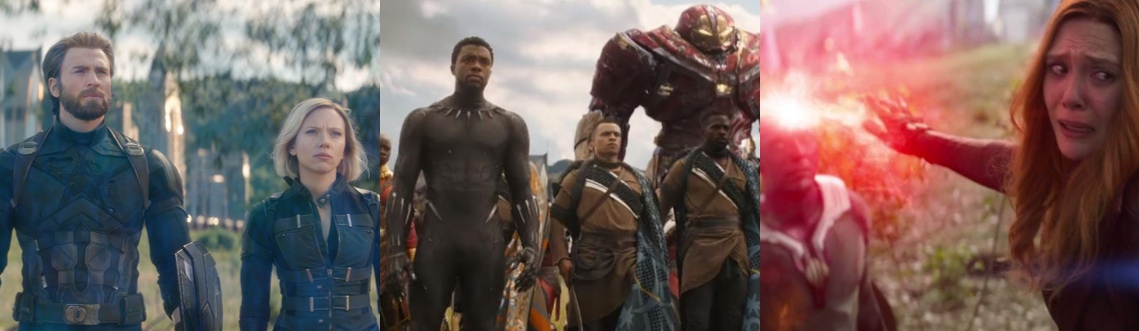
Cap and Natasha turn to Wakanda for help, but Wanda’s forced to make the ultimate sacrifice.

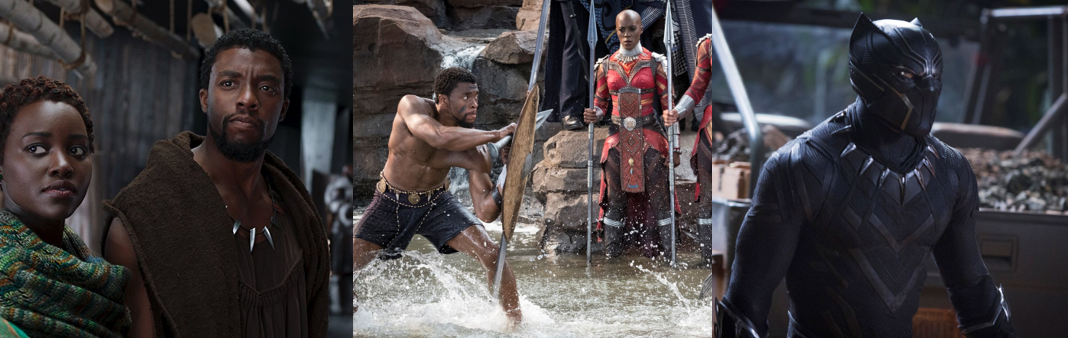
Since the Avengers are splintered, Steve Rogers/Captain America (Evans) has been on the run; having grown out a delicious beard and donning a modified version of his famous suit, one that casts him more as a nomad than a representative of the United States or Earth’s Mightiest Heroes, Steve and Natasha Romanoff/Black Widow (Johansson) have been forced off the grid to avoid being arrested by Senator Thaddeus “Thunderbolt” Ross (William Hurt) for opposing the Accords. His main concern at the start of the film is locating Wanda Maximoff (Olsen) and the Vision (Bettany), who took off for some alone time and ended up being viciously attacked by Proxima Midnight (Carrie Coon) and Corvus Glaive (Michael James Shaw) of the Black Order; since the Vision has the Mind Stone imbedded in his forehead, he receives the brunt of the attack and is left in critical condition, leaving Steve no choice but to take him to Wakanda so that Shuri (Letitia Wright) can help separate him from the stone. There, they’re reunited with T’Challa/Black Panther (Boseman) and James Buchanan “Bucky” Barnes/The Winter Soldier (Sebastian Stan), who offer them safe refuge and some much-needed allies for the coming battle. Thanks to Wakanda’s advanced technology, the heroes are effectively shielded from Thanos’s army, but his alien monstrosities are relentless and think nothing of tearing through the energy shield even as it shreds them to pieces, forcing Cap to lead a battle into war once more. Despite being on bad terms with Stark, Cap’s dedication to his friends and the safety of the world remains his top priority; he’s largely clueless to the magnitude of the greater threat at hand, and yet doesn’t hesitate to oppose Thanos when he comes to claim the remaining Infinity Stones, literally throwing himself in front of his friends to try and buy them time. Sadly, it’s Wanda who suffers the most; despite Shuri’s best efforts, the heroes run out of time and Wanda’s forced to use her unmatched powers, born from the Reality Stone, to destroy her lover to keep the Mind Stone out of Thanos’s hands…only for the Mad Titan to turn back time, wrench it from the Vision’s head, and force Wanda to see her beloved rendered inert before her eyes.

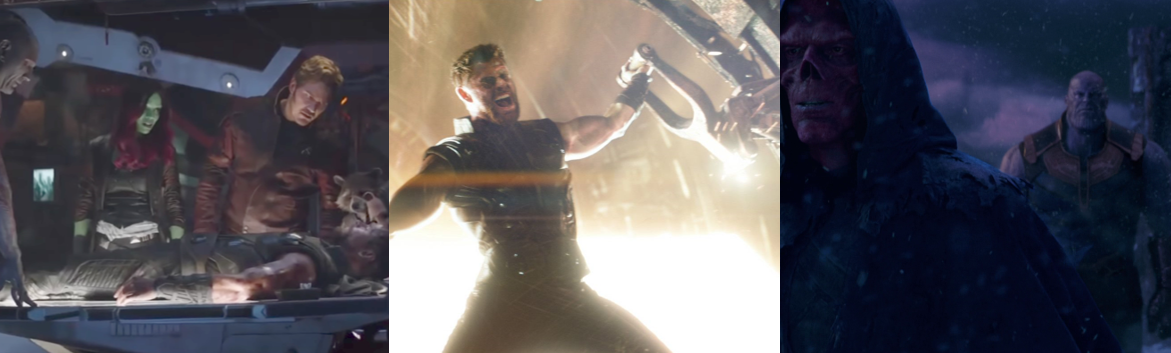
Rocket and Groot aid Thor in creating a new weapon, while Gamora is captured by her mad foster father.

Thanos is able to accomplish this goal despite the best efforts of the MCU’s greatest heroes thanks to an ill-timed emotional outburst from Peter Quill/Star-Lord (Pratt). Touring the galaxy alongside his friends and fellow Guardians, Gamora, Drax the Destroyer (Dave Bautista), Rocket Raccoon (Bradley Cooper), Groot (Vin Diesel), and Mantis (Pom Klementieff), Quill’s masculinity is tested when the group stumble upon the beaten body of Thor Odinson (Hemsworth) out in the endless void. Already traumatised after the death of his father and the destruction of his home world, Thor buries his grief and anguish beneath a determination to re-arm himself with a Thanos-killing weapon courtesy of weaponsmith Eitri (Peter Dinklage) at Nidavellir, a titanic forge orbiting a dying star. After furnishing him with an artificial eye, Rocket tries to console Thor, whose losses have been absolutely devastating, but, though the God of Thunder brushes off any concerns for his welfare with his usual bravado and is determined to kill Thanos as recompense for his actions, it’s clear that Thor is wracked by denial and despair at the loss of his brother and people. He finds new allies with the Guardians, despite Peter feeling threatened by him, and Rocket and Groot help him to reignite Nidavellir’s forge to craft his new weapon, Stormbreaker, a mighty axe capable of summoning the Bifrost and unbound by Odin’s enchantment. Meanwhile, Gamora, shaken by how close her adopted father is to completing his life’s goal, begs Peter to kill her if it comes to it to keep the Soul Stone out of Thanos’s hands. Although he’s reluctant, he actually shows a willingness to go through with this, only to be thwarted when Thanos manipulates reality in his favour. Gamora’s repeated attempts to kill herself and defy Thanos are similarly deflected by the Mad Titan, who forces her to divulge her knowledge to spare her sister, Nebula (Karen Gillan), from a macabre torture. This sees Gamora accompany Thanos to Vormir, where the ethereal presence of “The Stonekeeper” (Johann Schmidt/The Red Skull (Ross Marquand) making a much-welcome return to the MCU) details that the stone can only be claimed if one sacrifices someone they love. While Gamora is initially amused by this, believing Thanos is too twisted to ever love anything, she (and audiences everywhere) is soon aghast to find that Thanos truly did love his adopted daughter, and thus he casts her to her death on the rocks below to get one step closer to achieving his goal. The knowledge of her lover’s death drives Peter into a rage, ruining the carefully laid out plan he and the others concocted to subdue Thanos with a multi-stage attack and Mantis’s sleep-inducing abilities. However, while many may rage at Peter for being so stupid and costing them their best chance at removing Thanos from the source of his power, his outburst is fully understandable given how deeply he cared for Gamora, and ultimately plays into his overall characterisation as a flawed human being rather than some infallible hero.

The Nitty-Gritty:
Since Avengers: Infinity War features so many characters, you might think that some are more developed than others, but that’s not really the case here. Thanks to the core cast featuring in their own movies and team ups prior to this, Infinity War easily jumps right into the central conflict without having to worry too much about establishing origins or motivations. While this is great for long-time followers of the MCU, newcomers might be a bit bewildered but if this was your first MCU film then that’s really on you more than anything else. While not every character gets a significant sub-plot or side mission, they still find some way to make an impression, even it’s something as simple as being funny or having an action scene. Despite having his own vendetta against Thanos, Drax is basically a non-factor in the entire proceedings; his one attempt to kill the murderer of his family leaves him crippled by the power of the Reality Stone, but he makes up for this with some hilarious moments such as his attempts to be “invisible” and his ridiculous “Why is Gamora?!” line. As ever with an MCU production, it’s the little things that make the most impression; things like Spider-Man not being able to remember everyone’s names, Star-Lord flipping Thanos the bird, and Eitri and Thor’s “Only if I die” exchange are great moments of levity and characterisation, especially in a film where the stakes are so high. The Russos do a fantastic job of recreating the look and feel of each separate character and franchise so it all feels seamless. While some seemed confused as to why Thor needed to create a new weapon after harnessing his lightening powers in Thor: Ragnarok (Waititi, 2017), the point is to have something tangible to focus his energies through, to craft a weapon specifically to negate the Infinity Stones and kill Thanos, and to give Thor a goal to work towards so he can feel useful and not give in to his utter despair. On the flip side, it’s true that we never really get (or got) much time to invest in the Wanda/Vision romance; their connection is undoubtable and a pivotal part of the film, but we very much pick up with them trying to figure it out rather than discovering it.

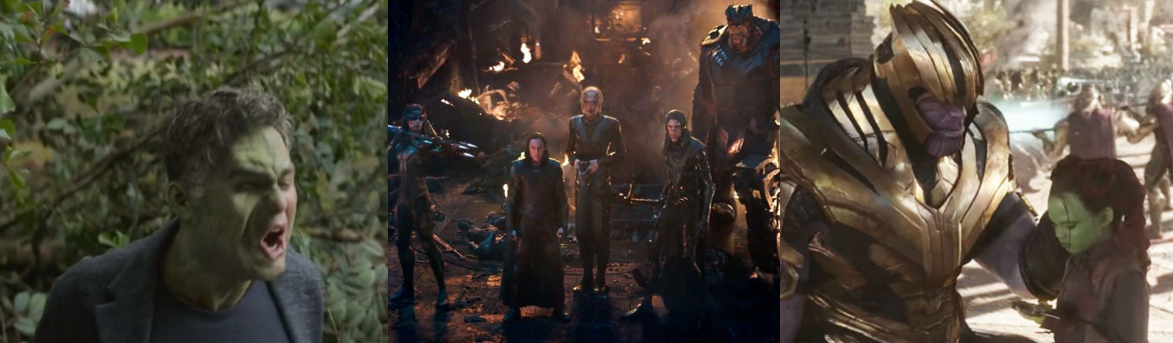
While there’s not much Hulk action and the Black Order are a bit random, we do learn a lot about Thanos.

Similarly, there’s a sub-plot regarding the Hulk’s refusal to emerge after his thrashing at Thanos’s hands; while this is amusingly played as an allegory for sexual performance, it’s never actually stated why Hulk won’t come out. It’s assumed that he’s scared and humbled, but we’re told (outside of the movies, so it doesn’t really count) that the Hulk was just sick of fighting Banner’s battles. Personally, I do feel the excised scenes of the Hulk bursting from the Hulkbuster armour would’ve only added to the action-packed finale (and I would’ve loved if he’d been the Grey Hulk as well), so Hulk fans might be a little disappointed by how small a role the Jade Giant plays in the proceedings. Additionally, we really don’t learn anything about the Black Order except their absolutely loyal to Thanos and pretty sadistic villains in their own right; introduced and offed over the course of this film, the foursome is really only here to act as Thanos’s proxies, and I still think it would’ve been cool if guys like Ronan the Accuser (Lee Pace) and even Loki had filled these roles. Still, it’s honestly nothing short of a miracle that Infinity War manages to juggle all its characters and interweaving plot lines so well; I’ve seen team-based movies that have struggled with less than half the amount of content of this film, though it helps that the MCU has a competent plan, enthusiastic directors and actors, and so many films behind it to lay all the foundations. Some characters are notable in their absence, like Clint Barton/Hawkeye (Jeremy Renner) and Scott Lang/Ant-Man (Paul Rudd), but these characters got their due in the follow-up so it all works out. Infinity War had easily the highest stakes of any MCU film at the time, with the fate of literally half the universe in the balance, and the whole film is framed as a frantic chase to prepare for, and stop, Thanos from reaching his goal. Fittingly, we do learn quite a bit about Thanos; easily the most complex and layered villain in the entire MCU at that point, Thanos believes himself the hero of the story. He longs to save billions of lives and to balance the universe through the culling of millions and is more than willing to kill anyone who stands in the way of that goal, but also shows respect, compassion, and genuine affection for both his foes and his adopted family. Through Thanos, we also learn a bit more about Gamora and Nebula’s chaotic and violent upbringing, and the film definitely goes out of its way to present Thanos as both a maniacal despot bent on genocide and a reasonable, well-meaning individual who actually has some solid arguments…even if he goes about enacting his plot in the most diabolical way imaginable.

The film’s visual style is absolutely top notch and bolstered by loads of fun, unique action and interactions.

The scope of Avengers: Infinity War is simply off the charts. The narrative is constantly jumping between the outer reaches of space and here on Earth, and characters travel to several different, visually interesting worlds and locations during the course of the film. Many of these are established places in the MCU, like Wakanda and Knowhere, but even these locations are given a new perspective thanks to Thanos’s influence; the sight of his monstrosities tearing across the Wakandan plains makes for one hell of an epic shot and fight sequence with a grander scale than anything we’d seen in the MCU up to that point. Indeed, the CGI and visual effects are fantastic all throughout Infinity War, with Thanos being the obvious standout. A fully realised, flesh and blood character, his creation is so intricate that you’d barely even realise he was a computer creation so detailed are his physical quirks and emotive qualities. While the CGI on Iron Man’s nanosuit is a little spotty, and Spider-Man’s mask vanishes a little too smoothly for me, all the visual effects are undeniably top-notch on both characters, and it’s frankly astounding that everything looks and feels like it’s actually real despite how much of it is all digitally created. Thanks to the Reality Stone, Thanos is free to bend reality and physics to his will, reducing Drax and Mantis to cubes and ribbons with a thought, leaving Taneleer Tivan/The Collector’s (Benicio del Toro) museum a flaming shambles, and even projecting a lush, verdant recreation of Titan to parallel the desolate wasteland it has become since his people ignored his warnings. This sets the stage for the climatic battle between Thanos and Iron Man’s makeshift team, in which Dr. Strange puzzles the Mad Titan with his incantations and the maniacal despot implodes a moon and curls its fragments at his foes! There’s so much happening in each of these battles that you can spot new things every time you watch the film, and every character gets a little something to do, whether it’s Spidey frantically webbing up his new friends as they’re tossed about, Bucky spinning Rocket around so they can blast at Thanos’s creatures, or Colonel James “Rhodey” Rhodes/War Machine (Don Cheadle) carpet bombing the invading army around the Wakandan perimeter.

In a shocking twist, Thanos succeeds in his goal and snaps away half of all life in the universe!

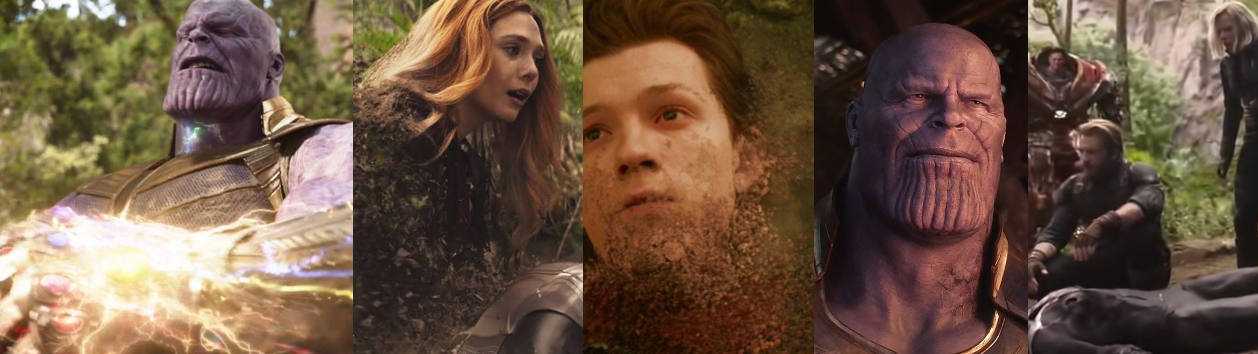
Obviously, the thing that separates Infinity War from the rest of the MCU (and most comic book movies) is the fact that the villain actually wins in the end. Stark and the others were able to keep him off balance long enough to largely avoid him using the Infinity Gauntlet, but Star-Lord’s outburst costs them the chance to get the gauntlet off him and results in the team being soundly defeated. Skewered and left gravely wounded, Iron Man is unable to keep Dr. Strange from bargaining for their lives with the Time Stone; while it seems as though this goes against his earlier declaration to sacrifice them in favour of the stone, it’s actually all part of a larger endgame as Dr. Strange had looked into the future and found only one outcome where the heroes were victorious out of billions of possible scenarios, and that outcome was predicated on Thanos being victorious. Thus, armed with the collective powers of Reality, Time, Power, Space, and Soul, Thanos is easily able to teleport to Wakanda, swat aside Cap’s fledgling opposition, and tear the final Infinity Stone from the Vision’s head. Thankfully, Thor is on hand to enact his revenge, driving Stormbreaker right into Thanos’s chest and seemingly saving the day but, sadly, he didn’t go for the head and, just like in the comics, Thanos snaps his fingers and the worst possible scenario plays out before our eyes. All noise, whether ambient or otherwise, is sucked from the film and we’re forced to watch as these iconic characters literally turn to dust before our very eyes! Bucky, Groot (hell, all of the Guardians except Rocket and Nebula!), Sam Wilson/The Falcon (Anthony Mackie), and even Black Panther disintegrate into nothingness but easily the most harrowing loss is that of the young Spider-Man. Clinging to his existence with a tenacious desperation, he fades away in the arms of his stunned mentor, and Stark is left hurt and injured with the weight of his monumental failure. Similarly, those left alive are barely able to comprehend the scope of what has happened and end the film in a dazed confusion, the realisation that they have lost (and lost badly) just sinking in. Even now, many years removed, this remains a haunting and deeply impactful ending; never before had the MCU witnessed such instant and total failure and the shock of seeing some of its most iconic characters simply sniffed out with but a thought remains a disturbing visual to end on. As for our “hero”, Thanos makes good on his promise to retire following his victory, happy in the knowledge that the universe will be better off with half its population dead, and unaware that a small glimmer of hope for those left has been signalled to assist.

The Summary:
As someone who had waited his entire life to see a group superheroes finally come together in one movie, to share an interconnected universe just like in the comics, and to interact with each other in unique and fun ways, I was super excited for Avengers Assemble. I remember watching the MCU unfold back in the day and still not quite being able to believe that this was actually happening, and then being blown away when it actually did and the MCU exploded into a massive success. Now, take all that and multiply it by a hundred and you have Avengers: Infinity War! Not once would I have ever guessed that we’d see Thanos, or an adaptation of The Infinity Gauntlet, make it to cinema screens. Hell, I was surprised the Avengers came together to fight Loki and the Chitauri rather than a gaggle of their solo villains, and the idea of this tyrannical dictator carving a path of destruction throughout the universe (not just Earth), besting the MCU’s strongest characters and even succeeding in his diabolical goal was just unprecedented. And even if I could have guessed that we’d see that, I never would have imagined that such a villain would be presented as a complex and, yes, relatable character. Even setting aside the MCU’s “villain problem”, it really wasn’t the normal thing to frame a superhero film’s bad guy as the lead character, one with lofty dreams and understandable motivations, especially one created entirely out of CGI! The idea was laughable, but damn…Marvel Studios did it; and not only did they do it, but they absolutely smashed it! Avengers: Infinity War was a near-perfect culmination of the MCU’s long ten-year journey. All those solo films, team ups, the risks taken on obscure characters all paid off in the biggest superhero crossover ever conceived at the time. An astonishing blend of action, humour, heart, and visual effects flawlessly captured the look, feel, atmosphere, and characterisations of these different franchises and they all felt perfectly at home co-existing in this vast fictional universe. I say “near-perfect” only because Angers: Infinity War isn’t one movie; it’s two. I don’t say this as a detriment, though; what I mean is, Infinity War is bumped up to perfection when viewed alongside Avengers: Endgame, which completes the story in a way that fundamentally changed the landscape of the MCU going forward. It all started here, though, with the Avengers’ greatest failure, an ending that never fails to leave an impression in its raw morbidity that just leaves you salivating to throw in the next film and see this tragedy undone through the noblest of sacrifices. And yet, Avengers: Infinity War still works incredibly well when viewed by itself; it’s packed with spectacle and more superhero action than you could ever imagine and is a fitting love letter not just to fans of these movies, but lifelong comic book fans such as myself who dreamt of the day when the sprawling, interconnected tales we grew up with would make it to the big screen.

My Rating:

Rating: 5 out of 5.

Fantastic

What did you think to Avengers: Infinity War? Were you impressed by the scope and spectacle of the film or were there a few too many characters for your liking? Were you disappointed that the Hulk didn’t play a larger role in the film and which characters were missing from the film for you? What did you think to Thanos, his revised motivations, and his depiction in the film? Were you annoyed that Star-Lord cost the heroes their best chance at stopping Thanos? How did the ending affect you at the time, and how do you think it holds up today in hindsight? What did you think to it as an adaptation of The Infinity Gauntlet? How are you celebrating the debut of the Avengers today and what are some of your favourite Avengers storylines, characters, or adaptations? Feel free to share your thoughts and opinions on the Avengers in the comments below.

Talking Movies: Pacific Rim Uprising

Talking Movies
PacificRimUprising

Back in 2013, which seems like a very long time ago now, director Guillermo del Toro put Michael Bay’s overblown, convoluted mess of a Transformers franchise to shame with Pacific Rim, a teenage boy’s wet-dream featuring Idris Elba commanding a rag-tag army of titanic mech suits against increasingly aggressive waves of giant monsters from a dimensional tear beneath the Pacific Ocean. It was a mad concept, one perhaps more suited to anime or manga and, despite being a pretty basic concept, was actually surprisingly good. Reports of a sequel circulated and were rumoured for quite some time and, despite missing del Toro’s presence in the director’s chair and star Charlie Hunnam, the Jaeger’s finally return to battle again in Pacific Rim Uprising (DeKnight, 2018), which picks up ten years after the events of the first film. Apparently, this fictional world is far more productive and efficient than ours as not only have they practically rebuilt and restocked many of the world’s cities and resources, they’ve also managed to construct a veritable army of bigger, better Jaeger’s despite the fact that the Kaiju have been dormant and gone over the last ten decades.

PacificRimShao
If you ever learn anything from me, learn this: do not trust a suit!

Jake Pentecost (John Boyega), son of Elba’s Stacker Pentecost, has lost his way; having walked away from the Jaeger some time ago, he scavenges Jaeger parts and technology to sell on the black market. During his most recent job, he ends up literally falling in on amateur Jaeger enthusiast Amara Namani (Cailee Spaeny), who has illegally built herself a one-man Jaeger named Scrapper. Although they attempt a spirited getaway, they are both arrested and drafted (re-drafted, in Jake’s case) back into Pan-Pacific Defense Corps at the request of Jake’s half-sister, Mako Mori (Rinko Kikuchi). Jake is reunited with his former Jaeger partner Nate Lambert (Scott Eastwood), with whom he shares an antagonist relationship, and tasked to train the new generation of Jaeger pilots, who are facing the prospect of being made redundant by the Jaeger drone programme spearheaded by Liwen Shao (Jing Tian) and Dr. Newton Geiszler (Charlie Day). After a devastating attack by a rogue Jaeger, Obsidian Fury, Jake’s trepidation at being redrafted is replaced with a dose of good, old fashioned thirst for vengeance. However, in the course of hunting down and bringing Obsidian Fury to justice, Jake and Nate uncover a deeper plot to fuse Kaiju’s with the Jaeger technology and realise Dr. Hermann Gottlieb’s (Burn Gorman) fear that the Kaiju are poised to return for another round.

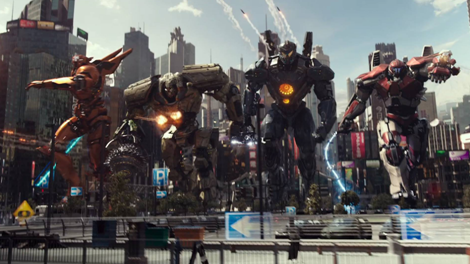
PacificRimJaegers
This is what I paid to see!

Unlike Pacific Rim, Pacific Rim Uprising is less about giant monsters fighting giant robots and more about giant robots fighting other giant robots and the boot camp-style training of the young Jaeger pilots. I found the Jaeger pilots’ enthusiasm to be commendable but flawed; they’re up in arms at the idea of being grounded with desk jobs piloting remote mechs rather than putting their lives on the line in the field, which is a bit strange. Judging from both of these movies, the average lifespan of a Jaeger pilot is scarily short so you’d think that they world prefer to remotely engage the Kaiju. The film effectively expands and builds upon the world of the first movie; I kind of glossed over, or trivialised, how quickly the world has recovered from the Kaiju war but, to be fair, Jake does narrate quite heavily about how not every part of the world has recovered and that life is a struggle for a lot of the less fortunate people. Between movies, however, Newton and Gottlieb have discovered (from drifting with that Kaiju brain) that the Kaiju are created and controlled by beings they call “the Precursors”, whom they postulate are plotting to wipe out all life on Earth, which is an interesting concept to introduce and build upon.

PacificRimKaiju
…or is it this? Agh, I’m so conflicted!

Given that the rift between dimensions has been sealed, however, the main thrust of the narrative is about preventing the Precursors from reopening the rift and seeing this plan through. As a result, there is a lot less Kaiju action in this movie compared to the last for a good chunk of it. Luckily, however, the narrative in between of world-building and trying to figure out the identity of Obsidian Fury and the true motives of the Shao Corporation, is actually pretty good and the banter and dialogue between the characters works quite well. Once the Kaiju do appear, it’s for the entire last act of the movie and the pay off is totally worth the wait if you like giant monsters fighting giant robots (and you should!) While the first film was all about being an effects showcase, this is more another example of why John Boyega is becoming one of the hottest, fastest-rising commodities in Hollywood today. So much of this movie hinges on and revolves around his character and he carries it beautifully; Jake is conflicted at living in the shadow of his father’s legacy but still wanting to make him proud, at being a snarky loner but also his deep-rooted obligations towards being a Jaeger pilot.

PacificRimPilots
Why remotely control our mechs when we can go out in what amounts to a suicide run every time?

The cast around him is good and he plays off of them really well. Scott Eastwood fulfilled his role really well; his relationship with Jake is frosty, at best, but while they do butt heads it’s mainly because Nate feels betrayed at Jake’s departure rather than from actual hatred. Amara fulfils a role very similar to Mako’s from the first movie, having been orphaned by the Kaiju war as a child and desperately trying to prove her worth in a sea of other arguably more worthy pilots. However, as good (or, at least, passable to satisfactory) as the rest of the cast are, but make no mistake, this is Boyega’s showcase. In the end, Pacific Rim Uprising is what it is. If you go into a movie like this expecting an intelligent, deeply emotional, life-changing experience then…well, you’re a fool. This is a unique franchise; basically a live-action anime that features giant mech robots fighting Kaiju and, for me, all I want to see is giant things fighting other giant things. Pacific Rim Uprising may feature less of that than its predecessor but the characters were enough to sustain my interest long enough for when the fighting did start and it was totally worth the wait.

My Rating:

Rating: 3 out of 5.

Pretty Good


Recommended: If you like good, mindless, fun then yep.
Best moment: The entire last act, once the Kaiju are finally released from the drift and the rookie pilots are forced to suit up and jump into action.
Worst moment: Nothing massively glaring comes t mind; maybe the scenes at Shao Corporation, which feature corporate dialogue about the drones and stuff and isn’t as interesting as seeing things in action.

Game Corner: Jazz Jackrabbit (PC/DOS)

GameCorner
JazzLogo

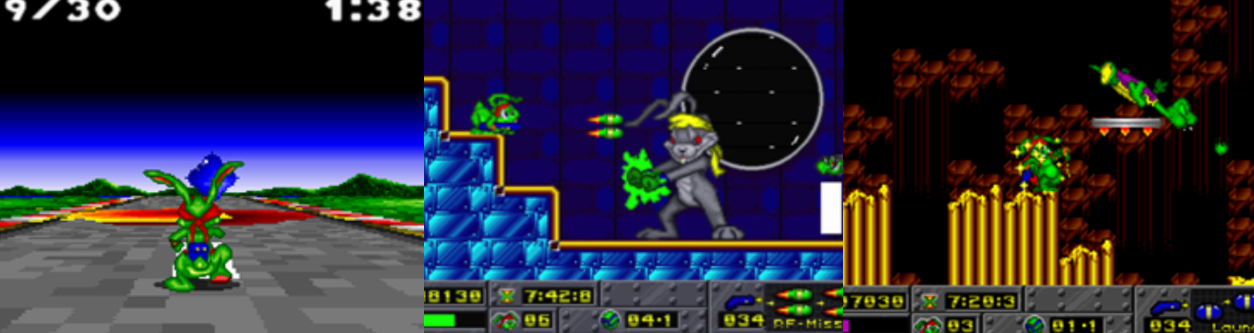
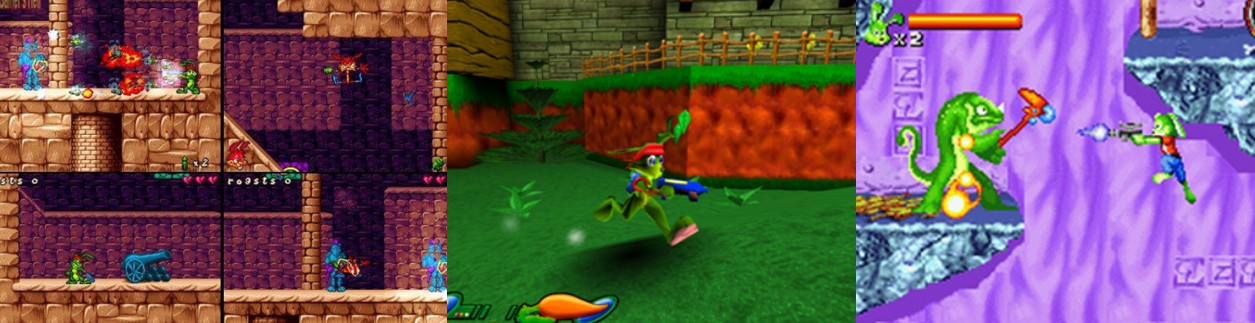
I’ve previously spoken about my love and loyalty towards SEGA’s Sonic the Hedgehog franchise and, no doubt, will do again at some point in the future but one thing that I, perhaps, did not mention about Sonic’s impact on my life was a consequential love for fast-paced action platformer videogames. It’s easy to forget these days, when Sonic videogames often struggle to recapture the same success that they enjoyed back in the early-nineties, but Sonic the Hedgehog (Sonic Team, 1991) had an immediate impact on the landscape of videogames at the time. Especially after the release of Sonic The Hedgehog 2 (Sonic Team/SEGA Technical Institute, 1992) there was no question: everyone needed a fast-paced, attitude-infused anthropomorphic mascot.

JazzStory
Ludicrous? Maybe so, but this videogame is fantastic fun!

While the idea of a brightly-coloured, family-friendly videogame that incorporated a visually striking mascot who fired projectiles had already been done with Zool: Ninja of the “Nth” Dimension (Gremlin Graphics, 1992) and would, eventually, see perhaps its greatest mainstream appeal at the time with the release of Earthworm Jim (Shiny Entertainment/Virgin Interactive Entertainment, 1994), there was one other title that took the concept of “Sonic with a gun” and really owned it: Jazz Jackrabbit. Designed by Cliff Bleszinski and developed and published by Epic MegaGames, who would go on to create the much-lauded and often-licensed Unreal Engine in 1998, and released exclusively for Windows/DOS and Apple computers on 20 March 1994, Jazz Jackrabbit beat Earthworm Jim to the punch by just over four months. Jazz Jackrabbit casts you as the titular blaster-toting hero in a science-fiction parody of Aesop’s The Tortoise and the Hare; the evil Devan Shell kidnaps Princess Eva Earlong of the planet Carrotus amidst his quest to conquer the universe and the super-fast Jazz, armed with his LFG-2000 gun, must battle across numerous worlds to rescue her. If it sounds bat-shit crazy, that’s because it is but in the most charming way possible. Jazz Jackrabbit is divided into six Episodes, each containing three planets with two levels apiece (and numerous secret levels hidden throughout). Levels are bright, colourful, huge, and filled with loads of branching paths, quirky background scenery, and things to collect as well as numerous enemies (including giant turtles riding rockets, electrified eyeballs, and flying swords).

Armed to the teeth, this speedy little bunny isn’t messing about!

Jazz is super fast; his acceleration is much faster than Sonic’s and, while this comes in handy due to every level having a time limit, it does mean you will often speed head-first into enemies and hazards. Jazz can jump higher and further the faster he is travelling but, although he curls into a ball like Sonic, he can only attack enemies by firing his blaster. This weapon can be powered up by shooting and collecting various icons; the standard Blaster setting has infinite ammo but the upgrades (including the flame-blasting Toaster and RF-Missile rockets) have limited ammunition and Jazz loses all upgrades once he loses a life. Players can collect Carrots to increase Jazz’s health bar, Extra Life icons, and various other items to increase their score and access pseudo-3D hidden Bonus Stages where, if they manage to collect all the Gems within a time limit, they are awarded with an Extra Life. Jazz can also shoot signposts to respawn upon death and pick up various additional power-ups, such as a shield that protects Jazz from damage, a projectile-shooting bird sidekick, a hoverboard, and the traditional speed up and invincibility power-ups we all know and love.

Tackle bonus stages and troublesome bosses all while enjoying the game’s cartoony aesthetic.

To complete a level, Jazz must run, jump, and shoot his way through the various enemies and traps to reach a signpost within the time limit and players receive a grading and percentage bonus depending on how well they did. Thankfully, unlike many action platformers, Jazz Jackrabbit does not feature any bottomless pits for cheap deaths. Instead, players can choose from four difficulty settings (Easy, Medium, Hard, and Turbo), which increase the game’s challenge by giving you less time and health. As you’d expect, Jazz must battle a boss at the end of every level which, along with the steady increase of enemies and hazards, is where the game’s difficulty really lies. Bosses are large and erratic, their patterns difficult to predict, and fire multiple projectiles. Luckily, you have infinite continues and can keep plugging away until you achieve victory. Jazz sports a catchy, upbeat soundtrack and cartoonish sound effects and even some voice acting; like Sonic, jazz grows impatient when you leave him idle, and he will berate the player if they leave him for too long. Sadly, unlike Earthworm Jim, Jazz Jackrabbit was never ported to home consoles, significantly affecting both its mainstream reach and impact on the genre, despite being one of the first titles to bring the action platformer genre to the PC format.

JazzChristmas
You could even play Christmas-themed levels.

Instead, Jazz Jackrabbit was released as a CD and as shareware; players could freely distribute the first Episode amongst friends but were encouraged to pay for the full game upon completing the first levels. Three additional Epsiodes were included in the physical release of the game, one that transforms Jazz into a lizard, and five more Christmas-themed Episodes were featured in the Holiday Hare shareware editions of the videogame. Jazz Jackrabbit went on to spawn a sequel, Jazz Jackrabbit 2, in 1998. Jazz Jackrabbit 2 introduced numerous new gameplay mechanics (such as a rising uppercut, the ability to jump and butt-stomp on enemies, and allowing Jazz to hover briefly) alongside a second playable character, Jazz’s brother Spaz, and a comprehensive level editor. A third title was apparently in development for Windows and PlayStation 2 and would have brought Jazz and his entire cast of characters fully into the 3D realm, however development ended in 2000 and the videogame never saw the light of day beyond the leaked alpha build. Instead, a complete reboot of the series made its way to the Game Boy Advance. Jazz Jackrabbit (Game Titan/Jaleco, 2002) stripped the titular character of his speed, iconic appearance, and turtle enemies in favour of a more Star Wars-inspired aesthetic. Jazz was redesigned to greatly resemble Han Solo and even wielded a similar-looking pistol, and was pitted against hoards of space-faring chameleons. Make no mistake, the decision to strip away everything that made Jazz Jackrabbit so enjoyable mean that you would be much better served playing the original title or its sequel.

Despite a decent sequel, a canceled 3D title, and a dismay revival, the original Jazz really needs a HD port.

While Jazz Jackrabbit 2 was undeniably bigger and better than its predecessor, there’s something to admire in the simplicity and charm of the original. To this day, neither Jazz Jackrabbit or Jazz Jackrabbit 2 have received ports outside of their PC releases (although the 2013 HD remaster of the similarly-forgotten action platformer Superfrog (Team17, 1993) makes me hope that, one day, Jazz will have his time in the sun once again). Instead, I recommended visiting Gog.com and purchasing the fully-Windows 7-compatible editions of both videogames. Jazz Jackrabbit could have be a simple Sonic knock-off but it is so much more than that; Jazz Jackrabbit has an allure and appeal all its own thanks to its unique cartoonish graphics, outlandish premise, and fun, pick-up-and-play gameplay mechanics. Back in my youth, high quality PC titles were all I would play when I visited an old friend of mine and Jazz Jackrabbit was surely among those videogames and deserves to be rediscovered by a new generation of gamers.

My Rating:

Rating: 5 out of 5.

Fantastic

Movie Night: Black Panther

BlackPantherLogo

Released: 16 February 2028
Director: Ryan Coogler
Distributor:
Walt Disney Studios Motion Pictures
Budget: $200 million
Stars:
Chadwick Boseman, Michael B. Jordan, Lupita Nyong’o, Danai Gurira, Letitia Wright, Winston Duke, and Martin Freeman

The Plot:
After helping to bring his father’s killer to justice, Prince T’Challa (Boseman) assumes the mantle of the Black Panther is crowned king of the hidden kingdom of Wakanda. However, his reign is challenged by his cousin, N’Jadaka/Erik Stevens (Jordan), now a brutal mercenary known as Killmonger who seeks to overthrow T’Challa and begin a global revolution using Wakanda’s advanced technology.

The Background:
Having co-created Marvel Comics’ First Family of superheroes, the Fantastic Four, Stan Lee and Jack Kirby introduced a number of additional characters and concepts in the pages of the foursome’s adventures, with T’Challa/The Black Panther being one of the most prominent since he was the first black superpowered character in comic books. The Black Panther went on to feature in a critically acclaimed series, join the Avengers, and featured in a number of pivotal Marvel events and politically charged storylines. The Black Panther also saw some exposure outside of the comic books, featuring in the 1994 Fantastic Four cartoon and his own Marvel Knights motion comic series, but a live-action adaptation had been in the works since 1992. Back then Wesley Snipes was attached to the role and became heavily involved with the project, which repeatedly stalled throughout the nineties and failed to get off the ground into the early 2000s. Snipes was forced to bow out of the film by 2010 due to his conviction for tax evasion and, ironically, the very next year Marvel Studios head honcho Kevin Feige pushed the movie into production, though it would be some six years before the film would properly take shape. Chadwick Boseman won the title role after outlining his plans for the character, making his debut in Captain America: Civil War (Russo and Russo, 2016), though the world was shocked and saddened to learn of his death some years later and that he had been battling cancer throughout his MCU tenure. Director Ryan Coogler aimed to make Black Panther a personal, progressive showcase of a sovereign nation that put the spotlight squarely on African-American actors and important messages of racial equality. Accordingly, the production design, sets, and costumes pulled from a variety of cultural influences from Sub-Saharan Africa to mix the traditional with a wash of science-fiction, with this latter aspect being the realm of the numerous visual effects studios employ to bring Wakanda to life. Black Panther proved a massive financial success; it grossed nearly $1.350 billion worldwide and was universally lauded by critics. Reviews praised the film’s refreshing presentation, the performances, and the sheer visual spectacle but, more than anything, Black Panther was praised for tackling themes of racial oppression and depictions. Following Boseman’s untimely death, Feige announced that the role wouldn’t be recast and that Black Panther’s sequel would move the concept into a different direction to ensure a lasting legacy for the beloved performer.

The Review:
One of the things I love about the MCU is the way they’ve always strived to not be completely dependent on the same characters over and over; while Warner Brothers struggle to utilise any DC Comics characters that aren’t Bruce Wayne/Batman or Clark Kent/Superman, Marvel Studios have been seeding, introducing, or debuting new characters and superhero icons all throughout the MCU to help keep things fresh, expand and enhance their interconnected cinematic universe, and lay the foundation for future crossovers. This has also helped to keep the MCU diverse and dabble in portraying different cultures and types of characters, despite what some naysayers will say about the narrative tone most MCU films take. It’s not surprise, then, that Black Panther proved to be quite a monumental release; we’d seen black superheroes before, of course, most famously Eric Brooks/Blade (Wesley Snipes), but never before had a super film gone so in-depth at portraying an African society, tackling the issues of slavery and oppression felt by the Black community everywhere, or in establishing a fictional African-American culture as one of the most formidable forces in superhero cinema. It can be tough to rewatch Black Panther knowing not only that Chadwick Boseman was battling cancer throughout it but also that he has since passed on; I might not be the most knowledgeable Black Panther fan out there, but his performance really inspired me to want to read more Black Panther stories to explore the character.

Afforded superhuman abilities as the Black Panther, T’Challa must now step into the role of king.

My knowledge and experience of the Black Panther isn’t as learned as with other superheroes but he’s definitely been on my radar over the years, often popping up in Marvel cartoons and crossovers I’ve watched and read. Still, my expectations were simply to have a good time with the film and learn a little more about T’Challa as a character; in Civil War, T’Challa was a soft-spoken, honourable, and fiercely loyal man driven to vengeance after his father, King T’Chaka (John Kani) was killed. His arc was about realising that revenge is all-consuming and that there’s a better, more purposeful path he (and anyone, for that matter) can take, even if it means allowing reprehensible villains to live so they can be brought to justice for their actions. In Black Panther, T’Challa’s focus shifts towards the burden of the crown; not only must he stand as Wakanda’s greatest warrior and protector but he must also assume the role of a leader to his hidden nation, one he accepts out of a strong sense of duty and fiercely fights to earn by defeating challenger to the throne and tribal rival M’Baku (Duke) in ritual combat. T’Challa has an easy coolness to him that makes him warm and relatable; he can easily shift from a more light-hearted demeanour to being a warrior and a king and he’s afforded a great sense of vulnerability from the revelations he learns in this film, his feelings for Nakia (Nyong’o), and the times when he’s forced to fight without his powers. Thanks to a mysterious heart-shaped herb, T’Challa is granted superhuman strength and reflexes; these, along with his highly advance Vibranium suit, allow him to defend his nation as the Black Panther, but he’s forced by tradition to have his powers removed by Wakandan shaman Zuri (Forest Whitaker) in order to prove his right to the throne through his natural guile and abilities. luckily, T’Challa is more than up to the challenge and is equally determined to maintain the pretence that Wakanda is a struggling Third World nation in order to keep the wider world from learning of their Vibranium and the true extent of their advanced technology. Ruling not through force or oppression, T’Challa has an extremely relaxed and approachable demeanour; he goofs around with his tech-savvy and enthusiastic younger sister, Shuri (Wright), and makes efforts to extend the hand of peace to all of Wakanda’s nations despite M’Baku’s desires for the throne. However, he’s reluctant to open Wakanda’s borders and share their technology and resources with the world given that, in the past, outsiders have sought only to take the Vibranium for themselves, by force more often than not, and use it for nefarious ends.

T’Challa is surrounded by strong, loyal, and very capable allies, most of whom are female.

This is a view not readily shared with Nakia, T’Challa’s former flame and a “War Dog” from Wakanda’s River Tribe; at the start of the film, Nakia is out in the world fighting to help those less fortunate. Her time in the outside world as one of many undercover Wakandan agents brings her a deeper knowledge of the suffering and neglect that is happening all over the globe, especially to those in Third World nations, and she actively encourages T’Challa to set aside tradition and share Wakanda’s resources and advances with those in need. Others within T’Challa’s close-knit circle aren’t as open to this idea, however; his mother, Ramonda (Angela Bassett), and Zuri are both deeply entrenched in the centauries-old traditions of their nation, though only Zuri has witnessed first-hand the lengths Wakanda will go to to keep their true nature a secret. T’Challa’s loyal bodyguard and commander of Wakanda’s formidable Dora Milaje forces, Okoye (Gurira), is quite blunt in her stoic distrust and dismissal of “outlanders”. Although his most trusted lieutenant, she’s duty-bound to accept Killmonger as her king when he assumes the throne but her loyalty to T’Challa sees her, Shuri, Ramona, and Nakia forming something of a rebellion against Killmonger’s tainted rule. Shuri, who may very well rival Tony Stark/Iron Man (Robert Downey Jr.) in terms of scientific acumen and arrogance, relishes the opportunity to aid Everett Ross (Freeman), the Central Intelligence Agency (CIA) liaison to Wakanda, after he’s injured and in using her advanced technology to help break James Buchanan “Bucky” Barnes’ (Sebastian Stan) brainwashing from his days as the Winter Soldier. An energetic and somewhat rebellious young girl, Shuri is far more comfortable in street wear, mocking Wakanda’s traditions, and tinkering in her lab; Shuri outfits T’Challa with his gear, including a fancy brand-new fancy Black Panther suit comprised of Vibranium nanotechnology and capable of absorbing and distributing kinetic impact. She’s also able to use hologram technology to remotely drive a Lexus from their lab and, later, even contributes to the final battle against Killmonger and his fellow extremists to safeguard her nation, proving she’s a patriot at heart.

Allied with Klaue, Killmonger is one of the MCU’s most driven and relatable villains.

Eccentric South African arms dealer Ulysses Klaue (Andy Serkis), now sporting a plasma cannon hidden in a fake arm after his encounter with Ultron (James Spader), returns, now allied with Killmonger, a mercenary with a thing for anime whose entire torso is covered in self-inflicted tribal scars that showcase his bloodthirsty nature. A patient, learned, and driven individual, Killmonger is actually T’Challa’s cousin, N’Jadaka, who was abandoned decades ago after T’Chaka was forced to kill his own brother, N’Jobu (Sterling K. Brown), after stealing Vibranium alongside Klaue to give power back to oppressed Black people. Just as T’Challa continues to honour his father’s ways, so too does Killmonger seek to use his claim to the throne to acquire the technology and weapons needed to give Black people a fighting chance for the first time. T’Challa is devastated to learn that his father’s ways caused him to grow up without his cousin, and twisted Killmonger into a figure of hatred and radical action, ad his reign as king is tested when Killmonger betrays and kills Klaue and bursts into the Wakandan throne room to challenge his cousin. T’Challa’s reluctance to pursue and kill Klaue, and his alliance with White outsiders, causes some friction between him and his closest friend and ally, W’Kabi (Daniel Kaluuya), who readily accepts Killmonger and backs him as king for his more forthright demeanour. Killmonger’s prowess is enough to not just best T’Challa but also to seemingly kill him; he then sets about destroying the heart-shaped herb to cement his legacy as the one and only king of Wakanda and orders arming the thousands of Wakandan spies across the world so that repressed Black people everywhere finally have the means to seize power for themselves. Michael B. Jordan is a real standout here, and Killmonger represented a turning point for MCU villains; while, yes, he does end up donning his own Black Panther costume (more of a Golden Leopard) and he does disappear for a large chunk of the movie, Klaue more than fills the void as a side villain, and the justifiable chip on his shoulder from the oppression of his people and his separation from Wakanda due to the actions of T’Chaka makes his motivations not only believable and relatable, but deeply personal not just for T’Challa but for oppressed minorities everywhere.

The Nitty-Gritty:
As soon as Black Panther begins, you can tell that this is a very different film to the usual MCU offerings. In the build up to Avengers: Infinity War (Russo Brothers, 2018), Marvel Studios definitely doubled down on world-building, character pieces, and smaller scale films with far reaching potential in recent years. However, Black Panther doesn’t just separate itself through a highly advanced society built purely around the marriage of technology and tradition, but also by tackling the subject of race of oppression in our society, making it an extremely relevant and politically-charged film. Now, I’m just a regular, run-of-the-mill White guy, so Black Panther’s appeal and messages hit a little differently for me; I remember the first time I saw it and thinking how I maybe wasn’t the target demographic since its running theme of the oppression of ethnic minorities hasn’t affected me as it would, say, the Black community. It’s not my place to comment on this strife as I haven’t had to experience it but it’s telling that Killmonger is widely regarded as one of the best and most well-rounded MCU villains. In truth, he’s more like an anti-hero, a dark opposite to T’Challa who is just as loyal and dedicated to his people and his cause but in a way skewed more towards a violent uprising. And, honestly, why not? His people (“brothers and sisters”, as he calls them) have suffered atrocities for generations; his personal vendetta against Wakanda for abandoning home and, in his mind, selfishly hoarding their technology perfectly aligns with a very understandable need to strike back at a world that has shown nothing but contempt for “minority” races. In another life, it’s entirely possible that Killmonger could’ve been a force for good and positive change within Wakanda, and T’Challa even has a respect and sympathy for what’s he’s been through, his suffering and his cause, but Killmonger would rather die free as a martyr than even consider being a prisoner.

A mixture of technology, tradition, and warrior spirit make Wakanda a prosperous nation.

The main thrust of the film is to set up Wakanda ahead of Infinity War and you really get a good sense of their society, one built on tradition and respect as much as the technological wonders afforded by their massive stockpile of Vibranium. Wakanda’s true nature is a secret to all; not even Everett Ross is aware of his advanced they are thanks to a protective, holographic shield around the mainland and a major plot point throughout the film is the lengths Wakanda’s royal family have gone to to maintain their secrecy out of fear of their Vibranium being misused. This is at the centre of both T’Challa and Killmonger’s stories and shapes both of their perspectives throughout; T’Challa comes to realise that Wakanda needs to change and put their resources to good use and Killmonger has no hesitation about perverting those same resources to incite an all-out revolution. While so much of Wakanda is rooted in tribal rituals, from their structures to their traditions and their attire, the nation is bolstered by highly advanced technology that more than rivals Stark’s. Black Panther utilises a suit of almost magical nanotechnology, one that forms over his entire body at his convenience and makes him functionally invincible since it can absorb and unleash kinetic energy. Wakanda’s tech is so advanced that they’re entirely self-sufficient, Shuri can create energy-based weapons in gauntlets and shields and such, and they’re able to heal critically wounded people with ease, to say nothing of their futuristic craft that boast cloaking technology, electromagnetic pulse devices, and fly at incredible speeds. Although Wakanda is a largely peaceful and united nation, there are ripples in the water; W’Kabi is suspicious of T’Challa’s dealings with the outside world and T’Challa’s rule is challenged by M’Baku, whose animalistic and antagonistic Jabari tribe has distanced themselves from the luxuries enjoyed by mainstream Wakandan society. Though noticeably different from his comic book counterpart, Man-Ape, M’Baku is a fantastic addition to the film; he and his tribe have little interest in helping those who they feel look down on them. M’Baku’s proud nature and disapproval of T’Challa’s reign resulted in some powerful moments, such as him dismissing Everett Ross and even restoring T’Challa to life and power despite their rivalry. While he initially has no interest in helping T’Challa further than that, M’Baku is a man of honour who recognies Killmonger’s threat, leading to an unlikely and enjoyable alliance between the Jabari and the Dora Milaje after Okoye finally chooses loyalty to T’Challa over loyalty to the throne.

T’Challa’s gifts and the ways of his people afford him both great strength and conviction.

While traditions and technology are very much at the forefront of Wakanda, Black Panther is also rooted in spirituality; not quite the cosmic or more tradition magic seen in the MCU before, this spirituality is more supernatural and natural, imbuing the heart-shaped herb with properties that bestow superhuman abilities and allowing T’Challa to converse with his father’s spirt on the Ancestral Plane. We’ve seen since how the MCU has really taken the concept of multiple Gods and afterlives and really ran with it, but it all started here, in a kind of meditative wrapping that showed a deep connection to oneself and the lineage that had come before. This spirituality and belief in ages-old traditions is tested when Killmonger reveals T’Chaka’s shady past, but still heavily informs T’Challa’s character; he loves his homeland and will do anything to protect it, whether that’s shielding it from thieves like Klaue or opening Wakanda’s borders to provide aid to the oppressed. This spirituality also informs many of the film’s fight scenes; there’s a serene grace to the Black Panther, who moves with a deft agility that makes him an extremely effective combatant even without his costume. Okoye and the Dora Milaje favour more traditional weapons, but ones augmented by Shuri’s tech; in Wakandan hands, spears and shields before advanced weapons requiring years of training and physical skill to wield as their form and function is rooted in traditional tribal weaponry. They also have futuristic vehicles and energy-based weapons, which allow even the likes of Shuri to hold their own in battle and allow Black Panther to have a unique visual flair to its action and fight scenes. Even when undercover in a casino in Busan, the film separates itself from its MCU predecessors by first infusing a James Bond influence and then showcasing Okoye’s swift and brutal spear-play. Klaue might not pose the physical threat that Killmonger represents but his despicable nature, cruelty, and unsettling artificial arm cannon make him a reasonable secondary threat; he’s mainly there as a loose end and a means to an end to grant Killmonger entry into Wakanda but still manages to cause T’Challa trouble during an incredible car chase through Busan. Twisted by Killmonger’s influence, W’Kabi defends his new king’s designs for Wakanda, even to the point of clashing not just with the Dora Milaje but with his own wife, Okoye, allowing Black Panther to conclude with a suitably dramatic large-scale conflict that even sees Everett Ross put his life on the line to stop Killmonger from taking Vibranium weapons out of the country.

Despite some dodgy CGI, the film’s ending hits hard and changes Wakanda’s ways forever.

Forshadowing the large-scale battles we’d see in the next two Avengers movies, Black Panther ends with two big action set pieces: one pitting those loyal to T’Challa against Killmonger’s fanatics (including armour-clad rhinos and Vibranium weapons galore) and another, far more personal fight between the two would-be kings. As impress as all these sequences are, however, it can’t be denied that the CGI falters somewhat here; Black Panther and Killmonger don ridiculously similar costumes and their fight is largely realised through rubbery CGI characters against the dark and overly visually complex Vibranium mines. While I get the idea of Killmonger wanting to take T’Challa’s place (literally and figuratively) and claim his mantle, I think his default appearance was suitable enough and it would’ve been better to lean into that for his “costume” so that they could be more easily distinguishable. Still, if you can overlook that, their final clash is quite the intense affair; with Killmonger threatening to pervert everything Wakanda stands for, and having already proven himself T’Challa’s equal and better without the benefits of superhuman powers or technology, this is as much a clash of ideals as it is fists. In the end, T’Challa’s greater experience with Wakanda proves to be the difference maker as Shuri’s able to disrupt both of their suits to put them on equal ground and allow T’Challa to outmanoeuvre Killmonger and deliver a mortal wound. Sharing his own experiences with revenge and sympathetic to his cousin’s plight, T’Challa offers mercy but Killmonger refuses, opting to witness his first Wakandan sunset and die peacefully rather than be incarcerated. T’Challa takes the whole experience to heart, however, and works to make amends for Killmonger’s cause and harsh upbringing; he establishes and outreach centre in the United States and reveals Wakanda’s true nature to the world at the United Nations with the promise of sharing their resources with those in need. To exemplify just how beneficial Wakanda can be to even the most tortured individual, a post-credits scene shows Bucky (affectionately referred to as the “White Wolf”) being gifted a new Vibranium arm, now firmly on the road to recovery. It’s a bittersweet ending knowing that we’ll never get to see Chadwick reprise his most iconic role, and considering all the hardship Killmonger and others like him have had to endure over the generations, but one that sends a message of hope and positive change for all repressed peoples.

The Summary:
We’d seen a lot from the MCU when Black Panther came out and were on the cusp of some ground-breaking and game-changing events, and yet it still managed to make one hell of an impression. At the base level, it’s a beautiful film to look at and really captures the allure and mysticism of Africa; Wakanda is such a unique place, like a slice of cosmic, futuristic utopia amidst the wrappings of nature and centuries-old tradition, marrying tried-and-tested ways and beliefs with highly advanced technology. T’Challa is no slouch either, being an affable and alluring hero who it’s easy to root for; he’s gifted great power and capable of great things, but remains loyal and true to himself, never cracking under the burden of responsibility to backing down from a challenge, while still remaining level-headed enough to use diplomacy wherever possible. Naturally, a standout was Killmonger, probably the MCU’s most complex villain yet; his commentary on the oppression of ethnic minorities remains sadly all-too relevant even in modern society and he’s easily the most interesting and multi-faceted of Marvel’s dark doppelgängers. Ultimately, Black Panther is a very different superhero film, one that is as much about world building and politics as it is about kick-ass action sequences and spectacular special effects and sets. T’Challa, who has evolved from a revenge-obsessed renegade into a self-assured, prideful leader of a nation, was a welcome addition to the MCU and had such potential as a worthy leader of the Avengers. The final act of the film is maybe a little rushed, with perhaps two or three too many plot lines being mashed into the narrative, but it never feels like the pacing is off. The goes to great lengths to set Black Panther up as a diplomat who is not against suiting up and fighting against injustice when it rears its ugly head, but also to establish Wakanda and its people as a force to be reckoned with going forward no matter who assumes the Black Panther’s mantle.

My Rating:

Rating: 4 out of 5.

Great Stuff

Did you enjoy Black Panther? How do you think it holds up compared to other MCU films and as an adaptation of the character? What did you think to the film’s visual presentation and fight scenes? How did the depiction of racial oppression affect you, if at all? Where would you rank Killmonger amongst the hierarchy of MCU villains? Who would you like to see become the new Black Panther? Whatever you think about Black Panther, feel free to share your thoughts and memories of Chadwick Boseman in the comments below or on my social media.

Talking Movies: Marvel Studios’ X-Men

Talking Movies
X-Men Logo

It may seem difficult to believe but there was once a time when Marvel Comics were in a bit of a bind. On top of having lost some of their top talent in the early nineties, a slump in the comic book industry forced Marvel to file for bankruptcy in 1996. Although they avoided going out of business completely (largely due to being purchased by Toy Biz) and launched all new Marvel titles, like the Marvel Knights imprint, the comics industry wasn’t what it once was and, in an effort to diversify and reap greater rewards from their vast library of characters, Marvel began selling the film rights to their properties to film studios. 20th Century Fox purchased the film rights in 1994 and, after a tumultuous development period that saw various scripts and ideas rejected, released X-Men in 2000. Directed by Bryan Singer, X-Men catapulted the titular Mutant team to mainstream success, kicking off one of Fox’s most successful and longest-running franchises. With ten films released over the last seventeen years, the X-Men franchise became such a success that it seemed like Marvel would never be able to regain the rights to their characters in the same way they had with Daredevil and Doctor Strange. Even after the unprecedented deal was stuck between Marvel Studios and Sony Pictures to allow Spider-Man to finally feature in the Marvel Cinematic Universe (MCU), it seemed like Mutants would forever be apart from the most successful cinematic universe ever conceived.

Despite their flaws, you cannot fault the success of Fox’s X-Men films.

Enter the House of Mouse. In 2009, a time when Marvel Studios had already established itself as an unquestionably successful movie-making juggernaut, Disney stepped in and acquired Marvel Entertainment, which included both the comics and the films. Backed by Disney’s already vast media conglomerate, Marvel was able to bypass the entire issue of working out some sort of deal with 20th Century Fox when, in December 2017, Disney simply acquired the film studio’s parent company, 21st Century Fox, and thus opened the door for the X-Men to become part of the MCU. There’s a pretty large problem with this, though. Having been going strong since the release of Iron Man (Favreau, 2008), the MCU has established an entire world and history that is entirely independent of that seen in the X-Men film series. Unlike characters like the Fantastic Four (also (and, for me, more excitingly) acquired in the Disney/Fox deal), integrating the X-Men into the MCU is far from a simple premise.

Coulson
If Coulson says there’s no Mutants then he must be right…right?

For starters, it seems like it would be impossible to simply say that the X-Men films have occurred within the MCU; not only has there never been any mention of the world-changing events depicted in films like X-Men: First Class (Singer, 2011) but Mutants seemingly do not exist within the MCU at all. Instead, we have what are referred to as “Gifted” individuals, who are born with superpowers, or “Enhanced” individuals who are bestowed superpowers by some outside force. I know that the MCU doesn’t really acknowledge or cross over with their television properties, but there was also a line in an episode of Marvel’s Agents of S.H.I.E.L.D. (Various, 2013 to present) in which Agent Coulson (Clark Gregg) specifically states that there has never been a legitimate clairvoyant ever discovered which, at the time, seemed like a pretty blatant dig at Fox’s X-Men films.

Rewriting history just seems a bit…lazy, surely?

Plus, you know, there’s the fact that Quicksilver has appeared in both the MCU and the X-Me­n franchises thanks to some decidedly odd small print in the rights for the character during the initial deal. Considering the universe-changing implications of Thanos (Josh Brolin) unifying the six Infinity Stones in the upcoming Avengers: Infinity War (Russo Brothers, 2018), it seems like the two movie universes colliding and merging is a very real possibility at this point. However, I feel like this would be needlessly complicated. Honestly, the purchase of Fox by Disney couldn’t have come at a worse time; X-Men: Dark Phoenix (Kinberg, 2018), Deadpool 2 (Leitch, 2018), and The New Mutants (Boone, 2019) are all due to be released very soon; Legion (Various, 2017 to present) and The Gifted (ibid, 2017 to present) are both still running on television (though they have very little to do with each other or the X-Men films); not to mention the five or six other X-Men spin-offs apparently in the works. On top of that, for all their flaws, Singer’s would-be-prequel series of films (and the previous movies in the franchise) feature some of the best casting choices for popular X-Men characters.

Like it or not, we may need a new Wolverine.

Hugh Jackman recently retired from the role of Wolverine/Logan (although part of me always suspected he was retiring from playing the role full-time and would be open for cameos and short scenes, especially if offered enough cash) but has previously voiced his desire to team up with the Avengers. Michael Fassbender and James McAvoy are both great actors that are still young and virile enough to believably portray middle-aged versions of Professor X and Magneto, and other actors, like the delectable Sophie Turner and Evan Peters, are hot young fits for playing younger versions of Jean Grey and Quicksilver, respectively. To be clear, I’m not really writing this to list a bunch of fanboy recasting but, to me, it seems like the best and simplest course of action would be to allow X-Men: Dark Phoenix to conclude the original X-Men films and retool Deadpool 3 and The New Mutants to retroactively fit into the larger MCU. After all, they sneakily snuck a S.H.I.E.L.D. Helicarrier into Deadpool (Miller, 2016) and the very nature of Deadpool’s (Ryan Reynolds) metahumour allows for him to more easily slide into the MCU with wry commentary. I would then begin to lay the seeds of the X-Men and Mutantkind being revealed within the MCU over the rest of Marvel’s 2018 film releases but not launch a new movie until 2019 and 2020.

Uncanny X-Men
Let’s kick things off with a new title, shall we?

First things first, Marvel’s X-Men movie needs to separate itself from Fox’s series and the best way to do this is by expanding the title in a classic and timeless way, so I would encourage The Uncanny X-Men as the title of the first movie. Next, I would suggest that Mutants have always been a part of the MCU but Professor Xavier has used his incredible psychic powers to block their presence from the world. Some have suggested that Quicksilver (Aaron Taylor-Johnson) and Wanda Maximoff/Scarlet Witch (Elizabeth Olson) should retroactively be reclassified as Mutants and I am open to that; perhaps, after the fallout of Infinity War, the presence of Mutants and Wanda’s true heritage is revealed and Wanda could be our window into the world of Mutants as she seeks to discover her true origins.

Professor X
How awesome would Mark Strong or Colin Salmon be as Xavier?

The main idea I had in mind, though, was to take inspiration from Spider-Man: Homecoming (Watts, 2017) and, more specifically (as much as I hate to say it), the Harry Potter film series (Various, 2001 to 2011) and depict the X-Men as being young teenagers at Xavier’s school. Their presence shielded from the outside world by Xavier, the film would be a fantasy adventure following the classic five X-Men (Cyclops, Jean, Iceman, Beast, and Angel) as they learn to deal with their powers, their longing to join the outside world, and their teen angst and issues. I have no real suggestions for casting of the X-Men or the kids but, as much as I like McAvoy and Fassbender, I wouldn’t mind seeing someone like Mark Strong or even Colin Salmon as Charles Xavier. Both are old enough to bring some longevity to the role and can play the wise, overly protective mentor to perfection.

Magneto
And who better than Bean or Brosnan for Magneto?

I see Magneto filling a role very similar to Snape (Alan Rickman); he’d be Xavier’s confidante and closest friend, running the school alongside him, but their attitudes and ideologies would be as different as we’ve come to expect from the characters. I’d like to see them clash over the presence of superheroes and the threat it poses to Mutantkind and have Magento slowly, over the course of the film, plan to splinter away from Xavier’s teachings with five of his own students (Toad, the Blob, Mystique, Avalanche, and Pyro), who would all be bullies towards, or otherwise compliment and contrast with, the protagonists. As far as casting Magneto, maybe get Sean Bean or Pierce Brosnan in because these guys need to be in a major superhero role sometime soon. Also, I would rather they didn’t make Magneto a Holocaust survivor since I find it increasingly difficult to believe that age and time wouldn’t have already killed him. Instead, have his father or grandfather have been the one to suffer during the Holocaust and have him carry those teachings but not have witnessed them first-hand.

Sinister
Mr. Sinister is a must and it’d be quite the coup to get Liam Neeson in to play him!

Okay, so let’s talk villains. I don’t really want to see a repetition of what we’ve already gotten; ideally, I’d like to see Magneto slowly rise into a villainous role over the course of the film and not become a full-blown Mutant extremist until the second or even third X-Men movie, after which he can transition into an MCU-level threat like Loki (Tom Hiddleston) did. At the same time, I would love to see Apocalypse be the ultimate threat for the X-Men but it’s possibly too soon after the character’s lacklustre portrayal in X-Men: Apocalypse (Singer, 2016), so let’s buy him some time and bring in someone we’ve never seen before: Mister Sinister. Sinister, perhaps accompanied by the Hellfire Club, should play a similar role to Sebastian Shaw (Kevin Bacon) in X-Men: First Class in that he is a publically-known Mutant extremist who is aggressively striking against humanity. His radical methods only fuel Magneto’s own desires for Mutant supremacy and he could use his telepathic abilities to infiltrate Xavier’s school and help turn some of them to his way of thinking. Indeed, I would suggest that Xavier doesn’t want his students to ever go out into the world as superheroes and actively discourages such thinking, meaning that Cyclops and the others would recognise or uncover Sinister’s plot and rebel against their mentor, suiting up as X-Men to combat Sinister and his minions and, through their actions, announce the presence of heroic Mutants to the world and begrudgingly change Xavier’s mind. I would’ve loved to see a quirky actor like Jeff Goldblum in the role but, seeing as he already portrayed the Grandmaster, maybe Marvel should try and rope in Liam Neeson for the role?

Sentinels
Stark Industries’ Sentinel Program in full force?

I know what you’re thinking, though, “what about Wolverine?” and you’re right, Wolverine should have a place in Marvel’s X-Men movies but not until the sequel. I would take inspiration from the All-New, All-Different X-Men story from 1975 and have Sinister take his revenge by having his newest henchmen (Wolverine, Gambit, Rogue, Psycloke, and Sabretooth) kidnap Iceman, Beast, Angel, and Jean Grey and disable Xavier in such a way that Magneto is forced to spearhead an aggressive recruitment drive that adds Colossus, Storm, Nightcrawler, and Banshee (or Shadowcat) to the team. In addition to having to whip the rookies into shape and struggle with being a leader, Cyclops would continue to face in-school opposition from Magneto’s Brotherhood after Magneto goes a bit Dolores Umbridge (Imelda Staunton) on the school to enforce his world view. In the midst of their attempt to rescue their team mates, the X-Men would discover that Sinister is using genetic engineering and science to boost his powers, thereby bringing his new acolytes under his control. The X-Men would free them in their rescue attempt, leading to Wolverine and Sabretooth realising they’re hated rivals and the X-Men’s ranks being bolstered by rescuing Sinister’s prisoners. I have no idea who to cast as the new Wolverine but I would also prefer him not to officially join the team or attend the school; instead, Wolverine should wander the MCU so he can fight the Hulk (Mark Ruffalo) and Sabretooth, and maybe get a solo movie where go goes up against Omega Red and/or teams up with Deadpool.

Costumes
Marvel should use this opportunity to do the X-Men’s outfits justice.

After the events of the second movie make it clear that Magneto’s intentions are far from noble, he would be a full-blown villain for the third X-Men movie, leading his Brotherhood and actively opposing the X-Men. The MCU’s opinion of Mutants as a race to be feared and hated would be directly attributed to the actions of Sinister (whom Magneto should kill in a display of power to take his place as the X-Men’s primary threat) and Magneto, which would result in the Sentinels (which could be derived from Stark technology) being deployed to end the Mutant threat once and for all. A climactic battle between the X-Men, Brotherhood, and Sentinels could result in Jean transforming into Phoenix to end the conflict and the X-Men relocating to Genosha. Or, given the involvement of Sinister in this hypothetical new trilogy, Magneto could be bumped to the primary threat in the second movie and the third would involve Apocalypse’s resurrection. As for the X-Men’s costumes, I would take inspiration from Ultimate X-Men and the X-Men: Evolution (2000 to 2003) animated series (fitting considering that Evolution was very school-based, just as I’d like to see these new films be) to produce outfits that are functional and realistic but also with that comic book tint that the MCU is known for in their outfits.

It’s not an ideal situation as it’s a shame to have to completely recast all of the X-Men characters but it’s surely easier and simpler than attempting to use time travel or the Infinity Stones to rewrite history and integrate the existing X-Men films into the MCU. Integrating the Fantastic Four is so much easier; you just have them return from being lost in the Negative Zone for, like, twenty years or something but the X-Men are so vast and the implications of their presence so game-changing that it would be difficult and, frankly, a little insulting to either just wedge them into existing continuity or debut Mutants as a new thing kicked off from the Infinity War fallout. But to say that Mutants have always existed but their presence has been hidden by Xavier and the government (Weapon X, for example) and are now being exposed? That seems a much more fitting way to recast and reboot the X-Men franchise. The only real issue is that Disney obviously spent a lot of money acquired Fox so will they be able to wait to capitalise on that purchase? Can they afford to take their time and introduce the X-Men in a smart and logical way or will they be forced to swamp the MCU with X-Men and Wolverine movies in order to profit from the purchase? Time will tell but, until then, I’ll continue to live out my Colin Salmon vs. Pierce Brosnan fancasting.

10 FTW: Massive Plot Holes in Otherwise Great Movies

I’m not really one for chasing plot holes and, honestly, I am not really one to nit-pick; usually, I can watch a film and be perfectly satisfied with it even if there are a few questions or plot conveniences being employed to tie everything together. Generally, though, after seeing a film for the first time or after multiple viewings, I’ll replay the movie in my head and, sometimes, this is where glaring plot holes will jump out at me that, once you’ve noticed them, are hard to ignore.

With that in mind, here are ten pretty massive plot holes in movies that are otherwise great (spoilers, and all that, but that seems obvious at this point):

Gladiator
10 Gladiator (Scott, 2000)

There’s actually a couple of plot holes that jumped out of me in Ridley Scott’s otherwise flawless Roman epic. The first is during the reunion between Maximus (Russell Crowe) and Lucilla (Connie Nielsen), in which Maximus mentions that he heard that Lucilla has a son and Lucilla says that Lucius (Spencer Treat Clark) is nearly eight. Now, we’re not told how long it’s been since Maximus and Lucilla last saw each other but, surely, Maximus must have known about Lucius before this reunion? Considering he hasn’t been home in “two years, two-hundred-and-sixty-four days, and this morning”, we can infer that he has only been at war for about three years; so, was he at home for the other five years with no word about his former flame? Seems unlikely. But, if you find that plot hole a bit too tenuous, how about the fact that Maximus is later taken out into the Germanian wilderness to be executed, fights himself free, and ends up wandering around in a half-dead daze only to somehow gallop his way back home, to Spain, on the strength of a prophetic dream? Thanks to the editing of this sequence, it seems as though he arrives shortly after the attack but this seems awfully convenient and unlikely to me.

9 Terminator 2: Judgment Day (Cameron, 1991)

I love this plot hole. So, The Terminator (ibid, 1984) establishes that the time-displacement machine only allows living human tissue to travel through time; the T-800 Terminator (Arnold Schwarzenegger) was able to make the trip because its metallic endoskeleton was covered by uncannily realistic flesh. Yet, in James Cameron’s all-action sequel, the T-1000 (Robert Patrick) is able to make the same journey despite being composed entirely of liquid metal! The best part is that, if you’re new to the franchise and you watch them in order, you can see that this plot hole is necessary to allow Terminator 2 to be structured as though the T-800 is still the emotionless, remorseless killer from the first film and Robert is the unassuming human soldier sent back to protect the future. Seriously, watch T2 again up to the showdown between Robert and Arnold with fresh eyes and you’ll see what I mean. I guess we have to assume that the T-1000 was coated in some kind of disposable flesh cocoon to allow for this.

Dark Knight Rises
8 The Dark Knight Rises (Nolan, 2012)

You know what this is going to be: how the hell does Bruce Wayne (Christian Bale) return to Gotham City after being dumped in that pit by Bane (Tom Hardy)? I can almost forgive the plot convenience of the “clean slate” and Bruce’s absurd recovery time from his injuries (I have to assume that Bane injured Bruce severely but didn’t snap his spine as in the Knightfall comics arc) but, with Bane having Gotham under complete lockdown and Bruce left without any means of using what limited assets he has left, how did Bruce manage to get back into the city? Not only that but the editing makes it seem as though the flight to and from the pit is mere hours and that Bruce is gone for a matter of weeks rather than months. Seriously, “because he’s Batman!” is not an explanation for this and it was a curiously sloppy inclusion on Nolan’s part. I guess we just have to assume that Bruce knows of secret ways in and out of the city, perhaps through the same tunnels that lead to the Batcave?

7 Logan (Mangold, 2017)

This is one that didn’t hit me for a few hours after seeing the film, such was the impact of Wolverine’s (Hugh Jackman) final outing but, even considering the convoluted mess that is the timeline of the X-Men (Various, 2000 to present) films, how the hell does Logan know his real name? At numerous points in the film, the name James Howlett appears onscreen and is used by Logan in reference to himself but, even if you don’t consider X-Men Origins: Wolverine (Hood, 2009) to be canon, X-Men (Singer, 2000) sure as hell is supposed to be according to Logan’s narrative and I don’t recall him regaining his memories in that film, or any other movie for that matter. It’s such a minor blink-and-miss it thing but it really took me out of the movie as I ended up thinking and asking questions about things that were distracting me from Logan’s emotionally weighty narrative. I guess we just have to assume that, at some point between The Wolverine (Mangold, 2013) and Logan, Wolverine just happened to regain the memory of his long-forgotten real name. Or, maybe, all of his memories were restored as a result of X-Men: Days of Future Past (Singer, 2014), though thee is no indication of this in either film. Also, while we’re at it, how the hell did Future Wolverine regain his adamantium claws after The Wolverine? And how the hell is Professor Xavier (Patrick Stewart) still alive? I mean, I know the after credits of X-Men: The Last Stand (Ratner, 2006) showed that he had survived but how did he get his old body back? Gah! I cannot wait for Marvel Studios to reboot this franchise with some cohesion!

Spider-Man 3
6 Spider-Man 3 (Raimi, 2007)

I know what you’re thinking: Spider-Man 3 is not a “great film” and maybe you’re right but it’s not actually that bad. Eddie Brock (Topher Grace) in the black suit (I’d love to call them Venom but they’re never called that in the film so…) was pretty awesome and the big climactic team-up between Peter (Tobey Maguire) and Harry (James Franco) was really exciting at the time, before cinematic superhero team-ups were the norm. With that said, though, poor attempts on Raimi’s part to properly include Venom in the film coupled with lazy editing mean that the Sandman (Thomas Haden Church) is able to just randomly ambush Eddie in mid-air, with Eddie briefly mentioning that he’s been “looking for” Sandman to propose a team-up rather than actually putting some effort into this meeting (or, you know, just writing Sandman out completely after his encounter with Symbiote Spider-Man and saving the scene of his survival for an after- or mid-credits scene).

5 Back to the Future (Zemeckis, 1985)

Here’s one that’s been argued to death: why don’t Marty’s (Michael J. Fox) parents recognise him as “Calvin Klein”, the mysterious boy so pivotal to them getting together as teenagers? The most common argument I’ve seen is that they do but choose not to acknowledge it, or that they simply do not remember events from nearly thirty years ago with perfect recall. Honestly, this is a pretty weak argument for me; if a handsome lad had helped me overcome my issues and get with a pretty girl back when I was in secondary school, I think I would notice if my son looked exactly like him! You can’t even say it’s because of the malleability of time travel as other characters, such as Biff (Thomas F. Wilson), can remember the past pretty well but nobody seems to put two-and-two together when it comes to Marty and “Calvin”.

4 Batman Returns (Burton, 1992)

So, there’s a pretty pivotal scene in one of the most underrated movies ever in which the Penguin (Danny DeVito) reveals that his Red Triangle Circus Gang is planning to “disassemble [Batman’s (Michael Keaton)] Batmobile and turn it into an H-bomb on wheels”. They are able to do this by following a rather detailed set of blueprints on the wall of the Penguin’s office. The question is: how the hell did he get a hold of those blueprints? According to the novelisation by Craig Shaw Gardner, the blueprints were obtained at considerable cost by Max Shreck (Christopher Walken) but that seems pretty improbable given that, later in the film, Bruce is repairing the Batmobile and appears to be self-reliant rather than commissioning outside sources to provide his tech. There appears to be no in-movie explanation as to how the Penguin got the blueprints, though, so I guess it’s just “one of those things”, like how his gang just conveniently find the Batmobile later on.

Fight Club
3 Fight Club (Fincher, 1999)

According to Tyler Durden (Brad Pitt), the first rule of Fight Club is that you do not talk about Fight Club and the second rule of Fight Club is you do not talk about Fight Club. However, the final rule is that, if it’s your first night at Fight Club, you have to fight. Anyone else seeing a bit of a contradiction here? If members are doubly banned from talking about Fight Club then how the hell can it ever be anyone’s “first night” at the club? After a while, every one of the original members should have had their first fight so that, in conjunction with the first two rules, would make the final rule obsolete pretty quickly, surely? Perhaps Tyler knew that the members would talk about the club (Bob (Meat Loaf) did later on, after all) and the rules were more an unstated understanding that members do not talk about the club to any authority figures but, still, to have a rule that directly contradicts the others seems pretty foolish for such a smart guy.

2 Jurassic Park (Spielberg, 1993)

So, imagine this: you’re John Hammond (Richard Attenborough) and you have a theme park that contains the closest approximations of real-life dinosaurs in billions of years and you need the world’s foremost expert on Velociraptors, Dr. Alan Grant (Sam Neill), to come along and verify that the park is safe and the attractions are as good as they seem. Then, just as a baby ‘raptor hatches from an egg right before his eyes, your expert turns around and asks, “what species is this?” like some kind of air-headed novice! Now, sure, Grant seemed to take the discovery that dinosaurs were once again walking the Earth pretty hard, reacting with shock and awe and even having trouble breathing so maybe, maybe, he was simply still reeling from this revelation. Also, yes, while I’m sure Grant had seen the bones of a baby ‘raptor before, he’s obviously never held a live one and, finally, he probably knew (like we do now) that ‘raptors actually looked very different to how they are portrayed in Jurassic Park but still! I mean, come on, isn’t this like Ford unveiling their new motor at a Ford press conference and Jeremy Clarkson saying, “what make is this?”

Timecop
1 Timecop (Richardson, 1994)

Can we stop for a moment to talk about how absolutely fantastic Timecop is? Seriously, it’s one of those films that doesn’t get talked about enough and is, perhaps, Jean-Claude Van Damme’s greatest film ever (for fellow perverts, there’s also one cracker of a sex scene in it!) I love this film and could, honestly, watch it every day but there’s just one tiny little thing that takes me right out of it. The first scene of the film is a little dick-measuring contest between George Spota (Scott Lawrence) and some government types in which George breaks the news that the good ol’ US-of-A has cracked time travel. He lays down the rules of the film (you can’t travel forward because the future hasn’t happened yet but you can travel back…raising the entirely separate question of how you get back to the present, which would be considered the future, from the past; I guess because that future has happened?) and convinces the government types that the Time Enforcement Commission must be formed to protect and police time from anyone who would seek to change history by altering the past. George even says that this has already happened and the question is…how, exactly? At that point, there was one time travel device, firmly under lock and key we can assume, so how the hell did someone manage to travel back to the past already? And, if they have done, how they hell did George even know about it when they had no means of monitoring or preventing this so, surely, the events that were altered world just be the current history (as happens later in the film)?

Later, it is revealed that there are two machines; the primary one and a prototype that Senator Aaron McComb (Ron Silver) uses to change time in his favour but this wasn’t true at the meeting at the start of the film so I have to agree with the young McComb when he asks why they don’t “just prevent time travel rather than spending stupendous amounts of money trying to police it”. Also…how come they travel to the past in that big rocket but it disappears when they get there and all they have to do is hit a return button, jump into a wormhole, and end up back in the present in the same rocket (that’s now facing the other way around)?

Movie Night: Star Wars: Episode VIII: The Last Jedi

LastJediLogo

For those who have been living under a rock for the last forty years, Star Wars is one of the most successful and popular science-fiction media franchises of all time and, perhaps, one of the most beloved trilogies ever crafted. In 1999, series creator George Lucas began his Prequel Trilogy which, thanks to their abundance of CGI, questionable acting, and much-maligned narrative choices, left a sour taste in the mouths of many fans. When Disney purchased Lucasfilm in 2012, they immediately set to work in reinvigorating the franchise by beginning not just a new trilogy of movies, but also an entirely new series of spin-offs and multi-media merchandise. Excitement was high for Star Wars: Episode VII: The Force Awakens (Abrams, 2015), which saw the return of fan favourite characters Han Solo (Harrison Ford), Leia Organa (Carrie Fisher), Chewbacca (Joonas Suotamo/Peter Mayhew), and Luke Skywalker (Mark Hamill). For me, The Force Awakens had just as many positives as it had flaws; it had some great characterisation and action and was way more exciting and interesting than any of Lucas’ prequel movies. However it suffered from leaning maybe a bit too hard on nostalgia by mirroring very closely the plot of Star Wars: Episode VI: A New Hope (Lucas, 1977). This might have been a thematic choice but I feel that the massive time jump over the new renaissance of the revived Galactic Republic and Jedi Order in favour of a inexplicably overpowered Empire proxy, the First Order, and the renewed destruction of the Jedi.

ReyLuke
“I wonder if she means Old Luke Skywalker?…”

Anyway, The Last Jedi picks up immediately after the end of The Force Awakens; the traditional opening crawl is quite sparse as a result but, basically, the First Order apparently now reigns supreme and chaos has swept across the galaxy despite the destruction of their Starkiller base. Relentlessly pursued by the First Order’s fleet, the remnants of the Republic (now reverting to their original branding as Rebels), led by General Leia Organa, organises an evacuation of their base but they end up running low on fuel and being constantly bombarded by the slower First Order ships. Meanwhile, Rey (Daisy Ridley) has found former Jedi Master Luke Skywalker living in isolation on a hidden planet. Swamped by her own fears and uncertainties, she attempts to convince him to rejoin the Rebellion and to train her as a Jedi. Luke, however, is a broken shell of a man, haunted by his failure to keep Ben Solo/Kylo Ren (Adam Driver) from succumbing to the dark machinations of Supreme Leader Snoke (Andy Serkis).

PoeFinnRose
The Last Jedi is all about the new blood.

After Leia is injured from the First Order’s attack, hot-headed Poe Dameron (Oscar Isaac), former Stormtrooper turned Rebel hero Finn (John Boyega), and newcomer Rose Tico (Kelly Marie Tran) hatch a plan to locate a master hacker and sneak onto Snoke’s ship to disable their systems and allow the survivors can escape to safety. These three storylines weave in and out with the continued development of Kylo Ren, who continues to struggle with his legacy, his actions from The Force Awakens, and his attempts to tempt Rey to join his cause.

Sand
The Last Jedi is nothing if not visually stunning.

If The Force Awakens drew heavily from A New Hope, The Last Jedi is heavily influenced by Star Wars: Episode V: The Empire Strikes Back (Kershner, 1980) primarily in its juggling of multiple storylines happening concurrently and in topping the planet-destroying super weapon of their previous film with a more personal, intense storyline. Like the asteroid field chase from Empire, the Rebels end up in the slowest chase in history when they manage to stay just out of range of the First Order’s barrage, Rey’s training is as brief and vague as Luke’s, Finn and Rose are forced to turn to a rogue for assistance, and the Rebels end up in a desperate battle against Imperial walkers. There are also various obvious call backs to Star Wars: Episode VI: Return of the Jedi (Marquand, 1983); Snoke attempts to turn Rey similar to how the Emperor (Ian McDiarmid) tried to turn Luke, the Rebel forces get absolutely obliterated by the First Order similar to the one-sided Endor battle, and there’s some cute new critters used thankfully far more sparingly than the Ewoks to help boost sales of tie-in merchandise. The Last Jedi felt like a massive course correction and righted a lot of the wrongs I took away from The Force Awakens; I didn’t like that Snoke was a thing, I felt that it would be far more interesting and different to see Ren and General Hux (Domhnall Gleeson) at odds but in command of the First Order rather than repeating the tired “evil old wizard in command of the galaxy/pulling the strings” storyline we’ve seen for six previous Star Wars movies. As a result, I was happy to see Kylo kill Snoke and crown himself the new Supreme Leader of the First Order but, as a result, Snoke died before we ever learned anything about who he was or where he came from.

Snoke.png
Want to know more about Snoke? Well, too bad!

Also, while we get to see Poe develop from a trigger-happy, impulsive pilot to a competent leader, Finn’s side plot with Rose ended up just being a convoluted and largely insignificant addition that existed just to give him something to do, and his showdown with Captain Phasma (Gwendoline Christie) was a similarly minor moment in the grand scheme of the narrative. Phasma, with her chrome-plated look (and armour that actually reflects lasers), had the potential to be a stand out character but, in this sea of new characters and overlapping plot points, is basically a nothing when she really could have been Ren and Hux’s primary enforcer. Finn’s best moment comes when he resolves to sacrifice himself to save the Rebels from being blasted by the First Order’s “Death Star cannon” but even this is stolen away from him when Rose randomly jumps in to save him and, effectively, spell the destruction of the remnants of the Republic. As we all know, Carrie Fisher tragically passed away during the production of this movie; as a result, it seemed as though her character would receive a dramatic send off, possibly in a way of adding to Ren’s impressive resume of asshole actions. Instead, she manages to use the Force to survive being blown into space and, although she spends a great deal of time injured, returns to active duty to comfort Rey by the finale. In the meantime, her duties are taken over by Vice Admiral Amilyn Holdo (Laura Dern) who, for no other reason other than manufacturing tension, keeps vital information away from what remains of the Rebellion.

Luke.png
It’s fair to say that Luke is not in the best place, emotionally.

Turning to Luke, I felt this was a great performance by Hamill, who really showed the depth of his acting ability here. While I am annoyed at not getting to see Luke build and lead a new Jedi Order, and I find it hard to believe that he has become a mythical figure when he hasn’t really been away from the public eye for that long, it was great to see him as a broken old man who has isolated himself to die and end the Jedi’s place in the galaxy. Rey helps to nudge Luke back into action not only through her Force proficiency (revealed to be a by-product of her lineage, another plot thread just dumped on the floor), but also reminding him that he is, for many, the personification of hope and the Rebellion in the galaxy. After a few interactions with Kylo Ren through the Force, Rey decides to leave behind her Jedi training and attempt to turn Ren back to the good side and fill the role that Luke is refusing. Although Ren dramatically kills his master and teams up with Rey to fight Snoke’s praetorian guards, they ultimately reject each other’s arguments for turning away from their chosen paths. After a conversation with the Force ghost of Yoda (Frank Oz), who is lovingly realised as a CGI-enhanced puppet, Luke comes to realise that he has to face up to the (extremely uncharacteristic) mistakes he made with Kylo. After an initial fake-out, where it seems Luke is taking a page out of Obi-Wan Kenobi’s (Alec Guiness) book by giving his life to buy his allies time and teach Kylo a lesson in true power, it actually transpires that he was smart enough to project himself into that climactic battle, a feat which takes the last of his energy as he peacefully fades to the Force.

Kylo
Kylo’s “burn the past” mission statement appears to be Disney’s mantra when it comes to Star Wars.

Was The Last Jedi perfect? No, not really. It was probably about as good and bad as The Force Awakens, which basically means that, as much as I enjoyed the film, I still prefer Rogue One: A Star Wars Story (Edwards, 2016). Rogue One utilises nostalgia in a far more natural way as, being set before A New Hope, it makes sense that it’s using the traditional seventies aesthetic. This Sequel Trilogy, however, seem to be a mish-mash of nostalgia, tried-and-true Star Wars narratives, and an attempt to establish a new generation of characters. With the passing of Luke and the fate of Leia up in the air due to Carrie Fisher’s death, the central Star Wars narrative as a Skywalker tale is effectively over, with only Kylo Ren carrying that story forward. All unanswered questions from The Force Awakens are either waved away or dropped entirely; what could have been an interesting tale of a benevolent Galactic Republic being whittled away by the remnants of the Empire under the command of Kylo and Hux (or Grand Admiral Thrawn) is returned to the status quo of the rag-tag Rebellion fighting an oppressive Empire, and the promise of a rebuilding of the Jedi is side-stepped in favour of a new last of the Jedi in Rey. Having said all that, The Last Jedi is still a great film; it’s big on action, humour, and heart but there are some questionable decisions that, for me, keep it from being better than, say, The Empire Strikes Back. Obviously, nostalgia plays a lot into that and there are some parts of Empire that aren’t perfect but, in the end, I can’t get over some of the biggest plot points, such Rey’s parentage and Snoke’s origins, being given no resolution. It’ll be interesting to see where the narrative goes for Star Wars: Episode IX given how The Last Jedi concludes and that I get the sense that Disney are kind of making up each film as they go along.

My Rating:

Rating: 2 out of 5.

Could Be Better


Recommended: Sure; Star Wars and action/sci-fi fans will love this movie, I’m sure, and general audiences should be enthralled by the special effects.
Best moment: There were two for me; Kylo and Rey’s team up against the praetorian guards and Luke’s penultimate battle with Kylo.
Worst moment: The film dramatically slows down after the opening action scene, the awkward and frustrating personality of Vice Admiral Amilyn Holdo stands out, but definitely the entire side plot involving Finn and Rose, which ultimately ended up adding nothing to the larger narrative.