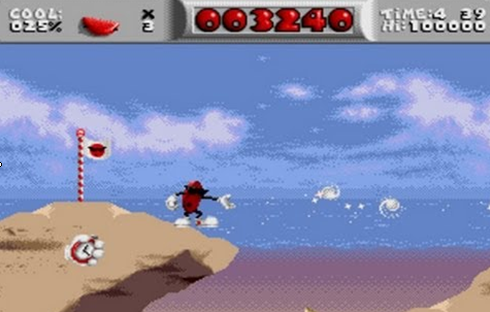
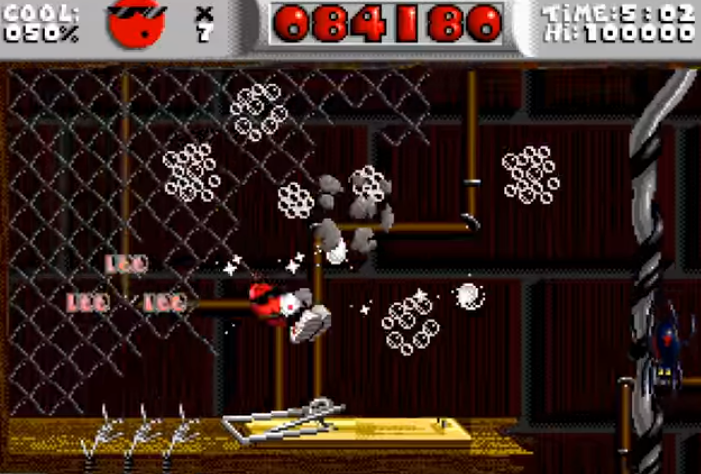
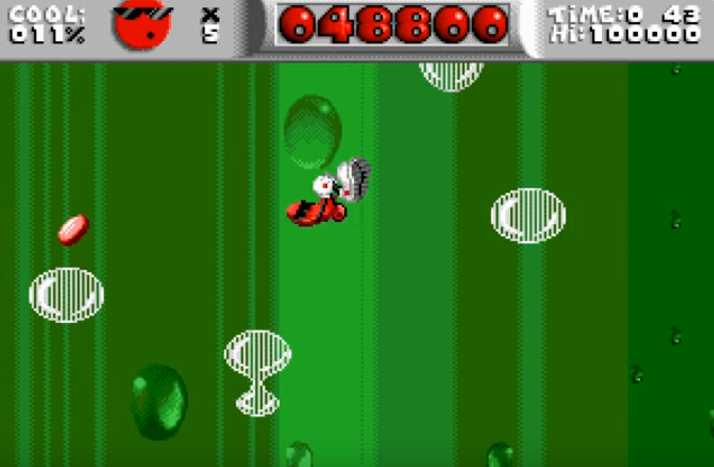
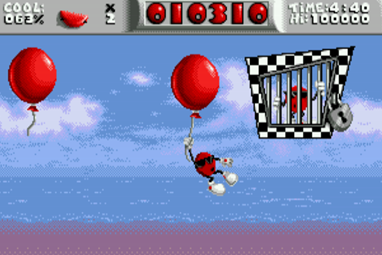
Interplay: Sonic the Hedgehog Spinball

Interplay

Among many things, adaptations can be described as being:

“An acknowledged transposition of a recognizable other work or works […] A creative and an interpretive act of appropriation/salvaging [or] An extended intertextual engagement with the adapted work” (Hutcheon, 2006: 80).

The great thing about adaptation is that it can be literally anything; it’s restricted only by the scope of your imagination and your commitment to researching the links between media. When I studied the writing of Linda Hutcheon (and many others like her) as part of my PhD, I chose to focus on the adaptation of videogames into movies, television shows, cartoons, and comic books.

There were two reasons for this: a) Because it’s a lot easier to talk about media adaptations like these and b) Because there hadn’t really been any real, serious research into videogames as adaptations. During my studies, though, I came across a curious statistic: of all the videogames that make up the entirety of the Sonic the Hedgehog (Sonic Team/Various, 1991 to present) franchise, there is one that stands out as having had the most adaptations and it’s probably not one you were expecting…

Today, we’re talking about Sonic the Hedgehog Spinball (Polygames/SEGA Technical Institute, 1993), a spin-off of the main Sonic the Hedgehog franchise. Spinball was the first Sonic title to truly embrace the pinball-like gameplay mechanics of the series popularised by the Spring Yard and Casino Night Zones.

Rather than being a fast-paced action/platformer, Sonic Spinball sees Sonic’s running speed scaled back and his bouncing speed boosted up as he trades running through loops for being flicked about inside a giant, pinball-like fortress created by Doctor Ivo Robotnik (now more commonly referred to as Doctor Eggman). Robotnik’s Veg-O-Fortress is made up of four stages, each one containing numerous Chaos Emeralds (unlike most Sonic games, Spinball’s multiple Emeralds are all blue). Using the flippers and a variety of gameplay gimmicks, Sonic must retrieve the Emeralds and battle the mad Doctor himself in a number of massive and increasingly difficult boss battles. In the Bonus Stages, Sonic operates an actual pinball and attempts to free his friends from Robotnik’s capsules. Other than that, the game offered little despite having some funky tunes and a charming aesthetic; the controls were clunky (Sonic feels unnaturally heavy and awkward), the stages were large and vibrant but it was often difficult to tell where you needed to go or what you had to do, and there’s very little incentive to play again except to beat your high score. Yet, Sonic the Hedgehog Spinball has been adapted into other media and forms more times than any other Sonic title; right off the bat, the game was ported to the Master System and Game Gear, for one thing, but, more than that, the game formed the basis of plots for Sonic’s cartoons, comic books, and other ancillary media.
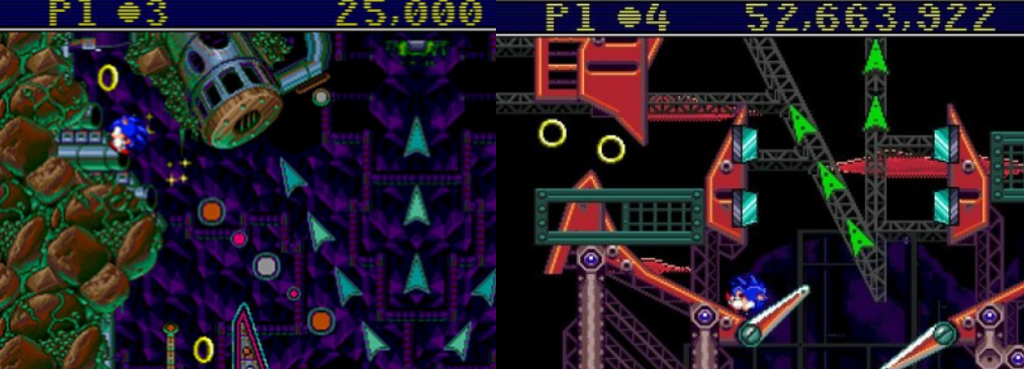
Just controlling Sonic in this spin-off title can be a chore.

At the time, Sonic was in the middle of his first (and, arguably, most prominent) surge in popularity; bundling Sonic the Hedgehog (Sonic Team, 1991) with the Mega Drive saw the console sell over fifteen million units during its American debut (Pétronille and Audureau, 2012: 39) and catapulted SEGA’s speedy mascot to the stratosphere. SEGA immediately followed this up with Sonic the Hedgehog 2 (SEGA Technical Institute, 1992) and, just like that, Sonic was everywhere. Not content with a gigantic Sonic balloon in the Macy’s Day parade, SEGA capitalised on Sonic’s popularity; Sonic appeared on every piece of merchandise imaginable and that, of course, included cartoons. Nintendo had seen significant success in this area in the past and, seeking to usurp their rival once more, SEGA turned to DiC Entertainment. The concept was spearheaded by producer Robby London, who recognised Sonic’s charisma and appeal but struggled with the “elusive and impenetrable” story of the videogames (Jones, et al, quoting London, 2011: 29). This isn’t particularly surprising as, while Sonic typically has an extremely simple premise (hedgehog hero destroys robots to save woodland friends), differences between the Japanese and American versions saw dramatically different versions of Sonic presented across the world.
SpinballSatAM.PNG
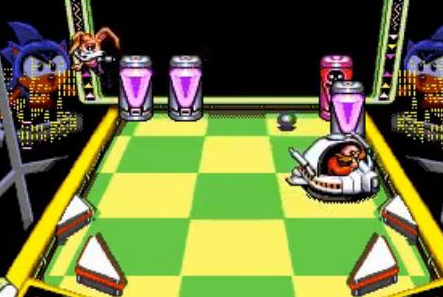
Spinball included a lot of influences from SatAM.

Regardless, after bringing in Jaleel White to voice the character, DiC produced a pilot episode that was largely comprised of slapstick comedy and was deemed to be unsuitable for ABC’s Saturday morning slot. Undeterred, DiC made the extraordinary decision to instead produce two Sonic cartoons: one for weekdays and one for Saturday morning. This is how we ended up with Adventures of Sonic the Hedgehog (1993) and Sonic the Hedgehog (1993 to 1995, more commonly referred to as “SatAM”) airing simultaneously; one emphasised slapstick comedy and the other was decidedly much darker and serious in tone. For a time, these two cartoons were often closely associated with each other; this was mainly due to the Archie Comics series in the US initially mixing characters and concepts from both shows together rather than picking one as its basis (eventually, however, they settled on SatAM) but this can also be seen in Sonic Spinball. Sonic not only encounters Cluck, Doctor Robotnik’s (Jim Cummings) mechanical pet that briefly appeared in both SatAM and Archie’s comics, in the Toxic Caves, but must also free Princess Sally (Kath Soucie), Bunnie Rabbot (Christine Cavanaugh), Rotor (Mark Ballou), and Antoine Depardieu (Rob Paulsen) during the game’s Bonus Stages.
SpinballStC.PNG
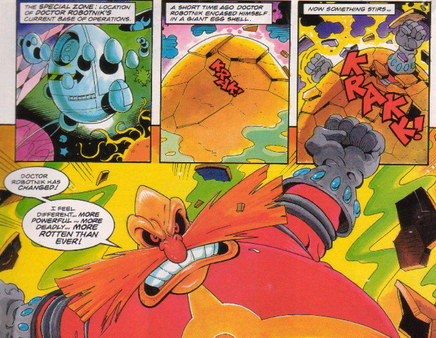
I still have no idea how the hell Robotnik did this!

This would be the first and only time SatAM’s characters would appear in a Sonic videogame; given that, unlike Dr. Robotnik’s Mean Bean Machine (Compile/SEGA Technical Institute, 1994), Spinball appeared to be a straight forward spin-off of the main Sonic series, their inclusion only served to further muddy the waters as to the coherency of SEGA’s flagship franchise. To further confuse matters, it was the Adventures depiction of Robotnik (Long John Baldry), rather than SatAM’s, who appeared on the cover art for Spinball’s Game Gear port. Indeed, while Archie eventually restructured its Sonic comics into a continuation of SatAM, it was Adventures’ Robotnik who seeped into other Sonic media and became the default depiction of the dastardly Doctor in storybooks and comics for many years. This was most prominently seen (at least in the UK) in Sonic the Comic (1993 to 2002, referred to as “StC”) where, in issue twenty-two, Doctor Robotnik inexplicably transformed from the rotund antagonist seen in the videogames into “that weed from the rubbish cartoon series” (Fielding, 1995: 32; Kitching, et al, 1994: 1 to 7). While SatAM is often lauded as a significant influence to many for its darker, more adult themes, Adventures is often overlooked for its fidelity to the wacky nature of the videogames due to its childish humour. Of the two, only Adventures incorporated the game’s iconic theme song and more accurately depicted certain gameplay mechanics, such as Special Stages, Golden Rings, and Chaos Emeralds. Yet, don’t let that fool you: Adventures is a full-on acid trip most of the time and, despite pulling some inspiration for the source material, only ever adapted the plot of one videogame: Sonic the Hedgehog Spinball.
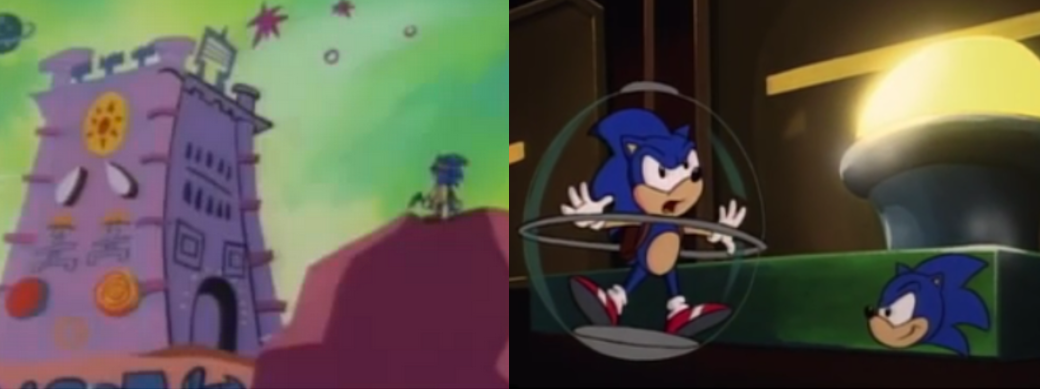
Robotnik’s plans often involve an impractical, giant pinball machine.

‘Attack on Pinball Fortress’ (Butterworth, 1993) saw Sonic, Miles “Tails” Prower (Christopher Welch) join forces with Sergeant Doberman (Phil Hayes) and one of Adventures’ more amusing reoccurring characters, Wes Weasely (Michael Donovan), when Robotnik threatens Mobius with a gigantic Stupidity Ray housed within his Pinball Fortress. When the group infiltrates the Pinball Fortress, they are knocked about by giant flippers and into other gigantic recreations of cliché pinball machines before they encounter Boss Scorpion, a massive robotic scorpion that Robotnik uses to try and thwart the heroes. Obviously, this fails and it isn’t long before the robot is devoured by lava and Robotnik’s plot is thwarted. As an adaptation of Sonic Spinball, ‘Attack on Pinball Fortress’ is very bare-bones; it’s almost as if the writer, Bob Forward, was given a few pieces of concept art and nothing more as the episode has next to nothing to do with the videogame beyond the vague concept of a pinball-themed fortress and a giant scorpion. Yet, as basic an adaptation as ‘Attack on Pinball Fortress’ is, it’s got nothing on ‘Game Guy’ (Myrick, 1994), an episode of SatAM that sees Sonic trapped within a pinball-themed game right at the conclusion of the episode, which mostly concerns Sonic and Sally being at odds over the appearance of another Freedom Fighter, Ari (Dorian Harewood). Ari betrays Sonic but, when Robotnik nearly uses his giant pinball table to suck Sonic into the Void, he sacrifices his freedom to not only save Sonic but lead the Freedom Fighters towards other allies. Literally the only thing in ‘Game Guy’ that comes from Sonic Spinball is the giant pinball-themed trap that Robotnik nearly bests Sonic with, but then this was par for the course for SatAM, which was concerned more with environmental messages than adapting plots from the videogames.
SpinballArchie.PNG
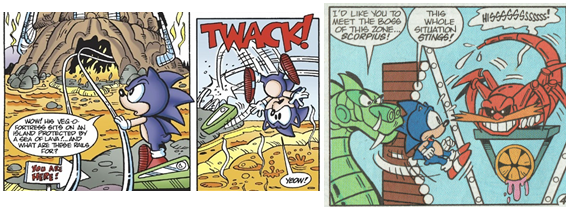
Archie Comics sure loved their puns…

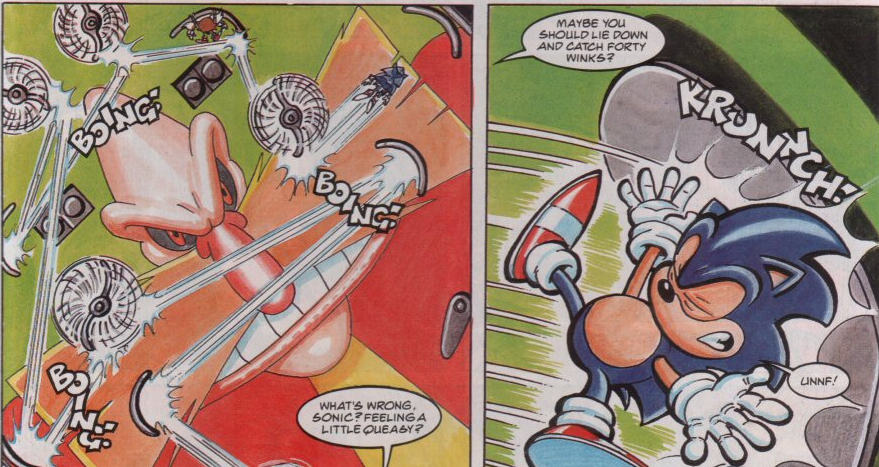
Things begin to look up, however, in ‘The Spin Doctor!’ (Gallagher, et al, 1994), the official Sonic Spinball adaptation featured in issue six of Archie’s Sonic the Hedgehog. Here, Sonic and the Freedom Fighters lead a random assault on Robotnik’s factory, only to be informed (via a hand-written note) that he has moved his base to Mount Mobius. Racing there without hesitation, Sonic finds the Veg-O-Fortress and is immediately attacked by (you guessed it) giant pinball flippers and bounced across lava. Racing up the pinball tracks and into the fortress, Sonic battles both Scorpius and Rexxon in the Toxic Caves, defeating them with ease. Sonic then ends up in the Lava Powerhouse, where Hip and Hop help lead him to a bunch of captive Mobians but giant plants force Sonic into a final Showdown…which consists entirely of Robotnik launching him out of the fortress using a giant spring. ‘The Spin Doctor!’ is little more than a glorified advertisement for Sonic Spinball; there’s just enough of the game’s premise, first stage, and other recognisable elements to inspire young kids to buy and play the game but not much else that directly links to it. Archie had a habit of doing adaptations of this kind; typically, they would produce a story that ended with the instruction to readers to play the videogame to find out the rest, despite the games and the comics being wildly inconsistent and at odds with each other. Other times, like this, they would attempt a very loose adaptation but be more concerned with servicing their own, unique narrative over anything.
SpinballStCSpinball2.PNG
There’s not much to link this to the game….

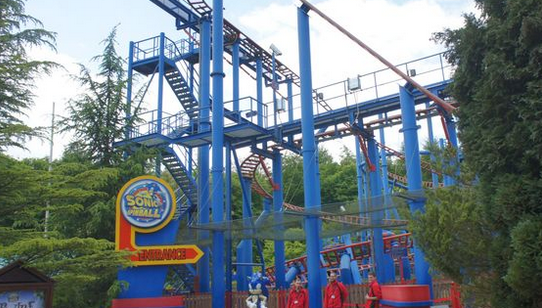
Elements of this story were relegated to extremely minor roles or cameos; Scorpius, Hip, and Hop (two characters that serve only to launch Sonic into the Lava Powerhouse in the videogame) were amongst them but, while Mount Mobius did show up (and erupt) in the ‘Heart of the Hedgehog’ two-parter (Fingeroth, et al, 2000), the Veg-O-Fortress never appeared again. Finally, there’s ‘Spinball Wizard’ Millar, et al, 1996) from StC. In this story, Tails, disheartened at his lack of fan mail, attempts to drum up some support by cleaning up the Casino Night Zone and ends up being captured in Robotnik’s Spinball Murder Machine which is, wouldn’t you know it, a giant pinball table. Rushing to the rescue, Sonic is bounced around by flippers and seemingly defeated until Tails manages to free himself and use Robotnik’s “Hedgehog-crushing super pinball” (literally just a giant pinball…) to destroy the generator that powers the machine. And…that’s it. I mean, I gave Archie some flack over their adaptation but ‘Spinball Wizard’ is only very, very loosely drawing from Sonic Spinball; you could even argue it’s simply adapting elements of Casino Night Zone into its plot but I’m including it simply for the name of Robotnik’s machine. To be fair, StC was often fast and loose with its adaptations as well; they also favoured their own unique narrative over being slavish recreations of their source material. But we’re not quite done yet because a rollercoaster at Alton Towers was once rebranded as Sonic Spinball between 2010 and 2015. As you might have guessed, the rollercoaster has a pinball theme and, as part of its Sonic rebrand, featured red and blue tracks, songs from the videogames, and even commentary from Roger Craig Smith, Sonic’s current voice actor. So, just what was it about Sonic the Hedgehog Spinball that meant it formed the basis of so many adaptations? It was, even at the time, only ever an average title and far from the rich narrative resource as Sonic the Hedgehog CD (Sonic Team, 1993) or Sonic the Hedgehog 3 (Sonic Team/SEGA Technical Institute, 1993) yet these two latter videogames were only given the most basic of lip service and SatAM and didn’t factor into Adventures at all.
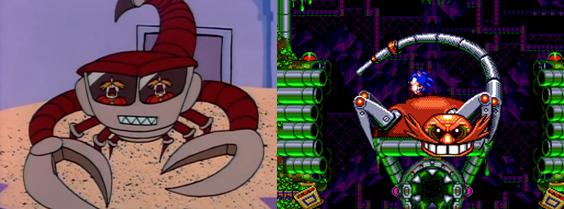
Spinball surprisingly cropped up in many adaptations.

Perhaps it was the simplicity of the concept: Sonic bounces around like a pinball in comics and cartoons anyway, so maybe it’s easier to literally stick him into a giant pinball machine than have him race a robotic version of himself or go head-to-head with Knuckles the Echidna? Other anime and cartoons managed to include these two elements, however, and quite successfully in some cases, so it does remain a source of wonder (if not outright confusion) that Sonic Spinball, of all Sonic games available at the time, should be returned to and adapted so often. A large part of the explanation probably can be traced back to Sonic’s growing popularity at the time; Sonic Team USA had invested a considerable amount of time, effort, and money into rebranding Sonic for his US debut and crafting an entirely unique backstory that was completely different to the one found in Japan (and quite separate from the one in the UK, as well). Sonic Team, SEGA, and DiC seemed to see Sonic Spinball as a natural bridge between the videogames and the cartoons; they were certainly enthusiastic about the tie-in enough to insert their cartoon characters into the videogame and onto the art work (Hazeldine, 2014: 35). Perhaps there was no need to mine other Sonic titles; Sonic’s popularity didn’t begin to wane until the end of 1996 and, by then, both cartoons had finished producing new episodes, Archie’s comics and StC were content with forging their own narratives, and Sonic was firmly established as a successful and popular videogame icon in the cultural consciousness. Sonic X (2003 to 2006) would later produce surprisingly faithful adaptations of both Sonic Adventure (Sonic Team, 1998) and Sonic Adventure 2 (Sonic Team USA, 2001), while also loosely adapting Sonic Battle (Sonic Team, 2004) and appropriating many elements from Sonic Heroes (Sonic Team USA, 2003) and Shadow the Hedgehog (SEGA Studio USA, 2005). These all saw adaptations in Archie’s comics and StC (except for the latter four, at least officially, as StC had ceased publication by that point) but no other Sonic the Hedgehog videogame can boast as many adaptations as Sonic the Hedgehog Spinball, a largely average and arguably insignificant spin-off that nevertheless defined the golden age of Sonic across all forms of media.
SpinballRollercoaster
Sonic Spinball even made it to the real world!

What do you think about Sonic Spinball and its adaptations? Can you think of any other videogames that received undue attention in other media? Leave a comment below and join me next time for more interplay.


Game Corner: Cool Spot (Mega Drive)

GameCorner
CoolSpotLogo

Aah, the nineties. A time when, thanks to the escalating battle between SEGA and Nintendo for console supremacy, everyone and their mother was desperate to have a cute, action/platformer mascot. These mascots had to be cool; they had to be fun; and, most of all, they had to have attitude. Because of this, we got such fantastic Sonic the Hedgehog knock-offs as Aero the Acro-Bat, Soccer Kid, and Awesome Possum and, in some of the most bizarre and obscure examples, food brands represented by guys like Chester the Cheetah and Cool Spot.

CoolSpotFido.PNG
7 Up was so cool they had TWO extreme mascots!

Cool Spot was the mascot for the fizzy drink 7 Up, but this reference largely went over the heads of Brits such as myself as, in the UK, 7 Up was represented by the equally radical Fido Dido so, when I played Cool Spot (Virgin Games, 1993) for the first time on the Amiga, I assumed it was the same kind of product placement as the Penguins in James Pond 2: Codename: Robocod (Vectordean/Millennium Interactive, 1991).

CoolSpot7Up.PNG
Personally, I prefer Sprite…

Regardless, the red spot featured in the logo of 7 Up’s trademark drink got his own videogame…because of course! You could tell that Cool Spot was both cool and had attitude because he wore shades and sneakers and was portrayed as a radical, laidback surfer dude. Spot actually featured in a couple of titles prior to this videogame; Spot: The Video Game (Virgin Mastertronic, 1990), which was little more than a puzzle game that resembled Connect 4, and Spot: The Cool Adventure (Visual Concepts, 1992), which was simply a reskinned version of McDonaldland (ibid).

CoolSpotPlot.PNG
Cool Spot has quite the in-depth plot…

However, when Spot’s fellow Spots are randomly locked up in cages in Cool Spot, he doesn’t hesitate to leap into action and journey across eleven levels collecting “Cool Points” (small red spots). Once Spot collects enough Cool Points, he must find the cage containing his fellow Spot and blast them free, all within a time limit and while battling a variety of enemies (everything from giant grabs to toy robots).

CoolSpotAttack.PNG
Blast your foes with soda bubbles!

While Spot is hindered by a handicap that befalls far too many of his platforming brethren (in that he cannot damage or defeat enemies by jumping on them, which I always feel should be rule one of any action/platformer), he can blast his foes with soda bubbles flicked from his awesome gloves. Using the D-pad, you can even change the direction of these bubbles to blast enemies out of the air, though some will take multiple shots or defend themselves using shells.

CoolSpotHazards.PNG
Don’t be so cool that you forget to look where you’re going!

Spot seems far more concerned with looking cool than having much in the way of a versatile moveset; he can walk and leap about the place and that’s about it. If you hold the direction you’re going in, Spot will, eventually, speed up and be able to leap further, holding the jump button seems to help him reach higher places, and he is able to clamber up ledges but there’s no spindashes or power-ups available here beyond some ridiculously sparse health items, time increases, and one-ups.

CoolSpotBonus.PNG
Enter a bonus stage to try for an extra life!

You can also try and collect letters in each level to earn a continue and, once you complete a level, your remaining time and total Cool Points are tallied up; if Spot has enough, he’ll be awarded with an extra life. If you collect enough Cool Points in any level, Spot will be able to enter a Bonus Stage where, under a strict time limit, he must bounce around on soda bubbles collecting even more Cool Points and try for another extra life.

CoolSpotCage.PNG
You’ll have to search everywhere for these cages.

And you’re going to need those extra lives, my friend, because Cool Spot is quite a tough game. It starts out relatively easy, with Spot jumping around a sandy beach and blasting enemies without much issue, but levels quickly adopt a maze-like structure, forcing you to search high and low for both Cool Points and the cage that is your goal all while being bashed about by enemies or hit by obstacles like spikes and mousetraps. Spot’s health is indicated by a humerous face sticker at the top of the screen; as Spot takes damage the face reacts and comes more and more unpeeled. When the face falls off, Spot dramatically whirls around and collapses and you’ll have to start the level over, either from the beginning or from your last checkpoint.

CoolSpotEnd
Spoilers: The ending isn’t much to shout about.

On the plus side, Spot doesn’t have to contend with any boss battles but, on the downside….Spot doesn’t have to contend with any boss battles. He simply swaggers from one level to the next, with little variety (there’s a beach, a dock, what appears to be inside some dry wall, a bath tub, and a toy shop and that’s about it….oh, and there’s a train level…), freeing his fellow Spots and, once he clears the final level, he celebrates with all his mates and you get given a high score.

CoolSpotTricky.PNG
Tricky platforming will test your wits.

Cool Spot is one of those videogames that is fantastic to look at but tricky to play; the backgrounds, graphics, and sprite animations are all gorgeous, vivid, and full of life and character. The music and voice samples are charming and up-beat and Spot has some of the best walking, idle, and celebration animations this side of Sonic and Earthworm Jim. It’s unfortunate, then, that his game calls for some tricky and precise platforming that the controls make very difficult.

CoolSpotTricky2.PNG
You never really know what waits at the bottom of a jump…

More than once, Spot must make blind leaps, hop from one precarious (often temporary) platform to the next, and hope that he doesn’t plummet back down to a lower level and waste his time having to hop back up or fall into a bottomless pit and die. Honestly, I often found it easier to just die and respawn at a checkpoint higher up rather than having to fight with the game’s stiff-yet-floaty jumping mechanics.

CoolSpotCompetition.PNG
Honestly, anything Cool Spot did, its competitors did better.

As a rival to Sonic the Hedgehog (Sonic Team, 1991), Cool Spot is lacking in a few areas; the game has the graphics and the look and Spot is a very animated and funky character, but without the fast-paced action and the challenge presented by Sonic’s boss battles and bonus stages, Cool Spot simply can’t compete. And you have to remember that this game came out in 1993 so, while it beat Sonic the Hedgehog 3 (SEGA Technical Institute, 1993) by a year or so, it came out after Sonic the Hedgehog 2 (ibid, 1992). Cool Spot also released across a variety of platforms, meaning it had to compete with Mario’s far superior offerings as well as those of its other third-party competitors, like Earthworm Jim (Shiny Entertainment, 1994).

CoolSpotCompetition2.PNG
Colourful and wacky action/platformers were ten a penny back then.

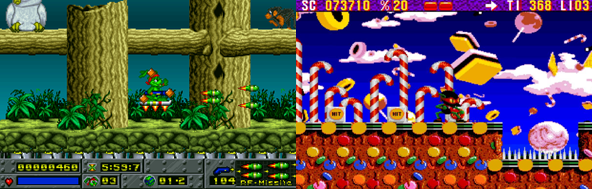
Even on the Amiga, Spot faced stiff competition from the likes of Zool: Ninja of the Nth Dimension (Gremlin Graphics, 1992) and its sequel, Zool 2 (The Warp Factory, 1993). He even had to compete with the two Jazz Jackrabbit (Epic MegaGames, 1994; 1998) games on the MS-DOS and these four titles all did everything Cool Spot did but better: the run-and-gun-like gameplay, floaty jumps, colourful graphics, funky music and sprite animations, and even the product placement were all better in any one of these four titles. Yet, Cool Spot wasn’t the end for 7 Up’s odd little mascot; Spot Goes to Hollywood (Eurocom/Burst Studios, 1995) saw the surfin’ spot switch to the isometric style that was popular amongst many 2D platformers that didn’t quite know how to adapt to 3D (I’m looking at you, Sonic 3D: Flickies’ Island (Traveller’s Tales/Sonic Team, 1996)). Like Cool Spot, Spot Goes to Hollywood came out on multiple consoles, including the PlayStation and SEGA Saturn, but once again had to settle for being nothing more than an average little platformer in a world full of competitors trying to stand out. In the end, while it’s nothing compared to most of its peers, Cool Spot is a fun little action/platformer. The music and graphics do just enough to make the tricky gameplay endurable and the game is tough, but fair in many ways (at least the enemies don’t respawn once you leave the screen…), meaning that it’s up to the player to make informed decisions about when to jump and how to navigate Spot’s vibrant world.

My Rating:

Rating: 4 out of 5.

Great Stuff

Do you remember Cool Spot? If so, what was your first experience? If not, why not go give a play? Either way, sound off below and let me know what you think.

Mini Game Corner: Shenmue (Xbox One)

ShenmueLogo

So, thanks to Xbox Game Pass, I finally got the chance to play the cult favourite role-playing videogame Shenmue (SEGA AM2/Ys Net, 1999/2019), which has been lauded as one of the Dreamcast’s most prolific titles and has a dedicated fanbase who have been called for HD remakes and a third entry for years. Once I saw that the game was available, I figured I’d give it a download and see if it was worth all the hype and fuss I’d heard about it. The closest I’d come to playing the game was playing as the series protagonist, Ryo Hazuki, in Sonic & Sega All-Stars Racing (Sumo Digital, 2010) so I was pretty interested to see if the title was worthy of its reputation.

ShenmueVoices.PNG
The game looks lovely but the characters sound dreadful…

Now, I’m massively swamped with videogames and movies to work through at the moment, so I glossed over the introduction and opening cutscenes but I gather (from what I’ve heard and the game itself that Ryo’s none-too-happy because some mysterious guys killed his father right in front of him so he sets out to bring them to justice. Probably as a result of the Xbox One version being more of a HD port than a straight-up remake, the game has a few issues with the quality of its voice acting; I normally don’t really moan about this as I enjoy stilted, daft voice acting but everyone in Shenmue sounds muffled and distorted, as though the voices didn’t get a nice HD filter like the charming blocky graphics.

ShenmueRobot
Ryo controls like a robot, for the most part.

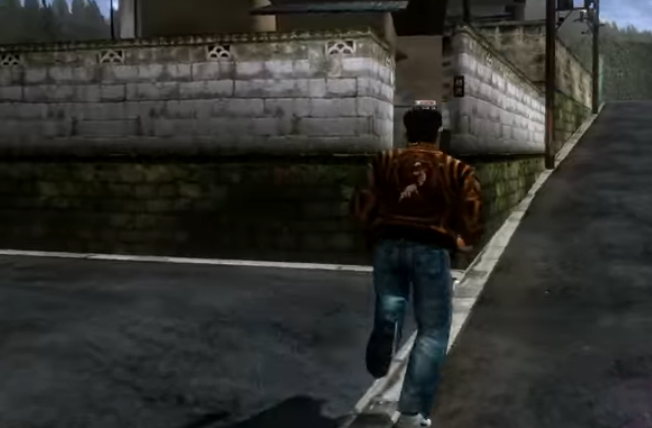
That’s not a knock on the aesthetics; I love how polished it looks even though the engine has just been given a fresh coat of paint and I have no issues with the look of the game but the controls…that’s a different story. It took me a while to figure out how to get Ryo to do anything other than a stiff, robotic walk but finding the run button didn’t really help much as Ryo suddenly flew about like he was ice skating! Seriously, I don’t normally like to rag on a game’s controls of camera but Shenmue has really stiff, awkward controls that make controlling Ryo and navigating the fairly bustling townscape a hell of a chore. The camera is also a headache, wildly swooping all over the place and making it difficult to point Ryo in the right direction.

ShenmueLost
It’s not a big town but I still got a bit lost because everything looks the same!

Ryo has a little notebook, which is respect and admire, which tells him what he has to do and where he needs to go and keeps track of his progress and missions but it’s not actually that helpful at telling you where you need to go. I was tasked with going to someone’s house to find clues but literally every single house I went to was empty and I had no idea where to go or what to do.

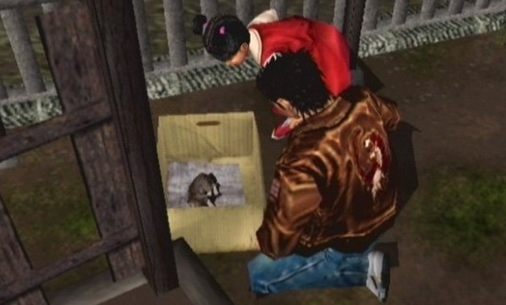
I did meet a little girl and pet her kitten, though.

ShenmueKitten.PNG
Unfortunately, the cute kitty didn’t convince me to play much further.

Honestly, it was a very quick play but I can’t say I was massively impressed or encouraged to play on. I could use a guide to get further into the game but, judging by how bad the controls and camera are, I dread engaging in combat or trying to tackle more complicated tasks. In the end, I don’t see myself coming back to Shenmue any time soon unless I manage to clear my backlog but what do you think? Did I give up too early? Are you a big Shenmue fan? Sound off below and try and convince me to push on.

Movie Night: Star Wars: Episode IX: The Rise of Skywalker

StarWarsSkywalkerLogo

Released: December 2019
Director: J. J. Abrams
Distributor: Walt Disney Studios Motion Pictures
Budget: $275 million
Stars: Daisy Ridley, Adam Driver, Oscar Isaac, John Boyega, and Ian McDiarmid

The Plot:
When a threat of revenge is issued by the long-dead Emperor Palpatine (McDiarmid), Rey (Ridley) is drawn into another confrontation with Kylo Ren (Driver) in the search for an ancient Sith device that will reveal the location of the resurrected emperor and decide the fate of the entire galaxy,

The Background:
So, this is it; for better or worse, the “Sequel Trilogy” of Star Wars movies (Various, 1977 to present) comes to an end. For me, this has been a disappointment since Star Wars: Episode VII: The Force Awakens (ibid, 2015), which was little more than a retelling of better Star Wars stories but with better effects and writing, and only exacerbated by the dreadful Star Wars: Episode VIII: The Last Jedi (Johnson, 2017). Rather than show us a galaxy thriving under the leadership of Leia Organa’s (Carrie Fisher) New Republic alongside Han Solo (Harrison Ford) and Jedi Master Luke Skywalker’s (Mark Hamill) reconstituted Jedi Order, we inexplicably have a galaxy threatened by the First Order (who are somehow, consistently, more powerful than the Galactic Empire ever were despite all the losses from the Death Star and Starkiller base…) and being opposed, once again, by a rag-tag resistance group. The Last Jedi then pissed a lot of people off by dropping the ball on Rey’s origins, killing off Supreme Leader Snoke (Andy Serkis) without any fuss or fanfare, and doing away with Luke purely so that Rey could shine as the titular “last Jedi”. Somewhat spooked by reactions to The Last Jedi (and the two spin-off movies, despite the fact that I actually preferred both of them to the entire Sequel Trilogy), Disney roped J. J. Abrams back into the fold to get the Star Wars franchise back on course and, what we’re left with, is a hodgepodge of fan service, damage control, and desperation as he frantically tries to wrap up not just the Sequel Trilogy but the entire Skywalker Saga itself!

The Review:
The Rise of Skywalker kicks off with Ren immediately locating one of only two Sith wayfinders and travelling to the forgotten Sith planet Exegol where he encounters Palpatine, who wastes no time in providing half-assed explanations regarding his resurrection/survival, Snoke’s origins, and motivations for Ren reconstructing his helmet and getting back out their to kill Rey. The implication seems to be that Palpatine transferred his spirit into a clone body and was controlling Snoke like a puppet to convert Ren but…it’s not dwelled upon much at all, which really makes you feel like you’ve wasted your time watching any of the previous movies.

StarWarsSkywalkerRenFocus.PNG
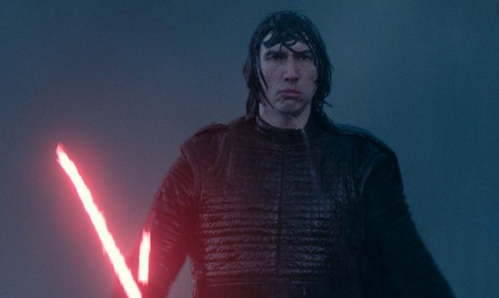
Despite it all, Driver brilliantly showcases Ren’s duelling nature.

Plus, like, the emperor surviving really undermines the Rebellion’s victory and takes a lot of power and urgency away from Ren, who is otherwise portrayed fantastically by Adam Driver. Imagine if Anakin Skywalker (Hayden Christensen) had been as wonderfully torn between rage, indecision, and love; Ren is constantly on the edge, flipping between extreme focus, exploding in anger, and struggling with committing to the Light or Dark Side.

StarWarsSkywalkerBuddies
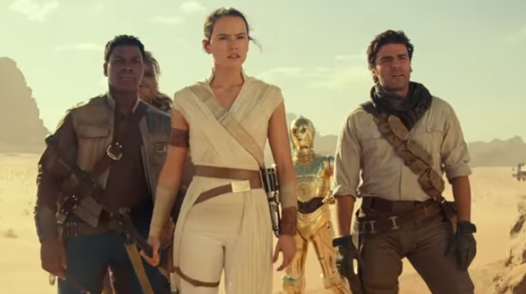
Thankfully, the chemistry between these guys is a highlight of the film.

As for Rey, she’s been spending her time training with Leia and studying the Jedi texts she obtained from Luke while Finn (Boyega) and Poe Dameron (Isaac) return with news of the emperor’s return. Thankfully, this leads to the three of them heading out to Pasaana to try and find the other wayfinder and end the emperor before he can launch his master plan (called “The Final Order”…which really should have been the title of the movie as the title is dogshit…). One of the strengths of Abrams’ Sequel Trilogy has been the writing and dialogue and Finn, Poe, and Rey have great chemistry together; they bicker and talk like real people and real friends, which is always refreshing after sitting through George Lucas’ stilted, robotic writing.

StarWarsSkywalkerLando.PNG
It’s always a pleasure to see Billy Dee Williams.

In all honesty, the plot of The Rise of Skywalker boils down to a glorified fetch-quest; the heroes bounce around the galaxy trying to track down the wayfinder and, eventually, find themselves teaming up with Star Wars staple Lando Calrissian (Billy Dee Williams) and exploring the remains of the second Death Star, where Rey’s super-duper true origins are finally revealed. Alongside such blatant fan service, The Rise of Skywalker is also gloriously peppered with epic space battles and some of the best lightsaber battles we’ve ever seen, all bolstered by some of John Williams’ best work. Unfortunately, I cannot get over the missteps the franchise has taken since The Force Awakens and the film feels a bit rushed and slapped together in places as Abrams desperately performs damage control to rush the film, the sequels, and, stupidly, the entire saga to a conclusive finish…and still ends with the door left so blatantly open for future films in the series.

The Nitty-Gritty:
So, if you hated Rey before, you’re probably going to hate her even more when it’s now revealed that her parents weren’t nobodies; instead, Rey is inexplicably Palpatine’s granddaughter…which raises so many questions like: when did Palpatine have a son? Who was his mother? Why would he ever left his progeny live? Why has it taken him so long to track them down and kill them? These questions are trumped by a far more pressing one, though, which is literally the question of why Palpatine is even alive at all. Obviously, this is a cheap move to ensure that audiences will flock in droves to see the film out of nostalgia but it really takes away from the victory on the second Death Star and Abrams did very little to justify it. I really feel like we needed a more blatant explanation of his survival and the nature of his relationship with Snoke but, instead, it’s hand-waved away in the laziest way possible.

StarWarsSkywalkerDestiny.PNG
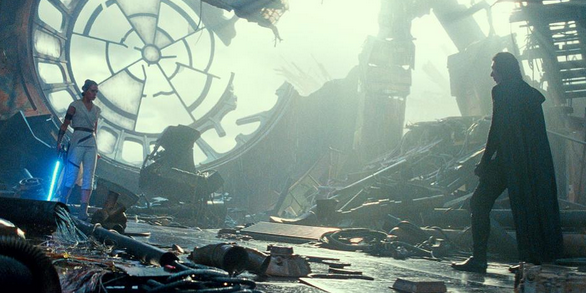
The emperor’s threat is issued and destiny awaits…

Also, while he’s been rebuilding himself and his power, the emperor also build an entire fleet of Star Destroyers, all fully manned and armed with planet-killing weapons. Where did he get the resources and manpower for such an endeavour? Fucked if I know, but he did. Not only that, but Richard E. Grant is randomly in charge of the fleet as General Pryde, because I guess Colonel Sandurz was busy that day and I guess Adrian Edmonson was unavailable and Abrams saw how Johnson reduced the already pathetic General Hux (Domhnall Gleeson) into a whiny little cry baby. But it’s okay because it turns out Hux is so jelly of Ren that he’s been leaking information to the Resistance and, right when you think that means he’s going to do something interesting, he’s just shot dead by Pryde. Speaking of uninteresting, the fabled Knights of Ren finally make an appearance in this movie; they’re a handful of black-clad, anime-sword-wielding enforcers who…stand around doing nothing, beat up Ren for a bit, and then get killed like a bunch of punks! The big story here is the continued turmoil that Kyle Ren is going through; although he aligns with the emperor, he secretly (well….it’s not really a secret; he yells about it at almost every opportunity) seeks to turn Rey so they can team up, bump uglies, and usurp the emperor together. When Leia gives her life to distract Ren, he ends up having a heart-to-heart with a vision/memory/something of his father and rejecting his lightsaber. Reclaiming the name of Ben Solo, he helps Rey to defeat the emperor (and, by extension, the entirety of the Sith, it seems) but dies to bring Rey back to life, becoming one with the Force in the process. It’s a bit of a weak ending as it means the entire Organa/Solo/Skywalker bloodline is dead but Abrams tried to make up for it by having Rey travel to Tatooine (because God forbid we don’t go back there again!) and dramatically declare herself to be “Rey Skywalker”…despite having no claims to the name.

The Summary:
Star Wars: Episode IX: The Rise of Skywalker is clearly the best entry in the Sequel Trilogy but, as a finale to the entire Skywalker Saga, it fails in quite a few ways. Also, it’s hard to watch without the sour taste of its predecessors tainting the film, no matter how engaging the action is or how meaningful some of the film’s heartfelt moments are. Abrams throws all the fan service he possibly can at the film and you can almost see him plastering over the cracks in the film but it’s all at the detriment of telling an original story and nowhere is this more evident than in the credits of the movie. I get that Carrie Fisher and Mark Hamill are legends to this franchise but their roles are so minimal in this film yet they get top billing over Ridley, Driver, Isaac, and Boyega and that’s a bit of a joke, to be honest. In the end, I’m glad that this film has brought the main saga to an end. Hopefully, Star Wars can focus on its Disney+ shows, regroup, and, the next time someone decides to make a film trilogy, they will sit down and map out an actual plan rather than just picking out their favourite Star Wars moments and slapping them into a space/action drama and calling it a day.

My Rating:

Rating: 1 out of 5.

Terrible

Game Corner: Team Sonic Racing (Xbox One)

GameCorner
TeamSonicRacingLogo

Sonic the Hedgehog has a long history with spin-off titles; I have been putting off an article going into the multiple adaptations of Sonic the Hedgehog: Spinball (SEGA Technical Institute, 1993), which really emphasised the pinball-like gameplay mechanics of Sonic the Hedgehog (Sonic Team, 1991) and its sequel, Sonic the Hedgehog 2 (SEGA Technical Institute, 1992). However, the most frequently revisited sub-genre for SEGA’s speedy mascot has to be racing games; Sonic first took to racing against his friend and rivals in Sonic Drift (SEGA/Arc System Works, 1994), a kart racer exclusive to both SEGA’s handheld Game Gear and the Japan and clearly created as an alternative to Super Mario Kart (Nintendo EAD, 1992). Perhaps the most well-known Sonic racing title, however, was Sonic R (Sonic Team/Traveller’s Tales, 1997), Sonic’s first foray in 3D videogames and something of a cult classic to this day thanks, largely, to its iconic and cheesy soundtrack.

TeamSonicRacingAllStars
The All-Stars racers were a lot of fun to mess around with.

Sonic R stands out amongst other Sonic racers because it was the first title of its kind to have all characters (with the exception of Amy Rose and Doctor Eggman) racing on foot. While they briefly revisited this gameplay troupe in the Sonic Rivals videogames (Backbone Entertainment/SEGA Studio USA, 2006 to 2007), SEGA have since abandoned this gameplay feature entirely in favour of attempting to reap some of the success of Nintendo’s Mario Kart series (Nintendo EAD, et al, 1992 to present). Indeed, so influential was the original Mario Kart that virtually every videogame mascot (and those from other media) have featured in go-kart racers but, of them all, the most consistent rival to Nintendo’s portly plumber has, as always, been Sonic the Hedgehog. After a brief stint experimenting with airboards in the Sonic Riders series (Sonic Team/Now Production, 2006 to 2010), SEGA, most likely inspired by the success of Mario Kart Wii (Nintendo EAD, 2008), released Sonic & Sega All-Stars Racing (Sumo Digital, 2010), which saw Sonic and his friends race against other iconic SEGA mascots in what was, for me, quite an enjoyable little title.

TeamSonicRacingTrolls
Fans expected Sonic R 2 and who could blame them after this?

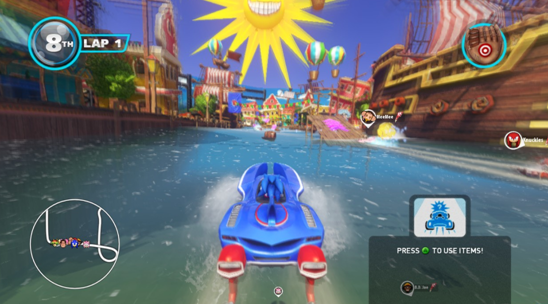
The follow-up, Sonic & All-Stars Racing Transformed (ibid, 2012) introduced a unique gameplay mechanic where the karts would transform into planes or boats, which mixed things up a bit, but locking additional characters and content behind stars rather than allowing players to buy them with points made this entry lag a little behind its predecessor, for me. Then, SEGA brought out their finest marketing trolls when it came to advertising their newest racing title, dusting off the old font style to tease the release of Team Sonic Racing (ibid, 2019), which did away with all of the other SEGA characters and additional bonus racers like Danica Patrick and focused solely on fifteen members of Sonic’s expansive cast. Team Sonic Racing also did away with the transforming gimmick so, immediately, seems like quite a step back from its predecessors; however, there are some other options available in the title that help to make it an enjoyable romp.

TeamSonicRacingTeams.PNG
Pick your character, pick your team.

First of all, Team Sonic Racing is built entirely around the concept of racing as a (you guessed it) team; the team-focused gameplay and storyline is thrust so much to the forefront that it almost feels like a quasi follow-up to Sonic Heroes (Sonic Team USA, 2003). Anyway, the basic idea is that you get to pick from one of five teams (Team Sonic, Team Rose, Team Vector, Team Dark, and Team Eggman), each of which is made up of a ‘speed’, ‘technique’, and ‘power’ character; each racing class has different advantages that affect the way you race (‘technique’ karts can drive off the course without slowing down, for example). You’ll race as the character and racing class you selected but, as you race, must be mindful of the progress of your teammates; if they’re lagging behind, you can create a slipstream for them to coast along for a boost or send them weapons or items (SEGA once again revisits the concepts of Wisps for this) to help get them to the front. The goal is to finish the race as a team, which will increase your score, awarded points, and standing in GP races.

TeamSonicRacingDrifting.PNG
Skim along a teammate’s slipstream for a quick boost.

Before going into Team Sonic Racing, this team-based mechanic bothered me; I thought you’d have to swap between racers or would be forced to always race as a team or would be unfairly judged if your teammates ended up too fair behind. Luckily, these fears were largely abated once I started racing; not only is there an option outside of the Team Adventure story mode to race solo like in the All-Star racers, it isn’t massively difficult to boost your teammates up to your level, especially if you send any Wisps you don’t need or accept any item boxes when they’re sent to you.

TeamSonicRacingUltimate.PNG
Team Ultimates have nothing on the old All-Star moves…

Doing so, and performing successfully drifts and tricks, will fill up your ‘Ultimate’ meter; once full, you can execute ‘Ultimate Power’ at the push of a button to gain a massive speed boost and invincibility. This is very similar to the All-Star moves of the game’s predecessors but with one massive downgrade; all Ultimate moves look and feel the same, with the only real difference being the music the plays as you perform them. No longer does Sonic transform into Super Sonic or anything cool like that. While this was massively disappointing, the game slightly makes up for it with the variety in the weapons available. Previously, the All-Star racing games used quite generic items like missiles and the like; while I’m not fan of the Wisps (they really feel like they’ve outstayed their welcome at this point), their inclusion does help add some visual variety and a unique spin on traditional kart racing weapons.

TeamSonicRacingChao.PNG
Race as a Chao…everyone loves Chao…

Also in Team Sonic Racing’s favour is the ability to customise each kart; you can pick from different paint jobs, stickers, and horns in addition to attaching different Performance Parts that will modify the kart’s handling, acceleration, and top speed, amongst other attributes. Unfortunately, the best of these parts are the ‘Legendary’ Performance Parts, which turn your kart into a sexy all-gold style…meaning any paint jobs and aesthetic changes you made will be over-ridden. Another downside to the title is the lack of characters; Sonic & All-Stars Racing Transformed featured over twenty characters from across the entirety of SEGA’s legacy so stepping that down to just fifteen (one of which is, oddly, four Chaos stuffed into a massive Chao-themed kart rather than, oh, I don’t know, Cream the Rabbit!) is quite the downgrade. In addition, you cannot mix up the teams; you can’t pick Sonic as your speed racer, Rouge the Bat as your technique racer, and Vector the Crocodile as your power racer. If you pick Sonic, you’re stuck with Team Sonic, which seems like a massive missed opportunity that only really makes sense from a narrative perspective.

TeamSonicRacingStory
Watch some static cutscenes in the story mode…

Speaking of which, one thing Team Sonic Racing has over the majority of Sonic racers is a full-on story mode; Sonic and his friends are drawn into an elaborate racing tournament organised by Dodon Pa, whom many of them suspect being Eggman in disguise. Through a series of races and working together ( not just within their teams but with the other teams in the spirit of friendly competition), they eventually uncover a plot by Eggman to manipulate the racer’s ‘power of teamwork’ into a doomsday weapon. Okay, so it’s not really the most original or well-told or engaging narrative and it’s told largely through obnoxious dialogue in barely-animated story sequences (I’m not going to call them cutscenes because…well, they’re not) but Team Adventure does provide just enough incentive to get you playing and earning points to buy Mod Pods and upgrade your karts.

TeamSonicRacingMissions
Delight in having just enough time to complete these missions!

While Team Adventure does offer a lot of gameplay variety, this is also to its detriment; you won’t just be racing against other characters, you’ll also have to break targets, collect Golden Rings, destroy Eggpawns, compete in GPs, and perform a variety of other in-race tasks to earn stars and keys that will both progress the story, unlock more of each map, allow access to other and better Performance Parts and, of course, earn you some Achievements. The problem is, however, that the error margin in some of these missions is extremely tight; you’re given just enough time to hit the required goal (a Silver medal) and I found myself having to play some missions over and over and over again trying to get reach the minimum requirement. I don’t think I’ve managed to get a single Platinum medal yet (and have no plans to attempt this, least of all for every damn mission!) and only lucked into a handful of Gold medals. Maybe I just suck (and that s most likely the case) but Sumo gave very little leeway when creating these missions; time just runs out way to fast, forcing you to start all over again, and there’s no indication when you’ve completed in-race objectives (like destroying five Eggpawns in a race; there’s no notification to let you know you’ve done this until after the race is over).

TeamSonicRacingOceanPalace.PNG
Oh good, Ocean Palace is back…again…

Outside of the story mode, there’s the usual racing affair; you can complete against others either locally or online (I’ve yet to do either) across a variety of game modes. There are also some really nice race tracks on offer here; once again, they’re largely pulled or inspired from Sonic Heroes (I’ll never fully understand why Sumo can’t seem to get past adapting levels from that game into race tracks…) but there’s some catchy tunes accompanying each race (featuring a title song by Crush 40 and tunes inspired by Sonic R), tracks can be mirrored to add a new twist and, while karts don’t transform, there are some alternative paths you can take by performing tricks off of ramps.

TeamSonicRacingConclusion
A fun enough game but lacking in content and replayability.

In the end, Team Sonic Racing is a decent racing title and certainly in the same spirit as its predecessors but, with a lacklustre roster, too few gameplay options, and very little incentive to play once you’ve blasted the story mode and unlocked a decent amount of Performance Parts, I struggle to really recommend this over the All-Star racing titles. I enjoyed it as it was simple to play, for the most part, and was a Sonic title but some frustrating mission requirements, the lack of real All-Star moves, and no additional characters to unlock or purchase really brought the whole experience down for me. I’d say it’s fun enough to waste a few hours on but it’s not going to keep you engaged much beyond that, which is a bit of a shame.

My Rating:

Rating: 3 out of 5.

Pretty Good

Movie Night: Terminator: Dark Fate

TerminatorLogo.PNG

Released: October 2019
Director: Tim Miller
Distributor: 20th Century Fox
Budget: $185 Million
Stars: Natalia Reyes, Mackenzie Davis, Gabriel Luna, Linda Hamilton, and Arnold Schwarzenegger

The Plot:
Three years after ensuring that malevolent artificial intelligence Skynet never comes into existence, jaded and emotionally repressed Terminator-hunter Sarah Connor (Hamilton) is brought back into the fight and forced to team up with the cybernetically-enhanced Grace (Davis), and confront her past once more, when an advanced Rev-9 model (Luna) is sent back through time to terminate the seemingly-innocuous Daniella Ramos (Reyes).

The Background:
The Terminator (Various, 1984 to present) franchise has had a hard time of it in recent years. It seems like every time a film studio acquires the rights (or some of the rights) to the series, they scramble about trying to find new ways to shoe-horn in the classic T-800 (Schwarzenegger) and desperately kick-start a new trilogy of films, only to fail time and time again. James Cameron scored a cult classic with the original 1984 Terminator film and then caught lightning in a bottle with one of the greatest sequels ever made, Terminator 2: Judgment Day (ibid, 1991). Since then, only the criminally underrated Terminator Salvation (McG, 2009) has dared to try something new to the franchise as both the laughable Terminator 3: Rise of the Machines (Mostow, 2003) and the mediocre Terminator Genisys (Taylor, 2015) simply chose to retell exactly the same story as T2 with only minor changes. Now, though, after Genisys failed to make the required box office impression, Cameron has been looped back into the production of yet another reboot to the franchise. Despite previously advocating Genisys as the “true” Terminator 3, Terminator: Dark Fate ignores every film in the franchise except for T2 and, with stars Hamilton and Schwarzenegger also involved, aims to be the true, definitive Terminator 3.

The Review:
Terminator: Dark Fate ignores the massive cliffhanger from the end of Genisys and chooses to open three years after the end of T2 where Sarah Connor and her teenage son, John (Jude Collie, with Edward Furlong’s facial likeness) are relaxing in Guatemala. We then jump to 2020 where Grace and the Rev-9 arrive in Mexico City; Grace, who is cybernetically enhanced (a concept not unlike what we saw in Salvation’s Marcus Wright (Sam Worthington), has been sent back to protect the new saviour of the future, Daniella “Dani” Reyes, who is just a lowly factory worker at this point.

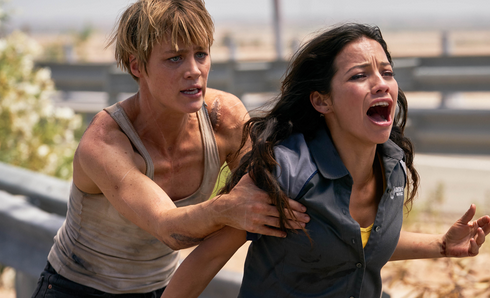
TerminatorGraceDani.PNG
Dani finds herself the target of the newest Terminator…

They soon run into the Rev-9, perhaps the most charismatic of all the future machines we’ve seen so far; the Rev-9 is able to simulate clothing, emotions, and appears far more human than any of its predecessors. It is also comprised of both a metallic endoskeleton and a liquid metal exterior not unlike Terminator 3’s T-X (Kristanna Loken) and Genisys’ T-3000 (Jason Clarke), though the Rev-9 favours shape-shifting and stabbing weapons like the T-1000 (Robert Patrick). While evading the Rev-9, Grace and Dani are saved by Sarah, now a world-weary, war-torn woman who has spent her years hunting down and eliminating Terminators thanks to tip-offs from a mysterious source. Facing the threat of a similar, yet fundamentally different, apocalyptic future and with nowhere left to turn, Grace brings the group to the source of Sarah’s intel, an aged T-800 and, together, the four formulate a plan to destroy the Rev-9 and maintain hope for the future. From the very beginning (and I mean this absolutely literally), Dark Fate is an immediate and egotistical punch to the gut. If, like me, you enjoyed Salvation (or, at least, wanted to see more of the future war in subsequent Terminator movies) or you were desperately hoping to see Genisys’ loose ends tied up, you’re going to be immediately disappointed. Hell, the few fans and defenders of Terminator 3 will likely to be disappointed, to say nothing of fans of The Terminator and Terminator 2.

TerminatorGraceRev9.PNG
Grace’s augments make her more than capable of fighting the Rev-9.

Once you desperately try to process Dark Fate’s maddening opening, you’ll be treated some fast-paced, frenetic action scenes; honestly, these are the best parts of the film beyond the actors’ performances and Dark Fate has some intense car chase sequences and confrontations with the Rev-9.I wasn’t too impressed with Gabriel Luna’s appearance when I first saw the trailers for Dark Fate but he does a great job of being cold and calculating but also eerily sinister and human; he’s like a chattier T-1000 at times, which conveys just the right degree of menace. Davis fits the mould of a battle-scarred soldier extremely well as well; her cybernetic enhancements ensure that she is a formidable protector but, thanks to her human physiology, she is also vulnerable as she must take regular does of medicine to stop her metabolism from burning up (…somewhat similar to the Uni-Sols from Universal Soldier (Emmerich, 1992)). Like last year’s poorly-titled and poorly-conceived Halloween (Green, 2018), one of the big selling points of Dark Fate is the surprising return of Linda Hamilton to her most famous role. Controversially killed off between T2 and Terminator 3 and all-but-absent from the franchise outside of the short-lived television show and Emilia Clarke’s portrayal in Genisys, seeing Hamilton lace up her boots again is a nice treat and her character takes some sudden and unexpected twists throughout the course of the movie. Jaded and emotionally stunted, she cares on about destroying every last trace of Skynet, causing her and Grace to have a frosty relationship upon first meeting.

TerminatorSarahDani.PNG
Sarah’s obsession leads her to protecting Dani from the Rev-9…

Dani is a likable and serviceable character as well; she has a fighting streak in her but, rather than being the completely useless damsel-in-distress Sarah was in The Terminator or the bad-ass soldier Sarah was in T2, ends up as a slightly-more-capable version of Terminator 3’s Kate Brewster (Claire Danes)…only with way better writing and characterisation. Finally, there is the T-800; like in Genisys, the T-800 (who is known as “Carl”) is aged and has been preparing for Sarah’s inevitable arrival. The T-800 adds some muscle to the group and it never fails to impress how easily Arnold slips back into his most iconic role but, in the end, due to Grace’s presence, it doesn’t really feel like there’s a lot for the T-800 to do and even less reason to truly justify its inclusion beyond Terminator being synonymous with Arnold.

TerminatorT800.PNG
While it’s great to see Arnold back, there isn’t much for him to do…

Instead, the T-800 sticks out a bit, especially given that Dark Fate is driven so strongly by three women who are very strong and capable in their own ways. Suddenly adding a male figure, even a machine one, to the mix seems to add a displeasing anti-feminist message that I’m sure will be the subject of many feminist essays, readings, and reviews for years to come. Unfortunately, a few fancy visuals and strong performances don’t change the fact that Dark Fate is the definition of “derivative”. Outside of one major change, there is literally nothing to see here that you can’t get from other Terminator movies. Apparently, Cameron and his writers watched all the other Terminator sequels before they hashed out the plot for Dark Fate but it seems that, rather than deliver something fresh and new, they instead jotted down all their favourites parts of the other movies and decided to do them all over again but now with “James Cameron’s seal of approval (as if that means anything given he was all for Genisys back in the day).

TerminatorT800Rev9.PNG
Despite some good action, Dark Fate is just too derivative…

As a result, while Dark Fate is exciting and does a good job of recreating the same kind of tone as The Terminator and T2, it seems a bit pointless to watch it as it’s extremely unlikely that the film will perform well enough to allow for any sequels (it’s currently only made $12.6 million and Genisys didn’t get a sequel despite making over $400 million against a budget similar to Dark Fate’s). add to that that we’ve literally seen everything Dark Fate has to offer in other Terminator films and I’m seriously struggling with a lot of the decisions Cameron and his team chose to make. I’ve been saying for years that the Terminator franchise needs to stop playing it so safe, stop recreating T2, and try and do something new and fresh but, every time they do, the films never really take off; every time they lean heavily into nostalgia, it leads to disappointing box offices and, now, whenever they try everything else they can to keep things similar but ever-so-slightly different, it still seems as though people just aren’t into the Terminator anymore and that there’s just nothing left for the franchise to do.

The Nitty-Gritty:
So, if you’ve been paying attention to the trailers and managed to read between the lines of my review, you’ll notice that John Connor is conspicuous by his absence. This is because Cameron’s bright idea to really hammer home that Dark Fate has nothing to do with any of the Terminator films but the first two is to have a T-800 walk up to John and shoot him with a shotgun within the first five minutes of the movie. Who would have thought that, after everything Sarah and John went through, it would literally be as easy as walking up to him and shooting him? Honestly, I cannot get over this asinine decision. I get why they did it but it’s so unnecessary and literally just the easy way out. Now it feels completely pointless to watch The Terminator and T2 as John just gets blown away with no fuss or fanfare; all that drama and emotional investment just pissed away. Honestly, you’d think Cameron would have learned from the fan outrage to the off-screen deaths of Hicks (Michael Biehn) and Newt (Carrie Henn) in Alien3 (Fincher, 1992) but apparently not.

TerminatorDarkFate
The future still needs protecting from killer machines.

With John dead, Sarah is an emotional wreck; her own release comes from alcohol (though this isn’t shown onscreen) and destroying Terminators. She is cold and emotionally closed off and her character is learning to let go of her anger and reconnect with her humanity by taking Dani under her wing. She does this by forging an alliance with the same T-800 that murdered John; having completed its mission, “Carl” ended up living with a woman and her child and, through raising a son and being a family “man”, somehow developed something resembling a conscience and a degree of free will (so much for not feeling “pity, or remorse”…I guess). Wanting to give Sarah purpose, it relates to her specific dates, times, and locations of future Terminators (how and exactly why Skynet would program it with this knowledge is anyone’s guess…) and jumps at the chance to make amends for its actions by assisting Sarah. This is a pretty big problem, though. Because we’re all familiar with Arnold and the T-800 as a self-sacrificing protector, you want to feel empathy for the T-800 and, when it ultimately sacrifices itself to destroy the rev-9 “for John”, it should be an emotional moment. Sarah’s reaction even indicates that she has forgiven the T-800 and let go of her hate…but her hate is what drove her and gave her purpose and it’s very difficult to truly sympathise with “Carl” because it murdered a teenage boy right in front of his mother! And not just any teenage boy; future saviour John Connor, who we were equally attached to after following his and Sarah’s story in the first two movies!

TerminatorRev9.PNG
The Rev-9 separates into a liquid metal and endoskeleton for twice the danger!

As I said above, Arnold really feels completely unnecessary to this movie. He’s literally only there because of Cameron and because of the assumption that a Terminator movie cannot be successful without him, but he doesn’t add anything to it. They could have just as easily made the same movie with Sarah and John being Terminators hunters and stumbling into this new dystopian future; Grace is more than capable of fighting the Rev-9 and Sarah could have given her life so that John could mentor Dani on how to be the world’s saviour. Hell, they could have just had Sarah say John is off the grid and safe in Mexico but reveal that she was so paranoid and afraid that the future might still go to shit that she cut him off and devoted herself to hunting Terminators. Instead, like I said, they took the easy way out, killing John like he meant nothing and then tossing a load of stuff we’ve already seen onscreen and acting like it’s “new” or somehow “better”. I have news for you, James Cameron: it’s not. In the end, Dark Fate was about as good as Genisys but loses so many points not just for killing John but also for being so derivative: liquid metal and an endoskeleton? Seen it. Old T-880 with paternal instincts? Seen it. Skynet now a slightly different A.I? Seen in. cybernetically-enhanced human? Seen it. Nothing in this movie is “different” or “new” except that they killed John and even that happened in the future in Terminator 3 and, even if it didn’t or you don’t count that, it’s still a terrible decision to make.

The Summary:
In the end, Terminator: Dark Fate is just too derivative and feels completely unnecessary. It has some decent action scenes and a bold, uncompromising feminist agenda but makes some truly deplorable decisions and isn’t given you anything you haven’t seen before. Honestly, it’s a massive disappointment as I was expecting James Cameron to bring some order and prestige back to the franchise; instead, they cut corners at every turn, took the easy way out at every opportunity, and have once again failed to live up to the lofty standards set by Terminator 2: Judgment Day. Here’s an idea for the future, though: try making something new rather than constantly recreating your biggest hit and, if you’re reading this, try actually liking something new. If more audiences had backed Terminator Salvation, we could have gotten one or two more gritty, science-fiction action/war movies that led naturally into The Terminator. Instead, we get derivative, disappointing, insulting stuff like this and I could not be more unimpressed.

My Rating:

Rating: 1 out of 5.

Terrible

Game Corner: Sonic Adventure (Xbox 360)

GameCorner
SonicAdventureLogo

The year was 1998 and the videogame industry was deep into the newest phase in the Console Wars. Nintendo and SEGA had left behind two-dimensional gameplay and were focusing entirely on polygons and 3D, while Sony provided some surprising competition in the arena with its PlayStation console. In 1996, Super Mario 64 (Nintendo EAD) was released, marking the 3D debut of Nintendo’s portly plumber. With its tight, responsive controls, bright, vivid colours, exciting soundtrack and simple, yet increasingly challenging, gameplay, Super Mario 64 was largely regarded as a successful evolution from 2D to 3D gameplay for Nintendo’s mascot. Meanwhile, Nintendo’s once-high-and-mighty rival, SEGA, was…struggling a bit. Their ill-fated 32X and SEGA Saturn hadn’t exactly set the world on fire and their superspeedy mascot, Sonic the Hedgehog, while still a popular cultural icon, hadn’t been featured in a main series videogame for a long time, finding himself relegated to spin-offs, cancelled titles, cameos, and odd-ball experimental titles.

Super Mario 64 was Mario’s successful foray into 3D.

Determined to reignite Sonic’s success, SEGA set to work crafting a title that would not only compete with Super Mario 64 but also draw gamers away from their competition and firmly towards their powerful new Dreamcast console. In order to facilitate this, Sonic Team decided to craft a title that would mix multiple gameplay styles, completely redesign Sonic and his friends and enemies, and unite Sonic’s formally-competing continuity to softly reboot their once-blockbuster franchise. Given that I wasn’t afforded the luxury of owning every games console back in the day, I opted to jump ship from SEGA to the Nintendo 64 and, as a result, I first played Sonic Adventure when Sonic Adventure DX: Director’s Cut was released for the GameCube in 2003. This means that I didn’t play the game until after playing Sonic Adventure 2: Battle (Sonic Team USA, 2002), an upgraded expansion of Sonic Adventure’s sequel, also on the GameCube. Picking a favourite between the two is difficult as the controls, graphics, voice acting and lip-synching, and gameplay mechanics were vastly improved in Sonic Adventure 2 (ibid, 2001), which also introduced Shadow the Hedgehog to the series, but Sonic Adventure had a lot more gameplay variety, a slightly more interesting story, and had a lot more additional content in its updated ports. Eventually, these GameCube ports were further ported to the PC and these versions then came to PlayStation 3 and Xbox 360. As this latter version was recently on sale on Xbox Arcade, I once again bought Sonic Adventure (though I was too cheap to buy the DX: Director’s Cut add-on) and blasted through it so let’s see if it’s still as good as I remember it.

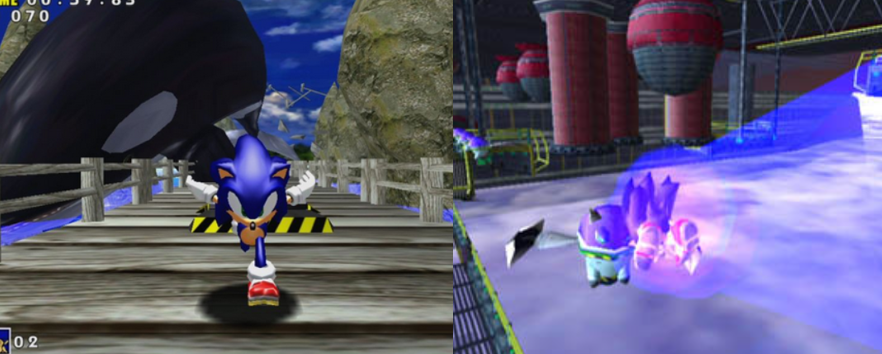
Sonic’s speed and Homing Attack allowed him to easily traverse and target enemies in his new 3D environment.

Sonic Adventure (Sonic Team, 1998) saw players take on the role of Sonic the Hedgehog in his first fully 3D adventure. Arriving in Station Square after a long absence, Sonic encounters the mysterious aquatic lifeform Chaos causing…well, chaos…and soon uncovers a plot by his old nemesis, Dr. Eggman, to gather the legendary Chaos Emeralds and use them to empower Chaos to destroy Station Square. Teaming up with friends old and new, Sonic races to keep the Chaos Emeralds out of Eggman’s hands and stop his plans before it’s too late. Right away, Sonic Adventure wipes the slate clean for the Sonic series. Not only is Sonic a fully-realised 3D character, he’s now taller, edgier, portrayed by Ryan Drummond as a heroic thrill-seeker, and living alongside humans in a vaguely-Earth-like setting rather than hailing from an alien world populated entirely by anthropomorphic characters. Rather than speeding through 2D environments, Sonic navigates 3D stages with the camera placed behind him but, to make traversing these new stages easier, Sonic Team implemented what has now become one of the most contentious additions to Sonic’s arsenal, the Homing Attack. Nowadays, gamers take the Homing Attack for granted as it has been tweaked to hold our hands through its auto-lock-on and targeting reticule but, back in the day, it was an innovative gameplay mechanic that boosted Sonic towards the nearest enemy, spring, power-up pod, or simply blindly in the direction he is facing. It wasn’t a vastly over-powered move but, like Z-Targeting in The Legend of Zelda: Ocarina of Time (Nintendo EAD, 1998), was an essential mechanic to blasting Sonic through his sprawling, engaging zones. As in his previous 2D outings, Sonic also has the iconic Spin Dash, which can boost him along with an almost-game-breaking speed or be held down and charged up for one big boost. He can also acquire a few upgrades that allow him to perform the Light Speed Dash; like the Homing Attack, this is now an iconic staple of Sonic’s 3D arsenal but, here, it’s a bit clunky as Sonic must charge up a Spin Dash and then release the button to speed along a set of Golden Rings. This was vastly improved in Sonic Adventure 2 to the format we are now used to, where the Light Speed Dash is assigned to a single button.

SonicAdventureVariety.PNG
Running, flying, hunting, stealth, shooting, fishing…Sonic Adventure has it all!

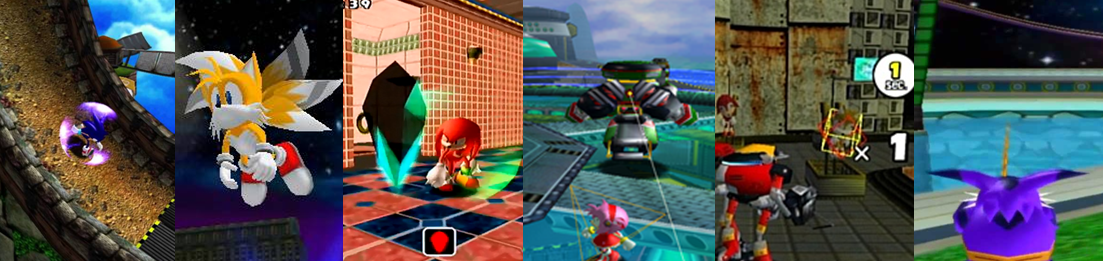
For gamers more used to Sonic’s most recent titles, Sonic Adventure may seem a bit of a shock as it also includes a whole host of additional characters to play as. Miles “Tails” Prower must race, usually against Sonic, to reach a goal first, using his twin tails to fly and attack enemies; Knuckles the Echidna must glide, climb, and dig through stages to find fragments of the Master Emerald; and Amy Rose has to use her Piko-Piko Hammer to evade the invincible ZERO. Sonic Adventure also introduced gunplay to the Sonic series for the first time by allowing players to blast through stages as the tragic robot E-102γ (or simply “Gamma”) and one of the most divisive characters of the entire franchise, Big the Cat, a massive, slow-witted cat who has to fish for his elusive friend, Froggy.

Waste hours of your life raising the perfect Chao but don’t forget to take on Perfect Chaos!

Once players have cleared each character’s story from start to finish, they unlock once final chapter where everone comes together to power Sonic up into Super Sonic so that he can end the threat of Chaos’ ultimate form, Perfect Chaos. This started a trend in the 3D Sonic games where players would unlock one final story where they play as Super Sonic, something that is still often seen in modern Sonic titles, which have only recently begun allowing players to play as Super Sonic outside of the Last Story. In addition to these story modes, Sonic Adventure also features the Chao Garden. As Sonic and his friends destroy enemies, they can rescue a variety of little animals that can be taken to three Chao Gardens found in the game’s three Adventure Fields. In here, players can hatch and raise Chao, tiny little versions of Chaos, and power them up with these small animals, buy them food and accessories in the Black Market, and then race and battle against other Chao in the Chao Games. Chao’s stats (run, fly, swim, power, and stamina) will increase (or decrease) with each animal they interact with and the Chao will take on different characteristics and colours as they level-up, eventually evolving into stronger bipedal forms. The Chao Garden is a nice little distraction and an extra incentive to play but I can’t say that I really miss it from modern Sonic games; it’d work as a mobile app, or something like that, though. Story and narrative are a massive part of Sonic Adventure; previously, there was a massive divide between the Sonic narrative in Japan to that seen in the United States and Europe. While Sonic always lived on Earth in Japan and fought against Dr. Eggman, in the U.S. and Europe, he lived on Mobius and battled Dr. Ivo Robotnik; Knuckles lived alone on Angel Island in Japan but was isolated on the Floating Island elsewhere, and there were a few inconsistencies regarding the amount and appearance of the Chaos Emeralds as well.

SonicAdventureEggman.PNG
This was the first time many gamers became aware of the “Eggman” name.

With Sonic Adventure, though, Sonic Team sought to consolidate all these inconsistencies into one brand image for their super-fast mascot. “Eggman” is used by Sonic and his friends as an insult to their egg-shaped adversary, who refers to himself numerous times as Dr. Robotnik; Sonic and his anthropomorphic counterparts are right at home alongside humans, and the previous games are used as a vague basis for the character’s back stories (Amy specifically remembers the events of Sonic the Hedgehog CD (SEGA, 1993), for example) but, at its core, Sonic Adventure, with its anime-inspired aesthetic, serves as a soft reboot for the franchise that would act as a clean slate for the series going forwards. Unfortunately, this didn’t last very long. All-too-soon, Sonic’s narrative began to get more and more convoluted and the idea of one unified worldwide version of Sonic was tainted by further drastic changes to Sonic’s aesthetic, the addition of Classic Sonic and the production of Sonic Boom (Various, 2014 to 2018). Long-time fans of the series struggled a bit with Sonic’s dramatic redesign; fans literally argued themselves into a frenzy over the fact that Sonic now has green eyes, for God’s sake, and debates continue to rage to this very day regarding what is the best design for Sonic.

SonicAdventureBig.PNG
I actually really like Big and found his gameplay simple fun…

While I actually really enjoy each of the character’s stories and gameplay styles, fans also reacted badly to many of Sonic Adventure’s gameplay mechanics. The speed and excitement of Sonic’s gameplay continued into Sonic Adventure 2 and eventually evolved into the sole gameplay style we see in modern Sonic titles, but Tails’ and Amy’s formulas were abandoned entirely by the sequel, with only the shooting and treasure hunting mechanics lasting to Sonic Adventure 2. But it was Big the Cat who suffered the most, with fans seemingly unified in their hatred of his slow movement and fishing gameplay. I, however, really like Big; his stages are short and simple, his gameplay inoffensive and easy to master, and it’s a breeze to cheese his additional missions. Honestly, if I had to pick a character I disliked out of all of those on offer here, it would be Amy, as she’s a bit awkward to control at times (thanks in no small part to Sonic Adventure’s dodgy, jerky camera) but, having said that, her stages are still pretty short and easy to get through and I would much rather than three great characters and stories and three average ones than one single gameplay style. Sonic Adventure was also hampered a bit by its camera, as mentioned, and control schemes; these would be refined in Sonic Adventure 2 but, here, everything is lacking a little bit of polish. It isn’t the glitch-filled, game-breaking end of the world a lot of Sonic fans will scream at you that it is but it can cause some unnecessary deaths at times. The game’s voice acting and lip-synching are also still a source of derision but, honestly, I really don’t care; all the characters sound great, and very appropriate, and, while the lines aren’t always great and their delivery can be hit and miss, that was just how voice acting was back in those days and, for me, it just adds to the quirky charm of the videogame.

SonicAdventureTails.PNG
To say that Tails has regressed in recent years is a bit of an understatement…

Sonic Adventure is also packing quite a bit of content. Alongside the Chao Garden, there’s also the option to replay each character’s stage a couple more times to earn additional Sonic Emblems (which can be found hidden in the Adventure Fields or are awarded after finishing stages and story modes); players can earn further Emblems in the Trial Mode, by finishing sub-games, and by winning Chao events. In the DX: Director’s Cut expansion, there’s also a Mission Mode that tasks players with fulfilling certain objectives for even more Emblems; once you earn all 180, you’ll unlock the ability to play as Metal Sonic in Sonic’s stages. While a simple reskin, this is a fantastic addition to the game and I would honestly love to see Sonic Team do more reskins like this in Sonic titles as it’s so easy to do and just helps add a bit more incentive to play and a little variety. That is what I love the most about Sonic Adventure: the variety; each character experiences events from a different perspective, meaning you might watch the same cutscene two or more times but the dialogue and camera angles will be different depending on who you are playing as. Also, if you get tired of blasting through stages at break-neck speed with Sonic, you can take in the gorgeous visuals at a slower pace with Knuckles or Big or just go in all guns blazing with Gamma. There’s a lot to do, lots of little hidden secrets and Easter Eggs to find, and I always want to play a little more, do a little more, and explore areas with each of the six characters.

Sonic Adventure certainly wasn’t lacking in gameplay variety.

It is honestly very disappointing to me that SEGA slowly began to shift away from Sonic’s extended cast and focus solely on Sonic’s gameplay. In Sonic Adventure, Tails and Amy both learn to be independent characters who aren’t simply one-dimensional bit players in need of rescue. Now, though, you’re lucky to even see Amy in a cutscene in a Sonic game and it seems to take a massive, concentrated effort of willpower for Sonic Team to allow players to play as Tails, to say nothing of poor old Knuckles! Sonic Adventure isn’t entirely to blame for that but the game is a bittersweet experience to play as it’s so much fun and has so much potential but some of its best parts (character variety, the semi-open world, and the level-up system) were omitted entirely in Sonic Adventure 2 and SEGA have never really been able to make a Sonic title that feels as immersive as Sonic Adventure. Sonic the Hedgehog (Sonic Team, 2006) tried to emulate the same feel and expansive nature of Sonic Adventure, but it lacked the gameplay variety and was littered with bugs and issues that made it more of a poor imitation; Sonic Unleashed (ibid, 2008) was perhaps the closest to succeed at emulating Sonic Adventure’s style but, rather than try to expand and refine upon this to reintroduce more of the concepts and mechanics of Sonic Adventure, SEGA and Sonic Team chose to release wildly inconsistent Sonic titles and bog their franchise down with multiple competing iterations of their mascot rather than continue with one unified version of their most popular brand.
SonicAdventureEnd
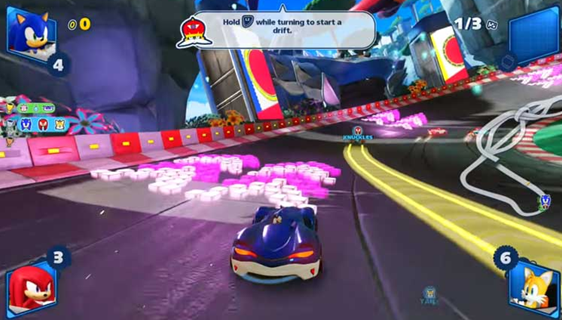
It has its flaws but Sonic Adventure is still great fun to play.

This is a real shame but, for me, does not diminish the impact or enjoyment of Sonic Adventure. Sonic Adventure 2 might be technically better in a lot of ways, but there’s something about racing through Station Square, exploring the Mystic Ruins, taking down the Egg Carrier, exploring the history of Sonic’s world, and battling Chaos’s various forms that I find extremely enjoyable. I like that the redesigns of Sonic, Tails, Knuckles, Amy, and Eggman all look cool and that the playable characters have distinct gameplay styles; I like the aesthetics of the game and its world and the new characters, who are both fun to play as and surprisingly complex; I like that the game is simple but also challenging at times, that the bosses are big and have a lot of variety, that the soundtrack is a mixture of styles (from cool skater rock to nostalgic tunes to mechanical synthesis), and that Eggman is a competent threat and not just some bumbling buffoon. For me, Sonic Adventure was a fantastic way to reintroduce Sonic to a new generation of gamers and a great starting point for a whole new series of Sonic titles; SEGA and Sonic Team may have fumbled the ball at capitalising on some of the game’s great ideas but it doesn’t change the fact that Sonic Adventure is a fun title to invest a few hours on and that it succeeds far more that it fails, no matter what the toxic Sonic fan community might have you believe.

My Rating:

Rating: 5 out of 5.

Fantastic

Movie Night: Rambo: Last Blood

RamboLogo.PNG

Released: September 2019
Director: Adrian Grunberg
Distributor: Lionsgate
Budget: $50 million
Stars: Sylvester Stallone, Yvette Monreal, Paz Vega, Sergio Peris-Mencheta, and Óscar Jaenada

The Plot:
Eleven years after finally returning to America, Vietnam veteran John Rambo (Stallone) has devoted his life to his adopted daughter, Gabriela (Monreal). However, when Gabriela is kidnapped by human traffickers while in Mexico, Rambo must take up arms once more to bring her home.

The Background:
Unquestionably, Rambo is one of cinema’s all-time iconic action heroes; introduced in First Blood (Kotcheff, 1982) as a psychologically damaged soldier, the character has evolved into a hulking war machine to a disillusioned old man, all while carrying a haunting presence as he struggles to run from, or confront, his inner demons. The poorly-titled Rambo (Stallone, 2008) seemed to tie the franchise up nicely, with Rambo massacring basically the entire Burmese army and then finally returning home after a lifetime of war, drifting, and toiling away from the United States. However, Stallone appears to be in the middle of a kind of renaissance (or, perhaps, undergoing a farewell tour) as he revisits and retires his iconic characters and, as a result, we now have one more chapter in the life of old man Rambo.

The Review:
Going into Rambo: Last Blood, I was expecting something that was more like the (comparative) subtlety of First Blood mixed with the gritty, bloody violence of Rambo and, while that is generally the case, it also feels as though Stallone saw some modern action/thrillers like Taken (Morel, 2008) and the John Wick (Stahelski, 2014 to present) films and said: “What if that…but with Rambo?”

RamboFamily
Rambo has found peace with his family…but nothing lasts forever…

As a result, Rambo: Last Blood is, stylistically, a very different film to its predecessors and Rambo is, overall, a very different character. Having bonded with Gabriela and being close to her grandmother, Maria (Adriana Barraza), Rambo is at peace in a way he never has been in the past as he’s finally back with his family and away from conflict. However, Rambo has also filled his time with building an immense network on caves beneath his father’s ranch, which makes for an impressive and bloody finale to the movie, and is swallowing pills of some description to help curb his post-traumatic stress.

RamboMexico.PNG
Rambo’s mortality is a central theme throughout Last Blood…

However, when Gabriela takes off to Mexico to find her estranged father and doesn’t return, Rambo immediately jumps into his truck and heads down there without a second’s thought to find her and bring her home. Quickly locating the Martinez Brothers, Hugo and Victor (Peris-Mencheta and Jaenada, respectively), Rambo is viciously attacked and has his face scarred by the brothers and their gang of human traffickers. Nursed back to health by journalist Carmen Delgado (Vega), who also has a personal vendetta against the Martinez Brothers, Rambo soon finds himself preparing for war once more, this time to fight for his family first and foremost.

RamboTraps.PNG
Rambo prepares a series of gruesome traps for his victims…

Rambo: Last Blood is, honestly, a bit of a mish-mash of ideas; it ends with a fantastically brutal sequence where Rambo hunts down his prey one by one and murders them in unique and brutal ways, and there’s some intense scenes of him prowling the streets of Mexico chasing down leads and roughing people up for information, and there’s a heart and a tragedy at its core that are reminiscent of other Rambo movies. Yet, throughout it all, I couldn’t help but ask why this movie was deemed necessary; Rambo’s story was largely concluded in Rambo and this extended epilogue, of sorts, only serves to emphasise that this character will never be free from conflict and never be able to truly lay down his guns, which is a sombre and depressing post-script for a character that has, more so than many other action heroes, earned a rest from war.

The Nitty-Gritty:
So, I mentioned Taken above and this is perhaps the most fitting analogy as this film is basically Taken but with Rambo and with one other crucial, gut-punch of a twist…Rambo’s adopted daughter, Gabriela, succumbs to her wounds and drug intake and dies shortly after being rescued by her uncle. This leaves Rambo obsessed with bloody revenge, which he soon obtains when he brutally decapitates Victor off-screen and lures Hugo (alongside a whole slew of nameless, faceless cannon fodder) to his heavily-booby-trapped ranch in order to blow their fuckin’ heads off and literally pull Hugo’s heart from his chest.

RamboHaunting
Rambo is still struggling with his inner demons.

This over-the-top action and killing is a delicious coda to the film but, during the conflict, Rambo suffers a few gun shot wounds which threatened to leave him dead but, instead, he simply reflects on his fate in a rocking chair and then (literally) rides off into the sunset. So, at the end of Rambo, it seemed like Rambo was going to finally go home and leave war behind and reconnect with his father. Here, though, his father is nowhere to be seen (and, presumably, long dead) and Rambo suddenly, randomly, has an estranged brother (who’s a complete asshole), a gorgeous young niece/stepdaughter, and a Maria, all of whom help to humanise and settle Rambo’s demons. But, now, with Gabriela dead, Maria gone, and his childhood home decimated, Rambo is left as a drifter once again, riding off into an uncertain future.

RamboBow.PNG
Rambo is still a crack shot with a bow and arrow!

Personally, I feel like Gabriela should have survived, perhaps been left in a coma, and Rambo should he satiated this thirst for vengeance but perished in the process, having died fighting for something worthwhile for a change (basically, recreating the end of Logan (Mangold, 2017)…but with Rambo!) Instead, Rambo is left with literally no family to fall back on and no clear end to his story, which may set up for a future instalment later down the line but, in a way, kind of ruins the somewhat-happy ending that Rambo suggested for the character.

The Summary:
Rambo: Last Blood has a few flaws, mainly in trying to justify why it even exists, but it is undeniably a thrill to see the character back onscreen and just as brutal as ever; age may have caused Rambo to become more methodical but it has done nothing to dull his edge or his pit-bull-like fighting spirit, which is as strong as ever. Its just a bit of a shame that he’s been placed in a movie that isn’t really offering the character much more growth or offering anything new to the action/thriller genre, relying more on nostalgia and gruesome violence to prop up its unoriginal narrative.

My Rating:

Rating: 2 out of 5.

Could Be Better

Talking Movies: It: Chapter Two

Talking Movies

It2Title.PNG

Released: September 2019
Director: Andy Muschietti
Distributor: Warner Brothers Pictures
Budget: $60 to 79 million
Stars: James McAvoy, Isaiah Mustafa, James Ransone, Jessica Chastain, Bill Hader, Jay Ryan, Andy Bean, and Bill Skarsgård

The Plot:
Twenty-seven years after facing and defeating Pennywise the Dancing Clown (Skarsgård), the Losers’ Club are called back to Derry to face the terror of It once again but, in order to overcome their greatest fears, they must first remember their past and rekindle their friendship.

The Background:
It: Chapter Two is, obviously the sequel (or second part) to the hugely-successful It (Muschietti, 2017), which retroactively retitled itself It: Chapter One just before the credits rolled. Given the length and structure of Stephen King’s original 1986 novel, it only made sense to split the story into two parts (which was all-but-inevitable when Chapter One raked in over $700 million against a $35 million budget), and everyone involved has clearly gone to great lengths to secure some big and talented names to help bolster Chapter Two even further.

The Review:
Chapter Two picks up twenty-seven years after the conclusion of Chapter One; a grown-up Mike Hanlon (Mustafa), who has stayed in Derry the entire time and become somewhat obsessed with watching for signs of Pennywise and haunted by his memories of the first movie, is forced to call his old friends up when It awakens and begins not only abducting, dismembering, and eating children but also calls out to the Losers to settle their score.

It2Losers
It: Chapter Two certainly excels with its casting.

Unfortunately for Mike, the Losers are all grown-up, successful adults with no memories of Derry, Pennywise, or their friendship; Bill (McAvoy) is a successful writer who overcame his stutter in favour of struggling with writing good endings to his books, Beverley (Chastain) has become a successful fashion designer who is trapped in an abusive marriage, Ben (Ryan) is now a fit and healthy architect, Eddie (Ransone) works as a risk assessor, has traded a fat mother for a fat wife, and fell back into his dependence on medicines and his inhaler, Richie (Hader) has become a stand-up comedian, and Stan (Bean)…well, it’s not said in the film what he does, but he’s grown up too. However, Mike’s phone call is enough to reignite the Loser’s memories (for better and worse) and compel them to return to Derry in record time to get caught up and piece together their memories, and their friendship, to perform an ancient ritual that Mike believes will destroy Pennywise once and for all.

It2Horror
It: Chapter Two definitely ups the gore and horror.

As I may have mentioned in my review of Chapter One, It is, unquestionably, my favourite novel of all time; King builds his characters so well that I can’t help but feel for each of them and, as I have grown older, my connection to the themes of It (friendship, childhood, adulthood) has only grown stronger. While I enjoyed Stephen King’s It (Wallace, 199) and Tim Curry’s rampant portrayal of Pennywise, I always felt like It needed another shake of the stick, one free form the restrictions of a made-for-television miniseries. While Chapter One altered some elements of King’s novel (changing the time period, adding new scares, altering some of the motivations and so forth), I didn’t really mind this and the movie didn’t disappoint in showcasing how malevolent and psychotic Pennywise can be.

It2Kids
The kids make a much welcome return thanks to flashbacks.

Chapter Two, however, faces the same problem as the 1990 miniseries (and one also present in the book) in that it must now live and die on the strength of the adult version of the Loser’s Club. Given that Chapter One pulled a lot of its presentation and inspiration from Stranger Things (Various, 2016 to present) and the fact that the kids were so good in their roles, this is a tall order but the cast of Chapter Two largely fulfils this by bringing in some great talent for the adult roles.

It2RichieEddie.PNG
Richie and Eddie’s banter keeps the film lively and energetic.

Hader and Ransone especially stand out; their foul-mouthed banter and close friendship adds a lot of heart and levity to the film, while McAvoy and Chastain bring the emotional weight and acting nuance. Mustafa portrays Mike far from the wise mentor figure he assumed in the 1990 miniseries and instead pulls more from the fatigued, terrified obsession that Mike struggles with in the book. Unfortunately, there once again isn’t too much for Ben or Stan to do this time around; Ryan is serviceable in the role but, where child-Ben (Jeremy Ray Taylor) assumed Mike’s role of historian and exposition in Chapter One, adult-Ben is mainly there as a mediator and to rediscover his love for Beverley. Once again, Skarsgård steals the show as Pennywise; unlike Curry’s madcap performance, Skarsgård is a creepy, legitimately terrifying force who loves to mess with Its prey before It feeds. Chapter Two feeds (pun intended) Pennywise a far greater body count as he chomps down on adults and children alike, literally biting the heads of Its prey in a shockingly gruesome display. Skarsgård also gets a one-up on Curry in that the finale thankfully does not lose his visage or presence, allowing the final confrontation between Pennywise and the Losers to be far more entertaining while still staying true to the source material.
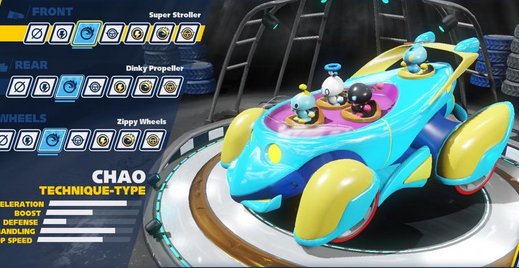
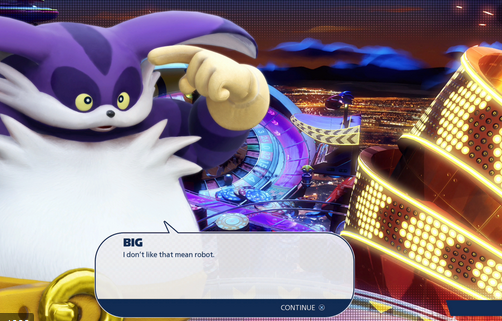
It2Pennywise
Skarsgård remains a truly creepy Pennywise. 

Despite upping the gore and creepy visuals, the bulk of Chapter Two’s scares again rely on jump scares, which is fine as they’re generally well done and Pennywise is a very charismatic presence, but the film does struggle with its pacing at bit. For example, Mike rings the Losers and they all arrive literally moments later with little issue. This does happen in the book and the miniseries but it stuck out to me as a little rushed as the film then slows down a bit so we can get truncated snippets of their lives. A couple of examples of this are Bev making very short work of her husband when he attacks her, with little to none of the catharsis given in the book to this moment, and Ben summing up his weight loss in one line, which is very disappointing considering how hard John Ritter fought to include an abridged version of Ben’s weight-loss story in the miniseries. However, I think some of these pacing issues will be absolved if you watch both parts back-to-back as one big movie (or, even better, they release a supercut version), that way you won’t lose any momentum as you’ll be familiar with all the characters. Also, when the film includes the original child actors, it makes the wise decision to include new scenes, storylines, and scares that pull more material from the book so it never really feels like its treading over the same ground or telling us things we already know.

The Nitty-Gritty:
Fundamentally, Chapter Two follows many of the same beats as the book and the miniseries but there are some interesting wrinkles; one of the biggest is the idea that Richie is actually in love with Eddie and has been harbouring an unspoken homosexual love for him this entire time, which I never even thought of or picked up on when I read the book. Another is Mike managing to escape the attack by the aged Henry Bowers (Teach Grant) with only a flesh wound, allowing him to not only participate in the final battle but finish up his character arc when his desperate belief in the Ritual of Chüd faisl to destroy Pennywise and Mike is revealed to be severely traumatised by his childhood nightmare. A big spoiler for anyone who hasn’t read the book is that Stan never makes it back to Derry, opting to slit his wrists instead. In the book and miniseries, he leaves a chilling message scrawled on his bathroom tiles (simply the word “It”), which is a genuinely spine-tingling moment; here, it’s a brief blink-and-you’ll-miss-it inclusion and, rather than killing himself because he was unable to face his fears and knew that pennywise was due to reproduce, Stan instead kills himself so that his fear won’t hold back the Losers and will galvanise them. This is given a heroic air in the film, which helps keep Stan a part of the group, but it’s never really presented as a motivation for the Losers sticking around to face Pennywise again.

Eddie also ends up dead in the finale; honestly, I thought that Mike was going to die (either in his place or as well), given his presence in the end, but Mike survives and Eddie gets impaled by one of It’s Spider-legs. This comes after Eddie has overcome Bowers and found the strength to strike what appears to be a fatal blow to the Spider and, before he dies, Eddie allows the Losers to realise that they can defeat It by disowning their fear of It and reducing It to a weak form, allowing Eddie to die a hero. This is a small issue, however; the new It movies seem to favour an oversimplification of It’s desire to inspire fear in Its prey. In the book, It likes Its prey to be scared because it improves the taste of the flesh and It delights in tormenting Its victims but, in these films, the Losers are able to defeat It by standing up to It and rejecting their fear of It, reducing It to little more than a blubbing baby. This was a factor in the book, miniseries, and Chapter One but, generally, Pennywise is enraged at the Losers hurting It and making It experience fear, rather than being powered by fear. It’s not a massive issue, as it’s a perfectly acceptable adaptation of Pennywise, but, as I say, it is a bit simplified. Similarly, Chapter Two seems to prefer the idea that It is actually an extraterrestrial lifeform that crashed to ancient Derry on a meteor, rather than an unspeakable eldritch horror; It’s true from is still living light but, rather than a Lovecraftian mass of orange lights that defy life, Chapter Two realises this form as three spinning orbs. Again, a fine way to show it and to hint at there being more to It, but a bit of an oversimplification.

Finally, one thing I feel would have helped with the film’s pacing is just omitting Henry Bowers completely. Henry (Nicholas Hamilton) took an unquestionably fatal tumble in Chapter One and his inclusion, while true enough to the book, is diluted so much that it would have been probably a lot better and easier to say Henry died and have It take the form of a zombified Bowers to attack Eddie. The time spent with Henry, brief though it may be, could then have been put into showing the adult Losers’ lives a bit more prior to returning to Derry. A big plot point for Bill is that everyone loves his books but hates the endings he writes; this is not-so-subtly based on real-life criticisms of a lot of King’s work, especially It. I, however, was always happy with the idea that It is best translated as a giant Spider; it worked as a metaphor and the ending always hit me hard as the Losers sacrifice so much to end Pennywsie’s threat and it’s a real poignant reflection of what it’s like to grow up and forget (or grow apart from) the friends that were once so important to you. Chapter Two, however, actually improved on the ending in a way that I found heart-warming in that, unlike in the book and miniseries, the Losers don’t lose their memories of each other after defeating Pennywise. Them losing Stan and Eddie and their memories after working so hard to remember everything always broke my heart so this really made me happy. Stephen King’s gratuitous cameo could have been shorter, though…like, he has a lot of lines and a lot of time was spent on indulging him.

It2Bunyan

The Summary:
While not as good as It: Chapter One, It: Chapter Two is still a solid horror movie; there’s plenty of creepy moments, gore, and a surprising amount of humour here that’s sure to appeal to fans of the first movie. Allowances have to be made for the characters we became attached to now being grown up and the cast does a great job stepping into the shoes of their younger counterparts; the cast is scarily fitting, which really helps to adjust to this narrative shift. While some of the plot points are a bit weaker and the ending may be disappointing to some, as a massive fan of the book I was very satisfied and just as touched by the ending, especially some of the tweaks they made that, in my opinion, actually improved it.

My Rating:

Rating: 4 out of 5.

Great Stuff

The Teamos Connection

The Teamos Connection is a collection of stories I wrote over the course of many years revolving around a malevolent biological research facility that doubles as the largest and most profitable supermarket retailer in the United Kingdom.

Each story in the collection is laced with dark comedy, macabre imagery, and controversial content and is available to buy from Amazon using the below links.

Book One: Consequences
For Barry Reese, Teamos cost him his livelihood, family, and sanity, and left his oldest daughter, Sophie, desperate for answers. Now, Sophie has returned home to continue her father’s work, unaware that a cold, calculating new manager is determined to avenge the damage caused by her father.
Buy on Amazon

Book Two: Parasite
Bored by their mundane jobs at their local Teamos petrol station, Wayne Grace and Eddie Conner fill their time mocking their supervisor, flaunting company policy, and bombarding customers with an irritated sarcasm. However, their ordinary lives are turned upside down when an amorphous alien organism arrives to fulfil its one purpose: to consume!
Buy on Amazon

Book Three: The Morning After
For student Gavin Jackson, Teamos is simply the local supermarket where his best friend and roommate, Craig Cooper, works a menial job. Tonight, Gavin hopes to finally make a move on the girl upstairs but the revels take a gruesome turn for the worst after the unexpected arrival of a ravenous beast that tears through the student dwelling with a voracious appetite!
Buy on Amazon

Book Four: The Late Shift
Simon Forrester has the unenviable task of supervising the nightshift at a large Teamos supermarket as the Team Deputy. However, when a mysterious delivery arrives and Forrester undergoes a dramatic, painful, and horrifying transformation, he witnesses the horrific truth beneath Teamos with his own eyes…
Buy on Amazon

Book Five: Outbreak
In a Teamos Biodevelopment lab, a team of scientists find themselves under siege when a hoard of flesh-eating undead run rampant, forcing them to attempt to fight back with their latest test subject.
Buy on Amazon

Book Six: Loose Ends
Michelle Reese’s life was turned upside down when Teamos cost her father his livelihood and sanity. Already at rock bottom, her downward spiral is exacerbated when her estranged sister dies and Michelle’s is suddenly abducted by the mysterious Claude and forced to journey towards Teamos Headquarters and the settling of a lifelong grudge!
Buy on Amazon

The Complete Collection
Available as paperback and e-Book, The Teamos Connection: The Complete Collection collects all six of these short stories alongside two additional tales, Personal Best and The Stranger which further flesh out the mythos of the Teamos Connection.
Buy on Amazon

The Complete Collection: Deluxe Edition
Available only in hardback, Deluxe Edition of The Teamos Connection: The Complete Collection includes everything from the paperback version alongside an exclusive seventh story and bonus materials!
Coming Soon