Released: October 2018 Director: Ruben Fleischer Distributor: Sony Pictures Releasing Budget: $100 million Stars: Tom Hardy, Michelle Williams, and Riz Ahmed
The Plot: Disgraced reporter Eddie Brock (Hardy) is bonded with a psychotic symbiotic alien lifeform and becomes a superhuman anti-hero forced to choose between protecting the innocent and enacting revenge.
The Background: A Venom spin-off had been in the works since Spider-Man 3 (Raimi, 2007), if you can believe that. Sony, once a studio capable of making good decisions and responsible for kicking off the modern superhero crazy with Sami Raimi’s first two Spider-Man movies (2002; 2004), have been determined to produce a Venom movie, even after the character was unceremoniously killed off in Spider-Man 3, and when the Amazing Spider-Man (Webb, 2012; 2014) series was ended prematurely, and now, when the rights to Spider-Man are shared with Marvel Studios. This means that, while Sony can produce spin-offs of Spider-Man characters like Venom, it doesn’t look like they can actually include Tom Holland’sversion of the web-head. This has created some confusion, even amongst the two studios, with some at Sony stating that Venom exists adjacent to the Marvel Cinematic Universe and others proclaiming that it is a standalone story, and still others claiming that it’s both! Seemingly inspired by the success of R-rated, violent superheroes like Wade Wilson/Deadpool and Logan/Wolverine, Sony fast-tracked Venom and brought the production back to life, even managing to snag Tom Hardy in the process. Unfortunately, it seems that, at the last minute, someone at Sony lost their balls and, rather than a violent R-rated affair, Venom is more a watered down, studio-friendly version of the character in order to sell more tickets.
The Review: Venom takes inspiration from three prominent arcs of the character’s self-titled series: Lethal Protector (Michelinie, 1993), Separation Anxiety (Mackie, 1994-1995), and Planet of the Symbiotes (Michelinie, 1995), whilst also taking some inspiration from the character’s origins and portrayal in the Ultimate Spider-Man (Bendis, 2000). This means that Venom is quite a talkative, violent character who isn’t necessarily interested in saving lives but is also driven to punishing only those who do wrong by others, which should result in an interesting and layered character and, instead, produces a fun, if kind of dumb, action movies that could have been really violent but was hampered by studio interference.
Hardy really captures the duality of Eddie and the symbiote.
Therefore, Venom is an interesting beast; the film lives and dies by the strength and versatility of its star and Tom Hardy is brilliant as a likeable, downtrodden underdog who is trying to do what’s right but is tempted by the power offered by the symbiote to strike back at those who have wronged him. Hardy pulls double duty in this film, playing both Eddie Brock and voicing the alien symbiote, and is portrayed as a loser who screws up his life and blames others for it.
Here’s an eccentric in a suit. He’s a bad guy.
Unfortunately, the same praise can’t really be said for some of Hardy’s co-stars. Carlton Drake (Ahmed) is every wacky evil corporate villain you’ve seen on film before and, while I didn’t exactly hate him or dislike his performance, I am personally just tired of seeing guys in suits being evil for no real reason. Rounding things out are Anne Weying (Williams), Eddie’s former fiancée who is serviceable enough but sure drops Eddie’s ass pretty quickly after he screws up an important interview. One person who did stand out for me was Dr. Dora Skirth (Jenny Slate), who was super cute and spunky and had a nice little character arc going on. I almost wish that Eddie had started the film with nothing and developed a romance with her rather than trying to find ways to repair his relationship with Anne as Dora had a lot more potential in her.
The symbiote offers Brock the power…but at a price.
Effects wise…well, Venom by its very nature requires substantial special effects and CGI to create the brain-eating anti-hero and it definitely seems like the studio put all of the money into making Venom look as good as possible and, honestly, Venom does look fantastic when he’s on screen. The problem is he’s just not on screen enough; a lot of the runtime is focused more on Eddie as a character and slowly developing his rapport with the symbiote and discovering what it can do, which is great as we really didn’t get to spend enough time with Brock (Topher Grace) in Spider-Man 3 but, as a massive fan of the character, I just wanted to see more Venom in my Venom movie. Other effects, though, are a bit hit and miss; in its non-bonded form, the symbiote is little more than writhing, liquid-like goo that honestly looked a bit dodgy. The effects used in Spider-Man 3 actually looked better and made the symbiote appear more vicious and dangerous; similarly, I wasn’t a fan of how the symbiote formed tentacles and appendages from seemingly nowhere with no ill effect on people’s clothes or skin. In the comics, the symbiote’s mimic clothing and cling and tug at skin like sticky webbing (an effect also nailed in Spider-Man 3) but none of that happens here; it’s seemingly just generated without any noticeable issues. Instead, Venom focuses on the duality between Brock and Venom, with the symbiote constantly talking and expressing itself to Eddie and threatening to devour his organs or takeover his body completely. This is a smart move, as it means we get a much more accurate version of Venom than anything seen before, but the symbiote’s motivations and behaviour is questionable at times, almost as much as those of Drake, and no amount of character work or amazing effects can change that some of those aspects are jarring and glaring flaws.
The Nitty-Gritty: The Life Foundation obtains the symbiotes and hopes to use them to save humanity from extinction (which is kind of daft but okay, I guess); Eddie stumbles upon their plot and becomes bonded with the symbiote, which helpfully doesn’t kill him in the same way that others were killed from exposure. In an odd addition, the symbiote refers to itself as “Venom” right from the start, which is normally a name the two create to describe their union, and it is driven by hunger for living flesh and the desire to destroy humanity. However, it has a complete change of heart after being bonded to Eddie and decides to protect humankind instead because it randomly decides that it likes life on Earth. Drake, meanwhile, also bonds with another symbiote to become Riot, who wants to bring the rest of their kind to Earth to take the whole show over.
When he’s actually on screen, Venom looks fantastic!
A lot of fans will probably be annoyed at the decision to include Riot, who is a forgettable footnote in Venom’s character history compared to someone like Carnage, and is simply a return to the tired old formula of a villain who is exactly like the hero but eeeeevil! Riot even looks almost exactly like Venom in the right (or wrong, I guess) lighting, though he is separated by a distinct colour scheme and the ability to form different weapons. Carnage would have been a better choice by far but the neutered rating means that Sony would never have done the character justice. Cletus Kasady (Woody Harrelson) appears in a mid-credits scene, promising to unleash “carnage” when he escapes from prison, which is great as it might mean that the studio finds their balls and does a really violent sequel but it’s weird because the scene is so random and out of nowhere and so obviously put in for fan service. I would have preferred to see Brock chasing Kasady for an interview throughout the movie as his big break and stumble upon the Life Foundation’s plot that way, maybe have Cletus be a captive of theirs. But, still, if they get a sequel and if they go full on with the violence, I look forward to seeing Carnage unleashed in full the next go around.
The Summary: Venom is loud and fun and full of potential but doesn’t exactly do anything new or even that exciting. Tom Hardy is great and Venom looks amazing, but the rest of the film kind of crumbles around them and the inclusion of Spider-Man would not have helped to stop that from happening, I love Venom and I wanted this movie to be great but, in the end, it only turned out to be just okay. Here’s hoping for an extended, bloodier cut on DVD and a more violent sequel if it makes enough green.
This review has been supported by Chiara Cooper. If you’d like to support the site, you can do so at my Ko-Fi page.
Released: 14 September 2018 Director: Shane Black Distributor: 20th Century Fox Budget: $88 million Stars: Boyd Holbrook, Brian A. Prince and Kyle Strauts, Jacob Tremblay, Olivia Munn, Sterling K. Brown, Trevante Rhodes, and Thomas Jane
The Plot: When Captain Quinn McKenna’s (Holbrook) unit is slaughtered by a fugitive alien hunter (Prince/Strauts), he’s shipped off to a mental hospital while government agents, led by Will Traeger (Brown), examiner the Predator. However, when a larger, more powerful Predator (Prince/Strauts) arrives to finish off the fugitive, McKenna must team up with a bunch of military misfits to combat the creature, who targets his autistic son Rory (Tremblay) in a bid to breed the ultimate prey.
The Review: As much as I hate to admit it, the Predator franchise has had a bit of a tumultuous history. Despite the success of Predator, the underrated Predator 2(Hopkins, 1990) didn’t really match the worldwide gross or critical reaction of its predecessor. We then had to wait fourteen years to see the ultimate hunter return to cinema screens, this time for the much-maligned and mishandled AVP: Alien vs. Predator(Anderson, 2004). While I actually really enjoyed the follow-up, AVP: R: Aliens vs. Predator: Requiem(The Brothers Strause, 2007) was a box office bomb and the franchise seemed to be dead in the water. As I mentioned in my review of Predators, I had high hopes of the franchise’s third entry, which was both pretty well received and made over double its budget in worldwide gross yet somehow didn’t earn a direct follow-up. Instead, 20th Century Fox made the bizarre decision to bring back Shane Black, who had featured in the first film and even contributed uncredited rewrites to the script and made a name for himself as a director in the years since. Predators’ cliff-hanger was ignored in favour of returning to Earth for a more suburban jungle escapade with a ridiculous title and a strange mish-mash of the previous films that was supposed to act as a soft reboot…despite Predators having already done. The movie opens promisingly enough; the credits font and outer space beginning recall the opening of Predator and Alan Silvestri’s iconic Predator theme is nicely resampled by Henry Jackman into something noticeably punchier and more action-packed, and this emphasis is furthered by the depiction of a space laser battle between the “Fugitive Predator” and its peers. When its ship is damaged and ultimately crashes, the hunter escapes to the dense jungles of Mexico just in time to disrupt a hostage retrieval operation led by crack sniper Quinn McKenna.
Crack sniper McKenna finds the Predator’s gear and is soon fighting to keep his gifted son safe.
McKenna stumbles upon the crash site and swipes the Predator’s helmet and gauntlet before witnessing his entire unit be slaughtered by the Fugitive. McKenna survives thanks to the gauntlet and beats a hasty retreat right as shady, arrogant Traeger and his team arrive to claim the Predator and its tech. Recognising that he’s stumbled into something far beyond his paygrade, McKenna has his loot mailed away for safety and is quickly apprehended and marked as the patsy. Far more than some mindless, musclebound soldier, McKenna is wise enough to see he’s being set up to take the fall yet continues to sport a snarky, bad-ass attitude throughout the film; though the damaged veterans he forms a bond with aggravate him with their bickering, tics, and childish behaviour, he’s fiercely loyal to them and sees them as his “unit” but, above all else, his priority is his family. Realising that his autistic son has been placed in mortal danger after the Predator tech he stole ends up at their house, McKenna pulls his team of misfits together and orders them to get their shit together to keep Rory safe. Similar to AVP: R, much of The Predator’s plot is focused on a suburban town where McKenna’s estranged wife Emily (Yvonne Strahovski) raises their son Rory as best as she can considering McKenna’s long stretches away from. As the wife of a military man, Emily is pretty capable in her own right; she doesn’t stand for any shit from McKenna’a loony new friends and openly defies Traeger’s authority, though her impact on the overall plot is minimal compared to Rory’s. A child savant of sorts, Rory is a quiet little boy with a penchant for puzzles and languages; the subject of ridicule amongst other kids, Rory’s autism sees him extremely sensitive to sounds and changes to his routines. He’s therefore hesitant to go out trick-or-treating, even with a mask on, and would much rather fiddle around with the Predator’s helmet when it accidentally gets redirected to their house. Inquisitive and curious, he quickly activates the Predator’s technology, inadvertently triggering a signal that brings bigger, badder “Upgrade Predator” to come hunting for the Fugitive. Rory’s condition means he struggles in social situations; alongside this outspoken nature is a lot of the same fighting spirit as his parents as he also openly mocks Traeger’s attempts to talk down to him and cannot help but put his extraordinary mind to use even when taking hostage by the Upgrade Predator. Rory’s even strangely desensitised to death and violence; he attains a body count of his own thanks to the helmet’s auto-fire capabilities and is noticeably unfazed when McKenna uses lethal force to rescue him from Traeger.
McKenna is forced to work with a misfit team of damaged veterans, each with their own odd quirks.
Despite impressing Traeger with his wit and demeanour, McKenna is fingered as a dangerous and unstable threat and shipped off to a nut house. On the bus, he meets a bunch of clinically-discharged fellow soldiers, all of whom have their own little quirks and character traits that make them all pretty entertaining. These five – Gaylord “Nebraska” Williams (Rhodes), Baxley (Jane), Coyle (Keegan-Michael Key), “Nettles” (Augusto Aguilera), and Lynch (Alfie Allen) – are already very familiar with each other thanks to attending group therapy together, with the film even suggesting by the end that Baxley and Coyle have a homosexual relationship, and have built a rapport based on mutual respect and dislike. Consequently, they’re very childish and like to rib on each other and their conditions; Baxley makes the most obvious impression such he suffers from Torrette’s syndrome and cannot help blurting out crude remarks, swears, or having facial and body tics. For the most part, this is played as comic relief and leads to some amusing banter between him and the rest of the group, and awkward situations when he accidentally slips out vulgar terms to the film’s female characters. Similarly, Coyle exhibits the most childish demeanour of them all; damaged after accidentally opening fire on his own men, he resorts to jokes, winding the others up, and rarely takes anything seriously, even the threat of extraterrestrial hunters, leading to some moments of contention between him and the others (and, even then, he continues to crack wise). “Nettles” is the most, shall we say, “socially awkward” of the group; he showcases a perverse nature that’s not really very appropriate and threatens to get him in trouble whenever female characters are around. Even Lynch, probably the most forgettable of the group, showcases a talent for close-up magic and has a penchant for overkill in his methods. Of them all, McKenna forms the closest bond with cool-as-a-cucumber Nebraska, a man who was once so disturbed and horrified by the constant cycle of death and conflict in his life that he shot himself in the head to try and end it. McKenna quickly becomes the default “adult” of the group, giving them something to focus on and orders to carry out once things get serious, although there are times when their dialogue is needlessly mumbled or drowning out by ambient noise.
Dr. Bracket is caught up in Traeger’s obsession with acquiring the Predator’s technology.
McKenna and his bunch of misfits prove surprisingly effective; they might be damaged but their proclivity for violence and combat is not only beneficial once the Upgrade Predator comes to town but is even enhanced by their instability, despite their more lewd traits bringing the ire of Emily and evolutionary biologist Doctor Casey Bracket (Munn). Much like Special Agent Peter Keyes (Gary Busey) in Predator 2, Traeger is well aware of the Predators (with this now being the official designation of the creature and his race since it “cooler”), their methods and their technology, and is overjoyed to finally have a live specimen to examine. However, since alien biology is a little outside of his area of expertise, he arranges for Dr. Bracket to help study the creature under the enthusiastic guidance of Sean Keyes (Jake Busey). While the government is growing antsy at the increased frequency of Predator sightings, Keyes couldn’t be more excited at the prospect of studying an actual extraterrestrial lifeform; Dr. Brackett is similarly awestruck (though not enough to criticise the government’s naming of the creature’s as “Predators”, a running self-deprecating gag that really doesn’t land for me) though her excitement turns to horror when she learns that the Fugitive Predator’s genetic makeup is infused with human DNA, suggesting the creatures are either mating with other species or partaking in genetic engineering. barely surviving the Fugitive’s escape, Dr. Bracket bumps into McKenna and, while they awkwardly try to impress her and continually make fools of themselves due to their eccentricities, she tolerates them out of necessity and is forced to rely on them for protection after Traeger orders her execution to keep everything nicely covered up. Traeger’s concern is that the hunters are looking to invade, to supplant humanity before we destroy ourselves through war, social upheaval, or global warming, whichever comes first, and correctly guesses that the Fugitive was bringing humanity a weapon to fight back before they can strip-mine human DNA for their own purposes. Fundamentally, his concern is for the safety of the world, but Traeger’s methods make him a reprehensible individual since he’ll happily kill or threaten anyone, women and kids included, in order to get his hands on the Predator’s technology.
It’s hard to believe that one of these two is supposed to be on our side…
For the majority of the film, the Fugitive Predator is depicted and viewed as an antagonistic force and it’s difficult to argue against this; despite having ejected from its crashing ship, it still goes out of its way to stalk and kill McKenna’s unit, skinning one of them, luring them in with its voice imitator while cloaked, and blasting away with its signature plasma cannon. When it awakens in Traeger’s lab, the Fugitive goes on a tear, even biting the arm of one of his scientists with its mandibles, effortlessly manhandling others, slashing with its claws, and even using surgical equipment and a rifle to add to its body count. However, the film introduces the twist that this Fugitive is actually on our side; a renegade who disagreed with the gene-splicing program, it sought to not only warn humanity of an impending invasion but also prepare them to combat this, but you’d never know it as it slaughters humans at the slightest provocation. The Fugitive displays more personality than any Predator since, even the purposely humanised “Scar” (Ian Whyte) from AVP, showcasing a morbid sense of humour as it uses severed limbs to escape the facility, motioning to McKenna’s group to drop their weapons, and exhibiting the same understanding of human speech as its counterpart from Predators. The Fugitive Predator sports all of its usual weaponry and abilities but also brings some new toys to the table courtesy of its gauntlet, which shoots shurikens and spits out a small orb that allows him to cloak. We also see more of the Predator’s ship this time around; not only do we get to see it producing a wormhole for space travel and firing its armaments, but the Upgrade Predator’s craft results in some explosive ariel action sequences and plays a significant part in the finale. The Fugitive is modelled almost exactly like its counterpart from the first movie (Kevin Peter Hall); its armour, helmet, and even the design of its butt-ugly face all draw from Stan Winston’s classic design, evoking a sense of familiarity with the creature similar to Predators’ “Classic Predator” (Derek Mears). The Upgrade Predator is ridiculously tall and bulky; rendered entirely in CGI, this nightmarish abomination is not only bigger and stronger, it’s the first of its kind to have its words translated onscreen not just through subtitles but also a piece of in-film technology; like Predators’ “Super Predators” (Brian Steele and Carey Jones), the Upgrade hunts using hounds, but forgoes both the traditional helmet and armour thanks to its impenetrable exoskeleton and cybernetic implants. The Upgrade is the Fugitive’s superior in every way, easily crushing its rival’s head and ripping it off, and showcases both hyper aggression and hunting wiles that present it as the most dangerous Predator yet.
The Nitty-Gritty: There’s a surprising amount of depth to The Predator, certainly far more than the usual themes of survival of the fittest, man vs. monster, and nature vs. technology that’s normally at work in these films (though these elements are still prominent). However, I’m not entirely sure if all of them are suitable, appropriate to the genre, or even work; obviously, I’m no expert on autism and don’t really know much about it beyond the fact that it can take many different forms. Still, I don’t think it’s ever been touted as the next step in human evolution, or depicted as being some kind of “superpower” than an alien race would want to harvest for their own benefit. The depiction of the condition is all over the place, with Rory being ostracised, socially awkward and hesitant, and prone to panic attacks as much as he is capable of seeing patterns that others miss and displaying an almost genius-level intellect at times. I guess we’re supposed to figure that the Predators would be able to extract the “benefits” of autism form Rory’s DNA to mitigate the disadvantages but it’s still a strange execution; it’s possible that the film was going for a sense of empowerment and inclusivity for the autistic community, but I wonder if it actually managed to accomplish that. Similarly, unlike every previous Predator movie, The Predator deals with the fallout of post-traumatic stress and focuses on a misfit group of soldiers who have been psychologically damaged from years of killing and warfare; even the relatively “normal” McKenna is depicted as being twisted and somewhat broken on the inside, meaning it doesn’t take much to label him as psychologically unstable, but his newfound unit exhibit far more explicit signs of emotional and psychological trauma. Again, I’m no expert; I know soldiers see and go through a lot and they need all the support available to them since they sacrifice so much for others, and I think it’s an interesting dichotomy to depict more vulnerable characters as opposed to the all-action, gun-toting soldiers seen in previous Predator movies, but a lot of their quirks are played as comic relief so again I have to question whether these depictions were wholly appropriate or respectful to our military veterans.
I enjoyed the gory violence and references but the new elements were awkward, at best.
The Predator is, at times, a little at odds with itself; there’s a degree of comedy in the film that doesn’t always land, and it’s not always surrounding McKenna’s socially inept group. Traeger is constantly cracking wise and giving it the big-I-am, which helps to make him a thoroughly unlikeable character even when he’s not threatening a confused little kid and culminates in an extremely anti-climactic death when he blows his own head off with the Predator’s plasma cannon, and even the Fugitive Predator’s rampage in Traeger’s lab is played for laughs here and there. The Predator also attempts to expand upon and broaden the nature of the Predators, suggesting that they hunt not just for trophies and glory but also to acquire the best genetic sampling from spinal fluids in order to genetically enhance themselves. The film also suggest one of the reasons for increased Predator sightings is because humanity is drawing closely to self-extinction, infusing this action/sci-fi romp with a clunky environmental message, and depicts the Fugitive Predator as wanting to give mankind a fighting chance before its genetically superior peers wipe us all out and claim the planet as their own. While these all make for unique elements in the film, The Predator stumbles to stand out since it mashes together many plot threads and ideas from every previous Predator movie: The Fugitive hunts and stalks through forest areas like in Predator, is hunted and targeted by government types as in Predator 2 (it’s not explicitly stated in the film but Sean Keyes is actually the son of Peter Keyes), dips its toe into the Predator society like in AVP, depicts a suburban area being attacked like in AVP: R, and even features alien hounds and two warring Predator classes as in Predators. Predators also introduced the idea that the hunters change their weapons, armour, and tactics with each hunt and kill but The Predator takes that concept to the nth degree, resulting in the revelation that they’re artificially jump-starting their evolution by sampling DNA from other species. On the plus side, photographic evidence, dialogue, and weapons at Traeger’s facility all reference not only the first film but, finally, explicitly reference the events of the second; even Alexa “Lex” Woods’ (Sanaa Lathan) makeshift spear and Ms. Cullen Yutani (Françoise Yip) make brief appearances, subtly suggesting that the AVP movies are still canon in the Predator universe.
Despite losing his team, McKenna bests the Upgrade Predator and prepares himself for war.
After Rory sketches a map to the Fugitive’s crashed ship, Traeger takes him hostage to acquire their technology; thanks to a conveniently tamed Predator hound, McKenna is able to lead his rag-tag group of soldiers there to rescue Rory. The two groups are forced to put their differences aside, however, when the Upgrade arrives, makes mincemeat of Traeger’s disposable grunts, blows Lynch’s arm off, and retakes the ship. Before destroying the ship, it challenges “McKenna” to lead the survivors in a traditional hunt, with “McKenna” as his prize; while this results in quite the body count, it’s Traeger and his men who suffer the most due to their arrogance, stupidity, and naivety, resulting in the Upgrade picking them off easily and Traeger blowing his own head off. In comparison, McKenna’s group work to lure the Upgrade into a trap using themselves as bait; while the Upgrade is damaged during the assault, this unfortunately results in Coyle and Baxley being mortally wounded and forced to mercy kill each other. When the Upgrade kidnaps Rory (the “McKenna” is spoke of), it attempts to leave on its ship and McKenna, “Nettles”, and Nebraska leap onto it to try and force it down; although McKenna and Nebraska manage to avoid being sliced up by the ship’s forcefield, “Nettles” isn’t so luckily and Nebraska ultimately chooses to sacrifice himself to destroy one of the ship’s engines and send it crashing to the forest below. Although outmatched by the Upgrade, McKenna is aided by the timely and ballsy intervention of Dr. Bracket and is…somehow…able to send the creature tumbling over a cliff; Rory then severs the creature’s arm with its ship’s forcefield and McKenna finally finishes it off by firing its own explosive bolt back at it using the blade from its severed arm. One final subversion of the classic “What are you?” line sees McKenna end the creature once and for all and he and Rory sombrely pay their respects to their fallen comrades. This would’ve been a decent place to end the movie but, instead, we get one final scene before ethe credits where a fully reinstated McKenna finally gets to see what the Fugitive brought for humanity: a ridiculously over the top nanotech battle suit that he plans to use to stave off future incursions for yet another unresolved cliff-hanger ending. Personally, I would’ve preferred to see Royce (Adrien Brody) and Isabelle (Alice Braga) emerge from the pod with a bunch of stolen Predator tech but what the hell do I know?
The Summary: Honestly, as great as it is to see some vicious Predator action there are some flaws that cause The Predator to stumble, primarily revolving around the film’s pacing. It’s like Shane Black wanted to cram as much as possible as he could into the movie and set up for a sequel and, as a result, the focus is very sporadic. It seems that every time the narrative starts to get bogged down by all of the many different ideas Black is trying to incorporate and every time you begin to question the plot and things that don’t make sense, a gory action scene is thrown at you to distract from these issues. I feel it might’ve been simpler to paint the Upgrade Predator as the villainous rogue trying to engage in genocide rather than the Fugitive Predator as the later sure kills a hell of a lot of people for a creature that claims to be trying to save humanity with a “gift”. I like the acknowledgement, however brief, of previous Predator films but it does annoy me that The Predator didn’t actually try to wrap up the franchise’s loose ends and instead focused on setting up for a sequel that never happened. It’s is a shame as there was so much potential for The Predator to be a decent action/sci-fi film; it did a great job reminding audiences why the Predator is such a bad-ass creature but there’s nothing really new here as so much of it is simply remixed elements from all the previous Predator films. What new elements we do get are clunky at best and uncomfortable at worst; I really enjoyed the rapport and personalities of McKenna and his group, even if they are a bit too cartoonish at times, and I liked that the protagonists were all broken veterans struggling with their violent experiences. But the depiction of autism is problematic, the weird environmental message is very misplaced, and the sub-plot of the Predators genetically modifying themselves doesn’t have much impact as the Upgrade Predator is dispatched pretty easily all things considered. In the end, it’s a decent entry, but nowhere near as good as the originals or Predators and it’s easily the black sheep of the mainline Predator series.
My Rating:
⭐⭐⭐
Rating: 3 out of 5.
Pretty Good
So, what did you think to The Predator? What did you think to the depiction of autism and PTSD? Which of the film’s characters did you like the most, or the least? What did you think to the Upgrade Predator and the idea of the creatures splicing genetic traits from other species? Were you disappointed that the film wasn’t a continuation of Predators and which of the Predator movies is your favourite? Whatever your thoughts on The Predator, do please leave a comment below or on my social media and be sure to pop back for more Predator action.
In many ways, this review is very redundant; by this point, I’m sure that everyone has heard everything there is to say about Alien: Isolation (Creative Assembly/SEGA, 2014). The title has been heaped with praise and accolades and, since it’s been out for a while now, there’s been plenty of reviews and opinions out there in the world so I guess this would now qualify as a retro review?
Whatever you do, don’t let that bastard see you!
Anyway, Alien: Isolation does a lot of firsts for the Alien franchise (Various, 1979 to present); like many standard Alien-branded videogames, Alien: Isolation adopts a first-person perspective and, rather than controlling a marine or series protagonist Ellen Ripley (Sigourney Weaver), the player is put in control of Ripley’s daughter, Amanda. Also, not only does Alien: Isolation take place fifteen years after Alienand therefore closely resemble Alien’s low-tech, seventies-sci-fi aesthetic, it also emphasises survival over combat.
It’s a nice touch to feature Ripley’s daughter.
As I said, the player takes control of Amanda Ripley, who has grown up most of her life wondering what happened to her mother, who went missing fifteen years prior when all contact was lost with the Nostromo. When the Nostromo’s flight recorder is recovered, Amanda heads to Sevastopol, a massive space station in orbit around a gas giant, to investigate and find closure. However, a few catastrophes have befallen Sevastopol; many of the systems are offline or busted, the synthetic Working Joes are malfunctioning and attacking humans on sight, and an all-too-familiar alien organism is loose on the station and picking off the few human survivors. Quickly, Amanda is left alone (isolated, you might say) and with only her wits and a few resources to survive the ordeal and make it to safety.
Even saving the game is ripped straight from the movie!
Like Ridley Scott’s original classic, Alien: Isolation is all about atmosphere; sampling the movie’s look, feel, and soundtrack, the player is immersed in an unnerving silence or the ominous sense of hidden dread. A lot of the time, nothing especially engaging is really happening; you’re simply investigating, collecting items and gear, and making your way towards various objectives. Soon, though, Amanda encounters armed humans, who are liable to shoot you on sight or if they feel threatened, and the malfunctioning Working Joes, who make a bee-line for Amanda and attempt to choke or pound the life out of her. This is the player’s first taste of Alien: Isolation’s purposely-limited combat system; Amanda can pick up a pistol (but there is very limited ammunition and its not very effective against the androids), hit enemies with a wrench, or craft other useful items (pipe bombs, EMP mines, etc) to help take out or disable her opponents.
These bastards don’t go down without a fight!
However, most forms of attack will make a lot of noise, potentially attracting more enemies, and all of them are very hit-and-miss. Try and beat a Working Joe to death with a wrench, for example, and you’re gonna have a bad time; shoot a human and you better make sure to aim for the head and you have to consider whether it’s worth wasting your extremely limited ammo. Therefore, it is far more beneficial to distract enemies with a flare or a noisemaker and slowly creep past, using a vent if available, rather than engage in direct combat. This is quite a creative approach as not only does it make every encounter feel like a real struggle for survival and make the player carefully weigh their chances and inventory, but it also prepares you for your first and subsequent encounters with the Alien. Once the Xenomorph makes its grand debut, you’ll be relying more on your motion tracker and the various lockers and cover mechanics to hide because the Alien is completely invulnerable to harm.
Once the Alien appears, get used to this view!
The Alien also has its own independent artificial intelligence, meaning that, while it does follow certain traits, it acts differently each time to encounter it and appears to learn the more you engage with it. In the early going, it will stalk around trying to sniff you out and give up pretty soon and is easily chased away by a burst of flamethrower but, nearer the end of the story mode, it will stick around for quite a while and shrug off the flamethrower’s blasts. You can use flares and noisemakers to distract the Alien and lure it towards your human enemies, and it is very satisfying to watch/hear the Xenomorph slaughter a bunch of people and clear the way for you, but you must remain hidden or else it’s liable to sneak up behind you.
Fuck about and you’ll get this a lot, too!
Additionally, as you progress further, you have to make your way past or battle Working Joes while the Alien is nearby. Any noise made by running or attacking, or from your other enemies, will instantly alert the Alien, drawing it out from a vent or other area. You may find, as I did, that you spend agonising minutes hiding in a locker, holding your breath, and sporadically checking the motion tracker, only to have to dart right back into hiding despite the coast appearing to be clear. Using the motion tracker also attracts attention if enemies are nearby and it doesn’t make a distinction between floors; so, if the Alien is above you, you get a blip and waste a lot of time in hiding but, if you venture out, it’s likely to drop down on your ass from above without warning.
Crafting items is essential to your survival.
In addition to picking up pre-made weaponry and tools, Amanda can collect various bits and pieces to craft items; blueprints will allow the player to create more effective items but you can’t afford to waste any of them. Pipe bombs, for example, are extremely effective at scaring off the Alien or blowing up the androids, but they have a high craft cost; Molotov cocktails will also scare off the Alien and burn most other enemies but are also likely to explode in your face if you throw them too close. Crafting is quite fun and really puts you on edge; Amanda relies on crafting to create medkits and, when you don’t have enough gear to create one when you really need it, it can be extremely tense.
The difficulty really ramps up once you reach the nest!
One of the best aspects of Alien: Isolation is how well it re-enacts the look and feel of Alien; the attention to detail in the locations is amazing and everything looks exactly like it did in Alien. There’s even a great part where you flashback to LV-426 and investigate the crashed Engineer ship, which is recreated in astonishing detail. Later, when you venture into the Alien’s nest, the game wisely draws inspiration from Aliens (Cameron, 1986) and the latter parts of Alien to recreate the slimy, biomechanical look associated with Xenomorph lairs. The game also hints at the presence of an Alien Queen somewhere in the station’s reactor and/or the idea of “eggmorphing” from a deleted scene from Alien. This, accompanied by the fantastic use of Alien’s unnerving soundtrack, really makes the player feel absorbed in the narrative. However, this is almost to the videogame’s detriment; Alien: Isolation is a draining, occasionally frustrating experience. Every encounter is tense and a struggle; every time your motion tracker beeps, you’ll be on edge and scratting around to craft necessary items of find a suitable hiding place; and every time you think you’ve reached a mission objective, a door or path will be blocked and you’ll be redirected elsewhere or have to either hack or cut through doors, clamber up ladders while the room explodes around you, or space walk while the station disintegrates. As someone who grows increasingly paranoid when my resources are low, the path ahead is fraught with danger, and no save points are nearby, this as a constant source of frustration for me but even I have to admire how completely it immersed me into the experience.
The shit really hits the fan by the end!
In the end, all the praise that has been heaped upon Alien: Isolation is completely worth it. You’ll be constantly on edge when the Alien is about, and probably die more than once, but this is easily one of the best attempts at recreating the look and feel of a movie while still logically and smartly continuing the narrative in a dead zone between movies. Parts of the game are annoying, tedious, or repetitive but it all adds towards the atmosphere of the situation; Amanda is at her wit’s end and with very little resources or chances of survival, so obviously the game shouldn’t be a cake-walk, and there’s nothing like the cathartic feeling of reaching a save point or, even better, flushing that Xenomorph bastard out into space!
Over forty years ago, Steven Spielberg made cinemagoers everywhere afraid to enter the ocean and changed the face of cinema with Jaws (ibid, 1975), to this day the quintessential tale of a giant shark terrorising water-dwellers. Since then, many films have attempted to recapture that magic, including Jaws’ lacklustre sequels, but, somewhere along the way, the concept of the giant shark movie fell into the dredges of direct-to-DVD and made-for-television releases. Relegated to B-movie status, the argument can be made that cinema has not seen a shark movie with a significant budget since the underrated Deep Blue Sea (Harlin, 1999). Director Jon Turteltaub seeks to correct that with The Meg; like Jaws, The Meg is also a loose adaptation of a book, in this case Meg: A Novel of Deep Terror (Alten, 1997), though it brings one crucial difference to the table: The Meg concerns a gigantic prehistoric shark hidden from the outside world for centuries rather than a giant great white.
Next to the shark, the biggest star of this movie.
The Meg stars Jason Statham as Jonas Taylor (these two things, the casting of Statham and his character’s name (“Jonas”), combined with the concept of a seventy-five-foot shark should tell you everything you need to know about this movie), who encountered the titular megalodon during a deep-sea rescue mission. Discredited by his peers, despite seven eleven people, he has divorced from his wife, Lori (Jessica McNamee), and descended into a drunken stupor. All that changes, however, after a group of deep-sea divers, led by Lori, breach the Mariana Trench and discover a previously hidden world of new species. Working from billionaire Jack Morris’ (Rainn Wilson) underwater research facility, Mana One, Lori and her fellow scientists are immediately attacked by a megalodon and trapped deeper than anyone has ever gone before. Against the objections of Doctor Heller (Robert Taylor), who previously judged Jonas to be suffering from pressure-induced psychosis, James “Mac” Mackreides (Cliff Curtis) knows that Jonas is the only man qualified to lead a rescue mission and, alongside Doctor Minway Zhang (Winston Chao), manages to recruit Jonas.
The megalodon quickly becomes the queen of the sea.
Despite the objections of many of the Mana One staff, Jones manages to rescue Lori and her associate, the Wall (Ólafur Darri Ólafsson), when Toshi (Masi Oka) sacrifices himself to distract the megalodon. Back on Mana One, Jonas forges connections with Suyin Zhang (Li Bingbing) and her daughter, Meiying (Shuya Sophia Cai), but, when Morris’ claims to have drafted in the army to destroy the megalodon, finds himself having to contend with the reality of a giant prehistoric shark loose in the waters. First of all, what a great time this is for giant monster movies; Rampage (Peyton, 2018) and Pacific Rim Uprising(DeKNight, 2018) were both serviceable efforts this year alone and we still have Godzilla: King of the Monsters(Dougherty, 2019) to come next year! The important thing to remember about movies like The Meg is that they are designed to be mindless fun and, in that regard, The Meg succeeds.
This isn’t your father’s giant shark movie!
Put aside any allusions that this is anything like Jaws; such comparisons are meaningless and unfair. In fact, the only real similarity between the two is that the reveal of the megalodon is a slow build (there are some perhaps unavoidable other parallels, though, such as the hunt out to sea to kill the shark and its attack upon swimmers). Once the megalodon rises from the Trench, though, all bets are off and we get to see the monstrous creature in all its glory.
No complaints about casting here.
A B-movie with a budget, this film is bolstered by Statham’s natural charisma; he is always so cool and composed and relatable that it is impossible to not like him and he is at his quasi-superhuman best, leaping head-first into what appear to be impossible situations and emerging unscathed by the skin of his teeth. The rest of the cast is pretty decent, too. All of the characters may be a bit one-note (there’s the billionaire, the moody Goth chick, the loudmouth comic relief, etc) but they’re fun and play their roles well even when they’re just there to be eaten. The best parts involving the megalodon might be featured in the trailer, but that doesn’t detract from the rest of the film. In the end, The Meg is definitely a film for you to switch your brain off to and just enjoy. The one thing I always hate about shark movies is how they’re constantly compared to Jaws (and, yes, I am aware that I did that as well) but you’ve got to let that go because no film is going to live up to that hype and times have changed. Not being Jaws doesn’t stop The Meg being a decent giant monster film or a fun time at the cinema, so get any other ideas out of your head and just have fun with the idea of Jason Statham kicking a giant monster shark in the nose.
My Rating:
⭐⭐⭐
Rating: 3 out of 5.
Pretty Good
Recommended: Fans of giant monster movies and Jason Statham should be well satisfied but I’d also say anyone up for a good time would enjoy this, too. Best moment: Obviously the megalodon’s attack on the swimmers from the trailer is a great scene that I hope gets extended and uncut on DVD, but there’s a great moment involving a shark cage too. Worst moment: There are times when the movie is unnecessarily slow, as though it was playing things a bit too safe or straight, especially in the first quarter or so before things really pick up.
Marvel Studios took one of their biggest gambles in producing Ant-Man(Reed, 2015), given that the character is far more obscure than his other Marvel counterparts in the Marvel Cinematic Universe. Yet, seemingly against the odds, Ant-Man surprised by momentarily shifting the tone of the MCU away from world- or galaxy-ending threats and back down to Earth for an amusing heist adventure. Now, in the wake of the cataclysmic events of Avengers: Infinity War (The Russo Brothers, 2018), Marvel is at it again. However, while Ant-Man and the Wasp (Reed, 2018) does scale back to stakes and focus of the MCU, it also expands upon the nature and potential of the Quantum Realm, perhaps in service of future films in the franchise.
Scott has been under house arrest since Civil War.
Ant-Man and the Wasp takes place about two years after the events of Captain America: Civil War(The Russo Brothers, 2016) and sees Scott Lang (Paul Rudd) three days away from being released from house arrest after violating the Sokovia Accords. While Scott has used the time to set up a security and surveillance company with his friend Luis (Michael Peña) and bond with his daughter Cassie (Abby Ryder Fortson), he has last all contact with Hank Pym (Michael Douglas) and Hope van Dyne (Evangeline Lilly) as they were less-than-impressed with Scott’s actions and have been on the run ever since. However, when Scott has a dream/vision of his time in the Quantum Realm, he reaches out to Hank and is promptly abducted by Hope. Taken to Hank’s laboratory (which he can shrink to the size of a carry-case), Scott learns that he may hold the key to finding and rescuing Hank’s wife, Janet (Michelle Pfeiffer).
It’s all about the car chases this time.
Hank is reluctantly forced to coerce Scott into helping Hope acquire a vital component to their Quantum Tunnel from Sonny Burch (Walton Goggins), an act that draws the attention of the mysterious assassin Ghost (Hannah John-Kamen). Very quickly, Hank, Hope, and Scott are in a race against time to evade Burch, the FBI (led by Jimmy Woo (Randall Park)), and Ghost and complete the machine before Janet is forever lost to the Quantum Realm. I went into this thinking we would be getting a much faster paced, more action-packed story now that the origin and exploration of Ant-Man’s powers had been sufficiently delivered in Ant-Man but, surprisingly, Ant-Man and the Wasp is as much about the notion of family as it is its action. While nothing quite tops the small-scale battles on Thomas the Tank Engine railroad tracks or inside purses, there is a decent level of car-based action as Scott and Hope shrink and grow Hot Wheels cars to evade their pursuers and the fight sequences involving Ghost are pretty exciting.
Ghost continues Marvel’s attempts to have more layered villains.
Speaking of, rather than being a simple dark counterpart to Scott or Hank like Darren Cross (Corey Stoll) was, Ghost is a pretty unique and sympathetic character. Constantly fading in and out of reality thanks to exposure from the Quantum Realm, she blames Hank for her affliction and the death of her parents. It also helps that she’s pretty bad-ass, which helps showcase Hope’s ability to kick ass as the Wasp.
Anything Scott can do, Hope can do better.
In many ways, actually, Ant-Man and the Wasp is more about Hope than any other character; she finally receives her suit, which comes with all sorts of nifty gadgets and tech not included in Scott’s, and is clearly a far better and more effective superhero than Scott. Her passion and desire to be reunited with her mother are evident throughout but she also retains a compassion for others (mainly Scott and her father) that keeps her grounded.
Happy to see Giant-Man make a comeback.
As for Scott, he’s everything he was before, and that’s not a bad thing. Paul Rudd perfectly portrays the everyman who is swept up into things largely beyond him and his ignorance to the technobabble and subpar fighting ability are offset by his charm, wit, and ability to think on his feet. Scott is also all about making up for letting down Hank and Hope by not involving them in the airport skirmish from Civil War and, refreshingly, his daughter and family are all perfectly happy for him to continue to be Ant-Man, rather than giving him shit for his actions.
Laurence Fishburne jumps to the MCU but is Bill Foster all that he seems?
Rounding out the cast are Michael Douglas and, in a new addition, Laurence Fishburne as Bill Foster. Foster and Pym have a strained relationship after a falling out and Pym’s efforts to discredit Foster’s work, which all helps cast Hank as a man who has some demons in his past. Driven to rescue Janet, Hank will seemingly go to any lengths to atone for what he sees as his greatest failing. Once again, Marvel Studios employ some impressive de-aging effects to Douglas (and Pfeiffer) to shed more light on the Pym’s troubled past as a married couple and part-time spies. In the end, Ant-Man and the Wasp is probably about on-par with its predecessor; it isn’t necessarily worlds better but it’s by no means a step back. As before, it’s a great way to catch your breath after the exhaustive events of Infinity War and, if the mid-credits scene is anything to go by, a vital entry for future films in the MCU.
My Rating:
⭐⭐⭐
Rating: 3 out of 5.
Pretty Good
Recommended: Of course, and not just for MCU fans. Rudd’s charisma and the general premise make this a great recommendation for everyone. Best moment: The triumphant return of Giant-Man and the fight sequences involving Ghost. Worst moment: The side-plot of Scott’s damaged belt, which causes him to by stuck at different sizes, grew thin very quickly for me. It just seemed weird for Hank to create a new, presumably better suit but have the most vital component be janky.
Ah, the nineties! What a time to be alive for comic book fans! We saw Clark Kent/Superman die and be replaced by four imposters before returning…with a mullet! We saw Bruce Wayne/Batman get his back broken and be replaced with a Frank Castle/Punisher-like nutjob. We saw Arthur Curry/Aquaman get his hand bitten off by piranhas and replaced…with a harpoon! And we saw Hal Jordan, the premier Green Lantern, go mental, kill a bunch of his fellows, and take on an antagonistic role as Parallax. Yet, the legacy of Green Lantern lived on in a new, young, sexy replacement who was to take the title in a bold new direction; a character who, though he exists today, is a shadow of his former self, prompting me to ask…
DC Comics like to paint Hal Jordan as the greatest Green Lantern that ever lived. Literally almost every time the character appears, text boxes, character dialogue, or story events are geared towards this agenda. This was especially obvious in 1992 when, after being replaced buy Guy Gardner, Jordan decided that he had had enough of bitching, moaning, and moping about and forced Guy to relinquish the Green Lantern power ring and reclaim his mantle. This was sold to us as a miraculous return; characters, including Guy’s Justice League teammates, openly gushed at Hal reclaiming the mantle and trashed Guy. I mean, sure, Guy was no saint and was a massive pain in the ass, but for everyone to talk so much shit about him was jarring. Things went from bad to worse, however, when Mongul and Hank Henshaw/Cyborg-Superman obliterated Hal’s home town, Coast City, during the ‘Reign of the Supermen’ (Jurgens, et al,1993) arc that saw Superman return to life. Hal, unable to cope with the loss of his friends and family, tried to recreate the city and was admonished by the Guardians of the Universe. Incensed at what he saw was a betrayal after years of loyal service, ‘Emerald Twilight’ saw Hal fly to Oa, relieving multiple Green Lanterns of their rings, killed Kilowog and Thaal Sinestro (later revealed to be an illusion), and absorbed the entire power of the Central Power Battery. This immediately depowered every Green Lantern in the universe (it is implied that the majority of them died, though this was also later retconned) and transformed Hal into Parallax.
Kyle was severely tested at the start of his career.
While Parallax went out into the cosmos to acquire yet more power and would eventually attempt to rewrite all of time itself in Zero Hour: Crisis in Time (Jurgens, et al, 1994), the last remaining Guardian, Ganthet, travelled to Earth and, seemingly at random, presented the last power ring to the first person he saw: Kyle Rayner. Kyle, a young freelance artist, was initially characterised as being cocky and irresponsible; a rookie who received no training or instruction, he struggled to get to grips with his newfound power and responsibility. Attacked by enemies of Jordan’s who mistook him for the former Green Lantern, Kyle endured a trial by fire made all the more testing when Clifford Zmeck/Major Force infamously killed his girlfriend, Alexandra DeWitt, and stuffed her into a refrigerator! For a long time, this was a constant source of guilt and angst for Kyle; it seemed that he would openly mention it to anybody at the drop of a hat, even amidst battling Parallax, saving the universe, and joining perhaps the strongest incarnation of the Justice League ever. In time, though, Kyle was able to master his emotions and his power; unlike other Green Lanterns, Kyle’s ring did not carry a weakness to yellow (later revealed to be because the weakness was a result of Parallax being imprisoned within the Central Power Battery), did not need to be recharged, and could only be used by him, which effectively made him the most powerful Green Lantern ever seen at that point.
Despite making a name for himself, Kyle was constantly overshadowed by Hal.
As part of the Justice League, Kyle struck up friendships with Wally West/The Flash and Connor Hawke/Green Arrow, just as Jordan had been friends with Barry Allen and Oliver Queen in the past, and voted to keep Batman (one of his strongest supporters) in the Justice League following the ‘Tower of Babel’ storyline in 2000. As his career progressed entered into a romantic relationship with Alan Scott’s daughter, Jade, and evolved into a leader when he fought off the Circle of Fire. After Parallax sacrificed himself to reignite the Sun in the ‘Final Night’ storyline, Kyle received a massive power boost and was rechristened Ion. Wielding God-like powers, he eventually restored Oa, the Central Power Battery, the Guardians of the Universe, and the Green Lantern Corps in order to relieve himself of the burden of his newfound powers. Restored to a regular Green Lantern, but still unrestricted by the yellow impurity or the need to recharge, went from being the last of the Green Lanterns, and a God, to be one of many Green Lanterns. His status was further damaged when writer Geoff Johns took over the Green Lantern title and orchestrated Hal Jordan’s return in the ‘Rebirth’ storyline. Jordan, who had since become the Spectre, was absolved of all his previous crimes by the revelation that Parallax is actually a parasitic fear entity that latched onto his soul and drove him to evil. Thanks to the efforts of Kyle, Guy (who also had his recent years of messy writing undone), and John Stewart, Jordan returned to life as a Green Lantern once more and promptly took over the Green Lantern title.
Kyle has assumed a number of different forms and identities over the years.
Despite transforming back into Ion during Infinite Crisis (Johns, et al, 2006) following Jade’s death, Kyle was possessed by Parallax during the ‘Sinestro Corps War’ storyline (Johns, et al, 2007) and continued to operate as just one of four (five, if you count Alan Scott) Earth-based Green Lanterns, even after being promoted to ‘Honour Guard’ status. He even found his very existence branded as an anomaly during ‘Countdown’ and ‘Countdown to Final Crisis’ (Dini, et al, 2007 to 2008) and spent most of 2007 bouncing around the Multiverse with little rhyme or reason. He found himself on the frontlines during Blackest Night (Johns, et al, 2010), which saw Jade restored to life, and sacrificed himself to destroy a bunch of Black Lanterns. He, too, was restored to life and, during War of the Green Lanterns (ibid, 2011) assumed the role of a Blue Lantern after Parallax infected the Green Lantern rings. Unfortunately for him, Blue Lanterns are pretty useless; they only real do anything when Green Lanterns are around, making him the weakest of the rag-tag group (obviously led by Jordan) that stood against the renegade Guardian, Krona. As much as I hate to praise it, The New 52 actually returned some semblance of importance to Kyle; while Sinestro and Jordan dominated the main Green Lantern titles like it was the late-eighties, Kyle was the focus of the New Guardians title. When power rings from all the different corps are drawn to him, Kyle goes on a universe-spanning pilgrimage to master the entire emotional spectrum and once again reaches the levels of God-hood he enjoyed as Ion by becoming a White Lantern. Oddly, The New 52 also put Kyle in a romantic relationship with Jordan’s long-term love interest, the Star Sapphire Carol Ferris, which only further bogged his character down with unnecessary ties to Jordan’s legacy. It wasn’t to last, though, it soon became apparent that the powers of the White Lantern were too much for any one person to wield and, as of Rebirth, Kyle has returned to being a lowly Green Lantern.
What the hell is this nonsense!?
It gets worse for Kyle outside of the comics. Although his name and profession were used, he looked exactly like Hal Jordan when he appeared in Superman: The Animated Series, and even had Hal’s origin! With John Stewart acting as Green Lantern in Justice League, Kyle was relegated to brief cameos and bit-parts in Justice League: Unlimited. While Stewart is generally included as an alternative costume for Hal in various DC videogames, this luxury is rarely afforded to Kyle; he appears as a skin in Justice League Heroes (Snowblind Studios/Warner Bros. Games, 2006) and is featured in DC Universe Online (Daybreak Game Company/WB Games, 2011) and Lego Batman 3: Beyond Gotham (Traveller’s Tales, 2014) but barely gets a mention in the Injustice videogames (NetherRealm Studios/Warner Bros. Interactive Entertainment, 2013; 2017) due to being unceremoniously killed off in the prequel/tie-in comic books. I remember, many moons ago, reading an article in Wizard around the same time that the ‘Emerald Twilight’ storyline happened; whomever was being interviewed at DC said something along the lines of “DC reserve the right to not give their characters happy endings” and basically said “Hal is evil; Kyle is Green Lantern – deal with it!” as I mentioned, DC was all about major character changes in the nineties; Wally West had become the Flash following Crisis on Infinite Earths(Wolfman, et al, 1985), Dick Grayson became Nightwing in the ‘Judas Contract’ storyline, and Tim Drake succeeded him as Robin, in addition to the aforementioned Connor Hawke and even Roy Harper progressing to Arsenal.
A generation of heroes doomed to obscurity and irrelevance.
Kyle was supposed to be the next in line of these young new legacy heroes; his costume was bold and striking, a far cry from the regimental style favoured by most Green Lanterns, and his constructs were often infused with manga and anime imagery. As a young, untested hero, Kyle made reading Green Lantern was perfect for newcomers at the time who got to learn about the Green Lantern mythos through fresh eyes. However, once DC’s editors and writing staff switched hands and decided that they wanted to bring back Silver Age characters like Barry Allen and Wally West, the writing was on the wall for characters like Kyle. Once the sole Green Lantern and the figurehead for the Corps, Kyle was relegated to being just another face in a sea of green once Hal came back; even his costume and haircut changed and became far less interesting.
You’ll always be my Green Lantern, Kyle!
For my money, DC massively dropped the ball by not keeping Kyle bonded with Ion and carrying that codename; at least then Kyle would have been set apart from Hal Jordan and the other Green Lanterns. In these modern times, where we have a Corps for every colour of the emotional spectrum, there really is no excuse for Kyle, Hal, Guy, John, and newcomers like Simon Baz to all be Green Lanterns. I would have kept Kyle as the White Lantern, Guy as a Red Lantern, and John as an Indigo Lantern if only to mix things up and keep everyone different and relevant. Instead, with Hal still at the forefront of the Green Lantern titles and constantly being branded by DC writers, editors, and characters as the greatest Green Lantern of all time, there doesn’t seem to be any room for Kyle these days. Once upon a time, DC vowed that characters like Kyle and Wally were the new standard but, now, they’re pale imitations living in the shadow of the apparently far superior Silver Age counterparts and that’s just sad for people like me, who grew up in the nineties reading about Kyle’s adventures and growing attached to his character, rather than that of Hal Jordan.
Given that Warner Brothers bought Midway back when they were forced to shut up shop, it should have been seen as inevitable that a videogame would be made that mashed together characters from the Mortal Kombat series with those of the DC Universe. Of course, Mortal Kombat vs. DC Universe(Midway Games, 2008) was quite the barebones, lacklustre effort compared to the spiritual successor, Injustice: Gods Among Us (NetherRealm Studios/Warner Bros. Interactive Entertainment, 2013).
Brainiac is coming to collect the Earth!
Injustice was generally applauded not only for its graphics, gameplay, and competitive fighting mechanics but also its story mode; NetherRealm Studios have seemingly perfected the art of infusing their fighters with an in-depth and genuinely captivating single play story and Injustice 2 (ibid, 2017; 2018) continues this trend. After the Justice League travel to a parallel world to help end the reign of a dictator-like Superman and his regime of similarly-evil former heroes, the Injustice-world faces a new threat in the form of Brainiac. Though Batman attempts to rally a new generation of heroes against Brainiac, they have no choice but to free Superman from his red sun prison cell in order to combat the threat and enter into an uneasy alliance.
A good roster, bogged down with one-too-many Batman characters.
A fighting game is only as good as its roster; like Injustice, Injustice 2 has an unhealthy obsession with Batman characters – Batman, the Joker, Robin, Poison Ivy, Red Hood, Scarecrow, Bane, Catwoman, Harley Quinn, and Deadshot bloat out the roster. While it is a little disappointing that this appears to have caused other, unique characters such as Booster Gold or Doctor Sivana miss the cut, Injustice 2 does bring some welcome new faces to the game; Firestorm, Blue Beetle, Atrocitus, Gorilla Grodd, and Doctor Fate are just some of the new heroes and villains available to play as. The Legendary Edition also includes some fantastic downloadable characters, such as Hellboy, Black Manta, and even the Teenage Mutant Ninja Turtles!
Every character has a unique play style.
Every character boasts their own unique combos, special moves, and super moves and plays a little differently; Darkseid, for example, is slow and methodical, Supergirl is a much faster character, while characters like Green Arrow and Batman rely more on their gadgets and skills to succeed. Successfully pulling off combos, counters, and landing attacks allows players to build up their super meter and power up their special moves or execute a world-ending super move. Each character starts with three loadout slots, which can be increased to five, that allow you to gear up Aquaman, for example, to have one loadout the favours attack, one that favours health, one that favours special moves, and so on, depending on the gear you apply. You can also apply this gear to AI Loadouts and have them fight for you, which is kind of weird and I’m not sure why you would want to do that rather than play the game yourself but it is useful for the game’s Endless and Survival modes.
Injustice 2‘s stage selection levels much to be desired.
While Injustice 2 has a decent roster, it doesn’t have much in the way of stages; there are only twelve stages to pick from and they’re not really that dynamic or interesting. You can still send characters flying to other parts of the stage, which is fun, but it seems there’s a lot less opportunities to do this than in Injustice. There are also some fun stage interactions to be had, like smashing Swamp Thing over the head with a crocodile in Slaughter Swamp, but, again, it seemed that there were more and better stage interactions in Injustice. The primary selling point of Injustice 2 is the Gear System; winning matches not only earns experience points for each character and the player’s profile but also awards numerous gear. Players can then apply this gear to each character to boost their attributes, gain performance buffs (such as greater attack strength against Metahumans), alter the character’s costumes, and even unlock different special moves. Winning matches also earns the player coins and crystals, which can used to buy Mother Boxes and unlock more gear, transform or combine gear to make it stronger, or unlock Premier Skins for certain characters.
Premier Skins are available…at a price.
Premier Skins allow you to play as new characters; Cheetah, for example, has a Premier Skin that turns her into Vixen and Raiden’s Premier Skin is Black Lighting. This is great, as it effectively adds even more characters to the game’s roster; the only downside is that, to purchase Premier Skins, you need Source Crystals, which are few and far between. You’re therefore forced to grind over and over, levelling up your profile and characters, to earn a pittance of Source Crystals or spend real money. This latter appears to be what NetherRealm Studios want you to do as it is extremely difficult to earn enough Source Crystals as the Premier Skins carry a hefty price tag, and only the best Mother Boxes and rewards can be earned through spending real money, it seems, making the in-game currency all but worthless. Unlocking gear and applying it to characters is fun but, let’s be honest, you won’t be applying all of your gear to every character as some characters are better than others and some or just dead weight. The biggest downside to the Gear System is that, unlike in Injustice, it is the gear that determines what your character will look like; therefore, you can’t just select Green Lantern and choose to play as Yellow lantern, you have to unlock the correct gear and colour palette (which also require Source Crystals), which is quite disappointing and annoying.
The clash mechanic as as annoying as ever.
In terms of gameplay, Injustice 2 is very similar to its predecessor with a noticeable increase in AI competency; I played the entire game on Very Easy and, on more than one occasion, noticed that the AI doesn’t take any shit. If you spam moves or favour a certain tactic, the AI calls you out on it and gives you a competitive match more often than not. The story mode is fun to play through but a breeze; I finished it in within two casual days of gameplay and only went back to it to finish off the branching paths. The clash mechanic returns from Injustice and it’s just as annoying as ever; as you take damage, you can spend your super meter initiating a clash and pressing a button in a rock/paper/scissors type of mini game, which will either deal additional damage or restore your health. It seems that the AI always busts out a clash at the worst or most annoying opportunities and it’s easily to most frustrating part of the game.
Take on the entire Multiverse…once you’re levelled up enough…
Similar to Mortal Kombat X (ibid, 2015), Injustice 2 utilises an ever-changing Multiverse mode that allows players to fight a number of opponents and obtain better rewards. These change hourly, daily, weekly, and monthly and often carry certain themes that will be familiar to DC Comics fans; you can also use the Battle Simulator to play traditional tournament modes or battle endless opponents. One thing I will praise about Injustice 2 is that every battle is different; I don’t think I ever fought the same version of a character twice as it seems every match sees random gear and colour schemes applied to the opponent. You can also join a Guild and take part in Guild Multiverses and challenges to unlock even more Mother Boxes and rewards; these are far more challenging than the regular Multiverse modes and, similarly, the best Multiverse rewards are only available when you’ve levelled a character up to level twenty or thirty, meaning that you’re going to have to play again and again and grind over and over to reap the benefits. Honestly, maybe I’m a bit jaded, but I don’t find myself particularly enthusiastic about stepping up to this challenge; Injustice 2 features a wealth of Achievements, many you can sweep through regular gameplay, but the more specific ones (such as maxing every character’s level out) just seem like too much of a chore. I really don’t like that I have earned so many in-game coins and yet I cannot use them to purchase Premier Skins or extra colour palettes; I don’t really want to spend my actual money buying them, was disappointed to see that they weren’t already unlocked in the Legendary Edition, and am not sure I can be bothered to grind over and over to unlock them.
Want the best stuff? You better have deep pockets!
In the end, Injustice 2 is good; it’s fun to play, the story mode is decent, and the graphics are very impressive but there’s not too much calling me back to it. I played Injustice pretty much to death working my way through the challenge mode but you have to put some serious effort in to challenge the best Multiverses and the motivation is severely lacking this time around just because the best gear and rewards are either really rare or too expensive. Maybe, next time around, NetherRealm Studios should limit the in-game currency to two forms (one to buy stuff, one to upgrade stuff) and move away from forcing players into spending their real-world money on additional extras, especially if they’re going to bring out a Legendary Edition after the initial versions.
Believe it or not, it’s been thirty years since Die Hard (McTiernan, 1988) pitted one lone man against a skyscraper full of charismatic terrorists. Since then, Die Hard has gone on to inspire not only a slew of sequels but also knock-offs and copycats; we’ve seen Die Hard in a hockey arena, Die Hard on a boat, Die Hard on a train, Die Hard in the White House, Die Hard on a plane and, to be honest, some of these have been pretty good in and of themselves.
Who better to assess your safety than the Rock?
Now, director Rawson Marshall Thurber brings it all full circle by giving us Die Hard in a skyscraper…that’s on fire! Which, yeah, is very Towering Inferno (Guillermin, 1974) but with one crucial difference: this burning symbol of capitalist expansion has the Rock in it! Skyscraper tells the story of former FBI agent turned security assessor Will Sawyer (Dwayne Johnson), who lost a foot in a hostage situation that turned sour, who has been roped into signing off on the largest, tallest, most advanced building ever constructed. The brainchild of Zhao Long Ji (Chin Han), the Pearl promises to be a city in the sky in Hong Kong.
The Rock will do anything to rescue his family.
Unfortunately, to build the Pearl, Zhao was forced to do business with terrorist and extortionist Kores Botha (Roland Møller), who infiltrates the Pearl with a gang of gun-toting thugs and proceeds to set the building ablaze in order to retrieve a USB drive that implicates his illegal activities. With his wife and children trapped inside, Sawyer becomes a man on a mission to not only enter the Pearl but also brave the odds and rescue his family.
Watch the Rock spit in the face of physics!
It doesn’t take long to see the clear differences between Die Hard and Skyscraper; Johnson, a physical specimen, is far more the muscleman than the snarky cockroach embodied by Bruce Willis. Sawyer is far more about the physical stunts and acts than John McClane, who was beat up to shit and still kept coming; the role of Sawyer showcases the Rock’s more vulnerable side, it’s true, and he spends much of the film nursing injuries and overcoming his emotion to find unique ways around problems, but he’s far more likely to leap from a construction crane, climb a rope, and stabilise a collapsing bridge than enter into a fist fight with a gun-wielding terrorist. Møller, though relatively well-rounded and reasonably charismatic, is no Alan Rickman but, to be fair, very few actors are. Far from Rickman’s chilling, magnetic Hans Gruber, Botha is a driven and focused individual who is more than capable of backing up his ice-cold threats with physical violence. His willingness to take the Rock’s daughter hostage shows how he will do anything to retrieve his USB drive and he makes for a serviceable villain.
Skyscraper has a lot of heart beneath its action.
Rounding out the cast are Neve Campbell as Sawyer’s wife, Sarah, who is far from a damsel in distress; she holds her own in a fight, uses logical and intelligent solutions to help keep her children safe, and convinces the Hong Kong authorities that Sawyer is trying to save lives rather than being responsible for the blazing skyscraper. Make no mistake, this film is an over-the-top action set piece through and through and going into it expecting anything deeper or more meaningful is a fool’s errand. The Rock defies physics, logic, and gravity on more than one occasion but it’s the freakin’ Rock! Would you really want anything else? If you’re looking for a movie to shut your brain off (not completely, I should add; it’s not a brainless action movie) and just enjoy with some friends, a few drinks, and a pizza than Skyscraper more than meets that criteria.
My Rating:
⭐⭐⭐
Rating: 3 out of 5.
Pretty Good
Recommended: Sure, yeah, the world always needs more Die Hard-like films. Best moment: Anything involving the Rock using his physicality to absolutely absurd limits, like leaping to the Pearl or climbing down it using a precariously-secured rope. Worst moment: The side plot that sees the Hong Kong authorities brand Sawyer a criminal was a bit annoying, and didn’t really play into the overall plot in the end.
For years now, the Sonic fan community has generally had one thing in common: a desire to see long-forgotten characters from the past return to modern Sonic titles. Characters such as Fang the Sniper/Nack the Weasel, Bean the Dynamite, Bark the Polar Bear, Mighty the Armadillo, and Ray the Flying Squirrel have, for too long, been absent from the Sonic franchise and many, such as myself, have been begging for their return for a long time now. In recent years, SEGA have been fanning this desire and almost trolling the fan community; wanted posters featuring Mighty, Ray, Bean, Bark, and Fang were featured prominently in Sonic Generations(Sonic Team, 2011) yet the characters did not actually appear in the title. Even more recently, Bean, Bark, and Fang all appeared as illusions cast by the Heavy Magician in Sonic Mania(PagodaWest Games/Headcannon/SEGA, 2017), which appeared to be the closest we would ever get to seeing them return to Sonic canon.
Mighty and Ray have made a dramatic return to the franchise, and even have merchandise now!
However, Sonic Mania Plus (ibid, 2018), an expanded and updated version of Sonic Mania, offered a glimmer of hope: for the first time in decades, Mighty and Ray returned to the series as playable characters. Not only that, the two featured prominently in Sonic Mania Adventures (Hesse, 2018), a series of short animated episodes designed to promote the videogame. For me, this was extremely exciting. As a kid, I got the chance to visit SEGA World in London and was lucky enough to be one of the few to actually play SEGASonic The Hedgehog (SEGA AM2/SEGA, 1993); while I don’t recall playing as Mighty or Ray, the fact that this is one of the few Sonic titles to never receive a port of any kind imbues both characters with a sense of mystery and desire. Later, of course, Mighty would make a return in Knuckles’ Chaotix (SEGA, 1995), here as a poorly-veiled substitute for Sonic himself. This is obviously pretty ironic considering that an armadillo was one of the first rejected concepts for the character that would eventually become Sonic and yet, like with SEGASonic The Hedgehog, the fact that Knuckles’ Chaotix has never received a port keeps the character from being openly accessible to modern players. Indeed, when the Chaotix did return for Sonic Heroes (Sonic Team USA, 2003), Mighty was nowhere to be seen and was not acknowledged in any way, despite the fact that he easily could have been incorporated as a victim of kidnapping.
Mighty and Ray were recurring and prominent characters in the Sonic comic books.
However, over the years, both Mighty and Ray were featured regularly in both Sonic the Comic (StC) in the UK and in Sonic the Hedgehog, the long-running comic book series published by Archie Comics in the US. While Ray did not appear in StC, Mighty debuted in issue 52 in the story “Total Chaotix”; in StC, Mighty is the short-tempered muscle of the group, here cast as the designated guardians of the Special Zone. Mighty, who often came to blows with his team mates, was primarily known for his brute strength rather than his speed and agility, as depicted in Knuckles’ Chaotix. Meanwhile, in Archie’s Sonic comics, Mighty first appeared in their loose adaptation of Knuckles’ Chaotix, published in November 1995. This version of Mighty, while also super strong, was more of a pacifist who was originally born into a family of thieves and was deeply devoted to his younger sister (like most Archie Sonic characters, Mighty was lumbered with an extensive family tree) and his best friend, Ray, whom he treated like a younger brother. Speaking of, Ray debuted in issue 26 of Knuckles the Echidna, featuring in a flashback that served as a loose adaptation of SEGASonic the Hedgehog. Lost in a space between dimensions for years, Ray was finally reunited with his friends and joined the Chaotix as a junior member. Ray, a timid youngster who suffered from a stutter, eventually gained a redesign (alongside Mighty) to better fit in with the post-Sonic Adventure(Sonic Team, 1998) designs of the cast and proved to be a tough and resourceful Freedom Fighter. Sonic Mania Adventures, while simplistic in its design and narrative, maintained the strong brotherly bond between Mighty and Ray that was a staple of the Archie comics. In “& Knuckles”, Ray is desperately searching for Mighty, who has gone missing, and the two are reunited in “Mighty and Ray”. Mighty willingly throws himself between Ray and Metal Sonic to defend him and uses his brute strength to hurl a boulder at the robot. When Metal takes Ray hostage, Mighty reluctantly hands over the Chaos Emerald he has in order to spare his friend and the two quickly head out to join Sonic and Tails in regaining their lost jewel. Very quickly, in just one short episode, we very clearly see the friendly bond between the two and their personalities. I’ve always found it interesting that, back when they were building up to the release of Sonic the Hedgehog 3(SEGA, 1994), SEGA held one of their famous internal competitions to come up with a design for a new character.
With his prehensile tail and gliding abilities, Ray could very well have replaced Tails.
This would, of course, eventually become Knuckles the Echidna but they could just as easily have revived Mighty as the guardian of the floating Angel Island. Similarly, although SEGASonic the Hedgehog released some time after Sonic the Hedgehog 2(SEGA Technical Institute, 1992), it isn’t exactly inconceivable that the result of their internal design for Sonic’s sidekick would have resulted in Ray’s early debut and his replacing of Tails. Therefore, imagine, if you will, a slightly different turn of events. Instead of Yasushi Yamaguchi dreaming up the plucky two-tailed fox, Manabu Kusunoki’s Ray is submitted and approved for Sonic 2. Remember that, in Sonic 2, Tails never carried Sonic and, instead, controlled exactly the same; therefore, all Ray would be required to do would be to jump, roll, Spin Dash, and glide down from the heavens in two-player mode. Therefore, Ray would fit in really well with Sonic 2’s restrictions. In Sonic 3, though, Tails obviously carried Sonic in two-player modes and for the Marble Garden Zone boss. It’s difficult to imagine Ray being capable of this, so that aspect of the videogame would ultimately have been lost, however it’s very easy to see Ray borrowing Tails’ swimming mechanic, Knuckles’ glide to manoeuvre around stages, and possibly some kind of swinging mechanic using his bushy tail. While the absence of full-on flight would have been lost from the Triple Threat’s moveset in subsequent 3D titles, Ray could easily have adopted the 3D gliding of Knuckles and possibly even a spring-loaded jump of sorts
Mighty can smash like Knuckles, and his wall-jump helps him scale vertical surfaces.
Mighty, meanwhile, is slightly simpler; like Knuckles, he would have bashed through walls and boulders by running or jumping into them and, if possible, incorporated his dropping bash to smash through boulders beneath him. Mighty could also have kept his wall jumping mechanic from Knuckles’ Chaotix, which could have been implemented in ways that compensated for the loss of Tails’ flight, and potentially even have deflected all projectiles when rolled into a ball. In later 3D titles, Mighty could have kept the physical attacks used by Knuckles and, eventually, have evolved into a brawling/hack-and-slash hybrid similar to that seen in the Werehog in Sonic Unleashed(Sonic Team, 2008). Remember that, in both cases, Mighty and Ray would have exactly the same personalities and character traits as Knuckles and Tails, respectively, so much of the characterisation these two have been given in the comics and Sonic Mania Adventures would instead be supplanted with those seen in Tails and Knuckles. Just as it is easy to imagine Tails and Knuckles adopting some of the mechanics now assigned to Sonic (the bounce, the stomp, the wall jumping, some of the other Wisp abilities), so too can I easily see these being adopted by Ray and Mighty. Ultimately, however, this alternative timeline featuring Sonic, Ray, and Mighty as the Triple Threat would have meant the loss of two of the franchise’s more visually striking and engaging characters.
The gang’s finally all back together!
In the end, as sad as I am that Amy Rose didn’t make the cut for Sonic Mania Plus, I am absolutely overjoyed to see Mighty and Ray finally return to the series. Their sprites are absolutely gorgeous in the videogame and their animation in Sonic Mania Adventures is truly heart-warming. Going forward, I would be completely on board for their return in future 2D/2.5D Sonic titles and, better yet, the mainstream 3D videogames and, if we can finally have these little guys back as playable characters, there’s still hope that, one shining day, Fang will finally return as, at the very least, a secondary antagonist.
Jurassic World: Fallen Kingdom (Bayona, 2018) is, of course, the sequel to Jurassic World(Trevorrow, 2015) and the latest in the Jurassic Park series of movies based, loosely, on the books by Michael Crichton. Set some three years after the events of Jurassic World, Jurassic World: Fallen Kingdom sees the genetically resurrected attractions of the titular park face the prospect of renewed extinction when a long-dormant volcano threatens to destroy the entire island of Isla Nubar. While the debate rages in congress regarding whether the dinosaurs should be preserved or left to their fate, Benjamin Lockwood (James Cromwell) reaches out to Claire Dearing (Bryce Dallas Howard) and Owen Grady (Chris Pratt) to join a team in returning to Jurassic World and saving as many species as possible before they can be wiped out.
Dinosaurs face extinction once again.
Joined by Claire’s assistants, Franklin Webb (Justice Smith) and Doctor Zia Rodriguez (Daniella Pineda), and a group of mercenary types led by Ken Wheatley (Ted Levine), Claire and Owen and successful in locating Blue, the last Velociraptor, but are ultimately betrayed when it is revealed that Wheatley has been hired to steal the dinosaurs for Lockwood’s aide, Eli Mills (Rafe Spall). Escaping the destruction of Isla Nubar, Claire and Owen stow away back to Lockwood’s mansion where Mills, alongside Gunnar Eversol (Toby Jones) and Doctor Henry Wu (B. D. Wong), not only auction off their captives but also engineer an entirely new and deadly breed of dinosaur, the Indoraptor, to the highest bidders. As I said, the trailers have really outdone themselves with how much of the movie they give away; by watching each, you know that the dinosaurs are in danger and must be saved, that they’re taken from the island and the protagonists are betrayed, that the dinosaurs are auctioned off and that the Indoraptor is created and runs amok. With some creative imagination, you can fill in the blanks between these trailers and pretty much guess the entirety of this movie, which ends up being a cross between The Lost World: Jurassic Park(Spielberg, 1997) and Jurassic Park III (Johnston, 2001).
Jurassic World: Fallen Kingdom is at its best when it’s a monster movie.
Despite that, however, Jurassic World: Fallen Kingdom is a very effective monster movie; some Jurassic Park fans may decry this but, make no mistake, these movies have always been monster movies. Giant, medium, and tiny dinosaurs have always run amok and eaten people in these films and, yes, while the original may have had a heart and soul that elevated it above a typical monster film, at their core this is what the series has been from the start. The Indoraptor takes this to the next level, shot and presented in as many terrifying ways as possible and presented as a nightmarish creature that lives only to stalk, kill, and eat. When the movie is focusing on these elements, it truly shines; the dinosaur effects and action are probably the best that they have ever been and the return of fan favourite creatures such as Blue and the Tyrannosaurus rex are always exciting to see.
Blue returns to the fight.
As for the human characters, Chris Pratt carries this film; the guy has such a natural charisma that he elevates anything he is in. his character arc is pretty much the same as the last film (he’s the ‘raptor trainer who is level-headed, wants to stand against those who would do harm to the dinosaurs, and is trying to win back Claire) but he’s just too likable to care too much that he hasn’t changed much between movies. Bryce Dallas Howard is probably better in this film than the last, where her time as the annoying, stuck-up corporate stooge really got on my nerves, and the new characters (especially Daniella Pineda) are decent enough in their roles and supply some respectable comic relief, when necessary. Honestly, though, it really feels like the resurrection of the Jurassic Park franchise does not actually deserve a whole new trilogy. Jurassic World: Fallen Kingdom retreads a lot of ground covered in the original two sequels and continues the insane idea that dinosaurs could be used as biological weapons of war, but covers its imperfections and flaws with a wash of incredible effects and terrifying imagery. The franchise will clearly progress to its third instalment but one can only hope that the next film truly tries something fresh and new with the series.
My Rating:
⭐⭐
Rating: 2 out of 5.
Could Be Better
Recommended: I would always recommend a Jurassic Park film; even after all these years, it’s still impressive to see dinosaurs brought to life onscreen. Best moment: The entire sequence on Isla Nubar, despite being largely spoiled by the trailers, and the Indoraptor’s rampage, for sure. Worst moment: There are some parts where the film drags noticeably and the plot is stupidly predictable, especially after watching the previous movies and the trailers.




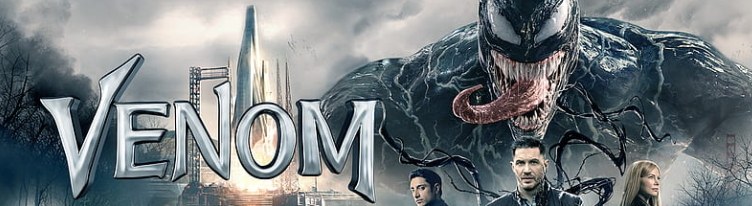


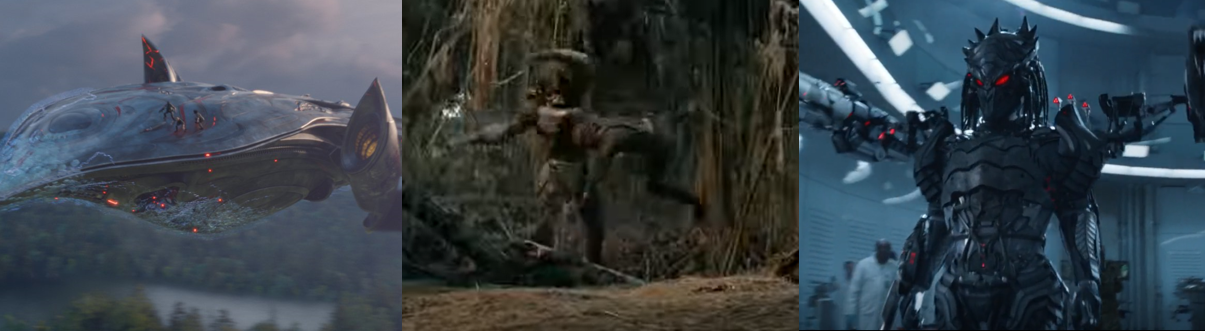



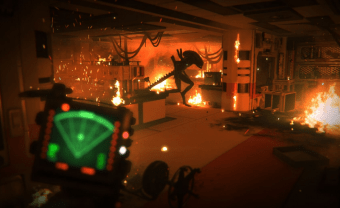
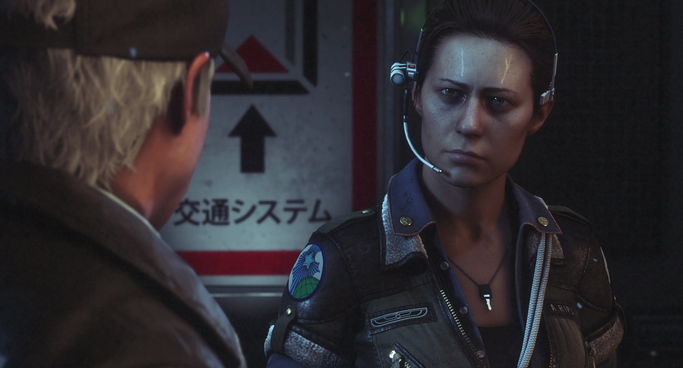
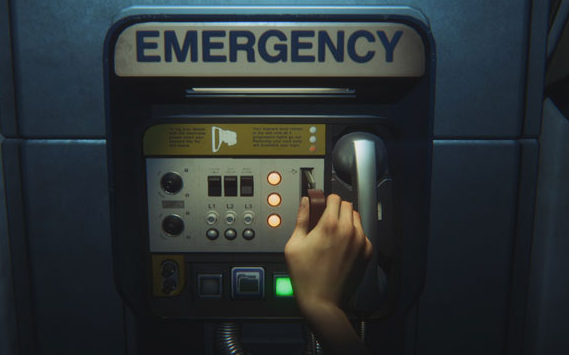
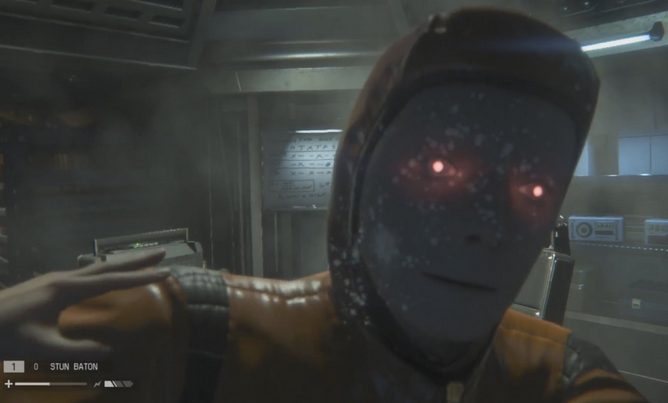
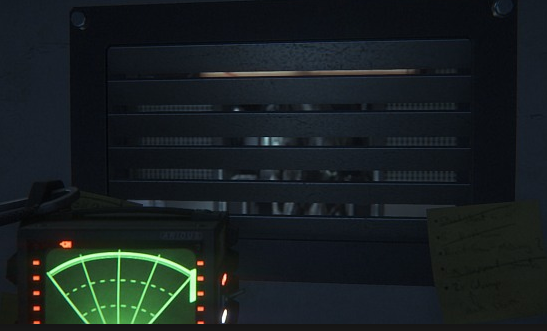
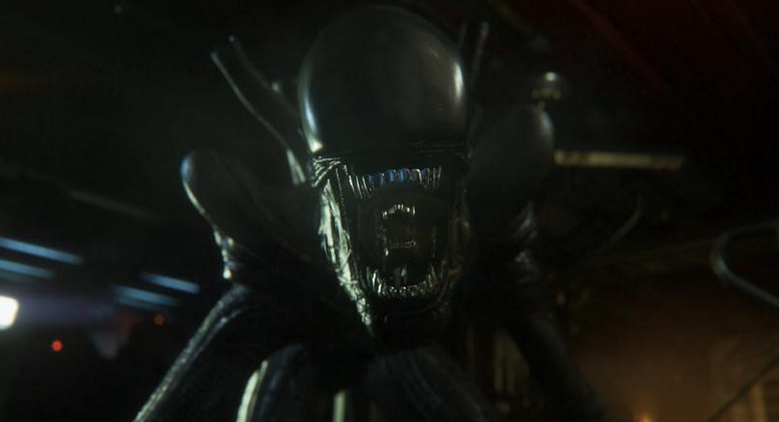
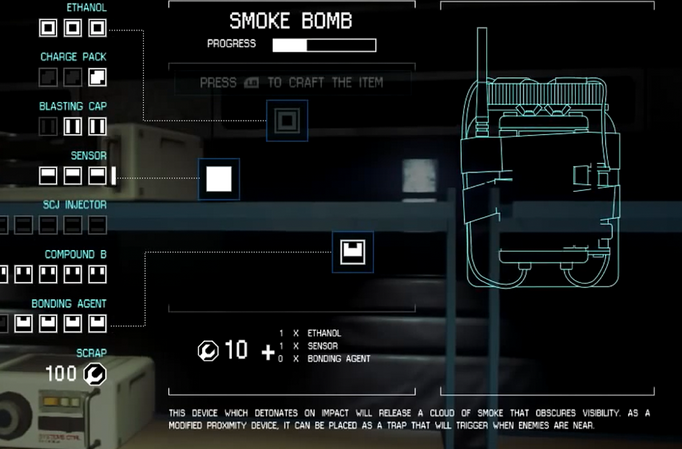
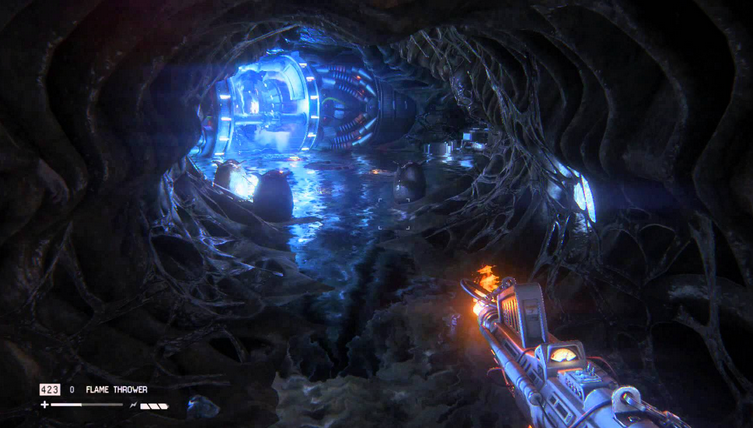





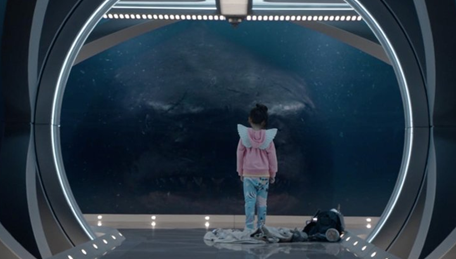

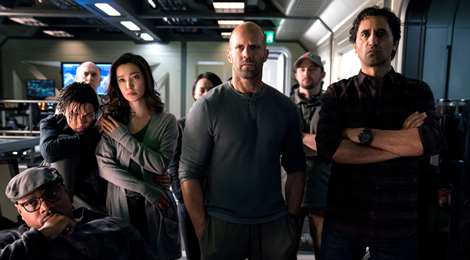

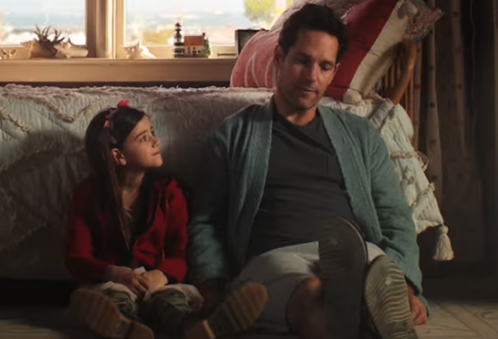
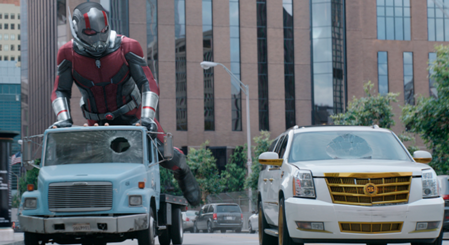
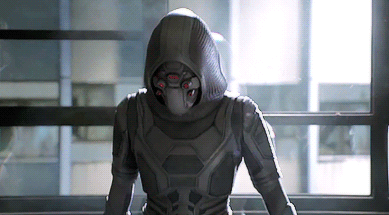
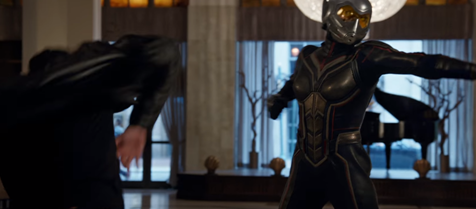
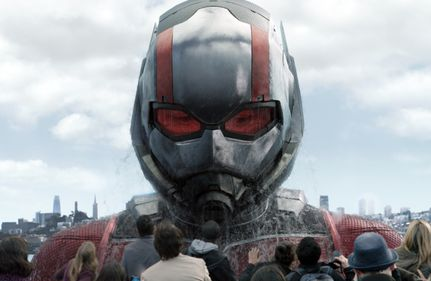
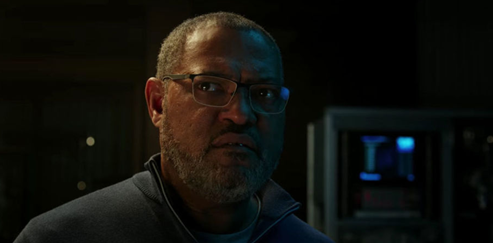




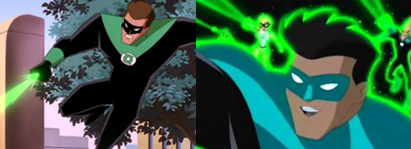
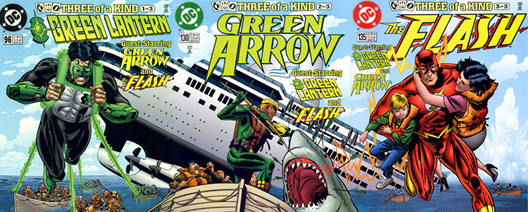
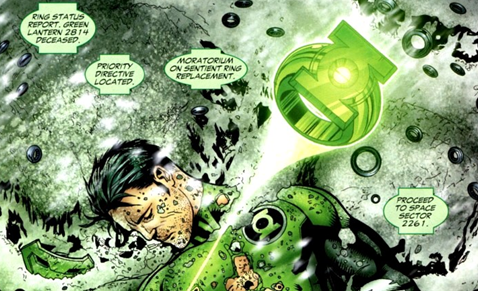


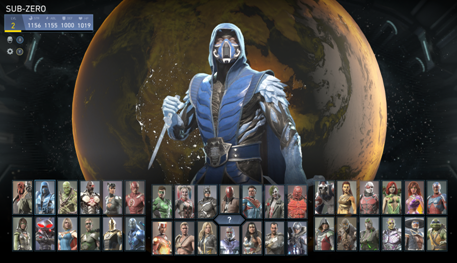


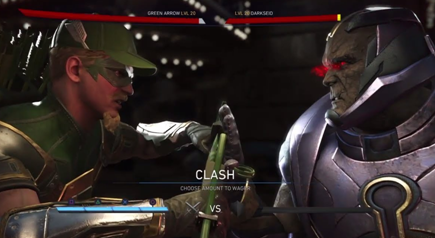
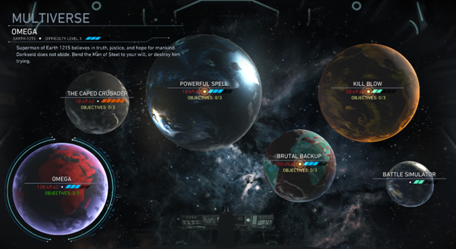


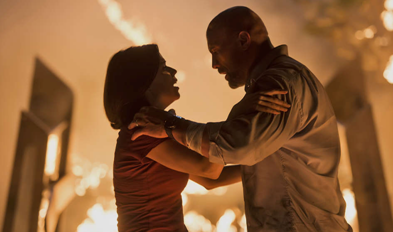


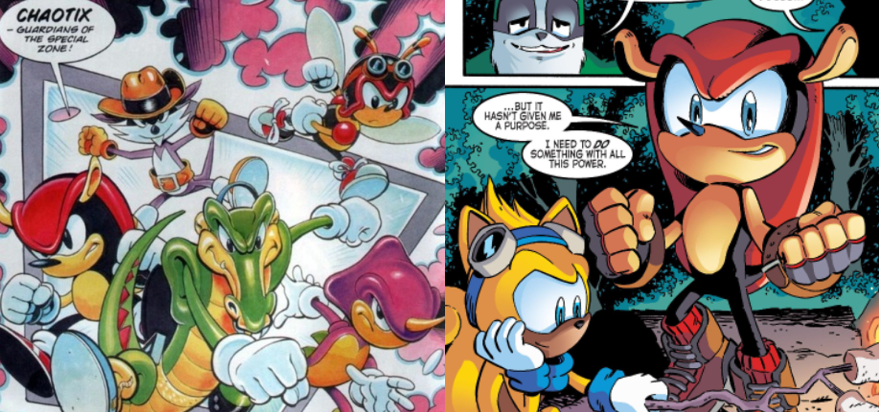

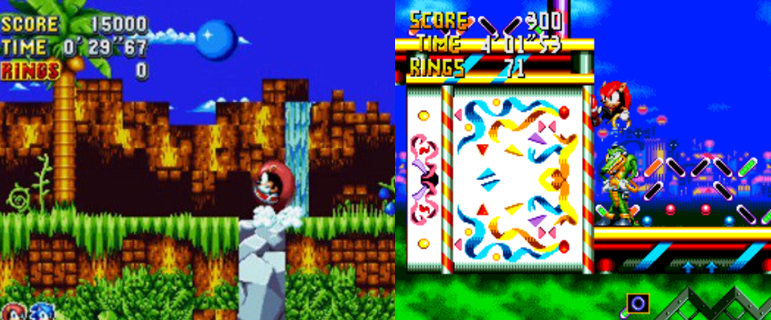


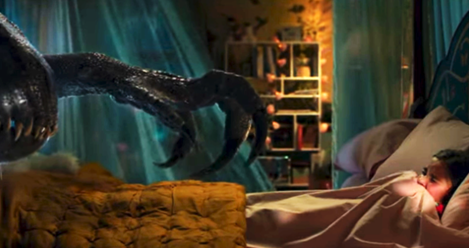
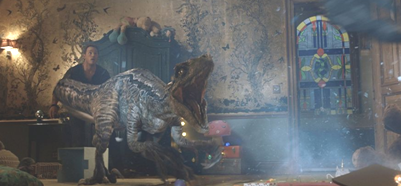

 Dr. K's Waiting Room
You must be logged in to post a comment.