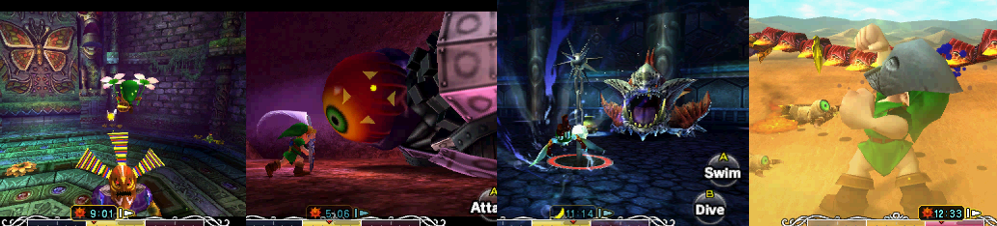
Game Corner: Banjo-Kazooie (Nintendo 64)

Released: 29 June 1998
Developer: Rare
Also Available For: Nintendo Switch, Xbox 360, Xbox One, Xbox Series S/X

The Background:
Beginning life as Ultimate Play the Game and having established themselves as one of the biggest UK-based video game development companies, Rare built a strong working relationship with Nintendo after revitalising their Donkey Kong franchise on the Super Nintendo Entertainment System (SNES). Eager to capitalise on this success, Rare began work on “Project Dream”, an ambitious adventure game starring first a sword-wielding boy and eventually a bear with a backpack. As the project grew, Rare switched development to the upcoming Nintendo 64, eventually retooling the concept into a 2.5D sidescroller and, ultimately, a 3D action/platformer collectathon heavily inspired by Super Mario 64 (Nintendo EAD, 1996). Rare’s staff ballooned and their work hours increased as they sought to refine the 3D camera system and encourage player exploration across multiple, colourful worlds, infusing the game with a quirky, British sense of humour. Unfortunately, a multiplayer mode was scrapped due to time constraints alongside an ambitious plan to swap data between cartridges to unlock extra content. Banjo-Kazooie was universally praised, with critics praising the gameplay and visuals and technical superiority over Super Mario 64, though the camera was criticised as being unwieldy at times. Although we’ve been denied a long-running series of sequels, we got a Game Boy Advance spin-off and an equally lauded sequel followed in 2000, the characters appeared in various spin-offs and limited merchandise, and Banjo-Kazooie is widely regarded as one of the best and most pivotal 3D platformers of all time.
The Plot:
When his sister is kidnapped by the vain Gruntilda “Grunty” Winkybunion, dim-witted Banjo and loud-mouthed Kazooie quest to retrieve the magical Notes and Jiggies in Grunty’s lair to rescue the terrified bear cub.

Gameplay and Power-Ups:
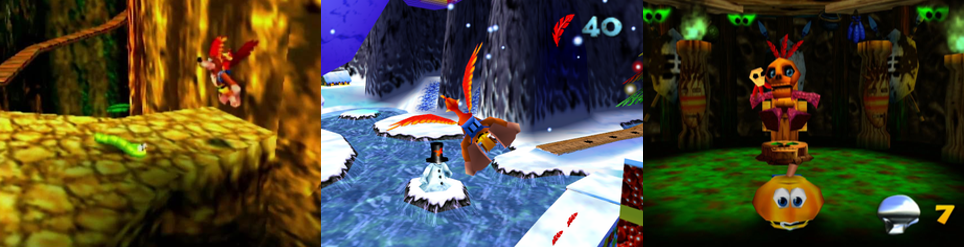
Banjo-Kazooie is a 3D action/platformer collectathon in which players guide the titular bear and bird duo across nine main worlds, accessed via a main hub world, searching for magical jigsaw pieces (“Jiggies”) and Musical Notes to unlock additional worlds and progress further up Grunty’s lair to rescue Banjo’s sister, Tooty. You begin outside on Spiral Mountain, a diverse area where players can choose to learn or practice the duo’s moves, which are taught by the short-sighted mole Bottles, whom you’ll encounter at various molehills. Banjo and Kazooie have various moves to take out enemies and traverse the game’s worlds, some of which are similar to Mario’s 3D abilities and others which are unique to them. Banjo takes the lead and swipes with his claws in a short combo with B or rolls into enemies when running and pressing B. A sees him jump and pressing it again in mid-air sees him get a boost from Kazooie to cross small gaps. Pressing B in mid-air performs the super useful Rat-a-Tat Rap, where Kazooie pecks at enemies, while holding Z and pressing B when standing still sees Kazooie charge with her peak. Pressing A when standing still sees the duo backflip to higher areas and you can hold either A or B when underwater to swim, though you must collect air bubbles or resurface to avoid drowning. Similarly, you restore your health by collecting Honeycombs, extend your life bar by hunting down Extra Honeycombs, and snag an extra life from the golden Banjo trophies dotted around, You have decent control over the camera, but it can be clunky and get stuck on the environment at times. Indeed, the unreliability of the camera and Banjo’s inability to grab ledges are the only gripes I have with the game, but they’re easily dealt with once you get into the swing of things.

The duo’s abilities are expanded with some fun moves and bizarre transformations.

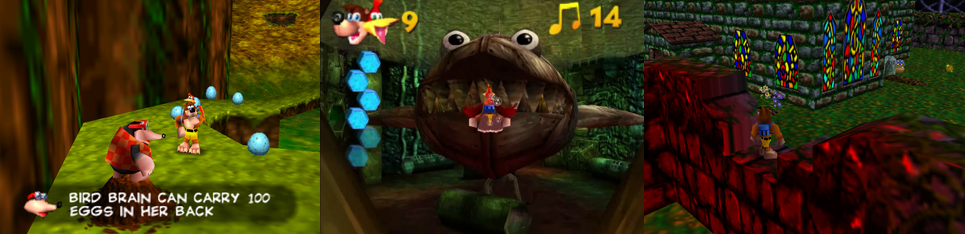
Banjo and Kazooie’s move set expands as you explore the game’s worlds, constantly adding new abilities to your arsenal that are tested by the environments. Kazooie fires eggs from her mouth or butt by holding Z and pressing C-up or C-down, respectively. This can be unwieldy as it’s difficult to precisely aim at targets but it’s great for picking enemies off from a distance and solving certain puzzles, such as extending bridges. The duo perform a ground pound by pressing Z in mid-air to crush enemies or activate switches to open new areas, reveal Jiggies, or start timed challenges. Holding Z and pressing C-left sees Kazooie dash across the landscape, greatly improving your movement speed and allow you to traverse inclines, while pressing C-right sees Kazooie shield Banjo with her wings, effectively making them invincible. Like your egg attacks, this “Wonderwing” ability lasts as long as you have ammo on hand (specifically Gold Feathers). Similarly, you’ll need Red Feathers and a Flight Pad to take to the air, where you can rise higher with A or blast at enemies and targets with B as long as you have Red Feathers to expend. Kazooie can also spring the duo to higher levels using Shock Jump pads, they can climb pipes and trees just by jumping to them, and Kazooie uses special shoes to vastly (if temporarily) increase her running speed or carry the duo across brambles and red-hot quicksand. You’ll also find numerous Mumbo Tokens everywhere; collect enough and the mystical shaman, Mumbo Jumbo, transforms the duo into various forms. These include a termite, a bee, a tiny crocodile, and a stout little walrus, with the transformation automatically ending once you venture far enough from the world. These forms are both amusing and incredibly useful: Banjo’s pumpkin form, for example, squeezes him into small spaces while his walrus form allows him to compete in a sledge race against the lazy polar bear, Boggy. The bee form lets you fly indefinitely by tapping B (though it’s even more unwieldy than the regular flying) and the termite allows you to clamber up steep surfaces that even best the Talon Trot. The crocodile form is the only one that can attack, snapping its jaws with B and easily crossing piranha-infested water, but it’s very small and no match for the bigger, tougher Mister Vile.

You use all the duo’s abilities to complete various missions to acquire Jiggies.

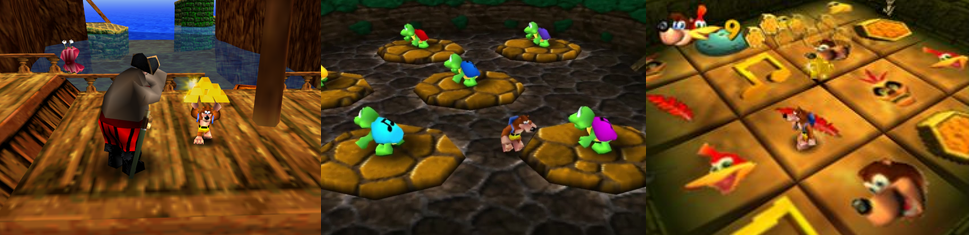
Like Super Mario 64, each world contains numerous collectibles you need to open new areas. There are 100 Musical Notes in each world and, when you leave the world, the Notes reset, so you’re better off collecting them all on your first go-through (which is possible, even when some areas require additional abilities to access). There are also ten Jiggies in each world, with one awarded when you find the five colourful Jinjos hiding in each world. Some Jiggies are out in the open, sitting on ruins or reached with a bit of platforming or careful traversal over narrow platforms, and others are guarded by bosses, revealed by hitting switches, or earned by solving puzzles. You’ll be smashing huts, hitting targets, completing races and timed events (such as jumping through hoops), and fending off waves of enemies to earn Jiggies. You’ll also aid various non-playable characters (NPCs), such as finding Captain Blubber’s gold, finding Boggy’s kids’ lost Christmas presents, rescuing Snorkel from a weighty anchor, and collecting acorns so Nabnuts can hibernate. Unlike in Super Mario 64, you’re not booted from the world upon collecting a Jiggy and your progress is saved even if you lose a life, though your Notes won’t be. Like that game, Jiggies are also found in the hub world, spawning when you activate switches in the main worlds, and you’ll also play some fun mini games to collect them. You’ll perform with Tiptup’s choir, spell out the game’s title on a sandcastle floor and on a Ouija board, match tiles and race through mazes in ancient pyramids, fly through hexagonal rings, defend sentient Christmas lights, and brave a dangerous fan room all to claim a prize. Jiggies become especially obtuse in Click Clock Wood, a world split into four seasonal sub-sections. You must complete tasks in the spring and summer to earn Jiggies in autumn and winter and vice versa, sprouting and watering a plant and helping Gnwaty throughout the seasons. The difficulty can spike in Clanker’s Cavern and Rusty Bucket Bay, where drowning is a constant threat alongside bottomless pits and polluted water that, like its ice-cold variants, quickly saps your air and health.

Presentation:
Banjo-Kazooie is an absolutely gorgeous game that still holds up today. Obviously, the game looks and runs a lot smoother on the modern re-releases but even the Nintendo 64 original stands the test of time thanks to its colourful visuals and quirky, fairytale-like world. Everything is so full of life and it’s truly remarkable and amusing. Banjo and Kazooie play pranks on each other when left idle, making daft sounds when jumping and attacking, and even the enemies are lively and peculiar, reacting when they spot you (my favourite’s being the Seaman Grublins, who shout an enthusiastic “Hi!” before charging!) Banjo, Kazooie, and all their supporting cast (and even collectibles) chatter with a whimsical babbling, communicating through gibberish, text bubbles, and pantomime movements. Enemies and hazards taunt you, collectibles encourage you to grab them, Bottles and Kazooie bicker constantly, and Grunty taunts you relentlessly as you explore or fail challenges. There’s a little bit of fog and pop-up but I can forgive it considering how large and varied each world is, especially compared to Super Mario 64. Like in that game, players visit worlds via a hub world, but these are unlocked in a fun and interesting way. You may need to explore or activate a switch to reach the puzzle pad and unlock the world, or activate a switch within the worlds to affect the hub world, and utilise various coloured cauldrons to fast travel throughout Grunty’s lair. Grant Kirkhope brings every environment to life with his infectious and whimsical soundtrack, which changes as you explore, becoming muted when underwater or ominous when exploring more dangerous areas. Grunty’s lair is a prime example, with Kirkhope’s rendition of “The Teddy Bear’s Picnic” warping and changing in each area. The soundtrack is, honestly, one of the best parts of the game and immediately makes an impact with Mumbo’s Mountain and only improves from there. Freezeezy Peak has a Christmassy overture that perfectly matches its festive aesthetic, Mad Monster Mansion is suitably spooky, and Click Clock Wood’s music alters depending on the season.

The game’s quirky humour is matched by colourful visuals and an infectious soundtrack.

The worlds on offer are as unique as the game’s quirky humour, which is both snappy and witty and very British at times. While things start very tame in Mumbo’s Mountain, which has no bottomless spits or hazards to worry about (except maybe drowning or taking fall damage), drowning or being bitten by Snacker are constant threats in Treasure Trove Cove, which highlights how large and varied the game’s worlds are with its beach, open sea, lighthouse, and pirate ship. Clanker’s Cavern (essentially Grunty’s sewer) introduces air bubbles to keep you from drowning and centres around the enormous semi-cybernetic shark Clanker and the duo’s efforts to both scale and explore within him. Bubblegloop Swamp is a suitably murky and hazardous environment thanks to the narrow platforms over piranha-infested water, which test your platforming skills. The world branches off to a maze and a giant crocodile, and meeting Tiptup inside a giant turtle. Freezeezy Peak is comparatively smaller but has always been a favourite, despite the ice-cold water and the tricky flying challenges. The annoying Sir Slushes and NPCs like Boggy and his kids and the anxious Wozza the Walrus add a lot of depth to the area. I was never a fan of Gobi’s Valley, which is treacherous like Freezeezy Peak but trickier to traverse as you need to fly, run, ride magic carpets, and complete timed challenges to get inside its pyramids. You’ll brutalise poor Gobi to earn Jiggies, feed Rubee’s snake, and tackle ancient challenges to claim prizes. I’ve always enjoyed Mad Monster Mansion, another wide and varied world sporting a haunted hedge maze, mansion, and church. Tombstones spring to life, brambles prick your feet, pipes must be scaled and dropped down, and you must race into the church to play a giant organ and sneak past a cantankerous ghost. Rusty Bucket Bay can be very challenging with its polluted water and bottomless pits in the engine room; like Mad Monster Mansion, it can also be easy to get lost as there are so many areas to explore. Finally, Click Clock Wood is actually four worlds in one and changes with each season, introducing different enemies and hazards. You’ll run up piles of leaves and snow mounds, for example, or platform using blossoming leaf platforms, but also find the water dried up, frozen over, or some areas are inaccessible depending on the season.

Enemies and Bosses:
Banjo and Kazooie encounter some bizarre enemies on their quest. You can practice your moves against the anthropomorphic vegetables patrolling Spiral Mountain and battle territorial termites and the first of many Grublin variants in Mumbo’s Mountain. Most enemies aren’t much of a threat as, while Buzzbombs swoop at you, Bigbutts try to gore you and can only be stunned, and Chinkers duplicate when hit, but most are easily taken out with a few hits. As you progress further through Grunty’s lair, her Gruntling minions become more durable and the beehives that yield Honeycombs are protected by swarms of bees, adding some challenge to each encounter. Mum-mums and Tee-hees pose a problem as they can only be destroyed with the Wonderwing, while Boom Boxes and Sharpnel mines explode when defeated or they make contact with you. Various Chompas burst from pipes and portraits to deliver a jump scare or take a bite out of you, often knocking you from high places if you’re slow to Rat-a-Tat Rap. Life rings and pipes come to life, monsters burst from wooden panels, mutated and regular crabs must be tipped over to attack their vulnerable bellies, and thrashing tentacles clog up tunnels alongside many environmental hazards. These include fan blades, scorching hot lava, brambles, freezing cold water, unseen piranha, and stinging sandworms but one of your biggest obstacles will be fall damage and bottomless spits, especially by the end game. While you can mitigate fall damage by landing in water or using the Feathery Flap, you’re more likely to plummet to the ground and take considerable damage, so be sure to watch your step, especially in Click Clock Wood. You’ll also have to be mindful of the likes of Snacker and Chump (who are difficult to defeat as the duo have no swimming attacks), Slappas (mummified hands that try to squash you) and the snowballs tossed by the jeering Sir Slushes.

The few boss battles are fun challenges that perfectly match the game’s light-hearted tone.

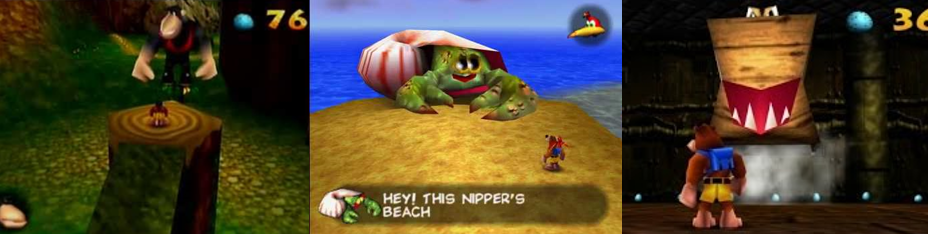
Banjo-Kazooie is a little light on traditional boss battles. While there are larger or challenging enemies battled in each world to acquire Jiggies, I would only classify a few as being traditional bosses. In Mumbo’s Mountain, for example, you battle Conga atop a tree. You must trick him into tossing his oranges to hit three switches for a Jiggy, feed one of his fruits to a hungry monkey for another, and then head up top to fire eggs at him for a third, but he’s more of an obstacle than a boss. While a tougher crab enemy awaits inside Treasure Trove Cove’s sandcastle, the gigantic Nipper is the game’s first real boss. He tries to clip you with his massive claws but it’s easy to dodge them and Rat-a-Tat Rap his eyes; three hits and he’s done, allowing you to enter his shell for a Jiggy. The closest Clanker’s Cavern has to a boss are the mutated Snippets you fight in a radioactive chamber. Similarly, you battle a gauntlet of frog-like Flibbets in Bubblegloop Swamp and a swarm Zubbas in Clock Clock Wood when you venture into their hive. Bubblegloop Swamp kind of has a boss in Mr. Vile, a mean crocodile who challenges Banjo’s croc form to gobble coloured worms but who isn’t fought in the traditional sense. Similarly, Sir Slushes supplant a boss battle in Freezeezy Peak; you must charge into them when flying to take them out and smash a larger Chinker to earn a Jiggy. Boggy also challenges you to two sledge races, one against your walrus form and one where you’ll need Kazooie’s speed shoes to win, with both being tricky due to you having to pass through slalom gates and avoid the freezing cold water. The closest Gobi’s Valley comes to a boss is when you race to swipe a Jiggy from Grabba, while Mad Monster Mansion simply has you sneak up on Napper. Rusty Bucket Bay does feature a showdown with Boss Boom Box, but it’s essentially just a bigger version of fighting a regular Bomb Box. He’ll split into smaller forms, exploding on contact, so either use your eggs or the Wonderwing, if you have enough Gold Feathers.

The final showdown with Grunty rightfully tests all the skills you’ve learned throughout.

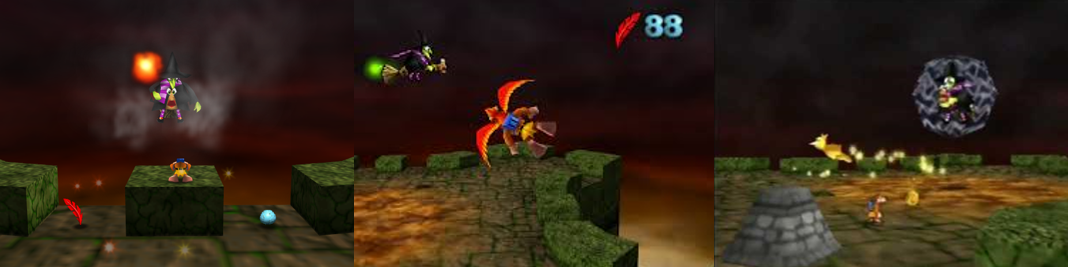
Even when you finally reach the top of Grunty’s lair and confront her, you must first endure Grunty’s Furnace Fun, a quiz show you must complete without dropping to the insta-death lava below. The quiz tests your knowledge of the game, asking you to name worlds and characters, identify music, and even battle previous bosses. As you explore Grunty’s lair, you’ll inevitably meet her kindly sister, Brentilda, who tells secrets about Grunty that’ll be answers in this quiz. Honeycombs and extra lives are strewn about the board and you can earn Joker cards to skip challenges, each of which is timed and deals damage if you fail. You can also take different paths to the end, where you’ll be treated to a roll call and what appears to be the ending before the duo realise that Grunty escaped! You then venture to the rooftop for the final showdown, stocking up on ammo if you have enough Magical Notes to open the doors. The battle against Grunty has multiple phases, each one ending with her tossing a homing shot that you must defend against with the Wonderwing. In the first phase, Grunty swoops down on her broomstick; you must Talon Trot out the way and hit her with a Rat-a-Tat Rap three times, dodging her explosive fireballs after each hit. Things get tricky in the second phase; not only do you have to avoid slipping to your doom but Grunty’s now out of reach. She tosses multiple fireballs from afar and you have a very small window to hop on the ledge and pelt her with eggs, which is incredibly tricky without precision aiming. If you hit her enough times, she’ll fly high up, forcing you to use a Flight Pad to follow. While her fireballs are easily avoided, it’s not so easy to direct your Beak Bomb but, eventually, you’ll hit her enough to cause her to erect an impenetrable shield. In this phase, you activate the Jinjo statues with your eggs, avoiding Grunty’s shots, to bring her to the ground, then frantically avoid her barrage of fireballs and homing shots to power up the Jinjonator and send her plummeting to her doom.

Additional Features:
There are 100 Jiggies to collect in Banjo-Kazooie, ten in each world and ten in Grunty’s lair. While you don’t need all of them to unlock every world, you will need plenty to solve jigsaw puzzles and earn an upgrade to your life bar prior to the final showdown. There are also 900 Musical Notes to find, 100 in each world, which again you’ll need if you want to access every area of Grunty’s lair and the ammo stocks prior to the final boss. You can return to any world at any time to hunt down any Jiggies and Notes you’re missing and check your progress from the pause menu. Each world also has two hidden Extra Honeycombs which are worth collecting as you’ll extend your health bar with them, alongside multiple Mumbo Tokens, which you’ll need to change form. If you explore Grunty’s lair, you’ll activate cauldrons to create short cuts and discover Cheato, Grunty’s rebellious cheat book who gives codes to enter in Treasure Trove Cove’s sandcastle to increase your eggs and feather stocks. You can also utilise online guides to enter longer cheat codes in the same way to access mysterious eggs and a giant Ice Key, items that are completely useless here but unlock extras in the Xbox 360 version. There are other cheats you can enter as well to give you infinite lives, eggs, feathers, and air, though some of these cheats disable leaderboards and saving on the Xbox 360 version. Speaking of which, there are twelve Achievements in this version that are all simple to get, whereas the Nintendo Switch version lets you create save states. Finally, you can return to Banjo’s house and complete Bottles’ timed jigsaw puzzle challenges for additional fun cheats, my favourite being one that transforms Banjo and Kazooie into a washing machine!

The Summary:
I played Banjo-Kazooie to death as a kid. I was absolutely enamoured by everything, from its quirky characters to its colourful visuals, and its infectious soundtrack brought me such delight. I searched high and low for every secret I could find, eagerly testing out the sandcastle cheat codes and trying to open doors or find new areas. The game invites this at every turn, encouraging exploration and experimentation and crafting an intricate and enjoyable interconnected world. There are some nitpicks, of course. The camera is finnicky and awkward, flying can be clunky, the life system is antiquated, and it’s annoying that you must recollect Notes each time you enter a world if you don’t get all 100 on the first go. However, these are minor complaints, and the positives far outweigh these issues. I loved that you stay in each world after collecting a Jiggy and that there was a lot of variety in how you acquired them. From simply grabbing them, to completing puzzles, timed challenges, or the odd boss battle, I always felt a sense of accomplishment with every Jiggy I got. Similarly, the worlds are endlessly enjoyable, even the more annoying ones like Gobi’s Valley. I loved how characters carried over between worlds, how you altered the hub world with switches, and how each world had such a strong visual identity. Banjo and Kazooie steal the show with their quirky antics, versatile move set, and mismatched partnership. I just adore how whimsical and random everything is; it’s a lot of fun encountering new, oddball enemies and seeing them taunt the duo. While some elements were refined and expanded in the sequel, Banjo-Kazooie remains the superior game for me. nostalgia has a lot to do with that but I’ll never say no to playing this game. It’s always a joy to come back to it and I was doubly impressed to learn that I remembered how to get everything even though it’s been years since I last played it.

My Rating:

Rating: 5 out of 5.

Fantastic

Was Banjo-Kazooie part of your Nintendo 64 library back in the day? If you discovered it on modern platforms, how do you think they hold up to the original? What did you think to the game’s colourful visuals and quirky sense of humour? Which of the Jiggies was the most challenging for you to collect? Were you disappointed by the lack of traditional boss battles? Did you ever find all the game’s secrets and collectibles? Which world was your favourite and would you like to see the bear and bird duo make a proper comeback? I’d love to hear your thoughts and memories of Banjo-Kazooie so please share them in the comments, consider supporting me on Ko-Fi, and check out my other retrogaming content on the site.

Game Corner [Revenge of the 5th]: Star Wars: Shadows of the Empire (Nintendo 64)


Although May 4th is known the world over as Star Wars Day, many also choose to celebrate the popular, generation-spanning science-fiction saga on May 5th as a play on the word “Sith”. This can extend Star Wars Day into three day celebration of the influential science-fiction series and, as a result, is another great excuse for Star Wars fans to celebrate the beloved franchise in a variety of ways.


Released: 2 December 1996
Developer: LucasArts
Also Available For: PC

The Background:
Now known as a nigh-unstoppable multimedia juggernaut that encompasses movies, toys, cartoons, books, videogames, and comics, the original Star Wars trilogy was initially continued in the “Legends” novels. Accordingly, Lucasfilm’s publishing director, Lucy Autrey Wilson, tapped Bantam editor Lou Aronica and author Steve Perry to develop a Star Wars crossover multimedia event in 1994. The project wouldn’t include a movie but would involve all the media and marketing of a film release, all to coincide with the upcoming release of the 1997 Special Editions of the Original Trilogy. Shadows of the Empire took place between Star Wars: Episode V: The Empire Strikes Back (Kershner, 1980) and Star Wars: Episode VI: Return of the Jedi (Marquand, 1983) and was comprised of Perry’s novel, a comic book, an extensive toy line, and this divisive videogame. The game focused on Han Solo-proxy Dash Rendar and was built on a modified version of the Star Wars: Dark Forces (LucasArts, 1995) engine. The decision to focus on Nintendo 64 development led to some issues in properly coding for the system, Nintendo legend Shigeru Miyamoto weighed in on the camera and Dash’s characterisation, and all the animations had to be redone manually after Industrial Light & Magic’s motion capture work proved unusable. As mentioned, Shadows of the Empire garnered mixed reviews that noted a strong start let down by subsequent levels. The dodgy camera, clunky controls, and tedious gameplay were also criticised, though it developed a cult following over the years and the PC version was said to iron out some of the kinks. Unfortunately, Shadows of the Empire was de-canonised after Disney purchased the franchise, though Lucasfilm president Kathleen Kennedy once stated that characters like Dash Rendar have come up during discussions about Star Wars projects.

The Plot:
Hired to protect troubled Jedi Luke Skywalker and assist in rescuing Han Solo, rogue mercenary Dash Rendar finds himself embroiled in pitched battles with not only the Galactic Empire, but a criminal organisation looking to usurp the Dark Lord of the Sith, Darth Vader.

Gameplay and Power-Ups:
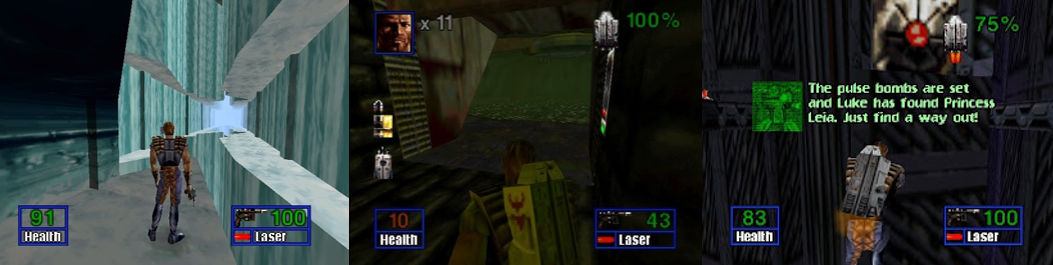
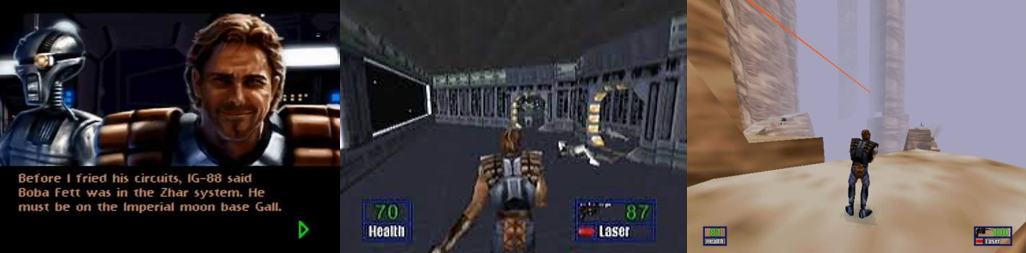
Star Wars: Shadows of the Empire is primarily an action/platformer videogame that released early into the Nintendo 64’s lifecycle and takes place between The Empire Strikes Back and Return of the Jedi. After picking and naming one of four save files (with no need for a memory pak) and selecting their level of difficulty, players assume the role of mercenary for hire and Han Solo-proxy Dash Rendar and journey across ten levels to defend the Rebel Alliance from the evil Galactic Empire, safeguard young Jedi Luke Skywalker, and oppose the mischievous ambitions of the Black Sun criminal empire. Once you’ve chosen a difficulty level, you can’t change it so you’ll need to start a new save file if, say, “Medium” is too difficult for you. You can enter the “Options” menu to customise the heads-up display (HUD), which displays your current health and weapon energy or ammo, as well as toggle the option to switch to following your heat-seeking missiles and customise the game’s controls. Shadows of the Empire maps different buttons to different functions depending on the level you’re playing; while six levels see you control Dash on foot, two take place in space, one sees you controlling a Snowspeeder, and another has you racing around on a swoop bike. When on foot, you can change your viewpoint with the Left trigger, directional pad (D-pad), or C-right, switching between a standard third-person view, a first-person perspective, a top-down view, and a dynamic “movie” angle that hampers the already cumbersome controls. The Right trigger opens doors and activates consoles and you can hold it to strafe which, when used alongside the Z trigger, gives you better aiming accuracy. You jump with A and, when you have a jetpack, can burn rocket fuel by holding this button. B fires your weapon, with Dash’s standard blaster automatically recharging but growing weaker the more you use it. You switch weapons with C-up, crouch to take cover or avoid incoming hazards with C-down, and hold C-right to activate the “Leebo Scanner” (if you collect enough “Challenge Points”), which essentially functions as a map.

Press switches, uncontrollably fly across gaps, and wrestle with Dash’s jetpack to clear levels.

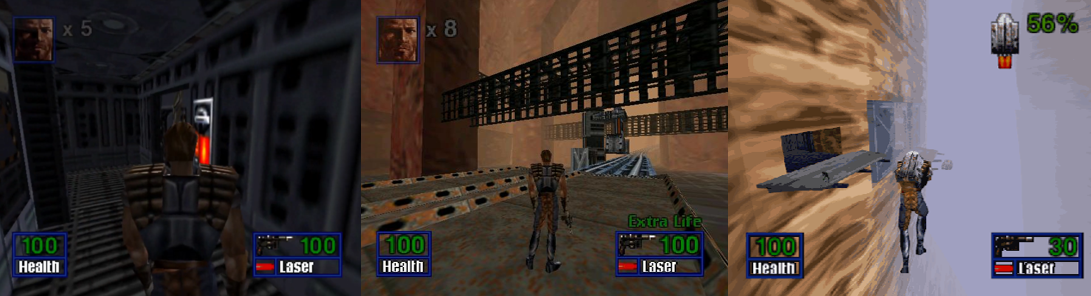
While Dash’s default blaster and jetpack automatically refill if given time, you must blast crates and search around the environment for additional ammo. You get a useful heat-seeking shot that are good for taking out groups of enemies at mid-range, a flamethrower for close encounters, a quick-fire pulse cannon that’s annoyingly erratic, a stun shot to freeze enemies, and a powerful disruptor blast that’ll damage you if you’re not careful! Health packs of different sizes can be found if you open nooks and crannies, search around, or blow open crates. You’ll also find the odd extra life and invincibility if you look hard enough, and you’ll earn additional extra lives for every Challenge Point you find. Much of your time in Shadows of the Empire is spent running around narrow corridors, samey environments, or the odd slightly more open areas. Every time you control Dash on foot, you’re charged with exploring, gunning down enemies, and activating a butt-load of switches. These open doors, release Wampas to attack enemies (and you!), allow you to take elevators to other floors, and lower barriers so you can progress. Dash is ridiculously awkward to control, lumbering about as though you were using tank controls, and easily slipping off ledges. His jump is unnecessarily floaty and carries his momentum forward, meaning it’s easy to miss platforms and overshoot your jumps and be sent plummeting to your doom. This is especially aggravating in the Ord Mantell Junkyard, where players must jump between trains and duck under hazards, switching tracks and hoping they don’t overshoot their landing. It’s equally tough controlling Dash with his jetpack, not just because he flies around as if covered in grease, but you must constantly land to recharge your thrusters and the game doesn’t make it clear which way you need to go, meaning it’s easy to get turned around. Although the jetpack doesn’t run out underwater, you’ll drown if you stay submerged for too long. Dash also takes fall damage, must use floating and/or spinning platforms to progress, and must avoid hazards like icequakes, wall and ceiling turrets, spinning blades, and rotating cogs.

While vehicle sections are a nice change of pace, they’re too short or aggravating to be that enjoyable.

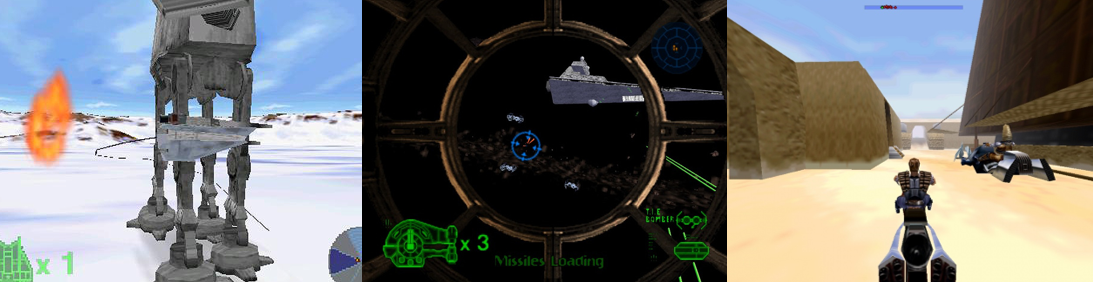
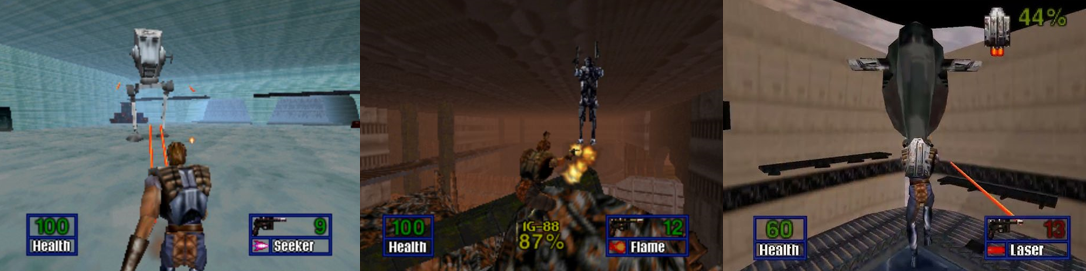
Things aren’t much easier when you’re playing the game’s handful of vehicle sections. You start off recreating the battle of Hoth in a Snowspeeder, using L or R to decrease your speed, A to speed up, B to fire upon Imperial Probe Droids and All-Terrain Scout Transports (AT-STs), and snagging All-Terrain Armoured Transports (AT-ATs) with your tow cable with Z. Though you can switch perspectives with C-right and the D-pad, it’s best to stay in third-person mode here as the Snowspeeder is surprisingly heavy and unresponsive. It’s hard to make tight turns and easy to accidentally plough into enemies or catch yourself on an AT-AT’s legs as you circle them to bring them down. Dash escapes Hoth in the Millennium Falcon Outrider, getting caught in an asteroid field just like in The Empire Strikes Back. This level is more like a bonus round where you blast waves of Twin-Ion Engine (TIE) Fighters and TIE Bombers with A or B, take out asteroids for Challenge Points, and waiting for your stock of missiles to recharge so you can blow up groups of TIEs with C-down, C-left, R, or Z. Using C-right or L to switch to the cockpit view can be advantageous here, though you can’t replenish the Outrider’s shields so don’t dawdle too long. In the final stage, you repeat this section in the first half and then race away from the exploding Skyhook, using A to accelerate and tilt your craft to avoid obstacles and R to decelerate. Finally, when on Tatooine, Dash must race against and take out a swoop bike gang looking to assassinate Luke, a task easier said than done since the swoop bike is a nightmare to control! You blast off at break-neck speed at the mere touch of A or C-left, crashing into anything and everything in your way and awkwardly reversing with B when you inevitably get caught on environment. You can switch viewpoints with C-right or the D-pad and must use L or R (or Z) to ram into the other bikers to keep them away from Luke. Even if you take them out in Mos Eisley, it’s easy to crash and burn in Beggar’s Cannon thanks to the high-speed action and narrow passages.

Dash’s simple objectives are compounded by clunky controls and frustrating gameplay.

Each level has a specific mission, related by Luke or Dash’s robot partner, Leebo, though gameplay mainly amounts to blasting enemies and activating switches. In the first and final stages, Rogue Squadron fight beside you and you must be careful not to hit them, or the shield generator on Hoth, or you’ll be penalised. An onscreen radar helps guide you in the flying and chase sections but, by default, you have no such help when on foot so it’s best to follow the bodies you leave behind if you get lost. Dash must take lifts and cross bridges, watching his step to reach new areas and activate switches, often while being forced to complete platforming challenges that look easy but are made far too frustrating thanks to his janky jump. As if this wasn’t bad enough in the Ord Mantell Junkyard, you also have to blast targets to lower barriers and hop onto carriage roofs to progress, and you’ll often be flying blind in Gall Spaceport thanks to the awful fog effects. This level is where ethe gameplay loop really starts to become tiresome and claustrophobic, maze-like locations like the Imperial Freighter Suprosa and Xizor’s Palace don’t make this any easier. You’ll find Stormtroopers and tough-as-nail robots lurking around every corner, shootouts in narrow corridors, switches that open alternating doors, forked paths, spinning turbines, and a labyrinth of cargo bays. This even carries through to the dank sewers of the Imperial City, where spiral chasms lead to murky sewage water that hides Dianogas and yet more switches! You must navigate this ugly-ass brick and filth maze to acquire an access key and force field deactivator, shooting targets in spinning tunnel to progress and dodging spinning spokes in narrow pipe to reach the end. Bottomless pits dog you throughout Hoth and the Gall Spaceport, but also return in Xizor’s Palace as a cheap way to up the difficulty of the end game. While you get infinite lives on “Easy” mode, “Medium” or higher limit your lives to make the game even tougher, though it’s a challenge and a half even on “Easy due to the clunky controls, Dash’s overly enthusiastic jump, and his struggles to aim upwards!

Presentation:
As Shadows of the Empire was an early Nintendo 64 title, your mileage may very regarding the presentation. There’s no question that the PC version had better, crisper graphics, especially for the game’s cutscenes, however I do like the artwork used for these cutscenes in the Nintendo 64 version. They’re incredible basic, barely having any animation and relying entirely on text to convey the story, but they’re beautifully rendered and capture the likenesses of familiar characters like Luke and Han really well. As the main character, Dash gets more time to shine here than in the comic book, showcasing an arrogant bravado and his commitment to aiding the Rebellion (for the right price). The game is divided into “parts”, which each part using the traditional Star Wars scroll to give an overview of the story, and is bolstered by samples of John Williams’ many Star Wars compositions. The “Imperial March” is mixed into the boss theme, for example, and “The Asteroid Field!” blares during the Outrider segments, but original compositions such as “Xizor’s Palace” also impressed despite some getting repetitive. While Shadows of the Empire does use some limited sound bites (Dash grunts and Stormtroopers yell basic demands), Dash is an awful polygonal model with little character beyond occasionally firing his blaster like a six-shooter. Many of the enemies don’t fare much better, being a mess of childish polygons from even mid-view and proving why the game relies so heavily on obscuring fog. This is at its worst in the Gall Spaceport and when navigating the murky sewer waters, where visibility is near zero, though the game doesn’t exactly make up for it in the Outrider sections, opting to use a plain black void or a distinctly blurry asteroid skybox. Yet, the game performs fairly well (save for some instances where you get a peak outside of the game map), with enemy bodies remaining visible, the HUD changing colour as you take damage, and some fun Easter Eggs.

Despite being visually faithful to the films, the game’s visuals struggle, even on the PC.

These are mainly seen in familiar locations. Echo Base, for example, sports the shield generator, sees the Millennium Falcon flee for the asteroid belt, and even includes the captive Wampas from a deleted scene. You’ll spot Imperial shuttles waiting in shuttle bays, Star Destroyers loom in the background in space (though they pose no threat), Mos Eisley spaceport and market rushes past in impressive detail, and Imperial locations like the Suprosa and their multiple outposts recreate the aesthetic of the various Star Destroyers and the Death Stars with an impressive fidelity. There are some fun moments, like exploring inside the Outrider (which echoes the interior of the Falcon) and being sent away by Leebo, and opportunities to find goodies if you explore a little bit. You’ll also see the same walkways, lifts, doors, control panels, and switches as in the movies, and visit locations previously only spoken about, like Ord Mantell. Sadly, Ord Mantell is one of the weaker levels; it’s a mess of brown and junk, with rivers of sludgy water and numerous walkways to avoid. Star Fox 64 / Lylat Wars (Nintendo EAD, 1997) did a similar level far better and the same is true when comparing the space sections. The Outrider is too limited and clunky to be all that manoeuvrable and is nothing compared to the slick controls of the Arwing, with Star Fox 64 even doing Shadows’ finale far better and it didn’t release that long after this game! Unfortunately, while Shadows of the Empire goes to great lengths to recreate and build upon the visuals of the movies, everything is painfully generic at times. If you’ve seen one claustrophobic, toxic sewer full of crud, you’ve seen them all…and you can barely see this one because of the fog! I liked the sense of scale in Xizor’s Palace, however, which was very grandiose and gothic, and that the game’s performance wasn’t affected by slowdown even when large polygonal models were onscreen.

Enemies and Bosses:
There isn’t much enemy variety in Shadows of the Empire, which plays things very safe for the most part. Every enemy has a % life meter that gets tougher to whittle down the bigger they are and the more you progress, and they fall into four camps: ground troops, automatons, robots, and ships. Ground troops include Stormtroopers (and their Snowtrooper variants), Imperial Commandos, and Train Guards. The Storm- and Snowtroopers blast at you haphazardly, plummeting to their deaths with a familiar scream if you shoot them just right and occasionally manning turrets to dish out greater damage. Imperial Commandos are more heavily armoured and more likely to take cover, while Train Guards are far less formidable and simply stab you with their lances. Automatons include Imperial Probe Droids, Seeker Droids, and Interrogator Droids. These float about, often rising from chasms, and blast at you, with some being harder to hit and tougher to destroy than others. You’ll also get blasted by turrets and IG Drones, which are always on hand to chip away at your health. While the Empire employs Sentry Droids (essentially killer versions of R2-D2), IG-88 and Xizor love to dog your progress with some tough-ass humanoid robots. Not only can these fire very rapidly but they can tank your basic blaster, meaning you may have to expend your better ammo to down them, ammo best saved for the game’s bosses. As for craft, you’ll blast at AT-STs in your Snowspeeder and bring down AT-ATs with your tow cable and shoot countless TIE Fighters and TIE Bombers from the void in the Outrider. These attack in groups, firing lasers or bombs, but are mere cannon fodder compared to Xizor’s more nimble Space Vipers. These are far harder to track and hit and charge up bombs that lock onto you, easily reducing the Outrider to scrap metal thanks to their seemingly endless numbers.

Some recognisable crafts and characters appear as troublesome boss encounters.

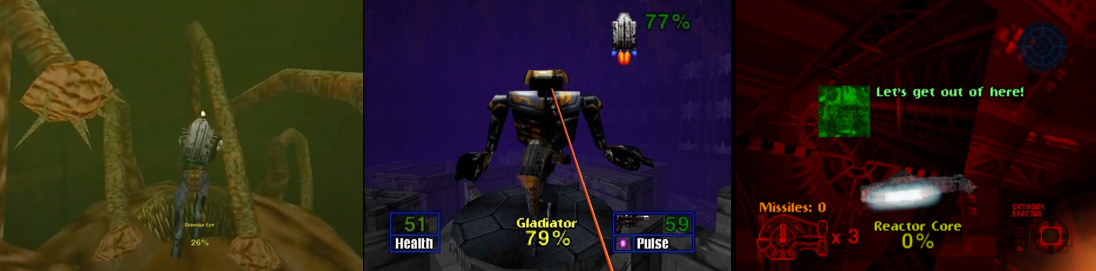
Every level but the vehicle stages ends in a boss battle (and, even then, you could classify the AT-ATs as bosses) that Dash must face on foot and with the heat-seeking function of his seeker shot disabled. The first boss you fight is an AT-ST that’s entered Echo Base. It stomps about firing its forward guns and absorbing your shots unless you target its “head”. You can use the crates and upper walkways to take the high ground and grab some resources, but your best bet is to run underneath it, aim upwards, and unload. Another AT-ST awaits in the Gall Spaceport, though this time there are no upper walkways to flee to, no resources nearby, and the jetpack is barely an advantage as it’s so slippery to control. If you manage to make it past the aggravating train section in Ord Mantell, you’ll battle the mechanical bounty hunter IG-88 in a literal scrapheap. IG-88 leaps about the place, rapidly firing his pulse cannon and being difficult to track since he disappears behind and blends into the environment. Your best bet is to stay on the move, corner him, and unload with seekers but you must watch your step or else you’ll fall into a furnace! At the end of the Gall Spaceport, you enter into a two-phase battle with Boba Fett, who flies about using his own jetpack, firing from his blaster and sending out a seeking missile. You can try chasing him, but you risk running out of jetpack thrust and taking fall damage so it’s better to take cover and wait for him to stay still. After enough hits, Boba Fett hops into Slave 1 and rotates in the centre of the arena firing his main cannons. Like with the AT-ST, you can just camp underneath him and fire upwards for an easy win. The Suprosa’s super computer is guarded by a Loader Droid that seems intimidating due to its size and the big shuttle bay devoid of resources, however it’s a bit of a joke. It’s very slow, meaning you can easily run circles around it and avoid its extendable arms, and unload with your seekers.

If you’re not playing on at least “Medium”, all your battles are seemingly pointless.

Upon reaching the end of the sewers, Dash is attacked by a giant Dianoga. This titanic, octopus-like creature is fought in the murky sewer water, so it’s very difficult to see and target its tentacles. Thankfully, its only attack is to bash you with its spiked appendages, which you can destroy with a few shots, and its main eye is an easy target. However, because you’re forced to manoeuvre with the clunky jetpack and mainly underwater, your greatest hazards will be the controls and reaching the surface to take a breath. After battling through Xizor’s Palace, you’ll face off against his mighty Gladiator Droid in a three-phase battle that can be a troublesome encounter. While the first phase is ridiculously easy (simply run around the cumbersome droid, avoiding its eye lasers and missile barrage and blasting it to 0% health), the second phase ups the ante. Here, the droid’s torso separates, and you’re dropped into a maze full of a handful of resources and dead ends. The Gladiator Droid hovers overhead firing eye lasers, missiles, and a rapid-fire pulse cannon but, again, you can avoid most of its barrage by staying beneath it and unloading with any seekers you have. In phase three, the boss’s head tries to finish you off and you must stay away from it (utilising your jetpack when allowed since it starts to malfunction) and fire any remaining disrupter blasts you have to finish it. This is the last on-foot section so don’t be shy and just go for it! Finally, Dash takes to the Outrider to join the assault upon Prince Xizor’s Skyhook. In this final stage, you must ignore the Star Vipers and TIE Fighters and destroy the Skyhook’s turrets, flying in and blasting them before they can shred you. Take them all out and you must carefully get the Outrider into the Skyhook itself, dodging obstacles to land shots on the main core. Make a few passes and hit it enough times and the Skyhook will burst into flames, forcing you to retreat before you’re caught in the explosion.

Additional Features:
There are four difficulty levels on offer in Shadows of the Empire, with each one offering a different stock of lives (from infinite to three) and changing the challenge offered by the enemies. It’s recommended that you play on at least “Medium”, however, as that’s the only way to see the true ending and learn that Dash survived the finale. Every level contains an assortment of “Challenge Points” to either find or earn. These are either out in the open, hidden behind certain doors, down certain paths, or in hidden cervices, or earned by defeating AT-ATS or destroying special red asteroids. Collecting them all on each difficulty level unlocks some fun additional extras, such as the Leebo Scanner, invincibility, and the ability to pilot an X-Wing or TIE Fighter in the final battle. If you’d rather take the quick and easy path, however, you can give your save file a specific name and activate some useful cheats, such as skipping any sections that aren’t on-foot missions, viewing the credits, accessing every level, and an extremely useful debug mode that grants a host of cheeky abilities. You can also use these same cheats to play as enemy characters, from Stormtroopers to Wampas and even an AT-ST! Finally, your completion time is recorded for each level, so speedrunners or those seeking an extra challenge can try to beat their best times if they like.

The Summary:
When I was a kid, everyone who had a Nintendo 64 had Star Wars: Shadows of the Empire. It was one of the most common games in our libraries and this is the third time I’ve owned it, though not the first I’ve beaten it. I was also a huge fan of the book, the Shadows of the Empire concept, and the comic book. Does that mean the videogame is any good, though? Well…no. Shadows of the Empire is an incredibly basic and clunky experience, even for an early-days Nintendo 64 title. Everything it does was done better in other games, even ones that released not long after it, with Star Fox 64 being the far better alternative. As much as I like Dash Rendar, he’s a painfully redundant and awkward character, floating through the air and slipping to his death with the slightest twitch of the control stick. It seems the developers didn’t know how best to use the Nintendo 64 control pad and insisted on mapping useless functions to every button but neglected to inject anything interesting into the gameplay beyond dodgy platforming and switch pressing. The vehicle sections were okay, but more akin to bonus stages, and I enjoyed some of the bosses, though the difficulty spike is all over the place. Tightening the focus onto gunplay, simple puzzle solving, and some shoot-‘em-up sections would’ve definitely made this a more enjoyable experience as the platforming and exploration is arduous and aggravating. There are some fun Easter Eggs and additional features here, and the story is a decent accompaniment to the books and comic, but Shadows of the Empire is only going to appeal to die-hard Star Wars fans…and even then it comes with a lot of caveats. You’re better off playing Star Fox 64 or one of Factor 5’s excellent Star Wars shoot-‘em-ups if you need a 64-bit Star Wars fix.

My Rating:

Rating: 2 out of 5.

Could Be Better

Was Star Wars: Shadows of the Empire in your Nintendo 64 library back in the day? If so, did you enjoy it? Which of the different gameplay modes was your favourite? What did you think to Dash Rendar and his clunky-ass controls? Which of the boss battles was your favourite? Did you ever see the true ending and collect all the Challenge Points? Which Star Wars videogame is your favourite? How are you celebrating Star Wars this May? Whatever your thought and memories of Shadows of the Empire, feel free to leave a comment below, support me on Ko-Fi, and check out my other Star Wars content across the site.

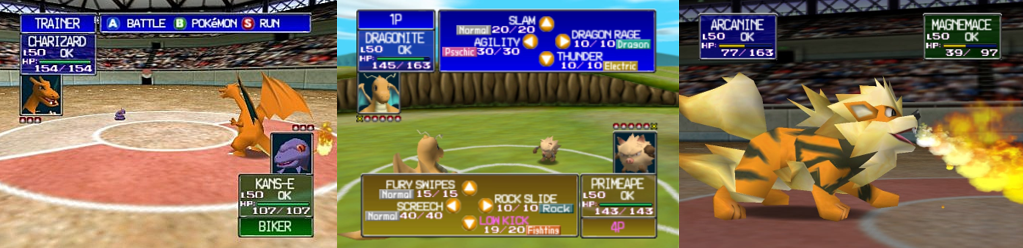
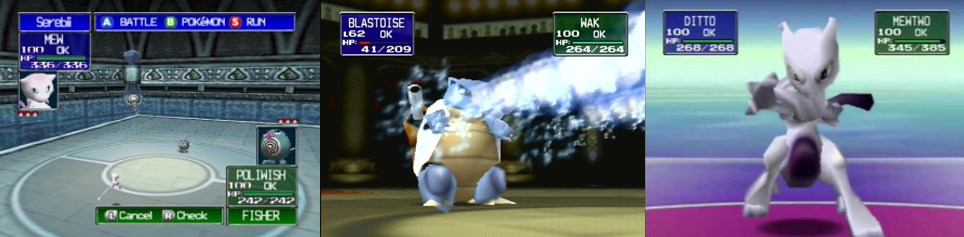
Mini Game Corner [PokéMonth]: Pokémon Stadium 2 (Nintendo Switch)


Upon the release of Pokémon: Blue Version and Pokémon: Red Version (Game Freak, 1996), a new craze swept through playgrounds. An entire generation grew up either playing Pokémon, watching the anime, playing the trading card game, and watching the feature-length movies as clever marketing saw it become a massively lucrative and popular multimedia powerhouse. Accordingly, February 27th is now internationally recognised as “National Pokémon Day”, which I expanded to an entire month of Pokémon this February.


Released: 12 April 2023
Originally Released: 14 December 2000
Developer: Nintendo EAD
Also Available For: Nintendo 64

A Brief Background:
Pokémon’s status as a cultural phenomenon wasn’t just due to savvy marketing. It was thanks to a slew of merchandise and ancillary media, such as the popular trading card game, that the franchise dominated an entire generation on the Game Boy. Pokémon first made the jump to 3D two years after the original games released with the Japan-exclusive Pocket Monsters’ Stadium, a limited proof of concept initially created for the ill-fated Nintendo 64DD that was quickly followed by Pokémon Stadium (Nintendo EAD, 1999). Impressing with its lauded 3D rendition of the turn-based battles of the mainline games and ability to transfer Game Boy data via the underutilised “Transfer Pak”, Pokémon Stadium became a best-selling Nintendo 64 title. This success naturally led to a follow-up, first showcased at the 2000 Nintendo Space World festival and which expanded the concept to incorporate Pokémon from the second-generation games. Like its predecessor, Pokémon Stadium 2 reviewed well; the game was largely seen as superior to the original, despite including many of the same features and issues, though its sharp difficulty spike was criticised. Like the first game, Pokémon Stadium 2 was stuck on the Nintendo 64 for decades and extremely expensive to buy, until it was finally made available on the Nintendo Switch Online + Expansion Pak in 2023.

The Review:
Like its predecessor, Pokémon Stadium 2 is a collection of mini games, battles, and various options to gawk at your favourite Pokémon in 3D. In the original release of the game, players could again copy over Pokémon from the Game Boy games (all six versions) to take them into 3D battles against computer-controlled opponents or their friends in single or team-based contests. Of course, this option isn’t available in the Nintendo Switch Online version, but you can still use “rental” Pokémon (though, unlike the CPU’s Pokémon, these can’t be renamed and you can’t change their moves). Although all 251 Pokémon are represented in the game, you won’t get access to Legendary Pokémon Mewtwo, Mew, Lugia, or Ho-oh until you clear each of the game’s various battle modes. Rental Pokémon all come with four moves that have decent Type-coverage and try to accommodate different battle styles. For example, your Pokemon may sport a Physical and Special Attack move, a move to buff their stats (speed, defence, etc), and a move of a different Type (such as Ampharous, an Electric-Type, using Dynamicpunch, a Fighting-Type move). If you pick third-stage evolutions (Typhlosion, Lantern, Houndoom, etc) or Legendary Pokémon, your Pokémon will boast better stats (which you can now view when selecting a Pokémon) and more powerful moves, but these moves may have a greater chance of missing or will have less Power Points (PP). This time around, you can visit Earl’s Pokémon Academy and read through various tutorials (presented as “lectures”) to learn the controls and battle mechanics. You can also view stats and details about each Pokémon in the Library, learning about what each move does and viewing details on Type advantages, making it much easier to pick a diverse team and plan your attack strategies. Type advantages are key to scoring wins and, in Pokémon Stadium 2, you’ll need to factor in the new Dark- and Steel-Type moves and Pokémon. Dark-Types finally level the playing field against the all-powerful Psychic-Types, for example, and Steel-Type Pokémon can cut through Rock-Types.

New Types, items, and moves spruce up the battles but the core gameplay remains unchanged.

As ever, moves deal additional damage if you score a “critical hit”, but your Pokémon may also take recoil damage. You’ll need to be mindful of status effects such as being paralyzed or poisoned, though the game’s still rigged so no two Pokémon can be frozen or asleep per battle. As before, you’ll put together a team of six but only battle with three. You’ll see which Pokémon your opponent has but won’t know which ones they’ve picked, though I did find that Trainers and Gym Leaders tended to favour Pokémon of a certain Type this time (when challenging Falkner, for example, he and his underlings mostly used Flying-Type Pokémon). Still, you need to be mindful of enemy Pokémon surprising you with unforeseen moves and dragging battles out with moves like Protect, Disable, and Attract, which can cost you turns. The battle system has been tweaked here to incorporate items; when selecting you team, you can have them hold a single item that will passively take effect in battle. This will restore some health points (HP), or cure status effects like confusion, paralysis, or poisoning; however, you cannot manually use these items, and your opponent also holds the same items. Winning without receiving any damage earns you a continue should you be defeated (though abusing the save state feature greatly aids in this regard) and conquering the four “cups”, each with their own level restrictions and one of four PokéBall-themed trophies. The Gym Leader Castle returns, now pitting you against the Johto Gym Leaders and your Rival (who battles with Mewtwo, Ho-oh, and Lugia!) This time around, each Gym Leader has a different number of underlings you must battle beforehand, and Team Rocket even gatecrash the castle, forcing you to battle them. Besting all the Johto challengers unlocks the Kanto Gym Leader Castle, where you must face the Kanto Gym Leaders, Elite Four, and resident champion, Red, though you won’t have to battle past their understudies. Sadly, there is no big boss battle against a Legendary Pokémon this time around, though you’ll still unlock a much more challenging “Round 2” mode by winning all the cups and besting the Gym Leader Castle. There is a new cup on offer, Challenge Cup, where you’re forced to battle with a set team of Pokémon, and the “Event Battle!” mode is strictly for players with a game cartridge installed. Battles are as basic as before; since the items are limited, you can still get stuck if you’re hit with status ailments and it’s still way too easy to sweep your opponent’s team in a few hits.

Game modes are slightly expanded but it’s primarily a graphically improved copy of the last game.

There are more options to alter the game’s difficulty and you can even create your own rules for free battles and the expanded move and Type pool does mix things up. However, you’ll still be facing non-stop battles to get to Round 2, which can get tedious. The overly enthusiastic announcer returns, though can again be disabled, and Pokémon still don’t scream their names, which is much more true to the source material than the anime. While the returning 3D models aren’t much different, Pokémon Stadium 2 also brings the Johto Pokémon to life, allowing Lugia to dwarf the likes of Spinarak and even the battlefield. Though the new moves are also represented, the Pokémon still have limited attack animations, however the textures and details have been given a boost thanks to the Nintendo 64 Expansion Pak. Pokémon Trainers are still just profile pictures rather than 3D models but the battle display has been tweaked to include pre- and post-game comments from your foe and even mid-battle statements to better mirror the mainline games. Many of the Pokémon you face will again sport bizarre nicknames and even different palettes, but the arenas are just as empty as before. However, there are more of them and they have more detail and variety going on; even the PokéBall intros and outros have been made more grandiose and the menu screens are far more visually interesting. However, it’s still all very similar to what came before and just feels like a graphical glow-up rather than actually rendering arenas full of animated spectators. Remixes of all your favourite Pokémon themes try to keep battles fun and engaging and the introductory cutscene, title screen, and main map have been spruced up, but again it’s just presenting the same game in a slightly more appealing way instead of addressing the monotonous gameplay flaws. Once again, many game modes are locked off in this version. You can’t visit the Pokémon Lab to organise or bring in Pokémon from the Game Boy games, you can’t visit the “My Room” mode to see a 3D representation of your bedroom from the second-generation games, and you can’t utilise the “Mystery Gift” feature to earn items or decorations for your room.

In the absence of other modes, read up on gameplay mechanics and enjoy some new mini games.

Again, most annoyingly, you cannot access the GB Tower, so you can’t play the first- and second-generation Pokémon games or utilise the speed-up features you unlock through battle. The Hall of Fame and picture mode also seems to be missing, though you can view all 251 Pokémon from the academy, essentially giving you a 3D PokéDex, and take part in quizzes to earn Medals (presumably for bragging rights). A whole new batch of mini games are also on offer here; each has three difficulty levels, with a fourth unlocked by playing on “Hard” mode. There’s another quiz here, too, and you can challenge the “Mini-Game Champion” mode where you play through each mini game, rolling dice beforehand to determine how many “Tokens” are needed to win and competing for the top score. Some mini games are similar to those from before; Pichu’s Power Plant, for example, has you tapping A or B in conjunction with a direction to charge electrodes like Thundering Dynamo and Tumbling Togepi sees you rolling across a treadmill avoiding obstacles, like Run, Rattata, Run. Otherwise, you’ll be tapping A to fly about as Golbats, bashing other players and collecting hearts, tackling rival Hitmontop out of a sumo ring, pressing A at just the right time to slice through falling logs, and dashing various PokéBalls into goals for points. There’s a four-way version of Pong (Atari, 1972) in which you ricochet balls using Mr. Mime’s Barrier, you’ll be running laps around a dirty track with Donphan, counting Pokémon as they march past, and gathering up presents to fill Delibird’s sack. You’ll also be catching falling eggs and avoiding Voltorb with Chansey and playing a version of musical chairs in Eager Eevee, tackling Aipom and avoiding an exploding Pineco when they appear in the middle of the arena. Since I didn’t play Pokémon Stadium 2 as a kid, I have less nostalgia for these mini games but they’re a decent enough distraction. Technically, though, they’re better and more challenging than the last game. As before, you’ll be awarded with special prize Pokémon for beating the game’s battle modes; you’ll even unlock a “Move Relearner” mode, though you obviously can’t take full advantage of any of this since you can’t plug in a Game Boy game.

The Summary:
As I said, I never got to play Pokémon Stadium 2 as a kid. I enjoyed the novelty of the first game, and was still playing the Game Boy games, but I think the game was just too difficult to come by or I was spending my money on more fulfilling Nintendo 64 experiences at the time. However, the second-generation games are my favourites so I was excited to see some of my favourite Pokémon, like Typhlosion and Lugia, come to life in 3D. In this regard, Pokémon Stadium 2 doesn’t disappoint; the new Pokémon all look great and the graphical bump provided by the Expansion Pak spruces up the visuals and makes battles a bit more engaging. Sadly, the arenas are still very bland and the game is basically a carbon copy of the last, flaws and all. Once again, it’s just a constant stream of non-stop battling with little to break the monotony. Incorporating items and allowing players to view details of the Pokémon, moves, and Types was great but it’s again all very limited. You’re limited by moves, by levels, and by your customisation options and these issues are only exacerbated in this version since you can’t access the Game Boy titles. To make matters worse, there isn’t even a big battle against, like, Lugia and/or Ho-oh. Sure, the Rival has these Pokémon but that’s not as epic as facing off against Mewtwo. The new mini games are a step up, for sure, and I liked how the overall presentation was much improved over its barebones predecessor. However, it’s still the same game at its core; you battle over and over for cups and trophies, then do it all over again in Round 2. The Rocket takeover was a fun inclusion; I would’ve liked to see that expanded on, maybe even looped in as a rudimentary story mode. Ultimately, I’d say this is the version of Pokémon Stadium you should focus your time and energy on because of the improvements it brings to the table, but it still falls way off the mark of giving a true 3D Pokémon experience and can’t help but disappoint as a result.

My Rating:

Rating: 3 out of 5.

Pretty Good

Did you ever own Pokémon Stadium 2 back in the day? What did you think to the graphical boost and the inclusion of items? Did you enjoy the new mini games? Were you disappointed that the core gameplay remained unchanged? Did you ever best all the cups and Gym Leaders? Would you like to see another title in the series? How are you celebrating National Pokémon Day this year? Whatever your thoughts on Pokémon Stadium 2, drop them below and check out my other Pokémon content.
Game Corner [Zelda Month]: The Legend of Zelda: Majora’s Mask 3D (Nintendo 3DS)


On 21 February 1986, The Legend of Zelda (Nintendo EAD, 1986) was first released in Japan. The creation of legendary game designer Shigeru Miyamoto and Takashi Tezuka, The Legend of Zelda launched one of Nintendo’s most popular franchises. This year, I’ve been dedicating every Friday to Nintendo’s most famous silent protagonist, Link and his vast and enduring fantasy world of sword and sorcery.


Released: 13 February 2015
Originally Released: 27 April 2000
Developer: Grezzo
Original Developer: Nintendo EAD
Original Version Also Available For: GameCube, Nintendo 64, Nintendo Switch, Nintendo Wii, Nintendo Wii U  

The Background:
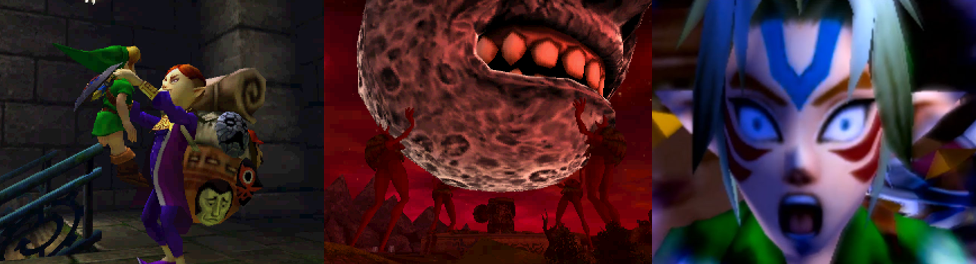
An instant classic upon release, The Legend of Zelda (mostly) went from strength to strength as the concept was refined and expanded throughout Nintendo’s handheld ventures and 16-bit era. Following a long development period, the franchise made a phenomenally successful jump to 3D with The Legend of Zelda: Ocarina of Time (Nintendo EAD, 1998). Following its success, Nintendo originally sought to create a remixed version for the ill-fated 64DD peripheral, which would eventually become the “Master Quest” version of the game. Designer Eiji Aonuma was unenthusiastic about this, so series creator Shigeru Miyamoto challenged the team to create an entirely new 3D Zelda adventure using Ocarina of Time’s assets in just one year. Aonuma recruited designer Yoshiaki Koizumi to adapt his concept of a time loop gameplay mechanic; Koizumi also (literally) dreamt up the idea of the impending threat of a falling Moon. Realising that Ocarina of Time’s players would be a little older, Aonuma purposely aimed for a bleaker, more melancholy tone for the game, which was bolstered by the Expansion Pak that allowed the game to run much smoother and boast more complex visuals compared to Ocarina of Time. The Legend of Zelda: Majora’s Mask was a critical and commercial success; reviews praised the new gameplay mechanics and it quickly gained a reputation as one of the darker, more sombre entries in the franchise. Following a handful of re-releases, and the success of Ocarina of Time’s 3D remake, Nintendo and Grezzo immediately began work on giving Majora’s Mask the same treatment. Alongside graphical improvements, the team purposely aimed to make Majora’s Mask 3D more accessible and included numerous quality-of-life features that were criticised by some. Despite this, the game received positive reviews praising the updated visuals, mechanics, and new elements and the game retained its status as one of the franchise’s most under-rated entries.
The Plot:
After saving Hyrule and being returned to his childhood, Link is jumped by a Skull Kid and has his horse, Epona, stolen. Pursuing the thief to the bizarre world of Termina, Link must manipulate a three-day cycle to stop the possessed sprite from destroying the land.

Gameplay and Power-Ups:
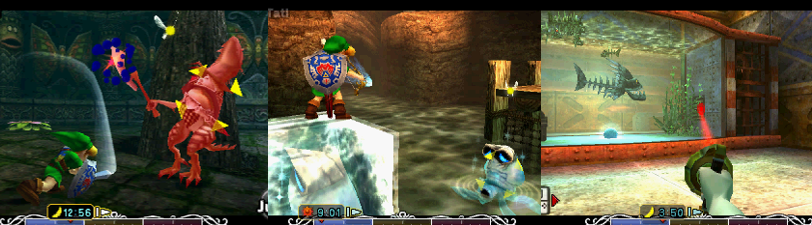
The Legend of Zelda: Majora’s Mask is a 3D action/adventure game that’s built upon the same game engine as its predecessor, Ocarina of Time, and therefore shares many of the same controls, gameplay mechanics, and features. In a rarity for the franchise, players control the same Link is in the previous game, though returned to his child body (and you can change his name when starting a new file) and exploring a bizarre new land filled with many familiar, but noticeably different, characters. Link’s goal is simple: he has three days to stop the possessed Skull Kid from destroying Clock Town and all of Termina with a giant, nightmare-fuelled moon. To do this, players journey to four areas adjacent to Clock Town, tackle the dungeons (or “Temples”) found there, and defeat the bosses within to awaken the Four Giants, the only beings physically capable of pushing back the Moon. However, your mission is compounded by the ever-present time limit, the drama and side quests of the various non-playable characters (NPCS) Link meets, and the numerous magical masks he obtains along the way. Link’s abilities will be immediately familiar to any returning Ocarina of Time players: A sees you talk to NPCs, open chests, and interact with the environment while B lets you attack with your sword, swiping, stabbing, and even jumping when used in conjunction with A. The Left Trigger activates “L-Targeting”, allowing you to lock on to enemies, NPCs, and other targets and expands your attacking options by letting you raise your shield to deflect attacks and projectiles with the Right Trigger, side hop, backflip, and leap into action.

Though a child, Link is as competent as he was as an adult with his weapons and items.

You assign different weapons and items to the X and Y buttons, while other items are assigned to the I and II slot on the touchscreen for easy use. By default, your trusty ocarina and, later, the Pictograph Box are selectable from the top and bottom left of the touchscreen, which is also where you’ll find your map, health (represented as hearts), magic meter, and item and mask menu. Though a child, Link eventually acquires many weapons he utilised as an adult. These are found within the game’s Temples and are often necessary to defeat the mini boss and main boss within, as well as being used to solve various puzzles. You can acquire the Hero’s Bow and a variety of elemental arrows, allowing you to attack enemies from afar, hit switches, burn objects, and create ice platforms where indicated. Bombs and Bombchus are used to blow upon walls and discover secrets, Deku Sticks allow you to light torches, Deku Nuts briefly stun certain enemies, and you can snag on to certain targets and parts of the environment with the Hookshot to cross gaps or bring items to you. Magic Beans can be planted to create platforms to new areas, the Lens of Truth will reveal hidden paths and secrets while draining your magic, and you can capture life-restoring Fairies or store various potions in one of Link’s many bottles. Players can also strengthen their sword by following a specific side quest; though the Razor Sword is only temporary and will eventually dull, it can be further (and permanently) upgraded to the Gilded Sword. Similarly, you can earn yourself the massive Great Fairy’s Sword and obtain the light-reflecting Mirror Shield, and eventually purchase large Powder Kegs to destroy larger boulders. Link can also expand his inventory with bigger quivers, bomb bags, and wallets. Though you lose all your Rupees and ammo stock whenever you travels back in time, you can bank your Rupees in Clock Town and will find plenty of ammo by cutting up grass and defeating enemies.

Link’s masks afford him unique new abilities, though the controls can be finnicky and clunky.

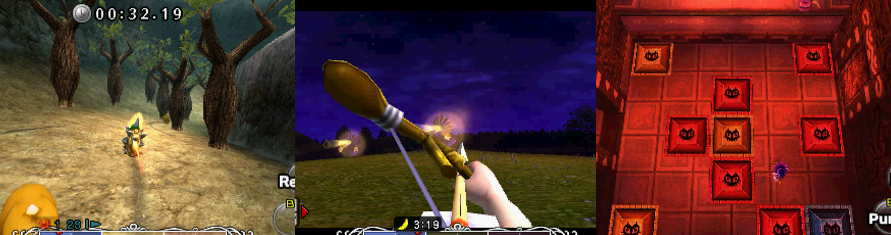
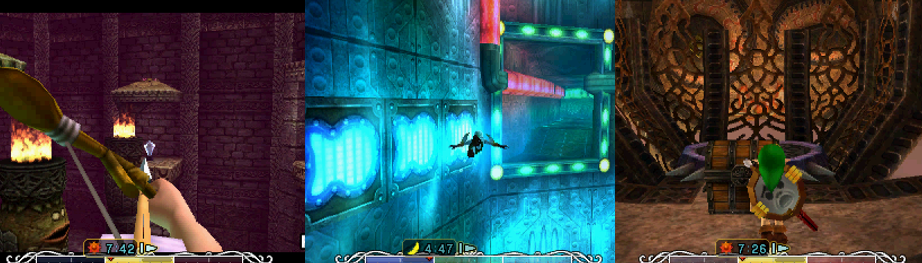
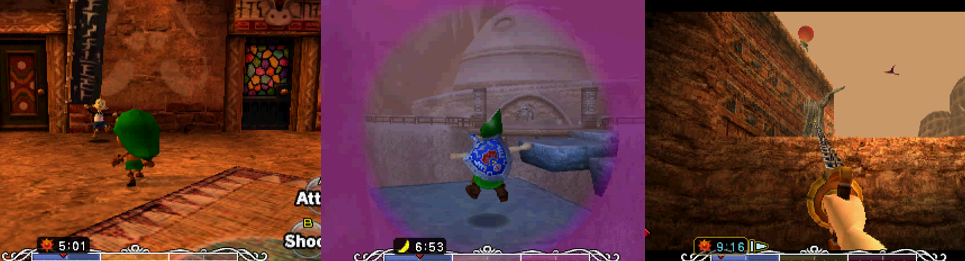
The Ocarina of Time is again used to manipulate the flow of time. You’ll need to travel back in time multiple times as you’ll get a game over once you reach the end of the third day. Luckily, you can speed up and slow down the flow of time to give yourself more time to complete tasks or jump to specific time periods to complete side quests. Other ocarina songs warp you to the various Owl Statues across Termina, where you can also manually save your game, call Link’s trusty steed, Epona, once you rescue her, access certain Temples, and heal disturbed or unquiet spirits to obtain new masks. Majroa’s Mask big gimmick is the mask system; Link will assume three distinct forms (a Deku Scrub, a Goron, and a Zora) throughout the game, each with different playstyles and lacking his traditional weapons. Deku Link is small and spritely, spitting bubbles from his nose and using Deku Flowers to launch into the air and temporarily fly about like a helicopter. Goron Link is big, slow, and powerful, smashing foes with his fists, slamming the ground, and barrelling along in a spiked ball to cross gaps. Zora Link is sleek and agile, easily cutting through water, walking across the seabed, and tossing boomerang-like fins from his arms. Well, I say “easily” but Zora Link can be finicky to control, often ploughing into walls and being a pain. Each of these forms has their own musical instrument in place of the ocarina and is used not just in their main Temple, but to solve other puzzles and complete side quests, such as purchasing Deku deeds, competing in high-speed, aggravating Goron races, and racing against beavers. Link’s other masks all have special abilities, too, such as the Bunny Hood doubling his running speed, the Blast Mask exploding like a bomb, the Great Fairy’s Mask attracting Stray Fairies, and the Captain’s Hat allowing you to command Stalchildren. The Stone Mask renders you functionally invisible, the All-Night Mask keeps you awake, and the Giant’s Mask transforms Link into a hulking giant for a kaiju-esque boss battle. With the exception of the three main masks, all these masks are optional and obtained through side quests, but it pays to acquire them all to make your life (and the endgame) so much easier.

Termina is full of NPCs, mini games, and side quests that will reward you handsomely.

Termina is full of NPCs, all of whom have different thoughts on the current situation and different issues to deal with. Over the course of the three days, you’ll interact with them several times, with key events being recorded in your handy-dandy Bomber’s Notebook so you can keep track of what’s going on and when. This functionality is great for new players and for people like me, who like to efficiently complete the game’s side quests as quickly as possible. Because of the time travel and three-day loop, you’ll repeat certain events and trigger certain cutscenes multiple times, requiring you to rescue old ladies and injured witches, follow shady characters, and retrieve certain items to complete side quests. Many side quests are ongoing, requiring multiple steps (such as reuniting Anju and Kafei, which will take you right up to the last minute of game time and sees Link and Kafei working together to solve switch-based puzzles in Sakon’s hideout) or occur at specific times (such as the surreal defence of Romani Ranch against alien invaders!) Other quests are more low-key, such as using the Bremen Mask to engross little chicks, defending Cremia’s milk delivery from the Gorman Brothers, besting the various shooting galleries and fishing holes, and delivering fish to the Marine Research Lab. Other side quests can be quite involved, such as reuniting the frog choir, using all of Link’s transformations to form a band, digging up treasure with Dampé, and challenging the mini bosses to a rematch. You’ll also be using all your weapons and skills in Gold Skulltula Houses, taking pictures with your Pictograph Box, visiting Gossip Stones, and answering the Keaton’s quizzes. Your reward for these endeavours is either a new mask, a Piece of Heart to extend your maximum health, a bottle, or some Rupees, all key items to assist your adventure.

The four Temples are packed with new and familiar puzzles and fitting gimmicks.

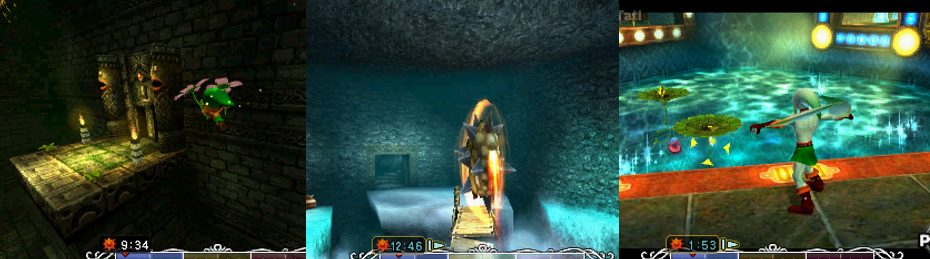
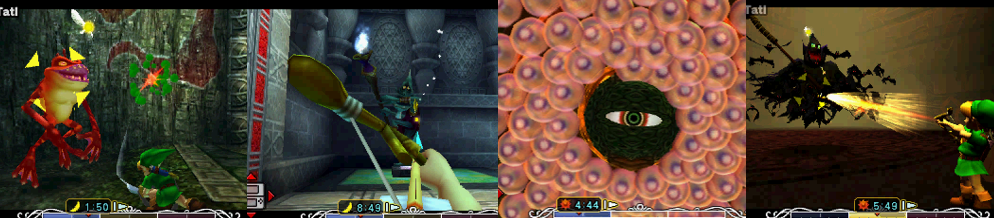
Each Temple houses not just a new weapon and the usual map and compass, but fifteen Stray Fairies which must be freed and collected, usually by enticing them with the Great Fairy’s Mask. Find them all and you’ll earn Link’s patented Super Spin Attack (hold B to charge up a magic-draining spin attack), double your magic meter, increase your defence, and earn the aforementioned powerful (if unwieldy) Great Fairy’s Sword. It’s worth collecting these as you explore the Temples to avoid having to return later. Time is always against you in Majora’s Mask, so be sure to play the Inverted Song of Time to stave off Termina’s inevitable doom. Though the game only has four Temples, getting to them is a task in itself: Link must follow cheeky monkeys and sneak into the Deku Palace, feed and soothe the Goron Elder’s son and then use the Lens of Truth and Goron Lullaby to bypass the Biggorn protecting Snowhead Temple with a blizzard, mess about finding seven Zora Eggs to summon a giant turtle to reach the Great Bay Temple, and battle through the undead minions of Ikana Canyon and scale up a puzzle-landed rockface to reach the Stone Tower Temple. While each contains many recycled elements from Ocarina of Time (torches, switches (timed or otherwise), climbable and destructible walls, etc), each also boasts a maze-like structure and fitting gimmick. Woodfall Temple is full of poisonous water and large gaps you must fly over as Deku Link, Snowhead Temple features both lava and ice, ramps to careen over and weighted switches to pound as Goron Link, and a large central pillar that needs to be brought down to reach the boss. The Great Bay Temple is, obviously, water-based, featuring a maze of rushing currents, jet streams, and propellers. You must use the Ice Arrows to create platforms and solve puzzles and pay attention to the helpful colour-based indicators to know where new paths have opened up. The Stone Tower Temple is two dungeons in one, featuring a gimmick where you flip the area upside down to access new areas, light-based puzzles using the Mirror Shield, and plenty of opportunities to use the Elegy of Emptiness to create a soulless duplicate of Link to press down switches. As you’d expect, each Temple also contains a mini boss, a warp point, numerous small keys to open locked doors, and a big Boss Key to access the Temple guardian.

Presentation:
Even in its original Nintendo 64 incarnation, Majora’s Mask had Ocarina of Time beat hands down when it comes to visuals. Although the game always had a bit of a blurry look thanks to it taxing the console (and the Expansion Pak) to its limits, the graphical upgrade was apparent right away in something as simple as Link actually having his sash and his jumping animations being more dynamic. In the 3DS version, the visuals are as improved as they were in Ocarina of Time 3D, reducing the blur in favour of clarity, adding more emotion to Link’s face, and allowing players to immerse themselves in the world (and induce a headache) with the 3D slider. At first glance, Majora’s Mask seems like a smaller sandbox to its predecessor; you spend a lot of time in one central location and there are only four Temples, after all. However, the opposite quickly proves to be true; not only are there more NPCs onscreen at any one time, their personalities, positions, and roles change across the three-day cycle, adding an unexpected level of depth and emotion to this bizarre adventure. In addition to a day and night cycle and each area of Termina sporting different weather effects and seasons, the world is far more diverse than before. Great Bay, for example, is a vast beach home to the Pirate’s Cove, Gerudo Lagoon, and Zora Cape, a coral-like town that puts Zora’s Domain to shame. Similarly, the Southern Swamp sees Koume and Kotake offer a boat ride through the sweltering foliage, a confusing monkey-filled maze, and the nigh-impenetrable Deku Palace, where the woodland folk don’t take kindly to strangers.

Termina is a diverse land with many areas to explore and environmental effects.

Easily the most impressive area, for me, was Snowhead Mountain. Like Zora’s Domain, Termina’s Goron population have been crippled by inclement weather; in this case, a raging blizzard. Snow and ice covers the environment and the weather has claimed many Goron lives and hides many secrets but, unlike in Ocarina of Time, the snow will melt when you best Snowhead Temple, just as the Southern Swamp with become more habitable. Sadly, travelling back in time undoes these actions and you’ll need to beat the Temple bosses again to re-restore the lands, but just the fact that you can undo the damage done to Termina and see NPCs celebrating in their newfound lives adds so much more gravitas to the game. It compels you to journey on and assist more NPCs, which rewards you with more lore and items, and makes Termina so much richer compared to the more stagnate Hyrule in Ocarina of Time. Ikana Canyon is a desolate, dangerous area filled with undead monsters, rolling rocks, an abandoned village, and the forgotten ruins of Ikana Castle, with its light-based puzzles and spooky inhabitants. The Stone Tower that leads you to the Stone Tower Temple is quite the feat, requiring you to scale it in various creative ways, all before you even flip the Temple on its head to tackle it upside down. Even exploring Termina Field is an adventure in itself; all sorts of respawning enemies lurk in the grasslands, and you can visit the observatory, Romani Ranch, and discover numerous hidden areas all by experimenting with your weapons, mask abilities, and exploring the rich and detailed world. Although the Song of Soaring, Bunny Hood, and Goron abilities make traversal simple, you can rescue Epona and race around on her as Young Link to tick off another desire from Ocarina of Time (though I admit that I rarely used her since she can’t access every area).

This is easily one of the darkest and most bizarre Zelda adventures.

Majora’s Mask is easily one of the most bizarre and bleak Zelda adventures. Right from the beginning, the story starts with a melancholy tone, with Link wandering the lands in search of Navi, only to have his horse and ocarina stolen by the Skull Kid and his mischievous fairy companions, lost in a strange land, and transformed into a Deku Scrub! Like in Ocarina of Time, Link is partnered with a fairy, but Tatl is no Navi; she’s rude, obnoxious, and rarely gives much help when searching for an enemy’s weak spot. Over the course of the game, the two find common ground as Tatl’s concern for her friend and her brother, Tael, grow, and Link’s courage is called upon again to aid the aggressive and slightly demonic Happy Mask Salesman in retrieving Majora’s Mask. Most interactions take place using the in-game engine and simple text boxes, but horrific (thankfully skippable) cutscenes play every time you put on a transformation mask, suitably dramatic cutscenes play when Temples rise up or NPCs are laid to rest to increase Link’s abilities, and you’ll get helpful reminders when day turns to night turns to day and the countdown to destruction looms closer. Speaking of which, the grim-faced Moon looms ominously overhead, growing closer and closer and causing small earthquakes. NPCs become more fearful or flee as the game progresses, and woe befall anyone who lets the timer runs out and must watch the Moon obliterate the land! While many of the assets, models, and elements are recycled from Ocarina of Time, they’re all much improved, with characters constantly on the move and doing their own thing, which you can track with the Bomber’s Notebook. Many musical cues and tracks return as well, though the Termina Field Overture is far more bombastic and engaging for me, and each area boasts a fittingly twisted soundtrack that’s both familiar and unique. The 3DS version changes up the presentation a bit, redesigning the countdown timer, area intros, and tidying up the graphics and assets to really make the colours pop, add helpful guidelines to certain areas, and even mixes up the puzzles and locations of certain items.

Enemies and Bosses:
In keeping with the recycling of Ocarina of Time’s assets, Majora’s Mask returns many enemies from the previous game, such as the shield-sucking Like Likes, bat-like Keese (also in fire and ice variants), crab-like Tektites, Poes, Wolfos, crow-like Guays, Peahats, Octoroks (and their larger cousins), Deku Babs, Lizalfos and Dinolfos. Anyone who’s played Ocarina of Time will know how to tackle these enemies, which usually comes down to firing arrows or strategic use of L-Targeting, and the same is largely true of many of the new enemies featured here. You’ve got your normal, smaller foes like beetle-like Hiploops, electrical Dragonflies, Giant Bees, and skeletal fish, but you’ll also contend with strange foes like the Dexihand, Eyegore, and Goron-like Nejirons. Snappers are best taken out by lying in wait in a Deku Flower and exploding up beneath them; snowball-tossing Eenos are susceptible to Fire Arrows; the various ChuChus can be popped to quickly earn health and ammo; and you’re better off simply defending against or firing arrows at the “Real” Bombchus that scurry about. Some enemies will better test your swordsmanship, such as the Garos and returning Gerudos and Iron Knuckles (who attack faster and more aggressively as their armour is destroyed), while you can command the Stalchilds and even avoid or converse with Gibdos and ReDeads with certain masks. Similarly, you can bypass the Death Aros altogether with the Stone Mask, must switch to sub-weapons or play the Song of Storms when touched by a Blue Bubble, and keep an eye out for the vulture-like Takkuri flying around Termina Field to avoid having your items stolen.

Even familiar mini bosses require a bit more strategy to overcome.

Each Temple houses at least one mini boss who must be overcome, sometimes multiple times, usually to obtain the Boss Key or the dungeon’s weapon. Many of these will be familiar not just to players of Ocarina of Time, but also long-time Zelda fans: Dinolfos and Iron Knuckles appear more than once and fit into this category, for example, but Majora’s Mask sees the return of series staples such as Wart and Wizzrobe. Wizzrobe is fought multiple times in multiple Temples, teleporting about, creating illusionary doubles, and attacking with fire or ice magic. Wart appears in the Great Bay Temple and is, as usual, a giant eye surrounded by bubbles that Link must destroy to get a clear shot at its pupil, while being mindful of it firing them as projectiles and bouncing around in a frenzy. The Gekko appears twice in the game, first riding a Snapper and attacked via a Deku Flower and then encased within a giant, gelatinous substance that must be frozen with Ice Arrows and shattered to attack the slippery devil. In the Ikana Graveyard, Link chases the gigantic Captain Keeta, fending off his lackeys and hacking the giant’s legs to get his attention. You must avoid his swipes and flaming barriers and pelt him with arrows to stun him, but the main issue here is keeping up with him so he doesn’t flee (but that’s what Hylia created the Bunny Hood for!) Stone Tower Temple is home to two more tough mini bosses: first up is the Garoa Master, a teleporting assassin who drops from the ceiling and attacks with a charge. Stay away from his attacks to strike back when his guard is lowered, and be sure to keep your distance when he’s beaten as he’ll blow himself up with a bomb! Defeating him earns you the Light Arrows, which are key to dispelling the bats protecting Gomess. Gomess attacks with a scythe that can cut through your shield, so be sure to jump-slash his exposed heart when you see an opening.

Bosses have been redesigned to have new phases and weak spots, which can be aggravating.

Naturally, you’ll have to best each Temple’s boss to awaken one of the Four Giants and acquire their remains. If you played Majora’s Mask on the Nintendo 64, you’ll be in for a surprise here as each boss has been fundamentally changed, somewhat simplifying them and expanding their attack patterns to allow for new ways to beat them. First up is Odolwa, a manic swordman who dances about and strikes with a gigantic blade. Originally, you’d use arrows or bombs to stun him and strike with your sword, but now you must brave being roasted alive as Deku Link to attack from above, exposing a big slimy eye that is a recurring weak spot for the 3DS version’s bosses. I always found Goht one of the more annoying bosses; the fight takes place on a never-ending track filled with ramps and Magic Jars and sees Goht gallop along, tossing bombs, causing rocks to fall, or summoning a thunder bolt. You’re encouraged to race after him as Goron Link, picking up speed to ram him and topple him over to attack his exposed eye, but you can actually just stand by the entrance and pelt him with arrows or even toss a bomb at him to speed things up. Gyorg was initially a pretty simple affair, testing your patience by having you wait on the central platform to shoot him as he jumps over then ram into him as Zora Link. Now, there’s a second phase that’s completely underwater; you must desperately avoid the mines and detach them to stun Gyorg, blasting his giant eye where possible, something made quite troublesome with the clunky swimming mechanics. Similarly, Twinmold is completely different; originally, you’d be forced to don the Giant’s Mask and attack the worm’s heads or tails with your sword while keeping your magic topped up. Now, you only earn the Giant’s Mask after pelting the boss’s first phase with arrows and must stomp about as Giant Link engaging Twinmold in a fist fight, then grab its tail when it’s stunned. Again, this is a much more aggravating boss battle because of this; Giant Link is a slow, lumbering character compared to the slipper Twinmold and your magic drains very quickly, causing the fight to drag unnecessarily.

Majora’s many forms and difficulty are rendered mute with the overpowered Fierce Deity Mask.

Once they’re all beaten, you must return to Clock Town on the final day and play the Oath to Order. This summons the Four Giants and stop the Moon from falling, but causes the Skull Kid to freak out and the demonic Majora to assume full control. You’re then transported to the strangely idyllic Moon’s surface, where you must challenge four short, troublesome obstacle courses themed around each Temple. If you’ve collected every additional mask, you can trade them all in here and gain the Fierce Deity Mask, which can only be worn in boss rooms and transforms you into a hulking adult equipped with a massive sword that fires magic-draining energy beams when L-Targeting. This is the only way I’ve battled the game’s final boss, Majora itself, which has three distinct forms: Majora’s Mask, Majora’s Incarnation, and Majora’s Wrath. You can tackle each using arrows and bombs and traditional tactics, but I never have. I simply L-Target the weird, increasingly grotesque demon and fling sword beams at it until it’s defeated. Its attacks include charging at Link like a buzzsaw, shooting a reflectable beam of fire, circling at super-fast speeds, firing energy blasts, dodging your conventional attacks, and attacking with two disturbingly organic tentacle-like whips. Majora also attacks using the boss’s remains and by summoning spiky, spinning tops and can cut through your shield if you’re not careful, but none of this is a concern with the overpowered Fierce Deity Mask.

Additional Features:
There are fifty-two Heart Pieces to find all around Termina; some are hidden in secret holes, some are up trees or require your weapons to access, some are gifted to you as rewards, and some require you to complete side quests. You’ll be dancing with the Rosa Sisters, giving a weird, disembodied hand some toilet paper, stopping a timer at exactly ten seconds, checking mailboxes, and besting the shooting galleries to acquire these helpful upgrades. Your main objective throughout the game is to acquire all the different masks, which requires interacting with all the NPCs and keeping an eye on their routines with the Bomber’s Notebook. While some masks are more useful than others, each has a specific function and will allow you to get other masks, Heart Pieces, or rewards depending on who you interact with when wearing them. Similarly, it’s worth seeking out the upgrades to Link’s sword, wallet, and items, if only to further explore the world, and making sure you bank your Rupees before resetting the three-day cycle. You’ll also find many Gossip Stones placed all over that will give you hints if you interact with them while wearing the Mask of Truth, and the Sheikah Stones return from Ocarina of Time 3D to provide you with more detailed directions if you get stuck. The manual save system has been revamped, with additional Owl Statues appearing in the game (though you can’t warp to all of them), and some of the rewards and side quests have been changed. Most notably, Link can now acquire seven empty bottles (which is, admittedly, a little excessive), with the last gifted after completing a new side quest involving the Gorman Troupe. Another new feature is the inclusion of two fishing holes, which you can either pay to use or acquire a pass to fish for various fish, though there are no rewards tied to this beyond trying to snag the legendary Lord Chapu-Chapu. Since the game resets when you go back in time, there’s no Boss Rush Mode this time around and, sadly, the developers didn’t see fit to include a mirrored Master Quest mode, though you now have three save slots instead of just two.

The Summary:
The debate about which game is better, Ocarina of Time or Majora’s Mask, is seemingly never-ending and, honestly, it’s a tough choice. Majora’s Mask is definitely a more daunting challenge; I can play through Ocarina of Time with my eyes closed but I’ve never beaten Majora’s Mask without a guide, purely because I want to complete all the side quests before facing Majora at the end and have the overpowered Fierce Deity Mask on hand. Yet, Majora’s Mask is such a step up in terms of visuals, scope, and world-building. Termina feels alive in ways Hryule does not and the stakes feel so much higher since you can see how the impending doom affects the different NPCs. The three-day cycle is as daunting as it is annoying at times, resetting all your hard work but also pushing you to restore the next area and save this bizarre land. Majora’s Mask may seem smaller due to its more focused approach, but the game and its land is as big (if not bigger) than Ocarina of Time, expanding upon and improving every element of its predecessor and really making you feel the gravitas of its bleak narrative. Link may not acquire any new weapons here, but the mask-based gameplay mixes the formula up in surprising ways, changing Link’s form and altering the way you play (even if the controls can be a struggle at times). The 3DS version makes way more changes to the original game compared to Ocarina of Time 3D and, while some (like the simplified bosses and tweaked controls) can be frustrating, the benefits outweigh these issues. The expanded Bomber’s Notebook, being able to jump to specific time periods, and the changes to side quests help make the game accessible and fresh for old and new players, in my eyes. Ultimately, I think Majora’s Mask is a dark horse of the franchise; it’s an incredibly engaging experience, packed with side quests upon side quests, and more than stands alongside its predecessor as one of Link’s finest (if surreal) adventures.

My Rating:

Rating: 5 out of 5.

Fantastic

Have you ever played the Nintendo 3DS remaster of Majora’s Mask? If so, what did you think to the graphical overhaul and additional features included? Which of the masks and many side quests was your favourite? Would you like to see this version ported to the Nintendo Switch to make it more accessible? Did you own Majora’s Mask back in the day? If so, did you ever tackle the final boss without the Fierce Deity Mask? Were you a fan of the three-day cycle? I’d love to hear your memories of Majora’s Mask so leave a comment below and go check out my other Zelda content! 

Mini Game Corner [PokéMonth]: Pokémon Stadium (Nintendo Switch)


Upon the release of Pokémon: Blue Version and Pokémon: Red Version (Game Freak, 1996), a new craze swept through playgrounds. An entire generation grew up either playing Pokémon, watching the anime, playing the trading card game, and watching the feature-length movies as clever marketing saw it become a massively lucrative and popular multimedia powerhouse. Accordingly, February 27th is now internationally recognised as “National Pokémon Day”, which I expanded to an entire month of Pokémon this February.


Released: 12 April 2023
Originally Released: 30 April 1999
Developer: Nintendo EAD
Also Available For: Nintendo 64

A Brief Background:
Pokémon was an instant cultural phenomenon when it first released. It wasn’t just because of the games, which cleverly encouraged players to “Catch ’Em All”; it was the slew of merchandise and ancillary media that made Pokémon a household name. Right from the beginning, Pokémon was followed by spin-off games; whether it was the incredibly popular trading card game or other videogame genres, like pinball, Pokémon dominated an entire generation, especially on the Game Boy. Two years after the original games released, Japanese Nintendo 64 players were treated to Pocket Monsters’ Stadium. Originally intended as a launch title for the ill-fated Nintendo 64DD, the game was limited to only forty playable Pokémon but set the template for 3D Pokémon battles. Pokémon Stadium was its successor, incorporating 3D models and animations for all 151 Pokémon and being chosen for international release over its predecessor, much like how the inferior Pocket Monsters: Green Version was superseded by its successors. It was HAL Laboratory president Satoru Iwata who studied the Game Boy source code and converted it to work on the Nintendo 64, though Pokémon Stadium’s other big selling point was its ability to communicate with the Game Boy using the unique (and sadly underutilised) “Transfer Pak” to import copies of Pokémon from the handheld titles. Pokémon Stadium was generally well received at the time; reviews largely focused on praising the 3D models and impressive adaptation of the turn-based battle system, though criticised the annoying announcer. Though a best-seller, and followed by a superior sequel in 2000, Pokémon Stadium was stuck on the Nintendo 64 until it was finally made available to modern gamers, via the Nintendo Switch Online + Expansion Pak, in 2023.

The Review:
Pokémon Stadium is a 3D Pokémon adventure in which players could upload copies of the Pokémon from the Game Boy games and battle it out in 3D against computer-controlled opponents or their friends. Since the Nintendo Switch Online version lacks connectivity with the Game Boy games (which aren’t even available on the Nintendo Switch Online as of this writing), you’re limited to using “rental” Pokémon, which can’t be renamed or customised in any way. When you first start the game, only 149 Pokémon are available to rent but you’ll gain access to Mewtwo and Mew by clearing all the game’s battle modes. Each rental Pokémon has four moves, with the third-stage evolutions (like Blastoise and Charizard) sporting better stats (higher attack and defence, for example) but wielding more unreliable moves (such as Fissure, a one-hit knockout move that can miss four times out of five) or moves with less Power Points (PP), such as Fire Blast and Mega Beam. Although I mentioned stats earlier, you can’t view the stats for any Pokémon in the game, rental or otherwise. You have no idea how strong your Pokémon is beyond the level they are and you have no options to improve their stats. The best you can do is use moves that buff them in battle, such as Swords Dance, to increase your chances of attacking before your opponent, or ones that de-buff your foe (such as Sand Attack to reduce their accuracy). As ever, Type advantages are a key factor in battle; Fire-Type moves are “super effective” against Grass-Type Pokémon, for example, which have the edge over Water-Type Pokémon. Many moves also have a chance of landing a “critical hit” for extra damage, missing, hitting you with recoil, or causing status effects. Pokémon can be burned, frozen, put to sleep, paralysed, and poisoned and you have no way to solve these ailments as there are no items here (though the game’s rigged to ensure no two Pokémon can be frozen or asleep in a battle).

All your favourite Pokémon are brought to life to battle in 3D.

The limitations don’t end there, either. Although you assemble a team of six Pokémon, you only ever battle with three. Similarly, while you can see your opponent’s available Pokémon, you have no way of knowing which ones they’ve picked so it’s best to assemble a diverse team. Luckily, every Pokémon has a diverse move pool consisting of elemental attacks, status-inflicting attacks, buffs, or alternative elemental attacks (Marowak, for example, not only has Ground-Type moves but also uses Fire Blast, a Fire-Type move) to provide additional coverage in battle. If you win without taking a single hit, you’ll earn an extra continue to battle on should you be defeated (though the Nintendo Switch’s save state feature can mitigate this). When taking on the titular Pokémon Stadium, you compete in one of four “cups”, each imposing level restrictions, to win one of four PokéBall-themed trophies by gaining six consecutive victories. The Gym Leader Castle has a similar setup, except you only have to win four battles (besting three underlings before challenging the Kanto Gym Leaders, Elite Four, and your Rival) and there are no level restrictions. Besting all these battles unlocks a final super boss battle against Mewtwo, in which you take six Pokémon in battle to beat him, unlocking the much tougher “Round 2” mode and changing both the title screen and the main menu accordingly. Battles are pretty basic; once you get over the fun, colourful, cartoonish animations of the Pokémon, you start to see how limited your options are. You can’t do anything but power through if your Pokémon is poisoned, its moves are disabled, or it gets confused and attacks itself. Type advantages can see you sweep entire teams, but the diverse move pools mean you can’t underestimate opponents, especially if you chose poorly when assembling your team. Finally, battling non-stop can get really tiresome; it’s definitely a game best played in little spurts rather than trying to beat everything in one sitting as the novelty quickly wears off.

While the visuals are decent, gameplay quickly becomes tiresome.

The grating announcer doesn’t help; this overly enthusiastic guy will spout the same exclamations over and over, chastising you if you take too long or pick the wrong Pokémon and screaming praise for every correct decision. Luckily, you can turn him off from the options. Unlike in the anime, Pokémon don’t scream their name when in battle (except for a Pikachu imported from Yellow Version), but this actually makes the game more appealing in my eyes. Pokémon are rendered in full 3D and exhibit a lot of personality; Mr. Mime actually mimes when idle, Onix’s body rotates and squirms, Muk is all sludgy and gooey, and Primeape dances about ready to fight. Rival Pokémon often sport rudimentary nicknames and alternative colour schemes and, while they only have a handful of animations, these work for the moves they perform, which are all brought to life in suitably dramatic fashion even if physical moves (like Mega Punch and Slash) don’t actually connect with the opponent as the Pokémon stay on each side of the arena. You never see the Pokémon Trainers except in profile pictures before and after battle and, while audiences react and make noise in arenas, you won’t see any spectators (at least, not clearly, anyway). Arenas are largely empty and underwhelming, to be honest; some are suspended over water or lava, some are inside, some outside, and you battle Mewtwo in a surreal sky landscape, but there’s nothing to really see as the focus is squarely on the 3D Pokémon models and their attack animations. This is fine and it all looks good and more accurate than the depictions in the anime, but again it’s all quite bland and tiresome after a while. The game is bolstered by renditions of the classic Pokémon theme, battle music, and other in-game tunes, which are always fun to listen to, but the introduction movie is incredibly basic and just showcases a few Pokémon models flying about.

While the mini games are fun, many of the game’s best features are now missing.

Of course, it’s not all battling in Pokémon Stadium, but that is half of the story in this version of the game. Normally, you could visit Professor Samuel Oak’s lab and organise or trade in Pokémon from the Game Boy games, but you can’t do that here. Most notably, you used to be able to access the GB Tower and play the original games on your TV screen, with options to speed up the gameplay at hand, but that’s also not available. Since you can’t import Pokémon, you can’t get the special Surfing Pikachu, though you’ll still be awarded with one of eight semi-rare Pokémon each time you clear the Gym Leader Castle. You can still visit the Hall of Fame and view the Pokémon character models up close, though you must best the Gym Leader Castle with all 151 Pokémon to do this (which also earns you a Psyduck that knows Amnesia). Luckily, you can still visit the Kids Club and play the many fun mini games on offer, either against the computer or alongside your friends. Here, you’ll copy Clefairy’s dance instructions, gobble up sushi with Lickitung, race against Rattata, cast Hypnosis against other Drowzee, see how any times you can get Magikarp to splash, charge up a dynamo with Pikachu or Voltorb, defend against incoming rocks with Kakuna and Metapod, toss Ekans like a ring, and dig into the ground with Sandshrew. These mini games are only short but they’re quite fun and addictive; the timing can be a little off at times and other times you must pay attention to not drain your health bar, but it’s enjoyable enough battling alone or against friends. I do wish the game did more with these, though, like maybe had a random mini game play during the cups to let you earn single-use items or some kind of buff. Other options include a gallery (another limited feature where you can photograph Pokémon to view its model, though you obviously can’t print these anymore), the ability to jump straight into a CPU battle, and unlockable stickers for the gallery when you beat “Round 2”. Beating the Kids Club’s “Who’s the Best?” mode on “Hard” unlocks the “Hyper” difficulty, but it can’t be denied that the game’s appeal and longevity suffer with this version since you can’t access the GB Tower.

The Summary:
I remember when Pokémon Stadium was announced and first released. It was the first time I can remember pre-ordering a game, and all my friends and I delighted in seeing our portable Pokémon brought to life in 3D. It was a big deal then, but it can’t be denied that Pokémon Stadium hasn’t aged well, hence this shorter review. It’s certainly still a lot of fun and a nostalgic high to see those early 3D Pokémon models, which were reused for many years after and are actually more lively than in some of the modern games, and I loved that they made noises like the in the Game Boy titles rather than screaming their names like in the anime. There are a few options available here, but Pokémon Stadium is essentially a glorified party game. When you’re not battling for cups and trophies, you’re battling the Gym Leaders, a friend, or the computer. When you’re not doing that, you’re playing mini games which, while fun, aren’t enough to sustain your interest for longer than half an hour or so. Without the GB Tower functionality, Pokémon Stadium loses a lot of its replay value, and you’re forced to focus on the repetitive and tiresome battling. With limited options, no items, and no room for customisation since you can’t import your portable team, the battling just appears very shallow and basic. As a 3D representation of Trainer and Gym Leader battles, it’s serviceable but Pokémon Stadium only does a rudimentary job of representing that one aspect of the mainline games. It’s fun enough in short bursts, but even then it can be tedious hearing the same announcements over and over and essentially just hitting A again and again to spam super effective moves since it lacks the depth and complexity of its far superior portable counterparts.

My Rating:

Rating: 2 out of 5.

Could Be Better

Did you enjoy Pokémon Stadium? Were you excited to see your team brought to life in 3D back in the day? Which of the mini games was your favourite? What did you think to the limited battle options and repetitive gameplay? Did you ever fill up the Hall of Fame and defeat Mewtwo? Are you disappointed that so much of the game is inaccessible in this version? Would you like to see another battle-centric 3D Pokémon game? How are you celebrating National Pokémon Day this year? Whatever your thoughts on Pokémon Stadium, feel free to leave them below and check out my other Pokémon content across the site.

Game Corner [Zelda Month]: The Legend of Zelda: The Minish Cap (Nintendo Switch)


On 21 February 1986, The Legend of Zelda (Nintendo EAD, 1986) was first released in Japan. The creation of legendary game designer Shigeru Miyamoto and Takashi Tezuka, The Legend of Zelda launched one of Nintendo’s most popular franchises. This year, I’m dedicating every Friday to Nintendo’s most famous silent protagonist, Link and his vast and enduring fantasy world of sword and sorcery.


Released: 9 February 2023
Originally Released: 4 November 2004
Developer: Capcom / Flagship
Also Available For: Game Boy Advance and Nintendo Wii U

The Background:
After making an immediate impact upon its release, The Legend of Zelda franchise was further refined and expanded throughout Nintendo’s handheld ventures and 16-bit era, but changed forever after a successful jump to 3D with The Legend of Zelda: Ocarina of Time (Nintendo EAD, 1998). After further 3D success with the bleak follow-up, The Legend of Zelda: Majora’s Mask (ibid, 2000), Nintendo surprised everyone by adopting a cartoony, cel-shaded aesthetic for Link’s GameCube debut, The Legend of Zelda: The Wind Waker (ibid, 2002). The visuals were as widely praised as the gameplay and The Wind Waker enjoyed rave reviews, prompting Nintendo to adopt the style for further adjacent, handheld adventures. After a successful collaboration with Capcom and Flagship on The Legend of Zelda: Oracle of Ages and Oracle of Seasons (Flagship, 2001), the teams returned to develop a new Zelda title for the Game Boy Advance, a spiritual successor to The Wind Waker and The Legend of Zelda: A Link to the Past (Nintendo EAD, 1991) whose story and aesthetic mirrored a whimsical fairy tale. Development specifically focused on Link’s new ability to shrink in size, thereby opening new avenues for exploration and puzzle solving, and providing some unique new items for players. The Legend of Zelda: The Minish Cap was a best-selling title for the Game Boy Advance and was met with critical acclaim. Reviews gushed over the cartoony art style, innovative dungeon designs and puzzles, and the new shrinking mechanic, though its short length and repetitive elements were criticised. Despite winning a Game of the Year award, The Minish Cap was stuck as a ridiculously expensive Game Boy Advance exclusive for many years until finally being made available on Nintendo’s online stores.

The Plot:
Apprentice blacksmith Link accompanies his childhood friend, Princess Zelda, to the Picori Festival, where monsters are unleashed by the evil wizard Vaati. With Zelda petrified, Link teams with wise-cracking magical hat Ezlo and assists the pixie-like Minish people in restoring the legendary Picori Blade to confront the threat.

Gameplay and Power-Ups:
The Legend of Zelda: The Minish Cap is a traditional, 2D, top-down action/adventure game in which players take control of Link (or whatever they choose to name him), in the “toon” style of his Wind Waker counterpart, and embark on a quest to save Hyrule, and the Princess Zelda, from new sorcerer on the block, Vaati. As a Game Boy Advance title, the controls are as basic as it gets and akin to the previous handheld Zelda titles. You equip any of Link’s weapons and items to either A or B and then use that button to attack, defend, hit switches, solve puzzles, and whatever else your items are capable of. The Right Trigger performs a roll, speeding up your travel time, and also performs similar actions to A (like speaking to non-playable characters (NPCs) and opening chests). R is also the only way to open locked doors, which can be clunky as it would’ve been easier for Link to simply manually use any keys he possesses. The Left Trigger also performs a dedicated function, fusing “Kinstones” with NPCs, which I’ll detail in a bit. The + button pauses the game and brings up your inventory screen, the pretty basic map (which uncovers the more you explore and highlights notable areas), a subscreen showing how close you are to extending your health bar, total Mysterious Seashells and Tiger Scrolls, and allows you to save the game or enter “sleep” mode. As I’ll also get into in a bit, Link is joined by a hat-shaped companion, the insolent Ezlo, who constantly interrupts your gameplay to offer blindingly obvious advice that would make Navi blush. Also like Navi, you can choose to ask him for a tip by pressing -, though I’d just as soon never speak to him again. As you’d expect, Link acquires his standard sword and shield but the enigmatic Grimblade Brothers will teach additional sword techniques, such as a rolling attack, the aerial downthrust, and patented moves like the Sword Beam and Spin Attack. Some of these are more like padding, though, such as Link having to learn to attack with his sword when running with the Pegasus Boots.

Link’s traditional and new weapons are brought to colourful, cartoony life.

Many of Link’s recognisable weapons return here and function exactly as you’d expect. The bow and arrow lets you to hit eye switches and take out Eyegore statues, bombs blow up walls and discover new areas, and you can purchase a boomerang to stun targets or hit switches. This can be further upgraded into the Magical Boomerang, allowing you to manually direct it. Eventually, you can swap out the regular bombs for remotely detonated ones (though there are few benefits to this) and obtain the optional (and missable) Light Arrows for extra arrow damage. The Flame Lantern lights up dark areas, ignites torches, and burns certain enemies and spider webs. The Roc’s Cape lets you jump and glide short distances, the aforementioned Pegasus Boots let you run really fast, and the Ocarina of Wind warps you to any Wind Crests you’ve uncovered. The Minish Cap debuts three new items: the Cane of Pacci (which flips certain enemies and objects and creates temporary boosters in holes to launch you higher), the Gust Jar (which sucks up enemies, propels you across gaps when used on spring mushrooms, and turns lily pads into rafts), and the Mole Mitts (which dig through dirt). The Flippers, Grip Ring, and Power Bracelet are all passive items that don’t need to be equipped to use and let you swim and dive, climb certain walls, and pick up and toss jars and such, respectively. Link can capture life-restoring Fairies or store potions in bottles, increase his total bomb and arrow inventory with bigger bags and quivers, and also carry more Rupees by finding bigger wallets. Link’s sword is progressively empowered as you acquire the four Elements, duplicating Link into as many as four copies to push bigger blocks, step on or slash switches, and attack enemies, as well as fire a special beam that restores petrified NPCS. Finally, you can upgrade the shield into the reflective Mirror Shield, though this requires awakening a sleeping Biggoron and waiting for him to finish chewing on it.

Link’s shrinking ability doesn’t live up to its potential, and Kinstones are overused.

Link’s newest gimmick in The Minish Cap is the ability to shrink to microscopic size, courtesy of Ezlo’s magic. This is performed primarily at magical tree stumps and allows you to enter small holes, climb small steps and vines, and access out of the way places. When shrunk, you’ll interact with the pixie-like Picori tribe (or “Minish”) scattered throughout Hyrule (once you’ve consumed a Jammer Nut, that is) and be given additional side quests and assistance from them. In this form, Link takes more damage and his weapon usage is limited, but he can talk to animals and cross small lily pads. Occasionally, Minish Link enters Armos statues to activate or deactivate them and the action frequently zooms in to follow him up rafters, into the Minish towns, and through enlarged (from your perspective) areas, like in Honey, I Shrunk the Kids (Johnston, 1989). Apart from this, Ezlo is more a hinderance than anything; he’s obnoxious and rude and demanding and pops up to point out the obvious, severely dumbing down puzzles and interrupting the gameplay. The other big mechanic here is Kinstones; as you slash bushes, defeat enemies, and open chests, you’ll find several coloured Kinstone pieces. These are fused with certain NPCs to alter the overworld in different ways. This may involve spawning a treasure chest containing another Kinstone, or Magical Seashells, or a Big Rupee, or even a much tougher gold enemy for an additional challenge. Fusing removes vines to open new areas, parts waterfalls, drains ponds, and even spawns in NPCs for you to trade and train with. You can buy Kinstones, but they cost a lot and it’s not really worth it as you’ll inevitably find them on your travels, and none of the main variants are necessary to complete the story, though the benefits (extra hearts, Rupees, and training with the uncovered Grimblades) can be worthwhile. Specifically, fusing with Din, Farore, and Nayru spawns Lucky Butterflies which, when touched, increase your digging, shooting, and swimming speed. The only time you’re required to fuse Kinstones is when you find golden ones, such as in Cloud Tops, where you navigate a maze of clouds, floating about to find different halves of golden Kinstones to activate five propellers and be blasted up to the Palace of Winds.

I would’ve liked to see more creative use of the duplication feature in puzzle solving.

Link’s shrinking ability isn’t just used on the overworld; you’ll frequently shrink in Dungeons to reach new areas and progress. As ever, Dungeons contain a map, compass, and new weapon to aid your journey, as well as secret areas, switches, and stairways to other floors. Sometimes, you’ll drop or push blocks to lower levels; others, you’ll push levers to let in sunlight to melt blocks. Frequently, you must eliminate all enemies to open doors, or push jars or statues onto switches for the same effect, though it’s much more likely you’ll be duplicating Link to solve these puzzles. Tornados carry you across bottomless pits, moving platforms carry you across gaps, and floors are often covered in collapsing tiles, spikes, or rolling spiked logs that must be avoided. You’ll jump up to mesh bridges (and down through certain holes), hop up and across cloud platforms, push ice blocks into place, cross gaps using powerful wind blasts from propellers (in conjunction with the Roc’s Cape), and spring across chasms with the Gust Jar. There’s a giant rotating barrel in the Deepwood Shrine which must be rotated to progress, high-speed mine carts in the Cave of Flames that you redirect with switches, the Fortress of Winds is a veritable labyrinth of floors and dirt, the Temple of Droplets is a largely pitch-black mixture of ice and water, and the Palace of Winds offers the constant threat of falling to your doom. For the game’s final Dungeon, Vaati corrupts Hyrule Castle, transforming it into a monster-infested Hell filled with recycled enemies and hazards from previous Dungeons. While largely inspired by A Link to the Past and Link’s previous handheld entries, it’s in Dark Hyrule Castle where I saw some of the strongest parallels as exploring the Dungeons, battling Darknuts, and restoring the petrified NPCs was very similar to Link’s celebrated 16-bit adventure. Sadly, only two of the Dungeons are Minish-sized (the Deepwood Shrine and Palace of Droplets). Though you don’t really notice as you’re exploring these Dungeons, the developers did include larger variants of common enemies as boss battles. Still, I feel they didn’t take full advantage of Link’s new miniature perspective in these (or other) areas as the shrinking mechanic was more of a gimmick or hinderance a lot of the time.

Presentation:
I’ll be the first to admit that I never really cared for The Wind Waker’s cartoony aesthetic. It’s grown on me over time, but I much prefer the more realistic, fantasy-orientated style of Link’s other 3D adventures. However, it works really well here; probably better than in 3D. Link is super expressive; from his grunts and yells (carried over from this 3D titles) to his messy bed hair, his look of sheer panic on a runaway minecart, and the way he races around when on fire. He’s a jaunty little cartoon sprite, bobbing along and reacting to everything around him. Ezlo is very animated as well, popping up on Link’s head to react to and comment on their surroundings or the plot, and all the NPCs are similarly cartoony and fun to behold. Many will be familiar to long-time Zelda players, such as Malon (with her milk cart and nearby farm), Dampé the grave keeper, Ingo (now a real estate developer), and Gorons intent on ploughing through a rocky underpass. Many characters fuse Kinstones with you to solve a personal crisis, such as the overworked mailman, the librarian searching for lost books, and a poor man haunted by a restless spirit. The Minish Cap is a little light on new races but there are anthropomorphic characters to find, animals to chat to (as a Minish), and, of course, the gnome-like Picori tribe. These peaceful little sprites have a main village and live in little mushroom houses or up in the rafters, their homes made out of barrels, walls made of books, and heating provided by flickering candles. When Link is turned microscopic on the overworld, a helpful bubble indicates where he is. Though his actions are limited, he has full access to his arsenal when the game zooms in, casting dirt paths with the shadows of grass and blocking his path with chestnuts and such. Minish-Link must avoid cats looking to swipe him and relies on lily pads to cross water until he gets the Flippers, and you must be on the lookout for small holes, paths of flowers, and flappable objects to progress and shrink or return to full size.

The “Toon” style really suits the traditional Zelda aesthetic and brings Hyrule to life.

The Minish Cap’s overworld and Dungeons are heavily reminiscent of A Link to the Past, mixing locations such as ruins, a swamp, and Hyrule Castle itself with areas I’m more familiar with from the 3D games, like Lake Hylia and Lon Lon Ranch. Mt. Crenel acts as a Death Mountain substitute, featuring falling boulders, climbable walls, tornados to fly you about, and a Minish mine where Melari repairs the broken Picori Sword. Like the Swamp of Evil, Castor Wilds is a murky swamp full of thorns; you’ll need the Pegasus Boots to navigate this area, and shrink to clamber inside Armos Statues within the maze-like ruins. Finally, the Flame Lantern lights your way in the desolate Royal Valley, which contains a looping maze in its haunted forest. Aside from the Minish Village, Cloud Tops and the Palace of Winds and the Temple of Droplets impressed me the most, visually. The other Dungeons are very formulaic, despite some fun perspective and depth effects, but these three have you up in the clouds or high in the sky or navigating a frozen labyrinth, respectively, which really mixes up the formula. Dark Hyrule Castle is similar, putting an ominous spin on the palace’s ornate rooms and recycling all previous hazards, but I was disappointed that the Dungeons didn’t utilise Link’s new miniature perspective to make their visuals and layouts standout more from the likes of A Link to the Past. Instead, The Minish Cap often resembles a toon-ified version of that game, doing little to stray from the usual stone trappings of those Dungeons and being a little too familiar at times. Still, there are fun touches, like the Biggoron atop Veil Falls, the big bell in the bustling Hyrule Town, guards to sneak past, and occasional weather effects. The game’s story is all relayed though text boxes, as usual, but key events are told using stained glass murals, Wind Waker-style art is showcased in the end credits, and the sprite-based cutscenes are full of cartoony life. The music is as infectious as ever, with familiar and slightly tweaked classic Zelda tracks at the forefront (many I mostly recognised from A Link to the Past and Ocarina of Time), though new areas and Minish locations have a spirited flavour that adds to the game’s whimsical, fairytale-like charm.

Enemies and Bosses:
All of Zelda’s most recognisable enemies make a return in The Minish Cap, though redesigned to evoke the toon style of The Wind Waker. This is most evident in the Moblins, who charge with spears or fire arrows and have much more life and detail compared to past 2D Zelda titles In some cases. This ups the challenge represented by some enemies, such as the various Dark Knights you’ll encounter. These are essentially mini bosses and swarm Dark Hyrule Castle, defending against your attacks and landing powerful sword swipes and even boasting a charged thrust. Your best bet against these enemies is to hop over them with the Pegasus Boots and attack from behind, a tactic mirrored when facing the Ball and Chain Soldiers. Other enemies require strategic use of your other items, such as using the Gust Jar to suck up and fire out the annoying Peahats or pull the masks off Helmasaurs, tossing your boomerang at Sparks, or using the Cane of Pacci to flip Spiked Beetles and attack their vulnerable underbelly. Like Likes masquerade as Rupees and steal your items, Keatons and Takkuris make you drop Rupees on contact, Madderpillars (also a kind of mini boss) fly into a rage with you bop their noses and attack their tails, and you’ll even encounter Bob-ombs and Lakitus. ChuChus fry you, Floor and Wall Masters return you to the Dungeon entrance, and Octorocks and Deku Scrubs are subdued by deflecting their projectiles. Cloud Piranhas snap at you from the clouds, fake doors crush you, and Acro-Bandits leap from the ground in a swaying tower. You’ll also battle elemental Wizzrobes, who teleport about shooting ice, fire, or lightning; Stalfos leap and toss their bones at you; and Slugglas drop from above. By the time you reach Dark Hyrule Castle, rooms are filled with an assortment of these enemies. Though you can often simply bypass them, you’ll need to defeat a gauntlet of them before Vaati completes his macabre ritual to reach the petrified Princess Zelda in the finale.

Too few bosses require the shrinking mechanic, but they’re mostly big, fun challenges.

The Minish Cap is surprisingly light on bosses; four of its five main bosses guard an Element, which empowers your sword and duplicates Link, relinquishing a Heart Piece to extend your life bar. The first boss you battle is a gigantic green ChuChu; well, it’s actually a regularly sized one but you’re in Minish form, so it appears huge. A blue variant appears later in the game too, now sporting electrified skin, but the tactic of sucking at its “feet” with the Gust Jar and whacking it with your sword when it’s stunned remains the same. Next, you face the turtle-like lava dinosaur Gleek, which sits in a pool of lava and spits fireballs in a circular motion. You must run behind it and flip its shell with the Cane of Pacci to race up its neck and attack the crystal on its back. In retaliation, it rains rocks and breathes fire, making the fight more difficult as it progresses. Mazaal is the only one of the main bosses to incorporate the shrinking mechanic in. A strange, disembodied Aztec head and fists, he is stunned by shooting and slashing the jewels on his hands (which try to crush and hit you). You then shrink, enter his head, and attack the glowing pillar to deal damage. As the fight progresses, you use the Mole Mitts in his head and dodge a Shrink Ray attack from his eyes. The Big Octorok is fought in a shallow pool that it freezes, reducing your traction and making avoiding its pellets much harder. Well, I say “avoid” but you actually smack these back with your sword to stun it, allowing you to set fire to the petal on its back. This causes rocks to rain down and the Big Octorok to freak out; it also charges, spins around, and creates a smokescreen to limit visibility. Finally, the Gyorg Pair are easily the most unique boss in the game. This fight takes place in the skies of Hyrule on the back of two manta ray-like creatures. When riding the red one, you must dodge the smaller blue one and its fireballs and duplicate Link to attack the red one’s eyeballs. You then hop to the blue one, slashing its eyeballs, and repeat, watching for smaller green variants that fly past.

Vaati assumes some familiar forms in his attempt to spread darkness throughout Hyrule.

After battling past the many Darknuts that haunt Dark Hyrule Castle, you’ll finally confront the master swordsman and corrupted sorcerer, Vaati. Vaati takes many forms, one similar to Agahnim, one like Arrghus or Vitreous, and one like Nightmare’s final form, Dethl. The first form, “Vaati Reborn”, morphs him into a dangerous sorcerer protected by many small, spinning eyes. These encircle him, distracting you as he shoots fireballs, and must be destroyed to expose his big, eyeball-like weak spot. After enough hits, he encases the eyes in protective shields that must be sucked off with the Gust Jar. The eyes also fire vertical laser beams (just stand between them) and Vaati erratically teleports, making him a harder target to hit. For his second form, “Vaati Transfigured”, fought immediately after in a psychedelic landscape, Vaati takes his obsession with eyes to the next level. In this fight, you shoot arrows at the small sphere surrounding the central body to uncover four red eyeballs. You must then duplicate Link into the same formation and attack, continuing your assault when he’s stunned. However, Vaati spews destructible spiked balls and a spread of electrifying balls, which can be tricky to dodge especially considering his large hit box. After he’s defeated and Princess Zelda is revived, Dark Hyrule Castle collapses and Vaati’s true, final form, “Vaati’s Wrath” emerges. In this form, he pursues you, again firing balls of electricity, and sends his extendable claw arms under the ground to attack. When one pops up, stun it with the Cane of Pacci, shrink down, and venture inside to destroy the one real bladed eyeball amongst the fakes to literally disarm him. Repeat for the other arm and Vaati sends four electrical orbs your way from the small eyes in front of him, as well as a spread of larger orbs. To win, simply avoid the spread and duplicate Link in a line to deflect his smaller shots with your sword (the timing can be tricky), which will stun him and soon end his dreams of conquest.

Additional Features:
As you’d expect, there are forty-four Pieces of Heart to find all around Hyrule. Collecting four will extend your life bar, so they’re worth seeking out. While some are just lying in the open, others require your items to reach or are gifted by fusing Kinstones. Opening chests, defeating enemies, and cutting grass also sees you collect Magical Seashells. Unlike the similar items from Link’s Awakening, these are essentially infinite in number (though your inventory maxes out at 999) and are traded for figurines in Hyrule Town, similar to the Pictobox side quest in The Wind Waker. This is quite a time-consuming task, however, as you must speak to the proprietor, set how many Magical Seashells you wish to trade (with the percentage of a new figurine increasing the more you wager), and then pull a lever to get an egg-like capsule containing the figure. The more places you explore and the more NPCs you meet, the more figurines you can get, with your Magical Seashells being replaced by the Carlov Medal once you obtain all 136 figurines. This, in turn, opens Baris’s house, gitfting you another Piece of Heart and the Phonograph, which acts as a sound test for the game. Similar to the Magical Seashells, there are a near-infinite number of coloured Kinstones to find. Fusing with NPCs unlocks new areas and gifts rewards that aid your quest, and completing all fusions awards you with a Tingle Trophy. Clearing the game earns you a Triforce stamp on your save game file; you can have up to three of these and also change the language to suit you. Finally, the Nintendo Switch version lets you play the European and North American releases (with subtle differences between them), rewind should you make a mistake, and create save states at will, dramatically reducing the game’s already low difficulty.

The Summary:
I’ve wanted to play The Legend of Zelda: The Minish Cap for the longest time. Finding a physical copy was expensive, even unboxed, so I consoled myself with the knowledge that it would be another Zelda game that passed me by…until I upgraded my Nintendo Switch subscription and finally dug into it. Visually, the game is very impressive; colourful and lively, The Minish Cap is like playing a cartoon and I really enjoyed how it translated a Wind Waker aesthetic onto a traditional Link to the Past formula. The core gameplay is as reliable as ever; Link has some fun new toys to play with that mix things up, like the Gust Jar and Mole Mitts, though I do feel these could’ve been emphasised more. Similarly, the shrinking mechanic became tedious after a while. Generally, it’s simply anther way to get from one place to another and fuse with different NPCs rather than changing the puzzles in a meaningful way. Likewise, while the graphics represented these sections well, I think the developers could’ve done more with it, such as more bigger enemies and obstacles that meant using the duplication feature in interesting ways, rather than just hitting switches. Ezlo was also a pain in the ass, thankfully rectified in the post-game, and the Kinstone fusing got old quickly, too. This mechanic replaces traditional fetch and trading quests and is used as a shorthand for everything, limiting your exploration options and adding an element of grinding. The bosses were fun, if too few in number, but Vaati wasn’t the most enigmatic or threatening villain and the story felt uncharacteristically low stakes for a Zelda game. As a spiritual successor to A Link to the Past and the handheld games, The Minish Cap does well and the core Zelda gameplay is always enjoyable, but I don’t think this one lived up to its full potential and it ended up being more of a chore at times.

My Rating:

Rating: 4 out of 5.

Great Stuff

Was The Legend of Zelda: The Minish Cap a staple of your Game Boy Advance library back in the day? Were you a fan of the Wind Waker art style and, if so, what did you think to the way it was implemented here? Did you enjoy the shrinking mechanic and the Kinstone fusions or did they become tedious for you, too? Did you ever fuse every Kinstone and collected every figurine? What did you think to Vaati as a villain? Would you like to see the Minish return? Which Zelda game is your favourite and how are you celebrating the franchise this month? Whatever your thoughts, share them below and be sure to check out my other Zelda content on the site.

Mini Game Corner [Sci-Fanuary]: Body Harvest (Nintendo 64)


January sees the celebration of two notable dates in science-fiction history, with January 2 christened “National Science Fiction Day” to coincide with the birth date of the world renowned sci-fi writer Isaac Asimov, and HAL 9000, the sophisticated artificial intelligence of Arthur C. Clarke’s seminal 2001: A Space Odyssey (1968), being created on 12 January. Accordingly, I dedicated all of January to celebrating sci-fi in all its forms.


Released: 30 September 1998
Developer: DMA Design

A Brief Background:
Developed by DMA Design, the team behind classics such as Lemmings (1991) and the original Grand Theft Auto (1997) and who would go on to be rebranded to Rockstar North to spearhead the subsequent Grand Theft Auto franchise, Body Harvest had a tumultuous development history. An early example of open-world gameplay, Body Harvest was initially planned as a launch title for the Nintendo 64. Unfortunately, the complex nature of the ambitious gameplay mechanics prevented that. Language barriers also caused issues for the Dundee-based team, who drew inspiration from B-movies and sci-fi classics when conceiving the time travel plot. Nintendo of Japan had many notes regarding this, wishing the narrative to be simplified, and the initial idea to incorporate role-playing mechanics was ditched in favour of a more mission-based structure. While Body Harvest received only average reviews, it’s been praised as a hidden gem for the console thanks to its many gameplay mechanics and replay value.

First Impressions:
Body Harvest is one of the Nintendo 64’s more obscure and ambitious titles, primarily because it takes place in a very large (if, often, very empty) open world and affords you a great deal of freedom regarding exploration. As related through the open text and cutscene, you take control of genetically engineered soldier Adam Drake, who battles bug-like aliens who routinely return to Earth to harvest humans. With the aid of a time machine, Adam (and therefore the player) visits various historical locations over a 100-year period before confronting the enemy head-on on their artificially created comet. Body Harvest is a 3D, third-person shooter with puzzle solving elements and vehicular sections, and a lot of back and forth between locations sprinkled in as aliens teleport in and attack the area. Players can interact with their environment (open doors, pull levers, talk to non-playable characters (NPCs), check drawers and chests for goodies, light candles, etc) with A, fire their current weapon with Z, and hold the Right trigger to enter a targeting mode to better blasts alien bugs. While shooting in this mode, you can press C-Left or C-Right to dodge roll out of harm’s way or press C-Down for a complete turnaround. You can switch weapons by pressing up and down on the directional pad, take calls from Daisy (who alerts you to alien attacks and objectives), and view a larger (though surprisingly unhelpful) map from the pause menu. A mini map is also present but, while it shows you vehicles and enemies, it’s not the best at pointing you in the right direction so you’ll be doing a lot of jumping between active gameplay and the pause map to make sure you’re going in the right direction. Adam can swim, but not for long, and can replenish his health, ammo, and fuel by grabbing pick-ups dropped by enemies or found in people’s houses

Blast alien scum in this fun, but clunky and incredibly challenging, obscure N64 title.

Adam starts the game with his default pistol (which has infinite ammo), but you can also grab a machine gun, shotgun, rocket launcher, and TNT for blowing up boulders blocking your way. Each level hides three Weapons Crystals and three Alien Artifacts; finding the crystals grants you a unique, powerful alien weapon and finding the artifacts allows you to replay the boss battle. You’ll also make use of the Sun Shield, another infinite ammo weapon that burns up bugs and lights torches, and hop in various vehicles with C-Down. Each vehicle handles differently, with trucks chugging along, motorcycles blasting away at breakneck speed, and tanks crashing through gates and trees. Most vehicles see you switching to the machine gun by default but tanks fire an infinite gatling gun or mortar cannon, though you must keep an eye on your fuel and vehicle health. You can also jump in fire engines to extinguish fires and, eventually, pilot various planes and even the all-powerful Alpha Tank. A degree of auto aim helps with the shooting sections, which are where Body Harvest shines. It can be hectic attacking bugs as they’ll attack buildings and eat or capture NPCs, forcing you to quickly take them out to add to your high score and keep from failing because the environment has been too badly damaged. Each stage is broken up into at least three sections, separated by a boss battle (against an alien “Processor”) and a shield wall. The only way you can save the game is by defeating these bosses, meaning you can lose a lot of progression very quickly if you don’t stay healthy. Adam (and the game’s vehicles) can be a bit clunky to control, moving very slowly and utilising “tank” controls. He’s also quite fragile, falling down dead from sustained attacks and even drowning if you stay in water for too long, with no lives, checkpoints, or respawn points to help you if you make a mistake.

Solve puzzles, save NPCs, and blow up large alien Processors to progress.

I played Body Harvest as a kid and loved it. Something about the graphics, as blocky and simple as they are, and the bug-blasting action really stuck with me, even though the game was always difficult. You get two difficulty settings (“Hero” and “Zero”), though the game cannot be completed on “Zero” and is pretty unforgiving at times no matter which one you pick. Adam is a big, lumbering target, vehicles struggle to turn and get up hills, and ammo isn’t exactly plentiful. There are some puzzles to deal with, too, like searching for keys or pulling levers to lower bridges. As long as you enter every building and chat with NPCs, you should figure these out but Daisy’s not much help at delivering specifics so an online guide is recommended. There are also some handy-dandy cheats to help you out; by naming one of your three save files ICHEAT, you can activate these with in-game button presses. These grant you all weapons, stronger firepower, weaken bosses, turn Adam into his dark doppelgänger, and even make him dance. Sadly, while you can fully replenish Adam’s health, there’s no invincibility, which really handicaps my ability to overcome Body Harvest’s immense difficulty curve. It’s not even really the difficulty; it’s the lack of check- and save points that really cuts the legs out from the game. Thus, unfortunately, I couldn’t even clear the first stage, which takes place in Greece in the 1900s. It didn’t help that the game’s thick with fog and slowdown, but I gave up shortly after beating the first Processor. Just getting to this had me wandering around the ruin-strewn valleys looking for a key to the military hanger, putting out fires, and being crushed by alien mechs. These all explode in a spectacular splatter of alien gore, which is very satisfying, but it’s not very fun when you’re at full health and then get clobbered down to nothing. I blew open the boulder, jumped in the Panzer tank, and defended the monastery and village from attacks, but got screwed by the mortar-firing Humber and died shortly after exploring an underground passage.

My Progression:
I was determined to beat Body Harvest on at least the “Zero” setting but failed miserably. It’s just a very tough, obtuse, and clunky game. The map seems very big from the map screen, but the environments are quite small, which is actually helpful as you’ll be doing a lot of backtracking and exploring. Looking ahead on the Greece stage, it seems you eventually get a crash course in aviation, have your first run-in with Adam’s alien twin, and take control of a boat to reach new areas. I was screwing about trying to find a boat when I died on my last attempt, so I don’t think I was too far from the second Processor but my motivation for trying dwindled after this death. If the game employed a lives system, these issues would be immediately circumvented. Indeed, it’s very unusual to play a Nintendo 64 game that doesn’t have a lives system and it unfortunately makes Body Harvest unnecessarily difficult and inaccessible. You can use the ICHEAT and refill health code to help, but it’s not going to do you much good if the “human” damage bar fills up or you get caught in a crossfire, ending your run and forcing you to restart from the last save point (or, worse yet, the level’s start!)

Unfortunately, the game’s too difficult for me to experience the later stages and bosses.

It’s a shame as there are some unique and fun looking stages later in the game. Players travel to the swamp-like Java, an American city, hop in a Scud missile launcher in frigid Siberia, and blast around the alien’s home comet in the all-powerful Alpha Tank. There, if you survive the onslaught of aliens and their projectiles, you’ll confront their mastermind, a brain in a jar, and Adam’s doppelgänger, who apparently transforms into a monstrous form. You’ll pilot a gun boat, test drive an experimental submarine, and commandeer a UFO to track down and destroy Black Adam’s (not that one) doomsday devices. It all sounds, and looks, very thrilling and I wish I could’ve experienced it with some kind of level skip or invincibility cheat, or if the game were a little more forgiving or had a lives system. Honestly, your best bet is to get a Gameshark or similar cheat device as Body Harvest is one of the toughest games ever, never mind on the Nintendo 64. It’s insane to me, honestly, that the game is so punishing. By the time Body Harvest came out, regular save points were well established on the system, either using the cartridge or a Memory Pak. There’s no excuse for not allowing manual saves or dropping in more save points to help players out but, again, simply having a lives system would’ve been enough. Start Adam with three lives and have him pick himself up or respawn after a life’s lost, then hide lives in buildings or behind score points. Instead, I’d wager very few players managed to get past Greece and, even then, were probably stunned to find the game ended prematurely on the “Zero” difficulty.

Body Harvest is at its best when you’re blasting aliens or driving around and blasting aliens. The on-foot sections and puzzles are clunky and boring, the environments don’t lend themselves to exploration, and the visuals are subpar considering some of the titles that were available at the same time. I’d love to see more of it but it’s too frustrating to keep me motivated to try so, sadly, it goes back on the shelf as a piece of nostalgia that I cannot crack. The alien bugs look great, as do the vehicles, but buildings and character models are very basic, blocky, and forgettable. Even Adam doesn’t impress with his plodding orange armour and inability to jump or control well. The sheer amount of wandering about, pulling levers and exploring, probably explains why the alien processor isn’t much of a fight, especially in the thick-hide of the Panzer tank. It just sits there, firing energy bolts, and blows apart after a few hits. If you collect the level’s unique alien weapon, these battles are apparently even easier, though I don’t think you can access the weapon in the first area alone. But perhaps you had better luck. Maybe you easily blasted through the levels despite the lack of save points. Perhaps you easily assembled the Weapons Crystals and took out Black Adam. If so, I’d love for you to tell me how in the comments.

Game Corner [Sci-Fanuary]: Star Fox 64 / Lylat Wars (Nintendo Switch)


January celebrates two notable dates in science-fiction history, “National Science Fiction Day” on January 2 and Arthur C. Clarke’s HAL 9000’s birthday on January 12. Accordingly, I’m dedicating January to celebrating sci-fi in an event I call “Sci-Fanuary”.


Released: 25 October 2021
Originally Released: 27 April 1997
Developer: Nintendo EAD
Also Available For: iQue Player, Nintendo 64, Nintendo Wii, Nintendo Wii U (Original); Nintendo 3DS (Remake)

The Background:
In their effort to break into the 16-bit market, Nintendo forged a close relationship with Argonaut Software, leading to the ground-breaking creation of the “Super FX” chip and the Super Nintendo Entertainment System’s (SNES) ability to process 3D graphics. Nintendo and Argonaut drew inspiration from the original Star Wars trilogy (Various, 1977 to 1983) to showcase the chip with arcade shooter Star Fox (1993). However, despite becoming the fastest-selling videogame in North America and garnering rave reviews, a sequel was unceremoniously cancelled so Nintendo could focus on the more powerful Nintendo 64. Although gamers had to wait over twenty years for Star Fox 2 to be released, lead producer and series creator Shigeru Miyamoto spearheaded a Nintendo 64 entry that began as a port of the original game as the developers struggled to adapt to the Nintendo 64’s hardware. After six months of testing, Nintendo higher-ups were apparently unenthusiastic, though it took only a ten second demonstration at Shoshinkai 1995 for the project to be approved. Artist Takaya Imamura was heavily involved in many aspects of the game, from the art direction to gameplay mechanics, while Miyamoto sought to both build upon the existing mechanics and recycle some of the work that had gone into the cancelled Star Fox 2, specifically the multiplayer mode and branching paths. The developers created new craft for the Star Fox team to utilise (though on-foot sections were scrapped due to time constraints), and the game was the first in the Nintendo 64 library to use the Rumble Pak peripheral. Retitled to Lylat Wars in Europe, Star Fox 64 released to critical acclaim. The multiplayer and gameplay were highly praised, and it even initially outsold Super Mario 64 (Nintendo EAD, 1996). Despite this, it would be another five years before there was another game in the franchise, though it did receive an equally successful 3DS remake in 2011 alongside numerous ports, and it’s highly regarded as one of the best in the series.

The Plot:
Five years after being exiled for biological warfare, the mad scientist Andross attacks the Lylat system, causing General Pepper to hire the Star Fox team – Fox McCloud, Falco Lombardi, Slippy Toad, and Peppy Hare – to defend the worlds within.

Gameplay and Power-Ups:
Star Fox 64 is an arcade-style, space-based shooter that largely takes place on-rails and with you back in control of an Arwing space craft. In many respects, the game is a remake of the original Star Fox, taking few elements from the cancelled Star Fox 2. You’re back controlling Fox alone with three AI-controlled wingmen helping you out, and there are no real-time strategy elements to think about (though the path you take and the missions you tackle will change depending on how you play). If you’re new to the game, you can get to grips with the controls in the “Training” mode, or jump right into the main story and take on seven stages (or “Missions”) to confront Andross’s forces. Players begin with two lives and a basic shield meter, which depletes as you take damage and can be refilled with silver rings, extended with gold rings, and replenished by passing through checkpoints. You blast enemy ships with A, holding the button to charge a homing shot that targets the nearest enemy, or destroy all onscreen enemies with one of your limited supply of Nova bombs with B. Y boosts you ahead, which is great for rushing past hazards, chasing down enemies, or outrunning ships on your tail. X brakes, which is also great for avoiding hazards and having pursuing craft fly past you, though this and the boost are tied to a small, replenishing meter to keep you from abusing their functionality. ZL and R allow you to bank, aiding in strafing and quickly sweeping enemy swarms. Double tapping either performs a “barrel roll” to evade and deflect incoming fire, and the left and right sicks execute a U-turn (though I struggled with this nine times out of ten).

Fox has more versatility, vehicles, and options than ever in this fun arcade shooter.

The right stick also switches to a cockpit view, if that’s your preference, though I was very impressed with how the game handled from the standard third-person viewpoint, especially compared to the last two games. The onscreen aiming reticule helps, for sure, as do the tighter, far more responsive controls that makes flying a breeze. Things get a little trickier when you enter “All-Range Mode”, where you’re confined to a set arena, generally to battle a boss or attack a central target. I found it a bit difficult to get my bearings in these situations, generally crashing into objects and being forced back into the fight by an invisible border, which my wingmen were quick to comment on. Yor wingmen offer advice encouragement, criticism, and require your help constantly. Generally, they’re pretty useful and will attack targets, but you can’t command them and they (Slippy, usually) are always getting into trouble or flying into your laser fire. It pays to keep them healthy, however; if they take too much damage and leave, you’ll lose out on Slippy’s analysis of bosses and the accompanying health meter, Peppy’s gameplay advice, and Falco’s alternative paths. Depending on which route you take, you’ll also be aided by Bill Grey or Katt Monroe, and ROB 64 will occasionally provide helpful pick-ups, as indicated by an onscreen notification to flick the right stick, or provide cover fire in the Great Fox. Players also take to the ground in the Landmaster tank and the sea in the Blue Marine, which have all the same capabilities as the Arwing except the Landmaster can’t fly (it can briefly hover, though I could never remember which shoulder buttons to press to do this) and the Blue Marine fires homing torpedoes. While there’s only one underwater mission, Landmaster missions are a nice change of pace but aiming can be a little trickier, something made even more troublesome by your Arwing-based wingmen still needing your help despite having the high ground. If you take too many hits, your ship will sustain heavy damage to its wings, which can be repaired with the Spare Wing pick-up. Your lasers can also be powered-up, and you’ll gain 1-Ups either by finding them or finishing a mission with a high kill count.
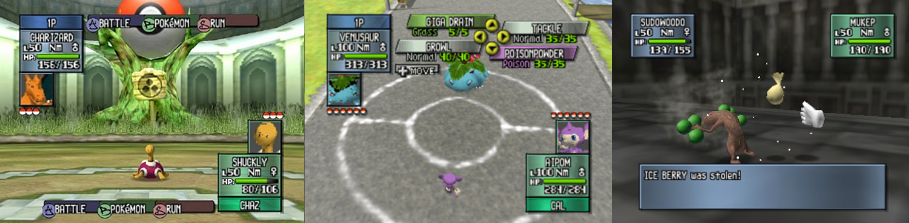
Missions, objectives, and the game’s difficulty all change based on how you play.

Your performance is graded at the end of every mission; your remaining wingmen and your health is tallied against your kill count, which increases your chances for a 1-Up. It’s advisable to avoid being too trigger happy as you’ll rob yourself of your backup while they go in for repairs, and General Pepper is billed for property damage at the game’s end. Generally, missions simply involve flying through a set course, defeating enemies, dodging hazards, and taking out a boss. However, even linear missions can hide secret paths; downing a set number of enemies, flying through certain alcoves, defeating rival team Star Wolf, and shooting switches can lead to alternate paths both in the mission and on the main map. The path you take dictates the game’s difficulty (with the top path being the hardest), though you can opt to change your path if you wish. Some missions task you with completing an objective in a time limit; others have you destroying shield generators, rushing through narrow corridors, or blasting through asteroid belts. When on Solar, your shield constantly drains from the intense heat; on Titania, you’ll bomb across the sand avoiding collapsing ruins in search of Slippy. Katina sees you defending a pyramid base from a swarm of enemy fighters alongside Bill, and Macbeth has you chase after a train, blasting boulders and defensive towers. Warp gates appear sporadically, allowing you to skip ahead, and you’ll face battleships, space stations, and swarming forces as you approach Venom, Andross’s home base. Walls, girders, fire plumes, space debris, and turrets will test your reaction times, and you’ll occasionally have to pick different paths and make tight turns as you race towards (and away from) Andross.

Presentation:
I’ve always said one of the main things holding back Star Fox was the awful polygonal graphics. They might’ve been impressive at the time, but I never liked them and they really ruined my experience in a lot of ways. Thankfully, that’s not an issue here with the superior power of the Nintendo 64. The entire game is brought to life through polygons (with the exception of some background elements and such, I’m sure), with the correct textures and rendering making for a smooth and far more pleasant experience. The game’s story and character interaction are all fully voiced (a rarity even at the end of the Nintendo 64’s lifecycle let alone the start), and the cast all have distinctive personalities: Peppy is wise and seasoned, Slippy a pain in the ass, and Falco a stubborn jerk. Although most cutscenes relegate the crew to amusing flapping heads, each mission gets an intro and outro, generally showing the team checking in or setting the stage for the current conflict. The game’s sound effects and music are also top-notch, with stirring military themes, adventurous tunes, and ominous overtures adding to the increased stakes as stages get progressively difficult. Some interesting touches are included here and there, such as planets looming into view when you’re blasting through space, enemy tanks toppling columns, and the very architecture itself coming to life around you. As you’d expect from the Nintendo 64, there’s some pop-up and fog effects here, but it’s generally masked or incorporated into a level’s structure, or the action ramps up to compensate.
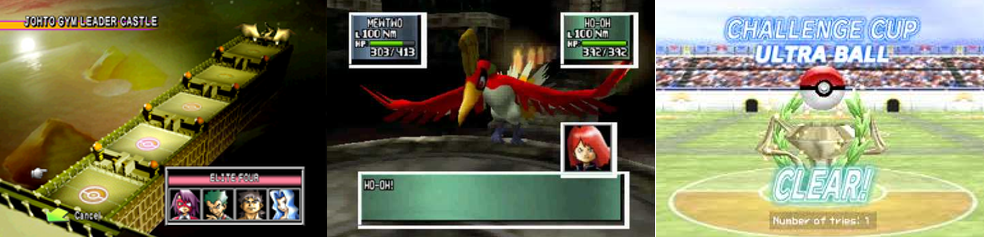
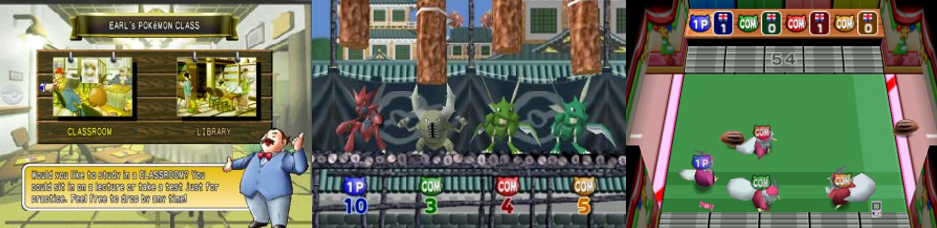
The technology has finally caught up with the concept to present a charming action romp.

There’s quite a bit of variety to the mission locations in Star Fox 64; you view your current path and its branches from a rotatable space map, encouraging experimentation to visit new worlds, with their objectives tweaked depending on your path. Things start off familiarly enough with the distinctly Earth-like Corneria, with its river-filled mountains and futuristic main city. Weather effects and seasons taint the remaining planets in the Lylat system: Fortuna is the icy home to one of Andross’s outer bases, Solar is quite literally a raging star, Titania is a desert world filled with ruins and beset by a raging sandstorm, and Aquas takes place in the ocean depths. When partaking in space missions, you’ll blast towards stars, constellations, and planets taking on vaguely Star Wars-like battleships, debris, asteroids, lumbering craft, and surprise attacks from swarming, Space Invaders-esque (Taito, 1978) ships. Even confined areas like Bolse can have a lot going on with their intricate mechanical textures, endless enemy swarms, and unique objectives. Sure, it’s all a bit quaint these days, with blocky polygons and out-dated graphics, but Star Fox 64 has aged far better than the first game. The on-rails action keeps you moving, lasers and explosions and interesting obstacles are as constant as cries for help and warning notifications, and there’s always something to see, collect, shoot at, or avoid as you blast along. Although I found the stage aggravating and full of hazards, Macbeth was a great example of this as enemy ships fly overhead, the train trundles along firing concussive blasts and dropping boulders, and you’re constantly swerving to avoid obstacles and target everything in sight.

Enemies and Bosses:
If there’s a downside to Star Fox 64, it’s mostly the enemies. Indistinct polygonal crafts of various sizes pop up, fly in, or swarm around each area, blasting at you or charging into you or chasing Slippy and forcing you to rescue her for the hundredth time. They’re easily shot down with your primary weapon but it’s recommended you charge a shot to take out multiple foes at once (and net yourself a power-up and a hit combo in the process). Turrets, mines (both land, sea, and space), towers, and bigger swarms become more frequent as you progress. Snake-like Moras weave throughout the Meteo asteroid field, whole swarms fill the screen with grid-like laser patterns, bee-like fighters dance about firing coloured rings, and winged craft rise from Solar’s burning depths. Some of the more interesting enemies are land-based, such as the Garudas (construction robots who topple buildings and toss girders at you) and the giant, crab-like walkers of Titania. Anime-like Shogun Troopers attack the Corerian fleet in Sector Y, disc-like defence station platforms and large battle cruisers act as both hazards and targets in Area 6, and you’ll be hard-pressed to destroy each section of the seemingly unstoppable train on Macbeth, especially while blasting tanks, towers, and through gates. As versatile as Andross’s forces are, often splitting apart and flying at you as horizontal and vertical hazards, his home world of Venom is rife with buzzing swarms, tight turns, explosive booby traps, and walls that sprout hazards at the command of the stone golem, Golemech.

The game’s not short on gigantic bosses to challenge your skills.

Each mission culminates in a boss battle, though some missions have more than one depending on how well you play or will add additional phases and challenges (such as a time limit) to bosses. It’s recommended that you keep Slippy alive as that’s the only way you’ll properly gauge your progress against the boss as she brings up their health bar, though pieces of them will break off as you attack. Many are also accompanied by or spawn smaller enemy craft or fire destructible projectiles, which are worth targeting if your shield or bombs are low. Finally, the general strategy against these bosses is to simply avoid their attacks and target their weak spot (often a glowing yellow target), though you will have to adapt to All-Range Mode and partake in some tricky dogfights in some missions. On Corneria, you’ll battle either an Attack Carrier or Granga’s Mech, with the latter being the harder option. The Attack Carrier’s weak spots are small but it’s dead simple to avoid its shots and blast its wings off, while Graga stomps about firing homing missiles and making his mech a hard target to track. When facing the Meteo Crusher, fire when the central metal plate rotates to expose the weak spot but watch for the big Death Star-like laser it fires and its second phase where it flips around to shoot from the front. The giant clam Bacoon awaits on Aquas, the heavily armoured Sarumarine on Zoness, and the crab-like Vulcain on Solar, with this latter swiping its pincers, crating lava tidal waves, spewing fie plumes, and spitting flaming boulders. There’s even a fun Independence Day (Emmerich, 1996) homage when you team up with Bill to attack a gigantic, saucer-like alien mothership on Katina. As mentioned, Macbeth really aggravated me the first time through as the Forever Train was a difficult battle. A winged mech detaches from it and rains spears onto the track, but it’ll also crash into you if you don’t take it out fast enough at the end. However, if you target eight switches dotted alongside the main train track, you can one-shot the boss with a cutscene!

After besting Star Wolf and all his forces, you’ll take on the monstrous ape-thing Andross!

After taking out the security facility on Boise, you’ll infiltrate Andross’s pyramid-like base and chase down Golemech, blasting away his sandstone hide to attack his mechanical innards. You’ll battle the Spyborg in Sector X, which launches its fists at you and fires projectiles from its head. Take too long battling it and it’ll swipe Slippy to Titania, forcing you to rescue her from Goras, which has Slippy hostage in one pincer and fires lasers with the other. Target the limbs first, then switch to the chest and heart to bring it down. To finish Sector Y, you’ll chase down and destroy some super-fast Shogun Troopers and the larger, chrome-plated Shogun who eventually (and conveniently) settles atop an attack carrier and makes itself an easy target. The Gorgon super laser in Area 6 proved quite a challenge; you need to destroy its extendable tentacles and attack craft, then the three energy spheres inside it, all to finally expose its inner core multiple times over to succeed, By far your most persistent foes will be rival team Star Wolf, who you’ll face numerous times. Sometimes you can ignore them in favour of other objectives, but if you engage then you’re in for a tough dog fight. Star Wolf and his team love to come at you from behind and chase down your wingmen, and their ships have the same capabilities as yours, making them formidable foes. I found the battle against them on Venom particularly frustrating due to the enclosed space, them sporting shields to negate your charge shot and bombs, and Andrew Oikonny being a douche and not getting off my ass! No matter which path you take, you’ll end up facing Andross alone with Fox, though this giant disembodied ape head only shows his true form (a giant brain!) on the hardest path. Andross attacks by swiping his hands, firing an electrical blast from his fingertip, and sucking you in to eat you. Target his eyes to briefly stun him, destroy each hand in turn, and drop a bomb in his mouth and you’ll soon encounter his second form, a mechanical devil head that chomps at you. Destroying this is enough for the easy and medium paths, but the final form sees you desperately flying around blasting first Andross’s eyes and then the grey matter on the back of his brain as he teleports about, then desperately following Fox’s father as he leads you to safety.

Additional Features:
As mentioned, there are three paths to choose in Star Fox 64, though you really need to be paying attention in missions to figure out how to tackle the different levels and challenges. Rescuing Falco or ignoring Star Wolf or prioritising kills will put you on different paths and, while you can change to a lower path, you can’t change up to a higher one. You’ll get slightly different endings for each, with Andross only being properly destroyed on the hardest path, though this encourages replaying the game as much as the high score table. As if that wasn’t enough, if you accumulate enough kills and keep your allies alive, you’ll be awarded a medal. Get a medal on every mission to unlock the harder “Expert” mode and really challenge yourself. There’s also a Versus mode where you compete against friends for points, either working towards a set number of kills or against a time limit, which also allows you to play outside of a vehicle. Beyond that, you can mess about with the title screen, search for warp points, unlock artwork by beating Expert mode, and use the Nintendo Switch Online functionality to create save states.

The Summary:
I’ve played Star Fox 64 before; I never had it on the Nintendo 64, but I downloaded it for the Nintendo Wii and I was even tempted to get the 3DS version. What put me off was my dislike of the original Star Fox, a clunky and ugly game that hasn’t aged well at all. This isn’t true of Star Fox 64, which retains the same charm and appeal as it had all those years ago. The technology has finally caught up with the concept here, providing slick, tight, action-orientated space battles that really bring the idea to life. I loved the presentation of the story, the way the vehicles controlled (Landmaster aiming notwithstanding), and the challenge on offer. It’s a bit cheap to not make it more explicit what you have to do to pick each path but the signs are there, guides exist, and it’s fun replaying and experimenting, especially as missions are altered each time. This means some missions that are quite easy can become much more difficult, your approach to Venom and reaching Andross changes, and you get slightly different endings for your troubles. Yes, constantly rescuing Slippy and the others is annoying but the on-rails action is really fun. There’s also a lot happening and everything runs really smoothly. All-Range Mode was a bit tricky for me, and some missions and boss battles (particularly against the powered-up Star Wolf) had me tearing my hair out at times, but this stress was mitigated by the Switch’s save state feature. I would’ve liked to see a free play mode, the ability to play as the other characters, a co-op mode, and a boss rush implemented but that’s all stuff I’d expect to see in a sequel or remake. As is, Star Fox 64 is the first entry in the franchise I really enjoyed playing. It wasn’t a chore to control or look at, the soundtrack is excellent, blowing up enemies was satisfying, the bosses were huge and engaging, and the game finally brought the characters and the action to life in a way I could enjoy.

My Rating:

Rating: 4 out of 5.

Great Stuff

Are you a fan of Star Fox 64? Do you consider it the best of the classic Star Fox titles? Which vehicle and boss was your favourite? Did you ever best every mission and complete every path? What did you think to All-Range Mode and the branching path system? Do you have any memories of playing this with friends back in the day? Which Star Fox game is your favourite? Whatever your thoughts on Star Fox 64, please share them below and check out my other sci-fi content across the site! 

Game Corner [00-Heaven]: GoldenEye 007 (Xbox Series X)


To celebrate the release of Dr. No (Young, 1962), the first of the James Bond movies (Various, 1962 to present), October 5th is known as “Global James Bond Day”. This year, I’ve been spending every Saturday commemorating cinema’s longest-running franchise, and one of the most recognised and popular movie icons.


Released: 27 January 2023
Originally Released: 23 August 1997
Developer: Rare
Also Available For: Nintendo 64, Nintendo Switch, Xbox One, Xbox Series X

The Background:
It was tough to get any better than a game of four-player GoldenEye 007 back in the day. The endlessly accessible and enjoyable first-person shooter (FPS) was a staple at many a sleepover in my youth and was directly responsible for making me the James Bond fan I am today. Popularised by Sean Connery’s immortal portrayal, Ian Fleming’s super spy was in a bit of a drought in the late-nineties thanks to legal issues and Timothy Dalton resigning from the role. The iconic British institution came back with a bang, however, with Pierce Brosnan’s critical and commercial debut, which was followed by a tie-in game for the Nintendo 64 some two years later. Developed by British studio Rare under the direction of Martin Hollis, the game was originally conceived of as a 2D platformer for the Super Nintendo Entertainment System and as a rail-shooter before the developers got to grips with the Nintendo 64 hardware. After a year of development, David Doak joined the team and implemented stealth mechanics using a radius test. Successive gunfire would attract nearby enemies and players were encouraged to spy on enemy characters using the game’s two-way mirrors. Six months before the release date, programmer Steve Ellies added the now iconic multiplayer mode, though the likeness of former Bonds and the names of certain weapons were changed for legal reasons. The developers also toned down the violence to appease Nintendo’s concerns and included a number of unlockable cheats. In a world where videogame tie-ins are notorious for being rushed, bugged, and unfulfilling affairs, GoldenEye 007 proved the exception. Not only was it one of the best-selling Nintendo 64 games but the game was met with unanimous (and continuous) praise for its gameplay, mission-based mechanics, and multiplayer. Although Rare soon lost the James Bond license, GoldenEye 007’s legacy continued to be felt not just with its spiritual sequel, Perfect Dark (Rare, 2000), and in other FPS titles, but throughout subsequent James Bond tie-in games. There were rumours and clamouring for a re-release for decades, though rights issues always saw these stall. In 2010, Eurocom released a reimagining of the title to mixed reviews but hopes were raised when leaks of an Xbox One version appeared online. On the eve of the game’s 25th anniversary, these rumours were officially announced to be true when it released exclusively on the Xbox One and Nintendo Switch series of consoles and featuring a number of enhancements. So beloved is the original game that this enhanced version of GoldenEye 007 was equally lauded, especially for its nostalgia factor, though some were disappointed that the Xbox version didn’t include online multiplayer.

The Plot:
Renowned super spy James Bond/007 in drawn into a globe-trotting adventure as he races to stop a rogue 00 agent Alec Trevelyan (now a terrorist known as “Janus”) from causing a global financial meltdown with a satellite weapon known as “GoldenEye”.

Gameplay:
GoldenEye 007 is a first-person shooter in which players are placed into the shoes of world-renowned super spy James Bond and charged with completing various objectives across eighteen stages (referred to as “Missions”) taken from the movie of the same name, and two bonus Missions that loosely adapt elements and events from classic Bond films Live and Let Die (Hamilton, 1973), The Man with the Golden Gun (ibid, 1974), The Spy Who Loved Me (Gilbert, 1977), and Moonraker (ibid, 1979). Unlike FPS classis like Doom (id Software, 1993) and rail-shooters like Time Crisis (Namco, 1995), GoldenEye 007 offers a range of movement and control options, making Bond a far more versatile and capable FPS character compared to some of his counterparts. This new version of the game improves things even more thanks to modern controllers having two control sticks, but there are a range controls available and players can even customise them if they wish. The default controls see you firing Bond’s current weapon with the Right Trigger, activating consoles, opening doors, and disabling alarms and such with A, crouching to avoid incoming fire or enter vents with B, and aiming with the Left Trigger. You can also press Y and the Left and Right Bumpers to cycle through your available weapons, or manually select them by pausing the game, which brings up Bond’s fancy gadget watch. This also allows you to read up on your mission objectives, gives you the option of switching to different control schemes (each named after a different Bond Girl and with one even allowing an awkward two-player mode where only player moves while another one shoots), select gadgets like a key decoder or Bond’s laser watch, and quit the current Mission. On the original Nintendo 64 version, strafing was accomplished with the C-buttons and allowed you to rapidly dart across environments at higher speeds. Here, you can use the left analogue stick to accomplish this same task, and you’ll also find that your aim benefits from a slight auto-aim function.

Take on the role of 007, gun down enemies, and complete various objectives.

Unlike in modern FPS games, Bond is surprisingly vulnerable and will not regenerate health when taking cover from enemy fire. In fact, most things you take cover behind will explode in your face, so it’s better to keep moving and make use of the game’s controls to peek around corners or use silenced weapons or Bond’s handy karate chop to knock enemies unconscious without raising alarm. When taking damage, Bond will react accordingly, which can throw off your aim and see you being bounced about in a crossfire. Explosions are usually an instant death sentence as well so be sure to avoid grenades, rockets, and exploding crates whenever possible. While you can’t replenish Bond’s health, you can pick up body armour strewn across the environment to add an extra bit of protection, but there are no checkpoints in GoldenEye 007 so once you see that blood filling the screen or the “Mission Failed” notification, you’ll have to start over from the beginning. The game offers three difficulty settings (“Agent”, “Secret Agent”, and “00 Agent”), with a fourth being unlocked that allows you to customise various difficulty options, and the difficulty setting you play on directly impacts the behaviour of the game’s enemies, the bonuses you unlock, and the mission objectives you’re given. For example, when playing on “Agent”, you’re generally only given a couple of mission objectives. “Runway” on this mode simply asks you to acquire a key and escape in a plane, but higher difficulties have you destroying anti-aircraft guns first. Later Missions can become extremely complex and difficult because of this. Each Mission is preceded by a number of dossiers in which M, Q, and Miss Moneypenny will explain the specifics of each objective, often with pictures, so you have to be mindful about going in all-guns blazing as you don’t want to accidentally destroy a vital piece of machinery or gun down an ally. Because of this, many 00 Agent Missions require better use of stealth, such as attacking with short bursts of fire or while unarmed, enemies will be noticeably more formidable, and you’ll need to explore more of the environment and have less access to body armour, dramatically increasing the challenge.

Each Mission and difficulty setting offers unique objectives and mechanics.

Mission objectives are quite varied, but also shared across the game;. You’ll be deactivating alarms and consoles (sometimes by interacting with them, other times by blowing them up), acquiring keys, key cards, and documents, and meeting with allies like Doctor Doak, Valentin Zukovsky, and Dimitri Mishkin. Environments are often littered with cameras and alarm systems that will attract enemies to your location or even lock you out of rooms if you’re not quick to disable them, and enemies can sometimes be holding hostages who you’ll need to free without killing the innocent. This can be easier said than done, especially on missions that require you to protect, escort, or work alongside Natalya Simonova. All of the game’s non-playable characters (NPCs) tend to run in front of your bullets but Natalia is the worst, running around in a mad panic amidst a gunfight or leaving herself an open target while messing about with computers. Things quickly become quite obtuse and tricky as you’re tasked with destroying weapons caches, calling for back-up (without destroying the radio equipment), re-aligning an antenna cradle, and wandering around a statue park to meet with the mysterious Janus. Many mission objectives require the acquisition and use of Bond’s gadgets, such as using his laser watch to cut through grates, attracting keys with his magnet, planting tracking devices, and photographing objects, sometimes while racing against a time limit. Gameplay is somewhat broken up in the two instances where you can hop into an armoured tank, with it being mandatory to barrel through the streets of Saint Petersburg in said tank while trying not to run down too many innocent civilians. If you fail even one objective, the entire Mission is a bust, but you can continue playing if you want. This can be a good way to get an idea of the layout of the environment and find other mission objectives for your next playthrough to get a faster completion time, something that’s necessary to unlock all of the game’s cheat options. In addition to your time, your accuracy, shots fired, and kills are all tracked after a Mission is completed, meaning you can always try and improve your approach to a Mission.

Graphics and Sound:  
Even back on the Nintendo 64, GoldenEye 007 did a pretty good job of recreating scenes and characters from the movie. Sure, the character models are blocky and their faces hideous and many environments are a little too bland, polygonal, and swamped with fog, but they managed to capture the essence of the film really well, expanding upon minor elements and areas, especially in the first few Missions, and making them fully-fledged locations. The only issue I had was that the developers included two versions of Surface and Bunker. I would have preferred to see a Casino and Paris stage used instead to add a bit more variety to the early game, but at least there are differences between the two stages to both differentiate them and showcase the passage of time. There are even entirely new environments that weren’t seen in the film, like Silo, Depot, Caverns, and stages based on small parts of the film (like Dam, Runway, Frigate, and Train) are expanded on with additional mission objectives and aesthetic quirks. Of course, the most memorable location remains Facility, which lovingly recreates and expands upon the opening scenes of the film and remains the quintessential map for multiplayer skirmishes. My least favourite stages were always Statue, Jungle, and Cradle as they’re quite difficult to navigate and full of dense fog and hazards, to say nothing of the tougher enemies dwelling within.

While the graphics are dated, nostalgia means the game retains its visual appeal.

Every Mission begins with a bit of an overview of the location before the camera pans around and into Bond’s head, literally placing you in the role of the world’s most famous spy. Cutscenes, in the traditional sense, are few and far between and limited to these opening camera pans and a little animation of Bond looking all cool as he exits the stage, with the majority of the game’s story being relayed through the mission dossiers and onscreen dialogue. There are occasions where you can continue on and this dialogue will still play out, but if you try and rush Janus in Statue or don’t heed his advice to holster your weapon then you’ll fail the Mission. There are some graphical limitations to GoldenEye 007 that definitely date it, as well. There’s no reloading animation (guns simply disappear and reappear with a reloading sound effect), enemies have repetitive animation cycles (though they do kneel down, roll, cross their arms when dual-wielding, and react when shot in the ass), and there can be a bit of slowdown when too many explosions fill the screen. Still, little details like bullet holes, splashes of blood on clothing, and screams of pain help to keep things very immersive. Additionally, the soundtrack is incredible; composed by Rare stalwarts Graeme Norgate, Grant Kirkhope, and Robin Beanland, the soundtrack is both recognisably Bondian and unique, harkening back to Éric Serra’s movie score and the Bond themes made so famous by John Barry.

Enemies and Bosses:
Bond’s mission is impeded by the finest polygonal soldiers and grunts money can buy. While there’s not much to differentiate them in terms of animation, the game’s enemies all don different attire depending on the Mission (sporting parkas in Surface, camo gear in Jungle, and tactical outfits in Caverns) and wield various weapons. Many carry the KF7 Soviet or Klobb, two notoriously inaccurate weapons; others bust out the DD44 Dostovei or dual-wield the ZMG (9mm). The challenge posed by the game’s enemies directly relates to the difficulty setting you’re playing on and the Mission you’re playing. Enemies are pretty clueless in Dam but wander around the Caverns carrying super-powerful US AR33 Assault Rifles and blast at you with Moonraker lasers in Aztec. Janus’s special forces, and some guards aroused by alarms, will also carry shotguns or toss grenades, and you’ll also have to keep an eye out for high-impact turret placements that can shred your life meter in seconds. Enemies are quite vulnerable, even on “Secret Agent”, dropping after a few good torso shots or a headshot, but sometimes their guns can block your bullets and the sheer number of enemy bodies can make it difficult to land decent shots, in which case it’s best to target explosive parts of the environment to send them flying.

In addition to the movie’s baddies, you’ll encounter some classic Bond villains here,

Although boss battles aren’t commonplace in GoldenEye 007, there are a few instances where you’re tasked with killing one of Janus’s henchpeople in a firefight. The first of these you’ll encounter is Colonel Arkady Grigorovich Ourumov, who cannot (easily) be killed in the first few encounters. Ourumov fires at you from a distance in Silo, you pursue him in Streets, and then you finally gun him down at the end of Train, just like in the movie. Shooting Xenia Onatopp in Train will buy you some much-needed extra time with the floor grate, but she puts up a far greater fight when you confront her in Jungle. She’s armed with both a super-powerful RC-P90 and a grenade launcher and can be difficult to hit thanks to the fog, the explosions from her grenades, and her armour-piercing shots. Your best bet is to hang back, firing from a distance, or get up nice and close and fill her face with AR33 fire. This method of staying back serves you well in the final Mission of the main game, Cradle, where you go head-to-head with rogue MI6 agent Alec Trevelyan/Janus. In this Mission, you must realign the antennae, fending off Janus’s elite guard and the sentry guns set up about the place, blasting at Trevelyan as he fires his AR33 and tosses grenades to cover his escape. Trevelyan can absorb a great deal of damage but, once you’ve hurt him enough, he’ll dash to a specific area of the map and drop down to a small platform, just like in the film’s finale, where you’re given precious seconds to reorientate yourself and deliver the final blow. When you unlock the bonus missions, Aztec and Egyptian, you’ll face off with classic Bond villains Jaws and Baron Samedi. The former carries two AR33s and is a veritable bullet sponge, though he’s a big target and shots to the face are recommended. The latter mysteriously resurrects and wields a different weapon each time as you search through the pyramid for Francisco Scaramanga’s fabled Golden Gun, which can kill any enemy, including the supernatural Samedi, in one hit.

Power-Ups and Bonuses:
Naturally, there’s quite a bit you can find throughout each Mission to aid your progress. Body armour allows you to take a few more hits and effectively acts as a secondary health bar and you can pick up any weapons dropped by downed enemies. Green crates can often be found which contain new weapons or ammo, and you’ll also be able to swipe keys and key cards from guards and NPCs alike to acquire mission-specific items or additional toys. Bond can karate chop enemies without expending ammo, but this leaves him extremely vulnerable so it’s best to use this from behind. Similarly, the sniper rifle butt can be used to hit and defeat enemies when up close. He’s also afforded numerous weapons, including his iconic Walther PPK (known as the PP7), which also comes with a silenced variant, and his trusty watch, which cuts through grates and enemies alike with its laser. Bond can also dual-wield for additional damage (and ammo expenditure) and you can even have him hold two different weapons if you’re quick at cycling through them. A variety of machine guns are on offer, from the near-useless Klobb to the simplicity of the D5K Deutsche and the burst fire of the RCP-90. You can also grab high-explosive weapons, such as grenades, grenade and rocket launchers, and three types of mines (remote-activated, proximity triggered, and timed), but be sure to avoid the blast zone. Throwing and hunting knives can also be used for a more personal touch, but I like the power and accuracy offered by the two shotguns and the Couger Magnum. The game’s best weapon is the one-shot Golden Gun and the faster variants unlocked through cheats, but you can also make use of the tanks cannon to blast at soldiers and anti-aircraft guns and zap enemies with lasers when you acquire the Moonraker laser.

Additional Features:
There are fifty-five Achievements on offer in GoldenEye 007, with twenty being awarded simply for clearing each of the game’s Missions on any difficulty setting. You’ll get three separate Achievements for finishing the entire game on each of the three difficulty settings, and 10G each time you finish a Mission in a specific time frame on a specific difficulty and unlock a cheat option. Yes, blasting through Missions as quickly as possible on each of the difficulties will unlock a wide variety of cheats, from invincibility, invisibility, all guns, infinite ammo, and even options for a hilarious “big-head mode” and to speed up or slow down the in-game action. Achievements are also earned by playing the game’s multiplayer mode. Although the Xbox version doesn’t allow for online multiplayer, you and your friends can still get together in person to battle head-to-head, or in teams, across a variety of repurposed maps.

The game’s replay value is bolstered by fun cheats, a banging multiplayer, and various unlockables.

You can battle simply for points, set limits on how many lives and time you have to play, set weapons to be one-hit kill, battle for control over the mythical Golden Gun, and play a capture the flag scenario, with each option named after a classic Bond film. All of the game’s characters, major and minor, are available to pick from alongside two classic Bond villains, Oddjob and Mayday, with the former (and Jaws) offering different challenges based on their height. Completing the game on Secret Agent and 00 Agent will also unlock two bonus Missions: Aztec and Egyptian. In Aztec, you’re placed in a fantastic recreation of Hugo Drax’s missile command centre from Moonraker and must confront Jaws, escape a rocket’s test fire, and then sabotage the Drax shuttle before it takes off. In Egyptian, you’re tasked with navigating a maze-like pyramid in search of the Golden Gun and hounded by Baron Samedi, who returns three times to cause you trouble but the biggest challenge here is remembering the sequence to reach the aforementioned Golden Gun as you’ll be cut down by sentry guns if you step on the wrong tiles. Some additional weapons can also be used when utilising the All Guns cheat, which can make it fun to revisit previous Missions, and you can even tweak the enemy behaviour, strength, and awareness when you unlock 007 Mode to make the game even easier or harder depending on your preference.

The Summary:
Obviously, nostalgia is a huge part of GoldenEye 007’s appeal. Graphically, the game hasn’t aged very well, and it’s definitely been superseded by other Bond games and FPS titles in terms of presentation, gameplay mechanics, and content but there’s something very appealing to GoldenEye 007’s simplicity. It’s nice to be placed in a surprisingly large number of polygonal environments and simply head to a goal, with additional objectives adding relay value and challenge to the game, meaning GoldenEye 007 can be surprisingly complex that more you play on higher difficulties. The game is full of fun little Easter Eggs as well, from character animations and dialogue to oddities placed in each environment, and I enjoyed how NPCs on one difficulty suddenly become vital objectives in the next. There’s a lot to do here as the game challenges you to play on harder difficulties and find the fastest, most efficient way of beating its Missions to unlock everything. There’s also a nice variety of weapons that can all be held at once, meaning you can easily mix and match your gameplay style on the fly, and a fun assortment of objectives that often encourage stealthier gameplay but give you the tools to engage in a manic firefight. The multiplayer is as enjoyable as ever, too; I’m not fussed about the lack of online functionality as I don’t play online and it’s great to be able to jump in and mess about like in the old days. After decades of GoldenEye 007 being restricted to an old console, it’s simply astounding to see it made available once again. It’d be great if more licensed games got the same treatment but I’m happy to say that GoldenEye 007 is just as much of a blast to play through now as it was all those years ago.

My Rating:

Rating: 4 out of 5.

Great Stuff

Was GoldenEye 007 a favourite of your youth? What did you think to this re-release and were you surprised when it was finally announced? How do you think the game holds up today? Did you ever finish it on 00 Agent and unlock everything? Which Mission, weapon, or location was your favourite? Do you have fond memories of playing the multiplayer? What’s your favourite James Bond videogame? I’d love to know your thoughts and memories of GoldenEye 007 so please leave them in the comments and go check out my other Bond reviews.

Game Corner: Doom 64 (Xbox One)

GameCorner
Doom64Logo

Released: March 2020
Originally Released: April 1997
Developer: Nightdive Studios
Original Developer: Midway Games
Also Available For: Nintenfdo 64, Nintendo Switch, PC, and PlayStation 4

The Background:
Everyone knows Doom (id Software, 1993), right? The gory, action-packed first-person shooter (FPS) that has seemingly been ported to every console and format known to man and pretty much thrust the FPS genre into the mainstream? Well, if you don’t, then I envy your naivety. Doom was not only the first in a still-ongoing series of fantastic FPS games, it also kick-started a slew of brilliant FPS titles on the PC and home consoles, as well as popularising online “Deathmatches” against other human players.

Doom64Ports
Doom has been run on nearly every device, including in Doom itself!

In keeping with the fact that Doom has appeared on nearly every piece of hardware available, id Software drafted Midway Games to work on a port for the under-rated Nintendo 64. However, rather than being a straight-up, by-the-numbers conversion of Doom, Doom 64 featured entirely new levels, redesigned weapons, some new enemies, and a greater emphasis on exploration. With the release of Doom: Eternal (ibid, 2020), a game largely inspired by and related to Doom 64, Doom 64 finally saw a wider re-release on modern consoles, bringing this oft-forgotten Doom title back into the spotlight. But does it hold up to the original Doom and its sequel, Doom II: Hell on Earth (ibid, 1994), or was it better left forgotten?

The Plot:
After thwarting Hell’s attempt at invading Mars and Earth, the hard-as-nails Doom Marine (or “Doomguy”) is once again forced to take up arms and journey to space stations and through Hell itself, slaughtering demons in a head-on collision with the Mother Demon herself.

Gameplay:
As you should probably be aware, Doom 64 is a traditional Doom FPS through-and-through; as in the classic Doom, you control the Doomguy, a silent, no-nonsense marine who enjoys nothing more than blasting demons with a shotgun or skewing them into bloody sushi with a chainsaw. Unlike modern FPS games, aiming and precise camera control are not necessary in Doom 64; you can more left, right, straight ahead, and backwards, and those are the only directions you can shoot in. There’s also no crosshair or aiming recital; you simply point your weapon in the direction of your target, shoot, and let the game’s auto aim direct your shot.

Doom64Controls
Combat is generally as simple as: Point and shoot!

This is helpful when faced with swarms of enemies and it keeps the action fast and frantic but it can make picking off demons from a distance a bit trickier; I prefer to clear out rooms and areas first so I can explore unimpeded and this often meant to would blast at enemies hiding above or below the game’s maze-like stages. As the game seems to want you to engage demons at point-blank range, the auto aim doesn’t always shoot at enemies up above or below, making this technique tricky, to say the least. As you explore the game’s massive thirty-odd stages, you’ll be tasked with finding a number of coloured keys to open doors and progress further towards the stage exit. Generally, you’ll need three of these (blue, red, and yellow) to progress, but not always, and you’ll also find secret areas and rooms hidden behind seemingly innocuous walls.

Doom64Maze
Stages can be frustratingly confusing and maze-like at times.

While this is par for the course with Doom videogames, I don’t remember it being this necessary or difficult in Doom or Doom II; it doesn’t help that every one of Doom 64’s stages is labyrinthine in nature. This is fine in small doses but I found myself wandering around in circles in every other stage, desperately trying to figure out where to go next, and was forced to turn to a guide more than once just to find the next key…only to find it seemingly led to a dead-end room. There are a lot of hidden weapons and rooms in Doom 64 and this extends to certain switches and doors; more than once, you’ll have to press a certain switch, or switches in certain combinations, or stand in a certain place or race to a lowered platform or opened passageway before they close. I don’t mind this in principle but, more often than not, I would activate a switch and open a door or lower a platform that is outside of your viewpoint, meaning I would struggle to see where I had to go at the best of times.

Doom64DemonKey
You should definitely make sure you get the three Demon Keys.

Additionally, in certain stages, you can find three Demon Keys; these artefacts can only be acquired after solving some of the game’s trickier puzzles but, with them, you can upgrade the firepower and effectiveness of the game’s ultimate weapon, the “Unmaker”, and will greatly increase your chances at defeating the game’s final boss. Ultimately, Doom 64 offers a classic dose of Doom that will be new for many players, even those more than familiar with the first two games. However, I found my enjoyment of the ripping and tearing soured somewhat by the over-emphasis on exploration and puzzle solving; I find these elements ill-fitting in FPS games at the best of times and they feel especially out of place in a Doom game and incorporated simply to mix things up for those who have played Doom and Doom II to death.

Graphics and Sound:
Graphically, Doom 64 looks and feels like a classic Doom title; stages are build out of three-dimensional polygons and the game’s wide variety of enemies are rendered using 2D sprites. Enemies are largely and diverse but, as always with classic Doom games, they suffer from this 2D rendering; there are very few frames of animation, meaning enemies can appear a bit jerky and pixelated. Thankfully, this doesn’t stop the blood and gore and the game’s creepy, supernatural aesthetic remaining in full force. Pentagrams, fire, and blood are everywhere, lending a creepy ambiance and horror to the game that is punctuated by the ominous (yet rocking) soundtrack that is pure Doom through and through.

Doom64HUD
Doom 64 sadly omits the classic Doom HUD.

Sadly, however, Doom 64 omits Doom’s trademark heads-up display (HUD); rather than seeing a pixelated representation of the Doomguy react in pain when hurt or grin sadistically when acquiring new weapons, you simply have numbers showing your health, armour, and ammo status. However, the game’s weapons did receive a new coat of paint and it’s always nice seeing Doomguy slot a fresh shell into the super shotgun before blasting a Cacodemon to pieces.

Enemies and Bosses:
Doom 64 features all the classic Doom enemies: you’ll battle shotgun-toting zombies, fireball-spewing Imps, and the lumbering Bull Demons. There’s even a new enemy exclusive to this version, the Nightmare Imp, which is just a faster, more translucent version of the regular Imp but it’s nice to see some exclusivity to this version.

Doom64PainElemental
I absolutely hate these bloody things!

Doomguy also battles some more testing enemies, like the big-ass Hell Knight; the worst of which, for me, are the Pain Elementals. These disgusting, blob-like bastards spew the always-annoying flaming skulls known as Lost Souls, which quickly swarm you and drain your health in no time. Seriously, I would rather run in circles like a madman shooting rockets at a slew of Mancubuses or Barons of Hell than take on a handful of these bastards!

Doom64Mother
Before you face the Mother, you’ll endure an army of demons!

Speaking of which, you’ll often have to battle a rocket-firing Baron of Hell, Mancubus, or Arachnotron as bosses as you progress through the game’s stages but, once you’ve bested them, they’ll crop up in later stages, sometimes in twos or massive groups. In the game’s final level, “The Absolution”, you’ll have to battle through a slaughter of an endurance against an entire army of the game’s enemies, including these bosses, before you can face the Mother Demon…unless you have the three Demon Keys.

Doom64Mother2
Even with the fully-powered Unmaker, the Mother is no cake-walk.

With these, you can close up the portals these enemies spew from and battle the Mother Demon with more of your health and ammo. With these artefacts, the Unmaker will be fully powered, allowing you to make short work of this final boss but, even still, she’s no cake-walk and, without the artefacts, it’s next to impossible to reach the Mother Demon with a decent amount of health, armour, or ammo.

Power-Ups and Bonuses:
You begin the game with a simple pistol and the Doomguy’s patented right hand. As you explore your surroundings (or kill certain enemies), you’ll acquire ammo and additional weapons, including the shotgun, super shotgun, the chaingun, a plasma cannon, and a rocket launcher. Doom’s signature weapon, the BFG-9000, can also be found either in secret areas or in later stages of the game; this baby can be charged up and unleash an energy blast that disintegrates all onscreen enemies and makes short work of the game’s bosses. The game’s most powerful weapon, however, is the Unmaker, a demonic weapon that must be powered up with the three Demon Keys in order to cut through enemies and bosses. Ammo for this weapon, and the BFG-9000, is relatively scarce, however, so it’s advisable to only use it when absolutely necessary.

Doom64BFG
Charge up the BFG-9000 to make short work of demon scum!

Thankfully, you can still grab a chainsaw (this time, it has two blades!) to rip and tear demons into bloody pieces, which won’t cost you any ammo at all. As you explore the stages, you’ll find medikits to restore your health, various armours to increase your resistance to attack, increase your maximum and health and armour points with smaller items, and view any unexplored areas on the game’s awkward map screen. You can also grab the Berserk item to be fully healed and enter a state of rage where the damage you deal with your fists is increased exponentially, pick up a radiation shield so you can walk through lava or radioactive waste, or grab the Supercharge and Megasphere to boost your health and/or armour to their fullest, attain partial invisibility or limited invincibility, or grab a backpack to increase the amount of ammo you can hold.

Additional Features:
Doom 64 features four difficulty settings, each of which affects your health, armour, ammo, and the frequency and aggressiveness of the game’s enemies. There are numerous secrets to be found in each stage, one of which is so well hidden that you’ll be destroying certain explosive barrels in a specific order in order to reach the super secret level, “Heretic”. Once you beat either this stage, or the entire game on any difficulty, you’ll unlock “The Lost Levels”, six additional stages that take the Doomguy back to hell to confront the Mother Demon’s sister (and which form the basis of a link to Doom: Eternal). In addition to this, there are a number of pretty simple Achievements to get on the Xbox One version and, as always, some passwords and cheat codes to make the game more interesting or allow you to warp to the challenging “Fun” stages (however, it is notable that you won’t get an Achievement if you have a cheat code activated).

Doom64Conclusion

The Summary:
Doom 64 is a classic Doom experience first and foremost. At its core, its as bloody and action-packed as the classic Doom and its sequel but, because of its additional features and skewed focus, feels like a fresh experience and an entirely new game rather than a straight-up port. Unfortunately, it can’t be denied that the game’s reliance on maze-like stages, exploration, and keys to progress make the game more frustrating than it needed to be. When I’m playing Doom, I like to blast through demons in a largely linear environment; I don’t really play to think, if that makes sense, and I was forced to a guide more often than I would like for a Doom title. Yet, the game is at its best when you’re fully locked and loaded and faced with a hoard of flesh-eating demons just begging to be blown to bloody chunks.

My Rating:

Rating: 2 out of 5.

Could Be Better

What are your thoughts on Doom 64? Did you play the original release on the Nintendo 64 or did you play it as part of Doom: Eternal? Which Doom is your favourite? Whatever your thoughts on Doom, or FPS games in general, leave a comment below.