When I talked about Raphael: Teenage Mutant Ninja Turtle, I mentioned that, of all the Teenage Mutant Ninja Turtles (TMNT) as originally conceived by of Kevin Eastman and Peter Laird, Raphael has stood out the most in terms of personality. Given that all of the TMNT look and sound the same and are only really separated by their individual weapons, it stands out even more when one of them shows a bit more personality in these early issues. But, while Raphael has stood out the most, each of the TMNT has showed glimpses of their individual personalities…except for “Michaelangelo”. Up until now, “Michaelangelo” has simply been a ninja turtle; it took him fives issues to exude anything even resembling a personality and even then it wasn’t anything that impressive. We’ve seen him able to hold his own when sparring with Raphael, and even best his brother in combat, receive an injury when battling the Foot Clan and having to deal with the handicap of this injury, and he was possibly (most likely) the turtle who got drunk on one alien alcoholic beverage. Apart from that, he may as well not really be there; Leonardo has been the voice of reason and given the TMNT direction, Donatello has offered technical and scientific expertise (though basic), and Raphael has been depicted as an emotional hot-head who struggles with his temper but “Michaelangelo” has just been…there…
Mike takes the time to have some fun in New York at Christmas.
So it is slightly surprising to me that, of all the TMNT, it was Mike who received his own one-shot comic; as the only of his brothers to receive a one-shot at this point was Raphael, this seems to imply that Mike was just as strong a stand out, breakout, character as his temperamental brother but, honestly, I haven’t seen any evidence in this early issues to make a case for that. If anything, it feels like Leonardo should have gotten the one-shot treatment over Mike but, here we are. Michaelangelo: Teenage Mutant Ninja Turtle takes place before the TMNT were transported across space but after Splinter turned up missing; the TMNT are still staying at April O’Neil’s apartment and, wouldn’t you know it, it’s Christmas time in New York City and “Michaelangelo” is out exploring the city in the middle of a picturesque, stereotypical snow-covered Big Apple. Though he laments that he probably wouldn’t be able to take up ice skating, he jumps at the chance to try “sliding”, enjoying being out and amongst his fellow New Yorkers.
Mike stumbles upon a robbery taking place.
Rather than heading home, Mike decides to head to the shops to do some Christmas shopping but comes across a lost cat; taking a liking to the freezing kitty, Mike tucks him into his big winter coat and takes the cat with him to a nearby town store. Enamoured by the large array of toys and games on offer, Mike heads inside and, whilst playing, names his newfound friend “Klunk”; however, Klunk gets spooked by the toys and runs off to the toy shop’s warehouse. Following, Mike comes across a gang of masked individuals taking a truck full of this season’s most-popular toy (“L’il Orphan Aliens™”), which is due to be donated to a local orphanage. The thieves, however, knock out the driver and intend to steal the truck and sell the toys to make a profit so Mike, naturally, gives chase.
Mike busts up the thieves and retrieves the truck.
Grabbing hold of a loose light chord, Mike is dragged through the streets as the truck speeds away; after securing Klunk instead the truck, Mike makes short work of a couple of the goons but loses the truck when the driver speeds away. Desperate to get Klunk back and finish the job, Mike takes a chance on the driver driving erratically and without any real purpose and, luckily, catches up to the truck and takes out the driver by smashing through the front and driver’s side window. Mike plans to drive the truck back to the store but attracts the attention of New York’s finest, who have been on the lookout for the stolen vehicle, and Mike is forced to smash his way past the cops and an armed barricade. Ditching the truck down a nearby alley, Mike doesn’t want to just leave it for the cops to impound and, instead, opts to head back to his brothers at April’s apartment.
The TMNT deliver the toys to the orphange for a feel-good moment.
Mike (randomly called “Michelangelo” for the first time, though this correct spelling of his name wouldn’t stick for some time) doesn’t have to try too hard to convince the rest of the TMNT to help him out and, together, they take April’s van down to where Mike ditched the truck, load it up with the L’il Orphan Aliens™, and deliver the toys to the orphanage while dressed as Santa Claus and his helpful little elves. Compared to Raphael: Teenage Mutant Ninja Turtle, Michaelangelo: Teenage Mutant Ninja Turtle is every schmaltzy, feel-good Christmas story you’ve come to expect from comic books. Literally the only thing this one-shot contributes is that it finally shines a light on “Michaelangelo” and allows him to stand out from his brothers. As realised in this story, Mike is like a wide-eyed kid; he enjoys being out in the city, especially amongst the snow and at Christmas time, and delights in playing with and being around all the toys and games. This contrasts quite severely with what little personality he has shown thus far as he’s seen to be relatively stoic, focused, and adept at martial arts rather than the laid back, pizza-loving surfer dude he would later become. Otherwise, there’s not really much else on offer here and it doesn’t really add much to the current ongoing arc of the TMNT struggling with the loss of their mentor and father-figure, Splinter. It’s nice to see Mike’s personality fleshed out a bit but, similar to Raphael’s one-shot, it’s not as though these developments are actually translated to the subsequent issues that I’ll be looking at for Turtle Tuesday. As a one-shot, feel-good Christmas tale it’s decent enough but I always feel like such stories are a bit of waste of time as I’d much rather get to the action or the character development more than celebrate the “true meaning of Christmas”.
My Rating:
⭐⭐
Rating: 2 out of 5.
Could Be Better
What did you think about this one-shot TMNT comic? Do you think Mike deserved his own spin-off or would you have preferred to see a different character get that honour? What do you think about schmaltzy Christmas tales in comics, cartoons, or movies? Whatever you think about this issue, or the TMNT in general, feel free to leave a comment below and come back next week as the TMNT continue to fight their way through alien goons and return home.
These last few weeks, I’ve been going back over Kevin Eastman and Peter Laird’s Teenage Mutant Ninja Turtles original comics every Tuesday for “Turtle Tuesday”. In the last issue, the Teenage Mutant Ninja Turtles (TMNT) finally found their lost master, Splinter, being held in suspended animation in the mysterious T.C.R.I. building. However, in their haste to jump into battle with the T.C.R.I. inhabitants (sentient brains inside robotic endoskeletons), the TMNT were caught in a teleportation beam and vanished from sight. Issue five continues right where the last issue left off, with the TMNT materialising in an unknown place, surrounded by gun-wielding soldiers and accompanied by a cute little alien robot.
The TMNT find themselves lost on a strange, alien planet.
Fighting their way to freedom, the TMNT soon discover that they’re not in New York City anymore; instead, their in the futuristic city of Peblak, an alien city on an alien world inhabited by all kinds of…aliens. Their new companion, Honeycutt, recognises the device that transported the TMNT to be very similar to a theoretical machine he had in mind, the Transmat device, however the TMNT’s hopes of Honeycutt being able to transport them home are quickly dashed when Honeycutt reveals his long and convoluted origin.
Honeycutt had no interest in his inventions being used for warfare.
It turns out that Honeycutt was once a human scientist working on the Transmat Device for the government; however, as they wanted to use it as a means of warfare, he abandoned the project to focus on his Mentawave Helmet, a device capable of boosting the wearer’s capacity for telepathy and telekinesis. However, while answering a distress call from his worker robot, Sal, Honeycutt was struck by a freak bolt of lighting while wearing the helmet and tangled up in some wires with Sal. When he awoke, he found his human body was destroyed and that the Mentawave Helmet had, somehow, transferred his consciousness into Sal’s body. General Blanque, whose soldiers the TMNT fought in the opening panel, discovered Honeycutt’s charred remains and blamed it on Sal, declaring him a Fugitoid, ordering him to be hunted down and destroy. A really out of place and tacked on aside at the bottom of the page, however, reveals that Blanque knew about what had really happened (…somehow) and actually wanted to capture Honeycutt to abuse his Transmat technology.
The TMNT are attacked by Blanque’s troops while scoping out a nearby bar.
Either way, the TMNT and Honeycutt decide to work together to get off-world and escape Blanque’s forces; however, while scoping out a nearby bar for a pilot or a means to escape the planet, they are attacked by Blanque’s forces once more. Despite being slightly intoxicated by the alien alcohol, the TMNT manage to hold their own thanks to acquiring the soldier’s laser rifles. Just as all hope seems lost, the bar is attacked by a group of Triceratons, massive aliens that resemble bipedal Triceratops dinosaurs. The Triceratons capture Honeycutt and the TMNT give chase, resulting in a chase scene through the skies of the city using flying cars. Still reeling from the affects of the alcohol, and being unfamiliar with the alien craft’s controls, the TMNT are soon knocked from the sky by the superior Triceratons and, feeling the pressure of the events they’ve had to endure, Donatello briefly freaks out.
As the ship docks, the TMNT are left choking to death in the cargo hold…!
Luckily, some of Blanque’s soldiers fly overhead and the TMNT follow them to a massive shoot out between Blanque’s forces and the Triceratons; arming themselves with some laser pistols, the TMNT fight their way onto the Triceraton ship, gunning down anyone and anything that gets in their way. Before they can properly search the ship for Honeycutt, it takes off and leaves the atmosphere far behind. Honeycutt is taken to converse with the Triceraton commander, who attempts to woo the former scientist into developing a Transmat Device for them rather than General Blanque. However, as the Triceraton ship prepares to dock with their base (a massive, technologically-converted asteroid), the TMNT suddenly realise that they are slowly asphyxiating in the cargo hold as the oxygen levels begin to drop…
It didn’t take long for the TMNT to be battling aliens and robots on an alien world!
Man, we’ve come a long way from the first issue…it’s only issue five and we’ve already seen the TMNT fight rat-eating robots, battle aliens inside robotic bodies, teleport across the galaxy, be trapped on an alien world, and now they’re choking to death, lost in space! Suddenly, the idea of teenage mutant ninja turtles fighting a dishonourable ninja in razor-sharp armour doesn’t seem so far-fetched! It’s honestly commendable how quickly Eastman and Laird decided to just go balls-deep with their already ridiculous premise; it would have been so easy to keep the TMNT grounded in New York and on Earth, fighting ninjas or thugs or being typical superheroes but, instead, they had them going up against aliens within no time at all.
In a change of pace, Donatello freaks out following all the crazy stuff they’ve endured.
Equally impressive is that the injury “Michaelangelo” sustained to his wrist in the last issue continues to be a factor in this issue…at least, it is at the beginning of the issue. Add to that and Mikey actually shows slightly more personality this time around; he’s actually the first to leap into action against Blanque’s forces (rather than, say, Raphael) and it appears as though he’s the turtle who gets drunk in the bar (though, to be fair, it’s hard to say since all the turtles look the same). Additionally, Donatello stands out a little more in this issue, pulling faces to distract Blanque’s forces so Leonardo can impale them on daggers, piloting the flying car they use to chase after the Triceratons, and freaking out when they get knocked from the sky. The TMNT have been noticeably struggling since Splinter went missing back in issue three but the only one who has really lost his cool over their situation so far has been Raphael so it’s a nice change of pace to see one of the other turtles give in to the stress of the pitfalls they’ve had to go through in the space of a few nights.
My Rating:
⭐⭐⭐
Rating: 3 out of 5.
Pretty Good
What did you think of this issue? Do you think it was maybe to soon in the TMNT’s life to shave them thrown into space and battling dinosaur-like aliens or do you enjoy the wacky, off-the-wall nature of the TMNT comics and concept? Now that we’re a few issues in, which of the TMNT do you like the most from these original issues? Whatever your thoughts about the TMNT, drop a comment below and come back for next week’s instalment of Turtle Tuesday in which Mikey takes the spotlight for his own one-shot issue.
I’ve recently been going back through the first few issues of Kevin Eastman and Peter Laird’s Teenage Mutant Ninja Turtles comics every Tuesday, hence the term “Turtle Tuesday” for the next few weeks. Eastman and Laird’s original versions of the Teenage Mutant Ninja Turtles (TMNT) are far darker and more serious than their later, more comedic and family-friendly interpretations; they all wear the same red bandanas, use their weapons to slice and even kill their opponents, and usually come out of most battles all bloody and cut up. After avenging the death of their master Splinter’s master in the first issue, the TMNT returned home from fighting Baxter Stockman and his robotic Mousers to find their lair ransacked and Splinter missing, presumed injured or dead. With nowhere else to go, the TMNT have moved in with their human ally, April O’Neil, while they regroup and try to come up with a plan of action.
The TMNT don’t hesitate to kill the Foot during their fight.
Issue four kicks off with the TMNT taking to the rooftops of New York City at night for some exercise and to clear their heads; it’s been a week since Splinter went missing and tensions are still high but no mention is made of Raphael’s solo adventures (as covered last week) or his encounter with Casey Jones. Catching a breather on a rooftop, the TMNT are randomly attacked by the venge-seeking Foot Clan; in the bloody, violent battle, Foot are thrown from the roof to their deaths and beaten (presumably to death) by the TMNT’s weapons.
Mike is injured by the Foot, driving Raphael into a rage.
Raphael takes a spill off the roof, crashing through the window of a nearby civilian apartment and once again exposing himself to a family of New Yorkers, and summarily murders one of the Foot when he injures “Michaelangelo”’s wrist. I guess the Foot are still indiscriminately worthy of capital punishment, despite Raphael’s lectures to Casey about dishing out capital punishment in Raphael: Teenage Mutant Ninja Turtle. With the Foot defeated, the TMNT suddenly realise that they are right across the street from the T.C.R.I. building. Yeah, apparently, the TMNT never spotted this giant, glass-and-steel building with “T.C.R.I.” emblazoned upon it in giant letters. Go figure. Anyway, with the sun rising, they head back to April’s and recap her (and the reader) on the specifics of their origins to explain the significance of T.C.R.I. to them (the company name is stamped on the canister that contained the mutagenic ooze responsible for the TMNT’s existence).
Splinter is alive but held in suspended animation.
Curious about T.C.R.I. and their origins, the TMNT choose to suspend their search for Splinter and check out the T.C.R.I. building; April offers to help but, as their actions are illegal, the TMNT convince her to stay behind. With no visible entrances, the TMNT head up to a nearby rooftop and cross over to the T.C.R.I. building using a rope; Donatello then borrows the old “place a photograph in front of the camera” trick to allow them to slip past the security cameras and enter the building. Exploring their surroundings, they find the building has a strange layout (such as a reception area three floors from ground level) and pick up a mysterious security card that features some strange, alien writing on it. Eventually, after randomly trying a bunch of doors, they use the card to access a chamber and find Splinter being held in captivity. Enraged, and believing their father-figure to be dead, Raphael wants to trash the entire place but is stopped by Donatello, who reveals that Splinter is alive but held in suspended animation and that trashing the room could kill their master.
The TMNT are too emotionally unstable to see that the T.C.R.I.’s aren’t a real threat.
The TMNT are suddenly confronted by Splinter’s captors; alien, sentient brains stuck inside robotic endoskeletons. On edge and understandably upset, the TMNT don’t stop to think or listen to reason; instead, they attack full force but are forced to beat a hasty retreat due to the robots’ sheer numbers, dexterity, and sheer firepower (though they don’t seem to twig that their enemies are blasting them with stun rays). Fleeing to another room with a huge piece of machinery in it, the TMNT prepare to make their last stand, confidant that the odds are in their favour as their foes don’t want to risk damaging the “translocation device”. However, while trying to cause a distraction so his brothers can escape, Mike’s injured wrist gives out on him and causes him to destroy the machine’s control panel and, in a flash of light, the TMNT suddenly vanish from sight. This issue continues the ongoing story arc revolving around Splinter’s disappearance and the impact this has on the TMNT. We already saw how deeply it has affected Raphael (he got a whole one-shot comic to explore his rage at the loss of his master) but, here, it’s clearly affected each of the TMNT as they don’t even hesitate to fly at the cybernetic T.C.R.I.’s at full force. Clearly, seeing their father-figure held in captivity is skewing the TMNT’s usual stoic focus and, in their rage, it causes them to be caught in the translocation machine’s teleportation beam.
Mike’s injury actually factors into the plot.
Eastman and Laird continue to keep the truth about the T.C.R.I.’s under wraps; we really don’t know anything about them except that they are aliens, scientifically curious, and have no intention on actually hurting or killing the TMNT or Splinter. It’s difficult to consolidate this in retrospect considering that these creatures served as the basis for the one of the TMNT’s most enduring villains, Krang, but, in their initial appearance, they more like scientists than anything else. I also liked that Mikey’s injury actually factored into the issue’s plot; so many times in comics, characters will be injured and get patched up and it’s either never addressed again or disappears between panels but, here, it’s directly responsible for the TMNT’s trip to parts unknown. If you missed Raphael’s one-shot, this issue also reinforces his friendship with Mike but, while Donatello’s knowledge of machines factors into the TMNT’s exploration of the T.C.R.I. building, I’m still waiting for “Michaelangelo” to actually stand out from his brothers in some way other than the unique weapon he wields.
My Rating:
⭐⭐⭐
Rating: 3 out of 5.
Pretty Good
What did you think about the T.C.R.I. aliens? Do you still find it jarring to see the TMNT getting cut and hurt or are you getting used to it now that we’re a few issues in? Do you think the TMNT were right to leave April behind or should they have brought her along, or called on Casey for help? Feel free to share your thoughts on the TMNT below and pop back for next week’s instalment of Turtle Tuesday in which the TMNT are left stranded on an alien spaceship!
If there’s one thing we’ve learned from the last few weeks of “Turtle Tuesday” it’s that, of all the Teenage Mutant Ninja Turtles (TMNT), it is Raphael that has stood out the most in even just the first three issues of Kevin Eastman and Peter Laird’s initial run of Teenage Mutant Ninja Turtles comics. Sure, we’ve seen that Leonardo is the de facto leader; he’s been the voice of reason after Splinter’s disappearance and gives directions and strategy during the TMNT’s many bloody battles. Donatello has tinkered with some machines and hinted at his familiarity with computers, which was a significant aspect of issue two but has yet to be properly focused on, and “Michaelangelo” has been…there as well… But every issue has made a point to emphasise Raphael’s individuality from his brothers. Hell, the very first issue dedicated a whole side plot to Raphael that gave him his own inner monologue and he was the only one of the TMNT to fly off the handle after their lair was ransacked and Splinter went missing so is it any wonder that, of the four TMNT, it was Raphael who got his very first spin-off comic during this time?
Raphael loses it during raining and nearly kills Mikey.
Raphael: Teenage Mutant Ninja Turtle continues with the TMNT still hiding out at April O’Neil’s apartment after the disappearance of Splinter. Tensions are high and, as he spars with “Michaelangelo”, Raphael flies into a rage when his brother gets the better of him. Enraged, Raphael grabs a wrench and is moments away from bashing his brother’s brains in before Leonardo intervenes and admonishes him for his emotional state. Right away, this opening sequence establishes two things: one is that Raphael has one hell of a temper and has been pushed to breaking point by the disappearance of his father-figure and the second is that “Michaelangelo” is actually a competent and formidable fighter in his own right. How often do we see Michelangelo portrayed as not only a proficient and skilled fighter but also capable enough of not only holding his own with Raphael but actually besting him? Here, Mikey counters each of Raph’s moves and comments upon his brother’s technique and ability with a knowledge and wisdom far beyond his usual characterisation as a lackadaisical surfer-dude. Clearly, Raph’s anger is getting the better of him and causing him to make mistakes in this battle but Mikey’s commentary reveals that he’s no pushover when it comes to fighting and using an enemy’s skills against them; it’s not massively surprising considering all of the TMNT are far more focused and capable than their animated counterparts but it is interesting as, at this point, all we really know about Mikey is that he’s a ninja turtle with nunchaku.
Casey Jones is inspired to become a vigilante and to dish out capital punishment.
Raphael: Teenage Mutant Ninja Turtle also establishes that “Michaelangelo” is Raphael’s best friend; as he takes to the rooftops, desperate to clear his head and wallowing in shame and regret, Raphael laments his actions and what his rage nearly made him do to his “best pal”, emphasising that Raphael’s bloodlust in battle leads him to not only make mistakes but also drives him to a frenzy where he can’t tell friend from foe. The story then switches to my second-favourite TMNT character, Casey Jones; sat before a television in his squalid apartment, Casey is randomly inspired by what sounds like either a clichéd cop show or a clichéd cop movie to take to the streets with a hockey mask and a bag full of sports equipment to teach criminal scum the lesson he feels they sorely deserve. Within a few hours, he spots Raphael beating up a couple of street punks when they try to steal a woman’s handbag but is incensed when Raph lets the scumbags escape and drops in to finish the job.
Raph is determined to keep Casey from killing indiscriminately.
Alarmed that Casey is about to kill the punks, Raphael steps in and fight ensues, with Casey managing to catch Raphael off-guard by feigning defeat and then knocking him out with a golf club. After coming to, Raphael is determined to track Casey down and put a stop to his vigilante ways before he goes too far and kills someone but has no idea where the masked vigilante ran off to. New York City is rife with crime on this night, however, as Casey soon stumbles upon a couple of guys stealing a car radio and dishes out his own brand of justice by bashing them with a couple of baseball bats, even breaking one of the perpetrator’s legs. Right as Casey is about to deliver the killing blow, Raphael steps in, incensed that Casey believes that every crime is deserving of capital punishment.
Raph and Casey beat each other senseless.
Ignoring Splinter’s training and Leonardo’s words of caution, Raphael dashes across a busy street and engages in a long, bloody fight with Casey in Central Park; the two are evenly matched in their ability to both give out and take punishment and, before long, they’re both absolutely exhausted and bloodied up from their scuffle. In the end, the two reach a compromise and a degree of understanding as Casey recognises that Raphael is not above killing those when they deserve it and Raphael advises that Casey needs to keep his temper under control so that he doesn’t needlessly kill for the most minor of crimes and, begrudgingly, the two agree to race to the aid of a nearby citizen in peril.
Raphael sees a kindred sprit in Casey.
Raphael: Teenage Mutant Ninja Turtle more than makes up for the last issue’s lack of TMNT action; nearly every panel of this one-shot is dedicated to Raphael and some classic TMNT action. Not only that but it introduces one of the TMNT’s most enduring human allies in Casey Jones, a hockey mask and sports-gear-wielding vigilante who is more than happy to beat street punks to death. Very little is revealed about Casey’s background; we have no idea why he feels so strongly about engaging in vigilante justice and it seems he’s meant to be a commentary (or parody) of the influence violent television can have on the mentally unstable. And Casey definitely seems to be a bit off his rocker as he relishes in dishing out violent retribution for the most minor of crimes and Raphael agrees to tag along with him mainly to ensure that he does not go too far with his vigilante ways. This serves to help Raphael come to a realisation about his own violent actions and his temper; well aware that he went too far during his training with his brother, Raphael knows that his anger is an issue and that he needs to try harder to maintain his focus in battle but Casey represents what he could become if he doesn’t work to keep his temper in check. While this works as a character arc, of sorts, for Raphael, the issue ends with him only hoping to do better and it’s a little jarring seeing Raphael suddenly being so against killing as he and his brothers didn’t hesitate to kill in their debut issue.
My two favourite TMNTs characters together for the first time.
While you can make an argument that the Purple Dragons and the Foot Clan were deserving of this punishment, there was nothing in the first issue to indicate that this was the case. The Foot were considered as evil and dishonourable as their master, the Shredder, who was unequivocally stated as deserving of death for murdering Splinter’s master, but were they really? Maybe they were disillusioned youths like in the Teenage Mutant Ninja Turtles(Barron, 1990) live-action movie, or new recruits who hadn’t done anything more than the street punks Raphael is so quick to defend in this issue. It seems like Raphael only admonishes Casey for wanting to kill indiscriminately because it fits the theme and message of not only this one-shot but also Raphael’s character as depicted here. Don’t get me wrong; he’s right to say that capital punishment isn’t always necessary but, up until this point, he and the TMNT certainly seemed to think that it was so, while it works as a lesson for Raphael to learn, it does seem a little contradictory to what we’ve seen of the TMNT so far.
My Rating:
⭐⭐⭐
Rating: 3 out of 5.
Pretty Good
What did you think about this one-shot TMNT comic? Do you think Raphael deserved to be the first of the TMNT to get his own spin-off or would you have preferred to see a different character get that honour? Do you like Casey Jones? If not, which of the TMNT’s human allies is your favourite? Whatever you think about this issue, or the TMNT in general, feel free to leave a comment below and come back next week as the TMNT continue their search for their master in the next instalment of Turtle Tuesday.
Tuesday’s are “Turtle Tuesday” for the next few weeks as I use this time to look back on the first few issues of Kevin Eastman and Peter Laird’s Teenage Mutant Ninja Turtles, which painted a far darker and serious picture of the Teenage Mutant Ninja Turtles (TMNT) than their later animated interpretations. After avenging the death of their master Splinter’s master in the first issue, the TMNT made a new friend in issue two when they saved April O’Neil from Baxter Stockman’s robotic Mousers. Not only did issue two start to distinguish the TMNT by more than just their weapons, it also began a storyline that would continue not just in this next issue but over the next few issues as well, showing that Eastman and Laird were fully capable of plotting out ongoing story arcs even this early into their fledgling publication.
Raphael is inconsolable and determined to find Splinter right away.
Issue three begins with the TMNT and April finally escaping from Stockman’s laboratory; indebted to the TMNT for their help, April leaves them her number as they head back to their sewer hideout…only for them to discover that their beloved master and father-figure, Splinter, is missing. Not only that, their lair has been ransacked and there are smashed up Mousers and blood all over the place. Enraged and fearful for his master’s safety, Raphael is inconsolable; despite Leonardo’s efforts to calm him and assign him a task to help compartmentalise the problem, Raphael flees into the night, determined to find Splinter sooner rather than later. While we saw a glimpse of his headstrong Raphael was in issue one, this is the first real indication that he is, by far, the more hot-headed and emotional of the TMNT; interestingly, Raphael and Leonardo don’t come to blows over the issue, which is a nice change of pace. Instead, Raphael simply allows his emotions to get the better of him and to ignore Leonardo’s more measured approach to the situation and, even more surprisingly, when Raphael returns to the group, he even admits that he was wrong to rush off alone and apologises for his actions. Reunited, but still unsure of how to proceed, the TMNT call April and she immediately comes over to pick them up in her van.
The chase causes chaos in Central Park.
Unfortunately, as April drives the TMNT back to her place, they attract the attention of the police, who mistakenly believe the van to be the same one involved in a robbery, unaware of this, and desperate to not be caught or discovered, a high-speed pursuit ensues that takes the TMNT, April, and the cops through Central Park and causes a great deal of damage and disruption. Thankfully (luckily), no one seems to be seriously hurt from the pursuit and, quite coincidentally, the TMNT catch a break when they just happen to pass the real perpetrators of the crime and finally lose the police pursuit (resulting in an amusing full-page spread of New York’s finest spouting every cop cliché line in the book while holding the thieves at gun point). Arriving back at April’s place, the TMNT have a brief moment where they bond with her before falling asleep from the stress and exhaustion of the last few days. For anyone familiar with the Teenage Mutant Ninja Turtles(Barron, 1990) live-action movie, a lot of this issue will ring a bell as the TMNT also returned to their lair to find Splinter missing and took shelter at April’s apartment; April even lives alone above a junk shop, just like in the movie, showing just how faithful that initial film was to Eastman and Laird’s original vision of the TMNT.
Splinter’s rescuers are hiding a strange secret…
Compared to the last two issues, though, issue three is far less action-packed; the chase sequence amounts to the entirety of the issue’s action and, instead, we see a different side to the usually stoic and action-orientated TMNT. Confronted with a situation where their ninja skills and weapons cannot help them, the TMNT are somewhat clueless as to how to proceed, turning to April as they have nowhere else to go. As with the other issues, though, it is mainly Leonardo and Raphael who have the strongest, most distinct reactions to Splinter’s disappearance, with Raphael reacting in angered haste and Leonardo not only trying to hold his brothers together but remaining steadfast that they will recover their master and father-figure. The issue ends with an extended epilogue that reveals to the read the specifics of what happened to Splinter; caught off-guard by a sudden Mouser attack, Splinter is wounded and barely manages to escape with his life. Discovered by a couple of mysterious, strange-sounding men, Splinter is taken to the T.C.R.I. building for medical care but, when he awakens, Splinter discovers that his rescuers are actually sentient brains inside robotic shells, ending the issue on another cliffhanger that will be continued in next week’s instalment of Turtle Tuesday!
Last week, I announced that, for the next few weeks, Tuesday’s would be “Turtle Tuesday” as I take a look back at the first few issues of Kevin Eastman and Peter Laird’s Teenage Mutant Ninja Turtles. After debuting the Teenage Mutant Ninja Turtles (TMNT) in a one-shot comic, Eastman and Laird advertised their property through a media kit and advertisements so that interest in the TMNT grew, justifying not only the release of a second issue but also, in time, a spin-off comic book series, Tales of the Teenage Mutant Ninja Turtles (1987 to 2010). The TMNT weren’t quite the multimedia juggernaut they would become, however, meaning that the original Mirage Comics run continued to be decidedly darker and more violent than its eventual animated incarnations, with the turtles still sporting the same red colour schemes and using their ninja weapons to maim and even kill their foes.
The TMNT used their training to avenge their master’s master.
Last week, I looked at the TMNT’s seminal first issue in which Eastman and Laird first introduced this ridiculous concept to the world. Parodying the works of Frank Miller and inspired by the likes of Daredevil, the New Mutants, Ronin (Miller, et al, 1983 to 1984), and Cerebus (Sim and Gerhard, 1977 to 2004), the TMNT were grim, stoic turtles mutated by radioactive ooze and trained in the ways of the ninja by their aged mentor Splinter, a mutated rat. After being told of their origins, the TMNT set out to avenge the death of Splinter’s master by confronting his killer, the Shredder, and his Foot Clan of ninja criminals; after a bloody battle, the TMNT emerged victorious and, with the Shredder dead, returned home to the sewers…
Week Two: Issue Two
Issue two opens with Leonardo reprimanding Raphael and “Michaelangelo” for sparring so loudly that Splinter can’t hear the television; immediately in these first few panels we see a few glimpses of the personalities that will, in time, come to define the TMNT: Leonardo is the stern voice of reason and authority, Raphael is focused only on fighting and training, and Donatello is tinkering with a piece of machinery. The only odd one out is “Michaelangelo” who still exhibits none of his now-characteristic lackadaisical, surfer-dude attitude and is, instead, just as keen to fight and train as his traditionally hot-headed brother.
Turns out Baxter is out of his mind and plans to hold the city to ransom with his Mousers.
The TMNT are distracted from their activities by a news report in which Doctor Baxter Stockman reveals his proposed solution to New York City’s rat problem: the robotic Mousers which, when set to task, devour up to five rats at a time. Naturally, this has our heroes deeply troubled considering their mentor and father-figure, Splinter, is a rat but it seems like quite the leap in logic for them to consider Stockman’s machines a threat at this point when it seems they’re only programmed (and capable) of hunting regularly-sized rats. After several weeks, Baxter’s assistant, April O’Neil, voices her concerns about a series of robberies throughout the city and suggests that the Mousers have gone rogue, somehow, and are responsible. Baxter then decides to show April the full extent of his work: a veritable army of Mousers with which he has successfully robbed several banks and also plans to use to hold the city to ransom for a cool $20 million.
Baxter destroys a building to legitimise his threat to the city.
It turns out that Baxter is literally out of his mind, willing to destroy several buildings (including the World Trade Center) and cause the deaths of countless innocents simply because it would be more fun than legally becoming a millionaire through his research. Escaping Baxter’s clutches, April is nonetheless close to being devoured by his Mousers when she is promptly rescued by the TMNT and faints upon seeing them in all their mutated glory. Awakening in their lair, April is briefed on the origins of Splinter and the TMNT (thankfully, unlike the vast majority of comic books at the time, Eastman and Laird simply direct readers to the first issue for the full story rather than wasting pages recounting the origin once again). After that, Baxter makes his demands, destroying the “Retxab” building (which totally isn’t the Fantastic Four’s famous Baxter Building) to show that he’s serious in his demands.
The Mousers are deactivated right at the last minute.
As she knows Baxter’s systems and security measures, April accompanies the TMNT as they move to confront and stop Baxter; however, despite taking the mad doctor out with little effort, the TMNT soon find that they’re trapped in the building with the entirety of Baxter’s army now reprogrammed to destroy the entire structure (and, obviously, them as well). While Leonardo, Raphael, and “Michaelangelo” desperately fight off the Mousers, Donatello (who is “familiar with some computer systems”) stays behind in Baxter’s office with April to try and find some way of shutting the Mousers down. With the Mousers closing in and close to devouring them all, Donatello is able to shut down the radio transmitter and render the Mousers harmless just in the nick of time.
April is Baxter’s assistant rather than a reporter.
Obviously, the most memorable thing about this second issue is that it introduces the TMNT’s human ally, April, to the canon for the first time; rather than being a yellow-raincoat-clad reporter, however, April is Baxter Stockman’s assistant and quite knowledgeable when it comes to computers and machines. While those skills don’t really factor in to the story at all (it is Donatello who does all the computer work which April merely advises), it is interesting to see this character who is usually so synonymous with being a hard-hitting reporter be portrayed so differently. Also introduced in this story is, of course, Baxter Stockman and his Mousers, both of whom would go on to be recurring foes of the TMNT in cartoons, videogames, and other media. Rather than being a comical, Caucasian scientist, Stockman is, instead, a bat-shit crazy African American, which finally saw the light of day (for better or worse) in his madcap appearance in Teenage Mutant Ninja Turtles: Out of the Shadows (Green, 2016). It’s also worth noting that elements of this issue were incorporated into the Teenage Mutant Ninja Turtles (Barron, 1990) live-action movie (specifically the way the TMNT meet April) and the cartoons, though Baxter doesn’t undergo his own metamorphosis in this issue.
The TMNT, and even Splinter, gets to show a little more personality in this issue.
This is also the first time the TMNT refer to each other by shortened versions of their names, which makes it much easier to identify which turtle is which when you can’t see their weapons as “Leo” takes up far less space than “Leonardo”. Not only do the TMNT also display a bit more of their individualities in this issue, even Splinter is given a bit more characterisation than just being the wise old master: he enjoys his television, despairs of his sons’ rough-housing, and even is a little snarky to April. Unlike the last issue, the TMNT get far less roughed up here; as they’re primarily fighting the robotic Mousers, there’s less “real” on-page violence (thought he Mousers do still seem to bleed when they’re cut) and the writing whole is far less serious than in the first issue. Instead, largely thanks to Baxter’s kooky dialogue and clichéd monologues, the story is far more whimsical than its darker predecessor. The TMNT are still mostly played completely straight but issue two establishes that their world has the potential to be even more ridiculous than just featured talking, ninja turtles, something which would be dialled up to eleven in the next issue.
My Rating:
⭐⭐⭐⭐
Rating: 4 out of 5.
Great Stuff
What do you think about these original versions of the TMNT? Did you read this first issues when they were originally published or, like me, did you discover it after the TMNT took the world by storm? Did you know that April O’Neil was originally introduced as Baxter Stockman’s assistant rather than being a reporter? What is your favourite iteration of the TMNT or your favourite piece of TMNT merchandise? Whatever your thoughts and memories of the TMNT, feel free to leave a comment below and come back for next week’s instalment of Turtle Tuesday in which the TMNT’s beloved master Splinter is mysterious rat-napped right from their lair!
I’ve mentioned ita couple of times before but the Teenage Mutant Ninja Turtles (TMNT) really were an absolute phenomenon back in the day; kids in playgrounds all over the country were watching the Teenage Mutant Ninja Turtles cartoon (1987 to 1996), collecting the various action figures, or proudly wearing any piece of TMNT merchandise they could get their hands on (or convince their parents to buy). Growing up in the United Kingdom, I was obviously exposed to the more censored “Hero” Turtles but the mania the TMNT inspired in kids was infectious nevertheless. It wasn’t until the release of the amazing Teenage Mutant Ninja Turtles(Barron, 1990) live-action movie that the majority of us kids were exposed to a darker, more violent version of the TMNT; I actually saw the under-rated sequel, Teenage Mutant Ninja Turtles II: The Secret of the Ooze(Pressman, 1991) first and, for the longest time, actually preferred it over the far darker first movie. In time, I’ve come to hold both in high regard as each showed a more serious, far lass neutered portrayal of the TMNT than the original animated series.
The TMNT are almost indistinguishable in their first appearance.
It was some time before I found out just how dark and violent the original TMNT were. Created and self-published by Kevin Eastman and Peter Laird back in 1984, the TMNT were initially inspired by the works of Frank Miller and comic book heroes both mainstream (like Matt Murdock/Daredevil and the New Mutants) and obscure, such as Ronin (Miller, et al, 1983 to 1984) and Cerebus (Sim and Gerhard, 1977 to 2004). As such, the four mutated ninjas were rendered in striking black and white and exposited their stoic, stilted dialogue (largely through text boxes) in a clear pastiche of Miller’s trademark art and writing style. Since then, the TMNT have gone on to be an enduring multimedia franchise, spawning numerous cartoons, movies (both live-action and animated), toys, videogames, and merchandise but, even when the TMNT were at their family-friendly peak, Eastman and Laird’s original, far more violent and serious comic book continued to be published until the rights to the TMNT were purchased by Nickelodeon in 2009. Back when I was a kid, in addition to the toys and cartoon and movies, I was mostly reading the Teenage Mutant Ninja Turtles Adventures (1988 to 1995) comic book published by ArchieComics and it would be some years before I finally read the original Mirage Studios issues. Having recently purchased the first Color Classics (2018) volume of the original TMNT comic, I figured I would rechristen Tuesdays as “Turtle Tuesday” for the next few weeks to talk about Eastman and Laird’s first few issues and revisit this cult classic that became a worldwide cultural phenomenon.
Week One: Issue One
Issue one opens with the four titular turtles (Leonardo, Donatello, Raphael, and Michaelangelo [sic]) backed up against the wall in an alleyway by the Purple Dragons (“the toughest street gang on the east side”). Despite the gang’s youth, they’re not only “street tough” but also armed to the teeth; luckily, as their name may suggest, the TMNT are well-trained in the art of ninjitsu [sic] and make short work of the street punks. When the police arrive, the turtles scatter, retreating to a nearby sewer and returning both to their underground home within the storm drains of New York City but also their mentor and father-figure, Splinter, a wise and aged mutated rat. Interestingly, it is Michaelangelo who reports on their great victory rather than Leonardo; as we’ll see in these early issues, it took some time for the turtles’ distinct personalities and unique characteristics to help separate them from each other. Until then, and especially in this first issue, it can be tricky to tell the turtles apart as they all wear the same coloured bandanas and are separated only by their weapons, meaning that you don’t always know who is who unless you can see their weapon or the dialogue mentions their names. Nonetheless, pleased with their debut, Splinter finally decides that it is time to relate to his students and sons the details of their origin and the purpose for which he has trained them in the arts of “ninjitsu”. Splinter relates that, about twenty years ago, he was simply the pet rat of the martial artist Hamato Yoshi, the greatest shadow warrior of his clan, the Foot, the most feared warriors and assassins in all of Japan. Though merely a rat at the time, Splinter was still intelligent and dexterous enough to learn and understand his master’s moves and teachings and quickly became as adept in the ninja ways as Yoshi.
Nagi’s younger brother, Saki, becomes the Shredder and kills Yoshi.
Yoshi’s rival in all things was Oroku Nagi; the two even fought for the love of Tang Shen, but she loved only Yoshi. In a jealous rage, Nagi beat Shen to within an inch of her life and, overcome with bloodlust, Yoshi killed him. Disgraced, Yoshi fled Japan with both Splinter and Shen, relocating to New York to begin their lives anew. However, Nagi’s younger brother, Oroku Saki, swore vengeance for the death of his brother and, within a short time, became the Foot’s most cunning assassin. For his accolades, he was chosen to travel to America and establish the New York branch of the Foot. Rechristening himself the Shredder and donning razor sharp armour, Saki’s Foot become a burgeoning criminal enterprise and, when the time was right, he finally struck against Yoshi.
♪ Splinter taught them to…kill the Shredder… ♪
After the deaths of his keepers, Splinter roamed the streets half starved and wallowing in grief until, one fateful day, a young boy saved an old man from being hit by a truck and was struck by a canister of glowing, radioactive ooze. For those paying attention, yes, this is clearly meant to be a reference to Matt Murdock, the blind boy who would grow up to become Daredevil, heavily implying that the TMNT exist in the same world as the Marvel superheroes. The canister then goes on to smash a glass jar and the four baby turtles contained within are swept into the sewers, where Splinter rescued and cared for them. After only one day, both the turtles and Splinter had grown; Splinter’s intellect, especially, increased thanks to his contact with the ooze and, soon, the turtles were standing upright, copying Splinter’s movements, and even capable of speech. Seizing the opportunity, Splinter named each of the turtles after renaissance artists and spent the next thirteen years training the turtles in the ways of the ninja with one goal in mind: to avenge his fallen master by killing the Shredder.
It’s definitely surreal to see the TMNT all cut up and bloody from battle.
Raphael is sent to deliver an ultimatum to the Shredder to meet with the turtles in a duel to the death for honour and glory. Of all the turtles in this first issue, it is Raphael who gets the chance to stand out the most thanks to this solo mission; he relishes the outside world in a way his brothers do not and is only too eager to deliver Splinter’s message, indiscriminately killing some of Shredder’s men and disrupting a crucial meeting between Shredder and some potential clients as he does so. Enraged at the insult and the challenge, Saki gears up and confronts the turtles on a rooftop; Shredder is no fool, however, and brings his best men along to soften up the turtles. A bloody battle ensues and, while the TMNT emerge victorious, they are covered in scratches, cuts, bruises, and blood; it’s absolutely mind-boggling to see the TMNT not only cutting their enemies down with their weapons but also bloody and cut up. Back when I was a kid, I always wondered why the TMNT never (or, at least, rarely ever) used their weapons offensively in battle and the only explanation ever offered was that they were for defence only so it’s refreshing to see them skewer their enemies without a second’s hesitation.
The battle is bloody and hard-fought and Saki remains defiant even in defeat…
However, the turtles are initially no match for the Shredder; that is, of course, until they fight as a unit and keep their distance, throwing Shredder off balance enough for Leonardo to deliver a mortal wound with one of his katana. Bleeding and defeated, the turtles offer Saki one last chance to commit suicide and die with honour; Shredder, defiant and arrogant to the end, angrily refuses and produces a thermite grenade, threatening to blow them all to kingdom come. Thanks to the timely intervention of Donatello, however, Shredder is knocked from the roof and perishes alone in the blast. Wounded and weary, the turtles head back home, nonchalantly tossing away a piece of the Shredder’s blasted armour as they fade away into the night. The TMNT has always been a ridiculous premise: four mutated turtles with the mindset of teenagers and the training of ninjas fighting the forces of evil. It’s ridiculous in the best way possible and this first issue of Teenage Mutant Ninja Turtles is no exception to that rule. In fact, thanks to its stoic dialogue and overly dramatic tone and art style, it’s perhaps even more ridiculous but not in a slapstick, goofy kind of way like the original cartoon and more as a parody of the dark, brooding, gritty noir-style adopted by the likes of Frank Miller.
There’s very little to distinguish the different turtles from each other.
While it helped no end when the TMNT took on their individual, iconic colours, there’s something very bold about seeing all four in red here; you know, just from a glance, that these are the tough, no-nonsense, serious TMNT rather than the surfer-dude, pizza-loving fools they are often portrayed as. There are glimmers of their personalities but they’re far less defined here than they would be in later issues and other merchandise: Leonardo is generally assumed to be the leader, Raphael seems to relish being in the outside world more than his brothers and is slightly brasher (he is the first to take on Shredder in the climax), but Donatello and “Michaelangelo” don’t really get to showcase much that separates them other than the fact that they wield different weapons. Indeed, all four turtles even “sound” the same; there’s no distinctive dialogue to separate them and they are a uniformed whole in a way that they’ve never (or, at least, rarely ever) been portrayed since. Each of the turtles has the same grim, stoic mindset and commitment to honour and the teachings of their master and is as dedicated to the idea of avenging Yoshi’s death as the other. In a sense, they’re all comprised of Leonardo and Raphael’s later mentalities, with neither Donatello’s intelligence or the lackadaisical attitude of “Michaelangelo”s being present in this first issue. Yet, Teenage Mutant Ninja Turtles works because it’s so ridiculous; it takes a ludicrous premise and plays it completely straight, as though it’s perfectly normal for these mutated turtles to be walking, talking, and kicking ass and, because of that, it’s very enjoyable to read. I can totally see how this self-published, independent one-shot of a comic would have turned heads and inspired a line of toys and subsequent issues but it’s crazy to see the Shredder be so casually killed off in this first issue considering that he would be the TMNT’s most enduring foe by far over the years and across all media. Eastman and Laird would refine the concept in subsequent issues and when the TMNT became a licensed commodity and, for those whose only exposure to the TMNT is the more watered down, family friendly iterations, this first issue is a shocking glimpse into the TMNT’s more darker origins and is all the better for it. Probably the best indication of how crucial and influential this first issue is to the TMNT is the fact that it served as the basis for the 1990 live-action movie, which faithfully recreated the TMNT’s origins and their battle with the Shredder almost exactly as it appears here and it has been returned to again and again over the years as the TMNT have been reimagined time and time again.
My Rating:
⭐⭐⭐⭐
Rating: 4 out of 5.
Great Stuff
What are your thoughts on the original, more violent versions of the TMNT? Did you read this first issue when it first came out or, like me, did you discover it after the TMNT took the world by storm? Do you also find it amusing that Eastman and Laird killed the Turtles’ most enduring villain, the Shredder, off in the first issue considering how influential he became to the larger franchise? What is your favourite iteration of the TMNT or your favourite piece of TMNT merchandise? Whatever your thoughts and memories of the TMNT, feel free to leave a comment below and come back for next week’s instalment of Turtle Tuesday as the TMNT meet their most recognisable ally and battle an army of robotic mice!
Released: 30 August 2022 Originally Released: 11 October 1989 (Arcade) / 7 December 1990 (NES) Developer: Digital Eclipse Original Developer: Konami Also Available For: Amiga, Amstrad, Arcade, Atari, Commodore 64, GameCube, Nintendo Entertainment System (NES), Nintendo Switch, PC, PlayStation 2, PlayStation 4, PlayStation 5, Xbox 360, Xbox One, Xbox Series S, and ZX Spectrum
The Background: If you were a kid in the eighties or nineties, you were probably really into the Teenage Mutant Ninja Turtles (TMNT). If, like me, you lived in the United Kingdom, you were probably just as enthusiastic as the Teenage Mutant Hero Turtles but, either way, before Mighty Morphin’ Power Rangers(1993 to 1996) and Pokémon(1997 to present) dominated playgrounds, Christmases, and birthdays alike, kids were transfixed by the Teenage Mutant Ninja Turtles (1987 to 1996) animated series. A toned down version of the original Mirage Comics characters, Ninja Turtles was incredibly popular, spawning not just three live-action movies (of varying quality), comic books, and a fantastic line of action figures but also a whole host of videogames, without perhaps none being more popular than the original Ninja Turtles arcade game. Developed by Konami at a time when arcades were full of amazing side-scrolling beat-‘em-ups, Ninja Turtles may not have been the first videogame based on the franchise but it definitely defined the genre that would prove most popular for subsequent videogame releases, particularly in the arcade. After Konami helped to define what it meant to be “NES Hard” with their original NES TMNT title, which proved to be a huge success at the time, they turned to the incredibly successful arcade game for the sequel, which proved equally popular thanks to its presentation and ambitious recreation of its technically superior arcade brother. In later years, the arcade version of the game was further ported and emulated to numerous consoles over the years but was de-listed from digital stores for the better part of eleven years until both versions were included in this Cowabunga Collection for modern consoles alongside a host of other games and quality of life features.
The Plot: The Turtles’ arch-nemesis, Oroku Saki/The Shredder, has kidnapped their friend April O’Neil and their mentor and father figure, Splinter, and swamped the streets with his Foot Soldiers and other minions. Understandably unimpressed, Leonardo, Donatello, Raphael, and Michelangelo waste no time in grabbing their weapons and giving chase in a rescue mission.
Gameplay: Teenage Mutant Ninja Turtles is a sidescrolling beat-‘em-up that supports up to four players; some arcade cabinets were apparently set up to accommodate just two, and to allow any player to select any character but, generally, cabinets were set up specifically for four players to play simultaneously. Each of the four Ninja Turtles is selectable and has specific strengths and weaknesses: Leonardo is the most well-rounded, Donatello is slower but has a longer reach, and both Raphael and Michelangelo have fast attacks but are limited in their range. Each character can perform a flying kick and a super attack by pressing the jump and attack buttons at the same time which, unlike other sidescrolling beat-‘em-ups of the time, doesn’t appear to drain your health. In addition, they can hurl their enemies around for extra damage but there’s no forward dash and very little in the way of intricate combos on offer here; it’s a simple, pure “go right and mash the attack button” beat-‘em-up, with the exception of one level, where the TMNT race around the streets on rocket-powered skateboards.
Fight with the TMNT’s signature weapons, and the environment, but watch out for hazards!
While levels and environments are noticeably sparse, there are a few intractable elements that both benefit and hinder your gameplay; traffic cones and street signs can be hit to damage enemies, you can smash fire hydrants to push enemies away, or blow up groups of them by attacking explosive barrels. At the same time, though, enemies can drop on you from behind signs or pop up from sewer holes and throw manhole covers at you; there’s also some spiked walls, laser turrets, freezing blasts, and electrical hazards that can be difficult to dodge without a dash or roll manoeuvre. The search for their friends and family takes the TMNT from the streets and sewers of New York City to the Technodrome itself; along the way, they battle various versions of Shredder’s Foot Clan and some other familiar faces, such as Bebop and Rocksteady. If you’re really, really lucky, you can pick up a pizza box to restore your turtle’s health, but these are few and far between, so you’ll either need a lot of money to replay after losing a life or, better yet, make use of the infinite credits made available in this version of the game.
The NES version is surprisingly faithful and even includes new additions!
For the NES version of the game, much of the gameplay and combat remains intact and surprisingly faithful, especially considering the NES’s limited hardware. Naturally, you’re limited to two players at any one time, but you can still attack with X and jump with A, pulling of flying kicks and smacking the odd fire hydrant, parking meter, traffic cone, and explosive barrel to help thin out the enemies coming at you. The Foot Clan will still burst out from window sand jump out from the sewer, and you can still fall down the holes they leave behind, but the amount of onscreen enemies is severely limited compared to the arcade game; on the plus side, this makes crowd control a little easier and you’re rarely swamped with too many enemies at any one time. While a bit sluggish compared to the arcade title, the NES version performs far better than other similar 8-bit ports, like Double Dragon (Technōs Japan, 1988), though it helps that the Cowabunga Collection gives you the option to disable slowdown and sprite flickering. You’re still able to go diagonally down or fight on higher panes, too, as well as blast along on your rocket-powered skateboard; the NES version even includes two new stages, a snow-swept New York City and a Japanese dojo, each including new enemies, hazards (falling ice blocks and bamboo spikes), and bosses alongside additional cutscenes, which was a nice and unexpected touch.
Graphics and Sound: Teenage Mutant Ninja Turtles is presented in the finest 2D graphics of the time; the four turtles and their enemies are large, bright, and well-animated; though they have limited idle animations, each wields their signature weapons and looks ripped right out of the animated series. Environments aren’t incredibly inspiring, however; the streets of New York are surprisingly bland and there’s not much going on in most of the levels. Rats will run by in the sewers, enemies will jump out from behind buildings or burst out from walls, and there are some layers to some levels that allow you to fight on higher ground but, mostly, the environments are lacking much of the character and interaction of later TMNT games (with the exception of April’s apartment, which features some impressive fire effects, and the final Technodrome level).
Speech bubbles, and funky soundtrack, and cartoony effects add to the game’s charm.
There are some fun elements to be found here, though; the TMNT can fall down open manholes and hide from enemy attacks while peeping at the player; when electrocuted you can see their skeleton, and when caught in Granitor’s flame burst, they’ll appear charred and damaged. When grabbed by enemies or battling certain bosses, little speech bubbles will also pop up, which is quite a fun inclusion, as they implore you to mash buttons to escape. Accompanying these are sound bites, with the TMNT exchanging quips and taunts with certain bosses or rallying each other with a cry of “Cowabunga!” You’ll always know when you’ve picked up health thanks to their triumphant shout of “Pizza time!” and, alongside these, levels are generally filled with some up-beat, catchy tunes that work well with the constant combat and the game also includes an impressive rendition of the cartoon’s iconic theme song.
Although its obviously much more basic, the NES version recreates much of its arcade counterpart.
Of course, the NES version has taken a hit (well, more of a pummelling!) in terms of graphics and audio; the sprites are incredibly basic, featuring little in the way of animation and detailed, and the backgrounds and environments are incredibly empty. However, it’s still a decent conversion of the arcade title; flames still flicker in April’s apartment, the Foot still drives cars and motorcycles at you and burst out from behind billboards, and the game does a pretty good job of translating the arcade’s cutscenes into NES-capable sprite art, even using the in-game sprites at various points to progress the story. The music is equally ambitious; while there are no sound bites included in this version, there’s a nice chip tune version of the TMNT theme and everything sounds very appropriate for the hardware. Although there’s a greater emphasis on text in this version, there is no boss dialogue and bosses don’t sport life bars; the heads-up display is also changed to one that’s far more simplistic and certain graphics, like the pizza, have been redesigned to fit the engine. Yet you can still splash in and out of water in the sewer, still race along on your skateboard, and the developers even included new stages and enemies. Although you can disable sprite flickering and slowdown, however, the game is still quite sluggish, which isn’t helped by the way the characters just shuffle or hop along, and I noticed some odd screen tearing as I was playing. Also, the screen scrolls a little out of synch to your movement, meaning you’re often right at the edge of the screen, which causes it to lag a bit and forces you to hop back more to the middle to keep things moving smoothly.
Enemies and Bosses: For the most part, the TMNT will be butting heads with various members of the Foot Clan; these come in all different colours and variants, with the regular, easily dispatched foes wearing the common purple and the tougher, weapon-wielding goons coming in red, silver, or yellow colourings. These foes will toss shuriken at the turtles, stab at them with spears, or try to flatten them with comically large mallets, among other weapons. They can also throw manhole covers, dynamite, or massive tyres at the turtles and, later in the game, zap them with laser blasters, charge at them in sports cars and on motorbikes, and chase after them on skateboards and in annoying helicopter-like crafts. You’ll also battle robotic enemies, such as the Mousers (who will clamp onto your arm and drain your health) and Roadkill Rodneys, which race around the screen, whipping at you, and trapping you in an electrically charged tentacle.
You’ll battle some of the TMNT’s most recognisable foes.
As for bosses, the TMNT will contend with classic enemies such as Bebop, Rocksteady, and Baxter Stockman. You’ll first battle Bebop and Rocksteady individually, but they later come together to try and crush the turtles; each wields a projectile weapon (Bebop a machine gun, Rocksteady a laser pistol) and can attack with powerful physical attacks, like charging or punching. Baxter, however, will attack from the air, dropping Mousers on you from his craft, while Granitor and General Traag are much tougher thanks to their rock-like hides and roasting you with their flamethrower and rocket launcher, respectively. These two are not only notorious spam-artists, repeating the same attacks over and over again, but at also immune to “God Mode” available in this version of the game. While this normally allows you to defeat enemies and bosses in one hit, Granitor and General Traag will need to be whittled down like in the original arcade release so it’s helpful to be a bit quicker on your toes and use a character with longer reach, like Donatello.
The Technodrome boasts the game’s toughest bosses, even with God Mode activated!
After fighting through the Technodrome, you’ll be attacked by Krang inside his robot body; Krang’s also a bit of a classic arcade spam-artist as he’ll kick you, and zap you with lasers while you’re down to drain your health in no time. Although Krang is also immune to the benefits of God Mode, he is quite the showboat and will pause to gloat about being invincible long enough for you to land a few decent hits. After defeating Krang, you’ll immediately battle the Shredder. Oddly, Shredder attacks alongside shadow duplicates, effectively increasing his attack power and his threat; Shredder swipes at you with his katana but also unleashes a powerful energy blast that regresses your hero back to a regular turtle and is, essentially, a one-hit kill move. As you battle Shredder, he’ll lose his helmet, which is a nice touch, but there’s not a lot of real strategy to any of the boss battles beyond simply avoiding attacks and striking as fast and as often as possible. Amusingly, the Shredder can be defeated in one hit using the game’s God Mode, which significantly downplays his threat compared to the game’s later bosses. One downside to this game is that the bosses don’t have an energy meter, so the only way you know you’re doing any damage or getting anywhere is by noticing when the boss sprites start flashing.
Three new bosses have been included in the NES version of the game.
Many of the enemies and hazards featured in the arcade version reappear in the NES version, with some alterations and limitations; the Foot can still grab you from behind and Mousers will still bite your hand, but shaking them off is clunkier than before and Roadkill Rodneys now simply fire lasers. There is a new variant of the Foot that tosses dynamite at you, however, and the portraits of tigers randomly spring to life in the dojo stage; you’ll also encounter antagonistic snowmen that fire homing missiles at you in the snow-themed stage. All of the arcade game bosses return as well, but again with less dialogue and being far simpler; Rocksteady and Bebop simply blast at you and kick or punch you up close, for example, but you’ll still get (partially) roasted and blasted by Grindor and General Traag’s heavy ordinance. Two new stages means two new bosses, but there’s actually three new bosses in total as Baxter’s fly form replaces the duo of Bebop and Rocksteady at the end of the parking lot stage, hovering about and firing duel lasers from his antennae (or his wings, it’s hard to tell…) Anyway, Tora the polar bear awaits in the frozen New York City, though I never saw him do anything but wander around and punch at me, and the robotic bounty hunter/samurai, Shogun, battles you at the end of the dojo, swiping with his katana while his disembodied head flies about the place. The fight with Krang and the Shredder remain largely unchanged, except Krang’s sprite isn’t very intimidating and the Shredder can’t seem to one-hit kill you this time around; all enemies and bosses can also be defeated in one hit with God Mode activated as well.
Power-Ups and Bonuses: Oddly, for a sidescrolling beat-‘em-up, there’s very few power-ups on offer here. The only item you can pick up is the health-restoring pizza and you can’t grab other weapons or gain any temporary buffs or bonuses, though it does seem as though this was originally planned for the game before the option was removed during development. The NES version stays true to the arcade in terms of power-ups and such, however I did notice an annoying lack of pizza, which no doubt would make the game more difficult for anyone not playing with the Cowabunga Collection’s enhancements activated.
Additional Features: In terms of in-game extra features, you’re obviously somewhat limited here as this was a simple arcade release; you can play through again with a different character and try to beat your high score, or play alongside up to four players, but there’s no additional gameplay modes to be found in the game. The Cowabunga Collection adds a whole slew of additional features, however; first, you’ll gain a sweet 70G Achievement for finishing each game, you can use the Left Bumper to rewind the game if you mess up, and press the Right Bumper to bring up a new options menu that allows save states and display options. Even better, you can opt to activate a number of enhancements, such as the aforementioned God Mode that makes you invincible and allows one-hit kills on most enemies and bosses, alongside a level select, the removal of penalty bombs (which instantly kill you if you linger too long), and the ability to play in “Nightmare Mode”, which vastly increases the number of enemies. For the NES version, you can also remove slowdown and sprite flickering, give yourself extra lives, enable “Easy Menu Navigation” (which I found no use for…), and “Fancy Jump Kicks” for increasing aerial attack effectiveness. The best part is that you’ll still get your Achievements even with these activated; you can also play online, make use of a strategy guide, switch between the American and Japanese versions (though there appears to be little difference between the two), view the game’s box art and manuals, and even choose to watch the game play itself if you wish.
The Summary: Compared to other games of its era and genre, Teenage Mutant Ninja Turtles is surprisingly light on features and content; there’s the most basic levels of combat and content on offer here, which probably puts it below other games of this type, which offer additional power-ups or combat mechanics. Yet, it’s the original Teenage Mutant Ninja Turtles arcade game! Other TMNT games may have perfected the formula but there’s a charming appeal to the original. The classic 2D graphics, the simple beat-‘em-up gameplay, and the catchy, iconic music all make it feel as though you’re playing an episode of the animated series and really evoke the spirit of the influential cartoon. It might be a case of nostalgia goggles forgiving some of the game’s shortcomings but, for a straightforward TMNT adventure, it’s hard to deny that the arcade game is simple, evocative fun through and through. The NES title was legitimately impressive in its ambition; though obviously hampered by the limitations of the NES hardware, this version carries over all of the features of the arcade title (albeit far simpler in their presentation) as well as including new stages and bosses. For those who didn’t have access to Nintendo’s 16-bit console, the NES version of the arcade title is a decent substitute and a surprisingly faithful conversion considering the graphical downgrade, despite the lack of in-game options generally associated with similar sidescrolling brawlers. The additional features offered by the Cowabunga Collection only sweeten the deal; after years of being denied access to these classic titles outside of ROMS or unlockable bonuses, it’s great to be able to jump into them again at my convenience; both are short, snappy, fun-filled adventures that never outstays their welcome and the arcade title is especially important since it laid the foundation for future TMNT arcade titles so it’s a fun way to waste about half an hour of your life (or less if you plough through on God Mode!)
Arcade Rating:
NES Rating:
⭐⭐⭐⭐
Rating: 4 out of 5.
⭐⭐⭐
Rating: 3 out of 5.
Great Stuff
Pretty Good
Did you ever get to play Teenage Mutant Ninja Turtles out in the wild or own it on the NES? How do you think it compares to other TMNT videogames and similar arcade fighters? What did you think to the NES version of the game, the new stages it added, and the allowances that had to be made? Which of the characters was your go-to and which of the game’s bosses was your favourite? What did you think to the additional features added to the Cowabunga Collection? Which of the four Turtles is your favourite (and why is it Raphael?) Whatever your thoughts on the Ninja Turtles, be sure to share them down below.
Sequels are funny things; you have to get the balance just right between providing everything people enjoyed about the first moving but expanding upon the plot and characters in a natural way. If it’s difficult for a lot of sequels to get this right, it’s even harder for third, fourth, or other sequential entries to hit the mark. There’s a few prime examples of sequels done right (Back to the Future Part II(Zemeckis, 1989), Terminator 2: Judgment Day(Cameron, 1991), and The Dark Knight(Nolan, 2008) spring to mind as some near-undisputed examples of sequels that were everything their predecessor was and more) and even fewer examples of completely perfect movie trilogies as most stumble by the third entry due to one reason or another. I can’t tell you, though, how often I’ve seen people talk shit about some sequels that are actually not that bad at all and, arguably, criminally under-rated. When movies, comics, and videogames produce remakes or other ancillary media based on these franchises, they either always complete ignore these films or openly criticise them for absolutely no reason. Today, I’m going to shed some light on ten under-rated sequels and, hopefully, try to show why they’re actually not as bad as you might think…
10Saw II (Bousman, 2005)
While the Saw (Various, 2004 to present) noticeably dipped in quality as Lionsgate milked the series for all its worth with sequel after sequel after sequel (most of which were actually interquels as they foolishly killed off John Kramer/Jigsaw (Tobin Bell) way too early in the series), I feel like a lot of people don’t give Saw II enough credit. Saw(Wan, 2004) was an intense, terrifying experience that saw two people trapped in a room with the only option of escape being death or sawing a foot off with a rusty hacksaw. It kick-started a whole “torture porn” sub-genre of horror, despite most of its terror coming from the horrific situations rather than copious amounts of gore. Saw II, however, put the focus on Jigsaw, who was an almost mythic figure in the first movie and wasn’t fully revealed until the film’s dramatic conclusion. Here, we delve deep into his motivations for putting people through his gruesome “tests” and this film is a worthwhile watch simply for the subtle menace exuded by Tobin Bell.
Saw II has some gruesome traps.
Not only that, Saw II ramps up the gore and the desperation by having seven shady individuals all infected with a deadly, slow-acting nerve agent and trapped in a horror house, of sorts. The film’s tension comes from the desperation of Detective Eric Matthews (Donnie Wahlberg), who is frantic to save his son from Jigsaw’s trap and to bring Jigsaw in by any means necessary. Yes, there’s more gore and more onscreen violence and, arguably, Saw II set the standard for the myriad of sequels to come by ramping up Jigsaw’s traps and plots to an absurd degree, but this was before the series fell off a cliff. Here, minor characters from the first film are expanded upon, the lore of this world is fleshed out beautifully, and we have some of the franchise’s best traps ever.
For many of us back in the nineties, Teenage Mutant Ninja Turtles (Barron, 1990) was the first time the “Hero” Turtles were depicted as being as violent and nuanced as in their original Mirage Comics run. Up until the release of this movie, the Turtles were cute, cuddly superheroes who we watched foil the Shredder (James Avery) week after week and whose toys we bought with reckless abandon. However, given how dark and violent the first film was, this sequel does a massive course correction, increasing the silliness and reducing the onscreen violence and decreasing the Turtles’ use of their weapons in an attempt to align the live-action movies more with their more kid-friendly, animated counterparts. Yet, that doesn’t mean this sequel isn’t good in its own right. The Turtle suits (once again brought to live by Jim Henson’s Creature Shop) look amazing and are probably better and more expressive than in the previous movie; the film also stays relatively close to its source material by focusing on the mutagenic ooze that created the Turtles, and it also introduced two mutant antagonists for the Turtles to fight.
Tokka and Rahzar are surprisingly formidable.
While they’re not Bebop (Barry Gordon and Greg Berg) and Rocksteady (Cam Clarke), Tokka (Rock Lyon and Kurt Bryant) and Rahzar (Gord Robertson and Mark Ginther) are a fun, welcome addition. It’s great seeing the Turtles kick the snot out of faceless members of the Foot Clan but Ninja Turtles has always been about the crazy mutated characters and these are two of the most impressive looking and formidable, especially considering their childlike demeanours. The Shredder (François Chau) also returned in this movie and is a lot closer to his animated incarnation, being decidedly more theatrical than in the first movie but no less intimidating. Probably the only thing that lets this movie down for me (no, it’s not the Vanilla Ice rap scene) is the final battle between the Turtles and the ooze-empowered Super Shredder (Kevin Nash) in which Shredder is unceremoniously defeated by being crushed under a pier due to his own foolishness. Apart from that, though, I feel this movie is the perfect balance between the dark, violent Mirage Comics and the light-hearted animated series and this balance is where the Ninja Turtles (a ridiculous concept to begin with) shine the brightest.
8Batman Forever(Schumacher, 1995)
Now, admittedly, Batman Forever has its fan-base; there’s plenty of very vocal people out there who rate this quite highly among the many Batman movies (Various, 1966 to present) , especially after viewing the special edition and a lot of the deleted scenes which, had they been implemented, would probably have elevated this movie even higher. There’s a couple of reasons why this film is often unfairly attacked: one is because of how God-awful its sequel, Batman & Robin(ibid, 1997) was. That film’s over-the-top camp, painful performances, and nipple-suits are often considered so bad that both of Schumacher’s Bat-movies are unfairly lumped together and judged as a failure, when this just wasn’t the case. The second reason is because of how dramatically different it is from the previous Bat-movies; after Tim Burton brought us a dark, brooding, serious interpretation of Batman (Michael Keaton) in 1989, he was given free reign on the sequel, Batman Returns(Burton, 1992). While this made for one of my personal favourite Bat-movies thanks to Burton’s Gothic sensibilities, it upset a lot of parents (…and McDonald’s) and, similar to Turtles II, Schumacher was brought in to make Batman more “kid friendly”.
It’d be some time before Robin would truly fly again.
And yet despite the gratuitous neon lighting, the slapstick elements, and an incredibly over-the-top (and massively unsuitable) performance by Tommy Lee Jones, Batman Forever not only brought us a physically imposing Bruce Wayne/Batman (Val Kilmer) for the first time but it actually had the balls to include Dick Grayson/Robin (Chris O’Donnell). Schumacher smartly uses Robin’s origin as a parallel to Batman’s so that the film can tread familiar ground but in a new, fresh way while also bringing us one hell of a bad-ass Robin suit. Thanks to the blinkered, narrow-minded opinion that Robin (a character who has been around basically as long as Batman) is somehow “not suitable” for a Bat-movie, it wouldn’t be until the recent Titans (2018 to present) series that we would finally see Dick Grayson realised in live-action once again (though we came so close to seeing another interpretation of the character in the DC Extended Universe). Also, sue me, I grew up in the nineties and have always been a big fan of Jim Carrey’s. His performance as Edward Nygma/The Riddler might be over-the-top but his manic energy steals every scene he’s in and he genuinely looks like he’s having the time of his life channelling his inner Frank Gorshin and chewing on Schumacher’s elaborate and impractical scenery.
7Terminator Salvation (McG, 2009)
Okay, I’m just going to come out at say it: Terminator Salvation was, hands down, the best Terminator (Various, 1984 to 2019) sequel after Terminator 2 and always will be, no matter how many times they force Arnold Schwarzenegger to throw on the shades and the jacket. After how perfectly Terminator 2 ended the series, the only smart way to produce further sequels was to have Terminators travel to other times and target other key members of the resistance (a plot point touched upon in the Dark Horse Comics, the dismally disappointing Terminator 3: Rise of the Machines(Mostow, 2003), and threaded throughout the semi-decent Terminator: The Sarah Connor Chronicles (2008 to 2009) television series) or to make prequels that focused on the war against the machines in a post-apocalyptic future. This latter idea would be my preference and, as such, I absolutely love Terminator Salvation. Is it perfect? Well, no, but it’s a different type of Terminator movie…and that is a good thing, people! Rather than making yet another lacklustre retread of Terminator 2, Salvation is, ostensibly, a war movie depicting the last vestiges of humanity driven to the brink of extinction by increasingly-dangerous killer machines.
Christian Bale always makes for fantastic casting.
Not only that, we got Christian Bale as John Connor! After the pathetic casting and portrayal of Nick Stahl (remember him?) in the third movie, we got freakin’ Batman as the last, best hope of humankind! And he gives a great performance; stoic, gritty, hardened, this is a Connor who is on the edge of accepting his true destiny and is desperate to do anything he can to stay one step ahead of Skynet. Add to that we got a pretty decent battle between Connor and the T-800 (Roland Kickinger). People like to shit on this sequence because Kickinger has Schwarzenegger’s likeness digitally laid over his face but, honestly, it isn’t that bad an effect and, if you can’t get Arnold back, this was a great way to utilise him. The only faults I have with this movie are that Connor shouldn’t have received such a clearly-mortal wound from the T-800 (I know he was originally supposed to die but, after they changed the ending, they really should have re-edited this scene to make his wound less deadly) and that the franchise has largely ignored it with subsequent sequels rather than continuing on from its open-ended finale, meaning we’ll forever be denied the bad-ass visual of an army of Arnold’s marching over a field of human skulls!
Okay, just hear me out…Attack of the Clones is not that bad, especially after Star Wars: Episode I: The Phantom Menace(ibid, 1999) focused way too much on boring shit like “trade disputes” and politics, insulted our intelligence with the dreadful Jar Jar Binks (Ahmed Best), and sucked all of the menace and intrigue out of Darth Vader (David Prowse and James Earl Jones) by portraying Anakin Skywalker (Jake Lloyd) a whiny, annoying little brat. Arguably, the Prequel Trilogy would have been better if Lucas had opted to have Anakin discovered as a young adult and cast Hayden Christensen in the role from the start as this would be a far better parallel to his son’s own journey to becoming a Jedi. Christensen is a decent enough actor and he was simply handicapped by Lucas’s dreadful script; if Lucas had opted to let someone else take another pass at his dialogue, we could have seen a bit more of the snarky banter Anakin shares with his mentor, Obi-Wan Kenobi (Ewan McGregor). Despite the copious amount of green screen and computer-generated characters thrown at us here, Attack of the Clones has a lot of visual appeal; from the city planet of Coruscant to the rain-swept Kamino and the dry lands of Geonosis, the only location that lets Attack of the Clones down is its return to the sand planet Tatooine but even that is used as a pivotal moment in Anakin’s turn towards the Dark Side.
I would’ve preferred to see what Boba Fett was capable of.
And let’s not forget the fantastic Lightsaber battles on display here; every battle is as good as the final battle from The Phantom Menace, featuring some impressive choreography and setting the stage for one hell of an epic showdown between Anakin and Obi-Wan in the next movie. While I don’t really care for Yodi (Frank Oz) being a CG character, or wielding a Lightsaber, there is a perverse pleasure to be gained from seeing Yoda flip about like a maniacal spider monkey. Oh, and this movie has freakin’ Christopher Lee in it! Unfortunately, Lee’s Count Dooku/Darth Tyranus is criminally underused in this movie and killed off all-too-soon in the sequel. Another misfire for me was Lucas wasting time introducing Jango Fett (Temuera Morrison); I’ve never really understood why people love Boba Fett (Jeremy Bulloch) so much as he’s a bit of a klutz and doesn’t really do anything, but he does have a rabid fan base and, since we never see his face in the Original Trilogy, I would have instead cast Temuera as Boba so that we could see him actually do something.
5Hellraiser: Bloodline (Yagher (credited as Alan Smithee), 1996)
Hellraiser (1987 to present) is a horror franchise that seems to have struggled to be as successful as some of its other peers. I’ve already talked about how the original Hellraiser(Barker, 1987) really hasn’t aged very well and this applies to every sequel in the series as well as they seem to immediately age to moment they are released thanks to the decision to release every sequel after the third movie direct to video. Admittedly, a lot of my fondness for Hellraiser: Bloodline is based on two things: it was the first Hellraiser movie I was able to sit through from start to finish and was responsible for me becoming a fan of the series, and Event Horizon(Anderson, 1997) is one of my favourite science-fiction/horror movies. Arguably, Event Horizon is a far better version of Bloodline’s core concept (that being “Hellraiser…in Space!”) but there’s an important thing to remember about that: Bloodline isn’t set solely in space! Instead, Bloodline takes place in three different timelines and follows the descendants of Philippe Lemarchand (Bruce Ramsay), an 18th century toymaker who was unwittingly responsible for creating the magical Lament Configuration, a puzzle box that, when solved, summons Cenobites from a dimension where the lines between pleasure and pain are blurred.
Pinhead has lofty aspirations in Bloodline.
Cursed for this act, Lemarchand’s descendants are driven by an inherent desire to create the Elysium Configuration, a means to forever seal the Cenobites from our world forever Dr. Paul Merchant (also Ramsay) is merely the latest in a long line of these toymakers to encounter the demonic Cenobite dubbed Pinhead (Doug Bradley) and his acolytes; unlike his predecessors, Merchant actually succeeds in his mission and destroys both Pinhead, and the portal to Hell, forever using a massive space station. There’s a few reasons I think people misjudge this movie: one is that it was absolutely butchered by Miramax, who demanded all kinds of reshoots and changes, meaning that the film’s original director’s cut has never been seen. Another is a holdover from Hellraiser III: Hell on Earth (Hickox, 1992), which saw Pinhead ape Freddy Krueger (Robert Englund) and become just another slasher villain with a twisted sense of humour. Similarly, in Bloodline, Pinhead goes from being a representative of the Order of the Gash (…lol), to wanting to unleash Hell on Earth permanently like some kind of invading force, to the point where he takes hostages and transforms people into Cenobites whether they have opened the box or not. Yet none of this changes the fact that Bloodline is a pretty decent film; we finally get to see some background into the mysterious puzzle box, there’s multiple times when the structure and history of Hell is hinted at, and there’s some really disgusting kills and gore. Personally, I rate this film higher than the second (because that film is boring) and the third simply because it doesn’t have a Cenobite with CDs jammed in its head!
4X-Men Origins: Wolverine (Hood, 2009)
This one is gonna cost me a lot of credibility but I honestly do not get why X-Men Origins: Wolverine gets so much shit, especially considering how incoherent and screwed up the timeline and continuity of the X-Men (Various, 2000 to present) movie series became after this film. Sure, Wade Wilson/Deadpool (Ryan Reynolds) is poorly represented, some of the CG is a bit wonky, and there are a lot of flaws in the plot, but there’s also a lot to like about this film. First, and most obvious, is the film’s opening credit sequence, which many have cited as being their favourite moment of the film. Seeing James Howlett/Logan/Wolverine (Hugh Jackman) and Victor Creed (Liev Schreiber) racing through various wars is stunning and I do agree that the film really should have based around this premise and their slow degeneration into bloodlust, with Logan overcoming it and Victor giving in to it to become Sabretooth. Yet, often, I see a lot of criticism about how the X-Men movies tend to always focus on Wolverine at the expense of other Mutants…yet people still hate on this movie, which puts the spotlight entirely on Wolverine and still manages to feature some new Mutants and fill in a few plot points along the way. We get to see Logan’s time in Team X, the full extent of the procedure that gave him his Adamantium skeleton (although we miss out on the feral Wolverine showcased so brilliantly in the otherwise-disappointing X-Men: Apocalypse(Singer, 2016)), and even how unknowingly pivotal he was in bringing the original X-Men together.
The cast for Origins was pretty much perfect.
The casting really makes this movie shine: Jackman is at his most jacked as Wolverine and, while he’s a little too tame compared to what you’d expect from this point in his life, he always brings a great intensity and charisma to his breakout role. Schreiber was an inspired choice to portray Logan’s brother, who (it is strongly hinted) eventually succumbs to his animalistic ways to become Sabretooth (Tyler Mane), bringing a nuanced menace and sophistication to what is normally seen as a feral character. Danny Huston is always great as a smug, scenery-chewing villain (though he doesn’t exactly resemble Brian Cox) and Reynolds gave a great tease at what he was capable of as everyone’s favourite “Merc with a Mouth” (…until it was sown shut). We also get some new Mutants, which I appreciate even more after subsequent sequels could never seem to let go of having teleporting demons involved in their plots; Fred Dukes/The Blob (Kevin Durand) is fantastically realised in the movie and has a great (and hilarious) boxing match with Logan and everyone’s favourite card-throwing Cajun, Remy LeBeau/Gambit (Taylor Kitsch) also makes his one (and, so far, only) film appearance here. I only expected a brief, unsatisfying cameo from Gambit but he actually has a surprisingly substantial role. Could it have been bigger? Sure, but I’d say he was treated a lot better than Deadpool (who, it should be remembered, was still planned to get a spin-off from this film).
Now, don’t get me wrong: I love RoboCop (Verhoeven, 1987). It told an easily self-contained story of Detroit City police officer Alex Murphy (Peter Weller) being rebuilt from death as a bad-ass cybernetic enforcer of the law and rediscovering his humanity. It’s a classic film, with some amazing effects, hilarious commentary on consumerism, media, and corporate greed, and would be a tough act for anyone to follow. Yet, call me crazy, but RoboCop 2 succeeds far more than it fails. RoboCop has a fresh coat of paint and has (literally) never looked better onscreen; he’s just as efficient and pragmatic as before and, though he seems to have regressed back to a more mechanical mindset, he still exhibits a great deal of humanity but in new and interesting ways. First, he is routinely referred to as “Murphy” by other officers (particularly Anne Lewis (Nancy Allen), his partner) and struggles so badly with reconnecting with his wife and son (who believe that Murphy is dead and buried) that he routinely stalks them, which contributes to his superiors deciding to reprogram him. This results in a deliciously over-the-top sequence where RoboCop, his head full of insane, politically correct directives, tries to calm situations with talk rather than bullets. It eventually becomes so maddening that he is forced to electrocute himself just to clear his head enough for him to focus on the big bad of the film, Cain (Tom Noonan).
RoboCain is an impressively ambitious inclusion.
Now, Cain and his psychopathic gang of untouchable drug dealers are great, but they’re not Clarence Boddicker (Kurtwood Smith); instead of Clarence’s manic energy, Cain brings a quiet, intellectual approach to his menace. He also manages to dismantle RoboCop’s metallic body, just as Clarence destroyed his human one, and is eventually able to go toe-to-toe with RoboCop as the frankly fantastic RoboCop 2 (or “RoboCain”). If you liked ED-209 from the last movie, RoboCain is bigger, badder, and better. A combination of animatronics and stop-motion, RoboCain was an ambitious choice for the film and actually works really well considering the technological limitations of the time. The fight between Cain and RoboCop also holds up surprisingly well and is far more interesting than Robo’s encounters with ED-209 thanks to the villain being far more versatile than his clunky counterpart. I think what brings this movie down, for many, is that Cain’s gang aren’t as charismatic or memorable as Boddicker’s (I can only name two of Cain’s guys off the top of my head, whereas I can name at least five of Boddiker’s), some of the plot is a bit redundant (Robo’s story arc is, essentially, a truncated version of the same one from the first), and the awfulness of subsequent RoboCop movies leaving such a sour taste that people assume all RoboCop sequels are terrible…and that’s just not the case.
Okay, full disclosure: as a kid, I was not a fan of this movie. I loved Predator (McTiernan, 1987); it was over-the-top, filled with massive action heroes, and featured a tense build-up to one of cinema’s most memorable alien creatures. The sequel just seemed to be lacking something; maybe it was because we’d already seen the Predator (Kevin Peter Hall) in its full, gruesome glory and didn’t really need to go through the suspense of its eventual reveal all over again. Replacing Schwarzenegger is Danny Glover’s Lieutenant Mike Harrigan, a hardened, smart-mouthed loose cannon who plays by his own rules (as was the tradition for any cop worth a damn in cinema back then). I was in awe at Schwarzenegger as a kid so it was disappointing to go from him to Glover but, honestly, Glover is probably better in many ways: his anti-authoritative, roguish nature makes him more relatable as a character and the fact that he actually gets hurt and struggles to physically prevail makes him far more human. He’s a much more believable protagonist in a lot of ways and, thanks to his more developed acting chops, is more than a suitable replacement for Arnold. Predator 2 also takes the titular hunter out of the jungle and places him in the next most logical place: the concrete jungle. Now, a lot of people hate this change; even Arnold hated that the Predator would be in Los Angles for the sequel but…surely doing the sequel in the jungle again would have just resulted in exactly the same movie as before?
Predator 2 established almost all of the Predator’s lore and society.
It’s so weird that people rag on the city setting as it makes perfect sense, is realised really well, and even set the ground for a lot of the Dark Horse comics. No other sequel around this time repeated the first in this way; Aliens(Cameron, 1986), Terminator 2, Batman Returns, Lethal Weapon 3 (Donner, 1992), just to name a few, all fundamentally alter the concept of the first movie rather than rehashing it so why does Predator 2 get such a hard time for doing it (and doing it well, I might add)? To make matters worse, Predator 2 has been criminally overlooked in subsequent sequels; there was no mention of the film’s events at all in the otherwise-excellent Predators(Antal, 2010), a film that went out of its way to reference (both through homage and direct mention) the first movie, and it only gets a passing mention in the disappointing The Predator(Black, 2018). Jake Busey, son of Gary Busey, even featured as an expert on the Predator species but there was no mention in the film of his relationship to Busey’s character, Peter Keyes, despite the two being father and son! I’ll never understand this; it’s a real insult, to be honest. Predator 2 brought so much to the table; it defined the honour system of the Predator species, introduced a whole bunch of the alien’s iconic weaponry, and laid the foundation for comic books, videogames, and sequels and spin-offs to follow for years to come. Subsequent movies have no problem reusing the weaponry or the culture of the Predator introduced in this movie but when it comes to actually directly referencing the film’s events they shy away and why? It’s a great film! Great kills, great action, great tension, some fantastic effects, and a super enjoyable chase sequence between the Predator and Harrigan across the streets and rooftops of Los Angeles! I just don’t get the hate, I really don’t.
Man, if you thought I was mad about Predator 2, just wait until you hear this one. Ghostbusters II suffers from a lot of the plagues of Predator 2, and other films on this list: it’s unfairly criticised for not being exactly the same as the iconic first film, it’s overlooked time and time again, and direct references to it are few and far between. Just look at the majority of Ghostbusters-related media; be it toys, videogames, or otherwise, the characters almost always look exactly like the first movie rather than this one. And why? Because it doesn’t have the Stay Puft Marshmallow Man in it. Give me a fuckin’ break! As much as I love him, and that entire sequence, it wouldn’t make any sense of Mr. Stay Puft to appear in this movie! The Ghostbusters destroyed it when they defeated Gozer the Gozerian (Slavitza Jovan and Paddi Edwards) and this movie revolves around an entirely different villain and plot so why bring it back? I guess audiences were just used to antagonists returning ins equels at that time but to judge this movie just for not having Mr. Stay Puft is not only unfair, it’s down-right stupid.
The river of slime always freaked me out as a kid.
After all, it has the Statue of Liberty coming to life instead! Sure, it doesn’t match up to Stay Puft’s rampage, but it’s still pretty decent. Also, the film’s antagonist, Vigo the Carpathian (Wilhelm von Homburg), is voiced by Max von Sydow, who is an absolute legend. Vigo’s threat is arguably much higher than Gozer’s in a way as his mood slime has been brewing under New York City for decades and is the direct result of all the animosity in the world (…or, just New York, which is bad enough). It’s powerful enough to cause ghosts to go on a rampage again and turn the Ghostbusters against each other, and is a far more grounded threat than Gozer’s plot to destroy the world. The stakes are raised in Ghostbusters II through the fact that the titular ‘Busters have been forced to disband and go their separate ways. Through this, we see something that is also often overlooked about this movie: character growth. Would you criticise Ellen Ripley’s (Sigourney Weaver) character growth in Aliens? Well, yes, probably; you are the internet after all but this plot point allows Ghostbusters II, like RoboCop 2, to retread the familiar ground of the disgraced Ghostbusters being called upon to save the city in a new way. The characters are all a bit more haggard after how badly the city burned them so seeing them rise up regardless, to the point where they’re even able to resist the mood slime, is a great arc.
There are some really horrific scenes in this film…
Add to that the film’s consistent and enjoyable special effects, the truly gruesome sequence in the abandoned Beach Pneumatic Transit system, and a creepy performance (as always) by Peter MacNicol and you’ve got a film that, like Turtles II, is more than a worthy follow-up to the original. And, yet, like I said, this film is often overlooked, almost with a vendetta. It doesn’t help that co-star Bill Murray despised the movie, which is always bad press for any film; his cantankerous ways also constantly held up the long-awaited third movie to the point where we had to suffer through that God-awful reboot before a follow-up would be approved. Despite Murray’s opinions, Ghostbusters II has managed to endure in some respects, though; characters and events were directly referenced in Slimer! and the Real Ghostbusters (1988 to 1991) and Vigo’s portrait was prominently featured in the true third entry, Ghostbusters: The Video Game (Terminal Reality/Red Fly Studio, 2009). In fact, I was very surprised that Ghostbusters: Afterlife(Reitman, 2021) didn’t completely ignore this movie and even then it barely references it.
Do you agree with my list? I’m guessing not and you think most of these movies are terrible but why do you think that? Are there any other under-rated sequels you can think of? Write a comment and give me your thoughts below.
If there’s one thing any hero can count on it’s that, at some point in their illustrious career, they’re going to have to face off against themselves. Sometimes, like with the classic Demon in a Bottle (Michelinie, et al, 1979) this is a metaphorical battle against their own inner demons and foibles but. More often than not, it’s a literal battle against an evil version of the themselves. Sometimes they’re from another world or a parallel dimension, perhaps they’ve used stolen technology or been cloned from the hero; other times, they are of the same race or seek to replicate the hero’s powers and usurp them. Whatever the case, I’ve always enjoyed a good doppelgänger, generally because they’re just like the hero but dark and edgy or more violent and, being as I grew up in the nineties, I like that kind of stuff. An evil version of a hero can help to elevate the hero by allowing them to overcome their failings and, sometimes, will even edge out of villain territory and become either a full-fledged hero in their own right or a line-towing anti-hero. In either case, today I’m going to run through ten of my favourite dark doppelgängers; evil versions of heroes who are just cool through and through.
10 Dark Link / Shadow Link
First appearing in Zelda II: The Adventure of Link(Nintendo EAD, 1987) this shadowy version of the heroic Link gets the number ten spot purely because he isn’t really much more than a glorified henchmen for main series villain, Ganon. In true Peter Pan (Barrie, 1902) fashion, Dark Link often takes the form of a pitch-black shadow or a dark, distorted reflection and is able to perfectly mirror all of Link’s attacks and abilities. In recent years, he’s appeared more as a phantom and been given more definition but he’s generally relegated to being a sub-boss for a game’s dungeon and never the true threat to the land of Hyrule.
9 Wario
Debuting in Super Mario Land 2: 6 Golden Coins(Nintendo R&D1, 1992), this bloated, disgusting, twisted version of Mario is everything Nintendo’s cute and cuddly mascot isn’t: he’s rude, crude, mad, bad, and dangerous. Where Mario jumps on blocks and Koopa heads to save a delightful Princess, Wario barges through walls and tosses his enemies at each other to steal, loot, or recover treasure. Wario even has his own version of Luigi, Waluigi (who exists more for the sake of existing, I would argue) but, while he crashed onto the scene in a big way by taking over Mario’s castle, Wario has softened over the years. He’s transitioned from an anti-hero and begrudging ally to simply a master of ceremonies as Nintendo moved him away from being the star of his own series of unique games and more towards party games and mini games.
8 Black Adam
Created by Otto Binder and C. C. Beck, Teth-Adam was originally gifted the magical powers of the wizard Shazam and chosen to be his champion, Mighty Adam. After being bewitched and corrupted, however, Adam was stripped of his powers and withered away to dust but, centuries later, was reborn when his ancestor, Theo Adam kills Billy Batson’s parents to lay claim to Adam’s power. Black Adam possesses all of the same powers as Captain Marvel/Shazam but is also gifted with a pronounced mean streak and tactical genius; he briefly reformed for a time, even joining the Justice Society of America and building a family of his own, but his quick temper and deep-seated contempt for humanity generally always drives him into a murderous rampage that few heroes can hope to oppose.
7 Alec Trevelyan / Janus
Appearing in what is still probably the best James Bond film ever made, GoldenEye (Campbell, 1995), Alec Trevelyan (masterfully portrayed by Sean Bean) was one of MI6’s top 00 agents. However, wanting revenge against the British government for the death of his family and comrades during World War Two, Trevelyan faked his death and formed a criminal organisation named after his new alias, Janus. Trevelyan makes the list because he’s everything James Bond (Pierce Brosnan) was but twisted towards villainy; he and Bond were close friends and partners and his “death” weighed heavily on Bond’s conscious for nine years, making his betrayal even more sickening. In facing Trevelyan, Bond not only faces his biggest regret and mistake but also himself and what he could easily become if the fates were different.
6 Slash
First appearing in ‘Slash, the Evil Turtle from Dimension X’ (Wolf, et al, 1990), Slash was originally an evil violent mirror of the heroic Teenage Mutant Ninja Turtles who often appeared in Turtles videogames and merchandise as a sub-boss for the Turtles to fight. For me, his most iconic look is when he’s sporting a black bandana, some spiked apparel, razor-sharp, jagged blades, and a heavy, armour-plated, spiked shell. Slash’s look and characterisation have changed significantly over the years as he’s gone from a somewhat-eloquent villain, to a rampaging monster, to an ally of the Turtles depending on which version you’re reading or watching.
5 The Master
Originally (and, perhaps, most famously) portrayed by Roger Delgado, the Master was a renegade Time Lord who rebelled against his overbearing masters to freely wander through time and space. While this closely mirrors the story of his childhood friend, the Doctor (Various), the Master was the Doctor’s exact opposite: evil where the Doctor was good, malicious where the Doctor was kind, and wanted nothing more than to extend his lifespan, conquer other races, and destroy (or break) his oldest rival. Though sporting a deadly laser screwdriver and able to hypnotise others, the Master gets the number five spot simply because he’s been overplayed to death in recent years. Time and time again we’ve witnessed the Master at the end of his regeneration cycle, or destroyed forever, only for yet another incarnation to appear and wreck more havoc. He’s even redeemed himself and turned good before, and yet still returns to his wicked ways to plague the Doctor even when his threat should long have ended.
4 Metal Sonic
Speeding onto the scene in Sonic the Hedgehog CD(SEGA, 1993), Metal Sonic stands head-and-shoulders above all over robot copies of Sonic the Hedgehog simply by virtue of his simplistic, bad-ass design. A fan favourite for years, Metal Sonic has made numerous appearances in multiple Sonic the Hedgehog (Sonic Team/Various, 1991 to present) videogames, comic books, and other media. Sporting a sleek, aerodynamic design, chrome plating, and a massive jet engine on his back, Metal Sonic did something no one had done at the time of his debut and not only matched Sonic’s speed, but outmatched it on more than one occasion. While Sonic CD is far from my favourite Sonic title, it’s hard to downplay the iconic race against Metal Sonic in Stardust Speedway or his impact on the franchise.
3 Reverse-Flash
Versions of the Reverse-Flash have plagued DC Comics’ speedsters over the years, most notably Edward Clariss (The Rival), Eobard Thawne (Reverse-Flash), and Hunter Zolomon (Professor Zoom). Sporting a yellow variant of the classic Flash suit and shooting off sparks of red lightning, the Reverse-Flash is generally characterised as using his powers to torture the Flash out of a twisted desire to make him a better hero. Reverse-Flash’s threat is increased by his tendency to travel through time, evading death and plaguing different generations of the Flash; Professor Zoom was even able to manipulate the Speed Force to jump through time and appear to be faster than the Flash. Reverse-Flash has also been the cause of numerous agonies in the lives of multiple Flashes; he’s killed or threatened those closest to him (including Barry Allen’s mother) and delights in bringing the Flash to the brink of his moral code.
2 Judge Death
Hailing from an alternate dimension where life itself is a crime (as crimes are only committed by the living), Judge Death is the dark counterpart to no-nonsense lawman Judge Dredd. First appearing in 1980 and created by John Wagner and Brian Bolland, Judge Death assumes the appearance of the Grim Reaper and uses his demonic powers to kill with a touch. Rocking a metal design (recently evoked by the Batman-Who-Laughs, another contender for this list), Judge Death takes Dredd’s uncompromising enforcement of the law and ramps it up to eleven. Alongside his fellow Dark Judges, he once slaughtered over sixty million citizens of Mega City One and, despite his corporeal form being destroyed or trapped, has returned time and time again to bring judgement upon the living.
1 Venom
Perhaps the most popular (or, at least, mainstream) of all dark doppelgängers is the alien symbiote who, when bonded to Eddie Brock (or others), is known as Venom. Created by David Michelinie and Todd McFarlane, Venom began life as a black alien costume that absorbed Spider-Man’s powers and abilities and sought to permanently bond with him. When Spidey rejected it, it turned to Brock and, through their mutual hatred of Spider-Man, Venom was born. Sporting a super simple design (pitch-black with a white spider logo, emotionless white eyes, deadly fangs and claws, and a long, drooling tongue), Venom plagued Spidey for years. Immune to Spidey’s Spider-Sense and sporting all his powers, but double the strength and viciousness, Venom has evolved from a sadistic villain, to an anti-hero, to all-out hero over the years but, thanks to their equally violent offspring, has been the source of much death and woe to Spider-Man since day one.
What dark doppelgänger is your favourite? Were there any I missed off this list, or do you, perhaps, feel the evil copy is a played out trope? Drop a line in the comments and pop back for more lists and articles.
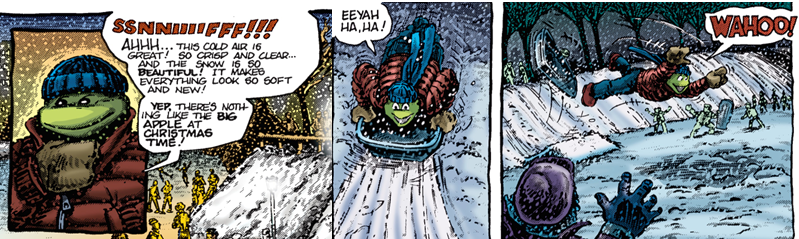
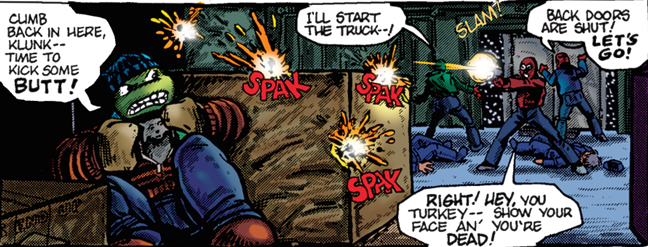
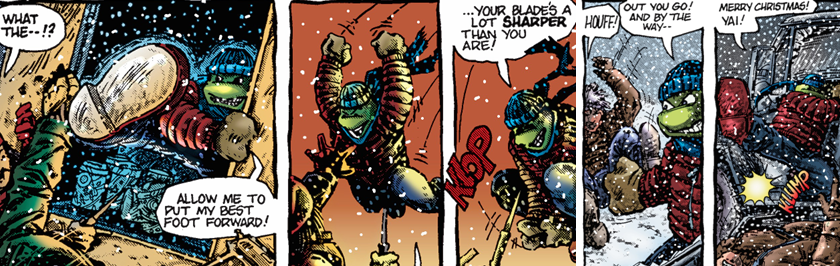
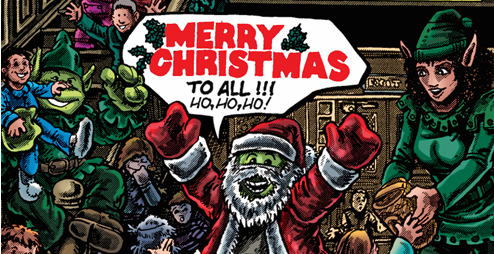

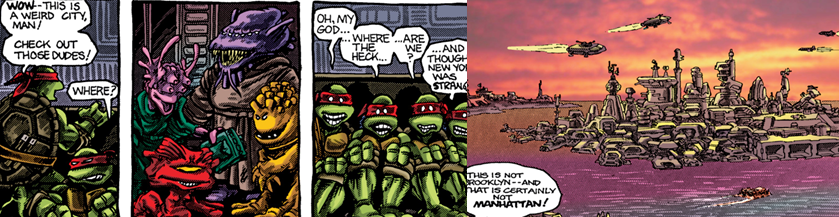
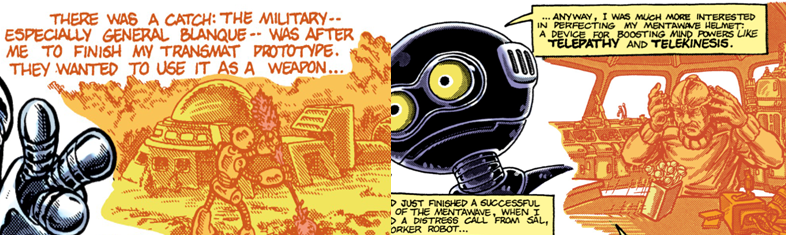
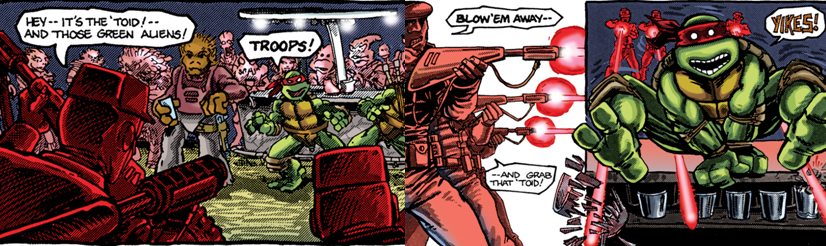
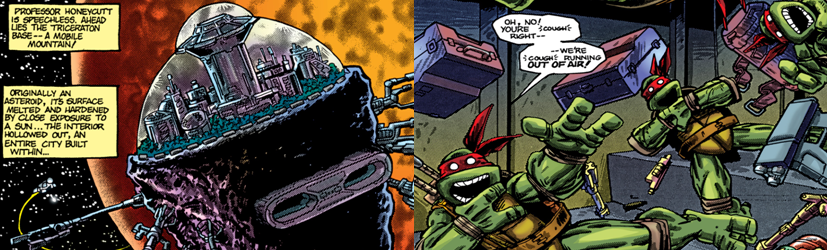


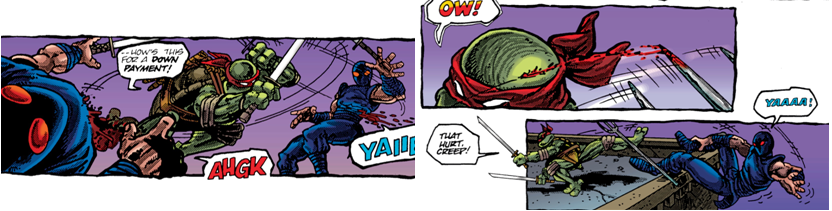

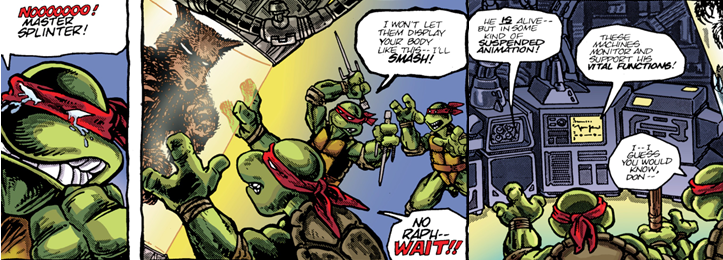
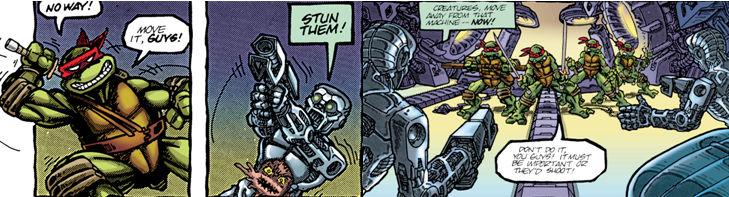
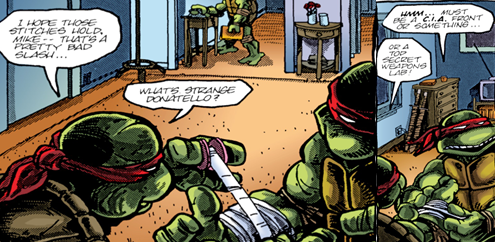

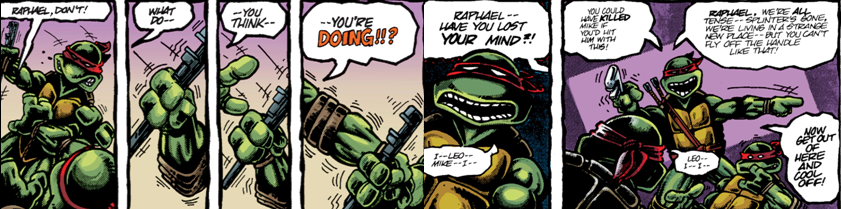
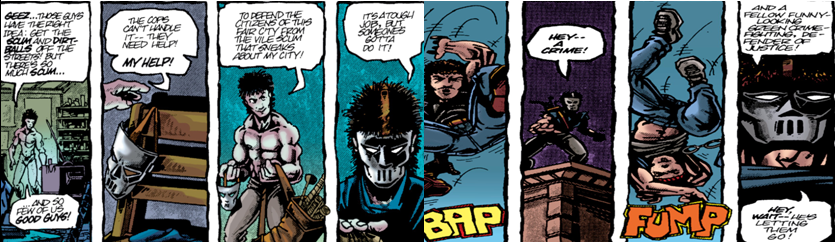
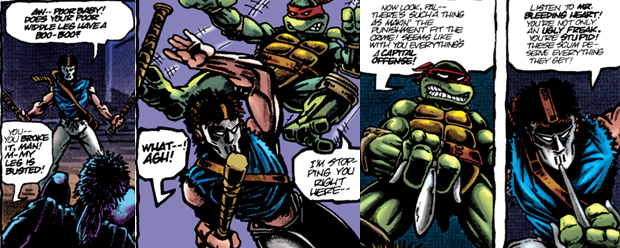
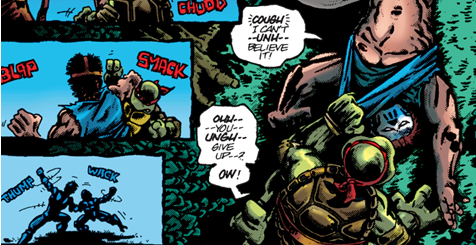
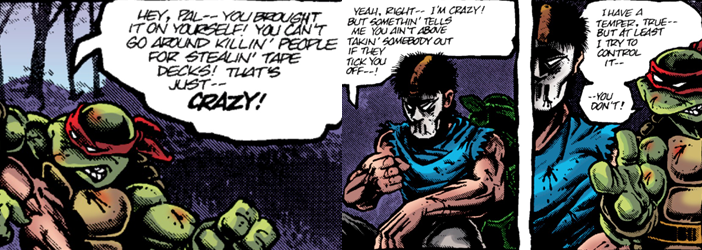
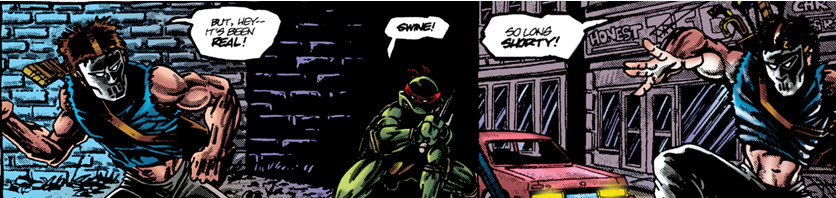


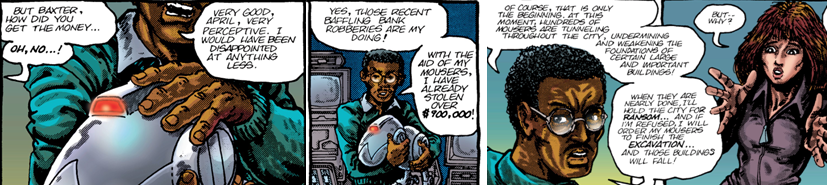
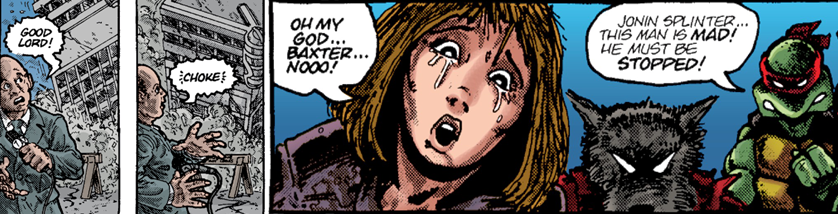
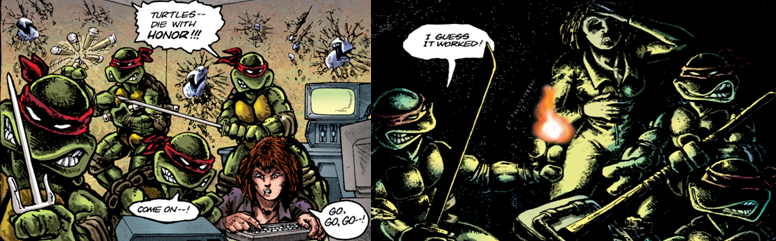
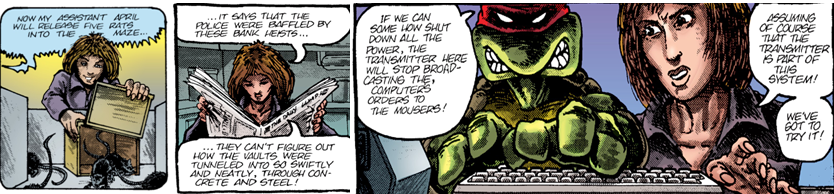
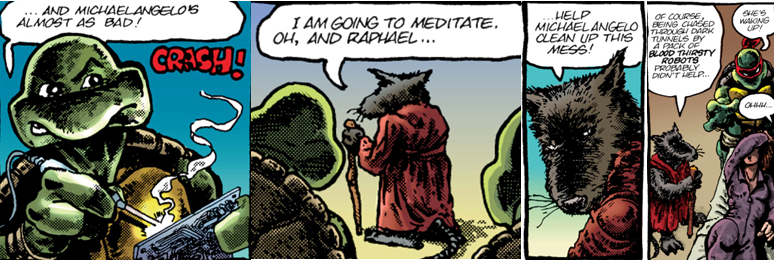

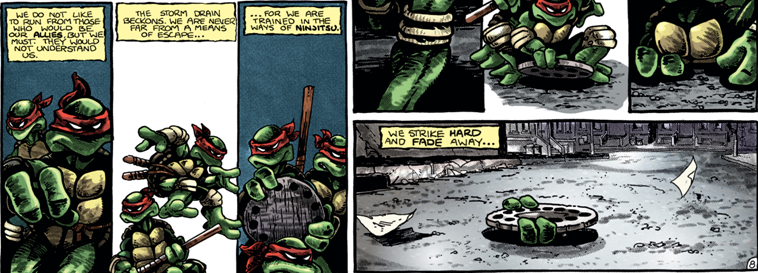
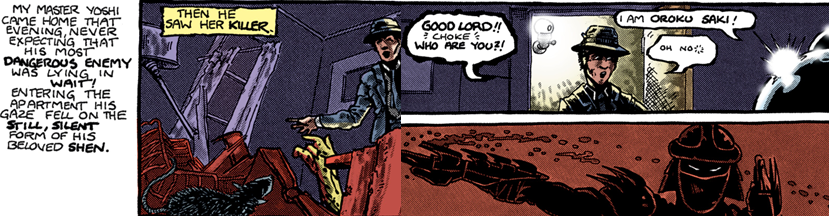
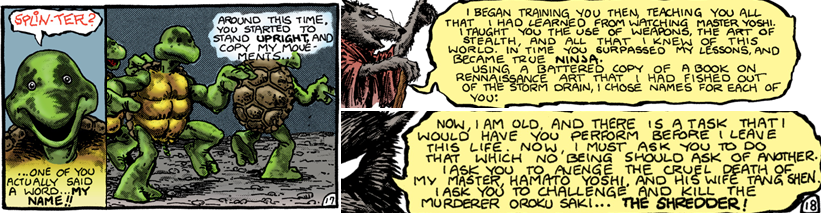
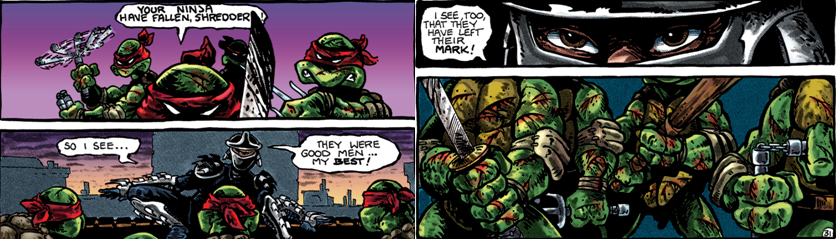
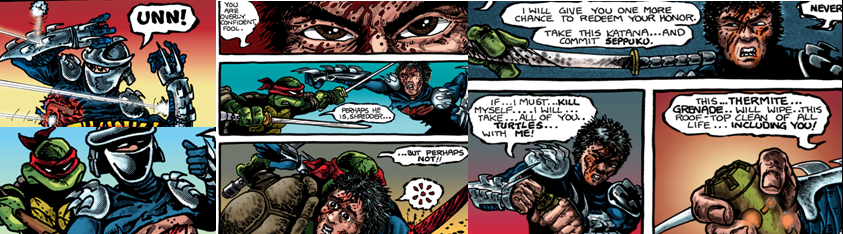
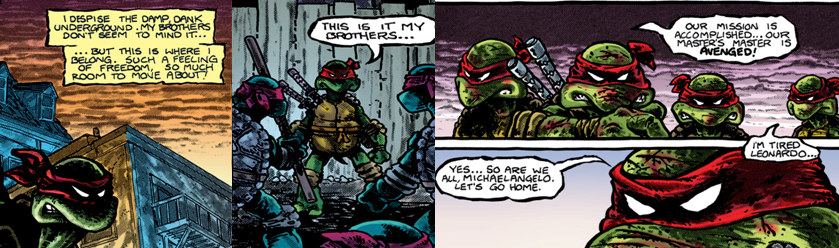


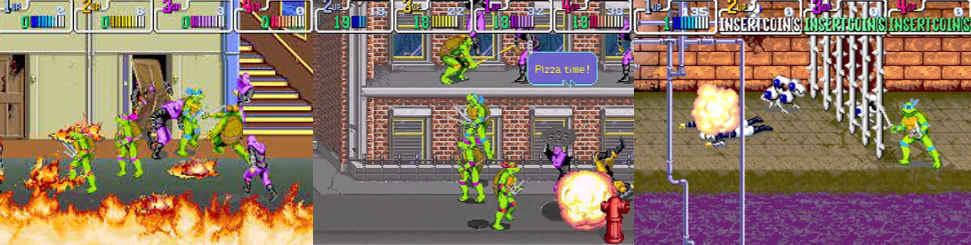
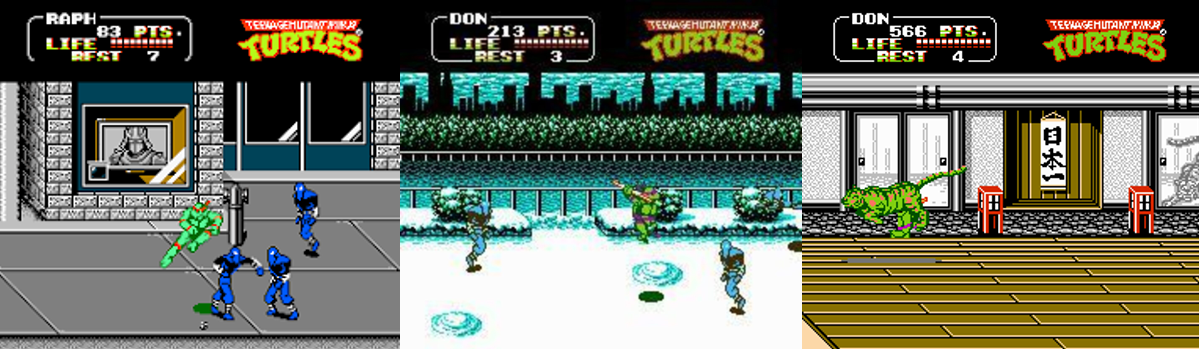
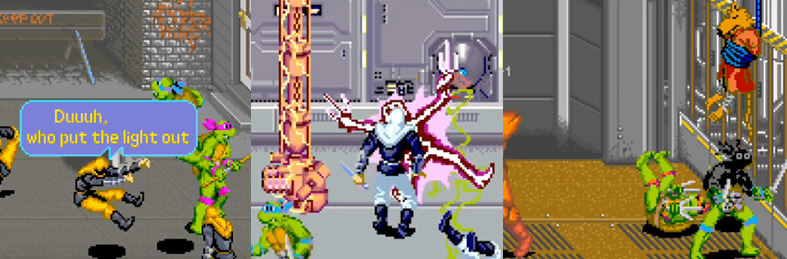
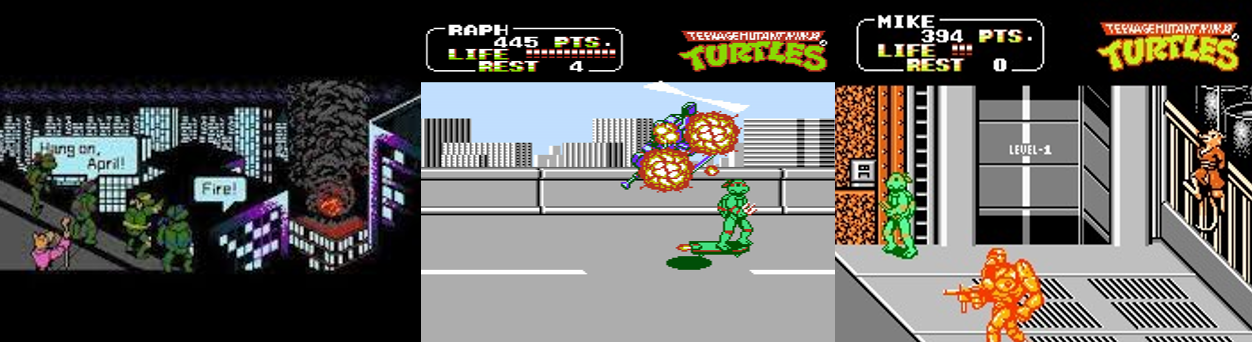
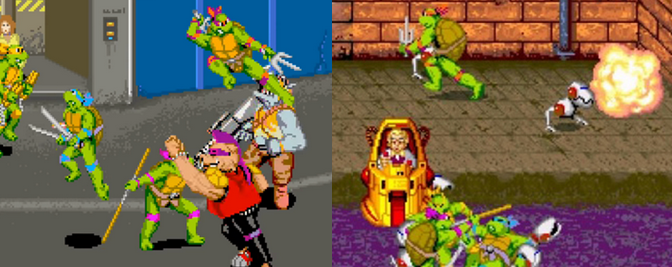
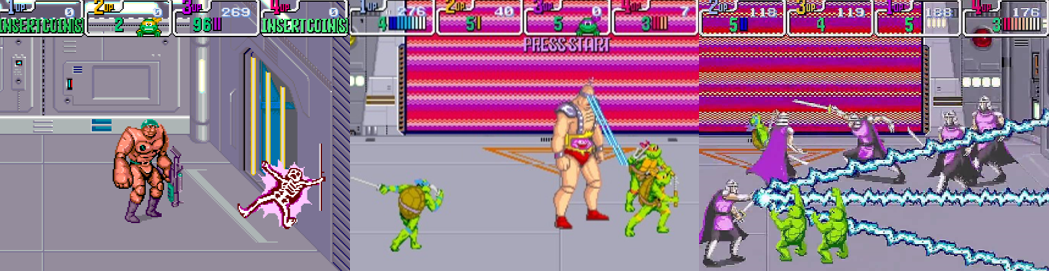
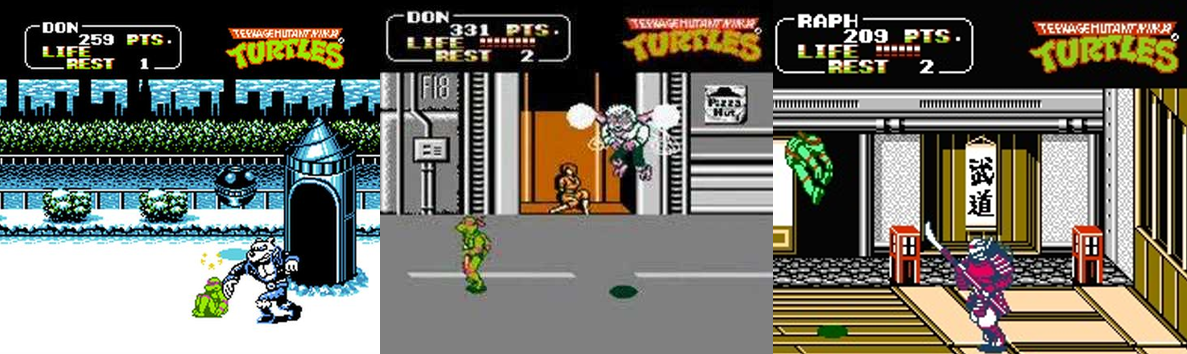



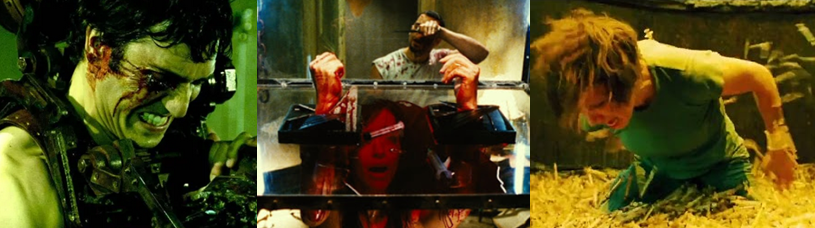
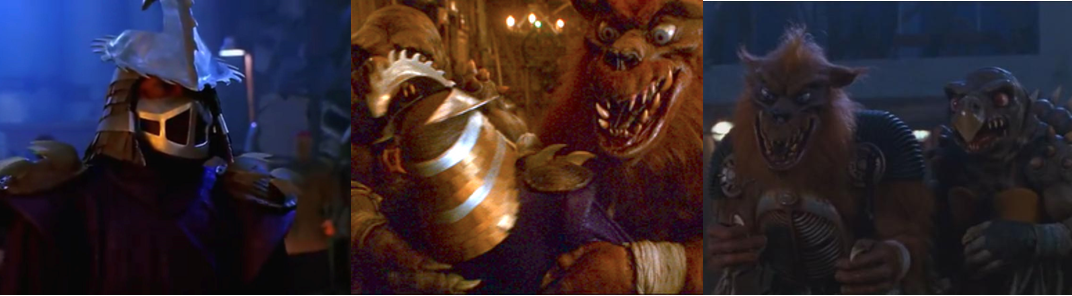
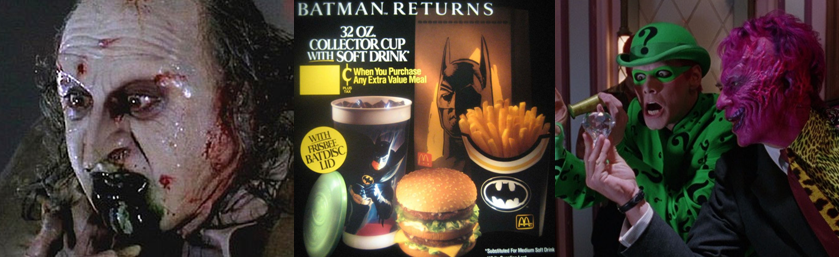

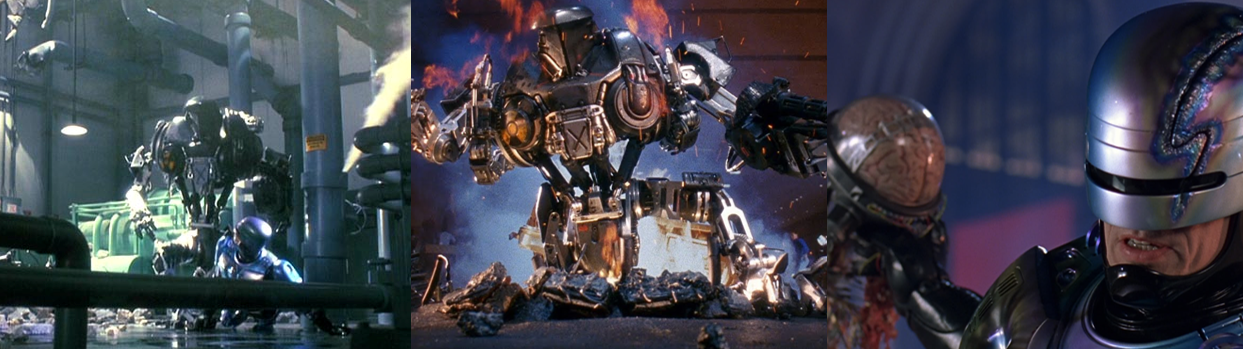
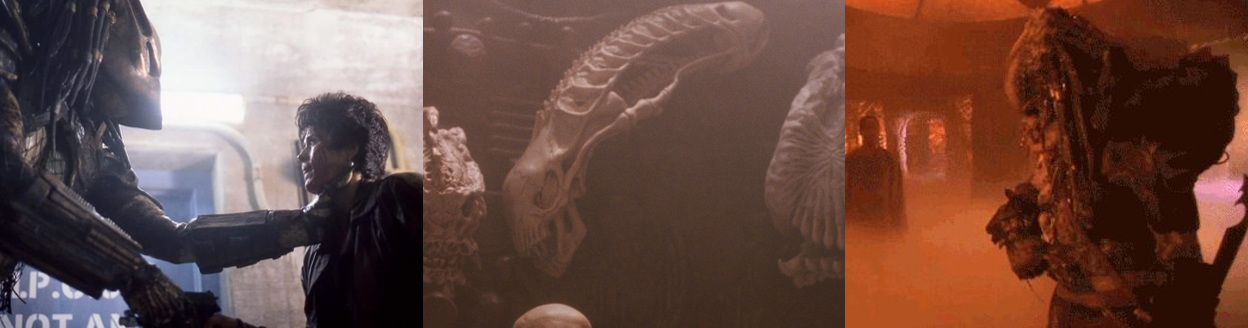








 Dr. K's Waiting Room
You must be logged in to post a comment.