
January sees the celebration of two notable dates in science-fiction history, with January 2 christened “National Science Fiction Day” to coincide with the birth date of the world renowned sci-fi writer Isaac Asimov, and HAL 9000, the sophisticated artificial intelligence of Arthur C. Clarke’s seminal 2001: A Space Odyssey (1968), being created on 12 January. This year, however, I’ve been spending every Thursday of January celebrating sci-fi’s toughest lawman, Judge Joseph Dredd!


Released: 7 September 2012
Director: Pete Travis
Distributor: Entertainment Film Distributors
Budget: $30 to 45 million
Stars: Karl Urban, Olivia Thirlby, Lena Headey, Wood Harris, and Domhnall Gleeson
The Plot:
In 2080, where most of the United States is a nuclear wasteland, humanity is packed into violent Mega-Cities where the only force for order are the Judges, who act as judge, jury, and executioner. Mega-City One’s top enforcer, the surly Judge Joseph Dredd (Urban) and his apprentice partner, psychic Judge Cassandra Anderson (Thirlby), are forced to bring order to a 200-storey high-rise block of apartments overtaken by resident drug lord, Madeline “Ma-Ma” Madrigal (Headey).
The Background:
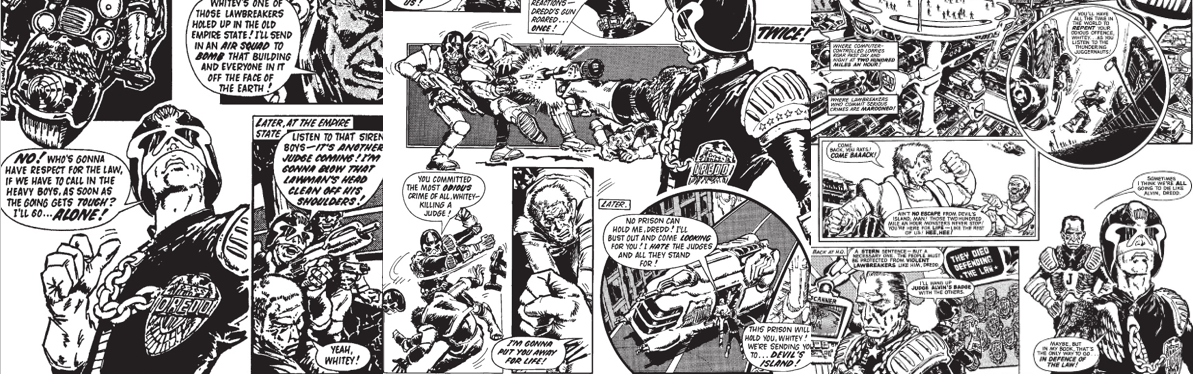
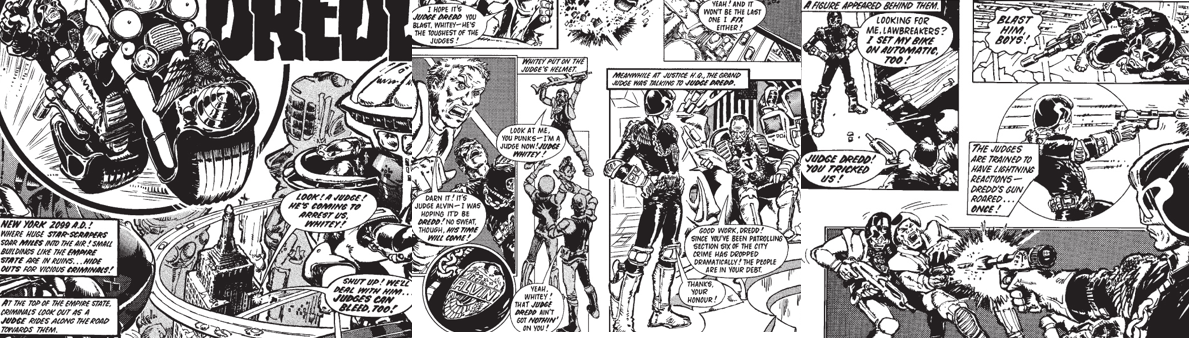
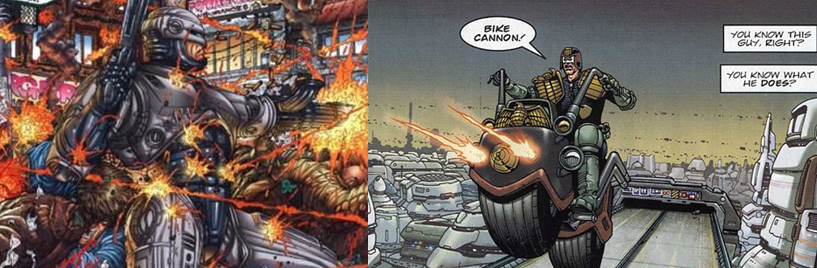
Created by John Wagner, Carlos Ezquerra, and Pat Mills, grim-faced lawman of the future Judge Joseph Dredd first appeared in the pages of British science-fiction comic book 2000 AD in March 1977. The character and his unique brand of extreme political satire were met with near-instant popularity, meaning a live-action adaptation was all-but inevitable. Unfortunately, Judge Dredd (Cannon, 1995) failed to match the appeal of a similarly-themed action/sci-fi classic, RoboCop (Verhoeven, 1987), and ended up being such a critical and commercial failure that its leading man and Dredd’s co-creator were left dissatisfied with the results. It took the better part of ten years for the concept to be revisited for the silver screen in the form of a reboot that would take advantage of the growing popularity of 3D cinema. After writer Alex Garland’s initial draft proved a little too ambitious, he excised the Dark Judges and chose to focus on a typical, violent day in the life of the titular Judge. Karl Urban stepped into the role and underwent rigorous preparation to emphasise the rugged physicality of the character, which was more grounded in realism and this was reflected in Dredd’s redesigned outfit, which promoted practicality and durability above all else, and agreed wholeheartedly in keeping his face covered by the iconic helmet. The filmmakers aimed to take full advantage of the 3D effect when rendering the disorientating hallucinogenic effects of the “Slo-Mo” drug to craft some unique and violent action sequences. Unfortunately, Dredd’s $41.5 million gross meant that the film was a flop and any plans for a sequel were seemingly dashed. Critically, Dredd fared quite well; reviews praised Urban’s faithful portrayal of the character, his supporting cast, and the film’s impressive visual effects and it found an audience on home video, leading to petitions for a sequel. A comic book continuation and animated spin-off were produced and Urban was reported to be in talks to reprise his role for a TV series based around the character but, as of this writing, this has yet to materialise.
The Review:
I was just a kid when I watched Judge Dredd; granted, I’d read my fair share of the comics and was primarily a fan of any stories involving the Dark Judges and also a big RoboCop fan, so I remember being easily pleased by the film’s bombastic action and blunt one-liners. It’s fair to say, though, for as visually interesting as the film is, it somewhat misses the mark when it comes to being an accurate portrayal of the character. It’s not just the toothless violence and zany comedy, it’s the fundamental idea of trying to humanise the tough-as-nails embodiment of a fascist regime. I understand why this route was taken, and it’s not as if the comics haven’t endeavoured to show Judge Dredd isn’t completely unreasonable or devoid of compassion, but all the pieces for a decent adaptation of the character were in place but ultimately lost due to conflicts over the film’s tone. When I heard a new Judge Dredd movie was coming, I was cautiously optimistic; I’m a big fan of Karl Urban, he always does really well in every role he’s given so it was exciting for him to be the lead of a big action franchise, but I’ll admit that, somehow, Dredd passed me by. Perhaps it only got a limited release here in the UK, or was pulled from cinemas because of stiff competition, but I didn’t see it until I bought the DVD and I remember being sour about that as it turned out to be a surprisingly enjoyable sci-fi/action romp that is well deserving of its status as an under-appreciated cult classic.
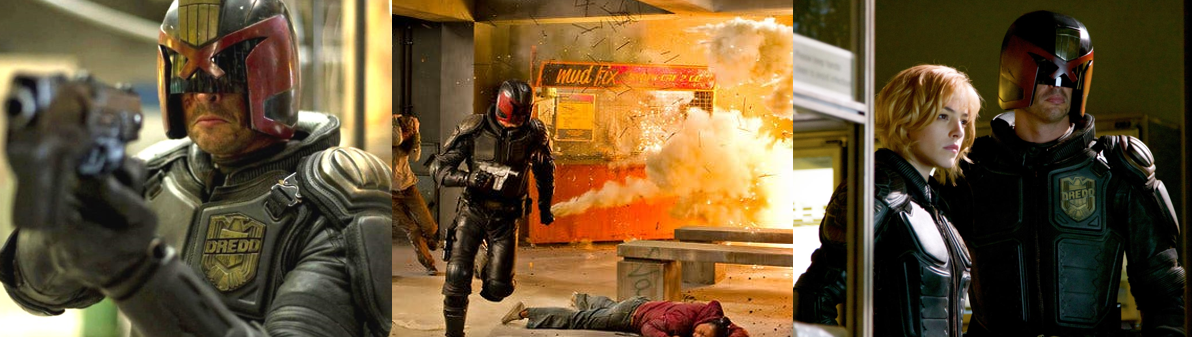
Dredd immediately takes centre stage here; don’t get me wrong, I love James Earl Jones as much as the next person, but there’s something decidedly gritty and Frank Miller-esque about having Dredd’s gravelly tone set the stage through voice over. Dredd makes pains to paint the Judge not as a crusader for justice, but as a beat cop who’s daily life is filled with violence and hardship; just seeing him tape his hands and shrug on his uniform is glimpse enough of the man behind the helmet, which obscures all but his constant scowl and presents him as a representative of the last bastion of law and order rather than some superhero. Dredd’s clearly been on the job a long time; he’s made a name for himself, is a senior street Judge, and is perfectly capable of handling situations by himself even when he’s outgunned or outmanned, and is portrayed as a very pragmatic and adaptable street cop. Little surprises him, he makes a point to priorities medical assistance for the wounded and clean up crews for the dead, and even choosing to stun rather than execute a couple of terrified kids when they try to kill him on Ma-Ma’s orders. As he takes his job very seriously, Judge Dredd has extremely high expectations of all Judges and that goes double for rookies like Judge Anderson. Although Dredd disapproves of Anderson being given one last shot to make the grade, he obeys orders and keeps a close eye on her assessment throughout the film, sternly letting her know how low her chances are and of his expectations of her. Highly adaptable and showing no fear, Dredd is at his most dangerous when backed into a corner but remains steadfastly committed to the job; even when Ma-Ma locks down Peach Trees and sets the entire complex against them, Dredd continues Anderson’s assessment and maintains a commanding authority throughout, even when confronted by corrupt Judges. There’s a drive in Dredd that’s beyond simple duty, however; even when back-up is imminent, Dredd opts to attack Ma-Ma head on rather than wait it out, and he continues to fight even after being gravely injured by a bullet to the abdomen.

Given my fondness for the Dark Judges, I was happy to see Psi-Division’s Judge Anderson included in Dredd. Unlike her first appearance in the comics, Anderson is a rookie, an orphan who gained psychic abilities due to radiation fallout, who has failed to pass the bar required of Judges but whom the Chief Judge (Rakie Ayola) is keen to give a trial by fire since she’s by far the most powerful psychic they’ve ever encountered. At the start of the film, Anderson acts very much as an audience surrogate and a means of exposition; as part of her training, Dredd demands that she gives an assessment on their situation as it changes and offers up suggestions of how to proceed, and largely she acquits herself well. She’s clearly done her homework, which is more than evident in her just barely failing to pass the bar, but she’s untested in the field and that initially causes her to panic and hesitate where Dredd remains grim-faced and stoic. Unlike Dredd, who is simply trying to keep a lid on the powder keg of violence in the city, Anderson truly believes she can make a difference; she grew up as desperate and destitute as the inhabitants of Peach Trees and wants to help inspire the few good people who live in such squalor, an ambition even the stern Dredd sees as admirable. Indeed, initially Anderson is haunted at her first execution, Japhet (Scott Sparrow), and the guilt she feels at depriving his wife, Cathy (Nicole Bailey) and baby, but Anderson’s empathy, which would normally be seen as a positive and humanising characteristic, is toughened by her experiences as she learns to adopt Dredd’s hasher methods. While Dredd is somewhat dismissive of mutants like Anderson, her abilities come in handy more than once; it’s thanks to them that she’s able to read Kay’s (Harris) mind and link him to Ma-Ma, something which later comes to harden her character when he tries to taunt her with disturbing and violent sexual thoughts and she turns the tables on him with a confrontation in his mind that reveals the extent of Ma-Ma’s operation.
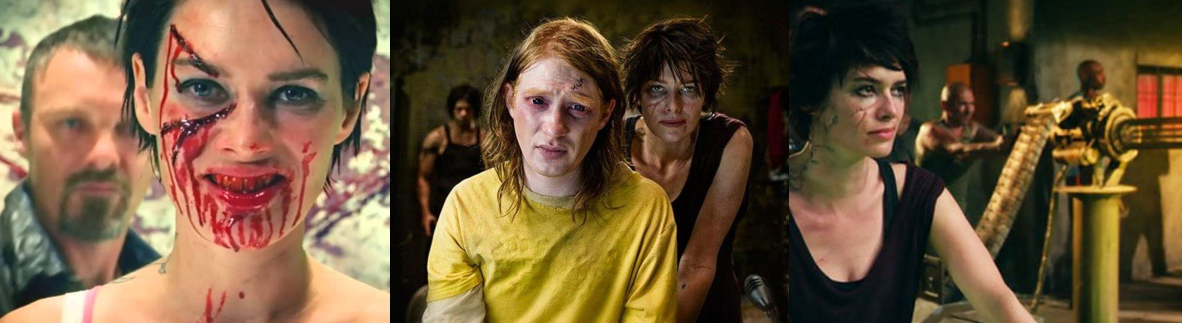
Rather than weave in some of Judge Dredd’s more recognisable villains, Dredd keeps things noticeably low-key and introduces a brand-new antagonist, former prostitute turned psychopathic drug kingpin Ma-Ma, who has taken root within the Peach Trees Mega Block. Hooked on Slo-Mo and scarred from a lifetime of abuse and torment, Ma-Ma is numb to all pain and emotion; she impassively orders the skinning and public execution of three rogue dealers, approving the use of Slo-Mo to draw out their agony, and who seized control of the entire tower through sheer violence and the scarcity of Judge presence at Peach Trees. So great is Ma-Ma’s power and influence that she’s not only able to coerce her genius and neurotic hacker (Gleeson) into locking down Peach Trees to contain the Judges she also orders that they be hunted down on pain of death and her influence extends into the justice system, seeing her pit Dredd against four of his corrupt peers. Beyond compassion, with a penchant for violence, Ma-Ma has inspired an almost cult-like following; while she’s no fighter, she has a legion of gun-toting followers who are fiercely loyal (even though she regularly punishes failure with death), though even she is enraged when Dredd callously tosses her right-hand man, Caleb (Warrick Grier), to his death. She’s so determined to stamp out the Judges that she thinks nothing of the innocent inhabitants caught in the crossfire and exhibits a lack of humanity that’s almost on par with Dredd’s, except even he prioritises life over death unless absolutely necessary. Although we don’t delve deeply into either Ma-Ma or Dredd’s personality, it’s explicitly conveyed that Ma-Ma has fought her whole life and is driven only by power. Effectively dead inside, it’s as though she’s sleepwalking through life, driven to experience some semblance of feeling before her inevitable death, something that makes her incredibly dangerous, not just because she has all the guns and all the power but also because she has no fear of death.
The Nitty-Gritty:
A major aspect of Dredd is just how desolate life is within Mega-City One; over 17000 crimes are reported within the city, and the Judges are only capable or responding to about 6% of them, meaning the city has basically lost itself to anarchy. In this harsh environment, only the strong survive, and Dredd is depicted as just that: a survivor. Unlike in the previous film, he’s not seen without his helmet save for a fleeting, obscured shot right at the beginning, which by itself more accurately reflects the character than the entirety of the last movie, but Dredd makes pains to shy away from delving too deeply into Dredd’s motivation or backstory. When probed by Anderson, we learn that he’s full of rage and control and something else, something explicitly unidentified but seen to be a code of honour that prioritises life and the law. Dredd does showcase a dry, sardonic sense of humour; gallows’ humour, if you will, offering perps the choice between a lifetime of imprisonment without parole or death, commenting on Anderson’s skills and lack of helmet, and daring Kay to save him some paperwork by just confessing to his crimes. Rather than try an humanise Dredd, something that’s completely unnecessary as he exists as the extreme personification of the fragile justice system, the movie wisely focuses on Anderson as a more morally guided and unsure Judge; she shows the empathy and exhibits the humanity, but ironically her character arc is learning to let go of such emotions and take on Dredd’s more pragmatic and hard-nosed approach towards criminals so that she too can survive on the streets.
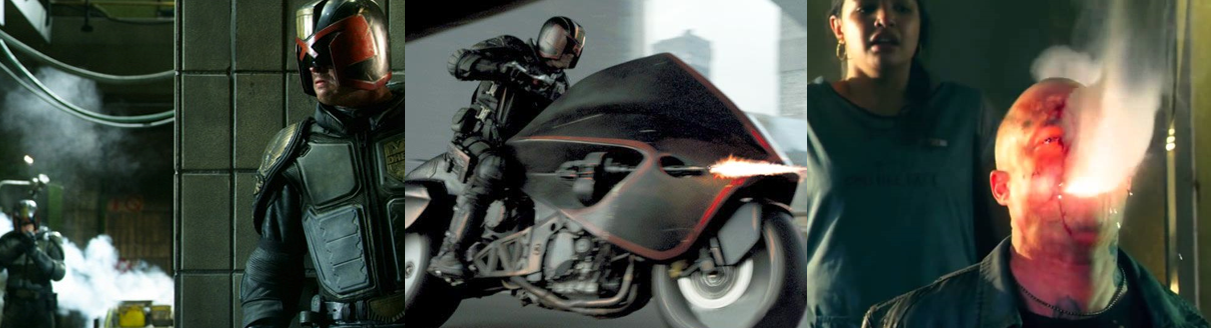
As ever, Mega-City One is a bleak, overpopulated, violent hell-hole; the Cursed Earth is only fleetingly seen and mentioned as the focus of Dredd is on the city itself, now no longer inspired by Blade Runner (Scott, 1982) or even that evocative of the source material and instead being a rundown mish-mash of existing US cities. In fact, the general rundown presentation of the city more recalls District 9 (Blomkamp, 2009), characterising the city as a much more grounded and realistic location which is actually in keeping with Dredd’s earliest appearances, before the term “Mega-City One” was coined. Amidst the ruins of the “old world” exist Mega Blocks, towering skyscrapers full to the brim with people from all walks of life, the streets are clogged with traffic and rioting, and hundreds of crimes break out every second of the day. Our time spent on the streets of Mega-City One is fleeting as, after responding to a homicide report at the Peach Trees Mega Block, Judge Dredd and Anderson are trapped in the futuristic tower block, cut off from backup, and left to deal not only with Ma-Ma’s crazy followers but the desperate inhabitants of Peach Trees who both refuse to shelter the Judges or out-right attack them to curry Ma-Ma’s favour. While restricting Dredd to such an unremarkable and claustrophobic environment may seem limited, it actually works quite well; the point of Dredd is not to be some world- or city-saving escapade, but to depict a typical, violent day in the life of the famous lawman, which is definitely succeeds at. Plus, Peach Trees is surprisingly diverse; it’s like a city within a city, containing living quarters in various states of disrepair, malls, drug dens, and its corridors and apartments acting as alleyways and crack houses, respectively. It’s in this desolate, rust-red tower block that the Blade Runner influence comes into play yet there’s still some impressive technology in Dredd’s gritty and grounded war-torn future; the Judges constantly monitor the city using advanced drones, impossibly huge skyscrapers pepper the city, and, while it can’t fly and has a more functional design, Dredd’s Lawmaster still allows him to easily chase down perps, fire upon them, and subdue lingering crowds. Dredd is again armed with the Lawgiver, which is still be tied to his genetic code so it’ll explode in the wrong hands and once again fires a variety of ammo, including hotshot rounds that burn a perp’s face from the inside out, high explosive rounds to blast through walls and blow off heads (!), and incendiary fire to immolate Ma-Ma’s followers along with half a floor of Peach Trees!
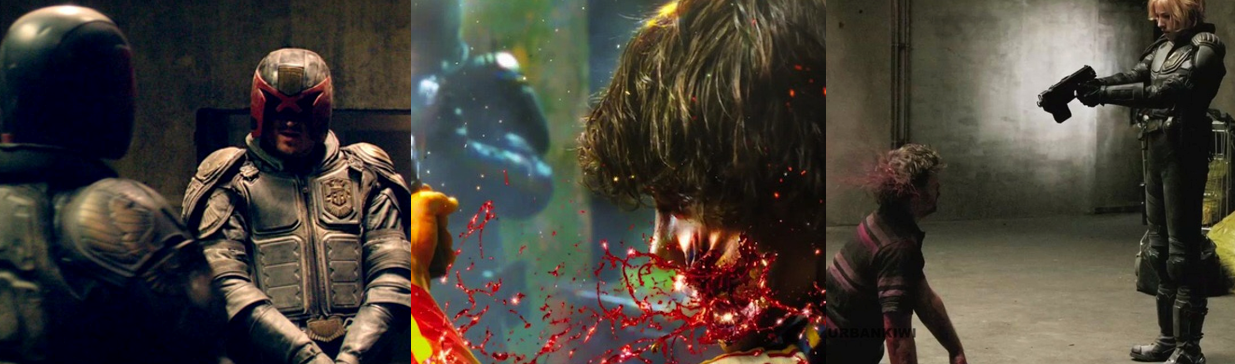
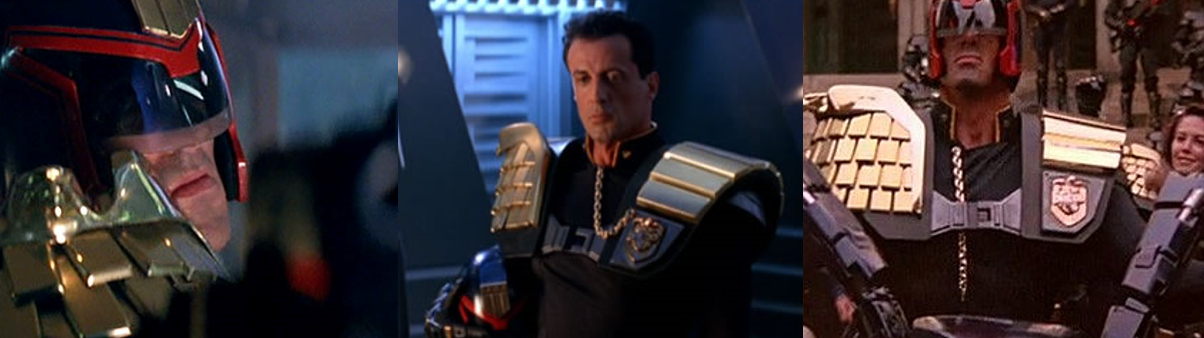
Although Dredd’s Judges don an extremely different uniform compared to the comics, I think it works really well; their helmets, especially, are as faithful as you could want, as are their badges, but the entire uniform is now more like practical riot gear rather than form-fitting spandex. Instead of heavy and cumbersome gold eagles and plates, they have reinforced armour that evokes the classic Judge imagery while still being believable. Of course, the big selling point of Dredd, like many films at the time, was its 3D effects. Dredd actually employs these effects into the plot and in an interesting way; whenever characters take a hit of Ma-Ma’s Slo-Mo drug, they’re inundated with a hallucinogenic high that sees them perceive time in slow motion. If its decidedly gloomy visuals and far grimmer interpretation of Judge Dredd didn’t immediately clue you in that Dredd was taking the character in a different direction, the film’s mature content soon will! There’s no “Drokk!” curses here (character’s drop the f-bomb at every turn) and no sugar-coating the bloodshed as perps are torn to shreds, often in agonising slow motion that really shows the bullets ripping through flesh and faces in gruesome detail. Easily the biggest and most explosive set piece in the film sees Ma-Ma’s gang unload on Dredd with three rotary cannons that tear through solid concrete and human flesh like they were tissue paper. Much of Dredd’s action scene involve him callously blasting at foes using his whittling ammunition; using cover and confusion from smoke and fire, Dredd guns down multiple armed foes with a deft grace thanks to Karl Urban carrying himself with a militaristic legitimacy. A bruiser of a fighter, Dredd absolutely brutalises even his fellow Judges in a fist fight, though for all his well-deserved reputation, he’s still a man and fully capable of being injured and enduring some harsh physical punishment as he insists on fighting through Ma-Ma’s forces.
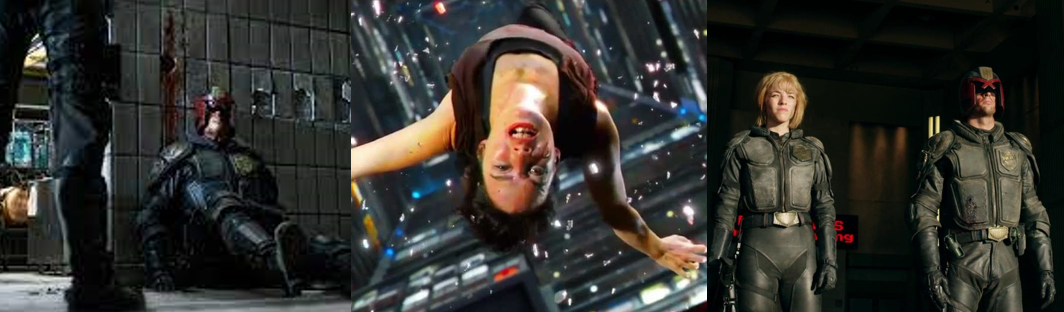
Ultimately, Anderson’s concerns that Kay will become a liability come to fruition when he desperately takes her hostage to try and appease Ma-Man and use her as leverage against Judge Dredd. Undeterred, Dredd issues a warning throughout the tower block, uttering the iconic “I am the law” line and putting all of Peach Trees on notice. Disgusted at his fellow Judge’s corruption, Dredd confronts them in Ma-Ma’s Slo-Mo factory in a tense game of cat and mouse where they debate the state of the city before engaging in a tense firefight that leaves Dredd with a bullet in his abdomen, but nonetheless victorious thanks to the timely intervention of Anderson, who fought her way out of Ma-Mas clutches after Kay’s overconfidence cost him a hand to her Lawgiver. After patching himself up and reloading, Dredd acknowledges the change in Anderson’s demeanour; despite already having failed since she lost her sidearm, she justifies letting the tormented hacker go free and joins Dredd in picking off Ma-Ma’s personal guard and breaching her quarters. There, they find she has rigged herself with a dead man’s switch; if she dies, a series of bombs will destroy the entire Mega Block. Undeterred, Dredd simply delivers a mortal wound and gives her a taste of her own medicine, dosing her up on Slo-Mo and sending her plummeting to her spectacular and oddly beautiful death, betting (rightfully so) that her device’s range won’t reach from the ground floor. Finally put out of her impassive misery, Ma-Ma rides the euphoria of her death before crashing to the ground in hauntingly glorious slow-motion. With the lockdown lifted, the Judges finally exit the building and Anderson, assuming she’s failed her evaluation, hands Dredd her badge. However, Dredd reveals to the Chief Judge that Anderson passed with flying colours and, despite his injuries, Dredd returns to his duties as Mega-City One’s top lawman with no fuss or fanfare.
The Summary:
Unlike with Sylvester Stallone’s outing as the iconic lawman of the future, there’s no hesitation in crowing about my fondness for Dredd; it’s a decidedly more low-key offering for the hard-as-nails Judges but it benefits from it. It’s not some bombastic, clustered mess of visuals and jokes and opposing tones; it’s a dirty, grim and gritty affair that perfectly shows how every day, every battle, in Dredd’s life is a mini war all unto itself. Karl Urban is absolutely inspired in the role; an imposing bruiser, he convey so much emotion with the subtlest movements and twitches of his constantly-scowling mouth and delivers an understated, but nuance, performance with his gravelly tones. Olivia Thirlby and Lena Headey equally hold their own, with Thirlby’s turn as psychic Anderson and acting as the film’s more empathetic voice, one that’s forced to concede that Dredd’s view is the only one that can allow a Judge to survive, really helps the film standout from its predecessor. I’m no fan of excessive slow motion but it’s used sparingly and to great effect here, as is the use of CGI, but where Dredd really shines is in its costume design and grainy aesthetic. While it definitely shies away from Dredd’s more outlandish escapades, Dredd perfectly captures the grim, bleak spirit of the source material and it is, quite frankly, absolutely criminal that we never got to see a sequel as this is easily not only the best of the Judge Dredd movies but also a highly enjoyable action romp with the perfect balance of action, humour, gore, and political intrigue to finally do the character justice.
My Rating:
Great Stuff
Did you enjoy Dredd? How do you think it compares to the previous live-action adaptation? What did you like to Karl Urban’s performance and this interpretation of Dredd? Did you like that the film told a more low-key story or would you have liked to see something a little grander in scope? Were you impressed by the film’s visual style, costume design, and use of slow motion? Would you have liked to see a sequel to Dredd or do you think it’s time for a new version of the character? Whatever you think, go ahead and leave a comment down below or on my social media and be sure to check out my other Judge Dredd content.

















 Dr. K's Waiting Room
You must be logged in to post a comment.