

Released: 8 December 2004
Director: David S. Goyer
Distributor: New Line Cinema
Budget: $65 million
Stars: Wesley Snipes, Dominic Purcell, Jessica Biel, Ryan Reynolds, Parker Posey, and Triple H
The Plot:
After being exposed and vilified by a vampire ruse, half-human, half-vampire vampire hunter Blade (Snipes) reluctantly teams with the upstart “Nightstalkers” against the resurrected Count Dracula/Drake (Purcell).
The Background:
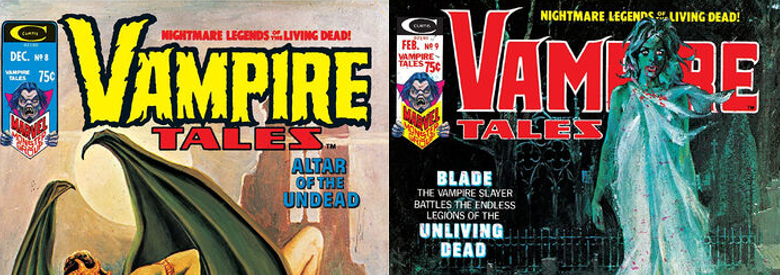
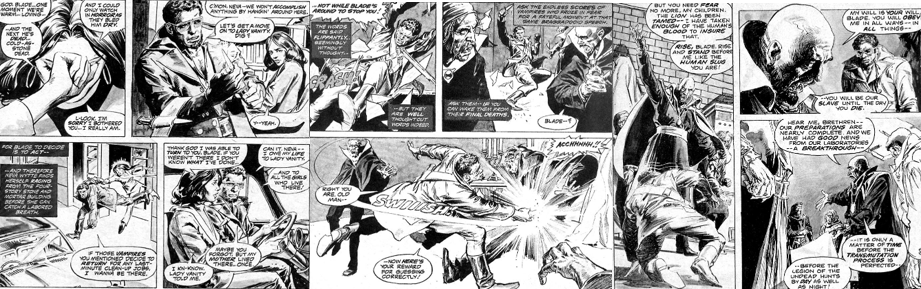
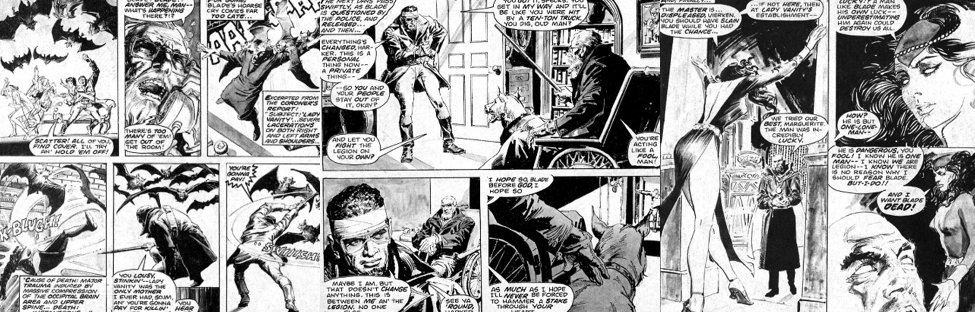
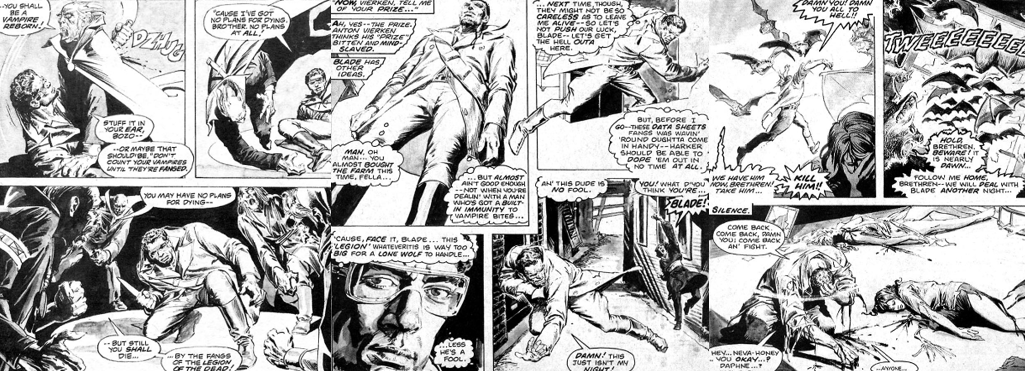
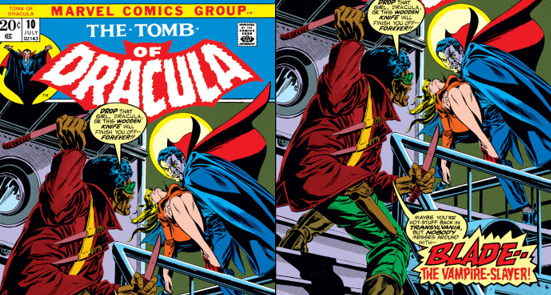
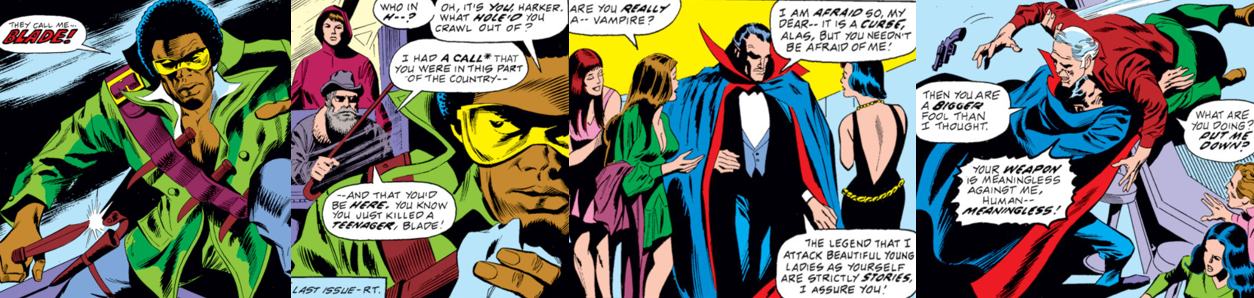
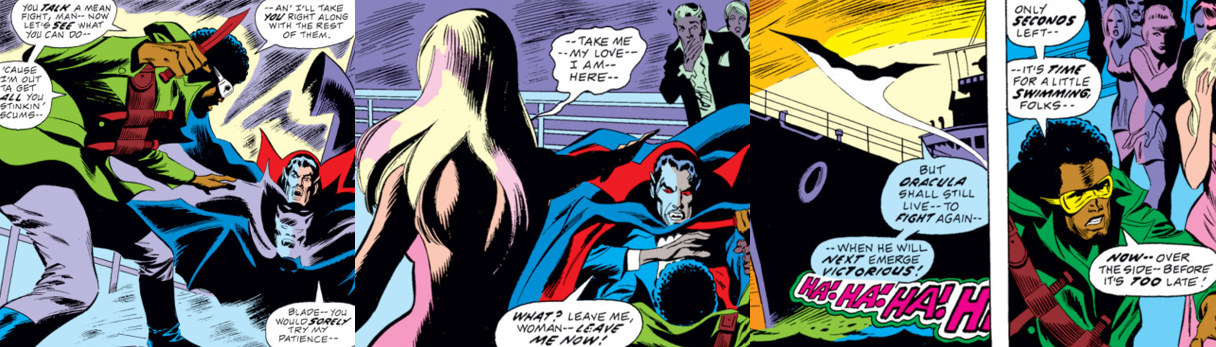
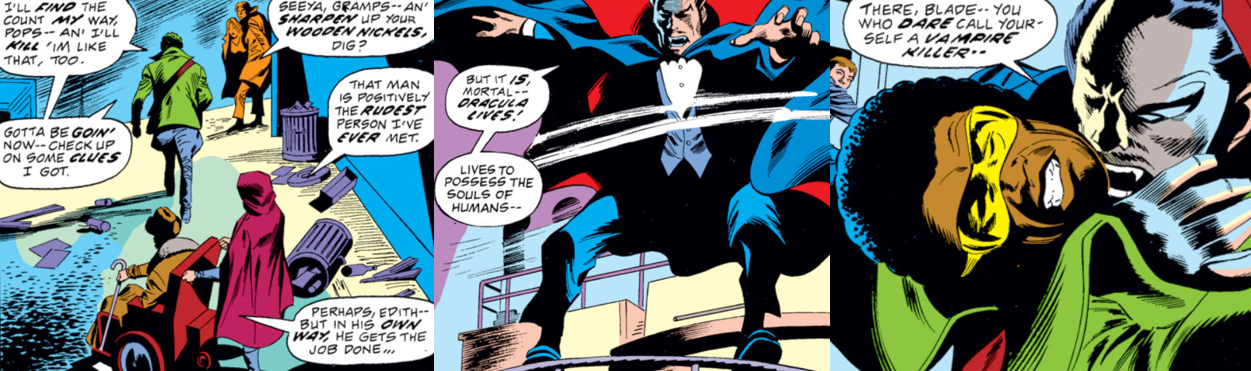
The brainchild of Marv Wolfman and Gene Colan, Eric Brooks/Blade (an obscure and culturally problematic vampire hunter) first appeared in The Tomb of Dracula decades before a radically different version essentially birthed the modern superhero genre. Following years of development and rewrites, Blade (Norrington, 1998) was a critical and commercial hit that was followed by a divisive (if profitable) sequel about three years later. Plans for a third film were made before Blade II (Del Toro, 2002) was released, with writer David S. Goyer tapped to pen the film and Oliver Hirschbiegel initially in talks to direct. When those plans fell apart, Goyer took the big job after receiving advice from previous Blade directors Stephen Norrington and Guillermo Del Toro. Ryan Reynolds signed on, with Goyer tentatively hoping for a spin-off for his wise-cracking character, though the shoot was reportedly tense when star Wesley Snipes fell out with Goyer, refusing to talk to him or even follow basic directions. Though co-star Patton Oswalt spoke negatively of the experience, Snipes later claimed these reports were over dramatised and an elaborate ruse. Although it grossed slightly more than the first film, Blade: Trinity was widely panned for being a nonsensical mess lacking the style and substance of its predecessors and for having one of the worst onscreen renditions of Dracula. Though plans for a crossover with the Underworld franchise (Various, 2003 to 2016), the character lived on in a short-lived TV show and Snipes even reprised the role in the Marvel Cinematic Universe ahead of a complete reboot.
The Review:
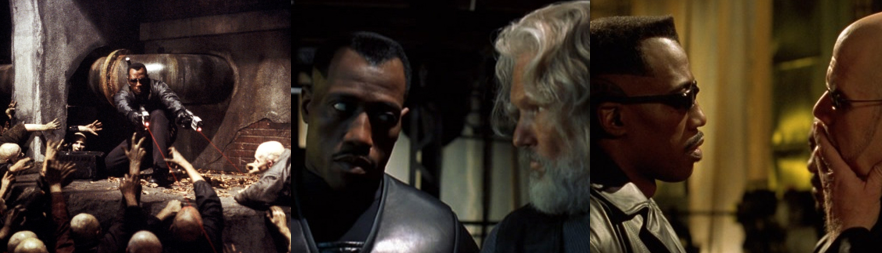
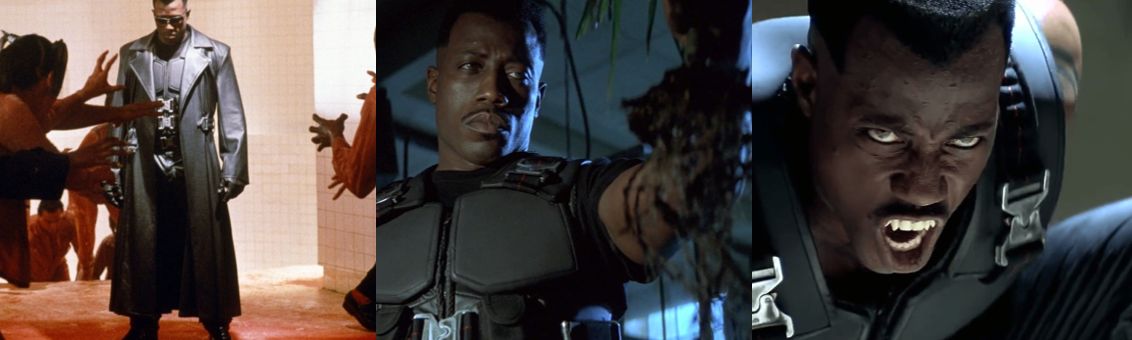
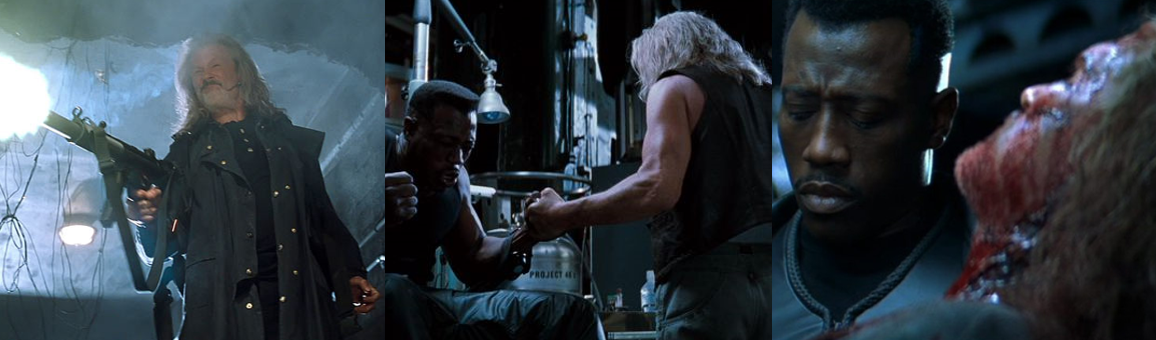
Things start out normal for everyone’s favourite dhampir as he knocks off vampires and operates out of a repurposed garage/warehouse much like in the first movie. Blade is oddly baffled when a victim shrugs off silver, despite claiming to have killed 1182 Familiars, and being easily fooled by fake fangs despite his heightened senses. This costs him when bystanders witness him killing a man in cold blood and Danica Talos (Parker Posey) releases the footage, painting Blade as a psychopathic murderer and exposing him to the Federal Bureau of Investigation (F.B.I.), specifically Agent Ray Cumberland (James Remar). While Blade’s mentor and father figure, Abraham Whistler (Kris Kristofferson) returns, he’s little more than a cameo who encourages Blade to rely on others and dramatically sacrifices himself holding off Cumberland’s strike team. The normally stoic dhampir is once again anguished by the loss, which further undermines his unnecessary return in Blade II. Much of Blade’s exchanges with Whistler set up his central character arc, namely his reluctance to rely on others or accept help (which is also a bit odd considering he worked with others, and even a vampire crack squad, before and Blade II painted him as a natural leader). Though Blade openly scoffs at the idea of having friends or relying on others, Drake’s threat forces him to fall in with the Nightstalkers, who Whistler secretly organised to aid him (despite them not appearing the last time Whistler died).
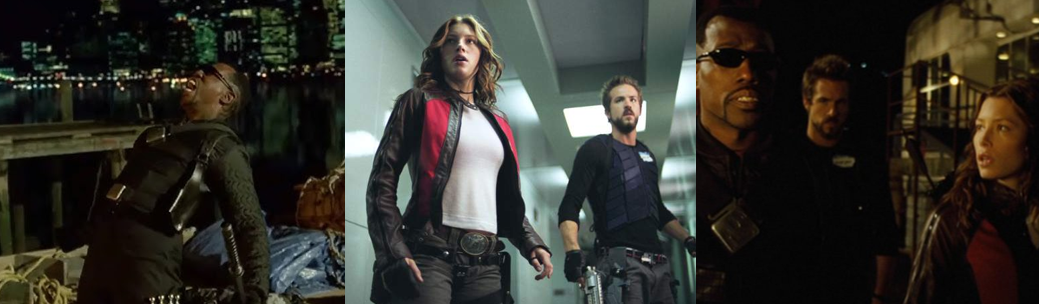
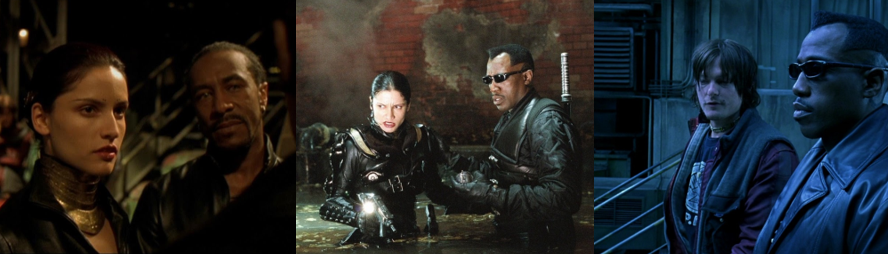
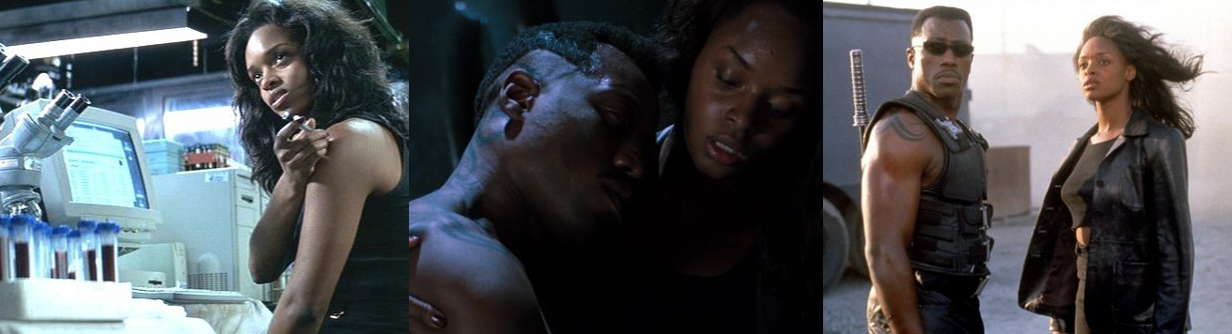
The Nightstalkers are an eclectic bunch of young upstarts who immediately rub Blade the wrong way, with wise-cracking Hannibal King (Reynolds) particularly grating on Blade’s nerves due to his motor mouth. Despite Blade’s very aggressive and unapologetic scepticism, though, the Nightstalkers sport state of the art tech and weapons, such as Abigail “Abby” Whistler’s (Biel) ultraviolet bow and Sommerfield’s (Natasha Lyonne) “Daystar” pathogen to wipe out the vampire species (which is doubly impressive considering she’s blind). Abby and Hannibal join Blade as the titular “trinity”, leaving Blade stunned to learn that Whistler had a secret daughter. While we never learn how close she and her father were, it’s clear she’s as haunted by her past and driven by revenge like Whistler, who wanted to destroy all vampires for torturing and killing his family. While Blade reluctantly becomes a key figure in the Nightstalkers, he also becomes a mentor for Abby, teaching her to “use” her pain and anger at the death of her friends to better aid her in battle, though she impresses with her speed and deftness and her ability to fight while listening to music. Hannibal’s fast talking, smarmy attitude clashes with Blade’s reserved personality, leading to the dhampir all-but dismissing King despite him formally being Danica’s plaything. This gives him all the motivation for hating vampires and wanting to wipe them out, something Blade can definitely relate to, though he remains adamant that the Nightstalkers need an attitude adjustment and some proper, experienced leadership. Hannibal may be a shit-talker, but he’s both extremely cut and loyal, insulting sadistic brute Jarko Grimwood’s (Triple H) manhood and bravely defying Danica, but he’s terrified of being turned back into a vampire and forced to feed his loved ones.
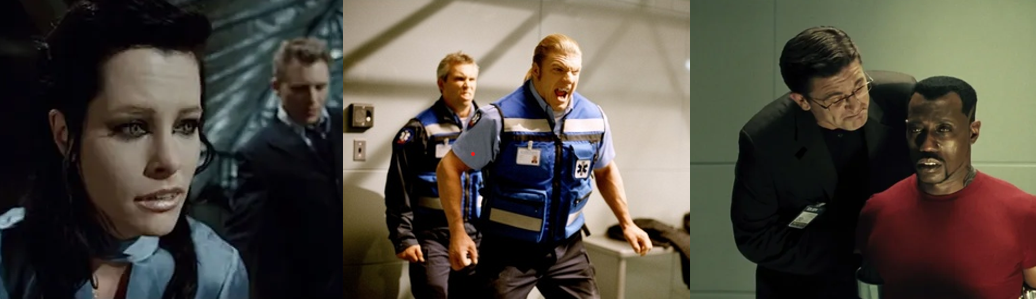
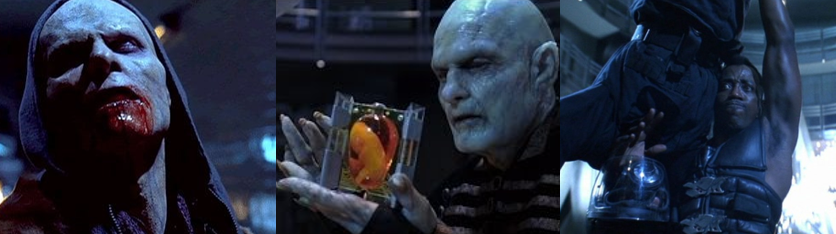
Blade: Trinity shows a new side to vampire society as Familiars wage a public relations war against Blade and control the local police, placing Blade in an unwinnable and desperate situation. Danica leads her brother, Asher (Callum Keith Rennie), and Jarko, in reviving Dracula in hopes of cementing their race’s dominance. In a film full of missteps and poor ideas, Parker Posey has to be one of the worst. While she seems to be having fun and is certainly chewing the scenery with her over the top performance, she’s literally painful to watch and drags the already questionable script further down with her atrocious delivery and childish tantrums. While Triple H doesn’t fare much better, he at least has an imposing presence and some funny character quirks, such as his love for a Reaper-like Pomeranian and his heated rivalry with Blade and Hannibal, matching his brawn and smart mouth against both. While the vampires are clearly well funded and have many resources, even setting up literal blood banks to sustain them when they take over, they seem far less organised and capable, with Danica so desperately unearthing Dracula to blood can transform her race into dhampirs. Danica and Jarko hate Blade and Hannibal with a passion, the former because he’s systematically wiping out their race and the latter because he’s a smart ass who routinely insults them even when suffering brutal torture. Having previously turned and tortured Hannibal and presumably had numerous run-ins with him, Danica delights in seeing him suffer but seems to have some respect for Blade and is especially envious of his ability to walk in daylight. While Drake quickly acts in his own interests, exploring the city and toying with Blade on his own terms, Danica seems okay with this (not that she can stand against Dracula’s power) since she’s convinced Drake will turn the tide for her entire race.
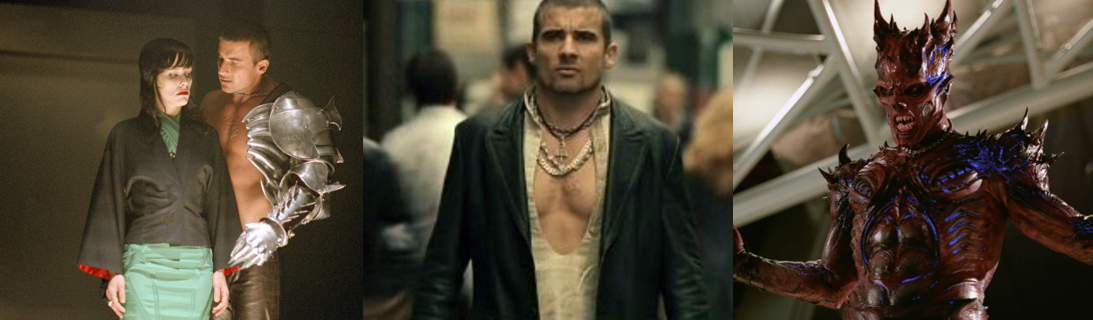
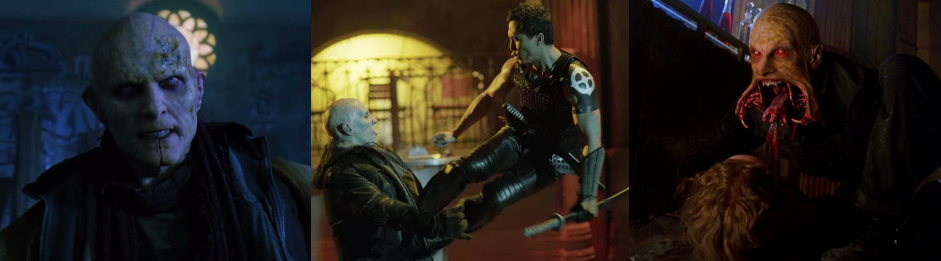
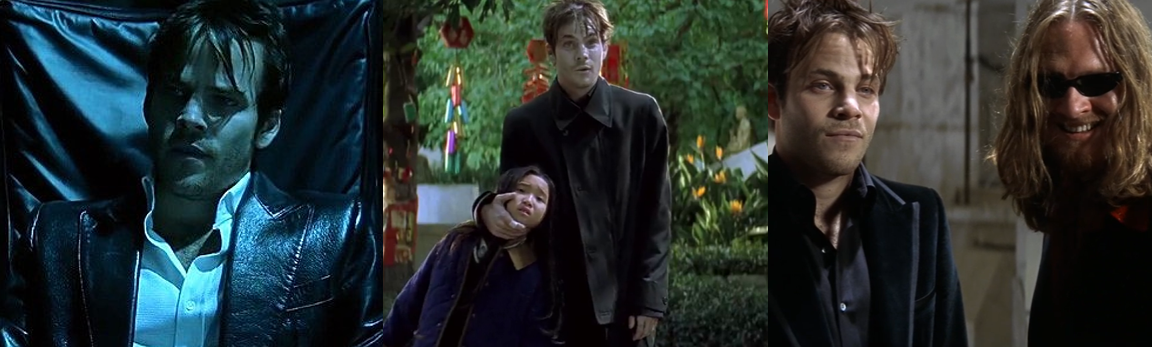
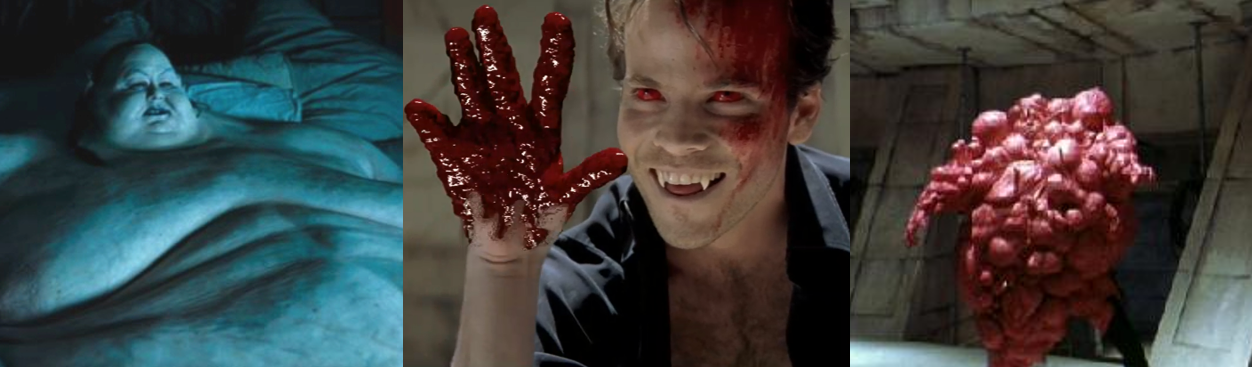
Echoing the same sense of superiority as the Pure Bloods of the previous films, Drake is said to be the first vampire, a demonic entity who’s never had to evolve who was a feared Sumerian warrior before entering a long period of hibernation after becoming disgusted by the world. However, as much as I enjoy Dominic Purcell’s work, he’s a poor fit for the role. With his stocky physique and robotic delivery, he’s very much the opposite of the Dracula legend as told by Hannibal, to say nothing of the classically trained actors who usual embody the part. While Blade: Trinity repeatedly downplays the movies and popular depictions of Dracula, Drake is fast enough to avoid bullets, exhibits superhuman strength, and is an accomplished shapeshifter. Drake strangely mimics Whistler to attack the Nightstalkers and is initially depicted as a monstrous, armoured demon overcome by “The Thirst”, a look that’s honestly more menacing and unique than his bog standard “Everyman” guise. Before he takes the lame-ass name “Drake”, Dracula is disgusted by Danica and modern-day vampires, rightly seeing them as “shadows” of their former glory. However, Drake’s convinced to begrudgingly aid them to test himself against Blade, whom he sees as the future of the vampire race and a formidable opponent. Drake is mesmerised by the modern world, it’s glorification of vampires, and how decadent and soft humanity and vampires have become. Unlike Blade, who resists the bloodlust of the Thirst, Drake gives into it at every opportunity, using it to further augment his abilities and freely feeding upon his victims to fuel his strength. Said to have the purest blood of all vampires, Sommerfield theorises that Drake holds the key to eliminating all vampires with Daystar just as Danica hopes Blade’s blood will ensure vampire survival. Thus, Blade and Drake are positioned as opposites and equals, though Dracula only ever appears as such when in his impressive, sadly little seen demonic form (which, interestingly, also sports Reaper-like fangs).
The Nitty-Gritty:
Knowing how chaotic and troubled Blade: Trinity’s production was, it’s hard not to read more into Blade’s disgust at the Nightstalkers, whom he sees as “amateurs”. Indeed, he shows more animosity towards them than he does the Blood Pack, though this may be because Whistler never told him of the “sleeper cells” he prepared to aid Blade. While the Nightstalkers are more capable than Blade gives them credit, they lack his years of experience and unique insight into fighting vampires, though they recognise this and see him as essential to the cause. It’s equally true that they’re slightly less impressive than their comic book counterparts, with Hannibal King, especially, being quite different as it was originally him, not Blade, who was a dhampir. I don’t mind this change much, mainly because I barely know Hannibal and the changes made to Blade only benefitted the character, but I can’t help but be unimpressed by Dracula, who lacks gravitas and finesse and comes across as just another formidable vampire threat for Blade. Blade: Trinity leans more into humour than its predecessors, particular through Ryan Reynolds’ obvious riffing. While I enjoy his humour and delivery, it’s constantly framed as inappropriate and awkward as no one, not even Abby, acknowledges his quips regarding Danica’s vagina fangs, pop-culture references, or Blade’s grim façade. While it’s clear Hannibal is using humour as a coping mechanism, he’s portrayed as a hyperactive little kid whom Abby keeps in check like a big-sister. Abby’s thus devastated when Drake slaughters her friends and kidnaps Somerfield’s young daughter, Zoe (Ginger “Haili” Page), channelling her grief and rage to emulate Blade’s stoic demeanour despite Zoe showing no fear even when Drake tries to intimidate her with blasphemy.
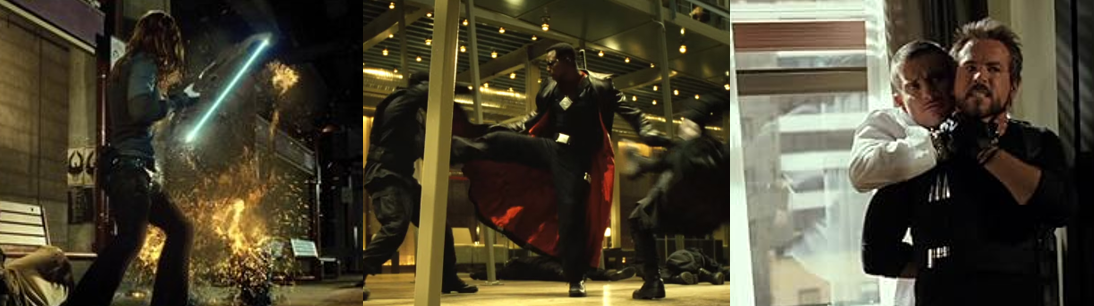
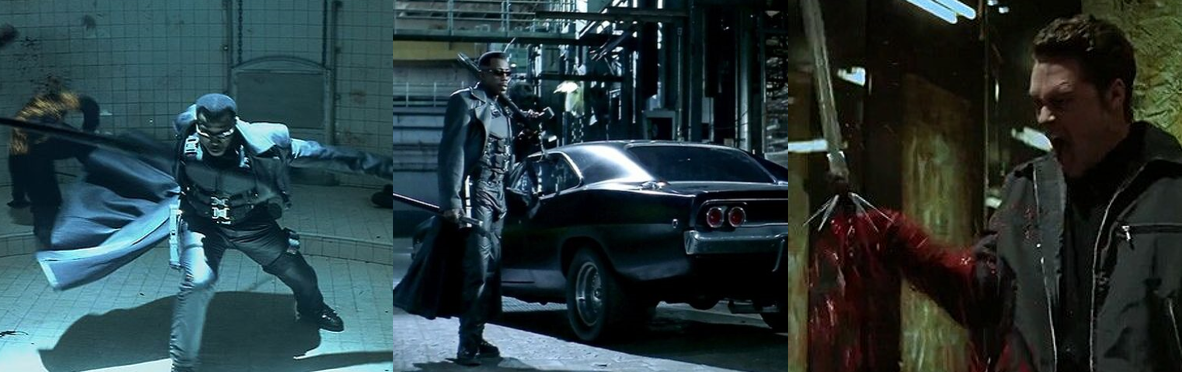
Blade has some new toys here, including a fun silver-lined roped dagger and a new delivery system for his serum, alongside his usual muscle car, trademark sword, and gun. However, it’s the Nightstalkers who get all the cool gear, such as Abby sporting a silver danger in her boot, lugging around a high-tech bow that sports an ultraviolet laser and lets her shoot around corners, and a wrist-mounted dagger. While Hannibal largely relies on pistols and his smart mouth, he also busts out ultraviolent grenades and Hedges (Patton Oswalt), the Nightstalkers’ resident armourer, develops an “electronic pistol” that fires explosive silver rounds and a high-impact shotgun (similar to those used by the Blood Pack) that fires anything from stakes to heat-seeking mini rockets. While these are rarely used, and Wesley Snipes may appear more lethargic and stoic than usual, Blade continues to ooze charisma and shine in fight scenes, executing kicks and throws with a slick precision to showcase Blade’s raw power whenever the Thirst takes hold. Overall, fights are easy to follow and vampires still explode into cinders and ashes when killed. There are some fun montages of Blade, Hannibal, and Abby knocking around Familiars to get a lead on Drake and Blade frantically chases Drake through the city, leading to a tense rooftop showdown where Drake endangers a baby simply to parlay with the feared Daywalker. When Sommerfield’s research leads Blade and Abby to a vampire “blood bank”, revealing they keep braindead vagrants as a food source, they return to find Zoe and the injured Hannibal kidnapped and the other Nightstalkers dead, with Drake using the two as bait. This leads not just to the now traditional montage of Blade suiting up and preparing for battle and Abby compiling a suitable playlist, but also to Abby working through her grief by preparing her bow and practising her impressive archery skills.
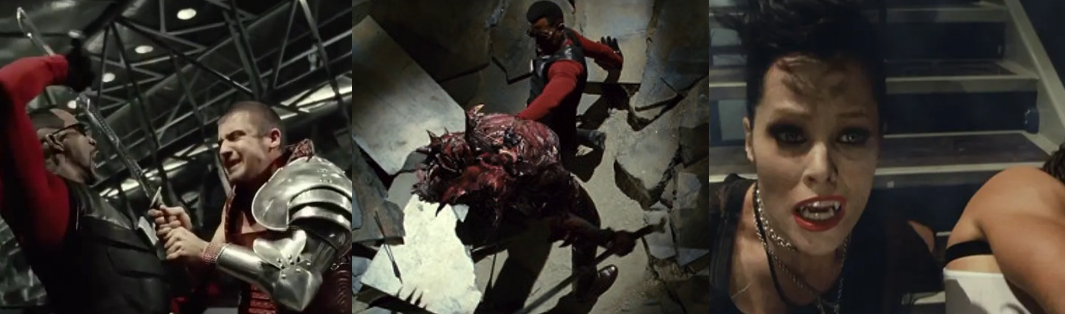
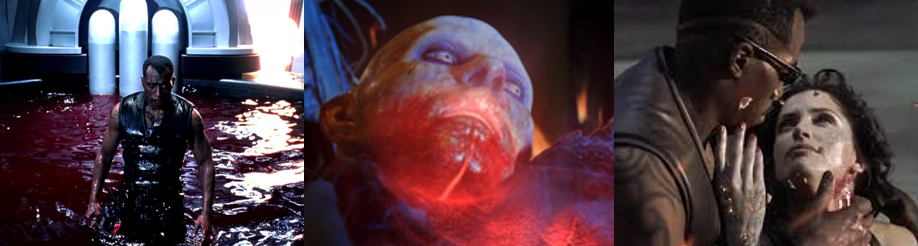
Sommerfield leaves a message asking Abby to take care of Zoe and discussing the Daystar prototype, though warns that it must be injected into Drake to work and could potentially kill Blade alongside the other vampires. Regardless, Blade and Abby take the virus (helpfully forged to be fired as an arrow) and follow Hannibal’s tracker, spreading silver dust through the facility’s air conditioning to weaken the vampires ahead of a full-frontal assault. While Blade and Abby fend off Danica’s disposable goons with their karate and toys to rescue Zoe, Hannibal struggles against the hulking Jarko while Blade gets into a swordfight with Drake, now garbed in ceremonial armour. For all the shit I’ve talked about this Dracula, this sword fight is actually really cool (despite some dodgy CGI sequences where Drake defies gravity) and nicely spliced alongside Hannibal and Jarko’s more brutal smackdown, which ends with an exhausted and overwhelmed Hannibal stuffing an explosive ultraviolet round into Jarko’s mouth and blowing him inside out. Although relishing matching swords with Blade, Drake assumes his demonic form to overpower Blade, leaving him prone for a bloody end. While Drake has the wherewithal to catch Abby’s arrow, a second shot stuns him long enough for Blade to inject the Daystar virus, which immediately reacts with Dracula’s blood to reduce all remaining vampires in the building (including Danica) to choking, rotting corpses. In his final moments, Drake commends Blade and praises him as the future of his species, using the last of his power to mimic Blade’s form to spare him future persecution. Though the wounded dhampir’s recovered by his allies, Hannibal’s final narration delivers an anticlimactic and open-ended coda that sees Blade continuing his war, suggesting that Daystar will take some time to eradicate the vampire threat.
The Summary:
While Blade: Trinity is nowhere near as bad as many would have to believe and is still a sleek, sexy, kick-ass vampire action movie, there’s no denying the drop in quality from the previous two films. While the action is as hard hitting and bloody as ever, there are some unmistakable flaws, like Blade’s stupidity regarding Familiars, the glossed over explanation of Abby’s birth, and the overreliance of Ryan Reynolds’ smart mouth humour. While I do enjoy him here, your enjoyment of Blade: Trinity may depend on if you can stomach his wise-ass jokes, which are oddly framed as awkward and childish. Personally, I much preferred Hannibal King to Abby, who showed little personality until Sommerfield’s brutal death, with the film bizarrely avoiding emphasing her heritage, how that affects Blade, and his role as a mentor to her. While the film is as stylish as its predecessors and competently presented in the same visual style, with fun, well-choreographed, and well edited fight scenes, I do question the casting of Parker Posey. She’s just awful here, hamming up every line and looking spaced out in every scene. Triple H’s physical performance was impressive, leading to a decent David vs. Goliath fight between him and Hannibal and I did like his animosity towards Hannibal, which was in stark contrast to Blade’s stoic dismissal. For me, Blade: Trinity drops the ball with its depiction of Dracula. Robbed of his aristocracy and screen presence, Drake appears as just another vampire thug unless he’s in his impressive demon form. Dominic Purcell just doesn’t have the gravitas for the role, and I would’ve much preferred he took Danica’s place, and a classically trained actor was cast as Dracula to give him a better aura of menace and refinement. Additionally, Blade: Trinity does do a disservice to the title character by having Abby, Hannibal, and the Nightstalkers eat into his screen time to set up a spinoff we never got. In the end, I think Blade: Trinity is a decent film to throw on in the background and is unfairly saddled with a negative reputation. It’s not as good as the last two and has far more flaws, but it’s decent enough, though I appreciate how many see it as disappointing end for the character.
My Rating:
Pretty Good
Are you a fan of Blade: Trinity? How do you think it compares to the previous Blade movies? What did you think to the Nightstalkers? Did you enjoy Hannibal’s lewd sense of humour and do you agree that the film dropped the ball with Abby’s potential? Were you disappointed by Dracula’s lukewarm portrayal and did you also find Parker Posey a grating inclusion? What would you like to see from Blade in future movies? Whatever your thoughts on Blade: Trinity, share them below, check out my other Blade reviews, and donate to my Ko-Fi to suggest more Blade content.











 Dr. K's Waiting Room
You must be logged in to post a comment.