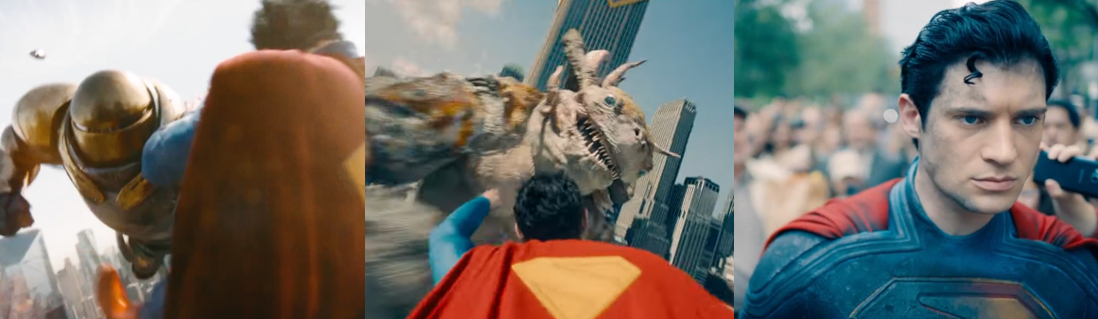
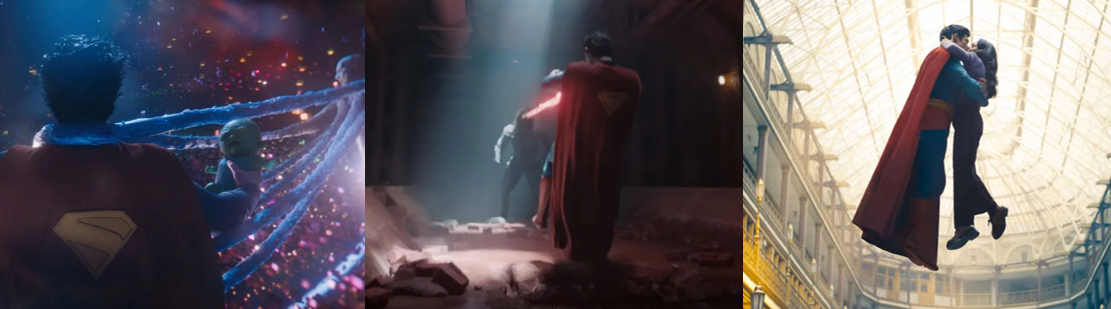
Movie Night: Superman

Released: 11 July 2025
Director: James Gunn
Distributor: Warner Bros. Pictures
Budget: $225 million
Stars: David Corenswet, Rachel Brosnahan, Nicholas Hoult, Edi Gathegi, Nathan Fillion, and Gabriela de Faría

The Plot:
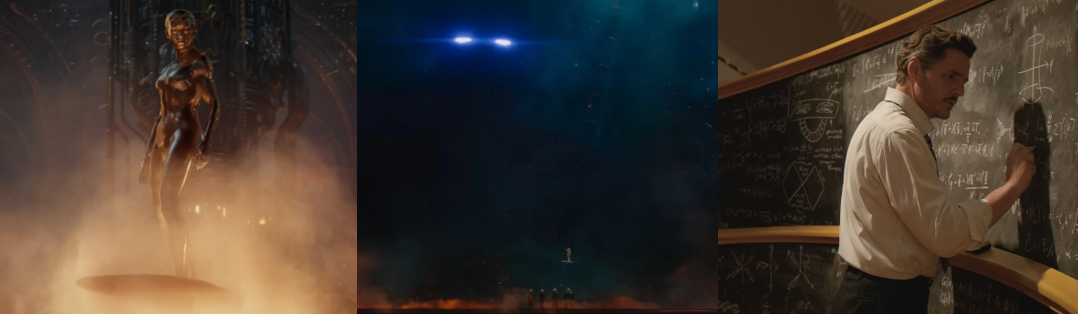
When xenophobic madman Lex Luthor (Hoult) orchestrates a smear campaign against and conspires to murder Clark Kent/Superman (Corenswet), the Man of Steel must prove to the world that he is its protector.

The Background:
When Superman was brought to the big-screen with Superman (Donner, 1978), it resulted in a critical and commercial (if chaotic) success. Although this was echoed with Superman II (Lester, 1980), things quickly took a nose dive, despite Christopher Reeve’s iconic performance. After a nearly twenty year hiatus from cinema screens, Bryan Singer tried to to recapture the magic of Richard Donner’s original film with Superman Returns (Singer, 2006), a critical failure that derailed sequel plans and led to Zack Snyder reinventing the character with Man of Steel (Snyder, 2013). Although a box office hit, Man of Steel divided critics and, while Henry Cavill’s portrayal was widely praised, the subsequent DC Extended Universe (DCEU) struggled to find its footing and, despite long-running plans for a Man of Steel sequel and Cavill (eventually) reprising his role, Warner Bros. opted for a complete reboot of the DCEU with James Gunn at the helm. Initially titled Superman: Legacy, the film was the first live-action chapter in Gunn’s DC Universe (DCU) and was inspired by many of Superman’s most beloved stories. This was reflected in the new Super-Suit; designed by Judianna Makovsky, it combined elements from many different comic book sources. With Cavill out, David Corenswet won the role specifically because he embodied Gunn’s vision of a younger, more optimistic interpretation of the character and it was Corenswet who insisted the costume had the iconic red trunks. After missing out on previous DC roles, Nicholas Hoult was cast as Lex Luthor, shaving his head and studying the work of Grant Morrison and Frank Quitely for the role. Gunn chose to skip the origin story and focus on a Superman in a world where costumed heroes are well established and was compelled to include Krypto the Superdog after connecting with his own adopted pup. Despite childish backlash from misguided die-hard Snyder fans, Superman was met with overwhelmingly positive reviews that praised a return to form for the inspirational hero, the action-packed fun, and the heartfelt narrative. Though some criticised the overreliance on CGI and cluttered runtime, Superman made over $560 million at the box office and paved the way for future DCU projects,

The Review:
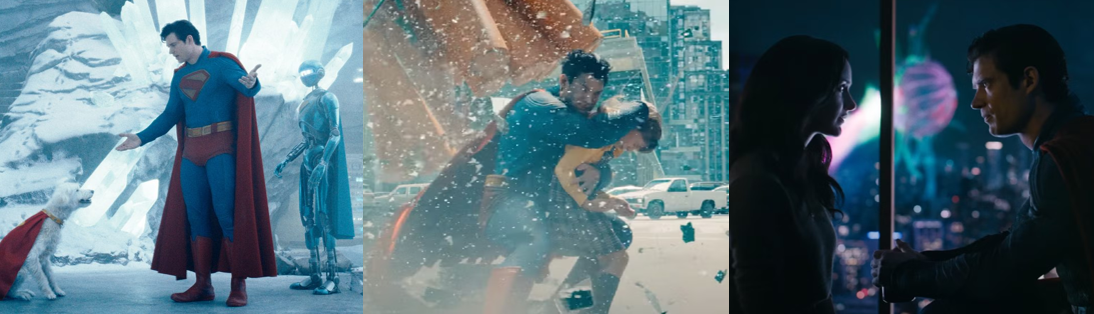
In a fantastic change of pace for DC’s live-action efforts, Superman takes place in a world where superhuman individuals (or “metahumans”) are not only commonplace but accepted. In James Gunn’s DCU, metahumans have been public knowledge for about 300 years and Superman has been active for at least three by the time the movie starts, dropping us in a world where Guy Gardner/Green Lantern (Fillion), Kendra Saunders/Hawkgirl (Isabela Merced), and Michael Holt/Mister Terrific (Gathegi), the corporate sponsored “Justice Gang”, respond to alien, interdimensional, and metahuman threats alongside the world’s most powerful metahuman, Superman. In another change of pace, Superman distills the origin to a simple line of text and dialogue, giving us a Clark who’s already established as a reporter at the Daily Planet (one known for his exclusive interviews with Superman) and already in a relationship with feisty reporter Lois Lane. This also means that the world is well accustomed to Superman and other metahumans, with the Man of Steel celebrated as a symbol of hope and benevolent protector, though Superman is undergoing some scrutiny at the start of the film (and throughout) for taking it upon himself to intervene in a conflict between warring nations Boravia and Jarhanpur. While Boravian president Vasil Ghurkos (Zlatko Burić) launches a public tirade against Superman, the United States government refuses to act against the Man of Steel without proof of malicious intent, with General Rick Flag Sr. (Frank Grillo) being especially supportive of Superman, though even normal citizens question Superman’s unilateral actions when the “Hammer of Boravia” attacks. When grilled by Lois, Clark vehemently defends himself, claiming he did what was right and intervened to save lives. Thus, Superman sees the good in everyone and who has a very black and white view of the world; he knows what’s right and doesn’t hesitate to use his powers to help those in need.

Superman finds his relationships tested by his determination to put his powers to good use.

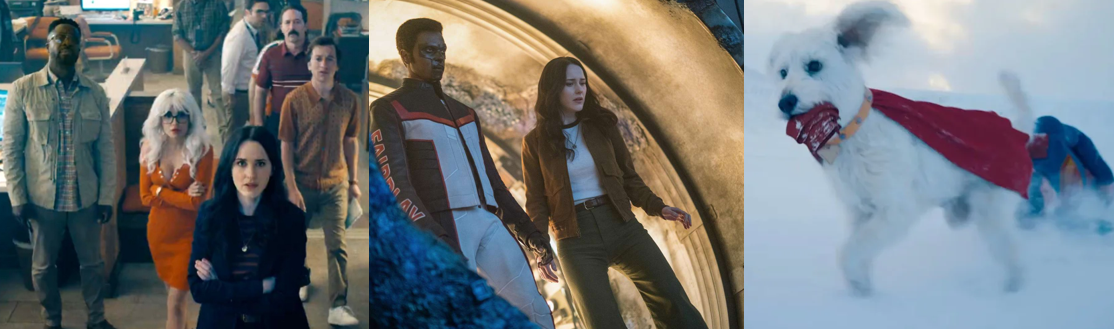
This desire stems from a damaged message from his long-dead Kryptonian parents, Jor-El (Bradley Cooper) and Lara Lor-Van (Angela Sarafyan) in which they express their love and hopes for him to serve humanity as a protector. Superman takes great comfort in these words, finding solace in the knowledge that he has a higher purpose even if his people are long dead. Additionally, Clark was raised with the standard virtues of right and wrong associated with the character thanks to his adopted parents, Jonathan and Martha Kent (Pruitt Taylor Vince and Neva Howell), who nurtured his kindly nature and contributed greatly to his characterisation as a loveable goof. Despite his amazing powers, Superman struggles as much as any normal man, constantly swooping in to save those in danger and checking to make sure those around him are okay and always pushing to end conflicts with as little violence and death as possible. He’s therefore irritated when the Justice Gang mortally wound a rampaging kaiju and aghast at the idea that he should just stand back and let people die when he could intervene. While Clark and Lois have a very passionate relationship behind closed doors and keep up the pretence of being bickering co-workers, their views on this matter drive a wedge between them early on. While Clark wears his emotions on his sleeve and expects Lois to cut him some slack, Lois is more hesitant about long-term relationships and isn’t afraid to ask the big questions, even of Superman. Though she considers breaking up with him because of her doubts, Lois not only stands by Superman, she comforts him when Lex Luthor launches a smear campaign against him, and teams with Mr. Terrific to rescue him after he willingly surrenders to the authorities. This comes after Luthor raids his Fortress of Solitude and broadcasts the entirety of his parents’ message, which surprisingly reveals that Kal-El was sent to rule a backwoods people, severely shaking Superman’s outlook on himself and his mission to safeguard his adopted world.

While Lois has a lot to do, even teaming with Mr. Terrific, the rambunctious Krypto steals the show!

Superman may well give Lois more to do than any previous Superman-centric movie as she gives the Justice gang (particularly the conceited Guy Gardner) a grilling for abandoning their friend, braves Luthor’s unstable “pocket dimension” to locate her lover, and even pilots Mr. Terrific’s T-Craft to ferry him around when he’s injured. While Lois doesn’t hold back when questioning Superman, her deep-rooted desire for the truth sees her digging deeper into Luthor’s malicious vendetta against Superman. She’s aided by peppy photographer Jimmy Olson (Skyler Gisondo), who uses his unexpected way with the ladies to convince Luthor’s current squeeze, Eve Teschmacher (Sara Sampaio), to give them the clues to both locate Superman and reveal that Luthor financed Ghurkos in return for half of Boravia. Lois is depicted as more than Superman’s equal, braving any danger for a scoop and meticulously presenting her evidence to crabby Daily Planet editor Perry White (Wendell Pierce), who supports her efforts to expose Luthor as a liar and a traitor. While his people are long gone, Superman’s aided by a handful of robotic helpers at his crystalline Fortress of Solitude and begrudgingly cares for the energetic and disobedient Krypto, the Kryptonian dog of his unruly cousin, Kara Zor-El/Supergirl (Milly Alcock). While this isn’t Krypto’s first venture outside of the comic books, he steals the show here with his unruly and feisty behaviour, causing chaos due to his super speed and strength much to Superman’s exasperation as he’s struggled to train the pup. An all-CGI creation (though you’d never know it), Krypto’s an adorable superpup who pounds around in a cape, goes for the face when threatened, and nips at Superman’s heels at every opportunity. Though he reluctantly tolerates the dog, Superman is enraged when Luthor pupnaps Krypto, further damaging his reputation by storming into Lex’s office, and endures horrendous torture at the hands of the reluctant Rex Mason/Metamorpho (Anthony Carrigan) when he surrenders to rescue the dog.

While the Justice Gang’s methods clash with Superman’s, it’s nice to see established metahumans.

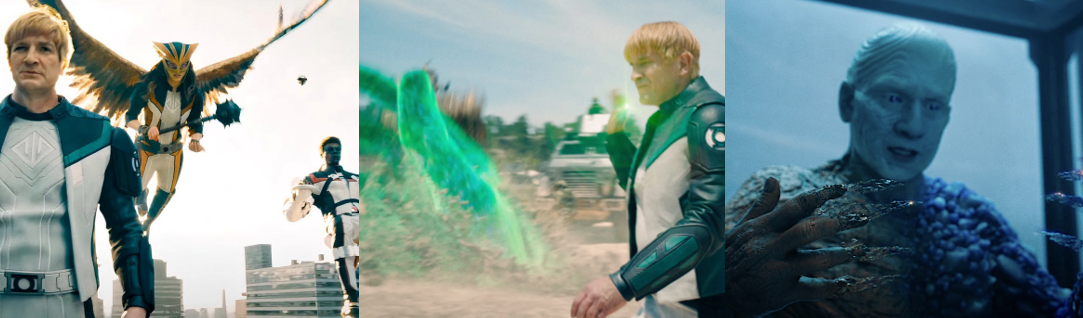
Although the Justice Gang are clearly the tools of corporate mogul Maxwell “Max” Lord (Sean Gunn), garbed in uncomfortable matching outfits and showing up to avert any crisis and get some much-needed publicity, they are extremely competent superheroes in their own right. While we don’t get any meaningful backstory on any of them, especially the alluring and deliciously battle hungry Hawkgirl, beyond some snarky comments from Guy about how he was chosen to be a Green Lantern, the team is well established and close enough to Superman to know his true identity. Although Mr. Terrific takes centre stage, I enjoyed the abrasive and egotistical Guy Gardner the most and was very pleased to finally see a Green Lantern on the big screen again. Guy is rude, belligerent, and full of himself, believing himself the leader of the Justice Gang and stepping up to anyone who questions his motives, authority, or even the group’s name. Guy is the most vocal of the group in turning on Superman, immediately condemning him as an alien threat, while Hawkgirl is more dismissive and Mr. Terrific is more concerned with the facts. Shown to be a somewhat stoic but unrivalled genius, Mr. Terrific utilises various tech, most notably his T-Spheres, to analyse a threat and determine the best, most efficient course of action, lethal or otherwise. While Superman bemoans their recklessness, the Justice Gang disregard his complaints as they don’t hold themselves accountable for property damage or loss of life, painting them as very rough around the edges. Mr. Terrific is both impressed and horrified to learn the Luthor has harnessed a black hole to create dimensional portals all over the world and kit out a hazardous pocket dimension as his own prison, where the egomaniac throws any dissenters and forces monkeys to slander Superman online. Metamorpho is kept under heel there to save his baby son and forced to transmute his body into Kryptonite to torture Superman. While he initially demands that Superman not try to talk or reason with him, Metamorpho has a change of heart after witnessing how cruel Luthor is and restores Superman to full health, assisting him in fending off Luthor’s goons and even joining the Justice Gang to curb the invasion of Jarhanpur.

Vindictive Luthor schemes to discredit and destroy Superman with his self-made enforcers.

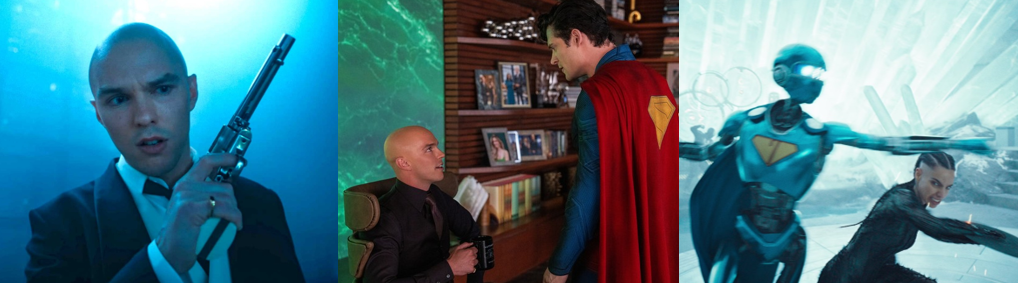
After years of enduring subpar or wildly eccentric cinematic interpretations of Lex Luthor, Superman finally gives us easily the greatest and most despicable version of the balding madman ever seen on the big screen. Nicholas Hoult excels in the role, effortlessly commanding every scene and bringing a cold, clinical focus to Lex that’s matched only by his ruthlessness and descent into abject tyranny. Already resentful of metahumans, Lex is driven to a self-confessed envious rage by Superman, whom he sees as an alien interloper who is stunting human growth and stealing the spotlight from hard-working, natural geniuses like himself. Committed to first discrediting Superman and then destroying him, Luthor concocts a convoluted scheme to turn the public against the Man of Steel to gain authority to apprehend and destroy him, all while funding the Boravia/Jarhanpur conflict to profit from the war. Constantly in command of every situation, Luthor easily infiltrates the Fortress of Solitude and steals Superman’s personal data, employing his homegrown metahumans – the cybernetic Angela Spica/Engineer (de Faría) and the mysterious Ultraman – to distract Superman while directing a team of all-too-willing underlings to commit horrendous atrocities. Sacrificing her humanity for Luthor’s dream, able to turn her body into any weapon she can imagine, the Engineer attacks with nanotech, easily hacking the Fortress of Solitude and almost suffocating him. Equally, Superman meets a physical match in the ruthless Ultraman, who mirrors his abilities and is directly controlled by Luthor, who’s meticulously studied Superman to counteract and predict his every move. Beneath his silky-smooth facade, however, Luthor is a raving lunatic who condemns anyone who questions him to his pocket dimension, happily tortures and executes those who get in his way or is even remotely tied to Superman, and who relishes the chance to prove his intellectual superiority over the Man of Steel.

The Nitty-Gritty:
It’s clear that James Gunn is influenced by many different sources for this film. Obviously, the classic Richard Donner films are the most prominent, with composers John Murphy and David Fleming sampling the iconic John Williams theme and giving it a glam-rock edge and the opening and closing titles mirroring Donner’s films. The design of the Fortress of Solitude is also ripped directly from Donner, though Gunn populates it with distinctly “Silver Age” Kryptonian automatons who tend to Superman’s needs. The entire film pops with colour and exciting action, just like a comic book, and Superman is purposely given a corny edge to make him a loveable throwback to a simpler time. Superman also takes place in a world where metahumans, Gods, and monsters have become an accepted part of everyday life. Therefore, while civilians still flee for their lives when the Hammer of Boravia and a fire-breathing kaiju attack, it’s treated as another day in Metropolis, with even Superman and Lois barely acknowledging an interdimensional imp threatening the city during their reconciliation. Superman goes one step further with this, introducing pocket dimensions, establishing the Hall of Justice as the Justice Gang’s headquarters, and hinting at a larger universe beyond our world through a Green Lantern and certain dialogue. Everything feels very “lived in”, like we’ve jumped into the third film in a franchise, without being overwhelming or difficult to follow as the focus is on the characters, their interactions and relationships, and their different dynamics. The world is in awe of Superman but turns on him immediately once Luthor broadcasts his message, with even his allies questioning his true purpose, and this twist is used to push Clark away from being beholden to his lost and unknown people and back towards his true heritage: namely, his Earth parents and their lessons.

Even when Luthor turns people against him, Superman strives to do the right thing.

Although I wasn’t sold on the costume at first, seeing it as a mishmash of different elements from various Super Suits over the years, it looks fantastic on screen. It’s so gratifying to see the trunks and the cape symbol make a return and Corenswet fills the suit out beautifully, appearing as visually iconic as Christopher Reeve did all those years ago. Superman isn’t some invincible demigod here, either. Like in the John Byrne stories I grew up with, Superman is extremely powerful but still physical vulnerable, suffering a brutal defeat by the Hammer of Boravia and enduring incredible agony to return to full strength using a concentrated dose of solar radiation. Superman visibly struggles with his bigger, more impressive feats, increasing the stakes as it’s not always certain that he’ll succeed. Superman also makes a point to rescue civilians wherever possible, something the Justice Gang see as secondary, and even tries reasoning with the Engineer and Ultraman as he always sees the good in people. Superman’s greatest weakness here, however, isn’t just the Kryptonite Metamorpho synthesises to poison him but his own insecurities. Superman believed he was embarking on a sacred mission and is overwhelmed by doubt upon hearing his parents’ full message, but continues to fight anyway, determined to prove that he’s there to help regardless of what people say. The Kents, especially Jonathan, greatly contribute to this, encouraging him to forge his own path based on what he knows is right. To that end, Superman surrenders and allows himself to be imprisoned and tortured, all with the goal of rescuing Krypto and ending Luthor’s schemes, even if it causes him great pain, trusting that his actions will prove that he’s not a threat. Luckily for him, Lois helps turn public opinion back in his favour as Eve’s clandestine selfies reveals Luthor’s plot, though the people of Jarhanpur still believe in Superman since he helped liberate their people from tyranny.

Superman rallies to redefine his mission, battle his crazed clone, and disrupt Luthor’s mad scheme.

Thanks to Lois, Mr. Terrific activates one of Luthor’s interdimensional portals and, after convincing Metamorpho to aid him, Superman escapes from the pocket dimension, recuperating at the Kent farm, reconciling with Lois, and determined to stop Luthor. In his mad ambition to publicly discredit and destroy Superman, Luthor overloads one of his portals and causes a rip in space and time to tear through Metropolis, literally splitting the city in two. Though a mandatory evacuation spares many lives, the entire planet is threatened by this tear, which can only be stopped using Luthor’s access codes. After narrowly escaping being suffocated by the Engineer’s nanites, Superman is horrified to learn that Ultraman is a mindless, brutal clone of his grown by Luthor with the sole purpose of destroying and replacing him. This revelation comes quite late in the film and is easily telegraphed as we never see Ultraman’s face and he’s there when Luthor access the Fortress of Solitude, and I don’t feel it landed all that well. It might’ve been better if Ultraman had been revealed to be a degenerating clone like Bizarro, but I feel the image of Superman battling his mirror image wasn’t as strong as the visual variety offered by the Engineer. It’s moot either way as Ultraman gets tossed into a black hole, leaving Superman free to confront Luthor and engage in a slanging match, one ended when Lois’s story breaks and Krypto manhandles Luthor. His reputation in tatters and his plans undone by Mr. Terrific’s genius, Luthor ends the film disgraced and incarcerated and Metropolis is sewn back together when the rip is shut down. Having declared their love for each other, Superman and Lois rekindle their relationship, the Justice Gang gets a new member in Metamorpho, and the world’s faith in Superman is seemingly restored. Although Superman despairs when his rowdy cousin returns from a bender out in space, he now finds comfort in viewing his memories of his childhood with his Earth parents.

The Summary:
I’ll be the first to admit that I was annoyed that we got another Superman/DC reboot after years of false starts and troubled efforts to get a live-action DC universe off the ground. I was hoping for a course correction with Henry Cavill and slightly sceptical of the new suit, but the colourful atmosphere and light-hearted action of the trailer gave me hope…and James Gunn certainly follows through on that promise. Superman is easily the best big screen adaptation of the Man of Steel perhaps ever, taking inspiration from many different interpretations and comic books and stitching together possibly the most accurate live-action distillation of the character and his chief nemesis. David Corenswet was fantastic in the title role, thankfully spending more time in the suit and just being a good man doing good things, while also not being infallible or so invulnerable that he’s not relatable. Nicholas Hoult was equally captivating as, in my opinion, the best Lex Luthor we’ve ever seen. He brought a malicious spite and smug energy to the role that blew his cinematic predecessors away, appearing as a true threat with an immense hatred for Superman. While I admit some of the supporting characters weren’t as developed as they could be, I’m intimately familiar with all of them so I’ll accept that in favour of a rich, fully realised world where superheroes are the norm. It is a bit odd that Supergirl never told Superman what Kryptonians were really like and somewhat reduces the emotional impact of Superman’s robots being trashed when they’re fully repaired by the end, but the engaging action and thought-provoking character interactions made up for it. I liked that Superman was questioned but not to the point where he was hated and feared, and the painfully relevant metacommentary on the state of politics and social media, and how people rallied behind Superman regardless of his bad press as they could see he was a good person. This was the Superman we should’ve gotten a decade ago, an inspirational hero who can spearhead a colourful and comic accurate live-action universe that finally does justice to these beloved characters while still offering a few fun twists along the way.

My Rating:

Rating: 4 out of 5.

Great Stuff

Did you enjoy Superman? What did you think to David Corenswet’s performance and his suit? Did you enjoy seeing him portrayed as fallible and vulnerable? Were you glad to see metahumans are the accepted norm in his new world? What did you think to Lex Luthor and would you agree this is the best cinematic portrayal of the villain? Were you a fan of Krypto and did you guess Ultraman’s true identity ahead of time? Feel free to share your thoughts on this new version of Superman, even if you’re a hardcore Snyder fan, in the comments, check out my other Superman content, and donate to my Ko-Fi to support more reviews like this.

Back Issues [Sonic Month]: Sonic the Hedgehog 30th Anniversary Special


Sonic the Hedgehog was first introduced to gamers worldwide on June 23 1991 and, since then, has become not only SEGA’s most enduring and popular character but also a beloved videogame icon. Thus, in keeping with tradition, I’m dedicating some time to celebrate SEGA’s supersonic mascot.


Story Title: “Seasons of Chaos”
Published: June 2021
Writer: Ian Flynn
Artists: Aaron Hammerstrom, Thomas Rothlisberger, and Tracy Yardley

The Background:
SEGA were quick to capitalise on Sonic’s surge of popularity once he was catapulted to mainstream success and finally (if briefly) knocked Nintendo from the top of the videogame industry. Following Nintendo’s success with DiC, SEGA soon spearheaded Sonic’s small screen debut with two concurrent cartoons, with most popular being Sonic the Hedgehog (1993 to 1994), or “SatAM”. SatAM’s darker tone made it stand out from the slapstick approach of its sister-series, though both styles were originally (and awkwardly) mashed together when Archie Comics began publishing a semi-continuation of both. Eventually bringing in more elements from the source material alongside their own convoluted lore, Archie’s Sonic the Hedgehog comics became the longest-running comic series based on a videogame. However, this achievement was sullied when a series of lawsuits forced not only major continuity changes but the eventual cancellation of the series after twenty-four years. In 2017, IDW Publishing picked up the license and an all-new series of Sonic comics hit shelves, one spearheaded by Archie Sonic writer Ian Flynn and artist Tyson Hesse and whose events and original characters were said to be canon to the videogames. To celebrate Sonic’s 30th anniversary in 2021, SEGA released a bunch of merchandise, including a new compilation for modern consoles and this one-shot publication, which was lauded as a fitting tribute for the Blue Blur and one of the greatest comic book outings for the character.

The Review:
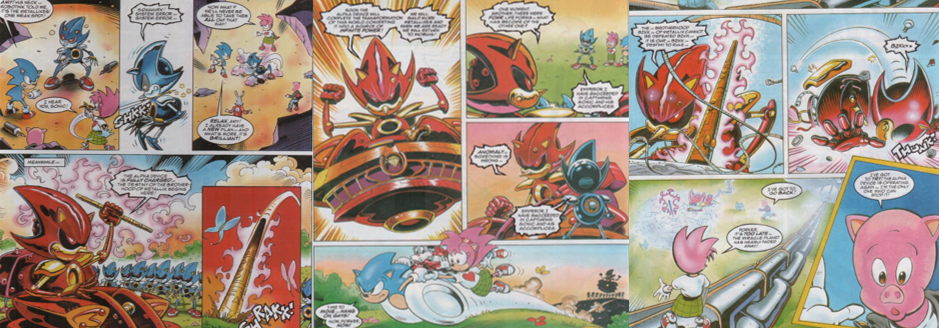
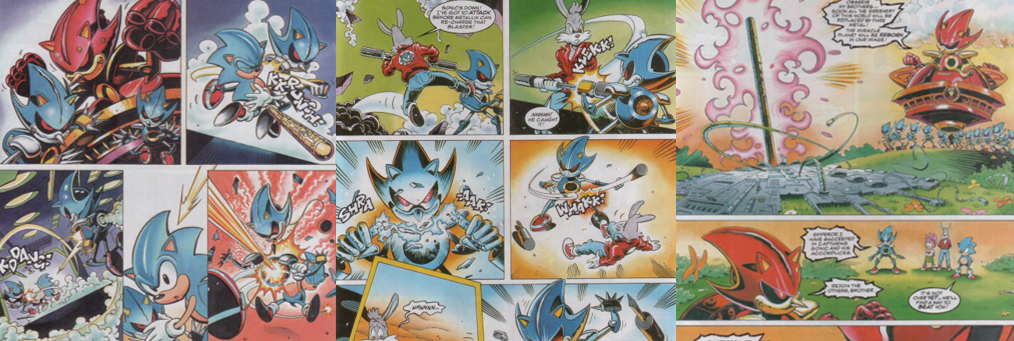
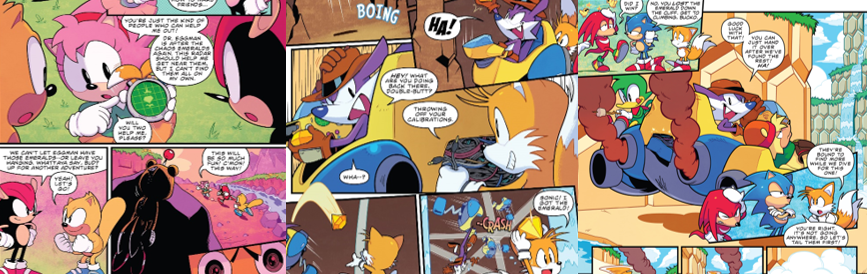
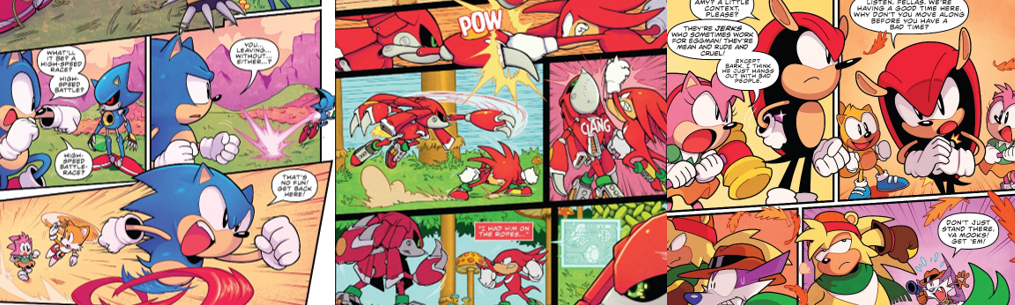
“Seasons of Chaos” begins with Sonic the Hedgehog and his friends, Miles “Tails” Prower and Amy Rose (all beautifully rendered in their “Classic” forms) adventuring through Spring Valley Zone, whimsically smashing Badniks, before stumbling upon a Chaos Emerald out in the open. Just as Sonic moves to nab it for himself, the gem is stolen by none other than Metal Sonic! While Tails and Amy react in horror, Sonic gleefully prepares for a rematch against his metallic doppelgänger and is first sad and then enraged when Metal Sonic simply blasts away without a word. Eager to test his mettle against…Metal…Sonic gives chase and, following a hilarious misunderstanding with Amy when he asks for a “boost” and an assist from Tails, Sonic rockets into the sky and has to be saved from a fatal plummet by Knuckles. Knuckles relates how he was hanging out on Angel Island (exactly as depicted in the opening cutscene of Sonic & Knuckles (SEGA Technical Institute, 1994)) when one of the animals also found a Chaos Emerald, leading to am ambush by Metal Knuckles!  Though Knuckles fought valiantly against his metallic double, Metal Knuckles endangered the locals, forcing Knuckles to save their lives and allowing the robot to scarper with the Chaos Emerald. Naturally, Knuckles pursed his foe, which led him to Sonic. Realising that Metal Sonic and Metal Knuckles must’ve been sent by Doctor Eggman to retrieve the Chaos Emeralds for some nefarious scheme, our heroes waste no time in racing off to stop this plot…in fact, they’re so quick to run off that they leave Amy behind!

Amy ropes Mighty and Ray into helping her find the Chaos Emeralds, which are also sought by Fang.

Angered and despondent about being left out, Amy sadly wanders off with Tails’ Emerald Radar, oblivious to the robotic puppet spying on her. Her sadness turns to excitement when she bumps into Mighty the Armadillo and Ray the Flying Squirrel during their exercises. Interestingly, this is depicted as their first time meeting, though they have a mutual friend in Sonic. Realising the two are just the guys to help her out, Amy quickly convinces Mighty and Ray to join her in tracking down the Chaos Emeralds using Tails’ radar. Over in the Summer Falls Zone, Tails realises, to his dismay, that he’s lost his radar; luckily, the trio have an “expert treasure hunter” on hand and quickly find another Emerald. However, just as they go to grab it, they’re accosted by Fang the Hunter, Bean the Dynamite, and Bark the Polar Bear, three unscrupulous mercenaries who’ve been hired by Dr. Eggman to retrieve the Chaos Emeralds. While Knuckles matches brawn with the strong, silent Bark and Sonic tangles with the wacky, bomb-tossing Bean, Tails pursues Fang, awestruck by the hunter’s hover craft, the Marvelous Queen, which he sabotages to relieve Fang of his prize. However, Fang’s popgun leads to a game of hot potato as the teams vie for the gem, Bomb barely stopping himself from blowing it up, Sonic emulating another videogame icon, and the gem finally plummeting down a waterfall after Knuckles and Bark beat each other senseless trying to claim it. Realising that the thieves will find more Chaos Emeralds in the time it’ll take them to dive for this one, Sonic and his friends choose to get moving rather than waste their time, completely oblivious that the jewel has landed on Mighty’s head below! Ecstatic, Amy enthusiastically leads her new allies onwards, unaware that the Heavy King is monitoring not just their progress, but all the competing teams from its ominous control room through the eyes of its mechanical minions.

Sonic and his friends begrudgingly team up with their enemies to confront a common foe.

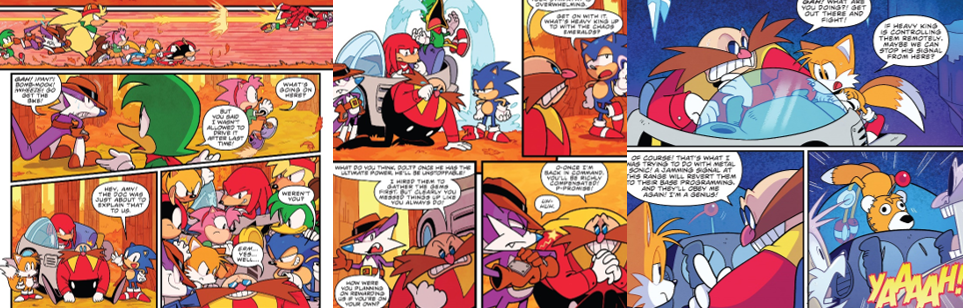
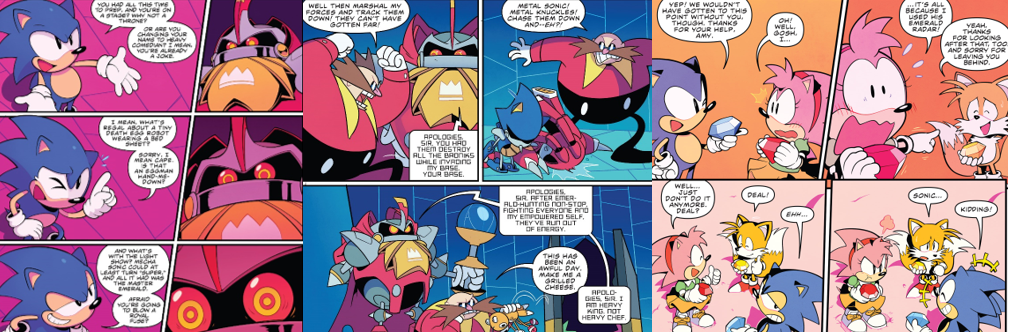
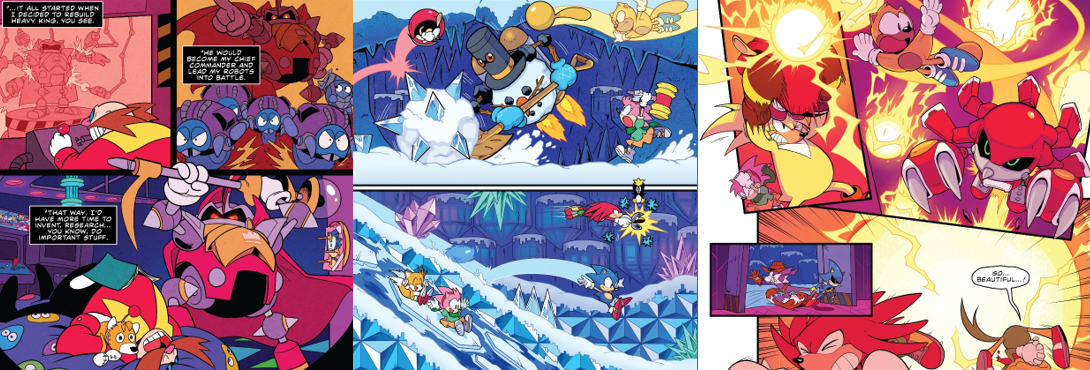
Running loops through the dense Autumn Forest Zone, Sonic and friends find themselves struggling with the dense foliage and troubled by Dr. Eggman’s aggressive pursuit of the Chaos Emeralds. Speaking of whom, they happen to spot Dr. Eggman pursuing Metal Sonic through the forest and, naturally, attack, easily disarming (literally) his Egg-O-Matic of its buzzsaw appendages. Nearby, Amy and the others find another Chaos Emerald and are challenged by Fang and his goons. Amy fills his friends in on the trio, noting that they’re all jerks except for the sullen Bark (who she thinks is just misled) and Mighty leads the three in an attack. True to Amy’s suspicions, Bark appears reluctant to fight and begrudgingly defends Fang from Mighty’s attack, stuffing him into a tree trunk. Bomb’s erratic explosives blast Ray and Amy from the sky and dislodge the Chaos Emerald, allowing the crazed duck to claim it, but Metal Knuckles suddenly steals it, leading the two teams to set aside their differences and give chase, Fang livid at the double-cross. They bump into Sonic, Tails, Knuckles, and the defeated Dr. Eggman, who explains that the rebuilt Heavy King turned against its master, reprogrammed Metal Sonic, Metal Knuckles, and Tails Doll and kicked Dr. Eggman from his base. Realising they share a common enemy, the group decides to work together to stop the Heavy King and heads to Dr. Eggman’s base in the Winter Caverns Zone, overcoming the natural landscape and the Heavy King’s defences through surprisingly effective teamwork. Sonic can’t help but mock Dr. Eggman’s embarrassing defences, leading to the doctor enjoying watching Metal Sonic blast Sonic while he’s distracted. While everyone works together to fight Metal Sonic and Metal Knuckles, Dr. Eggman and Tails reprogram Tails Doll to jam the Heavy King’s signal, returning the robots to Dr. Eggman’s control and forging another unlikely alliance. Not wishing to see his base suffer any further damage, Dr. Eggman simply remote opens the doors rather than let his newfound allies trash the place and they head inside to confront the Heavy King.

Sonic and friends defeat the Heavy King and split the Chaos Emeralds between them.

However, the Heavy King is nigh-untouchable thanks to having gathered all seven Chaos Emeralds. It channels their power through its staff, casting lighting bolts and energy balls that rain destruction upon its foes. The Heavy King relishes the conflict, plotting to restore the Hardboiled Heavies and conquer the world and easily shielding against or shrugging off their counterattacks. Realising they’re outmatched, Sonic uses himself as bait, focusing the Heavy King’s attention solely on him by insulting the maniacal robot. Sonic’s allies then steal the Chaos Emeralds and, rather than becoming Super Sonic and destroying the Heavy King, Sonic settles for easily toppling the now-powerless robot. It then begs forgiveness from Dr. Eggman, claiming to have been following its programming. Dr. Eggman commends his creation and forgives it, planning to install a software patch to keep it in check, and then orders his forces to attack. However, Sonic and the others have gone, along with the Chaos Emeralds, and Dr. Eggman’s forces are too weak and rundown from the assault to give pursuit, leaving Dr. Eggman sulking in his frozen base. In the aftermath, Bark meekly says goodbye to Amy and leaves with Fang, who claims a Chaos Emerald as his reward. Similarly, Knuckles leaves with another, planning to keep it as safe as the Master Emerald, and Mighty and Ray take two more, hoping to team up with Sonic again in the future. Sonic, Tails, and Amy also keep hold of a Chaos Emerald each, splitting the gems up to keep them out of Dr. Eggman’s hands in the future. To Amy’s glee, Sonic and Tails not only apologise for leaving her behind but also thank her for her help, leaving her as flustered as Bark. Sonic then races off into the sunset towards his next adventure.  

The Summary:
I absolutely adored “Seasons of Chaos”! after years, decades, of Sonic comics using art styles that were far removed from the original Japanese depictions of Sonic and his friends, it’s really refreshing to see a return to the classic art style, as beautifully brought to life in Sonic the Hedgehog CD’s (SEGA, 1993) anime sequences. Don’t get me wrong, I grew up with Richard Elson and Greg Martin’s renditions of Sonic and I love what Patrick “Spaz” Spaziante did with the characters, but Tracy Yardley always evokes the classic style so wonderfully and Sonic and his friends have never looked better than in “Seasons of Chaos”, in my opinion. Everyone looks ripped right out of the original Japanese artwork and strikes poses reminiscent of the videogames, to say nothing of the times the story switches to a side-view to recreate the kinetic, sidescrolling action of the videogames. Many Sonic comics focus more on drama and character moments and convoluted plots, and I can understand why. They’re comic book adaptations trying to keep readers coming back for more; simply showing Sonic smashing robots and dodging traps isn’t as engaging as it is in the games. However, there’s something to be said for the simplicity at work in “Seasons of Chaos”, which pays homage to the classic videogames by acting as a continuation of their events and could easily be slotted in as another post-Sonic Mania Plus (Christian Whitehead/PagodaWest Games/Headcannon, 2018) adventure. Interestingly, “Seasons of Chaos” opts for unique locations clearly inspired by the likes of Green Hill Zone, Angel Island Zone, and Robotnik Winter Zone. While it would’ve been nice to see familiar locations, I like that we got to see new environments that were similar and yet different enough as it tied into this story being a follow-up to Sonic Mania Plus, which also included a handful of new Zones clearly inspired by the classic videogames.

I cannot and will not ever stop gushing about how beautiful the art work is in this special!

“Seasons of Chaos” also references not just obscure Sonic titles but also the 3D adventures. Dr. Eggman chastises Metal Sonic’s brief hesitation when the Heavy King talks about becoming a “Metal Overlord”, for example, and the comic features Metal Knuckles as a primary antagonist, finally giving long-time Sonic fans a good look at its complex, armoured plated intricacies. I enjoyed the adventure set out in this story; it’s a classic race to retrieve the Chaos Emeralds but one that subverts expectations. Sonic is continually insulted and dismayed at Metal Sonic’s refusal to race, for example, and the Chaos Emeralds are scattered across the world, not unlike Sonic’s 8-bit adventures. “Seasons of Chaos” also brings back three of the franchise’s most obscure characters, Fang, Bean, and Bark, retaining them as a mercenary duo as depicted in previous American Sonic comics. I loved Fang’s depiction as an opportunistic, cowardly weasel who lets others do his fighting and is selfish and full of bluster (there’s a fun moment in the finale where Metal Sonic drags him back into the fight!) Bean retains the same crazed, pyromaniacal characterisation seen in the latter days of the Archie comics, while Bark is the strong, silent type who’s depicted as misled and reluctant but happy to match his strength against powerful foes. Similarly, the story also ropes in Mighty and Ray, two characters I never get tired of. I loved their brotherly dynamic (which is similar to the relationship between Sonic and Tails) and them making fast friends with Amy, forming a trio that acts as an early incarnation of Team Rose. Amy’s desire to prove herself and be useful is as infectious as her enthusiasm and the three bring a lot of levity to an already whimsical tale. Naturally, I adored the depiction of Sonic, Tails, and Knuckles as well. I loved the banter between Sonic and Knuckles, with Knuckles being oblivious to Sonic’s taunting and Sonic being a wise-cracking, adventurous spirit. While Tails felt like a bit of a background character, he stepped up to sabotage Fang’s craft and work with Dr. Eggman to reprogram Tails Doll, showing that these three have the perfect balance of skills to oppose Dr. Eggman’s plans.

A fantastically written and wonderfully illustrated celebration of the franchise.

In an interesting twist, Dr. Eggman isn’t the main villain. Instead, he’s the victim of another robot rebellion, humiliated and seeking revenge after the Heavy King took its programming a little too literally. Dr. Eggman’s depiction reminds me very much of his portrayal in Sonic the Hedgehog (Ikegami, 1996), being a prideful, grandiose, comical figure capable of malicious actions but largely a spiteful buffoon. Sonic routinely mocks his creations and easily trounces his machines and defences, Dr. Eggman reacts to the Heavy King’s betrayed with a childish tantrum, and he immediately sets his revived forces against his former allies the moment he regains control of them, only to find they’re too drained to fight. Every time I read “Seasons of Chaos”, I’m enamoured by the gorgeous colours and striking artwork. Everything has such a cute visual appeal that recalls a far less dramatic and more whimsical time in Sonic’s history, a time where the spirit of high-speed adventure was enough of an appeal for players and readers. I honestly wish IDW would publish a dedicated side series of classic Sonic adventures in this style as it’s truly beautiful and would be perfect for a five-page backup feature, at least, alongside whatever dramatic, world-ending plot is running through the main story. I loved how the comic recreated visuals from the videogames as fun Easter Eggs for long-time fans while crafting a fun, easy to follow adventure for these three teams. The action was bold and kinetic, with panels full of little details and quirks and humorous moments, from wild expressions to visual callbacks to the source material, and character defining moments for the likes of Amy, Mighty, and Ray, who both proved their worth and solidified their alliances with the main trio through this story. Ultimately, “Seasons of Chaos” was a fantastic celebration of Sonic’s 30th anniversary. The story and art did a great job of honouring the character’s past and rich history, weaving recognisable elements into a largely original story and casting a spotlight on the classic depictions of both iconic and obscure characters as only the comics can. I honestly wish the games leaned more towards this style, embracing what worked so well in the past and emphasising Sonic’s rich supporting cast and fun sense of adventure rather than focusing solely on Sonic alone as it made for a hugely enjoyable read.

My Rating:

Rating: 5 out of 5.

Fantastic

Did you enjoy “Seasons of Chaos”? Were you as captivated by the art style as I was? Did you like seeing Amy team with Mighty and Ray and the inclusion of Fang, Bean, and Bark? Were you disappointed that we didn’t get a Super Sonic finale? Would you like to see a spin-off comic in this style? What are some of your favourite stories and moments from IDW’s Sonic comics? How did you celebrate Sonic the Hedgehog this month? Whatever your thoughts, leave a comment below, consider supporting me on Ko-Fi, and go check out my other Sonic content.

Back Issues [Sonic Month]: Sonic the Comic: Origins


Sonic the Hedgehog was first introduced to gamers worldwide on June 23 1991 and, since then, has become not only SEGA’s most enduring and popular character but also a beloved videogame icon. Thus, in keeping with tradition, I’m dedicating some time to celebrate SEGA’s supersonic mascot.


Story Title: “Enter: Sonic”
Published: 29 May 1993
Writer: Alan McKenzie
Artist: Anthony Williams

Story Title: “Robofox”
Published: 12 June 1993
Writer: Mark Millar
Artist: Woodrow Phoenix

Story Title: “The Origin of Sonic”
Published: 4 September 1993
Writer: Nigel Kitching
Artist: Richard Elson

Story Title: “Prologue: Once Upon a Planet…”
Published: 30 April 1994 (cover-dated: 13 May 1994)
Writer: Nigel Kitching
Artists: Mike Hadley and John M. Burns

Story Title: “Kintobor Spelled Backwards Is…”
Published: 14 May 1994 (cover-dated: 27 May 1994)
Writer: Nigel Kitching
Artists: Mike Hadley and John M. Burns

Story Title: “A Tale of Tails”
Published: 28 May 1994 (cover-dated: 10 June 1994)
Writer: Nigel Kitching
Artists: Mike Hadley and John M. Burns

The Background:
Sonic the Hedgehog was a huge success for SEGA. Thanks to an aggressive marketing campaign and being bundled with the all-powerful 16-bit Mega Drive, over 15 million copies were sold and SEGA briefly usurped Nintendo as the big dog of the videogame industry. Eager to capitalise on Sonic’s mainstream popularity, SEGA shamelessly licensed their mascot anywhere they could, leading to two concurrent cartoons and multiple comics books published across the world, with each taking vastly different approaches to the source material. While the Japanese manga was far more faithful to the videogames, Archie Comics awkwardly mashed together the contrasting tones of Sonic’s cartoons into what would become the longest-running comic series based on a videogame, and the United Kingdom was treated to Sonic the Comic (StC). Published fortnightly, StC took much of its lore from the now defunct Mobius storyline created specifically for Western audiences and made the bold decision to portray Sonic as an egotistical narcissist who treated his friends poorly while fighting for freedom and justice. Eventually folding more elements and characters from the videogames into its narrative, StC was a highlight of my youth for many years. Although it soon devolved into reprints before being cancelled, its spirit lived on through an online continuation.

The  Review:
I’m doing things a little different for this review. StC’s early days were a bit sporadic, which isn’t surprising considering each issue featured a handful of stories based on different SEGA properties alongside letters, artwork, reviews, and cheats for SEGA titles. While Sonic the Hedgehog stories were always at the forefront, the lore was anything but sequential. Issue one, for example, drops us right in the middle of the action and appears to take place shortly before the events of the first videogame. By issue six, it’s clear that StC takes place sometime after Sonic the Hedgehog 2 (SEGA Technical Institute, 1992) and StC rarely produced direct adaptations of the source material, especially the first two games. It also didn’t waste much time in bogging down its stories with exposition; the comics were aimed at a pre-made audience of SEGA gaming fans so this wasn’t necessary. Thus, it took some time for later issues and backup stories to flesh out Sonic’s characters and world. Fittingly, this was initially related through supplementary stories titled Sonic’s World, in which key events from Mobius’s history, the videogames, and StC’s unique canon were revealed to the reader. Thus, rather than going through each issue in turn for this review, I’ll instead be tackling them in as close to chronological order as possible to give a taste of the world StC crafted and the way it reinterpreted the source material. Accordingly, we must start not with issue one but with issue twenty-five, which included the first appearance of the Sonic’s World stories and gave us our first real overview of how Fleetway were interpreting the videogames. Like all Sonic media outside of Japan in the 1990s, Fleetway takes place not on Earth, but on Mobius, a planet said to be both 117,63222 light years from Earth and in “a parallel dimension” and divided into areas known as “Zones”. “Prologue: Once Upon a Planet…” gives a brief overview of how Sonic the Hedgehog fought the evil Doctor Ivo Robotnik, forcing him to retreat to a secret based in the “Special Zone”, and how Dr. Robotnik has both biological and mechanical minions station around the planet and rules with an iron fist. This story, like the others in these Sonic’s World features, is narrated by the Kintobor Computer, an artificial intelligence that assists Sonic and his friends from their underground base and is the digital backup of Sonic’s old friend, the kindly Doctor Ovi Kintobor.

Sonic shares his superhero origins with his friends and reveals how Dr. Robotnik came to be.

Who is Dr. Kintobor, you ask? Well, to answer that we need to jump to issue eight’s “The Origin of Sonic”. This story (set before Dr. Robotnik conquered Mobius) saw Sonic charge up a Star Post with his superfast speed and transport his friends (long-suffered sidekick Miles “Tails” Prower, brave Johnny Lightfoot, and cowardly Porker Lewis) to the Special Zone. Modelled after the iconic half-pipe Special Stages seen in Sonic 2, StC’s Special Zone the a chaotic and dangerous home of Sonic’s friend, the Omni-Viewer, a gigantic sentient television screen. Capable of transporting and transmitting people and events across time and space, the Omni-Viewer shows Sonic’s friends the origin of both Sonic and Dr. Robotnik through his view screen. Some time ago, Sonic was just a normal, brown hedgehog (albeit one with incredible speed). While exploring Mobius, Sonic stumbled upon Dr. Kintobor’s secret laboratory and met the kindly Doctor, one of the few humans living on Mobius. Enamoured by the beauty of the world, Dr. Kintobor created the Retro-Orbital Chaos Compressor (ROCC), a massive machine designed to transfer the planet’s “evil” into six gems using special Golden Rings. Unfortunately, without the legendary seventh emerald, the process is incomplete and the ROCC is unstable. Sonic agrees to search the planet for the elusive seventh emerald and, in return, Dr. Kintobor develops his natural speed. Thanks to a snazzy pair of “friction reducing […] power sneakers” and a “kinetic gyratoscope”, Sonic breaks the sound barrier, streamlining his body to his iconic blue look. One day, Dr. Kintobor took a lunch break and, while carrying a rotten egg, tripped and collided with the ROCC. The explosion scattering the Golden Rings across Mobius and warped the six Chaos Emeralds to the Special Zone and, like Sonic’s accident, forever changing the friendly Doctor. Where he was once tall, slender, and pleasant, he was now squat, bulbous, malicious, and rotten. Even his name was reversed (hence “Doctor Ivo Robotnik”) and he became obsessed with recovering the Chaos Emeralds to conquer the world. “The Origin of Sonic” concludes with the Omni-Viewer returning Sonic and his friends to Mobius, forced to drop them six months into the future and thus allowing Dr. Robotnik to take over the planet.

These stories depict Sonic’s first meeting with Tails and initial battles with Dr. Robotnik.

“Kintobor Spelled Backwards Is…” reveals that Sonic and Porker discovered one of the Golden Rings could talk after Dr. Kintobor’s brain patterns somehow transferred to it during the explosion. Using comic book logic, the tech-savvy Porker downloads Dr. Kintobor’s consciousness onto a computer, birthing the Kintobor Computer and allowing the kindly Doctor to live on. Following Dr. Robotnik’s transformation, Sonic and his friends scoured the world for the Golden Rings and the Chaos Emeralds to try and reverse the process until, one day, they were attacked by the first generation of Dr. Robotnik’s Badniks. Using his Sonic Spin Attack, Sonic trashed the Badniks and discovered, to his horror, that Dr. Robotnik was capturing his friends and using them to power his machines. There’s some crossover between these panels and issue one’s “Enter: Sonic” and even America’s promotional comic book, namely that Sonic trashed Badniks in Green Hill Zone and rescued Porker Lewis. A montage briefly recaps the first Sonic videogame,  how Sonic travelled and successfully recovered the six Chaos Emeralds before Dr. Robotnik. However, when Sonic and his friends tried  to analyse them, the Chaos Emeralds disappeared in a burst of radiation since, without the seventh to balance them, they couldn’t be safely kept together. Absorbing the full brunt of the blast, Sonic was transformed into a maniacal, golden-hued form that blasted from the base in a desperate desire for freedom. Crashlanding in the Swampland Zone, Sonic returned to normal with no memory of his transformation; his confusion gave way to concern when he heard cries for help. Rushing to assist, Sonic pulled a fox boy from the swamp and was amazed to find the cub, named Miles, not only had two tails but could fly by spinning them like a propeller, earning him the nickname “Tails”. Tails joined Sonic for another montage, this time recapping Sonic 2, which sees Sonic take down Dr. Robotnik’s greatest creation, the Death Egg, and safely hide the six Chaos Emeralds in the frozen North Cave.

Though Sonic easily destroys Dr. Robotnik’s machine, he’s almost killed by his best friend!

This brings us to “Enter: Sonic”, where Dr. Robotnik unleashes a fresh hoard of Badniks throughout Green Hill Zone to keep Sonic from meddling in the evil genius’s newest creation, the Engine of Destruction. Fuelled by the Golden Rings and literally sucking them out of the air, the machine promises to “crush Sonic into a million bitty hedgehog nuggets” and “pollute the atmosphere […] for a thousand years”! After rescuing his friends from their Badnik prisons, Sonic learns of the Engine of Destruction and races off to stop it, encountering some of the same hazards players must overcome in the first game (loops, crumbling platforms, and spike pits). Despite its vast size and ominous appearance, the Engine of Destruction is easily destroyed by Sonic, who simply rams into it at full speed. Sonic’s victory is soured by the realisation that he hasn’t heard from Tails for some time. Between issue one and two, Sonic goes on an unrelated adventure and returns to find Green Hill Zone deserted after Dr. Robotnik raided it overnight. Donning his new “power-grip trainers” and a pair of shades, Sonic liberates his friends, only to find Dr. Robotnik has transformed the foxboy into the semi-cybernetic “Robofox”. His personality warped by Dr. Robotnik’s programming, Robofox both physically and mentally attacks Sonic. However, when he witnesses his friend and hero being pummelled to death by Dr. Robotnik’s wrecking ball, Tails regains his senses and charges the villain, destroying both his exoskeleton and trashing the Egg-O-Matic. Relieved to have his friend back, Sonic teases Tails for his actions and sadly takes him back home, though his fancy new sneakers were wrecked from the adventure and Dr. Robotnik lived to fight another day.

The Summary:
It’s interesting reading these stories in this order, which can loosely bee described as sequential, rather than in publication order. There were a few other stories that flesh out some other elements of these events, such as a glimpse into Tails’ past before he came to Green Hill Zone and a time travel story that showed Sonic was responsible for the accident that birthed Dr. Robotnik. This Mobius/Dr. Kintobor canon was very popular outside of Japan at the time and all the books and comics published in the United Kingdom used a variation of it, while the United States made up their own backstories. It’s certainly an interesting and “comic book” take on the premise but it amuses me that the localisation team went to so much effort to expand the lore when the original story is so simple: anthropomorphic characters battle an evil despot to defend the world from pollution. It’s certainly interesting to see Sonic’s origin depicted this way and, now, many decades later, rather quaint. For a generation of readers, this was Sonic’s canon origin. People really thought he lived on Mobius and was once a regular brown hedgehog, transformed by breaking the sound barrier. It’s a very “superhero” origin, fitting considering Sonic was often billed as such in publications at that time. I think my biggest issue with the Dr. Kintobor thing is how little emotional connection I have to that character. We don’t spend much time with him and his personality is erased by Dr. Robotnik. Even the Kintobor Computer became superfluous once Porker became even more of a tech genius, and it just raised more questions than it was worth sometimes. The whole ROCC thing is an interesting way of explaining why Golden Rings are scattered everywhere in the games and another early story even explained the item monitors, but Rings rarely appeared in StC after this or in the same way as the games so it’s a bit convoluted. I did like that the writers were laying the groundwork for a seventh “Control Emerald” even this early on. This would turn out to be the legendary Grey Emerald rather than the Master Emerald, but it’s a fun way to explain why the Chaos Emeralds constantly need to be collected in each game.

This fantastical origin mixes with loose adaptations of the games to give StC a unique interpretation.

StC also had a unique spin on Super Sonic, making him Sonic’s demonic alter ego and creating deeper parallels between him and Dr. Robotnik, elements sadly never really expanded upon in future stories. The artwork of these stories is decent, if a bit inconsistent. Richard Elson was busy on the main Sonic stories in issues twenty-five to twenty-seven, though we get a taste of his work in issue eight. It’s not quite as refined as later but a lot better than issue one and two, where Sonic’s poses (especially in “Enter: Sonic”) are lazily ripped from official SEGA artwork. I did enjoy how these stories adapted elements from the videogames; we honestly didn’t see this that much in StC, potentially because multiple stories of Sonic simply running around, bashing Badniks, and avoiding traps isn’t very interesting or dramatic. It’s fun seeing Green Hill Zone come to life in “Enter: Sonic” and seeing Sonic’s friends be jostled about by the Special Zone’s bombs in “The Origin of Sonic”. Both locations would be expanded into more grounded, bustling locations within just a few issues as StC settled into a more relatable adaptation of the game’s fantastical elements, but I liked the simplicity and fidelity of everything here. There’s just enough to make it unique, like the Engine of Destruction and the Omni-Viewer. A major plus in these issues is that Dr. Robotnik sports his videogame appearance; he’d later transform into his cartoon counterpart, but I find this rendition far more menacing, especially during his first appearance following his accident. These Sonic’s World stories also deliver the first direct adaptation of the videogames, albeit in an extremely truncated form. We’d see elements included in other stories, sure, but these montages recreate and canonise the videogames, making it clear that issue one occurs after Sonic 2 and that Sonic’s had multiple adventures even before StC began. The stories are also laced with some quirky humour; everything feels very “British”, from the dialogue and the characterisations. Sonic isn’t quite the obnoxious asshole we’d see in other stories, but he lives up to his reputation as a “Hedgehog with Attitude”, giving off an arrogant and cocksure bravado that perfectly contrasts with Dr. Robotnik’s spiteful and egg-centric personality.

My Rating:

Rating: 3 out of 5.

Pretty Good

Did you read Sonic the Comic as a kid? If so, what did you think to its unique interpretation on Sonic, his friends, and his lore? Were you a fan of the Mobius/Dr. Kintobor origin or are you glad that it’s been forgotten in modern times? What did you think to Sonic’s original look and his first meeting with Tails? What are some of your favourite StC stories and characters? How are you celebrating Sonic the Hedgehog this year? Whatever your thoughts on Sonic the Comic, or Sonic in general, drop a comment below.

Back Issues [Sonic Month]: Sonic the Hedgehog #0-3


Sonic the Hedgehog was first introduced to gamers worldwide on June 23 1991 and, since then, has become not only SEGA’s most enduring and popular character but also a beloved videogame icon. Thus, in keeping with tradition, I’m dedicating some time to celebrate SEGA’s supersonic mascot.


Writer: Michael Gallagher – Artist: Scott Shawl

Story Titles: “Don’t Cry for Me, Mobius!” and “Oh No–Robo! No-Mo’ Mobo!”
Published: 24 November 1992

Story Titles: “Run, Sally, Run!” and “Something Fishy”
Published: March 1993

Story Title: “A Crowning Achievement”
Published: April 1993

Story Titles: “Sonic Flashback!” and “Why Ask Spy?”
Published: May 1993

The Background:
SEGA wasted little time capitalising on Sonic’s massive popularity once he became a mainstream success and single-handedly caused them to usurp Nintendo’s position at the top of the videogame industry. Following in the footsteps of Nintendo’s success with DiC, SEGA’s mascot soon debuted on the small screen with two concurrent cartoons, the most popular of which was the simply-titled Sonic the Hedgehog (1993 to 1994), also known as “SatAM”. SatAM recast Sonic as the point man for the Knothole Freedom Fighters, a team based on his Animal Friends from the source material, and Doctor Robotnik as a terrifying, semi-cybernetic dictator. SatAM’s darker tone clashed with the slapstick approach of its sister-series, but Archie Comics awkwardly mashed both together for this four-part miniseries, the genesis of what would become the longest-running comic series based on a videogame. In the years since, Archie Comics would expand on their convoluted lore, shoe-horning in more and more videogame characters, until a ridiculous lawsuit spelled the beginning of the end for the comics, with the license then taken up by IDW and an all-new, game-adjacent continuity.

The Review:
When I was a kid growing up in the UK, Archie’s Sonic the Hedgehog comics were a complete oddity. I never even heard of them until I picked up a trade paperback collection of this original miniseries. Though they offered little in the way of a resolution to SatAM’s unresolved cliff-hanger, they were the closest thing to an official follow-up. While they had many flaws and became ridiculously convoluted, things started relatively simply with this oddball miniseries, which has the overall look and cast of SatAM but strangely incorporates some elements (particularly the cartoonish slapstick) of Adventures of Sonic the Hedgehog (1993). Sonic, Miles “Tails” Prower, Princess Sally Acorn, and their colourful friends and enemies live on Mobius, a world whose natural beauty has been tainted and corrupted by the maniacal Dr. Robotnik. “Don’t Cry for Me, Mobius!” begins with the mad doctor chasing Sonic throughout the countryside and trying to splatter him with his super sticky “mega-muck”. While Sonic easily outruns Dr. Robotnik’s Egg-O-Matic, he appears to be trapped by, of all things, a simple Caterkiller. This is a ruse to lure Dr. Robotnik closer as Sonic avoids a splatter of mega-muck, destroying the Caterkiller and leaving Dr. Robotnik covered in his own goop. Sonic then breaks the fourth wall and invites the reader to follow him to Knothole Village, the hidden refuge of the Freedom Fighters, where he meets with Tails (Sonic’s biggest fan and budding sidekick), Boomer the Walrus (the mechanic and tech support who wasn’t quite yet known as Rotor), and Princess Sally (the team’s leader who sports a decidedly different colour scheme and is exasperated by Sonic’s brazen attitude). Sonic and Sally’s awkward mutual attraction is interrupted by fusspot Antoine D’Coolette, who alerts them to a leak that could potentially reveal their location.

Sonic and his friends gleefully fight to free Mobius from Dr. Robotnik’s mad tyranny.

The Freedom Fighters head topside to investigate, exposing themselves to Dr. Robotnik’s spy satellites, and discover the cause is a growth of literal weeping willows driven to tears by Dr. Robotnik’s destructive actions. Eager to crush his hated enemy, Dr. Robotnik leaps into his wrecking ball machine and attacks alongside his Buzzbomber. Sonic leads them to a nearby well but briefly panics when he can’t immediately grab a power boost from the Power Rings within. Once he grabs one, he uses its strange magical powers to flip Dr. Robotnik’s wrecking ball, smashing his ship and forcing him to flee back to Robotropolis, his heavily industrial cityscape. We then get our first taste of how things got to be this way in “Oh No–Robo! No-Mo’ Mobo!”, a flashback story which shows that Sonic was once the delivery boy for his Uncle Chuck’s chili dog stand. The two literally jump for joy when a call comes in for two hundred chili dogs and Sonic gleefully speeds away to deliver the order, leaving Chuck and their beloved pet, Muttski, to be apprehended by Dr. Robotnik and his SWATbots, who’ve covertly conquered the land without the hedgehogs realising it. Sonic’s delivery brings him to Robotropolis and sees him almost crushed by a wrecking ball courtesy of Cluck, Dr. Robotnik’s robotic bird. Realising he’s been duped, Sonic races back to his family and finds SWATbots destroying the chili dog stand. After trashing the robots, Sonic heads back to Robotropolis to save his family and bumps into Princess Sally, an idealistic squirrel girl who’s also trying to rescue her family. Thanks to Sally’s insight, Sonic soon finds Uncle Chuck and Muttski but is dismayed to see they’ve been turned into robots (strangely drawn as though they’re merely hypnotised) and forced to work as Dr. Robotnik’s slaves. When Sonic angrily confronts Dr. Robotnik and futily tries to reason with his uncle, he’s attacked by more SWATbots and forced to flee with Sally to the “Great Forrest” and readily accepts her offer to join her band of rebels.

Sally’s secretive nature and Sonic’s reckless attitude lead our heroes into some slapstick peril.

“Run, Sally, Run!” sees Sonic perturbed when he passes by Princess Sally as she’s wandering dangerously close to the edge of the forest and is angrily told to stay out of her business. Believing Antoine is behind her foul mood, Sonic races to Knothole and discovers that Sally has arranged to meet with Dr. Robotnik to negotiate the return of her father, King Maximillian Acorn, and that no one is to interfere. Naturally, Sonic (joined by Antoine and Tails) races to intervene but Sally chastises them and demands that they not follow her. Though they again plan to disregard this, the three are suddenly trapped within a cage and, while Sally is confident that the meeting is legitimate, she’s aghast when Buzzbomber drops her right in Dr. Robotnik’s lap and she’s hauled away to the “Robo-Machine”. Naturally, Sonic burrows out and into Dr. Robotnik’s lair, rescuing her, smashing the Robo-Machine, and dashing Sally back to Knothole. Unfortunately, Sally’s unimpressed by the “mucho-macho-squad”, whose reckless actions meant she couldn’t use Boomer’s special boots to analyse and reverse the Robo-Machine’s effects, leaving Sally enraged and Sonic embarrassed all because she couldn’t just explain the situation to them. Whilst relaxing with a spot of fishing in “Something Fishy”, Sonic accidentally hooks a Jaws Badnik and narrowly avoids being chomped to pieces like the dock he’s standing on. Diving into the lake (with no fear of the water), Sonic discovers not just Dr. Robotnik’s polluting pipes but also his waterproof robot maker. Though Sonic avoids being fed into the machine, he almost drowns and is only saved by the timely intervention of Boomer and Tails, who arrive in Boomer’s bathysphere craft. While the damaged Jaws limps off to report to its master, Sonic smashes the robot maker and returns to dry land with his friends, his appetite for seafood now lost.

Sonic journeys across land, air, and sea to recover the magical Freedom Emeralds.

By “A Crowning Achievement”, Sally has switched to a brunette (a look Sonic secretly likes and which Sally secretly hopes he likes) and presents Sonic with her father’s jewellery box, which contains the legendary “Freedom Emeralds”. Despite their name, the jewels are actually pearl-like spheres set onto an elaborate crown, King Acorn’s family heirloom that Sally hopes will bestow her with magical powers. In preparation for her coronation, Sally has Antoine and his Royal Guard guard the box, but they’re all stunned to find it empty and the crown missing. After almost coming to blows over the incident, Sonic and Antoine suspect one of the guardsmen to be a robot spy. Using his super speed, Sonic sets off the sprinkler system and exposes the spy, who reveals he delivered the crown (and Knothole’s location) to his master before promptly self-destructing. Thanks to Sonic’s “Warp Sonic Speed”, Knothole (and our heroic hedgehog) are spared a gruesome fate, and Sally orders him and Antoine to retrieve the crown. Begrudgingly, the two pursue Dr. Robotnik’s blimp using a hot air balloon. Though Antoine’s forced to bail when they’re attacked by Bat Brains, Sonic bounces across the Badniks and pops the blimp with his patented Sonic Spin Attack, retrieving a Freedom Emerald in the process. Learning from a busted SWATbot that Dr. Robotnik plans to hide the Freedom Emeralds across Mobius, Sonic races underwater (with Tails accidentally in tow) and finds another Freedom Emerald at the same cavern from “Something Fishy”, easily defeating Jaws once more. While Sonic easily snags a third gem from a passing SWATbot, he’s dropped into a confrontation with Burrobot. Despite the robot’s terrifying burrowing power, it’s still no match for Sonic’s speed and is relieved of its Freedom Emeralds. Trapped in an underground maze, Sonic runs himself to exhaustion searching for the exit before having the genius idea to burrow upwards. Naturally, he conveniently pops out in Boomer’s workshop, finally restoring the crown and bolstering the Freedom Fighters’ morale, though Dr. Robotnik, angered at being absent for the story, vows to have his revenge.

After a weird dream, Sonic infiltrates Dr. Robotnik’s lair with a flimsy robot disguise.

“Sonic Flashback!” sees Sonic forced off a cliff by a two-pronged attack of Crabmeats and the tried-and-tested wrecking ball. Knocked loopy, Sonic has a weird dream where he and Dr. Robotnik grew up together, revealing that Uncle Chuck created the magical rings to boost Sonic’s speed. Chuck despairs of his nephew’s disdain for “Little Robotnik”, an orphan boy who tinkers with mechanical toys and aspires to take over Chuck’s farm. Unwilling to entertain “Robbie’s” attitude, Sonic speeds off and Chuck ends up crashing his tractor into the barnyard (and Robbie) thanks to Robbie sabotaging the vehicle to make his toys. Boosted by the magical ring, Sonic gets them to a hospital in record time but Robbie, incensed at Chuck’s reckless driving, builds an even bigger robot out of Chuck’s appliances and attacks the hedgehogs. Luckily, Sonic easily rescues his uncle and reduces the robot to scrap with a hose pipe, then he wakes up and gets back to fighting Dr. Robotnik for real. In “Why Ask Spy?”, Princess Sally has Sonic slap on a mechanical jaw and some scary contact lenses to masquerade as a robot. After convincing Tails that Sonic is a threat, Sonic successfully infiltrates Dr. Robotnik’s lair, convincing the dictator that he stumbled into one of his devious traps and was transformed into a mindless slave. Disregarding Buzzbomber’s concerns, the gleeful doctor orders Sonic to lead him to Knothole and is thankfully saved from betraying his friends when he instead volunteers to investigate a disturbance at the Crab Factory. There, Sonic reconvenes with Sally and Antoine and also discovers Uncle Chuck diligently assembling Crabmeats. After a run-in with the robotic Muttski fires Sonic up, he gets a measure of payback by tricking Dr. Robotnik with his disguise once more and dropping a bomb on the Buzzbomber factory to deliver a significant blow to the dictator’s operation. Interestingly, Sonic justifies this by saying he doesn’t want to bomb his uncle’s factory and possibly kill him but seems to have no consideration for the slaves working in the other factory.

The Summary:
Issues 0 to 3 of this miniseries also devote a few pages to some shorter stories, pin-ups, and gags to bolster the narrative. Issue 0 sees Princess Sally lament to loss of her literal family tree, gives a rundown of Sonic’s different levels of speed (categorising three as “Ultra-Sonic”, “Super-Sonic”, and “Hyper-Sonic”, with no relation to Sonic’s similarly named forms), introduces readers to Dr. Robotnik’s other Badnik minions, and gives a quick explanation of Sonic’s iconic sneakers (which were created for him by Uncle Chuck in this continuity). Issue 1 showcases Sonic’s speed by having him blow Boomer’s mind with a game of baseball, play tennis with himself, and go through his family album (with him being too fast for the camera each time), offers a two-page pin-up of the heroes and villains, and sees Boomer give examples of slower creatures to have a pop at politicians. Issue 2 sees the writers poke fun at other comics by offering ten reasons why readers should pick Sonic the Hedgehog over the likes of DC and Marvel (ironically, guest stars, fancy covers, a motion picture, and character deaths would all come to pass). It also includes two one-page stories, one detailing the versatility of his spines and one demonstrating that Sonic’s faster than the speed of sound (something amusingly noted in issue 0 where the editor points out that the “Zoom” sound effect will arrive “later this week”). Gags and skits such as these tie into the miniseries’ slapstick nature; signs, sight gags, and puns are plentiful in these four issues, placing Sonic the Hedgehog firmly as a book for little kids. There are some more mature themes behind all the cartoonish action, such as a strong anti-pollution message, negative portrayals of bullying and xenophobia, and a strong sense of justice, but it’s all very light-hearted and carefree, with the characters rarely in peril since Sonic can just magically solve every issue with his Spin Attack, magic ring, or by easily fooling his enemies.

Although the miniseries echoes SatAM, its characterisations are all over the place.

Fans of SatAM will probably be disappointed to find that the miniseries merely takes visual cues from that series. We have the same cast of characters in similar situations, but it’s far goofier than in SatAM. The tone is far closer to Adventures of Sonic the Hedgehog, with Dr. Robotnik more a bumbling blowhard than a menacing tyrant, his minions being snarky and foolish robots easily fooled by drawings, and Sonic performing nonsensical feats like magically turning Dr. Robotnik’s machine against him or setting off sprinklers by literally burning rubber. Sonic’s characterisation is a weird mish-mash of Adventures and SatAM, showcasing his arrogance and smart mouth but also seeing him be awkward around Sally, whom he has an obvious crush on. Sally is far more annoying here than in SatAM, barking orders and deliberately misleading her allies only to berate them for acting in her best interests. She’s a strong-willed leader who isn’t afraid to join the fight and is far from a damsel in distress, but her polarising personality make her more of a hinderance than an asset. Boomer and Antoine aren’t featured much, but we do see that Sonic respects Boomer and detests Antoine, seeing him as a “sap” who lacks the fortitude and ability to fight Dr. Robotnik. Tails is very much like his Adventures counterpart, depicted as Sonic’s biggest fan and excitedly following him into danger, but, like in SatAM, Sonic isn’t handcuffed to him and Tails is depicted more like the team’s mascot than a capable Freedom Fighter. Characters like Snively and Bunnie Rabbot are strangely absent, meaning Dr. Robotnik is more reliant upon his blundering SWATbots and Badniks. Like in Adventures, the game-accurate Badniks are given bizarre personalities and depicted as fiercely loyal, but ultimately stupid minions who may briefly get the upper hand against Sonic but are always sent packing by the story’s end.

What few recognisable elements there are are lost beneath a strange interpretation of the concept.

Interestingly, the miniseries attempts to delve into the backstory of Mobius and what life was like before Dr. Robotnik took over. It’s obviously very different from what SatAM and later comics would depict and is thus very rushed and disappointing. It’s fun seeing Sonic interact with Uncle Chuck and Muttski, but Dr. Robotnik’s takeover is completely glossed over and Sonic’s past with Sally is reduced to simply bumping into each other while searching for their families. Most egregiously, the miniseries takes a literal, outdated definition of the term “robot” and depicts Dr. Robotnik’s slaves more like hypnotised slaves than mechanical automatons. Despite being bolstered by clearly robotic SWATbots and Badniks, the Mobians Dr. Robotnik enslaves have no robotic appendages (except, bizarrely, for Muttski) and the roboticization process is as far removed from SatAM as everything else beyond a surface level similarity. The miniseries also ham-fistedly includes game-accurate elements, such as Dr. Robotnik’s wrecking machine and his Badniks, though the writers seem to have no idea how the Golden Rings (or SatAM’s Power Rings) work. It’s as though the writers were shown the pilot episodes of Adventures and SatAM and given a brief description and some visual cues of the games, then told to just do whatever they like. Consequently, while the miniseries is fun at times and probably very appealing to younger readers, it doesn’t exactly capture the spirit of either cartoon or the source material. Instead, it’s a weird amalgamation of different elements and half-baked interpretations of already drastically different adaptations. While the artwork is serviceable, mirroring early episodes of SatAM, it’s not enough to bolster the appeal of this miniseries. It’s amazing to me how complicated and dramatic Archie’s Sonic comics became in the years following this publication; compare these issues with ones from just a few years later and it’s like night and day! Ultimately, it’s fun to revisit these early days but I think Archie’s Sonic comics benefitted by abandoning their ties to the 90’s cartoons and creating their own narrative, making these a fun, if childish, curio more than anything.

My Rating:

Rating: 2 out of 5.

Could Be Better

Have you ever read the original Archie Sonic the Hedgehog miniseries? What did you think the way it mashed together elements from the cartoons and videogames? Were you disappointed that it took a more slapstick approach or did you enjoy these early issues as a kid? Which of Archie’s original characters was your favourite and what did you think to their award-winning run? How are you celebrating Sonic the Hedgehog this year? Whatever your thoughts on Archie’s Sonic comics, or Sonic in general, feel free to leave a comment below.

Game Corner: Jurassic Park 2: The Chaos Continues (Xbox Series X)

Released: 22 November 2023
Originally Released: November 1994 (SNES), February 1995 (Game Boy)
Developer: Carbon Engine
Original Developers Ocean Software
Also Available For: Game Boy, Nintendo Switch, PlayStation 4, PlayStation 5, Super Nintendo Entertainment System (SNES), Xbox One, Xbox Series S

The Plot:
When BioSyn (or a power outage) cause trouble on Isla Nubar, the island site of Jurassic Park, palaeontologist Doctor Alan Grant either goes it alone or teams up with tactical sergeant Michael Wolfskin to subdue the genetically engineered dinosaurs and escape alive.

The Background:
Michael Crichton’s bestselling 1993 cautionary tale about a chaotic dinosaur theme became a blockbuster critical and commercial hit that spearheaded many now-standard CGI techniques. Alongside an aggressive merchandising campaign, Jurassic Park (Spielberg, 1993) was accompanied by toys, comics, and multiple videogame adaptations released on different consoles. While BlueSky Software developed the Mega Drive adaptations, Ocean Software handled Nintendo’s efforts after securing the license for an undisclosed six-figure sum. Their three releases received widespread praise and, while readers and audiences had to wait two years for Crichton and Spielberg to produce a sequel, gamers got a far faster turnaround when Ocean produced a standalone sequel just one year later. The Game Boy and SNES titles had slightly different stories and mechanics, and both received mixed reviews. While the SNES obviously had better graphics and sound, the simplicity of the Game Boy version was praised, especially compared to the high difficulty and awkward controls of the SNES version. Both games were basically lost media for decades until they were included in a modern re-release to celebrate the movie’s 30th anniversary, alongside modern quality of life features, to largely thankful and positive reviews.

Gameplay and Power-Ups:
Jurassic Park 2: The Chaos Continues is a sidescrolling shoot-‘em-up that acts as a non-canon continuation of the original movie and its videogame adaptations. While the SNES version is more obviously framed as a return to Isla Nubar thanks to the presence of Biosyn, both can be seen as re-dos of the movie and its videogames since they don’t stray too far from the gameplay mechanics previously seen. While only the SNES version offers different difficulty modes, both see you jumping with A (defying gravity with a higher jump the longer you press the button in the Game Boy version) and shooting with X. Y and B also shoot in the Game Boy version and both versions allow you to rapid fire by holding the button, though this will charge your cattle prod in the SNES version and deplete most of your ammo here, too, save for your weakest lethal weapon and cattle prod. In the Game Boy version, you can switch to grenades by pressing the ‘View’ button; you can’t move and throw them but you have an unlimited supply. You switch weapons with the Left and Right Bumpers in the SNES version, LB cycles through lethal ammo types (such as a machine gun and shotgun spread) while RB cycles through non-lethal options, like tranquilizer darts. All enemies disappear regardless of which ammo you use but there’s a counter that ticks down when you kill any dinosaur that’s not a Velociraptor or what could loosely be described as a boss. Kill too many dinosaurs and your game ends, so be sure to cycle back and forth between lethal and non-lethal options. This crutch isn’t present in the Game Boy version; it’s an all-out platform shooter as Dr. Grant blasts dinosaurs with his unlimited shotgun! Both games also allow you to crouch and shoot, shoot while jumping, and shoot upwards and diagonally, though you must collect ammo in the SNES version by pressing down on the ammo item. This is also how you’ll collect the rare first-aid kits lying about Isla Nublar. These, and the odd 1-up, are automatically collected in the Game Boy version, which also incorporates a scoring system, though only the SNES version allows for a two-player co-op mode.

Blast your way past dinosaurs, grabbing vines, racing a timer, and collecting key cards to progress.

While the Game Boy version uses a lives system, you only get one shot to beat the SNES version. If you’re killed, you restart the mission from the beginning, with no checkpoints or continues or passwords to help. Although the Game Boy version follows a linear narrative, tasking players with guiding Dr. Grant through four stages (called “Zones”) with two levels and a boss battle each, the SNES version lets you freely pick a mission. Each mission has two screens of action and ends in an “Emergency” mission, where you must run around the maze-like environment disarming bombs, tracking down a spy, powering up a generator, and similar tasks against a very tight time limit. The labyrinthine nature of the levels doesn’t help with this. You’ll climb up ladders and jump between them, desperately pressing up and down (when you can even see the arrows!) to enter doors or change screens, with no idea of where you’re going or where you’ve been. These timed missions were some of the worst parts of the SNES version as the enemies respawn when you switch screens and the human enemies can be particularly aggravating, meaning it’s very easy to get lost and then be pummelled to death by grenades. While some of the Game Boy version’s Zones have multiple paths, reached by either hopping up branches or platforms or taking moving platforms, the levels are understandably much smaller and far more linear. Sometimes, you’ll venture underwater, tapping A to swim and attacking prehistoric fish with your harpoon; others, you’ll jump between conveyor belts or over spiked pits. Thankfully, these and other pits aren’t typically insta-death hazards in either version, though your character takes fall damage in 16-bit and must deal with a rather large hit box in monochrome. While you use overhead vines and poles to cross gaps in the SNES version, you can’t move and shoot when up there. Conversely, the Game Boy version requires you to search for a set number of JP Magnetic Cards. The exit will only open when you find them all, as indicated on the heads-up display, so you may need to backtrack to find them. Most of them are just out in the open; others fall from the sky. Zone 3-2 has you searching for 54 cards, but they’re helpfully collected in groups so it’s not as intimidating as it first seems.

Don’t be fooled by the decent visuals: both games are tough and aggravating in different ways.

Stage hazards are also a concern in both versions. Flame bursts, loose electrical wires, steam vents, miniature exploding volcanoes, and falling boulders can sap your health if you’re not careful. Platforming is more of a priority in the Game Boy version and much simpler thanks to the chunky sprites and Dr. Grant’s floaty jump. On the SNES, it’s easy to fall through the environment, miss ladders, and drop into lava thanks to the annoying enemy hoards. You must navigate a volcanic maze to place a bomb then out-run the explosion, locate a wounded ally, shoot switches, and defend Gallimimus in the SNES version. When faced with a time limit, you’re better off eschewing non-lethal ammo and avoiding enemies wherever possible, especially if you’re not consulting a guide to navigate the looping mazes. The Game Boy version offers two bonus areas where you’re pursued by a Tyrannosaurs rex. It’s instant death if the T. rex touches you, so you must waddle away from her, hopping to platforms and structures and collecting the JP Magnetic Cards for an extra life. You’ll also be back on the rapids in the Game Boy version, where the water instantly kills you if you fall while jumping to wooden bridges but is no concern when you’re on a raft and blasting prehistoric fish. While you do race away from a T. rex at one point in the SNES version and the game also culminates in a vehicle section, this latter mechanic only appears if you’re playing on “Medium” or higher. This means that you’re stuck in a continuous loop of run-and-gun action and frantic races against the clock, desperately hoping the poisonous gas doesn’t sap your remaining health or you don’t miss any power supplies. At one point, you’re destroying giant fans to avoid being skewered; in another mission, you’re scaling a cliffside to repair an antenna. Other times, the ground crumbles beneath your feet, mines explode when you least expect it, or you must destroy boulders to progress, all while frantically hoping you haven’t doubled-back on yourself!

Presentation:
It’ll be no secret that the SNES version wins in this regard. However, the Game Boy version is pretty impressive considering the hardware, especially compared to the previous Jurassic Park game on the system. It begins with a nice pixel-art recreation of the big gates, the first Zone features Dr. Grant’s vehicle in the background, and there’s some decent sprite art introducing each Zone. Dr. Grant is a big, surprisingly animated sprite. While this means he has a large hit box, I enjoyed seeing him pump his shotgun with every shot and look around warily when left idle. Sadly, only the bosses match Dr. Grant’s quality in the Game Boy version, with regular enemies appearing disappointingly gaunt and basic. While the Game Boy version’s backgrounds and environments are obviously much more basic, they do a decent job of recreating the visuals from the film. I recognised the electrical fences, towers, and dinosaur paddocks and it was at least easy to see where I was and what I was doing. The SNES version nicely trumps the Mega Drive’s two sidescrolling run-and-gun efforts, featuring dense jungles, a touch of parallax scrolling in the valley, and more appealing sprite work. While the art direction does make Dr. Grant completely unrecognisable and I’m not sure what the purpose of mapping a dramatic pose to the Y button was, he has a lot of fun animations, particularly when climbing ladders or crossing vines. The dinosaurs also fare a lot better, making it even more of a shame that there isn’t a large variety of them and we simply get palette swaps of ‘raptors for the most part. While neither game uses the iconic Jurassic Park score, the Game Boy version includes some awesome arcade-style music and the SNES incorporates the dinosaur’s roars and noises from the movie. The bigger ones, like the T. rex and Triceratops, are also beautifully detailed (if off colour). The Game Boy version does okay when bringing to life larger dinosaurs for its boss battles, but its T. rex is incredibly ugly and its ‘raptors are strangely stretched.

While the SNES’s visuals are impressive, the Game Boy does pretty well despite its limitations.

While larger dinosaurs simply blink out of existence or explode in the SNES version, they feature defeated poses in the Game Boy version, which is a fun touch, alongside a health bar so you can actually tell that you’re hitting them, which is a real issue on the SNES. Unfortunately, both games suffer when it comes to their environments. Sticking very close to the same ideas as the previous 8- and 16-bit games, both versions see you exploring the jungle (with various parts of the park, such as the gigantic electric fences, in the background), caves, a valley, and various InGen facilities. These are painfully generic in both games but even more so in the Game Boy version, where the hardware can’t do much beyond render some giant trees. There are some unique aspects to this game, such as algae-infested waters and the aforementioned rapids, but even this latter inclusion is similar to what we saw in the previous games (including hungry Brachiosaurs). While the SNES obviously benefits from greater processing power, sporting none of the admittedly rare sprite flickering seen in its handheld counterpart, it does force you to venture through the same jungle environment again and again. The interior locations are also recycled far too often, becoming indistinguishable from each other no matter how many pipes and vats and generators the developers sneak in. I like the incubators and Jurassic Park signage seen in the backgrounds, and that we get to revisit the Gallimimus valley. However, this is a strictly on-foot section and lacks the fast-paced action of the same area in Jurassic Park: Rampage Edition (BlueSky Software, 1994). I’m not sure why every Jurassic Park game has to feature a volcano, but this might be the worse one yet. The lava seems very disconnected, and it lacks the detail of the misty jungle. The cliffsides were okay, especially when they sported snow and you could see into the horizon, but they were very samey, just like the interiors, with little indication of where you need to go. The SNES version is bolstered by an animated introduction that also features voice acting, though this detail is strangely missing from the ending.

Enemies and Bosses:
As I mentioned above, neither version of Jurassic Park 2 impresses with its dinosaur selection. Dilophosaurus returns as a common enemy, standing stationary and spitting in all directions, while giant wasps, Pterodactylus, Dimorphodon, and Pteranodon fill the skies across each game. The Pteranodons are particularly aggravating on the SNES, endlessly spawning around the cliffsides, while their larger mothers simply flap around near their nests posing little threat. While you can take out the Gallimimus on the SNES, you’re meant to avoid them and off BioSyn’s soldiers to save the creatures. While Compsognathus are a constant headache on the SNES, you’ll find weird-looking Archaeopteryx, Hypsilophodon, and Parasaurolophus on the Game Boy, with the former jumping at you for extra annoyance. The underwater sections see you blasting prehistoric fish, trilobites, and anemone while baby Triceratops occasionally appear on land. On the SNES, you’re primarily faced with Velociraptors and Oviraptors, which leap at you and often attack in groups. Coming in different colours and proving quite durable, the ‘raptors fiercely defend their nest, but I found it best to jump over them and keep the fire button held down. The SNES version features exclusive human enemies to contend with. Not only will workers toss wrenches at you, scientists whip out pistols, and suited BioSyn executives dog your progress, their soldiers will be a greater threat than the dinosaurs most times. While the basic grunts just run about or stand in place, others can shoot in all directions or toss grenades, which are a bitch to avoid! Their bazooka soldiers are easily dispatched by crouching and shooting, a tactic that will serve you well against their flamethrower units. However, these bastards have a long reach and can roast you when you’re on ladders or hanging from pipes, meaning it’s always a pain in the ass when humans show up.

Sadly, the SNES version favours human boss battles over dinosaur threats.

While BioSyn’s armoured troops only pack a pistol, they can move, fire in all directions, and crouch and shoot, which can be annoying. You’ll also have to battle a larger enemy commander twice; this muscle-bound boss packs a flamethrower/machine gun combo and tanks even your best shots. Your best bet is to lure him in, blast him with your strongest shots, and back away, chasing him when he retreats. BioSyn’s attack chopper carpet bombs the Gallimimus valley, eventually swinging a dinosaur cage at you and peppering the screen with bullets and bombs. If you’re playing on “Medium” or higher, you’ll attack BioSyn’s bomber from an Ingen helicopter, firing in different directions with the face buttons and targeting the plane’s mini gun and launchers. True to its name, the bomber drops bombs but also fires homing shots, two projectiles that are extremely hard to avoid since your chopper is such a large, unwieldy target. The SNES version mainly throws bigger or more aggressive regular dinosaurs at you as pseudo-bosses, such as the Triceratops that guards the final explosive and must be lured in to charge and fend off, preferably with your shotgun. The T. rex chases you at one point, with you only able to force her back with your shots and jump to safety at the end. If you play on at least “Medium”, you’ll battle the T. rex in a fight to the death. Though big and slow and limited to a simple bite, it takes a shit load of your strongest shots to put her down. She chases you to a precipice, which will sap your health if you drop, and you’re also battling a tight timer. You must switch to your strongest shot and target her head, either by jumping or shooting diagonally, forcing her back to create space and jumping away to avoid being eaten. Since the T. rex doesn’t register damage, you’ll only know you’ve won when she explodes (naturally), which took me a fair few tries.

The Game Boy version’s bosses may be simple, but they’re big and at least they’re there!

The Game Boy version features far more traditional boss battles, with you battling a larger dinosaur at the end of each Zone. The first boss you face is a mummy Triceratops that stomps back and forth across the screen. You must dive into one of the nearby holes, duck down, and toss grenades at her. When the platform in the hole rises, you must dash to the other one to continue the assault, easily avoiding damage for the most part if you keep your head down. The Pteranodon is a bit more of a threat. This giant, bat-like dinosaur swoops down from either side of the top of the screen, dropping a boulder that’s a pain to avoid unless you race to the opposite side of the screen. Her smaller minions will attack after, though they’re easily taken out as you’ve been blasting them since Zone 1-1. The Game Boy version does offer one unique boss battle, one that takes place underwater and sees you attacked by a “Cephalosaure”. This giant, spike-headed squid darts in like an arrow from each corner of the screen, proving a large target that can be difficult to avoid because of the awkward swimming controls. Smaller, snail-like enemies will swim down after each pass but this is quite easy to hit, especially if you stay away from the centre of the screen. Oddly, the Velociraptor is fought between Zone 4-1 and 4-2, charging, hopping, or prancing in from either side of the screen. You can use the small block platforms to jump over them and they’ll try and bite you up close, but they’re not too difficult to avoid. On two occasions, you’ll be pursued by the T. rex, which cannot be killed and will instantly kill you if you so much as graze her. You must run from her, hopping between wooden scaffolding and taking out Compys, but you get to face her one-on-one in a painfully bland final battle. The T. rex stomps back and forth, occasionally charging, and takes a bite out of you up close. Dimorphodon come in to distract you, but this is actually your opening to pummel away at the T. rex’s head until she collapses in defeat.

Additional Features:
While the Game Boy version is the only one with a score system and final score, there is no high score table and the SNES version is the only one with a two-player mode and different difficulty options. Both games end with lacklustre congratulatory text, but you’ll only battle the T. rex and BioSyn’s bomber by playing the SNES version of at least “Medium”. The Jurassic Park: Classic Game Collection includes fun extras like each game’s soundtrack, different filters and borders, and the life-saving rewind and save state feature that greatly eases the pain of the SNES version’s difficulty. This version of the collection also has fourteen Achievements for you to earn, with two earned for these games, specifically. You’ll get an Achievement for beating the SNES version on any difficulty, and another for being it on “Hard”, so I advise just playing on “Hard” to snag them both. You got one Achievement on the Game Boy version for defeating the Velociraptors and another for clearing the game, which is a touch disappointing as there’s no incentive to shoot every enemy or play with a friend.

The Summary:
I was optimistic about Jurassic Park 2: The Chaos Continues, especially the SNES version, as it was developed after five other videogame adaptations of the movie so surely the developers would’ve learned a few things about what works and what doesn’t. Technically, that is true as the game focuses much more on run-and-gun action, allowing you to blast dinosaurs and humans to your heart’s content while also encouraging you to merely stun most dinosaurs to maintain some semblance of preservation for the resurrected creatures. Visually, the game may be the best looking of the 16-bit Jurassic Park titles, but for some of the lacklustre backgrounds and the lack of originality in the locations. The gameplay loop does get frustrating very quickly, however. Even before mentioning the aggravating timed sections, including looping doors and paths without a map or any clear indication of where you need to go was a baffling and frustrating decision. Combined with the timed sections and you only getting one chance to beat the mission, this makes for a shameless handicap to force kids obsessed with the blockbuster movie to rent the game again and again. While the Game Boy version is more basic, smaller, and very less visually impressive, the music is fantastic and the simpler shoot-’em-up gameplay was far more appealing. I quite enjoyed searching for the JP Magnetic Cards and blasting the butt-ugly dinosaurs, though the hit boxes and mediocre levels did let it down, especially as the sprite work on the boss was pretty impressive. While there is a lot to like in each game, and some technical improvements that make them better than their predecessors, I think Jurassic Park 2 still misses the mark no matter which version you play. Neither offer anything new, especially compared to their predecessors or other similar games, and again just make me wish we’d had one ultimate 16-bit Jurassic Park release that had combined all the best elements from each game instead of leaving us with average tie-in games where we have to cherry pick the best parts.

Game Boy Rating:

Rating: 2 out of 5.

Could Be Better

SNES Rating:

Rating: 3 out of 5.

Pretty Good

What did you think to the Nintendo-exclusive Jurassic Park sequels? How do you think they compare to each other, and the previous Jurassic Park titles? Which of the two was your favourite and were you glad that they were ported to modern consoles? Were you also annoyed by the SNES version’s maze-like environments and the large hit boxes in the Game Boy version? What did you think to the Game Boy version’s bosses and the timed missions of the SNES version? Which Jurassic-inspired videogame is your favourite? How are you celebrating Dinosaur Day this year? Whatever your thoughts on these Jurassic Park videogame sequels, or dinosaurs in general, leave them below, support me on Ko-Fi, and check out my other dinosaur content!

Game Corner: Jurassic Park / Jurassic Park: Rampage Edition (Xbox Series X)

Released: 22 November 2023
Originally Released: 10 August 1993 (Jurassic Park), 28 September 1994 (Rampage Edition)
Developer: Carbon Engine
Original Developers BlueSky Software
Also Available For: Mega Drive, Nintendo Switch, PlayStation 4, PlayStation 5, Xbox One, Xbox Series S

The Plot:
After sabotage releases the genetically engineered dinosaurs of the Jurassic Park theme park, palaeontologist Doctor Alan Grant and an opportunistic Velociraptor battle to escape the island.

The Background:
In 1993, Michael Crichton’s bestselling cautionary tale about a dinosaur theme park turned into a hazardous environment was adapted into a critical and commercial blockbuster that spearheaded many CGI techniques we still see in Hollywood. Bolstered by an aggressive merchandising campaign, Jurassic Park (Spielberg, 1993) was accompanied by numerous toys, comics, and multiple videogame adaptations released on different consoles. While Ocean Software developed games for Nintendo’s consoles, SEGA partnered with BlueSky Software for their Mega Drive adaptation, consulting palaeontologist Robert Bakker and museums to bring the dinosaurs to life. The developers used Silicon Graphics computers, stop-motion techniques, and materials used to make the film to create the sprites and environments, as well as pulling elements from Crichton’s novel for additional levels. Jurassic Park sold 250,000 copies in its first week and impressed with its visuals and gameplay. Bolstered by this success, and the strength of the film’s merchandising, SEGA commissioned a revamped version for the following year, one that received mixed reviews for, while it improved many elements, it was also seen as a bit of a rehash. Both games were essentially lost media for decades until they (and five others) were finally re-released on modern consoles to celebrate the movie’s 30th anniversary, alongside modern quality of life features, to largely thankful and positive reviews.

Gameplay and Power-Ups:
Unlike the games of the same name released for Nintendo’s hardware, the two Jurassic Park adaptations released for the Mega Drive are sidescrolling platformers almost akin to a run-and-gun. Although the Rampage Edition is technically a very different game, to me it’s more of a do-over than a sequel so I’m lumping these two together as many of the features and gameplay are the same in both. Both titles see players picking between three difficulty settings (“Easy”, “Normal”, and “Hard”) and selecting a playable character. Yes, while Nintendo’s games stuck you with Dr. Grant and his surprising arsenal of weapons, SEGA let you play as the unexpectedly athletic palaeologist or a Velociraptor. Both characters explore the same locations, though the ‘raptor has less stages in Jurassic Park and must also contend with park security trying to stop her in both games. The controls for both are the same between versions: Dr. Grant fires his current weapon with A (able to fire upwards and diagonally in both), jumps with B, and switches weapons with X. Unlike in Nintendo’s games, Dr. Grant’s weapons all consume ammunition in Jurassic Park, even his taser shot (which increases in power the longer you hold X). In the Rampage Edition, Dr. Grant has an infinite supply of weak tranquilizer darts, though these permanently put down every regular enemy. Dr. Grant can also sprint to clear gaps, clamber up ledges, climb ladders, ropes, vines, and chains, and monkey his way across overheard wires and handholds (when you can spot them). The ‘raptor is geared more towards melee and fast-paced running and controls a little differently between versions. In both, she bites with X, kicks with her taloned foot with A, leaps high with B, and dashes ahead if you hold up on the directional pad. Pressing down an X in Jurassic Park lets her eat Procompsognathus to regain health (a necessary mechanic as she’ll constantly lose health as you play), down and A launches a flying kick, and up and B sees her leap even higher! In the Rampage Edition, you still eat Compys but this doesn’t seem to restore health, holding X sees the ‘raptor continuously bite, a tail swipe had been added to her melee attack, and she performs a ludicrous spin jump by double pressing B.

Run, jump (and gun) as the strangely athletic Dr. Grant or consume everything in sight as the ‘raptor.

Both games see you start with three lives and incorporate a password system and rudimentary island map before stages to show you where you are on Isla Nubar. While you thankfully don’t need dinosaur eggs in either game, Jurassic Park closely mirrors the Nintendo titles and the movie in its locations and players collect eggs, test tubes, and other items for points in the Rampage Edition. Dr. Grant acquires similar weapons to the Nintendo titles in both games: in Jurassic Park, you mainly fire different coloured tranquilizer darts, but you can also grab gas grenades, flashbangs, concussion grenades, and rockets. It’s worth noting, however, that none of these weapons, even the rockets, kill the dinosaurs; instead, they’re rendered unconscious for a short time. This isn’t the case in the Rampage Edition, where Dr. Grant cuts down dinosaurs with a shotgun, submachine gun, grenades, a flamethrower, and a rocket launcher! Dr. Grant can also ride certain dinosaurs, such as the stampeding Gallimimus to rush through the savannah and the hulking Triceratops, normally a docile creature unless provoked, to crash through walls. The ‘raptor kicks these walls down and also opens doors, just like Dr. Grant, though she gains a special power-up in the Rampage Edition. Consume three lysine crates and the ‘raptor enters a brief “Raptor Rage”, becoming invincible and killing enemies with a touch. Like some of the Nintendo titles, Dr. Grant also uses a motorboat, a mechanic far more enjoyable in the Rampage Edition. In Jurassic Park, you collect fuel cannisters to keep the boat moving (though there’s no gauge showing your fuel level) and must either speed up or slow down to avoid being killed when going over the waterfalls. In the Rampage Edition, there’s no need for fuel and no fear of falling to your death. Similarly, the hypersensitive fall damage handicap has been removed from Dr. Grant in this game and your health is restored with each new stage.

Dr. Grant must fight dinos and gravity to survive, while the ‘raptor can go on an unstoppable tear.

While Jurassic Park is a fairly standard platformer, requiring little more of Dr. Grant than to hop to platforms, subdue dinosaurs, and avoid falling to his death or getting skewered on spikes, things get very troublesome very quickly. You’ll be moving crates to reach higher areas, climbing electrified cables, crawling through vents, and dodging falling boulders. By far the hardest thing about this game is the fall damage, which chips away at Dr. Grant’s health from small drops and even slides, and that Dr. Grant instantly dies if he falls into even shallow water. This is rectified in the Rampage Edition, though you must still avoid electrified water (hopping to crates to avoid being fried) and quickly clamber up ladders to avoid drowning when the cargo ship floods. When in Jurassic Park’s pumping station, players must press up to activate switches and open or close passages and turn valves to shut off steam, while the ‘raptor pounces between tunnels to avoid drowning. Dr. Grant must also attack swimming Brachiosaurus’ to cross gaps in Jurassic Park and watch for crumbling and temporary ground in both games, as well as contend with aggressive Pteranodon’s carrying him to their nest in the Rampage Edition. Stages like this and the Raptor Rapids are technically easier for the Velociraptor but are deceptively difficult in different ways. It’s frustratingly easy to get lost in both stages, which are a maze of foliage and rushing water, respectively. While the checkpoint signs point you in the right direction, it’s not always clear which way you need to go, especially as Dr. Grant doesn’t act as your end goal like in Jurassic Park. Similarly, the Velociraptor has less stages in Jurassic Park and traverses environments a little differently. When in the visitor’s centre, for example, the ‘raptor doesn’t need to enter the ceiling vents until later in the stage. The Rampage Edition allows players to pick which stage they wish to challenge and allows Dr. Grant to fly about on zip wires, while both characters hop to weighted and moving platforms in this version and engage in far faster, more arcade-style gameplay.

Presentation:
Both games have very similar presentation and a few things in common. Like the Nintendo games, neither uses the classic Jurassic Park theme and each stage is accompanied by generic-ass music, with the Rampage Edition leaning more towards rock and Jurassic Park featuring more recognisable dinosaur sounds. Both feature more detailed title screens, with the Rampage Edition adding more animation and background effects, and the Jurassic Park font is used for the menus and pause text. No other characters from the movie appear in either game, not even Lex and Tim Murphy, and both games utilise a combination of text and still or partially animated sprite art to advance the story between stages and relate the ending. Dr. Grant is a relatively detailed and lively sprite in both; he has an idle animation where he looks around anxiously and whips out his gun and he hops and climbs about with more vigour than Sam Neill showed in the film. Like in Nintendo’s games, all that’s left of him is his hat when he’s eaten and you see his skeleton when he’s zapped, which is a nice touch. The Velociraptor is a larger sprite, meaning she’s a much bigger target, and is suitably unwieldy despite how fast she is and the strange amount of platforming she does. She snaps and grooms herself and echoes her rivals in the way she eats her prey. I did like spotting enemy ‘raptor eating carcasses, Compys popping from eggs, and the odd blood splatter throughout the Jurassic Park facilities. Jurassic Park closely replicates locations from the films and follows a similar stage pattern to the Nintendo games, taking players through the park, a river, a volcanic region, and ending up at the visitor’s centre. Unfortunately, Jurassic Park’s graphics are really unsightly a lot of the time and the game performs poorly when there’s a lot onscreen, leading to annoying slowdown and garish visuals as the oddly prerendered backgrounds glare at you.

While Jurassic Park has more recognisable locations, the Rampage Edition looks and plays better.

The Rampage Edition corrects this, featuring far more detailed and lively backgrounds. Sure, we see a volcano erupting in Jurassic Park and some rudimentary smoke effects, but the Rampage Edition has far more depth and detail to its backgrounds. The sprites, which have been slightly redesigned, also stand out a lot better thanks to a black outline, though this effect also made them appear more amateurish to me. Stages are much longer in the Rampage Edition and often feature a maze-like structure, especially for the Velociraptor, and destructible elements, such as walls, pipes, and floors. You don’t get to revisit the visitor’s centre or any of the bunkers in the Rampage Edition, but there is a long stage dedicated to the cargo ship, which features a rudimentary rain and lightning effect on deck and far better water effects than in Jurassic Park. While I preferred the waterfalls and rapids in Jurassic Park, the Rampage Edition impressed with its Aztec-inspired ruins, which see players hopping up blocks and sliding down pyramids, and dense aviary, with its Pteranodon nest and obscuring foliage. While the volcano and odd colour palette applied to Jurassic Park’s rapids were off-putting, the visitor’s centre made up for it. Like in the film, it’s partially under construction and you must head up into the vents to bypass dinosaurs, pass through the incubator room, and end up in the main foyer, with giant banners and dinosaur skeletons on display. Similar bones appear in other stages, such as Triceratops skeletons and even human remains, which was a surprise, and there was an interesting curve effect applied to the pumping station stage. While Jurassic Park features a large Tyrannosaurus rex sprite, it recycles the same animations over and over and, though the T. rex is only seen once in the Rampage Edition, this game performs far better than its predecessor. There’s no slowdown, no sprite flicker, and more enemies and obstacles onscreen at any one time. While this can be chaotic and hazardous for the Velociraptor and cause some of Dr. Grant’s stages to feel endless, the performance upgrade, better visuals, and more action-orientated focus makes it an easier title to pick up and play.

Enemies and Bosses:
Like their Nintendo cousins, these SEGA titles include only a handful of dinosaurs but the majority of them are ripped directly from the movie. This means you’ll be fending off tiny, voracious Compys (gobbling them as the ‘raptor to keep her health up in Jurassic Park), blasting spitting Dilophosaurus’, and tangling with aggressive Velociraptors, who pounce, clamber up ledges, and often attack in packs (in Jurassic Park’s canyon stage, I even saw one “play dead”!) Triceratops also appear, though they’re docile unless provoked; Dr. Grant can even climb over and ride them. These beasts can trample the ‘raptor and whittle her health down in streams but can be killed just like anything else she encounters. While human opposition is unique to the ‘raptor in Jurassic Park (and they wield similar weapons as Dr. Grant, including a taser and grenades), both characters contend with them in the Rampage Edition. Poachers, mercenaries, and park staff dog your progress, tossing grenades, blasting along in their own motorboats, camping out up high, and easily overwhelming even the ravenous Velociraptor when she’s caught between numerous enemies and projectiles. Pteranodons also appear in both games, swooping from the skies and annoyingly carrying Dr. Grant away in the Rampage Edition, and Triceratops will wander about at times, but that’s about it for enemies, unfortunately. There are, of course, other hazards to worry about. The explosive boxes and crates from the 8-bit Nintendo games return to mess up your day and you must be quick to avoid sliding into spikes, drowning in water, or being immolated by boiling lava. While the Velociraptor must worry about bottomless pits, Dr. Grant must be careful not to drop from almost any height as he’ll take damage or die, something made more aggravating by platforms having unreliable hit detection and the graphics not making it clear which platforms are solid or not.

Sadly, both games continue the trend of having only a couple of mediocre bosses.

Like the Nintendo games, both titles are sadly light on bosses. There are technically only four boss battles between the two games, and one of those is pushing it. When playing Jurassic Park as Dr. Grant, the T. rex will crash through or appear as a hazard in a couple of stages. When she does, she’ll bite a chunk off your health or eat you whole if you get too close, so you must carefully navigate around her or stun her with your more powerful shots to slip past, which can be tricky when the environment gets in the way. Sadly, that’s it for the T. rex in the first game as she doesn’t appear in the final stage or as a big boss battle. Instead, Dr. Grant is faced with two invincible Velociraptor at the finale. Instead of wasting your time and ammo trying to kill them, target the pins holding up the dinosaur skeletons to make them collapse on the two dinosaurs, like at the end of the movie. Similarly, the Velociraptor only has one boss in Jurassic Park (though one aggravating guard in the visitor’s centre ceiling vent was a close second) as she faces Dr. Grant in the same area. Players must avoid Dr. Grant’s smoke grenades and taser and attack the boulder on the right, which again causes the dinosaur bones to collapse, scaring Dr. Grant off and allowing the ‘raptor to escape to the mainland. In the Rampage Edition, Dr. Grant doesn’t encounter the T. rex until the final stage; this time, you’re in a motorboat, racing through a flooded cavern. The T. rex chases from the mid-background, snapping her jaws and trying to eat you, so fend her off with your shotgun or other weapons until the stage abruptly ends and Dr. Grant escapes. The Velociraptor battles a lazy red hued palette swap in the cargo hold of the docked ship. This ‘raptor has all the same abilities as you but primarily attacks with its spin jump. While it’s difficult to gauge if you’re doing any damage, just stay back and strike whenever you see an opening, eventually putting the red ‘raptor down and again allowing your ravenous dinosaur to escape to civilisation.

Additional Features:
Though you collect items for points in the Rampage Edition, there is no high score table and nothing to gain from finding all the items in each stage. Both games allow you to alter the difficulty for an added or lesser challenge and toggle the music (and sound effects in the Rampage Edition) but, sadly, there are no two-player options here. This is disappointing as it would’ve been cool to at least feature a one-on-one duel mode to pit Dr. Grant against the Velociraptor. You also don’t get anything for beating the games on their hardest difficulty and there are still no options to play as other characters, something that could’ve at least been addressed in the Rampage Edition since it improved so many other aspects. As you’d expect, the Jurassic Park: Classic Game Collection includes each game’s soundtrack, various borders and filters, and the life-saving rewind and save state features that make both games a breeze. It also includes fourteen total Achievements, with two earned for each of these games. Sadly, the criteria are the same for both: simply beat each game twice, once as Dr. Grant and once as the Velociraptor, and you’ve done it.

The Summary:
I was hesitant about playing these two games. I picked up Jurassic Park: Rampage Edition for my Mega Drive library some time ago but never sat down with it beyond a quick mess about in the aviary, a confusing and cluttered stage that told me I’d need to put more time and effort into the game. Thankfully, playing them is far less intimidating with the quality-of-life features included in the Jurassic Park: Classic Game Collection, easily allowing me to rewind past mistakes and power through tricky sections. Still, the difficulty curve is readily apparent in both games. These are obviously games designed to cash-in on the movie’s popularity and encourage repeated rentals. Unlike the Nintendo games, however, these two are much more user friendly and adopt a far simpler gameplay style. This is further refined in the Rampage Edition, which is a full-on run-and-gun at times and focuses almost entirely on fast-paced, action-orientated, arcade action. I much preferred this pace and found the Rampage Edition the better experience overall, but I think a mash-up of the two would be the perfect compromise as Jurassic Park features far more recognisable locations from the movie. Adding the Velociraptor as a playable character was a fun and interesting way for SEGA’s games to stand out, but I did find her to be clunky and awkward at times. It’s weird how much focus is placed on platforming as the ‘raptor, even in the Rampage Edition, where you’re also blasting through as an untouchable predator. I’m glad I didn’t have to search all around for eggs, but a little more depth would’ve been nice; many stages just seem to randomly end and the lack of boss battles was very disappointing. Still, I liked a lot of the visuals (even if Jurassic Park’s were painfully garish and unsightly at times) and the light puzzle elements. Ultimately, I’d say the Rampage Edition is the better of the two but, really, we needed one game that combined all the best elements of both (and the Nintendo titles) to create the definitive old-school Jurassic Park adaptation.

Jurassic Park Rating:

Rating: 2 out of 5.

Could Be Better

Rampage Edition Rating:

Rating: 3 out of 5.

Pretty Good

What did you think to the Jurassic Park videogames released on the Mega Drive? How do you think they compare to each other, and Nintendo’s releases? Which of the two was your favourite and were you glad that they were ported to modern consoles? Did you enjoy playing as the Velociraptor? Were you a fan of the Rampage Edition’s faster pace? What is your favourite Jurassic-inspired videogame? How are you celebrating Dinosaur Day this year? Whatever your thoughts on SEGA’s Jurassic Park videogames, and dinosaurs in general, leave them below, support me on Ko-Fi, and check out my other dinosaur content!

Game Corner: Jurassic Park (Xbox Series X)

Released: 22 November 2023
Originally Released: June 1993 (NES), August 1993 (Game Boy), October 1993 (SNES)
Developer: Carbon Engine
Original Developers: Ocean Software (Game Boy / NES); Ocean of America (SNES)
Also Available For: Game Boy, Nintendo Entertainment System (NES), Nintendo Switch, PlayStation 4, PlayStation 5, Super Nintendo Entertainment System (SNES), Xbox One, Xbox Series S

The Plot:
When an act of sabotage releases the genetically engineered dinosaurs of theme park Jurassic Park, palaeontologist Doctor Alan Grant must fight to curb the outbreak and escape the island.

The Background:
In 1993, director Steven Spielberg took Michael Crichton’s bestselling cautionary tale about a dinosaur theme park thrown into chaos and gave us Jurassic Park, a critical and commercial blockbuster that pioneered many of the CGI techniques we still see in Hollywood. Bolstered by an aggressive merchandising campaign, Jurassic Park inspired a wave of toys, comics, and numerous videogames, with multiple adaptations releasing alongside the film. Although games were also published for SEGA’s consoles, having made a name for themselves with their arcade tie-ins to other film releases, Ocean Software made the Jurassic Park games for Nintendo’s consoles after securing the license for an undisclosed six-figure sum. The developers were provided with numerous resources from Universal Pictures to recreate the visuals and likenesses of the film, utilising the Super Nintendo’s “Super FX” chip and ambitious texture mapping techniques to create first-person sequences on the 16-bit console. All three versions received widespread praise for their graphics, with the SNES version impressing with its large scope, though its first-person sections were criticised and the Game Boy’s more simplistic nature was noted. After decades of being essentially lost media, these three games (and four others) finally came to modern gamers in celebration of the movie’s 30th anniversary, courtesy of Limited Run Games, alongside modern quality of life features, to largely thankful and positive reviews.
Gameplay and Power-Ups:
These three Jurassic Park adaptations have a lot in common. They’re all top-down adventures set on Isla Nublar during the events of the film; they all have you control Dr. Grant; and they all centre around a mad search for numerous Velociraptor eggs. The only thing that really separates them, on paper, is the hardware they’re on, hence why I’m lumping all three into one review. Unlike in the movie, where Dr. Grant can only run and use his dinosaur expertise to outthink the reborn creatures, players are armed in these games. Dr. Grant carries a firearm that fires an electrical taser shot to stun smaller dinosaurs in the Game Boy and NES titles but is largely ineffective against bigger dinosaurs. In the SNES version, this weapon pushes back and eventually subdues the Dilophosaurus but it’s far too weak against the hyper-aggressive Velociraptors. However, you must also use it to power-up gears to create bridges and open the park’s electrified fences. Dr. Grant can also jump but he’s hardly an athlete. He can barely hop over Compsognathus’, brambles, and electrified flooring but you won’t be jumping to platforms or anything. The controls change between games, but all three see you switching your shot with the Xbox’s ‘View’ button. Dr. Grant can pick up more formidable, but limited, ammunition strewn around the park, including a bola shot, near useless smoke grenades, a shotgun, and a grenade launcher. In the SNES version, you can carry two of these shots at once alongside your taser shot, and the ammo respawns when you enter the park’s  buildings. Search hard enough and you’ll also find health kits and extra lives and, exclusive to the NES version, a temporary invincibility. Be cautious when collecting items in the Game Boy and NES versions, however, as many of them are boobytrapped to blow up in your face. Players get points for every dinosaur they dispatch and earn extra lives with enough points, and you’re also given a handful of continues should you lose all your lives, though each game must be beaten in one sitting.

Remember when Dr. Grant collected eggs and shot grenades at dinosaurs? It’s all recreated here!

Dr. Grant’s goal is to search the island for numerous ‘raptor eggs. These are essential in the Game Boy and NES versions, to the point where you can’t access buildings or progress until you’ve found all in each area. Collecting them all in these versions spawns a key card, though it’s not always clear which door you need to take so you’ll need to experiment a bit, which is tricky as the enemies respawn in these versions. Enemies don’t respawn in the SNES version, but the map is far bigger and you’ll be backtracking more. The only consolation is that you don’t need the eggs to access buildings, but you will be hunting high and low for identification cards to access computer terminals and locked doors. These terminals appear in each version but they’re far more detailed and prominent on the SNES, where you need the correct access to reboot the park’s security systems, unlock specific gates, radio the boat and the mainland, and access the ‘raptor pen and infested nest. Each game tasks you with destroying this nest using a nerve gas bomb; there are three bombs and three nests in the Game Boy and NES version and one aggravating labyrinth and one bomb on the SNES, found on the lowest level of the docked ship. When playing on the Game Boy and NES, players also control a life raft, dodging Dilophosaurus spit and swimming Brachiosaurus, while SNES players must dodge stampeding Gallimimus and dash into alcoves to avoid being trampled by a gigantic Triceratops. The Game Boy and NES versions also task you with rescuing Lex and Tim Murphy from a herd of Triceratops and a voracious Tyrannosaurus rex, with the Lizard King popping up on the main map on the SNES and the kids reduced to mere cameos as just two of many annoying pop-ups that completely obscure the screen. If you lose a life, you thankfully respawn right where you fell with all your ammo and inventory intact, which is useful, though the lack of passwords makes me wonder how anyone beat the SNES version without save states.

Each version has mildly unique sections, but the FPS parts are the worst of them all.

While the Game Boy and NES versions are essentially mission-based games that task you with collecting eggs and key cards and surviving each location, they also include some maze-like elements. The buildings and caves loop and turn you about, throwing miniature volcanoes and electrical pylons in your way and timing your escape from the ‘raptor nests before your bomb takes you out. Though the SNES version encourages you to exit the nest as quickly as possible, you appear to have unlimited time to escape, which is good as the nest is easily the most confusing area in the game. And that’s saying a lot considering all the interior locations are frustrating mazes that, surprisingly, switch the game to a first-person shooter (FPS). Clearly designed to showcase the SNES’s Mode 7 feature, these sections are slow, tedious slogs around repetitive locations with no clear indication where you need to go. You’ll be hunting for batteries to power your night vision goggles, grabbing ID cards to open doors and access terminals, powering up a generator and fiddling with the park’s systems, and taking elevators to sub-levels to explore further. Eventually, you’ll activate the park’s motion sensors, finally giving that obnoxious circular sprite on the heads-up display a purpose, and gain additional security clearance. This means you go back and forth between utility sheds, the visitor’s centre, the ship, and the ‘raptor pen desperately trying to remember where you couldn’t access the first time around. One mission sees you either wiping out the Velociraptors or blocking their entry with a wooden box, while another tasks you with destroying all the dinosaurs that’ve infested the ship. You must clear each mission in the SNES version to proceed; even if you have the right ID card, the game blocks you if you haven’t finished a mission. Of course, there’s no way to track your progress; the computer terminals help to a degree, but it’s limited to listing your ID card inventory and security clearance level.

Presentation:
Obviously, we’re working on a sliding scale between these three games. The SNES version is going to look the best, the NES version is passable, and the Game Boy version is…let’s say “quaint”. The NES version doesn’t make the best first impression; you can argue that the large T. rex sprite art is ambitious, but it just looks ugly. Ironically, it fares better on the Game Boy, where my expectations are much lower, though only the SNES version includes a detailed title screen of the film’s logo. In the Game Boy and NES versions, Mr. D.N.A. gives you an overview of your objectives. This is absent in the SNES version, but large, annoying text boxes regularly pop up to give you hints and the game’s bookended by Mode 7 effects applied to the island. The Game Boy and NES versions have extremely jaunty and fun chip tune soundtracks that remind me of Ocean’s arcade efforts. The SNES version opts for more subdued, ambient tunes, the ominous sounds of dinosaurs, and a handful of sound bites, though none of the games use the film’s iconic soundtrack or dinosaur roars. The SNES also performs far better; unlike its inferior cousins, I saw no instances of screen tearing, sprite flickering, or slowdown. These issues were rife on the NES version and also cropped up on the Game Boy version when too much was happening at once, though all three have a problem with the sprites having large hit boxes.

Each game faithfully recreates the movie, but the SNES version is the obvious standout.

Isla Nubar is represented on a reduced scale in all three games but is still surprisingly recognisable in the Game Boy and NES versions. You’ll start outside the iconic park gates in all three and explore the lush grasslands and forests surrounding the visitor’s centre, venture into the ‘raptor pen, and explore the nearby caves. Unlike its cousins, the SNES version portrays Isla Nubar as one big world map, with forests, streams, buildings, and recognisable locations all on one big, interconnected map rather being separated by missions as in the other two games. On the NES, the landscape changes colour and layout with each mission, introducing different buildings, forests you can pass through, containment fences, and rugged, hazardous mountain peaks. On the SNES, you venture up a cliffside many times as you revisit the docked ship again and again, will drown if you fall in the water, and must power up gears to progress. The helipad is your goal in all three games, though it’s only a separate region on the SNES and this version is the only game to accurately recreate the visuals of the film. Without a doubt, the overworld graphics are the best part of this version, featuring lush vegetation and detailed and colourful sprites, though the Game Boy version does boast surprisingly detailed sprite art recreating events from the movie. The SNES banks heavily on its FPS sections which, in my opinion, was a mistake as the game slows to a crawl and the visuals look pixelated, ugly, and repetitive. While the game recreates recognisable interiors from the film, every corridor looks the same. Some are ugly and grey, some are bronze and have nautical trappings, some are a light blue, and others are pitch-black, but everything looks the same so it’s easy to get lost. The sub-levels of the ‘raptor pen were the best parts, though, as you can see foliage through the windows, but these sections were a chore to play through. I really wish the developers had limited themselves to two or three FPS sections and used a traditional sidescrolling platformer perspective, like the Mega Drive titles, for the others, just for some variety.

Enemies and Bosses:
Jurassic Park is as disappointingly light on dinosaurs, though most of the creatures showcased in the movie make an appearance in all three games and you can even view an encyclopaedia of the creatures on the Game Boy. As you collect eggs, you’ll be relentlessly attacked by tiny Compsognathus. These aren’t much of a threat, but they do get annoying, so it was satisfying turning them into puffs of smoke with the cattle prod in the SNES version. Meganeura, prehistoric dragonflies, also appear in the SNES version alongside the easily spooked Gallimimus, who stampede and whittle your health to nothing if you’re not careful. Pachycephalosaurus also appear exclusively in the SNES version, attacking with an annoying headbutt if you get too close, though you’ll only see the gigantic, swimming Brachiosaurus, wandering Dimetrodon, and leaping Ichthyosaurus in the Game Boy and NES versions. One of the most common enemies you’ll face across all three games is the Dilophosaurus, rancid creatures who spit from afar and lurk in the game’s butt-ugly FPS sections (where they, like the ‘raptors, explode when shot, no matter what ammo you use). Equally, you’ll battle more than a few Velociraptors in all three games. Incredibly aggressive and often striking in twos, these creatures burst from trees and bushes and stalk the corridors of the SNES’s FPS sections. While enemies respawn seemingly endlessly in the Game Boy and NES versions, they’ll be down for the count on the SNES, especially in the FPS sections, except for the Velociraptors. You must also be wary of brambles, rushing streams, electrical bolts, falling boulders, and erupting volcanos. Those annoying explosive boxes will be your biggest enemy in the Game Boy and NES versions, though, and really got to be a pain in the ass after the first few caught me off-guard.

The Game Boy and NES versions may have dull bosses, but at least they have boss battles.

Oddly, considering the Super Nintendo’s greater processing power and the impressive nature of its sprite work, bosses only appear in the Game Boy and NES versions and, even then, they’re not that impressive. You must rescue Tim from the stampeding Triceratops in both versions, weaving between the gigantic beasts and trying to avoid their huge hit boxes in sections that I have no idea how anyone beat back in the day. You must endure this section twice in both versions, with Tim’s lagging speed often costing you and the creatures appearing in specific, much more manageable sections on the SNES. When the T. rex appears here, your only option is to run or momentarily stun her with tranquilizer darts, though you’re more likely to be left squirming in her jaws if you try and fight her. In the NES version, you battle the T. rex directly twice. The first time, you must rescue Lex from her, and the second time you must rescue Lex and Tim, with both being rooted to the spot by fear and easily chomped by the Lizard King if you don’t catch her attention. The T. rex is impervious to damage unless her head is lowered, but you must be quick as she’ll stomp over and eat you (or one of the kids) whole otherwise, and her hit box is predicably large, so you’ll have a hard to avoiding being hit. In the Game Boy version, this fight is turned into a desperate dash to the left-side of the screen, though thankfully there’s no risk of being trampled and her bite is easy to avoid. You must push the T. rex back with some shots and then usher Lex towards the exit, desperately trying to not get caught on the boulders scattered across the path. There is no final battle against the T. rex in the Game Boy version, making the finale disappointingly anti-climactic compared to the NES version, and no bosses at all in the SNES version. The closest you get are the many encounters with the Velociraptors, who pounce from the bushes and prowl around the corridors of the game’s interiors, which is a shame as I would’ve loved to see a proper rendition of the T. rex fight.

Additional Features:
The NES version is the only one of the three to offer a two-player option (presumably with players taking it in turns between lives), though all three offer a high score table for you to try and get your name on. Each game ends in the most lacklustre way possible, with simple text congratulating you, though you get to wander around the credits in the lesser versions. The Jurassic Park: Classic Game Collection offers a few fun extras, such as each game’s soundtrack, various filters and borders, and a rewind and save state feature that makes each game, but especially the SNES game, much easier. Each game also comes with a map, which is super helpful until you play the SNES version, where the developers didn’t include maps for the FPS sections! The collection naturally has some Achievements for you to earn; fourteen in total, with two earned for each game included. While you obviously get an Achievement for beating each game, an additional Achievement is assigned to each and tied to different objectives. You get an Achievement for starting the generator in the Game Boy version, saving Lex from the T. Rex in the NES version, and finding all eighteen ‘raptor eggs in the SNES version.

The Summary:
I’ve long admired the SNES version of Jurassic Park. I believe I played a port of it on the Amiga as a kid and I’ve always been captivated by the overworld graphics. Truly, the game is gorgeous to behold, and the 16-bit recreation of the film’s visuals is incredibly impressive. The foliage, the buildings, and the dinosaur sprites, especially, are all visually appealing, let down only by the lack of John Williams’ iconic score. Well, that and the awful FPS sequences. Believe me, I get the appeal of showcasing the Super Nintendo’s processing power, but these sections are slow, ugly, and a chore to play. It might not’ve been so bad if you didn’t have to keep backtracking to these areas again and again, each time getting more confused about where you’ve been and where you’re going. The Game Boy and NES titles are much simpler in this regard, being simple mission-based games rather than an odd mixture of action and adventure like their SNES counterpart. Yet, while the NES version tries, the Game Boy struggles to replicate its cousins. Sprite flickering and screen tearing are real problems in both, but this genre didn’t translate well to the Game Boy. Perhaps switching to a sidescroller would’ve been better, though I did like the subtle differences in the T. rex boss fight and the sprite art between missions. The tedious collecting wore out its welcome very quickly in both versions and is only marginally better on the SNES, where you still need to find them all but have a bigger map to explore. The SNES version is let down by those annoying pop-up boxes, a lack of boss battles, and no password feature, meaning the sprawling adventure must be beaten in one sitting. This is a laborious task even with the Classic Game Collection’s save state feature, so I have no idea how players managed it back in the day. In the end, I’d say the only one worth playing is the SNES version based on the overworld’s eye-catching visuals but, realistically, the NES version is probably the easiest for repeat playthroughs. What we really needed was one version that incorporated the best of all three games but, as is, there’s some fun and frustration to be had regardless son which game you play.

Game Boy Rating:

Rating: 1 out of 5.

Terrible

NES Rating:

Rating: 2 out of 5.

Could Be Better

SNES Rating:

Rating: 3 out of 5.

Pretty Good

What did you think to the Jurassic Park videogames released for Nintendo’s consoles? How do you think they compare to SEGA’s releases, and to each other? Which of the three was your favourite to play and were you pleased to see them made available for modern consoles? What did you think to the FPS sections and the tedious egg hunting? Did you ever beat the SNES version back in the day and, if so, how? Which Jurassic-adjacent videogame is your favourite? How are you celebrating Dinosaur Day this year? Whatever your thoughts on Nintendo’s Jurassic Park videogames, and dinosaurs in general, leave them below, support me on Ko-Fi, and check out my other dinosaur content!

Game Corner: RoboCop: Rogue City (Xbox Series X)

Released: 02 November 2023
Developer: Teyon
Also Available For: PC, PlayStation 4, PlayStation 5, Xbox One, Xbox Series S

The Background:
Although RoboCop’s (Verhoeven, 1987) surprising success saw it followed by big screen sequels, a cartoon, and a live-action television show, these were largely met with mixed to negative reviews. While the R-rated franchise all-but flopped as a kids’ cartoon, RoboCop did fairly well in arcades back in the day. Unfortunately, the videogame adaptation of RoboCop 3 (Dekker, 1993) performed about as well as its source material. RoboCop fared better when battling another iconic cyborg, something only further evidenced when an attempt to reinvigorate the cyborg cop on then-modern consoles flopped hard back in 2003. The near universal negative reception for Titus Interactive Studio’s RoboCop meant players had to wait twenty years for another first-person shooter (FPS) adaptation of the franchise, one courtesy of Teyon, the developers behind Terminator: Resistance (2019), the first halfway decent Terminator videogame in ten years (at the time). For RoboCop: Rogue City, Teyon worked closely with Metro-Goldwyn-Mayer and publisher Nacon to ensure the game was faithful to the original film and captured the dark satire of the franchise, even bringing back Peter Weller to reprise his iconic role. In contrast to fast-paced FPS titles, director Piotr Latocha lobbied to recreate Weller’s robotic, methodical movements and emphasise RoboCop’s “Prime Directives” as much as action-packed shooting. Reaching 435,000 players in its first two weeks, RoboCop: Rogue City received mostly positive reviews that praised the fidelity to the movies and layered gameplay mechanics, while criticising the pacing and noticeable glitches.

The Plot:
Transformed into a cybernetic police officer after being murdered on the job, Alex Murphy/RoboCop finds his efforts to police the increasingly lawless streets of Detroit compounded by a plot by megacorporation Omni Consumer Products (OCP) to mass produce cyborg cops.

Gameplay and Power-Ups:
RoboCop: Rogue City is an FPS title in which players assume the role of the titular cyborg police officer and play through a mission-based narrative that includes gunfights, a smidgen of detective work, and a dash of role-playing elements. There are four difficulty settings to pick from the outset and a fifth unlocked once you clear the game, with enemies being tougher and dishing out more damage on the higher difficulties. Players can also pick between two control schemes, but I stuck with the default settings that saw me aiming with the Left Trigger, shooting with the Right Trigger, and punching thugs in the face with the Right Bumper. X reloads your weapon and is used to interact with the environment, with players holding X to open doors and OCP supply crates and pressing it to talk to non-playable characters (NPCs) or pick up ammo, various incriminating evidence, and supplies like OCP Recovery Charges. You hold B to restore your health with these, storing three at the start and eventually carrying up to five once you’ve upgraded RoboCop’s skill tree. Similarly, you can interact with fuse boxes to restore RoboCop’s health. Also, once you’ve unlocked the correct upgrade, you can dash at enemies with A and engage a temporary shield to reduce incoming damage with B. X also grabs and throws objects at enemies; everything from computer monitors to chairs, tables, motorbikes, and sledgehammers can be grabbed and tossed, which is a lot of fun. Naturally, you can grab and toss scumbags as well! RoboCop is armed with his signature Auto 9 (which has infinite ammo), can pick up one additional weapon, and you switch between the two with Y. You can press in the left stick to change RoboCop’s clunky walk to an ungainly trot and the right stick to activate a night vision filter, though I found this wasn’t utilised much and an infrared mode would’ve been far better. The directional pad changes the firing mode of your weapon with up, activates a disabling shockwave (with the right upgrade) with down, and brings up either your “Skills” or inventory menu with left and right, respectively.

Blow away street scrum with RoboCop’s array of weapons and upgrade his Skills for more options.

A great deal of RoboCop: Rogue City focuses on shooting, with players blasting punks in the face (or crotch) and splattering their brains across the walls or dismembering their limbs. RoboCop can grab a handful of largely generic additional weapons to help with this, liberating them from enemies or grabbing them from nearby caches. You can grab another pistol and a high-impact .50 Cal that would make Dirty Harry smirk, two combat shotguns that are awesome for close-quarters combat, a couple of submachine guns and assault rifles that can fire a bit wildly, and heavy-duty machine guns lifted from turrets. RoboCop also gets a sniper rifle, the Cobra Assault Cannon from the first film, a rocket launcher, and a grenade launcher, with these latter four being some of the most powerful weapons. That power comes with a trade-off, though, such as low ammunition and long reload times. RoboCop always has his trusty Auto 9, however, which can eventually be upgraded with computer chips. These come in different configurations and can even be spliced together to create newer, more powerful chips. When applied to the Auto 9 motherboard, they increase the gun’s ammo capacity, reload speed, damage, spread, and armour piercing ability to make the Auto 9 even more formidable. RoboCop’s dash ability allows him to charge into enemies and his shockwave can be upgraded to cause damage rather than just stun. You can also shoot explosive barrels, mines, gas cannisters, motorbikes, and vehicles to take out large groups of enemies with explosions and many of these can be thrown for the same effect (though be careful as you’ll also take damage from the explosion, especially if your barrel is shot when you’re carrying it!) Sometimes, you can shoot parts of the environment to get an edge in gun fights, such as dropping scrap metal onto enemies, and RoboCop will occasionally be backed up by fellow police officers. Anne Lewis, rookie Ulysses Washington, and even an Enforcement Droid-209 (ED-209) will provide cover fire in certain missions. When fighting alongside the ED-209 or the Special Weapons and Tactics (SWAT) team, you’ll engage in an “Efficiency Test” and be challenged to get more kills that your rivals to gain more XP in your post-mission evaluation.

Rescue hostage, scan clues, and choose responses wisely to earn XP and improve your reputation.

Many times in your adventure, you’ll be asked to “breach” doors or walls, causing RoboCop to burst through and take out any enemies on the other side in a slow-motion sequence. These sections often involve hostages, who’ll be executed if you’re not quick enough, which will cost you in your post-mission evaluation. Despite being bulletproof and an unstoppable cyborg cop, RoboCop isn’t invincible and his health drops as he sustains gunfire or is hit by grenades and rockets. Thankfully, there are many checkpoints in RoboCop: Rogue City and, as you gun down punks, collect evidence (documents, drugs, stolen items, and such), and enforce the law throughout Detroit, you’ll earn experience points (XP). When you get enough XP (or find OCP Skill Disks), you’ll gain a “Skill Point” to upgrade RoboCop’s eight skills. This not only unlocks the dash, shockwave, and shield abilities but also allows RoboCop to enter a “bullet time” mode by holding the Left Bumper, hack enemy turrets, decrease the damage he receives, automatically reload upon connecting with a punch, ricochet shots off specific panels, and automatically regenerate health over time. RoboCop must also solve crimes and you must thus upgrade his “Scanning” and “Deduction” skills to help with this. By holding LT, RoboCop scans the environment for clues and these upgrades make this easier and faster. They also increase the XP you gain and mark important locations and items on your map, a generally useful overview of the immediate area that’s largely superfluous since there’s a helpful onscreen compass on the heads-up display (HUD) and an objective list in the pause screen. Upgrading RoboCop’s “Engineering” skill allows him to open locked safes and better scan the environment to complete optional objectives. However, this isn’t a requirement and you can often find alternative means, such as picking up a manual, to accomplish the same task. Players are also given dialogue options when talking with certain NPCs and picking different answers changes RoboCop’s relationships with these characters, altering the ending depending on his political stance, his leniency towards informants, his conduct towards Washington, and the answers he gives psychologist Doctor Olivia Blanche. Upgrading your “Psychology” skill helps with these moments, allowing you to earn more XP, though there’s little benefit to picking the “right” answer beyond seeing different reactions.

RoboCop’s primary objectives are accompanied by secondary and menial tasks.

It’s actually comical how many menial tasks the cops stationed at Metro West give RoboCop to do. When Lewis is shot, RoboCop’s asked to gather signatures for a get-well card; when the line of civilians coming in to complain gets unwieldy, RoboCop is asked to help with their problems; and, when a fellow cop is found dead, RoboCop helps Officer Cecil place a memorial photo on the wall. RoboCop can choose to aid or scupper Washington’s career, assist or derail reporter Samantha Ortiz, has regular briefings with the cantankerous Sergeant Warren Reed, and will be clearing out lockers, testing weapons at the shooting range, and fixing power outages throughout the station. When on the streets, RoboCop has a primary objective tied to that mission (investigating an arcade that sells drugs on the side, checking out a familiar steel mill, confronting OCP executive Max Becker regarding his cyborgs, and more) alongside numerous secondary objectives. You can issue tickets to cars illegally parked and to graffiti artists (who’ll spraypaint colourful anti-RoboCop graffiti in retaliation), and help solve a murder tied to a seemingly faulty MagnaVolt car security system. RoboCop visits apartment buildings to deliver bad news and goes to see Lewis when she’s in her coma, works with Washington to locate a missing cat, investigates a potentially shady garage, begrudgingly assists Nuke addict “Pickles” in a video store, defuses in a hostage situation at the courthouse that’s eerily reminiscent of the first movie, and delves into a malicious “Afterlife” facility to uncover OCP’s latest crazy scheme. All throughout the game, RoboCop experiences glitches courtesy of main bad Wendell Antonowsky, who screws up RoboCop’s programming with a chip. This sees the environment change around you; enemies appear and disappear and you’ll flashback to Murphy’s death and his family home as RoboCop struggles to get his shit together. All these disparate plot threads come together in the game’s final missions, where Detroit descends into all-out chaos and you must revisit every location and NPC you’ve encountered previously to help save them from fires or from the gangs running rampant in the streets.

Presentation:
Without a doubt, RoboCop: Rogue City is the best looking RoboCop game we’ve ever had (so far, anyway). It shouldn’t be surprising given Teyon’s attention to detail in Terminator: Resistance, but the game recreates the visuals and atmosphere of the first two movies with an impressive fidelity. The game is bookended by Media Break segments hosted by Casey Wong (who also appears on various radios found throughout the game) that recapture the dark satire of the first film and the likenesses of Peter Weller, Nancy Allen, Robert DoQui, and Dan O’Herlihy bring returning characters to life. The game reminds me of Ghostbusters: The Video Game (Terminal Reality, 2009) in that it primarily evokes the first movie while acting as a follow-up to RoboCop 2 (Kershner, 1990) and a prelude to RoboCop 3. Thus, Metro West is ripped straight from the first movie (including the check-in desk, locker room, RoboCop’s maintenance area, the shooting range, and the garage) and the cops all wear the same uniforms featured in that movie. RoboCop is also modelled after his chrome silver look rather than his glistening steel blue and the game revisits key locations from the first movie, including the steel mill where Murphy was executed and the OCP headquarters, which includes the cylindrical lifts and an exact recreation of the board room. References to RoboCop 2 are included, however: players collect Nuke for XP, a standee of RoboCop 2 appears during Becker’s presentation, and the Urban Enforcement Droids (UEDs) are modelled after one of OCP’s failed RoboCop 2 experiments. This all gives the game a great deal of legitimacy as an official continuation of the original movies, something only bolstered by Weller reprising his role and little touches, such as RoboCop occasionally twirling his gun and incorporating Basil Poledouris’ iconic RoboCop theme throughout the action. While it’s great to have Weller back, though, I was a little disappointed by how…robotic…his performance was, even more than usual, as though he phoned it in a bit during the recordings.

Despite some visual hiccups, the game recreates many recognisable elements in impressive detail.

When out on a mission, RoboCop finds himself on the mean streets of Detroit, a restricted sandbox-like environment with a few locations you can enter and elements you can interact with. You’ll revisit the same area multiple times, but it does change as you progress, shown in day, at night, and in the midst of a full-scale riot that sees the streets filled with punks, fires raging, and chaos everywhere. You’ll pop into a few buildings to talk to NPCs, solve crimes, or gather evidence, occasionally engaging in a violent shoot out, though most of this takes place either away from the city centre or in specific buildings, such as a hidden drug lab in the arcade. RoboCop ventures into the Channel 9 building when the “Torch Heads” hijack their broadcast, investigates the steel mill where he died (recreating the area where Murphy was gunned down and the pool where he confronted Clarence Boddicker), glitches out in an abandoned shopping mall (causing mannequins to disturbingly shift about), and assists prison guards during a chaotic riot at the city prison. When the action kicks in, you’ll find much of the environment is destructible. Glass shatters, monitors explode, and walls break apart from bullets and explosions. You can use the environment for cover (though high-calibre weapons will quickly destroy these) and blood, bodies, and evidence are scattered everywhere. Unfortunately, there are some negatives to the presentation: RoboCop has no reflection or physical model, textures tend to warp or struggle to load, and there are obvious parts where the game drags out elevator rides or dialogue exchanges to load the next part. Paradoxically, RoboCop: Rogue City impresses in the endgame when every enemy you’ve encountered (including an ED-209) roams the anarchic city streets causing chaos with no visible slowdown or performance issues.

Enemies and Bosses:
There are two main gangs in RoboCop: Rogue City: The Torch Heads and the “Street Vultures”. You’ll encounter both in different missions and gun down many of their disposable members, all of whom scream in agony when you blast off their limbs and yet never hesitate to engage RoboCop when he appears. They wield various weapons, from pistols to machine guns, which you can acquire after putting them down, and often attack in large groups in restrictive corridors. Enemies will take cover and run about, certain variants will call for backup, and many toss grenades. Luckily, you can shoot these as they’re being prepped or are in mid-air to take out large groups, but you must aim for the legs when rushed by goons in body armour and carrying sledgehammers. The Street Vultures tend to ride around on motorcycles, crashing into you and shooting at you, though you can explode their rides to thin out their numbers. The goons get a new coat of paint during the prison riot, arming themselves with shotguns and more powerful weapons, and they’ll often take hostages or assume sniping positions on rooftops. You must also watch for suicidal punks who rush you with lit gas cannisters and, as you progress, you’ll clash with Antonowsky’s more formidable mercenaries. These guys are more heavily armoured, shielding themselves from headshots and carrying stronger assault rifles, sniper rifles, and even the Cobra Assault Cannon. Bolstered by tougher commanders, these mercs can be tough to deal with in large groups as they’ll shrug off your punch and even explosions, though all the enemies you encounter are surprisingly resilient when shot. RoboCop also tangles with Becker’s UEDs, relentless cyborgs cobbled together from stolen bodies that constantly shoot out you, pour from doors, and even try to skewer you with a charge! If you blow off their heads, they’ll become confused and attack their allies, which is helpful. It’s also advisable to upgrade RoboCop’s “Engineering” skill to hack enemy turrets as they’ll catch you in a crossfire and cut you down.

After destroying a bunch of ED-209s, players ultimately (and surprisingly) re-enact the finale of RoboCop 2.

You’ll often fend off waves of enemies, sometimes combinations of them, forcing you to think more strategically, take cover, and utilise RoboCop’s abilities to survive. Becker tests his UEDs against RoboCop, forcing you to battle waves of the inferior cyborgs in an enclosed space. You’ll also take on a legion of them when they go rogue during Becker’s EXPO presentation, with their forces bolstered by an ED-209! Later, heavily armed mercenaries and UEDs block your path to apprehending Antonowsky, and every enemy you’ve faced takes to the streets for a riot in the endgame. However, there are a handful of more traditional boss battles, with you battling ED-209 on multiple occasions. Each fight takes place in different locations but the strategy remains the same: stay on the move, grab nearby weapons and explosives to use against the machine, and take advantage of any like OCP Recovery Charges you find. ED-209 is slow and a big target but incredible powerful; it fires a machine gun arm and rockets, which you can anticipate by the laser sight, and is only vulnerable by targeting the “mouth” on its “head”. When battling ED-209 at the EXPO and on the streets, you can make short work of them with the rocket launcher and, especially, the Cobra Assault Cannon. While Antonowsky is disappointingly taken care of in a cutscene, the game ends with a surprising recreation of RoboCop 2’s finale as RoboCop battles the “Old Man”, who died earlier in the game but has his brain/consciousness implanted into RoboCop 2! RoboCop 2 is a multi-stage boss with no checkpoints between phases and is a massive difficulty spike. The only way to damage it is by targeting the Nuke cover on its chest; there are very few OCP Recovery Charges and additional weapons to aid you and the cyborg is heavily armed. It fires its machine gun attachment (smacking you clear across the room with a punch from it), fires rockets that drop the fight to lower floors, charges at you, grabs you and shoves a taser attachment in your face, and represents the game’s toughest challenge, not least because it can only be damaged in the final phase when the Old Man’s face pops out from its head.

Additional Features:
Players can snag twenty-seven Achievements in RoboCop: Rogue City, earning nine simply by completing the game as they pop when you finish each mission (and the entire game). You also get Achievements for shooting an enemy in the groin, hacking a turret, adding a chip to the Auto 9, and fully upgrading one (but not all) of RoboCop’s Skills. You must search around a bit for a couple of Achievements, which are tied to hidden rooms or require you to find a manual (or upgrade RoboCop’s “Engineering” skill) to access hidden areas. You get another Achievement for receiving an A grade, one for blowing up a moving motorbike, and another for solving a murder. Despite the game having multiple difficulty settings, there are no Achievements for clearing the game on the harder settings, so just play on “Easy” and enjoy the ride. The hardest Achievements, for me, are scoring 250 points on the shooting range (I barely hit the 200 mark) and clearing out Becker’s UEDs in under ten minutes, a mission you should be able to retry at your leisure if you can find the right save file. Clearing the game unlocks “New Game Plus”, where all your upgrades and such carry over, and “There Will be Trouble” mode that makes enemies tougher. Another playthrough is advised if you want to see the different ways the game can turn out in the end, such as who gets voted as mayor, what happens to Washington, and RoboCop’s quest for basic human rights. Otherwise, there are the nine Skills to upgrade (which probably will require multiple playthroughs) and numerous optional objectives to complete, though the only reward for this is XP to boost those same Skills.

The Summary:
Without a doubt, RoboCop: Rogue City is the best RoboCop game I’ve ever played. The first-person shooter genre is a perfect fit for RoboCop, a traditionally clunky character who doesn’t fit into the traditional action/platformer genre. Despite some struggles with loading textures and everyone resembling lifeless puppets at times, the game looks and performs really well, something only bolstered by its visual fidelity to the movies, especially the first one. I was glad to see RoboCop 2 referenced during the game as well, though I do feel the balance between the two could’ve been better, and even the teaser for RoboCop 3 as the game leads right into the start of that movie. While I would’ve liked to see better variety in RoboCop’s weapons and the ability to use his data spike as an attack, the Auto 9 was satisfying to use. Heads pop off, blood splatters everywhere, and the shooting action is fun and engaging as the environment and bosses take battle damage and you cause carnage in the pursuit of justice. Speaking of which, I enjoyed patrolling the streets and enforcing the law; though it was a bit weird seeing RoboCop’s peers as him to help with menial tasks, it tied into the overarching idea that he’s accepted as a human and fellow officer by his peers. While Wendell Antonowsky was a bit of a weak main villain and the RoboCop 2 fight came out of nowhere, I enjoyed the further exploration of RoboCop’s humanity and the different missions, both big and small, presented to the player. It’s a bit shallow at times, lacking a lot of replay value and bonus content, but RoboCop: Rogue City is a very enjoyable celebration of the first film, and the franchise overall, that finally allows players to experience what it means to be the cyborg law enforcer.

My Rating:

Rating: 4 out of 5.

Great Stuff

Did you enjoy RoboCop: Rogue City? Were you disappointed by the lack of boss battles or did you enjoy tackling the many ED-209s? What did you think to the different tasks RoboCop was asked to help with? Did you every fully upgrade RoboCop’s Skills? What did you think to the visual fidelity to the first movie? Which RoboCop movie and/or videogame is your favourite? Drop your thoughts the comments and go check out my other RoboCop reviews across the site!

Movie Night [Dinosaur Day]: Jurassic World


Sixty-five million years ago, dinosaurs ruled the Earth. These massive beasts existed for about 180 million years before a cataclysmic event left them mere fossils. Fittingly, “Dinosaur Day” gives dino fans an ample opportunity to pay homage to these near-mythical titans.


Released: 12 June 2015
Director: Colin Trevorrow
Distributor: Universal Pictures
Budget: $150 to 215 million
Stars: Chris Pratt, Bryce Dallas Howard, Ty Simpkins, Nick Robinson, Vincent D’Onofrio, and Irrfan Khan

The Plot:
Brothers Zach and Gray Mitchell (Robinson and Simpkins) visit Jurassic World, an island theme park populated by dinosaurs. However, their workaholic aunt, Claire Dearing (Howard), is soon relying on unruly Velociraptor trainer Owen Grady (Pratt) when a genetically engineered dinosaur runs amok.

The Background:
Legendary director Steven Spielberg and special effects wizards Stan Winston, Phil Tippett, and Dennis Muren turned Michael Crichton’s bestselling Jurassic Park (ibid, 1990) into a pioneering blockbuster back in 1993. Although Jurassic Park made over $1.030 billion and received widespread positive reviews, Crichton and Spielberg were reluctant to work on a sequel. The Lost World: Jurassic Park (Spielberg, 1997) may have broken box office records but it garnered mixed reviews and, feeling he failed to match expectations, Spielberg passed on Jurassic Park III (Johnson, 2001), the lowest-grossing and least popular of the franchise. Development of a fourth movie can be traced back to 2001 and initial ideas involved dinosaurs migrating to the mainland and, bizarrely, genetically engineered human-dinosaur mercenaries. This evolved into a character who would train dinosaurs and, eventually, Owen Grady. Following numerous failed proposals, the writers turned to both Spielberg and Crichton’s The Lost World novel for further inspiration and references to the two sequels were downplayed. Colin Trevorrow was hired to direct, Stan Winston’s Legacy Effects studio was brought in to develop the animatronic dinosaurs, and Industrial Light & Magic handled the CGI. With a worldwide box office of $1.671 billionJurassic World was a major hit and successfully revitalised the franchise, leading to two more sequels over the next seven years. The mould was further broken with the film’s largely positive critical reception. Reviews praised the exciting plot, the magnetic performances, and the natural evolution of the original concept. Spielberg and Jurassic Park star Sam Neill also praised the film, though it did draw some criticism for its unnecessary violence against women and its narrative similarity to Deep Blue Sea (Harlin, 1999).

The Review:
It’s been some years since John Hammond (Richard Attenborough) first dreamed up the idea of Jurassic Park. By employing the services of arrogant geneticist Doctor Henry Wu (BD Wong), Hammond created an awe-inspiring theme park populated by rides, gift shops, and, obviously, genetically recreated dinosaurs. Of course, Jurassic Park proved to be a disaster; the Isla Nubar theme park was left to rot and the remaining dinosaurs were abandoned to die from “lysine deficiency”. Although Jurassic World plays it fast and loose with references to the previous sequels, it begins with Hammond’s dream of a dinosaur theme park finally made a reality. Having been bequeathed ownership of InGen and all its assets, including the park and Hammond’s ideals, billionaire tycoon Simon Masrani (Khan) successfully brought Jurassic Park to life with Jurassic World, an expansive and fully-functional corporate sponsored theme park literally built on the bones of the original. Children of all ages flock to Isla Nubar to see the prehistoric creatures roaming the forests and wilds of the island, petting and riding baby Triceratops and other herbivores like they were lambs, watching daily performances from the titanic Mosasaurus, and freely exploring herds of dinosaurs while learning from Jimmy Fallon (of all people) in the park’s advanced gyrospheres. An eccentric businessman who prefers flying helicopters and wowing visitors with bigger, better dinosaurs, Masrani is notably hands-off regarding the park’s day-to-day functionality. He isn’t overly concerned with the bottom line since he’d rather everyone, humans and dinosaurs alike, enjoy the spectacle, and therefore mindlessly orders bigger, “cooler” attractions from Dr. Wu. Accordingly, it’s up to workaholic Claire to oversee Jurassic World and make sure everything’s running smoothly from her control room. Aided by underappreciated Lowery Cruthers (Jake Johnson) and his unrequited crush, Vivian (Lauren Lapkus), Claire treats her job very seriously but also very callously. She isn’t concerned with the welfare of the dinosaurs or whether the guests are enjoying themselves. All she cares about is increasing profits, gaining additional sponsorship, and keeping everything running like clockwork.

Tight-ass Claire is forced to rely on others and realise what really matters when she loses control.

This means that, while she seems happy to see her nephews, Claire has no time to spare spending time with them and barely remembers their ages or what they look like when they ditch her overwhelmed assistant, Zara (Katie McGrath), in search of better, more exciting adventures. Claire’s noticeably uncomfortable in almost every social situation: she focuses on the numbers and practical matters, disregarding emotions and animal intelligence. Since Masrani ordered Dr. Wu to cook up a fantastic new attraction, Claire’s primary goal is securing sponsorship deals for the Indominus rex, a patchwork hybrid of numerous dinosaurs that Masrani hopes with “give […] parents nightmares” and reinvigorate ticket sales. Though impressed by the monster, Masrani requests that Claire ask their resident ex-Navy Velociraptor handler, Owen, to inspect the Indominus paddock and give his expert opinion. It’s through interactions with Owen that we see just how maladjusted Claire is: she brought an itinerary to their one disastrous date and is obsessed with being in control of every situation. She’s therefore as ignorant to the true threat the Indominus poses as she is to the feelings of others and the welfare of the park’s dinosaurs, which she constantly refers to as “assets” and “it” since they’re just numbers on a spreadsheet. When the Indominus escapes, Claire disregards Owen’s warnings and confidently deploys the Asset Containment Unit (ACU), only to be stunned when they’re systematically slaughtered. When Owen advises an evacuation of the park, Claire’s more concerned with their reputation than anyone’s safety and it takes a frantic call from her sister, Karen Mitchell (Judy Greer), and the suffering of the injured guests for Claire to finally realise the gravity of the situation. Her and Owen couldn’t be more different: where he’s sensitive and seasoned, she’s largely naïve and incompetent, especially regarding tracking and understanding dinosaurs. Owen frequently chastises her tight-assed demeanour and encourages her to just let loose, which eventually sees her defiantly shed her corporate outfit. She even saves Owen from a Dimorphodon attack and puts herself at risk to lure out the Tyrannosaurus rex in the finale…and all while wearing high-heels! Claire also prioritises Zach and Gray’s safety by the third act and is actively appalled by InGen’s head of security, Vic Hoskins (D’Onofrio), and his obsession with weaponizing Owens ‘raptors.

Zach and Gray must brave the park’s dinosaurs and draw strength from each other.

Much of Jurassic World focuses on Zach and Gray, two brothers with very different personalities. While Gray is younger and far more energetic, boasting an encyclopaedic knowledge of dinosaurs, Zach is sullen and moody and more concerned with staring at attractive girls. The two have been shipped to Jurassic World to see the awesome attractions and be with their aunt, only to be abandoned by Claire and left with a glorified babysitter, which only furthers their individual responses to their parents’ ongoing issues. While Gray is distraught at the idea of his parents getting a divorce, Zach hides behind an angsty bravado and is initially aggravated by his little brother’s exuberance, preferring to stare at his phone rather than dinosaurs. His mood lifts upon seeing the Mosasaurus and he encourages Gray to veer off when exploring in the gyrospheres, ignoring warnings to return to safety and stumbling upon the overgrown remains of the original park. Together, they get an old Jurassic Park jeep running and are stalked by the Indominus, eventually reuniting with Claire, who then makes them her top priority, and being immediately amazed by the charismatic Owen, who fends off the Pteranodon and Dimorphodon assault. While Zach doesn’t make a great first impression, being every moody teen you’ve ever seen, he soon shows a softer side and actively reassures and protects his little brother, recognising the danger and the trauma Gray’s feeling at both their personal and current situation. To be fair, Gray is irritating at times, constantly running around and babbling facts, but he embodies the excitement and wonder that Jurassic World elicits in its target audience. Unlike the kids from the first movie, who find a way to be useful by the film’s climax, Zach and Gray are mainly here to be put in peril and kept safe, but they go a long way to humanising Claire and showing the amusing dichotomy of Jurassic World. It’s amazing, yes, but there are some who are no longer impressed by genetically recreated dinosaurs and who demand “more teeth”.

Charismatic Owen impresses with his bad-ass attitude and ‘raptor buddies.

Luckily for Claire, Zach, and Gray, Owen is on hand to immediately recognise the potential and current dangers posed by the dinosaurs and to take charge of every situation. An ex-Navy veteran, Owen works with Barry Sembène (Omar Sy) to tame a pack of Velociraptors (of whom “Blue” is the favourite and most intelligent) to follow simple directions and commands. Unlike Claire, Owen fully understands and respects an animal’s intellect and needs, allowing him to subdue the ‘raptors as their “Alpha”. His skill impresses Hoskins, who believes this proves the creatures could be deployed as living weapons, despite Owen very emphatically stating that his relationship with the ‘raptors is tenuous. Though attracted to Claire and eager for her to stop being so uptight, Owen constantly clashes with her since she believes she has full control over every situation, meaning she doesn’t understand how dangerous and intelligent the Indominus is. Owen’s often at a disadvantage since Claire stubbornly refuses to divulge the exact genetic makeup of the Indominus, leading to many deaths (much to his anger) andhim temporarily losing favour with his ‘raptors since the Indominus turns out to have ‘raptor DNA. Owen also vehemently objects to Hoskins’ desire to employ the ‘rapors and a scaled down Indominus as military assets, only agreeing to his insane plan to have the ‘raptors hunt down the Indominus because they have no other choice. Hoskins sees Owen’s relationship with the ‘raptors and mistakenly, arrogantly, believes the creatures are tamed to be on “the same side” as him. Thus, he vastly underestimates the aggressive creatures and it costs him dearly, whereas Owen’s bond with Blue allows him to reaffirm his status as the ‘raptors’ Alpha by the finale. Unlike Claire, who thinks only about the park’s profits and reputation, Owen is in the business of saving lives. His demands to pull the ACU out are ignored, leading to their wholesale slaughter, and he actively braves danger to rescue Zach and Gray while also trying to keep his ‘raptors alive. The only exception to this rule is the Indominus, a creature Owen sees as an abomination that needs to be taken down as quickly as possible. He’s visibly distraught when the Indominus kills for sport and horrified by the reckless mad science used to create it, which practically guaranteed that it would endanger others.

The Nitty-Gritty:
It was amazing to see a fully functioning Jurassic Park onscreen, which added something new to the Jurassic formula. While Jurassic World touches upon many of the same themes as its predecessors (the moral debate of genetically recreating dinosaurs, discussions and depictions of nature vs. science, and dinosaurs going on a rampage), this had never been tackled in a fully populated theme park before. I loved how everyone accepted Jurassic World and flocked to see its attractions like it’s Disney World. While Owen and Masrani agree that dinosaurs are attractive enough, Claire and the Board disagree and constantly push for newer assets to draw in more visitors, even if it means building their own dinosaur. It’s an interesting position to take since Jurassic World is seen to be thriving; everyone there is having a great time and there’s no sense that they need anything more. This truly is John Hammond’s dream come to life, with dinosaurs performing shows and rides that take visitors into the dinosaur’s territory, though fully protected by seemingly impenetrable gyrospheres. Of course, just wowing the crowd isn’t enough, not for Claire and her bottom line and certainly not for Hoskins. I’ve always hated the idea of weaponizing dinosaurs; it seems like such a stupid thing to do, one guaranteed to backfire, and Owen echoes these sentiments. It’s outrageous to someone as seasoned as Hoskins would think dropping Velociraptors behind enemy lines would end well for anyone and it’s very satisfying seeing him get his comeuppance. It’s sad that so many lives are lost due to people disregarding Owen’s warnings, but it’s a harsh lesson about the reality of dealing with highly intelligent and aggressive predators. The Indominus goes on a slaughter, devouring humans and massacring an Apatosaurus herd simply to prove its dominance, and only Owen recognised its threat (sight unseen, I might add) since Masrani and Claire only cared about scaring and profiting from visitors, respectively. Jurassic World also reiterates the pseudo-science of its dinosaurs by bringing back Dr. Wu, an arrogant and selfish scientist who explicitly states that his dinosaurs have always been genetic monsters rather than 1:1 recreations. Dr. Wu also impassively reacts to the Indomonis’ rampage and various abilities since he was simply following Massani’s foolish demand for more awesome theme park attractions.

In a land where dinosaurs are theme park attractions, the Indominus rex reigns supreme.

While Jurassic World stays close to the look and depiction of dinosaurs from the previous films, eschewing feathers and other scientific considerations, it does showcase a few new dinosaurs. The baby Triceratops were cute (though somewhat horrific as they’re resigned to a life of being manhandled by children) and I liked the Pteranodon and Dimorphodon attack. This is precipitated by the Indominus breaching their glass aviary and Masrani fatally crashing his helicopter into the structure, leading the flock of the ravenous, bat-like dinosaurs to cause mass panic. It was also cool to finally see an aquatic dinosaur; the Mosasaurus is initially introduced much like an orca whale, performing tricks and taking a subtle jab at Jaws (Spielberg, 1975) by devouring a Great White Shark. Naturally, the Velociraptors continue to be depicted as the most intelligent dinosaurs, though now somewhat tamed thanks to Owen. Mischievous and aggressive pack hunters, the ‘raptors obey Owen out of mutual respect but even he can’t turn his back on them and must be constantly on guard to admonish and reward them, as required. Hoskins sees unlimited potential in the creatures and relishes deploying them to hunt the Indominus, fitting them with night vision headsets and seeing them run alongside Owen’s motorcycle. Of course, the ‘raptors become a very real and horrifying threat when they’re swayed by the Indominus, leading Owen to put his knowledge to safeguarding others until he reasserts himself as the Alpha. Unsurprisingly, the Indominus rex is the star of the show here. Purposely portrayed as an exaggerated and ridiculous monster of a creature, the Indominus is like what you’d get if you asked a child to design their own dinosaur. It’s massive and aggressive like the T. rex, can camouflage and even mask its heat signature, and is as intelligent and swift as a ‘raptor, clawing out its tracking device, setting traps, and hunting for sport. It boasts massive, talon-like hands to grab and squeeze prey, easily devours humans whole, can breach the gyrosphere’s hull, and is largely immune to gunfire and even heavy explosives thanks to its super-tough hide.

After a big, brutal dino battle, the Indominus is bested and Claire learns to let loose a little.

Although Jurassic World is in complete disarray due to many of the dinosaurs being loose, the primary concern of everyone (including Hoskins) is the Indominus rex, whose rampage easily made Jurassic World the goriest of the films at the time. People are swallowed, bit in two, trampled, and crushed by its sheer, savage power, to say nothing of the dinosaurs it mauls simply for fun and Zara’s unnecessarily horrific death. After getting Zach and Gray to safety, Owen reluctantly leads the ‘raptors against the Indominus but is forced to flee when they switch their allegiance. Although Hoskins is killed by “Delta”, Dr. Wu safely escapes reprisals (and the island) with his research intact so that he can continue working on refining the Indominus rex concept. With the park’s visitors either safely evacuated or awaiting rescue, Owen and the others find their path to the docks blocked by the raging Indominus. Luckily, Owen restores his bond with Blue and the remaining ‘raptors leap to their defence; however, Gray calculates that the dinosaurs won’t stand a chance against the monstrous abomination. Thus, Claire steps up and has Lowrey release the aged T. rex (the same one from Jurassic Park, judging by its scars) and lures it to the Indominus for a quasi-Kaiju finale! Unlike the disappointing fight between the T. rex and the Spinosaurus, this is a brutal and violent clash that sees the two chomp on each other’s necks, slash great gashes in each other’s hides, and crash through the park’s buildings. It’s a fantastic visual metaphor for nature literally tearing down corporate greed and the two don’t hold back, being evenly matched at times in terms of power and ferocity. That is until Blue enters the fray and leaps to the T. rex’s aid, clambering onto the Indominus and causing it to stagger towards the edge of the Mosasaurus tank. Wounded and exhausted and with its two rivals closing in, the Indominus prepares to continue the fight (and, honestly, probably would’ve won) when it is suddenly set upon by the Mosasaurus, which drags it underwater and ends its threat. In the aftermath, the T. rex and Blue part as mutual allies and they (alongside the other dinosaurs) reclaim Isla Nubar. Though shaken by their experiences, Zach and Gray’s bond is strengthened and they’re tearfully reunited with their parents. Claire realises the error of her ways and apologises to her sister, before seemingly being ready to rekindle her relationship with Owen, who reluctantly allowed Blue to return to the wild where she belongs.

The Summary:
I was sceptical when Jurassic World was first announced. While I can understand the idea of doing at least one Jurassic Park sequel, The Lost World and Jurassic Park III failed to capture the magic of the original movie and I figured it was better to leave it lie. However, Jurassic World was just the shot in the arm the franchise needed. As a legacy sequel and part re-quel, the film does a great job of hitting upon the familiar story beats of the franchise while delivering something fresh and new: namely, a fully operational dinosaur theme park. This alone was an inspired idea and I loved the parallels to Disney World, the juxtaposition of wanting to maximise profits while also aweing visitors, and the idea that the world has accepted that dinosaurs are a thing now. Jurassic World certainly impresses with its many visual effects, which still hold up today and are largely on par with Jurassic Park’s. It’s helped that animatronics and practical effects are also employed wherever possible, but the scale of the chaos is beautifully brought to life here and more than makes up for the previous two sequels. While Claire and the kids could be annoying at times, that was the point: Claire’s character arc was learning that she can’t control nature and atoning for being such a workaholic and neglecting the things that matter, and the entire experience was designed to bring Zach and Gray closer together. Chris Pratt is such a magnetic presence here; Owen oozes cool, being both sensitive and bad-ass and stealing the limelight as the pro-active voice of reason. I really enjoyed his relationship with the Velociraptors and how they were recast as good girls (or, at least, anti-heroes), giving us familiar ‘raptor action but with a twist since they’re largely on “our side”. The Indominus rex was a ludicrous monster in all the right ways; its bevy of abilities and sheer ferocity make it the stuff of nightmares and I loved how this one abomination was enough to threaten the entire island. The last-minute return of the T. rex for an awesome dinosaur fight was spectacular as well and set a new standard for the franchise. I liked this film more than I expected when I first saw it and it’s stood the test of time since then, easily being the second-best film in the franchise after the first, the best of the sequels, and the best of the second trilogy.

My Rating:

Rating: 4 out of 5.

Great Stuff

Were you impressed with Jurassic World? Were you also sceptical of revisiting the franchise at the time? What did you think to Owen’s characterisation, his relationship with Claire, and his taming of Velociraptors? Were you glad to see a fully functioning dinosaur theme park at last? What did you think to the Indominus rex and its many abilities? Which of Jurassic Park’s sequels is your favourite and how are you celebrating Dinosaur Day this year? Whatever your thoughts on Jurassic World, and dinosaurs in general, leave them below and go check out my other dinosaur content on the site.

Mini Game Corner [Turtle Tuesday]: TMNT: Turtles in Time Re-Shelled (PlayStation 3)


The first issue of Kevin Eastman and Peter Laird’s Teenage Mutant Ninja Turtles (TMNT) was published in May 1984. Since then, the TMNT achieved worldwide success thanks not only to their original comics run but also influential cartoons, videogames, and wave-upon-wave of action figures.


Released: 10 September 2009
Developer: Ubisoft Singapore
Also Available For: Xbox 360

A Brief Background:
Back in the late-eighties and early-nineties, the Teenage Mutant Ninja Turtles (or Teenage Mutant Hero Turtles for us Brits) took kids by storm long before Mighty Morphin’ Power Rangers (1993 to 1996) and Pokémon (1997 to present) dominated playgrounds. Kids were as transfixed by the Teenage Mutant Ninja Turtles (1987 to 1996) cartoon (a toned down version of the far darker Mirage Comics) as they were by all the toys and videogames. While Konami’s original TMNT arcade game set the standard for some of the franchise’s most influential gaming ventures, the equally beloved sequel, Turtles in Time (Konami, 1991), wowed gamers both in the arcades and at home. So beloved was Turtles in Time that license holders Ubisoft decided to atone for the mediocre reception of their TMNT (Munroe, 2007) tie-in game (Ubisoft Montreal, 2007) with a digital-only, cel-shaded Turtles in Time remaster for home consoles. Sadly, despite impressing with its new coat of paint, Re-Shelled was met with mixed reviews. Critics praised the online functionality and multiplayer but were left disappointed by the difficulty and lack of replay value, and the game was sadly delisted when Ubisoft lost the TMNT license in 2011, never to be seen again.

The Review:
I’ve reviewed the original arcade release of Turtles in Time before, including its Super Nintendo port and the heavily altered version that came to the Mega Drive, so this review will be a bit shorter and focus on what’s similar and different rather than being massively in-depth as, fundamentally, Re-Shelled is the same game as Turtles in Time but with a new coat of paint. Turtles in Time Re-Shelled is a 2.5D arcade-style beat-‘em-up, just like the original, in which up to four players battle across nine stages, from the streets of New York City to the prehistoric past and the far future, bashing seven kinds of shit out of waves of robotic and rainbow-coloured Foot Soldiers and taking on some of their most recognisable enemies in a bid to recover the Statue of Liberty from their archenemies, Krang and Oroku Saki/The Shredder. After selecting your difficulty level and altering some of the usual in-game settings, you pick your character. Each Turtle has different attributes, though perhaps not in the way you’d expect (Raphael is strangely the fastest while Donatello is the toughest, for example), and different weapons that change their special moves and their reach in combat. While Re-Shelled now allows you to attack in eight directions rather than the original’s two, the TMNT’s abilities aren’t that varied. You attack with Square, pulling off simple combos with subsequent button presses, jump with X (executing a jump attack when in the air), press X while running for a dash attack, and pull off an energy-draining special attack with Triangle. This ranges from a lacklustre spin kick for Raph, a wide sword swipe for Leonardo, and a screen-crossing pole vault for Don, with Raph and Michelangelo really drawing the short straw in this aspect. Health is replenished by pizzas scattered throughout each level and you can temporarily enter an invincible spin mode when you grab some pizza power to clear out any enemies, though I never played this game with a friend so I can’t say if there are any team attacks.

The classic TMNT arcade game got a cel-shaded glow up that retains much of the original mechanics.

As before, you can also grab and slam Foot Soldiers or hurl them at the screen, which is always fun, and hit barricades, traffic cones, explosive items, and fire hydrants to help with crowd control. Some onscreen hazards like wrecking balls can also damage enemies, but you must watch out for loose planks, spiked mines, crushing gates, and freezing panels as they’ll all hurt you and momentarily slow you. The TMNT’s recovery time is a bit of a joke; if you get knocked down, it takes a while to get back up, which caused me to get pummelled when fighting Leatherhead. You’re given nine lives on “Easy” mode and the game autosaves as you play, allowing you to continue where you left off or jump to any completed stage in “Quick Play” mode. If you’re feeling extremely sadistic, you can take on the “Survival” mode, which challenges you to finish the entire game with just one life, something I wouldn’t recommend. The TMNT battle an assortment of colourful Foot Soldiers, including blue variants with swords and axes, green ones who fire arrows, and yellow ones who carry bombs. They swarm the screen, occasionally jumping from the background and comically struggling with their hoverboards, but are easy cannon fodder. The Technodrome’s robotic forces are a bit more annoying, teleporting in and stunning you with energy blasts, as are the various hulking Rock Soldiers who stomp around with massive cannons or girders. You’ll visit all the same locations from the original game, with a familiar enough remixed soundtrack and the enjoyable voices of the 2003 to 2009 voice cast keeping you entertained, though cutscenes are limited to simple motion comic-like sequences with a sprinkling of text and voice acting.

The new visuals work, for the most part, but the game is distinctly barebones at times.

Graphically, the game looks pretty decent. It uses a cel-shaded art style somewhat akin to a mixture of the classic cartoon, the aforementioned 2003 revival, and the original comics, but a lot of the colour and vibrancy is lost in some levels. When things are brighter and more open, like in Alleycat Blues or Bury My Shell at Wounded Knee, the game pops quite admirably. While the TMNT have only limited idle poses, they celebrate with vigour when clearing a stage and show a lot of personality when hurt by stage hazards, and I really liked the comic book-style sound effects that appeared with every attack. Stages have a decent amount of detail and depth, including graffiti, Krang’s giant robot body, a bubbling lava pit within a dark cave, a neon-drenched futuristic city, and a speeding Old West train carrying crates and circus supplies. It’s basically everything from the original game, but with a 2.5D twist. Very little has been added to each environment and there’s been no attempt to add new elements like additional power-ups or even bosses from the Super Nintendo version. At times, the gameplay feels very sluggish and unresponsive. The TMNT are both slippery and very heavy, awkwardly performing dive attacks and lumbering around and then breaking into a sprint, which can mess up your attacks. As before, it’s not all mindless button mashing; two stages are autoscrollers where you race around on surf- and hoverboards. This can be fun as long as you avoid the hazards and don’t try to jump attack the hovering Foot Soldiers, respectively (just use your regular attacks, it’s oddly much more accurate). Additionally, this is a bit of a barebones package as, while you can earn Trophies and tackle harder difficulties, there are no new skins, characters, or features to unlock, which actually puts it a step behind the Super Nintendo version.

Bosses are largely unchanged and simple, until you reach the formidable Shredder.

For me, the highlight of the game are the titular foursome and the bosses they encounter at the end of each stage. These are the same as in the arcade version, unfortunately (so you won’t see Slash in Prehistoric Turtlesaurus, for example), and can be beaten fairly easily on “Easy” if you stay on the move and land quick combos. Doctor Baxter Stockman battles you in his fly form in Big Apple, 3.A.M. flying overhead and firing an uzi or his weird goo gun. Again, it’s better to just use your ground combos than to try and land jumping attacks, especially when he’s on the ground. Metalhead comes crashing in at the end of Alleycat Blues, sporting extendable arms and a rocket kick, but he’s quite slow and clunky so you can easily overwhelm him. Sewer Surfin’ sadly retains the gauntlet against the Xenomorph-like Pizza Monsters rather than the more impressive Rat King; simply jump-kick them when they pop from the water and you’ll soon be warped to the past by the Shredder. Cement Man is where the boss difficulty ramped up a bit for me; he turns to goo and slimes about the place, which can quickly whittle down your health. Similarly, the duo of Tokka and Rahzar can be troublesome, especially alone, as they can charge, swipe, and grind at you with a spinning shell attack. As mentioned, Leatherhead was a bit of a pain for me; not only does he toss and stab with daggers but he spams this scuttle move that can stun lock you if you don’t jump over him fast enough. In comparison, the fights against Krang are much easier. His robot body is easily attacked in Neon Night Riders, despite his rocket kick and double-hand slap, and his regular form is simple enough to combo to death in Star Base, though his teleport is annoying and I did struggle to avoid being smashed into a pancake by his slam. You’ll face the Shredder in the finale; armed with a sword and some mystical energy, he can seemingly regenerate his health, kick and swipe at you, levitate and fire projectiles, and unleashes an energy burst if you get too close. He’s by far the toughest boss, tanking damage like a brick wall, but you can get into a good routine of jumping in, landing a quick combo, and jumping away without too much trouble.

The Summary:
I was genuinely upset when I finally said goodbye to my PlayStation 3 as it had my copy of Turtles in Time Re-Shelled installed on it. When the game first released, it was the only affordable way to experience the arcade classic and I had a lot of fun playing it then, and for this review. I’m a big fan of the TMNT and arcade beat-‘em-ups so there’s a lot to like in Re-Shelled in that regard as it plays just like an arcade beat-‘em-up, warts and all, and nicely updates the original to then-modern times in a way that I think works pretty well. Sadly, it is a bit of a barebones experience and there’s barely anything new added to the game beyond its cel-shaded glow up. It’s lacking additional features, unlockables, and gameplay modes, and I was disappointed not to see elements from the Super Nintendo version incorporated to further expand on the original game. While it’s perfectly fine to play, the gameplay is clunky and chaotic at times, especially the controls. It’s hard to judge where your attacks will land and how fast you’ll move, meaning I couldn’t decide if it was better to use the directional pad or the analogue stick, and it’s easy to get caught by attacks and hazards because of how haphazard the controls can be. Ultimately, this was a great alternative for players at the time; Turtles in Time wasn’t readily available to play so this was a decent compromise. Since then, Turtles in Time has been re-released and I’d definitely recommend picking up the Cowabunga Collection (Digital Eclipse, 202) for the definitive Turtles in Time experience (although, honestly, I would’ve liked to see this included in that collection as well, just for the sake of game preservation).

My Rating:

Rating: 3 out of 5.

Pretty Good

Did you ever play Teenage Mutant Ninja Turtles: Turtles in Time Re-Shelled? How do you think it compares to other TMNT videogames and the original versions? What did you think to the new graphics and voices? Which of the characters was your go-to and which of the game’s bosses was your favourite? Would you like to see this game re-released? Which of the four Turtles is your favourite (and why is it Raphael?) Whatever your thoughts, I’d love to see your memories of Turtles in Time down in the comments!