The first issue of Kevin Eastman and Peter Laird’s Teenage Mutant Ninja Turtles (TMNT) was published in May of 1984. Since then, the TMNT have gone on to achieve worldwide mainstream success thanks not only to their original comics run but also a number of influential cartoons, videogames, and wave-upon-wave of action figures. Even now, the TMNT continue to be an influential and popular commodity, proving that some fads don’t die out…they just get stronger!
Released: 30 March 1990 Director: Steve Barron Distributor: New Line Cinema Budget: $13.5 million Stars: Brian Tochi/David Forman, Corey Feldman/Leif Tilden, Josh Pais, Robbie Rist/Michelan Sisti, David McCharen/James Saito, Judith Hoag, Elias Koteas, and Kevin Clash
The Plot: New York City is under siege by a crime wave perpetrated by masked hoodlums calling themselves the “Foot Clan”. When reporter April O’Neil (Hoag) tries to bring their organisation to light, the Foot’s leader, Oroku Saki/The Shredder (McCharen/Saito) orders her death but she is saved by four turtles, mutated into humanoid form and trained in martial arts and the way of the ninja, who live in the sewers. When the TMNT’s master, Splinter (Clash) is attacked and held captive by the Foot, they must work to set aside their differences, end the Shredder’s schemes, and finally settle an old grudge between him and their master.
The Background: I’ve talking in great detail about this before but you must be surprised to learn just how dark and violent the TMNT originally were; created and self-published by Kevin Eastman and Peter Laird back in 1984, the TMNT were influenced by the works of Frank Miller and comic books like Daredevil, the New Mutants, Ronin (Miller, et al, 1983 to 1984), and Cerebus (Sim and Gerhard, 1977 to 2004). As such, the four mutated ninjas were rendered in striking black and white and exposited stoic, stilted dialogue (largely through text boxes) in a clear pastiche of Miller’s trademark art and writing style. The extremely popular 1987 cartoon catapulted the TMNT to mainstream superstardom, transforming them from dark, violent anti-heroes to cute, cuddly, kid-friendly “Hero” Turtles. As such, for many children (myself included), our first taste of just how violent the TMNT could be was this live-action feature film, which blended elements of both the cartoon and the comics to create what is, for me, the quintessential TMNT movie. To bring the TMNT to life, the filmmakers wisely went to Jim Henson’s Creature Shop to create highly sophisticated suits and animatronics, giving the film a truly timeless feel not just because of nostalgia but the sheer quality of the film’s practical effects. Teenage Mutant Ninja Turtles, unsurprisingly, debuted at number one at the box office and went on to earn over $200 million, meaning it was a massive success. Perhaps due to the film’s subject matter and target audience, critics were somewhatdivided on their opinion of the film but it has gone on to be a cultfavourite for many and, of course, spawned two sequels (one which I believe to be under-rated and the other which was hot garbage).
The Review: The film begins by showcasing and emphasising the crimewave that is sweeping through New York City; April narrates in her broadcast the particulars of these events and we see how teenagers and youths are picking pockets and stealing stuff all over the place and delivering it to the Foot Clan. This sets up right away that the city is, in effect, under siege and the police are powerless to really stop it and hints towards possible corruption in the police department as a result of the Foot’s influence. Despite the warnings of Charles Pennington (Jay Patterson), her boss, April is determined to run with the story; she’s that typical reporter cliché we’ve seen hundreds of times in a multitude of media, always chasing the story and butting heads with those in authority, and seemingly ignorant to any threat against her person. This backfires on her when the Foot confront her, apparently looking to kill her, but she puts up a decent fight despite the odds being stacked against her, which really helps sell her as this tenacious and ballsy character.
April is a strong, ballsy ally to the TMNT who isn’t afraid to stand up to injustice.
April gains additional layers as the film progresses; though she first reacts with fear and horror at the appearances of the TMNT and Splinter, she soon becomes captivated by their origin story, sympathetic to their cause, and befriends them, showing genuine affection towards each of them and offering them a place to stay after Splinter is abducted and presumed dead. She also has a lot of friction with Casey Jones (Koteas) at first but the two eventually warm to each other as they spend more time together; though she doesn’t really factor into the film’s finale, she’s the glue that holds the characters together and drives the plot into motion. Plus, even better, she never becomes a simple damsel in distress and is, instead, both an audience surrogate and a useful ally when the TMNT are left directionless after Splinter’s kidnapping.
Raphael’s hot-headed nature causes him to clash with Leo and sees him seriously hurt.
The film does a great job keeping the TMNT hidden and obscured in the early going; they strike from the shadows and are only heard, rather than seen, until dramatically leaping into view in all their practical and animatronic glory. Each of the TMNT has a distinct look (Michelangelo (Rist/Sisti) is shorter and pudgier, and Leonardo (Tochi/Forman) is leaner and more toned, for example), colourations, and blemishes to help distinguish them beyond their different bandana colours. Each also sports a different and unique voice and accent, with Raphael (Pais) favouring more of a Brooklyn twang and Mikey having that “surfer dude” style of speech that the TMNT were known for in the cartoons. Additionally, each has their own personality and character arc in the film to help separate them and make them relevant; of them all, though, it is Raphael who gets the most recognisable story arc as he is the angry, antagonistic, hothead of the group. He expresses both ager and frustration at having lost his sai in the beginning, frequently defies Leo’s authority and leadership, and makes numerous trips to the surface in a ridiculously basic disguise. Of all the TMNT, Raph is the one who takes Splinter’s abduction the worst, reacting with a gut-wrenching cry of anguish and lashing out at both friend and foe alike. He ultimately pays the price for this when he is jumped and beaten by the Foot and spends the second act of the film semi-conscious in a bathtub. Faced with his mortality, he makes amends with his brother and the TMNT begin training anew as a complete group to take the fight to the Foot Clan.
The TMNT work best as a team, where they are a formidable force despite their bickering.
Leo’s character arc is subtle but present; he’s the field leader of the group but they are all relatively untested in live combat so there are some kinks to work out in the dynamic. Obviously, the most explicit example of this is seen in his frequent clashes with Raphael but we also see Leo struggling to hold his brothers together in Splinter’s absence and he is the only one balanced enough to successfully contact Splinter through meditation and eventually comes to lead the group in their battle against Shredder. Conversely, Donatello (Feldman/Tilden) doesn’t really get much of an opportunity to really stand out or do much in the film, showcasing none of the intelligence or technological ability he is generally known for; however, he is the only one to use bigger, more verbose words in his vocabulary, to notice when April’s apartment is becoming structurally unstable, and to help fix up the vehicle at the farmhouse so these elements aren’t entirely absent. He also attempts to address the implications of Splinter’s absence to the team and bonds with Casey during the sojourn at April’s farmhouse and gets a lot more to do than Mikey, who is the childish goof of the film and exists mainly to complete the group and act as the comic relief. He doesn’t even get highlighted during April’s narration at the farmhouse and has few stand out moments beyond being a loveable goofball and his cringe-worthy, but amusing, series of impressions. Still, the appeal of the TMNT has always been the group dynamic rather than the individuals; when Raph is injured, the team is noticeably fractured and struggles to coordinate their efforts without all four of them and, though they often clash and are very different, even volatile personalities at times, they work best when they are a team. The film really uses their amusing bickering, interpersonal conflicts, and complex interactions to sell the idea of the TMNT being four teenaged brothers; of course they don’t always get along and they are far from perfect but this serves only to highlight them as relatable and full-realised characters even when some of them get ore screen time and development than others.
Splinter is the TMNT’s wise mentor and father-figure whose absence affects them greatly.
The TMNT are guided in their growth and development by Splinter, their mentor and father-figure; each of the TMNT has a different relationship with Splinter, who is a calm and wise teacher who indulges but often despairs over their more childish ways and personality quirks. Leo treats Splinter with a reverence and respect, Mikey takes him somewhat for granted and isn’t willing to think about life without him, Don is the opposite and worries about Splinter’s mortality, and Splinter struggles to get through Raph’s anger. Splinter spends much of the film as Shredder’s captive but, while he is clearly suffering and, perhaps, close to death during this torture, he not only remains tight-lipped but is also able to impart his knowledge on to Charles’s son, Danny (Michael Turney), and make contact with the TMNT via semi-telepathic meditation. Splinter also gets his own arc in the film, having raised the TMNT using teachings he learned as an ordinary rat and, ultimately, confronting and besting the man who killed his master. April isn’t the only audience surrogate in the film though; we also get one of my favourite characters in the franchise, Casey Jones, the hockey mask wearing, sports-gear-wielding vigilante who initially clashes with Raphael before falling in with the TMNT and forming a friendship with them, especially Donatello. We don’t learn a massive amount about Casey or his motivations beyond vague hints towards an injury keeping him from going into professional sports, that he’s extremely claustrophobic, and that he appears to a homeless vagrant but Koteas brings a real likeable charisma and snark to the role and Casey ends up helping out a lot in the film’s finale by rescuing Splinter and confronting Shredder’s main henchman, Tatsu (Toshishiro Obata/Michael McConnohie).
Shredder cuts an intimidating figure but his plot to turn teens into ninja thieves is a bit suspect…
Speaking of Shredder, he’s a far more subdued and calculating individual compared to his boisterous animated incarnation. Rather than wishing to conquer the city, the world, or employ resources from another dimension, Shredder’s entire plot seems to be about building an army of ninja warriors and thieves, turning disillusioned teens into petty crooks and fostering their resentment of authority figures by allowing them to indulge their every whim. It’s not entirely clear what his larger endgame is but it’s enough to amass him a formidable criminal enterprise and to have the city in a state of…maybe not fear but definitely apprehension. Of course, it turns out that the Shredder is actually Oroku Saki, the man responsible for killing Splinter’s master. This isn’t revealed until right at the very end of the film, moments before the Shredder’s defeat at Splinter’s hands, but the TMNT’s battle against the Shredder is highly emotionally charged nevertheless thanks to the beating the Foot deliver to Raphael, Shredder being behind Splinter’s abduction, and Shredder’s assertion that their father-figure is dead. Unlike his lowly minions, Shredder is a formidable combatant, able to easily match and best the TMNT in a four-on-one battle and exuding menace and authority through this very presence.
The Nitty-Gritty: Having grown up watching Teenage Mutant Hero Turtles as a child, I had no idea how dark and violent the original TMNT comics were; the film was in stark contrast to the TMNT media I was exposed to on a semi-regular basis and, at the time, I saw it as a darker, more serious reimagining of the concept. Still, it impressed me then and it still impresses now not just as easily the best live-action adaptation of the comic books but also how closely it sticks to the original comics. A few elements are changed here and there and the TMNT look and act a lot more like their animated counterparts, but this is all to the film’s benefit as the early comics took a while to actually make distinctions between the otherwise-interchangeable TMNT. It always bugged me how the TMNT have these weapons and martial arts skills and yet never seemed to use them; the film doesn’t show them skewering or slicing up their enemies like in the comics but it does make far better use of their weapons and skills to portray them as competent and dangerous combatants. That’s not to say that the film isn’t violent, though; it’s full of a violent and disturbing subtext that suggests a threat just as real as the gore seen in the comics. This is seen in the Foot’s merciless beatdown of Raphael and the big fight between the remaining TMNT in April’s apartment, which sees the Foot swinging axes and other edged weapons with clear deadly intent and the film’s glorious interpretation of the Shredder as a razor-clad foe who clearly means business and has much more in common with Darth Vader (David Prowse/James Earl Jones) than the bungling fool seen in the cartoon.
The film strikes just the right balance between goofy humour and violence.
One of the film’s most violent scenes comes when Tatsu, Shredder’s gruff, intense, mostly-silent underling beats one of their teenage inductees to within an inch of his life. In fact, it’s pretty clear that Tatsu does kill the boy and that a line was dubbed in to keep the victim alive but, even so, that (and the fact that the TMNT carry the clear bruises and injuries of their many battles) really sells the notion that the film isn’t some goofy cartoon and means serious business. The fact that it is able to take a concept as ridiculous as the TMNT and treat it so seriously is to be commended; the TMNT and Splinter are the most outrageous aspects of the film, with everyone who sees them reacting in shock, fear, disgust, and incredulity but, once you accept that these mutated beings exist, the film is almost the exact opposite of its animated counterpart. There’s humour, of course, largely thanks to the TMNT’s goofy antics and sense of humour but, for the most part, it’s a dark and gritty take that is a fantastic compromise between the violent comic books and the more kid-friendly cartoon. A central theme in the movie is that of family and fatherhood; Danny is an angry, angst-ridden teen who resents his father and wants to rebel against him (and authority in general). His emotional confusion is a pivotal sub-plot as he struggles to fit in with the Foot, doesn’t feel like he belongs or is appreciated at home with his Dad, and becomes conflicted after befriending Splinter.
Family and fatherhood are central themes to the movie’s plot.
Shredder acts as a surrogate father to Danny and his teenaged wannabe ninjas, offering the cheap thrills of sin and indulgence in return for their unwavering loyalty, and Splinter acts as a father to the TMNT. His absence deeply affects each of the brothers and he, too, misses them greatly during his capture and torment; this comes to a head during the group’s meditation practice where he expresses his love and pride for his “sons” and the five are reunited in the finale. The theme here is that family isn’t perfect: the TMNT continuously bicker and are somewhat dysfunctional as personalities despite how well they work together when in battle, Shredder is clearly using and manipulating the kids under his command, Danny has to accept this his father is only acting in service of his best interests, and Charles has to learn that Danny is becoming his own man now and to not treat him like a kid. Of course, the real star of the film are the incredible practical effects used to bring the TMNT and Splinter to life; the TMNT suits are incredibly well realised, full of distinct details and little nuances to distinguish each character and make them feel alive and real. Though their eye masks could be better (they look fake and glued to the their heads rather than being actual fabric coverings wrapped around their eyes), the animatronic heads are an incredible technological feat allowing the TMNT to express a range of emotions, expressions, and even eat pizza convincingly. Splinter looks the most like a practical puppet thanks to his frail frame and less humanoid proportions but he is nevertheless and impressive practical effect, looking wizened and being very expressive and dynamic in his range of motion, and I especially like how he has a wet nose.
The Summary: Even now, some thirty years since its release, Teenage Mutant Ninja Turtles continues to impress; the practical suits and effects used in the film make it a timeless classic that is way better than it had any right to be and ensures that it holds up under close scrutiny in today’s digital age not just thanks to nostalgia but also because of just how much clear love and effort was put not just into bringing these ridiculous characters and concepts to life but also treating them with a level of respect and reverence that you rarely saw in adaptations of such concepts back then. As a compromise between the dark and violent comic books and the bright and goofy cartoon, Teenage Mutant Ninja Turtles still works surprisingly well; it’s probably the closest we’ll ever get to a straight one-to-one adaptation of the original concept since the TMNT’s wider appeal and commercialisation lie sin their accessibility and recognisable elements like their “surfer dude” attitudes, obsession with pizza, and individual colour schemes. Nowadays, it’s widely known how violent and dark the original concept was and we’ve seen those elements work their way back into the franchise’s later animated incarnations but it was this film that was the first to bridge that gap and to showcase just how much the original concept had been changed to appeal to a wider, more mainstream audience.
My Rating:
⭐⭐⭐⭐⭐
Rating: 5 out of 5.
Fantastic
What are your thoughts on Teenage Mutant Ninja Turtles? Do you think the film still holds up today or do the rubber suits and practical effects put you off? Which of the TMNT is your favourite and why? What was your first exposure to the TMNT as a kid and which of their various incarnations is your favourite? What do you think Shredder’s endgame was in the film and would you like to see another crack at the source material using modern technology to create more practical versions of the TMNT? How are you celebrating the TMNT’s debut this month? Whatever your thoughts on the TMNT, leave a comment down below.
Released: July 2000 Director: Bryan Singer Distributor: 20th Century Fox Budget: $75 million Stars: Patrick Stewart, Ian McKellen, Hugh Jackman, Anna Paquin, James Marsden, Rebecca Romijn-Stamos, Famke Janssen, Ray Park, Halle Berry, and Bruce Davison
The Plot: After discovering her potentially-lethal Mutant powers, Marie D’Ancanto/Rogue (Paquin) goes on the run and crosses path with James “Logan” Howlett/Wolverine (Jackman). When they are attacked by the henchmen of Erik Lehnsherr/Magneto (McKellen), they are rescued by Professor Charles Xavier’s (Stewart) “X-Men” and introduced to a nigh-inevitable conflict between Man and Mutant.
The Background: The X-Men have been a staple of Marvel Comics since their introduction way back in 1963. Alongside long-time collaborator Jack Kirby, Stan Lee created a team of hip, young teens who had a built-in excuse for having their various and fantastic powers; they were Mutants, born with a latent “X-Gene” that activated at the onset of puberty, since their debut, more and more Mutants have appeared and, in some cases, dominated Marvel Comics, with the superhuman offshoot of humanity standing in for a variety of social issues including oppressed creeds, genders, and minorities everywhere through their deep and complex stories. Perhaps the greatest impact of the X-Men outside of comics was the popular and much-renowned animated series produced between 1992 and 1997 but development of an X-Men movie began as far back as 1984 and struggled to get off the ground for quite some time. After the success of the X-Men animated series, however, 20th Century Fox purchased the film rights and development of a live-action movie truly began to take shape. At the time, superhero movies were a bit dead in the water; Batman & Robin(Schumacher, 1997) had been a devastating critical failure and, while Blade(Norrington, 1998) had proven successful and lit the fuse for the explosion of superhero movies that were to come, it was far too dark and violent to capture a wider audience and we were still a couple of years away from Spider-Man(Raimi, 2002) truly capturing that intended audience. So, to say X-Men was a risk is not an understatement; featuring a cast of relative unknowns, bolstered by Stewart and McKellen’s classical training and professionalism, X-Men was a risky venture that paid off dividends, earning over $290 million, catapulting breakout star Hugh Jackman to superstardom, and kicking off one of the most profitable film franchises ever seen that brought comic book movies into undeniable prominence.
The Review: X-Men begins with one of the most striking and affecting scenes in a superhero movie, one that instantly grounds and legitimises the film and its intentions. It’s 1944 in Nazi-occupied Poland and a young Erik Lehnsherr (Brett Morris) is being marched into an Auschwitz concentration camp and, most likely, his cruel death. Separated from his parents, the pain and trauma activate his Mutant ability to control metals and immediately you know everything you need to know about the future Magneto’s motivations: he has seen first-hand the atrocities of humankind and the oppression of his people and he has vowed to never again allow himself or his people to suffer at the hands of “Homo sapiens and their guns”.
Senator Kelly advocates for Mutant registration to keep them regulated and under control.
Director Bryan Singer’s approach to Marvel’s colourful and bombastic comics characters is to ground them in a realistic world, one set in the “not too distant future” and strikingly similar to ours. That means relatable characters, realistic costumes, and an abundance of science-fiction over the more fantastical elements of the comics. As a result, when the film jumps ahead in time, we’re thrust immediately into the ongoing political debate regarding Mutants. Senator Robert Kelly (Davison) is adamant that Mutants need to register with the American government so that their abilities and level of threat can be established for the safety and security of all Americans, however his motivations are so pig-headed and blinkered that they can only be from a place of extreme fear and prejudice.
Jackman makes an immediate impression in the role of Wolverine.
With the threat of Mutant registration hanging in the air, the now adult Lehnsherr decides to finally put into motion a plan to level the playing field. He has assembled a group of like-minded Mutants, the Brotherhood, and constructed a machine that…somehow…uses his magnetic powers to generate an energy field that will trigger unexpected mutations in ordinary humans. As this machine drains Magneto’s powers almost to the point of death, he sends Sabretooth (Mane) to capture Rogue, whose mutation allows her to absorb the powers of other Mutants, so that he can sacrifice her life to make his point. However, thanks to the way the narrative is framed, it initially appears as though Magneto’s target is Logan, a Mutant with a superhumanly fast healing factor, heightened animalistic senses, and an indestructible metal called Adamantium surgically bonded to his skeleton (and claws). Suffering from amnesia and content to fight for money, Logan is unwittingly brought into the world of the X-Men when he and Rogue are saved by Xavier’s pupils; initially, he is a loner with no interest in their cause or the coming war but he develops a soft spot for Rogue and comes to begrudgingly team up with the X-Men in order to save her.
The complex relationship between Xavier and Magneto forms a central focus of the film.
Once Logan is brought to Xavier’s School for the Gifted, the movie really blows open; suddenly, Stewart’s dulcet, soothing tones are expositing information in easy to digest bites as the lore and scope of this world are related to us, the audience, through our two surrogates (Logan and Rogue). The school is built into Xavier’s childhood mansion and is a public front for the massively elaborate tools and resources of the X-Men; they even have a military-style jet under the basketball court. It’s a bit crazy when you stop and think about it but it’s probably best not to and just accept that, somehow, Xavier was able to build all his X-related stuff either without arousing suspicion or by wiping the minds of countless contractors. Central to the film, and Xavier’s exposition, is the relationship between Xavier and Magneto; though they share very little screen time together, Stewart and McKellen’s presence and gravitas instantly elevate the film above many of its peers. Xavier’s dialogue and the way he talks to and about Magneto really develops the sense of a fractured relationship, a long brotherly friendship destroyed by their clashing ideals. There’s a respect and an admiration there and it’s clear that they both appreciate how powerful the other is and have no real desire to fight with each other but will do so, if necessary.
The other X-Men sadly don’t get much to do or much in the way of character development.
Despite being an ensemble piece, the film’s breakout character was, of course, Wolverine. Jackman’s natural charisma and impressive physique and commitment to the role saw him return to the character again and again, dominating Fox’s X-Men movies and largely accounting for the success of the franchise. Despite being far taller than the character is usually portrayed, Jackman certainly looks the part and captures the tortured, animalistic spirit of the role. Haunted by nightmares and struggling with his true origins and identity, Wolverine is initially dismissive and antagonistic towards Xavier’s ideals and his pupils; he laughs at their Mutant code-names, mocks the idea of training and preparing Mutants to defend and live alongside humanity, and immediately clashes with the X-Men’s field leader, Scott Summers/Cyclops (Marsden). Sadly, Cyclops, the characteristically straight-laced and officious leader of the X-Men, doesn’t really get a lot to do here. He mainly stands around, looks cute, and bickers with Wolverine over his unpredictability and the fact that he obviously has the hots for Cyclops’ wife, Jean Grey (Janssen). And did you know that Halle Berry is in this film? She plays Ororo Munroe/Storm, a Mutant who can control the weather and whose main purpose is to guilt-trip Logan into picking a side, providing fog cover to mask the approach of the X-Jet (which doesn’t even work as Magneto knows it’s them…), and deliver one of the worst lines in movie history.
As visually impressive as the Brotherhood is, they’re largely silent and underdeveloped antagonists.
Truthfully, the main X-Men team gets quite shafted by the film’s bloated cast but the Brotherhood suffer even more. Sabretooth is little more than a growling bruiser; nothing is made of his connection to Wolverine, reducing him to Magneto’s muscle rather than the sadistic and murderous character he is in the comics. Toad (Park) is generally a silent character with little going for him other than his little character/body quirks and impressive martial arts abilities. And then there’s Raven Darkhölme/Mystique (Romijn-Stamos), Mangeto’s chief blue-tinted, shape-changing, super sexy henchman who would also go on to be a breakout character of the films. Sadly, however, we learn almost nothing about these characters, their motivations, or their origins and they’re all largely silent. They work as parallels to the X-Men and allow for some tame, but pretty engaging fight scenes but who are they? What drove them to join Magneto? We’re not told as there’s just so many characters and the script and runtime cannot accommodate them all.
The Nitty-Gritty: I think one of the issues with X-Men is the presence of two audience surrogates; the dynamic between Logan and Rogue is interesting, though, and it almost feels as though the film would have worked better if it was them on the run from the Brotherhood and being assisted by, like, two of the X-Men and only being brought to the school at the end of the film. At the time, though, this narrative choice worked really well for introducing audiences to the world of the X-Men and setting the blueprint for the sequels and spin-offs that were to follow.
The colourful costumes are dropped for a uniform look that emphasises style over practicality.
Unfortunately, X-Men came out at a time when Hollywood was still cashing in on, and aping the success of, the action and stylistic aesthetic of The Matrix(The Wachowski Brothers, 1999). As a result, rather than the colourful costumes of the comics, the X-Men are decked out in impractical (but cool-looking) leather suits. I actually didn’t mind this at the time and still don’t now; the uniformity of the X-costumes actually works to show their unity and ties into Logan’s narrative arc: he starts off as a dissociated loner but, by the end, suits up and fights alongside the X-Men as one of the team. I’d still like to see more comic accurate costumes in the eventual X-Men reboot but I grew up with Michael Keaton’s Batman and an abundance of black, cool-but-impractical leather costumes so I’m largely okay with that choice.
Many of the film’s effects look a little dated these days.
Some of the effects, however, haven’t aged too well; the weird shimmering field Magneto uses to create Mutants looks quite janky, as does Mystique’s shape-shifting effects but they held up quite well when the film was first released and other effects, like Wolverine’s claws and Cyclops’ optic blast, still hold up really well thanks to an abundance of wire work and practical, on-set effects. The film’s themes still resonate, as well. As I said, Magneto’s motivations are very real and relatable and the disturbingly fitting end of Senator Kelly is surprisingly affecting. Altered by Magneto’s machine, Kelly mutates into a fish-like quasi-Mutant but, as his cells begin to deteriorate, he horrifically half-drowns before degenerating into liquid right before Storm’s eyes. It’s a terrifying visual, one that seems far too harsh a punishment even considering Kelly’s prejudices but there is some solace to be gained from seeing Kelly humbled at his end and turning to a Mutant for comfort.
The Summary: X-Men works really well as an introduction to the world of Mutants; it grounds its narrative and action in a world not too far removed from our own, which allows it to be grounded and based in some kind of reality so that its more flamboyant, “comic book” elements can be introduced in a way that makes sense. Yet, it’s not a perfect film; there’s a lot of characters here, many of which are left completely one dimensional or underdeveloped. Further sequels would fail to address this for many of these characters, retroactively casting a shadow on X-Men for not doing a better job of dividing its time amongst its large cast a little better. Yet, Stewart, McKellen, and Jackman shine all the brighter as a result of this; the other characters are almost inconsequential compared to their charisma, screen presence, and individual and connected stories. X-Men establishes the rules of its world quite well and definitely laid the foundation for expansion but I can’t help but think that, with the benefit of hindsight and taking into account the lessons of the many X-Men sequels and spin-offs that we’ve had since, that we could the same concept done better in the near future.
My Rating:
⭐⭐⭐
Rating: 3 out of 5.
Pretty Good
What are your thoughts on the first X-Men movie? Were you excited for it when it first released? Do you feel it still holds up or do you agree that it’s seen better days? Which X-character was your favourite? How would you like to see a reboot of the franchise go down? How are you celebrating X-Men Day this month? Whatever you think, feel free to leave your thoughts and opinions on X-Men below and check out my other X-Men articles on the site.
Released: 14 January 2021 Originally Released: 10 August 2010 Developers: Ubisoft Montreal and Ubisoft Chengdu Also Available For: PlayStation 3 and Xbox 360 (Original); Amazon Luna, Nintendo Switch, PC, PlayStation 4, PlayStation 5, Stadia, Xbox Series X (Complete)
The Background: Like many people, I’m sure, I first became aware of Scott Pilgrim upon the release of the frankly incredible movie adaptation, Scott Pilgrim vs. The World (Wright, 2010), but this unique and surreal concept first began life as a series of graphic novels created by Brain Lee O’Malley and published between August 2004 and July 2010. Inspired by pop culture and, specifically, the Plumtree song “Scott Pilgrim”, O’Malley sought to create a shōnen-style comic book series and was surprised to find that his original run of black-and-white publications became an award-winning series and inspired a critically (if not financially) successful live-action adaptation. Although initially released around the same time as the movie, Scott Pilgrim vs. The World: The Game actually has more in common with the source material than the movie; boasting retro-style graphics, gameplay, and music, the game was developed in close collaboration with both O’Malley and director Edgar Wright and, despite being generally well received and one of my favourite titles on the PlayStation 3, the game was delisted from online stores due to licensing issues. However, to coincide with the game’s tenth anniversary, O’Malley and Wright appealed to Ubisoft to bring the game back and it was finally re-released, alongside all of the downloadable content (DLC) and some additional features, and a limited number of physical copies was even produced for the Switch version.
The Plot: Scott Pilgrim is the lazy, selfish, and obnoxious bass player of the band Sex Bob-Omb. He’s also in love with a girl, Ramona Flowers. However, Ramona comes with some unique baggage: Her seven evil exes have joined forces and are gunning for Scott, who must team up with Ramona and a host of his other friends to battle their way through the snow-filled streets of Toronto and the surreal world beyond Canada’s borders in order to prove his love for her.
Gameplay: Scott Pilgrim vs. The World: The Game: Complete Edition is a 2D, sidescrolling beat-‘em-up very much in the style of classic beat-‘em-ups like Double Dragon (Technōs Japan, 1987) and River City Ransom (ibid/Various, 1989). The basic thrust of the game has you picking from one of three different difficulty settings (‘Average Joe’, ‘Rough & Rough’, or ‘Supreme Master’) and six playable characters from the Scott Pilgrim comics (Scott himself, Ramona Flowers, Steven Stills, Kim Pine, Knives Chau, and Wallace Wells (the latter two who were originally only available as DLC)) and making your way from the left side of the screen to the right while beating up a variety of enemies and goons.
Each character shares basic attacks but has their own specials and unique animations.
Accordingly, Scott Pilgrim’s controls are pretty basic: you attack with fast punches with X, stronger kicks with Y, hold B to block, and press RB for a Super Attack and LB to call in a “striker” (one of three other characters who will perform an attack to help level the playing field when things get rough). These attacks and controls are standard across all of the playable characters but each has their own unique attacks and Super Attacks that can be learned by defeating enemies, gaining experience points (XP), and levelling up. This will allow you to perform dash and ground attacks, evade incoming attacks, grapple and throw enemies, and perform more versatile mid-air attacks using directional inputs in conjunction with button presses. You can also pick up weapons and objects (and enemies) with X and defeating enemies concurrently will eventually see your character glow gold and earn both increased speed and the ability to pull off a massive combo attack on multiple enemies by mashing X or Y. The game does include a level cap, however, meaning that I had unlocked the entirety of Scott’s moveset by the time I hit Level 16, but it does allow for two players or more to team up for a combined attack when playing in co-op mode.
Call upon strikers and purchase food to even the playing field and increase your stats.
Each character has set number of Hit Points (HP) and Gut Points (GP); as you take damage, your HP will drain and, when you perform Super Attacks and call in strikers, your GP will drain. When you lose all of your HP, you can mash the A button to trade in your remaining GP for additional HP and stay in the fight a little longer or have another player revive you at the cost of some coins. Every enemy you defeat will drop a number of coins that you can spend in a variety of shops and fast food joints to purchase items that increase your stats (such as your maximum HP and GP, attack and defence power, or provide an XP boost), earn you an extra life, or restore your HP and/or GP. Some food items can even be taken to go and will automatically restore a portion of your health once you’re defeated, which can be extremely useful when tackling the game’s tougher stages and bosses but you can only carry one item in your inventory at a time and some of these items carry a hefty price tag so you may have to replay some of the earlier and easier stages a few times to get the cash you need.
Take a trip through Subspace for a helpful shortcut and to stock up on coins.
Rather than following the plot of the movie, which was a truncated (if admirably faithful) version of the source material, Scott Pilgrim recreates the plot of the graphic novels as closely as is possible for a sidescrolling beat-‘em-up. The game’s stages are quite long and varied and feature at least two distinct sections that you can jump to at any time from the overworld map screen once you clear a stage, which can be easier said than done if you’re under-levelled and underpowered. Keep an eye out for portals to the mysterious Subspace, though; these are usually marked by star graffiti or symbols and will transport you to a weird, glitchy area full of flying piggy banks and curiously familiar blocks that can be smashed to stock up on coins and provide much needed shortcuts around tougher areas of the game. While mindless beat-em-up brawling is largely the aim of the game, there are a number of hazards and obstacles that you’ll have to watch out for as you play Scott Pilgrim: buses and traffic will occasionally pummel you in the streets; you can fall down holes and breakable floor boards; spiked pits and large rolling balls and boulders and bursts of flame are just begging to sap your HP; and you’ll even be asked to take part in a snowball fight or run for your life as a massive robot destroys the fire escape beneath your feet.
Scott Pilgrim‘s difficulty ramps up quite quickly and is notably inconsistent at times.
While you can change the game’s difficulty settings whenever you like and still continue with your existing progress for the character you’re playing as, each character represents a separate playthrough of the main campaign, meaning that if you clear the game with Scott, you have to start right from the beginning when you first select, say, Wallace. And make no mistake about it, Scott Pilgrim is an incredibly tough game even on the easiest setting. Once you’ve managed to level up and purchase all the upgrades to max out your stats, the game becomes much easier (almost too easy, in fact) but, especially in the early going, it can be a bit of a frustrating slog. Enemies dish out and take a fair amount of damage, often blocking or punching through your attacks, and will not only overwhelm you from every angle and pummel you with weapons, they also occasionally dog pile you when you’re knocked down and burst out of the environment for a surprise attack. Luckily, environmental hazards will damage your enemies as much as they do you and you should use this to your advantage but it can get incredibly frustrating when enemies get cheap hits in on you or when the game asks you to avoid seemingly endless waves of cannonballs.
Graphics and Sound: Scott Pilgrim vs. The World: The Game: Complete Edition utilises a distinctly retro aesthetic that’s not quite 8- or 16-bit as you/we might remember it but is identifiably paying homage to games of that era in its presentation. The game is more concerned with bringing the art style of the graphic novels to life, resulting in some nice, big, cartoony graphics full of lively animations and some colourful, dynamic environments. Sadly, though, I did notice a couple of odd glitches; sometimes, you can’t enter doors and need to backtrack a bit before the game decides to let you enter and, similarly, I sometimes had trouble picking up weapons and, especially, the extra life you get after defeating the second boss.
Scott Pilgrim‘s stages mix the mundane with the surreal, just like the source material.
The game’s locations are ripped straight from the source material and feature such mundane environments as the snow-swept streets of Toronto, the energetic dance floors of a couple of clubs, and a particularly colourful Halloween party. However, Scott Pilgrim’s appeal has always been in its unique blending of the everyday with the surreal and, accordingly, you’ll visit a movie set and encounter both green screen effects and a temple clearly modelled after Indiana Jones and the Temple of Doom (Spielberg, 1984), battle a giant anime-style robot, and visit both a dojo full of ninjas and a graveyard populated by zombies.
The game features numerous references and homages to other videogames and franchises.
The homages don’t end there, either, as the game is full of references to the Super Mario series (Nintendo/Various, 1983 to present): the character select screen is ripped straight out of Super Mario Bros. 2 (Nintendo R&D4, 1988), the overworld is almost exactly like the one in Super Mario Bros. 3 (Nintendo EAD, 1988), and you’ll smash blocks and collect coins just like in the Mario games. There are also references to the Mega Man franchise (Capcom/Various, 1987 to present) in the way you exit each stage, how certain bosses die, and, especially, in the game’s finale. You’re also tasked with destroying a car like in Street Fighter II: The World Warrior(Capcom, 1991) for bonus coins at one point, attacking little gnomes like in Golden Axe(SEGA, 1989), the pause menu music sounds like it was ripped right out of Battletoads (Rare, 1991), and one of the final boss battles is more than a little similar to Safer-Sephiroth from Final Fantasy VII (Square, 1997).
Motion comic-like cutscenes emulate the source material and advance the plot.
Scott Pilgrim’s environments are full of life and little details; you’ll see snow, wind, and rain affect the background, a wide variety of non-playable characters (NPCs) populate each area and even react when you try and attack them, other characters from the graphic novels appear in supporting and background roles (usually in the game’s many different shops), and you’ll see many different animals and little details in the background to distract you. The game also forgoes relying on text or speech bubbles to convey its story and, instead, utilises little partially animated cutscenes modelled after the graphic novel to show story and stage progression. One of the most appealing aspects of the game, though, is its retro-inspired soundtrack; Anamanaguchi, a notable chip-tune pop/rock group, provided the game’s energetic and catchy tunes and they really help to sell the idea of the game being a throwback to retro beat-‘em-ups and arcade games.
Enemies and Bosses: As you battle your way from the streets of Toronto and across town to defeat each of Ramona’s seven evil exes, you’ll also have to wade through a number of nameless, faceless street thugs. These guys like to attack as a group and are fully capable of grabbing, using, and throwing weapons and many of the bigger or more rotund of their number can absorb a great deal of punishment. Some even have an annoying tendency to burst out from the background or attack you from off-screen and hoards of their number can await you on your journey, making crowd control a key aspect to master when playing Scott Pilgrim.
Enemies quickly escalate to the bizarre, such as men in dinosaur suits, ninjas, zombies, and robots!
When fighting your way to Lucas Lee, you’ll have to content with some of the game’s most annoying enemies: paparazzi can stun you almost into a near-inescapable loop with their camera flashes, guys in alien costumes blast at you, and others dress up in dinosaur outfits to chargrill you and charge at you in a rage. Muggers await you on the tram and will cause you to drop coins when they hit you, ninjas teleport into battle wielding swords and tossing fireballs at you, bats and dogs will swarm you at the most inopportune moments, and you’ll even have to battle zombies and a number of robots as you continue to progress. Generally, it helps to have some kind of weapon (preferably a sword or baton) at hand to help even the odds as Scott Pilgrim’s enemies can be particularly frustrating and cheap at times.
While Matthew Patel can be a bit tricky, Lucas Lee was an absolute joke of a boss battle.
Of course, the aim of the game is to defeat Ramona’s seven evil exes, meaning that at least seven boss battles await you in the game. The first of her evil exes, Matthew Patel, launches fireballs at you and summons little Demon Hipster Chicks to distract you and fire at you, occasionally shielding himself in a beam of light while they rotate around him. Still, he’s not too difficult to defeat if you take the demons out with your jumping attacks, avoid or block his attacks, and keep the pressure on him. Lucas Lee is even easier, though; you can pummel him with almost no resistance for the first part of the fight before he calls in a couple of goons for support and starts attacking you with (and on) his skateboard.
Get past the tag team of Envy and Lynette and you face a tough, multi-stage fight against Todd Ingram.
Things take a dramatic left turn when you battle your way to Todd Ingram, though. Not only do you have to run a gruelling gauntlet through his club (watching out for screaming fans of his band, Clash at Demonhead, while you’re at it), but you’ll also have to fight the tag team of Envy Adams and Lynette Guycott first. While Lynette’s bionic arm and tendency to teleport about make her a pain, it’s Envy that will cause you the most trouble as she launches kicks and dives at you with a frustrating aggression. Defeat either one of them and you’ll be blasted through the walls by the power of Todd’s guitar; you then have to smash through walls before the sound wave hits you (which is really hard to do without being hurt or dying when you’re under-levelled), defeat him in the easiest recreation of Guitar Hero (Harmonix, 2005) ever (you literally just press one button), before battling him one-on-one in the alleyway all with no checkpoints. Todd is able to use his vegan powers to choke you in mid-air, telekinetically throw objects and debris at you, and erect a shield but his most powerful attack sees him transform into a bulging monstrosity like something out of Akira (Otomo, 1982 to 1990; 1988) that sees him stretch one muscular arm across the entire screen. Dodge this, though, and the vegan police will weaken Todd, leaving him vulnerable for your attacks, but this is undoubtedly where the game’s difficulty suddenly ramps up and you’ll probably be desperate for the extra life Todd leaves behind upon defeat.
Roxy and the Twins are easily bested with nearby weapons, though the mech can be troublesome.
The third boss, Roxy Richter, wields a particularly impressive and long-reaching whip-like sword and also favours teleporting about the screen when you battle her but, luckily, you can grab a large mallet right before this fight and pummel her into submission without her even landing a hit if you’re quick enough. Ramona’s fourth evil exes, Kyle and Ken Katayanagi, put up a bit more of a fight purely by being more annoying. First, you have to defeat their little robot minion (which is easy enough); then you have to frantically scale a fire escape while their giant robot attacks you, before battling their gigantic Voltron rip-off on a rooftop. The robot will try to smash and squeeze you with its hands, bombard you with missiles, burn you with flames, and zap you with a huge energy beam but it’s pretty easy to dodge and avoid all of these attacks and take out its hands one at a time. The Twins then flee to the Dragon’s Den, a short stage full of annoying hazards, and battle you two-on-one in the gothic basement of this level. However, if you grab a baton before entering the boss area and attack quickly enough, you can whittle them down before the fight has even begun and dispatch them easily enough before they can deal any real damage.
After overcoming Scott’s shadow, you’ll finally face Gideon Graves, the game’s toughest challenge yet.
After this, you’ll enter the park and fight through a zombie-filled graveyard; zombies are quite difficult to take out as they keep getting up from your attacks and swarm the screen but you can instantly defeat them by tossing or forcing them into the open graves that are dotted throughout the stage. At the end of the level, you’ll battle Nega Scott, a dark doppelgänger of Scott Pilgrim who throws fireballs at you and darts around the screen hitting hard and fast. Thanks to how quick, aggressive, and powerful Nega Scott is, this can be one of the more challenging boss battles as he actually puts up a worthy fight rather than being cheap or unfair. Defeat Nega Scott, and you face the game’s toughest challenge yet; a gruelling fight through the Chaos Theatre that sees you taking on waves of enemies on a descending elevator against a time limit before battling Ramona’s final evil ex and the mastermind behind the game’s events: Gideon Graves. Graves is a three stage boss battle: in his first form, he assumes a muscular form and attacks with punches, rains comets down upon you, or tries to crush you with a huge meteor. He can also become invulnerable for a short period of time but, if you grab a baton or similar weapon, you can easily catch him in a damage loop and whittle his health down.
Graves transforms into a gigantic eldritch horror before finally facing you one-on-one.
In his second form, Gideon transforms into a gigantic, Lovecraftian nightmare that you battle from a small rocky platform. Make sure you grab the Power of Love sword before this fight as it’ll deal heavy damage against Gideon and is instrumental in allowing you to actually overcome this monstrosity. Gideon attacks by punching you, electrocuting you, destroying the platform you’re on, and sending screaming skulls your way but I found the best strategy was to stay down at the bottom of the screen, just far enough away to avoid being electrocuted, and just frantically mash the X button to damage him with the sword’s energy beams. Once he’s defeated, you then have to fight through his underground lab, which is full of robots, turrets, laser traps, and clones of Ramona that wield electrical batons. Make sure you grab one of these before facing Gideon in his final form, which sees him swiping at you with a sword, creating pixelated waves that you must jump over, and dashing about the place in a frenzy. He can take a lot of damage but, again, you can trap him in a cycle with your weapon to help whittle his health down. Once defeated, it’ll turn out that this was merely a robot and you’ll be asked to deliver the final blow to the true Gideon before being treated to your character’s unique ending.
Power-Ups and Bonuses: Unfortunately, if you want to recover your HP or GP in Scott Pilgrim, you’re going to have to pay for it; there are no health-restoring pick-ups or temporary power-ups to be found in the game’s stages and, instead, you’ll have to spend your hard-earned coins in the game’s money shops to heal up and improve your states. Prices vary across the board but it’s recommended that you save your cash up to pay off Scott’s late fees at the No Account video store in the first stage as this will allow you to buy extra lives much cheaper than in Wallace’s secret shop. You can buy a variety of junk food, drinks, and other food to restore HP, GP, or both; some of these can be taken to go to automatically restore some of your HP upon defeat and it’s definitely worth having at least one in your inventory for the game’s tougher bosses.
Buy items and food to increase your stats and health and wallop enemies with nearby weapons.
You should also take full advantage of the weapons the game has to offer; you can grab baseball bats, snowballs, batons, swords, and other items to even the odds stacked against you but be warned as these will break after a time and, if you throw them at an enemy, you can also be hurt when the weapon bounces back. Each character starts the game with the minimum amount of HP, GP, and some basic attacks and moves; as you earn XP, you’ll automatically unlock new moves to use, which you can view at any time from the pause menu. From here, you can also see your character’s current level and stats and it’s recommended that you purchase items (books, videos, clothes, and such) to boost these stats wherever possible as the game’s difficulty becomes much more manageable when your damage output, defensive abilities, and HP and GP are increased to maximum.
Additional Features: Disappointingly, Scott Pilgrim vs. The World: The Game: Complete Edition has only nineteen Achievements on offer, all of which are exactly the same as those that were on offer in the original game. It’s a shame that the developers didn’t take the opportunity to add a few more to the game, meaning you’re left with Achievements that demand little from you than clearing it with Scott, Wallace, or on the hardest difficulty, eating every food item, or defeating two-hundred enemies with weapons. Some, such as the online-based Achievements, may cause you a bit of bother but you can make others easier to nab by inputting some cheeky codes to give you the Power of Love sword or award you fifty coins to stockpile coins easily.
There’s a fair amount of extra modes but few (if any) Achievements tied to them.
While you still need to put in a code to access the game’s blood mode and the sound test on the overworld map, you no longer need to do this to unlock the game’s other modes; there’s a boss rush, a survival mode, and you can play a bit of dodge ball and a battle royale if you like (though there are no Achievements tied to these modes). You can also play online with up to three other players, change the colour palette of your character, and even unlock Nega Scott as an additional character after beating the game with the four main characters. After you defeat Lucas Lee, you’ll also see Knives’ father, Mr. Chau, lingering around the world map; select him and you’ll battle him in a particularly annoying fight that sees you lose even if you have extra lives available to you. Defeat him, though, and he’ll be unlocked as a striker for your use, which is necessary to obtain all of the game’s Achievements.
The Summary: I’m a big fan of Scott Pilgrim; I loved the movie and the graphic novels (particularly the swanky hardback, full colour versions that were released later on) and got a lot of enjoyment out of the game when I played it back on the PlayStation 3 and was very excited to see the game come back to modern consoles. More of these delisted titles need to make a comeback, in my opinion, as there’s some great games out there that are sadly no longer available. Scott Pilgrim vs. The World: The Game: Complete Edition is, without a doubt, the definitive version of the game; featuring all the DLC and much more stable online connectivity, the game continues to impress with its retro-style graphics and music and the versatility of its combat, which helps to keep the game fresh and interesting rather than monotonous. Sadly, it’s brought down somewhat by its more frustrating moments; the difficulty curve is a bit steep and inconsistent, wildly varying from stage to stage and boss to boss. It’s enjoyable and fun to keep playing but, until you level and power up, you may be struggling a bit and be forced to stock up on lives and health-restoring items in order to progress. It may also be a lot easier to get through with other players by your side but, either way, I would highly recommended this game and you should definitely get it before it disappears forever again (just be prepared to fight for your survival on more than one occasion).
My Rating:
⭐⭐⭐⭐
Rating: 4 out of 5.
Great Stuff
Did you purchase Scott Pilgrim vs. The World: The Game: Complete Edition? If so, what did you think of it and how do you think it holds up after all this time? Did you ever play the original version of the game and, if so, were you excited to see it re-released? Which of the playable characters, stages, and bosses was your favourite? Did you also struggle a bit with the game’s difficulty curve? Would you have liked to see more content and Achievements included in the Complete Edition? Are you a fan of Scott Pilgrim; if so, what was your introduction to the story and which of the graphic novel’s adaptations do you like the most? Whatever you think about Scott Pilgrim vs. The World: The Game: Complete Edition, or Scott Pilgrim in general, drop a comment down below.
Air Date: 2 October 2013 WorldwideNetwork: Pokémon TV Original Network: TV Tokyo Stars: Bryce Papenbrook, Lucien Dodge, Jamieson Price, Kirk Thornton, and Kyle Hebert
The Background: The brainchild of executive director Satoshi Tajiri, Pokémon began life as Capsule Monsters (later changed to Pocket Monsters and rebranded as Pokémon for the games’ worldwide release), a role-playing game inspired by Tajiri’s childhood days wandering through forests and collecting bugs. Thanks largely to the decision to produce two versions of the game, each with different Pokémon to collect and encouraging gamers to battle and trade with their friends to catch every Pokémon, the games sold very well in Japan and were soon localised for a worldwide audience. Fearing that American audiences would struggle to connect with the game’s cute concepts and creatures, Nintendo apparently spent well over $50 million localising, rebranding, and marketing the games for their international release. It turns out, however, that Nintendo were wrong to doubt Pokémon’s appeal; still, when Pokémon: Blue Version and Pokémon: RedVersion released in 1998, they were accompanied by an anime, a trading card game, and more advertisements and media coverage than you could shake a stick it. Of course, history shows us that this aggressive strategy paid off; Blue and Red sold over 30 million copies worldwide, birthing one of Nintendo’s most popular and enduring videogame franchises ever, and the anime continues to air to this day, with feature-lengthmovies and television specials being regularly produced.
Thanks to a co-ordinated marketing campaign, Pokémon dominated an entire generation.
In short, Pokémon was not just some short-lived fad of one generation but a multimedia blockbuster franchise that has spanned multiple generations and shows no signs of stopping. By 2013, there were over 720 Pokémon to be found, battled, and traded in comparison to the 150 regularly-obtainable Pokémon of the original videogames. The anime was well into its sixteenth season, having aired over 780 episodes, the sixteenth feature-length movie had just been released, the excellent ongoing Pokémon Adventures manga (Various, 1997 to present) was entering its eleventh chapter, and Pokémon was celebrating its fifteenth anniversary that year. This was also the year that Production I.G, Xebec, and OLM, Inc. produced a ninety-minute animated special, split into four parts, which retold the events of the original games in a way that was more faithful to the source material than the regular, ongoing anime. First broadcast on TV Tokyo ten days before the release of Pokémon X and Pokémon Y (Game Freak, 2013), the episodes were dubbed into English with a new voice cast and made available both on home media (in some countries) and to watch on various online platforms, including Pokémon TV.
The Plot: Red (Papenbrook) and his childhood friend and rival, Blue (Dodge), have been chosen to select their first Pokémon from Professor Oak (Hebert). Tasked with completing Oak’s lifelong dream of capturing and recording data on all Pokémon, they set out into the region of Kanto, battling both Gym Leaders and the nefarious Team Rocket in a quest to not only capture every Pokémon but also become Pokémon League Champion.
The Review: Pokémon: Origins is split into four parts, “File 1: Red” (Kawasaki, 2013), “File 2: Cubone” (Kuroda, ibid), “File 3: Giovanni (Takahashi, ibid), and “File 4: Charizard” (Tomiyasu, ibid). The animation style is quite different to that of the existing Pokémon series; for one thing, Origins looks much more professionally rendered and of a higher quality than even some of the Pokémon feature films. For another, many episodes feature music inspired directly from the videogames, with the classic Pokémon battle theme playing during Pokémon battles and the iconic, creepy Lavender Town theme playing when the story reaches the haunted Pokémon Tower. Of course, the anime did feature remixed versions of some recognisable Pokémon themes but nowhere to the degree of Origins; Origins also opens and closes each episode with a game save/load screen and includes dialogue boxes ripped right from the videogame.
Origins includes many aspects and mechanics from the videogames.
This closer fidelity to the source material brings Origins more in-line with Pokémon Adventures, which recreated many of the gameplay mechanics of the videogames with a surprising amount of detail and loyalty compared to the anime but also took the source material a bit more seriously as well, featuring blood, much higher stakes, and even Pokémon dying. While Origins doesn’t go fully down this path, it does go out of its way to stay closer to the source material than the anime: Red receives Technical Machines (TMs) and Hidden Machines (HMs) in the form of floppy discs, just like in the game; Pokémon battles (while generally much faster and glossed over thanks to Origins’ short runtime) are much more intense and closer to how they go down in the games (there’s no bullshit strategies like sprinkling water on an Onix to make it weak to electric attacks); and many of the items (such as the PokéFlute, the fishing rods, and the Silph Scope) from the videogame make an appearance, albeit a brief one.
Sadly, Origins glosses over many of the game’s important battles and plot points.
Something that lets Origins down, though, is the brevity of its narrative and the way it devotes the focus of each of its four episodes. “File 1: Red” begins in standard fashion, with Red and Blue beginning their Pokémon journey, establishing their rivalry (which is much friendlier than portrayed in the games or the early days of the anime), and Red learning the basics of Pokémon battling and capturing from Brock (Johnny Yong Bosch). However, from “File 2: Cubone”, each subsequent episode begins, and includes, a recap and a montage of sorts that glosses over what I consider to be some very important story beats: Red tells us about, and we briefly see, how he defeats the majority of the Gym Leaders (we only see him battle two in full throughout the course of the series), acquires the aforementioned fishing rods, captures the majority of his Pokémon (again, we only really see him capture a handful in any kind of detail), the evolution of his Charmander (Shin’ichirō Miki), and even his battles against the Elite Four and, most egregious of all, some of his most important encounters with the villainous Team Rocket.
Red and Blue begrudingly team up but Team Rocket are easily defeated despite their reputation.
Obviously, there are only four episodes of this mini series so the story cannot cover everything from the videogames but, for me, glossing over Red’s first meeting with Team Rocket and his eventual vendetta against them is a bit of a mistake. Take “File 2: Cubone”, for example; sure, it features Team Rocket having overtaken the Pokémon Tower, but it’s far more concerned with the trauma the group caused Cubone (Cristina Vee) and the ghost that haunts the tower. Red and Blue begrudgingly team up to solve both problems but Team Rocket is easily defeated first off-screen by Blue and then with a ridiculous amount of ease by Red, who successfully scares them off after defeating one of their Pokémon. Considering how the townsfolk were so afraid of Team Rocket’s power and threat earlier in this episode, this is more than a little disappointing and I would have preferred to see Red’s journey through Mt. Moon and his battle against Lieutenant Surge to help properly establish Team Rocket’s threat in this world. On the plus side, at least the group isn’t portrayed as largely ineffectual bunch of goofballs and Red takes his opposition to their plot a lot more seriously than Ash Ketchum (Veronica Taylor/Sarah Natochenny).
Although he stumbles in the first episode, Red quickly becomes a competent and capable trainer.
When comparing Red to Ash, it’s like comparing night to day or apples to oranges. There are some similarities but these are generally due to the fact that both characters are based on the avatar from the games and therefore follow the same path the player forges in the source material. While both are big Pokémon fans and excited to become Pokémon trainers and both start out knowing very little about the actual mechanics of Pokémon battling, capturing, and the scope of their journey, it takes Red a bit more time to learn that a close bond with his Pokémon is required to grow stronger and succeed in battle. While Brock does help to teach him these lessons, Red’s bond with Charmander is nowhere near as intense as Ash’s with Pikachu (Ikue Ōtani) yet he quickly becomes a far more competent trainer than Ash; in a surprising amount of restraint, Pikachu only appears in a brief cameo and, to separate Red from Ash even more, Red not only uses a far more competent Electric-Type Pokémon in Jolteon (Unknown) but only captures a Pikachu after he has become the Pokémon League Champion! Granted, most of this is implied, seen in montages, or takes place between episodes but Red captures way more Pokémon (mainly because he’s much more committed to completing the PokéDex than Ash), easily defeats pretty much every trainer and Gym Leader he comes up against, and has a far more well-balanced and well-trained team than Ash has ever had. Hell, Red even ends up with Articuno (ibid) in his squad and, generally speaking, has much more in common with his counterpart from Pokémon Adventures, who was also a far more competent and capable trainer compared to Ash.
Blue is humbled in defeat, realising Red’s bond with his Pokémonhas made him superior.
One thing that helps separate Origins from the anime is the relationship between Red and Blue; in the games, and the anime, these two had a largely antagonistic relationship throughout the story until facing off in the Pokémon League. Here, though, while Blue is arrogant and a blowhard and determined to complete the PokéDex before Red and become a more powerful and capable trainer than him (he picks Squirtle (ibid) not because it matches his name but specifically because it will give him the type advantage over Red’s Charmander), he and Red have a much more friendly rivalry than one based on actual animosity. Blue sees himself as Red’s superior and seems to both be motivated to beat Red to the punch wherever possible and happy to walk away from confronting the likes of Team Rocket when it doesn’t suit him but the two are generally more about ribbing on each other and winding each other up about their progress and abilities than actually hating each other. Sadly, though, because of the brevity of the mini series, Red and Blue only battle head to head twice in this story; the first time, Red is soundly defeated as his strategy of mindlessly attacking without having properly developed trust and partnership with his Charmander prove his downfall. Brock specifically uses Blue as an example of a trainer who has established this bond and it is from both of them that Red learns to put his love and trust into his Pokémon, which are treated as his beloved partners and allies rather than mere tools. However, when they face-off again in “File 4: Charizard”, the tables have turned; though Blue has already become the Pokémon League Champion, he falls to Red despite having amassed a team powerful and diverse enough to conquer any and all opponents not because of his lack of strength but because he had failed to maintain the bonds of trust and friendship between himself and his partners. Humbled by his defeat, Blue nevertheless congratulates Red on his victory and accomplishments and the two retain a friendly rivalry for the final episode of the anime, one based on Blue’s desire to one-up Red at any opportunity while still acknowledging his skill and capability.
Battling with Red awakens a passion that Giovanni had long forgotten.
Despite much of Origins being reduced to quick montages, there is still a strong sense of Red’s capability throughout the anime; after learning valuable lessons from Blue and Brock, Red goes from strength to strength, easily defeating other trainers and Gym Leaders even when he has a massive type disadvantage. Not counting that initial battle against Blue, Red only runs into two roadblocks throughout his journey, the first being his showdown against Giovanni (Price). Though Red’s first meeting with the Team Rocket boss is glossed over in a recap, his battle against him for the Earth Badge is a significant part of the aptly-named “File 3: Giovanni”. The strength of Giovanni’s Rhyhorn (Unknown) alone is enough to wipe out all of Red’s team even when Red has the type advantage but Red’s determination and passion for both battling and towards his Pokémon awakens something in Giovanni he had long forgotten. Exhilarated by the thrill of the battle (even though it’s ridiculously one-sided in his favour for the majority of the time), Giovanni is impressed, humbled, and even grateful to have been defeated by such a zealous trainer. So touched is Giovanni that he disbands Team Rocket and wishes Red well on the remainder of his journey, urging Red to follow the path that he (Giovanni) strayed from long ago and pledging to carve a new path for himself going forward.
Mewtwo represents Red’s final, and greatest, challenge.
The second obstacle Red encounters is hinted at in “File 2: Cubone” and forms the central focus of “File 4: Charizard” and it is, of course, Mewtwo (ibid). Mewtwo’s threat is immediately established by how badly, and easily, it overwhelms Blue, leaving him badly injured and putting the wind up the usually arrogant trainer. Nevertheless, motivated by the desire to finally complete Oak’s PokéDex, Red heads to Cerulean Cave to confront the creature, which is still a genetic copy of the mythical Pokémon Mew (Christine Marie Cabanos) but, unlike in the anime and manga, it never speaks or communicates in any way other than brutal, aggressive battle. Far from the nuanced, tortured character in other media, Mewtwo is portrayed more as simply an extremely powerful Pokémon to be captured like any other, which is much more in-line with its position in the games as a “super boss” of sorts rather than a pivotal plot point. However, even Red is unable to match Mewtwo’s monstrous power; luckily, though, he was gifted two Mega Stones by the mysterious Mr. Fuji (Kirk Thornton) in “File 2: Cubone” and, even more helpfully, they just so happen to react to the close bond between Red and Charizard (Shin’ichirō Miki) and allow Charizard to mega evolve into Mega Charizard X (did I mention that Origins came out around the same time as Pokémon X and Y?) This is enough of a power boost to allow Red to overwhelm Mewtwo faster than it can react and capture it with a ridiculous amount of ease; seriously, Red throws two Ultra Balls and captures Mewtwo with the second, which is some serious bullshit when you think about how many damn balls it can take to snag Mewtwo in the games. I would have liked to see Red use a Master Ball but, sadly, he never acquires one in Origins as it’s merely an unfinished prototype in this story.
Origins ends with Red eager to find morePokémon, starting with the mythical Mew.
Regardless, Red is successful and captures all 150 Pokémon but his mission is far from over as, while celebrating with Oak and Blue, he remembers that Mewtwo was created from Mew and rushes out a bundle of excitement and anticipation at the prospect of encountering and capturing still more Pokémon. It’s here, and in Red’s steadfast determination in battle, that we see the closest links between Red and Ash: both are stubborn in battle and endlessly excited about capturing and finding new Pokémon. However, Red ends Origins a far more accomplished and experienced trainer; he’s the Pokémon League Champion, for one thing, and now has numerous Legendary and incredibly powerful Pokémon in his possession. In this regard, Origins ends exactly as a standard game of Blue or Red would end, with the character having numerous Pokémon at their disposal and ridiculously overpowered. While Ash does also grow and become more accomplished as a trainer, this takes…what? A hundred episodes? Two hundred? And even then he still makes rookie mistakes; no such foibles befall Red but, to be fair, much of his growth as a trainer and a character is implied, rushed through in montages, or takes place between episodes and relies heavily on the viewer’s familiarity with the videogames to fill in the blanks whereas the anime is able to use many (many) episodes to show Ash’s numerous lessons and growth.
The Summary: Pokémon: Origins is an extremely enjoyable, gorgeously-animated anime; everything from the character designs, Pokémon battles, and sounds is fantastic to look at and closely reminiscent of the source material. Unlike the anime (and a lot of Pokémon media), Pokémon do not constantly speak their names and instead have more realistic, animal sounds like in the games; Japanese text is also left unaltered, which is refreshing, and while many elements, mechanics, and important plot points from the games are glossed over, at least they’re actually included here rather than either being ignored or significantly altered. As much as I enjoy the anime (specifically the films because of their focus on Legendary Pokémon), it can be grating at times to follow a character as annoying and unreliable as Ash and, because of that, Red is a breath of fresh air. Like his manga counterpart, Red is competent, brave, and determined; he starts out as a rookie, knowing very little about the basics and nuances of Pokémon battling, and quickly matures to the point where he can defeat Gym Leaders with ease, single-handedly brings down Team Rocket (something Ash is still struggling to do), and not only captures Legendary Pokémon but casually uses them as part of his team just like the player would. His fidelity to the player’s character and journey is commendable; he learns the same lessons that the player does throughout the game while still being his own distinct character separate from the player’s avatar, Ash, and even his manga counterpart.
Origins‘s fidelity is impressive, though it rushes through many usually-important plot points.
It’s this fidelity to the source material that elevates Pokémon: Origins and makes up the majority of its appeal; the anime strayed too far from the gameplay mechanics and spirit of the games for my taste, as much as I enjoy it, so it’s refreshing to see such a well-crafted and well-animated series tell a very similar story to the anime but in a way that is so much closer to the source material. The only thing that lets Pokémon: Origins down is the brevity of its narrative; limiting its story to just four episodes means so much of the game’s story gets glossed over and the focus can be a bit skewed at times. While, at its core, it focuses on Red’s journey and his mission to complete the PokéDex and his ongoing rivalry with Blue and Team Rocket, I can’t help but feel like this would have benefitted from being more like ten episodes to spend a bit more time on Team Rocket, Red’s battles against the Kanto Gym Leaders, and, specifically, his battles against the Elite Four.
My Rating:
⭐⭐⭐⭐
Rating: 4 out of 5.
Great Stuff
What did you think about Pokémon: Origins? How do you think it holds up when compared to the anime and numerous feature films? Did you enjoy how faithful it was to the source material or do you feel that it was weighed down by focusing on fidelity over telling a more unique story? Do you agree that certain parts were rushed or were you happy with the story it told? Which character, or Pokémon, is your favourite and why? How did you capture Mewtwo when you first played Pokémon? Whatever you think, do please leave a comment below and join me next Saturday for National Pokémon Day!
Released: 8 February 2016 Director: Tim Miller Distributor: 20th Century Fox Budget: $58 million Stars: Ryan Reynolds, Morena Baccarin, Ed Skrein, T.J. Miller, Gina Carano, Brianna Hildebrand, and Stefan Kapičić/Andre Tricoteux
The Plot: After mercenary for hire Wade Wilson (Reynolds) contracts terminal cancer, he turns to Francis Freeman/Ajax (Skrein), who subjects him to round-the-clock torture to activate his latent X-Gene. The experiment is a success, transforming Wade into a near-immortal Mutant but also horrifically disfiguring him and leading him on a bloody quest for revenge.
The Background: Deadpool was created by Fabian Nicieza and Rob Liefeld back in 1991; originally an antagonist who featuring in the duo’s New Mutants comics, the self-styled “Merc With a Mouth” gained significant popularity over the years, especially once he became self-aware and began breaking the fourth wall. This popularity eventually led to his own solo title, a series of team-ups with other Marvel heroes, appearances in Marvel/X-Men-related videogames, and even a cameo appearance in the beloved X-Men animated series (1992 to 1997). Deadpool made his live-action debut in the much-malignedX-Men Origins: Wolverine(Hood, 2009); here, the character was expertly portrayed by Ryan Reynolds (who had been eyed for the role as far back as 2004) and his inclusion was intended to setup a solo spin-off for the character. After X-Men Origins was critically panned and following the poor reception of the Reynolds-led Green Lantern (Campbell, 2011), however, 20th Century Fox (who had bought the film rights to the X-Men franchise some time ago) got cold feet about producing an expensive superhero film full of violence and cuss words. Yet, after director Tim Miller’s early test footage mysteriously leaked online to an overwhelmingly positive response, Fox committed to releasing the film as the director and actor wished but with a much smaller budget than traditional superhero films. As it turned out, however, the studio was wrong to be apprehensive and right to produce the film on a tighter budget as Deadpool eventually brought in over $780 million in worldwide gross which, alongside it’s overwhelmingly positive critical reception, more than justified the greenlighting of a sequel and a continued investment in the character on their part.
The Review: As described by Deadpool himself, Deadpool is, at its heart, a traditional love story of boy meets girl, boy contracts terminal cancer, boy acquires superhuman powers, boy gets girl. It’s the classic, age-old tale we’ve all come to know and love…just with more crotch shots and gratuitous violence than you might remember. Right off the bat, Deadpool opens with an impressive slow-motion shot right in the middle of Deadpool unleashing the carnage on a busy highway while Juice Newton’s “Angel of the Morning” plays and numerous sight and visual gags fill the screen (the majority of them poking fun and the cast and crew of the film and setting up Deadpool’s trademark crude humour). This highway sequence acts as a bridging device as Deadpool, directly addressing the camera and through the power of voiceover, explains his origin up to that point and we continuously return to the highway to see Deadpool blowing the brains out of Ajax’s men and skewering them with his blades.
Seriously, who wouldn’t fall in love with Morena Baccarin?
It turns out that Deadpool was just as childish and sadistic before he acquired his powers; as a mercenary for hire, Wade took on a variety of jobs issued to him by his kind-of-sort-of friend/business acquaintance Weasel (Miller). While he is characteristically coy about the exact specifics of his past, using dark humour to twist the exact truth of his background, he openly admits to having a “soft spot” and wishing to make some kind of small difference to people’s lives. It’s in the midst of this cavalier lifestyle that he meets Vanessa (Baccarin), an absolutely gorgeous woman who appears to be just as snarky and unhinged as he. The two immediately hit it off and spend an entire year doing little other than screwing like animals and falling in love. Right as Wade begins to feel alive again, though, he (literally) falls ill with terminal cancer and, unwilling to drag Vanessa into that “shit show” (as he calls it), packs up and leaves to die alone.
Thankfully, Ajax isn’t just another “guy in a suit”; he’s a sadistic bastard through and through.
For a character who is known for little more than cutting people’s heads off, spouting crude jokes and nonsensical one-liners, and engaging in mindless violence, Deadpool is a surprisingly tragic and relatable character even after he has become a nigh-unstoppable one-man-army. Reynolds excels in the role and I literally cannot imagine anyone else bringing as much humour, heart, and snarky bad-assery to the role. It’s easily the part he was born to play and you can tell that he relishes every last blood-soaked moment of it. Opposing Deadpool is Ajax, a role that demands little more from Ed Skrein than to be a stereotypical “British villain” but which he brings such a slimy arrogance to that you can’t help but want to see Deadpool get his hands on him. A former patient of the same facility Wade ends up in, Ajax’s mutation leaves him incapable of feeling pain (or anything else) and not only superhumanly strong but completely sadistic as well. As a result, he’s not only the perfect kind of amoral asshole but also a formidable threat in his own right since he can’t feel pain and Deadpool can heal from any injury, allowing the two of them to just go absolutely nuts on each other once they finally face off.
Negasonic Teenage Warhead is ballsy enough to match wits with Deadpool.
Ajax is joined by Angel Dust (Carano), a Mutant who is superhumanly strong; as is the crutch of the majority of the henchpeople in X-Men films, the role doesn’t really require much from Carano other than to stand around looking intimidating and bring the pain when required but it’s refreshing to see a woman in the role of the “muscle”. Her presence is inoffensive enough and she even manages to work in a few subtle character traits of her own here and there (she constantly chews on toothpicks and is even somewhat flustered in her fight against Piotr Rasputin/Colossus (Kapičić/Tricoteux)). Speaking of Colossus, this isn’t the underutilised character you know from previous X-Men films as portrayed by Daniel Cudmore; instead, Colossus is a colossal (pun intended) fully computer-generated character and always shown in his organic steel form. Sporting a true Russian accent and portrayed as a veteran of the X-Men, Colossus acts as Deadpool’s conscious and would-be-mentor figure as he attempts to persuade Wade away from the blood-soaking path he has put himself on and become a true hero as an X-Man. Joining Colossus is an entirely new character to these films, the preposterously-named Negasonic Teenage Warhead (Hildebrand); a typical moody, anti-social, and rebellious teenager, Negasonic mainly exists to be the butt of Wade’s numerous pop culture references, to spout equally-mean comments back to him, and to explode in atomic bursts for the film’s finale. While they could have used any other teenage X-Man for this role, the filmmakers specifically selected the character based on her striking name and had to negotiate with Marvel Studios in order to include her. While her powers may be different, she’s a decent enough character in her own right, especially coming into her own in the battlefield.
Deadpool‘s violence is just part of the film’s appeal.
What separates Deadpool from other superhero films, though, is its presentation. Superhero films have been violent before; they’ve had swearing and killing and blood but they’ve never quite been like Deadpool. The film is an action/comedy, full of visual gags, constant one-liners and insults, and more violence than you can shake a stick at. Deadpool is relentlessly brutal in his methods, blowing brains out, splitting guys in two, and even cutting his own hand off to escape custody. He’s an insatiable killing machine, full of righteous anger but also with a surprising amount of pathos built into his character. While it’s hard to believe that the damage done to his face is enough to truly turn off any woman, much less one as devoted to him as Vanessa, the way his monstrous appearance affects his usual bold-as-brass confidence is affecting and it’s easy to buy into his quest for revenge against Ajax.
The Nitty-Gritty: Deadpool is a brisk, non-stop action piece; the film hits the ground running and even in its slower, more poignant moments, it never drags or feels extraneous. Rather than worry itself with the disastrous continuity of the X-Men films, Deadpool exists instead in its own bubble that is adjacent to, and directly inspired by, the existing X-Men franchise but very much its own thing and it never shies away from poking fun at the films that have proceeded it or the mess Fox made of their continuity.
Deadpool is full of clever and entertaining references.
Speaking of which, the film goes out of its way to not only mock the treatment of Deadpool in X-Men Origins (Deadpool clearly acts as though that film never happened or was some kind of awful nightmare) but also Reynolds’ experiences on Green Lantern. Very little escapes the film’s humourous grilling, either; Deadpool references having to perform sordid act on Logan/Wolverine (Hugh Jackman) in order to get his own film, regards Brian Mills (Liam Neeson) as a bad father for always allowing his family to get taken, stages its entire finale on what is clearly the remains of a S.H.I.E.L.D. Helicarrier, and features two incredibly fun “cameos” from Jackman himself.
Deadpool‘s CGI and budget is put to good use and never overwhelms the film’s action or story.
Having a smaller budget really benefitted Deadpool; it meant that what little money it had had to be put to good use rather than on elaborate special effects and gratuitous CGI. It also allows the film to tell a far more grounded and focused story; the spotlight is on Deadpool the entire time, as it should be, and though it does include the X-Men they are used sparingly and in service of the film’s greater narrative rather than clogging the film’s runtime up with pointless cameos and fan service. Deadpool’s wise-cracking nature, jokes, and violent actions are fan service enough and, thankfully, remain the central hook for the film from start to finish.
The Summary: I wasn’t really the biggest fan of Deadpool going into this film; I find X-Men comics very dense and nearly impenetrable so I hadn’t really read too much about him beyond what I saw online. This actually benefitted me in a lot of ways; it meant I wasn’t too bothered by how badly 20th Century Fox neutered the character in X-Men Origins: Wolverine and it meant that I would be seeing the film without high expectations. And, yet, Deadpool exceeds those expectations continuously the more I see it. I honestly find it difficult to talk about Deadpool; comedies are a difficult genre to really describe at the best of times, I find, and the only way you can really appreciate Deadpool’s humour and appeal is to just watch it for yourself. It really is an impressive and incredibly enjoyable action romp; even if the film hadn’t been full of gratuitous violence or swearing, there would still be loads left over to enjoy, I think, but the fact that the filmmakers just went in balls deep and decided to do an unapologetically true adaptation of Deadpool’s unique character is truly admirable. I honestly thought that the one-two-punch of Deadpool and Logan (Mangold, 2017) would open the doors for R-rated action films to once again be successful in Hollywood. That resurgence didn’t really come to pass, unfortunately, but we did get a pretty decent sequel out of it (I honestly struggle to pick my favourite of the two and often settle for just watching both back to back) and that doesn’t dilute the fact that Deadpool is an incredibly bad-ass and hilariously enjoyable experience from start to finish.
My Rating:
⭐⭐⭐⭐⭐
Rating: 5 out of 5.
Fantastic
What are your thoughts on Deadpool? Do you feel it did a better job of capturing the character’s essence than X-Men Origins: Wolverine or were there parts that disappointed you? What did you think of Ryan Reynolds’ portrayal and can you think of any other pitch-perfect castings in films? What was your first introduction to Deadpool and what do you think of him as a character? How are you celebrating Deadpool’s debut this month? Whatever your thoughts on Deadpool, and the X-Men, drop a comment below.
Released: July 1998 Director: Kunihiko Yuyama Distributor: Toho Budget: $5 million Stars: Veronica Taylor, Philip Bartlett, Rachael Lillis, Eric Stuart, Madeleine Blaustein, Ikue Ohtani, and Kouichi Yamadera
The Plot: Cloned from the genetic material of the rarest Pokémon of all, Mew (Yamadera), and enraged at its mistreatment at the hands of humans, the Psychic Pokémon Mewtwo (Bartlett) lures Ash Ketchum (Taylor) and his friends to its island to witness its plan to enact revenge against all humanity.
The Background: So, by now, you’re well aware of Pokémon (Nintendo/Creatures/Game Freak, 1995 to present), a role-playing videogame in which you capture, raise, and battle little monsters and which dominated playgrounds and friendships in the late nineties. After rushing out to purchase Pokémon: Blue Version or Pokémon: Red Version, kids soon became engrossed in every piece of Pokémon merchandise there was, and that included the still-ongoing Pokémon (1997 to present) anime series. Though somewhat removed from its videogame source material, the anime was popular enough to warrant the release of a feature-length animated movie that revolved around one of the most powerful and popular Pokémon, Mewtwo, and its ever-elusive biological counterpart, Mew. Mewtwo represented the ultimate challenge in the original videogames; capturing it meant you had easily the strongest Pokémon the game had to offer and the creature was seemingly tailor-made for the game’s Master Ball, which captured any Pokémon without fail. In comparison, Mew wasn’t actually available in the original videogames outside of Japan, resulting in a slew of wild theories on how to capture it and kids either breaking their games with glitches or buying a Game Genie to get their hands on the mysterious little critter. For me, Pokémon: The First Movie has never been matched by other Pokémon movies in terms of its spectacle and hype. This was peak Pokémon, when the games and anime were at their most popular for my generation (matched only by the release of the follow-up titles), and the appeal of Mewtwo and mystery surrounding Mew was at the forefront of my mind and the minds of my friends and peers. Best of all, hints and glimpses of Mewtwo had been peppered throughout the anime: Giovanni (Ted Lewis) had used it in a battle against Ash’s rival, Gary Oak (James Carter Cathcart), and we’d seen it escape from Giovanni’s headquarters in explosive fashion. Never again would the anime so explicitly tie into one of the movies and the hype for Pokémon: The First Movie was palpable as a result.
The Review: Pokémon: The First Movie opens with Mewtwo questioning its memories, its identity, and the reason for its creation. These issues haunt Mewtwo throughout the film and are the reason for its rage against, and hatred of, humanity; cloned from a single cell of the mythical Pokémon Mew, Mewtwo is tormented by visions from a life it doesn’t remember and feelings it can’t reconcile. Add to that its “awesome Psychic powers” and Mewtwo doesn’t waste any time in breaking out of its containment tube and demanding answers from the Team Rocket scientists that created it. Incensed at the their lack of care for its feeling or condition, Mewtwo flies into a rage, destroying the lab and killing everyone within. This opening sequence effectively sets the tone for what is to follow; although the film is rated U for everybody, it’s a far darker and more sombre affair than the usually fun-loving anime series thanks, largely, to the changes made to Mewtwo’s motivations by producer Norman Grossfeld. This involved cutting an entire opening sequence which made Mewtwo a far more sympathetic figure and changing the Pokémon from a more ambiguous and tragic figure and into one that is clearly evil and motivated by anger.
Mewtwo’s hatred for humanity makes it an aggressive and dangerous foe.
However, this doesn’t make it any less a tragic figure; Mewtwo suffers nothing but abuse and betrayal in its short life and its outrage is completely understandable. Determined to take revenge against the human world, Mewtwo organises a Pokémon tournament on its island; after winning a Pokémon battle against a random trainer (in unbelievable fashion), Ash, Brock (Stuart), and Misty (Lillis) are invited to attend but soon find themselves opposed by a sudden storm. This world-covering tempest is actually a result of Mewtwo; in the dub, Mewtwo causes a storm that threatens all life on Earth rather than to simply cloak its island and, while debating how to brave the storm, Ash and his friends hear a story that is also exclusive to the dub. They are told of a time long ago when a storm wiped out countless lives; so heartbroken by the devastation, the surviving Pokémon’s tears “somehow restored the lives lost in the storm”. Though it obviously has many holes, this ridiculous premise actually works to help justify what happens at the end of the film and simplifies the film’s events for the younger viewers that made up the majority of its audience. Regardless, Ash and his friends manage to reach Mewtwo’s island thanks not only to their Pokémon (despite them being described as being “too weak” to brave the storm) and, partially, to assistance from their long-time enemies from Team Rocket, Jessie (Lillis), James (Stuart), and Meowth (Blaustein), all of whom largely fulfil their usual roles as comic relief.
Mewtwo plans to replace life with its genetically superior clones.
Once they reach the island and encounter Mewtwo, Ash immediately opposes Mewtwo’s plot to wipe the planet clean of all life, human and Pokémon alike, and replace it with its genetically superior clone Pokémon. What follows is an inevitable conflict between the naturally born and trained Pokémon of the trainers present and Mewtwo’s clones and a debate about the merits of fighting and the difference between nature and nurture. Now, obviously, the dub makes these aspects so on the nose and in your face that you’d be hard-pressed to miss them; the characters literally have an entire conversation in the middle of a no holds barred fight between the clones and the originals where they simply repeat “fighting is wrong” over and over. As a kid, this was a frustrating experience as those who didn’t understand Pokémon or who thought it was stupid would criticise this moment as all Pokémon ever seem to do is fight but I would argue that there is a clear difference in the games, anime, and in this movie and its subsequent sequels between battling for sport and in the name of friendly competition and fighting to the death.
Both Pikachu and Meowth refuse to fight their clones.
No one exemplifies the refusal to take part in such a pointless fight more than Pikachu (Ohtani); seeing it pointedly refuse to fight its clone and getting smacked around as a result was utterly heartbreaking but it serves to drive the point home extremely well. Even Team Rocket come to realise the pointlessness of such conflict, with Meowth also refusing to fight its clone and musing that individuals have more in common than they might think. Of course, all this surprising character growth and development is then rendered completely mute when Mewtwo wipes all of their memories, meaning that the only one who really learns a lesson is Mewtwo but, given that it was hell-bent on destroying all life on Earth, I guess that’s preferable. Even after all this time, and despite some of its flaws, Pokémon: The First Movie is still a great film for me. Of all the Pokémon movies released, this, in my opinion, is still the best one; nostalgia obviously plays a large part in this but, while I enjoyed some of the later movies, none of them had quite the same appeal as this one. It introduced a few new Pokémon from the upcoming sequel games, showcased my favourite Pokémon (Mewtwo), and brought Mew into the spotlight for the first time. It’s telling that every single Pokémon movie that has followed has featured either a Psychic Pokémon or a Pokémon capable of speech/communicating and that they often have similar themes of an evil or misguided, stupidly powerful Pokémon having to be quelled. Pokémon: The First Movie did it first, and best, in my opinion, though.
The Nitty-Gritty: I mentioned just now that the film has some flaws and, yeah, it would be ignorant not to address them. Compared to later movies in the series, Pokémon: The First Movie isn’t quite as crisp or as smoothly animated; indeed, the animation is clearly a step up from the regular anime but far from the gorgeously slick rendering of later films. While you could argue that the producers really didn’t need to replace certain aspects with computer-generated images (doors, some camera movements and effects and the like), I didn’t actually mind this; sure, it sticks out a bit but it’s harmless enough.
The dub changes Mewtwo’s motivations but it’s still a complex character.
Of course, the changes made to the script, specifically Mewtwo’s origin and motivations, irked many people but it was never really an issue for me; sure, I’d like to see it either redubbed or subtitled in the original Japanese format but I grew up with the dubbed anime and this version of the movie. It’s all I’ve ever known and I’ve always been happy with it despite how unapologetically the script hammers home its obvious themes. It is a bit weird, though, how the script makes a few errors in identifying Pokémon; it makes an ironic sense that lifetime bunglers like Team Rocket would mistake Sandshrew for Sandslash (even though they look very different) but it is a bit odd that a trainer would misidentify his own Pokémon. Mistakes like these are surprising but hardly a deal-breaker; it smacks of laziness and a lack of quality control but hardly derails the movie.
Mewtwo and Mew clash in a test of will and power.
Frankly, they could have screwed the names of all the Pokémon and I still would have been happy just to see the long-awaited fight between Mewtwo and Mew. Apparently evenly matched in terms of raw power, their fight disappointingly descends into them simply ramming into each other’s protective shields but it’s nonetheless quite brutal and exciting. It’s even quite surprising how vicious Mew is; it is portrayed the entire movie as this mischievous little pixie but, when push comes to shove, is more than happy to trade energy blasts with its monstrous counterpart and fight to prove its point.
Still a heartbreaking moment all these years later…
This, of course, brings me to one of the most heartbreaking moments you could experience as a kid; Ash, desperate to stop the fighting, leaps between the two and is inexplicably turned to stone. The moment is shocking (even for me…and I’ve never been that big a fan of Ash) but quickly becomes absolutely heartwrenching when Pikachu, confused and in despair, tries to rouse its master with little pushes and shock after shock. The fighting stops; friend and foe alike gaze in disbelief as Pikachu fails to awaken Ash and bursts into tears of grief. It’s absolutely heartbreaking even now just seeing Pikachu in such a desperate state. Luckily, that “tears of life” story pays off and the collective tears of all the Pokémon restore Ash but I never expected the movie to have this sudden, abrupt turn into the feels and it still gets me to this day. Pokémon: The First Movie was a rousing success, earning over $170 million at the box office and kick-starting a slew of movies to follow. The producers circled back around to Mewtwo a couple of times after this, first in the direct-to-DVD sequel, Pokémon: Mewtwo Returns (Sonoda, 2000), which answered a few lingering questions from this film, and then Mewtwo and Mew also appeared in Pokémon: The Mastermind of Mirage(Yuyama and Fujita, 2006). Mewtwo also featured in Pokémon the Movie: Genesect and the Legend Awakened (Yuyama, 2013), though that film inexplicably and quite ridiculously featured an entirely different Mewtwo, and Pokémon: The First Movie was remade entirely in CGI in 2019 around about in time for the first film’s twentieth anniversary and, of course, who else but Mewtwo would feature as the principal antagonist in Pokémon: Detective Pikachu (Letterman, 2019), a film that explicitly referenced Pokémon: The First Movie when discussing Mewtwo’s origins.
The Summary: Never doubt the power of nostalgia; it can make even the crappiest polygonal graphics seem timeless and the most outlandish movies memorable. I still like Pokémon but I don’t really play the games anymore and am nowhere near as invested in the franchise as I was when Pokémon: The First Movie came out; I would scour magazines and comic books for glimpses of the film and the mysterious new Pokémon we knew nothing about and went out of my way to get a bootleg VHS of the movie just so I could watch it and see my favourite Pokémon in action. I admit that nostalgia plays a large part in my affection for Pokémon: The First Movie but it is still a really solid entry in the Pokémon movie series and a decent animated feature in its own right. It’s not as action-packed as the later entries and nowhere near as well animated or scripted but the hype was real and seeing Mewtwo and Mew go at it in this classic will never got old. It got me then and it still gets me now.
My Rating:
⭐⭐⭐⭐⭐
Rating: 5 out of 5.
Fantastic
What did you think of Pokémon: The First Movie? Where does it rank for you compared to the other Pokémon films? Do you think it still holds up to this day or do you think it’s seen better days? How are you celebrating Mewtwo’s birthday this year? Whatever you think about Pokémon: The First Movie, Mewtwo, and Pokémon in general, leave your thoughts in the comments below
Released: March 2011 Developer: Behaviour Santiago Also Available For: PC, PlayStation 3, Xbox One
The Background: Ever since the release of Ghostbusters(Reitman, 1984), the concept of four somewhat-bumbling New York parapsychologists running around zapping and trapping troublesome spirits has seen some significant success as a franchise. We’ve had the under-ratedsequel, a reboot that was met with middling to less-than-favourable reviews, a couple of cartoons, a whole slew of action figures and comic books, and, of course, videogames. A few years after the release of Ghostbusters: The Video Game (Terminal Reality/Red Fly Studio, 2009) was released, Atari made the…interesting decision to follow-up with a straight-to-digital twin-stick shooter rather than continue the adventures of the titular Ghostbusters after the decent reception of that aforementioned, semi-official continuation of the film franchise.
The Plot: Some time after the events of Ghostbusters II(Reitman, 1989), the Ghostbusters have been run ragged by an influx of supernatural occurrences through the city. Hiring in four new team members, the Ghostbusters send their rookies out to investigate a disturbance and, soon, the greenhorns stumble upon a plot to summon an ancient evil once more.
Gameplay: Ghostbusters: Sanctum of Slime is a one to four player, top down twin stick shooter reminiscent of the awesome old arcade game Smash TV (Williams, 1990); no matter which of the new Ghostbusters you choose to play as, or whether you’re playing alone or with friends, you’ll bust various ghosts and other supernatural entities in a constant team of four. The controls of Sanctum of Slime couldn’t be simpler; you control your Ghostbuster with the left analogue stick, fire your Proton Pack with the right, and switch to your different Proton Streams with the Left and/or Right Trigger. When a team mate is downed by an attack, you can revive them by rapidly tapping A and they will do the same to you, with surprising speed and efficiency. Your computer-controlled allies are extremely capable and helpful, to be honest; they’ll constantly blasts ghosts with Proton Streams, resuscitate you and the others as a priority, and are generally much more comfortable at navigating the game’s limited areas than you will be. Technically, there’s nothing necessarily wrong with the game’s controls or settings, there’s just not a lot to it; your character controls quite well, being just slippery enough to move at a decent speed but a dash function would have been appreciated.
Watch your health bar as it can drain surprisingly (and frustratingly) quickly.
You and each of your team mates come equipped with a life bar, unlimited lives, and unlimited continues; should you fall in battle and your fellow ‘Busters also be defeated before they can revive you, you can simply continue from the last autosave checkpoint. Unfortunately, these are often placed before gauntlets and boss battles, which can end up with you having to slog through some of the game’s more difficult and frustrating battles again and again as it seems your health can get drained in anywhere from three to one hits with little consistency. There are four playable characters in Sanctum of Slime but there is absolutely no difference between each of the new Ghostbusters other than cosmetic; why the developers felt the need to bring in four completely new characters is beyond me as their word balloon dialogue could easily have been taken up by the original foursome and it doesn’t really add that much to the plot or the lore to bring in four new faces. Even more disappointing is the fact that you can’t even unlock the original Ghostbusters as skins (or anything else for that matter) to play as.
You may as well select “Random” as all the characters play exactly the same.
As you explore the game’s familiar surroundings (we’re back at the Sedgewick Hotel again, a haunted graveyard, and other locations that were rendered far more impressively in Ghostbusters: The Video Game), you can destroy various aspects of the environment with your Proton Stream. Doing so adds to your score and you can gain additional points by reviving your team mates, destroying ghosts, capturing the bosses, and grabbing various power-ups. The score is merely for bragging rights, however, as the team’s performance is ranked (well…not exactly “ranked”…more tallied, I guess) at the end of each mission but you don’t get anything special for getting the highest score. There are no difficulty settings for Sanctum of Slime; the game gets progressively challenging as you venture along, throwing more and bigger ghosts at you and filling the screen with red, blue, and yellow spirits that force you to quickly switch between your three different Proton Streams extremely quickly. This isn’t so bad and things progress quite well until you reach the fittingly-named “Gates of Hell” mission, which sees you having to endure seemingly-endless waves of the game’s most difficult enemies, desperately trying to avoid damage and revive your team mates before you get wrecked and have to restart all over again. As if this wasn’t frustrating and annoying enough, my game crashed on me a few times during one of the more difficult of these gauntlets, which only added to the aggravation in this mission.
Graphics and Sound: Ghostbusters: Sanctum of Slime is pretty basic in terms of its presentation; each area is rendered quite well but there’s not much definition in the character models. This is to be expected considering the perspective the game employs and, clearly, the developers put more effort into rendering the game’s numerous colourful and unique spooks and spirits. Honestly, you’re not going to get the same level of graphical quality as in Ghostbusters: The Video Game or most double-to-triple-A titles and nowhere is this more evident in the fact that there are only a handful of environments to explore. You’ll revisit the same locations in the game’s later missions and maybe they’ve been altered a bit and you battle more difficult ghosts but while the game lacks much in the way of level or graphical variety, for a budget digital-only game, Sanctum of Slime does a decent enough job; you simply move from location to location, busting ghosts and trying to stay on your feet and the game’s pacing is fast and frantic enough where you won’t be stopping to examine the intricacies of the little details.
The original Ghostbusters only appear in the game’s comic book-like cutscenes.
The game’s plot is told using comic book-like cutscenes that use word balloons and the very basics of animation to tell its story; this isn’t necessarily a problem, and you can skip through them (which is always welcome, though you need to watch them all to earn an Achievement), but their visual style clashes somewhat with the more semi-realistic aesthetic of the in-game graphics. Similarly, you’ll hear a bunch of familiar Ghostbusters tunes and sounds in Sanctum of Slime, all of which are ripped or heavily inspired from the first movie to, which adds to the game’s authenticity.
Enemies and Bosses: As you blast your way through the game’s twelve missions, you’ll come up against all kinds of ghosts, spirits, and supernatural entities. You’ve got the bog-standard flaming skulls, bellhops and chefs who throw luggage and knives at you, respectively, and a whole slew of different slime-born creatures ranging from spiders, to giant hands, to huge, mud-like monstrosities. These basically act as mini bosses, of a sort, as they can decimate you and your team mates in no time at all; as if that wasn’t bad enough, they’re often accompanied by flying gargoyles that spit fireballs at you and a slew of other smaller, more generic spooks. When locked into an area, you’ll generally be tasked with clearing the immediate vicinity out of any ghosts present or enduring a frustrating gauntlet that can wipe you and your team mates out in seconds if you’re not careful.
Bosses are bigger and tougher and some are more than familiar…
You’ll also come up against some bigger bosses; like most of the other enemies, these have a health bar that must be whittled down with your Proton Streams but, unlike the other enemies, bosses have a far bigger bar and have numerous phases and methods of attack. Whether by coincidence or design, a few of the bosses are extremely reminiscent of those seen in Ghostbusters: The Video Game; you’ll once again find yourself in the kitchen of the Sedgewick battling a demonic chef and tackling demonic spider in a nest of webs, for example (though, to be fair, this latter boss at least looks significantly different).
Ah, yes, the tried and true demonic final boss…
There are some more original bosses to contend with, though, such as a monstrous, dragon-like possessed subway train and a massive stone gargoyle. However, Sanctum of Slime commits one of the cardinal sins of videogames but having you battle through all the bosses you previously bested before reaching the game’s final boss (which, as in Ghostbusters: The Video Game, involves battling a possessed avatar and the game’s principal antagonist, Dumazu the Destroyer). Ultimately, none of the bosses pose that much of a problem; you simply keep your distance, keep pouring on the heat, chipping away at their health until they are weak enough for you to toss a trap, and then all that’s left is for you to win a quick-time event and the boss is trapped forever. The final boss itself is large and intimidating and can swipe, incinerate, and crush you and your team mates with ease but, for the most part, its pretty simply to stay out of danger and cycle through your Proton Streams to whittle its health down to nothing.
Power-Ups and Bonuses: Every time you destroy an enemy, you’ll earn points; after clearing some areas of ghosts, you can pick various power-ups to increase your score (such as a cash bonus or cash multiplier) but what you really want are the full health and invincibility power-ups, which are few and far between and often dropped by blasting Slimer when he floats into the area. When you start the game, you’re equipped only with the basic Proton Pack and a trap, which you can only use in boss battles. Once you reach the second mission, you’ll receive your first Proton Pack upgrade (the Fermion Shock) and, upon reaching the sewers (because Ghostbusters videogames love a good sewer level), you’ll get the third and final upgrade, the Plasma Inductor.
Racing missions help break up the monotony a little.
Essentially, these are just different coloured beams or bolts for you to shoot out; the Proton Stream fires in an inexhaustible beam and is most effective against red-coloured ghosts, the Fermion Shock fires out in waves and damages yellows ghosts, and the Plasma Inductor fires blue bolts that rebound off walls and are best used against blue-coloured ghosts. You can’t upgrade any of these or spend your points/cash on anything to increase your performance, meaning you’ve pretty much seen everything the game has on offer by the fourth mission. To break up the monotony of the constant ghostbusting, a fifth rookie comes and picks your team up in the ECTO-4WD, a jeep-like vehicle that you have absolutely no control over; you simply sit in the back and blast at ghosts as the vehicle races at break-neck speed through a questionably-rendered New York City.
Additional Features: Ghostbusters: Sanctum of Slime comes with a handful of Achievements for you to earn; honestly, the amount of offer is quite disappointing and the developers simply opted for having you earn them by doing mundane tasks such as beating the first level, the entire game, reviving team mates twenty times, or making it through online with three other players. Yes, the game supports both couch and online co-op and is probably a lot more fun with a few more friends to play alongside. Considering one of my gripes with Ghostbusters: The Video Game was that it foolishly didn’t include a co-op mode for the main campaign so it’s good to see that corrected here but, unfortunately, the game isn’t anywhere near as much fun. Scattered throughout each mission (with the exception of the racing missions and certain boss battles) are a number of collectables; unlike in Ghostbusters: The Video Game, these are all little Stay Puft Marshmallow Men and all you get for collecting them all is an Achievement. They don’t unlock any concept art or skins and the only way to expand upon the main game is to purchase the downloadable content, which consists of a bunch of items for your Xbox avatar and a Challenge Pack that offers you the chance to play completely alone or with a limited number of lives through the game’s more challenging missions.
The Summary: Ghostbusters: Sanctum of Slime is simple, frantic fun; it’s a cheap, digital-only title so you can’t really expect too much from it but, having said that, I have played similar games that have a lot more going for them. Dead Nation (Housemarque/Climax Studios, 2010), for example, is strikingly similar in its execution and presentation but has far more depth to it; in comparison, Sanctum of Slime seems like it was rushed out by Atari simply to maintain the Ghostbusters licence. While there is a lot of arcade style fun to have with Sanctum of Slime, there are a lot of missed opportunities; just adding skins for the original characters or their animated counterparts would have been nice (or, you know, using those familiar characters in the first place) but there also could have been an actual upgrade system or some reason for you to get all those points and collectables. Instead, you’re left with a short, relatively inoffensive little game that is good for a few hours of mindless action but you’re unlikely to come back to it again unless you can find a few other people to play alongside.
My Rating:
⭐
Rating: 1 out of 5.
Terrible
What did you think of Ghostbusters: Sanctum of Slime? Which of the original Ghostbusters and the lame new ones introduced in this game is your favourite? Which Ghostbusters videogame do you have fond, or bad, memories of? Do you think it’s time for a new co-op Ghostbusters videogame? Whatever you think about this game, or Ghostbusters in general, drop a comment below.
Air Date: October 2019 to May 2020 UK Network: E4 OriginalNetwork: The CW Stars: Ruby Rose, Rachel Skarsten, Meagan Tandy, Nicole Kang, Camrus Johnson, and Dougray Scott
The Plot: Three years after Bruce Wayne (Warren Christie) disappeared from Gotham City, taking his vigilante persona Batman with him, Kate Kane (Rose), Wayne’s cousin, returns to Gotham to confront her childhood demons and ends up becoming Gotham’s newest vigilante protector, Batwoman.
The Background: Ever since the “Arrowverse” began with the first episode of Arrow (2012 to 2020), we have seen hints and references towards Gotham City and its resident bat-themed vigilante. Nowhere was this more explicit than in Arrow, where Oliver Queen/The Hood/The Arrow/Green Arrow (Stephen Amell) mostly occupied himself not with being a left-wing protector of the socially handicapped and more with being a pseudo-Batman, adopting not only many of the Dark Knight’s more grim and stoic mannerisms but also the majority of his rogue’s gallery. By the time the Arrowverse eventually swelled to the point where they were actually able to pull off a pretty decent adaptation of Crisis on Infinite Earths(Wolfman, et al, 1985 to 1986), things had changed quite considerably. Not only had an unconnected show, Gotham (2014 to 2019) delved into the origins of almost every one of Batman’s popular villains, Batman (Alain Moussi and Maxim Savarias) and Bruce Wayne (Iain Glen) had appeared and featured quite prominently in Titans (2018 to present) and, prior to the Arrowverse’s “Crisis on Infinite Earths” (2019 to 2020) crossover, Kate Kane/Batwoman had been introduced in the CW’s previous crossover, “Elseworlds” (2018). Unfortunately, like many other DC television projects, the Arrowverse is slightly handicapped by not currently being able to include Bruce Wayne or Batman in any direct capacity. I honestly feel like, were The CW allowed to use Batman, we would have gotten nine years of the Caped Crusader rather than the Emerald Archer but, despite this block (which, to be honest, makes no sense because of Titans and Gotham), the Arrowverse had been able to make sly nods to familiar elements of the Batman mythos. Kevin Conroy even appeared as an aged, disillusioned alternative version of Batman in “Crisis on Infinite Earths” but it’s safe to say that the shadow of the Bat loomed heavily over not just the Arrowverse but, somewhat obviously, over Batwoman especially.
The Review: It’s no secret that I am a massive fan of Batman and, yet, I’ve struggled a bit with the way he’s represented in live-action. I got into Arrow quite late into its run but really came to resent how it transposed Batman’s characteristics and rogues onto Green Arrow, even though it worked in the context of the Arrowverse where Oliver’s more stoic and serious approach to crimefighting juxtaposed with the more optimistic approach of Barry Allen/The Flash (Grant Gustin). While I am also somewhat familiar with Batwoman from the comics, I can’t say I’m a massive expert on her beyond the basics and basically went into Batwoman hoping more for an interesting female-led superhero show. I couldn’t really get into Supergirl (2016 to present), despite how good Melissa Benoist looks and is as the titular Supergirl/Kara Danvers or the inspired decision to cast Jon Cryer as Lex Luthor in its later seasons; honestly, the show seemed to be filled with way too much sexual tension between Supergirl, her female co-stars, and basically between every female character in the show…which is weird as I never got that vibe from the male-led Arrowverse shows. Batwoman, however, has the distinction of already being a lesbian character; not only that, she’s quite a guarded, tough character, meaning that the show is less about her desperately trying to repair failed relationships with her friends to the point where you suspect she is in love with them and more about her standing up, loud and proud, as being an equal to the men in her life. As such, Ruby Rose is a great choice for Kate Kane/Batwoman; she looks fantastic in the suit (when its shot in minimal lightning and kept in shadow), and has a tough-as-nails demeanour about her made all the more apparent by her signature snark, scowl, and abundance of tattoos. Unfortunately, like Supergirl, Batwoman faces many comparisons to Batman throughout the show; episodes are frequently intercut (and, in my view, ruined) by voiceovers from media gossip Vesper Fairchild (Rachel Maddow), who comments on Batwoman’s hair, wardrobe, and effectiveness compared to Batman and Kate is constantly asking Luke Fox (Johnson) for input on how Batman would handle certain situations (she even had to have her Batarangs “recalibrated” to account her for having shorter, weaker arms).
Batwoman‘s main plot is adapted from the “Elegy” story.
Despite this, Kate is very much her own character; she never sought to become Batwoman and, instead, utilised a modified version of Bruce’s suit and technology to assist in her investigation into Alice (Skarsten), a mentally unstable maniac who themes her crimes after her namesake from Alice’s Adventures in Wonderland (Carroll, 1865). You might think having the show’s main villain being a knock-off of D-list Batman villain the Mad Hatter is a mistake but, it turns out, that the link between Batwoman and Alice was a big part of the “Elegy” (Rucka, et al, 2009 to 2010) storyline during Batwoman’s time in Detective Comics (1937 to present). As a result, the main plot of Batwoman focuses on Kate’s discovery that Alice is actually her long-lost, long-presumed-dead twin sister, Beth. Like Arrow, the story of Kate and Beth’s childhoods and pasts is told through flashbacks, through which we see how Batman (in broad daylight, the first of many issues this show has) failed to properly secure the car young Kate (Gracyn Shinyei) and Beth (Ava Sleeth) were in, resulting in the death of their mother and Beth ending up a prisoner of the sadistic August Cartwright/Dr. Ethan Campbell (John Emmet Tracy and Sebastian Roché) and forced to befriend his disfigured son, Jonathan Cartwright/Mouse (Sam Littlefield). Unfortunately, after only a few episodes, I kind of lost interest in Alice as a character and a villain; she’s just crazy for the sake of being crazy and is more annoying than anything, especially as she often flip-flops between being a full-on murderous sadist and being a scared girl desperate for help. As a villain, she’s just not that compelling and it gets very annoying how she is constantly captured, only to escape, or seems to be on the road to rehabilitation only to immediately do a 180 and Kate falls for her act every. single. time.
Dougray Scott is a welcome addition to the cast.
Left mentally unbalanced by her time in captivity, Alice leads the Wonderland Gang in targeting her estranged father, Commander Jacob Kane (Scott); quite how Batwoman managed to snag Dougray Scott is beyond me but he’s a great addition to the show, lending a gravitas and feeling of professionalism that is sorely missing due to Batman, Alfred Pennyworth, and Commissioner James Gordon all being absent. Jacob heads up a private security agency known as the “Crows”; for all intents and purposes, they are Gotham’s police department as, while they work with the Gotham police, they’ve basically transplanted them in Batman’s absence. Scott has great chemistry with Rose; the two have a frosty relationship with many wrinkles and a lot of friction as Kate believes her father gave up on Beth and turned his attention to blaming, and hating, Batman instead. She also strives to be seen as an equal and beneficial to his cause, though repeatedly turns down his offers to join the Crows as she comes to accept her role as Batwoman. Eventually, their relationship improves but his views and opinions on Batwoman begin to sour, with the season ending with Kane declaring all-out war on Batwoman and any who aid and abet her. Rounding out the cast, and the drama, is Kate’s ex Sophie Moore (Mandy), who denied all knowledge of their same-sex affair in order to graduate from military academy and join the Crows. Kate is heartbroken when she returns to Gotham and finds Sophie married to fellow Crows agent Tyler (Greyston Holt) and much of the show’s wonky relationship drama hinges on their “will-they, won’t-they” back and forth as Kate attempts to move on to other relationships and finds a decent distraction in her vigilante activities. This becomes more complicated when Sophie’s relationship breaks down after her past with Kate is revealed to Tyler and when Sophie inexplicably becomes attracted to Batwoman (who publically outs herself as a lesbian, thus becoming instantly attractive to all lesbians).
Julia is pretty and bad-ass but ends up being a bit of a stereotype.
The seeds for this were planted a few episodes in with the inclusion of Alfred’s little-know-of daughter, Julia Pennyworth (Christina Wolfe), a semi-cockney, bad-ass spy who Kate has a past sexual relationship with, because if it’s one thing that is true across not only the Arrowverse but all fictional television, all gay people are immediately and uncontrollably attracted to each other. This is exemplified further when Julie starts making semi-regular appearances; circumstances see her working alongside Sophie and growing closer to her and, of course, a sexual relationship builds between them. We’ve also got Kate’s younger stepsister, Mary Hamilton (Kang), who operates perhaps the most well-known illegal clinic where she treats castaways from Gotham’s hospitals and basically functions as Batwoman’s medical support as the show goes on. Once Alice is revealed to be Beth, Mary and Kate’s relationship begins to suffer and comes to a breaking point after Alice fatally poisons Mary’s mother (and Kate’s stepmother), Katherine Hamilton-Kane (Elizabeth Anweis), and she dies in Mary’s arms. Kate is then torn between her desire to both reach Beth, bring Alice to justice, repairing her relationship with Mary, and the fact that Alice has ensured that Jacob is framed for the crime, which shakes the city’s faith in the Crows and has them clamouring for Batwoman instead. Eventually, however, Mary figures out Kate’s dual identity and feels slighted for some time at her step-sister keeping her in the dark about her actions; this relaxes somewhat after she is officially let in on the secret and then desperately tries to become part of Kate’s Bat-Team. Honestly, far too many people find out Kate’s identity over the course of the season, which really compromises her integrity as Batwoman for me.
Batwoman‘s Batcave is like an updated version of the 1960’s ‘cave.
As a result, Batwoman becomes a far more public figure than I am honestly comfortable with for a Bat-branded vigilante. It is very heavily implied that Batman was just as publically celebrated and the subject of news reports but Batwoman straight-up ends up plastered all over social media and even explicitly outs herself as gay when the city begins to “ship” her with Samuel “Slam” Bradley (Kurt Szarka), an attractive hero cop who makes a brief appearance. Other characters from the Arrowverse also appear in the series’ tie-in to the “Crisis on Infinite Earths” crossover which, honestly was the only reason I actually watched this show week to week. Moving on from the casting, I have to talk about the show’s aesthetic; first, while the Bat-Signal is present, it has to be the lamest iteration I’ve ever seen. Normally, it’s this massive floodlight but, in Batwoman, it’s this piddling little thing that looks like it’s struggle to light a hallway much less cast the iconic Bat embalm into the night sky. Second, like Arrow, much of Batwoman takes place in cityscapes. This means there’s a lot of offices, conveniently abandoned warehouses, and scenes that take place on the city streets. Despite the fact that Gotham has been without Batman for three years, the city has, arguably, never looked cleaner and more well-kept; similar to how Gotham appeared flawless during the daytime scenes of The Dark Knight (Nolan, 2008), Batwoman’s Gotham seems like a relatively safe place to life for the most part. This is implied to be because of the presence of the Crows and the convenient absence of Gotham’s more colourful super criminals but, still, I kind of expect my Gotham to be just as dark and dirty as Star City was in Arrow, which was rarely ever shown in the daytime. Like all of her Arrowverse cohorts, Batwoman has a secret base of operations where she can suit up and monitor events in the city. You might have heard of it; it’s called the Batcave. Batwoman’s Batcave, though, is perhaps the cleanest and most simplified version of the ‘cave I’ve ever seen. Even the Arrow’s Arrowcave, with all its obnoxious high-tech furnishings, looked more like a Batcave than Batwoman’s, which seems to be a cross between the Bat-bunker from The Dark Knight and the iconic Batcave from the 1960’s Batman television series (1966 to 1968) with its sixties-style flashing lights and terminals (it even has a little toy Tyrannosaurs rex which, to be honest, is a nice little allusion to the impractically gigantic T-Rex Bruce likes to keep in he Batcave).
Luke adapts the Batsuit to fit Kate’s…specifications…
Luke Fox practically lives in the ‘cave, functioning as Batwoman’s tech support and “guy in the chair”; you’d think this would be a great way to introduce the wheelchair-bound Barbara Gordon/Oracle and inject some sexual tension between her and Kate but, instead, we have a hybrid of Lucius Fox and Alfred. In the comics, Luke became the Bat-themed vigilante Batwing and I wouldn’t be surprised if Luke doesn’t take up this codename at some point in the show’s run; hell, if Jimmy (sorry, “James”) Olson (Mehcad Brooks) can suit up as the vigilante Guardian over on Supergirl than anything is possible. While Fox is initially relegated to Batwoman’s tech support (developing her gadgets and suit, monitoring and communicating with her when she’s out in the field, and so forth), he gets a bit more focus as more and more people join their team and, especially, when he feels compelled to confront the man who killed his father (yeah, Lucius Fox is also dead in this series…) right when Kate is struggling with having taken a life. Fox is apparently some kind of genius as Batwoman’s suit is apparently so sophisticated that it’s full of technology that monitors her heartbeat, oxygen levels, and all kinds of stuff that I find difficult to believe is weaved into a far more form-fitting outfit than anything Batman is known to wear. Initially, Kate wears a modified version of the standard Batsuit as she takes to the streets and is thought to be Batman but, after she sees all the good she’s doing and the hope she’s bringing, she has Fox alter it further to include a wig and her signature red colouring and is officially announced as Batwoman.
The Bats are publicly celebrated as heroes and saviours rather than myths.
This is one of the things I actually have an issue with in the show; when Batwoman was introduced in “Elseworlds”, Batman was a myth so powerful that even Oliver Queen didn’t believe that he was real. Jump over to Batwoman, though, and not only is Batman openly the subject of media gossip and coverage, he’s a widely known and celebrated hero of Gotham City. The Crows, especially Jacob, despise Batman for his anonymity and for abandoning the city and even Kate was distrustful of the Caped Crusader until she found out who he was; once she did, she was inspired by his legacy and began continuing Bruce’s journals to chronicle her own journey. My issue here is the idea of Batman as a “hero”; as I prefer Batman to be an urban legend, feared by criminals, distrusted by the police, and a figure of mystery to the general public, something about gossip columnists openly discussing his methods and the entire city acknowledging his presence and celebrating him as they would the Flash rubs me the wrong way. Even Arrow handled this aspect of its titular vigilante better, with Oliver’s hooded alter ego not really being publicly acknowledged or celebrated for some years so it’s a bit weird for me to see Gotham’s citizens “crying out” for their hero’s return. And then there’s Batwoman’s portrayal of Bruce Wayne; through dialogue with Fox, Kate learns more about Bruce’s motivations, how he handled the burden of his duel identity, and the reasons behind him walking away from Batman and Gotham. To begin with, Bruce/Batman is almost this mythic figure, some lofty ideal that Kate can only dream to live up to, much less match. But then some cracks begin to form, the first being when Fox reveals that Bruce commissioned the creation of a gun that could penetrate the Batsuit, with the implication being that, were his technology to fall into the wrong hands, Bruce would be happy to kill the perpetrator. The second, and most egregious, is the revelation later in the series that Bruce quit being Batman after he killed the Joker (here also referred to as Jack Napier).
Batwoman wasn’t too shaken when she killed the alternate Bruce Wayne…
Let that sink in for a second: Batman was not only willing to kill to stop someone who stole his Batsuit, he also killed the Joker, and felt he had to quit being Batman because of it. While I don’t actually mind Batman killing, it’s unsettling when so much emphasis is put on Bruce’s uncompromising moral standing only to throw it all away by him creating a gun and killing his greatest enemy. Worse still is that Fox only reveals this to Kate after she has strangled August Cartwright to death for what he did to her sister and mother. Now, again, I don’t mind Batman killing under the right circumstances; I grew up with Michael Keaton’s fantastically haunting portrayal of the character so I’m used to a Batman who is willing to cross the line now and then and fully believe that, in his line of work, casualties and fatalities are bound to happen. It’s also worth noting that Batwoman is a former soldier and, especially in the comics, is not adverse to killing when it’s absolutely necessary. Over the space of three episodes or so, though, Kate struggles with her actions in a way that, again, Oliver Queen never really did; when he first returned to Star City, Oliver killed specific targets and his enemies without a second’s thought. Later on, he tried to “do better” by not killing but easily went back to shooting arrows through people’s hearts not long after and he’s no less a hero for it, so why would Batwoman (or Batman, for that matter) be? Still, Batman’s code against killing is an important aspect of the character and going against that is always going to ruffle a few feathers; it also seems like a really lame, super easy excuse to write Bruce/Batman out of the show. It’s also worth noting that it was taking a life that led to the aged Bruce becoming a remorseless killer in “Crisis on Infinite Earths” and that Kate killed him (whether by accident or design) during a fight and showed very little remorse over this.
Batwoman featured a few of Batman’s D-list rogues.
Moving on, though, the show features a small selection of Batman’s D-list rogues; though she has no ties to the Mad Hatter, Alice’s mere presence alludes to his existence; the Joker, as mentioned, is disappointingly dead; and a version of the Executioner (Jim Pirri) also appears. Being that this is a female-led show, and a lot of the show’s plot is focused on female empowerment, there are a few female villains in Batwoman (the oft-forgotten Magpie (Rachel Matthews) and Nocturna (Kayla Ewell), for example) but most episodes revolve around Alice in some way, shape, or form, and her efforts to get revenge on Kate and her father and temptation towards redemption. Thomas Elliot (Gabriel Mann) also shows up early in the season as a friend and rival of Bruce’s but is quickly revealed to have deduced Bruce’s identity as Batman and to be as crazy as a bag of cats so he ends up in Arkham Asylum. Thankfully, though, Batwoman is full of face transplants and glorified plastic surgeons and, through the influence of Alice and Mouse, Elliot breaks out of Arkham, gets his face sliced off, and ends up wrapped up in bandages and taking on the persona of Hush. Unfortunately, though, Elliot is both just another crazy guy and another rich guy in a suit, so he’s far from the physical or intellectual threat as the comic book Hush, though the season does end with a massive cliff-hanger as Elliot applied a patchwork skin to his face to assume Bruce Wayne’s identity. Something Batwoman likes to employ, for whatever reason, is the implementation of licensed songs to punctuate its more dramatic (read: soap opera) moments. Songs like these may have fit into teen dramas like Smallville (2001 to 2011) but they seem massively out of place in a Bat-centric show. Luckily, Batwoman takes its lead more from Arrow for its action sequences and fight scenes; generally, episodes will open with some kind of chase, kill, or action sequence. Kate (and/or Jacob) will then investigate something, or have some kind of confrontation, and then she’ll hit the streets as Batwoman, maybe take out some goons, before working towards a finale against whomever is the main threat of the episode. Fight scenes are far more hands on and up close and personal than in Arrow, though, as Batwoman favours hand-to-hand combat over a bow and arrow. Like Green Arrow, Kate masks her voice with a voice synthesiser, which I always prefer over the idea of the Bat-characters putting on a voice (despite how good these voices have been), but this doesn’t stop multiple characters guessing or knowing her identity within only six episodes.
The Summary: Ultimately, the season started off quite well and had a lot of promise but fell off a cliff very quickly; after a few episodes, Batwoman becomes very formulaic, makes some questionable decisions regarding Batman’s legacy and the inclusion (or exclusion) of famous Bat-characters, and ended on a massive cliff-hanger that, by the looks of it, we either won’t get resolved in a second season or it will be significantly different because of the behind the scenes shenanigans. After flip-flopping about a hundred times, Alice decides she hates Kate and Batwoman as they betrayed her and got her locked up in Arkham Asylum. Thankfully, she makes fast friends with Thomas Elliot, who has snapped and basically believes Bruce Wayne to be his best friend, and she and Mouse concoct a bizarre plan to cut off Elliot’s face (and have him disguise himself ((because face transplants are super easy and impossibly convincing in Batwoman)) so they can get out of there. The remainder of the season focuses on Alice trying to acquire, and then decode, Lucius’ journal so she find out how to penetrate the Bat-Suit and kill Batwoman…despite the fact that she had a means to do this earlier in the season.
Batwoman ends on quite a cliffhanger that will probably have a poor resolution in Season Two.
In a contrivance that makes my head spin, it turns out the Kate’s suit is so incredibly bullet proof that the only thing in the world that can penetrate it (beyond the special bullet introduced earlier in the season that the writers forget about) is…Kryptonite. This presents a problem as Supergirl (whom Batwoman has a very rushed but quite charming, friendship with) entrusted Kate with a shard of Kryptonite to use against her if she ever went rogue. Although Luke compresses the only other shard into powder, Alice is heartbroken when she is forced to kill Mouse as he threatens to leave without her and swears to kill Kate once and for all. This coincides with Elliot assuming the role of Bruce Wayne and Jacob’s vow to end the Bat infestation in Gotham City to keep vigilantes from supplanting his organisation and leaves Batwoman on a massive cliff-hanger but most likely will get swept under the carpet when the series returns to television. I was interested in Batwoman for a couple of reasons: first, I wanted to see the second part of “Crisis on Infinite Earths” and the legendary Kevin Conroy as a live-action Bruce Wayne and, second, I was interested to finally see a Bat-themed show as part of the Arrowverse. Unfortunately, despite some decent casting, action sequences, and costume design, Batwoman started to lose me around the third episode (basically the moment it was revealed that Bruce had developed that Batsuit-ending gun).
Seriously, these two need to just get a room!
It wasn’t as annoying as Supergirl or as pointless as DC’s Legends of Tomorrow (2016 to 2020) but it’s still not on the same level as The Flash (2014 to present) or even Arrow; I pretty much only dip in and out of Legend of Tomorrow because they made the smart decision to put John Constantine (Matt Ryan) on the team and completely gave up on Supergirl after the show devoted all of its runtime to Kara desperately trying to repair her relationship with Lena Luthor (Katie McGrath), which descended to the point of parody when it seemed like they were desperately in love with each other but in vehement denial over it. Yet, I feel the same thing is going to happen with Batwoman; it wasn’t as explicit with its comparisons of Batwoman to Batman or at pushing its pro-female agenda, so it’s much easier to watch than Supergirl, but a lot of its narrative decisions were questionable. Not having Bruce Wayne/Batman in the show really hurts it, in my opinion; this would have been a great opportunity to combine the Arrowverse series with Titans and have Iain Glen reprise his role in an older, mentor role after being incapacitated. Instead, Bruce is just…gone and, while his retirement kind of worked for Nolan’s films, it never sits well with me when Batman just gives up his life-long crusade. And what about Dick Grayson? Jason Todd? Tim Drake? All the rest of Batman’s cast of characters, both friend and enemy? Where are all of them in this world? The questions Batwoman raise far overshadow any of its positives and I can’t say that Batwoman really impressed me in its first season and, considering that Ruby Rose has decided to walk away from the show and the role will be completely recast and supplanted, I doubt that it’ll be a suitable replacement for Arrow, no matter how many seasons it runs for.
My Rating:
⭐
Rating: 1 out of 5.
Terrible
What did you think of season one of Batwoman? Are you interested in seeing subsequent seasons and appearances by Ruby Rose in the Arrowverse or would you rather the CW pulled the plug on this show? What are your thoughts on the way Batwoman handled the portrayal of Bruce Wayne/Batman and Gotham City? Whatever you think about Batwoman and the Arrowverse, feel free to leave a comment below.
After three years of studying English Studies at the University of Bedfordshire, I decided to pursue post-graduate studies at DeMontfort University in Leicester. After completing my Master’s degree, I spent the next five years working towards a PhD in the field of Adaptations and, as part of that, published the following works.
The culmination of five years of my life, “Interplay: The Adaptive Contexts of Videogame Adaptations and Franchises Across Media” is a huge 80,000 word thesis in which I discuss the history of videogames, videogame adaptations, and attempt to construct an academic language in which to talk about this unique genre of filmmaking using some of the most famous (an infamous) examples).
Before I earned my PhD writing about adaptations of videogames, I studied towards a Master’s degree in the same subject only, for my Master’s dissertation, I wrote about adaptations of comic books and superheroes. As many of you are probably aware, movies based on the likes of DC Comics and Marvel Comics costume-clad crimefighters are a prevalent subgenre in cinema these days but, back then, the boom was still reaching its apex; Marvel’s The Avengers/Avengers Assemble(Whedon, 2012) was still a year or two away from changing the genre, and cinema, and The Dark Knight(Nolan, 2008) had just been released. It was an exciting time not just for move lovers but also for comic book fans; superheroes and comics have long been the basis of movies, cartoons, videogames, toys, and other media and have always been ripe for adaptation but, in the last ten years especially, they have really emerged as a successfully subgenre of cinema to dominate box offices and, thanks to the interconnected movies of the Marvel Cinematic Universe (MCU), change the way movie studios approach not just comic book movies but movies in general.
However, as with all adaptations, we’ve seen some changes to the source material during the act of taking these beloved characters from the restrictive panels and plash pages of comic books and transferring them to the big screen. The first thing you learn when studying adaptations is the inevitability of this change yet even when knowing this, those who critique adaptations do so to test their faithfulness and equivalence to a source material that is, by comparison, awarded primacy and authority simply because it “came first” (Hutcheon, 2006: 16). Similarly, Dicecco (2015: 164) observed that adaptation theorists are generally exhausted with the concept of “fidelity” and the subsequent rejection of fidelity as constructive analytical discourse has been described as essential to adaptation theory as it “does not make sense as a critical framework because literal reproduction, which may or may not even be a formal possibility, is actually a relatively uncommon motive for adapters” (ibid, referencing Hutcheon and Leitch). Indeed, the very act of discussing fidelity is to express personal disappointment when an adaptation “fails to capture what we see as the fundamental narrative, thematic, and aesthetic features of its literary source” (ibid, quoting Stam), none of which is generally viewed as constructive to adaptation theory.
No matter how good or faithful the adaptation, changes are inevitable.
And yet, for those of us who are particularly close to the source material and heavily invested in it, it can be difficult to accept when a movie changes something fundamental about our beloved characters; from having Jack Napier/The Joker (Jack Nicholson) be responsible for killing Bruce Wayne/Batman’s (Michael Keaton) parents, to the Mandarin (Ben Kingsley) being little more than a drunken actor playing us all for fools, to Peter Parker/Spider-Man (Tom Holland) being the idealistic protégé of Tony Stark/Iron Man (Robert Downey, Jnr), comic book fans often lament startling changes and, with the internet and social media giving them the perfect platform to vent their frustrations, are never shy about letting others know exactly how they feel when movies alter their favourite comic book characters.
But perhaps the biggest and most enduring debate amongst the superhero fan community is the question of whether or not their favourite heroes should be depicted as killers. It seems like every other day my Twitter feed comes alive with people raging endlessly about whether Batman should kill, protesting that Clark Kent/Superman (Henry Cavill) snapped General Zod’s (Michael Shannon) neck in Man of Steel(Snyder, 2013), and generally raging endlessly whenever someone dares to suggest otherwise. Honestly, it gets very old and aggravating; it’s almost as annoying and insulting as when these same fans decry superhero costumes in movies and television shows (no matter how faithful the design is to the source material, they still find something to complain about). So I figured that I’d go back to my Master’s dissertation and throw my two pennies into the well; however, as this debate could honestly go on forever and contain numerous example, I’m going to try and limit it to a couple of choice franchises: Batman, Superman, Spider-Man, the Avengers, and Star Wars.
While Bale’s Batman refused to kill, Affleck’s had no such qualms.
When I wrote my Master’s dissertation, the first chapter was all about Batman; his origins, his code, his various intricacies and how these had been summarised, distilled, and changed by the adaptation process when the character was brought to life in movies. At the time, the Christopher Nolan films were at their peak and it was generally understood that Batman (Christian Bale) had one simple rule: he would not kill, no matter the circumstances. Fast-forward to sometime later, after the release of Batman v Superman: Dawn of Justice(ibid, 2016) and I revisited this piece in an attempt to get it published in a journal. However, when I came back to it, my entire argument had changed; having seen the way Batman (Ben Affleck) was portrayed in Batman v Superman, and actually being perfectly fine with a Batman who killed, my original piece was suddenly completely contradicted and it is this contradiction that I want to tackle first and foremost. Personally, I feel Nolan’s movies hammered home Batman’s no-killing rule in a way that is massively exaggerated for the source material. Whenever the subject is raised, people inevitably point to examples from Batman’s earliest days of publication, back when he was little more than another gun-toting pulp vigilante in the spirit of the Shadow or the Phantom. The “Bat-Man” as originally depicted by Bob Kane and Bill Finger was very nonchalant about killing criminals; he would kick them into vats of chemicals, snap their necks, or hang them from the Batplane, all while spouting a cutting quip or dry comment.
Whenever talk about Batman killing crops up, these same panels appear.
However, examples of Batman killing in comics are few and far between and he is seen far more often opposing the killing of others than he is executing criminals. This was a driving force in the Under the Hood (Winick, et al, 2004 to 2006) in which Jason Todd, freshly returned to life, laments the fact that Batman would prefer to let criminal, murdering scum like the Joker live rather than end their threat once and for all. this idea of Batman resisting the urge to kill because it would be “too easy” and would start him on a downward path of death and destruction has been explored numerous times in Batman comics and is of particular relevance in Nolan’s films. In Batman Begins(Nolan, 2005) Bruce Wayne is fully prepared to avenge the death of his parents by shooting the man who killed them, Joe Chill (Richard Brake) right in front of entire host of witnesses. When the opportunity is taken from him, he becomes disgusted at himself for taking up the same weapon that brought such pain and loss to his life and, in that moment, literally and figuratively rejects such instruments of death. Later, when told that he must execute a murder to graduate from the League of Shadows, Bruce’s resolve remains steadfast (emphasis mine):
BRUCE (refusing the sword offered to him) No. I’m no executioner.
DUCARD: Your compassion is a weakness your enemies will not share.
BRUCE: That’s why it’s so important. It separates us from them.
DUCARD: You want to fight criminals? This manis a murderer!
BRUCE: This man should be tried.
DUCARD: By whom? Corrupt bureaucrats? Criminals mock society’s laws! You know this better than most!
It’s a great scene, and a great moment, in which Bruce outright refuses to follow the League’s gospel to the letter and, instead, chooses to take their teachings and bring criminals to justice rather than end their lives. However, when faced with the choice of killing the man, Bruce takes drastic action and causes a fire to start in the League’s temple and ends up fighting with “Ra’s al Ghul” (Ken Watanabe); the fire causes the temple to become structurally unstable and, as a result, “Ra’s” is crushed to death by falling timber and, shortly after, the temple is rocked by a series of explosions. While Bruce risks his life to save his friend and mentor, Ducard (Liam Neeson, later revealed to be the true Ra’s), how many members of the League perished because of Bruce’s actions?
In Year One, Batman put himself at risk to save a falling criminal.
This scene is, structurally, reminiscent of a sequence in Batman: Year One(Miller, et al, 1987) in which a young, inexperience and exuberant Batman is so frightening that he causes a robber to almost tumble over a balcony and to his death. Despite the fact that Batman takes a great amount of punishment from the other criminals (he gets a television bashed over his head, and not one of our light-weight flatscreens!), Batman makes a concentrated, deliberate effort to save the man from falling. “Lucky,” he remarks afterwards, “lucky amateur”. However, despite all of this, Batman is faced with a choice at the conclusion of the movie: the Gotham monorail is out of control and heading right to Wayne Tower and cannot be stopped. It’s breaking apart around him and his only option is to escape and let the train crash, destroying Ra’s’ microwave emitter in the process and saving Gotham City. Yet, he’s not along: Ra’s is with him in this moment:
RA’S: Have you finally learned to do what is necessary?
BATMAN: I won’t kill you…but I don’t have to save you!
And, with that, Batman unfurls his cape and is flown clear of the train, and of danger, and Ra’s is left to accept his fate. So, explain to me how killing a man and letting a man die are two different things? Remember, Batman has an entire utility belt full of gadgets and gizmos, the most prominent of which is his gas-powered magnetic grapnel gun. Rather than gliding away, he could have swung them both to safety or, better yet, took Ra’s with him as he escaped but, instead, he let Ra’s die through his inaction. Had Ra’s made a move or a fatal error that Batman was powerless to stop, this debate wouldn’t exist; we saw something similar in Batman Beyond: Return of the Joker(Geda, 2000) where Batman (Kevin Conroy) was too injured to stop Tim Drake (Mathew Valencia) from killing the Joker (Mark Hamill) but he most like would have tried to interject had he been physically capable.
Alfred encouraged Bruce not to give in to the Joker even if it meant more would die.
In The Dark Knight, Batman’s code against killing is so widely known that not only does he rasp it at criminals at any given opportunity, but Gotham’s criminal underworld is “wise to [his] act”. Spurred on by Batman’s “morals” and his “mode”, the Joker (Heath ledger) wages a reign of terror across Gotham in an attempt to have Batman unmask and expose himself as a fraud. Interestingly, it is Bruce’s loyal butler and father-figure, Alfred Pennyworth (Michael Caine), who tries to talk Bruce out of complying with the Joker’s demands:
BRUCE: People are dying, Alfred. What would you have me do?
ALFRED: Endure, Master Wayne. Take it. They’ll hate you for it but that’s the point of Batman. He can be the outcast. He can make the choice that no-one else can make. The right choice.
This isn’t the first time Alfred has encouraged Bruce to accept that casualties are inevitable in his war on crime; in Batman Forever(Schumacher, 1995), Alfred (Michael Gough) actively encourages Bruce (Val Kilmer) to offer guidance to Dick Grayson (Chris O’Donnell) just as he encourages Grayson to follow his own path towards vigilantism: “One day, Robin will fly again” he tells the troubled youth and he not only not only is conveniently lax about keeping the secret entrance to the Batcave hidden from Grayson he also “[takes] the liberty” of creating an armoured Robin costume for his young master.
Bruce repeatedly tried to convince Dick not to kill Two-Face.
Batman Forever is an interesting example as, whether fans want to admit it or not, this movie is tangentially connected to the two prior Batman movies, both of which depicted Batman as fully capable of killing. By Forever, though, Bruce has become so lost in his crusade that’s actually forgotten a pivotal motivation behind becoming Batman in the first place: the vow to keep anyone from experienced what he had to as a child. When it becomes apparent that Grayson is fixated on tracking down and killing the man responsible for the death of his family, Harvey Dent/Two-Face/“Harvey Two-Face” (Tommy Lee Jones), it is Bruce, not Alfred, who tries to talk him out of it:
BRUCE: So you’re willing to take a life.
DICK: As long as it’s Two-Face.
BRUCE: Then…it will happen this way. You make the kill. But your pain doesn’t die with Harvey, it grows and so you run out into the night to find another face. And another. And another. Until one terrible morning you wake up and realise that revenge has become your whole life…and you won’t know why.
Grayson, however, is unconvinced at the time and Bruce’s words don’t truly start to sink into him until much later in the film, when he’s suited up as Robin: “I can’t promise I won’t kill Harvey,” he says…and Batman accepts this, having completed his own character arc and learned that he can’t deter Grayson from his path, all he can do is help guide him. However, when he finally gets his hands on Two-Face, Robin stops short of killing him and, ironically, it is Batman who causes the villains demise, in that moment, the shot clearly lingers on Robin’s face as he gets the catharsis he so desperately desired from Two-Face’s death but is spared having to commit the act himself thanks to Batman.
Dent died as a direct result of Batman tackling him off a building!
Batman’s willingness to get his hands dirty, to “plunge [his] hands into the filth” so that others can keep theirs clean, is a pivotal plot point of The Dark Knight Rises (Nolan, 2012). This film is a culmination of the idea that Batman, as a concept, is not a hero; he’s a legend, an icon, an inspiration to others. We saw this in The Dark Knight when Harvey Dent (Aaron Eckhart) believed so strongly in the Batman that he lied to the press and said that he was Batman right as Bruce was about to out himself to stop the Joker’s killings. We saw Bruce do a similar thing in Batman Forever where he didn’t hesitate to stand up and shout his secret identity to the world when Two-Face threatened the circus but, whereas his cries were drowned out by screaming Gothamites in that film, Dent is arrested and publicly believed to be Batman until he dies. And how did Dent die? Batman tackled him off a high ledge! Harvey fell and broke his neck on impact and, with their “White Knight” dead, Batman chose to take the fall for his crimes: “I killed those people. That’s what I can be […] Because I’m not a hero. Not like Dent”. Only Batman and Jim Gordon (Gary Oldman) know the truth and this truth, and guilt, is what drives Gordon to become a shell of his former self in The Dark Knight Rises. The Dark Knight ends with the prospect of Batman being hounded by the Gotham police, who believe him a murderer, as well as the galvanised criminals of the city but, instead, Bruce simply retires from the role due to the physical and mental impact it has on his body.
Batman’s got some nerve criticisng Batwoman considering some of the company he keeps.
When he finally returns to the cape and cowl, Batman picks up right where he left off, to his detriment. When he crosses paths with Selina Kyle/Catwoman (Anne Hathaway), he immediately discourages her from using guns or killing people; this is consistent with Batman’s methods in the comics where, despite referring to his crusade as a “war” and his protégés as “soldiers”, Batman constantly forbids members of his “family” from taking lethal action. This despite the fact that Batwoman, Kate Kane, is former military and has killed before, that Jason Todd/Red Hood regularly engages in gunplay and murder, that Batman’s own son, Damian Wayne/Robin, has killed before, and the fact that Alfred regularly patrols and defends the Batcave with either a shotgun or a musket! Furthermore, when Catwoman uses the cannons on his Bat-Pod to kill Bane (Tom Hardy), Wayne is still perfectly happy to retire from crimefighting with Selina by his side.
This simple shot says more than words ever could about Bruce’s mindset.
So you’ll forgive me if seeing Ben Affleck mowing down criminals with machine gun fire and breaking them in two doesn’t offend my opinion of Batman. Of course, Batman films are often regarded as being especially important to comic book fans because they depict “a supposedly definitive representation” of Batman, belonging to a “multi-national conglomeration and the global audience” who buy tickets and merchandise, “rather than to the dedicated comic book readers” (Brooker, 2001: 293). Honestly, I think one of the issues hampering Batman v Superman and the film’s portrayal of Batman is the fact that Snyder’s directing style tends to be very loud and bombastic and on the nose but, when it comes to Batman, he is uncharacteristically subtle. I’ve mentioned this before but Batman’s entire motivation in this film can be explained in that one lingering shot of him first looking at the Batsuit with a mixture of disgust and conviction and then gazing in anguish at the Robin suit left on display. I fully believe that the visuals tell us more than words ever could in this scene, which clearly shows that this is a broken, desolate Bruce who, after twenty years (twenty years!) of being Batman, has become so jaded by his crusade that he has given up all hope: he now freely kills criminals or brands them with his symbol, ensuring they will die in prison:
ALFRED (handing Bruce a newspaper): New rules?
BRUCE (barely glancing at the headline: “Bat Brand of Justice!”): We’re criminals, Alfred. We’ve always been criminals. Nothing’s changed.
Sadly, Alfred (Jeremy Irons) then elaborates that things have changed…because of the arrival of Superman and alien beings on their world, rather than because of recent events in Bruce’s life. Yet, nevertheless, this is a Bruce so jaded and lost in his crusade for justice, that’s willing to pre-emptively kill Superman in order to actually affect real change in the world. Perhaps if the film had included a more explicit line of dialogue or explanation regarding Bruce’s state of mind rather than relying on the audience filling in the gaps through subtext, audiences would have reacted a little better to Affleck’s portrayal (or, at least, understood it better). While the eventual change in his perspective is quite jarring, Bruce spends the remainder of the film and the entirety of Justice League(Snyder/Whedon, 2017) trying to make amends for his actions. Indeed, in Justice League, Batman is so devoted to forming a superhero team and bringing Superman back to life that he’s willing to die to see this through. Superman’s sacrifice galvanises Bruce and he sees how far he has fallen and believes he has to atone for his sins; however, the team worked too well and saved him from not only death but himself as well.
This issue is also referred to whenever the subject of Superman killing comes up…
Speaking of Superman, every other day I see the debate raging on Twitter that killing should, under no circumstances, ever be a part of Superman’s nature. No matter what the situation is, Superman, as the pinnacle of “Truth, Justice, and the American Way” should always find another way to resolve the issue and never resort to killing.
Which, quite frankly, is utter rubbish.
If Star Trek II: The Wrath of Khan (Meyer, 1982) taught us anything it’s that, sometimes, you’re in a no-win situation and there is no other way. To deny Superman, or any superhero, that kind of desperate situation is to deny us the chance to read interesting stories dealing with the fallout from that situation. If Superman always prevails and never has to address the fact that his actions may have fatal consequences, than surely that limits him as a character? In the comics, Superman has killed a few times, the same as Batman and other superheroes (even Spider-Man once accidentally killed a woman), but examples are far less prominent for the Man of Steel. One particular story that often gets brought up time and time again as an example of Superman killing is “The Price” (Byrne, et al, 1988), in which Superman is forced to execute some Kryptonian criminals with a chunk of deadly Kryptonite. This decision weighed heavily on Superman’s conscience for some time as he had taken an oath to never use his powers to kill and, as a result, tied into John Byrne’s over-arching goal of humanising Superman and making him more relatable to readers rather than him being some all-powerful, infallible demigod.
Never forget that Reeve’s Superman killed Zod as well.
Typically, though, Superman (like Batman and other superheroes) is generally depicted as killing one of the many parallel worlds that crop up in comics, with Superman generally becoming a merciless dictator once he starts down that path. In this story, though, one of the Kryptonians Superman killed in this story was none other than General Zod; of all the villains Superman has faced, Zod has perhaps met his ends at the hands of the Man of Steel more than any other. People forget that Superman (Christopher Reeve) threw Zod (Terrance Stamp) to his death after removing his Kryptonian powers, crushing his hand, and throwing him down a bottomless pit in Superman II (Lester, 1980). Sure, the Richard Donner Cut(Donner, 2006) showed that Superman was originally going to reverse time to restore Zod to life but, even if you consider this canon, he still killed Zod so how is this any better than what we see in Man of Steel?
Superman and Zod’s fight caused untold devastation and, surely, death in Metropolis.
In this revised origin story, Clark has finally discovered his true heritage and only just put on his Super-Suit for the first time when, all of a sudden, General Zod arrives and demands that he surrender to him. He’s not had a chance to properly reveal himself as Superman, much less use his powers in a fight, and he’s suddenly forced to battle against a group of dangerous, highly-trained Kryptonians who threaten his mother. How would you react in that situation? Would you calmly assess the situation and try to think of a way around the issue or would you attack head-first in an emotional attempt to save the woman who raised you? Obviously, the ensuing battles are quite devastating in their impact; Superman trashes most of downtown Smallville and never once during his subsequent fight with Zod does he try to direct the fight away from Metropolis. While this is mainly due to Zod blocking his path or forcing the fight to stay on ground level, there is that one sequence where the fight ends up in outer space and the two come crashing down right on top of Metropolis like an Earth-splitting meteor. This was easily Superman’s best opportunity to direct the fight away from the city but, again, this is a Superman who hasn’t been in action longer than a day and is overwhelmed by his emotions so of course his solution is to try and end the fight through brute force.
Sometimes, even the most righteous heroes have accidentally or indirectly killed.
Whether talking about Batman, Superman, or any other costumed hero, you have to factor in a degree of plausible realism; how likely is it that entire skyscrapers or cities would be evacuated when Doomsday comes crashing down into Metropolis? In the “Death of Superman” (Jurgens, et al, 1992 to 1993) story, Metropolis gets a great deal of advance warning before Doomsday rocks up, despite Superman’s best efforts to keep the creature from the city, and there are still countless civilians watching the fight and caught in the resulting destruction. We’ve also seen in comics before how, when dodging automatic gunfire, Batman has allowed others to be gunned down; is this not killing? By the logic of the internet, Batman should have taken those bullets and died right then and there rather than let someone die through his actions. As I briefly mentioned before, even Spider-Man has been guilty of this in the past; despite Peter Parker doing everything in his power to save lives, sometimes he fails to do so and, sometimes, his actions (or inactions) lead to yet more death and he is forced to deal with the consequences of that. Yet, apparently, according to some people, Superman doesn’t have to. In Sam Raimi’s Spider-Man trilogy (2002 to 2004), Peter Parker/Spider-Man (Tobey Maguire) is guilty of causing at least two deaths that we know of, intending to kill two others, and directly responsible for at least one death.
Could Spidey have done more? Maybe…and he’s haunted by that knowledge for the rest of the films.
In Spider-Man, enraged at the death of his beloved Uncle Ben (Cliff Robertson), Parker chases down the culprit, Dennis Carradine (Michael Papajohn), breaking his wrist and confronting him in a fit of anger. Peter demands answers from the murderer who, spooked by Peter’s enhanced strength and abilities, conveniently trips and falls to his death. Could Peter have saved him? Well…yes, of course he could have. He could have shot out his webbing and saved Carradine but, in the heat of the moment, he was powerless to stop the carjacker from falling to his death and, in the aftermath, vows to take his uncle’s words to heart and use his great powers responsible. And it works, for the most part, until he ends up locked in combat with Norman Osborn/Green Goblin (Willem Dafoe); beaten to a pulp by the chemically-enhanced madman, Peter is shaken when he discovers that the Green Goblin is the father of his best friend, Harry (James Franco) and, taking advantage of that distraction, the Goblin summons his rocket-powered glider to impale Spidey in the back, luckily, however, Peter’s spider-sense warns him of the danger and, acting purely on instinct, Peter flips out of the way and Norman is impaled by his own glider and dies. Should Peter have taken that fatal blow rather than saving himself? Could he have used his webs in mid-flip to knock the glider off course? Who can say, but the guilt of being directly responsible for Norman’s death haunts Peter throughout the next two movies.
Black-suit Spidey fully intended to kill Sandman when they fought.
I’ll cut Spidey some slack for the conclusion of Spider-Man 2(ibid, 2004) as I don’t think anyone can really pin the death of Otto Octavius/Doctor Octopus (Alfred Molina) on Spidey but, still, you could make the argument that Spidey could have swung in and saved the misguided scientist from his death, no matter how willingly Otto went to meet his fate. In Spider-Man 3, however, Peter again lets his rage consume him when he discovers that Flint Marko/The Sandman (Thomas Haden Church) is actually the man responsible for the death of Uncle Ben. Fuelled by the symbiotic black suit, Peter obsessively monitors police radio frequencies and, as soon as he gets a lead on Sandman, tracks him down and washes him away with a jet of water. The liquid dissolves Sandman into a mushy mess as Spidey remarks: “Good riddance!” Clearly, in this moment, Spider-Man believes Sandman is dead and is glad to have killed him; he later admits to his Aunt May (Rosemary Harris) that Spider-Man killed Marko and she is shocked:
AUNT MAY (confused, shocked): Spider-Man? I don’t understand…Spider-Man doesn’t kill people. What happened?
AUNT MAY: I don’t think it’s for us to say whether a person deserves to live or die.
The revelation that Aunt May no longer wishes harm upon the man responsible for her husband’s death clearly knocks Peter for a loop and he questions his actions…but not enough to keep from tossing a pumpkin bomb right in Harry’s face when they fight later in the movie. Up until that point, the only person to survive such a blast was Spidey himself so, even if you want to make argument that Peter knew Harry’s enhanced strength would keep him from dying, he clearly set out to kill, or at least permanently maim, his childhood friend with that explosive.
Aliens are, apparently, exempt from a superhero’s “no kill” rule.
Later still, having finally freed himself from the black suit’s corrupting influence, Peter prepares to kill once again; this time, his target is the alien symbiote itself, which he has contained within a bunch of vibrating bars. This is a common theme in superhero movies and comics where heroes like the Justice League and the Avengers are perfectly happy with killing sentient alien creatures; whether they’re part of an insect-like hive mind or mindless brutes, they’re still living creatures and the likes of Batman and Superman are more than happy to off them without a second’s hesitation. In this particular instance, though, Parker actually ends up killing Eddie Brock, Jnr (Topher Grace), who was so obsessed with the power and freedom offered by the symbiote that he leaps right into the blast and was summarily incinerated. Peter’s reaction? A look of shock, a scream of “EDDIE!!”, and he shrugs it off as just one of those things. The symbiote was a drug, after all, and Eddie couldn’t kick the habit and he paid for it. plus, to be fair, there was very little Peter could do to save Eddie in those final moments, certainly far less than he could have done to save Norman and Otto, and it’s obvious that he never intended for the bomb to kill Eddie but, still, a young man died as a direct result of Peter throwing that bomb.
Cap has a sizeable body count in the MCU thanks to his time as a soldier.
I mentioned the Avengers earlier so let’s go back to them real quick; while everyone cries and gets all stressed and upset when Batman launches a crate right in a goon’s face and smashes his skull open, no one bats an eyelid when the Avengers make killing a routine habit of their day-to-day lives. Obviously, Steve Rogers/Captain America (Chris Evans) gets a pass though, right? He was a soldier in the war and we clearly see him gunning down Nazis and Hydra agents in Captain America: The First Avenger(Johnston, 2011) like any good soldier would be expected to do. Steve even says: “I don’twant to kill anybody” (emphasis mine) in his debut movie but it’s war: of course he’s going to and he does and nobody questions it. Yet Batman has the nerve to lecture Kate Kane about not using lethal force in DC Comics and Kate (Ruby Rose) even has a crisis of conscious when she kills in her self-titled television show (2020 to present)…which is doubly ridiculous when you consider that Oliver Queen/The Hood/The Arrow/Green Arrow (Stephen Amell) and his allies routinely went around killing criminals and goons in Arrow(2012 to 2020) and it was perfectly acceptable! Hell, it was even part of Ollie’s character arc as he swore off killing for a time but, when he returned to murdering bad guys, nobody questioned it so why is there this double standard when it comes to superheroes killing? Similarly, in Avengers Assemble, we clearly see Cap gunning down those under the influence of Loki (Tom Hiddleston); these men aren’t actually evil or deserving of death, they’re just under a magic spell, but Cap offs them anyway and never gets a lecture for it. similar, billionaire industrialist Tony Stark, who is so horrified and traumatised by his time as a prisoner of war and seeing his technology and weapons being used to kill American soldiers that he builds highly advanced suits of armour and flies halfway across the world to murder terrorists! The criminally under-rated and unfairly lambasted Iron Man 2 (Favreau, 2010) tries to explore the consequences of this but Tony simply laughs in the face of the American government…and is literally cheered for it!
Secretary Ross wants the Avengers to be put on a leash to control what they do, when, and where.
For that matter, all of the Avengers are publicly lauded as heroes despite that fact that each and every one of them is a cold-blooded killer; Natasha Romanoff/Black Widow (Scarlett Johansson) is a former Russian spy with “red in her ledger” that she may never be able to erase no matter how much good she does, Clint Barton/Hawkeye (Jeremy Renner) was sent to assassinate Romanoff and, while he made a “different call”, he’s clearly trusted enough to perform such an action, and even Bruce Banner/The Hulk (Mark Ruffalo) was guilty of causing untold amounts of mayhem, destruction, and deaths when he was Edward Norton in his also-under-appreciated solo movie. Later in the MCU, Doctor Stephen Strange (Benedict Cumberbatch) reacts with horror when he kills a man even though it was a clear case of self-defence. Dr. Strange’s position is unique within the MCU; as a Doctor, he’s more accustomed to saving lives than taking them so his perspective on the matter, and approach to superheroics, is naturally very different to that of his fellow costumed peers. The consequences of collateral damage and the Avengers’ actions are explored in Captain America: Civil War(The Russo Brothers, 2016); here, the Avengers are placed under scrutiny when their largely unilateral actions result in a lot of innocent deaths. Up until this point, they have operated with “unlimited power and no supervision” and the decision is passed that, going forward, they should answer to the United Nations before jetting off to fight super criminals and terrorists, a decision which divides the team. Captain America’s outlook is very black-and-white and fitting for a soldier; he understands and sympathises with the guilt and shame Wanda Maximoff (Elizabeth Olsen) feels following her actions but doesn’t believe that it should spell the end of the Avengers’ effectiveness as an independent team:
STEVE: People died. That’s on me. This job…we try to save as many people as we can. Sometimes that doesn’t mean everybody but, if we can’t find a way to live with that, next time…maybe nobody gets saved.
For Tony, the resultant Sokovia Accords are a means to alleviate some of his guilt and to show to his estranged girlfriend, Pepper Potts (Gwyneth Paltrow), that he’s willing to step away from his role as Iron Man and hold himself accountable for his actions. Up until this movie, though, Tony’s view and methods reflected Cap’s more pragmatic view on the matter, as did the rest of the Avengers; they generally identify who the enemy is, engage them, and subdue them by any means necessary. In the course of their battles, which natural escalate, collateral damage is not just expected but all-but-inevitable; Cap understands this and, yet, even in the midst of city-wide destruction, will direct his team (and emergency and public services) to take the time to minimise civilian casualties wherever possible. As a result, Cap and the Avengers are never seen killing criminals indiscriminately and make every attempt possible to contain and reduce damage and casualties, but are not only willing to kill when necessary but accept that causalities are bound to happen. We see this when Cap goes to talk sense into James Buchanan “Bucky” Barnes/The Winter Soldier (Sebastian Stan) and they end up having to fight off a riot squad; though he says he’s not going to kill anybody, Bucky, his head twisted by years of Hydra programming, is desperate to escape by any means necessary, is extremely aggressive towards his would-be-captors and Cap has to go out of his way to save them from serious harm and death. Cap recognises that these are the local authorities, not some Hydra goons, and therefore shouldn’t be killed or harmed at all, if possible, but has already showcased in the first Avengers movie that he’s used to seeing team-mates and innocents get caught in the crossfire during battle and has learned to compartmentalise that in such a way that allows him to continue function to save countless other lives whenever possible.
Batman arrests Deadshot, kills random thugs, but lets the Joker live. It’s a bit inconsistent.
Let’s apply this to Ben Affleck’s Batman; despite popular believe, he isn’t some unhinged, murdering psychopath. He exists in a world where he’s perfectly happy to arrest the likes of Floyd Lawton/Deadshot (Will Smith) and where Harley Quinn (Margot Robbie) and the Joker (Jared Leto) remain alive and well; Batman v Superman implies that it’s only very, very recently that Batman has taken to taking more violent and extreme actions against criminals and he’s understandable a bit distracted by the oncoming battle against the forces of Apokolips but you have to believe that, if he wanted the Joker dead, he would be dead…but he’s not. Batman also doesn’t kill every criminal he crosses paths with; some are clearly only as maimed or injured as the countless goons Batman disables in the comics, while others are left completely unmolested. His methods are quite inconsistent but, for this Batman, the end goal is far bigger than just his city; in these movies, he’s concerned with the safety of the entire world and actually having a lasting impact outside of Gotham City. As a result, is approach seems to be one of sacrificing a few to save many, which isn’t a million miles away from Cap’s philosophy but, obviously, far more explicitly violent.
Han wasn’t allow to shoot first but he could gun down countless Stormtroopers…
Finally, lets take a look at the characters of the Star Wars (1977 to present) movies. In Star Wars: Episode IV: A New Hope(Lucas, 1977), we’re introduced to two characters who would become staples of the franchise: the innocent, wide-eyed farm boy Luke Skywalker (Mark Hamill) who dreams of fighting space battles against the Galactic Empire and the rough-and-ready lovable rogue Han Solo (Harrison Ford), who wants little more than to be paid for his services. Famously, Lucas has butchered his original movie time and time again to alter the scene in which Han has a tense confrontation with Greedo (Paul Blake). Originally, Han blasted Greedo and killed him in a bad-ass moment that showed Han had no fucks to give but, feeling this made Han seem too cold-blooded, Lucas altered the scene again and again to have Han awkwardly “dodge” Greedo’s laser bolt and the two of them to shoot simultaneously. My question, as I’m sure many Star Wars fans also have, is…why? It seems completely redundant as, not long after this scene, both Han and Luke are blasting away at Stromtroopers without a care in the world. Is it somehow “better” because they’re being shot at? To me, it’s the same thing; killing is killing, the only question is how you can justify that killing and, in the case of Han murdering Greedo, he’s totally justified: Greedo confront Han with the specific intent on killing the smuggler so Han is simply defending himself by pre-emptively eliminating the immediate threat to his life.
How many innocents died when Luke blew up that Death Star?
Plus, like, Han is a galaxy-weary smuggler who has been around a while; he carries a blaster and is expecting trouble everywhere he goes so of course he would have had to have killed before so why Lucas chose to meddle with this scene but thought it was perfectly okay for bright-eyed and eternally optimistic Luke Skywalker to start murdering Stromtroopers (most of whom are simply following orders) with reckless abandon is beyond me. Oh, and let’s not forget the fact that Luke destroyed the Death Star! We know the Rebellion has spies within the Empire; how many of those were onboard those space stations when they blew? How many innocent lives were snuffed out? How sure are we that everyone on those battle stations was pure evil? Half of the Rebellion is made up of defected Imperial soldiers, for God’s sake! Even Han was an Imperial once and he ended up becoming a pivotal member of the Rebellion so who’s to say that a significant number of those hundreds of thousands of people actually “deserved” to die?
There are bound to be casualties in war, no matter what your super powers are.
Again, though, it’s war so I guess that makes it “okay”, right? The fact that Batman often refers to his cruse as a “war on crime” never seems to factor in since it’s assumed that, obviously, there are different “types” of war. War is war; if you declare war, you’re at war and, in any war, there are casualties. Batman, of all people, should understand that. But don’t misunderstand me: I’m clearly not saying that Batman and every superhero should go out there and kill every criminal indiscriminately. That’s obviously not the point I’m making. What I am saying, though, is that if we’re to believe that a man dresses like a bat or an archer or wields incredible powers and regularly engages in city-wide battles or highly dangerous fights against armed foes, death is an inevitability. It should be avoided at all costs, sure, but it’s going to happen even if it’s just because our spandex-clad hero jumps out of the way of incoming gunfire. Hell, this was even a theme in the universally-maligned Batman & Robin(Schumacher, 1997) for God’s sake:
ALFRED: For what is “Batman” if not an effort to master the chaos that sweeps our world? An attempt to control death itself?
BRUCE (contemplating, clearly affected by this): But I can’t. Can I?
ALFRED (resolutely): None of us can.
So what is it that makes killing acceptable for some characters but not others? Is it literally because these characters haven’t been so closely associated with not killing as Batman has (thanks, again, to the Nolan movies) or because Superman, with all his powers, should be capable of more? Okay, well, Thor (Chris Hemsworth) is an actual God and he kills people all the time during battle and when his back is against the wall so why shouldn’t Superman? Diana Prince/Wonder Woman (Gal Gadot) is obviously the better analogy as, like Thor, she’s this superpowered, God-like character from the pages of mythology and she kills so why is that okay but it’s not okay for Superman to snap a madman’s neck when he’s not only threatening to roast an innocent family alive but literally screaming about how he is genetically engineered to continue killing and causing as much destruction as it takes to resurrect Krypton? Of course, a lot of these examples are circumstantial; you could read an entire year’s worth of Batman comics and never see him kill, or through action or inaction allow someone to die, so it’s true that it’s hardly a normal, everyday occurrence for superheroes to kill (unless you’re talking about the likes of Spawn, Wolverine, or the Punisher, where it’s a given). Yet, it does still happen and, when adapting any character with as rich a history as the likes of Batman to the screen, writers and directors often tend to draw from the entirety of the character’s history, distilling their essence and reinterpreting the character in a way that hits all the familiar beats (and even introduces some new ones).
Comics should never limit themselves in the stories they can tell.
Now, don’t get it twisted: I’m clearly not calling for these heroes to start killing their enemies indiscriminately but I’ve been a fan of all the superheroes and franchises I’ve talked about in this article for pretty much my entire life; I’ve seen Batman kill, abstain from killing, kill by coincidence, and lecture his fellow heroes on taking a strictly non-lethal approach and, yet, I am perfectly happy with either approach. Not minding (or even caring) when the likes of Batman kill doesn’t make me any “less” of a Batman fan; instead, it opens the door for deeper explorations of the character if you choose to look at the subtext of this approach and see what it does for the character. Personally, I am always open to the endless possibilities offered by comic books and their many adaptations and feel it is extremely short-sighted and limited to limit oneself to the types of stories they can tell. Use the pages to explore how killing this affects Superman and his faith in himself and his abilities; people always complain that Superman is too powerful to be relatable so any chance to humanise him and make us understand him better is an opportunity for a poignant tale without having him become some crazed dictator. It’s the same for Batman; he’s always preaching and lecturing his protégés and extended family of vigilantes on the virtues of saving lives rather than taking them so what would it do to batman, to Bruce Wayne, if he were responsible for innocent lives being lost and caused a criminal to die? Would he quit, go on another voyage of self-discovery, change his tactics, go on a killing spree? Most stories tend to lean towards that latter and even the comics have basically said that, once Batman starts killing, he wouldn’t stop but…wouldn’t he? He didn’t kill every criminal in the Tim Burton or Snyder movies so is it really fated that he’d become a pseudo-Punisher once he took a life or could he, perhaps, have the strength of will to work through the knowledge that his crusade had led to someone losing their life and be a better, stronger character for it?
I hesitate to ask you to leave your opinions on this matter as it’s a massively divisive can of worms, to say the least, but please do feel free to comment below on your opinions regarding this subject. Do you feel death is an inevitable part of a superheroes chosen career or do you think superheroes should be above that sort of thing? If so, why? Who is your favourite superhero? How would you feel if they took a life or, if your favourite superhero is already a killer, why do you feel it’s acceptable fort hem to kill but not others. Literally no opinion is “wrong” regarding this matter; it’s all a matter of interpretation so, whatever you think, leave a comment and, the next time you think about ranting about a superhero killing on twitter, stop and think about why it upsets you so much and maybe do a little research or dig a little deeper into the lore and the subtext before lynching those who disagree with your opinon.


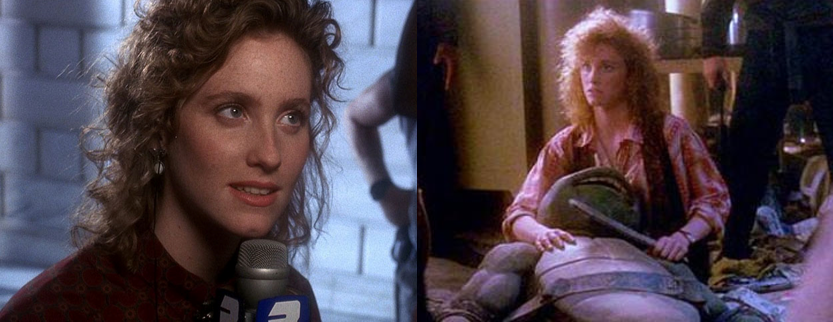
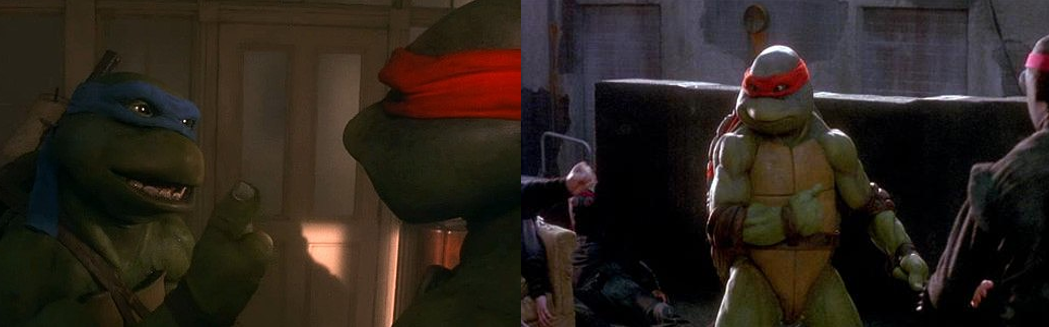
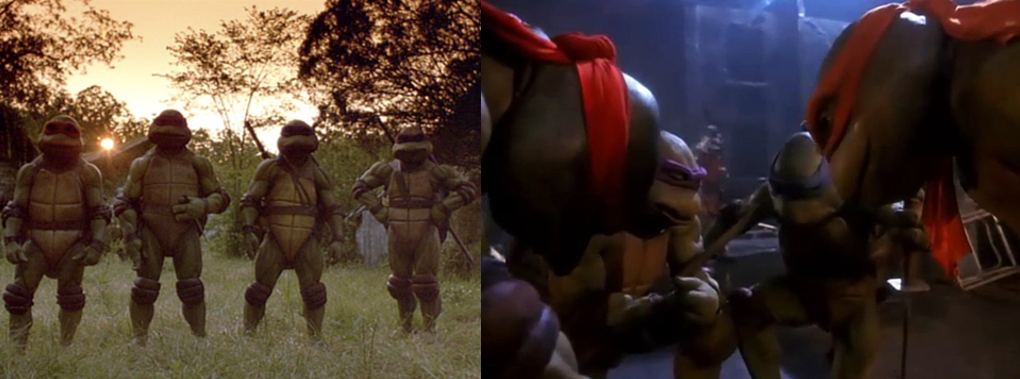
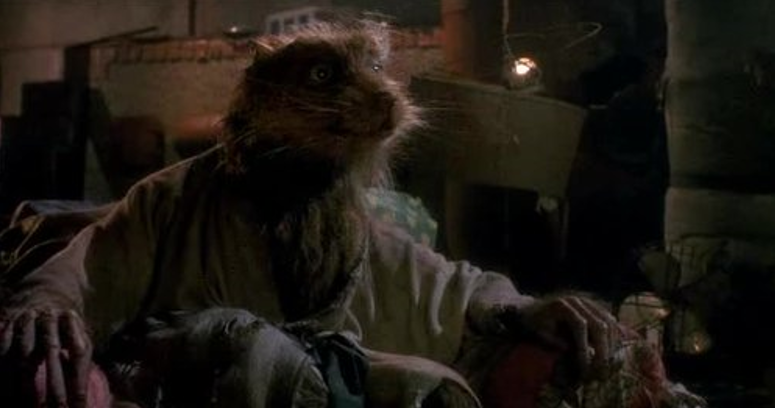
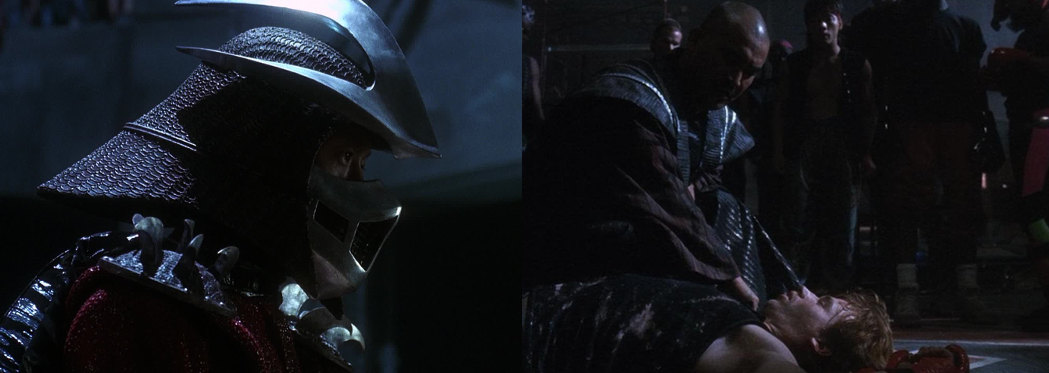
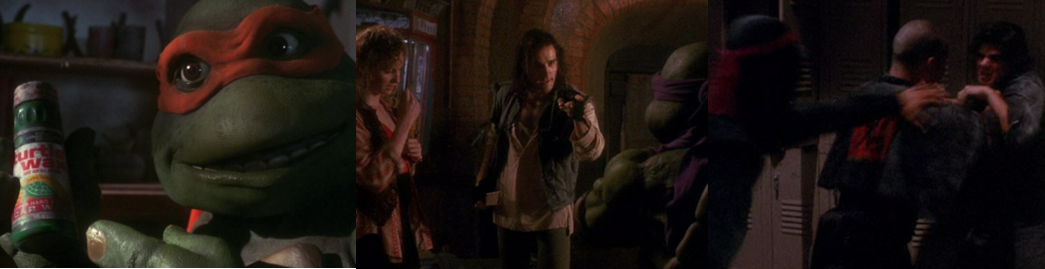
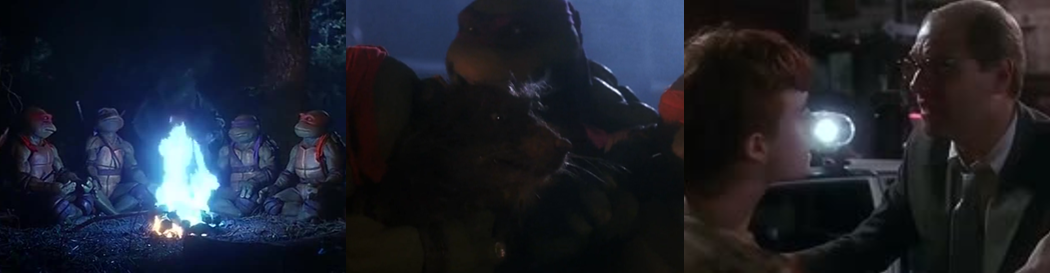
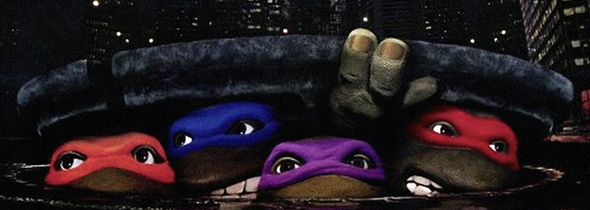


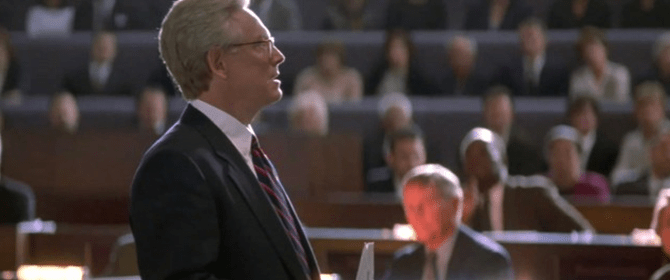

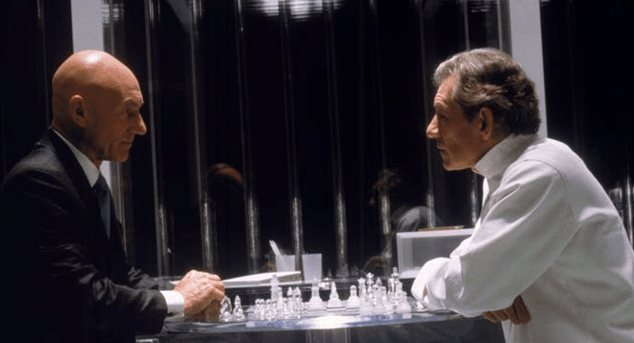
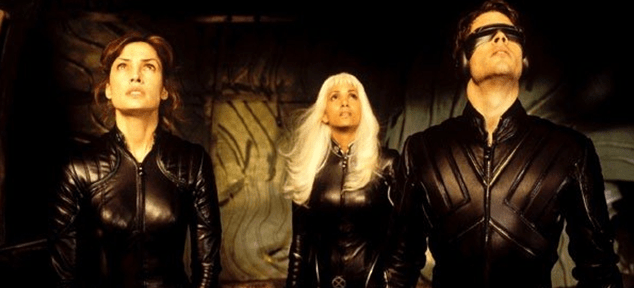
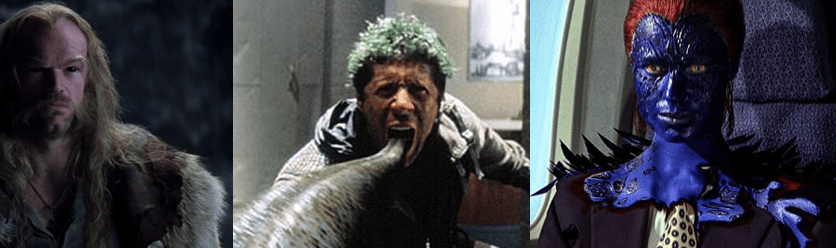
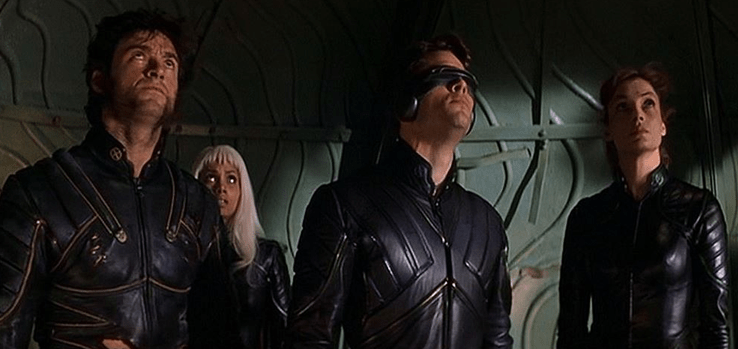




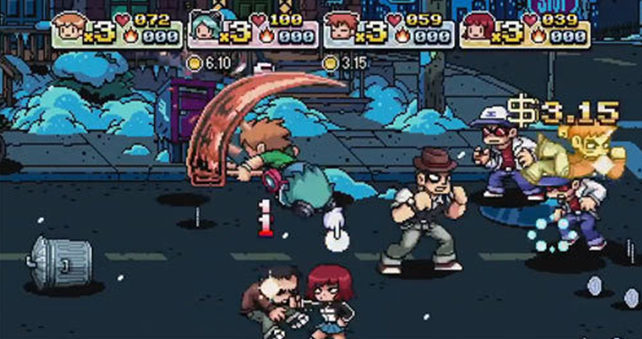
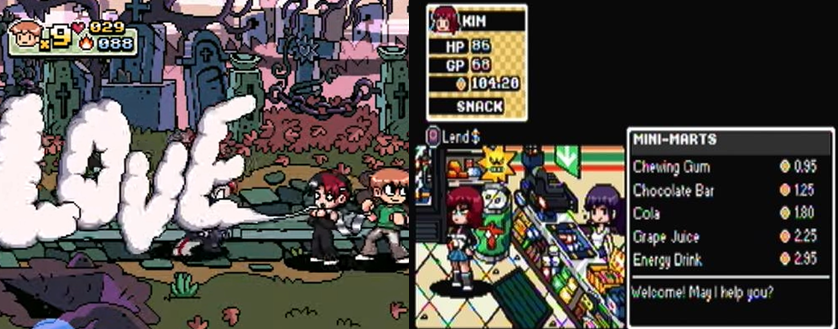
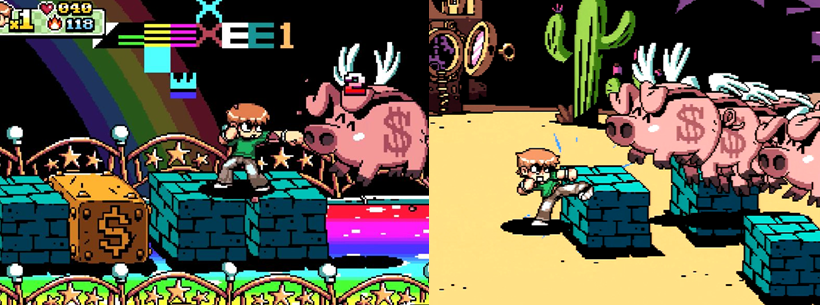
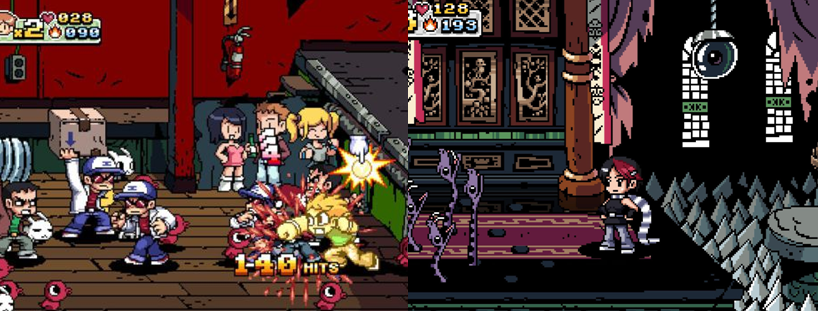
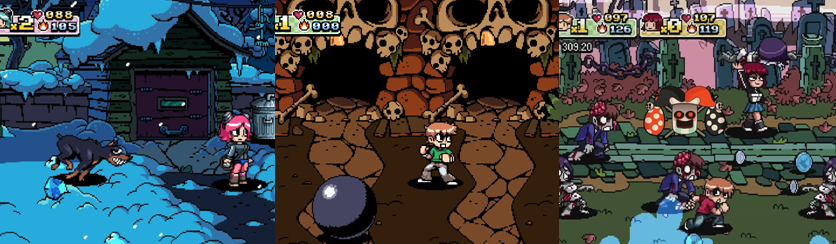
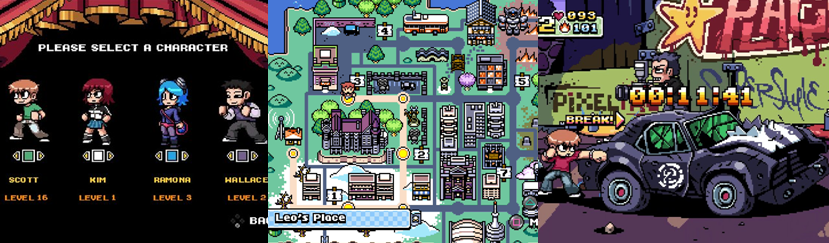
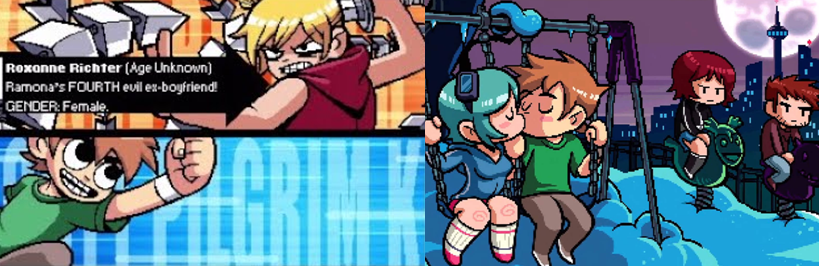
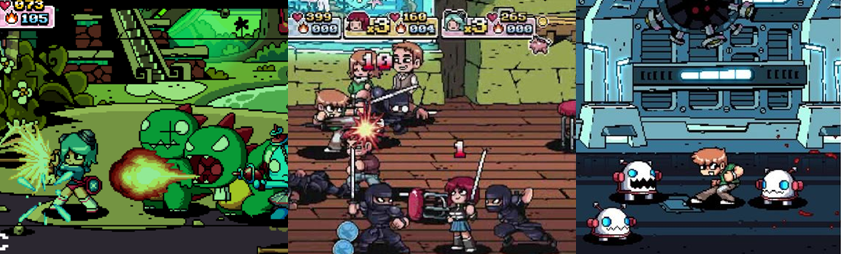
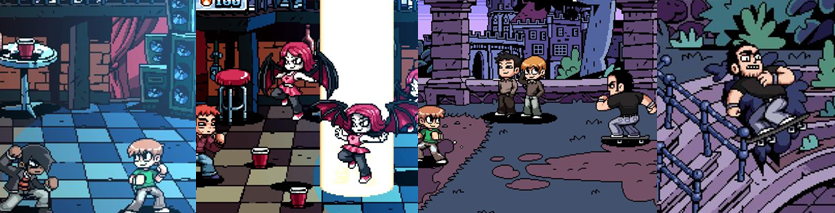
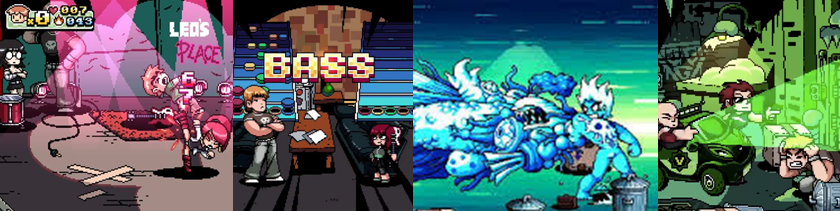
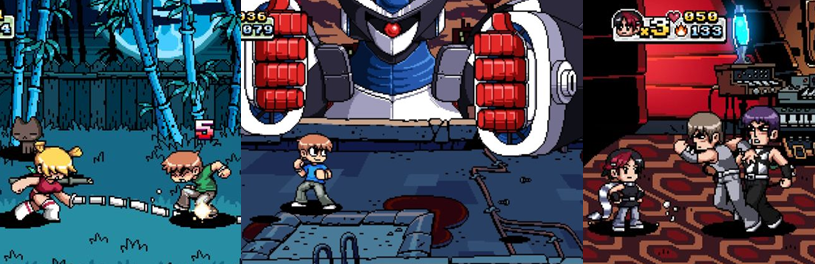
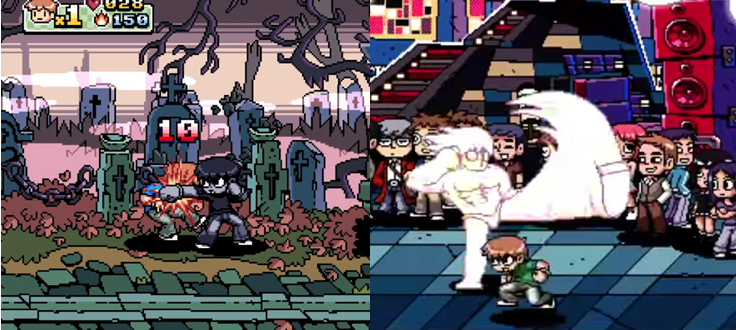
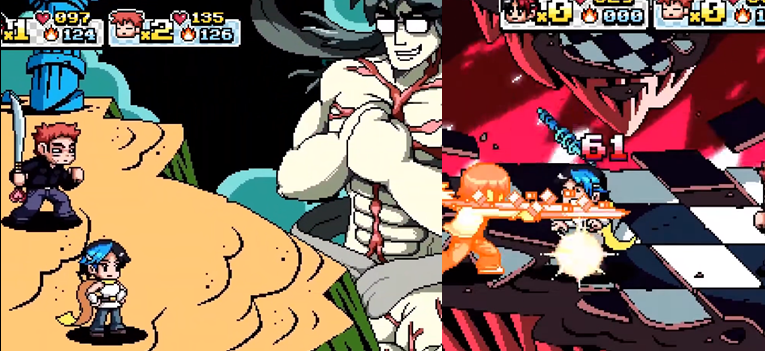

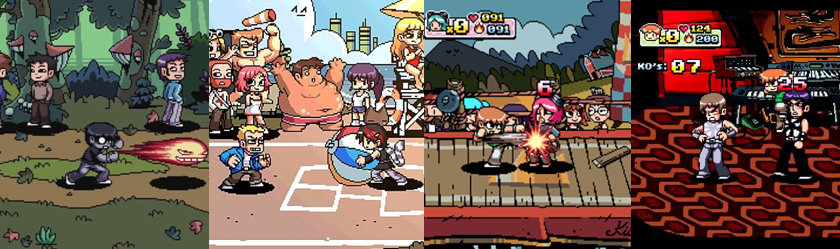
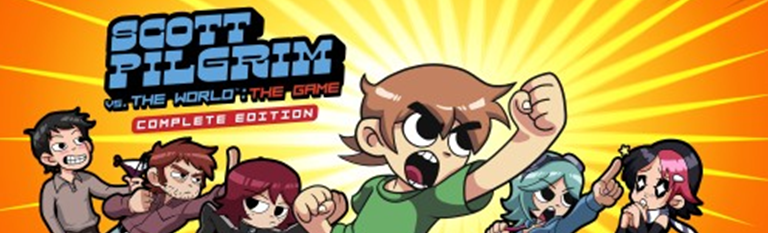


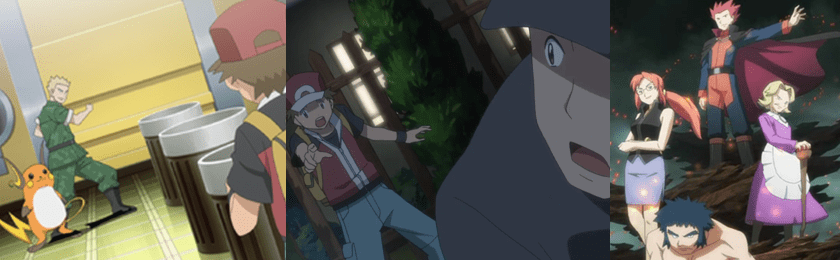
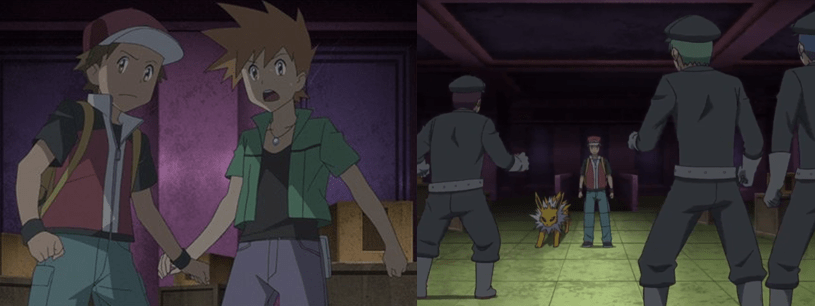
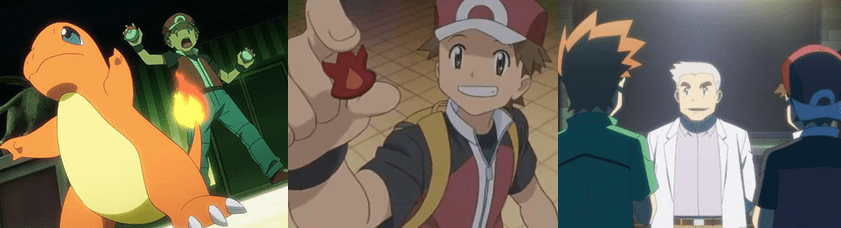


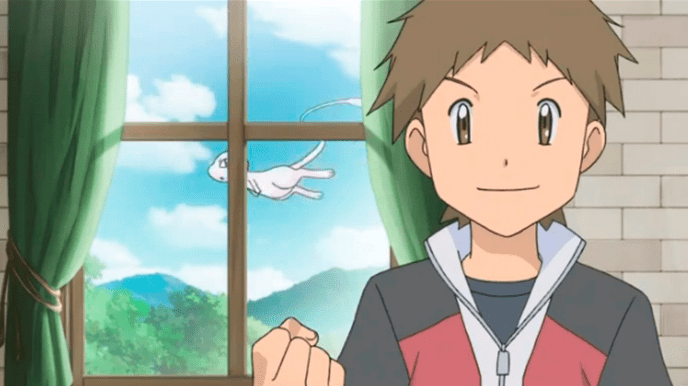



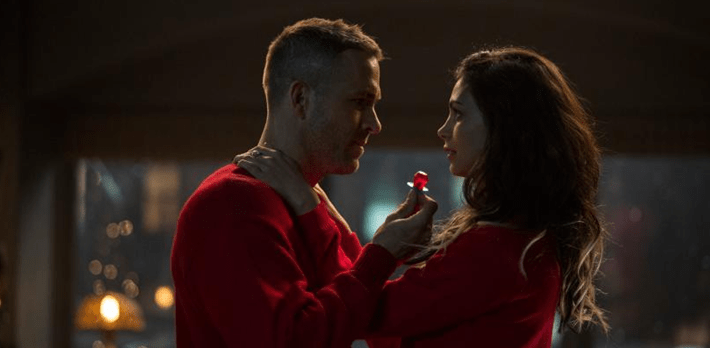
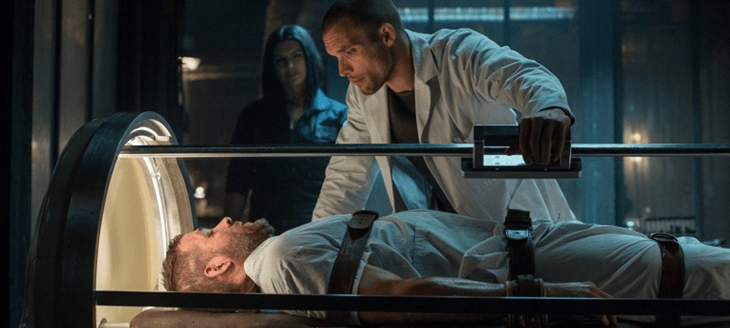
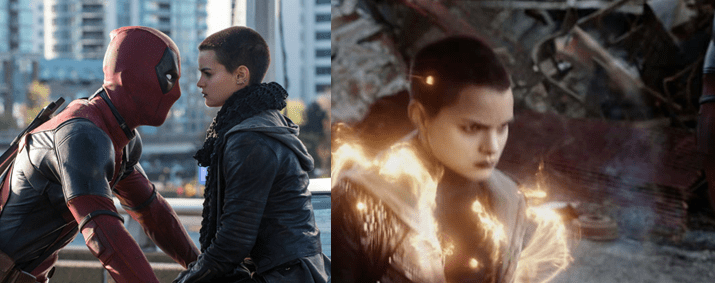
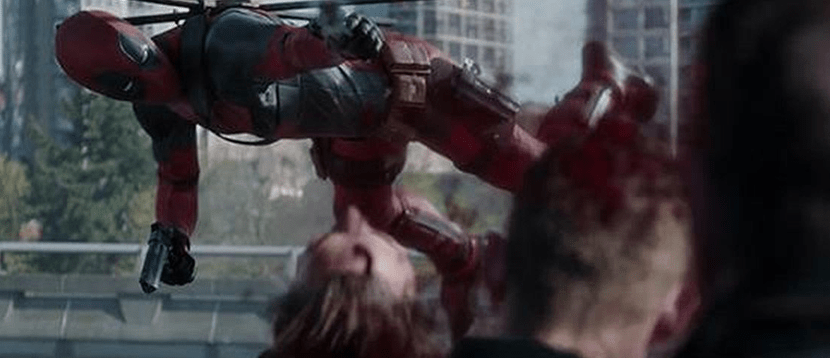
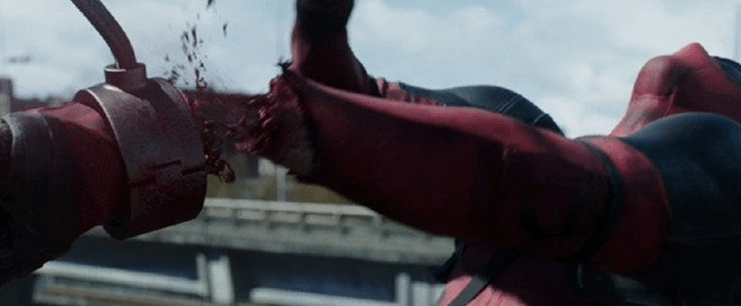


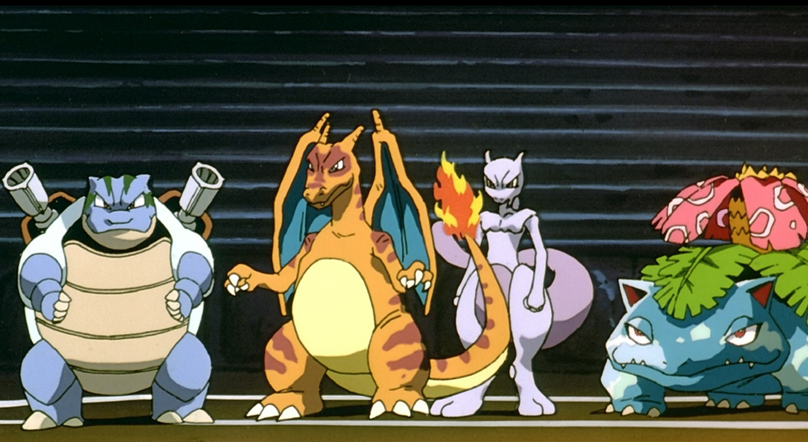
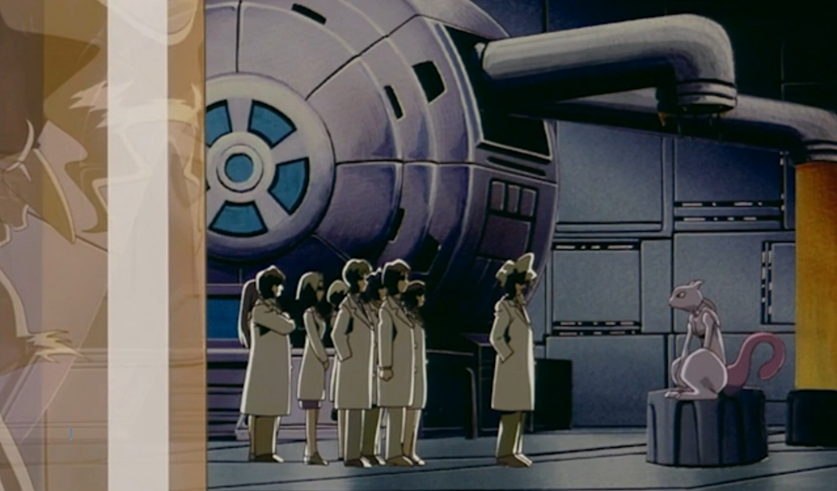
















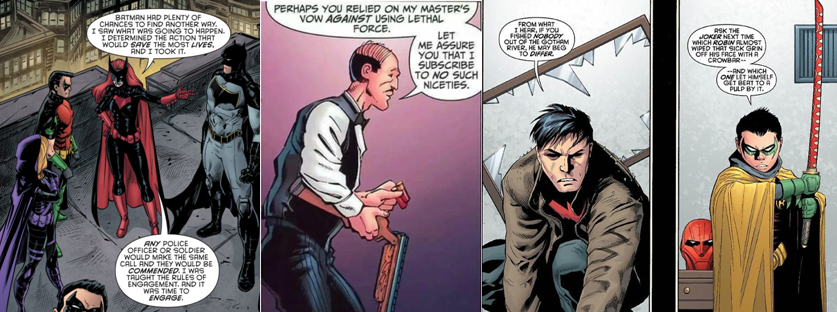

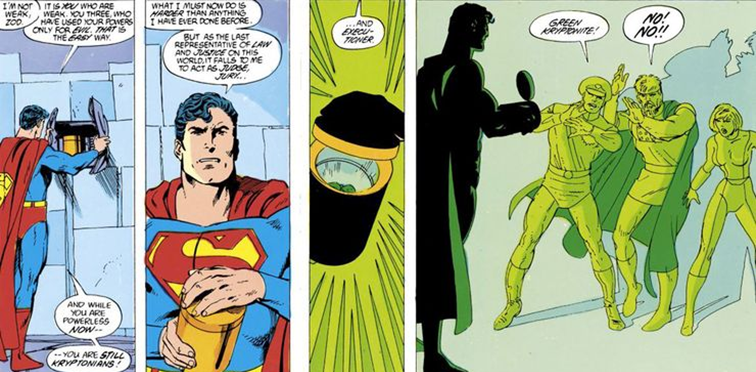

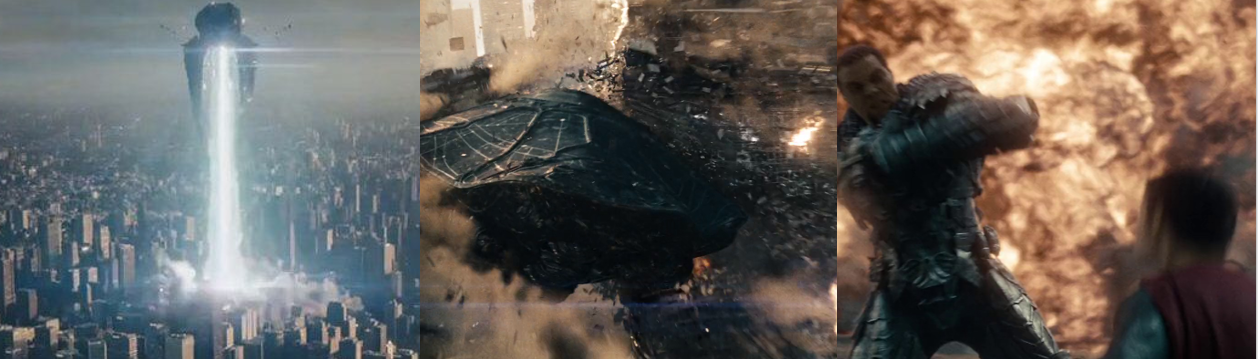
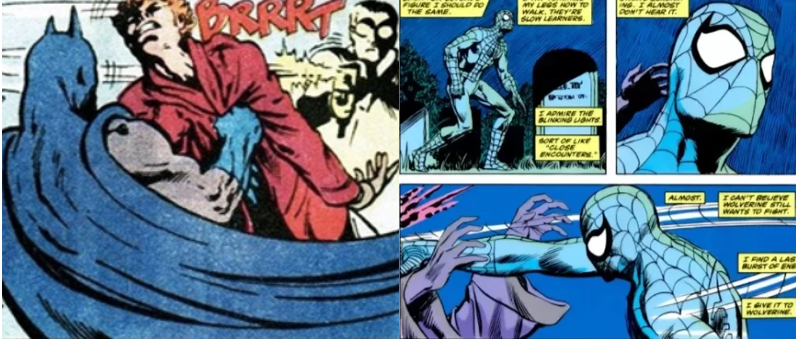


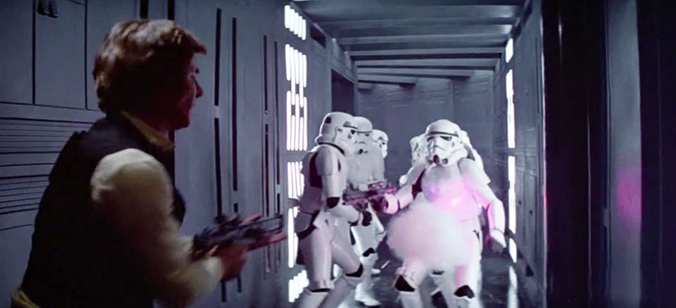


 Dr. K's Waiting Room
You must be logged in to post a comment.