To celebrate the release of the dismal RoboCop(Padilha, 2014) on home media, June 3rdwas declared “RoboCop Day” in the city of Detroit. While that movie wasn’t too impressive and had nothing on the original RoboCop (Verhoeven, 1987), this does give us the perfect excuse to talk, and celebrate, all things RoboCop on a specific day each year.
Released: 1988 Developer: Data East Also Available For: Amiga, Amstrad CPC, Apple II, Atari ST, Commodore 64, Game Boy, MSX, Nintendo Entertainment System (NES), PC, Tandy Color Computer 3, ZX Spectrum
The Background: In 1987, director Paul Verhoeven brought us RoboCop, a delightfully over-the-top science-fiction action film punctuated by copious amounts of gore, strong performances by all involved, a kick-ass score that alternated between synthesised and orchestral music, a unique perspective on themes of masculinity and humanity, and a tongue-in-cheek analysis of corporations and the power of deceptive media. Produced on a budget of a mere $13 million, the film grossed over $50 million of that in the United States alone, making it the fourteenth-highest grossing movie of that year, and eventually made over $50 million worldwide. This success, obviously, led to a number of sequels and spin-offs in other media and a slew of merchandising including comic books, action figures, and videogames. Ocean Software, a British software development company famous for purchasing the rights to make videogame adaptations of numerous film and television franchises, secured the RoboCop license and sub-licensed it to Data East, a Japanese developer known for creating arcade games, for the creation of a coin-op arcade adaptation of the sci-fi hit. Generallyquitewell-regarded amongst stiff arcade competition, the game’s various home console ports (also released by Ocean) received similarly-favourable reviews, with the game’s title theme later being licensed for use in a number of advertisements.
The Plot: After police officer Alex Murphy is brutally gunned down, he is rebuilt by Omni-Consumer Products (OCP) as an unstoppable cybernetic cop and charged with bringing law and order to the streets of Detroit.
Gameplay: RoboCop is a 2D, sidescrolling action shoot-‘em-up in which players are cast in the role of Alex Murphy, now reborn as a cybernetic police officer and tasked with cleaning up the streets of Detroit and the corruption within OCP. If you’ve ever played a game with RoboCop as a playable character before, you probably won’t be too surprised to find that Robo is a sluggish, clunky character to play as. Don’t get me wrong, I love me some RoboCop but the guy doesn’t really make for the most dynamic playable character and games often struggle as a result of his inherent weight and awkwardness. As a result, RoboCop plods along at a steady, but cumbersome pace, walloping thugs in the face and blasting at them with his iconic Auto 9, all while hopping around with one of the most unwieldy jumps in videogame history. Your choices for movement and attacking are extremely limited; RoboCop can go left or right, duck (though a lot of enemies shoot at you from above or from an angle, rendering this largely ineffectual), or awkwardly jump around the place and that’s about it. RoboCop is one of those videogame characters who also suffers a bit from the inherent need for him to have a health bar; realistically, RoboCop should be able to shrug off the small arms fire and melee attacks he has to endure in this game but, in an effort to keep kids dropping their change into the arcade cabinet, RoboCop’s health will whittle down pretty quickly thanks to an abundance of enemies, most of which run face-first into him or swarm the screen.
Replenish RoboCop’s health with baby food or scoring well at the shooting range.
To further drain your pocket of change, each of the game’s nine stages comes with a time limit; thankfully, the stages are quite short so this doesn’t really become an issue until the game’s later levels where the screen is filled with so many enemies and onscreen hazards that the frame rate slows to a crawl and you’ll find yourself dying every few steps. Luckily, when you choose to continue, the game restarts you right where you fell, though this can lead to you quickly dying again soon after restarting as you can respawn right in the middle of a crossfire or at the feet of a boss. RoboCop can also replenish his health by finding jars of baby food sporadically throughout the game; these are few and far between, however, and you’ll generally take more damage (or die) trying to collect one and replenish your health. The damage you’ve taken carries over to the next stage, as well, for added cheapness but you can also replenish it by getting a decent high score in the handful of shooting range segments that mix up the gameplay.
RoboCop mixes things up with a few stage hazards and hostage situations.
As for the gameplay, it’s as basic as you could want; you simply guide RoboCop from the left to the right, or from the bottom to the top, taking out enemies, smashing crates, and battling a number of bosses as you go. There are also a couple of occasions where you’ll be dodging hazards, using elevators, or when enemies will take a hostage, similar to that iconic scene from the movie, and you must shoot quickly to rescue the victim. Generally speaking, you’ll be taking out enemies with RoboCop’s piston-like punches but, about halfway through most stages (and, later, right from the start of some), RoboCop will pull out his Auto 9 and the game becomes decidedly more like Contra (Konami, 1987). Now, you can blast enemies from afar with infinite ammo or pick up other, limited ammunition to make short work of Detroit’s loathsome scum. Oddly, RoboCop can’t shoot through the numerous crates that block his way and it can be a little tricky to get the right angled shot but it’s a fantastic moment when RoboCop finally pulls out that gun and you can start blasting away! The game isn’t especially difficult in the early going; as long as you’re quick to hit the attack button, you can take out most enemies before they drain your health away but, as you progress, more and more enemies and hazards begin to fill the screen, pretty much guaranteeing that you’re going to go down and have to put in another coin to continue. It’s a fun, action-packed game but there is a definite challenge there because of this; these days, thanks to emulators and ROMs, this isn’t really an issue and you can just continue as often as you like but the sheer number of enemies, hazards, and bullets can get frustrating and I can imagine kids wasting a lot of their money on this one back in the day.
Graphics and Sound: RoboCop is a very attractive game with lots of big, expressive sprites and backgrounds. Oddly, unlike other RoboCop titles, Robo doesn’t have an idle animation, which is a bit of a shame, but he does dramatically pull out and holster his Auto 9 at various points; unfortunately, though, while RoboCop is a big and well-detailed sprite, he doesn’t really have too many frames of animation going on. This is the same for most of the game’s enemies, too, who are quite generic and exist mainly to tick a box; while many are modelled after the thugs seen in the film, they’re largely indistinguishable from each other. However, the game’s environments are quite large, considering how short most of them are, and detailed, ranging from the streets of Detroit to a steel mill and construction yard to the futuristic offices of OCP itself.
A few cutscenes do a good job of retelling the film’s plot.
A few static images are used to convey the game’s story, with a bit of text for good measure; it’s not much but it does the job and, as an added bonus, there’s even a couple of in-game cutscenes to advance the game’s plot and express the game’s ending. As you play, a fantastically catchy remix of Basil Poledouris’ iconic RoboCop theme plays pretty much non-stop; it is, thankfully, mixed up with a few other remixes of the film’s memorable tunes and never outstays its welcome. Even better, the game features numerous voice clips from the film to punctuate RoboCop’s war against crime and corruption and help to immerse yourself in the game’s simple, but entertaining, action.
Enemies and Bosses: The streets of Detroit are filled with generic thugs and criminals, most of the them modelled after the gang seen in the movie; many of these will run face-first into you, causing you damage and killing themselves at the same time, or take shots at you from a distance or from windows above you. You’ll also come up against a few more formidable enemies who toss grenades at you, wield chainsaws, drive at you on motorcycles, or buzz around in jetpacks. Some are armed with flamethrowers or the Cobra Assault Cannon and you’ll also have to contend with sentry guns and spider-like robots which fill the screen with bullets in the OCP building.
Thugs will try to smash and crush you to pieces in heavy machinery.
These thugs will pose a greater threat when they double up as end of stage bosses; you’ll battle them in an armoured van and in construction vehicles that swing a wrecking ball or pincer-like clamps to cause massive damage. Sadly, there’s no real showdown with Clarence Boddicker; you do grab one particular boss (which I assume is meant to be Clarence) and force him to take you to Dick Jones but you never get that chance to enact vengeance on Clarence in the same way as Robo does in the film.
ED-209 gets bigger, badder, and tougher each time you face it!
By far the game’s most persistent boss is the unforgettable ED-209; this massive, tank-like machine greets you at the end of the first stage where it poses the first real challenge of the game but pales in comparison to the different-coloured variants you’ll encounter as you progress further. You’ll have to battle ED-209 five times in total (with one particular boss battle pitting you against two at the same time!) but, while ED-209’s attacks and aggression increases each time, the strategy remains the same: try your best to duck, jump, or stay away from ED-209’s shots and hit box and blast at its head until it is destroyed.
The game ends with you anti-climaticallyrescuing the President from Dick Jones.
When you finally reach the top floor of the OCP building, you’ll have to contend with the final ED-209 and, afterwards, recreate the ending of the movie by shooting Dick Jones and rescuing “the President”. The context of the videogame changes this scene slightly, making it seem as though you’re rescuing a helpless authority figure from a corrupt businessman (or possibly even the President of the United States) and it offers very little challenge (especially compared to fighting ED-209) but its fidelity to the source material is admirable, regardless.
Power-Ups and Bonuses: Unlike many arcade titles at the time, RoboCop is surprisingly lacking in its power-ups; they’re pretty much limited to a handful of health-restoring items and a few different types of ammo for your Auto 9. You’ll pick up a double shot and a spread shot to help you clear the screen of enemies and do additional damage to bosses; even better is the ability to pick up the Cobra Assault Cannon for maximum damage. Be wary, though, as all of this ammunition is limited (with the Cobra, especially, being severely limited), so you can’t just mindlessly blast away like you can with the regular ammo and you’ll also lose these power-ups if you die.
Additional Features: As an arcade game, the main aim of RoboCop (beyond completing the game) is to get your initials entered into the high score table, preferably at the top. Beyond this, there isn’t much else on offer here besides a turn-based two-player mode if you fancy playing alongside a friend.
The Summary: RoboCop is a pretty simple, action-packing coin muncher of an arcade game. RoboCop is surprisingly fragile, dropping to his knees in the blink of an eye when faced with the game’s massive bosses or swarms of enemies, hazards, and bullets and, as always, he is a clunky and awkward character to play as. Yet, thanks to some large, detailed graphics, a catchy theme, and tight controls, there’s a lot to like about RoboCop. Taking inspiration from Contra was the right way to go as RoboCop excels when it is adapted into a run-and-gun shoot-‘em-up and, while these genres have been done better in other games and the movie might have benefitted from being an auto-scrolling first-person shooter rather than a sidescroller, that doesn’t change the fact that it’s a fun way to spend an hour or so of your life.
My Rating:
⭐⭐⭐
Rating: 3 out of 5.
Pretty Good
Did you ever play RoboCop in an arcade? Which RoboCop videogame is your favourite? Would you like to see a new RoboCop game; if so, what genre do you think would best fit the source material? Which RoboCop movie is your favourite? How are you celebrating RoboCop Day today? Whatever you think about RoboCop, feel free to leave your thoughts in the comments below.
Released: May 2006 Director: Brett Ratner Distributor: 20th Century Fox Budget: $210 million Stars: Hugh Jackman, Halle Berry, Famke Janssen, Ian McKellen, Kelsey Grammer, Shawn Ashmore, Ellen Page, Aaron Stanford, Patrick Stewart, Rebecca Romijn, Vinnie Jones, Anna Paquin, and James Marsden
The Plot: The Mutant community is divided when a major pharmaceutical company announces the development of a “cure” that will permanently suppress the Mutant X-Gene. As Erik Lehnsherr/Magneto (McKellen) uses the controversy to step up his war against mankind, Jean Grey (Janssen) inexplicably returns from the dead, her powers having grown exponentially and threatening the lives of humans and Mutants alike.
The Background: Since Stan Lee and long-time collaborator Jack Kirby created the X-Men in 1963, Mutants have featured prominently in Marvel Comics; unlike most of Marvel’s superheroes, the X-Men (and Mutants in general) are met with near-constant hostility as they stand in for oppressed minorities everywhere. The X-Men grew to greater mainstream prominence thanks to the influential animated series from the nineties, the success of which led to 20th Century Fox purchasing the film rights and producing two well-regarded X-Men films in the early 2000s. The production of X-Men: The Last Stand, however, was far more complex than its predecessors; former director Bryan Singer unexpectedly walked away from the franchise, taking X-Men 2 (Singer, 2003) screenwriters Dan Harris and Michael Dougherty with him in order to make the divisive Superman Returns (ibid, 2006). Many replacements were considered, including Joss Whedon, and the main cast’s contracts were hastily extended before Fox settled on director Matthew Vaughn, who assembled most of the remaining cast. However, family issues and the pressure of Fox’s tight film schedule led to Vaughn exiting the project and Brett Ratner replacing him at the last minute. With limited knowledge of the source material, Ratner trusted the film’s writers, who drew inspiration from the iconic “Dark Phoenix Saga” (Claremont, et al, 1980) and Whedon’s 2004 “Gifted” arc. The sudden mix-up of directors, writers, and creative minds led to X-Men: The Last Stand being far less universally praised compared to its predecessors; despite being regarded as a financial success, the film received mixed to average reviews and is often regarded as a low point for the franchise.
The Review: Unlike the last two X-Men movies, X-Men: The Last Stand opens with two slightly less exciting scenes; the first is an early example of de-aging effects that we are seeing being incorporated, and perfected, more and more these days. To be fair, the effects actually hold up really well here; both Professor Charles Xavier (Stewart) and the future Magneto look a good twenty-or-so years younger and it’s a great little scene that shows a snapshot of their friendship and relationship that has only been hinted at before and finally fleshes out Jean Grey’s character more than we’ve had in the films so far.
Angel looks impressive but has little impact on the film’s many plots.
The other opening scene introduces us to Warren Worthington III (Cayden Boyd), the Mutant son of corporate mogul Warren Worthington II (Michael Murphy), who is desperately trying to file down the angel’s wings that are sprouting from his back. This scene does a lot to show the shame and fear and desperation many Mutant children feel when they discover that they are Mutants and these emotions play a vital role in one of the film’s central narratives. You would think that the grown-up Warren (Ben Foster) would thus play just as big a role given his prominence in the film’s opening but…no. Unlike Kurt Wagner/Nightcrawler (who is inexplicably absent and not mentioned in this film due to actor Alan Cumming disliking the make-up process), Warren (also known as “Angel” in the comics, where he was a founding member of the X-Men) barely factors into the film at all, disappearing for most of it and serving only to inspire the X-Men to continue Xavier’s dream later in the film (and save his Dad, I guess).
The exhilerating reintroduction of the X-Men is little more than a holographic simulation.
After the opening credits (which thrust Hugh Jackman and Halle Berry’s names to the forefront), though, the film kicks things up a notch by introducing us to the new X-Men team in the midst of what is clearly a Sentinel attack heavily inspired by the seminal “Days of Future Past” (Claremont, et al, 1981) storyline. Ororo Munroe/Storm (Berry) is now the team’s field leader, Logan/Wolverine (Jackman) is the reluctant tag-along, and the core X-Men are comprised of the X-Kids from the previous film: Marie D’Ancanto/Rogue (Paquin), Bobby Drake/Iceman (Ashmore), and Peter Rasputin/Colossus (Daniel Cudmore) finally receive their X-suits and are joined by Kitty Pryde/Shadowcat (Page). Sadly, however, as fantastic this scene is, it is quickly revealed to be nothing more than an elaborate Danger Room simulation. The post-apocalyptic, Sentinel-ruled future of this storyline would be realised far better nearly ten years later but this snapshot is sadly about as exciting as X-Men: The Last Stand gets for some time. Very quickly, we realise that despite the presence of a President (Josef Sommer) who is sympathetic to their cause, and a Mutant, Henry “Hank” McCoy/Beast (Grammer), installed as the Secretary of Mutant Affairs, all is not well at Xavier’s School for the Gifted. Scott Summers/Cyclops (Marsden) is a broken man after the death of his wife, Jean Grey, and no longer fit to lead the X-Men; haunted by memories of Jean and his pain, he abandons the school and returns to Alkali Lake only to discover Jean mysteriously resurrected.
Jean’s Phoenix powers are impressive and destructive…when they’re actually on show.
Despite a heartfelt reunion, their time together is violently cut short and, thanks to a bloated cast and Marsden choosing to join Singer in Superman Returns, Cyclops is disrespectfully killed off…off screen. Yep, in a movie where one of the central storylines is the famed “Dark Phoenix Saga”, the crux of which heavily involved the relationship and love between Cyclops and Jean, the writers chose to kill Cyclops off. Sadly, it would take numerous X-Men sequels and spin-offs to try and patch together Cyclops’ characterisation and prominence and, even then, his character still feels hollow and shafted compared to other X-characters. On the plus side, Jean’s character is suddenly massively fleshed out; Xavier reveals that Jean is a “Class Five” Mutant (…yeah, this film randomly introduces power classes for Mutants but doesn’t really explain them very well) and that her powers are so strong that he had to suppress them so that she wouldn’t be consumed by them. This lead to Jean developing a sadistic, purely instinctual, predatory personality known as the “Phoenix”, which is the personality we largely see throughout this film. The Phoenix drives Jean to indulge her lust for Wolverine, abandon Xavier’s school and his teachings, and even fall under the manipulative sway of Magneto but, honestly, she largely spends a good chunk of the film’s third half just standing around moodily until she is cajoled into unleashing her full power.
Wolverine has now evolved into a full-time member and leader of the X-Men.
Jean’s extensive characterisation also changes our perspective of Xavier; up until now, he’s has been seen as this benevolent, kind-hearted teacher but both Phoenix and Magneto reveal that Xavier has a dark side to his methods as well. Wolverine is visibly disgusted that Xavier would seek to control Jean but, ultimately, Xavier sacrifices his life to try and calm Jean’s emotions and keep her from letting her powers overwhelm her. The death of Xavier hits hard and, if Cyclops’ death didn’t raise the stakes, Xavier’s really does; even Wolverine is heartbroken at the loss of his mentor and it shakes the team so much that they consider closing the school for good. Speaking of Wolverine, this film sees his story arc from the last two movies reach its natural conclusion; originally a loner, he came to reject his past and hedge his bets with the X-Men and, by the end of X-Men: The Last Stand, has become a full-time member of the team, the school, and basically the co-field leader of the team alongside Storm. To get to that point, though, he has to struggle with the knowledge that he will be forced to kill Jean, whom he is in love with, in order to save her and keep her from going nuts. Storm is uncharacteristically quick to jump to this conclusion but Wolverine spends the majority of the film believing that Jean can be redeemed; it is only when the Phoenix starts disintegrating friend and foe alike that he resolves to save her by ending her threat once and for all.
Magneto holds nothing back in waging his war against humanity and their cure.
Magneto’s arc in this film is super interesting to me; in the previous films, you could empathise with his motives due to his backstory but, by X-Men: The Last Stand, Magneto has transformed into everything he hates. Gathering an army of angry young Mutants and rallying them against the so-called “cure”, Magneto becomes little more than a xenophobic, hypocritical dictator, delivering speeches clothed in black and red and with disturbingly Nazi-like mannerisms. It’s fascinating to watch him become so consumed by his prejudices that he loses sight of how far into the dark he has fallen; yet, even when he is disagreeing with Xavier’s motives to the point of escalating conflict, he still has immense respect for his former friend and is visibly shaken by his death. Ultimately, Magneto finds himself reduced to a mere human and horrified by the Phoenix’s true powers and left despondent and alone…though thankfully, conveniently, stupidly luckily the cure is, apparently, not as permanent as Worthington claims despite being harvested from a Mutant whose power is to suppress other Mutants’ powers. The side plot of the cure feels like it would have been enough of a plot for the entire film as the film seems to struggle a bit with focusing on the cure plot and the Phoenix plot, with both dipping in and out of importance as the scene requires. Rogue, frustrated at not being able to touch others without hurting them, is ultimately driven to take the cure despite the fact that she seemed far more comfortable with her powers in the second film. Other than Rogue, though, no other characters seem even remotely interested in the cure; McCoy is overwhelmed and in awe of Jimmy/Leech’s (Cameron Bright) abilities and Storm is vehemently against the idea of “curing” mutation but the real conflict about the cure is personified through the rabid, faceless masses. Even Magneto explicitly uses the existence of a cure more as a reason to declare war on humanity and it honestly feels like any kind of excuse would have been enough to set him off.
The Nitty-Gritty X-Men(Singer, 2000) struggled a bit with balancing its screen time between its large cast and, while X-Men 2 did a decent job of fleshing out Wolverine and the X-Kids, it too struggled a bit with having so many main characters and X-Men: The Last Stand has even more characters to wedge into its limited runtime. As a result, returning characters like John Allerdyce/Pyro (Stanford) and Raven Darkhölme/Mystique (Stamos), are largely the same as in the last movie but reduced to angry henchman and angry captive-turned-turncoat, respectively.
Once again, the film is bloated with far too many characters for its runtime.
Though upgraded to a member of the X-Men, Colossus is painfully underused; he has exactly one line and exists solely to be this big, handsome, muscular guy with the cool ability to turn into metal and throw Wolverine when he demands it. Even though Kitty is given more characterisation, her sub-plot with Iceman really could have been expanded to include Colossus; like, have Kitty and Colossus be in a relationship and have Rogue be jealous of their closeness just as she is of the relationship between Iceman and Kitty in the film. But, no; instead, Colossus is just…there, some guy on the team we know nothing about who looks cool but is basically a blank canvas. Beast fares slightly better thanks, largely, to Kelsey Grammer’s charisma and dulcet tones; he’s also used far more prominently and, through him, we get a sense of Xavier’s history teaching X-Men we’ve never seen before to help flesh out this world even more. Unfortunately, the film just doesn’t know when to stop as Magneto recruits a whole bunch of new acolytes, most of whom boil down to a one-note character and a cool look or power. Cain Marko/Juggernaut (Jones) stands out the most thanks to Jones’ attempts at characterisation and his meme-inspired delivery but he’s not even a shadow of the character from the comics. James Madrox/Multiple Man (Eric Dane) exists for one fake-out scene, Callisto (Dania Ramirez) is little more than a smarmy bitch for Storm to fight, and Psylocke (Meiling Melançon), Arclight (Omahyra Mota), and Kid Omega (Ken Leung) are just there because they look cool, are recognisable characters, and Magneto needs “pawns” to sacrifice but they’re barely given names much less any kind of backstory. The film does excel at times, though; the score is exceptional, far more memorable than those from the previous films, and the majority of the film’s effects hold up pretty well.
Though a terrifying force, the Phoenix is nothing compared to what she was in the comics.
Chief amongst these scenes are those involving Magneto’s vast powers; first, he flips cars and armoured trunks around with simple flicks of his hands and a quiet confidence and then, later, he wrenches the Golden Gate Bridge from its moorings and brings it crashing down on Alcatraz Island, the site of the cure’s production. It’s an impressive scene that is topped only by the explosive and destructive unleashing of the Phoenix’s true powers; enraged, Jean begins destroying and disintegrating everything around her, causing debris, water, and fire to fly into the air and threatening the safety of everyone on the island. Of course, only Wolverine, with his superhuman healing factor, can withstand Jean’s powers long enough to end her threat and, while I disagree that Jean’s peerless power wouldn’t be able to vaporise Wolverine as easily as she does everything and everyone else, it does lead to a few cool shots where we see Wolverine’s Adamantium-coated skeleton beneath his seared flesh.
The Summary: X-Men: The Last Stand is a loud, confusing mess of a film in many ways. It’s tonally all over the place, being bleak and serious one minute and then comedic at others. The two central plots are both big enough to have films of their own and distilling the entire Dark Phoenix story into one movie, especially one that isn’t even devoted to it, obviously means that this storyline suffers as a result. Yet, to be fair, it does kind of work in the context and world that Singer created in his previous two movies. Unfortunately, though, there’s just way too much going on at once and far too many characters crammed into the film’s runtime. Behind the scenes issues clearly affected the film’s production, necessitating the killing off of many characters and the hasty introduction of new ones who are given little to do and even less characterisation. It’s not as bad as I remember it being, to be fair, and it does annoy me that subsequent X-Men films went out of their way to erase or undo many/all of its events rather than find ways to build upon or write around them but it is, undeniably, a poor way to end what was, at the time, shaping up to be an otherwise strong trilogy of movies.
My Rating:
⭐⭐
Rating: 2 out of 5.
Could Be Better
What are your thoughts on X-Men: The Last Stand? Where do you rank it against the other X-Men films? Which of the many, many new characters do you like the most? Were you annoyed at how the film treated Cyclops and the “Dark Phoenix Saga”? How would you have done the film differently? Whatever you think about X-Men: The Last Stand, and X-Men in general, feel free to leave a comment below.
Released: April 2003 Director: Bryan Singer Distributor: 20th Century Fox Budget: $110 to 125 million Stars: Patrick Stewart, Ian McKellen, Hugh Jackman, Brian Cox, Famke Janssen, Rebecca Romijn-Stamos, Alan Cumming, James Marsden, Halle Berry, Anna Paquin, Shawn Ashmore, Aaron Stanford, Kelly Hu, and Bruce Davison
The Plot: The war between humans and Mutants escalates after an attack on the President of the United States (Cotter Smith). Having interrogated Erik Lehnsherr/Magneto (McKellen), Colonel William Stryker (Cox) leads an assault on Professor Charles Xavier’s (Stewart) sanctuary for Mutants, scattering his X-Men and setting in motion a plot to rid the world of Mutantkind.
The Background: After Stan Lee and long-time collaborator Jack Kirby created the original X-Men in 1963, Mutants have long been a staple of Marvel Comics; unlike many of Marvel’s superheroes, the X-Men (and Mutants in general) are hated and feared, standing in for oppressed creeds and minorities everywhere and giving Lee an easy way to produce numerous new superheroes with minimal effort. The X-Men later influenced a whole new generation through the much-lauded animated series from the nineties, the success of which led to 20th Century Fox purchasing the film rights and releasing the first live-action X-Men movie in 2000 with director Bryan Singer at the helm. Against the odds, X-Men proved a success, bringing in over $290 million against a $75 million budget. Production and development of a sequel began almost immediately, with Singer and producer Tom DeSanto both researching the more nuanced storylines of the X-Men comics, specifically God Loves, Man Kills (Claremont, et al, 1982), which introduced William Stryker into the X-Men lore. Singer also clearlydrew inspiration from films like Star Wars: Episode V: The Empire Strikes Back(Kershner, 1980) and Star Trek II: The Wrath of Khan(Meyer, 1982) for X-Men 2’s bleaker, more sombre tone and sought to cast a bigger spotlight on the younger pupils of Xavier’s School for the Gifted. Allowances had to be made, however, when developing X-Men 2 (also known as “X2” and even “X-Men: United”); after the release of X-Men, Halle Berry had won the Academy Award for Best Actress for her role in Monster’s Ball (Forster, 2001), necessitating that her character, Ororo Munroe/Storm, have more screen time. Other scenes, including the return of Sabretooth (Tyler Mane), the inclusion of the Danger Room, and an expanded role for Scott Summers/Cyclops (Marsden) were all cut due to the expanded cast and to keep the film at a reasonable length. After being released, X-Men 2 was a massive financial success, bringing in over $400 million in worldwide revenue and becoming the ninth-highest-grossing film of 2003. The critical reception was glowing as well and X-Men 2 still stands as one of the more well-regarded entries in Fox’s long-running X-Men franchise.
The Review: As deep and impactful as the opening of X-Men was, X-Men 2 goes out of its way to top it with one of the most layered, complex, and engaging action sequences put to cinema; the film opens with Kurt Wagner/Nightcrawler (Cumming) infiltrating the White House and attacking Presidential guards. He is stopped short of potentially stabbing President McKenna but leaves behind a blade proclaiming “Mutant Freedom Now”. Immediately, the stage is set for an escalating conflict and that is the key word to describe X-Men 2: escalation. Everything that was great about the first movie is expanded upon and dialled up a notch, increasing both the stakes and the scope of Singer’s X-Men world.
X-Men 2 benefits from not having to waste its runtime on copious amounts of exposition.
As X-Men devoted so much of its time (arguably too much) to establishing the rules and lore of this grounded, quasi-science-fiction take on the X-Men, X-Men 2 doesn’t have to worry about wasting time establishing characters or expositing information. When we’re reintroduced to Doctor Jean Grey (Janssen), Cyclops, and Storm, we already have an idea of their characters as we were exposed to them, albeit briefly, in the first movie. As an added bonus, actions from the first film have consequences in the sequel: Jean’s powers are a bit out of whack after exerting herself in the conclusion of the first movie and Logan/Wolverine (Jackman) is first reintroduced having found the abandoned facility Xavier directed him to in the last film.
Logan’s paternal side is shown as he is left protecting the X-Kids.
The core X-Men are given far more to do this time around but, again, much of their screen time is taken away by other characters; however, whereas the Brotherhood were largely silent, one-dimensional antagonists in the first film, the “X-Kids” (Marie D’Ancanto/Rogue (Paquin), Bobby Drake/Iceman (Ashmore), and John Allerdyce/Pyro (Stanford)) are actually surprisingly well developed. We already know Rogue from the first film but, here, she’s far more comfortable in her own skin and with her powers; she and Drake struggle to reconcile their throbbing biological urges due to the nature of her powers but her story arc is indicative of the story of all of these X-Kids: maturity and growing into the role of an official X-Men. Both Iceman and Pyro get their own separate story arcs as well, both of which are far deeper and more developed than anything either Cyclops or Storm go through in the entire series! When Iceman, Pyro, and Rogue are forced from the X Mansion by Stryker’s team, Wolverine takes them to Iceman’s family in Boston. There, the film explicitly wallops us over the head with its themes by having Iceman “come out” as a Mutant to his family, who react in the same clichéd way as a lot of fictional (and real, I’m sure) parents do when their kids reveal themselves to be gay. Heartbroken at his family’s reaction, he leaves them behind to stick with his real family, the X-Men.
Storm may not get much but she’s got way more to do than Colossus or Cyclops!
Pyro, however, is vastly developed from a brief cameo in the first movie to an obnoxious, fire-obsessed, angry young kid; clearly resentful of Iceman’s comfortable upbringing, he is as hot-headed and temperamental as his powers dictate, aggressively lashing out at cops and growing increasingly tired of Xavier’s more passive teachings. When he meets Magneto, he is clearly in awe and, when Magneto panders to Pyro’s ego, willingly joins the Mutant extremist at the film’s conclusion rather than try to grow beyond his anger. Other Mutants are not so lucky; Peter Rasputin/Colossus (Daniel Cudmore) appears in a tantalisingly frustrating cameo and, as mentioned, Cyclops’ screen time is significantly reduced. Halle Berry may have moaned a lot about her character being side-lined but at least she often has some kind of significant role; here, she doesn’t just fly the X-Jet but she also uses her weather powers to create some bad-ass tornados (twisters? Whatever) and gets a lot of development through her interactions with Nightcrawler. Cyclops, though, bickers with Logan (again), is worried about Jean, has one fight scene, and then disappears for almost the entire movie before Marsden puts in a fantastically heartbreaking performance for the film’s conclusion. I’m not fan of Cyclops but his character deserved so much better than he gets in this, and all of these movies. When he’s missing, Logan implies that Jean doesn’t even love him…when she’s been married to him for years! Speaking of Logan, he has a far bigger, meatier role in this film and the narrative does an excellent job of tying his mysterious past into the plot of the film and the events unfolding. Add to that the fact that we get some absolutely brutal onscreen action thanks to his berserker rage and Adamantium claws and you have a film that really ramps up whenever Wolverine is onscreen.
Wolverine utlimately rejects his past and the chance to learn who he really was.
Wolverine’s past is given a bit more clarification through his interactions with Stryker, who teases Wolverine with hints and promises of revealing his entire past and origin. Ultimately, though, Wolverine rejects his past, whatever it may be, and chooses to side with the X-Men full-time. This character arc would eventually be deconstructed in subsequent sequels and spin-offs but it really works here to show that Logan has decided to put whatever his past was behind him and focus on the present. Stryker is also a fantastic addition to Singer’s world. A cold, calculating, manipulative villain who is motivated by a personal grudge against Xavier and a maniacal, xenophobic desire to control or wipe out all Mutants, his charisma and screen presence is more than up to the task of matching that of Magneto. Sadly, though, Stryker and Alkali Lake would go on to be continually used and beaten into the ground in later X-Men movies but Cox’s captivatingly snake-like performance still makes this first use of the character the best, in my opinion. Speaking of Magneto, X-Men 2 largely defines the grey area the character would come to occupy in subsequent films. Arrogant and pretentious, Magneto takes one step further into the dark in this film; though he and Mystique (Romijn-Stamos) are forced to team up with the X-Men out of mutual survival, they are both happy to mock, manipulate, and betray the team (and humankind) at a moment’s notice. In X-Men 2, Magneto develops into the ultimate opportunist and manipulator; he is the best kind of bad guy as he believes that he is right and you can sympathise and empathise with his beliefs, though his methods grow more and more questionable throughout the film, leaving him firmly in the role of villain by the film’s end.
The Nitty-Gritty: I said that everything that worked about the first film has been expanded, improved upon, and dialled up a notch and it’s true: the effects are way better, for one thing, and the narrative is paced and constructed a lot better thanks to there not being a need for loads of exposition and world-building. It’s true, though, that Cyclops suffers greatly from the inclusion of so many new characters; even Mystique gets more to do and a bigger role, which is a real shame for the X-Men’s long-standing field commander.
Deathstrike makes for a formidable opponent for Wolverine.
X-Men 2 also has the benefit of included far more interesting and engaging action sequences; the opening, obviously, and Magneto’s escape from his ludicrous plastic prison (seriously, how was that build so fast?) spring to mind but the inclusion of Yuriko Oyama/Deathstrike (Hu) also delivers perhaps the best Wolverine-centric one-on-one fight scene so far. While Deathstrike is little more than another mute henchwoman, this fight more than makes up for her lack of personality; sporting Freddy Krueger-like Adamantium claws, Deathstrike is like a mixture of Sabretooth’s raw animal power and Mystique’s athletic grace and is more than a match for Wolverine. When they get into it, it’s an especially brutal fight that, alongside Wolverine’s enraged skewering of Stryker’s soldiers, would set the scene for further Wolverine spin-offs.
Stryker hates all Mutants and personally blames Xavier for the death of his wife.
Two of the film’s core themes are faith and family; faith is exemplified through Nightcrawler but family is portrayed in numerous different ways. Iceman’s family rejects his true nature, so he turns to his surrogate family; Wolverine also finds himself committing to this same surrogate family by the film’s end and the larger role played by the X-Kids and the pupils helps to emphasise that Xavier is a father figure as much as a mentor and teacher. The other side of this theme is portrayed through Stryker and his Mutant son, Jason (Michael Reid MacKay); convinced that mutation is a disease, Stryker was unable to accept that his son couldn’t be cured and driven half-mad when Jason used his vision-inducing powers to drive his wife to suicide. Stryker then developed a serum to control and brainwash Mutants using Jason’s cerebral fluid and had his son half-lobotomised in order to overpower Xavier; he even declares “My son is dead!”, indicating the lengths to which his madness and obsession with destroying Mutants has gone.
Nightcrawler was a great addition and a continual influence on the franchise.
One of the most influential additions to the film apart from Stryker, though, was Nightcrawler; as a new addition to the world, and the team, a surprising amount of nuance and detail is given to Nightcrawler’s characterisation and backstory. He has far more layers to his character than any of the three X-Men had in the first film and I learn more about Nightcrawler and what makes him tick in this film than I do about Cyclops in the entire series! Nightcrawler was in the circus, he’s a Mutant of devout faith, and he pities those who hate and fear him rather than hating them; despite his demonic appearance, he’s a Mutant of peace and inclusion. Compare this to what we know about Cyclops: he likes cars and motorcycles, is committed to Xavier (though we don’t know the specifics of what drives that devotion), loves Jean, dislikes Logan, and is a bit afraid of his full potential. Who is he? What’s his story? In one scene, we learn more about Nightcrawler than we do Cyclops in two movies and there’s something very wrong about that.
Jean struggles with her powers and ultimately sacrifices herself to save her friends and family.
And then there’s Jean. In X-Men, she was just kind of…there. It was explicitly stated that she was nowhere near as powerful as Xavier, yet she was also a medical doctor so she wasn’t entirely useless (though her characterisation wasn’t up to much). Here, she spends the whole film struggling with her powers, which are wildly in flux and unpredictable. Her doubts cause a few moments of danger for the team but, when her friends and family are about to be wiped out by a wall of water, she ultimately choose to sacrifice herself to save them. Why? Well…because that happened in Wrath of Kahn, obviously, and Singer wanted to lay the groundwork for the much-coveted “Phoenix” arc of the comics. Jean regularly takes on an ethereal, fiery glow as she strains her powers to their limits and the silhouette of a phoenix can be seen after she has apparently died. While this storyline was largely botched in the sequel (and then again a few years later), it’s clear what Singer was going for here but, to me, the execution falls a bit flat. Why didn’t she just stay on the jet?
The Summary: It’s obvious why X-Men 2 is still so renowned; it’s a far superior film compared to its predecessor and is worlds above its successor. It expands upon the world and the characters of the first film so much and actually feels like a real X-Men movie from start to finish, balancing the use of Wolverine and the involvement of its other characters really well (as long as you ignore Cyclops…) For me, it’s clearly still one of the best, if not the best, X-Men movies and is definitely in the top three but a lot of my enjoyment of it is soured by how poorly its plot threads were handled in the sequel and how Fox continually went back to the well and kept bringing back Stryker, Alkali Lake, and Nightcrawler (or Nightcrawler-like characters). It isn’t enough to make me say I dislike the film, though, as it still holds up really well and is a vast improvement on the original.
My Rating:
⭐⭐⭐⭐
Rating: 4 out of 5.
Great Stuff
What are your thoughts on X-Men 2? What title did it have where you are from? How do you feel it holds up these days? Does it still rank high in your list of X-Men movies or do you, perhaps, place it lower? Whatever your thoughts on X-Men 2, or X-Men in general, leave your thoughts below and be sure to check out my review of the thirdX-Men film.
The first issue of Kevin Eastman and Peter Laird’s Teenage Mutant Ninja Turtles (TMNT) was published in May of 1984. Since then, the TMNT have gone on to achieve worldwide mainstream success thanks not only to their original comics run but also a number of influential cartoons, videogames, and wave-upon-wave of action figures. Even now, the TMNT continue to be an influential and popular commodity, proving that some fads don’t die out…they just get stronger!
Released: 30 March 1990 Director: Steve Barron Distributor: New Line Cinema Budget: $13.5 million Stars: Brian Tochi/David Forman, Corey Feldman/Leif Tilden, Josh Pais, Robbie Rist/Michelan Sisti, David McCharen/James Saito, Judith Hoag, Elias Koteas, and Kevin Clash
The Plot: New York City is under siege by a crime wave perpetrated by masked hoodlums calling themselves the “Foot Clan”. When reporter April O’Neil (Hoag) tries to bring their organisation to light, the Foot’s leader, Oroku Saki/The Shredder (McCharen/Saito) orders her death but she is saved by four turtles, mutated into humanoid form and trained in martial arts and the way of the ninja, who live in the sewers. When the TMNT’s master, Splinter (Clash) is attacked and held captive by the Foot, they must work to set aside their differences, end the Shredder’s schemes, and finally settle an old grudge between him and their master.
The Background: I’ve talking in great detail about this before but you must be surprised to learn just how dark and violent the TMNT originally were; created and self-published by Kevin Eastman and Peter Laird back in 1984, the TMNT were influenced by the works of Frank Miller and comic books like Daredevil, the New Mutants, Ronin (Miller, et al, 1983 to 1984), and Cerebus (Sim and Gerhard, 1977 to 2004). As such, the four mutated ninjas were rendered in striking black and white and exposited stoic, stilted dialogue (largely through text boxes) in a clear pastiche of Miller’s trademark art and writing style. The extremely popular 1987 cartoon catapulted the TMNT to mainstream superstardom, transforming them from dark, violent anti-heroes to cute, cuddly, kid-friendly “Hero” Turtles. As such, for many children (myself included), our first taste of just how violent the TMNT could be was this live-action feature film, which blended elements of both the cartoon and the comics to create what is, for me, the quintessential TMNT movie. To bring the TMNT to life, the filmmakers wisely went to Jim Henson’s Creature Shop to create highly sophisticated suits and animatronics, giving the film a truly timeless feel not just because of nostalgia but the sheer quality of the film’s practical effects. Teenage Mutant Ninja Turtles, unsurprisingly, debuted at number one at the box office and went on to earn over $200 million, meaning it was a massive success. Perhaps due to the film’s subject matter and target audience, critics were somewhatdivided on their opinion of the film but it has gone on to be a cultfavourite for many and, of course, spawned two sequels (one which I believe to be under-rated and the other which was hot garbage).
The Review: The film begins by showcasing and emphasising the crimewave that is sweeping through New York City; April narrates in her broadcast the particulars of these events and we see how teenagers and youths are picking pockets and stealing stuff all over the place and delivering it to the Foot Clan. This sets up right away that the city is, in effect, under siege and the police are powerless to really stop it and hints towards possible corruption in the police department as a result of the Foot’s influence. Despite the warnings of Charles Pennington (Jay Patterson), her boss, April is determined to run with the story; she’s that typical reporter cliché we’ve seen hundreds of times in a multitude of media, always chasing the story and butting heads with those in authority, and seemingly ignorant to any threat against her person. This backfires on her when the Foot confront her, apparently looking to kill her, but she puts up a decent fight despite the odds being stacked against her, which really helps sell her as this tenacious and ballsy character.
April is a strong, ballsy ally to the TMNT who isn’t afraid to stand up to injustice.
April gains additional layers as the film progresses; though she first reacts with fear and horror at the appearances of the TMNT and Splinter, she soon becomes captivated by their origin story, sympathetic to their cause, and befriends them, showing genuine affection towards each of them and offering them a place to stay after Splinter is abducted and presumed dead. She also has a lot of friction with Casey Jones (Koteas) at first but the two eventually warm to each other as they spend more time together; though she doesn’t really factor into the film’s finale, she’s the glue that holds the characters together and drives the plot into motion. Plus, even better, she never becomes a simple damsel in distress and is, instead, both an audience surrogate and a useful ally when the TMNT are left directionless after Splinter’s kidnapping.
Raphael’s hot-headed nature causes him to clash with Leo and sees him seriously hurt.
The film does a great job keeping the TMNT hidden and obscured in the early going; they strike from the shadows and are only heard, rather than seen, until dramatically leaping into view in all their practical and animatronic glory. Each of the TMNT has a distinct look (Michelangelo (Rist/Sisti) is shorter and pudgier, and Leonardo (Tochi/Forman) is leaner and more toned, for example), colourations, and blemishes to help distinguish them beyond their different bandana colours. Each also sports a different and unique voice and accent, with Raphael (Pais) favouring more of a Brooklyn twang and Mikey having that “surfer dude” style of speech that the TMNT were known for in the cartoons. Additionally, each has their own personality and character arc in the film to help separate them and make them relevant; of them all, though, it is Raphael who gets the most recognisable story arc as he is the angry, antagonistic, hothead of the group. He expresses both ager and frustration at having lost his sai in the beginning, frequently defies Leo’s authority and leadership, and makes numerous trips to the surface in a ridiculously basic disguise. Of all the TMNT, Raph is the one who takes Splinter’s abduction the worst, reacting with a gut-wrenching cry of anguish and lashing out at both friend and foe alike. He ultimately pays the price for this when he is jumped and beaten by the Foot and spends the second act of the film semi-conscious in a bathtub. Faced with his mortality, he makes amends with his brother and the TMNT begin training anew as a complete group to take the fight to the Foot Clan.
The TMNT work best as a team, where they are a formidable force despite their bickering.
Leo’s character arc is subtle but present; he’s the field leader of the group but they are all relatively untested in live combat so there are some kinks to work out in the dynamic. Obviously, the most explicit example of this is seen in his frequent clashes with Raphael but we also see Leo struggling to hold his brothers together in Splinter’s absence and he is the only one balanced enough to successfully contact Splinter through meditation and eventually comes to lead the group in their battle against Shredder. Conversely, Donatello (Feldman/Tilden) doesn’t really get much of an opportunity to really stand out or do much in the film, showcasing none of the intelligence or technological ability he is generally known for; however, he is the only one to use bigger, more verbose words in his vocabulary, to notice when April’s apartment is becoming structurally unstable, and to help fix up the vehicle at the farmhouse so these elements aren’t entirely absent. He also attempts to address the implications of Splinter’s absence to the team and bonds with Casey during the sojourn at April’s farmhouse and gets a lot more to do than Mikey, who is the childish goof of the film and exists mainly to complete the group and act as the comic relief. He doesn’t even get highlighted during April’s narration at the farmhouse and has few stand out moments beyond being a loveable goofball and his cringe-worthy, but amusing, series of impressions. Still, the appeal of the TMNT has always been the group dynamic rather than the individuals; when Raph is injured, the team is noticeably fractured and struggles to coordinate their efforts without all four of them and, though they often clash and are very different, even volatile personalities at times, they work best when they are a team. The film really uses their amusing bickering, interpersonal conflicts, and complex interactions to sell the idea of the TMNT being four teenaged brothers; of course they don’t always get along and they are far from perfect but this serves only to highlight them as relatable and full-realised characters even when some of them get ore screen time and development than others.
Splinter is the TMNT’s wise mentor and father-figure whose absence affects them greatly.
The TMNT are guided in their growth and development by Splinter, their mentor and father-figure; each of the TMNT has a different relationship with Splinter, who is a calm and wise teacher who indulges but often despairs over their more childish ways and personality quirks. Leo treats Splinter with a reverence and respect, Mikey takes him somewhat for granted and isn’t willing to think about life without him, Don is the opposite and worries about Splinter’s mortality, and Splinter struggles to get through Raph’s anger. Splinter spends much of the film as Shredder’s captive but, while he is clearly suffering and, perhaps, close to death during this torture, he not only remains tight-lipped but is also able to impart his knowledge on to Charles’s son, Danny (Michael Turney), and make contact with the TMNT via semi-telepathic meditation. Splinter also gets his own arc in the film, having raised the TMNT using teachings he learned as an ordinary rat and, ultimately, confronting and besting the man who killed his master. April isn’t the only audience surrogate in the film though; we also get one of my favourite characters in the franchise, Casey Jones, the hockey mask wearing, sports-gear-wielding vigilante who initially clashes with Raphael before falling in with the TMNT and forming a friendship with them, especially Donatello. We don’t learn a massive amount about Casey or his motivations beyond vague hints towards an injury keeping him from going into professional sports, that he’s extremely claustrophobic, and that he appears to a homeless vagrant but Koteas brings a real likeable charisma and snark to the role and Casey ends up helping out a lot in the film’s finale by rescuing Splinter and confronting Shredder’s main henchman, Tatsu (Toshishiro Obata/Michael McConnohie).
Shredder cuts an intimidating figure but his plot to turn teens into ninja thieves is a bit suspect…
Speaking of Shredder, he’s a far more subdued and calculating individual compared to his boisterous animated incarnation. Rather than wishing to conquer the city, the world, or employ resources from another dimension, Shredder’s entire plot seems to be about building an army of ninja warriors and thieves, turning disillusioned teens into petty crooks and fostering their resentment of authority figures by allowing them to indulge their every whim. It’s not entirely clear what his larger endgame is but it’s enough to amass him a formidable criminal enterprise and to have the city in a state of…maybe not fear but definitely apprehension. Of course, it turns out that the Shredder is actually Oroku Saki, the man responsible for killing Splinter’s master. This isn’t revealed until right at the very end of the film, moments before the Shredder’s defeat at Splinter’s hands, but the TMNT’s battle against the Shredder is highly emotionally charged nevertheless thanks to the beating the Foot deliver to Raphael, Shredder being behind Splinter’s abduction, and Shredder’s assertion that their father-figure is dead. Unlike his lowly minions, Shredder is a formidable combatant, able to easily match and best the TMNT in a four-on-one battle and exuding menace and authority through this very presence.
The Nitty-Gritty: Having grown up watching Teenage Mutant Hero Turtles as a child, I had no idea how dark and violent the original TMNT comics were; the film was in stark contrast to the TMNT media I was exposed to on a semi-regular basis and, at the time, I saw it as a darker, more serious reimagining of the concept. Still, it impressed me then and it still impresses now not just as easily the best live-action adaptation of the comic books but also how closely it sticks to the original comics. A few elements are changed here and there and the TMNT look and act a lot more like their animated counterparts, but this is all to the film’s benefit as the early comics took a while to actually make distinctions between the otherwise-interchangeable TMNT. It always bugged me how the TMNT have these weapons and martial arts skills and yet never seemed to use them; the film doesn’t show them skewering or slicing up their enemies like in the comics but it does make far better use of their weapons and skills to portray them as competent and dangerous combatants. That’s not to say that the film isn’t violent, though; it’s full of a violent and disturbing subtext that suggests a threat just as real as the gore seen in the comics. This is seen in the Foot’s merciless beatdown of Raphael and the big fight between the remaining TMNT in April’s apartment, which sees the Foot swinging axes and other edged weapons with clear deadly intent and the film’s glorious interpretation of the Shredder as a razor-clad foe who clearly means business and has much more in common with Darth Vader (David Prowse/James Earl Jones) than the bungling fool seen in the cartoon.
The film strikes just the right balance between goofy humour and violence.
One of the film’s most violent scenes comes when Tatsu, Shredder’s gruff, intense, mostly-silent underling beats one of their teenage inductees to within an inch of his life. In fact, it’s pretty clear that Tatsu does kill the boy and that a line was dubbed in to keep the victim alive but, even so, that (and the fact that the TMNT carry the clear bruises and injuries of their many battles) really sells the notion that the film isn’t some goofy cartoon and means serious business. The fact that it is able to take a concept as ridiculous as the TMNT and treat it so seriously is to be commended; the TMNT and Splinter are the most outrageous aspects of the film, with everyone who sees them reacting in shock, fear, disgust, and incredulity but, once you accept that these mutated beings exist, the film is almost the exact opposite of its animated counterpart. There’s humour, of course, largely thanks to the TMNT’s goofy antics and sense of humour but, for the most part, it’s a dark and gritty take that is a fantastic compromise between the violent comic books and the more kid-friendly cartoon. A central theme in the movie is that of family and fatherhood; Danny is an angry, angst-ridden teen who resents his father and wants to rebel against him (and authority in general). His emotional confusion is a pivotal sub-plot as he struggles to fit in with the Foot, doesn’t feel like he belongs or is appreciated at home with his Dad, and becomes conflicted after befriending Splinter.
Family and fatherhood are central themes to the movie’s plot.
Shredder acts as a surrogate father to Danny and his teenaged wannabe ninjas, offering the cheap thrills of sin and indulgence in return for their unwavering loyalty, and Splinter acts as a father to the TMNT. His absence deeply affects each of the brothers and he, too, misses them greatly during his capture and torment; this comes to a head during the group’s meditation practice where he expresses his love and pride for his “sons” and the five are reunited in the finale. The theme here is that family isn’t perfect: the TMNT continuously bicker and are somewhat dysfunctional as personalities despite how well they work together when in battle, Shredder is clearly using and manipulating the kids under his command, Danny has to accept this his father is only acting in service of his best interests, and Charles has to learn that Danny is becoming his own man now and to not treat him like a kid. Of course, the real star of the film are the incredible practical effects used to bring the TMNT and Splinter to life; the TMNT suits are incredibly well realised, full of distinct details and little nuances to distinguish each character and make them feel alive and real. Though their eye masks could be better (they look fake and glued to the their heads rather than being actual fabric coverings wrapped around their eyes), the animatronic heads are an incredible technological feat allowing the TMNT to express a range of emotions, expressions, and even eat pizza convincingly. Splinter looks the most like a practical puppet thanks to his frail frame and less humanoid proportions but he is nevertheless and impressive practical effect, looking wizened and being very expressive and dynamic in his range of motion, and I especially like how he has a wet nose.
The Summary: Even now, some thirty years since its release, Teenage Mutant Ninja Turtles continues to impress; the practical suits and effects used in the film make it a timeless classic that is way better than it had any right to be and ensures that it holds up under close scrutiny in today’s digital age not just thanks to nostalgia but also because of just how much clear love and effort was put not just into bringing these ridiculous characters and concepts to life but also treating them with a level of respect and reverence that you rarely saw in adaptations of such concepts back then. As a compromise between the dark and violent comic books and the bright and goofy cartoon, Teenage Mutant Ninja Turtles still works surprisingly well; it’s probably the closest we’ll ever get to a straight one-to-one adaptation of the original concept since the TMNT’s wider appeal and commercialisation lie sin their accessibility and recognisable elements like their “surfer dude” attitudes, obsession with pizza, and individual colour schemes. Nowadays, it’s widely known how violent and dark the original concept was and we’ve seen those elements work their way back into the franchise’s later animated incarnations but it was this film that was the first to bridge that gap and to showcase just how much the original concept had been changed to appeal to a wider, more mainstream audience.
My Rating:
⭐⭐⭐⭐⭐
Rating: 5 out of 5.
Fantastic
What are your thoughts on Teenage Mutant Ninja Turtles? Do you think the film still holds up today or do the rubber suits and practical effects put you off? Which of the TMNT is your favourite and why? What was your first exposure to the TMNT as a kid and which of their various incarnations is your favourite? What do you think Shredder’s endgame was in the film and would you like to see another crack at the source material using modern technology to create more practical versions of the TMNT? How are you celebrating the TMNT’s debut this month? Whatever your thoughts on the TMNT, leave a comment down below.
Released: July 2000 Director: Bryan Singer Distributor: 20th Century Fox Budget: $75 million Stars: Patrick Stewart, Ian McKellen, Hugh Jackman, Anna Paquin, James Marsden, Rebecca Romijn-Stamos, Famke Janssen, Ray Park, Halle Berry, and Bruce Davison
The Plot: After discovering her potentially-lethal Mutant powers, Marie D’Ancanto/Rogue (Paquin) goes on the run and crosses path with James “Logan” Howlett/Wolverine (Jackman). When they are attacked by the henchmen of Erik Lehnsherr/Magneto (McKellen), they are rescued by Professor Charles Xavier’s (Stewart) “X-Men” and introduced to a nigh-inevitable conflict between Man and Mutant.
The Background: The X-Men have been a staple of Marvel Comics since their introduction way back in 1963. Alongside long-time collaborator Jack Kirby, Stan Lee created a team of hip, young teens who had a built-in excuse for having their various and fantastic powers; they were Mutants, born with a latent “X-Gene” that activated at the onset of puberty, since their debut, more and more Mutants have appeared and, in some cases, dominated Marvel Comics, with the superhuman offshoot of humanity standing in for a variety of social issues including oppressed creeds, genders, and minorities everywhere through their deep and complex stories. Perhaps the greatest impact of the X-Men outside of comics was the popular and much-renowned animated series produced between 1992 and 1997 but development of an X-Men movie began as far back as 1984 and struggled to get off the ground for quite some time. After the success of the X-Men animated series, however, 20th Century Fox purchased the film rights and development of a live-action movie truly began to take shape. At the time, superhero movies were a bit dead in the water; Batman & Robin(Schumacher, 1997) had been a devastating critical failure and, while Blade(Norrington, 1998) had proven successful and lit the fuse for the explosion of superhero movies that were to come, it was far too dark and violent to capture a wider audience and we were still a couple of years away from Spider-Man(Raimi, 2002) truly capturing that intended audience. So, to say X-Men was a risk is not an understatement; featuring a cast of relative unknowns, bolstered by Stewart and McKellen’s classical training and professionalism, X-Men was a risky venture that paid off dividends, earning over $290 million, catapulting breakout star Hugh Jackman to superstardom, and kicking off one of the most profitable film franchises ever seen that brought comic book movies into undeniable prominence.
The Review: X-Men begins with one of the most striking and affecting scenes in a superhero movie, one that instantly grounds and legitimises the film and its intentions. It’s 1944 in Nazi-occupied Poland and a young Erik Lehnsherr (Brett Morris) is being marched into an Auschwitz concentration camp and, most likely, his cruel death. Separated from his parents, the pain and trauma activate his Mutant ability to control metals and immediately you know everything you need to know about the future Magneto’s motivations: he has seen first-hand the atrocities of humankind and the oppression of his people and he has vowed to never again allow himself or his people to suffer at the hands of “Homo sapiens and their guns”.
Senator Kelly advocates for Mutant registration to keep them regulated and under control.
Director Bryan Singer’s approach to Marvel’s colourful and bombastic comics characters is to ground them in a realistic world, one set in the “not too distant future” and strikingly similar to ours. That means relatable characters, realistic costumes, and an abundance of science-fiction over the more fantastical elements of the comics. As a result, when the film jumps ahead in time, we’re thrust immediately into the ongoing political debate regarding Mutants. Senator Robert Kelly (Davison) is adamant that Mutants need to register with the American government so that their abilities and level of threat can be established for the safety and security of all Americans, however his motivations are so pig-headed and blinkered that they can only be from a place of extreme fear and prejudice.
Jackman makes an immediate impression in the role of Wolverine.
With the threat of Mutant registration hanging in the air, the now adult Lehnsherr decides to finally put into motion a plan to level the playing field. He has assembled a group of like-minded Mutants, the Brotherhood, and constructed a machine that…somehow…uses his magnetic powers to generate an energy field that will trigger unexpected mutations in ordinary humans. As this machine drains Magneto’s powers almost to the point of death, he sends Sabretooth (Mane) to capture Rogue, whose mutation allows her to absorb the powers of other Mutants, so that he can sacrifice her life to make his point. However, thanks to the way the narrative is framed, it initially appears as though Magneto’s target is Logan, a Mutant with a superhumanly fast healing factor, heightened animalistic senses, and an indestructible metal called Adamantium surgically bonded to his skeleton (and claws). Suffering from amnesia and content to fight for money, Logan is unwittingly brought into the world of the X-Men when he and Rogue are saved by Xavier’s pupils; initially, he is a loner with no interest in their cause or the coming war but he develops a soft spot for Rogue and comes to begrudgingly team up with the X-Men in order to save her.
The complex relationship between Xavier and Magneto forms a central focus of the film.
Once Logan is brought to Xavier’s School for the Gifted, the movie really blows open; suddenly, Stewart’s dulcet, soothing tones are expositing information in easy to digest bites as the lore and scope of this world are related to us, the audience, through our two surrogates (Logan and Rogue). The school is built into Xavier’s childhood mansion and is a public front for the massively elaborate tools and resources of the X-Men; they even have a military-style jet under the basketball court. It’s a bit crazy when you stop and think about it but it’s probably best not to and just accept that, somehow, Xavier was able to build all his X-related stuff either without arousing suspicion or by wiping the minds of countless contractors. Central to the film, and Xavier’s exposition, is the relationship between Xavier and Magneto; though they share very little screen time together, Stewart and McKellen’s presence and gravitas instantly elevate the film above many of its peers. Xavier’s dialogue and the way he talks to and about Magneto really develops the sense of a fractured relationship, a long brotherly friendship destroyed by their clashing ideals. There’s a respect and an admiration there and it’s clear that they both appreciate how powerful the other is and have no real desire to fight with each other but will do so, if necessary.
The other X-Men sadly don’t get much to do or much in the way of character development.
Despite being an ensemble piece, the film’s breakout character was, of course, Wolverine. Jackman’s natural charisma and impressive physique and commitment to the role saw him return to the character again and again, dominating Fox’s X-Men movies and largely accounting for the success of the franchise. Despite being far taller than the character is usually portrayed, Jackman certainly looks the part and captures the tortured, animalistic spirit of the role. Haunted by nightmares and struggling with his true origins and identity, Wolverine is initially dismissive and antagonistic towards Xavier’s ideals and his pupils; he laughs at their Mutant code-names, mocks the idea of training and preparing Mutants to defend and live alongside humanity, and immediately clashes with the X-Men’s field leader, Scott Summers/Cyclops (Marsden). Sadly, Cyclops, the characteristically straight-laced and officious leader of the X-Men, doesn’t really get a lot to do here. He mainly stands around, looks cute, and bickers with Wolverine over his unpredictability and the fact that he obviously has the hots for Cyclops’ wife, Jean Grey (Janssen). And did you know that Halle Berry is in this film? She plays Ororo Munroe/Storm, a Mutant who can control the weather and whose main purpose is to guilt-trip Logan into picking a side, providing fog cover to mask the approach of the X-Jet (which doesn’t even work as Magneto knows it’s them…), and deliver one of the worst lines in movie history.
As visually impressive as the Brotherhood is, they’re largely silent and underdeveloped antagonists.
Truthfully, the main X-Men team gets quite shafted by the film’s bloated cast but the Brotherhood suffer even more. Sabretooth is little more than a growling bruiser; nothing is made of his connection to Wolverine, reducing him to Magneto’s muscle rather than the sadistic and murderous character he is in the comics. Toad (Park) is generally a silent character with little going for him other than his little character/body quirks and impressive martial arts abilities. And then there’s Raven Darkhölme/Mystique (Romijn-Stamos), Mangeto’s chief blue-tinted, shape-changing, super sexy henchman who would also go on to be a breakout character of the films. Sadly, however, we learn almost nothing about these characters, their motivations, or their origins and they’re all largely silent. They work as parallels to the X-Men and allow for some tame, but pretty engaging fight scenes but who are they? What drove them to join Magneto? We’re not told as there’s just so many characters and the script and runtime cannot accommodate them all.
The Nitty-Gritty: I think one of the issues with X-Men is the presence of two audience surrogates; the dynamic between Logan and Rogue is interesting, though, and it almost feels as though the film would have worked better if it was them on the run from the Brotherhood and being assisted by, like, two of the X-Men and only being brought to the school at the end of the film. At the time, though, this narrative choice worked really well for introducing audiences to the world of the X-Men and setting the blueprint for the sequels and spin-offs that were to follow.
The colourful costumes are dropped for a uniform look that emphasises style over practicality.
Unfortunately, X-Men came out at a time when Hollywood was still cashing in on, and aping the success of, the action and stylistic aesthetic of The Matrix(The Wachowski Brothers, 1999). As a result, rather than the colourful costumes of the comics, the X-Men are decked out in impractical (but cool-looking) leather suits. I actually didn’t mind this at the time and still don’t now; the uniformity of the X-costumes actually works to show their unity and ties into Logan’s narrative arc: he starts off as a dissociated loner but, by the end, suits up and fights alongside the X-Men as one of the team. I’d still like to see more comic accurate costumes in the eventual X-Men reboot but I grew up with Michael Keaton’s Batman and an abundance of black, cool-but-impractical leather costumes so I’m largely okay with that choice.
Many of the film’s effects look a little dated these days.
Some of the effects, however, haven’t aged too well; the weird shimmering field Magneto uses to create Mutants looks quite janky, as does Mystique’s shape-shifting effects but they held up quite well when the film was first released and other effects, like Wolverine’s claws and Cyclops’ optic blast, still hold up really well thanks to an abundance of wire work and practical, on-set effects. The film’s themes still resonate, as well. As I said, Magneto’s motivations are very real and relatable and the disturbingly fitting end of Senator Kelly is surprisingly affecting. Altered by Magneto’s machine, Kelly mutates into a fish-like quasi-Mutant but, as his cells begin to deteriorate, he horrifically half-drowns before degenerating into liquid right before Storm’s eyes. It’s a terrifying visual, one that seems far too harsh a punishment even considering Kelly’s prejudices but there is some solace to be gained from seeing Kelly humbled at his end and turning to a Mutant for comfort.
The Summary: X-Men works really well as an introduction to the world of Mutants; it grounds its narrative and action in a world not too far removed from our own, which allows it to be grounded and based in some kind of reality so that its more flamboyant, “comic book” elements can be introduced in a way that makes sense. Yet, it’s not a perfect film; there’s a lot of characters here, many of which are left completely one dimensional or underdeveloped. Further sequels would fail to address this for many of these characters, retroactively casting a shadow on X-Men for not doing a better job of dividing its time amongst its large cast a little better. Yet, Stewart, McKellen, and Jackman shine all the brighter as a result of this; the other characters are almost inconsequential compared to their charisma, screen presence, and individual and connected stories. X-Men establishes the rules of its world quite well and definitely laid the foundation for expansion but I can’t help but think that, with the benefit of hindsight and taking into account the lessons of the many X-Men sequels and spin-offs that we’ve had since, that we could the same concept done better in the near future.
My Rating:
⭐⭐⭐
Rating: 3 out of 5.
Pretty Good
What are your thoughts on the first X-Men movie? Were you excited for it when it first released? Do you feel it still holds up or do you agree that it’s seen better days? Which X-character was your favourite? How would you like to see a reboot of the franchise go down? How are you celebrating X-Men Day this month? Whatever you think, feel free to leave your thoughts and opinions on X-Men below and check out my other X-Men articles on the site.
Released: 14 January 2021 Originally Released: 10 August 2010 Developers: Ubisoft Montreal and Ubisoft Chengdu Also Available For: PlayStation 3 and Xbox 360 (Original); Amazon Luna, Nintendo Switch, PC, PlayStation 4, PlayStation 5, Stadia, Xbox Series X (Complete)
The Background: Like many people, I’m sure, I first became aware of Scott Pilgrim upon the release of the frankly incredible movie adaptation, Scott Pilgrim vs. The World (Wright, 2010), but this unique and surreal concept first began life as a series of graphic novels created by Brain Lee O’Malley and published between August 2004 and July 2010. Inspired by pop culture and, specifically, the Plumtree song “Scott Pilgrim”, O’Malley sought to create a shōnen-style comic book series and was surprised to find that his original run of black-and-white publications became an award-winning series and inspired a critically (if not financially) successful live-action adaptation. Although initially released around the same time as the movie, Scott Pilgrim vs. The World: The Game actually has more in common with the source material than the movie; boasting retro-style graphics, gameplay, and music, the game was developed in close collaboration with both O’Malley and director Edgar Wright and, despite being generally well received and one of my favourite titles on the PlayStation 3, the game was delisted from online stores due to licensing issues. However, to coincide with the game’s tenth anniversary, O’Malley and Wright appealed to Ubisoft to bring the game back and it was finally re-released, alongside all of the downloadable content (DLC) and some additional features, and a limited number of physical copies was even produced for the Switch version.
The Plot: Scott Pilgrim is the lazy, selfish, and obnoxious bass player of the band Sex Bob-Omb. He’s also in love with a girl, Ramona Flowers. However, Ramona comes with some unique baggage: Her seven evil exes have joined forces and are gunning for Scott, who must team up with Ramona and a host of his other friends to battle their way through the snow-filled streets of Toronto and the surreal world beyond Canada’s borders in order to prove his love for her.
Gameplay: Scott Pilgrim vs. The World: The Game: Complete Edition is a 2D, sidescrolling beat-‘em-up very much in the style of classic beat-‘em-ups like Double Dragon (Technōs Japan, 1987) and River City Ransom (ibid/Various, 1989). The basic thrust of the game has you picking from one of three different difficulty settings (‘Average Joe’, ‘Rough & Rough’, or ‘Supreme Master’) and six playable characters from the Scott Pilgrim comics (Scott himself, Ramona Flowers, Steven Stills, Kim Pine, Knives Chau, and Wallace Wells (the latter two who were originally only available as DLC)) and making your way from the left side of the screen to the right while beating up a variety of enemies and goons.
Each character shares basic attacks but has their own specials and unique animations.
Accordingly, Scott Pilgrim’s controls are pretty basic: you attack with fast punches with X, stronger kicks with Y, hold B to block, and press RB for a Super Attack and LB to call in a “striker” (one of three other characters who will perform an attack to help level the playing field when things get rough). These attacks and controls are standard across all of the playable characters but each has their own unique attacks and Super Attacks that can be learned by defeating enemies, gaining experience points (XP), and levelling up. This will allow you to perform dash and ground attacks, evade incoming attacks, grapple and throw enemies, and perform more versatile mid-air attacks using directional inputs in conjunction with button presses. You can also pick up weapons and objects (and enemies) with X and defeating enemies concurrently will eventually see your character glow gold and earn both increased speed and the ability to pull off a massive combo attack on multiple enemies by mashing X or Y. The game does include a level cap, however, meaning that I had unlocked the entirety of Scott’s moveset by the time I hit Level 16, but it does allow for two players or more to team up for a combined attack when playing in co-op mode.
Call upon strikers and purchase food to even the playing field and increase your stats.
Each character has set number of Hit Points (HP) and Gut Points (GP); as you take damage, your HP will drain and, when you perform Super Attacks and call in strikers, your GP will drain. When you lose all of your HP, you can mash the A button to trade in your remaining GP for additional HP and stay in the fight a little longer or have another player revive you at the cost of some coins. Every enemy you defeat will drop a number of coins that you can spend in a variety of shops and fast food joints to purchase items that increase your stats (such as your maximum HP and GP, attack and defence power, or provide an XP boost), earn you an extra life, or restore your HP and/or GP. Some food items can even be taken to go and will automatically restore a portion of your health once you’re defeated, which can be extremely useful when tackling the game’s tougher stages and bosses but you can only carry one item in your inventory at a time and some of these items carry a hefty price tag so you may have to replay some of the earlier and easier stages a few times to get the cash you need.
Take a trip through Subspace for a helpful shortcut and to stock up on coins.
Rather than following the plot of the movie, which was a truncated (if admirably faithful) version of the source material, Scott Pilgrim recreates the plot of the graphic novels as closely as is possible for a sidescrolling beat-‘em-up. The game’s stages are quite long and varied and feature at least two distinct sections that you can jump to at any time from the overworld map screen once you clear a stage, which can be easier said than done if you’re under-levelled and underpowered. Keep an eye out for portals to the mysterious Subspace, though; these are usually marked by star graffiti or symbols and will transport you to a weird, glitchy area full of flying piggy banks and curiously familiar blocks that can be smashed to stock up on coins and provide much needed shortcuts around tougher areas of the game. While mindless beat-em-up brawling is largely the aim of the game, there are a number of hazards and obstacles that you’ll have to watch out for as you play Scott Pilgrim: buses and traffic will occasionally pummel you in the streets; you can fall down holes and breakable floor boards; spiked pits and large rolling balls and boulders and bursts of flame are just begging to sap your HP; and you’ll even be asked to take part in a snowball fight or run for your life as a massive robot destroys the fire escape beneath your feet.
Scott Pilgrim‘s difficulty ramps up quite quickly and is notably inconsistent at times.
While you can change the game’s difficulty settings whenever you like and still continue with your existing progress for the character you’re playing as, each character represents a separate playthrough of the main campaign, meaning that if you clear the game with Scott, you have to start right from the beginning when you first select, say, Wallace. And make no mistake about it, Scott Pilgrim is an incredibly tough game even on the easiest setting. Once you’ve managed to level up and purchase all the upgrades to max out your stats, the game becomes much easier (almost too easy, in fact) but, especially in the early going, it can be a bit of a frustrating slog. Enemies dish out and take a fair amount of damage, often blocking or punching through your attacks, and will not only overwhelm you from every angle and pummel you with weapons, they also occasionally dog pile you when you’re knocked down and burst out of the environment for a surprise attack. Luckily, environmental hazards will damage your enemies as much as they do you and you should use this to your advantage but it can get incredibly frustrating when enemies get cheap hits in on you or when the game asks you to avoid seemingly endless waves of cannonballs.
Graphics and Sound: Scott Pilgrim vs. The World: The Game: Complete Edition utilises a distinctly retro aesthetic that’s not quite 8- or 16-bit as you/we might remember it but is identifiably paying homage to games of that era in its presentation. The game is more concerned with bringing the art style of the graphic novels to life, resulting in some nice, big, cartoony graphics full of lively animations and some colourful, dynamic environments. Sadly, though, I did notice a couple of odd glitches; sometimes, you can’t enter doors and need to backtrack a bit before the game decides to let you enter and, similarly, I sometimes had trouble picking up weapons and, especially, the extra life you get after defeating the second boss.
Scott Pilgrim‘s stages mix the mundane with the surreal, just like the source material.
The game’s locations are ripped straight from the source material and feature such mundane environments as the snow-swept streets of Toronto, the energetic dance floors of a couple of clubs, and a particularly colourful Halloween party. However, Scott Pilgrim’s appeal has always been in its unique blending of the everyday with the surreal and, accordingly, you’ll visit a movie set and encounter both green screen effects and a temple clearly modelled after Indiana Jones and the Temple of Doom (Spielberg, 1984), battle a giant anime-style robot, and visit both a dojo full of ninjas and a graveyard populated by zombies.
The game features numerous references and homages to other videogames and franchises.
The homages don’t end there, either, as the game is full of references to the Super Mario series (Nintendo/Various, 1983 to present): the character select screen is ripped straight out of Super Mario Bros. 2 (Nintendo R&D4, 1988), the overworld is almost exactly like the one in Super Mario Bros. 3 (Nintendo EAD, 1988), and you’ll smash blocks and collect coins just like in the Mario games. There are also references to the Mega Man franchise (Capcom/Various, 1987 to present) in the way you exit each stage, how certain bosses die, and, especially, in the game’s finale. You’re also tasked with destroying a car like in Street Fighter II: The World Warrior(Capcom, 1991) for bonus coins at one point, attacking little gnomes like in Golden Axe(SEGA, 1989), the pause menu music sounds like it was ripped right out of Battletoads (Rare, 1991), and one of the final boss battles is more than a little similar to Safer-Sephiroth from Final Fantasy VII (Square, 1997).
Motion comic-like cutscenes emulate the source material and advance the plot.
Scott Pilgrim’s environments are full of life and little details; you’ll see snow, wind, and rain affect the background, a wide variety of non-playable characters (NPCs) populate each area and even react when you try and attack them, other characters from the graphic novels appear in supporting and background roles (usually in the game’s many different shops), and you’ll see many different animals and little details in the background to distract you. The game also forgoes relying on text or speech bubbles to convey its story and, instead, utilises little partially animated cutscenes modelled after the graphic novel to show story and stage progression. One of the most appealing aspects of the game, though, is its retro-inspired soundtrack; Anamanaguchi, a notable chip-tune pop/rock group, provided the game’s energetic and catchy tunes and they really help to sell the idea of the game being a throwback to retro beat-‘em-ups and arcade games.
Enemies and Bosses: As you battle your way from the streets of Toronto and across town to defeat each of Ramona’s seven evil exes, you’ll also have to wade through a number of nameless, faceless street thugs. These guys like to attack as a group and are fully capable of grabbing, using, and throwing weapons and many of the bigger or more rotund of their number can absorb a great deal of punishment. Some even have an annoying tendency to burst out from the background or attack you from off-screen and hoards of their number can await you on your journey, making crowd control a key aspect to master when playing Scott Pilgrim.
Enemies quickly escalate to the bizarre, such as men in dinosaur suits, ninjas, zombies, and robots!
When fighting your way to Lucas Lee, you’ll have to content with some of the game’s most annoying enemies: paparazzi can stun you almost into a near-inescapable loop with their camera flashes, guys in alien costumes blast at you, and others dress up in dinosaur outfits to chargrill you and charge at you in a rage. Muggers await you on the tram and will cause you to drop coins when they hit you, ninjas teleport into battle wielding swords and tossing fireballs at you, bats and dogs will swarm you at the most inopportune moments, and you’ll even have to battle zombies and a number of robots as you continue to progress. Generally, it helps to have some kind of weapon (preferably a sword or baton) at hand to help even the odds as Scott Pilgrim’s enemies can be particularly frustrating and cheap at times.
While Matthew Patel can be a bit tricky, Lucas Lee was an absolute joke of a boss battle.
Of course, the aim of the game is to defeat Ramona’s seven evil exes, meaning that at least seven boss battles await you in the game. The first of her evil exes, Matthew Patel, launches fireballs at you and summons little Demon Hipster Chicks to distract you and fire at you, occasionally shielding himself in a beam of light while they rotate around him. Still, he’s not too difficult to defeat if you take the demons out with your jumping attacks, avoid or block his attacks, and keep the pressure on him. Lucas Lee is even easier, though; you can pummel him with almost no resistance for the first part of the fight before he calls in a couple of goons for support and starts attacking you with (and on) his skateboard.
Get past the tag team of Envy and Lynette and you face a tough, multi-stage fight against Todd Ingram.
Things take a dramatic left turn when you battle your way to Todd Ingram, though. Not only do you have to run a gruelling gauntlet through his club (watching out for screaming fans of his band, Clash at Demonhead, while you’re at it), but you’ll also have to fight the tag team of Envy Adams and Lynette Guycott first. While Lynette’s bionic arm and tendency to teleport about make her a pain, it’s Envy that will cause you the most trouble as she launches kicks and dives at you with a frustrating aggression. Defeat either one of them and you’ll be blasted through the walls by the power of Todd’s guitar; you then have to smash through walls before the sound wave hits you (which is really hard to do without being hurt or dying when you’re under-levelled), defeat him in the easiest recreation of Guitar Hero (Harmonix, 2005) ever (you literally just press one button), before battling him one-on-one in the alleyway all with no checkpoints. Todd is able to use his vegan powers to choke you in mid-air, telekinetically throw objects and debris at you, and erect a shield but his most powerful attack sees him transform into a bulging monstrosity like something out of Akira (Otomo, 1982 to 1990; 1988) that sees him stretch one muscular arm across the entire screen. Dodge this, though, and the vegan police will weaken Todd, leaving him vulnerable for your attacks, but this is undoubtedly where the game’s difficulty suddenly ramps up and you’ll probably be desperate for the extra life Todd leaves behind upon defeat.
Roxy and the Twins are easily bested with nearby weapons, though the mech can be troublesome.
The third boss, Roxy Richter, wields a particularly impressive and long-reaching whip-like sword and also favours teleporting about the screen when you battle her but, luckily, you can grab a large mallet right before this fight and pummel her into submission without her even landing a hit if you’re quick enough. Ramona’s fourth evil exes, Kyle and Ken Katayanagi, put up a bit more of a fight purely by being more annoying. First, you have to defeat their little robot minion (which is easy enough); then you have to frantically scale a fire escape while their giant robot attacks you, before battling their gigantic Voltron rip-off on a rooftop. The robot will try to smash and squeeze you with its hands, bombard you with missiles, burn you with flames, and zap you with a huge energy beam but it’s pretty easy to dodge and avoid all of these attacks and take out its hands one at a time. The Twins then flee to the Dragon’s Den, a short stage full of annoying hazards, and battle you two-on-one in the gothic basement of this level. However, if you grab a baton before entering the boss area and attack quickly enough, you can whittle them down before the fight has even begun and dispatch them easily enough before they can deal any real damage.
After overcoming Scott’s shadow, you’ll finally face Gideon Graves, the game’s toughest challenge yet.
After this, you’ll enter the park and fight through a zombie-filled graveyard; zombies are quite difficult to take out as they keep getting up from your attacks and swarm the screen but you can instantly defeat them by tossing or forcing them into the open graves that are dotted throughout the stage. At the end of the level, you’ll battle Nega Scott, a dark doppelgänger of Scott Pilgrim who throws fireballs at you and darts around the screen hitting hard and fast. Thanks to how quick, aggressive, and powerful Nega Scott is, this can be one of the more challenging boss battles as he actually puts up a worthy fight rather than being cheap or unfair. Defeat Nega Scott, and you face the game’s toughest challenge yet; a gruelling fight through the Chaos Theatre that sees you taking on waves of enemies on a descending elevator against a time limit before battling Ramona’s final evil ex and the mastermind behind the game’s events: Gideon Graves. Graves is a three stage boss battle: in his first form, he assumes a muscular form and attacks with punches, rains comets down upon you, or tries to crush you with a huge meteor. He can also become invulnerable for a short period of time but, if you grab a baton or similar weapon, you can easily catch him in a damage loop and whittle his health down.
Graves transforms into a gigantic eldritch horror before finally facing you one-on-one.
In his second form, Gideon transforms into a gigantic, Lovecraftian nightmare that you battle from a small rocky platform. Make sure you grab the Power of Love sword before this fight as it’ll deal heavy damage against Gideon and is instrumental in allowing you to actually overcome this monstrosity. Gideon attacks by punching you, electrocuting you, destroying the platform you’re on, and sending screaming skulls your way but I found the best strategy was to stay down at the bottom of the screen, just far enough away to avoid being electrocuted, and just frantically mash the X button to damage him with the sword’s energy beams. Once he’s defeated, you then have to fight through his underground lab, which is full of robots, turrets, laser traps, and clones of Ramona that wield electrical batons. Make sure you grab one of these before facing Gideon in his final form, which sees him swiping at you with a sword, creating pixelated waves that you must jump over, and dashing about the place in a frenzy. He can take a lot of damage but, again, you can trap him in a cycle with your weapon to help whittle his health down. Once defeated, it’ll turn out that this was merely a robot and you’ll be asked to deliver the final blow to the true Gideon before being treated to your character’s unique ending.
Power-Ups and Bonuses: Unfortunately, if you want to recover your HP or GP in Scott Pilgrim, you’re going to have to pay for it; there are no health-restoring pick-ups or temporary power-ups to be found in the game’s stages and, instead, you’ll have to spend your hard-earned coins in the game’s money shops to heal up and improve your states. Prices vary across the board but it’s recommended that you save your cash up to pay off Scott’s late fees at the No Account video store in the first stage as this will allow you to buy extra lives much cheaper than in Wallace’s secret shop. You can buy a variety of junk food, drinks, and other food to restore HP, GP, or both; some of these can be taken to go to automatically restore some of your HP upon defeat and it’s definitely worth having at least one in your inventory for the game’s tougher bosses.
Buy items and food to increase your stats and health and wallop enemies with nearby weapons.
You should also take full advantage of the weapons the game has to offer; you can grab baseball bats, snowballs, batons, swords, and other items to even the odds stacked against you but be warned as these will break after a time and, if you throw them at an enemy, you can also be hurt when the weapon bounces back. Each character starts the game with the minimum amount of HP, GP, and some basic attacks and moves; as you earn XP, you’ll automatically unlock new moves to use, which you can view at any time from the pause menu. From here, you can also see your character’s current level and stats and it’s recommended that you purchase items (books, videos, clothes, and such) to boost these stats wherever possible as the game’s difficulty becomes much more manageable when your damage output, defensive abilities, and HP and GP are increased to maximum.
Additional Features: Disappointingly, Scott Pilgrim vs. The World: The Game: Complete Edition has only nineteen Achievements on offer, all of which are exactly the same as those that were on offer in the original game. It’s a shame that the developers didn’t take the opportunity to add a few more to the game, meaning you’re left with Achievements that demand little from you than clearing it with Scott, Wallace, or on the hardest difficulty, eating every food item, or defeating two-hundred enemies with weapons. Some, such as the online-based Achievements, may cause you a bit of bother but you can make others easier to nab by inputting some cheeky codes to give you the Power of Love sword or award you fifty coins to stockpile coins easily.
There’s a fair amount of extra modes but few (if any) Achievements tied to them.
While you still need to put in a code to access the game’s blood mode and the sound test on the overworld map, you no longer need to do this to unlock the game’s other modes; there’s a boss rush, a survival mode, and you can play a bit of dodge ball and a battle royale if you like (though there are no Achievements tied to these modes). You can also play online with up to three other players, change the colour palette of your character, and even unlock Nega Scott as an additional character after beating the game with the four main characters. After you defeat Lucas Lee, you’ll also see Knives’ father, Mr. Chau, lingering around the world map; select him and you’ll battle him in a particularly annoying fight that sees you lose even if you have extra lives available to you. Defeat him, though, and he’ll be unlocked as a striker for your use, which is necessary to obtain all of the game’s Achievements.
The Summary: I’m a big fan of Scott Pilgrim; I loved the movie and the graphic novels (particularly the swanky hardback, full colour versions that were released later on) and got a lot of enjoyment out of the game when I played it back on the PlayStation 3 and was very excited to see the game come back to modern consoles. More of these delisted titles need to make a comeback, in my opinion, as there’s some great games out there that are sadly no longer available. Scott Pilgrim vs. The World: The Game: Complete Edition is, without a doubt, the definitive version of the game; featuring all the DLC and much more stable online connectivity, the game continues to impress with its retro-style graphics and music and the versatility of its combat, which helps to keep the game fresh and interesting rather than monotonous. Sadly, it’s brought down somewhat by its more frustrating moments; the difficulty curve is a bit steep and inconsistent, wildly varying from stage to stage and boss to boss. It’s enjoyable and fun to keep playing but, until you level and power up, you may be struggling a bit and be forced to stock up on lives and health-restoring items in order to progress. It may also be a lot easier to get through with other players by your side but, either way, I would highly recommended this game and you should definitely get it before it disappears forever again (just be prepared to fight for your survival on more than one occasion).
My Rating:
⭐⭐⭐⭐
Rating: 4 out of 5.
Great Stuff
Did you purchase Scott Pilgrim vs. The World: The Game: Complete Edition? If so, what did you think of it and how do you think it holds up after all this time? Did you ever play the original version of the game and, if so, were you excited to see it re-released? Which of the playable characters, stages, and bosses was your favourite? Did you also struggle a bit with the game’s difficulty curve? Would you have liked to see more content and Achievements included in the Complete Edition? Are you a fan of Scott Pilgrim; if so, what was your introduction to the story and which of the graphic novel’s adaptations do you like the most? Whatever you think about Scott Pilgrim vs. The World: The Game: Complete Edition, or Scott Pilgrim in general, drop a comment down below.
Air Date: 2 October 2013 WorldwideNetwork: Pokémon TV Original Network: TV Tokyo Stars: Bryce Papenbrook, Lucien Dodge, Jamieson Price, Kirk Thornton, and Kyle Hebert
The Background: The brainchild of executive director Satoshi Tajiri, Pokémon began life as Capsule Monsters (later changed to Pocket Monsters and rebranded as Pokémon for the games’ worldwide release), a role-playing game inspired by Tajiri’s childhood days wandering through forests and collecting bugs. Thanks largely to the decision to produce two versions of the game, each with different Pokémon to collect and encouraging gamers to battle and trade with their friends to catch every Pokémon, the games sold very well in Japan and were soon localised for a worldwide audience. Fearing that American audiences would struggle to connect with the game’s cute concepts and creatures, Nintendo apparently spent well over $50 million localising, rebranding, and marketing the games for their international release. It turns out, however, that Nintendo were wrong to doubt Pokémon’s appeal; still, when Pokémon: Blue Version and Pokémon: RedVersion released in 1998, they were accompanied by an anime, a trading card game, and more advertisements and media coverage than you could shake a stick it. Of course, history shows us that this aggressive strategy paid off; Blue and Red sold over 30 million copies worldwide, birthing one of Nintendo’s most popular and enduring videogame franchises ever, and the anime continues to air to this day, with feature-lengthmovies and television specials being regularly produced.
Thanks to a co-ordinated marketing campaign, Pokémon dominated an entire generation.
In short, Pokémon was not just some short-lived fad of one generation but a multimedia blockbuster franchise that has spanned multiple generations and shows no signs of stopping. By 2013, there were over 720 Pokémon to be found, battled, and traded in comparison to the 150 regularly-obtainable Pokémon of the original videogames. The anime was well into its sixteenth season, having aired over 780 episodes, the sixteenth feature-length movie had just been released, the excellent ongoing Pokémon Adventures manga (Various, 1997 to present) was entering its eleventh chapter, and Pokémon was celebrating its fifteenth anniversary that year. This was also the year that Production I.G, Xebec, and OLM, Inc. produced a ninety-minute animated special, split into four parts, which retold the events of the original games in a way that was more faithful to the source material than the regular, ongoing anime. First broadcast on TV Tokyo ten days before the release of Pokémon X and Pokémon Y (Game Freak, 2013), the episodes were dubbed into English with a new voice cast and made available both on home media (in some countries) and to watch on various online platforms, including Pokémon TV.
The Plot: Red (Papenbrook) and his childhood friend and rival, Blue (Dodge), have been chosen to select their first Pokémon from Professor Oak (Hebert). Tasked with completing Oak’s lifelong dream of capturing and recording data on all Pokémon, they set out into the region of Kanto, battling both Gym Leaders and the nefarious Team Rocket in a quest to not only capture every Pokémon but also become Pokémon League Champion.
The Review: Pokémon: Origins is split into four parts, “File 1: Red” (Kawasaki, 2013), “File 2: Cubone” (Kuroda, ibid), “File 3: Giovanni (Takahashi, ibid), and “File 4: Charizard” (Tomiyasu, ibid). The animation style is quite different to that of the existing Pokémon series; for one thing, Origins looks much more professionally rendered and of a higher quality than even some of the Pokémon feature films. For another, many episodes feature music inspired directly from the videogames, with the classic Pokémon battle theme playing during Pokémon battles and the iconic, creepy Lavender Town theme playing when the story reaches the haunted Pokémon Tower. Of course, the anime did feature remixed versions of some recognisable Pokémon themes but nowhere to the degree of Origins; Origins also opens and closes each episode with a game save/load screen and includes dialogue boxes ripped right from the videogame.
Origins includes many aspects and mechanics from the videogames.
This closer fidelity to the source material brings Origins more in-line with Pokémon Adventures, which recreated many of the gameplay mechanics of the videogames with a surprising amount of detail and loyalty compared to the anime but also took the source material a bit more seriously as well, featuring blood, much higher stakes, and even Pokémon dying. While Origins doesn’t go fully down this path, it does go out of its way to stay closer to the source material than the anime: Red receives Technical Machines (TMs) and Hidden Machines (HMs) in the form of floppy discs, just like in the game; Pokémon battles (while generally much faster and glossed over thanks to Origins’ short runtime) are much more intense and closer to how they go down in the games (there’s no bullshit strategies like sprinkling water on an Onix to make it weak to electric attacks); and many of the items (such as the PokéFlute, the fishing rods, and the Silph Scope) from the videogame make an appearance, albeit a brief one.
Sadly, Origins glosses over many of the game’s important battles and plot points.
Something that lets Origins down, though, is the brevity of its narrative and the way it devotes the focus of each of its four episodes. “File 1: Red” begins in standard fashion, with Red and Blue beginning their Pokémon journey, establishing their rivalry (which is much friendlier than portrayed in the games or the early days of the anime), and Red learning the basics of Pokémon battling and capturing from Brock (Johnny Yong Bosch). However, from “File 2: Cubone”, each subsequent episode begins, and includes, a recap and a montage of sorts that glosses over what I consider to be some very important story beats: Red tells us about, and we briefly see, how he defeats the majority of the Gym Leaders (we only see him battle two in full throughout the course of the series), acquires the aforementioned fishing rods, captures the majority of his Pokémon (again, we only really see him capture a handful in any kind of detail), the evolution of his Charmander (Shin’ichirō Miki), and even his battles against the Elite Four and, most egregious of all, some of his most important encounters with the villainous Team Rocket.
Red and Blue begrudingly team up but Team Rocket are easily defeated despite their reputation.
Obviously, there are only four episodes of this mini series so the story cannot cover everything from the videogames but, for me, glossing over Red’s first meeting with Team Rocket and his eventual vendetta against them is a bit of a mistake. Take “File 2: Cubone”, for example; sure, it features Team Rocket having overtaken the Pokémon Tower, but it’s far more concerned with the trauma the group caused Cubone (Cristina Vee) and the ghost that haunts the tower. Red and Blue begrudgingly team up to solve both problems but Team Rocket is easily defeated first off-screen by Blue and then with a ridiculous amount of ease by Red, who successfully scares them off after defeating one of their Pokémon. Considering how the townsfolk were so afraid of Team Rocket’s power and threat earlier in this episode, this is more than a little disappointing and I would have preferred to see Red’s journey through Mt. Moon and his battle against Lieutenant Surge to help properly establish Team Rocket’s threat in this world. On the plus side, at least the group isn’t portrayed as largely ineffectual bunch of goofballs and Red takes his opposition to their plot a lot more seriously than Ash Ketchum (Veronica Taylor/Sarah Natochenny).
Although he stumbles in the first episode, Red quickly becomes a competent and capable trainer.
When comparing Red to Ash, it’s like comparing night to day or apples to oranges. There are some similarities but these are generally due to the fact that both characters are based on the avatar from the games and therefore follow the same path the player forges in the source material. While both are big Pokémon fans and excited to become Pokémon trainers and both start out knowing very little about the actual mechanics of Pokémon battling, capturing, and the scope of their journey, it takes Red a bit more time to learn that a close bond with his Pokémon is required to grow stronger and succeed in battle. While Brock does help to teach him these lessons, Red’s bond with Charmander is nowhere near as intense as Ash’s with Pikachu (Ikue Ōtani) yet he quickly becomes a far more competent trainer than Ash; in a surprising amount of restraint, Pikachu only appears in a brief cameo and, to separate Red from Ash even more, Red not only uses a far more competent Electric-Type Pokémon in Jolteon (Unknown) but only captures a Pikachu after he has become the Pokémon League Champion! Granted, most of this is implied, seen in montages, or takes place between episodes but Red captures way more Pokémon (mainly because he’s much more committed to completing the PokéDex than Ash), easily defeats pretty much every trainer and Gym Leader he comes up against, and has a far more well-balanced and well-trained team than Ash has ever had. Hell, Red even ends up with Articuno (ibid) in his squad and, generally speaking, has much more in common with his counterpart from Pokémon Adventures, who was also a far more competent and capable trainer compared to Ash.
Blue is humbled in defeat, realising Red’s bond with his Pokémonhas made him superior.
One thing that helps separate Origins from the anime is the relationship between Red and Blue; in the games, and the anime, these two had a largely antagonistic relationship throughout the story until facing off in the Pokémon League. Here, though, while Blue is arrogant and a blowhard and determined to complete the PokéDex before Red and become a more powerful and capable trainer than him (he picks Squirtle (ibid) not because it matches his name but specifically because it will give him the type advantage over Red’s Charmander), he and Red have a much more friendly rivalry than one based on actual animosity. Blue sees himself as Red’s superior and seems to both be motivated to beat Red to the punch wherever possible and happy to walk away from confronting the likes of Team Rocket when it doesn’t suit him but the two are generally more about ribbing on each other and winding each other up about their progress and abilities than actually hating each other. Sadly, though, because of the brevity of the mini series, Red and Blue only battle head to head twice in this story; the first time, Red is soundly defeated as his strategy of mindlessly attacking without having properly developed trust and partnership with his Charmander prove his downfall. Brock specifically uses Blue as an example of a trainer who has established this bond and it is from both of them that Red learns to put his love and trust into his Pokémon, which are treated as his beloved partners and allies rather than mere tools. However, when they face-off again in “File 4: Charizard”, the tables have turned; though Blue has already become the Pokémon League Champion, he falls to Red despite having amassed a team powerful and diverse enough to conquer any and all opponents not because of his lack of strength but because he had failed to maintain the bonds of trust and friendship between himself and his partners. Humbled by his defeat, Blue nevertheless congratulates Red on his victory and accomplishments and the two retain a friendly rivalry for the final episode of the anime, one based on Blue’s desire to one-up Red at any opportunity while still acknowledging his skill and capability.
Battling with Red awakens a passion that Giovanni had long forgotten.
Despite much of Origins being reduced to quick montages, there is still a strong sense of Red’s capability throughout the anime; after learning valuable lessons from Blue and Brock, Red goes from strength to strength, easily defeating other trainers and Gym Leaders even when he has a massive type disadvantage. Not counting that initial battle against Blue, Red only runs into two roadblocks throughout his journey, the first being his showdown against Giovanni (Price). Though Red’s first meeting with the Team Rocket boss is glossed over in a recap, his battle against him for the Earth Badge is a significant part of the aptly-named “File 3: Giovanni”. The strength of Giovanni’s Rhyhorn (Unknown) alone is enough to wipe out all of Red’s team even when Red has the type advantage but Red’s determination and passion for both battling and towards his Pokémon awakens something in Giovanni he had long forgotten. Exhilarated by the thrill of the battle (even though it’s ridiculously one-sided in his favour for the majority of the time), Giovanni is impressed, humbled, and even grateful to have been defeated by such a zealous trainer. So touched is Giovanni that he disbands Team Rocket and wishes Red well on the remainder of his journey, urging Red to follow the path that he (Giovanni) strayed from long ago and pledging to carve a new path for himself going forward.
Mewtwo represents Red’s final, and greatest, challenge.
The second obstacle Red encounters is hinted at in “File 2: Cubone” and forms the central focus of “File 4: Charizard” and it is, of course, Mewtwo (ibid). Mewtwo’s threat is immediately established by how badly, and easily, it overwhelms Blue, leaving him badly injured and putting the wind up the usually arrogant trainer. Nevertheless, motivated by the desire to finally complete Oak’s PokéDex, Red heads to Cerulean Cave to confront the creature, which is still a genetic copy of the mythical Pokémon Mew (Christine Marie Cabanos) but, unlike in the anime and manga, it never speaks or communicates in any way other than brutal, aggressive battle. Far from the nuanced, tortured character in other media, Mewtwo is portrayed more as simply an extremely powerful Pokémon to be captured like any other, which is much more in-line with its position in the games as a “super boss” of sorts rather than a pivotal plot point. However, even Red is unable to match Mewtwo’s monstrous power; luckily, though, he was gifted two Mega Stones by the mysterious Mr. Fuji (Kirk Thornton) in “File 2: Cubone” and, even more helpfully, they just so happen to react to the close bond between Red and Charizard (Shin’ichirō Miki) and allow Charizard to mega evolve into Mega Charizard X (did I mention that Origins came out around the same time as Pokémon X and Y?) This is enough of a power boost to allow Red to overwhelm Mewtwo faster than it can react and capture it with a ridiculous amount of ease; seriously, Red throws two Ultra Balls and captures Mewtwo with the second, which is some serious bullshit when you think about how many damn balls it can take to snag Mewtwo in the games. I would have liked to see Red use a Master Ball but, sadly, he never acquires one in Origins as it’s merely an unfinished prototype in this story.
Origins ends with Red eager to find morePokémon, starting with the mythical Mew.
Regardless, Red is successful and captures all 150 Pokémon but his mission is far from over as, while celebrating with Oak and Blue, he remembers that Mewtwo was created from Mew and rushes out a bundle of excitement and anticipation at the prospect of encountering and capturing still more Pokémon. It’s here, and in Red’s steadfast determination in battle, that we see the closest links between Red and Ash: both are stubborn in battle and endlessly excited about capturing and finding new Pokémon. However, Red ends Origins a far more accomplished and experienced trainer; he’s the Pokémon League Champion, for one thing, and now has numerous Legendary and incredibly powerful Pokémon in his possession. In this regard, Origins ends exactly as a standard game of Blue or Red would end, with the character having numerous Pokémon at their disposal and ridiculously overpowered. While Ash does also grow and become more accomplished as a trainer, this takes…what? A hundred episodes? Two hundred? And even then he still makes rookie mistakes; no such foibles befall Red but, to be fair, much of his growth as a trainer and a character is implied, rushed through in montages, or takes place between episodes and relies heavily on the viewer’s familiarity with the videogames to fill in the blanks whereas the anime is able to use many (many) episodes to show Ash’s numerous lessons and growth.
The Summary: Pokémon: Origins is an extremely enjoyable, gorgeously-animated anime; everything from the character designs, Pokémon battles, and sounds is fantastic to look at and closely reminiscent of the source material. Unlike the anime (and a lot of Pokémon media), Pokémon do not constantly speak their names and instead have more realistic, animal sounds like in the games; Japanese text is also left unaltered, which is refreshing, and while many elements, mechanics, and important plot points from the games are glossed over, at least they’re actually included here rather than either being ignored or significantly altered. As much as I enjoy the anime (specifically the films because of their focus on Legendary Pokémon), it can be grating at times to follow a character as annoying and unreliable as Ash and, because of that, Red is a breath of fresh air. Like his manga counterpart, Red is competent, brave, and determined; he starts out as a rookie, knowing very little about the basics and nuances of Pokémon battling, and quickly matures to the point where he can defeat Gym Leaders with ease, single-handedly brings down Team Rocket (something Ash is still struggling to do), and not only captures Legendary Pokémon but casually uses them as part of his team just like the player would. His fidelity to the player’s character and journey is commendable; he learns the same lessons that the player does throughout the game while still being his own distinct character separate from the player’s avatar, Ash, and even his manga counterpart.
Origins‘s fidelity is impressive, though it rushes through many usually-important plot points.
It’s this fidelity to the source material that elevates Pokémon: Origins and makes up the majority of its appeal; the anime strayed too far from the gameplay mechanics and spirit of the games for my taste, as much as I enjoy it, so it’s refreshing to see such a well-crafted and well-animated series tell a very similar story to the anime but in a way that is so much closer to the source material. The only thing that lets Pokémon: Origins down is the brevity of its narrative; limiting its story to just four episodes means so much of the game’s story gets glossed over and the focus can be a bit skewed at times. While, at its core, it focuses on Red’s journey and his mission to complete the PokéDex and his ongoing rivalry with Blue and Team Rocket, I can’t help but feel like this would have benefitted from being more like ten episodes to spend a bit more time on Team Rocket, Red’s battles against the Kanto Gym Leaders, and, specifically, his battles against the Elite Four.
My Rating:
⭐⭐⭐⭐
Rating: 4 out of 5.
Great Stuff
What did you think about Pokémon: Origins? How do you think it holds up when compared to the anime and numerous feature films? Did you enjoy how faithful it was to the source material or do you feel that it was weighed down by focusing on fidelity over telling a more unique story? Do you agree that certain parts were rushed or were you happy with the story it told? Which character, or Pokémon, is your favourite and why? How did you capture Mewtwo when you first played Pokémon? Whatever you think, do please leave a comment below and join me next Saturday for National Pokémon Day!
Released: 8 February 2016 Director: Tim Miller Distributor: 20th Century Fox Budget: $58 million Stars: Ryan Reynolds, Morena Baccarin, Ed Skrein, T.J. Miller, Gina Carano, Brianna Hildebrand, and Stefan Kapičić/Andre Tricoteux
The Plot: After mercenary for hire Wade Wilson (Reynolds) contracts terminal cancer, he turns to Francis Freeman/Ajax (Skrein), who subjects him to round-the-clock torture to activate his latent X-Gene. The experiment is a success, transforming Wade into a near-immortal Mutant but also horrifically disfiguring him and leading him on a bloody quest for revenge.
The Background: Deadpool was created by Fabian Nicieza and Rob Liefeld back in 1991; originally an antagonist who featuring in the duo’s New Mutants comics, the self-styled “Merc With a Mouth” gained significant popularity over the years, especially once he became self-aware and began breaking the fourth wall. This popularity eventually led to his own solo title, a series of team-ups with other Marvel heroes, appearances in Marvel/X-Men-related videogames, and even a cameo appearance in the beloved X-Men animated series (1992 to 1997). Deadpool made his live-action debut in the much-malignedX-Men Origins: Wolverine(Hood, 2009); here, the character was expertly portrayed by Ryan Reynolds (who had been eyed for the role as far back as 2004) and his inclusion was intended to setup a solo spin-off for the character. After X-Men Origins was critically panned and following the poor reception of the Reynolds-led Green Lantern (Campbell, 2011), however, 20th Century Fox (who had bought the film rights to the X-Men franchise some time ago) got cold feet about producing an expensive superhero film full of violence and cuss words. Yet, after director Tim Miller’s early test footage mysteriously leaked online to an overwhelmingly positive response, Fox committed to releasing the film as the director and actor wished but with a much smaller budget than traditional superhero films. As it turned out, however, the studio was wrong to be apprehensive and right to produce the film on a tighter budget as Deadpool eventually brought in over $780 million in worldwide gross which, alongside it’s overwhelmingly positive critical reception, more than justified the greenlighting of a sequel and a continued investment in the character on their part.
The Review: As described by Deadpool himself, Deadpool is, at its heart, a traditional love story of boy meets girl, boy contracts terminal cancer, boy acquires superhuman powers, boy gets girl. It’s the classic, age-old tale we’ve all come to know and love…just with more crotch shots and gratuitous violence than you might remember. Right off the bat, Deadpool opens with an impressive slow-motion shot right in the middle of Deadpool unleashing the carnage on a busy highway while Juice Newton’s “Angel of the Morning” plays and numerous sight and visual gags fill the screen (the majority of them poking fun and the cast and crew of the film and setting up Deadpool’s trademark crude humour). This highway sequence acts as a bridging device as Deadpool, directly addressing the camera and through the power of voiceover, explains his origin up to that point and we continuously return to the highway to see Deadpool blowing the brains out of Ajax’s men and skewering them with his blades.
Seriously, who wouldn’t fall in love with Morena Baccarin?
It turns out that Deadpool was just as childish and sadistic before he acquired his powers; as a mercenary for hire, Wade took on a variety of jobs issued to him by his kind-of-sort-of friend/business acquaintance Weasel (Miller). While he is characteristically coy about the exact specifics of his past, using dark humour to twist the exact truth of his background, he openly admits to having a “soft spot” and wishing to make some kind of small difference to people’s lives. It’s in the midst of this cavalier lifestyle that he meets Vanessa (Baccarin), an absolutely gorgeous woman who appears to be just as snarky and unhinged as he. The two immediately hit it off and spend an entire year doing little other than screwing like animals and falling in love. Right as Wade begins to feel alive again, though, he (literally) falls ill with terminal cancer and, unwilling to drag Vanessa into that “shit show” (as he calls it), packs up and leaves to die alone.
Thankfully, Ajax isn’t just another “guy in a suit”; he’s a sadistic bastard through and through.
For a character who is known for little more than cutting people’s heads off, spouting crude jokes and nonsensical one-liners, and engaging in mindless violence, Deadpool is a surprisingly tragic and relatable character even after he has become a nigh-unstoppable one-man-army. Reynolds excels in the role and I literally cannot imagine anyone else bringing as much humour, heart, and snarky bad-assery to the role. It’s easily the part he was born to play and you can tell that he relishes every last blood-soaked moment of it. Opposing Deadpool is Ajax, a role that demands little more from Ed Skrein than to be a stereotypical “British villain” but which he brings such a slimy arrogance to that you can’t help but want to see Deadpool get his hands on him. A former patient of the same facility Wade ends up in, Ajax’s mutation leaves him incapable of feeling pain (or anything else) and not only superhumanly strong but completely sadistic as well. As a result, he’s not only the perfect kind of amoral asshole but also a formidable threat in his own right since he can’t feel pain and Deadpool can heal from any injury, allowing the two of them to just go absolutely nuts on each other once they finally face off.
Negasonic Teenage Warhead is ballsy enough to match wits with Deadpool.
Ajax is joined by Angel Dust (Carano), a Mutant who is superhumanly strong; as is the crutch of the majority of the henchpeople in X-Men films, the role doesn’t really require much from Carano other than to stand around looking intimidating and bring the pain when required but it’s refreshing to see a woman in the role of the “muscle”. Her presence is inoffensive enough and she even manages to work in a few subtle character traits of her own here and there (she constantly chews on toothpicks and is even somewhat flustered in her fight against Piotr Rasputin/Colossus (Kapičić/Tricoteux)). Speaking of Colossus, this isn’t the underutilised character you know from previous X-Men films as portrayed by Daniel Cudmore; instead, Colossus is a colossal (pun intended) fully computer-generated character and always shown in his organic steel form. Sporting a true Russian accent and portrayed as a veteran of the X-Men, Colossus acts as Deadpool’s conscious and would-be-mentor figure as he attempts to persuade Wade away from the blood-soaking path he has put himself on and become a true hero as an X-Man. Joining Colossus is an entirely new character to these films, the preposterously-named Negasonic Teenage Warhead (Hildebrand); a typical moody, anti-social, and rebellious teenager, Negasonic mainly exists to be the butt of Wade’s numerous pop culture references, to spout equally-mean comments back to him, and to explode in atomic bursts for the film’s finale. While they could have used any other teenage X-Man for this role, the filmmakers specifically selected the character based on her striking name and had to negotiate with Marvel Studios in order to include her. While her powers may be different, she’s a decent enough character in her own right, especially coming into her own in the battlefield.
Deadpool‘s violence is just part of the film’s appeal.
What separates Deadpool from other superhero films, though, is its presentation. Superhero films have been violent before; they’ve had swearing and killing and blood but they’ve never quite been like Deadpool. The film is an action/comedy, full of visual gags, constant one-liners and insults, and more violence than you can shake a stick at. Deadpool is relentlessly brutal in his methods, blowing brains out, splitting guys in two, and even cutting his own hand off to escape custody. He’s an insatiable killing machine, full of righteous anger but also with a surprising amount of pathos built into his character. While it’s hard to believe that the damage done to his face is enough to truly turn off any woman, much less one as devoted to him as Vanessa, the way his monstrous appearance affects his usual bold-as-brass confidence is affecting and it’s easy to buy into his quest for revenge against Ajax.
The Nitty-Gritty: Deadpool is a brisk, non-stop action piece; the film hits the ground running and even in its slower, more poignant moments, it never drags or feels extraneous. Rather than worry itself with the disastrous continuity of the X-Men films, Deadpool exists instead in its own bubble that is adjacent to, and directly inspired by, the existing X-Men franchise but very much its own thing and it never shies away from poking fun at the films that have proceeded it or the mess Fox made of their continuity.
Deadpool is full of clever and entertaining references.
Speaking of which, the film goes out of its way to not only mock the treatment of Deadpool in X-Men Origins (Deadpool clearly acts as though that film never happened or was some kind of awful nightmare) but also Reynolds’ experiences on Green Lantern. Very little escapes the film’s humourous grilling, either; Deadpool references having to perform sordid act on Logan/Wolverine (Hugh Jackman) in order to get his own film, regards Brian Mills (Liam Neeson) as a bad father for always allowing his family to get taken, stages its entire finale on what is clearly the remains of a S.H.I.E.L.D. Helicarrier, and features two incredibly fun “cameos” from Jackman himself.
Deadpool‘s CGI and budget is put to good use and never overwhelms the film’s action or story.
Having a smaller budget really benefitted Deadpool; it meant that what little money it had had to be put to good use rather than on elaborate special effects and gratuitous CGI. It also allows the film to tell a far more grounded and focused story; the spotlight is on Deadpool the entire time, as it should be, and though it does include the X-Men they are used sparingly and in service of the film’s greater narrative rather than clogging the film’s runtime up with pointless cameos and fan service. Deadpool’s wise-cracking nature, jokes, and violent actions are fan service enough and, thankfully, remain the central hook for the film from start to finish.
The Summary: I wasn’t really the biggest fan of Deadpool going into this film; I find X-Men comics very dense and nearly impenetrable so I hadn’t really read too much about him beyond what I saw online. This actually benefitted me in a lot of ways; it meant I wasn’t too bothered by how badly 20th Century Fox neutered the character in X-Men Origins: Wolverine and it meant that I would be seeing the film without high expectations. And, yet, Deadpool exceeds those expectations continuously the more I see it. I honestly find it difficult to talk about Deadpool; comedies are a difficult genre to really describe at the best of times, I find, and the only way you can really appreciate Deadpool’s humour and appeal is to just watch it for yourself. It really is an impressive and incredibly enjoyable action romp; even if the film hadn’t been full of gratuitous violence or swearing, there would still be loads left over to enjoy, I think, but the fact that the filmmakers just went in balls deep and decided to do an unapologetically true adaptation of Deadpool’s unique character is truly admirable. I honestly thought that the one-two-punch of Deadpool and Logan (Mangold, 2017) would open the doors for R-rated action films to once again be successful in Hollywood. That resurgence didn’t really come to pass, unfortunately, but we did get a pretty decent sequel out of it (I honestly struggle to pick my favourite of the two and often settle for just watching both back to back) and that doesn’t dilute the fact that Deadpool is an incredibly bad-ass and hilariously enjoyable experience from start to finish.
My Rating:
⭐⭐⭐⭐⭐
Rating: 5 out of 5.
Fantastic
What are your thoughts on Deadpool? Do you feel it did a better job of capturing the character’s essence than X-Men Origins: Wolverine or were there parts that disappointed you? What did you think of Ryan Reynolds’ portrayal and can you think of any other pitch-perfect castings in films? What was your first introduction to Deadpool and what do you think of him as a character? How are you celebrating Deadpool’s debut this month? Whatever your thoughts on Deadpool, and the X-Men, drop a comment below.
Released: July 1998 Director: Kunihiko Yuyama Distributor: Toho Budget: $5 million Stars: Veronica Taylor, Philip Bartlett, Rachael Lillis, Eric Stuart, Madeleine Blaustein, Ikue Ohtani, and Kouichi Yamadera
The Plot: Cloned from the genetic material of the rarest Pokémon of all, Mew (Yamadera), and enraged at its mistreatment at the hands of humans, the Psychic Pokémon Mewtwo (Bartlett) lures Ash Ketchum (Taylor) and his friends to its island to witness its plan to enact revenge against all humanity.
The Background: So, by now, you’re well aware of Pokémon (Nintendo/Creatures/Game Freak, 1995 to present), a role-playing videogame in which you capture, raise, and battle little monsters and which dominated playgrounds and friendships in the late nineties. After rushing out to purchase Pokémon: Blue Version or Pokémon: Red Version, kids soon became engrossed in every piece of Pokémon merchandise there was, and that included the still-ongoing Pokémon (1997 to present) anime series. Though somewhat removed from its videogame source material, the anime was popular enough to warrant the release of a feature-length animated movie that revolved around one of the most powerful and popular Pokémon, Mewtwo, and its ever-elusive biological counterpart, Mew. Mewtwo represented the ultimate challenge in the original videogames; capturing it meant you had easily the strongest Pokémon the game had to offer and the creature was seemingly tailor-made for the game’s Master Ball, which captured any Pokémon without fail. In comparison, Mew wasn’t actually available in the original videogames outside of Japan, resulting in a slew of wild theories on how to capture it and kids either breaking their games with glitches or buying a Game Genie to get their hands on the mysterious little critter. For me, Pokémon: The First Movie has never been matched by other Pokémon movies in terms of its spectacle and hype. This was peak Pokémon, when the games and anime were at their most popular for my generation (matched only by the release of the follow-up titles), and the appeal of Mewtwo and mystery surrounding Mew was at the forefront of my mind and the minds of my friends and peers. Best of all, hints and glimpses of Mewtwo had been peppered throughout the anime: Giovanni (Ted Lewis) had used it in a battle against Ash’s rival, Gary Oak (James Carter Cathcart), and we’d seen it escape from Giovanni’s headquarters in explosive fashion. Never again would the anime so explicitly tie into one of the movies and the hype for Pokémon: The First Movie was palpable as a result.
The Review: Pokémon: The First Movie opens with Mewtwo questioning its memories, its identity, and the reason for its creation. These issues haunt Mewtwo throughout the film and are the reason for its rage against, and hatred of, humanity; cloned from a single cell of the mythical Pokémon Mew, Mewtwo is tormented by visions from a life it doesn’t remember and feelings it can’t reconcile. Add to that its “awesome Psychic powers” and Mewtwo doesn’t waste any time in breaking out of its containment tube and demanding answers from the Team Rocket scientists that created it. Incensed at the their lack of care for its feeling or condition, Mewtwo flies into a rage, destroying the lab and killing everyone within. This opening sequence effectively sets the tone for what is to follow; although the film is rated U for everybody, it’s a far darker and more sombre affair than the usually fun-loving anime series thanks, largely, to the changes made to Mewtwo’s motivations by producer Norman Grossfeld. This involved cutting an entire opening sequence which made Mewtwo a far more sympathetic figure and changing the Pokémon from a more ambiguous and tragic figure and into one that is clearly evil and motivated by anger.
Mewtwo’s hatred for humanity makes it an aggressive and dangerous foe.
However, this doesn’t make it any less a tragic figure; Mewtwo suffers nothing but abuse and betrayal in its short life and its outrage is completely understandable. Determined to take revenge against the human world, Mewtwo organises a Pokémon tournament on its island; after winning a Pokémon battle against a random trainer (in unbelievable fashion), Ash, Brock (Stuart), and Misty (Lillis) are invited to attend but soon find themselves opposed by a sudden storm. This world-covering tempest is actually a result of Mewtwo; in the dub, Mewtwo causes a storm that threatens all life on Earth rather than to simply cloak its island and, while debating how to brave the storm, Ash and his friends hear a story that is also exclusive to the dub. They are told of a time long ago when a storm wiped out countless lives; so heartbroken by the devastation, the surviving Pokémon’s tears “somehow restored the lives lost in the storm”. Though it obviously has many holes, this ridiculous premise actually works to help justify what happens at the end of the film and simplifies the film’s events for the younger viewers that made up the majority of its audience. Regardless, Ash and his friends manage to reach Mewtwo’s island thanks not only to their Pokémon (despite them being described as being “too weak” to brave the storm) and, partially, to assistance from their long-time enemies from Team Rocket, Jessie (Lillis), James (Stuart), and Meowth (Blaustein), all of whom largely fulfil their usual roles as comic relief.
Mewtwo plans to replace life with its genetically superior clones.
Once they reach the island and encounter Mewtwo, Ash immediately opposes Mewtwo’s plot to wipe the planet clean of all life, human and Pokémon alike, and replace it with its genetically superior clone Pokémon. What follows is an inevitable conflict between the naturally born and trained Pokémon of the trainers present and Mewtwo’s clones and a debate about the merits of fighting and the difference between nature and nurture. Now, obviously, the dub makes these aspects so on the nose and in your face that you’d be hard-pressed to miss them; the characters literally have an entire conversation in the middle of a no holds barred fight between the clones and the originals where they simply repeat “fighting is wrong” over and over. As a kid, this was a frustrating experience as those who didn’t understand Pokémon or who thought it was stupid would criticise this moment as all Pokémon ever seem to do is fight but I would argue that there is a clear difference in the games, anime, and in this movie and its subsequent sequels between battling for sport and in the name of friendly competition and fighting to the death.
Both Pikachu and Meowth refuse to fight their clones.
No one exemplifies the refusal to take part in such a pointless fight more than Pikachu (Ohtani); seeing it pointedly refuse to fight its clone and getting smacked around as a result was utterly heartbreaking but it serves to drive the point home extremely well. Even Team Rocket come to realise the pointlessness of such conflict, with Meowth also refusing to fight its clone and musing that individuals have more in common than they might think. Of course, all this surprising character growth and development is then rendered completely mute when Mewtwo wipes all of their memories, meaning that the only one who really learns a lesson is Mewtwo but, given that it was hell-bent on destroying all life on Earth, I guess that’s preferable. Even after all this time, and despite some of its flaws, Pokémon: The First Movie is still a great film for me. Of all the Pokémon movies released, this, in my opinion, is still the best one; nostalgia obviously plays a large part in this but, while I enjoyed some of the later movies, none of them had quite the same appeal as this one. It introduced a few new Pokémon from the upcoming sequel games, showcased my favourite Pokémon (Mewtwo), and brought Mew into the spotlight for the first time. It’s telling that every single Pokémon movie that has followed has featured either a Psychic Pokémon or a Pokémon capable of speech/communicating and that they often have similar themes of an evil or misguided, stupidly powerful Pokémon having to be quelled. Pokémon: The First Movie did it first, and best, in my opinion, though.
The Nitty-Gritty: I mentioned just now that the film has some flaws and, yeah, it would be ignorant not to address them. Compared to later movies in the series, Pokémon: The First Movie isn’t quite as crisp or as smoothly animated; indeed, the animation is clearly a step up from the regular anime but far from the gorgeously slick rendering of later films. While you could argue that the producers really didn’t need to replace certain aspects with computer-generated images (doors, some camera movements and effects and the like), I didn’t actually mind this; sure, it sticks out a bit but it’s harmless enough.
The dub changes Mewtwo’s motivations but it’s still a complex character.
Of course, the changes made to the script, specifically Mewtwo’s origin and motivations, irked many people but it was never really an issue for me; sure, I’d like to see it either redubbed or subtitled in the original Japanese format but I grew up with the dubbed anime and this version of the movie. It’s all I’ve ever known and I’ve always been happy with it despite how unapologetically the script hammers home its obvious themes. It is a bit weird, though, how the script makes a few errors in identifying Pokémon; it makes an ironic sense that lifetime bunglers like Team Rocket would mistake Sandshrew for Sandslash (even though they look very different) but it is a bit odd that a trainer would misidentify his own Pokémon. Mistakes like these are surprising but hardly a deal-breaker; it smacks of laziness and a lack of quality control but hardly derails the movie.
Mewtwo and Mew clash in a test of will and power.
Frankly, they could have screwed the names of all the Pokémon and I still would have been happy just to see the long-awaited fight between Mewtwo and Mew. Apparently evenly matched in terms of raw power, their fight disappointingly descends into them simply ramming into each other’s protective shields but it’s nonetheless quite brutal and exciting. It’s even quite surprising how vicious Mew is; it is portrayed the entire movie as this mischievous little pixie but, when push comes to shove, is more than happy to trade energy blasts with its monstrous counterpart and fight to prove its point.
Still a heartbreaking moment all these years later…
This, of course, brings me to one of the most heartbreaking moments you could experience as a kid; Ash, desperate to stop the fighting, leaps between the two and is inexplicably turned to stone. The moment is shocking (even for me…and I’ve never been that big a fan of Ash) but quickly becomes absolutely heartwrenching when Pikachu, confused and in despair, tries to rouse its master with little pushes and shock after shock. The fighting stops; friend and foe alike gaze in disbelief as Pikachu fails to awaken Ash and bursts into tears of grief. It’s absolutely heartbreaking even now just seeing Pikachu in such a desperate state. Luckily, that “tears of life” story pays off and the collective tears of all the Pokémon restore Ash but I never expected the movie to have this sudden, abrupt turn into the feels and it still gets me to this day. Pokémon: The First Movie was a rousing success, earning over $170 million at the box office and kick-starting a slew of movies to follow. The producers circled back around to Mewtwo a couple of times after this, first in the direct-to-DVD sequel, Pokémon: Mewtwo Returns (Sonoda, 2000), which answered a few lingering questions from this film, and then Mewtwo and Mew also appeared in Pokémon: The Mastermind of Mirage(Yuyama and Fujita, 2006). Mewtwo also featured in Pokémon the Movie: Genesect and the Legend Awakened (Yuyama, 2013), though that film inexplicably and quite ridiculously featured an entirely different Mewtwo, and Pokémon: The First Movie was remade entirely in CGI in 2019 around about in time for the first film’s twentieth anniversary and, of course, who else but Mewtwo would feature as the principal antagonist in Pokémon: Detective Pikachu (Letterman, 2019), a film that explicitly referenced Pokémon: The First Movie when discussing Mewtwo’s origins.
The Summary: Never doubt the power of nostalgia; it can make even the crappiest polygonal graphics seem timeless and the most outlandish movies memorable. I still like Pokémon but I don’t really play the games anymore and am nowhere near as invested in the franchise as I was when Pokémon: The First Movie came out; I would scour magazines and comic books for glimpses of the film and the mysterious new Pokémon we knew nothing about and went out of my way to get a bootleg VHS of the movie just so I could watch it and see my favourite Pokémon in action. I admit that nostalgia plays a large part in my affection for Pokémon: The First Movie but it is still a really solid entry in the Pokémon movie series and a decent animated feature in its own right. It’s not as action-packed as the later entries and nowhere near as well animated or scripted but the hype was real and seeing Mewtwo and Mew go at it in this classic will never got old. It got me then and it still gets me now.
My Rating:
⭐⭐⭐⭐⭐
Rating: 5 out of 5.
Fantastic
What did you think of Pokémon: The First Movie? Where does it rank for you compared to the other Pokémon films? Do you think it still holds up to this day or do you think it’s seen better days? How are you celebrating Mewtwo’s birthday this year? Whatever you think about Pokémon: The First Movie, Mewtwo, and Pokémon in general, leave your thoughts in the comments below
Released: March 2011 Developer: Behaviour Santiago Also Available For: PC, PlayStation 3, Xbox One
The Background: Ever since the release of Ghostbusters(Reitman, 1984), the concept of four somewhat-bumbling New York parapsychologists running around zapping and trapping troublesome spirits has seen some significant success as a franchise. We’ve had the under-ratedsequel, a reboot that was met with middling to less-than-favourable reviews, a couple of cartoons, a whole slew of action figures and comic books, and, of course, videogames. A few years after the release of Ghostbusters: The Video Game (Terminal Reality/Red Fly Studio, 2009) was released, Atari made the…interesting decision to follow-up with a straight-to-digital twin-stick shooter rather than continue the adventures of the titular Ghostbusters after the decent reception of that aforementioned, semi-official continuation of the film franchise.
The Plot: Some time after the events of Ghostbusters II(Reitman, 1989), the Ghostbusters have been run ragged by an influx of supernatural occurrences through the city. Hiring in four new team members, the Ghostbusters send their rookies out to investigate a disturbance and, soon, the greenhorns stumble upon a plot to summon an ancient evil once more.
Gameplay: Ghostbusters: Sanctum of Slime is a one to four player, top down twin stick shooter reminiscent of the awesome old arcade game Smash TV (Williams, 1990); no matter which of the new Ghostbusters you choose to play as, or whether you’re playing alone or with friends, you’ll bust various ghosts and other supernatural entities in a constant team of four. The controls of Sanctum of Slime couldn’t be simpler; you control your Ghostbuster with the left analogue stick, fire your Proton Pack with the right, and switch to your different Proton Streams with the Left and/or Right Trigger. When a team mate is downed by an attack, you can revive them by rapidly tapping A and they will do the same to you, with surprising speed and efficiency. Your computer-controlled allies are extremely capable and helpful, to be honest; they’ll constantly blasts ghosts with Proton Streams, resuscitate you and the others as a priority, and are generally much more comfortable at navigating the game’s limited areas than you will be. Technically, there’s nothing necessarily wrong with the game’s controls or settings, there’s just not a lot to it; your character controls quite well, being just slippery enough to move at a decent speed but a dash function would have been appreciated.
Watch your health bar as it can drain surprisingly (and frustratingly) quickly.
You and each of your team mates come equipped with a life bar, unlimited lives, and unlimited continues; should you fall in battle and your fellow ‘Busters also be defeated before they can revive you, you can simply continue from the last autosave checkpoint. Unfortunately, these are often placed before gauntlets and boss battles, which can end up with you having to slog through some of the game’s more difficult and frustrating battles again and again as it seems your health can get drained in anywhere from three to one hits with little consistency. There are four playable characters in Sanctum of Slime but there is absolutely no difference between each of the new Ghostbusters other than cosmetic; why the developers felt the need to bring in four completely new characters is beyond me as their word balloon dialogue could easily have been taken up by the original foursome and it doesn’t really add that much to the plot or the lore to bring in four new faces. Even more disappointing is the fact that you can’t even unlock the original Ghostbusters as skins (or anything else for that matter) to play as.
You may as well select “Random” as all the characters play exactly the same.
As you explore the game’s familiar surroundings (we’re back at the Sedgewick Hotel again, a haunted graveyard, and other locations that were rendered far more impressively in Ghostbusters: The Video Game), you can destroy various aspects of the environment with your Proton Stream. Doing so adds to your score and you can gain additional points by reviving your team mates, destroying ghosts, capturing the bosses, and grabbing various power-ups. The score is merely for bragging rights, however, as the team’s performance is ranked (well…not exactly “ranked”…more tallied, I guess) at the end of each mission but you don’t get anything special for getting the highest score. There are no difficulty settings for Sanctum of Slime; the game gets progressively challenging as you venture along, throwing more and bigger ghosts at you and filling the screen with red, blue, and yellow spirits that force you to quickly switch between your three different Proton Streams extremely quickly. This isn’t so bad and things progress quite well until you reach the fittingly-named “Gates of Hell” mission, which sees you having to endure seemingly-endless waves of the game’s most difficult enemies, desperately trying to avoid damage and revive your team mates before you get wrecked and have to restart all over again. As if this wasn’t frustrating and annoying enough, my game crashed on me a few times during one of the more difficult of these gauntlets, which only added to the aggravation in this mission.
Graphics and Sound: Ghostbusters: Sanctum of Slime is pretty basic in terms of its presentation; each area is rendered quite well but there’s not much definition in the character models. This is to be expected considering the perspective the game employs and, clearly, the developers put more effort into rendering the game’s numerous colourful and unique spooks and spirits. Honestly, you’re not going to get the same level of graphical quality as in Ghostbusters: The Video Game or most double-to-triple-A titles and nowhere is this more evident in the fact that there are only a handful of environments to explore. You’ll revisit the same locations in the game’s later missions and maybe they’ve been altered a bit and you battle more difficult ghosts but while the game lacks much in the way of level or graphical variety, for a budget digital-only game, Sanctum of Slime does a decent enough job; you simply move from location to location, busting ghosts and trying to stay on your feet and the game’s pacing is fast and frantic enough where you won’t be stopping to examine the intricacies of the little details.
The original Ghostbusters only appear in the game’s comic book-like cutscenes.
The game’s plot is told using comic book-like cutscenes that use word balloons and the very basics of animation to tell its story; this isn’t necessarily a problem, and you can skip through them (which is always welcome, though you need to watch them all to earn an Achievement), but their visual style clashes somewhat with the more semi-realistic aesthetic of the in-game graphics. Similarly, you’ll hear a bunch of familiar Ghostbusters tunes and sounds in Sanctum of Slime, all of which are ripped or heavily inspired from the first movie to, which adds to the game’s authenticity.
Enemies and Bosses: As you blast your way through the game’s twelve missions, you’ll come up against all kinds of ghosts, spirits, and supernatural entities. You’ve got the bog-standard flaming skulls, bellhops and chefs who throw luggage and knives at you, respectively, and a whole slew of different slime-born creatures ranging from spiders, to giant hands, to huge, mud-like monstrosities. These basically act as mini bosses, of a sort, as they can decimate you and your team mates in no time at all; as if that wasn’t bad enough, they’re often accompanied by flying gargoyles that spit fireballs at you and a slew of other smaller, more generic spooks. When locked into an area, you’ll generally be tasked with clearing the immediate vicinity out of any ghosts present or enduring a frustrating gauntlet that can wipe you and your team mates out in seconds if you’re not careful.
Bosses are bigger and tougher and some are more than familiar…
You’ll also come up against some bigger bosses; like most of the other enemies, these have a health bar that must be whittled down with your Proton Streams but, unlike the other enemies, bosses have a far bigger bar and have numerous phases and methods of attack. Whether by coincidence or design, a few of the bosses are extremely reminiscent of those seen in Ghostbusters: The Video Game; you’ll once again find yourself in the kitchen of the Sedgewick battling a demonic chef and tackling demonic spider in a nest of webs, for example (though, to be fair, this latter boss at least looks significantly different).
Ah, yes, the tried and true demonic final boss…
There are some more original bosses to contend with, though, such as a monstrous, dragon-like possessed subway train and a massive stone gargoyle. However, Sanctum of Slime commits one of the cardinal sins of videogames but having you battle through all the bosses you previously bested before reaching the game’s final boss (which, as in Ghostbusters: The Video Game, involves battling a possessed avatar and the game’s principal antagonist, Dumazu the Destroyer). Ultimately, none of the bosses pose that much of a problem; you simply keep your distance, keep pouring on the heat, chipping away at their health until they are weak enough for you to toss a trap, and then all that’s left is for you to win a quick-time event and the boss is trapped forever. The final boss itself is large and intimidating and can swipe, incinerate, and crush you and your team mates with ease but, for the most part, its pretty simply to stay out of danger and cycle through your Proton Streams to whittle its health down to nothing.
Power-Ups and Bonuses: Every time you destroy an enemy, you’ll earn points; after clearing some areas of ghosts, you can pick various power-ups to increase your score (such as a cash bonus or cash multiplier) but what you really want are the full health and invincibility power-ups, which are few and far between and often dropped by blasting Slimer when he floats into the area. When you start the game, you’re equipped only with the basic Proton Pack and a trap, which you can only use in boss battles. Once you reach the second mission, you’ll receive your first Proton Pack upgrade (the Fermion Shock) and, upon reaching the sewers (because Ghostbusters videogames love a good sewer level), you’ll get the third and final upgrade, the Plasma Inductor.
Racing missions help break up the monotony a little.
Essentially, these are just different coloured beams or bolts for you to shoot out; the Proton Stream fires in an inexhaustible beam and is most effective against red-coloured ghosts, the Fermion Shock fires out in waves and damages yellows ghosts, and the Plasma Inductor fires blue bolts that rebound off walls and are best used against blue-coloured ghosts. You can’t upgrade any of these or spend your points/cash on anything to increase your performance, meaning you’ve pretty much seen everything the game has on offer by the fourth mission. To break up the monotony of the constant ghostbusting, a fifth rookie comes and picks your team up in the ECTO-4WD, a jeep-like vehicle that you have absolutely no control over; you simply sit in the back and blast at ghosts as the vehicle races at break-neck speed through a questionably-rendered New York City.
Additional Features: Ghostbusters: Sanctum of Slime comes with a handful of Achievements for you to earn; honestly, the amount of offer is quite disappointing and the developers simply opted for having you earn them by doing mundane tasks such as beating the first level, the entire game, reviving team mates twenty times, or making it through online with three other players. Yes, the game supports both couch and online co-op and is probably a lot more fun with a few more friends to play alongside. Considering one of my gripes with Ghostbusters: The Video Game was that it foolishly didn’t include a co-op mode for the main campaign so it’s good to see that corrected here but, unfortunately, the game isn’t anywhere near as much fun. Scattered throughout each mission (with the exception of the racing missions and certain boss battles) are a number of collectables; unlike in Ghostbusters: The Video Game, these are all little Stay Puft Marshmallow Men and all you get for collecting them all is an Achievement. They don’t unlock any concept art or skins and the only way to expand upon the main game is to purchase the downloadable content, which consists of a bunch of items for your Xbox avatar and a Challenge Pack that offers you the chance to play completely alone or with a limited number of lives through the game’s more challenging missions.
The Summary: Ghostbusters: Sanctum of Slime is simple, frantic fun; it’s a cheap, digital-only title so you can’t really expect too much from it but, having said that, I have played similar games that have a lot more going for them. Dead Nation (Housemarque/Climax Studios, 2010), for example, is strikingly similar in its execution and presentation but has far more depth to it; in comparison, Sanctum of Slime seems like it was rushed out by Atari simply to maintain the Ghostbusters licence. While there is a lot of arcade style fun to have with Sanctum of Slime, there are a lot of missed opportunities; just adding skins for the original characters or their animated counterparts would have been nice (or, you know, using those familiar characters in the first place) but there also could have been an actual upgrade system or some reason for you to get all those points and collectables. Instead, you’re left with a short, relatively inoffensive little game that is good for a few hours of mindless action but you’re unlikely to come back to it again unless you can find a few other people to play alongside.
My Rating:
⭐
Rating: 1 out of 5.
Terrible
What did you think of Ghostbusters: Sanctum of Slime? Which of the original Ghostbusters and the lame new ones introduced in this game is your favourite? Which Ghostbusters videogame do you have fond, or bad, memories of? Do you think it’s time for a new co-op Ghostbusters videogame? Whatever you think about this game, or Ghostbusters in general, drop a comment below.



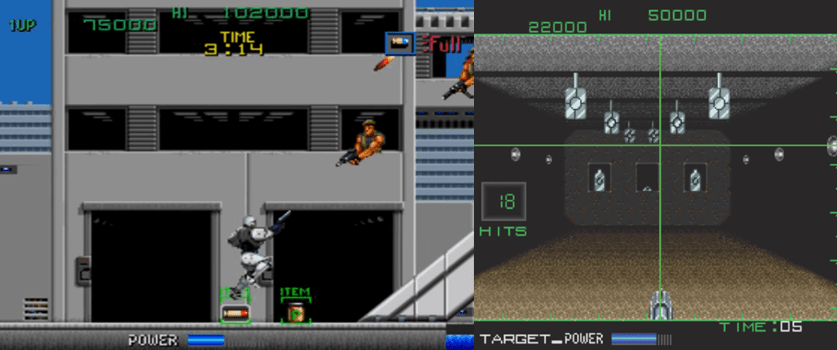
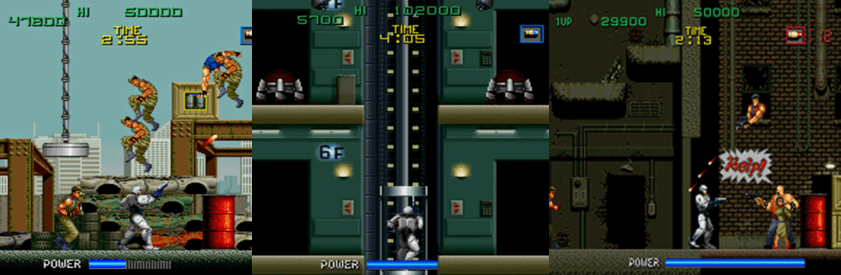
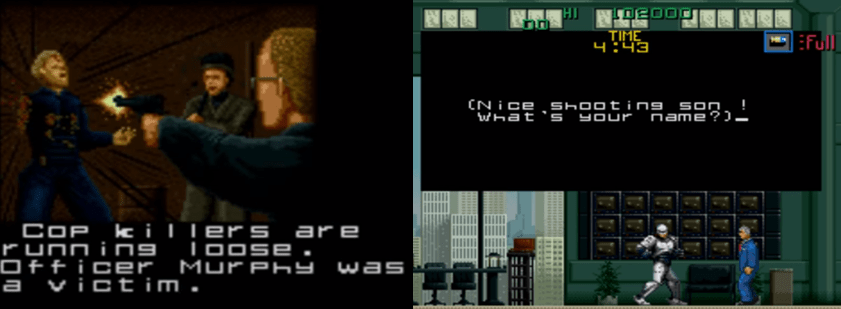
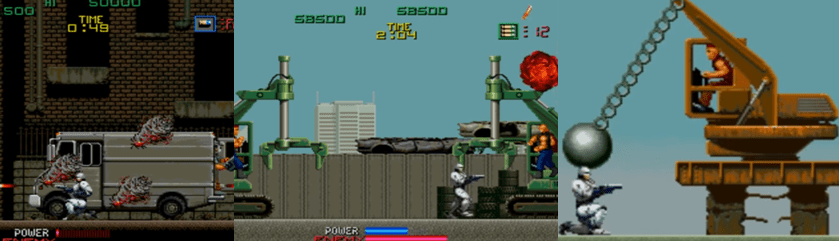
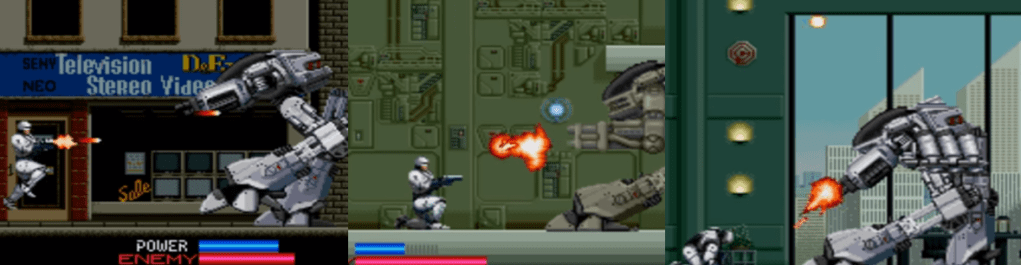
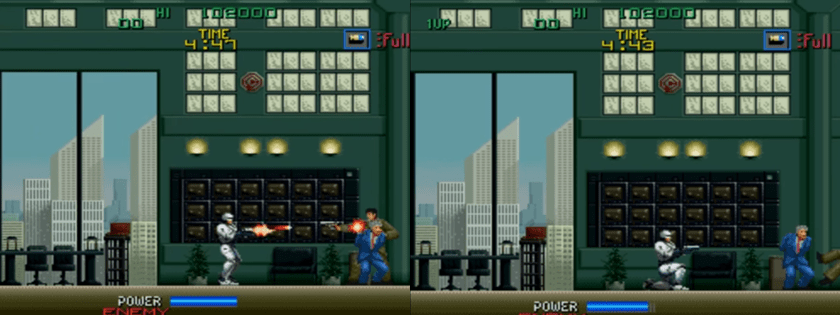
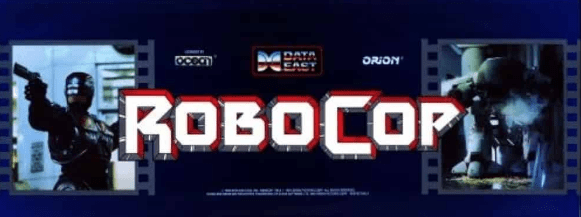




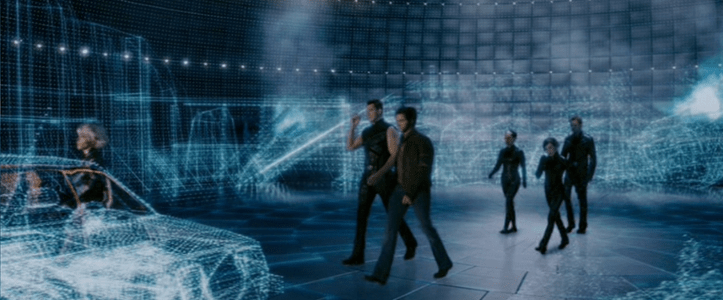

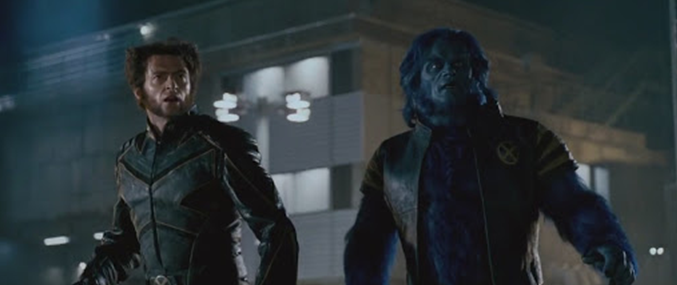
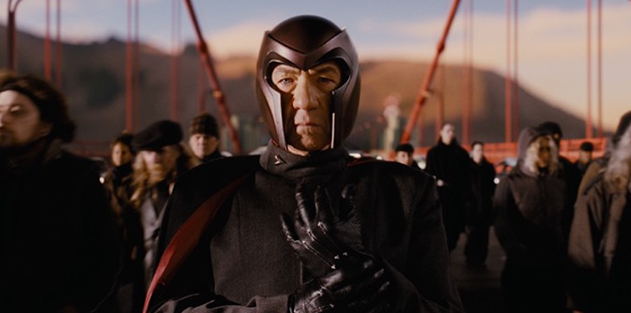
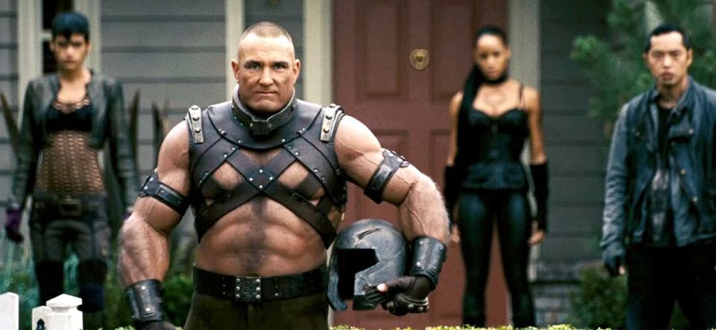
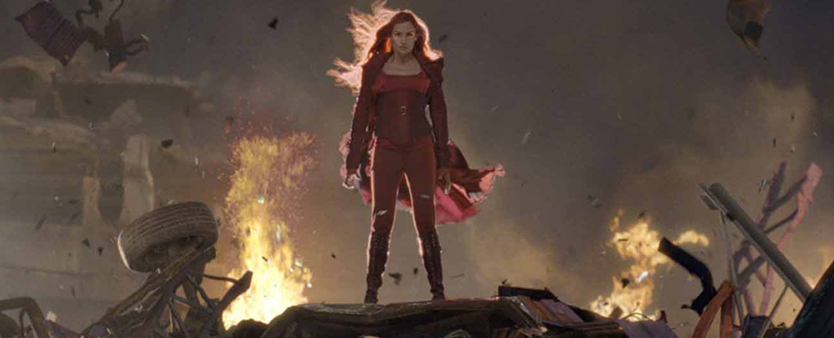



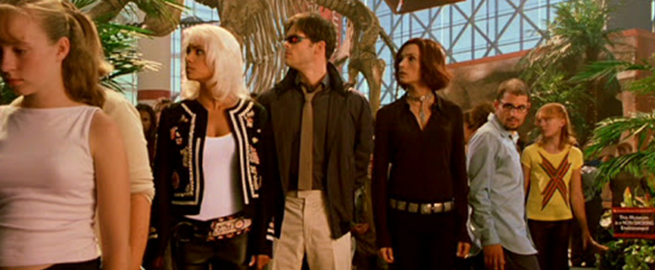
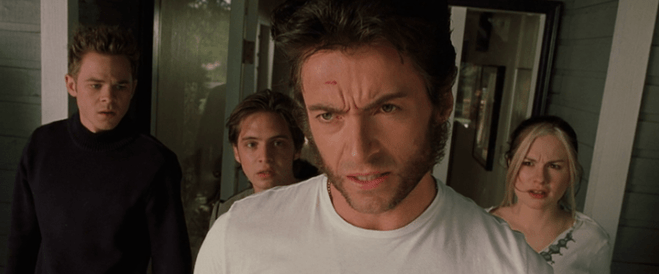
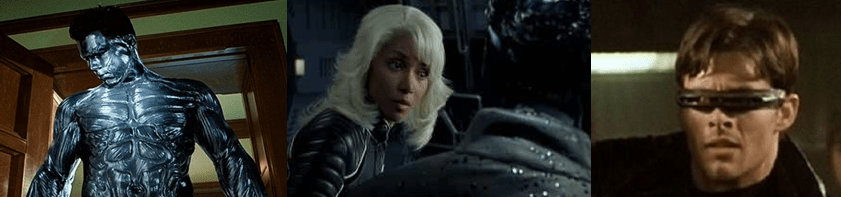
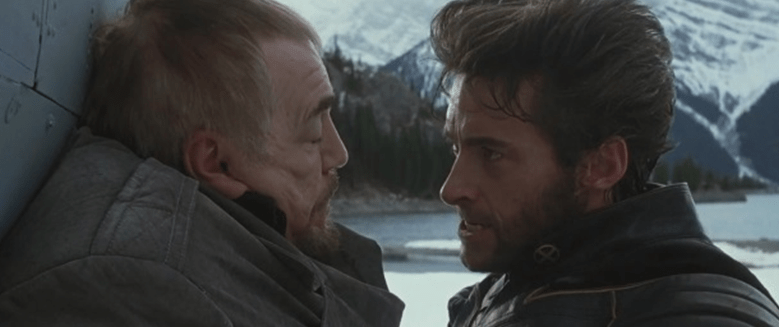
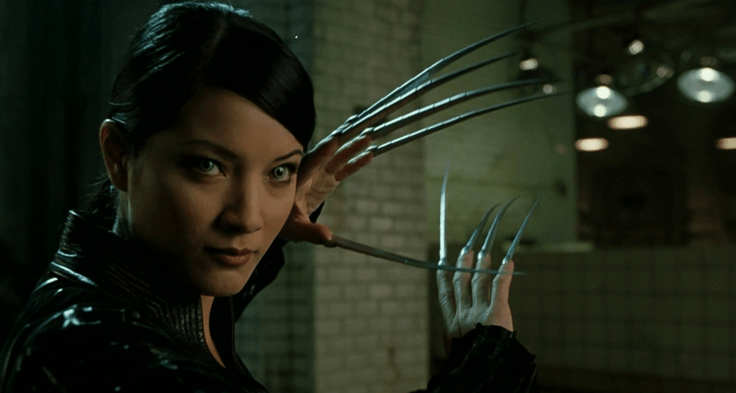
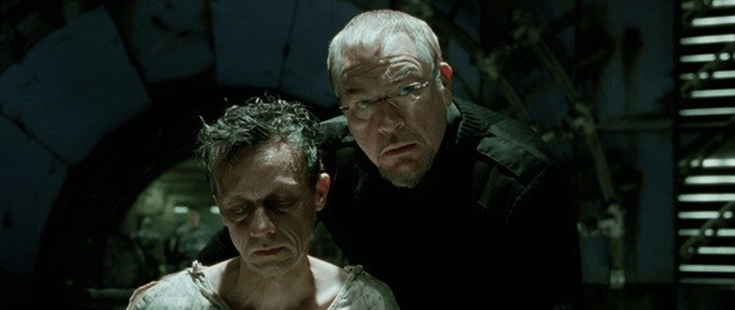
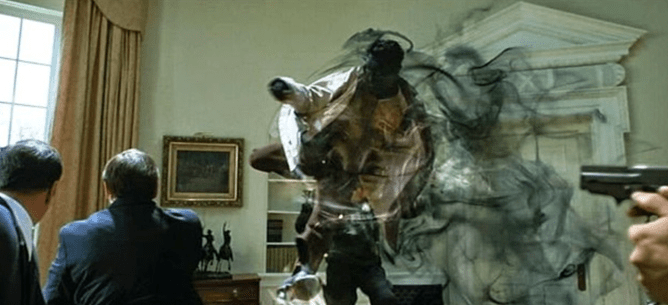
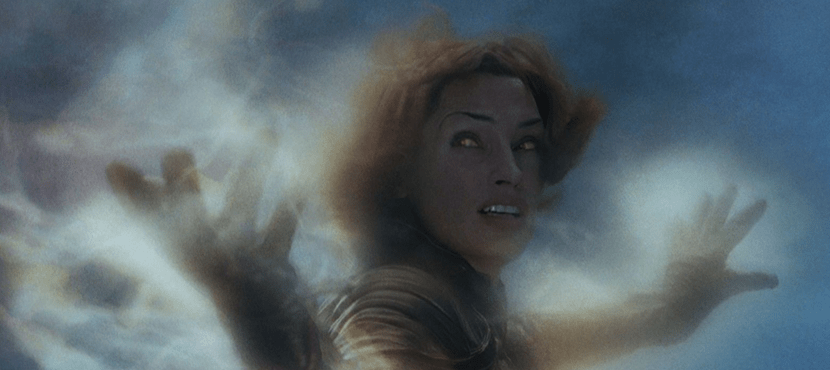



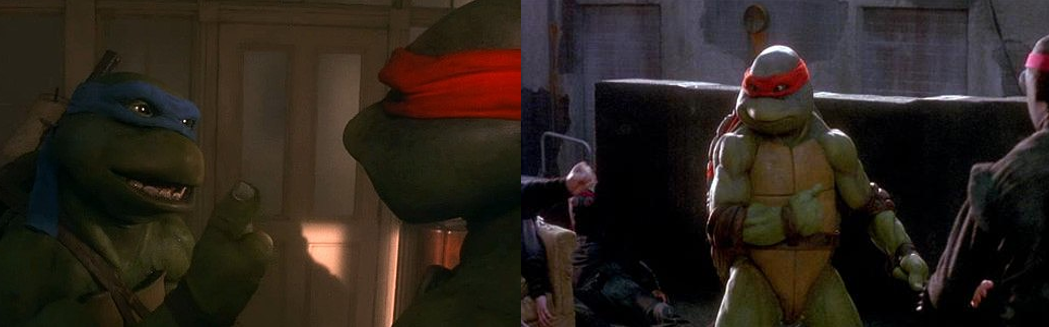
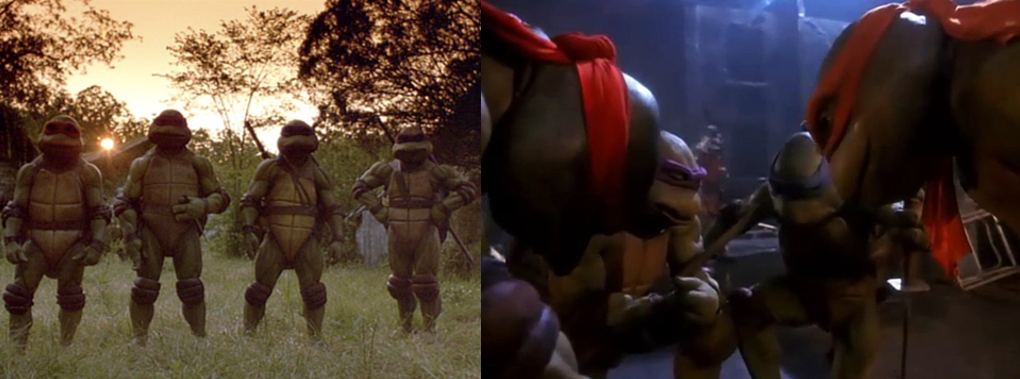
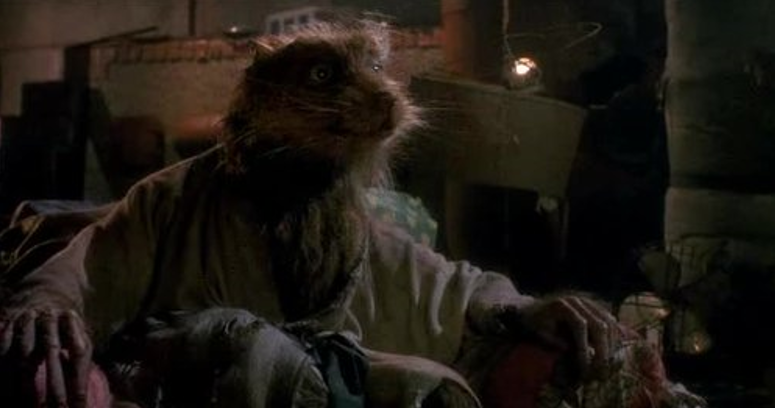
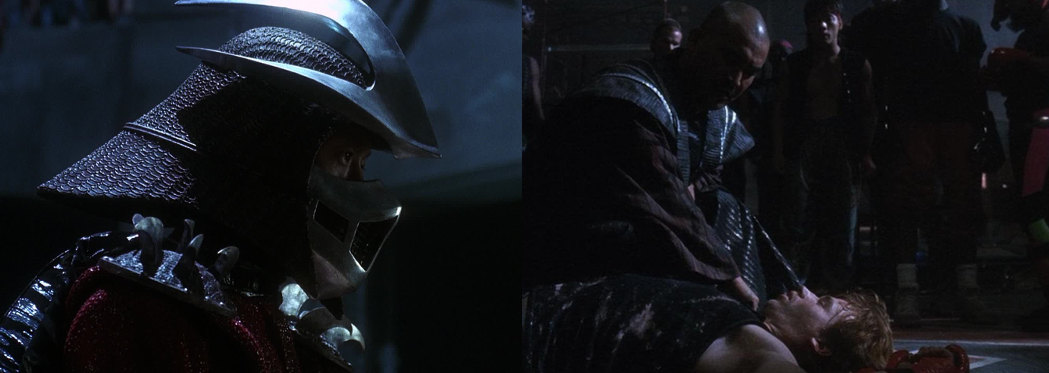
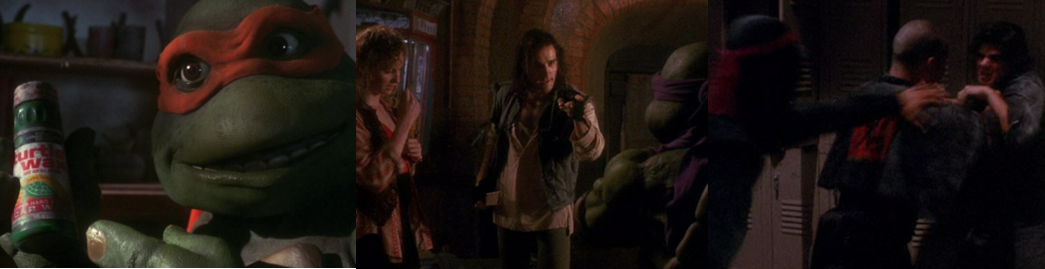
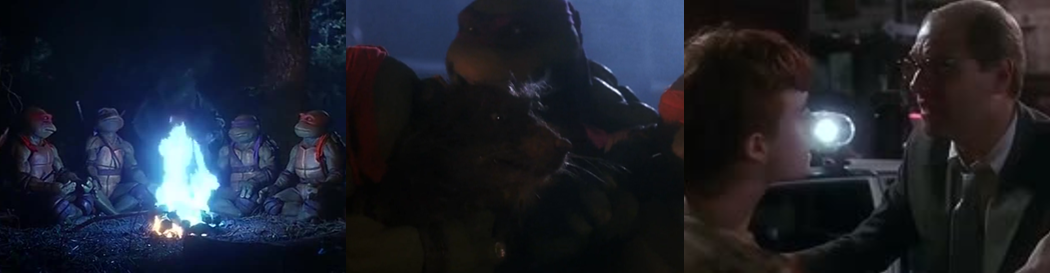
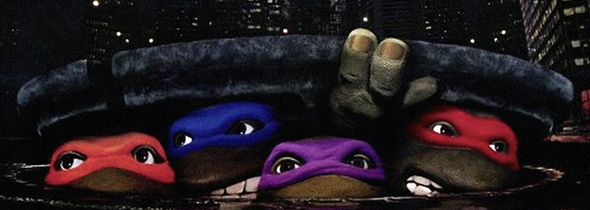




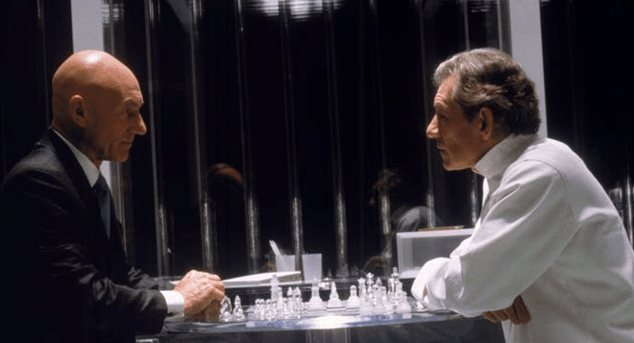
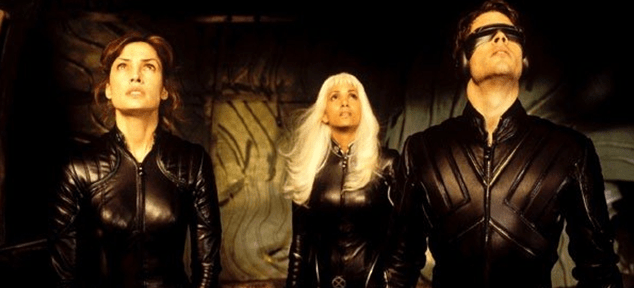
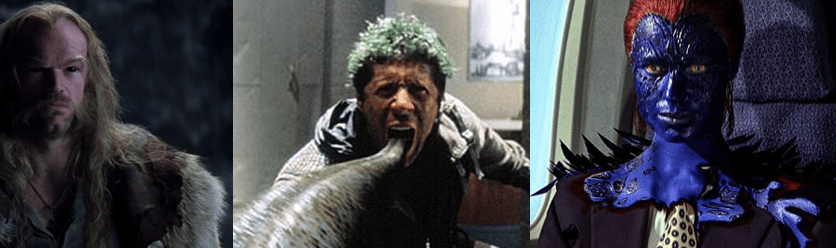
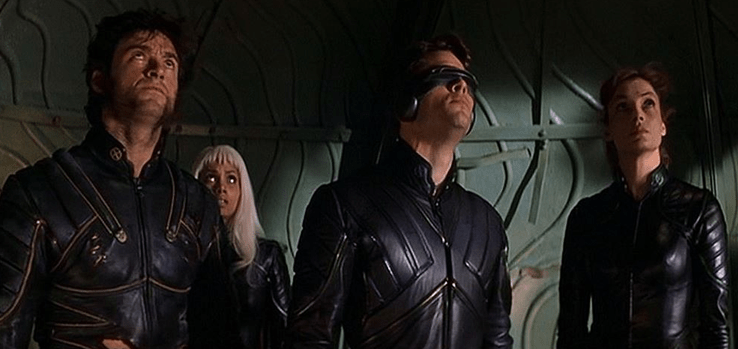



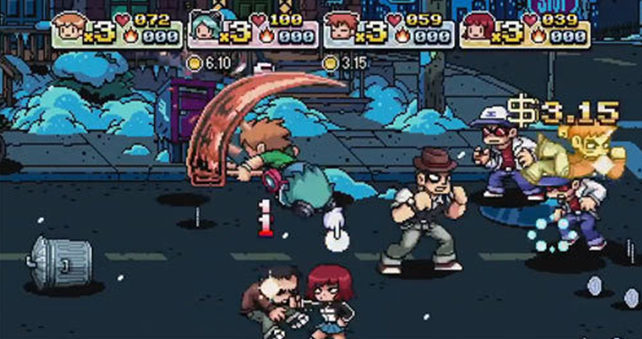

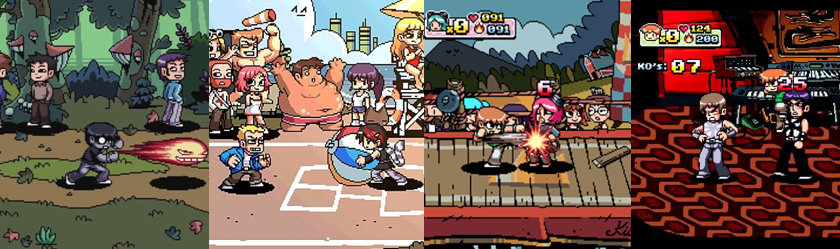















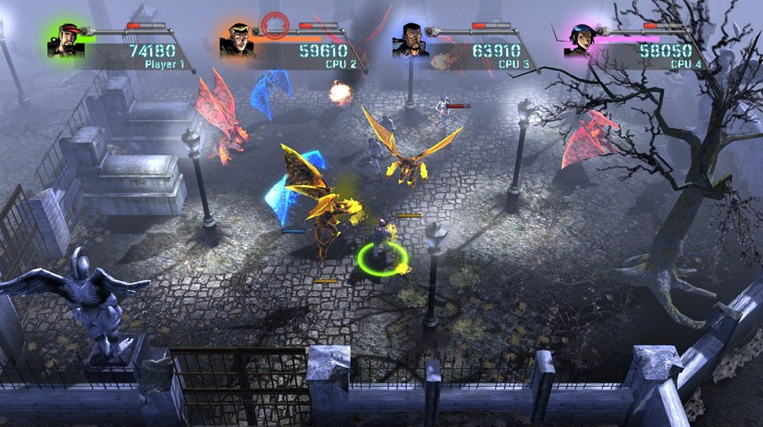
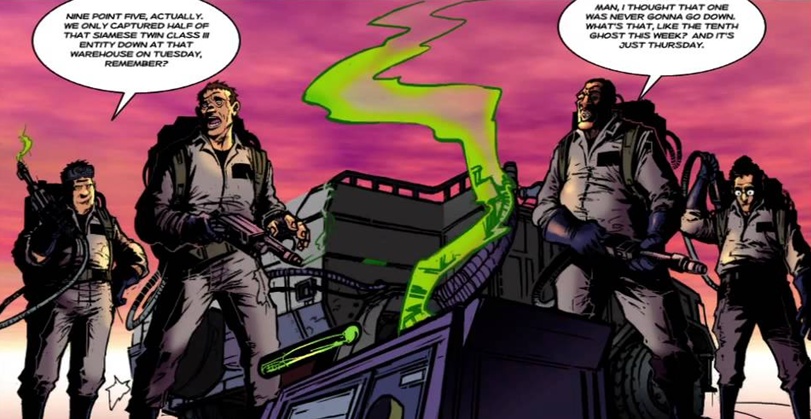
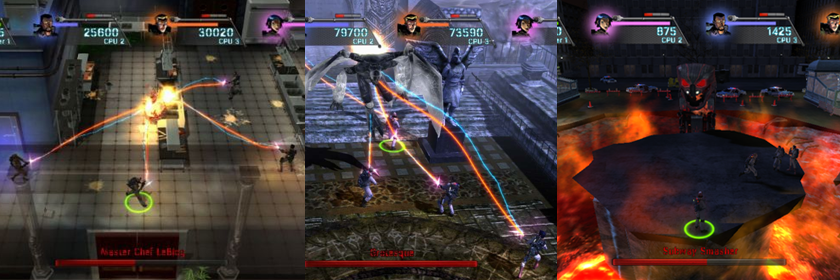
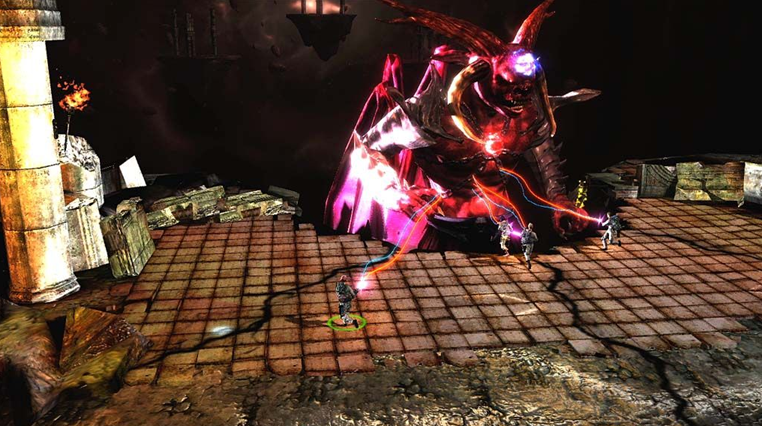
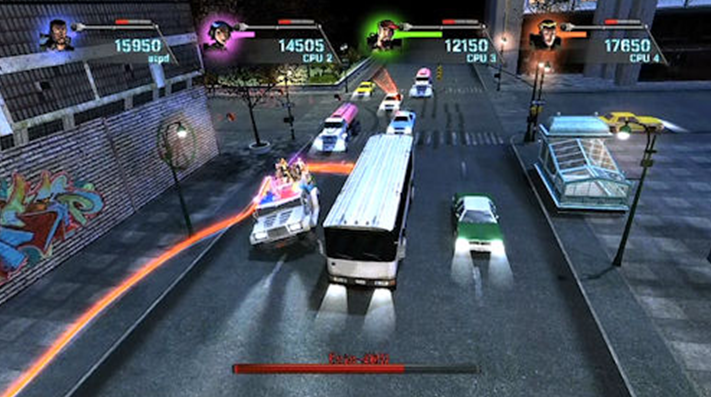


You must be logged in to post a comment.