Story Title: “The Prophecy of Madame Web!” Published: 12 August 1980 (cover-dated November 1980) Writer: Dennis O’Neil Artist: John Romita Jr.
The Background: After a blockbuster success with the Fantastic Four, Marvel editor and head writer Stan Lee spearheaded one of Marvel’s best selling publications with teenage superhero Peter Parker/Spider-Man. Spidey’s popularity soon saw him headlining other comics, such as Marvel Team-Up, amassing one of the industry’s most colourful and memorable rogues galleries, and his supporting cast ballooning as Parker aged and his life became more complicated. In November 1980, The Amazing Spider-Man readers were introduced to blind, crippled psychic Cassandra Webb/Madame Web, an enigmatic figure who both tasked Spider-Man with opposing certain villains and used her clairvoyance to direct his destiny. Madame Web played a significant role once Spider-Man was threatened by outside and multiversal forces, ultimately dying at the hands of a vengeful Vladimir Kravinoff/Grim Hunter, with her last act being to pass her powers to Julia Carpenter/Spider-Man. Madame Web’s most significant portrayal, however, was in the Spider-Man animated series (1994 to 1998), where she was voiced by Stan Lee’s wife, Joan, and acted as a mysterious mentor to Spider-Man (Christopher Daniel Barnes), often frustrating him with her manipulative ways. Years later, Sony Pictures inexplicably decided the best way to capitalise on their limited library of Spider-Man characters was to produce a Madame Web live-action movie, teaming this obscure side character with a handful of Spider-Women in an attempt to subvert audience expectations.
The Review: We begin in the basement storage room of the New York Globe, a rival newspaper to the Daily Bugle, where Robert Dockery, circulation manager for the newspaper, directs a gang of masked hoodlums whom he’s hired in a bid to seize complete control of the publication. This plot point is then put on hold as the story joins Peter Parker, who’s strolling through Chinatown alongside Debra “Debbie” Whitman, an obscure love interest of Peter’s even for me whom he met while studying at Empire State University. Peter’s surprised to learn that the normally level-headed and pragmatic Debra has booked an appointment with a fortune teller, the titular Madame Web, though Debra insists that she’s simply exploring the fascinating subject of psychic phenomena rather than being scammed by a faux clairvoyant. Although Peter enjoys teasing her over this, he’s unable to join her to see Madame Web in action as, wouldn’t you know it, he’s late for a meeting at the New York Globe. Rather than web-sling over there, Peter takes the more traditional route but is forced to switch to Spider-Man when he’s denied access to the editorial department due to a managerial mandate. This is all part of Dockery’s plot, of course. He’s taking a meeting with his senior staff and introducing them to Katrinka Janice “K.J.” Clayton, publisher of the New York Globe, a provocative woman who, until now, has been a silent partner of the newspaper. Just as she announces Dockery’s ascension to power, those masked hoodlums burst in, accost the staff members, and take Clayton hostage.
When a publishing mogul is seemingly kidnapped, Spidey turns to a mysterious psychic for help.
Luckily, Spider-Man was climbing up the outside of the building, so he bursts in to break up the party, easily dodging their machine gun fire with his superhuman speed and reflexes and fighting off the armed thugs even when they dog-pile him. They do, however, delay him long enough for Clayton to be kidnapped and, thanks to Dockery “clumsily” getting in his way, Spidey is a step too slow to pursue them and is unable to catch up due to a lack of windows. With no other options, Spidey decides to indulge Debra’s fantasy and pay Madame Web a visit to see if the elderly medium can help him track Clayton down. Spidey web-slings over the Madame Web’s apartment and is stunned to find she’s an elderly blind lady who’s hooked up to an elaborate web-based life support machine, created by her late husband, that sustains her so she can aid others with her gifts. She describes herself as a “soothsayer, a psychic, a witch” and claims to be capable not just of “second-sight” but fostering the psychic powers of others. Impressed by her presentation and boastful claims, Spider-Man asks for her insight into Clayton and, though she stresses that her abilities aren’t 100% guaranteed due to the nature of the paranormal, she immediately picks up that Clayton is the victim of a malicious deceit, perpetrated by Web’s own student, Belinda Bell, to be held hostage for financial gain. At Spidey’s urging, Madame Web intuits that Belinda and Clayton will perish in a horrific train crash if he doesn’t find Bell, who is his only hope of tracking down Clayton. The next scene shows that the deceit runs even deeper as Belinda was paid to impersonate Clayton and, for her assistance, she finds herself tied up in a toy store (of all places) and at the mercy of Dockery’s ruthless mercenaries.
Thanks to Madame Web, Spidey saves Clayton, though her true nature remainsa mystery.
Across town at the New York Gloe, Dockery confronts the real Clayton (actually a much older woman) and openly threatens her, mocking the vanity that so easily allowed him to have her impersonated to hand control of the newspaper over to him. Confident in his victory, Dockery calls his thugs and orders Belinda’s execution, but Spider-Man arrives to save her, having deduced that Madame Web’s vision of crashing trains actually meant the toy store that Dockery owns which…is a bit of a leap but sure, okay. Once again, Spider-Man easily dispatches of the goons, burying them beneath shelving units and stock, and freeing Belinda. Angered by the betrayal and grateful for the rescue, Belinda warns Spider-Man of Dockery’s intentions towards Clayton so he races over to the New York Globe, arriving just in time to find her office engulfed in flames thanks to Dockery dousing gasoline everywhere and starting a raging inferno. Spider-Man brings Clayton to safety, setting her down outside the building just as Dockery makes a run for it, only to find his car up-ended by the web-slinger. Defeated, Dockery folds like paper and Peter later reads that he’s run similar scams before, although Dockery’s imprisonment means that Peter is now out of work (I’m not sure exactly why, surely the New York Globe is still publishing and employing staff, but then I’m unfamiliar with this period in Peter’s life so maybe his job was somehow linked to Dockery?) Before he can descend into complete despair, Peter suddenly gets a phone call from Madame Web, who learned of his dual identity through her powers; she both promises to keep his secret and reassures him that his financial woes will soon be resolved. While this sounds positive on paper, the final panel of the issue reveals that his cantankerous former boss, J. Jonah Jameson, is literally chomping at the bit to re-employ the troubled young hero!
The Summary: “The Prophecy of Madame Web!” was an inauspicious debut for the mysterious psychic; Madame Web herself was more of a secondary (or even tertiary) character to the main plot, which was surprisingly low-key for a Spider-Man story, involving no colourful supervillains and being a simple story of a greedy man going to extreme lengths for more power. In other Spider-Man stories, Dockery would’ve employed the services of a low-tier Spider-Man villain, someone like MacDonald “Mac” Gargan/The Scorpion, Herman Schultz/The Shocker, or even Dmitri Smerdyakov/The Chameleon either to take Belinda’s role of impersonating K.J. Clayton or masquerading as Dockery himself. Indeed, I do wonder if maybe the story would’ve been more enjoyable with a supervillain in place of Dockery’s nameless, faceless goons, who offer no physical challenge to Spider-Man and don’t even respond to his witty remarks and cheap quips. Without a colourful villain, the fights aren’t as interesting and the stakes are quite low in terms of Spidey’s safety; there’s no question he can out-punch these mercenaries, so the drama revolves around ensuring Belinda and Clayton are safe instead. This would be fine but, again, there isn’t much emphasis on them being in danger; Belinda is tied up and taunted as the mercs wait for the order to kill her, rather than just being shot right away, and Dockery goes to the effort of setting Clayton’s office on fire to stage her death as an accident rather than just shoving her out a window or gunning her down. I don’t mind a more grounded, low-stakes Spidey story – in many ways, it’s a change of pace – but the narrative here is littered with contrivances and conveniences that make it decidedly run-of-the-mill compared to other Spidey tales.
Madame Web’s look and powers impress, but the plot is middling and forgettable.
Madame Web makes for a visually interesting character; decked out in a slick black/red dress with a spider motif, blindfolded, and hooked up to a web-like life support system, she’s got a memorable design, for sure. Although Peter dismissed her as a fraud (which is a bit odd considering Peter has chummed with the X-Men before, a team known for their psychics), she proves to be completely legitimate, though her clairvoyance is paradoxically accurate and unreliable, meaning she can only vaguely point Spidey in the right direction and stress fatal consequences should he fail. Thankfully, Spider-Man uses his head (off panel, of course) and, rather than searching every trainyard in the city, realises that Dockery owns a toy shop, which turns out to be the right location. Truthfully, though, I didn’t really like this; it felt rushed and forced and again lowered the stakes as it meant we wouldn’t be seeing Belinda or Clayton threatened by oncoming trains. The twist of Madame Web learning Spidey’s secret identity was interesting as very few characters were in on this back then and taints her mysterious aura with a potential menace as her intentions might not be as benevolent as they seem, but she’s ultimately a non-factor in this story. I have no issues believing that Spider-Man could’ve figured out where Belinda was without Madame Web’s help, making her largely superfluous. I almost wonder if it might’ve been better to have Madame Web be the linchpin of the story; perhaps she’s a true medium who’s targeted by gangsters or hosts a psychic television show and is kidnapped by a villain for a ransom, or just something a little more engaging that Spider-Man giving up pursuing the hoodlums and randomly deciding to ask for her help.
My Rating:
⭐⭐
Rating: 2 out of 5.
Could Be Better
Have you read “The Prophecy of Madame Web!”? If so, what did you think to it? Were you impressed by her debut, or did it fall as flat for you as it did for me? Did you like that it was a more grounded story, or would you have preferred to see Spidey tangle with a supervillain? What are some of your favourite Madame Web stories or moments? Are you excited to see her live-action debut? Whatever your thoughts on Madame Web, drop a comment below or on my social media and be sure to check out my other Spider-Man content across the site.
On 21 February 1986, The Legend of Zelda(Nintendo EAD, 1986) was first released in Japan. The creation of legendary game designer Shigeru Miyamoto and Takashi Tezuka, The Legend of Zelda launched one of Nintendo’s most popular franchises. This year, I’m dedicating every Wednesday to Nintendo’s most famous silent protagonist, Link and his vast and enduring fantasy world of sword and sorcery.
Released: 16 January 2019 Originally Released: 14 January 1987 Developer: Nintendo Original Developer: Nintendo R&D4 Also Available For: Famicom Disk System, Game Boy Advance, GameCube, Nintendo 3DS (Virtual Console), Nintendo Entertainment System (NES), NES Classic Edition, Nintendo Wii, Nintendo Wii U
The Background: The brainchild of designer Shigeru Miyamoto, The Legend of Zeldapurposely emphasised exploration and experimentation based on Miyamoto’s childhood love of exploring forests and caves. Selling well over 6.5 million copies, the game was a massive success and has been widelyrecognised as one of the greatest adventure games ever made. A sequel was released the very next year, one that proved to be one of the more divisive titles in the franchise for abandoning almost all of the original’s gameplay mechanics, This, however, was Miyamoto’s intention all along; he assembled an all-new team for Zelda II and infused traditional role-playing game (RPG) mechanics with both the adventuring gameplay of the first game and the sidescrolling action of the likes of Super Mario Bros.(Nintendo R&D4, 1985) and CastleVania(Konami, 1986). Emphasising tactical combat, obscure dialogue, and levelling-up to improve your abilities, Zelda II was a stark contrast to the first game but, surprisingly, this didn’t impact its sales or reception at the time. The game sold nearly 4.40 million copies worldwide and was apparently met with positive reviews for its unique presentation, expansion of the formula, and challenging gameplay. However, while many consider it a hidden and underappreciated gem in the series, Zelda II retains a largely negative reception; interestingly, while Miyamoto returned to the familiar top-down formula for the far moresuccessful sequel, Zelda II went on to influence the franchise’s larger narrative and jump to 3D. The game has been re-released multiple times, though never with any enhancements beyond save states and rewinds, to allow new generations of players to form their own opinions of this black sheep of the franchise,
The Plot: After saving the kingdom of Hyrule, fated hero Link must embark on a new quest to awaken Princess Zelda’s slumbering ancestor by placing six crystals in six temples, all while contending with monstrous forces seeking to revive the Dark Lord, Ganon, using Link’s blood!
Gameplay: Zelda II: The Adventure of Link is a 2D action/adventure game in which players assume the role of the titular green tunic-clad protagonist and journey across the fantasy land of Hyrule, which is divided into forests, deserts, caves, and towns, searching for six crystals to revive a sleeping princess. At first glance, things are somewhat similar to the last game; you’re given three save files which you can name (though this name isn’t reflected in the in-game dialogue) and dropped into the game world after a bit of story text for context. However, as soon as you take control of Link, the differences between the first and second games become immediately apparent; firstly, Link begins in Zelda’s throne room in a traditional sidescrolling format like Super Mario Bros. This comparison becomes increasingly apt as you play with the controls and progress through the game; pressing B or X will see Link swipe with his sword, unleashing his patented Sword Beam when at full health, while A jumps! Jumping?! In a Zelda game? Outrageous! Link can also crouch (though less to duck beneath projectiles and more to perform a low attack) and holds a shield that will defend against some incoming ranged and melee attacks, but that’s it for his options at the start of the game. As soon as you leave the throne room, the game suddenly switches to a top-down view, but one markedly different to that of the first game; rather than presenting an action-oriented overworld, Zelda II takes more inspiration from traditional RPGs like Final Fantasy (Square, 1987) this time, with a few interactable elements and swarms of random battles appearing on the map.
Gameplay is now infused with RPG elements, placing more emphasis on interaction and combat.
Yes, as you move around the overworld, little black monsters will randomly appear and make a beeline for you; if you come into contact with them, you’ll be warped to a sidescrolling section where you’ll either have to battle past enemies, simply walk offscreen, hop between platforms and over hazards, or collect special items to exit to the overworld. The enemies you face are determined by the sprite that touches you, the area you’re in, and how far into the game you are; touching a Bot-like enemy usually puts simpler enemies in your path, but touching a larger monster will spawn a greater challenge. Sometimes, these sidescrolling sections are mandatory to progress; you’ll randomly be deposited into a lava-filled cave, onto a bridge swarming with Bago-Bagos, or into a haunted graveyard and will have to fight your way out to move on. Defeating enemies will usually (but, annoyingly, not always) award experience points (EXP); yes, like other RPGS, Link must now gain EXP to level-up and increase his attack, health, and magic, all of which is essential for overcoming the game’s more challenging enemies and bosses. Occasionally, you’ll find Point Bags (either out in the open or dropped by defeated enemies) which will give you an EXP boost, and conquering each of the game’s Palaces will automatically award you with a free level. Link can level-up to a maximum level of eight and you’ll be able to select whether its your health, magic, or attack that’s increased each time you level-up, but the amount of EXP you need to level-up increases each time so it’s definitely worth defeating as many enemies as you can and grabbing all the Point Bags you see to get stronger faster. If you were paying attention there, you’ll have seen I mentioned magic; Zelda II introduced magic to the franchise, though it’s used a little differently than you might think. Each town Link visits shelters a wise old man who will freely teach you a spell (though sometimes you need to perform tasks, such as talking to specific non-playable characters (NPCs) or jumping down chimneys, to reach the old man). Pressing + brings up your list of spells and displays how many points they cost to use; you can then press – to perform the spell, though you can only perform them in sidescrolling sections, and the effects will only last for as long as the screen you’re on. Spells range from reducing the damage you take to changing your Sword Beam into a fireball and increasing your jump height and they’re absolutely essential for clearing the game’s Palaces.
Zelda II is frustratingly obtuse at times and features an inconsistent difficulty level.
The first game is notoriously obtuse, rarely giving you much guidance about where to go and what to do, and Zelda II tries to address this by placing more emphasis on interacting with NPCs but, unfortunately, mistranslations muddy the water and leave you either with nonsense vagaries or out-right lies. In each of the game’s towns, Link can talk to NPCs for “hints” or have his health and magic restored, though some NPCS are actually enemies in disguise! There are also times when you need to perform fetch quests or talk to specific NPCs to gain new items or access to new areas; it’s again all annoyingly vague so I’d recommend just cutting out the middleman and using a guide right from the start. All the walkthroughs and level-ups in the world can’t help you when it comes to the game’s difficulty, though; while Zelda II is light on puzzles, requiring little more than the acquisition of keys and the use of certain items on the overworld, its Palaces are often sprawling mazes filled with instant-death lava or water and frustrating enemies, many of whom either take multiple hits to defeat or can resist your Sword Beam, making it useless a lot of the time. While enemies won’t respawn screen to screen, some come in seemingly endless swarms, others are invisible or invincible without certain items or spells, and others are placed in cramped hallways, making attacking and avoiding their attacks extremely aggravating. Perhaps because he’s not used to hopping over platforms, Link’s momentum is a bit janky here, meaning it’s easy to slip or bounce into death pits, and he also flies back upon taking damage, easily costing you a life. Yes, Zelda II also uses a life system; you start with three lives and, when they’re drained, you’re given the option to save your game or continue, which will return you to North Castle or the start of the current Palace, respectively, reducing your current accumulated EXP to zero in the process. While I can just about forgive a lot of the game’s oddities, the combat is awful here; since many enemies block your Sword Beam, you’ll be relying on jumping slashes to attack them, and Link’s range of attacks is sadly limited even after he gains new sword abilities, meaning combat is often as much of a chore as the tricky platforming and insane difficulty spikes peppered throughout the game.
Graphics and Sound: Fundamentally, Zelda II is graphically superior to the last game; the sidescrolling sections allow for greater detail in the sprites, particularly Link, and more detailed backgrounds than in the last game. Depending on where you are, you’ll load into various different areas on the overworld, from swamps that restrict your walking speed, to forests and traditional caves. The game’s Palaces share the same Roman-inspired aesthetic, featuring bricks and columns and statues and elevators, but each has a different colour palette and utilises its labyrinthine nature in different ways, such as incorporating crumbling platforms, destructible or falling blocks, lava pits, hidden drops, or pits that lead to lower areas. While Link looks more impressive than in the last game, he has no idle poses and his animation frames are severely limited; his sprites change when you acquire new moves or utilise certain spells, but he’s still limited by the NES hardware so he’s little more than a clunky lug here. Indeed, Zelda II may have been a little too ambitious for the time as the game’s performance struggles noticeably when enemies swarm on the overworld and when there are multiple sprites onscreen in the sidescrolling sections. Sprite flickering, slowdown, and even some glitches are surprisingly commonplace, which is odd considering how well made the first game was and how simplistic so much of the game is. Zelda II even struggles in the various towns, when NPCs wander around, going in and out of houses, to say nothing of the haunted graveyards and hazardous bridges, and you’ll see a lot of sprite tearing and performance issues when battling against the game’s bosses, too.
While the game is a graphical improvement, it’s perhaps too ambitious for the NES hardware.
On the plus side, Zelda II includes some chirpy and memorable tunes; the main Zelda theme is here, of course, and the main Palace and boss themes are fun little earworms (which is good as you’ll be hearing them again and again). Sound effects like Link’s Sword Beam and blocking projectiles and nice and clear, too, and there’s a decent amount of variety in the game’s locations, if not in the Palaces, which are very copy/paste even with their different colour schemes. Occasionally, you’ll find areas on the overworld where you need to use certain items, either manually (like the hammer and flute) or automatically (like the raft), and there are even some hidden paths and tiles that lead to Point Bags, Magic Jars, or upgrades to your health or magic bar. Although Zelda II emphasises interacting with NPC, dialogue is extremely limited and littered with mistranslations; thankfully, you can simply hit B to skip dialogue without missing out on the benefits, such as having your health restored. Cutscenes are basically non-existent here; there’s a little animation on the title screen, some story text, and some flashing visuals when you defeat a boss, but that’s basically it until you reach the final Palace. Zelda II is one of the few Zelda games where series antagonist Ganon doesn’t appear at all (unless you lose all your lives and then he’ll taunt you from the Game Over screen) and it also doesn’t feature Link’s iconic secondary weapons like the boomerang or bow and arrow, meaning things get very basic and repetitive very quickly.
Enemies and Bosses: A wide variety of monstrous beings will dog Link’s progress in the game’s sidescrolling sections and Palaces, many of them new and unique to this game (as far as I can tell). We’ve got the standard bat-, bird-, snake-, spider-, and jelly-like cannon fodder that swoop, spit, and pounce about, annoying skeletal fish that leap out from water and spit projectiles, and ghostly eyeballs and floating heads that swarm the screen endlessly, bobbing about and decimating your health bar in seconds. It’s not long before you’re challenged by more frustrating enemies; Moblins, Iron Knuckles, Lizalfos, and Stalfos quickly become commonplace, defending against your Sword Beam and attacking with daggers, swords, maces, tridents, and even jump attacks. It can be difficult to land hits on them since you’re reliant on your jumping attacks and their projectiles can be incessant, making them frustrating encounters even when you’re at a higher level. This threat is escalated by the likes of the Doomknockers, Fokkas, Fokkerus, and various teleporting wizards; these guys will hop about, toss a barrage of axes or flames, and need the use of a spell in the latter’s case to even defeat. Toss in the barrage of damage sponge Bubbles, expendable Wosus, fireball-spitting statues, and worm-like creatures and it quickly becomes an uphill battle getting past even the simplest of areas as you have to avoid attacks or switch up your playstyle to overcome the enemies before you.
The game’s enemies and bosses can be aggravating due to the clunky combat mechanics.
Seven crystals in seven Palaces means, you guessed it, eight bosses to overcome in Zelda II, including the game’s true final boss. This time around, the bosses all have a life bar, similar to the Mega Man series (Capcom, 1987 to present), and drop a key after being defeated, which unlocks the Palace exit. The first boss you encounter is the horse-headed Mazura, whose armour protects him from all your attacks and whose swinging mace will decimate you if it makes contact. Your best bet here is to avoid being backed into a corner and activate your Shield spell to reduce the damage you take since you’ll need to use jumping slashes to hit his only weak point, his head. You’ll use these same tactics against the second boss, Jermafenser, a massive armour-clad knight whose head will detach after a few hits! However, Jermafenser is a bit of a joke; your shield will block his projectiles and, by this point, you should have the downward thrust, which makes short work of him, meaning the journey through Death Mountain and battles against the aggravating Dairas is more of a challenge! The third boss you encounter, Rebonack, is essentially a blue Iron Knuckle on a mechanical horse. He’ll charge across the screen and try to skewer you with his lance, meaning you need to time a downward thrust to rob him of his steed, after which you simply need to block, jump, or duck to defend against his barrage of daggers and attack his head as you would a normal Iron Knuckle. What makes Rebonack unique, though, is that you battle him again later in the game as he appears twice more as a mini boss in Three-Rock Palace, though he’s even easier in these encounters since you’re more powerful at that point. When you reach the Great Palace, you’ll also encounter another mini boss-like enemy, a Giant Bot that splits into several regular Bots upon being hit and slows the game to a crawl as a result.
Many bosses are surprisingly disappointing and nowhere as challenging as the journey to them.
Journeying through Maze Island Palace will see Link clash with the wizard-like Carock, which is essentially a larger Wizzrobe variant. Because of this, battling it is extremely easy as you can simply activate the Reflect spell and crouch down in a corner; Carock will teleport about firing energy waves at you, but Reflect will send them right back, killing it in seconds. In comparison, the hulking Gooma is more of a challenge; slow and lumbering and wielding a spiked, chained ball, this monster requires a lot of patience as you use the Jump, Shield, and Life spells to avoid and endure his attacks and land hits to his torso. The dragon-like Barba was probably a lot harder in the original game but is made a lot easier with the Nintendo Switch’s rewind feature; it randomly rises from one of three lava pits to spew easily-voidable flame breath at you, so you need to be in the right spot to attack its head when it appears, which is easy to do when you can rewind the game on the fly! The penultimate boss, Thunderbird, poses the most significant challenge; not only must you reach it with a full magic bar since you need to cast Thunder to make it vulnerable, but it floats about spitting endless fireballs and can only be damaged by hitting its face. Once you defeat it, you’ll go straight to the final room and boss, with the damage and magic you lost fighting Thunderbird carrying over. Thankfully, the final boss, Dark Link, can be a bit of a let down; while Link’s shadow copies all his sword attacks and blocks yours with his shield, you can crouch or stand in the corner and easily cheese him, making the final challenge extremely anti-climactic considering how tough the rest of the game is.
Power-Ups and Bonuses: Unlike most Zelda games, Zelda II doesn’t include Rupees or shops and defeated enemies will not drop hearts to refill your life meter. The only way to restore Link’s health is to find a fairy on the overworld or in a sidescrolling section, level-up, visit an NPC at a town, or find a Heart Container, meaning you’ll mostly be relying on spells like Shield and Life to help reduce damage and restore your health. On the plus side, NPCs will aid you for free, though you’ll sometimes have to jump through some hoops to reach the old man and helpful knights who provide new spells and attacks. Although Link doesn’t get to use iconic sub-weapons like the bombs or hookshot, he can acquire items in each Palace to aid his quest; many of these are passive, automatically activating once you acquire them, such as the candle, raft, boots, key, and magic cross. These automatically light up dark areas, reveal hidden enemies, allow you to traverse streams or bodies of water, and open every door in the game unlike items like the hammer, flute, handy glove, which are activated on the overworld in the case of the former and powerup your sword attacks in the case of the latter to let you smash blocks.
In place of his usual weapons, Link utilises spells and new sword attacks to progress.
Link is taught eight spells throughout the game that are required to conquer the Palaces. Some are more tactical than others; for example, you don’t have to cast Shield or Life if you’re skilled enough to defeat enemies and bosses with little to no damage, and I only cast Spell a few times in dungeons swarming with Girubokkus and Moas since it turns them (and many other enemies) into harmless Bots. However, you absolutely will need to cast Jump to increase your jump height and reach new areas, you’ll need Fairy to transform into a tiny fairy and bypass larger gaps, and Fire and Reflect are both necessary to defeat certain enemies. Thunder, the most powerful spell in the game, will obliterate all onscreen enemies but it costs so much to use that I only employed it against Thunderbird since that’s the only time it’s unavoidable. Link can also learn two additional sword attacks, the downward and upward thrust, which are super useful for defeating enemies beneath and above him, though it’s not going to help you against Iron Knuckles and other similar enemies, which is annoying. Finally, in addition to finding Point Bags and magic jars, you’ll occasionally come across Link Dolls that will grant you an extra life, though this is sometimes detrimental as it means wasting more time just trying to save the game.
Additional Features: As is tradition for the Zelda franchise, numerous Heart Containers can be found all across Hyrule; acquiring these will refill and extend your health bar, and you only need to find one to do this rather than four or five like in other games. Additionally, Magic Containers will do the same thing for your magic bar, so it’s worth exploring a bit to find these, even if it means battling more enemies. As alluded to earlier, some NPCs will only help you after you’ve performed certain tasks or spoken to certain characters; there’s a mirror, water, and kidnapped child to find in order to learn certain spells, Link will need to use Jump and Spell to reach certain houses or unearth areas, and you’ll need to use the flute and hammer on the overworld to eliminate otherwise impassable monsters or reveal hidden areas. Finishing the game allows you to save and alters your save file; selecting it will begin the game anew, with all your spells and level-ups intact, though you’ll have to find all the items and beat all the Palaces again. You can skip to this game by selecting the “SP” version from the Nintendo Switch Online menu, and of course you can abuse the rewind and save state feature to make the game a bit less challenging, but it’s still a tough experience even with these quality-of-life features.
The Summary: I put off playing Zelda II: The Adventure of Link for years; I purposely downloaded it for the Nintendo Wii just to play it years ago but never actually sat down with it until this playthrough, and even then I was very reluctant after all the negativity surrounding it. Unfortunately, I have to say that the criticism this game often gets is entirely justified; it’s such a radical departure from the first game that it’s almost like a completely different game, and the challenge it offers is neither fun or rewarding. Things start out okay enough, but the difficulty spikes dramatically once you reach Death Mountain (the second area of the game, I might add!) and then becomes wildly inconsistent after that. Sometimes you’ll be bombarded with small, annoying enemies and projectiles or forced to fight tricky enemies like Iron Knuckles in narrow hallways, and other times rooms will be largely empty or contain simple platforming sections. I wasn’t a fan of the basic overworld, the aggressive random battle system, or the switch to a sidescrolling perspective; this only works in small doses in Zelda games and the NES just isn’t capable of giving Link the range of movement or attack options required to best utilise this perspective. I didn’t mind the level-up mechanics, or the use of spells, and grinding wasn’t too much of a slog for me unless I was battling Iron Knuckles, but the spells were quite mundane and circumstantial, and I missed using other weapons and solving puzzles. Instead, the game relies on mazes, vague hints, and trial and error to nudge you along, making for a confusing and aggravating experience as I don’t like referring to a walkthrough when I’m playing games. I liked the music, and aspects of the graphics, and the bosses were visually quite impressive, if mostly ridiculously easy compared to what you go through to reach them. Ultimately, I don’t think you’re missing out if you’ve never played this one; it’s a curious oddity in the franchise, one that’s easily skipped over in favour of the more enjoyable sequels, but it could provide some enjoyment for nostalgic gamers seeking to relive the days when videogames were unnecessarily difficult.
My Rating:
⭐⭐
Rating: 2 out of 5.
Could Be Better
Have you ever played Zelda II: The Adventure of Link? Were you put off by the changes to the gameplay and mechanics, or did you enjoy that it mixed up the formula? What did you think to the game’s difficulty and use of RPG mechanics? Did you struggle to work out where to go and what to do? Which of the game’s spells and bosses was your favourite? What did you think to the final boss? Would you like to see Zelda II remade or a return to this style of game for the franchise? How are you celebrated The Legend of Zelda this month and where games are your favourite? Whatever your thoughts, leave a comment below and maybe check out my other Zelda content.
Upon the release of Pokémon: Blue Version and Pokémon: Red Version(Game Freak, 1996), a new craze swept through playgrounds across the world. Entire generations grew up with Pokémonas clever marketing saw Nintendo’s newest franchise become a massively lucrative and popular multimedia powerhouse that endures to this day. Accordingly, February 27th is now internationally recognised as “National Pokémon Day”, which I’m expanding to an entire month of Pokémon every Tuesday in February, which is even more fitting given that February 6th is the day that Mew successfully gave birth to my favourite Pokémon, Mewtwo!
Released: 13 July 2013 Director: Kunihiko Yuyama Distributor: Toho Budget: Unknown Stars: Sarah Natochenny, Miriam Pultro, Scottie Ray, Samia Mounts, Eileen Stevens, Jason Griffith, and Ikue Ōtani
The Plot: Ash Ketchum (Natochenny) and his friends arrive in Pokémon Hills, where a Red Genesect (Ray) and its brethren seek to forcibly make their home. This attracts the attention of the Unovan Mewtwo (Pultro), who seeks not only to challenge the Genesect’s power but to shield them from the abuse of their human creators.
The Background: It would be foolish to deny how influential Pokémon (Nintendo/Creatures/Game Freak, 1995 to present) has become ever since the first games were released. The success of the game is only ever half the story when it comes to Pokémon, however; the franchise has dominated a wide variety of media over the years, thanks in no small part to the still-ongoing anime series (1997 to present). Following the financial success of the aptly-titled Pokémon: The First Movie: Mewtwo Strikes Back(Yuyama, 1998), animated feature-length productions became commonplace for the franchise, with fifteen released by 2013 and the last three focused on promoting the fifth generation of the videogames. Reportedly, Genesect and the Legend Awakened drew inspiration from New York City for its setting but the main story surrounding the film was its inclusion of Mewtwo. While this isn’t surprising considering Mewtwo is one of franchise’s most popular characters, what made this different was that this version of the character was entirely new due to legal issues and therefore more recognisably female. Debuting at number two at the Japanese box office and going on to become the tenth highest-grossing film of the year in Japan, Genesect and the Legend Awakened received mostly mixed reviews; some praised for its darker tone and cinematic scope while others criticised the inclusion of a new Mewtwo and largely derivative plot.
The Review: By the time of Genesect and the Legend Awakened, the anime was firmly entrenched in the Unova region and Ash and his faithful friend Pikachu (Ōtani) were traveling alongside Iris (Stevens), a Gym Leader specialising in Dragon-Type Pokémon and accompanied by Axew (Kayzie Rogers), and Cilan (Griffith), another of the region’s Gym Leaders who favoured Grass-Types. My experience with these seasons of the anime is almost entirely limited to the feature films that were released around this time, though the dynamic between the three really isn’t all the different from what was seen between Ash and his other travelling companions; they function as his moral support and guidance, but there are some interesting distinctions, such as Iris being a bit of a wild child and Cilan being very loquacious. The three find themselves in New Tork City, a bustling island metropolis that features a grand park right in the middle (a “Central Park”, if you will), Pokémon Hills, in which various Pokémon roam freely beneath a special dome and where Ash encounters the mysterious, armoured insectoid Pokémon known as Genesect (Stevens). Immediately intrigued by the strange creature, Ash is blown away when it showcases the ability to switch between a bipedal form and a super-fast, aerodynamic form that’s perfect for flying (and sky-surfing), and further stunned when it exhibits the ability to talk using telepathy. Ash and his friends are moved by the lost Genesect’s plight; it’s desperate to return “home” and Ash is determined to help it, only to incur the wrath of its overprotective patriarch, the Red Genesect, who regards all humans as a threat.
Ash and his friends are astounded by the Genesect and the sudden appearance of an all-new Mewtwo.
Luckily, Mewtwo is on hand to defend them, but its priority is safeguarding Pokémon rather than humans; although Ash briefly expresses familiarity with Mewtwo, he mentions nothing of his previous encounters with it and the two are strangers to each other, largely because this isn’t the same Mewtwo he’s met before. While Mewtwo focuses on helping the Genesect and defending the local Pokémon, Ash and the others are also assisted by a concerned Sableye (Bill Rogers) that’s driven from Pokémon Hills by the Genesect’s aggressive invasion, and befriend the friendly, childlike Genesect they first encounter. This friendly Genesect opposes Mewtwo’s belief that all the Genesect crave destruction and simply wants to go home, where its beloved Panna Lotus flowers bloom, a desire shared by its brethren and which makes them susceptible to the Red Genesect’s destructive whims. As ever, Ash is shadowed by Jessie (Michele Knotz), James (Carter Cathcart), and Meowth (ibid) of Team Rocket and meet a new friend, Eric (Jake Paque), a park ranger who oversees Pokémon Hills and brought and ancient Panna Lotus flowers there from Absentia Natural Park, an achievement he’s very proud of given the rarity of the flowers. Naturally, Eric primarily delivers exposition regarding the city and its famous Pokémon reserve and realises that the Genesect’s invasive nest poses a significant threat to the city as it directly siphons its power supply and he proves instrumental in restoring power to the city while the genetic Pokémon engage in a furious battle. Team Rocket’s desire to kidnap Pikachu gives way to a plot to capture the Genesect, and Mewtwo, not to curry favour with their boss but to realise their own ambitions for power. Of course, they’re easily dispatched by the Genesect, once again reducing them to a throwaway gag that has little impact on the plot. Similarly, there’s not much for Iris or Cilan to do here; when they are useful and bring a bunch of wild Pokémon to help quell the Genesect’s attack, they quickly realise that the brutal fight is misguided as the Genesect simply want to live in peace and are largely being forced to attack by the red-hued leader.
Mewtwo is compelled to help the Genesect, but the Red Genesect is determined to enforce its will.
One of the things I absolutely loved about Mewtwo Strikes Back was the sense of mystery and foreboding surrounding Mewtwo (Philip Bartlett). The entire opening sequence was devoted to its tragic origins and painting it as a destructive and slighted Pokémon, and from there it was kept shrouded in shadow and mystery before its big reveal. Much of that is tossed out of the window here; Mewtwo is the first character we see onscreen, blasting through the skies over the Unova region, and she is presented as being sociable with local Pokémon and enjoying testing her limits by freely assuming her Mega Mewtwo Y form. Although Pokémon are rarely identified by their gender in the anime (even Pikachu is generally just called “it”), I feel comfortable describing this Mewtwo as a female since her voice is clearly female and her Mega Mewtwo Y form clearly evokes female anatomy, all of which demonstrates that this is an entirely different character from the one we knew before even commenting on her more carefree nature. In comparison, the Red Genesect and its brethren emerge from dark clouds and cross through frigid mountains, indicating that they don’t enjoy the same freedoms as Mewtwo. The Red Genesect is clearly positioned as the group’s leader; unlike its regular purple variants, it is forceful, commanding, and confident, exuding a maternal protectiveness over its kin and is fully capable of bending the other Genesect to its will when they hesitate to follow its commands. While all the Genesect see others, especially humans as a threat, they’re largely timid and childlike; the Red Genesect, however, is aggressive and forceful, attacking Mewtwo even after she helped its kin and leading the Genesect in an all-out assault against Pokémon Hills in order to build their nest.
The Nitty-Gritty: The visual inspirations of New York City are undeniable in Genesect and the Legend Awakened; it’s normal for Pokémon to base its regions and towns on real places but the influence is so strong here that New Tork City may as well be the famed City That Never Sleeps. Not only is it a lively megalopolis with a central reservation for wild Pokémon, its skyline is dominated by skyscrapers, sirens are everywhere, it’s lit up at night with hustle and bustle, and humans and Pokémon work together to maintain the city. One thing I will say about the Pokémon movies is that their presentation definitely improved as the years went on; the blend between traditional animation and CGI is far less jarring than before and used to great effect whenever the Genesect and Mewtwo engage in battle or multiple Pokémon fill the screen. The Genesect are very unnerving Pokémon; they’re very rigid and almost robotic, but also capable of unleashing powerful elemental attacks with their different “Drives” and transforming into a faster form at will. Their childlike demeanour and blank expressions are also quite unsettling, making the Red Genesect’s domineering personality all the more unnerving as it barks orders and forces its kin to assert themselves even when they have no desire to.
Inexplicably, we have a new, female Mewtwo who distracts from the enjoyable moments.
So, it’s clear from the moment we first meet this Mewtwo that she’s different from the last one; this Mewtwo enjoys testing her powers, especially her Mega Evolution, even going so far as to breach the upper atmosphere to go beyond her limits. Like its more recognisably male counterpart, this Mewtwo was created by a group of scientists using Mew’s genetic material; however, she endured horrendous torture at the hands of her creators, seemingly destroying them in a bid for freedom and finding acceptance and friendship with Unova’s wild Pokémon rather than being driven to destroy humanity. Thus, just as the male Mewtwo wished to liberate Pokémon from human control and fought valiantly to keep its clones safe from persecution, this Mewtwo is very protective of Pokémon. She doesn’t hesitate to swoop in and carry the Genesect to safety when they’re threatened by an avalanche or to shield others from the Genesect; however, while she has no love for humans, she’s far less aggressive towards them and simply chooses to ignore them rather than directly target them. Mewtwo feels a kinship with the Genesect due to their similar backgrounds; like her, the Genesect were genetically recreated against their will after Team Plasma extracted their DNA from fossils. The comparisons don’t end there; just as Mewtwo was scientifically augmented to have incredible psychic powers, the Genesect were outfitted with powerful laser cannons, and they too also went on a destructive rampage soon after being awakened and have been searching for their place in the world ever since. Mewtwo’s first instinct is to help them but, when the Red Genesect proves hell-bent on destruction, she stands against them purely to protect the native Pokémon. Even now, I find the decision to introduce an all-new Mewtwo incredibly bizarre; I get that there were legal issues, but I feel like a more creative solution could’ve been found, or maybe just excise Mewtwo from the script altogether as it’s really weird that another Mewtwo was created by the exact same methods and resulted in an almost identical character; maybe if she had been shiny or spent the entire time in her Mega Evolution form it would’ve helped but, as is, it’s very confusing and distracting from everything else happening in the film.
After a selfless sacrifice and a vicious battle, the Red Genesect finally ceases its relentless attack.
Since Mewtwo so strongly associates with the Genesect’s plight, she’s eager to help them but is met with aggression at every turn from the Red Genesect, which refuses to listen to reason and forces Mewtwo to battle it in the heart of the city in an action-packed fight that resembles a kaiju battle! Mewtwo’s Mega Evolution gives her the speed and power she needs to match the Red Genesect’s unrelenting assault; she shields herself from its energy beams, vanishes in the blink of an eye, and moves so fast that time slows around her. Once again, Ash is compelled to throw himself in the line of fire to shield innocents from the Genesect’s relentless attack, only this time it’s the friendly Genesect that takes the hit, sacrificing itself to save its new friend. This only compels the Red Genesect to redouble its attack, however, which Mewtwo is more than willing to match; using her Mega Evolution, she takes on the Red Genesect and three remaining kin all by herself, easily dodging and countering their attacks with her blinding speed. Unfortunately, the city’s power supply is damaged during the fracas and the nest goes up in flames, trapping and threatening all within. Thankfully, the downed Genesect is revived by the sight of its beloved flowers and fights to put out the flames alongside the other Pokémon, saving the other Genesect and proving to them that they need not fear the world. Blinded by rage, the Red Genesect refuses to back down and even opens fire on its brethren; frustrated by the creature’s stubbornness, Mewtwo pushes herself beyond her limits to force the Red Genesect into the upper atmosphere, where they both finally realise that their lives have more meaning than pure destruction and that even anomalies such as them can coexist in the world. Moved by the sight of a world without boundaries, the Red Genesect finally relents, and the other Genesect work alongside the other Pokémon to save the two as they plummet to the ground on re-entry. Thanks to Ash’s friendship and help, Mewtwo relaxes her prejudices against humanity and, in the aftermath, the protagonists help their newfound friends construct a new nest in Absentia Natural Park, where the Panna Lotus flowers are plentiful, finally allowing them to build the home they’ve longed for since their resurrection.
The Summary: Genesect and the Legend Awakened is definitely one of the poignant Pokémon movies; generally, the films teach similar messages about acceptance and friendship and equality but, by retreading some of the same ground that we saw in Mewtwo Strikes Back, the film touches upon some of the more mature themes regarding identity and acceptance that made that first movie so memorable. As is often the case, there isn’t much for Ash’s supporting cast to do here, but there’s a decent enough reason for that; the plot is firmly focused on the dynamic and parallels between Mewtwo and the Genesect, especially the hyper-aggressive Red Genesect, which embodies all of the destructive prejudices of Mewtwo’s male counterpart and cares for nothing other than the survival of itself and its kin. This parallel works well in the film, since Mewtwo may not care for humans but she absolutely cares for the safety of Pokémon, and results in some explosive action sequences as we finally see Mewtwo unleashing her true power, but it’s hard to really be that invested since this isn’t the same Mewtwo we’ve come to know. I wish I could say that the movie is able to overcome this but, while it is entertaining in its own right, it just sticks out like a sore thumb; had this been the same Mewtwo, the juxtaposition of one genetically-engineered Pokémon opposing another, one that has learned to set aside hatred and violence, with a less morally inclined counterpart would’ve landed so much better. Ash could also have been more invested in Mewtwo’s battle, rather than simply helping out because he’s such a friendly kid, and Mewtwo’s story could’ve come full circle in a satisfying way. Instead, I just can’t help but keep asking why there’s another Mewtwo, how she can possibly be so similar to the other one, or wondering where the male Mewtwo is or if it even exists! If you’re able to set all this aside then this is a pretty decent Pokémon feature, one that delivers an important message, but personally I can’t really get past this decision and it makes the film more of an anomaly than anything else.
My Rating:
⭐⭐⭐
Rating: 3 out of 5.
Pretty Good
What did you think of Pokémonthe Movie: Genesect and the Legend Awakened? Were you put off by the bizarre inclusion of a new version of Mewtwo or did her Mega Evolution make up for this? What did you think to the Genesect and their plight, specifically the Red Genesect’s vendetta? Were you disappointed that the supporting cast didn’t have much to do or did the visual spectacle distract from this? How are you celebrating Mewtwo’s birthday this year? Whatever you think about Genesect and the Legend Awakened, Mewtwo, and Pokémon in general, leave your thoughts in the comments below or leave a reply on my social media.
Story Title: “The Death Egg Saga Book One: Scrambled” Published: September 1996
Story Title: “The Death Egg Saga Book Two: Poached” Published: October 1996
Story Title: “The Death Egg Saga Book Three: Over Easy” Published: November 1996
The Background: When Sonic the Hedgehog blasted onto the videogame scene in 1991, he was an immediate hit thanks to his debut title being bundled with the Mega Drive and SEGA’s aggressive marketing campaign. His popularity exploded with Sonic the Hedgehog 2 (SEGA Technical Institute, 1992), however, and Sonic merchandise was suddenly everywhere; not only did he feature in the Macy’s Day Parade and in cartoons but he also starred in a number of comic books. Following the initial four-part miniseries, which mashed together narrative elements of Sonic’s cartoon adventures, Archie Comics began regular publication of what would become the longest-running videogame comic book ever. In time, to capitalise on Sonic’s continued popularity, a number of spin-off comics were produced, including limited issue releases such as this one designed as adaptations of various Sonic videogames. While the videogame lore often clashed with Archie’s unique continuity, and later led to a series of convoluted retcons, these did introduce popular franchise characters like Knuckles the Echidna into the comics and helped to broaden Archie’s continuity.
The Review: Since I wasn’t able to get my hands on Archie’s Sonic comics over here in the United Kingdom, I’ve always had a bit of a fascination with them, despite how complex their narrative eventually became with a whole mess of original lore and characters clogging up the pages. Still, one of the first priorities for me when these comics were collected in mini volumes was to pick up the “Death Egg Saga”, which was published in one of those Sonic the Hedgehog Select collections, primarily because Sonic 3 & Knuckles is my favourite of the classic Sonic games but also because I was intrigued to see the Death Egg, and Knuckles, looped into Archie’s quasi-continuation of the notoriously popular Sonic the Hedgehog/SatAM cartoon (1993 to 1994). For context, “The Death Egg Saga” picks up shortly after the long-lost King Maximillian Acorn was finally rescued from the Zone of Silence after being trapped there around about the same time Doctor Ivo Robotnik conquered Planet Mobius. While the Freedom Fighters celebrated their liege’s return, this would come to upset the balance of power and focus of their crusade against Dr. Robotnik as the out of touch King Acorn undermined the authority of his daughter, Princess Sally Acorn, and favoured the likes of the abrasive Geoffrey St. John over Sonic. Consequently, the story begins with St. John (one of my least favourite Archie characters) skulking around the Freedom Fighter’s hidden haven, Knothole Village, at the crack of dawn; he’s spotted by Sonic and the two get into a war of words that almost comes to blows before Sally intervenes and reveals that her father is slowly losing his mind and body to a bizarre crystalline infection.
When Sonic and Tails look for Magic Rings to help the King, they stumble upon the Death Egg!
As best as Knothole’s resident physician, Doctor Horatio Quentin Quack, can figure, this is a result of the King’s extended stay in the mysterious Zone of Silence; in order to keep the Freedom Fighters from panicking, King Acorn’s condition has been deemed top secret and Sally orders St. John to stand guard over the King while they explore their options. Their trusty mechanic and science expert, Rotor the Walrus (occasionally called “Boomer”), is at a loss but rookie Freedom Fighter Miles “Tails” Prower hits upon a possible solution when he observes that the King’s crystalline skin resembles the texture of Chaos Emeralds. This prompts Sonic to retrieve his recently-acquired “one-billionth Magic Ring” to try and use its Chaos Emerald powers to reverse King Acorn’s condition, though it proves to be a fleeting solution. Rotor theorises that the Ring is unique to Sonic and suggests gathering as many others as possible to try again, prompting Sally to send Bunnie Rabbot and Antoine D’Coolette out to the mysterious Lake of Rings in the forest and Sonic and Tails to the Ring Grotto outside Robotropolis, Dr. Robotnik’s industrial, mechanical city. This area has been irrevocably changed and damaged following a recent fight between Super Sonic and Hyper Knuckles, and Dr. Robotnik’s attacks, and the two are stunned to find the Ring Grotto has been sealed beneath an impenetrable steel dome. Sonic leaves Tails to watch over the area while he races off to recruit a bruiser named Carl Condor to help bust it open, and the young fox-boy is shocked when the dome suddenly opens up and the Grotto’s entire supply of Magic Rings is sucked up into the clouds courtesy of a giant vacuum tube, which also takes Tails along with it! At the Mobian Cliffs, Sonic is shocked by a sudden and unnaturally faster solar eclipse, almost as if something artificial were crossing the Sun’s path, and horrified to find that Carl has been robotocised; caught off-guard, Sonic is rendered unconscious by the mechanical vulture and carried into the sky towards an ominous, egg-shaped superstructure.
Knuckles and the Chaotix are aghast when the Death Egg tries to submerge the Floating Island!
This is, of course, the Death Egg, Dr. Robotnik’s newest and most dangerous creation. After leaving his nephew and whimpering subordinate Snively in charge of overseeing Robotropolis’s reconstruction (a position he immediately and amusingly abuses), the cybernetic dictator revels in his glory as he powers up the Death Egg with the Magic Rings and prepares to use it to roboticise every living thing on the planet! However, while the Magic Rings ensure that the Death Egg is effectively invulnerable to external attack, Dr. Robotnik still needs a Chaos Emerald to bring the station to full power; additionally, he sucked up some unwanted additional weight that’s keeping it from reaching its proper orbit, but has no idea that Tails is in amongst the trees and debris. Thinking quickly, Tails jams himself into the discarded wreckage of a disobedient SWATbot so he can explore the space station undetected, while Sonic escapes the talons of the Condorbot and defies the laws of physics to pinball his way onto the Death Egg just as Tails jettisons the crap that was weighing it down. With the Death Egg scrambling their communications signal and the King’s condition worsening, Dr. Robotnik guides the Death Egg towards the Floating Island (as it was then known), which naturally attracts the attention of the island’s hot-headed guardian, Knuckles. Swooping up to intercept the Death Egg, Knuckles is hit by a laser blast from the satellite’s “eye”; luckily, this simply stuns him and he falls into the arms of his friends, the Chaotix (Mighty the Armadillo, Vector the Crocodile, Charmy Bee, Espio the Chameleon and…*sigh* Archimedes the Fire-Ant). The group watch as Dr. Robotnik drops a squadron of gigantic Burrobots to dig up the island’s Chaos Emeralds, which they race to stop to keep the island from plummeting from the sky. While the Chaotix attack the massive drilling mechs, Sonic tears his way through the Death Egg but arrives too late to keep Dr. Robotnik from ramming the satellite into the Floating Island! The Chaos Emerald is able to keep the island aloft, but the sheer weight and thrust of the Death Egg causes it to tip to one side and forces it into the sea below!
Thanks to repurposing Dr. Robotnik’s mechs, Sonic and Tails are able to destroy the Death Egg.
Naturally, Sonic leaps into action, only to end up attacking Tails by accident. To make matters worse, Dr. Robotnik shields himself from Sonic’s attack with a thick wall of plexiglass and then chokes him out with a spew of poisonous gas. Luckily, Tails recovers from his assault and uses his SWATbot suit to break through Dr. Robotnik’s defences and destroy his control panels, saving Sonic from suffocation and sending the satellite uncontrollably hurtling into space. Thanks to a “stabilising field” built into his “Gravi-Gauntlet”, Dr. Robotnik staves off the sudden drag of inertia and escapes to his auxiliary control room; he then sics a massive robotic Sonic doppelgänger on the two. While a far cry from his sleeker, more popular counterpart or even Sonic’s more versatile Mecha Sonic form, this “Silver Sonic” has the muscle and armour to shrug off Sonic’s attacks and manhandle (or should that be hoghandle?) him with punches, kicks, and slams but proves disappointingly susceptible to an electric shock from some conveniently-placed severed cables. Despite the failure of his Silver Sonic, Dr. Robotnik resorts to another back-up plan, donning his “most sophisticated battle armour ever”, the Eggs-O-Skeleton, which augments his physical strength by drawing power from the Death Egg itself! Sonic evens the odds by (…somehow…) commandeering Silver Sonic’s mechanical body and battling the rotund dictator on equal ground. The melee escalates but, ultimately, Sonic hurls Dr. Robotnik up through the ceiling and out of the Death Egg; during the fight, Tails was somehow able to rig the Death Egg to explode and the two beat a hasty retreat, swiping the stolen Magic Rings and making it safely to the surface before the Death Egg’s destruction (which, while somewhat anti-climactic on paper, is “seen and felt” all around the planet). While Snively faces the wrath of his uncle and master and the mad cyborg swears revenge upon Sonic and the Freedom Fighters, Sonic and Tails race back to Knothole to see if the Rings will cure the King, which is a plot thread left unresolved in this miniseries.
The Summary: As ever, one of the main appeals of Archie’s attempt at a Sonic 3 & Knuckles adaptation is the artwork; Archie Comics, especially at this time, did a great job of emulating the character designs and locations seen in SatAM, with Patrick “Spaz” Spaziante being their standout artist. Manny Galan is no slouch here, though, and there are times when his version of Sonic evokes the character’s more dynamic and streamlined Japanese presentation; Archie’s original characters, like St. John, don’t fare too well but SEGA’s characters all hold up quite nicely, though I’m not massively onboard with the artistic shortcuts taken to basically show Sonic and Knuckles flying simply because they need to get up to the Death Egg. Everything is still early Archie, though, meaning the Floating Island doesn’t look that great, the Death Egg has an ugly and needlessly “busy” design, and there’s an element of daft childishness in some areas as the comic still hadn’t quite shaken off the influences from SatAM’s more slapstick sister series. As if often the case, the first few pages are bogged down with recapping the events from previous issues and even prior Archie stories, but it’s not too invasive.
While there’s some decent build up to the Death Egg, it feels secondary to King Acorn’s plight.
The biggest issue with Sonic Quest is that it’s not much of an adaptation of Sonic 3 & Knuckles. Much like in their other videogame tie-ins and those seen in Fleetway’s publications over here in the UK, Archie’s writers pick and choose elements from the videogames to incorporate, almost as if they were drip-fed footage and details of SEGA’s upcoming games rather than being privy to full details ahead of time. Thus, elements of Sonic 3 & Knuckles are spread out across different stories and one-offs, such as introducing Knuckles and even the Chaotix before the Death Egg. While the Death Egg is at the centre of Sonic Quest, it’s not really the narrative focus; the satellite doesn’t appear until the end of issue one and is destroyed before it can really do anything other than steal some Magic Rings, blast Knuckles, and almost submerge the Floating Island. On the plus side, the story does a great job of building the threat of the Death Egg; hiding it, seeing it on computer monitors, and especially the “eclipse” sequence all add to the anticipation of the space station’s big reveal and it’s portrayed (on paper) as being a serious threat as it’s allegedly capable of roboticising the entire planet. However, since it lacks a Chaos Emerald, it cannot actually do this and it’s one attack is enough to simply stun Knuckles, significantly diminishing its menace. I think the story would have benefitted from being five or even six issues long and seeing Dr. Robotnik successfully attack the Floating Island with the battleship and steal a Chaos Emerald to robotoicise large areas of Mobius, which would have greatly raised the stakes of the narrative.
Things pick up when Silver Sonic appears but the story wastes a lot of its more interesting elements.
As presented, Sonic Quest doesn’t even require Sonic to begrudgingly join forces with his hot-headed rival; Knuckles’ involvement is more of a glorified cameo and, while he and the Chaotix do fend off the gigantic Burrobots, he does nothing to help destroy the Death Egg. Indeed, since Sonic and Tails do all the work from inside the space station and sabotage its controls, there was never any danger of Dr. Robotnik acquiring a Chaos Emerald so Knuckles could’ve been entirely absent from the story. Additionally, we don’t really get a sense of the interior of the Death Egg; we only see a few corridors and rooms, with the bulk of the story taking place in a confined control room, and the main concern of the plot is more about getting the Magic Rings to cure King Acorn, with the Death Egg presented as more of an inconvenience since that’s where the Rings are being held. Things pick up a bit once Dr. Robotnik unleashes Silver Sonic but, while I enjoyed this fight and the artwork here, this mechanical monstrosity is defeated with a ridiculous amount of ease, exhibits no personality, and is somehow easily controlled by Sonic after it’s defeated. Even the showdown between Sonic and Dr. Robotnik ends up being quite disappointing; not only is Dr. Robotnik’s Eggs-O-Skeleton a weak design and a poor substitute for his more imposing Death Egg Robot, we never get a sense of what he’s capable of while wearing it beyond “being stronger” and he’s easily trounced by Sonic piloting the remains of Silver Sonic. There’s almost an intriguing element to this in the panels where Sonic is so fixated on ending Dr. Robotnik that he briefly considers risking his life, but it’s swept under the rug by a quick word from Tails and wouldn’t really resurface until the comic’s fiftieth issue. In the end, this was an enjoyable three-issue adventure; the art is good, the writing isn’t too hammy, and there’s some fun visuals whenever the Death Egg is looming over the Floating Island. However, it just reads like another Archie Sonic adventure; the Death Egg should’ve been a massive event, one stretching across multiple issues, but just comes across as another of Dr. Robotnik’s many maniacal schemes. As soon as we see it, it’s destroyed without really doing anything except threatening the Floating Island, something easily solved by Tails being a bit trigger happy, and there’s never a sense that this is truly the final victory for Dr. Robotnik in his war against the furries. It’s a shame, really, as this could’ve been a great way to build bridges between Sonic and Knuckles or even have the Chaotix team up with the Freedom Fighters, but it just comes across as a throwaway tie-in with little impact on the ongoing narrative beyond finding a cure for the King.
My Rating:
⭐⭐
Rating: 2 out of 5.
Could Be Better
Did you enjoy Sonic Quest? Did you collect the miniseries when it first released or, like me, did you pick it up in a later collection? What did you think to the depiction of the Death Egg? Do you agree that it was neutered compared to the videogames or were you impressed with its appearance? Were you disappointed that Sonic and Knuckles didn’t team up to fight at and by how easily it was brought down? What did you think to Silver Sonic and Dr. Robotnik’s Eggs-O-Skeleton armour? Which of Archie’s videogame tie-ins was your favourite? How are you celebrating the anniversary of Sonic 3’s release today? Please feel free to share your memories of Archie’s Sonic comics and Sonic 3 & Knuckles below or on my social media.
January sees the celebration of two notable dates in science-fiction history, with January 2 christened “National Science Fiction Day” to coincide with the birth date of the world renowned sci-fi writer Isaac Asimov, and HAL 9000, the sophisticated artificial intelligence of Arthur C. Clarke’s seminal 2001: A Space Odyssey (1968), being created on 12 January.
Released: 8 February 2023 Originally Released: 18 November 2002 Developer:Retro Studios, Iron Galaxy Studios, et al Original Developer: Retro Studios Also Available For: GameCube, Nintendo Wii, Nintendo Wii U
The Background: In August 1986, Nintendo introduced gamers to Samus Aran, the kick-ass bounty hunter protagonist of their Metroid series (Various, 1986 to present). Praised for its challenging gameplay and eventually lauded as one of the greatest games ever, Metroidhelped popularise the “Metroidvania” sub-genre. Following the largelydivisive Game Boy-exclusive sequel, Metroid made auniversally acclaimedcomeback on Nintendo’s ground-breaking 16-bit console and then strangely disappeared for over ten years save for being represented in the Super Smash Bros. franchise (Various, 1999 to present) despite rumours of a Nintendo 64 title. In 2000, legendary videogame producer Shigeru Miyamoto visited Retro Studios and, impressed by their first-person shooter engine, tasked them with creating a new Metroid title for the GameCube, which Retro Studios developer John Whitmore believed was due to Miyamoto not caring if the game succeeded or not. Still, the developers threw themselves into the task, working up to 100 hours a week to transition the Metroid formula to a 3D shooter as Miyamoto desired. The developers aimed to make exploration fun, putting more emphasis on challenging boss battles so as not to deter players from wanting to explore, though time constraints saw certain series staples cut from the title. Upon release, Metroid Prime became one of the best-selling GameCube games and was universally praised for its detailed environments, engaging atmosphere, and complex level design. It was followed by two equallysuccessful sequels, making a highly regarded trilogy that breathed new life into the long-dormant franchise, but was stuck on obsolete hardware for over twenty years before this highly praised and successful remastered version was released for the Nintendo Switch in 2023.
The Plot: After intercepting a distress call, bounty hunter Samus Aran is attacked by Meta Ridley and crash-lands on Tallon IV, whose Chozo inhabitants have been eradicated by an infestation of Phazon, a substance that Ridley’s Space Pirates seek to control to breed more powerful and aggressive Metroids.
Gameplay: Metroid Prime Remastered is a first-person shooter in which players take on a far more intimate role as the famous bounty hunter, Samus Aran, and explore the various futuristic hallways, Phazon mines, frigid cliffs, and lava-hot caves of Tallon IV. Essentially a 3D, first-person remake of Super Metroid, including many of the same mechanics and elements of that classic 2D adventure, Metroid Prime Remastered emphasises exploration and backtracking as much as varied, frantic gun combat and will have you jumping, rolling, and scanning high and low for new upgrades and ways to progress.The game offers a variety of settings to fine-tune and tailor your experience, from removing Samus’s helmet display, to customising the heads-up display, to choosing different control styles to recreate the original Wii experience, if that’s your jam. Like Super Metroid, Samus begins the game with her full arsenal and abilities, but these are lost after Meta Ridley’s attack, and you’ll have to reacquire them (and more) on your journey. However, you still have your trusty arm cannon, which lets you lock onto enemies with ZR and blast them with A or ZR (charging up a shot for additional damage). Samus can also jump with B or the L trigger, eventually learning a double jump technique, or squeeze through tight gaps by turning into a ball with Y, switching the camera to a third-person perspective in the process. While in your Morph Ball form, you can also hop, drop bombs, and eventually attach yourself to magnetised rails with the Spider Ball upgrade.
Samus’s various beams and visors are crucial to battling and navigating through Tallon IV.
Samus can also upgrade her arm cannon to fire various additional blasts, missiles, and streams of elemental energy; these are required to open certain doors, destroy certain objects, and defeat certain enemies, all of which are usually colour-coded so you know which weapon to switch to using the X button in conjunction with the directional pad (D-pad). Samus can fire regular missiles and, eventually, unleash a barrage of Super Missiles in addition to a flamethrower, freezing stream, and a burst of electrical energy, all of which require missile ammo to utilise. Thankfully, defeated enemies and destroyed crates will drop orbs to replenish your health and ammo for these weapons, both of which can also be upgraded to increase your maximum health and ammo capacity. Samus also has a high-tech visor that allows her to scan her enemies and the environment, adding them to her Log Book (essentially unlocking character models and other goodies in the ‘Extras’ menu) to help you combat enemies or traverse the environment. Later, Samus acquires upgrades to her visor that allow her to see in infrared and utilise an x-ray vision, exposing hidden platforms and heat signatures to find new paths. You can switch between these with the D-pad, a system I found rather cumbersome as there was a noticeable delay when switching visions and I often accidentally changed my vision when I was trying to change my weapon, temporarily disorientating and blinding me. Samus’s abilities only increase as you explore, adding a grapple beam to her arsenal that allows you to swing across gaps with ZL when prompted, drop more powerful bombs to open new passageways, and freely move when underwater or survive the intense heat put out by the Magmoor Caverns and Phazon Mines.
You’ll need the Morph Ball and the intricate 3D map to properly explore your enviroment.
Samus’s helmet also comes equipped with a radar to highlight nearby threats and a 3D mini map, which you can expand by finding various Map Stations in each area. This allows you to view and rotate the complete 3D map from the + pause screen, where you can also read up on your weapons, abilities, and review your in-game progress. The map can also be a bit cumbersome to navigate; there’s no onscreen compass pointing you to your next objective, no way to set waypoints, and no fast travel system, so you’ll need to constantly pause and review the map to find your way to where you need to go. Tallon IV has many lifts to its various locations, some of which need activating with your visor and others which require upgrades to access, all of which are easily identifiable on the map even if finding the exact route can be difficult. Unfortunately, despite being a modern version of the game, Metroid Prime Remastered still utilises an archaic manual save system; you’ll only be able to save at specific Save Sections, which will also restore your health, so you’ll have to proceed with caution lest you die and have to reload from a save point some ways back. Finally, missile charging stations will fully replenish your missile ammunition and you’ll get regular updates on planetary disturbances that point you towards where you’re supposed to go next. Naturally, as a Metroid title, Metroid Prime Remastered involves a great deal of backtracking; you’ll revisit the same areas many times over, with new sections opening up the more you upgrade Samus’s abilities and new, tougher enemies popping up in previous sections. This means you’ll quickly become accustomed to Tallon IV’s various areas, but also means slogging through the same pitch-black, underwater, or aggravating maze-like sections multiple times thanks to a lack of a fast travel system.
Exploration, platforming, and puzzle solving are as important as the gun combat.
Initially, Metroid Prime Remastered has two difficulty settings (“Casual” and “Normal”) with a third “Hard” mode unlocked after your first playthrough on either setting, but the game gets progressively difficult as you play. In addition to the tougher enemies spawning in across the planet, you’ll contend with a variety of hazards, from acid pits, flame bursts, auto turrets, and radioactive Phazon. The more abilities you possess, the more options become available to you to solve puzzles and open new areas; this can mean charging up Morph Ball spinners, destroying coloured lights or defeating all enemies in an area to unlock doors, hacking laser cannons or blowing up obstructions with your more powerful bombs, hopping and dropping to magnetic rails, activating switches and lifts, and taking claustrophobic tunnels in your Morph Ball form. In these 2.5D sections, you’ll need to drop bombs to destroy obstructions or hop to higher platforms, use the boost ability to awkwardly gain enough momentum to fling yourself higher, or dodge pistons and temporary surfaces. Samus will also explore murky underwater areas, hop to a variety of platforms (some of which must be created by blasting stalactites or large, rock-like enemies), melting ice, and charging up electrical nodes to power up doors. Although you’re free to explore at your leisure, your way will inevitably be barred if you don’t have the right equipment, which can be frustrating; it’s doubly difficult remembering these areas when you do have the right equipment, especially as areas can change between visits, seeping them in darkness, flooding them, or spawning in tougher enemies. Compounding matters is the fact that enemies respawn each time you leave and enter an area or save, the need to switch between your visor and weapons quickly to take out groups of enemies, and annoying puzzles that have you blasting runic symbols, activating Morph Ball ports, and rotating magnetic paths to progress.
Graphics and Sound: Graphically, Metroid Prime Remastered is very impressive; I’ve never played the Metroid Prime games before and am always a bit wary of first-person shooters, but the game looks amazing, including some striking atmospheric effects to add to the immersion. Samus’s visor mists up, rain splatters against it, her reflection appears when lightning flashes, and you’ll hear here grunt in pain whenever she takes damage. Although many of the environments can become stale, especially those set in futuristic labs or comprised of metallic hallways and rooms, Tallon IV is a very diverse alien world, including rainswept ruins, dark caverns, frigid cliffs, and volcanic caves. Each area is connected to each other by a series of lifts, meaning you’ll have to pass through the Chozo Ruins to reach the Magmoor Caverns to access the Phendrana Drifts and explore a submerged ship to reach the fungus-infested Phazon Mines. Environmental hazards are rife in each area, as are the relics of the Chozo civilisation, with statues and runes left behind to guide you as much as the literal ghosts of the past appear to test you. As you upgrade your abilities, you’ll be able to access new areas of each environment, traversing tunnels, platforms, and Space Pirate facilities built into each. Here, you’ll find computer stations and biological experiments housed in glass chambers that will break free to attack you.
The game looks incredible, with some diverse environments and impressive graphical touches.
Although you rarely see Samus in full form, she appears sporadically as you play and in cutscenes; here, she’s entirely mute, dictating her intentions through her body language and leaving the bulk of the game’s story to be told through the optional narration and various texts you scan and log throughout the game. It’s a bit of a shame as Samus looks great; she’s sleek, powerful, and sexy and her suit noticeably changes as you acquire upgrades, but you will see her adopting various poses as you switch weapons or stay stationary. Enemies also exude a lot of menace and personality, particularly Meta Ridley and the squealing, annoying Metroids that fly at your face and drain your energy. Still, the very nature of the first-person perspective means the graphical emphasis is on the environments, which all do a fantastic job of recreating and updating similar elemental and runic areas from Super Metroid. You’ll be hopping across crumbling, frozen buildings, decaying walkways, and traversing pitch-black, luminous caverns with your thermal vision, to say nothing of exploring the dank depths and accessing new (or secret) paths by utilising your abilities in unique ways. Metroid Prime Remastered also features an immersive soundtrack; not only are some classic Metroid tracks included and updated to keep the adrenaline up when enemies and bosses appear, but the game also makes great use of silence and ambient sounds to build tenson or establish a sense of calm following a frantic gunfight.
Enemies and Bosses: Tallon IV is home to several insectile enemies that will chip away at your energy or exist primarily to annoy you or be farmed for health and ammo; wasp-like bugs, swarms of insects, plant-like enemies, and literal balls of plasma are commonplace, with even some of the smaller enemies being impervious to your standard cannon and requiring upgrades to finally take them out. Some, like the Reaper Vines, are virtually indestructible and simply disappear for a bit before whipping back out at you; others, like the Stone Toads, exited solely to aggravate you as you struggle to build enough momentum to reach higher levels. Some enemies, like the Baby Sheegoths, Jelzaps, and Plated Beetles are heavily armoured and can only be damaged from behind or when they expose their weak spots; others, like the various burrowing insects and the dragon-like Magmoor, burst up from the ground, ice, or lava to attack you. As you progress, you’ll encounter several different Space Pirates (known as “Troopers”); these slash at you up close or fire at you from a distance and come in different colours, rendering them weak to your different cannons but also allowing them to appear invisible, cling to ceilings and walls, and afford them greater mobility in the air and underwater thanks to their jetpacks. By far the worst and most annoying regular enemies are the Chozo Ghosts (which do become easier once you gain additional visors, but the reduced visibility meant I often just ran past them) and the various Metroids. These jelly-like bastards attach themselves to you to drain your energy, can multiply when damaged, and even take on coloured forms to force you to switch weapons and appear in more aggressive octopus-like variants. They can also absorb a great deal of damage, meaning it’s often easier just to try and avoid them and rush to the exit.
The game’s monstrous bosses require a bit of strategy to bring them down.
Samus will have to overcome some monstrous alien enemies to rid Tallon IV of the Space Pirates’ influence, only one of which I recognise from the previous games, that being recurring antagonist Ridley. The game begins with Samus exploring the Space Pirate frigate Orpheon and encountering the Parasite Queen, a massive insectile creature shielded behind a rotating energy barrier. The Parasite Queen swipes its scythe-like claws and spits acid at you and forces you to stay on the move and fire between the gaps in the barrier, and then you’re given seven minutes to flee before the Orpheon explodes. After navigating the intense heat and acid pits of the Magmoor Caverns, Samus is confronted by Flaahgra, a horrific amalgamation of snake, bug, and plant that pollutes the water supply and spews acid at you. To damage Flaahgra, you need to blast up to four nearby dishes with your Charge Beam to stun it, giving you just enough time to roll up the narrow tunnel and drop a bomb at its base and set it ablaze until it finally dies. You’ll also get to put your thermal vision (and your patience) to the test against Thardus, a rock monster that guards the Spider Ball upgrade; the only way to damage Thardus is to locate the glowing weak spots with your thermal vision and unload with Super Missiles, a task compounded by its shockwave attack, the rocks it throws at you, it rolling into a nigh-impenetrable ball, and the weak spots constantly moving and disappearing. The Ice Ruins of Phendrana Drifts are home not just to the annoying Chozo Ghosts but also the gigantic Adult Sheegoth, both of which become semi-regular enemies but the latter of which proves particularly problematic since your regular beam attacks will simply be absorbed by the ice crystals on its back and turned into electrical shockwaves. Luckily Super Missiles and your flammable Plasma Beam can turn the tide, and you can simply ignore the later ones that appear.
Unlike the Elite Troopers, Meta Ridley represents the game’s toughest challenge yet.
As Samus explores the laboratories and facilities hidden on Tallon IV, she will also be attacked by larger, more aggressive Space Pirates. The Phazon Elite is a Space Pirate empowered by Phazon and, like the Elite and Omega Pirates, wields a massive energy cannon on its shoulder. All three of these can absorb your Charge Beams and unleash a shockwave attack, but sporadically prove vulnerable to your Super Missiles; the Omega Pirate variant also sports a cloaking ability, plasma cannons, and limited regenerative capabilities, but all three are surprisingly easy to take down thanks to you being able to target their cannons with your thermal vision. In comparison, their leader, Meta Ridley, is quite the foe; after collecting twelve Chozo Artifacts, you’ll engage in an intense battle with Ridley that sees him flying overheard and far out of range, raining fireballs and breathing fire at you and charging at you to deal massive damage. You can take cover behind the stone columns, but Meta Ridley’s ranged and melee attacks will destroy these, and the only way to damage him is to fire Super Missiles right before he unleashes his flame breath. A huge hurdle here is your ammo; if you run out of missiles, your primary charge beams will only chip away at Meta Ridley’s health bar, so it definitely pays to upgrade your energy and maximum ammo.
Metroid Prime is an aggressive, tricky final boss who will have you constantly on edge.
This is also true of the game’s final boss, the titular Metroid Prime. Before you can even reach this spider-like grotesque, you’ll have to endure an aggravating obstacle course through lava and caustic Phazon, dodging Metroids and hopping to platforms and magnetic rails with only one save station right at the start of the endurance round. Metroid Prime is fought in two phases; in the first, it is protected by a hard outer shell that sporadically cycles between different colours, meaning you’ll have to quickly switch your weapons to deal damage. Again, your charged beams won’t do much so you’ll be relying on your Super Missiles and more powerful attacks like the Wavebuster and Flamethrower but, luckily, Metroid Prime’s projectiles can be destroyed to replenish these (and, occasionally, your health). Metroid Prime is a hell of a challenge, drawing you in with a tractor beam, raining explosive plasma, firing a sustained, powerful laser, spitting toxic balls, and scuttling at you, meaning your only way to avoid damage is to use the clunky dodge move and Morph Ball. After battling it down several layers to the planet’s core, it’s outer shell will shatter for the second phase, exposing Metroid Prime’s luminous, Lovecraftian, octopus-like true form. In this state, it charges up a shockwave attack that can be tricky to jump over and spawns various Metroids to distract you. It also cycles through different stages of invisibility depending on which visor you have, meaning you need to frantically change your vision mode to find it, though it’ll remain completely immune to your attacks until it starts leaking Phazon. You can temporarily use these pools to enter “Hyper Mode”, allowing you to finally deal some damage, but you’ll need to repeat this process a few times to finally end it, which can be an aggravating task thanks to the Metroids, the great range of attacks, and the clunkiness of switching between your vision modes.
Power-Ups and Bonuses: As mentioned, Samus can replenish her health and ammo by destroying enemies and finding Save and Mission Stations; her maximum health and ammo can also be enhanced with various hidden upgrades so it pays to explore, cycle through your vision modes, and blast open columns and rocks to see what you can find. Samus starts out with a regular arm cannon that’s serviceable enough but soon gains the Wave, Ice, and (eventually) the Plasma Cannon; these fire bursts of electrical, ice, and fire energy that are crucial for solving later puzzles, opening doors, and defeating enemies but I found it annoying switching between them using a button combination. Similarly, Samus’s visor can be tricky to cycle between, though it does allow you to navigate pitch-black areas and locate hidden platforms and such. Samus’s Morph Ball also gets upgraded to allow her to drop bombs, boost along, and drop limited Power Bombs for greater damage; her grapple beam lets her swing across gaps; and her various suit upgrades allow her to withstand intense heat (though not lava) and no longer be damaged by Phazon deposits, changing her appearance and giving her greater range of movement. As you explore, it pays to scan everything in sight to expand upon the game’s lore and learn secrets, and you’ll even uncover optional upgrades like the Wavebuster and Flamethrower this way. Sadly, there’s no way to pilot or utilises Samus’s ship, but it does fully replenish your health and ammo so it’s worth returning to when you get the chance.
Additional Features: Tallon IV is a sprawling, interconnected landscape with many secrets to find; many of these increase your maximum health and ammo or award you with upgrades to your arsenal, while others hide Chozo Artifacts. There are twelve to find and you’ll need to locate them all to reach the final section of the game, which is a bit annoying as it unnecessarily pads the game out and basically forces you to use a guide since the hints given are quite obtuse. Finally, you’re encouraged to scan everything in sight; the more you scan, the more lore you unlock, and the more extras are accessible from the main menu, including music tracks, concept art, and character models for both the original and Remastered version of the game. Beating the game on any difficulty setting unlocks “Hard” mode; it’s recommended that you make a copy of your save file ahead of venturing into the final area, though, as trying to start a new game on “Hard” mode will erase your existing save file. Finally, you’re awarded with a different ending, and a different view of Samus in her suit, depending on how fast you beat the game and how close to 100% completion you are when you defeat Metroid Prime.
The Summary: I was very anxious heading into Metroid Prime Remastered; I always am when tackling an FPS as I don’t like being shot in the back, and especially when taking on a Metroidvania title, but I’d heard nothing but good things about the game (and the entire trilogy) so it was exciting to play this enhanced version on the Nintendo Switch. Technically speaking, Metroid Prime Remastered delivered; the game is beautiful, the locations detailed and varied, ever-changing and interactive, and I had fun blasting enemies, exploring, and upgrading Samus’s suit and abilities. The bosses, especially, were a highlight, being big and monstrous and asking more of you than simply blasting away, and it was amazing seeing how well the developers took the gameplay and mechanics of Super Metroid and translated it into a 3D first-person shooter. Unfortunately, I quickly grew annoyed with the backtracking; the locations might be amazing, but it gets aggravating having to revisit them time and again and being forced to rely on a guide. A fast travel system allowing you to teleport between Save Stations would’ve been greatly appreciated here as it was very frustrating playing long sections of the game or ploughing through lava to reach a save point. I was also annoyed by the vision and weapon selection system, which proved unintuitive and clunky at times, making the colour-coded combat a chore in the endgame sections. It was equally irritating having to scan everything around you to unlock extras, a gameplay mechanic that cropped up all-too-often around this era, and first-person platforming will always be the bane of my life. Still, there’s a lot to enjoy here; I managed a good 70% of the game before I required a guide and had a lot of fun blasting enemies and exploring, but there’s definite room for improvement here; thankfully, I enjoyed enough of Metroid Prime Remastered to be motivated to try out the sequels and see how the gameplay was refined, if at all.
My Rating:
⭐⭐⭐
Rating: 3 out of 5.
Pretty Good
What did you think to the remaster of MetroidPrime? Did you enjoy the technical enhancements on offer? Were you impressed by the franchise’s transition to 3D or were you also annoyed by some of the mechanics on offer here? Which of the bosses and upgrades was your favourite? Did you ever hit 100% completion on the game? Which of the Metroid Prime games is your favourite? Whatever your thoughts, feel free to leave a comment below or on my social media, and be sure to check out my other Metroid content across the site.
The Date: 21 January 2001 The Venue: New Orleans Arena; New Orleans, Louisiana The Commentary: Jim “J.R.” Ross and Jerry “The King” Lawler The Stipulation: Thirty man over the top rope battle royale for a WWF Championship opportunity at WrestleMania Notable Competitors: “Stone Cold” Steve Austin (Winner), Jeff Hardy (#1), Rikishi (#30), Kane (Most Eliminations), and Drew Carey (Celebrity Competitor)
The Build-Up: Since 1988, World Wrestling Entertainment (WWE) has brought fans Royal Rumble. The brainchild of the legendary Pat Patterson soon evolved into one of the most exciting events of the year as the winner of the titular over-the-top-rope battle royale would go on to challenge for the World Heavyweight Championship at WrestleMania. Following arguably their best ever year of business in 2000, which had seen the rise of new stars like “Y2J” Chris Jericho and Kurt Angle, the coronation of The Rock as then-World Wrestling Federation (WWF) Champion, and the return of white-hot competitors like Steve Austin and the Undertaker, the WWF took a commanding lead in the ratings war that would see them dominate the industry and anticipation was high for upcoming WrestleMania X-Seven. Heading into the event, five competitors were spotlighted as the odds-on favourites to win: the aforementioned Steve Austin (who had made a dramatic return after being away from the ring for over a year), The Rock (who had recently lost the WWF Championship to Kurt Angle), the Undertaker (simply because of his legendary status), Kane (primarily because of his recent momentum), and the newly-evil Rikishi, who had adopted a mean streak and be propelled into a questionable main event run after it was revealed he helped injure Austin and who had earned the right to enter the match last. The big question heading into the event was whether Kane and the Undertaker were in cahoots; although they’d fought earlier in the year, they had seemingly reforged their alliance in the weeks leading up to the Royal Rumble, and whether WWF Chairman Vince McMahon was seriously going to let comedian Drew Carey put his life on the line by competing in the match!
The Match: This was peak WWF for me; I was finally able to watch WWF programming thanks to a deal they struck with Channel 4, meaning I was actually able to tape and watch this Royal Rumble event on Sunday night. I was really into everything that was happening at the time, especially the on-again, off-again issues between Kane and the Undertaker, Austins big return, and The Rock’s toppling of Triple H and the McMahon-Helmsley regime. It seemed as though everything the WWF produced was a guaranteed win at the time, with new stars, blockbuster main events, and stellar in-ring action and drama captivating audiences, especially me, and it’s largely because of this time (and this, my first real Royal Rumble match) that I became a life-long fan of wrestling. The match began with Jeff Hardy, one half of the high-flying Hardy Boyz who had electrified audiences with their death-defying antics, taking on Bull Buchanan, the stern-faced muscle of the infamous Right to Censor group, who were universally hated for their grating siren music and for opposing violent and risqué content. Although Jeff valiantly tried to topple and outpace the bruiser, Buchanan’s power and surprising agility saw Jeff taking quite a beating until, conveniently, he was joined in the ring by his brother, Matt. The two immediately teamed up to dump Buchanan over the top rope and then, after a respectful fist bump, began going at it (though, as The King rightly pointed out, it would’ve made more sense for them to work together until the end of the match). After a short exhibition between the two, they paused their fight to intercept Faarooq, one half of the Acolytes Protection Agency (APA), who picked up where Buchanan left off with the power game and very nearly tossed out Jeff before falling victim to a Twist of Fate/Swanton Bomb combination and being thrown out of the ring. The Hardyz celebrated by stripping off their shirts (much to the delight of the audience) and going at it again until the fastest two minutes went by and Drew Carey sauntered out, tracksuit and all, slapping hands with the fans as Matt and Jeff took each other out of the match.
Kane was the undeniable highlight, featuring in comedy spots and dominating the in-ring action.
Basking in the adulation of the crowd, Drew’s jovial demeanour was immediately quashed when Kane came to the ring; barely able to continue his excitement, Drew hilariously tried to buy Kane off but promptly eliminated himself from the match after Raven rushed the ring and attacked Kane, sparing the comedian from taking a Chokeslam. Raven came equipped with a kendo stick, kicking off an entertaining impromptu hardcore match as the competitors started bashing each other with plunder and weapons in keeping with the madcap hardcore division. Raven quickly realised he needed these weapons to withstand Kane’s power, blasting him in the face with a fire extinguisher before being attacked by Al Snow, who jumped to gun to extract a measure of revenge against Raven for taking him out of action a few weeks previous. Al Snow went to town, smashing both men with a bin lid and rolling a bowling ball right into Raven’s crotch! Al Snow and Raven soon set aside their differences to keep Kane at bay with metal bins Perry Saturn joined the fight, targeting Kane’s leg, and the competitors ganged up on the Big Red Machine to beat him to the canvas. The hardcore fun continued as the “Lethal Weapon” Steve Blackman rushed the ring with his escrima sticks, attacking everyone in sight, and Grand Master Sexay danced his way into the match. However, Kane got so pissed off with everyone going after him that he went on a rampage and smashed everyone with a bin, clearing the ring in seconds in impressive fashion, only to be met by the Honky Tonk Man! The self-proclaimed greatest Intercontinental Champion of all time cut a promo in the ring and started signing his song, but Kane was having none of it; he bludgeoned the Honkey Tonk Man with his own guitar and tossed him from the ring with a shake of his head for another memorable comedy spot. Things really started to get serious when The Rock rushed the ring and went right for Kane; however, despite the unanimous crowd support and a flurry of strikes, The Rock was quickly overpowered by Kane, who pressed his advantage after taking a quick breather while The Rock made short work of Buchanan’s Right to Censor teammate, the Goodfather. Every time The Rock tried to build some momentum, Kane shut him down; even Tazz racing to the ring was of little consequence as Kane unceremoniously eliminated him within seconds!
Things slowed in the middle until the Big Show and the Undertaker spiced things up with their power.
Kane’s attempt to eliminate The Rock saw the People’s Champion finally start to mount a comeback, but both men were down when Bradshaw (also of the APA) entered the match, allowing the brawler to take immediate advantage. The Rock joined Bradshaw in working over Kane, but Bradshaw ended the alliance in emphatic fashion almost as quickly, flooring The Rock with a clothesline, which in turn earned him a Spinebuster in retaliation which allowed Kane to return to a dominating position. Albert, formally of the tag team T&A, then joined the fight, adding more meat to the match; Kane and Bradshaw briefly teamed up to know the big man down as the match slowed down a little for some brief elimination spots and clubbing offense. Hardcore Holly was out next and joined the lower-carders in trying to eliminate their main event competition; The Rock was able to hold on to the bottom rope but Kane was downed by Albert’s impressive bicycle kick, which very nearly was enough to see him eliminated. K-Kwik was out next and immediately got on the wrong side of Albert; the Right to Censor’s Val Venis hit the ring, followed by the European Champion, William Regal, and Albert’s former tag team partner, Test, to really pad out the middle portion of the match with a lot of rope-hugging, stomping, and miscellaneous grappling in the corners. Test tossed out Regal before going after Albert and then targeting Kane and The Rock continued to find himself absorbing punishment or in a precarious situation despite all his pre-match talk of dominating the match. Things finally got interesting when the Big Show made a dramatic return to th company after an extended absence; the Big Show made his presence known by wrecking everyone with huge Chokeslams before tumbling out of the match courtesy of The Rock. Enraged, the Big Show pulled The Rock under the ropes and sent him crashing through the announce table, effectively eliminating The Rock from the match for some time. Crash Holly entered the ring and the remaining competitors ganged up on Kane once more but he was saved by his brother, the Undertaker, who rode down on his motorcycle and officially solidified his rekindled alliance with Kane by fending off his attackers. The reunited Brothers of Destruction then launched every competitor from the ring and teased a fight before being interrupted by poor Scott 2 Hotty! Despite the horror of the fate that awaited him in the ring, Scotty bravely slid through the ropes and was manhandled, planted with a double Chokeslam, and tossed from the ring like he was a piece of trash.
Neither Haku’s return, Triple H’s attack, or Kane’s impressive performance could keep Austin from victory.
The Brothers of Destruction were then denied the chance to put their newfound partnership to the test against Steve Austin as Triple H attacked Austin during his entrance; earlier in the night, Austin had cost Triple H the WWF Championship in his match with Kurt Angle as part of their ongoing rivalry so the slighted Triple H assaulted the Texas Rattlesnake, busting him open and battering him around the aisleway as The Rock returned to the ring to take a beating from Kane and the Undertaker. As referees desperately forced Triple H off Steve Austin’s bloody, battered body, “The One” Billy Gunn hit the ring and the Brothers of Destruction were momentarily scuppered by the returning Haku, who entered to near silence as many (including myself) didn’t know the notorious former Meng. The final entrant, the sour-faced Rikishi, was attacked by Steve Austin, who then stormed the ring and assaulted everyone before Rikishi sent the Deadman tumbling out with his impressive side kick. Rikishi then tried to crush his cousin with his immense ass, but The Rock countered with a low blow and sent the big man out of the match, leaving the final four as The Rock, a bloodied Steve Austin, a heavily fatigued Kane, and, oddly, Billy Gunn. Why Gunn was chosen over the Undertaker or even Rikishi I don’t know but it was a moot point as he was launched from the ring by Austin within seconds so he could have an electric stare down with The Rock. Although The Rock came out on top when they traded blows, he couldn’t hit the Rock Bottom and ate a Stone Cold Stunner, but the People’s Champion was able to recover when Austin got distracted kicking Kane in the balls. A Rock Bottom shut Austin down but, when The Rock tried to heave Austin out, Kane came up from behind and shoved both men from the wring. While it seemed like the Big Red Machine had won, Austin had managed to hold on; although a Chokeslam seemed to do in Austin, Kane got distracted going for the Tombstone Piledriver and got another kick to the balls as a result. Austin then hit the Stunner and absolutely decimated Kane with repeated chair shots to the head, staggering the Big Red Machine and ultimately forcing him from the ring to award Austin his third Royal Rumble win and a first-class ticket to the main event of WrestleMania X-Seven!
The Aftermath: Although the match meandered in the middle, with the ring filling up with disposable bodies, the 2001 Royal Rumble is largely regarded as one of the best of its kind; Kane’s mammoth stint and dominating performance wouldn’t be toppled for some thirteen years and his reward was a fun match at WrestleMania X-Seven that saw him capture the Hardcore Championship and an extended push alongside his brother throughout 2001. Rather than facing Rikishi and Haku at WrestleMania X-Seven alongside his brother, the Undertaker fought and defeated Triple H and went on to become a primary figure in the resulting “Invasion” storyline. Although he didn’t win the Royal Rumble, The Rock found himself in the main event of WrestleMania X-Seven when he recaptured the WWF Championship the following month at No Way Out. In the weeks leading up to their epic second WrestleMania clash, tensions would rise between Austin and The Rock, especially after WWF Chairman made Austin’s wife, Debra, The Rock’s manager. However, no one could have foreseen that Austin would brutalise The Rock and forge an unholy alliance with McMahon at WrestleMania X-Seven to regain the WWF Championship, kickstarting an ill-advised but somewhat entertaining heel turn for the Texas Rattlesnake that saw him become an unhinged egomaniac who turned his back on friend and foe alike during the Invasion storyline.
My Rating:
⭐⭐⭐⭐
Rating: 4 out of 5.
Great Stuff
Did you enjoy the 2001 Royal Rumble match? Do you think it deserves the praise it gets or do you find it a bit dull in the middle portion? Who was your pick to win and what did you think to Kane’s phenomenal performance? Which of the returns did you think was best and did you know who Haku was? What did you think to the hardcore brawl? Were you excited for WrestleMania X-Seven at the time? Who’s your pick to win this year’s Royal Rumble? Whatever you think about the 2001 Royal Rumble, and thematch in general, drop a comment below or on my social media and check out my other wrestling content across the site.
January sees the celebration of two notable dates in science-fiction history, with January 2 christened “National Science Fiction Day” to coincide with the birth date of the world renowned sci-fi writer Isaac Asimov, and HAL 9000, the sophisticated artificial intelligence of Arthur C. Clarke’s seminal 2001: A Space Odyssey (1968), being created on 12 January. This year, however, I’ve been spending every Thursday of January celebrating sci-fi’s toughest lawman, Judge Joseph Dredd!
Released: 7 September 2012 Director: Pete Travis Distributor: Entertainment Film Distributors Budget: $30 to 45 million Stars: Karl Urban, Olivia Thirlby, Lena Headey, Wood Harris, and Domhnall Gleeson
The Plot: In 2080, where most of the United States is a nuclear wasteland, humanity is packed into violent Mega-Cities where the only force for order are the Judges, who act as judge, jury, and executioner. Mega-City One’s top enforcer, the surly Judge Joseph Dredd (Urban) and his apprentice partner, psychic Judge Cassandra Anderson (Thirlby), are forced to bring order to a 200-storey high-rise block of apartments overtaken by resident drug lord, Madeline “Ma-Ma” Madrigal (Headey).
The Background: Created by John Wagner, Carlos Ezquerra, and Pat Mills, grim-faced lawman of the future Judge Joseph Dredd first appeared in the pages of British science-fiction comic book 2000 AD in March 1977. The character and his unique brand of extreme political satire were met with near-instant popularity, meaning a live-action adaptation was all-but inevitable. Unfortunately, Judge Dredd(Cannon, 1995) failed to match the appeal of a similarly-themed action/sci-fi classic, RoboCop(Verhoeven, 1987), and ended up being such a critical and commercial failure that its leading man and Dredd’s co-creator were left dissatisfied with the results. It took the better part of ten years for the concept to be revisited for the silver screen in the form of a reboot that would take advantage of the growing popularity of 3D cinema. After writer Alex Garland’s initial draft proved a little too ambitious, he excised the Dark Judges and chose to focus on a typical, violent day in the life of the titular Judge. Karl Urban stepped into the role and underwent rigorous preparation to emphasise the rugged physicality of the character, which was more grounded in realism and this was reflected in Dredd’s redesigned outfit, which promoted practicality and durability above all else, and agreed wholeheartedly in keeping his face covered by the iconic helmet. The filmmakers aimed to take full advantage of the 3D effect when rendering the disorientating hallucinogenic effects of the “Slo-Mo” drug to craft some unique and violent action sequences. Unfortunately, Dredd’s $41.5 million gross meant that the film was a flop and any plans for a sequel were seemingly dashed. Critically, Dredd fared quite well; reviews praised Urban’s faithful portrayal of the character, his supporting cast, and the film’s impressive visual effects and it found an audience on home video, leading to petitions for a sequel. A comic book continuation and animated spin-off were produced and Urban was reported to be in talks to reprise his role for a TV series based around the character but, as of this writing, this has yet to materialise.
The Review: I was just a kid when I watched Judge Dredd; granted, I’d read my fair share of the comics and was primarily a fan of any stories involving the Dark Judges and also a big RoboCop fan, so I remember being easily pleased by the film’s bombastic action and blunt one-liners. It’s fair to say, though, for as visually interesting as the film is, it somewhat misses the mark when it comes to being an accurate portrayal of the character. It’s not just the toothless violence and zany comedy, it’s the fundamental idea of trying to humanise the tough-as-nails embodiment of a fascist regime. I understand why this route was taken, and it’s not as if the comics haven’t endeavoured to show Judge Dredd isn’t completely unreasonable or devoid of compassion, but all the pieces for a decent adaptation of the character were in place but ultimately lost due to conflicts over the film’s tone. When I heard a new Judge Dredd movie was coming, I was cautiously optimistic; I’m a big fan of Karl Urban, he always does really well in every role he’s given so it was exciting for him to be the lead of a big action franchise, but I’ll admit that, somehow, Dredd passed me by. Perhaps it only got a limited release here in the UK, or was pulled from cinemas because of stiff competition, but I didn’t see it until I bought the DVD and I remember being sour about that as it turned out to be a surprisingly enjoyable sci-fi/action romp that is well deserving of its status as an under-appreciated cult classic.
Stern Judge Dredd maintains his authority even when conducting a training assessment.
Dredd immediately takes centre stage here; don’t get me wrong, I love James Earl Jones as much as the next person, but there’s something decidedly gritty and Frank Miller-esque about having Dredd’s gravelly tone set the stage through voice over. Dredd makes pains to paint the Judge not as a crusader for justice, but as a beat cop who’s daily life is filled with violence and hardship; just seeing him tape his hands and shrug on his uniform is glimpse enough of the man behind the helmet, which obscures all but his constant scowl and presents him as a representative of the last bastion of law and order rather than some superhero. Dredd’s clearly been on the job a long time; he’s made a name for himself, is a senior street Judge, and is perfectly capable of handling situations by himself even when he’s outgunned or outmanned, and is portrayed as a very pragmatic and adaptable street cop. Little surprises him, he makes a point to priorities medical assistance for the wounded and clean up crews for the dead, and even choosing to stun rather than execute a couple of terrified kids when they try to kill him on Ma-Ma’s orders. As he takes his job very seriously, Judge Dredd has extremely high expectations of all Judges and that goes double for rookies like Judge Anderson. Although Dredd disapproves of Anderson being given one last shot to make the grade, he obeys orders and keeps a close eye on her assessment throughout the film, sternly letting her know how low her chances are and of his expectations of her. Highly adaptable and showing no fear, Dredd is at his most dangerous when backed into a corner but remains steadfastly committed to the job; even when Ma-Ma locks down Peach Trees and sets the entire complex against them, Dredd continues Anderson’s assessment and maintains a commanding authority throughout, even when confronted by corrupt Judges. There’s a drive in Dredd that’s beyond simple duty, however; even when back-up is imminent, Dredd opts to attack Ma-Ma head on rather than wait it out, and he continues to fight even after being gravely injured by a bullet to the abdomen.
Psychic rookie Anderson endures a trial by fire that sees her adopt some of Dredd’s harsher attitudes.
Given my fondness for the Dark Judges, I was happy to see Psi-Division’s Judge Anderson included in Dredd. Unlike her first appearance in the comics, Anderson is a rookie, an orphan who gained psychic abilities due to radiation fallout, who has failed to pass the bar required of Judges but whom the Chief Judge (Rakie Ayola) is keen to give a trial by fire since she’s by far the most powerful psychic they’ve ever encountered. At the start of the film, Anderson acts very much as an audience surrogate and a means of exposition; as part of her training, Dredd demands that she gives an assessment on their situation as it changes and offers up suggestions of how to proceed, and largely she acquits herself well. She’s clearly done her homework, which is more than evident in her just barely failing to pass the bar, but she’s untested in the field and that initially causes her to panic and hesitate where Dredd remains grim-faced and stoic. Unlike Dredd, who is simply trying to keep a lid on the powder keg of violence in the city, Anderson truly believes she can make a difference; she grew up as desperate and destitute as the inhabitants of Peach Trees and wants to help inspire the few good people who live in such squalor, an ambition even the stern Dredd sees as admirable. Indeed, initially Anderson is haunted at her first execution, Japhet (Scott Sparrow), and the guilt she feels at depriving his wife, Cathy (Nicole Bailey) and baby, but Anderson’s empathy, which would normally be seen as a positive and humanising characteristic, is toughened by her experiences as she learns to adopt Dredd’s hasher methods. While Dredd is somewhat dismissive of mutants like Anderson, her abilities come in handy more than once; it’s thanks to them that she’s able to read Kay’s (Harris) mind and link him to Ma-Ma, something which later comes to harden her character when he tries to taunt her with disturbing and violent sexual thoughts and she turns the tables on him with a confrontation in his mind that reveals the extent of Ma-Ma’s operation.
Callous and psychotic, drug kingpin Ma-Ma craves only power and violence.
Rather than weave in some of Judge Dredd’s more recognisable villains, Dredd keeps things noticeably low-key and introduces a brand-new antagonist, former prostitute turned psychopathic drug kingpin Ma-Ma, who has taken root within the Peach Trees Mega Block. Hooked on Slo-Mo and scarred from a lifetime of abuse and torment, Ma-Ma is numb to all pain and emotion; she impassively orders the skinning and public execution of three rogue dealers, approving the use of Slo-Mo to draw out their agony, and who seized control of the entire tower through sheer violence and the scarcity of Judge presence at Peach Trees. So great is Ma-Ma’s power and influence that she’s not only able to coerce her genius and neurotic hacker (Gleeson) into locking down Peach Trees to contain the Judges she also orders that they be hunted down on pain of death and her influence extends into the justice system, seeing her pit Dredd against four of his corrupt peers. Beyond compassion, with a penchant for violence, Ma-Ma has inspired an almost cult-like following; while she’s no fighter, she has a legion of gun-toting followers who are fiercely loyal (even though she regularly punishes failure with death), though even she is enraged when Dredd callously tosses her right-hand man, Caleb (Warrick Grier), to his death. She’s so determined to stamp out the Judges that she thinks nothing of the innocent inhabitants caught in the crossfire and exhibits a lack of humanity that’s almost on par with Dredd’s, except even he prioritises life over death unless absolutely necessary. Although we don’t delve deeply into either Ma-Ma or Dredd’s personality, it’s explicitly conveyed that Ma-Ma has fought her whole life and is driven only by power. Effectively dead inside, it’s as though she’s sleepwalking through life, driven to experience some semblance of feeling before her inevitable death, something that makes her incredibly dangerous, not just because she has all the guns and all the power but also because she has no fear of death.
The Nitty-Gritty: A major aspect of Dredd is just how desolate life is within Mega-City One; over 17000 crimes are reported within the city, and the Judges are only capable or responding to about 6% of them, meaning the city has basically lost itself to anarchy. In this harsh environment, only the strong survive, and Dredd is depicted as just that: a survivor. Unlike in the previous film, he’s not seen without his helmet save for a fleeting, obscured shot right at the beginning, which by itself more accurately reflects the character than the entirety of the last movie, but Dredd makes pains to shy away from delving too deeply into Dredd’s motivation or backstory. When probed by Anderson, we learn that he’s full of rage and control and something else, something explicitly unidentified but seen to be a code of honour that prioritises life and the law. Dredd does showcase a dry, sardonic sense of humour; gallows’ humour, if you will, offering perps the choice between a lifetime of imprisonment without parole or death, commenting on Anderson’s skills and lack of helmet, and daring Kay to save him some paperwork by just confessing to his crimes. Rather than try an humanise Dredd, something that’s completely unnecessary as he exists as the extreme personification of the fragile justice system, the movie wisely focuses on Anderson as a more morally guided and unsure Judge; she shows the empathy and exhibits the humanity, but ironically her character arc is learning to let go of such emotions and take on Dredd’s more pragmatic and hard-nosed approach towards criminals so that she too can survive on the streets.
Although trapped in a high-rise tower, Dredd still has plenty of toys at his disposal.
As ever, Mega-City One is a bleak, overpopulated, violent hell-hole; the Cursed Earth is only fleetingly seen and mentioned as the focus of Dredd is on the city itself, now no longer inspired by Blade Runner (Scott, 1982) or even that evocative of the source material and instead being a rundown mish-mash of existing US cities. In fact, the general rundown presentation of the city more recalls District 9 (Blomkamp, 2009), characterising the city as a much more grounded and realistic location which is actually in keeping with Dredd’s earliest appearances, before the term “Mega-City One” was coined. Amidst the ruins of the “old world” exist Mega Blocks, towering skyscrapers full to the brim with people from all walks of life, the streets are clogged with traffic and rioting, and hundreds of crimes break out every second of the day. Our time spent on the streets of Mega-City One is fleeting as, after responding to a homicide report at the Peach Trees Mega Block, Judge Dredd and Anderson are trapped in the futuristic tower block, cut off from backup, and left to deal not only with Ma-Ma’s crazy followers but the desperate inhabitants of Peach Trees who both refuse to shelter the Judges or out-right attack them to curry Ma-Ma’s favour. While restricting Dredd to such an unremarkable and claustrophobic environment may seem limited, it actually works quite well; the point of Dredd is not to be some world- or city-saving escapade, but to depict a typical, violent day in the life of the famous lawman, which is definitely succeeds at. Plus, Peach Trees is surprisingly diverse; it’s like a city within a city, containing living quarters in various states of disrepair, malls, drug dens, and its corridors and apartments acting as alleyways and crack houses, respectively. It’s in this desolate, rust-red tower block that the Blade Runner influence comes into play yet there’s still some impressive technology in Dredd’s gritty and grounded war-torn future; the Judges constantly monitor the city using advanced drones, impossibly huge skyscrapers pepper the city, and, while it can’t fly and has a more functional design, Dredd’s Lawmaster still allows him to easily chase down perps, fire upon them, and subdue lingering crowds. Dredd is again armed with the Lawgiver, which is still be tied to his genetic code so it’ll explode in the wrong hands and once again fires a variety of ammo, including hotshot rounds that burn a perp’s face from the inside out, high explosive rounds to blast through walls and blow off heads (!), and incendiary fire to immolate Ma-Ma’s followers along with half a floor of Peach Trees!
As good as the Judges look, the slow-motion and gritty violence and an undeniable highlight of the film.
Although Dredd’s Judges don an extremely different uniform compared to the comics, I think it works really well; their helmets, especially, are as faithful as you could want, as are their badges, but the entire uniform is now more like practical riot gear rather than form-fitting spandex. Instead of heavy and cumbersome gold eagles and plates, they have reinforced armour that evokes the classic Judge imagery while still being believable. Of course, the big selling point of Dredd, like many films at the time, was its 3D effects. Dredd actually employs these effects into the plot and in an interesting way; whenever characters take a hit of Ma-Ma’s Slo-Mo drug, they’re inundated with a hallucinogenic high that sees them perceive time in slow motion. If its decidedly gloomy visuals and far grimmer interpretation of Judge Dredd didn’t immediately clue you in that Dredd was taking the character in a different direction, the film’s mature content soon will! There’s no “Drokk!” curses here (character’s drop the f-bomb at every turn) and no sugar-coating the bloodshed as perps are torn to shreds, often in agonising slow motion that really shows the bullets ripping through flesh and faces in gruesome detail. Easily the biggest and most explosive set piece in the film sees Ma-Ma’s gang unload on Dredd with three rotary cannons that tear through solid concrete and human flesh like they were tissue paper. Much of Dredd’s action scene involve him callously blasting at foes using his whittling ammunition; using cover and confusion from smoke and fire, Dredd guns down multiple armed foes with a deft grace thanks to Karl Urban carrying himself with a militaristic legitimacy. A bruiser of a fighter, Dredd absolutely brutalises even his fellow Judges in a fist fight, though for all his well-deserved reputation, he’s still a man and fully capable of being injured and enduring some harsh physical punishment as he insists on fighting through Ma-Ma’s forces.
Despite their injuries, the Judges topple Ma-Ma and emerge alive and ready for duty.
Ultimately, Anderson’s concerns that Kay will become a liability come to fruition when he desperately takes her hostage to try and appease Ma-Man and use her as leverage against Judge Dredd. Undeterred, Dredd issues a warning throughout the tower block, uttering the iconic “I am the law” line and putting all of Peach Trees on notice. Disgusted at his fellow Judge’s corruption, Dredd confronts them in Ma-Ma’s Slo-Mo factory in a tense game of cat and mouse where they debate the state of the city before engaging in a tense firefight that leaves Dredd with a bullet in his abdomen, but nonetheless victorious thanks to the timely intervention of Anderson, who fought her way out of Ma-Mas clutches after Kay’s overconfidence cost him a hand to her Lawgiver. After patching himself up and reloading, Dredd acknowledges the change in Anderson’s demeanour; despite already having failed since she lost her sidearm, she justifies letting the tormented hacker go free and joins Dredd in picking off Ma-Ma’s personal guard and breaching her quarters. There, they find she has rigged herself with a dead man’s switch; if she dies, a series of bombs will destroy the entire Mega Block. Undeterred, Dredd simply delivers a mortal wound and gives her a taste of her own medicine, dosing her up on Slo-Mo and sending her plummeting to her spectacular and oddly beautiful death, betting (rightfully so) that her device’s range won’t reach from the ground floor. Finally put out of her impassive misery, Ma-Ma rides the euphoria of her death before crashing to the ground in hauntingly glorious slow-motion. With the lockdown lifted, the Judges finally exit the building and Anderson, assuming she’s failed her evaluation, hands Dredd her badge. However, Dredd reveals to the Chief Judge that Anderson passed with flying colours and, despite his injuries, Dredd returns to his duties as Mega-City One’s top lawman with no fuss or fanfare.
The Summary: Unlike with Sylvester Stallone’s outing as the iconic lawman of the future, there’s no hesitation in crowing about my fondness for Dredd; it’s a decidedly more low-key offering for the hard-as-nails Judges but it benefits from it. It’s not some bombastic, clustered mess of visuals and jokes and opposing tones; it’s a dirty, grim and gritty affair that perfectly shows how every day, every battle, in Dredd’s life is a mini war all unto itself. Karl Urban is absolutely inspired in the role; an imposing bruiser, he convey so much emotion with the subtlest movements and twitches of his constantly-scowling mouth and delivers an understated, but nuance, performance with his gravelly tones. Olivia Thirlby and Lena Headey equally hold their own, with Thirlby’s turn as psychic Anderson and acting as the film’s more empathetic voice, one that’s forced to concede that Dredd’s view is the only one that can allow a Judge to survive, really helps the film standout from its predecessor. I’m no fan of excessive slow motion but it’s used sparingly and to great effect here, as is the use of CGI, but where Dredd really shines is in its costume design and grainy aesthetic. While it definitely shies away from Dredd’s more outlandish escapades, Dredd perfectly captures the grim, bleak spirit of the source material and it is, quite frankly, absolutely criminal that we never got to see a sequel as this is easily not only the best of the Judge Dredd movies but also a highly enjoyable action romp with the perfect balance of action, humour, gore, and political intrigue to finally do the character justice.
My Rating:
⭐⭐⭐⭐
Rating: 4 out of 5.
Great Stuff
Did you enjoy Dredd? How do you think it compares to the previous live-action adaptation? What did you like to Karl Urban’s performance and this interpretation of Dredd? Did you like that the film told a more low-key story or would you have liked to see something a little grander in scope? Were you impressed by the film’s visual style, costume design, and use of slow motion? Would you have liked to see a sequel to Dredd or do you think it’s time for a new version of the character? Whatever you think, go ahead and leave a comment down below or on my social media and be sure to check out my other Judge Dredd content.
January sees the celebration of two notable dates in science-fiction history, with January 2 christened “National Science Fiction Day” to coincide with the birth date of the world renowned sci-fi writer Isaac Asimov, and HAL 9000, the sophisticated artificial intelligence of Arthur C. Clarke’s seminal 2001: A Space Odyssey (1968), being created on 12 January.
Released: 5 September 2019 Originally Released: 19 March 1994 Developer: Nintendo Original Developer: Nintendo R&D1 Intelligent Systems Also Available For: Nintendo 3DS, Nintendo Wii, Nintendo Wii U, Super Nintendo Entertainment System (SNES)
The Background: In August 1986, Nintendo fans were introduced to Samus Aran, the bad-ass bounty hunter protagonist of the Metroid series (Various, 1986 to present). Well-received upon release for its challenging gameplay and now heralded as one of the greatest games ever made, Metroidhelped popularise an entire sub-genre of gaming; “Metroidvania” titles became known for being action-orientated games that emphasised exploration and the acquisition of power-ups to progress. Metroid was followed by the Game Boy-exclusive Metroid II: Return of Samus(Nintendo R&D1, 1991), which was both my first experience of the franchise and a largelydivisive title that nonetheless directly influenced, at least narratively, the franchise’s jump to Nintendo’s ground-breaking 16-bit console. Producer Gunpei Yokoi and much of the original team returned for Super Metroid, which took two years to develop and took advantage of the SNES’s greater processing power to allow Samus to fire in all directions and explore a far larger, interconnected environment with a detailed map system. This also allowed the team to pull off more diverse visual effects, including more cinematic cutscenes that allowed them to pay greater homage to the Alien franchise (Various, 1979 to present), alongside a team of young, hungry developers. The result was a game met with universal critical acclaim; despite disappointing sales in the United States due to a poorly-timed release, Super Metroid was lauded for its impressive visuals, tight gameplay, and balancing combat with exploration and a steep challenge. A quintessential title in any SNES library, Super Metroid was accompanied by a Nintendo Power comic and ported to numerous consoles, including the Nintendo Switch Online service soon after it launched, allowing new generations of gamers (and myself) to experience it for the first time.
The Plot: After a Metroid larva is stolen from the Ceres space colony by the monstrous Ridley, bounty hunter Samus Aran returns to the planet Zebes to retrieve the sample and exterminate Ridley and his Space Pirates once and for all!
Gameplay: Super Metroid is a 2D action-adventure game in which the player once again assumes the role of Samus Aran, a highly capable bounty hunter, and sets off on a quest full of jumping, running, and backtracking (oh, so much backtracking) in order to eradicate the Space Pirates. Essentially, it’s a remake of Metroid in very much the same way Super Castlevania IV(Konami, 1991) is a remake of Castlevania(ibid, 1986); it takes many of the same mechanics, locations, and bosses of the first game and gives them a whole new, super sexy 16-bit makeover. Right away, the player can select between English and Japanese text and has access to three save files (though the Nintendo Switch’s save states and rewind functions negate a lot of this); the player can also customise the game’s controls and choose to turn Samus’s new “Moonwalk” ability (where she effortlessly slides backwards while shooting forwards) on or off. By default, Samus shoots her currently-equipped shot with X, jumps with A (the button can be held for a longer and higher jump), dashes ahead by holding B, and can switch weapons with the ‘Select’ button. Items can be cancelled with Y (though I found no use for this) and Samus can aim diagonally up and down using the L and R triggers. I found the default controls a little clunky so I swapped the jump to B, the shot to Y, and the dash to A, and even then I sometimes still got a little confused about whether I was shooting or jumping and found it annoying that there wasn’t an easier way to cycle between Samus’s different ammo.
Explore and upgrade Samus’s arsenal and skills to reach new areas.
Samus is gifted with infinite ammo for her basic arm cannon; the player can hold down the fire button for a rapid shot, but this later gets swapped out for a charged attack. However, the player can further customise Samus from the pause menu; here, you can equip and unequip the various weapon and armour power-ups Samus obtains, though I preferred to keep them equipped at all times. Unlike the previous games, a small, grid-based map appears onscreen at all times which makes exploration so much easier this time around. Using the pause menu, you can view the full map and better figure out your route, though you’ll need to access map terminals to unlock each location’s map. Pressing down on the control stick or directional buttons will see Samus curl up into a Morph Ball when she acquires the relevant power-up; this allows her to squeeze through small gaps and access areas that aren’t readily apparently. It’s worth shooting, placing bombs, and jumping to find hidden areas and alternative routes, too; the game gets very big and complicated very quickly so any shortcuts or additional resources are always a welcome bonus. Planet Zebes is a veritable maze of doors that must be shot open; they’re colour-coded so you always know which weapon to switch to, but you’ll also be asked to perform a fair amount of horizontal and vertical jumping. While Samus’s later techniques help with this, her wall jumping ability is absolutely nerfed; rather than simply jumping at a wall and hitting jump again, you need to awkwardly hold back and press jump with frame-perfect timing to actually execute the move, which can be needlessly frustrating at times.
Although Samus controls well, her wall jumping and vertical abilities can be frustrating.
Similarly, Samus later acquires the Space Jump power-up; with perfect timing, this allows her to infinitely jump, cross wider gaps and reach higher areas, but the timing required is just too finnicky and random at times (it would’ve been so much easier to just keep hitting jump for a sustained effect). To make matters worse, enemies again respawn when you leave the screen; sometimes, smaller enemies will constantly spawn in certain screens, allowing you to “farm” health and ammo. You’ll also sometimes need to hop into the hands of a Chozo Statue while in your Morph Ball form to clear the path and you’ll find numerous helpful areas where you can catch your breath; save rooms, restore points to refill your health and ammo, and Chozo Statues gifting either new gear or upgrades to your existing equipment, total health, and total ammo. It’s well worth hunting these down as you’ll need your more powerful weapons to defeat the game’s bosses and more formidable enemies; both drop health and ammo when defeated but things are much easier if your maximum level is increased. Although well-equipped, Samus struggles against hazards like water, lava, acid and spike pits; suit upgrades allow her to negate some of these, and her Grapple Beam allows her to swing over hazards but, again, the timing required can be difficult to master. Super Metroid starts out fairly linear but you very quickly become restricted in where you can go, necessitating the acquisition of new power-ups; the more you obtain, the more you’ll need to remember cervices, destructible walls, and unreachable areas. You’ll be constantly backtracking, searching for new paths to the main four bosses, which may mean you’re over or under-equipped for certain encounters. Thankfully, the game is usually quite helpful and won’t leave you trapped in a room because you don’t have the High Jump Boots, but it can be a pain trying to figure out where you need to go and what you need to do.
Graphics and Sound: As a SEGA kid, I’ve long been envious of Super Metroid; for me, it’s one of the premier SNES titles and its visual appeal is a huge part of that. In fact, I admit that I was more excited to experience the game than I was to play it because of the difficulty involved in the constant exploration and the frustration of having to use a guide to find my way. Obviously, the game is a quantum leap ahead of its predecessors; Samus had never looked more colourful and lively before (and wouldn’t for many years aftwards), despite lacking much in the way of idle animations. She moves with a fluid grace that is both clunky when it needs to be and slick when she’s showing off her new abilities, spinning and curling and Moonwalking about as she blasts apart Space Pirates. The game’s story is told through text and simple to understand, cinematic cutscenes that utilise both the in-game graphics and a sprinkling of “Mode 7” for extra flair, with much of the ambiance and visual style influenced by the classic sci-fi action/horror Aliens(Cameron, 1986). Space colony Ceres and some levels of Zebes featured dead bodies scattered about, flickering lights at times, and rising bodies of water of varying danger, while the surface is rocked by a constant storm of acid rain not unlike the surface of LV-426.
The game is visually stunning, with a fantastic soundtrack and a strong aesthetic appeal.
While the game’s action is confined to Zebes, Super Metroid isn’t short on visual variety; this is used somewhat sparingly, and to great effect, so the rocky vegetation of Brinstar contrasts nicely with the sunken depths of Maridia and the lava-infested Norfair despite each location sharing similar layouts. Generally, Samus travels left to right from room to room but you’ll also be met by long vertical corridors and have to blast through the environment to progress. It’s not always clear which weapons or abilities you need to progress but there are some visual hints; blasting blocks or walls can reveal the symbol of certain weapons or arrows, indicating how to blow them open or to use your dash, or helpful little gremlins or dangerous digging machines can open new paths. Samus will discover a derelict ship that is plunged into darkness and lifeless until she restores the power; she can also break open glass tubes to further explore the depths of Maridia, blast and pass through certain blocks to drop into hidden areas, and even sink into sand to find new rooms. While there’s not always a lot happening onscreen, this allows each area to stand out all the more and the game to perform consistently, and each location expands and changes with your increased abilities, allowing you to make jumps you couldn’t before to navigate past hazards more effectively. The game also sounds fantastic; there’s a beautiful balance between silence, ominous ambient sounds, creepy tunes, and bolder, more blood-pumping music. Super Metroid ramps up the tension and adrenaline with its boss themes, especially when fighting Ridley and Draygon (who both sport Anguirus’ signature cry). Finally, the game is quite graphic at times; there’s the aforementioned dead bodies, Samus explodes in a similar fashion to Mega Man when killed, and Crocomire’s flesh melts from its bones upon being forced into a lava pit!
Enemies and Bosses: Samus must blast her way through a slew of alien baddies to win the day, with many of them being variations of the standard, mantis-like Space Pirates. These insectoid aliens clamber on walls, march along the floor, and even hop overhead, firing jagged projectiles and often shielding themselves from your attacks with their claws, necessitating a weapon upgrade or a more convoluted attack pattern. Smaller enemies also pepper the game’s environments, ranging from wasp-like Zebbos, crab-like Scisers, and bat-like Skree, all of which are easy prey for you to farm some resources. Rippers can be temporarily frozen to act as platforms, Kilhunters will buzz about on their insectile wings, spiked Geemers slither about on small platforms, clunky Workrobots stamp about shrugging off your beams, and Evirs emerge from acid to fire projectiles at you. Enemies like the Beetoms and Metroids are a real headache as they can shrug off your regular shot and will latch onto you to drain your health, while Namihes and Funes spit fireballs from walls and guys like the Alcoon and Oum tend to burst out of nowhere for a surprise attack!
Samus faces some mammoth, formidable bosses, including long-standing nemesis Ridley.
As if that wasn’t bad enough, there are eleven bosses to battle here, with a couple being very similar battles fought in different circumstances. You’ll encounter Samus’s archenemy, Ridley, early on; confined to an enclosed arena, Ridley will swoop at you, spit fireballs, and swipe with his Xenomorph Queen-like tail, but you don’t actually need to defeat him here, just survive until he flies off with the Metroid larva. Ridley, returns, far more formidable, as the penultimate boss; this time, you’re confined to a small platform with health-sapping lava underneath and Ridley hides high above, swooping in to grab and squeeze the life out of you. He also breathes fire and becomes extremely aggressive as the fight goes on, though he is vulnerable to all of your weapons, with the charged Plasma Beam and Super Missiles being the most effective, but he’s certainly no pushover even with all your upgrades. Similarly, you’ll battle two malevolent Torizo Statues, one just after acquiring the Morph Bomb and one later on. You’ll need to make use of the Morph Ball in the first encounter to dodge its projectiles; both stomp about to smash into you and swipe with their claws, but the golden one will sidestep missiles and catch and toss your own Super Missiles back at you and was, honestly, one of the toughest bosses in the game for me! Another early boss encounter is against the Spore Spawn, a gigantic, genetically-engineered plant that bobs about, launching itself at Samus and causing small spores to rain across the screen. These can be blasted for ammo and health, which you’ll need as this alien plant can only be defeated by shooting its central core, which only opens up for a brief window. Defeating it earns Samus the Super Missile power-up and sees the environment wither and decay.
The game’s bosses are monstrous and require a bit of strategy on your part to best.
The first major boss of the game is against Kraid, now much bigger and even more imposing than before (though a smaller version is again encountered beforehand). Now taking up a good chunk of the screen, with the bottom littered with spikes, Kraid lunges at you, spits rocks, and causes boulders to rain from above. Kraid’s only weak spot is his eyes and, when you’ve dished out enough damage, he raises up and you need to make use of small platforms to avoid his projectiles and fire at his head whenever he roars. In the lava-soaked depths of Norfair, you’ll battle the all-but-invincible Crocomire; immune to all of your attacks, you need to force Crocomire into a lava pit before it skewers you on a wall of spikes! Watch for its projectiles and its skeletal remains, which will burst through said wall in a last gasp attack! Whilst exploring the wrecked ship, you’ll be attacked by ghost-like aliens and eventually face off against their master, Phantoon, a giant, squid-like alien wraith that hovers around the room dropping blue flames, though you can dispense them with your shot to grab some resources. This guy also disappears and reappears about the arena and can only be damaged by shooting at its single, ugly eye, though neither it nor the worm-like Botwoon should cause you too much trouble if you keep your beam charged and have plenty of missiles on hand.
After besting her minions, Samus must do battle with the fearsome Mother Brain!
The same can’t be said of Draygon, which acts as something of a teaser for the later Ridley fight. Draygon will swoop down and grab you, slamming you against the wall if you’re not careful, requiring a unique strategy beyond just dodging and shooting. If you let it grab you, you can shoot your Grapple Beam at an electrified wall panel; you’ll take damage, but you’ll also toast Draygon in the process, leaving her insectoid children to mourn her corpse. I wouldn’t underestimate the Silver Space Pirates, either; this duo is fought in Ridley’s lair and are only vulnerable when they flash gold, making them an exercise in frustration as they flip and slice and kick to whittle you down. Once you’ve defeated the main bosses, you’ll be able to access Tourian, a metallic landscape where Metroids wander freely. Here, you’ll encounter the titular Super Metroid, which proves invulnerable and will drain your health to almost nothing before fleeing. Eventually, you’ll battle Mother Brain once more; like before, this massive brain sits in a jar and is protected by laser walls, a constant spread of projectiles, and a lava floor. Once you shatter her protective casing, she rears up into this monstrous bipedal monstrosity that stomps about in a claustrophobic area, spitting explosive breath and blasting you with laser beams from her eyes! When you deal enough damage, she’ll decimate you with an unavoidable rainbow laser; luckily the Super Metroid comes to your aid, sacrificing itself to restore your health and gift the Hyper Beam, which cuts down Mother Brain. Once she’s defeated, the whole planet crumbles around you and you have three minutes to escape to the surface, whereupon you’ll be granted a special image of Samus depending on how well you played.
Power-Ups and Bonuses: Samus starts with ninety-nine units of energy and her regular arm cannon but it’s not long before you’re increasing her exploration abilities with the Morph Ball and upping her arsenal with the missile and Super Missile, which both deal far greater damage than her regular shot, and increasing her maximum energy with the fourteen Energy Tanks. You can also find four Reserve Tanks to have some health restored after death, can use the X-Ray Scope to search for these, and hidden paths, in the environment, and grab the Speed Booster to run through walls and enemies alike and the Grapple Beam to latch on to overhead blocks and certain walls (if you can get to grips with the controls). In addition to finding numerous energy recharge stations, you can also fully refill your ammo at similar stations, usually located near a save room, and you’ll find loads of power-ups to increase your maximum ammo for each bomb. Samus can also upgrade her suit to allow her to freely move underwater, increase her defence, and allow her to resist certain types of lava, all of which is essentially for exploring the entirety of Zebes, Samus’s main cannon can also be upgraded to allow her to charge a more powerful attack that’s great for inflicting big damage against bosses, temporarily freezes enemies to create extra platforms, and allows her to fire three beams at once that go through walls and enemies alike. You’ll also acquire the ability to drop balls when morphed (clearing obstructions in tighter spaces and boosting you over small ledges), a screen clearing Power Bomb, and the Spring Ball that lets you jump while morphed. The High Jump boots increase your jump height, the aforementioned Space Jump allows you to clunkily continuously jump, and the Screw Attack adds an electrical crackle to your jump spin to damage enemies.
Additional Features: Upon finishing Super Metroid, you’re given a percentage showing how many of the game’s secrets you found. You can freely load up your save file to backtrack and hunt down anything you missed if you like, but the game’s endings are based on how much time you took not how much you found. You’ll only get to see Samus in her skin-tight under garments if you beat the game in under three hours; playing between three and ten will see her remove her helmet, and playing for more than ten hours sees her preserve her modesty behind her suit and you settling for a thumbs-up. In the final escape sequence, you apparently have the option of saving the trapped Dachoras and Etecoons, though I didn’t notice them in my playthrough and it appears to add nothing to the ending but personal pride. This version of the game naturally allows you to create a save state at any time and make use of the Nintendo Switch’s rewind function, which is perfect for the game’s many aggravating sections, and you can also take advantage of a special save state version of the game that lets you skip right to the end with all of Samus’s upgrades.
The Summary: Of all the Metroid games I’ve played, I’ve played Super Metroid the most but I never managed to finish it before this playthrough. The game is absolutely gorgeous, with a visual appeal that’s matched by its soundtrack and massive, action-packed bosses and the appeal of its main character. However, the large-scale nature of the game and the copious backtracking were always intimidating for me as I really didn’t want to have to keep referring to a guide; luckily, I was able to get through Super Metroid without too much help in this regard, but it can be frustrating when you seem to have exhausted all your options only to have missed a destructible block tucked away. While Super Metroid is impressively put together, with some fantastic detail, variety, and challenge on offer, playing the game from start to finish has made me see flaws in the game’s controls; wall jumping is absolutely atrocious and techniques like the Space Jump are needlessly finicky, ruining a lot of the platforming sections and making me wonder how anyone ever managed to succeed at the game without the aid of save states. The bosses are equally challenging, even when Samus is fully armed and powered up, making for a tough but ultimately very rewarding gameplay experience. Had these control issues been tweaked to be simple button presses, it would’ve been a perfect five out of five but Super Metroid is still one of the quintessential SNES titles and is well worth investing your time and patience.
My Rating:
⭐⭐⭐⭐
Rating: 4 out of 5.
Great Stuff
Did you enjoy Super Metroid? Would you agree that it’s one of the titles that defined the SNES era of gaming? Did you struggle with the controls at all and what did you think to the large, inter-connected game world? Which of the bosses and upgrades was your favourite? What did you think to the graphical upgrade and the level of detail on offer? Which Metroid game is your favourite? Whatever your thoughts, feel free to leave a comment below or on my social media, and be sure to check out my other sci-fi content across the site.
January sees the celebration of two notable dates in science-fiction history, with January 2 christened “National Science Fiction Day” to coincide with the birth date of the world renowned sci-fi writer Isaac Asimov, and HAL 9000, the sophisticated artificial intelligence of Arthur C. Clarke’s seminal 2001: A Space Odyssey (1968), being created on 12 January. This year, however, I’ve been spending every Thursday of January celebrating sci-fi’s toughest lawman, Judge Joseph Dredd!
Released: 16 June 1995 Developer: Probe Software Also Available For: Game Boy, Game Gear, PC/MS-DOS, and Super Nintendo Entertainment System (SNES)
A Brief Background: Still published to this day, British science-fiction comic book 2000 AD first appeared in February 1977 and, in March of that same year, introduced readers to the uncompromising lawman of the future, Judge Joseph Dredd. Created of John Wagner, Carlos Ezquerra, and Pat Mills, Dredd became one of the most popular and iconic British comic book characters of all time. Accordingly, the character has expanded beyond the comic book panels and into the realms of videogames on more than on occasion; his first videogame outing was a largely repetitive platform shooter, a concept expanded upon by its bigger, more graphically impressive Amiga follow-up. Dredd’s relationship with videogames is largely considered to be hit and miss but, when the time finally came for the character to make the jump to the silver screen, an adaptation was put into development. While the movie would become a notoriousbox office bomb, developers Probe Software sought to be as faithful to the production as possible by digitising the film sets to be featured as locations in the game, however their efforts resulted in mixed-to-negative reviews across the board. While some reviews praised the gameplay and fidelity to the source material, others criticised the difficulty and lack of variety, and the game failed to make a lasting impression regardless of which system it was played.
First Impressions: Judge Dredd is a 2D, sidescrolling run-and-gun that, for the most part, emulates the plot and visual aesthetic of the bombastic movie. Players assume the role of Judge Dredd (whose sprite more resembles his comic book counterpart than Sylvester Stallone’s look from the film) and play through twelve stages taking out street punks, mutants, and even Dredd’s fellow Judges just like in the movie. Players are given three lives to start with and can collect more by picking up extra life icons, and each stage has a primary a secondary objective, both of which are relayed to the player using sprite art modelled from scenes of the film and traditional text. Primary objectives range from destroying ammo supplies, locating Dredd’s mentor, Judge Fargo, reaching the council in the Hall of Justice, and defeating specific enemies. Secondary objectives appear to be option, but you must complete the primary objective in order to exit the current stage, something which can prove problematic given how maze-like and strangely designed many of the game’s stages are.
Though often cluttered, the game certainly makes an effort to marry the visuals of the film and comic book.
Judge Dredd is armed with his trust Lawgiver; tapping or holding the A button will see Dredd fire a variety of shots, from unlimited regular bullets to heat-seekers, grenades, and missiles, and you can even hold down the button to fire uninterrupted. Dredd can also sprint by tapping the directional pad (D-pad), and shoot while running, jumping, and crouching, and in all directions (including diagonally!) Although some objectives tell you not to shoot certain enemies, you’re free to be as trigger happy as you like; however, you’ll score more points if you use Dredd’s melee skills (A up close or X if you have a six-button controller) to disarm and arrest perps when “GUILTY” appears over their head. Dredd can jump with B and even fly about for a few seconds if you find an Anti-Grav Belt; you’ll be doing a fair amount of platforming but Dredd can’t jump very high so you’ll often need to make use of ladders, monkey along overhead lines, or even a running jump to reach new areas. Dredd can also crawl about, push some objects, and access terminals to see his current mission progression and health and ammo stats or lock doors in certain stages. Dredd controls quite well but is a bit clunky; pressing up will scroll the screen, which can be disorientating, and there’s a few too many frames of animation at times, meaning there is often a delay between button presses. Dredd is quite sturdy but can replenish his health with small and large hearts, pick up additional ammo, or even grab a temporary forcefield and invincibility to help even the odds.
There’s some variety on display in the different Dredd’s objectives and gameplay mechanics.
After completing each stage, you’re given a score tally and a password to help you skip ahead; while there don’t appear to be any useful passwords for this version of the game, such as infinite health or ammo, it is a handy feature to pick up where you left off or try out different missions. In my case, this is almost mandatory; it took quit a bit of trial and error to complete even the first stage as you can get stuck in an area with no way back. While Dredd will nip up on the spot after being killed, it’s quite easy to get stuck as ladders and hazards aren’t always immediately visible, and while you can duck and shoot most enemies, you’ll be majorly outclassed by the wild mutants in the Cursed Earth and the Atomic, Bacterial, and Chemical Warriors (A.B.C. Warriors) you’re tasked with destroying later on. The game certainly looks good; sprites are a bit small but Dredd has some fun idle animations, such as twirling his gun and cleaning his badge (there’s even a little squeak-squeak sound effect), and there’s some splashes of blood when you off enemies. The environments are visually very faithful to the movie, including trucks, futuristic skyscrapers, and the Statue of Liberty as in the film, but can be cluttered and a little too large for their own good. Gameplay is somewhat broken up by one stage that has you flying through the skies on your Lawmaster while fending off pursuing Judges (Herman Fergusson/Fergee fires at the rear while Dredd fires ahead) and by the fact that some enemies will be possessed by the four Dark Judges; you’ll know when they are as they’ll have an aura about them and a spirit will fly out that you can catch for bonus points if you have some Boing ammo.
My Progression: Judge Dredd is a surprisingly tough game; at first, it reminded me of classic run-and-guns like Turrican (Factor 5, et al, 1990) or Duke Nukem (Apogee Software, 1991), especially with the placement of the heads-up display and dystopian, sci-fi setting. Seconds into the first stage, I hit a literal wall and had to think for a minute as the ladder I needed was so difficult to see and things only got more confusing from there; vents randomly damage you, trash falls from above, and you can’t even step in a small puddle of water in the Cursed Earth without taking damage. Just destroying the ammo crates in the first stage is a chore as they can only be destroyed by your explosive weapons and you need to explore the stage in a specific way so you don’t miss any and get stuck. Rather than running past terminals in Aspen, you need to access them to initiate the lockdown procedure, and enemies can take a few shots before they go down even before the clunky A.B.C. Warriors enter the picture. It appears that most stages end with a boss battle, too; the first is a guy who looked a lot like DC Comic’s James Harper/Guardian and who constantly blocks your shots with his shield while firing at you with a machine gun, tossing Molotov Cocktails, launching an almost unavoidable energy wave, or bashing your head in when you get close. You can use nearby barrels for cover but he absorbs shots like a sponge and the timing required to jump and duck under his shots meant that I couldn’t actually beat him!
Sadly, the game’s difficulty meant I couldn’t get very far and I wasn’t motivated to skip ahead much further.
Using a password, I jumped to stage two and fared much better n the Aspen Penal Colony. There’s some neat effects on the waters of the sewer area and I was actually able to beat the stage the boss, a brute with a big club who rides an elevator that he tries to crush you with, tosses grenades and Molotov cocktails, and smacks you silly up close. It was a slog, but I did beat him, but I couldn’t get past the Cursed Earth for the life of me. Here, the mutated inhabitants live in the ruins of society and Judge Hunters patrol the wooden walkways, but the leaps of faith and confusing level layout got the better of me. I skipped ahead to the Hall of Justice and that wasn’t a problem, nor was the chase on the Lawmaster, but the A.B.C. Warriors stomping about on the construction site around the Statue of Liberty were enough to have me calling it quits. They’re immune to your regular shot, so you’ll need a healthy supply of missiles or other explosives, but their missiles and the stage’s bottomless pits were the last straw for me. it was a bit of a shame as the game’s layout and objectives actually got easier the deeper I got and, from what I can see, there’s a bit of a post-game that looks right up my alley. After dealing with Dredd’s psycho clone brother, Rico, players head to Deadworld, an alternative dimension where all life was deemed a crime, to do battle with Dredd’s reaper-like spectral counterpart, Judge Death! I could’ve used passwords to jump ahead to this point but I decided that enough was enough, but I am impressed that a videogame adaptation from this time actually expanded on the film; the game does a decent job of following the movie’s narrative but infuses it with more elements from the source material, including my favourite Dredd antagonists, the Dark Judges, which is pretty rare for a game of this era in my experience.
I wasn’t really sure what to expect from Judge Dredd; videogame adaptations of movies tended to be more hit than miss back in the 16-bit games, at least in my experience, but sadly there were some issues here that kept me from really enjoying the experience. Visually, the game is both impressive, bland, and confusing all at the same time; the horizon and backgrounds aren’t always very detailed but the foregrounds are almost too detailed, making things a bit cluttered and messy at times. Dredd looks great and plays okay, but I find it amusing that the developers included the ability to arrest people when Dredd is far more likely to just sentence criminals to death for even more infractions. Since the game doesn’t really penalise you if you kill everyone, I recommend taking a traditional run-and-gun approach, especially as you’ll be distracted by vague objectives and the maze-like areas. Overall, it was a mediocre experience, one that I struggled to get through thanks to the difficulty spike and clunky presentation. It’s a shame as I feel the concept could have legs if it was more like Contra (Konami, 1986) or Metal Slug (Nazca Corporation, 1996) and leaned more into arcade-style action rather than tedious exploration. Still, maybe I’m being too harsh? Maybe you actually enjoyed the gameplay on offer here? Perhaps you prefer one of the movie’s other ports or a different Judge Dredd game entirely? Either way, I’d love to hear about it so leave a comment below or on my social media and be sure to check out my other Judge Dredd content.
January sees the celebration of two notable dates in science-fiction history, with January 2 christened “National Science Fiction Day” to coincide with the birth date of the world renowned sci-fi writer Isaac Asimov, and HAL 9000, the sophisticated artificial intelligence of Arthur C. Clarke’s seminal 2001: A Space Odyssey (1968), being created on 12 January.
Released: February 2023 Originally Released: November 1991 Developer: Nintendo Original Developer: Nintendo R&D1 Intelligent Systems Also Available For: Game Boy, Nintendo 3DS, Nintendo Wii, Nintendo Wii U
The Background: Brain-blasting bounty hunter Samus Aran shocked the gaming world when she was revealed to be a woman in the challengingNintendo classic, Metroid(Nintendo R&D1 Intelligent Systems, 1986). Although highly praised and crucial to the popularisation of the “Metroidvania” sub-genre, Metroid’s sequel came not on the Nintendo Entertainment System (NES) like Nintendo’s other franchise characters, but on their revolutionary (and incredibly popular) handheld system, the Game Boy. Many of Metroid’s developers returned for the sequel, which separated itself from other Game Boy titles with graphics comparable to its 8-bit counterparts and expanding upon Samus’s abilities and narrative in ways that would influence future games. Not only was Metroid II my first experience of the franchise, but it also included a unique palette for when played on the Game Boy Color, though it largely divided critics upon release. Reviews praised the quality of life improvements and expansion upon the gameplay of its predecessor, while also criticising the music and limitations of the Game Boy hardware. Yet, Metroid II endured; a fangame remake was scuppered by Nintendo prior to them remaking the game for the Nintendo 3DS in 2017, with Metroid: Samus Returns (MercurySteam, Nintendo EPD) being largely well received. The original version of the game also found a home on Nintendo’s online services, including this Nintendo Switch Online version, to help keep this cult classic alive for new gamers.
The Plot: Following her encounter with the Metroids, bounty hunter Samus Aran is sent to the Metroid home world, SR388, to destroy the entire species.
Gameplay: Metroid II: Return of Samus is a run-and-gun adventure game with an emphasis on exploring the various alien landscapes of SR388, upgrading Samus’s suit and abilities, and hunting down forty Metroid variants to curb the malicious species. Players once again assume the role of the intergalactic bounty hunter Samus Aran, who sports the same abilities from the first game and more, most notably the ability to shoot upwards and while crouching, simple additions that make blasting aliens and destructible blocks so much easier. You’re given three save files to play with, which can be switched to or deleted from the main menu, though there are no options to reconfigure any game settings, like the controls or difficulty. However, since it was originally a Game Boy title, you’ll only make use of two buttons during gameplay: A lets you jump (and you can hold it to jump a little higher) and B lets you shoot (and you can hold it to continually fire at foes). Samus will compress into a spherical Morph Ball if you press down on the directional pad twice, and you can switch from her infinite gun arm to her finite supply of missiles by pressing the – button. The + button pauses the game, but you again won’t find a map screen, here, meaning exploration is still a chore, despite Metroid II being a slightly more forgiving and straightforward title.
Run, shoot, and roll your way through a confusing alien world hunting Metroids.
Unlike in the last game, players can make use of save stations to save their progress and sporadic refill pods for their health and ammunition, reducing how often you’ll blast away at enemies to farm for resources. As before, enemies will respawn whenever you enter an area, though this time around to you must alter the environment, clearing lava and other hazards so you can progress further. Puzzle solving isn’t really a thing in Metroid II; the closest you get are blasting certain doors with your missiles to open them and navigating deep chasms, some of which are somewhat maze-like and have hidden holes that drop you to lower levels, though you’ll sometimes have to use Samus’s Bomb power-up to blast away boulders. This game debuts the Spider Ball, which allows Samus to slowly crawl up walls and ceilings, and you’ll be using this a lot to scale cliffs and ruins, especially as the game progresses. However, your primary objective is to hunt down the forty Metroid variants hidden around SR388; you can keep track of how many remain using the game’s limited heads-up display, but you won’t be given any hints or direction about where to find them beyond hitting dead ends until you’ve acquired new power-ups. Occasionally, Samus will dive into water or must traverse sticky goop; spikes and lava pits are commonplace, as are destructible elements like weeds and sandstone, and you’ll also have to navigate a pitch-black area later in the game that’s incredibly frustrating as there’s no way to light your path. Mostly, though, you’ll be exploring long corridors, deep shafts, and crawling up walls and through narrow tunnels, blasting enemies and hoping the path leads to an upgrade or another Metroid.
Graphics and Sound: Releasing a couple of years after the debut of the Game Boy, Metroid II is quite a bland looking game, especially as far as the backgrounds are concerned. Backgrounds are largely completely blank, either white, black, or that weird green colour the Game Boy favoured, with very little in the way of foreground details, for the most part. Some areas are the exception to this rule, of course, with an abundance of overgrown stone ruins, rocky caves, and biomechanical areas peppered throughout the game so you know when you’ve transitioned from what could loosely be called the overworld to an area of some significance. Many areas contain lethal lava, dank water, or gloopy muck that restricts your movements but are largely indistinguishable from each other; sometimes the rocks look more like peanuts, sometimes they’re metallic, and sometimes they’re almost like bubbles, but the game becomes disappointingly and confusingly uniform very quickly. Caverns, ruins, and mechanical trappings signpost areas containing Metroids and power-ups, but it’s easy to think you’ve accidentally backtracked as SR388 isn’t exactly divided into elemental sections. Having the overworld be rocky and the main sections be distinctly water-, metal-, botanical-, or lava-themed would’ve helped to distinguish them but, as is, there’s only a handful of areas that impress when it comes to their aesthetics. While this is commonplace on the Game Boy, it’s not as if there weren’t games that were able to do a little more with the hardware, so it’s pretty disappointing here, especially as the game lacks a map.
As impressive as many of the sprites are, the backgrounds, locations, and music suffer.
On the plus side, Samus looks great, far better than she did on the NES and showcasing a surprising level of detail. While she doesn’t have any idle poses, her suit changes to reflect her upgrades and she has more poses to assume thanks to her expanded moveset. In addition to her iconic ship sat in the opening section, you’ll always know when a Metroid is nearby by the presence of a hatched Metroid egg, there are a couple of cutscenes showing the Metroids evolving into new, more powerful forms, the Chozo Statues are nice and big (with one even being destroyed), and there are usually some fun hidden paths to take towards goodies. Sadly, the music isn’t all that impressive, aiming for claustrophobic and ominous but being limited by the Game Boy hardware. However, the biggest disappointment for me was the complete lack of any story; there’s no story text, the title screen is incredibly bland, there’s no introductory cutscene, and the game just…ends, albeit with an impressive large sprite of Samus running alongside the credits that changes depending on how fast you beat the game.
Enemies and Bosses: In addition to the indigenous Metroid population, SR388 is home to a whole host of alien lifeforms, from bug-like creatures to robotic forces and defences that I have assume were left behind by the Space Pirates. All of these will respawn after you exit an area and, while most can be defeated in one or two shots, others will be almost invulnerable until you acquire new power-ups or continually spawn and chase after you to bash you into spikes or lava. We’ve got floating slug-like enemies, laser turrets, hopping toad-like creatures, tiny bugs that drop from ceilings, weird flying proboscis-type things that drop you towards hazards, bat-like drones, and slug-like fish that slither around platforms. Speaking of which, the bone-armoured Motos resist your blaster and can only be taken out from behind or with the Screw Attack (though they often drop larger health orbs); they’re often found alongside Ramulken, who are similarly armoured but jump about the place, though most enemies can simply be blasted or outright avoided, especially if you’re close to a health point. The only boss-type enemy you’ll encounter that isn’t a Metroid variant is the armadillo-like Arachnus, which disguises itself as a Chozo Sphere and not only spits projectiles at you but completely resists your attacks when rolled up. However, it’s vulnerable to your bombs, so you can lay a bunch of those to take it out and pry the Spring Ball from its remains.
You’ll need plenty of missiles (and patience) to snuff out the various monstrous Metroids.
As in many Metroid games, the titular, jellyfish-like aliens will appear near the end of the game, latching onto you and draining your health and only being vulnerable when frozen by the Ice Beam and peppered with missiles. The forty other Metroids you battle in several mini boss encounters are evolved Metroids that take on an insectile, ant- or wasp-like form that allows them to fly. The most common of these are the “Alpha” variant, which are largely harmless and simply float about the place, meaning the “Gamma” variant is quite the sharp difficulty curve with its more monstrous appearance and lightning bolt appendages. They’re a joy compared to the “Zeta” Metroids, though, which frustratingly badger you from behind, spit fireballs, and can only be damaged when blasted in the face with missiles. Similarly, while the “Omega” Metroids are far slower, they spit electrical sparks that produce splash damage and float about the place, making them a difficult target despite their size. Each of these may also be fought in enclosed arenas, above spikes or lava, within sandstone, or in areas with small platforms or blocks to make avoiding damage even more troublesome. Once you’ve destroyed thirty-nine of them, nine more regular Metroids need to be dispatched before you face off with their monstrous, dragon-like queen. While technically a simple battle, requiring only that you use the Screw Attack to escape damage and blast the queen with missiles (you can even Morph Ball to safety to refill your health and ammo using a convenient tunnel), this is a laborious and dull fight thanks to the restricted area, the aggressiveness of the queen, and the fact that you need to hit her with 100 missiles! Apparently, there’s a way to Morph Ball into her mouth and lay a bunch of bombs in her, but I couldn’t manage that so it was a lot of tedious evading, blasting (missing), and rewinding when I took too much damage.
Power-Ups and Bonuses: As ever, enemies will drop health orbs and missiles to refuel you but, this time around, you can also find larger, dedicated, and inexhaustible refuel stations to top these up in a pinch, and they’re not always hidden away either. Similarly, you can find Energy and Missile Tanks to expand your health bar and maximum ammo (though these are often hidden away or at the end of winding tunnels). As is often (if not always) the case, Samus mysteriously loses all the upgrades she got in the last game and needs to reacquire them from Chozo Statues hidden throughout SR388. You can upgrade her arm cannon to the Wave Beam (which increases accuracy), the Ice Beam (which temporarily freezes enemies), the Spazer Laser Beam (which fires a triple shot), and the Plasma Beam (the most powerful, which passes through objects and enemies), and will even get the chance to switch back to them at one point (with the Ice Beam being required for the final section). Samus’s jump can be extended with the High Jump Boots before allowing her to reach higher, further areas (through carefully timed taps of A) with the Space Jump, before becoming an offensive move with the iconic Screw Attack. Her Morph Ball can also be upgraded to drop bombs, bounce, and cling to walls, which, while slow, is basically a requirement in some areas.
Additional Features: Sadly, there’s not much to Metroid II. Like I said, there are Energy and Missile Tanks to find that you could conceivably miss but that’s about it. The only reason you’d replay the game beyond enjoying wandering around a confusing handheld landscape is to try and beat the game in under three hours so you’ll be treated to seeing Samus in a bikini; otherwise, there are no bonus or extra features to speak of here. As ever, you can make liberal use of the Nintendo Switch’s rewind and save state features to make the game a lot easier, though it’s still a challenge at times.
The Summary: I’m glad I finally played through Metroid II: Return of Samus; when I was a kid, I had the original cartridge for my Game Boy, but I remember getting stuck fairly soon into the game. Low and behold, I hit the same dead end here and quickly became reliant upon an online guide, which is not my preferred way of playing any game. Sadly, it’s basically required here as there’s no map system, which is weird as I definitely think a rudimentary map could’ve been inserted whenever you pause the game. Ultimately, this was a tough one for me; I liked how much the gameplay mechanics of the original were improved, even if only in basic ways, but I don’t think this kind of game works on the Game Boy; Metroid is all about exploration and backtracking and, while Metroid II is a bit more linear than others in the series, it still requires more than the Game Boy is capable of delivering. Yes, the sprite work looks good, but every area is too constricted and repetitive to stand out like they would on even the NES and it gets a bit boring facing the same batch of Metroids over and over again. There is a lot to like here, with some fun encounters and areas and the thrill of upgrading Samus’s suit and abilities, but I think Metroid II was trying to be a little too ambitious for the Game Boy. I’m tempted to see what the Nintendo 3DS remake is like to compare it but, sadly, it’s ridiculously expensive to get hold off so I’m left with this paradoxically technically impressive and technically limited entry in the series that felt too much like a chore to play through for mee to properly enjoy.
My Rating:
⭐⭐
Rating: 2 out of 5.
Could Be Better
Are you a fan of Metroid II: Return of Samus? Did you own it on the Game Boy and, if so, how did you cope without a guide or the rewind features? Were you impressed with Samus’s new abilities and combat options? What did you think to the more linear mission and Metroid-hunting gameplay? If you’ve played the Nintendo 3DS remake, how does it compare to the original? Which Metroid game is your favourite? Whatever your thoughts, feel free to leave a comment below or on my social media, and be sure to check out my other Metroid reviews.

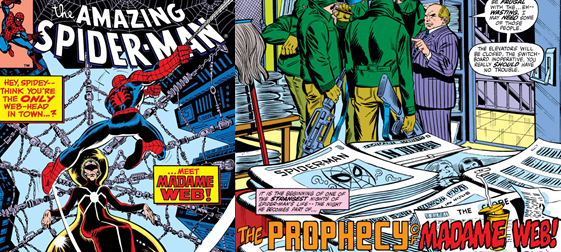

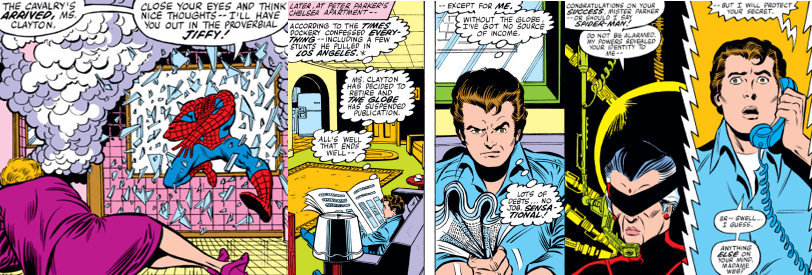
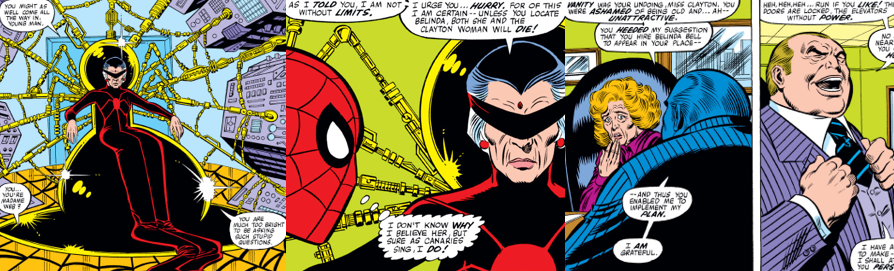






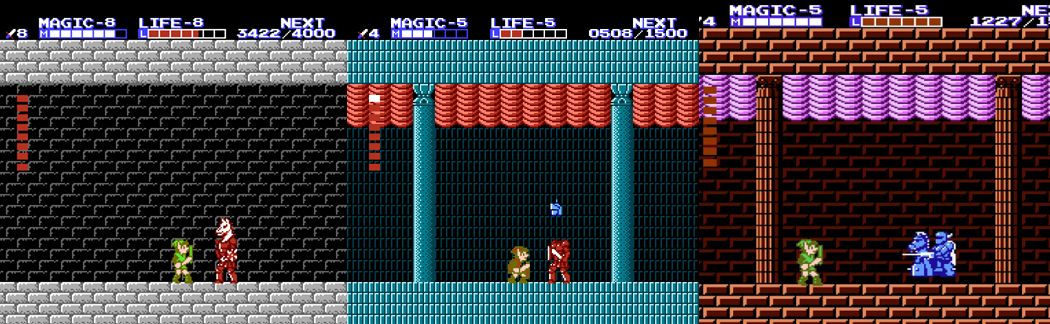
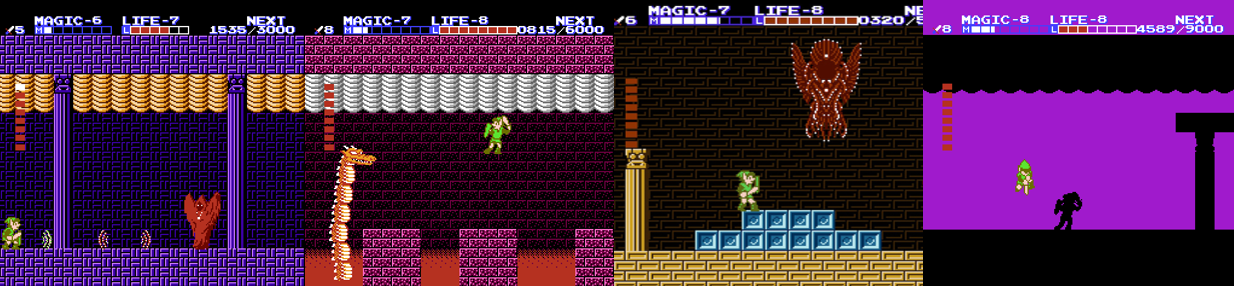




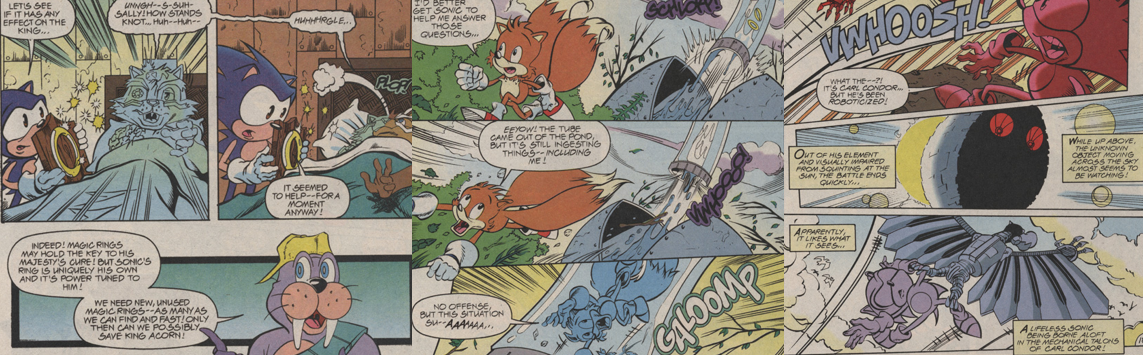


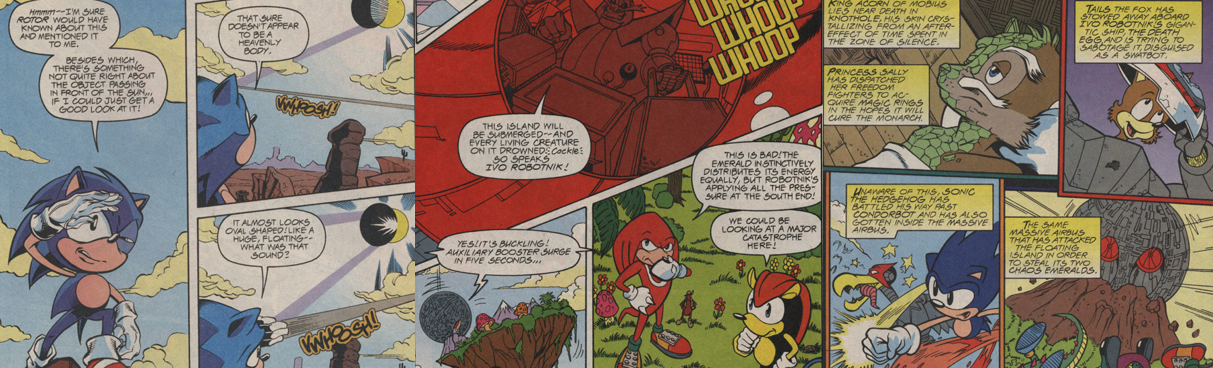
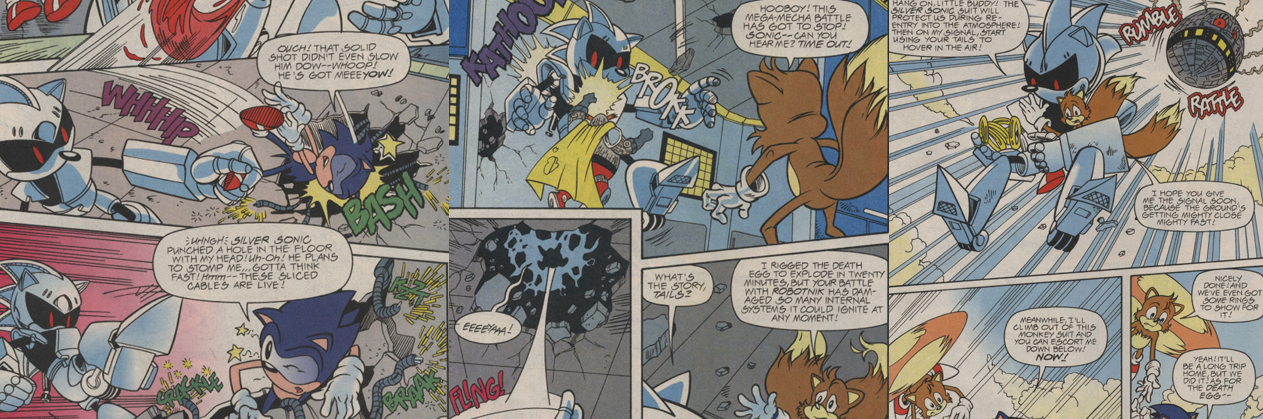




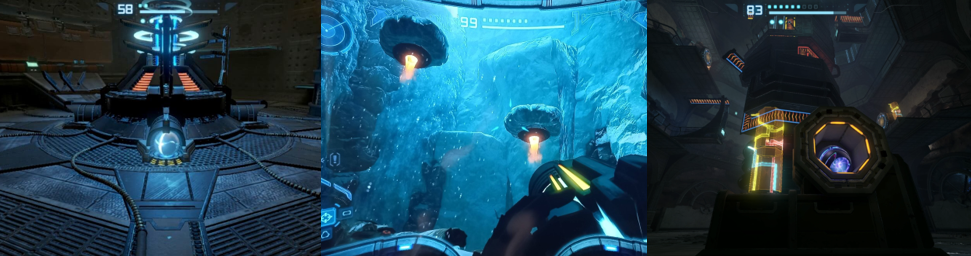

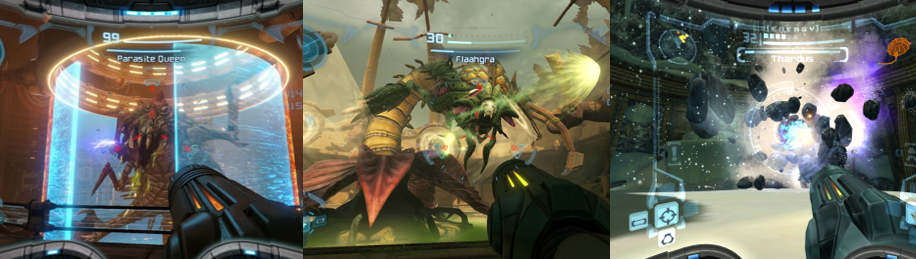
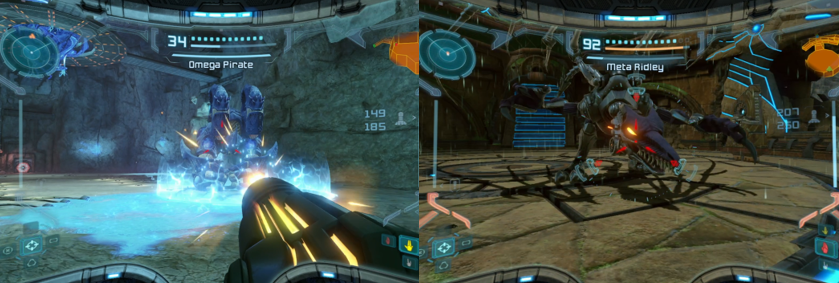











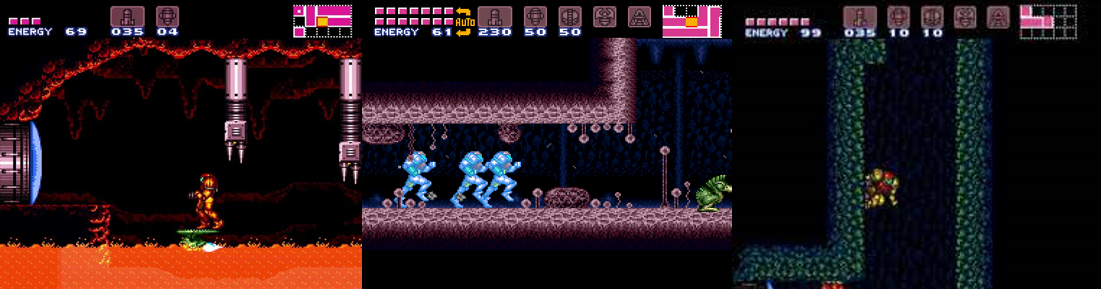






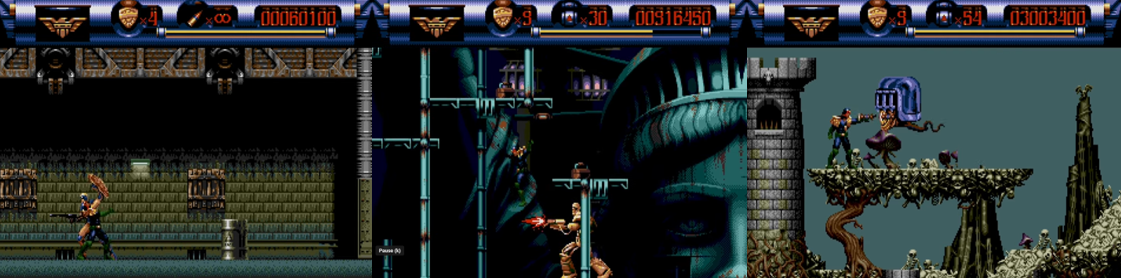




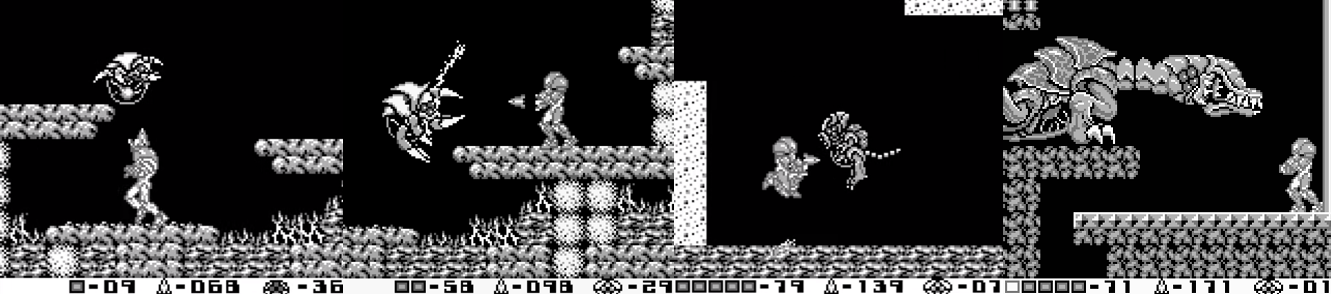

 Dr. K's Waiting Room
You must be logged in to post a comment.