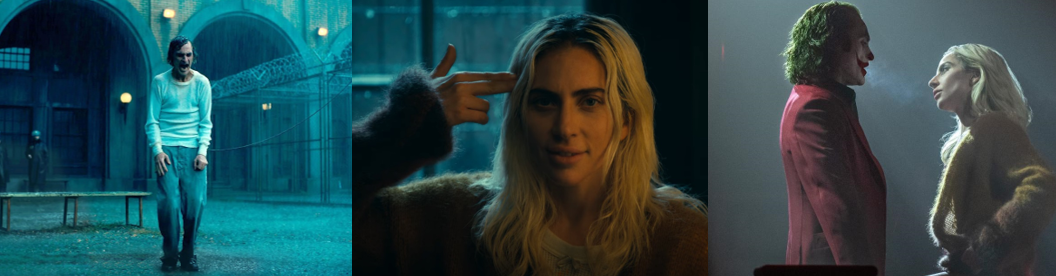
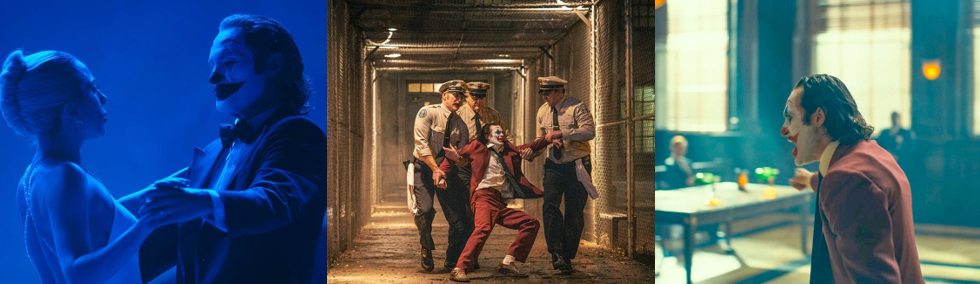
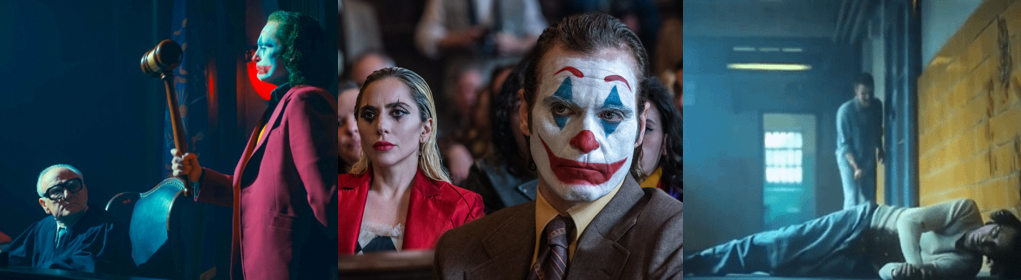
Movie Night: Joker: Folie à Deux

Released: 4 October 2024 (Hey, that’s my birthday!)
Director: Todd Phillips
Distributor: Warner Bros. Pictures
Budget: $190 to 200 million
Stars: Joaquin Phoenix, Lady Gaga, Brendan Gleeson, Catherine Keener, and Harry Lawtey

The Plot:
Two years after killing Murray Franklin (Robert De Niro) on live television, Arthur Fleck/Joker (Phoenix) is incarcerated at Arkham State Hospital, experiencing musical madness through a shared delusion with Joker fan Harleen “Lee” Quinzel (Gaga).

The Background:
The Joker has been a staple of DC Comics for decades and is inarguably Bruce Wayne/Batman’s greatest foe. Created by Bill Finger and Bob Kane, the “Clown Prince of Crime” first appeared in 1940 and has been responsible for many tragedies in the Dark Knight’s life, including the death of Jason Todd/Robin and the crippling of Barbara Gordon/Batgirl. The Joker has also appeared in live-action many times: Cesar Romero famously refused to shave his moustache for the role in the sixties, Jack Nicholson set a new standard in Batman (Burton, 1989), Heath Ledger received a posthumous honour for his incredible turn in The Dark Knight (Nolan, 2008), and Jared Leto’s screen time was significantly cut from Suicide Squad (Ayer, 2016). A standalone Joker movie was initially planned to spin out from Suicide Squad before numerous blunders saw Warner Bros. shift towards an unrelated interpretation of the character. Filmed on a modest budget, Joker (Phillips, 2019) was the first “R” rated DC Extended Universe movie and an unprecedented critical and commercial success, despite its protesters and controversy. Though planned as a standalone and the first in a series of darker, more experimental DC films, star Joaquin Phoenix personally lobbied for a follow-up after dreaming up the premise of a musical sequel. After briefly considering a Broadway show and unanimously deciding against transforming Arthur Fleck into a traditional criminal mastermind, Phoenix and director Todd Phillips developed the musical concept further, bringing in Lady Gaga as a new version of Harley Quinn that required her to change her approach to singing. The musical numbers were performed live, which proved an editing nightmare for Philips, who was given an extraordinary level of autonomy over the project, which ultimately failed to replicate the financial success of its predecessor. Reviews were equally far more scathing this time around; indeed, while Phoenix ’s performance was praised and Lady Gaga was seen as underutilised, many questioned the use of musical numbers and criticised the pacing and tedious, plodding narrative. In the wake of James Gunn rebooting DC’s live-action ventures, it seems our time with this alternative Joker is over not just because of these factors but also because Phillips stated he was finished with the character and this fictional world.

The Review:
I’m proudly in the minority of people who didn’t care much for Joker. Even it had somehow been a decent film, in my opinion, I still would’ve found it annoying to have an alternative version of the Joker running around in a Batman-less Gotham City. As a psychological thriller that made you question the sanity and reliability of its narrator, it was okay; but I would still rather watch the vastly superior American Psycho (Harron, 2000) for that fix. Either way, Joker: Folie à Deux (ridiculous title, by the way) picks up two years after the first movie and finds a heavily emaciated, largely silent Arthur Fleck committed to Arkham State Hospital, where he’s routinely harassed, abused, and mocked by bullish guards like Jackie Sullivan (Gleeson). While Joker ended with the suggestion that some of the film’s events were part of Arthur’s twisted imagination, Joker: Folie à Deux confirms that he did kill five people (actually, it’s six, but it’s not common knowledge that he killed Penny Fleck (Frances Conroy), his overbearing and abusive mother), with Murray Franklin’s live execution inciting a riot and a gaggle of clown-themed protestors calling for Arthur’s release. Despite finding his true self and experiencing a euphoric empowerment by embracing his psychotic urges, Arthur is a broken shell of his former self. Lethargic and largely mute, he’s easily bossed around by the guards and kept under the whim of his daily medicines. Jackie and the others regularly taunt him, forcing him to kiss other inmates and rewarding him with cigarettes whenever he tells one of his bad jokes, but the strong, confident, self-assured Joker is absent in the early going of the film (and, truthfully, for much of it). Arthur’s so mellow that his lawyer, Maryanne Stewart (Keener), is working to convince him, a jury, newly elected assistant district attorney Harvey Dent (Lawtey), and basically anyone who’ll listen that the meek Arthur and his psychotic Joker are distinctly different personalities. Her goal in aiding him, in trying the change the public’s opinion of him as some crazed murderer or a martyr to the lower classes, isn’t to prove he’s innocent, of course, since he absolutely is guilty of murder. Instead, she wants to show the tragedy behind his childhood, the mitigating circumstances around his killings, and prove that he’s a disturbed individual who needs real medical help, not to be caged in a veritable torture chamber or sent to the electric chair for actions outside of his control.

A broken down Arthur is given new life as Joker through Lee’s musical influence.

Arthur is largely apathetic about all this. He endures his daily torment and routine without so much as a peep and does his best to go along with Maryanne’s plan, taking solace in his fantasy world where he imagines his life as a classic Warner Bros. cartoon, relives the trauma he suffered at the hands of others and his mother, and seemingly longs for the feeling of empowerment he felt when he embraced his Joker persona. All this changes, however, when he passes through B Wing, a low security section of Arkham housing non-violent inmates, and catches the eye of Lee Quinzel. When Jackie arranges for Arthur to participate in the same musical therapy class as Lee for good behaviour, Arthur finally opens up to this self-professed Joker fan. Instantly enamoured by Arthur and having been inspired by his actions, Lee claims to have struck out against her own abusive family and landed herself in the nuthouse after burning down her apartment building. The two grow closer as Lee professes her admiration and love for the ideal Arthur embodied when he killed Murray Franklin and Arthur, love starved and craving attention, falls head over heels for her in return. The two express themselves through song almost constantly, either in Arthur’s warped imagination or, seemingly, for real. As in the first movie, it’s not always clear when things are real or not, though many of the musical numbers take place in Arthur’s head. These imaginary sequences are also the only times Arthur shows his violent side, braining and beating people to death with footstools and mallets, and are seemingly his new way to work through his pain and frustration and emotion. Unlike Arthur’s obsession with his neighbour, Sophie Dumond (Zazie Beetz), Lee is quite real. Others see and acknowledge her, though it’s debatable whether she really did blag her way into his cell to seduce him and much of her character is called into question when Maryanne reveals that Lee lied about her past to get closer to Arthur. Indeed, rather than being a downtrodden and forgotten member of the lower classes like him, Lee comes from money, is studying psychiatry, and willingly committed herself to meet him, reframing the usual Joker/Harley dynamic as she’s the one subtly influencing him to coax out what she sees as his “true” self.

Faced with daily abuse and a death sentence, Arthur retreats into a musical fantasy.

Lee’s influence sees Arthur become bolder, more confident, regaining the spark that took Gotham’s crooks and destitute by storm. A parade of supporters surrounds the courthouse during his trial, which is broadcast live since he’s such a high-profile killer, and witnesses testify against Arthur’s mental state. Encouraged by Lee to embrace his status as a cult symbol, Arthur snaps and fires Maryanne and opts to represent himself, donning the Joker makeup and persona once more and strutting around the courtroom ranting about his shitty life. By his own admission, however, Arthur knows nothing about the legal system, resulting in him mocking his traumatised former co-worker Gary Puddles (Leigh Gill). These moments, and where Arthur is wailing or uncontrollably cackling in despair, are where Phoenix excels in the role. I’ve never liked the idea of a definitive origin for the Joker, but he certainly brings his A-game in personifying Arthur’s depressing bleakness and Joker’s manic insanity. For the most part, Lady Gaga does well enough as a heavily revised version of Harley Quinn. After she checks out of Arkham, we’re told that Lee campaigns on Arthur’s behalf and she slowly adopts more clown-ish makeup and mannerisms in support of him. When she’s not singing (and she sings all the damn time), she’s an intriguing character, one who I would’ve liked to see more from. She seems to want Arthur to embrace his Joker persona and lead his followers in some kind of revolution (to “build a mountain”, as they say) but it’s not clear why or what their ultimate goal is rather than simply sticking it to “The Man” and unapologetically being true to oneself. Arthur’s main antagonist is himself, as ever; he’s riddled with insecurity, feelings of abandonment and helplessness, and is thus depends on Lee for emotional support. However, while he relishes frolicking around like Foghorn Leghorn, Arthur’s outbursts and rantings see him anger Jackie and the other guards. While the Arkham inmates and Joker’s supporters cheer and applaud his antics, the guards mercilessly beat and seemingly sexually assault him, with Jackie even throttling Arthur’s fellow inmate, Ricky Meline (Jacob Lofland), for being a little too outspoken in his rambunctious support.

The Nitty-Gritty:
Despite some confusion in the marketing and various interviews, Joker: Folie à Deux is very much a musical. Even before Arthur meets Lee, his fantasies favour belting out Frank Sinatra and, after they get closer, this only increases, to the point where almost every conversation becomes a musical number. I like musicals; I’m not against the idea of a musical. I like the idea that Arthur’s warped imagination has evolved to where he retreats into musical fantasy. However, I don’t think it was executed well here and it became very tedious. It seems the only reason these musical numbers is because of Lady Gaga’s stunt casting as Harley Quinn (sorry, “Lee”), and I definitely feel it would’ve been more impactful to just have three or four of these numbers. Indeed, it bothered me that Arthur was suddenly so into singing when surely his fantasy should be being a stand-up comedian or a talk show host like his former idol? Either way, it was physically exhausting seeing mundane conversations turned into songs and it got tired very quickly. While the first half of Joker: Folie à Deux mostly examines a beaten-down Arthur as he shuffles through daily torment in Arkham and his blossoming relationship with Lee, the second half is a courtroom drama, where Arthur’s very presence causes controversy even before he’s prancing around in his clown makeup. Personally, I found the courtroom stuff more interesting, but it was also a joke. The idea that anyone would acquit Arthur when thousands of people saw him commit murder on live television is laughable, to the point where Dent seemingly only endures the circus to bolster his career using the publicity. Things seem to turn a corner when Arthur represents himself as Joker, finally standing tall as a taunting, unhinged figure and stirring up a fresh wave of support from the incels who worship him as a martyr. However, beneath the makeup and the façade is lowly old Arthur Fleck, a damaged man who struggles to live up to expectations. Dent argues that Arthur is faking his mental illness and Arthur’s brief euphoria at reassuming his Joker guise soon comes crashing down following Jackie’s assault, leading him to openly denounce his persona, admit to his wrongdoings, and essentially criticise not just those who support him, but the myriad audiences who hailed Joker a subversive hit.

Ultimately, Arthur fails to live up to Lee’s expectations and ends up shanked like a bitch.

Indeed, Joker: Folie à Deux appears to be taking all the goodwill of the first movie’s success and purposely flushing it down the toilet. Arthur is taken right back to square one, being pushed around and bullied like a feeble, pathetic child and his number one supporter, Lee, is shown to be a deluded, obsessed super fan who encourages Joker’s outbursts with no real end goal in mind. His anonymous supporters rally for him but mostly use the Joker persona as an excuse to lash out, attack the police and government, and commit petty crimes. They’re not trying to overthrow the elite or get equality; they just want an excuse to act like assholes. After seeing how traumatised Gary is and suffering Jackie’s malicious abuse, Arthur snaps again and the empowerment he rediscovered leaves him. His public denouncement of Joker sees Lee leave in disgust and either kill herself or bluntly reject him, depending on which scene you want to believe is real. As the jury delivers their unanimous guilty verdict, the courthouse is attacked, leaving Dent mildly wounded on one side of his face, and Arthur escapes. He’s briefly picked up by some Joker fanatics, who desperately try to shield him in hopes of inciting a revolution, only to be astonished when he flees in fear, wanting no part of their movement. After Lee rejects him, Arthur is immediately and easily apprehended and dragged back to Arkham, ending the film right where he started: a small, broken, screwed up little man facing the death penalty. However, when he’s called to see a visitor, Arthur is stopped by a fellow inmate (Connor Storrie), one of many who gleefully watched Arthur’s trial and supported his manic actions. Disgusted that the lauded Joker is nothing but a worthless nobody who doesn’t appreciate his following, the inmate spitefully tells Arthur a joke and then repeatedly shanks him, mutilating his own face with a Glasgow smile as Arthur bleeds out on the floor and, presumably, dies.

The Summary:
I didn’t care for Joker. I thought it was largely pointless and meaningless since we’d never see this version of the character in the larger DC extended universe and the idea of doing a Joker movie without Batman seemed like a waste of time to me. I’ll admit, it was a decent, gritty, psychological thriller but…it wasn’t the Joker. Joker: Folie à Deux hammers that home explicitly; by the end, it’s obvious that Arthur Fleck was never supposed to be the Clown Prince of Crime and was, instead, the catalyst for psychotic copycats to spread terror and discord. This wouldn’t be a bad concept if the movie was actually good. Maybe if it had taken some time to explore how Arthur’s actions influenced people, perhaps shown us more of Gotham from Lee and Dent’s perspectives and juxtaposed them with Arthur cackling it up in Arkham, I could’ve endured the obnoxious musical numbers. Alas, this isn’t the case and the film instead devotes itself to stripping away everything people loved about the first film except the performances, and even those are called into question by the tedious singing. I didn’t like the idea that Arthur regressed while in Arkham; he ended Joker on a high but it took the obsession of a woman to get him back in gear, which made him seem weak and lack agency. Lady Gaga may as well have been an entirely different character; she’s as removed from Harley Quinn as Arthur is from Joker. In that regard, the idea makes perfect sense but it’s hardly providing a quintessential adaptation of these two popular characters. What really bugs me about these Joker films is how some audiences will grow up or go around thinking that this is what Joker and Harley should be, when the actual intent seems to be the exact opposite. But, by messing with our expectations and presenting this weird, poorly paced, nonsensical musical, Joker: Folie à Deux wastes more of my time than I would’ve liked. It’s not clever or saying anything new; indeed, much of its runtime treads the same ground as the last film. The singing is annoying and gets in the way of the story, and any potential of seeing Arthur truly embody the Joker persona is done away in favour of trolling audiences. I’d love to know where the $200 million budget went on this titanic insult of a film. Still, hopefully now that Arthur is dead we’ve seen the last of his “Joker” and we’ll never have to worry about this terrible incarnation of the character ever again.

My Rating:

Rating: 1 out of 5.

Terrible

Did you enjoy Joker: Folie à Deux? If so…why? Name one thing you enjoyed; I dare you! What did you think to Lady Gaga’s version of Harley Quinn? Were you disappointed that Arthur didn’t truly embrace his Joker persona? What did you think to the musical numbers? Are you glad Arthur was shanked in the end or are you insane and think this is the best Joker ever? What are some of your favourite Joker-centric stories over the years? Whatever you think, good or bad, about Joker: Folie à Deux, drop a comment down below and let me know your thoughts.

Back Issues: Spawn #1-4

Story Title: “Questions” (Part One to Four)
Published: May 1992 to September 1992
Writer / Artist: Todd McFarlane

The Background:
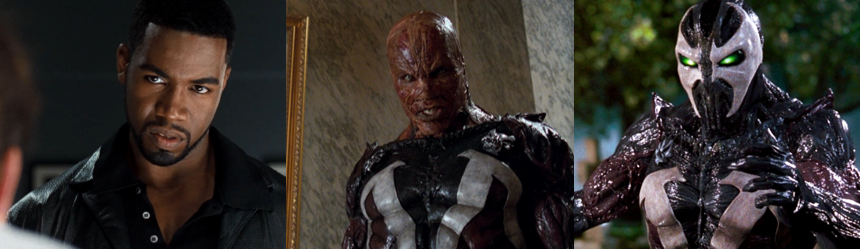
Born in Calgary, Alberta, Canada, artist and comic creator Todd McFarlane started drawing at an early age and cut his teeth in the comic book industry working on Coyote before getting his big break illustrating Batman: Year Two (Barr, et al, 1987). After jumping to Marvel Comics and working on The Incredible Hulk, McFarlane made a name for himself for his dynamic and kinetic work on The Amazing Spider-Man. Bringing new life to Spidey through his art and his hand in creating popular anti-hero Eddie Brock/Venom, McFarlane eventually became dissatisfied with his lack of creative control over stories and, alongside other Marvel creatives, quit the company and formed their own independent comic book publisher, Image Comics. To spearhead this new venture, McFarlane revisited an old sketch from his teenage years and revised the concept into Al Simmons/Spawn, a former mercenary reborn as a brooding warrior for Hell’s army. Spawn’s debut issue became a record-setting release; selling 1.7 million copies, it was the most successful creator-owned comic of all-time. This success put Image Comics on the map and, aside from a few slumps here and there, Spawn has remained a popular and successful publication for the upstart publisher. This success catapulted McFarlane to new heights, leading to a successful line of action figures, solo and guest spots in videogames, a cult hit animated series, crossovers with DC Comics, and even a muchmaligned live-action adaptation in 1997.

The Review:
The saga of Spawn begins with Al Simmons, fittingly, tormented by questions. Although Al’s aware of some aspects of what’s happened to him (he died and made a deal to return), he doesn’t know what compelled him to come back from the beyond and feels separated from the mortal realm. His memories are fragmented, giving him flashes of a life he can’t quite recall. He remembers he was in love, though he can’t picture her face; he remembers there’s someone he hates, though he can’t recall his name; and he remembers that he was a good and loyal soldier for his country. Crucially, he’s haunted by the grinning visage of a skull and the feeling of being betrayed and brutally murdered. The more Al broods on his disparate memories, the more scant images come to mind. He pictures a beautiful woman, one who he was so desperate to return to that a wicked demon granted his request but on his terms, dumping him back on Earth with incredible power and an awesome costume but with no idea who he is or what any of his memories mean. Confident that the beautiful woman he sold his soul for will remember him and fill in the blanks, Spawn heads into the night to find her and the one who betrayed him, his thoughts already turning to revenge. Of course, we get scant clues to his true origin through McFarlane’s employment of media reports relating to Al’s decorated career, his untimely death, and Wanda Blake’s grieving process. These are presented in a very Dark Knight Returns (Miller, et al, 1986) format, showing reporters and pundits addressing the reader next to blocks of text, all accompanied by a mysterious countdown that we later learn tracks Spawn’s current power supply. Such interludes are juxtaposed with our first introductions of detective duo Sam Burke and Maximillian Williams/Twitch, who are currently baffled by gruesome murders that’ve left the victims without their hearts.

The tormented Spawn finds only further pain and questions at every turn.

Spawn’s journey across town takes a detour when he spots a gang of lowlifes attacking a woman. Though he effortlessly dispatches the punks, Spawn terrifies the young lady when he’s suddenly bombarded by memories. The woman’s face taunts him and bleeds into memories of his funeral, where his disembodied soul cried out in anguish only to be ignored by his love. Thanks to the girl he rescued comforting him and bringing him back to reality, Spawn slowly realises that the woman he’s been seeing was his wife and that he’s been gone for five years. Desperate for answers, he claws away his mask and talon-like gloves, horrified to find a scarified body beneath his skin-tight leather and chains. While Spawn weeps in the dank alley and Sam and Twitch stew over reports of a costumed figure in a red cape and chains taking out street punks, the wicked, horned demon Malebolgia relishes in Spawn’s pain from his burning inferno. As Spawn broods, questioning his humanity and feeling comforted by his costume and defending the innocent, he ponders the limits of his powers. Focusing his will, he turns his power on himself to restore his human visage and is aghast to find he’s been transformed into a bleach-blonde surfer dude instead of his true form as a Black man. Enraged, realising that he’s being toyed with, Spawn explodes with anger, trigging a fresh set of memories. He puts a face to new name of his employer and mentor: Jason Wynn moulded him into the perfect soldier, only for them to clash when Simmons took issue with Wynn’s increasingly brutal and cold-hearted ways. Overcome with emotion, Spawn collapses in the alley, where he’s approached by a comical, clown-like figure. Spawn had spotted this squat, colourful individual earlier and readers were treated to him dramatically introducing himself and all the ways he plans on torturing and humbling Spawn to appease his boss, the aforementioned Malebolgia. The clown, introducing himself as the Violator, piques Spawn’s interest when he dubs him a Hellspawn and quickly blows his cover.

Spawn’s outrage at having his life stolen is preyed upon by the demonic Violator.

The Violator goes on a tirade, listing all the ways he could slaughter Hell’s newest soldier. Naturally, given the clown’s diminutive stature, Spawn scoffs at his threats and walks away, completely missing the clown’s transformation into a large, horned, slack-jawed demon, the same creature that’s been ripping the hearts out of mafia bosses all over town. Still, for now, the Violator is content to let Spawn go, primarily because Malebolgia gets off on making his creation suffer. As he aimlessly wanders, Spawn is elated to finally remember his wife’s name. He also remembers having parents and brothers and the location of the Central Intelligence Agency (CIA) headquarters and an armoury. He stops by the CIA skyscraper first, accosting creep Billy Miller and threatening him to keep his hands to himself and pay his child support, and retrieves Wanda’s file. However, Al’s distraught to learn she’s moved to Queens and engaged to his former best friend, Terry Fitzgerald. With no other choice, Spawn assumes his blonde visage and heads over there with the vague hope of convincing her to see past his façade, only to be left speechless by her beauty and the unexpected presence of a child, Cyan. The added realisation that he was the problem when it came to giving Wanda a child adds to Spawn’s mental anguish and causes him to black out. Wanda and Terry tend to him and he shares some of his pain with them, only to be met with warmth and kindness. Retreating back to the alleys, Spawns rages, openly challenges the being that’s toying with him and fed up with playing games. Luckily for him, the Violator answers his challenge and, this time, Spawn witnesses the clown’s transformation into his true, horrific form. Caught completely off-guard, Spawn is powerless to keep the Violator from plucking his still-beating heart from his chest. However, the crude, leering demon is stunned when Spawn gets up, a burning hole in his chest and all fired up for a scuffle.

Malebolgia interrupts his “children’s” squabbling to torment and punish them.

This leads into the final issue of this four-part arc, which finds the Violator incensed to learn that Malebolgia lied to him about Spawn’s powers. Fully expecting to have killed the Hellspawn with his attack, apparently unaware that humans are being gifted powers greater than the denizens of Hell. After expending energy reattaching his heart and healing from the damage, Spawn launches a blast of hellfire at his foe, returning the favour by blasting a hole right through the demon. However, the Violator easily survives the attack, boasting of his superiority, and manhandles Spawn. To the Violator’s frustration, Spawn meets his arrogance with disrespect and the two start shamelessly mutilating each other over a two-page spread consisting solely of dismembered limbs and sound effects. The mindless battle grows so intense that Malebolgia himself manifests in the alley to break them up, chastising such pointless escapades. Addressing the two as unruly siblings, Malebolgia lays out his grand plans to storm the gates of Heaven and go to war with God, a concept baffling to a lifelong atheist like Simmons. Still, Malebolgia emphasises that God is now Spawn’s enemy and details that Spawn’s past life as a hired killer made him the perfect candidate to become a Hellspawn. Malebolgia also explains that Spawn’s power, though vast, is not infinite and relishes in giving him a simple choice: bow to Hell’s whim, expend his power killing “bad guys” and accelerate his return to Hell while bolstering Malebolgia’s armies, or do nothing and watch innocents suffer. Malebolgia then fully heals Spawn, reattaching his arm so as not to waste any more of his energy, and angrily rebukes the Violator when he takes exception to this. Malebolgia punishes him by banishing him to Earth, removing his ability to switch forms, and returns to Hell. Insulted and frustrated, the Violator storms off in a huff, leaving Spawn to brood over his newfound lot in life. Meanwhile, across town, Wanda awakens from a terrible nightmare in which she sees Al begging for help and it’s revealed she’s as haunted by her memories and love for him as he is of her.

The Summary:
I mean…first things first, let’s talk about Todd McFarlane’s unparalleled artwork. Every page, every panel, is so detailed and full of edgy, moody visuals. Barely a scene takes place in the daytime, bathing New York City, its depressing alleys, and, crucially, Spawn himself in oppressive darkness and shadow. Thus, when Spawn goes to Wanda’s in his forced guise of a blonde, white man, the juxtaposition of colour is like a slap in the face. It clearly shows that a normal, human, happy life is now far beyond Spawn’s reach and he stands out, despite his seemingly normal appearance, due to his jagged and distorted speech bubbles, hammering home that he doesn’t belong in that world any more. Spawn himself makes an immediate visual impression. Sure, there’s a lot of Spider-Man, Venom, and Danny Ketch/Ghost Rider in his design but he’s actually more like Bruce Wayne/Batman since he’s mainly brooding or dramatically standing rather than web-slinging across the city. Garbed in a sleek, black costume, Spawn casts an intimidating figure with his burning green eyes and flowing, blood-red cape and McFarlane never wastes an opportunity to depict him against gargoyles, crosses, cutting through the air like a tiger, or seeped in darkness. Considering his monstrous visage is hidden behind his mask for most of these issues, Spawn expresses a lot of emotion. Tormented by memories, he cries out in pain and anguish and lashes out at every opportunity, unaware that even by doing good he’s fuelling Malebolgia’s will since he’s either expending his finite energy or sending more despicable souls to Hell. While the news report sections are less visually engaging for me and simply a copy of Frank Miller’s narrative style, McFarlane makes up for it with his depiction of demons. The Violator and Malebolgia are horrific, gruesome creatures with a constant cackling visage and they represent an explicit, external personification of the dark power Spawn now wields. This, as much as anything else, is what angers the Violator so since he believes humans are unworthy of such vaulted positions in Malebolgia’s ranks.

Spawn and his demonic adversaries shine thanks to McFarlane’s merticulous artwork.

These first four issues set a precedent that would continue throughout Spawn’s publication, creating a constant air of mystery around the titular anti-hero. Simmons walks the alleys with fragmented memories, barely remembering anything of his past life and being tormented by scattered faces, feelings, and recollections of a previous life that eludes him. This brings him great torment and is the design of Malebolgia, who delights in torturing his “child”, fostering his dark ambitions, and humbling him. Malebolgia gets off on spoon-feeding Spawn memories and information, never once letting him forget who he really serves, and takes great glee in explaining that Spawn serves him no matter what action or inaction he takes. Malebolgia’s chief agent on Earth is, of course, the rancid Violator, a boastful little sprite with a chip on his shoulder. He seeks to spread chaos throughout the city by tearing the hearts from his victims and inciting a gang war, confident in his Hell-born power being greater than Spawn’s and eager to showcase his worth to his master by maiming and killing his newest recruit. Instead, the Violator finds himself in a brutal deadlock, with neither he or Spawn able to land a killing blow. Of course, neither thinks to go for the head and this isn’t strictly true as Spawn would inevitably lose due to his reckless use of his powers. At this point, Spawn barely understands what he is let alone the nature of his “Necroplasm” so he expends his energy without thinking. Healing wounds, firing energy blasts, and transforming his appearance all cause the helpful countdown to decrease, showing the reader just how close Spawn is to ending his new unlife and returning to Hell. Malebolgia explains these rules to him, leading to Spawn constantly considering his energy cost in future issues, but it does give a taste of what Spawn’s capable of since we see him reattach his heart, blow a hole through the Violator, and alter his appearance using his dark magic.

These issues perfectly set the scene for Spawn’s subsequent battle against the dark forces.

Sam and Twitch are also introduced in these issues and offer a fun side plot to Spawn’s constant brooding and rage. Essentially a reimagining of Commissioner James “Jim” Gordon and Detective Harvey Bullock, the two couldn’t be more different: where Sam is loud, gruff, and obnoxious and a lot like the Violator, Twitch is quiet, subdued, and methodical. The two are baffled by the Violator’s brutal murders and somewhat at odds regarding the caped vigilante stalking the streets, since Sam is far more lenient regarding Spawn as he doesn’t have to worry about due process. Spawn’s path doesn’t directly cross with these two here, but they’re nicely set up as supporting characters, as are Wanda and Terry. Again, we don’t learn too much about them at this point, especially Terry, but the story does a decent job of emphasising Wanda’s beauty and Al’s undying love for her. He’s haunted by her face, in agony at being denied her and being able to give her a child, and torn between wanting to confess everything to her and stay away from her idyllic new life. These emotions only fuel his anger and Malebolgia’s glee, driving him to chastise others who so freely take their blessings for granted or brutalise rapists and demons alike to vent his frustrations. While I admit the first issue doesn’t have much going on and largely exists to whet the reader’s appetite and the fourth issue devolves into an exposition dump from Malebolgia, there’s a lot to like in these first four issues. The mystery surrounding Al’s life and death is nicely set up, leaving breadcrumbs regarding Wynn and Al’s killer, as is the uncertainty regarding Spawn’s powers. The artwork is the main reason to delve into these issues, and all of McFarlane’s work, but the narrative is intriguing and strong, appealing to the brooding, edgy nineties kid in me. All the key players make a great first impression through McFarlane’s stunning and visceral art and the stage is set from a dramatic and explosive exploration of the dark path Spawn will eventually follow as he tries to piece together his past, have his revenge, defend the innocent, and defy his demonic master.

My Rating:

Rating: 4 out of 5.

Great Stuff

What did you think to Spawn’s first four issues? Did you pick up a copy of issue one? What did you think to Spawn’s costume and powers? Are you a fan of Todd McFarlane’s art style? What did you think to the demonic antagonistic and the mystery surrounding Spawn? Which Spawn characters and story arcs are your favourite? Whatever you think about Spawn, feel free to leave your thoughts below and be sure to check out my other Spawn and horror-related content on the site.

Movie Night [Back to the Future Day]: Back to the Future Part III


In Back to the Future Part II (Zemeckis, 1989), Marty McFly (Michael J. Fox) travels to October 21, 2015, which is known asBack to the Future Day” to celebrate the franchise and science.


Released: 25 May 1990
Director: Robert Zemeckis
Distributor: Universal Pictures
Budget: $40 million
Stars: Michael J. Fox, Christopher Lloyd, Thomas F. Wilson, and Mary Steenburgen

The Plot:
After witnessing his eccentric scientist friend, Doctor Emmett “Doc” Brown (Lloyd), forcibly transported to 1885 in his time-travelling DeLorean, high school student Marty McFly (Fox) travels to the Old West to save his friend from an untimely death, only to discover Doc endangering  the timeline by falling for schoolteacher Clara Clayton (Steenburgen).

The Background:
Back to the Future (Zemeckis, 1985) started as a passion project for long-time collaborators Bob Gale and Robert Zemeckis to recover from a few critical and commercial failures. After refining their script and securing Michael J. Fox for the lead, the duo succeeded in making the sleek and futuristic DeLorean an iconic cinema vehicle and a blockbuster commercial and critical success now recognised as one of the greatest science-fiction films of all time. As Zemeckis never planned for a sequel, the filmmakers faced script and cast issues but ultimately decided to film Part II (Zemeckis, 1989), also a critical, commercial, and influential release. It was apparently Fox who suggested setting Part III in the Old West, which involved constructing elaborate sets on location to depict the burgeoning Hill Valley. The film was not without its dangers: Thomas F. Wilson performed many of his own stunts and Fox almost died while filming the hanging scene! Industrial Light & Magic again worked on the film’s practical and visual effects, including an elaborate model train and track for the thrilling final sequence. With a box office of $245.1 million, it was the lowest-grossing movie in the franchise and yet is still highly regarded for bringing the trilogy to a satisfying close, the performances, and the new character dynamics introduced. With this film, Back to the Future is widely regarded as one of cinema’s best trilogies. While another film has been long rumoured, and the story has continued in comic books, videogames, and a short-lived cartoon, Zemeckis repeatedly stated that there would never be another entry as long as he’s alive.

The Review:
When I was a kid watching the Back to the Future trilogy for the first time, there was a clear hierarchy of preference for me: the second one was the best because of all the fun future stuff, the third was the second best as it had more action than the first, and the first took the bottom spot as it was a little slower and had less visual appeal for me. This was somewhat begrudgingly as I’ve never been a big fan of Westerns; I find them visually dull and narratively repetitive, so it helps when Westerns have a sci-fi or horror bent to them. Over the years, I’ve come to regard Back to the Future III even higher because of the satisfying and emotional way it repeats, continues, and wraps up these characters and the entire franchise to make for one of the most consistently strong trilogies in all of cinema. The film begins by once again replaying the final moments of the first film, in which Doc helps a time-displaced Marty return to 1985 by redirecting a lightning bolt into the time machine. Elated at seeing one of his inventions finally working, and by the prospect of the future to come, Doc celebrates in the street and prepares to head home, eager to get started on his greatest invention, only to be shocked when Marty suddenly reappears before him! This is, of course, a slightly different, older, and more experienced version of Marty, one who’s just seen Doc’s future self blasted back to the Old West by an errant lightning bolt after having revisited 1955 to fix his mistakes from the last film, but the sudden shock is enough to cause Doc to faint in the street.

After a shaky start, Marty eventually embraces and adapts to the Old West era.

Marty takes Doc back to his house and desperately tries to explain the situation to him. I like this scene as it recalls the disbelief and confusion Doc showed towards Marty in the first film (Doc even sarcastically calls Marty “Future Boy!”) However, thanks to Future Doc sending Marty a letter corroborating these events, Past Doc’s adventure with Marty, and the fact that the film needs to get moving, this confusion doesn’t last too long and the two are soon working together like before to unearth the time machine from an abandoned mine at the cemetery. While there, both are horrified to discover Doc’s tombstone stating that he was shot dead by Buford “Mad Dog” Tannen (Wilson) just one week after writing the letter, meaning he never got to enjoy the retirement he’d always dreamed of in Old West. After reading up on Tannen and confirming that the tombstone is real since Doc’s family line didn’t arrive in the United States until long after 1885, Marty resolves to take the repaired time machine and rescue his friend. Thanks to Doc’s detailed schematics, Past Doc makes the necessary repairs and uses his knowledge of fourth dimensional science to get Marty on his way. This is a recurring aspect that Marty struggles with in the film; he has to put his faith in Doc (“You’re the doc, Doc”) that he knows what he’s talking about since he doesn’t understand spatial or quantum physics. What he does know, however, is Westerns. He’s not impressed with the clown-like getup Doc dresses him in and even more embarrassed when his ancestor, Seamus McFly (Fox), helps him avoid social faux pas by gifting him a hat, neither of which fit his idea of Western icon Clint Eastwood. Indeed, Marty even uses the actor’s name as a pseudonym but, rather than being seen as a bad-ass, he’s routinely mocked by the locals. It therefore makes it all the more cathartic for him when he not only adopts a poncho and outfit resembling Eastwood’s “Man with No Name” but also borrows the same “bulletproof vest” trick from A Fistful of Dollars (Leone, 1964) to best Tannen.

Although Marty’s often the uncharacteristic voice of reason, he still has to overcome his vices.

Marty’s friendship with Doc is at the forefront of Back to the Future Part III. Before, Marty relied on the eccentric scientist to advise him and the youngster was mainly cleaning up messes that he’d made. This is still true here but Marty’s whole motivation for defying Doc’s wish to stay in the past is entirely predicated on him wanting to save his friend’s life. However, thanks to an errant arrow, the time machine suffers a fuel leak and the two are stranded in the past similar to the first film. With no gas stations and horses proving ineffectual, the two scramble to find a viable way to get the DeLorean to eighty-eight miles per hour before Tannen makes good on his threat to shoot Doc dead. Doc takes the threat very seriously and, while he’s happy to live out his boyhood dream working as a blacksmith in the Old West, immediately recognises the danger. However, things are further complicated when they happen upon an out of control carriage and rescue schoolteacher Clara Clayton from a fatal fall. Despite being a man of science, logic, and reason, Doc is immediately smitten by Clara and re-evaluates his situation accordingly. This has the unique knock-on effect of briefly switching Marty and Doc’s roles (Marty becomes the voice of reason and Doc becomes the irrational, emotional one), which is further emphasised when Marty also runs afoul of Tannen. Like the first film, this sees their actions impact the future and the tombstone depict the death of “Clint Eastwood” by Tannen’s hands. This comes about because of Marty’s refusal to back down to a challenge and him getting triggered whenever anyone brands him a “chicken” (or “yellah”, in this case). Marty is so riled up by accusations of his cowardice (a holdover from his previous life where his father was a snivelling coward and Marty’s attempts to avoid the same stigma) that he readily agrees to a shoot-out with Tannen, confident that he and Doc will have returned to 1985 by then. However, he’s both horrified to learn he could be forced into a fatal dual and angry at Doc’s suggestion that his pride has negative consequences in his future, something we saw in the second film but which Marty remains unaware of. Thus, Marty’s character arc here is listening to his friend and ancestor over the jeers and opinions of others and realising that it’s better (and braver) to turn the other cheek rather than to step up to an unwinnable fight just to prove himself to a bunch of strangers and assholes.

Love, for better and worse, and allows Doc to discover new aspects of life and himself.

Doc also undergoes some significant character growth here. Having devoted his entire life and fortune to science, Doc’s dreams of seeing the progress of mankind and understanding the nature of existence have been tarnished by witnessing the dangers of time travel. Thus, his instructions and intentions are explicitly clear: he wants the time machine destroyed once they’ve returned to 1985. It’s because of this that he’s perfectly happy living out the rest of his life as a blacksmith in the Old West. He’s quickly established a reputation in the small settlement of Hill Valley and has clearly been enjoying cobbling together steam-powered apparatus and would’ve gladly stayed there if not for the threat against his life. He’s completely caught off-guard, then, when he falls for Clara; initially dismayed to learn that they altered history by saving her, he’s quickly smitten by their shared love for science, astrology, and Jules Verne. Although he scoffs at the idea of love at first sight, Doc can’t deny his feelings for Clara, and he’s fully prepared to stay in 1885 with her but is left heartbroken when she angrily rebuffs him after he’s convinced by Marty to tell her the bizarre truth. In despair, he turns to alcohol and rambling about the future to the locals. After being sobered up by Marty, Doc re-commits himself to their elaborate train heist, having deduced that the only possible way to get the DeLorean to eighty-eight miles per hour is to hijack a train, strap the time machine to it, and boost the train’s engine with controlled explosions. I enjoyed the new wrinkles to Doc’s character here; unlike Marty, he’s comfortable in the Old West and he’s definitely come out of his shell, standing up to Tannen and socialising with the locals. I liked seeing him discover there’s more to life than just science, and his friendship with Marty was explored in new ways through this altered dynamic that saw Marty being the voice of reason for a change.

Buford lives up to his nickname and is a cruel gunslinger who needs taking down a peg.

Once again, Marty and Doc are opposed by one of the Tannen family. This time, it’s Biff’s (Wilson) surely and uncivilised ancestor Buford, who is also accompanied by cackling underlings and has a reputation as a cruel gunslinger and thief. Tannen makes his entrance as all in his line, by confronting a McFly in a bar, and regularly flaunts the law (represented by Marshal James Strickland (James Tolkan)) by dragging Marty through the streets and threatening to hang him as well as sneaking a gun into the town festival. While there is a lawmaster in town, Buford thinks nothing of publicly threatening those who he feels have wronged him and challenging them to a dual. While Buford is as dumb as previous Tannens, easily confused by words and phrases (even those not from beyond his time period) and numbers, he’s a ruthless and callous individual. Although he may hate the nickname “Mad Dog”, it’s entirely appropriate given his drooling, snarling, brutish disposition and he’s little more than a growling thug in a Stetson. Tannen believes Doc owes him $80 after his horse threw a shoe and refuses to be placated by reason since he believes he’s been slighted. When Marty openly defies him at the festival, saving Doc’s life in the process, Tannen shifts his aggression towards the youngster and challenges him to a morning shoot-out, much to the chagrin of Seamus and Doc. Marty, however, is confident he won’t have to think about drawing a gun but that doesn’t end up being the case. Although they have the DeLorean ready and a plan to escape, Doc’s heartbreak causes them to be late and forces Marty to face Tannen in the streets. However, Marty wisely chooses to fight smarter, not harder, once again outwitting the bullish gunslinger and sending him crashing into a pile of manure.

The Nitty-Gritty:
Back to the Future Part III continues the formula established by the last two film that time often repeats. This means we get a sweeping shot of Hill Valley and the clock tower (before still under construction), a McFly/Tannen confrontation in a bar, a chase through the streets, and ruminations on the dangers of messing with time travel. However, rather than being derivative, these are all re-framed in new and visually interesting ways. The Old West setting is an extreme reconfiguring of the 1955 setting of the first film, with Marty and Doc being hampered and severely limited by the technology and resources of the time, only things are way more dangerous now as everyone’s walking around with a gun on their hip and even things as simple as petroleum are impossible to come by. Like in the first film, time itself is a major antagonistic force here. Marty and Doc have less than a week to figure out how to get the DeLorean running and the photograph of the tombstone is a constant reminder of this ticking clock (though, strangely, they never once consider hopping on a train and leaving town for a bit. Considering Buford is later arrested for robbery, this might’ve actually worked!) This is only exacerbated when Buford grows restless for a gun fight and Doc falls into despair over Clara, which is naturally all in service of Marty again getting the better of a Tannen and a thrilling train heist for the finale.

While I enjoy the setting and the timeless effects, Clara’s character felt a bit weak to me.

Although it takes Marty a bit to adapt to the Old West, I’d argue both he and Doc acclimatise to 1885 much faster and better than either did to 2015. Both enjoy walking the streets in their era-appropriate getup, Doc revels in applying his scientific acumen in new ways as a blacksmith, and Marty definitely gets a kick out of parading around with a gun and calling himself Clint Eastwood. While Marty’s gunslinging was mocked in 2015, he impresses in 1885 and he still finds new ways to adapt to the times, such as tossing a Frisbee-branded pie plate and protecting himself with a furnace door. One of the reasons I dislike Westerns is because of how visually repetitive and boring they can be but that’s not the case here, largely because I’m so familiar with Hill Valley from the last two films and it’s fun seeing it reimagined as a dangerous and often disgusting smattering of wooden structures in a desert. While I prefer the fantastical technology of the future setting, I’ve grown to appreciate the simplicity of the Old West aesthetic and I liked seeing stuff like Marty’s Nikes and modern slang being completely lost on the locals. For me, Clara is a more prominent downside to the film. I never found her to be particularly interesting or charismatic and she seems oddly plain in a way that I find distracting. I like that she’s just an unassuming schoolteacher, a slightly insecure and mousy woman who is as uncertain about her newfound feelings as Doc, but I feel like she could’ve been given more to do. Mostly, she’s just kind of there and bolstered only by her convenient fascination with science and literature and she’s often in peril a little too much for my liking. I appreciate that she stands up to Buford, and her physicality in the finale as she rushes to reconcile with Doc, but I think it might have helped to see her at work in her profession or exhibiting a little more personality. On the plus side, this allows the new dynamic between Doc and Marty to shine brighter but I can’t help but feel like the romance between Doc and Clara is a little rushed and flat. The film tries to salvage this by stating that it’s unexplainable love at first sight and by Doc’s obvious inexperience with romance, but just a little more agency like she showed at the festival to make her seem like more of an equal would’ve gone a long way for me.

Although the DeLorean is destroyed, the future is left unwritten and hopefully for all.

As ever, Back to the Future Part III makes use of some fantastic practical and traditional effects and models shots. While the film isn’t as grandiose as the last one, the stunt and horse work on display is impressive and the costume design alone should be a selling point for any fan of Westerns. Marty cuts a resplendent, mature figure in his Clint Eastwood cosplay and it’s exhilarating seeing him and Doc frantically chase after the train on horseback. Once aboard, they clamber over the carriages and politely hijack the main engine, decoupling all the carts and attaching the DeLorean to the cow catcher. Thanks to some specially prepared explosives, Doc pushes the train’s speed and capabilities further than intended, but staggers the explosions so as not to destroy the train prematurely. However, Clara catches up with them, having heard of Doc’s distress over her and become convinced that he was telling the truth, and almost falls from the train in a bid to join them on their journey. Doc’s character growth comes full circle as he braves the trip back to get to her and Marty also puts aside his personal feelings to help save them by slipping them the hoverboard. His friends then glide to safety as the DeLorean finally hits eighty-eight and returns to 1985, the train crashing into a ravine thanks to a spectacular model shot. Fourth dimensional science sees Marty safely arrive in 1985 but his elation is short-lived as he has to quickly abandon the time machine and can only watch, with a mixture of despair and gratitude, as Doc’s wish comes true and the DeLorean is obliterated by an oncoming train. Marty immediately reconnects with his girlfriend, Jennifer Parker (Elizabeth Shue), not only finally telling her the truth but also altering his future when by refusing to race Douglas J. Needles (Flea). While mourning the loss of his friend, Marty is stunned when Doc suddenly arrives in a time travelling steam engine…alongside not only Clara but their young children, Jules (Todd Cameron Brown) and Verne (Dannel Evans). Although the film makes no attempt to explain how Doc built this contraption, this ridiculous oversight is secondary to the heartfelt farewell he and Marty bid to each other and Doc’s impassioned, enthusiastic speech about Marty and Jennifer being free to decide their own futures.

The Summary:
Even now, it’s hard to name a film trilogy that’s as consistent and enjoyable as the Back to the Future films. Each one has strengths and unique, enjoyable aspects that help to keep the themes fresh and engaging, and the story arc for Doc and Marty across the three movies is beautifully realised here. I loved how Marty was now much more confident and surer of himself in his new setting and how he took on the more adult voice of reaso. Him realising that he doesn’t have to answer every challenge to prove himself was also nicely resolved here to show that he’s really learned from his adventures. Similarly, I enjoyed that Doc found something else to live for besides science and his work. Although disillusioned with time travel, he discovers love for the first time, its highs and lows, and is a better person for it, with him and Marty become more well-rounded characters by learning from each other. While I would’ve liked to see more from Clara, she was serviceable enough and I think Buford may be the best and most dangerous Tannen we’ve seen yet. He’s a dog of a bloke and it’s great to see him bested once again. Add to that the visuals, thrilling action, and emotional finale and you have a film that wraps up the franchise in such a perfect way that it really would be a shame to spoil it with a remake (although I would’ve loved to see a re-quel with an older Marty dealing with a rebellious son). While I still prefer the imaginative visuals and high stakes of the second film, Back to the Future Part III has become a firm favourite of mine for how well it uses its Old West setting and its thematic and emotional conclusion to one of the best sci-fi stories (and cinema trilogies) of all time.

My Rating:

Rating: 4 out of 5.

Great Stuff

Are you a fan of Back to the Future Part III? How do you rate it compared to the other two films and which of the trilogy is your favourite? What did you think to the Old West setting and the pitfalls facing Doc and Marty? Were you a fan of the romance between Doc and Clara and the role reversal between Doc and Marty? Can you name a better cinematic trilogy? Where would you go if you had a time machine? How are you celebrating Back to the Future Day today? Whatever you think about Back to the Future Part III, feel free to share your thoughts below.
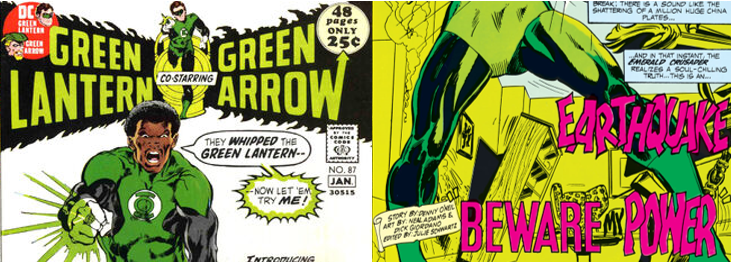
Back Issues [Brightest Month]: Green Lantern #59


Although February 2014 was dubbed “Green Lantern Day” (because, by the American calendar, the date read as “2814”, the sector of space assigned to Earth in DC Comics), the significance of this date has passed as the years have changed. Instead, as perhaps the most popular iteration of the character, Hal Jordan, first appeared in October of 1959, I’ve been dedicating every Sunday of October to the Green Lantern Corps!


Story Title: “Earth’s Other Green Lantern!”
Published: March 1968
Writer: John Broome
Artist: Gil Kane

The Background:
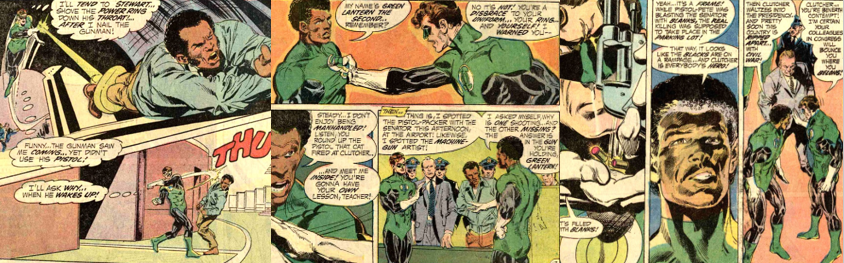
Martin Nodell and Bill Finger’s original version of the Green Lantern, Alan Scott, was a magically empowered railroad engineer rather than a space-faring peacekeeper. However, following the successfully reinvention of the Flash in 1956, John Broome and artist Gil Kane changed the Green Lantern mythos forever with the introduction of test pilot Harold “Hal” Jordan, widely regarded as the greatest Green Lantern of all time, in 1959. Nearly ten years later, Groome and Kane revealed that Hal was just one of the potential candidates for Abin Sur’s power ring, the other being volatile Guy Gardner, who first debuted in this issue. Not only was Guy relegated to backup status, he soon found himself gravely injured and briefly trapped in the Phantom Zone. Then, he was replaced by another and developed brain damage, becoming even more hostile and egotistical, especially regarding his status as a Green Lantern. Guy is perhaps best known for his time on Justice League International, where he often clashed with his teammates, as much as his unstable temperament, which saw him kicked out of the Green Lantern Corps and wielding Thaal Sinestro’s yellow power ring. Guy’s backstory was significantly altered in the early-1990s, revealing him to be of Vuldarian heritage, before he returned to the Green Lantern Corps as one of Earth’s many emerald defenders. Whether wielding a green, yellow, or red power ring, though, Guy has maintained a vocal fanbase, despite his flaws. Though allegedly cut from the universally derived live-action film, Guy’s appeared, in some form or another, in various DC adaptations and is due to be portrayed by Nathan Fillion in James Gunn’s reimagined DC Universe movies. 

The Review:
Our story opens with Hal Jordan on Oa, the headquarters of the Green Lantern Corps and home to the enigmatic Guardians of the Universe, for an intensive two-day training course. Yes, it seems even intergalactic space cops have to endure team meetings sometimes, folks! However, rather than learning trust exercises, Hal is shown a gigantic, Jack Kirby-esque telescope that displays current events all across the universe and even keeps a record of a person’s life after they die as a “mental post-mortem”. Hal jumps at the chance to see the last thoughts of his predecessor, Abin Sur, and to learn why he, of all the millions of people on Earth, was chosen to become his successor. As in Hal’s origin story, Abin is fatally injured in a crash and tasks his power battery to find a worthy inheritor of his power ring, but there’s a twist: the battery claims that there are two equally strong candidates! One is, of course, fearless test pilot Hal Jordan and the other is the hitherto-unknown Guy Gardner, a schoolteacher who lost out on becoming Green Lantern simply because Hal was closer. After reliving Abin’s dying soliloquy over the next few panels, Hal is left astonished to learn that there was another potential candidate. Luckily, the Guardians’ incredible machine can also show Hal potential alternative timelines and, at his request, program it to show what would’ve happened if Guy had been selected instead. 

In another life, Guy became Green Lantern and embarked on a very similar superhero career.

In this version of events, gym instructor Guy is whisked away by the green energy and readily accepts the ring. However, since he’s not subjected to the same monologue as Hal, it takes Guy a hot minute to figure out how to use the ring, though he’s no less committed to using its power to battle injustice as Green Lantern. Like Hal, Guy’s first mission was confronting a group of saboteurs. Unlike Hal, who phased through walls and bullets and was dazed by a yellow lamp, Guy crashes through walls and erects an energy shield to block their bullets, hesitating to directly use his ring against them in case he “[crushes] them to a pulp”. Instead, Guy relies on his physical superiority to beat them into submission. Victorious, he also embarked on a fantastical superhero career, tackling colourful supervillains and even defeating renegade Green Lantern Thaal Sinestro. This victory saw Guy finally summoned to Oa and learning the true extent of his powers and responsibilities, but it’s in his return journey home that the biggest deviations occur between Hal and Guy’s lives. Guy was distracted by a series of intergalactic explosions that saw him detour to the planet Ghera to interject in a duel between two alien robots. Their conflict quickly turns against him, though he easily bested the two droids and learned that the planet is populated solely by human children. The robots explain that the Gheran parents created them before being wiped out by a mysterious yellow plague. This same virus kept the children from growing and, in their boredom, they programmed the robots to engage in war games for their amusement, meaning the planet is constantly in a state of conflict between the orange side and the blue side. Amazed, Guy vows to show the children that they’re walking a dark path, confident that he can teach them the benefits of peace, only to suddenly find himself completely paralysed when the children of the blue side not only sense his presence but take control of his body with their mental powers (a feature the robots conveniently neglected to mention earlier).  

Guy eventually breaks free and brokers peace, only to succumb to a fatal disease.

Thinking Guy is an advanced automaton and using their incredible psychic powers to learn his name (but, strangely, not his true purpose), they send him against their enemies. Completely under their sway, Guy has no choice but to obey and is forced to defend them against a mechanical bird the orange’s send to attack the blue’s city. Next, he’s set against the orange’s fish-like submarine, resisting its lightning attacks and scuppering it with a giant green energy hand. Impressed by his abilities, the blue’s send him to wage an all-out attack on the orange’s city. However, after besting their defences, he finds himself caught in a mental tug of war as both sides try to control his mind and body with their mental powers. Desperate to save himself, Guy summons all his willpower to break free and conjure a suit of armour to protect him from further mental attacks. This form is also enough to convince both sides to agree to a parlay; a simple suggestion for “enjoyable sport and exercise” is enough to convince the children to stop their conflict. However, it’s not just Guy’s words that sway the children; he uses his ring to subtly influence them, making them “normal” and unifying them in peace. Pleased, Guy leaves to recharge his ring (uttering an amended version of the classic Green Lantern oath), only to suddenly fall violently ill. Having contracted the yellow plague while on Ghera, Guy quickly finds himself facing certain death and wills his power ring to search out a replacement. The ring brings Hal to him and, just as in the main timeline, the stunned test pilot is gifted the power ring and the Green Lantern mantle, though he “makes up” his own oath since Guy never got to teach him it. Amazed by these visions, Hal returns to Earth to meet Guy in his civilian guise. He joins the same athletic club Guy attends and quickly becomes fast friends with him, eager to keep an eye on him out of respect for his candidacy for the mighty Green Lantern Corps. 

The Summary:
“Earth’s Other Green Lantern!” is one of those classic misleading comic books as the cover advertises the promise of a physical confrontation between Hal and Guy, one that sees the upstart Gardner usurp Hal to become Earth’s only Green Lantern. In truth, this never happens, nor is Guy’s personality anything like the cover depicts. Ironically, the cover paints Guy as an egotistical hothead, which would become his defining personality trait, but the actual story shows him to be as bland and generically heroic as Hal. Indeed, much of the narrative is geared towards showing how similar the two are, which I feel is a massive missed opportunity. Hal is excited by the idea that he wasn’t the only one considered as Abin Sur’s replacement, but Hal and Guy’s superhero careers are functionally identical save for Guy having less initial instruction on the ring and his side quest to Ghera. I have no idea if Hal went to this planet and encountered the strange psychic children, but Guy’s time there isn’t massively significant except that it sees him prematurely killed and handing the mantle to Hal, meaning this alternative timeline really isn’t all that interesting. Now, if Guy had been his later cocky, overconfident self, utilising more direct or brutal methods, maybe things would’ve been more interesting. There are hints that Guy approaches his duties slightly differently, such as being more creative with his energy constructs and being more physically capable than Hal, but there’s not enough deviations between the two to really make me care. 

The differences between Hal and Guy are sparse, and the story’s a fantasy anyway!

The story tries to say that things took a dramatic turn on Ghera but…they don’t, really, except that it sees Guy killed. It seems like it’s going in a different direction, maybe having the kids turn Guy rogue or expanding on him using his power ring to influence their behaviour and having him be reprimanded for that, but that doesn’t happen either. The Ghera sub-plot is actually quite dull. I enjoyed the Jack Kirby influences on the art and visuals of the planet, but the random mental powers came out of nowhere and their control over Guy seemed more like an excuse to show off his control of the power ring than anything else. Indeed, the whole escapade makes Guy seem secondary to Hal since it took him a while to summon the willpower to shake off their influence, and then he just ends their long-running thirst for war with a few words and subtle influences. I’ll admit that I wasn’t expecting Guy to die at the end, though I probably should’ve considering the nature of the yellow plague. Again, it might’ve been more interesting if the virus had been affecting him throughout the story, adding an extra dimension to his plight, but…again, no. In the end, this read like another of those crazy imaginary stories DC liked to publish in the Golden Age where nothing really matters because it’s all a dream or some elaborate fantasy. Sure, it led to Hal seeking Guy out by the end but even that is a bit weird. There’s no suggestion here that he befriends him in case he needs a backup, it’s more out of curiosity and respect, so I can’t help but feel like the whole issue can be skipped as it’s ultimately meaningless in the short term (and even in the long term, as Guy’s personality was eventually completely different). 

My Rating:

Rating: 2 out of 5.

Could Be Better

What did you think to Guy Gardner’s debut story? Were you shocked to learn that Abin Sur had two choices to pick from? What did you think to Guy’s characterisation here and were you disappointed by how bland he was? Would you have liked to see more differences between the two and more from the concept? Where does Guy rank in your Green Lantern hierarchy, and what are some of your favourite stories of his? There’s a comments section below, so share your thoughts there and go check out my other Green Lantern content!  

Game Corner [00-Heaven]: GoldenEye 007 (Xbox Series X)


To celebrate the release of Dr. No (Young, 1962), the first of the James Bond movies (Various, 1962 to present), October 5th is known as “Global James Bond Day”. This year, I’ve been spending every Saturday commemorating cinema’s longest-running franchise, and one of the most recognised and popular movie icons.


Released: 27 January 2023
Originally Released: 23 August 1997
Developer: Rare
Also Available For: Nintendo 64, Nintendo Switch, Xbox One, Xbox Series X

The Background:
It was tough to get any better than a game of four-player GoldenEye 007 back in the day. The endlessly accessible and enjoyable first-person shooter (FPS) was a staple at many a sleepover in my youth and was directly responsible for making me the James Bond fan I am today. Popularised by Sean Connery’s immortal portrayal, Ian Fleming’s super spy was in a bit of a drought in the late-nineties thanks to legal issues and Timothy Dalton resigning from the role. The iconic British institution came back with a bang, however, with Pierce Brosnan’s critical and commercial debut, which was followed by a tie-in game for the Nintendo 64 some two years later. Developed by British studio Rare under the direction of Martin Hollis, the game was originally conceived of as a 2D platformer for the Super Nintendo Entertainment System and as a rail-shooter before the developers got to grips with the Nintendo 64 hardware. After a year of development, David Doak joined the team and implemented stealth mechanics using a radius test. Successive gunfire would attract nearby enemies and players were encouraged to spy on enemy characters using the game’s two-way mirrors. Six months before the release date, programmer Steve Ellies added the now iconic multiplayer mode, though the likeness of former Bonds and the names of certain weapons were changed for legal reasons. The developers also toned down the violence to appease Nintendo’s concerns and included a number of unlockable cheats. In a world where videogame tie-ins are notorious for being rushed, bugged, and unfulfilling affairs, GoldenEye 007 proved the exception. Not only was it one of the best-selling Nintendo 64 games but the game was met with unanimous (and continuous) praise for its gameplay, mission-based mechanics, and multiplayer. Although Rare soon lost the James Bond license, GoldenEye 007’s legacy continued to be felt not just with its spiritual sequel, Perfect Dark (Rare, 2000), and in other FPS titles, but throughout subsequent James Bond tie-in games. There were rumours and clamouring for a re-release for decades, though rights issues always saw these stall. In 2010, Eurocom released a reimagining of the title to mixed reviews but hopes were raised when leaks of an Xbox One version appeared online. On the eve of the game’s 25th anniversary, these rumours were officially announced to be true when it released exclusively on the Xbox One and Nintendo Switch series of consoles and featuring a number of enhancements. So beloved is the original game that this enhanced version of GoldenEye 007 was equally lauded, especially for its nostalgia factor, though some were disappointed that the Xbox version didn’t include online multiplayer.

The Plot:
Renowned super spy James Bond/007 in drawn into a globe-trotting adventure as he races to stop a rogue 00 agent Alec Trevelyan (now a terrorist known as “Janus”) from causing a global financial meltdown with a satellite weapon known as “GoldenEye”.

Gameplay:
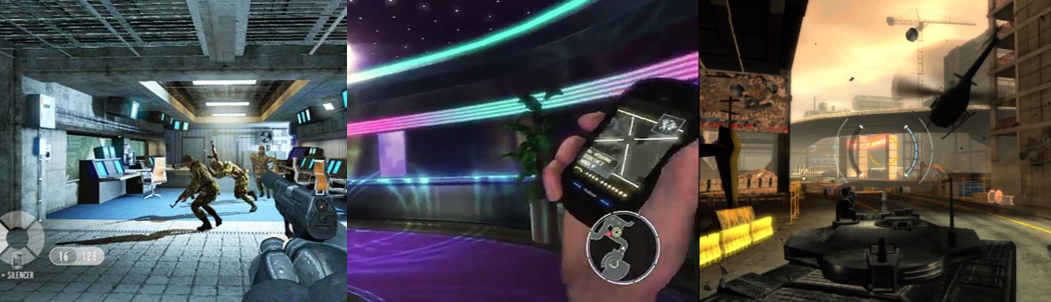
GoldenEye 007 is a first-person shooter in which players are placed into the shoes of world-renowned super spy James Bond and charged with completing various objectives across eighteen stages (referred to as “Missions”) taken from the movie of the same name, and two bonus Missions that loosely adapt elements and events from classic Bond films Live and Let Die (Hamilton, 1973), The Man with the Golden Gun (ibid, 1974), The Spy Who Loved Me (Gilbert, 1977), and Moonraker (ibid, 1979). Unlike FPS classis like Doom (id Software, 1993) and rail-shooters like Time Crisis (Namco, 1995), GoldenEye 007 offers a range of movement and control options, making Bond a far more versatile and capable FPS character compared to some of his counterparts. This new version of the game improves things even more thanks to modern controllers having two control sticks, but there are a range controls available and players can even customise them if they wish. The default controls see you firing Bond’s current weapon with the Right Trigger, activating consoles, opening doors, and disabling alarms and such with A, crouching to avoid incoming fire or enter vents with B, and aiming with the Left Trigger. You can also press Y and the Left and Right Bumpers to cycle through your available weapons, or manually select them by pausing the game, which brings up Bond’s fancy gadget watch. This also allows you to read up on your mission objectives, gives you the option of switching to different control schemes (each named after a different Bond Girl and with one even allowing an awkward two-player mode where only player moves while another one shoots), select gadgets like a key decoder or Bond’s laser watch, and quit the current Mission. On the original Nintendo 64 version, strafing was accomplished with the C-buttons and allowed you to rapidly dart across environments at higher speeds. Here, you can use the left analogue stick to accomplish this same task, and you’ll also find that your aim benefits from a slight auto-aim function.

Take on the role of 007, gun down enemies, and complete various objectives.

Unlike in modern FPS games, Bond is surprisingly vulnerable and will not regenerate health when taking cover from enemy fire. In fact, most things you take cover behind will explode in your face, so it’s better to keep moving and make use of the game’s controls to peek around corners or use silenced weapons or Bond’s handy karate chop to knock enemies unconscious without raising alarm. When taking damage, Bond will react accordingly, which can throw off your aim and see you being bounced about in a crossfire. Explosions are usually an instant death sentence as well so be sure to avoid grenades, rockets, and exploding crates whenever possible. While you can’t replenish Bond’s health, you can pick up body armour strewn across the environment to add an extra bit of protection, but there are no checkpoints in GoldenEye 007 so once you see that blood filling the screen or the “Mission Failed” notification, you’ll have to start over from the beginning. The game offers three difficulty settings (“Agent”, “Secret Agent”, and “00 Agent”), with a fourth being unlocked that allows you to customise various difficulty options, and the difficulty setting you play on directly impacts the behaviour of the game’s enemies, the bonuses you unlock, and the mission objectives you’re given. For example, when playing on “Agent”, you’re generally only given a couple of mission objectives. “Runway” on this mode simply asks you to acquire a key and escape in a plane, but higher difficulties have you destroying anti-aircraft guns first. Later Missions can become extremely complex and difficult because of this. Each Mission is preceded by a number of dossiers in which M, Q, and Miss Moneypenny will explain the specifics of each objective, often with pictures, so you have to be mindful about going in all-guns blazing as you don’t want to accidentally destroy a vital piece of machinery or gun down an ally. Because of this, many 00 Agent Missions require better use of stealth, such as attacking with short bursts of fire or while unarmed, enemies will be noticeably more formidable, and you’ll need to explore more of the environment and have less access to body armour, dramatically increasing the challenge.

Each Mission and difficulty setting offers unique objectives and mechanics.

Mission objectives are quite varied, but also shared across the game;. You’ll be deactivating alarms and consoles (sometimes by interacting with them, other times by blowing them up), acquiring keys, key cards, and documents, and meeting with allies like Doctor Doak, Valentin Zukovsky, and Dimitri Mishkin. Environments are often littered with cameras and alarm systems that will attract enemies to your location or even lock you out of rooms if you’re not quick to disable them, and enemies can sometimes be holding hostages who you’ll need to free without killing the innocent. This can be easier said than done, especially on missions that require you to protect, escort, or work alongside Natalya Simonova. All of the game’s non-playable characters (NPCs) tend to run in front of your bullets but Natalia is the worst, running around in a mad panic amidst a gunfight or leaving herself an open target while messing about with computers. Things quickly become quite obtuse and tricky as you’re tasked with destroying weapons caches, calling for back-up (without destroying the radio equipment), re-aligning an antenna cradle, and wandering around a statue park to meet with the mysterious Janus. Many mission objectives require the acquisition and use of Bond’s gadgets, such as using his laser watch to cut through grates, attracting keys with his magnet, planting tracking devices, and photographing objects, sometimes while racing against a time limit. Gameplay is somewhat broken up in the two instances where you can hop into an armoured tank, with it being mandatory to barrel through the streets of Saint Petersburg in said tank while trying not to run down too many innocent civilians. If you fail even one objective, the entire Mission is a bust, but you can continue playing if you want. This can be a good way to get an idea of the layout of the environment and find other mission objectives for your next playthrough to get a faster completion time, something that’s necessary to unlock all of the game’s cheat options. In addition to your time, your accuracy, shots fired, and kills are all tracked after a Mission is completed, meaning you can always try and improve your approach to a Mission.

Graphics and Sound:  
Even back on the Nintendo 64, GoldenEye 007 did a pretty good job of recreating scenes and characters from the movie. Sure, the character models are blocky and their faces hideous and many environments are a little too bland, polygonal, and swamped with fog, but they managed to capture the essence of the film really well, expanding upon minor elements and areas, especially in the first few Missions, and making them fully-fledged locations. The only issue I had was that the developers included two versions of Surface and Bunker. I would have preferred to see a Casino and Paris stage used instead to add a bit more variety to the early game, but at least there are differences between the two stages to both differentiate them and showcase the passage of time. There are even entirely new environments that weren’t seen in the film, like Silo, Depot, Caverns, and stages based on small parts of the film (like Dam, Runway, Frigate, and Train) are expanded on with additional mission objectives and aesthetic quirks. Of course, the most memorable location remains Facility, which lovingly recreates and expands upon the opening scenes of the film and remains the quintessential map for multiplayer skirmishes. My least favourite stages were always Statue, Jungle, and Cradle as they’re quite difficult to navigate and full of dense fog and hazards, to say nothing of the tougher enemies dwelling within.

While the graphics are dated, nostalgia means the game retains its visual appeal.

Every Mission begins with a bit of an overview of the location before the camera pans around and into Bond’s head, literally placing you in the role of the world’s most famous spy. Cutscenes, in the traditional sense, are few and far between and limited to these opening camera pans and a little animation of Bond looking all cool as he exits the stage, with the majority of the game’s story being relayed through the mission dossiers and onscreen dialogue. There are occasions where you can continue on and this dialogue will still play out, but if you try and rush Janus in Statue or don’t heed his advice to holster your weapon then you’ll fail the Mission. There are some graphical limitations to GoldenEye 007 that definitely date it, as well. There’s no reloading animation (guns simply disappear and reappear with a reloading sound effect), enemies have repetitive animation cycles (though they do kneel down, roll, cross their arms when dual-wielding, and react when shot in the ass), and there can be a bit of slowdown when too many explosions fill the screen. Still, little details like bullet holes, splashes of blood on clothing, and screams of pain help to keep things very immersive. Additionally, the soundtrack is incredible; composed by Rare stalwarts Graeme Norgate, Grant Kirkhope, and Robin Beanland, the soundtrack is both recognisably Bondian and unique, harkening back to Éric Serra’s movie score and the Bond themes made so famous by John Barry.

Enemies and Bosses:
Bond’s mission is impeded by the finest polygonal soldiers and grunts money can buy. While there’s not much to differentiate them in terms of animation, the game’s enemies all don different attire depending on the Mission (sporting parkas in Surface, camo gear in Jungle, and tactical outfits in Caverns) and wield various weapons. Many carry the KF7 Soviet or Klobb, two notoriously inaccurate weapons; others bust out the DD44 Dostovei or dual-wield the ZMG (9mm). The challenge posed by the game’s enemies directly relates to the difficulty setting you’re playing on and the Mission you’re playing. Enemies are pretty clueless in Dam but wander around the Caverns carrying super-powerful US AR33 Assault Rifles and blast at you with Moonraker lasers in Aztec. Janus’s special forces, and some guards aroused by alarms, will also carry shotguns or toss grenades, and you’ll also have to keep an eye out for high-impact turret placements that can shred your life meter in seconds. Enemies are quite vulnerable, even on “Secret Agent”, dropping after a few good torso shots or a headshot, but sometimes their guns can block your bullets and the sheer number of enemy bodies can make it difficult to land decent shots, in which case it’s best to target explosive parts of the environment to send them flying.

In addition to the movie’s baddies, you’ll encounter some classic Bond villains here,

Although boss battles aren’t commonplace in GoldenEye 007, there are a few instances where you’re tasked with killing one of Janus’s henchpeople in a firefight. The first of these you’ll encounter is Colonel Arkady Grigorovich Ourumov, who cannot (easily) be killed in the first few encounters. Ourumov fires at you from a distance in Silo, you pursue him in Streets, and then you finally gun him down at the end of Train, just like in the movie. Shooting Xenia Onatopp in Train will buy you some much-needed extra time with the floor grate, but she puts up a far greater fight when you confront her in Jungle. She’s armed with both a super-powerful RC-P90 and a grenade launcher and can be difficult to hit thanks to the fog, the explosions from her grenades, and her armour-piercing shots. Your best bet is to hang back, firing from a distance, or get up nice and close and fill her face with AR33 fire. This method of staying back serves you well in the final Mission of the main game, Cradle, where you go head-to-head with rogue MI6 agent Alec Trevelyan/Janus. In this Mission, you must realign the antennae, fending off Janus’s elite guard and the sentry guns set up about the place, blasting at Trevelyan as he fires his AR33 and tosses grenades to cover his escape. Trevelyan can absorb a great deal of damage but, once you’ve hurt him enough, he’ll dash to a specific area of the map and drop down to a small platform, just like in the film’s finale, where you’re given precious seconds to reorientate yourself and deliver the final blow. When you unlock the bonus missions, Aztec and Egyptian, you’ll face off with classic Bond villains Jaws and Baron Samedi. The former carries two AR33s and is a veritable bullet sponge, though he’s a big target and shots to the face are recommended. The latter mysteriously resurrects and wields a different weapon each time as you search through the pyramid for Francisco Scaramanga’s fabled Golden Gun, which can kill any enemy, including the supernatural Samedi, in one hit.

Power-Ups and Bonuses:
Naturally, there’s quite a bit you can find throughout each Mission to aid your progress. Body armour allows you to take a few more hits and effectively acts as a secondary health bar and you can pick up any weapons dropped by downed enemies. Green crates can often be found which contain new weapons or ammo, and you’ll also be able to swipe keys and key cards from guards and NPCs alike to acquire mission-specific items or additional toys. Bond can karate chop enemies without expending ammo, but this leaves him extremely vulnerable so it’s best to use this from behind. Similarly, the sniper rifle butt can be used to hit and defeat enemies when up close. He’s also afforded numerous weapons, including his iconic Walther PPK (known as the PP7), which also comes with a silenced variant, and his trusty watch, which cuts through grates and enemies alike with its laser. Bond can also dual-wield for additional damage (and ammo expenditure) and you can even have him hold two different weapons if you’re quick at cycling through them. A variety of machine guns are on offer, from the near-useless Klobb to the simplicity of the D5K Deutsche and the burst fire of the RCP-90. You can also grab high-explosive weapons, such as grenades, grenade and rocket launchers, and three types of mines (remote-activated, proximity triggered, and timed), but be sure to avoid the blast zone. Throwing and hunting knives can also be used for a more personal touch, but I like the power and accuracy offered by the two shotguns and the Couger Magnum. The game’s best weapon is the one-shot Golden Gun and the faster variants unlocked through cheats, but you can also make use of the tanks cannon to blast at soldiers and anti-aircraft guns and zap enemies with lasers when you acquire the Moonraker laser.

Additional Features:
There are fifty-five Achievements on offer in GoldenEye 007, with twenty being awarded simply for clearing each of the game’s Missions on any difficulty setting. You’ll get three separate Achievements for finishing the entire game on each of the three difficulty settings, and 10G each time you finish a Mission in a specific time frame on a specific difficulty and unlock a cheat option. Yes, blasting through Missions as quickly as possible on each of the difficulties will unlock a wide variety of cheats, from invincibility, invisibility, all guns, infinite ammo, and even options for a hilarious “big-head mode” and to speed up or slow down the in-game action. Achievements are also earned by playing the game’s multiplayer mode. Although the Xbox version doesn’t allow for online multiplayer, you and your friends can still get together in person to battle head-to-head, or in teams, across a variety of repurposed maps.

The game’s replay value is bolstered by fun cheats, a banging multiplayer, and various unlockables.

You can battle simply for points, set limits on how many lives and time you have to play, set weapons to be one-hit kill, battle for control over the mythical Golden Gun, and play a capture the flag scenario, with each option named after a classic Bond film. All of the game’s characters, major and minor, are available to pick from alongside two classic Bond villains, Oddjob and Mayday, with the former (and Jaws) offering different challenges based on their height. Completing the game on Secret Agent and 00 Agent will also unlock two bonus Missions: Aztec and Egyptian. In Aztec, you’re placed in a fantastic recreation of Hugo Drax’s missile command centre from Moonraker and must confront Jaws, escape a rocket’s test fire, and then sabotage the Drax shuttle before it takes off. In Egyptian, you’re tasked with navigating a maze-like pyramid in search of the Golden Gun and hounded by Baron Samedi, who returns three times to cause you trouble but the biggest challenge here is remembering the sequence to reach the aforementioned Golden Gun as you’ll be cut down by sentry guns if you step on the wrong tiles. Some additional weapons can also be used when utilising the All Guns cheat, which can make it fun to revisit previous Missions, and you can even tweak the enemy behaviour, strength, and awareness when you unlock 007 Mode to make the game even easier or harder depending on your preference.

The Summary:
Obviously, nostalgia is a huge part of GoldenEye 007’s appeal. Graphically, the game hasn’t aged very well, and it’s definitely been superseded by other Bond games and FPS titles in terms of presentation, gameplay mechanics, and content but there’s something very appealing to GoldenEye 007’s simplicity. It’s nice to be placed in a surprisingly large number of polygonal environments and simply head to a goal, with additional objectives adding relay value and challenge to the game, meaning GoldenEye 007 can be surprisingly complex that more you play on higher difficulties. The game is full of fun little Easter Eggs as well, from character animations and dialogue to oddities placed in each environment, and I enjoyed how NPCs on one difficulty suddenly become vital objectives in the next. There’s a lot to do here as the game challenges you to play on harder difficulties and find the fastest, most efficient way of beating its Missions to unlock everything. There’s also a nice variety of weapons that can all be held at once, meaning you can easily mix and match your gameplay style on the fly, and a fun assortment of objectives that often encourage stealthier gameplay but give you the tools to engage in a manic firefight. The multiplayer is as enjoyable as ever, too; I’m not fussed about the lack of online functionality as I don’t play online and it’s great to be able to jump in and mess about like in the old days. After decades of GoldenEye 007 being restricted to an old console, it’s simply astounding to see it made available once again. It’d be great if more licensed games got the same treatment but I’m happy to say that GoldenEye 007 is just as much of a blast to play through now as it was all those years ago.

My Rating:

Rating: 4 out of 5.

Great Stuff

Was GoldenEye 007 a favourite of your youth? What did you think to this re-release and were you surprised when it was finally announced? How do you think the game holds up today? Did you ever finish it on 00 Agent and unlock everything? Which Mission, weapon, or location was your favourite? Do you have fond memories of playing the multiplayer? What’s your favourite James Bond videogame? I’d love to know your thoughts and memories of GoldenEye 007 so please leave them in the comments and go check out my other Bond reviews.

Game Corner: Resident Evil 4: Gold Edition (Xbox Series X)

Released: 8 March 2024
Originally Released: 24 March 2023; 11 January 2005
Developer: Capcom
Also Available For: PC, PlayStation 4, PlayStation 5, Xbox One, Xbox Series S

The Background:
Headed by Shinji Mikami, Resident Evil’s (Capcom, 1996) focus on atmospheric horror and limited resources popularised the “survival-horror” subgenre. Despite its blocky graphics, clunky controls, and cringe-worthy voice acting, Resident Evil was a critical and commercial success, kickstarting an entire franchise that continued to tweak the gameplay mechanics, expand the lore, and prove equally successful. During the sixth-generation of the gaming industry, Mikami (after a lengthy development process) spearheaded Resident Evil 4 (Capcom Production Studio 4, 2005). The game reinvented the series by shifting away from tank controls and restrictive angles to an over-the-shoulder perspective and a greater emphasis on player control and action. Resident Evil 4 became the second best-selling Resident Evil title and is universally regarded as one of the best (if not the best) entries in the franchise. Despite receiving a high-definition port in later years, the success and popularity of the game saw Capcom prioritise a modern remake over other Resident Evil titles, especially as they’d seen considerable success with remakes of previous entries. The project was not one that directors Kazunori Kadoi and Yasuhiro Anpo took lightly. Although they wished to capture the spirit of the original, the developers minimized the use of quick-time events (QTEs), expanded the narrative and capabilities of the notoriously annoying Ashley Graham, and placed greater emphasis on knife attacks and parrying. Like its predecessor, Resident Evil 4 was met with widespread critical acclaim. Reviews praised the updates to the graphics and mechanics, the expanded characterisations, and the brutal gore, though some criticised the retention of some of the original’s weaker moments. Regardless, Resident Evil 4 sold over five million units by July 2023 and was subsequently bolstered by some downloadable content (DLC). “The Mercenaries” mini game was made available for free from April 2023, microtransactions were added to speed up weapon upgrades, and a remake of the “Separate Ways” side story was released to high praise in September 2023. All this DLC was then re-released alongside the base game as this physical Gold Edition in early 2024.

The Plot:
After escaping Raccoon City, Leon S. Kennedy, now a government agent, is sent to rescue Ashley Graham, the daughter of the United States President, from a mysterious cult in a rural Spanish village. There, he encounters hostile villagers pledged to Los Iluminados and infected by a mind-controlling parasite known as Las Plagas.

Gameplay:
Resident Evil 4 is one of the all-time classics not just of the Resident Evil franchise, but in all of gaming. It changed the survival/horror formula into a more action-oriented genre and directly influenced later remakes of similarly classic Resident Evil titles. However, I was disappointed when I heard it was getting the remake treatment, especially as the previous HD version still holds up really well (despite you not being able to move and shoot). I would’ve much preferred to see Resident Evil – Code: Veronica (Capcom Production Studio 4, 2000) brought up to modern standards but I guess I understand the logic behind prioritising one of the most profitable and popular games. Resident Evil 4 offers six different control types and a wealth of modern options to choose from. You can toggle aim assist, the run and crouch functions, the size of the aiming reticle (which largely replaces the laser sight from the original game), various camera settings, and the intensity of the heads-up display and damage indicators. The default controls see you aiming with the Left Trigger, readying your knife with the Left Bumper, shooting or stabbing with the Right Trigger, and running with the Right Bumper or by pressing in the left stick. Y brings up your inventory (still nicely arranged in attaché briefcases), X reloads, A interacts with the environment to pick up weapons, ammo, treasure, and files, and you can crouch through small gaps with B. You can use the left stick in conjunction with RB to perform a quick turn, hold A to pull certain objects (bookcases, filing cabinets, etc) when prompted, and switch weapons using the directional pad. Two weapons can be assigned to each direction this time, which is great for mixing up your attack strategies and conserving ammo, though there’s no quick-heal option here.

Alongside more emphasis on the knife, Leon’s allies have had their roles greatly expanded.

Resident Evil 4’s newest gimmick is placing increased emphasis on the knife. Before, you could cheese the knife to a ridiculous extent, stunning enemies and opening them up for Leon’s over the top melee attacks. While that’s still true here, Leon’s knife also parries certain attacks from the likes of the Chainsaw Ganado and other weapon-wielding enemies with LB. This will wound or stun enemies so you can run in to press A to hit a suplex, but you can also sneak up behind them or finish them off with your knife with a press of RB. Leon’s knife now has a durability meter; eventually, it’ll break and he’ll need to spend his hard-earned pesetas upgrading it at the mysterious Merchant. Weaker, disposable knives are often found dotted around the environment, in addition to stronger ones, and it really makes you think twice about going all gung-ho with your knife like before and opens up interesting ways to battle the likes of Major Jack Krauser since all the previous QTEs have been replaced by these new parry mechanics. In what’s now a franchise tradition, there is also a part where you lose your gear and must stealthily take out enemies to retrieve your stuff. As before, Leon will partner with some allies; suave ladies’ man Luis Sera has an expanded role here, helping you at key points and providing both ammo and extra gunfire when besieged by enemies or battling the troll-like El Gigantes, but your main partner is still Ashley Graham. Now wearing more sensible attire and with her bratty persona toned way down, Ashley is far more capable and useful than before. You command her to wait, hide, and follow you by pressing in the right stick, hiding her in the odd cabinet or cupboard and having her climb over walls to unlock doors or lower ladders. While she can die (and you can accidentally shoot her), you no longer have to worry about wasting your healing items on her and she typically just gets “incapacitated”. You can revive her and get her back on her feet, though you’ll still have to cover her as she helps solve puzzles and shoot enemies that try to spirit her away or else you’ll get a game over.

Purchase new items and upgrades, craft ammo, or just kill time at the shooting range.

I actually felt like Ashley wasn’t even partnered with Leon as much as in the original game and, when she is, it’s so much easier to look after her. Her solo section has also been expanded somewhat, moving from a primarily stealth-based interlude to a more puzzle-based section where you stun Armaduras with her special lantern. Leon also has a few more combat options available to him: he can occasionally dodge bigger attacks with B, has more control over the boat he uses to cross the vast lake, and can again use giant cannons to splatter enemies and shatter doors. As is now the standard in Resident Evil titles, Leon can also craft ammo and health from the inventory screen. By picking up resources, gunpowder, herbs, and purchasing instructions from the Merchant, you can craft ammo and various coloured herbs that will partially, fully, or even extend your health. This has also been expanded to the treasures; you can increase the value of goblets and crowns and other large treasures by inserting coloured gemstones, which is great for earning extra cash. You once again save at typewriters with no fear of running out of ink (though the game has a generous autosave function), can use a limited Item Box when doing so, and can once again take a break from all the killing and horror at the many shooting ranges. Here, you test your marksmanship skills to earn letter grades and tokens to purchase charms for your briefcase that’ll give you certain buffs. The Blue Medallion system has also been expanded to include side missions set by the Merchant. These include shooting hidden Blue Medallions, disposing of rats, and confronting tougher enemies, all for greater treasures.

Classic puzzles and former QTEs have been reworked to offer a new, if familiar, challenge.

While much of Resident Evil 4 is familiar to anyone who’s played the original game, some of the puzzles and sections have been reworked. You’ll no longer run away from a giant stone version of Ramon Salazar or deal with that flame-filled room, for example, but these elements have been reworked into the tower section, meaning you not only have to avoid barrels coming down the spiral staircase but also take out Salazar’s giant stone visage to avoid being roasted alive. The light puzzle in the church is different, I’m pretty sure I don’t remember exploring a bunch of different caves to find shrines in the original, and I believe the dissection lab has a new power reroute puzzle that wasn’t there before. I do recognise some of the puzzles, though; you’ll still be traversing that damn hedge maze, still have to wait for the lift to come while fending off the Verdugo (now pulling levers to temporarily freeze it with liquid nitrogen and parrying it when it destroys these controls), and you’ll still have to watch your step when crossing rickety wooden bridges. You can still save a dog for an assist later on, still shoot lanterns to set enemies on fire, and still use explosive barrels to take out hordes of enemies. You and Ashley will sometimes have to turn wheels or levers or simultaneously pull switches or create new paths or open doors, or you’ll command her to do this while you explore further and protect her. You’ll be finding keys to unlock doors and drawers, taking the long way around to unbolt doors and create shortcuts, upgrading key cards, finding spheres that need to be rotated to form the Los Illuminados’ symbol, shooting gongs, sitting at the right tables as dictated by paintings, completing sword puzzles, and racing along on minecarts at breakneck speed, struggling to stay on the track, take out enemies, and avoid dead ends. If things get too tough for you (and it can get a bit hairy when you’re surrounded by enemies that only become stronger when you defeat them), you can lower the game’s difficulty. “Assisted” mode enables a health regeneration system and lowers the cost of items, but generally you can get by on “Standard” if you conserve ammo and make good use of the melee attacks, knife, and environmental aids dotted around the place.

Graphics and Sound:
While I was sceptical about remaking Resident Evil 4 since the previous version still holds up really well, it can’t be denied that the game has never looked better than here. The remake engine makes fantastic use of lighting and shadows to give everything a far creepier and more horrifying atmosphere. The level of detail at work throughout the game’s environments is astounding, with rain and water effects being a constant standout. Areas feel real and lived in, with blood trails and splatters, damage and debris, and little things like photographs, ticking clocks, and even enemies hiding in toilets and giant ovens all adding to the immersion. Leon, especially, benefits from the graphical upgrade; he can now move and shoot, dynamically reloads, and reacts to his environment, shielding himself from rain, resting against walls when low on health, and crashing through destructible objects with the same gusto as before. Character models, in general, are much improved here; Ashley has a more sensible wardrobe, Luis has never smoked a cigarette better, and even the diminutive Salazar looks far less comical here. Faces are still a bit unnerving at times, appearing a bit plasticky (especially when wet) but the level of detail is greater than ever before, so I can forgive it. This extends to the blood and gore, too; enemies can be blown to pieces, exploding in a splatter of guts and viscera, their bodies writhing on the floor, reanimating with renewed aggression, or their heads bursting open as horrific tentacles parasites writhe about. More of them appear than ever before, too, with their variants and mutations causing serious trouble when you’re low on health and ammo and must survive until the game decides to let you continue.

The graphical upgrade is astounding, making everything darker, grittier, and gorier.

All the key areas from the original game return here, including the main village, a sprawling castle, a network of dank caves and mines, and the fortified island the serves as the finale. You’ll visit graveyards, churches, houses (both abandoned and occupied), forgotten laboratories where bizarre genetic experiments lurk, medieval dungeons and hallways, and a veritable war zone in the end game as you navigate past barricades, narrow corridors, and ransacked areas where enemies lurk around every corner. Everything has a much higher level of detail; you can push obstacles out of the way as well as hop over or through them, files are scattered about to flesh out the local lore, and gameplay is frequently interrupted by exposition dumps from Ingrid Hunnigan or taunts from Saddler and his cohorts. Every cutscene and comms chat can be interrupted, which is great for subsequent playthroughs, and the sheer sense of foreboding atmosphere is unparalleled here as you’re never sure what’s lurking around even the most familiar corridors. Enemies can toss weapons at you, clamber up ladders, and will shout for help when they spot you. Later on, spider-like parasites will scuttle about and attach themselves to regular enemies, making them more formidable, and you’ll be constantly deactivating explosives, avoiding those ever-annoying bear traps, and redirecting gun turrets to clear your path. As ever, music plays a key role in alerting you to when there’s danger present; when it dies down or is more tranquil, you’re safe to explore and regroup. The dialogue and script has also been slightly tweaked; while Leon still has a lot of sass, some of the cheesier lines have been removed. There’s also an additional haunted quality to Leon as he struggles to reconcile the horrors he saw in Raccoon City and make amends for his mistakes with his newfound training.

Enemies and Bosses:
Like in the original game, there are no zombies here. Instead, you primarily fight the cult-like, parasite-infested minions of Los Illuminados. Ganados are far more intelligent than zombies, but no less durable; they can take multiple shots, even to the head, and keep going, utilising weapons like hatchets, pitchforks, and dynamite to cause you headaches. Thankfully, any nearby traps and hazards (and larger enemies) can hurt and kill them, but they are a real pain in the ass when they start wielding crossbows, hiding behind shields, and their heads burst to reveal disgusting tentacles and voracious parasites. The robed summoners will force this transformation and obscure your vision, so be sure to take them out quickly, while flash grenades are your best bet against the naked parasites or the armour-clad Armaduras. You’ll also battle Plagas-infested Novistadors, giant bugs that hover around, spawn from hives and can camouflage into the environment. Later, the Ganados better arm themselves and protect themselves with flak jackets helmets, and other military gear, making it even harder to score a good headshot.

Bosses have been reworked to accommodate the new mechanics and modern graphics.

Larger, more monstrous enemies are also commonplace and act as mini bosses. The first you’ll encounter is the Chainsaw Ganada, a burlap-sack wearing madman who will lop your head clean off if you don’t make good use of the parry system. As if their sporadic appearances aren’t bad enough, you’re also forced to fight the Bella Sisters again, this time in an enclosed room (which actually makes it easier to track them), and the aggravating, claw-handed Garradors. Though brutish, heavily armoured, and extremely dangerous, Garradors are also slightly easier here as you’re not locked in a small cage and have more room to manoeuvre behind them to shoot the parasite on their back, stunning them for a more effective attack. Similarly, sledgehammer-carrying Brutes often show up, though their wild swings can just as easily wipe out nearby lesser enemies, as well as lumbering El Gigantes. This time, when you battle the two of them in the furnace, Luis is there to help; though he’s more of a distraction and hinderance as he needs to get clear before you can drop their asses into the molten steel. As ever, two of the more disturbing enemies-cum-mini bosses are the cackling, slug-like Regenerators and spiky Iron Maidens, two intimidating creatures that shrug off bullets and grenades, rapidly heal even when blasted in two, and pounce on you to try and eat your face and skewer you. The only way to effectively destroy them is by finding and equipping the Bioscope Sensor to your rifle so you can see and shoot the parasites lurking in their bodies, which can be easier said than done thanks to their erratic movements and extendable limbs. Another memorable boss encounter is, of course, the massive, mutated salamander Del Lago. You’ll need to use LB and RT to throw your unlimited supply of harpoons and the beast, avoiding the obstacles floating in the lake and chucking your spiked implements into its mouth when it leaps from the water. Thankfully, your encounters with the Verdugo are much more manageable this time; instead of running around a maze of shipping containers and fighting it in a cave, you must simply freeze it with liquid nitrogen and avoid or parry its lashing tail attacks when prompted.

No matter how big or monstrous the boss, your knife, parry, and dodge abilities will be the deciding factors.

Bitores Mendez once again hounds Leon throughout the story, though you are spared him lumbering after you like a Mr. X or Nemesis figure. He’s still fought in a burning barn, assuming a scorpion-like mutated form where he swipes with his tentacles, requiring you to either dodge or parry his limbs to blast at his big, ugly eye. In the second phase, the fires rage out of control and can really eat away at your health, as can the barrels he tosses at you, but the key is staying in the safest place you can find, parrying when prompted, and hitting RT when he’s stunned to deal big damage. Ramon Salazar’s mutated plant form is more agile than I remember it. He scuttles about on the walls and ceilings, belching corrosive bile and explosive pods, and can eat you in one bite if he gets too close. You need to constantly stay on the move and not miss the opportunity to fire when the pod opens and reveals him, which will eventually stun him to the ground so you can use your knife, but I found this a particularly gruelling boss battle. Krauser is fought twice this time; the first is a straight-up knife fight where you must parry or dodge his attacks, landing slashes and melee attacks until he flees. This repeats in the ruins, but Krauser also fires at you, tosses flash grenades, and mutates a giant arm blade for the finale. The fight isn’t timed this time, but Krauser is extremely agile, so you’ll need to keep him in view, taking shots and using any nearby knives to parry his slashes while also getting around his bio-organic shield. Finally, Osmund Saddler transforms into a rampaging, tumour-filled arachnid monster that stomps about an unstable mining platform. For such a big creature, it’s difficult getting a good shot at the eye-like growths on his limbs but doing so leaves his main weak spot open. Repeat this a few times, watching out for the limited ground, and Ada Wong will eventually toss you a rocket launcher to finish him off after he envelops the entire arena in a mess of putrid limbs.

Power-Ups and Bonuses:
As you explore the game’s environments, you’ll find key items to progress and useful pick-ups to aid you. Small keys, cuboid blocks, medallions, and such access treasures, ammo, or healing items, or resources for crafting. Defeated enemies will invariably drop an assortment of supplies and you can smash open crates to acquire them, too (just watch out for snakes!) First-Aid sprays and herbs will restore your health, as ever, but you can also eat eggs and fish to do the same. You can combine green, red, and yellow herbs to recover more health and extend your health bar, which is always handy. Treasures come in many forms, from various jewels to ornate masks, clocks, and the like. The bigger ones house your smaller jewels to increase their value and you can also sell unwanted ammo, guns, and items to the Merchant for more cash. The Merchant’s stock is constantly changing, allowing access to new ingredients and weapons, so my advice is to wait for the more powerful weapons before you upgrade them to save your money and have stronger weapons later in the game. The Merchant also sells attaché case upgrades, allowing you to carry more and providing specific buffs, and degradable body armour to upgrade your durability. He also trades you special weapons, items, and add-ons for your arsenal if you complete his side missions. Leon uses many different weapons, from grenades and flash bombs to his trusty knife, pistols, and shotguns. You’ll eventually utilise heavier weaponry, like the assortment of submachine guns and assault rifles to single-use rocket launchers, as well as revolvers and magnums, sniper rifles, and a surprisingly handy bolt rifle. This is useful for destroying Blue Medallions, shooting rats, or finishing off enemies as you can recollect the bolts; you can also press the left stick to attach explosives, which is super handy in a tight pinch. These weapons can be upgraded to increase their power, ammo capacity, and reload time. Upgrade them fully (or acquire a special ticket) and you can unlock their special bonus ability, and you’ll also equip add-ons, such as stocks and scopes. Completing the shooting ranges earns you tokens to play for charms to attach to your briefcase; these increase how much ammo you craft, item drop rates, and provide other buffs, though you can only attach three at a time.

Additional Features:
There are thirty-nine Achievements on offer in Resident Evil 4 by default, with many unlocking simply by completing the story chapters, besting the monstrous bosses, and beating the various difficulty modes. While you won’t get an Achievement for aggravating Del Lago or looking up Ashley’s skirt, you will for rescuing her as she’s being carried away, for parrying incoming attacks, destroying all of a Regnerator’s parasites in a single shot, and selling an item for many times its usual value. Achievements also come from fully upgrading weapons, finding and destroying all of the Clockwork Castellan toys scattered throughout the game, escaping certain areas without taking damage, defeating certain bosses in specific ways, and finding every treasure (something greatly aided by purchasing the Merchant’s treasure maps). Not only are you graded on your time and performance at the end of the game, each chapter ends with a rundown of your accomplishments. These are tied to the Achievements and the in-game challenges that earn you Completion Points (CP) to spend in the “Extra Content” section. This is where you’ll unlock character models, concept art, and additional costumes and weapons. Beating the game on different difficulty modes unlocks various rewards, such as a dapper noir outfit for Leon, sunglasses and masks, the even harder “Professional” mode, and all your weapons, charms, and remaining treasures carry over to your next save file. Sadly, however, unlocking Ashley’s super useful suit of armour is much harder this time, requiring at least an A-rank completion of “Hardcore” mode. You’ll also need to destroy sixteen Clockwork Castellans to get an unbreakable knife, clear “Professional” mode for a bad-ass hand cannon, and shell out a whopping 2,000,000 pesetas for the infinite rocket launcher.

Battle for points in “Mercenaries” mode and experience Ada’s story in this revamped nightmare.

You can also play the “Mercenaries” mini game to dispatch as many enemies as possible against a time limit, building up your “Mayhem Meter” to unleash character-specific special moves and playing as either Leon, Luis, Krauser, or the returning HUNK, each with their own weapon loadouts and attributes. DLC packs also contain funky extra costumes, weapons, and even the original game’s soundtrack. Finally, there’s the Separate Ways side story that focuses on what Ada was up to during the main game and comes with seven additional Achievements. Separate Ways has been expanded upon in many ways. Not only does Ada have access to the same weapons, knives, items, crafting, treasure, and abilities as Leon (including the Merchant and her own melee attacks) but her grapnel gun now plays a significant part in her gameplay. You’ll often be prompted to grapple to (or find yourself traversing) the rooftops and upper levels in recycled locations, tapping RB to swing across gaps, launch to ledges, and even remove shields from enemies and fly in for a quick melee attack once upgraded. Separate Ways also expands upon Luis’s story, teaming him with Ada at various points, and she utilises her ocular I.R.I.S. implants to track footprints and reveal fingerprints for keycodes. Separate Ways also adds content back into the game, including the laser hallway sequence (a simple QTE where you tap B a few times and the RB at the end, finishing off a gigantic, toad-like boss at the same time) and U-3 boss fight. This returns as the final form of Ada’s clingy stalker, the gruesome Black Robe, which distorts the environment, teleports and creates duplicates, and is fought numerous times before it transforms into this scorpion-like form for a two-phase showdown in the caverns. Ada also battles Garradors, Regenerators and Iron Maidens (without the benefit of the infrared scope, that I could find), and boar-headed brutes with machine guns strapped to their arms. She also tackles an El Gigante (battling from atop destructible huts) and has a unique showdown with Saddler. This was the most frustrating part of Separate Ways for me. Saddler has a rush attack, bursts tentacles from the ground, fires bullets from his fingers, and can spam-lock you with tentacle combos. You must blast his face until the eyeball appears in his mouth and keep firing until you can melee attack him, but this took me quite a few tries. After that, you must grapple around the final stage as Saddler’s Lovecraftian mass attacks Leon, blasting the eye tumours in its tentacles to reach the rocket launcher and bring the side-game to a close. Separate Ways has the same difficulty settings as the main game and you can unlock additional costumes and accessories to wear in it, and the main game, as well as complete similar challenges when playing.

The Summary:
I love Resident Evil 4. It’s probably my second favourite in the franchise after the second (both/either version) and it was a blast playing through this top-notch modern reimagining of the title. Sure, I don’t think I’ll ever get over Capcom prioritising remaking this title, which has stood the test of time extremely well, over Code: Veronica, which is still stuck in the tank control days of the franchise, but they absolutely delivered with this game, to the point that it almost makes up for them dropping the ball on the remake of the third game. The new graphical overhaul makes the game darker, moodier, and gorier than ever. There’s just so much detail, so much happening in the environment and with lighting and shadows, and Leon and the others have never looked more detailed and human (or inhuman) than here. I think it’s a testament to how well-crafted the original game was that very little has been changed or discarded. A few boss battles and hazardous areas are omitted or heavily altered, sure, but everything from the original game is retained but with a more serious tone, a greater degree of movement, and far more options for you to upgrade your arsenal. I thought I’d hate the degradable knife and parry mechanics, but they were implemented really well, making me think twice whenever I used the knife since I wouldn’t want it to break at a pivotal moment. While I actually enjoyed the quick-time events of the original, I’m glad they were replaced by playable sections; it really added to the immersion of Leon’s bouts against Krauser. Expanding on Leon, Luis, and Ashley to make them more well-rounded characters while still retaining the edge, arrogance, and characteristics that previous defined them was a great idea, as was altering Ashley’s solo section into something more enjoyable and never-wracking. In the end, I’m forced to admit that remaking Resident Evil 4 was a fantastic idea as it resulted in this gorgeous, gore-soaked, super tense and exciting game. I really hope Capcom give the same treatment to Code: Veronica next but it does make me wonder if they can improve upon Resident Evil 4’s sequels just as well later down the line…

My Rating:

Rating: 5 out of 5.

Fantasic

Were you pleased with the remake of Resident Evil 4? Do you think it deserved the remake treatment so soon? What did you think to the new knife-based mechanics and the alterations to certain bosses? Did you like that Luis and Ashley’s roles were expanded and more flesh out? Did you ever find all of those Clockwork Castellans? Which Resident Evil videogame, character, monster, or spin-off is your favourite, and which game would you like to see remade next? Whatever you think, feel free to leave your thoughts down below.
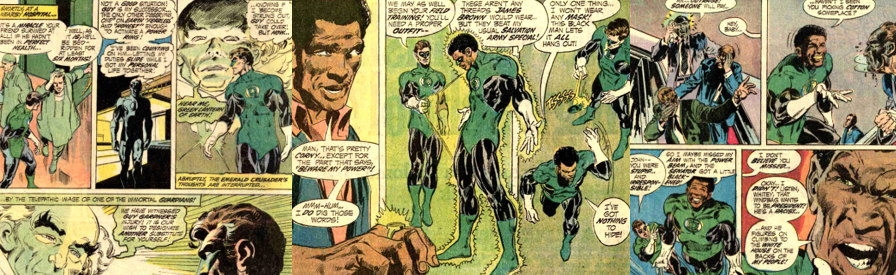
Movie Night: Ghost Rider: Spirit of Vengeance

Released: 17 February 2012
Director: Mark Neveldine and Brian Taylor
Distributor: Columbia Pictures / Sony Pictures Releasing
Budget: $57 to 75 million
Stars: Nicolas Cage, Johnny Whitworth, Violante Placido, Fergus Riordan, Idris Elba, and Ciarán Hinds

The Plot:
After selling his soul to the Devil, who’s taken mortal form as Roarke (Hinds), and being transformed into the demonic Ghost Rider, Johnny Blaze (Cage) has withdrawn from the world. However, when he’s charged with protecting Nadya and Danny Ketch (Placido and Riordan) from Roarke’s enforcer, Ray Carrigan/Blackout (Whitworth), Blaze discovers a chance to both redeem and rid himself from his nightmarish curse.

The Background:
Gary Friedrich, Roy Thomas, and Mike Ploog’s Ghost Rider first appeared in the pages of Marvel Spotlight #5 and has spearheaded many supernatural Marvel adventures since while invariably appearing in Marvel’s television ventures. After a long period in Development Hell (pun intended) Ghost Rider finally made his live-action debut with noted comic book fan Nicolas Cage portraying a quirky, damaged version of the character that left many critics disappointed. Though labelled as one of the worst films of the decade, Ghost Rider’s (Johnson, 2007) almost $230 million box office was a catalyst for a sequel, with Cage eager to explore a darker side to Blaze’s character. David S. Goyer signed on to pen the sequel, which was strangely framed as a quasi-reboot and lumbered with a far smaller budget than its predecessor. Visual effects studio Creative-Cartel took on the task of bringing the flame-headed spectre to life, producing around 850 visual effects shots and fitting Cage with an LED helmet to help perfect the lighting of Ghost Rider’s flaming skull, which was designed to express the character’s demeanour. Unfortunately, Ghost Rider: Spirit of Vengeance failed to match its predecessor’s box office or redeem Ghost Rider’s live-action career. Reviews were scathing, criticising Cage’s wacky performance, slapdash narrative, and dreadful 3D conversion. While it’s since developed a small cult following, Cage’s dissatisfaction with the film and the role scuppered any chance of a sequel and the character was eventually reacquired by Marvel in 2013.

The Review:
Ghost Rider: Spirit of Vengeance is a quasi-sequel, quasi-reboot of the franchise that picks up some years into former stunt rider Johnny Blaze’s cursed life as the titular Spirit of Vengeance. Thankfully, for those unfamiliar with the character and concept, Blaze is on hand to provide an opening narration (and a few narrative interludes) to catch us up on the story. Similar to the first film, Blaze was devastated when his father contracted terminal cancer and, in desperation, made a literal deal with the Devil to save his life. It’s not related what happened after that, just that the Devil (here given the unremarkable mortal name of “Roarke”) twisted the deal, bonding Blaze to an ancient demon that transforms him into a monstrous, flame-headed creature in the presence of evil. Haunted by this decision, and the guilt behind his selfish reasons for making it in the first place (Blaze later emotionally confesses to charismatic priest-cum-wine connoisseur Moreau (Elba) that he made the deal because he couldn’t bare to lose his father), Blaze flees halfway across the world, avoiding all human contact wherever possible. Unlike in the previous movie, where Blaze hid his tortured soul behind wacky eccentricities, Blaze is now withdrawn, socially awkward, and constantly battling against the demon that rages inside of him. Living a simple life in near squalor, he fights nightly to keep the Ghost Rider at bay. Sensitive to the light and with little interest in helping others, Blaze is initially hostile towards Moreau but is convinced to hear the bombastic priest out when he promises to take Blaze to his sacred order and have his curse finally lifted. Still, he’s naturally reluctant since he has little to no control over the Ghost Rider. The demon possesses him, seemingly taking full control of his body, and both cannot distinguish between those who are truly wicked and those who are merely misguided and has no desire to, simply relishing in violence and satiating its never-ending hunger.

Cage is more unhinged than ever as the tortured Blaze and demonic Ghost Rider.

Later, when sheltered by Methodius (Christopher Lambert) and the other monks from Moreau’s order, Blaze learns the origins of the demon possessing him. It’s said to have once been Zarathos, the Spirit of Justice, an angel sent to defend humanity. However, Zarathos was somehow captured, tortured, and driven insane in Hell, transforming it into the unrelenting Spirit of Vengeance that now engulfs Blaze’s body. The Ghost Rider is a bizarre, disappointingly silent creature of vast, near-unlimited power. There’s little physical threat against his awesome Hell powers. He easily reduces every nameless, faceless goon to ash and cinders with his flaming chains and shrugs off bullets, relishing intimidating his prey by swaying about and striking odd poses. Exhibiting superhuman strength and durability, the Ghost Rider can transform any vehicle, no matter how big, into a flaming vessel but, of course, favours a bitchin’ motorcycle. His most powerful technique remains the Penance Stare, here changed to be the flaming demon simply screaming in his victim’s face for an awkward amount of time. Blaze says that the Ghost Rider consumes souls, but we don’t actually see that happen onscreen; his victims simply cower in fear and burst to ash, which is a bit of a disappointment. At one point, he does absorb and regurgitate a full clip of gunfire at one hapless goon, and he’s left unscathed by bazooka fire, though a desperate grenade shot by Carrigan is strangely enough to incapacitate him. Indeed, the only thing that can even stop the Ghost Rider is the word of Hell, a talent exhibited by Roarke’s unwitting son, Danny, who both commands the Ghost Rider to stop and returns his power in the finale. The Ghost Rider’s presence has clearly been infesting Blaze, driving him half mad; when the demon “[scratches] at the door”, Blaze descends into manic insanity trying to hold him at bay. He also seems to gleefully relish the demon’s incredible power as it literally bursts from him, melting his attire and transforming him into a wicked, bizarre creature said to have no conscience or morality.

Moreau recruits Blaze to keep Nadya and Danny safe from Roarke’s evil plot.

This belief is tested when Moreau begs Blaze to help keep Nadya and Danny safe from Carrigan (and, by extension, Roarke). A Gypsy beauty once caught up in Carrigan’s world of violence and drugs, Nadya was left near death after a botched job and, in desperation, made a deal with the Devil to save her life, unaware that his intention was for her to give birth to a “vessel” for his demonic essence, essentially making Danny the Anti-Christ. Living life on the run, forced to swindle horny businessmen out of their wallets and cars, Nadya is reluctant to trust anyone and seeks only to keep Danny safe and maybe one day build a real life for him. Though a snarky teen with a chip on his shoulder, Danny truly loves his mother and actually enjoys their life as outlaws, despite him longing for a normal family life. Still, he struggles with his half-human heritage; he wants to understand the dark power within him, but both fears and is allured by it. The Ghost Rider can sense his presence, drawn to his blood and power, and Blaze tries to impress upon the boy that he doesn’t have to let his dark side define his life (hollow words considering Blaze’s own struggles with that). Devoid of a father figure, Danny quickly bonds with Blaze, seemingly enamoured by his incredible power and his whole stunt biker aesthetic but resents him for giving up the Ghost Rider at the first opportunity. This comes courtesy of Moreau, easily the most enjoyable and appealing character in the film. Also an accomplished rider, Moreau is a man of deep spiritual belief who’s also very handy in a firefight. Verbose and incorrigible, Moreau gleefully leaps head-first into battle, ready to give his life to keep Danny safe (or rescue him) and Elba’s scenery-chewing enthusiasm makes even clunky exposition scenes entertaining to watch. It’s genuinely a shame when he’s killed by Carrigan, especially as he had a lot of potential as a secondary Ghost Rider.

Though weak, Roarke’s power is enough to transform Carrigan into a demonic being.

Speaking of Carrigan, he spends the first act of the movie as little more than an arrogant mercenary. Since Roarke’s human body is slowly dying from the incredible power within it, he contracts Carrigan and his goon squad to do his dirty work. Carrigan has a history with Nadya, resenting her for leaving him, and knows his worth; he demands a bigger payday after barely surviving his first encounter with the Ghost Rider and ups his arsenal for the rematch. However, this leaves all his men dead and him crushed under debris, barely mustering the strength to spit an insult in Roarke’s face before dying. However, death is merely an inconvenience for the Devil and Roarke revives and transforms Carrigan into an adaptation of Blackout, here realised as a zombie-like sadist able to decay anything (unless dramatically convenient) with a touch and rapidly attack foes from a surreal shadow dimension. Unhinged, drunk with demonic power, Carrigan delights in reducing anyone in his path to agonised, decaying husks, leaving them little more than screaming skeletons, slaughtering Methodius and his monks and even killing Moreau. It seems to be the Devil’s modus operandi to birth half-demon creations capable of ending him since, like the Ghost Rider, Carrigan’s demonic power is so strong that even Roarke snaps at him when he goes to touch him, indicating that Carrigan could’ve simply killed the Devil’s mortal form and usurped his position. Lacking the gravitas of Peter Fonda and simply appearing as a broken, half-crippled old man in a suit, the Devil has never been weaker than in this film. His human body is decaying quickly since mortal forms can’t contain his power, so he’s desperate to get his hands on Danny and perform a bizarre ritual that will transfer his essence into the boy’s half-demon body. Still, the Devil exhibits an alluring presence; though he’s still unruly around him, Danny is curious to learn more about the darkness Roarke implanted in him. Roarke also clearly has the power, money, and influence to keep Carrigan and a veritable army of gun-toting minions on hand to be summarily slaughtered by the unstoppable Ghost Rider.

The Nitty-Gritty:
It’s definitely far more accurate to label Ghost Rider: Spriit of Vengeance as a soft reboot, and that really irks me. Blaze’s opening narration uses weird, animated segments to tell a truncated version of his origin when footage from the last movie could’ve easily been supplanted. He also explains how the Devil has taken many forms before, showing Roarke once masqueraded as some of history’s worst dictators (and Jerry Springer…), meaning it would’ve been easy to name-drop Mephistopheles. Instead, the film essentially distances itself from the last movie but remains irrevocably and awkwardly tied to it through Nicolas Cage’s casting. It’s a bit like when Judy Dench stayed on as “M” when Daniel Craig took over as James Bond. Like, it’s obvious it’s a new film continuity but not recasting the lead muddies the water and just has me asking why it wasn’t a straight-up sequel. The movie is also a strangely surreal affair. Whereas Ghost Rider was painfully generic and toothless at times, Spirit of Vengeance is often like an acid trip, skipping frames, using odd camera angles, and utilising a rushed editing style to frame the Ghost Rider as a terrifying, unpredictable figure. In this regard, these techniques are surprisingly effective, but it also results in a confused tone. Sometimes, it wants to be this gritty, gothic horror; other times, it’s got a camp comedic edge (mainly through Moreau’s infectious personality); and at other times, it’s a reluctant meditation on the struggle between good and evil. Nowhere is this more evident, as expected, than in Cage’s crazed performance. I get it when he’s desperately trying to keep the Ghost Rider in check, but that’s no excuse for Cage’s weird mannerisms and line deliveries. It paints Blaze as painfully awkward; he constantly struggles to console Danny and Nadya, and is definitely a man whose actions speak louder than words.

The Ghost Rider effects and action scenes look better than ever, despite his bizarre characterisation.

On the plus side, the Ghost Rider looks absolutely fantastic here! He looked pretty great in the last film, but the effects are way better this time around. His skull is charred and spews black smoke; his leather drips and bubbles from his intense Hellfire; and his flames are more realistic than ever. It’s like Clayton Crain’s gothic, realistic artwork has been brought to life and I loved that we got loads of sequences where the Ghost Rider is in action in broad daylight. It really is top-notch effects work that belongs in a better film and any scenes with the Ghost Rider, even when he’s acting like a complete moron, are a highlight. Of course, it helps that he’s an absolute menace; he’s so overpowered that nothing is a threat to him and he can afford to just knob about, toying with his victims before roaring in their face (…err, I mean, consuming their souls). Given the Ghost Rider’s nature, there are a fair few chase sequences here; the Ghost Rider turns cars and even a construction crane into a burning vehicle, decimating everyone in his way. Since Blaze successfully has Zarathos exorcised from his body at Moreau’s temple, he, Moreau, and Nadya are forced to use more traditional firearms and stealthier techniques to infiltrate the Uzak Gökten in the finale. Moreau acquits himself well here, throwing Roarke’s guards off with his brazen antics and openly firing upon his hooded followers. Like Methodius and the other monks, he tries to fight Carrigan and, like them, is rapidly decayed but not before delivering a defiant headbutt. Carrigan’s action sequences mostly take place in a peculiar dark dimension, where he slips up behind, outmatches, and dispatches his foes as easily as Ghost Rider incinerates them with his chains. Not to be outdone, Nadya has a lot of fight in her, even when overpowered or outmatched. She proves a crack shot with a sniper rifle, covering Blaze and Moreau’s backs, and is smart enough to flee with Danny whenever things start to get hairy for them.

Ultimately, the Ghost Rider triumphs and regains his sanity, bringing some peace to Blaze.

Having successfully dispatched Carrigan and his goons, Blaze brings Nadya and Danny to Moreau’s sanctuary and successfully has his curse lifted. This is a two-stage process that begins with Cage hamming up Blaze’s darkest confession regarding his deal and then being bombarded by strange lights and a cacophony of visuals that, apparently, banish Zarathos from his body. Although Methodius decides it’s better to simply kill Danny to prevent the Devil’s plot, Carrigan shows up and slaughters him and the other monks, kidnapping Danny, and bringing him to Roarke so he can be sedated and forced into a strange ritual. To the chanting of his influential, hooded followers, Roarke comes close to completing the demonic transfer before he’s interrupted by Blaze and Moreau, covered by Nadya and armed with the monks’ impressive arsenal of firearms. Though Moreau is killed by Carrigan and it seems like Danny is ready to embrace his demonic heritage, the boy tricks Roarke and restores the Ghost Rider’s powers to Blaze. Now empowered to exist in daylight, the Ghost Rider aggressively pursues Roarke when he flees with Danny, finally dispatching Carrigan in anticlimactic fashion and violently sending Roarke’s vehicle end over end. His body further damaged by the crash, Roarke is left a helpless wreck before the Ghost Rider’s power. Defiant to the last, Roarke curses the day he made the deal with Blaze but is powerless to avoid being forcefully sent back to Hell by the Ghost Rider’s chain. Nadya is horrified to find that Danny has been…injured? Killed? He’s unconscious, at least…in the crash. However, conveniently, Blaze feels Zarathos’ true nature resurface, changing his flames from red to blue and restoring the angel’s sanity and power as the Spirit of Justice. This allows him to revive Danny and abruptly end the movie with him reaffirming his identity as the Ghost Rider, essentially completing the same character arc we saw in the last movie.

The Summary:
Ghost Rider somehow took one of comicdom’s most visually interesting anti-heroes and delivered a generic action flick that lost momentum halfway through and was bogged down by Nicolas Cage’s bizarre mannerisms. A toothless, impotent affair, it barely scratched the surface of what the character and concept are capable of, disappointing in it squandering its potential. Much of the same criticisms can be lobbied at this awkward re-quel, which is again hampered by too low an age rating to really bring the Ghost Rider to life and Cage is wackier than ever, screaming with a maniac glee or mumbling clumsily through every scene. However, Ghost Rider: Spirit of Vengeance has far more positives than its predecessor: the Ghost Rider looks better than ever, tearing through goons with a vicious relish and impressing whenever he’s onscreen, and Idris Elba steals the show as Moreau, clearly enjoying chewing the scenery. It’s a shame, then, that the Ghost Rider is portrayed so unpredictably. On the one hand, he’s pretty terrifying and an unstoppable force of nature; on the other, he’s lollygagging around or awkwardly screaming in people’s faces. I enjoyed Nadya and Danny’s characters; the actors gave good performances and I liked seeing the kid bond with Blaze, though I think this could’ve been emphasised more in the middle portion. Carrigan was just the right level of camp and menace; like Blaze, he’s gifted with incredible demonic power. Unlike Blaze, Carrigan truly embraces it and relishes rotting his victims, whereas Blaze is constantly at odds with his dark half’s power. However, Roarke is a massive step down from Mephistopheles. Ciarán Hinds isn’t bad, but he’s no Peter Fonda and it’s difficult to reconcile the ham-fisted retconning of the previous film. For me, I would’ve much preferred that the film was a standalone sequel that either used footage from the last movie or didn’t outright contradict it. Therefore, it’s better to treat Ghost Rider: Spirit of Vengeance as a straight-up reboot, as nonsensical as that is. Ultimately, I do think it’s the better of the two, but the flaws still keep it from being a significant improvement over the previous film thanks, ultimately, to Nicolas Cage’s ridiculously over the top performance.  

My Rating:

Rating: 3 out of 5.

Pretty Good

Do you think Ghost Rider: Spirit of Vengeance surpassed its predecessor? Do you think it’s a stronger adaptation of the source material? What did you think to Nicolas Cage’s performance this time and the retconning of the last movie? Do you agree that the Ghost Rider looks far better here? What did you think to Roarke and Carrigan and the way the Ghost Rider decimated his enemies? What are some of your favourite Ghost Rider stories and moments? Whatever your thoughts on Ghost Rider: Spirit of Vengeance, share them below and be sure to check out my other Ghost Rider content on the site.

Screen Time: Batman: “Joker’s Favor” (S1: E22)

Series 1, Episode 22: “Joker’s Favor”

Air Date: 11 September 1992
Director: Boyd Kirkland
Original Network: Fox Kids
Stars: Mark Hamill, Arleen Sorkin, Ed Begley Jr., and Kevin Conroy 

The Background:
Gotham’s caped crusader is no stranger to adaptation. Around three years after his debut appearance, Bruce Wayne/Batman was brought to life in an oft-forgotten fifteen-chapter cinema serial and made his first appearance in animation in The Batman/Superman Hour (1968 to 1969), courtesy of Filmation. After the critical and commercial success of Tim Burton’s Batman movies, Batman (1989) and Batman Returns (1992), Batman shed the remnants of the camp trappings that had been associated with him since the sixties and was popularised as a dark, brooding vigilante once more. Perhaps no piece of ancillary media was more influential in this, however, than Bruce Timm and Paul Dini’s Batman: The Animated Series (1992 to 1999), which placed the Dark Knight into a distinctly art deco world and pushed the boundaries of what cartoons could get away with. Eventually expanding into an extremely popular animated DC universe, Batman: The Animated Series not only came to influence subsequent Batman media but also introduced new characters to the Bat-world, with none more prominent than Doctor Harleen Quinzel/Harley Quinn. Created by Dini and Timm for this very episode, Harley was initially planned to simply be a one-off character but Dini decided to make her a recurring antagonist, an abused henchwoman whom the Joker (Mark Hamill) could play off. Initially portrayed by the late Arleen Sorkin, Harley quickly became a popular breakout character and was officially woven into the mainstream DC Comics in 1999. She has seen significant growth since then, transitioning from the Joker’s mistreated plaything to a strong, independent – if maniacal – anti-hero and even joining the Bat-Family in later years. Harley Quinn has become so popular that she made the transition to live-action with a pitch-perfect performance by Margot Robbie and a tone deaf outing from Lady Gaga, got her own hilarious animated series, and has consistently cropped up in videogames and animated ventures, to the point where she’s now considered to be as important to DC Comics as heavy-hitters like Batman and the Justice League

The Plot:
Mild-mannered accountant Charlie Collins (Begley Jr.) insults the Joker (Hamill), who spares his life in return for aiding him and right-hand woman, Harley Quinn (Sorkin), in their latest plot.

The Review:
This is my first time reviewing an episode of Batman: The Animated Series on my website beyond the feature-length productions, and it’ll come as no surprise how much I love this series. I didn’t watch every single episode as a kid (though I have since) but I really enjoyed the entire DC Animated Universe. It was fun seeing these characters and their stories adapted and tweaked and presented in an engaging and serious way, no more so than Batman, whose mainstream popularity was arguably bolstered by Bruce Timm and Paul Dini’s animated series. The show makes an impact right from the start with its stark, gritty opening sequence that’s completely devoid of any titles or text. It screams “Batman” and really sets the tone for what’s to come. That and the stellar voice cast; it’s impressive how many character, veteran, and big-name actors featured on the show, with Mark Hamill’s turn as the Joker widely regarded as one of the best interpretations of the character, to say nothing of Kevin Conroy’s enduring and timeless take on the Batman himself. All this is to say that Batman: The Animated Series rarely missed; it changed superhero cartoons and adaptations for the better and its impact on the source material is just as significant, with Harley Quinn being just one piece of that puzzle. With the obligatory gushing out of the way, let’s get to the episode, which opens to find Charlie Collins stuck in Gotham City traffic on perhaps the worst day of his life: he’s been turned down for a raise, his kid needs braces, the ball game has been delayed, and his wife Bonnie is making meatloaf! Charlie hits his breaking point when a fellow driver rudely cuts him off; sick of being treated like a punching bag, he barges into the car and hurls insults at the driver, only to find the Joker behind the wheel!

After insulting the Joker, hapless Charlie Collins is coerced into aiding his latest devious scheme.

Despite Charlie’s best efforts to drive along amiably and lose the Joker, his car eventually breaks down, allowing the Clown Prince of Crime to confront him in the woods. Amusingly, the Joker is offended by Charlie’s rude behaviour and chastises him for being so impolite, though his teacherly demeanour quickly turns to a sinister anger, reducing Charlie to begging for mercy. Intrigued by Charlie’s desperation to save his hide, the Joker gleefully agrees to spare him on the proviso that Charlie promises to do him a favour at some point, with even the Joker unsure as to what that favour may be. Charlie readily agrees, relieved to be in one piece, and the episode jumps ahead two years and to the office of police commissioner James “Jim” Gordon (Bob Hastings), who’s due to be honoured for his work, something he finds to be a waste of time. The Batman (Conroy) echoes the sentiments of Detective Harvy Bullock (Robert Costanzo) and many others by stating that Jim deserves credit for keeping Gotham safe around the clock, and Jim begrudgingly agrees to attend the function. Unbeknownst to him, the Joker has also set his sights on gatecrashing the event; as he relates to his enthusiastic cheerleader, Harley Quinn, the Joker insists demands the chance to honour Gordon and picks Charlie’s driving license out of his little black book to call in that favour. Despite changing his name to Don Wallace and moving himself and his family to Ohio, Charlie is terrified when the Joker calls him, having kept tabs on him the entire time, and demands that he return to Gotham in return for keeping his family safe. With no other choice, Charlie makes the flight and is picked up by Harley before he can alert the police. The Joker expertly feigns pleasure at seeing his “old pal” once again and promises to send him home once he’s fulfilled his obligation, asking simply that Charlie opens a door for Harley when she delivers a massive celebration cake to Gordon’s gala under the clever guise of Crazy Clown Catering.

The Joker underestimates Charlie’s resolve and ends up falling for his bluff.

Entering the gala, Charlie desperately tries to alert the authorities – and the Batman – to the Joker’s plot by swinging around a convenient bat-shaped model, catching the attention of Bruce Wayne as he’s leaving to search for the Joker. As Gordon delivers his speech, Charlie opens the doors to the function room and Harley wheels in his cake (much to Bullock’s lustful delight), but finds himself glued to the door by a particularly strong adhesive. Harley delivers a rhyming threat and promptly gases the attendees, paralysing them and leaving them powerless to avoid the bundle of dynamite the Joker delivers as a gift to the long-serving commissioner. Charlie is incensed that the Joker welched on his word, but the Batman makes a timely arrival to toss the dynamite out of the building, destroying the Joker’s getaway van. After freeing Charlie and learning of his plight, the Batman easily subdues Harley and the Joker’s goons, but the Joker covers his escape with a series of boobytraps and an explosion. However, while he’s racing away outside, the Joker is confronted by an angered Charlie, who’s ready to blow them both up with one of the Joker’s own bombs, apparently having lost his mind. Terrified, the Joker screams for the Batman’s intervention and willingly hands over all the documentation he has on Charlie and his family, completely falling for the disgruntled civilian’s bluff. Charlie gratefully leaves, happy to taste his wife’s meatloaf, now that the Joker is in Batman’s custody and his family is safe.

The Summary:
This was a fun little side story in the grand tapestry that was Batman: The Animated Series. As ever, the episode is dark and gritty, sporting a neo-noir styling and expertly using shadows and atmosphere to give its simplistic character designs a surprising amount of nuance and paint the Batman as a terrifying, ethereal figure. The Batman himself features only briefly in this episode, primarily appearing in the last five minutes or so to foil the Joker’s plot, but makes an impression when he’s onscreen thanks to Conroy’s distinctive Bat-voice and the effortless way he deals with the Joker’s minions and traps. Indeed, the wider Batman cast takes a backseat in “Joker’s Favor” so the episode can focus more on the Joker and his recent “hobby”, poor, unlucky Charlie Collins, a balding, middle-aged, underappreciated husband and father who’s frequently horrified and dumbstruck by the duality of the Joker’s insanity and menace. Charlie is an incredibly amusing and sympathetic figure; despite his loving wife and child, he’s beset by bad luck almost to the point of parody and completely helpless to avoid the Joker’s reach. Even changing his name and uprooting his family doesn’t help, and his desire to keep them safe is what drives him to both agree to paying the Joker back and going along with his latest madcap scheme. Even the Joker sees Charlie as worthless and impotent, never once believing he would have the guts to raise the alarm or fight back, which allows Charlie to scupper the Joker’s plan with his makeshift Bat-Signal and even bring the Clown Prince of Crime to the verge of tears by threatening his life. This final showdown between them is especially potent given the Joker’s familiarity with how important “one bad day” can be. He pushed Charlie to the edge, terrorising, manipulating, and threatening him, and can see that the man is ready to have his revenge even if it means his own death. However, in an ironic twist, Charlie actually picked up a few of the Joker’s habits, mainly toying with his victims, and pulled a cruel prank on his tormentor, tricking him into giving up the hold he had over the accountant to save his own hide.

Harley shines as the Joker’s colourful cheerleader who follows his every word without question.

Of course, “Joker’s Favor” is best known for including the first appearance of Harley Quinn. Harley actually briefly appears early in the episode, walking through the police department in her civilian disguise, though this isn’t expanded upon in the episode and is more of an Easter Egg for eagle-eyed viewers. Harley is depicted as a joyful, enthusiastic, devoted follower of the Joker. I described her as his cheerleader earlier and that’s incredibly apt as she claps, celebrates, and encourages every idea, action, and word her “Mistah J” says, no matter how bonkers his scheme may be. Although she only appears in her trademark harlequin outfit once in this episode, Harley is seen to be a master of disguise. She dresses as a chauffeur to pick up Charlie and masquerades as a police officer when infiltrating Gordon’s gala, raising no suspicion either time despite her loud and overly cheerful demeanour. Unfortunately, we don’t get to see Harley in action here; she doesn’t bust out any gymnastics or her signature giant mallet. She does try to distract the Batman with her woe-is-me façade and surprise him with a knife attack, but is handcuffed with little effort from the Dark Knight. Similarly, we know nothing of her backstory, and she primarily exists as a more colourful henchwoman for the Joker, one he both openly confides in for his need for an appreciative audience and demeans with menial tasks like cutting his hair. Still, Harley excels in this role; you can tell that there’s more to her than the dumb, brutish thugs the Joker employs, and she steals every scene with her joyful and bombastic personality. Overall, this was an enjoyable episode for its main plot, but fans of Harley would be better served watching “Mad Love” (Lukic, 1993) or reading the original comic book of the same name (Dini, Timm, et al, 1993) for a more in-depth exploration of Harley Quinn, her relationship with the Joker, and her tragic origin story.

My Rating:

Rating: 3 out of 5.

Pretty Good

What did you think to “Joker’s Favor”? Did you enjoy the Joker’s tormenting of hapless Charlie Collins or did the lack of Batman action put you off? What did you think to Harley Quinn at the time, or how do you feel about this being her first appearance? Did she make much of an impression on you at the time and are you a fan of how widespread her popularity has become? What are some of your favourite Harley Quinn stories and moments, or episodes of Batman and the DCAU? There’s a comments section down below, feel free to use it to share your opinions, and be sure to check out my other Batman content across the site.

Back Issues: Ghost Rider #1-3

Writer: Howard Mackie – Artist: Javier Saltares

Story Title: “Life’s Blood”
Published:
13 March 1990 (cover-date: July 1990)

Story Title: “Do Be Afraid of the Dark”
Published:
10 April 1990 (cover-date: June 1990)

Story Title: “Deathwatch”
Published:
8 May 1990 (cover-date: July 1990)

The Background: 
In 1967, Dick Ayers, Gary Friedrich, and Roy Thomas introduced Marvel Comics readers to Western gunslinger Carter Slade/Ghost Rider, who later became known as the Phantom Rider in the wake of his more popular successor, Johnny Blaze. Initially planned to be a villain, Friedrich lobbied to do more with the character, with artist Mike Ploog asserting that he provided Ghost Rider’s trademark look and the legendary Stan Lee dreaming up his civilian name. After ridding himself of the Ghost Rider curse and the demon who caused it, Zarathos, Blaze and his flame-headed alter ego vanished from Marvel Comics for the better part of seven years. However, the Spirit of Vengeance rose again in this story, which introduced a new host for the demon in teenager Danny Ketch, who would later be revealed to be Blaze’s half-brother. During his tenure as the Ghost Rider, Ketch teamed up with both his half-brother and other supernatural or bloodthirsty Marvel anti-heroes, being a prominent member of the Midnight Suns and even temporarily giving his life to stop Zarathos and vampire queen Lilith from conquering the world with their demonic army. While it’s Blaze who is generally depicted as the go-to Ghost Rider whenever the Spirit of Vengeance appears in other media, many of the character’s most recognisable traits come from his successor. Ketch had a sleeker, more streamlined Hellcycle, employed the Penance Stare, and sported a more fearsome, spiked attire, all of which would later be adopted by Blaze when he resumed the mantle. Still, Ketch has appeared in various Marvel cartoons throughout the nineties, though a planned videogame was cancelled and his sole live-action appearance as of this writing is as a child in the poorly received Ghost Rider: Spirit of Vengeance (Neveldine and Taylor, 2011). 

The Review:
Our story begins in Cypress Hills Cemetery, where bickering siblings Danny and Barbara Ketch have come to scope out Harry Houdini’s gravesite…on Halloween Eve, no less…so Barb can take pictures of alleged psychics trying to commune with him. Anxious Danny, not so quick to dismiss the cemetery’s morbid reputation, is spooked when a bunch of kids (the so-called Cypress Hill Jokers) in Halloween masks give them a fright and try to steal Barb’s camera. She sends them packing with a swift kick and forces Danny to investigate sounds of a gunshot and a scream. Peering into Gallagher’s junkyard, they see some of Wilson Fisk/The Kingpin’s goons threatening the mysterious Deathwatch after the masked man shot dead one of their couriers. When the mobsters are executed by the killer’s crossbow-wielding hoodlums, Barb lets out a scream, landing her with an arrow through the chest. While one of the kids, Paulie Stratton, swipes the case Deathwatch killed for, Danny desperately props the bleeding Barb against an abandoned motorcycle; touching it with his bloodstained hands, he undergoes a sudden and dramatic transformation into the Ghost Rider! His body possessed by the Spirit of Vengeance, Danny’s personality gives way to that of the Ghost Rider’s, who takes out the hooded foes using his demonic chains and his signature Penance Stare, which forces his victim to “suffer the pain” they inflicted on others. Paulie slips away as the cops arrive; they fail to apprehend the Ghost Rider, humbled and manhandled when his bitchin’ new Hellcycle blasts him up a wall to safety. Under the light of dawn, Danny regains his senses and his self, eventually collapsing before his terrified mother and Police Captain Arthur Dolan. When he comes to, Danny learns that Barb is stable, but stuck in a coma, and is devastated at having let her down.

The new Ghost Rider on the block is quickly tormented by failure, bad press, and brutes.

Feeling responsible, Danny tests to see if his demonic experience was real or some fantastical dream and soon finds himself possessed by the Ghost Rider again when the resulting turf war between Deathwatch and the Kingpin leaves Paulie’s friend Raphie critically injured. Luckily, the Ghost Rider arrives in time to intervene, easily shrugging off bullets and even a bazooka, retaliating with lethal force and spiriting Ralphie to safety. However, Danny is stunned to find Captain Dolan has pinned everything on the Ghost Rider, a monstrous force that renders Danny a passenger and leaves him tormented at having failed his sister. Regardless, the Ghost Rider continues to defend innocent lives, specifically the Cypress Hill Jokers, who are constantly threatened by both sets of mobsters. Though still using lethal and violent force, the Ghost Rider is sure to interrogate one of the Kingpin’s goons, subjecting him to the Penance Stare but getting no closer to learning what’s in the briefcase the two crime lords are so willing to kill for. His newfound life already taking its toll on him physically and mentally, Danny is as horrified by Captain Dolan’s smear campaign as he is by the terrifying allure of the Ghost Rider. Elsewhere, the sadistic Blackout enters the fray, murdering a cop and his family to learn where the Cypress Hill Jokers hang out and offering to tie up loose ends for Deathwatch, who’s more than pleased by the brute’s cruel methods. Despite a sensitivity to light, Blackout can freely move through shadows, easily slipping into Ralphie’s home, killing his parents, and attempting to defenestrate him in search of the canisters. Once again, the Ghost Rider is on hand to save the boy, and a brief fight ensues between the two superpowers. While Blackout’s attacks are useless against the Ghost Rider’s power, he demonstrates an uncanny deftness and swiftly flees using the shadows, eager to match blows with the Spirit of Vengeance in another time and place.

Though he triumphs as the Ghost Rider, Danny remains conflicted about his violent alter ego.

Strangely unable to recall exactly where she and the Cypress Hill Jokers stashed the briefcase, Paulie is of little help to the cops and even less help when Deathwatch, Blackout, and their goons storm the station, kill everyone, and kidnap her. In response, Captain Dolan steps up the guard around the comatose Barb, leading to Danny returning to the cemetery to try and help. There, he finds Deathwatch and Blackout in the process of murdering Paulie’s friends to try and find the final canister, which contains a mutated biotoxin Deathwatch plans to unleash upon the city. Angered by Deathwatch’s insolence and aptitude, the Kingpin orders his aide, Oswald Silkworth/The Arranger, to intervene and the bureaucrat successfully convinces Deathwatch to hand over the cannisters by surrounding the duo with dozens of armed men. Unfortunately, Blackout isn’t so willing to comply and violently lashes out, taking the cannisters for himself, ordering his men to attack everyone (even Deathwatch), and salivating at the prospect of blanketing the world in a cold, dark nuclear winter. However, the Ghost Rider enters the fray, taking out Blackout’s goons and tackling him before he can open a canister. Though still able to use the Ghost Rider’s strength against him and resist the Penance Stare, Blackout is burned by the demon’s flames, horrifically scarring him and twisting his already warped mind. The next day, the Kingpin muses over his heroic deeds and vows to watch Deathwatch closely. As for Danny, he returns to Barb’s side, still torn between giving up the cursed motorcycle and his dark alter ego and continuing his dual life as a violent (but effective) protector of the innocent.

The Summary:
Although my reading experience with the Ghost Rider is limited, Danny Ketch’s time in the role is the one I’m most drawn to. As a typical 1990s comic anti-hero, Danny ticks all the boxes: he’s a reluctant hero, tormented by his violent powers, rides a bad-ass motorcycle, and transforms into a cackling, flame-skulled demon who shreds baddies with chains! Just in terms of the art and the storytelling, Danny’s debut blows Johnny Blaze’s out of the water; but then, the 1990s was a different time. Interestingly, Danny’s debut issues aren’t as over the top and fantastical as you might first expect; the story is firmly grounded, save for the supernatural elements, quick to return time and again to Danny’s turmoil over his sister. In bringing Danny to life, the creators have drawn from multiple other heroes to set the tone: Danny’s as unsure of himself as Peter Parker/Spider-Man, as ruthless in his superheroics as Frank Castle/The Punisher, and is faced with violent gang wars headed by the Kingpin, much like Matt Murdock/Daredevil. Indeed, the story closely echoes the tone and atmosphere of Frank Miller’s time with the Man Without Fear and definitely veers more towards a grounded, gritty aesthetic than fantastical, supernatural adventures. The city police only reinforce this by adopting a “shoot first, ask questions later” mentality towards the Ghost Rider, one exacerbated by catching him in the middle of breaking a man’s neck. Captain Dolan’s J. Jonah Jameson levels of persecution against who he sees as a dangerous individual also see the entire force’s efforts focused on the Ghost Rider rather than the turf war between the two crime lords.

Deathwatch and Blackout make for an enigmatic and sadistic bad guy duo.

Deathwatch makes for an interesting, enigmatic, and mysterious individual. Unlike the Kingpin, he hides behind a literal mask and employs hooded assassins not unlike the ninjas of the Hand. He also exhibits supernatural abilities, forcefully reading his victim’s mind with a touch, and isn’t afraid to get his hands dirty. While the Kingpin prefers to operate from the shadows as an elusive puppet master, Deathwatch readily joins Blackout and his men in terrorising the Cypress Hill Jokers, though he slips away when the Ghost Rider shows up. How Deathwatch obtained his powers and what his true origin is remains as much of a mystery as Blackout’s backstory, but I assume these villains were further fleshed out in subsequent issues. Blackout makes quite the first impression, threatening a child and murdering his family with relish, and appears quite happy to kill others, even children, to get his hands on the bioweapon. No mere mindless brute, Blackout is eloquent, savvy, and well trained in martial arts, to the point he can use an opponent’s momentum and strength against them and therefore knock even the overpowered Ghost Rider off his feet. He also possesses seemingly supernatural powers, moving through shadows and showcasing a near-superhuman durability…until he tries to mess with the Ghost Rider’s flames. Deathwatch and the Kingpin’s underlings are no less lethal, happily shooting and stabbing kids to threaten their victims, and engaging in all-out firefights in the middle of the street. The Kingpin’s goons even break out heavy-duty ordinance like bazookas, while Deathwatch’s are happy to destroy an entire junkyard to ensure they take care of any witnesses. The Cypress Hill Jokers, in comparison, are less than small fry; they’re just kids trying to be tough who get in way over their heads when they steal Deathwatch’s briefcase. Paulie largely exists to repeat this plot and look dumb when she can’t remember where they stashed the third canister, resulting in her friends being badly hurt or killed. Still, protecting her and the other Jokers becomes the Ghost Rider’s short-term mission as, despite their assumed petty crimes and rebellious ways, they remain “innocent”.

The new Ghost Rider reinvigorates the character with a visual bang.

As for the Ghost Rider himself…well, he steals the show. Sporting what I would argue is his definitive look, the Ghost Rider bursts to life whenever Danny touches the cursed motorcycle (which, I assume, is Johnny Blaze’s) and immediately seeks to avenge the innocent with brutal and efficient force. Commanding sprawling chains and easily flipping police cars, the Ghost Rider is a physics-defying, unstoppable force of Hell-born justice; immune to bullets, blunt weapons, and most attacks, it takes a lot to even get him off his feet let alone injure him. In fact, his only weakness appears to be daylight and Danny’s troubled conscience since barricades, walls, and near-superhuman foes barely slow him down. These issues finally helped shed a little light on the nature of this transformation. Danny’s personality takes a back seat when the Ghost Rider takes over, leaving him in a dark place both alluring and terrifying. He appears to have little to no control over the Ghost Rider, even struggling to resist making the change at one point, while retaining full knowledge of his actions as the Spirit of Vengeance. Yet, for all the Ghost Rider’s power, he cannot help Barb and his abilities are used to punish, not heal. His demonic visage terrifies most people, making it difficult for him to earn the trust of the innocent and get the injured to safety, but he perseveres, even though his lethal methods see him branded a menace and a killer. The Ghost Rider’s primary personality is spouting his sacred mission and he will allow nothing, and no one, to keep him from defending the innocent and punishing the wicked, making him an extremely dangerous and driven anti-hero. The conflict within Danny is palpable; he can see the potential for good in the Ghost Rider but is worried about hurting others or losing himself to the darkness. This dichotomy makes me interested to read more, to learn what happens to him and Barb, and to find out more about Deathwatch and Blackout. Thus, I really enjoyed these three issues, especially as it injected a bit of the macabre and supernatural into the gritty, urban warzone Marvel calls New York.

My Rating:

Rating: 4 out of 5.

Great Stuff

What did you think to Danny Ketch’s debut as the Ghost Rider? Is this the look you most associate with the character? What did you think to Deathwatch and Blackout, especially their ruthless natures? Did you like the more grounded depiction of the fantastical elements? What are some of your favourite Danny Ketch stories or moments? Whatever your thoughts on Ghost Rider, share them below and be sure to check out my other Ghost Rider content.

Movie Night: Event Horizon

Click here to listen to my guest spot on the Silver Screen Podcast discussing this film

Released: 15 August 1997
Director: Paul W. S. Anderson
Distributor: Paramount Pictures / United International Pictures
Budget: $60 million
Stars: Laurence Fishburne, Sam Neill, Joely Richardson, Richard T. Jones, Sean Pertwee, and Jason Isaacs

The Plot:
The experimental Event Horizon returns after a mysterious seven-year absence. However, when its designer, Doctor William Weir (Neill), and Captain S.J. Miller’s (Fishburne) crew investigate, they find the ship haunted by a presence from beyond our universe.  

The Background:
It’s not hyperbole to say that Mortal Kombat (Anderson, 1995) made Paul W.S. Anderson’s career. The film’s critical and commercial success saw him bombarded by offers; he turned them all down, even a Mortal Kombat sequel, to make an R-rated horror. Attracted to Philip Esiner’s pitch of a “haunted house in space”, Anderson and producer Jeremy Bolt worked to tweak the script to emphasise these elements and veer away from comparisons to Alien (Scott, 1979), though fans later considered the film a spiritual prequel to Warhammer 40,000 due to similarities between the two. Many effects were done practically, such as constructing moving sets to bring the ominous Gravity Drive to life and harnesses to simulate zero gravity, all on sets said to be oppressive and claustrophobic for the cast. A rushed shooting schedule and pressure from studio executives led to Anderson struggling to deliver a final edit. Test screenings later complained of the extreme gore and subsequent cuts led to the excised footage disappearing, despite fan outcry for a director’s cut. With a box office of just $42 million, Event Horizon was a commercial failure; reviews were equally negative, saved for some praise for the special effects and visuals. However, it has since been re-evaluated and considered a cult classic, inspiring the Dead Space franchise (Various, 2008 to 2023) and getting its due from contemporary reviews, to the point where additional films and even a television series have circled the rumour mill.

The Review:
In the world of Event Horizon, humanity has finally spread its reach beyond our home planet and started to colonise space. First, there was an outpost established on the Moon; then commercial mining began on Mars (where promiscuous women are said to frequent). Then, finally, mankind strived to expand further into the galaxy. To facilitate this, the United States Aerospace Command (U.S.A.C.) first built hyper-fast ion drives and stasis booths to protect their crew from the intense g-forces, then turned to Dr. Weir to develop a prototype for faster-than-light travel. As pilot W. F. Smith/Smitty (Pertwee) and Dr. Weir correctly point out, all the laws of science make light speed unobtainable but, luckily, Dr. Weir found a way around this small hurdle. He developed an elaborate spherical engine, the Gravity Drive, that used focused particles and other complicated pseudo-science to generate an artificial black hole, essentially “folding” space and time and allowing the Event Horizon to instantaneously travel across the galaxy. However, the Event Horizon vanished during its maiden voyage; dubbed the worst disaster in space history, its failure has weighed heavily on Dr. Weir, who focused all his time and attention into the project to the detriment of his marriage. He was so consumed with his work that he failed to notice the failing mental health of his wife, Claire (Holley Chant), until it was too late, and by then she’d already slit her wrists in their bathtub. Haunted by guilt and grief and suffering from constant nightmares of his loss, Dr. Weir is exuberant when the Event Horizon suddenly reappears in Neptune’s orbit transmitting a distress signal and seeks to investigate in hopes of salvaging his life’s work. The true fate of the Event Horizon hasn’t been made public; U.S.A.C. instead concocted a story about it being destroyed due to a power overload. Thus, the rag-tag crew Dr. Weir partners up with to investigate the ship are initially sceptical both of the mission and the Gravity Drive’s ability to tear a hole in the fabric of the universe.

Miller and his crew are roped into a nightmare when Dr. Weir investigates his haunted ship.

Consequently, Dr. Weir is met with a cold reception when he joins the crew of the deep space salvage vessel the Lewis and Clarke. The crew, led by their “skipper”, Captain Miller, are already disgruntled at being recalled from a well-deserved leave and sent to the outer reaches of the galaxy, especially as the last rescue attempt that went that far never returned. They therefore react with hostility when Dr. Weir explains his research to them. Despite also harbouring a resentment towards Dr. Weir, Miller, a by-the-book commander who inspires respect amongst his tight-knit crew, nevertheless chews out some of his more unruly crewmen when they dismiss Dr. Weir’s explanations and is determined to see the mission through as quickly and efficiently as possible. Miller is close to each of his crew, with all of them regarding young engineer Ensign F.M. Justin (Jack Noseworthy) as a surrogate son (they dub him “Baby Bear” and he frequently refers to the ship’s medical technician, Peters (Kathleen Quinlan) as “Mama Bear”). Miller’s served with each of them for a long time and they have a natural rapport based on mutual respect. Miller allows Smitty to light up a cigarette for a job well done and isn’t above joining in with the banter between the crew, ribbing smooth-talking rescue technician T.F. Cooper (Jones) by questioning his contribution to the ship. Like Dr. Weir, however, Miller is carrying a secret pain. He’s wracked by guilt at having left behind a young bosun, Edmund Corrick (Noah Huntley), a decision that has haunted him ever since and driven him to be the efficient commander he is today, expecting nothing less than the highest standard from his crew. As his second-in-command, he expects a lot from communications officer Lieutenant M.L. Starck (Richardson). As their situation worsens, his demands for answers become more forceful, though Miller’s reluctant to entertain her theory that the Event Horizon brought back some lifeforce from wherever it’s been. As Miller is tormented by visions of Corrick and witnesses that suffering of his crew, he directs his grief and anger towards Dr. Weir and the two quickly clash since Dr. Weir comes to be mesmerised and possessed by the ship and Miller’s efforts to escape are constantly thwarted by forces beyond his comprehension. Eventually, Miller’s forced to see that Starck was right and that something has tainted the ship, especially as its influence drives his crew to hysteria and costs him his beloved Lewis and Clarke.

Things go from bad to worse as the ship’s evil influence tortures the crew with visions.

Upon first reaching the Event Horizon, the crew find it to be an ice-cold “tomb” devoid of all life signs (despite driving their scanners crazy) and filled with an ominous dread. When Justin investigates the Gravity Drive, the ship suddenly comes to life; the core (or “gateway”) opens and sucks him in and, though Cooper rescues him, Justin is left catatonic and the Lewis and Clarke is badly damaged. While Smitty works around the clock to repair the damage and the crew risk suffocation aboard the Event Horizon, Peters toils through the ship’s log and is dismayed to find Captain John Kilpack (Peter Marinker) and his crew were driven to a macabre insanity, slaughtering and mutilating ach other in a gore-drenched orgy, the remains of which are still plastered to the ship’s walls. Dr. Weir’s nightmares also come to him while he’s awake. He sees visions of Claire’s eyeless face and hears her voice whispering to him and is enthralled by the Gravity Drive, which slowly influences his decisions and turns him against the crew, dismissing their claims and concerns and causing Smitty to fly at him in a rage. Following a disturbing seizure in which he warns of the impending arrival of “The Dark”, the traumatised Justin is compelled to enter an airlock and kill himself to avoid going back there. To the horror of his crew, Justin is almost killed by decompression, though Miller gets him back in the ship and their resident doctor, the grim-faced D.J. (Isaacs), stabilises him. With Justin sedated in a stasis tank, D.J. is forced to reveal that Kilpack’s distress call, which consisted of Latin, was actually a warning to others to “save [themselves] from Hell”. Though neither Miller or D.J. are the religious type, it seems something evil has latched onto the ship and their situation only worsens when Dr. Weir sabotages their escape plan by blowing up the Lewis and Clarke with an emergency explosive, killing Smitty in the process and trapping the survivors on what is now clearly a very haunted ship.

The ominous Event Horizon transforms Dr. Weir into its demonic agent.

The Event Horizon is the primary antagonist of the film. A needlessly ominous, gothic ship, it looms in space like a haunted cathedral and creates a foreboding presence with its dark, claustrophobic hallways, abundance of spikes and chilling silence, to say nothing of the remnants of Kilpack’s gory orgy the crew eventually find. From the moment the crew step onboard, the ship influences them; not only do Miller and Dr. Weir hear and see their worst fears but Peters is routinely tormented by visions of her infirm son, Denny (Barclay Wright). These are so traumatic that she refuses to work in the medical room, much less alone, and later drive her to a tragic and brutal death when she chases what she thinks is Denny around the Gravity Drive and takes a fatal fall in the process. Of course, the Event Horizon has the greatest influence on Dr. Weir, arguably getting inside his head before he even reaches his beloved ship. Once onboard, his visions intensify; he’s already very protective of the ship and comes up with quasi-logical explanations for the strange events happening, but the crew don’t buy it. Eventually, the ship forces him to relive Claire’s suicide and he’s driven completely off the deep end; he comes to see the ship as “home” and gouges out his eyes, leaving him a half-crazed, demonic figure who coldly destroys the Lewis and Clarke. Miller is deeply affected by Smitty’s death but this explosion also flings Cooper out into space; however, thinking fast, the jovial rescuer blows his air tank and jets back to the Event Horizon. However, he finds Dr. Weir determined to reactivate the Gravity Drive and return to whatever lies beyond. It’s not clear where, exactly the Event Horizon has been; even Dr. Weir doesn’t know where the Gravity Drive leads to. Kilpack dubs the space between dimensions as “Hell”, a name that sticks even for the scarified, possessed Dr. Weir. Rather than jumping from one point in space to another, the Event Horizon punched a hole in reality itself and ventured to “a dimension of pure chaos… pure evil”. While there, the ship was infected by the dimension’s influence and drove its crew mad, apparently gaining a level of sentience and satiating itself on taking their lives (and, presumably, their souls). Accordingly, it delights in torturing Miller and his crew with their worst fears and toying with its prey. It constantly creates roadblocks, forcing them aboard and then trapping them there, intent on dragging the survivors back to Hell to expose them to even more macabre sights and suffering.

The Nitty-Gritty:
Although Anderson may have sought to move away from being compared to Alien, the sci-fi/horror classic’s influence is greatly felt in Event Horizon. For one thing, this is a very gritty, “lived-in” sci-fi world. The controls and technology and aesthetic of the Lewis and Clarke, in particular, are very low-tech, full of buttons and exposed gears, and her crew are very much analogous to the Nostromo’s complement of “truckers in space”. These are working-class space farers, paid a minimum wage and doing the best they can with obsolete technology, and their down-and-dirty attitude makes them very relatable characters who are easy to root for. Miller can be a bit uptight, but he has a great rapport with his crew, even if he gives Starck a hard time more often than not. D.J. is their more sullen crew mate, bluntly introducing himself and even threatening Smitty with a scalpel when he rages at Dr. Weir for perverting the laws of physics. Smitty and Cooper are the most grounded of the crew; however, whereas Cooper is cheerful and fancies himself a ladies’ man, Smitty is more gruff and would rather leave as soon as possible. Honestly, I’m so glad Cooper survived as he’s a fantastic character. He calls Dr. Weir out on his bullshit, earning himself a dressing down from Miller, and brings some infectious levity through his ridiculous return to the ship, which always makes me grin. Peters was perhaps the least interesting for me but she’s given emotional depth through her clear love for her son, while Starck was just trying to be pragmatic and keep her cool. Smitty and Starck immediately sense the bad vibes from the Event Horizon, a ship bathed in a perpetual thunderstorm courtesy of Neptune and constantly seeped in ominous darkness. All too late, Miller turns on the ship, ready to escape and blow it to pieces, only to be scuppered by the cruel-hearted Dr. Weir and his crew picked off one at a time by the ship’s visions or Dr. Weir’s mad designs.

The macabre, gory imagery and effects are especially disturbing, even in brief flashes.

Describing Event Horizon as a haunted house in space is extremely apt, but it’d also be just as fitting to dub it “Hellraiser (Barker, 1987) in space”. In this latter regard, the film performs exceedingly well, offering a far more entertaining and disturbing experience than the actual Hellraiser in space we got. There’s a constant sense of dread as the crew wanders the ship’s dark and claustrophobic corridors. Flashes of lightning reveal disgusting gore on the walls and the frenetic ship logs offer but a taste of the horrors Kilpack and his crew endured while in Hell. The Event Horizon itself is a menacing construction; there’s no reason for it to be as long or intimidating as it is, and yet the Gravity Drive is protected by a “meatgrinder” corridor and full of spikes, creating an unsettling vibe even before the gateway opens. Obviously, there is some dated CGI and green screen effects, most notably in rendering the gateway and when the crew are wandering around the frigid, zero-g interior of the Event Horizon. However, the film makes up for this was some incredible set design (again, everything feels very Alien and suffocating in its aesthetic) and practical effects. Unfortunately, due to studio mangling, we’re denied seeing the full extent of Hell’s wrath and exactly what Dr. Weir does to D.J. but the horror of the unknown lands just as hard. When the scarified Dr. Weir assaults Miller in the finale, he forces Miller to see visions of his crew being raped, tortured, mutilated, and brutalised in Hell. Maggots, scenes of D.J. being strung up in a blood eagle, and flashes of Starck, Justin, and Cooper being flailed and impaled bombard Miller (and the audience) like a fever dream. It’s a disturbing cacophony of frenzied editing, but it works since it forces you to experience Miller’s visions as he’s being shown them. The makeup effects on Dr. Weir are particularly gruesome; first, he tears his eyes out and is left a mutilated, taunting villain obsessed with taking Miller and his crew to Hell. Then, after being blown out of the ship, he’s returned as a completely naked, demonic entity covered in weeping scars, completing his transformation into the personification of the ship’s evil.

Though Miller sacrifices himself to stop Dr. Weir, the ending suggests the nightmare is far from over…

After working tirelessly to repair the Lewis and Clarke, Smitty is dismayed to learn that Dr. Weir has planted an explosive on the ship. Though he frantically searches for it, Smitty’s too late to deactivate it and is blown up with his beloved craft. Angered, Miller arms himself with a harpoon-like nail gun and prepares to make Dr. Weir pay for costing him his ship and his crew. Though he finds Starck alive, he’s left at the scarified Dr. Weir’s mercy, horrified to find the doctor has lost his mind and gouged his eyes out. Now completely consumed by the ship’s influence and determined to defend it at all costs, Dr. Weir activates the Gravity Drive, though he’s seemingly killed when he decompresses the bridge trying to kill Cooper. Miller gets Starck and Cooper to safety and concocts a plan to utilise the Event Horizon’s emergency lifeboat feature. As related by Dr. Weir earlier, the ship was designed to be split in half using explosives placed along its otherwise unreasonably long central corridor. After ordering Starck and Cooper to prepare the foredecks for their departer, leaving them to be assaulted by a very Shining (Kubrick, 1980) inspired torrent of blood, Miller is attacked by Corrick’s enflamed spirit and driven towards the Gravity Drive. There, he sees through the vision and is confronted by the now-demonic Dr. Weir. Subjected to horrifying visions and outmatched by the doctor’s augmented strength, Miller is left with no choice but to set off the explosives to deny Dr. Weir his full victory, sacrificing himself to the Hell dimension to save his crew. Many days later, the wreckage of the Event Horizon is discovered. However, the experience has left Starck traumatised and the film ends with the suggestion that the remains of the ship may be just as haunted as the half that was sucked back to Hell.

The Summary:
I discovered Event Horizon by accident. As a kid, I taped some other movie off the television and accidentally left the VHS running, recording the next movie, which just so happened to be this one. Despite not being into horror back then, I gave it a watch and was immediately enthralled and, to this day, Event Horizon is one of my all-time favourite, go-to horrors. I love the aesthetic of this movie, with its lived-in, gritty, clunky technology and the depiction of Miller and his crew as average Joes caught up in a nightmare they wanted no part of. Laurence Fishburne makes for a great, hard-assed leading man but he’s bolstered by some of Hollywood’s most underrated character actors. Sean Pertwee is always a delight and he’s great as the outspoken Smitty; Jason Isaacs brings a quiet intensity to D.J. who’s just barely keeping his shit together; but the standout was Richard T. Jones as Cooper. He’s just such an infectious and charismatic personality that steals every scene he’s in with his cocksure bravado and blunt honesty. Sam Neill also puts in a great performance as the haunted Dr. Weir; this is a man wracked with guilt who seems on the verge of suicide, and yet who sees the Event Horizon as a second chance. While he’s initially shocked and dismayed by the horrors and death that infest the ship, Dr. Weir is mesmerized by its influence and comes to protect and even love it, willing to butcher Miller’s crew to satisfy his creation’s macabre lust. The horror on offer here is palpable; the Event Horizon is a menacing presence throughout and looms over every scene, seemingly watching and infecting the characters’ every movement. It’s a shame we’ll never see the full extent of the gory visuals but the film works incredibly well despite that. The brief, frantic bombardment of torture and death are enough to hammer home how desolate and wicked Hell is and there’s still plenty of gore on offer. The fantastic use of disturbing practical effects, the unsettling depiction of Justin’s decompression, and Dr. Weir’s transformation into an eloquent and cruel demonic sadistic all make Event Horizon an unnerving and terrifying cult classic. With great performances, some incredible visuals and set design, and a truly frightening premise, Event Horizon will always be highly recommended by me and, if you haven’t seen it or want to see Hellraiser in space done right, now’s the time to change that!

My Rating:

Rating: 4 out of 5.

Great Stuff

Have you ever seen Event Horizon? Do you agree that it’s an under-rated cult horror classic? What did you think to the visuals, the gothic construction of the titular ship, and the foreboding atmosphere? Which member of the crew was your favourite? What did you think to Dr. Weir’s descent into demonic insanity and Miller’s selfless sacrifice? Would you like to see the excised footage full restored to this movie? I’m always happy to talk about Event Horizon so please leave your thoughts below and go check out my other horror content across the site!