Story Title: “Line in the Sand” Published: 16 October 1996 (cover-dated: December 1997)
Story Title: “Brakoow” Published: 20 November 1996 (cover-dated: January 1997)
The Background: The creation of Stan Lee and Jack Kirby, Doctor Robert Bruce Banner and his monstrous alter ego, the Incredible Hulk, was inspired by stories of incredible strength and classic screen monsters. While the Hulk’s publication history got off to a rocky start, he found his footing and a place in the mainstream lexicon thanks to a popularlive-action series, and soon he was facing all manner of monstrous foes and battling his complex inner demons. Easily one of the most influential figures in crafting the Hulk’s stories was Peter David, who not only redefined the relationship between Banner and the Hulk but also pitted him against a tyrannical future version of himself! Back in the mid-to-late nineties, Marvel Comics was in a bit of a state, both financially and in its publications after the horrific events of the long-running “Onslaught Saga”. This saw some of Marvel’s most popular characters presumed dead for a time and, to fill the void, Peter David created an all-new superhero team, the Thunderbolts, who debuted in these two issues. Initially presented as heroes of the typical nineties ilk, the Thunderbolts were later revealed to be the villainous Masters of Evil in disguise though, in a double twist, many would find redemption through their heroic actions. The Thunderbolts continued to operate as a heroic (or, at least, anti-heroic) team, battling the likes of the Skrulls, recasting them as the “Dark Avengers”, and even encountering Mephisto! The Thunderbolts have also appeared outside ethe comics, popping up in a few Marvel cartoons and videogames, and a heavily altered version of the team was even assembled for a live-action venture in the Marvel Cinematic Universe.
The Review: Those who are familiar with the Hulk’s time travelling jaunt into one of Marvel’s many possible, dystopian futures may recognise Janis Jones, granddaughter of perennial sidekick Rick Jones, accompanying the Hulk throughout this two-part story. After being aided by the Hulk in the past (well…the future…), Janis popped back in time to recruit the Hulk’s help a second time, only to find him regressed to a more savage and child-like personality. Unfortunately, Janis couldn’t use Doctor Victor Von Doom’s time portal, so she’s stuck in the past thanks to her grandad’s tech being unreliable. Even worse, the Hulk refuses to help her, though this doesn’t stop her hanging around in the hopes of changing his mind. Meanwhile, over at the Pentagon, Colonel Cary St. Lawrence butts heads with the government, who are once again preparing to track down and subdue the Hulk due to his unpredictable and aggressive personality, and she has to fight to be part of the team. As if her frustration and suspicion of some kind of cover up weren’t enough, Cary is accosted by Major William “Matt” Talbot, nephew of the Hulk’s long-time nemesis Major Glenn Talbot, who warns her to give up her crusade against the Hulk lest it destroy her as it did his uncle and General Thaddeus “Thunderbolt” Ross. After giving Talbot the cold shoulder, Cary returns home, only to find the shady Nathan Taylor/Paris of the Pantheon, a super-powered group descended from the legendary Agamemnon who have their own sights set on the Green Goliath. Though unimpressed, Cary watches as Paris shows her a video feed of his cohorts – Ajax, Atlanta, Cassiopeia/Cassie, Hector, and Jason – launch a surprise attack on the Hulk and Janis Jones.
After enduring the Pantheon’s latest attack, the Hulk is set upon by a new team of costumed do-gooders.
Though the Hulk easily tanks Cassie’s “stellar blasts”, Janis is stunned when Ajax shrugs off a blast from her rod. When a supersonic clap from the Hulk sends his teammates flying, the thick-headed Ajax rushes the creature, determined to prove himself the Hulk’s physical (if not intellectual) superior. Unfortunately, we and Cary are denied seeing the skirmish as the video feed suddenly cuts out. When it returns, Cary is shocked to see the Hulk has been taken down by three bullets right to the head courtesy of the sharpshooting Jason. Amazed, but no less unnerved by Paris’s demeanour, Cary rushes to inform the Pentagon. However, it’s quickly revealed that the Pantheon engineered a clever ruse by executing a mindless clone of the Hulk all to try and gain the brute’s allegiance once more. Just as Cary’s convincing the Pentagon that the Hulk’s been put down for good, the Jade Giant arrives right on their doorstep alongside Janis. The two deliver the military an ultimatum: attack the Hulk and he’ll counter-attack by trashing a major American city, all while making it clear that he was provoked by the United States government. After delivering their threat, the two are shot down over Arizona when the Hulk collides face-first with a missile! Stuck in freefall with a nasty end awaiting her, Janis is rescued by Abner Jenkins/Mach-1, an armour-clad soldier who believes she’s in danger from the Hulk. Janis quickly blasts him away, only for the Hulk to be approached by Mach-1’s cohorts – Erik Josten/Atlas, Karla Sofen/Meteorite, Melissa Gold/Songbird, and Norbert Ebersol/Techno, collectively known as the Thunderbolts – to whom the Green Goliath unexpectedly surrenders! Naturally cautious, the group takes no chances: Techno covers the Hulk with his massive back cannon and Songbird cages the Hulk inside a prison of pure sound waves. Disturbed by the Hulk’s strange behaviour, Meteorite asks for back-up, causing Mach-1 to abandon his fight with Janis and the time traveller to give chase.
When the Hulk uncharacteristically endangers lives, the Thunderbolts swoop in to save the day.
Mach-1 joins his comrades alongside their mysterious leader, Citizen V (later revealed to be Baron Helmut Zemo), a stars-and-stripes patriot who demands to know what the Hulk is up to. Gleefully, the Hulk reveals he was waiting for them all to gather in one place and easily dispels Songbird’s sound barrier with a clap of his hands. In retaliation, Mach-1 and Techno fire missiles and concussive blasts at the Emerald Giant, knocking the Hulk from the sky as he tries leaping to safety. Unnerved to find the blast not only hurt but caused him the bleed, the Hulk is saved by Janis from a two-pronged attack from Mach-1 and Meteorite. When the Hulk sees his friend assaulted by psionic daggers courtesy of Meteorite, he flies into a rage, easily overpowering the hyper muscular Atlas and tossing him at his teammates. Determined to keep the Hulk from hurting innocent people, the remaining Thunderbolts circle him and the Hulk has a brief flash of familiarity with Meteorite (he recognises her voice, but not her face, from past encounters with her supervillain persona, Moonstone). The Hulk then decides to put their conviction to the test and launches himself at a nearby dam, endangering the neighbouring town and forcing the Thunderbolts to abandon the conflict to save their lives. After Songbird plugs the hole, Citizen V orders Techno to help deescalate the damage and lectures Meteorite on getting her priorities straight since she’s fuming at being denied the chance to continue her vendetta against the Hulk. When questioning the Hulk’s motives, Janis’s shock at his inhuman actions turns to panic when he suddenly keels over in pain. For those wondering, the Hulk continued feeling incredible pain and a longing for power and respect, despite being stronger than ever, which drove him to revisit the site of his birth, ponder the Maestro’s skull, and to inexplicably take Duck Island hostage, christening it “Hulk Island”. Naturally, this leads to an alternative Hulk showing up to beat some sense into the Hulk, whose traumatic past has been exacerbated by recent encounters with the malevolent Onslaught, eventually leading the Hulk to isolate himself in a frigid wasteland.
The Summary: If you’re looking for a classic Hulk tale of an ostracised man-monster lashing out at those who hate and fear him, you’ve come to the wrong place. The Hulk is surprisingly morose in this two-part tale and stuck in a strange place, apparently due to the influence of Onslaught. This was a turbulent time in Marvel Comics because of that God-like supervillain, the psionic amalgamation of Erik “Magnus” Lehnsherr/Magneto and Professor Charles Xavier/Professor X. Many of Marvel’s heroes were killed or missing, trapped in a “pocket dimension”, and the being’s incredible power seems to have scarred the Hulk in more ways than one. Previously a more intelligent and stable combination of Banner and the Hulk, the Hulk is now lethargic, spiteful, and brooding, outright threatening to attack major cities and even endangering countless lives by breaching a dam! Despite wanting no part in Janis’s mission to save her future, the Hulk doesn’t seem to mind her tagging along with him, perhaps out of some vague recollection of their past encounter. Indeed, the events of “Future Imperfect” (David, et al, 1992) directly inform these issues, which act as a continuation of sorts. The Hulk doesn’t entirely remember that adventure, but his instincts tell him Janis is an ally and he later showcases some distant memory of the Maestro’s end. The next few issues show the Hulk uncharacteristically taking control of a town and forcing them to praise him as their harsh (but fair) saviour, something that’s very Maestro-esque, and the Hulk is crippled by bouts of pain and a desperate need to attain something more, something beyond solitude or conflict. This seems to make the Hulk more unpredictable than ever; even Cary is torn regarding him since he seemed to be an ally until recently. The Hulk’s return to a more mindless and aggressive persona upsets the Pentagon and turns the military against him once more, setting the stage for the bouts that pepper these issues and the Hulk’s decision to issue an ultimatum that’ll see him retaliate with deadly force if provoked!
After an unspectacular debut, the Thunderbolts became a nuanced and surprisingly enjoyable team.
These issues were honestly quite the learning curve for me. A fair bit of back reading is required to understand the Hulk’s beef with the Pantheon, who claim to want him dead but actually want to recruit him. It seems like the Hulk is tempted by the offer and that input from the Pantheon leads to him threatening the military, but they disappear after issue #448 and have no impact on the next few issues. Instead, they’re replaced by an all-new team: the Thunderbolts. On the surface, the Thunderbolts are largely indistinguishable from the Pantheon: there’s a super-strong muscleman, a psionic female, and a more intellectual mastermind on both teams, for example. The battles between the Hulk (and Janis) and both teams are also largely similar and lacklustre. While both the Pantheon and the Thunderbolts have the numbers and some power, it’s not enough to stand against the Hulk’s unbridled rage. Indeed, the Thunderbolts seem less cohesive as a team since they’re easily tossed into each other by the Hulk and seemingly incapable of making big, independent decisions without Citizen V’s presence. While the Pantheon’s motives may be shady and questionable, with Paris seemingly playing both sides, the Thunderbolts are presented as misguided but purely altruistic. They seem genuinely determined to put a stop to the Hulk’s rampages and save innocent lives and immediately leap into action when he breaks a dam and endangers civilians. Of course, this is all revealed to be a ruse later down the line, as it turns out that they’re notable supervillains posing as heroes in the Avengers’ absence, but none of that is a factor here. Sure, there’s an odd moment where the Hulk recognises Meteorite’s voice and Citizen V acts a bit suspicious, but there’s no reason to think these are anything other than the latest crop of poorly designed, mid-nineties superheroes trying to rub shoulders with more popular and iconic characters. Frankly, I expected more and was left disappointed by how brief the Thunderbolts’ appearance is. Judging by ads in subsequent issues, their appearance here was simply to sow the seeds of their ongoing title and begin a six-month storyline where they’re positioned as the newest heroes before being revealed to be the Masters of Evil in disguise.
My Rating:
⭐⭐
Rating: 2 out of 5.
Could Be Better
Were you impressed by the first appearance of the Thunderbolts? Did you think the team was a good substitute for the Avengers? What did you think of the Hulk’s unstable personality at this time? Did you also find the Pantheon and the Thunderbolts to be largely indistinguishable? What did you think of the later reveal of the team’s true identity? If you have any thoughts on the Thunderbolts, drop them below, support me on Ko-Fi, and be sure to check out my other Marvel content.
The Background: I think it’s fair to say that most gamers are aware of Final Fantasy VII(Square, 1997). The game won numerous awards and sold over ten million copies on the PlayStation, after all. Square Enix expanded uponFinal Fantasy VII’s lore in 2003 with Compilation of Final Fantasy VII, a multimedia venture that included Final Fantasy VII: Advent Children(Nomura, 2005), a fantastic computer-generated movie, and multiple spin-off titles. Dirge of Cerberus, a PlayStation 2-exclusive follow-up to Advent Children, was one of these titles. Dirge of Cerberus represented a rare departure from the role-playing mechanics of the franchise, with producer Yoshinori Kitase conceiving an action/shooter revolving around fan favourite optional character, Vincent Valentine. Tetsuya Nomura returned to the franchise to help develop the game’s new villains and characters, with Japanese singer and actor Gackt lending his voice and likeness to the cast. When the game was localised outside of Japan, the developers took the time to address numerous issues with the original release; they focused on the single-player action, removed online functionality, and even omitted the “Easy” mode from the options. Unfortunately, despite selling well, Dirge of Cerberus was met with mixed reviews; critics were unimpressed by the gameplay, narrative, and level design and the game was knocked for being a poor imitation of similar hack-and-slash action/shooter hybrids like Devil May Cry (Capcom Production Studio 4, 2001).
The Plot: After the events of Advent Children, the mysterious Vincent Valentine is drawn into a plot by terrorist organisation Deepground and their leaders, the Tsviets, to summon the most powerful WEAPON of all, Omega, and annihilate all life on the Planet.
Gameplay and Power-Ups: Dirge of Cerberus: Final Fantasy VII is a third-person, action/adventure game with a heavy emphasis on third-person shooting and which includes some very light role-playing mechanics. The game places you in the role of everyone’s favourite melancholy, wannabe vampire, Vincent Valentine. The story is divided into thirteen chapters that can be played on either “Normal” or “Hard” difficulty, with a third, even harder option unlocked after finishing the game on any difficulty. Unlike Final Fantasy VII, Dirge of Cerberus is much more akin to Devil May Cry than a traditional role-playing game and focuses solely on Vincent save for a brief section where you control Cait Sith. Consequently, Vincent’s abilities are very different from those he had in Final Fantasy VII and have been expanded upon almost as much as his backstory, which was largely marginalised since he was an optional character in his debut. You’ll use X to talk to non-playable characters (NPCs) and interact with the environment for some very light puzzle solving (literally just pressing switches to activate lifts or open doors) and also to jump, pressing it twice for a double jump. Unfortunately, Vincent’s movement is often restricted by the environment; rubble and impassable debris will block your path and platforming is basically non-existent, limiting the jump’s usefulness. Circle is for your melee attacks; Vincent attacks with swipes of his gauntlet and some fancy kicks, but is often left attacking the air since you can’t lock-on to enemies with this attack. Circle also lowers your currently equipped weapon, allowing you to move faster depending on your loadout. Square sees Vincent crouch, which is occasionally useful when taking cover and in the handful of instances where you creep through small gaps or vents, and also performs a near useless dash. Triangle opens the main menu, giving you access to a semi-useful map (a mini map would’ve been better), the item menu (where you manually refill Vincent’s health and magic meters), and customisation options for your guns. If you have one of the three elemental Materia equipped to your weapon, you can fire it with L1, though this depletes Magic Points (MP). You use L2 to toggle between your three weapon loadouts, R1 to shoot, and R2 to reload. Finally, you can press the directional pad up to bring up the map, left or right to use your assigned item, and use the left stick in conjunction with Square to roll out of harm’s way.
Vincent’s various firearms and monstrous Limit Break are surprisingly dull to utilise.
While the melee attacks are good for close quarters combat and to conserve ammo, your primary attack is Vincent’s various firearms. As you explore, opening chests and picking up attaché cases, you’ll find different barrels and accessories that you can use to create up to three loadouts. Vincent can fire a standard pistol, a sniper rifle, and a machine gun, with different barrels available to strengthen their stats. One stat to keep in mind is the weight of your gun; I built a sniper rifle for Vincent to pick enemies off from afar, but it was heavy and slowed his movement considerably. You can lighten weapons with other attachments, or increase their power and reload speed, but these slots are far more likely to be taken up by one of the three Materia. Fire impacts with an explosive effect to damage multiple enemies, Thunder fires straight ahead, and Blizzard has a homing element. These Materia can be levelled- and powered-up with other accessories and can be very handy against groups of enemies, enemies using Barrier to resist your shots, or bosses, but it’s weird that there’s no Cure Materia to equip. Instead, you’ll rely on the odd Mako Point to refill some MP and restorative items like Potions, Ethers, and Elixirs to fill some or all your MP and Health Points (HP). One item returning Final Fantasy players will recognise is the Phoenix Down, which resurrects Vincent upon defeat (but only if you manually activate it from the menu first). Vincent also has a powered-up form (or “Limit Break”) like in Final Fantasy VII, but this must also be manually activated. When active, Vincent transforms into a monstrous beast for a short time, firing homing fireballs with R1 and battering enemies with claw swipes with X. This is very handy against bigger, armoured enemies and bosses but leaves Vincent a large, cumbersome target (though activating the Limit Break does fully replenish HP). The Limit Break can be manually deactivated with L1 and R1, but it’s not like you get the Limit Breaker item back for doing this so I can’t see the benefit of ending it early. Finally, Vincent can man various turrets with X or while riding in an attack chopper. These sections don’t happen often, which is a shame as it’s fun mowing down waves of enemies and blasting attack planes out of the sky with a powerful mini gun that never overheats or needs to reload.
Turret sections, side missions, and stealth gameplay briefly breakup the tedious action.
Defeated enemies drop various items or Gil, the currency of the Final Fantasy franchise. Gil is spent at jukeboxes or at the conclusion of each chapter, allowing you to purchase a limited quantity of items, Materia, ammo, and other resources. Completing each chapter (or being defeated mid-chapter) brings up the ranking screen, where you’re awarded points for your accuracy, kill chains, times defeated, and completing various optional missions. These equate to a letter ranking and award points that can be exchanged for Gil or experience Points (EXP). I chose EXP every time as this is the only way to make Vincent stronger and level him up. Each chapter has a primary goal (essentially to get to end and defeat a boss) but also throws secondary, optional objectives at you. Sometimes these carry a time limit or task you with completing them as quickly as possible; other times you’re searching for items with no idea of how many there are to find. Sometimes you’ll be assisting or escorting Vincent’s World Regenesis Organization (WRO) allies, other times you’ll be destroying certain enemies or deactivating mines. The more you do or complete, the better your ranking and the more Gil/EXP you’ll receive. Alongside one section where you’re blasting Guard Hounds from Reeve Tuesti’s attack chopper, you’ll also pick off pursuers on a high-speed train track and use explosive barrels to thin out enemy hordes. As mentioned, there’s one all-too-brief section where you sneak Cait Sith past enemies since his attack and defence are shit. Sadly, though Vincent’s other AVALANCHE allies show up in cutscenes, you won’t be controlling or fighting alongside any of Final Fantasy VII’s recognisable cast beyond this moment. Although things start out simple enough in Dirge of Cerberus: Final Fantasy VII, the game quickly becomes quite challenging. Environments are painfully linear for the most part, rendering the map almost useless for most of the game, but there are times when you’ll be running around in circles trying to figure out where to go.
Vincent’s handicapped by clunky gameplay and is surprisingly weak at times.
The Shinra Manor, desolate trainyard, and Shinra headquarters are great examples of this. Since the map only shows where you’ve come from and not your objective, it can be difficult heading in the right direction sometimes. This is compounded by how claustrophobic and restrictive levels are, so you’re not used to exploring all that much. Not that exploration really leads to much; locked doors and dead ends are plentiful and you rarely get rewarded for looking around. Mostly, you’ll be smashing crates, defeating enemies, and searching for key cards to lower energy barriers, which are often guarded by waves of enemies. Sometimes, WRO agents provide support or offer resources; other times, you’ll be rescuing civilians or exploring Mako Reactors to track down Deepground. Although you can temporarily save the game from the pause menu, your game won’t save until you reach specific points in each chapter. These checkpoints are serviceable but you’re sometimes stuck repeating long stretches because you died before a save point so it’s worth using your potions liberally since you should have enough Gil to buy more. While Vincent controls well for the most part, he seems very “heavy” and clunky. He doesn’t have much versatility in the air, has few defence options, and his melee attacks are more like the wild swings of a drunk boxer than the swift attacks of a super soldier. Vincent is also surprisingly weak; snipers and enemy groups quickly sap HP and it’s very frustrating being juggled by rocket-firing brutes since Vincent’s recovery options aren’t very good. This could’ve easily been solved with a proper lock-on feature (something that’d been around since 1997), restorative and defensive Materia like Cure and Barrier, and expanding Vincent’s melee abilities. It’s also far too easy to run out of ammo at times; some of the later bosses require many hits so you can easily end up running out of bullets, with no way to get more, and there’s no way to improve your shot power beyond levelling-up and attaching different barrels.
Presentation: Dirge of Cerberus: Final Fantasy VII is a bit of a mixed bag in this regard. On the one hand, the pre-rendered, CG sequences look amazing and are largely on par with the visual effects of Advent Children. All returning characters sport the same looks and basically all the cast reprise their roles, with Steve Blum bringing his trademark melancholy gruffness to the perpetually sullen Vincent. While the in-game models and graphics obviously aren’t on par with the CG sequences, they are really good. Vincent, especially, looks amazing; his tattered cloak flows nicely and his gothic visage always stands out against the environments. Enemies are, largely, painfully bland, comprised mostly of Deepground soldiers and a handful of beasts and the WRO, though useful when they appear, are poor substitutes for the more recognisable members of AVALANCHE. Environments, while familiar, are painfully bland, muddy, and indistinct at times. Dirge of Cerberus doesn’t offer any brightness or contrast options, so I was left struggling to see in a lot of dull, murky, and repetitive environments. While some are recognisable, including Mako Reactors, the ruins of Midgar, Edge, and wandering around Cid Highwind’s latest Airship, others are just generic locations that don’t inspire the imagination. This means you’ll be wading through sewers, running around the grey corridors of the Shinra headquarters, and stumbling about in the steampunk blandness of Deepground’s lair. One standout location, however, was the Shinra Manor, which includes Vincent’s coffin room and an extensive cave network. It’s just a shame there are few rewards for exploring all these rooms and little to interact with beyond the usual pick-ups.
Despite some fun references and great CG scenes, the game is dark and painful to look at.
Although the in-game music is largely forgettable, comprised mostly of generic rock stylings and few remixes of traditional Final Fantasy jingles, Dirge of Cerberus saves its best for the end by bolstering the finale and the end credits with rockin’ efforts from Japanese rock star Gackt. The game does perform very well; I had no instances of glitching or slowdown during my playthrough, and you can even skip cutscenes by pressing Start and X during them. The action is frequently interrupted with numerous cutscenes as Dirge of Cerberus explores Vincent’s troubled past with the Turks, his relationship with Lucrecia Crescent, and the experiments performed on him by Professor Hojo. These are juxtaposed by the present day events, which see the ridiculously overdesigned members of Deepground slaughtering countless lives to summon Omega, the most powerful of the ancient WEAPON, to destroy the Planet. Vincent makes new allies in this quest, such as the disabled but determined Shalua Rui and her brainwashed, socially maladjusted little sister, Shelke, and all his old friends pop up to aid him in the many cutscenes. Honestly, the story sort of lost me mid-way through. I had trouble recognising this as the same world as Final Fantasy VII and the alterations made to the lore seemed forced. Vincent’s Limit Breaks, for example, are now due to the “Protomateria” within him and his final form, Chaos, is an uncontrollable state that acts as a natural counterbalance to Omega WEAPON. Or…something. There are sacrifices and revelations along the way, mostly involving Shelke and Vincent’s past, and it’s interesting to see that these characters continued fighting to save the Planet past Sephiroth’s threat, but it’s a very convoluted and, dare I say it, “Japanese” plot, with lots of existentialism and long winded exposition. As the first high-definition reimagining of Final Fantasy VII (in videogame form, anyway), Dirge of Cerberus does a decent job when it’s using recognisable environments and landmarks but the new elements are largely disconnected from the established world.
Enemies and Bosses: Considering Final Fantasy VII was stuffed with bizarre and visually distinct enemies, from various monsters to bog-standard soldiers and ancient beasts, Dirge of Cerberus is painfully generic with its enemy selection. Mostly, you mow down Deepground’s soldiers, who fire machine guns from afar and smack you with their weapons up close. The Commander and Sergeant variants are tougher and a bit smarter, taking cover to avoid your shots, and snipers will occasionally appear on rooftops or in windows. Soldiers are often accompanied by Beast Soldiers, bipedal mutants who attack like dogs; these are similar to the Red XIII-like Guard Hounds that charge at you, jaws snapping. Deepground’s forces are bolstered by larger, brutish enemies wielding rocket launchers, Buster Sword-like blades, or manning rapid-fire turrets. You’ll also encounter various mechanical enemies, such as spider-like bots that stun you with electrical blasts and lumbering Sweepers, and a handful of monsters, such as the skittering Bizarre Bugs and the trident-wielding lizard men known as Sahagin. Some of these enemies act as mini bosses, especially the larger ones, while variants act as actual bosses. Deepgrounds troops swarm around you on hoverbikes at one point, for example, bashing into you and forcing you to pick them off one at a time. The Guard Hounds are bolstered by the larger Crimson Hound, jetpack-using Shrikes dart around in the skies and are as difficult to target as the teleporting, winged Gargoyles, and you’ll also battle SOLDIER troopers and elite operatives of Deepground who shield themselves with Barrier. Your tactic against most of these is simply to fire at them until they die, switching to your sniper rifle to pick them off from afar or mowing them down with the machine gun, but the elemental Materia can be very handy at wiping out large groups at once and I often had better luck with the melee attacks (when I had the targets in view, of course).
Deepground’s mechs as as much a thorn in your side as their operatives are.
Vincent contends with Deepground’s heavily armoured vehicles at the end of each chapter, with the Dragonfly attack plane and Black Widow mech walker cropping up multiple times throughout the game. When you first face the Dragonfly, it fires with a machine gun and unloads with homing missiles, despotising soldiers into the arena and being felled by Fire without much difficulty. It then reappears as the damaged Dragonfly GL, which also charges at you from the sky, though I made short work of it with the Limit Breaker. It reappears a third and final time in Chapter 11 for the most tedious fight of all. Now joined by Gargoyles and little robots, which must be defeated to farm for resources, the Dragonfly PT constantly stays far out of reach and fires homing shots at you, sweeping around the central building to make for a frustrating target. Unfortunately, I had a lot of trouble dealing decent damage in this fight. Mako Points pop up as the fight goes on and you absolutely need them to pepper it with Fire and do better damage, but this was a slog of a fight made all the more annoying by the Gargoyles diving at me and the robots zapping me. The Black Widow first appears at the end of Chapter 5, bursting into the Shinra Manor and scuttling across the walls and ceilings. It charges at you, spits bombs, and fires a big laser that’s tough to avoid and is heavily armoured so it can take a while to put it down. Its second variant cannot climb walls as the encounter takes place outside the ransacked WRO headquarters, but it’s supported by Deepground’s forces and now fires missiles from a distance. Two Black Widow TWs are fought in the Shinra building, with one on the floor and one and the ceiling, though they lack their dash attack and are noticeably weaker this time around. Deepground’s elite squad, the Tsviets, are also fought numerous times during the game. The first you’ll battle is Shelke the Transparent, a young girl who attacks with lightsaber-like laser batons. She’s a fast, nimble fighter fought in a claustrophobic location, meaning it can be tricky landing hits and the Limit Breaker is of minimal use since Vincent loses a lot of speed in this form.
Each of the Tsviets has a secondary, often more monstrous form to contend with.
The hulking Azul the Cerulean is fought three times, with the first encounter coming right after your fight with Shelke and being comparatively easy. Though he wields a gigantic cannon, kicks you up close, and causes shockwaves, Azul is painfully slow, a huge target, and the arena is littered with explosive barrels that can whittle his health bar down. When fought in Chapter 9, “Neo Azul” isn’t much different except you’re fighting on an elevator and can use the central pillar for cover. Fire worked well against him here, though you should avoid taking direct hits from his cannon. Defeating him sees him transform into the far more formidable, Behemoth-like “Arch Azul”, a massive beast that charges you, whips with its tail, attacks with its claws, and fires out crystals. Arch Azul is invulnerable to your bullets, meaning you must trick it into smashing pedestals to reveal Mako Points or carry a healthy supply of MP restoring items to stand a chance. Rosso the Crimson is an overall more challenging boss since she’s far faster, the arena you fight her in is much larger, and she can land devastating combos with her lance-like blade. Luckily, a jukebox is on hand for you to replenish your resources and you’ll need them when she gets powered up into “Bloodburst Rosso” and adds a projectile attack to her arsenal, to say nothing of her annoying melee attacks. Though he cuts an intimidating figure, Nero the Sable was actually a bit easier in his first encounter. He flies about using his mechanical wings and fires dual pistols, chopping at your HP with a twirling blade attack and spawning duplicates. Another jukebox turns the tide in your favour and there’s plenty of cover to use to your advantage, and both Fire and the Limit Breaker made this a long but not too difficult fight. The same can’t be said of his horrific transformation into “Arachnero”; in this spider-like form, he’s shielded and fires devastating lasers from four crystals. These must be destroyed to make his shield vulnerable, but you must watch for flaming meteors and a fireball flurry than can basically one-shot you. There’s also no jukebox or resources here so you must stock up on ammo beforehand as you burn through a lot of it just making him vulnerable.
After besting Deepground’s heads, Vincent embraces his darkness and saves the world once more.
As if that isn’t bad enough, the battles continues right after, with Nero becoming “Gorgonero” and teleporting about the floating rocks of the surreal landscape. You’re stuck in one position, have a small window of opportunity to fire at Nero when he appears, and can only land one hit at a time. Be quick as then you can avoid being shot or being sliced with his spinning blade attack, making for a fight that isn’t as hard as Arachnero but can be troublesome if you’re low on ammo (which you probably will be). Upon reaching the finale, you’ll finally battle Deepground’s head honcho, Weiss the Immaculate (who’s actually Professor Hojo in a super-soldier body…or something…) At first, Weiss is totally invulnerable and the fight must be lost, so don’t bother wasting your resources. In the second, Weiss is fast and sports some powerful sword combos, and he is invulnerable when moving. Luckily, there’s a jukebox nearby and it’s not too hard to avoid him and whittle his health down, just tedious and long-winded. Despite Vincent’s best efforts, Omega WEAPON appears and the Planet is placed in mortal peril, forcing Vincent to combine with Chaos and attack the creature (which fuses with Weiss and Nero) head-on. These final sections see Chaos Vincent floating about a devastated landscape, blasting crystalline drones with his Death Penalty before flying through Omega’s innards, avoiding lasers and taking out more crystals. Eventually, you end up in a serene, surreal, water-like landscape where you must dodge transparent barriers and gun down crystalline drones, attacking the Omega Cocoon, which is simple enough. Finally, you’ll face Omega Weiss, a large, floating mess of stone limbs and appendages. Luckily, this fight is ridiculously easy. Simply fire at Omega Weiss, staying far back and avoiding its fists and gunning down its projectiles. Omega Weiss protects itself with a crystalline barrier that it fires at you, but you can simply dash behind it to continue your assault. Weiss even attacks in a ghostly form, but just ignore him and pour it on. Even Omega’s devastating Omega Meteor can be survived without too much trouble, making this a surprisingly anti-climactic final boss topped only by the abrupt ending.
Additional Features: There are three “G” reports scattered throughout Dirge of Cerberus’ missions. They’re pretty well hidden, too, as I didn’t find a single one and couldn’t be bothered to follow a guide, mainly because all you get is a slightly extended ending where Genesis Rhapsodos appears for an unresolved cliffhanger. Aside from that, there are additional accessories and barrels for your weapons to be found that can change the way you play, and you’ll also unlock both “Extra Hard” mode after clearing the game and a mission select screen from the main menu. Playing through the game also unlocks the cinematics in the theatre mode, a character viewer, sound test, and art gallery. There’s also a tutorial mode to play through (recommended for first-time players) and additional timed missions to unlock (presumably by getting decent grades in the game’s main missions). These recycle the game’s environments and enemies and stick you with a pre-set loadout, which can make even simple missions tough when you’re used to playing with a more capable Vincent. You also get a final overall grade and the Japanese version includes an online multiplayer component, though I’ve no idea how this worked. Sadly, that’s about it. There aren’t any collectibles to find and there’s little incentive to replay missions unless you want to S-rank everything and earn a grand total of nothing for your efforts.
The Summary: I’ve played Dirge of Cerberus: Final Fantasy VII before, back when I had a backwards compatible PlayStation 3, and I remember it taking me a long time to get through it and finding it visually engaging but a bit confusing and frustrating at times. These criticisms still ring true today, and it’s a shame as I am a big fan of Vincent Valentine and this genre of videogame. Unfortunately, the third-person elements aren’t implemented very well; the gunplay is weak and unsatisfying and Vincent’s melee attacks are wild and reckless. The game lacks the polish of a Devil May Cry, which was enjoyable to play largely because the combat was so slick and entertaining to engage with. Vincent is surprisingly ungainly, struggling to navigate his environments and handicapped by barriers and obstacles. The gunplay is subpar, for the most part, and made frustrating by the lack of ammo and reliance upon earning Gil to restock. The RPG elements are poorly implemented, too, with Vincent never really feeling that much stronger and the focus on weighing down weapons reducing your options considerably in stressful situations. While it’s great to see the Final Fantasy VII crew back in action, the story is absolutely bonkers. It seems simple enough but then you look at the Tsviets and hear them talk and every cutscene just gets further and further away from what made Final Fantasy VII so memorable. I enjoyed seeing flashbacks to Vincent’s past, though, and wonder if the game might’ve been better if you’d alternated between controlled Turk-Vincent and present day Vincent, scaling back the Tsviets and Deepground guys to focus on battling more familiar Shinra enemies. The game looks great when you can actually see what’s happening (an old school television may help with this) and Gackt’s offerings are great, but I think it was a mistake not to include more sections where you play as Vincent’s friends. Like, why not control Barret Wallace for the gunship section? I really wanted to enjoy Dirge of Cerberus more than I did but it was a bit of a chore to play. The moment-to-moment gameplay gets repetitive, enemies quickly become frustrating, and the manual nature of the mechanics gets tiresome, resulting in an experience that’s confusing, at best, and forgettable at worst.
My Rating:
⭐⭐⭐
Rating: 3 out of 5.
Pretty Good
Did you enjoy Dirge of Cerberus: Final Fantasy VII? Is Vincent Valentine one of your favourite Final Fantasy VII characters? How do you think the game compares to the likes of Devil May Cry? Were you able to follow the story and what did you think to the Deepground newcomers? Did you beat the game on Extra Hard mode and unlock all the Extra Missions? Would you have liked to see the other Final Fantasy VII characters be playable here? Which game in the Compilation of Final Fantasy VII was your favourite? Whatever you thought to Dirge of Cerberus and Final Fantasy VII in general, comment below and then check out my other Final Fantasy content.
In 1995, Marvel Comics created “National Superhero Day” and, in the process, provided comics and superhero fans the world over with a great excuse to celebrate their favourite characters and publications.
Story Titles: “A Time of Marvels”, “Monsters”, “Judgment Day”, and “The Day She Died” Published: 9 November 1993 (cover-dated: January 1994) to 22 March 1994 (cover-dated: April 1994) Writer: Kurt Busiek Artist: Alex Ross
The Background: In 1939, pulp-magazine publisher Martin Goodman created Timely Productions, expanding his reach into the increasingly popular medium of comic books. Timely’s first publication, Marvel Comics #1, was spearheaded by the first appearances of Jim Hammond/The Human Torch and Prince Namor McKenzie/The Sub-Mariner, and went on to sell over 900,000copies. This success was followed by Captain America Comics #1 selling over a million copies just two years later, the same year that Goodman’s wife’s sixteen-year-old cousin, Stanley Lieber, was named interim editor under the pseudonym “Stan Lee”. Though superheroes declined in popularity after the Second World War, Goodman continued to publish Westerns, horror, and war comics under Atlas Comics before rebranding to Marvel Comics in 1961. Stan Lee and Jack Kirby then ushered in the “Marvel Age” of comics with the Fantastic Four, kick-starting a slew of costumed superheroes and Marvel’s distinct narrative style. These colourful heroes caught the eye of artist Alex Ross from an early age; known for his startlingly photorealistic artwork, Ross later cemented his position in the industry with Kingdom Come (Waid, et al, 1996). However, his big break came when he teamed with writer Kurt Busiek to produce this four-issue miniseries that reframed many of Marvel’s most iconic moments through the eyes of a common man. Marvels was an award-winning, widelypraised miniseries that inspired a much grimmer counterpart story in 1995, a follow-up series in 2008 (though Alex Ross did not return), and a sister-series in 2021.
The Review: Marvels followers budding photographer Phil Sheldon who, at the beginning of the story in 1939, is eager to go to Europe and make a name for himself as a war photographer. While his friend and fellow cub reporter, a youthful J. Jonah Jameson, scoffs at the futility of the war, he shares his own lofty aspirations of one day owning the Daily Bugle and making his own headlines. While Jameson heads off to cover a labour dispute, Sheldon attends a press conference hosted by noted scientist Phineas T. Horton, who unveils his revolutionary “synthetic man”, a robotic creation indistinguishable from the real thing except that it bursts into flame when exposed to oxygen. While the reporters initially mock the demonstration as an elaborate hoax, they react in horror when this “Human Torch” moves and appears sentient. Subsequent sensationalist headlines – the “power of the press”, as Sheldon puts it – slander Professor Horton and see him bury his creation lest it prove to be a danger. While shopping for a gift for his betrothed, Doris Jacquet, Sheldon rushes to investigate a disturbance, hopeful for the big break that’ll get him shipped to Europe, only to the find the Human Torch running amok through the streets of New York City. While the ridiculously fickle New Yorkers brush the event off as an elaborate prank, Sheldon is shaken by his second sight of the flaming man and is therefore the only person to take reports of a “Sub-Mareener” seriously. Over the next few panels, both the Human Torch and the Sub-Mariner raise the ire of everyday folk with their antics, but they captivate Sheldon, who turns down the chance to cover to war to stay and follow these ever-prominent “Marvels”. As awe-struck as he is by such costumed super-men, Sheldon can’t help but question what their presence means for mankind, who suddenly seem secondary in the evolutionary chain. Thus, when the Human Torch and the Sub-Mariner inevitably come to blows in what’s likened to a battle between Gods, Sheldon shares the same fear as his fellow citizens, despite protests from the likes of officer Betty Dean, who vouches for Namor’s character.
Photographer Phil Sheldon witnesses the terrifying and awesome debut of the “Marvels”.
As the two titans battle, hijacking the airwaves and causing a great deal of property damage, Sheldon is angered at them for making humanity feel so helpless. The conflict is ultimately resolved by Officer Dean, who cools the differences between the two, though Sheldon echoes the same bitterness of his peers at both superhumans escaping any punishment for their actions. In the face of his helplessness, and intuiting that such occurrences will only escalate, Sheldon reluctantly suggests pushing back the wedding and, resenting him, Doris opts to call the whole thing off until he feels more like a “man”. By winter, the press was alive with reports of Captain Steve Rogers/Captain America’s colourful adventures; kids and adults alike revelled in his Axis-smashing antics. While at the cinema, Sheldon’s musings that Cap is so accepted because he’s not perceived as a threat are given further credence when the entire audience (him included) applaud news reports of the Human Torch and the Sub-Mariner teaming up to battle the Nazis. Just like that, the Marvels are celebrated, national heroes; the public debates which of them is better and stronger and Sheldon’s perspective has changed enough to rekindle his relationship with Doris. His elevation is short-lived, however, when it’s suddenly reported that Namor has turned on the Allies and waging his own war against America, a war that sees him flood New York with a catastrophic tidal wave! The Human Torch confronts him and Sheldon’s right there to snap some pix, now revelling in witnessing such a titanic clash, only to be injured by flying debris and lose an eye in the process. Surprisingly, he feels no ill will towards the Marvels and instead chooses to focus on the bigger picture – the war and his impending wedding, specifically. After the wedding, Sheldon finally gets to cover the war in Europe and is right there when Cap, the Human Torch, Namor, and the rest of their superpowered Invaders, storm a Nazi compound, noting in a letter to Doris that the Marvels aren’t some temporary fad; they’re here to stay.
While the Avengers and Fantastic Four are celebrated, even Sheldon hates and fears Mutants.
Some decades later, an older and more experienced Sheldon is convinced to cover a battle between the Avengers and the Masters of Evil. Cap has just returned from his icy sabbatical, inspiring the awe and admiration of Sheldon and the public. By this time, sights such as Anthony “Tony” Stark/Iron Man, Thor Odinson, and Doctor Hank Pym/Giant-Man cutting through the city skyline and dwarfing mere mortals are commonplace but no less impressive. Sheldon hopes to publish a book of his photos of their heroics, convincing his publisher to take a shot on the idea based on how inspirational Marvels like the Fantastic Four are. While mulling over his opening text, Sheldon’s swept up by an angry mob who descend upon the X-Men, convinced that the Mutant teenagers tried to kill an innocent construction worker. Sharing the sentiment that the Mutants are dangerous killers, Sheldon literally casts the first stone, left shaken by the words of Scott “Slim” Summers/Cyclops (“They’re not worth it”) and pondering why Mutants illicit such hatred and distrust compared to the other Marvels. He concludes it’s because Mutants are genetically predisposed to be the next step in human evolution, thereby conjuring fears of death and redundancy in everyday folk. Ruminating these matters at home with his kids (who idolise the Marvels), Sheldon is gifted a writing assignment covering an art exhibition hosted by blind sculptress Alicia Masters. He’s also right there for when Doctor Reed Richards/Mister Fantastic announces his engagement to Susan Storm/The Invisible Girl, landing Sheldon another book deal with Jameson for every photo he takes of the colourful couple and landing him on the guest list for the wedding. With major shake-ups occurring in the Avenger’s roster and the likes of Matt Murdock/Daredevil making a splash downtown, to say nothing of the wedding drama, Sheldon almost forgets about the Mutant problem…save for the abundance of anti-Mutant graffiti plastered around town.
Sheldon sees the worst of humanity when the Mutant problem escalates into all-out paranoia.
Sheldon’s stunned when he returns to his quiet suburb and finds an angry mob literally grabbing pitchforks to hunt down a Mutant in the area. His first thought is his family but Sheldon’s shocked to come home and find his children sheltering a Mutant child, Maggie, a frightened little girl who’s the anthesis of everything Sheldon had so firmly believed about her species. Suddenly likening the persecution of the Mutants to the horrors of Auschwitz, Sheldon resolves to protect the girl from their friends and neighbours, who wouldn’t think twice to burn their house down to get to her. While his family keep Maggie safe, Sheldon reads up on Mutants and tries to find some way to help her, only to be met with dead ends and realise that the government wants to lock them up, at best, and execute them, at worst. Sheldon realises that the X-Men could help but falters, worrying they would remember him as another angry human, and meanders through even Reed and Sue’s wedding, his thoughts so preoccupied by Maggie’s fate. His concerns are only exacerbated when a television debate between Professor Charles Xavier/Professor X and Bolivar Trask sees the unveiling of his Mutant-hunting Sentinel machines and the outing of Professor X as a Mutant. Driven into a frenzy by fear, hated, and paranoia, an all-out riot breaks out. Sheldon’s right there, recording evidence of man’s inhumanity to man, as the monstrous Sentinels fly overhead, and is distraught to return home and find Maggie left to keep them safe and unable to comfort his kids when they worry about her safety. Within a mere two months, the fickle public begin to turn on the Marvels, holding them accountable for their actions and questioning their methods. Their primary target is Tony Stark, who bankrolls the Avengers and pays Iron Man to be his personal bodyguard, and the Avengers, who had recently been framed by evil doppelgängers. Disturbed by how sordid the Marvels have become, Sheldon throws himself into his work, determined to keep his family fed and sheltered, but unwittingly drives a wedge between him and Doris and the girls.
Sheldon’s incensed when the public slanders the Marvels even after they defeat Galactus.
The Marvels’ bad press is only escalated by Jameson’s personal vendetta against Peter Parker/Spider-Man and Sheldon comes to question his perception of the Marvels once more. However, he and the entire city are horror-struck when the skies burst into flames, asteroids fill the horizon, and a mysterious “Silver Surfer” arrives, seemingly heralding the onset of judgement day. Once again, despite their distrust and slander, the people must put their faith in the Marvels and be mere spectators as the Fantastic Four raced to confront the Silver Surfer, only to be dwarfed by the might and terror of the titanic Galactus! To the stunned horror of the public, the Fantastic Four lose the battle and none of their other defenders appear to help, leaving them to contemplate their end and watch, helplessly, as Galactus constructs an elaborate device around the Baxter Building. The people celebrate as the Fantastic Four and the Silver Surfer attack Galactus in full force, but Sheldon decides to leave the scene and be with his family, realising that the Marvels could fail and that he would rather be with his loved ones at the end. Luckily for him, and everyone, the Fantastic Four fend Galactus off with the Ultimate Nullifier but, rather than being celebrated as heroes, the team – and all Marvels – are further slandered by Jameson’s derogatory headlines. Sheldon’s protests fall on deaf ears and even he’s disgusted to find teenage photographer Peter Parker gleefully selling incriminating photos of Spider-Man to Jameson. His contempt for the public reaches a boiling point as Sheldon heads to cover a battle between the X-Men and Count Luchino Nefaria, snapping at them for slandering the very people, even Mutants, who save their lives. Still, by the 1970s, the public turn to his book of photographs for comfort after the Avengers are stuck in another galaxy determining the fate of all reality, begrudgingly guilty for questioning their methods. Now feeling his age, Sheldon takes on an assistant, Marcia Hardesty, though even this can’t help lighten his increasingly sour mood as he repeatedly sees the Marvels questioned, persecuted, and smeared by the courts, the public, and Jameson.
Sheldon ultimately decides to leave the awe and drama of the Marvels behind.
After the Fantastic Four again fend off Galactus, Sheldon desperately tries to turn opinion in favour of the Marvels, only to be dismissed as an overworked old man. Sheldon resolves to use his skills as a reporter to clear Spider-Man of Captain George Stacy’s death, interviewing a bystander who unashamedly blames Stacy’s death on Spider-Man. Sheldon’s as sceptical as the cops he meets with; however, while they have evidence that suggests Doctor Otto Octavius/Doctor Octopus caused Stacy’s death, they can’t prove anything without questioning Spidey. Confident that the underappreciated Marvels will handle a crisis happening at the Sun, Sheldon interviews some more people, all of whom believe Spidey’s a menace, and even questions Jameson, revealing the cantankerous publisher feels inadequate against such Marvels and is therefore determined to besmirch them, guilty or not. Jameson’s attitude makes Sheldon seriously consider an offer to write for the Daily Globe and he takes the first boat to Ryker’s Island to talk with the captive Dr. Octopus, only to find the stubborn scientist unwilling to co-operate with his inquiries. With no roads left, Sheldon visits Stacy’s daughter, Gwen, finding that, while she did initially blame Spider-Man, she no longer does. Reinvigorated, Sheldon regularly meets with Gwen; she’s with him when Namor invades New York with an army of mechanical attack craft. Rather than being terrified, Gwen marvels at their beauty and Sheldon realises that lives like hers are what the Marvels are fighting for and resolves to rework his new book into championing the heroes, flaws and all. Sheldon’s conviction turns to dread when he goes to Gwen’s to pick up some of her father’s journals and witnesses her being kidnapped by Norman Osborn/The Green Goblin. Sheldon follows in a taxi and witnesses the brutal battle between Spidey and the Goblin, sure that good would triumph over evil, and is crushed when Gwen’s knocked from the bridge and dies when Spidey tries to save her. Angered that Gwen’s death is buried under Jameson’s anti-Spidey campaign and left disillusioned by the Marvel’s failure, Sheldon loses interest in his book and grows resentful of the world moving on without a care. However, he realises that Marcia still sees the good in the Marvels and ultimately hands the assignment to her, retiring to be with his family and leaving the Marvels behind.
The Summary: I’ve long criticised the hypocrisy of Marvel Comics’ everyday citizens. The people, especially New Yorkers, are a fickle and judgemental bunch, easily swayed by a few headlines and news reports. They can literally be dodging Galactus’ footsteps one day and then will laugh it off as a hoax the next. They can witness Spider-Man saving people from a burning building and yet fully believe Jameson’s claims that the wall-crawler started the blaze. They’ll come out in droves to cheer the wedding of Reed and Sue and applaud the star-spangled heroics of Captain America, but hurl bricks at Mutants and accuse them of all sorts in the same breath. They are a terrible, unappreciative, unreliable bunch of ingrates who don’t appreciate that these heroes put their lives on the line to save not just them, but the entire world and even the whole universe! Marvels is a perfect examination of this phenomena, with our equally culpable main character witnessing first-hand as Joe Public fear the likes of the Human Torch and the Sub-Mariner because they’re “different” and then cheer them on when they fight to defend America’s interests. Much of the public’s fickle nature isn’t just because of Jameson’s outrageous headlines, either; people, even Sheldon, feared the Marvels in the 1930s simply because of the existential threat they presented. This evolved and escalated once Mutants came along, with the species inarguably representing the next step in humanity’s inevitable extinction and thus causing the public to hate and fear them out of paranoia of being replaced (or the simple fear of death). Yet, Marvel’s civilians can never be appeased; they even turn on celebrated heroes like the Avengers for “abandoning” them and treat many of the Marvels as disposable celebrities. Their everyday, awesome feats lose their grandeur for many, who just become inconvenienced by their battles, and public opinion wildly fluctuates throughout the decades represented here as a result, even spilling over into paranoid violence when Mutants and shapeshifters become commonplace.
Flawed photographer Sheldon finds his awe of the Marvels tested over time.
At the heart of it all is flawed photographer Phil Sheldon. Phil’s a complex character, for sure, echoing the awe and fear of his peers at the sight of the Marvels and feeling small, insignificant, against these God-like figures. His opinion regarding the Marvels fluctuates throughout the story, with him praising and celebrating them during their “Golden Age” and profiting from their antics, never losing his faith in their good deeds even when it costs him an eye. Yet, like the public, Sheldon hates and fears Mutants. Unlike the average Joe, Sheldon contemplates why this is and realises he doesn’t really know, beyond that aforementioned existential dread. When he discovers Maggie hiding in his house, fully accepted by his well-meaning kids, he finally realises that he’s as guilty of persecution as the Nazis he once so heartily rallied against and privately defends Mutantkind. His perception changed for the better, Sheldon comes to see the worst in humanity: while they accuse Mutants of being dangerous, he sees only heroes trying to defend the innocent and angry mobs tearing their neighbourhoods apart out of sheer paranoia. Haunted my Maggie’s unresolved fate, time and weariness with the public’s everchanging opinions takes its toll on Sheldon. He remains in awe of the Marvels but focuses on them so much that he neglects his family, desperate to figure out what it is about them that distracts him so much. When Galactus arrives and the end of the world seems nigh, Sheldon realises that none of that matters; all that matters is being with the ones you love. This attitude leads into him becoming very short-tempered when people question or slander the Marvels, snapping at the unappreciative public for not realising that they owe their lives to the same people they’re dragging over the coals. Unfortunately, Sheldon lives long enough to see the best and worst of both humanity and the Marvels, realising with gut-wrenching finality that these “Gods” are as flawed as the everyday man. He comes to put all his faith in Gwen’s innocence and is thus heartbroken when Spider-Man fails to save her, but comes to see that his time with the Marvels has come to an end and that it’s time to let those concerns go to focus on what really matters.
Alex Ross’s beautiful artwork brings some of Marvel’s most epic moments to glorious life.
Of course, what really makes Marvels shine is Alex Ross’s frankly gorgeous artwork. Every panel is painstakingly hand-drawn and painted to bring these colourful, outlandish superheroes to life. Unlike many of his peers, especially later in life, Alex Ross doesn’t try to reinvent these characters or make them more “realistic”; he simply presents photorealistic interpretations of their classic costumes, with the sole exception that he depicts Namor as being completely naked. This can be hit and miss; Spider-Man, for example, looks phenomenal under Ross’s penmanship but Thor and Iron Man struggle somewhat with their more outlandish designs. Still, Ross delivers some gorgeous full-page spreads, recreating Reed and Sue’s wedding, showing the battles between Namor and the Human Torch, and bringing these incredible moments to life from a street level perspective. Nowhere is this represented better than in Galactus’s arrival. Despite being faithful to Jack Kirby’s original design, Galactus cuts an intimidating and awe-inspiring figure here, towering over skyscrapers and constantly framed as though a Titan has risen from the Earth. While the story primarily focuses on Sheldon’s family life during this bout, the glimpses of the Fantastic Four and the Silver Surfer’s battle against Galactus deliver a sense of scale and realism not often seen in comics. This is further echoed in the coming of the Sentinels and Spider-Man’s battle with the Green Goblin, events where Sheldon is merely a bystander amongst the faceless masses watching history unfold, powerless to intervene. Ross fills every panel with little cameos and an amazing attention to detail, basing many characters’ likenesses off real-world celebrities and figures, and his work really makes you appreciate the craft and effort put into every panel, no matter how small. Marvels is a dramatic and compelling distillation of the first thirty-years-or-so of Marvel Comics, linking major events on a realistic timeline and giving us a glimpse at how these heroes, Gods, and villains are perceived by the common man. It’s a startlingly bleak tale at times, criticising our hypocrisy and inclination towards hatred and violence, but also an uplifting story. Sheldon, and many characters, celebrate and are inspired by the Marvels, championing them even when a small, volatile minority try to slander them. It’s the perfect snapshot of what life in Marvel’s New York City can be like and a great way to witness such iconic moments from a street-level perspective.
My Rating:
⭐⭐⭐⭐
Rating: 4 out of 5.
Great Stuff
Have you ever read Marvels? If so, what did you think to it? Are you a fan of Alex Ross’s artwork? What did you think to the presentation of Marvel’s fickle public? Did you relate to Sheldon as a protagonist and enjoy his growth throughout the series? Which “Marvel” is your favourite? How are you celebrating National Superhero Day today? Whatever your thoughts, leave a comment below and be sure to check out my other superhero and comic book content.
Audiences were first introduced to the horrific, biomechanical Xenomorphs in the classic science-fiction horror film Alien(Scott, 1979), in which an unsuspecting cargo crew investigates a beacon on the barren world of LV-426. Thus, the 26th of April is widely celebrated as “Alien Day”, a day to celebrate one of the greatest sci-fi/horror franchises ever created.
Special Edition
Released: 2 December 2003 Originally Released: 26 November 1997 Director: Jean-Pierre Jeunet Distributor: 20th Century Fox Budget: $70 million Stars: Sigourney Weaver, Winona Ryder, Tom Woodruff Jr., Ron Perlman, J. E. Freeman, and Michael Wincott
The Plot: 200 years after dying in battle with the Xenomorphs, Lieutenant Ellen Ripley (Weaver) is resurrected as an Alien/human hybrid, “Ripley 8”. Her memories fragmented, she teams with a rag-team crew of pirates to battle a renewed Xenomorph threat, one born of her own blood.
The Background: In 1979, Dan O’Bannon and Ronald Shusett’s concept of “Jaws (Spielberg, 1975) in space” came to horrific life with Ridley Scott’s Alien, a surprising commercial success now regarded as one of the greatest movies ever made. Despite being a financial success, we wouldn’t see a sequel for seven years. Director James Cameron, Aliens(ibid, 1986) endured a difficultshoot to produce perhaps the most influential entry in the franchise. The studio’s desire to capitalise with a third film led to an extremely troubledproduction; though Alien³ (Fincher, 1992) was a modest hit, it was met with mixedreviews and even thoseinvolved disowned the film. Not long after, 20th Century Fox hired Joss Whedon to pen a script treatment for a fourth film, though many of his ideas didn’t make it to the final draft. Despite having advocated for Ripley’s death, Sigourney Weaver was impressed with Whedon’s work and signed on, eager to dissuade the studio from producing a crossover with the Predator films (Various, 1987;1990) and receiving a co-producer credit. Although names like Danny Boyle, Peter Jackson, and Bryan Singer were considered to direct, the producers were impressed with Jean-Pierre Jeunet’s visual style and offered him the film, requiring the use of an interpreter. Amalgamated Dynamics Incorporated returned to produce the film’s effects, which retained the practical animatronics and suits of the previous films, and saw the design of a horrific human/Xenomorph hybrid, the “Newborn” that was originally depicted with both male and female genitals! Of course, perhaps the most notable trivia from the film’s production was Sigourney Weaver landing an over-the-shoulder basketball shot on the first try, much to astonishment of her co-stars. With a box office of just over $161 million, Alien Resurrection wasn’t the hit 20th Century Fox were hoping for. Reviews were largely mixed, with many praisingWeaver’s performance and the visual presentation while criticising the bleak aesthetic and repetitive elements. Whedon was unhappy with how much the film differed from his script but Jeunet was aggressively proud of the finished product and collaborated with the studio to produce this alternative version in 2003. Not only was Alien Resurrection accompanied by tie-in comics, novels, and a videogame, it was also far from the last entry in the celebrated sci-fi franchise, though it is often noted as one of the strangest entries.
The Review: Every time Ripley wakes up after encountering the Xenomorphs, her situation worsens. First, she woke up to find she lost fifty-seven years and her daughter, then she wakes up to find her surrogate family dead and herself impregnated with an Alien Queen, and, here, she wakes up to find herself an Alien/human hybrid some two-hundred-years after her death! Some things have, obviously changed in that massively ludicrous amount of time: Weyland-Yutani is gone, having been bought by Walmart, and Ripley 8 is instead faced with the morally dubious scientists and soldiers of the United Systems Military (USM). Thanks to blood samples taken from “Fury 16”, scientists like Doctor Jonathan Gediman (Brad Dourif) and Doctor Mason Wren (Freeman) successfully cloned not only Ripley, but the Alien Queen gestating inside her. While General Martin Perez (Dan Hedaya), the military commander of the USM Auriga who’s supervising these clandestine experiments, is suspicious of Ripley 8, angered at her having even fragmented memories of her past encounters with the Aliens, he nevertheless allows Dr. Gediman and Dr. Wren to keep the clone alive to study her unique physiology. Having been grown to maturity in a laboratory, Ripley 8 often adopts a child-like, instinctive demeanour; she struggles to recognise eating implements, is tormented by disjointed recollections of a little girl who she lost in a previous life, and blasé regarding her handlers since she considers it inevitable that they’ll die if they try to teach the Xenomorphs “tricks”. While Ripley 8 shares many similarities with the original and has access to some of her memories, she’s often confused by her conflicting emotions, instincts, and these memories. She’s fully aware that she’s not the original and that she isn’t quite human, and yet still identifies as Ripley for convenience and is out to serve her own interests, only tagging along with Frank Elgyn’s (Wincott) band of pirates because they amuse her and serve her sense of preservation.
Ripley 8 struggles with her sense of identity thanks to her fragmented memories and human/Alien DNA.
Unlike her predecessor, Ripley 8 is a superhuman individual. While she appears as human as anyone else, save for a mysterious shine to her eyes and black fingernails, she shares much of the Alien’s DNA, giving her mildly caustic blood, heightened senses (she can sense the Auriga moving even when it’s in stealth mode), and superhuman strength. This not only makes her a formidable basketball player but also means she easily shrugs off a weight to the face, manhandles the ape-like Ron Johner (Perlman), and can hold her breath for an extended period. Described as “something of a predator”, Ripley 8 is far more animalistic than her organic counterpart; she smells, hears, and feels things that bypass even the synthetic Annalee Call (Ryder). Specifically, Ripley 8 can sense the movements of her kin, especially the Alien Queen. Ripley 8 feels when the Queen is in distress, knows when the Xenomorphs are near, and even willingly embraces them at one point. Perhaps thanks to her more animal nature, Ripley 8 takes Ripley’s disgust and disapproval of “The Company” to the next level and is largely dismissive of all humans, especially the likes of Dr. Wren, who thinks nothing of implanting unwilling humans with Alien embryos. Ripley 8 genuinely doesn’t seem to care if her handlers live or die and enjoys toying with Elgyn’s crew, joining them simply because it increases her chances of safely escaping the Auriga before it crashes into Earth and even willingly killing her Alien brethren when they get “in [her] way” if it means she can survive. We see this trait echoed in the Aliens when two of them attack and kill a third to escape from Dr. Gediman’s captivity and Ripley 8 isn’t immune to the Xenomorph’s attack, despite sharing their DNA, as they pursue her through the flooded kitchens and a Facehugger even attaches itself to her at one point. Ripley 8’s senses are so accelerated that she even senses the turmoil of her failed clones, descending into a near hysterical outburst as she mercy kills the failed experiments. Oddly, despite her justified anger, she refuses to kill Dr. Wren for his part in their suffering and also misses that Call is an android, something I feel the now-superhuman Ripley would’ve been the first to pick up on.
The Betty‘s crew is a mismatched band of pirates who must unite against a common threat.
Call is a newcomer to Elgyn’s crew, one largely treated as a child or a sex object despite her incredible mechanical skill. Her closest friend on the Betty is wheelchair-bound mechanic Dom Vriess (Dominique Pinon), who defends her when she incurs Johner’s wrath and stays by her side even after her true nature is revealed. Unbeknownst to Elgyn and the others, Call is an advanced android who escaped a mass recall and infiltrated their ranks specifically to get aboard the Auriga after learning of Dr. Wren’s experiments. Her self-appointed mission is to destroy the renewed Xenomorph threat and, as such, she’s largely distrustful of Ripley 8, and understandably so since the clone’s true allegiance is kept firmly in the grey throughout the film. Call clashes with Johner, who’s more akin to a mercenary; a surly caveman who’s quick to anger, Johner seems to respect Gary Christie (Gary Dourdan) over their shared love of firearms and booze. After being humbled by Ripley 8, Johner comes to begrudgingly respect her and even be attracted to her, appearing genuinely happy to see her alive at the end of the movie. Indeed, though he angrily lashes out about their increasingly worsening situation and initially appears to have little love for his crewmates, especially Vriess, Johner eventually lightens towards them all, even shellshocked Larry Purvis (Leland Orser), whom Johner is originally ready to mercy kill before agreeing to freeze him to save his life. Despite oozing charisma with his distinct, gravelly voice, there’s not a lot for Michael Wincott to do here. He pervs over Call, has previous history with General Perez, and enjoys a close sexual relationship with Sabra Hillard (Kim Flowers), but is mainly there to add to the body count. An unscrupulous pirate who deals only in cash, Elgyn thinks nothing of hijacking a ship of unknowing passengers to deliver to General Perez and Dr. Wren and is only interested in what can serve him the most.
The Auriga‘s amoral staff are more monstrous than the Aliens and pay for their actions.
While the Betty’s crew may have questionable morals, it’s a thin line that separates their unscrupulous actions from those of General Perez and Dr. Wren. With their entire operation apparently being unsanctioned, the two are free to use any means necessary to recreate the Xenomorphs…as long as they’re not exposed. Thus, General Perez agrees to let the Betty’s crew stay as long as they don’t cause trouble, meaning Dr. Wren immediately orders their execution when he discovers Call is a “terrorist” who knows too much about what’s happening on the Auriga. While Dr. Wren and Dr. Gediman are united in their desire to breed and weaponise the Xenomorphs, Dr. Gediman showcases an uncomfortable sexual fascination in the creatures and, even when cocooned in the Queen’s nest, fawns over the monstrous “Newborn” (Tom Woodruff Jr.) Dr. Wren’s goal is to tame the creatures and sell them as military assets, a motivation Ripley 8’s all-too-familiar with and therefore scoffs at considering how aggressive the species is. Arrogant, dismissive, and impassive, Dr. Wren doesn’t care who he has to sacrifice to achieve his goals and embodies the worst of humanity, betraying the survivors and attempting to escape the Auriga once they’ve gotten him to a safe point. Confident in his command over the station’s artificial intelligence, Father (Steven Gilborn), and his authority over the likes of Private Vincent DiStephano (Raymond Cruz), Dr. Wren begrudgingly aids the crew as long as it benefits him and doesn’t hesitate to hold Call hostage for safe passage, eventually falling afoul of poetic justice when Purvis brutally murders him with the Facehugger Dr. Wren implanted within him. General Perez isn’t exactly innocent in all this, either, since he’s in command of the Auriga and its experiments. He’s happy to put the Betty crew up as long as they behave but is clearly motivated by the same desire for power and notoriety for successfully weaponizing the Xenomorphs. When the Aliens escape captivity, however, General Perez immediately orders an evacuation to leave the Auriga to its fate, even granting his troops a merciful death when a Xenomorph slips into the escape pod. Naturally, though, he meets a fittingly awful end when a Xenomorph takes a bite out of the back of his head, ensuring that all those who dared play God are summarily punished for their transgressions.
We learn a bit more about the Aliens’ intelligence and meet a new, grotesque variant sure to terrify.
Although I never got the suggestion that Ripley’s sacrifice spelled the extinction of the Xenomorph species, the creatures are apparently so rare that the USM was forced to spend 200 years working on cloning and genetic engineering to get their hands on the creatures. And not just regular drones: they have a fully grown Alien Queen in captivity, thanks to Ripley 8. This wasn’t an easy process, resulting in seven grotesque Alien/human failures over the many decades, but finally gave birth to Ripley 8, a seemingly perfect blend of the two species. The Queen was their ultimate goal, however, and they wasted no time in forcing her to produce eggs and then sticking Purvis and the other poor saps Elgyn and his crew kidnapped before these eggs so they could be implanted with Chestbursters and birth a handful of new Xenomorphs. The Aliens are more monstrous and disgusting than ever, constantly dropping with goo, roaring, and skulking about in the darkest parts of the Auriga. Thanks to Dr. Gediman’s experiments, we get the best look at their intelligence so far, revealing they quickly learn not just to avoid danger but also to find unique solutions to captivity. While the Aliens still capture prey to be brought to their Queen, they also engage in wholesale slaughter, killing many of General Perez’s men and even Elgyn when he inexplicably wanders off. Although the Alien Queen is initially said to have pumped out eggs as before, Ripley’s DNA sees her adopt a far less efficient human reproductive system, birthing the monstrous Newborn that’s the inverse of Ripley. Grotesque, feral, and aggressive in its childlike demeanour, the Newborn is the perfect example of how Alien Resurrection takes what was once essential a sci-fi slasher film and turns it into a full-blown monster movie. The Aliens are also more unsettling than ever, often depicted in a sexual or desirable light, with Ripley 8 often feeling more kinship towards them than humans since the Aliens act only on animalistic instinct rather than being purposely immoral towards their own kind.
The Nitty-Gritty: I feel like Alien Resurrection often gets a bad rap, potentially because it is very weird at times, and I’ve often had issues with this reputation as it’s much more in line with the action-packed nature of Aliens than the bleak, depressing tone of Alien3. Perhaps one explanation for this bad rap is that it is more akin to a monster movie and lacks the nuance seen in its predecessors, often being very explicit in its depiction of corrupt, amoral humans versus the purely instinctual Aliens and the sexualised nature of the Xenomorphs, especially in the way Dr. Gediman and Ripley 8 act when around them. One thing I will say, though, is that Alien Resurrection isn’t as clever as its predecessors. I never understood the logic behind wasting 200 years cloning Ripley just to get the Queen out of her rather than searching out other Xenomorph hives. There’s nothing to say the USM weren’t doing this as well, but they also don’t mention it and I’m baffled why they didn’t try to search the remains of LV-426 or the Sulaco. Furthermore, characters repeatedly make insanely stupid decisions, even by slasher movie standards: I don’t get why Elgyn wandered off like that or why Christie felt it necessary to cut himself free during the daring ladder climb when he had plenty of choices to save himself. It’s weird that Ripley 8 didn’t detect that Call was an android and that the Auriga’s security staff were so lax about checking the pirates for concealed weapons. All these elements have to happen, of course, for the film to take place and to give us “cool” scenes like Johner hanging upside down from a ladder and somehow missing Vriess and Christie with his painfully cartoonish bullets. This Special Edition version offers a few extended scenes, such as a bizarre opening sequence that I guess showcases man’s arrogance at the top of the food change, more emotional scenes where Ripley 8 is haunted by fragmented memories of Rebecca “Newt” Jorden (Carrie Henn), restructures and extends some scenes, and delivers a vastly different ending that implies some or all of the Earth has become an apocalyptic wasteland.
The Aliens and body horror work best when brought to life using disturbing practical effects.
Still, Alien resurrection retains the grimy, “lived-in” sci-fi aesthetic I love and most commonly associate with the franchise. Despite being a fully-funded USM facility, the Auriga seems to be on life support half the time, with the lighting system being secondary to the high-tech labs. A great gag, for me, was the malfunctioning doors that require both an access code and a breathalyser to open and General Perez’s little laser-powered whiskey machine, both examples of redundant technology given the context. The Aliens are a hybrid of the one seen in the first movie, sporting the same overly phallic domed head, and the drones of the sequel, attacking with their claws, tails, and little mouths but also being brought to life through CGI for the first time. While these effects often look cartoonish, they’re thankfully fleeting, and the film relies on Tom Woodruff Jr. in a suit for 90% of its Alien effects. We do get to see them swimming with an almost shark-like grace, spitting acid, and clambering up a ladder, though they mostly stick to the floor grates and lurking in the shadows. Elgyn and his crew sneak some fun weapons onto the Auriga, with Christie sporting two disposable wrist pistols, Johner hiding his gun in a thermos, and Vreiss cobbling together a shotgun from his wheelchair. Private DiStephano is also armed, though as you’d expect their weapons often do more harm than good, splattering them with the Alien’s acid (though, helpfully and oddly, not causing explosive decompression). Alien Resurrection is pretty horrific at times; the eggs ripple like never before, blood and viscera splatter against walls, and we get a brutal scene of Purvis shoving Dr. Wren’s head against his chest so the Chestburster can kill him! There are so many blood squibs and blood splatter that it’s like Paul Verhoeven directed the film! It’s both amazing and laughable at times, and the body horror displayed by Ripley’s failed clones and the disturbing Newborn are unsettling, to say the least. Alien Resurrection also sticks with traditional model shots, though I have to say the compositing effect isn’t as convincing as I’d expect for 1997. I don’t know if the filmmakers were consciously trying to replicate the B-movie-level sci-fi of the 1970s but it’s disappointingly at odds with the grotesque and impressive Alien suits and the grimy ship interiors.
An incredibly gory finale sees Ripley 8’s human side prevail and her finally return home.
So, after Christie and the others adamantly reject Call’s suggestion to blow up the Auriga to destroy the Xenomorph outbreak and group bring Purvis along to try and help him at a later date, the miss-matched survivors find their numbers dwindling after a disastrous swim through the flooded kitchens. With Call revealed to be an android, the group take control of Father to clear a path to the Betty, where Purvis dies, taking Dr. Wren with him. Unfortunately, Ripley 8 is abducted by a Xenomorph along the way and witnesses the birth of the Newborn, which brutally rejects the Alien Queen in favour of Ripley 8 who, though both captivated and horrified by its appearance, slips away as it’s munching on Dr. Gediman. Just as the Betty safely detaches from the Auriga and Ripley 8 makes a dramatic leap to safety, the Newborn follows, tearing Private DiStephano’s head off and toying with Call. When Ripley 8 goes to assist, she comforts the grotesque abomination rather than fighting it. Realising it just wants its mother’s affection, Ripley 8 embraces her “child” and surreptitiously uses her acidic blood to put a hole in one of the portholes in the Betty’s cargo bay. The decompression sees the squealing, disturbingly human monster sucked inside out into space and, in a moment that emphasises Ripley 8’s unsettling kinship to the creatures that have hounded her life, its “mother” can only tearfully watch on as the monster is pulverised in suitably visceral fashion. Since their pilots are dead and neither Vriess or Johner have any idea how to pilot the Betty, Ripley 8 takes the controls and guides the ship to a safe, if troubled landing while the Auriga collides with the Earth in a spectacular (and presumably devastating) explosion. In the theatrical version, Ripley 8 and the others celebrate and reflect from orbit, admiring the beauty of the world and wondering what’s next for them. In this Special Edition, they land in what appears the be the remains of Paris and again ruminate on their future, with Ripley 8 stating that she’s “a stranger” there. Both endings are surprisingly impactful in different ways; I love the idea that it took about 300 years and coming back from the dead for Ripley to finally make it back home, only for Earth to be as much of a “shithole” as Johner claims it to be. I also appreciated how quickly the Newborn established its dominance and the conflict Ripley 8 felt towards it. There’s a real sense that she’s torn between her two sides when faced with the abomination, with her humanity winning out only by the narrowest of margins.
The Summary: My relationship with Alien Resurrection is pretty much the opposite of my opinion on Alien3. While I grew to appreciate Alien3’s bleak tone, I slowly came to see that Alien Resurrection is more of a loud monster movie than the nuance sci-fi horror I expect from this franchise. Yet, despite that, I still find a lot to enjoy from it and feel it’s unfairly judged at times. Ignoring the time, effort, and massive inconvenience of cloning Ripley rather than seeking out other Xenomorphs, bringing Ripley back as a clone was a decent way to return Sigourney Weaver to the franchise and I think the film does a good job of examining her new perspective on humanity and the Aliens. Barely aware of her former life and working on instincts inherited from both species, Ripley 8 is a thoroughly tragic and fascinating character who’s literally torn between two worlds. Humanity isn’t that different from the Xenomorphs at times and Alien Resurrection’s supporting cast goes a long way to reinforce that, surrounding Ripley 8 with disreputable, amoral characters who are technically worse than the Xenomorphs since the Aliens are basically mindless, ravenous animals. I did enjoy Alien Resurrection’s cast, though; there are some fun character actors here who do as much as they can with their limited screen time. I would’ve liked to see more from Michael Wincott and still think Christie could’ve lasted longer, and to this day keep forgetting about Private DiStephano until his head’s being torn off, but I quite liked Johner’s character arc, which parallels the distrustful Ripley 8 in a lot of ways. I’m still amazed that Winona Ryder’s even in this as it’s such an odd fit for her, but she captured the innocence, shame, and determination of her character well. I also enjoyed the deeper exploration of the Aliens and the complex depiction of the grotesque Newborn. Essentially a dark opposite of Ripley 8, the creature is even more horrifying to look at than Ripley’s failed clones and the disturbing nature of Ripley 8’s almost maternal relationship with it makes Alien Resurrection very unsettling. The franchise has always dabbled in sexual horror and gore, but Alien Resurrection takes it to the next level, throwing some fast-paced, loud action at the viewer and largely abandoning subtext, but that makes it a very enjoyable popcorn flick that I always enjoy revisiting since it’s probably my least watched of the original four movies.
My Rating:
⭐⭐⭐⭐
Rating: 4 out of 5.
Great Stuff
Are you a fan of Alien Resurrection? Which version of the film do you prefer and how do you think it compares to the other entries in the franchise? Were you a fan of Ripley being resurrected as an Alien/human hybrid? What did you think to the amoral pirates and scientists? Which of her supporting cast was your favourite? Were you disgusted by the Newborn and what did you think to Ripley 8’s relationship with it? Which of the Alien movies is your favourite and why, and how are you celebrating Alien Day this year? Whatever your thoughts, feel free to leave them below, support me on Ko-Fi, and check out my other Alien reviews.
Released: 11 January 2018 Originally Released: 26 November 2015 Developer: Team Ninja Also Available For: Arcade, PC, and PlayStation 5
A Brief Background: With over seventeen mainline games, the Final Fantasy franchise has been a staple of the role-playing genre since its 1987 debut, popularising and largely defining role-playing games (RPGs) for generations of players. Not only has the franchise dabbled in more action/adventure mechanics, the Final Fantasy series has also produced a wide array of spin-off titles, including real-time strategies, mini games, and their characters featured in obscure polygonal fighter Ehrgeiz: God Bless the Ring (DreamFactory, 1998). In 2008, to celebrate the 20th anniversary of the franchise, Square Enix officially brought Final Fantasy into the fighting genre with Dissidia Final Fantasy, an RPG-inspired action fighter that gathered the franchise’s most recognisable heroes and villains and became a critical and commercial success for Sony’s oft-forgotten handheld, the PlayStation Portable (PSP). This release was expanded upon three years later with the release of Dissidia 012 Final Fantasy, a combination prequel, sequel, and enhanced version of the original game. Reviews largely praised the expanded mechanics and additional fan service, and it was later followed by a three-on-threearcade spin-off. Developed by Team Ninja and including characters from the franchise’s latest releases. Dissidia NT’s arcade success led to an enhanced home console port, one that included all previous fighters and was equally praised, despite its chaotic combat.
My Progression: I had a great time playing the two Dissidia games back when I had a PSP so I jumped at the chance to experience this high-definition version of the game. While far removed from the traditional turn-based gameplay of the series (and even its more modern, action-orientated slant), the Dissidia series has always been a great tribute to the franchise, bringing together some of its more iconic characters and locations in a suitably convoluted battle between the forces of good and evil. Dissidia NT is similar in this respect, featuring champions of light and dark battling for cosmic entities Materia and Spiritus and retaining some of the same gameplay mechanics, but with a very different presentation. The most noticeable difference is that the game is a three-on-three fighter, which immediately brings it down a notch in my eyes. I’ve never liked this sub-genre of fighting games and it really annoys me how many titles have succumbed to this formula. In Dissidia NT, it seems to have been implemented towards online play; you’re supposed to battle online with and against friends, earning clout and points and such and communicating using text/chat features. However, single player components are present, though there’s no way to have a simple one-on-one experience as in the previous games. This impacts the game’s mechanics and difficulty, especially as arenas are large and occasionally troublesome to navigate. You must beat each member of the opposing team (or destroy their “core” in what’s essentially a capture the flag mode) to achieve victory. You do this by targeting either an opponent or their team’s core with L2 or R2, dashing towards them by holding R1 (which lasts as long as your stamina bar), and attacking with either Circle, Square, or Triangle in conjunction with movements of the left stick. Circle unleashes one of three “Bravery” attacks that deplete your foe’s Bravery points and will eventually “break” them, which is your time to strike with Square. Square attacks deplete your opponent’s Health Point (HP) and you can hold Circle or Square to charge these and make your attacks more powerful, but you can only have one HP attack equipped at a time. Triangle gives you access to your two “EX Skills”, which provides buffs to you and your teammates or lays traps for your foes.
Engage in chaotic battles against some of Final Fantasy‘s most iconic characters.
You also have a few defensive options. L1 lets you guard, side step, and parry attacks, you can jump (and double jump) with X, and run up trees and walls. You can use Circle to revive a teammate if you’re fast enough, refill HP and boost Bravery with certain EX Skills, perform “cancels” and air and ground recoveries, and attack “Summon” stones to build a meter. Once full, you’ll unleash a Summon, a powerful creature from Final Fantasy lore that impacts the entire battlefield, unleashing powerful attacks, obscuring the screen, draining Bravery, and applying other buffs. Your enemies can do the same, but it’s often not too difficult to stay out of the Summon’s attack range. What is difficult, though, is chasing down and attacking your foes. The camera swings around wildly, you must often hop up obstacles, and your opponent’s either dash away at high speed, seem to fly or hover above you indefinitely, and you’ll get blasted from behind and all angles without warning. Every battle is contested within a time limit, which adds to the pressure, and carries a difficulty rating ranging from Bronze to Gold and above. Winning harder battles awards more Gil to spend in the shop, more experience points to level-up and become stronger, and other treasures (usually player icons and chat messages but also character skins). Each character has a “type”, such as “Assassin” or “Marksman”, and favours certain attacks. Rinoa Heartilly, for example, attacks with her canine companion, Kefka Palazzo favours ranged magic attacks, and Shantotto is small and agile. Many characters utilise swords or blades, but even then their attacks and styles are vastly different: Cloud Strife, for example, attacks slower than Zidane Tribal, while Squall Leonhart utilises explosive sword swings and the Warrior of Light attacks with a more traditional sword and shield. As you level-up, your characters learn new attacks, adding ranged or close quarters abilities to their repertoire, as well as making them tougher and faster. Unfortunately, battles quickly become a noisy mess of visuals, notifications, and distractions. I found a decent rhythm targeting one enemy, dealing damage, and then switching to another and cycling between them, attacking cores as needed, and even then I’d be battered about like a ragdoll from offscreen attacks and unexpected Summons.
You’ll need to grind for hours in repetitive battles just to unlock the Story Mode’s cutscenes!
Dissidia NT comes with a comprehensive tutorial in which a helpful Moogle walks you through every aspect of the game and you can also review attacks and stats from the pause menu and before each battle. Summons are gifted seemingly at random and can be picked before a battle; you can customise your player card and profile; and you can purchase music, icons, and various bits and pieces from the shop. The game does boast a story mode but it’s sadly a massive step back compared to the last two games, which were very story driven and mixed up different characters in fun ways in seemingly never-ending battles against “puppet” copies of the cast. In Dissidia NT, story mode is handicapped by the “memoria” system. You can only earn memoria by levelling-up, so you must participate in numerous online or offline battles to gain levels and progress in the story mode. Looking at the story map in this mode, there are at least thirty “nodes” to unlock, so you’ll need to level-up at least that much to experience it, and many of these nodes simply unlock nonsensical cutscenes where the characters wander about and ruminate on their cycle of conflict. When you finally unlock a “Battle Trial”, you’ll have to pick from three pre-set characters to fight and will unlock this for the “Gauntlet” mode. This is where you’ll waste spend most of your time winning successive battles to gain levels and treasures, basically meaning you need to grind away for hours just to unlock a cutscene and see the Onion Knight (why he’s not called Luneth is beyond me) striking out with the likes of Y’shtola Rhul. This is extremely tiresome and killed my excitement for the game; I just wanted to blast through the story mode, expecting it to be a chapter-based affair told from the perspective of the heroes and villains. Instead, I was forced to grind away in tiresome battles to level-up, only to limp my way towards two story-based battles where I couldn’t even play as my go-to characters, Cloud and Leon.
Continue? I was so disappointed to find that Dissidia NT is geared more towards online play and monotonous grinding than providing a compelling fighting experience. It’s doubly disappointing after completing the first two games and expecting more of the same, only to be met by a chaotic three-on-three brawler that restricts you with its arcade sensibilities. The game is a mess of tutorials, messages, mechanics, and instructions, with your allies and Moogle helper constantly banging on. Battlefields become difficult to navigate thanks to obstacles, destructible elements, and being far too big at times. It makes sense given the expanded roster but it makes it very difficult to chase after your target when your stamina drains so quickly and they just stay up in the air for ages. It’s a shame as the game does look great, characters are all represented faithfully, sporting unique EX Skill animations (Zidane and Kuja enter “Trance”, Cloud and Sephiroth have “Limit Breaks”, etc) and skins (Jecht goes shirtless, Cloud sports his Final Fantasy VII: Advent Children (Nomua, 2005) attire, and Cloud of Darkness takes a more monstrous form), and fun characterisations (Shantotto is always rhyming, Kefka is bat-shit crazy, Squall relies on his internal monologue, and Noctis Lucis Caelum is perpetually confused). The game’s arenas and music are pulled from each of the mainline titles but, this time, even Final Fantasy Tactics (Square, 1997) and Final Fantasy Type-O (Square Enix 1st Production Department, 2011) are represented. You’ll battle in the plains of Cornelia, the purple throne room of Pandaemonium, within the crystalline Interdimensional Rift, on the streets of Midgar, and outside the Royal City of Rabanastre, amongst others. Some stages have destructible or interactable elements; others have little Easter Eggs in the background. Each battle is preceded with some banter between the two teams and ends with either a victory pose (and the traditional fanfare) or your crushing defeat. Rewards are bestowed even in defeat and you’ll unlock new characters and Summons as your progress (or part with your hard-earned cash).
Bigger battles and customisation options are available…if you put in the time or money.
Looking ahead, it seems there are fifty-seven panels to unlock in Story Mode, with most of them being cutscenes. Despite Spiritus being prominent to the story, clashing with Materia and desiring the same level of the destruction as the demonic Chaos, he’s not fought in this mode. Instead, your final battle is against the ancient dragon god Shinryu, a gigantic creature that sports two intimidating forms. You’ll also take part in battles against the game’s Summons, meaning your team will go head-to-head with the likes of Bahamut, Ifrit, and Shiva, which all looks thrilling, but I can’t see myself bothering to grind up the nearly sixty levels to unlock all these battles. While some characters are unlockable, Materia and Spiritus aren’t among them and you must part with your real-world money to add to the roster (though, again, there’s little incentive as the game’s so shallow and repetitive). I’m sure the online and multiplayer functions are fun, but I wasn’t impressed enough by the single player modes to test them out. There are also fifty-six Trophies to unlock here, granting you rewards for spending memoria, claiming treasure, completing Story Trials, and winning ranked matches. Unfortunately, as good as the game looks and as smooth as most of the gameplay is, Dissidia NT just doesn’t live up to the standards of its predecessors. There was a real opportunity here to present the gameplay of the portable games in a high-def, arcade-style, all-action brawler. Throw in three-on-three battles as a side mechanic, if you must, but focus on one-on-one gameplay as a priority. Similarly, I get wanting to be an online experience but…is it really too much to ask for a simple ten to twelve-fight tournament mode? Fighting games have been doing that since at least 1991 and I don’t think it’s too much to ask to have that thrown in here. Hell, the developers could’ve made things easier for themselves by just using basic cutscenes for intros and endings rather than the middling, muddled up cinematics you work so hard to unlock here.
But maybe I’m missing the point. Maybe Dissidia NT is a thrilling online experience. Perhaps the battles get easier and more enjoyable once you’re gotten past Level 20. Maybe the Summon battles are worth all that effort. Perhaps you enjoyed the three-on-three experience? If that’s the case, let me know in the comments and go check out my other Final Fantasy content.
Released: March 2009 Originally Released: 14 September 2005 Director: Tetsuya Nomura Distributor: Square Enix Holdings Budget: Unknown (potentially up to $100 million) Stars: Steve Burton, Rachael Leigh Cook, Steve Staley, Fred Tatasciore, Dave Wittenberg, Wally Wingert, and George Newbern
The Plot: Two years after Final Fantasy VII(Square, 1997), Cloud Strife (Burton) exiles himself to avoid spreading the Geostigma disease he and many children are suffering after Sephiroth (Newburn) contaminated the Planet’s core. However, when three Remnants of Sephiroth – Kadaj (Staley), Loz (Tatasciore), and Yazoo (Wittenberg) – kidnap the diseased children to resurrect Sephiroth, Cloud reunites with his friends to defend the world once more.
The Background: After decades of being largely exclusive to Nintendo’s 8-bit and 16-bit titles, the genre-definingFinal Fantasy franchise was given new life when developer square shifted focus to the PlayStation with the award winning, incredible success that was Final Fantasy VII. This success eventually led to a whole host of spin-off media that didn’t just include new games, but Square’s second crack at a feature-length CGI movie following Final Fantasy: The Spirits Within(Sakaguchi, 2001), a critical and commercial disaster that nearly bankrupted Square. Final Fantasy VII: Advent Children began as a short film by Visual Works, the company behind Square’s CGI cutscenes, designed to pitch a new game. Instead, Final Fantasy VII character designer Tetsuya Nomura joined the team and helped them develop the concept into a feature-length film, one that would focus primarily on Cloud Strife and Tifa Lockhart. While motion capture technology helped map out the character’s movements, the team struggled to bring the more complex action sequences to life and many characters were redesigned to make the animator’s lives easier. Accompanied by an anime tie-in and selling over 700,000 copies in Japan in its first three weeks, Advent Children garnered mixed reviews. While some praised the animation and action scenes, the confusing plot and reliance of audience familiarity with Final Fantasy VII turned many mainstream reviewers off. Regardless, the film was enhanced and extended for its Blu-ray release with this “Complete” edition, which was specially screened in Japan, increased the violence, and was largely receivedmore positively upon release.
The Review: If you’re a newcomer to Final Fantasy VII or it’s been a while since you played the game, Final Fantasy VII: Advent Children Complete has you covered in more ways than one. If you want a more comprehensive catchup on the events leading up to the film, there’s a “reminiscence” included in the special features that includes key cutscenes from the videogame. This edition also includes an expanded reminiscence for the entire Compilation of Final Fantasy VII which, while lengthy in its own right, is a fun way to relive the videogame without pouring fifty-odd hours of your life into it. Beyond that, the movie includes an opening narration from Marlene Wallace (Grace Rolek) that summarises the videogame from a child’s perspective, greatly truncating events but quickly setting the tone for what’s to come. For the better part of forty years, the Shinra Electric Power Company sucked Mako energy from the lifestream of the Planet, using it to power the vast cities and equip their lite fighting force, SOLDIER, with the best weapons and technology. SOLDIERs were genetically enhanced super soldiers infused with cells from Jenova, an alien lifeform that fell to the Planet on a meteor many years ago. When he found out about his true origin, Sephiroth (Shinra’s elite SOLDIER) went mad and tried to destroy the world, though he was ultimately thwarted by Cloud, a confused Mako-infused mercenary, and AVALANCHE, an anti-Shinra group who regularly destroyed their Mako Reactors. Many lives were lost in the battle, which reduce the Midgar slums to ruins and saw Cloud’s love, Aerith Gainsborough (Grace Rolek) murdered by Sephiroth, but the group eventually stopped him at the Northern Crater, with the very Planet itself helping to repel the massive meteor summoned by Sephiroth. Unfortunately, though his body was destroyed, remnants of Sephiroth’s consciousness and poisonous influence seemed into the lifestream, afflicting many inhabitants of Edge, a city built on the outskirts of Midgar’s ruins and which contains a gigantic monument to the lives lost during “Meteorfall”. Cloud’s ally and love interest, Tifa Lockhart (Cook), owns a bar and delivery service in the city and cares for various orphans, including young Denzel (Benjamin Bryan), as well as looking after Marlene while her father, passionate ecowarrior Barret (Beau Billingslea), travels to find alternatives to Mako energy.
Burdened by guilt, Cloud isolates himself to protect others but is soon dawn back into the fight.
The Geostigma disease afflicts many of Edge’s children, appearing as an unsightly blemish on the skin and causing nausea, vomiting, and a violent death. Since there’s no known cure, those afflicted are shunned and the citizens live in fear of contracting the disease, which has also manifested in Cloud. Accordingly, the troubled mercenary has isolated himself in the wastelands outside Edge and taken shelter in the dilapidated church where Aerith once tended to her flowers. Fearing he’s ad anger to those around him and unfit to help others, Cloud continues to be wracked with guilt for failing to save both Aerith and his best friend, Zack Fair (Rick Gomez), an elite SOLDIER who died saving Cloud and who’s memories and abilities Cloud inherited. Though conflicted and dejected, Cloud continues to carry his cell phone, listening to but ignoring the many calls he receives from the worried Tifa and his former allies, who continue to try and reach him despite his best efforts. It’s while brooding in the wastelands that Cloud is attacked by the three Remnants of Sephiroth and driven to begrudgingly take up Reno’s (Quinton Flynn) offer for work. Since Reno and his hulking partner Rude (Crispin Freeman) are Turks, Shinra’s special forces, Cloud’s naturally wary of him and, when he discovers Shina president Rufus Shinra (Wingert) inexplicably survived being caught in a massive explosion, Cloud’s ready to walk away from Shinra’s representatives. However, intrigued by Kadaj demanding to know the location of his “mother” and bothered by the notion that the Remnants are seeking to resurrect Sephiroth, Cloud reluctantly becomes embroiled in the investigation, though he strictly acts alone. Thanks to Rufus, Cloud heads to the Forgotten City to rescue the infected children, only to find the Remnants have brainwashed the kids into mindless puppets. Saved by his even dark and more stoic gothic ally, Vincent Valentine (Steve Blum), Cloud discusses and ruminates on his disposition. Constantly distracted by memories and messages from Zack and Aerith, who’s face is always hidden from his eyes, Cloud struggles to let go of his guilt and move on from his past. Seeing Vincent as a dark mirror of himself, Cloud resolves to try and atone for his sins, gaining new strength from his friends and his those he cares for. With this, Cloud’s already formidable superhuman abilities only increase, allowing him to defy physics and pull of his more powerful Limit Breaks, all with the aid of his fancy (if impractical) Fusion Sword, which separates into pieces and easily allows him to fend of multiple enemies at once.
With the exception of Tifa and Vincent, Cloud’s other allies are relegated to glorified cameos.
Stubborn, melancholy loner that he is, Cloud leaves the beautiful Tifa behind at Seventh Heaven and shuns his responsibilities as her point man and his relationship with her. Despite this, Tifa continues to care for and pine for him, keeping the businesses ticking over in his absence and promising Marlene that they’ll give him a “lecture” when he inevitably shows up. Realising that Cloud’s sick, Tifa’ hurt that he chose isolation rather than asking for help but gives him a stern talking to once they reunite, chastising him for “dilly-dallying” and outright demanding that he choose between a “memory [and] us”. While she’s no super soldier, Tifa is an incredible formidable fighter; she goes toe-to-toe with Loz, matching his brutish power and augmented speed, and instinctively leaps to Marlene’s defence whenever she’s in danger. Advent Children is largely an exploration of Cloud and Tifa’s relationship, meaning the other members of AVALANCHE are largely sidelined. Barret, Cait Sith (Greg Ellis), Cid Highwind (Chris Edgerly), Yuffie Kisaragi (Christy Carlson Romano), and Red XIII/Nanaki (Liam O’Brien) are all absent the battle with Bahamut SIN, meaning only Vincent gets significant screen time. Sporting supernatural abilities and whisking Cloud to safety with his ragged cloak, Vincent gives Cloud a lot of intel on the Remnants and their plot but initially refuses to get involved since he’s also burdened by his past sins. Unlike Cloud, Vincent doesn’t even have a phone and is a true loner, though he’s inspired by Cloud’s conviction to aid in battling Bahamut SIN. This fight sees Cloud reunite with all his allies and all of them get in on the action, giving him the physical and motivational boost to take down the rampaging Summon and allowing him to draw additional strength from their support. While they’re all ready to help Cloud in his subsequent battle with Kadaj and the reborn Sephiroth, Tifa orders them to stand down so Cloud can literally and figuratively exorcise his demons.
Enemies become allies in the face of a larger threat and help protect Edge’s infected children.
Having nearly caused worldwide destruction, the critically injured Rufus Shinra resolves to make amends for his past misdeeds and the selfish actions of his company. Thus, Rufus dispatches his Turks – Elena (Bettina Bush), Tseng (Ryun Yu), Reno, and Rude – to investigate the Northern Crater, only for them to be attacked by the remnants. Thanks to Vincent’s timely intervention, Elena and Tseng were spared death and, at Rufus’s insistence, Reno and Rude actively aid Cloud and his allies. Naturally suspicious of the three, Cloud initially gives them the brush off but Reno and Rude continue to aid him whether he likes it or not. Though largely portrayed as comic relief, Reno and Rude are determined to atone for their past and even take on the Remnants (despite being severely outmatched) and seemingly ready to sacrifice themselves to both aid Cloud and try to defeat the three Remnants. When faced with Kadaj, who demands to be handed Jenova’s remains, Rufus remains impassive and defiant, using the opportunity to learn more about the Remnants and hiding both the extent of his injuries and the fact that possesses the calamity’s head. Cloud and the others come to respect Reno and Rude and bury the hatchet with their former adversaries, especially after the two both try to help take down Bahamut SIN and actively save lives during the beast’s attack. In the two years since the end of Final Fantasy VII, Cloud has become a reluctant father figure to both Marlene and Denzel and a figure of inspiration to Edge’s orphans. While this makes him uncomfortable since he doesn’t feel he’s strong or capable enough to protect the children, they constantly pine for his return and have an unwavering belief in him. Though a new character whose background is further explored in the On the Way to a Smile – Episode: Denzel short (Ishihara, 2009), we learn that Denzel was orphaned when the Sector 7 plate crushed the Slums and stumped upon Aerith’s church in a bad way. Afflicted with Geostigma and increasing worn down by his condition, Denzel willing goes along with the other children when the Remnants promise to cure them, only to become another mindless puppet thanks to Kadaj’s corrupted water. It’s only when his maternal figure, Tifa, is injured during Bahamut SIN’s attack and Cloud arrives to save the day that Denzel snaps out of his malaise. Reinvigorated by his hero’s return, Denzel takes a page out of Cloud’s book to save others from the Remnant’s Shadow Creepers.
The unstable Remnants desperately seek to resurrect Sephiroth so he can continue his plot.
Birthed at the Northern Crater and appearing as manifestations of Sephiroth’s personality and spirit, the Remnants are like angry, defiant teenagers lashing out at a world they feel has mistreated them. Though similar and largely interchangeable, they are separated by some unique characteristics: Kadaj is the composed eloquent leader and wields a doubled-blade sword, Loz is the child-like brute whose punches and speed are augmented by a wrist gauntlet, and Yazoo…well, Yazoo largely disappears for me since he gets the least screentime and only stands out because he carries a gunblade and regularly mocks Loz for “crying”. While all three are passionate and emotionally unstable individuals, Loz is the most erratic of the three, desperate to be reunited with his mother and descending into anger or tears whenever he feels he’s let her down or been denied her. Seeing Cloud as their older “brother”, the Remnants mindlessly target him, Rufus, and anything remotely related to Shinra in a bid to retrieve Jenova’s head and complete their metamorphosis into Sephiroth. The Remnants summon Shadow Creepers to act as their minions and have no hesitation in using children as human shields to gain leverage. When they steal Cloud’s cache of Materia, Kadaj gleefully Summons Bahamut SIN to ravage the Meteorfall monument and attack the citizens to cause chaos and uncover Jenova’s remains. At times, Kadaj relates his despair at being a mere puppet, one with no true purpose other than to facilitate Sephiroth’s resurrection, yet he remains nonetheless determined to do this, mirroring Sephiroth’s anger at the world and his desire to destroy everything. Though he doesn’t fully appear until the climatic finale, Sephiroth looms over Advent Children Complete like a dark shadow. People are only sick because of him, much of Cloud’s guilt is because of Sephiroth, and the Remnants only exist to bring Sephiroth back. Once he does return, Sephiroth wastes no time in renewing his rivalry with Cloud, relishing the battle and taunting his foe, and using his vast powers to shroud the world in darkness, presumably in preparation for another meteor. Sprouting a single black wing and wielding the lengthy Masamune Blade, Sephiroth is effectively untouchable and attacks with a superhuman vigour, savouring his resurrection and the chance to torture Cloud both physically and mentally.
The Nitty-Gritty: Guilt is a major theme in Final Fantasy VII: Advent Children Complete. Despite being powerless to help Zack, Cloud carries tremendous guilt about his death and struggles to live up to his promise of being the SOLDIER’s “living legacy”. Despite Zack spirit encouraging him and guiding him (both as a human and as a wolf), Cloud cannot let do of his insecurities, which are only exacerbated by him having indirectly caused Aerith’s death. Similarly, Aerith doesn’t blame or judge Cloud for this and only encourages him to move on and fight harder, but uncertainty weighs heavily on Cloud’s troubled mind and causes him to distance himself from his allies. This is best evidenced in Cloud abandoning Zack’s Buster Sword and leaving it to rust at the spot where his friend died, almost as if the weight of carrying Zack’s legacy was too much for him to carry, and isolating himself from his friends. Eventually, Cloud resolves to at least try and atone for his sins and returns to the fight, emboldening his allies and drawing strength from them in turn. The need to atone is another strong theme here, with Rufus trying to pay penance for Shinra’s part in ravaging the world and Vincent so troubled by his past that he’s even more isolated than Cloud. This need to atone sees Cloud and his friends set aside their differences with Shinra against a common foe and to try and rebuild their world for the better, all of them having been humbled at how close to complete annihilation they came. Unlike Final Fantasy: The Spirits Within, Advent Children is so intrinsically linked to its source material that it may alienate newcomers. Anyone who’s played the game should be delighted to see almost everyone return and many of them pulling off their signature Limit Breaks during the film’s exhilarating fight scenes. It certainly adds to the emotional weight of the film to see Midgar in utter ruins after the events of the game and to see the survivors struggling with the fallout of Sephiroth’s defeat, and I loved seeing AVALANCHE given more personality through voice acting, even if some of my favourites (Barret and Cid) were sidelined. The film’s bolstered by remixes of Nobuo Uematsu’s iconic tunes, with new versions of “Fight On!” and “Jenova” punctuating the action and easily my favourite version of “One-Wing Angel”, a hard rock remix that really adds to the emotional gravitas of the final battle.
The impressive and detailed CGI delivers some brutal and breathtaking action scenes.
As impressive as the photorealistic CGI was in Final Fantasy: The Spirits Within, it’s not only much better here but strengthened since it brings these beloved characters to life. Cloud greatly benefits from this effort, sporting a brooding, dark redesign that mirrors his conflicting demeanour. Riding a bad-ass new motorcycle and wielding an unnecessarily complex sword, Cloud’s insecurities and guilt are as perfectly portrayed as his superhuman abilities. Similarly, Tifa has never looked better than here; not only is she gorgeous, she moves with a fluid, powerful grace that recreates her martial arts skill in stunning detail. Vincent also makes a hell of an impression with his flowing cape, numerous buckles, and gothic demeanour. I loved Barret’s redesigned gun arm and the detail in Red XII, despite him having the least screen time. The level of detail in the locations is equally stunning, with the game’s pre-rendered backgrounds being brought to life with an impressive attention to detail. We see recognisable locations, such as Aerith’s church and the plate that hung over the Slums, and the finale takes place entirely around and on the remains of a Mako Reactor and the Mako Cannon. The film goes to great lengths to recreate the more bizarre gameplay elements of the Final Fantasy VII in a way that makes some sense. Limit Breaks are largely shown to be physical attributes, though Barret does charge energy through his gun arm and Cloud gains an ethereal aura when he powers up. Everyone defies gravity and endures tremendous punishment, surviving brutal wounds and cutting through the air with ease. This results in some spectacular fights, such as Tifa and Loz beating the hell out of each other in Aerith’s church, a high-speed motorcycle chase down the ruined highways and, of course, the devastating battle against Bahamut SIN. Though more closely resembling the Final Fantasy X’s (Square Product Development Division 1, 2001) version of Bahamut, this creature is an immense, aggressive, biomechanical monstrosity that devours civilians and obliterates everything in sight with Petaflare (100055). Though the team throws everything they have at it, their attacks barely scratch Bahamut SIN’s hide and it takes Cloud’s Climhazzard attack (strengthened by his friend’s support) to finally destroy the creature. While we’re sadly denied seeing the rest of Yuffie’s armful of Materia in action, Kadaj regularly summons Shadow Creepers and the remnants exhibit magical abilities as they fight, with Loz moving at superhuman speed and the characters deflecting bullets with ease.
Cloud defeats Sephiroth, literally and figuratively exorcising his demons and curing Geostigma.
After Bahamut SIN is destroyed, Kadaj retrieves Jenova’s head from Rufus and makes a run for it. Yazoo and Loz are seemingly killed thanks to Reno and Rude and Cloud desperately battles Kadaj on the remains of the Mako Cannon, only for the Remnant to merge with Jenova’s head and Sephiroth to be reborn. Sprouting his black wing and flying through the air, Sephiroth attacks Cloud with a cold, clinical aggression, taunting him at every turn and mocking both his attachments to his friends and his fractured memories. Though he holds his own, Cloud’s noticeably overwhelmed by his rival, who slashes him to ribbons with a version of Octoslash and once again impales Cloud on his impossibly long sword to torture him. Weakened from blood loss and stunned by Sephiroth’s plot to eradicate all life on the Planet and use it as a vessel to travel to a new world, Cloud’s encouraged by Zack’s spirit and flies at his foe, determined to protect the ones he loves at any cost. In this version of the film, that translates into an all-new version of Omnislash, which sees Cloud fly at Sephiroth with each of his blades before delivering the final blow. Though defeated, Sephiroth vows to “never be a memory” and dissipates, leaving only the exhausted Kadaj, who reconciles with Cloud before rejoining the lifestream. Though victorious, Cloud is mortally wounded by the persistent Yazoo and Loz before that also disappear, though thankfully his life is saved when his friends bring him to Aerith’s church. With Sephiroth and the Remnants gone, Aerith’s spirit conjures a healing rain that cures everyone of their Geostigma and restores Cloud to full health. Surrounded by grateful children and his friends, Cloud spots Aerith and Zack’s spirits as they bid him a final farewell and he realises that he’s not alone, seemingly ready to let go of his guilt and embrace the present rather than dwelling on the past. This is further reinforce din a post-credits scene, which shows the restored Buster Sword how sitting in the flower patch in Aerith’s church.
The Summary: I was really ass-backwards with Final Fantasy VII. I watched this movie first, a year or so before I got to play the game and have to confess that I had a lot of questions as a result. The film does a decent job of getting audiences up to date and is clearly aimed at fans of the videogame, but it can be a bit overwhelming for those who haven’t played Final Fantasy VII (either ever or for a while). Still, Final Fantasy VII: Advent Children is an exhilarating and impressive visual rollercoaster, one that holds up incredibly well today and set a new standard for Final Fantasy’s cutscenes and action-orientated battles. While it can get a bit deep with Cloud’s existential crisis and exploring his feelings of guilt and self-doubt, the film never fails to visually impress, and the battle sequences are a real highlight. I love how it translated the Limit Breaks and physical attributes of its characters to the screen, staying faithful to the source material but still keeping things largely grounded so the more elaborate and supernatural elements (such as the Shadow Creepers and Bahamut SIN) make a greater impact. While it’s disappointing that the supporting characters are relegated to glorified cameos, I liked the development of Cloud’s relationship with Rufus, Reno, and Rudo, the depiction of Cloud drawing strength from his friend’s encouragement was spot on, and the emphasis on Cloud’s relationship with Tifa explored his character in interesting ways. Cloud’s a guy whose entire life turned out to be a lie and he’s been wrestling with his identity for years, so it’s gratifying to see him realise he has so much to fight for and throw his all into opposing Sephiroth. This climactic fight, with its infection hard rock remix of “One-Wing Angel” and brutal, intense action, steals the show even from the battle with Bahamut SIN. It’s amazing seeing these two heated rivals clash with such detail, brutality, and grace and this battle alone clearly informed the more modern, action-orientate gameplay seen in the Final fantasy games (to say nothing of its all-action spin-offs). While every version of Advent Children is a blast, Advent Children Complete is the best way to watch the film with its extended scenes and improved visuals. Overall, Final Fantasy VII: Advent Children Complete is the Final Fantasy movie series fans deserved, being both a loving homage to the source material and a worthy follow-up to perhaps the greatest game in the franchise.
My Rating:
⭐⭐⭐⭐⭐
Rating: 5 out of 5.
Fantastic
Did you enjoy Final Fantasy VII: Advent Children Complete? What did you think to the additions made to this version? Were you disappointed that some of the supporting cast got less screentime? What did you think to Cloud’s character arc and the guilt that weighed so heavily on him? Were you impressed by the CGI and the high-octane battles? What did you think to the remnants and the final battle with Sephiroth? Which Final Fantasy game would you like to see get a sequel or adaptation like this? Leave your comments down below, go support me on Ko-Fi, and check out my other Final Fantasy content.
The Background: For decades, few videogame publishers were as synonymous with Marvel Comics as Activision, who produced adaptations Marvel’s most popular properties. While some were better than others, Activision’s efforts were largelypraised, especially after they partnered with Raven Software on the X-Men Legends games (2004; 2005). Activision and Raven Software expanded their scope to the rest of the Marvel universe with Marvel: Ultimate Alliance (2006), a largely successful team-based brawer praised for improving upon its predecessors. Though now delisted, it was followed by a sequel three years later, courtesy of Vicarious Visions, which tweaked the gameplay with team-based attacks to encourage experimentation. Though Marvel: Ultimate Alliance 2(2009) was praised for its branching storyline, the stripped down roleplaying mechanics were criticised. While it was also delisted in 2020, fans were clamouring for a follow-up and, just ten years later, Team Ninja stepped in to work alongside Marvel in reviving the franchise. Seeking to place additional emphasis on combat, the developers explored the cosmic scope of the Marvel universe by including the Infinity Stones and lesser-known characters and chose to make the title a Nintendo Switch exclusive after developing a close relationship with Nintendo. Although Marvel: Ultimate Alliance 3: The Black Order was the sixth best-selling game in its first week and was later bolstered by extensive downloadable content (DLC), it was met with mixed reviews that praised the colourful action but criticised its lack of innovation.
The Plot: While battling Nebula and Ronan the Accuser, the Guardians of the Galaxy stumble upon a plot by the mad titan, Thanos, to collect the six Infinity Stones. Although they scatter the Stones, Thanos’s acolytes, the Black Order, pursue the gems, prompting an alliance of Earth’s mightiest heroes to retrieve them first.
Gameplay and Power-Ups: Like its predecessors, Marvel: Ultimate Alliance 3: The Black Order is a team-based action role-playing game in which players assemble a squad of four heroes from across the Marvel universe to battle various nefarious baddies, primarily the titular Black Order, who are hunting the six all-powerful Infinity Stones on behalf of their master, Thanos. The game offers five save slots, two initial difficulty levels, and a base roster of thirty-six playable characters, with many being encountered as you play through the story and joining your alliance either after fighting alongside you or being freed from some kind of mind control. Marvel: Ultimate Alliance 3 offers three controller configurations, thankfully none of which involve motion controls, and allows you to toggle overlays, notifications, tips, and other onscreen elements from the “Settings” menu. These include altering the camera placement, which enables a lock-on feature by pressing in the right stick, though the camera generally remains more focused on whichever character you’re controlling rather than offering a bird’s eye view as in the last two games. Although you can fight alongside friends either locally or online, you switch between your teammates with the directional pad (D-pad) when playing alone and your computer-controlled partners are very useful in a fight, attacking, enabling team attacks, and reviving defeated characters without any input from you. Pressing A sees you interact with the environment to activate consoles, pick up or move certain objects, and talk to other characters. You jump with B, executing a double jump, swinging from webs, or flying depending on which character you’re playing as, and throw light attacks with X and heavy attacks with Y. These can be strung together to perform basic combos and you can also perform a mid-air attack and throw objects (like bombs and missiles) by pressing Y. You block incoming attacks by holding the Z trigger and tap it to dodge, and collect glowing red orbs from defeated enemies or smashed crates to restore health, blue orbs to refill your Energy Point (EP) gauge, and credits to spend on upgrades.
Combat is thick, fast, chaotic, and constant thanks to loads of enemies and character abilities.
As in the last two games, each character has specific abilities tied to their superpowers or superhero traits. You activate these by holding the Right trigger and selecting an icon using the D-pad; using Abilities drains your EP, however, and each Ability comes with a different cost. However, these attacks allow you to stun, stagger or deal elemental damage to enemies using Peter Parker/Spider-Man’s webs, Thor Odinson’s lightning, and Doctor Robert Bruce Banner/The Hulk’s incredible strength. Many characters have projectile attacks in their arsenal, such as Wade Wilson/Deadpool firing guns and Scott “Slim” Summers/Cyclops blasting his eye beams, while others cause splash damage or specific buffs, like Piotr Rasputin/Colossus being able to reflect projectiles and Wanda Maximoff/The Scarlet Witch healing her allies. Some, like James “Logan” Howlett/Wolverine, have passive abilities that allow them to automatically regenerate health as they walk around; others, like Johnny Blaze/Ghost Rider and Ororo Munroe/Storm, specifically deal in elemental damage. Character’s Abilities can also be mixed and matched by holding ZR and pressing one of the face buttons (or pressing A when prompted); this sees two characters attack in a combo for additional damage. As you dish out and take damage, you’ll also build the Extreme (EX) Gauge). Once full, you can press L and R up to three times to have two to four of your teammates perform a devastating combination attack that’s great against bosses. While the various cannon fodder you fight are easily dispatched, larger commanders and bosses need their “stun” meter drained before you can really put a beating on them and others (and certain treasure chests) require specific combination attacks to breach their shields. Defeating enemies sees your characters gain experience points (XP) to level-up, increasing their statistics (attack, defence, etc), though you can also use the various Orbs you find to manually level-up. Each character’s special Abilities can also be further enhanced using Ability Orbs and credits, reducing the EP cost and increasing their damage, among other benefits. You can also earn “Team Bonuses” depending on your team selection: pick a group of X-Men, for example, and your strength or resistance stat will increase, while picking characters of royalty ups your maximum energy stat.
Search for chests to gain currency and other expendables to upgrade and buff your alliance.
Although you can’t equip gear to your characters, the boss battle against the Destroyer armour sees you temporarily empowered by Asgardian magic and you can eventually equip your team with “ISO-8” crystals, coloured stones that enhance their attack power, resistance to elements, or critical hit ratio, among others. You can further upgrade these with credits and ISO-8 capsules, though some of the rarer ones will also debuff you (for example, your attack my increase but your defence will decrease accordingly). You’ll also inevitably gain access to the Strategic Hazard Intervention Espionage Logistics Directorate (S.H.I.E.L.D.) Lab, which acts as the game’s skill tree. By spending credits and Enhancement Points (EP), you can further increase your team’s overall attack, defence, resistance, vitality, and such and even unlock additional ISO-8 slots (with more being earned by levelling-up). You can also enter the S.H.I.E.L.D. Depot from the main menu to purchase additional costumes and social icons by spending S.H.I.E.L.D. Tokens. Marvel: Ultimate Alliance 3 is pretty forgiving (on the “Friendly” difficulty, at least), with multiple checkpoints in each area. When you activate a S.H.I.E.L.D. checkpoint, your team is fully healed, and you can swap or enhance them if you wish. If a teammate is defeated, you can hold A to revive them, but I wouldn’t recommend it unless you absolutely have to. Not only are revives limited, but downed characters will eventually return to full health even before you reach a checkpoint so it’s not worth risking another character taking damage by healing a partner. Exploration generally leads you to treasure chests or special walls that require a special combination attack to open, or to a “Rift” challenge that takes you away from the main game to tackle a special challenge (usually a boss rematch or enemy gauntlet) for extra rewards. Your path is incredibly linear most of the time, hence why there’s no map, and the game’s primary focus is on chaotic combat and visually manic team-based attacks. Unlike in the last two games, you can no longer grapple or throw enemies (though you can still send them flying off certain platforms) and there are no character-specific team-up moves, meaning the action can quickly get quite tiresome.
Sadly, puzzles are practically non-existent, with only Rifts offering additional challenges.
Because of its focus on hectic combat, there’s even less room for puzzles than there is for exploration in Marvel: Ultimate Alliance 3. Puzzles boil down to activating a console to open a door or making a platform move and that’s it. Sometimes, you’ll hold A to move a block and avoid lasers or cannons, but mostly you’ll be timing jumps between said lasers to progress and simply hurling missiles at those cannons. Sometimes, you’ll rotate statues or press switches to progress; others, you’ll be avoiding toxic ooze in Hel or solving door puzzles at the Raft or in Avengers Tower. After hopping across the rooftops of New York City, you’ll infiltrate the heavily fortified fortress of the Hand, dealing with ninjas that drop from the sky and hidden arrow hazards. When in Wakanda, Advanced Idea Mechanics (A.I.M.) corrupt T’Challa/The Black Panther’s defences, leading to an exasperating section where you must avoid snipers and being roasted by a giant panther statue’s energy blast. When transported to the Dark Dimension, you must use portals to reach new areas and defeat waves of demonic enemies to lower magical barriers and progress. Some attacks also screw up your controls or temporarily freeze you; some enemies are best defeated by tossing explosives at them; and many missions have an additional character fighting alongside you who’s often unlocked afterwards. However, a lot of the additional features of the previous games are missing; you can talk to other characters, but there are no dialogue options or character-specific interactions. There are no trivia quizzes, no optional side missions beyond the Rifts, and no character specific challenges to unlock extra stuff for each character. There aren’t even hub areas, in the traditional sense, with characters just appearing around S.H.I.E.L.D. checkpoints at times, though you can destroy a fair bit of the environment, and some encounters have you fleeing towards the camera as bosses chase you or present you with unwinnable battles.
Presentation: Whereas the last two games primarily based their aesthetics on the comics books, especially the Ultimate comic line, Marvel: Ultimate Alliance 3 adheres very closely to the Marvel Cinematic Universe (MCU), especially in the visuals of its locations. I was hard pressed, for example, to tell the difference between Asgard here and the Asgard to the MCU, with both the golden city and the rainbow bridge, the Bifrost, appearing almost exactly as they’re depicted in the films. The same is true for Wakanda, the Dark Dimension, and Knowhere, all of which are virtually indistinguishable from how they appear in the MCU. There are some differences, of course: Taneleer Tivan/The Collector’s museum, for example, uses coloured cube cages and Wakanda leans much more into traditional architecture than the pseudo-futuristic science of the films (likely because Black Panther(Coogler, 2018) released a year before this game was made). Xavier’s School for the Gifted is lifted almost exactly from the 20th Century Fox X-Men movies (Various, 2000 to 2020), however, including a hedge maze, 1:1 Cerebro room, and basketball court that doubles as a landing pad for the Blackbird. While the Dark Dimension and the cosmic mind trip that is Sanctuary also heavily borrow from the bizarre cosmic imagery of the MCU, the Raft and Avengers Tower are much more akin to their comic book counterparts, though they’re comparatively bland locations, lacking fun areas like the Danger Room or Wakanda’s Necropolis (though you do pass through Anthony “Tony” Stark/Iron Man’s Hall of Armours in the tower). Although you only make a brief stop in Attilan to try and get help from the Inhumans, the architecture is far more visually interesting than that awful television show, seemingly being comprised of Celestial technology, and I enjoyed the ominous gothic presentation of Hel, with its restless Viking warriors and damaging sludge. Unfortunately, Marvel: Ultimate Alliance 3 continues the trend of having disappointingly bland and forgettable music, opting for generic themes for each location, event, and character that are lost amidst the constant fighting.
A visually impressive brawler that takes obvious inspiration from the MCU films.
The game also opts for an almost cel-shaded, action figure-like aesthetic for its colourful cast of characters. While many again both look and sound like their MCU counterparts, there are some exceptions: Peter Quill/Star-Lord, for example, looks nothing like Chris Pratt and the X-Men are far closer to the comic books than Fox’s films. Despite you assembling a custom team of heroes, cutscenes depict either everyone or characters specific to the location you’re in (the corrupted Doctor Stephen Strange in the Dark Dimension, for example) as they’re better suited to advance the plot against the local baddies. With the game shifting to a more third-person perspective, you’re closer than ever to the action and can see more of the environment than in the previous games. However, this comes with some drawbacks: mainly, there are far less opportunities or incentives to explore. Second, environments are painfully linear, with dead ends or locked doors barring your progress. Third, and most frustrating, is the camera, which easily loses track of your opponent/s and often lumbers you with wireframe representations when the foreground blocks the view. Thankfully, you won’t be falling down pits and rarely have to worry about onscreen hazards, but it can be aggravating trying to figure out which platforms and crates can be jumped on and which can’t. Marvel: Ultimate Alliance 3 offers a diverse cast of characters, each with their own idle poses and quips, though these do inevitably repeat. The game’s also surprisingly light on Easter Eggs: you’ll spot Deadpool singing away as he makes tacos in the X-Mansion, but not much else, and there are no optional missions or choices to encourage replaying missions. It’s a far cry from the first game, where there was always something to collect or an additional character to help out. Instead, it’s basically all combat, all the time in Marvel: Ultimate Alliance 3. Luckily, the game looks pretty good (everything’s very colourful and true to its inspirations) and performs really well, though there are some long load screens and it is annoying being forced to continue your game every time you challenge a Rift.
Enemies and Bosses: All the usual suspects appear here as disposable cannon fodder for you to endlessly beat up, with many of the game’s goons sharing traits across the various locations. You’ll encounter Kree, Ultron Drones, agents of A.I.M., and Doombats who all pack various energy blasters. Ultron’s clones are the worst for this, relentlessly firing energy blasts and crashing through windows. The Raft’s unscrupulous prisoners attack in large groups, as do the restless Viking warriors who populate Hel, tossing axes from afar and luring you into toxic goop. Gargoyle-like Fire Demons also dwell here, offering a greater challenge with their swoop attack and fire breath, not unlike the monstrous Outriders and Mindless Ones who make up Thanos and the dread Dormammu’s forces, respectively. Alpha Primitives, Hydra goons, and towering Sentinels also appear, with the latter firing huge energy blasts from the palms and best attacked by throwing their explosive energy cores back at them. No matter where you are and what enemies you fight, more powerful commanders will also appear. Larger, tougher, and sporting a stun meter, these commanders should be your top priority as they’ll charge across the screen, cause shockwaves, and generally offer a far greater challenge even when you’re at a higher level. These minions often fight alongside their masters, generally so you can recover some health and EP to better damage the bosses, and will endlessly spawn in one of the additional modes unless you destroy their teleporters. Some of the game’s challenges or story-based missions charge you with defeating a certain number of enemies to progress. Other times, bosses appear in these waves, and you must occasionally flee or purposely lose some fights. This happens when Cain Marko/The Juggernaut comes tearing through the X-Mansion, for example, and in early encounters with the Black Order, who cannot be beaten or will chase you, raining lightning or other attacks from the sky and across the ground.
Few bosses require more than just hit-and-run tactics, even when augmented by an Infinity Stone.
There are loads of bosses to fight in Marvel: Ultimate Alliance 3, with some returning from the previous games, some teaming up, some having a couple of phases, and all boiling down to whittling down their stun bar, unleashing an EX attack and/or your most powerful Abilities, and avoiding damage until you can repeat this. The first ones you’ll face are Nebula and Ronan the Accuser, who often appear as a duo in optional challenges. Nebula is faster and more nimble, wielding blades where Ronan uses a massive warhammer. Both set a standard all bosses follow, which is that they’ll use either a jumping slam or an explosion of energy (or both) to send you flying. While quelling the riot in the Raft, you’ll encounter a version of the Sinister Six, with some unique variations to each battle. Flint Marko/The Sandman, for example, flings waves of sand and erupts his big sand fist from the ground as a large sand creature. You must use A to mount the nearby cannons and unload on him to chip away at his stun meter. Maxwell “Max” Dillon fights alongside Eddie Brock/Venom, raining lighting and electrocuting you with bursts of electricity, before he’s eaten by Venom and starts busting out electrically-enhanced symbiote powers. Venom joins the team after this fight and is tested against Quentin Beck, who first brainwashes Mile Morales/Spider-Man, Gwen Stacy/Spider-Woman, and Kamala Khan/Ms. Marvel to fight you and then unleashes a poisonous mist, teleports about, and confuses you with duplicates, Doctor Otto Octavious/Dr. Octopus is fought in a two-stage fight where you must first avoid his tentacles and scurry charge and then attack each arm to stun him. Finally, you’ll battle Norman Osborn/The Green Goblin for the Time Stone. The Green Goblin swoops overhead and lingers slightly out of reach, peppering the arena with his pumpkin bombs, charging at you, and freezing time to bombard you. He’s noticeably weak to his pumpkin bombs, however, so try and toss them at him before they explode in your face! After battling into the Hand’s fortress, you must first free Elektra Natchios from the Hand’s influence and then face Lester/Bullseye and Wilson Fisk/The Kingpin in separate fights. You must take out the ninjas feeding Elektra power, avoid Bulleye’s spread of razor sharp and explosive cards, and dodge the furniture and massive energy beam thrown by the Power Stone-enhanced Kingpin. The Kingpin also charges like a rhino, leaps at you to cause shockwaves, and even rips up stone columns to use as melee weapons!
Gigantic bosses and the quirkier villains help mix-up the otherwise tedious combat.
Avengers Tower is then attacked by Ultron and his drones, who assist him in battle. Not that he needs it as the Mind Stone allows Ultron to mess up your controls, to say nothing of his signature face and palm beams. Ultron then grows to gigantic proportions, sweeping the area with his eyebeams before Clint Barton/Hawkeye intervenes and Ultron merges with Ultimo. This is the first giant boss battle in the game and sees you blasting Ultimo with cannons and avoiding his massive swipes. The Infinity Sentinel is comparatively smaller, but no less dangerous thanks to its own face beam and missiles. Though you can damage it with Sentinel cores, it’s finished in a cutscene by Erik “Magnus” Lehnsherr/Magneto, who then tosses debris and throws you off balance with magnetic pulses while Juggernaut pummels you and Raven Darkholme/Mystique tosses daggers. After surviving Mystique’s Danger Room trials, you face Magneto, now even tougher thanks to the Power Stone, before being chased away and banished to the Dark Dimension by the Black Order. There, you battle past Loki Laufeyson (who boasts elemental attacks and duplication tricks) to eventually face the dread Dormammu, who wields the Reality Stone and is the second giant boss. You must subdue his minions and avoid his flame bursts, whittling down his magical barrier either directly or be destroying three nearby orbs, all while dodging his giant fists and ground spikes. The brief fight with Maximus Boltagon is far easier, even though the mad Inhuman carries a massive energy cannon and you must take cover in Thane’s energy bubble to avoid Maximus’s barrage of lasers. Ulysses Klaue/Klaw awaits in Wakanda and his sound-based energy blasts and waves must be overcome to rescue and recruit James Buchanan “Bucky” Barnes/The Winter Soldier. You then fight past A.I.M. to confront their master, George Tarleton/Mental Organism Designed Only for Killing (MODOK), who uses the Soul Stone to turn the Dora Milaje against you and attacks with a slew of appendages, from buzzsaw arms, poison gas, failing tentacles, and his signature forehead blast.
Battles with the empowered Black Order, Thanos, and Thane offer some of the most enjoyable challenges.
Though your goal in Hel is to confront Hela, you’ll actually battle the fire demon, Surtur, in another giant boss battle. This was a bit of a difficulty spike for me as Surtur’s flaming sword has a long reach and he causes the ground to erupt in flames, to say nothing of stun locking you with repeat sword strikes! Best him and Hela sets Johann Schmidt/The Red Skull on you, with the Nazi madman firing a powerful revolver and sapping your health with his “Dust of Death”. Hela gives the Red Skull a boost, protecting him with a shield and allowing him to fire a Bifrost-like laser, before placing his consciousness into the Destroyer armour. Though bolstered by Hydra forces and boasting a sweeping face beam, you can get a power-up from glowing crystals to overcome this destructive force. Finally, you venture to Knowhere and must run the Black Order gauntlet to retrieve the Infinity Stones, with checkpoints between each fight. Ebony Maw is first, firing a spread of projectiles and rocks and using the Soul Stone to create portals to trip you up. Supergiant tosses dark spheres and a golden homing shot that messes up your controls, though you can toss explosive cores from her minions to deal big damage. Cull Obsidian infuses his battleaxe with the Power Stone, sending out waves of purple energy and massive purple shockwaves, though he’s far slower and also susceptible to the nearby bombs. Corvus Glaive is much faster, landing multiple hits with his lance and using the Reality Stone to spring spikes form the ground and conjure duplicates who fill the arena with energy waves that can stun lock you. Finally, Proxima Midnight takes her fellow’s teleportation trick to the next level with the Space Stone and fills the arena with lightning bolts and strikes. All these powers are then recycled when you face Thanos, who gathers the six Infinity Stones into the Infinity Gauntlet to rain meteors, teleport, mess up your controls, freeze time, and fire his signature eyebeams. Thanos then joins you to battle Thane, who usurps him and boasts similar powers, though also upgraded by the Infinity Armour. Thane exhibits superhuman speed, traps you in a cube, fills the arena with portals and flames, and explodes in fury, though both battles were fun challenges rather than impossible tasks.
Additional Features: Unlike in the previous two games, you won’t be finding data logs, action figures, or meeting certain requirements to unlock new attacks or costumes. You just fight over and over, earning whatever you need to unlock, buy, or upgrade whatever you wish and finding some concept art in treasure chests. A far harder (but more rewarding) “Superior” difficulty unlocks upon clearing the game alongside an additional “Nightmare” mode, accessible via the “Curse of the Vampire” campaign. You also unlock Thanos and can freely replay any mission on any difficulty (though you must start a new save to play on “Superior”) to grind and enhance your characters and ISO-8. Dimensional Rifts transport you to special challenges (not unlike the S.H.I.E.L.D. Simulator discs from the first game) that are often rematches with bosses or gauntlet challenges, though far tougher and gifting better rewards if you succeed. There are also three additional modes; however, though you can play a taster of each, you must purchase the expansion pass to fully unlock them. “Curse of the Vampire” adds vampiric enemies to the main story in “Nightmare” mode and offers a “Gauntlet” mode where you battle waves of enemies and bosses against both a time limit and a range of debuffs (including limited health restoration and draining EP). You can also tackle an “Endless” mode that’s pretty self-explanatory, and unlock additional characters like Frank Castle/The Punisher and Eric Brooks/Blade…if you buy the DLC. “Rise of the Phoenix” sees you form a four-person team and go head-to-head with a friend or the computer in three-round Danger Room scenarios. These see you tackling bosses again or wiping out hordes of enemies, awarding additional buffs and effects if you meet certain criteria (such as using any Ability or Synergy attack four times). You can only tackle the first challenge without the DLC, so I didn’t get very far, but this could be a fun distraction for those looking to test their skills against a friend. “Shadow of Doom” adds an epilogue story campaign that sees you return to Wakanda to oppose Doctor Victor Von Doom’s invasion. Dr. Doom’s Doombots endlessly spawn unless you destroy their teleporters, and you even battle the arrogant dictator in the recycled Necropolis, with him teleporting, firing lasers form his palms, and having his health restored by his Doombots. You’ll add Marvel’s First Family to your roster (alongside an alternative Thanos and other characters) by buying the expansion pass and battle Annihilus, a gigantic Celestial, and even “God Emperor” Doom!
The Summary: I quite enjoyed the first two Ultimate Alliance games. They were mindless and largely repetitive, but I liked the large cast of characters and all the different references and locations from the comic books. Still, I put off Marvel: Ultimate Alliance 3: The Black Order for some time, mainly because I was annoyed by it being a Nintendo Switch exclusive; however it turned out to be a decent enough brawler. Despite the different development team, a few tweaks, and an apparent disconnection from the previous games, Marvel: Ultimate Alliance 3 offers a lot of the same gameplay and enjoyment as its predecessors, which is great for long-time fans of the franchise. Unfortunately, it doesn’t improve on these elements in a meaningful way and actually removes some content that I found enjoyable from the last two. There are no optional missions, for example, no alternative endings, no choices, and no character-specific challenges beyond fighting and levelling-up. I found this made the tedious combat even more aggravating after a while as I wasn’t being rewarded with gear or costumes or anything other than stat boosts. Even the skill tree was limited since you must grind to acquire enough credits and expendables to enhance your team, and I found the ISO-8 mode to be more confusing than engaging. The game also does little to improve the boss battles. Very few were very innovative or required more of you than to strike fast, avoid shockwaves and projectiles, and unleash your Extreme attack. The giant bosses were more of a challenge and I liked the final fight against Thanos and Thane, but I was hoping for a bit more complexity, especially given the possibilities offered by the Infinity Stones. There is a fun selection of characters, but they don’t offer much more than what we saw in the last two games and actually offer less as there are no character-specific team-up moves. While I enjoyed the visual influence from the MCU and the variety, I feel like Marvel: Ultimate Alliance 3 played things a little too safe by relying so heavily on combat and not mixing up the gameplay with a few other puzzles and challenges. Overall, it’s a good enough game and a worthy entry in the series, but it’s a shame that the developers didn’t try to be a bit more innovative and offer some more incentive to keep slogging away in endless fights.
My Rating:
⭐⭐⭐
Rating: 3 out of 5.
Pretty Good
Did you enjoy Marvel: Ultimate Alliance 3: The Black Order? How do you think it holds up against the previous two games? Which characters did you choose for your team? Were you disappointed that the combat was so similar to the last two games and the bosses so repetitive? Did you ever conquer all the Rift challenges? What did you think to the MCU influences and the final battle with Thanos and Thane? Did you ever play through the DLC? Would you like to see another Ultimate Alliance game? Whatever your thoughts, leave a comment below, support me on Ko-Fi, and go check out my other superhero content across the site.
Released: 20 October 2000 Developer: Argonaut Games
A Brief Background: The Alien films (Various, 1979 to present) have had a tumultuous history with videogames, with adaptations ranging from pixelated garbage to first-person shooters, real-time strategies and crossover titles, to survival/horror experiences. In 1997, Jean-Pierre Jeunet was given the unenviable task of resurrecting the franchise after what seemed to be a definitive end, resulting in Alien Resurrection, a minor success that was met with mixedreviews. Like its predecessors, Alien Resurrection was accompanied by tie-in comics, novels, and a videogame, one that was initially asked to simply be a miscellaneous Alien title before 20th Century Fox gave the go-ahead to retool it into a Resurrection tie-in. Argonaut Games were supplied with scripts, storyboards, and raw footage from the film as reference materials but lost numerous team members when they decided to scrap a year’s worth of development in favour of building a third-person game engine. After struggling for another year to adapt to this new engine, the concept was reworked into a first-person shooter (FPS) and Alien Resurrection became one of the first FPS titles to utilise twin stick moving in its gameplay. Ironically, the game was criticised for this decision at the time; further criticism focused on the harsh difficulty, frustrating gameplay, and inferior options compared to the likes of Quake II (id Software, 1997). Thanks to selling only 250,000 units, Alien Resurrection was deemed a failure and Argonaut Games went out of business soon after, though the pioneering title has developed a cult following over the years.
The Review: Alien Resurrection is an FPS title that sticks somewhat faithfully to the main plot of the film upon which it’s based. Consisting of ten missions with three difficulty settings (with the hardest setting limiting you to just one save point), the game sees you explore the Xenomorph infested USM Auriga and escape on the mercenary ship, the Betty, controlling one of four characters depending on which mission you’re on. Mostly, you’ll be in control of “Ripley 8”, an Alien/human clone of the Lieutenant Ellen Ripley, or Annalee Call, a female android. Other missions have you play as Call’s shipmate, Gary Christie, or Private First Class Vincent DiStephano, a soldier stationed aboard the USM Auriga. No matter which character you’re playing as, the controls and basic gameplay remain the same. You can pick from a bunch of different control settings, alongside toggling the crosshair and camera sway, and the game offers the unique option to move with the left stick and aim with the right! With the setup I chose, X allowed me to crouch and squeeze through vents and gaps, Square and Triangle cycled through whatever items I had on hand, Circle used whatever item I had equipped, and pressing in the right stick performed a quick turn. L1 and L2 cycled through my available weapons, R1 fired, and R2 allowed me to interact with the environment, turning handles and activating consoles to open doors or activate lifts and such. The only real difference between the four characters is in the weapons they use; Christie, for example, gets dual pistols (with infinite ammo like the other pistols) while Ripley gets an electric gun that charges a powerful shot. Other weapons include a shotgun, the iconic Pulse Rifle, a laser cannon, a flame thrower, and a grenade and rocket launcher, though some of these are limited to certain missions and won’t carry over between characters.
There’s little to differentiate the characters as they meander through the dark environments.
You’ll find ammo for these weapons (and the weapons themselves) strewn about the game’s dark, oppressive environments alongside helpful items. First aid kits replenish some health, flashlights light up the area (but only for a limited time and you must wait for them to recharge), security cards open doors, and the motion tracker alerts you to nearby enemies. The most useful item you’ll find is the mobile extraction unit, a super helpful bit of kit often conveniently placed near Alien eggs. You’ll need this if when a Facehugger latches onto you as it’s the only way to keep yourself from being instantly killed by a Chestburster and to open certain security doors that remain shut whenever “non-human lifeforms” are detected. Each mission has an objective tied to it, related through the pause menu and text dialogue between the characters between missions, and you’ll have to make a note of your surroundings as there’s no map and things get very samey very quickly. To make matters worse, Alien Resurrection is very dark (the game even recommends playing is the dark to heighten the immersion), so you may want to adjust your brightness settings to aid your exploration. Missions generally involve getting from point A to point B, generally a communications device to switch characters, activating consoles and disabling security systems as you go. Flickering lights, corpses, cries for help, and blood are as commonplace as explosive crates and you must watch for bursts of electricity, manual save points, and locked doors. These are often unlocked by finding vents or alternative routes to control panels but it’s pretty easy to get lost or muddle about in the dark. Things are pretty linear for the most part, but you’ll occasionally hit a wall. In just the second mission, for example, Call has just ten minutes to locate four detonator coils, which must be found and installed or it’s an instant mission failure. Later, you’re charged with destroying Ripley’s other clones, disabling forcefields, avoiding corridors lined with laser traps, finding five key cards to escape the maze-like maximum-security wing, and releasing the Betty’s docking bay clamps.
Sadly, the game’s short on bosses and its enemies are limited in their attacks.
Naturally, you’ll be attacked by Aliens as you accomplish these tasks. Regular drones go down pretty easily, and their blood doesn’t seem to hurt, but they can bleed out of the shadows and deal decent damage with their claw swipes and bites. You’ll want to blast any Alien eggs on sight as the Facehuggers are difficult to hit and your session will end pretty quickly if they latch onto you. You can use this to your advantage, however, as you can’t be double impregnated but you only have a short time before the Chestburster breaks free. The Aliens are all fully 3D models with such limited animation frames that they’re barely superior to their 2D predecessors, though they do sometimes barge through doors and scurry about on the environment. You’ll also have to battle soldiers, especially in the first few missions. These guys use cover tactics and get set upon by nearby Aliens, but their numbers dwindle as the game progresses. Like in the movie, Ripley’s failed clones merely lay on beds or are suspended in tubes for you to destroy so you’re far more likely to be disabling systems and avoiding short circuited machinery than battling elaborate Alien variants. Similarly, Alien Resurrection is disappointingly short on boss battles. You’ll face General Martin Perez, who’s flanked by flamethrower soldiers and wields a rocket launcher and shotgun, making for a particularly tough battle since the controls are so sluggish. You’ll also battle a Xenomorph Queen in a large arena completely devoid of resources. The Queen Bitch is a large target, easily strafed around and pumped with shots, but she also absorbs a great deal of punishment, though she’s limited to simple charges, headbutts, and slashes. You’ll also have several encounters with the horrific “Newborn” Alien/human hybrid, which appears multiple times in the penultimate mission. It’s also extremely limited with its attacks, though does move a bit faster so stay back and unload with the electric gun and it’ll eventually flee. While aboard the Betty and preparing your escape, it’ll reappear, completely invulnerable and confined to the ship’s narrow corridors. You must stun it with your shots and run through the Betty’s narrow, confusing tunnels, eventually taking a ventilation shaft to a control room where you suck it out into space like in the movie.
Despite its fidelity, the game is too dark and clunky to really impress.
Alien Resurrection somewhat impresses with its presentation, but only if I’m being very generous. As a PlayStation title, you can expect long load and save times, texture warping and pixelated environments as standard but the game chugs along at a snail’s pace, with none of the characters moving past a lethargic stroll. This was doubly disappointing as it would’ve been a great way to further differentiate the characters, such as having the synthetic Call and the now-superhuman Ripley move faster. Alien Resurrection does a commendable job of recreating the rusty, lived-in aesthetic of the movie, however, featuring callbacks to the first two films and recognisable areas from the film, such as the gym, the laboratory, and the flooded kitchen. This is quite a large area, full of swimming Aliens and annoying button puzzles; you must also watch your oxygen meter to avoid drowning. While you’ll hear announcements from Father, the omnipresent computer that controls the USM Auriga, voice acting is mostly limited to screams and cries for help, at least until the finale. Janky, pre-rendered cutscenes occasionally appear between missions, recreating certain scenes from the movie, though in a heavily truncated form. Aliens can be dismembered, their blood splatters on the environment, and you’ll disable flame bursts and electrical hazards to acquire key cards or progress. Unfortunately, the game is just way too dark; there’s not much variety once you’re in a mission and you’re sometimes left wandering in circles because you missed a vent or got turned around because everything looks the same. The game mostly uses ambient sounds, making for a largely dull experience, though I did like seeing corpses with holes in their chests slumped over desks, blinking monitors, and Aliens dropping from vents. There is no multiplayer option here, though you can utilise a comprehensive cheat menu to overcome the game’s difficulty and unlock a “Research Mode” that allows you to alter the appearances of the Alien models.
The Summary: I’d heard so much good press for Alien Resurrection that it almost seems as though the game is better regarded than the movie. However, I think most of those reviews rate the game because it was the first first-person shooter to use twin stick controls and it’s a surprisingly solid and faithful recreation of the movie. However, these accolades only carry it so far; behind it all, there needs to be a solid gaming experience and, sadly, there just isn’t. Alien Resurrection is essentially just another, run-of-the-mill first-person shooter, with little to differentiate it from other, more enjoyable games in the genre except the 3D models and new-fangled control scheme. It’s kind of inexcusable to have four playable characters and nothing to differentiate them except the weapons they use, something you won’t even notice if you’re playing with the cheats enabled. The gameplay cycle gets very tiresome very quickly; characters meander around as if bored and you’ll be activating the same switches and consoles over and over. There are seldom more than a handful of enemies onscreen at any one time, the selection of bosses was painfully limited, and the variety, in general, is sorely lacking. Alien Resurrection is relatively short and the environments are quite large and annoyingly labyrinthine, making it a chore to play through since it’s difficult to see what’s going on thanks to the murky graphics and overuse of shadows. In the end, Alien Resurrection is a decent enough first-person shooter with some enjoyable moments but there are far better FPS titles out there and far better Alien-adjacent videogames you could be spending your time on.
My Rating:
⭐⭐
Rating: 2 out of 5.
Could Be Better
Have you ever played Alien Resurrection? If so, where does it rank for you against the other Aliens videogames? Were you also disappointed that there wasn’t more to differentiate the characters and that the game was short on bosses? What did you think to the dual stick controls and maze-like gameplay? Which of the Alien movies or videogames is your favourite and why? Whatever your thoughts on the PlayStation’s videogame adaptation of AlienResurrection, drop them below and be sure to check out for my review of the film that inspired the game.
In 2013, DC Comics declared the 18th of April as “Superman Day” so fans of the Man of Steel could celebrate Clark Kent/Kal-El/Superman, the superpowered virtue of “Truth, Justice, and the American Way” who is widely regarded as the first ever costumed superhero.
Published: December 1992 to October 1993 Writers: Dan Jurgens, Jerry Ordway, Louise Simonson, and Roger Stern Artists: Brett Breeding, Dan Jurgens, Jackson Guice, Jon Bogdanove, and Tom Grummett
The Background: Jerry Siegel and Joe Shuster first met in 1932 while attending Glenville High School and, just one year later, dreamed up their first draft for a superman with “The Reign of the Super-Man”. About five years later, a revised version of this concept appeared in Action Comics #1 and the world met Superman for the first time. Not only was Superman an immediate hit, but he went on to become a cultural icon. After decades of increasingly over-the-top stories, DC Comics tasked John Byrne with reimaginingSuperman for modern audiences. Under Byrne’s direction, Superman was a more grounded character and his stories adhered to strict continuity guidelines. After Byrne left DC Comics over creative differences, Superman group editor Mike Carlin moderated frequent “Superman Summits” involving Byrne’s replacements. It was during these chaotic meetings that writer/artist Jerry Ordway would jokingly suggest killing the Man of Steel. With Superman’s sales taking a hit thanks to readers favouring more violent anti-heroes, the creatives planned to shake things up by having Superman reveal his identity to his long-time love, Lois Lane, and eventually marry her. However, these plans were postponed to coincide with a similar arc on Lois & Clark: The New Adventures of Superman (1993 to 1997) and thus the idea of “Doomsday for Superman” was developed. Writer Dan Jurgens came up with the concept of a monster tearing through Metropolis and a climactic fist fight between it and Superman, before sketching a design for the creature that was subsequently dubbed Doomsday. Although DC always planned to resurrect the character, Superman’s death was headline news and became a best-selling title, despite being criticised as a publicity stunt. Despite also dying in this story, Doomsday would return to dog Superman, evading the literal death of the universe and evolving into both an ally and an intelligent being, though he never returned to the prominence he had in this first arc. Doomsday and the “Death of Superman” concept also appeared outside the comics: there was a videogame adaptation, multiple animated ventures, and it was long considered for a live-action adaptation before being brought to life first on television (with disastrous results) and then on the big screen (to similar chagrin) before finally having more faithful live-action renditions on Krypton(2018 to 2019) and Superman & Lois (2021 to 2024).
The Review: Our story begins “somewhere else…” where, deep underground, in a reinforced prison, a mysterious monster repeatedly strikes its cage. Each blow sees the thing’s containment suit rupture little by little, revealing menacing bone appendages on its knuckles, and the metal wall crack and weaken until, eventually, the creature we now know as Doomsday bursts free! Oblivious to this impending threat, Superman’s far more concerned with tracking down the Underworlders, a group of misfits, monsters, and outcasts from the shady Project Cadmus who dwell deep beneath Metropolis. Led by the simple-minded but nigh-invulnerable Clawster (whose rocky design and bony appendages are eerily evocative of Doomsday’s final form), the Underworlders cut the city’s power in a bid to rise up and take the streets as their own. Luckily for Superman, young Keith White alerts him to the Underworlders’ plot and that they’ve taken Lois Lane hostage after she stumbled upon their lair. Though bolstered by technology stolen from War World, the Underworlders are no match for Superman, who easily fells Clawster with a grenade to the mouth, trashes their digging machine, and ends their plot. Thanks to Lois’s informant, Charlie Underwood, the plot is revealed and the uprisers are imprisoned to await trail by their more peace-loving people. However, while all this is going on, Doomsday runs amok across the countryside and causes chaos in Ohio…all with one hand tied behind his back! Thanks to Oberon monitoring the police band, Justice League International arrives to help with the rescue effort and, after learning the devastation was caused by a “monster man”, Ted Grant/The Blue Beetle rallies the JLI in pursuing the culprit. While Superman gives a candid interview of his life and allies, the JLI follow Doomsday’s trail of destruction. Though neither the mysterious Quintus Arce/Bloodwynd or the battle hungry Maxima’s psychic probes offer little information on the creature other than him being “hate–death and blood lust personified”, they soon come face-to-face with Doomsday when he wrecks the Bug with a tree trunk and starts tearing through a LexCorp oil refinery.
A monstrous creature tears across the countryside…and through the Justice League!
Never one to back down from a fight, Guy Gardner (who wasn’t a Green Lantern at this point but instead wielded Thaal Sinestro’s yellow ring) immediately attacks, only to be blindsided by the creature’s incredible speed and left damn near blinded when it pounds his face into the ground! Beatriz Da Costa/Fire’s intense heat blasts do little to halt Doomsday’s attack so Bloodwynd steps in. Summoning the “spirits of the dead” into a powerful blow, he’s stunned when Doomsday barely registers the punch and is then sent hurtling into the oil refinery (and an explosive end). The Blue Beetle rushes in to help his secretive ally, catching a glimpse of Bloodwynd’s true form before Doomsday strikes. With no superpowers and being little more than a child against the monster’s awesome strength, the Blue Beetle is manhandled by Doomsday and beaten into a coma. Enraged, Michael Carter/Booster Gold throws a “full-intensity blast” but barely has time to erect his force field before Doomsday sends him flying. Luckily, Superman intercepts him, having been alerted to the crisis by a stagehand. Unfortunately, though Maxima spirits the Blue Beetle away for medical attention, Superman’s too late to save Tora Olafsdotter/Ice from being tossed into the home of some innocent bystanders. Superman’s initially unimpressed by Doomsday, easily taking the creature’s first blow, but is astonished when the follow-up kick sends him flying harder than he’s ever been hit before. Realising Doomsday’s threat, Superman rallies and stands with the remaining Leaguers, who combine their individual powers in an intense barrage. Though completely encompassed by the onslaught, the effort drains Fire and Booster Gold’s physical and power reserves. Unfortunately, their efforts are wasted as Doomsday emerges unscathed save for his torn containment suit, revealing a scowling, gruesome visage that gleefully rushes the fatigued heroes. Booster Gold endures a horrific beating, then Doomsday easily tramples the others and causes another inferno before leaping away. Although Superman chases and temporarily subdues the creature underwater, he’s forced to help the injured Justice League rescue the innocent bystanders caught up in Doomsday’s rampage. With the JLI down, Superman resolves to pursue and stop Doomsday alone.
Despite Superman’s best efforts, Doomsday crashes into Metropolis and endangers his loved ones.
Despite the military’s best efforts, Doomsday continues his rampage. As Superman battles the creature, he’s stunned by Doomsday’s complete lack of empathy and troubled that the snarling brute seems to be growing stronger as the fight progresses. Although Lex Luthor II (Lex Luthor inhabiting a young, fit body and masquerading as his own son) forbids Matrix/Supergirl (a protoplasmic alien rather than the traditional Kara Zor-El) from assisting Superman out of fears for her safety, Maxima jumps in to help…only to cause more destruction and endanger additional lives. After Maxima is left concussed, Superman asks James “Jim” Harper/Guardian to tend to her and continues pursuing Doomsday, determined to put the monster down before he does any more damage. Doomsday carves a path of destruction across the countryside and eventually winds up tearing through a Lex-Mart store, where a television commercial for a Metropolis wrestling match catches his attention. Obsessed with “Mhh-trr-plss”, Doomsday prepares to head there and Superman flies into a desperate second wind, continuously amazed that his strongest blows barely faze the monster. With Lois and Jimmy Olson covering the battle, Superman accidentally hurls Doomsday into Habitat, a tree-city created by Project Cadmus. Resolving to fight smarter rather than harder since just hitting Doomsday hurts, Superman buries Doomsday beneath Habitat, only for him to burst free in a rage and resume his course towards Metropolis. Superman intercepts Doomsday and finally tries to fly him off-world, only for Doomsday to easily wriggle free and send Superman crashing into a construction site. As Jonathan and Martha Kent watch on horrified, Doomsday crashes into the Underworlder domain, inadvertently rescuing and then purposely slaughtering the prisoners, and causes a massive explosion to rock the city when his foot collides with a power line.
Superman battles valiantly and ultimately stops Doomsday at the cost of his own life.
Superman’s second attempt to fly Doomsday away ends with him skewered through the abdomen by one of Doomsday’s spines. Finally released to assist, Supergirl is immediately dispatched with a single punch that reduces her to protoplasmic goop and even Professor Emil Hamilton’s massive laser cannon barely fazes the beast. Still, these distractions give the injured Superman time to regroup; hoping that Doomsday is as fatigued as him, Superman redoubles his attack. Luthor’s paratroopers and even Metropolis’s finest try to aid the Man of Steel, bombarding the creature with laser blasts that seemingly have no affect. Battered, exhausted, and desperate, Superman’s constantly distracted by saving innocents so, after rescuing Lois and Jimmy, he bids an emotional farewell to his fiancée and flies at his adversary, determined to put Doomsday down by any means necessary. Despite fighting for most of the day and having journeyed across the country and endured horrendous punishment, Doomsday easily overpowers Superman, cutting and bruising him. Superman finally hurts the creature by targeting Doomsday’s bony protrusions before the fight devolves into a slugfest outside the Daily Planet. Each blow shatters windows as the two relentlessly pummel each other, neither backing down until, finally, they fly in for the killing blow. Superman and Doomsday strike simultaneously, the force of their final blows sending shockwaves across the country, and Doomsday finally falls, apparently dead. Too late to help, Bloodwynd and Ice can only watch in shock alongside the world and Superman’s nearest and dearest as the Man of Steel collapses. Lois cradles her beloved, unconcerned about hiding her grief, as Superman breathes his last and succumbs to his wounds. Lois is left wailing as Superman, his costume torn and tattered and bloody, lies still amidst the rubble of his titanic clash, leaving the onlookers and his friends and family stunned.
The Summary: “The Death of Superman” isn’t so much a story as it is a long, protracted beatdown of the Man of Steel. Amidst the fighting, the story takes a few detours to explore Superman’s opinion of his fellow heroes and his impact on the world. While most people find him an awe-inspiring figure and celebrate him as the world’s greatest hero, others are more dismissive. A teen eventually caught in Doomsday’s rampage is especially outspoken about the Man of Steel, preferring hot-headed Guy Gardner instead, only to be indebted to Superman when he puts his life on the line to protect his family. Guy, especially, is overly critical of Superman, blinded by pride and arrogance and attacking Doomsday head-on only to be mutilated and humbled. Doomsday’s threat is so great that even some of Superman’s more duplicitous and mysterious allies aid him with Dubbilex attempting to probe the beast for clues to his origin and the supercilious Maxima throwing herself into the bout to try and prove her worth. While the outside world sees Lex Luthor II as a benevolent figure, he’s the same conniving antagonist he’s always been. He doesn’t get involved until Superman and Doomsday are literally tearing through his city and, even then, his tech and even Supergirl’s bizarre powers are no match for the creature. Nowhere is this better showcased than in Doomsday’s utter decimation of the Justice League. Sure, the JLI was never the strongest incarnation and his demolition of them isn’t as powerful as if he were shredding the likes of Arthur Curry/Aquaman, Princess Diana Prince/Wonder Woman, and Wally West/The Flash, but it sends a startling message when Earth’s greatest heroes are beaten by one creature. However, the narrative is quite repetitive after a while. I lost count of how many times Superman and other characters muse over the creature’s strength, tenacity, and origins and, while the art is good, it’s inconsistent throughout. For example, Superman’s injuries vary between issues, with some issues ending with him bleeding and bruised and others ignoring those injuries before leaving him with different ones.
When Doomsday decimates everyone else, Superman resolves to put him down at any cost.
As a story about Superman’s will, “The Death of Superman” is quite powerful. Where the JLI and others fail due to being significantly underpowered, Superman fights on, battling Doomsday almost non-stop across the country. During their fight, Superman constantly stops to rescue bystanders and is always trying to keep Doomsday from populated areas. When he realises Doomsday’s heading to Metropolis, Superman desperately tries to keep him from reaching the city and, when this fails, he commits to ending the beast’s rampage. Sure, Superman rarely tries to get Doomsday off-world, but Doomsday is not only incredibly strong, but extremely agile and he easily escapes Superman’s grasp or leaves him gravely injured. At one point, Superman tosses Doomsday several miles away so it’s possible he could’ve launched Doomsday into space. However, Superman constantly notes that Doomsday never tires, seems to be growing stronger, and adapts to each situation. What works against Doomsday once won’t necessarily work a second time, something greatly expanded upon in subsequent appearances, so I think this is acceptable enough as an explanation for why Superman doesn’t just toss Doomsday into space. The conflict causes great distress for Lois and Jimmy, who are forced to watch and report as the man they love and admire is beaten to death before their eyes. While Lois eschews the usual restraint regarding her relationship with Superman to comfort and tend to him, the Kents are forced to watch, helpless, as their son is beaten to a pulp on live television. The impact of Superman’s deteriorating health is felt by every character and is palpable through the artwork. There’s a real sense of desperation as the fight reaches its climax and a shocking gut punch as the final blows are struck.
The mysterious Doomsday lives to kill and is little more than a mindless beast.
In many ways, it’s disappointing that Superman dies not at the hands of a traditional villain but in a slugfest with a monster. However, Doomsday is a visually intimidating and impressive monster. Initially garbed in an uninspiring containment suit, Doomsday’s true form – a snarling, grey-hued monstrosity – is revealed as he tears through his opponents and shrugs off their attacks. Doomsday never speaks; he simply barks laughter, grunts, and mumbles a bastardised growl of “Metropolis”. He’s noted to be “faster than Flash”, easily overturns trucks and rips apart bridges and buildings, and is not only inhumanly strong but absorbs tremendous punishment. Even the combined energy powers of the Justice League barely faze him, blows from mighty man-made trees barely slow him, and even hitting the brute causes Superman pain. Doomsday is malicious and bloodthirsty, slaughtering wildlife and innocents and beating the JLI with relish, and becomes fixated on both Metropolis and Superman. Throughout the story, psychics try to learn his origins and find only hatred and destruction. Doomsday is, essentially, a blank canvas; a mindless beast determined to destroy. Later stories fleshed out his origin (which is actually really interesting) but I can totally understand why adaptations made him a man-made doomsday machine or added to his lore as he’s primarily an invincible McGuffin shamelessly designed to shock the world by killing Superman. Superman realises far too late that Doomsday can be hurt by targeting his bony protrusions and he barely takes advantage of this, breaking one before going back to trading punches with the beast. This is a bit of a shame as it means the finale was always anti-climactic for me. We never see Doomsday tire, he rarely shows pain, he has no injuries and survives shots that look far more devastating than Superman’s final blow. This, as much as the tedious nature of their fight, means I’ve never held “The Death of Superman” to very high regard beyond it being notable for killing the Man of Steel and introducing a monstrous new villain for Superman, one who sadly never reached these same heights again because it’s difficult to top killing the world’s most powerful superhero.
My Rating:
⭐⭐⭐
Rating: 3 out of 5.
Pretty Good
What did you think to “The Death of Superman”? Were you disappointed that Superman wasn’t ended by one of his more iconic foes? What did you think to Doomsday, his design and characterisation (or lack thereof)? Were you disappointed that a more powerful version of the Justice League didn’t battle Doomsday? Do you think the story suffers from being little more than a prolonged slugfest? Did you enjoy Doomsday’s later appearances or do you think he peaked here? How are you celebrating Superman Day today? Whatever you think, feel free to share your opinions in the comments below and feel free to check out my other Superman content on the site.
Released: 11 July 2001 Director: Hironobu Sakaguchi Distributor: Sony Pictures Releasing Budget: $137 million Stars: Ming-Na Wen, Alec Baldwin, James Woods, Ving Rhames, Steve Buscemi, Peri Gilpin, and Donald Sutherland
The Plot: In 2065, alien “Phantoms” have driven humanity behind barricaded cities. When Doctor Aki Ross (Wen) and her mentor, Doctor Sid (Sutherland), discover a way to defeat the Phantoms, she enlists her former flame, Captain Gray Edwards (Baldwin), and his squad to save “Gaia”, the planet’s life force.
The Review: In Final Fantasy: The Spirits Within, the Earth is a post-apocalyptic wasteland. About forty years before the start of the movie, the planet was hit by a meteor carrying a highly aggressive, largely invisible alien invasion force that swept across the world. People suddenly dropped dead for no reason and, when the reason was discovered, went to war with these invaders (dubbed “Phantoms” since they’re invisible and can pass through solid objects). Battling the Phantoms was no easy task as physical contact with the creatures sees a person’s spirit removed from their body. However, the United States Military Force (USMF) developed semi-effective means to protect from and combat the creatures thanks to the painstaking research of Dr. Sid. Dr. Sid discovered that the Phantoms were comprised of a bio-electric life force that mirrored our own, a tangible power source that the USMF used to power their barriers, weapons and other assorted, suitably sci-fi technology. Thus, the USMF can seemingly kill or dismember the creatures, though their numbers are seemingly endless so humankind has been forced to shelter in “barrier cities”. Unfortunately, the barriers (effectively a form of electrical shielding) aren’t always reliable and can fail, whether due to the technology developing a fault or the Phantoms’ attack being too relentless, resulting in many lives being lost over the many decades and the planet’s surface left a wasteland of discarded vehicles, corpses, and dilapidated cities. Although a man of science, Dr. Sid is a deeply spiritual person. While his research enabled humanity’s survival, his ideas regarding humans have souls (or “spirits”) and the very planet itself having a tangible life force (dubbed “Gaia”) are seen as unpopular, fairy tale stories that don’t aid with defeating the Phantoms. His theories certainly earn him the ire of the hostile General Douglas Hein (Woods), a military man through and through who has a personal grudge against the Phantoms for killing his family and is literally obsessed (thanks in no small part to James Woods’ suitably grandiose voice work) with obliterating the clear and present danger, rather than indulging fantasies about spirits.
Infected by the Phantoms, Aki’s determined to gather the eight spirits and save her doomed world.
Thus, Dr. Sid has been forced to work covertly to scour the planet for eight spirits; life forms with unique energy patterns that directly feed Gaia and enable her to grow. It’s Dr. Sid’s belief that gathering these eight spirits will produce an energy wave that will dissipate the Phantoms. However, since General Hein would rather fire his massive orbital Zeus Cannon and willingly risk damaging the life force of the world, Dr. Sid works in secret. His first major breakthrough in Gaia research was his protégé, Dr. Aki Ross, who was accidentally “infected” by the Phantoms, something that’s normally a death sentence. However, Dr. Sid’s Gaia research saved her, safely containing the Phantom infestation in her chest, and she’s helped him by gathering six of the spirits through unsanctioned trips to the wastelands. These experiences have taken their toll on Aki as she’s encountered animals driven to the brink of extinction, lone weeds, and even a dying child who all contained the necessary spirits. To make matters worse, the infection is slowly killing her and Aki has regular nightmares of a doomed alien civilisation, one stuck in perpetual war, which she regularly records and studies as she believes it’s the Phantom’s way of communicating with her. All this leads her to distance herself from Captain Gray Edwards, commander of USMF’s “Deep Eyes” squad, since she didn’t want to hurt him with her short lifespan. The two cross paths when Aki secures the sixth spirit and she saves him from a similar infection by utilising focused surgical lasers. Although Gray is a sceptic and a pragmatist, he’s not some deluded warmonger like General Hein and at least entertains Aki and Dr. Sid’s theories, even if he doesn’t believe them. A driven and stubborn individual, Aki’s determined to gather the eight spirits and save her world and fully believes in Dr. Sid’s research, even exposing her infection to prove to the command council that there’s an alternative to the Zeus Cannon and merit to Dr. Sid’s beliefs. Naturally, this causes General Hein to become deeply suspicious of her. Believing she poses a threat and may even be manipulated by the Phantoms, he orders Gray and Deep Eyes to watch her for any abnormal behaviour. However, Gray’s feelings for Aki lead him to save her and them all to be branded as traitors, forcing Deep Eyes to team with the doctors in securing the last spirit before it’s too late.
The loyal Deep Eyes squad give their lives to protect Aki and gather the remaining spirits.
Gray’s a very by-the-book commander. He’s strong and loyal, for sure, and acquits himself well in combat, but he’s a bit of a blank slate. It’s clear that war has taken its toll on him and that he was hurt when Aki pushed him away. When his squad drops off one by one in their mission to save Aki, Gray reacts with anger and grief each time, showing he truly cares for his team. Indeed, Deep Eyes are a very likeable bunch, often bantering and acting like seasoned allies rather than simple grunts who blindly follow orders. Sensing the lingering feelings between Aki and Gray, mechanic and comic relief Neil Fleming (Buscemi) and stoic Corporal Jane Proudfoot (Gilpin) give the two some private time to work through their feelings. It’s abundantly clear that, for all his smart mouth, Neil has a crush on Jane, one he’s too awkward to express out loud and instead resorts to grand gestures to try and win her affections. Unfortunately for him, this results in his death when a gigantic Phantom sneaks up on him during their escape from the barrier city. While she’s largely dismissive of Neil and scolds him like a child at times, Jane’s incensed by Neil’s death and flies into a rage, only to ultimately embrace the same end when it’s clear she can’t defeat the Phantom. They’re joined by surly Master Sergeant Ryan Whittaker (Rhames), a soft-hearted brute who follows his commander out of blind loyalty. After being mortally wounded during the escape from the barrier city, Whittaker demands that they leave him behind with a gun and covers their escape, ultimately dying and leaving Gray fully ready to make his own desperate last stand to cover Aki and Dr. Sid’s journey to the Northern Crater Phantom Crater. Luckily for Gray, Aki won’t let him foolishly throw his life away and Gray joins her in descending into the crater, only finally realising that Dr. Sid’s seemingly mad theories are all-too true and that he, not Aki, holds the key to stabilising the life force of their fractured and doomed world.
General Hein refuses to believe the Phantoms are alien ghosts and is undone by his delusions.
The Phantoms come in all shapes and sizes, from humanoid warriors to gigantic, Lovecraftian creatures that defy description. Largely insectile, sporting tentacles and stingers and carrying weapons they never seem to fire, the Phantoms emerge from the ground and pass through walls with ease. Though they can be cut down and seemingly killed, hundreds more rise in their place and, since they’re largely invisible, they easily get the drop on the unprepared. Even when Aki and the Deep Eyes use technology to detect the Phantoms, fighting even one of them is a lost cause as they kill with a touch and just being near them can be infectious. As if their name (“Phantoms”) wasn’t enough of a clue, the creatures turn out to not be an invasion force, but the tortured spirits of a long-dead world who were carried to Earth via a meteor. Having waged war on their world and ultimately destroyed their planet, the restless alien spirits rise again as dangerous ghosts alongside the other creatures that inhabited their world. Their motivation is revealed to not be conquest, but simply that they cannot rest, though they remain no less dangerous after this revelation. As if an endless swarm of ghostly aliens wasn’t bad enough, Aki’s efforts to recover the eight spirits are undermined by General Hein. A brash, delusional, and paranoid military man, General Hein genuinely believes that the only logical course of action is to slaughter the Phantoms at their source using the Zeus Cannon, an orbital laser powered by the same energy emitted by the creatures. Cold and callous, General Hein relishes publicly humiliating Dr. Sid and throws his authority around with reckless abandon, happily branding even his own troops traitors if they dare question his orders. General Hein is so sure that the Zeus Cannon will work and so desperate to avenge his losses that he orders the city’s barrier to be partially lowered to let in some Phantoms, believing his troops can contain them before realising that he’s doomed the entire city. While this seems to bring him to his senses for a moment, it actually tips him over the edge into full on megalomania. Believing Aki is under the influence of the Phantoms, he refuses to entertain her revelation about them or acknowledge her warnings and orders the Zeus Cannon to be fired, even personally re-routing power and ultimately undoing himself due to his obsession.
The Nitty-Gritty: My advice to any Final Fantasy fans coming into Final Fantasy: The Spirits Within is not to expect a movie that reflects the source material. You’re much better off watching the film as a sci-fi alien invasion movie than a Final Fantasy adaptation; doing this makes it much more enjoyable, even if it does tend to drag in the middle. However, while the movie has little resemblance to the videogames, there are some loose familiar elements. Dr. Sid is the most obvious example, taking the recurring name from the games (why Biggs and Wedge weren’t also used is beyond me), a Chocobo gets a brief cameo, and you could even argue that the Zeus Cannon is a technological stand-in for the mythical “Summons” usually seen in the games (though calling it the “Odin Cannon” would’ve been a stronger link). While the film isn’t set in a medieval fantasy land, has no magical Crystals, and features no magic, there are some thematic parallels that mirror the games, specifically Final Fantasy VII(Square, 1997). The planet having a life force, for example, is very similar to the “Lifestream” from that game; the steampunk-like technology is also similar, with the barrier city resembling Midgar; Deep Eyes and their uniforms kind of resemble SOLDIER; and the finale at the Phantom Crater reminds me of the descent into the Northern Crater to confront Sephiroth. The idea of the Phantoms spewing from this singular point isn’t a million miles away from the “Lunar Cry” of Final Fantasy VIII(ibid, 1999) and the planet’s sprit is called Gaia, a recurring name for the planet in Final Fantasy games. Yet, the movie features none of the music from the games, no returning characters, and is as far removed from the source material as Final Fantasy VII was from the first Final Fantasy, so I can understand why long-time fans of the games were disappointed by the film, which changes so much of the source material that it’s almost unrecognisable.
As visually impressive as the film is, it suffers from being nothing like the source material.
However, put that aside and watch it as a sci-fi alien invasion movie, and it’s not that bad a watch. Sure, there’s a lot of existential musings on the soul, the nature of the planet, and the difference between logic and reason and abject aggression but there’s a fair amount to like here. The Phantoms are very intriguing; I loved how they all looked so different, from flying snakes to massive Eldritch abominations. I liked the sheer hopelessness that was evoked whenever even a handful of the humanoid Phantoms showed up and how desperate the situation was for all involved since humanity is on the brink of extinction. The performances were all solid throughout as well. Steve Buscemi and James Woods, especially, stole every scene they were in with their comical, over the top delivery that was perfectly mirrored in their character’s performances. And this is, naturally, where Final Fantasy: The Spirits Within shines the brightest. It’s a technical marvel, there’s no doubt about it, showcasing dramatic and cinematic camera angles never seen before in CGI animation and providing the most photorealistic CGI “actors” the world had ever seen. The detail put into Aki, especially, is staggering and you can really feel every emotion, doubt, and strength of conviction through her. Gray doesn’t get quite the same nuance, but General Hein is suitably menacing, Dr. Sid fittingly portrayed as a disheartened but no less enthusiastic grandfather, and the technical achievements of the film can’t be understated. It still holds up really well today, even if technology has advanced so far that most modern videogame cutscenes are now technically superior. Unfortunately, everything does come across as very bland and bleak. This makes sense considering the context, but it’s clear that the darkness and griminess was a conscious choice to hide imperfections in the CGI. The Phantoms are the most colourful thing in The Spirits Within, giving them an ethereal presence that’s bolstered by the fear and desperation of the characters and the creatures’ death touch to make them incredibly ominous. I do wonder what a more traditional, medieval fantasy setting would’ve looked like with this same technology and if it would’ve aged as well, but it is impressive to see CGI characters brought to life so realistically, even if they spend most of the film just standing or sitting and debating beliefs.
Gray’s sacrifice allows Aki to dispel the Phantoms and restore Gaia to full health.
As Aki’s condition worsens, her visions become more intense and detailed, finally allowing her to figure out what anyone with a brain could’ve told her: the Phantoms are alien ghosts, not an invasion force. Unfortunately for her, she and the Deep Eyes must escape the barrier city, which has been compromised thanks to General Hein’s arrogance, resulting in the loss of Gray’s entire squad. Realising the eight spirit is at the Phantom Crater, Aki, Gray, and Dr. Sid head there to retrieve it, finding the infectious spirit of the Phantom’s world threatening Gaia. Unfortunately, General Hein takes his obsession to its logical conclusion and bombards the site with the Zeus Cannon. Although Aki tries to reason with him, General Hein balks at her words and orders the assault to continue, destroying the eighth spirit and, ultimately, himself when he refuses to let go of his vendetta. To make matters worse, the Zeus Cannon also penetrates Gaia, wounding her and leaving her susceptible to the Phantom Gaia’s influence, which seeps in as a tangled mess of red roots. Left defenceless and with the Phantoms closing in on them, Aki has one last vision that makes her realise that the Phantom particles within her have been changed by her spirit and transformed into the eighth spirit. Though sceptical, Gray allows Aki to take the power node from his weapon and broadcast the energy wave, which pushes back the Phantoms. However, when this proves insufficient in restoring Gaia, Gray makes the ultimate sacrifice and acts as a medium between the planet’s corrupted life force and the spirit resting with Aki, dissipating the Phantoms and returning Gaia to normal at the cost of his life. With the Phantoms having finally been laid to rest and Dr. Sid finally seeing his lifelong beliefs with his own eyes, a despondent Aki returns to the surface cradling Gray’s lifeless body and sees a world finally free from the invading spirits.
The Summary: I was a SEGA kid growing up, so I didn’t get to play the Final Fantasy games (legitimately, anyway) until I was in my twenties and got a PlayStation 3. I knew of the franchise thanks to gaming magazines and such, but I believe my first real experience of it was Final Fantasy: The Spirits Within. I think that ignorance, my personal lack of nostalgia for the traditional videogames, and my love of sci-fi films has always contributed to me having a soft spot for this movie. It’s nothing like any of the games; it has none of the characters you know, none of the tropes, and only surface-level similarities in its themes. As an adaptation, it’s very poor and has little fidelity to the source material. However, that doesn’t mean it’s necessarily bad; it just means you have to view it differently. As a sci-fi alien invasion film, it’s pretty decent. The Phantoms are a really interesting twist on the formula (even if the “twist” can be seen from a mile away) and I loved how they were so dangerous and unstoppable. I like the post-apocalyptic setting and the delusional General Hein, who stole the show for me, and the desperation faced by everyone to combat this threat. The existential themes at work were a bit obnoxious at times, the pacing felt very off and it does drag in the middle, and I would agree with arguments that many of the characters were wooden and underdeveloped. Aki gets the most screen time and the most development, which makes sense, but isn’t always the most interesting character, and the Deep Eyes squad quickly descend into one-dimensional (if enjoyable) characterisations. Of course, the most impressive aspect of Final Fantasy: The Spirits Within is the CGI, which still holds up today. The level of detail in the characters is extraordinary and it’s clear that a lot of time, effort, and money went into the project. Unfortunately, I think it was largely squandered. By being so removed from the source material, the filmmakers alienated their target audience, and bogging the film down with a dull pace didn’t help cover for this decision. I still like it and still defend it, but even I don’t watch it all that much and I can see why both die-hard Final Fantasy fans and even casual audiences would be disappointed as, once you get past the technical achievements of the film, there isn’t much left to sustain your engagement.
My Rating:
⭐⭐⭐
Rating: 3 out of 5.
Pretty Good
Did you enjoy Final Fantasy: The Spirits Within? If so, what did you like and, if not, how annoyed were you by the changes made to the source material? What did you think to the premise, Aki’s character arc, and the characterisation of the Deep Eyes squad? Were you also a fan of James Wood’s performance? What did you think to the Phantoms, and did you also guess their true nature ahead of time? Would you like to see another big screen Final Fantasy movie? Which Final Fantasy game is your favourite? I really want to know everyone’s thoughts on this one so leave a comment below, support me on Ko-Fi, and check out my other Final Fantasy content.

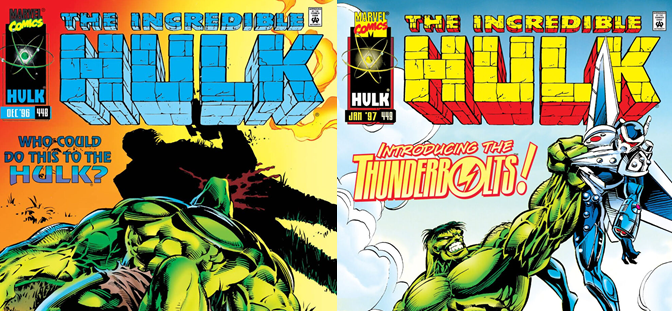
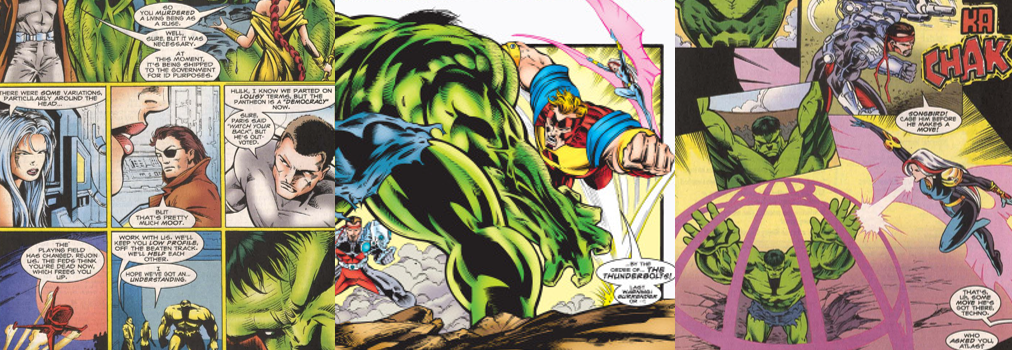
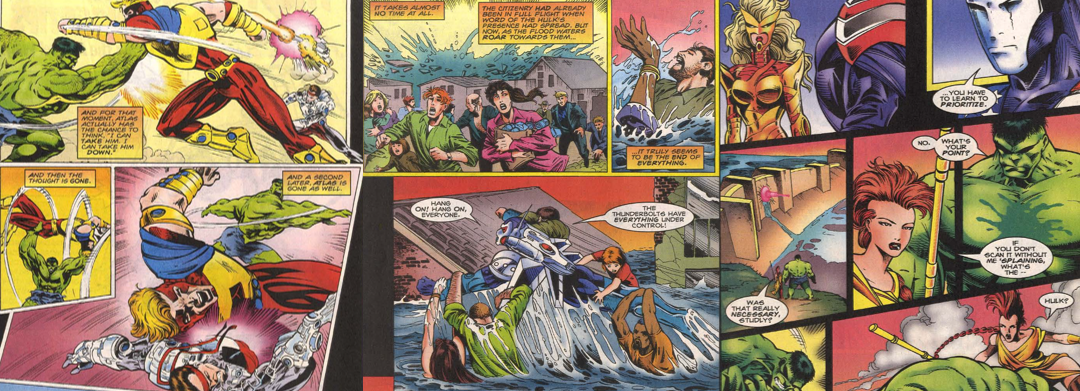
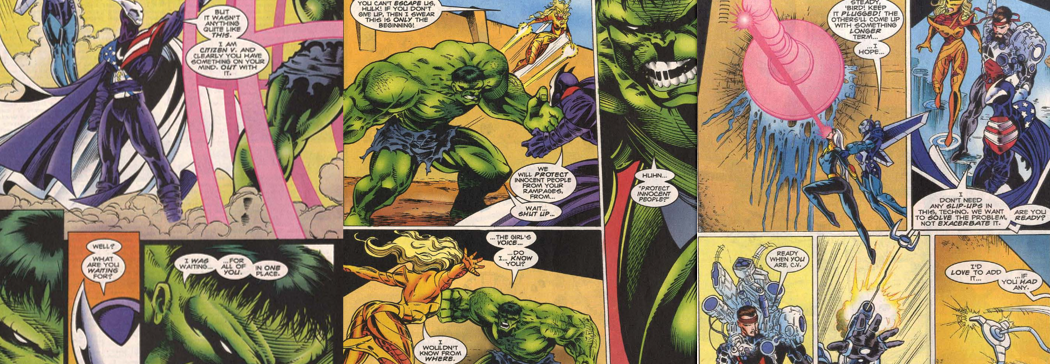


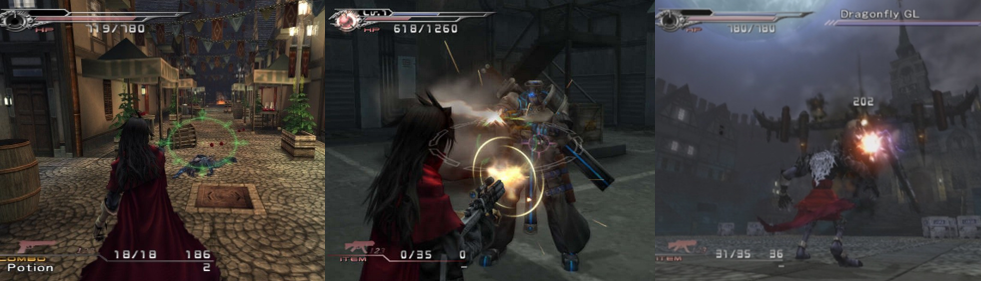
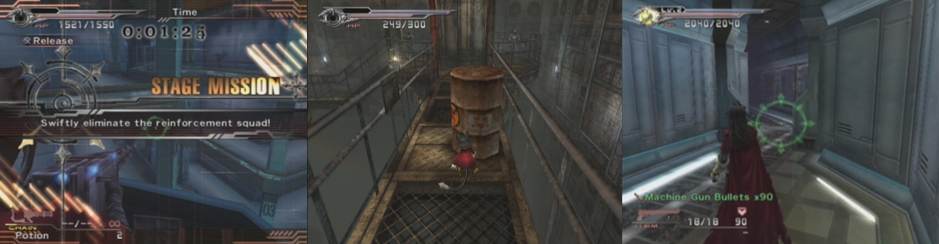
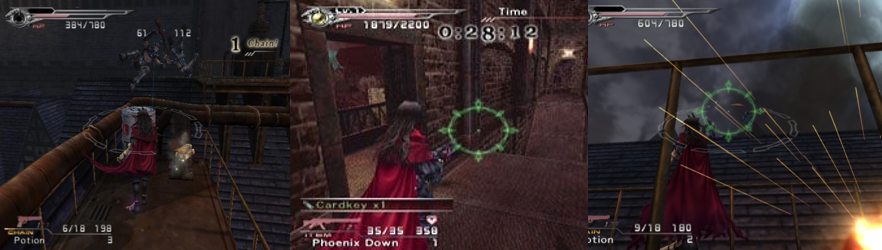
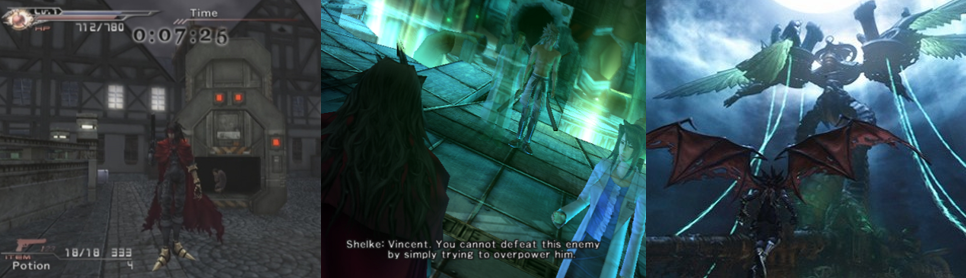
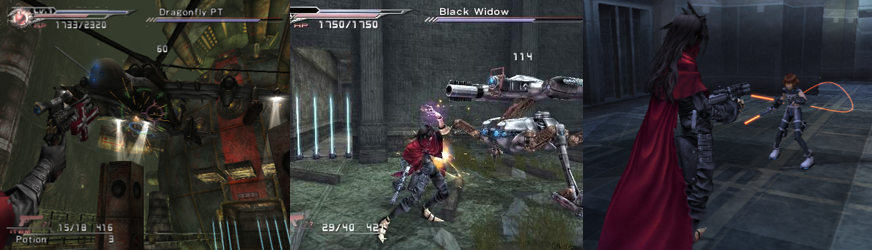
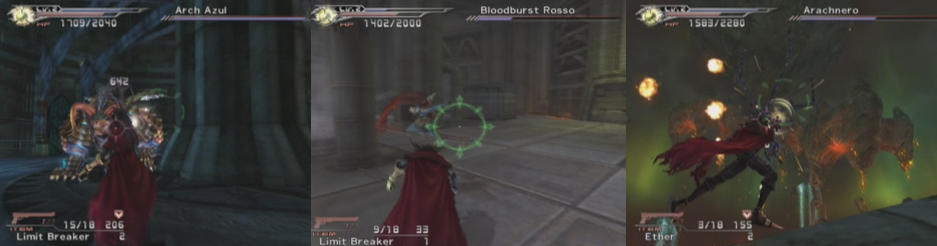
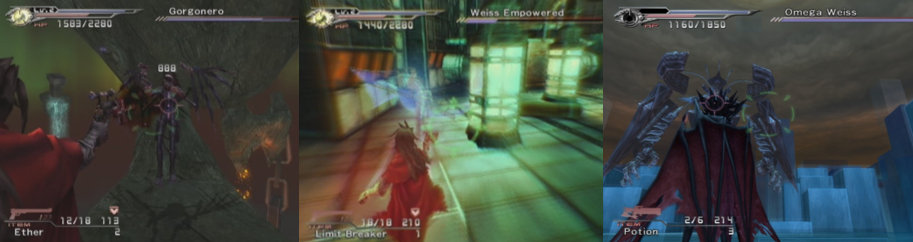

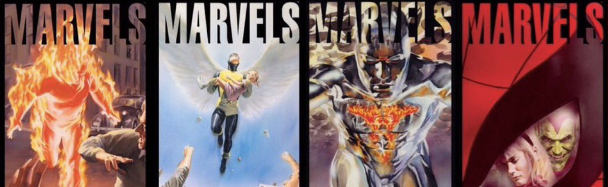
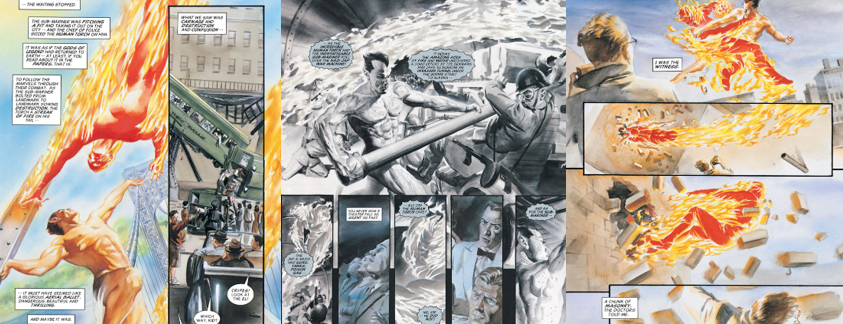
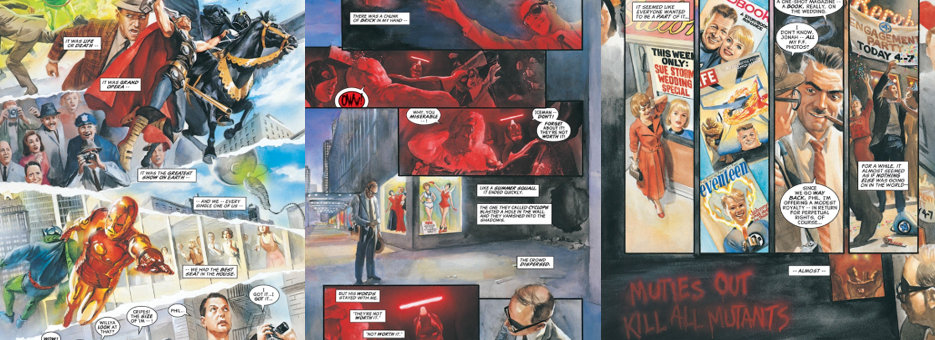
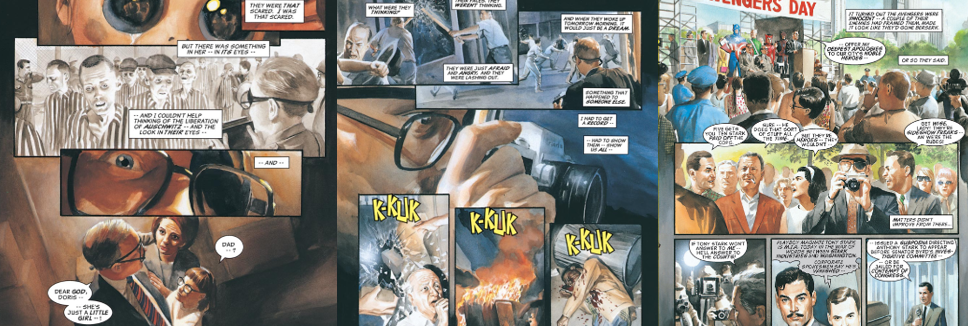
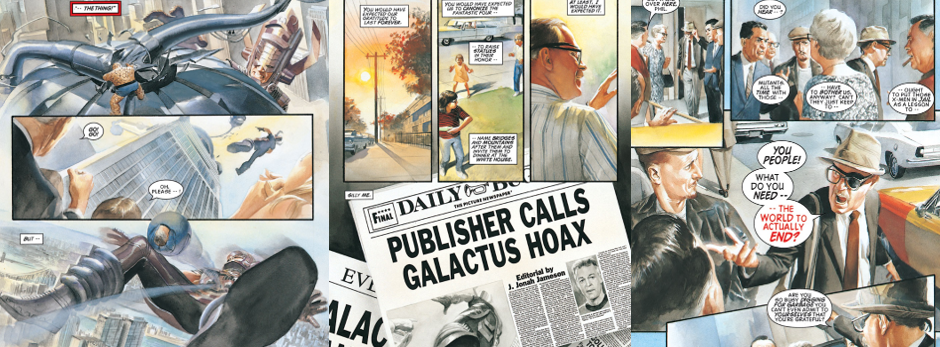
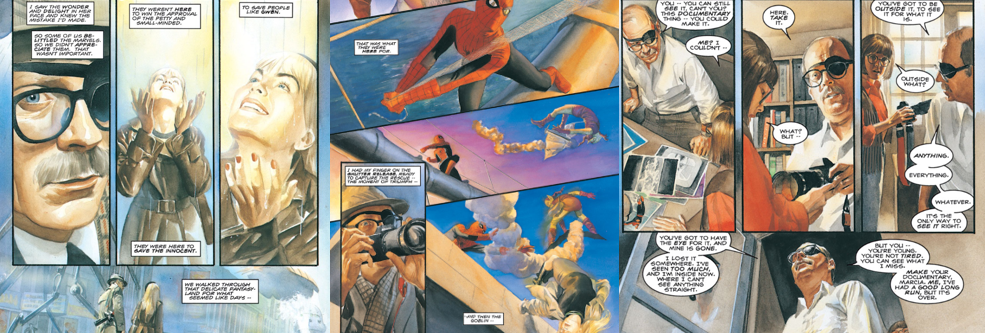
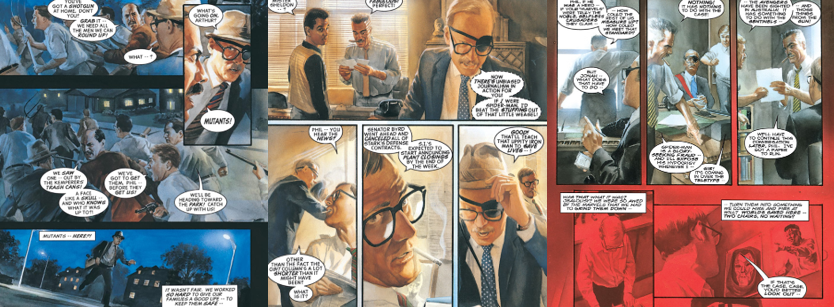
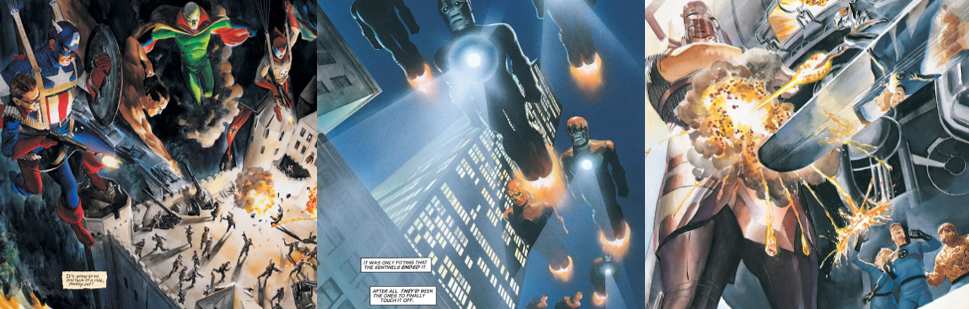



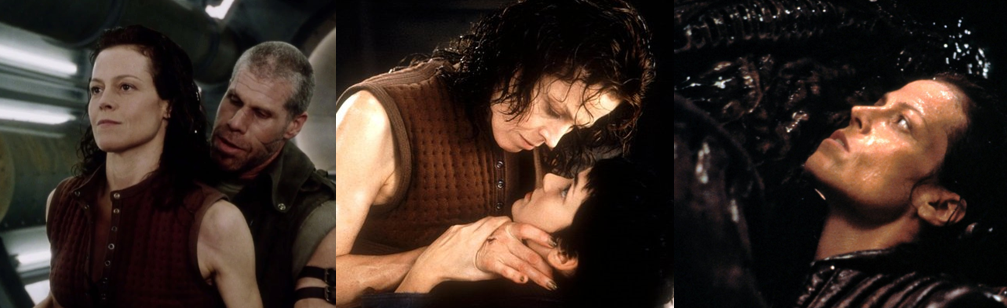
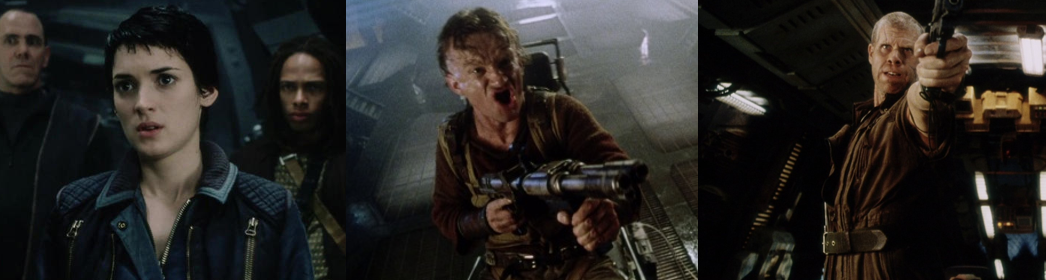
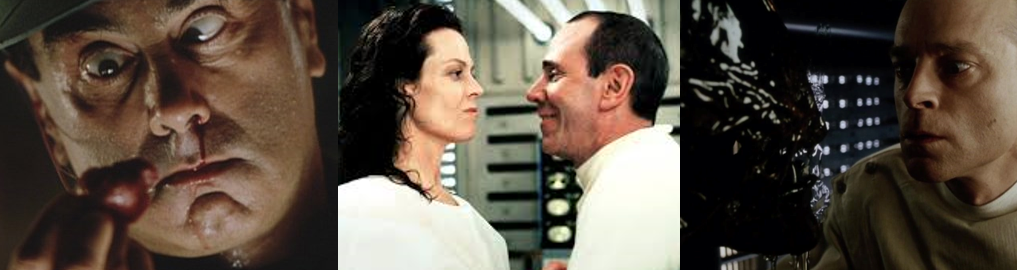
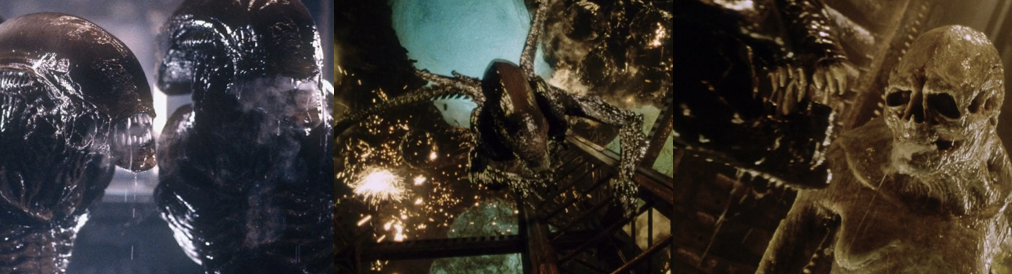
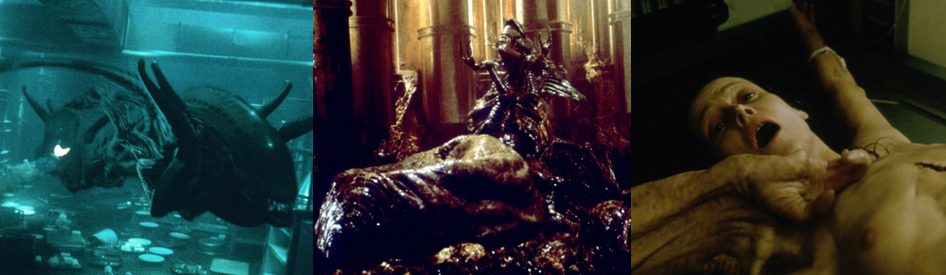
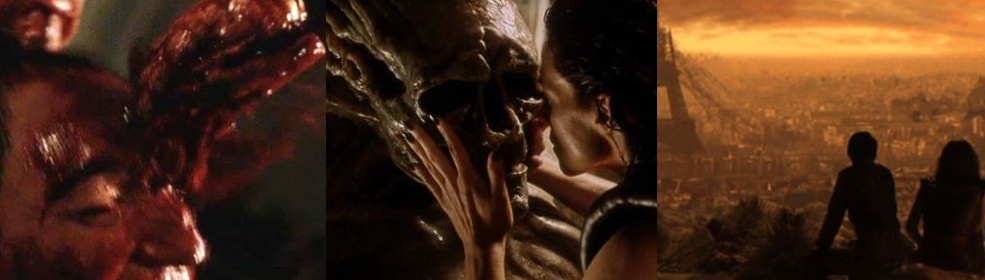







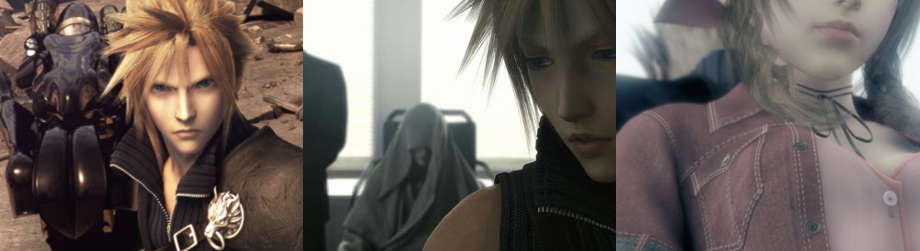
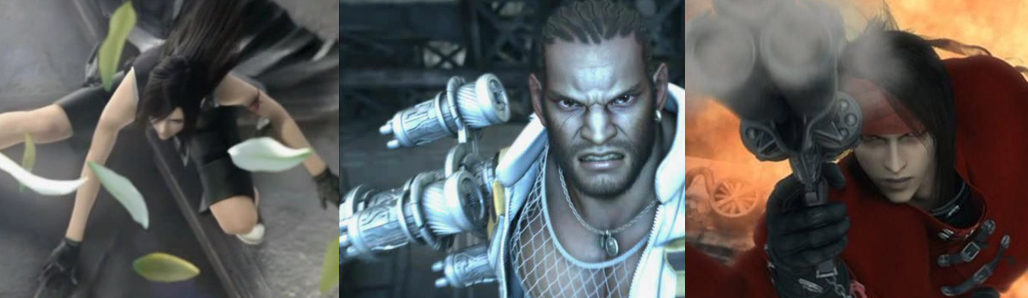

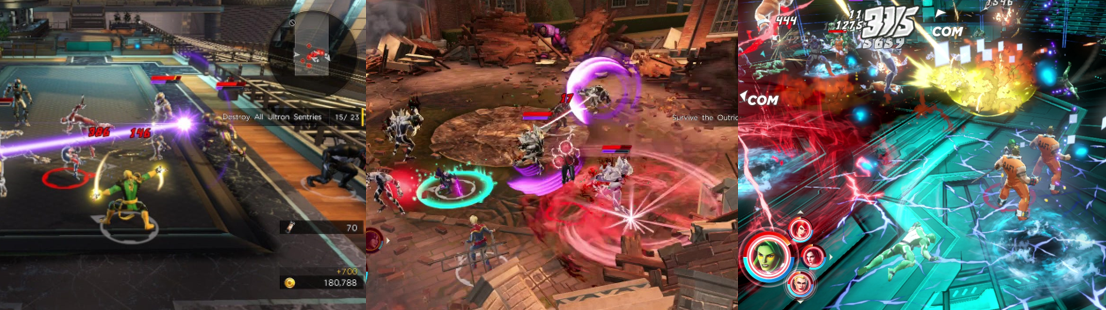
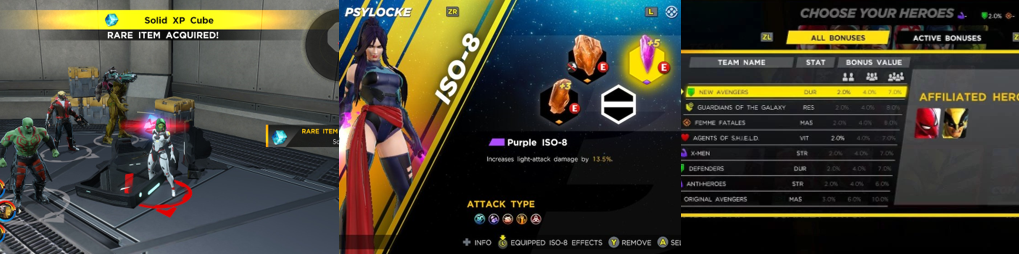

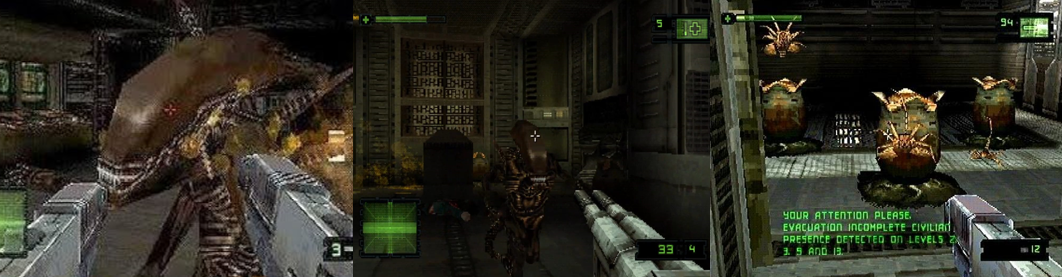
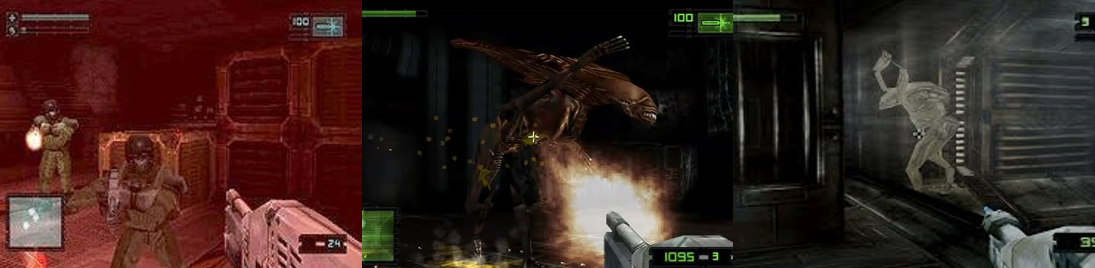
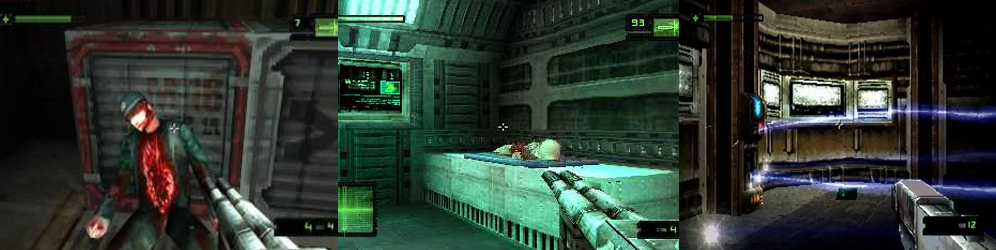





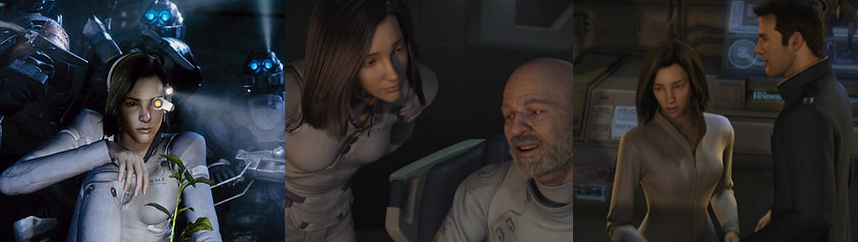



 Dr. K's Waiting Room
You must be logged in to post a comment.