Released: 1992 Developer: Virgin Games USA Also Available For: Amiga, Game Gear, and Master System
The Background: You…you’ve heard of McDonald’s, right? The highly commercialised fast food chain founded in 1940 that, despite having the best milkshakes around, is (in my opinion) subpar to Burger King. Oh, sure, the Happy Meals are fun (especially back in my day, when they had far better toys and treats) but Burger King does this fantastic cheese and bacon burger that has the crispiest bacon, the gooiest cheese, and their meat actually tastes like it’s real meat and not some mass produced, watered down piece of off cuts. Anyway, McDonald’s was such a powerhouse back in the day that they ended up being behind a handful of videogames, including the unsubtly titled M.C. Kids (Various, 1992), a shameless rip-off of Super Mario Bros. 3 (Nintendo EAD, 1990), introduced gamers to the titular “M.C. Kids” themselves, Mick and Mack, who had to travel around a magical McDonaldland collecting the restaurant’s iconic Golden Arches and helping out their now long-retired mascot, Ronald McDonald. Although released in the same year, the M.C. Kids saw a dramatic redesign in Global Gladiators, a pseudo-sequel that I actually first played on the Amiga and which carried a heavy emphasis on recycling and environmental responsibility. Both characters slimmed down, stuffed chewing gum into their mouths, armed themselves with Super Soakers goo-shooters, and, since “attitude” and being “cool” was all the range for platformers after the release of Sonic the Hedgehog(Sonic Team, 1991), were reinterpreted as hip pre-teens who cared for nothing more than comic books, McDonald’s, and…protecting the environment. Because, yeah, sure, me and my friends were all about environmental awareness…especially when we ate at McDonald’s…
The Plot: One day, while reading a Global Gladiators comic book in McDonald’s, Mick and Mack are magically transported into the comic’s pages by Ronald McDonald. Armed with goo-shooters, they journey across four worlds fighting against pollution and to protect the environment, all while collecting McDonald’s arches.
Gameplay: Global Gladiators is a 2D, sidescrolling action/platformer with strong run-and-gun elements. From the “Options” menu, you can select one of three difficulties and also choose to play as either Mick or Mack. Functionally, they are exactly the same, but palette swapped (Mack is the Caucasian kid…), so it really doesn’t matter which one you pick; the game is only made for one player as well, which is really weird considering even Michael Jackson’s Moonwalker (SEGA, 1990) had a turn-based two player mode…and that only had one playable character!
Global Gladiators has two speeds: clunky and slow and uncontrollably fast!
Anyway, despite being young kids in the prime of their lives (and probably hyped up on McDonald’s food), Mick and Mack seem to have some difficulty in deciding whether they want to be fast, loose, and slippery or slow, heavy, and clunky. They start off at a painfully slow walk that soon turns to a trot and, eventually, a full-on sprint the longer you hold the direction; the faster you go, the more momentum you carry when you jump and the more likely it is that you’re going to crash head-on into an enemy. Luckily, the game’s jump is very useful; your character leaps quite high and you can control their direction in mid-air, but the game’s fast-paced, shoot-‘em-up action is mired in the fact that the titular Gladiators either plod clumsily forward and slip off of platforms or go rocketing away straight into a bottomless pit or a bed of spikes.
Blast enemies with goo but watch out for that recoil…
Each character wields a goo-shooter, which sprays some unidentified substance that generally eliminates enemies in one hit. The goo travels in a slight arc and you can only shoot in the direction you’re facing, meaning you’ll have to jump and shoot to hit higher enemies and duck and shoot to hit lower enemies. Considering the screen immediately scrolls down when you duck, this can make it difficult to properly aim at your target but, for the most part, the goo is quite a useful tool in your limited arsenal…provided you’re not standing too close to an edge. When you fire the goo-shooter, your character is knocked ever so slightly backwards thanks to the weapon’s…recoil, I guess?…which can be enough to nudge you into a pool of water or toxic waste, and to your death. If you shoot whilst running, this same recoil will stunt your momentum, which can be useful for avoiding damage but, more often than not, simply killed my momentum when I actually wanted to sprint ahead.
The more Golden Arches you collect, the more bonus points you can score at the stage’s end.
As you battle your way through the game’s handful of levels, you’ll collect different coloured Golden Arches; if you’re thinking that you need to collect a certain number of these to beat the game’s worlds, well, you’re in luck because you don’t. You are free to jump, sprint, and blast your way to each world’s goal (literally Ronald waving a flag) without collecting any Golden Arches, but you’ll miss out on the points they provide and the bonuses you get from collecting them at the end of the stage. If you collect seventy-five Golden Arches, you get to take on a Bonus Stage (which you can also practise from the game’s “Options”), which sees you avoiding anvils and recycling materials for bonus points.
Grab a Continue Arrow or a Heart to increase your odds.
Global Gladiators only has four worlds but, like Sonic, each world has three stages, each of which is surprisingly big. There are many paths to take in each world; the higher path is usually fraught with more enemies while the lower path has pits and other instant-death traps (spikes, water, toxic waste, and bottomless pits). Continue Arrows are dotted around each world’s map, allowing you to respawn further into the stage when you die and, even better, you won’t lose the Golden Arches and points you’ve collected and the enemies you’ve destroyed stay dead; no respawning enemies here! Mick and Mack have a health meter at the bottom of the screen, which is represented as an arrow (conveniently, this arrow is also pointing right, which is the direction the goal is located). If you run into an enemy, they’ll be destroyed (which is good) but you’ll take damage (which is bad); most enemies spit or throw projectiles at you, meaning you’ll have to work around the game’s clunky controls to avoid being hit, and some stage hazards can result in instant death. Luckily, though, you can pick up a Heart to replenish your health and, like the Continue Arrows, these aren’t exactly plentiful but also aren’t exactly rare, either.
You’ll need those 1-Ups thanks to the abundance of instant-death hazards.
As with seemingly every single videogame of the time, you’re also working against a clock; when the timer reaches zero, you lose a life, but you can extend your time by picking up a Clock and, if you’re really lucky, you can grab a 1-Up or earn an extra life by accumilating a high enough score. You can also find Continue Coins that will allow you to continue playing after all of your lives are exhausted, which is easily done considering the amount of enemies and hazards packed into the game’s worlds. Mick and Mack travel to three worlds in Global Gladiators: Slime World, Mystical Forest, Toxi-Town, and Arctic World. Each is themed around some kind of environmental message; the first, obviously, deals with pollution and the cleaning up of toxic waste, the second is deforestation, the third is centred around industrialisation and industrial pollution (kind of ironic given that McDonald’s restaurants wouldn’t be the powerhouse they are without industry…), and the fourth is, I guess, commenting on global warming? Honestly, it kind of falls apart the further you get away from Slime World, where you’ll battle slimy monsters and even destroy polluting machines; you might think these machines are crucial to clearing the world’s stages but they’re not and similar mechanisms don’t seem to appear in other worlds and, by the end, it just seems like you’re blasting generic enemies with your goo while hankering for a second-rate cheeseburger.
Graphics and Sound: Global Gladiators is a visual treat; the game immediately blasts you right in the face with bright, colourful, well-animated graphics and sprites when you teleport into Slime World. While the game’s other stages aren’t quite as visually appealing in their presentation, Slime World does a great job setting the tone for this game; stages are dense, packed with colours, and different layers that can make other worlds, like Toxi-Town, a bit difficult to navigate as, not only can you take multiple paths, your way is often obstructed by foreground elements. Stages do change it up by changing season or colour palette as you progress, and there are often hidden paths or invisible blocks to jump across to reach more Golden Arches, Clocks, Hearts, or 1-Ups, which encourages exploration and experimentation.
The game is bright and colourful, if a bit cluttered at times.
Sprites are large and full of life; Mick and Mack both incessantly chew on gum when left idle and sprint and hop around with a fluidity that makes it feel as though you’re playing a cartoon or comic book. The game’s enemies are equally large and well-animated but often blend in with their surrounding; Slime World, for example, is largely covered in green slime that is the same colour as the stage’s enemies and many of Mystical Forest’s stationary creatures tend to merge with their backgrounds.
When a character describes themselves as “Awesome”, you know they’re awesome!
As soon as you shove in the cartridge, Global Gladiators blasts your ears with a loud, rap-inspired main theme that also doubles as a stage theme by the time you reach Arctic World. Luckily, the other worlds have themes that fit their aesthetic rather than being a distorted mess of synthesised sound bites and “hip” music. As you collect points and bonuses, your character will also spew out exclamations such as “Awesome!” and “Cool!” just to remind you that these environmentalists are radical and have attitude. Remember how Sonic just was cool and hip without having to literally shout about it (in the videogames, at least)? That is how you know a character is cool, not yelling it out while sporting a knock-off Super Soaker and saving the environment on behalf of McDonald’s.
Enemies and Bosses: Each of Global Gladiators’ worlds is filled with enemies unique to their theme; there’s no recurring enemies here, which is nice, and each world has slightly different obstacles to overcome. In Slime World, for example, most of the enemies are globs of toxic waste that spit projectiles at you but, in Arctic World, you’ll contend with more aerial enemies and be navigating more platforms rather than dodging projectiles. However, Global Gladiators loses some of the distinctiveness of its enemy design once you get to Mystical Forest. From then on, you’re battling the likes of sentient axes, man-eating plants, living fireballs, and (of course) bats. Luckily, these appear alongside such weird creatures as garbage-throwing anthropomorphic trashcans, log-throwing beavers, and sliding polar bears.
Global Gladiators features a grand total of…one boss…
What isn’t so great, however, is the fact that Global Gladiators features a grand total of one boss. Yep, four worlds, with three stages each, and you’ll only battle a boss at the end of Arctic World…and it’s two angry faces set into blocks of ice, one on the left-side of the screen and one on the right. Each only attacks you when it’s on screen, and even then all they do is spit bats at you or cause icicles to fall from the ceiling. The most difficult part of this boss is not falling into the instant-death spikes and actually hitting their weak spot, which is their just in-reach eyes; you also have to defeat each face in turn and you’ll know when you’ve done it because the game abruptly ends and wraps up its paper-thin story.
Power-Ups and Bonuses: Disappointingly, Global Gladiators doesn’t feature any power-ups at all. There’s no speed up, no invincibility, no way to improve your goo-shooter, and no smart bomb to clear out all onscreen enemies. Honestly, I find this very surprising considering when it was released but, when you’re playing Global Gladiators, the best you’ll get are extra lives, extra points, extra time, and the chance to play the Bonus Stage if you collect enough Golden Arches…where you can earn more points and extra lives.
Additional Features: There aren’t any. Oh, sure, you could play through the game as Mack instead of Mick, or take on one of the other difficulty settings but there’s very little incentive to do this beyond attaining a better high score and, I guess, bragging rights. You can input a few button combinations from the pause menu to gain one extra life or skip the stage you’re on, but I wasn’t able to access the supposed cheat menu so I can’t say if there’s more to be gained from blasting through Global Gladiators with cheats enabled.
The Summary: Global Gladiators is quite a cumbersome little title; the controls are very stiff and awkward but, once you get used to them and the way the game handles its momentum and physics, it’s a lot of fun. The game is gorgeous to look at, well animated, full of life and vigour, and has a very catchy and upbeat soundtrack but it can’t be denied that therearebetter colourful run-and-gun platformers from that time available. It’s easily the best of the McDonald’s-branded videogames, though, thanks to its more action-orientated approach; perhaps if it were longer, had more bosses, and allowed (at least) a turn-based two-player mode it would have been better but, as it is, it’s a decent enough way to waste an hour or two and nothing more.
My Rating:
⭐⭐
Rating: 2 out of 5.
Could Be Better
Did you ever play Global Gladiators? Which of the two titular characters was your favourite? Where do you rate it in the surprisingly long history of McDonald’s videogames? When you visit McDonald’s, what do you tend to order? Do you also prefer Burger King? What is your favourite Mega Drive title? No matter what, drop a comment below.
Call me crazy, but I have a real fondness for the character of Robin. It really irks me when people (especially movie directors) rag on Batman’s colourful sidekick; debuting in 1940, about a year after Batman’s momentous first appearance, Robin has been an essential staple of Batman’s world for over eighty years so to suggest that he’s somehow “unsuitable” is, in my opinion, laughable. Over the years, numerous individuals have taken up the red tunic and green tights, some with more success than others. Yet, the iconic imagery evoked by the term “Batman and Robin” cannot be denied and, when talking about Robin, one of the first questions anyone will ask is: Who was the best Robin? So, with that in mind, I figured I’d do my own ranking and shine a bit of spotlight on this under-rated and criminally under-represented (in movies, at least) character.
8 Elseworlds Robins
Over the years, there have been many different interpretations of Batman’s kid sidekick in DC’s Elseworlds titles and in out of continuity stories that have since been rendered non-canon. Perhaps two of the most famous are the Dick Grayson of Earth-Two, who never grew out of the role and instead continued to fight crime in a garish Robin outfit into adulthood, and the “Toy Wonder”, a little robotic Robin who assisted the mysterious Batman of the DC One Million (Morrison, et al, 1998) crossover. Yet, we’ve also seen Batman’s faithful butler, Alfred Pennyworth, take on the Robin codename in Batman: Dark Allegiances (Chaykin, et al, 1996), Bruce Wayne’s son assume the role in the Superman & Batman: Generations (Byrne, et al, 1989 to 2004) series, an ape equivalent in Batman: Dark Knight Dynasty (Barr, et al, 1997), and even a story in 1955 that had a young Bruce Wayne take on the mantle during his early days of trying to learn the skills that he would eventually hone as Batman. I’m obviously lumping all of these kinds of interpretations together as, while DC may revisit and bungle the Multiverse concept more often than they have hot dinners, none of these versions of Robin have ever managed to get a footing in true DC canon and are generally regarded as being outside of mainstream continuity.
7 Carrie Kelley
While you could make an argument that Carrie doesn’t deserve her own entry considering her introduction and most famous appearances have been in Frank Miller’s (thankfully) out of continuity Dark Knight (1986 to 2017) stories, I’d say she deserves to get her own entry on any Robin ranking simply for being the first, full-time female iteration of the character. Yet, I can’t rank Carrie much higher than this because of a few reasons: one is my obvious dislike for Miller’s Dark Knight works but, that aside, Carrie’s tenure as Robin is extremely brief. After being saved by Batman, Carrie is inspired to buy a Robin costume and fight petty thugs with a slingshot and firecrackers. Yet, despite earning Batman’s seal of approval and joining him in the resurrection of his never-ending war on crime, Carrie progressed to Catgirl and, eventually, Batwoman. She might have been a trend-setter by being the first true female Robin but it didn’t take her long to switch to a different identity and was easily one of the least prepared to assume the long-standing mantle of Batman’s partner.
6 We Are Robin
After Batman was believed to be dead at the conclusion of the “Endgame” (Snyder, et al, 2014 to 2015) storyline, a whole bunch of Gotham City’s youthful decided to take on the mantle of Robin to keep the streets safe in the Dark Knight’s absence. I actually really like the concept of teenagers of all shapes, sizes, backgrounds, and abilities taking to the streets as a vigilante force and feel this concept could have real legs in a live-action interpretation of Robin. Yet, this group is most notable for introducing Duke Thomas to the DC Universe, a character who would go on to break away from the Robin moniker and become the Signal. Unfortunately, neither Duke nor his gang of Robins can rank much higher as DC seems to have forgotten about them all in recent years; Duke eventually developed metahuman abilities and seems to have fallen out of prominence as Batman’s partner and his fellow Robins have fallen by the wayside as DC prefers to focus on the Bat Family of characters rather than this sub-team.
5 Stephanie Brown
Daughter of a Z-list villain and Riddler knock-off, the Cluemaster, Stephanie Brown originally fought crime as the Spoiler to foil her father’s plots. Eventually, she became associated with the Bat Family when she started dating Tim Drake, though Batman (famous for opposing vigilantes not approved by him) openly disproved of her vigilante career. Yet, Batman turned to Steph and offered her the mantle of Robin after Tim was forced to retire from the role by his father. Lacking the experience and ability of previous Robins, Steph struggled in the role and, eventually, unwittingly initiated a gang war in an attempt to earn Batman’s respect, an action that led to her being tortured by Black Mask and eventually dying from her wounds.
Steph is fine as Spoiler but she was a great Batgirl.
It later transpired that her death was faked and Steph returned to active duty as Batgirl, for a time, a role that reflected her growth and maturity as a character…until DC made the inexplicable decision to reset continuity, force Barbara Gordon back into the Bat tights, and relegate Steph back to being Spoiler. Steph’s time as Robin may have been brief but, man, did she look good in the suit and her exuberance and enthusiasm could have made for a return to the 1960’s depiction of Robin as this hyperactive, fast-talking bundle of energy. Unfortunately, Steph became Robin during one of the darkest, grittiest, and grimmest times in DC Comics and, for the longest time, her death tainted many a Bat character.
4 Jason Todd
Initially portrayed as a near-identical copy of Dick Grayson, Jason Todd was eventually retconned as being a wise-talking kid from the streets who stole the tyres off the Batmobile and was a disobedient, arrogant, angry little kid who was constantly at odds with Batman during his tenure as Robin. This isn’t necessarily the case but it is the story DC likes to tell these days; flashbacks will generally always show Jason being disobedient, violent, and moody rather than being as accomplished a Robin as Dick was. Nevertheless, Jason can’t take a top three spot as he’s most famous for being beaten with a crowbar and then blown up by the Joker.
Red Hood eventually became a full-fledged Bat buddy.
Indeed, Jason was far more popular in death, a memorial in the Batcave, and a reminder of Bruce’s greatest failure in his career as Batman, and after his return to life under the guise of the gun-toting vigilante, Red Hood. Red Hood has been everything from a sadistic antagonist to a begrudging anti-hero but is, generally, now regarded as the black sheep of the Bat Family but one who is nevertheless an essential ally of Batman’s; he even wears the Bat logo on his chest these days though, if you ask me, he should have been Hush all along.
3 Dick Grayson
For many, Dick is the quintessential Robin; he was the first to take on the mantle, after all, and whenever you talk about Robin or see him in other media (cartoon, television shows, movies, and the like), Robin is pretty much always shown as being the alias of Dick Grayson. Yet, while Dick pioneered the role and excelled in it in every way, unlike other characters who have taken on the Robin identity, Dick successfully managed to grow out of the role and assume the identity of Nightwing. As Nightwing, Dick led the Teen Titans and defended the nearby city of Blüdhaven and, while he’s dabbled with other roles since then (including Agent 37 of Spyral and becoming Batman for an all-too-brief period), he’s far more associated with the role of Nightwing than Robin these days.
Nightwing forms the basis of Grayson’s growth as a character.
Even Dick himself has gone on to praise subsequent Robins for being more suitable to the role than he is and, having been Nightwing pretty consistently for over thirty years now, Dick has largely separated himself from being Batman’s “sidekick”. The fantastic Titans (2018 to present) show went in-depth into Dick Grayson’s (Brenton Thwaites) journey from Robin to Nightwing and even the diabolical Batman & Robin(Schumacher, 1997), has Dick Grayson/Robin (Chris O’Donnell) don an outfit that is visually very similar to Nightwing’s as part of his desire to establish his crimefighting career out of Batman’s (George Clooney) shadow.
2 Damian Wayne
The illegitimate son of Bruce Wayne and Talia al Ghul, daughter of the functionally immortal Ra’s al Ghul, Damian Wayne was initially considered to be a character that existed outside of mainstream DC continuity until he was officially made a part of DC canon in Batman and Son (Morrison, et al, 2006).
Damian was a massive jerk for quite a while.
Trained from birth by the League of Assassins, Damian was initially portrayed as a bratty, violent young boy who was arrogant, rude, disrespectful, and had no compunction about killing his opponents. He believed that, as Batman’s true son, the role of Robin was rightfully his and nearly killed Tim Drake just to prove it. Eventually, though, Damian softened and earned his place in the Bat Family; after Bruce Wayne appeared to die in the awful Batman R.I.P. (ibid, 2008), Dick Grayson briefly operated as Batman and took Damian as his Robin. While this initially created an interesting reversal of the Batman and Robin dynamic (with Dick being a more light-hearted Batman and Damian as a grim and stoic Robin), Damian has since excelled in the role, having joined the Teen Titans, returned from the dead, and forged friendships with both John Kent/Superboy and others in the Bat Family.
1 Tim Drake
Damian may very well be on the path to being the most accomplished of all the Robins but he’s still relatively new to the role. His fighting proficiency and augmented knowledge and intelligence make him a formidable opponent but it seems as though Damian’s destiny is to one day break away from Batman’s shadow and either become Batman himself or forge a new identity. Therefore, while he has since gone on to assume the role of Red Robin and…Drake…Tim Drake is still the definitive Robin for me. Introduced some time after Jason’s death, when Batman was in a violent downward spiral, Tim wanted nothing more than to reunite Dick and Bruce as Batman and Robin and wound up assuming the mantle for himself. A keen detective and computer whiz, Tim brought something new to the role; for one thing, he was the first to ditch the short-shorts and pixie boots and wear a functional, respectable Robin costume and, for another, he was far more grounded and relatable than other Robins.
Tim had a lengthy career as Red Robin.
Although he never aspired to be anything other than Robin, Tim did briefly assume the mantle of Batman after Batman R.I.P. and has been shown, on multiple occasions, to eventually become a violent Batman in the future. However, Tim is probably most well-known for having taken up the identity of Red Robin; while I find the “Red” portion of this identity redundant and wish he had, like Dick, forged an entirely separate code-name, it showed that Tim still very much considered himself Robin first and foremost (except for that weird period when he inexplicably took the identity of “Drake”). Tim was also the first Robin to get his own ongoing comic book series and that he is, for all intents and purposes, probably the most successful of the full-time Robins at really making the identity his own as Batman’s sidekick, a solo hero, or as part of the Teen Titans and Young Justice.
What are your thoughts on Robin? Do you feel he’s too bright and cheerful for the normally grim and gritty Batman or is he an essential part of the Batman mythos? Who was your favourite Robin? Let me know your thoughts in the comments.
Released: August 1996 Developer: Probe Entertainment Also Available For: PC and SEGA Saturn
The Background: In 1996, we would be some eleven years or so away from a fourth entry in the action-packed Die Hard (Various, 1988 to 2013) film series. The third movie, Die Hard with a Vengeance (McTiernan, 1995) had just dropped the previous year so the only way fans of John McClane (Bruce Willis) were going to get more Die Hard action was to turn to videogames. Developed by Probe Entertainment, Die Hard Trilogy utilised three distinct, different gameplay styles to recreate a slightly altered version of the first three (and, at the time, only) movies in the increasingly over-the-top franchise.
The Plot: Terrorists take over the Nakatomi Plaza and McClane must work his way up the tower, freeing hostages along the way; another group of terrorists then take control of Dulles Airport and McClane must once again save the day; finally, McClane must race through New York City defusing bombs placed at key points by, you guessed it, a terrorist.
Gameplay: Die Hard Trilogy plays differently depending on which of the game’s scenarios you tackle; each of the three movies has a different gameplay style and, thus, a different perspective and different gameplay mechanics, camera perspectives, and controls. When playing through the events of Die Hard(ibid, 1988), players guide McClane through the Nakatomi Plaza from a third-person perspective in an arcade-style action shooter. Being a third-person shooter, the player can run, jump, dodge, and shoot at terrorists all while using the directional pad (D-pad) and a version of the “tank controls” made (in)famous by the PlayStation and such titles as Resident Evil (Capcom, 1996).
Try not to shoot the hostages as you play…
This means that you can’t use the analogue sticks to control McClane, making for a clunky, awkward gameplay style where McClane will walk straight backwards when reversing and, due to the game’s more restrictive gameplay style, doesn’t really have to do much in the way of aiming: you simply point McClane in the general direction of your target, shoot, and will probably blow them away. McClane starts Die Hard with no shoes (as in the movie, though this doesn’t factor into the game) and his trusty Beretta, though he can acquire other weapons (such as a shotgun and machine gun) from weapons crates or downed terrorists. His health is measured by a police badge; when taking damage, the badge will deplete and, if completely depleted, McClane will die and the game will be over.
Race to the exit before the bomb goes off!
McClane journeys through nineteen maze-like levels of the Nakatomi Plaza (though it feels never-ending), shooting terrorists and rescuing hostages on each floor. Once a set number of terrorists have been shot, some more will spawn in from the elevators but, once they’re all cleared out, McClane is given about thirty seconds to reach an exit before the Plaza is destroyed.
Speed the hostages away to safety.
You’ll also travel up to the rooftop for a bonus level where a whole slew of hostages will try to escape via helicopter; you’ll have to take out the terrorists scattered around here and, again, race for the exit before the bomb goes off to score some bonus points. This last minute time limit is probably the most frustrating part of the Die Hard section of the game; well, that and trying to navigate through the labyrinthine floors of the Plaza using the game’s rubbish mini map. Sure, you can zoom in and out but, when you’re trying to race to the exit, it’s almost useless at pinpointing exactly where you’re supposed to go.
Terrorists have overtaken Dulles Airport and only McClane can stop them!
The game shifts to a first-person, on-rails shooter to retell the events of Die Hard 2: Die Harder (Harlin, 1990), similar to the likes of Time Crisis (Namco, 1995). Using the D-pad, you’ll manoeuvre a crosshair around a variety of maps, ranging from the car park and foyer of Dulles Airport, to the maze-like underground passage beneath the airport, to the runway and even into the skies above the airport to blast away at terrorists with reckless abandon. McClane must, again, blast the seemingly endless supply of terrorists away while avoiding and rescuing numerous hostages. You can also blast crates and other parts of the environment to pick up health and other temporary weapons and toss grenades at the bad guys again but will only find reprieve from injury when the camera decides to place him slightly behind some scenery.
You’ll blast through all the film’s locations.
You also get to storm the church and race through the snowy landscapes on a jet-ski, as in the movie, and the on-rails gameplay mechanic is actually a lot better in its execution that the third-person style of Die Hard. Sure, it’s never easy moving a crosshair with a D-pad but the polygonal graphics are a lot less obtrusive and, even better, there’s no sudden or enforced time limit rushing you to an exit. You simply blast away at terrorists before they hit you, reload, and continue until they’re all dead.
There’s not much variety in Die Hard with a Vengeance.
For Die Hard with a Vengeance, the game switches to a race against the clock throughout the streets and subways of New York City as McClane and Zeus Carver (sadly not voiced by Samuel L. Jackson) race to reach a series of bombs placed in various locations by Simon Gruber (Jeremy Irons). There’s no shooting to do here; you simply accelerate as fast as possible, making hard turns with the L or R triggers, and using limited boosts and jumps to increase your speed. The mini map returns but, this time, it’s more like a compass and is actually useful here; even if, for some reason, you can’t follow the compass points, Zeus will yell instructions to tell you when to make turns or that time is running out. Yes, the time limit returns but, this time, it’s a constantly ticking down clock on the lower left of the screen; you can pick up time bonuses as you race through the streets but the time you have to reach each bomb is tight, to say the least.
The controls could use some polish.
As you plough your way through the streets, you’ll have to dodge other cars and traffic and civilians; as you’re racing across Central Park (in an amusing interpretation of a similar scene in the movie), you’ll also have to worry about the massive body of water in the middle of the map, which will sink your car. After every stage, you’ll race against a truck in the subway tunnels to reach a bomb; if you fail to reach the bomb in any of the stages, it will explode and obliterate the entire city (so…I guess they’re all nuclear bombs, then?) It took me a little while to get to grips with the controls of Die Hard with a Vengeance; the PlayStation seems pushed to its limits here as it’s easy to bash against the sides of buildings or get caught in between the environment, where you’ll jitter away in a glitchy mess until you finally break free. Yet, once you get the timing of your hard turns right, this was fun, frenetic action even without any gunplay.
Graphics and Sound: Die Hard is rendered in full janky-ass 3D polygons, the trademark style of 3D games around this time. As you explore the Nakatomi Plaza, objects will “pop up” out of thin air or turn see-through if you get to close to them and, rather than use a thick, obscuring fog to mask this effect, the game opts for pitch blackness, especially on the rooftop stages.
McClane is, at least, recognisable in Die Hard.
As a polygonal recreation of Willis’ character, however, McClane doesn’t look half bad; he looks exactly like Willis does in the film (though, obviously, a bit blocky), which is more than can be said for the game’s non-playable characters, who are just generic blocky figures to be shot or rescued.
The more open levels work a lot better.
Taking McClane out of the narrow hallways of the Nakatomi Plaza actually seems to improve the game’s presentation and stability; in both Die Hard 2 and Die Hard with a Vengeance, the more open environments reduce the annoying pop-up of obstacles and walls. I find this odd, as it seems like bigger environments would only exacerbate this issue but, apparently, it’s the opposite.
The environments and graphics can still be a bit janky.
It’s not all good news, though; when Die Hard 2 switches to night-time levels or the underground passageways, the distorted, jerky effects come back in full force. Similarly, while you can switch between different camera perspectives so you can drive from the inside of McClane’s car, and the game’s version of New York City is rendered in surprising stability in Die Hard with a Vengeance, the buildings jerk and move as you race through the streets and it’s easier than it should be to get clipped into the environment. Unfortunately, my copy of the game kept skipping or bugging out when playing music but, from what I heard, there’s a pretty decent, techno/rocking beat to every level. There’s also some fairly decent and amusing voice acting, particularly from the Willis sound-alike who provides McClane’s constant quips. Sure, these (like all the game’s dialogue) are limited and repetitive (and there’s “Yippee ki-yay” but no expletives) but the game does a decent job of recreating McClane’s snarky wisecracks.
Enemies and Bosses: In Die Hard, McClane guns down countless numbers of terrorists; if these are the same guys from the movie then Hans Gruber (Alan Rickman) really got to recruiting for the videogame because there are a lot of henchmen to wade through here. One thing I did like was how, sometimes, hostages will turn out to be enemies in disguise and pull a gun out on McClane, similar to Gruber.
This as close as Hans gets to appearing in Die Hard…
Speaking of Hans…well, he doesn’t really appear. Occasionally, in some levels, you’ll encounter a “Boss” who is slightly different coloured enemy, maybe with more health and a better weapon, who’ll grant an extra life upon being killed. There is one in the game’s last level, but it doesn’t look like Gruber and there’s nothing to say it actually is so that’s a bit of a downer.
Bosses aren’t really a thing in Die Hard 2.
This trend continues in Die Hard 2, where you’ll get to blast “Head Honchos” but won’t actually tackle Colonel Stuart (William Sadler) head-on. Instead, you’ll have to settle for McClane inexplicably circling Stuart’s aircraft in the game’s finale, which you’ll blast away at until it’s nothing more than a flaming mass of wreckage. Die Hard with a Vengeance, however, bucks this trend; in most levels, you’ll end up chasing after a “Bomb Car”, which will explode and destroy everything if you don’t destroy it first. These are the equivalent of the game’s boss battles until you reach the final stage of the game but, unlike the other two games, Simon Gruber will taunt McClane as he completes (or fails) each of his missions, making him a near-constant presence.
Finally, a familiar face!
Gruber also makes an appearance in the game’s final stage, in which McClane must chase after Gruber’s helicopter and use launch points to literally use his car as a weapon to take Gruber down. There’s something incredibly amusing about McClane solving every problem, from city-destroying bombs to helicopters, by simply ploughing into it head-first with a car!
Power-Ups and Bonuses: In Die Hard, you’ll rack up a score as you shoot terrorists and rescue hostage; this, along with killing a Boss, will grant McClane an extra life. You can also replenish McClane’s health with medical packs and acquire new weapons as you play, but these all have limited ammo so you’ll eventually revert back to McClane’s basic Beretta.
Grab a grenade and blow those buggers away!
Also, I dunno if it’s just me, but I couldn’t figure out how to switch between McClane’s different weapons; grabbing a new one automatically switches to it and you switch back to the Beretta once it’s spent. You can, however, also acquire secondary weapons (like grenades and smoke bombs), which you can switch between and which are vital to dispatching large groups of enemies.
The third game is lacking in power-ups compared to the first two.
In Die Hard 2, enemies and destroyed crates will yield additional weapons; as in Die Hard, these have limited ammunition but you can still pick up a machine gun, shotgun, explosive shotgun, and even a rocket launcher to blow terrorists away. In Die Hard with a Vengeance, however, the only power-up you can pick up are the boosts. These will blow your car into the air and give you a short burst of speed but aren’t as effective as I would expect from a boost. You can also pick up additional points and time and hit launch points to fly dramatically through the air at certain key points.
Additional Features: Well, I hate to say it, but there’s nothing. When you play Die Hard Trilogy, you play for a high score; it’s a very arcade experience in that way, right down to how you enter your name on the high score screen.
There’s some weird-ass cheats available in this game…
There are, however, a whole slew of cheats you can enter to each of the three games that will affect or spice up your gaming experience; these range from the usual stuff like infinite ammo and invincibility to odd stuff, like plants that scream when they’re shot and a fat mode.
The Summary: Your enjoyment of Die Hard Trilogy is somewhat dependent upon how well you get on with each of the games, and gameplay mechanics, available within it; Die Hard is a pretty uninspiring third-person action shooter but Die Hard 2 is a surprisingly well-realised on-rails shooter and Die Hard with a Vengeance is an enjoyable racer. However, while each game as positives and negatives, there have definitely been better games of each type, even on the PlayStation, but I appreciate that, back then, developers were very restricted by the limitations of the technology of the time. In the end, there’s quite a bit on offer in Die Hard Trilogy as an arcade-like experience; going into it, I expected each of the movies to be a short, maybe five to ten level game, but they just kept going on and on. This would be good but there’s not much to come back to beyond getting to gun down hundreds of terrorists whilst spewing the snarky witticisms of John McClane but there are far better options if you want to do things like that…like just watching Die Hard.
My Rating:
⭐⭐
Rating: 2 out of 5.
Could Be Better
Did you play Die Hard Trilogy back in the day, or still play it now? What do you think of it? Has it held up over time or is it just a bad example of the limitations of early-PlayStation titles? What’s your favourite Die Hard movie? Drop a comment below and share your thoughts on Die Hard.
Released: September 2019 Originally Released: February 1999 Developer: Square Enix Original Developer: Square Also Available For: Nintendo Switch, PC, PlayStation, PlayStation 3, PlayStation 4. PlayStation Portable, and PlayStation Vita
The Background: So, everyone knows about Final Fantasy VII (Square, 1997); it’s one of the definitive role-playing games (RPGs) and one of, if not the, most popular titles in he Final Fantasy series, selling over twelve million copies worldwide and making its way onto many “top ten” lists over the years. But what about the inevitable sequel? Where does Final Fantasy VIII land in the grand scheme of things? Developed during the localisation of its predecessor, Final Fantasy VIII marked the first time that the Japanese and American teams collaborated on a Final Fantasy title. Like pretty much every single numbered Final Fantasy title, Final Fantasy VIII wasn’t a sequel to Final Fantasy VII but, rather, an entirely new title, set in a new world, with new characters and events taking place, which may have been jarring for those whose only experience with the franchise was Final Fantasy VII. I first played Final Fantasy VIII on the PlayStation 3, immediately after finishing Final Fantasy VII on the same system, and found it to be a dramatic step up in terms of graphics, gameplay mechanics, and features. Where Final Fantasy VII felt like Square where just dipping their toes into the world of 3D and polygonal graphics, Final Fantasy VIII featured far more detailed character models, environments, and graphics overall, resembling titles like Resident Evil 2 (Capcom, 19998) and Parasite Eve (Square, 1999). It also helps that I really like the design and characterisation of the game’s protagonist, the stoic loner Squall Leonhart, and enjoy the game’s more science-fiction-inspired aesthetic. Yet, Final Fantasy VIII is often the subjectofcriticism, whether due to the dramatic visual and gameplay alterations I takes or simply because of how influential Final Fantasy VII was, but is this a fair assessment of the game or is there more on offer in this under-rated classic?
The Plot: When the time-travelling sorceress Ultimecia plots to possess the gorgeous Rinoa Heartilly in a quest to “compress time, Squall Leonhart must team up with his fellow SeeD graduates and reconcile his fractured memories and feelings for Rinoa, all while butting heads with his rival, Seifer Almasy.
Gameplay: Essentially, Final Fantasy VIII plays very similar to its predecessor and other Final Fantasy titles from this time, being a turn-based RPG with a large overworld populated by innumerable non-playable characters (NPCs) and littered with a varied of monsters to battle to gain experience points (EXP). Players take on the role of Squall, who one of only two party members you can rename this time around, and journey across the world map battling enemies, recruiting Guardian Forces (GFs) to his cause, and engaging in a number of side quests and mini games as he goes. When you’re not in one of the game’s towns, many of which incorporate a lot of futuristic technology, you’re travelling across the world map and every other step puts you at risk of being sucked into a random battle encounter. Like Final Fantasy VII, Final Fantasy VIII uses an Active-Time Battle (ATB) system that, unless switched off in the menu, means you’ll take damage from your foes while you select your move. If you choose to attack, you’ll run forwards and deliver a blow, whittling your opponents health points (HP) down until they are defeated and earning you some EXP, items, and Gil (the in-game currency).
Draw magic from enemies and either stock it for later or cast it right away.
One of the most controversial aspects of Final Fantasy VIII is the way it complex way it handles magic and Summons; the only way to learn new magic and to restore your magic points (MP) outside of resting at an inn or with items is to use the games “Draw” system. Selecting “Draw” (or visiting a “Draw” point) will have your character literally draw magic and MP from their foe and you’ll be given the choice to either cast that magic or stock it for later use. This effectively means that you can never run out of MP as you can keep sucking it out of your enemies, meaning that you’re never running around looking for an inn or shop to buy Ethers and Elixirs to restore your MP. Personally, I love this system because it eliminates this stress; you can have different characters “Draw” and specialise in different magic, effectively allowing you to customise your party as you see fit. Final Fantasy VIII calls its Summons “Guardian Forces” (or “GFs”); you can use “Draw” to acquire new GFs but, for the most part, you’ll have to battle and defeat GFs in order to recruit them and Squall’s first mission is to do just that with Final Fantasy mainstay, Ifrit. Once you have a GF, you have to “Junction” it to a character; this allows you to summon the GF in battle to deal powerful attacks, buff your character’s stats, and gives you access to other magic and benefits.
Use the “Junction” mechanic to increase your stats and abilities in battle.
Effectively, this system is very similar to the Materia system used in Final Fantasy VII; each GF allows you to increase your character’s stats and inflict or resist certain status effects and they even level-up, unlocking new attacks, attributes, and increasing in power, just like Materia. This is pretty much a mandatory mechanic in Final Fantasy VIII since can’t even use your magic or even items without Junctioning a GF as these are commands you can only assign once a GF has been Junctioned to a character. Furthermore, if you want to gain buffs to your stats (like increased HP, strength, speed, or whatever), you need to win battles to earn AP so that your GFs can learn these techniques; similarly, if you want to gain HP whilst walking, reduce (or eliminate) random battles, or even haggle with the game’s various shops to receive a discount, you’ll need that AP. Some of these techniques take less AP than others but, to access the best abilities, you’ll need to earn a lot of AP and, once you have them, you’ll be switching on the fly between different commands depending on what you’re doing. Now, don’t get me wrong, all these gameplay mechanics are very confusing; it doesn’t help that, for the first hour or so of the game, you’re constantly lectured about each new mechanic, how to use it, what it means, and the best way to get the most out of the “Junction” system. In comparison, it seemed like information abut Materia and levelling up and Summons was spread out much more effectively in Final Fantasy VII but, despite that, it’s not that difficult to wrap your head around the “Junction” system…as long as you think of it as being an altered form of Materia and the “Draw” mechanic means you never have to worry about running out of MP, so don’t stress over nothing.
Unleash your Limit Break to deal massive damage.
The “Limit Break” system returns, albeit in a slightly altered form; rather than triggering as your party takes damage and a meter builds up, you potentially gain access to your Limit Break when your character’s health drops low enough, making it more of a last-ditch desperation attack. Whereas the Limit Breaks in Final Fantasy VII were largely automatic, here you can choose to interact with the Limit Breaks if you wish; for example, pressing R1 at the right time as Squall attacks with his “Renzokuken” Limit Break delivers additional damage and you’ll be required to press different button combinations to perform different attacks when performing Zell Dincht’s “Duel” Limit Break. You can perform additional, more powerful blows and flourishes when performing a Limit Break by equipping different weapons, reading documents, or acquiring certain items. Interestingly, Final Fantasy VIII features a unique twist on the random battle formula in that the enemies you encounter dynamically increase in strength and difficulty as your party levels-up. in addition, you’ll also level-up every time you time you acquire 1000 EXP points, meaning that you can, effectively become massively overpowered in the early portions of the game with very little effort at all. I prefer to play the game as I play every Final Fantasy and RPG, however, progressing the plot and grinding levels in-between towns and around new areas, meaning I never experienced any advantages or issues with this system.
A few awkward, button-mashing mini games appear during the course of the game’s story.
You can use magic or items to heal your characters or remove status effects; you also have to heal your GFs as they can also take damage from enemies. Once again, you can only save on the overworld or at specific save points; if you die, you get a game over and have to reload your last save file, so it’s recommended that you save often and heal up at inns whenever you can. You’ll also be tasked with completing a series of awkward mini games; I don’t know what it is about the 3D Final Fantasy titles and having these odd button-mashing sequences shoe-horned in but they can be pretty annoying simply because of how vague the game is about how you’re actually supposed to complete these mini games. Rather than purchasing new weapons, Final Fantasy VIII features a crafting system, of sorts; as you explore the world, you’ll find copies of Weapons Monthly magazine, which contains blueprints that detail the items and gear you’ll need to craft stronger weapons for each character. In order to obtain each character’s most powerful weapon, you’ll need to travel all over the world battling specific monsters and enemies to acquire these items; you can use your GFs abilities to steal these items or increase the odds of them appearing and, once you have them, you can visit a weapon shop to get your upgrade. It’s worth noting, however, that you don’t actually need to read the Weapons Monthly magazines to acquire these upgrades and, with the right amount of patience and a lot of grinding, you can actually acquire Squall’s ultimate weapon, the Lion Heart, on the game’s first disc.
Squall and Rinoa’s relationship forms the core of the game’s story.
As in every Final Fantasy game, narrative and characterisation are the driving force of the game’s complex story. While every main character has an arc of some kind and their own unique characteristics, at its core, Final Fantasy VIII is a love story first and foremost and a battle against a malignant time-travelling sorceress second and it is therefore Squall who undergoes to most dramatic changes as the plot unfolds. Beginning as a stoic loner, he learns to not only emote and open himself up more, but the bulk of the game’s main theme is centred around his growing affection for Rinoa and his acceptance of his love for her and the friendships he has formed. Unfortunately, though, the other playable characters don’t get quite the same focus; none of them have sub-plots or explicit character arcs and, thanks to the game’s emphasis on more realistic character models, the six main playable characters lack a lot of the same aesthetic appeal as those seen in Final Fantasy VII; Squall has a bad-ass look and Zell resembles an anime character but, even though characters like Quistis Trepe have recognisable traits (she struggles with her failure as a teacher), they don’t make an impact in the same way as the likes of Barret Wallace or Vincent Valentine and I struggled to settle on my preferred team. I ended up going with Squall, Irvine, and Rinoa but there were aspects about this line-up that continued to irk me; Irvine’s Limit Break, for example, requires you to buy or craft ammo and Rinoa’s “Angel Wing” Limit Break is useful but only if your swap around her magic and can deal with losing control of her once you select it. Final Fantasy VIII expands upon its world, characters, and narrative by including an entire sub-plot with three additional, playable characters. At various points throughout the game, your party will mysteriously fall asleep and assume to roles of Laguna Loire, Kiros Seagill, and Ward Zabac. These older, more seasoned characters are a battle-tested team and contrast with Squall and his relatively young and untested group. Through their side story, which takes place about seventeen years in the past, we learn about a lot of the events that factor into Squall’s characterisation and the way this world works.
Laguna’s side story fleshes out the game’s world and lore.
The SeeDs are mercenaries trained to perform a wide variety of jobs but, first and foremost, their goal is to assassinate sorceresses before they can become too powerful; this is directly related to the main plot of the game, as the dark sorceress Ultimecia projects her consciousness and manipulates events….completely unaware that she is actually creating her own undoing. Laguna’s side plot serves to further drive the game’s main themes of love and loss; though initially dismissive of Laguna for his foibles and the concept of friendship and relying on others, Squall comes to realise that he is part of a team and a family and progresses from only expressing himself trough his inner monologue to actually opening up to his friends and team mates. Unlike Final Fantasy VII, which gave each of its characters a clear arc and developed them as the story progressed, Final Fantasy VIII pretty much hedges all of its bets on you relating to, and growing to love, Squall, Rinoa, and their relationship and, if you don’t really connect with these characters or their love story, you might struggle to connect with Final Fantasy VIII. Additionally, Final Fantasy VIII is a very complex experience, even for a Final Fantasy title; it’s a slow, atmospheric experience; you can’t skip the cutscenes but, thankfully, you can fast travel in the towns and around the map this time. Luckily, though, the game’s map is a dramatic improvement on Final Fantasy VII’s; areas are actually named and highlighted, making it much easier to know where you have to go…assuming that you paid attention to the dialogue boxes and cutscenes. If you didn’t, you’ll probably have to consult a guide or risk wandering around in circles desperately trying to figure out who to talk to or where to go. As always, I recommend consulting a guide if you need to, over-levelling your party, saving as often as possible, and doing everything you can to simplify the game’s complex mechanics as best you can. It seems daunting but it is possible and, once you have your party set up as you like, all you have to worry about it surviving battles and bosses rather than trying to wrap your head around the intricacies of the “Junction” system.
Graphics and Sound: There’s no denying that Final Fantasy VIII is a massive step up on it predecessor both in terms of its in-game graphics and cutscenes; rather than replicating Final Fantasy VII’s chibi, anime-style aesthetic, Final Fantasy VIII renders its characters as realistically as possible and the character models remain on model instead of there being several wildly different character models across the overworld, battle screens, and cutscenes.
In-game cutscenes, models, and backgrounds are vastly improved.
This means that Final Fantasy VIII more closely resembles other 3D, polygonal videogames of the time, like the two Resident Evil (Capcom, 1996) sequels rather than a mish-mash of pre-redendered backgrounds and chubby 3D polygons. While I actually really liked Final Fantasy VII’s artistic style and blend of anime cute and bio-organic sci-fi, and it is annoying that Squall pulls his gunblade out of thin air in cutscenes, Final Fantasy VIII is a clear graphical improvement over its predecessor in every way. You’ll travel to many diverse environments, from caves to towns to ornately-decorated castles and sprawling towns, all of which are an impressive blend of natural landscape, a marriage of steampunk and 1950s technology and aesthetics, and elaborate, futuristic sci-fit. Even the battle screen is cleaner, forgoing the traditional battle dialogue box and incorporating more dynamic camera angles and detailed backgrounds and the Xbox One remaster only emphasises this further by applying a crisp, fresh coat of paint to the original.
CG cutscenes have dramatically increased in number and quality.
Final Fantasy VIII also features a lot more CG cutscenes and, honestly, every one of these is leaps and bounds beyond its predecessor; the action and camera and character movements is slick and fluid and, while they’re still obviously not on par with today’s graphics and cutscenes, they’re far beyond the limited and stilted cutscenes seen in Final Fantasy VII. Final Fantasy VIII also improves on the placement and use of dialogue boxes for in-game cutscenes; dialogue boxes are now much smaller and clearer and appear in various places around the screen like speech bubbles rather and being a large box that obstructs a sizeable portion of the screen. Final Fantasy VII also includes more of long-time Final Fantasy composer Nobuo Uematsu’s greatest work; while none of the game’s tracks are as iconic as “One-Wing Angel”, Final Fantasy VIII still features some fantastic tracks such as “The Man with the Machine Gun”, “The Extreme”, and the awesome “Maybe I’m A Lion”. The game forgoes traditional character themes in favour of its influential main theme ballad, “Eyes On Me”, a pop song performed by Chinese singer Faye Wong that perfectly encapsulates the game’s main themes of love and loss; “Eyes On Me” was so influential that it not only sold over 400,000 copies but it was also the first piece of videogame music to ever win “Song of the Year” at the Japan Gold Disc Awards.
Enemies and Bosses: As you explore the world of Final Fantasy VIII and resolve Squall’s complex social issues, you’ll take part in a whole bunch of random battles against enemies of all shapes and sizes. Your party will often butt heads with the military force of Galbadia, who are under the influence of Ultimecia’s magic; these battles are generally pretty easy, even when the Galbadian’s attack with magic or in larger groups, and only really become a challenge once you come up against their mechs and robots. Final Fantasy VIII is, of course, absolutely infested with monsters. These range from the dinosaur-like T-Rexaur (one of the most difficult enemies you’ll battle against in the game’s early moments), gigantic dragons, demonic shadows, poison-spewing, man-eating plants, monstrous turtles, weird-ass, floaty face…things, and even these horrific alien creatures who have overrun the game’s Airship and will continually regenerate if you don’t destroy them in coloured pairs. The majority of these monsters fall to the planet in a constant cycle based on the correct alignment of the Moon and even originate from the surface of the Moon; later in the game, you get to see this in motion which, as far as I know, is the first time a Final Fantasy game directly explained where all these weird and wacky monsters actually come from.
GFs act as the majority of the game’s boss encounters.
It took me a little while to realise that Final Fantasy VIII seems to be lacking in boss battles; most of the time, you’ll fight against a GF as a boss (or mini boss), which doesn’t really feel like a boss battle as it’s more like proving you’re worthy enough to use the GFs power. By that logic, Ifrit acts as the game’s first boss and, as you progress, you’ll come across other GFs in various areas; most of the time, like with Cerberus, you can choose not to engage with these GFs but, if you do, you’ll have to go out of your way to “Draw” the GF from a later, more challenging boss in Ultimecia’s Castle.
You’ll battle Seifer, Fujin, and Rajin a few times during the game’s story.
When you’re not fighting GFs, you’ll battle against Galbadia’s finest giant robots; the first one you face, the spider-like X-ATM092, can’t actually be defeated and, instead, must be damaged enough so you can make your escape and then either avoided or disabled long enough for you to run. Other times, you’ll butt heads with the main character’s rivals, Seifer and his buddies, Fujin and Raijin. Although Seifer eventually upgrades to becoming a penultimate mini boss as he is manipulated to act as Ultimecia’s “Knight”, you never battle all three at once, which is a bit of a missed opportunity but, essentially, they’re very similar to the battles against the Turks from Final Fantasy VII.
Ultimecia’s Castle is full of powerful superbosses.
Once you reach Ultimecia’s Castle, you’ll be stripped of your abilities and forced to take on the enemies within without your GFs and magic…that is until you defeat one of her eight superbosses. Fittingly, these creatures represent the game’s toughest challenge yet (although the Ruby Dragon can be a pain in the ass thanks to its high HP and “Breath” attack) but, by this point, you should be well levelled-up and full at ease with the game’s various mechanics and controls. Nevertheless, each of these superbosses has a unique design, character traits, and requires specific strategies; Sphinxaur takes on a second form after enough damage is done, the Red Giant can absorb a huge amount of punishment (and spouts a crazed response every time he’s attacked), and Trauma can only be spawned after solving a puzzle and is protected by smaller machines, for example.
Tiamat and Omega Weapon offer perhaps the game’s greatest challenge.
Easily the most challenging bosses in Ultimecia’s castle are Tiamat and Omega Weapon, both of which are optional battles (though Omega Weapon involves splitting into two teams, ringing a bell, and running to a specific point to trigger the battle). Like many of the superbosses in Ultimecia’s Castle, you can “Draw” GFs from these bosses if you missed them earlier in the game but you’ll be more concerned with setting up your party to endue their powerful attacks. Both of which can deal massive damage, absorb elemental attacks, and have huge amounts of HP but it is Omega Weapon that offers the greatest challenge. With HP in the millions and capable of casting both “Death” and ending your party with “Light Pillar” (which deals 9999 damage and thus results in a one-hit KO), Omega Weapon offers such a tough challenge that, upon defeat, you’ll earn a special “Proof of Omega” award so you can prove to your friends that you got past this absolute tank of a superboss.
As a SeeD, it’s your duty to destroy sorceresses.
In addition, you’ll have to face-off with a few sorceresses during a playthrough of Final Fantasy VIII; being as she prefers to possess and manipulate sorceresses from the far future, Ultimecia doesn’t actually physically appear until right at the final parts of the game meaning that, before you confront her in her ominous castle, you’ll mostly be battling the current-day sorceress, Edea, who has been possessed by Ultimecia. As her chosen “knight”, you’ll usually have to dispose of Seifer before you can properly get your hands on Edea, which can make these battles a bit tougher. Later, when the malevolent sorceress Adel literally falls from the sky, she/he/it is leeching off of Rinoa so you have to be sure to target only Adel and not use attacks that hit more than one target or else you’ll risk injuring or killing Rinoa and losing the battle.
Griever’s ability to blast away your magic and GFs is a serious threat.
Once you finally fight your way through Ultimecia’s Castle and unlock all of your abilities, your party falls victim to Ultimecia’s “Time Compression” ability and ends up stranded in the far future, where Ultimecia rules unopposed. This final battle has multiple stages, each with their own concerns; initially, you battle Ultimecia one-on-one but she randomly decides which of your three party members she wants to battle against and, during the battle, will erratically KO or remove one of your party from the battle screen. This means that, if you don’t revive your strongest party members, you could be stuck facing Ultimecia with characters you’ve chosen to ignore up until this point. Once she is defeated, Ultimecia summons the most powerful GF in the Final Fantasy VIII world, Griever, a monstrous lion-like creature inspired by Squall’s lion iconography. Griever’s threat mainly comes from its ability to completely drain your MP, blast away entire stocks of your magic, and one-shot your GFs with “Lethal Strike”. However, once defeated, Ultimecia “Junctions” herself to Griever and the two form a monstrous combined form that can do everything both previous bosses could, meaning the longer the battle lasts, the more likely it is you’re going to lose your magic stocks, GFs, or party members and also deal massive damage through your defences with “Great Attractor”.
Ultimecia’s final form shows her on the cusp of immortality!
Once you manage to defeat this monstrosity, Ultimecia will ascend to her God-like final form; rather than the resplendent grandeur of Safer∙Sephiroth. Ultimecia’s final form is a grotesque eyesore that is halfway between human, monster, and eldritch horror. In this form, she can again destroy your magic stocks, remove any positive buffs you cast on your party, one-shot your GFs, reduce your HP to one point, and cast “Apocalypse” on the party for up to 8000 points of damage. Destroying different halves of Ultimecia’s body results in her using different spells and attacks but, once she starts narrating, it means she’s all out of HP and all you have to do is keep attacking her until the battle ends and Ultimecia is finally defeated. When I first fought Ultimecia when playing Final Fantasy VIII on the PlayStation 3, I found this battle to be particularly difficult; unlike Sephiroth’s final forms, which increase in difficulty depending on your level, characters, and tactics, Ultimecia can completely ruin any strategy you have by wiping away your most powerful party members or dispelling your magic. It’s hard to revive characters if Griever wipes out your stock of “Life” and your GFs won’t be much use if Ultimecia kills them in one move, meaning you’re constantly having to think on your feet and adapt to the battle; add to that the multiple forms that you must face one after the other and you’re left with a far more challenging final boss than in the previous game.
Power-Ups and Bonuses: Just like in the Xbox One port of Final Fantasy VII, the remastered version of Final Fantasy VIII allows you to alter the game’s mechanics and difficult by pressing in the analogue sticks: press them both in and you’ll turn off the random battles, press in the left stick and you’ll increase the game’s speed by three times, while the right stick powers up your party, giving them constant access to their Limit Breaks and effectively granting them infinite HP and MP. As I only found out about these latter two options right at the end of Final Fantasy VII, I decided to activate them right from the start for the sequel, dramatically speeding up my playtime. It’s worth noting that, even with these activated, your party is still susceptible to status effects (confusion, poison, etc) and can still be killed by the likes of Omega and Ultima Weapon but, still, activating these boosters basically means you never have to worry about wasting Gil in inns or expending MP healing during battle and makes reaching level 100 an absolute breeze. Not only that, if you switch the battle style to “Wait”, you can end up completely obliterating every enemy and superboss you face by spamming your character’s Limit Breaks and ensuring that they never even get the chance to land a single hit!
A few roaming GFs may randomly appear to aid you in battle.
While you’ll gain access to most of the game’s GFs by Drawing them from certain bosses or battling them head-on in specific areas, some are only accessible by using certain items. Additionally, you can complete a side quest (made difficult thanks to the presence of the deadly Tonberry enemies) to battle Odin; upon defeat, Odin will randomly appear during any of your battles and deliver a one-shot KO to your opposition, which can be an extremely useful feature. That is until Odin tries this against Seifer and is cut cleanly in two; luckily, Gilgamesh fills very much the same role but his attacks cause a random amount of damage to your enemies, meaning he’s often more of a hindrance. Similarly, you can acquire the Phoenix Pinion after a side quest which, upon use, calls forth the Phoenix GF, which will randomly arrive to resurrect your entire party if you’re lucky.
There’s a few means of transportation on offer in Final Fantasy VIII.
As usual, you are afforded a few vehicles and means to explore Final Fantasy VIII’s expansive world; if you manage to call forth a Chocobo in one of the game’s many Chocobo forests, you can ride one of the birds across the land but you’ll lose it as soon as you dismount. In a change of pace, you can hire out a car to traverse the map but this costs you Gil and the car’s can run out of fuel. You even get to control the Balamb Garden itself for a while as it conveniently has a mobile form that allows it to float across the sea and land when you’re able to come ashore at a beach front. Eventually, you’ll gain control of the Airship, the Ragnarok, which allows you to travel pretty much anywhere but, as good and diverse as all these options are, the game’s camera when on the overworld is needlessly obtrusive and I struggled to find an angle that actually allowed me to properly see where I was going and enough of my surroundings.
Additional Features: Whereas a great deal of your time and energy was devoted to the capturing, breeding, and racing of Chocobos in Final Fantasy VII, Final Fantasy VIII instead features the card game Triple Triad as its primary mini game. While you can acquire and ride Chocobos to reach new areas and speed up your traversal across the world map, Triple Triad is a feature in pretty much every town of the game and involves most of the game’s NPCs. The game takes place on a 3x3x3 grid, with each player having at least five cards; ten cards are played, each with a different number and element associated with it, and the goal is to capture all of the opponent’s cards. At least, that’s how I understand it; I’m not very good at card games at the best of times and rushing through the dense, seemingly never-ending tutorial, so I never really had much interest in Triple Triad.
Triple Triad is everywhere but I couldn’t really get on with it.
You can acquire new cards after defeating enemies or using the GF Quezacotl’s “Card” ability to turn certain enemies into cards but, outside of acquiring every card and a few Achievements, I never saw any real need to get too involved in Triple Triad and played through Final Fantasy VIII perfectly fine without playing more than one game (though, if you want to earn every Achievement, you’ll have to play at least one game and complete a whole side quest involving challenging NPCs to a game of cards so…good luck with that). While it’s not a requirement to play Triple Triad to access the best weapons and items, it is one of two time-consuming options available to you; the other is to battle specific enemies in the hopes that they drop the item you require or use Quezacotl’s “Card” ability to transform the monster into a card and then use the “Card Mod” ability to transform the card into that item. This can be a bit of a hassle as these enemies are rare, meaning you’ll have to wade through a great deal of random battles to track them down and, to use the “Card” ability, you need to deal enough damage to the monster first, which can be difficult when you’re at a higher level. Once you acquire the Ragnarok, travel across the overworld is much easier than before, allowing you to better access some difficult-to-reach areas of the map and acquire more GFs. The Airship is also the only way to access the unmarked Island Closest to Heaven and Island Closest to Hell, which are teeming with tough enemies and hidden “Draw” points to help you level-up and gain more AP, and the Deep Sea Research Center. Here, you’ll have to walk slowly towards a pulsating piece of machinery to avoid being thrown into random battles and then you’ll be forced to battle two Ruby Dragons back-to-back before you can take on Bahamut.
Explore the Deep Sea Research Center and you’ll eventually battle another superboss!
After defeating Bahamut (which is easier said than done), you’ll be acquire it as a GF and, when you leave and return, you can access a new area of the Deep Sea Research Center. After diverting power to open a series of doors, you can then travel down several floors filled with the game’s most powerful enemies on your way to confronting the game’s option superboss, Ultima Weapon. You can “Draw” the GF Eden from Ultima Weapon, as well as the powerful “Ultima” magic, but you’ll have to endure the same problems as when fighting Omega Weapon (meaning your party can be decimated in one hit it you aren’t properly prepared for the battle). As you travel around, winning battles, completing quests, and taking steps, you’ll be awarded with a SeeD salary. To increase your SeeD rank and, thus, your salary, you can enter the “Tutorial” menu and take a written test. There are thirty tests, each with ten questions and, every time you complete a test, you’ll gain a rank and earn more Gil to spend on items and upgrades. Luckily, you don’t need to worry about actually knowing the answers as you can just consult an online guide and cheese it, ensuring that you earn the associated Achievement and the maximum amount of Gil. Speaking of Achievements, there’s quite a few on offer here and they’re pretty easy to achieve. You get an Achievement every time to acquire a new GF, ensuring you’ll get the majority of the Achievements even without a guide, one for finishing the game, and one for completing certain side quests. These can be trickier to unlock considering how complex and time-consuming the side quests can be (such as the PuPu side quest that sees you tracking down UFOs and aliens) but they’re generally far easier than the ones seen in Final Fantasy VII. Like in Final Fantasy VII, though, I did encounter some issues in getting the Achievements to pop or my Xbox One to acknowledge that I had completed the Achievement; the only advice I can really give if this happens to make sure you save beforehand and try it again, perhaps after logging out or performing a hard restart on your machine.
The Summary: For me, trying to pick between Final Fantasy VII and Final Fantasy VIII is like trying to pick between The Legend of Zelda: Ocarina of Time (Nintendo EAD, 1998) and The Legend of Zelda: Majora’s Mask (ibid, 2000); in fact, this analogy is strikingly fitting as one is generally universally revered and the other is usually divisive, at the very least. However, I really don’t feel like the game deserves the hate or disdain it often unfairly attracts; the “Junction” system is functionally no different to the Materia system, the “Draw” mechanic means you never have to worry about running out of MP and are free to customise your party as you see fit, and the game as a really slick presentation. Seriously, it blows my mind how much of an improvement Final Fantasy VIII is compared to Final Fantasy VII in terms of graphics and you have to believe that, if Final Fantasy VII had been rendered in the same style as its sequel, no one would have anything bad to say about Final Fantasy VII ever again.
The Remaster only highlights Final Fantasy VIII‘s aesthetic quality.
It’s not just the aesthetics that make Final Fantasy VIII an enjoyable experience in and of itself; the game’s pacing is far better than its predecessor meaning that, while you miss out on truly fleshing out and exploring each party member like in Final Fantasy VII, it’s far easier to stay on track and focused on the game’s core narrative. Plus, Final Fantasy VIII doubles down on Squall’s characterisation and development to have him evolve from a stoic, closed-off loner to a confident, inspiring leader. Not only that, the game puts full focus on his love story with Rinoa, making their relationship the central focus of the game and crucial to squall’s development as a character. Is it perfect? Well…no, but (and here’s a controversial statement) no game is; even Final Fantasy VII had some issues! Newcomers may struggle to come to grips with the game’s new mechanics thanks to the influx of obtrusive tutorials and the unintuitive menus and gameplay mechanics, the overworld camera is disappointingly janky, and game goes way overboard with its random encounters (seriously, these happen almost every other step!) but there’s still a lot to like about this game. Once you simplify the “Junction” system and get your party setup how you want, it’s simple to concentrate on “Drawing” magic, winning battles, and levelling-up your party and their GFs; the map is easy to navigate thanks to the much-appreciated fast travel system and areas being clearly marked; the game’s system of increasing enemy levels as your own level increases means you’re always able to earn the EXP and AP you need to grow stronger; and the game’s story is very engaging. Beyond the exploration and development of Squall and Rinoa’s relationship, we’ve got a story that not only transcends time and space and leads you to battling a truly mental multi-form final boss but also questioning concepts such as life, death, love, and loss, making for a truly enjoyable and unique experience.
My Rating:
⭐⭐⭐⭐⭐
Rating: 5 out of 5.
Fantastic
And breathe! So, what did you think about Final Fantasy VIII? Did you struggle with the Junction, Draw, and GF system or, like me, do you find it to not bad as bad as people make it out to be? Where does Final Fantasy VIII rank in your hierarchy or Final Fantasy titles? Who was in your party in Final Fantasy VIII and how did you set up your GFs? Did you like the more science-fiction-orientated approach that the game took or do think that the series strayed too far from the traditional fantasy-inspired aesthetics of the franchise? Do you subscribe to the theory that Squall died at the end of disc one? Did you use the boosters implemented into this Remaster or did you go it old school? Whatever your thoughts on Final Fantasy VIII, and the Final Fantasy series, drop a comment below.
Sequels are funny things; you have to get the balance just right between providing everything people enjoyed about the first moving but expanding upon the plot and characters in a natural way. If it’s difficult for a lot of sequels to get this right, it’s even harder for third, fourth, or other sequential entries to hit the mark. There’s a few prime examples of sequels done right (Back to the Future Part II(Zemeckis, 1989), Terminator 2: Judgment Day(Cameron, 1991), and The Dark Knight(Nolan, 2008) spring to mind as some near-undisputed examples of sequels that were everything their predecessor was and more) and even fewer examples of completely perfect movie trilogies as most stumble by the third entry due to one reason or another. I can’t tell you, though, how often I’ve seen people talk shit about some sequels that are actually not that bad at all and, arguably, criminally under-rated. When movies, comics, and videogames produce remakes or other ancillary media based on these franchises, they either always complete ignore these films or openly criticise them for absolutely no reason. Today, I’m going to shed some light on ten under-rated sequels and, hopefully, try to show why they’re actually not as bad as you might think…
10Saw II (Bousman, 2005)
While the Saw (Various, 2004 to present) noticeably dipped in quality as Lionsgate milked the series for all its worth with sequel after sequel after sequel (most of which were actually interquels as they foolishly killed off John Kramer/Jigsaw (Tobin Bell) way too early in the series), I feel like a lot of people don’t give Saw II enough credit. Saw(Wan, 2004) was an intense, terrifying experience that saw two people trapped in a room with the only option of escape being death or sawing a foot off with a rusty hacksaw. It kick-started a whole “torture porn” sub-genre of horror, despite most of its terror coming from the horrific situations rather than copious amounts of gore. Saw II, however, put the focus on Jigsaw, who was an almost mythic figure in the first movie and wasn’t fully revealed until the film’s dramatic conclusion. Here, we delve deep into his motivations for putting people through his gruesome “tests” and this film is a worthwhile watch simply for the subtle menace exuded by Tobin Bell.
Saw II has some gruesome traps.
Not only that, Saw II ramps up the gore and the desperation by having seven shady individuals all infected with a deadly, slow-acting nerve agent and trapped in a horror house, of sorts. The film’s tension comes from the desperation of Detective Eric Matthews (Donnie Wahlberg), who is frantic to save his son from Jigsaw’s trap and to bring Jigsaw in by any means necessary. Yes, there’s more gore and more onscreen violence and, arguably, Saw II set the standard for the myriad of sequels to come by ramping up Jigsaw’s traps and plots to an absurd degree, but this was before the series fell off a cliff. Here, minor characters from the first film are expanded upon, the lore of this world is fleshed out beautifully, and we have some of the franchise’s best traps ever.
For many of us back in the nineties, Teenage Mutant Ninja Turtles (Barron, 1990) was the first time the “Hero” Turtles were depicted as being as violent and nuanced as in their original Mirage Comics run. Up until the release of this movie, the Turtles were cute, cuddly superheroes who we watched foil the Shredder (James Avery) week after week and whose toys we bought with reckless abandon. However, given how dark and violent the first film was, this sequel does a massive course correction, increasing the silliness and reducing the onscreen violence and decreasing the Turtles’ use of their weapons in an attempt to align the live-action movies more with their more kid-friendly, animated counterparts. Yet, that doesn’t mean this sequel isn’t good in its own right. The Turtle suits (once again brought to live by Jim Henson’s Creature Shop) look amazing and are probably better and more expressive than in the previous movie; the film also stays relatively close to its source material by focusing on the mutagenic ooze that created the Turtles, and it also introduced two mutant antagonists for the Turtles to fight.
Tokka and Rahzar are surprisingly formidable.
While they’re not Bebop (Barry Gordon and Greg Berg) and Rocksteady (Cam Clarke), Tokka (Rock Lyon and Kurt Bryant) and Rahzar (Gord Robertson and Mark Ginther) are a fun, welcome addition. It’s great seeing the Turtles kick the snot out of faceless members of the Foot Clan but Ninja Turtles has always been about the crazy mutated characters and these are two of the most impressive looking and formidable, especially considering their childlike demeanours. The Shredder (François Chau) also returned in this movie and is a lot closer to his animated incarnation, being decidedly more theatrical than in the first movie but no less intimidating. Probably the only thing that lets this movie down for me (no, it’s not the Vanilla Ice rap scene) is the final battle between the Turtles and the ooze-empowered Super Shredder (Kevin Nash) in which Shredder is unceremoniously defeated by being crushed under a pier due to his own foolishness. Apart from that, though, I feel this movie is the perfect balance between the dark, violent Mirage Comics and the light-hearted animated series and this balance is where the Ninja Turtles (a ridiculous concept to begin with) shine the brightest.
8Batman Forever(Schumacher, 1995)
Now, admittedly, Batman Forever has its fan-base; there’s plenty of very vocal people out there who rate this quite highly among the many Batman movies (Various, 1966 to present) , especially after viewing the special edition and a lot of the deleted scenes which, had they been implemented, would probably have elevated this movie even higher. There’s a couple of reasons why this film is often unfairly attacked: one is because of how God-awful its sequel, Batman & Robin(ibid, 1997) was. That film’s over-the-top camp, painful performances, and nipple-suits are often considered so bad that both of Schumacher’s Bat-movies are unfairly lumped together and judged as a failure, when this just wasn’t the case. The second reason is because of how dramatically different it is from the previous Bat-movies; after Tim Burton brought us a dark, brooding, serious interpretation of Batman (Michael Keaton) in 1989, he was given free reign on the sequel, Batman Returns(Burton, 1992). While this made for one of my personal favourite Bat-movies thanks to Burton’s Gothic sensibilities, it upset a lot of parents (…and McDonald’s) and, similar to Turtles II, Schumacher was brought in to make Batman more “kid friendly”.
It’d be some time before Robin would truly fly again.
And yet despite the gratuitous neon lighting, the slapstick elements, and an incredibly over-the-top (and massively unsuitable) performance by Tommy Lee Jones, Batman Forever not only brought us a physically imposing Bruce Wayne/Batman (Val Kilmer) for the first time but it actually had the balls to include Dick Grayson/Robin (Chris O’Donnell). Schumacher smartly uses Robin’s origin as a parallel to Batman’s so that the film can tread familiar ground but in a new, fresh way while also bringing us one hell of a bad-ass Robin suit. Thanks to the blinkered, narrow-minded opinion that Robin (a character who has been around basically as long as Batman) is somehow “not suitable” for a Bat-movie, it wouldn’t be until the recent Titans (2018 to present) series that we would finally see Dick Grayson realised in live-action once again (though we came so close to seeing another interpretation of the character in the DC Extended Universe). Also, sue me, I grew up in the nineties and have always been a big fan of Jim Carrey’s. His performance as Edward Nygma/The Riddler might be over-the-top but his manic energy steals every scene he’s in and he genuinely looks like he’s having the time of his life channelling his inner Frank Gorshin and chewing on Schumacher’s elaborate and impractical scenery.
7Terminator Salvation (McG, 2009)
Okay, I’m just going to come out at say it: Terminator Salvation was, hands down, the best Terminator (Various, 1984 to 2019) sequel after Terminator 2 and always will be, no matter how many times they force Arnold Schwarzenegger to throw on the shades and the jacket. After how perfectly Terminator 2 ended the series, the only smart way to produce further sequels was to have Terminators travel to other times and target other key members of the resistance (a plot point touched upon in the Dark Horse Comics, the dismally disappointing Terminator 3: Rise of the Machines(Mostow, 2003), and threaded throughout the semi-decent Terminator: The Sarah Connor Chronicles (2008 to 2009) television series) or to make prequels that focused on the war against the machines in a post-apocalyptic future. This latter idea would be my preference and, as such, I absolutely love Terminator Salvation. Is it perfect? Well, no, but it’s a different type of Terminator movie…and that is a good thing, people! Rather than making yet another lacklustre retread of Terminator 2, Salvation is, ostensibly, a war movie depicting the last vestiges of humanity driven to the brink of extinction by increasingly-dangerous killer machines.
Christian Bale always makes for fantastic casting.
Not only that, we got Christian Bale as John Connor! After the pathetic casting and portrayal of Nick Stahl (remember him?) in the third movie, we got freakin’ Batman as the last, best hope of humankind! And he gives a great performance; stoic, gritty, hardened, this is a Connor who is on the edge of accepting his true destiny and is desperate to do anything he can to stay one step ahead of Skynet. Add to that we got a pretty decent battle between Connor and the T-800 (Roland Kickinger). People like to shit on this sequence because Kickinger has Schwarzenegger’s likeness digitally laid over his face but, honestly, it isn’t that bad an effect and, if you can’t get Arnold back, this was a great way to utilise him. The only faults I have with this movie are that Connor shouldn’t have received such a clearly-mortal wound from the T-800 (I know he was originally supposed to die but, after they changed the ending, they really should have re-edited this scene to make his wound less deadly) and that the franchise has largely ignored it with subsequent sequels rather than continuing on from its open-ended finale, meaning we’ll forever be denied the bad-ass visual of an army of Arnold’s marching over a field of human skulls!
Okay, just hear me out…Attack of the Clones is not that bad, especially after Star Wars: Episode I: The Phantom Menace(ibid, 1999) focused way too much on boring shit like “trade disputes” and politics, insulted our intelligence with the dreadful Jar Jar Binks (Ahmed Best), and sucked all of the menace and intrigue out of Darth Vader (David Prowse and James Earl Jones) by portraying Anakin Skywalker (Jake Lloyd) a whiny, annoying little brat. Arguably, the Prequel Trilogy would have been better if Lucas had opted to have Anakin discovered as a young adult and cast Hayden Christensen in the role from the start as this would be a far better parallel to his son’s own journey to becoming a Jedi. Christensen is a decent enough actor and he was simply handicapped by Lucas’s dreadful script; if Lucas had opted to let someone else take another pass at his dialogue, we could have seen a bit more of the snarky banter Anakin shares with his mentor, Obi-Wan Kenobi (Ewan McGregor). Despite the copious amount of green screen and computer-generated characters thrown at us here, Attack of the Clones has a lot of visual appeal; from the city planet of Coruscant to the rain-swept Kamino and the dry lands of Geonosis, the only location that lets Attack of the Clones down is its return to the sand planet Tatooine but even that is used as a pivotal moment in Anakin’s turn towards the Dark Side.
I would’ve preferred to see what Boba Fett was capable of.
And let’s not forget the fantastic Lightsaber battles on display here; every battle is as good as the final battle from The Phantom Menace, featuring some impressive choreography and setting the stage for one hell of an epic showdown between Anakin and Obi-Wan in the next movie. While I don’t really care for Yodi (Frank Oz) being a CG character, or wielding a Lightsaber, there is a perverse pleasure to be gained from seeing Yoda flip about like a maniacal spider monkey. Oh, and this movie has freakin’ Christopher Lee in it! Unfortunately, Lee’s Count Dooku/Darth Tyranus is criminally underused in this movie and killed off all-too-soon in the sequel. Another misfire for me was Lucas wasting time introducing Jango Fett (Temuera Morrison); I’ve never really understood why people love Boba Fett (Jeremy Bulloch) so much as he’s a bit of a klutz and doesn’t really do anything, but he does have a rabid fan base and, since we never see his face in the Original Trilogy, I would have instead cast Temuera as Boba so that we could see him actually do something.
5Hellraiser: Bloodline (Yagher (credited as Alan Smithee), 1996)
Hellraiser (1987 to present) is a horror franchise that seems to have struggled to be as successful as some of its other peers. I’ve already talked about how the original Hellraiser(Barker, 1987) really hasn’t aged very well and this applies to every sequel in the series as well as they seem to immediately age to moment they are released thanks to the decision to release every sequel after the third movie direct to video. Admittedly, a lot of my fondness for Hellraiser: Bloodline is based on two things: it was the first Hellraiser movie I was able to sit through from start to finish and was responsible for me becoming a fan of the series, and Event Horizon(Anderson, 1997) is one of my favourite science-fiction/horror movies. Arguably, Event Horizon is a far better version of Bloodline’s core concept (that being “Hellraiser…in Space!”) but there’s an important thing to remember about that: Bloodline isn’t set solely in space! Instead, Bloodline takes place in three different timelines and follows the descendants of Philippe Lemarchand (Bruce Ramsay), an 18th century toymaker who was unwittingly responsible for creating the magical Lament Configuration, a puzzle box that, when solved, summons Cenobites from a dimension where the lines between pleasure and pain are blurred.
Pinhead has lofty aspirations in Bloodline.
Cursed for this act, Lemarchand’s descendants are driven by an inherent desire to create the Elysium Configuration, a means to forever seal the Cenobites from our world forever Dr. Paul Merchant (also Ramsay) is merely the latest in a long line of these toymakers to encounter the demonic Cenobite dubbed Pinhead (Doug Bradley) and his acolytes; unlike his predecessors, Merchant actually succeeds in his mission and destroys both Pinhead, and the portal to Hell, forever using a massive space station. There’s a few reasons I think people misjudge this movie: one is that it was absolutely butchered by Miramax, who demanded all kinds of reshoots and changes, meaning that the film’s original director’s cut has never been seen. Another is a holdover from Hellraiser III: Hell on Earth (Hickox, 1992), which saw Pinhead ape Freddy Krueger (Robert Englund) and become just another slasher villain with a twisted sense of humour. Similarly, in Bloodline, Pinhead goes from being a representative of the Order of the Gash (…lol), to wanting to unleash Hell on Earth permanently like some kind of invading force, to the point where he takes hostages and transforms people into Cenobites whether they have opened the box or not. Yet none of this changes the fact that Bloodline is a pretty decent film; we finally get to see some background into the mysterious puzzle box, there’s multiple times when the structure and history of Hell is hinted at, and there’s some really disgusting kills and gore. Personally, I rate this film higher than the second (because that film is boring) and the third simply because it doesn’t have a Cenobite with CDs jammed in its head!
4X-Men Origins: Wolverine (Hood, 2009)
This one is gonna cost me a lot of credibility but I honestly do not get why X-Men Origins: Wolverine gets so much shit, especially considering how incoherent and screwed up the timeline and continuity of the X-Men (Various, 2000 to present) movie series became after this film. Sure, Wade Wilson/Deadpool (Ryan Reynolds) is poorly represented, some of the CG is a bit wonky, and there are a lot of flaws in the plot, but there’s also a lot to like about this film. First, and most obvious, is the film’s opening credit sequence, which many have cited as being their favourite moment of the film. Seeing James Howlett/Logan/Wolverine (Hugh Jackman) and Victor Creed (Liev Schreiber) racing through various wars is stunning and I do agree that the film really should have based around this premise and their slow degeneration into bloodlust, with Logan overcoming it and Victor giving in to it to become Sabretooth. Yet, often, I see a lot of criticism about how the X-Men movies tend to always focus on Wolverine at the expense of other Mutants…yet people still hate on this movie, which puts the spotlight entirely on Wolverine and still manages to feature some new Mutants and fill in a few plot points along the way. We get to see Logan’s time in Team X, the full extent of the procedure that gave him his Adamantium skeleton (although we miss out on the feral Wolverine showcased so brilliantly in the otherwise-disappointing X-Men: Apocalypse(Singer, 2016)), and even how unknowingly pivotal he was in bringing the original X-Men together.
The cast for Origins was pretty much perfect.
The casting really makes this movie shine: Jackman is at his most jacked as Wolverine and, while he’s a little too tame compared to what you’d expect from this point in his life, he always brings a great intensity and charisma to his breakout role. Schreiber was an inspired choice to portray Logan’s brother, who (it is strongly hinted) eventually succumbs to his animalistic ways to become Sabretooth (Tyler Mane), bringing a nuanced menace and sophistication to what is normally seen as a feral character. Danny Huston is always great as a smug, scenery-chewing villain (though he doesn’t exactly resemble Brian Cox) and Reynolds gave a great tease at what he was capable of as everyone’s favourite “Merc with a Mouth” (…until it was sown shut). We also get some new Mutants, which I appreciate even more after subsequent sequels could never seem to let go of having teleporting demons involved in their plots; Fred Dukes/The Blob (Kevin Durand) is fantastically realised in the movie and has a great (and hilarious) boxing match with Logan and everyone’s favourite card-throwing Cajun, Remy LeBeau/Gambit (Taylor Kitsch) also makes his one (and, so far, only) film appearance here. I only expected a brief, unsatisfying cameo from Gambit but he actually has a surprisingly substantial role. Could it have been bigger? Sure, but I’d say he was treated a lot better than Deadpool (who, it should be remembered, was still planned to get a spin-off from this film).
Now, don’t get me wrong: I love RoboCop (Verhoeven, 1987). It told an easily self-contained story of Detroit City police officer Alex Murphy (Peter Weller) being rebuilt from death as a bad-ass cybernetic enforcer of the law and rediscovering his humanity. It’s a classic film, with some amazing effects, hilarious commentary on consumerism, media, and corporate greed, and would be a tough act for anyone to follow. Yet, call me crazy, but RoboCop 2 succeeds far more than it fails. RoboCop has a fresh coat of paint and has (literally) never looked better onscreen; he’s just as efficient and pragmatic as before and, though he seems to have regressed back to a more mechanical mindset, he still exhibits a great deal of humanity but in new and interesting ways. First, he is routinely referred to as “Murphy” by other officers (particularly Anne Lewis (Nancy Allen), his partner) and struggles so badly with reconnecting with his wife and son (who believe that Murphy is dead and buried) that he routinely stalks them, which contributes to his superiors deciding to reprogram him. This results in a deliciously over-the-top sequence where RoboCop, his head full of insane, politically correct directives, tries to calm situations with talk rather than bullets. It eventually becomes so maddening that he is forced to electrocute himself just to clear his head enough for him to focus on the big bad of the film, Cain (Tom Noonan).
RoboCain is an impressively ambitious inclusion.
Now, Cain and his psychopathic gang of untouchable drug dealers are great, but they’re not Clarence Boddicker (Kurtwood Smith); instead of Clarence’s manic energy, Cain brings a quiet, intellectual approach to his menace. He also manages to dismantle RoboCop’s metallic body, just as Clarence destroyed his human one, and is eventually able to go toe-to-toe with RoboCop as the frankly fantastic RoboCop 2 (or “RoboCain”). If you liked ED-209 from the last movie, RoboCain is bigger, badder, and better. A combination of animatronics and stop-motion, RoboCain was an ambitious choice for the film and actually works really well considering the technological limitations of the time. The fight between Cain and RoboCop also holds up surprisingly well and is far more interesting than Robo’s encounters with ED-209 thanks to the villain being far more versatile than his clunky counterpart. I think what brings this movie down, for many, is that Cain’s gang aren’t as charismatic or memorable as Boddicker’s (I can only name two of Cain’s guys off the top of my head, whereas I can name at least five of Boddiker’s), some of the plot is a bit redundant (Robo’s story arc is, essentially, a truncated version of the same one from the first), and the awfulness of subsequent RoboCop movies leaving such a sour taste that people assume all RoboCop sequels are terrible…and that’s just not the case.
Okay, full disclosure: as a kid, I was not a fan of this movie. I loved Predator (McTiernan, 1987); it was over-the-top, filled with massive action heroes, and featured a tense build-up to one of cinema’s most memorable alien creatures. The sequel just seemed to be lacking something; maybe it was because we’d already seen the Predator (Kevin Peter Hall) in its full, gruesome glory and didn’t really need to go through the suspense of its eventual reveal all over again. Replacing Schwarzenegger is Danny Glover’s Lieutenant Mike Harrigan, a hardened, smart-mouthed loose cannon who plays by his own rules (as was the tradition for any cop worth a damn in cinema back then). I was in awe at Schwarzenegger as a kid so it was disappointing to go from him to Glover but, honestly, Glover is probably better in many ways: his anti-authoritative, roguish nature makes him more relatable as a character and the fact that he actually gets hurt and struggles to physically prevail makes him far more human. He’s a much more believable protagonist in a lot of ways and, thanks to his more developed acting chops, is more than a suitable replacement for Arnold. Predator 2 also takes the titular hunter out of the jungle and places him in the next most logical place: the concrete jungle. Now, a lot of people hate this change; even Arnold hated that the Predator would be in Los Angles for the sequel but…surely doing the sequel in the jungle again would have just resulted in exactly the same movie as before?
Predator 2 established almost all of the Predator’s lore and society.
It’s so weird that people rag on the city setting as it makes perfect sense, is realised really well, and even set the ground for a lot of the Dark Horse comics. No other sequel around this time repeated the first in this way; Aliens(Cameron, 1986), Terminator 2, Batman Returns, Lethal Weapon 3 (Donner, 1992), just to name a few, all fundamentally alter the concept of the first movie rather than rehashing it so why does Predator 2 get such a hard time for doing it (and doing it well, I might add)? To make matters worse, Predator 2 has been criminally overlooked in subsequent sequels; there was no mention of the film’s events at all in the otherwise-excellent Predators(Antal, 2010), a film that went out of its way to reference (both through homage and direct mention) the first movie, and it only gets a passing mention in the disappointing The Predator(Black, 2018). Jake Busey, son of Gary Busey, even featured as an expert on the Predator species but there was no mention in the film of his relationship to Busey’s character, Peter Keyes, despite the two being father and son! I’ll never understand this; it’s a real insult, to be honest. Predator 2 brought so much to the table; it defined the honour system of the Predator species, introduced a whole bunch of the alien’s iconic weaponry, and laid the foundation for comic books, videogames, and sequels and spin-offs to follow for years to come. Subsequent movies have no problem reusing the weaponry or the culture of the Predator introduced in this movie but when it comes to actually directly referencing the film’s events they shy away and why? It’s a great film! Great kills, great action, great tension, some fantastic effects, and a super enjoyable chase sequence between the Predator and Harrigan across the streets and rooftops of Los Angeles! I just don’t get the hate, I really don’t.
Man, if you thought I was mad about Predator 2, just wait until you hear this one. Ghostbusters II suffers from a lot of the plagues of Predator 2, and other films on this list: it’s unfairly criticised for not being exactly the same as the iconic first film, it’s overlooked time and time again, and direct references to it are few and far between. Just look at the majority of Ghostbusters-related media; be it toys, videogames, or otherwise, the characters almost always look exactly like the first movie rather than this one. And why? Because it doesn’t have the Stay Puft Marshmallow Man in it. Give me a fuckin’ break! As much as I love him, and that entire sequence, it wouldn’t make any sense of Mr. Stay Puft to appear in this movie! The Ghostbusters destroyed it when they defeated Gozer the Gozerian (Slavitza Jovan and Paddi Edwards) and this movie revolves around an entirely different villain and plot so why bring it back? I guess audiences were just used to antagonists returning ins equels at that time but to judge this movie just for not having Mr. Stay Puft is not only unfair, it’s down-right stupid.
The river of slime always freaked me out as a kid.
After all, it has the Statue of Liberty coming to life instead! Sure, it doesn’t match up to Stay Puft’s rampage, but it’s still pretty decent. Also, the film’s antagonist, Vigo the Carpathian (Wilhelm von Homburg), is voiced by Max von Sydow, who is an absolute legend. Vigo’s threat is arguably much higher than Gozer’s in a way as his mood slime has been brewing under New York City for decades and is the direct result of all the animosity in the world (…or, just New York, which is bad enough). It’s powerful enough to cause ghosts to go on a rampage again and turn the Ghostbusters against each other, and is a far more grounded threat than Gozer’s plot to destroy the world. The stakes are raised in Ghostbusters II through the fact that the titular ‘Busters have been forced to disband and go their separate ways. Through this, we see something that is also often overlooked about this movie: character growth. Would you criticise Ellen Ripley’s (Sigourney Weaver) character growth in Aliens? Well, yes, probably; you are the internet after all but this plot point allows Ghostbusters II, like RoboCop 2, to retread the familiar ground of the disgraced Ghostbusters being called upon to save the city in a new way. The characters are all a bit more haggard after how badly the city burned them so seeing them rise up regardless, to the point where they’re even able to resist the mood slime, is a great arc.
There are some really horrific scenes in this film…
Add to that the film’s consistent and enjoyable special effects, the truly gruesome sequence in the abandoned Beach Pneumatic Transit system, and a creepy performance (as always) by Peter MacNicol and you’ve got a film that, like Turtles II, is more than a worthy follow-up to the original. And, yet, like I said, this film is often overlooked, almost with a vendetta. It doesn’t help that co-star Bill Murray despised the movie, which is always bad press for any film; his cantankerous ways also constantly held up the long-awaited third movie to the point where we had to suffer through that God-awful reboot before a follow-up would be approved. Despite Murray’s opinions, Ghostbusters II has managed to endure in some respects, though; characters and events were directly referenced in Slimer! and the Real Ghostbusters (1988 to 1991) and Vigo’s portrait was prominently featured in the true third entry, Ghostbusters: The Video Game (Terminal Reality/Red Fly Studio, 2009). In fact, I was very surprised that Ghostbusters: Afterlife(Reitman, 2021) didn’t completely ignore this movie and even then it barely references it.
Do you agree with my list? I’m guessing not and you think most of these movies are terrible but why do you think that? Are there any other under-rated sequels you can think of? Write a comment and give me your thoughts below.
Before I earned my PhD writing about adaptations of videogames, I studied towards a Master’s degree in the same subject only, for my Master’s dissertation, I wrote about adaptations of comic books and superheroes. As many of you are probably aware, movies based on the likes of DC Comics and Marvel Comics costume-clad crimefighters are a prevalent subgenre in cinema these days but, back then, the boom was still reaching its apex; Marvel’s The Avengers/Avengers Assemble(Whedon, 2012) was still a year or two away from changing the genre, and cinema, and The Dark Knight(Nolan, 2008) had just been released. It was an exciting time not just for move lovers but also for comic book fans; superheroes and comics have long been the basis of movies, cartoons, videogames, toys, and other media and have always been ripe for adaptation but, in the last ten years especially, they have really emerged as a successfully subgenre of cinema to dominate box offices and, thanks to the interconnected movies of the Marvel Cinematic Universe (MCU), change the way movie studios approach not just comic book movies but movies in general.
However, as with all adaptations, we’ve seen some changes to the source material during the act of taking these beloved characters from the restrictive panels and plash pages of comic books and transferring them to the big screen. The first thing you learn when studying adaptations is the inevitability of this change yet even when knowing this, those who critique adaptations do so to test their faithfulness and equivalence to a source material that is, by comparison, awarded primacy and authority simply because it “came first” (Hutcheon, 2006: 16). Similarly, Dicecco (2015: 164) observed that adaptation theorists are generally exhausted with the concept of “fidelity” and the subsequent rejection of fidelity as constructive analytical discourse has been described as essential to adaptation theory as it “does not make sense as a critical framework because literal reproduction, which may or may not even be a formal possibility, is actually a relatively uncommon motive for adapters” (ibid, referencing Hutcheon and Leitch). Indeed, the very act of discussing fidelity is to express personal disappointment when an adaptation “fails to capture what we see as the fundamental narrative, thematic, and aesthetic features of its literary source” (ibid, quoting Stam), none of which is generally viewed as constructive to adaptation theory.
No matter how good or faithful the adaptation, changes are inevitable.
And yet, for those of us who are particularly close to the source material and heavily invested in it, it can be difficult to accept when a movie changes something fundamental about our beloved characters; from having Jack Napier/The Joker (Jack Nicholson) be responsible for killing Bruce Wayne/Batman’s (Michael Keaton) parents, to the Mandarin (Ben Kingsley) being little more than a drunken actor playing us all for fools, to Peter Parker/Spider-Man (Tom Holland) being the idealistic protégé of Tony Stark/Iron Man (Robert Downey, Jnr), comic book fans often lament startling changes and, with the internet and social media giving them the perfect platform to vent their frustrations, are never shy about letting others know exactly how they feel when movies alter their favourite comic book characters.
But perhaps the biggest and most enduring debate amongst the superhero fan community is the question of whether or not their favourite heroes should be depicted as killers. It seems like every other day my Twitter feed comes alive with people raging endlessly about whether Batman should kill, protesting that Clark Kent/Superman (Henry Cavill) snapped General Zod’s (Michael Shannon) neck in Man of Steel(Snyder, 2013), and generally raging endlessly whenever someone dares to suggest otherwise. Honestly, it gets very old and aggravating; it’s almost as annoying and insulting as when these same fans decry superhero costumes in movies and television shows (no matter how faithful the design is to the source material, they still find something to complain about). So I figured that I’d go back to my Master’s dissertation and throw my two pennies into the well; however, as this debate could honestly go on forever and contain numerous example, I’m going to try and limit it to a couple of choice franchises: Batman, Superman, Spider-Man, the Avengers, and Star Wars.
While Bale’s Batman refused to kill, Affleck’s had no such qualms.
When I wrote my Master’s dissertation, the first chapter was all about Batman; his origins, his code, his various intricacies and how these had been summarised, distilled, and changed by the adaptation process when the character was brought to life in movies. At the time, the Christopher Nolan films were at their peak and it was generally understood that Batman (Christian Bale) had one simple rule: he would not kill, no matter the circumstances. Fast-forward to sometime later, after the release of Batman v Superman: Dawn of Justice(ibid, 2016) and I revisited this piece in an attempt to get it published in a journal. However, when I came back to it, my entire argument had changed; having seen the way Batman (Ben Affleck) was portrayed in Batman v Superman, and actually being perfectly fine with a Batman who killed, my original piece was suddenly completely contradicted and it is this contradiction that I want to tackle first and foremost. Personally, I feel Nolan’s movies hammered home Batman’s no-killing rule in a way that is massively exaggerated for the source material. Whenever the subject is raised, people inevitably point to examples from Batman’s earliest days of publication, back when he was little more than another gun-toting pulp vigilante in the spirit of the Shadow or the Phantom. The “Bat-Man” as originally depicted by Bob Kane and Bill Finger was very nonchalant about killing criminals; he would kick them into vats of chemicals, snap their necks, or hang them from the Batplane, all while spouting a cutting quip or dry comment.
Whenever talk about Batman killing crops up, these same panels appear.
However, examples of Batman killing in comics are few and far between and he is seen far more often opposing the killing of others than he is executing criminals. This was a driving force in the Under the Hood (Winick, et al, 2004 to 2006) in which Jason Todd, freshly returned to life, laments the fact that Batman would prefer to let criminal, murdering scum like the Joker live rather than end their threat once and for all. this idea of Batman resisting the urge to kill because it would be “too easy” and would start him on a downward path of death and destruction has been explored numerous times in Batman comics and is of particular relevance in Nolan’s films. In Batman Begins(Nolan, 2005) Bruce Wayne is fully prepared to avenge the death of his parents by shooting the man who killed them, Joe Chill (Richard Brake) right in front of entire host of witnesses. When the opportunity is taken from him, he becomes disgusted at himself for taking up the same weapon that brought such pain and loss to his life and, in that moment, literally and figuratively rejects such instruments of death. Later, when told that he must execute a murder to graduate from the League of Shadows, Bruce’s resolve remains steadfast (emphasis mine):
BRUCE (refusing the sword offered to him) No. I’m no executioner.
DUCARD: Your compassion is a weakness your enemies will not share.
BRUCE: That’s why it’s so important. It separates us from them.
DUCARD: You want to fight criminals? This manis a murderer!
BRUCE: This man should be tried.
DUCARD: By whom? Corrupt bureaucrats? Criminals mock society’s laws! You know this better than most!
It’s a great scene, and a great moment, in which Bruce outright refuses to follow the League’s gospel to the letter and, instead, chooses to take their teachings and bring criminals to justice rather than end their lives. However, when faced with the choice of killing the man, Bruce takes drastic action and causes a fire to start in the League’s temple and ends up fighting with “Ra’s al Ghul” (Ken Watanabe); the fire causes the temple to become structurally unstable and, as a result, “Ra’s” is crushed to death by falling timber and, shortly after, the temple is rocked by a series of explosions. While Bruce risks his life to save his friend and mentor, Ducard (Liam Neeson, later revealed to be the true Ra’s), how many members of the League perished because of Bruce’s actions?
In Year One, Batman put himself at risk to save a falling criminal.
This scene is, structurally, reminiscent of a sequence in Batman: Year One(Miller, et al, 1987) in which a young, inexperience and exuberant Batman is so frightening that he causes a robber to almost tumble over a balcony and to his death. Despite the fact that Batman takes a great amount of punishment from the other criminals (he gets a television bashed over his head, and not one of our light-weight flatscreens!), Batman makes a concentrated, deliberate effort to save the man from falling. “Lucky,” he remarks afterwards, “lucky amateur”. However, despite all of this, Batman is faced with a choice at the conclusion of the movie: the Gotham monorail is out of control and heading right to Wayne Tower and cannot be stopped. It’s breaking apart around him and his only option is to escape and let the train crash, destroying Ra’s’ microwave emitter in the process and saving Gotham City. Yet, he’s not along: Ra’s is with him in this moment:
RA’S: Have you finally learned to do what is necessary?
BATMAN: I won’t kill you…but I don’t have to save you!
And, with that, Batman unfurls his cape and is flown clear of the train, and of danger, and Ra’s is left to accept his fate. So, explain to me how killing a man and letting a man die are two different things? Remember, Batman has an entire utility belt full of gadgets and gizmos, the most prominent of which is his gas-powered magnetic grapnel gun. Rather than gliding away, he could have swung them both to safety or, better yet, took Ra’s with him as he escaped but, instead, he let Ra’s die through his inaction. Had Ra’s made a move or a fatal error that Batman was powerless to stop, this debate wouldn’t exist; we saw something similar in Batman Beyond: Return of the Joker(Geda, 2000) where Batman (Kevin Conroy) was too injured to stop Tim Drake (Mathew Valencia) from killing the Joker (Mark Hamill) but he most like would have tried to interject had he been physically capable.
Alfred encouraged Bruce not to give in to the Joker even if it meant more would die.
In The Dark Knight, Batman’s code against killing is so widely known that not only does he rasp it at criminals at any given opportunity, but Gotham’s criminal underworld is “wise to [his] act”. Spurred on by Batman’s “morals” and his “mode”, the Joker (Heath ledger) wages a reign of terror across Gotham in an attempt to have Batman unmask and expose himself as a fraud. Interestingly, it is Bruce’s loyal butler and father-figure, Alfred Pennyworth (Michael Caine), who tries to talk Bruce out of complying with the Joker’s demands:
BRUCE: People are dying, Alfred. What would you have me do?
ALFRED: Endure, Master Wayne. Take it. They’ll hate you for it but that’s the point of Batman. He can be the outcast. He can make the choice that no-one else can make. The right choice.
This isn’t the first time Alfred has encouraged Bruce to accept that casualties are inevitable in his war on crime; in Batman Forever(Schumacher, 1995), Alfred (Michael Gough) actively encourages Bruce (Val Kilmer) to offer guidance to Dick Grayson (Chris O’Donnell) just as he encourages Grayson to follow his own path towards vigilantism: “One day, Robin will fly again” he tells the troubled youth and he not only not only is conveniently lax about keeping the secret entrance to the Batcave hidden from Grayson he also “[takes] the liberty” of creating an armoured Robin costume for his young master.
Bruce repeatedly tried to convince Dick not to kill Two-Face.
Batman Forever is an interesting example as, whether fans want to admit it or not, this movie is tangentially connected to the two prior Batman movies, both of which depicted Batman as fully capable of killing. By Forever, though, Bruce has become so lost in his crusade that’s actually forgotten a pivotal motivation behind becoming Batman in the first place: the vow to keep anyone from experienced what he had to as a child. When it becomes apparent that Grayson is fixated on tracking down and killing the man responsible for the death of his family, Harvey Dent/Two-Face/“Harvey Two-Face” (Tommy Lee Jones), it is Bruce, not Alfred, who tries to talk him out of it:
BRUCE: So you’re willing to take a life.
DICK: As long as it’s Two-Face.
BRUCE: Then…it will happen this way. You make the kill. But your pain doesn’t die with Harvey, it grows and so you run out into the night to find another face. And another. And another. Until one terrible morning you wake up and realise that revenge has become your whole life…and you won’t know why.
Grayson, however, is unconvinced at the time and Bruce’s words don’t truly start to sink into him until much later in the film, when he’s suited up as Robin: “I can’t promise I won’t kill Harvey,” he says…and Batman accepts this, having completed his own character arc and learned that he can’t deter Grayson from his path, all he can do is help guide him. However, when he finally gets his hands on Two-Face, Robin stops short of killing him and, ironically, it is Batman who causes the villains demise, in that moment, the shot clearly lingers on Robin’s face as he gets the catharsis he so desperately desired from Two-Face’s death but is spared having to commit the act himself thanks to Batman.
Dent died as a direct result of Batman tackling him off a building!
Batman’s willingness to get his hands dirty, to “plunge [his] hands into the filth” so that others can keep theirs clean, is a pivotal plot point of The Dark Knight Rises (Nolan, 2012). This film is a culmination of the idea that Batman, as a concept, is not a hero; he’s a legend, an icon, an inspiration to others. We saw this in The Dark Knight when Harvey Dent (Aaron Eckhart) believed so strongly in the Batman that he lied to the press and said that he was Batman right as Bruce was about to out himself to stop the Joker’s killings. We saw Bruce do a similar thing in Batman Forever where he didn’t hesitate to stand up and shout his secret identity to the world when Two-Face threatened the circus but, whereas his cries were drowned out by screaming Gothamites in that film, Dent is arrested and publicly believed to be Batman until he dies. And how did Dent die? Batman tackled him off a high ledge! Harvey fell and broke his neck on impact and, with their “White Knight” dead, Batman chose to take the fall for his crimes: “I killed those people. That’s what I can be […] Because I’m not a hero. Not like Dent”. Only Batman and Jim Gordon (Gary Oldman) know the truth and this truth, and guilt, is what drives Gordon to become a shell of his former self in The Dark Knight Rises. The Dark Knight ends with the prospect of Batman being hounded by the Gotham police, who believe him a murderer, as well as the galvanised criminals of the city but, instead, Bruce simply retires from the role due to the physical and mental impact it has on his body.
Batman’s got some nerve criticisng Batwoman considering some of the company he keeps.
When he finally returns to the cape and cowl, Batman picks up right where he left off, to his detriment. When he crosses paths with Selina Kyle/Catwoman (Anne Hathaway), he immediately discourages her from using guns or killing people; this is consistent with Batman’s methods in the comics where, despite referring to his crusade as a “war” and his protégés as “soldiers”, Batman constantly forbids members of his “family” from taking lethal action. This despite the fact that Batwoman, Kate Kane, is former military and has killed before, that Jason Todd/Red Hood regularly engages in gunplay and murder, that Batman’s own son, Damian Wayne/Robin, has killed before, and the fact that Alfred regularly patrols and defends the Batcave with either a shotgun or a musket! Furthermore, when Catwoman uses the cannons on his Bat-Pod to kill Bane (Tom Hardy), Wayne is still perfectly happy to retire from crimefighting with Selina by his side.
This simple shot says more than words ever could about Bruce’s mindset.
So you’ll forgive me if seeing Ben Affleck mowing down criminals with machine gun fire and breaking them in two doesn’t offend my opinion of Batman. Of course, Batman films are often regarded as being especially important to comic book fans because they depict “a supposedly definitive representation” of Batman, belonging to a “multi-national conglomeration and the global audience” who buy tickets and merchandise, “rather than to the dedicated comic book readers” (Brooker, 2001: 293). Honestly, I think one of the issues hampering Batman v Superman and the film’s portrayal of Batman is the fact that Snyder’s directing style tends to be very loud and bombastic and on the nose but, when it comes to Batman, he is uncharacteristically subtle. I’ve mentioned this before but Batman’s entire motivation in this film can be explained in that one lingering shot of him first looking at the Batsuit with a mixture of disgust and conviction and then gazing in anguish at the Robin suit left on display. I fully believe that the visuals tell us more than words ever could in this scene, which clearly shows that this is a broken, desolate Bruce who, after twenty years (twenty years!) of being Batman, has become so jaded by his crusade that he has given up all hope: he now freely kills criminals or brands them with his symbol, ensuring they will die in prison:
ALFRED (handing Bruce a newspaper): New rules?
BRUCE (barely glancing at the headline: “Bat Brand of Justice!”): We’re criminals, Alfred. We’ve always been criminals. Nothing’s changed.
Sadly, Alfred (Jeremy Irons) then elaborates that things have changed…because of the arrival of Superman and alien beings on their world, rather than because of recent events in Bruce’s life. Yet, nevertheless, this is a Bruce so jaded and lost in his crusade for justice, that’s willing to pre-emptively kill Superman in order to actually affect real change in the world. Perhaps if the film had included a more explicit line of dialogue or explanation regarding Bruce’s state of mind rather than relying on the audience filling in the gaps through subtext, audiences would have reacted a little better to Affleck’s portrayal (or, at least, understood it better). While the eventual change in his perspective is quite jarring, Bruce spends the remainder of the film and the entirety of Justice League(Snyder/Whedon, 2017) trying to make amends for his actions. Indeed, in Justice League, Batman is so devoted to forming a superhero team and bringing Superman back to life that he’s willing to die to see this through. Superman’s sacrifice galvanises Bruce and he sees how far he has fallen and believes he has to atone for his sins; however, the team worked too well and saved him from not only death but himself as well.
This issue is also referred to whenever the subject of Superman killing comes up…
Speaking of Superman, every other day I see the debate raging on Twitter that killing should, under no circumstances, ever be a part of Superman’s nature. No matter what the situation is, Superman, as the pinnacle of “Truth, Justice, and the American Way” should always find another way to resolve the issue and never resort to killing.
Which, quite frankly, is utter rubbish.
If Star Trek II: The Wrath of Khan (Meyer, 1982) taught us anything it’s that, sometimes, you’re in a no-win situation and there is no other way. To deny Superman, or any superhero, that kind of desperate situation is to deny us the chance to read interesting stories dealing with the fallout from that situation. If Superman always prevails and never has to address the fact that his actions may have fatal consequences, than surely that limits him as a character? In the comics, Superman has killed a few times, the same as Batman and other superheroes (even Spider-Man once accidentally killed a woman), but examples are far less prominent for the Man of Steel. One particular story that often gets brought up time and time again as an example of Superman killing is “The Price” (Byrne, et al, 1988), in which Superman is forced to execute some Kryptonian criminals with a chunk of deadly Kryptonite. This decision weighed heavily on Superman’s conscience for some time as he had taken an oath to never use his powers to kill and, as a result, tied into John Byrne’s over-arching goal of humanising Superman and making him more relatable to readers rather than him being some all-powerful, infallible demigod.
Never forget that Reeve’s Superman killed Zod as well.
Typically, though, Superman (like Batman and other superheroes) is generally depicted as killing one of the many parallel worlds that crop up in comics, with Superman generally becoming a merciless dictator once he starts down that path. In this story, though, one of the Kryptonians Superman killed in this story was none other than General Zod; of all the villains Superman has faced, Zod has perhaps met his ends at the hands of the Man of Steel more than any other. People forget that Superman (Christopher Reeve) threw Zod (Terrance Stamp) to his death after removing his Kryptonian powers, crushing his hand, and throwing him down a bottomless pit in Superman II (Lester, 1980). Sure, the Richard Donner Cut(Donner, 2006) showed that Superman was originally going to reverse time to restore Zod to life but, even if you consider this canon, he still killed Zod so how is this any better than what we see in Man of Steel?
Superman and Zod’s fight caused untold devastation and, surely, death in Metropolis.
In this revised origin story, Clark has finally discovered his true heritage and only just put on his Super-Suit for the first time when, all of a sudden, General Zod arrives and demands that he surrender to him. He’s not had a chance to properly reveal himself as Superman, much less use his powers in a fight, and he’s suddenly forced to battle against a group of dangerous, highly-trained Kryptonians who threaten his mother. How would you react in that situation? Would you calmly assess the situation and try to think of a way around the issue or would you attack head-first in an emotional attempt to save the woman who raised you? Obviously, the ensuing battles are quite devastating in their impact; Superman trashes most of downtown Smallville and never once during his subsequent fight with Zod does he try to direct the fight away from Metropolis. While this is mainly due to Zod blocking his path or forcing the fight to stay on ground level, there is that one sequence where the fight ends up in outer space and the two come crashing down right on top of Metropolis like an Earth-splitting meteor. This was easily Superman’s best opportunity to direct the fight away from the city but, again, this is a Superman who hasn’t been in action longer than a day and is overwhelmed by his emotions so of course his solution is to try and end the fight through brute force.
Sometimes, even the most righteous heroes have accidentally or indirectly killed.
Whether talking about Batman, Superman, or any other costumed hero, you have to factor in a degree of plausible realism; how likely is it that entire skyscrapers or cities would be evacuated when Doomsday comes crashing down into Metropolis? In the “Death of Superman” (Jurgens, et al, 1992 to 1993) story, Metropolis gets a great deal of advance warning before Doomsday rocks up, despite Superman’s best efforts to keep the creature from the city, and there are still countless civilians watching the fight and caught in the resulting destruction. We’ve also seen in comics before how, when dodging automatic gunfire, Batman has allowed others to be gunned down; is this not killing? By the logic of the internet, Batman should have taken those bullets and died right then and there rather than let someone die through his actions. As I briefly mentioned before, even Spider-Man has been guilty of this in the past; despite Peter Parker doing everything in his power to save lives, sometimes he fails to do so and, sometimes, his actions (or inactions) lead to yet more death and he is forced to deal with the consequences of that. Yet, apparently, according to some people, Superman doesn’t have to. In Sam Raimi’s Spider-Man trilogy (2002 to 2004), Peter Parker/Spider-Man (Tobey Maguire) is guilty of causing at least two deaths that we know of, intending to kill two others, and directly responsible for at least one death.
Could Spidey have done more? Maybe…and he’s haunted by that knowledge for the rest of the films.
In Spider-Man, enraged at the death of his beloved Uncle Ben (Cliff Robertson), Parker chases down the culprit, Dennis Carradine (Michael Papajohn), breaking his wrist and confronting him in a fit of anger. Peter demands answers from the murderer who, spooked by Peter’s enhanced strength and abilities, conveniently trips and falls to his death. Could Peter have saved him? Well…yes, of course he could have. He could have shot out his webbing and saved Carradine but, in the heat of the moment, he was powerless to stop the carjacker from falling to his death and, in the aftermath, vows to take his uncle’s words to heart and use his great powers responsible. And it works, for the most part, until he ends up locked in combat with Norman Osborn/Green Goblin (Willem Dafoe); beaten to a pulp by the chemically-enhanced madman, Peter is shaken when he discovers that the Green Goblin is the father of his best friend, Harry (James Franco) and, taking advantage of that distraction, the Goblin summons his rocket-powered glider to impale Spidey in the back, luckily, however, Peter’s spider-sense warns him of the danger and, acting purely on instinct, Peter flips out of the way and Norman is impaled by his own glider and dies. Should Peter have taken that fatal blow rather than saving himself? Could he have used his webs in mid-flip to knock the glider off course? Who can say, but the guilt of being directly responsible for Norman’s death haunts Peter throughout the next two movies.
Black-suit Spidey fully intended to kill Sandman when they fought.
I’ll cut Spidey some slack for the conclusion of Spider-Man 2(ibid, 2004) as I don’t think anyone can really pin the death of Otto Octavius/Doctor Octopus (Alfred Molina) on Spidey but, still, you could make the argument that Spidey could have swung in and saved the misguided scientist from his death, no matter how willingly Otto went to meet his fate. In Spider-Man 3, however, Peter again lets his rage consume him when he discovers that Flint Marko/The Sandman (Thomas Haden Church) is actually the man responsible for the death of Uncle Ben. Fuelled by the symbiotic black suit, Peter obsessively monitors police radio frequencies and, as soon as he gets a lead on Sandman, tracks him down and washes him away with a jet of water. The liquid dissolves Sandman into a mushy mess as Spidey remarks: “Good riddance!” Clearly, in this moment, Spider-Man believes Sandman is dead and is glad to have killed him; he later admits to his Aunt May (Rosemary Harris) that Spider-Man killed Marko and she is shocked:
AUNT MAY (confused, shocked): Spider-Man? I don’t understand…Spider-Man doesn’t kill people. What happened?
AUNT MAY: I don’t think it’s for us to say whether a person deserves to live or die.
The revelation that Aunt May no longer wishes harm upon the man responsible for her husband’s death clearly knocks Peter for a loop and he questions his actions…but not enough to keep from tossing a pumpkin bomb right in Harry’s face when they fight later in the movie. Up until that point, the only person to survive such a blast was Spidey himself so, even if you want to make argument that Peter knew Harry’s enhanced strength would keep him from dying, he clearly set out to kill, or at least permanently maim, his childhood friend with that explosive.
Aliens are, apparently, exempt from a superhero’s “no kill” rule.
Later still, having finally freed himself from the black suit’s corrupting influence, Peter prepares to kill once again; this time, his target is the alien symbiote itself, which he has contained within a bunch of vibrating bars. This is a common theme in superhero movies and comics where heroes like the Justice League and the Avengers are perfectly happy with killing sentient alien creatures; whether they’re part of an insect-like hive mind or mindless brutes, they’re still living creatures and the likes of Batman and Superman are more than happy to off them without a second’s hesitation. In this particular instance, though, Parker actually ends up killing Eddie Brock, Jnr (Topher Grace), who was so obsessed with the power and freedom offered by the symbiote that he leaps right into the blast and was summarily incinerated. Peter’s reaction? A look of shock, a scream of “EDDIE!!”, and he shrugs it off as just one of those things. The symbiote was a drug, after all, and Eddie couldn’t kick the habit and he paid for it. plus, to be fair, there was very little Peter could do to save Eddie in those final moments, certainly far less than he could have done to save Norman and Otto, and it’s obvious that he never intended for the bomb to kill Eddie but, still, a young man died as a direct result of Peter throwing that bomb.
Cap has a sizeable body count in the MCU thanks to his time as a soldier.
I mentioned the Avengers earlier so let’s go back to them real quick; while everyone cries and gets all stressed and upset when Batman launches a crate right in a goon’s face and smashes his skull open, no one bats an eyelid when the Avengers make killing a routine habit of their day-to-day lives. Obviously, Steve Rogers/Captain America (Chris Evans) gets a pass though, right? He was a soldier in the war and we clearly see him gunning down Nazis and Hydra agents in Captain America: The First Avenger(Johnston, 2011) like any good soldier would be expected to do. Steve even says: “I don’twant to kill anybody” (emphasis mine) in his debut movie but it’s war: of course he’s going to and he does and nobody questions it. Yet Batman has the nerve to lecture Kate Kane about not using lethal force in DC Comics and Kate (Ruby Rose) even has a crisis of conscious when she kills in her self-titled television show (2020 to present)…which is doubly ridiculous when you consider that Oliver Queen/The Hood/The Arrow/Green Arrow (Stephen Amell) and his allies routinely went around killing criminals and goons in Arrow(2012 to 2020) and it was perfectly acceptable! Hell, it was even part of Ollie’s character arc as he swore off killing for a time but, when he returned to murdering bad guys, nobody questioned it so why is there this double standard when it comes to superheroes killing? Similarly, in Avengers Assemble, we clearly see Cap gunning down those under the influence of Loki (Tom Hiddleston); these men aren’t actually evil or deserving of death, they’re just under a magic spell, but Cap offs them anyway and never gets a lecture for it. similar, billionaire industrialist Tony Stark, who is so horrified and traumatised by his time as a prisoner of war and seeing his technology and weapons being used to kill American soldiers that he builds highly advanced suits of armour and flies halfway across the world to murder terrorists! The criminally under-rated and unfairly lambasted Iron Man 2 (Favreau, 2010) tries to explore the consequences of this but Tony simply laughs in the face of the American government…and is literally cheered for it!
Secretary Ross wants the Avengers to be put on a leash to control what they do, when, and where.
For that matter, all of the Avengers are publicly lauded as heroes despite that fact that each and every one of them is a cold-blooded killer; Natasha Romanoff/Black Widow (Scarlett Johansson) is a former Russian spy with “red in her ledger” that she may never be able to erase no matter how much good she does, Clint Barton/Hawkeye (Jeremy Renner) was sent to assassinate Romanoff and, while he made a “different call”, he’s clearly trusted enough to perform such an action, and even Bruce Banner/The Hulk (Mark Ruffalo) was guilty of causing untold amounts of mayhem, destruction, and deaths when he was Edward Norton in his also-under-appreciated solo movie. Later in the MCU, Doctor Stephen Strange (Benedict Cumberbatch) reacts with horror when he kills a man even though it was a clear case of self-defence. Dr. Strange’s position is unique within the MCU; as a Doctor, he’s more accustomed to saving lives than taking them so his perspective on the matter, and approach to superheroics, is naturally very different to that of his fellow costumed peers. The consequences of collateral damage and the Avengers’ actions are explored in Captain America: Civil War(The Russo Brothers, 2016); here, the Avengers are placed under scrutiny when their largely unilateral actions result in a lot of innocent deaths. Up until this point, they have operated with “unlimited power and no supervision” and the decision is passed that, going forward, they should answer to the United Nations before jetting off to fight super criminals and terrorists, a decision which divides the team. Captain America’s outlook is very black-and-white and fitting for a soldier; he understands and sympathises with the guilt and shame Wanda Maximoff (Elizabeth Olsen) feels following her actions but doesn’t believe that it should spell the end of the Avengers’ effectiveness as an independent team:
STEVE: People died. That’s on me. This job…we try to save as many people as we can. Sometimes that doesn’t mean everybody but, if we can’t find a way to live with that, next time…maybe nobody gets saved.
For Tony, the resultant Sokovia Accords are a means to alleviate some of his guilt and to show to his estranged girlfriend, Pepper Potts (Gwyneth Paltrow), that he’s willing to step away from his role as Iron Man and hold himself accountable for his actions. Up until this movie, though, Tony’s view and methods reflected Cap’s more pragmatic view on the matter, as did the rest of the Avengers; they generally identify who the enemy is, engage them, and subdue them by any means necessary. In the course of their battles, which natural escalate, collateral damage is not just expected but all-but-inevitable; Cap understands this and, yet, even in the midst of city-wide destruction, will direct his team (and emergency and public services) to take the time to minimise civilian casualties wherever possible. As a result, Cap and the Avengers are never seen killing criminals indiscriminately and make every attempt possible to contain and reduce damage and casualties, but are not only willing to kill when necessary but accept that causalities are bound to happen. We see this when Cap goes to talk sense into James Buchanan “Bucky” Barnes/The Winter Soldier (Sebastian Stan) and they end up having to fight off a riot squad; though he says he’s not going to kill anybody, Bucky, his head twisted by years of Hydra programming, is desperate to escape by any means necessary, is extremely aggressive towards his would-be-captors and Cap has to go out of his way to save them from serious harm and death. Cap recognises that these are the local authorities, not some Hydra goons, and therefore shouldn’t be killed or harmed at all, if possible, but has already showcased in the first Avengers movie that he’s used to seeing team-mates and innocents get caught in the crossfire during battle and has learned to compartmentalise that in such a way that allows him to continue function to save countless other lives whenever possible.
Batman arrests Deadshot, kills random thugs, but lets the Joker live. It’s a bit inconsistent.
Let’s apply this to Ben Affleck’s Batman; despite popular believe, he isn’t some unhinged, murdering psychopath. He exists in a world where he’s perfectly happy to arrest the likes of Floyd Lawton/Deadshot (Will Smith) and where Harley Quinn (Margot Robbie) and the Joker (Jared Leto) remain alive and well; Batman v Superman implies that it’s only very, very recently that Batman has taken to taking more violent and extreme actions against criminals and he’s understandable a bit distracted by the oncoming battle against the forces of Apokolips but you have to believe that, if he wanted the Joker dead, he would be dead…but he’s not. Batman also doesn’t kill every criminal he crosses paths with; some are clearly only as maimed or injured as the countless goons Batman disables in the comics, while others are left completely unmolested. His methods are quite inconsistent but, for this Batman, the end goal is far bigger than just his city; in these movies, he’s concerned with the safety of the entire world and actually having a lasting impact outside of Gotham City. As a result, is approach seems to be one of sacrificing a few to save many, which isn’t a million miles away from Cap’s philosophy but, obviously, far more explicitly violent.
Han wasn’t allow to shoot first but he could gun down countless Stormtroopers…
Finally, lets take a look at the characters of the Star Wars (1977 to present) movies. In Star Wars: Episode IV: A New Hope(Lucas, 1977), we’re introduced to two characters who would become staples of the franchise: the innocent, wide-eyed farm boy Luke Skywalker (Mark Hamill) who dreams of fighting space battles against the Galactic Empire and the rough-and-ready lovable rogue Han Solo (Harrison Ford), who wants little more than to be paid for his services. Famously, Lucas has butchered his original movie time and time again to alter the scene in which Han has a tense confrontation with Greedo (Paul Blake). Originally, Han blasted Greedo and killed him in a bad-ass moment that showed Han had no fucks to give but, feeling this made Han seem too cold-blooded, Lucas altered the scene again and again to have Han awkwardly “dodge” Greedo’s laser bolt and the two of them to shoot simultaneously. My question, as I’m sure many Star Wars fans also have, is…why? It seems completely redundant as, not long after this scene, both Han and Luke are blasting away at Stromtroopers without a care in the world. Is it somehow “better” because they’re being shot at? To me, it’s the same thing; killing is killing, the only question is how you can justify that killing and, in the case of Han murdering Greedo, he’s totally justified: Greedo confront Han with the specific intent on killing the smuggler so Han is simply defending himself by pre-emptively eliminating the immediate threat to his life.
How many innocents died when Luke blew up that Death Star?
Plus, like, Han is a galaxy-weary smuggler who has been around a while; he carries a blaster and is expecting trouble everywhere he goes so of course he would have had to have killed before so why Lucas chose to meddle with this scene but thought it was perfectly okay for bright-eyed and eternally optimistic Luke Skywalker to start murdering Stromtroopers (most of whom are simply following orders) with reckless abandon is beyond me. Oh, and let’s not forget the fact that Luke destroyed the Death Star! We know the Rebellion has spies within the Empire; how many of those were onboard those space stations when they blew? How many innocent lives were snuffed out? How sure are we that everyone on those battle stations was pure evil? Half of the Rebellion is made up of defected Imperial soldiers, for God’s sake! Even Han was an Imperial once and he ended up becoming a pivotal member of the Rebellion so who’s to say that a significant number of those hundreds of thousands of people actually “deserved” to die?
There are bound to be casualties in war, no matter what your super powers are.
Again, though, it’s war so I guess that makes it “okay”, right? The fact that Batman often refers to his cruse as a “war on crime” never seems to factor in since it’s assumed that, obviously, there are different “types” of war. War is war; if you declare war, you’re at war and, in any war, there are casualties. Batman, of all people, should understand that. But don’t misunderstand me: I’m clearly not saying that Batman and every superhero should go out there and kill every criminal indiscriminately. That’s obviously not the point I’m making. What I am saying, though, is that if we’re to believe that a man dresses like a bat or an archer or wields incredible powers and regularly engages in city-wide battles or highly dangerous fights against armed foes, death is an inevitability. It should be avoided at all costs, sure, but it’s going to happen even if it’s just because our spandex-clad hero jumps out of the way of incoming gunfire. Hell, this was even a theme in the universally-maligned Batman & Robin(Schumacher, 1997) for God’s sake:
ALFRED: For what is “Batman” if not an effort to master the chaos that sweeps our world? An attempt to control death itself?
BRUCE (contemplating, clearly affected by this): But I can’t. Can I?
ALFRED (resolutely): None of us can.
So what is it that makes killing acceptable for some characters but not others? Is it literally because these characters haven’t been so closely associated with not killing as Batman has (thanks, again, to the Nolan movies) or because Superman, with all his powers, should be capable of more? Okay, well, Thor (Chris Hemsworth) is an actual God and he kills people all the time during battle and when his back is against the wall so why shouldn’t Superman? Diana Prince/Wonder Woman (Gal Gadot) is obviously the better analogy as, like Thor, she’s this superpowered, God-like character from the pages of mythology and she kills so why is that okay but it’s not okay for Superman to snap a madman’s neck when he’s not only threatening to roast an innocent family alive but literally screaming about how he is genetically engineered to continue killing and causing as much destruction as it takes to resurrect Krypton? Of course, a lot of these examples are circumstantial; you could read an entire year’s worth of Batman comics and never see him kill, or through action or inaction allow someone to die, so it’s true that it’s hardly a normal, everyday occurrence for superheroes to kill (unless you’re talking about the likes of Spawn, Wolverine, or the Punisher, where it’s a given). Yet, it does still happen and, when adapting any character with as rich a history as the likes of Batman to the screen, writers and directors often tend to draw from the entirety of the character’s history, distilling their essence and reinterpreting the character in a way that hits all the familiar beats (and even introduces some new ones).
Comics should never limit themselves in the stories they can tell.
Now, don’t get it twisted: I’m clearly not calling for these heroes to start killing their enemies indiscriminately but I’ve been a fan of all the superheroes and franchises I’ve talked about in this article for pretty much my entire life; I’ve seen Batman kill, abstain from killing, kill by coincidence, and lecture his fellow heroes on taking a strictly non-lethal approach and, yet, I am perfectly happy with either approach. Not minding (or even caring) when the likes of Batman kill doesn’t make me any “less” of a Batman fan; instead, it opens the door for deeper explorations of the character if you choose to look at the subtext of this approach and see what it does for the character. Personally, I am always open to the endless possibilities offered by comic books and their many adaptations and feel it is extremely short-sighted and limited to limit oneself to the types of stories they can tell. Use the pages to explore how killing this affects Superman and his faith in himself and his abilities; people always complain that Superman is too powerful to be relatable so any chance to humanise him and make us understand him better is an opportunity for a poignant tale without having him become some crazed dictator. It’s the same for Batman; he’s always preaching and lecturing his protégés and extended family of vigilantes on the virtues of saving lives rather than taking them so what would it do to batman, to Bruce Wayne, if he were responsible for innocent lives being lost and caused a criminal to die? Would he quit, go on another voyage of self-discovery, change his tactics, go on a killing spree? Most stories tend to lean towards that latter and even the comics have basically said that, once Batman starts killing, he wouldn’t stop but…wouldn’t he? He didn’t kill every criminal in the Tim Burton or Snyder movies so is it really fated that he’d become a pseudo-Punisher once he took a life or could he, perhaps, have the strength of will to work through the knowledge that his crusade had led to someone losing their life and be a better, stronger character for it?
I hesitate to ask you to leave your opinions on this matter as it’s a massively divisive can of worms, to say the least, but please do feel free to comment below on your opinions regarding this subject. Do you feel death is an inevitable part of a superheroes chosen career or do you think superheroes should be above that sort of thing? If so, why? Who is your favourite superhero? How would you feel if they took a life or, if your favourite superhero is already a killer, why do you feel it’s acceptable fort hem to kill but not others. Literally no opinion is “wrong” regarding this matter; it’s all a matter of interpretation so, whatever you think, leave a comment and, the next time you think about ranting about a superhero killing on twitter, stop and think about why it upsets you so much and maybe do a little research or dig a little deeper into the lore and the subtext before lynching those who disagree with your opinon.
Released: February 2014 Developer: Double Helix Games and Capcom Osaka Studio Also Available For: PC, PlayStation 3, PlayStation 4, and Xbox 360
The Background: Capcom’s fast-paced, slash-‘em-up Strider(Capcom, 1989) first debuted as an arcade game; notable for its frenetic hack-and-slash action, the series saw numerous ports and sequels released to home consoles throughout the years, with main protagonist Strider Hiryu often cropping up in other Capcom titles. Thanks to Strider’s popularity, Capcom decided to produce a reboot of the series back in 2014. Rather than being a linear experience, this Strider expanded on the length of the game through “Metroidvania” elements such as backtracking and upgrades to Strider’s abilities. I’ve known about Strider Hiryu for a long time, primarily due to his inclusion in Marvel vs. Capcom 2: New Age of Heroes (Capcom/Backbone Entertainment, 2000), and this version of Strider caught my eye back in the day on the PlayStation 3 thanks to its futuristic, neon aesthetic and frenzied action but it’s only recently that I actually got around to playing the title.
The Plot: Ostensibly a remake and reimagining of the original arcade game, its ports, and its sequels, top assassin Strider Hiryu is sent to Kazakh City to assassinate Grandmaster Meio, who has established a dictatorial rule over the city and its inhabitants with his robots and cyborg operatives.
Gameplay: Strider is a 2.5D action/platformer with minor role-playing elements. Players control Strider Hiryu, a visually stunning character who dashes at high speeds through a dystopian city, leaping across rooftops, sliding through air ducts, and attacking Grandmaster Meio’s robotic minions with his plasma sword, Cypher. As Strider barges ahead at full speed, he can slash away at his foes with quick swipes of the Cypher; he can also charge an attack to break through enemy shields and, in time, gains the ability to throw kunai blades at his enemies and activate switches from a distance. Strider also uses these blades to clamber up walls and across ceilings and can acquire additional technology (known as “Options) to reach previously-inaccessible areas of the game. This means that, as you acquire new abilities and upgrade Strider’s arsenal, you’ll have to do a fair amount of backtracking not just to fulfil new objectives but also to find the game’s many hidden power-ups, unlockables, and upgrades to Strider’s health, energy, and weapons.
Strider slashes enemies apart with his plasma sword.
However, the amount of backtracking is actually quite limited if you just want to finish the game’s primary story mode; you’re mainly tasked with using Strider’s new abilities to take the long way round to your next objective, after which you’ll be able to take a shorter route back to the next objective. Wash, rinse, repeat. As Strider dispatches his enemies, he powers up the meter for his Cypher blade and the abilities offered by the “Option” power-ups. There are numerous checkpoints and save points scattered throughout the game’s large and inter-connected map, which is broken down into different areas and environments, but Strider can also replenish his health by breaking capsules that are generously scattered in each area.
The “Options” allow Strider to perform more powerful attacks.
It pays to use the game’s simple-but-effective mini map to explore a bit, though, to find upgrades to Strider’s health bar as, while the common foot soldiers you encounter are dispatched easily enough, you’ll soon come up against more troublesome enemies, mechs, robots, bosses, and hazards that will drain your health to nothing in no time flat. By the time you storm Grandmaster Meio’s citadel, you’ll be required to make full use of all of Strider’s abilities to overcome the enemies and environments you come across. This often requires you to cycle through the different Cypher plasmas with a press of the directional pad in order to combat certain enemies and get past certain obstacles. While, at its core, the game is extremely fun, fast-paced hack-and-slash action, there’s quite a bit of platforming involved; luckily, you’ll soon upgrade to a double jump and a mid-air dash which makes these much easier but, while I found falling to my death a common occurrence (generally thanks to being blasted out of the air), there’s nothing too taxing or unfair here thanks to Strider’s superhuman flexibility and the range of options available to him.
Graphics and Sound: Strider is a bit of an oxymoron; it’s a visually stunning and appealing videogame thanks to its largely anime-inspired, Blade Runner (Scott, 1982) aesthetic; the game’s dystopian city is rugged, lived in, and interspersed with neon lights and dynamic lightning choices that often bathe environments in darkness broken only by flashing lights. Yet, at the same time, the majority of the areas you visit are largely uninspired; the majority of the game is spent exploring and traversing Kazakh City, which means a lot of rooftops and street-level action which, while impressive, gets old pretty quickly. The game moves at a fast pace, though, so you’ll soon be making your way through seemingly endless, nearly identical high-tech corridors and buildings, then fighting through the semi-steampunk sewers and industrial areas of the city, before the game finally breaks up the monotony of its environments with an all-too-brief section that takes place in the skies above the city.
While Strider looks great, most of his enemies are quite bland.
Similarly, while Strider looks absolutely fantastic and moves and animates like greased lightning, most of the enemies he encounters are a massively uninspiring lot. Once the bigger mechs and robots start becoming more commonplace, things get a bit more interesting but fighting these enemies can be a chore as you’ll have to cycle through all of Strider’s different abilities and weapons to take them down. I was likewise unimpressed with the game’s soundtrack; Strider mostly uses ambiant sound and subdued melodies when you’re playing the game and these are often drowned out by the sound effects of Strider’s attacks, so I can’t say the soundtrack really left much of an impression on me. The game features a few cutscenes to relate its story and, while they’re not especially impressive in the way they’re animated, the voice acting is fantastically over the top and cheesy, which really works with the game’s tech-noir aesthetic.
Enemies and Bosses: Strider will cut his way through a whole slew of Grandmaster Meio’s cyborg minions in his quest to liberate Kazakh City. Most of these will be dispatched in just a few swings of Strider’s Cypher blade but, eventually, even these will become more troublesome as you progress further through the city. All too soon, enemies start holding up shields to block your attacks, take pot shots at you with sniper rifles, and bust out the heavier machinery (such as explosive bolts that stick to you and energy staffs). Some of the more annoying enemies include ones that incessantly teleport across the area and ones that can freeze Strider in energy-draining blocks of ice. Strider will also dismantle a wide variety of robots and mechs as he explores Kazakh City; some simply float about and shoot at you, others are turrets attached to walls and ceilings, but the more troublesome robots are the larger variants that cause massive damage to Strider and take a lot of his skills to put down.
Yeah, a mechanical gorilla. Perfectly normal.
You’ll also come up against a decent variety of bosses in this game; you’ll battle Ouroboros, a large mechanical dragon, a couple of times (the first sees Strider running across the machine’s back amidst high winds, electrical blasts, and a slew of enemies, while the second sees Strider confined to some city ruins and contending with the Ouroboros’ ice attacks), Mecha Pon (a gigantic mechanical gorilla) in one of the game’s penultimate battles, and take part in series of faster-paced battles against the Wind Sisters. Just as you’ll be tested against gauntlets of enemies later in the game, so to will you eventually have to engage all of the Wind Sisters at once but, by that point, your abilities should be more than up to the challenge.
The final boss is an eldritch nightmare…and in space…
At the end of the game, Strider faces off with Grandmaster Meio in a two-stage final boss battle. The first is a relatively run of the mill affair against the Grandmaster as he teleports around the arena firing energy bolts and lighting at you but, once he is defeated, you’ll be transported into the upper atmosphere to battler Meio’s true final form, Meio Prime, a gigantic Biblical monstrosity that would make Sephiroth blush in its pretentiousness. Yet, for all its bluster, Meio Prime is easily dispatched provided you can avoid its flailing tentacles and dodge its electrical bolts, which are easily its more annoying and hard-hitting attacks.
Power-Ups and Bonuses: As mentioned, Strider can upgrade his Cypher Blade after defeating certain bosses. He begins the game with the standard red plasma, which allows him to hack-and-slash his enemies, but this is eventually upgraded to deal a downward blow, reflect blaster bolts, set enemies on fire, encase them in ice, or toss out homing blades, each time giving the plasma a new hue (blue, yellow, and purple). Strider can also charged his kunai with these different plasma types of the Cypher blade to also set enemies ablaze or freeze them on the spot. The “Options” Strider gains not only allow him to reach new areas of the game but also allow him to perform more powerful techniques in battle; performing these drains Strider’s power meter but, as this automatically replenishes with time and when you defeat enemies, it’s not often you have to worry about running out of energy (and this bar can be increased when you find hidden upgrades). The most useful of these techniques is easily Option C, which sees a robotic hawk deal massive damage to enemies and was super useful for whittling down the health bar of troublesome bosses. As you explore your environment, you’ll find further upgrade pods to increase Strider’s health and energy bars, throw more kunai, unlock additional costumes for Strider, and unlock concept art and levels for the game’s “Challenge” mode. These aren’t too difficult to stumble across but the game’s map will let you know if there are any in the immediate vicinity; the one downside, however, is that if you fail to find them all before you enter Meio’s citadel, you will have to start a new save file from the beginning to find them as you’re unable to replay a completed save file.
Additional Features: Strider has three difficulty levels to choose from and, if you want to unlock all of the game’s Achievements, you’ll have to take on and best the game’s highest difficulty. Speaking of Achievements, there are a handful of relatively easy ones to unlock here; mostly, these are unmissable but there are a few that require a bit more effort from you (such as defeating twenty consecutive enemies without being hit, or twenty enemies with Strider’s Panther ability). In addition, the game features two “Challenge” modes: “Beacon Run”, which sees Strider racing to checkpoints as quickly as possible, and “Survival”, in which Strider must survive against wave-upon-wave of enemies. As you pick up secret items in the game, you’ll unlock these modes and additional maps for each mode and, upon successful completion, you can upload your score and time to the online leaderboards.
The Summary: Strider is simple, fast-paced fun; Strider controls like a dream and the game’s hack-and-slash combat is smooth as silk. The environments and common enemies may be bland but the game is still, visually, very appealing; Strider’s world feels very lived in and layered rather than just being a typical, desolate dystopian future and, while he’s not especially layered in terms of his personality, at least Strider looks and plays very well. Unfortunately, there’s not a lot here to come back to; the game feels long when you’re playing it, mainly due to the fact that you’re largely navigating a bustling, multi-layered city, but it’s hard to get a sense of progression when a lot of the areas look the same. Even with some of Strider’s later time-saving abilities, it definitely feels as though the developers chose to artificially extend the game’s playtime by having you run from one area to the next and always take the longest route to your next objective. Additionally, while some boss battles are grandiose, others are not; some are frustratingly annoying, while others are over in an instant. The lack of consistency drags the game down a bit and not being able to replay a completed save to find everything you missed was a real annoyance for me but, despite some of its flaws, it was a fun, entertaining sprint to play through and I could see myself revisiting Strider in the near future to find everything I missed the first time through.
My Rating:
⭐⭐⭐
Rating: 3 out of 5.
Pretty Good
Did you ever play this version of Strider? What did you think of the game’s unique aesthetic and attempt to reboot the Strider franchise? What is your favourite Strider videogame, or appearance of Strider Hiryu? Whatever you think about Strider, feel free to drop a comment below.


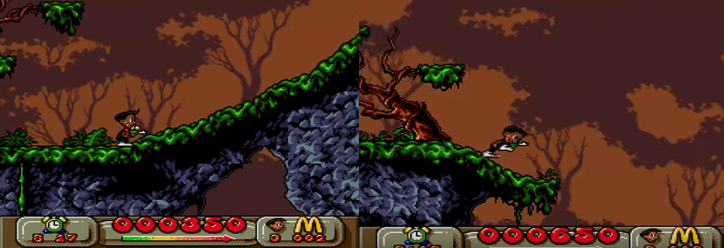


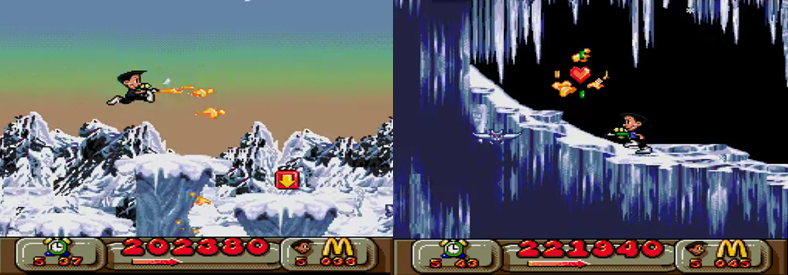
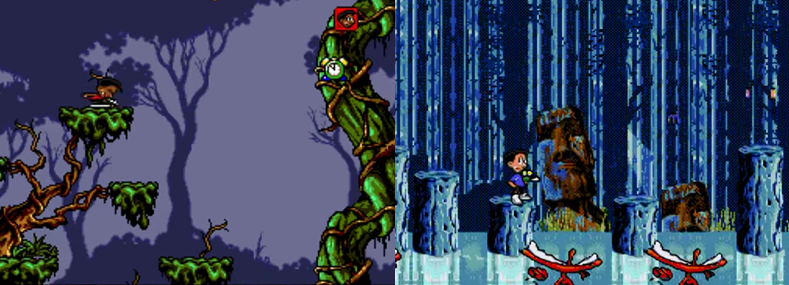
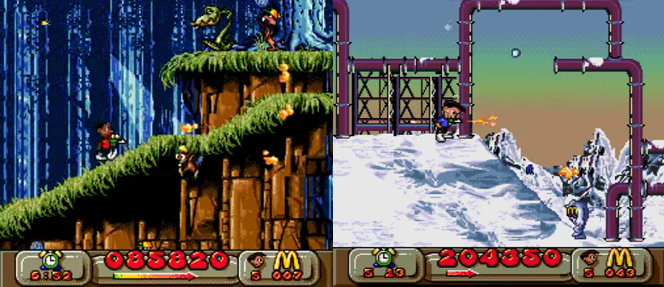
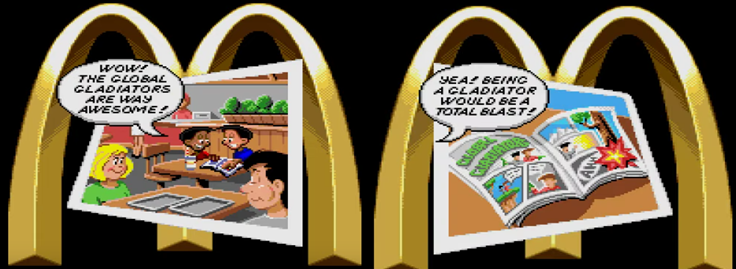
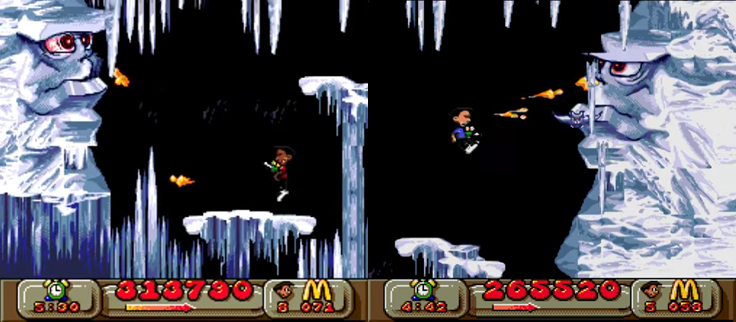


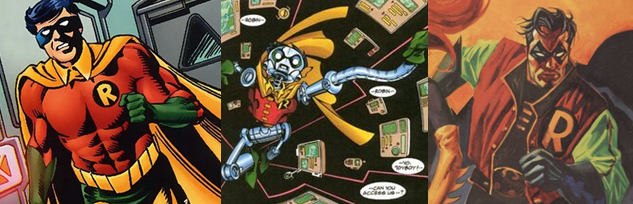
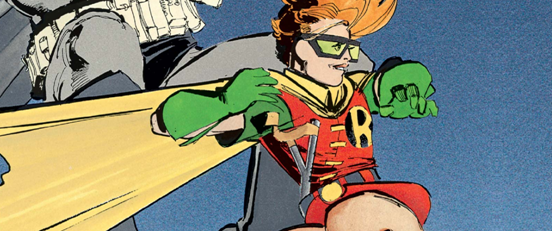
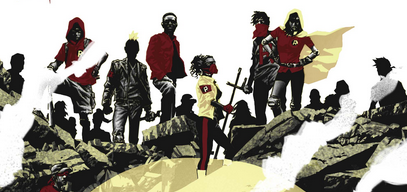
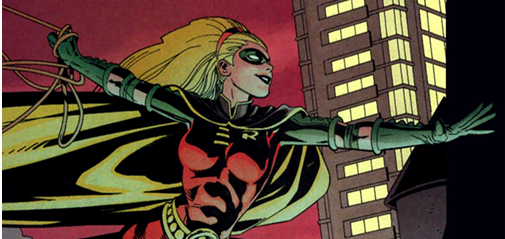
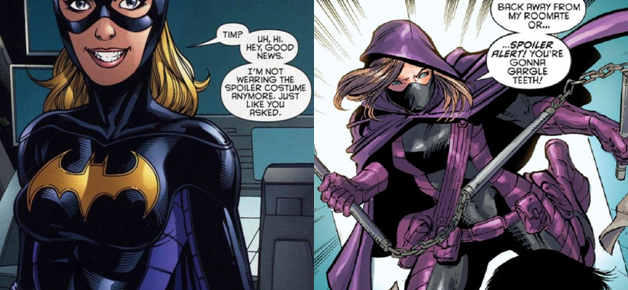
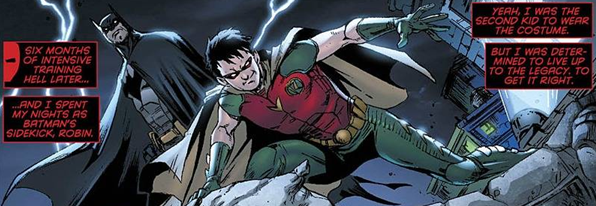
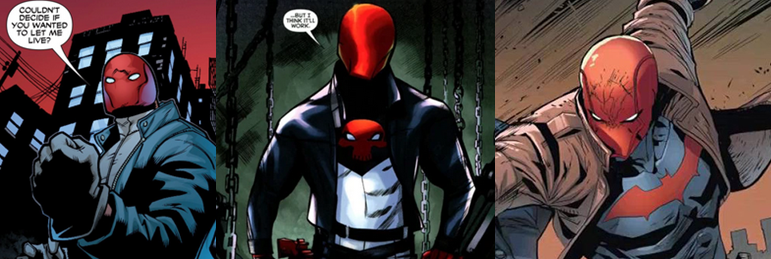
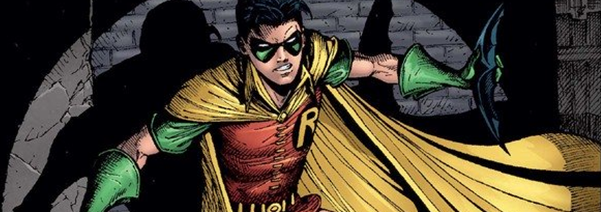
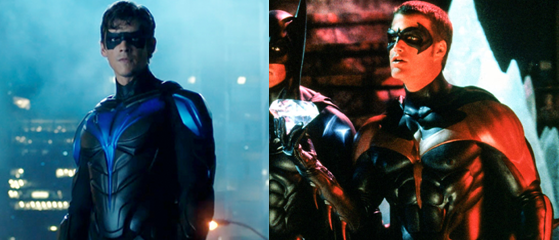
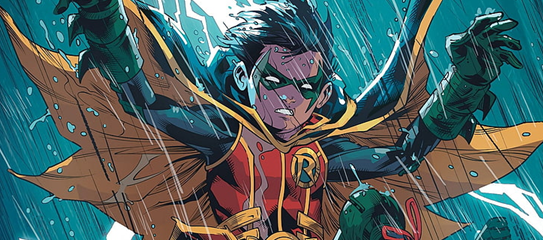
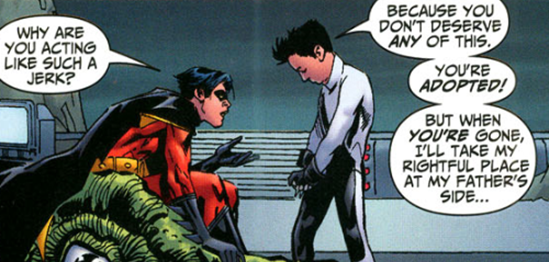
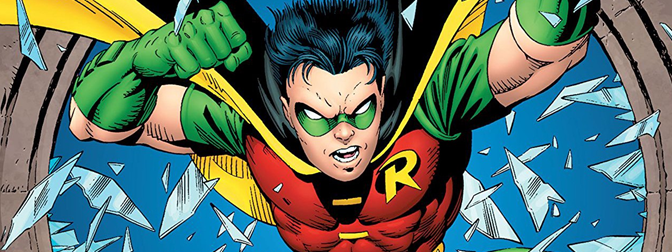
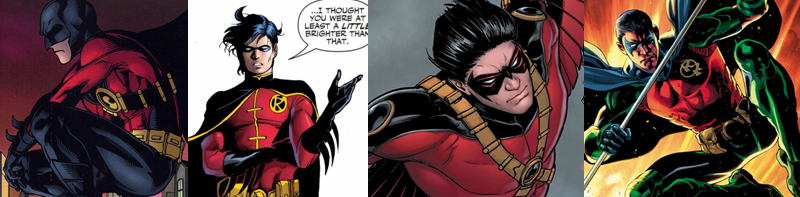
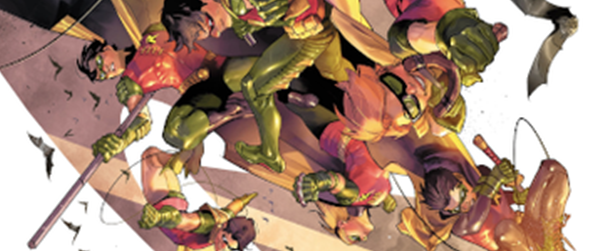


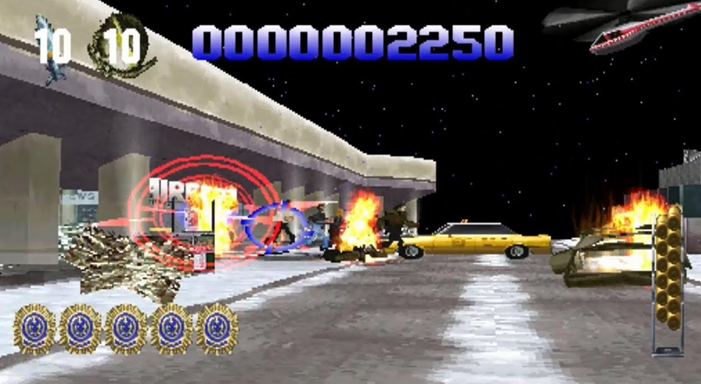
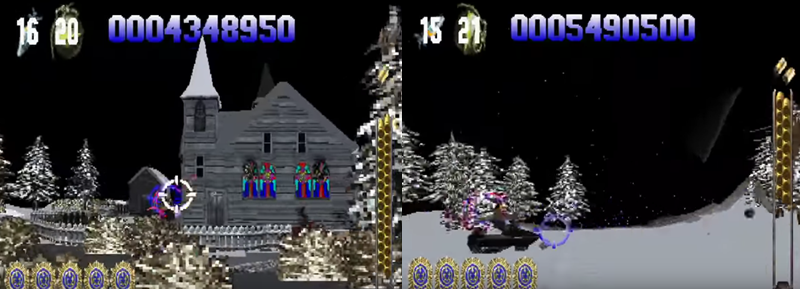
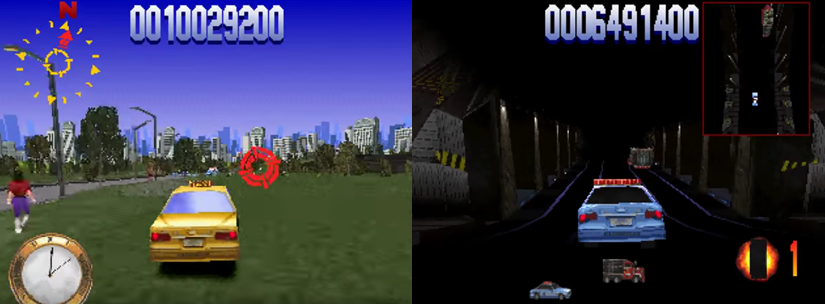
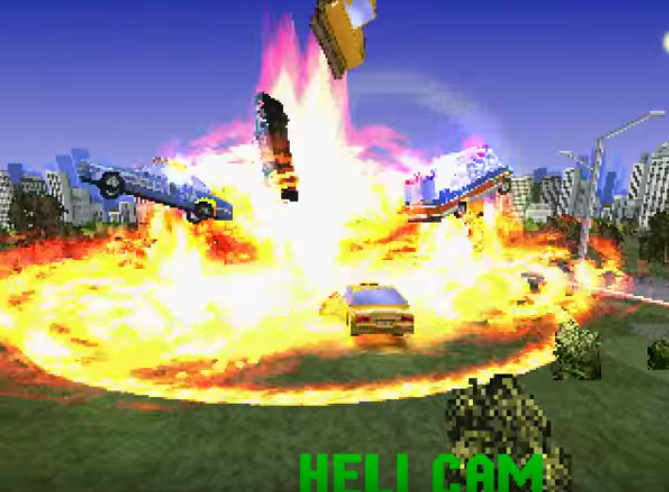


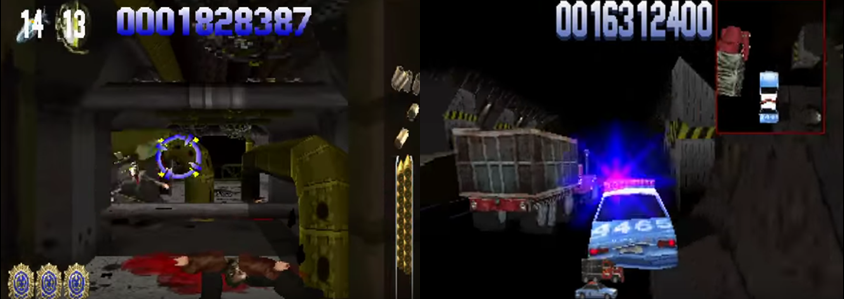




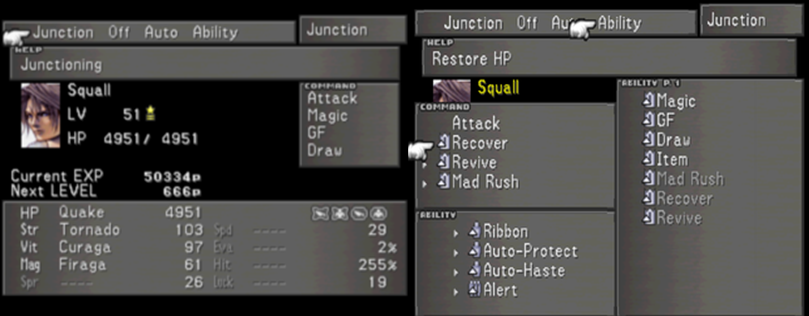
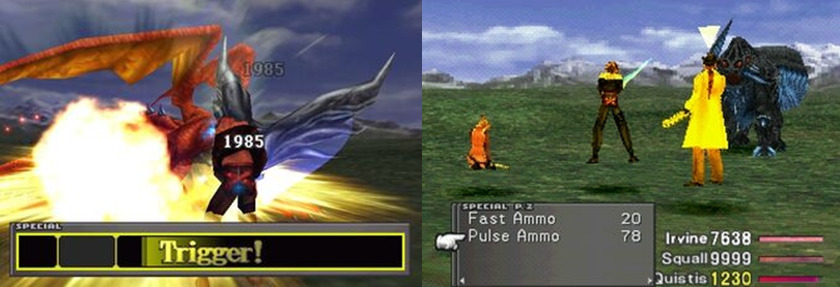


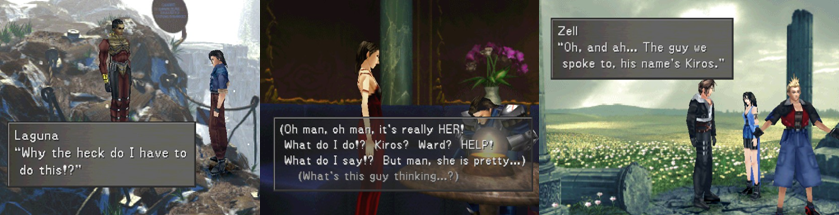


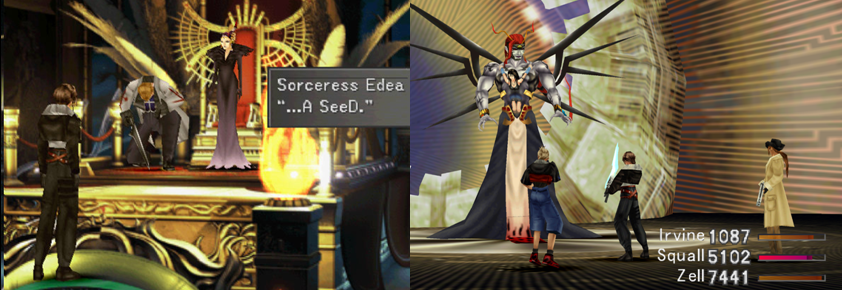


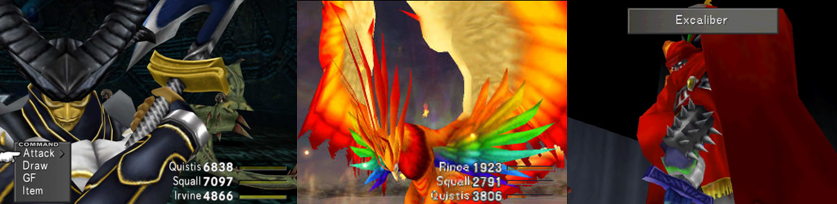

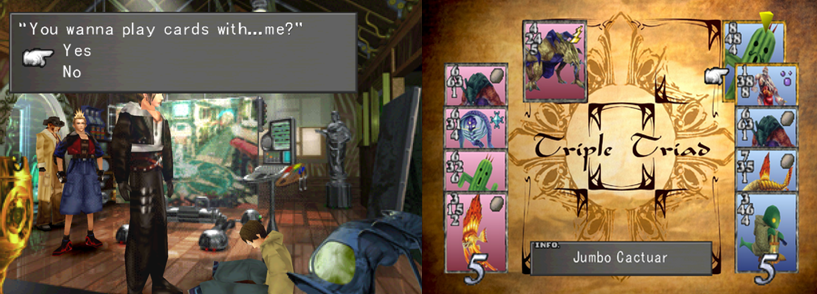


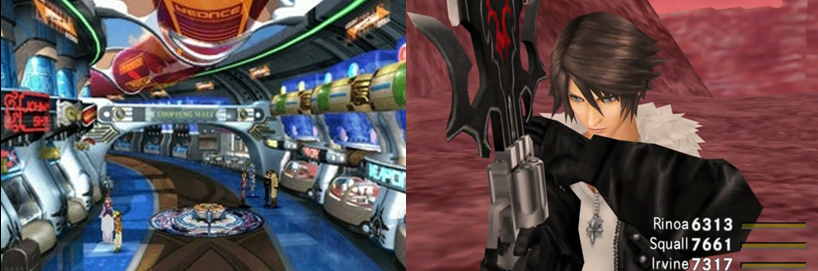


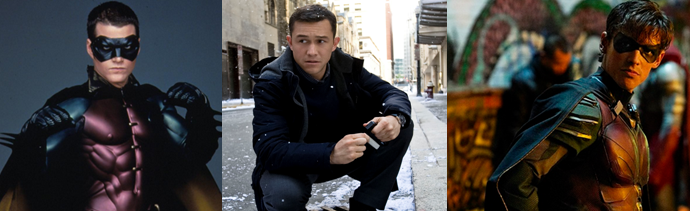

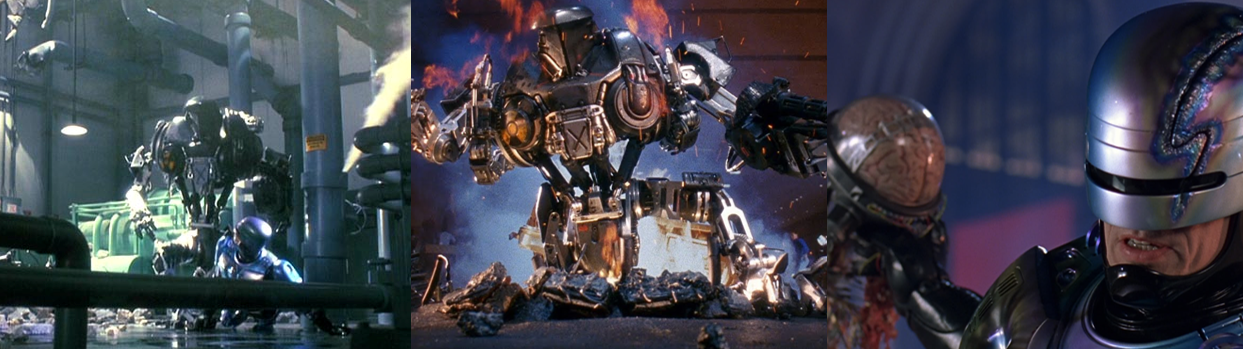
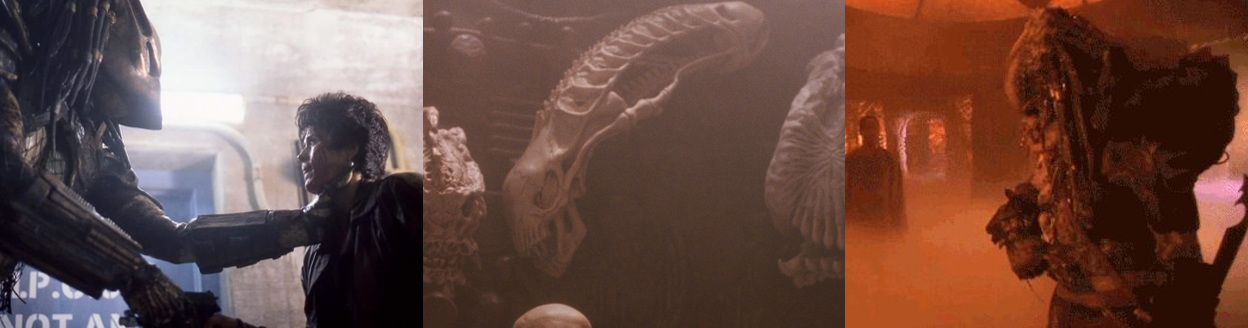



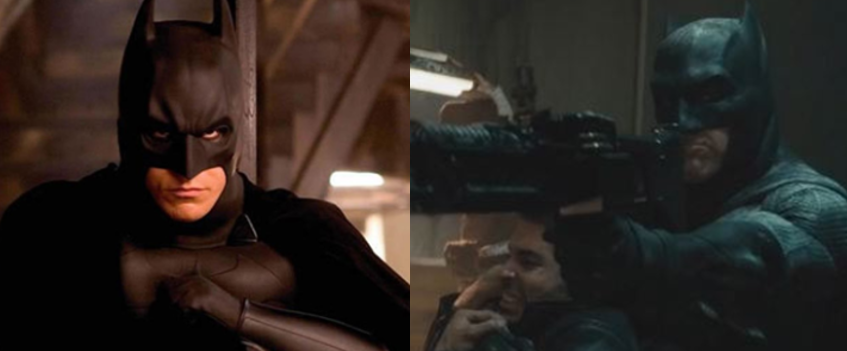

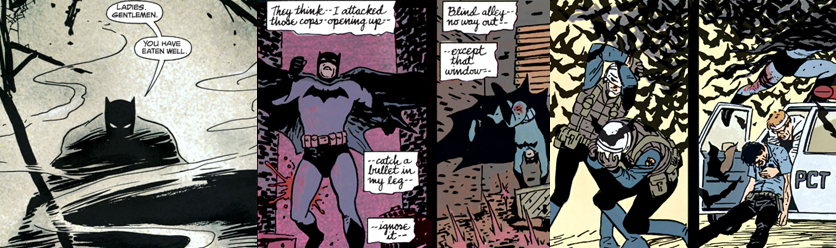
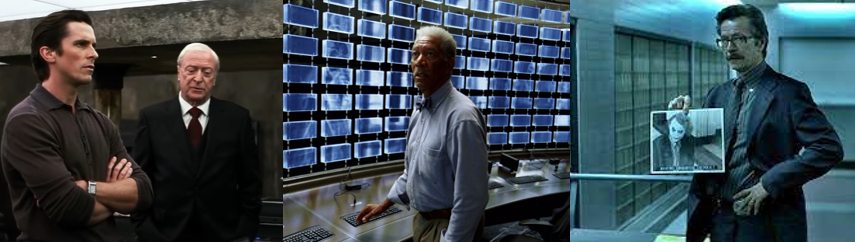

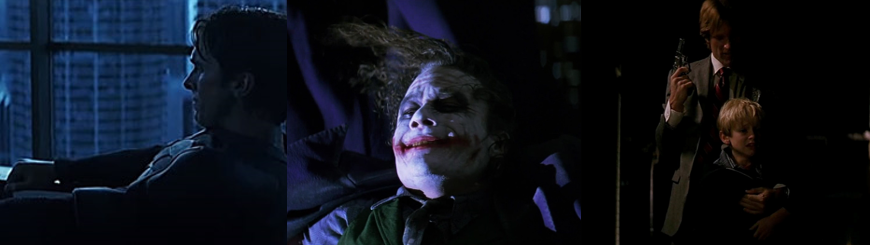
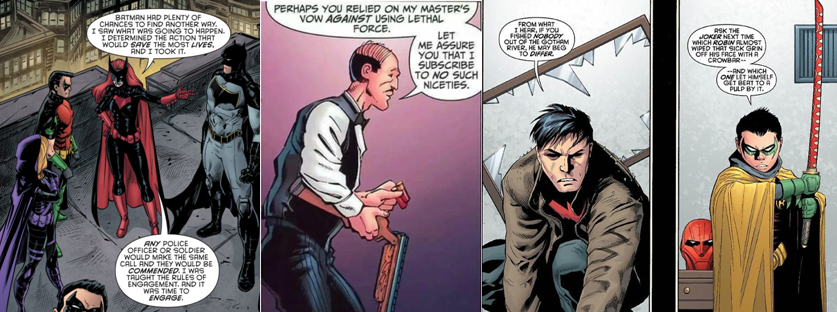








 Dr. K's Waiting Room
You must be logged in to post a comment.