In 2013, DC Comics declared the 12th of June as “Superman Day”, a day for fans of the Man of Steel the world over to celebrate Clark Kent/Kal-El/Superman, the superpowered virtue of “Truth, Justice, and the American Way” who is widely regarded as the first evercostumed superhero. This year, I’ll be spending every Sunday of June celebrating the Man of Steel as I expand Superman Day to “Superman Month“.
Released: 14 December 1978 Director: Richard Donner Distributor: Warner Bros. / Columbia–EMI–Warner Distributors Budget: $55 million Stars: Christopher Reeve, Gene Hackman, Margot Kidder, Valerie Perrine, and Marlon Brando
The Plot: In the dying moments of the planet Krypton, scientist Jor-El (Brando) rockets his son away to Earth. After learning of his alien origins and discovering the limits of the fantastic superhuman powers afforded him by Earth’s yellow sun, the now-adult Clark Kent (Reeve) assumes the costume identity of “Superman” while disguising himself as a mild-mannered reporter. However, he faces his greatest test when genius criminal mastermind Lex Luthor (Hackman) hatches a plot to cause devastating earthquakes west of the San Andreas Fault.
The Background: In the years since his dramatic debut, Superman quickly became the subject of numerous adaptations and his 1940 radio drama even introduced many aspects that became synonymous with the character. The idea of a feature-length Superman film was first conceived of by producer Ilya Salkind in 1973; entering into a partnership with his father, Alexander, and Pierre Spengler, the filmmakers were able to convince Warner Bros. to produce a two-film adaptation of the character and paid screenwriter Mario Puzo (of Godfather (ibid, 1969/Coppola, 1972) fame) $600,000 to write the screenplay. Steven Spielberg was courted to direct but was unable to commit and, while Guy Hamilton was attached to the project, the producers eventually settled on Richard Donner, who immediately ditched the campy tone of Puzo’s 400-plus-page script. The first actor signed to the film was Marlon Brando (who had some pretty funny ideas about Jor-El’s appearance and characterisation and had a lackadaisical attitude towards the film) and Oscar winner Gene Hackman soon followed, with the two receiving top billing. Many notable names were considered for the title role before relative-unknown Christopher Reeve was cast after a laborious casting process. Having bulked up for the role, Reeve’s experience as a pilot paid off when performing the film’s complex flying sequences, which were achieved through a combination of green screens, wire work, and other camera tricks while the striking Kryptonian suits were the result of a happy accident with a reflective material. Very quickly, the film’s budget ballooned and filming began to over-run, causing tensions between Donner and the producers; Richard Lester was brought on board as a mediator and work on the sequel halted to concentrate on the first film. After several delays, Superman (also marketed as Superman: The Movie) released to rave reviews and was an incredible financial success, making over $300 million. Although the producers continued production of the sequel immediately, the damage was done and Donner did not return, necessitating a series of expensive reshoots and raising the ire of many of the film’s actors. Still, the first film was an incredible achievement, massively influential on Superman’s comic books, and was eventually preserved in the United States Library of Congress National Film Registry.
The Review: Superman begins, as most Superman origin stories do, on the far away world of Krypton (or “Krypt’n”, if you’re Marlon Brando), a technologically advanced civilisation that inhabits a largely barren, crystalline world. In a fantastic seed for the sequel, Jor-El sentences three seditious criminals – Non (Jack O’Halloran), Ursa (Sarah Douglas), and their leader, General Zod (Terence Stamp) – to the mysterious “Phantom Zone” for their treasonous and destructive efforts to usurp the Kryptonian council and subjugate the world to Zod’s will. Defiant to the last, Zod vows to avenge himself upon Jor-El and his heirs, no matter how long it takes and against all odds, before the three are cast into the strange mirror prison. Following this, Jor-El is unable to convince the council that Krypton is doomed to be destroyed by its red giant sun within thirty days; indeed, despite being a highly respected and rational member of the council, Jor-El’s claims are so adamantly refuted that he is threatened with being labelled a terrorist himself.
Unable to save his planet, Jor-El sends his infant son to Earth, where he gains awesome powers.
Apparently despondent (it’s hard to tell with Brando…), Jor-El resigns himself to ensuring the survival of his young son, Kal-El; his wife, Lara (Susannah York), laments that their son will forever be an outcast amongst the “primitives” of Earth but Jor-El remains confident that the powers bestowed upon Kal-El by Earth’s yellow sun will make him a symbol of hope and afford him physical advantages beyond all known understanding. As Krypton shatters around them, the baby is rocketed away and, guided by his father’s voice, slowly grows into an infant within his escape craft; Jor-El, who encoded all of his knowledge and wisdom into the crystalline form of the ship, stresses that his son is “forbidden” to interfere in Earth’s history and instead let his example inspire others. In time, many thousands of years after Krypton’s destruction, the ship crash lands on Earth and is stumbled upon by kindly, elderly couple Jonathan (Glenn Ford) and Martha Kent (Phyllis Thaxter) who are awestruck by the child’s super strength and, despite Jonathan’s concerns, take him in as their own.
After losing his adopted father, Clark learns the extent of his powers and reveals himself to the world.
About fifteen years later, the boy has grown into well-meaning teenager Clark Kent (Jeff East, with Christopher Reeve dubbing his voice); though Clark is frustrated that he has to hide his physical capabilities from the world, Jonathan stresses that the boy was sent to them (and the world) for a greater reason than to simply score touchdowns or show off to the other kids. As he just wants to make his parents proud, Clark takes his father’s advice to heart but is left utterly heartbroken when Jonathan suffers a fatal heart attack. At his graveside, a devastated Clark laments that his awesome powers were ultimately useless in saving his father and thus learns a valuable lesson about the limits of his superhuman abilities. Drawn to the remains of his ship (which the Kents kept hidden in their barn), Clark discovers a glowing green crystal that leads him far north, all the way to the Arctic, where the crystal births a piece of his home planet on Earth. In this Fortress of Solitude, Clark communes with the spirit of his father, who lives on as a glorified artificial intelligence, and spends a further twelve years absorbing all of Jor-El’s knowledge and teachings of his newfound abilities. After his training is completed, Clark emerges as Christopher Reeve and garbed in a bright Kryptonian costume and ready to share his abilities with the world as Superman.
Clark poses as a mild-mannered reporter, which allows Superman to captivate Lois.
Clark sets himself up as a reporter at the Daily Planet (apparently it’s as easy as being able to type incredibly fast and being overly polite), meeting hot-tempered editor-in-chief Perry White (Jackie Cooper), enthusiastic young photographer Jimmy Olsen (Marc McClure), and feisty reporter Lois Lane (Kidder). Despite her inability to spell, Lois is a lively and fearless journalist and, consequently, she both despairs of Clark’s overly friendly nature and sees him as a bit of a dorky milksop and finds her curiosity sparked by some of his oddities. In comparison, Lois is immediately captivated by Superman when he not only catches her in mid-air as she’s plummeting to her death but also snags the helicopter she was falling from. Enamoured by his mystery, confidence, and the seemingly limitless superhuman abilities he possesses, her normally controlled and forthright demeanour is shattered and she’s left absolutely awestruck during (and following) her exclusive interview with the Man of Steel (where she names him and he also, curiously, divulges a number of secrets about himself that later come back to bite him in the ass).
The maniacal Lex Luthor plots to destroy Superman in his quest to profit from real estate.
The villain of the piece, the enthralling Lex Luthor, has set up an impressive hideout beneath the city streets; there, protected by a series of cameras and deadly booby traps, he surrounds himself with the dim-witted Otis (Ned Beatty) and sexy but cynical Eve Teschmacher (Valerie Perrine). Egotistical and arrogant in his intellect, Luthor sees himself as the world’s greatest criminal mind and is busy planning the crime of the century, which involves the acquisition of seemingly worthless land and profiting from it by causing a cataclysmic flood, endangering and ending countless lives in the process. Luthor immediately surmises that Superman is not of this Earth and relishes the opportunity to pit himself against the Man of Steel, and to both prove his intellectual superiority over him and destroy the very virtues that Superman stands for, seeing the Man of Steel as the ultimate challenge for his self-proclaimed criminal genius.
The Nitty-Gritty: Of course, you can’t really talk about Superman without mentioning John Williams’ bombastic and immediately iconic “Superman” theme that is rendered in full glory over the opening credits. While this theme has become so synonymous with the character that no composer or filmmaker since has come close to crafting a more suitable melody for the Man of Steel, I continue to be baffled by the absolutely cringe-worthy “Can You Read my Mind?” sequence. Like, I get it; it’s supposed to be this big romantic moment between the Lois and Superman and to showcase the film’s wirework, but it stands out like a sore thumb and is all kinds of different flavours of cheese.
While Reeve set the standard for Clark/Superman, other performances are a bit hit and miss.
If I’m being brutally honest, the film’s performances are a bit hit and miss; despite being a relative unknown, Reeve provides the quintessential portrayal of Superman and simply exudes confidence and sociability as Superman while masking his true nature as loveable, bumbling fool. Indeed, by simply straightening his posture and slightly altering his voice, Reeve effortlessly depicts the simple differences between his two persona and his performance so explicitly set the standard for the character that it continues to be emulated to this day. Once the story shifts to Metropolis, the film becomes a much more vivid and over-the-top production that emphasises buffoonery and comic book camp; nobody embodies this more than the bumbling Otis, who is mostly here for comic relief, but there’s also the suggestion that Luthor socialises with cretins simply to have someone to lord over. While Beatty and Cooper seem to have stepped out of a pantomime for their roles as the goofy Otis and bombastic Mr. White, respectively, Hackman brings a certain gravitas to the film that perfectly walks a fine line between camp and severe. Hackman seems to be enjoying himself in the role and commands every scene and room that he’s in; though he lacks Luthor’s bald head, he sports a variety of wigs and exudes a sadistic menace in his willingness to kill millions of innocent people in his quest for power, profit, and to have his matchless intelligence recognised by the world.
While some effects don’t hold up well, they’re all very ambitious and impressive for the time.
Obviously, you have to expect that some of the effects aren’t as impressive and haven’t aged as well as others, as ambitious as they are; the Arctic is clearly a set like something out of Star Trek (1966 to 1969) and I can only assume that Krypton is so barren and lifeless because it was cheaper and easier (though it also makes it cold and alien and a stark contrast to our lush world). The young Clark’s running effect and a number of the rear-projection and miniature shots leave a lot to be desired and almost every skyline appears to simply be a gigantic matte painting as the film is heavily reliant upon impressive sets the likes of which are akin to a James Bond film. While Clark’s super fast changes to Superman and his little spin down into Luthor’s lair aren’t that great, easily the weakest effects come in the conclusion as the San Andreas Fault is ruptured and painstakingly crafted models are washed away by water and dirt before Superman circles the globe at superspeed. To be fair, though, the film’s effects are still incredibly impressive; the helicopter sequence is an ambitious and remarkable composite of miniatures, rear-projection, and live-action wire work that makes for a suitable debut for the Man of Steel and, overall, the film has largely stood the test of time thanks to its practical effects and undeniable charm. As you might expect, Superman’s powers and abilities are the highlight of the film; Superman’s invulnerability, super strength, and superspeed are all accounted for and realised well enough and Superman’s first night on duty provides a great showcase of what he is capable of. No job is too big or too small for Superman, who does everything from rescuing a cat from a tree to apprehending jewel thieves as they clamber up the outside of buildings using sucker pads.
Superman comes up with a unique solution to save the day.
Naturally, it’s the flying sequences that are the true spectacle of the film; even now, the rear-projection holds up pretty well in these scenes but what really sells it is Reeve’s dynamic and believably movements. Reeve banks and turns with an elegant grace and really sells the illusion that we’re seeing a man fly and makes even the most ridiculous aspects of the film (from the 100% comic-accurate suit to using his own body to repair a broken train track to repairing the San Andreas Fault by ploughing through questionable-looking magma) seem entirely plausible thanks to his charming smile and undeniable charisma. Of course, when talking about Superman, you have address the ending. Thanks to acquiring a chunk of Kryptonite, Luthor is able to weaken and cause incredible agony to Superman and it is only thanks to Ms. Teschmacher’s change of heart that he’s able to recoup his strength and intercept Luthor’s missiles. However, while he’s able to stop one, he’s unable to keep the other from striking the San Andreas Fault and is so busy repairing the damage it causes that he’s unable to save Lois from being crushed to death by debris. Devastated and overcome with grief, Superman flies into the upper atmosphere and defies his birth father’s warnings of interfering in human history to favour his adopted father’s advice and is able to literally turn back time by reversing the rotation of the planet. This undoes all of the damage caused by Luthor’s missiles and prevents Lois’s death but remains the most ludicrous aspect of the entire movie and just ends up raising all kinds of questions like…wouldn’t there be two Superman? Why doesn’t he just turn back time all the time? Ultimately, it’s just one of those crazy, over-powered feats that we’ve come to expect from older versions of Superman and I guess it works to show that Superman is capable of overcoming even his limits by pushing hard enough (plus, Reeve’s anguished cry does make for an incredibly intense scene).
The Summary: I honestly went into Superman ready to give it a lower score of two stars; it’s never really been my favourite superhero, or Superman, film as it’s just got a little too much cheese and cringe in it for my tastes. There’s an undeniable level of camp at work in the film that makes it very cartoony and over-the-top in places, to say nothing of long, oddly paced inclusions that seem decidedly at odds with the rest of the film. However, all of these elements are in perfect balance with the film’s more dramatic and spectacular sequences; this is a film that is, primarily, a showcase of ambitious and trend-setting cinematic techniques as much as it is perhaps the most influential interpretation of Superman ever seen outside of the comic books. While not every effect has aged too well, the majority have stood the test of time remarkably well and there’s just the right balance of goofy comedy, heart-warming charm, and exciting spectacle that simply scream “Superman”, a character who is often characterised as being the world’s biggest Boy Scout and embodying timeless (if slightly antiquated) ideals. There’s no denying that Superman is an absolute classic; while I cannot sanction Marlon Brando’s attitude and I may not be a fan of some of Donner’s choices (Luthor being a real estate maniac, the barren depiction of Krypton, and the time travel ending are all cons of the film for me), Superman remains a delightful and enjoyable little slice of camp goodness that is worth it for Reeve’s incredible and career-making turn in the title role if nothing else.
My Rating:
⭐⭐⭐
Rating: 3 out of 5.
Pretty Good
Are you a fan of Superman? What did you think to Christopher Reeve’s portrayal of the character and were you a fan of Lex Luthor’s interpretation in the film? How influential was Donner’s film on your perception of Superman and are there any aspects you would prefer to see films and media move away from? What did you think to the film’s campier elements and were you a fan of the ending? What is your favourite Superman story, character, or piece of media? How are you planning to celebrate Superman Day next week? Whatever you think, feel free to share your opinion and thoughts on Superman in the comments below.
In April 1985, the first issue of the ground-breaking Crisis on Infinite Earths(Wolfman, et al, 1986) released and saw the temporary destruction of the “Multiverse”. To celebrate this momentous event, I’m discussing multiversal crossovers all throughout April in an event I dubbed “Crossover Crisis”.
Released: 16 April 2013 Developer: NetherRealm Studios Also Available For: Arcade, Mobile, PC, PlayStation 3, PlayStation 4, PlayStation 5, PlayStation Vita, Xbox One and Xbox Series One X/S (Backwards Compatible), Wii U
The Background: When it was first released, Mortal Kombat (Midway, 1992) was a phenomenal success for Midway because of its focus on gore and violence, and it offered some real competition for Street Fighter II: The World Warrior(Capcom, 1991) in arcades and on home consoles. For a time, the series seemed unstoppable during the 2D era of gaming but struggled to find a footing in the emerging 3D fighter arena and Mortal Kombat seemed to be in jeopardy after Midway went bankrupt in 2010. The main reason for this was the poor reception of Mortal Kombat vs. DC Universe(Midway Games, 2008), the first collaboration between Midway’s Mortal Kombat and the DC Comics characters owned by Warner Bros. Interactive, which was hampered by age-related restrictions. Luckily, Warner Bros. Interactive stepped in and the team, now rebranded to NetherRealm Studios, immediately set about getting their violent franchise back on track; Mortal Kombat(NetherRealm Studios, 2011) was subsequently very well-received for its “back to basics” approach and, bolstered by the reboot’s success and eager to take advantage of the vast library of characters of their parent company, NetherRealm Studios sought to expand upon the game’s mechanics with a new, all-DC brawler. Although the game wasn’t as bloody and violentas its sister series, Injustice: Gods Among Us was a massive critical and commercial success that was followed up by not only a bunch of additional fighters and skins added as downloadable content (DLC) but also a sequel in 2017 and a critically-acclaimed comic book series.
The Plot: In an alternate reality, Clark Kent/Superman has become a tyrant and established a new world order after the Joker tricked him into killing Lois Lane before destroying Metropolis with a nuclear bomb. In an effort to stop him, Bruce Wayne/Batman summons counterparts of the Justice League’s members from another universe to join his insurgency and end the totalitarian regime that threatens to subjugate the entire world.
Gameplay: Just like Mortal Kombat, Injustice: Gods Among Us is a 2.5D fighting game; however, this time you’re able to select one of twenty-four characters from the DC Universe and battle it out in the game’s single-player story mode, one-on-one against another player or computer-controlled opponent (both on- and offline), tackle numerous arcade-style ladders, or take on character-specific missions in Scientific and Technological Advanced Research Laboratories (S.T.A.R. Labs) training scenarios. Just as you’d expect from a Mortal Kombat videogame, Injustice’s fights take place in a best-of-three format (although there are no longer announcements or screen text between each round) and against a time limit, though you can alter these settings (and many others, such as the game’s difficulty) to your heart’s desire in the game’s options to suit your playstyle. If you’ve played the Mortal Kombat reboot then you’ll be immediately familiar with this game’s fighting mechanics and controls, although there are subtle differences: X, Y, and A are assigned to light, medium, and heavy strikes, for example, and may be either punches, kicks, or weapon-based melee attacks depending on which character you’re playing as. You can still grapple and throw your opponent with the Left Bumper (or X and Y and a directional input), dash towards or away from the opponent with a double tap of the directional pad (D-Pad), but now you must hold back on the D-Pad while standing or crouching to block, which can make blocking a bit trickier as sometimes you’ll simply walk or dash backwards when trying to block. If your opponent is crouch-blocking, you can land an attack by pressing towards and A for an Overhead Attack, and string together light, medium, and heavy attacks with directional inputs and your various special moves to pull off quick and easy combos.
Attack with strikes, grapples, and combos to pummel a number of DC’s most recognisable characters.
As is the standard for NetherRealm Studios’ releases these days, you can practise the game’s controls and mechanics as often as you like and take part in a very user-friendly tutorial to learn the basics of the game’s simple, but increasingly complex, fighting mechanics. You can also view your character’s moves, combos, special attacks, and “Character Power” from the pause menu at any time, allowing you to also see a range of information (such as where and how to pull of certain moves, the damage they inflict, and frame data). Each character has a range of special attacks that are unique to them; these mostly consist of certain projectiles or grapples and strikes but can also include various buffs for your character or to slow down your opponent. Each character also has a specific Character Power that is performed by pressing B; this sees Batman summon and attack with a swarm of bats, Oliver Queen/Green Arrow fire different trick arrows at his opponent, Doctor Harleen Quinzel/Harley Quinn gain various random buffs, and allows characters like Diana Prince/Wonder Woman and Rachel Roth/Raven to switch between different fighting styles and thus access different special attacks. While some Character Powers have a cool-down period, others don’t, but they can also be detrimental to you; for example, Slade Wilson/Deathstroke can briefly give his shots perfect aim but, once the Character Power is expended, he’ll miss every shot until it refills. Another new addition to the game is the annoying “Wager” system; when the Super Meter is filled up by two bars, you can press towards and RT when blocking an attack to play a quick mini game where you and your opponent select how much of your Super Meter to gamble. If you win, you’ll regain some health; if you lose, the opponent regains health; and if you tie then you both lose. Personally, if find these “Clash Breakers” even more annoying than the usual “Breakers” seen in the modern Mortal Kombat games as I never win them and they generally just unnecessarily prolong a fight (and, even worse, there’s no option to turn them off).
Different characters attack and interact in different ways according to their strengths.
In a bridge between the differing character movesets of Mortal Kombat and the “Variation” mechanic seen in Mortal Kombat X(NetherRealm Studios, 2013), Injustice features a limited “Class” system whereby characters are split into two camps: Gadget- or Power-class characters. Gadget characters are generally smaller, faster, and rely on various tricks and weapons in fights while Power-class characters are typically bigger, often slower, and rely more on brute strength. One of the main ways you’ll notice the difference between playing as, say, Barry Allen/The Flash and Cyrus Gold/Solomon Grundy is that they interact with the game’s fighting stages in different ways. As in Mortal Kombat X, you can press the Right Bumper when indicated to use (or attack your opponent with) various environmental hazards, such as firing missiles at them or knocking them into the background. But, whereas Superman will wrench a car out of the air and slam it on his opponent, someone like Dick Grayson/Nightwing will rig the same car to explode or somersault off the environment to get behind their foe rather than try to crush them with a wall. As you might naturally expect, there are no Fatalities or gruesome finishing moves in Injustice (not even “Heroic Brutalities”). However, when your Super Meter is full, you can still press LT and RT together to pull off a devastating Super Move; while you won’t see bones breaking and organs shattering like in Mortal Kombat’s X-Ray Moves, it’s still pretty fun to see Hal Jordan/Green Lantern transport his opponent to Oa to pummel them with his constructs, Ares shower his foe with arrows and stamp on them while grown to gigantic proportions, Arthur Curry/Aquaman force his enemy into the jaws of a ferocious shark, and Bane demolish his opposition with a series of throws and grapples, culminating in his iconic backbreaker.
In addition to powerful Super moves, you can bash your foe into new areas using stage transitions.
Another way the game separates itself from Mortal Kombat is stage transitions; when near the far edge of certain stages, you can hold back and A to wallop your opponent through the wall or off into the background where they’ll be smashed up, down, or across to an entirely new area of the stage which often allows more stage interactions and new stage transitions available for your use. You might wonder exactly how someone like Louise Lincoln/Killer Frost can survive being blasting through the brick walls of Wayne Manor or go toe-to-toe with the likes of Doomsday but the game’s entertaining story mode explains that, on this alternative world, the tyrant-like Superman has developed special pills that bestow superhuman strength and dexterity to his generals. As is also the standard in NetherRealm’s titles, the story mode is broken down into twelve character-specific chapters, which is again a great way to experience a wide variety of the game’s roster (though Batman does feature as a playable character in two chapters, which seems a bit lazy). You can replay any chapter and fight you’ve cleared at any time, which is great, and skip through the cutscenes after they’ve loaded a bit, and the story mode isn’t all constant fighting either as you’re asked to pull off a handful of quick-time events (QTEs) at various points, such as blasting cars with Superman’s heat vision. The story is a fairly standard multiverse tale of the main canon heroes fighting against their corrupted or misled counterparts but it’s pretty fun and easy to blast through in no time at all.
Fight to earn XP and level-up, unlock additional perks and modes, and take on a series of challenges.
Every time you win a fight, you’ll earn experience points (XP) that will eventually level-up your character profile. This, and performing a certain number of specific attacks, playing through the story mode, and tackling the game’s other modes and mechanics, unlocks icons and backgrounds for your profile card as well as additional skins in certain circumstances. You’ll also be awarded “Armour Keys” and “Access Cards” to spend in the “Archives”, which allows you to unlock concept art, music, more skins, and certain boosts that will increase how much XP you earn, to name just one example. Like in Mortal Kombat, you can also take on ten opponents in arcade ladders in the “Battle” mode; these range from the basic tournament-style ladder to specific challenges against heroes, villains, or battling while poisoned, injured, or with certain buffs (such as a constantly full Super Meter or health falling from the sky). We’d see a similar system be incorporated into the “Towers” modes in later Mortal Kombat games and similar scenarios exist here, such as a survival mode, battling two opponents, or being forced to fight against the computer set to the hardest difficulty.
Graphics and Sound: Like its violent sister-series, Injustice looks fantastic; there’s almost no difference between the high-quality story mode cutscenes and the in-fight graphics (which, again, makes it all the more frustrating that NetherRealm Studios insist on having character’s endings represented by partially-animated artwork and voiceovers), though it has to be said that the graphics are much more palatable when in a violent fight. I say this purely because I am not a big fan of some of Injustice’s character designs: The Flash looks a bit too “busy”, for example, and Batman’s suit (and cowl, especially) look really janky to me, though I love the representation of Green Lantern and Thaal Sinestro.
In addition to various intros, outros, and Wager dialogue, characters also take on battle damage.
Each character gets a nice little fitting intro and outro for each fight and, between rounds, will perform and quip a variety of taunts to the opponent. In a nice little touch, different character skins get different intros and outros; when playing as the evil Superman, for example, he enters and exits the fight differently to his more heroic counterpart. When playing as different skins, like John Stewart or Hank Henshaw/Cyborg Superman, you’ll also be treated to slightly different dialogue and animations, which is a much-appreciated touch on the developer’s part. Although there aren’t any character-specific interactions in the intros, there are during the Wager cutscenes and, even better, both characters and the arenas will accrue battle damage as the fight progresses! This means that you’ll not only see Selina Kyle/Catwoman’s cat suit rip and her skin be blemished by bruises and blood but arenas will degenerate or change around you the more damage you dish out, which can also allow different intractable options to become available to you.
Stages include a range of recognisable DC locations and take damage as you fight.
Speaking of the stages, Injustice really goes above and beyond to make the best use of the DC license; while it’s a little disappointing to see Arkham Asylum and Wayne Manor feature twice in the game, they are made distinctive by having Joker-ised and night-time variants, respectively (and also being clearly modelled after, and featuring cameos by, the Batman: Arkham (Rocksteady Studios/Various, 2009 to 2015) videogames and villains). Additionally, the use of stage transitions really helps to add a whole new dimension to combat, with some stages featuring more than others (or even none at all), to help ensure that every fight can be a little different. Stages also feature a bevy of other little cameos and DC references, such as the Fortress of Solitude being clearly modelled after Superman(Donner, 1978) while also featuring a portal to the Phantom Zone and a cameo from Starro the Conqueror. Similarly, J’onn J’onnz/Martian Manhunter floats in the background of the Watchtower space station, Floyd Lawton/Deadshot is just hanging out at Stryker’s prison, and Amazons are preparing a boat to launch on Themyscira. Every single stage has a number of intractable elements and changes as you fight, cause damage, or smash foes around, with Gotham City being my favourite as you can battle on the roof with the Bat-Signal and then down to the grimy streets below and then blast your foe back up to the roof using a nearby truck!
Enemies and Bosses: Injustice helpfully separates its character-selection screen into heroes (on the left) and villains (on the right) but, despite their different alignments (and that their loyalties change due to the multiverse shenanigans of the story), every single one of them will be an enemy of yours at some point as you play through the story, Battles, S.T.A.R. Labs missions, and on- or offline. Consequently, it’s worth keeping track of which character suits your playstyle as some have easier combos and special moves to pull off compared to others, or more useful Super Moves and Character Powers.
Play as, and against, the game’s characters to learn their strengths, weaknesses, and skills.
Additionally, the Class system should also be factored in; Lex Luthor, Doomsday, and Solomon Gundy may be powerful and capable of gaining armour to tank through attacks but they’re also a lot slower on their feet and with their jumps. Superman and Shiera Hall/Hawkgirl are much faster Power-class characters but can also have their own drawbacks at times depending on your playstyle (Superman’s Character Power, for example, simply powers up his attacks rather than being a more offensive move like, say, Areas being able to conjure massive magical weapons). Personally, I tend to lean more towards Gadget-based characters, like Nightwing (who can switch between using quick batons or a longer bo staff to attack) or Green Arrow (whose arrows and bow allow for both ranged attacks and blindingly fast melee attacks).
Take on the corrupted Superman and banish him to the Phantom Zone for his crimes!
Unlike Mortal Kombat, Injustice doesn’t really feature any secret or hidden fights or unplayable sub-bosses or boss characters; the story mode and basic arcade ladder culminates in a battle against the corrupted Superman that is a far fairer and more competitive fight compared to the finales of NetherRealm’s recent Mortal Kombat games. While Superman is definitely a bit more of an aggressive foe, even on the game’s easiest difficulty, he doesn’t gain inexplicable armour, can be stunned, and doesn’t deal ungodly amounts of damage or spam his attacks like a cheap bitch. Additionally, he doesn’t transform into some monstrous final form and, instead, the final battle is a far better use of the skills you’ve built up through regular gameplay rather than forcing you to resort to cheap tactics and tricks.
Power-Ups and Bonuses: Because it lacks a “Test Your Luck” mode and “Kombat Kodes” for multiplayer fights, there aren’t really any in-game power-ups available to you outside of the various status effects seen in the Battle mode. As before, though, some characters can gain in-game buffs with their special attacks and Character Powers: Lex Luthor, for example, can erect a shield, Doomsday can cover himself in impenetrable armour for a brief period, and Solomon Grundy slows time down and drains his opponent’s health with his swamp gas. However, you’ll earn yourself additional XP if you mix up your fighting style and take advantage of stage interactions and transitions, which will allow you to unlock further customisation options for your profile card, and you can also earn additional skins and rewards by playing and linking up to the mobile version of the game.
Additional Features: There are fifty Achievements up for grabs in Injustice, with three of which being directly tied to the story mode (50- and 100% completion and succeeding at all of the QTE mini games). Others are tied to the game’s online modes, levelling-up to specific levels, customising your profile card, and finishing Classic Battle with one (and every) character. There are also some character-specific Achievements on offer, including performing every character’s Super Move or a ten-hit combat and winning a fight using only arrows as Green Arrow, or landing at least twelve shots without missing as Deathstroke. Batman is the only character to have two specific Achievements tied to him, though, as you’ll get some G for winning a match using all of his special moves and his Super Moves and for defeating every villain as him. Another standard of NetherRealm Studios is their addition of further skins and characters through DLC; you can get skins to play as John Stewart, Cyborg Superman, and the Flashpoint (Johns, et al, 2011) Batman, among others, and they’re all easily applicable when selecting a character (no need for extraneous “Gear” here).
Injustice included some surprising DLC fighters; even Scorpion showed up!
While the game’s DLC characters have no additional Achievements tied to them, Injustice included some fun and interesting extra fighters; Lobo, General Dru-Zod (who also sports his Man of Steel(Snyder, 2013) look as a skin), Barbara Gordon/Batgirl, Zatanna Zatara, and the Martian Manhunter were all great choices to add to the roster and it was nice to see NetherRealm Studios exercise a little restraint and not overload the DLC with additional Batman characters. By far the most exciting DLC fighter was the inclusion of Scorpion, who sports a Jim Lee redesign and began a trend of DC and Mortal Kombat characters appearing in each other’s games. When you’ve had enough of the story mode and regular battle options, you can take the fight online in a series of matches; here; you can participate in ranked and unranked fights and “King of the Hill” tournaments where you watch other players fight until it’s your turn and bet on who’s going to win. The S.T.A.R. Labs missions will also keep us offline, solo players occupied for some time; these are expanded upon when you download the DLC fighters, which is much appreciated and, similar to Mortal Kombat’s “Challenge Tower” mode, basically serve as extended tutorials for each of the game’s characters. You’ll take on ten character-specific missions, with each one getting a little bit of text and maybe a picture to set the context of the mission, and these range from performing certain combos or attacks, winning fights, or completing tricky challenges (such as guiding Catwoman’s cat through laser trip wires, avoiding damage or debris, or racing against Superman).
The Summary: Injustice: Gods Among Us is a far better marriage of Mortal Kombat and DC Comics than Mortal Kombat vs. DC Universe and a fantastic expansion of the gameplay mechanics and features NetherRealm Studios revitalised their violent fighting game series with in Mortal Kombat (2009). While Injustice is obviously not as gory or violent as its sister-series, that doesn’t make it any less fun and it’s still a very brutal fighter; the Super Moves, especially, and certain character’s outros (such as the Joker’s) are definitely in the Mortal Kombat mould. With gorgeous in-game graphics, a fantastic amount of variety thanks to all of the character’s different special attacks and gameplay mechanics and the stage transitions, and a simple to learn, easy to master fighting system, Injustice is an extremely enjoyable game for anyone who’s a fan of either franchise or fighting games in general. The story is a breeze to get through (thought it is essentially every basic multiverse story ever told in comics) and nicely varied with some QTE sequences; the S.T.A.R. Labs missions and different arcade ladders are much more enjoyable and challenging than in its sister-series and there are plenty of character options, variety, and unlockables to keep you busy. Best of all, the game isn’t bogged down by endless grinding to unlock Gear, skins, or other perks and is a much more user-friendly and accessible fighting game, and overall experience, than its sequel.
My Rating:
⭐⭐⭐⭐
Rating: 4 out of 5.
Great Stuff
Were you a fan of Injustice: Gods Among Us? What did you think to it as a blend of Mortal Kombat and DC Comics? What were your thoughts on the game’s story and its depiction of a parallel world terrorised by a corrupted Superman? Which of the game’s fighters was your favourite and why? Did you buy the base game and all the DLC packs separately or did you pick up the Ultimate Edition when it released later? What did you think to the additional DLC characters and skins? Were there any characters or features missing from the game for you? Which DC Comics videogame, movie, comic, or other piece of media is your favourite? Are you a fan of multiverse stories and crossovers? Whatever you think about Injustice, leave a comment down below and be sure to check back in next Wednesday for more Crossover Crisis content!
To celebrate the release of Justice League (Snyder/Whedon, 2017), DC Comics named November 18 “Justice League Day”. Sadly, this clashes with another pop culture holiday but, setting aside all the drama surrounding that movie, this still provides a perfect excuse to dedication some time to talking about DC’s premier superhero team, which set the standard for super teams in comics by bringing together DC’s most powerful heroes.
Story Title: “Starro the Conqueror!” Published: 29 December 1959 (cover-dated March 1960) Writer: Gardner Fox Artist: Mike Sekowsky
The Background: All Star Comics (1940/1941), brought together eight superheroes from a number of different publishers for the first time as the Justice Society of America (JSA). This not only heralded the birth of the first ever superhero team in comics but also allowed readers to see their favourite characters interacting all for the same price as reading any one comic. The JSA’s roster expanded and changed over the years but the team underwent their most significant change when, in the late 1950s, then-editor Julius Schwartz asked writer Gardner Fox to reintroduce and rebrand the team as the Justice League of America (JLA) to capitalise on the popularity of the American Football League and Major League Baseball’s National League. Though the team debuted in The Brave and the Bold #28, a title famous for featuring team-ups between various fictional and superheroic characters, the team’s actual origin wasn’t revealed until the ninth issue of their self-titled series, which became one of DC Comic’s best-selling titles. As with the JSA and other super teams, the JLA’s roster has changed over the years and many splinter groups and spin-offs have been introduced but perhaps there is no more iconic line-up than the JLA’s original roster that was comprised of DC’s heavy-hitters: Clark Kent/Superman, Bruce Wayne/Batman, Diana Prince/Wonder Woman, Hal Jordan/Green Lantern, Arthur Curry/Aquaman, Barry Allan/The Flash, and J’onn J’onzz (referred to here as “John Jones”)/Martian Manhunter.
The Review: “Starro the Conqueror!” begins with the odd choice to not detail the first time these superheroes joined forces and, instead, starts off with the seven heroes already having agreed to come together in times of crisis (they each have a signalling device to summon the others). I kind of like this on the one hand as it suggests that DC’s top superheroes already set aside their differences for the greater good without any real fuss and it helps speed things up but, on the other hand, it feels a bit out of place to not detail the first meeting of these heroes. Anyway, the first member of the team to become aware of an impending threat is Aquaman who, thanks to information provided to him by a puffer fish, is learns of the arrival of the gigantic extraterrestrial starfish known as Starro.
Aquaman’s summons is answered by some of DC’s greatest superheroes.
This monstrous being has travelled across the depths of space to Earth with one goal in mind: conquest. To that end, Starro…somehow…transforms three of Earth’s starfish into replicas of itself and spreads them across the world to begin its mad scheme. Aquaman’s summons are immediately picked up and answered by Wonder Woman (who is in the middle of an awkward conversation with her beau, Steve Trevor, regarding marriage), Green Lantern (who, as Hal Jordan, was in the middle of a test flight), the Flash (who quickly disperses of a potentially life-threatening tornado), and the Martian Manhunter (who was simply about to start his vacation…). Each of these introductory panels immediately gives the reader and idea of what each character is capable of: Aquaman can breath underwater and talk to fish, Wonder Woman has an invisible jet, Green Lantern’s ring allows him to perform virtually any task, the Flash is super fast, and the Martian Manhunter can shape-shift. Aquaman’s signal also reaches Superman and Batman but the two are unable to respond right away since Superman is busy taking care of a potentially dangerous meteor shower and Batman is in the middle of stopping a crime spree. You might think that Superman would have spotted Starro’s arrival from space but he was dealing with a great deal of meteors (it’s also entirely possible that Starro caused the meteor shower specifically to distract Superman) and I guess it’s in character for Batman to prioritise Gotham City’s safety over a JLA summons (though a JLA-level peril is surely more threatening for Gotham than a crime spree…)
Green Lantern is able to defeat the Starro duplicate with relative ease.
Regardless, the five heroes meet at the “modernistically outfitted cavern” that serves as the JLA’s headquarters. Having been informed of Starro’s threat and where it intends to strike, the Flash, as the JLA’s chairman, orders the team to split up and it is at this point that the story diverges from the team-based format and instead switches to cover each individual mission. The first sees Green Lantern battling one of Starro’s deputies in the skies above Rocky Mountain National Park; Hal arrives in time to see the gigantic creature but is too late to stop it from attacking a passing air force jet-bomber and relieving it of its payload: nothing less than an atom bomb! Green Lantern is able to save the aircraft when it goes into a deadly freefall but is unable to keep the Starro duplicate from detonating the atom bomb! Thankfully, Hal’s energy shield protects him from the blast and he watches in horror as the creature absorbs the energy released from the bomb. Hal pursues and is nearly blasted from the sky by a scorching beam fired from the creature’s tentacle. However, Green Lantern is easily able to avoid the creature’s thrashing limbs and attacks and reduce it down to a regular starfish by scoring a direct hit on its massive eye.
Starro’s duplicate falls before the might of Wonder Woman and the Martian Manhunter.
Next, the story switches to “Science City” where Wonder Woman and Martian Manhunter (why Diana has to team up with another hero is beyond me…) find another of Starro’s deputies abducting the “Hall of Science”, where the greatest scientific minds of the United States are gathered. The creature intends to bring the scientists into the upper atmosphere so it can absorb their brainpower and knowledge; Wonder Woman attempts to use her magical lasso to prise the creature’s tentacles from the building but ends up being yanked off of her invisible jet and onto the Hall of Science thanks to the giant starfish’s incredible strength. Meanwhile, J’onn uses his super-breath to bombard the creature with fragments of the meteors Superman is destroying and uses the same technique to cause a torrential rainfall when flames from the building threaten his life. Starro’s deputy then attempts to destroy them both by firing bolts of nuclear energy their way but Wonder Woman is, of course, able to deflect them with her magical bracelets and J’onn shields himself using the building’s conveniently lead-lined roof. Diana then whips her lasso around her jet and uses the momentum to forcibly drag the building out of the sky. The effort of battling both heroes at once soon takes its toll on the creature, which plummets from the sky and begins to revert back into a regular starfish.
The Flash makes short work of the final Starro duplicate.
When then join the Flash as he confronts another of Starro’s deputies at Happy Harbour; this part of the story is easily the worst simply because it introduces one of the most annoying and aggravating characters ever conceived: the JLA’s “mascot”, Snapper Carr. Snapper is a hip, super cool teenager with the annoying habit of constantly snapping his fingers all the God-damn time who is shocking to find his family, and the entire town, enthralled by Starro’s trance. For whatever reason (possibly due to being high, judging by the way he speaks!), Snapper is immune to Starro’s influence so he needs to be saved from certain death by the Flash. Despite Starro’s best efforts to vaporise the Scarlet Speedster, the Flash (literally) runs rings around the creature and ultimately defeats it when it tries to hide in the sea. In the process, the townsfolk are freed from their trance and Snapper’s family are able to tell Flash where they were ordered by the creature to head to: Turkey Hollow.
The JLA defeat Starro with ridiculous ease and make Snapper an honorary member!
The final part of the story sees the team reunite to take on the real Starro at Turkey Hollow; despite the defeat of its deputies, Starro remains confident since it was still able to absorb the power of that atomic bomb, the knowledge of Earth’s scientists, and…whatever it is the townsfolk of Happy Harbour contributed to its mind (local Earth knowledge, I guess?) Starro plans to use all that it has learned to force humanity into destroying the world with nuclear weapons and then use the influx of nuclear energy would then allow it to conquer other worlds across the universe. When the JLA arrive, Starro immediately puts its abilities to good use by reading Hal’s mind and turning itself yellow to render itself immune to his power ring but the Flash notices that Starro’s awesome energy ray has absolutely no effect on Snapper (who he, of course, brought along for the ride!) Flash orders Wonder Woman and the Martian Manhunter to distract Starro while Hal uses his power ring as a spectroscope to discover that Snapper is covered in lime from when he was mowing the lawn earlier. Apparently, lime is deadly to starfish so Hal dumps a whole bunch of it onto Starro to weaken it. Martian Manhunter then uses his super-breath to blow a load of calcium oxide (which is, apparently, also lime) onto the creature and thus imprison it within an unbreakable shell of lime. With Starro’s threat ended, Superman and Batman return just in time to see the Flash making Snapper an honorary member of the JLA and…boy, do they look thrilled to be there!
The Summary: I don’t mind telling you that I am a bit disappointed by “Starro the Conqueror!”; the story started pretty strong but fell off a cliff pretty quickly at the end, becoming little more than a science class rather than a big old fight between Earth’s greatest heroes and an alien menace. I suppose it speaks to the intelligence of the JLA (specifically Barry) to come up with a way to outwit, rather than outfight, the creature and the sudden introduction of lime as the might Starro’s one weakness is arguably no less lame than fire being J’onn’s weakness and yellow being Hal’s and there is a lot of action prior to the finale but still…the entire point of the comic is to see these heroes joining forces and we don’t really get that.
Aquaman is unfairly side-lined and does nothing except alert the JLA to Starro’s presence.
You might be wondering where the hell Aquaman was during this story; despite appearing to be a pivotal member of the team in the early panels, Arthur is little more than an early warning system to alert the team to Starro’s threat. Hell, when Barry is divvying out the JLA’s individual missions, Aquaman doesn’t even get to fight one of the creatures as he’s sent back to the ocean to watch out for any more of the duplicates and, when he does return to the story for the finale, he does absolutely nothing. It’s pretty sad considering the JLA were light on power with Superman out of the equation and when you consider that Arthur might have actually been really useful at Happy Harbour so could have easily teamed up with the Flash for that mission…but then we might never have gotten Snapper-fuckin’-Carr now, would we!?
Hal and J’onn are severely underutilised, with their powers reduced to the bare minimum.
Honestly, Snapper could have been dropped entirely from the story; he’s only there so the teenager readers can act like they’re fighting alongside their favourite heroes, after all, and it’s legitimately sad that he’s more important to the story than Aquaman! Seriously, drop Snapper, have Aquaman and the Flash go to Happy Harbour, and have Arthur get covered in lime while battling the creature in the water and reveal the key to Starro’s defeat. Seems like a pretty simple solution to me. Similarly, it’s pretty disappointing that Superman and Batman don’t play any part in the story at all. I can understand why as Superman’s power alone would probably be able to end Starro’s threat but it’s a bit of a let down that they don’t even join the team for the big climactic battle. Instead, we’re left with the likes of the Martian Manhunter, who is probably just as powerful as Superman if not more so and yet is reduced to simply puffing away with his super-breath. Similarly, Hal’s potential and power is also significantly reduced; his ring allows him to do virtually anything but, in the end, all he really uses it for is to fly about, rescue a falling plane, and zap at Starro with energy blasts.
Starro seems like a threatening villain but end sup being a massive disappointment.
Still, at least Wonder Woman gets a lot to do; she basically does all the work in her team-up with J’onn which, again, makes me question why she has to have a partner and no one else does. The implication may be that it’s because she’s a woman but she’s easily the most dependable and capable superheroine I’ve seen all year; she doesn’t even get bound or anything, which is refreshing. The Flash also gets far more chances to show off his abilities and competence; beyond his super speed allowing him to easily best one of Starro’s duplicates, Barry is portrayed as a decisive team leader and his intelligence is what ultimately wins the day over brute strength. Overall, Starro is just another in a long line of potentially dangerous foes that really don’t amount to a whole hell of a lot. It openly admits that its plot to conquer Earth is the first time it’s ever tried anything like that, exposing its naivety and inexperience in world conquest and battle. Its scheme seems pretty good to start with as it creates duplicates of itself and absorbs power and knowledge but it fails to really do anything with this beyond making itself yellow; it could have spewed flames at J’onn, bound Wonder Woman’s wrists, subjected Aquaman to intense heat, or slowed the Flash down with quicksand but it never does any of that. For all the power and knowledge it has, Starro ends up just being a giant alien punching bag that, arguably, the Flash alone could have defeated and, because of that, it’s simply a piss-poor excuse to see all these heroes band together and even then they spend the majority of the story working separately!
My Rating:
⭐⭐
Rating: 2 out of 5.
Could Be Better
What did you think to the JLA’s debut appearance? Were you happy to see five out of the seven joining forces for the first time or would you have liked to see all seven of them getting in on the action? What did you think of Starro as the principal villain and the introduction of Snapper Carr? Which era or incarnation of the JLA is your favourite and what are some of your favourite JLA stories? Who would you like to see in the JLA some day? How are you celebrating Justice League Day this year? Whatever your thoughts on the JLA, feel free to leave a comment below.
In September 1961, DC Comics published a little story called “Flash of Two Worlds” (Fox, et al), a landmark story that featured in The Flash #123 and brought together two generations of the Flash: the Golden Age Jay Garrick and the Silver Age Barry Allen. In the process, DC Comics created the concept of the multiverse, the idea that DC Comics continuity was comprised of an infinite number of parallel universes that allowed any and all stories and characters to exist and, more importantly, interact and I’ve been celebrating this ground-breaking concept every Sunday of September!
Story Title: “The Battle of the Century!” (Includes four chapters: “A Dual of Titans”, “When Heroes Clash!”, “The Call of Battle!”, and “The Doomsday Decision”) Published: March 1976 Writer: Gerry Conway Artists: Ross Andru and Dick Giordano
The Background: Despite the fact that the two companies were both producing colourful, superpowered costumed heroes in a cut-throat industry, relations between DC Comics and Marvel Comics have been surprisingly collaborative and amicable over the years (they’ve certainly been more civil with each other than many of the toxic “fans” I see arguing on social media every day…) Sure, there’s been lawsuits and underhanded tactics from both companies, but not only were the legendary Stan Lee and the disreputable sham Bob Kane actually good friends but the two companies both borrowed from and inspired each other and they’ve even collaborated on numerous joint publications in the past. The idea of pitting Clark Kent/Superman against Peter Parker/Spider-Man was first suggested by author and literary agent David Obst, who pitched the idea to Marvel Comics publisher Stan Lee and DC Comics editorial director Carmine Infantino as a live-action feature film. Writer Gerry Conway and artist Ross Andru, two of the few who had worked on both characters in the past, were brought in to bring the concept to life, which was treated as more of a fantasy tale (despite the fact that DC had introduced the concept of the “Multiverse” over a decade previously). The comic, which generally sells for quite a high price these days, wouldn’t be the last time Superman and Spider-Man (or DC and Marvel, for that matter) crossed paths as the two would collaborate on a number of inter-company crossovers during the eighties and nineties.
The Review: Our story begins with just another normal, boring day in Metropolis as a gigantic mechanical construct is tearing its way through the city. Even Superman laments the frequency of such events but is unable to see who is controlling the robot thanks to it being lined with lead and is equally unable to stop it thanks to its incredible strength, an “inertia ray”, and gravity beams being emitted from its mechanical feet that crush Superman with “ten times the gravity of Krypton”. All of this means that Superman is smashed through the nearby buildings (which are, we later learn, conveniently empty despite the fact that the robot is rampaging through downtown Metropolis with reckless abandon and Superman even has to save innocent civilians from falling debris) and is unable to keep the robot from stealing a computer console from Scientific and Technological Advanced Research Laboratories (S.T.A.R. Labs). Indeed, Superman is so distracted with trying to retrieve this from the robot’s head that he completely misses that the mastermind directing the machine’s attack was none other than Lex Luthor himself!
Superman tracks Luthor down, gets his ass kicked again, and rescues Luthor from certain death.
Superman returns to his civilian life as Clark Kent, reporter for the Daily Planet (owned by Galaxy Communications at the time), who avoids one of Steve Lombard’s mean and unprofessional pranks thanks to his super powers, gets chewed out by his boss, Morgan Edge, for not covering the attack (quite why Edge chooses to target Clark over Lois Lane or Lombard is beyond me), and realises from watching the footage back that he can track the robot’s obvious trail of destruction and gigantic footprints to Metropolis Bay There, beneath the water, he immediately discovers (and is attacked by) a walking undersea laboratory. Inside the lab, Superman confronts Luthor and after trying, and failing, to convince him to renounce his evil ways and rekindle heir former friendship, is attacked by a series of high-intensity laser beams. Though he’s able to dart through them, one blasts him into his eyes and, thanks to essentially being red sun radiation (which weakens Superman), dazes him and causes him to wreck Luthor’s lab. Luthor manages to spirit away the programming circuit he stole from S.T.A.R. Labs but ends up being apprehended by Superman after almost drowning to death.
Spider-Man almost immediately tracks Doc Ock down and puts him out for the count for the cops.
The story then switches to New York City right as Spider-Man is swinging in to take care of a handful of crooks who are in the middle of robbing the Metropolitan Museum. Of course Spidey easily trounces the crooks with his spider-powers but things quickly escalate when the mastermind behind the plan, Doctor Otto Octavius/Doctor Octopus, suddenly attacks with his mechanical limbs and, thanks to the element of surprise (and a good old whack to the back of the head), is able to temporarily knock Spider-Man unconscious and escape in his ridiculous looking “Flying Octopus” craft with boxes and boxes of loot. After fleeing from the police (who naturally assume Spider-Man to have been involved in the robbery), Spidey (as Peter Parker, obviously) presents the photographs of the entire event to his boss, J. Jonah Jameson, but earns the cantankerous editor’s wrath when Jameson prints the shots unseen and is left with nothing but a blurry, instinct picture on page one of his newspaper, the Daily Bugle. When his spider-sense suddenly alerts him to a passing blimp overhead, Peter ditches Mary Jane Watson and heads off to investigate as Spider-Man only to discover (after having to think on the fly thanks to his web fluid having run dry) that the blimp was disguising Doc Ock and his flying machine. The ensuing fight wrecks the blimp, causing it (and them) to crash into the Central Park reservoir and, with one swift punch to the jaw, Spidey successfully apprehends Doc Ock and heads off to try and smooth things over with Mary Jane.
Mere hours after being locked in an escape proof prison, Luthor escapes and takes Doc Ock with him.
As luck (or fate, or simple plot convenience) would have it, both Lex Luthor and Doc Ock end up being shipped off to “Federal Maximum-X Security Penitentiary Number One, the most “escape proof” prison in the world” out in New Mexico and the two immediately bond over their respective losses and enemies and agree to join forces upon escape. Though Doc Ock is sceptical of their chances, Luthor quickly uses a number of small, high-tech devices hidden under a layer of fake skin to disrupt the prison’s security cameras and guards and allow Doc Ock to regain control of his mechanical limbs and literally carry them both to safety within just a few hours of Luthor’s arrival, The story proper begins with Clark, Lois, and other members of the Daily Planet staff attending the world news conference in New York; as you might expect, Peter is also there and, after being berated by Jameson, snaps at his boss and quits his job, shocking (but also impressing) Mary Jane with his sudden outburst. Meanwhile, Clark is stunned to hear that Edge doesn’t want him covering the news conference and, again, alludes to his temptation to replace Clark with a more well-known newscaster. Frustrated that Clark is happy to roll over and allow himself to be forced out of the “biggest story of his career”, Lois storms off in anger at his cowardice and her inability to truly hate him since he’s so charming and likeable. In true Lois Lane fashion, she risks her life climbing up a scaffold to get some better pictures (because Jimmy Olsen couldn’t make the trip, apparently) and nearly falls to her death when she’s saved by Peter. They bond over their respective professional accomplishments, much to Mary Jane’s displeasure, but Peter is left flabbergasted when Superman suddenly swoops in and seemingly vaporises them both right before his eyes!
When reason doesn’t work, Superman nearly kills Spider-Man before the web-slinger calms down.
Clark also witnesses this event and is equally stunned and changes to Superman to investigate while Peter frantically switches to Spider-Man using the staircase (because, in a cute moment, the convention doesn’t have traditional phone booths). The two superheroes instantly run into each other in the skies above the building and come to blows (Superman having assumed, as many often do, that Spidey is connected to his doppelgänger). Although Superman immediately begins to be the voice of reason, Luthor and Doc Ock (who were behind the fake Superman; Luthor’s even still wearing the costume and has the lifelike mask nearby!) decide to escalate their conflict by surreptitiously blasting Spider-Man with red sun radiation to power him up for the fight. Thanks to the red sun radiation, his anger at being pushed around, and believing the Superman has captured or killed the woman he loves, Spider-Man attacks relentlessly; his strength knocks Superman off balance and his fury causes him to stubbornly refuse to listen to reason, all of which makes Superman mad enough to throw a killing blow at Spidey’s head. At the very last second, Superman is able to pull his punch but the resulting “wind-blast” sends Spider-Man flying through buildings and across the city. Disgusted at having nearly killed a man, Superman tries one more time to get Spidey to listen to reason and, when the red sun radiation wears off and amusingly leads to Spidey simply hurting his fists on Superman’s steel-hard body, Spider-Man finally relents. After comparing notes, they quickly bury their issues and agree to work together to uncover the truth about what happened but the proof of the pudding is clear: Spider-Man dominated the fight between the two and had Superman reeling throughout.
Lex Luthor and Doc Ock appropriate the Injustice Gang’s satellite to hold the world to ransom.
Following the “energy residue” of the imposter to the Penn Central railroad yard, Superman shows that he hasn’t quite shaken off the dickish ways of his sixties incarnation by allowing Spider-Man to go in first and run a gauntlet of traps and hazards before he (as in Superman) just ploughs right in there and they both confront the combined might and intelligence of Luthor and Doc Ock. Revealing that Lois and Mary Jane have simply been taken captive to lure the two heroes into a trap, the villains quickly vanish, having been mere projections all along (which you’d think Superman and Spider-Man would be able to register with their enhanced sense but apparently not…), and nearly manage to kill Spidey with a booby trapped computer console before Superman intervenes. Superman then rebuilds the wrecked computer at super speed and down to the smallest detail, apparently somehow managing to repair and restore the destroyed files that would have been on it in the process, which leads the two to Mount Kilimanjaro. There, a local nomadic Masai tribe lead them to another of Luthor’s secret bases. After battling and defeating a superpowered tribesman (who also wields a sword charged with red sun radiation), the two discover that Luthor and Doc Ock have headed to the upper atmosphere and the abandoned satellite headquarters of the Injustice Gang. There, Lois and Mary Jane are held hostage and are privy to the supervillains’ mad scheme: using the programming circuit he stole from S.T.A.R. Labs, Luthor is able to disrupt and hijack Comlab (a massive, missile-like communications tower in orbit) and cause it to fire a “high-intensity laser probe” into the Earth’s atmosphere and hold the world to ransom or face untold death and destruction from the violent storms the laser causes.
Thanks to Spidey, Otto turns on Luthor, Superman stops a deadly tidal wave, and the heroes triumph.
Superman and Spider-Man (piloting a shuttle of his own with surprising efficiency) head up to stop them but are immediately overwhelmed by Luthor’s lasers and captured. Although they catch their foes off-guard by feigning helplessness, Superman and Spider-Man are thrown off balance when Luthor suddenly shuts off the satellite’s artificial gravity (quite how this would affect Superman is beyond me…), which allows the villains to topple the costumed heroes with a humiliating ease. Quickly recovering, the two turn the tide when Superman is able to get close enough to Doc Ock to…remove his glasses! Distracted by recovering his comrade’s glasses, Luthor is unable to defend himself against Spider-Man, and Spidey is able to turn Doc Ock against Luthor by appealing to his greed because, after all, what use is money if Luthor plans to decimate the world? Although this is enough to disable to destructive laser and cause the two villains to come to blows, Superman must still take care of a gigantic tidal wave that threatens to engulf the entire United States! Of course, Superman is able to dispel the wave by flying at it at super speed and, with the villains subdued and the threat ended, Superman and Spider-Man part as allies and return to their respective lives, with both men able to win over (and back) their employers with their exclusive insight into this one of a kind team up.
The Summary: I grew up reading Superman, Batman, and Spider-Man stories from the 1970s so, for me, Superman vs. The Amazing Spider-Man feels like a very familiar and nostalgic little tale. The artwork and characterisations are representative of this era; both the main characters and their villains pop out nicely, with Luthor being more of the scheming supervillain rather than a manipulative businessman. While Spider-Man is just as troubled by his angst and anxieties and spouts the usual quips and puns that were “hip” at the time, Superman is far from an unstoppable demigod while still having one foot in the ridiculously overpowered nature of his Golden Age counterpart. If you’re a fan of Lois and Mary Jane then this isn’t the comic for you; the two barely factor into the plot at all and, arguably, could have been excised completely and the villains’ scheme would have carried on largely unchanged. Similarly, characters like Jameson, Morgan, and Lombard are mainly just there for comic relief or to flesh out and contrast the normal, everyday lives of our two heroes. This is a bit of a missed opportunity, in many ways, as we’re denied a meeting between Jameson and Clark’s usual boss, Perry White, or even a sub-plot where Lois and Mary Jane have to work together to either escape or help stop the villains. Maybe if the story hadn’t suddenly veered off to waste time on the Marais tribe or wasted pages recapping the origins and powers of the heroes and villains we could have seen more of these interactions or had Spider-Man visit Metropolis.
The fight between Superman and Spider-Man, brief as it is, is the main appeal of the comic.
Still, the comic is called Superman vs. The Amazing Spider-Man and we definitely do get that; the two fight for about twelve pages and it’s a fairly evenly matched affair thanks to Spidey being supped-up by Luthor’s special red sun ray. Superman, ever the Boy Scout, spends most of the fight reeling from Spidey’s surprising strength and trying to calm the web-slinger down and, every time he tries to fight back, Spider-Man is right there to shut him down and press the attack. In fact, Superman only throws one punch in the entire fight but it’s enough to send Spidey flying with “the force of a compact hurricane”. Interestingly, there’s a lot of subtext that can be gleaned from this bout; Spidey, representing Marvel Comics, is the young, hot-tempered upstart who hits first and asks questions later and Superman, representing DC Comics, is the older, more level-headed veteran who seeks to resolve conflict peacefully but will strike back if pushed too far. Naturally, the two pool their respective talents far more than they clash and, after resolving their issues, never come to blows or conflict again. I suppose it’s nice that there wasn’t a lame excuse for them to fight again, like hypnotism or whatever, but the actual inciting incident is pretty paper thin (even though he saw “Superman” vaporise Mary Jane and Lois, Peter knows Superman by reputation so you’d think he’d hesitate to suddenly think he’d gone rogue) and I would have liked to see a bit more of how their different approaches to situations clash. We only really got to see this once when they reached the rail yard and it seemed petty and mean on Superman’s part to send Spidey in alone when he (again, as in Superman) could just burst in there without issue. It’s a good job that the clash and interactions between the two heroes pays off as the supervillain team up is a bit lacklustre; Doc Ock is reduced to a mere common criminal and a henchman here, having no real agency and playing very little role in the story other than giving Luthor someone to talk and boast to and acting as Luthor’s muscle. It’s a shame as Doc Ock is one of Spidey’s most devious, intelligent, and imposing villains but he may as well not be in the story at all since everything (from the prison escape, to framing Superman, to the red sun ray, and the orbiting satellite/laser plot) is Luthor’s plan and Lex may as well have teamed up with Flint Marko/The Sandman for all the use Octavius’s arms and demented genius were.
Sadly, the potential of this team is never realised as Doc Ock is reduced to being Luthor’s henchman.
As a result, Luthor comes out of this looking like a scheming, diabolical madman who is happy to threaten and kill millions for a measly ten billion dollars; his genius allows him to create all kinds of fantastic technology and even duplicate red sun radiation to weaken Superman but, in the end, he’s undone because Spidey was able to manipulate Octavius to turn against him. Overall, it’s a decent enough story; well drawn and full of big, action-packed panels when the two heroes clash and take on their foes but the main appeal of Superman vs. The Amazing Spider-Man is, unsurprisingly, in seeing two of Marvel’s premier superheroes butting heads and joining forces. In that regard, the story works but just barely; it reads like a typical, run of the mill Superman story from the time just with a guest appearance by Spider-Man and some of his supporting characters. When the Marvel characters do appear, they’re written exactly as you’d expect from that era as well and no one side really looks better or dominates the other…unless you look at the subtext at work. Superman and Spider-Man appear to be evenly matched in their fight but Spider-Man is clearly the aggressor; Luthor outshines Doc Ock at every turn, relegating him to being a mere henchman, so I guess everything just about evens out on both sides but I can’t help but feel like the story was lacking a little. It would have been nice to see Spidey in Metropolis, more interactions between the two in and out of costume, and the two having to deal with their counterpart’s villains in a more interesting way than flailing around on a space station but there’s an appeal to Superman vs. The Amazing Spider-Man, if only because of the comic’s rarity and the chance to see these two heroes, and worlds, collide for a change so it’s probably worth seeking out for the sheer spectacle of it if nothing else.
My Rating:
⭐⭐⭐
Rating: 3 out of 5.
Pretty Good
Have you ever read Superman vs. The Amazing Spider-Man? If so, what did you think to it? Do you own a copy of the original comic or do you remember reading it when it was first published? Were you also disappointed that the comic didn’t make better use of its concept, supporting characters, and villains or were you happy with the story we got? Which of the two heroes, and publishers, was/is your preference? Do you enjoy all comic books and superheroes equally or are you one of those toxic fans who actively hates other characters and companies? Would you like to see DC and Marvel collaborate again in the future and, if so, what stories would you like to see? Whatever your thoughts on Superman vs. The Amazing Spider-Man, and comic book crossovers of this kind, drop a comment down below and check out my other multiverse reviews.
In September 1961, DC Comics published a little story called “Flash of Two Worlds” (Fox, et al), a landmark story that featured in The Flash #123 and brought together two generations of the Flash: the Golden Age Jay Garrick and the Silver Age Barry Allen. In the process, DC Comics created the concept of the multiverse, the idea that DC Comics continuity was comprised of an infinite number of parallel universes that allowed any and all stories and characters to exist and, more importantly, interact and I’ve been celebrating this ground-breaking concept every Sunday of this month!
Released: 25 February 2020 Director: Sam Liu Distributor: Warner Bros. Home Entertainment Budget: Unknown Stars: Jason Isaacs, Amy Acker, Diedrich Bader, Vanessa Marshall, Roger Craig Smith, and Paul Williams
The Plot: In an alternate timeline, Krypton’s last son crash-lands in Cold War-era Russia and Superman (Isaacs) is raised to be the figurehead of Joseph Stalin’s (William Salyers) Communist campaign. In response, Lex Luthor (Bader) devises a plan to neutralise and destroy the Soviet Superman while a renegade terrorist known as Batman (Smith) and the alien cyborg Brainiac (Williams) both plot to overthrow the superpowered tyrant.
The Background: Having met with considerable success with their animated ventures, such as Batman: The Animated Series (1992 to 1999), Warner Bros. Animation began producing a number of direct-to-video animated features based upon existing and popular comic book storylines but Superman: Red Son was a bit of a change of pace as the last few animated features had been part of a shared universe. Red Son was based on the three-issue miniseries of the same name written by Mark Millar in 2003, a story that was part of DC’s “Elseworlds” imprint. A surprisingly dense text, it was a popular and poignant “What If” scenario published by DC Comics for its deconstruction of Superman’s ideals. Similarly, the adaptation received generally positive reviews and sold quite well on home media. Having never gotten around to reading the original comic and, although I’ve been aware of it and the premise for some time, this was actually my first time properly experiencing this alternate take on Superman.
The Review: These days, the “Evil Superman” story has been pretty much done to death; it was a big part of the Injustice franchise (NetherRealm Studios/Various, 2013 to 2017), movies like Brightburn (Yarovesky, 2019) have explored the concept further, and even Henry Cavill’s version of the character has walked the line more than once, particularly in the questionable “Knightmare” scenario present in the DC Extended Universe films. Interestingly, Red Son takes Superman’s core values of “Truth, Justice, and the American Way” and simply transposes them into Soviet Russia; as a boy, Superman fears hurting others with his powers and hides them from the world as a result but, after showing them to Svetlana (Winter Ave Zoli), is encouraged to “give them to the State” in order to put them to the best use (i.e. for the betterment of their Communist superiors). As a result, the Soviet Superman isn’t initially evil in the way a lot of alternate versions of Superman are; he begins as a humble Communist patriot who is simply acting in the best interests of his country, which is basically what the mainstream Superman does more often than not.
Superman embarks on his own totalitarian regime predicated on peace through force.
At first, the Soviet Superman basically acts as a nuclear deterrent to the rest of the world, ensuring the strength, superiority, and prosperity of Soviet Russia in a similar way to how Jon Osterman/Doctor Manhattan acted for the United States in Watchmen (Moore, et al, 1986 to 1987). This Superman is uncomfortable in the spotlight and sees himself as a “servant of the State”, a man simply doing his part in ensuring Russia’s success, and is quick to attribute his feats to the betterment of the country rather than simply his actions. Similarly, he doesn’t hesitate to act to intervene when Metropolis is threatened by a falling satellite, expressing that the citizens of the United States aren’t his enemy or those of his government, and yet he is sceptical and distrustful of the press, such as Lois Lane-Luthor (Acker). In this version of the DC Universe, Lois is still a reporter but is married to Luthor; Lois’s ideals clash with those of Superman’s, with each of them disapproving of the actions and methods of each other’s governments. Clearly intrigued by Superman, it is Lois who opens his eyes to the horrendous actions of Stalin, which have left his beloved Svetlana dead after being imprisoned in a hellish gulag for knowing his true identity. Disgusted at the torture and treatment of the prisoners, and enraged at Svetlana’s death, Superman frees the inmates and brutally kills Stalin, usurping his authority in the process and beginning his own totalitarian regime. Just as she encouraged him to give his powers to the country, Svetlana’s dying words motivate Superman to be the strongest of the strong and to ensure that the Russian people are never again oppressed. Just as Luthor hoped, this causes Superman to become a significant threat as he easily ends the Korean War and demolishes the Berlin Wall, accepting collateral damage and loss of life to safeguard the majority and spreading a message of peace through aggressive intervention. Luthor’s machinations speed up his vendetta against Superman, which sees his him cloning a bizarre version of Superman using genetic material from this landing craft.
Luthor creates a clone of Superman that he purposely overloads to the point of death just to rattle Superman.
This “Superior Man” (Travis Willingham) resembles the traditional Superman in many ways, save for a “US” symbol on his chest, and has been programmed with complete subservience to his country (and to Luthor), however he’s little more than a blank slate. Luthor unveils Superior Man in a very public display and wastes no time in sending him to confront Superman, leading to a massive brawl between the two through the streets of Moscow. Horrified at the devastation and loss of life their conflict causes, Superman quickly diverts the battle away from innocent lives (interesting that the Soviet version of Superman is more concerned with safeguarding innocent lives than Snyder’s Superman in his debut film…), but the clone soon degenerates into a monstrosity and, finally, painfully dissolves when Luthor purposely overloads him with more power to test Superman’s limits and psychologically unnerve his superpowered opponent.
The Nitty-Gritty: Superman: Red Son isn’t anything massively new when it comes to animation since it appears very similar to other DC animated movies and draws heavy aesthetic influence from Paul Dini and Bruce Timm’s animated works. The story continuously jumps through time, showing characters aging and noticeably changing (Luthor starts off quite athletic and with a full head of hair but soon grows pudgy and balding while Superman’s costume becomes darker and more adorned with military insignias and accessories as his campaign escalates), which covers a lot of ground very quickly in order to establish that these events take place over a long period of time and slowly shows the expansion of Superman’s Communist strength.
Superman and Wonder Woman forge an alliance in a world where Batman is a violent terrorist.
As with many alternate world stories and animated features, Red Son includes several cameos and additional characters, recast and changed by their place in this parallel world. This Superman forges a powerful alliance with Diana Prince/Wonder Woman (Marshall), who admires his accomplishments and his commitment to his ideals of unity through strength; their relationship is built out of a mutual desire to change the world for the better with their powers and resources rather than a romantic liaison since Diana is a lesbian in this world. In time, however, Diana comes to question Superman’s methods when he turns insurgents into little more than zombies. Similarly, Superman faces opposition from the Soviet Batman, here little more than a terrorist who openly opposes Superman’s regime after suffering in the same gulag as Svetlana and losing all faith the superpowered Premier. As with many alternate versions of Batman, the Soviet Batman is perfectly happy to kill, blowing up a museum dedicated to Superman’s accomplishments and killing numerous innocents in the process. Batman has also inspired several followers, who all wear his symbol and willingly follow his orders, which causes them to be subjected to brainwashing by Superman’s reprogrammed Brainiac technology. After many years of striking against Superman, Batman eventually overwhelms Wonder Woman and subdues her with her own Lasso of Truth in order to lure Superman into a trap. Using artificial red sunlight supplied by Luthor, Batman weakens Superman and mercilessly beats him into submission as payback for his part in the death of his parents and to liberate Russia from his oppressive rule. Ultimately, though, Wonder Woman breaks free from her binds and restores Superman’s powers, though Batman choose suicide over being subjected to Superman’s brainwashing and the whole ordeal causes Diana to walk away from man’s world.
Superman and Luthor team up to defeat Brainiac and Superman uses the opportunity to fake his death.
Finally, Luthor’s ongoing efforts to bring down Superman lead to him not only becoming President of the United States and repositioning the United States as a prosperous democracy, but also discovering Abin Sur’s crashed spaceship and bequeathing the power ring on his finger to Captain Hal Jordan (Sasha Roiz) to create an alternative version of the Green Lantern Corps. Although not wishing to go to war with the United States, or to simply remove Luthor from power, Superman is forced into action when the Green Lantern Corps attack; although saved by Diana, he refuses to listen to her pleas for peace and loses her trust and friendship forever when Themyscira closes its borders to the rest of the world. Although Brainiac’s invasion of the world is limited to a brief montage, its influence on the story is significant; defeated and reprogrammed by Superman, Brainiac not only subtly influences Superman’s methods and gives him the technology necessary to better enforce his rule, but has also been secretly plotting to take over the world through Superman’s increasingly aggressive methods. This comes to a head in the finale, where Brainiac’s machinations lead Superman to the White House and the world to the brink of all-out war. Thanks to Lois, Superman realises the error of his ways and even works alongside Luthor (in a version of his signature mech suit) to battle Brainiac on the White House lawn; Luthor’s technology even ends up playing a pivotal role in disabling Brainiac’s forcefields and allowing Superman to destroy the machine, faking his death in the process and retreating to a simple, unassuming life to allow humanity to make their own destiny…and their own mistakes.
The Summary: Superman: Red Son is an entertaining glimpse into an alternate version of Superman, one whose ideals of patriotism and justice are skewed by his Communist beliefs and upbringing. Initially a propaganda tool used to showcase the might of the Soviets, Superman evolves into a surprisingly layered dictator, one who laments and avoids the taking of innocent lives but is willing to aggressively expand his empire through force, if necessary. In time, his regime enforces a notable peace through the expansion of Communist ideals, which makes him colder and more inhumane in his efforts as he subjects those who defy him to lobotomies and yet still believes that his methods are more humane than those of Stalin. Superman is positioned as the enemy of the free world, particularly Democratic nations such as the United States, which seeks to liberate the Soviet nations from his oppressive rule but, as with Superman’s methods, Luthor’s aren’t exactly benevolent. One thing I found particularly interesting was that Superman doesn’t have another name; renouncing whatever name he had as a boy and becoming a symbol of Communist power and ideology, he’s also far more separated from humanity because of the emphasis on his alien nature, which is skewed by Communist beliefs. It’s an interesting take on the character and helps to make the story stand out and showcase the surprising amount of depth to Superman, who retains his trademark desire to only do good and help others but this desire is distorted by his totalitarian ways.
My Rating:
⭐⭐⭐
Rating: 3 out of 5.
Pretty Good
What did you think to Superman: Red Son? How would you rank it against the other DC animated features and how do you think it holds up against its source material? Are you a fan of the Soviet Superman concept? What other alternate scenario would you like to see Superman thrust into some day? What is your favourite alternative take on Superman and what are your thoughts on the “Evil Superman” trope in comic books and other media? Whatever your thoughts on Superman: Red Son and other parallel versions of iconic characters, go ahead and leave them down below.
Published: 22 November 2017 to 18 December 2019 Writer: Geoff Johns Artist: Gary Frank
The Background: Ever since Watchmen (Moore, et al, 1986 to 1987) proved to be a critical and commercial hit, DC Comics have attempted to milk the property to capitalise on its popularity. A film adaptation had been in the works for decades and, when it was finally produced, spawned a videogame tie-in; finally, after years of trying to convince Moore and Gibbons to return to the franchise, DC drafted in a crop of the industry’s most talented creators (against Moore’s wishes, of course) to produce a prequel series. After years of subjecting readers to the largely-awful “New 52” era, DC finally decided to relaunch and reboot their continuity with another of their trademark Crises; “DC Rebirth” not only returned a lot of characters and concepts to their pre-New 52 portrayals but also concluded with Bruce Wayne/Batman discovering Edward Blake/The Comedian’s iconic, bloodstained button in the Batcave and the first hints that Doctor Jon Osterman/Doctor Manhattan was observing the DC Universe. Doomsday Clock finally saw the worlds of Watchman and the DC Universe come together and, despite a questionable release schedule and wonky canonicity (the story took years to be told and its placement in the timeline is confusing, at best), was met with critical acclaim and even led to a solo book for the series’ popular vigilante, Rorschach.
The Plot: So, like Watchmen, Doomsday Clock is quite a dense text with a lot of things happening all at once and a lot of lore to dissect so I’m going to expand upon my breakdown of the story as I did with that graphic novel. The story’s plot is split between different characters and complex concepts like the multiverse, perceptions of time, and public’s opinion of superheroes in the DC Universe. One of the central concerns of Doomsday Clock is the state of Watchmen’s alternate world, now firmly established as one of the many parallel worlds in the DC multiverse. Seven years after Adrian Veidt/Ozymandias dropped his genetically-engineered squid into Times Square and killed millions of people, his dreams of world peace have been dashed after Walter Kovacs/Rorschach’s journal exposing his actions was published. As a result, the United States is once again on the brink of nuclear war with Russia and, desperate to save the world once more, Veidt allies with the new Rorschach, Reggie Long (son of Malcolm Long, Kovacs’ psychiatrist from Watchmen), and two of Dr. Manhattan’s former enemies, Erika Manson/Marionette and her husband, Marcos Maez/Mime.
Tensions between the public, the government, and superheroes are fragile on Earth-0.
The group uses a refitted version of Daniel Dreiberg/Nite Owl’s (sadly, once again, entirely absent from the tale) Owlship to then follow Dr. Manhattan’s unique energy signature to the mainstream DC Universe just as their world is destroyed by nuclear war. However, life on Earth-0 isn’t exactly much better; riots and violent protests against Batman’s presence run rampant in Gotham City and the public’s perception of superheroes has soured thanks to the publication of the “Supermen Theory”, which uncomfortably pointed out that the vast majority of the world’s superheroes are white American men and suggested quite explicitly that the American government (clearly led by President Donald Trump) have manufactured their superheroes through a series of clandestine experiments and operations. The only superhero that the public and the world’s governments has any faith in is Clark Kent/Superman, who is still regarded as a worldwide icon and allowed to freely cross borders. The linchpin of the animosity towards superheroes is the outspoken and volatile Ronnie Raymond/Professor Martin Stein/Firestorm and, to compound matters, the Russian government (led by Vladimir Putin) forms their own team of metahumans to protect their borders, while Teth-Adam/Black Adam offers sanctuary to all metahumans, good and bad, in the sovereign nation of Kahndaq.
Dr. Manhattan has been manipulating and altering the DC Universe for some time.
Amidst all of this is the mystery of Dr. Manhattan himself; at the end of Watchmen, Dr. Manhattan left to create some life of his own but, instead, was drawn to the DC Universe and discovers what is referred to as the “Metaverse”. The tumultuous nature of the DC Universe, which is not only populated by a wide variety of metahumans and magic but also subject to near-annual cosmic events and reality-shifting Crises, intrigues Dr. Manhattan, who begins to experiment with altering Earth-0’s history by subtly changing events in the past. This leads to the creation of multiple, widely different timelines and realities but, no matter what Dr. Manhattan does, Superman continues to emerge as the premier superhero of this world. Haunted by a vision of Superman flying at him in a rage and once again curious at his inability to see beyond this point, Dr. Manhattan observes the turbulent events unfolding around him with a morbid interest as he awaits to see if he destroys all reality or is himself destroyed by Superman.
The Review: In the unfortunate absence of Nite Owl and Laurie Juspeczyk/Silk Spectre, and with Kovacs dead, there’s not a lot of opportunities for the iconic characters of Watchmen to interact with the mainstream DC Universe. Indeed, Doomsday Clock is less “DC Universe Meets Watchmen” and more “Some of the Watchmen characters pop over to Earth-0 alongside characters you’ve never heard of and a new Rorschach”, which is honestly a little disappointing. Like the television show, Doomsday Clock is a sequel to Watchmen but, because of its very nature as a comic book and its integration into the larger DC canon, is actually considered to be the true follow-up to the original graphic novel. Similar to the show, though, the future is depressingly bleak for Alan Moore’s characters; Veidt’s attempt at world peace was almost immediately undone and that world is quickly destroyed early into the story, making you question what the point of all that death and drama even was.
In a bid to save his world, Veidt once again lies and manipulates others to satisfy his ego.
Veidt, however, is largely undeterred by the state of his world; though he sees a macabre irony in his elaborate plan falling apart and despairs at the world’s insistence on destroying itself, he immediately concocts another desperate plot to save the world by tracking Dr. Manhattan down and convincing him to intervene. As is his way, Veidt’s scheme involves deceit, lies, subterfuge, and his unmatched intelligence; smug as ever, Veidt easily manipulates Reggie Long into assisting him by faking that he (as in Veidt) has a tumour on his brain (and feigning remorse for his actions, which led to the death of Reggie’s parents) and has him recruit Marionette and Mime to their cause specifically because he knows that Dr. Manhattan once spared Marionette’s life in a past encounter. Upon arriving on Earth-0, Veidt attempts to recruit Lex Luthor and is met only with scorn and a surprise attack by the Comedian, whom Dr. Manhattan transported to Earth-0 moments before his death. Having read Kovacs’ journal, Batman is also less than impressed with Veidt’s actions and megalomania; Veidt, however, maintains that he did what he did in an attempt to save and unite a world on the brink of destruction and attacks his new scheme with just as much blind obsession. Thanks to a cute little clone of his lynx, Bubastis, the green lantern of Alan Scott, and the presence of another temporal anomaly, Imra Ardeen/Saturn Girl, Veidt is able to forcibly summon Dr. Manhattan, who not only refuses to help but also exposes Veidt’s lies. Veidt orchestrates a massive conflict between Superman and other metahumans in order to inspire Jon to finally intervene and, though this does result in the restoration of Earth-0, the Watchmen world, and the entire multi/metaverse, he ends up imprisoned at the conclusion of the story.
Traumatised by Veidt’s squid, Reggie comes to assume the mask and identity of Rorschach.
One of the things that disappointed me about the television show was the absence of Rorschach; I know we’re not supposed to like Rorschach but I don’t give a shit, he’s still the most interesting and compelling character in Watchmen. Although Kovacs is dead, his spirit and influence lives on in Doomsday Clock; not only was his tell-all journal instrumental in revealing Veidt’s deception, his crusade is taken up by Reggie Long, a confused and volatile young man traumatised by the effects of Veidt’s destructive squid. Like many exposed to the squid’s nightmarish psychic field, Reggie was driven to near insanity and spent a great deal of time confined to a mental hospital. There, he befriended former Minuteman Byron Lewis/Mothman, who becomes a friend and mentor to Reggie but ultimate contributes to Reggie assuming Rorschach’s mantle by purposely hiding the truth of Kovacs’ relationship with Reggie’s father.
Reggie’s crusade briefly falters, sadly removing him from the story until the finale.
Believing that Rorschach and his father were friends and that Malcolm was able to reach and help Kovacs, Reggie is initially focused on killing Veidt for his actions but is convinced to aid him when Veidt claims to be dying and remorseful for his actions. Having read truncated versions of his father’s notes and Kovacs’ journal, Reggie assumes Rorschach’s costume and mannerisms and initially goes to Batman for help and finds himself imprisoned in Arkham Asylum for his trouble. Like in Watchmen, an entire issue is dedicated into delving into Reggie’s past and psychosis but he quickly gets lost in the shuffle as more and more characters and conflicts bog down the tale, even abandoning the mask and his crusade after Veidt’s lies are exposed. Ultimately, Alfred Pennyworth and Batman are able to convince Reggie to mask up and join the fight and Reggie even chooses to spare Veidt to see him brought to justice, claiming “Rorschach is me” but, while I appreciate the presence of a Rorschach, Reggie fails to be as compelling and instrumental as the real Rorschach and I think I would have preferred it if Dr. Manhattan had undone his actions or brought Kovacs forward in time as he did with the Comedian.
Dr. Manhattan screws with the DC timeline, creating different realities and outcomes as a result.
Speaking of Dr. Manhattan, he, too, gets another entire issue dedicated to him and his journey throughout the DC Universe. It’s basically exactly the same as issue four of Watchmen, with Jon spending a lot of time on Mars, ruminating about his origins and past with Janey Slater, and recapping the events of Watchmen. Although Jon appeared to have somewhat rediscovered his humanity at the end of Watchmen, to the point where he willingly went along with Veidt’s plan and even killed Rorschach to protect it, and his desire to reconnect with humanity was a big aspect of the TV show, in Doomsday Clock he’s basically exactly the same disconnected and emotionless demigod he was in the original graphic novel. He is despondent to discover that he feels just as out of place in a world of metahumans and magic as he did amongst mortals and takes to exploring and experimenting with the DC Universe’s fragile reality to keep himself from growing bored. Dr. Manhattan’s perception of time is both the same as in Watchmen (he can see the past, present, and future simultaneously but cannot see anything past his vision of Superman rushing at him) but different. I always assumed from Watchmen that Jon could only perceive time from his lifetime since he never visits the past beyond his lifetime in Watchmen but, in Doomsday Clock, he can freely walk between the past, present, and future of the entire DC canon, including a multitude of parallel worlds. Fascinated by the metaverse and the role Superman plays in this world, he purposely messes with time, killing Clark’s parents before their time and causing Alan Scott/Green Lantern to die, thus removing the Justice Society of America (JSA) from continuity, intervening in Flashpoint (Johns, et al, 2011), and basically creating the New 52 and Rebirth continuities through his actions.
Even with the world falling into anarchy, Superman is able to inspire Dr. Manhattan to intervene.
Accordingly, Superman is a central figure in Doomsday Clock; Dr. Manhattan is curious to see whether the Man of Steel kills him for his actions or whether he (as in Jon) destroys all reality and, still vehemently refusing to even try and go against the inevitability of fate, he refuses to intervene or to help Superman when he ends up battling against a horde of metahumans. As the only superhero who maintains the trust and respect of the public and world’s governments, Superman desperately tries to keep the peace, repair relations, and to help Firestorm after he accidentally turns a bunch of people to glass. However, he ends up making things worse and escalates the tensions between the world’s governments and metahumans, leading to an all-out war. Though disgusted at Dr. Manhattan’s refusal to get involved, and his part in causing not only the events of Doomsday Clock but also the tragedies of his life, Superman is ultimately able to inspire Jon into restoring the worlds and multi/metaverse to normal through his selfless nature.
Doomsday Clock is stuffed full of characters and and cameos, more of whom derail the plot.
I mentioned before that Doomsday Clock is swamped with characters and it really is; a handful of the Watchmen characters obviously feature, including a brief appearance by the Comedian, who mainly features to try and kill Veidt for his attack on him at the beginning of Watchmen and to be a pain in the ass. Marionette and Mime, two completely original characters, feature extensively as Dr. Manhattan imbues their child with his powers in the finale to, presumably, become the Watchmen version of Superman. Additionally, a whole host of DC characters play a role in the story: Batman finally solves the puzzle of the mysterious bloodstained button but uncharacteristically chooses not to believe Reggie’s claims and has him locked up in Arkham, leaving him underequipped to intercede in the events of the story; Firestorm, here a volatile and immature character, escalates much of the tension regarding the perception of metahumans and the Supermen Theory when he is unable to control his powers; and, of course, the Joker makes an appearance but does little more than derail the main plot with an ultimately pointless side story.
Allegorical and metaphysical ruminations and canon fixes largely supplant big fight scenes.
Like Watchmen, Doomsday Clock contains an allegorical story-within-a-story, in this case the films of Carver Coleman, with whom Jon forms a strange kind of bond and how becomes his “anchor” in this new world. Carver’s hit film, The Adjournment, parallels the mystery that permeates Doomsday Clock and Jon’s own struggle against his true identity. Doomsday Clock also goes out of its way to closely emulate the art style and presentation of Watchmen but greatly overdoes its commitment to this by slavishly sticking to a rigid 3×3 panel structure. Like Watchmen, Doomsday Clock is also rather light on action and packs a whole bunch of symbolism, imagery, and references into each panel, mainly to Watchmen but also to the long and convoluted history of the DC Universe. The conclusion of the book sees the JSA returned to continuity, Clark’s parents and Alan Scott returned to life, and the restoration of the multi/metaverse but also leaves the story open ended for further continuations down the line exploring the restored Watchmen universe.
The Summary: It seems that DC’s attempts at recapturing and revisiting Alan Moore’s seminal work are doomed to fail; just as I was unimpressed by the TV show, I can’t help but feel let down by Doomsday Clock, which is a quagmire of convoluted plot threads, self-indulgent allusions to Watchmen, and is a largely confusing and uninteresting mess. I feel like the book focuses too much on being sequel to Watchmen but it doesn’t really work since seven years have passed since the end of that book and we only spend about an issue and a half really reconnecting to Moore’s world before it’s destroyed. After that, it’s just another elaborate “Crisis” event as the few surviving Watchmen characters mingle about in the DC Universe and spend far too much time interacting with obscure characters like Johnny Thunder and Saturn Girl rather than the big guns like Batman and Diana Prince/Wonder Woman.
Dr. Manhattan’s God-like powers make him largely immune to conventional attack.
The story is framed around this epic, potentially cataclysmic battle between Superman and Dr. Manhattan, a concept that feels like a betrayal of Jon’s character as he’s largely a pacifist because of his stubborn refusal and disinterest in getting involved in the affairs of mortals. Yes, he fought crime and waged war against the Vietnamese but that was a long time ago by the present day events of Watchmen, where he was simply content to just let life play out as is preordained so, while the idea of these two titans clashing sounds good on paper, it seems like the sort of thing a child would think up while bashing action figures together. To me, Dr. Manhattan has always seemed more like Jim Corrigan/The Spectre, a being of incredible power who shapes events but only really gets involved in them when the cosmic shit is about the hit the fan, which is kind of how he ends up being in the end since we don’t really get to see him fight with Superman because the entire promise of their conflict was a big fake out. There is, however, a pretty good scene where a whole gaggle of DC’s superheroes and Green Lanterns confront Dr. Manhattan on Mars only to be easily subdued by his near-limitless powers
Sadly, there just aren’t enough interactions between the DC and Watchmen characters.
Similarly, the idea of Rorschach meeting Batman and Ozymandias meeting Lex Luthor sounds great…on paper but this isn’t the same Rorschach and, no matter how hard Reggie tries, he will never be that same character so it wouldn’t really work even if Batman didn’t just disregard him and lock him up in Arkham. Luthor is scornful towards Ozymandias and a potential team up between these two is also immediately cast aside, with Luthor mocking Veidt’s intelligence and plan as though Johns is poking fun at the very work he is so blatantly trying to homage and leech off of. The absence of Nite Owl and Silk Spectre equally hurts not just the story’s plot but also Doomsday Clock’s legitimacy as a Watchmen sequel; again, it feels less like the characters of Watchmen meeting the DC Universe and more like a handful of them dropped into the unexplainably chaotic DC Universe and struggling to make sense of it.
The attempts to recapture Watchmen‘s bleak political undertones largely fall flat.
Basically, Doomsday Clock tries and fails to emulate the unique narrative and approach that Watchmen took; Watchmen’s bleak, uncompromising and, dare I say it, adult themes don’t mesh well at all with the mainstream DC Universe and I can’t help but feel like it would have been better to supplant the Watchmen characters mid-way through the events of Moore’s book so that we could see all their recognisable and flawed heroes actually butting heads with DC’s big guns in a clash of both ideals and fists. Dr. Manhattan could have been responsible for this, manipulating events from behind the scenes to cause the two worlds to emerge, and we could have seen interesting team ups and interactions between these characters (Batman and Nite Owl and Wonder Woman and Silk Spectre spring instantly to mind) but, instead, we get this weird mess of a story that’s more concerned with turning superheroes into hated figures, destroying or leeching off of DC’s Golden Age and Watchmen’s legacy, and desperately attempting to address some of the issues with the Rebirth universe.
In the end, Doomsday Clock was just another convoluted “Crisis” event.
Ultimately, I feel like I have to recommend Doomsday Clock, though, if only to see the botch job DC makes of officially canonising Watchmen into the DC Universe. As a love letter to Watchmen, it’s not so bad; the way it evokes the imagery and atmosphere of Moore’s work is pretty astounding and the artwork is quite appealing but the problem is that, while reading it, I just felt like I’d rather be reading Watchmen or any other “Crisis” event. It’s better than the TV show, I’ll give it that, if only because it actually includes a number of recognisable Watchmen characters but it similarly fails to properly recapture the magic of Moore’s story because the characters haven’t really changed and they don’t really fit in the mainstream DC Universe. This is brought up a few times but not often enough as the story has to make way for the escalating conflict between Superman and other metahumans and its confusing ending, and I can’t help but feel like Johns dropped the ball and that Doomsday Clock failed to really live up to all the hype and potential it had.
My Rating:
⭐⭐
Rating: 2 out of 5.
Could Be Better
Did you enjoy Doomsday Clock? Did you suffer through the comic’s long publication or did you pick up the collected edition, like I did? Were you excited to see the Watchmen characters interact and be integrated into the DC Universe and were you disappointed with how the story turned out? What did you think to the new Rorschach and Dr. Manhattan’s role in the DC Universe? Were you a fan of the interactions, characterisations, and references included in the story or do you agree that it failed to live up to its potential as a concept? Would you like to see the Watchmen characters interact with the DC Universe again in the future or do you think it’s best that it stays separate from mainstream canon? Whatever your thoughts on Doomsday Clock and Watchmen in general, drop a comment below and thanks for joining me for Watchmen Wednesday.
Released: 18 March 2021 Director: Zack Snyder Distributor: HBO Max/Warner Bros. Home Entertainment Budget:$70 million (on top of the original $300 millionproduction costs) Stars: Ben Affleck, Gal Gadot, Ray Fisher, Jason Momoa, Ezra Miller, Ciarán Hinds, Amy Adams, and Henry Cavill
The Plot: Following the death of Clark Kent/Superman(Cavill), Bruce Wayne/Batman (Affleck) scrambles to bring together a team of super-powered heroes when the disgraced New God Steppenwolf (Hinds) arrives on Earth and begins violently searching for the mysterious “Mother Boxes”.
The Review: When I reviewed the original, theatrical cut of Justice League (no, I will not call it “Josstice League”), I gave it a ten out of ten. This was primarily because I am a massive DC Comics fan and, after years (literally decades) of DC’s live-action characters always existing in their own self-contained bubbles, I was just happy to see them all onscreen together and co-existing and felt that this was the most positive thing to take away from Snyder’s rushed attempt to build DC’s cinematic universe. Time, however, has changed this perspective; Justice League is by no means perfect but it was honestly never going to be. Warner Bros. scrambled about trying to play catch up to the MCU and, in focusing on cramming everyone together as quickly as possible and sucking the fun out of many of their most popular characters, they lost me a little along the way. So to say I was excited for the Snyder Cut is to lie, honestly. As much as I enjoyed Man of Steel, Snyder really dropped the ball with Batman v Superman, which was more a collection of ideas and themes than a coherent movie, and I took massive issue with his grandiose vision of the DCEU which jumped from Superman’s origin all the way to Multiversal shenanigans in, like, two films. Still, as a rule, I generally do enjoy a longer director’s cut as you get more bang for your buck and, in that regard, Snyder certainly goes above and beyond to present the closest version of his vision for Justice League as possible, even going so far as to present the film in a 4:3 aspect ratio.
Superman’s death cry activates the Mother Boxes and calls Steppenwolf to Earth.
Zack Snyder’s Justice League begins with an egregiously slow-motion recap of Superman’s dramatic (and, in my view, unnecessary) death in battle against Doomsday. His death rattle (which seriously goes on for about six minutes), echoes all around the world, activating the Mother Boxes stored in Atlantis and Themyscira and sending a beacon out into the void of space with a simple message: Earth is vulnerable. Steppenwolf (now dramatically redesigned into a hulking creature wearing razor-sharp armour that honestly looks just as ugly as his original design but for different reasons) once again arrives to reclaim the Boxes; this time, however, his slaughter of the Amazons is much more brutal, featuring far more Parademons and presenting Steppenwolf as a formidable and imposing force. Indeed, compared to his theatrical counterpart, Steppenwolf is a much more well-rounded and interesting character; in the original cut, he was little more than a means to an end, an obscure and generic bad guy for the titular heroes to unite against in order to save the world but, here, he’s a driven, focused, and aggressive foe who is motivated not just by loyalty to his master and devotion to bringing about “the great darkness” but also desperate to regain his place among the New Gods after losing favour centuries before. Owing Darkseid (Ray Porter) a debt of fifty thousand worlds for his failures, Steppenwolf has been ostracised and forced to toil in endless conquest to regain his place at his master’s side; this desperation and motivation transforms Steppenwolf from a mere disposable hulk and into a surprisingly complex villain who seeks redemption and validation in the eyes of his master and will do anything to appease the will of Darkseid.
Superman’s loss affects each of the characters in different ways.
While the Man of Steel’s loss was felt in the theatrical cut, Superman’s death is a much bigger aspect of the Snyder Cut; carrying the guilt of Superman’s death on his shoulders, Bruce Wayne sets out to build an alliance of metahumans to combat this threat. While Diana Prince/Wonder Woman (Gadot) is reluctantly onboard with the plan and Barry Allen/The Flash (Miller) signs up immediately and enthusiastically, Arthur Curry/Aquaman (Momoa) basically laughs in his face and Victor Stone/Cyborg (Fisher) is busy struggling to reconcile his humanity after a horrific accident leaves him part machine. Furthermore, Superman’s loss is embodied here not just in Bruce’s guilt and desire to honour Superman’s legacy with a team of superheroes but in both Lois Lane (Adams) and Martha Kent (Diane Lane), both of whom struggle to adjust to life without Clark. Since Bruce has already been told that “Lois [is] the key” to reaching Superman, it makes sense to give Lois and Martha a little more prominence in the film, especially as her death is what causes Superman’s corruption in the dark future that looms over Snyder’s films.
Batman is now absolutely focused on bringing together a team to honour Superman’s memory.
Bruce Wayne is, of course, extremely different compared to his characterisation in Batman v Superman. Now driven by an obsessive desire to make good on his promise to unite Earth’s heroes in Superman’s name, he works himself tirelessly to track down the metahumans from Lex Luthor’s (Jesse Eisenberg) file, much to the continued chagrin of his faithful butler and father-figure, Alfred Pennyworth (Jeremy Irons). Since he works closely with Diana to find and appeal to these metahumans, there’s even a little (microscopic, even) bit of romantic chemistry between the two and there’s now a nice little scene of Alfred making tea with Diana and showing her Batman’s new Parademon-absorbent gauntlet (which replaces the original cut’s side plot regarding Batman luring the Parademons out with “fear”). Mostly, though, Bruce remains the same character as in the theatrical cut; he’s still blinkered in his focus on bringing the team together, resurrecting Superman, and preparing the world to face escalating threats but all of his weird little attempts at humour are thankfully gone (sadly, that God-awful “I’m rich” line remains but, thankfully, we get the return of his “I’m real when it’s useful” line).
Wonder Woman now warns the team of Darkseid’s intentions for Earth.
Wonder Woman, however, is noticeably different this time around; more time is spent showing her as a willing ally of Bruce’s and she is also part of a pivotal extended scene that explores Steppenwolf’s previous campaign against the Earth. This sequence, which expands upon the prologue seen in the theatrical cut, shows the forces of man, Gods, Atlantis, Themyscira, and beyond uniting not just against Steppenwolf and his Parademons but also their exalted and imposing leader, Darkseid. Darkseid received only a passing mention in the original cut but, here, Diana’s obvious fear of the New God helps to establish early on that an even greater threat looms behind Steppenwolf’s actions. Furthermore, when out in the field with the team, Wonder Woman directs the fledging Justice League in the best way to attack Steppenwolf and his Parademons, which places greater emphasis on her capabilities as a warrior and leader.
The Snyder Cut retains Aquaman’s characterisation but explores a little more of his world.
Aquaman is largely the same as in the theatrical cut except, unsurprisingly, more haggard and bleak rather than being an obnoxious jock. Though he claims to have no interest in Bruce’s crusade or working with others and has turned his back on Atlantis, he continues to do good and help those in need in his own way to get his hands on more whiskey. Bruce’s warning, though, compels him to return to the ocean and converse with Nuidis Vulko (Willem Dafoe), his former mentor, and ultimately to arrive all too late to help Mera (Amber Heard) defend the Mother Box from Steppenwolf. A couple of odd continuity issues are raised with all this, however, that fly in the face of DC’s directors wanting to align their movies with the Snyder Cut; first there’s Mera’s accent, which jumps from British to American to whatever the hell she likes, and second is the Atlantean’s ability to communicate using dolphin squeaks rather than just talking underwater as they do in Aquaman (Wan, 2018). Regardless, this version of Justice League does a far better job of setting up Aquaman’s solo film by showing more hints towards his world and Aquaman remains the film’s breakout character for me for me thanks to Momoa’s charismatic portrayal of the character.
Though still very neurotic, Barry plays a pivotal role in the film’s events and finale.
Barry Allen also gets a bit more time to shine this time around; this includes the restoration of his encounter with Iris West (Kiersey Clemons) and just more time to explore his awkward, energetic, and socially inept character traits. Barry was very much the comic relief of the theatrical cut and those who disliked many of his annoying character traits will be disappointed to find most of them intact and given more prominence in his increased screen time but I can’t fault Snyder’s attention to detail in showcasing Barry’s superspeed: his shoes and clothes disintegrate, the street is wrecked by his footfalls, and he experiences time in extreme slow motion when utilising the Speed Force. While the Flash loses one of my favourite scenes from the original cut (the “Just save one” moment), he plays a far greater role in not just the rescue of scientists from Steppenwolf’s clutches but also the film’s finale where, faced with defeat at the hands of Steppenwolf’s forces, he summons all of his super speed to travel back in time using the Speed Force and ensure that the invasion is halted.
Cyborg’s role is greatly expanded, making him the heart of the film and fleshing out his character.
Of course, the character who benefits the most from the Snyder Cut is Cyborg; in the theatrical cut, Cyborg is a stoic, confused young man who resents his father, Doctor Silas Stone (Joe Morton), for transforming him into a machine-monster in order to save his life. While this remains at the start of Cyborg’s character arc in the Snyder Cut, Snyder restores not just Cyborg’s importance to the film as the “heart” of the Justice League but also his eventual reconciliation with his father and showcases excised scenes of his promising career as a college football player, his natural aptitude for hacking (which he used to help those in need), and the horrific accident which left him near death. While I’m personally not a fan of Cyborg being on the Justice League, it was clear that there was originally more to his inclusion and importance to the film’s plot; since he’s literally comprised on a Mother Box and Apokoliptian technology, he is afforded numerous abilities and insights into the invading New Box forces and, here, Silas actually guides and mentors him in exploring these abilities (which includes his ability to access every technological device and network and essentially makes him the most powerful man on Earth).
Superman returns, now in a black suit, and galvanises the team.
Finally, there’s Superman; as you might expect, Superman is absent for a massive amount of the film on a small account of being dead. Like Darkseid, Superman looms over the film but as a hero lost and much needed as a symbol for the world’s heroes to properly rally behind. Bruce’s plan to resurrect Superman with the Mother Box is discussed (and edited) far more competently this time around; although there’s doubt about the moral and ethical implications of the plan (mainly from Alfred this time around), Bruce and Diana don’t come to blows like in the original film but the outcome remains the same. Like before, Superman is disorientated upon returning to life and attacks the fledgling Justice League in his confusion; his confrontation with Batman is a little different (and not as good as in the original cut, in my opinion) and there’s more to his return to the Kent farm but, upon regaining his senses, he returns to action as the team’s ace in the hole for the finale. Cavill is an absolutely fantastic Superman and Justice League finally got the character to a place where he is the charming symbol of hope and strength that the world needs and, despite his new black suit, Zack Snyder’s Justice League only expands upon that (of course, Cavill’s natural charisma and the absence of a horrible CGI faceplay a huge part in that).
The Nitty-Gritty: One word to describe Zack Snyder’s Justice League (apart from “long”) would certainly be “epic”; Snyder pads the film’s runtime out with not only an abundance of never-before-seen footage, alternate takes, and new content but also an overuse of slow-motion and long establishing shots. To help make the film more accessible to viewers, the film is also split into six chapters, which was probably a great way to view it on HBO Max, and the DVD version of the film is split across two discs but, either way you slice it, this is a slog to get through and I have to believe that Snyder simply milked the extra time and money he was afforded just to capitalise on all the hype surrounding his version of the film. The closest comparison I can make is with his director’s cut of Watchmen (Snyder, 2009), which was similarly epic and ambitious in its scope, presentation, use of music, and its presentation of its costumed adventurers.
Some shots effects, and inconsistencies negatively affect the Snyder Cut.
It has to be said, though, that Zack Snyder’s Justice League has quite a few faults; some of the new special effects shots understandably look worse than others (and Cyborg still looks like dog shit), it’s pretty crazy that Darkseid and his forces just forgot where Earth was for hundreds of years (especially considering how badly he wants the secret of the Anti-Life Equation), the score has been completely reworked to remove Danny Elfman’s contributions (though, thankfully, Wonder Woman’s kick-ass musical theme remains), and many of the new scenes shot exclusively for the film suffer from poor lighting, inconsistent editing, and stand out like a sore thumb to the point where I’d much rather Snyder hadn’t bothered including the likes of the Joker (Jared Leto) when it makes little sense narratively (you’re telling me that in a grim, apocalyptic future where Superman has gone bad the Joker is alive but Aquaman isn’t?) Personally, I have never been a fan of Snyder’s “Knightmare” timeline; it made no sense in Batman v Superman and, thanks to Warner Bros. having no interest in allowing Snyder to fully explore this alternate timeline in Justice League sequels, it makes even less sense to me that he chose to continue pushing this dark vision of a future ruled by Darkseid and a corrupted version of Superman in the Snyder Cut (but, at least, it’s mainly confined to the film’s final moments rather than being awkwardly wedged in the middle of the film like in Batman v Superman).
Snyder’s cut expands and recontextualises many of the film’s existing scenes and characters.
Although many scenes and sequences may be familiar to anyone who has seen the theatrical cut of the film, the Snyder Cut expands upon every single one of these and, in many cases, recontextualises them into this larger narrative. This includes a longer scene of Bruce Wayne meeting and attempting to recruit Aquaman (accompanied by a lengthy song of reverence for the Atlantean), an expanded version of Wonder Woman’s introduction (including the first of a handful of pointless f-bombs), a longer version of Steppenwolf’s attack on Themyscira and the recap of Darkseid’s defeat centuries ago, more scenes of Steppenwolf and his Parademons’ search for the Mother Boxes (including torturing Atlanteans for information and a far better sequence where he acquires the final Box), and even recontextualising the interactions between Lois and Martha with the reveal that General Calvin Swanwick (Harry Lennix) has been J’onn J’onnz/Martian Manhunter all along.
The Snyder Cut restores and dramatically changes excised characters.
One of the main selling points of Zack Snyder’s Justice League, however, is the restoration of scenes and plot threads excised from the theatrical version. This includes characters removed from the original film, like Doctor Ryan Choi (Ryan Zheng), Vulko, Iris, DeSaad (Peter Guinness), Cybrog’s mother, Elinor Stone (Karen Bryson), and more time devoted to side characters like Silas (who now gives his life to mark the final Mother Box) and the origins of the Mother Boxes. One of the benefits of this is that we actually get to see an in-depth look into Cyborg’s expansive abilities (which includes a deep dive into the way he now perceives reality). Much of the Snyder Cut’s hype was also built around the inclusion of Darkseid but, in truth, the character is little more than a cameo; he simply takes Steppenwolf’s place in the flashback of the war between the allied forces of Earth and Apokolips and looms over the film like an ominous shadow as the ultimate threat for the united Justice League. Sadly, despite Snyder choosing to push his Knightmare future throughout the film and concluding it with a tease of Darkseid’s impending retaliation against the Justice League, it seems like we won’t be seeing Darkseid (or any of the New Gods for that matter) in the DCEU again any time soon.
Thanks to the team, and time travel shenanigans, Darkseid is left humiliated.
Snyder’s vision of the DCEU remains extremely bleakin its presentation; for all the characters’ talk of “hope” and the better nature of men, Snyder continues to suck all the life and colour out of these vivid characters. One thing I liked about Justice League was that it did a fantastic job of bringing some life and colour to this world, allowing the costumes to pop out on screen but, here, everything retains the same muted look and sombre tones of Batman v Superman. This is best exampled in Snyder’s instance on garbing the resurrected Superman in his black suit; Superman wore this in the comics after returning to life for about three issues and it was later stated to have helped aid his recovery but, here, no real reason is given for his choice of attire and it honestly would have made more sense for the evil Knightmare Superman to have worn the suit instead. Additionally, Snyder removes the red tint and tumultuous skies from the finale of the film, which admittedly does make the climatic battle against Steppenwolf’s forces easier to see but I feel the original colouring worked a lot better as a reference to the red skies that were are of DC’svarious Crises. Speaking of the finale, Zack Snyder’s Justice League slightly recontextualises the ending. Although there’s still an implication that Batman is heading into battle with the intention of dying, it’s not as explicit as in the theatrical cut; what is much more explicit, though, is the feeling of team work between the Justice League as they each play their part in breeching Steppenwolf’s defences (Flash, again, gets way more to do in using his Speed Force charge to help Cyborg interact with the Mother Boxes) before Superman dramatically shows up to again completely lay waste to Steppenwolf. I’m glad that this beatdown is maintained as it was always a glorious showcase of Superman’s return and of the team coming together against a common enemy but, here, things go slightly differently as the heroes fail to stop the unity between the Mother Boxes and prevent Darkseid’s arrival. With no other choice, the Flash enters the Speed Force and reverses time in a beautifully surreal sequence, allowing Cyborg to reject the Apokolips’ influence and Wonder Woman to decapitate Steppenwolf right before Darkseid’s eyes.
The Summary: I went into Zack Snyder’s Justice League with low expectations. Toxic fans and a rabid, almost cult-like online community had beaten any sort of excitement and wonder out of me. I quite enjoyed the theatrical cut; it wasn’t perfect but, news flash: none of the DCEU has been perfect and few films really are. Knowing that Snyder got so screwed over by Warner Bros. stung and it definitely frustrated me that we didn’t get a concise and more accurate version of Justice League years ago so that maybe the DCEU would be in a slightly better place but it was hard for me to feel invested in the film when it was so self-indulgent and so clouded by negativity and entitlement. In this case, though, I am glad to be wrong; there are many benefits to Zack Snyder’s Justice League. For one thing, it actually feels like a coherent story (even more so than Batman v Superman) and each member of the team is given so much more time to shine and showcase their powers and personality. Thus, when the Justice League unite for the finale, it means that much more as we actually get to know them all a little better and see them grow as a team through their interactions; it’s still a rush job as so much had to be crammed into so few films but, as a big fan I am of DC Comics and these characters, it remains a real thrill to actually get to see Batman, Superman, Wonder Woman, the Flash, Aquaman, and Cyborg all in a big budget, live-action film rather than constantly existing in self-contained bubbles (which seems where the DCEU will be heading again going forward). I’m not a massive fan of Snyder’s vision for the DCEU or many of the decisions he made but it’s better than nothing and not seeing an interconnected series of DC films so, while I was initially hesitant to enjoy Zack Snyder’s Justice League, I have to say that I was pleasantly surprised in the end. Had Warner Bros. not interfered and screwed things up, we probably would’ve gotten a two-and-a-half-hour long film that would have satisfied everyone enough to justify at least one more team effort but it is what it as and at least we got to see the closest approximation of Zack Snyder’s true vision of the film in the end and that’s something to be celebrated rather than simply, selfishly, demanding more.
My Rating:
⭐⭐⭐⭐⭐
Rating: 5 out of 5.
Fantastic
What did you think to Zack Snyder’s Justice League? Do you think it lived up to all the hype or was it all style and no substance? What did you think to the additional, extended and recontextualised scenes from Justice League and how do you feel the Snyder Cut compares to the theatrical version? Which of the characters was your favourite and what did you think to their extended screen time? How did you watch the film; in sections or as one long movie? Would you like to see more from Snyder’s DCEU or are you happy with the direction Warner Bros. is taking? What did you think to the whole Knightmare timeline Snyder tried to push and were you a fan of Superman donning the black suit? Whatever you thought about Zack Snyder’s Justice League, good or bad feel free to leave a comment below (even if it is super toxic).
In 2013, DC Comics declared the 12th of June as “Superman Day”, a day for fans of the Man of Steel the world over to celebrate Clark Kent/Kal-El/Superman, the superpowered virtue of “Truth, Justice, and the American Way” who is widely regarded as the first ever costumed superhero.
Story Title: “Superman” Published: 18 April 1938 (cover-dated June 1938) Writer: Jerry Siegel (credited as “Jerome Siegel”) Artist: Joe Shuster
The Background: Jerry Siegel and Joe Shuster, both sons of Jewish immigrants, first met in 1932 while attending Glenville High School; by the time they were both sixteen, the two were already accomplished comics creators and, in 1933, they thought up their first concept for a superman with the story “The Reign of the Super-Man”. This story depicted a bald mad scientist (very much a prototype for Superman’s arch nemesis, Lex Luthor) attempt to dominate others with his telepathic powers; later, the two would revisit and dramatically retool this concept into the world’s first super-powered crimefighter. Considering the massive success Superman has become as a character and a brand, it took some time for Siegel and Shuster to sell their revised concept, which took inspiration from mythological figures such as Hercules, fictional adventurers like Robin Hood and Zorro, and even circus strongmen for the character’s now-iconic costume. Yet, when DC Comics eventually purchased the character for publication, the two were paid a pittance for the now globally renowned superhero. Legal issues and disputes would follow the character for many decades before DC were able to iron out a mutually beneficial agreement with Siegel and Shuster’s heirs and allow them to be more fairly compensated for depictions of perhaps the most influential fictional character in American history.
The Review: Action Comics #1 presents a much different version of Superman, one who might seem far removed from the virtual demigod we know and love today; back in 1938, for the Man of Steel’s iconic debut, Superman was still very much superhuman but he had yet to develop many of the powers and abilities he is now known for, much less the crazy, over-the-top powers he would later possess throughout later decades. The story begins by detailing Superman’s memorable origin…by summing it up in one simple panel. Yep, Superman’s home world (not yet identified as “Krypton”) is “destroyed by old age” in the comic’s opening panel and the future Superman’s rocket is discovered by a passing motorist in the next. Unlike traditional depictions of Superman’s origin, the alien infant within is immediately handed over to an orphanage where the attendants were “astounded at his feats of strength”. The next few panels quickly showcase the range of Clark Kent’s (his name comes out of nowhere a few panels later with no explanation) superhuman abilities: he can easily leap over a twenty-story building, lift incredible weight, run faster than an express train, and possesses impenetrable skin. Rather than explain his abilities as the result of Earth’s yellow sun or the differences in atmosphere between Earth and Krypton, the comic explains that the inhabitants of Kent’s home world had evolved a “physical structure millions of years advanced of our own” and compares them to the abilities of insects to lift incredible weights and leap vast distances.
There are many convenient excuses to show off Superman’s awesome powers in the story.
Rather than being taught values and morals by loving, doting parents, Clark simply decides, off panel, to put his fantastic abilities to good use and crafts the persona of Superman, “champion of the oppressed [and] physical marvel]”. Superman is then introduced racing through the night with a bound and gagged woman, with no context or explanation; he can’t fly yet so he just runs at super speed to “the governor’s estate”, barging his way in and forcing his way past the governor’s butler with an uncharacteristic discourtesy. The butler is aghast when Superman easily dismantles the door to the governor’s “sleeping room” which, for some reason, is made out of solid steel! Superman explains to the governor that he has a signed confession that proves one Evelyn Curry is innocent of murder but, before the governor can properly digest this information, his butler confronts the costumed intruder with a pistol. Superman, however, easily shrugs off the bullet and disarms the man. With time fast running out, Superman convinces the governor to make the life-saving call and leaves the real culprit (the woman he was carrying in his first panel) in the custody of the governor. The next day, Kent is pleased to see that his actions, as Superman, have made the front page of the Daily Planet Star and the governor is left feeling eternally grateful that Superman is on their side…and well he should be given Superman’s blunt and direct approach to the fight against injustice.
Clark keeps up his façadeas a weakling, much to Lois’s continued disgust.
Kent then meets with the unnamed chief editor of the Daily Star, who orders him the assignment of covering the mysterious Superman who has been making so many headlines. While it might seem like Kent has walked in off the street, the next panel seemed to prove that he does, in fact, work for the paper as he is informed by a co-worker of a wife-beating taking place (seems like an odd thing for a paper to be tipped off about but I didn’t live in the 1930s so maybe this was a thing…?) Superman immediately rushes over to the scene of the crime and makes the abuser pay by shoving him violently into a wall, breaking his knife on his impenetrable skin, and threatening the man so fully that he faints in his arms. Superman then quickly changes back into his civilian guise to explain the situation to a policeman, making sure to attribute the woman’s rescue to his super-powered alter ego. Later, Clark works up the courage to ask his co-worker, Lois (no last name yet), out on a date and she decides to “give him a break…for a change”. This, and the next panel, quickly summarises that Lois tends to avoid Clark and give him the run around in the office as, when he asks why she treats him so unfairly, she simply scoffs: “I’ve been scribbling “sob stories” all day long. Don’t ask me to dish out another”. When Butch Matson, a local tough or possibly a mobster, decides to impress his gang of apes by cutting in on Lois and Clark, Lois reveals the truth about why she avoids Clark: she sees him as nothing more than a “spineless, unbearable coward!”
Superman easily catches up to and destroys Butch’s car in an iconic visual.
Of course, during Clark’s confrontation with Butch, the narration boxes and Clark’s thought balloons briefly gloss over the fact that Clark merely pretends to be a “weakling” to keep his secret identity…well…a secret, which is another pivotal aspect of the character that would be explored further in later Superman stories. Lois leaves in a huff and her taxi is soon forced off the road by Butch’s car; in what would quickly become a recurring tradition, Lois is kidnapped by Butch and his gang for little other reason than he took a liking to her, felt slighted by her rejection, and apparently has plans on raping her. Clark, as Superman, had been observing the whole thing from a distance and puts the wind up Butch and his cronies by first leaping over their speeding vehicle, then catching up to it, shaking them all out, and finally smashing it to pieces on a nearby rocky hill.
You’ll have to read the next issue to find out what the hell Superman is doing!
Superman teaches Butch a further lesson by leaving him stranded high up on a telephone pole before racing Lois, who is struck with fear and awe at his presence, to safety. Against Superman’s wishes for anonymity, Lois tries to tell her editor about her ordeal but he dismisses her story as ravings (which is really strange as the other day he was desperate for the scoop on Superman!) Anyway, Kent’s editor sends him to San Monte to cover an escalating conflict but, similar to when he was given the Superman assignment, Clark immediately disobeys this directive and, instead, takes a train to Washington, D.C. to investigate Senator Barrows. Clark snaps a picture of Barrows talking with a man whom the local newspaper identifies as Alex Greer, “the slickest lobbyist in Washington”. His unfounded and unexplained suspicions about the senator aroused, Superman climbs up to Barrows’ residence (the visual of him clambering up a building like Peter Parker/Spider-Man is both amusing and bizarre) and discovers the senator and Greer are in cahoots to get a seemingly innocent bill passed that will see America “embroiled with Europe” before anyone even knows what’s happened. Superman immediately confronts Greer and demands answers, taking him out onto the telephone wires high above the city and taunting the crook him with the threat of electrocution. He then leaps over to the White House to put the wind up Greer and the issue ends with a cliffhanger as Superman continues his intimidation of his victim by, apparently, unsuccessfully making the leap to a nearby skyscraper.
The Summary: “Superman” is, honestly, a dreadful story in terms of its pacing and narrative; very little time is spent explaining much of anything, with Superman’s alien origins completely glossed over and readers being forced to infer everything through context. We’re never told that Clark works as a reporter for the Daily Star, we just have to get that he is through inference; Superman races around with a bound woman and barges into homes without provocation and we only find out why after the fact; and God only knows why he pursues Senator Barrows rather than attempting to intervene in the San Monte conflict. But…it’s Action Comics #1, the first ever appearance of the greatest and most recognisable superhero the world has ever known, so I have to recommend that you read it if only for the purposes of witnessing history but, if I’m being brutally honest, the story isn’t really that great beyond the introduction of such an iconic character.
Whether by coincidence or design, Superman primarily saves women from abuse and persecution.
The entire story hinges on the colourful and extraordinary character of Superman himself; an enigma capable of incredible superhuman feats, Superman is visually and imaginatively appealing, I’ll admit. He has no time for decorum or adhering to the rules of the system; he simply strikes back at injustice no matter how trivial it may seem. To Superman, the life of an innocent woman is just as important as the torment of a victim of abuse and he tackles both with the same brute efficiency, utilising his fantastic strength and unmatched physical abilities to dominate the corrupt and the wicked. It’s interesting that pretty much everyone Superman saves in the story is a woman, with each of them being powerless victims of male oppressors, making Superman the paragon of virtue and honour as much as justice.
Superman’s more recognisable elements wouldn’t appear for some time…
As Superman’s first ever story, and a product of its time, a lot of forgiveness and leeway needs to be given to Action Comics #1. Many of Superman’s more recognisable and traditional elements wouldn’t be introduced for some time so, in that regard, the story is a little alienating to those who’ve only ever known him as the flying, all-powerful demigod with a colourful rogues gallery and fully developed supporting cast. Indeed, the seeds for Superman’s more critically regarded aspects are there, they’re just glossed over or barely touched upon: Superman’s status as the most powerful immigrant, for example, and his adoption of a meek alter ego in a reflection of his views on humankind are seen very briefly but the story is more focused on the wish fulfilment of a colourfully-garbed super man shrugging off bullets, smashing up vehicles, and teaching good-for-nothings a much needed lesson.
Make no mistake, Lois was a despiable character here and for many, many years.
Similarly, the story introduces the idea of tension and friction between Clark and Lois. I’ve always hated the early characterisation of Lois Lane and never understood what Clark ever saw in her or why she was deemed worthy enough to carry her own comic title; she was a snobby, condescending, annoying woman who constantly berated Clark and was obsessed (obsessed!) with marrying Superman for no other reason than she wanted him and she was a far cry from the strong-willed, independent, snarky, and yet actually likeable and supportive character she is often depicted as these days. Interestingly, Lois reacts to Superman more with fright than the fanatical wonder she was known for for many decades and isn’t shown to prefer Superman over Clark in this story but her bitchy attitude towards Clark is well and truly intact, though it’s just a hint towards the despicable character she would eventually become.
My Rating:
⭐⭐
Rating: 2 out of 5.
Could Be Better
Have you ever read Action Comics #1; if so, what did you think of it and Superman’s debut? Were you surprised at how underdeveloped Superman’s origin and powers are in his debut issue or do you feel the focus on the action and spectacle of Superman justifies the brevity of its narrative? Do you prefer Superman as a more grounded, less elaborate superhero or do you prefer him as an all-powerful character? Which of Superman’s later, wackier powers and stories was your favourite? What is your favourite Superman story, character, or piece of media? How are you celebrating Superman Day today? Whatever you think, feel free to share your opinion and thoughts on Superman in the comments below.
If there’s one thing comic books allow, it’s the grandiose crossover between characters. Ever since Barry Allen met Jay Garrick all the way back in 1961 and introduced the idea of multiple parallel universes, comic book characters have existed in both isolated shared universes and travelled across a near infinite multiverse. However, while it’s relatively common to see Bruce Wayne/Batman and Clark Kent/Superman interact with the Justice League or the Teen Titans, or to have Peter Parker/Spider-Man randomly join forces with the Fantastic Four or the X-Men, we’ve also seen the characters of DC and Marvel Comics interact with each other. We’ve seen Superman and Batman both cross paths with Spider-Man, the X-Men team with the New Teen Titans, and both publishers’ greatest heroes go head-to-head in the epic DC Versus Marvel Comics (Marz and David, et al, 1996) crossover.
There have been some weird crossovers in comics.
In addition, Dark Horse Comics snapped up multiple science-fiction and horror film franchises, giving us crossovers such as RoboCop Versus The Terminator (Miller, et al, 1992) and a whole slew of Aliens vs. Predator (Various, 1989 to present) comics. It doesn’t end there, either; we’ve seen Batman cross paths with Judge Dredd on multiple times and Frank Castle/The Punisher team up with not only Eminem but also pop up in Archie Comics, and it was thanks to such comic book crossovers that we finally got to see the three-way mash-up between Freddy Kruger, Jason Voorhees, and Ash Williams! Yet, as many and varied and seemingly limitless as these crossovers can be, it seems like we’ve missed out on a few seemingly-obvious crossovers. Maybe it’s because of licensing issues or the fact that DC and Marvel Comics don’t tend to do a lot of business together lately, but, either way, I figured I’d talk about ten crossovers I’d love to see in comic books.
10 Justice Society/Watchmen
After DC Comics finally put an end to the largely-awful New 52 run, they teased Alan Moore’s seminal work, Watchmen (ibid, et al, 1986 to 1987), becoming part of DC canon when Edward Blake/The Comedian’s iconic smiley-face button turned up in the Batcave. Cue the extremely delayed publication schedule of Doomsday Clock(Johns, et al, 2017 to 2019), a storyline that revealed that Doctor Jon Osterman/Doctor Manhattan had been influencing DC canon for decades. While this, obviously, brought the characters of Watchmen (or, at least, versions of them) into conflict with Superman, Batman, and other versions of the Justice League, it’s the older, more seasoned members of the Justice Society of America (JSA) I’d like to see have extended interactions with the Crimebusters. The JSA were at their peak around the time of World War Two, meaning they are decidedly more optimistic and pragmatic about their approach to crimefighting. The Crimebusters, meanwhile, existed in a largely dystopian version of the 1980s that was pretty bleak and constantly on the verge of another World War, meaning this team up could produce an interesting clash of styles and philosophies that would probably be more in keeping with Moore’s more reflective text rather than an all-out brawl. Plus, who doesn’t want to see who would win a battle between Jim Corrigan/The Spectre and Doctor Manhattan?
9 Pulp Heroes United
Before Batman and Superman, there were the pulp heroes of the 1930s to 1950s. Names like the Phantom, the Shadow, the Spirit, the Rocketeer, and Green Hornet may have faded from mainstream relevance in recent years, but they live on thanks to publications from Dynamite Comics and crossovers with DC Comics. Speaking of Dynamite Comics, they came very close to this crossover with their Masks (Various, 2014 to 2016) series, which saw the Shadow teaming up with the Green Hornet and Kato, a version of Zorro, and the Spider but this crossover has so much potential to really pay homage to the heroes of yesteryear. Ideally, such a comprehensive team up would be similar to The League of Extraordinary Gentlemen (Moore, et al, 1999 to 2019) in its scope and legacy; hell, I’d even have the Phantom, the Shadow, the Spirit, the Rocketeer, Green Hornet and Kato, Zorro, Doc Savage, the Lone Ranger and Tonto, and the rest of their ilk butting heads with the Martians from The War of the Worlds (Wells, 1897) at the turn of the century. A proper sepia-toned, steampunk-filled piece that sees these wildly different pulp heroes begrudgingly working together to save the world could be a great way to thrust these overlooked classic heroes back into the spotlight.
8 Red Hood/Winter Soldier
If the comic industry was like it was back in the mid-nineties, we would surely have already seen this crossover, which is as obvious and as fitting as the team up between the Punisher and Jean-Paul Valley/Azrael during his brief tenure as Batman. Speaking of which, a team up between Jason Todd/Red Hood and the Punisher is just as enticing but, in terms of thematically complimentary characters, you’re hard pressed to find two more fitting that Jason Todd and Bucky Barnes. Both characters were well-known sidekicks to greater heroes whose deaths shaped, influenced, and affected their mentors for years, and both even returned to life as violent, broken anti-heroes around the same time.
Jason and Bucky’s deaths weighed heavily on Bat and Cap for years.
Yet, while Bucky has gone on to not only redeem himself and assume the mantle of Captain America (and is largely far more mainstream thanks to his prominentinclusion in the Marvel Cinematic Universe), Jason Todd has floundered a little bit. It didn’t help that Jason’s resurrection was directly tied to DC’s latest reality-shattering Crisis for years (even though there have since been far less convoluted explanations, and he really should have been Hush all along) but, even ignoring that, Jason’s place is skewed as one minute he’s a sadistic killer, then he’s a violent anti-hero, then he’s wearing the Bat embalm and is an accepted (however begrudgingly) member of the Bat Family. However, both characters have carved a name out for themselves as being willing to go to any lengths to punish the guilty; each has blood on their hands, a butt load of emotional and personal issues, and a degree of augmented strength, speed, and skill thanks to their training or resurrection. While both are similar, Bucky is far more likely to be the bigger man and take the more moral ground, which would be more than enough to emphasise the differences between the two (provided Jason feels like being more antagonistic in this theoretical crossover).
7 Judge Dredd/RoboCop
It’s no secret that RoboCop exists almost solely because of Judge Dredd; without 2000 A.D.’s no-nonsense lawman, we’d likely never have seen the excellently gore-and-satire-filled sci-fi action that is RoboCop (Verhoeven, 1987). While Batman has had more than a few run-ins with Judge Dredd, Detroit’s resident cyborg supercop has yet to meet his cinematic counterpart. The story is so simple is basically writes itself; you could have RoboCop awakened from suspended animation or reactivated after decades of being offline in the war-ravaged dystopia of Mega City One and briefly come into conflict with Dredd. I’d wager that RoboCop would be the more likely of the two to be more morally inclined; RoboCop generally operates based on very specific, law-abiding directives (or, depending on the version, his own conscience) that justify violence in service of protecting the innocent. Dredd, meanwhile, is just as likely to arrest victims of crimes as those who perpetrate them and is generally more an example of totalitarianism and uncompromising brutality in the name of the “law!” Yet, just as Dredd and Batman were able to work together despite coming to blows over their methods and philosophies, these two would make quite the formidable team once they’d ironed out their differences…though RoboCop may need an upgrade or two to survive in the future.
6 Deadpool/The Mask
DC Comics have had many crossovers with Dark Horse over the years, resulting in numerous interactions between DC’s finest and the Xenomorphs, Predators, and Terminators. Similarly, both companies worked together on a number of crossovers revolving around the violent, big-headed cartoon anti-hero “the Mask”. It stands to reason, then, that if the Joker acquiring the magical mask and gaining its powers is a natural fit, a crossover between the near limitless power of the mask and everyone’s favourite fourth-wall breaking Mutant, Wade Wilson/Deadpool, would be just as fitting. Both characters are known for their over-the-top, cartoony violence, springing weapons out of thin air, directly addressing the reader, and busting heads with a maniacal glee. Hell, DC and Dark Horse had Lobo team up with “Big-Head” and even acquire the mask in another crossover and, given Lobo’s similarities to Deadpool, it wouldn’t bee too hard to imagine a crossover between these two being little more than a non-stop bloodbath as they tried in vain to damage each other, before Deadpool inevitably acquires the mask for himself and, in all likelihood, reduces all of conscious reality to a cheesy puff.
5 RoboCop vs. Terminator vs. Aliens vs. Predator
Speaking of Dark Horse Comics, they really have brought us some great crossovers over the years; RoboCop Versus The Terminator and Aliens vs. Predator were natural stories to present in comics, videogames, and toys that were (arguably) too big for movies. They also merged three of these franchises together in Aliens versus Predator versus The Terminator (Schultz, et al, 20000), though that story was more a sequel to Alien: Resurrection (Jeunet, 1997) and a continuation of the Aliens vs. Predator comics than anything to do with the Terminator(Various, 1984 to 2019) films. Instead, this four-way crossover would give Dark Horse a chance to take the time-hopping, action-packed story of RoboCop Versus The Terminator and merge it with their complex Aliens vs. Predator comics. RoboCop would probably be best served as the central character of the story; a member of the human resistance could travel back in time to try and eliminate RoboCop, only to run into a T-800 right as Predators come to clean up a Xenomorph outbreak in Detroit. A time dilation could transport them to the war-ravaged future, where RoboCop could team up with a reprogrammed T-800 (or John Connor) against the aliens, or perhaps the future war would be changed by the reverse-engineering or Predator technology. There’s a lot of potential in this crossover but, for me, it only really works if you include RoboCop. Without him, you end up with a poorly-executed concept like Aliens versus Predator versus The Terminator, which really didn’t utilise the Terminator franchise enough. But imagine a Terminator/Xenomorph (or Predator) hybrid exchanging plasma blasts with a Predator-tech-upgraded RoboCop and tell me that doesn’t sound cool!
4 Hellboy/Constantine
We’re scaling back a bit with this one. Honestly, I am very surprised we’ve never seen these two team up before, especially considering the amicable relationship DC and Dark Horse Comics have had over the years. Hell, we did get a brief team up between Hellboy and Batman but, arguably, this is the far more fitting choice. In this concept, I would go with the idea that John Constantine and Hellboy co-exist in the same world and have them cross paths when investigating the same supernatural threat or mystery. Obviously, they’d have to fight before teaming up (or, perhaps, they’d just rub each other the wrong way after being forced to team up), but can you imagine the quips and taunts and insults Constantine would have for Hellboy all throughout this crossover? Toss in guys like Swamp Thing and Etrigan, or even the Justice League Dark and the rest of Hellboy’s buddies (and absolutely have Mike Mignola provide his distinctive art style to the piece alongside co-authoring the story with either Grant Morrison or Neil Gaiman) and you could have a very dark, moody, and entertaining paranormal crossover.
3 Batgirl/Spider-Gwen
This one is more of a light-hearted pick but there’s nothing wrong with a bit of unapologetic fun amidst all the big action set pieces and violent action. After her debut in the “Spider-Verse” (Slott, et al, 2014 to 2015) storyline and prominent inclusion in Spider-Man: Into the Spider-Verse (Persichetti, Ramsey, and Rothman, 2018), this alternative version of Gwen Stacy has gained quite the fan following over the years and has become firmly entrenched in Marvel canon as Ghost-Spider. Meanwhile, since the New 52, DC have returned Barbara Gordon to the role of Batgirl; this wasn’t without some controversy as, for years, Barbara had operated just fine as a paraplegic and the Batgirl mantle had been assumed by other, far more suitable candidates. Yet, DC have continued unabated, largely changing Barbara from a smart and capable tech and information wizard, to a far more catty, athletic, and socially-conscious young lady. Despite this, this has the potential to be a really fun crossover between these two; while Babs should really be the older and more mature of the two, they’re both around the same age these days (somewhere between fifteen and twenty-one, depending on DC and Marvel’s sliding timelines), meaning there would be a lot of common ground between the two. No doubt they would have plenty to say about each other’s costumes, hair, and ex boyfriends (throw Nightwing in there and have that cause a bit of tension between the two) and I would even have them team up against C-list villains, like the Vulture, Chameleon, Shocker, Mad Hatter, or Killer Moth, just to keep the focus on fast-paced, witty action rather than getting all sour and bleak.
2 Spider-Man 2099/Batman Beyond
I know what you’re thinking: Shouldn’t this be a crossover between Batman Beyond (1999 to 2001) and Spider-Man Unlimited (1999 to 2001), considering both cartoons aired at the same time and both characters wore similar, futuristiccostumes? Well, you might be right, but Spider-Man Unlimited really should have been based on the initial Spider-Man 2099 (Various, 1992 to 1996) comics as that cartoon is largely remembered for being a poor follow-up to the superior Spider-Man (1994 to 1998) animated series and for featuring a pretty neat new costume for Spidey. Instead, I’d go with Spidey’s futuristic counterpart, Miguel O’Hara, who is more famous for operating in an alternative future of Marvel Comics. Again, the easiest way for him to interact with Terry McGinnis would be to have them exist in the same world but there’s a bit of an issue with that: Batman Beyond was set in 2039 when Terry was sixteen. The Justice League Unlimited (2004 to 2006) episode “Epilogue” (Riba, 2005) jumps to fifteen years later and Terry is a thirty-one-year-old Batman but the story would probably need some kind of time travel plot to bring these characters together at their peak.
Both characters come from similar futuristic worlds.
Luckily, neither character is no stranger to time-hopping adventures; perhaps the best way to do this would be to have two similar villains in each world experimenting with time/reality-bending technology and cause a dilation that threatens to merge both timelines unless Miguel and Terry can stop them. I’d even have them both swap places; have Miguel wake up one morning in Neo-Gotham, running into the aged, grouchy Bruce Wayne (Kevin Conroy) and battling some of Terry’s foes, while Terry randomly finds himself dumped in Nueva York and running afoul of Alchemax. After two issues of them exploring each other’s world, the third issue would be the obligatory fight between the two before they agree to team up for the fourth and final issue and sort out the problem. Both characters’ futuristic costumes have very similar traits and exist in visually interesting futuristic worlds, making a potential clash and eventual team up between them an exciting prospect for the art work and banter alone.
1 Batman/The Crow
Easily the top choice for me, and the genesis of this list, I literally cannot shake how perfect a crossover between Batman and Eric Draven/The Crow would be. Neither are strangers to inter-company crossovers but, while the Crow has had to settle for teaming up with the likes of Razor, The X-Files (1993 to 2018), and Hack/Slash (Seeley/Various, et al, 2014 to 2018), Batman has met Al Simmons/Spawn, Spider-Man, Judge Dredd, and even Elmer Fudd and the Teenage Mutant Ninja Turtles. Yet, this crossover provides the opportunity to get Batman back to the gritty, noir-inspired style of stories like The Long Halloween (Loeb, et al, 1996 to 1997) utilising an art style that is part Dave McKean and part James O’Barr. As for the plot, I’d have Eric return to his undead life once again after it is revealed that there was another figure pulling the strings of Top Dollar’s gang. This would, of course, bring Eric to Gotham City, where he’d start killing members of this extended gang of thugs with his usual brand of violence and poetic justice. Naturally, this would lead him into conflict with Batman but, rather than the two descending into a poorly written, childish brawl as in Spawn/Batman (Miller and McFarlane, 1994), it would probably be better to focus on Batman’s detective skills as he investigates Eric’s murder, those behind the murder, and Eric’s violent actions on the streets of Gotham. In fact, I probably would only have the two interact right at the conclusion of the story, just as Eric is about to kill his final target; they could have a discussion on morality and the meaning of justice but, ultimately, Eric would fulfil his mission and return to the grave regardless of Batman’s protestations, leaving Batman to ponder the line between justice and vengeance.
What comic book crossover would you like to see? Which comic book crossover has been your favourite, or most reviled? Whatever you think about comic book crossovers, leave a comment below.
Before I earned my PhD writing about adaptations of videogames, I studied towards a Master’s degree in the same subject only, for my Master’s dissertation, I wrote about adaptations of comic books and superheroes. As many of you are probably aware, movies based on the likes of DC Comics and Marvel Comics costume-clad crimefighters are a prevalent subgenre in cinema these days but, back then, the boom was still reaching its apex; Marvel’s The Avengers/Avengers Assemble(Whedon, 2012) was still a year or two away from changing the genre, and cinema, and The Dark Knight(Nolan, 2008) had just been released. It was an exciting time not just for move lovers but also for comic book fans; superheroes and comics have long been the basis of movies, cartoons, videogames, toys, and other media and have always been ripe for adaptation but, in the last ten years especially, they have really emerged as a successfully subgenre of cinema to dominate box offices and, thanks to the interconnected movies of the Marvel Cinematic Universe (MCU), change the way movie studios approach not just comic book movies but movies in general.
However, as with all adaptations, we’ve seen some changes to the source material during the act of taking these beloved characters from the restrictive panels and plash pages of comic books and transferring them to the big screen. The first thing you learn when studying adaptations is the inevitability of this change yet even when knowing this, those who critique adaptations do so to test their faithfulness and equivalence to a source material that is, by comparison, awarded primacy and authority simply because it “came first” (Hutcheon, 2006: 16). Similarly, Dicecco (2015: 164) observed that adaptation theorists are generally exhausted with the concept of “fidelity” and the subsequent rejection of fidelity as constructive analytical discourse has been described as essential to adaptation theory as it “does not make sense as a critical framework because literal reproduction, which may or may not even be a formal possibility, is actually a relatively uncommon motive for adapters” (ibid, referencing Hutcheon and Leitch). Indeed, the very act of discussing fidelity is to express personal disappointment when an adaptation “fails to capture what we see as the fundamental narrative, thematic, and aesthetic features of its literary source” (ibid, quoting Stam), none of which is generally viewed as constructive to adaptation theory.
No matter how good or faithful the adaptation, changes are inevitable.
And yet, for those of us who are particularly close to the source material and heavily invested in it, it can be difficult to accept when a movie changes something fundamental about our beloved characters; from having Jack Napier/The Joker (Jack Nicholson) be responsible for killing Bruce Wayne/Batman’s (Michael Keaton) parents, to the Mandarin (Ben Kingsley) being little more than a drunken actor playing us all for fools, to Peter Parker/Spider-Man (Tom Holland) being the idealistic protégé of Tony Stark/Iron Man (Robert Downey, Jnr), comic book fans often lament startling changes and, with the internet and social media giving them the perfect platform to vent their frustrations, are never shy about letting others know exactly how they feel when movies alter their favourite comic book characters.
But perhaps the biggest and most enduring debate amongst the superhero fan community is the question of whether or not their favourite heroes should be depicted as killers. It seems like every other day my Twitter feed comes alive with people raging endlessly about whether Batman should kill, protesting that Clark Kent/Superman (Henry Cavill) snapped General Zod’s (Michael Shannon) neck in Man of Steel(Snyder, 2013), and generally raging endlessly whenever someone dares to suggest otherwise. Honestly, it gets very old and aggravating; it’s almost as annoying and insulting as when these same fans decry superhero costumes in movies and television shows (no matter how faithful the design is to the source material, they still find something to complain about). So I figured that I’d go back to my Master’s dissertation and throw my two pennies into the well; however, as this debate could honestly go on forever and contain numerous example, I’m going to try and limit it to a couple of choice franchises: Batman, Superman, Spider-Man, the Avengers, and Star Wars.
While Bale’s Batman refused to kill, Affleck’s had no such qualms.
When I wrote my Master’s dissertation, the first chapter was all about Batman; his origins, his code, his various intricacies and how these had been summarised, distilled, and changed by the adaptation process when the character was brought to life in movies. At the time, the Christopher Nolan films were at their peak and it was generally understood that Batman (Christian Bale) had one simple rule: he would not kill, no matter the circumstances. Fast-forward to sometime later, after the release of Batman v Superman: Dawn of Justice(ibid, 2016) and I revisited this piece in an attempt to get it published in a journal. However, when I came back to it, my entire argument had changed; having seen the way Batman (Ben Affleck) was portrayed in Batman v Superman, and actually being perfectly fine with a Batman who killed, my original piece was suddenly completely contradicted and it is this contradiction that I want to tackle first and foremost. Personally, I feel Nolan’s movies hammered home Batman’s no-killing rule in a way that is massively exaggerated for the source material. Whenever the subject is raised, people inevitably point to examples from Batman’s earliest days of publication, back when he was little more than another gun-toting pulp vigilante in the spirit of the Shadow or the Phantom. The “Bat-Man” as originally depicted by Bob Kane and Bill Finger was very nonchalant about killing criminals; he would kick them into vats of chemicals, snap their necks, or hang them from the Batplane, all while spouting a cutting quip or dry comment.
Whenever talk about Batman killing crops up, these same panels appear.
However, examples of Batman killing in comics are few and far between and he is seen far more often opposing the killing of others than he is executing criminals. This was a driving force in the Under the Hood (Winick, et al, 2004 to 2006) in which Jason Todd, freshly returned to life, laments the fact that Batman would prefer to let criminal, murdering scum like the Joker live rather than end their threat once and for all. this idea of Batman resisting the urge to kill because it would be “too easy” and would start him on a downward path of death and destruction has been explored numerous times in Batman comics and is of particular relevance in Nolan’s films. In Batman Begins(Nolan, 2005) Bruce Wayne is fully prepared to avenge the death of his parents by shooting the man who killed them, Joe Chill (Richard Brake) right in front of entire host of witnesses. When the opportunity is taken from him, he becomes disgusted at himself for taking up the same weapon that brought such pain and loss to his life and, in that moment, literally and figuratively rejects such instruments of death. Later, when told that he must execute a murder to graduate from the League of Shadows, Bruce’s resolve remains steadfast (emphasis mine):
BRUCE (refusing the sword offered to him) No. I’m no executioner.
DUCARD: Your compassion is a weakness your enemies will not share.
BRUCE: That’s why it’s so important. It separates us from them.
DUCARD: You want to fight criminals? This manis a murderer!
BRUCE: This man should be tried.
DUCARD: By whom? Corrupt bureaucrats? Criminals mock society’s laws! You know this better than most!
It’s a great scene, and a great moment, in which Bruce outright refuses to follow the League’s gospel to the letter and, instead, chooses to take their teachings and bring criminals to justice rather than end their lives. However, when faced with the choice of killing the man, Bruce takes drastic action and causes a fire to start in the League’s temple and ends up fighting with “Ra’s al Ghul” (Ken Watanabe); the fire causes the temple to become structurally unstable and, as a result, “Ra’s” is crushed to death by falling timber and, shortly after, the temple is rocked by a series of explosions. While Bruce risks his life to save his friend and mentor, Ducard (Liam Neeson, later revealed to be the true Ra’s), how many members of the League perished because of Bruce’s actions?
In Year One, Batman put himself at risk to save a falling criminal.
This scene is, structurally, reminiscent of a sequence in Batman: Year One(Miller, et al, 1987) in which a young, inexperience and exuberant Batman is so frightening that he causes a robber to almost tumble over a balcony and to his death. Despite the fact that Batman takes a great amount of punishment from the other criminals (he gets a television bashed over his head, and not one of our light-weight flatscreens!), Batman makes a concentrated, deliberate effort to save the man from falling. “Lucky,” he remarks afterwards, “lucky amateur”. However, despite all of this, Batman is faced with a choice at the conclusion of the movie: the Gotham monorail is out of control and heading right to Wayne Tower and cannot be stopped. It’s breaking apart around him and his only option is to escape and let the train crash, destroying Ra’s’ microwave emitter in the process and saving Gotham City. Yet, he’s not along: Ra’s is with him in this moment:
RA’S: Have you finally learned to do what is necessary?
BATMAN: I won’t kill you…but I don’t have to save you!
And, with that, Batman unfurls his cape and is flown clear of the train, and of danger, and Ra’s is left to accept his fate. So, explain to me how killing a man and letting a man die are two different things? Remember, Batman has an entire utility belt full of gadgets and gizmos, the most prominent of which is his gas-powered magnetic grapnel gun. Rather than gliding away, he could have swung them both to safety or, better yet, took Ra’s with him as he escaped but, instead, he let Ra’s die through his inaction. Had Ra’s made a move or a fatal error that Batman was powerless to stop, this debate wouldn’t exist; we saw something similar in Batman Beyond: Return of the Joker(Geda, 2000) where Batman (Kevin Conroy) was too injured to stop Tim Drake (Mathew Valencia) from killing the Joker (Mark Hamill) but he most like would have tried to interject had he been physically capable.
Alfred encouraged Bruce not to give in to the Joker even if it meant more would die.
In The Dark Knight, Batman’s code against killing is so widely known that not only does he rasp it at criminals at any given opportunity, but Gotham’s criminal underworld is “wise to [his] act”. Spurred on by Batman’s “morals” and his “mode”, the Joker (Heath ledger) wages a reign of terror across Gotham in an attempt to have Batman unmask and expose himself as a fraud. Interestingly, it is Bruce’s loyal butler and father-figure, Alfred Pennyworth (Michael Caine), who tries to talk Bruce out of complying with the Joker’s demands:
BRUCE: People are dying, Alfred. What would you have me do?
ALFRED: Endure, Master Wayne. Take it. They’ll hate you for it but that’s the point of Batman. He can be the outcast. He can make the choice that no-one else can make. The right choice.
This isn’t the first time Alfred has encouraged Bruce to accept that casualties are inevitable in his war on crime; in Batman Forever(Schumacher, 1995), Alfred (Michael Gough) actively encourages Bruce (Val Kilmer) to offer guidance to Dick Grayson (Chris O’Donnell) just as he encourages Grayson to follow his own path towards vigilantism: “One day, Robin will fly again” he tells the troubled youth and he not only not only is conveniently lax about keeping the secret entrance to the Batcave hidden from Grayson he also “[takes] the liberty” of creating an armoured Robin costume for his young master.
Bruce repeatedly tried to convince Dick not to kill Two-Face.
Batman Forever is an interesting example as, whether fans want to admit it or not, this movie is tangentially connected to the two prior Batman movies, both of which depicted Batman as fully capable of killing. By Forever, though, Bruce has become so lost in his crusade that’s actually forgotten a pivotal motivation behind becoming Batman in the first place: the vow to keep anyone from experienced what he had to as a child. When it becomes apparent that Grayson is fixated on tracking down and killing the man responsible for the death of his family, Harvey Dent/Two-Face/“Harvey Two-Face” (Tommy Lee Jones), it is Bruce, not Alfred, who tries to talk him out of it:
BRUCE: So you’re willing to take a life.
DICK: As long as it’s Two-Face.
BRUCE: Then…it will happen this way. You make the kill. But your pain doesn’t die with Harvey, it grows and so you run out into the night to find another face. And another. And another. Until one terrible morning you wake up and realise that revenge has become your whole life…and you won’t know why.
Grayson, however, is unconvinced at the time and Bruce’s words don’t truly start to sink into him until much later in the film, when he’s suited up as Robin: “I can’t promise I won’t kill Harvey,” he says…and Batman accepts this, having completed his own character arc and learned that he can’t deter Grayson from his path, all he can do is help guide him. However, when he finally gets his hands on Two-Face, Robin stops short of killing him and, ironically, it is Batman who causes the villains demise, in that moment, the shot clearly lingers on Robin’s face as he gets the catharsis he so desperately desired from Two-Face’s death but is spared having to commit the act himself thanks to Batman.
Dent died as a direct result of Batman tackling him off a building!
Batman’s willingness to get his hands dirty, to “plunge [his] hands into the filth” so that others can keep theirs clean, is a pivotal plot point of The Dark Knight Rises (Nolan, 2012). This film is a culmination of the idea that Batman, as a concept, is not a hero; he’s a legend, an icon, an inspiration to others. We saw this in The Dark Knight when Harvey Dent (Aaron Eckhart) believed so strongly in the Batman that he lied to the press and said that he was Batman right as Bruce was about to out himself to stop the Joker’s killings. We saw Bruce do a similar thing in Batman Forever where he didn’t hesitate to stand up and shout his secret identity to the world when Two-Face threatened the circus but, whereas his cries were drowned out by screaming Gothamites in that film, Dent is arrested and publicly believed to be Batman until he dies. And how did Dent die? Batman tackled him off a high ledge! Harvey fell and broke his neck on impact and, with their “White Knight” dead, Batman chose to take the fall for his crimes: “I killed those people. That’s what I can be […] Because I’m not a hero. Not like Dent”. Only Batman and Jim Gordon (Gary Oldman) know the truth and this truth, and guilt, is what drives Gordon to become a shell of his former self in The Dark Knight Rises. The Dark Knight ends with the prospect of Batman being hounded by the Gotham police, who believe him a murderer, as well as the galvanised criminals of the city but, instead, Bruce simply retires from the role due to the physical and mental impact it has on his body.
Batman’s got some nerve criticisng Batwoman considering some of the company he keeps.
When he finally returns to the cape and cowl, Batman picks up right where he left off, to his detriment. When he crosses paths with Selina Kyle/Catwoman (Anne Hathaway), he immediately discourages her from using guns or killing people; this is consistent with Batman’s methods in the comics where, despite referring to his crusade as a “war” and his protégés as “soldiers”, Batman constantly forbids members of his “family” from taking lethal action. This despite the fact that Batwoman, Kate Kane, is former military and has killed before, that Jason Todd/Red Hood regularly engages in gunplay and murder, that Batman’s own son, Damian Wayne/Robin, has killed before, and the fact that Alfred regularly patrols and defends the Batcave with either a shotgun or a musket! Furthermore, when Catwoman uses the cannons on his Bat-Pod to kill Bane (Tom Hardy), Wayne is still perfectly happy to retire from crimefighting with Selina by his side.
This simple shot says more than words ever could about Bruce’s mindset.
So you’ll forgive me if seeing Ben Affleck mowing down criminals with machine gun fire and breaking them in two doesn’t offend my opinion of Batman. Of course, Batman films are often regarded as being especially important to comic book fans because they depict “a supposedly definitive representation” of Batman, belonging to a “multi-national conglomeration and the global audience” who buy tickets and merchandise, “rather than to the dedicated comic book readers” (Brooker, 2001: 293). Honestly, I think one of the issues hampering Batman v Superman and the film’s portrayal of Batman is the fact that Snyder’s directing style tends to be very loud and bombastic and on the nose but, when it comes to Batman, he is uncharacteristically subtle. I’ve mentioned this before but Batman’s entire motivation in this film can be explained in that one lingering shot of him first looking at the Batsuit with a mixture of disgust and conviction and then gazing in anguish at the Robin suit left on display. I fully believe that the visuals tell us more than words ever could in this scene, which clearly shows that this is a broken, desolate Bruce who, after twenty years (twenty years!) of being Batman, has become so jaded by his crusade that he has given up all hope: he now freely kills criminals or brands them with his symbol, ensuring they will die in prison:
ALFRED (handing Bruce a newspaper): New rules?
BRUCE (barely glancing at the headline: “Bat Brand of Justice!”): We’re criminals, Alfred. We’ve always been criminals. Nothing’s changed.
Sadly, Alfred (Jeremy Irons) then elaborates that things have changed…because of the arrival of Superman and alien beings on their world, rather than because of recent events in Bruce’s life. Yet, nevertheless, this is a Bruce so jaded and lost in his crusade for justice, that’s willing to pre-emptively kill Superman in order to actually affect real change in the world. Perhaps if the film had included a more explicit line of dialogue or explanation regarding Bruce’s state of mind rather than relying on the audience filling in the gaps through subtext, audiences would have reacted a little better to Affleck’s portrayal (or, at least, understood it better). While the eventual change in his perspective is quite jarring, Bruce spends the remainder of the film and the entirety of Justice League(Snyder/Whedon, 2017) trying to make amends for his actions. Indeed, in Justice League, Batman is so devoted to forming a superhero team and bringing Superman back to life that he’s willing to die to see this through. Superman’s sacrifice galvanises Bruce and he sees how far he has fallen and believes he has to atone for his sins; however, the team worked too well and saved him from not only death but himself as well.
This issue is also referred to whenever the subject of Superman killing comes up…
Speaking of Superman, every other day I see the debate raging on Twitter that killing should, under no circumstances, ever be a part of Superman’s nature. No matter what the situation is, Superman, as the pinnacle of “Truth, Justice, and the American Way” should always find another way to resolve the issue and never resort to killing.
Which, quite frankly, is utter rubbish.
If Star Trek II: The Wrath of Khan (Meyer, 1982) taught us anything it’s that, sometimes, you’re in a no-win situation and there is no other way. To deny Superman, or any superhero, that kind of desperate situation is to deny us the chance to read interesting stories dealing with the fallout from that situation. If Superman always prevails and never has to address the fact that his actions may have fatal consequences, than surely that limits him as a character? In the comics, Superman has killed a few times, the same as Batman and other superheroes (even Spider-Man once accidentally killed a woman), but examples are far less prominent for the Man of Steel. One particular story that often gets brought up time and time again as an example of Superman killing is “The Price” (Byrne, et al, 1988), in which Superman is forced to execute some Kryptonian criminals with a chunk of deadly Kryptonite. This decision weighed heavily on Superman’s conscience for some time as he had taken an oath to never use his powers to kill and, as a result, tied into John Byrne’s over-arching goal of humanising Superman and making him more relatable to readers rather than him being some all-powerful, infallible demigod.
Never forget that Reeve’s Superman killed Zod as well.
Typically, though, Superman (like Batman and other superheroes) is generally depicted as killing one of the many parallel worlds that crop up in comics, with Superman generally becoming a merciless dictator once he starts down that path. In this story, though, one of the Kryptonians Superman killed in this story was none other than General Zod; of all the villains Superman has faced, Zod has perhaps met his ends at the hands of the Man of Steel more than any other. People forget that Superman (Christopher Reeve) threw Zod (Terrance Stamp) to his death after removing his Kryptonian powers, crushing his hand, and throwing him down a bottomless pit in Superman II (Lester, 1980). Sure, the Richard Donner Cut(Donner, 2006) showed that Superman was originally going to reverse time to restore Zod to life but, even if you consider this canon, he still killed Zod so how is this any better than what we see in Man of Steel?
Superman and Zod’s fight caused untold devastation and, surely, death in Metropolis.
In this revised origin story, Clark has finally discovered his true heritage and only just put on his Super-Suit for the first time when, all of a sudden, General Zod arrives and demands that he surrender to him. He’s not had a chance to properly reveal himself as Superman, much less use his powers in a fight, and he’s suddenly forced to battle against a group of dangerous, highly-trained Kryptonians who threaten his mother. How would you react in that situation? Would you calmly assess the situation and try to think of a way around the issue or would you attack head-first in an emotional attempt to save the woman who raised you? Obviously, the ensuing battles are quite devastating in their impact; Superman trashes most of downtown Smallville and never once during his subsequent fight with Zod does he try to direct the fight away from Metropolis. While this is mainly due to Zod blocking his path or forcing the fight to stay on ground level, there is that one sequence where the fight ends up in outer space and the two come crashing down right on top of Metropolis like an Earth-splitting meteor. This was easily Superman’s best opportunity to direct the fight away from the city but, again, this is a Superman who hasn’t been in action longer than a day and is overwhelmed by his emotions so of course his solution is to try and end the fight through brute force.
Sometimes, even the most righteous heroes have accidentally or indirectly killed.
Whether talking about Batman, Superman, or any other costumed hero, you have to factor in a degree of plausible realism; how likely is it that entire skyscrapers or cities would be evacuated when Doomsday comes crashing down into Metropolis? In the “Death of Superman” (Jurgens, et al, 1992 to 1993) story, Metropolis gets a great deal of advance warning before Doomsday rocks up, despite Superman’s best efforts to keep the creature from the city, and there are still countless civilians watching the fight and caught in the resulting destruction. We’ve also seen in comics before how, when dodging automatic gunfire, Batman has allowed others to be gunned down; is this not killing? By the logic of the internet, Batman should have taken those bullets and died right then and there rather than let someone die through his actions. As I briefly mentioned before, even Spider-Man has been guilty of this in the past; despite Peter Parker doing everything in his power to save lives, sometimes he fails to do so and, sometimes, his actions (or inactions) lead to yet more death and he is forced to deal with the consequences of that. Yet, apparently, according to some people, Superman doesn’t have to. In Sam Raimi’s Spider-Man trilogy (2002 to 2004), Peter Parker/Spider-Man (Tobey Maguire) is guilty of causing at least two deaths that we know of, intending to kill two others, and directly responsible for at least one death.
Could Spidey have done more? Maybe…and he’s haunted by that knowledge for the rest of the films.
In Spider-Man, enraged at the death of his beloved Uncle Ben (Cliff Robertson), Parker chases down the culprit, Dennis Carradine (Michael Papajohn), breaking his wrist and confronting him in a fit of anger. Peter demands answers from the murderer who, spooked by Peter’s enhanced strength and abilities, conveniently trips and falls to his death. Could Peter have saved him? Well…yes, of course he could have. He could have shot out his webbing and saved Carradine but, in the heat of the moment, he was powerless to stop the carjacker from falling to his death and, in the aftermath, vows to take his uncle’s words to heart and use his great powers responsible. And it works, for the most part, until he ends up locked in combat with Norman Osborn/Green Goblin (Willem Dafoe); beaten to a pulp by the chemically-enhanced madman, Peter is shaken when he discovers that the Green Goblin is the father of his best friend, Harry (James Franco) and, taking advantage of that distraction, the Goblin summons his rocket-powered glider to impale Spidey in the back, luckily, however, Peter’s spider-sense warns him of the danger and, acting purely on instinct, Peter flips out of the way and Norman is impaled by his own glider and dies. Should Peter have taken that fatal blow rather than saving himself? Could he have used his webs in mid-flip to knock the glider off course? Who can say, but the guilt of being directly responsible for Norman’s death haunts Peter throughout the next two movies.
Black-suit Spidey fully intended to kill Sandman when they fought.
I’ll cut Spidey some slack for the conclusion of Spider-Man 2(ibid, 2004) as I don’t think anyone can really pin the death of Otto Octavius/Doctor Octopus (Alfred Molina) on Spidey but, still, you could make the argument that Spidey could have swung in and saved the misguided scientist from his death, no matter how willingly Otto went to meet his fate. In Spider-Man 3, however, Peter again lets his rage consume him when he discovers that Flint Marko/The Sandman (Thomas Haden Church) is actually the man responsible for the death of Uncle Ben. Fuelled by the symbiotic black suit, Peter obsessively monitors police radio frequencies and, as soon as he gets a lead on Sandman, tracks him down and washes him away with a jet of water. The liquid dissolves Sandman into a mushy mess as Spidey remarks: “Good riddance!” Clearly, in this moment, Spider-Man believes Sandman is dead and is glad to have killed him; he later admits to his Aunt May (Rosemary Harris) that Spider-Man killed Marko and she is shocked:
AUNT MAY (confused, shocked): Spider-Man? I don’t understand…Spider-Man doesn’t kill people. What happened?
AUNT MAY: I don’t think it’s for us to say whether a person deserves to live or die.
The revelation that Aunt May no longer wishes harm upon the man responsible for her husband’s death clearly knocks Peter for a loop and he questions his actions…but not enough to keep from tossing a pumpkin bomb right in Harry’s face when they fight later in the movie. Up until that point, the only person to survive such a blast was Spidey himself so, even if you want to make argument that Peter knew Harry’s enhanced strength would keep him from dying, he clearly set out to kill, or at least permanently maim, his childhood friend with that explosive.
Aliens are, apparently, exempt from a superhero’s “no kill” rule.
Later still, having finally freed himself from the black suit’s corrupting influence, Peter prepares to kill once again; this time, his target is the alien symbiote itself, which he has contained within a bunch of vibrating bars. This is a common theme in superhero movies and comics where heroes like the Justice League and the Avengers are perfectly happy with killing sentient alien creatures; whether they’re part of an insect-like hive mind or mindless brutes, they’re still living creatures and the likes of Batman and Superman are more than happy to off them without a second’s hesitation. In this particular instance, though, Parker actually ends up killing Eddie Brock, Jnr (Topher Grace), who was so obsessed with the power and freedom offered by the symbiote that he leaps right into the blast and was summarily incinerated. Peter’s reaction? A look of shock, a scream of “EDDIE!!”, and he shrugs it off as just one of those things. The symbiote was a drug, after all, and Eddie couldn’t kick the habit and he paid for it. plus, to be fair, there was very little Peter could do to save Eddie in those final moments, certainly far less than he could have done to save Norman and Otto, and it’s obvious that he never intended for the bomb to kill Eddie but, still, a young man died as a direct result of Peter throwing that bomb.
Cap has a sizeable body count in the MCU thanks to his time as a soldier.
I mentioned the Avengers earlier so let’s go back to them real quick; while everyone cries and gets all stressed and upset when Batman launches a crate right in a goon’s face and smashes his skull open, no one bats an eyelid when the Avengers make killing a routine habit of their day-to-day lives. Obviously, Steve Rogers/Captain America (Chris Evans) gets a pass though, right? He was a soldier in the war and we clearly see him gunning down Nazis and Hydra agents in Captain America: The First Avenger(Johnston, 2011) like any good soldier would be expected to do. Steve even says: “I don’twant to kill anybody” (emphasis mine) in his debut movie but it’s war: of course he’s going to and he does and nobody questions it. Yet Batman has the nerve to lecture Kate Kane about not using lethal force in DC Comics and Kate (Ruby Rose) even has a crisis of conscious when she kills in her self-titled television show (2020 to present)…which is doubly ridiculous when you consider that Oliver Queen/The Hood/The Arrow/Green Arrow (Stephen Amell) and his allies routinely went around killing criminals and goons in Arrow(2012 to 2020) and it was perfectly acceptable! Hell, it was even part of Ollie’s character arc as he swore off killing for a time but, when he returned to murdering bad guys, nobody questioned it so why is there this double standard when it comes to superheroes killing? Similarly, in Avengers Assemble, we clearly see Cap gunning down those under the influence of Loki (Tom Hiddleston); these men aren’t actually evil or deserving of death, they’re just under a magic spell, but Cap offs them anyway and never gets a lecture for it. similar, billionaire industrialist Tony Stark, who is so horrified and traumatised by his time as a prisoner of war and seeing his technology and weapons being used to kill American soldiers that he builds highly advanced suits of armour and flies halfway across the world to murder terrorists! The criminally under-rated and unfairly lambasted Iron Man 2 (Favreau, 2010) tries to explore the consequences of this but Tony simply laughs in the face of the American government…and is literally cheered for it!
Secretary Ross wants the Avengers to be put on a leash to control what they do, when, and where.
For that matter, all of the Avengers are publicly lauded as heroes despite that fact that each and every one of them is a cold-blooded killer; Natasha Romanoff/Black Widow (Scarlett Johansson) is a former Russian spy with “red in her ledger” that she may never be able to erase no matter how much good she does, Clint Barton/Hawkeye (Jeremy Renner) was sent to assassinate Romanoff and, while he made a “different call”, he’s clearly trusted enough to perform such an action, and even Bruce Banner/The Hulk (Mark Ruffalo) was guilty of causing untold amounts of mayhem, destruction, and deaths when he was Edward Norton in his also-under-appreciated solo movie. Later in the MCU, Doctor Stephen Strange (Benedict Cumberbatch) reacts with horror when he kills a man even though it was a clear case of self-defence. Dr. Strange’s position is unique within the MCU; as a Doctor, he’s more accustomed to saving lives than taking them so his perspective on the matter, and approach to superheroics, is naturally very different to that of his fellow costumed peers. The consequences of collateral damage and the Avengers’ actions are explored in Captain America: Civil War(The Russo Brothers, 2016); here, the Avengers are placed under scrutiny when their largely unilateral actions result in a lot of innocent deaths. Up until this point, they have operated with “unlimited power and no supervision” and the decision is passed that, going forward, they should answer to the United Nations before jetting off to fight super criminals and terrorists, a decision which divides the team. Captain America’s outlook is very black-and-white and fitting for a soldier; he understands and sympathises with the guilt and shame Wanda Maximoff (Elizabeth Olsen) feels following her actions but doesn’t believe that it should spell the end of the Avengers’ effectiveness as an independent team:
STEVE: People died. That’s on me. This job…we try to save as many people as we can. Sometimes that doesn’t mean everybody but, if we can’t find a way to live with that, next time…maybe nobody gets saved.
For Tony, the resultant Sokovia Accords are a means to alleviate some of his guilt and to show to his estranged girlfriend, Pepper Potts (Gwyneth Paltrow), that he’s willing to step away from his role as Iron Man and hold himself accountable for his actions. Up until this movie, though, Tony’s view and methods reflected Cap’s more pragmatic view on the matter, as did the rest of the Avengers; they generally identify who the enemy is, engage them, and subdue them by any means necessary. In the course of their battles, which natural escalate, collateral damage is not just expected but all-but-inevitable; Cap understands this and, yet, even in the midst of city-wide destruction, will direct his team (and emergency and public services) to take the time to minimise civilian casualties wherever possible. As a result, Cap and the Avengers are never seen killing criminals indiscriminately and make every attempt possible to contain and reduce damage and casualties, but are not only willing to kill when necessary but accept that causalities are bound to happen. We see this when Cap goes to talk sense into James Buchanan “Bucky” Barnes/The Winter Soldier (Sebastian Stan) and they end up having to fight off a riot squad; though he says he’s not going to kill anybody, Bucky, his head twisted by years of Hydra programming, is desperate to escape by any means necessary, is extremely aggressive towards his would-be-captors and Cap has to go out of his way to save them from serious harm and death. Cap recognises that these are the local authorities, not some Hydra goons, and therefore shouldn’t be killed or harmed at all, if possible, but has already showcased in the first Avengers movie that he’s used to seeing team-mates and innocents get caught in the crossfire during battle and has learned to compartmentalise that in such a way that allows him to continue function to save countless other lives whenever possible.
Batman arrests Deadshot, kills random thugs, but lets the Joker live. It’s a bit inconsistent.
Let’s apply this to Ben Affleck’s Batman; despite popular believe, he isn’t some unhinged, murdering psychopath. He exists in a world where he’s perfectly happy to arrest the likes of Floyd Lawton/Deadshot (Will Smith) and where Harley Quinn (Margot Robbie) and the Joker (Jared Leto) remain alive and well; Batman v Superman implies that it’s only very, very recently that Batman has taken to taking more violent and extreme actions against criminals and he’s understandable a bit distracted by the oncoming battle against the forces of Apokolips but you have to believe that, if he wanted the Joker dead, he would be dead…but he’s not. Batman also doesn’t kill every criminal he crosses paths with; some are clearly only as maimed or injured as the countless goons Batman disables in the comics, while others are left completely unmolested. His methods are quite inconsistent but, for this Batman, the end goal is far bigger than just his city; in these movies, he’s concerned with the safety of the entire world and actually having a lasting impact outside of Gotham City. As a result, is approach seems to be one of sacrificing a few to save many, which isn’t a million miles away from Cap’s philosophy but, obviously, far more explicitly violent.
Han wasn’t allow to shoot first but he could gun down countless Stormtroopers…
Finally, lets take a look at the characters of the Star Wars (1977 to present) movies. In Star Wars: Episode IV: A New Hope(Lucas, 1977), we’re introduced to two characters who would become staples of the franchise: the innocent, wide-eyed farm boy Luke Skywalker (Mark Hamill) who dreams of fighting space battles against the Galactic Empire and the rough-and-ready lovable rogue Han Solo (Harrison Ford), who wants little more than to be paid for his services. Famously, Lucas has butchered his original movie time and time again to alter the scene in which Han has a tense confrontation with Greedo (Paul Blake). Originally, Han blasted Greedo and killed him in a bad-ass moment that showed Han had no fucks to give but, feeling this made Han seem too cold-blooded, Lucas altered the scene again and again to have Han awkwardly “dodge” Greedo’s laser bolt and the two of them to shoot simultaneously. My question, as I’m sure many Star Wars fans also have, is…why? It seems completely redundant as, not long after this scene, both Han and Luke are blasting away at Stromtroopers without a care in the world. Is it somehow “better” because they’re being shot at? To me, it’s the same thing; killing is killing, the only question is how you can justify that killing and, in the case of Han murdering Greedo, he’s totally justified: Greedo confront Han with the specific intent on killing the smuggler so Han is simply defending himself by pre-emptively eliminating the immediate threat to his life.
How many innocents died when Luke blew up that Death Star?
Plus, like, Han is a galaxy-weary smuggler who has been around a while; he carries a blaster and is expecting trouble everywhere he goes so of course he would have had to have killed before so why Lucas chose to meddle with this scene but thought it was perfectly okay for bright-eyed and eternally optimistic Luke Skywalker to start murdering Stromtroopers (most of whom are simply following orders) with reckless abandon is beyond me. Oh, and let’s not forget the fact that Luke destroyed the Death Star! We know the Rebellion has spies within the Empire; how many of those were onboard those space stations when they blew? How many innocent lives were snuffed out? How sure are we that everyone on those battle stations was pure evil? Half of the Rebellion is made up of defected Imperial soldiers, for God’s sake! Even Han was an Imperial once and he ended up becoming a pivotal member of the Rebellion so who’s to say that a significant number of those hundreds of thousands of people actually “deserved” to die?
There are bound to be casualties in war, no matter what your super powers are.
Again, though, it’s war so I guess that makes it “okay”, right? The fact that Batman often refers to his cruse as a “war on crime” never seems to factor in since it’s assumed that, obviously, there are different “types” of war. War is war; if you declare war, you’re at war and, in any war, there are casualties. Batman, of all people, should understand that. But don’t misunderstand me: I’m clearly not saying that Batman and every superhero should go out there and kill every criminal indiscriminately. That’s obviously not the point I’m making. What I am saying, though, is that if we’re to believe that a man dresses like a bat or an archer or wields incredible powers and regularly engages in city-wide battles or highly dangerous fights against armed foes, death is an inevitability. It should be avoided at all costs, sure, but it’s going to happen even if it’s just because our spandex-clad hero jumps out of the way of incoming gunfire. Hell, this was even a theme in the universally-maligned Batman & Robin(Schumacher, 1997) for God’s sake:
ALFRED: For what is “Batman” if not an effort to master the chaos that sweeps our world? An attempt to control death itself?
BRUCE (contemplating, clearly affected by this): But I can’t. Can I?
ALFRED (resolutely): None of us can.
So what is it that makes killing acceptable for some characters but not others? Is it literally because these characters haven’t been so closely associated with not killing as Batman has (thanks, again, to the Nolan movies) or because Superman, with all his powers, should be capable of more? Okay, well, Thor (Chris Hemsworth) is an actual God and he kills people all the time during battle and when his back is against the wall so why shouldn’t Superman? Diana Prince/Wonder Woman (Gal Gadot) is obviously the better analogy as, like Thor, she’s this superpowered, God-like character from the pages of mythology and she kills so why is that okay but it’s not okay for Superman to snap a madman’s neck when he’s not only threatening to roast an innocent family alive but literally screaming about how he is genetically engineered to continue killing and causing as much destruction as it takes to resurrect Krypton? Of course, a lot of these examples are circumstantial; you could read an entire year’s worth of Batman comics and never see him kill, or through action or inaction allow someone to die, so it’s true that it’s hardly a normal, everyday occurrence for superheroes to kill (unless you’re talking about the likes of Spawn, Wolverine, or the Punisher, where it’s a given). Yet, it does still happen and, when adapting any character with as rich a history as the likes of Batman to the screen, writers and directors often tend to draw from the entirety of the character’s history, distilling their essence and reinterpreting the character in a way that hits all the familiar beats (and even introduces some new ones).
Comics should never limit themselves in the stories they can tell.
Now, don’t get it twisted: I’m clearly not calling for these heroes to start killing their enemies indiscriminately but I’ve been a fan of all the superheroes and franchises I’ve talked about in this article for pretty much my entire life; I’ve seen Batman kill, abstain from killing, kill by coincidence, and lecture his fellow heroes on taking a strictly non-lethal approach and, yet, I am perfectly happy with either approach. Not minding (or even caring) when the likes of Batman kill doesn’t make me any “less” of a Batman fan; instead, it opens the door for deeper explorations of the character if you choose to look at the subtext of this approach and see what it does for the character. Personally, I am always open to the endless possibilities offered by comic books and their many adaptations and feel it is extremely short-sighted and limited to limit oneself to the types of stories they can tell. Use the pages to explore how killing this affects Superman and his faith in himself and his abilities; people always complain that Superman is too powerful to be relatable so any chance to humanise him and make us understand him better is an opportunity for a poignant tale without having him become some crazed dictator. It’s the same for Batman; he’s always preaching and lecturing his protégés and extended family of vigilantes on the virtues of saving lives rather than taking them so what would it do to batman, to Bruce Wayne, if he were responsible for innocent lives being lost and caused a criminal to die? Would he quit, go on another voyage of self-discovery, change his tactics, go on a killing spree? Most stories tend to lean towards that latter and even the comics have basically said that, once Batman starts killing, he wouldn’t stop but…wouldn’t he? He didn’t kill every criminal in the Tim Burton or Snyder movies so is it really fated that he’d become a pseudo-Punisher once he took a life or could he, perhaps, have the strength of will to work through the knowledge that his crusade had led to someone losing their life and be a better, stronger character for it?
I hesitate to ask you to leave your opinions on this matter as it’s a massively divisive can of worms, to say the least, but please do feel free to comment below on your opinions regarding this subject. Do you feel death is an inevitable part of a superheroes chosen career or do you think superheroes should be above that sort of thing? If so, why? Who is your favourite superhero? How would you feel if they took a life or, if your favourite superhero is already a killer, why do you feel it’s acceptable fort hem to kill but not others. Literally no opinion is “wrong” regarding this matter; it’s all a matter of interpretation so, whatever you think, leave a comment and, the next time you think about ranting about a superhero killing on twitter, stop and think about why it upsets you so much and maybe do a little research or dig a little deeper into the lore and the subtext before lynching those who disagree with your opinon.


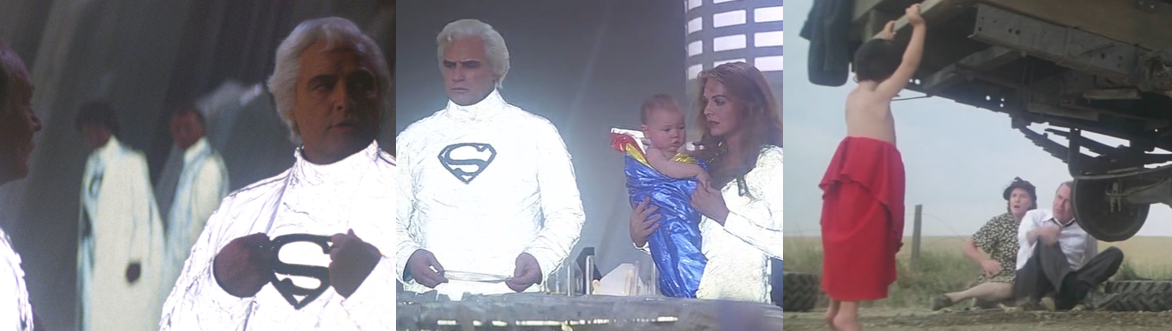
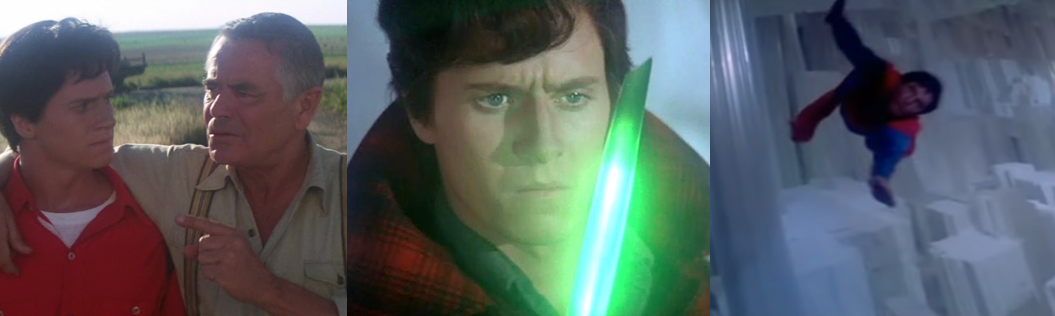
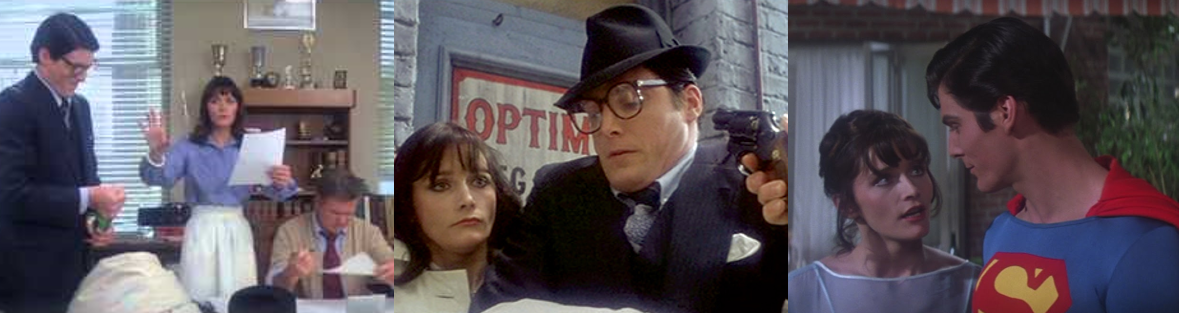
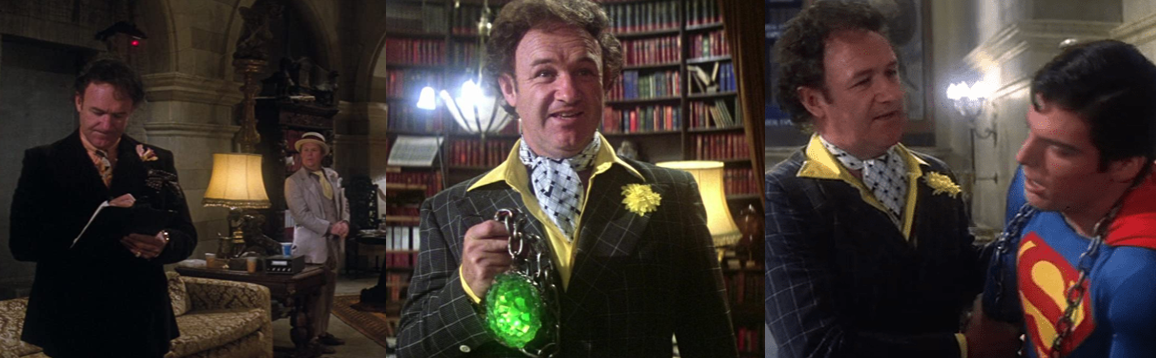
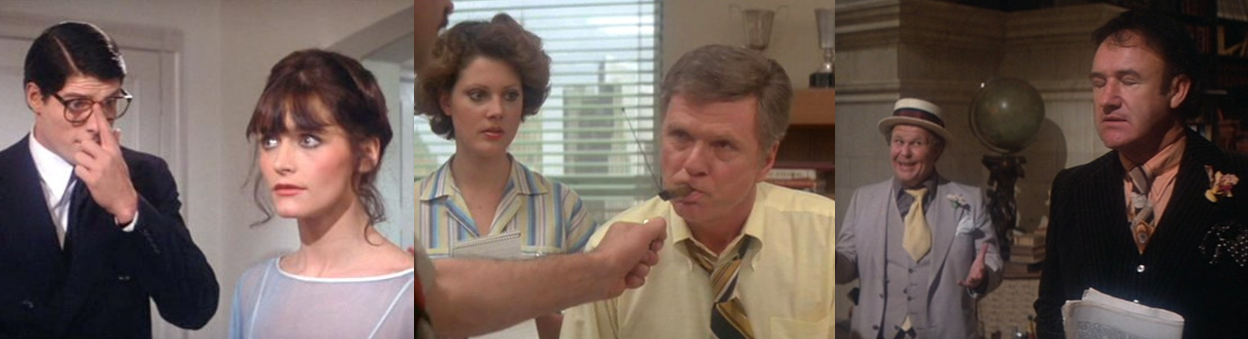
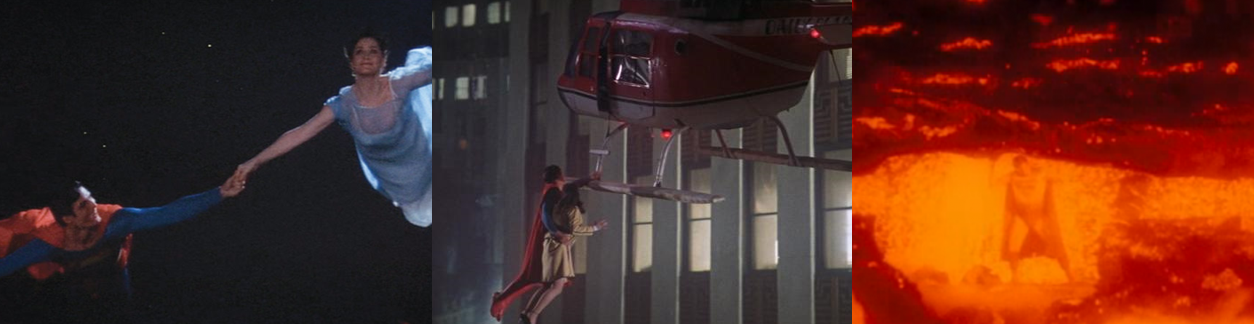
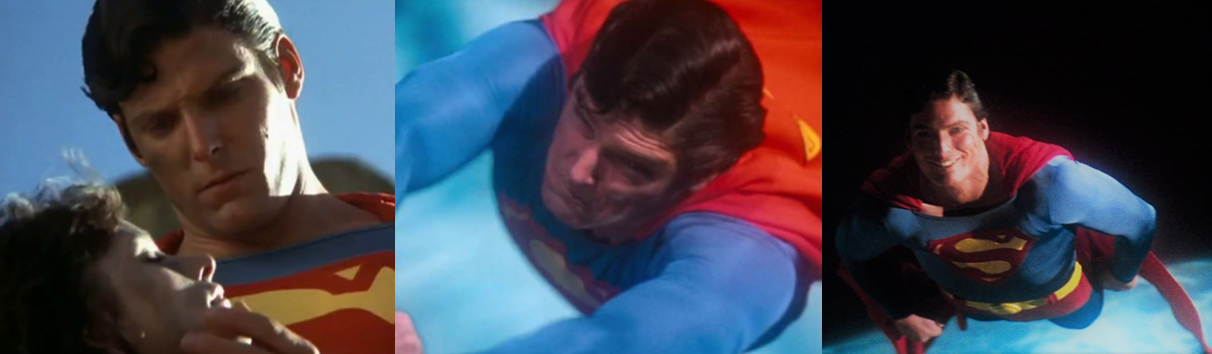





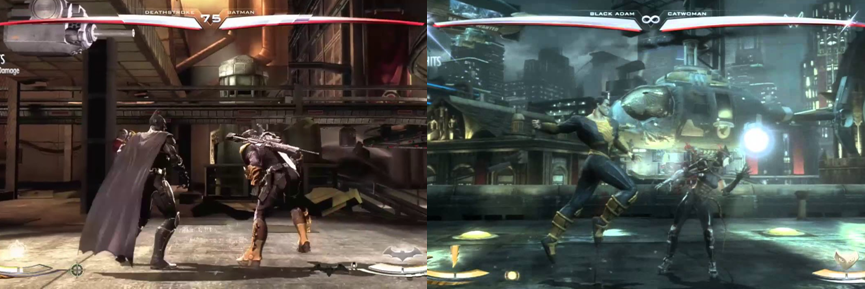

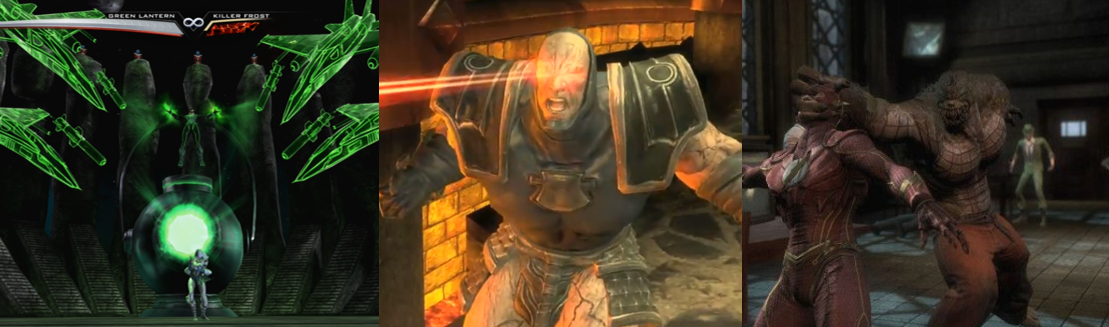
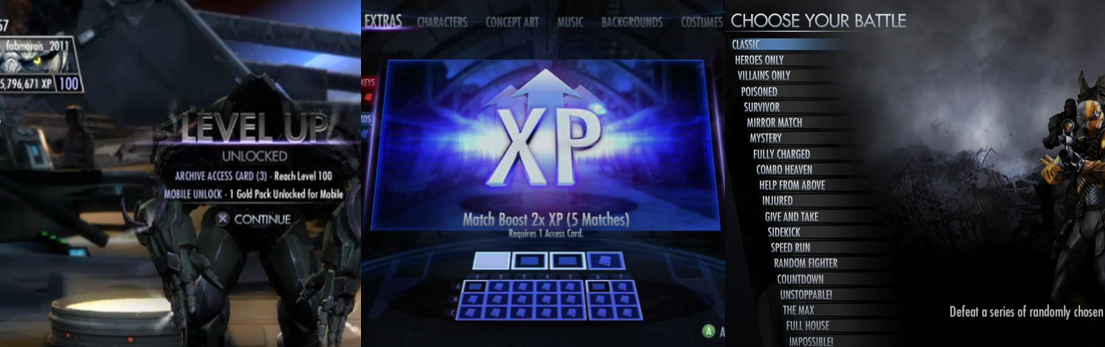
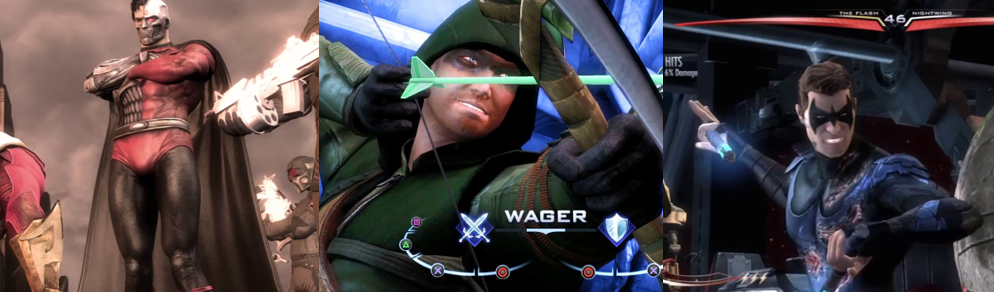
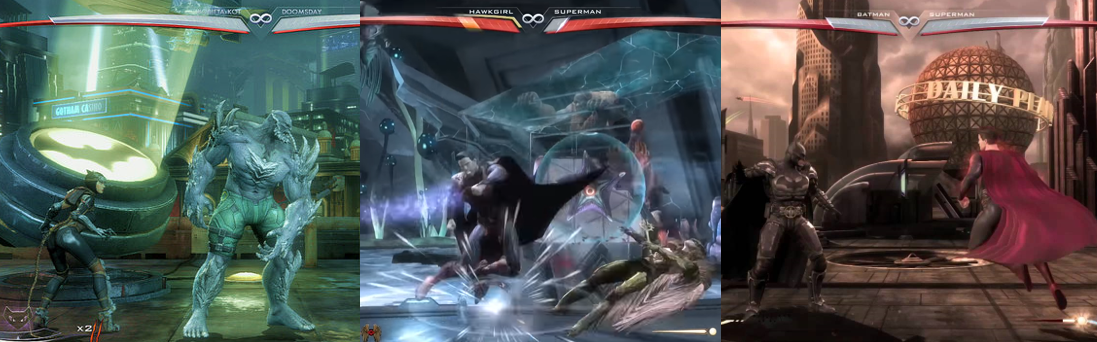







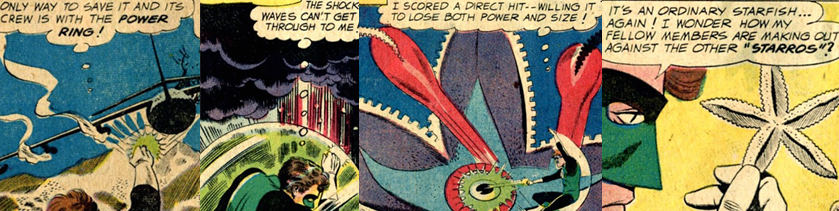
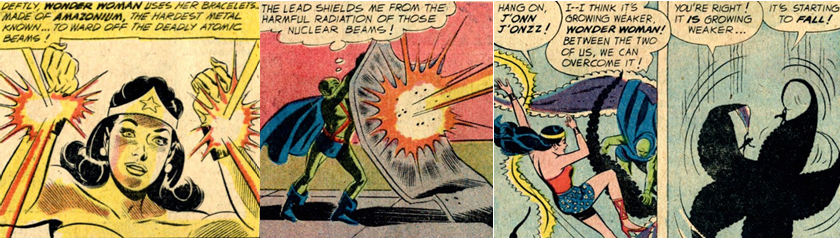
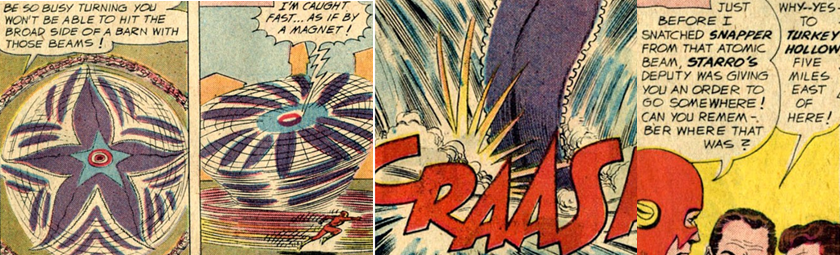
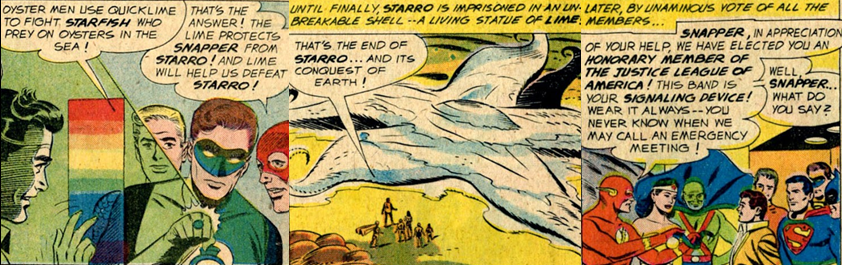
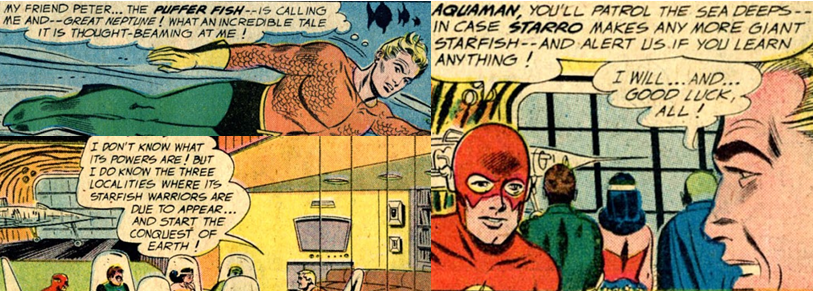
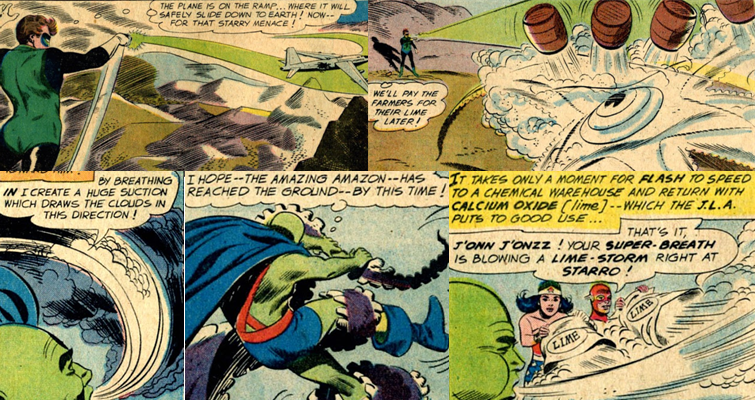
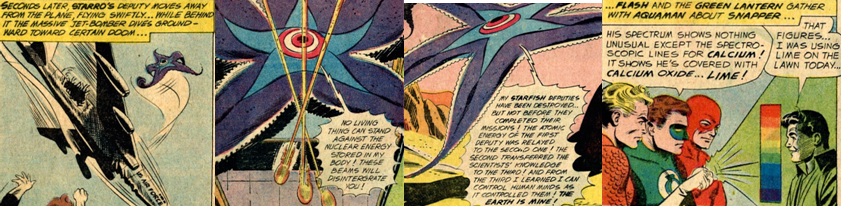


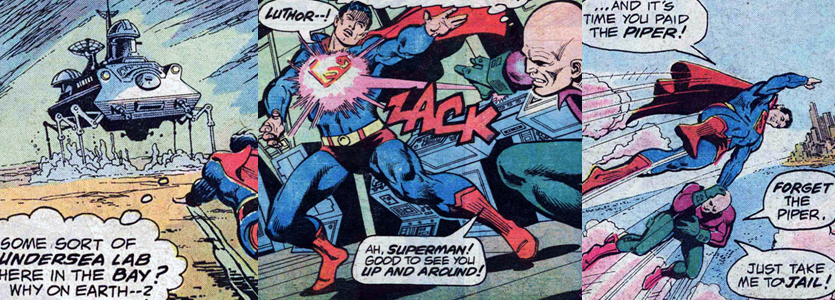
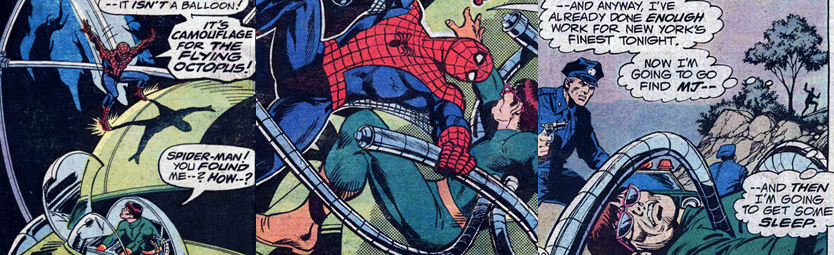
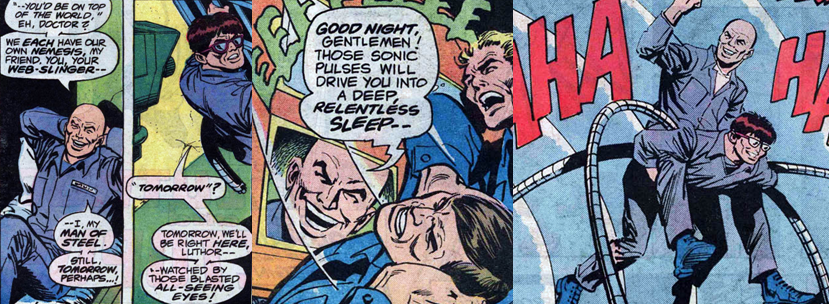
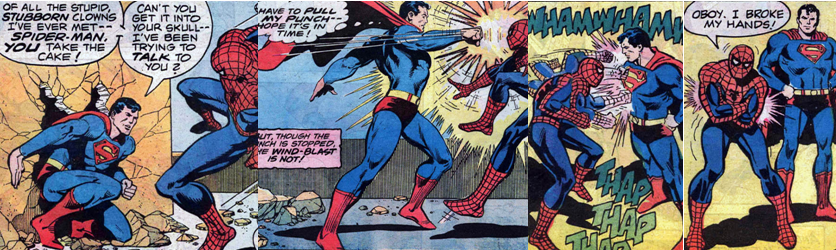
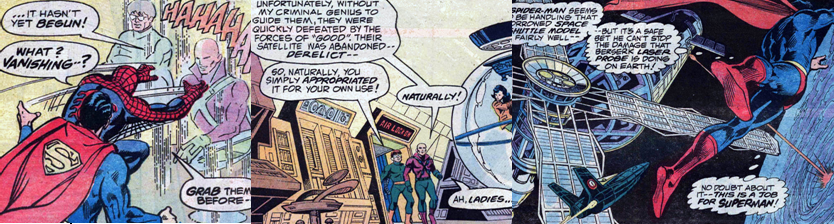
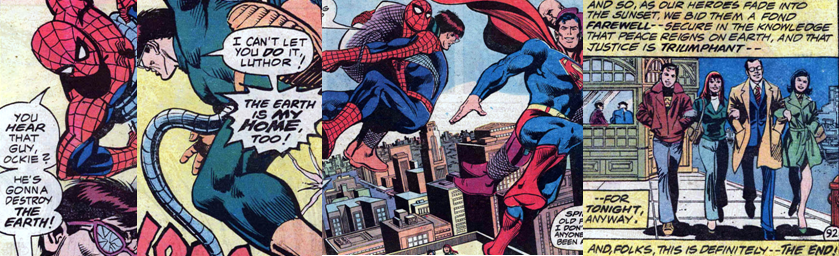
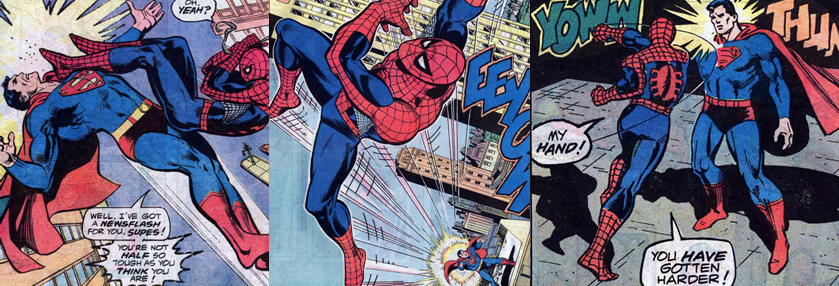
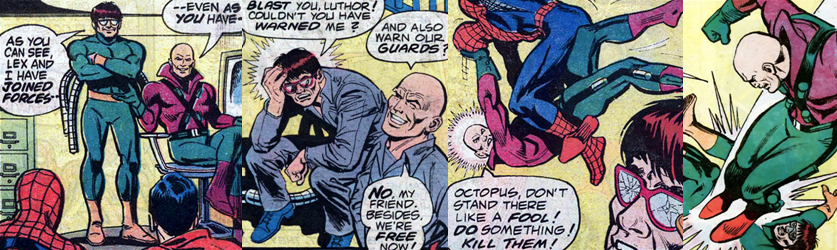


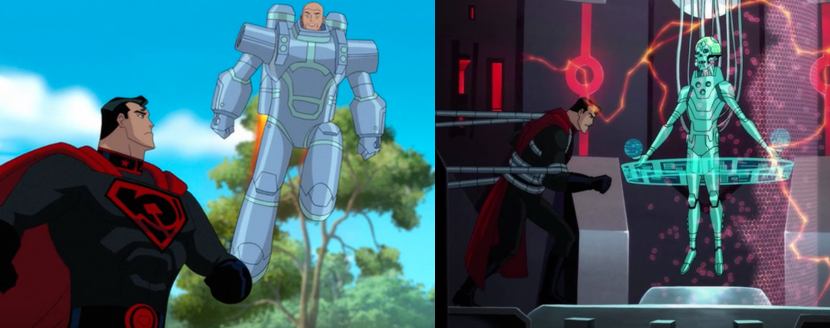



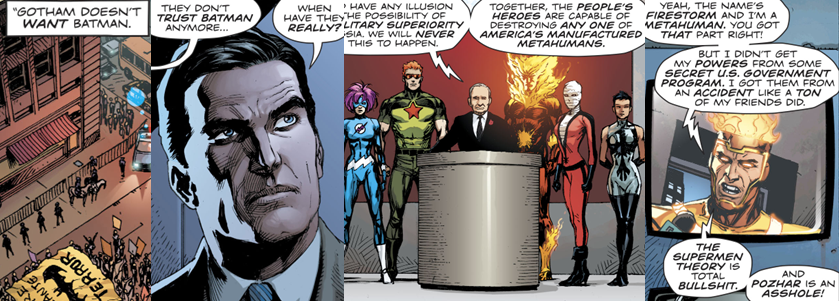
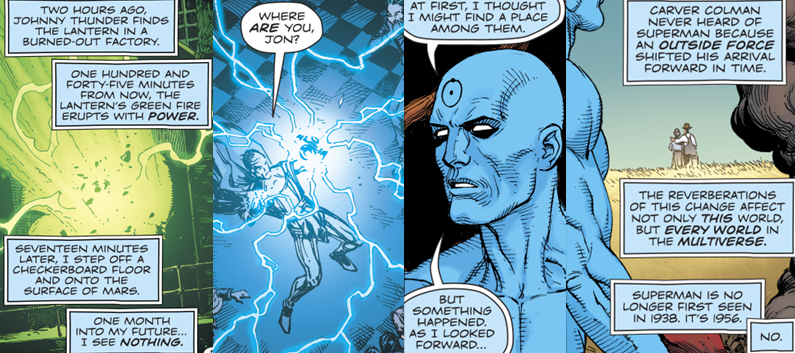
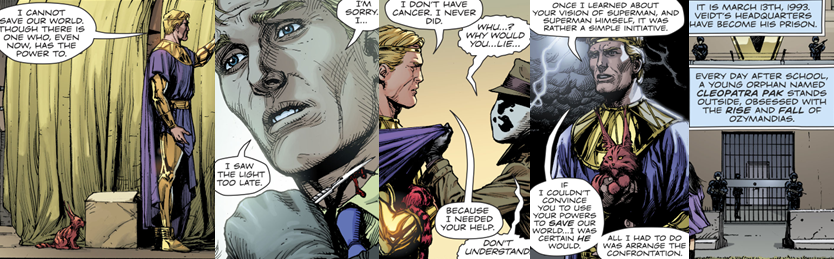
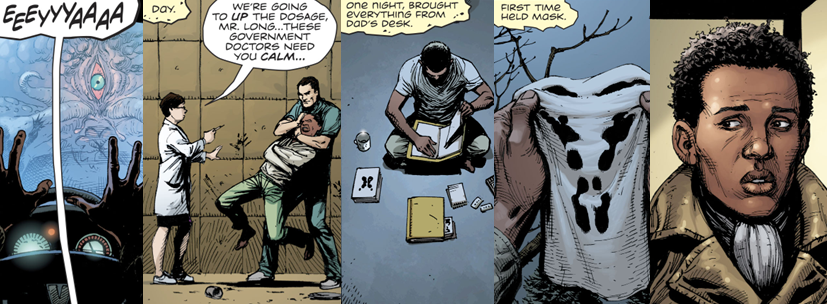
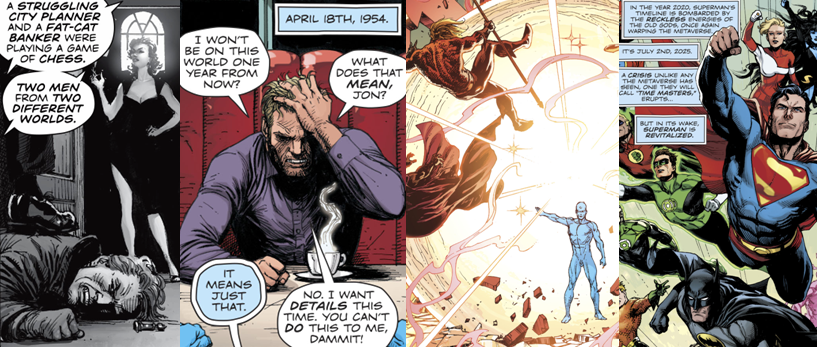
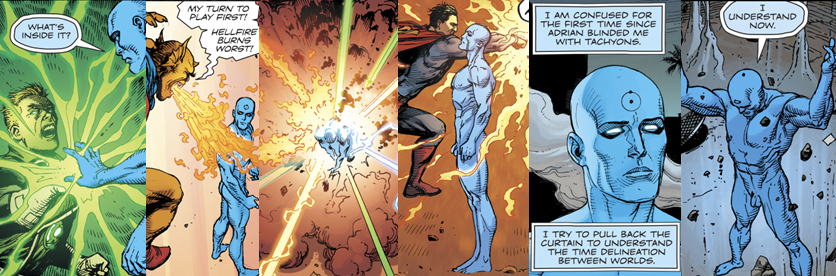
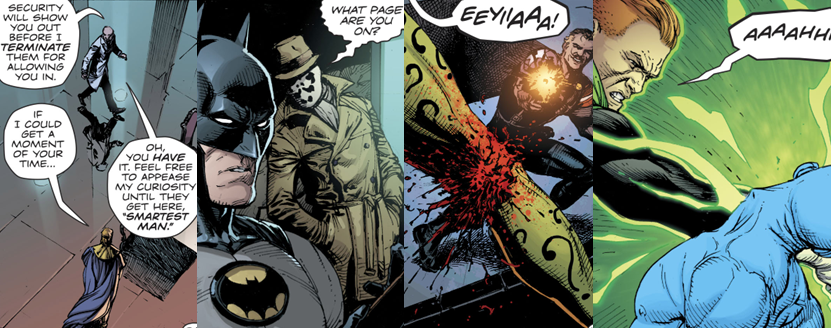
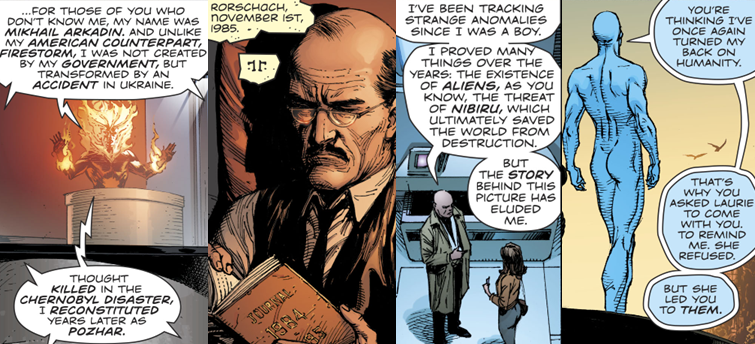
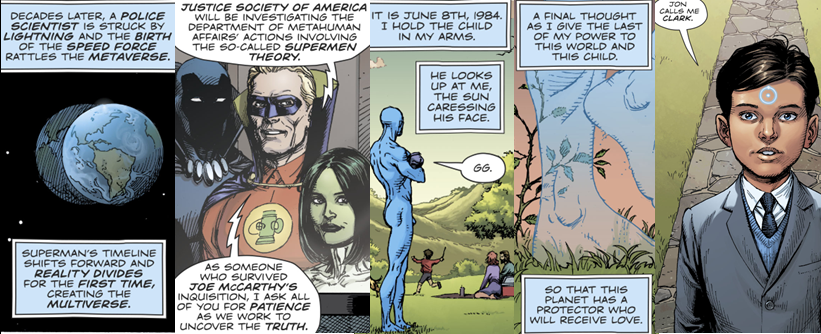

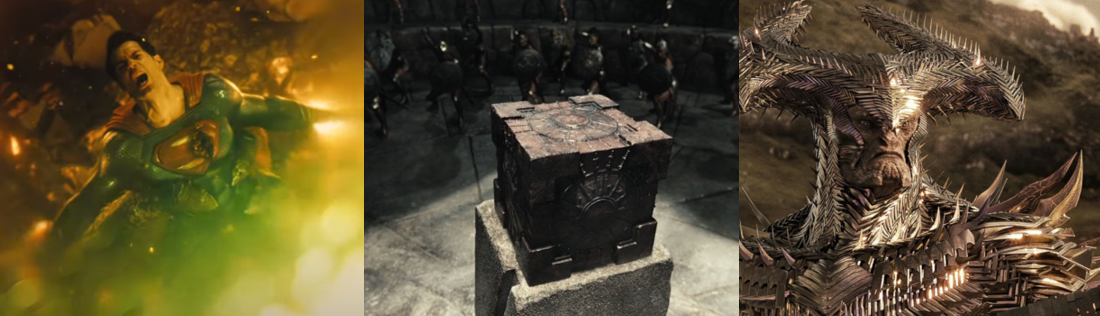
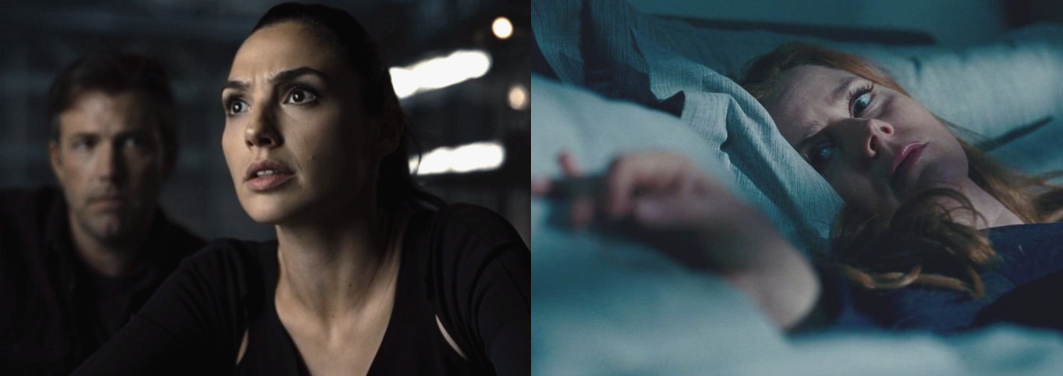


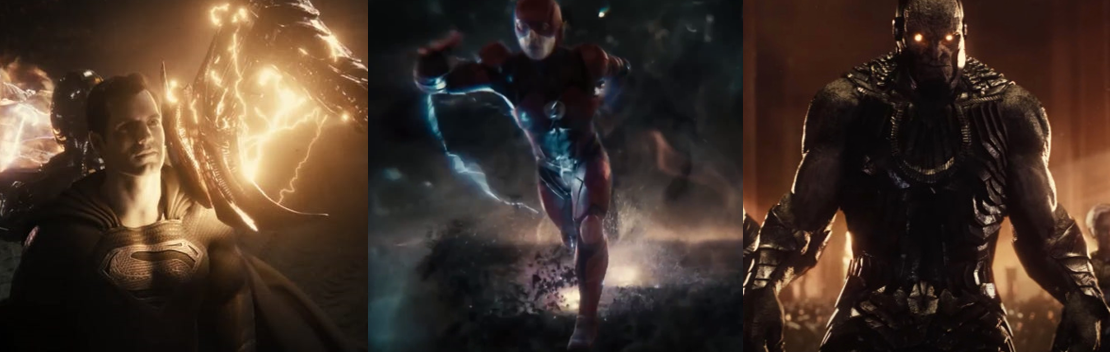


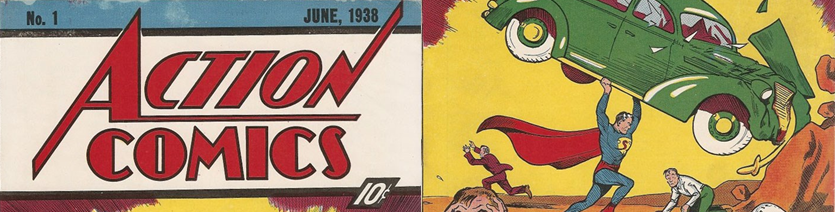
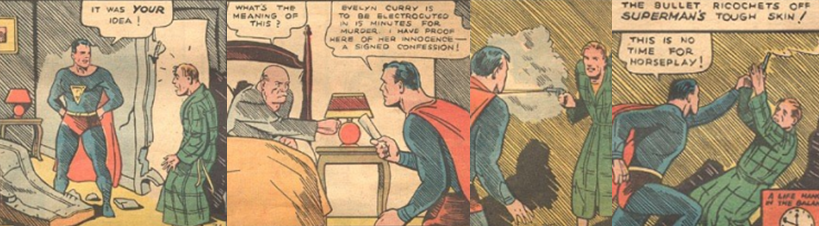
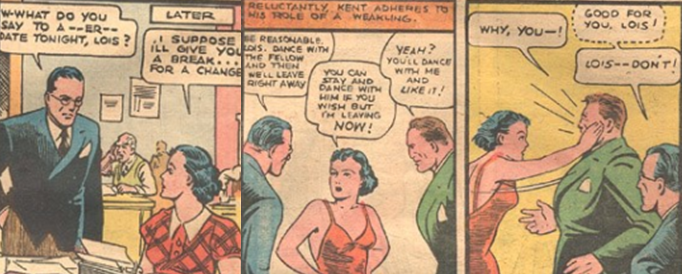
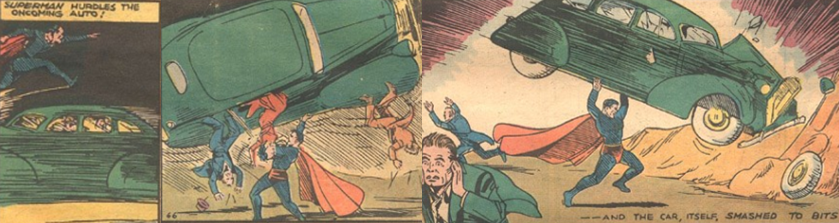
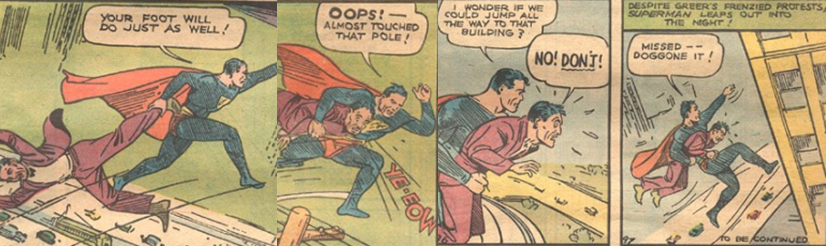
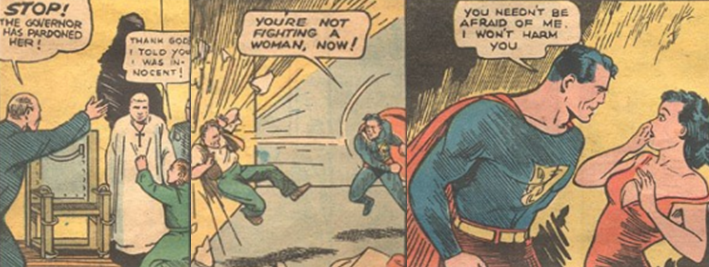
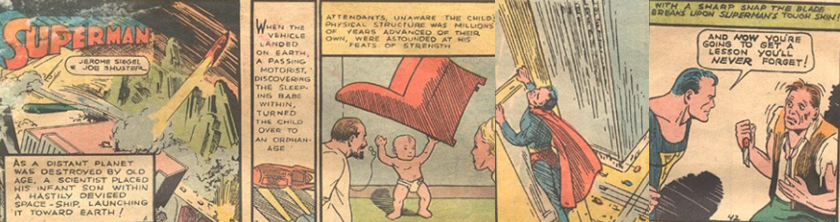


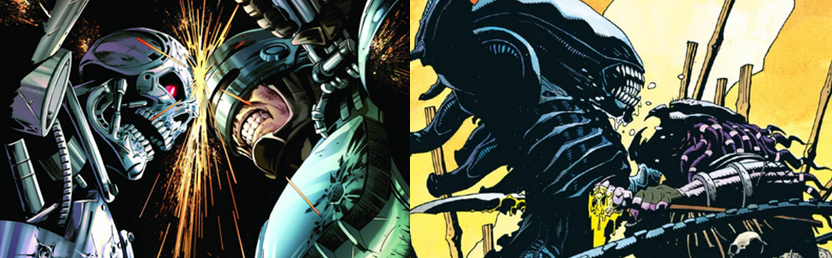
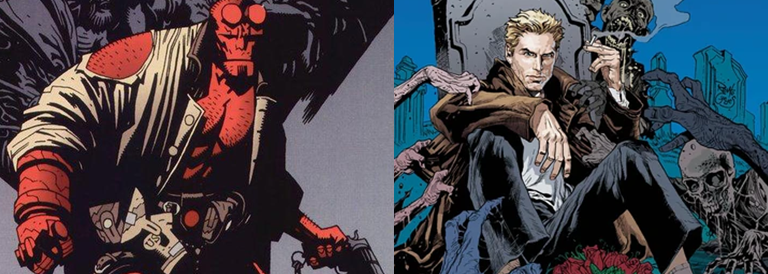
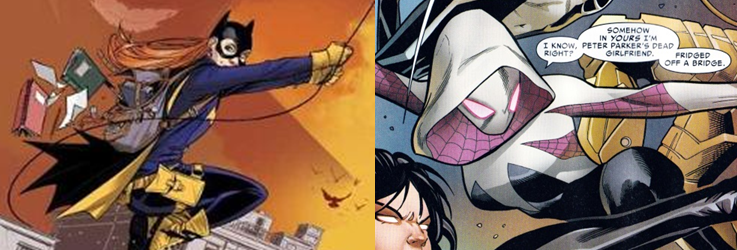
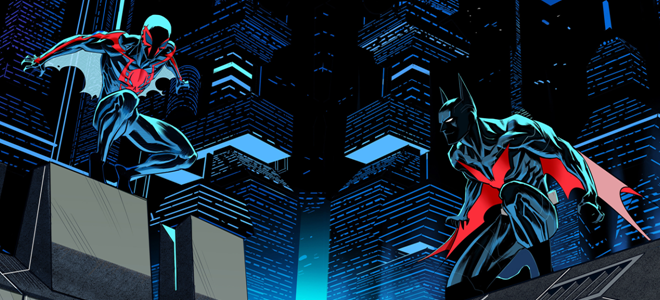
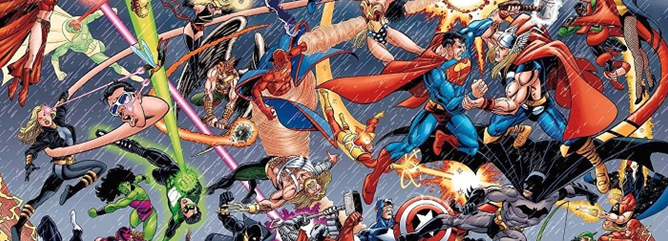


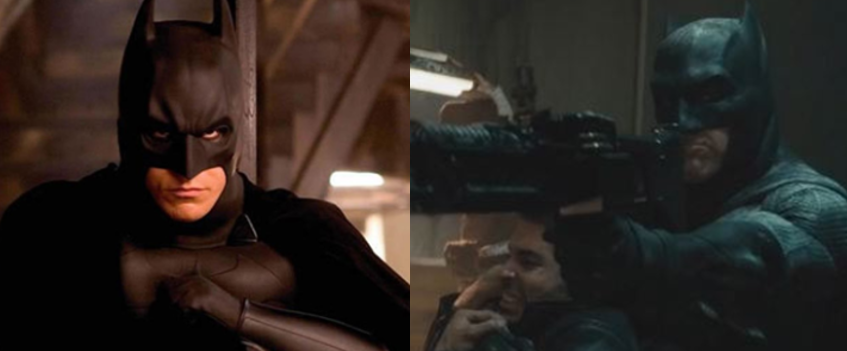

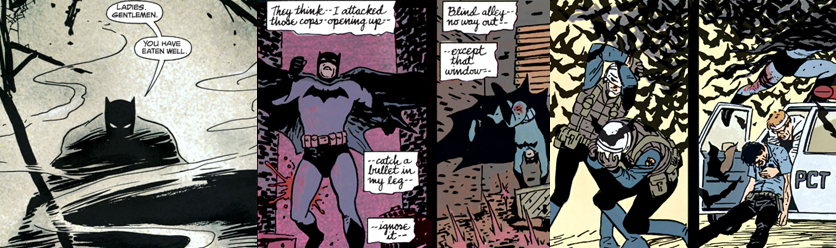
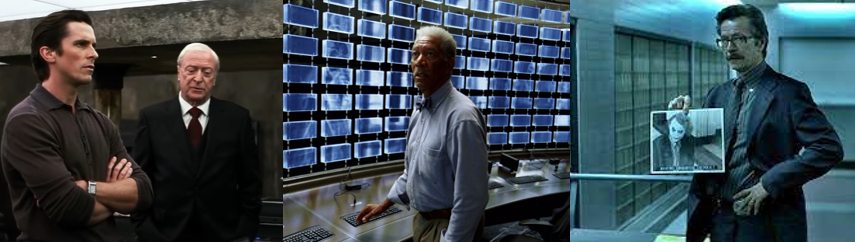



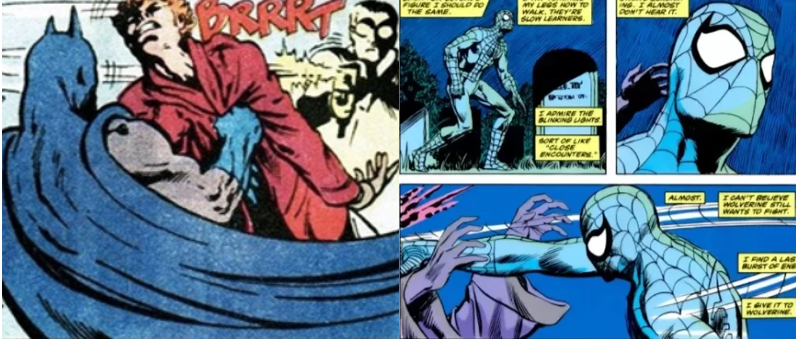




You must be logged in to post a comment.