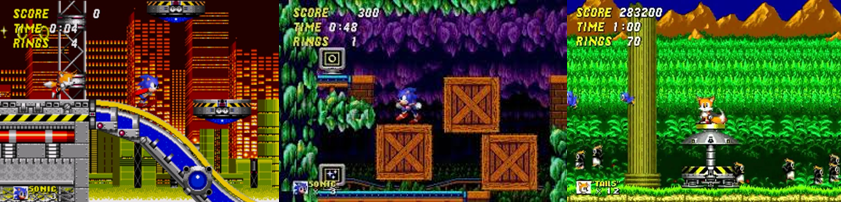
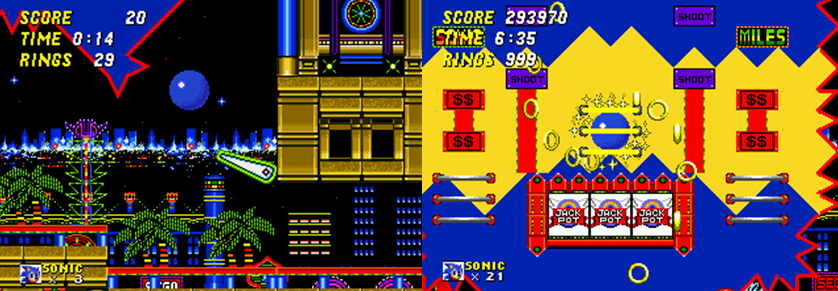
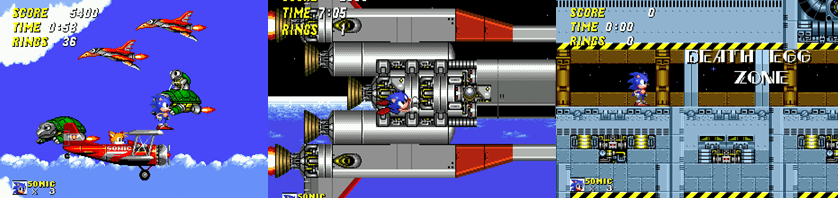
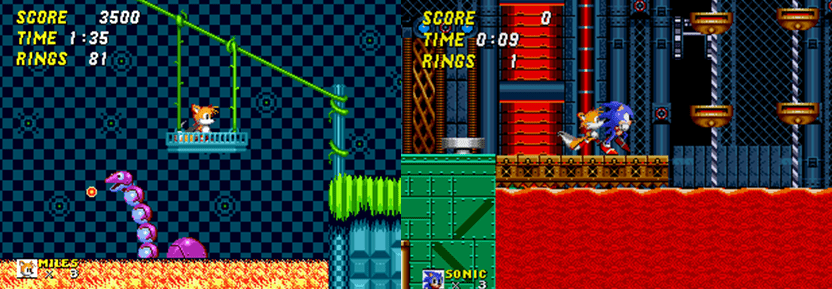
Game Corner [Sonic Month]: Sonic Boom: Shattered Crystal (Nintendo 3DS)


Sonic the Hedgehog was first introduced to gamers worldwide on 23 June 1991 and, since then, has become not only SEGA’s most enduring and popular character but also a beloved videogame icon and, in keeping with tradition, I will be dedicating an entire month’s worth of content to SEGA’s supersonic mascot.


GameCorner

Released: 11 November 2014
Developer: Sanzaru Games

The Background:
Sonic the Hedgehog is no stranger to reinvention and adaptation; as I’ve already detailed, Sonic’s design and backstory were dramatically different outside of Japan, where he was more of a snarky rock star as opposed to a Freedom Fighter who was once friends with the kindly Professor Ovi Kintobor. Sonic’s design was further altered for his jump to 3D, where he was redesigned as a more aerodynamic, anime character and many long-term Sonic fans have seen Sonic’s lore go through numerous changes so it’s honestly strange to me that there was such a negative backlash when Sonic and his friends were redesigned once more for SEGA’s CGI Sonic series, Sonic Boom (2014 to 2017). While the over abundance of sports tape was a bit strange, I was actually very much onboard with the redesigns at the time and fully believe that SEGA should have wiped the slate clean and started over with a fresh, new take on the franchise. Unfortunately, as great as the Sonic Boom cartoon was, the accompanying videogames irrevocably damaged the spin-off’s appeal; the Wii U title, Sonic Boom: Rise of Lyric (Big Red Button, 2014) was notoriously glitchy and is generally regarded as one of the worst games in the franchise. The 3DS counterpart, however, was developed by a completely different team and, while Shattered Crystal was met with criticism for its lacklustre, repetitive gameplay, it was still received slightly more favourably than Rise of Lyric.

The Plot:
In a prequel to the Sonic Boom cartoon, Sonic and his friends race to rescue Amy Rose from the clutches of the malevolent, serpentine cyborg Lyric, the recently awakened Last Ancient who seeks to claim the fragmented Lost Crystal and, with it, the power to dominate the world!

Gameplay:
Sonic Boom: Shattered Crystal is a 2.5D action/adventure platform title with a heavy emphasis on exploration, character switching, and both finding collectibles and finishing stages as quickly as possible. If you don’t mind the headaches and eye strain, you can adjust the 3DS’s slider to activate the 3D effect, which adds a decent amount of depth and causes the colourful graphics to pop out nicely enough but I prefer to have this turned off to avoid being distracted by this effect. Like in Sonic Adventure (Sonic Team, 1998), when you first start the game you can only play as Sonic and will unlock the other playable characters (Miles “Tails” Prower, Sticks the Badger, and Knuckles the Echidna) as you complete stages and advance through the story. Each character can be switched to on the fly using either the directional pad or the touch screen, allowing you to quickly swap between the different characters and their unique abilities quickly enough, but all characters share some basic abilities. They can all jump with B, Homing Attack nearby enemies, springs, and other objects by pressing B again in mid-air, sprint by holding Y (basically the same as the Boost function that has become a staple of Sonic games), perform a stomp by pressing down and X in mid-air, and bust out the “Enerbeam” by pressing A to swing from certain platforms and remove shields from enemies.
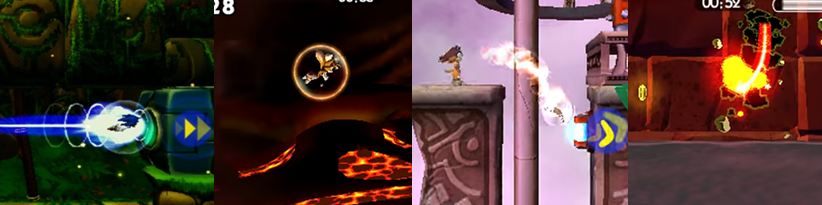
Each character can use their unique abilities to traverse stages and reach new areas and secrets.

Each character also has their own unique mechanics to help you explore the game’s locations: Sonic can perform the Spin Dash when on the group and a vertical and horizontal air dash by pressing up, left, or right and X in mid-air to smash through blue blocks, and Tails can hover by holding B in mid-air (which he can use to ride air currents but this isn’t the same as his usual flying mechanic as he’ll quickly descend downwards as soon as you start hovering), toss bombs with X, and use his submarine, the Sea Fox, in certain areas. Sticks’ main gimmick is her boomerang, which you can throw with X to activate switches, collect Golden Rings and items, or defeat enemies; you can even hold X to manually guide her boomerang for as long as the onscreen meter lasts but you’ll have to be very precise when trying to guide it through narrow passageways. Finally, there’s Knuckles, who disappointingly can’t glide or climb walls anymore but he can punch with X and burrow through specific parts of the environment to reach new areas and items; however, if his meter runs out when you’re burrowing, you’ll be deposited back where you started and take damage so be sure to hold Y to burrow faster, avoid any mines, and pop out of the ground before you lose all of your Rings! Speaking of which, as always, Golden Rings will protect you from damage and can be found…sporadically….across each of the game’s locations. Unlike pretty much every single Sonic game, though, Shattered Crystal doesn’t have a standard life system; collecting one hundred Rings will earn you a Token but doesn’t grant you an extra life and, if you fall down one of the many bottomless pits or fall into water, you’ll be deposited back to the last piece of solid ground you were on and take damage rather than dying. If you get hurt without any Rings, you’ll simply respawn at the last checkpoint you passed (or at the start of the stage) and can continue on, all of which makes the game significantly easier than most Sonic games as you never have to worry about running out of lives. This is helpful as I found myself struggling a bit with the controls; for some reason, I just didn’t find them very intuitive and it seemed like the developers went out of their way to use all of the buttons (except for L and R) when they really didn’t need to.

The map is a bit limited and areas are often locked out until you collect enough Sonic Badges.

I mentioned Tokens just now and you can earn these in every stage by finishing with a hundred Rings and/or within a specific time limit. If you take too long to finish a stage, you’ll simply miss out on the Token rather than having to restart, which is helpful, but Tokens are a mere distraction rather than an incentive to play as they’re simply used to purchase “Toys” from a shop and to add to your overall completion percentage. Each stage also hides a number of Crystal shards and Blueprints, both of which also unlock additional, extraneous features, but the main reason you’ll want to find these and finish stages is that they award “Sonic Badges” (kind of like the Emblems in Sonic Adventure) which are necessary to unlock stages. If you don’t collect enough, you’ll have to go back and replay previous stages and explore a bit more to find these items and earn a Sonic badge in order to progress the story, which is a bit like Sonic Unleashed’s (ibid, 2008) Sun and Moon Medals (though I never had any instances in that game where I was locked out of stages like I was here). Thus, the best thing to do is to take your time and explore every stage as thoroughly as possible and then replay it afterwards to go for the fastest time since the Sonic Badges are actually needed to progress. Stages in Shattered Crystal are unlike anything I’ve seen in a Sonic game before; you enter them from a limited overworld map (from which you can also access Tails’ Workshop and the aforementioned shop and travel to other islands to take on more stages) and, rather than being divided into or labelled as “Zones” or “Acts”, you’re simply presented with a large, multi-layered stage to explore.

Gameplay is spiced up a bit by some submarine, auto-run, and racing sections.

The game runs at a pretty slow speed for the most part; you have to hold Y to move faster and there are an abundance of automatic boost sections where you can literally take your hands off the 3DS since your input is not required, but speed is not the objective of this Sonic game. Instead, you need to explore high and low using each character’s abilities to find all the hidden times. Sometimes, you’ll need to grind on some rails and quickly chain together Homing Attacks or ride air currents and swing across gaps on the fly to reach these items, while others you just use the touch screen to slingshot your way to different parts of the stage to find them and work you way towards the exit. Gameplay is mixed up a little bit in the Sea Fox sections, which see you controlling the submarine in a series of underwater caves lined with mines. By touching the touch screen, you’ll activate the radar and get a brief look at the layout of the area and you can fire missiles with X to destroy mines and rocks that block your progress but be sure to keep an eye on the meter and avoid getting hit as this will cost you time (though you can, and absolutely should, collect the clocks scattered around the area to refill this meter). Each of the game’s islands also includes an auto-running section where, you (as Sonic) must race along a tunnel very similar to the Special Stages from Sonic the Hedgehog 2 (SEGA Technical Institute, 1992), avoiding electrified barriers, switching lanes, Boosting through walls, collecting Rings, and using the Enerbeam to grapple onto overhead lines. If you fail to grapple at the right time or hit a barrier, you have to start from the beginning again and you can’t switch lanes while Boosting or jumping, which is extremely annoying, but, while these sections get faster and trickier as the game progresses, they’re pretty simple to complete on one or two (maybe three) tries. Similarly, you’ll also be asked to race against certain characters (including criminally underused cameos from Shadow the Hedgehog and Metal Sonic) in sidescrolling races that remind me of those from the Sonic Rivals games (Backbone Entertainment/Sega Studio USA, 2006 to 2007) except you can’t attack your rival like in those games.

Graphics and Sound:
Sonic Boom: Shattered Crystal looks serviceable enough, for the most part; the graphics seem a little distorted at times but, to be fair, I find that to be a common issue with the 3DS. The camera is maybe zoomed out a little too much, though, or in this weird, awkward position where you can’t really see enough of what’s ahead to make the split-second jumps or actions required of you. It’s also, at times, a little difficult to see what’s part of the environment and what can hurt you; I found this especially troublesome in the Ancient City stages, where it wasn’t immediately clear that pools of water or waterfalls could damage you.

The game’s a mixture of the usual clichés but they can be quite colourful and make decent use of the 3D effects.

The game is split into six islands, each with up to three stages to play. Each island is modelled after such age old gaming clichés as a beach, a canyon, or a volcano and is distinguished by little more than a slight change in the overworld design and layout of the levels. As you progress, you’ll notice more breaks in the grinding rails, for example, or more air currents and switches, or a mixture of these and other mechanics to put everything you’ve learned along the way to the test. By the time you reach the final island, Air Fortress, the game finally ditches the hint balloons and leaves you to figure out for yourself to switch to Tails at the last second or has you desperately trying to hit switches with Sticks as platforms appear and disappear beneath your feet. Sadly, there really isn’t all the much to make each island unique; the aforementioned temporary platforms and rails look the same no matter which island you’re on and it’s rare that stages get a chance to be much more than a skin swap.
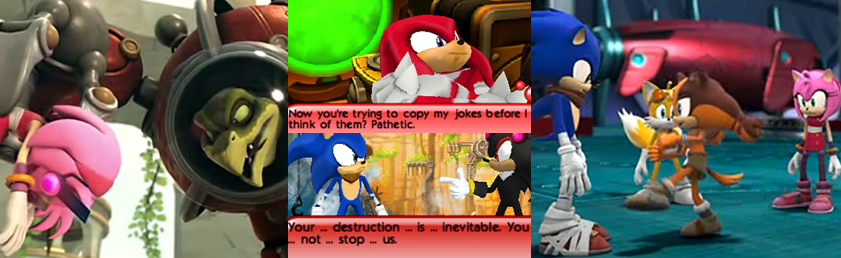
Sadly, the game relies too much on speech bubbles to tell its story rather than CG cutscenes.

The Scrapyard and Robot Facility give it a go by introducing a grimy, industrial aesthetic and substituting spikes for jet flames, but you’ll see these elements repeated in the Volcanic Caverns and Air Fortress, which takes away from their distinctiveness. Some stages, like the Ancient Ruins, remind me a little of similar “Ruins” stages from other Sonic titles, which is a nice call-back if nothing else. The game’s story is told using both CG cutscenes in the style of the Sonic Boom cartoon and partially animated sequences where characters talk using speech balloons that are often way too big for the words they are saying. Voice clips are also used in these sections, and during gameplay, and the writing is about on point for the show, being an amusing mixture of bickering, confidence, and absurdity amongst the main four characters. As for music, I can’t really say I was massively impressed with what Shattered Crystal had to offer; it was catchy and fitting enough but nothing too special and the sound effects were the same recycled tunes we’ve heard over and over again from recent Sonic releases.

Enemies and Bosses:
In a rare change of pace for a Sonic title, Shattered Crystal does not feature the traditional Badnik enemies we’ve all come to know and love; indeed, Dr. Eggman himself appears only in one, very brief scene and he and his robot army are, instead, supplanted by Lyric and his…robot army. Lyric’s robots are very similar to the Badniks of old, firing projectiles your way and generally being a nuisance, but lack a lot of the character and charm of Sonic’s usual enemies. Occasionally, you’ll have to use the Enerbeam to relieve an enemy of its shield or maybe switch to Tails or Sticks to attack from a distance but, for the most part, robots exist simply to be an annoyance or act as an alternative route to new areas and goodies, often respawning in order to fulfil this function, and aren’t even made satisfying to smash since no little woodland critters are released upon their destruction. In another change of pace for not just a Sonic game but videogames in general, Shattered Crystal doesn’t actually have any boss battles except for the final bout against Lyric. Instead, you’ll race down the Worm Tunnels as a giant mechanic worm tears up the environment around you; the worm itself, however, cannot harm you and all you really need to do is stay alive through quick lane switching to win.

Lyric, the only boss in the game, is a joke and easily beaten with the bare minimum of skill.

In fact, the closest thing the game has to traditional boss battles before the finale are the racing sections, which have Sonic race against Sticks, Shadow, and Metal Sonic towards a goal, hopping from springs, rails, swinging over gaps and dashing through objects as you go. These can be a bit challenging as your rival is often only a few steps behind you so it’s best to try and take the higher path wherever possible and keep your thumb pressed to the Y button to sprint ahead. Once you reach the Air Fortress, you’ll have to battle Lyric in a three stage boss battle that is broken up by similar race sections; Sonic’s friends are all captured, completely neutering the game’s core mechanic and theme of teamwork, and you must chase after them between Lyric’s phases. When you battle Lyric, it’s on a progressively smaller and dangerous platform; if you fall or are knocked off, you’ll respawn back on it but it’ll cost you Rings or possibly kill you if you don’t have any Rings left. Lyric’s attacks increase in speed and ferocity as the battle progresses and you’re given less time to counterattack but, fundamentally, the core strategy remains the same and ridiculously easy throughout the fight: avoid his vertical and horizontal lasers, dodge the missiles (grabbing any Rings as they appear), and Homing Attack his tentacles to dispel his energy shield and Homing Attack his cockpit (which you can also attack when he fires his horizontal laser).

Power-Ups and Bonuses:
Just as it’s disappointingly light on boss battles, Shattered Crystal is equally light on power-ups; you’ll find capsules containing Rings and a protective shield in the stages but that’s all. There is no speed up shoes or invincibility monitors here, no Special Stages to play or Chaos Emeralds to collect for a power-up, and characters are limited to their specific abilities, with no option to upgrade them or learn new ones.
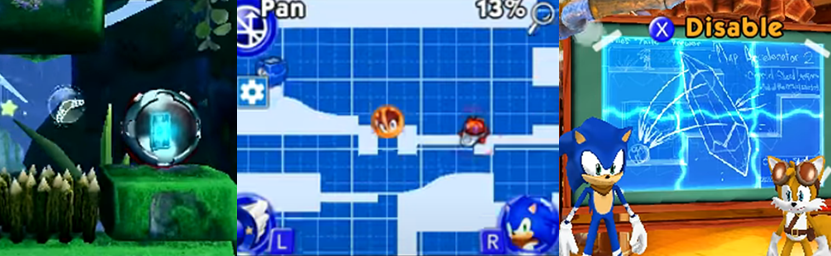
Explore to find Blueprints, which can be assembled to earn upgrades and make the game even easier.

If you collect all of the Blueprints in each stage, though, you’ll be able to build an upgrade at Tails’ Workshop by completing a simple jigsaw puzzle mini game. These allow you to upgrade the map up to three times to highlight secrets and nearby bonuses, grant you an instant shield at your first checkpoint, cause Rings to be attracted to you, halve the amount of Rings you lose when taking damage, and instantly destroy enemies with the Enerbeam or whilst sprinting (effectively turning this function into the actual Boost function).

Additional Features:
Shattered Crystal makes every effort to encourage you to explore every stage with each character in order to find all of the Crystal shards and Blueprints and to meet the criteria to win every Token in the game (which you can also earn by working out with Knuckles every twenty-four hours). Sadly, as mentioned, these Tokens are pretty useless; if you want to get 100% and see all the toys the game has on offer, it’s not a bad incentive to keep playing but it’s not that great either as the toys basically amount to character models of the characters and enemies and not much else.
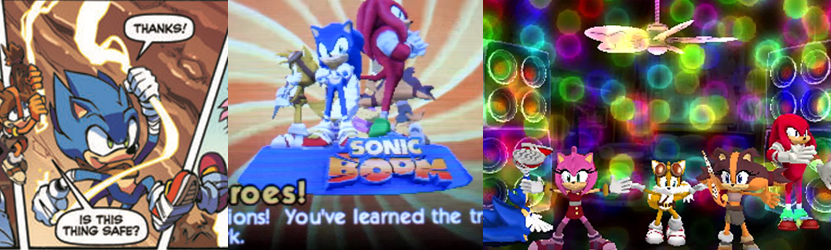
Read a comic, collect some toys, and watch the characters dance. All honestly really rubbish bonus features.

Thankfully, you don’t need to find all of the Crystal shards to finish the game but, thanks to the map upgrades, it’s very easy to find them all; when you find them, you can restore the titular shattered crystal at Sticks’s Burrow and, once it’s fully restored, you’ll get the grand prize of a Purple Token and a special toy of the main characters. If you then collect all of the Sonic Badges, you can unlock Amy’s House and are treated to an amusing (if awkward) scene of the five main characters dancing to a bit of disco music and…that’s it. You can’t unlock Amy as a playable character, don’t unlock any additional forms or skins, and the only reason you’d really want to go back and find everything is so that your save file reads 100%. You can also visit Sonic’s Shack to watch the game’s cutscenes and read a bonus comic, and use the 3DS’ Streetpass function and to connect to the Wii U but I have no idea what these functions do, if anything.

The Summary:
I’d heard nothing but negative feedback regarding Sonic Boom: Shattered Crystal; this didn’t necessarily put me off the game as, being a die-hard Sonic fan, I’m happy to play any and all Sonic titles and make my own opinions but I had put this game off for way too long and was happy to finally bite the bullet and experience it for myself. Overall, I have to say that it’s nowhere near as bad as I was led to believe; it’s not great, certainly, and is a very different type of Sonic game but it’s pretty simple to play and complete and was fun enough as a brief distraction. Having said that, though, it’s a tough game to recommend; it’s annoying that you can’t destroy enemies by jumping on them (you have to use the Homing Attack or character’s abilities) and it’s very tedious to lock out your progression with the Sonic Badges and force you to replay other stages just to progress the story. Similarly, even with all the map upgrades, you still need to explore every stage to the fullest as Blueprints and Crystals will only appear when they’re nearby and the lack of a real reward for finding everything is a big letdown. Still, there’s enough here to distract you (especially younger players) for a day or two and it’s not bad as an action/adventure platformer if you keep your expectations low.

My Rating:

Rating: 2 out of 5.

Could Be Better

What did you think about Sonic Boom: Shattered Crystal? Did you enjoy the game or were you put off by the emphasis on exploration instead of speed and action? What did you think to the different characters and which was your favourite to play as? Were you disappointed with the game and, if so, what were some of the flaws that put you off it? What did you think to the Sonic Boom cartoon, redesigns, and the introduction of Sticks? Would you have liked to see SEGA replace the existing Sonic designs with those from Sonic Boom and apply them to more traditional Sonic games? Whatever your thoughts on Sonic Boom: Shattered Crystal, good or bad, leave a comment below and be sure to check out my review of the sequel.

Movie Night: Sonic the Hedgehog 2

Released: 8 April 2022
Director: Jeff Fowler
Distributor: Paramount Pictures
Budget: $110 million
Stars: Ben Schwartz, Jim Carrey, Colleen O’Shaughnessey, Idris Elba, James Marsden, Tika Sumpter, and Tom Butler

The Plot:
After banishing Doctor Ivo Robotnik (Carrey) to a mushroom planet, Sonic the Hedgehog (Schwartz) is determined to defend Green Hills. However, when Dr. Robotnik returns alongside Knuckles the Echidna (Elba) in search of the mysterious Master Emerald, Sonic must join forces with Miles “Tails” Prower (O’Shaughnessey) to find the emerald before it’s too late.

The Background:
As a principal figurehead in the escalating Console War between Nintendo and SEGA, Sonic has seen his fair share of adaptations, starring in numerous comic books and animated ventures over the years, with each one altering his appearance and backstory and making him one of the most iconic and, yet, convoluted videogame mascots. Development of a Sonic the Hedgehog movie can be traced back to 1993, when the character dominated television screens with his numerous animated adventures, but, thanks to numerous legal and creative issues, the best Sonic had to settle for was the gorgeous original video animation (OVA), Sonic the Hedgehog: The Movie (Ikegami, 1996). However, after Paramount Pictures acquired the rights to the franchise, development of a live-action/CGI hybrid movie finally entered production in earnest; fans, and audiences the world over, were horrified when the first teaser released, however, and the studio scrambled to redesign Sonic into something a little less nightmare-inducing. Surprisingly, Sonic the Hedgehog (Fowler, 2020) bucked the trend of most videogame adaptations by being critically and commercially successful, and a sequel was soon pushed into development. Also surprisingly, star Jim Carrey expressed interest and excitement in returning to the role and portraying a more physically accurate version of Dr. Robotnik, and the cast was bolstered not only by expanding upon Tails’ brief cameo at the end of the first movie but also by the genius decision to cast Idris Elba as Knuckles and introduce more elements from the videogames that were missing from the first film. Sonic the Hedgehog 2 was met with fairly positive reviews that praised the action and humour but criticised the runtime and pacing. The film also grossed over $400 million worldwide, fully justifying both a third movie, and a Knuckles-centric spin-off, despite Carrey announcing his retirement from acting.

The Review:
Like many, I’m sure, I was very surprised by how good Sonic the Hedgehog turned out. Considering I felt (and, to be fair, still feel) like an all-CGI movie would’ve been a better, less restrictive, and cheaper option (with Carrey the only human character and donning a fat suit), it was a pretty fun road trip adventure that did a decent job of capturing the spirit of the videogames while also presenting a new take on SEGA’s super-fast mascot. All of the fan service definitely helped, as well; while I had the post-credits scene spoiled for me, I was very happy to see an echidna tribe cameo at the start of the film and felt like the film did just enough to establish its premise to build upon its lore in sequels.

Sonic is determined to use his powers for good, which makes him somewhat reckless and impulsive.

Sonic the Hedgehog 2 finds Sonic in a much more stable and confident position than where he started in the first film; where he was once a lonely outcast, hiding out and barely really understanding his incredible supersonic speed, he’s now a happy and energetic bundle of spines thanks to being taken in by Tom (Marsden) and Maddie Wachowski (Sumpter). Pumped up from discovering his superspeed can allow him to do incredible things, Sonic has been trying to make a name for himself as a superhero in nearby Seattle, however his enthusiasm has a tendency to make him reckless; rather than simply allow local law enforcement to handle such occurrences as bank robberies and high-speed chases, Sonic feels obligated to step in and help out, which generally results in cartoonish chaos due to his immaturity. Though Tom tries to explain to Sonic that his powers will be useful in time, and that his moment to shine as a hero is inevitable, he also stresses that Sonic is still just a kid and needs to let that moment come naturally rather than force it. Thankfully, Sonic doesn’t outright reject his friend’s advice, but he does feel a duty to make Longclaw’s (Donna Jay Fulks) sacrifice worthwhile and to make her proud by using his powers to help others and protect his newfound friends. While they were a central aspect of the first film, Tom and Maddie really don’t get all that much to do here; they treat Sonic as a combination of a pet, a friend, and a surrogate son and the three have an adorable family unit going on, which is nice to see. There’s no dissension between them, even though they may despair of Sonic’s recklessness and immaturity at times, but they don’t really factor all that much into the plot beyond Tom being a loyal, if goofy, friend and Maddie being a supportive influence.

While the human characters are pushed aside, Sonic gains a new friend in Tails.

I can’t say that I’m massively disappointed by this, as I’d much rather these films focus on the videogame characters, but it does lead to some odd pacing moments. The big gag of the film is that Maddie’s sister, Rachel (Natasha Rothwell), still doesn’t care for Tom and doesn’t want him ruining her wedding. Unfortunately for Rachel, Tom accidentally swaps out her wedding ring for one of Sonic’s Golden Rings, causing her wedding to be ruined by a snowstorm, and then there’s a noticeable lag in the second act as Rachel and Maddie team up to help rescue Sonic from Commander Walters (Butler) of the Guardian of United Nations (G.U.N.) and confront her would-be husband, Randall (Shemar Moore), in scenes that really interrupt the pace of the film. Thankfully, Tails is on hand to add to Sonic’s circle of friends; here portrayed as a young mechanic from another world who is awestruck by Sonic’s speed and bravery, Tails travels to Green Hills to warn Sonic of Dr. Robotnik’s return and gets swept up in his globe-trotting adventure to find the Master Emerald. A skilled inventor, Tails lacks confidence in a fight and is plagued by self-doubt after a lifetime of bullying for his extra tail, which allows him to fly by spinning his tails like helicopter blades. However, his self-esteem is boosted by Sonic’s mere presence as he pushes Tails to accompany him to Siberia, encourages him to compete in a protracted and lengthy dance-off, and is impressed at the young fox’s inventions, which include a translator, a laser pistol, and a hologram projector. Tails arrives at just the right time as, while Sonic has found a stable family unit with Tom and Maddie, he still doesn’t really have any real friends, much less anthropomorphic kin such as himself; having observed Sonic for some time using his machines, Tails is eager to just be around him and is overjoyed when they form a fast friendship due to the pressing nature of the current crisis. Tails gives Sonic the chance to pay forward the kindness Tom showed him in the last film, but his attempts to show Tails Earth customs tend to lead to cartoonish pratfalls or are cut short by Dr. Robotnik’s repeated attacks. However, Sonic quickly takes a liking to Tails and sees him as a little brother, of sorts; he’s distraught when Tails his hurt because of his recklessness and fully prepared to put himself on the line to keep his new friend from being hurt again, but comes to trust in him, and their unlikely ally, for the finale, which requires a team effort rather than Sonic shouldering the burden alone.

Dr. Robotnik returns more wacko than ever, and joined by the aggressive and prideful Knuckles!

While Tails’s intentions are noble, he sadly arrives too late to warn Sonic of Dr. Robotnik’s return, or the presence of Knuckles, a super-strong echidna from a long-dead tribe who is as prideful as he is aggressive. Having been marooned on the Mushroom Planet for nearly a year, Dr. Robotnik has gone even more wacko than he was before; embracing his baldness and his wild moustache, he spent his days trying to brew tea from the native foliage and constructing a machine to attract the attention of other lifeforms using one of Sonic’s quills. This led Knuckles to him, and the mad scientist was easily able to foster an alliance with the headstrong echidna by leading him to Sonic, whom Knuckles blames for the death of his father and his tribe since his people never returned from their mission to retrieve the Master Emerald’s location from Longclaw. Exhibiting physical abilities similar to Sonic’s Knuckles brings a raw, primal power that, coupled with his naïvety and pride, make him a formidable foe. Thanks to Knuckles’s blind vendetta against Sonic, Dr. Robotnik s able to reunite with Agent Stone (Lee Majdoub), reassume control of his machines, and begin a quest to locate the Master Emerald to not only get revenge against Sonic but to subjugate the entire world to his mad desires since the Master Emerald has to power to turn wishes into reality. Jim Carrey is clearly having the time of his life as Dr. Robotnik, meaning he devours every scene he’s in and is a constant highlight of the movie, but this does come with some detriments; some scenes of him going off the rails drag on a little, I felt like Agent Stone was a waste of screen time, and it’s still disappointing that he’s not wearing a fat suit. Knuckles, however, was a fantastic inclusion; he has a real weight to him, and his habit of taking everything literally reminded me of Drax the Destroyer (Dave Bautista) and made for some fun moments. Rather than being a complete moron as in some depictions, Knuckles is a misguided and sheltered warrior who’s burdened by his losses and is trying to fulfil his destiny, just like Sonic, and this means he has some heart and poignancy alongside being a hostile meathead.

The Nitty-Gritty:
The first movie was all about telling a heartfelt story about the power of friendship, and helping Sonic to move past his traumatic childhood and become an accepted part of Tom and Maddie’s life. Here, the central theme of the movie is destiny; Sonic is in a rush to realise his true calling and to make Longclaw proud, just as Knuckles is so blinded by his duty to retrieve the Master Emerald that it makes him susceptible to Dr. Robotnik’s obvious manipulations. Despite his recklessness, Sonic’s heroic nature allows him to recognise when his friends (Tom, mostly) are trying to help him rather than push them away, and, while he’s determined to oppose Dr. Robotnik and fend off Knuckles, he eventually reaches a point where he can see that Knuckles has been manipulated by the mad doctor and so focuses on trying to keep the Master Emerald out of Robotnik’s hands rather than waste time fighting Knuckles. Fans of the Sonic franchise will find Sonic the Hedgehog 2 as littered with Easter Eggs and reference as the first film: Tom’s ring tone is the iconic Sonic theme, Agent Stone uses a brewery called Mean Bean as cover, and there more than a few visual cues taken from Sonic Adventure (Sonic Team, 1998) such as Sonic snowboarding away from an avalanche, the Seattle sewers exploding in water geysers, and Sonic striking a pose ripped straight from the Dreamcast cover art. While I remain somewhat disappointed that these films don’t take place in a fantasy, full-CGI world, these references help to alleviate that and the addition of Knuckles only helps to infuse further visual cues from the games. The hidden temple is almost exactly like the Echidna architecture seen in Sonic Adventure, and the interior is heavily inspired by the traps, water, and layout of Labyrinth Zone.

After going head-to-dread, Sonic and Knuckles team up to put a stop to Robotnik’s mad schemes.

The battles between Sonic and Knuckles are easily the film’s biggest highlight, though; exhibiting superhuman strength, Knuckles can both keep up with Sonic’s speed, leap vast distances, and easily overpower him with a single punch, crackling with red energy, Knuckles can scale walls, catch Sonic’s spinning form in mid-air, and unleash a flurry of punches without breaking a sweat, and his incredible strength is matched only by his no-nonsense attitude as he doesn’t hesitate to smash first and ask questions later. Dr. Robotnik returns in full force with his army of drones; however, while some resemble Buzz Bombers, his traditional Badniks continue to be absent from the films. He does pilot a far more faithful Egg-O-Matic pod this time around, though, and Carrey is constantly wriggling his fingers and striking wild poses as he directs and controls his machines to unleash laser blasts and a barrage of missiles at every turn. Dr. Robotnik’s true goal, however, is to seize the all-powerful Master Emerald for himself; thanks to hacking Sonic’s phone, and his network of satellites, Dr. Robotnik is easily able to track Sonic’s movements after Longclaw’s map leads them (somewhat inexplicably, it has to be said) to a compass that will reveal the Master Emerald’s hidden temple. Stealing it and braving the temple’s many death traps using his machines, Dr. Robotnik turns on Knuckles and transforms into a literal God after laying his hands on the Master Emerald. His first thought is to unleash his newfound Chaos powers upon Green Hills, and it’s only after Sonic offers Knuckles a chance at redemption (and a hand of friendship) that any kind of hope of stopping Dr. Robotnik’s nigh-limitless powers becomes possible. After assembling a gigantic mechanical exoskeleton in his visage, Dr. Robotnik lays waste to Green Hills, and Sonic, Tails, and Knuckles are forced to work together to stop him. with Tails having commandeered a biplane for their use, the three brave the onslaught of missiles and the mechanical monstrosity’s stomping feet to get close to Dr. Robotnik and lure him away from the populace by using Sonic as bait. Their combined efforts allow Knuckles to land a blow on the mad doctor, knocking the Master Emerald from his body, but he remains a clear and present danger thanks to assuming command of his robot using traditional controls. This leaves Sonic, Tom, and Maddie in mortal danger but, thanks to absorbing the powers of the seven Chaos Emeralds released from the Master Emerald, Sonic becomes empowered with a golden energy that allows him to easily lay waste to Dr. Robotnik’s mech and, apparently, end his threat once and for all. In the aftermath, Sonic willingly and humbly gives up his God-like powers and he and his new friends set about making a new life for themselves with Tom and Maddie, unaware that a mysterious new foe lurks in the shadows…

The Summary:
There’s no doubt that Sonic the Hedgehog 2 goes out of its way to be bigger and better than its predecessor; the film is full of gags, exhilarating action, and fun sequences that shine all the more from the CGI models being far more detailed and expressive than before. While there are times when the film slows down to pad out its runtime with dance-offs and lingering on Jim Carrey’s madcap ab-libbing, it still does a brilliant job of being a fun adventure film, even if it’s primarily targeted at a younger audience. The addition of Tails and Knuckles really bolstered the scope of this new take on Sonic’s world; while I would’ve preferred the films just went all-in right from the start with a CGI movie that has all these characters existing in a fantasy world like in the games, I appreciate the little references and the way these films hint at there being more behind these characters. The addition of two more anthropomorphic characters also helps to shift the focus more onto these unique and colourful characters; while this means the humans are pushed to aside and reduced to supporting roles of comic relief, I’m okay with this as it means more time for Tails and Knuckles to shine. And shine they do thanks to some intense action and fight sequences which, while breaking all the laws of physics, make for the film’s most exhilarating moments. While Sonic, Tails, and Knuckles still stand out as being overly cartoony and the film missed a film tricks by not including more musical cues from the videogames, this was a really fun escalation of everything we saw in the film and did a really good job of capturing the spirit of the source material and splicing it into this new interpretation of the world’s most famous hedgehog.

My Rating:

Rating: 4 out of 5.

Great Stuff

Did you enjoy Sonic the Hedgehog 2? How do you feel it holds up compared to the first film? Did you enjoy the addition of Tails and Knuckles to the film and what did you think to Knuckles’s portrayal? What did you think to Jim Carrey’s more unhinged performance this time around? Are you disappointed that he wasn’t in a fat suit and which of the many references to the videogames was your favourite Easter Egg? Where do you see the films going from here and are there any Sonic games or characters you’d like to see make an appearance in the future? To share your thoughts on Sonic the Hedgehog 2, sign up to reply below or leave a comment on my social media, and be sure to check back in for more Sonic content in the near future!

Game Corner: Mario & Sonic at the Rio 2016 Olympic Games (Nintendo 3DS)

Released: 18 February 2016
Developer: Arzest/Spike Chunsoft
Also Available For: Arcade and Nintendo Wii U

The Background:
Nintendo’s Super Mario and SEGA’s Sonic the Hedgehog went head to head as their respective company’s mascots during the “Console Wars” of the nineties, resulting in some of the greatest and most influential videogames of that generation, and both company’s went to great lengths to prove that their consoles were the superior. Ultimately, thanks to many expensive peripherals and an ever-changing marketplace, SEGA were forced to withdraw from the home console market and their supersonic mascot appeared on Nintendo consoles, leading to discussions of a long-awaited crossover began between Mario creator Shigeru Miyamoto and Sonic creator Yuji Naka. Surprisingly, the two were brought together in the spirit of friendly competition after SEGA was awarded the 2008 Beijing Olympic licence. Mario & Sonic at the Olympic Games (SEGA Sports R&D, 2007) followed as a result; though basically a series of mini games featuring Mario and Sonic characters taking part in Olympic events, the game was a commercial success and led to a series of annual titles being released in conjunction with a number of different Olympic events. This year, I finally got around to playing the 2016 edition of the game, which was set in Rio de Janeiro after they won the right to host the games that year so, since the Beijing Winter Olympic Games are set to kick off today, I figured this was an ideal time to leech off of that event and share my thoughts about this title.

The Plot:
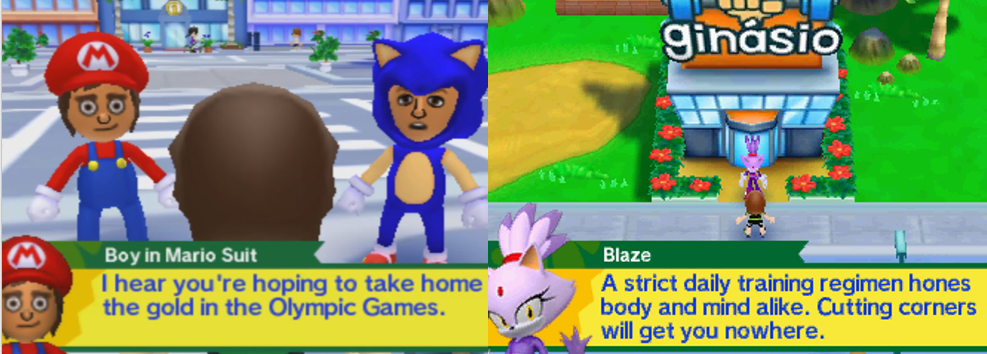
Players create a Mii character and choose to join either Sonic’s gym or Mario’s gym. Either choice sees them training with, and facing off against, familiar Mario and Sonic characters in a bid to win as many gold medals as possible over the seven days of the Olympic Games.

Gameplay:
If you’ve played any of the Mario & Sonic videogames before, you’ll know exactly what to expect heading into Mario & Sonic at the Rio 2016 Olympic Games; essentially, despite the presence of a story mode, the game is a collection of Olympic-themed mini games that go out of their way to take advantage of every single button, gimmick, and control scheme offered by the Nintendo 3DS. The game features forty-one characters from the Mario and Sonic franchises but, this time around, not only are your character selections limited to certain events (Knuckles the Echidna can only take part in the Javelin Throw and Boxing events, for example, while Waluigi can only be used in the Long Jump and BMX events) and come with different stats to give them more emphasis on power, speed, stamina, and the like, but you don’t even get to play as any of your favourite characters in the game’s “Road to Rio” story mode!

Pick between Mario’s Gym and Sonic’s Gym and train to level-up your Mii.

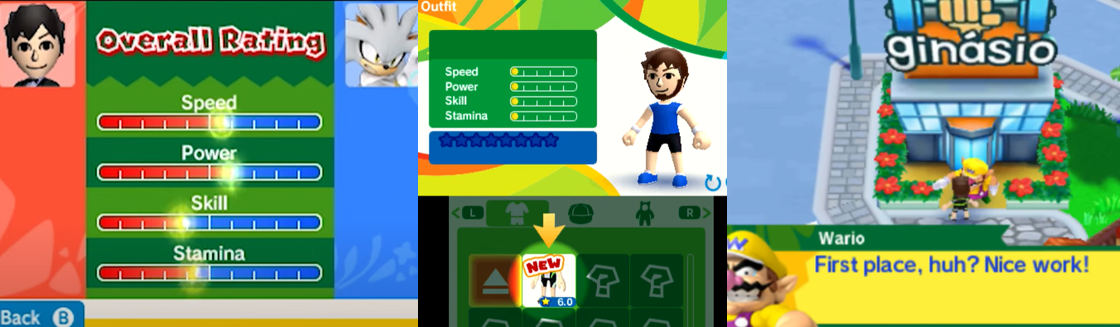
While you can select from the game’s many and varied events (each of which is accompanied by an easy, normal, and hard criteria to get bronze, silver, and gold medals, respectively, with different goals, scores, or times to hit for each) in the game’s single or multiplayer modes, the only way to unlock all of the game’s characters is to play through the story mode. Here, you take control of a Mii and play through seven days of the Olympic Games, visiting different towns in Rio and conversing with non-playable characters (NPCs) that include randomly generated Mii and Mario and Sonic characters. As is often the case, the story branches almost immediately as you’re asked to pick between Sonic’s Gym and Mario’s Gym; whichever you pick, you’ll be competing for gold medals against the opposing gym and can practise the game’s events to earn Training Points and level-up your Mii, which allows you to wear better costumes and increase your stats. The actual story itself is more basic than ever; Mario and Sonic’s Gyms are taking part in the Olympic Games in the spirit of friendly competition…and that’s about it. There are some subplots about Sonic and Mario being absent and Bowser being up to no good, but mainly it’s just a clunky narrative to let you experience the game’s events.

Levelling-up allows you to wear better outfits and improve your chances at getting gold medals.

Each location, and the bulk of the game’s action, takes place on the top screen of the 3DS; here, you navigate the largely empty and uninspiring overworld maps, interact with NPCs, and can see which day you’re playing, your current level, and how many apples and melons you have (which are needed to purchase new outfits and gear from the Yoshi NPCs located in each area). The bottom screen acts as a 2D map and allows you to manually save, view the stats of your current rival, view your stats and available gear, and change your Mii’s outfit whenever you like. Every day of the story mode is centred around you training to face a rival from the opposing gym; there are a number of smaller gyms (or “ginásios”) in each town (generally about four) where a character from your chosen side’s gym will challenge you to practise one of the game’s many events to earn apples and Training Points. As long as you finish between first and fourth, you’ll earn apples and Training Points, but the ginásio won’t be ticked off as complete unless you finish in first place (this is also the best way to earn the most rewards). You don’t actually have to beat the ginásios, however; you can tackle each day’s preliminary event and finals as is but you’ll dramatically increase your chances by beating ginásios and levelling-up so you can equip better gear to buff your stats.

You’ll need to make use of all the 3DS’s functions in order to complete each event.

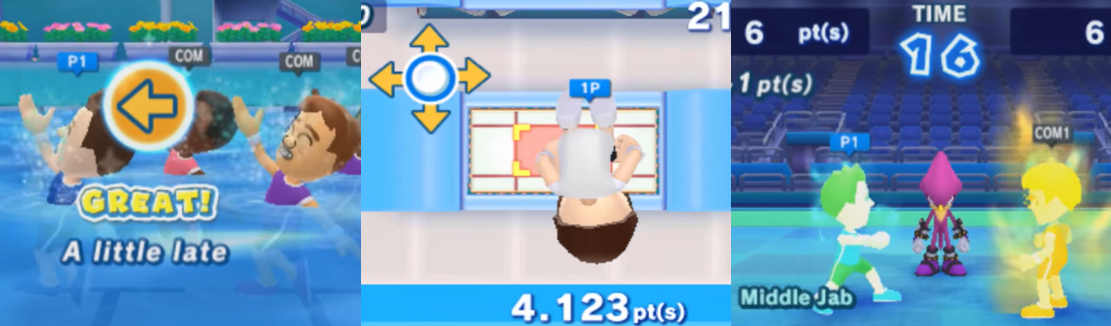
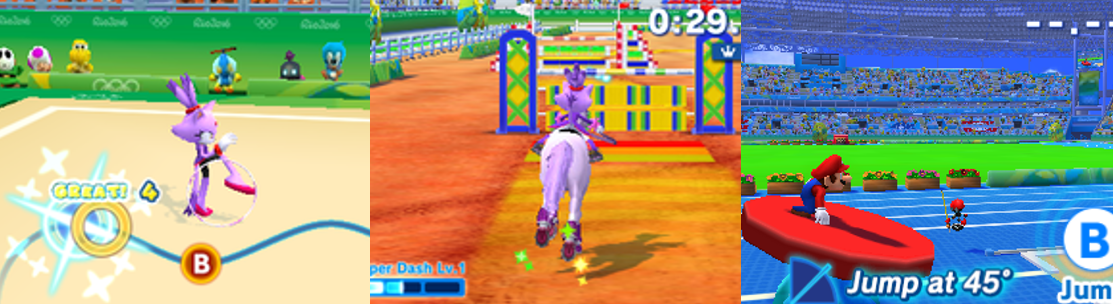
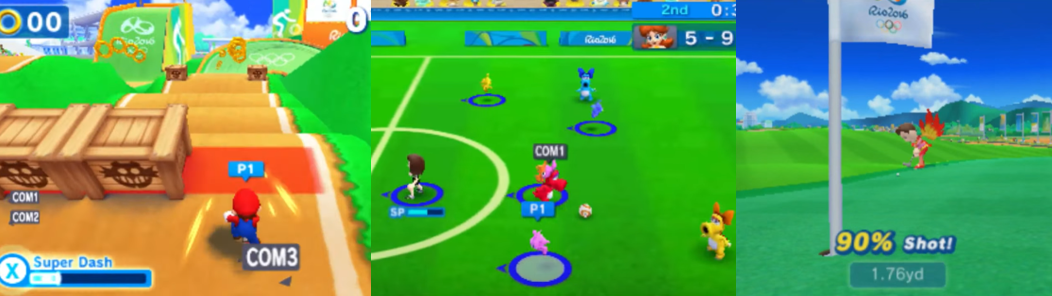
To clear each day, you first need to qualify in the prelims for that day’s event: on the first day in the Mario’s Gym story, for example, you’ll need to qualify in the 100m Hurdles event before you go up against your rival (and other Mii), Silver the Hedgehog, in the finals; on the fourth day of the Sonic’s Gym story, you’ll need to take on Bowser Jr. in the Equestrian event. The ginásio training sees you playing the game’s other events but, while you don’t necessarily need to come first in the ginásio events, you do need to finish first in the prelims and finals to progress the story. Once again, many of these events are needlessly frustrating; you’ll get a brief overview of what to do before an event but this often doesn’t really help prepare you as it’ll provide basic instructions and then the actual event will throw new inputs and requirements at you that aren’t mentioned in the overview. The game’s events mostly have you rapidly tapping buttons, pressing specific button combinations, shouting or blowing into the microphone (which continues to make me feel a little woozy…), moving the 3DS about like a moron, or using the stylus or circle pad. Some of these are quite simple (Synchronised Duet is a glorified rhythm game where you must press A in time to the beat and switch reticules with the directional pad (D-pad), while Trampoline has you jumping and pressing A when you hit the centre of the trampoline and aiming yourself with the circle pad) but others can be extremely aggravating (Hammer Throw sees you holding the L and R buttons, gyrating the 3DS, and releasing the buttons at the right moment, and you’ll need to awkwardly tilt the 3DS about to aim and use L or R to shoot in the Double Trap shooting event).

The onscreen prompts and clunky controls can make even the simplest events arduous.

While there are far less doubles games, these will still crop up; Platform Diving (Synchronized) sees you pressing A to dive at the same time as your partner without the aid of an onscreen countdown, Badminton (Doubles) has you sliding the stylus down the touch screen to smack the flashing shuttlecock, and Beach Volleyball sees you moving with the circle pad to the highlighted areas and pressing either A (or X for a super shot once your gauge is full) to hit the ball back and score a point. While the events seem to be a bit fairer compared to the last Mario & Sonic game I played, they’re still incredibly vague at times and come down to a question of timing or frantic button mashing rather than skill. The Kayak event, for example, requires you to set the 3DS down and frantically spin the circle pad like an absolute madman; you’ll need to stave off a fainting spell and consistently blow into the microphone while steering to boost pads in the Sailing – 470 (Pair) event, and you’ll need to draw neat circles to swim along in the Backstroke event (but, of course, the directions for this are on the top screen rather than the bottom where you’re drawing).

“Plus” events add new obstacles and success criteria and allow you to unlock new characters.

Overall, the games are once again very hit and miss: Handball isn’t too bad and has you touching the screen to block incoming shots; Rhythmic Gymnastics has you pressing or holding buttons in time with some familiar music tracks, and the BMX event has been slightly tweaked to make cycling and hitting boost jumps a little easier but it’s still a very clunky experience. New to this version of the game are “Plus” events; you can unlock additional characters by playing these in the story mode, and they’re basically slightly modified versions of the prelims/finals you’ll take on for that day. This could mean the presence of an additional gauge to fill to gain access to helpful items, extra obstacles from the Mario and Sonic franchises that you’ll have to watch out for, or slight changes to the gameplay mechanics to speed things up or make things a bit more manic. You can only challenge the secret characters to these Plus events by qualifying for the finals, but they add a little spice to things such as adding bingo-like tiles to Beach Volleyball for additional points or riding or ducking under waves caused by Thwomps in 100m Freestyle Swimming Plus. Unfortunately, though, while many of the camera angles and mechanics have been tweaked for the better compared to the last Mario & Sonic game I played, very few of the game’s events are actually fun to play and it kind of neuters the appeal of the crossover to not let you play as Mario and Sonic characters in Road to Rio.

Graphics and Sound:
As a 3DS game, the graphics are decent enough for the most part; all of the Mario and Sonic characters look pretty good thanks to their cartoony aesthetic, but still only communicate using pantomime. This time around, the whole game is populated by Mii; even the crowd, when it is actually present, is mostly Mii this time but, once again, the game is very empty and not much to look at. The game’s locations are very sparse and all look the same, and the arenas are mostly lifeless. Similarly, the music isn’t much to shout about; there are some recognisable tunes here but mostly it’s just generic trumpets and fanfares. Cutscenes are even more basic than ever before, with still images being thrown at you for the opening scene, in-game graphics and text boxes used for dialogue and cinematics, and there are only a few very brief sound bites from the characters here and there, making for an overall very bland visual experience.

Enemies and Bosses:
As is often the case with these games, your opponents are dictated by which character and event you wish to play; you won’t be able to pit Wario against Blaze the Cat in archery, for example, but you can pit Yoshi against Shadow the Hedgehog in football. You won’t really get to battle against Mario and Sonic characters in Road to Rio, though; mostly, you’re pitted against generic Mii and you’ll only ever get a sniff of facing someone recognisable when going up against an opponent from the opposite team or battling an unlockable character.

Familiar characters will challenge you in the prelims, finals, and Plus events.

One the first day, you’ll take on either Silver the Hedgehog in 100m Hurdles or Yoshi in the 100m event; Hurdles see you holding B to charge up, tapping A to run, and then timing presses of B to hop over the hurdles, while 100m features similar controls but has you pressing B near the end to shave a few seconds off your time. 100m Plus has you going up against Nabbit, grabbing items to reach the goal and pressing B for an additional burst, while 100m Hurdles Plus sees you challenging Diddy Kong in the event which is made trickier by the hurdles moving up and down. Day two is all about Table Tennis in the Mario story and Beach Volleyball in the Sonic path; Table Tennis has you moving with circle pad or D-Pad and smacking the ball back at the right time with ether A (for a fast shot), B (for a slower backspin), or X (for a super shot) to see who wins the best of three sets, while Beach Volleyball is a doubles event and it can be tricky angling your shots correctly. Table Tennis Plus pits you against Zazz and has you accumulating more points by hitting the ball onto coloured, numbered tiles, while Beach Volleyball Plus has you playing against Roy and trying to get a bingo score going on.

You’ll need to train up in order to help you best your rival, or hope that events aren’t too difficult to master.

Day three forces you to endure Archery against Birdo and Rhythmic Gymnastics against Blaze; while this latter isn’t too bad, Archery is a pain in the ass thanks to having to use the 3DS’ gyroscopic controls to aim and the wind throwing off your arrows. Archery Plus adds a whole mess of targets to hit to screw things up even more, while Rhythmic Gymnastics Plus sees you avoiding hazards to chain together combos for a higher score. On day four, you’ll have to take on Bowser Jr. in the Equestrian event (where you must press B to jump at the right time and stay on track to fill up your boost gauge) and Espio in the Long Jump (which sees you rapidly tap A to run up, press X for a super dash, and then press B at the right time leap ahead and judged on your furthest distance). You’ll then take on the oft-underused Doctor Eggman Nega in Long Jump Plus, which adds a giant spring to propel you further, and Larry in Equestrian Plus, where giant obstacles from the Mario and Sonic series are littered across the course.

Each story culminates in one of the more frustrating events, with Golf being particularly aggravating.

Day five is all about Javelin in Sonic’s story and BMX in Mario’s; Javelin is a bit of a frustrating event that sees you swiping the stylus across the touch screen like an idiot, then trying to match the angle on the top screen without crossing the foul line (which is stupidly easy to do). In BMX, you need to rapidly tap A to cycle while staying on track with the circle pad, and hit B to make jumps and build up your super boost. When you face Dry Bowser in Javelin Plus, you get to toss a whole bunch of Javelins but this is really more for show than anything else, while you’ll need to avoid obstacles ad perform tricks in BMX Plus to beat Wave the Swallow’s record. Things pick up in day six in Sonic’s story as you get to take part in Boxing; here, you press B and A to punch, guard with Y, and unleash a super punch with X and can use item boxes to help take down Zavok in Boxing Plus. In Mario’s story, you have to best the 100m Freestyle Swimming event by drawing circles at just the right speed and tapping the screen at just the right time to turn around, but the shit really hits the fan on day seven. Everything ramps up, with some of the most finnicky games and controls, and you’re forced to play football in Sonic’s story (which sees you awkwardly passing the ball, tackling opponents, and trying to get a shot in and just goes on forever) or golf in Mario’s story (easily the most complex event, with wind speeds, angles, environment hazards, and extremely unhelpful and unclear directions meaning I won more out of luck than anything else!)

Power-Ups and Bonuses:
As a glorified collection of mini games, there’s not many power-ups on offer; some events have you rapidly tapping A to recover stamina, or touching dash panels for a boost, and many reward a perfect finish with a fancy special flourish but you’ll only really see in-game benefits when playing Plus events. You can however, find hidden chests all over the game’s many locations (some even hidden behind springs or pipes) that will reward you with additional gear or melons. Every time you finish between first or fourth (or use the daily log-in/step challenge), you’ll earn both Training Points and apples. Apples can be traded for a variety of outfits with one Yoshi, while more additional items can be bought from another with melons; these items include new golf clubs, horses, hula rings, and boxing gloves that afford you additional boosts and benefits in their respective events and you can equip and unequip them at any time. Your outfits are limited by your character’s current level; the higher your level, you more gear you can equip and the better your stats will be, and you can even save sets of clothing to tailor your Mii for different events (boosting your strength over speed, for example).

Additional Features:
Mario & Sonic at the Rio 2016 Olympic Games offers many of the same incentives for repeated play as its predecessors; at the start of the game, you can set up your Mii, regional flag, the computer’s difficulty level, and Street Pass to get daily rewards as you walk around. Quick play allows you to take on the computer or up to three other plays in all of the game’s different events, if you fancy testing your skill against others, and you have two story paths to play through. However, while your level, items, and costumes will transfer across each story, you can’t replay previous parts of the story at will and will need to play through from the beginning if you missed any chests, costumes, instruments, or unlockable characters. There’s also an achievement list to compare against other plays, a random medley option to mix and match events, and a challenge mode to take on but, once you’ve played through even one of the Road to Rio stories you’ve basically seen everything the game has to offer.

The Summary:
Mario & Sonic at the Rio 2016 Olympic Games improves on quite a few aspects of the last entry I played but still suffers from many of the same issues that have bogged down the series since day one. Essentially, it’s just a collection of Olympic-themed mini games involving some of gaming’s most iconic characters but with the weird twist that you really don’t get to play as any of these characters in the story mode. Road to Rio is so dumbed down and basic compared to the story modes in the other Mario & Sonic games I’ve played that it really makes playing even more of a chore. Couple that with the needlessly overcomplicated gameplay mechanics, vague tutorials, clunky camera and controls, and once again you’re left flailing around like an idiot as you desperately blow crafts along or try to match onscreen prompts. As a lifelong Sonic fan, I’m always happy to play one of his titles but these really aren’t games built for me…I actually struggle to think of anyone who would actually enjoy them, to be honest. There are far better party games and mini game collections out there, and definitely way better Mario and Sonic games, so it’s really more of an annoying novelty more than anything.

My Rating:

Rating: 2 out of 5.

Could Be Better

Did you enjoy the 3DS version of Mario & Sonic at the Rio 2016 Olympic Games or did you prefer the Nintendo Wii version? How did you find the game’s motion controls, assortment of games, and story mode? Were you disappointed at the Mario and Sonic characters not being playable in Road to Rio? Do you agree that the concept is somewhat wasted on the Olympic Games or have you enjoyed the series so far? Which country are you pulling for in this year’s Olympic Games? Whatever your thoughts, feel free to sign up to leave a comment below, or leave a comment on my social media.

Back Issues & Knuckles: Sonic Adventures #1


Following a highly anticipated release, bolstered by an extravagant marketing and release schedule, Sonic the Hedgehog 2 (SEGA Technical Institute, 1992) not only improved on every aspect of its influential predecessor but also went on to become the second best-selling SEGA Mega Drive game of all time. Expectations were high for the equally-anticipated third entry, a game that ended up being so big that SEGA made the decision to split it into two, birthing perhaps the greatest 2D Sonic adventure in the process.


Story Title: “In the Claws of Doctor Robotnik”
Published:
October 1994
Writer: Smoldo
Artist: Mister B

The Background:
It didn’t take long at all for SEGA’s supersonic mascot to achieve an unprecedented level of mainstream success; Sonic basically single-handedly allowed SEGA to usurp Nintendo’s position at the top of the videogame industry and the company almost immediately set about capitalising on the Blue Blur’s popularity with  a slew of videogames and merchandise such as cartoons and comic books. While the most notable Sonic comic books were the long-running series published first by Archie Comics and then by IDW and the United Kingdom’s Sonic the Comic (StC), there have been a number of lesser known Sonic books, comics, and manga released over the years but one of the most intriguing for me has always been the two Sonic Adventures comics published only in France by Sirène in 1994 to promote the release of Sonic the Hedgehog 3 & Knuckles (SEGA Technical Institute, 1994). The series only ran for two issues, with one being the full-length comic book I’m talking about today and the other being more of a character/game guide to Sonic 3. As a lifelong fan of the Astérix series (Various, 1959 to present), I was immediately drawn to the expressive and vibrant art style of “Dans Les Griffes De Robotnik” but what really makes this comic stand out is how obscure it is. I’ve never been able to find a copy only but, thankfully, a fan translation by Sonknuck and Manic Man is readily available to read online. Like a lot of Sonic media outside of Japan at the time, Sonic Adventures pulls much of its lore from the now defunct Mobius and Doctor Ovi Kintobor storyline, depicts Doctor Eggman (or “Robotnik” as he was widely known then) as his Adventures of Sonic the Hedgehog (1993 to 1996) counterpart, and features an interesting twist on Sonic 3 & Knuckles’ story that omits Knuckles the Echidna altogether, includes Amy Rose, and actually has some similarities to later narrative elements introduced in Sonic Adventure (Sonic Team, 1998).

The Review:
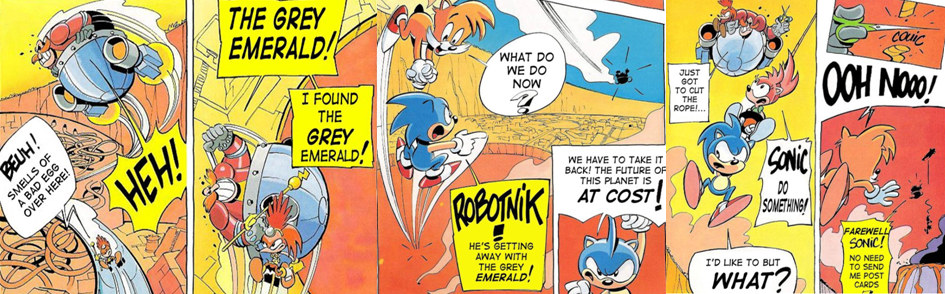
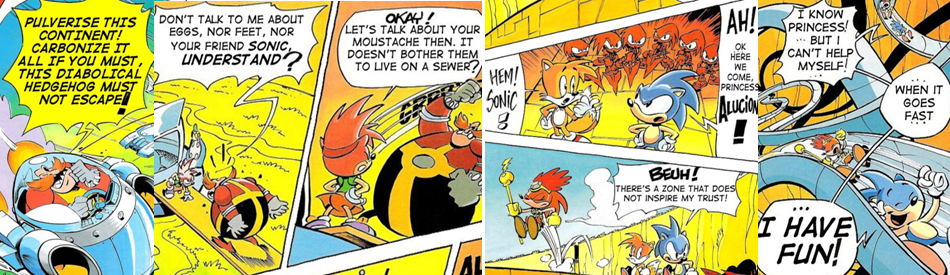
“In the Claws of Doctor Robotnik” begins in the skies of Mobius, specifically on board Doctor Robotnik’s airship. Robotnik, whose design is ripped directly from Adventures of Sonic the Hedgehog, basks in his victory and own magnificence when his Penguinators present him with Sonic bound in chains. Although initially musing on why Sonic was doing wandering about the “Marble Temple” on Angel Island, he is driven into a rage when Sonic taunts him by briefly referring to Robotnik’s origin as the kindly Professor Kintobor.

Sonic makes a desperate escape from Robotnik’s air ship.

Robotnik’s mood lightens once more, however, when the Penginators present him with a bag full of Chaos Emeralds (which Sonic had been carrying on him) and the mad scientist boastfully proclaims himself to be the “king of the world!” Robotnik’s victory is extremely short-lived, though; Sonic breaks free on his chains, punches the Chaos Emeralds from Robotnik’s grasp, and leaps out of the airship to plummet back to the planet alongside the legendary gems. Luckily, Sonic had spotted his friend, Miles “Tails” Prower, skulking about outside the ship and the two-tailed fox is able to save Sonic just in the nick of time.

After fending off the local wildlife, Sonic and Tails retreat from Robotnik’s all-out attack.

The two land in an “unexplored [region]” of Mobius; although Robotnik immediately leads his Badniks down in pursuit, Sonic’s primary concern is shaking himself loose from the jaws of ordinary piranhas using the same technique players used in Hydrocity Zone. Unlike his videogame counterpart (but similar to Sonic’s depictions in cartoons at the time), Sonic has no problem swimming once he shakes off the critters but he and Tails are soon forced to make a desperate retreat when Robotnik and his Badniks bombard the area with fire (similar to Angel Island Zone; Robotnik’s craft even somewhat resembles his contraption from the finale of that Zone).

Sonic and Tails are swept away to an ancient city populated by savage echidnas!

With RhinoBots literally raining down around them (on cute little parachutes, no less), Sonic and Tails are driven down a waterfall (Tails having, apparently, forgotten how to fly despite flying in the panels leading up to this plummet). Luckily for them, they find a cache of Golden Rings at the bottom of the river; Sonic, however, decides that discretion is the better part of valour and allows the river to carry them away from danger rather than use the Rings for a power boost. Instead, though, the river leads to another waterfall and the two are dumped into a hidden echidna society that bares a resemblance to the one seen in Sonic Adventure that is too uncanny to just be a coincidence. The echidna “savages” (whom Sonic describes as being “fools [that] are descents of Mobius’ first race” and all of which look exactly like Knuckles despite him being entirely absent from the story) attack the two with spears in an attempt to kill them, leading to Sonic destroying their wooden boats with his patented Spin Attack and a “knuckle sandwich”.

Robotnik holds the feisty Amy hostage while Sonic and Tails are condemned to death by Princess Alucion.

Meanwhile, Robotnik has captured Amy Rose (whose hair, much like in StC, has been erroneously stylised into a high sweep because of that one piece of Sonic the Hedgehog CD (SEGA, 1993) artwork) and plans to use her as leverage against Sonic. While Amy was characterised as a meek, lovesick damsel in distress in Sonic CD, here she’s a snarky, defiant tomboy who openly mocks Robotnik at every opportunity. Back at the ruins, the echidnas have captured Sonic and Tails (mainly because the two are more used to smashing robots and didn’t want to hurt the savages). They are taken to Princess Alucion, the ruler of the echidna tribe, who has the long-lost Grey Emerald imbedded in her crown. Alucion showcases the grandeur of “the antique city of the first people” and then prepares to push them down a tube so that they can be roasted alive inside a volcano that somewhat resembles the one from Lava Reef Zone.

Once again, Robotnik seems to have claimed total victory in the finale.

Fortunately, Robotnik attacks at exactly the right moment; Sonic and Tails dive down the tube, taking Alucion with them, to avoid Robotnik’s missile attack and, while the mad doctor believes them to be dead, Sonic revels in the twisting, turning slide that carries them to their doom. When a Penguinator shows Robotnik that his prey has survived, he moves to intercept them and, in to process, kidnaps Princess Alucion. Tails saves Sonic from a dip in molten lava (again, right at the last second) and, despite the obvious trap, rushes to save Amy when she is flown past tied up to a bunch of Jawz Badniks. Amy berates Sonic’s plan, since the two are left suspended over the volcano, and Robotnik swoops in to cut the rope and send them plunging to the burning crater (taking a picture for prosperity).

After clearing the Special Stage, Sonic assumes a powered-up form to battle Robotnik.

When Robotnik moves to retrieve the Grey Emerald from Alucion, she bites him and dives after Sonic and Amy while Tails is left wailing in despair and vows that everyone will know of their bravery and courage. His lamentations are premature, however, as the volcano is home to a Big Ring, which transports Sonic and Amy to a Blue Sphere Special Stage. Thanks to his super speed, Sonic easily bests the challenge and Alucion praises his achievement and awards him with the seven “magical emeralds, the golden armour, and the power to be transported wherever [he] wants”. While Tails is regaling their friends in Green Hill Zone with the tale of Sonic’s end, Sonic and Amy miraculously materialise before them. Tails is elated to see his friends and awestruck to see Sonic transformed by the “golden armour” into a glowing, super-powered form and the comic ends with Super Sonic promising the Robotnik’s problems are just starting.

The Summary:
“In the Claws of Doctor Robotnik” is one of the best of Sonic’s obscure comic tales; similar to Sonic the Hedgehog Story Comic (Unknown, 1991), the comic is full of some truly gorgeous artwork that reminds me of the Astérix comics and contains many of the gameplay mechanics and hazards from the source material. While Sonic is sporting his much-maligned Mohawk design, I seriously cannot get enough to the artwork here; characters are cartoony and exaggerated, similar to in Adventures of Sonic the Hedgehog, but also full of snark and attitude, exactly like Sonic should be.

The comic is full of humour but also suffers a bit from the translation.

Of course, being that it’s a fan translation, there are some oddities to be found in the comic; referring to Super Sonic as the “golden armour” sticks out the most but there are a number of odd grammatical errors and inclusions to be found as well. Still, Sonknuck does a pretty good job at adapting the original French text for an English-speaking audience and the story is peppered with all kinds of quirky comedy and phrases; Sonic loves to exclaim “Darn and blast!” and there’s some amusing sayings such as “I haven’t seen the movie” and “No need to send me post cards!” Other translations don’t land quite so well, however, and I would love to see this comic officially translated and released some time.

A fun piece of obscure Sonic media with some excellent artwork and humour.

Still, “In the Claws of Doctor Robotnik” is a lot of fun; it appears to read like this quirky amalgamation of the Western Sonic lore and as a prelude to Sonic 3 & Knuckles, though obviously the Mobius story doesn’t really align with that presented in the videogames. The imagery used, though, is fascinating; it’s amazing how closely the echidna civilisation seen in Sonic Adventure resembles what we see in the comic and it was fun seeing mechanics from the videogames crop up. Obscurity and nostalgia also play a large part in my appreciation for “In the Claws of Doctor Robotnik” but that doesn’t change the fact that you should try and seek this one out online and give it a read sometime.

My Rating:

Rating: 5 out of 5.

Fantastic

Have you ever read “In the Claws of Doctor Robotnik”? If so, what did you think of it? Have you read the original French comic and, if so, how does this translation measure up? Did you enjoy the art style and quirky humour in the comic or do you prefer the Archie and IDW comics? What did you think to the original characters and would you like to see this comically officially translated and more widely available some day? How are you celebrating the anniversary of Sonic 3’s release today? Whatever your thoughts, please feel free to share them and your memories of Sonic 3 & Knuckles below.

Mini Game Corner: Streets of Rage 4: Mr. X Nightmare (Xbox One)

Released: 14 July 2021
Developer: Dotemu/Lizardcube/Guard Crush Games
Also Available For: Nintendo Switch, PC, PlayStation 4

A Brief Background:
After an absence of almost twenty-five years, the Streets of Rage series (SEGA, 1991 to 1994) finally made a long-awaited comeback in 2020. As a massive fan of the series, and sidescrolling beat-‘em-ups in general, I was very surprised, and excited, to see Streets of Rage make a reappearance; Streets of Rage 4 sold extremely well and was received generally positively but even I could never had guessed that it would do well enough to gain any kind of downloadable content (DLC). Yet, surprisingly, that’s exactly what we got as some additional character, gameplay modes, and difficulty settings were made available for the game and a physical Anniversary Edition was even released (for PlayStation 4 and Nintendo Switch only but still…)

The Review
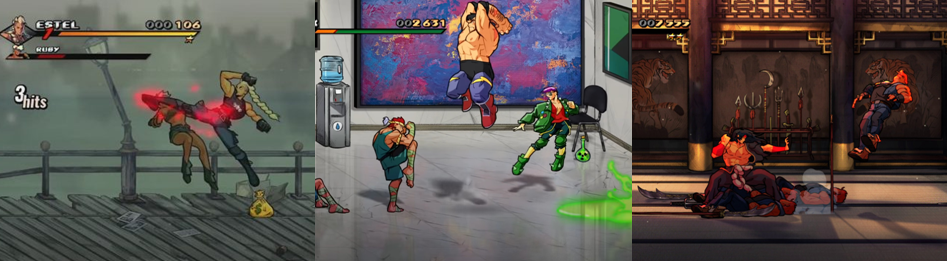
Streets of Rage 4: Mr. X Nightmare adds some additional features to the original game, which was a sidescrolling beat-‘em-up that saw you attacking enemies with X, busting out a life-draining special attack with Y, jumping with A, and clearing out large groups of enemies with a screen-clearing special move if you have enough Stars in your quest to clean up the streets of Wood Oak City. The first thing you’ll notice when playing Mr. X Nightmare is the addition of three playable boss characters: Estel Aguirre, Max Thunder, and Shiva. Two of these (Max and Shiva) were previously playable but only in their 16-bit variants and all three are ripped straight from their boss battles in the base game. When playing as each of them through the story mode, however, none of these characters have any real impact on the narrative; the cutscenes don’t change or acknowledge them and the only thing that’s different is that when you fight the character’ boss variants, the boss’s taken on a neon, shadowy colour scheme.

Mr. X Nightmare adds Estel, Max, and Shiva as playable characters.

Like the game’s other playable characters, each of these new characters plays slightly different. Of the three, only Shiva can dash towards enemies, for example, but unlike the other two, Shiva cannot pick up weapons (instead, he dramatically flips them up and kicks them at enemies). Estel and Shiva also attack much faster than Max, utilising kicks and fast combos where Max uses slower, more powerful wrestling moves and grapples. Each of them also has Y-based special attacks that will slightly drain their health unless they attack enemies soon after; these seen Estel toss grenades and pounce on opponents with a beatdown, Max charge or slam down on enemies, and Shiva teleport across the screen or out of the air. Each of them also has their own special moves that are executed by pressing Y and B when you have at least one Star. Estel’s is very similar to her boss’s special and sees her call in a bombardment of rockets; Max unleashes a big axe-handle smash and also sees enemies by struck by lightning, and Shiva blasts enemies away with a purple, wing-like aura. The best thing about playing as these new characters is how over-powered a lot of their attacks are; Max, for example, has a super useful Power Slide attack that is easily spammed while Shiva can perform a nifty mid-air kicking combo for decent damage.

Play as Roo and/or test your skills in the new ‘Survival’ mode!

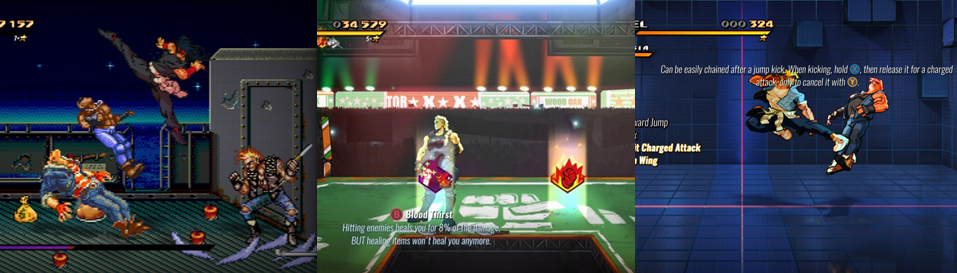
It’s been a while since I played Streets of Rage 4 so I may be forgetting some things but Mr. X Nightmare appears to add a few new weapons into the game’s stages (such as a golf club, an umbrella, and a branch) and the ability to select different colour palettes for every character. The DLC also adds a new difficulty to the game, Mania+, if you fancy taking on an additional challenge and, best of all, the inclusion of a hidden fighter. By highlighting ‘Story on the main menu screen and  pressing up and X and then pressing Start, you’ll get to play as a 16-bit version of Roo the boxing kangaroo, which is pretty cool but it’s a bit of a shame that Roo doesn’t have an alternative skin to match his cameo from the base game. Another addition appears to be that whenever you fight on the hidden, or new, 16-bit stages, every character, even the new ones and altered ones, is rendered as a classic 16-bit sprite. While there isn’t any new story-based content to the game, Mr. X Nightmare does add a new ‘Survival’ mode. Here, you pick a character and play through a series of simulations in a variety of brand new arenas, including new 16-bit levels, and fighting increasingly-difficult waves of enemies. Enemies and destructible boxes will spawn into each area, giving you access to health-restoring good, Stars, and weapons, which you’ll need as you only get one life to play through this mode; when you clear each level, you can pick from one of two perks that stack up and carry over to each level. These can up your attack or defence, add an additional jump, add elemental effects to your strikes or weapon attacks, spawn in Stars, award you more powerful weapons, spawn in an ally, or dramatically increase your attack power and the cost of your durability, among other effects.

The addition of more 16-bit stages, random buffs, and a Training mode add replayability to the game.

The levels and enemies get tougher and tougher as you go but you can make use of environmental hazards to damage enemies; meteors will fall from the sky, lasers and flames will spew up in some levels, wind will blow you about, electrified walls and crushers can harm you and your enemies, and you’ll be able to toss them over edges and such. While you’ll earn Stars instead of lives in this mode, it also includes a whole bunch of new weapons to use and, as you clear levels, you’ll unlock enemies to battle in the new Training mode (essentially a traditional one-on-one fighter), concept art and artwork, and also additional alternative modes for each playable character to customise them to your specifications. Even better, the DLC adds not only some new music tracks but also eight new Achievements to earn that are specifically tied to you completing the story mode as the three new characters, performing Roo’s special move and spawning in clowns, and mastering the new Survival mode, all of which is a great incentive to return to the game.

The Summary:
I was super happy with how Streets of Rage 4 turned out; it was everything I could have asked for from a sidescrolling beat-‘em-up and had a decent amount of features and replayability to it. it could be a little unforgiving at times but it was a blast to play through and I was very surprised and excited to hear that the game would be expanded upon with some DLC. The addition of new characters was very welcome, though it is a little disappointing that they don’t factor into the story more; like, maybe they could have played through slightly altered versions of the stages and fought against the existing protagonists rather than shadow versions of themselves. The addition of new Achievements was very much appreciated and the ‘Survival’ mode is pretty great, though, and sees you battling against every character and boss from not only this game but also the others in the series. Again, it can be tough but playing alongside a friend should make it quite the entertaining time and, overall, I’d say it’s well worth picking this DLC up to add a few more hours onto an already enjoyable title.

My Rating:

Rating: 4 out of 5.

Great Stuff

Did you pick up the Mr. X Nightmare DLC? If so, what did you think to it? Which of the new playable characters was your favourite? Did you manage to unlock Roo? How far did you get in ‘Survival’ mode? What is your favourite piece of DLC for a videogame? Whatever you think about Streets of Rage 4 drop a comment below.

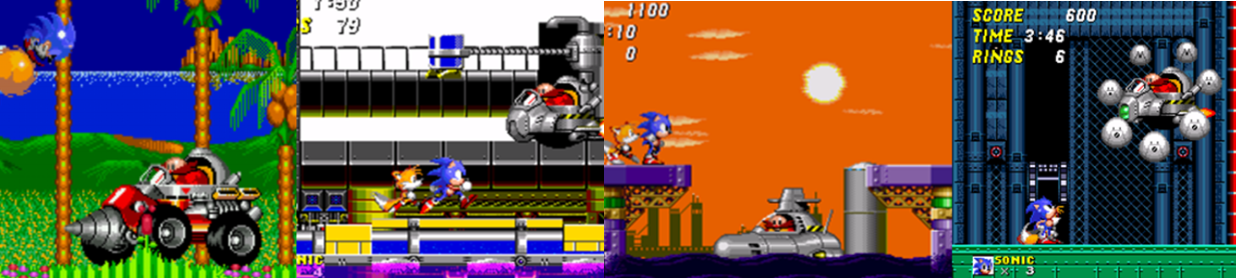
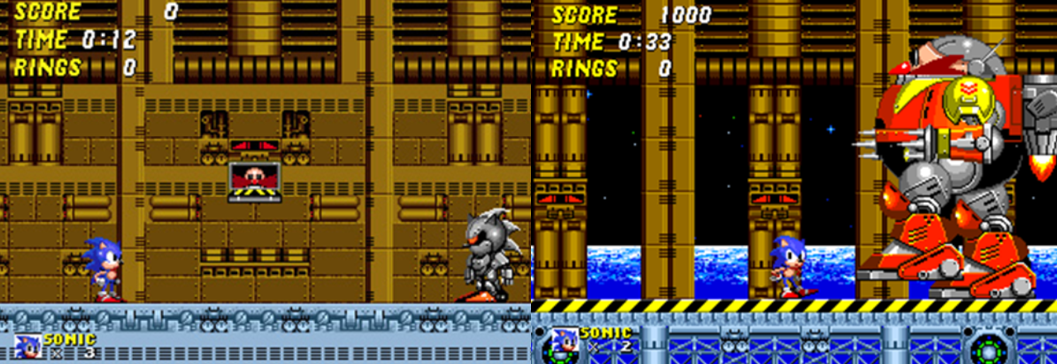
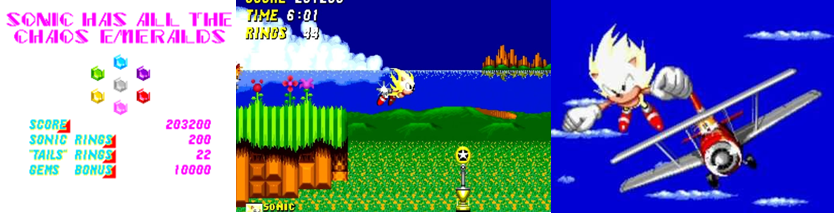
Game Corner [Sonic 2sday]: Sonic the Hedgehog 2 (2007; Xbox One)


After the release of Sonic the Hedgehog (Sonic Team, 1991), Sonic had firmly established himself as the hot new icon on the block and catapulted SEGA to the forefront of the Console Wars. Anticipation was high for a sequel and, in keeping with their aggressive marketing strategies, SEGA dubbed November 24, 1992 as “Sonic 2sday”, a marketing stunt that not only heralded the worldwide release of the bigger, better sequel but changed the way the videogame industry went about releasing games for years to come.


GameCorner

Released: September 2007
Originally Released: November 1992
Developer: Sonic Team
Original Developer: SEGA Technical Institute
Also Available For: Gamecube, iPod, Mega Drive, Mobile, Nintendo 3DS, Nintendo DS, Nintendo Switch, Nintendo Wii, PC, PlayStation 2, PlayStation 3, PlayStation 4, PlayStation Portable, SEGA Saturn, Xbox, Xbox 360

The Background:
Sonic the Hedgehog was a massive success for SEGA; thanks to an aggressive marketing campaign and packing the game with their all-power 16-bit Mega Drive, SEGA saw sales of over 15 million copies upon its release. And yet all was not right at SEGA; Yuji Naka, the mastermind behind Sonic the Hedgehog, quit the company and was convinced to join the California-based SEGA Technical Institute. After bringing in many of his own Japanese staff, Naka began spearheading the creation of a sequel while an entirely separate, Japan-based team worked on Sonic the Hedgehog CD (SEGA, 1993). Debates could rage on for years about which of these two games would be the “true” follow-up to the original title, and many ideas and concepts were reused and reworked for each title but, as if the massive “2” in Sonic 2’s title wasn’t enough, it’s clear to me based on graphics alone that Sonic CD was always meant to take place shortly after the first game. Yet Sonic 2’s development was mired by an influx of ideas and concepts; another internal contest was held to design Sonic’s new sidekick, Miles “Tails” Prower, and many Zones were scrapped from the final game despite being relatively close to complete. The pressure was on to top their efforts with Sonic the Hedgehog but, thanks to improved graphics and gameplay and the efforts of SEGA’s aggressive marketing machine, Sonic 2 proved incredibly successful; 400,000 copies were sold in its first week alone and over 6 million units were sold during the Mega Drive’s lifespan. SEGA’s control of the home console market shot up by 40% as a result of Sonic 2 and the game was widely praised upon its release and is still held in high regard, with many claiming that it is the best in the series. For me, I first played Sonic on the Master System but, upon acquiring a Mega Drive, played Sonic 2 before the first game and, as a result, I do prefer it over the original because of its faster, tighter, far more accessible gameplay.

The Plot:
Doctor Eggman is back! This time, he’s set his sights on Westside Island, home of the fabled seven Chaos Emeralds. Eggman unleashes his robotic Badniks upon the island, polluting and destroying the environment to find the gems and power his ultimate weapon: the Death Egg! However, Sonic the Hedgehog is hot on his heels and this time he’s not alone…

Gameplay:
Like its predecessor, Sonic the Hedgehog 2 is a 2D, sidescrolling action platformer in which you travel eleven stages (known as “Zones”). Unlike the previous game, the majority of Sonic 2’s Zones are split into two “Acts” rather than three (though there is, oddly, one three-Act Zone and two one-Act Zones just to confuse things) and, this time, you’ll battle Eggman in one of his diabolical contraptions at the end of each second Act before facing him once and for all on the Death Egg. Essentially, everything that worked so well in the original game returns here, bigger, shinier, and much more refined; Sonic is faster than ever, now able to zip through every single Zone of the game at breakneck speed thanks not only to his new “Spin Dash” attack but also vastly improved level design that ditches the slower, more tedious elements on the first game and focuses on speed and split-second reactions. Improved obstacles and enemy placement also help speed up the game, as does the implementation of more loop-de-loop, slopes, the introduction of Möbius strips, and very little instances where the game grinds to a halt.

Help or hinder Sonic as Tails or simply choose to play solo with either character.

As before, you can still roll into a ball when you jump or press down while running to break monitors and smash apart Badniks. This time, though, you won’t do it alone; by default, the game has you take control of Sonic with the computer-controlled by his side but, by entering the “Options” menu, you can switch to playing alone as either character. When Tails is onscreen, though, a second player can join in at any time; Tails has all of Sonic’s abilities and essentially plays as a reskin as, though he is seen flying with his unique two tails, this isn’t a feature you can utilise in the game. When playing as Sonic and/with Tails, Tails can collect Golden Rings, destroy Badniks, and dish out damage to Eggman all while being functionally immortal and largely invulnerable. Attacks won’t damage Tails and the only way to lose him is to run so fast that he cannot keep up; unfortunately, second players can also screw you over by jumping onto temporary or crumbling platforms ahead of time, essentially sending you to your death.

It’s easy to get distacted by Casino Night Zone’s pinball-based mechanics and gimmicks.

Thankfully, Sonic is much faster this time around. Zones are bigger than ever, with more branching paths to take and areas to explore and, best of all, there’s no tedious pushing of switches or blocks to slow things down. Perhaps the slowest Zone is Mystic Cave Zone (which also features a notorious pit that you cannot escape from), which features far more platforming elements and instant-death traps compared to the game’s other Zones; Sonic will have to grab levers and pulleys to create bridges and avoid floating blocks in this Zone but it’s got nothing on the seriously gruelling platforming and obstacles in the increasingly maze-like Metropolis Zone but, for the most part, Sonic 2 hits the ground running and doesn’t stop. Sonic 2 introduces many firsts for the series; gone are the checkpoint-creating Lamposts of the first game, replaced with Starposts that perform exactly the same function but also double as the gateway to the game’s Special Stages (replacing the Giant Rings from the last game) when you pass them with fifty Rings or more. Be warned, though, after finishing or failing a Special Stage, you’ll be deposited back in the Zone with no Golden Rings to protect you (though the Zone’s Rings (and Badniks) will have respawned).  The pinball-like mechanics of Spring Yard Zone are expanded upon in Casino Night Zone, a giant, pinball-themed Zone filled with so many little score-increasing mini games and distractions that it’s easy to run out the ten minute time limit in this Zone alone.

Many of Sonic 2‘s elements became recurring themes in the franchise.

Another first is the inclusion of Sonic’s biplane, the Tornado, which mixes up the speed-based gameplay by having you ride atop the plane’s wings in Sky Chase Zone and, of course, the final showdown with Eggman on his space station. This latter element, clearly evoking imagery from the Star Wars trilogy (Various, 1977 to 1983), would become a recurring element in the franchise from this game onwards as subsequent games sought to either recreate the success of, or cash in on the nostalgia for, Sonic’s bigger, better sequel. As before, Sonic can collect Golden Rings to keep himself alive but, when submerged under water in Aquatic Ruins Zone or in toxic gunk in Chemical Plant Zone, will find himself under threat of drowning if he doesn’t escape to fresh air or find an air bubble before the all-too-familiar sinister countdown reaches its end. You’ll still gain points for collecting Rings, bashing Badniks, and clearing Acts and Zones as fast as possible but you no longer gain bonus points by jumping dramatically at the end of an Act. Thankfully, all the little niggling issues that slowed down and counted against the first game have been largely addressed and eliminated; there’s no real danger here of being unfairly squashed or glitching the game (unless you perform some very specific actions) and the only real issue the game has in this regard is that it’s sometimes very easier to run or fly so fast off the screen that the game struggles to catch up. there some instances where you’re forced to use a little more thought than just speeding ahead, though; Oil Ocean Zone, for example, requires you to think a bit before making jumps as you can easily end up trapped in the quicksand-like oil or getting turned around. Like the first game, Sonic 2 isn’t especially difficult game; there are no difficulty settings to choose from as, again, the game’s difficulty gradually increases as you progress from Zone to Zone. This time, there are seven Chaos Emeralds to collect; the now-iconic half-pipe Special Stages are arguably much easier (or, at least, more interesting) than those in the first game, and you get an actual, in-game reward for collecting these gems.

Graphics and Sound:
Sonic the Hedgehog 2 improves on its predecessor in every way: Sonic’s sprite is larger and now a vivid, eye-catching blue and Tails is visually very appealing thanks to his unique twin tails and cute appearance. Zones are as visually interesting and unique as ever; Emerald Hill Zone, while functionally similar to Green Hill Zone, has enough in it to separate it from its predecessor, such as coconut trees, Möbius strips, waterfalls, and underground areas. The game’s later Zones are some of the most iconic in the series; moving away from cliché element-themed platforming levels, you’ll roll around an industrial nightmare full of toxic waste in Chemical Plant Zone, frantically jump to escape from rising lava in Hill Top Zone (which improves upon Marble Zone’s lava gimmick in every way), and explore dark, dank caves in Mystic Cave Zone. Each Zone has different gimmicks to separate them not only from each other but those of the last game; Casino Night Zone is far less random than Spring Yard Zone, for example, with no bottomless spits to worry about and Metropolis Zone is nothing like Scrap Brain Zone beyond being the game’s toughest area to get through.

Each Zone has a variety of unique gimmicks to mix keep things interesting and exciting.

This is largely due to the Zone having three Acts, which means it soon outstays its welcome. Add to that and some annoying enemies and the Zones maze-like layout and you would have a fitting final Zone for the game if it wasn’t for Wing Fortress Zone. Taking place aboard Eggman’s vast airship, this Zone is your last chance to get any remaining Chaos Emeralds before the game’s final Zone and features a whole host of dangerous taps; for one thing, you can fall to your death at any moment, never mind precariously jumping from platforms and hooks and riding gusts of wind to progress further. Once again, there are no transitions or cutscenes or story included in the game until you clear Wing Fortress Zone, then a little cutscene plays showing how the player gets aboard the Death Egg and another shows how he escapes. Generally, though, the same obvious environmental message of the first game is repeated, but dialled up a notch as you end up in space! Both Sonic and Tails have idle animations this time around, giving them each their own distinct personalities, and the game’s soundtrack is, arguably, the best of the series. It’s everything the soundtrack was in the first game but far more bombastic and triumphant, far more foreboding and sinister, far more catchy and memorable.

Enemies and Bosses:
Once again, Sonic and Tails must do battle with Eggman’s Badniks; these cute-looking mechanical monsters are just as deadly as before but their danger increases as you progress further in the game. To start off with, it’s no bother at all to bounce off of Mashers and Buzzers just like in the first game but, soon, you’ll encounter Spinys and Flashers, both of which can throw up defences to sap your precious Rings. While their placement is generally much fairer in this game, you’ll still have to contend with Badniks like Grounder and Crawlton popping out to surprise you but the absolutely worst enemies in the game are found in Metropolis Zone. The mantis-like Slicer will toss its boomerang-like pincers at you and they’re a pain in the ass to dodge, to say nothing of Shellcracker’s massive spiked claw that will almost always catch you unawares or the self-destructive Asterons which always shoot out their damn spikes when you’re halfway up one of those corkscrews!

Dr. Eggman slowly steps up his game after a disappointing first few encounters.

As before, you’ll face Doctor Eggman numerous times throughout the game; this time, he attacks at the end of every second Act and each time he has a deadlier contraption to try and end your adventure with. If you thought the wrecking ball from the last game was easy, you’ll be begging for a challenge even half of that when you encounter Eggman for the first time at the end of Emerald Hill Zone. Rather than trying to squash or zap Sonic, Eggman instead casually drives towards him back and forth, leaving himself wide open for the attack and only being a problem when he detaches his drill appendage at the last second. This mockery of a boss battle is quickly forgotten when you take on Eggman in Chemical Plant Zone, however. Here, Eggman tries to drop sludge on your head, which isn’t as much of a problem as the temporary ground that borders the arena and it’s very easy to fall to your death after landing the killing blow or while trying to escape Eggman’s attacks. Thankfully, most of the game’s boss battles aren’t as tough; Aquatic Ruin Zone’s boss can be a chore because of the jumping involved and Casino Night Zone’s is quite tough if you struggle with Sonic’s perfectly-attuned momentum-based physics but you shouldn’t really encounter an issue until you reach the Oil Ocean and Metropolis Zone bosses; thanks to Eggman’s shielding and strategy, it can be tough to land hits on his Egg-O-Matic in these bosses but, if you have a second player alongside you as Tails, they’re a breeze.

After besting your robotic double, the gloves come off for the final showdown with Dr. Eggman!

Things really ramp up once you reach Death Egg Zone, though; no matter how you play the game, you’ll have to tackle this final Zone alone and with no Rings to help you. Unlike the first game, where the final boss was pathetically easy, Sonic 2 has you run a gauntlet as you must first take on the armour-plated Mecha Sonic (or “Silver Sonic” depending on your preference, and not to be confused with the far more recognisable Metal Sonic). Mecha Sonic is a dangerous foe thanks to its buzzsaw-like spikes and fast-paced attacks but, luckily, its attack pattern is easily memorised; it’ll stand there posing, allowing you to hit it, then charge across the screen before either rolling at you or jumping over you. it can also shoot out its spines in a spread but, if you’re quick and smart enough, you can trash this dubious doppelgänger in no time. Once you do, though, you’ll find Eggman leaping into a massive robotic suit, the lazily named “Death Egg Robot”, which takes a whopping twelve hits to put down. Thankfully, again, this boss battle is very predictable; Eggman stomps towards you, allowing you to get a few hits in (as long as you’re careful to avoid his spike arms), then flies off-screen. A targeting reticule will appear and follow you around; simply wait in one of the far corners charging your Spin Dash and blast away when Eggman comes crashing down. Stay at the far end of where you end up to avoid his rocket-powered arms and repeat until he goes down. I wouldn’t recommend getting trapped behind him as he drops egg bombs that are difficult to avoid and you can also land a hit when he comes crash down from the ceiling if you’re fast enough. All in all, though, it’s a far more dramatic, taxing, and entertaining last boss than the one from the first game with some kick-ass music to boot.

Power-Ups and Bonuses:
As before, numerous computer monitors are scattered throughout the game’s Zones to help tip the odds in your favour. Breaking these open will award you with exactly the same rewards as the first game (ten extra Rings, a shield, an extra life, a speed up, or an invincibility) with the only difference being their appearance, sound effects, and the music that plays when you acquire them. Sadly, the only new power-up to be found is exclusive to the game’s two-player mode, which is a bit disappointing considering every other aspect of the first game was expanded and improved upon.

Additional Features:
As you might expect, this version of Sonic 2 comes with a handful of Achievements for you to earn. If you’ve played Sonic 2, or any Sonic game, before, these aren’t exactly difficult to get and include standard fare such as reaching certain Zones, collecting all the Chaos Emeralds, and completing the game though the online and time limit-specific Achievements may be trickier to accomplish depending on your skill level (finishing Chemical Plant Zone, Act 1, in under forty-five seconds is no joke!) As in the first game, players can access Special Stages to try and earn one of the Chaos Emeralds. This time, you must pass by a Starpost with at least fifty Rings to challenge for an Emerald, making the process a hell of a lot faster and easier. Additionally, the God-awful, head-trippy rotating mazes of the first game are gone as you now race down a half-pipe, collecting Rings and avoiding bombs. While these Special Stages are much better, they can be more difficult as it’s hard to know what is coming up without a lot of trial and error, you must collect a certain amount of Rings to qualify for an Emerald, and the delay between your jumps and Tails’ can cost you precious Rings if you’re not careful. Special Stages start off deceptively easy but, by the time you go for that damn fourth Chaos Emerald, you’ll start to notice how fast and unrelenting they can be; the seventh and final Emerald is, fittingly, the most difficult to get because it barely has enough Rings to hit the target.

Collect all seven Chaos Emeralds to transform into Super Sonic and get the game’s best ending.

Luckily, you can cheese save states to make this so much easier than it was on the original hardware. Collect all seven Chaos Emeralds, though, and rather than jus earning a slightly different ending, you’ll be awarded with the ability to turn into the Super Saiyan-like Super Sonic. “Simply” collect all seven Chaos Emeralds, collect fifty Rings, and jump and you’ll transform into this super-fast golden upgrade of Sonic that has a constant speed up and invincibility. Don’t get too cocky, though, as you can still drown and be crushed and your Rings will slowly be lost over time; once they run out, the transformation ends so be sure to collect all the Rings you can to keep the form up as long as possible. The addition of Tails also means that Sonic 2 has a multiplayer component; not only can a second player play alongside you in the main game but you can also race against a friend in a woefully-realised split screen mode. While the screen is awfully crushed and you can only pick from four Zones, this mode was decent enough back in the day; it’s fun to blast ahead and leave your friend in the dirt only for them to smash a monitor and have you both switch places. Sadly, while this version of Sonic 2 won’t allow you to enter the iconic cheat codes and doesn’t feature any of the tweaks, upgrades, and additions for the far superior mobile port, a save state system and online leaderboards are included and, best of all, if you also purchase Sonic & Knuckles (SEGA Technical Institute, 1994), you’ll gain the ability to play as Knuckles the Echidna. Be warned, though; while Knuckles’ abilities mean there’s much more room for exploration, his rubbish jump makes battling certain bosses (particularly the Death Egg Robot) far more challenging.

The Summary:
As great as Sonic the Hedgehog was, it’s nothing compared to Sonic the Hedgehog 2. Bigger, bolder, faster, and better in every way, Sonic 2 is the quintessential example of how not only to do a sequel title right but how to do a Sonic title right. While the first game laid the foundation, Sonic 2 set the standard that subsequent games in the franchise tried to hold themselves up against (or surpass, with mixed results). Sonic 2 introduced numerous elements than immediately became staples of the series; add to that the fascination with all the content that was cut from the game and you have a title that continues to be relevant and influential even now, nearly thirty years after its release. While I, personally, prefer the next game in the series, Sonic 2 is still a highly regarded entry in the franchise for me and I’d always pick to play it over the first game if given a choice.

My Rating:

Rating: 5 out of 5.

Fantastic

What did you think about Sonic the Hedgehog 2? Where does it rate against the other games in the franchise for you? Which Zone is your favourite? Were you the younger sibling always being forced to play as Tails or were you the older sibling who got the privilege of playing as Sonic? Would you like to see a spruced up version of the game released one day, with all the cut content restored as originally conceived? Perhaps you think Sonic 2 doesn’t live up to the hype and prefer a different game in the series; if so why, and what is it? How are you celebrating “Sonic 2sday” this year? Whatever your thoughts on Sonic 2, and Sonic in general, drop a comment below.

Game Corner [Mickey Mouse Day]: World of Illusion Starring Mickey Mouse and Donald Duck (Mega Drive)


It’s November 18th, which means that it’s Mickey Mouse Day! Disney’s beloved mascot first debuted in Steamboat Willie (Disney and Disney, 1928) and has since become one of the most recognisable and influential cartoon characters in the world, the face of an entire multimedia conglomerate, and one of the most enduring and popular characters of all time, featuring in a variety of cartoons, videogames, and other merchandise.


GameCorner

Released: 14 December 1992
Developer: SEGA AM7
Also Available For: Mega Drive Mini

The Background:
As I’ve talked about a few times in the past, videogames based on popular Disney characters and licenses had quite the reputation back in the nineties and resulted in some of the best 8- and 16-bit action/platformers of the era. As Disney’s loveable and successful mascot, Mickey Mouse was obviously at the forefront of this but Disney’s foul-tempered fowl, Donald Duck, had his fair share of pixelated adventures over the years as well and what better way to guarantee a success than to team these two popular characters up in their own fantasy adventure. Taking inspiration from a variety of Disney’s animated feature films, most prominently Alice in Wonderland (Geronimi, Jackson, and Luske, 1951) and Snow White and the Seven Dwarfs (Hand, et al, 1937), and, despite how easy the game was, it was both reviewed very well at the time of release and fondly remembered years later.

The Plot:
While practising for their magic show, Mickey and Donald discover a magical box that sucks them into a bizarre magical world. Now, the two must join forces to travel across five treacherous fantasy worlds, defeat the evil Magic Master, and return home safely.

Gameplay:
World of Illusion Starring Mickey Mouse and Donald Duck is a 2D action/platformer in which, as you might be able to guess, players can pick between playing as Mickey or Donald or team up to play as both in simultaneous play. Whichever character you select, the game’s controls are basically the same and can be customised from the main “Options” menu; you can jump, hold down a button to dash ahead, and press down on the directional pad to duck. Although you cannot defeat enemies by jumping on their heads as is the standard of the majority of 2D platformers, Mickey and Donald can attack enemies with a swipe of their magician’s capes.

Attack with your magical cape and lend a hand to your partner to get through tight spots.

The cape produces a small flurry of magical sparkles, which can stun enemies if it grazes them or if they need more than one hit to defeat, and defeated enemies will be transformed into harmless forms (such as flowers or butterflies) when hit. There are actually some notable gameplay differences between Mickey and Donald as well; Mickey is able to crawl through small gaps but Donald gets his wide load stuck and will need pulling through with Mickey’s help. This means that, when playing as Donald alone, you’ll explore different levels compared to Mickey, which encourages at least two playthroughs of the game in order to see everything it has to offer. Additionally, when playing with a friend, you can help them out further by dropping a rope so they can reach higher level.
While not especially difficult, there are some annoying moments you’ll have to deal with.

Mickey and Donald’s vitality is measured in magical playing cards; you begin the game with five cards, meaning you can take five hits before you lose one of your three “Tries”. You can, however, pick up Candy and Cake to restore one of all of your cards and are gifted with unlimited continues. However, when you lose all of your Tries and choose to continue, you’ll have to restart from the very first part of the level you were last on. When playing with a friend, you’ll share a stock of six Tries; when your partner loses a Try, you can expend one to revive them and, when you only have one left, the last player to die can choose to continue solo.

Some tricky jumps are made clunky thanks to the game’s extremely slow pace.

World of Illusion isn’t an especially long game; there are only five levels to venture through, with each one split into smaller sub-sections and with some minor puzzles and hidden paths or areas that you can find by exploring a bit. While these generally just lead you towards Candy or other power-ups, other times you’ll find short sub-areas to playthrough for similar bonuses. Each level only has a handful of enemies and none of them are particularly menacing but they do respawn if you end up having to backtrack and can cause you to fall down a bottomless pit if you’re hit mid-jump thanks to a bit of knockback damage. The game is also extremely slow; the dash function helps with that but, still, Mickey and Donald move painfully slowly and the game is more about taking your time and enjoying the moment rather than blasting through at breakneck speed, which is fine but it does feel like playing underwater sometimes since everything’s so sluggish.

Donald has his own unique levels and hazards to contend with.

Your main concern in most levels will be dealing with the game’s platforming sections; mostly, this involves reaching the exit on the far right of the screen but other times you’ll be hopping from spider’s webs and web lines, floating leaves or clouds, and other similar platforms. These will invariably be large, small, moving, or even temporary; even solid ground isn’t safe in this respect as you’ll have to contend with floorboards cracking under your feet and dropping you to your death. Levels also contain a number of helpful gimmicks as well, though, such as see-saws, flowers, staples, and bottle corks that fling and spring you higher and further up the level and towards the goal.

Graphics and Sound:
Like all of the 2D Disney videogames, World of Illusion features large, colourful, and charming cartoony graphics. Mickey and Donald both have amusing edge and idle animations and little reactions that perfectly capture their distinct personalities. There’s also a very small number of voice clips in the game; Mickey and Donald will yelp and squeal when attacked and give a cry of “Alakazam!” when performing their magic tricks, which is a lot of fun.

The game definitely looks the part but can be a bit muted and empty at times.

Enemies are similarly colourful and instantly recognisable from Disney’s classic animated films, such as Alice in Wonderland. The game also draws aesthetic influences form Pinocchio (Sharpsteen, Luske, et al, 1940) and The Little Mermaid (Clements and Musker, 1989), with all three films (and others) likewise evoked in the levels you’ll journey through. However, while levels are bright and very fitting, they’re every short and also very bland and empty in a lot of ways. Levels can be a bit inconsistent like that; the chocolate-and-sweetie-filled level is bursting with colour and sometimes there’s large trees or vines or other elements in the foreground or little details in the background, but other times they’re just very barren a bit muted.

The story is told using a fairytale book and in-game sprites with brief dialogue boxes.

The game’s story is told through text in a storybook that can be skipped through, or entirely, at will; while these are only accompanied by static images, the supplementary music (and the music of the entire game) is suitably jaunty and uplifting (if nothing spectacular). After defeating the game’s bosses, a similar cutscene will play in which the characters learn their new magic and, at a few points, the game will use the in-game sprites and a speech box to convey dialogue. As is the case for many 2D videogames from this era, the cutscenes are most impressive for the opening (which pans through the theatre’s backstage area) and the ending (which differs for each character and in which the two perform their magic show before an auditorium full of Disney cameos) before heading off through the forest as the credits roll.

Enemies and Bosses:
While they draw inspiration from many of Disney’s most celebrated animated features, World of Illusion’s enemies aren’t really anything to shout or worry about. You’ll take on armoured bugs, avoid literal tiger sharks, swipe at carnivorous starfish, toy bi-planes, and spiders but none of them are really a threat as they come at you quite slowly and make for large targets. Eventually, you’ll have to contend with wild lightning striking at the ground and conjuring little flaming imps and come up against some more colourful and zany opponents, such as anthropomorphic biscuit men, sharks wielding saws, and rose-throwing playing cards from Alice in Wonderland.

While the spider boss couldn’t be simpler, the little dragons can be a bit tricky to land a hit on.

Each of the game’s levels culminates in a battle against a boss. The first of these is a giant spider that crawls down and across the webbing that is spreading across the background of the boss arena; sometimes it’ll crawl down harmlessly on the other side of the web and taunt you but, for the most part, it’s pretty easy to edge out of the way and swipe at it with your cape. The second boss you’ll face is a series of small dragons that resemble the one from The Sword in the Stone (Reitherman, 1963) or Pete’s Dragon (Chaffey, 1977); these little buggers will pop out from blocks, hop around, and spit fireballs at you but, again, it’s not exactly difficult to avoid them and it helps that they attack one at a time.

The sharks speed and unpredictability, and Mim’s erratic flight, make for challenging boss fights.

At the bottom of the sea, you’ll battle against a giant shark that rushes at you ominously beneath the floorboards of a sunken ship. When it charges towards you, jaws snapping, or leaps out from the ground to pounce at you, this is your moment to quickly attack and hop out of danger, but the shark’s speed and unpredictability actually makes this a somewhat challenging bout. Next, you’ll battle against Madam Mim, which was an amusing and entertaining surprise Mim flies about just above you on her broomstick and tosses flames down to the floor. You can easily jump up to attack her, though, and she stupidly drops down to the ground to taunt you, leaving herself wide open to reprisals in the process.

The Magic Master might be big and ugly but he’s sadly as simple as any of the other bosses.

Finally, you’ll take on not the anthropomorphic cloud beast seen in the game’s cover art but the Magic Master, who is a gigantic background sprite and greatly resembles Mickey’s long-time nemesis, Pete. Taking place up in the clouds, this battle features randomly rising and falling columns that you can use to get close to the Magic Master’s big ol’ head and swipe at him with your cape. The boss conjures smaller, ghost-lime doubles of himself that resemble the Grim Reaper and float around the arena for a bit to damage you but, otherwise, is a bit of a pushover (especially if you have full health, which you probably will as there’s a number of health-restoring items on the way to the final confrontation).

Power-Ups and Bonuses:
There aren’t too many power-ups to pick up in World of Illusion; as I mentioned before, Candy and Cake will partially or full refill your health but you can also earn yourself an extra Try by either finding a magician’s hat or collecting fifty-two playing cards. You can also occasionally find a firework that will shower the screen in explosions and destroy all onscreen enemies or a Silver Card for a brief period of invincibility.

Mickey and Donald learn new magic tricks to help them progress through the game.

After defeating each of the bosses, Mickey and Donald will learn a new magical ability to help them progress in the next level. The first of these is a magic carpet, which you can cause to ascend by tapping the jump button and ride through the skies avoiding tornados and buzzards. Next, you’ll get a magic bubble that allows you to slo-oo-wly navigate the underwater stage, again by tapping the jump button. The next spell allows you to teleport across the library when you’re shrunk down and is probably the least interesting of all of the magic tricks. Finally you’ll be able to cause specific playing card enemies to arrange themselves into platforms and bridges to help you get through the iconic garden and dining hall from Alice in Wonderland. All of these are performed in specific circumstances rather than at will and don’t really afford you any useful in-game benefits beyond allowing you to get to the end of the level you’re on, though.

Additional Features:
That’s about it for World of Illusion. The game uses a password feature that allows you to warp to later levels as either Mickey, Donald, or both if you have to suddenly top playing but that’s about it. I’m a bit confused as to why the game has this password system, though, as it’s not exactly difficult and easy to fly through it in about a hour or so.

The Summary:
World of Illusion Starring Mickey Mouse and Donald Duck certainly looks and sounds the part of a typical 1990s D16-bit Disney videogame; it’s bright, fun, and full of gorgeously animated sprites and instantly recognisable Disney characters and locations. Mickey and Donald are always two of the most versatile characters in videogames, I find, and excel when dropped into fantastical environments and tasked with getting through them using a number of gimmicks; while the attack range of their magic capes leaves a lot to be desired, I enjoyed the magical spin on their arsenal and, especially, the flying carpet sections of the game. Sadly, though, it’s just a bit too short and bland in a lot of ways; two of the five bosses are just generic, large creatures and the game is just way too slow and sluggish through and through rather than being action-packed and entertaining. It’s a decent way to send an hour or so and fun to be able to team up with a friend for simultaneously play; it’s pretty cool how you get a slightly different experience when playing as each character but it’s lacking in a lot of content and options, some of which (such as score and certain gimmicks) actually featured in Castle of Illusion Starring Mickey Mouse (SEGA AM7, 199) which released three years earlier and stuff like that does bring the score down a little bit for me despite how striking the game’s presentation is.

My Rating:

Rating: 3 out of 5.

Pretty Good

What did you think about World of Illusion? Where does it sit in your hierarchy of 16-bit Disney games? Which of the 16-bit Disney was your favourite, or least favourite, and who is your favourite Disney character? How are you celebrating Mickey Mouse Day today? Whatever your thoughts on World of Illusion, and Disney and Mickey games in general, drop a comment below and share your thoughts and have a great Mickey Mouse Day!

Game Corner: SEGA’s Mega Machine

SEGA’s Mega Machine

On 29 October 1988, SEGA released the 16-bit Mega Drive (known as the SEGA Genesis in North America); far superior to Nintendo’s 8-bit Nintendo Entertainment System (NES), and bolstered by both an aggressive marketing campaign and the eventual release of Sonic the Hedgehog (Sonic Team, 1991), this release kicked off the “Console Wars” of the mid-nineties and changed the face of home consoles forever. This year, to celebrate this momentous occasion, I’m going to share some of my memories of this sleek, beautiful machine and the impact it had on my childhood. I was just a kid, something like six or eight, when I had what I am pretty sure was my first ever home console (and videogame) experience; I remember being at my aunt’s house and being introduced to the SEGA Master System II and, more specifically, Sonic the Hedgehog for the first time when I sat down to fumble my way through Sonic the Hedgehog’s (Ancient, 1991) Green Hill Zone. The colours, the sounds, and the user-friendly nature of the system clearly struck a chord with me and it wasn’t long (it was probably my birthday that same year) before my parents gifted me that very same machine and, as I recall, three titles: Spider-Man (Technopop, 1991), Trivial Pursuit: Genius Edition (Domark, 1992), and the aforementioned Sonic built-into the machine.

The Master System II served me well until I got a convertor unit for the Mega Drive.

For a long time, probably something like two or maybe even three years, the Master System more than met my demands. I amassed a pretty decent library considering money was a bit tight back in those days and wasted many hours playing a variety of 8-bit titles. One memory that sticks out for me in particular was when I had a friend come over to play games (this was, of course, back in the days when kids mostly only owned one machine so you had to actually go around someone’s house to play other consoles and games) and he was struggling to get past the Green Hill Zone boss. I took the controller from him and reached the last Zone of the game for the first time, which was quite the achievement for me at the time; though I distinctly recall not actually completing Sonic that day, I did eventually, and many times over. Another memory for me was when I discovered the elaborate method of activating Sonic the Hedgehog 2’s (Aspect, 1992) level select and actually being able to bypass the God-awful Sky High Zone. My love for videogames had well and truly began. I played the NES at a friend’s house, the PC at another friend’s, and enjoyed a handful of ZX Spectrum, MSX, and Amiga titles while routinely playing the Master System, reading Sonic the Comic (Fleetway, 1993 to 2002), and watching the likes of Captain N: The Game Master (1989 to 1991), Adventures of Sonic the Hedgehog (1993 to 1996), and GamesMaster (1992 to 1998).

The article I most attribute for selling me on the Mega Drive.

I bought videogame magazines from car boot sales, drooled over Master System games in the local game’s shop, and doodled pictures of Sonic and his friends at every opportunity. Then, one fateful day, I became aware of another SEGA console; one with far more detailed graphics, bigger, better games, and, more importantly, more Sonic titles. I can’t be exactly sure when I first became aware of the Mega Drive but I distinctly recall owning issue two of Mega (Future Publishing/Maverick Magazines, 1992 to 1995) which had a whole article devoted to the upcoming (or recently released) Sonic the Hedgehog 2 (SEGA Technical Institute, 1992). I was awe-struck; the sprites were so big and colourful, the graphics so crisp and detailed. Unlike in the 8-bit Sonic 2, Miles “Tails” Prower was actually a playable character…and he followed Sonic around onscreen, too! I’m sure I must have seen other photos, articles, and gameplay footage of the Mega Drive across the other magazines and shows I watched but this particular issue of Mega really sticks out in my mind; I read that article over and over, each time more and more attracted to the power and superior graphics of the Mega Drive.

The Mega Drive was for sharing back when I first got it but that was fine by me.

Another memory I distinctly have is pointing the machine out to my parents in an Argos catalogue and trying to explain the benefits of upgrading to SEGA’s newer, sexier console. As I said, money was tight back then for us; we weren’t exactly poor and destitute but we also weren’t rolling in disposable income so I’m sure the decision to buy a Mega Drive didn’t come easily for my parents. Thankfully, however, unlike a lot of parents these days, mine were cleaver and, that Christmas, I received the coveted SEGA Mega Drive and two games (Michael Jackson’s Moonwalker (SEGA, 1990) and my equally-coveted Sonic 2) on one proviso: it was to be a joint present for me to share with my older sister. I’m pretty sure that that gorgeous black machine, with its two control pads and those two fantastic games, was the only present either of us got that year, as well, but I didn’t care: I had it and that’s all that mattered. In 1983, an influx of home consoles, poorly-made titles, and a vastly oversaturated market caused the videogame industry to crash in spectacular fashion; what had once been a booming, attractive business had crumbled under the weight of expectation, success, and a market inundated with machines and titles that retailers just couldn’t sell. A few years later, the industry began to recover thanks to the release of the Nintendo Family Computer (Famicom); known as the NES outside of Japan, the machine was marketed not as a home videogame console but more as an “Entertainment System” (it wasn’t a “home console”, it was a “control deck” and the cartridges were “Game Paks” rather than “videogames”) to give it a better chance at selling in toy shops.

Super Mario Bros. catapulted Nintendo to mainstream success as the home console market leader.

Thanks to a lack of competition and the blockbuster success of Super Mario Bros. (Nintendo EAD, 1985), 30% of American households owned the NES by 1990 and Nintendo absolutely dominated the slowly re-emerging videogame market after the NES sold over 35 million units in the United States, a number that was far beyond those of other consoles and computers. Videogames were back, and more popular than ever, thanks to Nintendo’s efforts and high quality titles, and the industry once again became lucrative and profitably so, naturally, others wanted in on the action. Enter SEGA; formally one of the top five arcade game manufactures in the US, the videogame crash and a decline in the popularity of arcades had seriously hurt the company and led to its purchase by Bally Manufacturing and an eventual restructure towards the home console market with the SG-1000, a precursor to my beloved Master System. Though the console sold well in Japan, it barely made a dent thanks to Nintendo’s stranglehold on the market so, amidst growing competition, SEGA’s research and development team, led by Masami Ishikawa decided that the only way for SEGA to remain competitive was to incorporate a 16-bit microprocessor by adapting their successful SEGA System 16 arcade board into the architecture for a new home console. Mitsushige Shiraiwa led the team that designed the Mega Drive, drawing inspiration from audiophile equipment and automobiles, and the machine was purposely designed to appeal to gamers of all ages, rather than just children like Nintendo’s console.

Aggressive marketing and strong third party support also helped give SEGA the edge.

To impress customers with the system’s power, “16-bit” was slapped right onto the console itself in impressive, striking gold yet, despite shipping 400,000 units in its first year and producing a number of additional peripherals, the console’s launch was overshadowed by the released of Super Mario Bros. 3 (Nintendo EAD, 1988) and the system was unable to surpass the NES in terms of sales or popularity. For the Mega Drive’s release in North America, the system was rebranded as the “Genesis” and SEGA of America CEO Michael Katz spearheaded an aggressive marketing campaign to sell the power and superiority of the console compared to the NES. While the Genesis certainly did do what Nintendo didn’t, it still wasn’t enough to topple or compete with NES or their podgy little plumber. Thus, when Tom Kalinske replaced Katz as CEO, he developed a four-point plan that involved cutting the console’s price, create a U.S.-based team to develop games specifically for the American market, continue and expand their aggressive advertising campaigns, and bundle copies of the Genesis with the one game exclusively developed to overtake Mario once and for all: Sonic the Hedgehog. For a time, this plan worked wonderfully; bundling Sonic in with the Mega Drive gave SEGA the edge it needed as gamers who had been anticipating the release of Nintendo’s own 16-bit console, the Super Nintendo Entertainment System (SNES), bought a Mega Drive instead just to play Sonic. Sonic’s popularity also led to the Mega Drive outselling the SNES during the 1991 holiday season and, but 1992, SEGA had wrestling 65% of the market away from Nintendo and overtaken Nintendo as the home console market leader for the first time since 1985.

Had SEGA focused on the Mega-CD, things might’ve been very different for them.

With a focus more on arcade-quality titles, a willingness to consider a greater variety of genres and videogames compared to Nintendo, and Sonic’s explosive popularity as not just a videogame icon but a mainstream icon, SEGA seemed unstoppable. A sleeker, more streamlined version of the Mega Drive released in 1993 and the company even produced a special convertor unit that would allow gamers (such as myself) to play their Master System cartridges on the 16-bit console. SEGA were ahead of the times in many ways; unlike Nintendo, they released Mortal Kombat (Midway, 1993) with its signature blood and Fatalities intact through use of a special code, showing the machine (and the company) to be the more mature and “edgier” of the two, and SEGA soon began to experiment in both CD-based games and 32-bit graphics with the Mega/SEGA-CD and Mega/SEGA-32X add-ons. Unfortunately, despite showcasing some impressive graphics, CD-quality sound, and the sheer potential of these peripherals, producing such expensive add-ons to prolong the Mega Drive’s lifespan ultimately proved financially disastrous for SEGA. When research SEGA and their tumultuous history for my PhD thesis, I was disappointed to see how the company squandered all their success with blunder after blunder in this way. To me, they had the right idea with the Mega-CD and should have stuck with that. Had SEGA simply made the little-known SEGA Multi-Mega the standard and ditched all plans for both the 32X and the SEGA Saturn, producing all the games that released for those console (and the Mega-CD) as CD-based games, the company may have fared better heading into the sixth generation of gaming. I don’t know if would have been enough to make the Dreamcast more competitive but SEGA would definitely have been in a much better financial position without wasting all that money making expensive add-ons and inferior consoles.

My Mega Drive collection is still a work in progress but has always had some quality titles.

Still, it is what it is and, for many years, even when I owned a Nintendo 64, I still returned to the Master System and the Mega Drive. My library of Mega Drive games grew respectfully as I continued to indulge my love of colourful, action-packed action/platformers like Rocket Knight Adventures (Konami, 1993), Marko’s Magic Football (Domark, 1994), The Revenge of Shinobi (SEGA, 1989) and, of course, every Sonic title released for the console. However, to say that I was a fan of Sonic was an understatement; I remember incurring the wrath of my mother for not pausing Sonic 2 right as I beat the game for the first time to go for dinner and I must have played that game endlessly, rejoicing every time I got to play as Sonic and someone else got to play as Tails for a change. I distinctly remember getting Sonic & Knuckles (SEGA Technical Institute, 1994) for a birthday and that I got the game before I owned Sonic the Hedgehog 3 (ibid). I’m not sure exactly how that happened but I remember being fascinated by Sonic & Knuckles’ unique “lock-on” technology and being able to play as Knuckles the Echidna in Sonic 2. Some time later, while at a game’s shop in Northampton, I picked up an unboxed copy of Sonic 3 for £9 and, after reading a guide in Sonic the Comic that showcased the awesomeness of Super Sonic, Hyper Sonic, and the Doomsday Zone, eventually made it my top priority to unlock these forms and reach this final Zone in a precursor to my newfound desire to obtain as many Achievements as possible.

The Mega Drive was pretty great for multiplayer experiences, too.

It wasn’t just about Sonic, though; the Mega Drive was a great two-player console and I lost a lot of hours playing T2: The Arcade Game (Probe Software, 1991), Captain America and the Avengers (Data East, 1992), and Mortal Kombat 3 (Midway Games/Sculptured Software, 1995) even while I was playing the likes of WCW vs. nWo: World Tour (Asmik Ace Entertainment/AKI Corporation, 1997) and Quake 64 (Midway Games, 1998). While not every title I played or owned for the Mega Drive was a smash hit, I still managed to find plenty to love thanks to the eye-catching graphics, catchy tunes, generally tight controls and gameplay, and the sheer attractiveness of those black boxes and cartridges. I even got a lot of enjoyment out of games that were short-lived in my collection, like Cosmic Spacehead (Codemasters, 1993) and The Aquatic Games Starring James Pond and the Aquabats (Millennium Interactive, 1992), even though they may not have necessarily been the easiest or most suitable games for my tastes at the time. Sadly, as I mentioned, money was always an issue in keeping me from having a truly expansive Mega Drive library; I borrowed a few titles I never actually owned, like Taz in Escape from Mars (HeadGames, 1994) and Street Fighter II’: Special Champion Edition (Capcom, 1993) but, while I played the likes of Golden Axe (SEGA, 1988) and Zool: Ninja of the Nth Dimension (Gremlin Graphics, 1992) on the Amiga, I never actually owned them for the Mega Drive back in the day.

My original mega Drive still sits proudly in the actual, physical game corner.

Thus, once we tore down our unused garage and had a little log cabin built and my dream of having an actual, physical game corner quickly became a reality, I knew what my first priority would be: to build a respectable library of physical, complete Mega Drive games to play at my leisure. It’s an expensive and long-winded process thanks to the fact that complete versions of Mega Drive games can be quite expensive but it’s a much easier prospect than collecting for Nintendo’s 8-, 16-, and 64-bit consoles as Nintendo favoured flimsy cardboard boxes for their games so the only Mega Drive game you really have to worry about having a battered or ripped box is Sonic & Knuckles. I first made my steps towards building this library when I finally bought a boxed and complete version of Sonic 3 a few years ago and, since then, the collection has grown slowly, but steadily. I’m prepared to play the long game when it comes to completing my collection as, while my Odroid console is great for emulating thousands of games and there’s plenty of ports or collections of classic Mega Drive titles available for modern consoles, there’s nothing quite like seeing a shelving unit full of those gorgeous, bulky, black or blue boxes and slotting a physical cartridge into that very same Mega Drive my parents gifted me all those years ago.

What are your memories of the SEGA Mega Drive? When did you first play or own one and which model did you have? Perhaps you preferred Nintendo’s consoles; if so, why and share your memories of those days? Do you also believe that SEGA might still be something of a competitor in the home console industry had they avoided the 32X and the Saturn or do you think their downfall was inevitable given how crowded and competitive the home console market became? What are some of your favourite Mega Drive titles? How are you celebrating this momentous day today? No matter what your thoughts, please feel free to share your opinions and memories of the Mega Drive and this era of gaming below.

Back Issues & Knuckles: Sonic’s Friendly Nemesis: Knuckles


With the release of Sonic the Hedgehog 3 (SEGA Technical Institute, 1994), gamers were introduced to Knuckles the Echidna. This mischievous, dreadlocked antagonist was created by Takashi Yuda and his debut was made all the more impressive by virtue of the fact that Sonic 3 was too big to fit on one cartridge, which meant that Knuckles was the first of Sonic’s supporting characters to co-star in a main series videogame when Sonic & Knuckles (ibid) was released on this very day in 1994.


Writers: Mike Kanterovich and Ken Penders – Artist: Art Mawhinney

Story Title: “Rites of Passage, Part One”
Published: May 1996

Story Title: “Rites of Passage, Part Two”
Published: June 1996

Story Title: “Rites of Passage, Part Three”
Published: July 1996

The Background:
When Sonic the Hedgehog blasted onto the videogame scene in 1991, he was an immediate hit thanks to his debut title being bundled with the Mega Drive and SEGA’s aggressive marketing campaign. His popularity exploded with Sonic the Hedgehog 2 (SEGA Technical Institute, 1992), however, and Sonic merchandise was suddenly everywhere: not only did he feature in the Macy’s Day Parade and in cartoons but he also starred in a number of comic books. Following the initial four-part miniseries which mashed together narrative elements of Sonic’s cartoon adventures, Archie Comics  began regular publication of what would become the longest-running videogame comic book ever. In time, to capitalise on Sonic’s continued popularity, a number of spin-off comics were produced, with one of the most prominent being the Knuckles the Echidna sister series. What began as a simple enough three issue miniseries soon expanded into a convoluted lore that eventually became the subject of a bitter lawsuit between Archie and writer/artist Ken Penders that forever changed the way subsequent Sonic comic books were handled.

The Review:
Sonic’s Friendly Nemesis: Knuckles begins by first promoting the “mystery of Archimedes” and then giving a very brief rundown on Archie’s take on Knuckles, the downfall of the Echidna society, and his floating home. In these early appearances, Angel Island was known by the Western name of Floating Island and, in Archie Comics especially, was held aloft through the power of just the one Chaos Emerald (and not even the Master Emerald at this point) and incredibly advanced technology. With the Echidna’s long gone, nature has reclaimed much of the island, leaving it in disarray and causing long-forgotten secrets to be buried. Knuckles pays a visit to Mount Fate in search of his missing friends, Mighty the Armadillo, Vector the Crocodile, Espio the Chameleon, and Charmy Bee (collectively known as the Chaotix), who he strongly suspects are being held captive there by the mysterious Archimedes. Archimedes has been making Knuckles’ life a bit of a misery in recent issues and stories, taunting him with riddles about his past, and led Knux to discover that, generations ago, the Echidna brothers Edmund and Dimitri tried to use the Chaos Emerald to return Floating Island to Mobius and, in the process, Dimitri became the evil entity later identified as Enerjak, the “Harbinger of Chaos”. The entire experience caused the Echidnas to renounce technology in all its forms and bury their secrets away beneath Mount Fate and, when Knux arrives, he finds that the chamber is well guarded by a number of electronic lasers, booby traps, and other obstacles specifically designed to keep out (or kill) any intruders.

Knuckles’ reunion with Chaotix is cut short by the sudden appearance of the all-powerful Enerjak.

As Knuckles explores his surroundings, he arms himself with a concussive blaster (because that’s what I always think when I think of Knuckles: guns!) and forces his way into the grand observatory at the heart of the temple…only to find that his friends are being treated to a glorious spread as guests of Archimedes, who is revealed to be a weird-looking anthropomorphic fire-ant (yeah…I don’t know, either). Considering all of the games, subterfuge, and questionable behaviour shown by Archimedes, Knuckles is understandably enraged and demands answers but any hostilities between the two are interrupted by the arrival of Enerjak, who broke free from his prison when Knuckles triggered Mount Fate’s traps. Although Knuckles dismisses the Pharaoh-esque madman as a fraud, Enerjak boasts the incredible, unmatched power of eleven Chaos Emeralds (Archie Comics had an almost incalculable number of the gems at the time) and proves his power (and to be more than a match for the combined might of Knuckles, Chaotix, and Archimedes) by overpowering them all, taking Chaotix captive, and blasting Knuckles and Archimedes to the blazing hot desert of the Sandopolis Zone. As the two begin the bleak, day-long journey across the outback, they are attacked by a giant sandcrawler. However, the beast is easily defeated and turned into late-night kebabs for the two when Archimedes uses himself as bait (and his ability to teleport) to trick it into colliding head-first with a stack of rocks. Afterwards, Archimedes regales Knuckles (and bores the shit out of me…) with the story of how his people watched as the Echidnas harnessed the power of many Chaos Emeralds to move the entire city of Echidnapolis out of the path of an incoming comet (why they didn’t just evacuate is beyond me) thanks to the fire-ants performing the “ground-breaking ceremony” to effectively birth Floating Island. Archimedes then recounts, in a little bit more detail, how Dimitri later fashioned the “Chaos Siphon” to absorb the power of eleven Chaos Emeralds and ended up burying himself in the process.

Stuck in the boiling desert, Knux is subjected to endless exposition and visions of his father.

Since then, generation after generation of Echidnas were named Guardian of the Chaos Emerald and the fire-ants watched over them, testing them with a rite of passage to ensure that they would be read to combat threats such as Enerjak. While Knux and Archimedes resolve to work together to face Enerjak, they still need to cross the boiling desert; in his desperate hunger, Knux amusingly tries to eat Archimedes and ends up getting his mouth burned as a result. Later, while succumbing to the heat, Knuckles has a vision of his long-dead father, Locke, who does his best Mufasa (James Earl Jones) impersonation and gives him not only the resolve to continue onwards but also a cryptic clue as to how to defeat Enerjak: “The key to your present peril is in our past!” After reinvigorating himself at a mysterious oasis, Knuckles and Archimedes forge onwards towards Nekronopolis, a mighty city erected by Enerjak’s vast Chaos powers. The city, which Enerjak has built as a dark and corrupt reflection of Echidnaopolis, is home to an army of disposable mechanical minions (known as “Mecha-Nauts”) and Enerjak’s imposing citadel. Knuckles decides that the best approach is to tackle the Mecha-Nauts head on, which earns him Archimedes’ disapproval until he reveals that it was part of a plan to lure the machines to a gate so that he could crush them all (or, at least, a lot of them) in one move. However, while they manage to get into the citadel with a minimum of fuss, inside he is confronted by the Chaotix, who have been brainwashed by Enerjak’s magic and attack the two on his command. The fight (which includes a timely reference to The Mask (Russell, 1994) and even, surprisingly, The Shadow (Mulcahy, 1994), two films that both released in the year prior to this issue) goes poorly for the Chaotix; despite them having the numbers advantage, Knuckles and Archimedes are able to hold them off, forcing Enerjak to intervene and render them both unconscious using his powers (kind of making controlling the Chaotix a waste of time…) With Knuckles and Archimedes helpless against Enerjak’s powers, the would-be tyrant recaps his origins again just in case we didn’t realise how he came to be what he is.

Enerjak’s power may be awesome but the fight ends unresolved.

Despite acknowledging that the Guardian and his newfound fire-ant companion are the only two who could possibly oppose him, Enerjak prefers to boast and monologue rather than destroy them while he has the perfect opportunity. Indeed, Knux goads him into releasing them from his energy field, which gives Archimedes the opportunity to contact his fellow fire-ants. While Knuckles creates a distraction by taunting Enerjak and absorbing the brunt of his anger, Archimedes is able to teleport them out of danger so that Knux can (literally) get the drop on him and, though stunned to learn that he is Knuckles’ great-uncle, Enerjak attacks with a ferocity that is only matched by his augmented strength. Still, the two are relatively evenly matched, potentially because Knuckles has successfully goaded Enerjak into a straight-up fist fight and continues to chastise his great-uncle for his selfish ways and lack of honour. Their fight is cut short when Enerjak’s citadel suddenly transforms into a rocket and blasts into space; Knuckles and Archimedes escape thanks to the efforts of the fire-ants and Chaotix are freed from their pointless mind control. In the aftermath, despite Knuckles not really learning anything from him or really acting in a way that’s that impressive, Archimedes gives Knux his respect. Although Enerjak escaped to live to fight another day, the group is victorious and decide not to worry too much about the mysterious happenings that they experienced along the way (such as the oasis disappearing and the aforementioned rocket) but the story concludes with the revelation (to us) that Locke is actually alive and actively monitoring and assisting Knuckles from a hidden, high-tech bunker.

The Summary:
Jesus, what a slog. I’ll be the first to admit that Knuckles is my absolute favourite Sonic the Hedgehog character and I remember being so excited when he debuted in Sonic the Comic (1993 to 2002) and to learn that he was a prominent feature in the Archie comics, which were seen as kind of a continuation/parallel to Sonic the Hedgehog/SatAM (1993 to 1994). Knuckles the Echidna was one of the longest-running spin-off of the Archie Sonic comics, which is a testament to the character’s appeal and popularity, but every time I read his solo run I can’t help but be astounded at how boring and preposterous it is. I don’t usually lark to harp on about this sort of thing but my God is the art terrible in these issues! The covers, drawn by the always amazing Patrick “Spaz” Spaziante, are the best part of the artwork in this miniseries as, while Knuckles generally looks kind of okay, a lot of the characters just look really weird and disproportionate. I can kind of understand it as the majority of the Chaotix are really weird character designs already but Archimedes and the rest of the fire-ants just look ugly, man. Environments are very bland and nonsensical as well and all three issues suffer from the same artistic inconsistency that plagued the Archie Sonic comics for about fifty issues or so. There are, however, some impressive moments in the issues, though. In the rare instances where Knuckles is gliding or in action, he looks suitably bold and striking and, while Enerjak’s design is a bit “busy”, he looks pretty distinct and intimidating and I love how he has all this Egyptian-inspired apparel on his armour. Thanks to having absorbed the powers of eleven Chaos Emeralds, he can fly, wields Chaos energy, and is able to render targets under his control or unconscious and seems to have enhanced durability and strength, and can even erect a fully-functional city and robot minions in just a few panels.

Enerjak has a striking design and is certainly powerful but this was a poor outing for him.

Yet, the exact limits of his powers remains a mystery; he is regarded as a bogeyman-type figure by Archimedes and, as we learn, the reason why the Echidnas eventually renounced technology and he’s certainly a maniacal force but the story ends before we really get to delve into exactly what he wants. And that’s interesting because Sonic’s Friendly Nemesis: Knuckles is about 75% dialogue and exposition. Look, I get it; you can’t assume that people who read issue two or three will have read issue one but every issue starts with a bit of swirling text recapping the previous issue’s events so I really don’t think it was necessary to recap the (literal) rise and fall of Echidna society or Enerjak’s origin three Goddamn times! Sure, have Archimedes explain the fire-ant perspective on it all and introduce the idea of Dimitri there and yeah, Enerjak could share his perspective as well, but they’re largely the same and it just felt like needless filler. Add to that the fact that neither Knuckles nor Archimedes ever shuts up and constantly narrates his every thought and action and you have a story that is more a chore than a thrill to get through, which is a shame as I find Enerjak to be a compelling villain and his slug-fest with Knuckles was gearing up to be something good. It doesn’t help that Archie constantly shoe-horned the Chaotix into Knuckles’ stories, bloating the cast to kind of make it like an alternative to Sonic and the Knothole Freedom Fighters and, considering how useless the Chaotix were in this miniseries, it might’ve been better to omit them entirely and focus solely on Knuckles (and Archimedes, I guess, even though I am not a fan of the character) and his efforts to prove himself a worthy Guardian and oppose Enerjak’s ambitions.

My Rating:

Rating: 2 out of 5.

Could Be Better

Have you ever read Sonic’s Friendly Nemesis: Knuckles? Did you pick the issues up when they were first released and, if so, what did you think about Knuckles’ first spin-off? What did you think to Archie’s introduction and characterisation of Knuckles and the increasingly-complex depiction of the Echidna society? Were you a fan of Archimedes and Enerjak? Did you like the Chaotix being Knuckles’ running buddies? Which of Archie’s Knuckles stories and/or characters was your favourite and why? Are you celebrating Knuckles’ big day today? Whatever you think about Archie’s Sonic comics, and especially Knuckles, leave a comment down below and let me know.

Game Corner [Spidey Month]: Spider-Man (Mega Drive)


Easily Marvel Comics’ most recognisable and popular superhero, unsuspecting teenage nerd Peter Parker was first bitten by a radioactive spider and learned the true meaning of power and responsibility in Amazing Fantasy #15, which was first published in August 1962. Since then, the Amazing Spider-Man has featured in numerous cartoons, live-action movies, videogames, action figures, and countless comic book titles and, in celebration of his debut and his very own day of celebration, I’ve been dedicating every Wednesday to talk about everyone’s favourite web-head!


Released: 1991
Developer: Technopop
Also Available For: Game Gear, Master System, and Mega-CD

The Background:
Shortly after debuting in the pages of Amazing Fantasy, Peter Parker/Spider-Man graduated to his own solo title and quickly became Marvel’s most popular comic book character. Accordingly, Spider-Man was one of the first of Marvel’s superheroes to make the jump to videogames. In the early nineties, SEGA held the licensing rights to produce home console games based on Marvel Comics characters and one of the first, and most popular, of these was Spider-Man (also known as Spider-Man vs. The Kingpin), a game I first played on the Master System before switching to the 16-bit version after being won over by the superior graphics.

The Plot:
Wilson Fisk, the Kingpin of Crime, has planted a nuclear bomb in New York City that is set to explode in twenty-four hours, distributed the keys to disarming the bomb to some of Spider-Man’s most lethal foes, and has even framed Spidey for the crime! And, as if all that wasn’t bad enough, Eddie Brock/Venom is stalking the city, further stacking the odds against the web-slinger.

Gameplay:
Spider-Man is a 2D, sidescrolling action/platformer with an emphasis on exploration and combat; given the nature of the plot, players have just twenty-four in-game hours to complete the game. Dawdle too long in the game’s locations and you’ll doom the entire city to destruction, which places a real anxiety into the gameplay which is, sadly, not reflected in the game’s mechanics.

Spidey’s webbing allows him to take out crooks and quickly traverse levels.

Obviously, you take control of Spider-Man, a clunky, stilted, and awkward character who displays all of Spidey’s trademark abilities: he can punch out goons with B, jump with C (be sure to hold the button for a higher jump), and cling to walls, ceilings, and backgrounds by pressing jump twice. He can also shoot webbing with A, which is perfect for taking out goons from a distance or up high as you can diagonally direct Spidey’s web; while you can’t shoot upwards, you can shoot a web out while jumping to swing along horizontally but, while this is great for covering large distances quickly, it’s not so great for the many instances of vertical movement.

Spidey’s webbing is super useful but you’ll need to earn cash from selling photos to refill it.

From the pause menu, you can select between two webs: a sticky web projectile and a web shield to help protect Spidey from damage. However, Spidey has a finite supply of webbing and, when he runs out, you’ll have to rely on your punches and jump kicks. After retrieving Parker’s camera from the Daily Bugle though, you can select his camera from the pause menu and take pictures of goons and bosses to earn cash and refill your webbing, but you only have a limited number of shots available so it’s best to save these for getting pictures of Spidey’s more recognisable enemies.

Control is sluggish and awkward, meaning Spidey lacks his trademark grace and agility.

Control is a major issue in Spider-Man; Spidey is slow moving, his punch doesn’t have a lot of reach, and not only is his hit box quite large but so are the ones of his enemies. You can get around this a bit with his webbing, jump kick, and crouching kick but, more often than not, you’ll clip through enemies and fly backwards when hit with attacks. However, the most frustrating thing about Spider-Man, and the game in general, is how janky the jumping and wall-climbing mechanics are; some levels, such as the city streets, easily allow you to climb walls in the backgrounds but others, like the caverns, don’t. In the warehouse and sewers, you’ll need to climb up vertical walls and ceilings to get through air vents and tunnels and navigate past crates and such, but you need to keep C held down to stay attached to the surface. Nowhere is the control more annoying than in the caverns level, a cramped and maze-like environment that restricts your movement and requires you to perform some tricky web-swings and jumps to progress, which can be frustrating to pull off as Spidey prefers to either just drop off ledges or bump his head on ceilings (or just get shot when he finally makes the jump).

Graphics and Sound:
Spider-Man is a bright and relatively detailed videogame; it was, however, an early release for the Mega Drive so it’s not exactly making the most of the 16-bit machine’s “blast processing” power. Spider-Man and his recognisable villains all look pretty good, especially Venom and Doctor Otto Octavius/Doctor Octopus, but the regular goons and enemies leave a lot to be desired.

While sprites are colourful and detailed enough, the levels are noticeably lacking in detail.

Where the game’s graphics really fall flat, though, are in the environments; New York City looks pretty good and you can clamber up the sides of buildings, stop a random street mugging, and even encounter J. Jonah Jameson on the streets but the warehouse isn’t exactly exciting or impressive. Central Park is quite dynamic, with benches, trees, water fountains, and an intractable fire hydrant but, like all of the game’s locations, it’s surprising barren in the background and lacking in depth. The power station tries to make up for this but ends up being more of a mess of greys and yellows, though there are, occasionally, some interesting elements to some levels (debris floating in the polluted sewer water, for example).

A variety of cutscene styles are employed to tell the game’s story, though the music is pretty poor.

Spider-Man’s story is told through the use of various different types of cutscenes: one is simply the Kingpin making spurious claims through news reports, another is simply the Spider-Man sprite walking in a black void while text scrolls on screen, another uses comic book-like panels and text to show Spidey interrogating his foes, and another use in-game sprites and a bit of text. As you might expect, the comic book panels and sprite-based cutscenes are much more interesting to look at but, even for an early Mega Drive title, they’re very basic. The music is even worse, being bland and uninspiring and, overall, the graphics, music, and presentation were actually better on the Master System, which also featured additional characters and features.

Enemies and Bosses:
While racing to confront his rogue’s gallery, Spidey comes up against a handful of hired goons; these guys will shoot at you with handguns from a distance and try to knife you when you get up close and, later, switch to using sniper rifles. You’ll also come up against such cliché enemies as bats, snakes, dogs, and rats and, in the first mission, will be attacked be one of New York’s finest as well. Levels also feature more formidable and elaborate enemies as well as alligators and “Mutant Jumpers” await you in the sewer, electrified bats fly at you at the power station, laser-firing turrets and ED-209-like robots patrol the caverns, and a giant ape will randomly show up in Central Park!

Ducking and using your webbing is the key to besting both Doc Ock and the Lizard.

The only way to disarm the Kingpin’s bomb is to retrieve five keys from some of Spidey’s most notorious foes; you’ll know when a boss or more powerful foe is near because Spidey’s spider-sense will go off and the music will change. The first you’ll battle (once getting past a rampant forklift truck) is Doc Ock, who awaits you in a dank warehouse and attacks you with his trademark arms. In the Master System version, you could web up his arms to hold his attacks at bay but, here, I found that didn’t seem to work so I just crouched under his attacks to get closer and attacked him that way. In the sewers, you’ll encounter Doctor Curt Connors/The Lizard, who scrambles about the place and whips at you with his tail; however, he also has a tendency to just crouch there looking scary so it’s pretty easy to fire webs at him and jump kick him into submission.

You’ll need to watch out for, and use, the environment to defeat Electro and the Sandman.

As you navigate through the power plant, you’ll be attacked by annoying bolts of electricity that, as you might expect, come from Max Dillon/Electro; Electro flies about the place on a cloud of lightning and shoots thunderbolts at you but his true threat comes from his ability to electrify the girders that you’ll no doubt be standing on so…make sure you’re not on them when that happens! Easily the most unique of the game’s bosses, though, is Flint Marko/The Sandman, who emerges from a sandpit in Central park, turns into sand to avoid your attacks, and attacks with extendable arms and by shooting sand-fists your way. He’s also invulnerable to your attacks so you need to turn around and web-swing back to the start of the level and use the fire hydrant to douse him in water and put an end to him.

Venom shows up more than once to constantly dog your progress and cause you grief.

One of the game’s more persistent bosses is Venom; Venom often shows up at the worst possible moments, such as during other boss fights and at the beginning of the street level (where you’ll also have to watch out for Jameson, who berates you and hurts you if you get too close). Each time you fight Venom, they bound overheard, fire webs at you, and punch you in the face but, generally, the best method of attack is to let them jump over your head, fire your own webs, and punch them whenever they come close. These fights get more difficult as the game progresses thanks to the presence of other enemies and bosses but, in the caverns, I found Venom got a bit stuck on a ledge just out of reach so I could just finish the level without fighting them.

After defeating Hobgoblin, you’ll battle basically every boss at once to get to the bomb!

The main enemy of the city level, though, is Jason Macendale, Jr/Hobgoblin, who flies around the rooftops of the city on his goblin glider and tosses a bunch of explosive pumpkin bombs down at you. Luckily, your diagonal webbing can make short work of Hobgoblin but his threat is magnified when you reach the Kingpin’s bomb, which is protected by all the bosses you’ve fought so far (with the odd exception of Doc Ock). Thus, you must battle the Lizard, Electro, Venom, and the Hobgoblin all at once, which is an impressive sight but extremely chaotic. It’s best to try and focus on one at a time, if possible, and take out guys like Hobgoblin and Electro because they can cause major headaches from the air.

If you’re able to keep M.J. from dying, you can batter the Kingpin into submission to win the day.

After defeating them all, you must select each of the five keys you’ve collected from the pause menu and insert them into the bomb in the correct order; each time you put a key in wrong, you’ll lose a chunk of time but, as long as you get it right and avoid a game over, you’ll be spared the constantly timer counting down. Next, you can pick up some health from the air vents and go one-on-one with a very squat and hunchback-looking Kingpin. This is easily the game’s toughest boss fight as the Kingpin deals massive damage with his big, meaty fists and it’s hard to tell when you’ve actually hit him. To make matters worse, Peter’s wife, Mary Jane Watson-Parker (who was kidnapped by Venom earlier in the game) is suspended over a fiery pit and you must web her chains to keep her from being lowered to her death. This is really tricky to do because your target is just off-screen and it’s hard to get the angle right to web her chains, to say nothing of the Kingpin’s persistent attacks. If M.J. is lowered into the pit, then it’s an instant game over…which is always fun.

Power-Ups and Bonuses:
Scattered throughout many of the game’s levels, you’ll find little Spider-Man icons which, when collected, will refill your health. From the pause menu, you’ll also see a little head icon; this is Peter’s head and selecting it will instantly teleport you to Peter’s apartment, where his health bar will slowly refill at the cost of your precious time. This is somewhat pointless as, when you return to the game, you have to start the level from the beginning again but you may have to sacrifice time for health in the game’s tougher moments since you only get one life to finish the game. You can continue if you fail but, again, this will cost you precious time. Otherwise, that’s it; the only way to refill your webbing is to take pictures of Spidey’s famous foes and there are no temporary power-ups or abilities available throughout the game.

Additional Features:
From the main “Options” menu, you can select from four different difficulty settings: Practice, Easy, Normal, and Nightmare. Be warned, however, as while these will, obviously  make the game easier or harder depending on your choice, you can’t progress beyond the sewers if you play on “Easy”. From the same menu, you can also set your stamina level and the amount of web cartridges you carry, which can be beneficial to keeping you alive and in the fight on the game’s more challenging levels. Sadly, that’s technically as far as it goes; in the Master System version, you could perform a trick to have Spidey wear his black suit and even play a cheeky mini game but you can’t to that here so the only other benefit available to you are the cheats. While in the “Options” menu, place your cursor on the “Difficulty” option and hold Start on controller two; hold A, B, and C and controller one and press up/right and you’ll see a !!! icon appear in the menu. Once you start the game, if you pause the action and press A, you’ll completely refill your webbing; B will refill your health, C will grant you a few seconds of invincibility, and pressing A, B, and C will skip you ahead to the next level. This is useful to progress you through the game but means nothing if you screw up with the bomb or in the final battle as you’ll still fail the game if you don’t defuse the weapon or keep M.J. safe.

The Summary:
I really enjoyed the Master System version of Spider-Man; I never finished it in the years when I owned it and stupidly sold it some time ago but it was bright and entertaining with some detailed sprites and backgrounds. As a result, I was really excited to play the Mega Drive version of the game, having been won over by screenshots of the game’s superior graphics. However, graphical superiority doesn’t actually translate into a better game; yes, Spidey and his villains look great but the game is a slow, plodding, awkward experience. Climbing walls and navigating through the game’s unfortunately cramped areas is a pain, the lack of viable health power-ups and extra web abilities is disappointing, and the challenge on offer is artificially high and ridiculously unfair at times. It’s a shame as it wouldn’t take much to make the game a bit more enjoyable; upping Spidey’s speed a bit and giving him a vertical web shot would have been a big help but, in the end, it’s a decent enough title but there are definitely better Spider-Man games to play on the 16-bit consoles.

My Rating:

Rating: 2 out of 5.

Could Be Better

Have you ever played the Mega Drive version of Spider-Man? If so, what did you think to it? How do you feel it holds up compared to the other versions of the game? How did you find the game’s controls and mechanics? Which of the bosses was your favourite? Did you ever defuse the Kingpin’s bomb and save M.J. or did you fail at the last hurdle? Which Spider-Man videogame is your favourite? Whatever your thoughts, feel free to leave a comment down below.