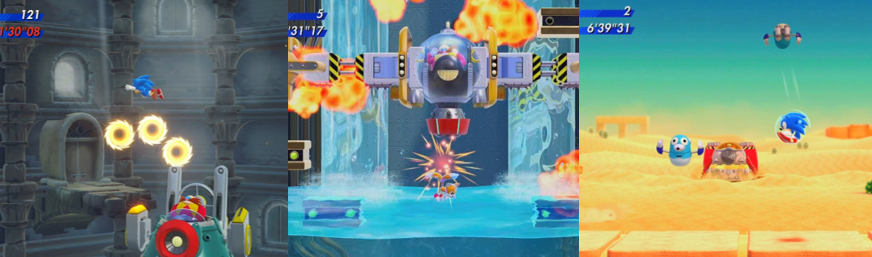
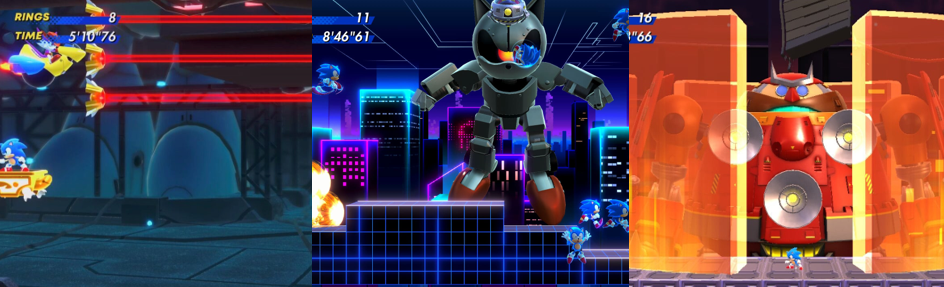
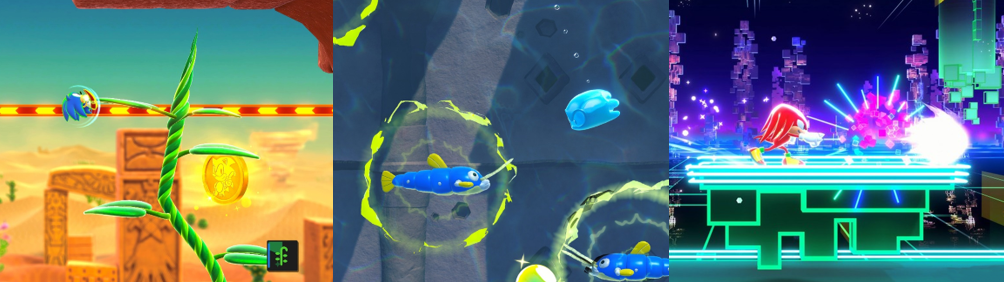
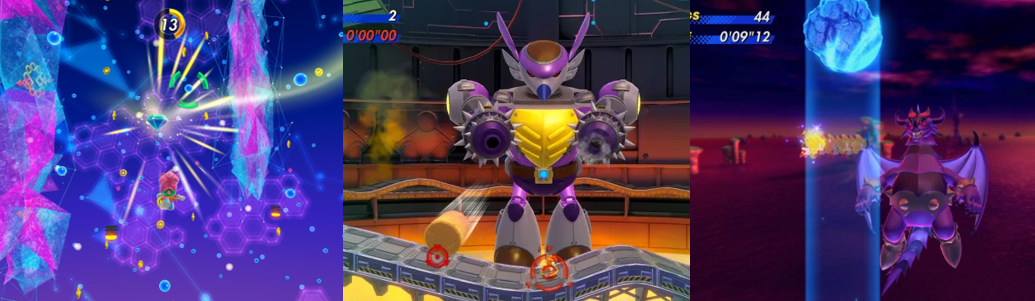
Game Corner [Sonic Month]: Sonic the Hedgehog 4 (Xbox 360)


Sonic the Hedgehog was first introduced to gamers worldwide on this day back in 1991 and, since then, has become not only SEGA’s most enduring and popular character but also a beloved videogame icon and, in keeping with tradition, I have been dedicating the entire month to celebrating SEGA’s supersonic mascot.


Released: 7 October 2010; 15 May 2012
Developer: Dimps / Sonic Team
Also Available For: Mobile, Nintendo Wii, Ouya, PC, PlayStation 3, PlayStation 4, PlayStation 5, Shield, Xbox One, Xbox Series S, Xbox Series X

The Background:
In 1991, after much development and strategic planning to create a mascot iconic enough to rival Super Mario, SEGA introduced gamers to Sonic the Hedgehog. Sonic’s initial success (thanks, largely, his debut game being bundled with the Mega Drive) exploded into mainstream popularity with Sonic the Hedgehog 2 (SEGA Technical Institute, 1992) and, from there, the sky seemed to be the limit. So big was Sonic’s blockbuster third outing that it was split into two parts to save costs and meet deadlines; nevertheless, Sonic 3 & Knuckles (ibid, 1994) is widely regarded as one of the best of the classic 2D Sonic games, though SEGA strangely followed this success with several lacklustre spin-offs before transitioning to 3D in 1999. By 2010, Sonic had appeared in around sixty titles, with SEGA outsourcing their supersonic mascot to Dimps for the Sonic Advance series (2001 to 2004), which seemed to be the closest fans could hope forSonic 4. Conscious of the demand for a classic Sonic experience, SEGA again teamed with Dimps for a secret project originally codenamed “Project Needlemouse” in a nod to Sonic’s origins. Sonic 4 was conceived of as a throwback title, one that would mix modern elements with the classic formula, and incorporate gyroscope functions for mobile players. Episode I released to mixed reviews; despite criticisms of the poor physics, the game was a commercial success and development began on Episode II, with the specific intention to introduce new elements. With the digital re-release of the celebrated Sonic the Hedgehog CD (SEGA, 1993) looming, Episode II was developed to tie up loose threads from that game, as well as introducing team-based mechanics by including Sonic’s sidekick, Miles “Tails” Prower. Episode II was also met with mixed reviews; while largely seen as an improvement over Episode I, the boss battles and level designs drew criticism. Although players could access a side story with both titles, Episode Metal, plans for a third entry were mysteriously abandoned and the game has largely been discarded by all, especially after more fitting throwbacks to the classic era were later released.

The Plot:
Doctor Eggman is back, having refined some of his past creations and seeking to conquer new lands with the Chaos Emeralds. When Sonic inevitably arrives to stop him, Dr. Eggman calls in Metal Sonic to hold off his foe while he again works to harness the power of Little Planet.  

Gameplay:
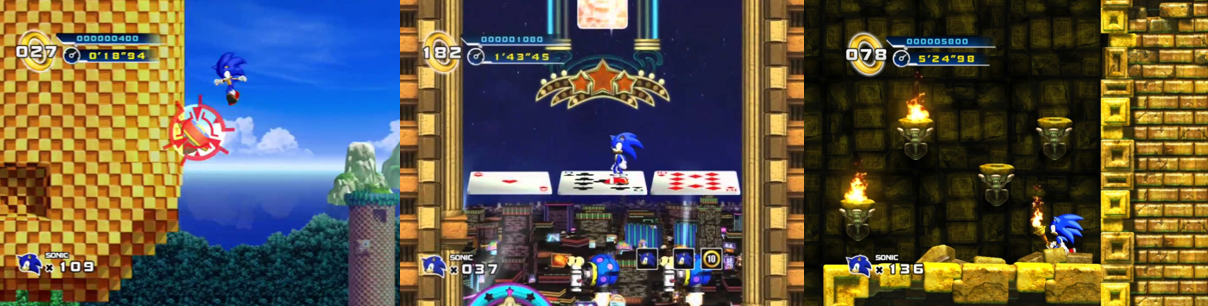
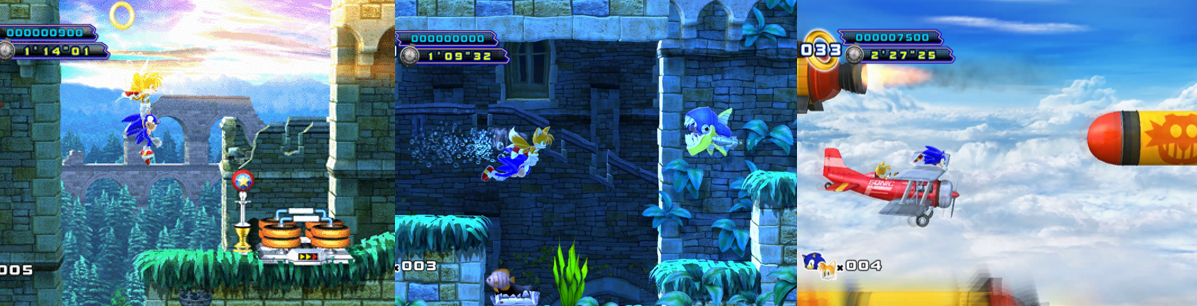
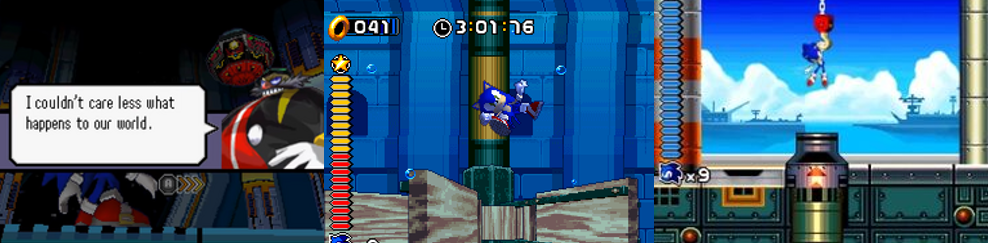
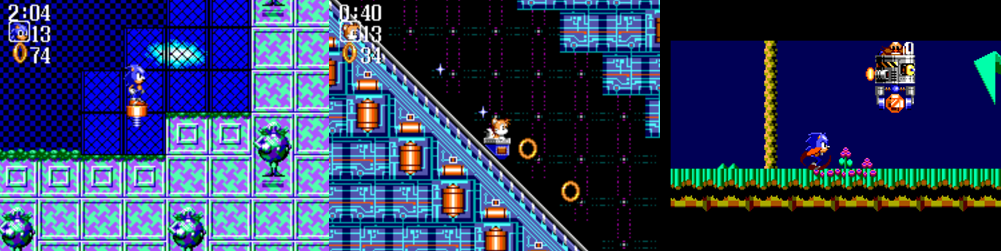
In the tradition of the classic Sonic titles, Sonic the Hedgehog 4 is a 2.5D, sidescrolling action platformer in which players blast through ten levels (known as “Zones”), with most having three stages (or “Acts”) each, culminating in a boss battle against Dr. Eggman or Metal Sonic. Fundamentally, the basic controls are as familiar as ever; players can pick up speed to blast through Acts, spinning to crash through Badniks, walls, and acquire power-ups with the A or B button, or charge up a Spin Dash by pressing down and either A or B. Oddly, the Spin Dash is actually quite nerfed and doesn’t give you the usual speed boost you’d expect compared to simply running, and Sonic uncurls when flying off curves and springs, leaving him vulnerable to attack. However, this is somewhat explained by the incorporation of the Homing Attack; by pressing A or B after a jump, Sonic will fly towards the nearest target (“helpfully” indicated by an onscreen reticule and targeting sound), which is all-but required as you chain together Homing Attacks to cross gaps. In Episode II, the controls are slightly expanded; here, Tails constantly follows you around, snagging Golden Rings and bopping Badniks, and can be called to your side at any time by pressing the Right Trigger or performing one of the three new Tag Actions with X. Sonic and Tails can either curl up into a massive ball to break through walls with the Rolling Combo or Tails can indefinitely swim Sonic around underwater with the Submarine Combo or briefly carry him with his helicopter tails with the Copter Combo. Each has different strengths and weaknesses; the Rolling Combo is quite fast and unwieldy, the Submarine Combo can be a bit slippery to control, and the Copter Combo only allows for a short burst of flight, though it’s very handy to use to save you from one of Episode II’s many bottomless pits. 

Episode I poorly apes the original classics, marrying bad physics with wonky mechanics.

The basic gameplay mechanics are also very familiar; players must collect Golden Rings to stave off death, with the Rings scattering when you’re hit so you can snag them to protect yourself, in addition to swallowing air bubbles to keep from drowning. Acts are played against a ten minute time limit, after which players will lose a life, though you can earn extra lives by racking up points, collecting 100 Rings, or breaking open 1-up monitors. The more points you acquire, and the faster you finish Acts, the more likely it is you’ll earn continues to carry on playing after you’ve exhausted your lives, and you can respawn from checkpoints by running past Star Posts. Zones are filled with robotic enemies and cheap obstacles to sap your Rings and lives, however, from spikes jutting out of floors, walls, and ceilings, to bottomless pits, crushing hazards, and a massive wall-like drill machine that relentlessly chases you down. In Episode I, you’ll play through Zones heavily inspired by the classic Sonic games, meaning you’ll run through loops, mobius strips, jump to moving or temporary platforms, press switches to open doors, and ricochet all over the place on bumpers, springs, bouncers, and steam vents. A few new gimmicks are also present, though; Sonic can swing from vines and zip lines in Splash Hill Zone, ride playing card bridges and cross flipping cards in Casino Street Zone, awkwardly run on giant cogs in Mad Gear Zone to cross tracks, and light dynamite and ride mine carts in Lost Labyrinth Zone. It’s this latter Zone that has some of the most frustrating elements of Episode I, however; not only is it full of water that threatens your life and slows you down and all the same gimmicks as Labyrinth Zone, but you must also run across giant balls in Act 1, carry a flaming torch to light the way in Act 2 (including an annoying light puzzle that can easily cause you to time out if you don’t light the torches in the right order), and struggle with an underwater maze and some bizarre tilting mechanics in Act 3. Indeed, Episode I suffers greatly by its reliance on the original games, especially the first two, and its obnoxious use of Homing Attack chains; every Zone is simply a remix of those seen in Sonic 1 and 2, with a few things shuffled about and some sluggish, clunky physics thrown in to sour the experience. 

Episode II expands the gameplay to include tag-based mechanics and fun flying sections.

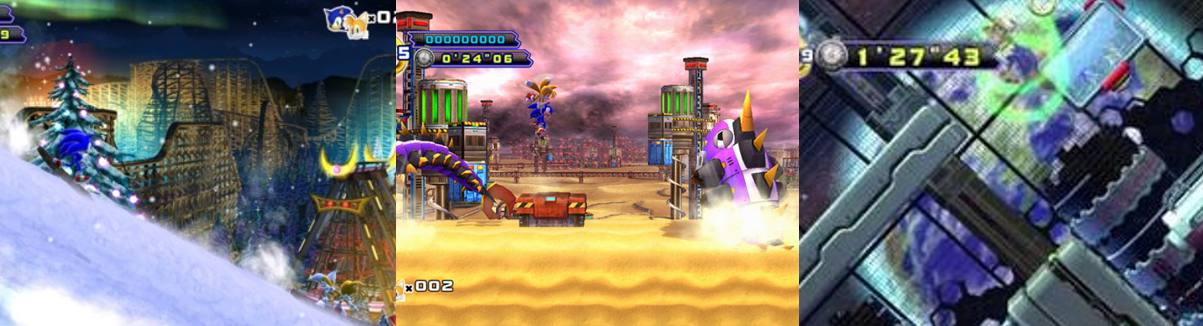
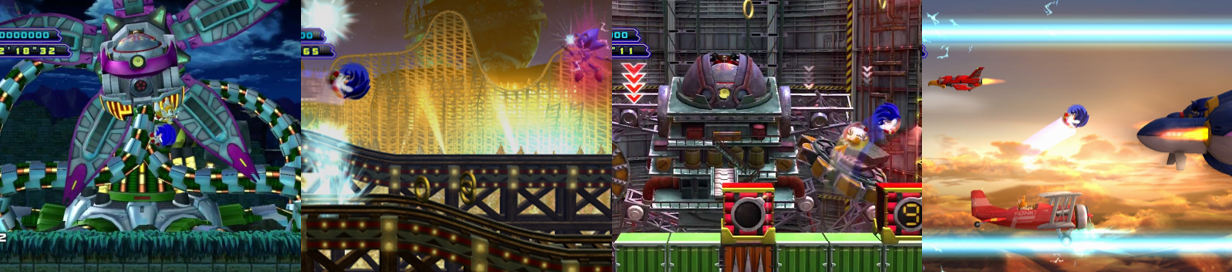
Episode II addresses many of the issues with Episode I, providing more unique gimmicks and reimagining of old gameplay mechanics along with new elements that can be both enjoyable and frustrating. The Spin Dash pads from Marble Garden Zone are back, for example, and there are now warning signs alerting you to bottomless pits; tilt mechanics are gone, replaced by platforms you can hit with the Homing Attack to make horizontal or springs, and there’s less reliance on Homing Attack chains and more emphasis placed on the Tag Actions. This is especially true in White Park Zone, where you’ll need to make ample use of the Submarine Combo to navigate the ice-cold waters, and Sky Fortress Zone, where you’ll have to expertly use both the Homing Attack and carefully-planned execution of the Copter Combo to cross gaps and avoid spiked ceilings. This Zone also sees the return of the Tornado in a very Sky Chase-inspired sequence; Sonic can now perform the Homing Attack from the Tornado’s wings and you can barrel through obstacles with X, though this’ll leave Tails dizzy for a few seconds. This was a fun autoscrolling section that focused more on avoiding Metal Sonic’s attacks and minions and trying to not get crushed by hazards but, like much of Episode II, it does go on for some time. Zones are much bigger with more varied paths, which is a good thing, and give you lots of options to use the Tag Combo or roll snowballs or take oil slides to different areas, but things can get quite aggravating due to their length and the eventual number of cheap instant deaths. Some Zones uses their gimmicks in interesting ways; Oil Desert Zone, for example, mixes together elements of Oil Ocean and Sandopolis Zone, including quicksand, rising sand you must outrun, and the aforementioned oil slicks but you’ll also lose traction on oily surfaces and these can even briefly be set alight! Sky Fortress Zone makes liberal use of propellers and wind to blow you about, rocket boosters to fry you, and chain-link fences littered with explosives for you to run across. White Park doesn’t just see you swimming through icy water, ploughing through snowdrifts, or snowboarding on avalanches but also includes a rollercoaster aesthetic, which sees you racing along at high speeds and springing to the foreground and background in a fun (if, at times, disorientating) mechanic, while Sylvania Castle Zone makes use of destructible ruins, water, springs, rotating platforms, and shortcuts across the water’s surface like in Hydrocity Zone. 

Graphics and Sound:
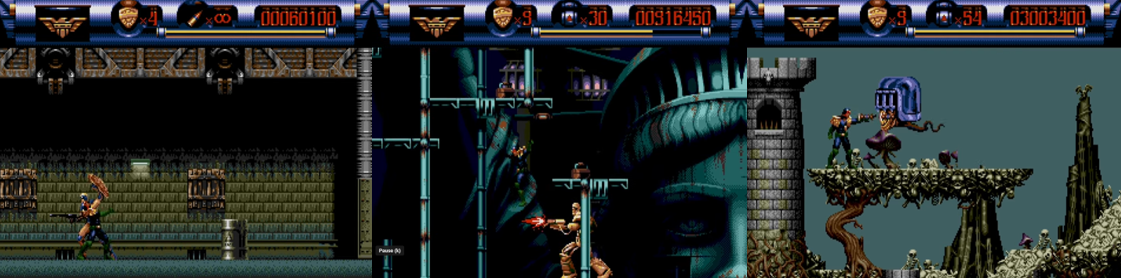
Sonic the Hedgehog 4 opts to ditch the classic sprite art (except, bizarrely, for loading screens and certain icons) and go for a sleek, plasticine aesthetic that seems to be trying to bridge the gap between the classics and the then-modern games but ultimately ends up being quite an unsightly, unnecessarily shiny, and cluttered mess of colours, especially in Episode I. Sonic takes far too long to get to top speed here and looks daft when he does; every movement feels like you’re underwater and the screen is zoomed in a little too close, making it difficult to see what’s ahead of you. Sonic has his usual idle poses and looks up cheerfully enough, but this is also slow and doesn’t even scroll the screen; the sound effect of his Spin Dash is also wrong, with the “release” sound used for the ”wind up” and vice versa, and all of the game’s story is told through the in-game manual and a couple of simple, pantomime-like cutscenes that are just ripped off from the first game. Although many of the same sound effects are recycled for the in-game action and menus, the soundtrack is actually pretty good; it’s stronger in Episode II, but even Episode I has some catchy tunes going on, especially the boss theme. Each Act also has slightly different gimmicks and colour palettes to mix things up, and there’s even a world map where you can freely choose which Zone and Act to play, though I disliked that the game automatically returns you to this screen after you clear an Act unless you press Y to play the next Act. 

Episode I can be quite cluttered and fundamentally cripples Sonic’s momentum.

Episode I is, however, an unsightly mishmash of conflicting effects and colours. There is a lot going on in the foregrounds and backgrounds, especially in Mad Gear Zone, which takes Metropolis Zone and ups the ante to eleven, with pistons and gears and steam vents and moving parts cluttering up the screen and making it difficult to see enemies, hazards, and even the way forward. It’s a shame as I quite like the redesign given to classic Zones like Green Hill and Labyrinth Zone, with a greater level of detail and lighting applied to make them pop and feel “busier” than before with the inclusion of waterfalls and crumbling effects. However, that doesn’t change the fact that it looks and feels like you’re playing with toys or plasticine; everything is unnecessarily busy and lacks the charm of traditional sprite art, meaning there’s no “weight” to anything. This isn’t helped by the dreadful physics; Sonic is constantly struggling against gravity, loses all momentum when hitting the ground after flying through the air, and can easily walk up slopes and loops without fear of falling. If you play fast and hard, you can avoid much of this, but Zones like Lost Labyrinth force you to slow down, and Casino Street Zone’s curved surfaces lose all their appeal when you can just trot up them without curling into a ball or using the Spin Dash. The Homing Attack is also finicky, stuttering when multiple targets are onscreen and sometimes causing you to drop to your death with it fails to lock-on. Finally, Episode I just feels like a cheap and thrown together knockoff; five Zones and one playable character, with no two-player options and very few new gameplay options, make it feel less like a continuation of the classics and more like a reimagining for the mobile generation (indeed, I argued at the time – and even now – that the game might’ve been better served being titled Sonic the Hedgehog HD). 

Episode II is visually far more interesting and unique, and handles far better.

Episode II is, technically, a vast improvement over its predecessor; the menu screens are more detailed and lively, the physics are far more polished (Sonic doesn’t always uncurl off a ramp and no longer feels floaty and heavy), and the soundtrack is even better, boasting catchy tunes and a remixed boss theme that kept me invested even at the game’s most frustrating sections. The world map has been cleverly expanded, Sonic’s running animation is far better, and the addition of Tails really adds to the gameplay. Unfortunately, Zones are still quite cluttered; White Park Zone, especially, can be very busy with all the foreground and background elements overlapping, but I enjoyed how they retained different times of day and the looming presence of the mechanised Little Planet or Metal Sonic in the background of many Acts. In fact, every Act has something interesting happening in the background; you can see the rollercoaster and theme park in the background of White Park Zone: Act 1, drilling platforms and machinery at work in the background of Oil Desert Zone, and holographic screens and foreboding machinery all over the gravity-skewing Death Egg mk. II Zone. Episode II incorporates far more cutscenes, with them being similar to those of Sonic 3 & Knuckles, but to the game’s detriment; you’ll have to sit through numerous unskippable scenes of Sonic and Tails being taunted by Metal Sonic or Dr. Eggman getting his newest mech ready to battle you, which can make replaying these sections after failing a real chore. However, I really liked the way Episode II presented far more unique Zones; yes, there are influences and borrowings from previous mechanics here, but it feels like some actual effort went into giving the new Zones distinct identities rather than being rip-offs of previous efforts, and the gameplay experience was far more enjoyable here, even if the difficulty has spiked somewhat as a payoff. Indeed, hazard and enemy placement and Zone construction seems to take a leaf out of Sonic CD’s playbook, with many high-speed paths running you head-first into danger and awkward platforms, though it’s nowhere near as slapdash as in Sonic CD and seems like a balanced marriage of all five of the classic 2D Sonic titles. 

Power-Ups and Bonuses:
If you’ve ever played a Sonic game before, you’ll know exactly what’s on offer here. In addition to the life-preserving (and granting) Golden Rings, you can break open monitors to earn an extra ten Rings, grab a bubble that will protect you from one hit, a temporary speed up, and a briefly period of invincibility, as well as the odd extra life monitor. Sadly, none of the elemental shields appear here, neither does Sonic’s insta-shield, and there are no new or returning additional power-ups with the exception of Episode II’s “Special Combination” item box. These are pretty rare (I only found two throughout my entire playthrough) but see Sonic and Tails bounce across the screen, racking up points and destroying all onscreen enemies as you tap A and being showered with Rings, not unlike the “Team Blast” function of Sonic Heroes (Sonic Team USA, 2003). Episode II’s Special Stages also include the new “Combination Dash” pickup, which tethers Sonic and Tails together to allow them to pickup more Rings, a clunky mechanic that relies on momentum as much as your current speed.  

Enemies and Bosses:
When playing Episode I, you may be equal parts excited and disappointed, depending on your nostalgia for the classics and desire for fresh Sonic content, by the enemy selection on offer. Every Badnik encountered is ripped straight from Sonic 1 and 2, with only the Batbot and Bubbles returning from Sonic 3 & Knuckles. This means you’ll be bopping Motobugs, smashing Buzzers, dodging spiked balls thrown by Orbinauts, and cursing with frustration when you run head-first into Shellcracker’s clawed fist or Slicer’s annoying bladed projectiles. Episode II continues this recycling of classic Badniks, primarily focusing on enemies encountered in the old Wing Fortress Zone, but also includes a bunch of brand-new Badniks for you to go up against. Some of these are intimidating in their size; Snowy the massive mechanical polar bear is almost akin to a mini boss as it takes a couple of hits to destroy while giant robotic Sandworms will burst from the sand in a surprise attack. Others, however, are more aggravating: Flamers can set fire to Oil Desert Zone’s oil slicks, the dung-beetle-like Scarabesque always seem to sap your Rings with their explosive balls, and the seal-like Steelions will be the bane of your life in White Park Zone’s waters as they flash-freeze the nearby area and cause you to drown. Each Badnik you destroy releases a furry woodland critter, with a whole bunch being freed after boss encounters, nets you some points, and can be used to cross gaps with your Homing Attack but don’t get too cocky as some will sprout spikes to ruin your chain and send you plummeting to your death. 

Episode I recycles classic bosses, adding new attack patterns and strategies to them to mix things up.

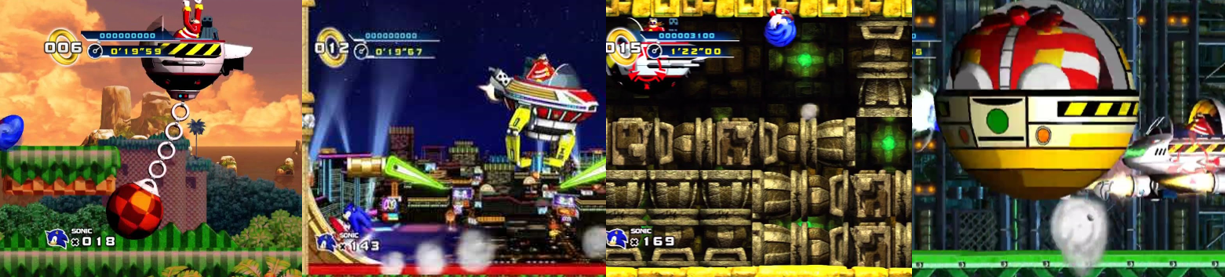
After clearing each Act of every Zone, you’ll have to do battle with Dr. Eggman (and/or, in Episode II, Metal Sonic). In Episode I, there are five boss encounters, with all of them being recycled battles from Sonic 1 and 2 but with a new coat of paint and an extra “pinch” mode after you deal enough damage. First up, you’ll once again battle Dr. Eggman in his classic (and overused) Egg Wrecker; as before, you need to attack Dr. Eggman’s craft while avoiding his massive wrecking ball, which is a lot easier now that you have the Homing Attack and a higher rebound after landing a hit, meaning it’s simple to put him down even when he spins around and tries to crush you with the ball. Casino Street Zone revisits the Egg Claw boss; again, you need to run up the pinball table-like arena or use the bouncers to attack Dr. Eggman, this time while avoiding a claw-like appendage and an electrical shield that will damage you on contact. In Lost Labyrinth, you’ll again have to chase after Dr. Eggman’s Eggmobile, avoiding spikes and drowning, until he locks you in an enclosed arena. Here, he summons a series of horizontal and vertical columns that will crush you if you’re not careful, forcing you to quickly hop up and target him as he hides in a safe corner for easily the most aggravating boss of the game. Finally, in Mad Gear Zone, Dr. Eggman busts out a new version of the Egg Bouncer; as in Sonic 2, you’ll need to watch out for the mini Dr. Eggman bubbles that detach from his craft, which become a deadly hazard in the second phase. In this section. The game takes a page out of the Sonic Advance 2 (Dimps/Sonic Team, 2002) bosses and forces you to run at Dr. Eggman, avoiding spiked balls and his erratic duplicates to land hits. As if that isn’t bad enough, you’ll have to battle all four bosses in their “pinch” phases again in the secret final Zone, E.G.G. Station, in a boss rush. Luckily, there are Rings and checkpoints between each bout, though they’ve also got added hazards thrown in, such as moving platforms in the Egg Wrecker section and additional projectiles in the Egg Bouncer section. 

Episode II‘s bosses are larger and more complex but long-winded and tedious at times.

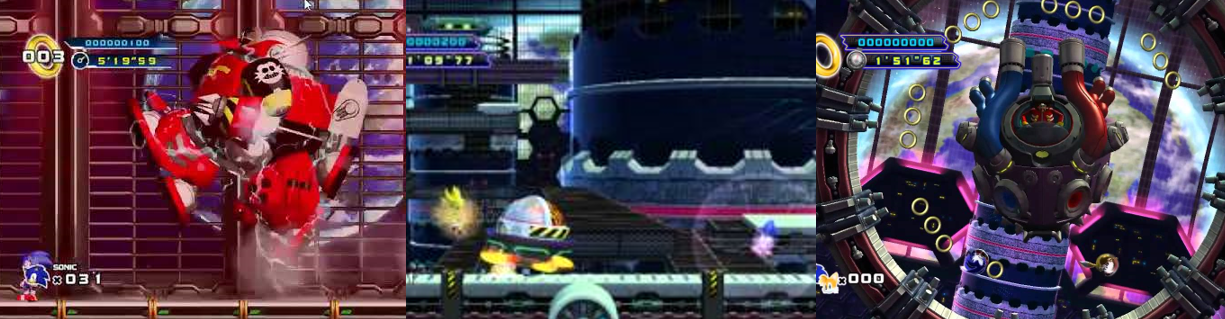
Episode II is once again a double-edged sword when it comes to bosses; while they’re largely far more unique and offer more of a challenge, they’re long, tedious, and involve a lot of waiting around. Episode II takes inspiration from Sonic CD for its bosses, giving them complex attack patterns and more visually interesting and tricky pinch phases, which is either a good or a bad thing depending on how patient you are. In Episode II, you’ll battle Dr. Eggman twice; in Sylvania Castle Zone, he pilots the Egg Serpentleaf, a massive plant-like mech that tries to swat you with its many tentacles and shields him behind a spiked bud. You’ll need to use the Copter Combo to avoid being smacked and land a few hits on Dr. Eggman, which will eventually cause more tentacles to appear and the mad scientist to blast the arena with a massive cannon. You’ll next encounter him in Oil Desert Zone in an even more irritating boss battle; Dr. Eggman assembles a massive mech out of scrap metal and you must pursue him up a garbage disposal, dodging his buzzsaws and the crates he drops (which thankfully aren’t instant-kill hazards but can contain spikes or bombs) and smacking his cockpit when he appears. When you reach the surface, the Egg Scrap Mech rapidly jumps between the foreground and background before trying to crush you; you’ll need to hit its feet with the Rolling Combo to stun it and finish off this pain in the ass boss. The other two boss battles are against Metal Sonic; like Sonic CD and Sonic Advance 2, these are auto-runners and autoscrollers. In White Park Zone, you must race towards Metal Sonic and attack him, then dodge his charge attack (either by jumping or springing to the foreground or background) and hop over the electrical traps he lays for you. After a few hits, he’ll start destroying the rollercoaster track so you’ll have to take care not to fall when attacking him. In Sky Fortress Zone, Metal Sonic pesters you in his Metal Carrier and then battles you directly, blasting electrical bolts that you need to dodge to smack his cockpit. He’ll then face you head-on, firing energy beams that you need to avoid and then jettisoning booster rockets that can crush you if you’re not careful. This can be a very annoying boss battle if you fail as there’s a lot of downtime at the start and between phases; while you can easily amass 100 Rings for an extra life, it doesn’t help with the frustration that can build in this encounter. 

Sonic’s return to the Death Egg is either overly familiar or erratically tough, but always an uphill battle.

Once you’ve cleared every Zone and bested Dr. Eggman’s boss rush in Episode I, you’ll face a final confrontation with the mad scientist in a refurbished Death Egg Robot. This is easily the most tedious and frustrating boss battle of Episode I as the Death Egg Robot takes nearly thirty hits to destroy and the battle involves a lot of waiting around. To start with, it’s exactly the same as in Sonic 2 but easier thanks to you having Rings and the Homing Attack; simply stay away from the mech, attacking its torso and avoiding its rocket arms, until it starts to malfunction. In this phase, the Death Egg Robot cannot be directly attacked; you need to quickly dash under it as it hops about and then use the Homing Attack to blast one of its rocket arms back at it, avoiding the sporadic laser blasts as you go, to land a few precious hits. Once you’ve done this enough, Dr. Eggman will try one last attack, forcing you to quickly dodge out of the way and land the finishing blow before you’re dropped to your death. In Episode II, you’ll rush at Dr. Eggman and Metal Sonic aboard the Death Egg mk. II; you need to get past the invulnerable Dr. Eggman and ram Metal Sonic a few times, avoiding the giant energy balls unleashed, before racing against your robotic doppelgänger like in Stardust Speedway, only this time with more doors to bash through. Finally, you’ll battle Dr. Eggman’s Egg Heart at the heart of the mechanised Little Planet; this battle is fought on constantly rotating mechanical rings that will burst with electricity, forcing you to quickly hop between them and ram Dr. Eggman’s cockpit. The more damage you do, the more erratic the rings move and the more dangerous the hazards become; Dr. Eggman even erects an energy shield that you’ll need to break with a Rolling Combo, making for a far more unique but equally frustrating final boss encounter. 

Additional Features:
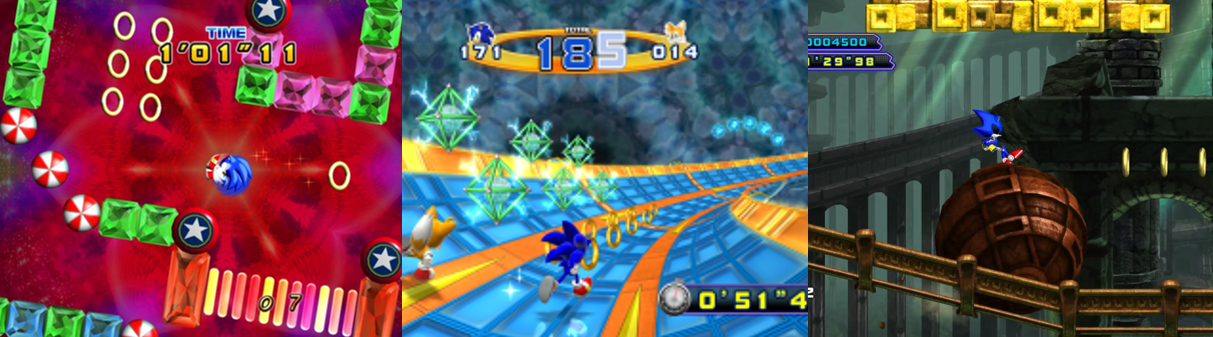
There are twenty-four Achievements to earn in Sonic 4, twelve for each Episode, and they’re pretty basic, for the most part. You’ll get an Achievement for clearing the first Act of each game’s first Zone, one for clearing each game, one for completing first Act of each game’s first Zone in a strict time limit, and one for collecting first one and then all the Chaos Emeralds. In Episode I, you’ll get an Achievement for defeating 1000 enemies and accumulating 99 extra lives, while in Episode II you’ll add to your Gamer Score by playing as Tails fifty times and performing the Rolling Combo. Each Act in Episode II also hides a Red Star Ring; collect them all and finish the game for another Achievement, and upload your best scores in each Episode for another. I mentioned Chaos Emeralds just now and, as you’d expect, the seven gems are collectible in each Episode. You’ll earn them by beating Special Stages, which are accessed by finishing Act 1 to 3 with fifty Rings and entering a Big Ring, but the Special Stages vary drastically between each Episode. In Episode 1, they’re based on Sonic 1’s Special Stages, featuring a floating maze filled with Rings, bumpers, and exit pads; you need to collect Rings to lower barriers and reach the Chaos Emerald before the time runs out, collecting time bonuses and making use of the ‘Retry’ option in the pause menu if you’re sensing failure. As bad as Sonic 1’s Special Stages were, these are far worse; you rotate the maze here, not Sonic, which is extremely awkward and disorientating. Sonic can also jump but all this does is shake the screen in a nauseating way and, while you can replay the Special Stages from the world map, you can only retry those you’ve beaten and you must enter a Special Stage from a different Act to get a different Chaos Emerald. 

Conquer the aggravating Special Stages or take on a harder challenge in Episode Metal.

In Episode II, the Special Stages are redesigned and now influenced by the half-pipe stages from Sonic 2. Here, Sonic and Tails must collect a set number of Rings to progress, dodging bombs and electrical hazards and making use of the awkward tether mechanic in the final two Special Stages. While these are a lot more enjoyable and it’s much easier to retry if you’re struggling, they can get really annoying as the difficulty increases; you’ll need pixel-perfect timing and to make good use of the boost and momentum to snag all the Rings and the Chaos Emeralds here. In both Episodes, collecting the seven Chaos Emeralds allows you to transform into Super Sonic once you collect fifty Rings and double press A or B. this makes you super fast and completely invincible unless you’re crushed or drop down a pit, though it only lasts for as long as you hold Rings. Unlike Episode IEpisode II also features a multiplayer component; you and a friend can play the game in co-op like in Sonic 2, either locally or online, though this is strangely the only way you can play as Tails alone. Finally, completing Episode II unlocks Episode Metal, a side story in which you play as Metal Sonic and work your way backwards through remixed versions of Episode I’s Zones with all new cutscenes setting the stage for Metal Sonic’s return. Despite some new animations and sound effects, Metal Sonic is simply a reskin of Sonic and doesn’t have any new attacks; he also has to smash Badniks as well, which is a bit odd but I guess speaks to his superiority complex. There are no Achievements tied to Episode Metal, which is significantly harder then either Episode I or II; enemies, hazards, instant-death traps, and Act layouts have all be increased, altered, and made far more challenging, though there are sadly no bosses to contend with here, meaning this is more of a distraction for players who have mastered the base games. 

The Summary:
Honestly, calling any title Sonic the Hedgehog 4 was going to be asking for trouble; Sonic the Hedgehog HD or Sonic Returns or Sonic Redux would’ve been far more appropriate titles and would’ve tempered expectations for these sadly unfinished titles. It just baffles me how SEGA thought it was acceptable to go from the sprawling, multi-character epic that was Sonic 3 & Knuckles to this tame, cheap, stripped down bastardisation of the first two games. Playing Episode I alone is a joke; the game is functionally playable but visually a mess, with wonky physics, a lack of replay value, and too many recycled gimmicks and elements from Sonic 1 and 2. Thank God for Episode II, which fixes many of these issues; Sonic controls a lot better, the Zones are far more visually interesting and unique, and the bosses have more effort put into them. The team-based mechanics were fun; they could’ve easily been overused but they were enjoyable when you weren’t being asked to fly over bottomless pits, though I’m confused as to why there’s no option to play as Tails in the lead. The inclusion of Episode Metal was also a nice touch, though I think more could’ve been done with this. At least give Metal Sonic his electrical boost or some new gameplay mechanic, or have him face off against Sonic, rather than just being relegated to a hard mode add-on. Truthfully, I am sad we never got the planned Episode III as it’s possible that more unique elements would’ve been added in, including a playable Knuckles the Echidna and other more engaging elements, but sadly we’ll never know. As a complete package, Sonic the Hedgehog 4 is widely inconsistent; in addressing errors from Episode I, the game just feels like a disjointed mess, even when it’s doing something new and enjoyable. It’s obvious the developers tried to address these issues in Episode II, providing a more challenging and versatile gameplay experience, but at the cost of upping the difficulty in some areas and making it equally as frustrating as Episode I but in different ways. Ultimately, Sonic the Hedgehog 4 is a disappointment; it not only fails to live up to its title, but also fails to match the quality of Sonic’s Game Boy Advance titles. I can understand why SEGA distanced themselves from it (though not its hefty price tag), though luckily these mistakes were atoned for in the years to come with better, more enjoyable throwbacks to Sonic’s heyday being released. 

My Rating:

Rating: 2 out of 5.

Could Be Better

Are you a fan of Sonic the Hedgehog 4? Which Episode did you prefer and what did you think to the presentation and stripped down mechanics? Were you disappointed by how much Episode I drew from the original games and the poor selection of Zones and modes? What did you think to the team up moves in Episode II and the return of Metal Sonic? Which of the game’s bosses and Zones was your favourite, and would you have liked to see an Episode III tie everything up? How are you celebrating Sonic’s anniversary this year, and what are some of your favourite Sonic games? Whatever you think, leave a comment below or on my social media and go check out my other Sonic content across the site!

Game Corner [Sonic Month]: Sonic Rush (Nintendo DS)


Sonic the Hedgehog was first introduced to gamers worldwide on June 23 1991 and, since then, has become not only SEGA’s most enduring and popular character but also a beloved videogame icon and, in keeping with tradition, I have been dedicating the entire month to celebrating SEGA’s supersonic mascot.


Released: 15 November 2005
Developer: Dimps / Sonic Team

The Background:
SEGA’s desperate attempt to create a mascot iconic enough to rival Super Mario paid off greatly when Sonic the Hedgehog expanded into mainstream popularity with Sonic the Hedgehog 2 (SEGA Technical Institute, 1992). Despite further success with subsequent platform titles and his first forays into 3D gaming, a series of costly decisions saw SEGA forced to withdraw from console manufacture, bringing the “Console War” of the nineties to an anti-climatic end. With SEGA focused on software development, the unthinkable happened when Sonic and SEGA-branded videogames appeared on Nintendo’s often-underappreciated GameCube console and Game Boy Advance handheld. Partnered with Dimps, Sonic Team created a trilogy of throwback titles for Nintendo’s handheld that were largely well received, despite some nagging criticisms. The partnership with Dimps continued when Nintendo succeeded the Game Boy Advance with the more powerful, dual screened Nintendo DS and SEGA immediately impressed when they dropped the first gameplay footage of their newest game for the new-fangled device at E3 2004. Director Akinori Nishiyama was keen to infuse the spirit of the classic games with the contemporary mechanics and fast-paced action of Sonic’s 3D titles and introduced not just the hotly-debated Boost gameplay to the franchise but also a brand-new character, Blaze the Cat, who would become a staple of the series. Released exclusively for the Nintendo DS, Sonic Rush has been widely praised for its back-to-basics approach, gorgeous graphics and fast-paced action, and memorable soundtrack. While some criticised the level layouts and repetitive elements, the game impressed enough to warrant a sequel in 2007 and the game is largely fondly regarded as an oft-forgotten gem of the franchise.

The Plot:
When Doctor Eggman steals the seven Sol Emeralds, their stoic guardian, Blaze the Cat, journeys to Sonic’s world to recover them. However, her nemesis, Doctor Eggman Nega, has followed her and in search of the seven Chaos Emeralds, leading Sonic the Hedgehog to oppose his mad plot for worldwide destruction.

Gameplay:
Sonic Rush is a 2.5D action platformer much like most classic Sonic titles and his 2D outings on the Game Boy Advance. Players can initially only control Sonic but will unlock new character Blaze after clearing the first level (known as a “Zone”). As is often the case, each Zone is comprised of two stages (or “Acts”), with a third dedicated to a boss battle against either Dr. Eggman or Eggman Nega. By entering the “Options” menu on the main menu screen, players can tweak some of the game’s settings, setting it to Easy, Normal, or Hard (which I believe impacts the amount of lives you start with and hits bosses take), disable the ten minute time limit for Acts, listen to the game’s soundtrack, or allow a friend to download a demo version of the game to their Nintendo DS. One new feature rarely seen in 2D Sonic titles is the presence of a world map; styled after the map screen in Sonic Adventure 2 (Sonic Team USA, 2001), this allows players to wander about a static screen to replay previous Zones or visit their allies. Miles “Tails” Prower and Cream the Rabbit will offer encouragement and enthusiastic support to each character, keeping track of how many lives they have, how many of the Chaos and Sol Emeralds they’ve collected, and the percentage that their worlds have unmerged (reduced as you clear Zones). Despite visually appearing very different, and their contrasting personalities (Sonic is all brash and happy-go-lucky and Blaze is quiet and reserved), Sonic and Blaze play in almost exactly the same way, visit the same Zones (albeit in a different order), and battle the same bosses (just with different madmen at the helms), though Blaze doesn’t have to worry about beating Special Stages to acquire her Emeralds.

Sonic and new ally Blaze can blast through Zones with their new Boost mechanic and abilities.

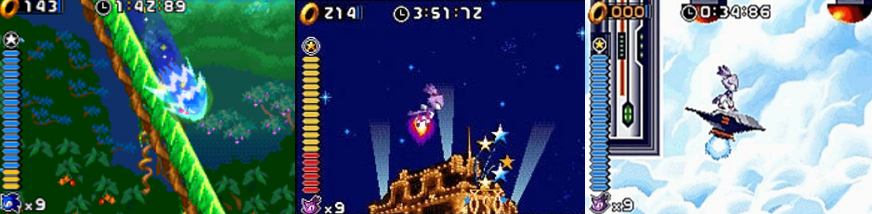
Both characters can jump with a press of A or B; holding the button lets them jump a bit higher and pressing down and A or B charges up either the Spin Dash or the Burst Dash so you can blast ahead in a burst of speed. When jumping, you can press the right bumper to perform an air dash as Sonic or Blaze’s Burst Hover, which gives her a little more airtime courtesy of a rocket boost from her boots. Unfortunately, Blaze is little more than a reskin of Sonic; her gameplay is slightly different thanks to her limited hover but it’s essentially exactly the same as Sonic’s, lacking additional features such as climbing or flying to really make her stand out despite her visual appeal, to the point where I wonder if it might’ve been better to have Blaze be incapable of boosting just to make her gameplay a bit different and challenging compared to Sonic’s. When flying off ramps, springs, or propelled through the air, you can press B, A, and R to perform tricks; these will both boost you higher and further, which is necessary to reach platforms and switches, and build up your “Tension Gauge”. When partially or completely full, you can hold down X or Y to blast off with the Super Boost or Fire Boost, respectively, which sees you plough through Badniks and breakable walls at breakneck speeds, completely invulnerable and surrounded by waves of supersonic or flaming energy. This boost mode allows Sonic Rush to reach speeds classic Sonic games could only dream of and is essential for outrunning giant rolling balls, blasting through enemies and Acts alike, building momentum with some of the game’s gimmicks, and entering Special Stages. It can be unwieldy at times, though; just as you should exercise caution with your trick moves, you should use the boost sparingly as you could overshoot platforms or run head-first into one of the game’s many bottomless pits. Sonic and Blaze can also grind on rails to pick up speed and perform tricks, fill the Tension Gauge by defeating enemies, and make use of giant bullets and hovering UFO-like vehicles, though these latter two are equally cumbersome due to being difficult to control and having to use the Nintendo DS’s dual screens to navigate.

Despite a few new gimmicks, both characters sadly share the exact same playstyle.

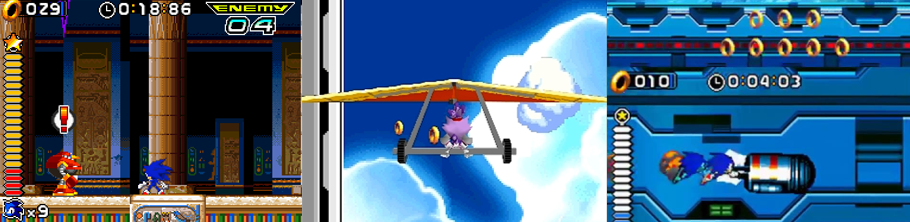
Sonic Rush uniquely uses the dual screens to spread its action out vertically; you’ll often by sprinting down slopes from the top screen to the bottom, which is quite fun, and you’ll need to pay attention to the top screen when planning jumps to avoid Badniks or spot platforms and switches. Otherwise, the bottom touchscreen is mostly relegated to menus and the Special Stages, which I’ll talk about later, and the bulk of the game is comprised of tried-and-true Sonic gimmicks. You’ll grab Golden Rings to survive hits and earn extra lives when you collect 100, suck in air bubbles when lumbering underwater, run through loops, bounce from springs, and avoid or be frustrated by sudden spiked hazards as you blast through the game’s seven Zones. There’s a lot that’s familiar about Sonic Rush; the ramps, boosters, and many of the Zones and enemies are modelled after Sonic Adventure 2 and married with a tweaked version of the classic gameplay mechanics, effectively bridging the gap between the “Classic” and “Modern” iterations of Sonic and laying the foundation for Sonic’s mid-2000s Boost-centric gameplay. You’ll spring from bungees, be blasted about by water jets and cannons, jump to moving or temporary platforms, boost into giant propellers to cover greater distances, resist the urge to pull off tricks after being blasted through the sky by rocket sledges, temporarily light up rails and platforms or ride blocks of light by hitting switches, run along the ceilings, and even be whisked through the cloudy sky on a hang glider (though, thankfully, it’s a largely automated section that’s much easier to control this time). Often, you’ll be trapped in a small arena and have to destroy all onscreen enemies to escape, sometimes while avoiding crushing hazards; other times, you’ll swing from chains and ropes (again resisting the urge to press any inputs except to jump to safety) and desperately avoiding instant-kill lasers or the numerous bottomless pits. These cheap hazards crop up from the first Zone and only increase by the time you reach Dead Line; it can be extremely aggravating being in the swing of a fun boost run, pulling off nifty tricks and building momentum, only to cause yourself to fly past a platform or spring or through a rail and plummet to your death.

Graphics and Sound:
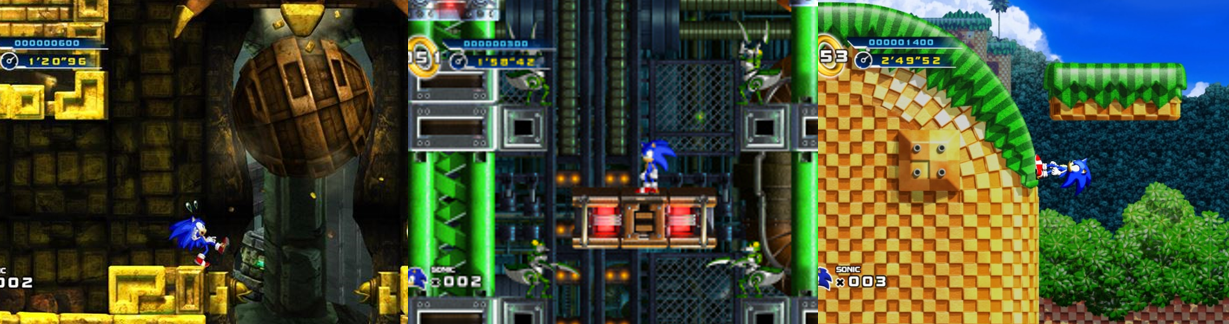
Although Sonic Rush employs traditional sprite art for its backgrounds and environments and even oddly includes some Sonic Advance-style sprites in its endings, character models are all polygonal this time around, which is a bit hit and miss. Sonic and Blaze make a big show of looking up, dying, and encouraging you to get a move on but lack a lot of the detail seen in the Game Boy Advance games as their character models are a bit blocky and indistinct at times. Sure, they express a lot of personality when pulling off tricks, vocalising their enthusiasm, and when clearing an Act and getting their final letter grade, but I can’t help but think it might’ve been better if the environments were polygonal and the characters were nicely-animated sprites instead. On the plus side, despite the bland title screen and menu selection, Sonic Rush has an absolutely killer soundtrack; Hideki Naganuma and Teruhiko Nakagawa went above and beyond to really produce some infectious ear worms. This is evident from Sonic’s first Zone, Leaf Storm and its upbeat “Right There, Ride On” tune and continues with tracks like “Back 2 Back”. Every Zone makes an impression with its soundtrack, which really helps the game stand out from the usual punk rock tunes of the main console games and the traditional chirpy music from the classics. Cutscenes are a bit of a mixed bag; the story is primarily told using barely animated in-game models accompanied by dialogue boxes and you’ll see the same cutscenes repeated over and over after you defeat each boss, though there are some fun cameos here and there.

While the environments looks great, I’m not impressed with the polygonal models.

As mentioned before, Sonic Rush’s Zones are modelled after Sonic Adventure 2’s, for the most part. Leaf Storm is like a 2.5D version of Green Forest, Mirage Road resembles Hidden Base/Sand Ocean, and Huge Crisis takes place on battleships and in the middle of a Naval fleet like Metal Harbor. Other Zones are a little more traditional, with the Casino Night/Carnival Night Zone-inspired Night Carnival and Dead Line essentially being another run-through of a Death Egg-style space station. There’s quite a bit of detail packed into each Act, though they can be a little barren of enemies at times; you’ll see critters freed from every enemy or fluttering about, vines twisted over rails, flashing neon billboards, and fighter jets all lurking in the background. Hieroglyphics, giant stone statues, and fast sand slides await in Mirage Road, with these latter two gimmicks enlarging the character models as they’re brought closer to the camera. Similarly, you’ll precariously run along fencing, parachute past enemies and spikes in Altitude Limit, and illuminate entire areas with spotlights or glowing platforms in Night Carnival. Sonic’s opening Zones, Leaf Storm and Water Park, made the strongest impression on me; I enjoyed the ripple effect on the water, that you can run across it, and the Greece-inspired architecture in Water Park and the sheer colourful depth of Leaf Storm that helped to showcase the upgrade in power from the Game Boy Advance. Sadly, even these Zones are let down by an abundance of death pits, but the way the action spreads across both screens can be really fun, especially when you’re building up speed. The touchscreen comes to the forefront in the Special Stages, which are modelled after Sonic 2’s half-pipe stages and see you using the stylus (or your finger) to control a fully 3D Sonic model as he grabs Rings, avoids obstacles, and hits numbered targets to score extra Rings.

Enemies and Bosses:
There are two types of robotic enemies you’ll encounter in Sonic Rush: Egg Pawns and the minions of the Eggman Empire modelled after those seen in Sonic Heroes (Sonic Team USA, 2003) and security droids not unlike those employed by the Guardian Units of Nations (G.U.N.) in Sonic Adventure 2. Egg Pawns are the most common and have a few variants, from being relatively harmless to packing rifles and bazookas and even blocking your direct attacks with shields. A larger variant, the Egg Hammer, also appears, usually when you’re confined to on area, and takes multiple hits to defeat and could be classified as a mini boss. You’ll also encounter Dr. Eggman’s flying forces, often placed right where you’re about to spring into the air or dive-bombing you when you’re navigating a bottomless pit or bed of spikes or dropping bombs on you at the worst possible time. Egg Bishops also reappear from Sonic Heroes, though they’re limited to simply firing projectiles from their wands. Knight Pawns also appear but, despite their fun armoured appearance and lance, they’re simply another Egg Pawn to plough through, same with the G.U.N. Hunter that can catch you with its bullets but is otherwise just there to build up your Tension Gauge. Sadly, no classic Badniks appear but you often get a great feeling of empowerment ploughing through multiple enemies with your boost attack, which I guess is a good compromise.

Though large, bosses are repetitive and time consuming chores you fight multiple times.

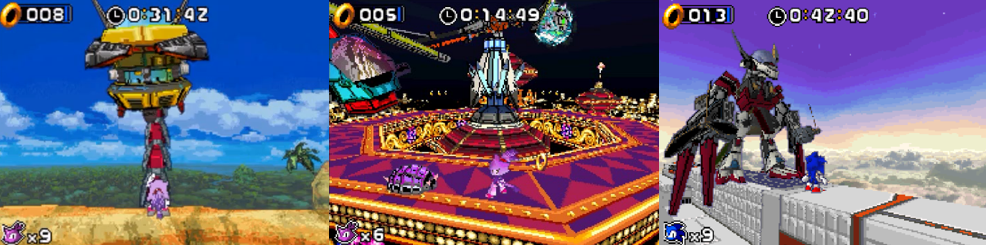
Each Zone ends in a boss battle against either Dr. Eggman or Eggman Nega; sadly, both pilot the same machines so, while you’ll battle them in a different order with each character, both Sonic and Blaze have the same boss encounters with the same strategies employed each time, making for a bit of a repetitive experience. Bosses are fought either on a single platform or a circular loop, with their health measured on the bottom screen where Tails or Cream constantly shout encouragement, end in a dramatic freeze frame, and the arenas hold a handful of Rings to keep you going. The first boss you fight is the Egg Hammer Mega, a snake-like mech that tries to crush you with singular or multiple head slam and sends its cockpit rolling across the ground to try and damage you. Simply dash out of the way then its head slams down, jumping over any shockwaves, and ram the cockpit to do damage. This boss is repeated in Huge Crisis, where it now launches missiles from the battleship in the background and charges up an instant-kill slam, and it was during this fight that I realised how long-winded the game’s bosses are as there’s a lot of waiting around and few opportunities to attack. Water Park sees you battling the Egg Turtle; although much of this fight is underwater, you won’t have to worry about drowning and must simply avoid the mech’s belly flop and propeller butt, smacking its glowing head whenever you get the chance. Things pick up a little when you fight the Egg Beetle; you need to hit the explosive ball it sends rolling at you when its spikes are withdrawn and it’s flashing to do damage, often a couple of times when it jumps over you, and avoid the bombardment of projectiles when the mech takes to the sky. Similarly, you’ll need good timing when fighting the Egg Libra; you need to hit the weighted ball when its shield drops to lower the cockpit and land a hit, then avoid the bolts running across the ground and use the springing robot to score an extra hit, which can be a bit frantic as there’s a lot happening onscreen. Finally, in Altitude Limit, you’ll battle the Egg Eagle, one of the toughest and most annoying bosses because of how long the battle takes. You’ll need to avoid its bullet barrage and frantically mash A and B when it lands and tries to blow you off the platform! You can score a hit when it lands and tries to peck at you, but it’s a small window and it’s easy to take damage so you’ll need to be quick with your reactions.

After settling their differences, Sonic and Blaze must team up against the Eggmans!

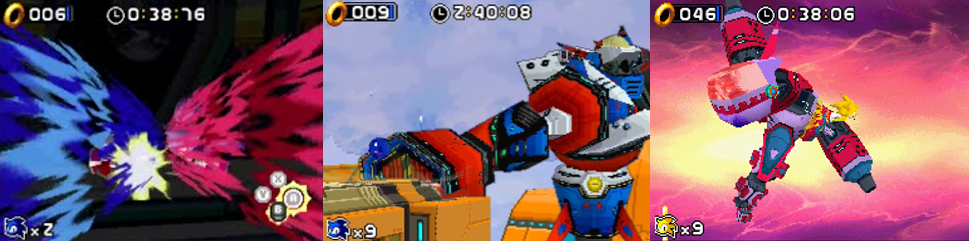
When you reach the end of Dead Line, you’ll battle ither Sonic or Blaze in a one-on-one fight not unlike the Hidden Palace Zone bout against Knuckles the Echidna. Both have the exact same moves as they do when playing as them in the game but seem to be nerfed in their intelligence, meaning it’s pretty simply to bop or dash into them to whittle their health down, but you’ll need to mash A and B to win the boost-off head-to-head at the end. The main story ends in a battle against the titanic Egg King, which sees you frantically dodging its sporadic eye lasers and jumping over up to three shockwaves when it smacks your platform. You then need to hit its arm and run towards the cockpit for a hit, but hold down when prompted or you’ll be flung off. The Egg King also tries to smush you with a double axhandle smash and speeds up its attacks as the fight progresses, eventually ramming into the platform for a kamikaze attack at the end that you have to quickly avoid to land the final blow. Once you’ve acquired all seven Chaos Emeralds, Sonic and Blaze power-up to their Super forms for a Doomsday Zone-esque showdown with the two Eggman’s underwhelming Egg Salamander. This is fought on each screen, with each hero taking it in turns to avoid or destroy asteroids, dodge lasers, and land a hit, which switches the action to the other screen and character. The Egg Salamander shoots laser orbs at Super Sonic which must be awkwardly bounced back into it using the Super Boost (A or B); it also swipes at you with its claws, and you’ll need to grab Rings to keep from powering down. Burning Blaze has to charge up and launch a fireball with A, which has a significant delay and is equally difficult to aim. She can also have her Rings sapped when the mech tears open a hole in the fabric of space/time, and this is another fight made unnecessarily tense and frustrating by how long it drags on, how difficult it is to land hits, and how few windows of opportunity you get (though I found that when I respawned after a late stage death, I didn’t have to start all over again, which was unexpected).

Power-Ups and Bonuses:
All the power-ups seen in the Sonic Advance games return here; you can add anywhere from one to fifty Rings to your tally with a Super Ring box, gain temporary invincibility or earn an extra life, or protect yourself from a bit with a barrier or attract nearby Rings with its magnetic variant. The new power-up on the block here are the two Tension Gauge boxes, which partially or fully fill your boost meter, usually right before you need to use it to get past a section of an Act.

Additional Features:
When playing as Sonic, you’ll need to keep your Tension Gauge filled to the maximum for when you stumble upon Special Generators; grab onto these and hold X or Y to open the rift to the Special Stage, though keep in mind that you can only challenge one Special Stage per Act. So, if you want to try for a different Chaos Emerald, you’ll need to complete the Act and replay it; if you earn a Chaos Emerald in an Act and then enter another Special Stage in the same Act, you simply replay the same Special Stage. Special Stages aren’t too bad this time around; based on Sonic 2’s half-pipe, they task you with acquiring two totals of Rings, avoiding spikes and other hazards and flicking Sonic off the pipes to grab Ring clusters or hit springs. When you do, you’ll need to quickly tap the numbered icons for a Ring bonus; you can also hit boost pads and switches to grab bigger Ring clusters, but your skill at Sonic Rush’s Special Stages all comes down to the quality of your touchscreen and how good your stylus game is. It can be janky and awkward making precise or quick movements and you’ll often miss large clusters of Rings trying to get others, though the fact you can easily access and practise the Special Stages makes them leagues better than any in the Game Boy Advance games. Collecting all seven Chaos Emeralds unlocks the final “Extra” story, which is the only way you can play as Super Sonic and Burning Blaze. Otherwise, you can replay previous Acts to try and get all S-ranks for bragging rights or try out the game’s multiplayer mode, in which two players race head-to-head as Sonic and Blaze to finish Acts the fastest, though I’ve never played this mode. Sadly, there’s no boss rush to unlock or even the ability to watch back the game’s cutscenes, though I guess you could try playing on a harder difficulty if you want a bit more of a challenge.

The Summary:
This is my first time playing Sonic Rush in over a decade, certainly since I first completed it. I always had pretty fond memories of it; the visuals, Blaze’s design, and the action-packed gameplay stood out, especially because it was the first Sonic game to incorporate the Boost mechanic, but it was surpassed not just by the sequel but by other, bigger Sonic games. Revisiting it now was a lot of fun; the environments, especially, look fantastic, really translating a lot of the visual style of the 3D games of the time into a handheld title and I especially enjoyed being able to let loose with the boost and plough through enemies. Sadly, the polygonal models aren’t as appealing and I didn’t like how long-winded and repetitive the bosses were; sure, Blaze fights them in a different order but nothing else is different about them, which is very disappointing. Blaze, in general, was a bit of a let-down in this regard; she plays the same as Sonic except for a bit more airtime and her Zone order being mixed up, meaning the difficulty curve of her story is a bit out of whack yet she’s paradoxically easier to play as since you don’t have to worry about Special Stages. I like her design, but I do think her gameplay should’ve been altered to make her more like a “Hard Mode” compared to Sonic’s “Normal”. While the Special Stages can be finnicky, I liked that I was actually able to access and beat them all and the Act layouts, while sometimes a bit barren and strewn with instant-death traps, where much improved, showing the developers learned from their mistakes on the Game Boy Advance. I really liked the verticality of the game and how it used the dual screens in an interesting way, but this was a bit of a barebones presentation for such a powerful handheld. It’s great as a fun, back-to-basics return to Sonic’s roots, with just enough familiar and new mechanics to make things exciting, but there’s not a lot of incentive to revisit it once you’ve unlocked and beaten the “Extra” story and there are a few too many missed opportunities to really make Blaze’s gameplay as unique as her appearance.

My Rating:

Rating: 3 out of 5.

Pretty Good

Was Sonic Rush a part of your Nintendo DS library back in the day? What did you think to the new boost mechanic and the way it utilised the dual screens? Were you a fan of Blaze, and were you also disappointed that she was basically a reskin of Sonic? What did you think to the game’s bosses and Special Stages? Did you ever defeat the Egg Salamander, and were you a fan of Eggman Nega? Which of Sonic’s handheld adventures is your favourite and how are you celebrating him this month? I’d love to know your thoughts and memories of Sonic Rush so leave them in the comments, or on my social media, and be sure to check out my other Sonic content.
Game Corner [Sonic Month]: Sonic Advance (Game Boy Advance)


Sonic the Hedgehog was first introduced to gamers worldwide on June 23 1991 and, since then, has become not only SEGA’s most enduring and popular character but also a beloved videogame icon and, in keeping with tradition, I have been dedicating the entire month to celebrating SEGA’s supersonic mascot.


Released: 20 December 2001
Developer: Dimps / Sonic Team
Also Available For: Android, Nintendo Wii U (Virtual Console, Japan only), J2ME, and N-Gage

The Background:
After a long development process and strategic planning to create a mascot iconic enough to rival Super Mario, SEGA’s initial success with Sonic the Hedgehog expanded into mainstream popularity with Sonic the Hedgehog 2 (SEGA Technical Institute, 1992). Sonic was on a serious roll at this time; the spectacular Sonic 3 & Knuckles (ibid, 1994) was too big for one cartridge, became one of the best classic Sonic games, and was naturally followed by…numerous disappointing spin-offs before making the jump to 3D in 1999. As well received as Sonic Adventure (Sonic Team, 1999) and Sonic Adventure 2 (Sonic Team USA, 2001) were, however, SEGA was in dire straights; numerous delays, blunders, and over spending saw them lose their foothold in the home console market, bringing the “Console War” of the nineties to an anti-climatic end. Now focusing on software development, the unthinkable happened when SEGA produced ports of the Sonic Adventure games for Nintendo’s often-underappreciated GameCube console and, to commemorate the tenth anniversary of the franchise, SEGA turned to Dimps to create a 2D throwback to the classic games that also incorporated the art style and some mechanics from the 3D games. The result was Sonic Advance, which became a best-selling Game Boy Advance title and was met with largely positive reviews. Critics lauded the presentation and tight gameplay mechanics, though elements like the Special Stages and an overreliance on nostalgia were criticised. Still, Sonic Advance was regarded as one of the best Nintendo games and helped solidify SEGA ’s new relationship with Nintendo; it was followed not just by two sequels, but numerous handheld spin-offs and spiritual successors that further refined the gameplay and mechanics for Sonic’s portable adventures.

The Plot:
Doctor Eggman has returned, with his sights once again set on enslaving woodland creatures into metallic Badniks, gathering the legendary Chaos Emeralds, and constructing an elaborate space base! Luckily, Sonic the Hedgehog and his friends – Miles “Tails” Prower, Knuckles the Echidna, and Amy Rose – are on hand to oppose his evil schemes once more.

Gameplay:
When Sonic Advance released, the Sonic franchise was firmly in the midst of its 3D era. 2D, sidescrolling action-based platformers were out for the Blue Blur and elaborate, action-packed 3D rollercoasters with varying gameplay were in, so Sonic Advance was a bit of a throwback to Sonic’s classic 2D roots, and in many ways the long awaited fourth entry in the classic series. In addition to the plot being as basic as the classics, the control scheme is immediately familiar to anyone who’s played Sonic 3 & Knuckles: A lets you jump, pressing it again initiates a jump attack or move, you use up and down to scroll the screen and duck under obstacles, and press down and A to charge up a Spin Dash for a speed boost. You can pick from four characters – with Amy Rose making her playable debut in a sidescrolling game – and journey through seven levels (known as “Zones”), with two final Zones awaiting after clearing certain objectives, with each Zone split into two parts (known as “Acts”) and featuring a boss battle in each Act 2. Players must collect Golden Rings to stay alive, with the glittering Rings scattering when you’re hit so you can collect them again, and race against a ten-minute time limit, which can thankfully be disabled in the “Options” menu. This menu also allows you to pick between “Easy” or “Normal” mode (with the differences I believe boiling down to how many lives you start with and the amount of hits bosses take), configure the control scheme, and select different language options, though there is no story text to worry about here as everything’s taking its cue more from the 2D games than the 3D ones when it comes to storytelling.

Each character’s unique abilities changes the way you play and the game’s difficulty.

So far, so familiar. However, gameplay changes depending on which character you pick, with Tails effectively being the easy mode thanks to his propeller-like twin tails and Amy being the hard mode since she doesn’t curl into a ball. Each character has different abilities to traverse Zones and take out enemies; you can perform Sonic’s Insta-Shield by pressing A twice, pressing B sees him perform a sliding ground somersault, and you can perform a back jump by pressing B and then A (though I found little use for this). Sonic can also pull off a limited and frankly useless mid-air dash by pressing right and A twice and is somewhat limited in his options since he can’t fly or climb, so his gameplay is more about speed and ploughing head-first through obstacles. Tails can, of course, fly for a short time by pressing A twice, and his tails will often inflict damage on whatever’s underneath him. When in water, Tails can doggy paddle indefinitely by tapping A and pressing B on solid ground sees him whip his twin tails in a melee attack. Knuckles has a shorter jump height but makes up for it by being able to glide with a double tap of A and cling to and climb most walls. He can also swim by tapping A and perform a standing three-punch combo with A, though I didn’t have much use for this as the regular spinning and rolling methods work fine. Amy, however, is all about mele attacks; she can’t curl into a ball or Spin Dash, making her much more vulnerable, but she is armed with her signature Piko-Piko Hammer. You can smash enemies with B, use down and B to spring into the air with a hammer-assisted jump, and hold down and B when jumping to spin with the hammer, all of which is quite slow and clunky and makes battling bosses quite a chore for Amy. Amy can also take a giant leap by pressing down and A and can slide ahead by pressing right and B, but she sure does present a significant challenge even for seasoned players since she lacks all the basic Sonic abilities. Sonic and Amy can also hop on rails to do a bit of grinding and each character can grab overhead poles to shimmy along, bounce to higher areas using springs, run through loops, smash boulders or ice to occasionally reveal item capsules or springs, and must grab air bubbles to keep from drowning when underwater.

Gimmicks old and new are far more fun than the annoying enemy and hazard placement.

In terms of gameplay and stage design, Sonic Advance keeps things quite safe: Zones start off pretty simple, utilising recycled gimmicks and certain aesthetic themes from the classic games, but things become very cheap, frustrating, and difficult as the game progresses. You’ll be hopping to moving and temporary platforms, avoiding spikes, and trying to stick to the higher, faster path in most Acts but you’ll also be forced into the sluggish water, have to ride zip-wires, be blown into the air by fans, and pinball all over the place on bumpers. At first, enemies and hazards aren’t too difficult to avoid; the Game Boy Advance screen does limit your view a lot of the time, meaning it’s easy to jump or spring head-first into a projectile or unseen Badnik, but later Zones like Angel Island Zone and Egg Rocket Zone can easily see you jump, fall, or be blasted into a bottomless pit for a cheap death. Boost pads are used sparingly, thankfully, but are present, as are tunnels, air cannons, spinning spiked platforms, conveyer belts, bouncy platforms (and clouds), and lava pits. Ice Mountain Zone sees you riding iceberg floats, Angel Island Zone incorporates rolling boulders and sand gimmicks from Sandopolis Zone, and Egg Rocket Zone splits apart as you traverse higher, taking you further into the atmosphere, and briefly utilises the Death Egg Zone’s gravity mechanic. Claws will carry you across gaps, you’ll need to run on spheres to reach higher platforms, you’ll be jumping to swinging chained hooks, riding jets and streams of water, and dodging crushing hazards and warping across Zones. A lot of it is immediately familiar to long-time Sonic gamers, with just enough of a twist to make it more unique, but much of the game relies on slower, strategic platforming, blind jumps, or cheap deaths and enemy placements. Luckily, you can still hit lampposts to create a checkpoint if you die; collecting 100 Rings grants you an extra life, and there are 1-Up capsules hidden about the place. However, I actually found myself playing on zero lives at one point, which rarely, if ever, happens to me when playing 2D Sonic games and speaks to how challenging the later Zones can be largely due to placing Badniks, spikes, and bottomless pits just out of view to mess up your run.

Graphics and Sound:
There’s a reason I used the Sonic Advance sprites and backgrounds back when I used to make sprite comics; they are absolutely gorgeous and really capture the feel of the Sonic Adventure games and artwork. Sonic and his friends are full of life and personality, more than ever before; not only to they perform idle poses when left alone, urging you to get moving, but that also jig about with enthusiasm whenever you leave them standing. Although the introduction cutscene is extremely basic and focuses on the characters rather than delivering any kind of ground-breaking story, the in-game sprites more than make up for this; each character has lots of frames of animation, always pops against the background no matter how busy it gets, and performs a little victory pose when clearing Acts and bosses. Sadly, the music doesn’t fair as well; outside of some fun, if underutilised, remixes from the classic games, I found myself largely forgetting the themes for each Zone and the Game Boy Advance’s sound chip seems poorly suited to bringing the kind of energy I expect from a Sonic title. The stage select screen is also very basic and, while the ending makes up for this by featuring some fun sprite art and big victory poses, it’s simply a rehash of Sonic 2’s ending and doesn’t really offer anything new.

Despite some impressive sprites, some Zones are needlessly cluttered and unsightly.

The same can also be said of the Zones; while it’s great to start off in a beach location for a change, Neo Green Hill Zone owes a lot to Green Hill Zone and Emerald Coast. Casino Paradise Zone is simply Casino Night Zone, though lacking a few of its gimmicks; Ice Mountain is basically Ice Cap Zone, Angel Island is an ancient ruins retread of Sky Sanctuary, and Egg Rocket Zone is a mish-mash of Launch Base Zone, Wing Fortress Zone, Flying Battery Zone, and Death Egg Zone. This continues in Cosmic Angel Zone and X-Zone, which are basically Death Egg Zone all over again, and even the final area, Moon Zone, is a reskin of Doomsday Zone. However, for the most part, the recycled gimmicks and aesthetics are presented just differently enough to make them unique: Neo Green Hill Zone has sandy beaches, wooden piers, and a thick overgrowth; Secret Base Zone is an industrial hell-hole full of lava, girders, and swamped by searchlights; you can see fireworks in the background of Casino Paradise, which incorporates balloons to reach higher areas; snow falls in Ice Mountain Zone, where snow and ice cover the trees and rails and ground, there’s a hell of a view of what I assume is the Mystic Ruins in Angel Island Zone, and I enjoyed seeing the big rocket boosters and the separating sections of Egg Rocket Zone. Unfortunately, many areas are also quite loud and cluttered; Secret Base Zone is a mess of conflicting oranges and browns, for example, and Cosmic Angel Zone is a nauseating kaleidoscope of purple and grey that is distracting to look at. For the most part, the game runs really well; it can be slow at times, but mostly you’ll be blasted along at breakneck speed, outrunning the camera and most likely smashing into an obstacle or to your death. Had the game been a little more zoomed out, featured some catchier tunes, and rethought its colour palette and layout, it might’ve improved my experience. As is, though, these elements make the later Zones a chore to play and the homages to the classics more annoying than endearing.

Enemies and Bosses:
Dr. Eggman’s Badniks are all heavily inspired by the mechanical enemies seen in the classic Sonic games and Sonic Adventure; we’ve got the Crabmeat-like GamiGami, the Rhinobot-like Rhinotank, the Coconuts-like Kiki, the Jaws-like Drisame that burst out of walls at the worst possible moments, and the Burrobot-like Mogu that are also placed in the most annoying areas, like right when you need to jump or dash through. Lizard- and frog-like Badniks Hanabii and KeroKero roll or hop about spitting projectiles, Stingers do their best Buzzer and Buzz Bomber impression by blasting projectiles at you right as you’re making a tricky jump, bat-like Slots swoop in from offscreen, and the jellyfish-like Kuraa add to their annoyance by briefly erecting an electrifying shield. As is tradition for a Sonic title, smashing Badniks releases a cute little woodland critter and nets you some points, and they’re often placed at the apex of jumps, right in your path, or near spikes. Speaking of which, spikes can be on the floor, walls, and ceilings, sometimes shoot up from the ground to ruin your day, and are occasionally on spinning platforms. You’ll also need to avoid being roasted by fireballs in Secret Base Zone, watch for crushing cubes in Casino Paradise Zone, hop to small rising stone platforms (often while avoiding spikes) in Angel Island Zone, and trust your fate to the will of the gaming gods when making blind jumps over the constant death pit in Egg Rocket Zone.

While bosses start off easily enough, later game encounters can be quite tricky, especially with Amy.

Naturally, every Zone culminates in a boss battle; you’ll face off against Dr. Eggman eight times in a regular playthrough, and a final time after finding all seven Chaos Emeralds, with each encounter seeing him man a new contraption and featuring two phases to the battle. The Egg Hammer Tank awaits in Neo Gren Hill Zone; a strange combination of the Egg Wrecker and Egg Mobile from Sonic 1 and 2, this fight sees Dr. Eggman driving from left to right and right to left trying to smash you with a massive hammer, and erratically bouncing about when near defeat. Dr. Eggman mans the Egg Press machine in Secret Base Zone for a boss not a million miles away from the first phase of the final boss of Sonic the Hedgehog: Triple Trouble (Aspect, 1994); Dr. Eggman hops around trying to squash you, then does a big jump off screen that you need to anticipate to finish him off. Casino Paradise Zone features one of the easiest boss battles; Dr. Eggman emerges from one of several pipes, while his spiked Egg Ball tries to hurt you. Simply duck down in the middle and ram him when he appears; not even the two speeding up near the end present much challenge here. Ice Mountain Zone’s Egg Spider ramps up the difficulty, however, as the fight takes place underwater and Dr. Eggman is completely out of reach. You need to use the icicle hazards he drops to reach him, and take a breath of air, but this can be tricky as they fall randomly, in greater numbers near the end, and your movements are super sluggish underwater. Dr. Eggman isn’t fought in Angel Island Zone or Egg Rocket Zone, but returns in the Egg Snake in Cosmic Angel Zone, a boss that’s considerably difficult for Amy. Dr. Eggman’s pod is protected by spikes so you and to wait for him to flip over to hit him, all while dodging his projectiles and his craft as it slides back and forth, which is particularly hard to do with Amy since she can’t Spin Attack.

Despite a fun fight with Mecha Knuckles, the final battles with Dr. Eggman are disappointing affairs.

In Angel Island Zone, you’ll battle Mecha Knuckles; at first, this fight is very similar to the one against regular Knuckles from Sonic 3 & Knuckles and sees Mecha Knuckles glide about, throw punches, and try to Spin Dash into you. A few hits destroys its outer shell and reveals its true metallic self, which now spits missiles at you! When you reach the X-Zone, you’ll first endure a fun gauntlet against two classic boss battles, the Egg Wrecker and the Egg Mobile, not unlike in Sky Sanctuary Zone and with nothing changed about your attack strategy. Sadly, this is followed by an underwhelming battle against Dr. Eggman’s Egg X, a spinning cannon-like mech that spits bouncy explosive balls, tries to ram you, and grabs and shakes you with a mechanical pincer. While this appendage can be tricky to avoid and jump over, it’s ridiculously easy to bash Dr. Eggman as he flies past or stops to fire a projectile, making for a really disappointing final boss to the main portion of the game. Naturally, after collecting all seven Chaos Emeralds with any character, you’ll unlock the true final boss, the Super Egg Robot, a humanoid mech fought by Super Sonic on the surface of the Moon. Unfortunately, as I’ll detail later, I’ve never experienced this boss battle but I can tell you that your time is limited as Super Sonic’s Rings constantly deplete, meaning you’ll need to grab more to stay alive and in the fight, and that you must use the Super Sonic Boost with the B button to dodge or destroy incoming lunar rocks spewed up by Dr. Eggman. The Super Egg Robot also blasts you with a sweeping eye laser, causes energy pillars to erupt from the ground, and spews out orbs that will either incapacitate you for a few seconds or yield Rings when destroyed. The Super Egg Robot can also block your attacks with its drill-like arms, is constantly flying away from you, and can only be damaged by hitting its head. Although the music and presentation seem quite epic, it does seem a relatively simple encounter, and defeating Dr. Eggman awards you with the true ending…which honestly isn’t really all that different to the regular ending, just with more of that impressive sprite art and animation.

Power-Ups and Bonuses:
All the classic Sonic power-ups are on offer in Sonic Advance, this time in capsules like in Sonic Adventure. You can snag five, ten, or a random number of Rings, grab a temporary speed-up or invincibility, and occasionally gift yourself an extra life. You can also find a shield (or “Barrier”) that will protect you from damage for one hit, though it looks really unsightly here, or grab the Magnet Barrier for the same benefit with the added bonus of attracting any nearby Rings. That’s it, though; there are no other elemental shields, no new power-ups to find, and very little reason to explore your environment. As mentioned, each character boasts a mele attack, which is a fun alternative, but you can just as easily use the classic Spin Attack to defeat Badniks so there’s not much us for these attacks…unless you’re playing as Amy, who is entirely reliant upon them.

Additional Features:
As in the classic 2D Sonic titles, you can enter Special Stages to try and collect one of the seven Chaos Emeralds, however the way you get to these Special Stages is a bit different to what we’ve seen before. You need to find a Special Spring hidden in each Act, something Sonic and Amy will struggle to do, which grants you one try at easily one of the worst designed Special Stages in the franchise. You’re on a snowboard and constantly falling down a ringed shaft full of Rings, obstacles, and bombs. You can speed up your descent with A or perform a trick with B, which increases your Ring count, and can boost along paths of Rings, though it’s extremely difficult to actually collect Rings due to the odd angle. The perspective is all out of whack, meaning you often pass over or right by Rings, and in all my years of owning and playing this game, I’ve never completed a single Special Stage; hell, I’m lucky to even find a Special Spring, let along snag a Chaos Emerald! Collecting all seven unlocks the Moon Zone and the final battle against the Super Egg Robot, though this is the only way you get to play as Super Sonic. Beyond that, there’s a sound test in the “Options” menu, a Vs. mode that allows players to battle against each other or compete in races to collect the most Rings or find hidden Chao, even if you only have one cartridge between you, and a Time Attack mode for those who want to impress with their best clear times. If you enter a button code on the character select screen, you can play as Sonic with a computer-controlled Tails following him like in Sonic 2, and you can even visit the Tiny Chao Garden. In here. you can raise and pet a Chao, feeding it fruit or giving it toys to play with using Rings you collect in the main game and in the mini games within the garden that see you matching cards or playing rock/paper/scissors. You can also transfer this Chao to and from the GameCube Sonic Adventure games, which you’ll probably want to do as the Tiny Chao Garden’s features are far more limited than its bigger brothers.

The Summary:
I have a lot of nostalgia for Sonic Advance. It was still a novelty to see Sonic games released for Nintendo consoles at the time and I liked that it was a throwback to the classic 2D games, capturing the spirit of what made them so enjoyable, recontextualising a lot of the gameplay and gimmicks in new locations, and giving it that Yuji Uekawa aesthetic I enjoyed so much at the time (and even now). Technically, the game is solid enough; the physics work, Act layouts aren’t too dissimilar from the classics, and it offers a decent level of challenge, with some unfair moments peppered in the late-game Zones. I really liked that you could pick from four playable characters right from the start, and that Amy was included, and that their different abilities correlated with how difficult the game can be. I enjoyed most of the new Zones, despite how much they borrowed from the previous games, and really liked how this game bridged the gap between Sonic 3 & Knuckles and Sonic Adventure by incorporating elements from both. Unfortunately, it’s not perfect; and when it’s bad, Sonic Advance is quite a chore. First of all, it’s quite slow and is restricted by the Game Boy Advance’s screen size; Act layouts can be aggravating at times, with enemies and hazards placed just offscreen for maximum frustration, and I really didn’t like the way you access and play Special Stages. It’s rare that I fail to collect the Chaos Emeralds in a Sonic game and I’m still frustrated that I can’t do it over twenty years later. The bosses were quite fun, if a little easy, but the X-Zone boss was pathetic and the soundtrack was pretty forgettable. I liked the addition of the Tiny Chao Garden, though more could’ve been done with this, and it’s safe to say that Sonic Advance just plays things a bit too safe, something its sequels would address and improve upon with new mechanics and unique features. Still, there’s a lot to like in Sonic Advance; it really was the closest thing we had to a Sonic 4 at the time, and it was surprising to me that later 2.5D throwbacks didn’t take more inspiration from it and its sequels, but it’s hard to deny that it’s a sub-par experience compared to its successors and even Sonic 3 & Knuckles.

My Rating:

Rating: 3 out of 5.

Pretty Good

Did you own Sonic Advance back in the day? If so, did you enjoy it and how do think it’s aged, especially compared to its sequels? Which character was your favourite and did you like their expanded move sets? What did you think to the Zones on offer and the recycling of previous gimmicks? Do you think the game played it too safe or do you consider this the true Sonic 4? Did you ever collect the Chaos Emeralds and, if so, how and what did you think to the Special Stages? Which of Sonic’s Game Boy Advance titles is your favourite and how are you celebrating Sonic’s anniversary this year? Whatever your thoughts on Sonic Advance, leave a comment below or on my social media and go check out my other Sonic content!

Mini Game Corner: RoboCop 3 (Mega Drive)

Released: 1993
Developer: Digital Image Design
Also Available For: Amiga, Atari ST, Commodore 64, DOS, Game Gear, Master System, Nintendo Entertainment System (NES), Super Entertainment System (SNES), ZX Spectrum

A Brief Background:
Director Paul Verhoeven’s RoboCop (1987) proved profitable enough to earn a sequel, one that was unfairly met with mixed reviews. Both RoboCop and RoboCop 2 (Kershner, 1990) were accompanied by videogame adaptations courtesy of Ocean Software, a British developer known for adapting film and television franchises, and Data East. While RoboCop 3 (Dekker, 1993) was a critical and commercial bomb, it also received a handful of tie-in videogames. Unlike the other versions of the game, which were again published by Ocean Software, the Mega Drive version was developed by Digital Image Design, who had only one game under their belt at the time. RoboCop 3’s delayed production also meant that many played the game before seeing the movie. Not that it mattered since Orion Pictures kept the specifics of RoboCop 3’s plot a secret, so the developers had to make educated guesses based on rumours and production stills, leading to them wasting weeks of time creating motorcycle sequences that weren’t included in the movie. Although the Amiga and ZX Spectrum versions of the game have been praised for their cinematic atmosphere and gameplay mechanics, the SNES and Mega Drive versions were criticised for their unfair difficulty, uninspired environments, and crude graphics, and the game was ultimately labelled as being one of the worst videogame outings for the famous cyborg cop.

First Impressions:
Similar to the first two RoboCop arcade games, RoboCop 3 is a sidescrolling shooter with some minor platforming mechanics. Players must lug RoboCop’s notoriously bulky ass across six levels filled with street punks and robotic enemies all looking to turn him into scrap metal. Like all the best Mega Drive games, RoboCop 3 allows you to set your life count (between one and three), the amount of continues you have (between none and two), and the game’s difficult (Easy, Medium, or Hard; I opted to try out the Easy mode for this play session), but there are there’s no option to disable the in-game timer. By default, A allows you to switch between RoboCop’s different weapons (acquired from item drops during gameplay), B fires his current weapon, and C allows him to jump. These controls didn’t work for me so I took advantage of the customisation options to change them to something that actually makes sense: A to fire, B to jump, and C to change weapons. I should also note that you can hold the fire button to continuously shoot, but this will burn through your ammo pretty quickly (when you run out completely, you’re left relying on RoboCop’s weak-ass punches until you grab some ammo), and you can also shoot upwards, diagonally, and while crouching and jumping. Although the options also include a music and sound effects test, the iconic RoboCop theme is missing and, in its place, are a series of generic, cyberpunk-style rock tunes.

RoboCop is beset by tough enemies and tricky platforming sections that his bulky frame struggles with.

Although we’re treated to a big, detailed graphic of RoboCop and the RoboCop 3 logo, there’s no story graphics or even text here; we’re simply dropped right onto the streets of Detroit, which actually makes a pretty good first impression. You can see the city in the background, RoboCop’s police cruiser, dilapidated buildings (with eviction notices slapped onto them), flickering lampposts, and even signs advertising the impending arrival of Delta City. RoboCop also looks pretty good, far better than the generic and uninspiring enemies he faces, though he has no idle poses and remains an unwieldy and bulky character. You’ll need to make use of the various crates piled about to take cover and avoid incoming fire, but enemies can simply walk and shoot right through them and it’s almost impossible to avoid taking a bullet or rocket to the face as RoboCop is so chunky, meaning you’re liable to see him downed in a dramatic explosion if you’re not careful. RoboCop can pick up a couple of additional ammo types as he goes, including a helpful three-way shot and a powerful laser (that even alters his sprite to include his new gun arm attachment from the movie), and replenish his health using rare pick-ups, but you’ll have to be careful of stage hazards. Falling wrecking balls and bottomless pits are abound and RoboCop’s platforming skills leave a lot to be desired. There’s only one checkpoint in the stage, meaning you have to be really on the ball hopping to small moving platforms and taking out the bullet-sponge tanks and drones that patrol the streets and skies above.

My Progression:
I’d heard RoboCop 3 was a difficult game but I didn’t really have many expectations; I vaguely remember playing an polygonal, first-person shooter version of the game on the Amiga (I think…) and enjoying the arcade versions of the previous two adaptations, but there’s one advantage to playing games like those: emulation generally allows you infinite chances to succeed. Mega Drive games don’t always have this luxury and RoboCop 3 is one of those titles where the only cheat available is a level skip, so I decided to go into it with as much of a pure experience as I could and ended up getting quickly frustrated. I really don’t understand why developers had such a problem making RoboCop videogames back in the day; Contra (Konami, 1985) would’ve been a good source of inspiration, hell they could’ve just copied from Turrican (Factor 5/Various, 1990) and been on the right track. Instead, we got these awkward, aggravating platforming/shooter mash-ups that just didn’t work with a character as ungainly as RoboCop. RoboCop Versus The Terminator (Virgin Games USA/Various, 1994) remains the best of the bunch so far and even that game plods along thanks to how unwieldy RoboCop can be. Here, he has no chance against the barrage of enemies (with more appearing on harder difficulties) and you can’t afford to waste too much time as there’s a damn timer ticking down overhead!

Some vague movie references and a top-down shooting section help bolster the mediocre gameplay.

So, no, I didn’t even get past the first stage. With a great deal of patience and abuse of save states, I reached the first boss with full health and armed with RoboCop’s three-way shot and laser, but I stood little chance against the wave-upon-wave of rocket launcher-toting baddies since they attacked from both sides and RoboCop’s crouch is next to useless for avoiding incoming fire. I’ll admit that I kind of rushed a bit and lost patience with the game a lot faster than normal just because of how cheap some of the platforming and challenges were, but I had to tap out in the end as I just couldn’t be bothered to fight my way back to that part. It’s a bit of a shame as the game looks pretty decent; there’s a lovely, detailed graphic of RoboCop on fire and the Enforcement Droid-209 (ED-209) when you die (that even includes a voice sample) and there’s some visual promise to the game, and playthroughs of the game show that it can easily be beaten in less than fifteen minutes if you’re able to stick with it. Looking ahead, there’s more voice samples (all of them from the first movie) and RoboCop fights up and across rooftops, battles waves of Rehab mercenaries alongside a reprogrammed ED-209 (Nikko Halloran even pops in for a cameo), acquires a flame burst, and even encounters a gigantic robotic Satan in a parking garage! Other movie locations include the church (where RoboCop must find keys to open doors and fight the agile robot ninja Otomo in the sewers) and the Omni-Consumer Productions (OCP) tower, where players must defeat two Otomos to finish the game and finally earn some story text. The gameplay is even broken up by some fun-looking, bullet hell overhead shooter sections where RoboCop flies above the city streets in his jetpack blasting at demonic-looking robots and drones, but I honestly can’t be bothered to fire up this drek of a game to try and play them.

I admit that I probably didn’t give RoboCop 3 a fair shake of the stick. Since a boxed, complete version of the game can fetch quite a high price, I settled for emulating the game, but I couldn’t be bothered to hook a second controller up to my Raspberry Pi to input the level select code and I kept accidentally overwriting my save state, so I grew very frustrated with the game myself very quickly. But as I say, even when I reached the first enemy swarm that masqueraded as a boss battle, I couldn’t beat it even with full health, though I’d wager that I might be able to get a little further now that I know what to expect from the game. However, I have no desire to; there are far better similar games on the Mega Drive, the RoboCop arcade games are a much better use of your time, and there’s no way you’d ever pick this game over RoboCop Versus The Terminator. But maybe my opinion doesn’t count as I gave up too quickly. Maybe you actually enjoyed this game. Maybe there are some positives that I missed, or I just didn’t connect with it like you did. If so, I’d love to hear about it. tell me your experiences of RoboCop 3, or RoboCop games in general, in the comments and go check out my other RoboCop reviews across the site!

Game Corner [Sonic Month]: Sonic the Hedgehog Chaos (Master System)


Sonic the Hedgehog was first introduced to gamers worldwide on June 23 1991 and, since then, has become not only SEGA’s most enduring and popular character but also a beloved videogame icon. In keeping with tradition, I will be dedicating the entire month to celebrating SEGA’s supersonic mascot.


Released: 23 November 1993
Developer: Aspect
Also Available For: GameCube, Game Gear, Game Gear Micro, Nintendo 3DS, Nintendo Switch, Nintendo Wii, PC, PlayStation 2, PlayStation 4, PlayStation 5, Xbox, Xbox One, Xbox Series S. Xbox Series X

The Background:
Sonic the Hedgehog was the major hit SEGA needed to knock Nintendo off their pedestal and assert themselves into the “Console Wars” of the nineties. However, while SEGA were all in on aggressively pushing their 16-bit Mega Drive console, Sonic also appeared on their 8-bit machines, the Master System and Game Gear, as part of their plan to capitalise on Sonic’s mainstream popularity and success. Though noticeably more obscure and divisive in their reception compared to their 16-bit counterparts, Sonic the Hedgehog (Ancient, 1991) and Sonic the Hedgehog 2 (Aspect, 1992) reviewed well and SEGA turned to Aspect to develop a third game, which the developers aimed to be faster and more detailed than its predecessors. Although Sonic Chaos only released on the Master System in PAL regions, the Game Gear version became a top-seller in the United States and it was highly praised at the time. Contemporary reviews may not be as favourable, but I’ve always had a soft spot for the Master System Sonic titles as they were my introduction to the franchise and I can still remember purchasing my copy of this game over thirty years ago and enjoying how much it mirrored its 16-bit cousins.

The Plot:
In another mad effort to conquer the world, Doctor Eggman steals the red Chaos Emerald, upsetting the balance between the remaining five jewels and causing them to not only scatter, but South Island to sink into the sea! South Island’s only hope are Sonic the Hedgehog and his two-tailed buddy, Miles “Tails” Prower, who set out to recover the Chaos Emeralds and stop Dr. Eggman before it’s too late!

Gameplay:
Like its predecessors, Sonic Chaos is an 8-bit action platformer in which you must race through six levels (known as “Zones”), each split into three parts (or “Acts”), with a boss battled in the third Act, collecting Golden Rings to stave off death and smashing Badniks for points. Unlike the last two 8-bit titles, Sonic Chaos is the closest to its 16-bit counterparts; not only are animations and mechanics from its bigger, better cousins included for the first time, but the game is much faster and finally includes Tails as a playable character, essentially making this closer to Sonic 2 than the actual 8-bit Sonic 2. Being that it’s a Master System title, there are only two buttons to worry about and they both do the same thing: pressing Button 1 or 2 will see your character jump and holding the button will see them jump a bit higher. However, when you use the directional pad (D-pad) in conjunction with Button 1 or 2, you get a few different results; both characters charge up and release a Spin Dash with down and a button and have unique abilities for when you press up and a button. Sonic will charge up a standing run (the “Strike Dash”) not unlike the Super Peel-Out and Tails will briefly fly for a short time. Because Tails’ flight isn’t activated by double pressing a button like on the Mega Drive, it’s a little clunky to pull off and not as useful for saving you from sudden bottomless pits, and the actual flying controls are equally awkward as Tails feels oddly “heavy” when in the air. Finally, you can press up and down to scroll the screen and check for hazards (and duck, in the latter case) and also hold down when running to roll into a ball, as standard, to plough through Badniks, monitors, and certain walls. Equally familiar is the ten-minute time limit assigned to every Act, though Acts are so short that it’s highly unlikely you’ll get caught out by this and you should breeze through every Act in under two minutes as they’re not very long, though there are often branching paths (with the highest being the fastest and safest route).

New abilities and visuals bring this 8-bit title closer to its 16-bit counterparts.

Since Sonic Chaos’ main unique gimmicks are in its power-ups, you won’t see much new in terms of Zone layout; loops, mobius strips, moving and crumbling platforms, and spikes all make an appearance, as you’d expect, but there are fair few boost pads scattered around to send you speeding ahead as well. Equally prominent in later Zones are the booster tubes that rocket you around at high speed, forcing you to make split second D-pad presses to reach secret monitors and new areas or avoid being sent around in a loop or plummeting to your death. Bottomless pits and spike beds are commonplace here, with some Acts requiring precision platforming to small or falling platforms to clear them, which can be a bit tricky as Sonic and Tails are noticeably slipperier this time around and struggle with their traction. You’ll venture underwater, where you’ll be blasted about by water jets and must grab air bubbles to avoid drowning, ride minecarts down slopes (hopping into tubes or to platforms at the last second), run across conveyor belts and laser-firing pressure pads, and encounter an unusual number of springs. Even Badniks have springs on them here, and they’re also at odd angles on walls, meaning you’ll be bounced around like a pinball, often precariously close to a death pit or under a ceiling full of spikes or destructible blocks, which can be somewhat disorientating. As the game progresses, cheap hazards and death pits increase, something that will Game Gear players to struggle thanks to the reduced screen size. When hit, some of your Rings will scatter for you to recollect, which is an improvement over the last game, and none of the finicky gimmicks from Sonic 2 return here, which is a blessing, though Sonic Chaos could’ve used a few of its own to make its Zones stand out a little more.

Graphics and Sound:
While I still prefer Sonic’s sprite from the first 8-bit title, Sonic had never looked better in 8-bit than at this point; he’s larger, a little more detailed, and much more expressive when left idle. Many of his animations (jumping, bouncing off springs) are taken from the 16-bit Sonic 2, which adds a degree of legitimacy to the game not shared by its previous 8-bit titles, and he even does a little victory lap upon defeating the Zone’s boss. Sadly, Tails doesn’t come off quite as well; while he’s cute enough and has his own idle animation, his tails only animate when flying or running and disappear completely when jumping; he also can’t swim, which is a bit of a shame, though I liked how he trots far behind Sonic in the opening cutscene. In terms of music, Sonic Chaos does alright but is painfully limited by its hardware. Many tracks are recycled from Sonic 2 or a garbled, distorted mess and the only tracks I really enjoyed were the various boss tunes, which create a sense of dread and excitement every time the heads-up display vanishes and the boss looms into view. Performance-wise, Sonic Chaos also struggles; if there’s a lot on the screen then the game slows down significantly, meaning you really don’t want to take damage when there’s moving platforms and Badniks on the screen as it slows to a crawl and can mess up your counterattack. Sprite flickering and screen tearing are equally common, which is a shame as it plays well – and much faster than the last two games – when everything’s running smoothly.

Despite some slowdown, the game is largely a visual upgrade compared to its predecessors.

Sonic Chaos follows a similar formula to the last game, beginning with a basic sprite-based cutscene and then throwing the title screen at you before you get into the action. Zones are nothing really new or special beyond some minor exceptions; you start out in Turquoise Hill Zone, the grassy, palm tree introductory Zone now so synonymous with Sonic titles. You can see the sea, some islands, and checkerboard walls in the background and run through loops and winding strips, making this feel like a statement that the Master System can pull off what the Mega Drive did so well. Gigalopolis Zone is a sprawling mechanical city with skyscrapers and twinkling lights in the background that showcases that the Master System was capable of more than just blank, low detail backgrounds; however, the Zone is a bit cluttered, especially in the foreground. Things are a little clearer in Sleeping Egg Zone, though you’ll be bouncing about the mossy ruins so much that you can easily fall down the many bottomless pits hidden from view. Green Hill Zone returns for the third time in a row, this time covered in metal, with bombs up the palm trees, bottomless pits everywhere, mechanical blocks sitting under the grass, and gears and other devices poking up from the ground. Aqua Planet Zone is, again, like a do over of Labyrinth Zone, featuring painfully slow underwater sections and ancient ruins, while Electric Egg Zone is a visual nightmare of conflicting colours, high speed tubes, lasers, and cheap hazards. If I’m honest, I think I preferred the visual variety in the 8-bit Sonic 2; take that and add in the faster, less aggravating gameplay of Sonic Chaos and you’d have something much more enjoyable and closer to the 16-bit games, for sure.

Enemies and Bosses:
Although four of Sonic Chaos’s small selection of Badniks will be familiar to seasoned Sonic players, the new ones don’t exactly break the bank and destroying them still doesn’t release a woodland critter back into the wild. The four you should recognise are the Buzz Bombers (who strangely lack their stinger projectile attack) and the Motobug-like Boing-o-Bit, which has a spring on its back to protect it from your jumping spin and to launch you into any ceiling spikes. The Bombin enemies are similar to the ones from the 16-bit Sonic 1; they sit right in your path, usually between laser hazards or on crumbling bridges, and explode in a shower of debris soon after. Anyone who’s played through the 8-bit Sonic 2 will remember the bird-like Mecha Hiyokos, who appear in clusters and hop about and also herald the appearance of the Aqua Planet Zone boss. New Badniks are the beetle-like Metal-o Turtle that just move back and forth trying to ram you, the bizarre Veg-o Bots that offer exactly the same attack pattern, and Frogger, a spring-loaded Badnik that bounces about. Badniks don’t appear all that often, though you’ll usually be surprised by them when you’re bouncing about and they’re often hovering near or over springs, pits, and spikes, slowing down the action and making you double think your jump.

Bosses range from ridiculously easy to annoyingly cheap, but are generally quite fun.

Like in the 8-bit Sonic 2, each Zone ends with a battle against one of Dr. Eggman’s “Master Robots”, larger Badniks or robotic creations that must be bested in a short third Act that hides some scarce Rings and miniature platforming challenges. The first Master Robot is the Lady Bug, essentially an enlarged Boing-o Bot that’s impervious to aerial attack thanks to the giant spring on its back but which folds like paper if you just ram it with the Spin Dash over and over. Gigalopolis Zone’s Bead Worm resembles a giant Caterkiller and puts up a bit more of a fight; it’ll launch its spherical body at you and can only be damaged by hitting its head, but as its body just bounces you away when still attached it’s not exactly a gruelling fight. Things get much trickier when battling the Bouncy Boss Robot; this Dr. Eggman-branded unit bounces about on a spring, occasionally performing a big jump to try and squish you, but it’s greatest threat comes from the bullets it fires and the bounce back upon hitting it, which can drop you right in the path of its fire so you really need to grab the Rings for this fight. Mecha Green Hill Zone’s Tree Crawler is a bit of a step back, especially if you continuously bounce on top of it, rendering its straight shot and spread projectile and crushing slam completely ineffectual. This is a good strategy for the Sphere-o Bot, too, though this boss can be troublesome; it also bounces around firing bullets, which is bad enough, but it’ll send missiles raining into the arena when you defeat it, which can be difficult to dodge because of janky hit boxes. The fight against Dr. Eggman is similarly two-phased; he plods back and forth in his Laser Walker mech, firing a single shot or an annoying bolt that ricochets all over the place, usually right into your bounce back off a successful hit to his cockpit or a useless blow to his craft. After enough hits, he transforms into a flying craft and tries to ram you; you must hit his cockpit or you’ll instantly die, but one well-timed hit and the game’s finished.

Power-Ups and Bonuses:
As ever, Sonic and Tails can grab Golden Rings for health and smash monitors for power-ups. You can grab ten additional Rings, a temporary speed up or period of invincibility, but no shield this time around. Passing by the Bonus Panel at the end of Act 1 or 2 will also grant you a Ring bonus or continue, depending on which character appears, and your Rings, speed, and final score are all tallied at the end of each Act. As mentioned, Sonic Chaos’ biggest unique gimmicks are in the new power-ups: Sonic can grab a pair of Rocket Shoes to temporarily (if awkwardly) rocket through the sky, passing over huge chunks of Acts or collecting Rings in Special Stages. Both characters can also jump on the new Hop Springs to be launched higher into the air, but these are also very difficult to control and bashing into platforms, even just a glancing blow, will cause you to lose the power-up and plummet to the ground (and, most likely, down a pit).

Additional Features:
I mentioned Special Stages just then and, yes, they do appear here, finally mirroring their format from the 16-bit games as they hide one of five Chaos Emeralds but, in typical 8-bit Sonic fashion, with a strange twist. First, only Sonic can enter Special Stages and he must do so by collecting 100 Rings; if Tails gets 100 Rings, all he gets is an extra life and he’ll never see the game’s true ending, effectively making Tails the game’s “easy mode”. Sonic, however, is teleported to a maze-like sub area and given about one minute to find a Chaos Emerald, collecting regular sixed Rings and Giant Rings for extra lives and the odd stopwatch to freeze time here and there. You’ll be racing through the sky on the Rocket Shoes, bouncing on platforms with the Hop Spring, steering Sonic through tubes, clearing gaps with your regular jump and hidden springs, and navigating a far larger, more complex tube maze to find all five gems. In my entire life of playing this game, which is some thirty years as of this writing, I’ve only ever gotten the first two Chaos Emeralds, so Dr. Eggman always escapes from me at the end of the game, but I’d wager save state manipulation on the modern ports of the game would make getting all five marginally easier.

The Summary:
My first exposure to Sonic the Hedgehog was on the Master System; I still praise his 8-bit adventures for daring to try something different and not just be downgraded ports of the 16-bit games, but it’s hard to argue against them being flawed, even sub-par experiences compared to the Mega Drive titles. Sonic Chaos seeks to rectify that and largely succeeds; it’s the closest to the 16-bit games the Master System would ever get, featuring far more detailed sprites and environments that make its predecessors seem crude by comparison. The addition of Tails was a welcome inclusion, and I was glad (and surprised) to see his flying abilities retained and Sonic’s skillset expanded at last. The structure of the Zones is also much closer to the 16-bit games, while still being their own thing (with a strange emphasis on springs), though they’re much too short to really be all that memorable and the slowdown really hampers the overall gameplay experience. I’m also not a fan of the Special Stage entry requirements or execution; again, it’s more like the 16-bit games to not have the Chaos Emeralds hidden in Acts but their maze-like structure is a bit of a pain. I did like the new Rocket Shoes, but they weren’t used as much as the cover art would lead you to believe, and I enjoyed most of the bosses, even though some were ridiculously easy, and others were a little cheap and/or frustrating. In the end, Sonic Chaos is the 8-bit Sonic adventure we should’ve gotten with Sonic 2 and shows the potential the Master System had at offering something much closer to its bigger, better counterpart and is definitely worth your time if you were unimpressed by the previous 8-bit games and wanted to see something more familiar.

My Rating:

Rating: 3 out of 5.

Pretty Good

Was Sonic Chaos apart of your Master System or Game Gear library back in the day? How do you think it compares to the previous 8-bit games and where would you rank it amongst them? Were you glad to see Tails added as a playable character and to see Sonic’s abilities expanded? What did you think to the Rocket Shoes and the Special Stages? Which of the Zones and bosses was your favourite? Did you ever find the five Chaos Emeralds and see the good ending? How are you celebrating Sonic’s anniversary this month and which games are your favourites? Whatever you think about Sonic Chaos, share your thoughts below and go check out my other Sonic content across the site!

Mini Game Corner: Alien³: The Gun (Arcade)

Released: 1993
Developer: SEGA

A Brief Background:
The Alien franchise (Various, 1979 to present) has certainly had a long and complicated history with videogame adaptations that includes real-time strategies, crossover titles, survival/horror experiences, and a fair number of first-person shooters. Similar to how director James Cameron more than met the challenge of delivering a sequel to Ridley Scott’s commercial and highly influential Alien (ibid, 1976), Konami produced a popular arcade port of Aliens (Cameron, 1984) that came to be regarded as one of the best games in the franchise. However, Konami lost the rights to the Aliens license by the time the divisive third film was released; hampered by production woes, delays, and script problems, it took some time for Alien³ (Fincher, 1992) to become a cult favourite for many fans. It was, however, accompanied by two videogame adaptations, the first being a decent, if confusing, run-and-gun adventure, and the second being this arcade-exclusive rail shooter. In many ways a precursor to SEGA’s later success with the House of the Dead series (SEGA/Wow Entertainment, 1996 to 2022), Alien³: The Gun was lauded as one of the best light gun shooters around at the time, one that successfully merged the atmospheric horror elements of the film with the action-packed enjoyment of a rail shooter.

The Review:
I’m tackling my review of Alien³: The Gun a little differently to my other game reviews; it’s still going to be a shorter review because of how short the game is, but I did finish it so I want to go over my thoughts in a little more detail and give it a proper rating. The first thing I need to say is that the game’s title is pretty ridiculous; yes, Alien³: The Gun tells you everything you need to know but could they really not have come up with something a little more interesting and exciting for a subtitle than just The Gun? Secondly, I emulated this game and the ROM I played was a little buggy; elements like the heads-up display (HUD), aiming reticule, foreground, and background would often be invisible or appear corrupted, which was a bit of an issue but I was still able to power through the game thanks to the gift of unlimited credits. Finally, Alien³: The Gun is an Alien³ game only in the sense that it takes place on Fiorina “Fury” 161 and contains locations and Xenomorphs that mirror the film, but it’s actually more like a sequel to the movie and has far more in common with Aliens than the third movie. Rather than playing as Lieutenant Ellen Ripley, you and a friend take on the role of two United States Colonial Marines charged with investigating the Sulaco and cleaning up the rampant Xenomorph infestation on Fury 161, though movie stills are used at certain points to convey story beats like the Alien’s demise from the end of the film. Your standard issue pulse rifle has two basic fire modes; the first is a rapid-fire function tied to a firepower meter and the second sees you tossing out a limited supply of grenades (or “bombs”) to clear all onscreen enemies. If you simply hold down the trigger, you’ll run out of firepower and be left vulnerable as the game automatically moves you through the various corridors and locations; when you input a coin to continue, your bombs will clear a path for you and you acquire a flamethrower to mix things up or restore your health by shooting supplements.

You’ll gun down swarms of Aliens in a game whose action is closer to Aliens than Alien³.

Your main objective is to survive each stage of the game, wipe out any Xenomorphs, robots, or androids in your path, and take out the boss waiting at the end of the stage. There are five stages but, at various points, you’re asked to pick a floor or door or need to shoot through a door to reach a different area, which leads to different routes, thus adding a bit of replay value to the game. You start off on the Sulaco, which is now infested with Alien eggs; Facehuggers leap at the screen and Xenomorph warriors scuttle about on the floors, walls, and ceilings, slashing at you and being left a quivering mess of green goo as you blast off their limbs. Sentry turrets also take shots at you, dead bodies are everywhere, and you’ll be treated to the familiar squeals of defeated Aliens and a few voice samples as you progress. While the Sulaco is obviously based on the location seen in Aliens, right down to the cryo-sleep chamber, the rest of the game’s stages take place either on the storm-swept surface of Fury 161 or in the prison and refinery on the planet. You’ll blast through the mess hall, infirmary, tunnels, and furnace as you go but watch out for the prisoners; not only do you need to avoid shooting them, but you’ll also have to try and save them when Aliens grab them from the vents. Other memorable moments from Alien³ are also surprisingly recreated, such as the scene where the inmates use themselves as bait to trap the Alien in the corridors (they even explode like in the movie), you encountering a Xenomorph in the bowels of the prison, and a final confrontation with the Alien in the lead works. The amount of enemies or prisoners you killed and the damage you took is tallied up at the end of each stage; do well and you’ll gain a higher rank and score higher on the high score table, though this is mainly for bragging rights.

Alien variety is a bit lacking, and nowhere is this clearer than in the final, unimpressive boss.

Although Alien³: The Gun doesn’t feature any of the recognisable music from any of the films, the action comes thick and fast; since it’s a rail shooter, you’re given very little time to breathe and, unlike other light gun games, there’s no cover or reload options so you’re left ploughing ahead into the claws of swarms of Aliens. Weyland-Yutani androids and robots pad out the enemies you’ll encounter, and you’ll see other Alien variants, such as bipedal ones like in Alien³ and “warrior” Aliens like those from Aliens and even Chestbursters (with some even exploding out of the chests of the prisoners!) Each stage ends with a boss battle that basically amounts to you being guided around an enclosed space and blasting at a larger foe until their health bar is depleted; the first boss you’ll face is the “Super Face-Hugger”, a bigger variant that scuttles about, pops back up time and time again no matter how much it appears to be dead, and spits acid at you. After escaping the flaming wreckage of your shuttle and braving the harsh landscape of Fury 161, which is swarming with Aliens and salvage robots, you’ll battle a massive tank-like vehicle. Target its cannons and turrets and it’ll eventually detach and hover in the sky shooting missiles at you! After passing through a pitch-black area with your infrared goggles, you’ll fight a larger Alien drone at the prison entrance. This critter is pretty fast and agile for such a big bugger; it also slashes at you, whips you with its tail, and charges at you with a headbutt and basically sets the standard for the subsequent Alien boss fights. You’ll battle Alien³’s bipedal creature, the “Super Dogburster”, in the bowels of the prison; this one also charges at you and likes to hide behind the many pillars but has the added threat of spitting purple goop from afar to damage you and briefly obscure your vision. After surviving the tunnels, you fight another large Alien by the lead works; this time, you’re stuck in place but it’s pretty simple to stun-lock the Alien until it flees. You catch up to it at the blast furnace and must unload everything you have to force it into the lead works; though it appears defeated, it’ll claw its way back out and you’ll need to shoot the pipes overhead to rapidly cool it and finish it off. After that, you have one last challenge to beat and, thankfully, it’s not a Xenomorph Queen! Instead, you’re confronted by an “unidentified man” (who I assume is Bishop II from the movie) who unloads on you with a flamethrower after learning that you destroyed all the Aliens; simply shoot at him until he stops getting up and you’ll earn yourself a bit of text to wrap things up and a place on the high score table.

The Summary:
I love a good, action-packed light gun game; they’re mindless fun but, sometimes, that’s exactly what you want and Alien³: The Gun certain delivers in this regard. Unfortunately, like its home console cousin, Alien³: The Gun is a little restricted by being associated with the Alien³ movie. It’s pretty obvious that this is an Aliens game dressed up to resemble Alien³; you have all the same weapons, sound effects, and even a few locations from Aliens featuring prominently against the background of Fury 161 to bolster Alien³’s far more subdued and bleak narrative. I can understand that, as it’s hardly exciting to make an action-shooter based on a movie with only one Alien in it, but it begs the question of why anyone thought a videogame adaptation of the slower, more contemplative Alien³ was a good idea. Still, that aside, this is a really fun game; it’s painfully short and light on additional weapons and such, but there’s some great attention to detail sprinkled throughout. You can blast off Alien limbs, destroy many parts of the environment (both for fun and to damage foes), and it’s interesting that the developers added in a limited branching path system; it doesn’t change the game that much, but it adds replay value, if nothing else. The Aliens are fun to blast into smithereens, the weather effects on the planet’s surface add a bit of atmosphere, and I enjoyed how aspects of the film were recreated, especially in the mess hall and candle-lit corridors. The bosses could’ve had a little more variety, for sure; as much as I applaud the game for not wheeling out an Alien Queen, it feels like Alien³: The Gun has less Alien variety than other Alien videogames from around this time and plays things a little too safe by just offering bigger, scarier versions of the Xenomorph. In the end, there are obviously better rail shooters out there, but you could do a lot worse than giving Alien³: The Gun a shot; of all the Alien³ videogame adaptations, it’s the best (though not the most faithful) simply for its brevity and the fast-paced, explosive action it offers.

My Rating:

Rating: 3 out of 5.

Pretty Good

Have you ever played Alien³: The Gun? If so, how do you think it compares to the home console adaptation of Alien³? Were you disappointed to see the bleak, atmospheric Alien³ adapted into an all-action shooter? Which of the branching paths did you take and what did you think to the boss variety on offer here? Are you a fan of Alien³? While Alien videogame is your favourite and how are you celebrating Alien Day this year? Whatever you think about Alien³: The Gun, or Alien³ in general, share your thoughts below or drop a comment on my social media, and go check out my other Alien reviews across the site.

Mini Game Corner: Alien³ (Mega Drive)

Released: October 1992
Developer: Probe Software
Also Available For: Amiga, Commodore 64, Game Boy, Game Gear, Master System, Nintendo Entertainment System (NES), Sega Genesis, Super Nintendo Entertainment System (SNES)

A Brief Background:
Over the years, the Alien franchise (Various, 1979 to present) has had a long and complicated history with videogame adaptations; from pixelated garbage to first-person shooters, real-time strategies and crossover titles, to survival/horror experiences. Just as director James Cameron more than met the challenge of following up on Ridley Scott’s financially successful and highly influential Alien (ibid, 1976), so too did Konami produce a popular arcade port of Aliens (Cameron, 1984) that is widely regarded as one of the best games in the franchise. Unfortunately, Konami lost the Aliens license by the time the divisive third film hit cinemas; fraught with production issues, delays, and script troubles, Alien³ (Fincher, 1992) might not have been as critically or commercially successful as its predecessors, but in time it became a cult favourite for many fans and it spawned two videogame adaptations: this multi-platform run-and-gun adventure and an arcade-exclusive rail shooter the following year. Unlike its contentious source material, Alien³ was quite well received at the time; reviews praised the presentation and fidelity to the movie, as well as its arcade-style gameplay though some did struggle with the troublesome controls and music.

First Impressions:
At first glance, Alien³ seems to share many similarities with the Aliens (Konami, 1990) arcade game; the visuals, especially the sprites, onscreen text, and environments, are strikingly similar and Ripley even wields many of the weapons featured in that game. However, the moment you actually start playing the game, you realise that it’s an entirely different beast, one that has a bit of an identity crisis. For starters, as mentioned, Ripley is armed to the teeth; she’s got the iconic Aliens pulse rifle, a flamethrower, a grenade launcher, and regular grenades, making her decidedly more formidable than she was in the source material, where the entire point was that she and the inmates had to come up with out the box solutions to deal with the resident Xenomorph. Secondly, and most crucially, the game isn’t just a mindless run-and-gun; instead, you’re given a strict time limit to complete a specific objective in each stage and reach the exit, and the game’s locations take on a far less linear, much more labyrinthine structure that closely mirrors the panic and claustrophobia of the movie. Ripley is tasked with rescuing inmates and destroying the Xenomorph infestation, objectives that are somewhat aided by the onscreen Aliens-style motion tracker and the various vents and ladders that help her to get around each location.

Although heavily armed, Ripley’s greatest challenges are the timer and maze-like levels.

Alien³ utilises a simple control scheme, but one I had to shuffle about a bit; by default, A switches your weapon, B jumps, and C fires, but I swapped fire to A and switch to C as that was more comfortable for me. You can pick between one and nine continues, but these are actually how many lives you have, and whether you want to play on Easy, Normal, or Hard mode. I chose nine lives and the Easy difficulty and still found the game to be quite challenging; the timer is a constant headache, meaning you need a lot of trial and error to find the optimal route around each stage, something that is hampered by dead ends, hazards (such as fans and my pet hate, fall damage), and the Xenomorphs. Aliens will crawl out of the ground and along the ceilings and walls, dropping on you and charging at you, though you thankfully don’t have to worry about them constantly respawning or acid damage. Later, Facehuggers apparently also show up and you have to shake them off with the directional pad, though I never saw any in my playthrough. You’ll occasionally have to make some blind jumps to avoid slippery slopes or make use of moving platforms to reach new areas, as well as activating consoles to open doors (or simply blowing them open with a grenade). If you fail to rescue all of the prisoners in time, a gory scene plays out showing them, and Ripley, succumbing to their Chestbursters, and you’ll have to replay the entire stage from the start all over again, which is a real pain in the ass.

My Progression:
As I said, Alien³ has a bit of an identity crisis. Judging by Ripley’s weaponry and the way the Aliens are presented, it seems like the developers wanted to make something more akin to the action-orientated Aliens but were stuck adapting the most recent movie. The game impresses quite well with its arcade-style graphics; Fury 161 is recreated nicely, including a wasteland up top and different layers within, and Ripley has a basic alternative pose when left idle. Each stage is preceded by a drooling Alien face and the music is quite jaunty, which is at odds with the bleak source material but helps keep you engaged in the action. Sadly, the gameplay and steep difficulty curve are where Alien³ falls apart; the time limit is way too tight and health and ammo pickups are so scarce that it’s a chore just getting through even the first stage. I was just about able to tank my way through to the third stage, where the layout just became too confusing to continue and I was forced to quit.

Sadly, the game’s difficulty, stringent timer, and lack of passwords make progression a chore.

This wouldn’t be a problem if Alien³ incorporated a password system, but it doesn’t; there are cheats out there, but I couldn’t get any of them to work so I’m not sure if I’ll ever progress further into the game, especially as you can’t seem to earn extra lives or continues. Looking ahead, the game sees Ripley venturing into the blood-stained medical wing, a cargo area and butchery also feature, and the game even includes an Alien nest that is, again, visually ripped straight out of Aliens. Xenomorph eggs pop out Facehuggers, slime drools from above, and various ridge-headed versions of the Xenomorph act as “Level Guardians”, spitting acid, jumping about the place, making use of higher platforms, and players will need to fend off two at once in a large industrial area in order to get their final score tally and earn the extremely lacklustre text ending in with Ripley simply leaves the prison without any repercussions. I’m surprised that the developers resisted the urge to have Ripley fight an Alien Queen, as is often standard for Alien videogames, though these boss battles seem to increase in difficulty simply because the area you battle them in increases in size, giving them more places to hide and surprise you with some acid projectiles from behind the prominent foreground images.

Alien³ is a  strange entry in the franchise to adapt into a videogame, and it seems like the developers shared this philosophy; there’s a reason why the game has more in common, in terms of action and gameplay, with the Aliens arcade game than the actual movie on which it’s based and that’s the fact that Alien³  would work much better as a point-and-click adventure or a survival-horror style title, two genres that probably wouldn’t have been successful at the time or on the Mega Drive. It’s not a bad game, really, it’s just the difficulty curve is way too steep; either the game needed a password system or the timer needed to go, but without either it’s a real test of your skill and patience to get anywhere beyond the first few stages. I liked the level of detail, even though things were a bit stiff and janky at times (Ripley sometimes struggled to go down ladders), and the use of gore when you inevitably mess up. The lack of enemy variety was a bit of an issue, though; Alien games, especially  around this time, tended to go a bit bonkers with Alien variants but Alien³ plays things way too safe. In the end, it was a largely forgettable and disappointing experience for me, especially as it could’ve been so much more if the Aliens arcade game had simply been ported instead. Still, maybe I just suck; maybe you actually really enjoyed this game. Maybe you had no issue rescuing all the prisoners and navigating the maze-like levels. Or, maybe, you prefer a different Alien³  videogame, or a different Alien game entirely. Whatever your thoughts and feedback, feel free to drop a comment below or on my social media and be sure to check out my other Alien content on the site.

Back Issues & Knuckles: Sonic Quest


Following a highly anticipated release, bolstered by an extravagant marketing and release schedule, Sonic the Hedgehog 2 (SEGA Technical Institute, 1992) not only improved on every aspect of its influential predecessor but also became the second best-selling SEGA Mega Drive game of all time. Expectations were high for the equally-anticipated third entry, a game that ended up being so big that SEGA split it in two, birthing perhaps the greatest 2D Sonic adventure in the process.


Writer: Michael Gallagher – Artist: Manny Galan

Story Title: “The Death Egg Saga Book One: Scrambled”
Published: September 1996

Story Title: “The Death Egg Saga Book Two: Poached”
Published: October 1996

Story Title: “The Death Egg Saga Book Three: Over Easy”
Published: November 1996

The Background:
When Sonic the Hedgehog blasted onto the videogame scene in 1991, he was an immediate hit thanks to his debut title being bundled with the Mega Drive and SEGA’s aggressive marketing campaign. His popularity exploded with Sonic the Hedgehog 2 (SEGA Technical Institute, 1992), however, and Sonic merchandise was suddenly everywhere; not only did he feature in the Macy’s Day Parade and in cartoons but he also starred in a number of comic books. Following the initial four-part miniseries, which mashed together narrative elements of Sonic’s cartoon adventures, Archie Comics began regular publication of what would become the longest-running videogame comic book ever. In time, to capitalise on Sonic’s continued popularity, a number of spin-off comics were produced, including limited issue releases such as this one designed as adaptations of various Sonic videogames. While the videogame lore often clashed with Archie’s unique continuity, and later led to a series of convoluted retcons, these did introduce popular franchise characters like Knuckles the Echidna into the comics and helped to broaden Archie’s continuity.

The Review:
Since I wasn’t able to get my hands on Archie’s Sonic comics over here in the United Kingdom, I’ve always had a bit of a fascination with them, despite how complex their narrative eventually became with a whole mess of original lore and characters clogging up the pages. Still, one of the first priorities for me when these comics were collected in mini volumes was to pick up the “Death Egg Saga”, which was published in one of those Sonic the Hedgehog Select collections, primarily because Sonic 3 & Knuckles is my favourite of the classic Sonic games but also because I was intrigued to see the Death Egg, and Knuckles, looped into Archie’s quasi-continuation of the notoriously popular Sonic the Hedgehog/SatAM cartoon (1993 to 1994). For context, “The Death Egg Saga” picks up shortly after the long-lost King Maximillian Acorn was finally rescued from the Zone of Silence after being trapped there around about the same time Doctor Ivo Robotnik conquered Planet Mobius. While the Freedom Fighters celebrated their liege’s return, this would come to upset the balance of power and focus of their crusade against Dr. Robotnik as the out of touch King Acorn undermined the authority of his daughter, Princess Sally Acorn, and favoured the likes of the abrasive Geoffrey St. John over Sonic. Consequently, the story begins with St. John (one of my least favourite Archie characters) skulking around the Freedom Fighter’s hidden haven, Knothole Village, at the crack of dawn; he’s spotted by Sonic and the two get into a war of words that almost comes to blows before Sally intervenes and reveals that her father is slowly losing his mind and body to a bizarre crystalline infection.

When Sonic and Tails look for Magic Rings to help the King, they stumble upon the Death Egg!

As best as Knothole’s resident physician, Doctor Horatio Quentin Quack, can figure, this is a result of the King’s extended stay in the mysterious Zone of Silence; in order to keep the Freedom Fighters from panicking, King Acorn’s condition has been deemed top secret and Sally orders St. John to stand guard over the King while they explore their options. Their trusty mechanic and science expert, Rotor the Walrus (occasionally called “Boomer”), is at a loss but rookie Freedom Fighter Miles “Tails” Prower hits upon a possible solution when he observes that the King’s crystalline skin resembles the texture of Chaos Emeralds. This prompts Sonic to retrieve his recently-acquired “one-billionth Magic Ring” to try and use its Chaos Emerald powers to reverse King Acorn’s condition, though it proves to be a fleeting solution. Rotor theorises that the Ring is unique to Sonic and suggests gathering as many others as possible to try again, prompting Sally to send Bunnie Rabbot and Antoine D’Coolette out to the mysterious Lake of Rings in the forest and Sonic and Tails to the Ring Grotto outside Robotropolis, Dr. Robotnik’s industrial, mechanical city. This area has been irrevocably changed and damaged following a recent fight between Super Sonic and Hyper Knuckles, and Dr. Robotnik’s attacks, and the two are stunned to find the Ring Grotto has been sealed beneath an impenetrable steel dome. Sonic leaves Tails to watch over the area while he races off to recruit a bruiser named Carl Condor to help bust it open, and the young fox-boy is shocked when the dome suddenly opens up and the Grotto’s entire supply of Magic Rings is sucked up into the clouds courtesy of a giant vacuum tube, which also takes Tails along with it! At the Mobian Cliffs, Sonic is shocked by a sudden and unnaturally faster solar eclipse, almost as if something artificial were crossing the Sun’s path, and horrified to find that Carl has been robotocised; caught off-guard, Sonic is rendered unconscious by the mechanical vulture and carried into the sky towards an ominous, egg-shaped superstructure.

Knuckles and the Chaotix are aghast when the Death Egg tries to submerge the Floating Island!

This is, of course, the Death Egg, Dr. Robotnik’s newest and most dangerous creation. After leaving his nephew and whimpering subordinate Snively in charge of overseeing Robotropolis’s reconstruction (a position he immediately and amusingly abuses), the cybernetic dictator revels in his glory as he powers up the Death Egg with the Magic Rings and prepares to use it to roboticise every living thing on the planet! However, while the Magic Rings ensure that the Death Egg is effectively invulnerable to external attack, Dr. Robotnik still needs a Chaos Emerald to bring the station to full power; additionally, he sucked up some unwanted additional weight that’s keeping it from reaching its proper orbit, but has no idea that Tails is in amongst the trees and debris. Thinking quickly, Tails jams himself into the discarded wreckage of a disobedient SWATbot so he can explore the space station undetected, while Sonic escapes the talons of the Condorbot and defies the laws of physics to pinball his way onto the Death Egg just as Tails jettisons the crap that was weighing it down. With the Death Egg scrambling their communications signal and the King’s condition worsening, Dr. Robotnik guides the Death Egg towards the Floating Island (as it was then known), which naturally attracts the attention of the island’s hot-headed guardian, Knuckles. Swooping up to intercept the Death Egg, Knuckles is hit by a laser blast from the satellite’s “eye”; luckily, this simply stuns him and he falls into the arms of his friends, the Chaotix (Mighty the Armadillo, Vector the Crocodile, Charmy Bee, Espio the Chameleon and…*sigh* Archimedes the Fire-Ant). The group watch as Dr. Robotnik drops a squadron of gigantic Burrobots to dig up the island’s Chaos Emeralds, which they race to stop to keep the island from plummeting from the sky. While the Chaotix attack the massive drilling mechs, Sonic tears his way through the Death Egg but arrives too late to keep Dr. Robotnik from ramming the satellite into the Floating Island! The Chaos Emerald is able to keep the island aloft, but the sheer weight and thrust of the Death Egg causes it to tip to one side and forces it into the sea below!

Thanks to repurposing Dr. Robotnik’s mechs, Sonic and Tails are able to destroy the Death Egg.

Naturally, Sonic leaps into action, only to end up attacking Tails by accident. To make matters worse, Dr. Robotnik shields himself from Sonic’s attack with a thick wall of plexiglass and then chokes him out with a spew of poisonous gas. Luckily, Tails recovers from his assault and uses his SWATbot suit to break through Dr. Robotnik’s defences and destroy his control panels, saving Sonic from suffocation and sending the satellite uncontrollably hurtling into space. Thanks to a “stabilising field” built into his “Gravi-Gauntlet”, Dr. Robotnik staves off the sudden drag of inertia and escapes to his auxiliary control room; he then sics a massive robotic Sonic doppelgänger on the two. While a far cry from his sleeker, more popular counterpart or even Sonic’s more versatile Mecha Sonic form, this “Silver Sonic” has the muscle and armour to shrug off Sonic’s attacks and manhandle (or should that be hoghandle?) him with punches, kicks, and slams but proves disappointingly susceptible to an electric shock from some conveniently-placed severed cables. Despite the failure of his Silver Sonic, Dr. Robotnik resorts to another back-up plan, donning his “most sophisticated battle armour ever”, the Eggs-O-Skeleton, which augments his physical strength by drawing power from the Death Egg itself! Sonic evens the odds by (…somehow…) commandeering Silver Sonic’s mechanical body and battling the rotund dictator on equal ground. The melee escalates but, ultimately, Sonic hurls Dr. Robotnik up through the ceiling and out of the Death Egg; during the fight, Tails was somehow able to rig the Death Egg to explode and the two beat a hasty retreat, swiping the stolen Magic Rings and making it safely to the surface before the Death Egg’s destruction (which, while somewhat anti-climactic on paper, is “seen and felt” all around the planet). While Snively faces the wrath of his uncle and master and the mad cyborg swears revenge upon Sonic and the Freedom Fighters, Sonic and Tails race back to Knothole to see if the Rings will cure the King, which is a plot thread left unresolved in this miniseries.

The Summary:
As ever, one of the main appeals of Archie’s attempt at a Sonic 3 & Knuckles adaptation is the artwork; Archie Comics, especially at this time, did a great job of emulating the character designs and locations seen in SatAM, with Patrick “Spaz” Spaziante being their standout artist. Manny Galan is no slouch here, though, and there are times when his version of Sonic evokes the character’s more dynamic and streamlined Japanese presentation; Archie’s original characters, like St. John, don’t fare too well but SEGA’s characters all hold up quite nicely, though I’m not massively onboard with the artistic shortcuts taken to basically show Sonic and Knuckles flying simply because they need to get up to the Death Egg. Everything is still early Archie, though, meaning the Floating Island doesn’t look that great, the Death Egg has an ugly and needlessly “busy” design, and there’s an element of daft childishness in some areas as the comic still hadn’t quite shaken off the influences from SatAM’s more slapstick sister series. As if often the case, the first few pages are bogged down with recapping the events from previous issues and even prior Archie stories, but it’s not too invasive.

While there’s some decent build up to the Death Egg, it feels secondary to King Acorn’s plight.

The biggest issue with Sonic Quest is that it’s not much of an adaptation of Sonic 3 & Knuckles. Much like in their other videogame tie-ins and those seen in Fleetway’s publications over here in the UK, Archie’s writers pick and choose elements from the videogames to incorporate, almost as if they were drip-fed footage and details of SEGA’s upcoming games rather than being privy to full details ahead of time. Thus, elements of Sonic 3 & Knuckles are spread out across different stories and one-offs, such as introducing Knuckles and even the Chaotix before the Death Egg. While the Death Egg is at the centre of Sonic Quest, it’s not really the narrative focus; the satellite doesn’t appear until the end of issue one and is destroyed before it can really do anything other than steal some Magic Rings, blast Knuckles, and almost submerge the Floating Island. On the plus side, the story does a great job of building the threat of the Death Egg; hiding it, seeing it on computer monitors, and especially the “eclipse” sequence all add to the anticipation of the space station’s big reveal and it’s portrayed (on paper) as being a serious threat as it’s allegedly capable of roboticising the entire planet. However, since it lacks a Chaos Emerald, it cannot actually do this and it’s one attack is enough to simply stun Knuckles, significantly diminishing its menace. I think the story would have benefitted from being five or even six issues long and seeing Dr. Robotnik successfully attack the Floating Island with the battleship and steal a Chaos Emerald to robotoicise large areas of Mobius, which would have greatly raised the stakes of the narrative.

Things pick up when Silver Sonic appears but the story wastes a lot of its more interesting elements.

As presented, Sonic Quest doesn’t even require Sonic to begrudgingly join forces with his hot-headed rival; Knuckles’ involvement is more of a glorified cameo and, while he and the Chaotix do fend off the gigantic Burrobots, he does nothing to help destroy the Death Egg. Indeed, since Sonic and Tails do all the work from inside the space station and sabotage its controls, there was never any danger of Dr. Robotnik acquiring a Chaos Emerald so Knuckles could’ve been entirely absent from the story. Additionally, we don’t really get a sense of the interior of the Death Egg; we only see a few corridors and rooms, with the bulk of the story taking place in a confined control room, and the main concern of the plot is more about getting the Magic Rings to cure King Acorn, with the Death Egg presented as more of an inconvenience since that’s where the Rings are being held. Things pick up a bit once Dr. Robotnik unleashes Silver Sonic but, while I enjoyed this fight and the artwork here, this mechanical monstrosity is defeated with a ridiculous amount of ease, exhibits no personality, and is somehow easily controlled by Sonic after it’s defeated. Even the showdown between Sonic and Dr. Robotnik ends up being quite disappointing; not only is Dr. Robotnik’s Eggs-O-Skeleton a weak design and a poor substitute for his more imposing Death Egg Robot, we never get a sense of what he’s capable of while wearing it beyond “being stronger” and he’s easily trounced by Sonic piloting the remains of Silver Sonic. There’s almost an intriguing element to this in the panels where Sonic is so fixated on ending Dr. Robotnik that he briefly considers risking his life, but it’s swept under the rug by a quick word from Tails and wouldn’t really resurface until the comic’s fiftieth issue. In the end, this was an enjoyable three-issue adventure; the art is good, the writing isn’t too hammy, and there’s some fun visuals whenever the Death Egg is looming over the Floating Island. However, it just reads like another Archie Sonic adventure; the Death Egg should’ve been a massive event, one stretching across multiple issues, but just comes across as another of Dr. Robotnik’s many maniacal schemes. As soon as we see it, it’s destroyed without really doing anything except threatening the Floating Island, something easily solved by Tails being a bit trigger happy, and there’s never a sense that this is truly the final victory for Dr. Robotnik in his war against the furries. It’s a shame, really, as this could’ve been a great way to build bridges between Sonic and Knuckles or even have the Chaotix team up with the Freedom Fighters, but it just comes across as a throwaway tie-in with little impact on the ongoing narrative beyond finding a cure for the King.

My Rating:

Rating: 2 out of 5.

Could Be Better

Did you enjoy Sonic Quest? Did you collect the miniseries when it first released or, like me, did you pick it up in a later collection? What did you think to the depiction of the Death Egg? Do you agree that it was neutered compared to the videogames or were you impressed with its appearance? Were you disappointed that Sonic and Knuckles didn’t team up to fight at and by how easily it was brought down? What did you think to Silver Sonic and Dr. Robotnik’s Eggs-O-Skeleton armour? Which of Archie’s videogame tie-ins was your favourite? How are you celebrating the anniversary of Sonic 3’s release today? Please feel free to share your memories of Archie’s Sonic comics and Sonic 3 & Knuckles below or on my social media.

Mini Game Corner [Sci-Fanuary]: Judge Dredd (Mega Drive)


January sees the celebration of two notable dates in science-fiction history, with January 2 christened “National Science Fiction Day” to coincide with the birth date of the world renowned sci-fi writer Isaac Asimov, and HAL 9000, the sophisticated artificial intelligence of Arthur C. Clarke’s seminal 2001: A Space Odyssey (1968), being created on 12 January. This year, however, I’ve been spending every Thursday of January celebrating sci-fi’s toughest lawman, Judge Joseph Dredd!


Released: 16 June 1995
Developer: Probe Software
Also Available For: Game Boy, Game Gear, PC/MS-DOS, and Super Nintendo Entertainment System (SNES)

A Brief Background:
Still published to this day, British science-fiction comic book 2000 AD first appeared in February 1977 and, in March of that same year, introduced readers to the uncompromising lawman of the future, Judge Joseph Dredd. Created of John Wagner, Carlos Ezquerra, and Pat Mills, Dredd became one of the most popular and iconic British comic book characters of all time. Accordingly, the character has expanded beyond the comic book panels and into the realms of videogames on more than on occasion; his first videogame outing was a largely repetitive platform shooter, a concept expanded upon by its bigger, more graphically impressive Amiga follow-up. Dredd’s relationship with videogames is largely considered to be hit and miss but, when the time finally came for the character to make the jump to the silver screen, an adaptation was put into development. While the movie would become a notorious box office bomb, developers Probe Software sought to be as faithful to the production as possible by digitising the film sets to be featured as locations in the game, however their efforts resulted in mixed-to-negative reviews across the board. While some reviews praised the gameplay and fidelity to the source material, others criticised the difficulty and lack of variety, and the game failed to make a lasting impression regardless of which system it was played.

First Impressions:
Judge Dredd is a 2D, sidescrolling run-and-gun that, for the most part, emulates the plot and visual aesthetic of the bombastic movie. Players assume the role of Judge Dredd (whose sprite more resembles his comic book counterpart than Sylvester Stallone’s look from the film) and play through twelve stages taking out street punks, mutants, and even Dredd’s fellow Judges just like in the movie. Players are given three lives to start with and can collect more by picking up extra life icons, and each stage has a primary a secondary objective, both of which are relayed to the player using sprite art modelled from scenes of the film and traditional text. Primary objectives range from destroying ammo supplies, locating Dredd’s mentor, Judge Fargo, reaching the council in the Hall of Justice, and defeating specific enemies. Secondary objectives appear to be option, but you must complete the primary objective in order to exit the current stage, something which can prove problematic given how maze-like and strangely designed many of the game’s stages are.

Though often cluttered, the game certainly makes an effort to marry the visuals of the film and comic book.

Judge Dredd is armed with his trust Lawgiver; tapping or holding the A button will see Dredd fire a variety of shots, from unlimited regular bullets to heat-seekers, grenades, and missiles, and you can even hold down the button to fire uninterrupted. Dredd can also sprint by tapping the directional pad (D-pad), and shoot while running, jumping, and crouching, and in all directions (including diagonally!) Although some objectives tell you not to shoot certain enemies, you’re free to be as trigger happy as you like; however, you’ll score more points if you use Dredd’s melee skills (A up close or X if you have a six-button controller) to disarm and arrest perps when “GUILTY” appears over their head. Dredd can jump with B and even fly about for a few seconds if you find an Anti-Grav Belt; you’ll be doing a fair amount of platforming but Dredd can’t jump very high so you’ll often need to make use of ladders, monkey along overhead lines, or even a running jump to reach new areas. Dredd can also crawl about, push some objects, and access terminals to see his current mission progression and health and ammo stats or lock doors in certain stages. Dredd controls quite well but is a bit clunky; pressing up will scroll the screen, which can be disorientating, and there’s a few too many frames of animation at times, meaning there is often a delay between button presses. Dredd is quite sturdy but can replenish his health with small and large hearts, pick up additional ammo, or even grab a temporary forcefield and invincibility to help even the odds.

There’s some variety on display in the different Dredd’s objectives and gameplay mechanics.

After completing each stage, you’re given a score tally and a password to help you skip ahead; while there don’t appear to be any useful passwords for this version of the game, such as infinite health or ammo, it is a handy feature to pick up where you left off or try out different missions. In my case, this is almost mandatory; it took quit a bit of trial and error to complete even the first stage as you can get stuck in an area with no way back. While Dredd will nip up on the spot after being killed, it’s quite easy to get stuck as ladders and hazards aren’t always immediately visible, and while you can duck and shoot most enemies, you’ll be majorly outclassed by the wild mutants in the Cursed Earth and the Atomic, Bacterial, and Chemical Warriors (A.B.C. Warriors) you’re tasked with destroying later on. The game certainly looks good; sprites are a bit small but Dredd has some fun idle animations, such as twirling his gun and cleaning his badge (there’s even a little squeak-squeak sound effect), and there’s some splashes of blood when you off enemies. The environments are visually very faithful to the movie, including trucks, futuristic skyscrapers, and the Statue of Liberty as in the film, but can be cluttered and a little too large for their own good. Gameplay is somewhat broken up by one stage that has you flying through the skies on your Lawmaster while fending off pursuing Judges (Herman Fergusson/Fergee fires at the rear while Dredd fires ahead) and by the fact that some enemies will be possessed by the four Dark Judges; you’ll know when they are as they’ll have an aura about them and a spirit will fly out that you can catch for bonus points if you have some Boing ammo.

My Progression:
Judge Dredd is a surprisingly tough game; at first, it reminded me of classic run-and-guns like Turrican (Factor 5, et al, 1990) or Duke Nukem (Apogee Software, 1991), especially with the placement of the heads-up display and dystopian, sci-fi setting. Seconds into the first stage, I hit a literal wall and had to think for a minute as the ladder I needed was so difficult to see and things only got more confusing from there; vents randomly damage you, trash falls from above, and you can’t even step in a small puddle of water in the Cursed Earth without taking damage. Just destroying the ammo crates in the first stage is a chore as they can only be destroyed by your explosive weapons and you need to explore the stage in a specific way so you don’t miss any and get stuck. Rather than running past terminals in Aspen, you need to access them to initiate the lockdown procedure, and enemies can take a few shots before they go down even before the clunky A.B.C. Warriors enter the picture. It appears that most stages end with a boss battle, too; the first is a guy who looked a lot like DC Comic’s James Harper/Guardian and who constantly blocks your shots with his shield while firing at you with a machine gun, tossing Molotov Cocktails, launching an almost unavoidable energy wave, or bashing your head in when you get close. You can use nearby barrels for cover but he absorbs shots like a sponge and the timing required to jump and duck under his shots meant that I couldn’t actually beat him!

Sadly, the game’s difficulty meant I couldn’t get very far and I wasn’t motivated to skip ahead much further.

Using a password, I jumped to stage two and fared much better n the Aspen Penal Colony. There’s some neat effects on the waters of the sewer area and I was actually able to beat the stage the boss, a brute with a big club who rides an elevator that he tries to crush you with, tosses grenades and Molotov cocktails, and smacks you silly up close. It was a slog, but I did beat him, but I couldn’t get past the Cursed Earth for the life of me. Here, the mutated inhabitants live in the ruins of society and Judge Hunters patrol the wooden walkways, but the leaps of faith and confusing level layout got the better of me. I skipped ahead to the Hall of Justice and that wasn’t a problem, nor was the chase on the Lawmaster, but the A.B.C. Warriors stomping about on the construction site around the Statue of Liberty were enough to have me calling it quits. They’re immune to your regular shot, so you’ll need a healthy supply of missiles or other explosives, but their missiles and the stage’s bottomless pits were the last straw for me. it was a bit of a shame as the game’s layout and objectives actually got easier the deeper I got and, from what I can see, there’s a bit of a post-game that looks right up my alley. After dealing with Dredd’s psycho clone brother, Rico, players head to Deadworld, an alternative dimension where all life was deemed a crime, to do battle with Dredd’s reaper-like spectral counterpart, Judge Death! I could’ve used passwords to jump ahead to this point but I decided that enough was enough, but I am impressed that a videogame adaptation from this time actually expanded on the film; the game does a decent job of following the movie’s narrative but infuses it with more elements from the source material, including my favourite Dredd antagonists, the Dark Judges, which is pretty rare for a game of this era in my experience.

I wasn’t really sure what to expect from Judge Dredd; videogame adaptations of movies tended to be more hit than miss back in the 16-bit games, at least in my experience, but sadly there were some issues here that kept me from really enjoying the experience. Visually, the game is both impressive, bland, and confusing all at the same time; the horizon and backgrounds aren’t always very detailed but the foregrounds are almost too detailed, making things a bit cluttered and messy at times. Dredd looks great and plays okay, but I find it amusing that the developers included the ability to arrest people when Dredd is far more likely to just sentence criminals to death for even more infractions. Since the game doesn’t really penalise you if you kill everyone, I recommend taking a traditional run-and-gun approach, especially as you’ll be distracted by vague objectives and the maze-like areas. Overall, it was a mediocre experience, one that I struggled to get through thanks to the difficulty spike and clunky presentation. It’s a shame as I feel the concept could have legs if it was more like Contra (Konami, 1986) or Metal Slug (Nazca Corporation, 1996) and leaned more into arcade-style action rather than tedious exploration. Still, maybe I’m being too harsh? Maybe you actually enjoyed the gameplay on offer here? Perhaps you prefer one of the movie’s other ports or a different Judge Dredd game entirely? Either way, I’d love to hear about it so leave a comment below or on my social media and be sure to check out my other Judge Dredd content.

Back Issues [Sonic 2sday]: StC in Sonic 2


After the release of Sonic the Hedgehog (Sonic Team, 1991), Sonic firmly established himself as the hot new gaming icon and catapulted SEGA to the forefront of the “Console Wars”. Anticipation was high for a sequel and, in keeping with their aggressive marketing strategies, SEGA dubbed November 24, 1992 as “Sonic 2sday”, a marketing stunt that not only heralded the worldwide release of the bigger, better sequel but changed the way the videogame industry went about releasing games for years to come.


Story Title: “Attack on the Death Egg”
Published: 7 August 1993
Writer: Nigel Kitching
Artist: Ferran Rodriguez

Story Title: “Super Sonic”
Published: 21 August 1993
Writer: Nigel Kitching
Artist: Richard Elson

Story Title: “Megatox”
Published: 2 October 1993
Writer: Nigel Kitching
Artist: Richard Elson

Story Title: “Casino Night: Part 1/2”
Published: 22 January 1994/5 February 1994
Writer: Nigel Kitching
Artist: Richard Elson

Story Title: “Hill Top Terror”
Published: 19 February 1994
Writer: Nigel Kitching
Artist: Ferran Rodriguez

Story Title: “Pirates of the Mystic Cave”
Published: 2 April 1994
Writer: Nigel Kitching
Artist: Richard Elson

The Background:
Sonic the Hedgehog was a massive success for SEGA; thanks to an aggressive marketing campaign and including it with their 16-bit Mega Drive, SEGA saw sales of over 15 million copies upon its release. However, all was not right at SEGA as Sonic mastermind Yuji Naka quit for the California-based SEGA Technical Institute. After bringing in many of his own Japanese staff, Naka spearheaded the creation of a sequel while an entirely separate, Japan-based team worked on Sonic the Hedgehog CD (SEGA, 1993). Though mired by an influx of ideas, another internal contest decided Sonic’s new sidekick, Miles “Tails” Prower, and improved graphics and gameplay saw Sonic 2 become incredibly successful; 400,000 copies were sold in its first week alone, with over 6 million units during the Mega Drive’s lifespan. SEGA’s control of the home console market shot up by 40% as a result of Sonic 2; the game was widely praised upon its release and is still held in high regard, with many claiming that it is the best in the series. This, more than anything, helped catapult Sonic to mainstream success and saw SEGA briefly usurp Nintendo’s position at the top of the videogame industry and SEGA were quick to capitalise with a slew of merchandise, including cartoons and comic books. About six months after Archie Comics began publishing a weird amalgamation of the Adventures of Sonic the Hedgehog (1993 to 1996) and Sonic the Hedgehog/SatAM (1993 to 1994) cartoons, United Kingdom publisher Fleetway Editions Limited brought us “Britain’s Official SEGA Comic”, Sonic the Comic (StC), a fortnightly publication that I collected diligently until its unfortunate end. Though pulling much of its lore from the now-defunct Mobius and Doctor Ovi Kintobor storyline that was prevalent outside of Japan, StC quickly veered away from the source material to recast Sonic the a mean-spirited leader of a gang of Freedom Fighters made up of both videogame characters and anthropomorphic characters adapted from the videogames. Like the Archie comics, StC often included a few very loose adaptations of the videogames, though these were often heavily truncated and adapted to fit with its noticeably different lore. Sonic 2 was no different, with many elements of its plot and gameplay being loosely peppered throughout the comic’s early issues.

The Review:
So, as I mentioned, StC often included truncated videogame adaptations. Sometimes these stretched over a few parts, or a handful of separate parts; sometimes they carried on through spin-off strips. But, quite often, StC simply adapted the general sense of the source material over various issues and stories, and that’s very much the case with their adaptation of Sonic 2. From issue one, StC quite clearly takes place after the first videogame, with Sonic generally sticking to the Green Hill Zone and other locations from the first game but also visiting or at least referencing events from the second game, if only because Tails was regularly included as Sonic’s sidekick. I suppose you could argue that Sonic 2 takes place between issues, but I always assumed that the first two games happened, and the comic went from there. All this is to say that, initially, I was simply going to review “Attack on the Death Egg” but I decided to make things more difficult for myself and review a bunch of StC stories that are clearly pulling from the second game, while also inserting their own lore. One of the most prominent bits of original lore in StC was their version of the Kintobor origin; in StC, the kindly Doctor Ovi Kintobor was transformed into the evil Doctor Ivo Robotnik after an accident involving a rotten egg and a massive dose of chaos energy from the six unstable Chaos Emeralds. Somehow, Dr. Kintobor’s consciousness was imprinted onto a Golden Ring and then transferred to the computer and acted as a guide, warning system, and information network for Sonic and his gaggle of Freedom Fighters, and an occasional emphasis was placed on Sonic carrying or hiding his guilt for his role in the creation of Mobius’s power-hungry dictator.

Sonic and Tails return to the Death Egg to stop it from destroying the Emerald Hill Zone.

I offer this context because “Attack on the Death Egg” opens with Sonic operating the Kintobor Computer and Tails expressing childish curiosity about the kindly doctor’s holographic face, which acts as an interface to make the machine easier for Sonic to use. The computer reveals that Dr. Robotnik’s all-powerful Death Egg space satellite is not only still in one piece after Sonic 2 but is currently on a collision course with the Emerald Hill Zone, so Sonic has Tails fly them to Dr. Robotnik’s “flying fortress” (obviously the Wing Fortress Zone), though Tails is clueless as to why they’re heading there and not to the Death Egg. While the fortress is largely abandoned, it’s not without some recognisable defences; Sonic dodges a Cluck’s cannonball and ends up battling the laser cannon boss from the videogame (though Sonic’s dialogue and inner monologue implies he’s never encountered this before). Similarly, Tails is completely clueless about the Wing Fortress; he doesn’t even realise it has a spaceship there, which is a bit odd as the Sonic 2 cutscene clearly showed him helping boost Sonic onto the same craft. One quick stomach-churning trip to space later and the two are back onboard the heavily damaged, egg-shaped space station; there, Sonic is…not surprised, more excited and insulted…to see Mecha Sonic is still operational, albeit badly damaged. Sonic makes short work of his chunky robotic doppelgänger, ramming it with a Super Sonic Spin Attack and then kicking its head off, before ordering Tails to take the one and only escape pod while he (as in Sonic) manually redirects the Death Egg to plunge into the ocean rather than destroying the Emerald Hill Zone (which I believe causes a continuity issue for later in StC when Knuckles the Echidna makes his debut). Although Tails weeps for his friend and vows to tell tales of Sonic’s heroics, Sonic obviously escapes certain death and appears to bask in the glory of his bravery.

A near-death experience in the Oil Ocean Zone sees Sonic briefly become the enraged Super Sonic!

StC returned to Sonic 2 in the very next issue, which saw Sonic and Tails help with a raging inferno at the Oil Ocean Zone; while original character Red and the other firefighters have battled the blaze for three days with little success, Sonic easily disperses the burst of flaming oil by creating a “Sonic-Cyclone” with his super speed. However, the dangers of the gigantic oil refinery remain and Red implores Sonic to help them clean the place up with his unprecedented knowledge of the many traps placed around the Zone. Naturally, Sonic agrees without hesitation, but is surprisingly caught off-guard by a lone Aquis; this robotic seahorse singes him with its flame shot and forces him into one of those slippery oil slides, apparently incinerating him alive in a pool of oil! Thankfully, Sonic survives but the stress of the anticlimactic near-death experience transforms him into Super Sonic! Now, this is something else StC took major liberties with; in StC, Super Sonic is a mindless, enraged, demonic entity hell-bent on destruction and chaos and much more akin to Doctor Bruce Banner’s green-skinned alter ego than a conscious, Super Saiyan-like power-up. Sonic first transformed into this being after absorbing a massive dose of chaos energy from the volatile Chaos Emeralds, and then again after collecting too many “Mobius Rings”, and he would undergo the transformation whenever pushed too far, such as here. Now faster than light and able to fly, Super Sonic ploughs through the Aquis in a fit of rage but is so consumed by hatred and evil that he then tries to murder the little woodland critter than pops out of the Badnik! Thankfully, Tails talks some sense into the rampaging, invincible hedgehog, calming him down before his temper got the best of him, returning him to normal and allowing him to make good on his promise to clean up the Oil Ocean Zone.

A daring rescue mission to the Chemical Plant Zone sees Sonic battling the vile Megatox.

After a two-issue gap, StC tapped into Sonic 2 for inspiration for one of the most memorable stories of the comic for me, “Megatox”. This one has special meaning to me as, when I was a kid, before we could afford to buy StC on the regular, I only had two issues; one was issue two, and one was issue ten, so I read “Megatox” to death back in the day. By this time, Dr. Robotnik has overtaken Mobius thanks to taking advantage of a time dilation a few issues back; his Badniks and military Troopers are everywhere and Sonic and his friends have been forced on the run in disguise as Bob Beaky’s traveling circus. This is why Sonic infiltrates the Chemical Plant Zone dressed in a massive snow suit and hat and pretending to be Bob Beaky, loyal servant of Dr. Robotnik’s; this allows him to get into the toxic facility, where Troopers are working woodland critters to exhaustion and disciplining them with energy whips. Disgusted at the Trooper’s mistreatment of innocent Mobians, Sonic quickly abandons his disguise and trashes Dr. Robotnik’s goons; since they don’t use animals as power sources, Sonic doesn’t have to worry about holding back and literally bursts through them to lead a desperate escape attempt through a tunnel full of a strange, pink, toxic gunk. Although Sonic gets the critters to safety (and even frees another from a Grabber), he’s startled when the toxic gunk (known as “Mega Mack”) suddenly comes to life and attacks him, assuming a sentient, corporeal form called Megatox. Once a scientist charged by Dr. Robotnik to create a poisonous chemical to kill Sonic, he was transformed into living Mega Mack after a freak laboratory accident and wastes no time in fulfilling his objective by choking and poisoning Sonic with its toxic body. Already feeling the effects of the poison, and unable to directly attack Megatox since it is essentially living water and incapable of being destroyed through conventional means, Sonic instead burrows through the ground and disperses Megatox all over the countryside (no doubt indirectly polluting the nearby environment in the process) using a vortex, ending the strange creature’s threat…for a time.

Sonic ends up captured during his mission to liberate the Casino Night Zone.

Eight issues later, Sonic 2 was used as the basis for a two-part story; these weren’t uncommon in StC, and a lot of Sonic’s stories were two-part tales. This one takes place in the Casino Night Zone, here realised as a gigantic fun park adorned with Dr. Robotnik’s visage. The Casino Night is also home to a number of…well, casinos. Sonic and his buddy, nervous but tech-savvy Porker Lewis, sneak into the Zone and are disgusted to find the Dr. Robotnik has not only rigged all the games to strip guests of their money and worldly possessions but is turning them into compulsive gamblers using hypnotising beams from a massive, garish statue in his image. Dr. Robotnik (here still sporting his sadly underused videogame design and spitting out egg puns aplenty) has left the Casino Night in the hands of three original characters knock-off villains, the Marxio Brothers – cigar-chomping leader Grouchio, underappreciated stooge Chicio, and the mute trumpet-honker Harpio – thinly-veiled composites of the Marx and Super Mario Brothers from the never-seen (but, assumedly, terrible) Marxio World. When Porker’s specially-created disruptor fails to work from a distance, a frustrated Sonic resolves to get closer so he can put a stop to Dr. Robotnik’s diabolical scheme and, afraid of the hedgehog’s wrath, Grouchio orders Chicio to unleash a swarm of laser-firing Troopers into the Zone. Although Sonic fights them, the sheer numbers cause him some concern and see him fall into a trap; more specifically, a giant pinball machine that batters him about and almost ends with him becoming a hedgehog kebab…until he simply gets out of it with relative ease. Unfortunately, Sonic is forced to surrender when Porker gets captured and tied up by the Marxio’s, ending the first part with him admonishing his nerve-wracked friend even as they await certain death tied to rollercoaster tracks.

After winding up Porker, Sonic humiliates his captors and ends Dr. Robotnik’s casino plot.

“Casino Night” continues in the next issue, picking up right where the first part left off and, thankfully, sparing us any flashbacks or wasted time recapping the previous events. StC was great like that; they just did the smallest text box or a bit of dialogue and that was it. Another thing it was good at was painting Sonic as an absolute prick; like, he was heroic and brave and all that, but Goddamn was he an abrasive, self-absorbed, egotistical bully sometimes. Mostly, he threw his insults at Tails, but he wasn’t above tormenting Porker either, and he does that in this issue, driving the poor pig into a panic by pretending like they’re doomed to die. After getting his kicks from Porker’s abject terror, Sonic vibrates the ropes that bind them at super speed and breaks them free seconds before their gruesome demise. Spotting the Marxio’s nearby, now in possession of the disruptor device, Sonic pursues them into the nightmarish pinball machine that functions as the heart of the Casino Night Zone and runs rings around them as they try to smash and bash him with their metal pole…things (a weapon Sonic’s ill-fated ally, Johnny Lightfoot, would later take as his own). Although Grouchio smashes the device, Sonic is far from perturbed; in fact, he was simply stalling for time to allow Porker to reprogram the Casino Night’s main computer and cause all of the machines to pay out bucketloads of cash. As an exclamation point, Sonic has Porker destroy the head of Dr. Robotnik’s statue, disrupting his hypnotic rays and delivering a decisive victory in the ongoing war against the egg-shaped tyrant.

Sonic’s efforts to save a Hill Top Zone village see him becoming the maniacal Super Sonic once more.

Super Sonic made a return in the very next issue, which took place at one of my favourite Sonic 2 Zones, the Hill Top Zone. “Hill Top Terror” sees Sonic and Tails assist a small village at the base of an active (and very close to erupting) volcano. Before landing, Sonic has to take out a small group of Turtloids, oddly seeming to fly at superspeed and then observing that he can’t actually fly and needs Tails to rescue him with his biplane (which earns the two-tailed fox what can be loosely called a compliment). Sonic and Tails meet the bird-like tribe and their leader, Chief Kordon, who explains that the Mountain of Destiny threatens to wipe them out, claiming it to be the wrath of the Gods, which Sonic dismisses with a casual flippant comment. Racing to investigate, Sonic and Tails are surprised by a Rexxon dwelling in the boiling lava of the mountain; with Tails struggling to keep them from falling to their deaths, the stress of the situation causes Sonic to transform into his demonic other half once more. After taking his anger out on the Badnik, Super Sonic is left hungry for something to destroy and therefore unimpressed by Dr. Robotnik’s seismatron, which causes the volcano to violently explode and spells doom for the village. Thankfully, Tails hitches a ride out of there on Super Sonic’s leg and then manipulates the malevolent creature into stopping the volcano by questioning his power and ability. The effort of creating a “Super Sonic fan to cool the lava” is enough to not only save the villagers from a horrible death but also to return Sonic to normal; though he has no memory of his time, actions, or the threats he made towards Tails as Super Sonic, just enough of his personality remained to carve an effigy of himself on top of the mountain for the villagers to admire.
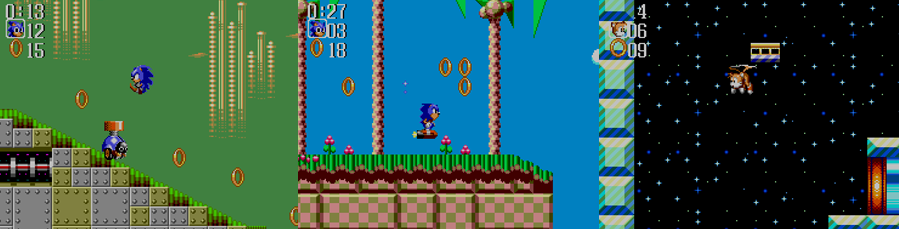
Sonic encounters the greedy Captain Plunder deep in the Mystic Cave Zone.

Finally for today, we have “Pirates of the Mystic Cave”; this story is actually something of a prelude to StC’s later adaptation of Sonic CD and introduces readers to one of StC’s more annoying recurring original characters, Captain Plunder and his Sky Pirates. The story sees Sonic, Tails, Porker, and Johnny exploring the Mystic Cave Zone in search of Amy Rose, Sonic’s lovelorn number one fan who joined the Freedom Fighter team some issues prior and had a knack for getting herself in trouble. While there, they’re attacked by the caterpillar-like Crawltons but, unlike usual, these Badniks are empty of helpless woodland critters. Sonic and Tails are soon cut off from Porker and Johnny by a massive steel door and summarily attacked, and knocked out, by electrical bursts courtesy of a gaggle of Flashers. When they awaken, they find themselves in a cove where Amy is held prisoner in a wooden cage by the hulking, warthog-like Captain Plunder. Desiring Sonic’s cache of Chaos Emeralds, Captain Plunder first threatens Tails with walking the plank and then ruthlessly kicks him down a chasm, but Sonic reminds his young friend that he can fly and therefore the attempted murder is easily thwarted. While Sonic is unable to hurt Filch, Captain Plunder’s resident poltergeist (whom the captain himself murdered for being greedy with the biscuits), he is able to fight the hook-handed warthog. However, far from a mere meek damsel in distress, Amy talks sense into the two and convinces them to join forces against Dr. Robotnik; although Sonic can’t surrender the Chaos Emeralds, he can offer information which of Dr. Robotnik’s air freighters are worth robbing and the cutthroat crew offer the Freedom Fighters some much-needed backup in the fight against the dictator. Although Captain Plunder agrees to the deal and the Freedom Fighters are allowed to leave unharmed, he vows to use the situation to his advantage regardless and steal the Chaos Emeralds at the first opportunity.

The Summary:
There’s a real variety in these six (technically seven, I guess) stories; none of them are a direct adaptation of Sonic 2 by any means and, indeed, the comic plays fast and loose with the game’s continuity at the best of times. One thing I enjoy about Sonic’s comics is how the game locations are actually used and expanded upon, becoming intricate cities, populated areas, and really feeling alive and part of this diverse and often wacky fictional world. The cartoons and movies really struggle with this aspect; occasionally, Zone names and locations are referenced, seen, or somewhat evoked, but it’s never as explicit as in the comics, where anthropomorphic characters live and work and struggle like in the real world. Other concepts, like gameplay mechanics such as Golden Rings and such, were never quite as easily translated in the comics; like the cartoons, these were downplayed or ignored, with stories largely focusing on the Chaos Emeralds and using Rings very sparingly, as though this mechanic were something that only existed in the context of the videogames and wasn’t quite the same thing in this new fiction.

The stories do a great job of bringing Sonic 2‘s locations to life.

Regardless, these stories tell quite a few fun and interesting tales in just a few pages. All but two of these were illustrated by the great Richard Elson, the premier artist of StC who always delivered some of the best, dynamic, and visually interesting sequences and panels. However, this isn’t to discredit Ferran Rodriguez; while his art style is noticeably less detailed than Elson’s and far more simplistic, his characters and locations evoke the anime aesthetic channelled in the manuals and advertisements for the games, especially over in Japan, therefore bringing a more “SEGASonic” version of the character to StC. While some of the writing is a little off (Sonic’s constant heckling of Tails and Porker can make him out to be more of a bully) and it’s a little weak that Super Sonic’s first big appearances were a result of mediocre Badniks like Aquis and Rexxon, the visual representation of the Zones used is absolutely spot on. StC rarely, if ever, took much inspiration from the actual plots of the videogames beyond Dr. Robotnik enslaving animals and polluting the environment, but they always did a bang-up job of bringing the game’s Zones to life in their adaptations, and all of these look great. Sure, Wing Fortress and Death Egg are a little lifeless and dull and Hill Top Zone is less of a lush mountainscape and more of a barren, rocky volcano, but Elson’s depictions of the bustling, pollution-spewing Oil Ocean and Chemical Plant Zones is a joy to behold. There’s so much detail there, with elements from the games (like the oil slides, the toxic gunk, the pinball arena, and the ominous caves) tweaked to become somewhat believable and fully flesh out environments. This is probably best evident in the Casino Night Zone, which takes more from the bustling city you see in the background of the Zone but still includes the bounce springs and bumpers, though Oil Ocean Zone really came off incredibly well, too.
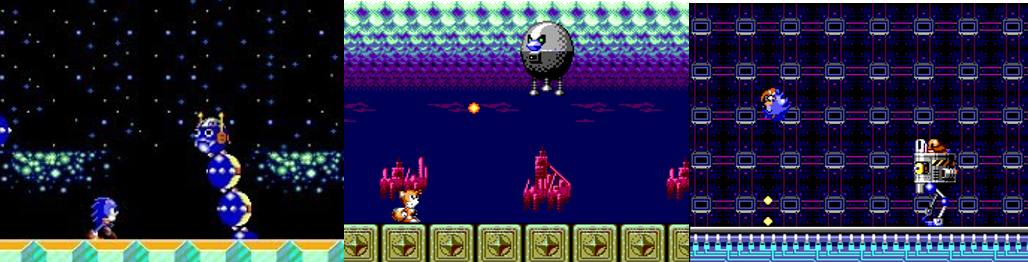

Some unique supporting characters and world-building bolster these stories.

Like basically all external Sonic media, StC was rife with original characters; many, especially those in Sonic’s gang, were adapted from the Mobius lore but others, like Captain Plunder, were a little more surreal and yet fit quite well with this version of Sonic’s world. Few of them make much impression in these stories beyond Captain Plunder and, I guess, the Marxio Brothers for being parodies of SEGA’s rival, Nintendo. One thing you may notice is that Dr. Robotnik doesn’t show up much in these stories and Sonic doesn’t actually fight him directly; this was actually quite common, especially after Dr. Robotnik took over Mobius and became virtually untouchable, and much of the ongoing story was about striking victories and disrupting his operations, not unlike what we saw in SatAM, casting Sonic firmly as the underdog despite him always coming out on top. For those who were hoping to see a traditional Zone-by-Zone adaptation or a bigger, more dramatic showdown on the Death Egg, these stories will probably be a disappointment; indeed, the Death Egg wouldn’t be properly explored or seen as a real threat until later, after Knuckles’ introduction, so I can understand why “Attack on the Death Egg” might fall a little flat in that regard. Still, I think these stories collectively do a decent job of capturing some of the essence of Sonic 2 and recontextualising the Zones and gimmicks into something that would actually work as a living, real place. Many of the elements seen in these stories would return in later issues, with Captain Plunder, Megatox, and the Marxio Brothers becoming recurring villains and anti-heroes, and basically all of Super Sonic’s unique characterisation as this out of control, destructive force was established here. Naturally, there’s a lot of bias on my part; I grew up reading these stories and was an avid collector of StC and really enjoy how they adapted the source material into something recognisable, but still distinctive in its own right, and I definitely think their efforts to incorporate and expand upon Sonic 2 resulted in some fun and visually engaging stories here.

My Rating:

Rating: 4 out of 5.

Great Stuff

What did you think to Sonic the Comic’s adaptations of Sonic the Hedgehog 2? Did you read StC as a kid and, if so, what did you think to its unique take on the source material? Which of these stories was your favourite and what did you think to the StC version of Super Sonic? Would you have liked to see a more direct adaptation of the games in the comics and how would you compare with StC did with the American comic books? What are some of your favourite stories, characters, and moments from StC? How are you celebrating “Sonic 2sday” this year? Whatever your thoughts on Sonic 2, and Sonic comics in general, share them below or join the discussion on my social media.