Released: 29 May 2018 Originally Released: 1 December 1990 Developer: SEGA Also Available For: Mega Drive, Nintendo Wii, PC, PlayStation 2, PlayStation 4, PlayStation 5, PlayStation Portable (PSP), Xbox One, Xbox Series S
A Brief Background: Back in the day, for a while there, ninjas were the latest craze, appearing as mutated turtles, rainbow-coloured fighters, or mysterious assassins, especially in videogames, where the challenge of ninja-based titles defined a generation of gamers. SEGA’s bid to get involved in the fad resulted in notablesuccess with Shinobi(SEGA, 1987), a taxing but praised arcade title that was improved for home consoles. While its Mega Drive sequel, The Revenge of Shinobi(SEGA, 1989), was met with widespreadpraise, Shinobi’s first sequel was actually an arcade release just like the original game. Boasting improved graphics and teaming Joe Musashi with a canine companion, Shadow Dancer (ibid) released the same year as The Revenge of Shinobi and was largely praised, despite some aggravating mechanics. While a port was released for the Master System in some territories, the Mega Drive version was noticeably different, adding additional gameplay gimmicks while also being far more faithful to the arcade title than Shinobi’s previous home conversions. Well received at the time and standing the test of time as another classic title for the 16-bit powerhouse, Shadow Dancer was often included in subsequent collections, including the SEGA Mega Drive Classics collection that added a few quality of life mechanics to the game.
The Review: I was all ready to do one of my regular lengthy reviews about Joe Musashi/Shinobi’s quest for revenge against the Union Lizard ninjas, only to find that Shadow Dancer adheres a little too closely to its arcade roots and therefore is too short to warrant a longer review. Like in the original arcade title, players run, jump, and toss shuriken though five levels (referred to as “Rounds”, with three stages each (the third being a boss battle). Players won’t need to worry about their health here as Musashi once again keels over and dies if he takes a single hit, though he can bounce and bump off enemies and some hazards so it’s only attacks that kill him. Like in The Revenge of Shinobi, players can set the game’s difficulty level, changing the title screen and increasing the number of enemies while decreasing the player’s continues, and will rescue hostages in each stage. Male hostages add to the player’s score, with a final tally adding additional points once a Round is cleared, while female hostages upgrade Musashi’s attacks and see him fling flaming projectiles and throw flaming kicks rather than using his sword for close-quarters combat. Players can add an additional challenge by disabling the shuriken (a death sentence if I ever saw one) and can pick from four different control types. I chose Type B, which mapped the jump to the A button, shuriken to the X button (with no rapid-fire option available), and Shinobi’s patented ninjutsu magic to the B button. Like in the original Shinobi, players are assigned different ninjutsu for each stage and only get one use per stage, earning a point bonus if they finish without using their magic. Musashi can conjure flaming pillars, whirling tornados, and a meteor storm to destroy all enemies, which is handy when you’re swarmed by ninjas. You’re also playing against a three-minute timer (though I always had plenty of time) and can occasionally collect extra lives by finding Union Lizard tokens.
Cut down repetitive ninjas alongside Shinobi’s near-useless canine companion in this challenging quest.
Though he lacks his somersault and shuriken spread and more versatile ninjutsu magic from The Revenge of Shinobi, Musashi can still duck, avoid projectiles using crates and boxes, and hop to higher ground or over fences by holding up and pressing the jump button. This is useful for evading enemies, finding hostages, and getting around some hazards and obstacles, though some enemies can follow you. The game’s big gimmick is the large white canine who fights alongside you. By holding the attack button, players charge a meter and, when released, Yamato pounces upon nearby enemies, distracting them so Shinobi can attack. If players don’t time the button press correctly, Yamato takes a hit and temporarily reverts to a useless puppy, though this mechanic was nowhere near as useful as it could’ve been. I found Yamato often wouldn’t attack and just yapped away uselessly. It would’ve been nice to see him have a more versatile move set, like giving you a jump boost, activating levers, collecting power-ups, or acting as a health bar of sorts so Shinobi can survive one measly hit! As ever, you must avoid bottomless pits and raging waters, though there are some interesting gimmicks that make Shadow Dancer stand out. Round 1-2 features a fun earthquake that splits the screen, for example, Round 3-2 takes place entirely on a rising elevator, Round 4-2 sees the environment and enemies obscured by sporadic shadows in a neat effect, and Round 5-1 is a multi-room gauntlet against swarms of the game’s toughest enemies. Shadow Dancer is incredibly unforgiving at times thanks to its one-hit-kill mechanic, with enemies circling and bouncing you around or knocking you down pits. However, you can hold the Left Trigger to rewind the game, hold “Home” to create or load a save state, and use the Right Trigger to fast forward the action. As in the original arcade Shinobi, a Bonus Round breaks up the action between Rounds. In this section, you frantically toss shuriken at ninjas as Shinobi dives from a skyscraper, earning additional points to claim a few more extra lives depending on how many you kill off.
Some cheap, weird-ass bosses block your path in this bizarre adventure.
Musashi battles a handful of enemies in his quest for revenge. Mercenaries fire laser pistols, taking cover to avoid your shuriken, while their larger commanders shield themselves and toss their shields at your head or shins. Four different coloured ninja grunts regularly throw punches, stab with knives, or carry spears. The claw-handed Iron Claws leap in and roll about, frog-like Geckos crawl around the environment, and an attack helicopter takes shots as you scale the Statue of Liberty. Colourful, nimble ninja also teleport in, wielding dual katana and somersaulting about, slashing at you and attacking in large groups, deflecting your shots and being tougher to kill depending on their colour (with black being the worst!) Each Round ends in a battle against the big bad Sauros’s “Aides” (though, ironically, the titular Shadow Master isn’t amongst them) not unlike those of the original Shinobi. Each appears in a flash of lightning, has a health bar, is fought in an enclosed arena, and players must fight without Yamato or Musashi’s powered-up attacks. Stomper is a giant, distinctly beetle-like samurai who, like Shinobi’s Ken-Oh, spits fireballs that are tricky to dodge. This is compounded by his massive hit box, the debris he rains down, and how tricky it can be to hit his helmet. Mirage is a nimble dominatrix who leaps off screen and tosses large buzzsaws, which she also uses to shield her vulnerable head. At the end of Round 3, Sauros brings a brick wall to life. This screaming monster randomly spawns across the background and attacks by extending and dropping its hands towards you, which are pretty difficult to avoid. Round 5 sees you battle Blade, a spinning, pentagram-like Catherine Wheel that circles your falling platform and tries to roast you, though you can easily spam your shuriken when it stays still. After battling past Sauros’s gauntlet, you face the main man reptile himself in a pretty anti-climactic confrontation. Sauros simply sits on his throne and spawns black ninjas to distract you, eventually detaching his helmet to rain fireballs into the throne room. This is your chance to attack the glowing orb that is his weak spot but be sure to position yourself between the flames!
A visually impressive but lacklustre and unfairly difficult arcade port.
Shadow Dancer looks pretty good, being about on par with The Revenge of Shinobi and featuring large, well detailed sprites. While Musashi doesn’t show much personality, Yamato helps add some visual variety, which the sprites need as there is only a handful of enemies and they’re constantly recycled. Things get off to a decent start with an impressive bit of sprite animation and story text. Each Round is introduced with a big, but partially obscured map and sees Shinobi leap into action, and players are initially dropped into a desolate, seemingly post-apocalyptic city. The background is in flames, the buildings are wrecked, ninja burst from the windows, fire spews from the sewers, and debris falls from the sky! Round 2 sees you first traversing a partially destroyed bridge and then battling across disused railroad tracks, hopping to a rail cart and over fences, while Round 4 takes place in a desolate cavern that tests your platforming skills. Although Round 5 is a largely unimpressive warehouse, Round 3 sees you scaling the Statue of Liberty, hopping up girders and supports, and taking a lift to the torch, with Lady Liberty and New York City in the background. The music is pretty upbeat and fitting for the action, though there’s nothing as memorable as in The Revenge of Shinobi, and players are treated to a bit of partially animated sprite art and ending text upon completion. This version of the game offers filters to recreate the good old 16-bit days, screen borders, a mirror mode for an additional challenge, and two special challenges. If you complete the first two stages without using your magic, you’ll get an Achievement and if you can beat a stage with Yamato in his puppy form, you’ll either earn another Achievement if that’s the first Challenge you completed or be one step towards another Achievement.
The Summary: Wow, I was so disappointed by Shadow Dancer: The Secret of Shinobi. I think I must’ve gotten the game confused with the far superior third game in the series as, while the game looks about on par with The Revenge of Shinobi, this is more like a visually improved version of the original, notoriously challenging arcade Shinobi. Joe Musashi lacks all of his improved moves and versatility from Revenge in favour ofa cute canine who’s criminally underutilised. I barely used Yamato he was so useless, and it says a lot when your 16-bit, arcade-perfect videogame lacks mechanics that were included in the 8-bit port of Shinobi! Shadow Dancer would offer a decent challenge if not for the archaic and unfair one-hit-kills, which strangely carry over from the arcade version despite them being eliminated in other home console Shinobi games. While the game looks great and it can be fun searching for hostages, it’s pretty barebones, with only five Rounds and extremely limited ninjutsu magic, meaning you’re more likely to rely on your shuriken. Enemies were also painfully recycled, lacking any of the character and personality of those from The Revenge of Shinobi, and the plot is strangely bonkers, focusing on a lizard man with a ninja army? I’m not sure what the titular “secret” of Shinobi was supposed to be or why the game is called Shadow Dancer when that enemy doesn’t even appear, or why SEGA didn’t feel fit to enhance the arcade title to be more in line with the improvements made in The Revenge of Shinobi. If you’re going to play Shadow Dancer, this version is probably the best way since you can exploit the rewind and save state features, but this was a disappointingly hollow experience that didn’t do justice to what the Mega Drive – or the franchise – was capable of.
My Rating:
⭐⭐
Rating: 2 out of 5.
Pretty Good
Did you enjoy Shadow Dancer: The Secret ofShinobi? How do you think it compares to the arcade version and other 16-bit Shinobi titles? Were you also disappointed that it included one-hit kills and greatly limited your options? What did you think to Yamato and how useful did you find him? Which of the bosses was your favourite and what do you think the “secret” of Shinobi was? Which Shinobi game is your favourite? Let me know what you think about Shadow Dancer: The Secret ofShinobi in the comments, send me some coppers on Ko-Fi, and go read my other Shinobi reviews.
Released: 2 December 1989 Developer: SEGA Also Available For: Android, Mega/SEGA-CD, Mega-Tech, Nintendo Switch, Nintendo Wii, PC, PlayStation 2, PlayStation 3, PlayStation 4, PlayStation 5, PlayStation Portable (PSP), Xbox 360, Xbox One, Xbox Series S/X
The Background: Back in the 1980s, ninjas were a big deal. Mysterious, agile, swift-footed martial artists tossed shuriken and took movies, comic books, cartoons, and videogames by storm. We had everything from silent assassins working for the US government, mutated turtles, a slew of rainbow-coloured warriors, and games so iconic and so challenging that they defined a generation of players. SEGA saw considerable critical and commercial success with Shinobi(SEGA, 1987), a tough but rewarding arcade title later refined for its home console conversion. For the sequel, director Noriyoshi Ohba wished to showcase the then-new Mega Drive hardware through a more story-driven title, one better suited to the home console market. Thus, Shinobi gained a life bar and was purposely given a steep difficulty curve to encourage player experimentation. To balance things out, Shinobi was given a finite magic system to help in trickier situations, as well as a handy double jump for improved platforming. Of course, the game became notorious for including unlicensed appearances by major pop culture icons, leading to numerous revisions and graphical tweaks to avoid a lawsuit! One of the defining Mega Drive experiences of my childhood, The Revenge of Shinobi has stood the test of time as a classic of its generation, impressing with its visuals and gameplay variety as much as it frustrated with its mechanics and difficulty curve, and even directly inspired a semi-recurring comic strip here in the United Kingdom. The Revenge of Shinobi has had a tumultuous life post-Mega Drive, occasionally omitted from retrogame collections in favour of its sequel, though a remaster did briefly appear on digital stores (alongside some Trophies and quality-of-life features) in 2012.
The Plot: When the criminal organisation Neo Zeed murders Joe Musashi’s master and kidnaps his bride-to-be, Musashi once again dons his Shinobi garb and sets out to rescue her.
Gameplay and Power-Ups: The Revenge of Shinobi is a sequel to the arcade, ninja-themed run-and-gun (more of a “walk-and-gun”, I suppose) Shinobi and, like its predecessor, is an action platformer that sees players guide Joe Musashi, the titular “Shinobi”, across eight stages (billed as “Rounds”), each with three parts (referred to as “Scenes” in the manual and comprised of two action stages and a battle against the game’s “Power Villains”). The Revenge of Shinobi incorporates a “continue” feature, limiting players to three continues per game, and allows players to choose from four difficulty settings (with the hardest settings limiting how many lives they have) and four control schemes. Personally, I prefer “Type 2”, which maps Musashi’s attack to the A button, jump to the B button, and “ninjitsu” magic to the C button. You can also customise how many shuriken Shinobi starts with, and I’d recommend setting it to the maximum amount as you’ll be chucking a lot of throwing stars in this challenging title. Musashi’s primary attack is to throw ninja stars, which he can do while walking, crouching, or jumping. When enemies get close, Musashi strikes with his Oborozuki blade or a kick, with most enemies literally exploding after just one hit. Musashi has a decent, if clunky jump that players can use to hop over simple obstacles (walls, crates, and junk cars) or onto moving platforms, but he can also perform a somersault to reach higher ground or flip over chain-link fences. Unfortunately, this somersault is extremely finnicky to perform as, rather than simply tapping B twice, players must awkwardly press B at the height of their jump, meaning the somersault is effectively useless in restrictive locations like hallways and interiors. This also means you can’t hop halfway across a gap and then activate the somersault; if you try this, you’ll plummet to your death. It’s worth pulling this move off, though, as you can press A when somersaulting to fire a spread of shuriken, though this quickly depletes your stock. Luckily, players can break wooden crates for more shuriken, health, and even extra lives. However, you must watch out for sneaky (often unfair) timed bombs that can whittle down your health or send you down a bottomless spit thanks to the game’s aggravating knockback.
Power up Musashi’s attacks or utilise hisdevastating ninja magic to clear out enemies.
Musashi can also collect “Power Packs” to increase the speed and power of his attacks, gaining his sword and changing his shuriken to flaming projectiles. When walking or crouch-walking while powered up, Shinobi holds his kunai before him to reflect projectiles, which is a handy feature. Defeating enemies and clearing stages also adds to your high score, with Musashi’s life bar increasing by two when players reach 100,000 points and earning extra lives whenever they clear a Round or reach first 50,000 and then 100,000 subsequent points. Pausing the game lets you select one of four ninjitsu techniques to use with the C button, with each having different pros and cons. Ikazuchi, the “Art of Thunder”, surrounds Shinobi with an electrical shield to protect him from damage and even seems to hurt enemies, though it fades after too many hits. Kariu, the “Art of the Fire Dragon”, summons great plumes of dragon-like fire to damage all enemies. Fushin, the “Art of Floating”, increases the speed, height, and length of your jumps and somersaults, allowing you to easily cross gaps. Though it lasts until the Scene ends and can be used alongside other ninjitsu, it can be unwieldy. Finally, Mijin, the “Art of Pulverising”, sees Shinobi self-destruct, costing a life but dealing big damage to enemies and bosses. You can use each ninjitsu twice per life and can earn additional uses by finding rare ninjitsu items in crates; if you perform the somersault attack, you may also find hidden items scattered through the environments. Unlike in the original game, there are no quasi-first-person sections in The Revenge of Shinobi and no hostages to rescue. You simply move from right to left, taking out any enemies and crossing deadly gaps, until you reach the exit or defeat a boss. However, you must occasionally step on switches to open doors or clear a path, crouch-walk through hidden passageways, Fushin-leap across gaps, and ride moving platforms or chains to bypass instant-death hazards.
A challenging title made all the more tricky thanks to some clunky controls.
The Revenge of Shinobi starts out quite fair, demanding little from players than to avoid projectiles and hazards, but quickly becomes a challenging title. Players must avoid being skewered by bamboo spikes, crushed by sliding crates, and scorched by bursts of fire. Molten steel, raging waters, and bottomless pits will cost you a life and you must also take care to not be sucked out of Round 3’s air locks. Fushin comes in handy when tackling Round 2’s waterfall, where you hop to dropping logs and high platforms, and your jumping prowess is tested when you hop to and from Round 5’s bridge avoiding speeding red cars. When in Round 3’s military airfield, players must somersault over the chain-link fence to avoid or take out the armed guards stationed there, while Round 5 sees you hopping to moving laser turrets to scale Neo Zeed’s skyscraper headquarters. When navigating the pier Scene in Round 7, you must hop to rubber dinghies, then avoid the massive turrets stationed in a similar Scene in Round 8. Some stages, like Round 2: Scene 2 and Round 6: Scene 1, see you using the rooftops to avoid enemies and pits, while Round 6: Scene 2 sees you ducking and jumping over hazards while plodding across a speeding train. While you’ll encounter enemies popping from hidden doors as early as Round 2: Scene 2, Round 8: Scene 2 presents a frustrating door maze, where you must choose the correct path, battling every enemy faced in previous stages, and thanking the gaming gods that The Revenge of Shinobi doesn’t have a timer and that online guides are a thing! Still, the game’s difficulty can be daunting at times. Musashi and his enemies have quite large hit boxes and Shinobi is a bit clunky to control, especially when jumping. You can’t scroll the screen up or down, making it easy to be blindsided by enemies; though, on the plus side, enemies don’t respawn. Those damn bombs also become a massive headache as you progress, to say nothing of enemies that deflect your shuriken or disguise themselves as nuns!
Presentation: Although The Revenge of Shinobi was an early title for the SEGA Mega Drive, it’s still very impressive from a visual standpoint. Joe Musashi may not have any idle poses, but he strikes a dramatic pose with each ninjutsu, collapses in defeat when killed, and assumes a more aggressive stance when powered up. While the basic ninja enemies aren’t much to shout about, the samurai are far more detailed and I liked the agility of the Pink Dragon enemies, who fall to their knees after taking a few hits rather than exploding like Shinobi’s other enemies. These explosions are ridiculously fun and I liked how some enemies wield swords or other weapons that deflect your projectiles, forcing you to alternate between high and low attacks. While some stages can be a bit bland or cluttered at times and the game lacks the colourful, visual “pop” of the Mega Drive’s most popular titles, there’s a lot of detail in every area. Round 1: Scene 1 transitions from dusk to night, for example, waters rage in Round 7 and 8 (with the latter also including rain effects and a lighthouse in the background), and there’s some minor examples of parallax scrolling at work. The game’s introductory scene features a large, partially animated sprite of Sonny Chiba Musashi deflecting some shuriken and a still image of him holding his murdered sensei as the game’s plot appears in text. Between each Round, you’re treated to a world map that shows your progression and the game’s sound effects should be readily familiar to anyone who’s played the Streets of Rage trilogy (SEGA/Ancient, 1991 to 1994) since those games copied them, and some graphical elements, wholesale from The Revenge of Shinobi. The game is also a licensee’s nightmare, depending on which version you play, as Musashi encounters enemies clearly inspired by John Rambo (Sylvester Stallone) and bosses either inspired by or blatantly ripping off Doctor Robert Bruce Banner/The Hulk, the T-800 Terminator (Arnold Schwarzenegger), Peter Parker/Spider-Man, Bruce Wayne/Batman, and Godzilla! It’s surreal encountering these enemies, even if you’re playing a version that recolours or alters their sprites, as they’re decidedly at odds with he game’s more grounded aesthetic.
There’s some decent visual variety and crazy moments, but it can be cluttered at times.
To be fair, though, The Revenge of Shinobi may start out rather mundane and traditional, with Musashi exploring a bamboo forest and guarded pagoda before hopping to the nighttime rooftops, he’s soon storming a well-armed military airfield, awkwardly navigating the claustrophobic interior of a steampunk-like airship, and somersaulting through the neon-drenched skyline of Chinatown. Equally, while his enemies start out as simple ninjas appearing in puffs of smoke or from hidden doorways, he’s soon taking on assassins disguised as nuns and dodging laser blasts from automated turrets. While the game’s soundtrack is practically burned into my memory, particularly the intro music and opening Scene, it is disappointing that The Revenge of Shinobi repeats a few of its tracks, especially considering the variety packed into each Round. This can also be a double-edged sword, to be fair: the train Scene, for example, starts off in a really bland tunnel and then jumps to the extreme with a cluttered and confusing background (though I liked seeing passengers mingling in the carriages). I enjoyed the chaos of the steel mill, however, and the busy bridge (despite how difficult it can be to avoid enemies and cars and not plummet to your death), and especially liked the detail in splashing waters in the pier Scenes. These effects were far more effective than in the waterfall Scene, where it can be difficult spotting enemies and even Musashi’s sprite due to the clashing colours. While the game strangely lacks an end credits sequence, there are two endings depending on how quickly you defeat the final boss and whether or not you rescue Naoko. I also liked that the Power Villains changed colours to visually indicate that you were dealing damage (though sound effects also helped with this), and how they dramatically exploded upon defeat, with some even breaking apart for added effect. While the game performs pretty well, never taxing the Mega Drive’s hardware too much, there can be some instances of slowdown and sprite flicker when a lot of big, moving sprites are present.
Enemies and Bosses: There are only a handful of enemies in The Revenge of Shinobi, but the game eventually mixes and matches their combinations and offers palette swapped variants who are a bit tougher and more aggressive in their attacks. One of the most common enemies you’ll face are Neo Zeed’s ninjas (or Omote), who appear in a puff of smoke or from behind hidden doors or even flying about on bat-like wings! These guys can jump, somersault over you, and toss shuriken of their own, but explode in one hit. They’re bolstered by samurai (or Kabuto), who deflect your shuriken with their katana and have a long reach, and attack dogs that pounce at you. Neo Zeed’s reach extends to the American military, meaning you’ll often face off with soldiers armed with rifles, tossing grenades, or stationed behind machine guns. These guys can also lie on the ground and come in pairs to fill the screen with machine gun fire and are often accompanied by “Gunners”, the Rambo-esque brutes that carry flamethrowers. Kasumi (who win top price in the Elektra Natchios lookalike competition) fool you by disguising themselves as nuns and then leaping with a flying kick and sai in hand. The game’s Bruce Lee-like martial artists also utilise flying kicks, while the White Phoenix enemies have incredible reach with their spinning, bladed nunchaku. I really liked the Pink Dragon enemies, robed dancers who elegantly spin around, deflecting your shuriken, and take multiple hits to defeat before crumbling to their knees rather than exploding (a detail not mirrored by the Kasumi). These enemies eventually start mingling and you’ll encounter them all in Round 8: Scene 2, which can be especially aggravating as their projectiles and sprites take up screen space and box you in. It’s also worth remembering that the Gunner’s flames and the many bombs you encounter linger onscreen for a few seconds, so you must either take your time or execute a somersault to avoid damage. Hazards like jet flames, pits, molten steel, turrets, and lasers are also present, though you can use some of these to help upwards in some Scenes.
Some totally legal cameos pop up alongside the colourful and bizarre bosses.
Each Round ends with a battle against a “Power Villains”. The first, the Blue Lobster, is a large samurai who shields himself and has fantastic reach with his Masamune-like blade. However, by utilising the arena walls, you can avoid his attack and execute the somersault spread to whittle him down. Next, Shinobi encounters the super agile Shadow Dancer in a kaleidoscopic nightclub. This guy is essentially a supped-up Omote but he’s quite challenging as he can only be damaged when on the ground, fires a shuriken spread, and turns pitch-black near death to make him even harder to spot! Round 3 pits you against a heavily-armoured super computer, protected by ceiling lasers, that can only by damaged by targeting its exposed brain. At the end of Round 4, you battle the “Master Attacker” in the junkyard. This hulking brute tosses cars and debris, has a shoulder charge, and turns out to be a kamikaze robot, but you can again use the high ground and somersault attack (or Kariu) to damage him. Next, you’ll clamber over a massive, missile-carrying vehicle, attacking the red orbs when they pop up and avoiding shots, the blue spark that travels across the ground, and falling to your death. Round 6 sees you ambushed by Spider-Man and Batman (or a spider-like ninja and a menacing vampire) in a two-stage battle. Spidey crawls along the ceiling firing webs and descending on a web line (that also makes him invulnerable), while Batman swoops at you and is surrounded by bats (though these, like Spidey’s webs, can be destroyed). As if that wasn’t bonkers enough, either Godzilla or a fire-breathing Brontosaurus await in Round 7’s final Scene. Either way, you must again use the high ground to attack the beast’s head, watching for its atomic breath and large tail, and hopping from one side to the other to avoid damage. Finally, Shinobi battles “The Boss” for Naoko’s life. This squat, kabuki-like crime lord is mostly stationary but protected by a mane of impenetrable hair that he whips and flings at you. You must stay close, firing at his exposed belly, and utilise Ikazuchi (since all other magic seems ineffective) to outlast his attacks and finish the fight quickly, otherwise Naoko will be crushed!
Additional Features: As mentioned, there are multiple difficulty settings in The Revenge of Shinobi. So, if you somehow find the game too easy on “Easy”, you can give yourself a harder challenge by limiting how many lives you have. There’s no real benefit to this other than bragging rights, though, as the ending you receive relies solely only how first you defeat The Boss and if you can keep Naoko from being killed. If the game proves too challenging, you can set the shuriken count to 0 in the game’s “Settings” menu and wait a few seconds for the number to change into an infinity symbol, granting you unlimited projectiles. Hidden extra lives can also be farmed in some Scenes, though there’s oddly no high score table to aim for (you must record your score in the manual like some kind of caveman!) If you’re lucky enough to still own the seventh-generation remaster, there are twelve Achievements/Trophies to obtain, with one being awarded for using all ninjutsu attacks, one for beating the game without a continue, and others for oddball tasks like deflecting ten attacks or falling down a waterfall. Other modern re-releases are oddly missing Achievement support but do come with save states and, often, rewind features, which make this challenging title far easier and much more enjoyable to playthrough.
The Summary: Like many kids back in the day, I’m sure, The Revenge of Shinobi was an essential title in my Mega Drive library. This was probably the most challenging game I owned back then, yet I kept it and often revisited it time and again despite often running into a brick wall around Round 7. Years later, I picked up the remaster for the PlayStation 3 and finally finished the game for the first time, and I’m still a bit regretful that I ended up selling that console and losing that version of the game. Thanks to re-releases, The Revenge of Shinobi is more accessible than ever but there’s something magically nostalgic about revisiting it on original hardware. The game holds up pretty well, especially the soundtrack and some of the sprite work. It can be clunky at times (Joe Musashi is very slow and his jump, particularly his aggravating somersault, are difficult to master) and the environments lack a lot of the detail and variety you’d expect from later Mega Drive titles, but I appreciate that the developers tried to make each Scene stand out in their own way. I still get a thrill hearing that Round 1: Scene 1 beat kick in and laugh every time those blatantly ripped off enemies crop up, and I love how Musashi can hop behind chain-link fences and bolster his attacks with ninjutsu magic. The Power Villains are all large and suitably impressive, testing your jumping skill and forcing you to think about when and how best to use your ninjutsu, while the stage variety always keeps you on your toes. I may not enjoy the bridge, train, or many of the platforming mechanics and that damn door maze might’ve driven me mad, but I’m glad that the game tried to be a bit ambitious and mix things up. It’s a shame that the developers didn’t rejig the first-person-esque sequences for the first game or the hostage rescue mechanics into mini games or gimmicks for some Rounds, and that the screen area is unnecessarily restricted at times, but this is still a classic mega Drive title. It was undoubtably surpassed by its sequels, but there’s a special kind of magic to the Revenge of Shinobi that still gives me the feels to this day and I’m always glad to boot it up again, though I admit this blatant nostalgia is the reason it gets an extra fourth star as the awkward controls, slow pace, and difficulty curve do bog it down.
My Rating:
⭐⭐⭐⭐
Rating: 4 out of 5.
Great Stuff
Was The Revenge of Shinobi a staple of your Mega Drive library back in the day? How do you think it compares to the first game, and its sequels? Which of Musashi’s ninjutsu attacks was your favourite and did you also struggle with his somersault attack? What did you think to the stage variety and the soundtrack? Which version of the game did you own and what did you think to the crazy bosses? Did you ever defeat The Boss and rescue Naoko? Which of the re-releases is your favourite and would you like to see a Shinobi collection released for modern consoles? Share your memories and opinions on The Revenge of Shinobi down in the comments, go support me on Ko-Fi, and check out my other Shinobi reviews.
Released: 16 November 1987 Developer: SEGA AM1 Also Available For: Amiga, Amstrad CPC, Atari ST, Commodore 64, IBM PC, Master System, MSX, Nintendo Entertainment System (NES), Nintendo Wii, PC Engine, PlayStation 3, Xbox 360, Xbox One, Xbox Series S/X, ZX Spectrum
A Brief Background: For quite a while, between the seventies and mid-nineties, ninjas were all the rage. Sneaky, costumed martial artists wielded katana and tossed shuriken and appeared in numerous cartoons, comic books, movies and videogames. Games were treated to everything from ninja turtles, rainbow-coloured warriors, and games so challenging that they defined a generation. Since ninjas were so prevalent in the gaming industry, it wasn’t that surprising that SEGA built an arcade game around a skilled ninja warrior. Although vastly surpassed by its Mega Drive sequel, the original Shinobi was a commercial success whose demanding gameplay proved extremely popular. When Shinobi came to the Master System, it received a noticeable downgrade in graphics yet some welcome quality of life features, such as a health bar and the elimination of one-hit deaths, which led to it being equally lauded. Shinobi kicked off a successful side franchise for SEGA, one sadly left to the wayside for many years, and saw numerous ports to other consoles, though many were since delisted.
The Review: Joe Musashi’s debut as the shuriken-throwing Shinobi is a 2D, sidescrolling affair that’s essentially a ninja themed run-and gun. Players can either go it alone or play alongside a friend to fight their way through five stages (known as “Missions”), with three to four rounds per Mission (with the final round being a boss battle). While you’re playing against a three-minute time limit on the arcade version, I never experienced any time outs and you’re given plenty of time to play as each round is quite short. The Master System version lacks the timer but is noticeably harder, even though Musashi can take multiple hits before dying, since the controls are much clunkier and players have no continues. On the arcade version, your game lasts as long as you have pocket change, though there are no checkpoints mid-round. However, the game throws you a bone by not requiring you to rescue hostages each time you lose a life. Yes, Musashi’s goal is to rescue a handful of hostages in each area, with the captives generally guarded by street thugs, ninjas, Mongolian swordsmen, and bazooka-wielding goons. Rescuing hostages awards points, with players earning extra lives with enough points and landing their initials on the high score table at the end of the game, and upgrades Musashi’s attacks. Rescuing them is mandatory on the arcade version, with the exit only accessible once they’re rescued, but is optional on the Master System version, where they also refill your health. By default, Musashi tosses shuriken with one button, though he’s limited to tossing them in the direction he’s facing or while crouching rather than in any direction or off a somersault. When enemies get close, Musashi kicks or punches them (providing he doesn’t take a hit and die), but this is upgraded to a sword slash (and a nunchaku and a ball and chain on the Master System version). Shinobi’s shuriken are swapped out for a missile-firing pistol (very discreet!) and even grenades on the Master System.
Hop about, employ magic, and toss shuriken to rescue hostages and take down the baddies.
Shinobi’s big gimmick is Musashi’s ability to leap onto walls and into the background by holding up and pressing the jump button. These inputs also allow him to drop back down as well, and players must switch back and forth between the foreground and background to rescue hostages, take out or avoid enemies, and progress across stages. It can be clunky at times, and difficult to see where you’re supposed to jump, and some enemies are obnoxiously placed to sap your lives and pocket money. Musashi can duck or jump over crates to avoid incoming fire or progress further, and utilise “ninjitsu” magic at the press of a button. Unlike in later games, this magic is severely limited and changes depending on which Mission and version you’re playing. I saw Musashi duplicate himself and dart around the screen with flying kicks, summon a lightning storm, and conjure tornados, though I couldn’t figure out how to do the magic on the Master System version. After clearing a Mission, players are awarded point bonuses to add to their high score and must take on a first-person bonus round (accessibly by rescuing hostages on the Master System). Here, you frantically toss shuriken at ninjas as they hop from the background, with the round ending in failure if they reach you. While most of Shinobi is geared towards simple run-and-gun action, you’re often tasking with hopping to pillars, wading in water, clambering up and down pipes, or clearing gaps to progress. This can be a tricky prospect as Musashi is incredibly sluggish, has a large hit box, and jumps like he has lead in his shoes, meaning you’re far more likely to plummet down a pit than reach your intended destination. Unlike in later games, though, there are no additional hazards or gimmicks to worry about here, though the sheer number of enemies and projectiles means Shinobi is an incredibly challenging title regardless.
The game’s hit and miss in terms of visuals, but definitely at its strongest on the arcade.
Despite being a SEGA kid, and owning a Master System, I never played Shinobi growing up. I played The Cyber Shinobi (SEGA, 1991) and The Revenge of Shinobi(ibid, 1989), but never this one. Consequently, I can’t help but be disappointed with how the game looks. Sure, there are some fun voice samples and grunts, the distinctly Oriental music was certainly fitting, and the title screen showcasing Musashi’s animated head was somewhat impressive, but the game is very basic compared to its sequels. On the arcade, Musashi and his enemies are large, colourful sprites with limited animations and annoyingly big hit boxes. Musashi is garbed in black and has his face exposed here, and lacks some of his later abilities, but still strikes a dramatic pose when using magic, which fills the screen with fun, varied effects. Each Mission begins with a briefing document showing the boss and your place on a crude map, and the locations are somewhat varied. You’ll battle on the city streets, against a background of Marylin Monroe posters and simplistic skyscrapers, across the docks and inside a large ship, hop across a rocky mountainside, most likely get a headache from the dense and mangled bamboo forest, and finally battle inside a pagoda full of ninjas. I did like the water effects when you’re outside the docks, with enemies casting a shadow so you can anticipate their appearance, and the large structures at the end of most stages, such as caves and Oriental buildings. Bosses are fought in enclosed arenas that are given some visual flair, taking place on a balcony looking out on treetops or against a dragon mural, and the large sprite art and sprite manipulation in the bonus stages was certainly impressive. While your only reward for beating the game is some text regarding the ending and your place on the high score table, that’s more than Master System players get, as the game abruptly ends on home consoles! The Master System version is also far uglier, with loads of sprite flickering, clunkier controls, and a truly awful visual downgrade from the arcade that’s only echoed in other inferior ports.
While some bosses are fun, others are ridiculously cheap thanks to the one-hit-kill mechanic.
Musashi is attacked by knife- and gun-wielding street punks, bazooka-firing troopers, and a slew of colourful ninjas. Some resemble Peter Parker/Spider-Man and pop from water, fly from the thick bamboo forest, or appear in a puff of smoke to flip about with katana. Kabuki-masked enemies toss bones, Mongolian warriors swing or throw their blades, weird little hunchbacks leap about, and bo-swinging monks hop between the foreground and background. Most are defeated in one hit, but their projectiles fire high and low, enemies are often perched right where you need to jump, and some deflect your shuriken. Ken-Oh, a hulking ninja garbed in black armour, is the first boss you face. He launches fires fireballs that can be extremely difficult to avoid as they fill the screen and easily sap your lives as you frantically try to jump and toss your shuriken at his helmet. The Black Turtle attack helicopter was much easier, despite its gatling gun and the ninjas it spawns. You can deal a lot of damage with your ninjutsu magic, and the helicopter even displays battle damage and goes down in an impressive explosion. The Mandara was a crippling step up in difficulty, however, being a two-stage boss battle that features an insta-kill wall of electricity and starts with an advancing troop of boddhisatvas that must be destroyed before they reach you. You must then avoid the Mandara Master’s bouncing projectiles and hit the jewel on its forehead to win. The Lobster, a massive, armoured samurai, was the easiest boss, providing you get your timing down. All this guy does is slowly advance and swing his sword, but he’ll stun-lock you if you’re not careful. To defeat him, you must time your jumps to hit his head, forcing him back and easily besting him if you’re quick enough. Finally, Musashi faces Nakahara, the “Masked Ninja”, in a four-phase challenge. First, the Masked Ninja jumps at you, leaping off the walls, and you must time your shots to land when his shield is briefly gone. Then, he turns into a tornado and flings blades at you, before hopping about while shadowed by duplicates, and finally rushing in to land melee attacks, all of which can be tough to avoid and it’s even hard to know if you’re done damage!
The Summary: Despite my love and nostalgia for The Revenge of Shinobi, and my appreciation for the Master System, I’ve never been that enthused by the original Shinobi. I could tell just from screenshots and a bit of gameplay that it was a clunky and demanding experience, and my opinion has only been cemented after this playthrough. I played through both the arcade and the Master System version and, while there are subtle differences and some tweaks for the home console version, both were unforgiving at times and a chore to get through. Joe Musashi is ridiculously difficult to control, awkwardly leaping to and from the background and being far too big a target for this mission. Enemies are relentless, constantly spawning and tossing projectiles and causing cheap deaths thanks to the outrageous one-hit-kill system. This is mitigated on the Master System, but the game’s still an uphill battle thanks to the awful visuals and problematic controls. Musashi isn’t as spry as I’d like and drops like a stone when trying to clear gaps, and isn’t acrobatic enough to avoid the simplistic bosses’ attacks. His ninjutsu magic, while impressive, is incredibly limited and almost useless against bosses, and you’re barely given a chance to learn enemy patterns or level layouts before you’re pumping in more coins and replaying the same sections over and over. I liked the variety and aesthetic of the game, and the first-person bonus rounds, and that you have to rescue hostages, though these were better implemented in the home console ports. It’s amazing to me that Shinobi was as popular as it was at the time as I find it very difficult to believe anyone got very far in this unforgiving piece of jank, which punishes you at almost every turn, even when playing on the Master System (where some cheat codes ease the pain). I’m honestly glad I started with its superior 16-bit sequel, which outclasses this offering in every way.
My Rating:
⭐⭐
Rating: 2 out of 5.
Could Be Better
Did you ever play Shinobi in the arcade, or own it on home console? Were you impressed with the game and its unique jumping mechanic? Did you also struggle with the one-hit kills and Musashi’s large hit box? Which of the bosses was the most troublesome for you and did you ever clear all the bonus rounds? Did you prefer the changes made for the home console release? Would you like to see a new Shinobi collection? Whatever your memories and experiences of Shinobi, share them in the comments, support me on Ko-Fi, and check out my other Shinobi reviews.
The Plot: When King Gedol’s lizard forces invade the kingdom of Zephyrus and rogue Rocket Knight Axel Gear kidnaps Princess Cherry, Sparkster searches for seven magical swords to oppose the Gedol Empire and best his rival.
Gameplay and Power-Ups: Just like the other 16-bit Rocket Knight games, Sparkster: Rocket Knight Adventures 2 is a 2D, sidescrolling action platformer. However, unlike the original game and its similarly titled Super Nintendo cousin, there are no run-and-gun elements to Rocket Knight Adventures 2 as Sparkster’s sword has been robbed of its sword beam. This significantly impacts the primary gameplay as you now rely on Sparkster’s bog-standard sword swings, which can fall a little short at times. You attack with Y and jump with B, executing a jump sword swing and clinging to poles using Sparkster’s paws and tail when you jump to them. Unlike in the other games, Sparkster’s rocket pack charges automatically and has different levels of effectiveness depending on how full the meter is. As long as the meter’s at least partially full, you can press A to rocket dash in the direction you’re facing, diagonally to take out turrets, and upwards to get higher. If you press A without a direction, Sparkster spins on the spot to attack enemies and, when the rocket pack is fully charged, Sparkster spirals in a “Screw Attack” (no relation), travels further, and bashes through destructible blocks and walls. While waiting for the meter to charge does take a lot of agency away from the player, it charges pretty quickly and you have far more control over Sparkster off a upwards boost, which greatly aids with reaching platforms. Sparkster can still ricochet off walls to get higher, though this is still underutilised, in my opinion, with Rocket Knight Adventures 2 focusing more on traditional platforming. Players still collect gems for points, though this time there are two types: regular blue ones and red ones that kick-start a slot machine for additional gems, health (now apples and chunks of meat), extra lives, or a rocket pack that instantly sends you flying in a Screw Attack. Naturally, these can all be found in the game’s stages, too, and you receive a score tally after clearing each stage for bonus points.
Sparkster’s sword is nerfed but his rocket pack and mech game are stronger than ever!
Sparkster can also grab the new power-up icon that gifts him a flaming sword to increase your attack power, though you’ll lose this when hit or advance to the next stage and I can’t say I noticed a significant difference, especially as many enemies die in one hit. Rocket Knight Adventures 2 has seven stages and four difficulty settings, with players only seeing the true ending by beating the game’s harder difficulties. Sadly, the shoot-‘em-up stages from the other two games are gone, replaced by three sections where you control Sparkster’s giant mech, the SparkRobo. Two of these are Rock ’Em Sock ’Em Robot battles with Axel Gear that are similar to that one boss from the first game, and the other is a sidescrolling autorunner where you blast enemies from the sky using the SparkRobo’s rocket punch (Y, which can also be charged) and jump over bombs tossed by enemies on the ground (also with Y). Sparkster doesn’t ride any minecarts or miniature mechs here and only has to deal with one autoscrolling section, where players dispatch enemies, destroy or jump to crates, and hop between train carriages to avoid a nasty spill. Spikes, flame plumes and lava, and insta-death traps are still present, however, with quicksand swallowing you, moving platforms ridden past spikes, and even a sand twister tossing you about atop a pyramid in Stage 2. This stage has a higher and lower path, which you may wish to switch between for different rewards and dangers, while Stage 5 features many switches to open doors, doors guarded by projectile-firing gargoyles, and conveyer belts. Stage 2’s pyramid gimmick differs from the Super Nintendo version, featuring a race from rolling balls and false doors that loop you back to the outside until you find the correct path. You’ll also cross lava on moving platforms and by clinging to overhead pipes, which gain destructible spiked hazards and even Gedol henchmen by Stage 5. Stage 3 sees Paeli, leader of Gedol’s lizard ninjas, bombard Sparkster and the blocks of the stage from his airship. This destroys the ground and forces you to take high-speed tubes up to the top of the ship to destroy barriers and drop the ship from the sky.
Presentation: Sparkster: Rocket Knight Adventures 2 is a bit of a mixed bag, visually, something immediately evident from the lacklustre title screen (simply the game title against a moving sky background). This does pan down into the opening cinematic and mech battle against Axel Gear, however, a fight you can skip if you wish, which causes you to miss a collectible and displays an absolutely garish secondary title screen. Unlike in the Super Nintendo game, stage intros are back but they’re far less visually interesting than in the first game, and every sprite has been redesigned to give it a more anime flair. Although I miss the cute, squat Sparkster of Rocket Knight Adventures, he looks pretty good here and is far more animated. He bops about as if itching to get going, his rocket pack is almost constantly aflame, and he stands heroically when left idle. Sparkster also squeals when hit, reacts when piloting the SparkRobo, has more animation frames, and displays more personality than on the Super Nintendo thanks to Rocket Knight Adventures 2 including more pantomime-like, sprite-based cutscenes. These are similar to those of the first game, seeing Sparkster leap into action when Axel Gear kidnaps Princess Cherry and advance between stages, with elements from previous stages (such as Stage 1’s train) appearing in others. Unfortunately, like the Super Nintendo title, Rocket Knight Adventures 2 cannot live up to or surpass the original’s soundtrack. Things are jaunty enough, for sure, but nothing stuck in my head like the main from the first game. Interestingly, Rocket Knight Adventures 2 does replicate the slowdown from the first game, with the frame rate noticeably dipping when Gedol’s forces drive vehicles or too many sprites and explosion effects appear at once.
The visual overhaul is great for Sparkster but not so much for the enemies and environments.
Perhaps most unforgivably, Rocket Knight Adventures 2 appears far blander than the first game and its Super Nintendo counterpart. Stage 1’s forest section is disappointingly subpar compared to the first game, with the ground being a far more basic block of sprites and the background having little to distract you, even when the overgrown ruins creep into play. The train section adds some spice and variety, for sure, but it paled in comparison to the Super Nintendo title. Similarly, while both games include a desert, they’re rendered very differently. Stage 2 has a neat shifting sand and heat shimmer effect in the background, but its pyramid is blockier and more akin to ruins, making it far less visually engaging than SEGA’s competition. Stage 3 took place atop the pyramid’s ruins and in an airship, which was, again, a far cry from the steampunk-style battle craft from the first game, even with its fake doppelgängers of Princess Cherry and larger, blade-like propellers. Stage 4 was like a poor imitation of a similar city stage from Rocket Knight Adventures; sure, the SparkRobo looks cool (if a tad goofy), but the city lacks the detail and appeal of the first game. Things pick up in Stage 5, which takes place outside and inside King Gedol’s heavily fortified castle-cum-weapons factory. The background is a bit busy at times, but I liked all the moving parts, alternate routes, and the danger brought on by the turrets. While the mech battles against Axel Gear are in bland, dark caverns, you battle him in a traditional swordfight against a grandiose background and confront King Gedol in his opulent throne room. If you find all seven “Keys to the Seal” swords, you’re also treated to a great sprite-based cutscene of Sparkster becoming “Gold Sparkster”, a form he retains for the end credits and loses when he returns the combined magical sword in the game’s ending.
Enemies and Bosses: Instead of fighting pigs or wolves, Sparkster tackles the lizard forces of the Gedol Empire, whose infantry leaves a lot to be desired. Sure, armoured lizard-men spontaneously appear from boulders or even gems, but it takes a long time before they attack with swords. In Stage 1, for example, they might get the drop on you, but they just charge at you while unarmed; they don’t even lose their armour when defeated, making them far less satisfying to kill. By Stage 5, they’re hiding in large, snake-themed turrets and you’ll battle more formidable forces, such as gun-toting lizards (who oddly explode when defeated) and sword-wielding snakes whose body parts can hit you. Gedol’s forces drive steampunk-style vehicles in Stage 1, flailing their buzzsaw-like arms and forcing you to strike and rocket to safety, and pilot chicken-like mech walkers and float on balloons in Stage 4. Their forces are bolstered by some robotic enemies, such as annoying spiked balls that home in on you in Stage 3 and the returning robotic owls who can screw up your jumps. Interestingly, not only are bosses far weaker when playing on the easier difficulties, but you’ll miss some additional screens and mini bosses if you play on “Easy”. Stage 1 sees you battle a disturbing living plant that can only be damaged by rocketing into its face, which it protects with its extendable arms. You’ll also get an assist from some possum helpers when facing an ugly-ass lizard, with the two of you bouncing about an enclosed arena and the boss tossing bombs or rolling into you. A sentient plume of lava awaits in Stage 2, one that spews a flamethrower and controls the lava and forces you to the rail above to rocket into is face. Finally, there’s a large, robotic lizard face that hounds you throughout Stage 5, dropping spiked enemies, summoning lightning walls and lizard minions, and screwing up your traction with a conveyor belt.
Large bosses can cause a headache with their wide-reaching attacks and limiting your attack window.
The first true boss is a variation of the Raccoon Robot enemy from the first game, this time integrated into a train. You must rocket away from its wide-reaching ball arm and avoid its projectiles, quickly striking the weak spot on the front of the train and dashing to safety as the arm flails wildly, which is quite taxing as the arm covers almost the entire screen and the projectiles can catch you off guard. Stage 2 ends with a gigantic, armoured snake whose only weak spot is its torso. You must dodge its claw arm, which it’ll fire out to reel you in and vigorously shake you, then chase it to the background. While hiding back there, it bursts its long, extendable tail, bursting from the ground and swishes it about, though you’ll also have to watch when it leaps across the tomb. King Gedol’s second-in-command, Paeli, is fought on the roof of his airship and seems to be a sorcerer or genie or something. He fires a flaming shot that both hurts and shrinks you, transforms into a genie-like form, then bursts into harmless miniatures that rain down as bombs and apples. One of these miniatures sparkles, so that’s your target; hit him and Paeli runs around in a panic like Captain Fleagle for you to deal real damage to him. Near the end of Stage 5, tall, spindly robots stomp about, spinning their long, stick-like arms, tossing bombs, and firing lasers. They’re easy enough to take down, even with the rails, conveyers, and enemies nearby, but you’ll then fall into a small arena and battle two of them. One fires pellets, lasers, and spins its arms but, upon defeat, is replaced by its green brethren, who leaps to the ceiling dropping bombs and drops to the floor to be finished off.
Match your skills against Axel Gear then power-up to Gold Sparkster to depose King Gedol.
As in the other Rocket Knight titles, your most persistent foe is the rival Rocket Knight Axel Gear, who you fight in a mech battle at the start. Though this is optional, you’ll miss a Key to the Seal sword and learning the SparkRobo’s controls for later on. You must avoid Axel’s punches and hold A to block when he throws a shot or a projectile. Though you don’t get a projectile attack, you can throw uppercuts with B or Y or hold one of these to charge a straight punch. While this battle is much easier than the top-down mech fight from the Super Nintendo game, it’s no less tedious. Axel constantly guards and backs away and there’s a noticeable delay between button presses that can catch you out. While you don’t necessarily have to win this first mech fight, you will have to in Stage 4. However, to get to this rematch you must race through the streets and avoid Axel’s missiles, hitting them back at him to cause him to flee to his mech. Best his mech (with patience and persistence) and you battle Axel in a sword fight. Axel summons lightning walls that you can ricochet off otherwise they’ll hurt you and Axel again sports the same attacks as you, rocketing about, spinning as a flaming dervish, and swinging his sword. He does tend to hover about doing nothing, leaving himself open, and drops the final Key to the Seal upon defeat. With all seven, Gold Sparkster gets a permanent rocket charge and is much faster, which is very useful in the final fight with King Gedol. This is a two-stage affair, with the lizard king blinding you with a flash and charging lightning bolts from above or spawning a meteor shower. You can only attack him during this charge animation and, after enough hits, he transforms into a gigantic form that takes up the entire background! In this phase, King Gedol fires eye lasers that travel across the floor, walls, and ceilings, ricochet about, or randomly fire in all directions. You must dodge these and rocket into the gemstone that appears on his forehead to finally put him down for good.
Additional Features: Sparkster: Rocket Knight Adventures 2 has four difficulty settings that fundamentally change the nature of the game, altering the length and challenge of the stages and changing the ending depending on how hard a challenge you set for yourself. You can further adjust the game’s difficulty from the main “Options” menu, changing how many lives and continues you play with. The game also includes a password feature, allowing you to skip to later stages and easily acquire all seven Keys to the Seal. These magical blades are hidden in each stage, sometimes in plain sight and sometimes requiring a bit of exploration to find. You’ll need all seven to play as Gold Sparkster and get the best ending, encouraging a replay or two (though be sure to take out Axel’s mech at the start for the first sword!) This Re-Sparked version also comes with the American and Japanese versions of the game, boasts an awesome anime opening, allows you to apply filters and borders, and negates even the hardest difficulty with a rewind and save state feature. The collection also comes with a boss rush, advertisements and concept art, the box art and manual, and the entire soundtrack for all three games. Those playing the PlayStation 4/5 version can also earn nine Trophies, one for clearing the first five stages, one for beating the game on any difficulty, one for unlocking Gold Sparkster, one for achieving the true ending, and one for beating the boss rush.
The Summary: I’ve played Sparkster: Rocket Knight Adventures 2 before thanks to the magic of emulation, but never got past the first stage because, as a big fan of the original and an avid Mega Drive collector, I always wanted to own a physical copy of the game. It took a while, but the Re-Sparked collection finally made that a reality, only to present me with a game that’s visually inferior to its predecessor and Super Nintendo cousin in many ways. While Sparkster looks great and there are some interesting effects in some stages, the environments just seem far blander and far less engaging compared to the other 16-bit titles. Honestly, the game made a bad impression from the start and never really recovered; the rocket gameplay is much improved, but the main enemies lack animation frames and personality. The locations lack the steampunk trappings of the other titles and are far more generic which, coupled with the bizarre downplaying of the rocket pack and ricochet gimmick and removing Sparkster’s sword beam, means Rocket Knight Adventures 2 is just another colourful platformer. It’s fun enough, for sure, and some stages have interesting gimmicks, such as zipping through the airship and piloting the SparkRobo, but where are the flying sections? Where’s the quirky humour? Where’s the memorable music? The bosses were decent enough and I liked that you face more of them on harder difficulties. The one-on-one with Axel Gear is probably the best version of that fight, it’s just a shame you have to sit through another tedious mech battle to get to it. Rocket Knight Adventures 2 is also far too linear at times and felt the easiest of the three 16-bit titles, with King Gedol being the simplest of the final bosses and the hardest part being tracking down those hidden swords. In the end, I enjoyed Sparkster: Rocket Knight Adventures 2 but nowhere near as much as I wanted to. It fails to live up to its predecessor, lacks the visual punch of the Super Nintendo title, and was a disappointing experience after years of pining for it.
My Rating:
⭐⭐⭐
Rating: 3 out of 5.
Pretty Good
Do you think I’m being too harsh on Sparkster: Rocket Knight Adventures 2? How did you think it compared to the first game and the Super Nintendo sequel? What did you think to the new rocket pack mechanics and the lack of sword beam? Were you disappointed to see the flying sections removed? Did you ever find all the Keys to the Seal and unlock Gold Sparkster? Would you like to see a new entry in the Rocket Knight series? Tell me what you thought to Sparkster: Rocket Knight Adventures 2 in the comments, support me on Ko-Fi, and go read my other Rocket Knight reviews.
Sonic the Hedgehog was first introduced to gamers worldwide on June 23 1991 and, since then, has become not only SEGA’s most enduring and popular character but also a beloved videogame icon. Thus, in keeping with tradition, I’m dedicating some time to celebrate SEGA’s supersonic mascot.
Story Title: “Seasons of Chaos” Published: June 2021 Writer: Ian Flynn Artists: Aaron Hammerstrom, Thomas Rothlisberger, and Tracy Yardley
The Background: SEGA were quick to capitalise on Sonic’s surge of popularity once he was catapulted to mainstream success and finally (if briefly) knocked Nintendo from the top of the videogame industry. Following Nintendo’s success with DiC, SEGA soon spearheaded Sonic’s small screen debut with two concurrent cartoons, with most popular being Sonic the Hedgehog (1993 to 1994), or “SatAM”. SatAM’s darker tone made it stand out from the slapstick approach of its sister-series, though both styles were originally (and awkwardly) mashed together when Archie Comics began publishing a semi-continuation of both. Eventually bringing in more elements from the source material alongside their own convoluted lore, Archie’s Sonic the Hedgehog comics became the longest-running comic series based on a videogame. However, this achievement was sullied when a series of lawsuits forced not only major continuity changes but the eventual cancellation of the series after twenty-four years. In 2017, IDW Publishing picked up the license and an all-new series of Sonic comics hit shelves, one spearheaded by Archie Sonic writer Ian Flynn and artist Tyson Hesse and whose events and original characters were said to be canon to the videogames. To celebrate Sonic’s 30th anniversary in 2021, SEGA released a bunch ofmerchandise, including a new compilation for modern consoles and this one-shot publication, which was lauded as a fitting tribute for the Blue Blur and one of the greatest comic book outings for the character.
The Review: “Seasons of Chaos” begins with Sonic the Hedgehog and his friends, Miles “Tails” Prower and Amy Rose (all beautifully rendered in their “Classic” forms) adventuring through Spring Valley Zone, whimsically smashing Badniks, before stumbling upon a Chaos Emerald out in the open. Just as Sonic moves to nab it for himself, the gem is stolen by none other than Metal Sonic! While Tails and Amy react in horror, Sonic gleefully prepares for a rematch against his metallic doppelgänger and is first sad and then enraged when Metal Sonic simply blasts away without a word. Eager to test his mettle against…Metal…Sonic gives chase and, following a hilarious misunderstanding with Amy when he asks for a “boost” and an assist from Tails, Sonic rockets into the sky and has to be saved from a fatal plummet by Knuckles. Knuckles relates how he was hanging out on Angel Island (exactly as depicted in the opening cutscene of Sonic & Knuckles(SEGA Technical Institute, 1994)) when one of the animals also found a Chaos Emerald, leading to am ambush by Metal Knuckles! Though Knuckles fought valiantly against his metallic double, Metal Knuckles endangered the locals, forcing Knuckles to save their lives and allowing the robot to scarper with the Chaos Emerald. Naturally, Knuckles pursed his foe, which led him to Sonic. Realising that Metal Sonic and Metal Knuckles must’ve been sent by Doctor Eggman to retrieve the Chaos Emeralds for some nefarious scheme, our heroes waste no time in racing off to stop this plot…in fact, they’re so quick to run off that they leave Amy behind!
Amy ropes Mighty and Ray into helping her find the Chaos Emeralds, which are also sought by Fang.
Angered and despondent about being left out, Amy sadly wanders off with Tails’ Emerald Radar, oblivious to the robotic puppet spying on her. Her sadness turns to excitement when she bumps into Mighty the Armadillo and Ray the Flying Squirrel during their exercises. Interestingly, this is depicted as their first time meeting, though they have a mutual friend in Sonic. Realising the two are just the guys to help her out, Amy quickly convinces Mighty and Ray to join her in tracking down the Chaos Emeralds using Tails’ radar. Over in the Summer Falls Zone, Tails realises, to his dismay, that he’s lost his radar; luckily, the trio have an “expert treasure hunter” on hand and quickly find another Emerald. However, just as they go to grab it, they’re accosted by Fang the Hunter, Bean the Dynamite, and Bark the Polar Bear, three unscrupulous mercenaries who’ve been hired by Dr. Eggman to retrieve the Chaos Emeralds. While Knuckles matches brawn with the strong, silent Bark and Sonic tangles with the wacky, bomb-tossing Bean, Tails pursues Fang, awestruck by the hunter’s hover craft, the Marvelous Queen, which he sabotages to relieve Fang of his prize. However, Fang’s popgun leads to a game of hot potato as the teams vie for the gem, Bomb barely stopping himself from blowing it up, Sonic emulating another videogame icon, and the gem finally plummeting down a waterfall after Knuckles and Bark beat each other senseless trying to claim it. Realising that the thieves will find more Chaos Emeralds in the time it’ll take them to dive for this one, Sonic and his friends choose to get moving rather than waste their time, completely oblivious that the jewel has landed on Mighty’s head below! Ecstatic, Amy enthusiastically leads her new allies onwards, unaware that the Heavy King is monitoring not just their progress, but all the competing teams from its ominous control room through the eyes of its mechanical minions.
Sonic and his friends begrudgingly team up with their enemies to confront a common foe.
Running loops through the dense Autumn Forest Zone, Sonic and friends find themselves struggling with the dense foliage and troubled by Dr. Eggman’s aggressive pursuit of the Chaos Emeralds. Speaking of whom, they happen to spot Dr. Eggman pursuing Metal Sonic through the forest and, naturally, attack, easily disarming (literally) his Egg-O-Matic of its buzzsaw appendages. Nearby, Amy and the others find another Chaos Emerald and are challenged by Fang and his goons. Amy fills his friends in on the trio, noting that they’re all jerks except for the sullen Bark (who she thinks is just misled) and Mighty leads the three in an attack. True to Amy’s suspicions, Bark appears reluctant to fight and begrudgingly defends Fang from Mighty’s attack, stuffing him into a tree trunk. Bomb’s erratic explosives blast Ray and Amy from the sky and dislodge the Chaos Emerald, allowing the crazed duck to claim it, but Metal Knuckles suddenly steals it, leading the two teams to set aside their differences and give chase, Fang livid at the double-cross. They bump into Sonic, Tails, Knuckles, and the defeated Dr. Eggman, who explains that the rebuilt Heavy King turned against its master, reprogrammed Metal Sonic, Metal Knuckles, and Tails Doll and kicked Dr. Eggman from his base. Realising they share a common enemy, the group decides to work together to stop the Heavy King and heads to Dr. Eggman’s base in the Winter Caverns Zone, overcoming the natural landscape and the Heavy King’s defences through surprisingly effective teamwork. Sonic can’t help but mock Dr. Eggman’s embarrassing defences, leading to the doctor enjoying watching Metal Sonic blast Sonic while he’s distracted. While everyone works together to fight Metal Sonic and Metal Knuckles, Dr. Eggman and Tails reprogram Tails Doll to jam the Heavy King’s signal, returning the robots to Dr. Eggman’s control and forging another unlikely alliance. Not wishing to see his base suffer any further damage, Dr. Eggman simply remote opens the doors rather than let his newfound allies trash the place and they head inside to confront the Heavy King.
Sonic and friends defeat the Heavy King and split the Chaos Emeralds between them.
However, the Heavy King is nigh-untouchable thanks to having gathered all seven Chaos Emeralds. It channels their power through its staff, casting lighting bolts and energy balls that rain destruction upon its foes. The Heavy King relishes the conflict, plotting to restore the Hardboiled Heavies and conquer the world and easily shielding against or shrugging off their counterattacks. Realising they’re outmatched, Sonic uses himself as bait, focusing the Heavy King’s attention solely on him by insulting the maniacal robot. Sonic’s allies then steal the Chaos Emeralds and, rather than becoming Super Sonic and destroying the Heavy King, Sonic settles for easily toppling the now-powerless robot. It then begs forgiveness from Dr. Eggman, claiming to have been following its programming. Dr. Eggman commends his creation and forgives it, planning to install a software patch to keep it in check, and then orders his forces to attack. However, Sonic and the others have gone, along with the Chaos Emeralds, and Dr. Eggman’s forces are too weak and rundown from the assault to give pursuit, leaving Dr. Eggman sulking in his frozen base. In the aftermath, Bark meekly says goodbye to Amy and leaves with Fang, who claims a Chaos Emerald as his reward. Similarly, Knuckles leaves with another, planning to keep it as safe as the Master Emerald, and Mighty and Ray take two more, hoping to team up with Sonic again in the future. Sonic, Tails, and Amy also keep hold of a Chaos Emerald each, splitting the gems up to keep them out of Dr. Eggman’s hands in the future. To Amy’s glee, Sonic and Tails not only apologise for leaving her behind but also thank her for her help, leaving her as flustered as Bark. Sonic then races off into the sunset towards his next adventure.
The Summary: I absolutely adored “Seasons of Chaos”! after years, decades, of Sonic comics using art styles that were far removed from the original Japanese depictions of Sonic and his friends, it’s really refreshing to see a return to the classic art style, as beautifully brought to life in Sonic the Hedgehog CD’s (SEGA, 1993) anime sequences. Don’t get me wrong, I grew up with Richard Elson and Greg Martin’s renditions of Sonic and I love what Patrick “Spaz” Spaziante did with the characters, but Tracy Yardley always evokes the classic style so wonderfully and Sonic and his friends have never looked better than in “Seasons of Chaos”, in my opinion. Everyone looks ripped right out of the original Japanese artwork and strikes poses reminiscent of the videogames, to say nothing of the times the story switches to a side-view to recreate the kinetic, sidescrolling action of the videogames. Many Sonic comics focus more on drama and character moments and convoluted plots, and I can understand why. They’re comic book adaptations trying to keep readers coming back for more; simply showing Sonic smashing robots and dodging traps isn’t as engaging as it is in the games. However, there’s something to be said for the simplicity at work in “Seasons of Chaos”, which pays homage to the classic videogames by acting as a continuation of their events and could easily be slotted in as another post-Sonic Mania Plus(Christian Whitehead/PagodaWest Games/Headcannon, 2018) adventure. Interestingly, “Seasons of Chaos” opts for unique locations clearly inspired by the likes of Green Hill Zone, Angel Island Zone, and Robotnik Winter Zone. While it would’ve been nice to see familiar locations, I like that we got to see new environments that were similar and yet different enough as it tied into this story being a follow-up to Sonic Mania Plus, which also included a handful of new Zones clearly inspired by the classic videogames.
I cannot and will not ever stop gushing about how beautiful the art work is in this special!
“Seasons of Chaos” also references not just obscure Sonic titles but also the 3D adventures. Dr. Eggman chastises Metal Sonic’s brief hesitation when the Heavy King talks about becoming a “Metal Overlord”, for example, and the comic features Metal Knuckles as a primary antagonist, finally giving long-time Sonic fans a good look at its complex, armoured plated intricacies. I enjoyed the adventure set out in this story; it’s a classic race to retrieve the Chaos Emeralds but one that subverts expectations. Sonic is continually insulted and dismayed at Metal Sonic’s refusal to race, for example, and the Chaos Emeralds are scattered across the world, not unlike Sonic’s 8-bit adventures. “Seasons of Chaos” also brings back three of the franchise’s most obscure characters, Fang, Bean, and Bark, retaining them as a mercenary duo as depicted in previous American Sonic comics. I loved Fang’s depiction as an opportunistic, cowardly weasel who lets others do his fighting and is selfish and full of bluster (there’s a fun moment in the finale where Metal Sonic drags him back into the fight!) Bean retains the same crazed, pyromaniacal characterisation seen in the latter days of the Archie comics, while Bark is the strong, silent type who’s depicted as misled and reluctant but happy to match his strength against powerful foes. Similarly, the story also ropes in Mighty and Ray, two characters I never get tired of. I loved their brotherly dynamic (which is similar to the relationship between Sonic and Tails) and them making fast friends with Amy, forming a trio that acts as an early incarnation of Team Rose. Amy’s desire to prove herself and be useful is as infectious as her enthusiasm and the three bring a lot of levity to an already whimsical tale. Naturally, I adored the depiction of Sonic, Tails, and Knuckles as well. I loved the banter between Sonic and Knuckles, with Knuckles being oblivious to Sonic’s taunting and Sonic being a wise-cracking, adventurous spirit. While Tails felt like a bit of a background character, he stepped up to sabotage Fang’s craft and work with Dr. Eggman to reprogram Tails Doll, showing that these three have the perfect balance of skills to oppose Dr. Eggman’s plans.
A fantastically written and wonderfully illustrated celebration of the franchise.
In an interesting twist, Dr. Eggman isn’t the main villain. Instead, he’s the victim of another robot rebellion, humiliated and seeking revenge after the Heavy King took its programming a little too literally. Dr. Eggman’s depiction reminds me very much of his portrayal in Sonic the Hedgehog(Ikegami, 1996), being a prideful, grandiose, comical figure capable of malicious actions but largely a spiteful buffoon. Sonic routinely mocks his creations and easily trounces his machines and defences, Dr. Eggman reacts to the Heavy King’s betrayed with a childish tantrum, and he immediately sets his revived forces against his former allies the moment he regains control of them, only to find they’re too drained to fight. Every time I read “Seasons of Chaos”, I’m enamoured by the gorgeous colours and striking artwork. Everything has such a cute visual appeal that recalls a far less dramatic and more whimsical time in Sonic’s history, a time where the spirit of high-speed adventure was enough of an appeal for players and readers. I honestly wish IDW would publish a dedicated side series of classic Sonic adventures in this style as it’s truly beautiful and would be perfect for a five-page backup feature, at least, alongside whatever dramatic, world-ending plot is running through the main story. I loved how the comic recreated visuals from the videogames as fun Easter Eggs for long-time fans while crafting a fun, easy to follow adventure for these three teams. The action was bold and kinetic, with panels full of little details and quirks and humorous moments, from wild expressions to visual callbacks to the source material, and character defining moments for the likes of Amy, Mighty, and Ray, who both proved their worth and solidified their alliances with the main trio through this story. Ultimately, “Seasons of Chaos” was a fantastic celebration of Sonic’s 30th anniversary. The story and art did a great job of honouring the character’s past and rich history, weaving recognisable elements into a largely original story and casting a spotlight on the classic depictions of both iconic and obscure characters as only the comics can. I honestly wish the games leaned more towards this style, embracing what worked so well in the past and emphasising Sonic’s rich supporting cast and fun sense of adventure rather than focusing solely on Sonic alone as it made for a hugely enjoyable read.
My Rating:
⭐⭐⭐⭐⭐
Rating: 5 out of 5.
Fantastic
Did you enjoy “Seasons of Chaos”? Were you as captivated by the art style as I was? Did you like seeing Amy team with Mighty and Ray and the inclusion of Fang, Bean, and Bark? Were you disappointed that we didn’t get a Super Sonic finale? Would you like to see a spin-off comic in this style? What are some of your favourite stories and moments from IDW’s Sonic comics? How did you celebrate Sonic the Hedgehog this month? Whatever your thoughts, leave a comment below, consider supporting me on Ko-Fi, and go check out my other Sonic content.
Sonic the Hedgehog was first introduced to gamers worldwide on 23 June 1991 and, since then, has become not only SEGA’s most enduring and popular character but also a beloved videogame icon and, in keeping with tradition, I have been dedicating an entire month’s worth of content to SEGA’s supersonic mascot.
Released: 8 November 2022 Developer: Sonic Team Also Available For: Nintendo Switch, PC, PlayStation 4, PlayStation 5, Xbox One, Xbox Series S
The Plot: When Doctor Eggman seeks the ancient secrets of Starfall Islands and traps Sonic’s friends in Cyber Space, Sonic searches for the legendary Chaos Emeralds and battles the robotic Titans to save them.
Gameplay and Power-Ups: Sonic Frontiers is both a massive departure for the franchise and, in many ways, the natural evolution of gameplay mechanics and course corrections first introduced to the series in Sonic Adventure(Sonic Team, 1998). While Sonic Adventure introduced a greater focus on narrative and exploration within limited (but, at the time, impressive) sandbox environments, and subsequent games have included role-playing game (RPG) mechanics to level-up Sonic’s abilities, Sonic has never tackled a fully open-world before. and there may be a good reason for that as Sonic Frontiers is somewhat unbalanced in how it juggles open-world exploration with high-speed action platforming stages and mini games. After selecting the difficulty and tinkering with the game’s extensive options (which allow you to tweak Sonic’s speed and cornering and other options), players explore five islands, collecting Golden Rings to avoid being defeated by enemy attacks and hazards and staying out of large bodies of water to avoid drowning. Hints and tips and handy tutorials are commonplace and, while these can be toggled off, I found them useful as Sonic has more abilities than ever. By default, Sonic jumps with A (performing a double jump when you press it again), attacks enemies or flies at springs or destructible objects with X, crouches with B, and creates a “Cyloop” while running if you hold Y (once you’ve purchased this Skill). You hold the Right Trigger to boost for as long as your stamina wheel lasts, with Sonic gaining a max speed boost and a brief infinite wheel when at maximum Rings, and use the Left and Right Bumpers to quick step and dodge attacks. Although there are no item monitors to collect (meaning no shields or speed ups or invincibility), the life system is gone, meaning you simply respawn from your last checkpoint or autosave when defeated. Defeating enemies and breaking crates yields “Skill Pieces”, which unlock various new skills to expand Sonic’s combat repertoire and abilities.
Sonic’s speed and agility are showcased through a bevvy of impressive and exciting skills and attacks.
The first and one of the most useful is the aforementioned Cyloop. By holding Y, you create a ring of light that, when connected in a circle, spawns Rings (sometimes even Ten Rings), Skill Pieces, and other pickups. This essentially means you can continuously spawn Golden Rings when in the open-world to stay alive, and the Cyloop can even be upgraded to damage or stun enemies. Sonic’s stomp also returns, allowing him to damage enemies and break objects by pressing B in mid-air, as does the Drop Dash and the Spin Dash, performed by holding B in mid-air and while holding the Left Trigger, respectively. Pressing in the left stick lets you Light Speed Dash across trails of Rings while pressing in the right stick locks on to enemies, which is super handy when unleashing Sonic’s new and colourful attacks. By stringing together combos, you fill a meter that sees Sonic duplicate himself with “Phantom Rush” to deal additional damage, you can hold LT when attacking to fire a barrage of sonic booms or hold the Right Tigger and press Y to perform a homing shot, and batter enemies with super-fast kicks and flips. You can wiggle the left stick off certain ramps and springs to perform air tricks and earn additional Skill Points, unlock an auto combo option to make battles even easier, and earn three new special moves after rescuing Amy Rose, Knuckles the Echidna, and Miles “Tails” Prower. You hold LB and RB to parry incoming attacks (sometimes the only way to make enemies vulnerable), press A when hit to instantly perform a recovery smash attack, and further increase Sonic’s abilities by rescuing local Koco and finding Power and Defence Seeds (again, by defeating enemies, smashing crates, or performing Cyloops). Chat to one of the many Elder or Hermit Kocos scattered around each island to trade these in to increase Sonic’s maximum speed or Ring capacity (or swap them round). One of these guys is supposed to up your attack power and defence, but I never saw the option onscreen, and those stats just went up as I played, so I’m not really sure what’s happening there. You must also find “Memory Tokens” for Sonic’s friends and bring them to one of his allies to continue the story, learn more about Starfall Islands, or take on a minigame to earn a Chaos Emerald.
Rails, parkour sections, various mini games, and side missions pad out the game and test your skills.
As you explore islands, you’ll hit springs, ramps, boost pads, or special rings to be rocketed towards collectibles (Seeds, Skill Pieces, etc). Rails will also appear, often spawning after you perform tasks, allowing you to quickly grind across large areas or tackle platforming challenges up high. Sonic can jump from wall to wall with A and must hop between rails, hit springs, avoid spikes, time swings on poles, and run along or up walls to reach collectibles or his objective. Objectives are helpfully signposted on the onscreen compass, but you can also utilise the map screen to set custom waypoints or discover areas of interest. However, the map must be uncovered by completing various tasks, such as hopping or sidestepping to light platforms, sky dive through glowing rings, hitting spheres into rings (or catching them before they fall), using Cyloop to assemble tetrominos, lighting up or extinguishing fires, hitting certain switches, or racing to a pre-set position against a time limit. These are fun, if monotonous distractions that only reveal a small portion of each map, so it takes a while to uncover the entire area. Some of these can only be tackled at night, while others are simply races to collect orbs and yield a letter grade. Exploring, using Cyloop, and defeating the various gigantic robotic Guardians also awards “Portal Gears” and/or “Vault Keys”. You’ll need Portal Gears to activate certain ruins and enter Cyber Space, with at least seven of these stages being present on every island. Each one acts as a short obstacle course and will award you Vault Keys for finishing the stage, finishing in a certain time and with a set number of Rings, and for finding the five Red Star Rings in each stage. Once you have enough Vault Keys, you can unlock a Chaos Emerald, though some Chaos Emeralds are only acquired by beating minigames. These see you herding Koco towards one of Sonic’s friends while avoiding bombs, using Cyloop to do some weeding, or playing a hacking minigame that’s simply a top-down shooter that sees you switching between white and black ammo with the bumpers. You must also move giant mirrors to redirect light beams (or rotate tombstones in an aggravating section) and, at one point, must activate towers scattered across Rhea Island to progress the story.
The Cyber Space stages left a lot to be desired but the Super Sonic parts were thrilling.
When in the open-world, Sonic Frontiers is reasonably impressive and you’re constantly rewarded with collectibles, interactable elements, or fun challenges to test you speed and combat skills. However, the game can be directionless at times and you’ll often be frantically looking for Memory Tokens or struggling to find ruins to access Cyber Space stages. these see players running in either 3D, 2.5D, or a mixture of both through stages inspired by Sonic’s previous adventures. However, these stages are incredibly short and basically amount to high-speed obstacle courses, with players using boost pads, ramps, springs, and loops to blast ahead at breakneck speeds. You may recognise the layouts since they not only reuse assets from Sonic’s more recent 3D adventures but are directly inspired by his 3D games. Once you spot these similarities, the stages can be quite fun but it’s disappointing that the game recycles the same areas over and over. You’ll be racing across multiple paths in Green Hill and Chemical Plant, hopping to cloud platforms and teleporters in Sky Sanctuary, and smashing tanks and attack choppers in Eternal Highway. Blocks, bridges, and platforms rise, fall, or crumble under your feet, spikes jut from every surface, water threatens to drown you, and gliders, rockets, and pulleys fling you across the stages (usually to a grind rail or some mid-air rings). Bottomless pits are plentiful, as are balloons, springs, and Badniks that can be chained together to reach higher platforms. It pays to go slow and explore a bit the first time through to find those Red Star Rings, as you only need to collect them once, and to experiment with different paths to find the fastest route. Once you find all seven Chaos Emeralds, Super Sonic engages in a boss battle against the island’s resident Titan. This sees you fighting against the Ring counter as much as the boss as you lose your Super form when you run out of Rings, meaning it’s best to spam Cyloop before the fight and increase your Ring capacity as some boss fights don’t have Rings to collect.
Presentation: Sonic Frontiers is definitely ambitious, especially for a Sonic title, but I wonder if the developers bit off a little more than they could chew in trying to emulate the likes of The Legend of Zelda: Breath of the Wild(Nintendo EPD, 2017). I say this because of the game’s open worlds are disappointingly bland, despite each island trying to stand out with a different theme (Kronos Island is mostly forests and the coastline, for example, while Areas Island is darker, featuring a volcano and lava). The game includes a day and night cycle, impressive rain effects, and lots of different areas to explore on each island. There’s always something to do and find wherever you go, such as Dr. Eggman’s abandoned tech and bases, the ruins of the long-forgotten Ancient civilisation, pyramids, great stone bridges and archways, and canyons and rivers. Unfortunately, you’ll see the same ramps, rings, springs, and boost pads all around. You’ll be blasted into the sky to precariously hop between floating platforms or string together rails and spring jumps, run up walls (both static and moving), and battle robots that pop from the ground or wander between the ruins, all while a lacklustre and morose soundtrack plays. Indeed, with the exception of the main song, “I’m Here”, and some of the more rocking Titan boss themes, Sonic Frontiers really drops the ball with its soundtrack. You can play classic themes on the in-game jukebox, but these won’t play in the Cyber Space stages, which don’t even have the courtesy to feature remixed tracks from the stages they’re ripping off!
While the game’s visually impressive (if repetitive), it’s the darker, bleaker narrative that gripped me.
Sonic is a touch more mature here. He’s still a wisecracking, thrill-seeking hero, but he sounds older and takes his mission very seriously. He has many deep and meaningful discussions with Sage, Dr. Eggman’s newest AI and surrogate daughter, and Tails, with much of the dialogue directly referencing previous games. Talking with Knuckles even includes a brief flashback to their first encounter and the story delves into the Ancients, an alien tribe of water-based creatures who brought the Chaos Emeralds to Earth and directly reference Sonic Adventure. Sonic has a lot of life to him here, racing off at high speeds, performing a flurry of attacks, and having some idle poses, which is all fun. Unfortunately, I found the Cyber Space stage really disappointing. They’re just too short and there are too many of them, and they’re too damn hard to find at times, meaning I often tackled them out of order. When you finally get into one, you’re initially amazed at the depth and distortion effects applied to the backgrounds, which sees islands, loops, and even the Death Egg looming in the distance, but you quickly see everything every aesthetic variant has to offer. Sure, it’s fun playing recreations of Chemical Plant, City Escape, and Rooftop Run, but it’s ridiculously lazy to recycle four themes over and over. SEGA have the assets to these environments from previous 2D Sonic games so it’s asinine to not reuse them here, along with remixes of the original tracks, especially as Sonic explicitly talks about how the Cyber Space environments are conjured from his memories. Badniks don’t even release woodland critters, and these stages are clearly secondary to the wide open-world environments, intended to be as much of a distraction and break from the narrative as the minigames and platforming challenges scattered about the islands. The Guardians, Titans, and various disposable robots are at least visually unique, with each requiring different Skills to defeat one even stealing your Chaos Emeralds, though their design is so alien that they clash as awkwardly with Sonic’s more cartoony and whimsical aesthetic as the Black Arms did years ago.
Enemies and Bosses: When tackling the Cyber Space stages, a bunch of classic Badniks will pop up to smack you about or act as makeshift bridges to higher ground. These include everything you’d expect from the classic Zones recreated here, such as Buzz Bombers, Crabmeats, and Eggrobos. Spinners, tanks and attack choppers from the Guardian Units of Nations (G.U.N.) appear alongside rocket-firing Eggrobo variants, Choppers, and Moto Bugs, with all of them easily destroyed with a simple Homing Attack. Each of the game’s islands is patrolled by various robotic enemies created by the Ancient. Despite the long-dead civilisation being benevolent, these robots attack Sonic since he’s been fooled into aiding their destroyer, the entity known only as “The End”. The most commonly encountered are the Soldiers, who often attack in large groups but are extremely weak. They have variants who’ll encase themselves in an impenetrable shield, however, requiring the Cyloop to stun them. Cyclones often float around each island, protecting themselves with an electrical barrier but unwittingly helping you to traverse mid-air sections. Wheel-like Bangers race after you on Kronos Island, exploding when defeated, alongside Bubbles (spherical enemies that protect themselves with destructible orbs, not unlike the Metropolis Zone boss), while Ouranos Island boasts the Balloon robot, who will drown you unless you stomp through its body. Occasionally, a Capture will steal your Chaos Emeralds, forcing you to chase them down, grind along their jet trail, and stomp them to retrieve them. Eagles swoop down on Chaos Island and must be parried before you grab their handrails and crash them into the environment, Hoppers appear on Ares Island and must also be stomped on to avoid being endlessly launched into the sky, and various, pillar-like Defensive Weapons must be chopped down to size before their Badnik-like protectors attack. By far the worst of the regular enemies, for me, was the Wolf. These robotic canines attack in a pack and rapidly circle you, quickly striking and giving you little room to parry. You must parry each of them to stun them and deal damage but will instantly lose if the circle shrinks small enough and I could never get the timing right, even though you can just hold LB and RB indefinitely.
The unique and inventive Guardians are the perfect way to test your mettle (and your patience).
Each island is also home to four Guardians, who attack when you get close and respawn during a “Starfall” event. On Kronos Island, you must avoid Asura’s huge arms and shockwaves and race up its limbs to attack the three spikes on its “head”, each one protected by lasers and energy balls. Ninja, Chaos Island’s Shinobi, and Ouranos Island’s Kunoichi and Master Ninja are faster, more agile foes who test your dodge and parry abilities. The Tower, Chaos Island’s Excavator, and its Red Pillar and Silver Hammer variants have you frantically dodging projectiles and racing up its “body” to chip away at its segments, then chasing it down as it flees. Squid emulated Sonic Unleashed’s bosses with a chase across an endless racetrack generated by the robot’s “tails”, dodging projectiles and ramming its “head” when you get close. On Ares Island, Sumo has you ricochet off boxing ring-like ropes to force it into the electrified walls. Shark lurks under the sand and takes you on a joyride before it flails about for a short time and, while Strider may be immense and boast devastating laser beams, it’s completely immobile and generates grindable rings for you to attack it. The Tank was one of the more aggravating Guardians as it whips up a sandstorm, spins around using jet thrusters, and fires a barrage of projectiles and a flamethrower, making stunning it with your Homing Attack as difficult as damaging its thick armour. Chaos Island sees you avoiding bombardments from Fortress, grinding after it while avoiding projectiles to attack its main core, and using Cyloop to attack Spider’s legs before skydiving onto its head. Like Tank, Ouranos Island’s Caterpillar draws you in with a vacuum and, like Strider, you must grind over rings. This time, you avoid red orbs and collect blue ones to spawn yellow orbs that you can Homing Attack to stun it. Then, you must frantically chase after it to attack the weak spot on its back, making this as annoying as fighting Tank. Ghost was even worse, though, as it constantly sucks the Rings from you and floats between statues, forcing you to make tricky jumps just to use Cyloop to cause it damage. Tougher, far more aggressive variants of the Master Ninja, Spider, and Tank are also fought in the free “Another Story” DLC.
As epic as the Super Sonic fights are, the final boss opts for a completely different gameplay mechanic.
Four gigantic Titans, each possessing a Chaos Emerald, pose the greatest threat in Sonic Frontiers, one so great the Sonic requires the seven Chaos Emeralds and his Super Sonic form to stand a chance against them. Giganto is the first, easily shrugging off your attacks and flinging you away until you return and climb it to retrieve the seventh Chaos Emerald. You must parry Giganto’s wild swing to avoid losing time and Rings and get a clear opening to attack its face, frantically tapping X in a quick-time event (QTE) to deflect its giant laser and avoid being eaten. Wyvern is equally untouchable at first, with Sonic fleeing its missile barrage before scaling a massive tower to hop onto its body and then racing across a light trail and avoiding hazards (like when fighting Squid) to power-up. This boss fight is essentially a chase through the skies of Ares Island, with Super Sonic parrying its missiles and claw swipes, avoiding debris and energy rings, and completing QTEs to fend of missile barrages, dodging its charge, and forcing its ordinance down its throat. By far the most troubling Titan for me was the Knight, primarily due to the lack of Rings and the ground spikes it bursts up to send you flying. The Knight is incredibly fast, striking with a gigantic sword that’s difficult to parry and flinging a buzzsaw-like shield that you must commandeer with a QTE and parry to ricochet into it. Add to that the missiles, lasers, lack of Rings, and how finicky it is targeting the Knight, and this was the worst of the bosses for me. Supreme is far easier, despite packing a massive energy cannon and its annoying sentries that push you back with lasers. Attack them to close the gap and the Supreme fires homing shots, flies with energy wings, and unleashes its massive energy cannon, requiring you to win a QTE. You’ll only take on the true final boss, The End, when playing on harder difficulties; on “Easy”, you simply win a QTE and defeat it in a cutscene. On harder modes, the boss is fought in a top-down shooter format like the hacking minigames, essentially ending the game with a bullet hell shooter that’s hardly a culmination of all the skills you’ve mastered.
Additional Features: There are forty Achievements up for grabs in Sonic Frontiers, with five awarded each time you defeat a Titan and take out The End, one for defeating a Guardian for the first time, and one for talking to the Elder and Hermit Koco. You’ll get another for upgrading all of Sonic’s Skills (which is super easy to do just through regular play), one for destroying 100 objects, one for scoring your first S-rank in a Cyber Space stage, and one for completing various tutorials. You’ll get Achievements for activating certain Skills during regular gameplay, experiencing a Starfall event, collecting 200 Koco, repairing all Portals, and uncovering the entire map. They’re very do-able Achievements, with none of them tied to the game’s different difficulty settings, meaning the only reason to play on harder difficulties is to battle the true final boss. As you explore the game’s islands, you’ll find musical notes to unlock new tracks for the jukebox, as well as Purple Coins. These are traded at fishing holes found on each map, where Big the Cat lets you hook fish, crabs, treasure chests, and various items from the Sonic franchise. You’ll get an Achievement if you land every item at a single fishing hole and earn tickets to trade for Koco, Seeds, and other goodies. This is a fun little distraction that’s easy to play (just press A when the rings line up), though it’s a bit barebones and the game doesn’t do much with it or the grilling mini game found within. Similarly, Starfall events were more annoying than anything. These see a meteor shower cover the land and activate an aggravating slot machine every time you pick up star pieces, which grants Purple Coins and other rewards.
Sonic’s friends help him conquer Trial Towers and gain a power boost to put the story to rest.
Finishing the game on at least “Easy” mode unlocks “New Game+”, which carries over all your unlocked Skills and Sonic’s stats but not his items, as well as “Arcade Mode”, “Battle Rush”, and “Cyber Space Challenge”. Arcade Mode allows you to replay any Cyber Space stage to aim for a better time and score, Battle Rush sees you take on waves of enemies against a time attack, and Cyber Space Challenge is a regular time attack. You can also return to your original saved game to mop up any missing Achievements and finishing exploring each island, or hop into a Ring Portal to tackle the “Another Story” mode. This sees you take control of Amy, Knuckles, and Tails, exploring Ouranos Island for Chaos Emeralds and tackling tougher Guardians. Amy, Tails, and Knuckles share many of Sonic’s Skills alongside ones unique to them. Amy attacks with her tarot cards (which also allow her to hover) and Piko-Piko Hammer, Knuckles glides, climbs walls, and unleashes devastating punch combos, and Tails flings wrenches and flies for a short time, utilising air boosts to reach new areas, and even spawn his mech walker to freely fly as long his stamina wheel lasts. Each time you reach a Chaos Emerald, you switch back to Sonic to climb Trial Towers (a feat in itself!) to tackle enemy waves and rematches against Guardians. The Cyber Space stages are also much tougher in this mode, featuring five Silver Rings, five number circles, and three Animal Friends to rescue in place of the usual five Red Star Rings and pitting you in races against Tails or precarious drops into the void. Finally, there’s some fun free and optional DLC to use, with Sonic dressing up in Monster Hunter (Capcom, 2024 to 2025) armour, him and his friends and Koco dressing up for Sonic’s birthday and Christmas, and even the island’s getting a (frankly distracting) celebratory facelift.
The Summary: There’s a lot to admire about Sonic Frontiers. Sonic Team really pushed the boat out in presenting a series of large, open-world environments to explore and showcase Sonic’s speed and parkour skills. Technically, this may be the most ambitious Sonic game yet, presenting sprawling lands alive with real-time enemies and bosses and with loads of tricks and things to discover. It’s a shame, then, that I found the execution so lacking. The islands are large, but often barren and not very visually interesting. The loops and springs and boost pads and such get old pretty quickly and it’s not long before you’ve seen everything Sonic Frontiers has to offer. I found the maps confusing at times, leaving me wandering with little direction as I searched for Portals or forcing me to go back and forth chatting to NPCs. Sonic’s combat abilities were very flashy and fun, but I did find it difficult to remember how to do certain moves and which gauges to keep track of, to say nothing of my confusion regarding raising Sonic’s stats. The Cyber Space stages were also a huge letdown, being mere snippets of action that were over as soon as they got interesting. I’m really disappointed that new assets weren’t used to recreate the areas that inspired these stages, and that the same environments kept being reused. It made these stages feel like an afterthought and as much padding as collecting Vault Keys and Memory Tokens. I enjoyed the Easter Eggs peppered throughout the surprisingly grim and dark story and the Titan bosses were very impressive and epic. I liked playing as Super Sonic and that Sonic’s abilities were tested here, and by the Guardians. However, these also became annoying after a time (and there’s not much incentive to fight them once you’ve accessed every Portal) and it would’ve been nice to play as Sonic’s friends in the main game, perhaps in some Cyber Space stages, mini games, or side missions. Sonic Frontiers is a lot of fun, but I also found it a chore to play through and that the pacing was all over the place. I dare say it might’ve been better if the developers had stuck to the open-world and RPG themes and downplayed the Cyber Space stages, then maybe the side gimmicks could’ve had more time to cook, but it’s probably still worth your time if you’re a fan of the franchise.
My Rating:
⭐⭐⭐
Rating: 3 out of 5.
Pretty Good
Did you enjoy Sonic Frontiers? What did you think to the open-world gimmick and did you also find it a bit lacking? Were you also disappointed by how short and mundane the Cyber Space stages were? What did you think to Sage, her emotional connection to Dr. Eggman, and the lore of the Ancients? Which of the Guardians and Titans was your most or least favourite to fight? Did you ever collect everything scattered throughout the game and find all those Koco? Leave your thoughts on Sonic Frontiers down below, send me some love on Ko-Fi, and be sure to check out my other Sonic content!
Sonic the Hedgehog was first introduced to gamers worldwide on June 23 1991 and, since then, has become not only SEGA’s most enduring and popular character but also a beloved videogame icon. Thus, in keeping with tradition, I’m dedicating some time to celebrate SEGA’s supersonic mascot.
Released: 13 September 2007 Developer: Dimps / Sonic Team
The Plot: Stranded in Blaze’s world following a mysterious storm, Sonic and Tails team with Blaze and an energetic, wannabe sailor to explore the neighbouring islands and keep the lost Jeweled Scepter away from Captain Whisker and his robo-pirates.
Gameplay and Power-Ups: Like its predecessor, Sonic Rush Adventure is primarily a 2.5D action platformer focusing on high-speed platforming and Boost-based tricks. Initially, only Sonic is playable but, after clearing the third stage (known as a “Zone”), Blaze will be unlocked once again. While the game takes place on various islands, each Zone contains two stages (or “Acts”) and a third, dedicated boss battle against one of Doctor Eggman and Eggman Nega’s robotic giants (known as “Ghosts”). The game includes an “Options” menu where you can set the game to “Easy” or “Normal” mode to tweak the difficulty of bosses, toggle the ten-minute time limit on or off, and manually save your progress. Sonic Rush Adventure expands on the world map of its predecessor, allowing you to not only draw paths to other islands on the bottom screen but also enter buildings and talk with non-playable characters (NPCs). These allies give you hints, allow you to listen to the game’s soundtrack, offer additional missions to complete, and allow a stage and boss select so you can quickly retry completed Zones. Although Sonic and Blaze are still contrasting personalities, their controls and gameplay and essentially the same and as in Sonic Rush. Both jump with A or B, charge up a dash with down and A/B, and perform various mid-air tricks with A, B, and the Right trigger. You can use the directional pad in conjunction with these buttons to reach higher or further platforms, as well, though Blaze has the added benefit of her Burst Hover, which grants her a limited mid-air glide.
The core, Boost-paced gameplay remains unchanged but is bolstered by some new interactable elements.
In contrast, Sonic can home in on nearby targets and is much faster by default, though Blaze is also immune to fire. Both characters can grind on various rails, tapping B to pull off additional tricks. These tricks and smashing robots fill your “Tension Gauge” which, when partially or completely full, blasts you ahead with the Super Boost or Fire Boost when you hold down X or Y. This allows you to plough through Badniks and breakable walls and across gaps at high speed, completely invulnerable, though you need to be careful as it makes it much easier to miss ramps and other interactable objects that spring you across the environment. Golden Rings act as your life blood, protecting you from attacks and awarding you extra lives when you collect increments of 100, and you can snag all the usual power-ups (extra Rings, a barrier and magnetic shield, and a brief invincibility) alongside boosts to your Tension Gauge and top speed. Your Tension Gauge also gets a boost when you pass a checkpoint, and you’ll use loops, springs, and ramps to blast between both screens across the game’s colourful and distinct Zones. Similar to the last game, there are instances where you get additional gimmicks: Blizzard Peaks starts you on a snowboard for some high-octane grinding, Coral Cave sees you push and jump into large minecarts, and Pirates’ Island sees you riding a dolphin through rings in underwater tunnels. The hang glider reappears in Machine Labyrinth, now steam-powered and letting you Boost along, while catapults, cannons, and giant hooks and anchors carry you to higher platforms. Pirates’ Island includes a water cannon gimmick where you aim, fire, and grind along water streams, crystals allow you to float across deadly gaps in Sky Babylon, and the Haunted Ship’s cannons blast you through the sky, allowing you to press buttons to score points off rings. Occasionally, the game switches perspective, shrinking you to the background, bringing you to the foreground, and putting you in a third-person view as you switch tracks in a mine cart or grind across spiked vines.
The touchscreen is wonderfully utilised in third-person and sea-based race sections.
The “adventure” aspect of the game comes into play in the overworld. You’ll travel across the sea to reach each island and challenge the game’s Zones, which you can only do with Tails’ various sea craft. After plotting a path, you’re placed on the bottom screen and use the stylus to control Sonic as he grabs Rings, performs tricks off ramps, and avoids enemies. In these sections, tricks and other actions are performed by swiping or tapping the screen, which builds your “Boost Gauge” and allows you to rocket ahead by double-tapping the screen or pressing the Left or Right triggers. Clearing Acts awards various materials and a letter grade; the higher your grade, the more materials you acquire. These can be brought to Tails to create newer, more diverse sea craft, such as a submarine and a hovercraft. As each craft needs specific materials to be built and further upgraded, you’ll be revisiting Zones again and again to “farm” for these materials. These can also be located on the sixteen Hidden Islands, which act as brief obstacle courses designed to test your skills and award materials, and you must do this to progress though the story. Sonic starts with the Wave Cyclone, a simple hoverbike, before Tails builds the Ocean Tornado, a sailboat you control and fire the weapons of (comprised of a gun turret, cannon, and flamethrower). The Aqua Blast hovercraft is similar to the Wave Cyclone but players must move it side to side to avoid rocks and other hazards and fire its laser cannon in either short or charged bursts. The last craft you get direct control of is the Deep Typhoon, a heavily armed submarine that sees you exploring the ocean’s depths, tapping commands similar to a quick-time event to lock-on to and destroy enemies and hazards, as indicated by a radar. Additional power-ups are also found in these stages to repair your craft or fill your Boost Gauge, and they certainly offer a fair bit of variety, though the grinding for materials can get tedious at times.
Presentation: Like Sonic Rush, Sonic Rush Adventure utilises traditional sprite art for its backgrounds alongside polygonal assets. These are primarily seen in the character and enemy models but various interactive elements (such as drums and bouncy ropes and the end goal treasure chests) are 3D models as well. Sonic and Blaze’s models seem to be copied wholesale from the last game, sporting the same animations, playstyles, and voice clips as before and therefore being just as blocky and clunky. Again, I wonder if it might’ve been better to swap things around and have fully polygonal environments and sprites for the characters, though these models do look a lot better when the action switches to the touchscreen for the sea sections or brief third-person sequences. As you might expect from the title, Sonic Rush Adventure places more emphasis on the story, meaning more cutscenes using both 3D models and still images and more interactions with NPCs. The standout of these is the now sadly forgotten Marine, a plucky raccoon girl with a love for the sea and its craft and who hides incredible power behind her boisterous personality. Sporting a quirky Australian dialect, she furthers Blaze’s development from a stoic princess into a more laidback defender of her world and is a joy to talk with, as are the various amusing koalas who help you. Sonic Rush Adventure incorporates a more sea-faring flair to its soundtrack, peppering every stage with upbeat tunes that match the fast-paced gameplay. The opening theme, “A New Venture”, is infectious in its whimsy though it was surprising and a little disappointing to find the game didn’t include voice acting to go with its cutscenes and still relied on simple text. For most of its length, Sonic Rush Adventure focuses on two new antagonists, Captain Whisker and Johnny, and doesn’t reveal Dr, Eggman and Eggman Nega’s involvement until later, though I genuinely think it would’ve worked just as well, if not better, to omit the Eggmen entirely and focus on his pirate-theme doppelgänger and Sonic’s latest rival, just to mix things up a bit.
The game shines through its increased emphasis on story and a unique pirate-aesthetic.
Sonic Rush Adventure is one of the more visually unique Sonic games, especially in its environments. While Zones blast along a mile-a-minute and it’s easy to overshoot ramps or plummet down the many bottomless pits, the new, sea- and pirate-themed aesthetic really benefits the visuals. This is immediately apparent in the heads-up display, whose font is a far cry from the usual, generic lettering in other Sonic titles and more akin to the short-lived “Storybook” games on the Nintendo Wii. Things start pretty standard in Plant Kingdom (which features vines to swing from and grind on, bouncy mushrooms, and robotic dinosaurs) before delving into steampunk in Machine Labyrinth. Similar to Metropolis Zone, Machine Labyrinth features steam-based springs and winding tubes alongside the hang glider, pinwheels, and massive drums that pinball you about. Coral Cave is a coral spin on a mine, featuring crystalline coral, coral bridges, and a partially flooded grotto alongside abandoned mine carts and tracks and waterfalls. Similar to Pirates’ Island, you must pay attention to the top screen or you’ll get crushed by falling hazards that are used as platforms to higher areas, and giant anchors will swing you about, too. The Haunted Ship was probably my favourite Zone. Featuring a misty graveyard of wrecked ships in the background and seeing you dash up ropes and mainsails, you’ll explore the dishevelled interiors, bash robotic pirate ghosts, and blast between ships using massive cannons. You’ll also bounce up to higher areas using special ropes or be forcibly dragged up by barrels. Sky Babylon was also visually very interesting, sporting a green night-time sky and strange, neon-glowing ruins in a mish-mash of Marble Garden, Sky Sanctuary, Altitude Limit, and the Babylon Garden. Strange floating orbs drag you higher, destructible platforms drop you past flaming hazards and to the ever-present electrical bolt lurking below, and you explore both the background and foreground. Blizzard Peaks started strong with its snowboarding section, which allowed some fun grinding, and with its snowy slides and giant icicles that you must jump between. Pirates’ Island is, essentially, Sonic’s version of Venice, featuring stone buildings, flooded ruins, spring-loaded fountains, and helpful dolphins to navigate its waters. These environments and their gimmicks are all recycled for the Hidden Islands, and there’s even a degree of choice in which locations you visit depending on which ships you have.
Enemies and Bosses: Sonic Rush Adventure bolsters its unique environments with a slew of all-new Badniks, each one the creation of the Dr. Eggman/Eggman Nega duo and in keeping with the nautical/pirate aesthetic of the game. The most persistent of these are the various “Kaizoku” Badniks that toss explosive barrels, glide around on hang gliders, fire small, shoulder-mounted cannons, hide in snowballs, or attack with a cutlass. The Kaizoku Hogan variant is a touch tougher than the usual Badniks, swinging a ball and chain and sporting a health bar. The Hover and Gunner variants fly about using jetpacks, and the Skeleton versions float around like wandering spirits and toss bone sat the player. These Badniks are bolstered by the “Shisaku-gata” series of mechanical miscreants who chuck spanners, hover using steam-powered jetpacks, and push you back with jets of steam. More traditionally designed Badniks also appear, such as the Barrier Angler (a robotic angler fish, which also has an electrical variant), the Jaws-like Nibbles, the Dive Bat (another of Dr. Eggman’s many bat-themed Badniks), and the Rabid Crab (which focus more on melee attacks than Crabmeat’s projectiles). The Triceratank charges you with its horn similar to the Rhinobot, Ptera swoop from the skies, Sky Moons fire projectiles while hovering in the path of your jumps, and steam-powered Bomb Ghosts wander the Haunted Ship ready to explode in your face! Each Zone ends in a boss battle against one of Dr. Eggman and Eggman Nega’s gigantic robot creations. Unlike in the last game, where you were restricted to either a platform or a ring, Sonic Rush Adventure features more variety to its boss battles. You’re still restricted to a set area, but the arena and boss strategies alter as the fight progresses, switching between the screens. Each also possesses a health bar, though you no longer have your allies cheering you on, and ends with a dramatic, slow-motion final blow against the mech.
The massive bosses are far more visually interesting and complex than before.
The first boss you encounter is the Ghost Rex, a gigantic, robot Tyrannosaurus rex that stomps around in the background, stalks around your small stone platform, and tries to munch you with its powerful jaws. Dodge this attack to attack its head and repeatedly strike it when it tries to charge from either side of the platform and you’ll eventually fall to a cavern, where the Ghost Rex elongates its neck to try and crush you and cause shockwaves. The Ghost Pendulum is fought on a ring and stays out of reach and you must run around in a circle, striking its low-hanging fruit to smack them into it. As the fight progresses, more balls appear, with some sporting spikes and electrical barriers and the boss dropping to create shockwaves, which can all be tricky to avoid. The Ghost Kraken is also fought on a ring; it spins its tentacles to attack you, but you can smack these (especially the jewelled one) to damage it. It also tries to grab and slam you into the ground, forces you underwater, and spits ink to either stick you in place or obscure the screen. The Ghost Pirate awaits on the Haunted Ship, spewing fireballs and flaming vortexes and attacking with kicks and its cutlass. You must target the glowing red core, which eventually detaches and must be chased around to deal more damage, which can be tricky, especially if the ship’s swaying. The Ghost Whale is one of the most unique bosses as it’s fought on a rapidly deteriorating ice float. You must smack it when it charges to jump inside, where you have thirty seconds to battle to its inner core, destroying pods for more time and avoiding freezing hazards and ridable missiles.
Sadly, the new baddies are usurped by the Eggmen, who power-up to battle for the fate of both worlds.
The Ghost Condor was probably the toughest of the regular bosses for me. You’re running on a never-ending path on the bottom screen, avoiding mines, spiked platforms, and the boss’s charge. You must hit the green mines to fly up and smack the boss’s weak spot, landing on the platforms to deal additional damage, though the hazards, speed, and aggressiveness ramp up over time. Captain Whisker and Johnny first attack as a duo on a stage full of buzzsaw-spewing platforms. Captain Whisker fires his rocket arms and performs a ground pound to produce a shockwave and Johnny torpedoes at the player, and they have a team attack that must be repelled. Both must be defeated but this looks more intimidating than it is and it’s pretty easy to pepper them with hits. Captain Whisker then jumps into the Ghost Titan for a penultimate showdown not unlike the battleship bosses from the last game. You must hit its missiles to lower the shields on the cannons, then line up the aiming reticle to attack. The Ghost Titan also delivers a big punch, fires laser-guided flame blasts, litters your platform with bullets from its crotch, and spreads flames across the ground. Though there’s a lot happening at times this was a big, fun, boss made even more intimidating by it boxing you in with insta-kill lasers at the end. After collecting the seven Chaos and Sol Emeralds, you’ll battle the true final boss, the Egg Wizard, a super-powerful mech piloted by Dr. Eggman and Eggman Nega and wielding the fabled Jeweled Scepter. This is a three-phase battle that takes place from a top-down perspective in the molten core of Blaze’s world. You control Super Sonic and Burning Blaze, collecting Rings to sustain your transformation and switching between the two with R. In the first phase, you reflect boulders using Super Sonic’s A attack. You must then reflect the Egg Wizard’s fireballs and three flaming dragons to deal damage or switch to Burning Blaze and fire single or charged fireballs with A. Deal enough damage and the Egg Wizard regains some health and adds a targeted meteor, a flamethrower, and gigantic missiles that must be avoided or reflected to deliver the final blow. It’s not the hardest final boss but, with no checkpoints, few Rings, and many of the attacks stunning you, it can be a trifle aggravating to contend with.
Additional Features: When exploring the seas of Blaze’s world, you’ll inevitable cross paths with Sonic’s latest rival, the arrogant robotic shark, Johnny. When you do, Johnny challenges you to the race, with the prize being a legendary Chaos Emeralds. These races take place on the Wave Cyclone and are thus performed using the touchscreen and stylus. Players can follow Johnny’s trail for a boost and must dodge his mines or they’ll suffer irreparable damage and lose. To stay ahead, you collect Rings and perform tricks off ramps to build and maintain your Boost Gauge, though you can replay each race as often as needed to score the Chaos Emeralds. Like before, Blaze doesn’t get Sol Emeralds from Special Stages like these. Instead, you talk to NPCs to take on various missions, with seven of the 100 available missions specifically relating to the Sol Emeralds. These are acquired by finding Hidden Islands or beating certain bosses again, and only by getting all seven of both will you unlock the game’s true ending. Other missions also challenge you to reach the goal within a certain time limit or while holding a set amount of Rings. You can also explore to find the sixteen Hidden Islands and replay previous Acts to get materials to build and upgrade your craft and score better rankings, and take on a time attack mode. Sonic Rush Adventure also includes a multiplayer component where players race against each other to finish Zones and defeat bosses the fastest, though I’ve never played this mode. Finally, there’s a sound test and movie viewer mode available and you can take on the bosses and Johnny’s race at any time by chatting to NPCs.
The Summary: Sonic Rush was a fun, if barebones, return to form for Sonic, a natural progression of the Game Boy Advance titles and a nice taster of what the Nintendo DS could do with the franchise. Sonic Rish Adventure takes everything that worked and adds a bit more to it, expanding the narrative and the scope of both Sonic and Blaze’s world and delivering a fresh take on the usual, formulaic events by assuming a pirate aesthetic. I really enjoyed the sea-based sections, exploring the map and playing about with each craft. It was a fun use of the touchscreen that never outstayed its welcome, though it does get a touch tedious having to grind for materials. It might’ve been better if Tails built the ships as the story progressed and the materials were purely to upgrade each one to give you an edge in combat or against Johnny. The Zones were some of the most unique and visually interesting the series has ever seen, finally moving away from tried-and-tested tropes and embracing new aesthetics. The gameplay is fast-paced and fun, with lots happening at once and really gave me a sense of empowerment, though it’s still dogged by bottomless spits, insta-kill hazards, and unavoidable traps. Captain Whisker, Johnny, and Marine are some of the best new additions to the franchise and I’m honestly annoyed that they’ve never been seen again. I’ll reiterate that neither Eggman was necessary for this game, and it might’ve been better without them as Captain Whisker was a familiar enough threat given a quirky edge by being a pirate. It’s a shame that Sonic and Blaze’s gameplay was basically unchanged from Sonic Rush, with no new moves or abilities or playable characters added to the mix, but the 2.5D Boost gameplay was arguably better than it’s ever been here. It really feels like Sonic Rush Adventure filled in some of the blanks of the last game, adding more diversity and complexity to the boss battles, switching up the stage aesthetics, and placing more emphasis on the story. Add to that the fun sea mini games and races and opportunities for exploration and you have a really solid title that definitely deserves more love than it gets as I never see anyone talking about this one, and that’s a real shame.
My Rating:
⭐⭐⭐⭐
Rating: 4 out of 5.
Great Stuff
Did you play Sonic Rush Adventure back in the day? What did you think to the new setting and the quirky new characters? Did you enjoy the pirate aesthetic to the stages and trying out new sea-based craft? What did you think to the grinding mechanic and the changes made to the boss battles? Did you ever defeat the Egg Wizard, and do you agree that Captain Whisker and Johnny were strong enough antagonists by themselves? Which of Sonic’s handheld adventures is your favourite and how are you celebrating him this month? I’d love to know what you think about Sonic Rush Adventure so leave a comment and be sure to check out my other Sonic content.
Sonic the Hedgehog was first introduced to gamers worldwide on June 23 1991 and, since then, has become not only SEGA’s most enduring and popular character but also a beloved videogame icon. Thus, in keeping with tradition, I’m dedicating some time to celebrate SEGA’s supersonic mascot.
Released: 19 December 2002 Developer: Dimps / Sonic Team Also Available For: Nintendo Wii U (Virtual Console, Japan only)
The Plot: When Doctor Eggman vies for the legendary Chaos Emeralds and tricks Knuckles the Echidna into helping him, Sonic the Hedgehog and his friends – Miles “Tails” Prower, Amy Rose, and newcomer Cream the Rabbit – race to end his latest scheme for world domination.
Gameplay and Power-Ups: Sonic Advance 2 takes the basic engine and core mechanics of the first game, which was already an interesting mash-up of the 2D and 3D gameplay, and expands upon them to create a high-octane, action-packed 2D sidescroller that puts a great deal of emphasis on blasting along at high speeds while holding right on the directional pad. The controls, already heavily borrowed from the 2D games, thus remain relatively unchanged: you can still jump with A, performing a Spin Attack in the process to bust Badniks and power-up pods, perform your character’s signature moves with B, and execute various mid-air “tricks” by pressing B or the Right trigger in mid-air off springs and ramps. Pressing up or down scrolls the screen vertically and pressing down and A charges a Spin Dash, allowing you to blast ahead (even as Amy this time). Although there are five playable characters to pick, each with their own special moves to slightly alter their gameplay, only Sonic is available at the start. The others are unlocked by playing the story mode and, in Amy’s case, by collecting all seven Chaos Emeralds with the four main characters. You play through seven main levels (referred to as “Zones”), each with two stages (or “Acts”) and a dedicated “Boss Attack” stage, with two additional Zones unlocked when certain criteria are met. As ever, Golden Rings are your lifeline; as long as you have at least one, you’ll survive enemy attacks. Every Act is played against a ten-minute time limit, with you losing a life once this expires, though you can disable this from the “Options” menu. You can also switch between “Easy” or “Normal” mode from this menu, though this simply reduces the hits that bosses take to defeat, and select different language options, something far more relevant this time since there are more cutscenes and text dialogue than before. As you might expect, you can also grab various power-ups as you play: you’ll get a 1-up (also from collecting 100 Rings), 5, 10, or a random number of Rings, a shield (and a magnetic variant to attract Rings), a temporary invincibility, and a new power-up that instantly puts you at maximum speed (though is, essentially, a variation on the classic speed up power-up).
Cream lends her game-breaking cuteness to the increased emphasis on speed and tricks.
Much of this is carried over from Sonic Advance and the same is true of your character’s abilities. Each one plays a little differently, which can alter how difficult the game is. Tails and Cream, for example, can fly, easily avoiding the many pits that spell Sonic’s doom. Every returning character sports the same special moves as in Sonic Advance, with Sonic performing his Insta-Shield by pressing A twice, sliding ahead with B, and executing a fairly useless mid-air dash and Homing Attack when in mid-air. Sonic can also now bounce to the ground by pressing B in mid-air, similar to his bounce ability from Sonic Adventure 2(Sonic Team USA, 2001) and almost as a precursor to the Drop Dash. Tails flies, as normal, and takes out enemies with a tail swipe with B, Knuckles glides and climbs walls and executes a three-punch combo with B and also now drills downwards when you press B in mid-air. Previously the most unique and difficult character to use, Amy now has a Spin Attack and Spin Dash just like her friends, meaning she’s a far more viable character this time (if you can unlock her!) She still swings her Piko-Piko Hammer with B, dives ahead, and uses it to attack aerial enemies. Every character can also grind on various rails, grab overhead poles, swing from vines and such, and blast ahead at break-neck speeds after building momentum. Flying off ramps sees you pull off mid-air tricks, which are essential to clear bottomless pits and reach higher areas and can spell your doom if you fail them. Since every character essentially adopts Sonic’s super-fast gameplay, there are far less opportunities to use their unique special moves beyond flying and gliding and each one loses a lot of their appeal as a result. There is a mild saving grace in newcomer Cream, however. Essentially the “Easy” mode character, Cream can fly like Tails (though seemingly for less time) and, crucially, fire her Chao companion, Cheese, like a homing shot with B. This absolutely decimates bosses and even surrounds her with a protective barrier when used on the ground, making Cheese the go-to choice for the game’s tougher Zones and bosses.
The fast-paced, action-orientated gameplay means bottomless pits and cheap deaths and commonplace.
Sonic Advance 2 structures its Zones like high-speed races and obstacle courses; the “rollercoaster” aesthetic has never been truer than in this game as rails, ramps, loops, springs, and boost pads litter every environment. There is still the occasional instance of water, putting you at risk of drowning, though you’re far more likely to run across the water than sink into it. Moving and temporary platforms also still appear, often placed at the end of solid ground to screw up your jumps, as do slopes, poles, destructible elements, and bouncy surfaces. This latter gimmick is most prevalent in Music Plant, which has you bouncing around on keyboards and cymbals, while Hot Crater is more about overhead rails and annoying spikes. While things start familiar enough in Leaf Forest (functionally an amalgamation of the classic Green Hill Zone and Green Forest) and Ice Paradise is like a fancy do-over of the previous game’s Ice Mountain, things take a turn for the worst in Sky Canyon. Bottomless pits, poor hazard placement, and tricky jumps appear before this point, but Sky Canyon really ramps them up, hiding ramps and springs and platforms behind clouds and forcing you to make split-second decisions at high-speeds that will quickly drain your pathetic stock of lives. It’s very easy to miss jumps or overshoot your landing, or to plummet to your death since you often drop through rails rather than landing on them. This continues in Techno Base and Egg Utopia, which borrows gimmicks like the light-based bridges and topsy-turvy gravity from Sonic 3 & Knuckles’ Death Egg Zone and marries them with rails and pits, pits, pits! Sonic Advance 2 quickly conditions you to “hold right to win” with its emphasis on speed; Badniks are few and far between and everything is geared towards propelling you ahead at incredible speeds. It’s thus incredibly frustrating to settle into this mindless gameplay loop and fall down an endless chasm, get skewered by spikes, or miss a ramp or a rail and drop to your death.
Presentation: If there’s one area where Sonic Advance 2 truly excels, it’s the visuals. Again, there’s a reason I used these sprites and backgrounds when made sprite comics; they’re so vivid and detailed and really bring the characters to life like never before in 2D. While Sonic Advance 2 features some recycled animations from the last game, every character has loads more frames of animation either in their poses, tricks, or when performing basic functions. Every main Act starts with your character taking their marks and getting ready to race ahead as a countdown ticks place, they’re followed by shadowy afterimages when at top speed, and their run cycles are vastly improved as the game ditches the classic “rubber band legs” animation to more closely emulate the 3D games of the time. This racing aesthetic continues when you finish an Act as you’re no longer passing a signpost or reaching a Goal Ring; instead, you run through a finish line and your character poses while running and your score is tallied. While the introductory cutscene is nothing special (and is actually worse than in Sonic Advance since it just focuses on the island, Sonic Advance 2 utilises a map screen for its stage select that’s almost an exact copy of Sonic Adventure 2’s, and includes bigger, more detailed and cartoonish sprite art for its cutscenes. As you clear Zones, Sonic rescues his friends, chatting with them and unlocking them to be played, though these cutscenes only appear when playing as Sonic and only once. Once you’ve cleared the game, you can’t view them again and the game is irrevocably changed. Cream is no longer held hostage when you fight the EggHammerTankII and Dr. Eggman pilots the Egg Saucer on subsequent playthroughs, as opposed to Knuckles. While the Game Boy Advance sound system is still grating, Sonic Advance 2 features far catchier tunes and more musical variety than its predecessor. Bosses and Acts have differing tracks and game’s more frustrating moments are somewhat alleviated by the jaunty music, with Ice Paradise being a particular highlight.
More story and detailed animations contrast with some garish environments.
Although Sonic Advance 2 doesn’t exactly break the mould with its Zone aesthetics, the presentation is far better than its predecessor. Sonic Advance had a rather blurry, pixelated, bland look that’s been completely overhauled into a smooth, sleek, almost plasticine-like aesthetic. Admittedly, this can make some of the foregrounds more generic and the Zones do suffer from being far more linear, with ramps and long raceways being predominant, but there’s no denying the graphical upgrade. Sonic Advance 2 also borrows more from Sonic Adventure 2 for its overall presentation, especially in Zones like Leaf Forest and Sky Canyon, with the latter basically being a 2D version of Rail Canyon. Given the game’s emphasis on speed, ramps, springs, loops, and boost pads are common gimmicks in each Zone, somewhat robbing them of their individuality, though unique gimmicks can still be found (however sporadically) amidst the cheap-ass pits and hazards. Hot Crater, a mechanical base built into a volcano, features overhead rails, a heat effect to the background, and hooks to fling yourself upwards. Music Plant is a garish slice of ridiculousness that looks like it’d fit right in in Zool: Ninja of the Nth Dimension(Gremlin Graphics, 1992) and begins an annoying trend in Sonic games of this era of featuring an overly kiddified level. Ice Paradise has a Christmas theme to its soundtrack, features a bustling city in the background, flurries of snow, and big neon signs, giving the impression of a ski slope. Sky Canyon is a mess of pits and vertical columns, featuring windmills, those fans from Starlight Zone, and balloons to carry you up. Techno Base is a mess of hexagons, lights, lines, and vulgar colours; it’s essentially a new version of Cosmic Angel Zone from Sonic Advance, though with digitized spikes and some pinball mechanics. Egg Utopia is essentially a 2D version of Final Rush/Final Chase mixed with the Death Egg Zone, featuring rails between different areas of the space station set against the background of space, a gravity gimmick that has you running on the ceiling, cannons, and spiked balls. This aesthetic is carried over to XX, which is simply an autorunner (like all the game’s bosses) gauntlet before the final showdown, while True Area 53 takes place in the void of space with the Earth in the background.
Enemies and Bosses: No doubt due to the game’s focus on fast-paced action, Badniks are few and far between in Sonic Advance 2. The game would rather surprise you with spikes or bottomless pits than have you free critters from robotic shells, something further emphasised by the lack of capsules at the end of each Act. When Badniks do appear, they’re generally awfully placed to screw up your jumps or tricks and send you plummeting to your death, and they’re largely recycled throughout each Zone. Some of their designs may be familiar to long-time Sonic fans, though: the Geji-Geji aren’t too dissimilar from Caterkillers, the Circues are reminiscent of the monkey-like Kikis, Flickey is literally a robotic version of Flicky, and the Buzzers return wholesale from Sonic Advance. Kikis hide in trees and toss coconuts like in the 3D games and like their predecessor, Coconuts; Spinners return from the 3D games and can be bounced on to cross gaps; and little robot mice scurry about on the ground. Mechanical penguins launch themselves across the snow like Penguinators, clown-like robots swing their own Piko-Piko hammers, and large robotic hammerheads await in the waters at times. Each one releases a woodland critter and adds to your score tally, but they’re mainly there to get in your way and are such a non-factor that it’s easy to be blindsided by them. The E-100 “ZERO”-like Robot Guard also appears, relentlessly pursuing you in Special Stages, sapping your Rings and kicking you out of the stage if it touches you. Having somehow been tricked by Dr. Eggman, Knuckles is battles you in your first playthrough, piloting the Egg Saucer at the end of Sky Canyon, though his presence doesn’t change anything except the cockpit sprite.
The autorunning mechanic used in boss battles makes them needlessly annoying at times.
Therefore, you’ll be battling Dr. Eggman’s newest machines at the end of each Zone. Unlike in Sonic Advance, every single boss battle is an autoscroller that sees you constantly running on an endless loop, snagging Rings and timing attacks and compensating for the knockback and the tougher “pinch” mode, which can get so aggravating that it’s often easier just to cheese the bosses with Cream. Things start off familiar enough with the EggHammerTankII, an upgrade from Sonic Advance that also attacks with a giant hammer but this time it can extend its reach. While the hammer is a large hazard to avoid, this isn’t too tricky. The Egg Bomber Tank is a bit trickier as you can only attack its cannon in the first phase; the main body can only be attacked in the second phase, and both see you avoiding bouncing, explosive cannonballs. Though functionally simple, the autoscrolling gimmick makes the Egg Totem a bit difficult since it’s hard to get up to speed and hop to its spiked platforms to hit the cockpit. Each platform sprouts turrets that must be destroyed to clear the field of projectiles and they also move quiet erratically to screw up your jumps. The Aero Egg also causes problems as its bombs have wide splash damage and you can only attack it by bouncing off its tail platform (unless you just aggressively fire Cheese). Things can get very frustrating against the Egg Saucer as the laser cannon has a wide range and the robotic hand can instantly kill you with its slap attack! Your best bet is to take out the cannon and hang back, way back, running in whenever the cockpit spins into view.
You’ll need to overcome all the bosses again and get the Chaos Emeralds to fight the true final boss.
The Egg-Go-Round was much easier in comparison. This machine flies along on a rail and is protected by four platforms, two that sprout spikes and two that fire projectiles. It can be tricky avoiding these but it’s a hell of a lot easier to ram the cockpit than the Egg Saucer. The Egg Frog is a different matter entirely, though. This boss incorporates the Egg Utopia’s gravity gimmick, hopping to the floor and ceiling and dropping carpet bombs that are very difficult to avoid. While you can switch to the floor and ceiling by holding up and down, the Egg Frog’s hit box is so large and the window of opportunity so small to hit it that it’s better to just give up and use Cheese to decimate it. Similar to the last game, XX features a boss rush…but this time its against all the bosses you previously fought! Though they take less hits to defeat, the only checkpoint occurs after defeating the EggHammerTankII and this gruelling prospect means you’ll likely be low on lives and/or Rings by the time you reach the Super Eggrobo Z, a modified version of Sonic Advance’s true final boss. This giant mech takes up the entire right-side of the screen and fires its claw arms (which can be destroyed) and a sweeping laser from its eyes. Platforms will raise, allowing you to attack its main weak spot (the head) but also putting you at risk of being skewered or crushed against the ceiling spikes. After a few hits, the mech’s attacks increase but, again, you can make a joke of it by using Cream, destroying Dr. Eggman’s newest space station and treating you to a character-specific ending. However, this isn’t the true final boss. Collect all seven Chaos Emeralds with the four main characters and you’ll be taken to true Area 53 where, as Super Sonic, you battle perhaps Dr. Eggman’s most visually disappointing final mech ever, an unnamed, worm-like cannon. I’ve never battled this boss, but you’re limited, as ever, by your Ring count and must bash its missiles back at it, watching for the mech’s freeze ray and suck attack while also avoiding projectiles and dealing with its invisibility gimmick.
Additional Features: Just like in the classic games, you can challenge Special Stages to collect the seven legendary Chaos Emeralds, which unlocks the game’s true final boss and ending. Unfortunately, if you thought Sonic Advance’s hidden springs were a pain in the ass, let me introduce you to the “Special Rings”. Seven of these are hidden in each of the main Acts and all seven must be collected to enter the Special Stage. If you lose a life in the Act, you’ll lose all the Special Rings you collected and you probably won’t be able to backtrack to get them, especially as Sonic, since many are hidden in hard-to-reach areas. If you somehow find them all, you’re taken to a large, pseudo-3D checkerboard arena and must race around collecting Rings, gaining multipliers and utilising boost pads, all while the Robot Guard chases after you. Because of how difficult the Special Rings are, I’ve never entered a single Special Stage and have therefore never collected even one Chaos Emerald, which is extremely frustrating as a life-long Sonic player. To make matters worse, you must beat every Special Stage with the four main characters to unlock Amy Rose, a needlessly obtuse criteria for a character who was available by default in the last game. Sonic Advance 2 also includes a time attack mode and a Tiny Chao Garden, where you raise and play with Chao and even transfer them to and from the 3D games, though you’ll only unlock this after collecting the seven Chaos Emeralds with a single character. Similarly, you can unlock a boss rush by beating the game with three characters and all seven Chaos Emeralds, which you’d think would invite replayability but instead makes me want to tear my hair out since entering the Special Stages is so ridiculously difficult. You can also play a single- or multi-pack multiplayer mode, racing to the finish or collecting Rings against other players and utilising the additional Attack, Brake, Confusion, and Warp power-ups to gain an advantage.
The Summary: The visual upgrade between Sonic Advance and Sonic Advance 2 is as startling as the differences between the first two Sonic games. Where one was colourful and fun but handicapped by a slow, meandering pace, the sequel is both brighter, slicker, and much faster and more action-packed in its design. Sonic Advance 2 brings its characters to life like never before with some truly incredible, amusing, and charming sprite work. The animations are great, making the game resemble its 3D counterparts and a cartoon, and the upgrade to the environments makes everything pop so much more. Things are a little tame at times and the Zones can be annoyingly linear, but this ties into the focus on high-speed gameplay. Unfortunately, this approach does hamper the gameplay somewhat since everyone blasts ahead at full speed like Sonic, meaning their individual playstyles fall further to the wayside. This wouldn’t be so bad if the game didn’t throw bottomless pits, annoyingly placed enemies and hazards, and cheap deaths at you in a paper-thin attempt at increasing the game’s challenge. Pits definitely should appear in Sky Canyon and difficult sections should definitely appear by the end, but scattering them throughout every Zone really stunts my enjoyment as you must either memorise the Act layouts or have split-second reactions to make unfair jumps. While I enjoyed the bosses, the autoscrolling mechanic got old fast and I didn’t appreciate the boss gantlet in XX. I think the autoscrollers would’ve worked better if it had only be used, say, three times. I did like the emphasis on story and how the bosses changed because of it, but not that these changes were undone upon beating the game. It’s also maddening that the Special Stages, Amy Rose, and true final boss are all-but inaccessible thanks to the irritating Special Ring mechanic and the fact you need to get the Chaos Emeralds with every character. I liked Cream, she was cute and fun and made the bosses a joke, and the visuals still blow me away, but the difficulty curve is a nightmare. Because of all this, I can’t rate Sonic Advance 2 higher than the original, even if it is technically and visually a better game since my enjoyment is constantly soured by my inability to experience everything it has to offer.
My Rating:
⭐⭐⭐
Rating: 3 out of 5.
Pretty Good
Are you a fan of Sonic Advance 2? How do think it compares to the original and the third game? What did you think to Cream and her boss-breaking powers? Were you a fan of the increased emphasis on speed? What did you think to the reliance on bottomless pits and boost pads? Did you ever collect the Chaos Emeralds and unlock Amy…and, if so, how? Which of Sonic’s Game Boy Advance titles is your favourite and how are you celebrating Sonic’s anniversary this year? Whatever your thoughts on Sonic Advance 2, leave a comment below and go check out my other Sonic content!
Sonic the Hedgehog was first introduced to gamers worldwide on June 23 1991 and, since then, has become not only SEGA’s most enduring and popular character but also a beloved videogame icon. Thus, in keeping with tradition, I’m dedicating some time to celebrate SEGA’s supersonic mascot.
Released: 23 November 1993 Developer: SEGA Technical Institute Also Available For: Game Boy Advance, GameCube, Game Gear, Master System, Nintendo Switch Online, PC, Nintendo Wii (Virtual Console), PlayStation 2, PlayStation 3, PlayStation 4, PlayStation 5, Xbox, Xbox 360, Xbox One, Xbox Series S/X
A Brief Background: At the beginning of the 1990s, SEGA sought to create a videogame mascot iconic enough to knock Super Mario from his perch at the top of the videogame industry, kicking off the “Console Wars” of the era when Sonic the Hedgehog proved a big success. This evolved into mainstream popularity with Sonic the Hedgehog 2 (SEGA Technical Institute, 1992); soon, Sonic was everywhere (including comics and cartoons) and SEGA was quick to capitalise with a slew of spin-off titles. SEGA put everything into crafting a massive third outing for their super-fast mascot, a game so large that it ended up being split into two parts. Realising the highly anticipated title wouldn’t be ready for the 1993 holiday season, SEGA commissioned anotherSonic title to fill the void, one developed entirely in the United States. Loosely tying into the popularSonic the Hedgehog (1993 to 1994) cartoon, Sonic Spinball expanded upon the celebrated pinball-based mechanics seen in the first two games and was hastily put together within a tight deadline. Sonic Spinball was largely well received, with reviews praising the visuals and soundtrack, though many criticised the slowdown and clunky gameplay. Still, Sonic Spinball lived on not just through multiple ports over the years but also a slew of adaptations, with the game providing the basis for not just the cartoons and comics but also a real-world theme park.
The Review: Sonic Spinball, unlike the mainline games, is a 2D pinball-based action title in which players control Sonic the Hedgehog and bounce around inside Doctor Ivo Robotnik’s ominous Veg-O-Fortress, a volcano-based robot factory. Players can customise the game’s controls to operate different flippers with either A, B, or C or do the smart thing, like me, and map both the left and right bumpers to the A button for convenience. If you’ve played Spring Yard Zone and/or Casino Night Zone from the first two games, or any of those old pinball-based videogames, Sonic Spinball will be mildly familiar to you as you control flippers to send Sonic flying across a vaguely pinball-themed environment, bouncing off bumpers and hitting targets to score points. The difference comes from the awkward incorporation of some Sonic’s more traditional moves. In the rare moments where you’re not bouncing about like a madhog, you can run about and use Sonic’s Spin Dash to blast ahead. Unfortunately, Sonic’s controls are very clunky when he’s on the ground. He feels very heavy, shambling about with none of the grace or speed that you’d expect, the Spin Dash is weak and stunted, and Sonic’s jump is very short and awkward. When you do have to jump over walls, the jump tends to glitch and cause Sonic to fail or judder about on the environment, though thankfully these moments are few and far between. Sonic is also missing all his power-ups – there are no monitors to smash here – and Golden Rings are collected merely for points and to score yourself an “extra ball”. Sonic Spinball is also the only Sonic title that directly ties into SatAM; Sonic’s design heavily evokes the cartoon (though, oddly, Dr. Robotnik’s doesn’t) and his Freedom Fighter pals make cameos in the game’s bonus stages. The link is tenuous at best, however, with the game primarily serving as a pinball-based spin-off whose canonicity can be debated. Finally, unfortunately, Sonic is the only playable character here. Up to four plays can play at any one time, but in a classic turn-based format, which is pretty lame.
Bounce around a pinball nightmare to snag the many Chaos Emeralds.
On paper, Sonic Spinball is a very short game without much happening in it (hence this shorter review). There are only five stages to play through, though each stage is quite large and has multiple paths accessed via teleporters, narrow tubes, or by clearing the way of obstacles. This might mean smashing a door a few times, or pulling switches, or powering up generators. Either way, you’ll be repeating these actions a few times to open new paths or collect one of the many Chaos Emeralds powering the Veg-O-Fortress. Each stage has either three or five Chaos Emeralds to collect and finding them can be a bit of a headache. Not only do you have to factor in alternative paths and these tricky puzzle elements but directing Sonic’s momentum is crucial to obtaining the gems. This is easier said than done as Sonic seems to fly off like he has a mind of his own most of the time, though you can direct his momentum in mid-air. Every stage features instant death hazards at the bottom, though you’re given some leeway in Toxic Caves, and you’ll occasionally be spared by a burst of steam to stay in the fight. Badniks modelled after those seen in SatAM patrol every stage but are mainly used to score points or bounce to higher areas. You’ll be pushed along on jets of steam, ride mine carts, pinball about on balloons and cages, and ride flippers up vertical shafts, often dropping to the first screen and fighting your way back up to reach the boss. Targets, lights, and plugs can all be bounced into or past to score points. The neon billboard overhead constantly updates you on what’s happening, though it’s not always clear if it’s relevant to you getting a Chaos Emerald or not. Lava Powerhouse is easily the most maze-like stage, forcing you to time your steam-boosted attacks on Cluckbirds to enter pressure dial tubes and be blasted further up. The Machine is probably the most dangerous stage, with its grinding gears, collapsible gantries, and being the heart of Dr. Robotnik’s Badnik processing plant. Showdown, meanwhile, is the most open and vertical stage, with you hitting balloons, pulling hooks, blasting about using windsocks, and hopping to bombs to reach Dr. Robotnik’s ship. Once there, there’s a greater risk of plummeting all the way down thanks to the holes and destructible windows, something you want to avoid given how aggravating it is to get Sonic’s lead-filled ass moving in this game.
Rack up a high score and battle Dr. Robotnik’s gigantic mechanical monsters.
Graphically, Sonic Spinball is a mixed bag. The environments look good; every stage is large and detailed and pops with 16-bit goodness. The SatAM-style sprites are serviceable enough but Sonic looks really weird; he’s very squat and out of proportion when not curled into a ball. Things get pretty impressive in the bonus stages, where you see Sonic’s reflection as he controls a real pinball across a giant table, smashing Scratch’s and the Badnik processors to free his furry friends. The game mostly impresses with its music, with memorable tunes punctuating the frustrating and chaotic action. It may lack all the traditional Sonic tunes, but that Toxic Caves theme is an earworm, for sure. Every stage culminates in a boss battle at the very top where your biggest threat is screwing up your momentum and dropping out of the arena. Sonic can’t be hurt or killed by the bosses, but you must aim your shots to deal damage, which gets trickier with each boss. Things start [pretty simple with Scorpius; simply avoid the sewer warp tube and the acidic gloop it spits and flip Sonic into the sweet spot between its tail and its back to clobber it. The Robo-Boiler is a little trickier as you must flip up to a temporary platform on either side and time your jump to avoid the steam vents and smash the Robotnik faces floating inside, though it’s very easy just to fly all over the place. The Veg-O-Machine was another tricky one since it constantly spews Badniks and you must target the tubes on either side to halt their production before finishing it off from the inside. You finally confront Dr. Robontik aboard his ship as he flees the crumbling Veg-O-Fortress. This is the most aggravating fight of the game as Dr. Robotnik is shielded by claw arms and windsocks, which must be deactivated by hitting the button beneath his cockpit. Fail and you could be dropped to the beginning of the stage! However, even when you do deactivate the obstacles, you have only a short window to land hits, making this a tedious final fight. Despite all those Chaos Emeralds, beating the game only earns you a high score for the table and there’s nothing else to come back for. You can use cheat codes to skip ahead or the rewind and save state functions of other ports to make the game easier, however.
The Summary: There’s always been something about Sonic Spinball. I remember getting my copy as a kid and I have a strange amount of nostalgia for it, despite barely clearing the first stage in my youth. Even now, I’m only able to finish the game through persistence or more modern means and I can’t say I’ve ever enjoyed my time when playing it. It is fun at times, don’t get me wrong. Visually, it’s quite striking and I like little quirks like the alarm and Sonic’s shocked face when he falls, him landing in a little bucket in the Toxic Caves, and the radical nineties slang displayed in the neon bar. It can be fun bouncing around searching for Chaos Emeralds and it’s quite rewarding figuring out how to obtain them and flipping Sonic just right to snag them, and the tie-in to the cartoons is a nice touch (if half-assed) but it’s a very barebones and frustrating experience. There are a lot of bonus stages and a lot of variety in the main stages, but it quickly becomes repetitive as you repeat the same tasks (or variations of them) multiple times to progress. It doesn’t help that Sonic looks and controls like ass; you basically need to be bouncing around all the time or else you’re controlling this sluggish, ungainly hedgehog meandering to the next spring. Sonic’s controls when bouncing aren’t much better; I found it very difficult to properly aim him and his momentum seems to have a mind of its own. It’s also not immediately clear where you need to go and what you need to do to get the Chaos Emeralds, leading to constant falls, warps, and deaths if you’re not careful. The bosses were large and enjoyable, if paradoxically both irritating and simple, and I really dig the music, but there’s just so little to come back to here. I think it might’ve been better to have smaller stages and divide some of the gimmicks between, say, eight distinct areas, with a boss battle after every second one. The pinball mechanics wear out their welcome very quickly thanks to the awful controls and madcap nature of the game, which ruins a lot of the fun and makes Sonic Spinball little more than a visually interesting, quirky little cash grab that fails to engage as powerfully as its mainline cousins.
My Rating:
⭐⭐
Rating: 2 out of 5.
Could Be Better
Did you enjoy Sonic Spinball? Were you a fan of the pinball mechanics or did they aggravate you after a while? What did you think to the visual style and the inclusion of elements from the cartoons? Which of the stages and bosses was your favourite? Do you agree that the controls and replay value are lacklustre? Which Sonic spin-off is your favourite and how are you celebrating SEGA’s mascot this month? Let me know your thoughts on Sonic Spinball in the comments and go check out my other Sonic content.
Sonic the Hedgehog was first introduced to gamers worldwide on June 23 1991 and, since then, has become not only SEGA’s most enduring and popular character but also a beloved videogame icon. Thus, in keeping with tradition, I’m dedicating some time to celebrate SEGA’s supersonic mascot.
Story Title: “Enter: Sonic” Published: 29 May 1993 Writer: Alan McKenzie Artist: Anthony Williams
Story Title: “Robofox” Published: 12 June 1993 Writer: Mark Millar Artist: Woodrow Phoenix
Story Title: “The Origin of Sonic” Published: 4 September 1993 Writer: Nigel Kitching Artist: Richard Elson
Story Title: “Prologue: Once Upon a Planet…” Published: 30 April 1994 (cover-dated: 13 May 1994) Writer: Nigel Kitching Artists: Mike Hadley and John M. Burns
Story Title: “Kintobor Spelled Backwards Is…” Published: 14 May 1994 (cover-dated: 27 May 1994) Writer: Nigel Kitching Artists: Mike Hadley and John M. Burns
Story Title: “A Tale of Tails” Published: 28 May 1994 (cover-dated: 10 June 1994) Writer: Nigel Kitching Artists: Mike Hadley and John M. Burns
The Background: Sonic the Hedgehog was a huge success for SEGA. Thanks to an aggressive marketing campaign and being bundled with the all-powerful 16-bit Mega Drive, over 15 million copies were sold and SEGA briefly usurped Nintendo as the big dog of the videogame industry. Eager to capitalise on Sonic’s mainstream popularity, SEGA shamelessly licensed their mascot anywhere they could, leading to two concurrent cartoons and multiple comics books published across the world, with each taking vastly different approaches to the source material. While the Japanese mangawas far more faithful to the videogames, Archie Comics awkwardly mashed together the contrastingtones of Sonic’s cartoons into what would become the longest-running comic series based on a videogame, and the United Kingdom was treated to Sonic the Comic (StC). Published fortnightly, StC took much of its lore from the now defunct Mobius storyline created specifically for Western audiences and made the bold decision to portray Sonic as an egotistical narcissist who treated his friends poorly while fighting for freedom and justice. Eventually folding more elements and characters from the videogames into its narrative, StC was a highlight of my youth for many years. Although it soon devolved into reprints before being cancelled, its spirit lived on through an online continuation.
The Review: I’m doing things a little different for this review. StC’s early days were a bit sporadic, which isn’t surprising considering each issue featured a handful of stories based on different SEGA properties alongside letters, artwork, reviews, and cheats for SEGA titles. While Sonic the Hedgehog stories were always at the forefront, the lore was anything but sequential. Issue one, for example, drops us right in the middle of the action and appears to take place shortly before the events of the first videogame. By issue six, it’s clear that StC takes place sometime after Sonic the Hedgehog 2(SEGA Technical Institute, 1992) and StC rarely produced direct adaptations of the source material, especially the first two games. It also didn’t waste much time in bogging down its stories with exposition; the comics were aimed at a pre-made audience of SEGA gaming fans so this wasn’t necessary. Thus, it took some time for later issues and backup stories to flesh out Sonic’s characters and world. Fittingly, this was initially related through supplementary stories titled Sonic’s World, in which key events from Mobius’s history, the videogames, and StC’s unique canon were revealed to the reader. Thus, rather than going through each issue in turn for this review, I’ll instead be tackling them in as close to chronological order as possible to give a taste of the world StC crafted and the way it reinterpreted the source material. Accordingly, we must start not with issue one but with issue twenty-five, which included the first appearance of the Sonic’s World stories and gave us our first real overview of how Fleetway were interpreting the videogames. Like all Sonic media outside of Japan in the 1990s, Fleetway takes place not on Earth, but on Mobius, a planet said to be both 117,63222 light years from Earth and in “a parallel dimension” and divided into areas known as “Zones”. “Prologue: Once Upon a Planet…” gives a brief overview of how Sonic the Hedgehog fought the evil Doctor Ivo Robotnik, forcing him to retreat to a secret based in the “Special Zone”, and how Dr. Robotnik has both biological and mechanical minions station around the planet and rules with an iron fist. This story, like the others in these Sonic’s World features, is narrated by the Kintobor Computer, an artificial intelligence that assists Sonic and his friends from their underground base and is the digital backup of Sonic’s old friend, the kindly Doctor Ovi Kintobor.
Sonic shares his superhero origins with his friends and reveals how Dr. Robotnik came to be.
Who is Dr. Kintobor, you ask? Well, to answer that we need to jump to issue eight’s “The Origin of Sonic”. This story (set before Dr. Robotnik conquered Mobius) saw Sonic charge up a Star Post with his superfast speed and transport his friends (long-suffered sidekick Miles “Tails” Prower, brave Johnny Lightfoot, and cowardly Porker Lewis) to the Special Zone. Modelled after the iconic half-pipe Special Stages seen in Sonic 2, StC’s Special Zone the a chaotic and dangerous home of Sonic’s friend, the Omni-Viewer, a gigantic sentient television screen. Capable of transporting and transmitting people and events across time and space, the Omni-Viewer shows Sonic’s friends the origin of both Sonic and Dr. Robotnik through his view screen. Some time ago, Sonic was just a normal, brown hedgehog (albeit one with incredible speed). While exploring Mobius, Sonic stumbled upon Dr. Kintobor’s secret laboratory and met the kindly Doctor, one of the few humans living on Mobius. Enamoured by the beauty of the world, Dr. Kintobor created the Retro-Orbital Chaos Compressor (ROCC), a massive machine designed to transfer the planet’s “evil” into six gems using special Golden Rings. Unfortunately, without the legendary seventh emerald, the process is incomplete and the ROCC is unstable. Sonic agrees to search the planet for the elusive seventh emerald and, in return, Dr. Kintobor develops his natural speed. Thanks to a snazzy pair of “friction reducing […] power sneakers” and a “kinetic gyratoscope”, Sonic breaks the sound barrier, streamlining his body to his iconic blue look. One day, Dr. Kintobor took a lunch break and, while carrying a rotten egg, tripped and collided with the ROCC. The explosion scattering the Golden Rings across Mobius and warped the six Chaos Emeralds to the Special Zone and, like Sonic’s accident, forever changing the friendly Doctor. Where he was once tall, slender, and pleasant, he was now squat, bulbous, malicious, and rotten. Even his name was reversed (hence “Doctor Ivo Robotnik”) and he became obsessed with recovering the Chaos Emeralds to conquer the world. “The Origin of Sonic” concludes with the Omni-Viewer returning Sonic and his friends to Mobius, forced to drop them six months into the future and thus allowing Dr. Robotnik to take over the planet.
These stories depict Sonic’s first meeting with Tails and initial battles with Dr. Robotnik.
“Kintobor Spelled Backwards Is…” reveals that Sonic and Porker discovered one of the Golden Rings could talk after Dr. Kintobor’s brain patterns somehow transferred to it during the explosion. Using comic book logic, the tech-savvy Porker downloads Dr. Kintobor’s consciousness onto a computer, birthing the Kintobor Computer and allowing the kindly Doctor to live on. Following Dr. Robotnik’s transformation, Sonic and his friends scoured the world for the Golden Rings and the Chaos Emeralds to try and reverse the process until, one day, they were attacked by the first generation of Dr. Robotnik’s Badniks. Using his Sonic Spin Attack, Sonic trashed the Badniks and discovered, to his horror, that Dr. Robotnik was capturing his friends and using them to power his machines. There’s some crossover between these panels and issue one’s “Enter: Sonic” and even America’s promotional comic book, namely that Sonic trashed Badniks in Green Hill Zone and rescued Porker Lewis. A montage briefly recaps the first Sonic videogame, how Sonic travelled and successfully recovered the six Chaos Emeralds before Dr. Robotnik. However, when Sonic and his friends tried to analyse them, the Chaos Emeralds disappeared in a burst of radiation since, without the seventh to balance them, they couldn’t be safely kept together. Absorbing the full brunt of the blast, Sonic was transformed into a maniacal, golden-hued form that blasted from the base in a desperate desire for freedom. Crashlanding in the Swampland Zone, Sonic returned to normal with no memory of his transformation; his confusion gave way to concern when he heard cries for help. Rushing to assist, Sonic pulled a fox boy from the swamp and was amazed to find the cub, named Miles, not only had two tails but could fly by spinning them like a propeller, earning him the nickname “Tails”. Tails joined Sonic for another montage, this time recapping Sonic 2, which sees Sonic take down Dr. Robotnik’s greatest creation, the Death Egg, and safely hide the six Chaos Emeralds in the frozen North Cave.
Though Sonic easily destroys Dr. Robotnik’s machine, he’s almost killed by his best friend!
This brings us to “Enter: Sonic”, where Dr. Robotnik unleashes a fresh hoard of Badniks throughout Green Hill Zone to keep Sonic from meddling in the evil genius’s newest creation, the Engine of Destruction. Fuelled by the Golden Rings and literally sucking them out of the air, the machine promises to “crush Sonic into a million bitty hedgehog nuggets” and “pollute the atmosphere […] for a thousand years”! After rescuing his friends from their Badnik prisons, Sonic learns of the Engine of Destruction and races off to stop it, encountering some of the same hazards players must overcome in the first game (loops, crumbling platforms, and spike pits). Despite its vast size and ominous appearance, the Engine of Destruction is easily destroyed by Sonic, who simply rams into it at full speed. Sonic’s victory is soured by the realisation that he hasn’t heard from Tails for some time. Between issue one and two, Sonic goes on an unrelated adventure and returns to find Green Hill Zone deserted after Dr. Robotnik raided it overnight. Donning his new “power-grip trainers” and a pair of shades, Sonic liberates his friends, only to find Dr. Robotnik has transformed the foxboy into the semi-cybernetic “Robofox”. His personality warped by Dr. Robotnik’s programming, Robofox both physically and mentally attacks Sonic. However, when he witnesses his friend and hero being pummelled to death by Dr. Robotnik’s wrecking ball, Tails regains his senses and charges the villain, destroying both his exoskeleton and trashing the Egg-O-Matic. Relieved to have his friend back, Sonic teases Tails for his actions and sadly takes him back home, though his fancy new sneakers were wrecked from the adventure and Dr. Robotnik lived to fight another day.
The Summary: It’s interesting reading these stories in this order, which can loosely bee described as sequential, rather than in publication order. There were a few other stories that flesh out some other elements of these events, such as a glimpse into Tails’ past before he came to Green Hill Zone and a time travel story that showed Sonic was responsible for the accident that birthed Dr. Robotnik. This Mobius/Dr. Kintobor canon was very popular outside of Japan at the time and all the books and comics published in the United Kingdom used a variation of it, while the United States made up their own backstories. It’s certainly an interesting and “comic book” take on the premise but it amuses me that the localisation team went to so much effort to expand the lore when the original story is so simple: anthropomorphic characters battle an evil despot to defend the world from pollution. It’s certainly interesting to see Sonic’s origin depicted this way and, now, many decades later, rather quaint. For a generation of readers, this was Sonic’s canon origin. People really thought he lived on Mobius and was once a regular brown hedgehog, transformed by breaking the sound barrier. It’s a very “superhero” origin, fitting considering Sonic was often billed as such in publications at that time. I think my biggest issue with the Dr. Kintobor thing is how little emotional connection I have to that character. We don’t spend much time with him and his personality is erased by Dr. Robotnik. Even the Kintobor Computer became superfluous once Porker became even more of a tech genius, and it just raised more questions than it was worth sometimes. The whole ROCC thing is an interesting way of explaining why Golden Rings are scattered everywhere in the games and another early story even explained the item monitors, but Rings rarely appeared in StC after this or in the same way as the games so it’s a bit convoluted. I did like that the writers were laying the groundwork for a seventh “Control Emerald” even this early on. This would turn out to be the legendary Grey Emerald rather than the Master Emerald, but it’s a fun way to explain why the Chaos Emeralds constantly need to be collected in each game.
This fantastical origin mixes with loose adaptations of the games to give StC a unique interpretation.
StC also had a unique spin on Super Sonic, making him Sonic’s demonic alter ego and creating deeper parallels between him and Dr. Robotnik, elements sadly never really expanded upon in future stories. The artwork of these stories is decent, if a bit inconsistent. Richard Elson was busy on the main Sonic stories in issues twenty-five to twenty-seven, though we get a taste of his work in issue eight. It’s not quite as refined as later but a lot better than issue one and two, where Sonic’s poses (especially in “Enter: Sonic”) are lazily ripped from official SEGA artwork. I did enjoy how these stories adapted elements from the videogames; we honestly didn’t see this that much in StC, potentially because multiple stories of Sonic simply running around, bashing Badniks, and avoiding traps isn’t very interesting or dramatic. It’s fun seeing Green Hill Zone come to life in “Enter: Sonic” and seeing Sonic’s friends be jostled about by the Special Zone’s bombs in “The Origin of Sonic”. Both locations would be expanded into more grounded, bustling locations within just a few issues as StC settled into a more relatable adaptation of the game’s fantastical elements, but I liked the simplicity and fidelity of everything here. There’s just enough to make it unique, like the Engine of Destruction and the Omni-Viewer. A major plus in these issues is that Dr. Robotnik sports his videogame appearance; he’d later transform into his cartoon counterpart, but I find this rendition far more menacing, especially during his first appearance following his accident. These Sonic’s World stories also deliver the first direct adaptation of the videogames, albeit in an extremely truncated form. We’d see elements included in other stories, sure, but these montages recreate and canonise the videogames, making it clear that issue one occurs after Sonic 2 and that Sonic’s had multiple adventures even before StC began. The stories are also laced with some quirky humour; everything feels very “British”, from the dialogue and the characterisations. Sonic isn’t quite the obnoxious asshole we’d see in other stories, but he lives up to his reputation as a “Hedgehog with Attitude”, giving off an arrogant and cocksure bravado that perfectly contrasts with Dr. Robotnik’s spiteful and egg-centric personality.
My Rating:
⭐⭐⭐
Rating: 3 out of 5.
Pretty Good
Did you read Sonic the Comic as a kid? If so, what did you think to its unique interpretation on Sonic, his friends, and his lore? Were you a fan of the Mobius/Dr. Kintobor origin or are you glad that it’s been forgotten in modern times? What did you think to Sonic’s original look and his first meeting with Tails? What are some of your favourite StC stories and characters? How are you celebrating Sonic the Hedgehog this year? Whatever your thoughts on Sonic the Comic, or Sonic in general, drop a comment below.


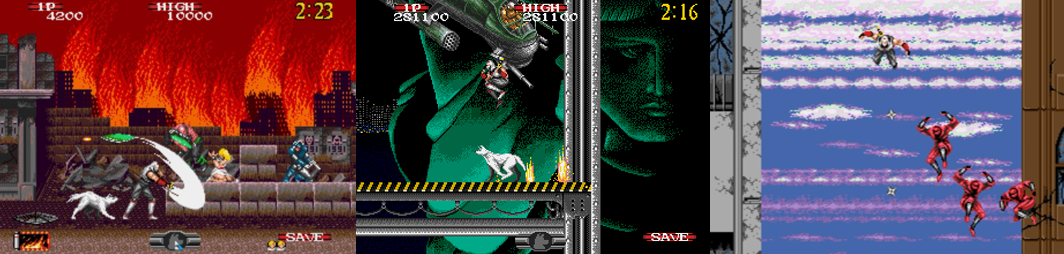
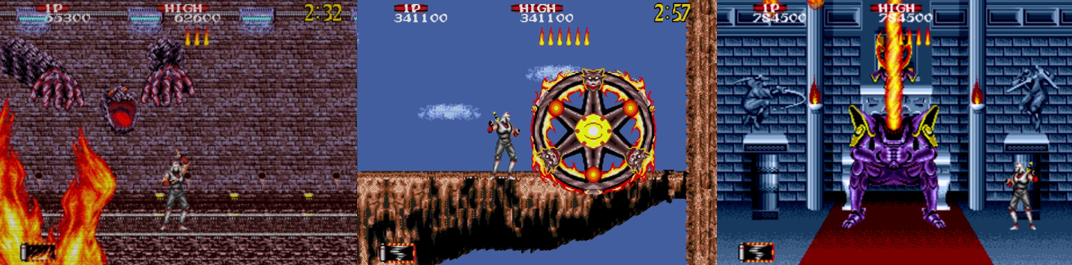
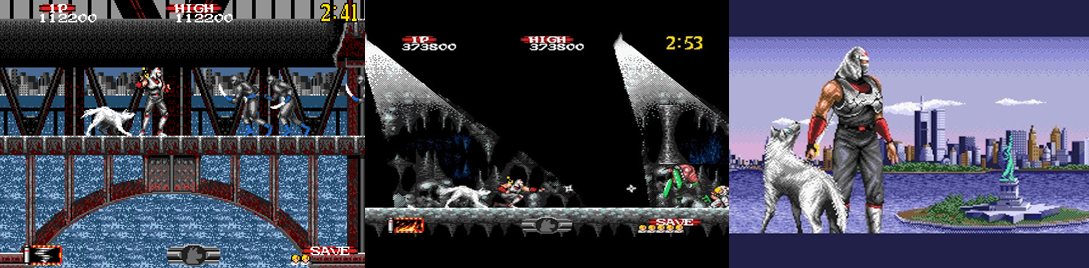



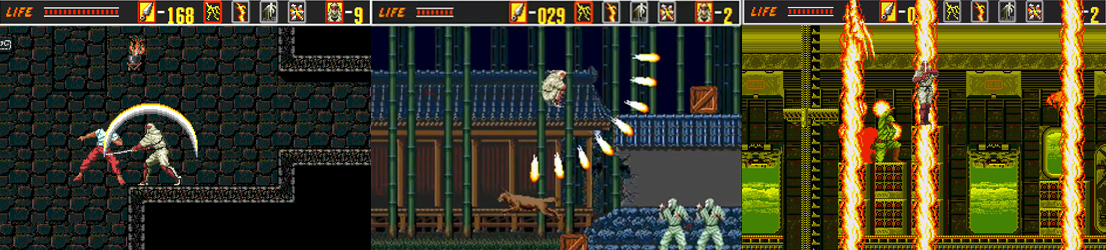
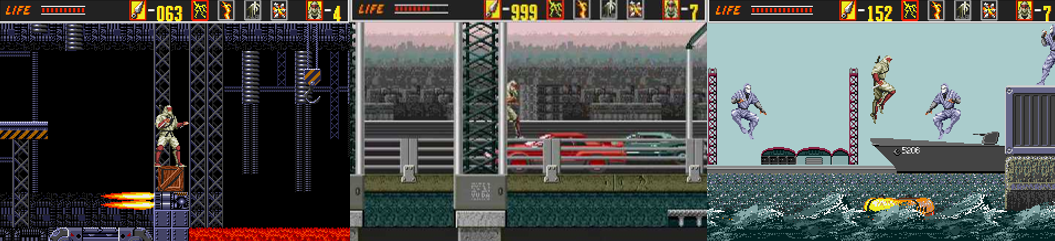
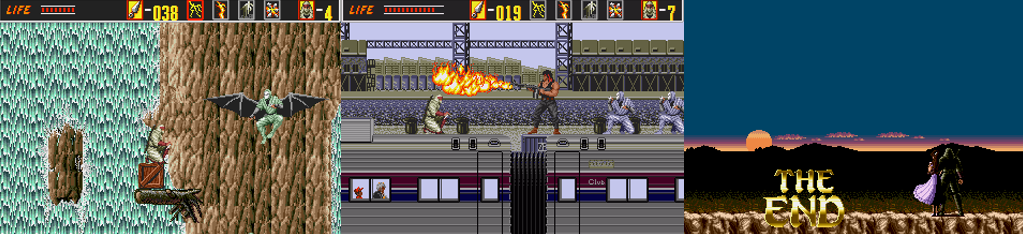
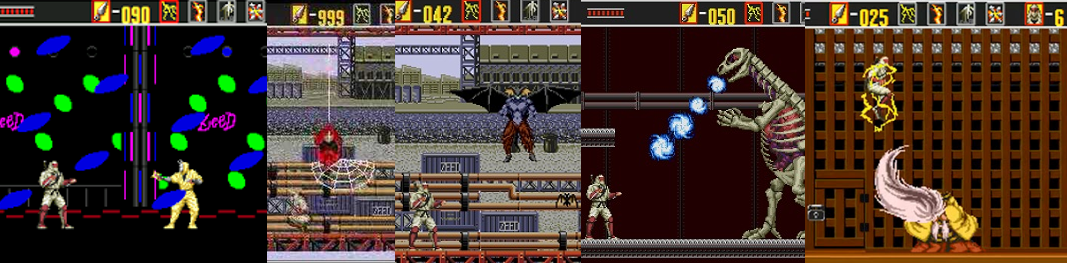


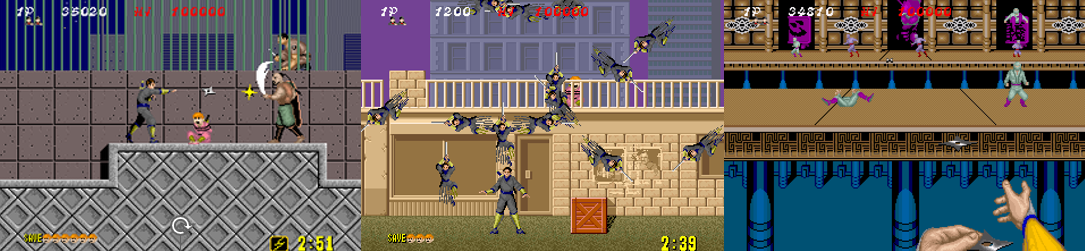
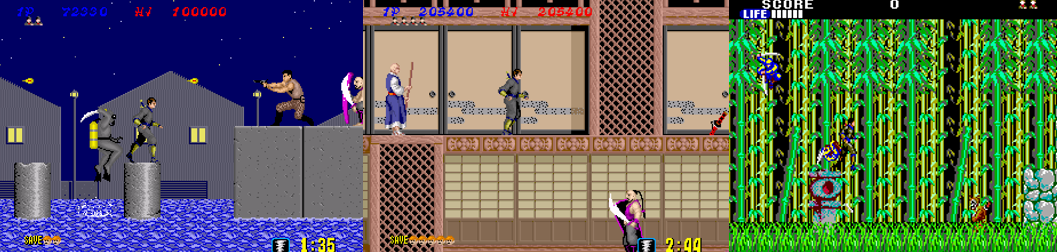
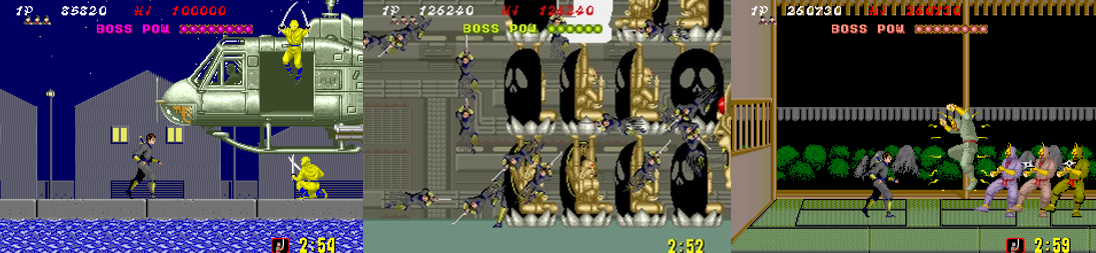



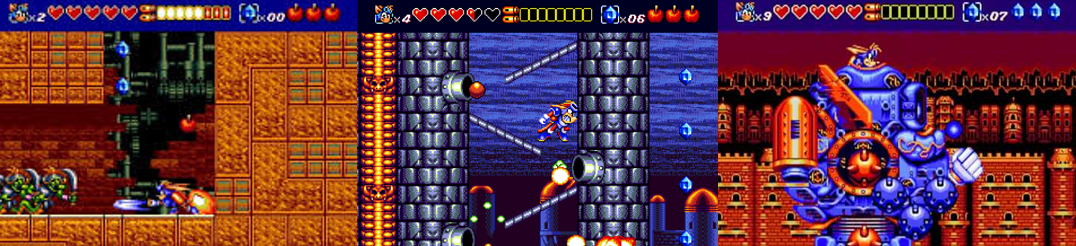
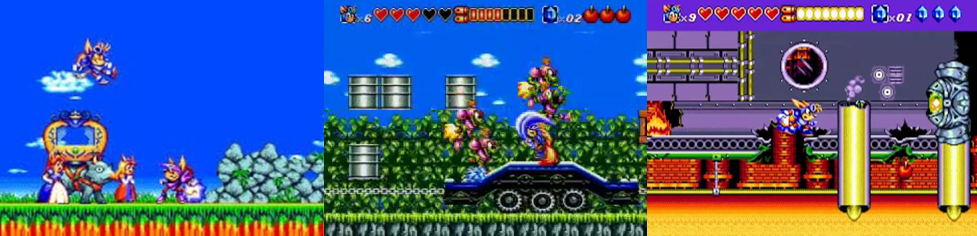
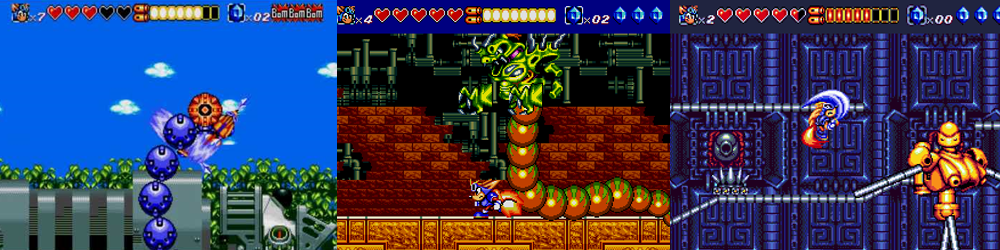
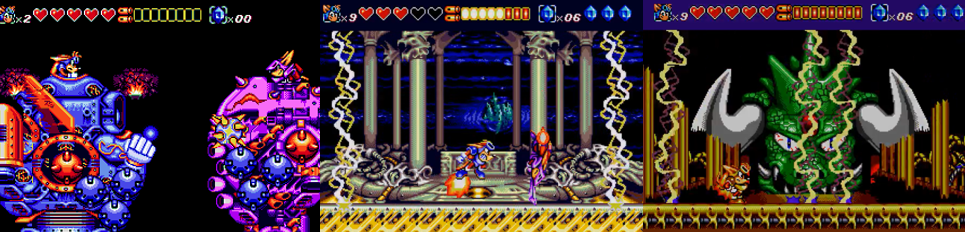


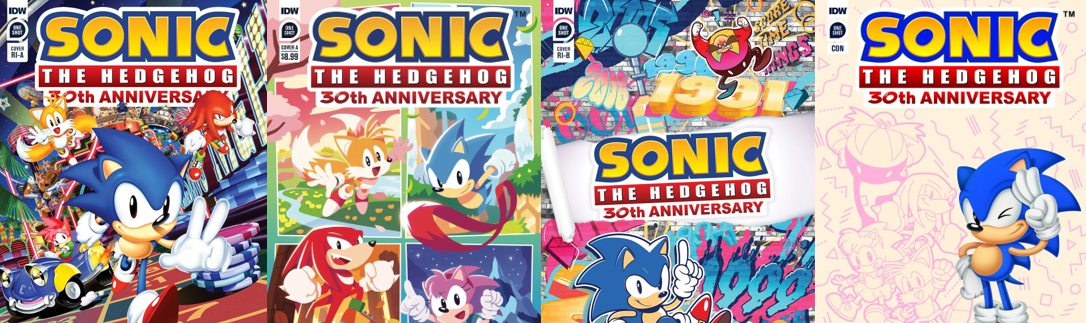
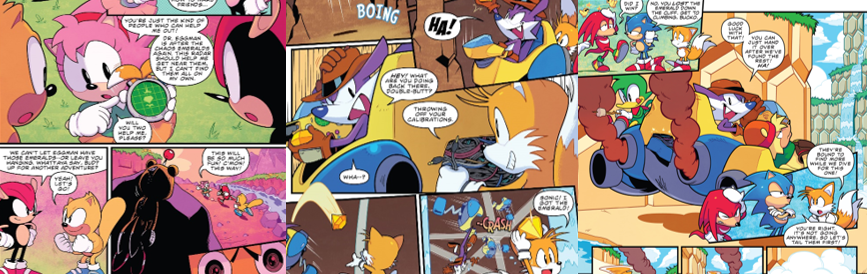
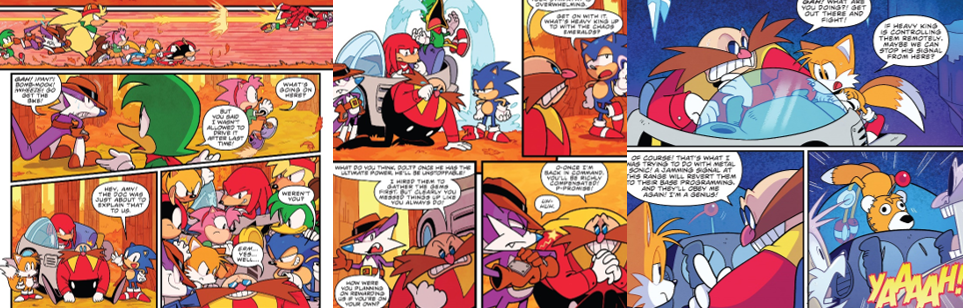
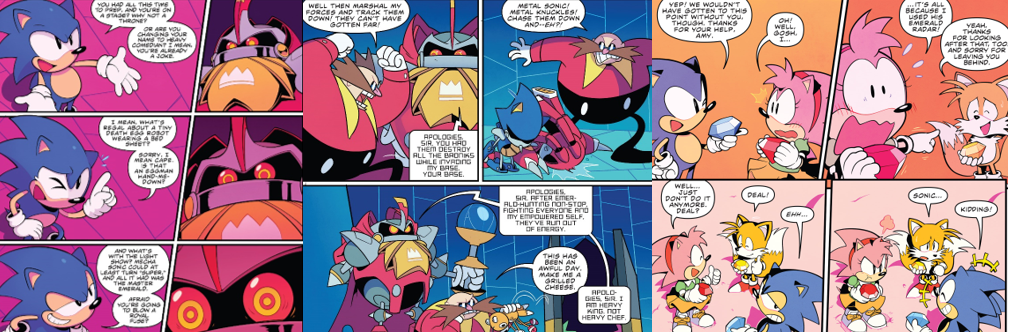
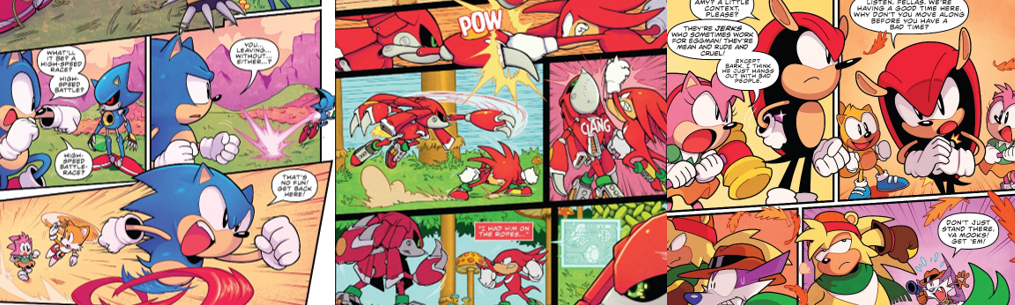
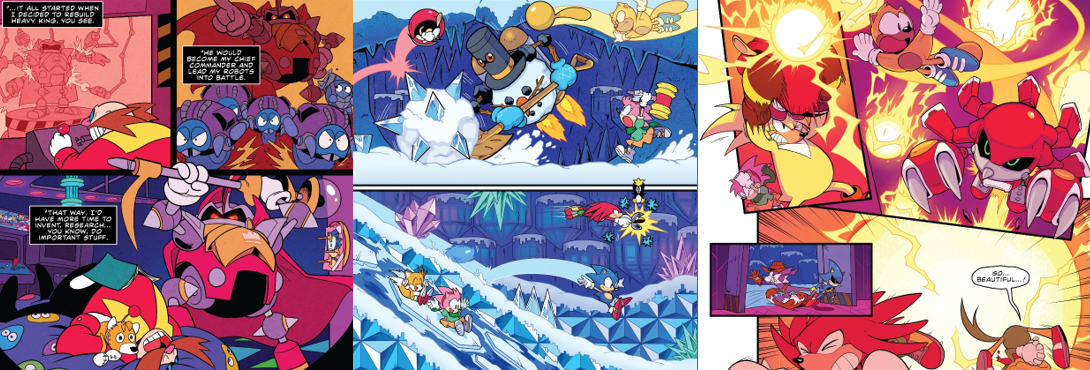


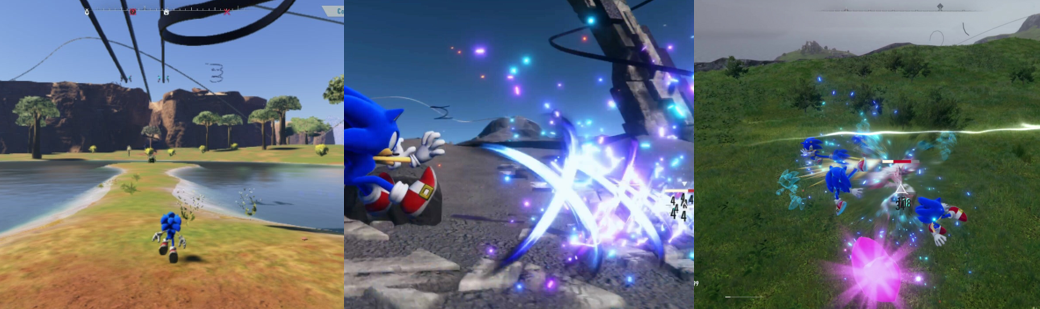










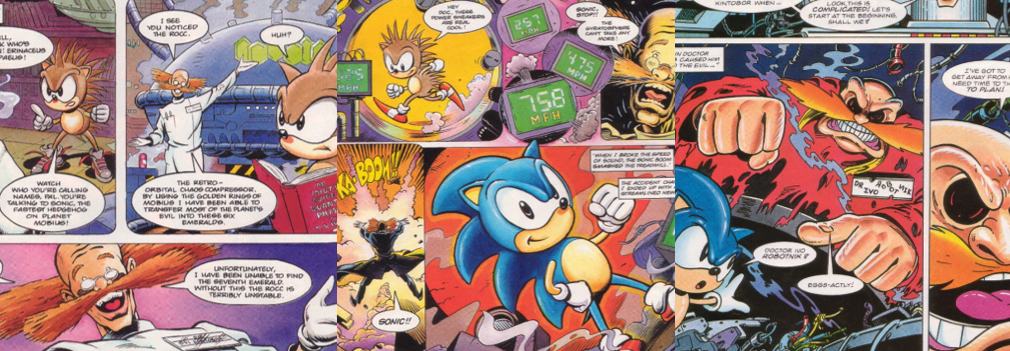
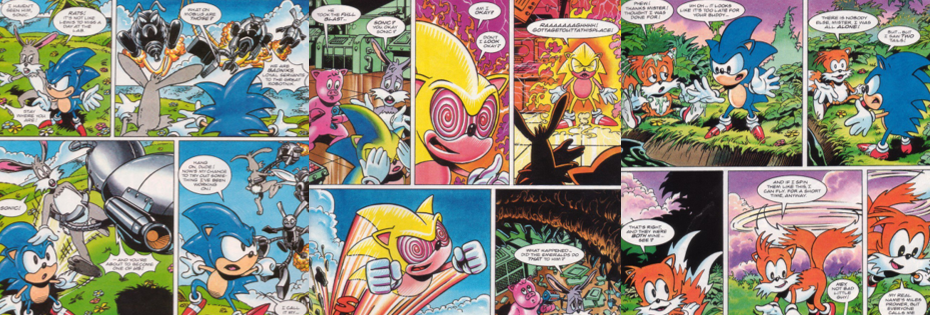
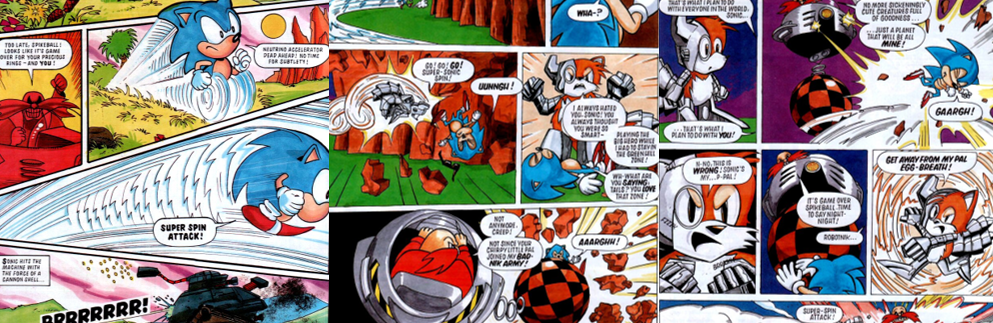
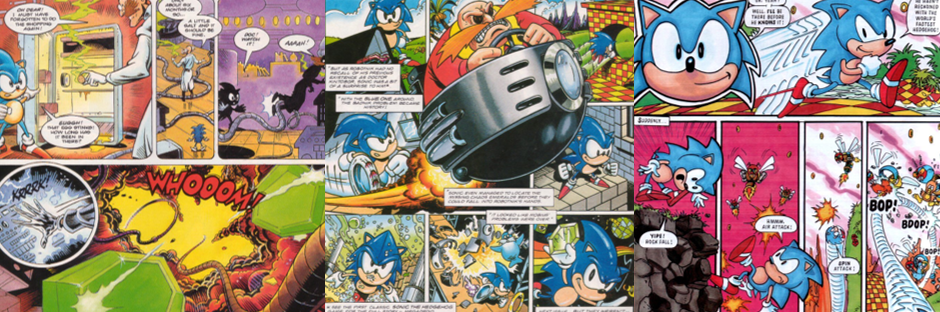

 Dr. K's Waiting Room
You must be logged in to post a comment.