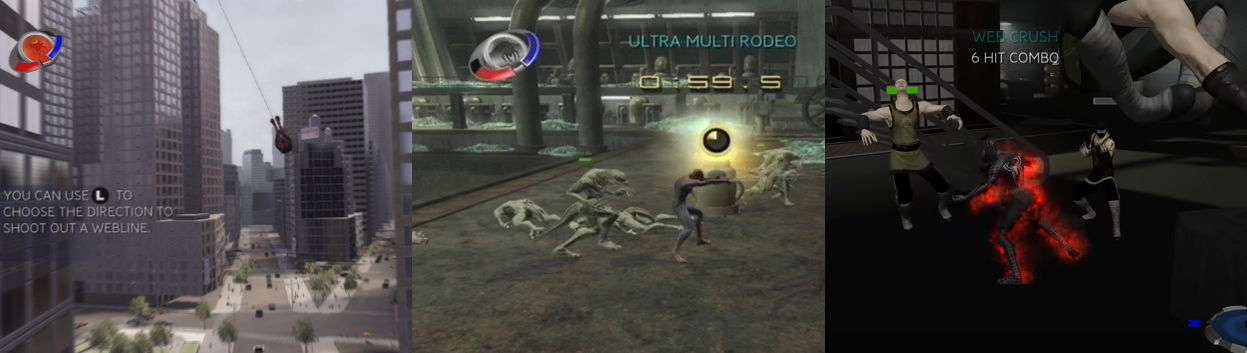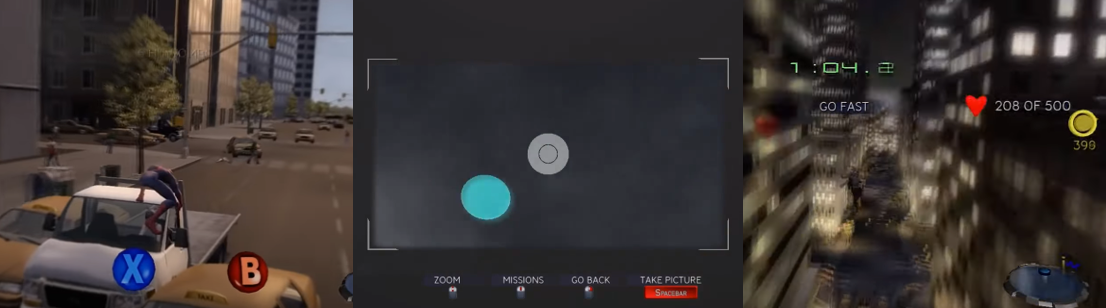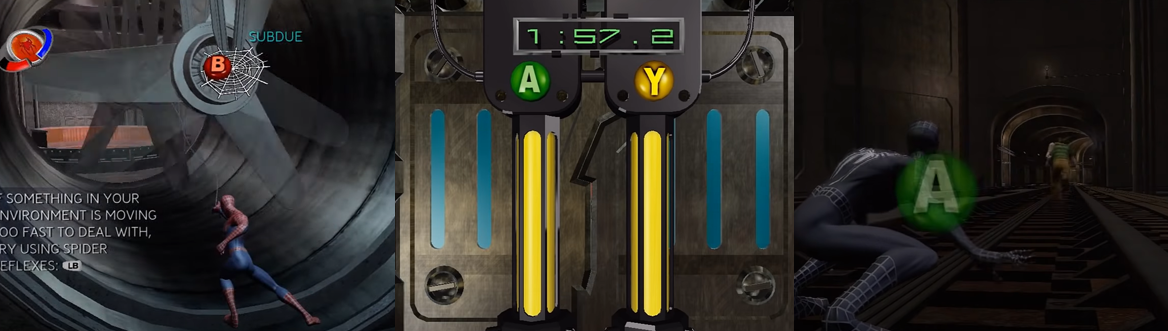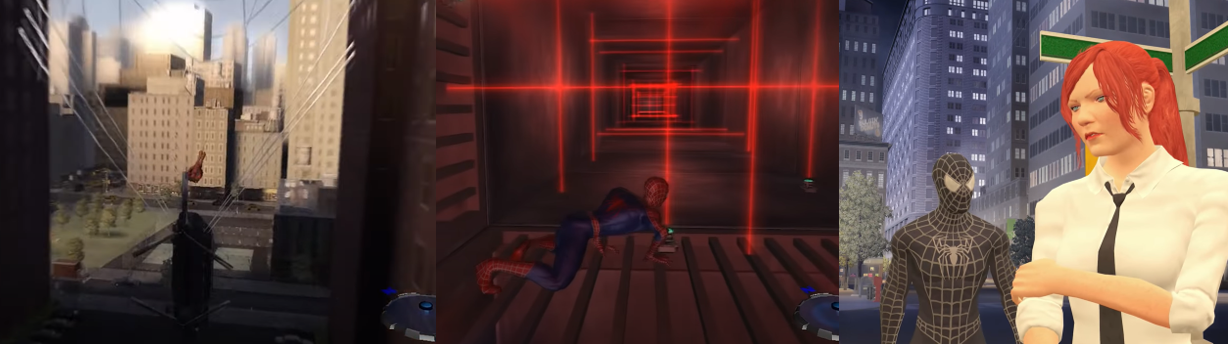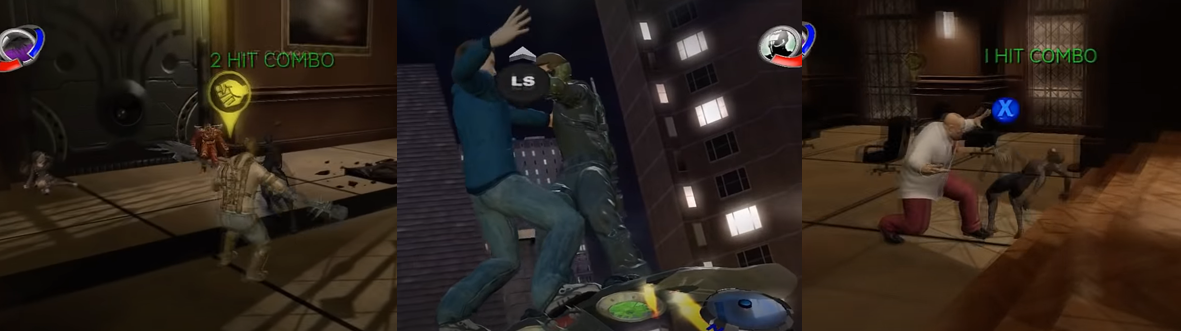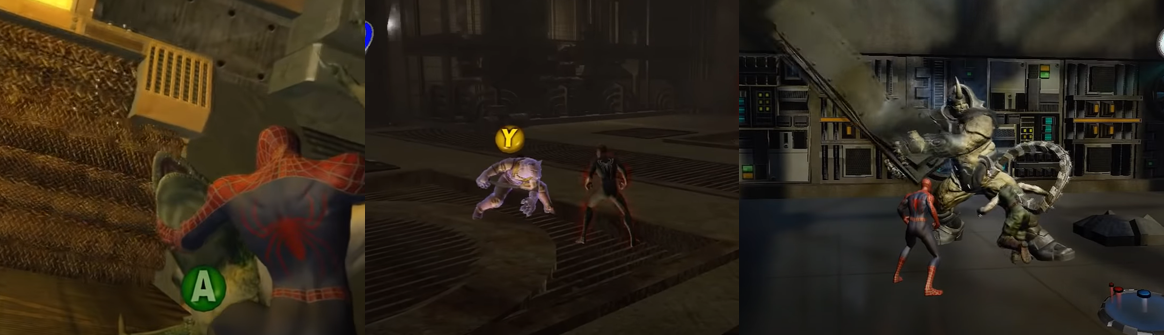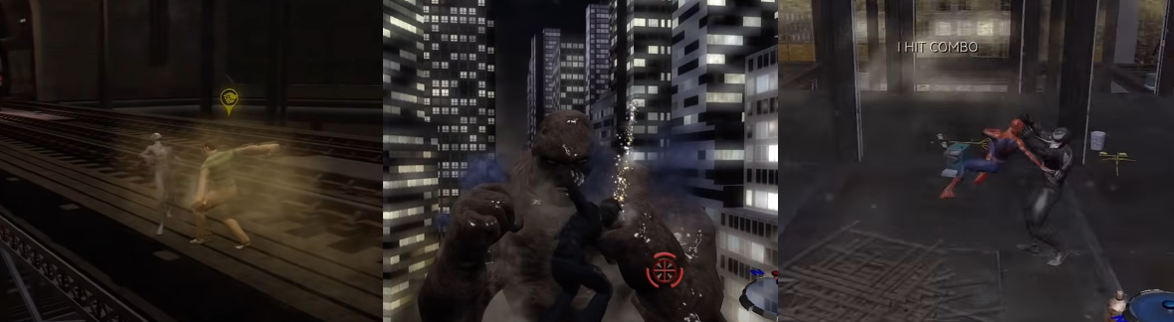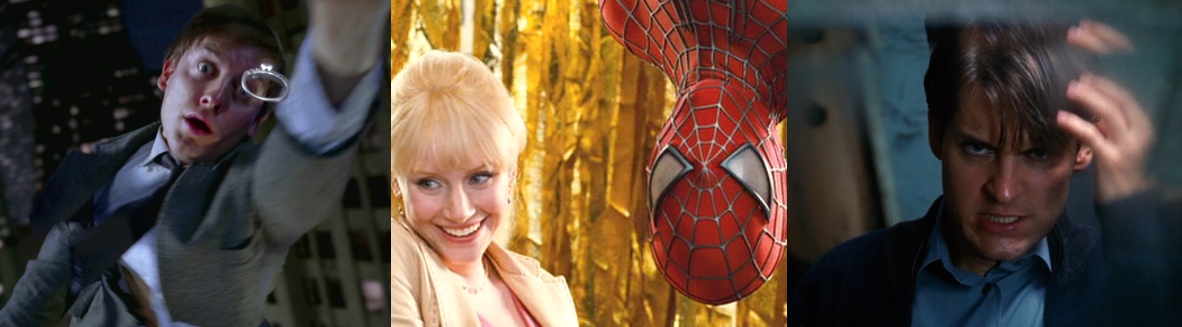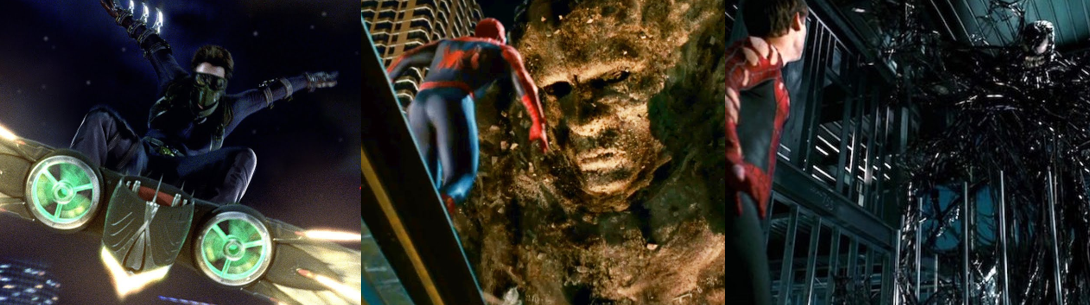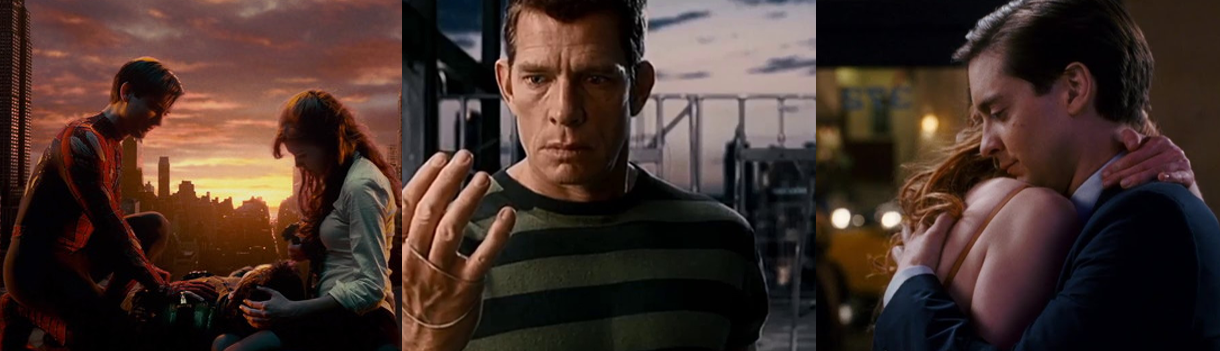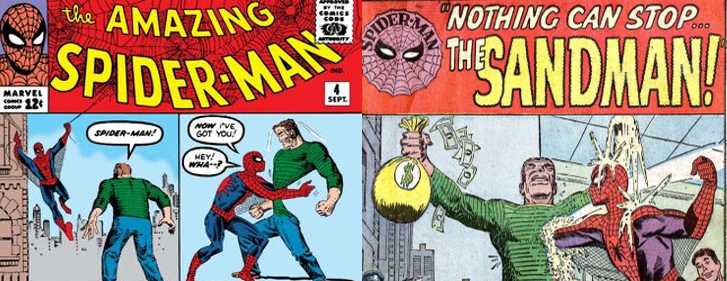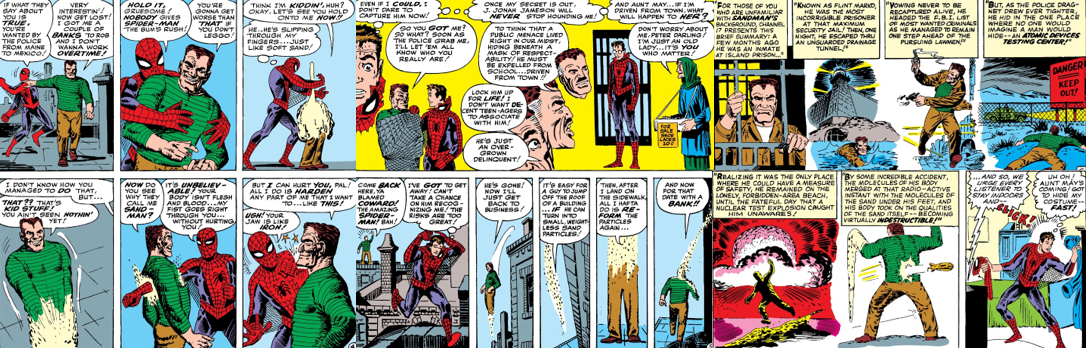
Game Corner: Marvel: Ultimate Alliance 3: The Black Order (Nintendo Switch)

Released: 19 July 2019
Developer: Team Ninja

The Background:
For decades, few videogame publishers were as synonymous with Marvel Comics as Activision, who produced adaptations Marvel’s most popular properties. While some were better than others, Activision’s efforts were largely praised, especially after they partnered with Raven Software on the X-Men Legends games (2004; 2005). Activision and Raven Software expanded their scope to the rest of the Marvel universe with Marvel: Ultimate Alliance (2006), a largely successful team-based brawer praised for improving upon its predecessors. Though now delisted, it was followed by a sequel three years later, courtesy of Vicarious Visions, which tweaked the gameplay with team-based attacks to encourage experimentation. Though Marvel: Ultimate Alliance 2 (2009) was praised for its branching storyline, the stripped down roleplaying mechanics were criticised. While it was also delisted in 2020, fans were clamouring for a follow-up and, just ten years later, Team Ninja stepped in to work alongside Marvel in reviving the franchise. Seeking to place additional emphasis on combat, the developers explored the cosmic scope of the Marvel universe by including the Infinity Stones and lesser-known characters and chose to make the title a Nintendo Switch exclusive after developing a close relationship with Nintendo. Although Marvel: Ultimate Alliance 3: The Black Order was the sixth best-selling game in its first week and was later bolstered by extensive downloadable content (DLC), it was met with mixed reviews that praised the colourful action but criticised its lack of innovation.

The Plot:
While battling Nebula and Ronan the Accuser, the Guardians of the Galaxy stumble upon a plot by the mad titan, Thanos, to collect the six Infinity Stones. Although they scatter the Stones, Thanos’s acolytes, the Black Order, pursue the gems, prompting an alliance of Earth’s mightiest heroes to retrieve them first.

Gameplay and Power-Ups:
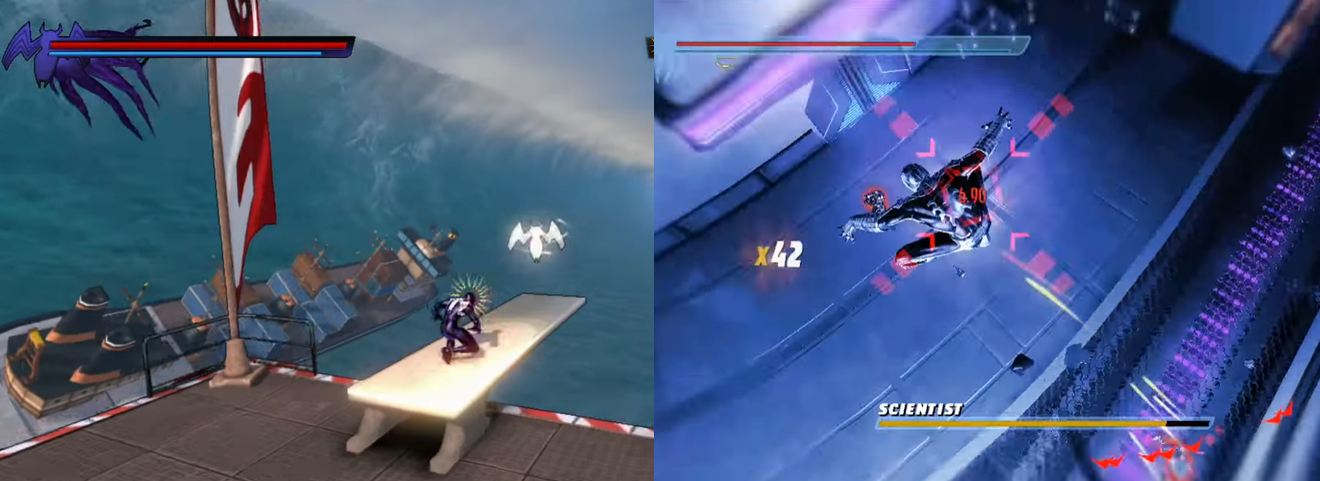
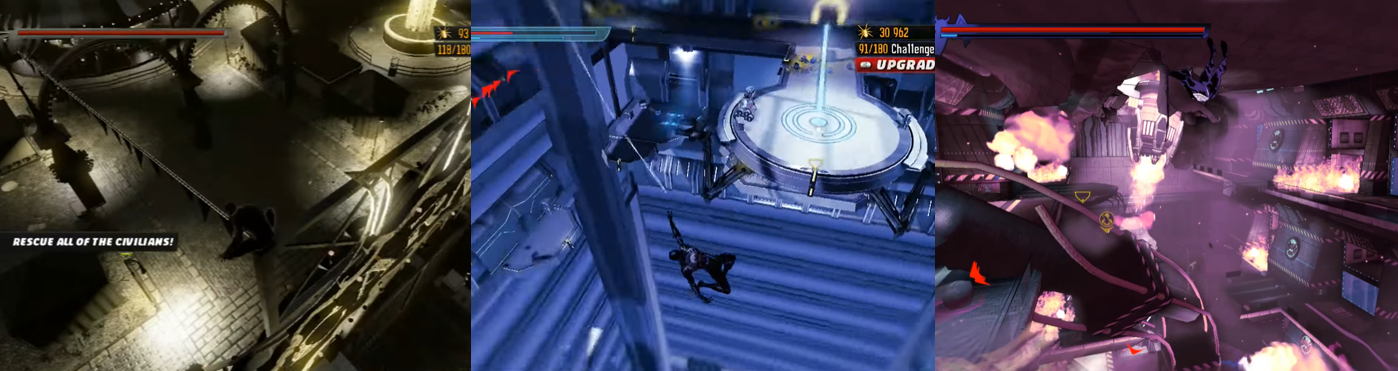
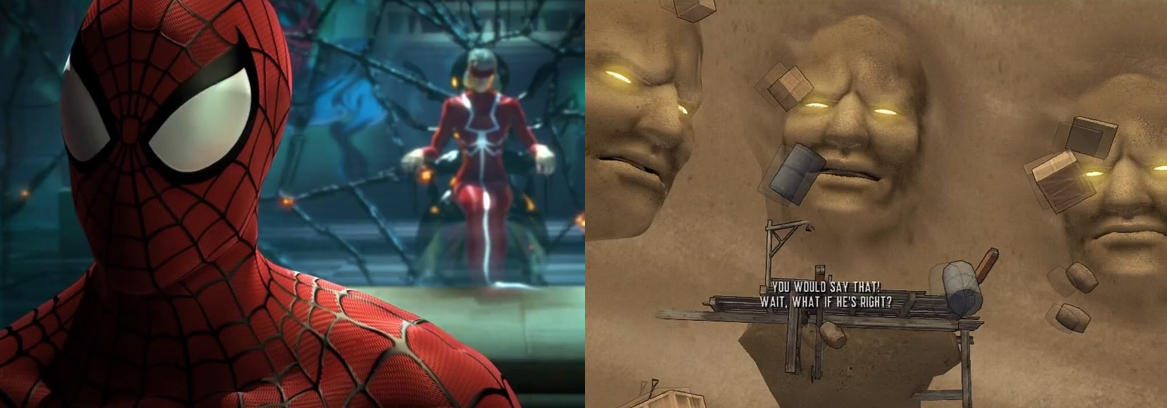
Like its predecessors, Marvel: Ultimate Alliance 3: The Black Order is a team-based action role-playing game in which players assemble a squad of four heroes from across the Marvel universe to battle various nefarious baddies, primarily the titular Black Order, who are hunting the six all-powerful Infinity Stones on behalf of their master, Thanos. The game offers five save slots, two initial difficulty levels, and a base roster of thirty-six playable characters, with many being encountered as you play through the story and joining your alliance either after fighting alongside you or being freed from some kind of mind control. Marvel: Ultimate Alliance 3 offers three controller configurations, thankfully none of which involve motion controls, and allows you to toggle overlays, notifications, tips, and other onscreen elements from the “Settings” menu. These include altering the camera placement, which enables a lock-on feature by pressing in the right stick, though the camera generally remains more focused on whichever character you’re controlling rather than offering a bird’s eye view as in the last two games. Although you can fight alongside friends either locally or online, you switch between your teammates with the directional pad (D-pad) when playing alone and your computer-controlled partners are very useful in a fight, attacking, enabling team attacks, and reviving defeated characters without any input from you. Pressing A sees you interact with the environment to activate consoles, pick up or move certain objects, and talk to other characters. You jump with B, executing a double jump, swinging from webs, or flying depending on which character you’re playing as, and throw light attacks with X and heavy attacks with Y. These can be strung together to perform basic combos and you can also perform a mid-air attack and throw objects (like bombs and missiles) by pressing Y. You block incoming attacks by holding the Z trigger and tap it to dodge, and collect glowing red orbs from defeated enemies or smashed crates to restore health, blue orbs to refill your Energy Point (EP) gauge, and credits to spend on upgrades.
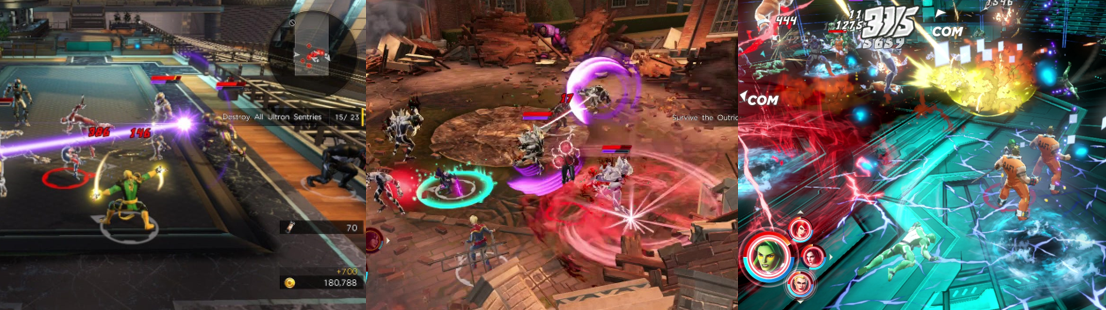
Combat is thick, fast, chaotic, and constant thanks to loads of enemies and character abilities.

As in the last two games, each character has specific abilities tied to their superpowers or superhero traits. You activate these by holding the Right trigger and selecting an icon using the D-pad; using Abilities drains your EP, however, and each Ability comes with a different cost. However, these attacks allow you to stun, stagger or deal elemental damage to enemies using Peter Parker/Spider-Man’s webs, Thor Odinson’s lightning, and Doctor Robert Bruce Banner/The Hulk’s incredible strength. Many characters have projectile attacks in their arsenal, such as Wade Wilson/Deadpool firing guns and Scott “Slim” Summers/Cyclops blasting his eye beams, while others cause splash damage or specific buffs, like Piotr Rasputin/Colossus being able to reflect projectiles and Wanda Maximoff/The Scarlet Witch healing her allies. Some, like James “Logan” Howlett/Wolverine, have passive abilities that allow them to automatically regenerate health as they walk around; others, like Johnny Blaze/Ghost Rider and Ororo Munroe/Storm, specifically deal in elemental damage. Character’s Abilities can also be mixed and matched by holding ZR and pressing one of the face buttons (or pressing A when prompted); this sees two characters attack in a combo for additional damage. As you dish out and take damage, you’ll also build the Extreme (EX) Gauge). Once full, you can press L and R up to three times to have two to four of your teammates perform a devastating combination attack that’s great against bosses. While the various cannon fodder you fight are easily dispatched, larger commanders and bosses need their “stun” meter drained before you can really put a beating on them and others (and certain treasure chests) require specific combination attacks to breach their shields. Defeating enemies sees your characters gain experience points (XP) to level-up, increasing their statistics (attack, defence, etc), though you can also use the various Orbs you find to manually level-up. Each character’s special Abilities can also be further enhanced using Ability Orbs and credits, reducing the EP cost and increasing their damage, among other benefits. You can also earn “Team Bonuses” depending on your team selection: pick a group of X-Men, for example, and your strength or resistance stat will increase, while picking characters of royalty ups your maximum energy stat.
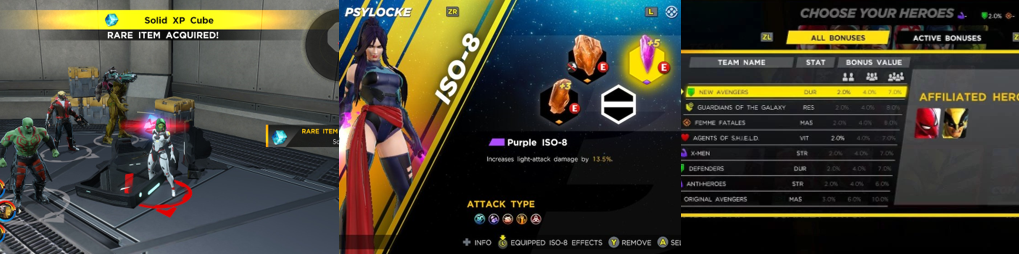
Search for chests to gain currency and other expendables to upgrade and buff your alliance.

Although you can’t equip gear to your characters, the boss battle against the Destroyer armour sees you temporarily empowered by Asgardian magic and you can eventually equip your team with “ISO-8” crystals, coloured stones that enhance their attack power, resistance to elements, or critical hit ratio, among others. You can further upgrade these with credits and ISO-8 capsules, though some of the rarer ones will also debuff you (for example, your attack my increase but your defence will decrease accordingly). You’ll also inevitably gain access to the Strategic Hazard Intervention Espionage Logistics Directorate (S.H.I.E.L.D.) Lab, which acts as the game’s skill tree. By spending credits and Enhancement Points (EP), you can further increase your team’s overall attack, defence, resistance, vitality, and such and even unlock additional ISO-8 slots (with more being earned by levelling-up). You can also enter the S.H.I.E.L.D. Depot from the main menu to purchase additional costumes and social icons by spending S.H.I.E.L.D. Tokens. Marvel: Ultimate Alliance 3 is pretty forgiving (on the “Friendly” difficulty, at least), with multiple checkpoints in each area. When you activate a S.H.I.E.L.D. checkpoint, your team is fully healed, and you can swap or enhance them if you wish. If a teammate is defeated, you can hold A to revive them, but I wouldn’t recommend it unless you absolutely have to. Not only are revives limited, but downed characters will eventually return to full health even before you reach a checkpoint so it’s not worth risking another character taking damage by healing a partner. Exploration generally leads you to treasure chests or special walls that require a special combination attack to open, or to a “Rift” challenge that takes you away from the main game to tackle a special challenge (usually a boss rematch or enemy gauntlet) for extra rewards. Your path is incredibly linear most of the time, hence why there’s no map, and the game’s primary focus is on chaotic combat and visually manic team-based attacks. Unlike in the last two games, you can no longer grapple or throw enemies (though you can still send them flying off certain platforms) and there are no character-specific team-up moves, meaning the action can quickly get quite tiresome.
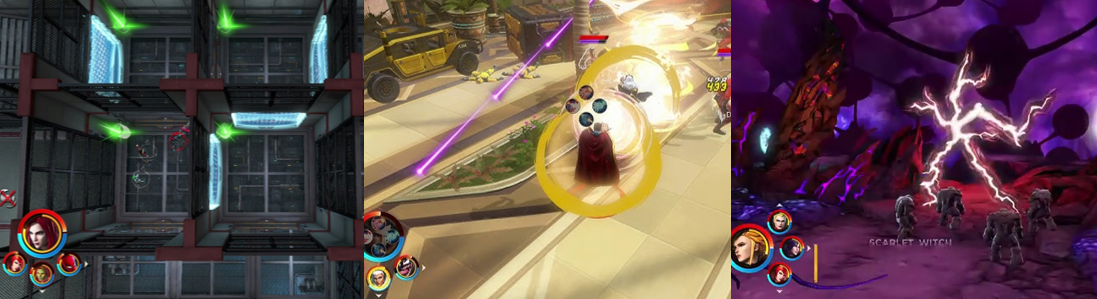
Sadly, puzzles are practically non-existent, with only Rifts offering additional challenges.

Because of its focus on hectic combat, there’s even less room for puzzles than there is for exploration in Marvel: Ultimate Alliance 3. Puzzles boil down to activating a console to open a door or making a platform move and that’s it. Sometimes, you’ll hold A to move a block and avoid lasers or cannons, but mostly you’ll be timing jumps between said lasers to progress and simply hurling missiles at those cannons. Sometimes, you’ll rotate statues or press switches to progress; others, you’ll be avoiding toxic ooze in Hel or solving door puzzles at the Raft or in Avengers Tower. After hopping across the rooftops of New York City, you’ll infiltrate the heavily fortified fortress of the Hand, dealing with ninjas that drop from the sky and hidden arrow hazards. When in Wakanda, Advanced Idea Mechanics (A.I.M.) corrupt T’Challa/The Black Panther’s defences, leading to an exasperating section where you must avoid snipers and being roasted by a giant panther statue’s energy blast. When transported to the Dark Dimension, you must use portals to reach new areas and defeat waves of demonic enemies to lower magical barriers and progress. Some attacks also screw up your controls or temporarily freeze you; some enemies are best defeated by tossing explosives at them; and many missions have an additional character fighting alongside you who’s often unlocked afterwards. However, a lot of the additional features of the previous games are missing; you can talk to other characters, but there are no dialogue options or character-specific interactions. There are no trivia quizzes, no optional side missions beyond the Rifts, and no character specific challenges to unlock extra stuff for each character. There aren’t even hub areas, in the traditional sense, with characters just appearing around S.H.I.E.L.D. checkpoints at times, though you can destroy a fair bit of the environment, and some encounters have you fleeing towards the camera as bosses chase you or present you with unwinnable battles.

Presentation:
Whereas the last two games primarily based their aesthetics on the comics books, especially the Ultimate comic line, Marvel: Ultimate Alliance 3 adheres very closely to the Marvel Cinematic Universe (MCU), especially in the visuals of its locations. I was hard pressed, for example, to tell the difference between Asgard here and the Asgard to the MCU, with both the golden city and the rainbow bridge, the Bifrost, appearing almost exactly as they’re depicted in the films. The same is true for Wakanda, the Dark Dimension, and Knowhere, all of which are virtually indistinguishable from how they appear in the MCU. There are some differences, of course: Taneleer Tivan/The Collector’s museum, for example, uses coloured cube cages and Wakanda leans much more into traditional architecture than the pseudo-futuristic science of the films (likely because Black Panther (Coogler, 2018) released a year before this game was made). Xavier’s School for the Gifted is lifted almost exactly from the 20th Century Fox X-Men movies (Various, 2000 to 2020), however, including a hedge maze, 1:1 Cerebro room, and basketball court that doubles as a landing pad for the Blackbird. While the Dark Dimension and the cosmic mind trip that is Sanctuary also heavily borrow from the bizarre cosmic imagery of the MCU, the Raft and Avengers Tower are much more akin to their comic book counterparts, though they’re comparatively bland locations, lacking fun areas like the Danger Room or Wakanda’s Necropolis (though you do pass through Anthony “Tony” Stark/Iron Man’s Hall of Armours in the tower). Although you only make a brief stop in Attilan to try and get help from the Inhumans, the architecture is far more visually interesting than that awful television show, seemingly being comprised of Celestial technology, and I enjoyed the ominous gothic presentation of Hel, with its restless Viking warriors and damaging sludge. Unfortunately, Marvel: Ultimate Alliance 3 continues the trend of having disappointingly bland and forgettable music, opting for generic themes for each location, event, and character that are lost amidst the constant fighting.
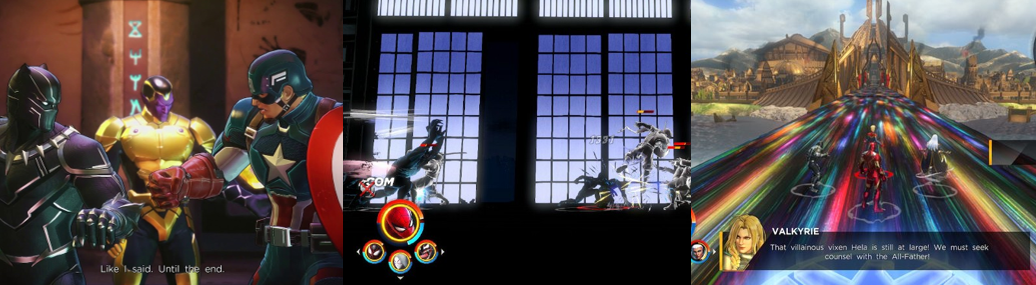
A visually impressive brawler that takes obvious inspiration from the MCU films.

The game also opts for an almost cel-shaded, action figure-like aesthetic for its colourful cast of characters. While many again both look and sound like their MCU counterparts, there are some exceptions: Peter Quill/Star-Lord, for example, looks nothing like Chris Pratt and the X-Men are far closer to the comic books than Fox’s films. Despite you assembling a custom team of heroes, cutscenes depict either everyone or characters specific to the location you’re in (the corrupted Doctor Stephen Strange in the Dark Dimension, for example) as they’re better suited to advance the plot against the local baddies. With the game shifting to a more third-person perspective, you’re closer than ever to the action and can see more of the environment than in the previous games. However, this comes with some drawbacks: mainly, there are far less opportunities or incentives to explore. Second, environments are painfully linear, with dead ends or locked doors barring your progress. Third, and most frustrating, is the camera, which easily loses track of your opponent/s and often lumbers you with wireframe representations when the foreground blocks the view. Thankfully, you won’t be falling down pits and rarely have to worry about onscreen hazards, but it can be aggravating trying to figure out which platforms and crates can be jumped on and which can’t. Marvel: Ultimate Alliance 3 offers a diverse cast of characters, each with their own idle poses and quips, though these do inevitably repeat. The game’s also surprisingly light on Easter Eggs: you’ll spot Deadpool singing away as he makes tacos in the X-Mansion, but not much else, and there are no optional missions or choices to encourage replaying missions. It’s a far cry from the first game, where there was always something to collect or an additional character to help out. Instead, it’s basically all combat, all the time in Marvel: Ultimate Alliance 3. Luckily, the game looks pretty good (everything’s very colourful and true to its inspirations) and performs really well, though there are some long load screens and it is annoying being forced to continue your game every time you challenge a Rift.

Enemies and Bosses:
All the usual suspects appear here as disposable cannon fodder for you to endlessly beat up, with many of the game’s goons sharing traits across the various locations. You’ll encounter Kree, Ultron Drones, agents of A.I.M., and Doombats who all pack various energy blasters. Ultron’s clones are the worst for this, relentlessly firing energy blasts and crashing through windows. The Raft’s unscrupulous prisoners attack in large groups, as do the restless Viking warriors who populate Hel, tossing axes from afar and luring you into toxic goop. Gargoyle-like Fire Demons also dwell here, offering a greater challenge with their swoop attack and fire breath, not unlike the monstrous Outriders and Mindless Ones who make up Thanos and the dread Dormammu’s forces, respectively. Alpha Primitives, Hydra goons, and towering Sentinels also appear, with the latter firing huge energy blasts from the palms and best attacked by throwing their explosive energy cores back at them. No matter where you are and what enemies you fight, more powerful commanders will also appear. Larger, tougher, and sporting a stun meter, these commanders should be your top priority as they’ll charge across the screen, cause shockwaves, and generally offer a far greater challenge even when you’re at a higher level. These minions often fight alongside their masters, generally so you can recover some health and EP to better damage the bosses, and will endlessly spawn in one of the additional modes unless you destroy their teleporters. Some of the game’s challenges or story-based missions charge you with defeating a certain number of enemies to progress. Other times, bosses appear in these waves, and you must occasionally flee or purposely lose some fights. This happens when Cain Marko/The Juggernaut comes tearing through the X-Mansion, for example, and in early encounters with the Black Order, who cannot be beaten or will chase you, raining lightning or other attacks from the sky and across the ground.
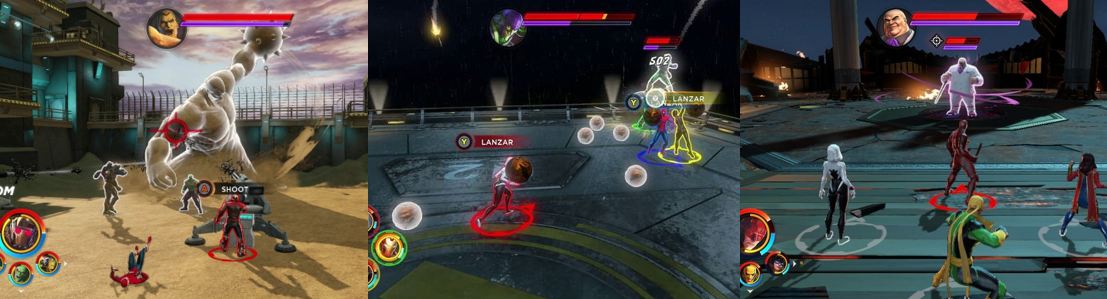
Few bosses require more than just hit-and-run tactics, even when augmented by an Infinity Stone.

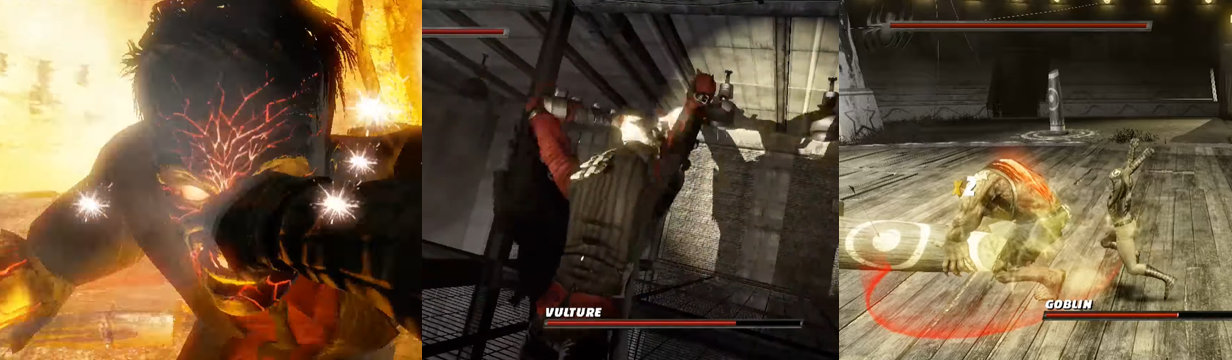
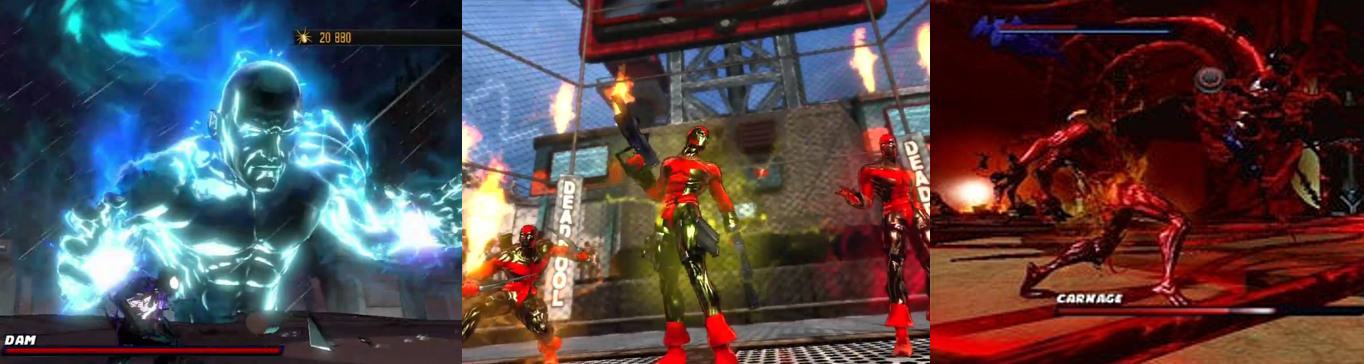
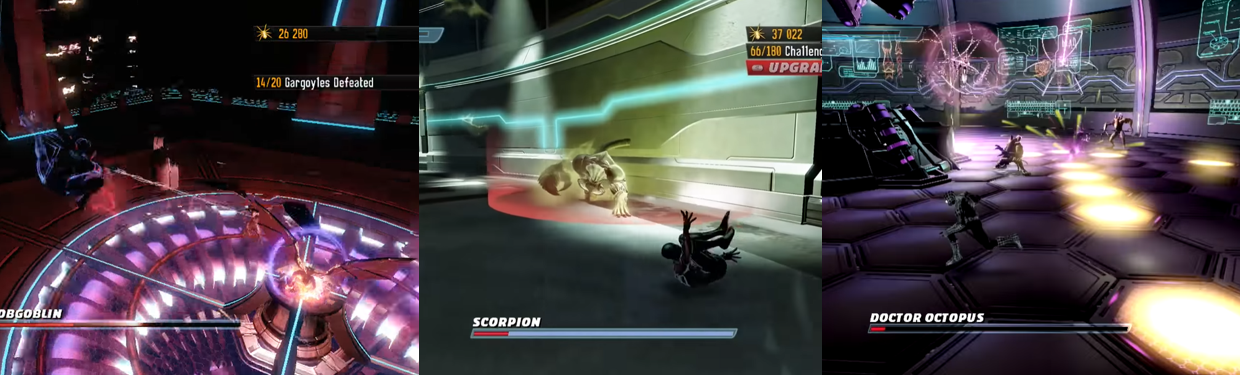
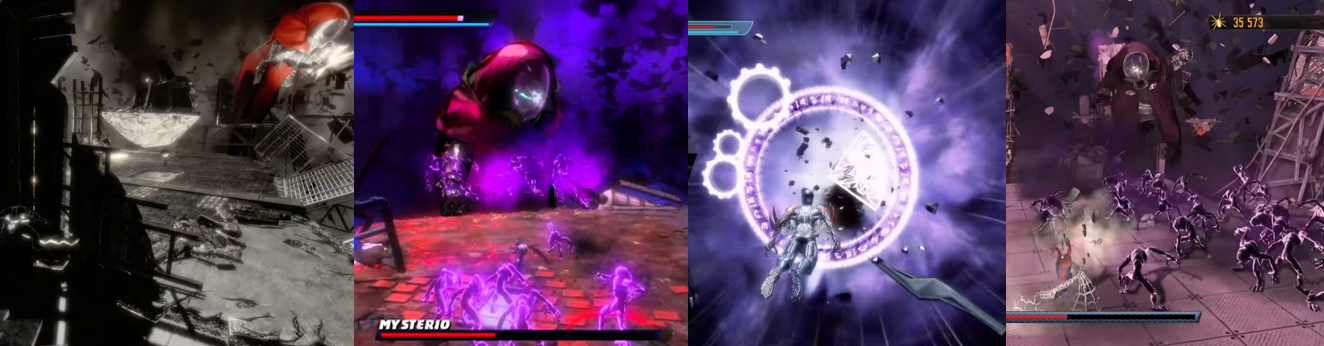
There are loads of bosses to fight in Marvel: Ultimate Alliance 3, with some returning from the previous games, some teaming up, some having a couple of phases, and all boiling down to whittling down their stun bar, unleashing an EX attack and/or your most powerful Abilities, and avoiding damage until you can repeat this. The first ones you’ll face are Nebula and Ronan the Accuser, who often appear as a duo in optional challenges. Nebula is faster and more nimble, wielding blades where Ronan uses a massive warhammer. Both set a standard all bosses follow, which is that they’ll use either a jumping slam or an explosion of energy (or both) to send you flying. While quelling the riot in the Raft, you’ll encounter a version of the Sinister Six, with some unique variations to each battle. Flint Marko/The Sandman, for example, flings waves of sand and erupts his big sand fist from the ground as a large sand creature. You must use A to mount the nearby cannons and unload on him to chip away at his stun meter. Maxwell “Max” Dillon fights alongside Eddie Brock/Venom, raining lighting and electrocuting you with bursts of electricity, before he’s eaten by Venom and starts busting out electrically-enhanced symbiote powers. Venom joins the team after this fight and is tested against Quentin Beck, who first brainwashes Mile Morales/Spider-Man, Gwen Stacy/Spider-Woman, and Kamala Khan/Ms. Marvel to fight you and then unleashes a poisonous mist, teleports about, and confuses you with duplicates, Doctor Otto Octavious/Dr. Octopus is fought in a two-stage fight where you must first avoid his tentacles and scurry charge and then attack each arm to stun him. Finally, you’ll battle Norman Osborn/The Green Goblin for the Time Stone. The Green Goblin swoops overhead and lingers slightly out of reach, peppering the arena with his pumpkin bombs, charging at you, and freezing time to bombard you. He’s noticeably weak to his pumpkin bombs, however, so try and toss them at him before they explode in your face! After battling into the Hand’s fortress, you must first free Elektra Natchios from the Hand’s influence and then face Lester/Bullseye and Wilson Fisk/The Kingpin in separate fights. You must take out the ninjas feeding Elektra power, avoid Bulleye’s spread of razor sharp and explosive cards, and dodge the furniture and massive energy beam thrown by the Power Stone-enhanced Kingpin. The Kingpin also charges like a rhino, leaps at you to cause shockwaves, and even rips up stone columns to use as melee weapons!
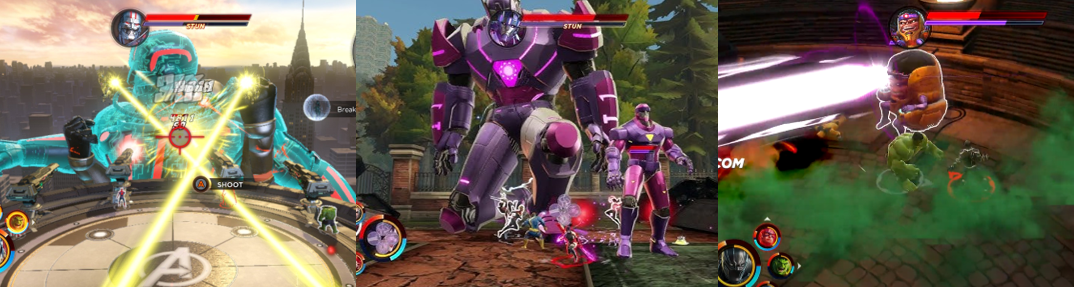
Gigantic bosses and the quirkier villains help mix-up the otherwise tedious combat.

Avengers Tower is then attacked by Ultron and his drones, who assist him in battle. Not that he needs it as the Mind Stone allows Ultron to mess up your controls, to say nothing of his signature face and palm beams. Ultron then grows to gigantic proportions, sweeping the area with his eyebeams before Clint Barton/Hawkeye intervenes and Ultron merges with Ultimo. This is the first giant boss battle in the game and sees you blasting Ultimo with cannons and avoiding his massive swipes. The Infinity Sentinel is comparatively smaller, but no less dangerous thanks to its own face beam and missiles. Though you can damage it with Sentinel cores, it’s finished in a cutscene by Erik “Magnus” Lehnsherr/Magneto, who then tosses debris and throws you off balance with magnetic pulses while Juggernaut pummels you and Raven Darkholme/Mystique tosses daggers. After surviving Mystique’s Danger Room trials, you face Magneto, now even tougher thanks to the Power Stone, before being chased away and banished to the Dark Dimension by the Black Order. There, you battle past Loki Laufeyson (who boasts elemental attacks and duplication tricks) to eventually face the dread Dormammu, who wields the Reality Stone and is the second giant boss. You must subdue his minions and avoid his flame bursts, whittling down his magical barrier either directly or be destroying three nearby orbs, all while dodging his giant fists and ground spikes. The brief fight with Maximus Boltagon is far easier, even though the mad Inhuman carries a massive energy cannon and you must take cover in Thane’s energy bubble to avoid Maximus’s barrage of lasers. Ulysses Klaue/Klaw awaits in Wakanda and his sound-based energy blasts and waves must be overcome to rescue and recruit James Buchanan “Bucky” Barnes/The Winter Soldier. You then fight past A.I.M. to confront their master, George Tarleton/Mental Organism Designed Only for Killing (MODOK), who uses the Soul Stone to turn the Dora Milaje against you and attacks with a slew of appendages, from buzzsaw arms, poison gas, failing tentacles, and his signature forehead blast.
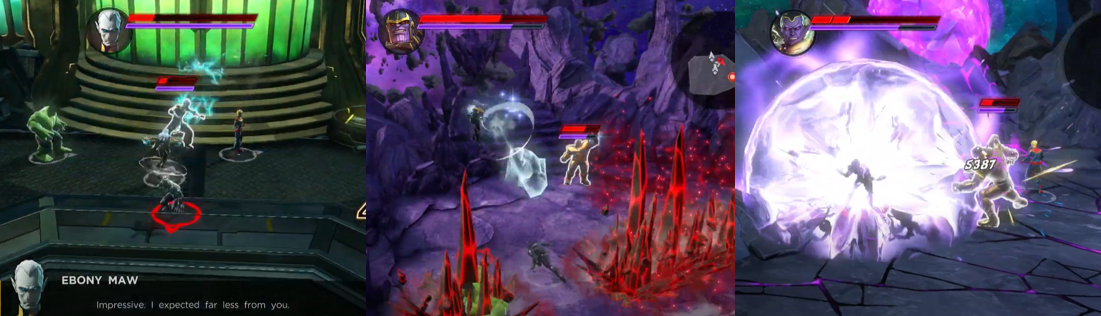
Battles with the empowered Black Order, Thanos, and Thane offer some of the most enjoyable challenges.

Though your goal in Hel is to confront Hela, you’ll actually battle the fire demon, Surtur, in another giant boss battle. This was a bit of a difficulty spike for me as Surtur’s flaming sword has a long reach and he causes the ground to erupt in flames, to say nothing of stun locking you with repeat sword strikes! Best him and Hela sets Johann Schmidt/The Red Skull on you, with the Nazi madman firing a powerful revolver and sapping your health with his “Dust of Death”. Hela gives the Red Skull a boost, protecting him with a shield and allowing him to fire a Bifrost-like laser, before placing his consciousness into the Destroyer armour. Though bolstered by Hydra forces and boasting a sweeping face beam, you can get a power-up from glowing crystals to overcome this destructive force. Finally, you venture to Knowhere and must run the Black Order gauntlet to retrieve the Infinity Stones, with checkpoints between each fight. Ebony Maw is first, firing a spread of projectiles and rocks and using the Soul Stone to create portals to trip you up. Supergiant tosses dark spheres and a golden homing shot that messes up your controls, though you can toss explosive cores from her minions to deal big damage. Cull Obsidian infuses his battleaxe with the Power Stone, sending out waves of purple energy and massive purple shockwaves, though he’s far slower and also susceptible to the nearby bombs. Corvus Glaive is much faster, landing multiple hits with his lance and using the Reality Stone to spring spikes form the ground and conjure duplicates who fill the arena with energy waves that can stun lock you. Finally, Proxima Midnight takes her fellow’s teleportation trick to the next level with the Space Stone and fills the arena with lightning bolts and strikes. All these powers are then recycled when you face Thanos, who gathers the six Infinity Stones into the Infinity Gauntlet to rain meteors, teleport, mess up your controls, freeze time, and fire his signature eyebeams. Thanos then joins you to battle Thane, who usurps him and boasts similar powers, though also upgraded by the Infinity Armour. Thane exhibits superhuman speed, traps you in a cube, fills the arena with portals and flames, and explodes in fury, though both battles were fun challenges rather than impossible tasks.

Additional Features:
Unlike in the previous two games, you won’t be finding data logs, action figures, or meeting certain requirements to unlock new attacks or costumes. You just fight over and over, earning whatever you need to unlock, buy, or upgrade whatever you wish and finding some concept art in treasure chests. A far harder (but more rewarding) “Superior” difficulty unlocks upon clearing the game alongside an additional “Nightmare” mode, accessible via the “Curse of the Vampire” campaign. You also unlock Thanos and can freely replay any mission on any difficulty (though you must start a new save to play on “Superior”) to grind and enhance your characters and ISO-8. Dimensional Rifts transport you to special challenges (not unlike the S.H.I.E.L.D. Simulator discs from the first game) that are often rematches with bosses or gauntlet challenges, though far tougher and gifting better rewards if you succeed. There are also three additional modes; however, though you can play a taster of each, you must purchase the expansion pass to fully unlock them. “Curse of the Vampire” adds vampiric enemies to the main story in “Nightmare” mode and offers a “Gauntlet” mode where you battle waves of enemies and bosses against both a time limit and a range of debuffs (including limited health restoration and draining EP). You can also tackle an “Endless” mode that’s pretty self-explanatory, and unlock additional characters like Frank Castle/The Punisher and Eric Brooks/Bladeif you buy the DLC. “Rise of the Phoenix” sees you form a four-person team and go head-to-head with a friend or the computer in three-round Danger Room scenarios. These see you tackling bosses again or wiping out hordes of enemies, awarding additional buffs and effects if you meet certain criteria (such as using any Ability or Synergy attack four times). You can only tackle the first challenge without the DLC, so I didn’t get very far, but this could be a fun distraction for those looking to test their skills against a friend. “Shadow of Doom” adds an epilogue story campaign that sees you return to Wakanda to oppose Doctor Victor Von Doom’s invasion. Dr. Doom’s Doombots endlessly spawn unless you destroy their teleporters, and you even battle the arrogant dictator in the recycled Necropolis, with him teleporting, firing lasers form his palms, and having his health restored by his Doombots. You’ll add Marvel’s First Family to your roster (alongside an alternative Thanos and other characters) by buying the expansion pass and battle Annihilus, a gigantic Celestial, and even “God Emperor” Doom!
The Summary:
I quite enjoyed the first two Ultimate Alliance games. They were mindless and largely repetitive, but I liked the large cast of characters and all the different references and locations from the comic books. Still, I put off Marvel: Ultimate Alliance 3: The Black Order for some time, mainly because I was annoyed by it being a Nintendo Switch exclusive; however it turned out to be a decent enough brawler. Despite the different development team, a few tweaks, and an apparent disconnection from the previous games, Marvel: Ultimate Alliance 3 offers a lot of the same gameplay and enjoyment as its predecessors, which is great for long-time fans of the franchise. Unfortunately, it doesn’t improve on these elements in a meaningful way and actually removes some content that I found enjoyable from the last two. There are no optional missions, for example, no alternative endings, no choices, and no character-specific challenges beyond fighting and levelling-up. I found this made the tedious combat even more aggravating after a while as I wasn’t being rewarded with gear or costumes or anything other than stat boosts. Even the skill tree was limited since you must grind to acquire enough credits and expendables to enhance your team, and I found the ISO-8 mode to be more confusing than engaging. The game also does little to improve the boss battles. Very few were very innovative or required more of you than to strike fast, avoid shockwaves and projectiles, and unleash your Extreme attack. The giant bosses were more of a challenge and I liked the final fight against Thanos and Thane, but I was hoping for a bit more complexity, especially given the possibilities offered by the Infinity Stones. There is a fun selection of characters, but they don’t offer much more than what we saw in the last two games and actually offer less as there are no character-specific team-up moves. While I enjoyed the visual influence from the MCU and the variety, I feel like Marvel: Ultimate Alliance 3 played things a little too safe by relying so heavily on combat and not mixing up the gameplay with a few other puzzles and challenges. Overall, it’s a good enough game and a worthy entry in the series, but it’s a shame that the developers didn’t try to be a bit more innovative and offer some more incentive to keep slogging away in endless fights.

My Rating:

Rating: 3 out of 5.

Pretty Good

Did you enjoy Marvel: Ultimate Alliance 3: The Black Order? How do you think it holds up against the previous two games? Which characters did you choose for your team? Were you disappointed that the combat was so similar to the last two games and the bosses so repetitive? Did you ever conquer all the Rift challenges? What did you think to the MCU influences and the final battle with Thanos and Thane? Did you ever play through the DLC? Would you like to see another Ultimate Alliance game? Whatever your thoughts, leave a comment below, support me on Ko-Fi, and go check out my other superhero content across the site.


Game Corner [Spidey Month]: Spider-Man 3 (Xbox 360)


Easily Marvel Comics’ most recognisable and popular superhero, unsuspecting teenage nerd Peter Parker was first bitten by a radioactive spider and learned the true meaning of power and responsibility in Amazing Fantasy #15, which was first published in August 1962. Since then, the Amazing Spider-Man has featured in numerous cartoons, live-action movies, videogames, action figures, and countless comic book titles. To coincide with his debut and his very own day of celebration, I’ve been dedicating every Tuesday of August to talk about everyone’s favourite web-head!


Released: 4 May 2007
Developer: Treyarch
Also Available For: Game Boy Advance, Nintendo DS, Nintendo Wii, PC, PlayStation 2, PlayStation 3, PlayStation Portable (PSP)

The Background:
It seemed like every single cinema release was accompanied by a videogame adaptation back in the day, regardless of how necessary this was, and Peter Parker/Spider-Man is no exception to this. Considering his popularity, Spider-Man has a long and varied history with videogame adaptations across numerous platforms, but arguably hit an unexpected peak with developer Treyarch’s celebrated adaptation tie-in to Spider-Man 2 (Raimi, 2004). Widely regarded as one of Spider-Man’s greatest videogame outings, Spider-Man 2 (Treyarch, 2004) was followed by Ultimate Spider-Man (ibid, 2005), a cel-shaded reskin of sorts that acted as a companion piece to the Ultimate Spider-Man comics (2000 to 2011). This game expanded upon the web-slinging and combat of its predecessor while also offering two ways to play by including the hulking Eddie Brock/Venom as a playable character. Interestingly, though, this latter approach would not be included in Treyarch’s tie-in to Spider-Man 3 (Raimi, 2007), which instead simply reduced Venom’s inclusion to some new rage-empowered abilities for the titular wall-crawler. This time around, different villains featured in the different console versions of the game, but Spider-Man 3 ended up being almost as polarising as its source material. Reviews criticised the dull combat and repetitive gameplay, though the thrilling web-slinging and impressive size of the game world continued to be praised.

The Plot:
Peter Parker’s superhero life is turned upside down by a turf war in New York City that only escalates when his mentor transforms into a man-lizard, a crazed hunter comes to town, his former friend Harry Osborn seeks revenge, and a common crook is gifted extraordinary sand powers! Pushed to the edge, Peter is tempted by the power and allure of a mysterious black suit from space that greatly augments both his powers and his rage!

Gameplay:
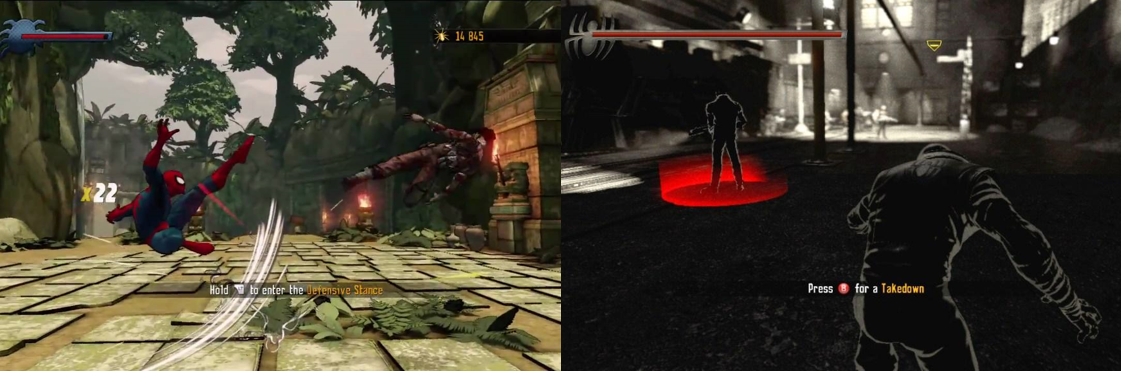
If you’ve played the highly-regarded Spider-Man 2 before, then Spider-Man 3 will be very familiar to you. Having perfected the art of open-world web-slinging, developers Treyarch haven’t strayed too far from their game engine here and once again present an expansive map of New York City filled with skyscrapers to swing from, random crimes to stop, and landmarks to visit. Accordingly, the control scheme and gameplay mechanics aren’t much different from Spider-Man 2, but there are some noticeable differences: you can attack enemies with X and Y, holding each button to charge up for a strike to deal more damage and break their blocks and mixing up these button presses (in conjunction with others) to deliver some fun combos that see Spidey webbing foes to lampposts, pinballing about the place, and kicking the crap out of punks in a whirlwind. B sees you webbing enemies, either pulling them in for a strike or temporarily subduing them if you hold the button, and you can press it at the end of a combo to fire a flurry of web balls. B is also used to stick to walls and ceilings, with the camera continuing to go all janky and mess up your perspective every time you do this, while A lets you jump. You can hold the button to charge a big jump and press it again in mid-air for a double jump, and at the end of a swing to gain extra height and distance when web-slinging. Unfortunately, there’s no way to lock-on to enemies or objects here and the camera can be very erratic, meaning you can easily end up punching thin air or getting turned about during chases and combat. However, you can press in the right stick to activate Spidey’s spider sense for a short time, which puts a greyscale filter over the environment to highlight enemies and points of interest.

Spidey’s web-slinging and combat are augmented by the rage-inducing black suit!

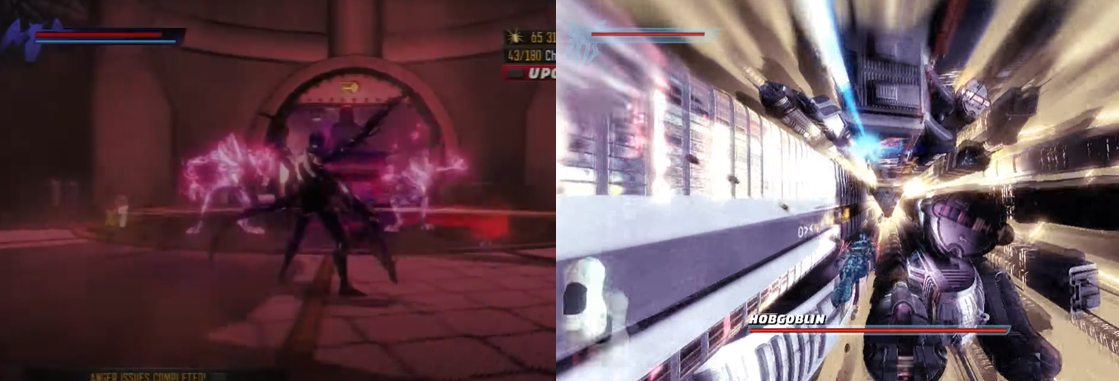
The web-slinging mechanics are similar to those in Spider-Man 2. You can start web-slinging by holding the Right Trigger, but Spider-Man will only comply if there’s a building or other tall structure nearby, so once again you’ll see him snapping off webs in a way that more accurately replicates his web-slinging from the films. You can hold down the Left Trigger to speed up your swing (this also allows Spidey to run and crawl faster) and will eventually unlock upgrades that let you swing from two webs by pressing LT and RT at the same time or quickly zip along flat surfaces by tapping RT. Another upgrade lets you climb up a web by pressing up on the directional pad (D-pad) with a ceiling above you (which is great for avoiding laser tripwires). Holding the Left Bumper activates Spider-Man’s “spider reflexes”, which slows down the game for as long as your blue meter lasts, effectively acting as “bullet time” and allowing you to dodge incoming attacks by wiggling the left stick and unleash a counterattack with X or toss missiles back at helicopters with B. This meter automatically refills over time, just as the red super meter fills as you land attacks. Once full, you can press the Right Button and A, B, X, or Y to unleash a super move, such as webbing up and swinging multiple enemies or performing a ground pound for crowd control. Later in the game, Spider-Man will be consumed by the symbiote, and his speed, defence, and strength will be augmented by his black suit. When wearing the black suit, you can tap RB to build up a rage meter and then rapidly tap it to enter an enraged mode that greatly enhances your regular and super attacks for a short time. As you complete missions, stop random crimes, and defeat enemies, you’ll increase your “crime fighter” rating and unlock upgrades to all of Spidey’s repertoire. These extend his health, add new combos to his arsenal, and upgrade his swinging speed, amongst others, and you can view these at any time from the pause menu.

There are many side missions and challenges, from fighting crime to photographing UFOs!

While the game includes a helpful onscreen compass that highlights points of interest, crimes in progress, and enemy placements, you can also view an overheard map of the city by pressing the ‘Back’ button. This time around, you can filter to see story missions, tasks such as time trials and skydiving challenges, and areas where random crimes will catch your attention, and you can also set waypoints to guide you to specific areas, which is extremely helpful. Side missions in Spider-Man 3 involve stopping runaway cars or fleeing criminals by leaping on top of their vehicles, pounding away with X, and then mashing X and B to disable the vehicle, whereupon you’ll invariably need to beat up any remaining goons. You’ll also be stopping bank robberies, encountering various gangs as they fight each other in the streets, hold up armoured vans, rob cash machines and civilians, and generally cause chaos. Thankfully, there are no balloons to recover or civilians in peril from falls here, though you’re still given time trials to reach destinations or track down hoodlums. Gangs will steal stuff and then make a getaway, and you’ll need to use your handy-dandy radar to track them down and recover the items, and you’ll sometimes need to carry civilians to safety, again while racing a time limit. One of the most prominent times you’ll do this is in the Mary Jane/M. J. “thrill ride” missions, where you need to swing fast, high, or low depending on her instructions to earn hearts. You can also collect hearts dotted along the route and these missions get trickier as the game progresses, with short times between locations and gangs scaring your girl, but you’ll also be charged with scaring her later when you aggressively carry her while in the black suit. Occasionally, some missions will see you joined by allies. Generally, these are just regular cops or inadvertent assistance from other gangs as they injure each other, but you’ll team up with MacDonald “Mac” Gragan/The Scorpion for one mission and boss fight and also tentatively work with Detective Jean DeWolfe to bust crooked cops. These missions, like those handed out at the Daily Bugle, generally require you to stay out of sight and photograph some evidence. You can do this by pressing down on the D-pad and the Daily Bugle assignments will see you snapping photos of man-sized lizards (both real and fake), gang wars, and a fake Spider-Man who you have to save from a fatal fall!

Alongside numerous button-mashing sections, the game is crammed full of QTE sequences!

Perhaps the biggest new addition to the gameplay formula here is the inclusion of quick-time events (QTEs). Stopping a car? QTE! Finishing off a boss? QTE! Escaping a collapsing building? QTE! Disarming a bomb? Oh, you better believe that’s a QTE! For the most part, Spider-Man 3’s QTEs aren’t too bad but they definitely pop up at the worst possible times and the margin for error is basically zero. If you fail even once, you have to restart the entire sequence again. Failure also costs you some health so if you’re near death, the chances are that you’ll have to start an entire mission or boss battle over again since the game can be very stingy with checkpoints. Luckily, the button and stick movements required are the same every time so it’s easy to memorise them, but they get very tricky and much faster by the end of the game. You’ll also be using QTEs to stop a runaway subway chain, catch a crashing helicopter, mashing buttons to lift heavy debris off civilians (and even an enemy at one point), wrench open doors, or slingshoting great distances. One of the most prominent QTE sequences is the abundance of bombs you’ll be disarming throughout the course of the “Mad Bomber” missions. These include a little bit of everything, from rotating the right stick to unscrew panels, to re-routing currents, and even a bit of a rhythm mini game…as well as times when you just need to charge a kick to punt the bomb into the river! Other tasks are a little easier in execution but can still be aggravating, such as rescuing hostages (at one point you need to constantly ferry one to safety and even rescue J. Jonah Jameson from a fatal plunge!), activating levers and consoles, chasing helicopters and frantically webbing up their blades in mid-air with B, destroying generators, and defending antidote dispensers in the sewers. Missions can go awry very quickly, especially when there are lots of enemies about, and there’s no way to alter the game’s difficulty so you just need to keep at it until you succeed. There are a couple of fun moments where you take control of different characters, such as fighting off waves of enemies as the Scorpion or battling Flint Marko/The Sandman’s monstrous form as the New Goblin, which are a nice (if equally frustrating in their own way) change of pace.

Graphics and Sound:  
Beyond a pre-rendered opening cinematic, Spider-Man 3 relies wholesale on its in-game graphics and models for its cutscenes. It doesn’t even include any clips from the movie, which is very surprising for a tie-in videogame, and the game’s story barely even touches upon the events from the film since you’ll be spending more time helping Doctor Curtis “Curt” Connors with his Lizard problem than fighting the likes of the Sandman. This is good and bad in different ways; good in the sense that many sequences and plot threads from the film are actually executed far better here (Peter and M. J.’s argument and break-up, for example, and the complete absence of the Stacys), but bad because every film-related element is swept aside and rushed (Harry disappears from the game completely until the end after the New Goblin fight and Eddie Brock’s issues with Peter are even more rushed than in the film). These issues are compounded by Tobey Maguire’s continued lack of enthusiasm for voicing the titular web-slinger; in fact, all the movie’s returning actors do a lacklustre job and, with the exception of J. K. Simmons as Jonah Jameson, they all sound bored and wooden. This contrasts with how janky the game’s physics can be; while Spider-Man has only basic idle animations until he gets his black suit, he flails around the place like ragdoll and can easily be pummelled and bounced around. Although New York City is fully populated with pedestrians, none of them will react to you. The streets are filled with traffic that obediently follows traffic signals but also crashes into each other (and you!) at various points, and I noticed times when the game suffered from slowdown and odd glitches, like enemies not spawning or clipping through buildings.

As fun as web-slinging is, dull interior levels and atrocious in-game models really let the game down.

Once again, New York City is the focal piece of the game; the game map is vast, including all the peripheral islands and recognisable landmarks both real (like the Statue of Liberty) and fictional (like the Daily Bugle building). Opportunities to go inside are severely limited, which is great for keeping the sense of action and momentum, but it does make things a bit empty and repetitive at times. When you are inside, it’s mainly to explore the subway and sewers under the city, where you’ll have to watch out for speeding trains and wade through the dank sewage water as you investigate the Lizard’s nests. The Scorpion’s missions see you infiltrating the high-tech facilities of MechaBioCon, where the game emulates the first game by trapping you in claustrophobic, futuristic laboratories, hallways, and facilities. Missions see you swinging all over the city, stopping bombs at City Hall and battling psycho schoolgirls in the Natural History Museum and a church, or visiting Peter’s apartment and even a cool sequence where Spider-Man (in a cutscene) stops a helicopter with a giant web. Crimes pop up all over the place as you swing around, with some being more important and worthy of your attention than others. Full scale gang wars can break out, helicopters need to be chased, and day turns to night turns to day as you web around righting wrongs. Unfortunately, Spider-Man 3 still doesn’t include any of the iconic musical cues from the movie and nowhere near the amount of visual variety as the last game. Sure, there’s a mission where you have to photograph a UFO, lizard-men ran rampant in the streets and sewers, and you’ll even have to contend with giant mech suits at one point, but the game’s missing a lot of the bizarre comic book flair, even when the likes of Sergei Kravinoff/Kraven the Hunter and Calypso Ezili/Calypso show up to hunt the Lizard and wield strangely out of place magical abilities. Things do pick up for the final showdown, which includes a monstrous version of the Sandman and a raging sandstorm amidst a construction site, but there’s really nothing we haven’t seen in other Spider-Man videogames, or much to make this one stand-out visually speaking.

Enemies and Bosses:
New York City is in the midst of a turf war between three rival gangs: the Arsenic Candies, the Apocalypse gang, and the Dragon Tails. Each has a couple of different types of goons in them, from standard guys who punch, kick, and block to those with ranged weapons like pistols, machines guns, and grenades, to larger or more skilled variants. The Apocalypse gang are a bunch of punks who are often bolstered by larger guys carrying street signs or decked out like rejects from the Mad Max films (Various, 1979 to present). The Arsenic Candies are annoying schoolgirls who attack and block with umbrellas, and the Dragon Tails are martial artists who fly at you with kicks or swords. Even the standard punks can be an issue, but the elite members can be a real pain in the ass. They inexplicably block and dodge all your attacks, forcing you to use your spider reflexes and more elaborate combos to actually land a hit, and often you’ll be greeted by a sneak attack or an explosive to the face! Sometimes the gangs are bolstered by mech suits courtesy of Luke Carlyle/The Mad Bomber, hovering overhead and rapidly firing at or tagging you with delayed explosives, which is super annoying, and you’ll often have to face large groups of them while rescuing hostage, activating consoles, disarming bombs, or rescuing civilians. Thanks to Dr. Connors, New York’s streets (and, more prominently, its subways and sewers) are also over-run by lizard-men. These reptilian bastards like to leap out from the shadows or water, spit acid, and slash at you and will absolutely have you tearing your hair out when you try to defend the antidote capsules from them. You’ll also have to contend with trigger happy crooked cops, the wasp- and spider-like robotic defences of MechaBioCon, inept security guards dressed in riot vests, burning buildings, rocket-toting gang members, and heavily armed mercenaries who like to set bombs and take hostages.

The game takes a sharp, frustrating difficulty spike whenever you battle the QTE-ladened bosses!

As part of your efforts to quell the three gangs, you’ll inevitably come up against their tougher forces, from explosive-bear-toting Arsenic Candies, to well-armed helicopters, and full-on battles in ornate palaces. The brutish leader of the Apocalypse gang is fought down near the docks, you’ll wade through an unending horde of Arsenic Candies when you break up the shotgun wedding of their leader, Priscilla, and you’ll have to fight off the Dragon Tail’s elite fighters to tackle their samurai-like leader, who favours teleporting and forcing you to engage your spider reflexes to land a hit and avoid his sword swipes. All three of these are fought later in the game, in-between extremely frustrating fist fights with Wilson Fisk/The Kingpin. Unlike other fights in the game, the battles against the Kingpin are not ones you can win simply by mashing buttons and pummelling him with combos. Instead, you need to wait for him to strike and the dodge, counterattack, and get out of harm’s way to avoid him making mincemeat of you with a few ridiculously powerful sumo slaps, headbutts, or slams. Once you’ve built up your rage, you can get to button mashing your best combos, but this fight really is a sudden uphill battle compared to those that came before it, which is saying a lot considering how goddamn frustrating Spider-Man 3’s boss encounters are! Depending on how you tackle the game’s missions, you might not see this right away but I sure as hell did when I chose to engage the New Goblin mission. This boss fight sees Peter attacked in the street like in the film, but it’s made up of two phases: the first is a QTE sequence where you must time button and stick presses to avoid the New Goblin’s attacks, and the second sees you battling him at street level as he hovers about. You absolutely must ace the first phase; if you get hurt here or die in the second phase, do not select “Retry” as this drops you in the second phase of the fight with the New Goblin at full health! As Harry’s sword swipes and pumpkin bombs can decimate your health bar very quickly, it’s far easier to get a slight edge by winning the first phase and then spamming your spider reflexes and combos. However, don’t be too trigger happy as this fight (like all the boss fights in Spider-Man 3) ends in a QTE sequence and you can easily mess it up if you mash X too much!

Some of Spidey’s most recognisable C-list villains show up for some aggravating boss battles!

One boss battle that was a bit different is the showdown with the Mad Bomber’s heavily armed helicopter. You must dart behind cover to avoid the chopper’s missile barrage and gatling gun, then use your spider reflexes to send a missile back at it a few times to bring it down, all while the rooftop disintegrates around you and Jonah cowers nearby. Dr. Connors transforms himself into a lizard and, after tracking him and defeating his minions, you’ll battle him on some treadmills that lead into meatgrinder-like blades! You need to use your spider reflexes to counter the Lizard’s dodge and then mash A to flip him into the grinders a few times; after that, you’ll fight him on equal ground, avoiding his slashes and tail swipe and fleeing to safety when he flies into a rage. Later, Kraven and Calypso come to town to hunt the Lizard; fighting Kraven can be tough as his potions grant him bear-like strength, talon-like flight, and panther-like speed, to say nothing of his duplication, invisibility, and charge attacks. Once you defeat him, you tangle with the Lizard again, this time in a monstrous form; in the first phase, he can’t be harmed so you have to mess about webbing up his hands and swinging him by the tail into four generators like he’s fuckin’ Bowser to lower his shield, then you can go to town on him but watch for his chomping bite and wall leap! Another recurring foe is the Scorpion, who attacks with his hooked tail and claws. After chasing him across the city, you’ll also battle him on a bridge and need to subdue him long enough to forcibly use his tail lasers to destroy a shield array but he ends up becoming an unexpected ally when you fight Alexander O’Hirn/The Rhino. The Rhino is so tough and heavily armoured that he’s completely immune to a frontal assault. Instead, you need to avoid his earth-shattering slams and punches and attack from behind (or distract him so that the Scorpion can do this). The Rhino will charge around, destroying the area and swinging girders at you, but these attacks leave him momentarily dizzy and open to a double team attack from Spider-Man and the Scorpion. You can also hop on him and complete QTE sequences to ram him into walls, though this remains as aggravating as the other boss battles.

Spidey gets some help from the New Goblin to battle the monstrous Sandman and ravenous Venom!

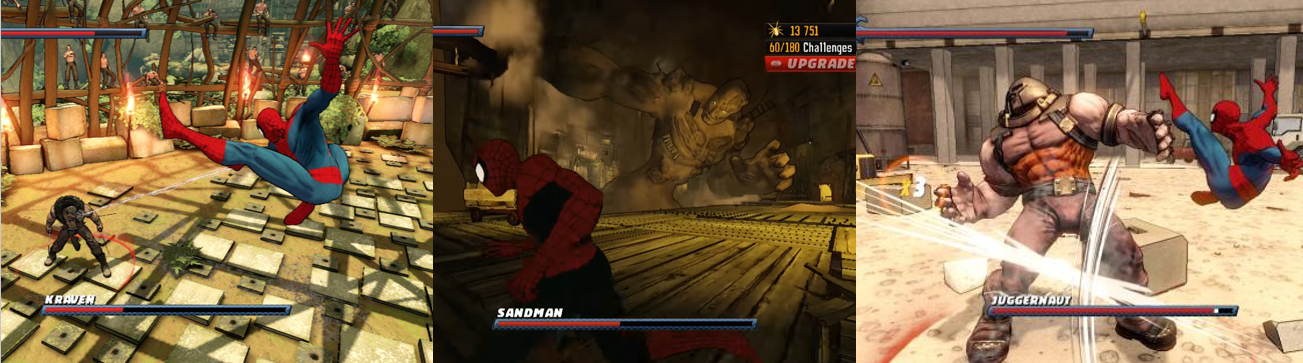
Finally, there are the other two villains from the movie, the Sandman and Venom. The Sandman is fought in the subway and acts as a kind of tutorial for your new black suit abilities. You need to avoid being hit by subway trains and dodge his mace and hammer-like arms to build up your rage meter and deliver a hefty beat down. The Sandman can form shields with his body and blast you with sand streams, and you’ll need to complete QTE sequences to both drop him further down the shaft and disintegrate him with a water jet like in the movie. The Sandman then disappears until the final showdown, where he’s approached by an embittered Eddie Brock; in this version of the story, Eddie is slighted when Spider-Man catches him faking pictures of him and threatens the Sandman’s family if he doesn’t help him kill Spider-Man. This final battle is similar to the one in the movie and involves three phases. The first sees Spider-Man fighting Venom in a partially-constructed skyscraper. Venom uses brute strength and cheap tactics to attack you; you’ll need to mash A when he tries to choke you with his webbing and avoid his web/uppercut combo. When he flies into a rage, smash some of the respawning pipes to stun him with noise and deliver a few combos but try to not be tossed from the site as it takes bloody ages to climb back up! The second phase sees Harry (who doesn’t get scarred or amnesia here) suit up as the New Goblin to help his buddy like in the film. The New Goblin can strafe, boost, attack with fast and heavy sword swipes, and toss pumpkin bombs with B and you’ll need to use these to take out the monstrous Sandman. Simply target his arms or his head and complete a QTE sequence, then douse him with water from a hydrant to actually do some damage. I found the best tactic to avoid being hit is to constantly strafe around him, mashing or holding B and using RB and X, Y, and B to unleash a barrage of bombs. You’ll then need to complete another QTE sequence before the fight switches back to Spidey and Venom, who are now surrounded by a raging sandstorm and at very low health. The strategy is the same, but made more difficult by Venom’s increased aggression, the sandstorm, and how annoying it is having to jump up to where the pipes are. Stun and beat on Venom a few times and you’ll initiate one last QTE sequence, the fastest and toughest of the game, that ends with Venom skewered on some spikes and apparently leaves Harry alive.

Power-Ups and Bonuses:
Spider-Man 3 is surprisingly light on in-game power-ups. Your health is restored every time you stop a crime or beat up some thugs (assuming you stick around long enough to collect the health that drops) and you’ll occasionally find health scattered throughout the game or hidden in crates, but I found this to be quite rare. You can extend your health and gain upgrades to your abilities by raising your crime fighter status, but this isn’t quite the same as gaining experience points. It simply goes up the more side quests and story missions you complete and that’s it; you don’t spend points and can’t customise your gameplay progression as you might expect. The only real tangible power-up is the black suit, which makes the game far more enjoyable. You’re faster, stronger, hardier, and have access to a rage meter than can make combat much more enjoyable, but you’ll naturally lose this as the story progresses.

Additional Features:
There are forty-three Achievements to snag in Spider-Man 3, eleven of which are awarded simply for beating the game and defeating the bosses. You’ll grab Achievements for swinging great distances, webbing up enemies, completing the different side missions, and one for riding around on a vehicle for five miles. Scattered across the city are gang tokens, time trials, combat tours, and skyscraper tokens. Finding and completing each of these nets you more Achievements, as does completing all the Daily Bugle assignments and random crimes that pop up across the city. Time trials are a test of your swinging skills and see you racing about through rings, combat tours have you webbing about to battle the various gangs against a time limit, there are bomb disarming challenges as well, and you’ll occasionally find collectible tokens on the city’s largest buildings. Unfortunately, there are no other difficulty modes to challenge, no comic book covers, concept art, or movie clips to unlock, and the only skin you get is the black suit. When you finish the game, you can switch to the black suit, which allows you to basically play a new game all the way through in Spidey’s symbiote attire and can switch back to your cleared save file at any time to mop up anything you’ve missed there. Sadly, that’s about it. There was some downloadable content that includes various banners and icons for the Xbox dashboard and the ability to play as the New Goblin and take on additional challenges, but there’s not much replay value to be had here, especially if you completed all the missions in your first play through.

The Summary:
Spider-Man 3 is an interesting beast. On the one hand, much of the gameplay and appeal of Spider-Man 2 has been recreated with some new bells and whistles to keep things fresh but, on the other hand, a lot of the game is a tedious and frustrating, sometimes even broken, mess of repetitive tasks and unfulfilling combat. While the city looks great, there’s some noticeably pop-up, lag, and glitches in the game world; the character models and voice acting are, by and large, atrocious and don’t seem to be much of a step up from the PlayStation 2 graphics. The villain selection is also very lacklustre; was anyone really crying out to see Kraven and the Scorpion again? And how many times have we seen the same old “Lizard builds a nest in the sewers/turns people into lizards” plot in Spider-Man games? I’m actually surprised the developers didn’t do more with the symbiote aspect of the story, such as having civilians be infected and forcing you to battle endless Venom clones. I basically hated every boss battle in the game, especially the ones against the New Goblin, the Kingpin and the Rhino, which were so frustrating that I was almost tearing my goddamn face off! You can power through, but why aren’t these more exciting and fun to play? Why are they such an uphill battle? Even the regular street punks put up quite a fight and Spider-Man just feels so weak and janky for much of the game that it was hard to find much enjoyment in the content. It doesn’t help that everything’s so repetitive; I lost count of how many speeding cars and bombs I disarmed, not to mention the copious and aggravating use of QTEs with no margin for error that just pop up out of nowhere, so you never get a second to rest! Ironically, I actually enjoyed (if not preferred) the few times game actually bothers with the movie’s story, which drops a lot of the worst parts of the film, but it wasn’t enough to save this. I think what’s happened here is the developers got a little lazy; maybe they were resting on their laurels, maybe they had run out of ideas. Either way, Spider-Man 3 just feels like more of them same but with a tedious focus on distracting you with boring side missions and dull villains rather than delivering a solid overall gameplay experience.

My Rating:

Rating: 2 out of 5.

Could Be Better

Have you ever played Spider-Man 3? What did you think to the open-world gameplay and Spidey’s symbiote abilities? Were you also frustrated by some of its more tedious features and focus on other villains? What did you think to the battles against the New Goblin, the Kingpin, and the Rhino and the inclusion of QTE sequences? Were you disappointed by the presentation, lack of unlockables, and padded gameplay? Which Spider-Man videogame or movie adaptation is your favourite? Head down below or over to my social media to share your thoughts on Spider-Man 3 and be sure to check out my other Spider-Man content.

Movie Night [Spidey Month]: Spider-Man 3


Easily Marvel Comics’ most recognisable and popular superhero, unsuspecting teenage nerd Peter Parker was first bitten by a radioactive spider and learned the true meaning of power and responsibility in Amazing Fantasy #15, which was first published in August 1962. Since then, the Amazing Spider-Man has featured in numerous cartoons, live-action movies, videogames, action figures, and countless comic book titles and, in celebration of his debut and his very own day of celebration, I’ve been dedicating every Tuesday of August to talk about everyone’s favourite web-head!


Released: 4 May 2007
Director: Sam Raimi
Distributor: Sony Pictures Releasing
Budget: $258 to 350 million
Stars: Tobey Maguire, Kirsten Dunst, James Franco, Thomas Haden Church, Topher Grace, and Bryce Dallas Howard

The Plot:
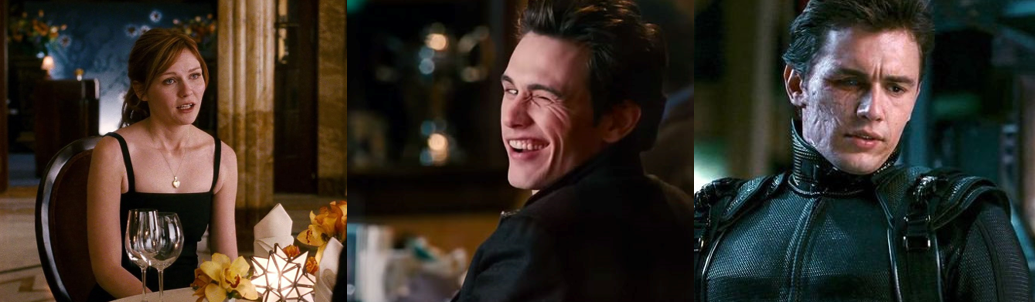
Having finally gotten the girl of his dreams, Peter Parker (Maguire) finds his life on the upswing, but an attack by vengeful Harry Osborn (Franco), and the discovery that recently-superpowered thief Flint Marko (Church) killed his beloved uncle see Peter giving in to the power and allure of a mysterious black suit from space.

The Background:
Following his debut issue becoming one of Marvel’s best selling titles at the time, Spider-Man’s popularity saw him become their flagship character. Soon, the wall-crawler fronted numerous team-up comics, videogames, cartoons, and even a live-action series. Although his cinematic debut was constantly delayed by script and legal issues, Sam Raimi and Sony Pictures Entertainment landed a critical and commercial success with Spider-Man (Raimi, 2002) and followed this two years later with Spider-Man 2 (ibid, 2004), which is widely regarded as one of the greatest superhero movies ever made. There was never any question that a third film would follow and Raimi initially planned to explore Peter’s morality, the humanity of his villains, and themes of forgiveness; However, his wish to cast Ben Kingsley as Adrian Toomes/The Vulture was blocked by producer Avi Arad, who insisted that the more popular Eddie Brock/Venom be included instead. Although Raimi was initially hesitant, he acquiesced after relating to the character as a dark mirror of Peter, but soon found his script so bloated that he initially toyed with filming two films back-to-back. Spider-Man 3 upped the ante for its special effects; painstaking hours went into crafting the scene in which the Sandman reconstitutes himself, an amputee stuntman was brought in to bolster Spidey’s fight with the Sandman, and Spidey’s iconic black suit was redesigned to emphasis it corrupting his morals. Although it was the most financially successful of Raimi’s Spider-Man films, Spider-Man 3 divided critics; while reviews praised the action and drama and the mixture of humour and visual spectacle, many felt the film was overstuffed with villains and failed to live up to the expectations set by its predecessors. Though accompanied by a comic book tie-in and videogame adaptation, Spider-Man 3 would mark the end of Raimi’s time with the web-slinger. Although plans for a fourth film got as far as casting and storyboarding, they were ultimately scrapped in favour of a complete reboot, though Tobey Maguire and Thomas Hayden Church would later reprise their roles nearly twenty years later for the multiversal epic Spider-Man: No Way Home (Watts, 2021).

The Review:
These days, with superhero films dominating the box office, many of them involving one or more heroes teaming up and a variety of villains, it’s easy to forget both the impact that Sami Raimi’s first two Spider-Man films had and state of the genre back in 2007. Superhero films were cropping up more and more and they didn’t always stick the landing; often, they struggled with too many villains, a lack of fidelity to the source material, or just being a bit of a tonal and narrative mess as studios tried to cash-in on the success of Raimi’s films and 20th Century Fox’s X-Men movies (Various, 2000 to 2020). Still, anticipation was high for Spider-Man 3; Spider-Man 2 was well-regarded as one of the best superhero movies ever made and it ended with a lot of plot threads to carry over into the third film, primarily the inevitable clash between Peter and Harry and the question of whether Mary-Jane Watson/M. J. (Dunst) was truly ready to accept the responsibility of being Spider-Man’s girlfriend. Unfortunately, little else from Spider-Man 2 directly carries over to Spider-Man 3 and this is made evident right from the opening titles, which barely feature Doctor Otto Octavius/Dr. Octopus (Alfred Molina) or any plot points from the second film beyond those that involve Peter, Harry, and M. J. Regardless, things get off to a decent start; the tension between Peter and Harry is emphasised in the reveal that Harry not only stalks Peter at every opportunity but refuses to listen to his explanations regarding the death of his father, Doctor Norman Osborn/The Green Goblin (Willem Dafoe). Although Peter doesn’t really make that much of effort to absolve himself of Norman’s murder, Harry’s mind is clouded by rage and stubbornness, which directly lead to him subjecting himself to a version of his father’s Goblin formula to give him the power to go toe-to-toe with his former friend.

Peter’s attempts to propose are interrupted by his inflated ego and the influence of his black suit.

For Peter, life is pretty good; he’s finally found a balance between his dual identities, or at least feels less conflicted now that he has M. J.’s full support. It’s not made clear how much time has passed between the two films (honestly, given how well the actors have aged and the way Peter and Harry treat each other, it feels like it could only be a few weeks) but Peter’s so at peace with himself and the world that he plans to propose to M. J., despite him still living in a crummy apartment and being stiffed on his wages by the cantankerous J. Jonah Jameson (J. K. Simmons). After receiving his Aunt May’s (Rosemary Harris) blessing, Peter heads out to seal the deal, only to be suddenly attacked by Harry, how sporting sleek, Goblin-inspired armour and weapons of his own. Peter battles this…*sigh*…“New Goblin” through the city skies but is both horrified and relieved when Harry takes a nasty bump to the head and recovers with no memory of Spider-Man’s true identity. This brings even more joy to Peter’s life as he rekindles his brotherly relationship with Harry and basks in the adulation of the city as Spider-Man. In fact, Peter’s so blinded by his own success and happiness that he fails to notice that he’s being a bit self-absorbed and that M. J. is having her own issues, faults that cause him to make the bone-headed mistake of kissing Gwen Stacy (Howard) in front of an adoring crowd and completely disregarding M. J.’s struggles to make it as a successful Broadway actress.

Peter’s relationships suffer because of his actions, leading to a brutal brawl with his former best friend.

Despite the fact that she made it into the cast, to the point where she received top billing, M. J.’s producers aren’t happy with the reviews about her performance and summarily drop her from the play, rattling her confidence and digging up bad memories of her childhood under her abusive father. Although she tries to confide in Peter and understand that his superhero commitments make him very busy, a rift forms between them when Peter fails to recognise how upset she is and keeps focusing on his own success. This scuppers Peter’s carefully-planned proposal dinner and drives M. J. to seek comfort from Harry, who’s only too happy to make time for her now that he’s rediscovered his carefree personality. They grow so close that they even share a brief kiss, though M. J. quickly comes to her senses and leaves before anything else can happen. This humiliation is enough for Harry’s mind to snap once more; visions of his dead father restore his memories and he resumes his vendetta against Spider-Man. He targets M. J. and blackmails her into breaking up with Peter, breaking his heart, and then twists the knife in further by insinuating that he and M. J. are having a love affair. Although Harry plays this conniving, manipulative role well, he can’t resist revelling in Peter’s anguish, meaning Peter immediately figures out that Harry has been using M. J. against him but, by that point, Peter is not only consumed by rage and ego but also fuelled by the negative impulses of his black suit. When Peter confronts Harry in the Osborn home, a brutal fight to the death breaks out between them; previously, Peter simply tried to avoid and quell Harry’s rage but, this time, he unleashes the full extent of his power and easily manhandles his former friend. Stubborn to the last, Harry attempts to blow Peter up with a pumpkin bomb, only to have the explosive tossed back in his face, permanently scarring him and leaving him an embittered recluse.

The Sandman might do bad things with good intentions but his mistakes raise Spidey’s ire.

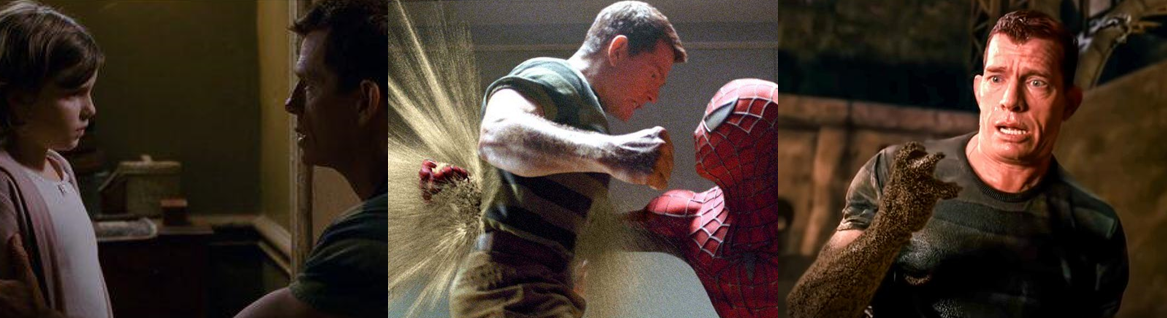
Peter’s good mood is shattered when he and Aunt May are randomly called into the office of police captain George Stacy (James Cromwell) and told that they’ve been sitting on evidence for the last few years that proves thief Dennis Carradine (Michael Papajohn) didn’t killed Peter’s beloved Uncle Ben (Cliff Robertson). Instead, Carradine is retroactively revealed to have been working with a partner, Flint Marko, who recently (somehow…) escaped from jail. Peter had already had a run-in with Marko not long before this, but by that point the crook had already conveniently fallen into a random particle accelerator and been molecularly altered into a living man of sand. Now able to shift and alter his appearance at will, becoming almost intangible and rock-hard, the Sandman easily robs armoured cars to steal the cash he needs to help his critically ill daughter, Penny (Perla Haney-Jardine), as well as fend off Spider-Man when he inevitably arrives to stop him. Now armed with the knowledge that the Sandman killed his uncle, Peter seethes and obsesses over tracking down the thug and make him pay out of a combination of guilt over the death of both Uncle Ben and Dennis Carradine and the aggression encouraged by his mysterious black suit. Although generally a sympathetic and reluctant villain in the comics, the Sandman is reconfigured into a tragic figure here; he’s painted as a good man driven to crime and hampered by poor choices, and carrying a sense of guilt and responsibility over the evils he’s done and his love for his sick daughter. However, Peter has little time for the Sandman’s sob story and willingly succumbs to the black suit’s influence when they fight in the New York subway. Spider-Man angrily confronts the Sandman over his murderous actions and attacks without quarter, eventually dissolving him into a gloopy, muddy mess with a dismissive “Good riddance!” As if this battle didn’t hammer it home enough, Peter’s discussion with Aunt May reveals that he fully intended to kill the Sandman to make him pay for what he’d done. However, despite being heartbroken by Ben’s loss, May makes it clear that revenge is never the answer and lays the groundwork for Peter finding the courage to forgive the Sandman for his misguided actions.

Peter’s personality is corrupted by the symbiote, which finds a willing host in demented Eddie Brock.

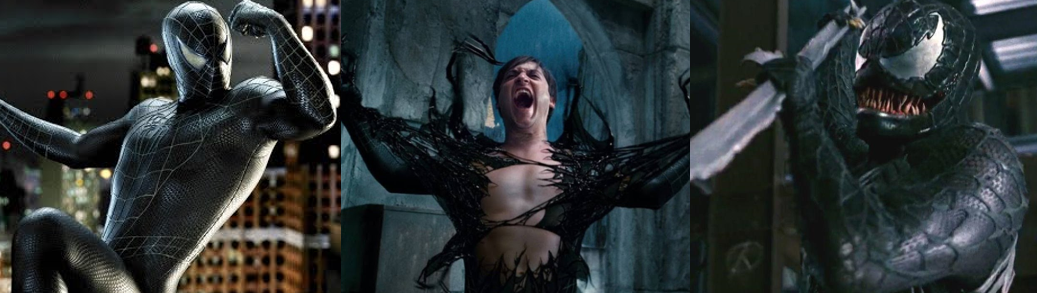
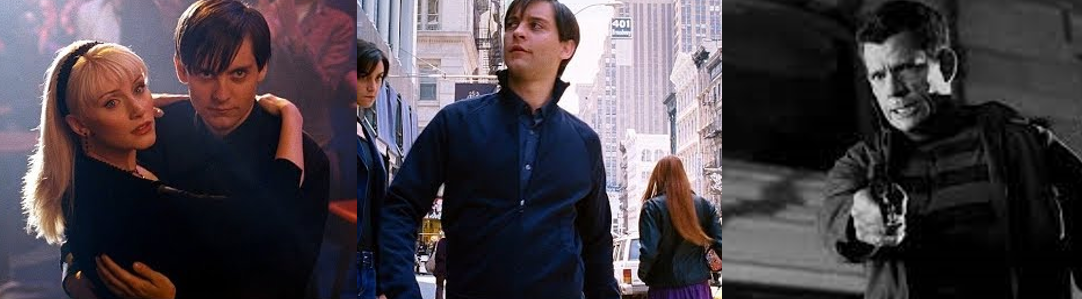
That takes a bit of time, though, as Peter is under the poisonous influence of a mysterious alien goo that randomly (and conveniently) crashed to Earth right by his scooter. Latching on to him in the midst of a terrible nightmare, the viscous substance (later identified by Doctor Curt Connors (Dylan Baker) as a “symbiote”) turns Peter’s colourful costume a deep black and enhances his abilities considerably, granting him a strength and sense of exhilaration beyond his usual web-slinging. However, it also feeds and enhances his negative emotions; anger, fear, and aggression are all heightened by the creature, but Peter is so captivated by the allure of the black suit that he can’t deny himself its power when he gets a lead on the Sandman. Like an addict who doesn’t know when to quit, Peter wears the black suit under his clothes, caressing and stroking it, and even alters his appearance to match the sense of confidence and power the suit inspires in him. After his confrontations with Harry and the Sandman, Peter fully gives in to this rush, parading himself down the street like a dork and believing he’s God’s gift to the world. He all-but-demands a permanent position at the Daily Bugle, takes Gwen to a jazz bar and performs an elaborate dance number to make M. J. jealous, and angrily confronts rival photographer Edward “Eddie” Brock Jr. (Grace) over his doctored pictures of Spider-Man. However, after lashing out at M. J. in a rage, Peter finally sees that the suit is turning him into a literal and metaphorical monster. Fleeing to a church, he tries to remove the suit and is shocked to find that it truly is a living organism. Although the symbiote desperately tries to defend itself, it’s driven off Peter’s body by the ringing of the church bell, leaving him guilt-ridden and despondent over his recent actions, but the creature finds itself a new host when it latches onto Eddie. A snivelling little creep of a man, Eddie is driven to begging the All-Mighty to avenge his recent slights after failing to win Gwen’s heart or cheat his way into a full-time job. This bitterness and borderline psychopathy is all the symbiote needs to birth the film’s third villain, a “strange black-suited figure” (because he’s never referred to as “Venom” onscreen), and immediately set about making Peter pay for his actions.

The Nitty-Gritty:
There’s a lot happening in Spider-Man 3; so much so that it’s difficult to watch and not think about how easy it would’ve been to streamline things. I get that Sam Raimi was basically forced to include Venom in the film and I can see how that might’ve clashed with his ideas for the final entry, but just doing another couple of script rewrites really would’ve helped tighten things up because, as is, there’s just too much crammed in here. This is one of the few times where I would’ve been happy to see the film split into two parts to actually do Venom justice, but a far easier solution would’ve been to omit Eddie Brock entirely and just have the symbiote attach itself to Harry. Yes, it goes against the comic lore, but I think it would’ve tied in perfectly with the film’s themes of obsession, revenge, and forgiveness. Plus, it’s not like the Venom mantle hasn’t been assumed by others before. I also think the Sandman should’ve either stayed dead after his fight with Symbiote Spider-Man or been revealed to be alive in a post-credits scene (either using him emerging from the sewer as seen in the film or by repurposing a cut scene with his daughter), which not only would’ve made the final fight between Spider-Man and Venom/Harry less of a cluttered mess but also would’ve shown that the symbiote’s influence had real consequences for Peter as he would’ve had to live with the guilt of killing another man (or, at least, assuming he had).

Some odd decisions, cringe-worthy scenes, and pointless retcons bog down an already bloated film.

However, there is a decent film in here somewhere, it’s just buried beneath odd decisions, bizarre sequences, and a whole mess of characters. Did we really need Gwen Stacy in this when she barely has any relevance to the plot, for example? She’s nothing like her comic book counterpart and is literally there to emphasise what a creep Eddie is. She doesn’t even have a rivalry with M. J. or factor into the climax, so it feels like she was shoe-horned in as fan service more than anything. Peter’s cornball demeanour once he gives into the black suit is also extremely cringey; many have come to defend this decision, claiming that Peter is living out his idea of what it means to be “cool” and I totally get that he would have this dorky perception of what’s “hip” and such. But it’s surreal to see him strutting down the street and then doing this cartoonish dance number in the jazz club that’s immediately juxtaposed with him smacking M. J. and being so wracked by guilt that he goes and broods in the rain on a church! Spider-Man 3 also commits the cardinal sin of retconning the character’s origin to awkwardly wedge Flint Marko in as the man who killed Uncle Ben. Just…why? People moaned to high heaven when this happened in Batman (Burton, 1989) and it just confuses things here. Spider-Man 3 has the perfect means to tell its story of forgiveness in the Peter and Harry story. It didn’t need to complicate matters by forcing a link between him and the Sandman, especially as Marko already had a perfectly understandable and relatable tragic motivation that’s barely touched upon no matter how many times he stares at that damn locket. And then there’s the weird side plot of Harry’s amnesia. Again, I get it, they wanted to show how deep the bond between Harry and Peter is and explore their relationship as brothers, but it just leads to more goofball scenes and unnecessary drama between Peter and M. J. I feel like a similar outcome could’ve been achieved by just having Harry play mind games with Peter throughout the movie, especially if he adopted some of Eddie’s comic book antics and used his knowledge of Peter’s identity against him. And don’t even get me started on this “New Goblin” crap. Just make him the damn Hobgoblin! They even made a damn mask!

Unfortunately, all the impressive visuals and action sequences can’t counterbalance the muddled plot.

Luckily, amidst all of this negativity, Spider-Man 3 has some of the best action sequences and special effects of the entire trilogy. The mid-air fight between Peter and Harry may suffer from a little too much obvious green screen, but it’s far more versatile and fluid compared to the battles between Spidey and the Green Goblin, which were a bit clunky and grounded at times. While I have little love for the Sandman and could take or leave his inclusion, he does allow for some more visually interesting fight scenes. Seeing Spidey punch right through Marko, blast him into particles, and be smashed by his rock-hard appendages makes for some fun sequences. Unfortunately, all this goodwill is undone in the climax where any personality and nuance the Sandman has is completely washed away as he adopts a gigantic, mindless, rampaging sand monster form that, while intimidating and a suitable escalation of his threat, pales in comparison to the surprising emotional depth he shows beforehand, particularly in the admittedly beautiful and heart-breaking scene where Marko first pulls himself together after his accident. As ever, the Spidey suit looks great but it looks even better in black. While I prefer the classic white logo for the symbiote suit, saving it for Venom was a great idea to help him stand out more (even if it doesn’t make much sense for him to randomly have a big-ass symbol) and I loved the twisted, torn webbing and claws used on Venom. Indeed, the fact that Venom barely appears in the film and only for the finale is a massive disservice to both the character and his look in the film. Venom may lack the bulk and plural identifiers, but he looks fantastic when he’s got his claws out and is adopting his ironic, drooling, fang-filled visage. As much as I rag on the film, I do enjoy the visuals of the climax; seeing the construction site covered in Venom’s twisted webbing, the monstrous Sandman looming, and Venom screeching and attacking from the shadows makes for a very different and intense finale. It’s just a shame it’s intercut with cringe-inducing performances from tertiary characters.

Through the sacrifice of his friend and letting go of his hate, Peter earns a bittersweet ending.

After shedding the symbiote, Peter is left trying to pick up the pieces of his fractured life; M. J. has rejected him and is ready to leave town, he’s tried to kill his best friend, and his reputation has been sullied somewhat by his poor decisions. Thankfully, Eddie easily tracks down the Sandman and convinces him to forge a partnership, one primarily based on Eddie avenging himself on Peter by humiliating him and taking away his true love. Unlike Peter, who realised the damaging influence of the symbiote, Eddie is only too happy to give into it’s power (“I like being bad. It makes me happy!”) and refuses to listen to reason since he’s so consumed by hatred and a twisted sense of injustice. Ultimately, he’s unable to resist the power and temptation offered by the symbiote and perishes (quite violently) in a grenade blast, a disappointingly weak ending for a disappointingly weak version of Venom. However, Eddie does leave a lasting impression on Peter by delivering a fatal blow to Harry, who heroically sacrifices his life to save his best friend. Unfortunately, as cool as it is to see Peter and Harry team up for the finale (and it really is an awesome feel-good moment with some great team-up attacks from the two), it comes after Harry’s entire philosophy and vendetta is reversed thanks to a pep talk by his family butler, Bernard Houseman (John Paxton), who decided to wait until the last minute to be honest. Although the result is seeing Harry and Peter set aside their differences and finally make peace as Harry dies in his friends’ arms, this random revelation really detracts from it and takes all the agency out of Harry’s character. The Sandman is equally rattled by all the death; he regrets his actions and tries to justify them, and it’s clear that a massive weight lifts from his shoulders when Peter forgives him (why he let him get away is beyond me, though). Unlike the last two Spider-Man films, Spider-Man 3 ends on an emotional note with Peter having learned valuable lessons about forgiveness and him and M. J. sharing an emotional embrace, apparently ready to start over, rather than ending on a high with the traditional final swing.

The Summary: 
Spider-Man 3 just can’t help but be a disappointment. There’s just way too much happening in it, too many missteps and odd decisions, and too much of that goodwill tossed aside to rate it much higher. It’s such a shame, too, as it could’ve been an emotional and intense finale to Sam Raimi’s trilogy if only another attempt had been taken at the script to tidy things up. I just can’t help but think it would’ve been so much better to drop Eddie Brock and have Harry become Venom as a nice compromise between the filmmakers because the desperation to do everything and please everyone just results in a disappointing effort. It’s doubly disappointing for me as I’m a huge Venom fan and Venom did look really fantastic for the few minutes he was onscreen, but they really deserved their own dedicated movie or to be incorporated better to justify including them. Although I didn’t really like the forced drama between Peter and the Sandman, I did enjoy how human and relatable Flint Marko was. Ultimately, though, he feels like a bit of an afterthought and the only reason you remember him is because they made an unnecessary retcon to the first film. The drama between Harry and Peter was honestly strong enough to carry the entire film but it’s lost between all the other moving parts and has its legs completely cut out from under it by the amnesia side plot and that damn butler! Sadly, all the effects and impressive visuals in the world can’t salvage this film, which will forever go down as one of the genre’s biggest missed opportunities no matter how hard people try and defend it.

My Rating:

Rating: 2 out of 5.

Could Be Better

Are you a fan of Spider-Man 3? Where does it rank for you against the many other Spider-Man movies? What did you think to Peter’s struggles with the temptation of the black suit? Were you also disappointed by the execution and screen time of Venom? What did you think to Harry’s character arc and were you sad to see him die a hero in the end? What changes would you have made to the film to try and salvage it? Whatever your opinion on Spider-Man 3, leave a comment and be sure to check out my other Spider-Man content.

Back Issues [Spider-Man Day]: The Amazing Spider-Man #4


Easily Marvel Comic’s most recognisable and popular superhero, unsuspecting teenage nerd Peter Parker was first bitten by a radioactive spider and learned the true meaning of power and responsibility in Amazing Fantasy #15, which was first published in August 1962. Since then, the Amazing Spider-Man has featured in numerous cartoons, live-action movies, videogames, action figures, and countless comic book titles and, following this celebration of his debut, I’ll be dedicating every Tuesday of August to talk about everyone’s favourite web-head!


Story Title: “Nothing Can Stop… The Sandman!”
Published: 11 June 1963 (cover-dated September 1963)
Writers: Stan Lee and Steve Ditko
Artist: Steve Ditko

The Background:
After debuting the Fantastic Four, Marvel Comics editor and head writer Stan Lee immediately sought to follow this with a teenaged superhero specifically created to appeal to younger readers. Inspired by a fly climbing up the wall of his office, Lee turned to artist Steve Ditko to settle on the character’s final design and, despite Marvel publisher Martin Goodman’s dislike of the concept, Spidey’s debut in Amazing Fantasy #15 became one of Marvel’s best selling titles and his popularity led to his own solo title barely a year later. Since then, Spider-Man has faced some of the greatest and most memorable villains in all of comics, with many of his most iconic villains being co-created by Stan Lee. Four issues into The Amazing Spider-Man, Lee and Ditko pitted the wall-crawler against Flint Marko/The Sandman, a regular crook transformed by atomic power who later went on to not only be part of the Sinister Six but also have a surprising amount of character growth over the years, to the point where he became a hero and ally of Spider-Man’s at times. The Sandman has also been a recurring villain outside of the comics, generally acting as a recurring boss in numerous Spider-Man videogames and made his contentious live-action debut in Spider-Man 3 (Raimi, 2007).

The Review:
“Nothing Can Stop… The Sandman!” opens in very much the same way as a lot of Spider-Man stories from this era: our web-slinging hero starts the tale lamenting the hate campaign that the cantankerous J. Jonah Jameson continues to wage against him (which has escalated to an ongoing series, “The Spider-Man Menace!”, in the Daily Bugle) when he spots three shady looking goons eyeing up a jewellery store and leaps into action. Unfortunately for the troubled teenager, Spidey webs the would-be criminals up too soon; they rightly point out that there’s no law against walking the streets, brand him a menace, threaten to sue him for assault and battery, and yell for the cops to come and help them. Realising what a fool he’s made of himself, the web-slinger promptly gets out of there, consoling himself only with the knowledge that he did technically stop the goons from robbing the jewellers. Spidey decides to drop in on Jameson to give him a piece of his mind, only to find the grouchy editor isn’t in his office. As Spidey leaves, however, he spots a bunch of cop cars searching the streets and (apparently having learned nothing from his previous error) immediately confronts a thuggish looking brute climbing to a rooftop across the street. Luckily for him, though, the thug introduces himself as the Sandman, a criminal Spidey is only too well aware of as he’s wanted by the police “from Maine to Mexico”.

Spidey is stunned when he encounters the Sandman, a crook who can turn his body to...sand…!

Offended when the abrasive Sandman tries to brush him off like he’s nothing, Spider-Man moves to subdue the crook and is astonished when the Sandman literally slips through his fingers by turning his body into soft sand! The Sandman mocks Spider-Man as the wall-crawler’s punches go right through his body and when Spidey damn-near breaks his hand when the Sandman hardens his body to the consistency of iron, and his fully malleable body sends him reeling across the rooftop! Frustrated by the Sandman’s taunting and shape-shifting shenanigans, Spider-Man prepares to try his webbing on the crook but is startled to find that his mask has (somehow…) ripped during the fight. This sends his anxiety and paranoia into overdrive; Spidey envisions that capturing the Sandman will expose his secret identity, leading to an increased manhunt spearheaded by Jameson and the destitution of be beloved Aunt May. Of course, there’s nothing to suggest this would actually happen; there’s no way that the Sandman knows who Peter Parker is, after all, and he could just cobble together a substitute mask, but Spider-Man decides that the risk is just too great and flees before the Sandman can get a good look at him. This leaves the Sandman free to easily deposit himself at ground level, break into the bank by forming the exact shape of the key with his finger, and slip into the vault by turning his entire body into sand. Back at home, Peter frets about his sewing skills while watching a news report that’s conveniently expositing the Sandman’s bizarre origin story: career criminal Flint Marko escaped from solitary confinement in a maximum security prison on an island, swam to shore, and hid from the ensuring manhunt at an atomic device testing centre. There, he was caught in an atomic explosion and, rather than being immolated or suffering from gruesome cancer, his molecules were radioactively merged with that of the sand at his feet, transforming him into a veritably indestructible man of sand.

Peter’s social woes are exacerbated when the Sandman hides out in his school!

When his doting Aunt May comes knocking, Peter is forced to feign illness to cover up his costume and is unable to finish his work and get after the Sandman as she insists on mollycoddling him for the rest of the day and night. Consequently, the Sandman easily shrugs off the police’s gunfire, robs the bank, and eludes capture with his amazing abilities and Peter must wait until the morning (and being given a clean bill of health by his aunt) to finish up. Once he’s up and dressed (and armed with his umbrella and a promise not to exert himself), Peter heads over to the Daily Bugle, where Jameson’s mood has been soured by the little “gift” Spidey left for him the previous night (somehow, Spidey’s webbing managed to not dissolve after a few hours, but I don’t mind as it leads to Jameson standing around in his boxer shorts!) Unfortunately, Jameson is less than impressed by Peter’s lack of photos of Spider-Man and even more riled up when he dares to ask for an advance. Jameson berates Peter as an example of the entitled youth of the day and sends him packing, scuppering the webbing experiments Peter hoped to fund with the extra cash. Peter’s day just gets worse from there; distracted by the quandary of the Sandman, he’s forced to back out of a date with Liz Allen, earning him her ire and jeers from bully Eugene “Flash” Thompson, and he’s so disheartened by the drama of his dual life that even his teacher snaps at him for “daydreaming” in class. You wouldn’t believe it but the Sandman, annoyed at the constant attempts by the police to apprehend him, decides to duck into Peter’s high school until the heat dies down. He bumps into Principal Davis and, amazingly, demands that the teacher write him out a diploma so he can have an academic credit to his name! The kids are impressed when they see their principal standing up to the Sandman and even putting himself at risk to keep them safe but jump out of their chairs with excitement when Spider-Man leaps in to keep the Sandman from harming the elderly principal.

Though he triumphs over the Sandman, Spider-Man is slandered by Jameson’s hate campaign.

Realising that the kids are in danger and wary of the Sandman’s tricks, Spider-Man opts to hurl the brute out of the classroom when he hardens himself, but the Sandman quickly recovers and puts the pressure on Spidey by relentlessly trying to pummel him with his enlarged, hammer-like fists. Spider-Man lures the Sandman to the school gym, only for his webbing to fail him when the Sandman simply passes through it like…well…sand. The Sandman corners Spider-Man, who reacts on instinct and ends up with his arm trapped in Marko’s body. This allows the Sandman to repeatedly headbutt the web-slinger with his rock-hard head, forcing Spider-Man to desperately drive Marko into an iron stairway post to free himself and avoid being headbutted to death. The Sandman quickly reforms himself, ensnares Spidey’s ankles by turning his body into quicksand, and envelops the teenage hero with his entire body, encasing him within a ball of sand. Thinking fast, Spider-Man bounces his foe down to the school basement and slips free from his prison; he then plays to the Sandman’s arrogance by threatening him with an electric drill. Naturally, the Sandman simply turns his entire body into sand particles to render the tool harmless, but this is exactly what Spidey was hoping for; he quickly grabs a huge industrial vacuum cleaner and turns it on the Sandman, sucking him up and imprisoning him within a big metal capsule. Spidey then realises that he didn’t get a chance to snap any pictures of the fight for Jameson, so he fakes a few by snapping photos of himself tussling with some sand he tosses into the air! Jameson then inexplicably shows up at the school and starts barking orders at the cops with no care for the safety of the students inside. He angrily accuses Spider-Man of being in cahoots with the Sandman, so Spidey simply delivers Marko to the cops and changes back into Peter Parker. His joy at this victory is short-lived, however; not only does Jameson take the cost of developing his photos out of his pay, Liz and the others continue to berate him for being a coward and a bookworm, and Jameson uses Peter’s photos to further his vendetta against Spider-Man, leaving Peter despondent but nonetheless determined to continue using his powers for good.

The Summary:
Wow, Stan Lee really didn’t pull any punches in piling the pressure on young Peter Parker back in the day, did he? Peter has got to be the unluckiest guy in the world; it seems no matter what he does, the world is out to get him. It’s almost laughable at times, and especially in this story; Spider-Man’s busted up would-be crooks before and it’s never been a problem, but this time they threaten him with legal action as he jumps in too soon. Although he beats himself up over this, this mistake doesn’t stop him confronting the Sandman, which I think was a missed opportunity. If Spider-Man had spotted the Sandman and not intervened based on what just happened, Peter could’ve wallowed in self-pity not unlike the guilt he feels over Uncle Ben’s death when he later learned that the Sandman robbed that bank. Instead, we get this really random interlude where Spidey’s forced to run off because his mask rips (I still don’t see how that happened…) and he’s taken out of action by the suffocating affections of Aunt May. Then, rather than get out there and look for the Sandman, he’s scolded by his peers, subjected to abuse by the likes of Flash and the fickle Liz, and all his efforts to subdue the Sandman ultimately amount to nothing as Jameson is so determined to paint him as a menace. It’s really weird, though, as the kids at his high school are cheering him on and even the cops seem willing to give Spider-Man the benefit of the doubt, but the general public are easily swayed by Jameson’s biased opinions all so that Peter can be weighed down by depression and self-doubt. This already weighs so heavily on him that he totally overreacts when his mask rips and is immediately and irrationally convinced that it’ll mean the end of his life, even though the Sandman surely won’t know him from any other kid!

The Sandman’s powers are a highlight of the story, which beats Peter down at every turn.

Still, this interpersonal drama, as absurd as it often is in these older Spider-Man stories, is part of what makes Spider-Man so appealing; he always does the right thing and continues to fight against injustice even when most of the city wants to see him behind bars. In the Sandman, Spider-Man meets a formidable physical match; I really liked Marko’s characterisation here as a regular (if accomplished and notorious) crook who just happened to be granted amazing powers. His goals don’t extend much further than robbing banks for cash, but I really enjoyed that he demanded Principal Davis write him a diploma to realise his lifelong dream of graduating high school! At one point, Spider-Man compares the Sandman’s malleability to that of Doctor Reed Richards/Mister Fantastic, an analogy that’s not entirely unwarranted but I’d argue that the Sandman’s powers are even greater! He can basically make himself incorporeal, harden his entire body, stretch his limbs, make himself sticky, and form massive crushing appendages to attack Spider-Man and it’s his unpredictability more than his fighting prowess that throws off even Spidey’s famed spider sense since Spidey never knows what the Sandman is going to do next. I wasn’t a big fan of Marko’s unbelievable backstory (I’d love to know how he escaped from that prison…) but it’s fun seeing atomic power depicted in such surreal ways in comics and I liked that he was such a simplistic, and yet incredibly dangerous, adversary even if he barely scratched his potential here. Ultimately, I had a good enough time with this; while far from my favourite Spider-Man villain, the Sandman at least makes for a visually interesting baddie and the drama, while a bit too full-on at times, tied into Peter’s ongoing struggles with his duality. There are better Spider-Man stories from this era and things are wrapped up or rushed through a little too quickly, but it’s fun seeing Spider-Man being thrown for a loop by the Sandman’s fantastic powers and being forced to think of new ways to outsmart and overcome his latest villain.

My Rating:

Rating: 3 out of 5.

Pretty Good

What are your thoughts on the Sandman’s first appearance? Were you a fan of the villain and his unique powers or did you find him to be a bit daft and unbelievable? What did you think to Peter’s social woes and his panic over his ripped mask? Were you a fan of the Sandman’s simplistic motivations and bizarre powers? What are some of your favourite Sandman stories and moments? How are you celebrating Spider-Man Day today? Whatever your thoughts on Spider-Man and the Sandman, leave them below or drop a comment on my social media and be sure to check out my other Spider-Man content across the site!

Wrestling Recap: Raven vs. Terry Funk (Barely Legal ’97)

The Date: 13 April 1997
The Venue: ECW Arena; Philadelphia, Pennsylvania
The Commentary: Joey Styles
The Referee: John Finegan
The Stakes: No disqualification singles match for the ECW World Heavyweight Championship

The Build-Up:
Back in the nineties, the then-World Wrestling Federation (WWF) and World Championship Wrestling (WCW) were the undisputed “Big Boys” of the professional wrestling scene, vying for television ratings and poaching talent on a weekly basis, but Extreme Championship Wrestling (ECW) stood out as an alterative product to its mainstream rivals. Initially founded as Eastern Championship Wrestling in 1992, the company was re-branded by wrestling guru Paul Heyman in 1993 and soon established a cult following with the rabid Philadelphia crowd at the ECW Arena. While best known for its violent and controversial matches and content, ECW also delivered pure wrestling and was instrumental in inspiring the WWF’s “Attitude Era” and giving future wrestling stars a stage to hone their craft. Prior to 1997, ECW primarily hosted non-televised supercard events from the ECW Arena but that all changed when Heyman negotiated a deal to air their first pay-per-view, Barely Legal, on this day in 1997. Easily one of ECW’s biggest stars was Raven, a morose manipulator who was seemingly the embodiment of grunge, whose later rivalry with Tommy Dreamer delivered some of the company’s most intense storylines. At the time, Raven was reigning as the ECW Champion and had been embroiled in a deeply personal feud with the Sandman over the belt, while also dealing with issues with his stablemate, Stevie Richards. Richards had faced Raven’s wrath after costing him the ECW Championship at Ultimate Jeopardy the previous year; though Raven had regained the belt from the Sandman, tensions continued to brew between he and Richards until the latter finally snapped, turned on his leader, and broke away from Raven’s “Nest” of followers. Although Richards had previously come up short against Raven in a championship bout, he and the Sandman got another chance to face Raven for the belt at Barely Legal when they tangled in a triple threat match with the legendary hardcore icon Terry Funk, with the winner of that contest getting to face Raven in the main event of ECW’s first-ever pay-per-view event.

The Match:
As difficult as it was for to watch even WWF and WCW programming as a kid, it was pretty much impossible for me to watch ECW as I have no idea if it was even shown on Sky TV back in the day. So my exposure to the product has always been through their competitors showing up in the WWF and from videogames and documentaries produced around this time, but I distinctly remember watching the bout between Tazz and Jerry “The King” Lawler from Unforgiven 2000 and being shocked when a raggedy guy interjected himself into the match, hit Lawler with a DDT, and helped Tazz secure the victory. Of course, years later I would find out that Raven’s time in the WWF paled in comparison to his runs in ECW and even WCW, but Raven was always one of my favourite wrestlers simply because of his look. Before getting into the match that’s the subject of this review, I think it’s only fair to talk a little bit about the three-way dance that preceded it. This was a triple threat elimination-style match between the Sandman, Terry Funk (who found himself in that match thanks to his protégé, Tommy Dreamer, graciously stepping aside to allow his mentor the chance to challenge for the championship), and “Big Stevie Cool” Stevie Richards (who was accompanied by his newfound friends, the “Blue World Order” (bWo), one of wrestling’s most successful parody groups). After the Sandman’s ridiculously long entrance and shenanigans with alcohol, the match started with the three exchanging chops and a short-lived alliance between Funk and the Sandman that ended in emphatic fashion when the Sandman randomly brought a ladder into the match. Not only did Funk get blasted in the face by the ladder, he also clambered up it for a Moonsault, the damn thing was sent catapulting into the audience courtesy of the Sandman(!), and Funk used the ladder to repeatedly knock down both his opponents with an airplane spin.

Following a grueling three-way dance, a bloody and battered Funk was easy prey for Raven.

The three brawled viciously, though it was the elderly Funk and the upstart Stevie who took the brunt of the damage, with the latter eating a nasty-looking piledriver, getting buried under the ladder, and finally eliminated from the match following a double powerbomb from Funk and the Sandman. This was the Sandman’s cue to whip out a length of barbed wire that had reams of streamers from a previous match stuck to it, but Funk quickly used the weapon against the Sandman, lashing his bare back repeatedly. Undeterred, the Sandman wrapped the barbed wire around his body and repeatedly splashed into Funk, tearing both of them up in the process, but ultimately it was Stevie who was the deciding factor in the match’s end as he returned to the ring, hit a Superkick on the Sandman (who was blinded by a garbage can) and allowing Funk to get the victory off a Moonsault. Battered and exhausted, Funk was given exactly zero time to prepare for his championship match as Raven immediately entered the ring and clobbered Funk with the ECW Championship. Raven then set up a chair in the ring and smacked Funk head-first into it with a drop toehold before delivering a massive chair shot to the downed Funker’s head, turning his face into the literal crimson mask. Raven continued to dominate his helpless challenger, ramming his face into the canvas and pummelling the punch-drunk hardcore legend before awkwardly suplexing a table onto him on the outside of the ring. After a brief struggle, Raven then set another table up between the ring and the metal barricade; he laid Funk over it and then crashed himself through his opponent, and the table, with a running dive from the inside of the ring to the outside!

Thanks to the timely intervention of Tommy Dreamer, the elderly Terry Funk dethroned Raven.

Although a doctor continuously tried to see to Funk’s injuries, Raven simply knocked him down with a punch, rolled Funk back into the ring, and called for his followers. Reggie Bennett attacked Funk with a terrible sit-out powerbomb and Raven took to the microphone to taunt his long-time rival Tommy Dreamer, who had been doing guest commentary; although Dreamer had refused to get involved since he wanted his mentor to win through his own efforts, the interference and Raven’s words were enough to trigger Dreamer. Despite a sneak attack from Big Dick Dudley, Dreamer reversed a chokeslam into one of his own and sent the tie-dyed terror crashing through a stack of tables piled up near the commentary area. Dreamer then took out the rest of Raven’s Nest and nailed Raven with a jumping DDT off an Irish whip attempt, whipping the crowd into a frenzy. Although Raven kicked out of the subsequent pin attempt, Funk immediately caught the champion with an inside cradle, which was enough to keep the champion down for the three count, awarding Funk the victory and the ECW Championship. Exhausted and covered in blood, the fifty-three-year-old hardcore icon celebrated in the braying crowd alongside an emotional Tommy Dreamer, and the strained elation of Joey Styles. Even for ECW, this match was cluttered and chaotic; Funk was clearly gassed after the previous match and got basically zero offense in on Raven, only winning because Dreamer made the save. This did play into the story being told, that being that Raven’s arrogance and mind games saw him dismiss Funk’s threat and be more focused on riling up Dreamer, which ultimately cost him despite him dominating the entire match. The ending seemed to be a bit of a botch as the bell rang when Funk covered Raven off the Dreamer DDT but the crowd didn’t seem to care; they were too busy losing their minds over Funk’s big victory, so I’d say it was a mess, but a reasonably enjoyable mess.

The Aftermath:
Despite all the rigmarole of even getting a network to air the event, Barely Legal 1997 proved to be successful enough that pay-per-views became a regular occurrence for the upstart ECW. A few months later, in August, they aired Hardcore Heaven but, by that point, much of the landscape had changed. Although Terry Funk successfully defended the ECW Championship against the likes of Raven, the Sandman, and “The Franchise” Shane Douglas, he was ultimately defeated by the “The Homicidal, Suicidal, Genocidal, Death–Defying Maniac” Sabu in a brutal barbed wire match at the Born to be Wired supercard event. He challenged for the belt again at Hardcore Heaven in another three-way dance but ultimately came up short and later left the company, celebrated for his achievements, in one of his many infamous “retirement” matches. Raven’s issues with Funk, Dreamer, and Richards would continue up until June, where Dreamer defeated his rival and banished him to WCW for about three years. Although Raven never quite reached the same level of main event status in WCW, he made a considerable impact as a mid-card player with his newest stable, the Flock. He briefly returned to ECW in 1999 to team up with Dreamer before jumping ship to the WWF; after the WWF rebranded to World Wrestling Entertainment (WWE), all three men would eventually be involved in the WWE’s various revivals of the ECW brand in some form or another and Raven would continue to cross paths with both Dreamer and Funk during his stints in Total Nonstop Action (TNA) and various independent promotions.

My Rating:

Rating: 3 out of 5.

Pretty Good

What did you think to the ECW Championship match between Raven and Terry Funk? Who did you want to see win the match at the time? Were you a fan of Raven’s time in ECW? What did you think to Terry Funk being the ECW Champion? Were you invested in the ongoing issues between Raven and Tommy Dreamer? Did you watch ECW back in the day and, if so, who were some of your favourite wrestlers and what were some of your favourite matches and moments? Whatever your thoughts, feel free to leave them below or drop a comment on my social media and be sure to check out my other ECW content across the site!

Wrestling Recap: Whipwreck vs. Sandman vs. Austin (December to Dismember ’95)

The Date: 9 December 1995
The Venue: ECW Arena; Philadelphia, Pennsylvania
The Commentary: Joey Styles
The Referee: Jim Molineaux
The Stakes: Three-way dance for the ECW World Heavyweight Championship

The Build-Up:
Back in the days when the then-World Wrestling Federation (WWF) and World Championship Wrestling (WCW) would trade shots at each other on television, go head-to-head in a vicious ratings war, and poach talent on a weekly basis, it was hard for other wrestling promotions to stand out against the “Big Boys” but Extreme Championship Wrestling (ECW) certainly did its best to offer a different brand of sports entertainment. First founded as Eastern Championship Wrestling in 1992, the company was re-branded by one of wrestling’s greatest minds, managers, and promoters, Paul Heyman, in 1993. While ECW soon came to be known for its violent and controversial matches and content, the promotion placed just as much focus on delivering pure wrestling and was instrumental in inspiring the WWF’s “Attitude Era” and giving future wrestling stars and Hall of Famers a stage to hone their characters and craft. By 1995, ECW had established a cult following with the rabid Philadelphia crowd at the ECW Arena but they were some years away from negotiating a deal to air their first pay-per-view, Barely Legal; instead, ECW hosted non-televised supercard events such as this one from the ECW Arena. The primary storyline heading into December to Dismember revolved around ECW’s ultimate underdog and unlikely champion, Mikey Whipwreck, defending the belt against the man he beat for it, ECW’s rough-and-ready Sandman, and a man who would go on the achieve phenomenal wrestling success, “Superstar” Steve Austin. Prior to this event, Austin had interjecting himself into the rivalry between the Sandman and Mikey, directly aiding Mikey’s championship victory by distracting the Sandman and then attacking the beer-swilling former champion and taking his place in the previous month’s event, November to Remember, thus necessitating this three-way dance for the championship.

The Match:
ECW was basically a non-factor for me as a fledgling wrestling fan back in the day. I could barely watch WWF or WCW programming at the time and have absolutely no idea what channel, if any, ECW was broadcast on over here in the United Kingdom so my awareness of the company only really came as more of their guys showed up in the WWF. Tazz, the Dudley Boyz, Raven and the like brought with them some ECW history but I only really became exposed to it after it was absorbed by the WWF in 2001. Even now, my ECW experience is sporadic and limited so it’s quite exciting to be dipping my toe into wrestling’s first real hardcore alternative. Another thing to not here is the difference between a three-way dance (or “triangle” match) and a traditional triple threat match; for one thing, it’s contested under elimination rules and, for another, this particular match started out with Austin and Mikey going at it for a good ten minutes before the Sandman came to the ring. Austin started out by goading Mikey and patronising him with little pats to his chest and head. Mikey responded with an aggressive tie-up and then a disrespectful slap to Austin’s jaw, which Austin answered with a handshake. A headlock takedown saw Mikey being ground down by Austin’s superior strength; when Mikey finally got in some offense, sadly it was nothing more exciting than a series of headlocks and takedowns of his own. Just as the crowd grew noticeably restless, Austin turned things up a notch with a shoulder block and a series of chops to Mikey’s chest in the corner; a gut kick left Mikey helpless as Austin choked him against the ropes but Austin absolutely lost it when Mikey tried to grab a handful of his tights off a sunset flip! As he beat on the champion mercilessly, the Sandman (apparently dressed in his pyjamas?) sauntered out with smoke, a beer, his ECW World Tag Team Championship around his waist, and with his valet, Woman, carrying his trademark Singapore cane.

After being decimated, Mikey was eliminated following a Stun Gun, guaranteeing a new champion.

Austin was so distracted with goading in the Sandman that he got caught with a big spinning heel kick from Mikey off the top rope before being dumped to the outside with a clothesline. Austin responded by whipping Mikey into the steel barricade and driving him head-first into the concrete with a piledriver on the outside and the match effectively stopped for a few minutes as the Sandman took his sweet time getting into the ring. Once he did, the two immediately exchanged clubbing blows; they got so into it that, again, they forgot all about Mikey, who took the Sandman down with a top-rope hurricanrana. Austin was able to counter another into a two count but ended up spilling to the outside off an Irish whip thanks to the Sandman pulling on the top rope. Mikey then took both off his challengers out with a big senton to the outside then tossed them both into the ring and started slugging it out with both of them, dropping them with dual low blows but missing a springboard attack. With Austin and the Sandman staggering off a couple of eye pokes, Mikey scored a near fall off a crossbody pin on the Sandman but Austin was right on him, beating him down in the corner and landing another piledriver on the champion. Reeling, Mikey was easy prey for the Stun Gun and, thanks to knocking the Sandman off the ring apron, the champion was subsequently eliminated from the match, ending his title reign to the delight of the crowd (though they may have been applauding/respecting his effort?) The match continued with the Sandman pulling Austin to the outside to bash him off (and into) the guard rail; however, the Superstar shoved him off and then brained him with a steel chair handed to him from a crowd member, only to be dumped unceremoniously over the guard rail and into the crowd and hit with the timekeeper’s table!

Austin paid for his hubris and Sandman captured the belt thanks to some brass knuckles.

Whatever the Sandman planned to do with that table didn’t come to pass as Austin kinda,,,bumped into him…sending him, and the table, tumbling over the guard rail. Austin then slammed a half-unfolded steel chair over the Sandman’s head and tried to hit the Stun Gun on the guard rail; the Sandman blocked it with his arm, however, legitimately breaking his hand in the process, and floored Austin with a chair shot to the head. Though favouring his hand, the Sandman managed to slam Austin to the concrete and even went smashing head-first through the table before being choked by some wiring. Back in the ring, Austin hit that running knee strike against the ropes he always liked to do and got a close two count; he followed up with a clumsy face-first suplex before stealing the Sandman’s beer from Woman and disparagingly spitting beer in his opponent’s face while stomping at him. As Austin posed on the ropes with his beer, Woman revived the Sandman with some beer, allowing him to briefly “Hulk Up” before being struck with brass knuckles from Austin’s trunks. Somehow, the Sandman got his foot on the ropes; as Austin argued with the referee, the Sandman was able to crack him across the back of the head with the brass knuckles and score the three count, capturing his second ECW World Heavyweight Championship, despite Austin’s foot also being on the ropes. There’s not a lot to say about this match, really; it was weird seeing Austin actually wrestling and not just brawling! Joey Styles even advised against Austin slugging it out with the Sandman since he’s clearly outmatched and suggests out-wrestling him instead, something I don’t think I’ve ever seen Austin do before thanks to his neck injury changing him from a technician into a brawler. It’s also interesting seeing the similarities between Austin’s later “Stone Cold” character and the Sandman but this wasn’t the most exciting match ever; the early going was very slow, with Mikey looking like a bit of a chump, and there was a distinct lack of energy throughout the match even before the Sandman broke his hand, resulting in a pretty anti-climactic end for me.

The Aftermath:
This would basically be the end of Steve Austin’s brief stint in ECW; he made his WWF debut as the Ringmaster about ten days after December to Dismember and wouldn’t have any dealings with ECW until 2001, when he chose to side with the ECW/WCW alliance against the WWF. Despite his injury, the Sandman would continue to wrestle; however, his second championship reign came to an end when he was defeated by Raven at the end of January. Mikey Whipwreck’s championship success continued, however, with him capturing both the ECW Television Championship and the ECW Tag Team Championship (with assistance from Cactus Jack) at ECW’s next supercard event, Holiday Hell: The New York Invasion. This would be the only December to Dismember event held by the original ECW; the evet wouldn’t be included in their annual pay-per-view calendars going forward and was largely dropped in favour of the aforementioned Holiday Hell. The December to Dismember brand would be revived in 2006, however; following a resurgence in ECW popularity, World Wrestling Entertainment (WWE) revived ECW as a third brand, one that promised to be a showcase of new and old talent but which quickly became an embarrassing sideshow. To make matters worse, the 2006 December to Dismember pay-per-view is widely regarded as one of the worst events in wrestling history; it was so poorly booked and received that it soured relations between WWE chairman Vince McMahon and Paul Heyman for some time and the WWE’s ECW brand never received another solo pay-per-view before being cancelled on February 16, 2010.

My Rating:

Rating: 2 out of 5.

Could Be Better

What did you think to the three-way dance between Mikey Whipwreck, Steve Austin, and the Sandman? Who did you want to see win the match at the time? What did you think to Mikey as a World Champion? Were you impressed by Steve Austin back in the day? Did you use to watch ECW and, if so, who were some of your favourite wrestlers and what were some of your favourite matches and moments? Were you disappointed by the WWE’s revival of the company in 2006? Would you like to see the December to Dismember event make a comeback? Whatever your thoughts, feel free to leave them below or drop a comment on my social media.

Game Corner [Spidey Month]: Spider-Man: Shattered Dimensions (Xbox 360)


Easily Marvel Comic’s most recognisable and popular superhero, unsuspecting teenage nerd Peter Parker was first bitten by a radioactive spider and learned the true meaning of power and responsibility in Amazing Fantasy #15, which was first published in August 1962. Since then, the Amazing Spider-Man has featured in numerous cartoons, live-action movies, videogames, action figures, and countless comic book titles and, in celebration of his debut and his very own day of celebration, I’ll be dedicating every Friday of August to talk about everyone’s favourite web-head!


Released: 7 September 2010
Developer: Beenox
Also Available For: Nintendo DS, Nintendo Wii, PC, and PlayStation 3

The Background:
Eager to capitalise on his success with the Fantastic Four, Marvel Comics editor and head writer Stan Lee conceived of Peter Parker/Spider-Man alongside Steve Ditko and the troubled teenage superhero first appeared in the pages of Amazing Fantasy #15. A near-instant hit, Spider-Man quickly made the leap to cartoons, films, action figures, and a number of videogames as well as seeing numerous other incarnations in the pages of Marvel Comics. In 2010, developers Beenox brought together four distinct versions of Spider-Man, each with their own aesthetic design and playstyle, for Activision’s next Spider-Man game. The developers sought to have the bosses of the game be just as distinct, as well as including some first-person sequences to break up the action and employing the talents of many notable Spider-Man voice actors to pay homage to the character’s long history. Although the game received mostly positive reviews, in addition to some downloadable content (DLC), it was eventually de-listed after Activision lost the Spider-Man license.

The Plot:
During a fight between Spider-Man and Quentin Beck/Mysterio, the mythical Tablet of Order and Chaos is shattered into fragments, causing chaos throughout the multiverse and falling into the hands of some of Spidey’s most notorious foes. To retrieve the pieces of the Tablet, Cassandra Webb/Madame Web unites four versions of Spider-Man from across the multiverse: the classic “Amazing” Spider-Man, the grim and stoic Spider-Man Noir, Miguel O’Hara of the futuristic 2099, and the black-suited teenaged “Ultimate” Spider-Man.

Gameplay:
Spider-Man: Shattered Dimensions is a linear, mission-based third-person action title that has players battle a number of Spider-Man’s most iconic foes as four distinctively different versions of Spider-Man, each with their own unique appearance, levels, and personality. While some Spider-Men have slightly different abilities, combat styles, and gameplay, there are many fundamental gameplay mechanics which the four Spider-Men share: they all jump with A (and tapping A again in mid-air will perform a double jump), can land a fast strike with X and a strong attack with Y (and holding down either button performs a charge attack and an air launcher, respectively), and web or grab objects and enemies with B and you can mix and match these attack commands to string together a few basic combos. Naturally, you can web-sling by holding the Right Trigger; release the trigger and hold it again to perform successive web-slings or tap RT to perform a super handy web-zip to quickly dash to perches and platforms. Tapping the Right Bumper sees you fire off a quick web shot (which I found to be largely useless), you can press up on the directional pad to enable the spider-sense (which acts almost exactly like the “Detective Mode” from the Batman: Arkham videogames (Rocksteady Studios/Various, 2009 to 2015) and allows you to see through walls and obstacles to highlight enemies and collectibles), and you can also hold the Left Trigger to enter an “Evasive Stance” that lets you dodge and roll away from enemy attacks.

While the Amazing Spider-Man takes the direct approach, his Noir counterpart sticks to the shadows.

Each Spider-Man has a few different options available to them that make their gameplay a little different; the Amazing variant is a pretty standard Spider-Man with no additional abilities whose gameplay consists of a mixture of combat, web-slinging, and wall-crawling with some very light puzzle-solving thrown in for good measure. His Noir counterpart may not have any additional abilities but he plays considerably different from his mulitversal allies; for one thing, Spider-Man Noir’s world is rendered entirely in the moody black-and-white of the 1930s and, for another, he’s far more reliant on stealth. Again, like the Batman: Arkham games, Spider-Man Noir has to stick to the shadows and avoid spotlights and being spotted by gangsters, who will fill him full of lead if they spot him and briefly hunt him down unless you flee to the shadows. This means you have to stay up high, out of the way, and in the darkness, sneaking up on enemies or taking them down from a variety of positions with the B button. Spider-Man Noir does also get to engage enemies in direct combat but only in specifically designed sections; most of your time will be spent webbing up gangsters from the shadows, which is pretty fun but nowhere near as challenging or varied as in the Batman: Arkham games as Spider-Man Noir doesn’t have any gadgets or options to distract or toy with his prey.

Ultimate Spider-Man and Spider-Man 2099 have special abilities that are unique to them.

Both Spider-Man 2099 and Ultimate Spider-Man make use of the Left Bumper; since he’s wearing the bestial black suit, Ultimate Spider-Man can build up a “Rage” meter by attacking enemies and, when it’s full, pressing LB sees him fly into a rage and attack enemies faster and with more powerful tendril attacks. In this regard, Ultimate Spider-Man seems to be more geared towards combat but, in practise, I found his gameplay mostly the same to his Amazing counterpart but with the added bonus of a useful attack buff. Spider-Man 2099 can utilise LB to activate his “Accelerated Vision”, which briefly slows down time and allows him to better dodge and react to incoming attacks and obstacles, and this meter will automatically refills over time. Spider-Man 2099 also has to endure a number of freefall sections that see you holding A to dive faster towards a target and use B to grab them and X to punch them all while avoiding debris and other obstacles.

Annoying first-person segments and rescue missions mix up the gameplay.

Other than that, the four Spider-Men share the remaining gameplay mechanics: this means you’ll be mashing B on certain walls and objects to rip them down or toss them at enemies and bosses, rescuing and protecting civilians and scientists by fending off enemies, swinging over to them, picking them up with B, and carrying them to a safety point; and taking part in some awkward first-person punching sequences. These appear during the majority of the game’s boss battles and see you using the two analogue sticks to punch or dodge, which is an interesting mechanic to add in but ultimately seems like something that could have been restricted to just the Amazing Spider-Man to help him stand out from the others. Other challenges include web-slinging away from danger (sometimes towards the camera, which can be very disorientating), web-zipping to enemies perched above, destroying certain objects, or activating or deactivating generators. Each level generally repeats these sections at least three times; if you have to rescue three civilians in the early part of a level, you can bet that you’ll be rescuing five a little later on, for example.

The game’s not especially difficult but can be long and tedious at times.

When not in combat or an action situation, each Spider-Man’s health will slowly regenerate, though you can also replenish it with Gold Spider Emblems scattered throughout each level. Occasionally, you’ll find water, acid, or electrified pits that will cause an instant respawn; other times, if you fall or fail a web-sling, you can recover with RT to save yourself. Spider-Man: Shattered Dimensions has three difficulty settings (Easy, Normal, and Hard), though the game isn’t massively difficult on Normal. Hard mode obviously results in more durable and aggressive enemies, and mixes up their placement and how many hits will defeat a boss, but there are many checkpoints and respawn points sprinkled through the game’s levels, which can get quite long and tedious as you progress. Additionally, like many Spider-Man videogames, mechanics such as wall-crawling and web-slinging can get a bit janky in Spider-Man: Shattered Dimensions thanks to the controls bugging out when on walls and ceilings and the camera proving unreliable and jerky at times.

Graphics and Sound:
Spider-Man: Shattered Dimension’s levels are entirely linear; there’s no free roaming or overworld to be found here, which is fine as that can be a little daunting, and instead you’ll explore a variety of levels that can be both large and intimidating and narrow and claustrophobic. When in wider, more open areas, your options for exploration are largely limited by walls (both visible and invisible) and gameplay objectives that constantly push you forwards. Still, there are at least a wide variety of locations on offer; you’ll scale Osborn Tower in the city, a disused desert mine, a ruin-filled jungle, and a hydroelectric dam amongst others. Primarily, the game leans towards a vibrant, quasi-cel-shaded style, especially for the Amazing and Ultimate Spider-Men, though not to the extent where it looks like ugly 2D characters monstrously rendered in 3D as in other games.

The game is full of visual variety in its levels, graphics, and characters.

Where the game really shines, though, are in the Noir and 2099 levels; the Noir levels are rendered entirely in monochrome, with sporadic use of colour only appearing when using the spider-sense. The heavy shadows and stark contrast of white on black immediately makes these sections stand out not just from the rest of the game but also its closest competitors, the Batman: Arkham titles, and reminds more of MadWorld (PlatinumGames, 2009) and Frank Miller’s Sin City comics and films (ibid, 1991 to 2002; ibid and Rodriguez, 2005; 2014). Similarly, the 2099 levels are an explosion of futuristic neon and technology; indeed, I found the 2009 levels to be a bit of a sensory overload and a bit difficult to digest, making it tricky to know where I was supposed to go since every level was so bustling with lights, metal, and colours. Still, it’s a great way to make each Spider-Man’s locations even more visually distinct from each other, though there was maybe a missed opportunity to mix things up a bit later in the game to have, say, Spider-Man Noir in the 2099 world.

The graphics hold up really well but it’s the voice work that really makes the game shine.

While the game’s music isn’t much more than the standard superhero fare of rousing horns and tunes, the voice acting is absolutely top notch! Each Spider-Man is voiced by a notable and popular Spidey voice actor from his many cartoons, which saw not only Dan Gilvezan’s return to the character after a twenty-five year absence but also the return of Christopher Daniel Bares, who voiced the Spider-Man I grew up with in the nineties cartoon. Neil Patrick Harris is easily the best of the four, though; he always makes for a fun and fitting Spider-Man and his delivery really sells the character’s many quips and witticisms. Stan Lee narrates the start and end of each chapter and Nolan North even reprises his role as Wade W. Wilson/Deadpool, who steals the show in his oil rig-turned-reality show by constantly berating and taunting Ultimate Spider-Man and breaking the fourth wall at every opportunity. The in-game graphics are brilliant; levels and enemies are as visually distinct as the four Spider-Man and the game runs very fast and smooth (when the camera isn’t freaking out on you). The cutscenes are equally impressive, if a bit inconsistent as they’re comprised of the in-game graphics, higher quality cinematics, and partially animated sequences, but they tell the story well enough and are always fun to watch.

Enemies and Bosses:
There are a number of goons to pit your spider-powers against in Spider-Man: Shattered Dimensions but, for the most part, once you’ve faced the first wave of enemies in the first level, you’ll encounter the same troupes again and again but in new skins. You’ll find regular enemies who come at you with their fists and melee weapons (baseball bats and swords and such), gun-toting enemies who either chip away at your health or blast you full of holes when playing as Spider-Man Noir, shield-carrying enemies who you must zip towards and hop over with A to attack from behind, and larger enemies who will put up a block that you need to break with your air launcher attack. Other enemies include smaller versions or duplicates of the level’s main foe that can generally be taken out in one or two hits but swarm all over you, larger enemies that toss out grenades or seeking rockets, and all manner of zombies and genetically-engineered monstrosities. One aspect I really enjoyed was that enemies can actually attack and harm each other, which is incredibly helpful when swarmed by foes, and you can also throw objects such as barrels and flaming debris at enemies to help whittle them (or, at least, their health) down.

The Amazing Spider-Man battles Kraven, the Sandman, and the Juggernaut for the Tablet pieces.

Each level is structured around locating, pursuing, and/or confronting one of Spider-Man’s villains and retrieving a piece of the Tablet from them; thus, each level concludes in a boss battle but you’ll actually battle each boss a number of times throughout each level. The first boss the Amazing Spider-Man comes up against is Sergei Kravinoff/Kraven the Hunter, who leads you on a merry jaunt through the jungle, shoots at you through his sniper rifle, and initially battles you inside of a caged arena. Here, you’ll need to dodge and evade his jumping strikes and counterattack in response, web-zip to the convenient columns to avoid the floor spikes, and finish him off with some first-person punching. In the second battle, he’s much stronger and faster thanks to the Tablet fragment but the strategy remains the same; take advantage of the spawning columns to avoid his attacks and strike as and when you can but don’t linger in one area for too long or he’ll knock your ass down. Later, you’ll have to pursue Flint Marko/The Sandman through an abandoned mine, using your web pull to drench his raging sand tornado and battle his gigantic form within the mine itself. Here, you must trick him into slamming his fists into water carts to muddy them up and make them vulnerable, then toss barrels at his face to defeat him. Afterwards, he draws you within his chaotic sandstorm and his personality begins to unravel; you must web-zip around the floating debris avoiding his giant fists and tossing water barrels at his face so you can deal some real damage and put him down once and for all. Finally, you’ll battle and purse Cain Marko/The Juggernaut in a construction site, through the city, and in the wreckage of Osborn Tower; initially, you simply have to avoid his charge attack to cause him to ram into specific towers and beat on him when he’s lodged in the ground, but his later empowered form sees him add a whole bunch of annoying ground pounds and smashes to his repertoire. Still, as long as you dodge away and stay away from his powerful grapple moves, it’s not too difficult to avoid his attacks and projectiles and put a big beating on him when prompted.  

Spider-Man Noir’s bosses can be a bit tricky, confusing, and mundane, respectively.

In the train yard, Spider-Man Noir follows Joseph Lorenzini/Hammerhead and it’s in the first fight against him that you might hit a considerable difficulty wall; Hammerhead uses a huge Gatling gun to keep you at bay whenever his lights (or the spotlights in the arena) spot even the slightest part of you. After taking cover behind walls, you must wait for Hammerhead to rotate away and run around behind him, staying wide and in the shadows, and press B when prompted to put a beating on him but the game doesn’t make this very clear and Hammerhead spots you way too easily. In the second fight, you have to avoid his machine gun fire and toss barrels at him to force him to blow up a piece of machinery with his rocket launcher, then zip up to the higher platform as he fires wildly into the fog to do big damage with a takedown, and then avoid his head-on charge to finish him off. Later, Spider-Man Noir pursues Adrian Toomes/The Vulture through the grimy streets and confronts him in a large warehouse; the Vulture is another annoying and confusing boss as he darts around slicing at you and tossing knives and you’re encouraged to use the spotlights to blind him and deal big damage but it’s unnecessarily random and difficult to get him into position to actually utilise this mechanic. When powered by the Tablet fragment, the Vulture’s claws and bite need to be avoided in first-person and then you go through the previous battle again but this time he also tosses Molotov cocktails at you (which you can cause him to drop to damage him instead). Finally, Spider-Man Noir tracks Norman Osborn/The Goblin to a warped fairground and has a number of first-person encounters with him before finally facing him inside the circus tent. The Goblin isn’t really all that, though; simply web towards him and jump over him to attack the glowing weak spot on his back, then zip up to higher ground when the lights go out to hit a takedown, before fending off his goons (or causing the Goblin to attack them himself) and avoiding the swipes from his column and pummel him when he’s stuck in the ground.

Ultimate Spider-Man’s bosses were probably the most fun and varied for me.

Ultimate Spider-Man’s first foe is Max Dillon/Electro, who he battles and pursues through a hydroelectric power plant to a huge dam; the first fight is quite annoying as Electro blasts at you with a huge laser and protects himself with an electrical field but the second bout is initially quite confusing as Electro teleports across generators and shields himself from your attacks. Soon, he drops to the floor and sends electrical blasts your way, but these leave him exhausted and vulnerable to your attacks. After fending off his electrical minions and draining his health, he’ll use the Tablet fragment to grow to gigantic properties and become invulnerable, similar to the Sandman fight. To defeat this giant Electro, you need to use your webbing on his hands to cause him to damage the dam behind him while avoiding his laser beams. When the fight switches to the other side of the dam, you’ll need to survive against the enemies he spawns and avoid his fists on an increasingly-small platform until prompted to web his head so the breached dam can finish him. While on the oil rig, Spider-Man is forced to take part in Deadpool’s warped reality show; this inevitably leads to a showdown between them that sees Deadpool teleporting around, slicing at you with his swords, and shooting at you all while his devoted fanboys rush in to join the fight. When he’s standing with a B prompt above his head, don’t web-zip over to him or else he’ll just teleport away; instead, rush over and approach from the ground to best him. After outrunning a tidal wave, you’ll battle him inside a caged arena, where he uses the Tablet to duplicate himself and rains explosive punching bags between rounds. However, simply evade these, and his attacks, and target each of his duplicates in turn and he’ll soon go down, but the final battle against Carnage is particularly striking since the creature has ransacked the Triskelion and corrupted its inhabitants into bloodthirsty monsters! In the first fight against Carnage, it leaps about the remains and wreckage of Quinjets and Helicarriers swiping and skewering you with spikes, but is perfectly susceptible to your attacks and can be dealt big damage by web-zipping it into the conveniently-placed furnaces nearby. In the second phase, Carnage encases itself in a bulbous, tentacled shield that some mechs will destroy with flamethrowers; this leads to a first-person sequence and Carnage blasting spikes, maniacally hopping around the place, and it draining your health to replenish its own if it gets hold of you!

Spider-Man 2099’s bosses tend to be very samey, tedious, and chaotic.

Spider-Man 2099 first butts heads with the Hobgoblin during a freefall sequence that sees you pummelling him and smashing him through obstacles. When you hit the ground, Hobgoblin hovers out of reach and tosses pumpkin bombs at you that you must grab with your webs and throw back at him to down him for a beating. After being empowered by the Tablet, the Hobgoblin conjures gargoyles to distract you and adds a bombardment of bombs to his arsenal, but the strategy remains the same; he’s just faster and more aggressive and you have to finish him off with a mid-air, first-person pummelling. O’Hara’s second boss is Kron Stone/The Scorpion, who leaves explosive, acidic eggs and spawns smaller versions of himself; the Scorpion initially charges at you and tries to smash you with his tail, but if you evade these attacks he’s left vulnerable to a beating and you can easily toss his eggs at him when he takes the high ground to spit acid at you and use B to beat him down. When powered by the Tablet, things are mostly the same but there’s also a large pit in middle of the room that Scorpion pounces at you in and fills with acid; however, throwing eggs at him will cause him to take a dip and be left wide open for a beating. Finally, O’Hara has to fight through Doctor Serena Patel/Doctor Octopus’ elaborate facility, avoiding her mechanical arms in freefall and trashing her gigantic Mecharms before confronting her at the heart of the complex. Here, you need to web pull three generators to lower her shield while avoiding her lasers, then jump over her energy shockwaves to do damage on her. When she powers up, she scuttles around fully shielded and firing lasers across the ground, but you can easily trick her into offing her own minions and defeat her by tossing their explosive cores at her.

All four Spider-Man take it in turns to whittle down and defeat Mysterio in the finale.

Once all of the bosses are beaten, the levels cleared, and the Tablets recovered, all four Spider-Man are thrown into a dimension of pure chaos as Mysterio uses the completed Tablet to become a gigantic, all-powerful God. First, you have to web-zip across floating, fragment platforms as Spider-Man Noir; there are no enemies to fight but you must make sure to avoid the light or else Mysterio will fire projectiles your way, and then simply press B when prompted to web pull his head into a rock. Ultimate Spider-Man then has to fend off a whole bunch of illusionary goons and then destroy the floating orbs after they’ve conjured an illusionary version of a boss, which hurts Mysterio, before quickly web-zipping across the wreckage when Mysterio destroys your platform and then hitting another web pull. Spider-Man 2099 has the easiest time in this fight as you simply have to freefall past Mysterio’s projectiles and magic obstacles to grab and pummel him, but the Amazing Spider-Man has to endure a gruelling gauntlet against a whole bunch of monsters while avoiding Mysterio’s projectiles. Once the enemies are cleared away, you can use the web pull to send a rock flying at Mysterio and must then web-zip to another, smaller platform and repeat the process until he’s downed for one last smash of his helmet to defeat his aspirations for good.

Power-Ups and Bonuses:
As you explore the various levels in Spider-Man: Shattered Dimensions, you may be disappointed to find that there aren’t any power-ups to find beyond the odd health-restoring Gold Spider Emblem. However, every level contains a number of challenges that make up the “Web of Destiny”; while most of these are unavoidable and story-based, many others are optional an easily missed unless you check the Web in each level. You may have to complete certain sections under a time limit, defeat certain enemies in certain ways, or perform certain moves a number of times in order to clear the challenges but the reward is some extra “Spider Essence”.

Collecting Spider Essence allows you to upgrade your abilities and unlock new costumes.

As you clear defeat enemies and bosses, clear levels, and complete these challenges, you’ll be awarded with Spider Essence, which essentially acts as a combination of currency and experience points and can be spent upgrading your health and regenerative capabilities, and unlocking new costumes and attacks, all of which make the game even easier and more chaotic as you plough through enemies with a longer health bar and additional strikes. You can also acquire additional Spider Essence by finding Silver Spider Tokens and Hidden Spiders in every level, which also count towards completing the Web of Destiny, so it pays to give each area a quick scan with your spider-sense for any collectibles.

Additional Features:
Spider-Man: Shattered Dimensions has forty-two Achievements on offer, with the vast majority of them popping as you play through the story and take down the game’s villains. There are also Achievements for completing the Web of Destiny, unlocking all the upgrades, and finding every Spider Token and Hidden Spider, which adds some replayability to the game. Other Achievements pop when you defeat up to five-hundred enemies, complete the game on each difficulty (which are stackable), maintain Ultimate Spider-Man’s Rage mode for a full minute, and perform a combo of up to two-hundred hits but there aren’t too many fun or quirky ones that ask you to go off the beaten track. Otherwise, that’s about it; you receive either a Bronze, Silver, or Gold Medal and unlock character models and concept art after clearing levels and there were some additional costumes for those who pre-ordered the game back in the day but there’s not really anything else to come back to besides any Achievements you missed. It might have been nice to include a boss rush or a survival mode, or as mentioned earlier mix and match the Spider-Man in a free play mode, but the Web of Destiny will keep you pretty busy for a few hours, I’m sure.

The Summary:
I’ve wanted to play Spider-Man: Shattered Dimensions for years; sadly, I missed out on it when it first released, and the game has become very expensive and hard to come by since then. Thankfully, I was able to snap it up and finally get to grips with it and it was actually a pretty good way to spend a few hours. It’s not especially long or difficult, at least not on Normal mode, and can probably be finished in a day if you play non-stop from morning the late evening but there’s a fair amount to come back to once you’re done. Fittingly, the four Spider-Men are the main highlight of the game; each one looks, sounds, and plays a little differently from the other and it’s fun to go nuts with Ultimate Spider-Man’s rage and then stealthily stalk gangster as Spider-Man Noir. Splitting the game into individual levels helps to keep things interesting and fun, but levels do tend to drag on and enemy and boss variety doesn’t really hold up under close scrutiny. Most of the bosses boil down to winning one of those annoying first-person sequences, pursuing them through the level, battling their first form (usually with hit-and-run tactics, using their own attacks against them, or taking advantage of them getting stuck) and then fighting their Tablet form, which is either a giant version of the boss or a faster, more powerful version. A janky camera and awkward wall-crawling and web-slinging can make the game frustrating but these are recurring concerns in Spider-Man videogames and, overall, I found the game to be pretty fun and entertaining for the voice acting and visual variety alone.

My Rating:

Rating: 3 out of 5.

Pretty Good

Have you played Spider-Man: Shattered Dimensions? If so, what did you think to it? Which of the four Spider-Men was your favourite? What did you think to the way the game handled the four Spider-Men and the different playstyles? Which level and boss battle was your favourite (or most frustrating)? Are you a fan of Spider-Man teaming up with his multiversal incarnations?? Which Spider-Man videogame is your favourite? Whatever you think, sign up and leave a comment or let me know on my social media and check in next Friday for more from Spider-Man Month.

Movie Night: Spider-Man: No Way Home

Released: 17 December 2021
Director: Jon Watts
Distributor: Sony Pictures Releasing
Budget: $200 million
Stars: Tom Holland, Zendaya, Jacob Batalon, Willem Dafoe, Alfred Molina, Jamie Foxx, and Benedict Cumberbatch

The Plot:
After having his secret identity publicly outed, Peter Parker/Spider-Man (Holland) finds himself branded a murderer and requests Doctor Stephen Strange (Cumberbatch) cast a spell to make everyone forget his identity. However, when the spell is corrupted, reality is fractured and Peter is beset by foes from across the multiverse seeking to avenge themselves against Spider-Man, no matter what world he’s from!

The Background:
Following the massive success of the original Spider-Man trilogy (Raimi, 2000 to 2007) and the largely mediocre reception of the poorly-timed reboot films, Marvel Studios were finally able to achieve the impossible when they reached an agreement to include a new version of the iconic web-slinger in their interconnected Marvel Cinematic Universe (MCU). Tom Holland took on the role of a young, fresh-faced take on the character and debuted in spectacular fashion in Captain America: Civil War (Russo and Russo, 2016) before spinning off (no pun intended) into the incredibly successful Spider-Man: Homecoming (Watts, 2017). Spider-Man: Far From Home’s (ibid, 2019) impressive $1.132 million box office proved that the MCU could sustain the success it had amassed even after the cataclysmic events of Avengers: Endgame (Russo and Russo, 2019) but development of a third outing for the character was initially stalled when financial disputes threatened to see the character once again pulled from Marvel’s control. After these issues were resolved, and following a delay due to the Covid-19 pandemic, production finally got underway in late-2020 and, almost immediately, rumours began circulating regarding the possible return of actors from the previous Spider-Man franchises. These were only exacerbated when Benedict Cumberbatch was confirmed to reprise his role as Dr. Strange, a character who was already scheduled to have his own multiversal adventure, and when the long-awaited trailer was finally released following a leak, confirming that Alfred Molina would be returning as Doctor Otto Octavius/Doctor Octopus thanks to digital de-aging. Finally, after months of speculation and wild fan rumours, the film’s final trailers confirmed that this story would tackle Spider-Man’s varied cinematic multiverse and the film received an official release date. Thanks to bringing together elements from across Spider-Man’s cinematic legacy, Spider-Man: No Way Home was met by unanimous praise; critics lauded the performances and heart of the film, in addition to atmosphere and chemistry between the actors, and the film made a mammoth $1.916 billion at the box office.
The Review:
I feel it’s only fair to emphasise here that I simply cannot find the language to talk about this film without using spoilers. If the title and various warnings aren’t enough for you, then this text should be: here be spoilers, and I’m not planning on holding back as I feel the movie deserves to be discussed in detail and the only way to do that is to talk about spoilers. Also, I was initially torn when it came to this film; the build up to it saw some really toxic opinions and members of the fandom rear their ugly heads, and the marketing has been a bit all over the place. Sony showed a surprising amount of restraint with their trailers, and maybe held them off a little too long, but it definitely built up a great deal of hype and intrigue surrounding it and it felt good to be excited and curious about a movie for a change. Having said that, though…be better, people, come on. If you have a favourite Spider-Man, that’s great, but don’t rag on people for having a different opinion. Spider-Man is really lucky as he has had so many adaptations and so much representation, so many live-action portrayals, and all of them have been extremely accurate to the source material and exciting outings in their own right, so maybe just be thankful that the web-head gets so much love and is so popular rather than being ungrateful or attacking others for their opinions?

Jameson’s smear campaign spells personal trouble for Spider-Man and his friends.

Spider-Man: No Way Home picks up immediately where Spider-Man: Far From Home left off, with blustering, loud-mouthing online personality J. Jonah Jameson (J. K. Simmons) gleefully broadcasting edited footage sent to him by Quentin Beck/Mysterio (Jake Gyllenhaal) that not only implicates Peter as a murderer but also outs his secret identity to the entire world. Naturally, this sends New York City into a bit of an uproar and, pretty much immediately, both Spider-Man and his new girlfriend Michelle Jones-Watson/M. J. (Zendaya) are swamped by a mob that is split between worshipping and condemning Spider-Man, paparazzi looking to get a sound bite, and cops seeking to question Peter’s involvement in Beck’s death. Despite his best efforts to escape the chaos, and to break the news to his beloved Aunt May (Marisa Tomei) and his begrudging friend and handler, Harold “Happy” Hogan (Jon Favreau), Peter and his friends and family are soon apprehended by the Department of Damage Control (DODC), which has now extended its scope into being a federal agency responsible for such matters. Although M. J. and May remain tight-lipped on the matter, Peter’s bungling but loyal friend Ned Leeds (Batalon) and Peter himself don’t exactly help his case, and Peter is left overwhelmed by the barrage of accusations and the public’s awareness of his true identity. Any legal ramifications concerning these matters are quickly swept under the table, however; although Happy and May recently ended their fling (much to Happy’s dismay), the Parkers are given sanctuary at Happy’s secure apartment and an especially good blind lawyer is able to ensure that the charges against Peter are dropped. However, public opinion remains divided; since the world considers Mysterio a hero, many people condemn Spider-Man (which isn’t helped by Jameson’s continuing smear campaign against Peter) and Peter is treated with both awe, fear, and adulation by his fellow pupils. Thankfully, he has M. J. and Ned there to support him through it; despite the revelation uprooting their lives and thrusting them into the spotlight as well, they remain his loyal and understanding companions, which is always sweet to see. While Peter appreciates this, and could probably have adjusted to the major changes in his life with their support, his guilt and shame are magnified when neither her, Ned, or M. J. are able to successfully get into college.

Peter turns to Dr. Strange for help, but muddles the spell and causes reality to fracture as a result.

Because of the media storm and controversy surrounding Peter, no college wants to risk being associated with any of them, and Peter is guilt-ridden at having cost his loved ones the chance of realising their dreams. Yet, even though this has happened, M. J. and Ned still take it on the chin and remain optimistic (or, at least, put on a brave face, in M. J.’s case) and neither of them blame Peter for this, but it does little to alleviate his guilt. Desperate for a solution, Peter seeks out the council of Dr. Strange (who, it is amusingly revealed, is no longer the Sorcerer Supreme thanks to being snapped away for five years; Wong (Benedict Wong) has assumed the position instead, which could potentially be explored to greater humourous effect in Strange’s upcoming movie). Although Wong cautions against it, Dr. Strange offers to cast a complicated and dangerous spell that will erase the knowledge of Peter’s secret identity from everyone in the world; however, Peter starts to panic mid-way through the spell and requests that May, M. J., Ned, and Happy be exempt from the erasure, which causes Strange to lose control of the spell and contain it within a jewel least it wreak havoc upon the world…and the multiverse. The relationship between Dr. Strange and Peter is notably different to what we saw between Peter and Tony Stark/Iron Man (Robert Downey, Jr); Strange isn’t a mentor to Peter, he’s more like a work associate, and he’s willing to help the kid out because of his efforts at restoring half the population, but he’s easily frustrated by Peter’s naivety and ignorance, especially when it comes to the world of magic, and angered that Peter risked tampering with the fabric of reality before properly exploring all of the real-world options available to him or learning to adapt to the changes in his life.

Molina makes a triumphant return as the crazed Doc Ock, who’s intrigued by the MCU.

Determined to make up for this, Peter tracks down a college professor to plead M. J. and Ned’s case, only to suddenly be attacked by a face very familiar to us but completely alien to him as Dr. Octopus attacks the Queensboro Bridge in a confused rage, ranting at Peter and demanding to know what happened to his “machine”. Though confused by the villain’s sudden appearance, Spider-Man holds his own in impressive fashion thanks to the advanced technology and gadgets built into his Iron Spider costume, saving lives while fending off Doc Ock’s mechanical arms; his genius mind addled by the corrupting influence of his mechanical tentacles, Doc Ock is intrigued by the Iron Spider’s nanotechnology but startled to find a very different face behind the mask. His confusion soon turns to manic frustration when Peter is able to use the suit’s nanotech to take control of Doc Ock’s arms and render him helpless, and Octavius’s rage is only incensed further when he suddenly finds himself a prisoner in a dark catacomb beneath Dr. Strange’s Sanctum Sanctorum. Although dismissive of the idea of magic and vehemently rejecting the idea that he needs help or to be fixed, Doc Ock is intrigued to see the evidence of a multiverse surrounding him; not only has he met the MCU version of Peter and M. J., but he shares his prison with Doctor Curt Connors/The Lizard (Rhys Ifans), a monstrous creature Dr. Strange was able to subdue offscreen and who is very clearly from another reality. Ock’s curiosity is only piqued further when he and Peter catch a fleeting glimpse of another Spider-foe Octavius knows all-too-well, Doctor Norman Osbourn/The Green Goblin (Dafoe), before being imprisoned.

Peter finds a number of monstrous, and maniacal, villains have crossed over into the MCU.

Angered at the incursions that have slipped into their world because of Peter’s ignorance, Dr. Strange demands that he and his friends “Scooby-Doo this shit!” and round up the visitors so they can be sent home; he grants Peter a magically-charged gadget that allows him to shoot a web that instantly teleports the villains to the prison, and Peter is forced to turn his suit inside-out after it gets ruined by paint thrown by a mob. Although he initially heads out to track down the Green Goblin, Peter instead finds Max Dillon/Electro (Foxx), who draws power from electricity lines to regain his physical form and alter the nature of his powers. Disorientated at having being violently ripped from his reality, Electro lashes out in anger, and Peter is only saved by the timely intervention of Flint Marko/The Sandman (Thomas Hayden Church), who helps Peter subdue and capture Electro. However, upon realising that he’s trapped on another world, the Sandman also grows antagonistic and winds up confined as a result, and Peter learns from each of them the nature of their personalities, their worlds, and their fates: Green Goblin, Doc Ock, and Electro are all fated to die in battle with Spider-Man, and returning them home would seal that fate, and that’s something Peter cannot, in good conscience, allow.

The Green Goblin quickly re-establishes himself as Peter’s greatest threat.

This brings him into conflict with Dr. Strange, who is determined to activate the jewel and send the visitors back home regardless since he’s weighing the fate and stability of the entire multiverse rather than the lives of a few villains. When Peter tries to take the jewel from him, a bit of a scuffle ensues in which we see Peter is able to control his body even while forced into his astral force thanks to this spider-sense, and his knowledge of geometry also allows him to figure out the mirror dimensions, web up Strange, and leave him stranded there while he works to cure the villains. While he has good intentions, and his friends and family support his efforts, and he is even able to convince the villains to trust him to help keep them alive, Peter underestimates the depths of Norman’s psychosis. Rendered a meek, bewildered scientist who is lost and in pain, Norman willingly works alongside Peter to help fix Doc Ock, returning the tentacled menace to his more good-natured self, but Norman’s dark half, the Green Goblin, soon resurfaces to throw Peter’s entire plan out the window. I got a real kick out of seeing Norman and Otto being familiar with each other, and the Lizard and Electro also having a familiarity with each other, it really helped to flesh out their respective worlds and deliver exposition regarding the characters to those who might not be familiar with them. While it’s disappointing that the Sandman was rendered entirely in his sand form for 90% of the movie, and the Lizard was basically a non-factor (there’s even a moment where he is simply confined to a van and forgotten about until the film’s big climax needs to happen), both Doc Ock and the Green Goblin play significant roles in the story. The Goblin wraps the remains of his God-awful suit in a tatter cloak and Dafoe’s demented facial expressions get to shine trough as he operates entirely unmasked throughout the film; he’s also far more vicious and deadly than ever before, cackling in Peter’s face and taunting him at every turn. While all of these returning actors slipped back into their roles perfectly (and even got a chance at redemption, in Electro’s case), Dafoe steals the show ones again as a maniacal and vicious villain who simply wants to cause Peter pain, no matter which Peter it is!

The Nitty-Gritty :
When I first heard that Tom Holland’s third solo movie was going to delve into the multiverse, I have to admit that I was disappointed and annoyed; I enjoyed Spider-Man: Into the Spider-Verse (Persichetti, Ramsey, and Rothman, 2018) but even with that film I questioned the logic of confusing matters with multidimensional shenanigans. The MCU definitely seems to be gearing towards exploring the multiverse, but I expected this to be confined to Dr. Strange’s solo films and worried that bringing in faces from the Sam Raimi and Marc Webb films would just be pandering and confusing. Not only that, but I’m of the firm belief that every role can be recast: Dafoe, Simmons, and Molina were all fantastic in their previous iterations but who’s to say that another actor wouldn’t be just as good, if not better? I expected this third Spider-Man movie would be the perfect excuse to finally bring the Sinister Six to life using the villains already established in the MCU: Adrian Toomes/The Vulture (Michael Keaton), Herman Schultz/The Shocker (Bokeem Woodbine), Mac Gargan/The Scorpion (Michael Mando), and even Mysterio (he was the master of illusions, after all) could all have returned and joined forces with two new villains (ideally an all-new Doc Ock) to collect a bounty on Spider-Man. Hell, I was more excited at the prospect of Charlie Cox returning as Matt Murdock/Daredevil or Spider-Man being forced to go on the run and teaming up with the Netflix Defenders than complicating things with multiverse hijinks, and I still maintain that it makes zero sense to have Eddie Brock/Venom (Tom Hardy) exist in a separate universe when it would have been far simpler to have him be based in San Francisco but still exist in the MCU (like how other MCU heroes and movies take place in different cities but those characters don’t have to be transported through time and space to interact).

Spider-Man butts heads with Dr. Strange regarding how to deal with the villains.

And yet….man, was it a thrill to see Alfred Molina return in the role! Bringing back these iconic actors in their most famous villain roles might be unapologetic fan service but it was fan service executed almost to perfection. I say “almost” as we were one villain short from an iteration of the Sinister Six; Eddie doesn’t show up into the mid-credits scene and he is teleported back where he came from without having any impact on the movie (though he does leave a part of himself behind…) and there was no secret sixth villain added to the roster. However, that’s not to say that the five villains we did get were disappointing…far from it! Since the MCU is different to where he came from, Electro is able to not only reconstitute his body, but also alters his powers; the addition of an Arc Reactor only pushes his powers even further, allowing him to resemble his traditional comic book appearance far closer than in his original iteration. The Sandman may be in sand form for the majority of the film, but he remains an emotionally conflicted character; at first, he helps Peter, and even tries to talk sense into some of the villains, but the idea of being kept from his home world and his daughter pushes him against the web-slinger out of pure self-preservation. This motivation is the driving force behind many of the villains, as they have either accepted their monstrous new powers or have no wish to be sent away to die. In the case of Doc Ock and the Lizard, this is due to technology or mutation clouding their judgement; when Peter repairs the inhibitor chip on Ock’s neck, he becomes much more agreeable and even helps Peter to hold off the villains in the finale, and when the Lizard ingests the cure and returns to his human form, he returns to his more docile personality.

Peter is devastated by loss and pushed to the edge by the Green Goblin.

The same is also true of the Green Goblin, however Norman’s psychosis is far more manipulative, calculating, and violent. He has no desire to return home to meet his end and absolutely brutalises Peter to keep him from trying to cure him; the Goblin quickly re-establishes himself as Peter’s most dangerous and notorious foe not only by swaying the other villains into turning on Peter, but delivering a massive beatdown on him that leaves him helpless to keep his Aunt May from harm. Although Peter manages to shield May from the Goblin’s pumpkin bomb, the glider blindsides her and leaves her with a fatal wound, and she tragically dies in his arms, leaving him heartbroken and with her final words of encouragement ringing in his ears: “With great power, there must also come great responsibility.” May’s death devastates Peter, and drives him into a quest for revenge against the Goblin; no longer merely satisfied to cure or help the villains, he wishes nothing less than the Goblin’s death at his hands, and it’s a true moment of despair for the young Avenger. No Way Home really puts Peter through the wringer, pushing his morals and optimistic outlook to breaking point, and really burdens him with the guilt of having indirectly caused his mother-figure’s death by trying to help the villains rather than allowing them to return home and potentially die as fated.

Spider-Man gets some unexpected help to fend off the combined threat of these multiversal villains.

Desperate to find Peter and give their support, M. J. and Ned mess about with one of Dr. Strange’s sling-rings and discover the presence of two more familiar faces who slipped through the dimensional barriers and are determined to help and let me tell you…I have never seen a cinema explode into rapturous applause before but my screening blew the roof off when Andrew Garfield and Tobey Maguire made their long-awaited, and long-rumoured, return to their famous roles. Both arrived due to Strange’s spell and have been trying to track down MCU-Peter, and both have arrived from later in their careers, finally giving us a coda to their stories: Webb-Peter reveals that he struggled to cope after failing to save Gwen Stacy (Emma Stone), and almost lost himself to his rage at one point, and that he has thrown himself into his duties as Spider-Man to cope. Raimi-Peter is noticeably older, but still in good shape, and, though haunted by his failures and losses, maintains that he and M. J. (Kirsten Dunst) found a way to carry on). The scenes with the three Peters are an obvious highlight and they share some fantastic line sand banter together; Webb-Peter is elated to have found “brothers” and they work together to synthesise cures for the villains based on their previous experiences and scientific acumen. They also share stories of their adventures and powers, with Webb-Peter and MCU-Peter both being astounded (and a little disturbed) by Raimi-Peter’s organic webbing, Raimi-Peter extending a much-needed pep talk to Webb-Peter, and both Webb- and Raimi-Peter being impressed by MCU-Peter’s space adventures. Seeing them work together, offering MCU-Peter support and understanding, is fantastic as Webb-Peter delivers an emotional soliloquy about his failures (and gets to make amends for it by catching M. J. in a truly emotional moment) and Raimi-Peter relates the messages passed on to him by his beloved Uncle Ben (Cliff Robertson), and MCU-Peter is even able to help them get past being solo heroes and work together using his experiences of teamwork as an Avenger.

The multiversal breach rages out of control, leading to Peter making a selfless sacrifice…

With three Spider-Man working together, the Lizard, the Sandman, and Electro are all subdued and returned to their human forms, presumably alleviating them of their madness and violent tendencies, in a mind-blowing final confrontation around the Statue of Liberty (which is being refurbished to hold Captain America’s shield aloft). Despite the best efforts of his alternative counterparts, though, MCU-Peter is driven into a rage and attacks the Green Goblin mercilessly and even prepares to deliver a fatal blow with his own glider, only for Raimi-Peter to intervene (and get stabbed in the back for his efforts). Ultimately, MCU-Peter delivers a cure, rather than a kill, to his newest foe and Norman is left an emotional and remorseful wreck, though this pales in comparison to the threat unleashed by one of his pumpkin bombs as Strange’s spell is blown free and miscellaneous, vaguely-defined villains and intruders from all across the multiverse threaten to converge on the MCU. Dr. Strange struggles to contain the spell and, determined to make amends for his previous mistake, MCU-Peter decides to make the ultimate sacrifice and has Strange cast a new spell that will make everyone, everywhere, forget all about Peter Parker. He thanks his counterparts for their help and bids an emotional farewell to M. J. and Ned, promising to find them and rekindle their friendship/relationship after the spell is cast, but hesitates upon seeing how happy and better off M. J. and Ned are without him in their lives. Ultimately, Peter chooses to leave them be and fashions a new, 100% comic accurate costume for himself using his counterparts’ suits as inspiration and finally gets his big, triumphant final swing as he begins a new life safe in the knowledge that no one knows his true identity any more…and that he’s not alone in the vast, dangerous multiverse.

The Summary:
After viewing that first trailer and seeing Doc Ock show up once again, my mind was pretty much blown when it came to this movie. It raised so many questions, many of them being concerns that Tom’s third solo outing would get overwhelmed or bogged down by multiverse shenanigans and blatant fan service. Subsequent trailers helped shed a bit more light on the film, and I began to calm down a bit and predict that these returning characters wouldn’t be as integral to the narrative as many were making out. This turned out to be true, to a degree; the villains are definitely a big part of the film, but Spider-Man: No Way Home still does a fantastic job of focusing on Peter, his relationships, his growth, and his identity crisis. Could we have seen a grittier, more grounded film that dealt with him being on the run and learning to adapt to his tumultuous new public life? For sure, yes, and I would also argue that many of these villains could have been recast and reimagined as MCU characters and it would have worked just as well, but again there is such a thrill to be had at seeing these actors return to their iconic roles and, in many cases, reinvigorate their characters with the benefit of hindsight. I loved that Peter’s focus was on others the entire time; his selflessness is a driving force of his character, and every decision he makes is to try and benefit either his friends or family or to save lives. This is motivated by his guilt, of course, as they would only be in danger because of him, and he remains a flawed character trying to make amends for his mistakes, which is the quintessential essence of Spider-Man for me. More than any other Spider-Man, MCU-Peter tries to help even the most villainous characters rather than condemn them to death, it was truly heart-breaking to see him o devastated by Aunt May’s death that he was willing to cross that line. Of course, the undisputable highlight is seeing Tom Holland share the screen with Tobey Maguire and Andrew Garfield; while it’s painfully obvious that all three actors weren’t on set or in the studio at the same time for every shot (whether due to Covid or scheduling), it’s still a blast to see them interacting, hearing those iconic themes, and seeing them in action. Once I accepted that No Way Home was going to be a multiverse adventure, my hope was that the film would go all-out to deliver on its potential…and I’m happy to say that it went above and beyond! Action-packed, emotional, and amusing throughout, Spider-Man: No Way Home may very well be in the top-tier of Spider-Man adventures and I am very excited to see where Peter’s journey takes him now that his status quo has been so dramatically changed.

My Rating:

Rating: 5 out of 5.

Fantastic

Have you seen Spider-Man: No Way Home? Were you excited at the idea of iconic Spider-Man villains making their return or do you think that the multiverse stuff should stay in the Dr. Strange movies? What did you think to the way the film handled the public’s knowledge of Spider-Man’s identity and would you have preferred to see this explored a little more in-depth? Which of the returning villains was your favourite, and how excited were you to see Tobey Maguire and Andrew Garfield return (and Charlie Cox finally be incorporated into the movies)? Were you disappointed that we came so close to the Sinister Six and that Venom didn’t have a role in the film? Where do you see the MCU-Spider-Man’s story going from here? Whatever your thoughts on Spider-Man: No Way Home, leave a comment below.