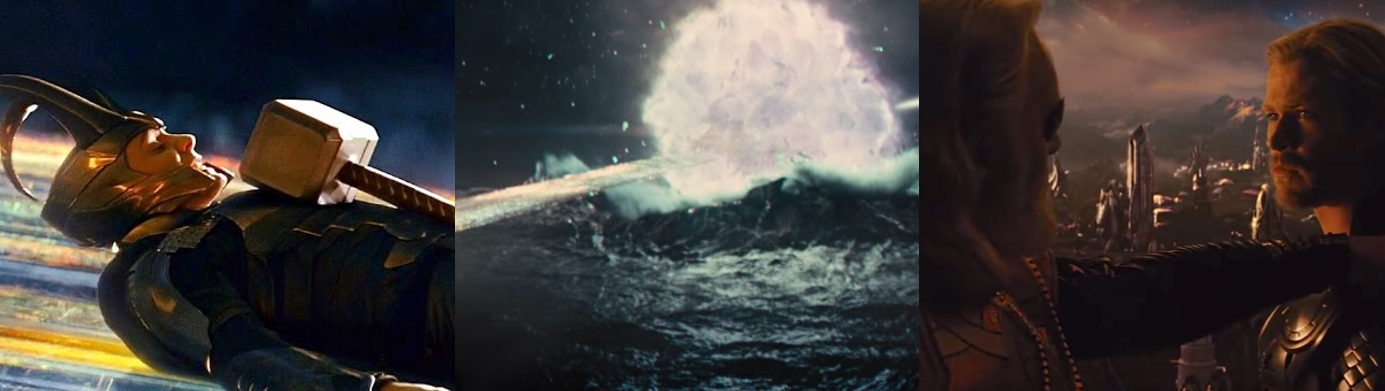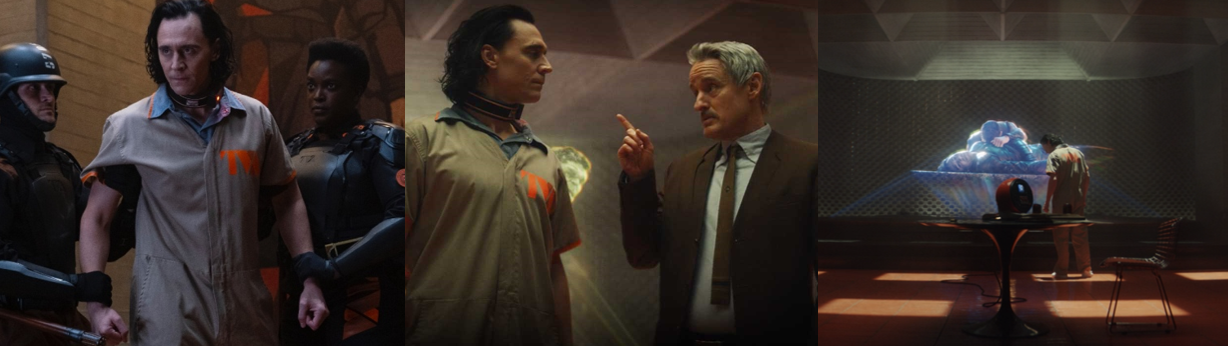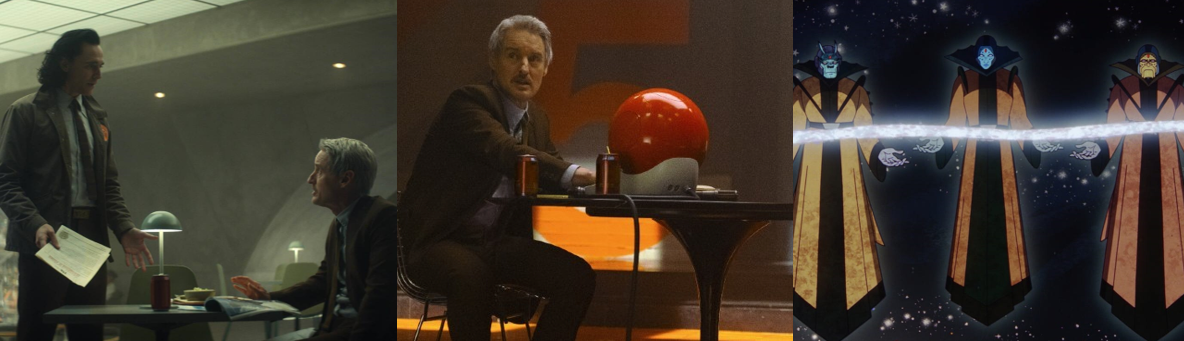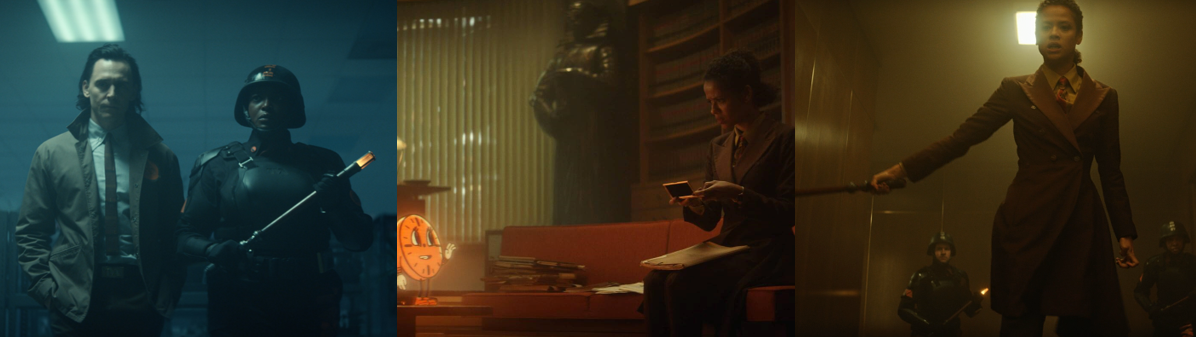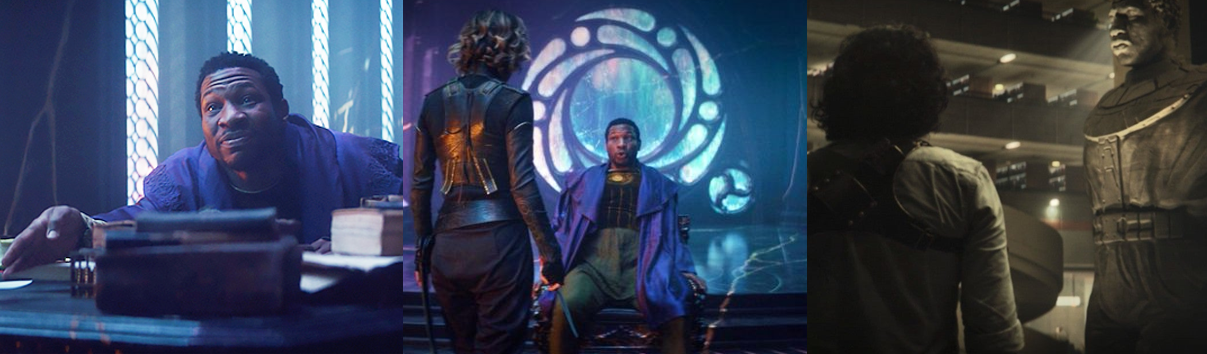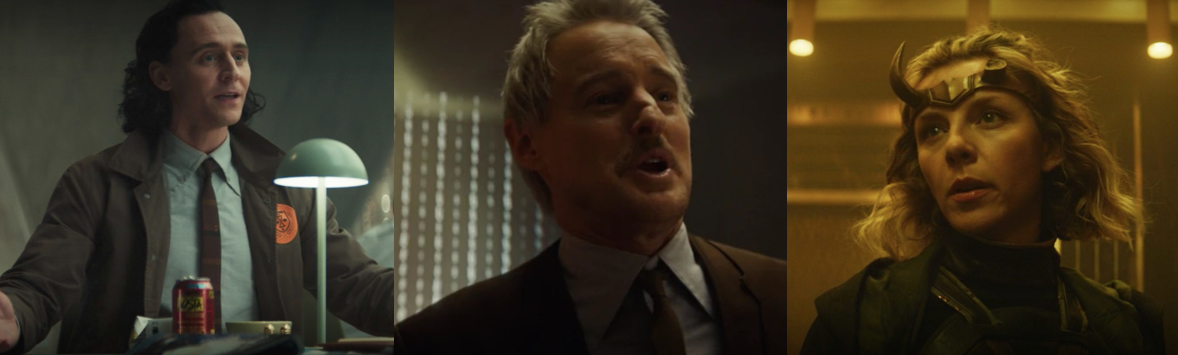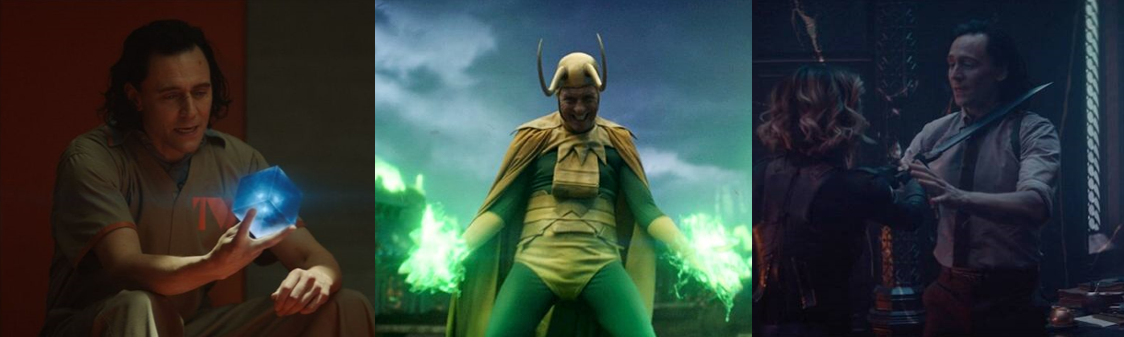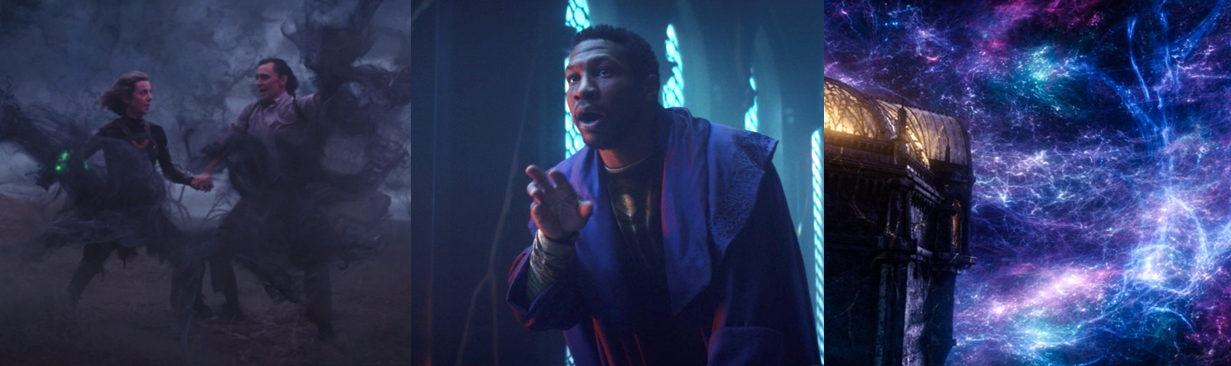

Screen Time: Loki (Season Two)

Season Two

Air Date: 5 October 2023 to 9 November 2023
Network: Disney+
Stars: Tom Hiddleston, Owen Wilson, Sophia Di Martino, Ke Huy Quan, Wunmi Mosaku, and Jonathan Majors

The Background:
While Marvel Studios expanded into television ventures with the likes of Agents of S.H.I.E.L.D. (2013 to 2020) and various Netflix productions, the launch of streaming service Disney+ led to MCU godfather Kevin Feige producing various content to further explore the continuity of the MCU. Although Marvel Studios somewhat flooded the market with shows and movies, the first season of Loki (Herron, 2021) was met with critical acclaim for its characterisations and unique narrative. Since Tom Hiddleston’s portrayal of Norse God of Mischief Loki Laufeyson has been consistently popular over the years, a second season was all-but inevitable, especially considering the first ended on a massive cliff-hanger. Principal directors Justin Benson and Aaron Moorhead were excited to tackle the mischievous outcast and further explore Loki’s unlikely position as the saviour of the multiverse. While the writers strived to showcase new layers to Loki and the show’s returning characters, they faced an uphill battle in addressing lingering plot threads regarding Jonathan Majors’ multiple characters after he was accused of all kinds of wrongdoings and caused Feige to rejig the plans for Majors’ Kang the Conqueror. Still, the season aimed to dive deeper into the weirder side of the MCU while still focusing on character-driven stories, explore Loki’s emotional turmoil, and further set the stage for upcoming MCU projects. Released weekly on Disney+, Loki’s second season was widely praised for its bittersweet conclusion, the culmination of Loki’s selfless character arc, and the compelling performances.

The Plot:
Uncontrollably warping through time, an alternate version of Loki (Hiddleston) attempts to reunite with his female “time variant”, Sylvie Laufeydottir (Di Martino), and warn the Time Variance Authority (TVA) of the threat posed by variants of “He Who Remains” (Majors).

The Review:
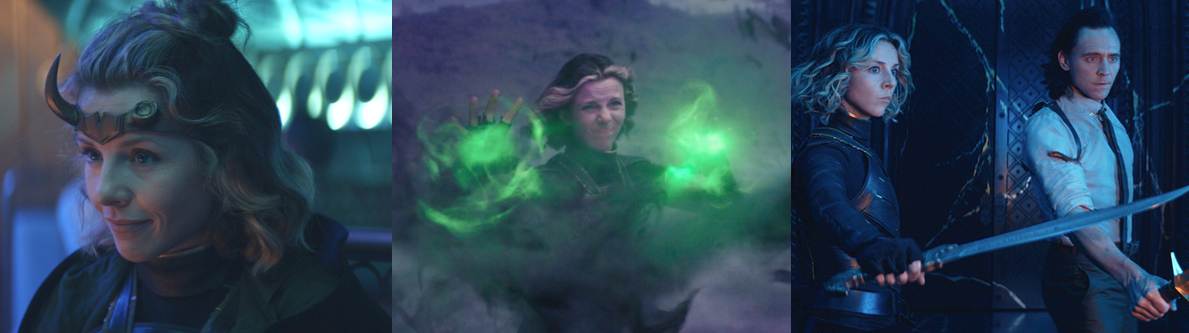
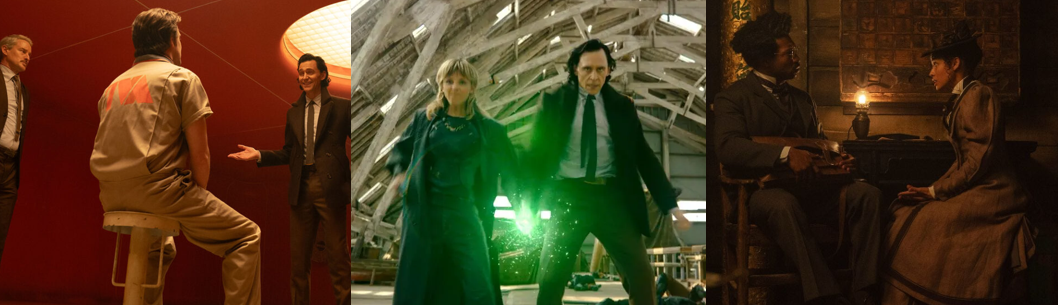
If you’re anything like me and haven’t watched Loki’s first season since it originally aired, you’re in luck as season two opens with a helpful recap, largely narrated by the sentient artificial intelligence Miss Minutes (Tara Strong), that summarises the key events of the first season. Namely, the deceptive nature of the TVA (whose members are variants from destroyed (or “pruned”) timelines) who’ve had their memories continually wiped) and Loki and Sylvie’s climactic confrontation with He Who Remains. This saw Sylvie impulsively murder the enigmatic overseer, plunging the “Sacred Timeline” into chaos as the one coherent timeline diverged into an infinite number of strands. The first season saw this version of Loki, plucked from the peak of his villainous arc, transformed from a mischievous and self-centred antagonist into a reluctant hero, one who came to care for his allies at the TVA, particularly Mobius M. Mobius (Wilson). The first season concluded with Loki deposited in a version of the TVA where no one remembers him and a variant of He Who Remains is now immortalised as the founding father of the TVA. Since no one remembers him and Loki is renowned as a troublemaker, the TVA initially seeks to apprehend and prune him, forcing him to frantically flee through their offices since the time-displaced TVA has safeguards that negate his magic. As if this wasn’t bad enough, Loki finds himself painfully warping to different points in time where the TVA either remember him or don’t, something that should be impossible within the TVA but appears to be a result of one of the many temporal paradoxes and incursions peppering this season. Unfortunately, Loki’s “time slipping” is essentially resolved by the end of the first episode, “Ouroboros” (Benson and Moorhead, 2023), thanks to a time paradox Loki initiates that sees forgotten TVA technician Ouroboros/OB (Quan) cure Loki’s ailment using a “Temporal Aura Extractor”.
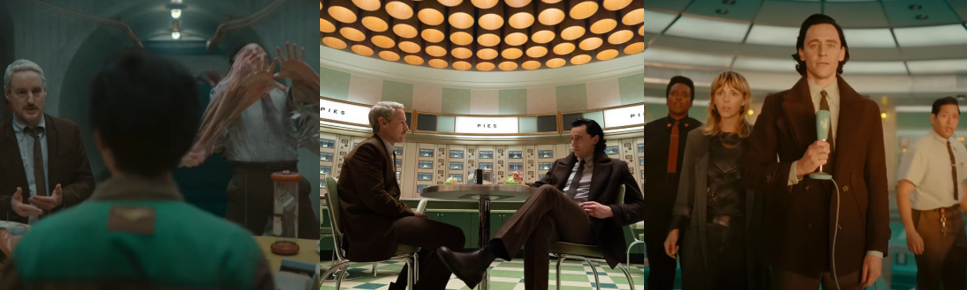
Despite being pulled through time, Loki is determined to help and defend his friends at all costs.

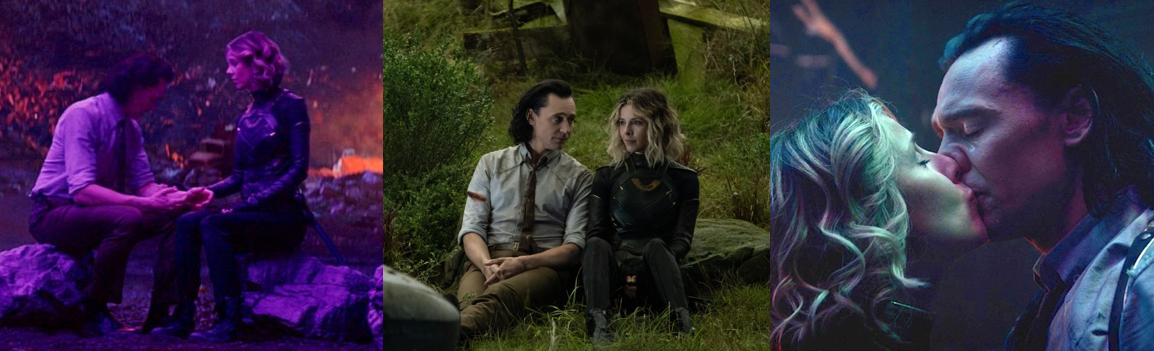
This desperate gamble, which sees Mobius brave a cosmic storm and approach the wildly unstable “Temporal Loom”, only succeeds because Mobius risks his life for his friend and Loki willing prunes himself from every timeline, stabilising his condition and allowing him to return to work alongside Mobius. However, Mobius is sceptical of Loki’s warnings about He Who Remains, an enigmatic variant whose death kick-started the catastrophe that threatens the TVA (and all reality) as he has a nigh-infinite army of variants waiting to wage war on time itself. Although Hunter B-15 (Mosaku) convinces the fractured TVA council (left in disarray after Ravonna Renslayer’s (Gugu Mbatha-Raw) betrayal) not to eradicate the branching timelines and thus sparing other variants of losing their worlds like they did, the TVA is largely unconvinced of the larger threat posed by He Who Remains, even after Loki dramatically reveals that he’s deceived them all. While dealing with He Who Remains is Loki’s top priority, he’s also desperate the safeguard Sylvie from the warmongering General Dox (Kate Dickie) and her chief agent, Hunter X-5 (Rafael Casal), who dismiss Hunter B-15’s arguments and launch a devastating attack on the splintering timeline before they’re apprehended. Distressed at the way their relationship fell apart over their disagreement concerning He Who Remains, Loki’s keen to make amends and recruit Sylvie to his cause, only to find her bitter at the TVA, angry at his loyalty to the organisation, and content to live a mundane life as a McDonald’s employee. This season really showcases how much Loki has changed as he’s extremely loyal to Mobius, makes fast friends with OB, and sees that the TVA saves more lives than it ends and is a necessary function to defend against He Who Remains. While interrogating Hunter X-5 (who abandons his mission to become successful actor “Brad Wolfe”), Loki takes the high ground when his moral stance is questioned and even councils Mobius when he lets Brad get under his skin, having learned to empathise with others and prioritise saving lives over taking them.
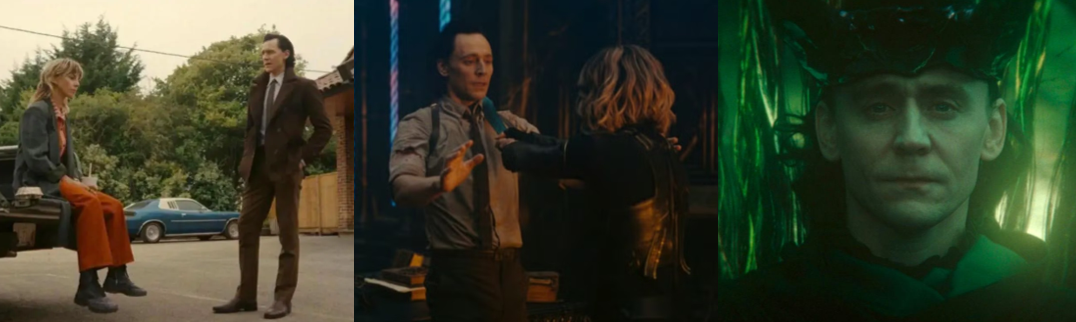
Though Loki and Sylvie clash, her perspective motivates Loki to take his rightful place at the End of Time.

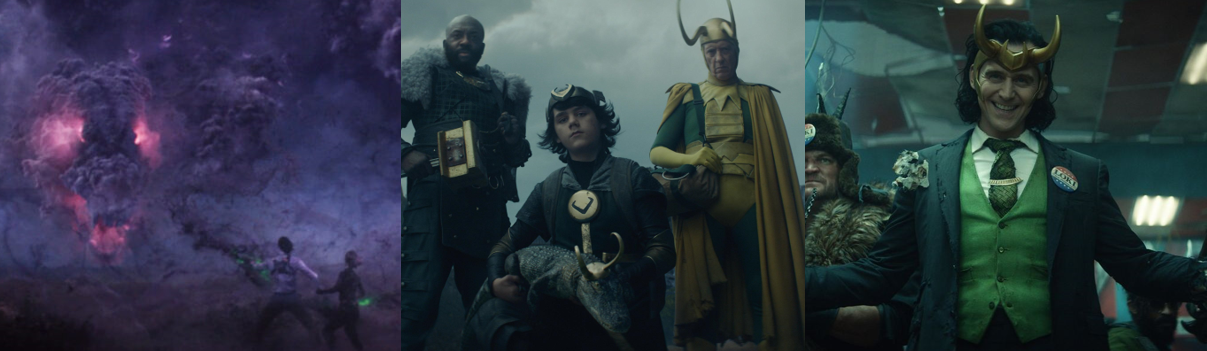
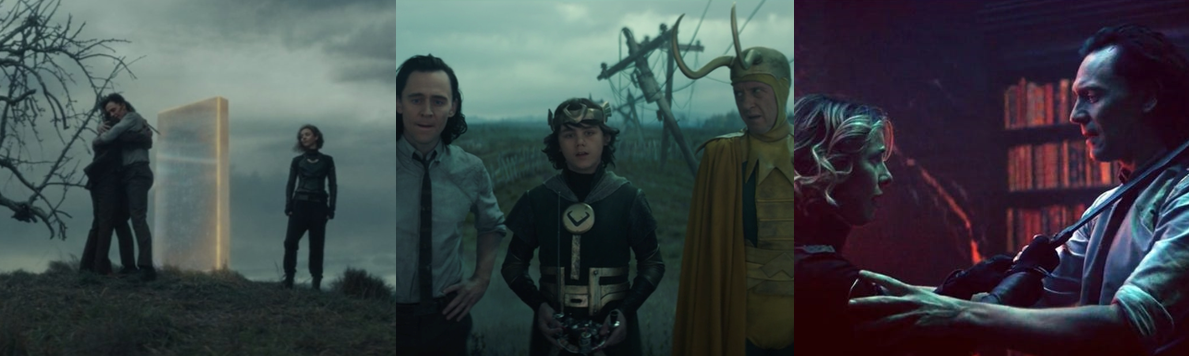
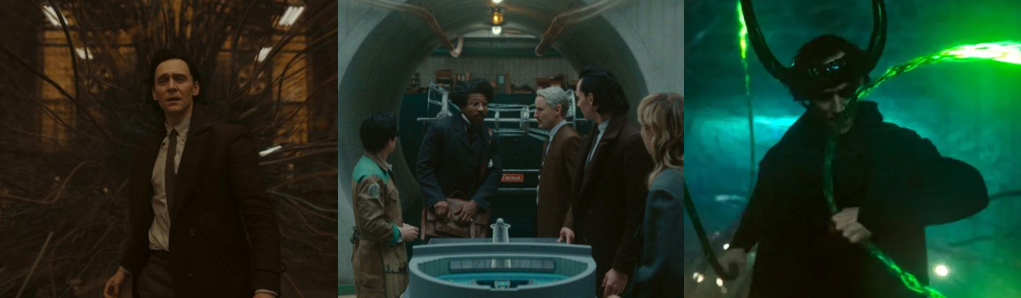
While Loki’s still mischievous at times, using his powers of illusion to subdue Brad and then colluding with Mobius to threaten Brad into giving up Sylvie’s location, he demonstrates incredible patience, enduring Mobius’s more relaxed approach to field work, OB’s eccentricities, and Sylvie’s pig-headedness all to try and reason with them. When the likes of Brad and Renslayer call out Loki’s hypocrisy, he admits to having done bad things and experienced jealousy and rage in the past but is seemingly committed to doing good now. However, during his desperate attempt to time slip back to the TVA and prevent the Temporal Loom from exploding, Sylvie forces Loki to admit that, deep down, he’s motivated by a selfish desire to not be alone, leading him to briefly abandon his cause. Loki’s despair at his friends forgetting him and his desperate needs to assemble their variants in “Science/Fiction” (Benson and Moorhead, 2023) is palpable, with him being both frustrated and hurt when they forget him and enduring centuries of time slipping to try and save them all. When his efforts are doomed to fail, a chance comment by Sylvie sees Loki return to the citadel at the End of Time to endure another doomed time loop as Sylvie’s past self refuses to listen to reason and he cannot bring himself to kill her. Ultimately, Loki’s given the same choice as in season one: maintain the Sacred Timeline or risk total annihilation. While Sylvie advocates for free will, even if it means everyone dying, Mobius relates the burden of making sacrifices for the greater good. Thus, rather than risk his friends, Loki destroys the Temporal Loom and rearranges the disparate timelines into something more stable, a tree-like structure resembling Yggdrasil, with himself at the centre. While he previously admitted his fear of being alone, Loki gratefully assumes his duties with a content smile, having finally found his place as a more benevolent overseer of the many timelines.
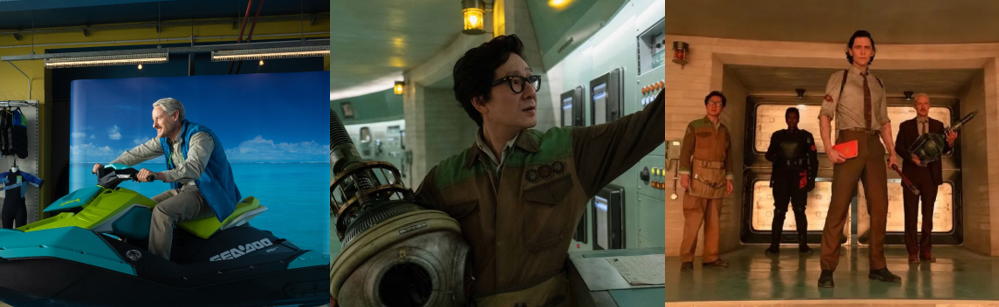
Even variants of Loki’s beloved friends anchor him and drive him to safeguard all timelines.

While Mobius initially has no idea who Loki is, his memories quickly return in fragments and he’s soon following his instincts and bringing Loki to OB and risking having his skin peeled off by the Temporal Loom to help his friend. Though still distracted by jet skis, we get a few extra layers to Mobius this season as he adamantly refuses to peek into the many timelines and see the life he was denied by He Who Remains, being content with his job and enjoying it. However, after Loki encounters Mobius’s jet ski salesman variant, Brad, a single dad who’s awestruck that he’s essential to saving reality, Mobius eventually decides to take a break from the TVA. After plunging the Sacred Timeline into chaos, Sylvie retreats to 1982 and lives a content, if mundane, life as a McDonald’s employee. Adamant that she can handle any variants of He Who Remains, Sylvie angrily refuses to help Loki or the TVA, believing that free will is more important than anything. While Sylvie begrudgingly aids Loki despite this, she’s forced to join his group when her beloved timeline is spaghettified by the exploding Temporal Loom, yet still believes she was right to kill He Who Remains. Loki’s also aided by Casey (Eugene Cordero), a technician who helps Loki and Mobius track their targets, Hunter B-15 (who’s determined to stop haphazardly pruning timelines and thus horrified when Renslayer murders General Dox and her followers), and newcomer OB. An enthusiastic and quirky technician, OB wrote the TVA guidebook after being inspired by Victor Timely (Majors), who was in turn inspired by the same guidebook after being gifted it by Renslayer to turn him into He Who Remains, creating a paradox. Even OB’s unsuccessful sci-fi writer variant Doctor A.D. Doug is instrumental in helping Loki by cobbling together a crude TemPad and helping him master his time slipping. OB also spends what’s said to be centuries working with Timely to teach Loki about particle physics. Though this plan ultimately fails no matter how hard or fast Loki tries to utilise the “Throughput Multiplier” as the Temporal Loom is incapable of handling infinite timelines, the influence of Loki’s friends has a profound impact on him and he willingly gives up his personal freedom to safeguard their lives.
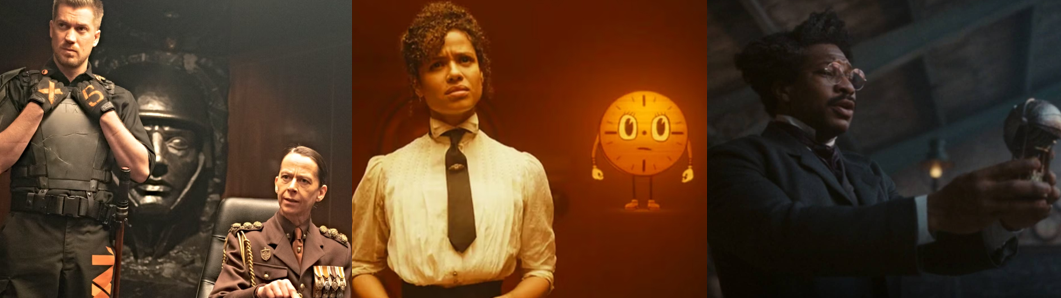
While Dox and Renslayer present immediate dangers, Timely is potentially a more destructive threat.

While Loki is terrified of the imminent danger posed by the variants of He Who Remains, they’re a very vague and ominous existential threat, one not seen in this season. Thus, the danger posed by the stubborn General Dox initially takes priority. Although Loki and Mobius apprehend Dox and her loyalists after working over Brad, they’re too late to stop her destroying most of the timelines. Encouraged by Judge Gamble (Liz Carr), Hunter B-15 attempts to find common ground with General Dox to safeguard the TVA, only for her and her loyalists to be gruesomely executed by Renslayer for refusing to join her. Brad does join Renslayer and Miss Minutes but immediately regrets it and ultimately turns on her soon after, finally feeling remorse after spending the entire season being a complete asshat. Renslayer forms a shaky alliance with Miss Minutes, hopping to 1893 to try and coerce Timely into joining with them, only for the eccentric Timely to ditch them since he’s so against a partnership and rightfully horrified when Miss Minutes reveals she’s in love with his counterpart. Spurned by Timely’s refusal and him choosing to assist Loki, Renslayer and Miss Minutes renounce He Who Remains, especially after Renslayer learns that she was once his commander and was discarded by him, to wage their own campaign against the TVA. Loki’s horrified upon seeing Timely, who shares the same visage as He Who Remains, and at the stuttering con artist’s potential to become He Who Remains, but soon defends the bumbling scientist and even respects him for braving the cosmic storm. Though a con man, Timely has a grand imagination and, inspired by the TVA guidebook, has the potential to become what Loki and Sylvie fear most. Ultimately, even Sylvie recognises that Timely isn’t the same man and he proves he’s committed to doing the right thing, even if it costs him his life. When trying to prevent the destruction of all reality, Loki confronts He Who Remains again, learning that he perfectly planned for all eventualities and that the risk of multiversal war remains as strong as ever. However, Loki’s sheer determination to find another way and ensure everyone gets the chance to thrive wins out, with the reorganised TVA shown to be actively hunting the variants of He Who Remains and presumably ending whatever threat they pose to the MCU.
The Summary:
Loki’s second season picks up right where the first one ended but presents a narrative under constant pressure from a few existential threats. Obviously, the danger posed by the unseen variants of He Who Remains is most pressing, and one Loki is eager to guard against, but it’s largely a non-factor here, especially compared to the imminent danger posed by the Temporal Loom. I initially believed season two who revolve around Loki’s sporadic time slipping but this is sadly cured by the end of the first episode. It does make a dramatic return by the finale, “Glorious Purpose” (Benson and Moorhead, 2023), to depict Loki repeating the same loop over and over for centuries, desperately trying to speed up OB’s plan and failing each time. While this is a great way to emphasise Loki’s newfound sense of devotion to his friends and commitment to saving countless lives, it is strange that he didn’t think to time slip further back sooner. There are some fun paradoxes in this season due to this mechanic, though, with Loki jumping to the future, where the TVA is moments from destruction, encountering himself at different times throughout the season, and quickly building a friendship with OB by consulting with him in the past and those memories aiding Loki and Mobius in the present. Unfortunately, this gimmick isn’t sustained throughout the season and, despite many characters glancing at their alternative timelines, we don’t explore many variant realities here. Loki spends all of “Science/Fiction” in one, only for his primary plan to fail and for desperation to drive him to reliving the same moments, kind of making this episode a waste even if it does finally give us the imagery of Owen Wilson on a jet ski.
While the character moments are on point, Timely was an aggravating addition.

The performances were as captivating as ever in this season. I particularly liked the friendship between Loki and Mobius, with Loki insisting on sitting his friend down and discussing his feelings over a slice of pie, being exasperated by his more cerebral approach in the field, and bickering about which of them should brave the cosmic storm and install the Throughput Multiplier. Mobius is explored a little more here, determined not to look into his other timelines out of fear that they will be better or worse than the life he’s devoted himself to, and Loki shows genuine affection towards him to show how far he’s progressed as a character. This extends to the standout character of the series, OB, whose infectious demeanour steals every scene and quickly makes him an ally Loki fights to protect. Sylvie is very different this time around, being somewhat jaded and content to lay down her arms unless challenged. She opposes Loki’s moral high ground and offers an extreme perspective on events but is ultimately an advocate for free will and willing to make any sacrifice to ensure people have that right. If there’s a weak link here, it’s Jonathan Majors, whose oddball, stuttering, bungling Timely really drags down every scene he’s in. I liked that he was a conman who sold faulty inventions and that he constantly switched his allegiance depending on what was best for him, but his eccentric personality and overly theatrical delivery quickly became grating. He does surprisingly showcase a great deal of bravery and fortitude, however, even earning Loki’s respect when he risks his life to save reality and ultimately chooses to take a different path to avoid becoming He Who Remains. Although Renslayer is more of a bit part this time, I liked how bitter and twisted she was and the rivalry between her and Miss Minutes, who both vie for Timely’s affections. I would’ve preferred Renslayer to play a larger role as a dual antagonist alongside Miss Minutes, perhaps with them replacing Brad in some way, as she felt like an afterthought by the end.
Despite some compelling moments, this season failed to live up to its potential in my eyes.

While Loki’s second season certainly looks the part and delivers some stirring character moments from the title character, who finally fulfils his “glorious purpose” and finds his place in reality, I did find it lacking. The entire season is essentially a do-over of the first season’s finale, with it all boiling down to the same choice between killing He Who Remains and risking war or maintaining the lie/sanctity of the Sacred Timeline. As Loki effectively ends up taking the place of He Who Remains and overseeing the newly formed timelines, I can’t help but feel like the show could’ve been reorganised to take the best episodes and ideas and present them as a ten-episode series that makes the same point. I was hoping this season would be about an unstable, time slipping Loki bouncing around the infinite multiverse encountering variants of He Who Remains and trying to prevent his creation. Instead, it was largely a race against time to find ways to repair and stabilise the Temporal Loom, with each approach failing because Loki is seemingly doomed to fail, especially at being anything but a villain. These aspects are where Loki shined the most, the ways it presented new aspects of Loki’s personality. I loved how he encouraged Brad’s criticism and seemingly veered towards his villainous ways when interrogating him, and that Loki constantly takes a higher path, offering support to his friends when they lose control and constantly trying to empathise with others. This season is, however, let down somewhat by the lack of variety in the time periods visited, with most of the action happening in the increasingly chaotic TVA, and failing to explore the multiverse as widely as I’d hoped. As a character-driven season, it’s pretty fascinating, but many of the narrative beats are recycled from the last season. Loki’s encounter with He Who Remains isn’t that much different to last time and, while its bittersweet to see Loki replace He Who Remains, it feels like all this madness could’ve been avoided if he’d just done that in the last season. Still, season two did a good job tying up some loose ends and giving many of these characters a satisfying send off, I just think it had the potential to be even better.

My Rating:

Rating: 3 out of 5.

Pretty Good

Did you enjoy the second season of Loki? Were you happy to see Loki evolve into a more heroic and balanced character? Did you also enjoy the friendship he shared with the likes of Mobius and OB? Were you also disappointed that the time slipping aspect was downplayed? Did Victor Timely also annoy you and what was your reaction when Loki finally took the place of He Who Remains? Drop your thoughts on Loki below, check out my other Asgard-adjacent content, and donate to my Ko-Fi to fund more reviews like this.

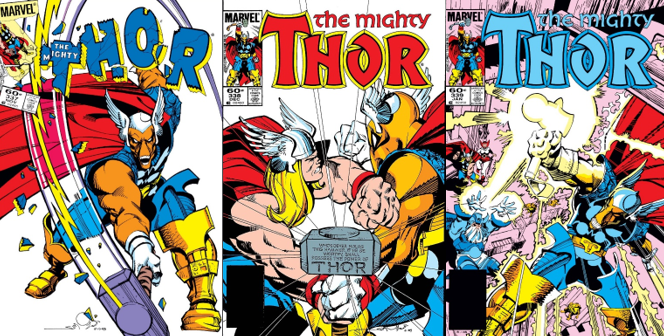
Back Issues [Thor’s Day]: The Mighty Thor #337-339


In August 1962, Stan Lee, Larry Lieber, and Jack Kirby debuted Thor Odinson, God of Thunder and cosmic adventurer, who became another of Marvel’s most successful and versatile characters. As today the first Thursday (or “Thor’s Day”) of the month, this is the perfect time to celebrate the God of Thunder!


Writer and Artist: Walter “Walt” Simonson

Story Title: “Doom”
Published: 2 August 1983 (cover-dated: November 1983)

Story Title: “A Fool and His Hammer…”
Published: 30 August 1983 (cover-dated December 1983)

Story Title: “Something Old, Something New…”
Published: 4 October 1983 (cover-dated: January 1984)

The Background:
After debuting Doctor Robert Bruce Banner/The Incredible Hulk, legendary Marvel Comics writer, editor, and creator Stan Lee took inspiration from Norse legends to create an even more powerful superhero. Working alongside his brother, Larry Lieber, and the immortal Jack Kirby, Marvel Comics introduced a new version of the Norse God Thor Odinson, who claimed ownership of Journey into Mystery before replacing it with his own self-titled comic in 1970. Thor was a founding member of Marvel’s premier super team, the Avengers, regularly clashed with his adopted brother, Loki Laufeyson, and was even transformed into a frog! In 1983, writer and artist Walt Simonson sought to shake up The Mighty Thor by introducing a new, alien character, Beta Ray Bill the Korbinite, who, despite his monstrous appearance, would not only be eloquent and heroic, but also worthy of lifting Thor’s enchanted hammer, Mjölnir. After clashing with Thor in his three-issue debut, Beta Ray Bill gained an enchanted weapon of his own, Stormbreaker, and operated as a cosmic superhero, battling the likes of Surtur and the mythical “Great Beasts” and even driving the mighty Galactus to the brink of starvation. Though a largely obscure character amidst Marvel’s heavy hitters, Beta Ray Bill has a strong cult  following, headlined a few self-titled comics, and has often appeared in videogames as a skin for Thor. Beta Ray Bill has also appeared in a few Marvel cartoons, with The Avengers: Earth’s Mightiest Heroes (2010 to 2012) loosely adapting his debut, though he was cut from an early draft of Thor: Ragnarok (Waititi, 2017).

The Review:
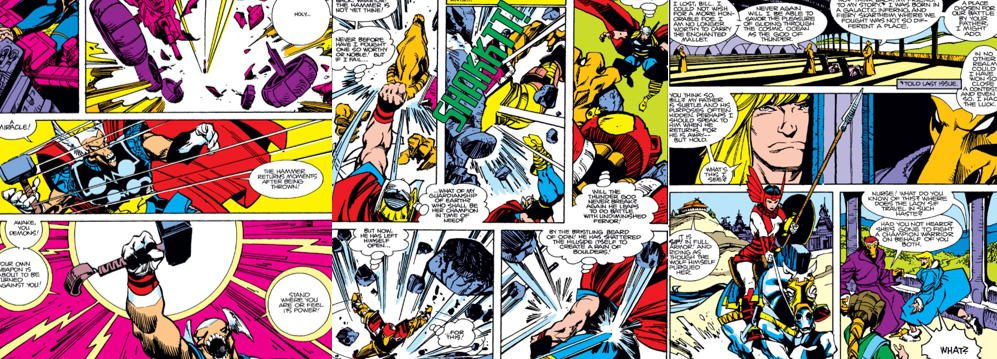
The ballad of Beta Ray Bill begins with the destruction of a faraway galaxy, which leaves behind a chunk of “molten ingot of star-stuff” that’s grasped by a leering, titanic cosmic being wielding an equally massive pair of tongs. The impact of the star-stuff being smashed against a gigantic anvil reverberates across “a billion billion worlds”, though they’re buried beneath the sounds of Grant Park, Chicago, where Doctor Donald Blake, alter ego of the Mighty Thor, is taking a stroll. Somewhat envious of humanity’s carefree nature, Dr. Blake ruminates on how blessed he is to be amongst mortals when he’s suddenly abducted by Colonel Nick Fury of the Supreme Headquarters, International Espionage and Law-Enforcement Division (S.H.I.E.L.D.) Demonstrating knowledge of Dr. Blake’s dual identity, Fury flies the two to the strangely phallic looking S.H.I.E.L.D. Helicarrier so Agent Jasper Sitwell can fill him in one their current crisis. Agent Sitwell explains to Thor that S.H.I.E.L.D. developed a hyper-advanced probe to transmit pictures of the cosmos back to Earth and discovered an alien vessel destroying an entire star to refuel its engines. Concerned about a potential threat, Fury requests Thor check out the ship and, curious himself, the God of Thunder agrees. While Lady Sif seeks a great battle to ease Thor choosing “Midgard” over her, Balder Odinson drowns his sorrows, and Volstagg hopes to dine with better company, Loki’s abject boredom is suddenly broken by the arrival of the alluring Lorelei, whose very words send Asgard’s warriors fleeing and whose presence intrigues the God of Mischief. When the story jumps back to Thor, he arrives at the alien vessel’s location courtesy of Mjölnir, Thor presses his pursuit, only to be repeatedly blasted by the ship’s energy cannons.

Thor’s power is usurped by the cybernetic alien Beta Ray Bill, who’s determined to protect his people.

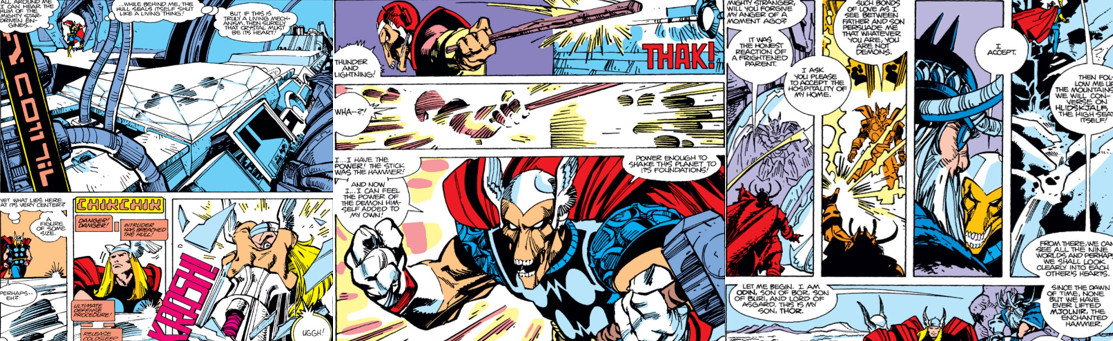
Angered, Thor rips into the ship and is attacking by a monstrous, horse-faced brute who’s the subject of this review. Impressed by Thor’s strength, the imposing cyborg nonetheless attacks, determined to stamp out “all of demonkind” and confusing Thor, since the warrior has clearly mistaken him for some other “breed”. Regardless, Thor matches Beta Ray Bill blow for blow but, in his warrior rage, he forgets his hammer and, having been separated from Mjölnir for too long, magically and forcibly reverts back to his human form! This allows Beta Ray Bill to easily knock the stunned Avenger out, however the damage causes his ship to crash land on Earth. When Nick Fury and S.H.I.E.L.D. surround the ship and try to negotiate, the prideful Beta Ray Bill desperately searches for his foe’s powerful weapon. When he finds only a wooden stick, the cyborg lashes out in anger but is amazed to be imbued with the power of Thor! Suitably empowered, Beta Ray Bill attacks Fury’s forces and revels in his newfound might, only for Odin Allfather to suddenly appear and, mistaking Beta Ray Bill for his son, spirit him to Asgard, leaving Dr. Blake stranded and “forsaken” on Earth! Despondent and heartbroken, Dr. Blake is comforted by Fury, while Beta Ray Bill angrily and blindly lashes out at the Asgardians as they celebrate “Thor’s” return, believing them to be demons. Naturally, Odin immediately realises something’s amiss and demands answers so Beta Ray Bill, ever the hothead, immediately and arrogantly attacks. Odin easily reclaims Mjölnir and finds truth in Beta Ray Bill’s claims that he won the hammer “in combat”. Odin immediately sets to put things right and summons Dr. Blake to Asgard, where he becomes Thor once more, and then apologises to Beta Ray Bill and offers him sanctuary. Wary, Beta Ray Bill demands that the Asgardians prove they’re not demons before he relaxes his guard, so Odin takes the two to the frigid summit of Hliðskjálf to parlay.

Beta Ray Bill bests Thor in a fight to the death and lays claim to Mjölnir.

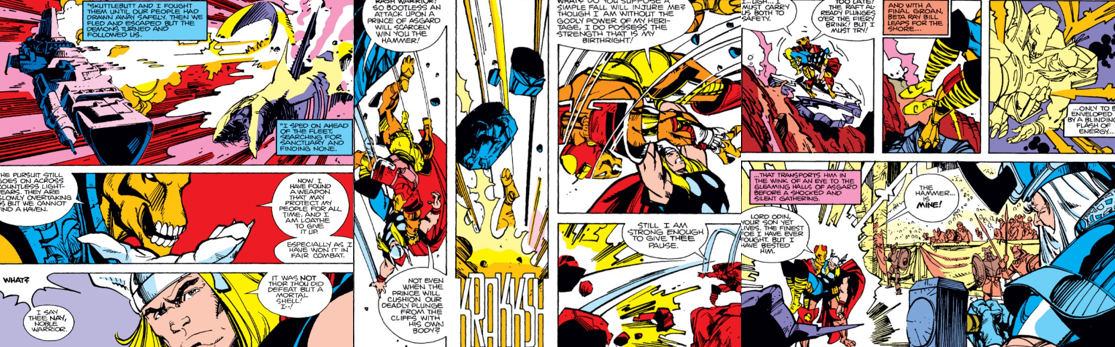
While Loki and Lorelei use their illusions to anger Lady Sif and make her think Thor is cheating on her, Beta Ray Bill tells his story to Odin and his son. Claiming to come from an “ancient and noble race”, Beta Ray Bill tells how his once prosperous people were all-but destroyed when the core of their galaxy suddenly exploded. The survivors fled in spacecrafts and Beta Ray Bill was chosen to be genetically and cybernetically altered into their protector. While leading his people in his warship, the Skuttlebutt, as they slept in cryogenic chambers, Beta Ray Bill was suddenly attacked by destructive demons, whom he’s been pursuing ever since. Determined to use Mjölnir to destroy the demons and safeguard his people, Beta Ray Bill refuses to give up the hammer. Since both his son and the cyborg have valid claims to it, Odin orders them to face each other in equal combat, with the victor claiming the prize and aiding Asgard in battling the demonic horde. Thus, Odin transports the two to Skartheim, a barren and dangerous landscape, for their fight. Beta Ray Bill attacks while Thor searches for more stable ground and the two grapple and exchange blows with equal might and bluster. Impressed by his foe’s strength and conviction, Thor doubles his efforts, unaware that Beta Ray Bill feels the same awe and respect for his opponent. Striking while Thor’s readying his next attack, Beta Ray Bill hurls boulders at the Avenger, one of which Thor tosses back to bring Beta Ray Bill close to a horrific fall into lava. However, when Thor flies in to press his attack, the two warriors collapse from exhaustion. Beta Ray Bill recovers first and, seeing his foe is still unconscious and heading to a nasty end, flies Thor to safety and returns to Asgard victorious!

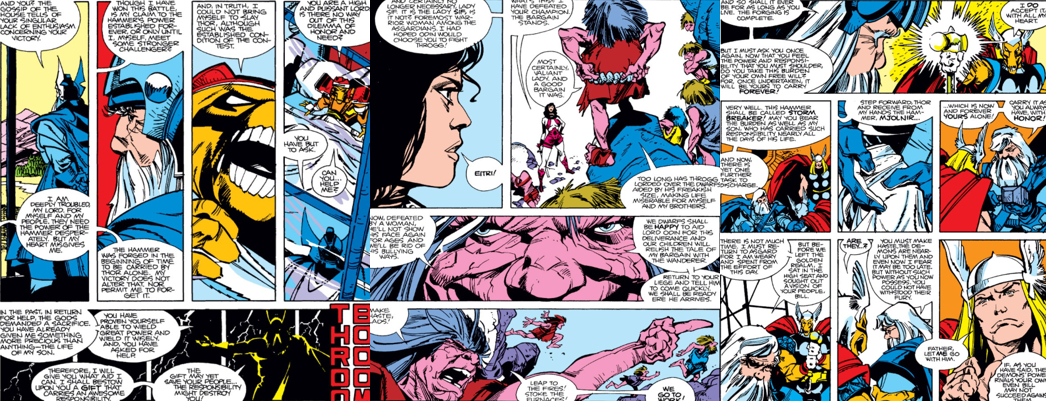
Odin arranges events to gift Beta Ray Bill with his own weapon so he can fight alongside Thor.

When Beta Ray Bill collapses immediately after, Odin has the two brought to the Royal physicians, where the disgusted Lorelei keeps a close eye on them during their recovery, clashing with Lady Sif in the process. Feeling he’s disgraced his father, Thor denounces his Godhood and believes he’s no longer worthy of Mjölnir, while a grateful and concerned Beta Ray Bill worries that he may lose the hammer’s power, as Thor did, and begs Odin to help with his dilemma. Impressed by the bionic warrior’s conviction, Odin travels to the tranquil realm of the dwarfs, Niðavellir, to ask the surly Dwarf King Eitri for a favour. Despite his race being shunned by the Gods, Eitri agrees on the condition that Odin provide their champion with a woman to either best him in combat or “serve as his chattel”. While Thor commends Beta Ray Bill’s victory and wishes him well as Mjölnir’s wielder, determined to forsake his former life, the cyborg humbly points out that his victories have largely been luck. Their conversation is interrupted when Thor spots Lady Sif battling the dwarves champion, the hulking Throgg, as requested by the Allfather. Lady Sif deals first blood to her foe and knocks him unconscious, choosing to spare her grotesque foe the sharp edge of her blade. Eitri reveals that Throgg was a menace who’s now been suitably humiliated, but honours his bargain and commands his people to light the incredible furnaces of Niðavellir, moulding Uru, the material of the Gods, into a mighty battleaxe – dubbed Stormbreaker – that Odin enchants so that its mighty powers will belong to Beta Ray Bill alone. Thus, the cyborg claims his prize, and his power, and vows to wield it proudly. Odin then returns Mjölnir to his son and, learning of the demons’ pending approach upon Beta Ray Bill’s slumbering people, Thor leaps aboard his enchanted chariot, alongside Lady Sif, to meet the threat with his newfound ally.

The Summary:
I’ve always been fascinated by Beta Ray Bill, a monstrous and unlikely wielder of Thor’s magical hammer, and the implications his character has on Thor’s mythos. Until Beta Ray Bill, Thor was a person, not a mantle or a title, despite what the hammer’s enchantment said, with even Thor’s human form being the same personality, just as a mortal to keep him humble. Suddenly, the enchantment wasn’t just a threat to Thor’s ability to command thunder and lightning, it was a promise that any “worthy” champion would essentially become Thor, which opened the floodgates for future stories. While the art is a bit janky at times, this story was very bold and cosmic in its scope, with the narrative punctuated by some unknown, titanic figure forging a massive sword that apparently speaks to a looming threat. There’s also a side plot concerning Lady Sif’s desire to prove herself worthy of Thor’s attention in battle, which actually feeds into the finale when she readily faces Throgg and then insists on accompanying Thor and Beta Ray Bill to battle the demons. The secondary sub-plot concerning Loki and Lorelei’s efforts to discredit Thor was interesting, and clearly sowing the seeds for a future story, but somewhat took away from the battles between Thor and Beta Ray Bill, limiting them to tests of physical strength and dramatic claims by our unseen narrator. I enjoyed the portrayal of Thor here, who starts out so proud and happy to be this all-powerful warrior and then feels so humbled by his losses that he’s ready to give up Mjölnir, only to still be deemed worthy by his father. It’s interesting as it speaks to Thor’s brief wish to be relieved of his responsibilities, and even Beta Ray Bill tries to talk him out of so readily giving up his awesome power, as much as the bionic warrior needs it to protect his people.

An action-packed and thought-provoking debut for an interesting, if grotesque, new hero.

Naturally, Beta Ray Bill is the standout character in these issues. I would’ve loved to see a bit more time and effort spent fleshing out what, exactly, the “demons” are that threaten his people, but it’s enough to know that he’s desperate to protect what’s left of his civilisation from a very real theat. So much so that he willingly allowed himself to be altered, even gene spliced with his people’s most deadly predator and augmented with cybernetics, to serve as their protector. This single-minded need somewhat blinds Beta Ray Bill, leading to him to attack Thor on sight and even lashing out at Odin before he’s convinced that the Asgardians aren’t demons. Despite his horrific appearance, Beta Ray Bill is deemed worthy enough to lift and be empowered by Mjölnir and immediately relishes having the power necessary to wipe out his enemies. Thus, while Beta Ray Bill respects Thor, sparing his life and recognising that his victories may not have been entirely honourable, the cyborg champion is reluctant to give up his newfound Godhood. Depicted as Thor’s equal in terms of strength and conviction, Beta Ray Bill is a stubborn, hot-headed, but ultimately honourable character, so much so that it’s implied Odin is subtly manipulating events to grant him Godly power and that the Allfather goes to Eitri for help, despite the dwarves being wary of their Gods. While Beta Ray Bill proves himself in battle against Thor, Odin compromises and ensures that he’ll never lose his power as long as he wields Stormbreaker, gifting the cosmos a new champion and providing Thor with a powerful and equally worthy ally. This was a fun story with a lot of action, a lot of discussions regarding duty and worthiness, and some fun asides that fed into the main plot. I really dig the juxtaposition of this grotesque alien cyborg being such an honourable warrior that he’s worthy of Thor’s power, and his own Asgardian weapon, and that the two came to respect each other through combat. The art was a bit wonky at times and I would’ve loved to see more of their powers on display in their fights, but this was a great introduction to Beta Ray Bill and I’d happily read more stories featuring him.

My Rating:

Rating: 4 out of 5.

Great Stuff

Are you a fan of Beta Ray Bill? What did you think to his debut story, and the dichotomy of his grotesque appearance and honourable nature? Were you shocked when Beta Ray Bill went toe-to-toe with Thor and lifted his hammer? Did you enjoy seeing the two clash ad that Odin commissioned a weapon for the cyborg? What are some of your favourite Beta Ray Bill moments? Do you have a favourite character, arc, or era in Thor’s long publication history? How are you celebrating Thor’s debut this month, if at all? I’d love to see your thoughts on Thor and Beta Ray Bill in the comments below, and it’d be great if you supported me on Ko-Fi and checked out my other Thor content.

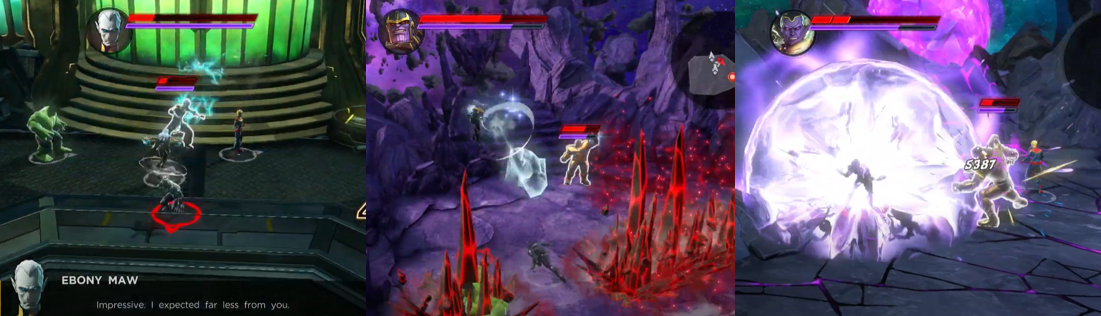
Game Corner: Marvel: Ultimate Alliance 3: The Black Order (Nintendo Switch)

Released: 19 July 2019
Developer: Team Ninja

The Background:
For decades, few videogame publishers were as synonymous with Marvel Comics as Activision, who produced adaptations Marvel’s most popular properties. While some were better than others, Activision’s efforts were largely praised, especially after they partnered with Raven Software on the X-Men Legends games (2004; 2005). Activision and Raven Software expanded their scope to the rest of the Marvel universe with Marvel: Ultimate Alliance (2006), a largely successful team-based brawer praised for improving upon its predecessors. Though now delisted, it was followed by a sequel three years later, courtesy of Vicarious Visions, which tweaked the gameplay with team-based attacks to encourage experimentation. Though Marvel: Ultimate Alliance 2 (2009) was praised for its branching storyline, the stripped down roleplaying mechanics were criticised. While it was also delisted in 2020, fans were clamouring for a follow-up and, just ten years later, Team Ninja stepped in to work alongside Marvel in reviving the franchise. Seeking to place additional emphasis on combat, the developers explored the cosmic scope of the Marvel universe by including the Infinity Stones and lesser-known characters and chose to make the title a Nintendo Switch exclusive after developing a close relationship with Nintendo. Although Marvel: Ultimate Alliance 3: The Black Order was the sixth best-selling game in its first week and was later bolstered by extensive downloadable content (DLC), it was met with mixed reviews that praised the colourful action but criticised its lack of innovation.

The Plot:
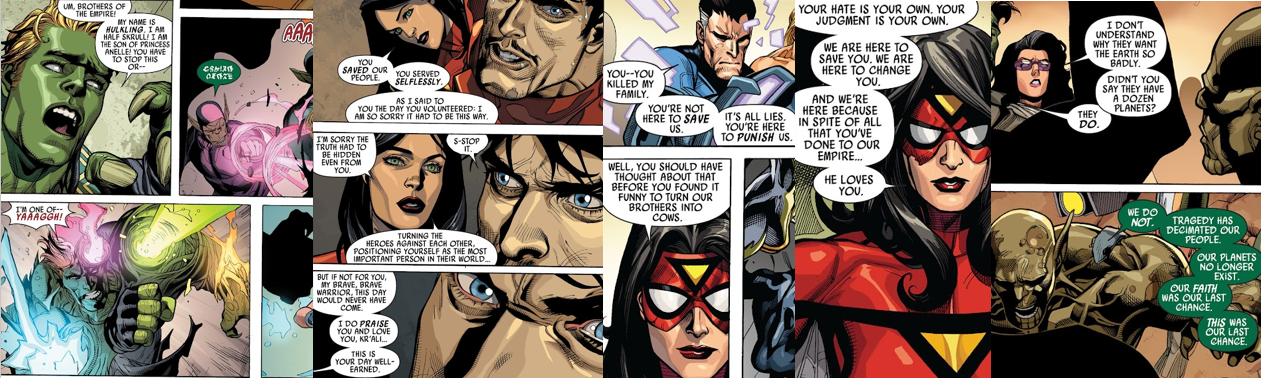
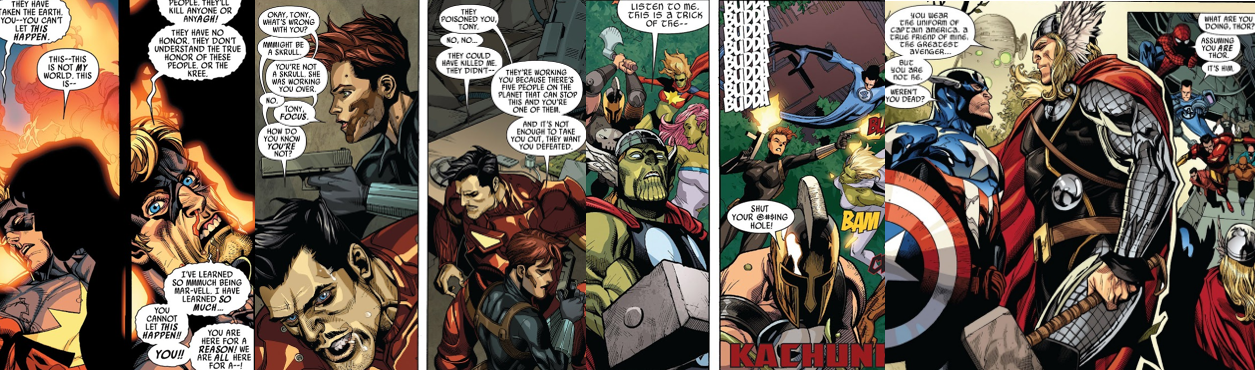
While battling Nebula and Ronan the Accuser, the Guardians of the Galaxy stumble upon a plot by the mad titan, Thanos, to collect the six Infinity Stones. Although they scatter the Stones, Thanos’s acolytes, the Black Order, pursue the gems, prompting an alliance of Earth’s mightiest heroes to retrieve them first.

Gameplay and Power-Ups:
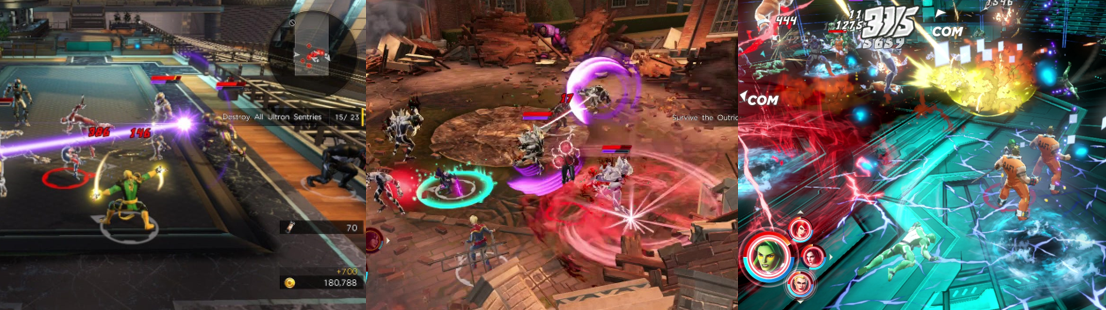
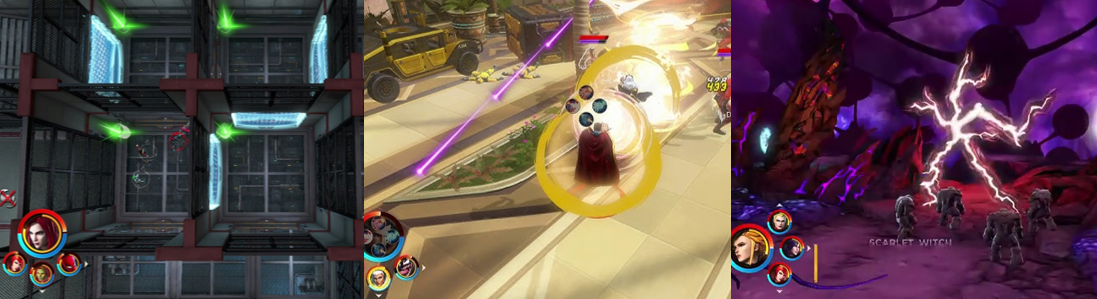
Like its predecessors, Marvel: Ultimate Alliance 3: The Black Order is a team-based action role-playing game in which players assemble a squad of four heroes from across the Marvel universe to battle various nefarious baddies, primarily the titular Black Order, who are hunting the six all-powerful Infinity Stones on behalf of their master, Thanos. The game offers five save slots, two initial difficulty levels, and a base roster of thirty-six playable characters, with many being encountered as you play through the story and joining your alliance either after fighting alongside you or being freed from some kind of mind control. Marvel: Ultimate Alliance 3 offers three controller configurations, thankfully none of which involve motion controls, and allows you to toggle overlays, notifications, tips, and other onscreen elements from the “Settings” menu. These include altering the camera placement, which enables a lock-on feature by pressing in the right stick, though the camera generally remains more focused on whichever character you’re controlling rather than offering a bird’s eye view as in the last two games. Although you can fight alongside friends either locally or online, you switch between your teammates with the directional pad (D-pad) when playing alone and your computer-controlled partners are very useful in a fight, attacking, enabling team attacks, and reviving defeated characters without any input from you. Pressing A sees you interact with the environment to activate consoles, pick up or move certain objects, and talk to other characters. You jump with B, executing a double jump, swinging from webs, or flying depending on which character you’re playing as, and throw light attacks with X and heavy attacks with Y. These can be strung together to perform basic combos and you can also perform a mid-air attack and throw objects (like bombs and missiles) by pressing Y. You block incoming attacks by holding the Z trigger and tap it to dodge, and collect glowing red orbs from defeated enemies or smashed crates to restore health, blue orbs to refill your Energy Point (EP) gauge, and credits to spend on upgrades.

Combat is thick, fast, chaotic, and constant thanks to loads of enemies and character abilities.

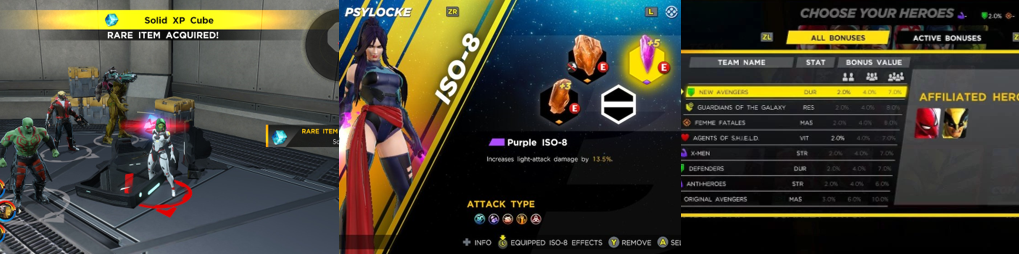
As in the last two games, each character has specific abilities tied to their superpowers or superhero traits. You activate these by holding the Right trigger and selecting an icon using the D-pad; using Abilities drains your EP, however, and each Ability comes with a different cost. However, these attacks allow you to stun, stagger or deal elemental damage to enemies using Peter Parker/Spider-Man’s webs, Thor Odinson’s lightning, and Doctor Robert Bruce Banner/The Hulk’s incredible strength. Many characters have projectile attacks in their arsenal, such as Wade Wilson/Deadpool firing guns and Scott “Slim” Summers/Cyclops blasting his eye beams, while others cause splash damage or specific buffs, like Piotr Rasputin/Colossus being able to reflect projectiles and Wanda Maximoff/The Scarlet Witch healing her allies. Some, like James “Logan” Howlett/Wolverine, have passive abilities that allow them to automatically regenerate health as they walk around; others, like Johnny Blaze/Ghost Rider and Ororo Munroe/Storm, specifically deal in elemental damage. Character’s Abilities can also be mixed and matched by holding ZR and pressing one of the face buttons (or pressing A when prompted); this sees two characters attack in a combo for additional damage. As you dish out and take damage, you’ll also build the Extreme (EX) Gauge). Once full, you can press L and R up to three times to have two to four of your teammates perform a devastating combination attack that’s great against bosses. While the various cannon fodder you fight are easily dispatched, larger commanders and bosses need their “stun” meter drained before you can really put a beating on them and others (and certain treasure chests) require specific combination attacks to breach their shields. Defeating enemies sees your characters gain experience points (XP) to level-up, increasing their statistics (attack, defence, etc), though you can also use the various Orbs you find to manually level-up. Each character’s special Abilities can also be further enhanced using Ability Orbs and credits, reducing the EP cost and increasing their damage, among other benefits. You can also earn “Team Bonuses” depending on your team selection: pick a group of X-Men, for example, and your strength or resistance stat will increase, while picking characters of royalty ups your maximum energy stat.

Search for chests to gain currency and other expendables to upgrade and buff your alliance.

Although you can’t equip gear to your characters, the boss battle against the Destroyer armour sees you temporarily empowered by Asgardian magic and you can eventually equip your team with “ISO-8” crystals, coloured stones that enhance their attack power, resistance to elements, or critical hit ratio, among others. You can further upgrade these with credits and ISO-8 capsules, though some of the rarer ones will also debuff you (for example, your attack my increase but your defence will decrease accordingly). You’ll also inevitably gain access to the Strategic Hazard Intervention Espionage Logistics Directorate (S.H.I.E.L.D.) Lab, which acts as the game’s skill tree. By spending credits and Enhancement Points (EP), you can further increase your team’s overall attack, defence, resistance, vitality, and such and even unlock additional ISO-8 slots (with more being earned by levelling-up). You can also enter the S.H.I.E.L.D. Depot from the main menu to purchase additional costumes and social icons by spending S.H.I.E.L.D. Tokens. Marvel: Ultimate Alliance 3 is pretty forgiving (on the “Friendly” difficulty, at least), with multiple checkpoints in each area. When you activate a S.H.I.E.L.D. checkpoint, your team is fully healed, and you can swap or enhance them if you wish. If a teammate is defeated, you can hold A to revive them, but I wouldn’t recommend it unless you absolutely have to. Not only are revives limited, but downed characters will eventually return to full health even before you reach a checkpoint so it’s not worth risking another character taking damage by healing a partner. Exploration generally leads you to treasure chests or special walls that require a special combination attack to open, or to a “Rift” challenge that takes you away from the main game to tackle a special challenge (usually a boss rematch or enemy gauntlet) for extra rewards. Your path is incredibly linear most of the time, hence why there’s no map, and the game’s primary focus is on chaotic combat and visually manic team-based attacks. Unlike in the last two games, you can no longer grapple or throw enemies (though you can still send them flying off certain platforms) and there are no character-specific team-up moves, meaning the action can quickly get quite tiresome.

Sadly, puzzles are practically non-existent, with only Rifts offering additional challenges.

Because of its focus on hectic combat, there’s even less room for puzzles than there is for exploration in Marvel: Ultimate Alliance 3. Puzzles boil down to activating a console to open a door or making a platform move and that’s it. Sometimes, you’ll hold A to move a block and avoid lasers or cannons, but mostly you’ll be timing jumps between said lasers to progress and simply hurling missiles at those cannons. Sometimes, you’ll rotate statues or press switches to progress; others, you’ll be avoiding toxic ooze in Hel or solving door puzzles at the Raft or in Avengers Tower. After hopping across the rooftops of New York City, you’ll infiltrate the heavily fortified fortress of the Hand, dealing with ninjas that drop from the sky and hidden arrow hazards. When in Wakanda, Advanced Idea Mechanics (A.I.M.) corrupt T’Challa/The Black Panther’s defences, leading to an exasperating section where you must avoid snipers and being roasted by a giant panther statue’s energy blast. When transported to the Dark Dimension, you must use portals to reach new areas and defeat waves of demonic enemies to lower magical barriers and progress. Some attacks also screw up your controls or temporarily freeze you; some enemies are best defeated by tossing explosives at them; and many missions have an additional character fighting alongside you who’s often unlocked afterwards. However, a lot of the additional features of the previous games are missing; you can talk to other characters, but there are no dialogue options or character-specific interactions. There are no trivia quizzes, no optional side missions beyond the Rifts, and no character specific challenges to unlock extra stuff for each character. There aren’t even hub areas, in the traditional sense, with characters just appearing around S.H.I.E.L.D. checkpoints at times, though you can destroy a fair bit of the environment, and some encounters have you fleeing towards the camera as bosses chase you or present you with unwinnable battles.

Presentation:
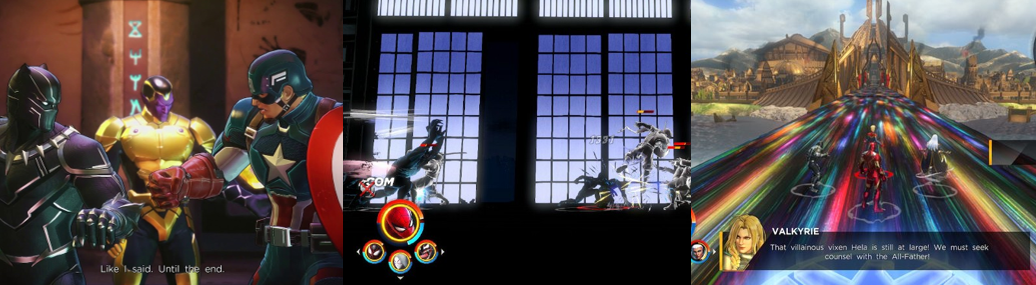
Whereas the last two games primarily based their aesthetics on the comics books, especially the Ultimate comic line, Marvel: Ultimate Alliance 3 adheres very closely to the Marvel Cinematic Universe (MCU), especially in the visuals of its locations. I was hard pressed, for example, to tell the difference between Asgard here and the Asgard to the MCU, with both the golden city and the rainbow bridge, the Bifrost, appearing almost exactly as they’re depicted in the films. The same is true for Wakanda, the Dark Dimension, and Knowhere, all of which are virtually indistinguishable from how they appear in the MCU. There are some differences, of course: Taneleer Tivan/The Collector’s museum, for example, uses coloured cube cages and Wakanda leans much more into traditional architecture than the pseudo-futuristic science of the films (likely because Black Panther (Coogler, 2018) released a year before this game was made). Xavier’s School for the Gifted is lifted almost exactly from the 20th Century Fox X-Men movies (Various, 2000 to 2020), however, including a hedge maze, 1:1 Cerebro room, and basketball court that doubles as a landing pad for the Blackbird. While the Dark Dimension and the cosmic mind trip that is Sanctuary also heavily borrow from the bizarre cosmic imagery of the MCU, the Raft and Avengers Tower are much more akin to their comic book counterparts, though they’re comparatively bland locations, lacking fun areas like the Danger Room or Wakanda’s Necropolis (though you do pass through Anthony “Tony” Stark/Iron Man’s Hall of Armours in the tower). Although you only make a brief stop in Attilan to try and get help from the Inhumans, the architecture is far more visually interesting than that awful television show, seemingly being comprised of Celestial technology, and I enjoyed the ominous gothic presentation of Hel, with its restless Viking warriors and damaging sludge. Unfortunately, Marvel: Ultimate Alliance 3 continues the trend of having disappointingly bland and forgettable music, opting for generic themes for each location, event, and character that are lost amidst the constant fighting.

A visually impressive brawler that takes obvious inspiration from the MCU films.

The game also opts for an almost cel-shaded, action figure-like aesthetic for its colourful cast of characters. While many again both look and sound like their MCU counterparts, there are some exceptions: Peter Quill/Star-Lord, for example, looks nothing like Chris Pratt and the X-Men are far closer to the comic books than Fox’s films. Despite you assembling a custom team of heroes, cutscenes depict either everyone or characters specific to the location you’re in (the corrupted Doctor Stephen Strange in the Dark Dimension, for example) as they’re better suited to advance the plot against the local baddies. With the game shifting to a more third-person perspective, you’re closer than ever to the action and can see more of the environment than in the previous games. However, this comes with some drawbacks: mainly, there are far less opportunities or incentives to explore. Second, environments are painfully linear, with dead ends or locked doors barring your progress. Third, and most frustrating, is the camera, which easily loses track of your opponent/s and often lumbers you with wireframe representations when the foreground blocks the view. Thankfully, you won’t be falling down pits and rarely have to worry about onscreen hazards, but it can be aggravating trying to figure out which platforms and crates can be jumped on and which can’t. Marvel: Ultimate Alliance 3 offers a diverse cast of characters, each with their own idle poses and quips, though these do inevitably repeat. The game’s also surprisingly light on Easter Eggs: you’ll spot Deadpool singing away as he makes tacos in the X-Mansion, but not much else, and there are no optional missions or choices to encourage replaying missions. It’s a far cry from the first game, where there was always something to collect or an additional character to help out. Instead, it’s basically all combat, all the time in Marvel: Ultimate Alliance 3. Luckily, the game looks pretty good (everything’s very colourful and true to its inspirations) and performs really well, though there are some long load screens and it is annoying being forced to continue your game every time you challenge a Rift.

Enemies and Bosses:
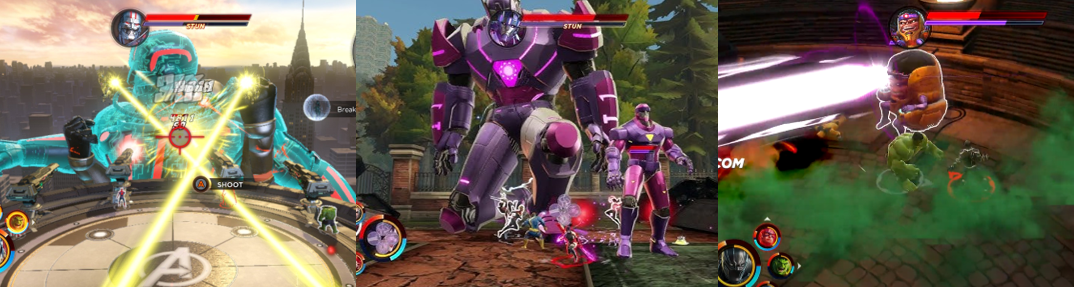
All the usual suspects appear here as disposable cannon fodder for you to endlessly beat up, with many of the game’s goons sharing traits across the various locations. You’ll encounter Kree, Ultron Drones, agents of A.I.M., and Doombats who all pack various energy blasters. Ultron’s clones are the worst for this, relentlessly firing energy blasts and crashing through windows. The Raft’s unscrupulous prisoners attack in large groups, as do the restless Viking warriors who populate Hel, tossing axes from afar and luring you into toxic goop. Gargoyle-like Fire Demons also dwell here, offering a greater challenge with their swoop attack and fire breath, not unlike the monstrous Outriders and Mindless Ones who make up Thanos and the dread Dormammu’s forces, respectively. Alpha Primitives, Hydra goons, and towering Sentinels also appear, with the latter firing huge energy blasts from the palms and best attacked by throwing their explosive energy cores back at them. No matter where you are and what enemies you fight, more powerful commanders will also appear. Larger, tougher, and sporting a stun meter, these commanders should be your top priority as they’ll charge across the screen, cause shockwaves, and generally offer a far greater challenge even when you’re at a higher level. These minions often fight alongside their masters, generally so you can recover some health and EP to better damage the bosses, and will endlessly spawn in one of the additional modes unless you destroy their teleporters. Some of the game’s challenges or story-based missions charge you with defeating a certain number of enemies to progress. Other times, bosses appear in these waves, and you must occasionally flee or purposely lose some fights. This happens when Cain Marko/The Juggernaut comes tearing through the X-Mansion, for example, and in early encounters with the Black Order, who cannot be beaten or will chase you, raining lightning or other attacks from the sky and across the ground.

Few bosses require more than just hit-and-run tactics, even when augmented by an Infinity Stone.

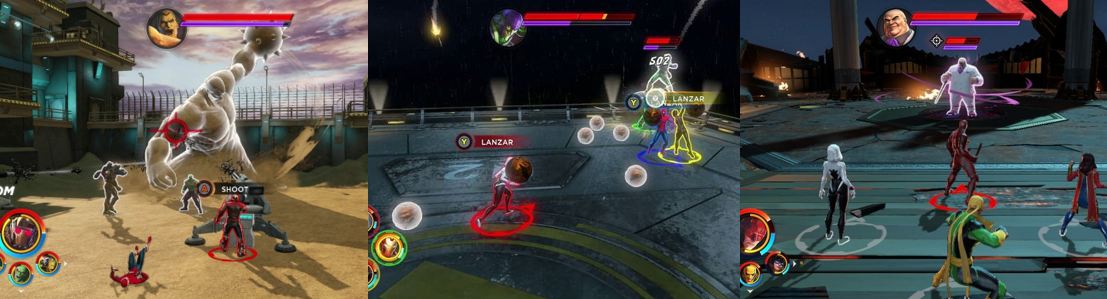
There are loads of bosses to fight in Marvel: Ultimate Alliance 3, with some returning from the previous games, some teaming up, some having a couple of phases, and all boiling down to whittling down their stun bar, unleashing an EX attack and/or your most powerful Abilities, and avoiding damage until you can repeat this. The first ones you’ll face are Nebula and Ronan the Accuser, who often appear as a duo in optional challenges. Nebula is faster and more nimble, wielding blades where Ronan uses a massive warhammer. Both set a standard all bosses follow, which is that they’ll use either a jumping slam or an explosion of energy (or both) to send you flying. While quelling the riot in the Raft, you’ll encounter a version of the Sinister Six, with some unique variations to each battle. Flint Marko/The Sandman, for example, flings waves of sand and erupts his big sand fist from the ground as a large sand creature. You must use A to mount the nearby cannons and unload on him to chip away at his stun meter. Maxwell “Max” Dillon fights alongside Eddie Brock/Venom, raining lighting and electrocuting you with bursts of electricity, before he’s eaten by Venom and starts busting out electrically-enhanced symbiote powers. Venom joins the team after this fight and is tested against Quentin Beck, who first brainwashes Mile Morales/Spider-Man, Gwen Stacy/Spider-Woman, and Kamala Khan/Ms. Marvel to fight you and then unleashes a poisonous mist, teleports about, and confuses you with duplicates, Doctor Otto Octavious/Dr. Octopus is fought in a two-stage fight where you must first avoid his tentacles and scurry charge and then attack each arm to stun him. Finally, you’ll battle Norman Osborn/The Green Goblin for the Time Stone. The Green Goblin swoops overhead and lingers slightly out of reach, peppering the arena with his pumpkin bombs, charging at you, and freezing time to bombard you. He’s noticeably weak to his pumpkin bombs, however, so try and toss them at him before they explode in your face! After battling into the Hand’s fortress, you must first free Elektra Natchios from the Hand’s influence and then face Lester/Bullseye and Wilson Fisk/The Kingpin in separate fights. You must take out the ninjas feeding Elektra power, avoid Bulleye’s spread of razor sharp and explosive cards, and dodge the furniture and massive energy beam thrown by the Power Stone-enhanced Kingpin. The Kingpin also charges like a rhino, leaps at you to cause shockwaves, and even rips up stone columns to use as melee weapons!

Gigantic bosses and the quirkier villains help mix-up the otherwise tedious combat.

Avengers Tower is then attacked by Ultron and his drones, who assist him in battle. Not that he needs it as the Mind Stone allows Ultron to mess up your controls, to say nothing of his signature face and palm beams. Ultron then grows to gigantic proportions, sweeping the area with his eyebeams before Clint Barton/Hawkeye intervenes and Ultron merges with Ultimo. This is the first giant boss battle in the game and sees you blasting Ultimo with cannons and avoiding his massive swipes. The Infinity Sentinel is comparatively smaller, but no less dangerous thanks to its own face beam and missiles. Though you can damage it with Sentinel cores, it’s finished in a cutscene by Erik “Magnus” Lehnsherr/Magneto, who then tosses debris and throws you off balance with magnetic pulses while Juggernaut pummels you and Raven Darkholme/Mystique tosses daggers. After surviving Mystique’s Danger Room trials, you face Magneto, now even tougher thanks to the Power Stone, before being chased away and banished to the Dark Dimension by the Black Order. There, you battle past Loki Laufeyson (who boasts elemental attacks and duplication tricks) to eventually face the dread Dormammu, who wields the Reality Stone and is the second giant boss. You must subdue his minions and avoid his flame bursts, whittling down his magical barrier either directly or be destroying three nearby orbs, all while dodging his giant fists and ground spikes. The brief fight with Maximus Boltagon is far easier, even though the mad Inhuman carries a massive energy cannon and you must take cover in Thane’s energy bubble to avoid Maximus’s barrage of lasers. Ulysses Klaue/Klaw awaits in Wakanda and his sound-based energy blasts and waves must be overcome to rescue and recruit James Buchanan “Bucky” Barnes/The Winter Soldier. You then fight past A.I.M. to confront their master, George Tarleton/Mental Organism Designed Only for Killing (MODOK), who uses the Soul Stone to turn the Dora Milaje against you and attacks with a slew of appendages, from buzzsaw arms, poison gas, failing tentacles, and his signature forehead blast.

Battles with the empowered Black Order, Thanos, and Thane offer some of the most enjoyable challenges.

Though your goal in Hel is to confront Hela, you’ll actually battle the fire demon, Surtur, in another giant boss battle. This was a bit of a difficulty spike for me as Surtur’s flaming sword has a long reach and he causes the ground to erupt in flames, to say nothing of stun locking you with repeat sword strikes! Best him and Hela sets Johann Schmidt/The Red Skull on you, with the Nazi madman firing a powerful revolver and sapping your health with his “Dust of Death”. Hela gives the Red Skull a boost, protecting him with a shield and allowing him to fire a Bifrost-like laser, before placing his consciousness into the Destroyer armour. Though bolstered by Hydra forces and boasting a sweeping face beam, you can get a power-up from glowing crystals to overcome this destructive force. Finally, you venture to Knowhere and must run the Black Order gauntlet to retrieve the Infinity Stones, with checkpoints between each fight. Ebony Maw is first, firing a spread of projectiles and rocks and using the Soul Stone to create portals to trip you up. Supergiant tosses dark spheres and a golden homing shot that messes up your controls, though you can toss explosive cores from her minions to deal big damage. Cull Obsidian infuses his battleaxe with the Power Stone, sending out waves of purple energy and massive purple shockwaves, though he’s far slower and also susceptible to the nearby bombs. Corvus Glaive is much faster, landing multiple hits with his lance and using the Reality Stone to spring spikes form the ground and conjure duplicates who fill the arena with energy waves that can stun lock you. Finally, Proxima Midnight takes her fellow’s teleportation trick to the next level with the Space Stone and fills the arena with lightning bolts and strikes. All these powers are then recycled when you face Thanos, who gathers the six Infinity Stones into the Infinity Gauntlet to rain meteors, teleport, mess up your controls, freeze time, and fire his signature eyebeams. Thanos then joins you to battle Thane, who usurps him and boasts similar powers, though also upgraded by the Infinity Armour. Thane exhibits superhuman speed, traps you in a cube, fills the arena with portals and flames, and explodes in fury, though both battles were fun challenges rather than impossible tasks.

Additional Features:
Unlike in the previous two games, you won’t be finding data logs, action figures, or meeting certain requirements to unlock new attacks or costumes. You just fight over and over, earning whatever you need to unlock, buy, or upgrade whatever you wish and finding some concept art in treasure chests. A far harder (but more rewarding) “Superior” difficulty unlocks upon clearing the game alongside an additional “Nightmare” mode, accessible via the “Curse of the Vampire” campaign. You also unlock Thanos and can freely replay any mission on any difficulty (though you must start a new save to play on “Superior”) to grind and enhance your characters and ISO-8. Dimensional Rifts transport you to special challenges (not unlike the S.H.I.E.L.D. Simulator discs from the first game) that are often rematches with bosses or gauntlet challenges, though far tougher and gifting better rewards if you succeed. There are also three additional modes; however, though you can play a taster of each, you must purchase the expansion pass to fully unlock them. “Curse of the Vampire” adds vampiric enemies to the main story in “Nightmare” mode and offers a “Gauntlet” mode where you battle waves of enemies and bosses against both a time limit and a range of debuffs (including limited health restoration and draining EP). You can also tackle an “Endless” mode that’s pretty self-explanatory, and unlock additional characters like Frank Castle/The Punisher and Eric Brooks/Bladeif you buy the DLC. “Rise of the Phoenix” sees you form a four-person team and go head-to-head with a friend or the computer in three-round Danger Room scenarios. These see you tackling bosses again or wiping out hordes of enemies, awarding additional buffs and effects if you meet certain criteria (such as using any Ability or Synergy attack four times). You can only tackle the first challenge without the DLC, so I didn’t get very far, but this could be a fun distraction for those looking to test their skills against a friend. “Shadow of Doom” adds an epilogue story campaign that sees you return to Wakanda to oppose Doctor Victor Von Doom’s invasion. Dr. Doom’s Doombots endlessly spawn unless you destroy their teleporters, and you even battle the arrogant dictator in the recycled Necropolis, with him teleporting, firing lasers form his palms, and having his health restored by his Doombots. You’ll add Marvel’s First Family to your roster (alongside an alternative Thanos and other characters) by buying the expansion pass and battle Annihilus, a gigantic Celestial, and even “God Emperor” Doom!

The Summary:
I quite enjoyed the first two Ultimate Alliance games. They were mindless and largely repetitive, but I liked the large cast of characters and all the different references and locations from the comic books. Still, I put off Marvel: Ultimate Alliance 3: The Black Order for some time, mainly because I was annoyed by it being a Nintendo Switch exclusive; however it turned out to be a decent enough brawler. Despite the different development team, a few tweaks, and an apparent disconnection from the previous games, Marvel: Ultimate Alliance 3 offers a lot of the same gameplay and enjoyment as its predecessors, which is great for long-time fans of the franchise. Unfortunately, it doesn’t improve on these elements in a meaningful way and actually removes some content that I found enjoyable from the last two. There are no optional missions, for example, no alternative endings, no choices, and no character-specific challenges beyond fighting and levelling-up. I found this made the tedious combat even more aggravating after a while as I wasn’t being rewarded with gear or costumes or anything other than stat boosts. Even the skill tree was limited since you must grind to acquire enough credits and expendables to enhance your team, and I found the ISO-8 mode to be more confusing than engaging. The game also does little to improve the boss battles. Very few were very innovative or required more of you than to strike fast, avoid shockwaves and projectiles, and unleash your Extreme attack. The giant bosses were more of a challenge and I liked the final fight against Thanos and Thane, but I was hoping for a bit more complexity, especially given the possibilities offered by the Infinity Stones. There is a fun selection of characters, but they don’t offer much more than what we saw in the last two games and actually offer less as there are no character-specific team-up moves. While I enjoyed the visual influence from the MCU and the variety, I feel like Marvel: Ultimate Alliance 3 played things a little too safe by relying so heavily on combat and not mixing up the gameplay with a few other puzzles and challenges. Overall, it’s a good enough game and a worthy entry in the series, but it’s a shame that the developers didn’t try to be a bit more innovative and offer some more incentive to keep slogging away in endless fights.

My Rating:

Rating: 3 out of 5.

Pretty Good

Did you enjoy Marvel: Ultimate Alliance 3: The Black Order? How do you think it holds up against the previous two games? Which characters did you choose for your team? Were you disappointed that the combat was so similar to the last two games and the bosses so repetitive? Did you ever conquer all the Rift challenges? What did you think to the MCU influences and the final battle with Thanos and Thane? Did you ever play through the DLC? Would you like to see another Ultimate Alliance game? Whatever your thoughts, leave a comment below, support me on Ko-Fi, and go check out my other superhero content across the site.

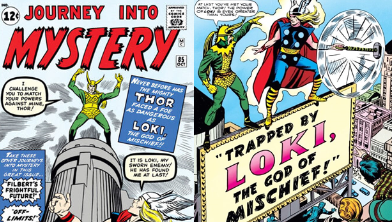
Back Issues [Thor’s Day]: Journey into Mystery #85


In August 1962, Stan Lee, Larry Lieber, and Jack Kirby introduced readers of Marvel Comics to the God of Thunder, Thor Odinson. Through associations with Marvel’s premier super team, the Avengers, and many cosmic, mythological adventures, Thor became another of Marvel’s most successful and versatile characters, with appearances in cartoons, videogames, and incredibly profitable live-action movies. Being as it’s the first Thursday (or “Thor’s Day”) of the month, this is the perfect time to celebrate the God of Thunder!


Story Titles: “Trapped by Loki, The God of Mischief” and “Part 2: The Vengeance of Loki”
Published: 2 August 1962 (cover-dated October 1962)
Writers: Stan Lee and Larry Lieber
Artist: Jack Kirby

The Background:
After creating Doctor Bruce Banner/The Incredible Hulk, legendary Marvel Comics writer, editor, and creator Stan Lee was inspired by Norse legends to dream up an even more powerful superhero and, alongside Larry Lieber and the renowned Jack Kirby, crafted a new version of the Norse God Thor Odinson who effectively took over Journey into Mystery until it became his own self-titled comic in 1970. Thor became a founding member of Marvel’s premier super team, the Avengers, and eventually took on more aspects of his inspiration, with one of the most notable of these being Thor’s adopted brother, Loki Laufeyson. Like Thor, a version of Loki appeared in Marvel’s predecessor, Timely Comics, years earlier in 1949, where he was depicted as a hatemongering member of the Olympian Gods, but it was Lee and Lieber who redesigned Loki as Thor’s most persistent nemesis in this issue of Journey into Mystery. Like his half-brother, Loki was instrumental in the first appearance of the Avengers and went on to dog many of Marvel’s superheroes as part of the Masters of Evil, to say nothing of waging war against Asgard and even having a turn as a more heroic character. Of course, Loki has seen immense popularity in recent years thanks to Tom Hiddleston’s portrayal of the character in the Marvel Cinematic Universe, where he was depicted as a tragic, flawed, misguided character who went from wanting to conquer the Earth to sacrificing his life to protect his brother and his adopted world.

The Review:
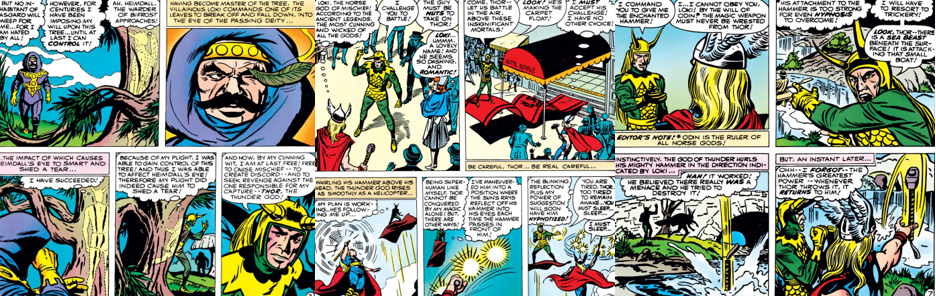
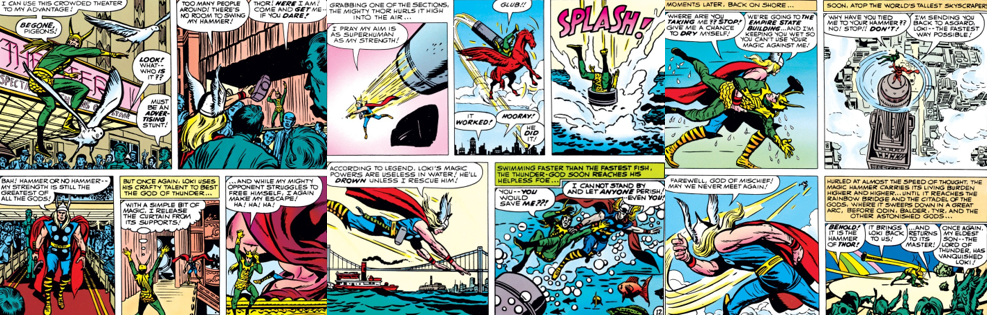
“Trapped by Loki, The God of Mischief” begins in the golden realm of Asgard, a citadel separated from time and space by the rainbow bridge, Bifrost. There, deep in a remote area of Asgard, stands a tree that acts as the prison for Loki, the devious God of Mischief, who was condemned to this prison ages ago, with his only hope of escape being if someone is driven to tears by his plight. Although he’s well aware that no Asgardian would ever weep for him since he’s hated by all, he’s able to exert some measure of control over the tree; enough to cause a stray leaf to drop into the eye of Heimdall as he passes by. Apparently, the single tera he sheds as a result is enough to break the curse and Loki slips free undetected, finally giving him license to cause mischief, spread discord, and seek revenge on the one responsible for this capture: Thor! Although Thor hasn’t been in Asgard for some time, Loki had the incredible foresight to forge a “mental link” with Mjölnir before his imprisonment. This allows him to locate the uru-made magical hammer and its thunder-commanding master, who’s currently entertaining children in a hospital, so Loki hops onto the Bifrost and heads to Earth “at the speed of thought”.

Loki escapes from his prison and comes to Earth to get revenge on Thor by hypnotising him.

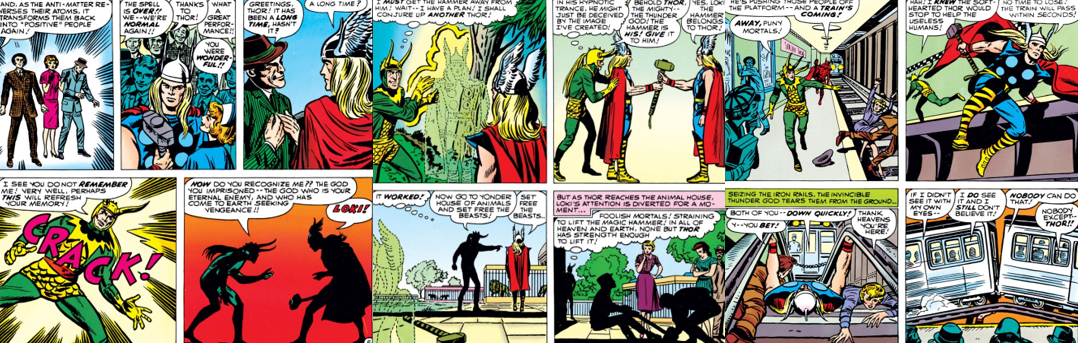
Once there, Loki magically assumes the guise of a normal, everyday man about town but finds that Thor has already left the hospital by the time he arrives. Rather than reveal his presence prematurely, Loki decides to use his incredible powers to cause a disturbance (namely transforming innocent bystanders into negatives) to lure Thor to him. Conveniently, Thor (in his alias as the lame Doctor Donald Blake), happens to be on his way to a nearby house call; upon seeing the phenomenon, Dr. Blake strikes his walking stick to the ground and is transformed into the Mighty Thor once more. Thor then spins Mjölnir at an incredible speed, fast enough to emit anti-matter particles that he then blows towards the victims using his magical hammer, restoring them to normal in a head-scratching piece of pseudo-science. Naturally, the people are awestruck by this feat and Thor is heralded as a hero. Amidst the gaggle of onlookers, Loki approaches Thor and reveals himself to the Thunder God (whose internal dialogue seems to indicate that he’s only aware of Loki from Norse mythology, again making me question whether Dr. Blake and Thor are two different people or if Don’s consciousness is simply within Thor’s body since Thor should know who Loki is considering he imprisoned him in that tree…) and challenges him to a battle. Loki uses his powers to turn a nearby carpet into a flying carpet and Thor follows him into the air but Loki, realising that it will take more than brute strength and magic to conquer Thor, uses this to his advantage by causing the sun’s rays to reflect off Mjölnir in a series of blinking lights that leaves Thor effectively hypnotised and under Loki’s command! Although this means Thor is compelled to obey Loki, he’s unable to hand over Mjölnir thanks to the will of his father, Odin Allfather, so Loki tries to trick him into hurling his hammer at an imaginary sea beast, only to be thwarted when the enchanted weapon returns to Thor’s hand like a magnet.

Loki’s tricks and deception are nothing compared to Thor’s great strength.

However, Loki comes up with the brilliant plan to conjure up a duplicate image of Thor; since only Thor can hold the hammer, Thor hands Mjölnir to the illusion and is finally relieved of his weapon. Loki then directs Thor to release the wild beasts from the city zoo but is distracted from witnessing this event by mocking a gaggle of civilians who try, unsuccessfully, to lift the enchanted hammer. Loki’s momentary distraction means he misses Thor reverting back to Dr. Blake, an automatic transformation that occurred whenever Thor was separated from Mjölnir for about a minute. This also has the added benefit of undoing Loki’s hypnosis, allowing Dr. Blake to reunite with Mjölnir and return at full power to Thor. Realising that he no longer has the advantage over his foe, Loki gathers a flock of nearby pigeons to fly him to safety so he can think up a new plot but is forced to land when he sees Thor pursuing him with a vengeance. Thanks to the dense crowd making it too dangerous for Thor to swing Mjölnir, Loki ducks into theatre and entangles the God of Thunder within the stage curtain. This is only a momentary setback for Thor, however, so Loki dashes into the subway and distracts his foe further by shoving civilians onto the train tracks. Rather than simply carry them to safety, Thor goes to the effort of showcasing his strength by hoisting up the tracks, allowing the train to pass safely overhead, and then watches on, helpless to pursue, as Loki flies off on horse statue he brought to life, smashing up Times Square as he goes. Although Loki plans to lure Thor to the Statue of Liberty for a final showdown, Thor simply tosses a massive section of a pipe at the God of Mischief that sends him plummeting to the water below. Since, according to legend, Loki’s magic powers are apparently “useless” in water, Thor rushes to save his foe, much to Loki’s shock and revulsion. Because Loki’s soaking wet, he’s powerless to keep Thor from taking him to the top of the Empire State Building, attaching him to Mjölnir, and hurling him back to Asgard through sheer brute force to the astonishment of his fellow Gods.

The Summary:
Considering how pivotal Loki now is to Thor’s mythology and the popularity of the misguided God of Mischief, Journey into Mystery #85 is a pretty poor showing for Thor’s half-brother. Indeed, no mention is made of Loki’s familial ties to Thor, their sibling rivalry, or his status as a Frost Giant. There’s not even any real detail as to why Thor imprisoned him within a tree beyond Loki delighting in causing chaos and some cursory mentions of Norse mythology, something I very much doubt readers of Marvel Comics had much knowledge of back in the day (or even now, if I’m honest). Instead, we’re left with the paper-thin exposition that everyone in Asgard hates Loki and that he himself hates Thor because he bested him ages ago, and even this falls apart since Thor acts like this is the first time he’s ever encountered Loki. A couple of panels showing their previous encounter might’ve been a nice inclusion; that space could’ve been used in place of the brief and pointless fawning of nurse Jane Foster, who’s immediately enamoured by Loki for no real reason and is simply there to help paint Dr. Blake as a milksop compared to the mighty Thor. The story even contradicts its own lore within the first few panels: Loki specifically says that only someone taking pity on his plight can free him, yet a brief bit of eye water from a leaf is enough to break his curse, to say nothing of going to the effort of stating that Loki has some divine link to Mjölnir when it would’ve been enough to simply show him capable of magically seeing across the Realms.

Loki doesn’t impress in his debut, appearing weak and useless at every turn.

The artwork is bright and colourful and quite fun, but disappointingly basic at times, and strangely bizarre at others. We’re denied seeing Thor tussle with bears and lions at the zoo but have to see him bend rail tracks rather than just carry Loki’s victims to safety, and Loki’s powers are some of the lamest and most disappointing from this era of comics. We’ve got a God capable of bringing inanimate objects to life, but his plan is to simply hypnotise Thor? He creates an illusion of Thor but is incapable of conjuring an actual sea beast to accomplish the same means, instead resorting to basically shouting, “Look over there!”, and his powers are suppressed by water? I had no idea that was a thing, but it’s pretty bloody lame. Almost as lame as forcibly nerfing Thor by sticking him in dense crowds and thus incapable of swinging Mjölnir without hurting someone since Thor is quite clearly and obviously depicted as Loki’s physical superior even before he literally throws him across time and space back to Asgard. So, no, I really wasn’t very impressed by Loki; he barely did anything except briefly hypnotise Thor, his motivations were woefully pitiable, and his powers were far from visually interesting. Luckily, he looked very visually appealing with his bright green and gold outfit and trademark horned helmet but neither he nor this story lived up to its potential. Loki was defeated with laughable ease once Thor shrugged off his hypnotism and got his hands on him, and this ended up being a pretty disappointing first encounter between the two legendary rivals even by the standards of the 1960s.

My Rating:

Rating: 2 out of 5.

Could Be Better

What are your thoughts on Loki’s debut appearance? Were you also disappointed by his ineptitude and depiction, or did he impress you with his colourful attire and mischievous nature? Did you enjoy seeing the two clash or would you have preferred to see something more visually interesting? What are some of your favourite Loki moments in and out of the comics? Do you have a favourite character, arc, or era in Thor’s long publication history? How are you celebrating Thor’s debut this month, if at all? I’d love to hear your thoughts on Thor in the comments below or on my social media, and it’d be great if you checked out my other Thor content across the site.

Movie Night [Thor’s Day]: The Incredible Hulk Returns


In August 1962, Stan Lee, Larry Lieber, and Jack Kirby introduced readers of Marvel Comics (specifically Journey into Mystery) to Thor Odinson, God of Thunder and mightiest of the Asgardian deities. Through associations with Marvel’s premier super team, the Avengers, and a number of cosmic, mythological adventures, Thor has become another of Marvel’s most successful and versatile. Being as it’s the first Thursday (or “Thor’s Day”) of the month, what better way to celebrate the God of Thunder than to take a look back at his live-action debut!


Released: 22 May 1988
Director: Nicholas Corea
Distributor:
New World International
Budget:
Unknown
Stars:
Bill Bixby, Lou Ferrigno, Steve Levitt, Eric Kramer, Lee Purcell, Tim Thomerson, and Jack Colvin

The Plot:
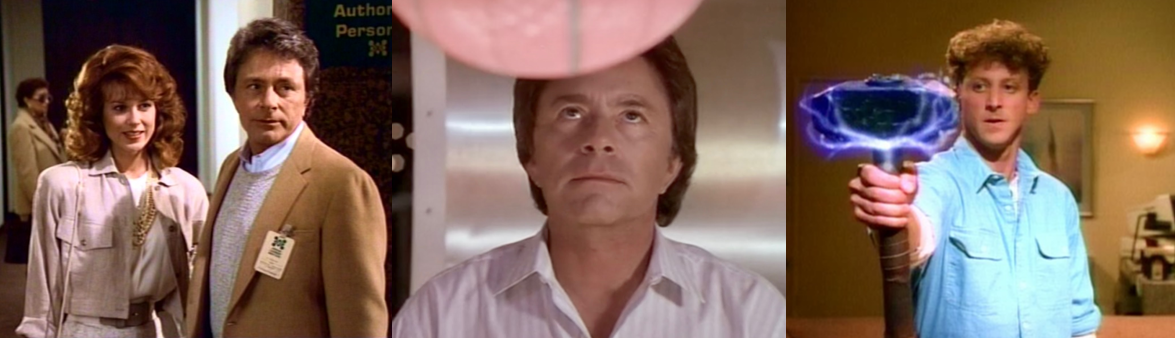
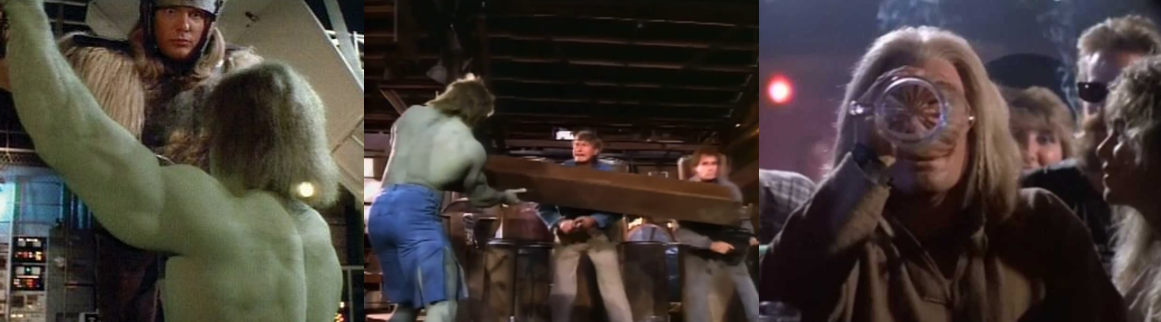
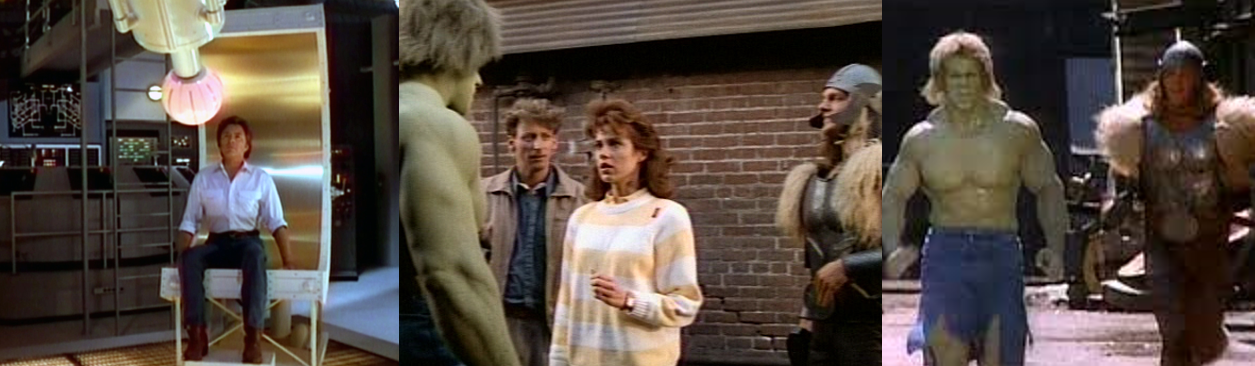
For two years, Doctor David Banner (Bixby) has been able to keep his monstrous alter ego, the Hulk (Ferrigno) at bay. Banner’s hopes to rid himself of the Hulk once and for all with his Gamma Transponder are interrupted by a former student of his, Donald Blake (Levitt), and Thor (Kramer), the brutish Norse God of Thunder under Blake’s control. When mob boss Jack LeBeau (Thomerson) threatens to pervert Banner’s research, he reluctantly teams up with Blake and Thor to ensure that his machine doesn’t fall into the wrong hands.

The Background:
Long before the creation of the Marvel Cinematic Universe (MCU), Marvel Comics had a decent amount of success with live-action adaptations thanks to the iconic Incredible Hulk television series (1977 to 1982). The show, which coined the memorable “Don’t make me angry. You wouldn’t like me when I’m angry” line, aired eighty episodes before finally concluding on 12 May 1982 and forever entrenched the Green Goliath in the cultural consciousness thanks to standout performances by star Bill Bixby and Lou Ferrigno, who would go on to voice the character for years to come. About six years after the end of the series, the first of three made-for-television movies was produced, intended as a backdoor pilot for a Thor spin-off. The Incredible Hulk Returns was, apparently, a ratings success, which justified the production of the next two television features.

The Review:
So, if you’ve been following my website for a while and reading my previous reviews of the Incredible Hulk’s made-for-TV movies, you might’ve noticed that they’re a bit out of order. This actually reflects how I watched them as a kid, since I actually saw The Trial of the Incredible Hulk (Bixby, 1989) first, though it’s pretty clear right from the beginning that this film is meant to be take place two years after the end of the show. This is most obvious not just from the film’s title, but the inclusion of the classic opening sequence, narrated by Ted Cassidy, which gives a (very) brief rundown on the premise of the show. After experimenting on himself with Gamma radiation in an effort to unlock the hidden superhuman strength within all of us, Doctor David Banner finds himself transforming into a green-skinned beast whenever angered or panicked. Banner is believed to be dead, and this “Hulk” is pegged as the culprit, and the doctor has been forced to go on the run in a desperate attempt to find a cure for his condition, all while reporter Jack McGee (Colvin) relentlessly hounds him at every turn to try and get the scoop on the Hulk.

Banner’s chance for a cure is ruined by the surprise interruption of Blame and his magic hammer.

The Incredible Hulk Returns glosses over basically everything that happened in the show and picks up some two years later; Banner, using the fake name of “David Bannion”, lives a relatively stable and happy life with his long-term girlfriend, biogeneticist Doctor Margaret “Maggie” Shaw (Purcell). Though plagued by nightmares of his monstrous condition, Banner has finally found a happiness that had long eluded him; although he’s told a version of the truth to Maggie (he summed the whole situation up as a long period of “self-destructive behaviour”), he’s managed to hide the true extent of his secret from her and politely refuses to move in with her permanently to protect her lest his other half emerge. Maggie’s influence on Banner is immediate; not only is he content with her, but the Hulk has laid dormant for two years because of her positive influence on him, and it’s out of love for her that he works on his latest cure so he can fully commit to this new life. Banner has found a modicum of success as a scientist for the Joshua Lambert Research Institute, where he’s the brains behind the “Gamma Transponder”, a machine that promises to deliver unlimited, clean, renewable energy while also ridding Banner of his monstrous affliction. Much to chagrin of his employers, Joshua and Zachary Lambert (John Gabriel and Jay Baker), Banner refuses to take the spotlight or be publicly acknowledged for his work, not just because he insists that it was a team effort but also to avoid being recognised by the likes of McGee when he’s so close to a cure. Following a public unveiling of the institute’s most promising technological marvel, Banner wastes no time in activating the Gamma Transponder to rid himself of the Hulk. As is his nature, he is meticulous about this, recording what essentially amounts to a farewell message to Maggie and his colleagues in case the worst should happen, and emphasising that the machine can do everything he promised and so much more. Unfortunately, his experiment ends before it can even begin when a shady character grapples up into the lab and interrupts the procedure. This turns out to be a former acquaintance of his, Donald Blake, who sought to confirm that his old mentor was still alive and ask for his help in solving a very unique problem he has.

Blake can summon and command Thor, who must perform heroic deeds to ascend to Valhalla.

A far cry from the crippled doctor of the comics, Blake is a young and irresponsible figure, who often got into trouble as a student and acts without thinking of the consequences, Blake has been fixated on Norse mythology and culture his whole life but has never been able to explain why, so he signed on as the team doctor for a hazardous excursion into the frigid Norse mountains as a way to scratch that itch. Drawn towards a cave by pure instinct, Blake stumbled upon the tomb of a Viking warrior king known as Thor, who was denied entrance into Valhalla until he had paid a penance for a lifetime of arrogance. Blake discovered a Viking warhammer laying next to the skeletal remains of the warrior and, upon seizing it, was stunned by the arrival of Thor, reborn into the living world, following a flash of lightning and the rumble of thunder. Interestingly, Banner completely forgets about his experiment to indulge Blake in his story, but is sceptical that his old student truly brought a long-dead Viking warrior back to life. and rightfully so; The Incredible Hulk was always a very grounded show, with the only fantastical element being the titular green-hued beast, so the introduction of actual, real magical elements is as jarring to Banner as it is to the audience. Unfortunately for him, his scepticism leads to disaster as Blake calls forth Thor and Banner is stunned to find the brutish Norse warrior king is not only real, but dangerous in his arrogance and brash nature. Rather than Blake and Thor being one and the same, as in the comics, they are two completely separate individuals here; just as Blake is bound to the hammer, Thor is tied to him, duty-bound to follow Blake’s directions in a bid to fulfil his heroic quota and appease Odin so he can finally rest. Although he’s not as fantastical as his comic book counterpart, Thor possesses incredible superhuman strength but, despite wishing to perform heroic deeds, he’s impulsive and a stranger to the ways of the modern world.

Thor proves a valuable, if hot-headed, ally to the Hulk in battling their gangster foes.

Thor sees Banner as a “warlock”, the Hulk as a “troll”, and cars as “metal chariots” and is used to his demands for food, drink, and revels being met without question; frustrated at being little more than Blake’s slave, Thor wishes to live, to indulge himself, and craves the rush of battle. While this means his impetuous nature triggers Banner’s first transformation into the Hulk in two years, he delights in clashing with the Hulk, but is stunned when the Green Goliath shrugs off his attacks, and even electrified blows from his hammer. In a moment of hubris, a combination of shock, respect, and fear, Thor changes tries to befriend the beast after seeing the extent of his rage and fighting prowess, and humbly affords the proper respect and consideration towards Banner in subsequent scenes. Irritated by Blake’s interference and influence, to say the least, Banner guilt-trips him into sticking around rather than just running away after all the trouble he’s caused. In this way, Banner forces Blake to stop avoiding responsibility, or constantly shifting the blame to Thor, which ties into Thor’s earthly mission to encourage Blake to step up and be more heroic. While Blake is something of a burden to Banner, and Thor’s lumbering oafishness causes more than its fair share of trouble, Banner’s life is only compounded when McGee sees the newspaper report on the lab incident and immediately sets out to sniff out any news of the Hulk. McGee is small fry compared to Zach Lambert, however, who hires Cajun mobster Jack LeBeau (Thomerson) to steal the Gamma Transponder in a bid to screw over his domineering older brother and profit from the machine. Unfortunately, LeBeau’s men are thwarted in their attempt by the Hulk, and he thus decides to target Maggie instead; despite the best efforts of the Hulk and Thor, Maggie, already reeling from discovering Banner’s secret, is kidnapped from her beachfront home after a surprisingly engaging helicopter attack. LeBeau and his goons aren’t really much more than the stereotypical gangsters, but they’re given a bit of an edge with their Cajun accents and willingness not only to take Maggie as a hostage but also to kill Zach when he starts to get cold feet. Zach’s motivations are a bit weak (he wanted to have something for himself after being handed everything by Josh) but things quickly spiral out of his control when LeBeau goes into business for himself. LeBeau’s actions are enough to properly get the Hulk and Thor on the same page, and for Blake to see the potential for good Thor has, so as a plot device it ticks enough boxes for some last-act action and to crush Banner’s dreams of finally curing himself but none of the antagonists ever really pose a physical threat to either superhumans despite their greater numbers and being reasonably well armed.

The Nitty-Gritty:
Like I said, The Incredible Hulk has always been very grounded and focused more on science than mystical elements, so the introduction of Thor really does change the perception of the show in interesting ways. Obviously, the team up between Thor and the Hulk is nowhere near the grand spectacle of the MCU, but his presence definitely pushes the show more towards its comic book roots than ever before. It ties perfectly into Banner’s ongoing, desperate search for a cure; just as his efforts were thwarted time and time again in the show, his best effort to date is not only accidentally sabotaged by Thor but forever denied him due to the events of the film, and Banner is forced to return to his old, wandering life by the end. Along the way, though, he’s at least able to help impart some wisdom to Blake, who begins the film directionless and desperate in his own right but destined for greatness since he literally commands the power of a God, he just lacks the confidence and compunction to truly accept that destiny. Sadly, this comes at the expense of Banner’s cure, and his newfound life; this remains the closest Banner would ever get to a sense of normalcy, and in many ways he might have been better off using Maggie as his calming influence rather than constructing an elaborate machine that could be used for nefarious purposes, but it’s the tragedy of the character to be doomed to a life of hardship and to put his intelligence, and unique condition, to work aiding others rather than himself.

Alongside a fair amount of action and Hulk-outs, Thor’s boorish nature provides some humour.

As in every instance when I return to The Incredible Hulk, it’s the Green Goliath himself who provides the bulk of the action and spectacle. Lou Ferrigno excels in the role, which actually requires a little more nuance than just growling and looking hench as fuck! since the Hulk is now joined by a fellow boisterous muscleman. The initial fight between the Hulk and Thor might boil down to a lot of posturing and posing, but there’s some decent stuff there considering the limitations of the time and budget; the lightning effects when Thor arrives and leaves and tosses his hammer are crude but they get the point across, and the Hulk is even show lifting the Viking warrior up and tossing him aside, humbling the would-be Thunder God. Thor himself steals the show for me; sure, Kramer is garbed in a pretty cheap looking outfit and spouts some cheesy dialogue, but it works for the character’s raucous nature. Thor is a born and bred, battle-tested warrior from a very different time, when men fought and revelled and threw themselves in the glory of battle, and he’s frustrated that all Blake wants to do is discuss the nature of their relationship and destiny. Blake is moved by a poignant soliloquy from Thor in which the Viking expresses the pain and despair of having lost everything he knows and cursed to lay dead, and yet fully conscious, between worlds, and the two bond during one of the film’s most entertaining moments when Blake takes Thor to a biker bar to indulge his vices. Thor adds a much appreciated comedic element to the narrative, downing pitchers of beer, being a carefree and impulsive character, and even posing as David Bannion when McGee comes calling in a hilarious moment. Again, this does detract from the Hulk somewhat, who is noticeably absent in the middle part of the film, but Banner more than carries his own weight as he’s forced to neutralise the Gamma Transponder to keep it from being perverted into a weapon, thus destroying his best chance at a cure.

Banner loses his best hope of a cure and walks away from his idyllic new life in search of a new hope.

After Maggie is kidnapped and held to ransom, Banner has no choice but the dismantle the Gamma Transponder, erase all of the computer records, and destroy the machine’s most vital component to keep it from being weaponised. He and Blake then head to the agreed meeting place with the intention of rescuing Maggie, but things quickly become complicated when Josh shows up, grief stricken by Zach’s death, and triggers another transformation into the Hulk. This means that The Incredible Hulk Returns has a fair few Hulk-outs packed into it, which is actually quite surprising given how often the show (and these feature-length adventures) liked to focus on Banner’s personal dramas. It also means that the film concludes with the Hulk and Thor storming through LeBeau’s men, easily shielding themselves from their gunfire and overpowering them with their superior physical strength; even Blake gets in on the action, completely disregarding whatever hypocritic oath he may or may not have taken to gun down one of the mobster’s goons. Despite LeBeau taking Maggie at gunpoint, the Hulk cuts quite the intimidating figure, meaning he’s easily able to snatch the gun from his hand and subdue LeBeau by wrapping him up in a metal pipe. Although they’re victorious, Banner’s life has been irrevocably changed by the events; while McGee faces ridicule for his obsession chasing monsters, his presence and the publicity surrounding it all scares Banner off. While Blake and Thor make peace with each other and head out to do some good in the world, Banner is forced to leave Maggie and his idyllic life behind and hit the road once more, once again cursed to endure his hardship alone.

The Summary:
The Incredible Hulk Returns is easily my favourite of the Incredible Hulk’s three feature-length adventures; although my experience with the television show is still very limited, I feel this one is a bit more legitimate in  a lot of ways since it retains the opening sequence, Jack McGee features in it, and it has the same kind of atmosphere as the show. However, it also introduces fantastical elements to the otherwise grounded narrative, elements that don’t crop up again and make this a really unique entry in the show. I can see why some would find the Hulk sharing the screen with Thor, of all people, a little jarring but I find it incredibly enjoyable; Thor is a boorish, loud-mouthed, arrogant warrior who is massively out of place in every scene he’s in and it’s endlessly entertaining as he’s central to many of the film’s comedic and action-orientated moments. The Hulk is massive and eye-catching as always, performing a number of impressive physical feats and more than meeting his match with Thor who, despite being a little underpowered compared to the source material (much like the Hulk), still makes a visual impact. It’s cool seeing them onscreen together, fighting, roaring, and revelling in their battles, and this is nicely juxtaposed with the disappointing shattering of Banner’s new life. Clearly, the focus is on establishing the relationship dynamic between Blake and Thor, but Banner’s decision to destroy his only hope of a cure for a greater good and heading back on the road is very familiar to anyone who’s watched the show before. I think there’s a fair amount to like here, and Bixby holds his own against his less subtle screen partners to deliver a poignant reintroduction to the character, who’s doomed to forever be burdened with his monstrous alter ego.

My Rating:

Rating: 3 out of 5.

Pretty Good

Have you ever seen The Incredible Hulk Returns? What did you think to the introduction of Thor into the show’s continuity and did you enjoy Kramer’s performance? Were you sad to see that Banner had to walk away from his new life? What did you think to the relationship between Thor and Blake and would you have liked to see a spin-off show focusing on them? How are you celebrating Thor’s debut this month, if at all? I’d love to hear your thoughts on Thor in the comments or on my social media so feel free to drop me a line.

Back Issues: Secret Invasion

Published: June 2008 to January 2009
Writer: Brian Michael Bendis
Artists: Leinil Francis Yu

The Background:
In January 1962, legendary duo Stan Lee and Jack Kirby introduced Marvel Comics readers to the Skrulls, a race of warmongering shape-shifters who have long hounded Marvel’s heroes, particularly the Fantastic Four, by assuming their identities and powers. Experimented on by the all-mighty Celestials and launching aggressive campaigns against both the Earth and their hated enemies, the Kree, the Skrulls have been at the forefront of numerous Marvel stories over the years in addition to featuring as villains in various videogames and animated ventures before making their live-action debut, in a decidedly different manner, in Captain Marvel (Boden, 2019). Perhaps one of their most prominent storylines was the Secret Invasion arc that ran through these eight issues and multiple tie-ins and spin-offs; the brainchild of writer Brian Michael Bendis, Secret Invasion had not only been hinted at for some time and was heavily advertised as a means of changed up the perception of legacy Marvel characters and even return some to mainstream publication. Reviews of the storyline were mixed, with some noting that it was an anti-climatic Marvel event and others praising the marketing and artwork while criticising the religious undertones and spotty dialogue. Still, an adaptation of the story made its way into the Avengers: Earth’s Mightiest Heroes cartoon (2010 to 2012) and it also formed the basis of a six-episode, live-action series of the same name on Disney+.

The Review:
This eight-issue event series begins “years ago” after the destruction of the Skrull throneworld, a cataclysmic, prophesied event that leads the few survivors back to their queen, Veranke, who kicks the story’s narrative in motion by seeding Skrull agents throughout our world. It took years for this to be uncovered, and it was revealed in dramatic fashion when it turned out that the resurrected assassin Elektra Natchios was a Skrull in disguise, a revelation that alerted Tony Stark/Iron Man (then the conceited and self-righteous director of the Strategic Hazard Intervention Espionage Logistics Directorate (S.H.I.E.L.D.) following the game-changing events of Civil War (Millar, et al, 2006 to 2007)) to the depths of the Skrull’s infiltration. Recognising that even his armour’s sensors can’t be trusted to identity friend from foe, Stark drafts in his allies – Doctor Reed Richards/Mister Fantastic and Doctor Henry “Hank” Pym/Yellowjacket – to perform an autopsy in an attempt to figure out how the Skrull was able to remain completely undetected to technology, magic, and Mutant probing. Conveniently enough, a Skrull ship chooses this exact moment to come crashing into Earth’s atmosphere and make landfall in the Savage Land, taking Iron Man away from the operating room so he can investigate. Concerned that this could be the full-scale invasion they fear, Jessica Drew/Spider-Woman calls in the renegade “New” Avengers (those who refused to sign up to the ludicrous Superhero Registration Act in Civil War), which leads to Luke Cage/Power Man, Peter Parker/Spider-Man, James “Logan” Howlett/Wolverine, Danny Rand/Iron Fist, Clint Barton/Ronin, and Maya Lopez/Echo subduing Black Widow/Natasha Romanova and stealing her Quinjet to beat Iron Man and his government-sanction Mighty Avengers – Iron Man, Spider-Woman, Black Widow, Carol Danvers/Ms. Marvel, Janet van Dyne/The Wasp, Ares, Simon Williams/Wonder Man, and Robert “Bob” Reynolds/The Sentry – to the crash site. Both sets of Avengers are aware of the potential Skrull threat, which drives an even greater wedge between them as not only are the Secret Avengers being actively hunted by their former comrades, but they can’t even trust each other to be who they say they are.

While the Skrulls cripple Earth’s defenses, the fractured Avengers battle their classic counterparts.

After being brought down by one of the Savage Land’s rampaging dinosaurs, the New Avengers prepare to open up the crashed ship, but they’re intercepted by the Mighty Avengers, with Iron Man immediately trying to arrest them and Luke Cage obviously telling him and his jumped-up thugs to go kick rocks. Iron Man’s attempt to keep the rogue superheroes from overstepping the mark are scuppered when Timothy “Dum Dum” Dugan and his trusted butler, Edwin Jarvis, unexpectedly sabotage not only the orbiting the Sentient World Observation and Response Department’s (S.W.O.R.D.) satellite base but also Stark’s armour and S.H.I.E.L.D.’s Helicarriers and bases, effectively disabling the armoured Avenger and crippling the superhero community’s resources and communications. Additionally, maximum security prisons the Raft and the Cube are suddenly hit by mass breakouts and Mar-Vell/Captain Marvel and Susan Storm/Invisible Woman disable the villainous Thunderbolts and the rest of the Fantastic Four, with each of these supposed heroes flashing ominous eyes and assuring their victims that “He loves [them]”. Meanwhile, a Skrull armada bares down on Earth and Mr. Fantastic finds himself reduced to an elasticated mess right as he figures out the key behind the Skrull’s newfound undetectability, the victim of a shot from Pym, who’s revealed to also be the Skrull Citri Noll! Momentarily setting aside their differences to get Tony Stark to aid, the two Avengers groups are startled when a slew of classic-styled, currently deceased or long-changed superheroes emerge from the Skrull ship; Captain Steve Rogers/Captain America, the Vision, Thor Odinson, Doctor Jean Grey/Phoenix, Doctor Henry “Hank” McCoy/The Beast, Wanda Maximoff/Scarlet Witch, Jessica Jones/Jewel, Emma Frost/The White Queen, and Barbara “Bobbi” Morse/Mockingbird appear alongside classic versions of Spider-Man, Power Man, Wonder Man, Iron Man, Hawkeye, Ms. Marvel, Wolverine, and the Invisible Woman. Naturally, a tense showdown ensues in which both groups assume the other are Skrulls in disguise; guys like Wolverine, Spider-Man, Emma Frost, and the Vision struggle to get any kind of reading on their counterparts beyond sensing their distrust while Ronin is stunned to see his former flame, Mockingbird, alive and well but, despite Ares trying to convince his allies that it’s a trap, tensions boil over and an all-out brawl kicks off!

As more characters enter the fray, internal distrust is as rife as the escalating war with the Skrulls.

With Stark in agony from the alien virus that’s crippled his armour, Ms. Marvel flies him to safety as the others duke it out; the two Spider-Men trade quips and punches, the Vision uses the Sentry’s fear of his destructive and malevolent alter ego, the Void, to disable his God-like power, and Ronin steals his counterpart’s weapons to subdue their attackers but the arrival of a raging Tyrannosaurus rex disrupts the fracas. Trampled to death by the dinosaur, the classic Spider-Man and Hawkeye are revealed to be Skrulls, and Wolverine intuits that the Skrulls are setting them against each other to wipe out any resistance to their invasion plan. However, when he tries to eviscerate Mockingbird, Ronin intervenes and questions her; she’s adamant that she’s not a Skrull and even reveals personal information that only she and Clint would know, which is enough to convince him to trust her. This offers Luke Cage the hope that the Cap and Iron Man aboard the ship are the real deal, which would certainly explain Stark’s recent manic behaviour and allow the recently deceased Cap to still be alive, but Wolverine’s far from convinced. Meanwhile, back in New York City, a portal opens up and a whole slew of Avengers-inspired Super-Skrulls attack; there’s Skrulls combining the powers of various X-Men, a Fantastic Four Super-Skrull, one that’s a mixture of Spider-Man villains, and even an Illuminati hybrid, meaning the Young Avengers – Eli Bradley/Patriot, Dorrek VIII/Hulkling, Billy Kaplan/Wiccan, Tommy Shepherd/Speed, Kate Bishop/Hawkeye, and their mentor, the Vision – are completely overwhelmed despite Hulkling’s efforts to talk down their attackers with his royal status. Thankfully, they receive some back-up in the timely arrival of fledgling superheroes, the Initiative – Joseph Green/Gauntlet, Rachel Leighton/Diamondback, Cassandra “Cassie” Lang/Stature, David Alleyne/Prodigy, Anthony Masters/Taskmaster, Geldoff/Proton, Z’Reg/Crusader, Jimmy Santini/Batwing, Fahnbullah Eddy/Gorilla Girl, Wallace Jackson/Red 9, Delilah Dearborn/Geiger, Melee, Andrea Roarke/Sunstreak, and Alexander Ellis/Annex. Though the Skrull forces prove ruthlessly formidable, and the Vision is lost in the battle, even more help arrives when the Secret Warriors – Colonel Nick Fury, Yo-Yo Rodriguez/Slingshot, Daisy Johnson/Quake, Alexander Aaron/Phobos, J.T. Slade/Hellfire, Jerry Sledge/Stonewall, and Sebastian Druid/Druid – add yet more names and the bodies to the chaotic artwork and conflict.

Heroes and villains set aside their differences to take the fight to the invading Skrull army.

The Skrull threat is doubled thanks to the distrust between the world’s heroes, with even Nick Fury abandoning Ms. Marvel because of her alien DNA. Meanwhile, as a weakened Stark desperately attempts to repair his armour, Spider-Woman reveals herself to be the Skrull Queen, Veranke, and tries to convince him that he’s a Skrull agent so deep undercover that he’s forgotten his true nature. Before her poison (both literal and figurative) can take hold, Black Widow causes her to flee and Stark reveals that the key to victory lies with Mr. Fantastic, who’s currently being tortured aboard a Skull ship. Thankfully, S.W.O.R.D. director Abigail Brand bluffs her way onto the ship and flushes the Skrull into space to rescue him; Reed then fashions a device that exposes the Skrulls’ real forms, arriving just in time to stop another conflict in the Savage Land and revealing not only that the classic Emma Frost, Invisible Woman, Thor, Ms. Marvel, and Jessica Jones are Skrulls but that Mockingbird is as well, enraging Clint. The real Thor transports everyone to New York for a final confrontation, which even the Watcher, Uatu, shows up to observe and also sees Parker Robbins/The Hood’s criminal syndicate and Doctor Norman Osborn’s Thunderbolts pitch in with the nearly-incomprehensible brawl. While Mr. Fantastic and Iron Man try to take out Veranke (still disguised as Spider-Woman) to demoralise the Skrulls, the Wasp targets Citri Noll, who apes Pym’s Giant-Man form, though it’s Stature and the assassin Bullseye who end up taking him out. Iron Man is forced to withdraw so he can sort out his messed-up armour, Fury’s forces save Mr. Fantastic from being torn apart by multiple Skrulls posing as the Invisible Woman, the real Jessica Jones joins the fray, and Kate Bishop ends up gravely injured amidst the chaos. Although Wolverine tries to take out Veranke, the bio-electrical powers she stole from Spider-Woman keep him at bay, meaning it’s an arrow through the face courtesy of the vengeful Ronin that ultimately subdues her.

Although the Skrulls are defeated, the general distrust in Stark allows Osborn to seize power!

With Veranke compromised, Citri Noll activates a device that causes Janet to enlarge uncontrollably and unleash a chemical agent designed to kill humanity and Skrulls alike. With no other choice available, Thor whips up a hurricane with his magical hammer, one so powerful that is destroys the enlarged Janet and dissipates the weird black spots that threaten everyone’s lives. Although Wolverine seeks to make Veranke pay for Janet’s death, it’s Norman Osborn who gets the kill shot, then Iron Man finally gets his shit together and leads an all-out assault on the remaining Skrull ships, with the now disillusioned and leaderless armada being easy pickings. Iron Man also frees everyone the Skrulls impersonated since the shape-shifters conveniently needed the original versions alive in order to make the deception more convincing, meaning Elektra and Mockingbird return to “life”, Reed is finally reunited with his family, and the true versions of the likes of Spider-Woman re-join society. Unfortunately, this also means that Jessica Jones left her and Luke’s baby, Danielle Cage, in the care of the Skrull-Jarvis, a plot thread left unresolved in this story. Although recent tensions are eased in the aftermath and ensuing celebration, there’s an unshakable sense of hesitation given how long the Skrulls had been a part of Earth’s society and superhero community; Thor also condemns Stark’s recent actions and refuses to associate with him. Thanks to having publicly executed Veranke, Osborn is able to manipulate the President of the United States into equally losing faith in Stark, his methods, and his technology; the President thus ousts Stark as director of S.H.I.E.L.D. and names Osborn as the new overseer of any and all superhuman and defensive measures under a new organisation, H.A.M.M.E.R., unaware that this is exactly the opportunity the scheming madman and his Cabal of allies (Emma Frost, Doctor Victor Von Doom/Dr. Doom, The Hood, Prince Namor McKenzie/The Sub-Mariner, and Lady Loki) were waiting for.

The Summary:
Now, I am by no means an expert on the Skrulls; I know of them, primarily as an antagonistic, shape-shifting race of aliens who are almost constantly at war with the Kree and getting into scuffles with the Fantastic Four, but they’re generally on the periphery of most Marvel stories I’ve read. Secret Invasion is probably, to date, their most prominent story, at least in my experience, and it definitely adds some nuance to them that I didn’t expect. Normally, I see them as a warmongering race who live to conquer through both subterfuge and force but, here, they’re motivated by a fanatical devotion to their God (the “He” they keep referring to) and their invasion is seen almost as divine intervention. The Skrulls swamp television screens with their pseudo-religious propaganda, hijacking every telecommunications device across the globe and assuming the guise of various political figures, celebrities, and superpowered monarchs like Erik Lehnsherr/Magneto and Dr. Doom, and insist that they’re there to bring glory to our world and that their might cannot be opposed. Given the strength of their invasion and that their Super-Skrulls have mimicked the combined powers of many of Marvel’s heroes, it’s perhaps not surprising that Marvel’s ridiculously fickle citizens embrace their alien overlords, though this scene showcases that the Skrulls aren’t simply defending themselves or there to usher in a new age for mankind as they claim and are hell-bent on conquering the planet.

Having lost everything, the Skrulls throw themselves at Earth with fanatical desperation.

This campaign is spearheaded by their queen, Veranke, a figure of worship for the Skrulls and who has placed herself on the frontline, earning the trust of Tony Stark by posing as Spider-Woman and becoming privy to many of Earth’s defences. Stark even reflects on his role in the invasion and the shame he feels about not recognising the threat sooner in a show of guilt that was somewhat uncharacteristic of him at this time; this is a man who was so blinded by his belief that superhumans needed to register with the government that he actively fought and imprisoned his fellow heroes and abandoned many of them, and his morals, in favour of an uncompromising, borderline fascist mentality that only led to further conflict and resentment Indeed, Veranke revels in the irony of having twisted Earth’s technology and heroes towards her agenda, something she was easily able to do thanks to Stark being so dead-set about forcing or punishing his peers to register their true identities and powers. However, as much as Veranke likes to preach that hers is a Holy mission, she’s actually equally motivated out of revenge, specifically against Mr. Fantastic and the Fantastic Four after they tricked a contingent of Skrulls into believing they were cows decades prior. Since the Skrull home world has been lost and their once-prosperous empire lies in ruins, the Skrulls follow her without question and throw everything they have at Earth; they’re even willing to give their lives in the process, and in a last-ditch effort of mutually assured destruction, only to be defeated and left dejected. Veranke’s death leaves the Skrulls directionless and all their once-formidable might is as nothing; those that survive are left demoralised as they saw this as their last chance at survival and glory. Thus, Veranke’s quest for vengeance and conquest leaves her people devastated and more worse off than ever as a sizable portion of their armada is destroyed and the last thing they had in all the universe, their faith, is also shattered by their defeat.

The Skrulls are so deeply entrenched that the already frayed heroes are strained to breaking point.

I’m generally not a fan of imposter storylines; it’s a tired cliché and one that quickly outstays its welcome, but it actually works quite well in Secret Invasion. Many of the Skrulls seem to be completely unaware of their true nature; the Mockingbird-Skrull believes that she’s the real deal right up until the end and is begging Clint to listen to her even as he attacks her in a rage. This is also true of Captain Marvel, who believed so strongly that he was the deceased former hero that he couldn’t bring himself to kill and was convinced by Norman Osborn, of all people, to turn on his race; he even died begging the Kree warrior Noh-Varr/Marvel Boy to carry on the fight in his stead, so complete was his conditioning. It’s not revealed exactly how the Skrulls have the memories they do but it’s one of the big reasons why so many of them went undetected; however, many of the Skrulls posing as classic Avengers continued to believe they were the real deal after their true nature was revealed rather than immediately attacking the heroes in service of their God, which definitely paints much of this conflict in a morally grey area. The Skrulls pick the perfect time to strike the Earth; its heroes are divided and at war with each other and easy to manipulate, and seeing the return of dead heroes like Captain America, Mockingbird, and Captain Marvel, as well as the original version of Iron Man, only fuelled the flames of conflict between them thanks to Stark’s actions during Civil War leading to many deaths, including Captain America’s. It would’ve been so easy to explain away Stark’s recent actions as being the work of the Skrulls but, interestingly, that doesn’t turn out to be the case and, similarly, Cap’s death isn’t immediately undone with the presence of his classic counterpart. Instead, we’re left with a world where Stark is still shouldering the burden of his actions and where Cap’s mantle has been taken up by his friend, James Buchanan “Bucky” Barnes; there are no quick-fixes in this story to explain away the events of Civil War and there isn’t really a sense that bridges have been mended by the end of it as distrust is still rife and the status quo remains unchanged.

A decent story with some interesting wrinkles but a bit overstuffed and manic at times.

Ultimately, I quite enjoyed this story; it’s hard to read as an eight-issue standalone as you need some knowledge of prior Marvel events, especially Civil War, and it’s clear that there’s a lot of additional story and conflict in supplementary collections and books, but the narrative works just as well if you only read these eight issues. I enjoyed seeing the Mighty and New Avengers be forced to set aside their differences when faced with their classic counterparts and the reveals of which characters were Skrulls, even if none of the major players were aliens in disguise. The quasi-religious bent to the Skrull invasion was an interesting twist, as was them siphoning and combining the powers of Marvel heroes into an army of Super-Skrulls, and the art was pretty consistent and easy to follow throughout. Unfortunately, the biggest issue I had with Secret Invasion was the sheer number of characters jammed into it; it was hard to keep track of it all at times and it’s obvious that teams like the Young Avengers, Thunderbolts, and Secret Warriors all had bigger parts to play in spin-off stories, but I think they could’ve been downplayed a little here. There’s a Skrull-Galactus with absolutely no context or consequence to the story and even Uatu shows up, which is generally a short-hand to indicate that the events are of cosmic importance but, again, it doesn’t actually factor into the story in a meaningful way. Stark spends most of the arc out of action thanks to the Skrull virus messing up his armour, which is great for leaving him vulnerable and in pain and unable to participate in the wider conflict but then he just shows up in an older armour with a throwaway line for the finale. Similarly, Thor just pops in out of nowhere, formally prominent characters like Wolverine and Spider-Man get lost in the shuffle, and late appearances from Jessica Jones and Norman Osborn are simply there to set up the next big Marvel events and stories. Overall, it was pretty enjoyable and not as much of a mess as some Marvel events, but the action got a little too chaotic at times and there were too many characters wedged into these issues, which I think would’ve been far stronger if they’d focused on, say, eight or ten main characters and then just showcased the others in supplementary materials.

My Rating:

Rating: 3 out of 5.

Pretty Good

Did you enjoy Secret Invasion? Were you shocked to find out which characters were Skrulls in disguise? Were you hoping that some of the classic Avengers would turn out to be the real heroes? Which of the teams featured was your favourite? Did you think there were too many teams and characters in the story and which of the spin-off books did you enjoy? What did you think to Veranke, the pseudo-religious slant to the Skrulls, and the Skrull invasion? Were you also frustrated by Tony Stark’s characterisation during this time, or did you enjoy seeing Marvel’s heroes in dispute? What are some of your favourite Skrull-centric stories? Whatever your thoughts on Secret Invasion, feel free to share them below or leave your thoughts on my social media.

Movie Night [A-Day]: Avengers: Age of Ultron


Having introduced comic readers to a whole host of colourful characters, in September of 1963 the legendary duo of Stan Lee and Jack Kirby brought together six of Earth’s mightiest heroes to form the Avengers. A super team like no other, with a constantly rotating roster, the Avengers has become the premier team of Marvel Comics and, thanks to the team and its individual members forming the backbone of the Marvel Cinematic Universe (MCU), have become an unbelievably popular and successful franchise in their own right.


Released: 1 May 2015
Director: Joss Whedon
Distributor: Walt Disney Studios Motion Pictures
Budget: $365 million
Stars: Robert Downey Jr, Chris Evans, Mark Ruffalo, Chris Hemsworth, Scarlett Johansson, Jeremy Renner, James Spader, Elizabeth Olsen, Aaron Taylor-Johnson, and Paul Bettany

The Plot:
After finally defeating the last remnants of Hydra, Tony Stark/Iron Man (Downey Jr), Steve Rogers/Captain America (Evans), Doctor Bruce Banner/The Hulk (Ruffalo), Thor Odinson (Hemsworth), Natasha Romanoff/Black Widow (Johansson), and Clint Barton/Hawkeye (Renner) face an even greater threat when Stark and Banner’s prototype for an artificial intelligence, Ultron (Spader), becomes self-aware and concocts a diabolical scheme to unleash an extinction-level event upon the world.

The Background:
After the unprecedented success of Avengers Assemble/The Avengers (Whedon, 2012), the MCU was well and truly on its way to becoming an unstoppable multimedia juggernaut. Following the conclusion of that film, the MCU firmly entered its second phase and director Joss Whedon stated early on that his intention for an Avengers sequel was to tell a more personal and intimate story rather than necessarily being bigger and better. Taking inspiration more from the likes of Star Wars: Episode V: The Empire Strikes Back (Kershner, 1980) than the Marvel Comics story of the same name, the script initially included the first appearance of Carol Danvers/Captain Marvel, and many were surprised to see Whedon focus on Ultron after teasing Thanos (Damion Poitier) the end of the first film. The script also saw the introduction of Wanda (Olsen) and Pietro Maximoff/Quicksilver (Johnson), who both Marvel Studios and 20th Century Fox were allowed to include in separate film franchises thanks to a legal loophole. Tensions were frayed between Whedon and Marvel’s executives, however, as they disagreed with some of his scenes and choices, which eventually led to Whedon parting ways with the studio. Although Avengers: Age of Ultron made about $100,000 less than its predecessor, it still grossed $1,404 billion at the box office. Critical reception wasn’t quite as universally positive as with the first film, however; while the effects and action were praised, many were disappointed with how overstuffed and mundane the film was.

The Review:
Much has changed in the MCU since the conclusion of Avengers Assemble; not only has the entire world seen that extraterrestrial threats lie beyond our planet, but all manner of strange and powerful cosmic artefacts and concepts are now loosed upon the Earth. One positive that came out of the whole debacle, though, was the formation of the Avengers themselves and, since the last film and the fall of the Strategic Homeland Intervention, Enforcement, and Logistics Division (S.H.I.E.L.D.), the team have dedicated themselves to tracking down Loki Laufeyson’s (Tom Hiddleston) sceptre and erasing the last remnants of the clandestine organisation Hydra, which has secretly been manipulating events behind the scenes ever since World War Two.

Inspired my Loki’s sceptre, Stark convinces Banner to help him create Ultron.

The retrieval of the sceptre is a cause for much celebration within the team as it marks the end of a lengthy campaign against Hydra, but it leads into not only all of the film’s subsequent problems but also opens the MCU up to an ever greater threat lurking deep amongst the stars. Within the sceptre, Tony Stark and Bruce Banner (who had bonded over their keen love for science in the first film) discover a powerful gem, just one of the many Infinity Stones, that holds the key to completing Stark’s plans for a global defence program known as “Ultron” that he is desperate to deploy to protect the world form extraterrestrial threats. Shaken by his experiences in the last film, where he saw just how outgunned and outmatched the Earth was compared to the vastness of the galaxy, Stark is keen to build a metaphorical suit of armour around the world and encourages Banner to assist him in completing Ultron despite the doctor’s reservations. Banner, still a timid and cautious fellow, argues the moral and potentially dangerous consequences of giving birth to an artificial intelligence without the approval of the entire team and without proper testing, but is persuaded to co-operate by the force of Stark’s conviction.

Banner and Romanoff struggle with their pasts, natures, and feelings for each other.

Although in a far more comfortable position within the team and with himself, Banner is still subject to the whim of his green-skinned alter ego. Thanks to his ability to summon the Hulk at will, Banner is a valuable asset to the Avengers out in the field and, in an unexpected turn of events, the Hulk is easily subdued and calmed down by the influence of Romanoff. When in his more stable and timid human form, Banner has a close relationship with Romanoff that sees him clearly besotted by her but missing or ignoring her obvious flirtatious advances. He explains this as him being aware that Romanoff flirts with everyone, and the obvious interpretation is that he is afraid to act on his feelings because of his monstrous passenger, but he later reveals that he is holding himself back because he cannot offer her anything resembling a “normal” life. After the accident that first triggered his transformation, Banner has been rendered sterile and potentially dangerous by the sheer amount of Gamma radiation coursing through his veins, to say nothing of the fact that he can’t allow himself to get too excited for fear of triggering a transformation, burdening the doctor with a tragic loneliness no matter how close he is to his team mates. While it may seem strange that Romanoff is suddenly so infatuated with Banner, he represents a sense of kindness and stability that is often missing from her chaotic and deceptive life; even when Banner is explaining himself to her, she opens up to him and reveals some of the horrendous experiences she suffered in the “Red Room” while being trained as an efficient and ruthless spy. Since this also involved a full hysterectomy, she also sees herself as inadequate and monstrous since she’s not only done countless despicable things in the past but is so pained by her inability to be a “real” woman that she feels she can’t be anything more than the famed Black Widow.

While Thor’s side quest derails things somewhat, it’s great to see Barton’s personality fleshed out.

For Thor, recovering the sceptre spells the end to his brother’s impact upon his beloved adopted world; since the last film, Thor has built quite the rapport with his team mates and their extended families and revels with them as he would conquering Asgardian comrades. Thor is enraged, however, when he sees Loki’s magic perverted into Ultron and very nearly comes to blows with Stark over his reckless actions in meddling with cosmic powers beyond his comprehension. Thor’s concerns over the gem are only exacerbated after his encounter with Wanda, which causes him to suspect a greater threat and seek out his friend, Doctor Erik Selvig (Stellan Skarsgård), to accompany him on a short side quest to learn more about the mysterious gems that keep popping up in his life. After spending the majority of the first film under Loki’s control, Barton gets far more screen time and relevance in the sequel than I think many people expected; rather than focusing on his relationship with Romanoff, the film initially suggests that he may be a double-agent or keeping his own secrets from the team, but dramatically reveals that he has a wife and kids that he has kept quiet from everyone except for Romanoff. Protected and hidden from official records by former S.H.I.E.L.D. director Nick Fury (Samuel L. Jackson), Barton’s family provides refuge for the wounded and exhausted team after their encounter with the twins and goes a long way to fleshing out Barton’s character beyond just being “the guy with the arrows”.

Tensions rise between Steve and Stark as both have very different methods and ideologies.

Finally, there’s Captain America himself, Steve Rogers. Still very much the field leader and default commander of the superhero team, Steve has committed himself to tracking down and eradicating Hydra’s influence as part of the guilt he feels over not finishing the job back in World War Two. Steve’s old-fashioned sensibilities are a source of much amusing banter within the team, but his pure heart, dedication, and moral integrity mean that he’s devoted to saving and protected all lives above anything else. Indeed, he’s so pure-hearted that he’s even able to ever so slightly budge Mjölnir during a friendly competition, is the only one of the team not driven into a paranoid frenzy by Wanda’s cruel visions, and, of course, takes the moral high ground when he sees the consequences of Stark’s arrogance first stumble to life. Burned by the events of Captain America: The Winter Soldier (Russo and Russo, 2014), Cap is understandably annoyed that Stark would go behind their backs and unleash a potentially world-ending threat upon the world, but is also fair and just enough to try and convince the twins of Ultron’s threat and accept them into the team despite the destruction their actions have caused.

Ultron twists Stark’s vision for peace and personality quirks into a megalomaniacal plot for extinction.

As for Ultron…Like a lot of people, I was surprised to see the second Avengers film make a sudden left turn towards Marvel’s famous cyborg maniac, but curious to see how the character would be brought to life. Since Doctor Hank Pym (Michael Douglas) would not make his debut until the following year, the film alters Ultron’s origins and has it be a creation of Stark and Banner (though mainly Stark); personally, I feel like another redraft of the script could have restored Pym as Ultron’s creator and introduced the character earlier, perhaps with Pym also taking the place of Doctor Helen Cho (Claudia Kim) and helping to further set up his antagonism towards Stark and the Avengers in Ant-Man (Reed, 2015). Regardless, I can understand the change, and Ultron’s depiction as this conceited, self-righteous, boastful villain makes for one of the MCU’s most loquacious and enigmatic antagonists if nothing else. Positioned as a dark reflection and extreme perversion of Stark’s desire to protect the world, Ultron learns of humanity’s tendency towards war and self-destruction by first absorbing Stark’s resident A.I., Just A Rather Very Intelligent System (J.A.R.V.I.S.; Paul Bettany) and then trawling the internet. It concludes, as many sentient A.I.’s do, that humanity can only be truly united and learn to survive and prove their worth after suffering from near extinction and sets in motion a dual plot to spread his influence through multiple, disposable copies of itself while forced Cho to construct a near-invulnerable synthetic body and to turn the ravaged nation of Sokovia into a gigantic meteor to drop onto the planet and bring humanity to the brink of desperation…and greatness.

The twins cause havoc with the Avengers before reluctantly joining forces with them to oppose Ultron.

Ultron is assisted by the twins Wanda and Pietro, who were subjected to bizarre and horrendous experiments by Baron Wolfgang von Strucker (Thomas Kretschmann), a Hydra commander who unfortunately gets very little screen time before being killed offscreen but who leaves a lasting impact in his influence on the twins. While the brash and snarky Pietro exhibits superhuman speed, Wanda wields a dangerous and unpredictable red energy that allows her to fire off psionic bolts and manipulate the minds of others. It’s thanks to her influence that Stark sees a vision of the Avengers left decimated and the Earth vulnerable to alien invasion (which compels him to create Ultron in the first place), that Romanoff is forced to relive her traumatic experiences in the Red Room, that Thor learns of the cosmic disaster threatened by the Infinity Stones, and that the Hulk goes on a mindless rampage through Johannesburg. Wanda and Pietro have their own vendetta against Stark that causes them to willingly assist Ultron; Stark’s weapons caused the deaths of their parents and left them trapped, fearing their own death, for two days when they were children. However, when Wanda learns that Ultron’s plan extends beyond killing Stark and destroying the Avengers and into worldwide genocide, the twins turn against the maniacal machine and reluctantly join forces with the Avengers for the action-packed finale.

The Nitty-Gritty:
It’s true that Avengers: Age of Ultron had a lot to live up to; not only was Avengers Assemble a massive, massive box office event, but it changed the course of the MCU and both comic book films and cinema forever. Add to that the decision to title the film after one of the biggest and most complex crossovers in then-recent Marvel Comics and the film definitely had a bit of an uphill battle; I get that titling films “Age of…” was a common practice in Hollywood for a while, and the desire to capitalise on Brian Michael Bendis’ story arc, but I would have picked Ultron Unleashed instead, which would have both paid homage to the comics while also slightly lowering audience’s expectations somewhat. Still, the banter and wit on offer is just as entertaining and compelling as in the first film; the team give Steve a hard time for calling out Stark’s bad language, Thor’s mission report on the Hulk’s actions against Strucker’s forces is amusing (as is his banter with Stark regarding their girlfriends), and it’s nice just see the team relaxing and socialising outside of battle.

While the action is big and exciting, the film primarily sows seeds of dissension between the Avengers.

I think the film gets a bit of a bad reputation because it opts for a more subdued and interpersonal story rather than necessarily being bigger and better; the film starts basically where the first film left off, with the Avengers operating as a co-ordinated and efficient team, sharing banter and doing their parts individually and collectively in the assault on Strucker’s fortress. It took basically the entirety of Avengers Assemble to get these big egos and characters to work through their issues and set aside their personal grievances for the greater good, so to see them in action as a fortified unit is incredibly gratifying as a comic book fan. When Ultron first reveals itself to the team, they instinctively leap into action and the question isn’t whether they can fight together, but whether they can co-exist and stay on the same page regarding the greater threats. While Stark’s actions in trying to pre-empt their defences against these dangers were irresponsible, his motivations are entirely understandable and he was right: the Earth did need to prepare itself for a greater threat, but arguably they would have been in a better position to do that if Stark had consulted with his team mates first. As angry as Thor is with Stark for meddling in cosmic powers, Steve is equally disappointed in his friend’s recklessness and the first hints of friction between the two are sowed in this film; while Steve fully believes that the team is best served working together, win or lose, Stark would rather prepare for the best-case scenario and have contingencies in place, no matter how morally questionable they are.

When Wanda screws with the Hulk, Stark is forced to bust out the awesome Hulkbuster mech!

This is further evidenced in the dramatic and exciting depiction of “Veronica”, a massive mech-suit designed by Stark and Banner specifically to combat the Hulk. A contingency neither wish to see put into action, Stark is forced to call upon this “Hulkbuster” armour when Wanda screws with Banner’s mind and sends the Hulk on a mindless rampage. Although we don’t get to see Banner’s nightmarish vision, we can assume that it must be either incredibly devastating, traumatic, or tragic based on what Stark, Cap, Thor, and Romanoff are forced to relive, and it’s most likely something that ties into the fear Banner and the Hulk have of each other. Either way, the rest is an absolutely massive and incredible impressive brawl between the Hulk and the Hulkbuster; easily Stark’s biggest and most powerful armour yet, the Hulkbuster quickly repairs and rearms itself when damaged by the Hulk and is more than capable of going toe-to-toe with the Green Goliath, however it’s still heavily implied that the suit was designed to quickly overpower and subdue the Hulk, something easier said than done considering the Hulk’s ever-growing rage. Indeed, it’s only after a prolonged beatdown and having a building dropped on his head that Wanda’s influence is finally shaken for the Hulk, who’s left visibly distraught at the damage and destruction he has wrought.

Although the Hulk doesn’t get to talk, the film is full of fun cameos to set up the new Avengers team.

Sadly, despite the Hulk clearly uttering words in Avengers Assemble, the Green Goliath returns to being a largely mute creature who communicates only in growls, grunts, and facial expressions; indeed, he kind of fades into the background by the finale before jetting off to places unknown in order to keep Romanoff safe from his violent nature. While I was quite happy with the amount of Hulk action on offer in the film, it is disappointing that he wasn’t depicted as talking here as I was expecting him to be fleshed out more in that regard. Age of Ultron does, however, have time for a few fun cameos from Colonel James “Rhodey” Rhodes/War Machine (Don Cheadle) and Sam Wilson/The Falcon (Anthony Mackie), who officially join the Avengers by the end of the film, and provides a slightly bigger role for former S.H.I.E.L.D. agent Maria Hill (Cobie Smulders), who largely replaces Phil Coulson (Clark Gregg) and even Fury as the Avengers’ go-to liaison, and all of these characters (except, obviously, for Coulson) play a part in the final battle against Ultron. Another criticism of the film was the shoe-horning in of unnecessary world-building, specifically Thor’s “vision quest” that seems to serve little purpose other than reminding audiences of Thanos’ (Josh Brolin) looming threat. Personally, I never had much of a problem with this as it made Thor pivotal to the creation of the Vision (Bettany); furthermore, much of the film is devoted towards further exploring Stark’s guilt and desperation regarding his friendship with the team and his desire to protect the world, all of which paid off beautifully as the MCU progressed.

Hawkeye forms a bond with Wanda and seems destined to die but it’s Pietro who takes one for the team.

Thanks to being revealed to be a loving and devoted father and husband, Hawkeye slips naturally into the role of a mentor to the twins and the heart of the team; he initially has an antagonistic rivalry with the condescending Pietro but is the only one of the team to anticipate and counteract Wanda’s mind control. When the twins join the team, he helps to integrate them into the Avengers’ code and nowhere is this more evident in the pragmatic and honest pep talk he gives to Wanda, who is overwhelmed by the chaos and insanity of the battle against Ultron’s drones. This perfectly encapsulates not just Barton’s moral centre but also the entire point of the Avengers as a team and a concept: no matter how crazy things get or how unwinnable the odds seem, they shake it off and keep fighting until the very end, regardless of the outcome. Cap reinforces this philosophy when he tells the team: “If you get hurt, hurt ‘em back. If you get killed, walk it off”, and these words have a significant impact not only in encouraging Wanda not to hold herself back in the battle against Ultron but also in Pietro’s decision to be selfless for the first time in his life. Seeing Barton using himself as a human shield to try and protect an innocent child, Pietro rushes in and saves them both at the cost of his own life, a random and absolutely unexpected (and potentially unnecessary) sacrifice that continues to be a little confusing. It appears Whedon decided to kill off Pietro because it would have been too obvious to off Barton, a character who had been set up throughout the entire film as basically doomed and living on borrowed time, but keeping him alive ended up paying off on a longer story arc for the character within the MCU.

Ultron aims to transfer itself into the perfect body, but its Vision grows to oppose and destroy it.

Ultron begins life as a confused and disembodied artificial intelligence; as it quickly absorbs information, its curiosity turns to contempt and it soon perverts Stark’s desire for “peace in our time” to the extreme. It regards Stark’s other creations as mere puppets and is quickly able to learn everything about the team, and the world, and evade true destruction by escaping through the internet and transferring its consciousness halfway across the world into a slew of disposable bodies. As a fully CGI character, Ultron is certainly impressive; the only real complain I have is that I don’t think it needed to have lips. Thankfully, Spader provides an enigmatic and surprisingly layered performance; Ultron fully believes that its actions are just and truly cares for the twins, and is unsettling in its unpredictability as it can be charismatic and almost kind-hearted one minute and then a complete psychopath the next. To help position itself as an unstoppable overlord in its new world, Ultron has Cho create a perfect synthetic body; however, the Avengers are able to intercept this form and, despite concerns about Stark’s recklessness, infuse it with J.A.R.V.I.S.’s consciousness, Thor’s lightning, and the mysterious Mind Stone that was contained within Loki’s sceptre, thus giving birth to a new artificial lifeform dubbed the Vision. Understandably cautious and wary of this new individual, the Avengers’ fears of the Vision’s intentions are immediately set aside when he proves his mettle by being capable of wielding Mjölnir; while I can understand the argument that the Vision’s introduction is a bit rushed and his powers somewhat ill-defined, having him grab Mjölnir like it’s nothing was a great shorthand to tell us everything we needed to know about the character at that point, and he plays a pivotal role in paralleling Ultron’s destructive megalomania with a more pragmatic and reasonable logic.

The Avengers stop Ultron and avert worldwide disaster, unaware of an even greater threat on the horizon.

Having used Stark’s technology, Cho’s research, the power of the Mind Stone, and the near-limitless potential of Wakanda’s Vibranium, Ultron succeeds in lifting Sokovia high up into Earth’s atmosphere. Its inexhaustible army of drones may be simply disposable minions for the Avengers to tear apart, much like the Chitauri, but the stakes are far bigger this time around as the Avengers are forced to hold off Ultron and its copies while also trying to slow or safely stop its make-shift meteor, all while trying to evacuate the entire city onto Fury’s repurposed Helicarrier. They’re successful largely thanks to Wanda who, devastated by her brother’s death, decimates Ultron’s drones and crushes its primary body, ripping its heart out for good measure before the Hulk sends it flying off the floating city. Thanks to Stark and Thor, the landmass is overloaded and blasted to smithereens before it can pose a threat, and Ultron’s final form is seemingly eradicated forever following a philosophical debate with its “son”, the Vision. In the aftermath, Thor returns to Asgard to investigate the Infinity Stones and Stark officially leaves the team to follow through with the promise he made to Virginia “Pepper” Potts (Gwyneth Paltrow) in Iron Man 3 (Black, 2013) and Cap and Romanoff move to a new Avengers facility far outside of the city where they prepare to train a new team of Avengers. However, while all seems well between the team, the Mad Titan, Thanos, arms himself with a glistening gauntlet and prepares to take care of matters personally.

The Summary:
I remember being somewhat underwhelmed by Avengers: Age of Ultron when I first saw it at the cinema; it wasn’t that it was bad, or necessarily worse than Avengers Assemble, but it didn’t really seem to be much better than its predecessor. Avengers Assemble was such a big event because it was the first time these characters were coming together onscreen and I had waited so long so see comic book characters in a shared universe rather than being restricted to isolated worlds, so it always gets extra credit for me due to that and the power of nostalgia. Being just as good as one of the MCU’s best films is nothing to be ashamed of, however, but I think I, like many audiences, was just expecting something a little more substantial from the team’s next big outing. Still, it’s definitely gotten better over time and remains an action-packed spectacle that ties into Phase Two’s themes of challenging the status quo of the MCU and lays the first hints of dissension within the Avengers. Seeing the Avengers in full force never gets old; as much as I enjoy the direction the MCU took, part of me would have liked to see one more film of them as a cohesive unit with the resources of S.H.I.E.L.D. behind them, possibly battling the Masters of Evil, simply because I enjoy the banter and teamwork of the Avengers so much and it’s always a spectacular moment whenever that rousing theme kicks in and the team appears onscreen. While it’s not a perfect film by any means, Age of Ultron introduces a lot of new elements to the MCU and makes an impact with its entertaining action scenes; it’s still amazing seeing Iron Man don the Hulkbuster armour, Pietro’s superspeed and Wanda’s freaky magic add some unique pizazz to the film’s events and finale, but the film really makes its mark with the introduction of the Vision and Spader’s performance as Ultron. A complex and psychotic villain who is all the worst parts of Stark dialled up to eleven, Ultron is both menacing and amusing thanks to its overabundance of personality and snark, and is perfectly juxtaposed by the more life-affirming and analytical Vision. Overall, I feel it’s an under-rated entry in the MCU that is more than deserving of a little more respect and credibility; sure, it’s a little overstuffed and introduces a lot of new elements but, as Ultron states, “with the benefit of hindsight” I think there’s a lot on offer in Avengers: Age of Ultron and that it works wonders for encapsulating the spirit and integrity of the team, perfectly setting them up for their eventual disassembling and climatic reassembling against their greatest every threat, so I’d say it’s a more than worthy follow-up despite some flaws here and there.

My Rating:

Rating: 4 out of 5.

Great Stuff

Are you a fan of Avengers: Age of Ultron? How do you feel it holds up against the first film, and the other Phase Two movies? Were you disappointed with the depiction of the Hulk, Banner’s romance sub-plot with Romanoff, and Pietro’s sudden and dramatic death? What did you think to the new characters introduced to the team in this film, specifically Wanda and the Vision? Where does Ultron rank amongst the Avengers’ villains for you and what did you think to the alterations made to his origin, and Spader’s performance? Would you have liked to see one more Avengers movie before the team splintered and, if so, which characters would you have liked to see added to the team? How are you celebrating the debut of the Avengers today and what are some of your favourite Avengers storylines, characters, or adaptations? Feel free to sign up and share your thoughts and opinions on the Avengers in the comments below, or drop me a line on my social media.

Movie Night: Thor: The Dark World

Released: 8 November 2018
Director: Alan Taylor
Distributor:
Walt Disney Studios Motion Pictures
Budget:
$150 to 170 million
Stars:
Chris Hemsworth, Natalie Portman, Tom Hiddleston, Christopher Eccleston, Stellan Skarsgård, Rene Russo, and Anthony Hopkins

The Plot:
After defeating his step-brother, Loki Laufeyson (Hiddleston) alongside his fellow Avengers, Thor Odinson (Hemsworth) has been fighting disorder across the Nine Realms. However, after Doctor Jane Foster (Portman) is infected by the mysterious “Aether” and targeted by the malevolent Dark Elf, Malekith (Eccleston), Thor must team up with his brother to confront this dangerous new threat.

The Background:
Even before the blockbuster release of Avengers Assemble/The Avengers (Whedon, 2012), Kevin Feige, head honcho of the Marvel Cinematic Universe (MCU), promised that Thor would have another adventure. The team-up’s unprecedented box office success meant the MCU entered is second phase with a huge amount of momentum and expectation, but the experience of directing Thor (Branagh, 2011) left director Kenneth Branagh drained and reluctant to return for the sequel. At one point, Patty Jenkins was attached to direct but left due to “creative differences”, a decision that angered star Natalie Portman. Once Alan Taylor secured the director’s chair, the filmmakers set about progressing Thor’s relationship with Loki and expanding upon the gritty, more grounded approach to the merger of science and magic seen in the first film. Although Thor: The Dark World surpassed its predecessor’s box office with its worldwide gross of almost $645 million, the film wasn’t as well received as others in the MCU; while the performances and fantastical elements were praised, many criticised the film’s pace and weaker elements.

The Review:
Like the first film, Thor: The Dark World opens with some narration and scene-setting from the wise and powerful Odin Allfather (Hopkins), who tells the story of the Dark Elves (an ancient, malevolent race from the time before there was light in the universe) and their leader, Malekith, who sought to return the Realms back to darkness using the destructive power of the Aether before he was stopped by Odin’s father, Bor (Tony Curran). Unable to destroy the Aether, Bor buried it deep in a far away Realm and Malekith disappeared for aeons to Svartalfheim at the darkest corner of the cosmos. Sadly, this time around the narration falls into the same trap that so many narrations do in that we end up hearing the story all over again when Jane arrives on Asgard; it would have been just as effective to show the opening scene without Odin’s narration and then have him fill the gaps in later, or flash back to the opening battle later in the film to combine them into one scene.

Still a mighty warrior, Thor has matured a lot, though is preoccupied with thoughts of Jane.

Thanks to Loki’s attack on New York City, the balance between the Nine Realms has been upset and Thor has been too busy setting things right alongside his allies to make good on his promise to return to Jane. Thor still retains much of his arrogance in battle (but then again, when he can explode a Kronan with one swing of Mjölnir, I feel a little pride is understandable) but he’s noticeably changed since learning humility in the first film; he’s far more respectful to Odin, who treats him as more of an equal for his good deeds, but the two disagree on Thor’s feelings for Jane. Odin believes that, since human lives are so fleeting, Thor would be better served turning his attentions towards his ally and comrade, Lady Sif (Jaimie Alexander), but the Thunder God is driven to distraction by his yearning for Jane. This actually sows the seeds for an eventual character arc for Thor in the MCU; since the first film, Thor has been groomed for and expected to take the throne but, here, we see that his adoration for Jane and Earth means that he cannot focus on the remaining Realms in the way a true king of Asgard should. We’d see the culmination of this in Avengers: Endgame (Russo and Russo, 2019), of course, where he abdicates his royal responsibilities and finally embraces his true self but, here, he’s at a crossroads between doing what’s right for him and doing what’s right for the cosmos.

Thanks to being possessed by the Aether, Jane visits Asgard and we see more of the mighty Realm.

Despite her half-hearted attempts to move on from the hunky Thunder God, Jane remains equally distracted by thoughts of Thor; however, when Darcy Lewis (Kat Dennings) alerts her to odd readings nearby, she can’t help but investigate in hopes of seeing Thor return to Earth. Instead, they find odd gravitational and special anomalies at an abandoned industrial district in London that render some objects weightless and transport others to another dimension. Following the source of the signal, Jane is unwittingly sucked into the Aether’s hidden dimension and absorbs the protoplasmic Infinity Stone. Their paths finally cross again when Heimdall (Idris Elba) loses sight of her in this moment and Thor returns to check on her, finding her not only as feisty as ever but also incredibly dangerous thanks to the Aether’s influence. This results in one of the best things a sequel can do and that’s taking a character tied to one world in the first film (Jane) and bringing her to another (Asgard) in the sequel; just as Thor was a stranger in a world beneath him in Thor, so too is Jane a stranger in a world beyond her here. Odin is unimpressed, nay angered, that Thor would bring a mortal to all-mighty Asgard and Jane is both overwhelmed and captivated by the technology and culture of the Golden Realm.

Malekith might be a bit of a weak villain and a waste of Eccleston but damn, does he look bad-ass.

Malekith’s plot can only occur at a specific time when the Nine Realms are in perfect alignment known as the “Convergence”, which temporally sees brief portals to the Nine Realms open up and cause all kinds of disruption and conveniently comes around at the same time as the Aether is discovered. Having fled to the further reaches of the universe with what little remained of his army following his defeat, Malekith is also awoken when the Aether is disrupted by Jane and immediately restarts his campaign to claim its awesome power. Considering how strong and complex a villain Loki was in the first film, it is admittedly disappointing to see him followed by Malekith, a character whose motivations basically boil down to wanting to spread darkness and discord throughout the known universe simply because he wants to. Indeed, Malekith is so obsessed with his plot for power and destruction that he willingly sacrificed a great number of his own people during the great war with Bor. However, I don’t really know much about the character as he’s only popped up in a couple of the Thor comics I’ve read, so all I’m really looking for in a superhero villain is someone who looks cool, is vaguely threatening, and for the hero to butt heads with (anything else is just a bonus for me), so my main gripe with Malekith is that the filmmakers completely wasted an actor of Eccleston’s talents since the Dark Elf disappears for massive chunks of the film and is mainly just seen posturing and monologuing until the finale.

Loki steals the show in every scene he’s in and completely overshadows Malekith.

It doesn’t help that Loki returns to this film and not only overshadows Malekith at every turn thanks to Hiddleston’s effortless charisma but also steals every scene he’s in. Following his defeat in Avengers Assemble, Loki is brought before his father to explain his actions; Loki is unapologetic and even arrogantly justifies his actions as simply being his divine right to conquer and rule lesser beings such as humankind. Odin, however, is unimpressed, countering that it was Loki’s destiny to die and that only Odin’s mercy spared him from that fate so that he could grow to hate him. Indeed, Odin specifically states that it’s only because of the mercy of his wife, Frigga (Russo), that Loki has been condemned to an eternity in the dungeons of Asgard rather than execution for his heinous acts. Ever the petulant child, Loki remains an emotionally complex and damaged character; he is deeply resentful of his father and brother, and yet still has much love for his mother and truly believes that he was simply doing what was destined of him to do and that his actions pale in comparison to the blood Odin has spilt in his aeons of conquest. Although they lack the numbers they once had (largely because of Malekith nonsensically killing most of them), the Dark Elves are quite a formidable army; wielding energy weapons and grenade-like devices that cause miniature black holes that destroy everything in range, their numbers are further bolstered by Algrim (Adewale Akinnuoye-Agbaje), a Dark Elf that Malekith transforms into Kurse, a monstrous being of pure rage and animalistic strength.

Malekith’s army, led by the monstrous Kurse, storm Asgard and kill Frigga.

Having infiltrated the prisoners being taken to Asgard, Kurse causes a jailbreak; though he amusingly decides against freeing Loki, the God of Mischief directs him in Odin’s direction and unintentionally causes his beloved mother’s death when Kurse delivers a fatal stab wound to Frigga after she chooses to protect Jane. Just as Frigga’s death sends Thor into a blind rage, scarring half of Malekith’s face in the process, so too is Loki distraught by her loss; united in their grief, Loki agrees to assist Thor in once more defying Odin’s decree to remain on Asgard and use a secret exit to track the Dark Elves to Svartalfheim. Seeing Thor, Jane, and their allies interacting with Loki is a source of great amusement since none of them like or trust him but are forced to rely on him, and Loki of course uses the situation to his advantage to fake his death as part of his ultimate scheme to seize Asgard’s throne. In a surprising twist, the consequences for Loki’s brain tampering are seen in Doctor Erik Selvig (Skarsgård), who has been driven to near madness by what he saw and learned while under the spell of Loki and the Tesseract. Despite his unpredictable and wild demeanour, this proves to be valuable information in helping Thor and his allies oppose Malekith’s plot. Unfortunately, the Warriors Three – Volstagg (Ray Stevenson), Fandral (Zachary Levi), and Hogun (Tadanobu Asano) – are still largely used for little more than comic relief and to add recognisable Asgardian bodies to the fight scenes but Thor: The Dark World does manage to squeeze in a far larger role for Heimdall; he not only takes down a Dark Elf ship with nothing but knives(!) also suffers a crisis of conscience when his duties as Gatekeeper are rendered superfluous by Malekith’s looming threat. Similarly, Odin is greatly expanded upon; grief-stricken by his beloved’s death, he prepares to fortify Asgard’s defences and sacrifice as many Asgardian lives as it takes to ensure ultimate victory, once more pushing Thor into taking matters into her own hands.

The Nitty-Gritty:
In a nice change of pace, much of the Earth-bound side of the story is set in good old Blighty so we get to see London under threat from cataclysmic destruction rather than the United States, which is nice, and much more of the film takes place on Asgard. Jane’s arrival causes much consternation among the Asgardians, who believe her to be largely inconsequential and meaningless even though she possesses the Aether, with only Thor and Frigga treating her with any kind of respect and kindness. While awestruck by the beauty and magnificence of Asgard (she has, after all, effectively paid a visit to Heaven), Jane still manages to hold her nerve; she openly challenges Odin’s boorish attitude towards her and even slaps Loki right in the face for the destruction he caused in Avengers Assemble. As for Loki, he adds a great deal of comedy to the film through his witty criticisms of Thor’s plan, demeanour, and actions; he even assumes Steve Rogers/ Captain America’s (Chris Evans) form in an amusing scene and seems to live to mock and critique his brutish brother.

Thor: The Dark World wonderfully expands the cosmic scope of the MCU.

While Thor masterfully introduced the idea of the MCU’s vast cosmic universe, Thor: The Dark World expands upon it wonderfully; as mentioned, a great deal takes place on Asgard and just the film’s very existence was further proof that there are many competing legends, stories, and warmongering races out in the galaxy just waiting for their time to strike. Accordingly, the film is much bigger and action-packed in its scope; unlike the first film, Thor is at full power for the entire movie and we get to see him and his people in far more battles than before. The opening depiction of Asgard’s war with the Dark Elves effectively set up how desperate and obsessed Malekith is with obtaining the power to achieve his goals, the prison breakout was a great way to showcase Loki’s indifference (however true or false) to the fate of his adopted people, and Malekith’s merciless campaign against Asgard made sure that both Thor and Loki would have personal stakes in the battle against Malekith. Of course, it’s not all perfect: the destruction of the Bifröst Bridge was this big, emotional event in Thor but it’s since been rebuilt and the status quo has returned as a result, which kind of undermines the first film’s ending (though, to be fair, that already happened in Avengers Assemble so I’m really not sure why a line or something wasn’t added in to Thor to downplay this event or at least plant the seeds of hope for Thor).

Loki plays on his brother’s affections to weasel his way to a position of power once more.

Still, the costume design remains incredible; of all the MCU characters, Thor may very well be my favourite both in terms of his character and his visual representation. His always looks fantastic, as do all of the Asgardians, and I really like the threatening and somewhat alien design of the Dark Elves; Malekith may be a bit of a weak villain in terms of characterisation but he definitely cuts an intimidating figure. The film also beautifully and naturally continues the ongoing sibling rivalry between Thor and Loki; Loki’s deceptive nature is key to tricking Malekith into freeing Jane from the Aether and, while he initially appears to have double-crossed his brother and reverted to his vindictive ways, it turns out that Loki was simply playing a role to give Thor the opportunity to try and destroy the Aether. So committed to this role is Loki that he even shields, an actively saves, Jane from attack and ultimately dies in Thor’s arms in an emotionally weighty scene after suffering mortal wounds to destroy Kurse. Of course, this is later revealed to all be part of a grander deception by Loki as the film ends with the twist that he has somehow disposed of Odin and taken his form as king, a surprise that the third film would unfortunately simply explain away in anticlimactic fashion rather than capitalise on the potential of Loki ruling Asgard under the guise of his father.

Thanks to his allies, Thor is able to end Malekith’s dark ambitions and save the Earth once more.

Of course, there has to be a big, climatic battle between Thor and Malekith at the end of the film. Having absorbed the Aether, Malekith wields incredible cosmic power that more than makes him a match for Thor’s brute strength. Easily able to take Thor’s blows, and even his lightning, the battle between Thor and Malekith rages through the Nine Realms thanks to the Convergence, which makes for a striking visual as they topple and tumble between the Realms (and, amusingly, all over London) and Malekith teleports around, renders himself incorporeal, and attacks with tendrils of red energy. Unlike in the last film, where Thor took out the Destroyer in a triumphant return to full power and bested Loki in a dramatic battle between siblings, Thor actually has help this time around as Jane, Selvig, Darcy, and Darcy’s intern Ian Boothby (Jonathan Howard) construct and place the specialist scientific equipment needed to send Malekith packing back to Svartalfheim, where he is subsequently crushed by his own ship. It’s definitely a bigger and more bombastic finale than the first film, which was obviously much more focused on Thor proving his worth as a hero and a warrior, but Phase Two of the MCU was all about kicking things up a notch and Thor: The Dark World definitely does that while still addressing and hitting the same emotional beats and themes of the first film.

The Summary:
Honestly, to this day I still don’t understand why people don’t like Thor: The Dark World; it’s very similar to how I don’t get why people rag on Iron Man 2 (Favreau, 2010) but I think some of the problem might be that the first films were so well done and Phase One of the MCU was such a massive surprise in terms of success and consistent quality that expectations were maybe a bit too high going into the sequels. Now, obviously Thor: The Dark World isn’t quite as good or memorable as the first film (primarily because of how weak Malekith is) but it’s a really good follow-up to the themes and characters set up in Thor and Thor’s character progression in Avengers Assemble. I like how the scope is so much bigger, how the society and inhabitants of Asgard are expanded upon, and how well it sets up the Infinity Stones and contributes towards the larger overall narrative of the MCU’s second phase. The film is far more action-packed while still being humorous and heartfelt, developing the complex relationship between Thor and Loki while also showing how much Thor has grown as a character since the first film. Maintaining the franchise’s incredible costume design, special effects, and visual style, there’s a lot to enjoy in Thor: The Dark World and I definitely feel like it’s worth another look with fresh eyes.

My Rating:

Rating: 4 out of 5.

Great Stuff

Are you a fan of Thor: The Dark World? If not, what is it about the film that you dislike, specifically? What did you think to Malekith as a character and a villain? Did you enjoy Thor’s character progression and the expansion of his relationship with Odin and Loki? What did you think to setting more of the film off-world and in a location other than the United States for a change? How are you celebrating Thor’s debut this month, if at all? Whatever you think about Thor: The Dark World, sign up and leave a comment below or drop a line on my social media.

Movie Night [Thor’s Day]: Thor


In August 1962, Stan Lee, Larry Lieber, and Jack Kirby introduced readers of Marvel Comics (specifically Journey into Mystery) to Thor Odinson, God of Thunder and mightiest of the Asgardian deities. Through associations with Marvel’s premier super team, the Avengers, and a number of cosmic, mythological adventures, Thor has gone on to become another of Marvel’s most successful and versatile characters, with appearances in cartoons, videogames, and a number of incredibly profitable live-action movies. Being as it’s the first Thursday (or “Thor’s Day”) of the month, what better way to celebrate the God of Thunder than to take a look back at his impressive MCU debut!


Released: 6 May 2011
Director: Kenneth Branagh
Distributor:
Paramount Pictures
Budget:
$150 million
Stars:
Chris Hemsworth, Natalie Portman, Tom Hiddleston, Stellan Skarsgård, Kat Dennings, and Anthony Hopkins

The Plot:
The heir to the legendary throne of Asgard, Thor Odinson (Hemsworth) is a brash warrior who longs for glory and is almost unstoppable thanks to his enchanted hammer, Mjölnir. After inciting war between Asgard and the Frost Giants of Jotunheim, he is banished to Earth by his father, Odin Allfather (Hopkins), and forced to learn humility to reclaim his lost powers.

The Background:
Thor may have been the fourth film in the Marvel Cinematic Universe (MCU) but a big-screen adaptation of the character was originally pitched by director Sam Raimi to 20th Century Fox back in the nineties; though the project lay dormant for nearly a decade, it gained momentum after the success of X-Men (Singer, 2000). After the character and movie rights changed hands numerous times, writer Mark Protosevich came onboard to draft a script that was part-superhero, part-Biblical allegory for the fledging Marvel Studios as part of producer Kevin Feige’s outrageous plan to introduce a number of Marvel’s greatest heroes in solo movies before uniting them against a common foe. After Matthew Vaugh dropped out of the project, Guillermo Del Toro briefly flirted with the concept before Marvel scored a massive coup by securing Kenneth Branagh as the film’s director. Relative-unknown Chris Hemsworth beat out his own brother and co-star Tom Hiddleston for the title role and Branagh landed a coup of his own by casting renowned actor Anthony Hopkins as Odin, who lent a credibility and gravitas to the production. As the first film in the MCU to introduce cosmic, magical elements, Thor was to be a bridge between science and magic and to help expand the scope of Marvel’s shared universe, while still laying the foundation for their first big team up. Thor released to widespread acclaim; the film made just under $450 million at the box office and catapulted Hemsworth and Hiddleston to superstardom in the process.

The Review:
After Iron Man (Favreau, 2008) proved to be such a phenomenal success, I was cautiously optimistic about the fledgling MCU; when Nick Fury (Samuel L. Jackson) appeared in the film’s post-credits scene and hinted at other “[superheroes] flying around” and name-dropped the “Avenger Initiative”, the excitement for what was to come was palpable. And yet even I was curious as to how the films, which had been so heavily based in technological and science-fiction, would introduce more bizarre, cosmic events and characters such as Thor. When Mjölnir appeared in the post-credits scene of Iron Man 2 (ibid, 2010), the possibilities for Thor’s inclusion in this world suddenly seemed endless; was he known to the Strategic Homeland Intervention, Enforcement, and Logistics Division (S.H.I.E.L.D.)? Had he appeared in Marvel’s shared world before? For me, Thor was the true test of whether the MCU would be an actual success because its one thing to present characters augmented by science but it’s quite another to have them rub shoulders with a literal Norse God!

Thor was our introduction to what would become a much larger and more dangerous universe.

Thor was also a first in the MCU for opening with a narration, fittingly enough by Odin himself, that briefly introduces the idea of the Nine Realms and Asgard’s place in the tapestry of the universe; thankfully, this information isn’t made completely redundant when it’s shared with other characters later in the story as Thor notably relates the true nature of the universe in a different way from his more grandiose father. A wise, enigmatic, and stern figure, Odin has high hopes for both of his children regarding their destiny as future kings of Asgard. It’s important to not that, while Asgard is certainly populated by beings we would consider to be superhuman, they are not strictly Gods in the MCU. Instead, they are others of their kind have been worshipped as Gods, had stories told about them as though they were Gods, but are just as mortal and fallible as we are for all their superior strength, technology, and durability. For me, this doesn’t diminish Thor’s appeal or that of the Asgardians; they’re still incredibly long-lived, with Thor himself being thousands of years old and yet still very much a child, and capable of wondrous acts, such as instantaneous travel across the Nine Realms thanks to the Bifröst and summoning thunder and lightning with their incredible weapons.

Be merciful, say “death,” For exile hath more terror in his look, Much more than death. Do not say “banishment.”

Asgard is a realm of great prosperity and peace; for centuries, Odin has led the Asgardians in defending the Nine Realms from chaos and incursions and the film begins with him ready to step down and pass those responsibilities onto Thor, his eldest son. Heralded as a hero, Thor is a battle-hungry warrior who has proved himself in conflict time and again to be brave and strong enough to lead his people into battle, but Odin cautions that a true king must also be wise, fair, and just. Nevertheless, he’s fully prepared to pass the crown to Thor when the ceremony is interrupted by Frost Giants from the desolate ice realm of Jotunheim who attempt to reclaim the mystical Casket of Ancient Winters from Odin’s treasure vault. Angered at the Frost Giants’ blatant disrespect and consumed by his pride, Thor disregards his father’s decree that he is to launch no counterattack and heads into Jotunheim alongside his allies to confront their king, Laufey (Colm Feore), an action that angers his father as it breaks the shaky, but long-standing, truce between the two realms. With Asgard now on the brink of an unnecessary all-out war, father and son rage at each other in a fantastically well-acted scene in which Odin’s heartbreak at Thor’s sheer blind arrogance is all too clear; enraged at Thor’s reckless actions, Odin strips Thor of his powers and armour and banishes him to “Midgard” (what we call Earth) without his hammer in a burst of fury.

Thor finds allies on Earth but is devastated when he finds he can’t lift his enchanted hammer.

Rendered a mortal, Thor is both angered and dismayed at what he sees as his father’s cruel and unjust punishment. Almost immediately, he (quite literally) bumps into a group of scientists in New Mexico: Doctor Jane Foster (Portman), Doctor Erik Selvig (Skarsgård), and spunky intern Darcy Lewis (Dennings). The three are conducting research in the area when Thor is deposited in their laps through what they perceive as a wormhole and become immediately captivated by him for his physicality, lineage, and knowledge of worlds beyond our own. Her curiosity piqued, Jane becomes enamoured by Thor; the mysteries of his being are as attractive to her as a scientist as his allure is to her as a woman and he is equally taken by her inquisitive nature and scientific tenacity. Thor’s arrival also attracts the attention of S.H.I.E.L.D., who dispatch Agent Coulson (Clark Gregg) to secure the area, resulting in Jane’s notes and equipment being seized. Eager to retrieve Mjölnir, atone for disrupting Jane’s work, and to prove to the group that he is the God of Thunder, Thor is aided in infiltrating the S.H.I.E.L.D. base but is left devastated when he finds his hammer has been enchanted so that only one who is “worthy” can lift it. Finally realising the folly of his impetuous ways, Thor becomes repentant and is heartbroken to learn from Loki (Hiddleston) that his father has died of a broken heart and that he can never return home, but finds solace in regaling Jane and his newfound friends with stories of Asgard and the Nine Realms.

Loki is a manipulative trickster who conspirers to seize the throne of Asgard for himself.

Of course, Thor has been deceived, as has all of Asgard, but the God of Mischief himself, Loki. Raised alongside Thor and having fought by his side in countless battles, Loki nonetheless finds himself constantly in his brother’s shadow; smaller and slighter than his muscle-bound brother, Loki’s strengths lie in illusions and manipulation rather than brute force and strength. With his silver tongue, he easily encourages Thor’s campaign into Jotunheim with but a few words all while conspiring with Laufey to murder Odin and take what will not be willingly given to him. Craving the throne of Asgard for himself, Loki showed the Frost Giants a way into Asgard that even the all-seeing Heimdall (Idris Elbra) was blind to and, after learning his true heritage as Laufey’s son, he flies into a distraught rage at his adopted father that exacerbates his falling into the “Odinsleep”. Seizing his opportunity, Loki claims the throne and prepares to allow his true father to enact revenge on his fated enemy; after toying with his brother and leaving him distraught with his lies, Loki resolves to tie up loose ends with the Destroyer, a massive mechanical construct that he sends to Earth to kill Thor so that his rule can never be challenged. There’s a reason why Loki is one of the MCU’s most enduring characters, both as a villain and an anti-hero, and that’s largely due to Hiddleston’s masterful performance at capturing the God’s anguish and fury at being denied his rightful time in the sun; there’s a tragedy to Loki that motivates his actions and an intriguing dichotomy as he both loves and hates his brother and father, respects and is envious of them, and his every motivation is geared towards winning the affection and approval of both by any means necessary.

Thor’s allies provide him with the support necessary to be a great warrior and a better man.

Luckily for Thor, his Asgardian allies learn of this plot and arrive on Earth to aid him. The large and ravenous Volstagg (Ray Stevenson), the grim and stoic Hogun (Tadanobu Asano), Fandral the swashbuckling romantic (Josh Dallas) – collectively known as the “Warriors Three” – and Lady Sif (Jaimie Alexander), the strong-willed warrior maiden, all willingly follow Thor into even the depths of Jotunheim and have fought many battles alongside him and Loki. At first, they are devastated to learn of Thor’s banishment but pledge their allegiance to their new king out of loyalty to the throne of Asgard. When they learn the truth of Loki’s deception, however, neither they nor Heimdall hesitate to provide Thor with back-up but, fundamentally, these characters are primarily there for comic relief, to flesh out Thor’s world and relationships, and to add a few more superhuman bodies to the battle against the Destroyer. Indeed, the film wisely places much of its focus and runtime on Thor’s burgeoning relationship with Jane and grounding him in the “real world” of the MCU in the process. Not only does this provide some amusing moments (Darcy tasing Thor, his attempt to escape the hospital, and Erik trying to match beers with him are notable highlights), but it also gives Thor the chance to learn that there’s more to life than glory and battle and he grows from a selfish, arrogant warrior into a selfless hero who puts others before himself and is willing to sacrifice his own life to save even those he has only just met.

The Nitty-Gritty:
At its core, Thor is a tale of fathers and sons; fittingly Shakespearean in its grandeur and scope, Thor weaves a story of betrayal and secrets as Odin’s attempts to maintain and foster peace between Asgard and Jotunheim ultimately lead to the destruction of his family. Though a benevolent figure, Odin is harsh and uncompromising; he doesn’t hesitate to subject Thor to a punishment worse than death as recompense for his foolhardy and rash actions. At the same time, though, it’s pretty clear that Odin does this fully expecting Thor to learn humility and to prove himself worthy of Mjölnir once more. Doing away with the dual persona of Doctor Donald Blake was a great move, I feel (and I enjoyed the quick shout-out to Thor’s traditional alter ego), as it really isn’t necessary to tell this story and it’s so much more impactful seeing the muscled, fittingly God-like Thor struggle to adapt to being a mortal.

Thor is forced to learn a lesson in humility to earn back his power and his hammer.

Of course, the downside to this is that Thor isn’t really Thor for the vast majority of Thor’s runtime; we get to see him in full regalia at the beginning of the film, where Asgard is rendered in stunning beauty, and for the climatic finale but, in the middle, he’s stripped down to the basics. However, this is obviously the entire point of the film and it works fantastically as a way to slowly introduce these cosmic and outlandish concepts to the otherwise grounded MCU. Dumped on Earth as a mortal, Thor’s history is related to us and the other human characters by Selvig so we can see how Asgardians were worshipped as Gods here on Earth, and Thor reveals to Jane that magic and science are one and the same in the realm of Asgard and directly relates outlandish concepts like Yggdrasil to Jane’s more scientific understanding of the universe. This grounded approach to the subject also results in two extremely emotional and impactful scenes: the first is Thor’s cry of utter anguish when he finds that he cannot lift Mjölnir and the second is his triumphant return to full power after giving his life. Thanks to us following Thor’s journey from braggart to humility, it’s not hard to share Thor’s adulation at having proved himself worth once more.

I absolutely love Thor‘s visual style and costume design.

One of the things I absolutely love about Thor is the costume design and aesthetic of the film; Asgard is a gorgeous golden city full of wondrous and grandiose architecture and technology and its inhabitants, particularly our main characters, look absolutely fantastic all decked out in their armour and attire. Even now, the sheer spectacle of seeing the likes of Thor, Odin, and Loki in glistening armour remains impressive and I absolutely love how weighty Mjölnir seems and how intricate all of the costumes are. Clearly inspired by Olivier Coipel’s 2007 redesign of the character, Thor looks both familiar and suitably updated for his big-screen debut and I love how the film showcases even ridiculous aspects of his powers, such as spinning Mjölnir around rapidly in order to fly. That’s not to discount Loki, Heimdall, and Odin, who all look stunning as well; garbed in regal armour, Odin appears both wise and glorious and Loki looks both regal and menacing fully garbed in his green and gold attire and sporting a fearsome horned helmet. Add to that the visual of the Destroyer wrecking its way through New Mexico, the dark and dreary ice wasteland of Jotunheim, and the imposing, demonic appearance of the Frost Giants and you have a film that, while not necessarily action-packed like other MCU movies, is visually breath-taking to behold.

Loki is defeated and presumed lost, just like Thor’s road back to Earth and Jane.

Thor also turns things on their head a bit by kind of casting S.H.I.E.L.D. as antagonists; concerned only with isolating Mjölnir and learning everything they can about the hammer’s arrival, both S.H.I.E.L.D. and Coulson appear much shadier and untrustworthy than in their previous appearances. However, this is obviously just a misunderstanding and, by the end of the film, Thor pledges to Coulson that he is a trusted ally and the S.H.I.E.L.D. agent is more than willing to return Jane’s work to her after getting to the bottom of the incident. Restored to full power, and now fully aware of his brother’s deception, Thor returns to Asgard to confront Loki, who has killed Laufey as part of his desperate attempt to win Odin’s approval. Although Loki is far from a physical match for his brother, he’s more than capable of holding his own thanks to his illusions and his prowess with daggers and a staff, and refuses to listen to Thor’s pleas to end his mad aspirations for power. Although bested by his inability to lift Mjölnir, Loki sets the Bifröst to remain open, thus threatening the very existence of Jotunheim and forcing Thor to make another sacrifice, this time of the heart as he willingly destroys the Rainbow Bridge and strands himself on Asgard (…for a short time) to end Loki’s theat. In the end, Thor tries to save his brother from falling into the chaotic abyss beyond Asgard but the mischief-maker ends up willingly falling into it after his pleas for Odin’s approval are rejected. With Loki presumed dead and the doorway to Earth closed, Thor reconciles with his father, having grown into a wiser man over the course of the film, and is moved to learn from Heimdall that Jane is tirelessly searching for signs of his return.

The Summary:
Honestly, Thor may very well be my favourite solo film of the MCU’s first phase; if this film were to be made now, I have no doubt that Marvel Studios wouldn’t have played the concept anywhere near as safe as they did here but it’s thanks to Thor easing the general audience into the fantastical, cosmic aspects of the MCU that we now just take for granted that we now have so many mystical and alien heroes and stories in this interconnected universe. A fantastic marriage of action, humour, and resonating themes of betrayal and humility, Thor is both grandiose and grounded in its scope; add to that some absolutely stunning visuals, costume design, and performances from Hemsworth, Hiddleston, and Hopkins and you have a truly unique superhero film that set the standard for the genre to be so much more than just mindless action. The sheer gravitas that Kenneth Branagh brings to the narrative and these often ludicrous characters is astounding and his vision of the story as this Shakespearean epic was absolutely spot-on, resulting in one of the most beloved and memorable anti-villains in the MCU and the beginning of a far larger story arc for Thor (and his brother) within these films and it all began here, with a harsh lesson in humility for the battle-hungry Thunder God.

My Rating:

Rating: 5 out of 5.

Fantastic

Are you a fan of Thor? Where does it sit for you in MCU hierarchy, especially in Marvel’s first phase? What did you think to the performances by the actors and the Shakespearean slant on the narrative? Were you impressed with the film’s visuals and costume design? What did you think to Thor’s lesson in humility and his romance with Jane and what are your opinions on Loki as a villain? How are you celebrating Thor’s debut this month, if at all? I’d love to hear your thoughts on Thor in the comments or on my social media so feel free to drop me a line and be sure to check back in next Thursday for my review of the sequel!

Screen Time: Loki (Season One)

Season One

Air Date: 9 June 2021 to 14 July 2021
Network: Disney+
Stars: Tom Hiddleston, Owen Wilson, Sophia Di Martino, Gugu Mbatha-Raw, Wunmi Mosaku, and Jonathan Majors

The Background:
It’s hard to deny that the Marvel Cinematic Universe (MCU) has evolved from humble beginnings into a nigh-unstoppable multimedia juggernaut. Although Marvel Studios dabbled in television ventures before with the likes of Agents of S.H.I.E.L.D. (2013 to 2020) and their Netflix productions, the launch of Disney+ saw head honcho Kevin Feige produce a number of streaming shows that aimed to maintain and expand the continuity of the MCU going forward. Considering how popular Tom Hiddleston’s rendition of the Norse God of Mischief, Loki Laufeyson, has been since his first appearance in the MCU, it’s perhaps not surprising (or, dare I saw it, inevitable) that he was received his own spin-off series in which he would be revealed to have been causing mischief throughout history. The project was seen as the perfect opportunity to fill in some blanks in the MCU, expand Loki’s character and relationships, and help lay the foundation for Phase Four’s focus on exploring the vast multiverse and branching timelines within the MCU. Originally conceived of as a single-season show, Loki was extended into a second season to better develop the show’s intricate plot points, which explored the nature of Loki’s character and fate and the complexities of time and reality in the MCU. Loki’s debut episode was the most-watched series premiere on Disney+ the week it launched and the show was met with universal praise; critics loved the banter between Loki and Mobius M. Mobius (Wilson), the unique nature of its presentation and narrative, and the show’s focus on expanding the scope of the MCU beyond even the all-powerful Infinity Stones. While a second series also followed, the show’s fallout was established to have significant impact on the MCU’s fourth phase and immediate future thanks to establishing that time has been fractured and literally anything is now possible.

The Plot:
After stealing the Tesseract during the events of Avengers: Endgame (Russo and Russo, 2019), an alternate version of Loki is brought to the mysterious Time Variance Authority (TVA), a bureaucratic organisation that polices time. They give Loki a choice between being erased from existence due to being a “time variant” or helping to fix the timeline and stop a greater threat.

The Review:
It’s actually been pretty fun catching up with the 2021 Marvel Disney+ shows this year; I was a bit late getting to them because my television and service provider don’t carry the app, and it just isn’t the same watching on a smaller screen. Since it’s looking like we won’t get a home media release, this seems like as good a time as any to catch up with Loki since Thor: Love and Thunder (Waititi, 2022) releases tomorrow, though I will say that I wasn’t too excited at the prospect of Loki getting his own spin-off series. It’s not that I don’t enjoy the character, but his death in Avengers: Endgame seemed like a fitting end to his story and continuing one with his character like a decision geared more towards cashing in on Tom Hiddleston’s popularity more than anything else. As it turned out, though, Loki proved to be one of the most essential and important aspects of the MCU’s fourth phase thanks to it delving deep into the multiverse and exploring the scope of the time travel elements introduced in Avengers: Endgame that would become so important throughout subsequent MCU productions.

Loki is apprehended by the TVA and coerced into helping hunt down a dangerous variant of his.

Loki begins by reusing footage from Avengers: Endgame to remind viewers that an alternative version of Loki stole the Tesseract from the Avengers during their time heist, and goes on to show that he teleported to the Gobi Desert; however, his attempt to subjugate a group of Mongolians is interrupted by “Minutemen” from the TVA, who arrest Loki for “crimes against the Sacred Timeline”. Although he is a formidable opponent thanks to his Asgardian durability and powers of illusion and deception, Loki is completely baffled by the TVA, who are able to slow his personal perception of time to a crawl while still allowing him to feel pain in “real time” and “rewind” him whenever he tries to escape thanks to fitting him with a “Time Twister” collar. Confused and insulted at the bureaucratic and humiliating methods of his captors, Loki is nonetheless powerless to oppose them and forced to stand trial for his crimes when he’s brought before Judge Ravonna Renslayer (Mbatha-Raw) in what amounts to a kangaroo court. He’s given no representation, has little understanding of the crimes committed against him, and makes a good point that it was the Avengers who disrupted the timeline rather than him. However, his proposition to hunt them down as recompense for their actions is dismissed since they were “supposed” to travel through time, but he wasn’t meant to escape. Naturally, Loki finds this accusation ludicrous; after all, how was he supposed to know that he wasn’t meant to take advantage of that situation according to his nature? His requests to meet with the Time-Keepers are denied as their “busy” dictating the “proper flow” of the Sacred Timeline, and is found guilty of his crimes and sentenced to be “reset”, much to his outrage. However, he’s spared from this vague fate by the intervention of TVA analyst Mobius M. Mobius, who recruits Loki to help investigate a series of Minutemen killings across the Sacred Timeline perpetrated by a mysterious individual who has also been stealing the “reset charges” the Minutemen use to “reset the timeline” after a divergence. The somewhat jaded but nonetheless approachable Mobius interrogates Loki to get to the root of his selfish ambitions; Loki desires little more than to rule the Nine Realms and believes that all life is beneath him, and that only he has the power and wisdom to maintain order across reality. Mobius is disappointed that Loki wants to squander his vast potential on merely oppressing others and forces him to relive, through a movie projection, his subjectively-recent failure against the Avengers and the mischief he caused as D.B. Cooper. Loki rejects the notion that he’s not in control of his own actions or destiny, which he adamantly believes is to rule, but Mobius questions Loki’s violent and selfish ways as they’ve brought him nothing but failure and, to press this point, shows Loki the life that his mainline counterpart lived: in a harrowing moment, Loki’s devastated to view the footage of his selfishness resulting in his mother’ Frigga’s (Rene Russo) death.

Mobius is a loyal agent of the TVA, which polices the Sacred Timeline, but has a fondness for Loki.

Mobius confronts Loki with the truth: that he wasn’t born to rule, he was born to cause pain and suffering in order for others to be the best versions of themselves. Mobius admires Loki’s mischievousness and adaptability, but is adamant that he can provide much-needed insight into his investigation. The vast, brass-hued offices of the TVA headquarters exists outside of time and is where disruptive “variants” such as Loki are tried for their crimes. The interior merges out-dated technology and aesthetics with advanced time-altering devices and a reality-warping science-fiction exterior. The TVA is all about rules, regulations, paperwork, and bureaucracy; time “passes differently” there, so no one really knows how long they’ve been there, and no magic works there. The purpose of the TVA is explained to a baffled Loki by Miss Minutes (Tara Strong), the organisation’s chirpy and pretentious anthropomorphic cartoon mascot; a long time ago, a devastating multiversal war threatened to destroy all reality itself before the enigmatic Time-Keepers (voiced by Majors) amalgamated the infinitesimal separate timelines into the Sacred Timeline, and stood guard over it to keep time flowing in the proper order. When “variants” deviate from the Sacred Timeline, it creates a “Nexus Event” which could cause full-scale madness as the timeline splits into multiple branches and heads towards another multiversal war. Thus, the Time-Keepers created the TVA to maintain and police the Sacred Timeline, removing variants and setting the timeline back to normal; Loki is not only sceptical but finds the prospect of “three space lizards” deciding the fate of trillions of lives to be an absurdity. He sees the TVA as an illusion, a desperate attempt at controlling “the weak” by inspiring fear in others, but is convinced of their power after finding that the Infinity Stones are powerless there (which is a fun shorthand to show just how the TVA is far beyond anything we’ve seen in the MCU up until this point). Curious, he views more of his counterpart’s life and, over the course of an emotional and distressing sequence, sees all of the character progression the “prime” Loki went through, including grieving for his father, Odin Allfather (Anthony Hopkins), reuniting with his brother, Thor Odinson (Chris Hemsworth), and ultimately perishing at the hands of Thanos (Josh Brolin) to protect his brother and his fellow Asgardians. Having witnessed first-hand the potential for heroism and honour within him, Loki admits to Mobius that he doesn’t enjoy killing or hurting others; it’s just part of his own illusion to assert control of himself and others.
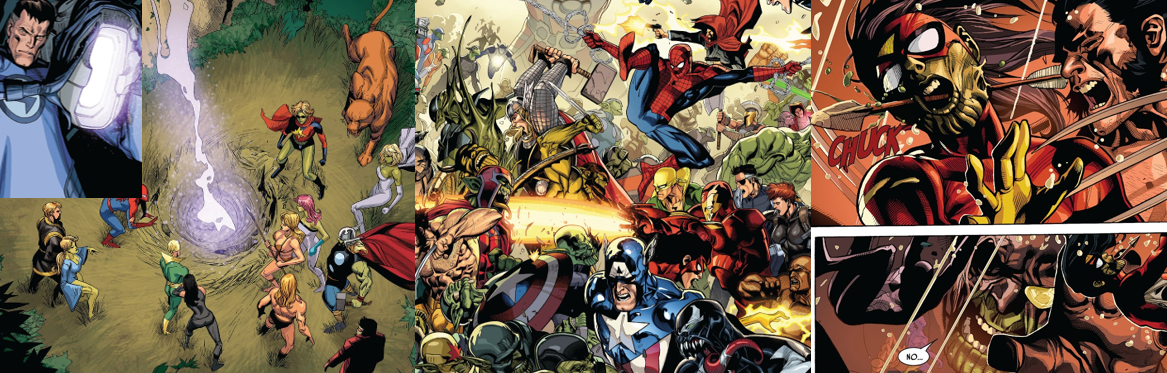
Hunter B-15 and Ravonna distrust Loki and question Mobius’ fascination with him even after learning the truth.

Since he can’t return to the timeline, Loki is intrigued to learn that Mobius’s target is another Loki variant who has been specifically targeting Minutemen, and he agrees to assist in the hopes of gaining an audience with the Time-Keepers. Neither Ravonna Renslayer or Hunter B-15 (Mosaku) approve of Loki’s involvement, seeing him as both a liability and an untrustworthy, insubordinate backstabber. Mobius, however, fully believes that Loki can provide unique insight into his counterpart’s thinking and methods and that anyone, even a Loki, is capable of change, despite this being directly against the Time-Keepers’ design. Ravonna is the only one in the TVA depicted as having met and communicated with the Time-Keepers, who are eventually revealed to be wizened, amphibious alien creatures who sit in a huge, foreboding stone chamber beneath the TVA and lord their presence and power by positioning themselves above all others. Ravonna is absolutely loyal to the Time-Keepers’ vision for stability and order; she enforces their will without question and, even when their true nature is revealed and she’s fully aware that she and everyone in the TVA (to say nothing of everyone ever) have been deceived and manipulated. She has a particular vendetta against Loki, whose variants have a reputation as troublemakers and has personally seen to it that many different versions of him have been “pruned” for violating the Time-Keepers’ laws. She has a close relationship with Mobius, one based on a shared belief in the TVA and on mutual respect; while he’s never met the Time-Keepers and is a little off put that she keeps trophies of his investigations in her office, it’s clear that they have a lot of faith in each other’s abilities, and she thus questions Mobius’s trust in Loki and the two even end up set against each other by the finale. After Ravonna literally stabs him in the back since she maintains that the TVA can’t have been for nothing, regardless of the truth, Mobius tries to appeal to her morals in an attempt to rebuild the TVA into something better to avoid stripping people of their free will, but she refuses and heads out to find her own purpose, clearly hurt that he threw away their friendship and mission in favour of Loki.

Sylvie is obsessed with bringing down the TVA and confronting whomever is behind ruining her life.

Still, Ravonna remains a vindictive, bureaucratic administrator; she had no qualms about arresting a female variant of Loki for “crimes against the Sacred Timeline” when she was just a little girl (Cailey Fleming) and guilty of little more than existing and playing with her toys. Although terrified, she swiped Ravonna’s TemPad and fled into the timestream, and Ravonna has been pursuing her ever since. Everywhere the variant went caused a Nexus Event as her timeline was erased and she wasn’t supposed to exist, so she found sanctuary at the ends of worlds and civilisations and, over time, grew to resent and hate the TVA for taking everything away from her. Renouncing the name Loki, she grew up to become Sylvie (Di Martino) and used the TVA’s own technology to hunt down their Minutemen and swipe their reset charges with the express purpose of “bombing” the Sacred Timeline and throwing the TVA into chaos. Unlike Loki, who relies on his daggers and illusions to combat and deceive others, Sylvie is adept at enchantment; through physical contact, she draws upon her victim’s memories to enthrall them with lifelike illusions. This power has the additional impact of revealing that Minutemen like Hunter B-15 and Hunter C-20 (Sasha Lane) (and, in fact, everyone at the TVA) are all variants who were plucked from their lives and turned into the Time-Keepers’ puppets. Although they are as condescending, narcissistic, and deceptive as each other, Sylvie is very different from her male counterpart; she’s more direct and brutal, for one thing, has a greater knowledge of the TVA and time travel, for another, and has a very different history thanks to Ravonna’s meddling. Not only was she aware of her true heritage from an early age, but she spent the majority of her life on the run from the TVA and thus wasn’t trained in magic by Frigga. Instead, she taught herself and, as a result, her powers and experiences are very different from Loki’s; like him, she is alone and finds it difficult to trust others, preferring to use and cast them aside as a means to an end, but she’s also become paranoid and self-reliant after a lifetime of running. Her goal is to infiltrate the TVA, tear it down from the inside out, and confront the Time-Keepers directly; a goal she succeeds at, only to learn that the Time-Keepers are merely mechanical constructs and part of a greater deception. Thus, she sets out to find the puppet master behind the Time-Keepers and is forced into an alliance with Loki to reach her goals.

In the ultimate narcissistic move, Loki falls for “himself” and throws the multiverse into chaos as a result.

Mobius knew that Loki wouldn’t be able to resist proving himself the superior of the two, but even he is astounded to discover that Loki has fallen for his female counterpart; although they are antagonistic with each other and constantly playing a game of one-upmanship against each other, especially in the early going, Loki and Sylvie are forced to rely on one another to survive. When trapped on Lamentis-1 and facing their imminent death, Loki delivers a rousing speech painting Sylvie as a survivor who was able to slip through the TVA’s fingers and almost single-handedly destroy their entire organisation and, when they hold hands and take solace in each other’s company, it causes a Nexus Event greater than anything the TVA have seen before. After being apprehended and subjected to a time loop where Lady Sif (Jaimie Alexander) repeatedly beats and berates him, Loki lies to Mobius in order to protect Sylvie and is visibly hurt when his former friend lies about her demise and relieved to learn that she’s still alive. Sylvie is furious when she learns that the Time-Keepers are mere puppets, and equally devastated when Ravonna appears to erase Loki from existence right before her eyes just as he was about to admit his true feelings to her. Since pruned timelines and variants are impossible to completely destroy or reset, they’re transported to the “Void”, a post-apocalyptic wasteland filled with relics from deleted timelines (it even includes Thanos’ helicopter!) and home to Alioth, a massive cloud-like creature that hunts and consumes all life. When Sylvie learns of this, she transports herself there specifically to reunite with Loki and to push past the Void and to the man behind the TVA; this involves a significant risk as Sylvie proposes enchanting the monstrous Alioth. As this venture could cost them their lives, Loki and Sylvie share an intimate moment beforehand, one made more awkward by their inability to properly express, trust, or connect with others; Loki promises that, despite this chequered past, he has no intentions to betray her even if he gained his coveted throne and they promise to figure out where they go next once they’ve achieved their goal.

The Void is home to the monstrous Alioth and a whole slew of Loki variants.

Loki takes the concept of multiple timelines and really runs with it; in the MCU, divergent timelines are created due to time travel or going against the Sacred Timeline, and this can lead to completely new universes and new variations on characters and worlds forming. The TVA is made up of these variants, who have no memory of their previous lives, and is built on a series of rules that dictate how the timestream works: Minutemen can’t just travel to before an incident occurred since Nexus Events disrupt the time flow and can only be pruned in real time, and variants like Sylvie can effectively avoid detection by hiding out at the worst Nexus Events in history, such as cataclysmic events like the destruction of Pompeii. Reset timelines and pruned variants are sent to the Void to be consumed by Alioth, and Loki is stunned to find this hellscape populated by more of his variants: Kid Loki (Jack Veal), “Boastful” Loki (DeObia Oparei), Alligator Loki (Wally), and Richard E. Grant in a 100% comic-accurate costume as “Classic” Loki! The variants encourage Loki to focus on staying alive rather than trying to escape and take him to their underground shelter and share their Nexus Events: Kid Loki killed his version o Thor, Boastful Loki claims to have defeated all of the Avengers and taken the Infinity Stones for himself, Alligator Loki(who the Lokis are able to understand presumably telepathically, though we never hear his thoughts) ate the “wrong neighbour’s cat”, and Classic Loki used his magic to fool Thanos with an illusion and was arrested the moment he tried to leave his a self-imposed exile. Loki is dismayed to see all of his worst attributes on show: Boastful Loki betrays his comrades to President Loki (Hiddleston) and his rag-tag group of variants, who promptly turn on him and cause them to waste their energies in petty squabbles and fighting. Classic and Kid Loki lament their fate to constantly lie and cheat and betray each other, and to be doomed to the Void as the “God of Outcasts” whenever they try to change their nature, but Loki remains determined to kill Alioth and bring down the TVA.

Quite unexpectedly, Loki forges some real friendships and relationships but is constantly judged for his past deeds.

Despite his untrustworthy and deceptive nature, Loki forms a bond with Mobius that quickly develops into an unlikely friendship; a self-confessed fan of Loki’s, he fully believes that there’s more to the God of Mischief than the Sacred Timeline would suggest, and he’s personally hurt when Loki appears to have betrayed him and joined forces with Sylvie, a notorious killer. However, when he learns of Ravonna’s deception and the true nature of the TVA, he and Loki reach an understanding of trust and true friendship, only for Loki to be left devastated when Ravonna seemingly erases Mobius from existence in a scene that has more than a few visual, thematic, and emotional parallels to Loki’s murder of Agent Phil Coulson (Clark Gregg). Thankfully for Loki (and the audience), Mobius is merely transported to the Void, where he has an emotional reunion with Loki before sharing a heartfelt hug with his newfound friend and heading back to the TVA to “burn it to the ground”. Loki also finds allies in his Void variants; while they refuse to leave the Void since it’s now their home and find the idea of challenging Alioth laughable, Kid Loki gifts Loki with a blade and Classic Loki, moved by Loki’s plight and ambition, uses all of his powers to distract Alioth with a full-scale recreation of Asgard at the cost of his life. Of course, his greatest and most unpredictable ally is Sylvie; although they are united in their desire to confront the one behind the TVA and in rejecting the idea that they’re not in control of their destinies, Sylvie is absolutely obsessed with getting revenge for her stolen life and refuses to make any compromises. Thus, the two come to blows since Loki has managed to change his true nature but Sylvie is unable to let go of her past. Seeing his intervention as a betrayal, she fights him in the Citadel at the End of Time with all of the multiverse in the balance, but he repeatedly tries to reason with her; he doesn’t want to hurt her, or anyone else, and tries to convince her that the situation is bigger than either of them but she sees it another of his deceptions to achieve his “glorious purpose”. Although Loki believes that he’s gotten through to her and the two share a tender kiss, he’s devastated when she uses the TemPad to send him back to the TVA and has her revenge on the one responsible for her pain.

Unable to let go of her pain, Sylvie kills He Who Remains and seemingly dooms the multiverse to all-out war.

This would be the enigmatic “He Who Remains” (Majors), an eccentric man clearly driven mad by untold aeons of isolation and the pressure of presiding over all of time and space in the Citadel at the End of Time, a surreal cosmic wasteland devoid of life where time has no meaning. There, the Sacred Timeline exists as a perpetual stream of boundless energy, like a concentric ring of water surrounding the ancient, decrepit, cracked citadel. Upon arrival, Loki and Sylvie reject his offer to reinsert them into the Sacred Timeline in a non-disruptive way and allow Loki to reign over all of his universe with the Infinity Gauntlet and give Sylvie the happiness she desires. He Who Remains is said to see all, control all, and be all that is left at the beginning and the end of time; accordingly, he’s easily able to avoid Sylvie’s attempts to kill him using a pre-programmed TemPad since all of life, our decisions, actions, and words, is recorded in volumes of typed up pages, like a movie script, providing him cosmic awareness. Although they’re angered and insulted at the idea of one man dictating the course of their lives, and everyone else’s, he admires their tenacity and adaptability but fully believes that his deceptive methods, and the TVA, were necessary to protect the Sacred Timeline from multiversal war and his far less benevolent variants. He reveals that, long ago, his variants discovered the multiverse and came together in narcissistic and self-congratulatory peace. Soon, some of them saw it as an opportunity to conquer new worlds and all-out war broke out; contrary to the Time-Keeper dogma, He Who Remains explains that he found Alioth (a creature “created from all the tears in reality”), experimented on it, and harnessed its power to consume all of time and space end to the mutiversal war. He then isolated his timeline and set up the TVA to not only keep divergences from arising but also keep his evil variants from creating more explicitly “evil” havoc. He then offers Loki and Sylvie two choices: kill him and risk something worse taking his place or take over as the overseers of the Sacred Timeline to ensure stability. Naturally, Loki and Sylvie are incredulous, but his explanation is simple: he’s tired and far older than his appearance would suggest and desires someone young and eager to take on the burden. Unable to see past that point in the conversation, and with the timelines beginning to diverge, he’s genuinely excited to see what path they choose. Fully aware that, eventually, he will end up back there as always, He Who Remains doesn’t resist when Sylvie kills him, resulting not only in the Sacred Time to rapidly and uncontrollably splintering into an infinitesimal number of branches but Loki finding all memory of him has been erased and a variant of He Who Remains has replaced the Time-Keepers as the overseer of the TVA!

The Summary:   
I was pleasantly surprised by Loki; as mentioned, I had become a little burnt out by the character (even though I initially believed that Avengers: Endgame would end with the revelation that he was still alive and causing mischief in the universe) because of how often he crops up and how popular he is, but Tom Hiddleston absolutely kills it in the role and it’s a joy to see him given more time to shine in this show. Like the other Disney+ shows, Loki’s presentation is absolutely top-notch and on par with that of its silver screen cousins; I initially wasn’t a fan of the multi-font title, but the shifting fonts really sold the idea of there being countless variants of worlds and characters and I absolutely loved the anachronistic, nonsensical presentation of the TVA. Nothing there makes any sense as there’s outdated computers and naïve office workers existing side-by-side with reality-warping technology and futuristic gadgets, all of which makes it very surreal and visually interesting. Even the sight of Loki garbed in a mundane shirt and tie and going through files of paperwork to get a lead on Sylvie ties into the bizarre nature of the show; for all their power, omniscience, and ability, the TVA is still reduced to filing paperwork and going through the motions of bureaucracy as dictated by an unseen corporate overlord. While it was jarring to have “Lamentis” (Herron, 2021) set largely on a train mid-way through the season, this allowed for a fantastic introspective discussion of Loki and Sylvie’s nature, differences, and characters and the show more than made up for it with the spectacle of Lamentis-1’s impending doom, the many visual Easter Eggs to spot scattered around the Void, and the cosmic eccentricity of the Citadel at the End of Time.  

Loki is full of great, and surprisingly emotional, performances from all of its cast.

As mentioned, it’s the performances that really help Loki to shine; although Hiddleston is playing a different, far less humbled and heroic version of Loki (this Loki was literally leading an alien invasion of New York City and causing untold death and destruction for his own ends mere moments before he was arrested), the implication is explicitly made that Loki has always been this misguided and tortured character. His issues go far beyond being overlooked in favour of his brother or undervalued because of his true nature as a Frost Giant and instead tie into the show’s overall themes regarding destiny. Loki believes it is his right to rule, to subjugate others to his will, but admits that he has no real desire to hurt or kill others; it’s simply part of the nature and the illusion of being in control he is projecting. His relationship with Sylvie and the other variants helps him to see the ugly side of his true nature almost as much as the noble end to his mainline counterpart and he very quickly grows beyond his own selfish desires. However, despite his growth as a character, he’s continuously judged because of his past misdeeds and his reputation as a trickster; even those closest to him, such as Mobius, Sylvie, and the other Lokis, have difficulty trusting that he’s not just playing some larger endgame to seize power for himself and, in the end, he has to prove it by physically opposing the one person he’s grown to care about (who is, ironically, “himself”). I was also surprised to find that Owen Wilson was a standout addition to the cast; I’m no fan of his but he excelled in his role, projecting a friendly and affable demeanour while also being somewhat conflicted. He truly believes in the TVA’s mission but also believes in free will and people’s capacity for change; little things like his desire for a jet ski and his loyalty to Loki above even the TVA help to make him an enjoyable character and I really liked the rapport between him and Loki.

Loki’s experiences see him change from a selfish trickster to fighting to ensure the stability of the multiverse.

Mobius and the other variants help to tie into another of the show’s themes, that of destiny versus free will. Even Classic Loki finds it difficult to believe that a Loki could ever be more than a conniving, backstabbing traitor, and Mobius is driven to reveal the truth of the TVA to Hunter B-15 and all of the Minutemen simply because he believes it’s not their right to take free will away from anyone, regardless of the will of the Sacred Timeline. Loki actively and adamantly resists the notion that he’s not in control of his actions; he recognises power, for sure, but not that he’s some mere puppet, even when the truth is staring him in the face. However, his desire to be free from the TVA’s machinations become secondary to the fate of all reality when he learns that killing He Who Remains will result in rampant timelines and the coming of an even worse, far less reasonable threat. He battles Sylvie not because he desires to be lord of all space and time but because he feels it’s their responsibility to keep the timeline safe and that they can be far more benevolent overseers of the Sacred Timeline. When the first trailers for Loki came out, I was concerned that it was going to be a throwaway show depicting Loki popping up throughout time to cause mischief but, instead, Loki greatly expands upon the idea of time travel in the MCU, showing that this rather mundane-looking organisation routinely prunes and maintains the Sacred Timeline but also opening up the possibility of different actors playing different versions of these characters. This not only gave us the great Richard E. Grant as a comic-accurate Loki but also opens the door for potentially limitless stories to be told now that the multiverse has been broken as a result of Sylvie’s actions.

Despite having grown close, Loki is unable to keep Sylvie from splintering the timeline into infinite paths.

Sylvie presented a unique opportunity for Loki to see himself in a new light and to discover new things about himself; primarily, how alone he’s been and his capacity for love. The romance between the two is volatile and chaotic, but it’s what separates him (both of them) from all their other variants. It’s something that simply shouldn’t be, and gives them the power to overcome Alioth and, effectively, confront “God” face-to-face. However, Sylvie has spent too much time alone and her nature is to be distrustful of everyone, even “herself”, whereas Loki undergoes significant character growth to form a true friendship with Mobius and to actually care about the fate of all reality. He’s aghast when he learns that Mobius and the others are variants who’ve lost their worlds and lives and his desire to expose the TVA is motivated as much by his own rejection of their dogma as it is his wish to open their eyes to the truth. While the other Lokis are content to live out their lives in the Void, he has something worth fighting for: his friends and, more importantly, Sylvie. When they come to blows over He Who Remains, he constantly tries to talk sense into her, which shows just how far he’s come, and is heartbroken when she sends him back to the TVA and seals the fate of the multiverse. His first thought isn’t for himself but to warn Mobius of He Who Remains’ malevolent variants, only to discover that his friend has no memory of him and that he’s too late: a variant of He Who Remains has conquered the TVA and Loki may be the only one aware of what’s happened to the multiverse as a result of Sylvie being unable to see the bigger picture. This ends the show with Loki in a unique situation; before, everyone judged him as a deceptive trickster but, now, people will have no reason to trust him because they have no idea who he is!

My Rating:

Rating: 5 out of 5.

Fantastic

Were you a fan of Loki? What did you think when the show was first announced? Did you enjoy seeing Tom Hiddleston take centre stage and what did you think to Loki’s character arc throughout this first season? Which of Loki’s variants was your favourite and what did you think to Sylvie and the romance between her and Loki? Were you surprised by the reveal of He Who Remains and what do you think will happen now that the Sacred Timeline has been disrupted? Are there any of the Loki variants you hope to see in the future? Feel free to sign up to drop your thoughts on Loki below, or leave a comment on my social media, and be sure pop back next Thursday (and next month) for more Asgardian content.