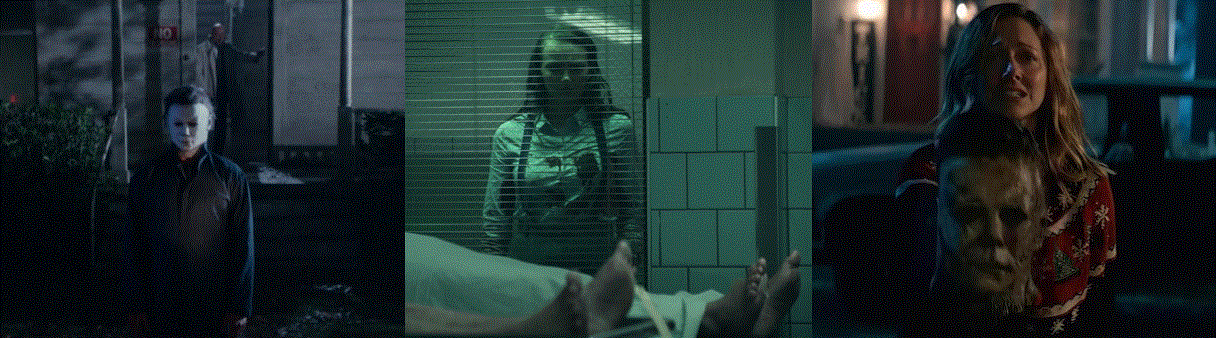
Talking Movies: V/H/S/2

Talking Movies

Released: 12 July 2013
Directors: Simon Barrett, Adam Wingard, Eduardo Sánchez and Gregg Hale, Timo Tjahjanto and Gareth Huw Evans, and Jason Eisener
Distributor:
Lionsgate
Budget: Unknown
Stars:
Lawrence Michael Levine, L.C. Holt, Adam Wingard, Hannah Hughes, Jay Saunders, Oka Antara, Fachri Albar, Hannah Al Rashid, Rylan Logan, and Samantha Gracie

The Plot:
Two private investigators are hired to look into the disappearance of a boy and find his home deserted except for a stack of VHS tapes, each of which contain a gruesome horror story in the form of found footage depicting a man recieving an ocular implant that allows him to see ghosts, a keen biker who is turned into a flesh-hungry zombie, a film crew investigating a bizarre cult, and a violent alien abduction.

The Background:
In 2012, Bloody Disgusting founder and film producer Brad Miska reached out to the directors and creative minds he had met through his website to create V/H/S (Wingard, et al, 2012), a horror anthology that was positively received at the 2012 Sundance Film Festival, received mixed reviews upon release, and managed to gross $1.9 million. A sequel (originally titled S-VHS) was rushed into production in 2012 and featured an abundance of new directors and creators joining a handful of returnees from the first film. Like its predecessor, V/H/S/2 first debuted at the Sundance Film Festival before being widely released on video-on-demand and at a limited number of cinemas. The film’s $805,574 gross meant it made significantly less than the first film but, in comparison, reviews were far more positive and a poorly-received third entry followed in 2014.

The Reviews:
As with the first film, because V/H/S/2 is an anthology film made up of a framing narrative and several short horror stories, I’m changing up my usual review format to talk about each segment individually before sharing my thoughts on the overall film.

Two private investigators discover a disturbed young man’s collection of gruesome videotapes.

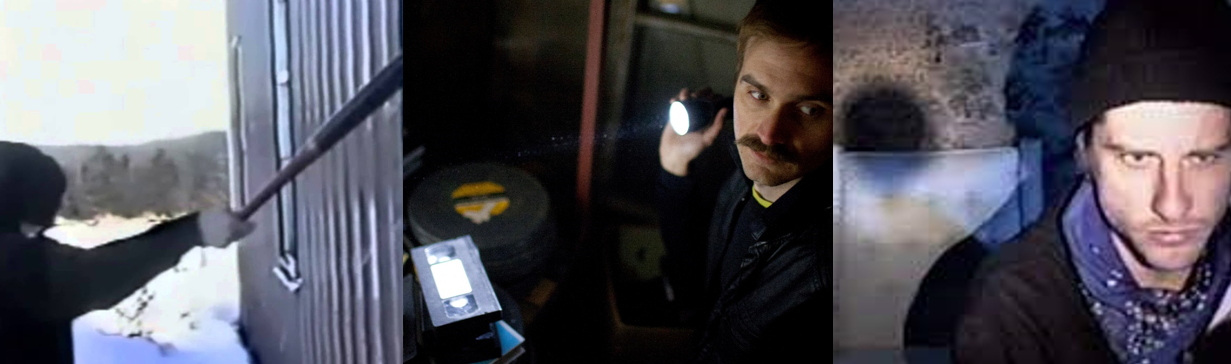
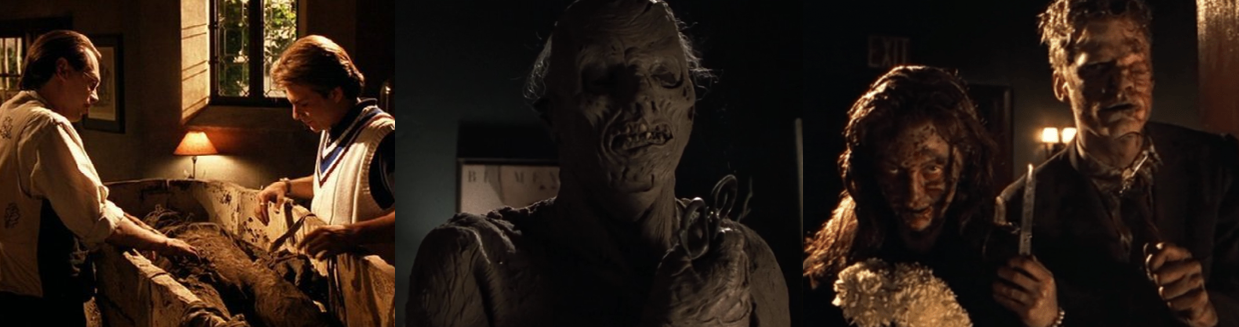
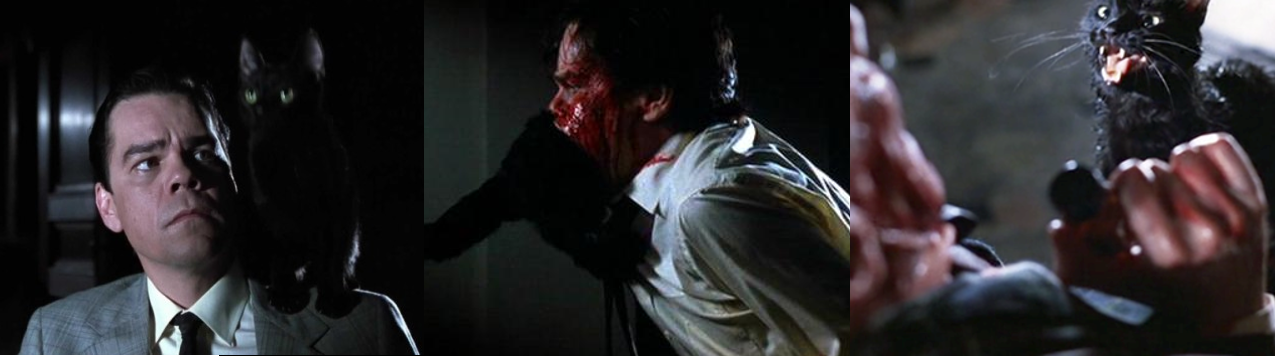
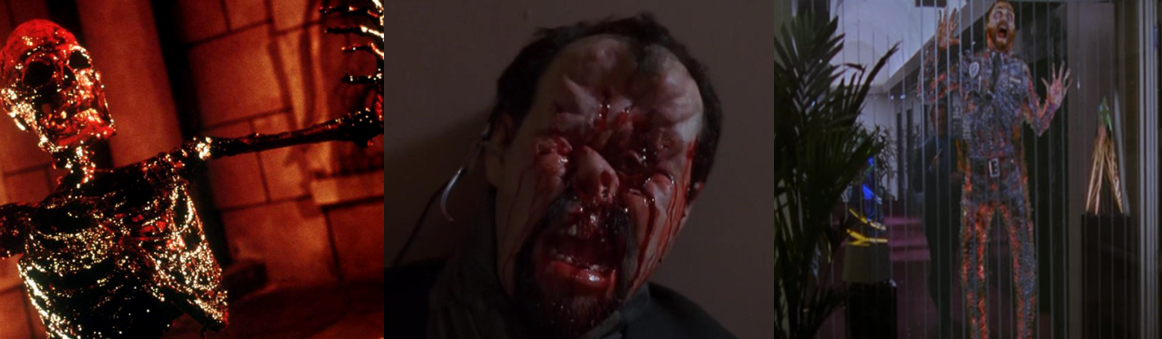
As in the first film, V/H/S/2 features a framing narrative that allows for the film’s short stories to be told; “Tape 49” (Barrett) follows Larry (Levine) and Ayesha (Kelsy Abbott), two unscrupulous private investigators who are hired by a concerned mother to check on her son, Kyle (Holt), who has been missing for a few days. When they arrive at the college kid’s house, they find it to be deserted; stacks of VHS tapes are piled up everywhere and Kyle’s laptop has been left recording a video. Kyle’s video log shows him discussing his obsession with the tapes and, while Larry searches the rest of the house, Ayesha checks out some of the tapes. After each short, the film cuts back to Ayesha, who comes to be physically affected by what she has watched (which, according to Kyle, must be viewed in a certain order to have the greatest effect) and is unaware that she is being stalked. Eventually, Larry comes in the room to find Ayesha has killed herself with a bullet to the head but she returns to attack him as a zombie after he watches the final film. Though he’s able to fight her off, Larry ends up being strangled to death by Kyle, who attempted to kill himself on camera to make his own tape and ended up blowing his entire lower jaw off in the process! Regardless, he delivers a thumbs up, indicating that he succeeded in his goal.

Herman’s ocular implant allows him to see and be tormented by vengeful spirits.

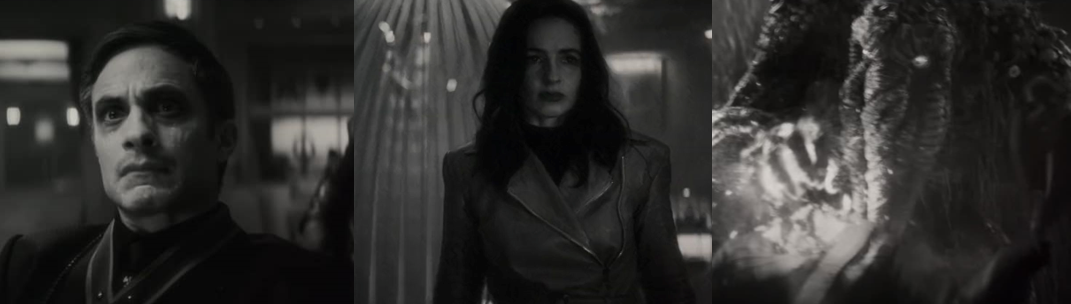
The first short story is “Phase I Clinical Trials” (Wingard), which puts a unique spin on the first-person, found footage concept by telling its story through an ocular implant inserted into Herman’s (ibid) head to replace his eye. Though disturbed to find that his every moment will be recorded throughout the trial period, Herman has little choice but to accept the restrictions that come from the implant, which Doctor Fleischer (John T. Woods) explains may also be accompanied by some “glitches”. After arriving home, Herman is spooked to find his game controller moved while he goes to make some tea, the kettle knocked from the stove when he leaves the kitchen, an invisible figure laying in his bed, and a bloodied phantom (Brian Udovich) who gives him a fright. The bloody man is joined by an unsettling child (Corrie Lynn Fitzpatrick) and the two terrify Herman, banging on his bathroom door and forcing him to sleep in the bathtub out of fear. The next day, he finds his house has been ransacked by the ghouls and is visited by Clarissa (Hughes), who received a similar implant to restore her hearing and, like Herman, has been tormented by ghosts ever since. Clarissa believes that removing the implants would simply take away their ability to perceive them and that the spirits grow stronger the more they are interacted with. Although she tries to use sex to take his attention away from the disturbing spirit of her uncle (John Karyus), who it’s implied assaulted her in the past, she’s dragged into his pool and, despite his best efforts to save her, is drowned by a particularly malevolent, invisible entity. Desperate to make the ghosts go away, Herman uses a razor to slice out his implant, however this only leaves him blind to their presence and allows them to easily overwhelm him and choke him to death with the same device.

Mike’s ride through the woods ends with him becoming a mindless zombie.

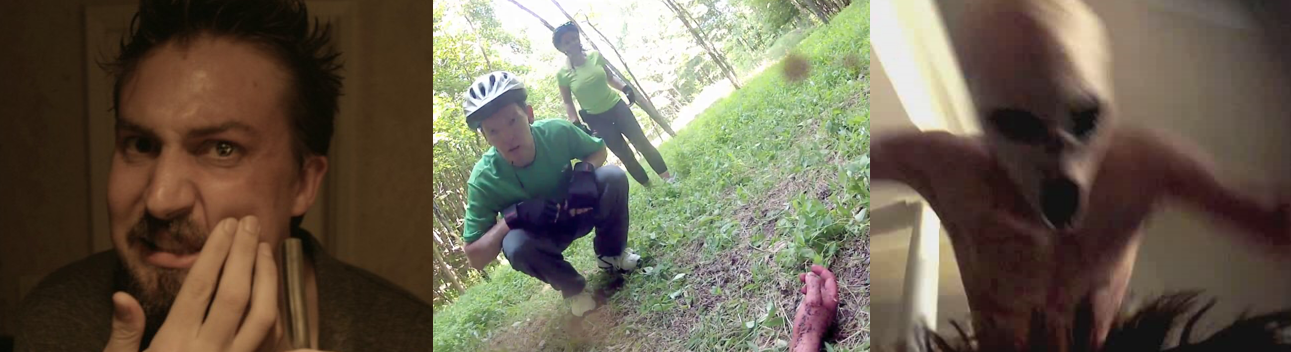
“A Ride in the Park” (Sánchez and Hale) follows keen cyclist Mike Sullivan (Saunders), who affixes a camera to his helmet and his handlebars before going for a morning cycle through the woods. Almost immediately, however, he runs across a hysterical girl (Bette Cassatt) who begs him to help her boyfriend; seeing that the poor bloke has been set upon by shambling, flesh-hungry zombies, Mike tries to escape with the girl but she pounces on him and tears a chunk out of his neck. Bleeding profusely, Mike staggers through the woods and begins vomiting the same black blood as the girl before collapsing and choking to death. When another couple of cyclists come across him, Mike reanimates and attacks the man (Dave Coyne), ripping open his cheek and then taking a bite out of his female companion (Wendy Donigian), who also becomes a zombie and joins Mike in devouring her former lover. When the male cyclist also reanimates, the three stumble through the woods and attack a child’s birthday party, biting many of the terrified guests and creating more zombies in the process. In a tragic and horrifying twist, Mike is momentarily subdued when he catches sight of his reflection and regains some small semblance of his humanity when he accidentally pocket dials his girlfriend, Amy (Devon Brookshire). Distraught at the monster he has become, Mike uses the last of his senses to shoot himself in the head with a discarded shotgun.

A film crew become witnesses, and victims, of a cult’s efforts to summon a demon through ritual sacrifice.

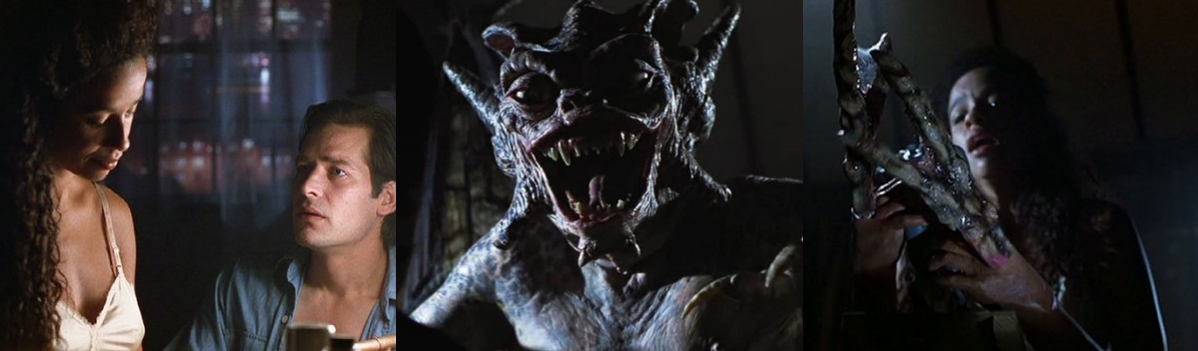
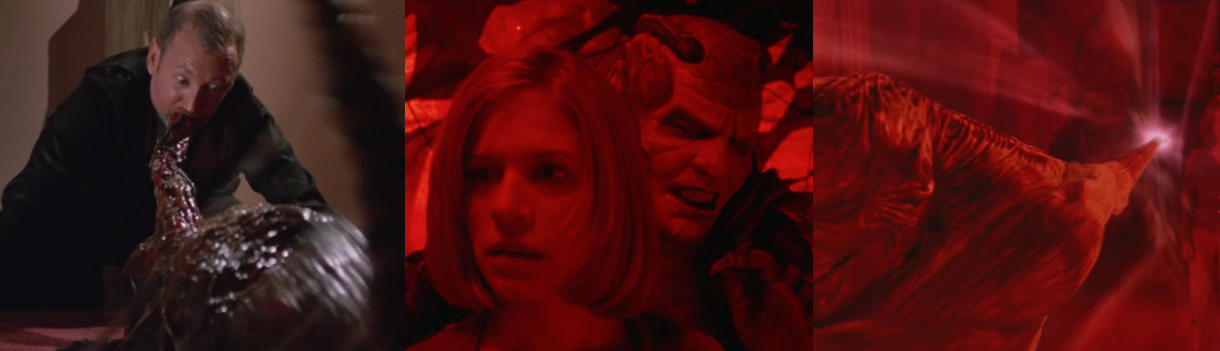
Easily my favourite of the film’s stories is “Safe Haven” (Tjahjanto and Evans), which depicts a film crew – comprised of interviewer Malik (Antara), his fiancée and producer Lena (Rashid), his best friend Adam (Albar), and cameraman Joni (Andrew Suleiman), all of whom are wired with hidden cameras and microphones – investigating a mysterious cult known as Paradise Gates, who are very secretive and mistrustful of outsiders. Lena is able to convince the cult’s leader, known only as “Father” (Epy Kusnandar), to permit them entrance to his compound so that they can produce a fair and accurate report that challenges the slander and rumours surrounding the cult. Once inside, they find bizarre symbols and effigies adorning the walls and that the cult worships Father and his teachings of immortality and providence; several children are present on the grounds, all of whom are heavily indoctrinated in Father’s teachings, and it’s heavily implied that the girls have been subjected to their leader’s sexual appetites. While Malik interviews Father, who vehemently defends his religion and his actions while condemning wider society for their ignorance, Lena reveals to Adam that he’s the father of her unborn child right before Father issues a command over the intercom that incites widespread suicides throughout the compound. In the chaos, Adam discovers a woman in the compound’s basement who has been strapped to an operating table and had her womb carved out, Father cuts Joni’s throat with a Stanley Knife for interrupting him, and Malik is executed on Father’s followers. Lena finds herself abducted by woman in surgical attire and, when Adam goes to rescue her, he’s rocked by an explosion, is disturbed to see a man crawling across the ceiling, and watches as the bloodstained Father explodes in a shower of gore. As demonic chanting and an air raid siren fill the air, Adam finds Lena being restrained by wailing, possessed nurses but can only watch as a grotesque horned demon not unlike Baphomet forces its way from her stomach! Fleeing in terror, Adam fights his way past the reanimated cultists and races away in his car; however, the demon pursues him and forces him off the road, spilling him out of the vehicle and driving him to maniacal insanity as it utters a single, gruesome word: “Papa”.

A group of kids and their doggy are violently attacked by monstrous grey aliens!

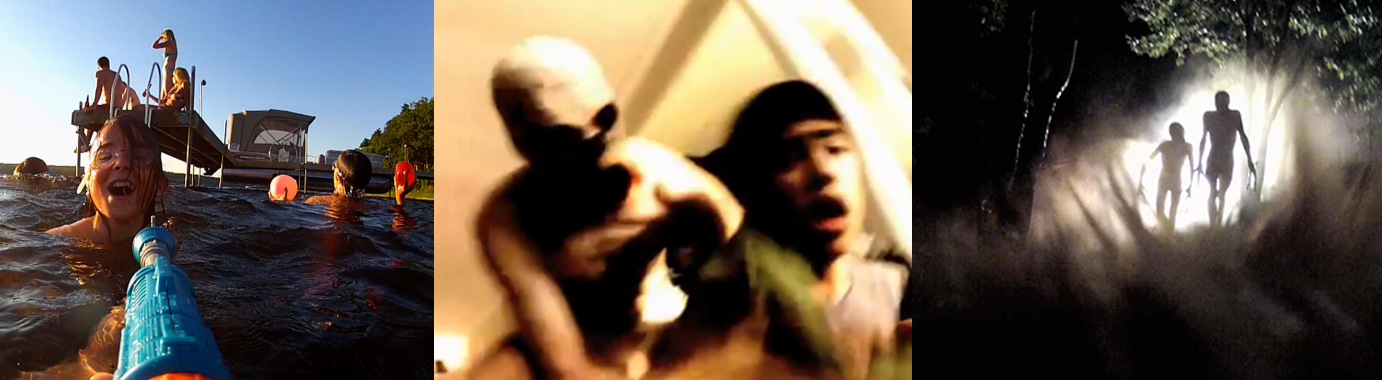
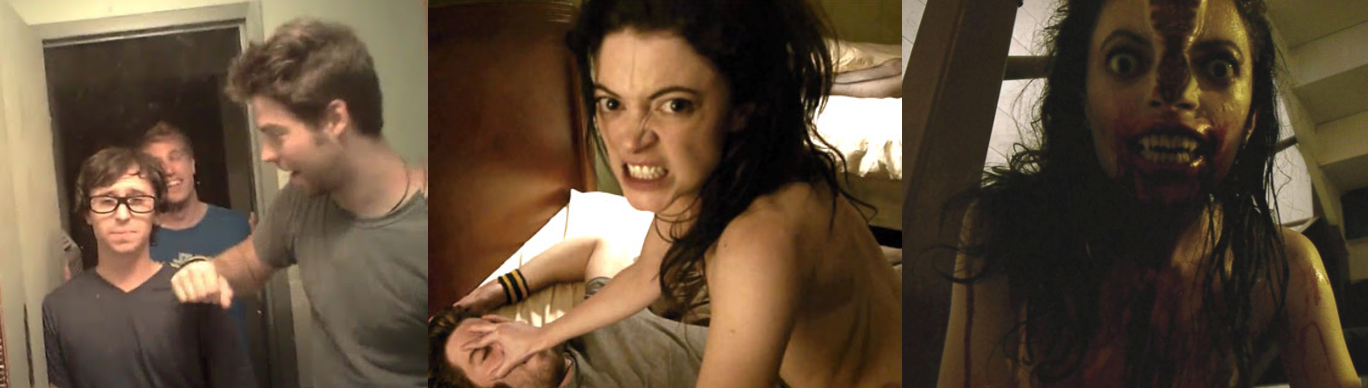
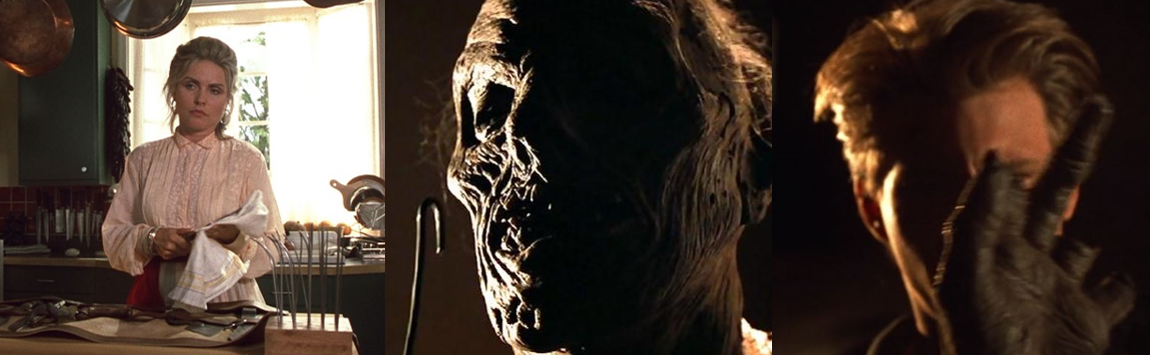
The film ends with another strong tale, “Slumber Part Alien Abduction” (Eisener), in which brothers Gary (Logan) and Randy (Cohen King) attach a miniature camera to their Yorkshire Terrier, Tank (Riley Eisener), to film their fun and games at their lakeside house. The boys delight in tormenting their older sister, Jen (Gracie), and her friends while their parents are away and are so caught up in their adolescent antics that they fail to notice a grey alien lurking beneath the lake and an ominous, deafening noise when they play a prank on Jen and her boyfriend, Zack (Jeremie Saunders), as they’re trying to have sex. Similarly, they also fail to pay much attention to a mysterious light show out over the lake but their tomfoolery is soon violently interrupted by the blaring noise, the power cutting out, and the presence of disturbing grey aliens outside their house. The monstrous beings grab the group, seal them in their sleeping bags, and try to drown them in the lake, with only Gary, Randy, Jen, and Tank surviving. Fleeing towards the strobing red and blue lights, they realise all too late that they’re running towards a trap rather than police assistance and both Jen and Randy are violently taken when Tank inadvertently attracts the aliens. Although Gary tries to flee with Tank up a ladder in the barn, they are ensnared by the aliens’ tractor beam and, in a distressing finale, Tank plummets to the ground and lies whimpering and dying as his family are abducted into the unknown.

The Nitty-Gritty:
The first thing you’ll notice about V/H/S/2 is the upgrade in camera quality; while there is still an abundance of nausea-inducing shaky cam, the quality of the picture and sound is much improved over the original. Next, there is a far more unique use of the camera perspective compared to the first film, which only really did something different with one of its stories; the ocular implant (which continues to show us the disturbing imagery even after Larry’s removed it), Mike’s helmet camera, using a film crew, and placing a small camera on a dog all allow for far more natural shots as I find the biggest issue with found footage films to be the believability that someone would hang onto a video camera during moments of chaos. The shorts also seem a bit longer this time and far more visceral and terrifying, and it’s pretty clear there the budget was slightly higher than in the last film (even if I wasn’t able to find out what the film’s budget actually was).

The film makes even better use of its format to provide unique and horrifying twists on familiar tropes.

As much as I enjoyed the original film, I found that I was more engaged and unsettled by each short story on offer in V/H/S/2. Additionally, the film brings a few unique ideas to tried-and-tested clichés through its found footage presentation; I’ve never seen a zombie film framed from the infected’s perspective quite like this, for example, and it’s deeply disturbing to see Mike succumb to his bite and return to unlife, feasting on the flesh of the living, and witness first-hand the degradation of his humanity into ravenous hunger and the tragic spark of his personality that drives him to end his monstrous existence. Even shorts that present recurring ideas in horror and science-fiction are given an unnerving slant thanks to the direction and presentation of the stories; “Phase I Clinical Trials” isn’t the first time the “haunted implant” story has been told but the presentation of the spirits as vengeful, malevolent phantoms really adds an extra punch to the story and we’ve all seen alien abduction films before but rarely are grey aliens depicted so monstrously. Roaring, clutching, and clawing at their prey, and constantly accompanied by blinding lights and ear-splitting sounds, the greys are at their most horrific and seeing them mercilessly abduct the children and cause the painful and heart-wrenching death of their dog is particularly unnerving.

The film’s scares and presentation definitely benefit from an increased budget.

As I mentioned, though, my favourite piece of the film is “Safe Haven”. This one may put off many viewers since not only is much of it told through the use of subtitles but it touches upon uncomfortable themes of suicide, maniacal cults, and Satanic imagery. Still, the short is easily the most bloody and visceral of V/H/S/2 and its predecessor; while the goat-headed, winged demon is easily the short’s most impressive and ambitious effect, “Safe Haven” also includes zombies, heads and faces being blown off, a man being blown to pieces, and women being torn apart from the inside out. For fans of blood and gore, “Safe Haven” is a definite standout but, for me, it’s the unsettling imagery of the demon itself and the implications of the story that cause this piece to have the most impact. “Phase I Clinical Trials” and “Slumber Part Alien Abduction” are equally impactful but in different ways; making copious use of jump scares, loud noises, and lingering shots of disturbing monstrosities, these two definitely make an impression, meaning that “Tape 49” and “A Ride in the Park” are left as the film’s weakest entries (and even those are bolstered by a unique camera perspective and visceral gore).

The Summary:
Although I feel like I prefer V/H/S/2 overall compared to its predecessor, it’s difficult for me to favour one over the other as there are short stories in the first film that I enjoy quite a lot. Generally, I prefer to watch the two as a double feature, thereby experiencing the best that each has to offer, but it’s hard to deny that the presentation and visuals are much more appealing and improved in this sequel. Everything feels much more focused and less rough around the edges, with some interesting, fun, and unique takes on the massively overdone found footage genre. Not only that, but each of the stories on offer are genuinely disturbing; even those that draw from tried and tested horror clichés are given a distinctive slant to deliver an unsettling and memorable anthology experience. Honestly, V/H/S/2 is worth it for “Safe Haven” alone but there’s plenty for horror fans of all kinds to enjoy on offer here. Again, it’s not really a film focused on characters and is more geared towards unnerving audiences, and the abundance of gore, terrifying ghouls, monstrous aliens, and ravenous zombies definitely succeeds in that regard in my opinion. I’ve heard negative things about the subsequent films in the series but I have a real soft spot for these first two, especially the second film, and I definitely recommend them to fans of independent, gory, disturbing horror films who are looking for something both a little familiar and a little different.

My Rating:

Rating: 4 out of 5.

Great Stuff

Are you a fan of V/H/S/2? What did you think of it, especially compared to the original, and which of the short stories was your favourite? What did you think to the way the short stories put a unique slant on familiar themes? What did you think to the ways the film made use of their found footage genre and the obvious increase in budget? Would you like to see more anthology films and which anthology show is your favourite? What horror films are you watching this month in preparation for Halloween? Whatever you think about V/H/S/2, feel free to leave a comment below or on my social media and pop back next Monday for one last anthology film before Halloween!

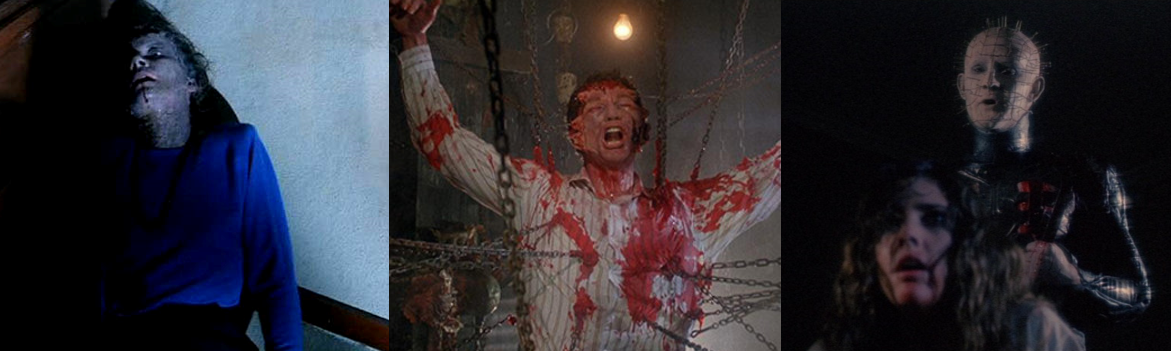
Movie Night: Hellraiser (1987)

Released: 10 September 1987
Director: Clive Barker
Distributor:
Entertainment Film Distributors
Budget: $1 million
Stars:
Clare Higgins, Ashley Laurence, Sean Chapman, Andrew Robinson, and Doug Bradley

The Plot:
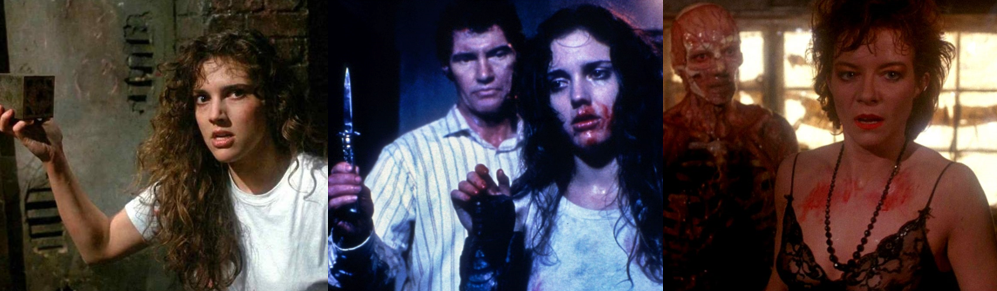
Newlyweds Larry (Robinson) and Julia Cotton (Higgins) try to start a new life in Larry’s family home. However, when Frank’s depraved brother, Frank (Chapman), returns to gruesome life following a drop of blood, Julia is compelled by lust to help him reconstitute himself and escape the wrath of the extra-dimensional Cenobites, whom he summoned with a mysterious puzzle box.

The Background:
In 1986, British novelist, playwright, and filmmaker Clive Barker published the third of his Night Visions anthology series; contained within this was a novella titled The Hellbound Heart, a horror tale heavily influenced by Barker’s time as a hustler and experiences in S&M clubs. The story of a hedonist trying to escape the pull of extra-dimensional beings from a dimension that blurs the line between pleasure and pain, The Hellbound Heart caught the attention of Hollywood right at a time where Barker was being heralded by iconic horror author Stephen King as “the future of horror” and when Barker was feeling dismayed at the reception of previous adaptations of his writings. Determined to helm the film himself, despite having no experience in movie directing, Barker nonetheless enjoyed the experience even though the studio demanded that the setting and accents by altered to be more American and he was forced to make cuts to secure an “R” rating. Barker’s disturbing vision for the twisted, sadomasochistic Cenobites was brought to life in gruesome detail on film, especially for actor Doug Bradley, who was blinded by his pitch-black contact lenses and endured roughly six hours in make-up to be transformed into the Lead Cenobite. Although largely praised for its disturbing atmosphere and visuals Hellraiser attracted its fair share of detractors and controversy. However, its $14.6 million box office made it successful enough to justify a sequel, which soon ballooned into a long-running horror franchise of largely diminishing returns, with both Barker and Bradley distancing themselves from later entries. Still, despite the franchise being mired in direct-to-video affairs, Barker persisted in his attempts to regain the rights in order to produce a reboot to revitalise his original concept.

The Review:
When I was a little kid, I couldn’t stand horror movies; I would hide behind comic books whenever my family put one on and had more than my fair share of nightmares from watching a handful of slashers and haunted house classics. One of my earliest memories of being disturbed by horror was when I crept downstairs one night for some reason (probably food) and found my parents watching Hellraiser, specifically the scene where Kirsty Cotton (Laurence) unwittingly summons the Cenobites while in hospital, and it scared me for so long that the film, and its sequels, took on an almost mythic quality in the back of my imagination. Now, decades later and having become largely desensitised to all horror, I’ve had the unenviable pleasure of watching all but two (as of this writing) entries in the franchise and have witnessed it decline from a truly unsettling meditation on the limits of human depravity to a run-of-the-mill slasher series with an iconic villain, all subtle and nuance having been stripped away as easily as the Cenobites strip flesh. Furthermore, I’m also of the belief that Clive Barker’s original movie really hasn’t aged too well; some of the special effects falter here in ways they don’t in later movies, and I’ve always hoped for a dark, gritty, atmospheric remake that can do the movie, and its franchise, justice. Still, there’s little doubt in my mind that the original is clearly the best in the series; it told a horror story that had a lot of nuances to it beyond simply being a mindless slasher or a cliché bout of “good” versus “evil” and really emphasised atmosphere and desperation over cheap scares.

Larry just wants to start his new marriage but is unaware of Julia’s sordid past with his brother.

The film is commendable in its simplicity, revolving as it does around four central characters, the Cotton family, and their dealings with a mysterious puzzle box we now know as the Lament Configuration (or, occasionally, the Lemarchand Configuration). Larry is moving his new wife, Julia, into his dilapidated childhood home in hopes of building a new life together, presumably away from the bustle and bustle of big city life though it’s not really made explicit (nor is it explicitly stated what either of them do for a living; Julia seems to be a kept woman and Larry is just “generic eighties businessman” by the looks of it). What is explicit, however, is the gulf that exists between them; Larry is very optimistic about the move, and about setting down roots in the old homestead. He gets stuck in with the moving men, loves to host social get togethers with their mutual friends, and has a playful, if naïve, approach to life. Julia, in contrast, seems largely lethargic to the whole situation; she agrees to go along with it simply to keep him quiet and happy and doesn’t once lift a finger to help make the house into a home throughout the drama of the move. A major point of contention between the two is Larry’s daughter, Kirsty; clearly, Kirsty had a strong bond with her deceased birth mother and views Julia more like the wicked stepmother, so she’s quite abrupt and dismissive towards Julia despite the latter’s best (if half-hearted) attempts to build bridges between them. Kirsty is a typical Daddy’s Girl; she visits and plays nice only to see her beloved father and she’s primarily interested in his safety and happiness above Julia’s, who she could happily live without.

Kirsty is determined to protect her beloved father from all threats, no matter what shape they take.

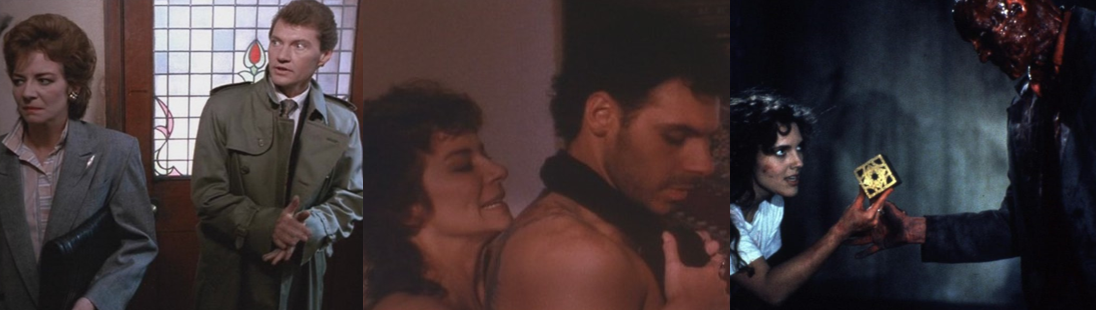
As Larry is painted as this foolish, if lovable, patriarch, a man who can’t stand the sight of blood and who really enjoys his boxing despite being the furthest thing from a fighter, Kirsty is able to shine all the more as the film’s protagonist. Indeed, as Julia sinks into murderous depravity, the film actively shifts its focus away from following Larry’s naïvety concerning his wife’s twisted nature and more towards Kirsty as she first works to stand on her own two feet with her own place and job, dabbles in romantic trysts with veritable blank canvas Steve O’Donnell (Robert Hines), and then uncovers the truth behind Julia’s shady antics. Were it not for his dislike of her stepmother, Kirsty would’ve been in the Cotton house from the beginning and potentially would’ve fallen victim to the horrors that laid within but her pride and desire to make it as an independent young woman see her firmly on the outside and able to see the warning signs of infidelity that fly completely over Larry’s head. And why wouldn’t they? Larry has no reason to suspect that his hedonistic brother, Frank, didn’t just use their old home as a base camp but literally and figuratively left a part of himself there after solving the Lament Configuration. A seeker of carnal desire, Frank purchased the puzzle box after learning that it opened a doorway to wonders and experiences beyond human imagination, but even he didn’t expect to be confronted by the four scarified, mutilated, androgynous Cenobites or their hellish dimension of chains, pain, and pleasure. It’s only because of his depraved nature that Frank was even able to reconstitute after Larry’s blood spills on the floor where he was torn asunder by the Cenobites’ hooked chain and, having assumed a desiccated appearance (Oliver Smith), Frank is eager to return to his former self and elude the Cenobites out of fear of suffering further untold torments in their nightmarish dimension.

Julia’s lust-filled tryst with Frank is enough to convince her to kill in order to restore him.

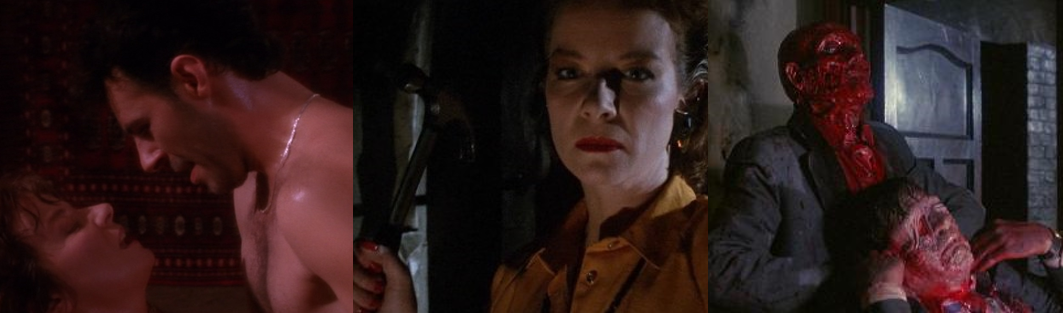
To do this, he manipulates Julia, with whom he had forced into a rough and list-filled affair shortly before her wedding to Larry. Julia is both haunted by the experience, which follows her all around the house, and exhilarated by the memory; in the flashbacks, she seems to be a very different person, loving and devoted, before encountering the rugged and forceful Frank and becoming immediately obsessed with desire for more of his particular brand of affection. Although Julia’s absolutely horrified to find Frank’s skinless, desperate form trapped in the attic, her need to be with him, to experience that sensation once more, and to feel truly alive and wanted and not just lethargic overtakes her logic and she readily agrees to lure unsuspecting men back to the house for him to “feed” upon. At first, Frank is far too weak to kill these poor fools but, after literally sucking the flesh off a few of them, he could easily handle the deed himself but, instead, he allows Julia to bash their heads in with hammers. Initially, she’s mortified by her actions, and the sight and sound of Frank’s absorption of the corpses, but she soon not only becomes numb to it but actually starts to enjoy it. By the time Frank begins to feel sensation and has reconstituted himself into something more closely resembling a man, she’s more than happy to touch him and ultimately willing to sacrifice even Larry and Kirsty to get Frank back to normal so she can get laid again. Without a doubt, Julia is the true villain of this piece; a vile, wicked, selfish woman who’s only interested in satisfying her urges, she’s every bit as depraved as Frank, but her downfall comes from trusting that he’s just as devoted to her as she is to him when, in reality, all he cares about is indulging his sick fantasies and staying away from the Cenobites.

The horrific Cenobites are alluring in their morbid eloquence and regal stature.

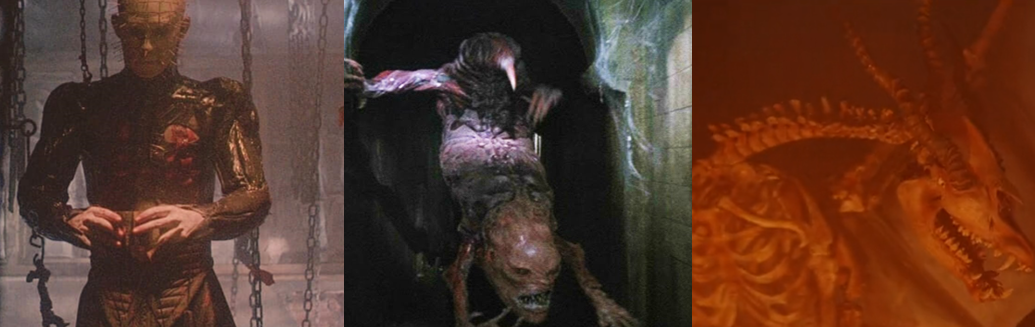
Speaking of whom, the Order of the Gash actually get very little screen time here compared to later films and other slasher villains, but they certainly steal the show when they do appear and their presence looms over everything. Just listening to the mixture of fear and awe as Frank describes their realm, their utter commitment to extreme sadomasochism to the point where they can no longer distinguish between pain and pleasure, is enough to evoke a feeling of dread, to say nothing of their horrific appearances. Mutilated and twisted into demonic figures, the Cenobites may appear vaguely human but are anything but; lead by an enigmatic priest with pins driven into his head (popularly referred to as “Pinhead”; Bradley), the Cenobites come from an unseen realm that thrives on the indulgence of flesh, the exploration of suffering, and the most excessive forms of pleasure. One of the most alluring aspects of the Cenobites is that they’re not mindless, mute killers; Pinhead is chillingly eloquent, speaking with booming, monotone menace and seeking to impose his twisted design upon whomever solves the box. However, while the Cenobites are clearly beyond pity and have lost all touch with humanity, they’re not beyond reason; Pinhead and the Female Cenobite (Grace Kirby) are enraged at the idea that Frank has escaped their clutches and agree to Kirsty’s plea to reclaim him in exchange for her if she can get him to confess. Although their abilities and origins are kept rather vague here, the Cenobites are beings of considerable extradimensional powers; once the puzzle box is solved, they bleed into reality through schism and openings in the real world and their dimension of chaos and torture comes along with them, meaning hooked chains and pillars of torture spontaneously appear in our world. To travel to their dimension is not to die in the strictest sense of the word but merely to be shunted from this realm to one where you suffer the endless agony of their whims without the reprieve of death. As Pinhead so expressively puts it, the Cenobites are “Demons to some…Angels to others” but, while “Hell” is reference in the title and Kirsty explicitly tells them to “Go to Hel!”, they’re not actually from the Judo-Christian version of Hell and damned souls do not spend eternity in their dimension, it’s simply that their realm is so depraved and gruesome that it is seen to be Hell.  

The Nitty-Gritty:
This is what sets Hellraiser apart from its sequels, and almost all extended canon, and what has constantly bugged me ever since the second and third movie. I get the idea of characters in the films seeing the Cenobites as demonic beings and believing their dimension to be Hell, but I think the franchise lost the message Clive Barker was shooting for in his original, far vaguer, and more disturbing notions of Hell in this movie. Frank actively seeks out the puzzle box to experience new heights of pleasure so, for him, it was a gateway to pleasure and “Heaven” until he was confronted with the horrifying reality of the Cenobites, who’s lusts far exceeded his small-minded fantasies. When they appear to Kirsty, they are framed as fiendish creatures; “Chatterer” (Nicholas Vince) holds her in place, initially with his fingers down her throat, while Pinhead and the Female bark threats at her for her naïvety so, to her, they’re demonic entities. However, while there’s definitely an ambiguity surrounding the Cenobites in this first film, it’s undeniable that they’re far from righteous or moral individuals; they show leniency to Kirsty only to retrieve that which has escaped them and turn on her at the first chance they get. The aura exuded by the Cenobites is bolstered by a terrifically haunting and atmospheric score courtesy of Christopher Young; ominous and daunting with its gongs and almost religious undertones, the orchestral soundtrack really creates a tense and uncomfortable ambiance that goes hand-in-hand with the film’s dark and moody presentation.

While the Cenobites impress, other Hellspawn and special effects don’t fare quite as well.

When the Cenobites appear, all Hell literally lets loose; at their, their appearance is subtle and mostly takes place offscreen and all we see are the hanging chains, the twirling pillar, and the bloody chunks of flesh that were once Frank being carefully (and lovingly) assembled by Pinhead. When Kirsty accidentally summons them, the walls of her hospital room steam, blood fills her IV drip and splatters across the room, and the Cenobites appear in a burst of questionable lightning, all while bright lights and a suffocating smoke fill the room. The Cenobites themselves are absolutely horrific to look at; malformed into walking testaments to sin and excess, their flesh has been stripped back, mutilated, and left them largely devoid of anything resembling humanity. While Pinhead obviously makes an impression with his long leather robes, torn open pectorals, and the grid of pins nailed into his head, the Female is easily the least impressive of the four since she “only” has her throat perpetually ripped open by a strange wire trap. The Chatterer and Butterball (Simon Bamford) more than make up for this, however, by being the most monstrous of them all; while Butterball is the embodiment of perverted gluttony, the Chatterer is cursed with unending blindness and his exposed, raw teeth constantly chattering away as he prepares victims for their pleasure. Two more monstrous beings join the film in the thrilling and horrifying climax, wherein the Cenobites try to forcibly bring Kirsty with them to their realm after reclaiming Frank; one is a strange, hideous puppet known as “The Engineer” (John Cormican). Apparently, this is supposed to be the leader of the Cenobites, at least according to the source material, but it just comes across as a laughable animatronic that flies in the face of the disturbing beauty offered by the main Cenobites. Similarly, the janky skeletal dragon that the weird homeless man (Frank Banker) transforms into was a bit of a misstep considering how intriguing the film’s horror is until the end, and these two creatures are a big part of the reason I feel a remake would benefit Hellraiser is it seems obvious that Barker’s imagination was far exceeding his grasp…and his budget.

The effects use to bring Frank to life are matched only by his repulsive depravity.

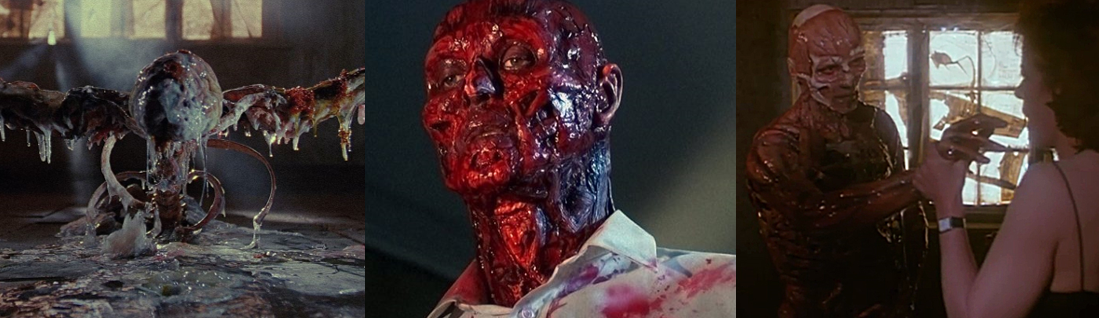
However, as striking as the Cenobites are in their gruesome allure, the real star of the show here are the myriad of make-up effects and filmmaking techniques used to bring Frank back to ghastly life. after Larry’s blood is spilt, a disgusting sequence takes place in which the finest stop motion, animatronics, and reversed film footage of the eighties are used to show his dripping, gory skeleton bubbling up from the floor tiles, his spinal column thrusting into his oozing brain, his gnarled bones reconstructing, and him screaming in pain and triumph as he returns to consciousness in the real world. It’s truly an impressive sequence in its design and execution and it’s gut-wrenching seeing Frank’s ribs close up around his guts and entrails as they spill up from the floor and back into his body. Following that, we see Frank in various stages of desiccation; skinless, his veins and muscles and parts of his skeleton on show, he’s a pathetic shell of his former, vigorous self until he sucks enough living flesh up to start feeling and looking a little more like himself. Frank even starts smoking and wearing suits, undeterred by the gore he’s leaving behind on either or on Julia’s hands and lips, and he never seems to be in physical pain throughout any of this (though this is addressed, somewhat, as he states that taking lives is slowly returning his sensation, so I can only imagine the agony he would’ve felt when his nerves fully returned to life before his reconstitution was complete). It’s fitting that Frank spends the majority of the film in a monstrous state as he’s an abolsutely reprehensible and repulsive man; not content with screwing his brother’s fiancée right before their wedding, he makes lewd remarks towards Kirsty and there’s definitely a suggestion that he’s engaged in his fair share of child molestation in his selfish pursuit of pleasures and excess.

When the Cenobites come to collect their souls, Kirsty’s left relying on her wits to survive.

So determined is Frank to return to his human self that he’s willing to manipulate Julia into killing men for him to strip of their flesh in grisly fashion. Although he assures Julia that they’ll run away together and have all the rampant sex they want together once he’s whole again, it’s pretty obvious that he has less intention of living up to this promise than the Cenobites do of honouring their agreement with Kirsty. When Kirsty stumbles upon the skinless Frank while trying to find evidence of Julia’s infidelity, she makes off with the Lament Configuration; terrified at the Cenobites’ reprisals, Frank accelerates his schedule and come sup with an ingenious plan to further avoid detection. Earlier, Julia had begged Frank not to harm Larry and seemed content to simply leave him with Frank but, at this point, she’s perfectly happy for him to kill Larry and slap his skinned face over his own so she can finally get laid. Despite the fact her father clearly has a weeping, open wound around his face, Kirsty is initially horrified to learn that Larry has killed Frank and this unwittingly doomed her to an eternity of torture at the hands of the Cenobites, and she angrily tries to escape the creatures when Pinhead, furious at Frank’s apparent death, demands Larry as recompense. However, Frank’s deception is quickly revealed as he can’t keep up the façade for long; in the ensuring struggle, he accidentally stabs Julia and the betrays her without remorse by sucking out her flesh as she dies. Having revealed his true identity, Frank is dismayed when the Cenobites come to collect him, stretching his flesh to the limit with their chains before exploding him in a shower of blood and guts. Afterwards, the Cenobites try to claim Kirsty as well but she’s able to banish them one by one by fiddling with the puzzle box as the house collapses around her. A surprise and completely useless appearance from Steve gets Kirsty out of harm’s way and, shellshocked by the entire events, she tosses the Lament Configuration into the smouldering fire…only for the homeless man to retrieve it, transform into a roaring skeletal dragon, and spirit the box away to another potential victim of the Cenobites.

The Summary:
There’s no denying that Hellraiser is a true horror classic; it’s dark and gritty and wonderfully visceral in its presentation, with a foreboding score and some truly disturbing sexual undertones that really help it to stand out against other slashers and horror of the time. The Cenobites are some of the most imaginative and horrific entities every brought to life; clearly, the bulk of the film’s budget went into bringing them and Frank’s desiccated corpse to life and the movie is all the better for it as you really can’t cheap out when it comes to creating horror icons such as these. With his stately, almost regal demeanour and abrasive, sinister eloquence, Pinhead stands far and apart from the mute, masked killers and psychotic brutes that ran rampant in horror cinema at this time; there’s a troubling allure to him and his fellow Cenobites, one that makes you wonder what they went through to become what they are, what their Hellish dimension is like, and just how depraved their imaginations go. Hellraiser benefits from keeping all this vague and looming like a shadow and focusing its plot on the manipulations of Frank and Julia’s descent into sadistic murder in a selfish attempt to get her end away with a genuinely repulsive masochist. Although she’s not the strongest female protagonist or “Final Girl” in horror cinema, there’s an innocence and simplicity to Kirsty; she just wants to protect her father, whether it’s from wicked stepmothers or demonic explorers of the furthest regions of experience and I liked that she was both vulnerable but cunning enough to try and cut a deal with the Cenobites. While some of the visual and practical effects haven’t aged too well, and it’s true that only three of the Cenobites are interesting to behold, there’s a lot of ambition and passion crammed into Hellraiser, certainly more than you see in many horror films. Clive Barker’s depraved imagination is on show in all its twisted glory here and it makes for a fundamentally unique horror experience, one that opts for a horror both subtle and explicit at the same time and which presents a concept that’s terrifying in its implications and sadly robbed of all nuance in subsequent sequels.

My Rating:

Rating: 4 out of 5.

Great Stuff

Are you a Hellraiser fan? If you read The Hellbound Heart, what did you think to the film as an adaptation? What did you think to the Cenobites and the gruesome practical effects used to bring them, and Frank, to life? Were you intrigued by the disturbing mixture of sex and torture offered by the Cenobites? What did you think to Pinhead compared to other horror villains? Which of the Hellraiser sequels was your favourite, if any, and what did you think to their degradation of the original’s nuance? Whatever your thoughts on Hellraiser feel free to share them below or start the discussion on my social media.

Game Corner: Dead Space (Xbox 360)

Released: 13 October 2008
Developer: EA Redwood Shores
Also Available For: PC, PlayStation 3, Xbox One and Xbox Series S/X (Backwards Compatible)

The Background:
Dead Space was the creation of Glen Schofield, who was inspired by the likes of Silent Hill (Konami/Various, 1999 to 2012) and Resident Evil (Capcom/Various, 1996 to present) and attracted the attention of a small, but committed, team of developers and Electronic Art’s (EA) Redwood Studios. The team worked tirelessly to put together a proof of concept and push the game within the company, and constantly tweaked the different gameplay mechanics to keep things action-packed and tense. Crucially, Dead Space opted to forgo a traditional heads-up display (HUD) and render cutscenes and story sequences using the in-game engine to avoid breaking the player’s immersion, and combat became more about dismembering enemies rather than mindlessly blasting away. Dead Space is an extremely well-regarded title; reviewers praised the innovative mechanics and horrifying atmosphere, though the story faced some criticism. Still, the game sold over one million copies and kicked off a successful new survival-horror franchise that came to be comprised of animated tie-ins, two sequels, and even a next generation remake.

The Plot:
When a massive deep-space mining ship goes dark after unearthing a strange artifact on a distant planet, troubled engineer Isaac Clarke joins the repair mission. There, he finds a nightmarish bloodbath as the ship’s crew have been horribly slaughtered and infected by alien scourge known as Necromorphs.

Gameplay:
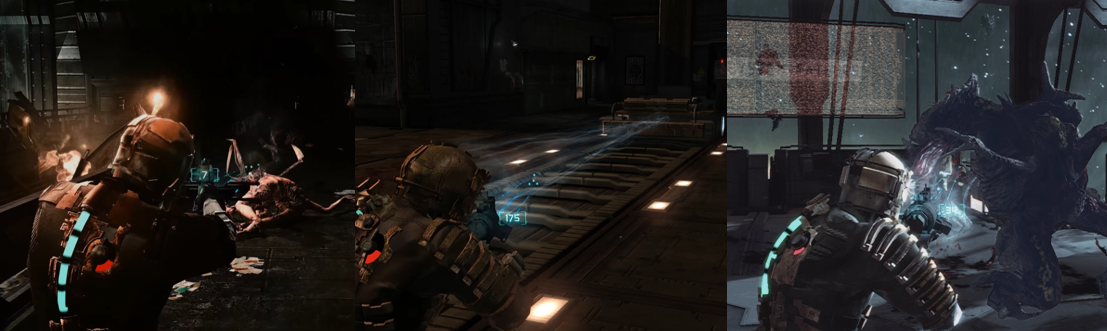
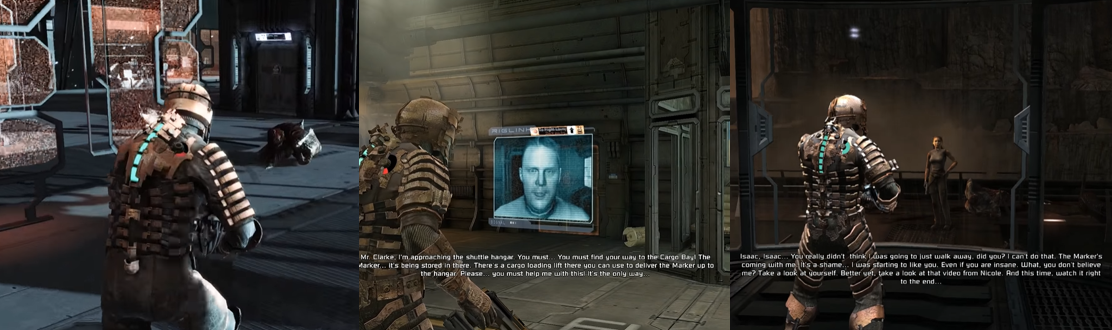
Dead Space is a third-person, survival/horror action shooter with an emphasis on atmospheric horror, light puzzle solving, and exploration. Players are placed into the mute boots of engineer Isaac, who spends pretty much the entire game garbed in a steampunk-like work suit and hiding behind a glowing helmet. Isaac comes armed with a Plasma Cutter by default, but has a few options available to him when it comes to combat: players can hold down the Left Trigger to enter aiming mode (and, crucially, can move while aiming and shooting) and press the Right Trigger to fire their weapon. Outside of aiming mode, you can press RT to throw a slow, clunky, and awkward melee attack to fend off Necromorphs, hold the Left Bumper to jog along a bit faster, to press the Right Bumper to deliver a big stomp to downed Necromorphs or break open crates. There’s no jump or dodge function, but you can press A to interact with consoles or shake off Necromorphs when they grab or claw at you; providing you have some Med Packs on hand, you can heal yourself by pressing X, the directional pad (D-pad) functions as a shortcut to your weapons and allows you to quickly switch between up to four guns on the fly, and you can reload by pressing LT and A or switch to an alternative fire mode by pressing LT and RB.

Dismember enemies, move objects with Kinesis, or freeze them in place with Stasis.

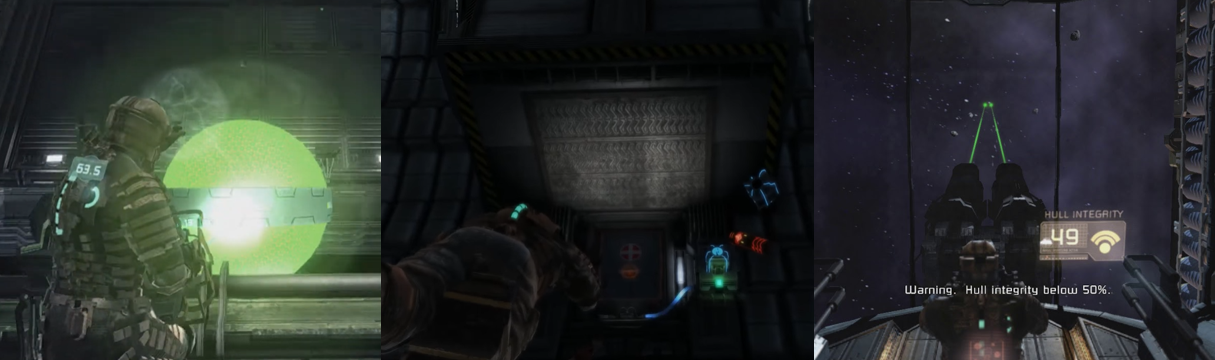
While most of this is standard third-person fare, Isaac also acquires a couple of “modules” that allow him to perform a few unique tricks: You can activate the Kinesis Module by holing LT and pressing B, which will allow you to move certain obstacles out of the way, activate certain consoles, and move platforms and doors to progress further and solve problem. While you can use this as much as you like, the Stasis Module is limited by a meter than can only be replenished at refill stations scattered around the game’s locations or with a pickup. Stasis can be used to freeze enemies in place for a limited time, slow fans or other hazards, and is crucial to keeping you safe from attacks or the game’s many instant-kill traps. Unlike many other videogames, Isaac’s health, ammo, and Stasis meter are all displayed either on his suit or on his weapon, a system that easily allows you to see how well you’re doing or when you need to reload or replenish your meters. You can access your inventory, map, and current objectives by pressing the ‘Back’ button (though this won’t pause the game) and are given the option of dropping items if your inventory is full, or dropping them in a safe at Store stations found around the game’s environments. While the map isn’t too clear, you can press in the right analogue stick at any time to drop a light that will briefly point you in the right direction, which is super helpful; slightly less helpful is the abundance of text and holographic imagery that appears onscreen to advance the story and mask the game’s loading screens, though this does flesh out the story and point you towards your next objective. Although you have to manually save the game at save stations, the game does actually contain checkpoints; so, if you die halfway between save points, you’ll respawn pretty close to where you were split in two by a Necromorph.

Puzzles involve activating or repairing consoles, avoiding hazards, and eliminating Necromorphs.

Dead Space’s story is split into twelve chapters, with each one separated by a tram-like system around the ship, and can initially be played on Easy, Normal, or Hard difficulty settings, with additional difficulties being unlocked after you complete the story. You cannot replay previous chapters at will, so if you miss any of the pick-ups or collectibles, you’re either going to have to start over or make multiple save files. For the most part, it’s pretty simple to figure out where to go and what you need to do but the camera is placed very close to Isaac at times; when aiming, I found that his character model took up quite a bit of the screen, which made it difficult to get off a good shot (something that’s pretty important considering you need to dismember the Necromorphs to kill them rather than shooting at their bodies). Isaac’s objectives don’t tend to get more complicated than exploring a foreboding area of the ship, fending off Necromorphs, and recovering key items such as a key card, a piece of machinery, or other object and bringing it (or them) back to another area or non-playable character (NPC) to repair a console, machine, or other part of the ship or progress further. Sometimes, areas will get locked down as a quarantine is put into effect and you’ll need to hold out against waves of Necromorphs; other times, the ship decompresses or starts exploding around you; but, mostly, you’ll need to use Stasis or Kinesis to slow down hazards, move platforms, or activate switches to get closer to your objective. While you’re often tasked with moving big batteries around with Kinesis to power up lifts, you’ll also need to kill special Necromorphs that are poisoning the air in the botanical gardens, watch out for air vents, whipping power lines, and laser cutters that threaten to splatter or skewer you or your enemies, clear an area of radioactive material in order to restore gravity and power, and dash through (or shield yourself) from bursts of flame while shooting electrical panels to open doors.

Watch your air supply in a vacuum, jump around in zero gravity, and blast asteroids with gun turrets.

Indeed, a prominent aspect of Dead Space is the presence of zero gravity areas; here, you need to hold down LT and press Y to leap across the environment, often while fending off Necromorphs, moving items with Kinesis or activating consoles. You can’t jump to every part of the environment, and the game will notify you when you’re trying to jump to the wrong part of the floor (or ceiling), and it can be a bit disorientating trying to direct yourself in these areas, though they do help to break up the gameplay a bit. There are also many sections that take place either in a vacuum or out in the depths of space; here, sounds are suitably muted, your flamethrower won’t work, and you are in a race against time to cross through the vacuum to the next air lock before your oxygen supply runs out. You can replenish your oxygen supply at refill stations or with items, though, and increase your capacity using Power Nodes; sometimes, you’ll have to deal with zero gravity and a vacuum at the same time. A little more variety is added to the game in a couple of sections where Isaac takes the controls of a massive gun turret to fire at incoming asteroids or a gigantic Necromorph using LT and RT (both separately and at the same time) to keep the ship from being destroyed, but don’t get too trigger happy or you’ll have to wait for the turret to cool down from overheating.

Graphics and Sound:
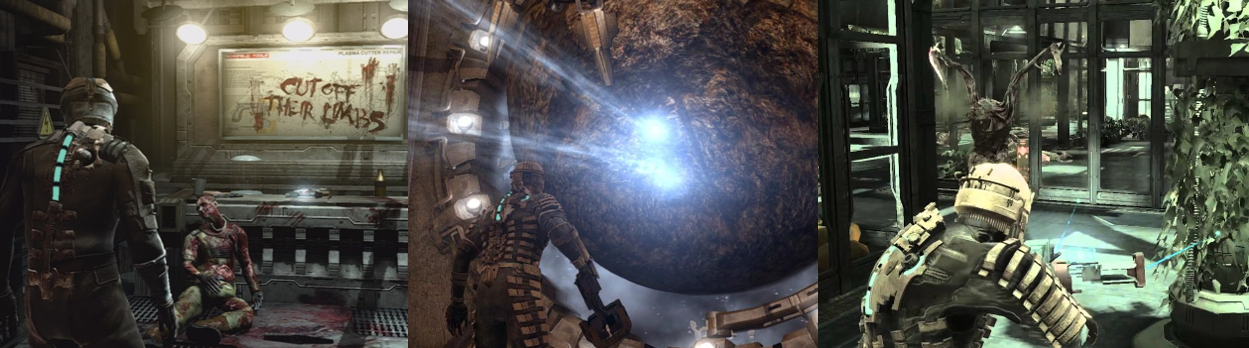
If I had to use one word to describe Dead Space, “atmospheric” would spring instantly to mind. Players spend the majority of the game exploring a deep space mining vessel, the Ishimura, which has been absolutely wrecked by the outbreak of the Necromorph virus. Dead bodies, blood stains, claw marks, and even dismembered NPCs are all over the place; sometimes they’re still alive and shoot themselves in a frenzy, other times they’re torn apart by Necromorphs, and there’s one harrowing moment where it looks as though a mass suicide has taken place. Ominous words written in blood can be seen everywhere and you can never be too careful when turning a corner as Necromorphs have a nasty tendency to burst out from air vents, glass capsules, or from every nook and cranny to attack you. Sometimes, a massive tentacle will grab at you and drag you around by the ankle, forcing you to blast at its tumour-like weak spot, and visibility it often low thanks to a foreboding darkness, intermittent lighting and power failures, and bursts of flames and electrical sparks in the flickering darkness.

The environment is suitably bleak, blood-soaked, and teeming with atmospheric horror.

The best way to describe this game is by calling it Resident Evil meets Event Horizon (Anderson, 1997). The technology and environments all have the same “lived in” feel of that gloriously entertaining space horror and the sense of dread that constantly hangs in the air is just as palpable. Nowhere is this comparison more apt than in one particularly annoying mission where you have to plant markers on a giant asteroid being mined by lasers; the asteroid is protected by huge concentric rings that will slice you in two and is heavily reminiscent of Event Horizon’s Gravity Drive. Other notable areas of the ship include a cargo bay medical facility, the aforementioned botanical gardens, and the main bridge, all of which are crawling with hazards or Necromorphs waiting to pounce on you. You’ll find workstations in disarray, ammo, credits, and collectibles in lockers and crates, and areas frozen from exposure to the void of space. At one point, another ship crashes into the Ishimura and you have to help guide and load up a shuttle with the dangerous “Red Marker” that is the cause of all this chaos, a mission that also forces Isaac to face up to some unsettling truths on the hellish planet of Aegis VII for the finale.

Isaac may not say anything, but he gets lots of video messages and is a surprisingly complex character.

You don’t really interact with too many NPCs outside of holographic messages, video calls, or seeing them shielding behind glass or trapped in other rooms. There are some exceptions, however, such as Isaac’s frequent encounters with his wife, Nicole, who he thought was dead and whose voice and memories haunt him throughout the story. Although Isaac himself doesn’t actually talk (always a weird decision for a third-person shooter, I find), you can review his thoughts in his mission log and objectives, and he cuts a formidable and interesting figure. His suit and helmet are instantly iconic and, though they hide his face throughout the game, they make him seem almost as horrific as the creatures he encounters and his grunts of pain and panting wheezes when in a vacuum or running low on health really add to his otherwise blank personality. Transferring the HUD to Isaac’s suit and weapons is a great way to keep the screen from getting too cluttered, and the use of ambient sounds (particularly a haunting rendition of “Twinkle, Twinkle, Little Star”) really add to the game’s horrifying, ominous sense of dread and claustrophobia. Even brightly lit or familiar areas aren’t always a safe haven as the ship can be thrust into a lockdown or dead bodies can suddenly burst to life as Necromorphs, often even while you’re trying to save the game.

Enemies and Bosses:
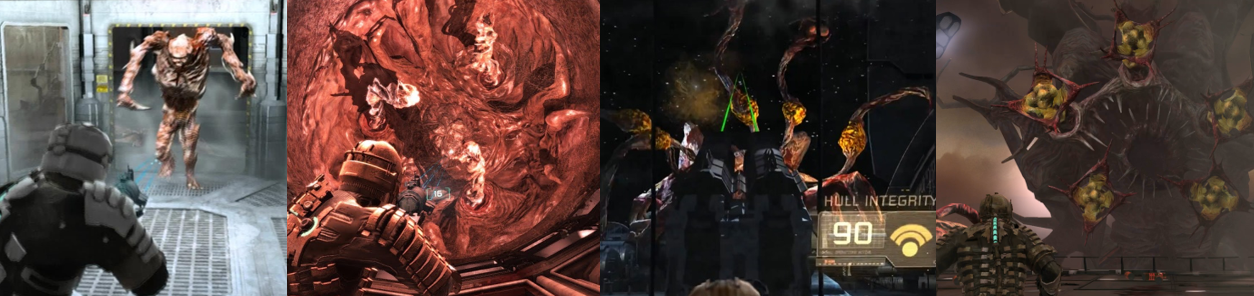
Isaac is hounded throughout his treacherous and nightmarish mission by demonic Necromorphs, which come in all shapes and sizes and are the result of a horrific alien virus that reanimates corpses and transforms them into shrieking, taloned beasts hungry for human flesh. The most common variant is the Slasher, a blood-soaked, malformed corpse that sports blade-like appendages and shambles towards you either alone or in groups. As with the vast majority of the Necromorphs, these are best dispatched by targeting their limbs rather than their central mass; dismember their insectile arms to keep them from skewering you, and cut off their legs to slow their movement, but be sure to make sure they’re really dead as these bastards have a tendency to take a lickin’ and keep on tickin’! Other common enemies includes the Lurker (a sort of disembodied head that sports three tentacles, hops all over the walls and ceilings, and fire projectiles at you), the Leaper (which, as its name suggests, leaps at you (appearing to float in zero gravity areas) and scuttles across surfaces whipping its scorpion-like tail at you), and the bulbous Pregnant (which lumbers about and bursts forth a swarm of tiny Necromorphs that can quickly whittle down your health bar). Rather than facing off against a boss at the end of each chapter, Isaac will generally encounter newer and deadlier variants of the Necromorphs in each area: The Exploders shuffle about and try to blow you up with their huge, explosive arm (which you can shoot to blow them up, and any nearby Necromorphs), bat-like Infectors will try to attach themselves to you and cause any nearby corpses to burst to life as dangerous Necromorphs, and the corpse-like Dividers are gangly, gory corpses that split into smaller, equally dangerous Necromorphs after being downed.

Some massive monstrosities await you in Dead Space, but most have nice, obvious weak spots to shoot.

Large Brutes often act as sub-bosses and must be slowed with Stasis so you can target their various weak spots across their armour-like hide, and you’ll encounter Guardians merged with the walls and have to fend off the Pods they spit out, watch for their instant-kill attack, and severe the tentacles tying them to the Corruption that covers the environment. That’s not to say that there aren’t encounters that could be called boss battles in the game; the intimidating Hunter regenerates lost limbs and tissue so fast that, at first, all you can do is hit it with Stasis or temporarily immobilise it while running to safety. To properly destroy these creatures, you’ll need to lure them into a cryogenic chamber or behind the thrusters of a space shuttle and hold them in place with Stasis and get them into their regeneration animation to put them down once and for all. You’ll also battle the gigantic Leviathan in the food storage area of the ship; this battle takes place in zero gravity and sees you dodging tentacles and firing at the tumorous lumps on its appendages to kill it off. A similar creature, the Slug, attaches itself to the outer hull of the Ishimura and begins ripping it apart, forcing you to man the controls of a gun turret and blast at its tentacles and the debris it throws your way. After being tricked into activating the Red Marker, Isaac must face down the Hive Mind on Aegis VII; this eldritch abomination is a mess of flesh, tentacles, and teeth but sports yellow/green tumorous growths in its gaping maw that you can shoot to damage it. As long as you avoid its massive tentacles and target these areas when its rib cage opens up, you can put this beast down pretty quickly and bring the Necromorph threat to an end.

Power-Ups and Bonuses:
Isaac has a decent variety of weapons at his disposal; the Plasma Cutter he begins the game with is pretty much capable of taking care of every enemy you come across, but you can also pick up a Pulse Rifle for rapid fire, a Line Launcher to shoot out explosives, a flamethrower, and the Ripper, which shoots out buzzsaw-like blades that you can direct to chop up incoming Necromorphs. Each weapon has an alternative fire mode and some are more useful against different enemies; you can charge up the Contact Beam to blow apart bigger enemies, for example, but it’s probably best to use the flamethrower when swarmed by little Necromorphs or to subdue large groups. It pays to explore your environment from top to bottom, and to ransack the corpses of the Necromorphs you kill, to find ammo, health and restorative items, credits, and other items. These are often found in smashable boxes, crates and lockers or strewn around the environment, but be wary as you only have a limited inventory. You can, however, expand your inventory, health bar, Stasis meter, and the power, capacity, and reload speed of your weapons at Workbenches. Here, you can spend Power Nodes you’ve either found or bought on the skill tree of each weapon, your modules, and your suit, though you’ll need a hell of a lot of them to upgrade all of Isaac’s weapons and equipment. You can also find blueprints to allow you to buy new weapons, better restorative items, and even better suits that increase your maximum health, meter, and air supply, so be sure to search all around and focus your efforts on upgrading what works best for you.

Additional Features:
There are forty-eight Achievements on offer in Dead Space, with one popping after you complete each chapter. You’ll get Achievements for dismembering a certain number of limbs, killing a certain number of enemies with each weapon, acquiring every weapon in the game, and completing the story, and for upgrading every weapon and piece of equipment available to you. There are also audio logs to be found to flesh out the story and earn you some G, secret areas to find, and mini games to play that will pop an Achievement. These include a shooting gallery and a zero gravity ball game, and you’ll also get Achievements for keeping the ship’s hull integrity above a certain percentage when shooting down incoming asteroids. After finishing the game on Easy mode, I unlocked a new suit for Isaac, additional logs, 50000 credits, ten Power Nodes, and “Impossible Mode” (which, I assume, is a one-life-only type of mode). While you don’t get to replay specific chapters, you can replay the game from the beginning with all of the weapons, upgrades, and gear you’ve collected, but the lack of a chapter select means that tracking down the last of those Achievements can be a bit of a slog.

The Summary:
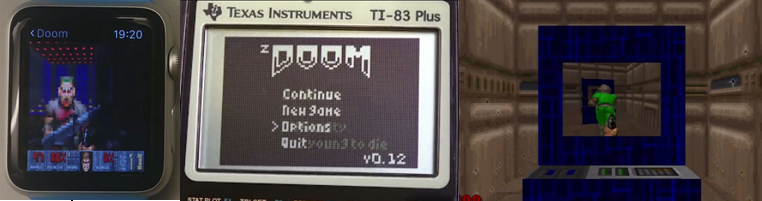
Being a big fan of the Resident Evil franchise, and having largely exhausted the games available to me in that series, I was eager to get my teeth into Dead Space and found that it more than scratched my itch for an atmospheric, claustrophobic survival/horror experience. Infusing a desolate sci-fi aesthetic into the genre was an ingenious idea and had me constantly thinking back to films like Event Horizon and games like Doom (id Software, 1993) thanks to the merger of horror, sci-fi, and demonic imagery. While I could have done with the camera being pulled back just a tad and Isaac could be a little clunky to control at times (a quick-turn function really would have helped), and it was pretty much impossible to upgrade all of his gear in one playthrough, I found myself really enjoying the ominous aesthetic of the game, the tight dark corridors, and the thrill of each encounter and managing my resources. I was worried that the limb-targeting system would be difficult to get the hang of but I picked it up pretty easily and was soon dismembering Necromorphs left and right, but even on the easiest setting the game offers a decent challenge as enemies can take a fair bit of damage before finally going down and it’s easy to get overwhelmed or blunder into traps and instant-death hazards. Still, the game had a fantastic atmosphere, tight controls, and intriguing premise, and a suitably morbid and gory presentation and I found myself thoroughly entertaining as I ploughed through each chapter, splattering Necromorph (or Isaac’s) guts all over the walls and clear just one more chapter and I’m excited to tackle the second game in the near future.

My Rating:

Rating: 4 out of 5.

Great Stuff

Have you ever played the original Dead Space? How do you think it compares to other survival/horror titles and do you think it still holds up today? What did you think to the game’s enemies, aesthetic, and mechanics? Did you like the mixing of sci-fi with survival/horror or did you find the game a bit derivative? Which of the game’s weapons and was your favourite and what did you think to Isaac as a protagonist? Which game in the Dead Space franchise is your favourite and are you looking forward to the remake? What horror-theme videogames are you playing this October in anticipation of Halloween? Whatever your thoughts on Dead Space, drop them below or comment on my social media.

Talking Movies: V/H/S

Talking Movies

Released: 5 October 2012
Directors: Adam Wingard, David Bruckner, Ti West, Glenn McQuaid, Joe Swanberg, and Radio Silence
Distributor:
Lionsgate
Budget: $15 million
Stars:
Kentucker Audley, Calvin Reeder, Hannah Fierman, Drew Sawyer, Joe Swanberg, Sophia Takal, Norma C. Quinones, Bryce Burke, Helen Rogers, Daniel Kaufman, Tyler Gillett, and Nicole Erb

The Plot:
A gang of criminals is paid to ransack and old man’s (Frank Stack) house and finds a stack of VHS tapes, each one containing a gruesome horror story in the form of found footage. These depict a group of friends looking to make an amateur porn video and crossing paths with a demonic succubus, a couple on a road trip who encounter a strange girl, a group of friends lured into the woods to confront a supernatural entity, a university student who experiences paranormal activity in her flat, and four friends who run afoul of a cult performing an exorcism.

The Background:
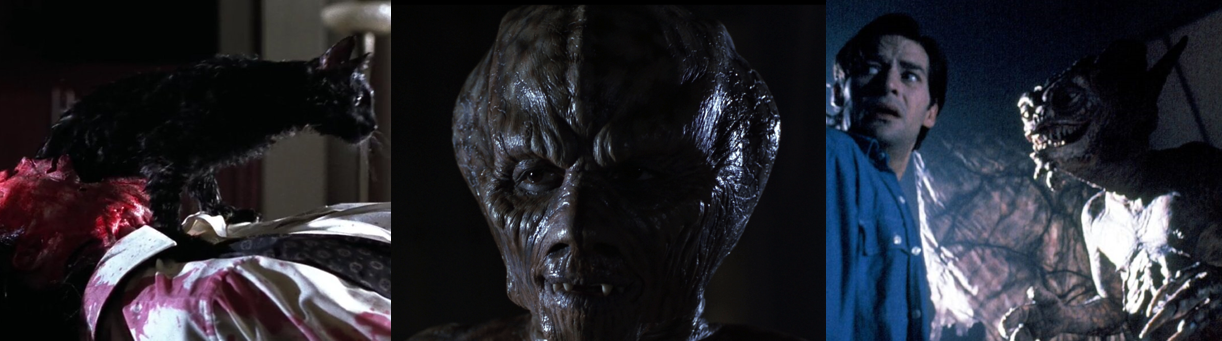
Since I grew up watching The Outer Limits (1995 to 2002) and am a big fan of movies like Creepshow (Romero, 1982) and Tales from the Darkside: The Movie (Harrison, 1990), I have quite a soft spot for anthology films, especially those involving science-fiction and horror. V/H/S was the brainchild of Brad Miska, the creator of Bloody Disgusting, who reached out to the directors and creative minds he had met through his website about contributing to a horror anthology. Capitalising on the success of the found footage genre, the creators were given complete reign to submit whatever proposals they have for the project. V/H/S premiered at the 2012 Sundance Film Festival, where it was positively received, and even got a limited theatrical release. Generally, V/H/S received mixed reviews; while some praised the film’s consistently high quality, others took issue with the concept’s execution, though its $1.9 million gross was enough to finance two sequels, a spin-off, and an eventual reboot of sorts.

The Reviews:
Like Tales from the Darkside: The Movie, V/H/S is an anthology film made up of a framing narrative and several short horror stories so it only makes sense to review each one individually before talking about the overall film, which means that this review will be structured a little differently from my usual ones.

A gang of miscreants are stalked by a zombie while they view macabre videotapes.

“Tape 56” (Wingard) is probably the weakest of all the short stories included in V/H/S but there’s a reason for that; it’s merely the frame narrative that follows a gang of criminals as they record themselves doing stupid shit around the city while dressed like “gangsters”. They drive around at high speeds, accost a couple and forcibly pull a girl’s top up, smash windows and damage and deface property, try to make amateur sex tapes, and generally act like a bunch of complete douchebags. They get a bit more than they bargained for, however, when Gary (Bruckner) says they can get huge score but simply breaking into an old man’s house and stealing a VHS tape, only to find a dead body in the house and stacks upon stacks of the defunct media cassettes. While the others search the house looking for the objective, Brad (Adam Wingard) stays behind and watches the short films that make up the rest of the film; between each story, the film cuts back to Brad to see his reaction and, as the film progresses, Brad mysteriously disappears, leaving Rox (Audley) to take over the viewing. Although the thugs eventually decide to simply take all of the tapes, the old man’s corpse disappears from the background and the shit-kicking assholes are left to be are torn apart by the zombified homeowner.

Three friends are horrified to find they’ve brought a ravenous succubus back to their hotel room!

“Amateur Night” (Bruckner) is easily the stand-out short of the film since it went on to inspire a spin-off movie; however, while I do consider it to be a great opening story for the movie, I wouldn’t necessarily say that it was the best of them. Shane (Mike Donlan), Patrick (Joe Sykes), and Clint (Sawyer) are three friends who have rented a hotel room and plan to hit the nightclubs and brings girls back there to film a porno using special video glasses worn by Clint. While Clint is unsure about the deception, his two loudmouth frat-boy friends are insistent on going through with the plan and waste no time in hitting up Lisa (Jas Sams) and successfully convincing her to go back to their hotel room while Clint catches the attention of shy Lily (Fierman), a timid, mousy girl who approaches him and says that she “likes [him]”. The four head back to the hotel room, with the three fiends completely rat-assed; Lisa is so out of it that she passes out soon after they get back and, though she continues trying to awkwardly seduce Clint, Lily soon finds herself the target of Shane and Patrick. Hurt and disgusted that his friends would take advantage of a girl he was interested in, Clint locks himself in the bathroom so he doesn’t have to watch and record the threesome but his shock at Lily’s cat-like demeanour and her clawed feet soon turns to terror when Patrick bursts in with a huge chunk taken out of his hand and Lily suddenly sprouts fangs and rips Shane to shreds! When Patrick tires to fight her, she shrugs off the attack and pounces on him with superhuman ferocity, drinking his blood and ripping off his genitals! Terrified, Clint flees into the stairwell, where he trips and falls and breaks his wrist; the blood-soaked succubus, her face split down the middle, approaches Clint and is so distraught at his fear of her that she unleashes a diabolical roar and transforms into a demonic winged creature and carries him off into the night to an unknown fate.

A couple are toyed with by a mysterious masked stalker while on a road trip.

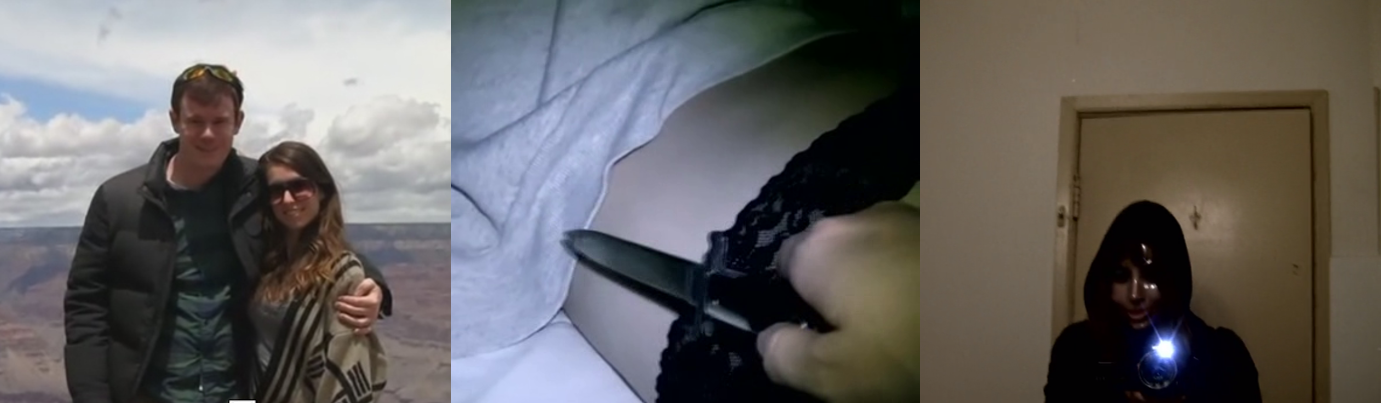
“Second Honeymoon” (West) is probably the creepiest of all the short films if only because it seems like a plausible scenario that could happen in reality. Sam (Swanberg) and Stephanie (Takal) are a young married couple on a road trip to Arizona for their honeymoon; Stephanie is documenting the trip on her camera, which features such exciting stuff as getting “gas”, spotting bullet-riddled car husks, petting donkeys, and staying is dirty hotel rooms thanks to Sam not reserving better lodgings. When they visit a Wild West-themed resort, Stephanie is told by an animatronic that she’ll soon be reunited with a loved one, but Sam is disheartened when she later asks him not to record them doing sexual stuff in the hotel room. While trying to put him off, they are interrupted when a strange young girl (Kate Lyn Sheil) knocks on their door and asks them for a ride in the morning. Creeped out by the incident (and the girl, whom Sam found weirdly intimidating), Sam chooses to worry about it in the morning; while they’re sleeping, however, a masked stranger enters the room without them noticing, caresses Stephanie with a switchblade, steals $100 from Sam’s wallet, and washes his toothbrush in the toilet bowl in an incredibly unsettling scene. The next day, after brushing his teeth with the soiled toothbrush (!), the girl is nowhere to be seen and the couple get into an argument when Sam accuses Stephanie of taking the money; Sam insinuates that it’s not the first time she’s done something like that but, though this creates some tension, they are still able to enjoy themselves when they visit the Grand Canyon. Back at the hotel room, Sam suggests stopping off in Las Vegas the next day but, unfortunately for him, he never gets that far as he’s stabbed through the neck with the switchblade and chokes on his own blood when the stranger returns to the room that night. The short then ends with a shot of Stephanie making out with the stranger, revealed to be the young girl from the previous night, and then continuing on her journey with her lover.

Wendy lures her friends to the woods to bring out a supernatural killer.

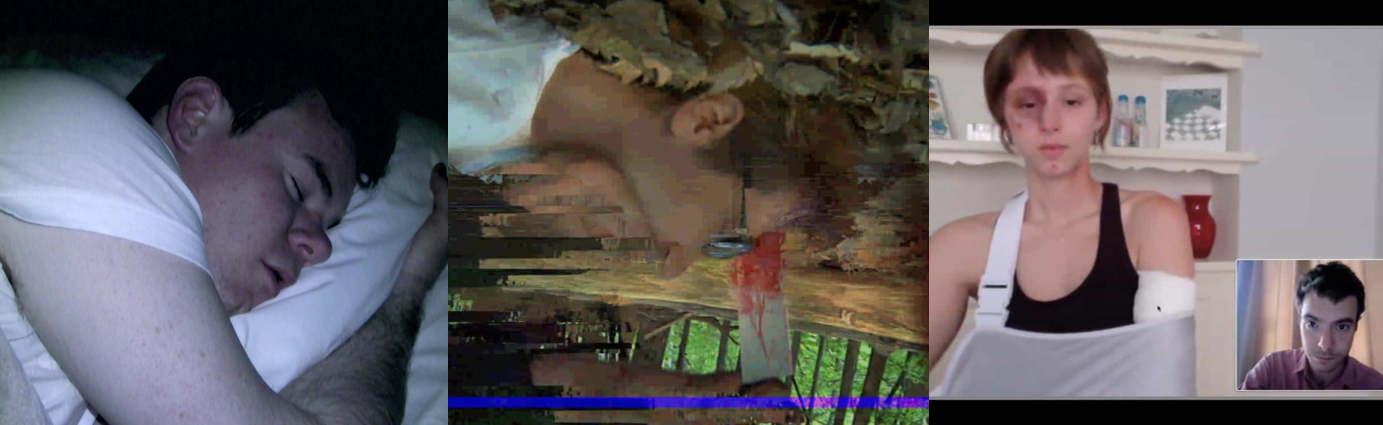
In “Tuesday the 17th” (McQuaid), Wendy (Quinones) takes her new friends Joey Brenner (Drew Moerlein), Samantha (Jeannine Yoder), and Spider (Jason Yachanin) on her annual trip to a lake in a nearby secluded forest. Each of her friends are confused by Wendy’s traditional excursion out to the woodlands, and the fact that she has told each one a different story to get them up there. As they explore the woods, the camera sporadically glitches out and images of mutilated corpses are flashed onto the screen, which are made all the more disturbing by Wendy’s increasingly unsettling behaviour; she becomes stoic and morose, sullenly regards areas where the images appear, and promises Joey that they’re all going to die. As they relax with some weed by the lake, Wendy tells them that she experienced a series of gruesome murders there a few years ago and the culprit was never caught; though they laugh it off as a joke, Samantha is soon killed when a supernatural entity (Burke) that resembles a screen glitch kills her with a knife to the back of the head and then stabs Spider repeatedly in the forehead. After Joey turns down Wendy’s advances, she callously reveals that she lured them all there as bait for the entity, who slices Joey’s throat and relentlessly pursues Wendy through the woods. Determined to trap, kill, and identify the killer, Wendy lures it into a bear trap but the camera cannot register it as anything other than a glitched series of tracking errors; the entity escapes Wendy’s death traps, beats and eviscerates her, and as she lies quivering she too begins to glitch out.

Emily finds herself unwittingly manipulated by James into being an alien incubator.

“The Sick Thing That Happened to Emily When She Was Younger” (Swanberg) mixes things up a bit by being framed entirely as a video chat between Emily (Rogers) and her boyfriend James (Kaufman), who is training to be a doctor. Initially, she’s mainly concerned about a strange bump on her arm but her troubles escalate after she moves into her new apartment and begins experiencing strange noises and disturbances. James is sceptical and believes that she was merely dreaming but, when she calls him in the dead of night, he sees a child-like entity rush in and slam the door shut. Although he dismisses this in the morning, Emily shares how she had a similar haunting experienced as a child that left her needing surgery and complains that the pain in her arm is worsening. The next night, James watches and guides as Emily tries to confront the entity, which appears as a small, neon green creature and the experiences only distress her more when she learns from her landlord that no children have ever lived in the building and no one has ever died in there either. James is distressed to find Emily digging at the lump on her arm with a meat fork similar to how she permanently scarred herself cutting into her leg as a child and promises to check it out in person as soon as possible. Ashamed and increasingly horrified, Emily agrees to stop and wash it off and then asks James to be her eyes while she tries to communicate with the ghosts, but when she’s knocked unconscious by the children he rushes into the room and slices open her torso to extract an alien embryo! Revealed to have been working with the aliens and harming Emily for years in order to incubate their alien/human hybrids, James promises to stand by Emily even after she’s been diagnosed as schizoaffective but is also shown to be having similar manipulative talks with another female incubator (Liz Harvey).

Four friends save a girl from a cult but find themselves beset by all manner of restless spirits.

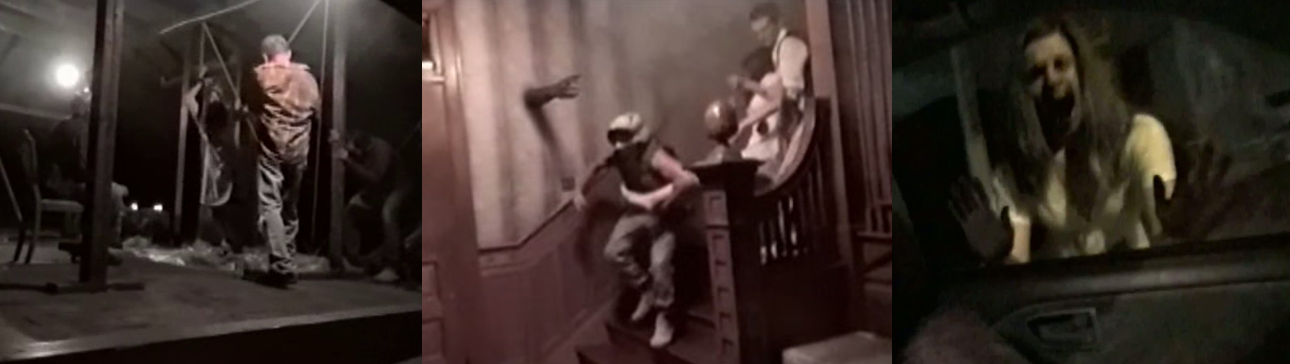
Finally, “10/31/98” (Radio Silence) follows friends Tyler (Gillett), Chad (Chad Villella), Matt (Matt Bettinelli-Olpin), and Paul (Paul Natonek) as they head to a Halloween party at a friend’s house while dressed in ridiculous costumes. Unbeknownst to them, they end up at the wrong house but simply believe that they’re the first ones to arrive; after sneaking inside, they soon experience paranormal events (such as flickering lights, ghostly reflections, and hands reaching out of the walls to grab them) but foolishly believe that it’s all part of the experience and that the party has been themed around a haunted house. When they head up into the attic in search of the party, though, they find a girl (Erb) suspended from the rafters and at the mercy of a group of men performing an exorcism by chanting “Cast him down”. The friends join in, believing that it’s all part of the fun, and anger the cult’s leader (John Walcutt) in the process; the interruption causes the cult members to be brutally manhandled by an unseen force and, though the friends initially flee, Tyler convinces them to go back to help the girl. After freeing the girl from her bonds, they are beset by all manner of terrifying phenomena as ghostly arms try to grab them, objects are tossed around at them, handprints appear on the walls, and the very house itself closes up in an attempt to trap them. While they manage to escape through the basement as the demonic poltergeists rampage through the house, their car suddenly stops across a set of train tracks and the girl teleports out into the road, walking away surrounded by crows as a train races towards the car and its trapped inhabitants.

The Nitty-Gritty:
If you’re not really a fan of found footage films then V/H/S probably isn’t going to be the movie for you; the entire film is shot using handheld, low quality cameras, meaning that there’s a lot of shaky camera movements, wild sweeping panning, film jumps and visual glitches, and scratchy, low quality sound permeating the whole movie. Additionally, this isn’t really a film where you learn a great deal about the characters; each short has a few minutes to show a snapshot of its characters lives and set up the scenario they’ve been placed in, so it’s not really an in-depth character study or with any goal other than to disturb and unsettle its audience.

V/H/S uses the found footage genre to put an intense twist on well-known horror tropes.

In this regard, V/H/S/ largely succeeds; each of the shorts is distinct enough so that there’s something here for even the most hardened horror fans. From a bloodthirsty succubus to a glitchy phantasm and demonic poltergeists, there’s plenty of variety on offer in V/H/S and even if you don’t like one or more of the stories there’s probably going to be at least one that leaves you a little intrigued. Personally, I enjoy elements from all of the stories; I like seeing the asshole gang in the framing story get beheaded and picked off by the old man, the design of the succubus is downright disturbing and it’s easy to see how the concept was expanded upon into its own movie, and the glitch ghost is a terrifying concept that puts a unique spin on the cliché “haunted woods” setting. The idea of a wife conspiring against their husband is a palpable horror, as is that of aliens taking the form of disquieting child ghosts, and coercing a human into helping them breed disgusting hybrids is as disturbing as it is sickening for James’ wilful manipulation of the girls he influences. Similarly, while “10/31/98” is probably the most cliché of all the shorts, it’s a suitably tense and discomforting end to the film.

One of the most memorable parts of the film is how bleak and brutal its stories are.

Indeed, one of the things I really enjoy about V/H/S is how spectacularly bleak it is; basically every character dies and each short ends with the suggestion that a greater evil, be it supernatural or extraterrestrial, exists to threaten humanity in some way. “Tape 56” has startling implications in that it suggests that all of these events happened in this fictional world and I enjoy how each short leaves a lot of questions and loose ends for audience interpretation; like, who was that girl and what was the deal with her relationship with Samantha? Where did the glitch ghost come from and how did Wendy escape from it? How long have those aliens been implanting their hybrids into unassuming young women? For me, it’s all very imaginative and leads to some fun speculation; additionally, the entire film is like a series of short, sharp nightmares that set up a simple premise with realistic characters and then goes out of its way to be as unsettling and disturbing as possible. In this regard, the shaky camera really helps escalate the tension and the horror, as does the low camera quality; everything feels as it would if we were experiencing it first-hand and not being able to properly make out things being seen or heard onscreen just makes things more chaotic and horrific.

The Summary:
V/H/S is quite the bold experiment; by roping in a bunch of amateur filmmakers can giving them free reign to craft short, sharp snippets of horror, Brad Miska delivered quite the macabre collection that would be a treat for any horror fan. Sure, found footage films and shaky cam filming is an overdone cliché in this day and age as it seemed like everyone was doing it at one point, and it can be a nauseating and confusing filmmaking method but, in certain situations, it’s appropriate, especially when it’s done well. For my money, V/H/S uses the technique to great effect; anthology films aren’t too common these days, potentially because it can be difficult crafting the individual stories and for audiences to properly connect with the ever-changing narratives, but I find them endlessly entertaining. The short horror stories on show here provide just enough to unsettle, terrify, and inspire personal interpretation and imagination regarding each scenario and the greater world on show, and I found even the film’s rougher edges to be all part of its charm so I definitely feel like V/H/S has been unfairly overlooked in the pantheon of independent horror.

My Rating:

Rating: 3 out of 5.

Pretty Good

Have you ever seen V/H/S? What did you think of it and which of the short stories was your favourite? How did you interpret the worlds presented in the short stories and which of them would you have liked to see expanded upon? Are you a fan of anthology narratives? If so, would you like to see more and which anthology show is your favourite? What horror films are you watching this month in preparation for Halloween? Whatever you think about V/H/S, feel free to leave a comment by signing up or visiting my social media and pop back next Monday for my review of the sequel!

Movie Night: Tales from the Darkside: The Movie

Released: 4 May 1990
Director: John Harrison
Distributor:
Paramount Pictures
Budget: $3.5 million
Stars:
Deborah Harry, Matthew Lawrence, Steve Buscemi, Christian Slater, William Hickey, David Johansen, James Remar, and Rae Dawn Chong

The Plot:
Timmy (Lawrence) has been imprisoned by a suburban witch (Harry) who plans to cook and eat him; his only hope is to stall her with three stories from a horror book that depict a graduate student who uses a mummy to avenge himself on those who have wronged him, a wealthy old man who hires a hitman to kill a cat he believes is haunting him, and a struggling artist who finds fame and fortune but at terrible cost!

The Background:
In 1982, the grandfather of zombie horror himself, George A. Romero, joined forces with my favourite writer of all time, Stephen King, to write and direct Creepshow (Romero, 1982), a horror anthology movie that won over critics with its blend of comedy and horror, becoming a cult classic in the process. Having grossed $21 million against an $8 million budget, Creepshow was successful enough to raise interest in a potential television series; however, distribution issues led to Laurel Entertainment (Creepshow’s producers) opting to create the similar show, Tales from the Darkside, instead. Following a pilot episode in 1983, Tales from the Darkside ran for four seasons and produced eighty-nine official episodes between 1984 and 1988, and featured works or adaptations from the likes of Stephen King and Clive Barker. Since the show had also achieved cult status, and given that horror and sci-fi anthologies were still relatively popular back in the late-eighties and early-nineties, its perhaps not too surprising that the show was succeeded by a big-screen feature film. Largely regarded as the true successor to Creepshow, Tales from the Darkside: The Movie’s $16.3 million gross made it a modest success. Reviews were mixed, however, and plans for a sequel were scrapped and writer Joe Hill was equally unsuccessful when he tried to get a reboot off the ground.

The Reviews:
Since Tales from the Darkside: The Movie is an anthology film compiled of a framing narrative and three short horror stories, it only makes sense to review each one individually and then discuss the overall film, so this review will be structured a little differently from my usual ones. The film’s framing narrative, “The Wraparound Story”, is easily the weakest part of the film, though even this has its simple charms; Betty is an affluent suburban housewife whose pleasant and polite demeanour hides the amusingly horrific truth that she is actually a witch. Some time prior to the film, she kidnapped young Timmy and has had him chained up in a dungeon in her kitchen, where she has been feeding him cookies and other snacks to fatten him up for a big dinner party for her other friends (presumably also witches). Although Timmy desperately cries for help, Betty nonchalantly prepares her oven and her evisceration implements; desperate to delay his impending death, Timmy reads her stories from her favourite childhood book, Tales from the Darkside. Once each of the short films has finished, Timmy continues to read from the book and, thanks to Betty’s fondness for the stories and her desire to hear a love story, she is suitably distracted but remains undeterred in her wish to gut him and cook him. Thankfully, Timmy’s efforts buy him the time to think of an escape plan and, as Betty moves to get him, he tosses some marbles onto the floor that cause her to slip and impale herself on her own butcher’s block! Timmy then frees himself, shoves her into the oven originally meant for him, and rewards himself with a well-deserved cookie.

Bellingham uses an ancient scroll to avenge himself using reanimated mummies.

The first story, “Lot 249”, is an adaptation of Sir Arthur Conan Doyle’s short story of the same name; the short follows two rich college students, Andy Smith (Slater) and his best friend Lee Monkton (Robert Sedgwick), who is not only dating Andy’s sister, Susan (Julianne Moore), but has also succeeded in conning the administration into awarding him an all-expenses trip to Europe thanks to Susan writing his scholarship proposal for him. While Andy disapproves of Lee’s moral deception, it is of particular aggravation to Edward Bellingham (Buscemi), a much poorer student who pays his way through college by selling antiquities and other artefacts. Though friendly enough with Andy, who lives in dormitory above him, Bellingham’s introduction to Lee is met with tension; still, Bellingham delights in showing them his latest acquisition, the titular Lot 249, which he believes will make up for him being cheated out of the scholarship by an anonymous tip accusing him of theft. Lot 249 is a massive sarcophagus that contains a dried out, ancient mummy with a scroll in its stomach which, despite his claims to the contrary, Bellingham is fully capable of reading. Aware that Lee screwed him out of his scholarship, Bellingham wastes no time in reading from the scroll to bring the mummy to unlife and promptly sending it after Lee. The rich jock is completely blindsided by the superhumanly strong mummy, who violently pulls Lee’s brains out through his nose and leaves them in a fruit bowl. Susan has little time to process Lee’s death as Bellingham sends his mummy after her next since he knows that she framed him; although she attempts to fight back, the mummy rips open her back with a pair of scissors and stuffs her full of chrysanthemums! Andy’s suspicions about Bellingham’s involvement are only further confirmed at the sight of his sister’s bandage-wrapped corpse; he attacks Bellingham and ties him to a chair, easily dispatching the mummy using a battery-powered saw to cut off its leg and then slice its head in half. Threatening to burn Bellingham alive using his Master’s thesis for kindling, Andy settles for setting fire to the scroll and sends Bellingham packing. However, the maniacal Bellingham gets the last laugh, having tricked Andy with a fake scroll; he uses the real one to resurrect Lee and Susan as mummified corpses and sends them after Andy in the story’s finale.

A supernatural cat haunts an old man and drives him to hire a hitman to dispose of it.

Next is “Cat from Hell”, which is an adaptation of a Stephen King short story of the same name and was written for the film by Romero. Drogan (Hickey) is an incredibly wealthy, incredibly fail old man who is bound to a wheelchair but wields considerable power and influence thanks to having amassed a bountiful fortune in pharmaceuticals. Drogan lives alone in a vast mansion furnished with “everything you could want; everything you could ever want” but all the money in the world can’t quell his fear and paranoia regarding a particular black cat that haunts his house. Drogan hires hitman Halston (Johansen), a grim and professional man, to take care of his feline stalker; at first, Halston is incredulous and dismissive of the job but is convinced by the old man’s down payment of $50,000 to learn the story behind the cat. Drogan reveals that his company’s wonder drug was created by experimenting on and killing over fifty-thousand cats and he believes that the black cat is a supernatural form of karmic revenge sent to address the balance; his sister, Amanda (Dolores Sutton), was tripped by the cat and broke her neck falling down the stairs, the cat then suffocated Amanda’s friend, Carolyn (Alice Drummond), with its body while she slept, and then attacked the butler, Richard Gage (Mark Margolis), as he was driving to dispose of it, with each victim dying at precisely midnight. Though believing the old man is delusional, Halston takes his money, and the job, but finds that killing the cat isn’t as easy as he initially believes. The cat scratches him when he tries to break its neck, continually eludes and swipes at him throughout the night (clawing at his crotch at one point), and even appears to be immune to Halston’s high-powered bullet when he tries to shoot it. Having been driven into a near frenzy by the cat, Halston fires blindly but is terrified out of his mind when the cat leaps at him and forces its way down his throat and into his body! The next morning, Drogan arrives home to find Halston dead on the floor; then, as the damaged grandfather clock strikes twelve midnight, the cat emerges from Halston’s bloodied corpse and leaps onto Drogan’s lap, causing the hold man to literally die from fright.

A struggling artist is wracked with guilt after making a promise to a fearsome gargoyle

The final segment, and quite possibly my favourite, is “Lover’s Vow”; Preston (Remar) is a struggling artist living in New York whose work is proving to be so unprofitable and unpopular that even his agent, Wyatt (Robert Klein) dumps him. Dejected and frustrated, he drowns his sorrows at his local bar; however, when the bar’s owner, Jer (Ashton Wise), offers to walk him home, the two are suddenly attacked in the alley outside the bar. Preston is horrified when he witnesses a large, winged gargoyle-like grotesque rip Jer’s hand off and then behead the bartender but, rather than kill Preston, it inexplicably offers him a deal: his life for his solemn vow that he will never speak of the horrors he has seen that night. Terrified out of his mind, Preston agrees and the creature leaves after clawing at his chest to seal the deal; disgusted at the gargoyle’s gruesome appearance, Preston comes across a stranger, Carola (Chong), in the aftermath and encourages her to get off the streets and go to his apartment to keep her safe from the beast. Enthralled by Preston’s artwork, Carola warms to him and cleans his wound and the two have a romantic tryst that leads to ten years of success and happiness for Preston thanks to Carola having connections that help his work take off. While a doting father to two young children and devoted husband, Preston is nonetheless haunted by memories of that night, and the creature, and tormented at having kept the truth from his beloved all these years. On the eve of the ten year anniversary of the night they met, Preston breaks down and confesses the truth, even showing Carola a statue and drawings of the creature but his guilt soon turns to horror as Carola transforms before his eyes into the same gargoyle that attacked him, her body splitting and tearing apart as the creature breaks free from its human form! To make matters worse, their children also transform into pint-sized gargoyles before Preston’s terrified eyes; heartbroken and distraught, Preston begs Carola to change back and professes his love but it’s not enough to undo his broken vow and the gargoyle rips his throat out with an anguished cry and flies off into the night, where it turns back into a stone statue with its two children.

The Nitty-Gritty:
The Twilight Zone (1959 to 1964; 1985 to 1989) was a bit before my time (and wasn’t even on television when I was a kid, as far as I know) so I grew up watching The Outer Limits (1995 to 2001) instead; while I can’t recall right now when I first saw Tales from the Darkside: The Movie, I distinctly remember it being one of the key influences in my subsequent appreciation for anthology stories. The idea of having such wildly different short stories all in one movie was fascinating to me and it still is, as a storyteller myself. Each story has only a short amount of time to give a sense of who its characters are and make us care about them and I think Tales from the Darkside: The Movie does a pretty good job with that thanks to casting some young up-and-comers, noted character actors, and even a distinguished actor of stage and screen in William Hickey. Not only that, the film is bolstered by some pretty decent practical effects; while the mummy is a little stiff, the puppet cat looks a little fake, and the gargoyle is notably seeped in darkness to hide its flaws, each remains a frightening and startling monster thanks to how well the shorts tell their stories.

“Lot 249” more than makes up for the frame narrative’s lack of monsters and raw horror.

It’s not surprising that “The Wraparound Story” is the weakest part of the film; to be fair, it’s not really designed to anything more than provide a basic setup for why we’re being shown the other, superior short stories and in that regard it succeeds at being mildly entertaining, at least. However, while lacking the monsters, blood, and unsettling visuals of the other tales, the framing story seems much more geared towards youngsters than the rest of the film. I suppose the idea of a witch hiding in plain sight could be considered scary but Betty is so nice and the threat against Timmy is left implied rather than explicit, meaning the horror of the framing narrative is noticeably diminished for me compared to the other stories. While I consider “Lot 249” the weakest of the three main tales, even that proves to be an entertaining little horror romp thanks, largely, to the gory methods employed by Bellingham’s mummy. It’s pretty horrific to see it jam a twisted coat hanger up Lee’s nose and jerk his brains out, to say nothing of the graphic depiction of Susan’s back being violently cut open! Not only that but the short is bolstered by enjoyable performances by a young Christian Slater, Steve Buscemi, and Julianne Moore; Slater, especially, shows so much charisma and likeability as Andy, who is easily able to cut up and subdue the mummy thanks to his being prepared, which only adds to the shocking twist of the short’s ending.

The film is bolstered by some disturbing visuals and gruesome (and practical) special effects.

“Cat from Hell” is easily the most traditionally terrifying story of the film; for some reason, this short always reminds me of “The Raven” (Poe, 1845) in the simplicity of its gothic horror and the way the short builds tension is incredibly effective as a lot of shots are from the cat’s point of view and yet the story doesn’t hold back in depicting the supernatural feline’s horrific nature. Watching Halston’s unshakable arrogance crack be replaced by a fanatical obsession is very unsettling but the true highlight of the piece is obviously in the disturbing and grotesque way Halston meets his end. Yes, the puppets and dummies are pretty obvious but the darkness helps hide a lot of the effects and it’s still very grotesque not only to see the cat force its way down his throat but also crawl out through his mouth in a burst of blood. The way it simply leaps onto Drogan’s lap and hisses at him as the old man succumbs to his terror is particularly ghastly and is only augmented by the haunting sound of the clock striking twelve, the intense score, and the slanted angle of the camera. It’s a bit of a tie between “Cat from Hell” and “Lover’s Vow” for which story is my favourite but “Lover’s Vow” is definitely the most tragic and distressing of the stories; while you can argue that the twist ending is somewhat predictable, for me it’s easily the most memorable and impactful part of the film and helped make it a truly nightmarish horror story. The short is made all the more memorable by some fantastically ambitious animatronics and puppet work on the gargoyle; Carola’s visceral transformation into the beast is right up there with the disgusting body horror seen in The Fly (Cronenberg, 1986) and is made all the more heart-wrenching by Preston’s anguished scream at seeing his children turned into little monsters as a result of him just being honest with his wife.

The Summary:
It’s probably just the nostalgia talking but I have a real soft spot for Tales from the Darkside: The Movie. I remember being fascinated by it as a kid because I had only seen anthology narratives done in TV shows like The Outer Limits (or potentially this was my introduction to the concept, I honestly forget which is which) and I found the idea to be incredibly unique and substantial (it’s like getting four movies for the price of one!) Years later, and some time ago now, I got around to seeing Creepshow and don’t remember it resonating me in the same way as this film (though, to be fair, I really do need to give Creepshow another watch sometime), which had a profound influence on me as a horror fan and writer. The stories are incredibly bleak and intense considering their short length, and bolstered by some fun performances and gruesome use of both gore and ambitious practical effects. While there are other, better films and examples of these effects out there (and even from the same time period), Tales from the Darkside: The Movie does a pretty good job and standing the test of time not just through remarkably well shot animatronics and puppets but also in how raw and powerful its stories can be. While “The Wraparound Story” is easily skipped, even that helps to add a breather between each tale so you can catch your breath and prepare for the next gruesome tale, and I never fail to be haunted, moved, and disturbed by the stories on offer here, in particular “Cat from Hell” and “Lover’s Vow”, which are more than reason enough for you to give this one a try sometime.

My Rating:

Rating: 4 out of 5.

Great Stuff

Have you ever seen Tales from the Darkside: The Movie? Which of its short stories was your favourite and what did you think to the practical effects used to bring the horrors to life? Did you see the twist endings coming and which of the stories could you see expanded out into their own feature? Did you ever watch the television show? How would you rate this feature-length version of the show against other horror anthologies like Creepshow? Are you a fan of anthologies and would you like to see more? What horror films are you watching this month in preparation for Halloween? Whatever you think about Tales from the Darkside: The Movie, leave a comment and check out my other horror anthology reviews!

Game Corner: Doom (1993; Xbox Series X)

GameCorner

Released: 26 July 2019
Originally Released: 10 December 1993
Developer: Bethesda Softworks
Original Developer: id Software
Also Available For: 3DO, Amiga, Android/iOS, Atari Jaguar, Game Boy Advance, Linux, MS-DOS, Nintendo Switch, PC/Mac, PlayStation, PlayStation 3, PlayStation 4, RISC, SEGA Saturn, SEGA-32X/Mega-32X, Solaris, Super Nintendo Entertainment System (SNES), Xbox 360, Xbox One, Xbox Series S

The Background:
First-person shooter (FPS) videogames existed before Doom but, thanks to having been ported to every console and format available, the genre was pretty much defined by Doom, which inspired a wave of FPS titles on the PC and home consoles, as well as popularising online “Deathmatches” against other human players. Doom owes its existence to its forefather, Wolfenstein 3D (id Software, 1992), and id co-founder and lead programmer John Carmack. Inspired by classic science-fiction and horror films and board games, Carmack joined forces with designer John Romero and lead artist Adrian Carmack to create Doom, though the process wasn’t all plain sailing. The small, five-person team disagreed about the importance of story to the game and certain gameplay features, such as a score tally and the expansive nature Carmack envisioned, and the limitations of the hardware available to them. Carmack wanted the game to be faster and more brutal than its predecessor, and to have more abstract level designs to separate it from Wolfenstein 3D, which upset designer Tom Hall and saw him replaced late into the game’s development.

Doom64Ports
Doom has been run on nearly every device, including in Doom itself!

Largely programmed in ANSI C, Doom was released as “shareware”; the first episode was distributed for free and gamers were encouraged to play it, share it around, and purchase the full game if they liked it. Although it was a late addition to the game, Doom’s deathmatches were so popular that the game caused servers to crash, and the game was such a success that it was said to have been installed on more computers than Windows 95! Accordingly, id Software were making $100,000 a day (!) from sales of the game as Doom topped 3.5 million physical copies sold and was banned from workplaces after employees kept clogging the networks with deathmatches! Doom was met with widespread critical acclaim; despite some criticisms regarding the presentation and difficulty, critics lauded the game’s addictive gameplay, and it has cemented its legacy by being regarded as one of the greatest games of all time. Naturally, Doom was the subject of much controversy due its graphic violence and Satanic imagery, but its success led to a slew of expansions, sequels, ports, ancillary media, and even movie adaptations, which more than speaks to the popularity and longevity of the franchise.

The Plot:
In the future, an unnamed marine (popularly known as the “Doomguy”) is posted to a Union Aerospace Corporation (UAC) outpost on Mars, where a secret teleportation experiment opens a portal to Hell!

Gameplay:
Surprising absolutely nobody, Doom is the quintessential classic FPS gameplay experience that eschews the modern gameplay mechanics we’ve become so accustomed to and is as basic as you can get. There’s no options here for strafing, no quick-turn, and you can’t aim the crosshair anywhere but left and right but, on the plus side, your shots will generally always hit your target no matter where they are as long as you’re shooting in their general vicinity. The Right Trigger fires your current weapon at a steady rate, with no worries about reload times or the amount of weapons you can carry at any one time; you can use the Right and Left bumpers and the directional pad to quickly switch between your available arsenal, though its important to remember that you’ll lose everything but the basic pistol and your trusty fists when progressing between the game’s four chapters.

Blast through the demonic hordes to find coloured keys and make your way to the exit.

You can either hold down the Left Trigger to sprint or turn auto-run on from the options (I recommend the latter) and, while there’s no awkward first-person jumping or platforming to worry about, you can interact with switches, levels, and doors by pressing A. Y will bring up a useful wire-frame map of the current level, but this can be a bit disorientating as it takes up the entire screen and I always found it difficult to figure out which direction I was heading. Your ammo, health, and armour, are all helpfully displayed in the heads-up display (HUD), and this is where you’ll keep track of the coloured key cards and skulls you’ve collected in each level. These are necessary to open the appropriately-coloured doors or activate coloured barriers, and function as the primary puzzle/objective of each area: wade in, dispose of demons, grab keys, and get to the exit, snagging new weapons, ammo, and power-ups along the way. While you don’t need to worry about submerging or swimming through water or hopping from columns, you will have to keep an eye out for poison, lava, and crushing traps and getting all turned around from teleporters. On the plus side, you can lure enemies into attacking and killing each other, which is a nice touch, and destroy explosive barrels to take out larger groups of enemies.

While levels quickly become bizarre hellscapes, it’s easy to get lost in the samey environments.

And make no mistake, the hordes of Hell are out for your blood. The game has five different difficulty levels, with the enemies increasing in number and aggression depending on how difficult you set the game, and enemies will skulk around in the dark, fly at you from the shadows, and teleport in to take shots at you. You can also take advantage of these teleporters to be instantly transported around the level, and the further you progress into the game’s story, the more prominent such puzzles will be. Equally, things start off quite linear and it’s not too difficult to make your way from the start to the exit and find secret areas and rooms hidden behind seemingly innocuous walls. However, it isn’t long before the levels get a bit bigger, a bit more open, and start to take on a maze-like quality; walls, rooms, and textures start to look the same and it’s easy to find yourself running around in circles, desperately trying to figure out how to get to the next key and open up the next door. Sometimes, this requires you to pull a series of levels to active a bridge, open a door, or open up an area and it’s not always entirely clear what you’ve done or changed in a level, making exploration that much more confusing at times.

Graphics and Sound:
I mean it’s classic Doom so you know exactly what to expect. I have to say that Doom has probably never looked better than in this high-definition version for the Xbox Series X; environments are as dark and foreboding and gothic as ever, and there’s some impressive and ominous use of flickering lights and darkness to help add to the claustrophobia and horror. While enemies are comprised of 2D sprites, giving the game something of a 2.5D look that’s often like blasting through a diorama at times, I’m not going to dump on the visuals because they speak to the nostalgia in my veins and add to the game’s charm. The game’s iconic soundtrack only bolsters the experience; while areas might be strewn with bloodied corpses, flickering candles, crucified souls, and Satanic imagery, a number of memorable beats help to keep the adrenaline up.

While the graphics are nothing special now, the nostalgia is strong, the gore is brilliant, and the soundtrack is fantastic.

Demons and other enemies growl and snort at you from the dark, exacerbating the constant feeling of dread at work in the game, but all the sound work in the world can’t change the fact that many of the game’s areas look the same and only add to Doom’s confusing, maze-like nature. You’ll explore space facilities and outposts, cargo holds full of UAC crates, and journey to gothic castles and medieval structures sitting amidst the burning lava of Hell, but it can be difficult to distinguish one area from the next after a while. Some odd colour effects also make some mountains look like they’re glitching out, though neat touches like pentagrams, drawbridges, blood fountains, and lava waterfalls help to make some areas more memorable. One of the most entertaining aspects of Doom is the HUD, which features a pixelated representation of the Doomguy reacting in pain when hurt or grin sadistically when acquiring new weapons, and there’s some really fun, gory death animations included to make blasting demons (and your friends) endlessly enjoyable. After completing each chapter, you’ll be presented with some small, very difficult to read text that gives you the low-down on the story, but I didn’t really pay much attention to this, and a cool little map screen shows where you are in each chapter between levels, which helps to make up for the limitations of the game’s graphics.

Enemies and Bosses:
As you make your way through UAC’s Mars outposts and into the fiery depths of Hell, you’ll come up against a handful of macabre enemies that are all out for your blood. There’s not much in the way of enemy variety, and you’ll encounter the same enemies in ever chapter, but they can take a few good shots to put down and often attack you from the shadows, from afar, or randomly spawn in to swarm over you. The weakest enemies in the game are the zombified marines, who shuffle about firing at you with either a pistol or a shotgun, and these are often found alongside or near to fireball-throwing Imps, the most common demon you’ll encounter. Things progressively get more harrowing when you’re attacked by the gorilla-like Pinky, which can also be invisible for added annoyance, and the bulbous, disgusting Cacodemon, but by far the most annoying enemies are the Lost Souls, flaming skulls that float about and fly at you in a suicide run!

Some huge, monstrous demons await you at the end of each chapter and double as sub-bosses!

Each of the game’s four chapters ends with a boss battle to wrap up the action. The first of these is the Baron of Hell, a huge demonic Satyr that plods around throwing balls of green, flaming energy at you and swiping at you when you get in close. You’ll actually battle two of these at once at the conclusion of “Knee-Deep in the Dead” and they tend to crop up at the worst time in the game’s later chapters as sub-bosses, of sorts, usually guarding keys, doors, or the level’s exit. The Barons are succeeded by the Cyberdemon, a gigantic devil-like monster that lumbers around a wide open arena firing rockets at you. Luckily, there’s loads of rocket launcher ammo nearby and columns to run behind for cover, meaning you can easily hit and run and stay on the move, but when the Cyberdemon randomly appears in later chapters as a sub-boss, your options for weapons and cover are severely limited! The game’s final boss is the Spiderdemon, a massive brain-like ghoul trapped in a mechanized, spider-like body that jerks around the place rapidly firing its chaingun at you and accompanied by Cacodemons. The first time you fight it, you can take cover behind loads of columns and structures, but then it randomly reappears in the last level of the fourth and final chapter, “Thy Flesh Consumed”, it’s proceeded by Barons of Hell, Cyberdemons, accompanied by far more enemies, and lurking out in the open. However, focus your fire on the cybernetic arachnid and you’ll be awarded with the final victory over Hell’s minions.

Power-Ups and Bonuses:
Doomguy starts out with nothing more than a pistol and his bare fists, but it’s not long before you get your hands on my go-to weapon of choice, the shotgun. There’s no Super Shotgun available here, but get up close to most of the game’s enemies with this bad boy and you’ll put the majority of them down in one hit. When surrounded by enemies, it’s best to bust out the chaingun or plasma cannon for some rapid fire action, or whip out the chainsaw to chew up demon meat into bloody chunks, but I would save the rocket launcher for the game’s bigger enemies and bosses. Of course, if you look hard enough, you’ll get your hands on Doom’s signature weapon, the BFG-9000, which will unleash a powerful green energy blast that obliterates any onscreen enemies and makes short work of the game’s bosses.

Grab some ordinance, protect yourself with armour, and power-up to make short work of demon scum!

As you explore your environments, you’ll find stimpacks and medikits to restore your health and pick up various armours to increase your resistance to attack. While your maximum health and armour is defaulted to 100%, you can increase it further with health and armour bonuses, and shrug off the damage dealt by lava or poison with radiation shielding suits. Poorly lit or darkened areas are a worry of the past with the light amplification visor, and you can unlock the entirety of the map, including seeing all the secret areas, with the computer area map. You can also pick up temporary powerups like the Berserk, Invulnerability, Invisibility, and Supercharge to help you dish out additional damage against enemies, full heal yourself, and shrug off any dangers you might encounter for a short time.

Additional Features:
There are nineteen Achievements to earn in Doom, with four of these popping after successfully completing every level of the game’s four chapters, others popping for killing a certain number of enemies in certain ways, and others awarded for beating every level of the game’s highest difficulty setting. There are a number of secret areas to find, and you’ll get an Achievement for finding one and then all of them, and you can also earn a few by finishing every level in co-op mode or getting first twenty-five and then a hundred kills in the game’s deathmatch mode. Although the game is severely cropped in this mode and your options are limited to setting how many kills equate to victory and the time limit of each match, it remains a fun and frantic little extra that can make or break friendships, and it’s nice to see a co-op feature included as I don’t think I’ve seen that in Doom before. You can also input a number of push-button codes to activate cheats, though being able to select every level right from the off and having a quick-save function makes this a little bit of overkill, and sign up to Bethesda.net to download some additional add-ons to add a little more to your Doom experience.

The Summary:
Unlike so many other gamers, I didn’t grow up playing Doom; I was playing Duke Nukem 3D (3D Realms, 1996) instead and the closest I got to playing Doom was my tumultuous relationship with the Nintendo 64 version of Quake (id Software, 1998). Still, I have played Doom before, specifically the port included in Doom3’s (ibid, 2004) BFG Edition on the PlayStation 3, but I jumped at the chance to pick up the Doom: Slayers Collection (ibid, 2019) for Xbox One when I saw it going cheap so I could experience the game once more. I have to say, even some thirty years after it first released, Doom remains an almost timeless gaming experience. Sure, your control options are limited, the game quickly becomes quite repetitive as there’s little to do but collect keys and mow through enemies, and the game isn’t the prettiest thing you’ll ever play, but nostalgia is a powerful thing and there’s something very powerful about the simplicity of Doom. It’s such a fun game to play in short bursts or one quick-fire playthrough, and the feeling of blowing demon scum into bloody chunks never gets old. The game is tight as a drum and controls very well even all these years later; while the maze-like construction of some areas is annoying and really not my thing, I enjoyed having some bad-ass beats to nod along to, discovering secrets or bloody Easter Eggs, and the rush of adrenaline from a Baron of Hell suddenly emerging from behind a door! Obviously, Doom’s sequels and successors would tweak and improve upon the presentation, mechanics, and options but, in terms of the FPS genre, it all began here and it remains a rollicking good time even after all this time and a must-play for fans of horror, shooters, and videogames in general.

My Rating:

Rating: 4 out of 5.

Great Stuff

Are you a fan of the original Doom? When did you first play it? Do you have fond memories of playing deathmatches with your friends? Which of the game’s chapters and weapons was your favourite? Which boss was the toughest for you? How highly do you rate this version of the game? Whatever your thoughts on Doom, or FPS games in general, sign up to drop a comment below or let me know on my social media.

Movie Night: Wishmaster

Released: 19 September 1997
Director: Robert Kurtzman
Distributor:
Live Entertainment
Budget: $5 million
Stars:
Tammy Lauren, Andrew Divoff, Wendy Benson, Ricco Ross, and Robert Englund

The Plot:
Gemologist Alexandra “Alex” Amberson (Lauren) unwittingly frees an evil genie, the Djinn (Divoff), from an ancient jewel. As the Djinn twists people’s wishes into deadly curses in his quest to acquire souls, Alex finds herself the only one capable of stopping the Djinn and his brethren from wrecking Hell on Earth!

The Background:
Wishmaster was helmed by Robert Kurtzman, who had gotten his start in the industry surprising special effects sequences and working with the likes of Robert Rodriguez and Sam Raimi; in fact, it was Sam Raimi who recommended him to direct the film and his fast turnaround time with limited money on The Demolitionist (Kurtzman, 1995) meant he was ideally placed to quickly deliver an effects-heavy horror film. Wishmaster proved to be the ultimate fan service to fans of horror; not only was it produced by the legendary Wes Craven, but it featured numerous cameos by horror icons such as Robert Englund, Tony Todd, Angus Scrimm, and Kane Hodder alongside veteran writers, producers, and directors of the genre either showing up, getting involved, or being referenced in the film. The film also made a horror icon out of Venezuelan actor Andrew Divoff, who relished the opportunity to play a villain despite the heavy make-up required to realise the Djinn’s more monstrous appearance, which went through numerous design phases. A worldwide gross of just over $15 million meant that Wishmaster was only a modest box office success and the film was widely panned by reviews that criticised the effects and performances. Others, however, enjoyed the film’s commitment to its genre and its gory scares and it has gone on to be regarded as an overlooked cult classic that is sadly forgotten compared to other, more mainstream horror franchise. Wishmaster also spawned a franchise, though Divoff only returned for the second film and they were criticised as getting worse and worse as they wore on.

The Review:
In the pantheon of horror icons and villains, you’d be forgiven for forgetting about the Djinn since he never attained the same level of popularity and notoriety as his closest equivalents, the likes of Freddy Krueger (Robert Englund) and Pinhead (Doug Bradley). However, I would argue that you’re doing yourself a disservice to not look into the Djinn’s efforts, especially the first two movies, simply because the concept of this malevolent, sadistic wish-granting demon is pretty unique and fascinating within the genre and Andrew Divoff’s performance is so damn captivating. The man oozes menace and a twisted glee at toying with and torturing his victims, his gravelly rasp of a voice makes him stand out even when he’s not made up into this truly horrific, demonic being, and he carries himself with an unsettlingly physicality and intensity at all times, never blinking, always watching and waiting to prey on the ignorance of others. The Djinn’s threat and seriousness is established right from the beginning with a helpful narration from horror icon Angus Scrimm and, later, from folklore professor Wendy Derleth (Jenny O’Hara), with both emphasising that the Djinn are not colourful, friendly characters as popularised by Disney but rather demonic creatures from the “void between the worlds” who must be feared above all else.

Alex is suddenly beset my gruesome visions after unwittingly freeing a demonic Djinn from an ancient jewel.

Back in 1127, the Djinn brought terror and suffering to a Persian empire but was sealed away within a special fire opal using an incantation by the emperor’s (Richard Assad) Zoroaster (Ari Barak) before he could bring his cohorts into the world. While it’s not made clear exactly how the emperor summoned the Djinn before this, the creature is trapped within the jewel for centauries and the gem is sealed within a statue of Ahura Mazda, finally making its way to then-present day America after wealthy art collector Raymond Beaumont (Englund) purchases it. However, crane operator Mickey Torelli (Josef Pilato) shows up to work drunk and accidentally causes the statue to break while unloading it, killing Beaumont’s assistant (Ted Raimi), and the jewel ends up in the hands of Regal Auctioneers and under the eye of their head appraiser, Alex Amberson. Alex is a very sporty, very active young lady who enjoys playing tennis with her best friend, Josh Aickman (Tony Crane), and even coaches a basketball outside of work, but she’s somewhat unlucky in love; a string of dead ends with boyfriends have left her cherishing the close friendship she has with Josh, even though he would like them to have something more, since dates “are a dime a dozen” and she doesn’t want to lose what little she has left. Thankfully, she’s distracted from this awkwardness by the jewel, which stuns her with its beauty and uniqueness, but she’s disturbed by strange visions and the results of her initial analysis after blowing and rubbing the gem. Luckily for her, Josh is capable of running additional tests with his laser equipment, so she takes it to him to take a look at, however she’s soon being haunted by the Djinn’s voice and bombarded with gruesome images of the death and suffering he’s causing after he breaks free from the gem.

To better collect the souls he requires and satisfy his lusts, the Djinn assumes a charismatic human form.

The Djinn’s first victim upon escaping is poor, lovesick Josh; caught in a horrific explosion caused by the Djinn’s breakout, Josh is left begging for his pain to end and the Djinn is only too happy to grant his request by increasing his agony a thousand fold until he dies, much to Alex’s horror and heartbreak. For Alex, this all hits a little too close to home as she’s still carrying the grief and survivor’s guilt from a house fire from her youth that saw her parents killed, though she was able to pull her sister, Shannon (Benson), to safety. At first, Alex believes that the shock of Josh’s death is causing her horrifying visions, which she’s previously suffered from and had therapy for in the past, but it’s actually because she unwittingly summoned the Djinn, who’s out in the world causing havoc with reckless abandon, having assumed the face and identity of “Nathaniel Demerest” to walk freely among men once more. While Alex meets with Beaumont to track the origins of the fire opal and discovers the horrifying truth of the Djinn from Derleth, Demerest conducts his own search for Alex, which causes him to cross paths with numerous victims and Lieutenant Nathanson (Ross), from whom he’s able to learn her location after causing a criminal (Dennis Madalone) to go on an unprovoked shooting spree. Determined to bring his fellow Djinn over from the dark dimension, the Djinn confronts Alex, killing Derleth and demonstrating his power using a “free” wish that proves he is an eternal force that cannot simply be killed or wished away by conventional means. When Alex refuses to give into the Djinn’s demands, the unholy demon is forced to resort to threatening Shannon in order to intimidate Alex into expending her remaining wishes, driving Alex to find another way to outwit the malevolent force she unwittingly unleashed.  

The Nitty-Gritty:
Of course, as mentioned, Wishmaster is absolutely chock full of appearances and contributions from some of horror’s greatest icons; Angus Scrimm, Robert Englund, Kane Hodder, Tony Todd, Josef Pilato, Reggie Bannister, and Ted Raimi all show up in one form of another (with all but Scrimm and Pilato meeting fittingly horrendous ends), Wes Craven produced the film and even Harry Manfredini does the music, resulting in one hell of a treat for die-hard, long-term horror fans. Horror villains generally fall into a couple of categories, from the unstoppable slasher villain to the unhinged psycho to the more supernatural wraiths and such, but the Djinn is almost in a league of his own. An unholy amalgamation of the likes of Freddy, Pinhead, and Daniel Robitaille/Candyman (Todd), the Djinn can only be called into being when summoned from the jewel that imprisons him and, upon being unleashed, will grant his summoner three wishes. However, the Djinn isn’t bound to just the one who summons him; he can freely walk the Earth, granting wishes to any that he encounters in exchange for their soul, but once the summoner has made their three wishes, the barriers between worlds will be broken and the entire Djinn race will flood the Earth. Although the Djinn cannot directly cause harm or hurt or kill others and is compelled to grant whatever is asked of him, he’s a master manipulator with a silver tongue and fully capable of twisting wishes to suit his own sadistic pleasures; even simple requests, such as to ease one’s pain or to be granted a million dollars, are perverted into a gory end and he’s constantly finding little loopholes to get past people or cause them suffering.

This under-rated horror is full of some horrific, gory effects, though some haven’t aged too well.

If there’s any reason to watch Wishmaster beyond Divoff’s magnetic and menacing presence, it’s the fantastically gory and unsettling special effects on show. We’re treated to an absolute orgy of blood and viscera in the opening sequence alone, in which the Persian emperor wishes to be shown “wonders” and is horrified to watch as his subjects are absorbed into the stone walls of his temple, trample over each other in a panic, suffer from horrendous diseases and injuries, turn to trees and human lizards, and even have monstrous jaws burst from their stomach. By far the most gruesome visual in this ghastly carnival of horrors is the depiction of a man’s bloodied and screaming skeleton literally forcing its way out of his body and pouncing on another in its pain and distress! And the harrowing deaths just keep coming once the Djinn is in the modern day; he coerces a cantankerous and bitter hobo (George “Buck” Flower) into wishing for an antagonistic pharmacist (Reggie Bannister) to die from cancer, resulting in the druggist collapsing and convulsing as a wretched form of super cancer eats him alive. He also grants a sales clerk’s (Gretchen Palmer) wish for eternal beauty by turning her into a mannequin, and renders a medical student (Brian Klugman) blind when he walks in on the creature ripping off and assuming Demerest’s face. The Djinn’s twisted sense of humour is at the forefront of every wish he grants; when Nathanson wishes to have unequivocal evidence of a known criminal’s guilt, the Djinn causes said criminal to shoot up the police station and even rip a guy’s jaw off! Though a security guard almost spares himself by sending Demerest away, he dooms himself to probably the poorest effect and death in the film when he goads the Djinn into turning him into glass, a death only surpassed in weakness by the fate of self-assured doorman, Johnny Valentine (Tony Todd), whom the Djinn “simply” leaves locked in a Chinese water torture cell.

Since she can’t kill the Djinn, Alex wishes to undo his actions by resetting time, banishing him once more.

The film is then nicely bookended by the Djinn granting Beaumont’s wish for his big gala to be unforgettable, which results in one of his guests turning to glass and shattering, mutilating a bunch of others, and still more being set on fire or ripped asunder when Beaumont’s pictures and statues come to life and go on a blood-soaked rampage, with Beaumont himself puking up a hideous, squealing tentacled creature! It’s not just the gore where Wishmaster shines, however; the Djinn himself is one of the most disturbing and monstrous creatures ever brought to life. A hulking, demonic creature, he glistens with an unsettling ooze, intimates with his red eyes and prehensile horns, and resembles something more akin to popular images of Satan rather than Robin Williams’s whimsical genie. The Djinn actually has a couple of forms in the film; when he escapes the jewel, he’s this putrid, slug-like monster (Verne Troyer) capable of little more than crawling, and undergoes a sickening metamorphosis (Walter Phelan) after ending Josh’s suffering that more than recalls the body horror of Hellraiser (Barker, 1987), and even has a ravenous beast at his beck and call in his dark dimension. Once he assumes his Nathanial Demerest guise, his external horror may be subdued but his charm and menace are just as palpable thanks to Divoff’s captivating screen presence, and there’s an intriguing complexity to his villain since he’s capable of practically anything you can imagine but his magic is restricted to the wishes of other, lesser beings. After attempting to trick Alex by assuming Derleth’s form, the Djinn abandons his façade and reveals his monstrous true self to her, granting Alex a taste of his hellish dimension, a bejewelled void of ancient evil where he delights in the torment of the souls in his possession, and manipulates her with the agony of the souls he has claimed. Functionally immortal and impervious to physical harm and at the brink of ultimate success, the Djinn doesn’t think twice to grant Alex’s final wish, that Torelli hadn’t been drunk at the start of the film, and thus unwittingly undoes the entire movie since the statue never breaks and the fire opal is never discovered, leaving the Djinn trapped once again and allowing all lives and souls lost to be restored and the unknowing Alex free to pursue a life with Josh.

The Summary:
I can see why Wishmaster didn’t quite reach the same heights as some of its competitors; the writing and dialogue is a little stilted and some of the acting isn’t quite up to par, with Tammy Lauren struggling with her delivery and comebacks and being a pretty weak main character and the wealth of horror icons hamming up their cameos at every opportunity. Some of the visual effects also leave a lot to be desired; obviously, the film didn’t have a massive budget and CGI was still finding its feet, but it probably would’ve been better to avoid computer effects entirely rather than date the film so noticeably. However, the practical and make-up effects are nothing short of extraordinary; Wishmaster is full of some of the most disturbing and gory deaths you’ll ever see from a slasher/horror film and there’s some really creative stuff happening here. Unlike Freddy and Pinhead’s initial outings, Wishmaster takes its fantastical concept and runs with it right away, depicting its demonic villain as a being of unparalleled power who can conjure all kinds of bizarre nightmares from the most innocent of wishes. Indeed, the titular genie is the star of the show here, and Divoff steals every scene he’s in with his creepy, menacing intensity and his purring growl of a voice. His Djinn easily stands up as one of the best under-rated horror characters ever and I loved how he exuded this hatred and contempt for humanity and being bound to their wishes when he’s capable of such incredible and horrendous feats. The film suffers a bit in terms of pacing, mainly being a showcase for the gruesome effects and a wet dream for horror fans everywhere with its gratuitous cameos, but I enjoyed the way the opening and ending paralleled each other and the Dijnn’s taunting, sadistic personality. Overall, I think this one is well worth your time and adding to your horror collection; it’s a unique and entertaining horror piece that has a lot of grisly visuals and effects to offer and is well worth a little bit more time in the spotlight.

My Rating:

Rating: 4 out of 5.

Great Stuff

Are you a fan of Wishmaster? Do you agree that it’s an under-rated horror film or do you think it’s better left forgotten? What did you think to the Djinn and Andrew Divoff’s performance, and where would you rank him against other horror villains? Which of the horror cameos was your favourite, or did you find them a bit too self-indulgent? What did you think to the kills and the effects on offer? Are you a fan of the Wishmaster sequels? If so, which is your favourite and would you like to see the franchise revived someday? What would you wish for if approached by the demonic Djinn? I’m always up for discussing Wishmaster so sign up to leave your thoughts below or feel free to leave a comment on my social media.

Movie Night: Cat’s Eye

Released: 12 April 1985
Director: Lewis Teague
Distributor:
Paramount Pictures
Budget: $7 million
Stars:
James Woods, Alan King, Robert Hays, Kenneth McMillan, Candy Clark, and Drew Barrymore

The Plot:
A stray tabby cat (latter dubbed “General”) is beset by visions of Amanda (Barrymore), a young girl in mortal danger. However, to reach her, he must travel across the United States, where he’s picked up by a former mobster who goes to extreme measures to keep his clients from smoking, a crime boss who offers a wager to his wife’s lover, and finally must defend Amanda from a viscous little troll (Daniel Rogers) looking to steal her breath!

The Background:
In 1982, George A. Romero, the grandfather of zombie horror, collaborated with my favourite writer, Stephen King, to write and direct Creepshow (Romero, 1982), a horror anthology movie that was praised for its blend of comedy and scares and became a cult classic. Potentially because of its $21 million worldwide gross against an $8 million budget, Creepshow led to the development of a similar show, Tales from the Darkside (1984 to 1988) and, no doubt, further interest in adapting King’s work for Cat’s Eye, which featured two segments based on stories from King’s Night Shift collection (King, 1978) and a third story King crafted specifically for the movie. Twelve different cats were used throughout the production, with handler Karly Lewis Miller alternating between the kitties when they were full from the treats they earned from performing, and director Lewis Teague stressed that none of them came to harm thanks to using air pressure hoses to simulate electric shocks and split screens to show the cat racing across a busy road. This was also an early role for young Drew Barrymore, who had starred in another Stephen King adaptation, Firestarter (Lester, 1984), the year before, and the film reaped a commendable $13.1 million at the box office. A favourite of mine since I was a child, Cat’s Eye was met with positive reviews that praised King’s focus on exploring phobias, the presentation and performances, and I’m pleased to see that it’s generally regarded as a forgotten gem of its era and genre. Cat’s Eye was so influential on me as a kid that I couldn’t imagine a better homage, or title, for my horror novella of the same name; as this releases next week, I figured now is as good a time as any to revisit Cat’s Eye and share my thoughts on it.

The Reviews:
Since Cat’s Eye is an anthology film made up of a framing narrative and three short horror stories, this review will be structured a little differently from my usual ones as I’ll look at each section in turn before giving my final thoughts. Cat’s Eye is a little unique from other anthology films I’ve known, however, in that the framing narrative kind of feeds into the final segment, so I’m going to tackle the detours General takes first and then circle around to talking about his journey and the framing story when I get to the final segment.

Habitual smoker Dick Morrison is driven to paranoia by Donatti’s intimidating methods.

General begins the film wandering the streets aimlessly until a rabid dog chases him; taking shelter in a delivery truck, General winds up in New York City where, after being enthralled by a vision of Amanda begging for help, he’s picked up by Junk (Tony Munafo), one of Doctor Vinny Donatti’s (King) many underlings. Donatti heads up Quitters, Inc (which is the name of our first segment), a company so dedicated to stopping its clients from smoking that it uses intimidation and coercive techniques carried over from Donatti’s days in the mob. A habitual smoker with a wife (Cindy; Mary D’Arcy) and child (also Barrymore), Dick Morrison (Woods) is recommended Quitters, Inc by a friend and impressed to learn that they have a 100% success rate thanks to their uniquely persuasive method of having their clients constantly monitored by their thugs and subjecting the client to increasingly harsh penalties every time they stray from the plan. Morrison is horrified when Donatti demonstrates one such punishment by subjecting General to electric shocks in a wire cage, and even more terrified to learn that Cindy and his daughter will face the cage if he slips up, then Cindy will be raped and, finally, Morrison will be killed if he cannot stick to the program. Agitated by the threats and the lack of nicotine, Morrison struggles to keep it together for his family; he’s alarmed to find one of Donatti’s men in his house, and that they know where his daughter goes to school, but manages to resist lighting up even when the pressure causes him to have nightmarish hallucinations at a work function. Morrison’s resolve falters for just a second when stuck in a traffic jam, however; he finds a lone cigarette in a battered packet and, thinking he’s safe, enjoys a quick drag only to spot Junk watching him from a nearby car. Racing home to find Cindy gone, he’s forced to watch her endure the electrified cage but, much to Junk’s dismay, she forgives his infraction and they reconcile after he reveals the truth to her. The segment ends some time later; Morrison has successfully kicked the habit but started to gain weight, so Donatti “prescribes” him some dodgy diet pills. Though Morrison has built up a good-natured rapport with the two mobsters, he’s aghast to find that Donatti’s threat about cutting off Cindy’s finger should he not hit his target weight all too true when he spots his friend’s spouse is missing her pinkie!

Norris is forced to traverse a narrow ledge to appease the whims of a sadistic gambler.

When Morrison lashed out in a rage during Cindy’s torture, General managed to slip out of Quitters, Inc and hitch a ride to Atlantic City, where he’s eventually adopted by crime boss and casino owner Cressner (McMillan) in “The Ledge”. An arrogant and powerful figure, Cressner will wager on anything and sees General as a lucky talisman after the cat successfully dashes across a busy road without injury. Cressner is also an extremely dangerous and vindictive man and, after finding out that his wife has been having an affair with former tennis pro Johnny Norris (Hays), has his henchman, “Ducky” (Mike Starr), plant incriminating drugs in Norris’s car and forcibly bring him up to Cressner’s penthouse for a confrontation. There, Cressner offers Norris a wager: if he (as in Norris) cane traverse the narrow exterior ledge of the penthouse without falling to his death, the drugs will be removed, Norris will be given a big cash sum, and he will be allowed to leave with Cressner’s wife. Facing either a lifetime in jail or a death sentence at Cressner’s hands, Norris has no choice but to take the bet and gingerly shuffles around the building trying not to slip, being buffeted by whistling wind, and pecked at by a particularly annoying pigeon. While Cressner asserts that he doesn’t welsh on his bets, he does make sure to make the ordeal as difficult as possible, blasting an air horn in Norris’s face and setting a high-pressure hose on him. However, even when Norris manages to overcome all of this, Cressner screws him over by gifting him his wife’s head in a sickening twist; pushed to the edge, Norris manages to overpower Cressner, shoots his henchman dead, and then holds the gangster at gunpoint. Despite being tempted at a multi-million dollar payoff, Norris forces Cressner to endure the same trial on the penthouse ledge, but Cressner is unable to get past the pigeon and plummets to his much-deserved demise as General looks on.

General journeys to keep a nightmarish little troll from stealing Amanda’s breath.

This brings us to the final segment, fittingly titled “General”; an excised prologue would’ve shed a bit more light into exactly why our kitty protagonist has been seeing visions of a young girl but, as is, the film presents the idea that Amanda (or, at least, some disembodied spirit taking her form) is in mortal danger and General is compelled to journey to Wilmington, North Carolina in order to keep her safe. Amanda is overjoyed to discover the cat, gifting him his name and insisting that her family adopt him; however, while her father, Hugh (James Naughton), is perfectly happy with this, her strict and cat-hating mother Sally Ann (Clark) doesn’t want the cat around, much less sleeping in Amanda’s room. Sally Ann’s animosity towards the cat is only exacerbated when they find Amanda’s pet parakeet, Polly, mauled to death following a late-night struggle, and insists that the cat is to blame despite Amanda’s claims that the bird was killed by a “monster” that lives in her bedroom walls. While Amanda is at school, Sally Ann lures General into a box and takes him to an animal shelter to be put down but, thankfully, the wily cat is able to escape and race back to Amanda’s aid right as a vicious little troll tries to suck the breath from her body! What follows is a battle between the cat and the little critter that is both amusing and horrifying; the troll is a disgusting, slimy, horrifying little ghoul in a jester’s hat who wields a pint-sized dagger that he uses to wound General’s shoulder. However, General is able to block the troll’s escape and send it flying into Amanda’s box fan, shredding it to bloody ribbons, much to Hugh and Sally Ann’s stunned shock. Finally, after overcoming many hardships and a long journey, General is gifted a large fish and is allowed to sleep on Amanda’s bed, though the film can’t resist teasing that Sally Ann’s fears about the cat’s malevolent intentions are true.

The Nitty-Gritty:
I like to think that there’s a lot of appeal in Cat’s Eye; not only does an adorable little kitty take centre stage as the primary protagonist and framing device, but the film tackles a variety of all-too-relatable horrors in a relatively grounded format. Anyone who’s been a lifetime smoker will know how hard the habit is to quit, and how self-destructive it can be weaning yourself off those cancer sticks; Morrison is almost immediately stressed at being denied his nicotine fix and his mental stability is only further frayed by the very real danger posed by Donatti and Quitter’s, Inc. If you’re anything like me, you’d absolutely crash and burn if forced to shuffle around a narrow ledge like Norris is; heights really aren’t my thing at all and the film does a great job of showing Norris constantly on the edge (pun intended…) of cracking and just plummeting to the street below. Finally, what child hasn’t been afraid of the monster under the bed or in the wardrobe? The decision to frame some of “General” from the troll’s perspective really adds to the sense of dread surrounding the creature and this segment always freaked me out the most as a child since the troll was such a horrifying little thing and, even now, I hesitate to dangle my feet out of the bed in case some nasty little critter like that is lurking in the dark.

Cat’s Eye‘s focus on relatable horrors and phobias makes it an intense watch at times.

Cat’s Eye utilises a very tense, haunting, and ominous score courtesy of Alan Silvestri that never fails to send a chill down my spine when some of the more nightmare-inducing sequences are happening. There’s a constant sense of dread surrounding Morrison, who jumps at every shadow and feels as though Donatti’s eyes are always on him; when at a work function, the stress, fear, and desire to smoke all become too much for him and he suffers from a horrifying (and amusing) hallucination in which everyone present (even the children and canapés!) are smoking, demonic pictures are glaring at him, and Donatti himself is tormenting him with a rendition of The Police’s “Every Breath You Take (I’ll Be Watching You)”. This surreal scene always stuck with me for how ominous it is and it really helps to sell the panic and strain Morrison is under; for him, it’s nothing compared to the realisation that he screwed up and his wife has to pay the price for that, but he ends the segment happy to be free from his addiction and even grateful for Donatti’s extreme measures since they’ve benefitted his family. That final gut-punch of seeing that severed finger, though, never fails to send a shiver running through me and is an effective way of reminding Morrison (and the audience) that his nightmare may never end. Norris is put through the wringer as well; barely able to keep his balance and with next to no handholds on offer, he’s constantly teetering on the precipice of death and it’s only through sheer force of will that he’s able to overcome Cressner’s obstacles (and such inconveniences as a massive neon sign) to complete his monumental task. As gruelling as the horror of this task is, though, “The Ledge” delivers its own gut-punch when Cressner spitefully kicks over a bag and his wife’s head comes rolling out! Hays’s horrified scream of “Jesus!” really sells the impact of this moment on the character and it makes Cressner’s fitting demise all the more cathartic as he’s unable to beg or buy his way out of Norris’s uncharacteristic wrath and ultimately pays for his abusive and sadistic ways.

The malicious little troll is the stuff of nightmares, but luckily the kitty is here to save the day!

Of course, the true star of Cat’s Eye is General himself. A resourceful and adaptable little kitty, General finds food where he can and crosses vast distances by hitching rides and stumbling into the lives of these other characters, all in his quest to get to Amanda and defend her. General certainly endures a lot throughout his journey; he’s electrocuted, nearly gets run over, gets tripped over, and watches others suffer only to be met with hostility from Sally Ann when he finally finds the girl who’s guided him this whole time. Sally Ann’s antagonism towards him seems to be based on a number of factors: one is she’s just a strict, overbearing mother who doesn’t want to give in to her daughter’s every demand; another is a concern for Polly’s welfare; and a third, as so inappropriately related by Hugh, is based on her mother’s wild belief that cats creep into the bedrooms of children to steal their breath as they sleep. Because she’s so pragmatic, Sally Ann has little time for Amanda’s flights of fancy about monsters living in her walls but she couldn’t be more wrong; the troll skitters over from the nearby woods and takes up residence in Amanda’s bedroom, coming and going through a hole in the wall and slaughtering Polly simply for the sadistic pleasure of it. Brought to life using a combination of forced perspectives and camera trickery, the troll is an unexpectedly horrific exclamation mark on what was a pretty intense horror/thriller up to that point. Seeing it shuffle about the bedroom, tittering away, and brandishing its little knife with glee may be an amusing sight but its glowing red eyes and mouthful of razor-sharp teeth make this frog-like monstrosity a pretty horrifying creature even with its little jester outfit. I really enjoy that we never learn what the troll is or where it came from; it’s simply this fantastical creature that intrudes on a normal, everyday family and tries to suck the breath from a little girl’s mouth and I recommend anyone who hesitates to let their cat or dog sleep with their children to just take a second to consider that one of these little fuckers could be lurking in the shadows!

The Summary:
I’ll be the first to admit that my opinion and appreciation for Cat’s Eye is deeply rooted in my nostalgia for the film; I watched it as an impressionable youth, when I was still struggling to get into horror, and was deeply affected by some of the more terrifying sequences and moments in the film. Morrison’s hallucination, the visual of that severed head bouncing across the floor, and just the idea of this malicious little troll living in the bedroom’s walls all had a lasting impression on me and I think the film does a great job of delivering on some surprisingly impactful, nightmarish concepts. Cat’s Eye also features some pretty terrific character actors that help boost its appeal; I’m not really a big James Woods fan but I enjoyed him as a tense, increasingly paranoid family man desperately trying to quit an addictive habit and cope with Donatti’s extremist ways, Robert Hays is always a treat to see and does a great job of portraying Norris’s absolute, abject terror when out on that ledge, and Drew Barrymore is suitably adorable as the little girl in peril. The real star are the cats used to bring General to life, of course, and it’s really enjoyable seeing him take centre stage for the finale and go paw-to-claw with that horrible little troll. While some of the shots and effects haven’t aged too well and the film’s maybe not quite up to the standards set by Creepshow, Cat’s Eye is a fun and memorable horror anthology that I fear has kind of been largely forgotten. However, I maintain that it’s well worth your time if you’re a fan of Stephen King and this genre, and might even leave more of a mark on young viewers than you might expect thanks to its exploration of timeless horrors and phobias.

My Rating:

Rating: 4 out of 5.

Great Stuff

Have you ever seen Cat’s Eye? Which of its segments was your favourite and what did you think to the filmmaking techniques used to bring their horrors to life? Did you enjoy seeing a cat take the lead role and which of the stories could you see expanded into their own feature? Were you creeped out by that little troll, and have you ever struggled to quit smoking? How would you rate Cat’s Eye against other horror anthologies? Are you a fan of anthologies and would you like to see more? Have you picked up my horror novella of the same name and, if so, could you please rate and review it? Whatever you think about Cat’s Eye, leave a comment by signing up or visiting my social media, and be sure to check back for more horror anthology shenanigans later in the year.

Movie Night: Halloween Kills

Released: 15 October 2021
Director: David Gordon Green
Distributor: Universal Pictures
Budget: $20 million
Stars: Jamie Lee Curtis, Judy Greer, Andi Matichak, Anthony Michael Hall, and James Jude Courtney/Nick Castle

The Plot:
Minutes after Laurie Strode (Curtis), her daughter Karen (Greer), and granddaughter Allyson (Matichak) left masked killer Michael Myers/The Shape (Courtney/Castle) caged and burning in Laurie’s basement, Laurie is rushed to the hospital with life-threatening injuries, believing she finally killed her lifelong tormentor. However, when Michael frees himself and continues his relentless killing spree, Tommy Doyle (Hall), a former victim of Michael’s, rallies all of Haddonfield to rise up against the unstoppable monster.

The Background:
In 2018, director David Gordon Green’s direct sequel to John Carpenter’s seminal horror classic was released to largely positive reviews and amassed a startling $255.6 million box office against a $10 to 15 million budget. Initially, Green and co-writer Danny McBride pitched the idea of filming two movies back-to-back and, after their “requel” proved to be a success, the two briefly revisited this concept for the follow-up. However, while Halloween Kills is the first of two sequels, this plan was abandoned to focus on one film at a time. In addition to the returning Jamie Lee Curtis and Nick Castle, the film sees the return of many characters from Carpenter’s original and filmmakers even initially approached Paul Rudd to reprise a new version of his role as Tommy Doyle but (wisely, in my opinion, given how convoluted Halloween’s timeline is now) cast Anthony Michael Hall since Rudd’s schedule wouldn’t allow him to sign on. After the COVID-19 pandemic saw the film’s release to be delayed by a year, Halloween Kills eventually received somewhat mixed and confused reviews that nonetheless praised the kills and atmosphere, and fell a bit short of matching its predecessor’s success with its $131.6 million box office.

The Review:
Honestly, I wasn’t the biggest fan of Halloween (…the 2018 one, not the 2007 one…or the 1978 one…); if I had to sum it up in one word, it would be: redundant. The film really didn’t provide anything we haven’t seen before in any of the many Halloween sequels and reboots and I maintain that, for all its flaws, Halloween H20: 20 Years Later (Miner, 1998), did a much better job of tying up Laurie’s lingering issues with Michael Myers. Halloween decided to scrub away everything after John Carpenter’s original, which is fine, but went so far out of its way to dump on the other films and the established lore that it was honestly distracting. It also injected a bunch of new lore and characters that just felt a bit shoe-horned in and spent a great deal of time focusing on the nature and motivation of Michael Myers without actually addressing it; I get not liking the old revelation that Michael and Laurie are siblings and wanting to erase it from continuity, but what’s the point of doing that and doing away with that established motivation if all you’re going to do is dance around what motivates him? I don’t particularly want to know, and think it’s much scarier for him to be this random force of nature, but the film kept pretending like it had more to say about this and it just didn’t.

Michael goes on a new killing spree, inciting a full-blown mob determined to stop him.

Sadly, much of the same issues plague Halloween Kills (terrible title, by the way), which definitely suffers from scrambling to find ways to continue what should have been a definitive end for the infamous killer and then filling it runtime with busy work because the filmmakers are determined to make a third entry in their new trilogy. If you’ve seen the trailer, it’s pretty clear that Michael survives the fire at Laurie’s booby-trapped home; firefighters arrive on the scene to fight the blaze but end up getting absolutely decimated by Michael, who hid from the flames behind a convenient shutter in Laurie’s basement rather than thanks to any kind of supernatural powers. Sporting a burnt and wrecked mask and suit, as well as still carrying the damage he received in the previous film (including his missing fingers), Michael certainly cuts a fearsome, monstrous figure this time around and definitely isn’t messing around as he attacks his prey with an aggressive fury that is a far cry from his usual, more methodical strategies. Michael’s return sparks fear and outrage throughout Haddonfield, particularly in Tommy Doyle, Lonnie Elam (Robert Longstreet), Lindsey Wallace (Kyle Richards), and Marion Chambers (Nancy Stephens), all returning characters (and, in some cases, cast members) from John Carpenter’s original film who were left traumatised by Michael’s original killing spree. Tommy’s determination to pay reverence to Michael’s victims and Laurie’s survival turns to a desire to hunt Michael down and end his threat once and for all, and he becomes the rally force behind getting all of Haddonfield up in arms and on the lookout for Michael. Tommy’s transformation from a terrified little kid into this wannabe bad-ass is a little jarring, to say the least; the film’s marketing heavily pushed Laurie as being the one to bring Haddonfield together but it’s actually Tommy, who grabs a baseball bat and repeatedly offers advice and insight into Michael’s abilities, motivations, and methods, which just didn’t work for me as I had a hard time buying him as any kind of expert on the iconic killer just because he happened to be scared shitless by Michael as a little kid.

Returning cast and characters join the mob, who only cause more chaos and bloodshed.

Marion and Lindsey may as well have not even been in the time for how little they do; they seem to primarily be there so that the filmmakers can make a big deal about bringing these actors and characters back, and to spout overly enthusiastic diatribe about how “Evil dies tonight!” and to appear as hopelessly outmatched as the rest of Haddonfield. Lonny plays a slightly larger role as it turns out that he’s the father of Cameron Elam (Dylan Arnold), who you may remember was Allyson’s scummy boyfriend in the last film. Cameron and Allyson come back together to join Tommy’s increasingly aggressive and mindless mob, united in their grief over Michael murdering their friends and family, much to the chagrin of Karen, who is perfectly happy for the authorities to handle the matter and under the belief that Michael will eventually make his way to Haddonfield Memorial Hospital to finish off her mother. Haddonfield, however, has been driven to the brink by the continued spectre and threat of Michael Myers and are whipped into an absolute frenzy by Tommy, who openly defies the local police department and determines that mob rules are the best and only way to put Michael down once and for all. The result is an unwieldy, paranoid gaggle of terrified, angry townsfolk grabbing whatever weapons they can and desperately hunting Michael down. Their exuberance leads to them targeting another escaped mental patient (Ross Bacon), whom they mistakenly (and stupidly) believe to be Michael (despite the fact that he wears completely different clothes, is obviously shorter and squatter, and runs around unmasked, which are all decidedly non-Michael Myers traits but, apparently, an “expert” like Tommy doesn’t consider these facts) and results in his death. The sudden narrative switch towards mob mentality makes Halloween Kills easily one of the most political in the entire series; the message of the film is the dangers of fear and anger on an increasingly large group of people as the mob tramples over each other and is literally frothing at the mouth to get their hands on Michael no matter what, which ultimately only results in further chaos and bloodshed.

Laurie and Frank find themselves bed-ridden in hospital and powerless to act against Michael.

You might be wondering where Laurie is during all of this, and why I’ve barely mentioned her. Well, despite receiving to billing, Jamie Lee Curtis is pretty much benched throughout this entire film as, just like in the God-awful Halloween II (Rosenthal, 1981), she is bed-ridden with serious injuries and confined to a hospital for the entire movie. At first, she’s overwhelmed at the knowledge that Michael is finally dead but she quickly insists on getting back into the fight, despite her injuries, when she learns of his survival, however her injuries are exacerbated by the unruly mob and she just heads back to bed and taps out of the rest of the film to ponder Michael’s mindset and the nature of his evil rather than actually doing anything. Surprisingly, Deputy Frank Hawkins (Will Patton) is revealed to have survived his clearly fatal wounds from the last film and, like Laurie, is equally determined to kill Michael once and for all since (as flashbacks show) he is the one who kept Michael from being outright executed back in 1978 but, despite him being extremely motivated to make up for this mistake, he also spends the entire movie recovering in a hospital bed and I question why the filmmakers even bothered to have him survive since he doesn’t factor into the plot at all beyond ruminating on Michael’s evil. Similarly, Karen really doesn’t have anything to do beyond beg Allyson not to join the mob and plead with hospital staff to prepare for Michael’s arrival, though both she and Allyson do finally factor into the final showdown with Michael but, by then, I had honestly checked out.

The Nitty-Gritty:
One aspect where Halloween Kills does really well is in the music, sound design, and presentation; there’s a dark, gritty brutality to the film that really ties into the escalating terror and paranoia of the local mob and the various remixes of the classic Halloween theme do a great job to help punctuate the tension and the kills. There’s a decent attempt to build some tension and a sense of dread here, especially as Michael is now a very publicly acknowledged figure rather than being just a local bogyman for people to deny or laugh off. There’s a definite sense that the people of Haddonfield have had enough of his shit and are determined to put him down once and for all, but they’re a disorganised and rowdy bunch who are much better at shouting and getting all worked up than they are at actually chasing the killer down or holding their own against him. I definitely enjoyed all the throwbacks and the returning characters and actors, and the film even opens with and includes a couple of flashbacks to Halloween night, 1978, to absolutely, emphatically, unequivocally erase Halloween II from continuity and replace it with what basically amounts to a far more-populated remake of that film.

All subtlety has been tossed aside as Michael is at his most brutal and vicious here.

Easily the best part of Halloween Kills are the kills; Michael is at his most brutal here, ramming broken light tubes into people’s throats, smashing in skulls with axes, gouging eyes out with his bare hands, stabbing people in the brain through the eye, and causing his attackers to look like complete idiots at every turn as he’s easily able to shrug off their attacks and even cause them to kill themselves in almost comical fashion. All sense of subtlety and quiet menace have been completely lost here as Michael brutalises his victims in gruesome and gratuitous fashion; sure, he stalks most of them and there are some creepy moments where you’re never sure where he is (or you do know where he is but character’s are hiding in fear and waiting for him to move on), but Michael generally attacks with a sudden and ruthless spite that sees many of his victims suffering terribly as they bleed out from spurting wounds and are forced to watch Michael bludgeon their loved ones and be placed in ghastly positions for others to find. As impressive and gory as the kills are, however, they definitely seem to have been ramped up to make up for the film’s middling plot; it’s not that Halloween Kills is poorly paced or necessarily too slow, but its plot definitely seemed to run out of steam  pretty quickly, so I was left watching random characters doing weird stuff while the mob grew more and more unruly until Michael finally got around to murdering these oddballs just to add to the film’s kill count.

Halloween Kills returns to the question of the nature of Michael’s evil and motivations.

A great deal of Halloween Kills returns to the question of Michael’s nature, but these new movies seem to be struggling to fill the void left by eliminating his familial link to Laurie. Originally, Michael was just this murderous force of nature; compelled by some dark urge to be this remorseless, near superhuman killer who embarked on a seemingly random killing spree. It was disturbingly simple and chilling in its premise as you were never really sure if he was a man or something more, but sequels and remakes subsequently convoluted Michael’s backstory and motivations by adding the familial link to Laurie and all this shit about runes and a cult or whatever. Halloween altered that by finally doing away with the idea of Laurie and Michael being siblings and replaced it with this desperate desire to learn what motivates Michael and to try and figure out, or get him to say, what’s going through his dark mind. Halloween Kills mostly continues this; Michael has become this local legend and a figure of fear in Haddonfield, a force whose presence weighs heavily on the town and forces them to take up arms against him since he is, after all just a man. And, yet, he’s not; bullets don’t stop him and he exhibits a superhuman strength and durability to makes him more than a man, and Laurie speculates that the fear of Michael is what makes him such a terrifying figure. Halloween Kills does a pretty good job at infusing Michael with this kind of intangible, unhinged, completely random murderous intent while still dancing around the idea that there has to be more to him without actually saying what that is, but I can’t help but feel like it fails to properly stick the landing with any of its themes and messages and is fully aware of this, hence all the senseless gore and violence.

The Summary:
I had pretty low expectations going into Halloween Kills; I was still sour about the last movie, which nonsensically ignored all previous continuity again to tell a redundant story of Laurie having a showdown with the iconic killer many decades later, which he’d already seen done much better (in my opinion) in Halloween H20. Halloween Kills also feels incredibly redundant because it’s just full of bloody violence and busy work to allow the filmmakers to make a trilogy of new films. It doesn’t take long for the films’ disparate narratives to completely lose steam: we’ve got Tommy and his friend son a bit of a side quest that’s not very interesting, Laurie and Frank laid up in hospital as a mob grows around them, and Michael out and about offing random weirdos in increasingly gruesome fashion and none of these elements are really that engaging so I found myself just kind of tuning out about halfway through. The film is, essentially, another go-around at a Halloween II and, while it’s nowhere near as bad as that film is, it probably is just as redundant; Halloween really seems to struggle when it comes to sequels and I can’t help but think that the franchise would have been better off if we’d never seen a follow-up to the original until some time later (be it ten, twenty, or forty years) as every sequel, remake, or reboot has struggled to find ways to continue the story as you kinda have to add a little more to Michael and his lore to do that and every time that happens it dilutes the random terror of Michael Myers. Here, Michael is clearly the best part of the movie and even he acts very out of character for me; never has Michael been so brutal and vindictive in his kills and it definitely feels like this was done because the other storylines just weren’t interesting enough to carry the story. Benching Laurie and Frank, who have the most motivation to go after Michael, and shoe-horning in this political statement about mob mentality was a bit of a mistake for me; I like the idea of Haddonfield rising up against Michael but they really didn’t do anything with this concept beyond the obvious message that angry mobs only make a terrible situation worse. Overall, I can’t say that the film did much to defy my expectations and instead ended up being a mean-spirited, redundant entry in the franchise (and the new trilogy) that exists simply to set the stage for what I hope will be the final entry in the series for a good long while.

My Rating:

Rating: 2 out of 5.

Could Be Better

Have you seen Halloween Kills? If so, what did you think to it and where would you rank it against the last film and the other entries in the franchise? Did you enjoy Michael’s newfound brutality and the grisly nature of the kills or did you find the violence a little too gratuitous? What did you think to the return of Tommy, Lonny, and other characters and actors form the original Halloween? Were you a fan of the mob-based aspects of the story and the ruminations on Michael’s nature? What did you think to Laurie taking a back seat in this entry and would you like to see the franchise come to an end in the next movie? Feel free to sign up and leave your thoughts down below and drop a reply on my social media to let me know what you thought about Halloween Kills.  

Movie Night [Halloween]: John Carpenter’s Halloween


Starting life as the ancient Celtic festival of Samhain, when people would light bonfires and wear costumes to ward off ghosts, Halloween is largely associated not just with ghosts, ghouls, and confectionery but also a long-running series of horror movies. Beginning with John Carpenter’s Halloween (Carpenter, 1978), the franchise is largely credited with birthing the “slasher” sub-genre of horror films and has endured numerous remakes and reboots and is one of the most influential films in all of horror.


Released: 25 October 1978
Director:
John Carpenter
Distributor:
Compass International Pictures/Aquarius Releasing
Budget:
$325,000
Stars:
Jamie Lee Curtis, Nancy Kyes, P.J. Soles, Donald Pleasence, and Nick Castle

The Plot:
After murdering his sister on Halloween night, Michael Myers (Castle) escapes from a sanatorium to stalk babysitter Laurie Strode (Curtis) and her friends while his doctor, Sam Loomis (Pleasence), desperately tries to hunt him down before he can kill again.

The Background:
After being impressed with his work on Assault on Precinct 13 (ibid, 1976), producer Moustapha Akkad sought out writer/director John Carpenter to work on an idea he had for a horror film that revolved around a psychotic killer who stalked babysitters. It was Carpenter, however, who conceived of the idea to set the film on Halloween night and collaborated with long-term friend and colleague Debra Hill on refining the script. Although the film’s low budget meant that Carpenter was unable to attract veteran horror actors Peter Cushing or Christopher Lee, he was able to cast accomplished actor Donald Pleasence, who was the highest paid actor in the film. Michael Myers’ iconic, expressionless mask was the work of Tommy Lee Wallace, who famously altered a mask of Captain James T. Kirk (William Shatner) and Carpenter himself wrote the iconic score, which convinced producers of the film’s potential. This paid off at the time as a worldwide gross of over $63 million made Halloween one of the most successful independent films ever made, although Halloween was largely dismissed upon release for its graphic content and macabre narrative. Although movies like Black Christmas (Clark, 1974) laid the foundation for the “slasher” sub-genre, Halloween is now regarded as one of the most influential slasher movies and one of the greatest horror films ever made thanks to popularising the clichés of this popular sub-genre.

The Review:
Halloween has, perhaps, one of the most iconic and chilling openings in all of horror cinema; shot entirely from a first-person perspective, the film builds a great deal of tension as we follow an unseen character on a tour of the Myers house and brutally stab Judith Myers (Sandy Johnson) to death. It’s quite a long sequence but it effectively establishes a foreboding and unsettling ambience as the anticipation build and builds to a gruesome finale and, right as we’ve taken in the sight of Judith being stabbed to death, it’s dramatically revealed that the perpetrator was small child with an inhuman, unflinching look etched on his features. The randomness and brutality of this opening act is all the explanation we really need for Michael Myers in this first movie, where he’s portrayed more as a force of nature (evil in the shape of a man) than an actual person.

Loomis is horrified when Michael gets loose and determined to track him down.

Of course, nobody sells the horror and menace of Michael Myers more than his doctor, Sam Loomis, who is vehemently opposed to Myers being transferred from his facility and of the unwavering opinion that Michael is evil incarnate and a significant threat to all of those around him. Having worked with Michael over the course of fifteen years (eight spent trying to reach him and another seven spent committed to keeping him locked away), nobody knows Michael (whom Loomis refers to as “It” rather than “him”) better than Loomis and he is horrified to find that Michael has managed to escape. Fully aware that Michael will head straight to Haddonfield to kill again, Loomis’s first priority is to illicit the help of Sheriff Leigh Brackett (Charles Cyphers) but, while the Sheriff indulges Loomis, he remains incredulous since they find little evidence of Michael’s presence, all of which simply gives Loomis further excuse to exposit the danger that Michael poses through a series of outbursts.

Laurie might be quite unremarkable to begin with but she proves herself capable by the finale.

As one of the original “Final Girls” of slasher cinema, Laurie is, honestly, not all that spectacular a character but that’s kind of the point. The main crux of Halloween’s horror is that it takes place in a normal, everyday, boring suburban environment filled with normal, unextraordinary people and Laurie pretty much embodies that. Sure, she smokes a little weed at one point and has the hots for the elusive Ben Tramer but she’s a much more responsible and level-headed young woman than her friends Annie Brackett (Kyes) and Lynda Van Der Klok (Soles); she’s generally more of a bookworm and takes her duties as a babysitter much more seriously than  her friends and seems much less interesting as a result. However, as unremarkable as she seems at first, Laurie really comes into her own once all of her friends are dead and she’s left at the mercy of Michael Myers; here, she really comes into her own as she’s the only one of Michael’s victims to have the gumption to actually fight back as, while she does become an emotional wreck at times, her quick thinking and adaptability are key factors in keeping her alive.

Michael stalks Laurie throughout the day, seemingly appearing and disappearing at will.

Like Laurie, Annie and Lynda also do a bit of babysitting to help supplement their income; however, unlike her, they generally use this as a good excuse to hook up with their boyfriends and pay the price as a result. Annie, the Sheriff’s daughter, is the clumsier and ineffective of the three as she spills butter all over herself and is happy to simply let Lindsey Wallace (Kyle Richards) watch The Thing from Another World (Nyby, 1951), but is a bit of a rebel as she smokes pot behind her Dad’s back. Lynda, meanwhile, is a total rebel and a complete airhead as she cuts out the middleman completely and simply spends her night have sex with Bob Simms (John Michael Graham) and spouting her catchphrase, “Totally!”, at every opportunity. Each of them fall victim to Michael Myers in some way, shape, or form; Myers’ reputation in Haddonfield has become something of a neighbourhood legend as the kids believe his house is haunted and taunt Tommy Doyle (Brian Andrews) over his fear of the “bogeyman”, but very few seem to be aware of what happened all those years ago and even fewer mention Michael by name. He spends the entirety of his day first making his way down to Haddonfield (inexplicably fully able to drive, despite fifteen years in confinement), acquiring his now-iconic mask, and stalking Laurie. While Tommy runs across Michael at one point, the only one of the girls to constantly stop Michael stalking them is Laurie, who is disturbed at his ability to seemingly appear and disappear at will, but his presence is quickly felt by all three girls when night falls and he begins his killing spree in earnest.

The Nitty-Gritty:
Of course, one of the most horrifying and memorable aspects of Halloween is John Carpenter’s iconic score; a simple few notes of a piano are enough to send a chill down the spine as Michael suddenly appears onscreen or looms into view, always seen from a distance, the neck down, or bathed in shadow with only his mask standing out against the pitch darkness of night. It’s a fantastically simple and effective score that is perfectly used to build a sense of dread and tension and, by the conclusion, ramps up significantly to reflect Laurie’s growing fear and desperation as she frantically tries to escape from Michael’s wrath. Of course, few films are perfect and Halloween has a few dodgy moments; as chilling and effective as the opening shot is, the angle and perspective of the young Michael’s attack is a bit awkward (it looks like he stabs Judith in the stomach or leg but the blood is splashed over her ample bosom) and Haddonfield is very green for October.

Halloween is surprisingly light on kills and favours mounting tension over gory effects.

Compared to many of its sequels and contemporaries, Halloween is also relatively light on the gore; Michael wields a massive kitchen knife, which he uses to cut Annie’s throat and stab Bob through the stomach, but he also heavily relies on his brute strength to choke, strangle, and manhandle his victims. The body count and use of gore is quite low and limited but it actually adds to the film’s terror since it’s all very subdued and realistic rather than relying on gruesome and over the top effects. Michael is the forefather of all the hulking, masked, silent killers who came after him; while Leatherface (Gunnar Hansen) proceeded him, he was a far more mentally unbalanced and animalistic killer, whereas Michael is like a force of nature. Eerily silent and ominous, he stands perfectly still and watches his prey with all the patience in the world and every movement is premeditated and efficient, almost like a machine; at the same time, he exhibits a curious nature, cocking his head like a dog as he watches Bob choke to death on his own blood, and slowly, deliberately turning his head towards Laurie after sitting bolt upright from her assault. Seemingly impervious to pain, inexhaustible, and possessing superhuman strength (he’s able to life Paul clear off the floor with one arm), Michael is easily able to overwhelm his prey by taking them completely by surprise. He’s even got a flair for the dramatic and likes to toy with them as he dresses up like a ghost to get close to Lynda and goes to the trouble of stealing his sister’s gravestone and laying Annie’s corpse out before it for Laurie to stumble across (he also leaves the bodies of her other friends for her to find, which became a recurring trope in the finale of slasher films for years to come).

Though resembling a man, Michael’s exact nature (and ultimate fate) is left ambiguous.

According to Loomis, Michael is more like an animal, an inhuman perversion of a man, and we see this on numerous occasions, such as the revelation that Michael has been eating dogs for sustenance and the fact that that he’s fully capable of recovering from a coat hanger to the eye and being stabbed within a few seconds. Indeed, the only real proof we have that Michael even is a man is the fact that…well, he clearly is and he is heard breathing, which only adds to his horror as he simply stands, breathing deeply and heavily, and watches his prey. Loomis’s evaluation of Michael is that, somehow, all traces of emotion and empathy and humanity were stripped away and all that is left is pure malice and evil (showcased best not in the fact that he kills teenagers without a thought but also that he commits the ultimate sin by killing a dog!) Michael spends the entire film hidden behind an unsettling, expressionless mask; though we do get to see him unmasked for the briefest moment, it’s not an especially pretty sight and he quickly covers his face up again to reassume his true guise. The question of Michael’s supernatural nature is left ambiguous; he gets stunned and reacts to pain a few times and seems to be finished off by Loomis’ gunshots but, when he goes to check on him, Myers has mysteriously vanished and the film ends with his fate and true nature left uncertain.

The Summary:
Halloween is a classic piece of horror cinema that has stood the test of time purely through a masterful execution of its simple premise, an alluring and disturbing villain, and a chilling score. Michael’s evil is pure and uncomplicated in this original film; he is simply an inexorable and unrelenting force of nature who completely lacks anything in the way of humanity and empathy and lives only to kill. Michael’ motivations are a mystery, despite the theories and beliefs of Loomis, and are have little meaning anyway once his killing spree begins. While some of the performances are a little janky in retrospect, the film is elevated by Pleasance’s presence; he brings a real gravitas to the film and does a fantastic job of selling Michael’s threat and walks a fine line between paranoia and madness as his desperation to stop Michael, and warn others of his danger, becomes a frantic obsession. Halloween proves that slasher films don’t need to be complicated by complex lore or problematic conspiracies and supernatural events and can be as simple as a masked madman slowly stalking and murdering teenage girls while shrugging off physical pain and, arguably, the Halloween franchise peaked with this influential original for that fact alone. The legacy and influence of Halloween cannot be understated as, without it, the slasher genre and popularity of masked, silent killers would arguably be very different or non-existent. It’s slower, measured pace and lack of gruesome gore may not be for everyone but Halloween set the standard for the genre, establishing all the now-cliché tropes, and changed the horror genre forever and, while subsequent sequels and a myriad of reboots and one of the most screwed up timelines in all of cinema can’t change how influential John Carpenter’s seminal original was.

My Rating:

Rating: 4 out of 5.

Great Stuff

What are your thoughts on the original Halloween? Do you think it still holds up today, especially compared to its sequels and all the other horror franchises it inspired? What did you think to Michael Myers’ portrayal in this film; did the vague descriptions of his motivations work for you or do you prefer horror villains to have a more tangible backstory? Which of the girls was your favourite and what did you think of Laurie as the final survivor? Did the emphasis on tension work for you or would you have preferred to see more gore? What did you think to Dr. Sam Loomis and his unique relationship with Michael? Which of the Halloween films is your favourite and why? How are you celebrating Halloween this year? Whatever your thoughts on Halloween, and the Halloween franchise, drop a comment below and have a spook-tacular Halloween!