Game Corner: Marvel: Ultimate Alliance 3: The Black Order (Nintendo Switch)

Released: 19 July 2019
Developer: Team Ninja

The Background:
For decades, few videogame publishers were as synonymous with Marvel Comics as Activision, who produced adaptations Marvel’s most popular properties. While some were better than others, Activision’s efforts were largely praised, especially after they partnered with Raven Software on the X-Men Legends games (2004; 2005). Activision and Raven Software expanded their scope to the rest of the Marvel universe with Marvel: Ultimate Alliance (2006), a largely successful team-based brawer praised for improving upon its predecessors. Though now delisted, it was followed by a sequel three years later, courtesy of Vicarious Visions, which tweaked the gameplay with team-based attacks to encourage experimentation. Though Marvel: Ultimate Alliance 2 (2009) was praised for its branching storyline, the stripped down roleplaying mechanics were criticised. While it was also delisted in 2020, fans were clamouring for a follow-up and, just ten years later, Team Ninja stepped in to work alongside Marvel in reviving the franchise. Seeking to place additional emphasis on combat, the developers explored the cosmic scope of the Marvel universe by including the Infinity Stones and lesser-known characters and chose to make the title a Nintendo Switch exclusive after developing a close relationship with Nintendo. Although Marvel: Ultimate Alliance 3: The Black Order was the sixth best-selling game in its first week and was later bolstered by extensive downloadable content (DLC), it was met with mixed reviews that praised the colourful action but criticised its lack of innovation.

The Plot:
While battling Nebula and Ronan the Accuser, the Guardians of the Galaxy stumble upon a plot by the mad titan, Thanos, to collect the six Infinity Stones. Although they scatter the Stones, Thanos’s acolytes, the Black Order, pursue the gems, prompting an alliance of Earth’s mightiest heroes to retrieve them first.

Gameplay and Power-Ups:
Like its predecessors, Marvel: Ultimate Alliance 3: The Black Order is a team-based action role-playing game in which players assemble a squad of four heroes from across the Marvel universe to battle various nefarious baddies, primarily the titular Black Order, who are hunting the six all-powerful Infinity Stones on behalf of their master, Thanos. The game offers five save slots, two initial difficulty levels, and a base roster of thirty-six playable characters, with many being encountered as you play through the story and joining your alliance either after fighting alongside you or being freed from some kind of mind control. Marvel: Ultimate Alliance 3 offers three controller configurations, thankfully none of which involve motion controls, and allows you to toggle overlays, notifications, tips, and other onscreen elements from the “Settings” menu. These include altering the camera placement, which enables a lock-on feature by pressing in the right stick, though the camera generally remains more focused on whichever character you’re controlling rather than offering a bird’s eye view as in the last two games. Although you can fight alongside friends either locally or online, you switch between your teammates with the directional pad (D-pad) when playing alone and your computer-controlled partners are very useful in a fight, attacking, enabling team attacks, and reviving defeated characters without any input from you. Pressing A sees you interact with the environment to activate consoles, pick up or move certain objects, and talk to other characters. You jump with B, executing a double jump, swinging from webs, or flying depending on which character you’re playing as, and throw light attacks with X and heavy attacks with Y. These can be strung together to perform basic combos and you can also perform a mid-air attack and throw objects (like bombs and missiles) by pressing Y. You block incoming attacks by holding the Z trigger and tap it to dodge, and collect glowing red orbs from defeated enemies or smashed crates to restore health, blue orbs to refill your Energy Point (EP) gauge, and credits to spend on upgrades.
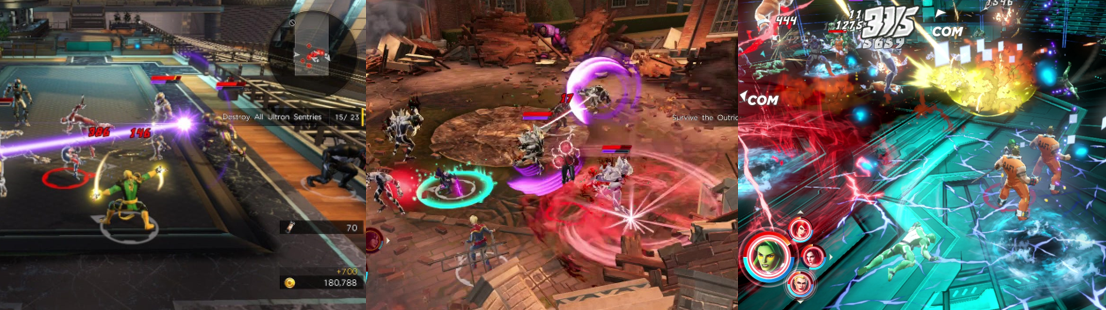
Combat is thick, fast, chaotic, and constant thanks to loads of enemies and character abilities.

As in the last two games, each character has specific abilities tied to their superpowers or superhero traits. You activate these by holding the Right trigger and selecting an icon using the D-pad; using Abilities drains your EP, however, and each Ability comes with a different cost. However, these attacks allow you to stun, stagger or deal elemental damage to enemies using Peter Parker/Spider-Man’s webs, Thor Odinson’s lightning, and Doctor Robert Bruce Banner/The Hulk’s incredible strength. Many characters have projectile attacks in their arsenal, such as Wade Wilson/Deadpool firing guns and Scott “Slim” Summers/Cyclops blasting his eye beams, while others cause splash damage or specific buffs, like Piotr Rasputin/Colossus being able to reflect projectiles and Wanda Maximoff/The Scarlet Witch healing her allies. Some, like James “Logan” Howlett/Wolverine, have passive abilities that allow them to automatically regenerate health as they walk around; others, like Johnny Blaze/Ghost Rider and Ororo Munroe/Storm, specifically deal in elemental damage. Character’s Abilities can also be mixed and matched by holding ZR and pressing one of the face buttons (or pressing A when prompted); this sees two characters attack in a combo for additional damage. As you dish out and take damage, you’ll also build the Extreme (EX) Gauge). Once full, you can press L and R up to three times to have two to four of your teammates perform a devastating combination attack that’s great against bosses. While the various cannon fodder you fight are easily dispatched, larger commanders and bosses need their “stun” meter drained before you can really put a beating on them and others (and certain treasure chests) require specific combination attacks to breach their shields. Defeating enemies sees your characters gain experience points (XP) to level-up, increasing their statistics (attack, defence, etc), though you can also use the various Orbs you find to manually level-up. Each character’s special Abilities can also be further enhanced using Ability Orbs and credits, reducing the EP cost and increasing their damage, among other benefits. You can also earn “Team Bonuses” depending on your team selection: pick a group of X-Men, for example, and your strength or resistance stat will increase, while picking characters of royalty ups your maximum energy stat.
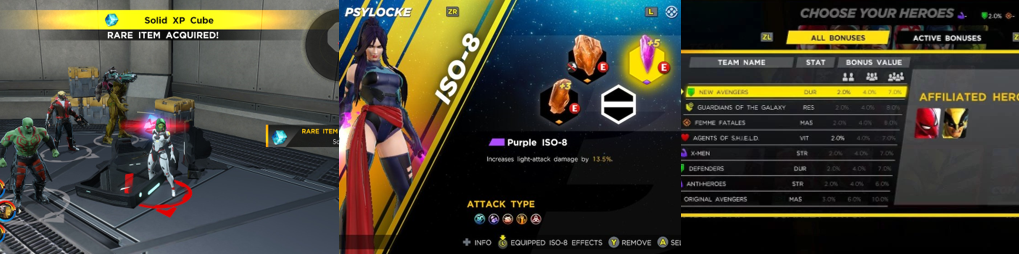
Search for chests to gain currency and other expendables to upgrade and buff your alliance.

Although you can’t equip gear to your characters, the boss battle against the Destroyer armour sees you temporarily empowered by Asgardian magic and you can eventually equip your team with “ISO-8” crystals, coloured stones that enhance their attack power, resistance to elements, or critical hit ratio, among others. You can further upgrade these with credits and ISO-8 capsules, though some of the rarer ones will also debuff you (for example, your attack my increase but your defence will decrease accordingly). You’ll also inevitably gain access to the Strategic Hazard Intervention Espionage Logistics Directorate (S.H.I.E.L.D.) Lab, which acts as the game’s skill tree. By spending credits and Enhancement Points (EP), you can further increase your team’s overall attack, defence, resistance, vitality, and such and even unlock additional ISO-8 slots (with more being earned by levelling-up). You can also enter the S.H.I.E.L.D. Depot from the main menu to purchase additional costumes and social icons by spending S.H.I.E.L.D. Tokens. Marvel: Ultimate Alliance 3 is pretty forgiving (on the “Friendly” difficulty, at least), with multiple checkpoints in each area. When you activate a S.H.I.E.L.D. checkpoint, your team is fully healed, and you can swap or enhance them if you wish. If a teammate is defeated, you can hold A to revive them, but I wouldn’t recommend it unless you absolutely have to. Not only are revives limited, but downed characters will eventually return to full health even before you reach a checkpoint so it’s not worth risking another character taking damage by healing a partner. Exploration generally leads you to treasure chests or special walls that require a special combination attack to open, or to a “Rift” challenge that takes you away from the main game to tackle a special challenge (usually a boss rematch or enemy gauntlet) for extra rewards. Your path is incredibly linear most of the time, hence why there’s no map, and the game’s primary focus is on chaotic combat and visually manic team-based attacks. Unlike in the last two games, you can no longer grapple or throw enemies (though you can still send them flying off certain platforms) and there are no character-specific team-up moves, meaning the action can quickly get quite tiresome.
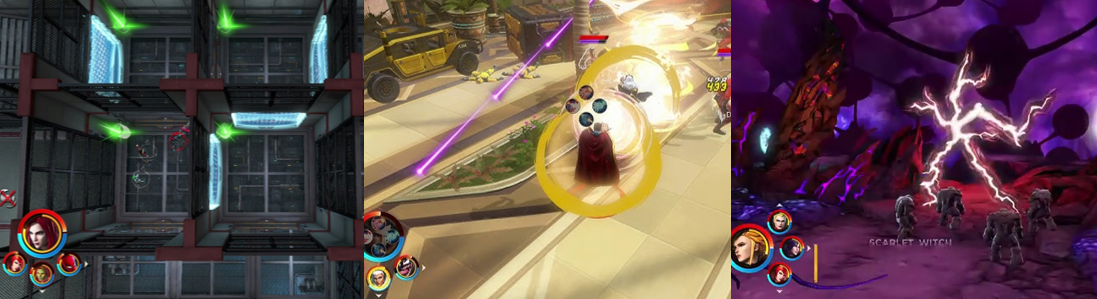
Sadly, puzzles are practically non-existent, with only Rifts offering additional challenges.

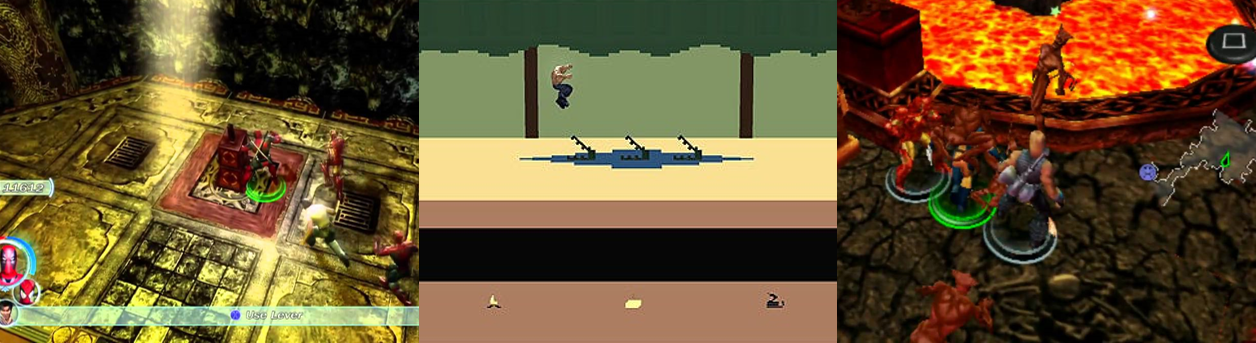
Because of its focus on hectic combat, there’s even less room for puzzles than there is for exploration in Marvel: Ultimate Alliance 3. Puzzles boil down to activating a console to open a door or making a platform move and that’s it. Sometimes, you’ll hold A to move a block and avoid lasers or cannons, but mostly you’ll be timing jumps between said lasers to progress and simply hurling missiles at those cannons. Sometimes, you’ll rotate statues or press switches to progress; others, you’ll be avoiding toxic ooze in Hel or solving door puzzles at the Raft or in Avengers Tower. After hopping across the rooftops of New York City, you’ll infiltrate the heavily fortified fortress of the Hand, dealing with ninjas that drop from the sky and hidden arrow hazards. When in Wakanda, Advanced Idea Mechanics (A.I.M.) corrupt T’Challa/The Black Panther’s defences, leading to an exasperating section where you must avoid snipers and being roasted by a giant panther statue’s energy blast. When transported to the Dark Dimension, you must use portals to reach new areas and defeat waves of demonic enemies to lower magical barriers and progress. Some attacks also screw up your controls or temporarily freeze you; some enemies are best defeated by tossing explosives at them; and many missions have an additional character fighting alongside you who’s often unlocked afterwards. However, a lot of the additional features of the previous games are missing; you can talk to other characters, but there are no dialogue options or character-specific interactions. There are no trivia quizzes, no optional side missions beyond the Rifts, and no character specific challenges to unlock extra stuff for each character. There aren’t even hub areas, in the traditional sense, with characters just appearing around S.H.I.E.L.D. checkpoints at times, though you can destroy a fair bit of the environment, and some encounters have you fleeing towards the camera as bosses chase you or present you with unwinnable battles.

Presentation:
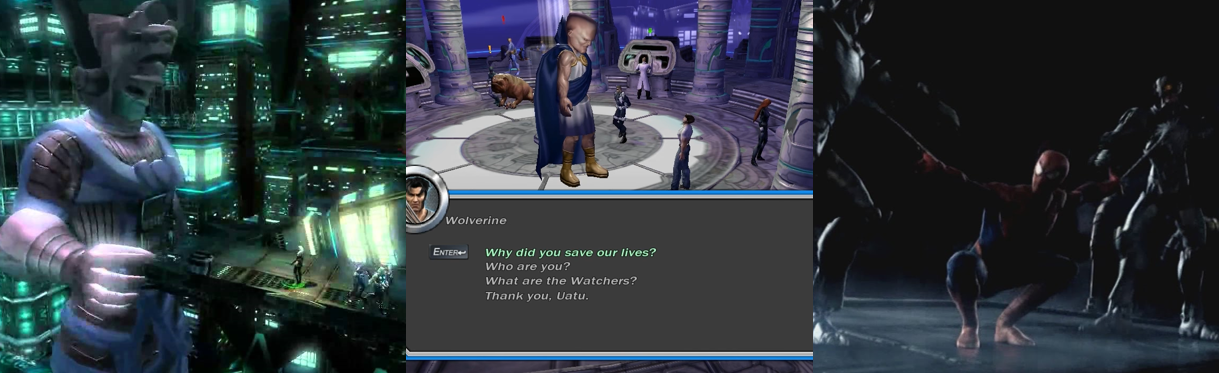
Whereas the last two games primarily based their aesthetics on the comics books, especially the Ultimate comic line, Marvel: Ultimate Alliance 3 adheres very closely to the Marvel Cinematic Universe (MCU), especially in the visuals of its locations. I was hard pressed, for example, to tell the difference between Asgard here and the Asgard to the MCU, with both the golden city and the rainbow bridge, the Bifrost, appearing almost exactly as they’re depicted in the films. The same is true for Wakanda, the Dark Dimension, and Knowhere, all of which are virtually indistinguishable from how they appear in the MCU. There are some differences, of course: Taneleer Tivan/The Collector’s museum, for example, uses coloured cube cages and Wakanda leans much more into traditional architecture than the pseudo-futuristic science of the films (likely because Black Panther (Coogler, 2018) released a year before this game was made). Xavier’s School for the Gifted is lifted almost exactly from the 20th Century Fox X-Men movies (Various, 2000 to 2020), however, including a hedge maze, 1:1 Cerebro room, and basketball court that doubles as a landing pad for the Blackbird. While the Dark Dimension and the cosmic mind trip that is Sanctuary also heavily borrow from the bizarre cosmic imagery of the MCU, the Raft and Avengers Tower are much more akin to their comic book counterparts, though they’re comparatively bland locations, lacking fun areas like the Danger Room or Wakanda’s Necropolis (though you do pass through Anthony “Tony” Stark/Iron Man’s Hall of Armours in the tower). Although you only make a brief stop in Attilan to try and get help from the Inhumans, the architecture is far more visually interesting than that awful television show, seemingly being comprised of Celestial technology, and I enjoyed the ominous gothic presentation of Hel, with its restless Viking warriors and damaging sludge. Unfortunately, Marvel: Ultimate Alliance 3 continues the trend of having disappointingly bland and forgettable music, opting for generic themes for each location, event, and character that are lost amidst the constant fighting.
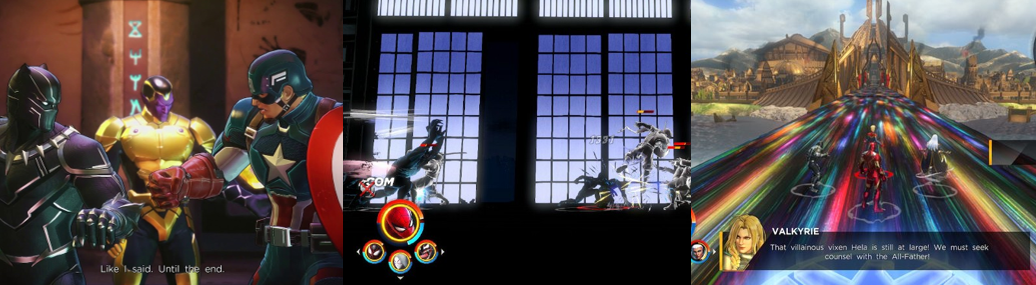
A visually impressive brawler that takes obvious inspiration from the MCU films.

The game also opts for an almost cel-shaded, action figure-like aesthetic for its colourful cast of characters. While many again both look and sound like their MCU counterparts, there are some exceptions: Peter Quill/Star-Lord, for example, looks nothing like Chris Pratt and the X-Men are far closer to the comic books than Fox’s films. Despite you assembling a custom team of heroes, cutscenes depict either everyone or characters specific to the location you’re in (the corrupted Doctor Stephen Strange in the Dark Dimension, for example) as they’re better suited to advance the plot against the local baddies. With the game shifting to a more third-person perspective, you’re closer than ever to the action and can see more of the environment than in the previous games. However, this comes with some drawbacks: mainly, there are far less opportunities or incentives to explore. Second, environments are painfully linear, with dead ends or locked doors barring your progress. Third, and most frustrating, is the camera, which easily loses track of your opponent/s and often lumbers you with wireframe representations when the foreground blocks the view. Thankfully, you won’t be falling down pits and rarely have to worry about onscreen hazards, but it can be aggravating trying to figure out which platforms and crates can be jumped on and which can’t. Marvel: Ultimate Alliance 3 offers a diverse cast of characters, each with their own idle poses and quips, though these do inevitably repeat. The game’s also surprisingly light on Easter Eggs: you’ll spot Deadpool singing away as he makes tacos in the X-Mansion, but not much else, and there are no optional missions or choices to encourage replaying missions. It’s a far cry from the first game, where there was always something to collect or an additional character to help out. Instead, it’s basically all combat, all the time in Marvel: Ultimate Alliance 3. Luckily, the game looks pretty good (everything’s very colourful and true to its inspirations) and performs really well, though there are some long load screens and it is annoying being forced to continue your game every time you challenge a Rift.

Enemies and Bosses:
All the usual suspects appear here as disposable cannon fodder for you to endlessly beat up, with many of the game’s goons sharing traits across the various locations. You’ll encounter Kree, Ultron Drones, agents of A.I.M., and Doombats who all pack various energy blasters. Ultron’s clones are the worst for this, relentlessly firing energy blasts and crashing through windows. The Raft’s unscrupulous prisoners attack in large groups, as do the restless Viking warriors who populate Hel, tossing axes from afar and luring you into toxic goop. Gargoyle-like Fire Demons also dwell here, offering a greater challenge with their swoop attack and fire breath, not unlike the monstrous Outriders and Mindless Ones who make up Thanos and the dread Dormammu’s forces, respectively. Alpha Primitives, Hydra goons, and towering Sentinels also appear, with the latter firing huge energy blasts from the palms and best attacked by throwing their explosive energy cores back at them. No matter where you are and what enemies you fight, more powerful commanders will also appear. Larger, tougher, and sporting a stun meter, these commanders should be your top priority as they’ll charge across the screen, cause shockwaves, and generally offer a far greater challenge even when you’re at a higher level. These minions often fight alongside their masters, generally so you can recover some health and EP to better damage the bosses, and will endlessly spawn in one of the additional modes unless you destroy their teleporters. Some of the game’s challenges or story-based missions charge you with defeating a certain number of enemies to progress. Other times, bosses appear in these waves, and you must occasionally flee or purposely lose some fights. This happens when Cain Marko/The Juggernaut comes tearing through the X-Mansion, for example, and in early encounters with the Black Order, who cannot be beaten or will chase you, raining lightning or other attacks from the sky and across the ground.
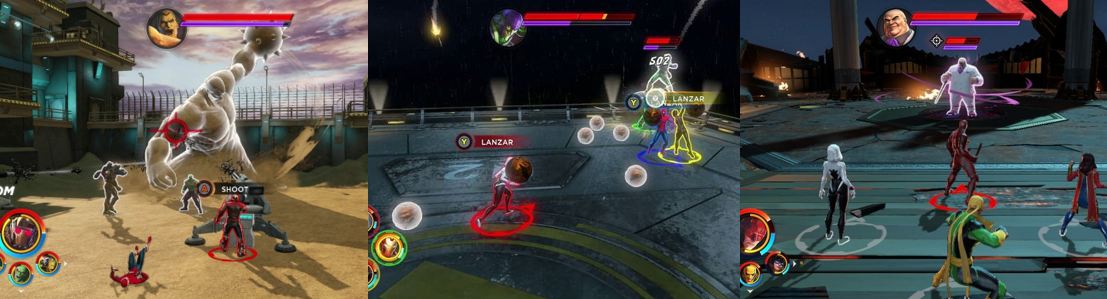
Few bosses require more than just hit-and-run tactics, even when augmented by an Infinity Stone.

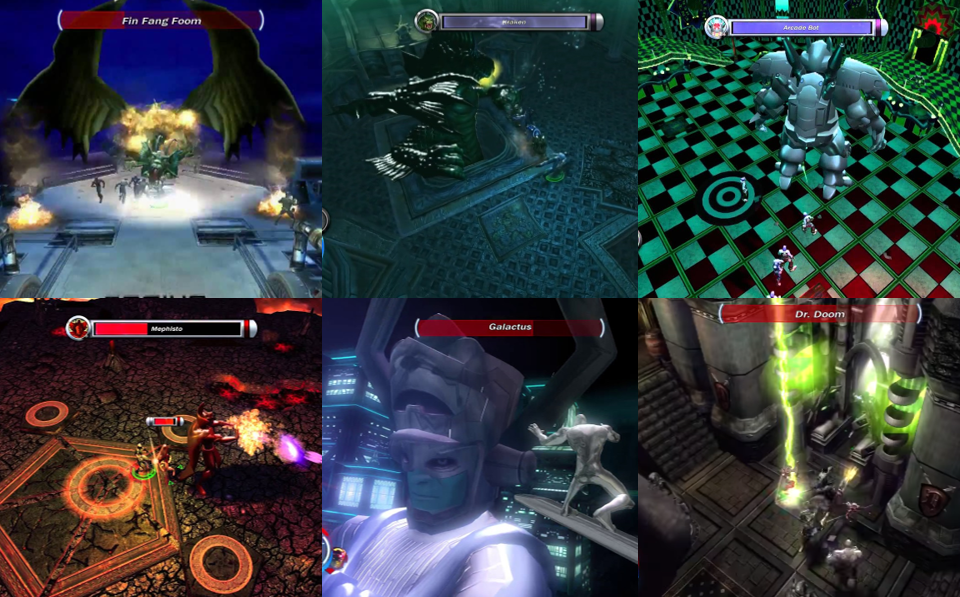
There are loads of bosses to fight in Marvel: Ultimate Alliance 3, with some returning from the previous games, some teaming up, some having a couple of phases, and all boiling down to whittling down their stun bar, unleashing an EX attack and/or your most powerful Abilities, and avoiding damage until you can repeat this. The first ones you’ll face are Nebula and Ronan the Accuser, who often appear as a duo in optional challenges. Nebula is faster and more nimble, wielding blades where Ronan uses a massive warhammer. Both set a standard all bosses follow, which is that they’ll use either a jumping slam or an explosion of energy (or both) to send you flying. While quelling the riot in the Raft, you’ll encounter a version of the Sinister Six, with some unique variations to each battle. Flint Marko/The Sandman, for example, flings waves of sand and erupts his big sand fist from the ground as a large sand creature. You must use A to mount the nearby cannons and unload on him to chip away at his stun meter. Maxwell “Max” Dillon fights alongside Eddie Brock/Venom, raining lighting and electrocuting you with bursts of electricity, before he’s eaten by Venom and starts busting out electrically-enhanced symbiote powers. Venom joins the team after this fight and is tested against Quentin Beck, who first brainwashes Mile Morales/Spider-Man, Gwen Stacy/Spider-Woman, and Kamala Khan/Ms. Marvel to fight you and then unleashes a poisonous mist, teleports about, and confuses you with duplicates, Doctor Otto Octavious/Dr. Octopus is fought in a two-stage fight where you must first avoid his tentacles and scurry charge and then attack each arm to stun him. Finally, you’ll battle Norman Osborn/The Green Goblin for the Time Stone. The Green Goblin swoops overhead and lingers slightly out of reach, peppering the arena with his pumpkin bombs, charging at you, and freezing time to bombard you. He’s noticeably weak to his pumpkin bombs, however, so try and toss them at him before they explode in your face! After battling into the Hand’s fortress, you must first free Elektra Natchios from the Hand’s influence and then face Lester/Bullseye and Wilson Fisk/The Kingpin in separate fights. You must take out the ninjas feeding Elektra power, avoid Bulleye’s spread of razor sharp and explosive cards, and dodge the furniture and massive energy beam thrown by the Power Stone-enhanced Kingpin. The Kingpin also charges like a rhino, leaps at you to cause shockwaves, and even rips up stone columns to use as melee weapons!
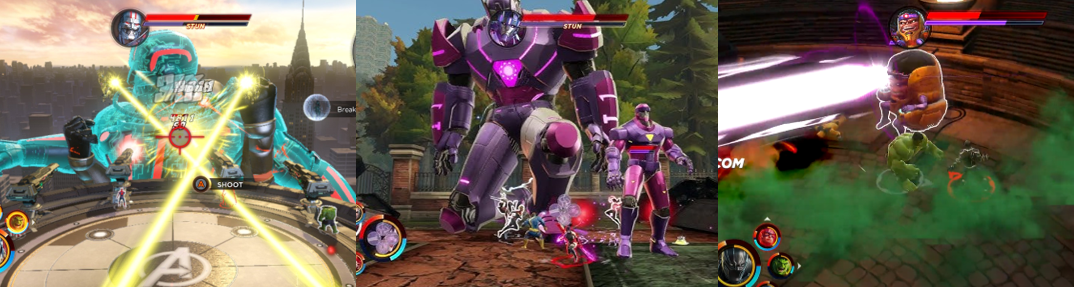
Gigantic bosses and the quirkier villains help mix-up the otherwise tedious combat.

Avengers Tower is then attacked by Ultron and his drones, who assist him in battle. Not that he needs it as the Mind Stone allows Ultron to mess up your controls, to say nothing of his signature face and palm beams. Ultron then grows to gigantic proportions, sweeping the area with his eyebeams before Clint Barton/Hawkeye intervenes and Ultron merges with Ultimo. This is the first giant boss battle in the game and sees you blasting Ultimo with cannons and avoiding his massive swipes. The Infinity Sentinel is comparatively smaller, but no less dangerous thanks to its own face beam and missiles. Though you can damage it with Sentinel cores, it’s finished in a cutscene by Erik “Magnus” Lehnsherr/Magneto, who then tosses debris and throws you off balance with magnetic pulses while Juggernaut pummels you and Raven Darkholme/Mystique tosses daggers. After surviving Mystique’s Danger Room trials, you face Magneto, now even tougher thanks to the Power Stone, before being chased away and banished to the Dark Dimension by the Black Order. There, you battle past Loki Laufeyson (who boasts elemental attacks and duplication tricks) to eventually face the dread Dormammu, who wields the Reality Stone and is the second giant boss. You must subdue his minions and avoid his flame bursts, whittling down his magical barrier either directly or be destroying three nearby orbs, all while dodging his giant fists and ground spikes. The brief fight with Maximus Boltagon is far easier, even though the mad Inhuman carries a massive energy cannon and you must take cover in Thane’s energy bubble to avoid Maximus’s barrage of lasers. Ulysses Klaue/Klaw awaits in Wakanda and his sound-based energy blasts and waves must be overcome to rescue and recruit James Buchanan “Bucky” Barnes/The Winter Soldier. You then fight past A.I.M. to confront their master, George Tarleton/Mental Organism Designed Only for Killing (MODOK), who uses the Soul Stone to turn the Dora Milaje against you and attacks with a slew of appendages, from buzzsaw arms, poison gas, failing tentacles, and his signature forehead blast.
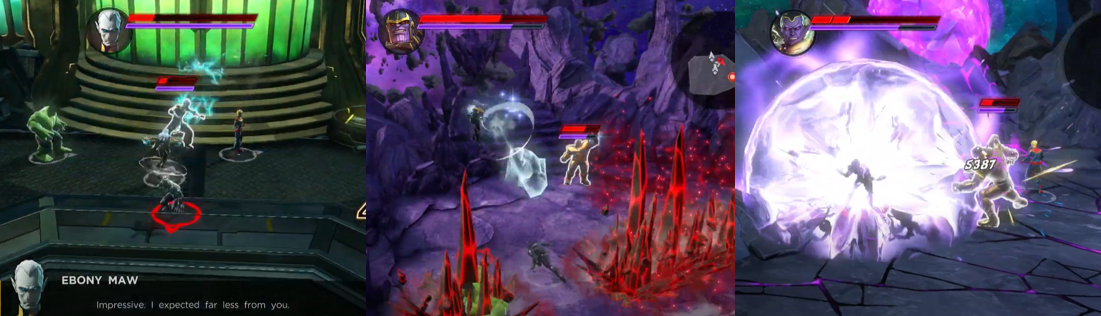
Battles with the empowered Black Order, Thanos, and Thane offer some of the most enjoyable challenges.

Though your goal in Hel is to confront Hela, you’ll actually battle the fire demon, Surtur, in another giant boss battle. This was a bit of a difficulty spike for me as Surtur’s flaming sword has a long reach and he causes the ground to erupt in flames, to say nothing of stun locking you with repeat sword strikes! Best him and Hela sets Johann Schmidt/The Red Skull on you, with the Nazi madman firing a powerful revolver and sapping your health with his “Dust of Death”. Hela gives the Red Skull a boost, protecting him with a shield and allowing him to fire a Bifrost-like laser, before placing his consciousness into the Destroyer armour. Though bolstered by Hydra forces and boasting a sweeping face beam, you can get a power-up from glowing crystals to overcome this destructive force. Finally, you venture to Knowhere and must run the Black Order gauntlet to retrieve the Infinity Stones, with checkpoints between each fight. Ebony Maw is first, firing a spread of projectiles and rocks and using the Soul Stone to create portals to trip you up. Supergiant tosses dark spheres and a golden homing shot that messes up your controls, though you can toss explosive cores from her minions to deal big damage. Cull Obsidian infuses his battleaxe with the Power Stone, sending out waves of purple energy and massive purple shockwaves, though he’s far slower and also susceptible to the nearby bombs. Corvus Glaive is much faster, landing multiple hits with his lance and using the Reality Stone to spring spikes form the ground and conjure duplicates who fill the arena with energy waves that can stun lock you. Finally, Proxima Midnight takes her fellow’s teleportation trick to the next level with the Space Stone and fills the arena with lightning bolts and strikes. All these powers are then recycled when you face Thanos, who gathers the six Infinity Stones into the Infinity Gauntlet to rain meteors, teleport, mess up your controls, freeze time, and fire his signature eyebeams. Thanos then joins you to battle Thane, who usurps him and boasts similar powers, though also upgraded by the Infinity Armour. Thane exhibits superhuman speed, traps you in a cube, fills the arena with portals and flames, and explodes in fury, though both battles were fun challenges rather than impossible tasks.

Additional Features:
Unlike in the previous two games, you won’t be finding data logs, action figures, or meeting certain requirements to unlock new attacks or costumes. You just fight over and over, earning whatever you need to unlock, buy, or upgrade whatever you wish and finding some concept art in treasure chests. A far harder (but more rewarding) “Superior” difficulty unlocks upon clearing the game alongside an additional “Nightmare” mode, accessible via the “Curse of the Vampire” campaign. You also unlock Thanos and can freely replay any mission on any difficulty (though you must start a new save to play on “Superior”) to grind and enhance your characters and ISO-8. Dimensional Rifts transport you to special challenges (not unlike the S.H.I.E.L.D. Simulator discs from the first game) that are often rematches with bosses or gauntlet challenges, though far tougher and gifting better rewards if you succeed. There are also three additional modes; however, though you can play a taster of each, you must purchase the expansion pass to fully unlock them. “Curse of the Vampire” adds vampiric enemies to the main story in “Nightmare” mode and offers a “Gauntlet” mode where you battle waves of enemies and bosses against both a time limit and a range of debuffs (including limited health restoration and draining EP). You can also tackle an “Endless” mode that’s pretty self-explanatory, and unlock additional characters like Frank Castle/The Punisher and Eric Brooks/Bladeif you buy the DLC. “Rise of the Phoenix” sees you form a four-person team and go head-to-head with a friend or the computer in three-round Danger Room scenarios. These see you tackling bosses again or wiping out hordes of enemies, awarding additional buffs and effects if you meet certain criteria (such as using any Ability or Synergy attack four times). You can only tackle the first challenge without the DLC, so I didn’t get very far, but this could be a fun distraction for those looking to test their skills against a friend. “Shadow of Doom” adds an epilogue story campaign that sees you return to Wakanda to oppose Doctor Victor Von Doom’s invasion. Dr. Doom’s Doombots endlessly spawn unless you destroy their teleporters, and you even battle the arrogant dictator in the recycled Necropolis, with him teleporting, firing lasers form his palms, and having his health restored by his Doombots. You’ll add Marvel’s First Family to your roster (alongside an alternative Thanos and other characters) by buying the expansion pass and battle Annihilus, a gigantic Celestial, and even “God Emperor” Doom!
The Summary:
I quite enjoyed the first two Ultimate Alliance games. They were mindless and largely repetitive, but I liked the large cast of characters and all the different references and locations from the comic books. Still, I put off Marvel: Ultimate Alliance 3: The Black Order for some time, mainly because I was annoyed by it being a Nintendo Switch exclusive; however it turned out to be a decent enough brawler. Despite the different development team, a few tweaks, and an apparent disconnection from the previous games, Marvel: Ultimate Alliance 3 offers a lot of the same gameplay and enjoyment as its predecessors, which is great for long-time fans of the franchise. Unfortunately, it doesn’t improve on these elements in a meaningful way and actually removes some content that I found enjoyable from the last two. There are no optional missions, for example, no alternative endings, no choices, and no character-specific challenges beyond fighting and levelling-up. I found this made the tedious combat even more aggravating after a while as I wasn’t being rewarded with gear or costumes or anything other than stat boosts. Even the skill tree was limited since you must grind to acquire enough credits and expendables to enhance your team, and I found the ISO-8 mode to be more confusing than engaging. The game also does little to improve the boss battles. Very few were very innovative or required more of you than to strike fast, avoid shockwaves and projectiles, and unleash your Extreme attack. The giant bosses were more of a challenge and I liked the final fight against Thanos and Thane, but I was hoping for a bit more complexity, especially given the possibilities offered by the Infinity Stones. There is a fun selection of characters, but they don’t offer much more than what we saw in the last two games and actually offer less as there are no character-specific team-up moves. While I enjoyed the visual influence from the MCU and the variety, I feel like Marvel: Ultimate Alliance 3 played things a little too safe by relying so heavily on combat and not mixing up the gameplay with a few other puzzles and challenges. Overall, it’s a good enough game and a worthy entry in the series, but it’s a shame that the developers didn’t try to be a bit more innovative and offer some more incentive to keep slogging away in endless fights.

My Rating:

Rating: 3 out of 5.

Pretty Good

Did you enjoy Marvel: Ultimate Alliance 3: The Black Order? How do you think it holds up against the previous two games? Which characters did you choose for your team? Were you disappointed that the combat was so similar to the last two games and the bosses so repetitive? Did you ever conquer all the Rift challenges? What did you think to the MCU influences and the final battle with Thanos and Thane? Did you ever play through the DLC? Would you like to see another Ultimate Alliance game? Whatever your thoughts, leave a comment below, support me on Ko-Fi, and go check out my other superhero content across the site.

Movie Night: Ghost Rider: Spirit of Vengeance

Released: 17 February 2012
Director: Mark Neveldine and Brian Taylor
Distributor: Columbia Pictures / Sony Pictures Releasing
Budget: $57 to 75 million
Stars: Nicolas Cage, Johnny Whitworth, Violante Placido, Fergus Riordan, Idris Elba, and Ciarán Hinds

The Plot:
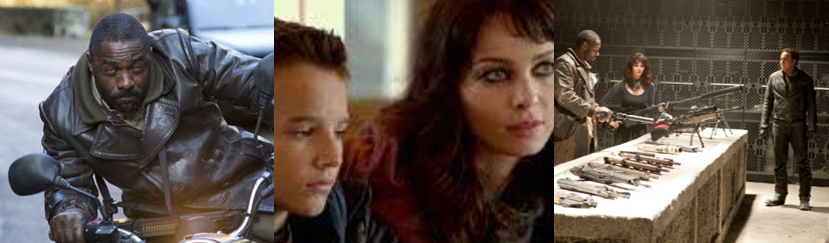
After selling his soul to the Devil, who’s taken mortal form as Roarke (Hinds), and being transformed into the demonic Ghost Rider, Johnny Blaze (Cage) has withdrawn from the world. However, when he’s charged with protecting Nadya and Danny Ketch (Placido and Riordan) from Roarke’s enforcer, Ray Carrigan/Blackout (Whitworth), Blaze discovers a chance to both redeem and rid himself from his nightmarish curse.

The Background:
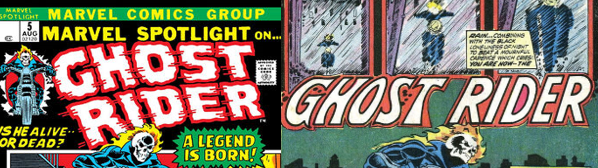
Gary Friedrich, Roy Thomas, and Mike Ploog’s Ghost Rider first appeared in the pages of Marvel Spotlight #5 and has spearheaded many supernatural Marvel adventures since while invariably appearing in Marvel’s television ventures. After a long period in Development Hell (pun intended) Ghost Rider finally made his live-action debut with noted comic book fan Nicolas Cage portraying a quirky, damaged version of the character that left many critics disappointed. Though labelled as one of the worst films of the decade, Ghost Rider’s (Johnson, 2007) almost $230 million box office was a catalyst for a sequel, with Cage eager to explore a darker side to Blaze’s character. David S. Goyer signed on to pen the sequel, which was strangely framed as a quasi-reboot and lumbered with a far smaller budget than its predecessor. Visual effects studio Creative-Cartel took on the task of bringing the flame-headed spectre to life, producing around 850 visual effects shots and fitting Cage with an LED helmet to help perfect the lighting of Ghost Rider’s flaming skull, which was designed to express the character’s demeanour. Unfortunately, Ghost Rider: Spirit of Vengeance failed to match its predecessor’s box office or redeem Ghost Rider’s live-action career. Reviews were scathing, criticising Cage’s wacky performance, slapdash narrative, and dreadful 3D conversion. While it’s since developed a small cult following, Cage’s dissatisfaction with the film and the role scuppered any chance of a sequel and the character was eventually reacquired by Marvel in 2013.

The Review:
Ghost Rider: Spirit of Vengeance is a quasi-sequel, quasi-reboot of the franchise that picks up some years into former stunt rider Johnny Blaze’s cursed life as the titular Spirit of Vengeance. Thankfully, for those unfamiliar with the character and concept, Blaze is on hand to provide an opening narration (and a few narrative interludes) to catch us up on the story. Similar to the first film, Blaze was devastated when his father contracted terminal cancer and, in desperation, made a literal deal with the Devil to save his life. It’s not related what happened after that, just that the Devil (here given the unremarkable mortal name of “Roarke”) twisted the deal, bonding Blaze to an ancient demon that transforms him into a monstrous, flame-headed creature in the presence of evil. Haunted by this decision, and the guilt behind his selfish reasons for making it in the first place (Blaze later emotionally confesses to charismatic priest-cum-wine connoisseur Moreau (Elba) that he made the deal because he couldn’t bare to lose his father), Blaze flees halfway across the world, avoiding all human contact wherever possible. Unlike in the previous movie, where Blaze hid his tortured soul behind wacky eccentricities, Blaze is now withdrawn, socially awkward, and constantly battling against the demon that rages inside of him. Living a simple life in near squalor, he fights nightly to keep the Ghost Rider at bay. Sensitive to the light and with little interest in helping others, Blaze is initially hostile towards Moreau but is convinced to hear the bombastic priest out when he promises to take Blaze to his sacred order and have his curse finally lifted. Still, he’s naturally reluctant since he has little to no control over the Ghost Rider. The demon possesses him, seemingly taking full control of his body, and both cannot distinguish between those who are truly wicked and those who are merely misguided and has no desire to, simply relishing in violence and satiating its never-ending hunger.

Cage is more unhinged than ever as the tortured Blaze and demonic Ghost Rider.

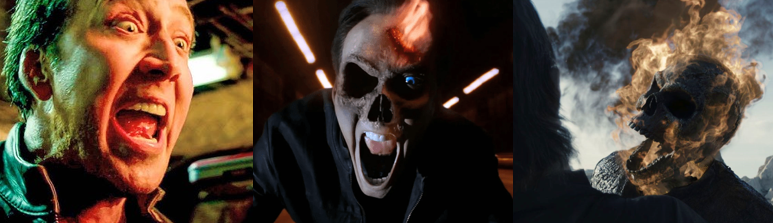
Later, when sheltered by Methodius (Christopher Lambert) and the other monks from Moreau’s order, Blaze learns the origins of the demon possessing him. It’s said to have once been Zarathos, the Spirit of Justice, an angel sent to defend humanity. However, Zarathos was somehow captured, tortured, and driven insane in Hell, transforming it into the unrelenting Spirit of Vengeance that now engulfs Blaze’s body. The Ghost Rider is a bizarre, disappointingly silent creature of vast, near-unlimited power. There’s little physical threat against his awesome Hell powers. He easily reduces every nameless, faceless goon to ash and cinders with his flaming chains and shrugs off bullets, relishing intimidating his prey by swaying about and striking odd poses. Exhibiting superhuman strength and durability, the Ghost Rider can transform any vehicle, no matter how big, into a flaming vessel but, of course, favours a bitchin’ motorcycle. His most powerful technique remains the Penance Stare, here changed to be the flaming demon simply screaming in his victim’s face for an awkward amount of time. Blaze says that the Ghost Rider consumes souls, but we don’t actually see that happen onscreen; his victims simply cower in fear and burst to ash, which is a bit of a disappointment. At one point, he does absorb and regurgitate a full clip of gunfire at one hapless goon, and he’s left unscathed by bazooka fire, though a desperate grenade shot by Carrigan is strangely enough to incapacitate him. Indeed, the only thing that can even stop the Ghost Rider is the word of Hell, a talent exhibited by Roarke’s unwitting son, Danny, who both commands the Ghost Rider to stop and returns his power in the finale. The Ghost Rider’s presence has clearly been infesting Blaze, driving him half mad; when the demon “[scratches] at the door”, Blaze descends into manic insanity trying to hold him at bay. He also seems to gleefully relish the demon’s incredible power as it literally bursts from him, melting his attire and transforming him into a wicked, bizarre creature said to have no conscience or morality.

Moreau recruits Blaze to keep Nadya and Danny safe from Roarke’s evil plot.

This belief is tested when Moreau begs Blaze to help keep Nadya and Danny safe from Carrigan (and, by extension, Roarke). A Gypsy beauty once caught up in Carrigan’s world of violence and drugs, Nadya was left near death after a botched job and, in desperation, made a deal with the Devil to save her life, unaware that his intention was for her to give birth to a “vessel” for his demonic essence, essentially making Danny the Anti-Christ. Living life on the run, forced to swindle horny businessmen out of their wallets and cars, Nadya is reluctant to trust anyone and seeks only to keep Danny safe and maybe one day build a real life for him. Though a snarky teen with a chip on his shoulder, Danny truly loves his mother and actually enjoys their life as outlaws, despite him longing for a normal family life. Still, he struggles with his half-human heritage; he wants to understand the dark power within him, but both fears and is allured by it. The Ghost Rider can sense his presence, drawn to his blood and power, and Blaze tries to impress upon the boy that he doesn’t have to let his dark side define his life (hollow words considering Blaze’s own struggles with that). Devoid of a father figure, Danny quickly bonds with Blaze, seemingly enamoured by his incredible power and his whole stunt biker aesthetic but resents him for giving up the Ghost Rider at the first opportunity. This comes courtesy of Moreau, easily the most enjoyable and appealing character in the film. Also an accomplished rider, Moreau is a man of deep spiritual belief who’s also very handy in a firefight. Verbose and incorrigible, Moreau gleefully leaps head-first into battle, ready to give his life to keep Danny safe (or rescue him) and Elba’s scenery-chewing enthusiasm makes even clunky exposition scenes entertaining to watch. It’s genuinely a shame when he’s killed by Carrigan, especially as he had a lot of potential as a secondary Ghost Rider.

Though weak, Roarke’s power is enough to transform Carrigan into a demonic being.

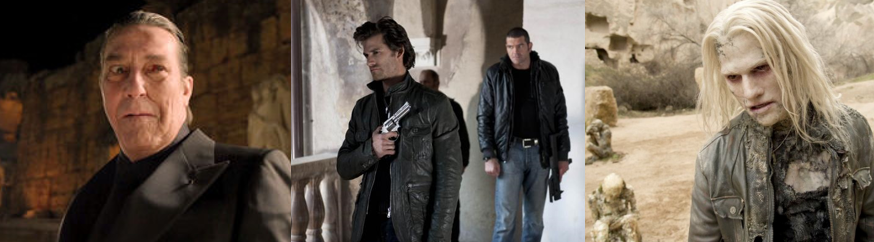
Speaking of Carrigan, he spends the first act of the movie as little more than an arrogant mercenary. Since Roarke’s human body is slowly dying from the incredible power within it, he contracts Carrigan and his goon squad to do his dirty work. Carrigan has a history with Nadya, resenting her for leaving him, and knows his worth; he demands a bigger payday after barely surviving his first encounter with the Ghost Rider and ups his arsenal for the rematch. However, this leaves all his men dead and him crushed under debris, barely mustering the strength to spit an insult in Roarke’s face before dying. However, death is merely an inconvenience for the Devil and Roarke revives and transforms Carrigan into an adaptation of Blackout, here realised as a zombie-like sadist able to decay anything (unless dramatically convenient) with a touch and rapidly attack foes from a surreal shadow dimension. Unhinged, drunk with demonic power, Carrigan delights in reducing anyone in his path to agonised, decaying husks, leaving them little more than screaming skeletons, slaughtering Methodius and his monks and even killing Moreau. It seems to be the Devil’s modus operandi to birth half-demon creations capable of ending him since, like the Ghost Rider, Carrigan’s demonic power is so strong that even Roarke snaps at him when he goes to touch him, indicating that Carrigan could’ve simply killed the Devil’s mortal form and usurped his position. Lacking the gravitas of Peter Fonda and simply appearing as a broken, half-crippled old man in a suit, the Devil has never been weaker than in this film. His human body is decaying quickly since mortal forms can’t contain his power, so he’s desperate to get his hands on Danny and perform a bizarre ritual that will transfer his essence into the boy’s half-demon body. Still, the Devil exhibits an alluring presence; though he’s still unruly around him, Danny is curious to learn more about the darkness Roarke implanted in him. Roarke also clearly has the power, money, and influence to keep Carrigan and a veritable army of gun-toting minions on hand to be summarily slaughtered by the unstoppable Ghost Rider.

The Nitty-Gritty:
It’s definitely far more accurate to label Ghost Rider: Spriit of Vengeance as a soft reboot, and that really irks me. Blaze’s opening narration uses weird, animated segments to tell a truncated version of his origin when footage from the last movie could’ve easily been supplanted. He also explains how the Devil has taken many forms before, showing Roarke once masqueraded as some of history’s worst dictators (and Jerry Springer…), meaning it would’ve been easy to name-drop Mephistopheles. Instead, the film essentially distances itself from the last movie but remains irrevocably and awkwardly tied to it through Nicolas Cage’s casting. It’s a bit like when Judy Dench stayed on as “M” when Daniel Craig took over as James Bond. Like, it’s obvious it’s a new film continuity but not recasting the lead muddies the water and just has me asking why it wasn’t a straight-up sequel. The movie is also a strangely surreal affair. Whereas Ghost Rider was painfully generic and toothless at times, Spirit of Vengeance is often like an acid trip, skipping frames, using odd camera angles, and utilising a rushed editing style to frame the Ghost Rider as a terrifying, unpredictable figure. In this regard, these techniques are surprisingly effective, but it also results in a confused tone. Sometimes, it wants to be this gritty, gothic horror; other times, it’s got a camp comedic edge (mainly through Moreau’s infectious personality); and at other times, it’s a reluctant meditation on the struggle between good and evil. Nowhere is this more evident, as expected, than in Cage’s crazed performance. I get it when he’s desperately trying to keep the Ghost Rider in check, but that’s no excuse for Cage’s weird mannerisms and line deliveries. It paints Blaze as painfully awkward; he constantly struggles to console Danny and Nadya, and is definitely a man whose actions speak louder than words.

The Ghost Rider effects and action scenes look better than ever, despite his bizarre characterisation.

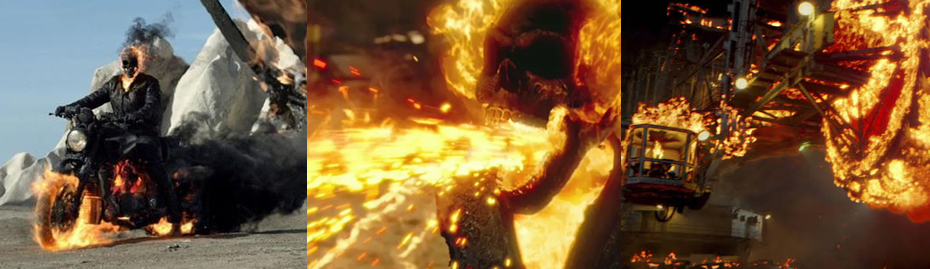
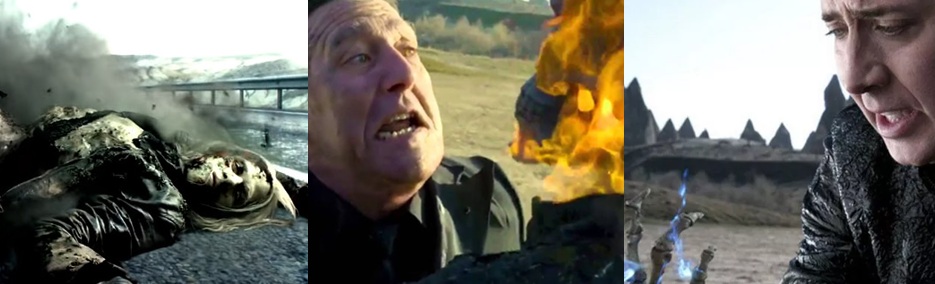
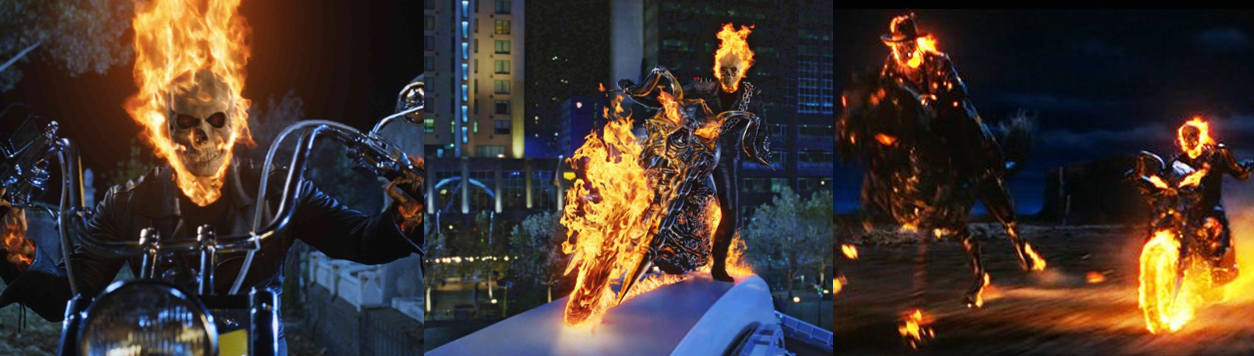
On the plus side, the Ghost Rider looks absolutely fantastic here! He looked pretty great in the last film, but the effects are way better this time around. His skull is charred and spews black smoke; his leather drips and bubbles from his intense Hellfire; and his flames are more realistic than ever. It’s like Clayton Crain’s gothic, realistic artwork has been brought to life and I loved that we got loads of sequences where the Ghost Rider is in action in broad daylight. It really is top-notch effects work that belongs in a better film and any scenes with the Ghost Rider, even when he’s acting like a complete moron, are a highlight. Of course, it helps that he’s an absolute menace; he’s so overpowered that nothing is a threat to him and he can afford to just knob about, toying with his victims before roaring in their face (…err, I mean, consuming their souls). Given the Ghost Rider’s nature, there are a fair few chase sequences here; the Ghost Rider turns cars and even a construction crane into a burning vehicle, decimating everyone in his way. Since Blaze successfully has Zarathos exorcised from his body at Moreau’s temple, he, Moreau, and Nadya are forced to use more traditional firearms and stealthier techniques to infiltrate the Uzak Gökten in the finale. Moreau acquits himself well here, throwing Roarke’s guards off with his brazen antics and openly firing upon his hooded followers. Like Methodius and the other monks, he tries to fight Carrigan and, like them, is rapidly decayed but not before delivering a defiant headbutt. Carrigan’s action sequences mostly take place in a peculiar dark dimension, where he slips up behind, outmatches, and dispatches his foes as easily as Ghost Rider incinerates them with his chains. Not to be outdone, Nadya has a lot of fight in her, even when overpowered or outmatched. She proves a crack shot with a sniper rifle, covering Blaze and Moreau’s backs, and is smart enough to flee with Danny whenever things start to get hairy for them.

Ultimately, the Ghost Rider triumphs and regains his sanity, bringing some peace to Blaze.

Having successfully dispatched Carrigan and his goons, Blaze brings Nadya and Danny to Moreau’s sanctuary and successfully has his curse lifted. This is a two-stage process that begins with Cage hamming up Blaze’s darkest confession regarding his deal and then being bombarded by strange lights and a cacophony of visuals that, apparently, banish Zarathos from his body. Although Methodius decides it’s better to simply kill Danny to prevent the Devil’s plot, Carrigan shows up and slaughters him and the other monks, kidnapping Danny, and bringing him to Roarke so he can be sedated and forced into a strange ritual. To the chanting of his influential, hooded followers, Roarke comes close to completing the demonic transfer before he’s interrupted by Blaze and Moreau, covered by Nadya and armed with the monks’ impressive arsenal of firearms. Though Moreau is killed by Carrigan and it seems like Danny is ready to embrace his demonic heritage, the boy tricks Roarke and restores the Ghost Rider’s powers to Blaze. Now empowered to exist in daylight, the Ghost Rider aggressively pursues Roarke when he flees with Danny, finally dispatching Carrigan in anticlimactic fashion and violently sending Roarke’s vehicle end over end. His body further damaged by the crash, Roarke is left a helpless wreck before the Ghost Rider’s power. Defiant to the last, Roarke curses the day he made the deal with Blaze but is powerless to avoid being forcefully sent back to Hell by the Ghost Rider’s chain. Nadya is horrified to find that Danny has been…injured? Killed? He’s unconscious, at least…in the crash. However, conveniently, Blaze feels Zarathos’ true nature resurface, changing his flames from red to blue and restoring the angel’s sanity and power as the Spirit of Justice. This allows him to revive Danny and abruptly end the movie with him reaffirming his identity as the Ghost Rider, essentially completing the same character arc we saw in the last movie.

The Summary:
Ghost Rider somehow took one of comicdom’s most visually interesting anti-heroes and delivered a generic action flick that lost momentum halfway through and was bogged down by Nicolas Cage’s bizarre mannerisms. A toothless, impotent affair, it barely scratched the surface of what the character and concept are capable of, disappointing in it squandering its potential. Much of the same criticisms can be lobbied at this awkward re-quel, which is again hampered by too low an age rating to really bring the Ghost Rider to life and Cage is wackier than ever, screaming with a maniac glee or mumbling clumsily through every scene. However, Ghost Rider: Spirit of Vengeance has far more positives than its predecessor: the Ghost Rider looks better than ever, tearing through goons with a vicious relish and impressing whenever he’s onscreen, and Idris Elba steals the show as Moreau, clearly enjoying chewing the scenery. It’s a shame, then, that the Ghost Rider is portrayed so unpredictably. On the one hand, he’s pretty terrifying and an unstoppable force of nature; on the other, he’s lollygagging around or awkwardly screaming in people’s faces. I enjoyed Nadya and Danny’s characters; the actors gave good performances and I liked seeing the kid bond with Blaze, though I think this could’ve been emphasised more in the middle portion. Carrigan was just the right level of camp and menace; like Blaze, he’s gifted with incredible demonic power. Unlike Blaze, Carrigan truly embraces it and relishes rotting his victims, whereas Blaze is constantly at odds with his dark half’s power. However, Roarke is a massive step down from Mephistopheles. Ciarán Hinds isn’t bad, but he’s no Peter Fonda and it’s difficult to reconcile the ham-fisted retconning of the previous film. For me, I would’ve much preferred that the film was a standalone sequel that either used footage from the last movie or didn’t outright contradict it. Therefore, it’s better to treat Ghost Rider: Spirit of Vengeance as a straight-up reboot, as nonsensical as that is. Ultimately, I do think it’s the better of the two, but the flaws still keep it from being a significant improvement over the previous film thanks, ultimately, to Nicolas Cage’s ridiculously over the top performance.  

My Rating:

Rating: 3 out of 5.

Pretty Good

Do you think Ghost Rider: Spirit of Vengeance surpassed its predecessor? Do you think it’s a stronger adaptation of the source material? What did you think to Nicolas Cage’s performance this time and the retconning of the last movie? Do you agree that the Ghost Rider looks far better here? What did you think to Roarke and Carrigan and the way the Ghost Rider decimated his enemies? What are some of your favourite Ghost Rider stories and moments? Whatever your thoughts on Ghost Rider: Spirit of Vengeance, share them below and be sure to check out my other Ghost Rider content on the site.

Back Issues: Ghost Rider #1-3

Writer: Howard Mackie – Artist: Javier Saltares

Story Title: “Life’s Blood”
Published:
13 March 1990 (cover-date: July 1990)

Story Title: “Do Be Afraid of the Dark”
Published:
10 April 1990 (cover-date: June 1990)

Story Title: “Deathwatch”
Published:
8 May 1990 (cover-date: July 1990)

The Background: 
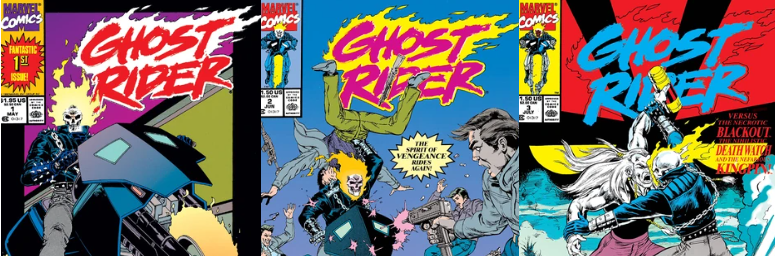
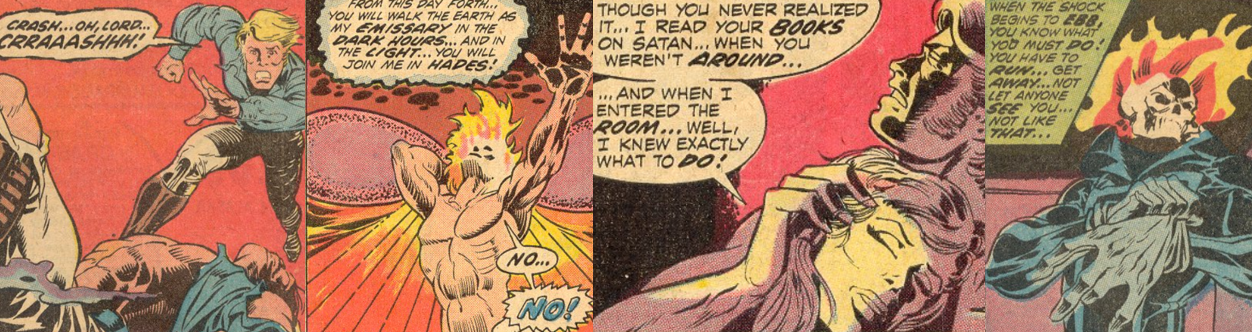
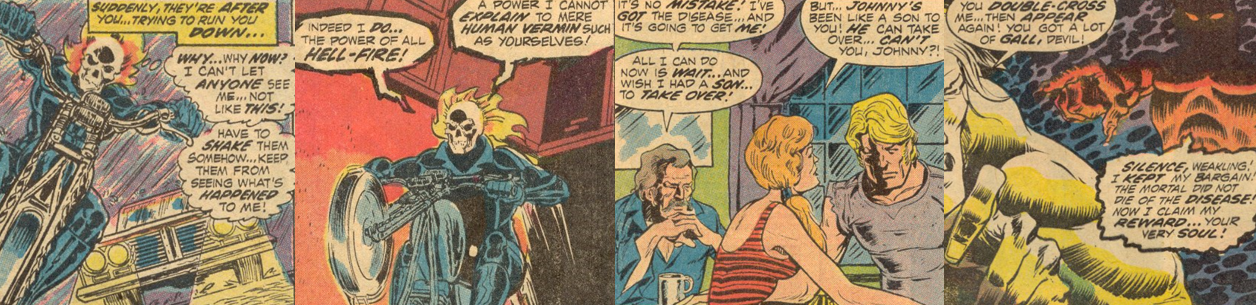
In 1967, Dick Ayers, Gary Friedrich, and Roy Thomas introduced Marvel Comics readers to Western gunslinger Carter Slade/Ghost Rider, who later became known as the Phantom Rider in the wake of his more popular successor, Johnny Blaze. Initially planned to be a villain, Friedrich lobbied to do more with the character, with artist Mike Ploog asserting that he provided Ghost Rider’s trademark look and the legendary Stan Lee dreaming up his civilian name. After ridding himself of the Ghost Rider curse and the demon who caused it, Zarathos, Blaze and his flame-headed alter ego vanished from Marvel Comics for the better part of seven years. However, the Spirit of Vengeance rose again in this story, which introduced a new host for the demon in teenager Danny Ketch, who would later be revealed to be Blaze’s half-brother. During his tenure as the Ghost Rider, Ketch teamed up with both his half-brother and other supernatural or bloodthirsty Marvel anti-heroes, being a prominent member of the Midnight Suns and even temporarily giving his life to stop Zarathos and vampire queen Lilith from conquering the world with their demonic army. While it’s Blaze who is generally depicted as the go-to Ghost Rider whenever the Spirit of Vengeance appears in other media, many of the character’s most recognisable traits come from his successor. Ketch had a sleeker, more streamlined Hellcycle, employed the Penance Stare, and sported a more fearsome, spiked attire, all of which would later be adopted by Blaze when he resumed the mantle. Still, Ketch has appeared in various Marvel cartoons throughout the nineties, though a planned videogame was cancelled and his sole live-action appearance as of this writing is as a child in the poorly received Ghost Rider: Spirit of Vengeance (Neveldine and Taylor, 2011). 
The Review:
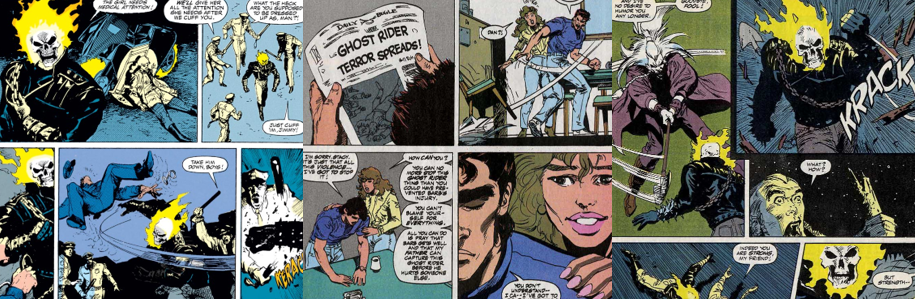
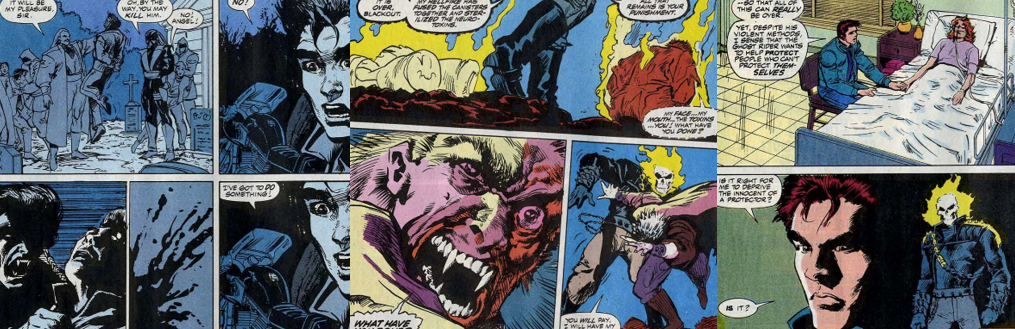
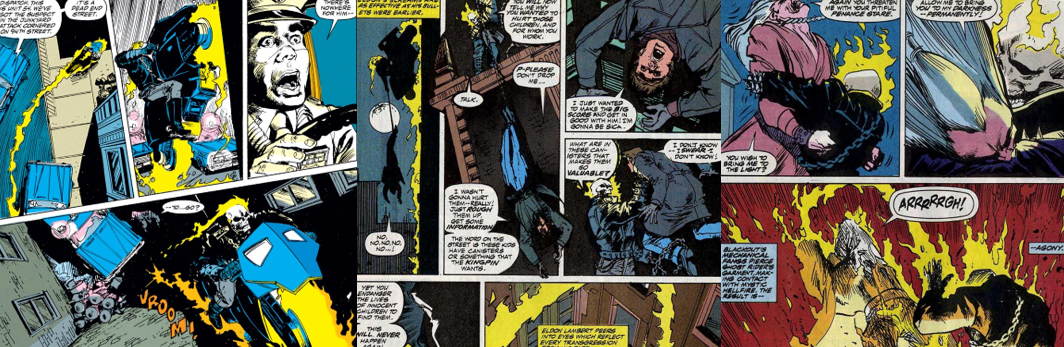
Our story begins in Cypress Hills Cemetery, where bickering siblings Danny and Barbara Ketch have come to scope out Harry Houdini’s gravesite…on Halloween Eve, no less…so Barb can take pictures of alleged psychics trying to commune with him. Anxious Danny, not so quick to dismiss the cemetery’s morbid reputation, is spooked when a bunch of kids (the so-called Cypress Hill Jokers) in Halloween masks give them a fright and try to steal Barb’s camera. She sends them packing with a swift kick and forces Danny to investigate sounds of a gunshot and a scream. Peering into Gallagher’s junkyard, they see some of Wilson Fisk/The Kingpin’s goons threatening the mysterious Deathwatch after the masked man shot dead one of their couriers. When the mobsters are executed by the killer’s crossbow-wielding hoodlums, Barb lets out a scream, landing her with an arrow through the chest. While one of the kids, Paulie Stratton, swipes the case Deathwatch killed for, Danny desperately props the bleeding Barb against an abandoned motorcycle; touching it with his bloodstained hands, he undergoes a sudden and dramatic transformation into the Ghost Rider! His body possessed by the Spirit of Vengeance, Danny’s personality gives way to that of the Ghost Rider’s, who takes out the hooded foes using his demonic chains and his signature Penance Stare, which forces his victim to “suffer the pain” they inflicted on others. Paulie slips away as the cops arrive; they fail to apprehend the Ghost Rider, humbled and manhandled when his bitchin’ new Hellcycle blasts him up a wall to safety. Under the light of dawn, Danny regains his senses and his self, eventually collapsing before his terrified mother and Police Captain Arthur Dolan. When he comes to, Danny learns that Barb is stable, but stuck in a coma, and is devastated at having let her down.

The new Ghost Rider on the block is quickly tormented by failure, bad press, and brutes.

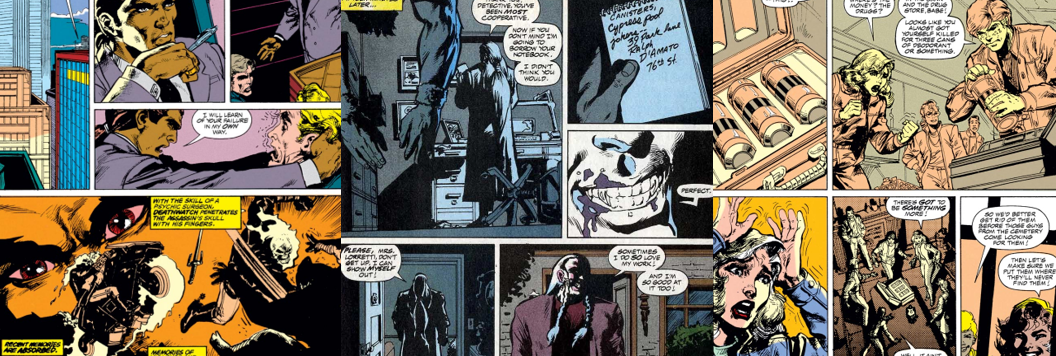
Feeling responsible, Danny tests to see if his demonic experience was real or some fantastical dream and soon finds himself possessed by the Ghost Rider again when the resulting turf war between Deathwatch and the Kingpin leaves Paulie’s friend Raphie critically injured. Luckily, the Ghost Rider arrives in time to intervene, easily shrugging off bullets and even a bazooka, retaliating with lethal force and spiriting Ralphie to safety. However, Danny is stunned to find Captain Dolan has pinned everything on the Ghost Rider, a monstrous force that renders Danny a passenger and leaves him tormented at having failed his sister. Regardless, the Ghost Rider continues to defend innocent lives, specifically the Cypress Hill Jokers, who are constantly threatened by both sets of mobsters. Though still using lethal and violent force, the Ghost Rider is sure to interrogate one of the Kingpin’s goons, subjecting him to the Penance Stare but getting no closer to learning what’s in the briefcase the two crime lords are so willing to kill for. His newfound life already taking its toll on him physically and mentally, Danny is as horrified by Captain Dolan’s smear campaign as he is by the terrifying allure of the Ghost Rider. Elsewhere, the sadistic Blackout enters the fray, murdering a cop and his family to learn where the Cypress Hill Jokers hang out and offering to tie up loose ends for Deathwatch, who’s more than pleased by the brute’s cruel methods. Despite a sensitivity to light, Blackout can freely move through shadows, easily slipping into Ralphie’s home, killing his parents, and attempting to defenestrate him in search of the canisters. Once again, the Ghost Rider is on hand to save the boy, and a brief fight ensues between the two superpowers. While Blackout’s attacks are useless against the Ghost Rider’s power, he demonstrates an uncanny deftness and swiftly flees using the shadows, eager to match blows with the Spirit of Vengeance in another time and place.

Though he triumphs as the Ghost Rider, Danny remains conflicted about his violent alter ego.

Strangely unable to recall exactly where she and the Cypress Hill Jokers stashed the briefcase, Paulie is of little help to the cops and even less help when Deathwatch, Blackout, and their goons storm the station, kill everyone, and kidnap her. In response, Captain Dolan steps up the guard around the comatose Barb, leading to Danny returning to the cemetery to try and help. There, he finds Deathwatch and Blackout in the process of murdering Paulie’s friends to try and find the final canister, which contains a mutated biotoxin Deathwatch plans to unleash upon the city. Angered by Deathwatch’s insolence and aptitude, the Kingpin orders his aide, Oswald Silkworth/The Arranger, to intervene and the bureaucrat successfully convinces Deathwatch to hand over the cannisters by surrounding the duo with dozens of armed men. Unfortunately, Blackout isn’t so willing to comply and violently lashes out, taking the cannisters for himself, ordering his men to attack everyone (even Deathwatch), and salivating at the prospect of blanketing the world in a cold, dark nuclear winter. However, the Ghost Rider enters the fray, taking out Blackout’s goons and tackling him before he can open a canister. Though still able to use the Ghost Rider’s strength against him and resist the Penance Stare, Blackout is burned by the demon’s flames, horrifically scarring him and twisting his already warped mind. The next day, the Kingpin muses over his heroic deeds and vows to watch Deathwatch closely. As for Danny, he returns to Barb’s side, still torn between giving up the cursed motorcycle and his dark alter ego and continuing his dual life as a violent (but effective) protector of the innocent.

The Summary:
Although my reading experience with the Ghost Rider is limited, Danny Ketch’s time in the role is the one I’m most drawn to. As a typical 1990s comic anti-hero, Danny ticks all the boxes: he’s a reluctant hero, tormented by his violent powers, rides a bad-ass motorcycle, and transforms into a cackling, flame-skulled demon who shreds baddies with chains! Just in terms of the art and the storytelling, Danny’s debut blows Johnny Blaze’s out of the water; but then, the 1990s was a different time. Interestingly, Danny’s debut issues aren’t as over the top and fantastical as you might first expect; the story is firmly grounded, save for the supernatural elements, quick to return time and again to Danny’s turmoil over his sister. In bringing Danny to life, the creators have drawn from multiple other heroes to set the tone: Danny’s as unsure of himself as Peter Parker/Spider-Man, as ruthless in his superheroics as Frank Castle/The Punisher, and is faced with violent gang wars headed by the Kingpin, much like Matt Murdock/Daredevil. Indeed, the story closely echoes the tone and atmosphere of Frank Miller’s time with the Man Without Fear and definitely veers more towards a grounded, gritty aesthetic than fantastical, supernatural adventures. The city police only reinforce this by adopting a “shoot first, ask questions later” mentality towards the Ghost Rider, one exacerbated by catching him in the middle of breaking a man’s neck. Captain Dolan’s J. Jonah Jameson levels of persecution against who he sees as a dangerous individual also see the entire force’s efforts focused on the Ghost Rider rather than the turf war between the two crime lords.

Deathwatch and Blackout make for an enigmatic and sadistic bad guy duo.

Deathwatch makes for an interesting, enigmatic, and mysterious individual. Unlike the Kingpin, he hides behind a literal mask and employs hooded assassins not unlike the ninjas of the Hand. He also exhibits supernatural abilities, forcefully reading his victim’s mind with a touch, and isn’t afraid to get his hands dirty. While the Kingpin prefers to operate from the shadows as an elusive puppet master, Deathwatch readily joins Blackout and his men in terrorising the Cypress Hill Jokers, though he slips away when the Ghost Rider shows up. How Deathwatch obtained his powers and what his true origin is remains as much of a mystery as Blackout’s backstory, but I assume these villains were further fleshed out in subsequent issues. Blackout makes quite the first impression, threatening a child and murdering his family with relish, and appears quite happy to kill others, even children, to get his hands on the bioweapon. No mere mindless brute, Blackout is eloquent, savvy, and well trained in martial arts, to the point he can use an opponent’s momentum and strength against them and therefore knock even the overpowered Ghost Rider off his feet. He also possesses seemingly supernatural powers, moving through shadows and showcasing a near-superhuman durability…until he tries to mess with the Ghost Rider’s flames. Deathwatch and the Kingpin’s underlings are no less lethal, happily shooting and stabbing kids to threaten their victims, and engaging in all-out firefights in the middle of the street. The Kingpin’s goons even break out heavy-duty ordinance like bazookas, while Deathwatch’s are happy to destroy an entire junkyard to ensure they take care of any witnesses. The Cypress Hill Jokers, in comparison, are less than small fry; they’re just kids trying to be tough who get in way over their heads when they steal Deathwatch’s briefcase. Paulie largely exists to repeat this plot and look dumb when she can’t remember where they stashed the third canister, resulting in her friends being badly hurt or killed. Still, protecting her and the other Jokers becomes the Ghost Rider’s short-term mission as, despite their assumed petty crimes and rebellious ways, they remain “innocent”.

The new Ghost Rider reinvigorates the character with a visual bang.

As for the Ghost Rider himself…well, he steals the show. Sporting what I would argue is his definitive look, the Ghost Rider bursts to life whenever Danny touches the cursed motorcycle (which, I assume, is Johnny Blaze’s) and immediately seeks to avenge the innocent with brutal and efficient force. Commanding sprawling chains and easily flipping police cars, the Ghost Rider is a physics-defying, unstoppable force of Hell-born justice; immune to bullets, blunt weapons, and most attacks, it takes a lot to even get him off his feet let alone injure him. In fact, his only weakness appears to be daylight and Danny’s troubled conscience since barricades, walls, and near-superhuman foes barely slow him down. These issues finally helped shed a little light on the nature of this transformation. Danny’s personality takes a back seat when the Ghost Rider takes over, leaving him in a dark place both alluring and terrifying. He appears to have little to no control over the Ghost Rider, even struggling to resist making the change at one point, while retaining full knowledge of his actions as the Spirit of Vengeance. Yet, for all the Ghost Rider’s power, he cannot help Barb and his abilities are used to punish, not heal. His demonic visage terrifies most people, making it difficult for him to earn the trust of the innocent and get the injured to safety, but he perseveres, even though his lethal methods see him branded a menace and a killer. The Ghost Rider’s primary personality is spouting his sacred mission and he will allow nothing, and no one, to keep him from defending the innocent and punishing the wicked, making him an extremely dangerous and driven anti-hero. The conflict within Danny is palpable; he can see the potential for good in the Ghost Rider but is worried about hurting others or losing himself to the darkness. This dichotomy makes me interested to read more, to learn what happens to him and Barb, and to find out more about Deathwatch and Blackout. Thus, I really enjoyed these three issues, especially as it injected a bit of the macabre and supernatural into the gritty, urban warzone Marvel calls New York.

My Rating:

Rating: 4 out of 5.

Great Stuff

What did you think to Danny Ketch’s debut as the Ghost Rider? Is this the look you most associate with the character? What did you think to Deathwatch and Blackout, especially their ruthless natures? Did you like the more grounded depiction of the fantastical elements? What are some of your favourite Danny Ketch stories or moments? Whatever your thoughts on Ghost Rider, share them below and be sure to check out my other Ghost Rider content.

Movie Night: Ghost Rider: Extended Cut

Released: 12 June 2007
Originally Released: 16 February 2007
Director: Mark Steven Johnson
Distributor: New Line Cinema
Budget: $110 million
Stars: Nicolas Cage, Eva Mendes, Wes Bentley, Donal Logue, Sam Elliott, and Peter Fonda

The Plot:
Motorcycle stunt rider Johnny Blaze (Cage) finds his past literally haunting him when the fiendish Mephistopheles (Fonda) calls upon a blood debt from Blaze’s youth. Transformed into the demonic Ghost Rider in the presence of evil, Blaze must hunt down Blackheart (Bentley), a rogue demon who seeks to acquire power to rival that of Mephistopheles!

The Background:
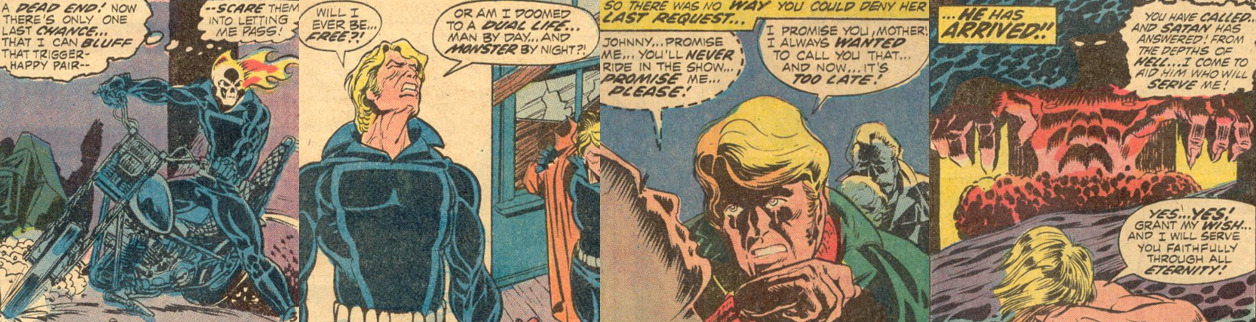
Created by Gary Friedrich, Roy Thomas, and Mike Ploog, Johnny Blaze/Ghost Rider made his Marvel Comics debut in the pages of Marvel Spotlight #5 in 1972. He graduated to his own self-titled comic about a year later and was at the forefront of many supernatural adventures in one form or another. In addition to cameo appearances in various Marvel videogames, Ghost Rider has popped up in other avenues outside of the comics; he cameod in Marvel’s nineties cartoons and an incarnation of the character later featured in a semi-prominent role in the fourth season of Marvel’s Agents of S.H.I.E.L.D. (2016 to 2017). However, development of a live-action adaptation of the Spirit of Vengeance can be traced back to 1992, when Marvel tried to shop the idea around Hollywood. In 1997, Gale Anne Hurd and Jonathan Hensleigh were attached to the project but things really took off in late-2000, when writer David S. Goyer, director Steven Norrington, and stars Jon Voigt and Johnny Depp were all associated or involved with the film in some capacity. By May 2002, Columbia Pictures had purchased the rights; all previous associates dropped out of the project and Shane Salerno was brought in to rewrite Goyer’s script, but eventual director Mark Steven Johnson did his own script soon after being hired to helm the film. Life-time superhero fan and nineties action star Nicolas Cage won the title role and chose to portray the character not as a hard-drinking bad-ass but more as someone desperately trying to come to terms with the curse hanging over his soul. The character’s visual effects were the work of Kevin Mack and Sony Pictures Imageworks, who painstakingly animated Ghost Rider’s flames on a shot-by-shot basis, with one of their most difficult and time-consuming sequences being the first horrific transformation and the digital transformation of the iconic “Hell Cycle”. With its final worldwide gross falling just shy of $230 million, Ghost Rider didn’t exactly set the world on fire (pun intended) and this was reflected in the reviews; critics were left disappointed by the film’s focus on humour rather than horror, with the dialogue and Cage’s performance drawing the most criticism, though the special effects were praised and some have since re-evaluated it as an under-rated comic book film. Despite being labelled as one of the worst films of the decade, Ghost Rider not only received this extended edition on home media but was actually followed by a sequelof sortsin 2011, that was a critical and commercial failure which, coupled with Cage’s disappointment with the role and franchise and the rights being reacquired by Marvel in 2013, dashed any plans for a third entry.

The Review:
Ghost Rider is another of those Marvel superheroes I’m not all that familiar with; unlike others like this, I can’t even say that I’ve been able to get a sense of the character and his incarnations and adventures as Marvel haven’t yet released one of their Marvel Platinum definitive collections for him and a lot of his classic collections are a bit overpriced for my tastes. I’ve always been drawn to the character, though, since he’s visually very striking and his powers and background really speak to me as a long-time fan of Al Simmons/Spawn, but the most I’ve experienced of him are his debut story and the Spirits of Vengeance: Rise of the Midnight Sons trade paperback (Cooper, et al, 2016), his appearances in Marvel cartoons and TV shows, and a few sporadic appearances in videogames. I’d love to read more of him, but I definitely wasn’t as clued up on the character as I usually am when I first went to see Ghost Rider. Hell, I wasn’t even (and still am not, really) a big fan of Nicolas Cage; I’d seen him in The Rock (Bay, 1996), Con Air (West, 1997), and Face/Off (Woo, 1997) but he never really clicked for me as an actor or personality because he always came across as being more than a little nuts. Thus, I originally went into Ghost Rider with quite low expectations; I was expecting an action-packed romp full of special effects and bonkers visuals and fights and that’s basically what the film delivers, though even I was hoping it’d lean a bit closer towards the dark connotations of the character and Ghost Rider’s more horror-themed elements.

Johnny’s deal with the Devil costs him his soul and his happiness that no amount of fame can assuage.

The film is immediately handicapped by an opening narration. I’ve talked about this a few times but this really is a cliché that’s hard to get right in cinema; it makes sense to want to clue the audience in early on to what’s going on and give some lore and context to the world being presented, but it ends up becoming redundant as Carter Slade/The Caretaker (Elliot) repeats it to Johnny later in the film so it’s just another example of narration for narration’s sake. Anyway, when we first meet Johnny Blaze, he’s just a kid (Matt Long) working as a carny stunt cyclist alongside his father, Barton (Brett Cullen). Although he enjoys the thrill of entertaining the masses with increasingly dangerous and ludicrous jumps (to the chagrin of his father, who chastises him for being a show off), Johnny is frustrated with the lifestyle and playing second fiddle to his father and is determined to leave it all behind and run away with his girlfriend, Roxanne Simpson (Raquel Alessi). When he spots a convenient letter detailing the seriousness of Barton’s cancer, however, Johnny hesitates; his concern and desperation for his father’s welfare are all the leverage Mephistopheles needs to convince Johnny into signing away his immortal soul to keep Barton from succumbing to his illness. Johnny’s elation at seeing his father rejuvenated is soon dashed when the slightest twitch from Mephistopheles causes Barton to die in a motorcycle stunt, leaving young Johnny wracked with guilt, devastated at losing the only family he has, and burdened by the debt he now owes to the conniving Devil, who promises to one day collect on his contract. Having lost everything and fearing for Roxanne’s safety, Johnny opts to abandon her and hit the road, eventually growing up into Nicolas Cage. The now-adult Johnny Blaze has become a media sensation; famous for his privacy and death-defying stunts, we catch up with him in the middle of a cross-country tour with his entourage, which includes best friend and impresario Mack (Logue). However, despite his best attempts to overcome his fear, Johnny is haunted by his past, which is annoyingly drummed home to us through constant flashbacks to events we just witnessed, as though we’d forget what happen less than a minute ago. Constantly questioning whether he’s actually as good as everyone says or whether it’s Mephistopheles’ influence keeping him successful and healthy, Johnny just about gives Mack an ulcer due to his insistence on pushing his stunts to the absolute limit to maintain his reputation as “Mister Invincible”

Johnny is cursed to transform into a flaming skeletal demon at night and in the presence of evil.

Though he forgoes alcohol and drugs, preferring to swig down cocktail glasses of jelly beans and sooth his anxiety with the Carpenters (amongst other weird traits), Johnny is a tortured soul who is forever trying to outrun the literal Devil. When he happens to cross paths with the grown-up Roxanne, he sees it as a sign that his days of living in fear are over; reinvigorated with a newfound zest for life, he regresses to a child in his attempts to impress and woo her and, despite being burned by him in the past and her better nature, the budding reporter agrees to give him a chance. However, right as he’s about to begin his new life, Johnny is approached by Mephistopheles once more; rather than claiming Johnny’s soul, Mephistopheles orders him to track down and kill his son, Blackheart, and imbues him with the power of the Ghost Rider to fulfil this mission with the promise of releasing him from his vow once the deed is done. Although Johnny has no interest in doing the Devil’s bidding, he’s horrifically transformed into a monstrous being, a leather-clad demon with a flaming skull for a head and a semi-sentient blazing motorcycle for transport. In a change of pace from most superhero movies, Johnny actually confesses to his curse and newfound duality to Roxanne but, naturally, she doesn’t believe him and he just comes across as a madman thanks to his awkward personality quirks and madcap nature. Ghost Rider is a tricky character, in many ways; a supernatural creature with near-unlimited power, it’s hard to put him in situations where he would be vulnerable, so the film lumbers him with the caveat that he can only appear at night and in “the presence of evil”. Even then, and when faced with other supernatural foes, the Ghost Rider is a formidable creature; practically impervious to pain and injury, his wounds heal abnormally fast, he exhibits superhuman strength and dexterity, and he can supernaturally ignite and extended his chain and conjure hellfire at will. His most powerful weapon is his “Penance Stare”, which forces a victim to relive all the pain and evil they’ve done and, presumably, be consumed by it. What’s not made immediately clear in the film, however, is whether or not the Ghost Rider is a separate entity from Johnny or if Johnny retains his personality when transformed. It seems like he does, and Johnny can fully recall everything he did while transformed, but other times the Ghost Rider talks and acts very differently, but there’s no mention of Zarathos in the film and the Ghost Rider doesn’t say much, so it’s a bit unclear as to what’s going on there. Even more ludicrous, however, is the part when Johnny just takes control of the “possessing spirit” after reading a single passage in one of his occult books and stating he wants control, which both skips over any kind of hardship he might have to face and undermines even the slightest but of duality between him and the Ghost Rider.

Neither Blackheart or his minions ever come across as a serious, monstrous threat.

Johnny (and the audience) are given some context through the Caretaker, a wizened and gruff old man whom Johnny stumbles upon after his first transformation. It’s the Caretaker who narrates the film and delivers the bulk of its exposition regarding Mephistopheles, Blackheart, the Ghost Rider, and the Contract of San Venganza, a binding note of a thousand damned souls which Mephistopheles covets and Blackheart seeks to acquire in order to gain the power necessary to overthrow his father. Mephistopheles is a bit of a contradiction as well; he can assume a human guise, affects the weather and environment around him simply by walking, can bargain for people’s souls, and grant unimaginable power to a human host…but is somehow rendered “powerless” to actively oppose Blackheart. Conversely, Blackheart has no such limitations; he can come and go as he pleases, lower the temperature through his sheer presence alone, drain the life and flesh from humans with a touch, and even enter hallowed ground without any consequences, to say nothing of being immune to his father’s influence while on Earth. Blackheart enlists the help of the Hidden, three Fallen Angels with elemental powers: Abigor (Mathew Wilkinson), Gressil (Laurence Breuls), and Wallow (Daniel Frederiksen), however we learn very little about them (or even Blackheart, for that matter, beyond his childish resentment towards his father and lust for power and conquest) and they mainly exist to give Ghost Rider someone to fight against. Indeed, despite Abigor being able to become practically intangible, Gressil transforming to earth and stone, and even Wallow having the advantage during an underwater skirmish with the titular Spirit of Vengeance, all three are dispatched by the Ghost Rider with relative ease (Johnny even offs Gressil mere moments after his first transformation, showing no hesitation or trouble with his newfound powers). Despite being fully aware of his father’s favouritism to the Ghost Rider, and showing a flicker of fear at the demon’s power, Blackheart is so arrogant that he expresses suprise when the Ghost Rider survives his futile attempts to kill him and bests his minions…even though he knows what the Ghost Rider is capable of so he should’ve known better. Blackheart puts up a bit more of a fight, but this is mainly because their final showdown happens at the onset of sunrise, thus dispelling the Ghost Rider curse, and because Blackheart “[has] no soul to burn”. Those who are familiar with the comic book versions of Blackheart and Mephistopheles will be left disappointed by their decidedly undemonic appearances; though both show signs of their true, monstrous nature and Blackheart eventually transforms into a dark-skinned demon referring to itself as “Legion”, neither appear as demonic forces, which is great for maintaining the actors’ likenesses and performances but not so good for matching the visually impressive Ghost Rider against similarly interesting enemies and leaves Blackheart resembling more of a try-hard emo than a menacing threat.

The Nitty-Gritty:
This extended version of the film adds a paltry nine minutes to the runtime, which mostly translates into further fleshing out Johnny’s youth and his relationship with his father but is most notable in an altered meeting between Mephistopheles and Blackheart, which changes the location and placement of the scene but basically serves the same purpose as in the theatrical cut. Even with these extra scenes, Ghost Rider doesn’t really seem to know what it wants to be; in its drive to avoid being too dark and scary, it veers way too much towards awkward comedy and bizarre inclusions. While many of these are exemplified by Cage’s weird take on the character, they’re not exclusive to him: Roxanne bizarrely takes a Magic 8 Ball to her date, but Eve Mendes fails to really impress as an interesting or forthright character and is mainly here to look hot, chew Johnny out, and be a hostage for him to rescue. To make things worse, the always-aggravating Rebel Wilson hams up her cameo like she’s the film’s comic relief (a role Mack fills wonderfully), and Blackheart’s minions are robbed of any sense of menace by their over the top performances and line delivery. Wes Bentley is equally guilty of this, with every line being delivered with a spitting, deliberate campness that completely destroys any allure and threat his character might (and should) have. However, it’s Nicolas Cage who absolutely tips Ghost Rider over the edge with his truly bonkers ideas and performance: I’ll admit, it’s refreshing to not see another alcohol-dependent, tortured character but Johnny’s reliance on sweets, pop music, and daft clips just make him seem like an absolute goofball…and he doesn’t need any help in that department! From his drawly Southern twang, his childish antics with Roxanne and the way he greets the paparazzi, to his over the top screams of anguish and joy when first transforming into the Ghost Ruder, it’s hard to really get a sense of who Johnny is since he just seems like a cartoon character on acid or hyped up on sugar, bouncing from mood to mood, dramatically pointing at people and growling “You!”, and chastising Mack for “steppin’ on Karen” or trying to talk him out of jumping over a field of helicopters. All I can say is thank God for Peter Fonda, Sam Elliot, and the underutilised David Roberts (whose Captain Jack Dolan is more of a nuisance than anything and the film arguably would’ve benefitted from replacing the police pursuit of the Ghost Rider with more development of Blackheart and his cronies); these three carry the film, playing the straight men in a glorified comedy and adding a gravitas to even the most ridiculous lines and concepts.

While the film struggles with its identity, at least the Ghost Rider’s special effects look great.

Thankfully, the film is also bolstered by its impressive special effects; although many of these suffer from a lack of polish (Blackheart’s arrival, for example, where he appears out of flaming rain and randomly screams at the camera for no reason, his minions, and the finale haven’t benefitted from age), it’s clear that all of the time, money, and energy was spent on making the Ghost Rider himself look absolutely top notch and bad-ass. Although there’s been some debate over whether Cage’s abs were real or not, Ghost Rider is easily one of the most visually impressive comic book characters on the page and on the screen; garbed in a spiked leather jacket, wielding a flaming chain, and having a flaming skull for a head, seeing him rocket down roads, leaving a trail of fire and devastation in his wake, is quite the spectacle and the flame effects still hold up pretty well. Probably as a consequence of how difficult the character was to conceive and animate, the Ghost Rider doesn’t talk much, and his action sequences tend to be very blunt; it’s all about ending things quickly, with as much visual and dramatic impact as possible, rather than having overly choreographed fight scenes or dragging things out. This works in context as the Ghost Rider certainly has the power to shrug off knives, blows, and even a truck to the face, to say nothing of leaving Gressil a charred mess of stones with a single lash of his whip. Easily one of the best parts of the film comes when Johnny is locked in a cell full of criminals, where he manhandles the lowlifes and reclaims his bike to race through the city streets in a blazing inferno while Dolan frantically tries to chase him down. This results in cool shots like Ghost Rider idling on top of the Southbank Pedestrian Footbridge, emerging from water completely ablaze, and racing up the side of a building to reel in a police chopper using his chain. This is also where he fights with Abigor; despite the fact that the Wind Elemental can become nigh-on intangible, even this creature is no match for the Ghost Rider, who easily immolates the Fallen Angel by whipping up a flaming tornado. The movie then makes a big show of revealing that the Caretaker was Carter Slade, the Ghost Rider who kept the Contract of San Venganza, and then completely squanders it by simply having him wander off to his death after accompanying Johnny to the ghost town rather than heroically die in battle with Blackheart, which kind of makes the entire reveal pointless beyond a cool shot of the two riding through the desert to a cover of “(Ghost) Riders in the Sky: A Cowboy Legend”.

Johnny bests Blackheart and then keeps the Ghost Rider power since that’s something he can do, apparently…

For all his immense power and his lofty dreams of domination, Blackheart ends up being little more than a petulant child; he’s dangerous, for sure, and even Mephistopheles fears his ambition, but he’s really only seen as a threat to humans. Although he increases Johnny’s personal stake in the plot (as if saving the world from untold eons of darkness wasn’t motivation enough) by killing Mack, Blackheart loses a lot of credibility by taking Roxanne hostage to bargain for the contract. This is especially egregious considering Carter hid the contract in the handle of his spade, so Blackheart had the means to acquire it all along and just…didn’t…because he wanted to toy with his prey rather than be a little more thorough. The movie tries to escalate things in the finale by forcing Johnny to retreat to the shadows to summon his powers, but it just ends up seeming like the filmmakers ran out of money and couldn’t render Ghost Rider in his full glory for the final showdown. Blackheart doesn’t fare much better, either; after absorbing San Venganza’s damned souls, he gains a moderately more monstrous appearance but is actually less of a threat as he’s now filled up with a thousand souls for the Penance Stare to run through, leaving him a useless, catatonic lump of wasted potential for Mephistopheles to take back to Hell and punish for being a naughty boy. Despite the fact that all Mephistopheles has done is lie, it’s surprising when the Devil actually makes good on his promise of releasing Johnny from his curse but, rather than finally be free and live the life he’s always wanted with Roxanne, Johnny inexplicably vows to wield the Devil’s power as the Spirit of Vengeance. While this is treated like some big dramatic character moment and Johnny finally embracing his destiny, it’s another of the film’s many head-scratching moments: Mephistopheles can bestow the Ghost Rider power against a person’s will but can’t remove it against their will? It’s almost as if the film’s implying that the Ghost Rider is more powerful than the Devil himself (and, in actual fact, he is since Mephistopheles couldn’t touch Blackheart on Earth!) Of course, the real reason for this nonsensical ending is to set-up a sequel, but I’d argue we could’ve still gotten that while also offering something a little bleaker. Like, have Mephistopheles betray Johnny and say he’s still bound by his contract, but Johnny could still vow to put his powers to good use and to oppose Mephistopheles wherever possible. Instead, it just seems like Mephistopheles is all bark and no bite as he just throws a temper tantrum (clearly where Blackheart gets it from…) and promptly disappears to allow his greatest and most powerful creation to wander the Earth outside of his control.

The Summary:
I think the biggest issue with Ghost Rider, even for someone like me who barely knows anything about the character, is that it’s just a bit of a disappointment from start to finish. It seems like the filmmakers thought the concept alone and Nicolas Cage’s star appeal would be enough for the film to compete against other blockbuster superhero franchises and didn’t really believe in the source material or the essence of the character’s horror roots. While I’m an advocate that 12/15-rated movies are more than suitable for most superhero properties, Ghost Rider definitely feels like it would’ve benefitted from being a smaller, more gritty horror vehicle rather than this bog-standard, over the top production. Considering the film is clearly pulling from classic horror movies like American Werewolf in London (Landis, 1981) and the Universal Horror movies, it’s a shame that it veers so far into the comedic and the absurd; everything from the acting, the soundtrack, and the overall corny nature of much of the movie constantly holds Ghost Rider back from being a more memorable picture, regardless of how good the titular character looks in the film. And he does look good, but the issue is the confusion regarding whether there’s any duality between him and Johnny, how ridiculously overpowered he is, and the vaguely defined powers of Mephistopheles and Blackheart. I can’t help but feel a smaller production, one more focused on Johnny Blaze struggling to cope with his monstrous curse, demonic alter ego, and his past mistakes while the Devil pulls his strings would’ve made for a darker, more unique horror piece but, instead, the film doubles down on its star power and visual effects rather than trying to give the Ghost Rider a tangible threat or tighten up the script. It’s definitely not the worst film I’ve ever seen, and has some fun and amusing and cool moments, but it’s far more akin to the disaster that was Spawn (Dippé, 1997) rather than a cross between The Crow (Proyas, 1994) and Constantine (Lawrence, 2005) or even something along the lines of Hellboy (del Toro, 2004), all far better movies that came out prior to this and which I feel are far more suitable to the tone of the Ghost Rider comics.

My Rating:

Rating: 2 out of 5.

Could Be Better

Did you enjoy Ghost Rider? If you’re a fan of the comics, how do you think it worked as an adaptation and what would you have changed? What did you think to Nicolas Cage’s performance in the film and the changes made to Johnny Blaze’s character? Were you a fan of the special effects, and what did you think to the villains and their minions? Can you explain why Mephistopheles has such inconsistent powers when on Earth? What are some of your favourite Ghost Rider stories and moments? Whatever your thoughts on Ghost Rider, share them below and be sure to check out my other horror-themed Marvel content!

Back Issues: Marvel Spotlight #5

Story Title: “Ghost Rider”
Published: 30 May 1972 (cover date: August 1972)
Writer: Gary Friedrich
Artist: Mark Ploog

The Background:
In 1967, Marvel Comics’ Dick Ayers, Gary Friedrich, and Roy Thomas introduced readers to Carter Slade/Ghost Rider, a Western gunslinger heavily based on Ray Krank and Dick Ayers’ horror-themed character of the same name. The character later took the moniker of the Phantom Rider and was surpassed by his successor, the entirely different but similarly named Spirit of Vengeance. A few years later in 1972, Thomas (then editor-in-chief of Marvel Comics) wished to introduce a villainous Ghost Rider as a foil for Matt Murdock/Daredevil. It was Friedrich who convinced Thomas to expand on the character, artist Mike Ploog asserts that he gave the character his trademark flaming skull, and the legendary Stan Lee dreamed up the name Johnny Blaze for the character’s alter ego. By 1973, this strange supernatural anti-hero had been upgraded to his own self-titled comic and, over the years, the mantle has passed to many others. Ghost Rider has been involved in many high-octane, demonic adventures: he’s battled the hordes of Hell, been split in two, aligned with other supernatural characters as the Spirits of Vengeance, and even flirted with mainstream success thanks to cameo appearances in Marvel’s nineties cartoons, poMovie Night: Ghost Rider: Spirit of Vengeanceorly-received live-action adaptations, and even featuring in a semi-prominent role in the fourth season of Marvel’s Agents of S.H.I.E.L.D. (2016 to 2017).

The Review:
I should note first and foremost that I’ve had very little experience with Ghost Rider’s comics; hell, my experience with the character in general is pretty much exclusively from what I’ve seen in movies, cartoons, videogames, and the odd Marvel crossover here and there. Yet, I find the character visually and thematically appealing thanks to my love of the gothic and the macabre and I’d love to read more stories of the character if Marvel ever get their fingers out their asses and make his classic tales more readily available in print. His debut story opens on the rainswept streets and finds the titular flame-headed demon riding through the night; the first thing you might notice here is that the Ghost Rider is riding a fairly standard chopper rather than his iconic Hellcycle, but his visual appeal is hardly diminished because of this thanks to his tight leather outfit and his flaming skull for a head! Another thing that sticks out is that the Ghost Rider happens to pass by as a couple of thugs are gunning a man down in the streets but he chooses not to intervene or punish the gunmen, instead preferring to stay on the move to keep anyone from seeing his gruesome visage. However, fate has other plans for the demonic rider and the thugs give chase, determined to ensure that there are no witnesses to their crime. Interestingly for me, someone with little knowledge of how the Ghost Rider’s transformation and symbiosis works, the Ghost Rider’s internal monologue is that of a desperate man looking for solitude and privacy rather than conflict, and he only stops to confront the gunman when he’s left with no other option. Startled by the rider’s appearance (yet convinced that he’s simply wearing a flashy helmet or pulling some kind of trick), the thugs load up to face off with their ghastly witness, only to find the Ghost Rider is capable of spawning flames from the ground to cut them off and summoning Hell-fire to boost over their heads and escape to safety. Finally free from persecution, the Ghost Rider finds further relief in the rising of the sun, which dispels his demonic appearance and returns him to the agonised human form of Johnny Blaze.

Tormented stunt rider Johnny Blaze sold his soul to save his adopted father.

Desperate to take his mind of his nightly curse, Johnny tries to focus work; as one of the world’s most celebrate stunt cyclists, he is due to attempt the “world jump record” at Madison Square Garden that afternoon, but his thoughts continuously drift back to the past and how he was struck by his demonic dual life. His father, Barton Blaze, was also a daredevil motorcyclist and, after he died in an explosive accident, Johnny was adopted by fellow stunt cyclist Craig “Crash” Simpson and his beautiful daughter, Roxanne (or “Rocky”, as she’s affectionately known). Over the years, young Johnny overcame his fear of motorcycles and ended up taking to the sport like a fish to water; unfortunately, when he was fifteen, he watched his adopted mother die in a freak accident involving an exploding motorcycle. Heartbroken, he vowed to follow her last request and never ride again, though apparently never told this to Crash and Rocky as both of them believe he’s simply afraid to ride and shun him for it into his adulthood. Although he’d promised not to ride before an audience, Johnny secretly keeps up the hobby in his spare time, and he and Roxanne have an emotional reconciliation when she discovers how good he is and the promise her made to her mother. Taking solace in the life of a grease monkey now that he has the beautiful Roxanne by his side, Johnny and Rocky are overjoyed to learn that their show’s been booked for Madison Square Garden; unfortunately, this elation is short-lived as the cantankerous Crash drops the bombshell that he’s only got a month to live, at best, thanks to “the disease”. When Johnny refuses to go back on his vow and take Crash’s place, both his adopted father and Rocky brand him a coward and disown him; desperate for a solution to this problem, Johnny does the only logical thing possible and turns to occult tomes to call upon the dark powers of Satan!

Johnny’s bargain backfires when he’s forced to become a demonic figure at night.

Performing a macabre ritual and speaking ancient incantations, Johnny successfully summons the crimson devil and willingly agrees to serve Satan for all eternity if Crash is cured from his disease. Ol’ Scratch agrees to the deal and, the next day, Crash insists on performing the death-defying stunt, despite Johnny and Rocky’s desperate pleas. Sadly, Barton’s killed in his courageous and pig-headed attempt to ride his bike over twenty-two cars, and so outraged, so brief-stricken by the sudden and explosive death of another father, Johnny randomly decides to make the jump after all. However, Rocky is infuriated that he would steal her dad’s thunder like that mere moments after his death and spitefully walks away, leaving Johnny with only his regrets…and the Devil, arriving to claim that which was promised to Him and cursing Johnny to transform into his flame-headed alter ego as Satan’s emissary whenever night falls. Rocky happens to walk in on him during this ghoulish spell and, conveniently, is also well versed in the occult and is able to ward Satan off. Although Rocky’s presence is enough to quell Johnny’s woes during the day, his dark transformation is unstoppable at night and, agonised by his fiery transformation and monstrous visage, the Ghost Rider flees, bringing us full circle. Tormented by his nightly curse, Johnny struggles with his newfound duality, which sees him rearranging his work and social schedules to explain his nightly disappearances and exhausting himself through fear and worry. When he reads a newspaper headline stating that the gunmen he captured fingered a “Ghost Rider” for their plight, Johnny prepares to leave New York City to avoid being hunted by the police but is compelled to transform into his demonic other half when he loses track of time and distraught by the Faustian bargain that has doomed him to forever carry the burden of being the Ghost Rider.

The Summary:
It’s interesting finally reading the Ghost Rider’s debut appearance and origin story after primarily being familiar with the character from the Nicolas Cage movies. I can see why the films simplified Johnny’s origin to have him sell his soul in exchange for Barton’s life as it was a little convoluted to have young Johnny witness his dad die, only to grow up wary of motorcycles and then swear off them after his adopted mother’s death, and then have to watch another father perish in a blaze of tragedy. The flashbacks to Johnny’s past are quite weak in a lot of ways; it’s weird that we don’t find out what disease Crash is suffering from, and that he’s not really said to have actually been cured before he dies in a motorcycle accident, and it’s even weirder that Johnny was compelled to complete the jump before Crash’s body was even cold. Strangest of all, though, is that Johnny (and Rocky) have a keen interest in the occult; the story very much hand waves this as though it was some passing fancy of his, but he has books and scripture that detail the exact rituals and incantations to summon Satan. Not Mephisto, but Satan Himself! So, in his original depiction, Johnny makes a conscious decision to seek out dark forces and willingly offered his soul to cure his adopted father; there was no deception, no underhanded deal, no manipulation or anything like that. Hell, Johnny’s assumption that Crash’s accident was a result of Satan’s influence, however right he may be (and it’s not explicitly said that he is), is quite the leap here so his shock at Satan going back on His word doesn’t have the same impact as it does in other depictions of the story where Mephisto preyed on Johnny’s desperation and played him for a fool.

Sadly, there’s very little Ghost Rider action here as the focus is on Johnny’s plight.

Ironically, if you’re looking for some classic, bad-ass Ghost Rider action, you won’t find it in “Ghost Rider”. I’ve often wondered how the character works when he’s transformed; like, is Johnny merely a puppet for a demon to use? Is he conscious or in control of his actions as the Ghost Rider or is he merely a passenger from the demon that dwells within him? Here, it very much seems as though Johnny is fully aware of himself when transformed; when he scares the gunmen with his flames and theatricality, it’s said to be him putting on a show to terrify them (though I guess you could infer that the demon is influencing his speech and actions here), but we don’t really get a sense of what the Ghost Rider can actually do. In the context presented here, the Ghost Rider is more of a nightly affliction; Johnny is forced to become a gruesome flaming skeleton at night, transformed into a monster for Satan’s amusement, rather than being the Devil’s bounty hunter or seeking out evil do-ers or whatever. He exhibits some control of Hell-fire to conjure flames and give his bike a boost, but he doesn’t oppose criminals or seek vengeance or retribution against the wicked; instead, he simply tries to avoid being seen when transformed, something he would achieve much easier if he simply stayed inside rather than riding off every time he transforms. Ultimately, then, “Ghost Rider” is presented more as a fantastical twist on the classic Faustian tale of a desperate man bargaining his soul to the Devil and coming to regret it; a macabre, dark tale of a flawed man trying to save the only family he has and ultimately driving away the few loved ones he has left and being cursed to become a monster every night. It’s an intriguing tale, but one sadly lacking in action, visual spectacle (a huge appeal of the Ghost Rider is his unique appearance and he’s barely in this story), and littered with a number of oddities that keep it from being as appealing as it could be.

My Rating:

Rating: 2 out of 5.

Could Be Better

What are your thoughts on Ghost Rider’s debut story? Did the character impress you with his appearance or were you put off by how convoluted his backstory was? What did you think to Johnny’s summoning of Satan? Were you disappointed that we didn’t get to see more of what the Ghost Rider is capable of? Which incarnation of the Ghost Rider is your favourite? What are some of your favourite Ghost Rider stories or moments? Whatever your thoughts on Ghost Rider, share them below and be sure to check out my other Ghost Rider content.

Game Corner [National Superhero Day]: Marvel: Ultimate Alliance (Xbox 360)


In 1995, Marvel Comics created “National Superhero Day” and, in the process, provided comics and superhero fans the world over with a great excuse to celebrate their favourite characters and publications.


Released: 24 October 2006
Developer: Raven Software
Also Available For: Game Boy Advance, Nintendo Wii, PC, PlayStation 2, PlayStation 3, PlayStation 4, PlayStation Portable (PSP), Xbox 360, Xbox One

The Background:
Perhaps few videogame publishers are as synonymous with Marvel Comics than Activision; the publisher has been spearheading adaptations of some of Marvel’s most popular properties since the year 2000. They weren’t all smash hits, of course, but some of their titles have been praised as among the best for characters like Peter Parker/Spider-Man and Marvel’s resident Mutant team, the X-Men. In 2004, the publisher teamed with developers Raven Software and saw big success with X-Men Legends, a team-based brawler that incorporated role-playing elements and simultaneous co-op gameplay. Following similar success with the sequel, Activision’s partnership with Raven Software expanded to incorporate much of the rest of Marvel’s line-up with this title, which was built on Vicarious Visions’ Alchemy engine. The game also greatly benefitted from utilising the Havok physics engine; in addition to including many of Marvel’s most popular characters alongside those added as downloadable content (DLC), Nintendo staples Link and Samus Aran were initially planned to be Wii-exclusive characters before being nixed. Marvel: Ultimate Alliance received generally favourable reviews; critics praised the game’s presentation and for improving and expanding upon its predecessors, and the game was successful enough to warrant an equally-successful sequel three years later and (eventually) a Nintendo Switch-exclusive third entry that received mixed reviews. Sadly, despite a remastered version being developed for PC, PlayStation 4, and Xbox One in 2016, Marvel: Ultimate Alliance is currently delisted from digital storefronts and quite difficult to come back for an affordable price as a result.

The Plot:
When Doctor Victor Von Doom and his Masters of Evil launch an attack against the Strategic Hazard Intervention Espionage Logistics Directorate (S.H.I.E.L.D.), Colonel Nick Fury sends out a distress call to all available superheroes for assistance. Steve Rogers/Captain America, Spider-Man, Thor Odinson, and Logan/Wolverine respond to the call and must soon join forces with a myriad of other Marvel heroes in order to put a stop to Dr. Doom after he attains incredible cosmic powers from Odin Allfather.

Gameplay:
Marvel: Ultimate Alliance is a top-down, team-based brawer peppered with some very light puzzle solving, opportunities for exploration, and role-playing mechanics. Players can (eventually) assemble a team of four from around thirty available superheroes and journey across a number of recognisable Marvel locations battling against the nigh-on endless minions of the Masters of Evil. Up to four players can play at once, though a single player is able to battle on alone, using the Left Trigger and directional pad (D-pad) to direct their computer-controlled team mates or switching to another superhero by pressing a corresponding direction on the D-pad. Players are given two primary attack options: A for a quick attack and B for a stronger attack, which can be charged up, and alternating between these commands will allow you to string together a few simple combos that will stun, trip, or blast your foe into the air, which can be essential to breaking through some enemy’s guards. X is the “action” button, allowing you to open doors, activate consoles, turn levers, or grab enemies to pummel, throw, or relieve them of their weapons, and Y allows you to swim and jump (you can also double jump, web-sling, or fly by double pressing and holding the button, respectively). Players can block incoming attacks by holding the Left Bumper or tap it to dodge out of the way entirely and each character has their own special abilities, which are accessed by holding the Right Trigger and selecting either A, B, X, or Y. Special powers can only be used if you have another energy, which is represented by glowing blue orbs dropped by enemies or uncovered from smashing crates or opening chests, and allow you to fire energy beams, toss projectiles, entrap enemies (by freezing or webbing them up, among other options), boost you (and your team mate’s) defense, attack, and other attributes, and cause status effects to your enemies like stunning, burning, or electrocuting them. While many of the effects are largely shared amongst the roster, each character pulls them off in their own unique way; Tony Stark/Iron Man’s Repulsor blasts are different from Mark Spector/Moon Knight’s projectiles, even though both can ricochet around the environment, and each character has a variety of special powers that you can power-up and assign to the face buttons from the “Hero Management” menu.

Assemble a team of four superheroes and battle the endless forces of the Masters of Evil.

Each character also has a big, character-specific attack that can be performed when your energy gauge is completely full and you press Y while holding RT this will see them unleash a huge, screen-clearing attack specific to them and each character will perform these in succession if their energy gauge is full. You’ll also earn additional bonuses if certain characters pull off their special moves at the same time, and this also happens if your team is formed of characters who have a history together, like the X-Men or the Fantastic Four. The game’s story mode is comprised of five “Acts”, which drop your team in a variety of locations that should be familiar to Marvel Comics fans. After clearing the first mission, which has you retaking a S.H.I.E.L.D. Helicarrier from Dr. Doom’s forces, you’ll be dropped into one of five hub areas where you can interact with Nick Fury, Natasha Romanoff/Black Widow, and other non-playable characters (NPCs) to learn more about your current or next mission, gain insight into the heroes and villains, and be given side quests to perform. In the hub area, and scattered throughout each location, are S.H.I.E.L.D. Access Points where you can save or load your game, change up and upgrade your team, or revive fallen teammates. Just as blue energy orbs can be acquired during gameplay, so too can red health orbs, but some environmental hazards or bottomless pits will see you or your teammates taken out of action. It can take about three minutes for your fallen ally to be ready for revival, but they can only be brought back into the fight from one of these save points. As you defeat enemies, you’ll earn experience points (XP) and level-up once you’ve gained enough XP, which will improve both your individual and team stats and unlock additional special moves for you to utilise. From the Hero Management screen, you can switch your character entirely, change their costume (which affords different abilities), equip gear to boost their stats, and name and improve the competence of your team to increase your odds when in a fight.

The tedious combat is broken up by some simple puzzles, QTEs, or short bites of variety.

Gameplay in Marvel: Ultimate Alliance quickly grows quite repetitive; you can charge through most missions by repeating the same combos and special moves over and over, and opportunities for exploration are quite limited as areas generally only give the illusion of being large and multi-pathed. Combat doesn’t get much deeper than tripping, stunning, or blasting enemies, or avoiding using physical or energy-based attacks, and it’s surprisingly easy to get turned around in areas even with the presence of a mini map as one dark, grey corridor looks the same as the last. Puzzles aren’t much of a head-scratcher here; you’ll generally fight your way to a console or power generator that needs to be activated or destroyed, though sometimes you’ll need to activate two switches at once with the either of a partner, and you’ll sometimes have to perform these tasks against a time limit. You’ll need to push or pull heavy objects onto pressure pads, redirect sunlight to free Balder Odinson, defend Dum Dum Dugen in a glorified escort mission, perform character-specific motions to activate statues, or complete quick-time events (QTEs) to open doors or take out larger, otherwise-invulnerable bosses. You’ll jump behind the controls of an anti-aircraft cannon, be joined by NPCs like Major Christopher Summers/Corsair, and have to rescue characters like Doctor Bruce Banner and Prince Namor McKenzie/The Sub-Mariner, though some of these are optional side quests. These optional missions appear during the main campaign and often having you searching for items for a specific character, or destroying certain targets along the way, and sometimes you’re faced with an impossible choice between two options which will fundamentally alter the multiple endings. Gameplay really gets interesting, though, when you end up in Murderworld, a twisted funfair featuring bumper cars, a giant pinball set, a hedge maze, and even an old-school Atari-style mini game that sees you awkwardly swinging from ropes and collecting Golden Tickets to rescue Doctor Jean Grey/Phoenix from Arcade’s clutches.

Graphics and Sound:
Marvel: Ultimate Alliance is largely an impressive looking title, despite how old it is now, thanks to the zoomed out, almost isometric camera perspective. This means that the in-game character models, while hardly the most detailed, pop out nicely against the various backgrounds and I liked how they all had their own unique flourishes, like Spider-Man being able to web enemies up when he grabs them and Norrin Radd/The Silver Surfer floating around on his cosmic surfboard. Unlike some similar team-based brawlers, this really helps it to feel as though each character plays a little differently since they don’t just share the same animations and have a little individuality to them; you’ll need a stronger character to move certain objects, for example, and it’s much easier to explore the environment with a character who can fly. While your customised team won’t appear in the pre-rendered cutscenes, they do all have a lot of unique dialogue during the game, and when talking to or fighting against other characters; dialogue trees exist so you can ask a number of questions to NPCs or pick different options, which either helps you answer trivia questions, kicks off a side mission, or has you picking to team up with or save a different character, and villains like “Lester”/Bullseye or Quinten Beck/Mysterio. Unfortunately, the music isn’t really on par with the voice acting; it’s all very generic superhero-y or militaristic themes, and the in-game tracks often awkwardly loop, which is very jarring; the music’s also very loud, so you might want to adjust the sound settings in the options.

While the cutscenes aren’t great, the in-game graphics are decent enough and there’s a lot of dialogue variety.

The pre-rendered cutscenes also often let the game down a bit; they haven’t aged too well, and have a very rubbery and surreal quality to them (though they are pretty epic, especially when the Masters of Evil are discussion their evil lot and when Galactus and Uatu/The Watcher enter the story) that I’d criticise more if I could actually see them but the cutscenes are very dark and the only way to brighten them is by changing your television’s settings. The game’s environments often don’t fare much better, either; while it’s fun visiting places like the Sanctum Sanctorum and Valhalla in the hub worlds, the actual mission locations quickly become confusing and boring. While there’s a lot to destroy and see in each area, and even some hidden paths to uncover, rooms, corridors, and sections all start to blend together and the levels themselves can outstay their welcome at times, which only makes the monotonous combat more glaring. That’s not to say that there aren’t some visually interesting locations, though; you’ll swim through the depths of Atlantis, travel to Hell itself, battle across the length of the Bifrost Bridge and through the frozen wastes of Niffleheim, and infiltrate the gothic, regal stone walls of Castle Doom. Easily the most impressive area you’ll visit, though, is the Skrull home world, which is currently under attack by Galactus. The World-Devourer is seen lumbering around in the background between the futuristic skyscrapers and even pursues your across the walkways in an exciting (if frustrating) sequence, though the gameplay and visual variety offered by Valhalla is equally fun as you can visit the Warrior’s Hall (where NPCs are enjoying revels) and hop across Viking ships amidst a cosmic backdrop.

Enemies and Bosses:
Since a gaggle of Marvel’s most notorious villains has joined forces in Marvel: Ultimate Alliance, you can expect to come up against a bevy of disposable goons during your adventure. It doesn’t take long for you to basically have seen everything the game has to offer in this regard, but each location does at least change up the appearance, dialogue, and some of the attacks of the enemies you face; you’ll battle Ultron’s minions, Loki Laufeyson’s trolls, and soldiers from the Shi’ar Empire and the depths of Atlantis, all of whom can be defeated using your standard combos or special powers. You can set your team mates to follow, attack, or defend formations, but I always like to choose an aggressive approach to overwhelm the hoards of enemies that can flood each area. Some of these carry weapons, either melee armaments like axes, spears, and swords which you can appropriate, or laser rifles for long-range attacks; others shield themselves and need to be attacked from behind or stunned. Some, like the imp-like demons from Mephisto’s Realm, leap onto you and drain your health, while others fly above taking pot-shots at you, and some are resistant to physical or energy attacks or need to be tripping, stunning, or blasted into the air. Some are larger, dealing and taking more damage, while others regenerate their health (or their allies), sap your health or energy, or boost the attack of other foes, so it’s best to take those guys out first.

A whole host of Marvel villains stand in your way, though most can just be beaten into submission.

The Masters of Evil have assembled quite the smorgasbord of allies; you’ll do battle with almost every single villain from Marvel Comics throughout the course of the game, sometimes more than once, as various underlings dog your progress throughout each mission. Often, you’ll battle at least two of these sub-bosses at a time; sometimes they flee after an initial encounter and need to be fought again, other times they’re powered up to be more formidable, and in other cases they’re able to heal or shield each other from your attacks by working together. However, defeating the likes of Mac Gargan/The Scorpion, Bullseye, James Buchanan “Bucky” Barnes/The Winter Soldier, Chen Lu/Radioactive Man, Valentin Shatalov/Crimson Dynamo, Aleksei Sytsevich/The Rhino, Herman Schultz/The Shocker, Doctor Curt Connors/The Lizard, Hussar and Neutron, Paibok, and even the corrupted superheroes you eventually fight really don’t require much more than you constantly attacking them with combos and special powers. Indeed, while it’s impressive that so many villains appear in the game, very few actually offer much in the way of a challenge beyond being a little tougher than the regular enemies you encounter, with even the likes of notorious villains like Ultron and Titannus proving quite disappointing encounters as, while they keep you at bay with laser blasts or destroy everything in a rampage, respectively, both can be similarly put down without any complicated strategies. Many of these villains are fought in teams, however, and they can also reappear in the simulator missions you unlock by finding discs, allowing you to battle them with different characters and in different situations, but as long as you string together your usual combos and unleash your best special attacks they go down pretty easily, even when bolstered by disposable minions.

Some of the best sub-bosses require a bit more strategy and forethought to put them down.

Other villains, however, do bring a little bit more to the table: Mysterio uses illusions to throw you off and, while Paul Pierre Duval/Grey Gargoyle can disable you by turning you to stone, Baron Carl Mordo, Kl’rt/Super Skrull, and the Mandarin disable you with elemental attacks to encase you in ice or send you flying with a blast of wind. The Mandarin also ends up being a particularly annoying boss as you need to lure his spider-like robots into teleporting to his safe spot to destroy his endless supply of Ultimos and actually bring him down for good. Mental/Mobile/Mechanized Organism Designed Only for Killing/M.O.D.O.K. challenges you to a trivia quiz to get closer to him, then brings in waves of Advanced Idea Mechanics (A.I.M.) minions to annoy you in addition to firing lasers and shockwaves at you. When battling Byrrah Thakorr-So and Krang, you also need to destroy sonic emitters to progress the mission, while Attuma and Todd Arliss/Tiger Shark can be difficult to hit as they’re swimming all over the place, making for a more aggravating encounter. Dragon Man randomly drops in as a tough obstacle to bypass since he’s capable of dishing out some formidable damage, while Blackheart employs multiple versions of himself to attack you and you’ll need to take on all three members of the Wrecking Crew at once (though they fall pretty easily if you’re wielding an axe or other weapon). Amora the Enchantress can allure you and your teammates into not attacking her, and will heal her brutish ally, Skurge the Executioner, Ulik and Kurse can only be defeated by attacking one with melee attacks and the other with energy attacks, and you’ll need to lower the shields protecting the likes of Kallark/Gladiator, B’nee and C’cil/Warstar, and Cal’syee Neramani-Summers/Deathbird (who flies around the arena tantalisingly out of reach and swooping down to grab you otherwise).

The bigger, more formidable bosses offer a bit more variety and spectacle.

Luckily, the game claws back a bit of challenge and intrigue by its large and engaging end of Act boss battles. After fending off Dr. Doom’s attack on the Helicarrier, you’ll battle Fing Fang Foom on the main deck; this gigantic alien dragon blasts fireballs at you from the air, covers the ground with shockwaves when it lands, and can only be brought down by firing anti-aircraft cannons at it and making good use of your ranged attacks. After making it past his robots and death traps, you’ll battle Arcade’s massive mech in a circus tent, which you need to fire yourself at using cannons and succeed at QTEs in order to have it damage itself in frustration. The eldritch Kracken is one of the ore frustating bosses as you can’t damage it directly and must lure it into attacking the nearby columns so you can complete a QTE sequence, but it seems completely random when it’ll actually smash into these columns, meaning the fight drags a bit. Fittingly, Mephisto awaits you in the depths of Hell; this demonic villain spews hellfire at you, protects himself from attacks with a shield, and can even screw up your controls with his powers, though you can disarm him and use his Hellsword to damage him. You’ll have to take extra care when Mephisto compels Kurt Wagner/Nightcrawler or Jean Grey to attack you, however, and will lose that character forever when they sacrifice themselves to stop Mephisto. At first, Loki isn’t really too much of a threat; sure, he’s got lightning attacks that stun you and is assisted by his Frost Giant minions, but he goes down pretty easily. However, it’s all a ruse as he then poses s Nick Fury to have you activate the indestructible Destroyer, which you must flee from while desperately searching for the ice-shielded Loki; once you find him, simply attack him until his shield breaks and the fight is ended. Galactus, however, is a threat far too big for you to tackle head-on; instead, you must desperately flee from him (destroying his drills if you have time) and then avoid his massive fists to activate three consoles and blast at him as the Silver Surfer in a QTE sequence. Finally, you must take on Dr. Doom himself; however, despite stealing Odin’s power to become a literal God, the mad doctor really isn’t too difficult to defeat even with the corrupted Fantastic Four acting as his personal guard. Simply destroy the four generators powering his shield, chase him down as he dashes and teleports across his throne room, mashing buttons when he grabs you, and pummel him as you would any other enemy or boss and, eventually, he’ll be defeated without too much problem regardless of his electrical attacks or shockwaves.

Power-Ups and Bonuses:
As mentioned, you can refill your energy and health by collecting blue and red orbs, which are dropped by enemies or found by destroying crates or opening chests. While some hazards can whittle your health down pretty quickly, or kill you immediately, health is pretty easy to come back, and you can also grab weapons to dish out greater damage to enemies (in fact, this is highly recommended as weapon attacks easily cut down even the most intimidating Super Soldiers and Doombots). You will also acquire S.H.I.E.L.D. Credits from enemies and the environment, which can be spent on upgrades to your character’s powers, costume-specific abilities, and upgrading your team’s stats; you cans et these to auto-upgrade, but they increase in cost each time you boost them so you can burn through Credits pretty quickly. Defeating the game’s many sub-bosses and bosses will also yield special gear that you can assign to each character; this will boost your attack, XP, or gauges, resist or inflict elemental damage, and offer numerous other perks but you can only equip one item to each character and your inventory has limits, meaning you’ll need to sell some to make way for new pick-ups as you come across them. Finally, as mentioned, you’ll get boosts to your stats and performance for forming teams of related characters, and performing special moves with certain characters, so it can be beneficial to experiment with different combinations and search around the environments for chests for more loot.

Additional Features:
There are forty-six Achievements on offer in Marvel: Ultimate Alliance, with the majority of them popping after clearing each Act and defeating bosses. Other Achievements include tossing enemies to their deaths, performing a certain number of finishing moves, defeating a certain number of enemies, unlocking every character and costume, and finishing the game on Hard mode, among others. Since the only difficulty-based Achievement you get is finishing on Hard, you may as well play through on Easy unless you’re going for that Achievement, and you’ll also get Achievements for finishing missions with another human-controlled character and upgrade every character’s special moves. Throughout each level, you’ll find a number of collectibles scattered about; art books unlock artwork to view, action figures allow you to unlock T’Challa/Black Panther and Matt Murdock/Daredevil as playable characters (and you can play a claw mini game in Murderworld to unlock Eric Brooks/Blade as well), and you can unlock Nick Fury by finishing the game once and the Silver Surfer by earning at least a Bronze medal in the game’s bonus simulator missions. These are unlocked by finding S.H.I.E.L.D. Simulator discs and recreate key moments and battles from each character’s history in a series of tough challenges. You can also take on five sets of trivia questions in each hub world for additional XP and Achievements, replay and revisit any Act, hub, and mission once you’ve finished the game, view movies and other unlocks in the gallery, and go head-to-head with your friends batting for points in an “Arcade” mode. By defeating numerous enemies with each character, you’ll eventually unlock up to four different costumes for each one, with these offering slightly different abilities that you can upgrade. Unfortunately, you can no longer purchase the two additional DLC packs, which added eight new characters to the roster in addition to twelve extra Achievements, none of which can be accessed on home consoles any more, which is a shame as I wanted to have Eddie Brock/Venom on my team and had to settle for symbiote Spider-Man.

The Summary:
I’d played Marvel: Ultimate Alliance before on the PlayStation 3 and, while I’d enjoyed it, I remember being put off by the lack of Trophies to earn and the fact that the DLC was only available on the Xbox 360 version. When I finally bought an Xbox 360, this game was on my buy list and, coincidentally, was a bit more expensive than I’d like and the DLC was still unobtainable, unless I wanted to shell out ridiculous amounts for an imported version. When I finally got it again, I enjoyed getting back into it; the game is very action-packed and chock full of playable characters, cameos, and villains to fight, but there’s really not a great deal to the combat, graphics, or the story. It’s fine and enjoyable enough, but things get repetitive very quickly and you’ve basically seen everything the game has to offer (apart from a few bells and whistles) after the first Act. You’ll beat on the same generic goons with the same tedious combos over and over, solving simplistic puzzles and spending your Coins on upgrades, but very rarely will you actually find much t set this apart from other, similar brawlers. The character selection and variety is great, and I like how they feel distinctive despite basically all being the same, and I enjoyed how some stages were more visually interesting than others, allowing you to swim or venture onto the hull of a space craft. While the sub-bosses weren’t up to much, the bigger bosses offered a bit more challenge and entertainment, but it feels a bit like the developers maybe crammed a little too much into the game without trying to make each villain a unique encounter. Overall, it’s a decent enough team-based brawler that’s probably more fun with a couple of friends to play with; there’s some decent replay value on offer with the different endings you can get based on your decisions and the extra missions and unlocks to find, but it does feel a little lacking in presentation and overall content to really score much higher.

My Rating:

Rating: 3 out of 5.

Pretty Good

Have you ever played Marvel: Ultimate Alliance? If so, what did you think to it and who made it into your team? What did you think to the combat, character selection, and the overall gameplay? Were you disappointed that the boss battles were mostly just a tedious slog? Which of the characters, villains, and locations was your favourite? What endings did you get and did you ever unlock all of the costumes and characters? Did you ever play as the DLC characters? Where would you rate this game against its sequels and other similar games? How are you celebrating National Superhero Day today? Whatever your thoughts, sign up to leave a comment below or leave a comment on my social media, and be sure to stick around for more superhero and comic book content throughout the year.