Movie Night: Thunderbolts* / The New Avengers

Released: 2 May 2025
Director: Jake Schreier
Distributor: Walt Disney Studios Motion Pictures
Budget: $180 million
Stars: Florence Pugh, Lewis Pullman, Sebastian Stan, David Harbour, Wyatt Russell, and Julia Louis-Dreyfus

The Plot:
When Contessa Valentina Allegra de Fontaine (Louis-Dreyfus) seeks to erase the evidence of her malicious experiments, she unwittingly assembles a rag-tag team of losers and mercenaries, led by Yelena Belova (Push), to stand against her and her secret superpowered agent…

The Background:
Back in the nineties, Marvel Comics were not just in a financial state but the “Onslaught Saga” led to some of their most popular characters being presumed dead for a while. In their place, Peter David created an all-new superhero team, the Thunderbolts, who debuted in 1997 as typically excessive heroes who were secretly the villainous Masters of Evil in disguise. The idea of bringing this concept to the blockbuster Marvel Cinematic Universe (MCU) can be traced back to the production of Guardians of the Galaxy (Gunn, 2014) when director James Gunn expressed interest in a big-screen adaptation. Although the idea was shelved when Warner Bros. produced a similar concept, it regained steam when MCU projects teased Valentina assembling a team of anti-heroes and soon evolved into a starring vehicle for Florence Pugh. Once officially announced, a tumultuous development began as rumours and script rewrites did the rounds, drastically altering key plot points and surprisingly offing one of the main cast for shock value. Writer Eric Pearson was keen to introduce Robert “Bob” Reynolds, arguably Marvel’s most notable Clark Kent/Kal-El/Superman proxy, to tackle mental health issues like depression and addiction, with Lewis Pullman cast after scheduling conflicts forced Steven Yeun to back out. Much speculation surrounded the mysterious asterisk in the film’s title, which quickly saw Marvel re-branding the film to The New Avengers shortly after its release, as was always intended. While this bold decision divided some fans, Thunderbolts* was met with widespread critical acclaim and made over $382 million at the box office. Reviews praised the misfit action, Pugh’s elevation to a lead role, its exploration of depression, and the mixture of action and comedy, though many were dissatisfied with the unceremonious showing for Olga Kurylenko’s Antonia Dreykov/Taskmaster.

The Review:
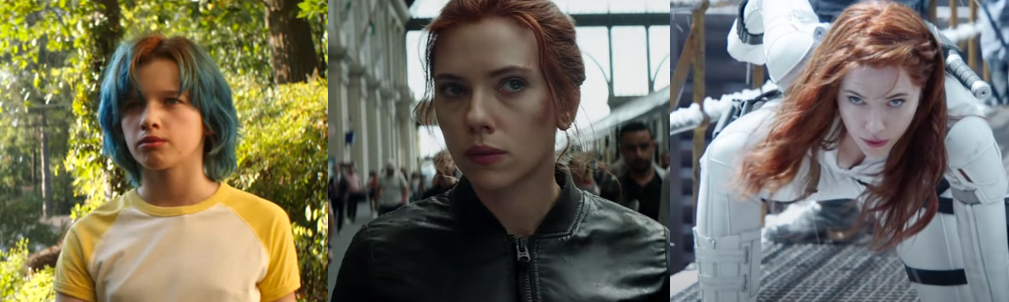
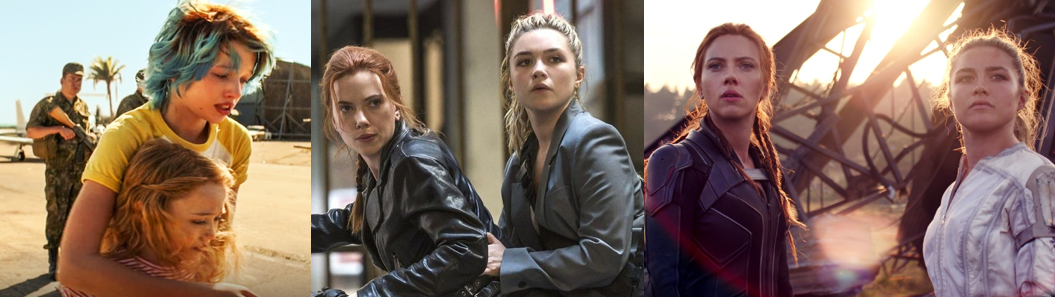
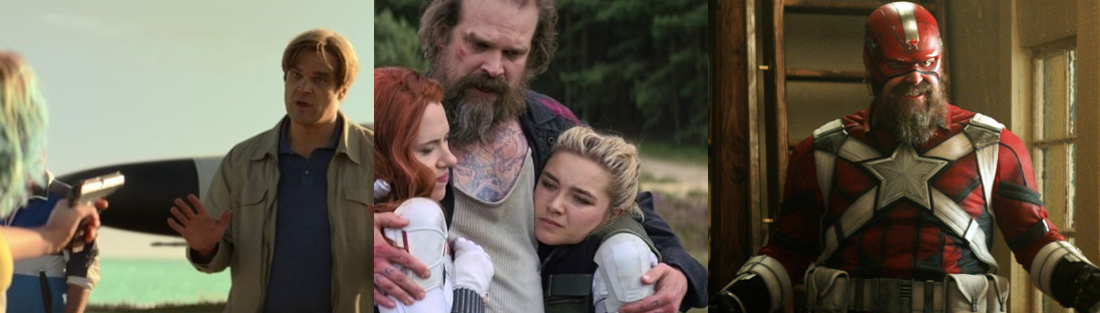
Although the marketing for Thunderbolts* had me believe that Junior Congressman and ex-Winter Soldier James Buchanan “Bucky” Barnes (Stan) was the central character in this film, I was surprised and delighted to find that former Black Widow Yelena Belova takes the lead. In many ways, Thunderbolts* is as much a sequel to Black Widow (Shortland, 2021) as it is a continuation of The Falcon and the Winter Soldier (Skogland, 2021), reuniting Yelena with her eccentric and overbearing super soldier surrogate father, Alexei Shostakov/The Red Guardian (Harbour), delving a little more into Yelena’s backstory courtesy of some traumatic visits to a nightmare dimension known as the “void”, while also significantly building upon the character of disgraced military veteran and former Captain America turned hot-headed mercenary, John Walker/U.S. Agent (Russell). Still grieving the loss of her surrogate sister, Natasha Romanoff/Black Widow (Scarlett Johansson), Yelena begins the film in a place of apathy. Yelena now works as a black ops agent for Valentina, the director of the Central Intelligence Agency (CIA) who’s currently under heavy investigation regarding all her shady experiments and dealings. However, despite throwing herself into her work and being an accomplished assassin, Yelena is unfulfilled and bored with the day-to-day mediocrity of her assignments. Feeling directionless and empty, she attempts to find some direction by talking through her feelings with Alexei, a disgraced and overweight former Soviet hero who’s left living in squalor and running a limo driving service. Despite his significant fall from grace and his boisterous personality, Alexei emphasises that the greatest calling he ever had was being an adored hero and encourages Yelena to step out of her comfort zone and take on a more public, heroic role like her late sister. Though hesitant, Yelena decides to give it a shot, if only to change her daily routine, and Valentina agrees to reassign her if she completes one last job. Namely, the infiltration of a secret underground O.X.E. facility that’s in danger of being robbed (and thus exposing Valentina’s dirty secrets) by Ava Starr/Ghost (Hannah John-Kamen), a tortured soul who can become intangible for short bursts.
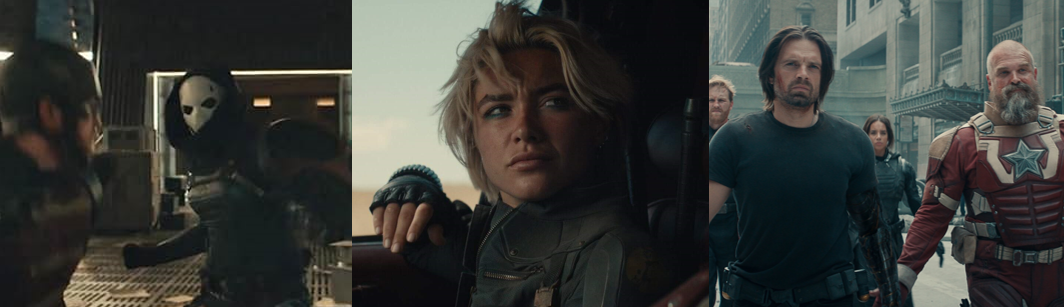
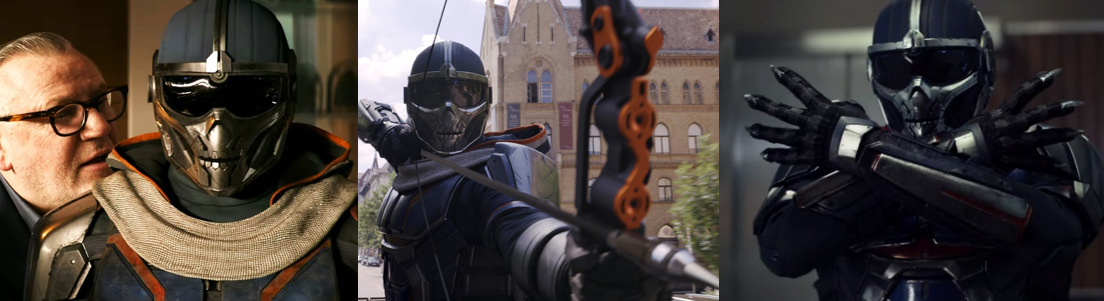
Although Taskmaster’s screen time gets cut short, Pugh steals the show with her layered performance.

However, when Yelena accesses the facility, she’s blindsided by Walker, who’s been contracted to kill her. Walker’s then attacked by master fighter Taskmaster, who’s been hired to kill him, and a four-way melee kicks off as they try to take each other out. Though Yelena immediately sees they’ve all been double-crossed, it takes the sudden, dramatic, and down-right insulting execution of Taskmaster for the fighting to stop. Well, that and the strange appearance of the anxious, confused, and seemingly harmless Bob after he was accidentally released from stasis. Though the pig-headed Walker is reluctant to believe Valentina would turn on him, he’s forced to begrudgingly work with the others to escape the facility, which first threatens to incinerate them and then trap them forever. Despite none of them having the powers or equipment to scale the impossibly large shaft, Bob suggests they clamber up back-to-back and, despite Walker’s selfish arrogance, the group fumbles their way to the surface. Unfortunately, Valentina’s long-suffering assistant, Mel (Geraldine Viswanathan), alerts her boss to their actions – and Bob’s presence – meaning the group are met by a heavily armed response team. Thanks to masquerading as Valentina’s goon squad, the group slip past the barricade, but the grateful and kind-hearted Bob decides to risk his life by covering their escape, resulting in him being peppered by bullets. Instead of dying, he emerges unscathed, blasts into the sky, and crashes to the ground with a massive explosion, inadvertently giving his newfound acquaintances the chance to escape and placing him in Valentina’s excited hands. Thanks to having chauffeured Valentina and Mel, Alexei races to retrieve them and excitedly encourages them to stick together as a team, accidentally nicknamed “Thunderbolts” after a passing mention of Yelena’s school sports team, though the group are less than enthusiastic about working together and are visibly disgusted at having had to rely on each other for so long.
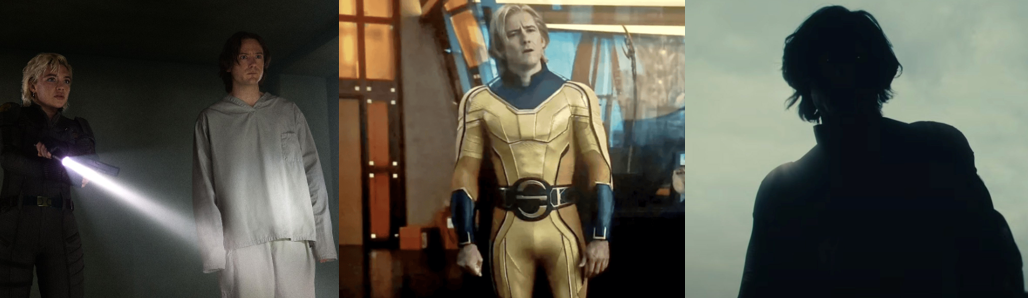
Emotionally damaged Bob turns out to be perhaps the greatest threat the world has ever known…

While all this is going on, Bucky seeks to uncover concrete evidence to expose and impeach Valentina, working his charm on Mel to get the inside track and racing to rescue the group when Alexei’s limo is attacked. Despite Alexei’s joy at meeting a Soviet hero and fellow super soldier, Bucky takes no chances and binds the group, seeking to have them testify against Valentina, but is forced to cut them loose and join forces with them when Mel corroborates their wild claims about Bob. As indicated by paperwork found in the facility, the seemingly unassuming Bob is actually a neurotic and emotionally unstable drug addict and survivor of horrific childhood abuse who, in a desperate attempt to feel powerful and significant, signed up to one of Valentina’s secret drug trials. While all the other subjects died, Bob became a full-blown indestructible superman, capable of flight and exhibiting awesome psychic powers, though his dark side also received a superhuman boost. With a touch, or at his command, Bob sends targets to the void, a dark dimension where they relive their most painful memories. However, Valentina brainwashes Bob with platitudes and strokes his fragile ego, promising to make him the world’s mightiest superhero in the absence of the Avengers and having him become the Sentry. While Bob is reluctant to turn on his newfound friends, he embraces the chance to be more than an insignificant nobody, but quickly becomes drunk on his power, rejecting Valentina’s orders and seeking to take the world for himself. While Mel puts the Sentry down with a kill switch, this merely suppresses Bob’s neurotic (but nonetheless harmless) personality and unleashes his dark side, the Void, who impassively terrorises New York City to plunge humanity into a glorious nothingness. Despite being powerless against the Sentry and going their separate ways, the chaos inspires the reluctant Thunderbolts to save civilians and rally against the Void, with Yelena desperate to appeal to Bob’s humanity by willingly returning to the void and facing his dark past.
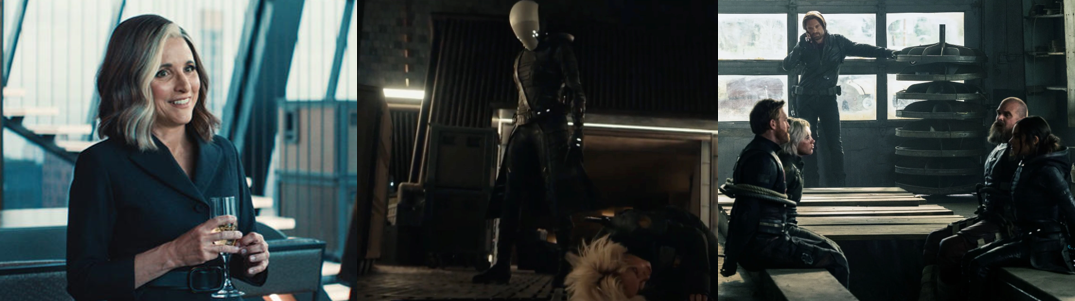
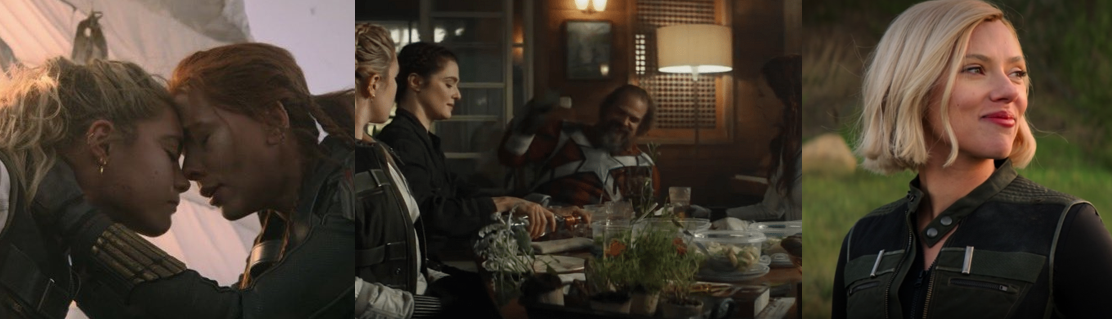
While Valentina is a deplorable puppet master, the misfit team is their own worst enemy.

Although Valentina is gleefully presented as a despicable and thoroughly unlikeable villain, I do think she suffered from not featuring more prominently in previous Marvel movies as a dark counterpart to Nick Fury (Samuel L. Jackson). Luckily, the titular Thunderbolts are all largely dislikeable or morally dubious characters and their bickering and in-fighting means they’re their own worst enemies. Indeed, it’s only the fact that they have a common enemy that the group sets aside their egos and dislike of each other to even work together, though Bucky and Alexei go a long way to galvanising the team. Still, “dysfunctional” is putting it mildly when it comes to these guys, especially considering how abrasive and unlikeable Walker is. His temper and arrogance paint him as a typical jock, but he undergoes a surprising redemption arc throughout as he tries to atone for his past and turn his life around. Though sadly not featured as prominently as she should be, Ghost seems to carry some guilt about murdering Taskmaster and, despite frequently clashing with Walker, sticks with the group simply because she’s lived so much of her life alone. As Alexei observes, Yelena feels the same emptiness lifted thanks to the team’s presence. Despite them constantly butting heads, she takes a leadership role and is constantly the voice of reason amongst them, pushing them to focus on their true enemy and to do some good for a change. Naturally, Alexei enjoys the chance to be a hero once more and Harbour’s enthusiastic and bombastic energy really cements Thunderbolts* as one of the best MCU movies of the modern era. Finally, there’s Bucky, a guy who seems uncomfortable in his political role and who immediately reverts to type the first chance he gets. Without a doubt, though, this is Bob’s show as, through him, the MCU tackles the serious and soul-crushing weight of abuse and depression and forces it to the forefront as he discovers, masters, and then loses himself to his incredible powers.

The Nitty-Gritty:
Unfortunately, despite the film’s marketing, Taskmaster really got the shaft here, she appeared onscreen for one fight, gets one line, and then is suddenly executed with little to no fanfare. Yelena basically shrugs it off since she’s so impassive and Taskmaster is barely brought up afterwards, which is a shame as her new suit was cool and I would’ve liked to see her character get a shot at redemption. They could’ve at least had her live until the team escaped the facility, perhaps have Bob accidentally obliterate her in his first unexpected show of power. Similarly, I’m not sure what the benefit of having Bucky be a congressman was if it was going to be dropped immediately. Nothing he did tied into that role and he could’ve worked Mel and helped his fellow congressman (Wendell Pierce) without having a political role. While it was also a shame we never got to see how the others fared in the void, it did provide some additional tragedy to Yelena (who was forced to see her fellow Black Widow recruits tortured and killed during her training) and touched upon the shame that fuels Walker and explains his brash personality. The void truly shines when exploring Bob’s traumatic past, however, as Yelena witnesses Bob’s father emotionally and physically abuse him, his drug addict mother shun him, and briefly witnesses his own struggles with addiction. When in his default personality, Bob talks about how he sometimes has highs and then suffers crushing lows that drove him towards drink and meth but also, seemingly to the point where he didn’t care if he lived or died. This led him to Valentina’s “Sentry Project”, which remarkably made him everything she hoped for, but also empowered his dark thoughts and made him extremely emotionally unstable. Seeing Bob wallow in his childhood bedroom (the quietest, nicest room in the void as long as you don’t mind seeing and hearing your parents fight and belittle you) was heart wrenching and Pullman really ran the gamut of emotions in his portrayal of Bob.
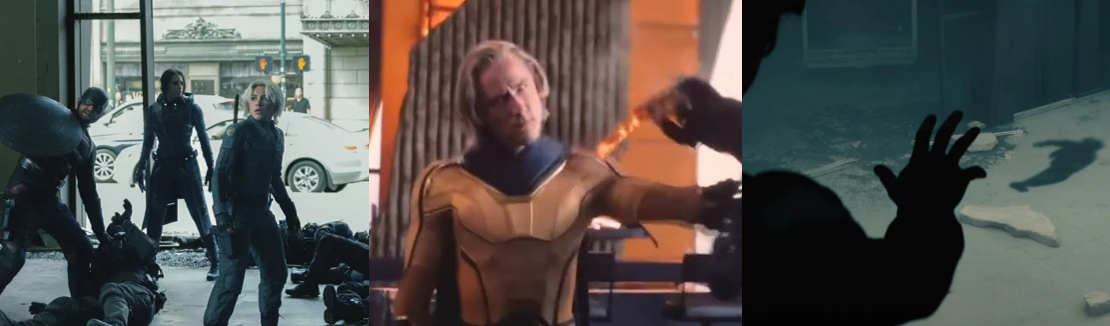
Amidst the action and banter, there’s a chilling and emotional exploration of depression.

This culminates in a spectacular (if brief) display of power from the Sentry in the former Avengers Tower. Garbed in a golden outfit and showcasing superhuman speed and strength, the Sentry easily overpowers his friends, with even the super soldiers barely making Bob flinch and him overwhelming them all while appearing bored. His transformation into the Void is equally impressive, with Pullman being enveloped in darkness. He speaks in a hushed, impassive tone, with only his silvery eyes glittering from the darkness, and sends targets to the void with a wave of his hand in a chilling visual. While much of Thunderbolts* revolves around the rag-tag team trying to co-exist without killing each other, the group finds a common language in combat. Despite them all pretty much just punching and shooting, each brings something a little different, such as Walker wielding his shield, Bucky utilising his mechanical arm, and Ghost phasing in and out of reality. Although Walker scoffs at Yelena taking charge of the group and a combination of bad luck and miscommunication means their plans often fail or quickly fall apart, the group fights well together. Crucially, when the Void envelops the city, these largely selfish anti-heroes don’t hesitate to jump in and save who they can, leading the crowd to safety and earning their appreciation, much to Alexei’s delight and the others’ surprise. Action-packed moments like Bucky’s Terminator 2: Judgment Day (Cameron,1991) style motorcycle intervention, the team storming Valentia’s tower, and their ill-fated showdown with the Sentry are juxtaposed with some fun humour and banter and some poignant moments, particularly between the grieving and emotional Yelena and Alexei. Angry at her “father” for not staying in touch more and still struggling after Natasha’s death, Yelena breaks down in Alexei’s arms at how lonely she is and he does his best to comfort he, just as Yelena finds a kindred spirit in Bob, whom she senses is both lonely and damaged and in need to help and reassurance.
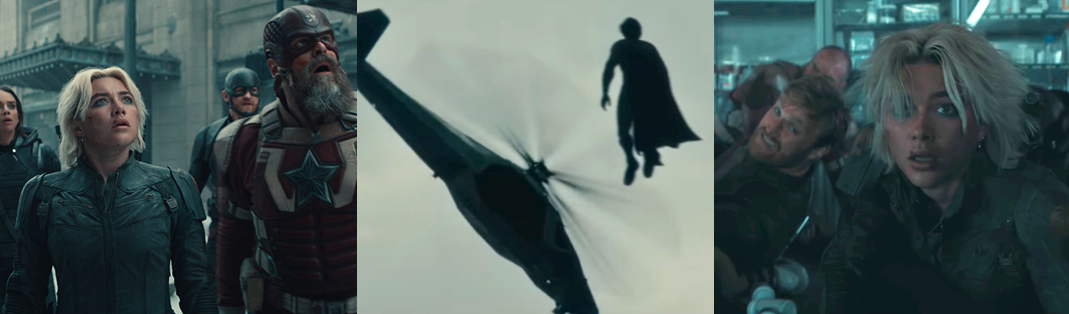
These unlikely heroes step up to meet the challenge when the Void engulfs the city in darkness.

This, as much as her inherent heroic nature, is what drives Yelena to stop running from the Void and willingly return to his dark dimension. There, she ignores her own traumatic past and desperately searches for Bob, eager to appeal to his reason, and discovers the sheer depth of his emotional trauma. Having resigned himself to the void and feeling as powerless to fight it as he was to stand up to his parents, Bob is reluctant to stand against his dark side and, though bolstered by Yelena’s genuine concern, is touched when the rest of the team brave their nightmares to reunite with them. At Yelena’s suggestion, Bob brings them to the worst “room” in the void, the place where he was transformed into a superhuman, and the team discovers that the effect on his psyche was near instantaneous. They also encounter the Void, a spiteful and all-powerful force that belittles Bob, tortures his friends, and maliciously mocks Bob’s insecurities. When Bob lashes out in anger, attacking the Void and mercilessly beating him, Yelena sees that this threatens to erase his compassionate side altogether and, despite the environment itself trying to stop her, she rushes not to stop or kill Bob, but to embrace him. The others do the same, embracing their damaged comrade and affirming their belief in him and their showcase of affection is enough to quiet the Void, returning everyone lost to the darkness and leaving Bob seemingly with no memory of what happened (and, sadly, no longer wearing his awesome Sentry suit). In the aftermath, the group seeks retribution upon Valentina, only to be blindsided when she leads them into a press conference and introduces them as the New Avengers. Though Valentina’s dismayed when the group begrudgingly accept the moniker (and when Yelena asserts dominance over her), she accepts the compromise as it means she can remain in a position of power. Unfortunately, the credits and post-credit scenes immediately deride the unlikely new Avengers, with headlines and news stories questioning them and even Sam Wilson/Captain America (Anthony Mackie) said to be suing them over the name! Still, the team relishes the chance to prove their credentials when they receive word of a strange, extradimensional craft entering Earth’s atmosphere…

The Summary:
I purposely avoiding using any spoiler warnings for this film, and including both titles, since Marvel Studios let the cat out of the bag just a few days after its release. While I was surprised to see the team be revealed as the New Avengers, it was a pretty fun way to end the movie, though I do wonder how prominent the team will be in the sixth phase of the MCU considering how packed the slate is. Regardless, Thunderbolts* was a surprisingly good time. I say “surprisingly” as the team has very little to do with their comic book counterparts and I wasn’t expecting all that much of it, especially after we had two similarly themed DC movies, but it turned out to be very entertaining and surprisingly touching. As a deconstruction of mental illness, Thunderbolts* (more specifically Lewis Pullman) knocks it out of the park, with Bob perfectly encapsulating the insecurities, incredible highs, and soul-destroying lows of depression. While he’s apathetic as the Sentry, Bob is chillingly impassive as the Void and so powerful that he completely neuters his more reasonable side. I also loved how Yelena came to the forefront here as a leader and her own search for meaning, and the evolution of her relationship with Alexei. While it was a damn shame Taskmaster got shafted, I would’ve liked to see Valentina used more leading up to the film, and I was hoping for more Bucky, I really enjoyed the dysfunctional team dynamic and how even an asshole like U.S. Agent could turn his life around with the right motivation. Thunderbolts* was a definitely step in the right direction for the MCU and I’m excited to see how its events will impact future MCU movies, especially regarding the Sentry, and I would absolutely say it’s a must-see for fans of this sprawling cinematic universe.

My Rating:

Rating: 4 out of 5.

Great Stuff

What did you think to Thunderbolts* and the surprise reveal of the film’s true nature? Were you disappointed that a more comic accurate team wasn’t used? What did you think of the unceremonious execution of Taskmaster? Were you impressed by the Sentry and the film’s discussion of mental health? What do you hope is next for the team in the MCU? Tell me your rating of Thunderbolts* in the comments, support me on Ko-Fi, and go check out my other Marvel content.


Game Corner: Marvel: Ultimate Alliance 3: The Black Order (Nintendo Switch)

Released: 19 July 2019
Developer: Team Ninja

The Background:
For decades, few videogame publishers were as synonymous with Marvel Comics as Activision, who produced adaptations Marvel’s most popular properties. While some were better than others, Activision’s efforts were largely praised, especially after they partnered with Raven Software on the X-Men Legends games (2004; 2005). Activision and Raven Software expanded their scope to the rest of the Marvel universe with Marvel: Ultimate Alliance (2006), a largely successful team-based brawer praised for improving upon its predecessors. Though now delisted, it was followed by a sequel three years later, courtesy of Vicarious Visions, which tweaked the gameplay with team-based attacks to encourage experimentation. Though Marvel: Ultimate Alliance 2 (2009) was praised for its branching storyline, the stripped down roleplaying mechanics were criticised. While it was also delisted in 2020, fans were clamouring for a follow-up and, just ten years later, Team Ninja stepped in to work alongside Marvel in reviving the franchise. Seeking to place additional emphasis on combat, the developers explored the cosmic scope of the Marvel universe by including the Infinity Stones and lesser-known characters and chose to make the title a Nintendo Switch exclusive after developing a close relationship with Nintendo. Although Marvel: Ultimate Alliance 3: The Black Order was the sixth best-selling game in its first week and was later bolstered by extensive downloadable content (DLC), it was met with mixed reviews that praised the colourful action but criticised its lack of innovation.

The Plot:
While battling Nebula and Ronan the Accuser, the Guardians of the Galaxy stumble upon a plot by the mad titan, Thanos, to collect the six Infinity Stones. Although they scatter the Stones, Thanos’s acolytes, the Black Order, pursue the gems, prompting an alliance of Earth’s mightiest heroes to retrieve them first.

Gameplay and Power-Ups:
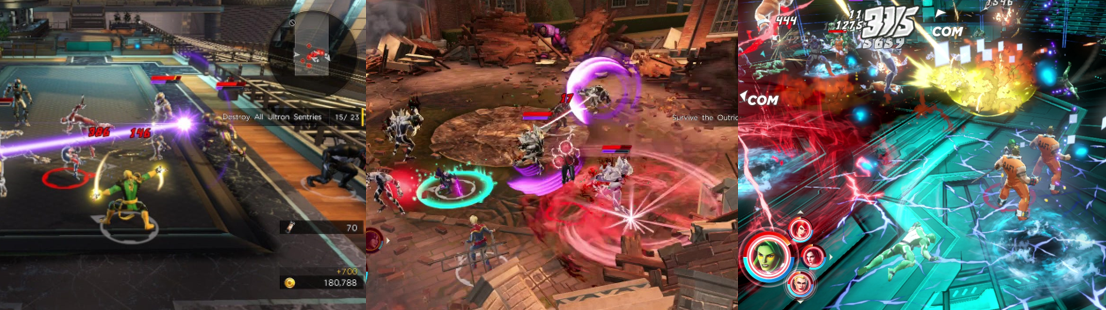
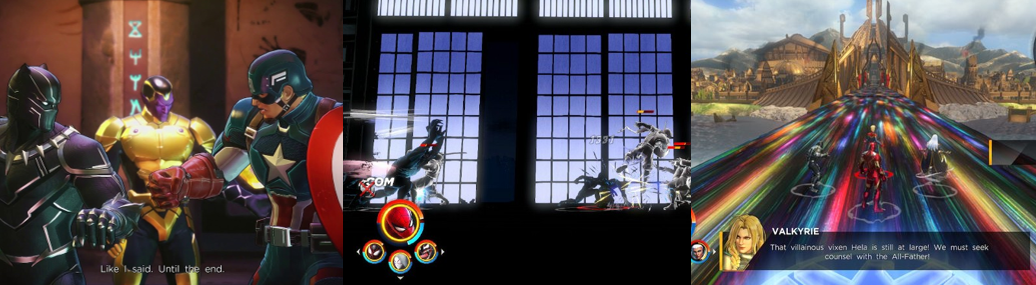
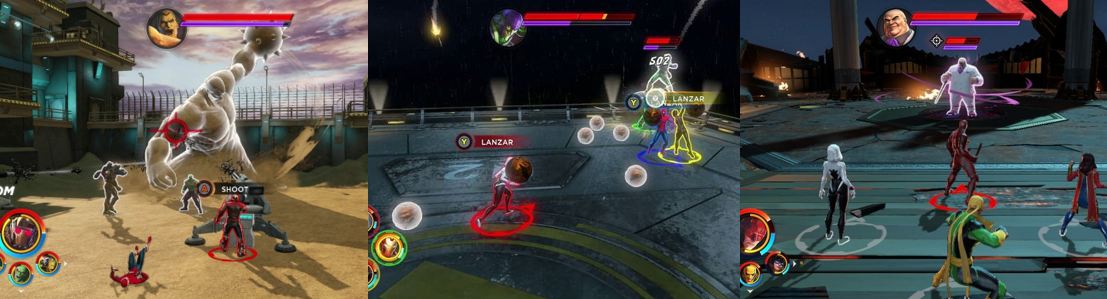
Like its predecessors, Marvel: Ultimate Alliance 3: The Black Order is a team-based action role-playing game in which players assemble a squad of four heroes from across the Marvel universe to battle various nefarious baddies, primarily the titular Black Order, who are hunting the six all-powerful Infinity Stones on behalf of their master, Thanos. The game offers five save slots, two initial difficulty levels, and a base roster of thirty-six playable characters, with many being encountered as you play through the story and joining your alliance either after fighting alongside you or being freed from some kind of mind control. Marvel: Ultimate Alliance 3 offers three controller configurations, thankfully none of which involve motion controls, and allows you to toggle overlays, notifications, tips, and other onscreen elements from the “Settings” menu. These include altering the camera placement, which enables a lock-on feature by pressing in the right stick, though the camera generally remains more focused on whichever character you’re controlling rather than offering a bird’s eye view as in the last two games. Although you can fight alongside friends either locally or online, you switch between your teammates with the directional pad (D-pad) when playing alone and your computer-controlled partners are very useful in a fight, attacking, enabling team attacks, and reviving defeated characters without any input from you. Pressing A sees you interact with the environment to activate consoles, pick up or move certain objects, and talk to other characters. You jump with B, executing a double jump, swinging from webs, or flying depending on which character you’re playing as, and throw light attacks with X and heavy attacks with Y. These can be strung together to perform basic combos and you can also perform a mid-air attack and throw objects (like bombs and missiles) by pressing Y. You block incoming attacks by holding the Z trigger and tap it to dodge, and collect glowing red orbs from defeated enemies or smashed crates to restore health, blue orbs to refill your Energy Point (EP) gauge, and credits to spend on upgrades.

Combat is thick, fast, chaotic, and constant thanks to loads of enemies and character abilities.

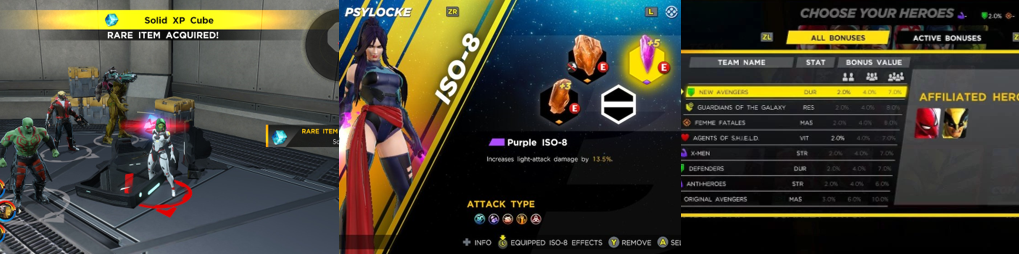
As in the last two games, each character has specific abilities tied to their superpowers or superhero traits. You activate these by holding the Right trigger and selecting an icon using the D-pad; using Abilities drains your EP, however, and each Ability comes with a different cost. However, these attacks allow you to stun, stagger or deal elemental damage to enemies using Peter Parker/Spider-Man’s webs, Thor Odinson’s lightning, and Doctor Robert Bruce Banner/The Hulk’s incredible strength. Many characters have projectile attacks in their arsenal, such as Wade Wilson/Deadpool firing guns and Scott “Slim” Summers/Cyclops blasting his eye beams, while others cause splash damage or specific buffs, like Piotr Rasputin/Colossus being able to reflect projectiles and Wanda Maximoff/The Scarlet Witch healing her allies. Some, like James “Logan” Howlett/Wolverine, have passive abilities that allow them to automatically regenerate health as they walk around; others, like Johnny Blaze/Ghost Rider and Ororo Munroe/Storm, specifically deal in elemental damage. Character’s Abilities can also be mixed and matched by holding ZR and pressing one of the face buttons (or pressing A when prompted); this sees two characters attack in a combo for additional damage. As you dish out and take damage, you’ll also build the Extreme (EX) Gauge). Once full, you can press L and R up to three times to have two to four of your teammates perform a devastating combination attack that’s great against bosses. While the various cannon fodder you fight are easily dispatched, larger commanders and bosses need their “stun” meter drained before you can really put a beating on them and others (and certain treasure chests) require specific combination attacks to breach their shields. Defeating enemies sees your characters gain experience points (XP) to level-up, increasing their statistics (attack, defence, etc), though you can also use the various Orbs you find to manually level-up. Each character’s special Abilities can also be further enhanced using Ability Orbs and credits, reducing the EP cost and increasing their damage, among other benefits. You can also earn “Team Bonuses” depending on your team selection: pick a group of X-Men, for example, and your strength or resistance stat will increase, while picking characters of royalty ups your maximum energy stat.

Search for chests to gain currency and other expendables to upgrade and buff your alliance.

Although you can’t equip gear to your characters, the boss battle against the Destroyer armour sees you temporarily empowered by Asgardian magic and you can eventually equip your team with “ISO-8” crystals, coloured stones that enhance their attack power, resistance to elements, or critical hit ratio, among others. You can further upgrade these with credits and ISO-8 capsules, though some of the rarer ones will also debuff you (for example, your attack my increase but your defence will decrease accordingly). You’ll also inevitably gain access to the Strategic Hazard Intervention Espionage Logistics Directorate (S.H.I.E.L.D.) Lab, which acts as the game’s skill tree. By spending credits and Enhancement Points (EP), you can further increase your team’s overall attack, defence, resistance, vitality, and such and even unlock additional ISO-8 slots (with more being earned by levelling-up). You can also enter the S.H.I.E.L.D. Depot from the main menu to purchase additional costumes and social icons by spending S.H.I.E.L.D. Tokens. Marvel: Ultimate Alliance 3 is pretty forgiving (on the “Friendly” difficulty, at least), with multiple checkpoints in each area. When you activate a S.H.I.E.L.D. checkpoint, your team is fully healed, and you can swap or enhance them if you wish. If a teammate is defeated, you can hold A to revive them, but I wouldn’t recommend it unless you absolutely have to. Not only are revives limited, but downed characters will eventually return to full health even before you reach a checkpoint so it’s not worth risking another character taking damage by healing a partner. Exploration generally leads you to treasure chests or special walls that require a special combination attack to open, or to a “Rift” challenge that takes you away from the main game to tackle a special challenge (usually a boss rematch or enemy gauntlet) for extra rewards. Your path is incredibly linear most of the time, hence why there’s no map, and the game’s primary focus is on chaotic combat and visually manic team-based attacks. Unlike in the last two games, you can no longer grapple or throw enemies (though you can still send them flying off certain platforms) and there are no character-specific team-up moves, meaning the action can quickly get quite tiresome.

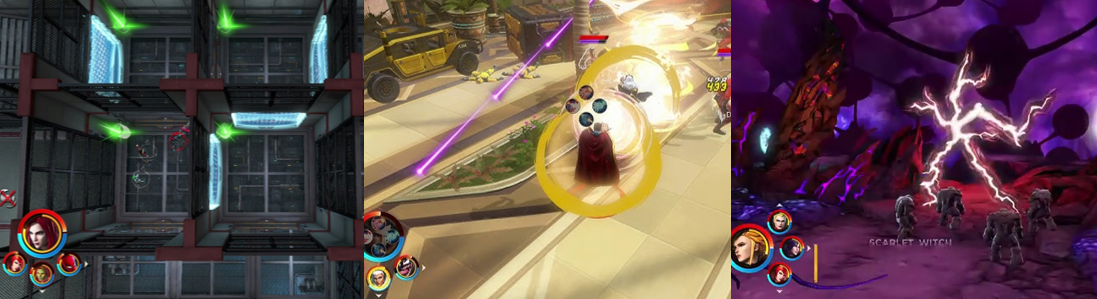
Sadly, puzzles are practically non-existent, with only Rifts offering additional challenges.

Because of its focus on hectic combat, there’s even less room for puzzles than there is for exploration in Marvel: Ultimate Alliance 3. Puzzles boil down to activating a console to open a door or making a platform move and that’s it. Sometimes, you’ll hold A to move a block and avoid lasers or cannons, but mostly you’ll be timing jumps between said lasers to progress and simply hurling missiles at those cannons. Sometimes, you’ll rotate statues or press switches to progress; others, you’ll be avoiding toxic ooze in Hel or solving door puzzles at the Raft or in Avengers Tower. After hopping across the rooftops of New York City, you’ll infiltrate the heavily fortified fortress of the Hand, dealing with ninjas that drop from the sky and hidden arrow hazards. When in Wakanda, Advanced Idea Mechanics (A.I.M.) corrupt T’Challa/The Black Panther’s defences, leading to an exasperating section where you must avoid snipers and being roasted by a giant panther statue’s energy blast. When transported to the Dark Dimension, you must use portals to reach new areas and defeat waves of demonic enemies to lower magical barriers and progress. Some attacks also screw up your controls or temporarily freeze you; some enemies are best defeated by tossing explosives at them; and many missions have an additional character fighting alongside you who’s often unlocked afterwards. However, a lot of the additional features of the previous games are missing; you can talk to other characters, but there are no dialogue options or character-specific interactions. There are no trivia quizzes, no optional side missions beyond the Rifts, and no character specific challenges to unlock extra stuff for each character. There aren’t even hub areas, in the traditional sense, with characters just appearing around S.H.I.E.L.D. checkpoints at times, though you can destroy a fair bit of the environment, and some encounters have you fleeing towards the camera as bosses chase you or present you with unwinnable battles.

Presentation:
Whereas the last two games primarily based their aesthetics on the comics books, especially the Ultimate comic line, Marvel: Ultimate Alliance 3 adheres very closely to the Marvel Cinematic Universe (MCU), especially in the visuals of its locations. I was hard pressed, for example, to tell the difference between Asgard here and the Asgard to the MCU, with both the golden city and the rainbow bridge, the Bifrost, appearing almost exactly as they’re depicted in the films. The same is true for Wakanda, the Dark Dimension, and Knowhere, all of which are virtually indistinguishable from how they appear in the MCU. There are some differences, of course: Taneleer Tivan/The Collector’s museum, for example, uses coloured cube cages and Wakanda leans much more into traditional architecture than the pseudo-futuristic science of the films (likely because Black Panther (Coogler, 2018) released a year before this game was made). Xavier’s School for the Gifted is lifted almost exactly from the 20th Century Fox X-Men movies (Various, 2000 to 2020), however, including a hedge maze, 1:1 Cerebro room, and basketball court that doubles as a landing pad for the Blackbird. While the Dark Dimension and the cosmic mind trip that is Sanctuary also heavily borrow from the bizarre cosmic imagery of the MCU, the Raft and Avengers Tower are much more akin to their comic book counterparts, though they’re comparatively bland locations, lacking fun areas like the Danger Room or Wakanda’s Necropolis (though you do pass through Anthony “Tony” Stark/Iron Man’s Hall of Armours in the tower). Although you only make a brief stop in Attilan to try and get help from the Inhumans, the architecture is far more visually interesting than that awful television show, seemingly being comprised of Celestial technology, and I enjoyed the ominous gothic presentation of Hel, with its restless Viking warriors and damaging sludge. Unfortunately, Marvel: Ultimate Alliance 3 continues the trend of having disappointingly bland and forgettable music, opting for generic themes for each location, event, and character that are lost amidst the constant fighting.

A visually impressive brawler that takes obvious inspiration from the MCU films.

The game also opts for an almost cel-shaded, action figure-like aesthetic for its colourful cast of characters. While many again both look and sound like their MCU counterparts, there are some exceptions: Peter Quill/Star-Lord, for example, looks nothing like Chris Pratt and the X-Men are far closer to the comic books than Fox’s films. Despite you assembling a custom team of heroes, cutscenes depict either everyone or characters specific to the location you’re in (the corrupted Doctor Stephen Strange in the Dark Dimension, for example) as they’re better suited to advance the plot against the local baddies. With the game shifting to a more third-person perspective, you’re closer than ever to the action and can see more of the environment than in the previous games. However, this comes with some drawbacks: mainly, there are far less opportunities or incentives to explore. Second, environments are painfully linear, with dead ends or locked doors barring your progress. Third, and most frustrating, is the camera, which easily loses track of your opponent/s and often lumbers you with wireframe representations when the foreground blocks the view. Thankfully, you won’t be falling down pits and rarely have to worry about onscreen hazards, but it can be aggravating trying to figure out which platforms and crates can be jumped on and which can’t. Marvel: Ultimate Alliance 3 offers a diverse cast of characters, each with their own idle poses and quips, though these do inevitably repeat. The game’s also surprisingly light on Easter Eggs: you’ll spot Deadpool singing away as he makes tacos in the X-Mansion, but not much else, and there are no optional missions or choices to encourage replaying missions. It’s a far cry from the first game, where there was always something to collect or an additional character to help out. Instead, it’s basically all combat, all the time in Marvel: Ultimate Alliance 3. Luckily, the game looks pretty good (everything’s very colourful and true to its inspirations) and performs really well, though there are some long load screens and it is annoying being forced to continue your game every time you challenge a Rift.

Enemies and Bosses:
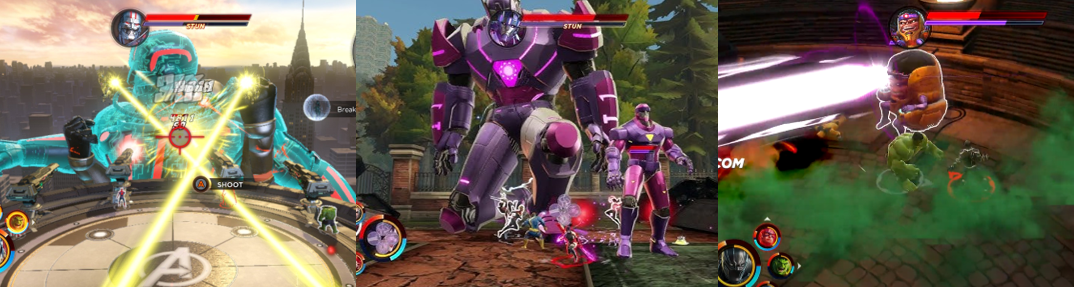
All the usual suspects appear here as disposable cannon fodder for you to endlessly beat up, with many of the game’s goons sharing traits across the various locations. You’ll encounter Kree, Ultron Drones, agents of A.I.M., and Doombats who all pack various energy blasters. Ultron’s clones are the worst for this, relentlessly firing energy blasts and crashing through windows. The Raft’s unscrupulous prisoners attack in large groups, as do the restless Viking warriors who populate Hel, tossing axes from afar and luring you into toxic goop. Gargoyle-like Fire Demons also dwell here, offering a greater challenge with their swoop attack and fire breath, not unlike the monstrous Outriders and Mindless Ones who make up Thanos and the dread Dormammu’s forces, respectively. Alpha Primitives, Hydra goons, and towering Sentinels also appear, with the latter firing huge energy blasts from the palms and best attacked by throwing their explosive energy cores back at them. No matter where you are and what enemies you fight, more powerful commanders will also appear. Larger, tougher, and sporting a stun meter, these commanders should be your top priority as they’ll charge across the screen, cause shockwaves, and generally offer a far greater challenge even when you’re at a higher level. These minions often fight alongside their masters, generally so you can recover some health and EP to better damage the bosses, and will endlessly spawn in one of the additional modes unless you destroy their teleporters. Some of the game’s challenges or story-based missions charge you with defeating a certain number of enemies to progress. Other times, bosses appear in these waves, and you must occasionally flee or purposely lose some fights. This happens when Cain Marko/The Juggernaut comes tearing through the X-Mansion, for example, and in early encounters with the Black Order, who cannot be beaten or will chase you, raining lightning or other attacks from the sky and across the ground.

Few bosses require more than just hit-and-run tactics, even when augmented by an Infinity Stone.

There are loads of bosses to fight in Marvel: Ultimate Alliance 3, with some returning from the previous games, some teaming up, some having a couple of phases, and all boiling down to whittling down their stun bar, unleashing an EX attack and/or your most powerful Abilities, and avoiding damage until you can repeat this. The first ones you’ll face are Nebula and Ronan the Accuser, who often appear as a duo in optional challenges. Nebula is faster and more nimble, wielding blades where Ronan uses a massive warhammer. Both set a standard all bosses follow, which is that they’ll use either a jumping slam or an explosion of energy (or both) to send you flying. While quelling the riot in the Raft, you’ll encounter a version of the Sinister Six, with some unique variations to each battle. Flint Marko/The Sandman, for example, flings waves of sand and erupts his big sand fist from the ground as a large sand creature. You must use A to mount the nearby cannons and unload on him to chip away at his stun meter. Maxwell “Max” Dillon fights alongside Eddie Brock/Venom, raining lighting and electrocuting you with bursts of electricity, before he’s eaten by Venom and starts busting out electrically-enhanced symbiote powers. Venom joins the team after this fight and is tested against Quentin Beck, who first brainwashes Mile Morales/Spider-Man, Gwen Stacy/Spider-Woman, and Kamala Khan/Ms. Marvel to fight you and then unleashes a poisonous mist, teleports about, and confuses you with duplicates, Doctor Otto Octavious/Dr. Octopus is fought in a two-stage fight where you must first avoid his tentacles and scurry charge and then attack each arm to stun him. Finally, you’ll battle Norman Osborn/The Green Goblin for the Time Stone. The Green Goblin swoops overhead and lingers slightly out of reach, peppering the arena with his pumpkin bombs, charging at you, and freezing time to bombard you. He’s noticeably weak to his pumpkin bombs, however, so try and toss them at him before they explode in your face! After battling into the Hand’s fortress, you must first free Elektra Natchios from the Hand’s influence and then face Lester/Bullseye and Wilson Fisk/The Kingpin in separate fights. You must take out the ninjas feeding Elektra power, avoid Bulleye’s spread of razor sharp and explosive cards, and dodge the furniture and massive energy beam thrown by the Power Stone-enhanced Kingpin. The Kingpin also charges like a rhino, leaps at you to cause shockwaves, and even rips up stone columns to use as melee weapons!

Gigantic bosses and the quirkier villains help mix-up the otherwise tedious combat.

Avengers Tower is then attacked by Ultron and his drones, who assist him in battle. Not that he needs it as the Mind Stone allows Ultron to mess up your controls, to say nothing of his signature face and palm beams. Ultron then grows to gigantic proportions, sweeping the area with his eyebeams before Clint Barton/Hawkeye intervenes and Ultron merges with Ultimo. This is the first giant boss battle in the game and sees you blasting Ultimo with cannons and avoiding his massive swipes. The Infinity Sentinel is comparatively smaller, but no less dangerous thanks to its own face beam and missiles. Though you can damage it with Sentinel cores, it’s finished in a cutscene by Erik “Magnus” Lehnsherr/Magneto, who then tosses debris and throws you off balance with magnetic pulses while Juggernaut pummels you and Raven Darkholme/Mystique tosses daggers. After surviving Mystique’s Danger Room trials, you face Magneto, now even tougher thanks to the Power Stone, before being chased away and banished to the Dark Dimension by the Black Order. There, you battle past Loki Laufeyson (who boasts elemental attacks and duplication tricks) to eventually face the dread Dormammu, who wields the Reality Stone and is the second giant boss. You must subdue his minions and avoid his flame bursts, whittling down his magical barrier either directly or be destroying three nearby orbs, all while dodging his giant fists and ground spikes. The brief fight with Maximus Boltagon is far easier, even though the mad Inhuman carries a massive energy cannon and you must take cover in Thane’s energy bubble to avoid Maximus’s barrage of lasers. Ulysses Klaue/Klaw awaits in Wakanda and his sound-based energy blasts and waves must be overcome to rescue and recruit James Buchanan “Bucky” Barnes/The Winter Soldier. You then fight past A.I.M. to confront their master, George Tarleton/Mental Organism Designed Only for Killing (MODOK), who uses the Soul Stone to turn the Dora Milaje against you and attacks with a slew of appendages, from buzzsaw arms, poison gas, failing tentacles, and his signature forehead blast.

Battles with the empowered Black Order, Thanos, and Thane offer some of the most enjoyable challenges.

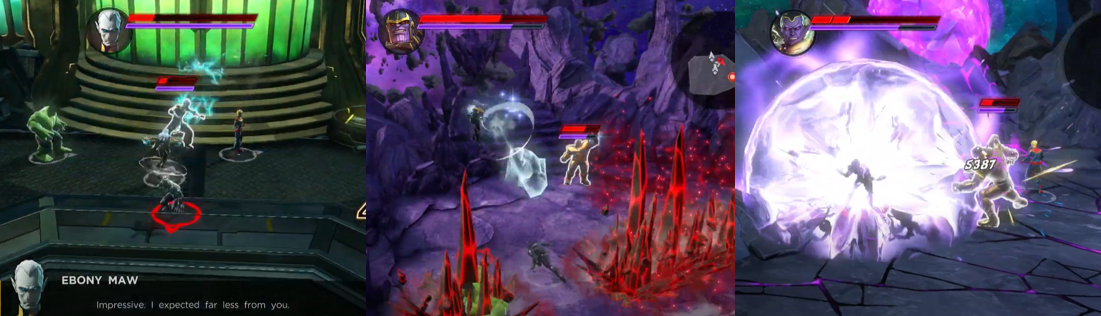
Though your goal in Hel is to confront Hela, you’ll actually battle the fire demon, Surtur, in another giant boss battle. This was a bit of a difficulty spike for me as Surtur’s flaming sword has a long reach and he causes the ground to erupt in flames, to say nothing of stun locking you with repeat sword strikes! Best him and Hela sets Johann Schmidt/The Red Skull on you, with the Nazi madman firing a powerful revolver and sapping your health with his “Dust of Death”. Hela gives the Red Skull a boost, protecting him with a shield and allowing him to fire a Bifrost-like laser, before placing his consciousness into the Destroyer armour. Though bolstered by Hydra forces and boasting a sweeping face beam, you can get a power-up from glowing crystals to overcome this destructive force. Finally, you venture to Knowhere and must run the Black Order gauntlet to retrieve the Infinity Stones, with checkpoints between each fight. Ebony Maw is first, firing a spread of projectiles and rocks and using the Soul Stone to create portals to trip you up. Supergiant tosses dark spheres and a golden homing shot that messes up your controls, though you can toss explosive cores from her minions to deal big damage. Cull Obsidian infuses his battleaxe with the Power Stone, sending out waves of purple energy and massive purple shockwaves, though he’s far slower and also susceptible to the nearby bombs. Corvus Glaive is much faster, landing multiple hits with his lance and using the Reality Stone to spring spikes form the ground and conjure duplicates who fill the arena with energy waves that can stun lock you. Finally, Proxima Midnight takes her fellow’s teleportation trick to the next level with the Space Stone and fills the arena with lightning bolts and strikes. All these powers are then recycled when you face Thanos, who gathers the six Infinity Stones into the Infinity Gauntlet to rain meteors, teleport, mess up your controls, freeze time, and fire his signature eyebeams. Thanos then joins you to battle Thane, who usurps him and boasts similar powers, though also upgraded by the Infinity Armour. Thane exhibits superhuman speed, traps you in a cube, fills the arena with portals and flames, and explodes in fury, though both battles were fun challenges rather than impossible tasks.

Additional Features:
Unlike in the previous two games, you won’t be finding data logs, action figures, or meeting certain requirements to unlock new attacks or costumes. You just fight over and over, earning whatever you need to unlock, buy, or upgrade whatever you wish and finding some concept art in treasure chests. A far harder (but more rewarding) “Superior” difficulty unlocks upon clearing the game alongside an additional “Nightmare” mode, accessible via the “Curse of the Vampire” campaign. You also unlock Thanos and can freely replay any mission on any difficulty (though you must start a new save to play on “Superior”) to grind and enhance your characters and ISO-8. Dimensional Rifts transport you to special challenges (not unlike the S.H.I.E.L.D. Simulator discs from the first game) that are often rematches with bosses or gauntlet challenges, though far tougher and gifting better rewards if you succeed. There are also three additional modes; however, though you can play a taster of each, you must purchase the expansion pass to fully unlock them. “Curse of the Vampire” adds vampiric enemies to the main story in “Nightmare” mode and offers a “Gauntlet” mode where you battle waves of enemies and bosses against both a time limit and a range of debuffs (including limited health restoration and draining EP). You can also tackle an “Endless” mode that’s pretty self-explanatory, and unlock additional characters like Frank Castle/The Punisher and Eric Brooks/Bladeif you buy the DLC. “Rise of the Phoenix” sees you form a four-person team and go head-to-head with a friend or the computer in three-round Danger Room scenarios. These see you tackling bosses again or wiping out hordes of enemies, awarding additional buffs and effects if you meet certain criteria (such as using any Ability or Synergy attack four times). You can only tackle the first challenge without the DLC, so I didn’t get very far, but this could be a fun distraction for those looking to test their skills against a friend. “Shadow of Doom” adds an epilogue story campaign that sees you return to Wakanda to oppose Doctor Victor Von Doom’s invasion. Dr. Doom’s Doombots endlessly spawn unless you destroy their teleporters, and you even battle the arrogant dictator in the recycled Necropolis, with him teleporting, firing lasers form his palms, and having his health restored by his Doombots. You’ll add Marvel’s First Family to your roster (alongside an alternative Thanos and other characters) by buying the expansion pass and battle Annihilus, a gigantic Celestial, and even “God Emperor” Doom!

The Summary:
I quite enjoyed the first two Ultimate Alliance games. They were mindless and largely repetitive, but I liked the large cast of characters and all the different references and locations from the comic books. Still, I put off Marvel: Ultimate Alliance 3: The Black Order for some time, mainly because I was annoyed by it being a Nintendo Switch exclusive; however it turned out to be a decent enough brawler. Despite the different development team, a few tweaks, and an apparent disconnection from the previous games, Marvel: Ultimate Alliance 3 offers a lot of the same gameplay and enjoyment as its predecessors, which is great for long-time fans of the franchise. Unfortunately, it doesn’t improve on these elements in a meaningful way and actually removes some content that I found enjoyable from the last two. There are no optional missions, for example, no alternative endings, no choices, and no character-specific challenges beyond fighting and levelling-up. I found this made the tedious combat even more aggravating after a while as I wasn’t being rewarded with gear or costumes or anything other than stat boosts. Even the skill tree was limited since you must grind to acquire enough credits and expendables to enhance your team, and I found the ISO-8 mode to be more confusing than engaging. The game also does little to improve the boss battles. Very few were very innovative or required more of you than to strike fast, avoid shockwaves and projectiles, and unleash your Extreme attack. The giant bosses were more of a challenge and I liked the final fight against Thanos and Thane, but I was hoping for a bit more complexity, especially given the possibilities offered by the Infinity Stones. There is a fun selection of characters, but they don’t offer much more than what we saw in the last two games and actually offer less as there are no character-specific team-up moves. While I enjoyed the visual influence from the MCU and the variety, I feel like Marvel: Ultimate Alliance 3 played things a little too safe by relying so heavily on combat and not mixing up the gameplay with a few other puzzles and challenges. Overall, it’s a good enough game and a worthy entry in the series, but it’s a shame that the developers didn’t try to be a bit more innovative and offer some more incentive to keep slogging away in endless fights.

My Rating:

Rating: 3 out of 5.

Pretty Good

Did you enjoy Marvel: Ultimate Alliance 3: The Black Order? How do you think it holds up against the previous two games? Which characters did you choose for your team? Were you disappointed that the combat was so similar to the last two games and the bosses so repetitive? Did you ever conquer all the Rift challenges? What did you think to the MCU influences and the final battle with Thanos and Thane? Did you ever play through the DLC? Would you like to see another Ultimate Alliance game? Whatever your thoughts, leave a comment below, support me on Ko-Fi, and go check out my other superhero content across the site.

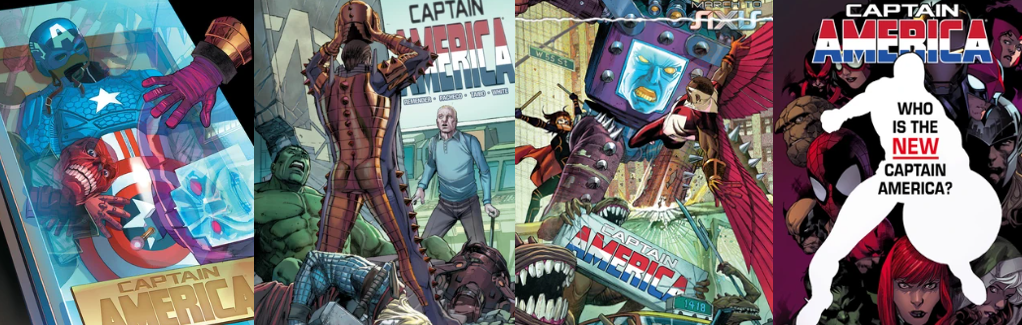
Back Issues: Captain America 22-25

Story Title: “The Tomorrow Soldier” (Part 1 to Conclusion)
Published: 2 July 2014 (cover-dated: September 2014) to 1 October 2014 (cover-dated: December 2014)
Writer: Rick Remender
Artists: Carlos Pacheco and Stuart Immonen

The Background:
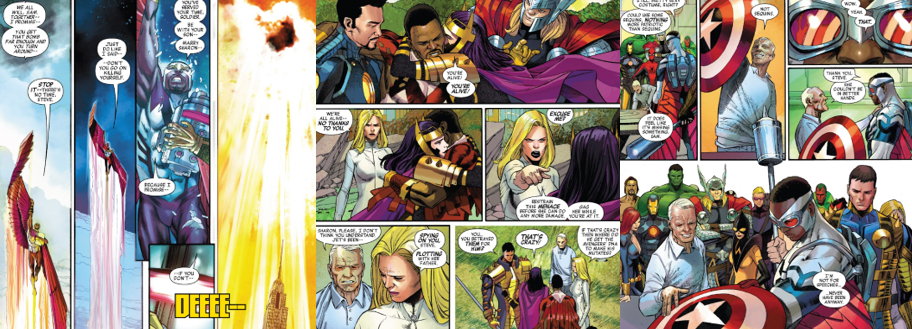
By 1941, Nazi Germany had decimated Denmark and Norway and World War Two was fully underway and, after some initial resistance, the United States joined the War against the “Axis powers” of Germany, Japan, and Italy. Patriotism and national pride was high, especially in America, during those dark days, making it the perfect time for Joe Simon and the legendary Jack Kirby to debut Captain Steve Rogers/Captain America and his kid sidekick, James Buchanan Barnes/Bucky, to encourage support of the war effort. Once the War was over, superheroes saw a decline and Captain America’s solo publication was cancelled in 1954. However, Cap got a second chance when he joined the Avengers as a “man out of time”, battling iconic villains like Johann Shmidt/The Red Skull and even opposing his fellow superheroes during a “Civil War”. After surrendering to the authorities, Cap was seemingly killed and his troubled sidekick, better known as the Winter Soldier, took up the mantle until Steve’s inevitable resurrection. However, in 2014, cybernetic supervillain Arnim Zola’s machinations saw Cap drained of the super soldier serum and rapidly aged into an old man! Thus the battle was on the see who would become the new Star-Spangled Avenger, a battle eventually won by Cap’s long-time ally, Sam Wilson/The Falcon, to much undue controversy, Created by Stan Lee and Gene Colon in 1969, the Falcon was the first Black American superhero in mainstream comic books and was specifically created to challenge social perceptions. After a lengthy career as a bit-player in Marvel Comics, Sam made headlines with his promotion, a story arc that achieved mainstream recognition due to Anthony Mackie’s celebrated portrayal of the character in the Marvel Cinematic Universe.

The Review:
Sam Wilson’s assumption of the Captain America mantle didn’t come easy, nor without drama. In the leadup to this story, Cap was kidnapped by Arnim Zola and spirited away to Dimension Z, where the mad scientist plotted to drain his super soldier serum to create a race of genetic super-beings! Cap broke free but was trapped in Dimension Z for ten years, during which time he raised Zola’s son, Ian, as his own. Though Cap eventually escaped with Jet Zola/Jet Black, Zola’s daughter, both Ian and Cap’s lover, Agent 13/Sharon Carter, were lost. Cap then spent some time working with Sam to mould Jet Black into a hero but, in a battle with former Strategic Homeland Intervention, Enforcement, and Logistics Division (S.H.I.E.L.D.) agent-turned-madman, Ran Shen/Iron Nail, Cap’s super soldier serum was neutralised and he quickly aged into frail, infirm old man! Our story picks up with Steve sequestered at Avengers Mansion, stewing over sensationalist news reports demanding accountability for Captain America and S.H.I.E.L.D.’s dangerous and destructive antics. Steve’s offered council by S.H.I.E.L.D. director maria Hill and the decidedly Samuel L. Jackson-esque Nick Fury Jr., who assure him that he saved countless lives taking down Iron Nail. Unfortunately, his shield has been left too radioactive to be returned to him and Steve’s aghast when he’s told S.H.I.E.L.D. won’t be destroying Gungnir, the weaponised, Transformer-like Helicarrier Iron Nail hijacked and threatened the United States with. Steve is so angered that he starts to wonder if the reports of corruption within the government and S.H.I.E.L.D. aren’t valid, though Fury simply explains that contingencies such as Gungnir are vital to protect innocent civilians and keep the public from being overly reliant on costumed heroes, especial as the Avengers’ roster has dwindled lately.

When Armin Zola’s mutates invade, the Avengers gain an unlikely ally in Steve’s adopted son!

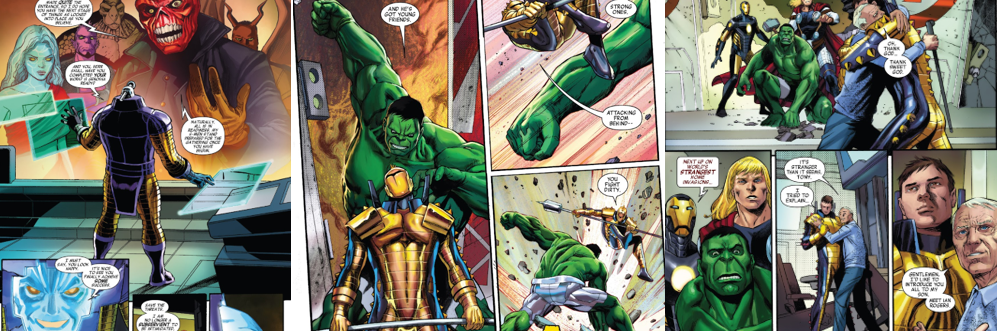
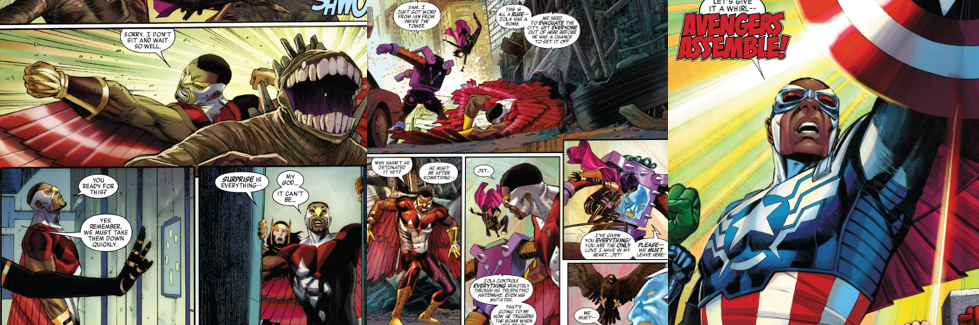
Over on the upper west side, Sam Wilson wakes up to a hell of a hangover and to find he spent the night with Jet Black! Though he’s not exactly thrilled at having crossed that line, he seems won over by her affections, but their tender moment (and the awkwardness) is interrupted when Jet spots a commotion outside. It turns out that her father, Armin Zola, is so eager for revenge that he rips open a hole in the fabric of reality and his monstrous, “hyperevolved mutates” come pouring into Central Park, followed closely by a mysterious man garbed in a spiked battle suit. Zola quickly contacts the Red Skull to co-ordinate their newest efforts in overthrowing the decadent West, asserting himself as a menacing force in his own right and seemingly earning the Red Skull’s respect with his army of mutates. While Anthony “Tony” Stark/Iron Man and Doctor Robert Bruce Banner/The Incredible Hulk work to find some way of restoring Steve’s superhuman condition, they (along with Thor Odinson and Steve himself) are alerted to the crisis via the mansion’s monitors. Steve immediately recognises the threat as Zola; Stark is incredulous but quickly convinced of the danger when the armoured mutate comes crashing through the wall. Luckily, the Hulk is around to face the stranger (with Banner having more control over the Hulk at this point). Naturally, Iron Man adopts a snarky “shoot first, ask questions later” philosophy, leading to an explosive confrontation as he and Thor try to keep the masked intruder from reaching Steve. However, the masked man easily avoids their attacks and even gets the better of Thor, running rings around them, only to be astonished by Steve’s frail condition. This distraction allows the Hulk needs to strike; ironically, though the stranger deftly evades the Green Goliath, Steve easily subdues the masked man. However, Steve is stunned when the intruder unmasks to reveal himself as Ian Ziola, now Ian Rogers, Steve’s adopted son, who was regenerated from death by one of Zola’s “bio-mass [tanks]”.

Zola manipulates events to coerce his daughter, whom the Falcon rushes to defend.

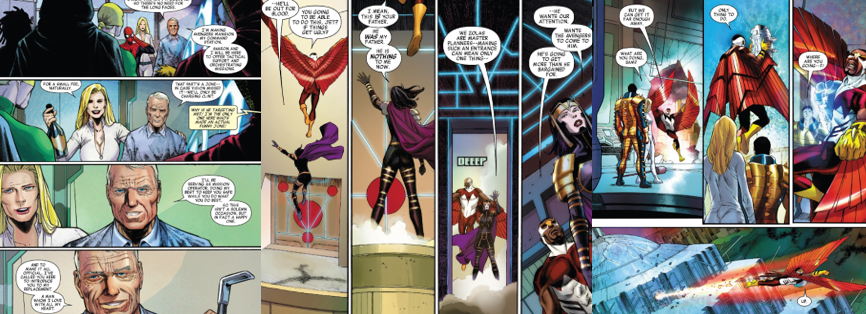
Overjoyed to see Ian alive and that he’s come to help, Steve proudly introduces him to his fellow Avengers but distraught to learn that Ian’s been fighting Zola alone for the last ten years. Steve then gets a call from the Falcon, who relays the extent of Zola’s attack: thanks to the city’s birds, Sam has seen the monsters rapidly spread throughout New York City. Jet Black then reveals she knows a way into her father’s fortified tower that may help them to stop the invasion and calls upon the Avengers to go along with her father’s plan, which is to face him head-on, to provide a suitable distraction. The Avengers readily accept, taking the fight to the ravenous, near-mindless hoards alongside their new ally, and are initially unimpressed by Zola’s forces. However, they’re soon confronted by Zola’s “hyper-mutates”, warped, monstrous copies of the Avengers that call themselves the “Unvengers”! Meanwhile, Jet Black and the Falcon easily infiltrate Zola’s tower, affirming that her allegiances lie anywhere but with her crazed father and insisting on using her position as the madman’s daughter to throw off his mutate guards. The plan works and they advance through the tower, only to find Sharon held hostage in a pitiful cell! After learning about Sharon’s predicament from Sam, Steve immediately asks Ian to leave the fight to the Avengers and go rescue her; though Sharon warns that such an act was all foreseen by Zola. When Jet confronts her father in his control room, he all-but guarantees the Red Skull that he can win her over to their side, claiming everything she’s done – even her betrayal – was also all part of his manipulative will. The Falcon breaks up the tense family reunion, tackling Zola out the window and sending him crashing to the streets below. Zola recovers near-instantly, however, his patience with his “perfect child” wearing thin, but the Falcon immediately intercepts him in mid-air.

Though the Avengers turn on Jet, Sam survives to take up the Captain America mantle.

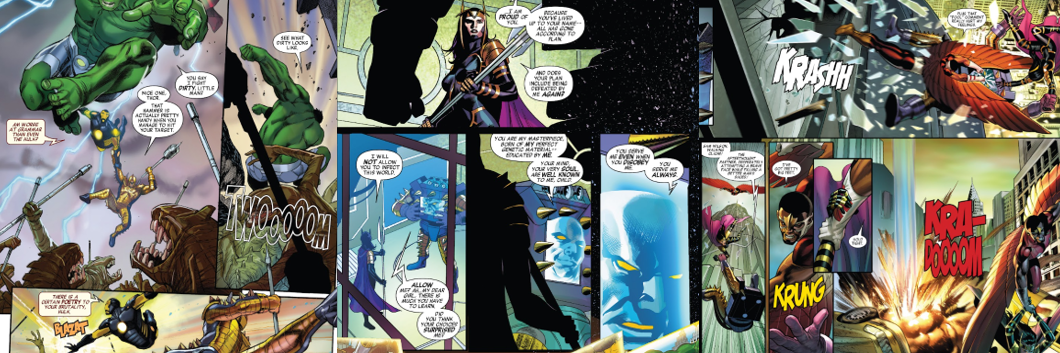
Raging at Zola for his ill treatment of Jet, the Falcon fights valiantly even as Zola smashes a bus onto the mis-matched hero. When Jet rushes to his aid and Zola sees how much she cares for the Falcon, Zola vows to murder him to rid her of such weaknesses all while hypocritically declaring his undying love for her! Thanks to Sharon, Steve warns the Falcon that Zola plans to blow up Avengers Tower, though Sam inadvertently kickstarts the detonation when he has Redwing remove Zola’s “telepathic broadcast doohickey”! When the Unvengers keep Iron Man from helping and Ian and Sharon are unable to disarm it, the Falcon bravely and selflessly grabs the bomb and flies high into the sky, bidding an emotional farewell to Steve and urging him and Sharon to enjoy their retirement with Ian before the bomb explodes in his arms. A horrified Steve thinks back to when he and Sam first met, the adversity he fought through, and how hard he worked to be a hero without any superpowers, fancy gadgets, or special serum as Iron Man sombrely retrieves the Falcon’s surprisingly intact body. Though Zola pleads with Jet Black to return to Dimension Z where she can be safe from the Red Skull’s looming threat, she angrily rebukes him. Sharon, Steve, and the Avengers gather in quiet mourning, only to be astonished when he comes to and reveals that Stark made him some Adamantium wings, which absorbed most of the blast! Though everyone’s overjoyed by this, Sharon blames Jet for Zola’s attack and accuses her of being a double agent. To Jet’s dismay, even Sam has his doubts and, when the Avengers try to restrain her to investigate, she angrily rushes to Zola’s tower, believing her father was right that her new allies couldn’t be trusted. One week later, seemingly every superhero around gathers at Avengers Mansion, where Steve announces his retirement from superheroics due to his condition (though he and Sharon plan to aid the Avengers with tactical support). He also reveals that Sam is the new Captain America and proudly hands him his shield, entrusting one of his oldest friends with his legacy, which Sam humbly accepts with a cry of “Avengers Assemble!

The Summary:
This was a difficult story to just jump into without context. A lot of modern comics are like that, with one series of mini arcs leading to the next, all of it part of a bigger picture. I get it and I accept it and I know there’s some onus on the reader to maybe get some background before diving in feet-first. However, since I’m mostly going on some background reading and what the “Previously…” recap is telling me, there were a few characters and events that I wasn’t very familiar with. Jet Black and Ian Rogers were two main examples; I knew Steve aged into an old man around this time, but I didn’t realise he took a son and a protégé as well. Consequently, Ian’s big reveal didn’t impact me as much as other, more invested readers but I think Rick Remender did a great job of conveying Steve’s shock and joy at seeing his son alive and well. I loved that Steve proudly introduced him to his surrogate family, the Avengers, and that Ian wasn’t some bitter, twisted soul looking to kill his adopted father. Instead, we got a young man who’s actually happy to see and fight alongside his father for a change, something very rare in comics. Ian meshes well with the Avengers, sporting a smart mouth and a capable agility despite his years of fighting against his maniacal father and living in a nightmarish alternate dimension. Similarly, I didn’t have much of a connection with Jet Black but I think the story did a good job of showing her as a character just trying to find her way. I liked her blossoming relationship with Sam (even if his reaction at waking up with her was a little odd) and that she willingly and selflessly opposes her father once he arrives. She does nothing except lash out against Zola, rebuking his offers and voicing her hatred of him even as he tries to win her over with his silver tongue. And, for all her efforts and hard work and personal turmoil, Jet is met with suspicion and accusations from even her own brother. Thus, she’s driven from her newfound allies and retreats back to Zola, devastated to learn that he was right and that she would never be accepted as one of them all because Sharon blew her lid and Sam barely even vouched for Jet’s trustworthiness.

For a story meant to be Sam’s crowning moment, he was strangely portrayed throughout.

Indeed, I hope subsequent issues delved into Sam’s feelings regarding this. He barely says anything when Sharon accuses Jet and gets only one panel where he seems conflicted or upset by what he sees as a betrayal. It’s a weird way to end the conflict, especially considering everyone was just mourning Sam’s loss and celebrating his survival. Sam’s selfless actions and his commitment to justice despite lacking any superpowers are the qualities that make him suitable to take up the Captain America mantle, yet this feels somewhat tarnished since he didn’t showcase any loyalty to Jet or any conviction in defending her. He stood there, stunned, and let everyone run their mouths, which doesn’t scream “Captain America” to me. In fact, this is a bit of an odd story to introduce Sam as Cap in general, really. For most of the issues, he’s not really doing anything except flying around and reporting intel to the Avengers. Sure, this is useful from a tactical standpoint but the mutates were swarming everywhere; I’m pretty sure the Avengers would’ve spotted them without him. The Falcon does take the fight directly to Zola, infiltrating his tower with Jet Black, and he does valiantly fight the cybernetic madman despite clearly being outmatched. During this fight, the Falcon also sticks up for Jet in a way he fails to do once the conflict is resolved and his fighting spirit is certainly commendable, but I feel like any hero would’ve fought just as hard in his stead. The Falcon making the sacrifice play is a great shorthand for the mentality needed to be Captain America but, again, it feels a touch hollow. Like, Iron Man was just about to take care of the bomb before he got interrupted and Sam probably wouldn’t have had to make that call if he hadn’t yanked out Zola’s broadcast device. It just felt a bit rushed and out of nowhere to me and I can’t help but wonder if maybe it would’ve been better to play things a little closer to the ground. Like, have Zola threaten to kill a group of civilians and have Sam shield them with his wings and seemingly be beaten to death, or something like that. Just something a little less random and a bit more in-line with his status as a more grounded, “human” superhero.

I liked that Steve passed on the mantle but the story felt oddly rushed at times.

On the plus side, Carlos Pacheco and Stuart Immonen do good artwork. I liked Iron Man’s darker armour and Ian’s totally nineties emo armour (I mistook him for Robbie Baldwin/Penance at first), though Jet Black felt a bit overdesigned. Similarly, while Sam’s Falcon outfit is a vast improvement over his debut costume, I can’t say I’m a big fan of his Falcon/Captain America hybrid suit. He reckons it’s “sexy” but it looks a bit of a mess to me, with miss-matching colours and a far too “busy” design. Maybe if his chest emblem was just the star, which was an extension of his weird-looking cowl, I’d like it more. I dunno, it just looks uncomfortable to wear and a pain in the ass to draw. I quite enjoyed the passing of the torch, though, in concept. I like seeing Steve rendering incapable of continuing as Captain America and retiring to a more sedentary life, though I do think Bucky is a better choice to take up the mantle. I get the idea that Captain America is a symbol of what a normal man can strive to be, but Steve was at least partially superhuman thanks to the super soldier serum. Then again, considering the Falcon survived having a bus dropped on his head, it’s safe to assume he’s more durably than Joe Public. I really like seeing all the other heroes immediately accept and endorse Sam; there was no question or objection, and he slipped into the role effortlessly. However, I feel he didn’t play a big enough role in this conflict. He fought Zola, sure, but to a standstill and didn’t defeat him; he just stopped his plan, and he lost his girl in the process. It’s a weirdly, tonally confused story for me and a strange way to usher in a new Captain America, though I was left curious to explore how Sam adapted to the role and the fallout from this adventure.

My Rating:

Rating: 3 out of 5.

Pretty Good

What did you think to Sam’s promotion to Captain America? Do you agree that this was a strange story to make that change or did you like the way it went down? What did you think to Sam’s suit, and do you like seeing him in the role? Were you disappointed that the Unvengers didn’t do more, and that Sam didn’t try harder to defend Jet Black? What are some of your favourite moments from Sam’s time as Captain America? Use the comment section below to share your thoughts and go read my other Marvel and Captain America content on the site.

Movie Night: Avengers Confidential: Black Widow & Punisher

Released: 25 March 2014
Director: Kenichi Shimizu
Distributor: Sony Pictures Home Entertainment
Budget: Unknown
Stars: Jennifer Carpenter, Brian Bloom, Grant George, JB Blanc, Eric Bauza, and John Eric Bentley

The Plot:
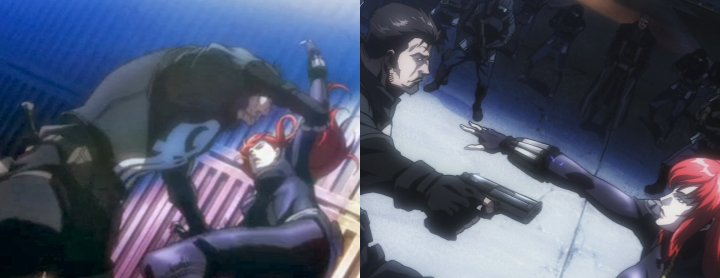
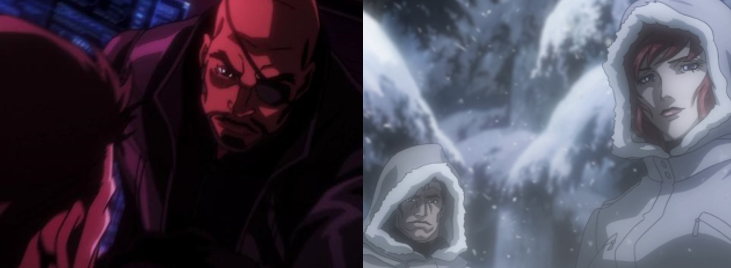
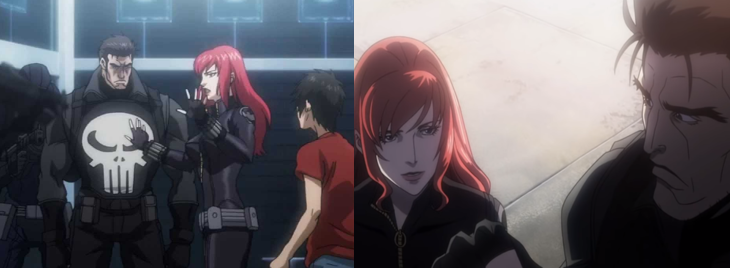
After interfering with a top secret mission, Frank Castle/The Punisher (Bloom) is apprehended by Strategic Hazard Intervention Espionage Logistics Directorate (S.H.I.E.L.D.) agent and Avenger Natasha Romanoff/Black Widow(Carpenter) and the two are ordered by director Nick Fury (Bentley) to stop the terrorist organisation known as Leviathan selling stolen S.H.I.E.L.D. technology.

The Background:
After his impressive debut in the pages of The Amazing Spider-Man #129, the Punisher quickly became one of Marvel’s most popular anti-heroes thanks to his tragic backstory and unwavering commitment to the eradication of crime. His popularity has led to the character appearing in a number of multimedia projects outside of the comics, including videogames and both live-action and animated portrayals. Between 2010 and 2011, Marvel Entertainment teamed up with Japanese animation studio Madhouse to produce four anime projects, known as Marvel Anime, to little success. Avengers Confidential: Black Widow & Punisher was the follow-up to those projects; released mid-way through “Phase Two” of the massively successful Marvel Cinematic Universe (MCU), the anime drew a mixed reception despite making over $1 million in domestic home video sales.

The Review:
The movie opens to find the Punisher monitoring a rise in criminal and gang activities, as well as newspaper reports on himself, from his apartment (which, as is tradition, doubles as his armoury) while Black Widow expresses frustration at the Punisher’s mounting reputation as a vigilante. The opening credits play over a very quick montage of stills and images that give a quick recap of each character’s background and origin, showing Frank’s time as a family man and the deaths of his family in a mob hit and Natasha’s time training as a spy and assassin and association with S.H.I.E.L.D.

The Punisher and Black Widow appear to be physical equals but their fights are constantly interrupted.

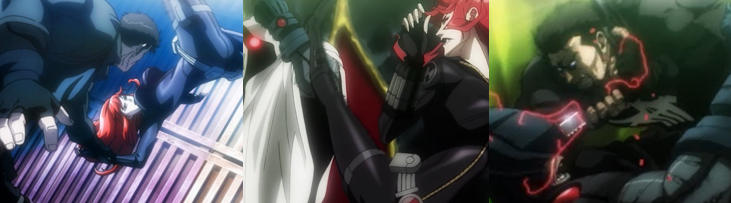
The Punisher makes short, brutal work of some black-market weapons dealers, filling them with bullet holes and easily taking them apart by himself (despite them having more weapons and the numbers advantage) until only one man, Cain (Hebert) is left. Though disturbed at the high-tech weaponry Cain was selling, his efforts to torture more information out of the perp are interrupted by the arrival of Black Widow. Unimpressed with Fury’s operation and Widow’s criticism of his methods, a fight between the two ensues; though the Punisher demonstrates greater physical ability and immediately goes for his pistols, Widow is easily able to match him blow for blow with her superior acrobatic skill until Fury (modelled after his Ultimate and MCU counterpart) and his soldiers interrupt and Frank is subdued by one of Widow’s tranquiliser darts. However, during all the commotion, Cain manages to slip away unnoticed.

Fury manages to coerce Frank into teaming with Black Widow to infiltrate a Leviathan base.

Aboard the S.H.I.E.L.D. Helicarrier, Fury attempts to reconnect with Frank, whom he has a shared history with, and to impress upon him that his methods, while effective, are disrupting the bigger picture since he has started to interrupt S.H.I.E.L.D.’s procedures. Frank, however, is disgusted at the potential lives Fury’s methods have cost and it’s very quickly established that he and S.H.I.E.L.D., while working towards the same goal, are diametrically opposite. Still, Fury is able to inform Frank that the terrorist organisation Leviathan is selling stolen S.H.I.E.L.D. technology and the two are able to reach an agreement since the Punisher sees that the only reason he has been brought into custody is so that he can be unleashed upon Leviathan. Teamed with Black Widow, the Punisher shares the information Cain gave him and, begrudgingly, the two head to a Leviathan base in the frozen wastes of Slovenia; Widow exposits some background on Leviathan, who have grown into a sophisticated and deadly terrorist organisation that, it is soon revealed, has begun to experiment in created super soldiers and bioweapons. Thanks to their unique skills and training, the two are easily able to infiltrate the base and dispatch of the handful of guards with lethal effectiveness, but the Punisher immediately goes off script as soon as he spots Cain and another fight between the two breaks out.

Amadeus accidentally sends the Punisher on a rampage with Leviathan’s mind control technology.

This time, however, it’s much briefer and Frank simply storms out and leaves Widow to blindly follow Fury’s orders. Although he captures Cain, his efforts to torture him for more information are once again thwarted when Cain blinds him with a flash of light and slips away once more. Continuing on mission alone, Black Widow subdues the Leviathan scientists non-lethally before being attacked by her former lover, and ex-S.H.I.E.L.D. agent, Elihas Starr (George), who faked his death and has joined Leviathan. Angered at his betrayal, Widow is no match for Elihas, who easily avoids, counters, and matches her frantic attacks while expositing that he chose to develop super soldiers for Leviathan to prove himself worthy of being Natasha’s equal and partner. Elihas attempts to convince Widow into joining him in Leviathan but, though heartbroken at his betrayal, she vehemently rejects him and fights him with renewed vigour and purpose; the Punisher aids her and destroys the facility and the two bring Cain’s cell phone to S.H.I.E.L.D.’s resident kid super genius, Amadeus Cho (Bauza). Though slovenly, excitable, and a teenager pervert, Amadeus is able to decrypt the phone but inadvertently sets the flash function off once again, which puts the Punisher into a bloodthirsty trance that sees him killing numerous S.H.I.E.L.D. agents before he is brought back to his senses. However, while Widow advocates for the Punisher’s state of mind, he is shaken at his actions and willingly submits himself to S.H.I.E.L.D. incarceration after killing innocent men.

United by a common goal, the Punisher and Black Widow eventually form a mutual respect.

Natasha is left feeling further betrayed when Fury reveals that he not only knew about Elihas but was also fully aware that leviathan possessed mind control technology and that he had stolen the Avengers’ blood in order to create his super soldiers. This is, of course, perfectly in keeping with portrayals of Fury as the ultimate spy whose “secrets have secrets” but his willingness to sacrifice both her and the Punisher spurs Black Widow into defying Fury’s orders and convince the Punisher to help her bring down Elihas and Leviathan. This takes the two to an underworld auction in Mandripoor where Elihas’ super soldiers are being sold off to a number of Marvel’s notorious supervillains and, ultimately, forces the two to pool their resources as a more effective team rather than being at odds with each other. In the end, though the two have opposing methods and beliefs, they are able to find some common ground and build a mutual respect for each other’s methods that culminate sin Widow willingly letting Frank return to his never-ending, one man war on crime rather than arrest him as per Fury’s orders.

The Nitty-Gritty:
Of course, every anime lives and dies by the quality of its animation and Avengers Confidential is a pretty slick and smoothly animated feature. Blood and gore fly in the air with a beautiful grace and characters move with either grace and poise or a heavy, weighty physicality when not standing around like statues. Amadeus is probably the most over the top character in terms of his animation, which plays into his quirky and impulsive personality, and the film does a decent job of emphasising the differences between its two main characters through their movements and physicality as much as their personalities.

While the Punisher is a blunt, brutal instrument, Black Widow is sleek and efficient.

The Punisher is cold, blunt force while Black Widow is slick efficiency; the Punisher seems disconnected from humanity and focused only on solving problems in the most direct way possibly, while Widow (and Fury) are concerned with the bigger picture and a strategic approach to secured the safety of millions. The Punisher’s presence turns a lot of heads around S.H.I.E.L.D., who view him with a mixture of awe and fear, and he earns this reputation thanks to his vicious efficiency; when under the influence of Leviathan’s mind control, he resembles little more than an emotionless killing machine. In comparison, Widow is effortlessly smooth and sexy in her movements, moving like liquid and with a serene grace that allows her to easily incapacitate even larger foes. Initially, Elihas is positioned as the primary antagonist of the feature and, thanks to his rushed connection to Black Widow, ensures that Natasha has a more personal stake in the film’s events beyond simply doing her duty to safeguard the world from Leviathan’s technology. Elihas exposed himself to his own super soldier serum, augmenting his strength and abilities in an effort to prove himself worthy of Widow’s love; though he believe that she loved him in the past, he was spurred by her always choosing missions with the Avengers and her life as a superhero over him and resolved to find a way to truly be her equal. Elihas truly believes that S.H.I.E.L.D. is actually oppressing people rather than saving them and that war and conflict are inevitable; as a result, he is perfectly fine with escalating and even starting wars with Leviathan’s technology and resources and sees his super soldiers as the next logic step towards consolidating their influence on the world.

Both the Avengers and Orion show up too late to do much of anything.

Although the Avengers get top billing in the film’s title and feature prominently on the DVD artwork, they don’t actually play a big role in the film and only show up right at the end. Despite having defied Fury’s orders, Black Widow and the Punisher’s mission to stop Leviathan is provided much-needed support when Tony Stark/Iron Man (Matthew Mercer), Doctor Bruce Banner/The Hulk (Fred Tatasciore), Thor Odinson (Unknown), Clint Barton/Hawkeye (Mercer), James Rhodes/War Machine (Unknown), and Carol Danvers/Captain Marvel (ibid) all arrive to help fight off Leviathan’s super soldiers. This leads to some high-octane action but never really overshadows the more grounded and gritty storyline featuring the two leads, who remain at the forefront of the narrative thanks to Natasha’s arc with Elihas and the Punisher’s vendetta against Cain. This is made even more explicit with how unimpressed the Punisher is by Stark’s bravado and the Avengers’ powers and abilities; he’s there with a mission to fulfil and merely tolerates their presence rather than jumping at the chance to join forces with Earth’s Mightiest Heroes. The true head honcho of Leviathan is the mysterious Orion (Blanc), a semi-cybernetic, cloaked madman who doesn’t even physically appear until the last moments of the film. However, despite Orion’s influence and power, we learn basically nothing about him and he is ultimately unable to hold sway over Elihas; during his climatic and emotionally charged showdown with Black Widow, Elihas finally comes to his senses and realises that the love they two of them shared is still there. This proves to be his undoing, however, as he sacrifices himself to save Natasha’s life after Orion shoots at her and dies in her arms. The film does a decent, if rushed job, of trying to place some emotional significance on Elihas’s character and sacrifice but I find myself oddly apathetic since I have no idea who he is; all of their backstory is conveyed through flashbacks and is told to us. We never get to see them as a proper couple or in action together, which I feel hurts the emotional core of their story; he an extra five or ten minutes been included at the start of the film to show their relationship before his downfall, this might have gone a long way to addressing that issue.

The Summary:
Avengers Confidential: Black Widow & Punisher is a really weird production, to be honest; the animation is great and it has that slick, silky smooth quality that you expect from an anime and some brutal, bloody fight scenes but I’m not really sure what the purpose of it is. As far as I can tell, it’s not supposed to tie into any other Marvel production, which makes characters such as Elihas, Orion, and Leviathan very underdeveloped and inconsequential since I have no real personal stake in their story or motivations, and they exist solely to give the title characters someone to fight against and force an emotional conflict for Black Widow. I feel like Punisher is a strong enough character to have carried the anime by himself but, while it is interesting to juxtapose his more extreme measures with the likes of the Avengers and S.H.I.E.L.D., this doesn’t really work when partnering him with Black Widow. Sure, her methods and motivations are different enough but she’s still a spy, a former assassin, with plenty of “red in her ledger” so I can only imagine that she’s partnered with the Punisher to give the anime some sex appeal. In the end, it’s a short and decent enough story; it doesn’t really add anything new to the Punisher or show you anything you can’t see in other Marvel animations or productions but it manages to be just entertaining and action-packed enough to stay afloat despite its mediocre plot and characterisations.

My Rating:

Rating: 2 out of 5.

Could Be Better

Have you ever seen Avengers Confidential: Black Widow & Punisher; if so, what did you think to it and how do you think it holds up against Marvel’s other anime and animated depictions of these characters? What did you think to the concept of teaming these two up and the animation style? Do you think it would have been better to see a solo Punisher feature or to emphasise the more popular Avengers more or were you happy with the story it told? Do you know who Elihas Starr is and, if so, can you tell me why I should care? What is your favourite Punisher story, character, and adaptation (whether it be a movie or videogame)? How are you celebrating the Punisher’s debut this month? Whatever your thoughts on Avengers Confidential: Black Widow & Punisher, and the Punisher in general, drop a comment down below.

Back Issues: Tales of Suspense (Featuring the Power of Iron Man) #57

Story Title: “Hawkeye, The Marksman!”
Published:
1 September 1964
Writers: Stan Lee and Larry Lieber
Artists: Don Heck and Larry Lieber

The Background:
In November 1941, Mort Weisinger and George Papp introduced readers to Oliver Queen/Green Arrow, a crimefighting archer heavily influenced not just by Robin Hood and The Green Archer (Horne, 1940) but who also borrowed more than a few inspirations from Bruce/Wayne/Batman. In perhaps one of the more blatant borrowings from their competitor, Marvel Comics later introduced an archer of their own, Clint Barton/Hawkeye. Created by Stan Lee and Don Heck, Hawkeye was initially portrayed as a villainous character but would soon repent his mercenary ways and go on to not just be a member of the Avengers, but even lead his own off-shoot, the West Coast Avengers. Despite sharing a similar gimmick, Green Arrow and Hawkeye couldn’t be more different in terms of their personalities and status; indeed, while Hawkeye may have been a D-list hero in the grand scheme of Marvel Comics, he was involved in some of their most prominent storylines and became a household name thanks to Jeremy Renner’s portrayal of the character in the Marvel Cinematic Universe. Consequently, for many, the character is one of Marvel’s most relatable and inspirational heroes since he lacks any kind of superpowers and he’s even become a symbol of representation for the deaf community in recent years, and it all started here with his first appearance as an antagonist for ol’ shellhead himself, Tony Stark/Iron Man.

The Review:
It’s hard to say definitively, but I’m fairly certain that I’m far more familiar with the exploits of Green Arrow than Hawkeye. To be fair, it’s probably about 50/50; maybe weighted a little more towards Hawkeye as he tends to show up in the Avengers stories I’ve read. I mostly know Hawkeye from his appearances in the first season of the under-rated Iron Man cartoon (1994 to 1996) and from being a playable character in Captain America and the Avengers (Data East, 1991), both of which were firm staples of my childhood. I’m also relatively familiar with his background and characteristics, but have always been somewhat…meh about him. I don’t really care that he’s an archer or that he doesn’t have any superpowers, as plenty of superheroes get by just being regular people with extraordinary gifts, and I’ve never really questioned his capability as an Avenger, I’ve just never had much of an inclination to seek out any of his stories even though I’m a fan of Jeremy Renner’s portrayal of the character in the Marvel Cinematic Universe. Thus, I went into “Hawkeye, The Marksman!” without any real expectations and with an open mind, ready to see how Marvel handled his debut story, which opens with Iron Man heroically saving a factory worker from being doused by molten steel. This story is set during the time when the official line was that Iron Man was Tony Stark’s personal bodyguard, so no one really questions what ol’ shellhead is doing flying about one of Stark’s weapons facilities, but this also means that Harold “Happy” Hogan has no idea that he’s pouring his heart out to Stark himself when he asks Iron Man to grease the wheels with Stark’s secretary, Virginia “Pepper” Potts, to get him a date.

Hawkeye is so jealous of Iron Man that he crafts a costumed identity to earn the respect of the public.

While Stark now has a reputation as a womaniser, at this point he’s reluctant to get serious with any female since he’s entirely dependent on the transistor-powered device permanently grafted to his chest to keep him alive from the deadly shrapnel lodged dangerously close to his heart, and yet he longs for a more intimate relationship with Pepper and can’t help but feel jealous at Happy’s advances towards her. However, when Stark attempts to raise the subject with Pepper, he makes a poor attempt at it and she immediately assumes that he’s asking her out so she readily accepts, much to the heartache of Stark’s faithful footman. Rather than try and explain things to Pepper, or give her the brush off, Stark decides to take her on a date but not to a fancy theatre show or to dinner; instead, he takes her to Coney Island, where an archer known as Hawkeye fails to impress the sceptical crowd with his perfect marksmanship. While Stark is desperately hoping that Pepper doesn’t suggest riding the Tunnel of Love or moving on to a more intimate setting, fate intervenes (as it so often does in Marvel tales) when the Flying Pinwheel suddenly goes out of control, endangering the lives of its passengers. Seeing the crisis, Stark excuses himself with a paper-thin white lie (“I’ve got to call the factory!!”) so he can clamber into his Iron Man suit (which he generally carries around in a briefcase, though the artwork doesn’t show him holding it here…) and save the day, much to the adulation of the crowd. One man who’s not so impressed, however, is Hawkeye; annoyed that the audience dismisses him in favour of Iron Man, he sulks off to a “basement workshop” to put together a garish outfit for himself in order to emulate the Golden Avenger’s reverence as a costumed adventurer. Armed with little more than a quiver full of specially-made arrows and his unmatched marksmanship skills, Hawkeye vows to show up every other masked hero out there even without any superpowers and immediately feels the thrill of swinging across rooftops using his roped arrows and stopping a jewel thief with a perfect shot.
Assumed a thief, Hawkeye falls under Black Widow’s spell and is soon going up against Iron Man.
Unfortunately, Hawkeye’s decision not to deliver a fatal shot to the thief results in the crook getting away and, as the archer is investigating the loot of precious stones the man stole, he’s discovered by the cops and immediately pegged as the perpetrator. Choosing to run rather than waste time explaining himself, Hawkeye is randomly picked up by none other than alluring Russian superspy Natalia Romanova/Black Widow, herself also a recurring femme fatale for Iron Man during this time. Instantly smitten by the captivating spy, Hawkeye willing allows himself to be taken to her luxurious estate, where Black Widow is easily able to charm him into going up against Iron Man in exchange for upgrading his arsenal and the implied promise of winning her over if she’s able to defeat the Avenger. Speaking of whom, Stark’s personal life continues its drama as, when he goes to apologise to Pepper for leaving her high and dry, he finds that she’s soured on him and has finally agreed to date Happy (although she does this purely to make Stark jealous. Poor Happy!) To lure out his foe, Hawkeye easily sneaks into one of Stark’s factories and causes an explosion with one of his trick arrows; sure enough, the Avenger flies in to investigate and is startled when Hawkeye fires at him with arrows laced with a rust-inducing chemical. Realising that the substance is quickly hardening, Iron Man swiftly takes cover and removes his boots and gauntlets (and, as ever, I remain in awe of just how cloth-like Iron Man’s “armour” is). Hawkeye discovers the discarded pieces of Iron Man’s armour and is elated, hoping that analysing them will allow him to learn the Avenger’s secrets and increase his threat ten-fold; while he’s able to escape from the factory unopposed as Stark is frantically (and literally) re-arming himself with spare parts from the facility, it’s not long before Iron Man has tracked the archer down and run him off the road with a blast from his “Power Ray”.

After injuring Black Widow, Hawkeye’s forced to retreat and Iron Man is unable to pursue them.

Since he’s run out of his special rusting arrows, Hawkeye is forced to rely on the rest of his quiver, which Iron Man is easily able to deflect with his magnetic Repulsor Beams. However, realising that his transistors can’t power his weapons forever, Iron Man tries to swoop down and subdue Hawekeye and ends up ensnared in nylon rope strands that restrain him for all of one panel. By the next panel, Iron Man is not only free but crashing into a wooden pier and flinging Hawkeye into the water, which effectively renders the archer unconscious. As the Black Widow looks on with unimpressed disgust, Hawkeye tries one last trick to complete his mission and win over the gratitude of the gorgeous Russian spy: a “Demolition Blast” arrow that he hopes will conquer the Armoured Avenger once and for all. Unfortunately, the arrow simply ricochets off Iron Man’s armoured hide and the resulting energy blast injures the Black Widow with a glancing blow. Grief stricken and aghast at having injured the “only one [he’s] ever loved”, Hawkeye ignores the stunned Iron Man in favour of spiriting the hurt spy to safety on her nearby boat. Thanks to a convenient fog descending, and the fly zone of La Guardia airport, Iron Man is unable to pursue the two and is forced to return to his factory to brood over his complicated social/love life and to wonder where and when his next threat will arise.

The Summary:
“Hawkeye, The Marksman!” actually ended up being a pretty decent little Iron Man story. I should also point out that I’m not massively familiar with Iron Man’s comics either, though I’ve read a decent amount thanks to the various Marvel Platinum complications that Marvel have published. Consequently, it was interesting to see Stark portrayed as a conflicted and lovelorn man who desperately wants to confess his love of Pepper but dare not because of his dependence upon his armour to stay alive. It was also interesting seeing him torn between his feelings for her and his loyalty towards Happy; he wants to do the right thing by his friend, however difficult and tragic that is for him personally, but at the same time he willingly takes Pepper to Coney Island on what she naturally assumes is a date since she’s also besotted by him. This paints Stark as a morally grey individual since he could have easily just given Pepper the brush-off, but he’s got eyes for her so of course he wants to spend time with her, though he also doesn’t want to step on his friend’s toes (even though he already did…) so he takes her to the least romantic place he can think of. If anyone looks really bad in all this, though, it’s Pepper; she’s infused with that besotted obsession that was all-too prevalent in comic books of this era so she naturally jumps at the chance to date Stark and then only agrees to go out with Happy because she wants to make Tony jealous.

Although he’s got no superpowers and is easily led astray, Hawkeye proves to be a formidable foe.

Thankfully, all of this is just a brief distraction from the main focus of the narrative, which is the introduction of Hawkeye. Here portrayed as a talented but underappreciated circus marksman, Hawkeye provides an interesting and little-seen glimpse into another side of Marvel’s fictional world. In Marvel Comics, the public are generally very fickle, easily forgetful and emotionally chaotic people who will laud the accolades of the Avengers one minute while hating and fearing Mutants and the likes of Peter Parker/Spider-Man the next while also tuning on them in either positive or negative ways on the flip of a coin. In a world so readily populated by super-powered individuals, what chance does a simple archer have of impressing the crowd? Thus, it’s no surprise that Hawkeye should feel jealous that Iron Man stole his thunder, consciously or not, and it’s somewhat understandable that he chooses to craft a brightly-coloured outfit for himself in order to share in some of the glory afforded to other costumed heroes. Unfortunately, his first tentative attempt at masked heroics ends with him being labelled a thief and then being manipulated by Black Widow; it really doesn’t take much more than a sultry glance and some irresistible charm from Madame Natasha for him to not only join her cause but to fall in love with her at first sight and, very quickly, Hawkeye’s initial plan to usurp his peers has been twisted into battling Iron Man on the urging of his newfound partner. The result is a surprisingly layered character; we don’t learn much about Hawkeye (his name and full origins are a mystery here) except that he craves acknowledgement of his unparalleled skills and is easily manipulated by a pretty face, and yet I find myself completely relating to his plight. While you could argue that he’s a naïve buffoon who allows himself to be manipulated, I see him as angry and misguided and trying to do the right thing but unable to resist the allure of the gorgeous Black Widow. Even more amusing his how completely clueless Iron Man is to all of this; he doesn’t even realise Black Widow is involved in the plot, treats Hawkeye as a mere annoyance, and is more concerned about his personal troubles than the archer’s threat. In the end, this was an entertaining introduction to Marvel’s most famous archer, who would go on to show additional layers to his personality and motivations in subsequent appearances, and I think the main takeaway from this was the tragedy that Hawkeye wished to be a celebrated hero like Iron Man and was quickly and easily led down a darker path mere moments into his debut as a costumed avenger.

My Rating:

Rating: 3 out of 5.

Pretty Good

Did you read “Hawkeye, The Marksman!” when it was first published? If so, what did you think to it at the time and what were your thoughts on Hawkeye? Did you enjoy his portrayal as a spurned archer looking for adulation or did you find him perhaps a bit corny? What did you think to Stark’s personal drama and did you enjoy Black Widow’s repeated attempts to defeat Iron Man during this time? What are some of your favourite Hawkeye stories and moments? Do you think he’s earned his place as an Avenger or do you find him to be a bit pointless? Whatever your thoughts on Hawkeye, feel free to sign up and leave them below or drop a comment on my social media, and check out my review of his Disney+ series.

Movie Night [A-Day]: Avengers: Age of Ultron


Having introduced comic readers to a whole host of colourful characters, in September of 1963 the legendary duo of Stan Lee and Jack Kirby brought together six of Earth’s mightiest heroes to form the Avengers. A super team like no other, with a constantly rotating roster, the Avengers has become the premier team of Marvel Comics and, thanks to the team and its individual members forming the backbone of the Marvel Cinematic Universe (MCU), have become an unbelievably popular and successful franchise in their own right.


Released: 1 May 2015
Director: Joss Whedon
Distributor: Walt Disney Studios Motion Pictures
Budget: $365 million
Stars: Robert Downey Jr, Chris Evans, Mark Ruffalo, Chris Hemsworth, Scarlett Johansson, Jeremy Renner, James Spader, Elizabeth Olsen, Aaron Taylor-Johnson, and Paul Bettany

The Plot:
After finally defeating the last remnants of Hydra, Tony Stark/Iron Man (Downey Jr), Steve Rogers/Captain America (Evans), Doctor Bruce Banner/The Hulk (Ruffalo), Thor Odinson (Hemsworth), Natasha Romanoff/Black Widow (Johansson), and Clint Barton/Hawkeye (Renner) face an even greater threat when Stark and Banner’s prototype for an artificial intelligence, Ultron (Spader), becomes self-aware and concocts a diabolical scheme to unleash an extinction-level event upon the world.

The Background:
After the unprecedented success of Avengers Assemble/The Avengers (Whedon, 2012), the MCU was well and truly on its way to becoming an unstoppable multimedia juggernaut. Following the conclusion of that film, the MCU firmly entered its second phase and director Joss Whedon stated early on that his intention for an Avengers sequel was to tell a more personal and intimate story rather than necessarily being bigger and better. Taking inspiration more from the likes of Star Wars: Episode V: The Empire Strikes Back (Kershner, 1980) than the Marvel Comics story of the same name, the script initially included the first appearance of Carol Danvers/Captain Marvel, and many were surprised to see Whedon focus on Ultron after teasing Thanos (Damion Poitier) the end of the first film. The script also saw the introduction of Wanda (Olsen) and Pietro Maximoff/Quicksilver (Johnson), who both Marvel Studios and 20th Century Fox were allowed to include in separate film franchises thanks to a legal loophole. Tensions were frayed between Whedon and Marvel’s executives, however, as they disagreed with some of his scenes and choices, which eventually led to Whedon parting ways with the studio. Although Avengers: Age of Ultron made about $100,000 less than its predecessor, it still grossed $1,404 billion at the box office. Critical reception wasn’t quite as universally positive as with the first film, however; while the effects and action were praised, many were disappointed with how overstuffed and mundane the film was.

The Review:
Much has changed in the MCU since the conclusion of Avengers Assemble; not only has the entire world seen that extraterrestrial threats lie beyond our planet, but all manner of strange and powerful cosmic artefacts and concepts are now loosed upon the Earth. One positive that came out of the whole debacle, though, was the formation of the Avengers themselves and, since the last film and the fall of the Strategic Homeland Intervention, Enforcement, and Logistics Division (S.H.I.E.L.D.), the team have dedicated themselves to tracking down Loki Laufeyson’s (Tom Hiddleston) sceptre and erasing the last remnants of the clandestine organisation Hydra, which has secretly been manipulating events behind the scenes ever since World War Two.

Inspired my Loki’s sceptre, Stark convinces Banner to help him create Ultron.

The retrieval of the sceptre is a cause for much celebration within the team as it marks the end of a lengthy campaign against Hydra, but it leads into not only all of the film’s subsequent problems but also opens the MCU up to an ever greater threat lurking deep amongst the stars. Within the sceptre, Tony Stark and Bruce Banner (who had bonded over their keen love for science in the first film) discover a powerful gem, just one of the many Infinity Stones, that holds the key to completing Stark’s plans for a global defence program known as “Ultron” that he is desperate to deploy to protect the world form extraterrestrial threats. Shaken by his experiences in the last film, where he saw just how outgunned and outmatched the Earth was compared to the vastness of the galaxy, Stark is keen to build a metaphorical suit of armour around the world and encourages Banner to assist him in completing Ultron despite the doctor’s reservations. Banner, still a timid and cautious fellow, argues the moral and potentially dangerous consequences of giving birth to an artificial intelligence without the approval of the entire team and without proper testing, but is persuaded to co-operate by the force of Stark’s conviction.

Banner and Romanoff struggle with their pasts, natures, and feelings for each other.

Although in a far more comfortable position within the team and with himself, Banner is still subject to the whim of his green-skinned alter ego. Thanks to his ability to summon the Hulk at will, Banner is a valuable asset to the Avengers out in the field and, in an unexpected turn of events, the Hulk is easily subdued and calmed down by the influence of Romanoff. When in his more stable and timid human form, Banner has a close relationship with Romanoff that sees him clearly besotted by her but missing or ignoring her obvious flirtatious advances. He explains this as him being aware that Romanoff flirts with everyone, and the obvious interpretation is that he is afraid to act on his feelings because of his monstrous passenger, but he later reveals that he is holding himself back because he cannot offer her anything resembling a “normal” life. After the accident that first triggered his transformation, Banner has been rendered sterile and potentially dangerous by the sheer amount of Gamma radiation coursing through his veins, to say nothing of the fact that he can’t allow himself to get too excited for fear of triggering a transformation, burdening the doctor with a tragic loneliness no matter how close he is to his team mates. While it may seem strange that Romanoff is suddenly so infatuated with Banner, he represents a sense of kindness and stability that is often missing from her chaotic and deceptive life; even when Banner is explaining himself to her, she opens up to him and reveals some of the horrendous experiences she suffered in the “Red Room” while being trained as an efficient and ruthless spy. Since this also involved a full hysterectomy, she also sees herself as inadequate and monstrous since she’s not only done countless despicable things in the past but is so pained by her inability to be a “real” woman that she feels she can’t be anything more than the famed Black Widow.

While Thor’s side quest derails things somewhat, it’s great to see Barton’s personality fleshed out.

For Thor, recovering the sceptre spells the end to his brother’s impact upon his beloved adopted world; since the last film, Thor has built quite the rapport with his team mates and their extended families and revels with them as he would conquering Asgardian comrades. Thor is enraged, however, when he sees Loki’s magic perverted into Ultron and very nearly comes to blows with Stark over his reckless actions in meddling with cosmic powers beyond his comprehension. Thor’s concerns over the gem are only exacerbated after his encounter with Wanda, which causes him to suspect a greater threat and seek out his friend, Doctor Erik Selvig (Stellan Skarsgård), to accompany him on a short side quest to learn more about the mysterious gems that keep popping up in his life. After spending the majority of the first film under Loki’s control, Barton gets far more screen time and relevance in the sequel than I think many people expected; rather than focusing on his relationship with Romanoff, the film initially suggests that he may be a double-agent or keeping his own secrets from the team, but dramatically reveals that he has a wife and kids that he has kept quiet from everyone except for Romanoff. Protected and hidden from official records by former S.H.I.E.L.D. director Nick Fury (Samuel L. Jackson), Barton’s family provides refuge for the wounded and exhausted team after their encounter with the twins and goes a long way to fleshing out Barton’s character beyond just being “the guy with the arrows”.

Tensions rise between Steve and Stark as both have very different methods and ideologies.

Finally, there’s Captain America himself, Steve Rogers. Still very much the field leader and default commander of the superhero team, Steve has committed himself to tracking down and eradicating Hydra’s influence as part of the guilt he feels over not finishing the job back in World War Two. Steve’s old-fashioned sensibilities are a source of much amusing banter within the team, but his pure heart, dedication, and moral integrity mean that he’s devoted to saving and protected all lives above anything else. Indeed, he’s so pure-hearted that he’s even able to ever so slightly budge Mjölnir during a friendly competition, is the only one of the team not driven into a paranoid frenzy by Wanda’s cruel visions, and, of course, takes the moral high ground when he sees the consequences of Stark’s arrogance first stumble to life. Burned by the events of Captain America: The Winter Soldier (Russo and Russo, 2014), Cap is understandably annoyed that Stark would go behind their backs and unleash a potentially world-ending threat upon the world, but is also fair and just enough to try and convince the twins of Ultron’s threat and accept them into the team despite the destruction their actions have caused.

Ultron twists Stark’s vision for peace and personality quirks into a megalomaniacal plot for extinction.

As for Ultron…Like a lot of people, I was surprised to see the second Avengers film make a sudden left turn towards Marvel’s famous cyborg maniac, but curious to see how the character would be brought to life. Since Doctor Hank Pym (Michael Douglas) would not make his debut until the following year, the film alters Ultron’s origins and has it be a creation of Stark and Banner (though mainly Stark); personally, I feel like another redraft of the script could have restored Pym as Ultron’s creator and introduced the character earlier, perhaps with Pym also taking the place of Doctor Helen Cho (Claudia Kim) and helping to further set up his antagonism towards Stark and the Avengers in Ant-Man (Reed, 2015). Regardless, I can understand the change, and Ultron’s depiction as this conceited, self-righteous, boastful villain makes for one of the MCU’s most loquacious and enigmatic antagonists if nothing else. Positioned as a dark reflection and extreme perversion of Stark’s desire to protect the world, Ultron learns of humanity’s tendency towards war and self-destruction by first absorbing Stark’s resident A.I., Just A Rather Very Intelligent System (J.A.R.V.I.S.; Paul Bettany) and then trawling the internet. It concludes, as many sentient A.I.’s do, that humanity can only be truly united and learn to survive and prove their worth after suffering from near extinction and sets in motion a dual plot to spread his influence through multiple, disposable copies of itself while forced Cho to construct a near-invulnerable synthetic body and to turn the ravaged nation of Sokovia into a gigantic meteor to drop onto the planet and bring humanity to the brink of desperation…and greatness.

The twins cause havoc with the Avengers before reluctantly joining forces with them to oppose Ultron.

Ultron is assisted by the twins Wanda and Pietro, who were subjected to bizarre and horrendous experiments by Baron Wolfgang von Strucker (Thomas Kretschmann), a Hydra commander who unfortunately gets very little screen time before being killed offscreen but who leaves a lasting impact in his influence on the twins. While the brash and snarky Pietro exhibits superhuman speed, Wanda wields a dangerous and unpredictable red energy that allows her to fire off psionic bolts and manipulate the minds of others. It’s thanks to her influence that Stark sees a vision of the Avengers left decimated and the Earth vulnerable to alien invasion (which compels him to create Ultron in the first place), that Romanoff is forced to relive her traumatic experiences in the Red Room, that Thor learns of the cosmic disaster threatened by the Infinity Stones, and that the Hulk goes on a mindless rampage through Johannesburg. Wanda and Pietro have their own vendetta against Stark that causes them to willingly assist Ultron; Stark’s weapons caused the deaths of their parents and left them trapped, fearing their own death, for two days when they were children. However, when Wanda learns that Ultron’s plan extends beyond killing Stark and destroying the Avengers and into worldwide genocide, the twins turn against the maniacal machine and reluctantly join forces with the Avengers for the action-packed finale.

The Nitty-Gritty:
It’s true that Avengers: Age of Ultron had a lot to live up to; not only was Avengers Assemble a massive, massive box office event, but it changed the course of the MCU and both comic book films and cinema forever. Add to that the decision to title the film after one of the biggest and most complex crossovers in then-recent Marvel Comics and the film definitely had a bit of an uphill battle; I get that titling films “Age of…” was a common practice in Hollywood for a while, and the desire to capitalise on Brian Michael Bendis’ story arc, but I would have picked Ultron Unleashed instead, which would have both paid homage to the comics while also slightly lowering audience’s expectations somewhat. Still, the banter and wit on offer is just as entertaining and compelling as in the first film; the team give Steve a hard time for calling out Stark’s bad language, Thor’s mission report on the Hulk’s actions against Strucker’s forces is amusing (as is his banter with Stark regarding their girlfriends), and it’s nice just see the team relaxing and socialising outside of battle.

While the action is big and exciting, the film primarily sows seeds of dissension between the Avengers.

I think the film gets a bit of a bad reputation because it opts for a more subdued and interpersonal story rather than necessarily being bigger and better; the film starts basically where the first film left off, with the Avengers operating as a co-ordinated and efficient team, sharing banter and doing their parts individually and collectively in the assault on Strucker’s fortress. It took basically the entirety of Avengers Assemble to get these big egos and characters to work through their issues and set aside their personal grievances for the greater good, so to see them in action as a fortified unit is incredibly gratifying as a comic book fan. When Ultron first reveals itself to the team, they instinctively leap into action and the question isn’t whether they can fight together, but whether they can co-exist and stay on the same page regarding the greater threats. While Stark’s actions in trying to pre-empt their defences against these dangers were irresponsible, his motivations are entirely understandable and he was right: the Earth did need to prepare itself for a greater threat, but arguably they would have been in a better position to do that if Stark had consulted with his team mates first. As angry as Thor is with Stark for meddling in cosmic powers, Steve is equally disappointed in his friend’s recklessness and the first hints of friction between the two are sowed in this film; while Steve fully believes that the team is best served working together, win or lose, Stark would rather prepare for the best-case scenario and have contingencies in place, no matter how morally questionable they are.

When Wanda screws with the Hulk, Stark is forced to bust out the awesome Hulkbuster mech!

This is further evidenced in the dramatic and exciting depiction of “Veronica”, a massive mech-suit designed by Stark and Banner specifically to combat the Hulk. A contingency neither wish to see put into action, Stark is forced to call upon this “Hulkbuster” armour when Wanda screws with Banner’s mind and sends the Hulk on a mindless rampage. Although we don’t get to see Banner’s nightmarish vision, we can assume that it must be either incredibly devastating, traumatic, or tragic based on what Stark, Cap, Thor, and Romanoff are forced to relive, and it’s most likely something that ties into the fear Banner and the Hulk have of each other. Either way, the rest is an absolutely massive and incredible impressive brawl between the Hulk and the Hulkbuster; easily Stark’s biggest and most powerful armour yet, the Hulkbuster quickly repairs and rearms itself when damaged by the Hulk and is more than capable of going toe-to-toe with the Green Goliath, however it’s still heavily implied that the suit was designed to quickly overpower and subdue the Hulk, something easier said than done considering the Hulk’s ever-growing rage. Indeed, it’s only after a prolonged beatdown and having a building dropped on his head that Wanda’s influence is finally shaken for the Hulk, who’s left visibly distraught at the damage and destruction he has wrought.

Although the Hulk doesn’t get to talk, the film is full of fun cameos to set up the new Avengers team.

Sadly, despite the Hulk clearly uttering words in Avengers Assemble, the Green Goliath returns to being a largely mute creature who communicates only in growls, grunts, and facial expressions; indeed, he kind of fades into the background by the finale before jetting off to places unknown in order to keep Romanoff safe from his violent nature. While I was quite happy with the amount of Hulk action on offer in the film, it is disappointing that he wasn’t depicted as talking here as I was expecting him to be fleshed out more in that regard. Age of Ultron does, however, have time for a few fun cameos from Colonel James “Rhodey” Rhodes/War Machine (Don Cheadle) and Sam Wilson/The Falcon (Anthony Mackie), who officially join the Avengers by the end of the film, and provides a slightly bigger role for former S.H.I.E.L.D. agent Maria Hill (Cobie Smulders), who largely replaces Phil Coulson (Clark Gregg) and even Fury as the Avengers’ go-to liaison, and all of these characters (except, obviously, for Coulson) play a part in the final battle against Ultron. Another criticism of the film was the shoe-horning in of unnecessary world-building, specifically Thor’s “vision quest” that seems to serve little purpose other than reminding audiences of Thanos’ (Josh Brolin) looming threat. Personally, I never had much of a problem with this as it made Thor pivotal to the creation of the Vision (Bettany); furthermore, much of the film is devoted towards further exploring Stark’s guilt and desperation regarding his friendship with the team and his desire to protect the world, all of which paid off beautifully as the MCU progressed.

Hawkeye forms a bond with Wanda and seems destined to die but it’s Pietro who takes one for the team.

Thanks to being revealed to be a loving and devoted father and husband, Hawkeye slips naturally into the role of a mentor to the twins and the heart of the team; he initially has an antagonistic rivalry with the condescending Pietro but is the only one of the team to anticipate and counteract Wanda’s mind control. When the twins join the team, he helps to integrate them into the Avengers’ code and nowhere is this more evident in the pragmatic and honest pep talk he gives to Wanda, who is overwhelmed by the chaos and insanity of the battle against Ultron’s drones. This perfectly encapsulates not just Barton’s moral centre but also the entire point of the Avengers as a team and a concept: no matter how crazy things get or how unwinnable the odds seem, they shake it off and keep fighting until the very end, regardless of the outcome. Cap reinforces this philosophy when he tells the team: “If you get hurt, hurt ‘em back. If you get killed, walk it off”, and these words have a significant impact not only in encouraging Wanda not to hold herself back in the battle against Ultron but also in Pietro’s decision to be selfless for the first time in his life. Seeing Barton using himself as a human shield to try and protect an innocent child, Pietro rushes in and saves them both at the cost of his own life, a random and absolutely unexpected (and potentially unnecessary) sacrifice that continues to be a little confusing. It appears Whedon decided to kill off Pietro because it would have been too obvious to off Barton, a character who had been set up throughout the entire film as basically doomed and living on borrowed time, but keeping him alive ended up paying off on a longer story arc for the character within the MCU.

Ultron aims to transfer itself into the perfect body, but its Vision grows to oppose and destroy it.

Ultron begins life as a confused and disembodied artificial intelligence; as it quickly absorbs information, its curiosity turns to contempt and it soon perverts Stark’s desire for “peace in our time” to the extreme. It regards Stark’s other creations as mere puppets and is quickly able to learn everything about the team, and the world, and evade true destruction by escaping through the internet and transferring its consciousness halfway across the world into a slew of disposable bodies. As a fully CGI character, Ultron is certainly impressive; the only real complain I have is that I don’t think it needed to have lips. Thankfully, Spader provides an enigmatic and surprisingly layered performance; Ultron fully believes that its actions are just and truly cares for the twins, and is unsettling in its unpredictability as it can be charismatic and almost kind-hearted one minute and then a complete psychopath the next. To help position itself as an unstoppable overlord in its new world, Ultron has Cho create a perfect synthetic body; however, the Avengers are able to intercept this form and, despite concerns about Stark’s recklessness, infuse it with J.A.R.V.I.S.’s consciousness, Thor’s lightning, and the mysterious Mind Stone that was contained within Loki’s sceptre, thus giving birth to a new artificial lifeform dubbed the Vision. Understandably cautious and wary of this new individual, the Avengers’ fears of the Vision’s intentions are immediately set aside when he proves his mettle by being capable of wielding Mjölnir; while I can understand the argument that the Vision’s introduction is a bit rushed and his powers somewhat ill-defined, having him grab Mjölnir like it’s nothing was a great shorthand to tell us everything we needed to know about the character at that point, and he plays a pivotal role in paralleling Ultron’s destructive megalomania with a more pragmatic and reasonable logic.

The Avengers stop Ultron and avert worldwide disaster, unaware of an even greater threat on the horizon.

Having used Stark’s technology, Cho’s research, the power of the Mind Stone, and the near-limitless potential of Wakanda’s Vibranium, Ultron succeeds in lifting Sokovia high up into Earth’s atmosphere. Its inexhaustible army of drones may be simply disposable minions for the Avengers to tear apart, much like the Chitauri, but the stakes are far bigger this time around as the Avengers are forced to hold off Ultron and its copies while also trying to slow or safely stop its make-shift meteor, all while trying to evacuate the entire city onto Fury’s repurposed Helicarrier. They’re successful largely thanks to Wanda who, devastated by her brother’s death, decimates Ultron’s drones and crushes its primary body, ripping its heart out for good measure before the Hulk sends it flying off the floating city. Thanks to Stark and Thor, the landmass is overloaded and blasted to smithereens before it can pose a threat, and Ultron’s final form is seemingly eradicated forever following a philosophical debate with its “son”, the Vision. In the aftermath, Thor returns to Asgard to investigate the Infinity Stones and Stark officially leaves the team to follow through with the promise he made to Virginia “Pepper” Potts (Gwyneth Paltrow) in Iron Man 3 (Black, 2013) and Cap and Romanoff move to a new Avengers facility far outside of the city where they prepare to train a new team of Avengers. However, while all seems well between the team, the Mad Titan, Thanos, arms himself with a glistening gauntlet and prepares to take care of matters personally.

The Summary:
I remember being somewhat underwhelmed by Avengers: Age of Ultron when I first saw it at the cinema; it wasn’t that it was bad, or necessarily worse than Avengers Assemble, but it didn’t really seem to be much better than its predecessor. Avengers Assemble was such a big event because it was the first time these characters were coming together onscreen and I had waited so long so see comic book characters in a shared universe rather than being restricted to isolated worlds, so it always gets extra credit for me due to that and the power of nostalgia. Being just as good as one of the MCU’s best films is nothing to be ashamed of, however, but I think I, like many audiences, was just expecting something a little more substantial from the team’s next big outing. Still, it’s definitely gotten better over time and remains an action-packed spectacle that ties into Phase Two’s themes of challenging the status quo of the MCU and lays the first hints of dissension within the Avengers. Seeing the Avengers in full force never gets old; as much as I enjoy the direction the MCU took, part of me would have liked to see one more film of them as a cohesive unit with the resources of S.H.I.E.L.D. behind them, possibly battling the Masters of Evil, simply because I enjoy the banter and teamwork of the Avengers so much and it’s always a spectacular moment whenever that rousing theme kicks in and the team appears onscreen. While it’s not a perfect film by any means, Age of Ultron introduces a lot of new elements to the MCU and makes an impact with its entertaining action scenes; it’s still amazing seeing Iron Man don the Hulkbuster armour, Pietro’s superspeed and Wanda’s freaky magic add some unique pizazz to the film’s events and finale, but the film really makes its mark with the introduction of the Vision and Spader’s performance as Ultron. A complex and psychotic villain who is all the worst parts of Stark dialled up to eleven, Ultron is both menacing and amusing thanks to its overabundance of personality and snark, and is perfectly juxtaposed by the more life-affirming and analytical Vision. Overall, I feel it’s an under-rated entry in the MCU that is more than deserving of a little more respect and credibility; sure, it’s a little overstuffed and introduces a lot of new elements but, as Ultron states, “with the benefit of hindsight” I think there’s a lot on offer in Avengers: Age of Ultron and that it works wonders for encapsulating the spirit and integrity of the team, perfectly setting them up for their eventual disassembling and climatic reassembling against their greatest every threat, so I’d say it’s a more than worthy follow-up despite some flaws here and there.

My Rating:

Rating: 4 out of 5.

Great Stuff

Are you a fan of Avengers: Age of Ultron? How do you feel it holds up against the first film, and the other Phase Two movies? Were you disappointed with the depiction of the Hulk, Banner’s romance sub-plot with Romanoff, and Pietro’s sudden and dramatic death? What did you think to the new characters introduced to the team in this film, specifically Wanda and the Vision? Where does Ultron rank amongst the Avengers’ villains for you and what did you think to the alterations made to his origin, and Spader’s performance? Would you have liked to see one more Avengers movie before the team splintered and, if so, which characters would you have liked to see added to the team? How are you celebrating the debut of the Avengers today and what are some of your favourite Avengers storylines, characters, or adaptations? Feel free to sign up and share your thoughts and opinions on the Avengers in the comments below, or drop me a line on my social media.

Movie Night: Captain America: Civil War

Released: 6 May 2016
Director: Anthony and Joe Russo
Distributor: Walt Disney Studios Motion Pictures
Budget: $250 million
Stars: Chris Evans, Robert Downey Jr., Scarlett Johansson, Sebastian Stan, Anthony Mackie, Elizabeth Olsen, Daniel Brühl, and Chadwick Boseman

The Plot:
After saving the world, Steve Rogers/Captain America (Evans) and Natasha Romanoff/Black Widow (Johansson) work alongside a new team of Avengers. However, Wanda Maximoff’s (Olsen) unpredictable nature threatens to the the team unless they fall under governmental jurisdiction. This causes tensions between Steve and Tony Stark/Iron Man (Downey Jr.) that are exacerbated when Helmut Zemo (Brühl) activates James Buchanan “Bucky” Barnes/The Winter Soldier’s (Stan) brainwashing.

The Background:
Considering that Captain America: The Winter Soldier (Russo and Russo, 2014) was such a massive hit and that, by 2016, the Marvel Cinematic Universe (MCU) had basically become an unstoppable franchise juggernaut, a third Captain America movie was never in question. The first film of Phase Three of the MCU was originally revealed under a very different title before it was revealed to be taking inspiration from the controversial storyline of the same name. Pitched as a psychological thriller, Captain America: Civil War quickly became the biggest solo Marvel movie when many returning characters and Avengers signed on to feature. The film saw not only the debut of a new team of Avengers and the introduction of T’Challa/Black Panther (Boseman) but also the long-awaited inclusion of Peter Parker/Spider-Man (Tom Holland) to the MCU. The directors lobbied hard to include Spider-Man and, after much negotiating, Marvel were able to reach an agreement with Sony Pictures to recast and share the character. Though ostensibly Avengers 2.5, Captain America: Civil War was incredibly successful; it made over $1.150 billion and was the highest-grossing film of 2016. Like its predecessor, the film was almost universally praised; while some criticised the film’s bloated cast and premise, many were impressed with the film’s action and intrigue and the dramatic way it fractured the Avengers to set the stage for the MCU’s biggest film yet.

The Review:
I honestly can’t say that I really had much of a reaction when I found out that the third Captain America movie wouldn’t be tackling the Serpent Society; I only really know the group from the Avengers: Earth’s Mightiest Heroes (2010 to 2012) cartoon, where I found them to be annoying and over-used. However, I was a bit concerned when it was revealed that Marvel Studios would be adapting the “Civil War” (Millar, et al, 2006 to 2007) storyline as not only was I not a fan of how out of character everyone (especially Iron Man) acted in that story but the MCU Avengers had just ended Avengers: Age of Ultron (Whedon, 2015) on a high note and, like the downfall of the Strategic Homeland Intervention, Enforcement and Logistics Division (S.H.I.E.L.D.), it seemed a bit too soon to be tearing these characters apart when they were still so new as a group.

Cap’s efforts to train a new Avengers team are disrupted when his loyalties are divided.

One thing I’ve always found odd about the “Civil War” storyline is the fact that Captain America, the living embodiment of America’s ideals, is the one fighting against the government and Stark, the arrogant industrialist who actively spits in the face of governmental boards, is the one pushing for registration and culpability. Yet, it sends a clear message when the bastion of truth and freedom finds something oppressive about the ruling body and Steve is a proud man who sees the world in old-fashioned shades of black and white and has learned enough about the modern world to become suspicious of those who wield too much political power and who just wants to do the right thing without compromise. The trailers and hype for the film excited me and I was keen to see a Marvel solo movie featuring so many additional costumed characters in supporting roles as I am a big fan of that in my superhero movies after years of them all living in isolated bubbles. Plus, even with the expanded cast, the film remains, at its core, a Captain America story and is completely focused on Cap’s divided loyalties between his Avengers team-mates and his old friend-turned-brainwashed assassin, Bucky. Cap begins the film as the field commander of the newly-formed team of Avengers we first saw at the end of Age of Ultron; as always, he is all business when on the job and determined to teach the younger members of the team, like Wanda Maximoff, how to best scope out potential targets and situations and build a rapport as a team.

Wanda’s unpredictable powers are the catalyst for the film’s events.

The catalyst for the eventual conflict within the Avengers is Wanda; unlike the other members of the Avengers, she’s still very young, inexperienced, and an outsider. Add to that the fact that her “Hex Powers” are both unpredictable and volatile and she is a bit of a powder keg, despite her generally calm and composed demeanour. Deep down, she just wants to help people and do the best she can so, when she instinctively uses her powers to hurl Brock Rumlow/Crossbones (Frank Grillo) into the air to keep his suicide bomb from killing innocents, she is devastated when her throw goes awry and kills several Wakandan humanitarians. Although Steve tries to console her, rightfully pointing out that no-one, however (super)powerful can save everyone, she only really feels a connection with the Vision (Paul Bettany), another being born of an Infinity Stone to whom she has grown very close and who desires to not only explore his abilities and humanity but who also seeks to understand the nature of the Infinity Stone embedded in his forehead.

The Avengers are divided on the Sokovia Accords, which would see them conform or retire.

Cap’s team is also comprised of his friends, Sam Wilson/The Falcon (Mackie) and Black Widow. Now much more comfortable in his role as a superhero, the Falcon has built a camaraderie with the other Avengers and is a vital member of the team thanks to his drone, Redwing, and his specialised flight suit, both of which allow him to provide unprecedented air support. Natasha, meanwhile, continues to be an absolute bad-ass in the field, striking with speed, precision, and power, while also sharing the responsibility of teaching Wanda how to conduct herself out in the field. They, and many of their team mates, live and train at a specialist compound, paid for by Stark’s not-inconsiderable funds. Stark, meanwhile, has semi-retired from the superhero life and is only brought back into the fold after the incident in Lagos which, especially after the devastating events in Sokovia in Age of Ultron, call into question the unchallenged actions of the Avengers. Thus, in a continuation of his growing sense of impending cosmic danger and his desire to protect the planet by any means necessary (and due to his guilt at being responsible for collateral damage caused by the Avengers’ actions), Stark is immediately onboard with the “Sokovia Accords”. Although Thaddeus “Thunderbolt” Ross’s (William Hurt), now promoted to Secretary of State, acknowledges that the world owes the Avengers an unpayable debt, he stresses that they must register to answer to a democratic committee before acting so that they can be properly held accountable for their actions. The Sokovia Accords rattle each member of the team in different ways based on their previous experiences and relationships; James “Rhodey” Rhodes/War Machine (Don Cheadle) and the Vision, for example, look at the numbers and the orders and, influenced by their relationship with Stark, believe that signing the Accords is the only logical action whereas Sam is adamant that it will only be a matter of time before the government screw them over.

Zemo plots to destroy the Avengers from the inside out and is focused only on his vengeance.

Steve, ever the soldier and pragmatist, argues against “[surrendering] their right to choose” and his conviction to take a stand against being controlled, even by the United States government, is galvanised after the death of his former flame, Peggy Carter (Hayley Atwell), who firmly believed in standing up for her beliefs. However, when it appears as though Bucky has attacked the ratification of the Accords and killed the peace-affirming Wakandan king, T’Chaka (John Kani), Steve makes it his mission to personally track down his former friend and bring him in before he can be arrested by the authorities. T’Chaka’s son, T’Challa, overwhelmed by grief and bloodlust, dons the ceremonial Vibranium suit of the Black Panther to hunt down and kill Bucky, causing tensions to bubble to boiling point. It is into this tumultuous storm of ideals, emotions, and conflicting beliefs that Zemo enters the fray. A survivor from Sokovia who relentlessly goes on a hunt torturing and murdering Hydra operatives to acquire “Mission report. December 16. 1991”, a document that proves the final spark to ignite the titular civil war within the Avengers. Zemo has acquired the Soviet’s book of codewords and is able, through his charm and false documents, to gain access to Bucky after he is arrested and activate him in order to acquire the information he seeks. Bucky, who has been living off the grid and on the run since the end of The Winter Soldier, continues to suffer from decades of cryogenic stasis, manipulation, brainwashing, and memory wiping, which have made him a confused and purely instinctual creature. Although Steve still remembers their time together as friends and the entirety of Bucky’s past, Bucky is haunted by fragmented memories of his time as an assassin and naturally paranoid, lashing out at friend and foe alike when they try to reach him.

Everyone, especially Black Panther, is after Bucky thanks to Zemo’s machinations.

While Wanda shoulders a lot of the guilt for what happened in Lagos, Steve feels he is also to blame as he was distracted by Rumlow’s mention of Bucky. Still, he is steadfast that what he, and the other Avengers, do cannot be regulated by a governing body, especially after how deeply entrenched Hydra was into S.H.I.E.L.D. This causes a clash of ideals and beliefs between and Stark; showing his partial growth as a character, Stark is now more than willing to compromise and work within the system to keep them in check and also to ensure that the team stays together but Steve is adamant that they shouldn’t have to answer to anyone lest they be stopped from intervening where they are most needed. While the Sokovia Accords themselves probably would have divided the Avengers enough to cause some kind of conflict, they potentially wouldn’t have come to blows if it wasn’t for Zemo’s manipulations and Bucky’s apparent culpability in T’Chaka’s death. When he comes to his senses, Bucky reveals that he was just one of many Winter Soldiers created by the soviets and that Zemo was responsible for the bombing at the ratification. Stark, however, remains oblivious to the deception that has taken place and takes it upon himself to lead his allies in apprehending Bucky, even if it means recruiting the young and relatively untested Spider-Man to help throw Cap off his game and fighting against his allies for the greater good. Steve, realising that he is now, once again, a fugitive, puts together a team of his own to defend Bucky and fight their way to uncovering and exposing Zemo’s plot. To this end, he recruits Clint Barton/Hawkeye (Jeremy Renner) and, on Sam’s suggestion, Scott Lang/Ant-Man (Paul Rudd) to help him out, and such is the strength of Captain America’s conviction and fortitude that he is able to convince ex-cons like Scott, retired heroes like Clint (both of whom have familial responsibilities), and Agent Sharon Carter (Emily VanCamp) to put themselves and their careers at risk to help his cause.

The Nitty-Gritty:
Being as it’s basically an Avengers movie in disguise, Captain America: Civil War is a natural escalation of The Winter Soldier in every way. As a result, it’s bigger and far more intricate and bombastic than the previous Captain America movies but, arguably, maybe not the definitive ending to a trilogy of standalone movies in the same way as, say, Iron Man 3 (Black, 2013) tried to be. However, there is a very good reason for this and that is that, at this point, MCU movies were much more about focusing on a singular hero but also expanding their shared world exponentially in the lead-up to their biggest movies ever. Despite its heavy subject matter and action-packed events, the film also has time for absolute tone-perfect comedy; Bucky and Sam’s reaction to Steve’s admittedly awkward kiss with Sharon, Scott’s gushing over meeting Captain America and the other Avengers, and Spider-Man’s incessant quips and references during the big airport fight all brilliantly break the tension and add some pitch-perfect levity to the film.

Tom Holland made an immediate and exhilarating impression as the all-new Spider-Man.

Of course, one of the main selling points of the film is the climatic fight between Team Cap and Team Iron Man and the introduction of Spider-Man to the MCU. As much as I loved Andrew Garfield in the role and still think it would’ve been a lot simpler and easier to simply fold him and the Amazing Spider-Man films (Webb, 2012 to 2014) into the MCU, casting a younger actor as an inexperienced version of the character was a great way to introduce Spider-Man with a clean slate and Tom Holland played the role to perfection. Although enthusiastic about getting a shot to team up with heavy-weights like Iron Man and the Vision and eager to impress both Stark and the Avengers, Spider-Man is in way over his head; still he holds his own and delivers both quips for days and some of the best web-slinging in just one big fight scene even after (at the time) nearly fifteen years of Spider-Man movies. Though young and operating in a homemade suit that allows him to use his powers responsibly, Peter is still portrayed as something of a child prodigy as he manufactures his own webbing and web shooters and, despite not mentioning his beloved Uncle Ben by name, has the same strict moral code as any other iteration of the character, making for perhaps the most well-rounded portrayal even after many decades of Spider-Man adaptations.

The fight between the two teams soon escalates when Rhodey is critically injured.

The clash between Team Cap and Team Iron Man isn’t just about Spider-Man, though, or even Steve and Stark; instead, it’s a reluctant fight between close friends and allies, many of whom use known weaknesses against their team mates in order to gain a bit more ground. While you might think that a guy like Hawkeye is no match for the Vision, his various trick arrows do a decent job of disrupting the synthezoid and burying Iron Man beneath a pile of cars. Similarly, Cap is technically physically outmatched and reluctant to fight against a teenager like Spider-Man but is able to best him using his shield and distracting him with falling debris. Another star of the conflict is Ant-Man who, in addition to enlarging vehicles with Pym Particles, makes an entertaining and amusing debut as Giant-Man, and we even get to see Hawkeye and Black Widow go at it, albeit with an acknowledged reluctance. Even Stark doesn’t actually want to fight; he brings his team to the airport to convince Cap to stand down out of respect for their friendship and for the sake of the team, and specifically orders them to subdue their former allies rather than grievously harm them. However, despite this, and as entertaining as this clash between the two groups of Avengers is, things end up becoming much too real when an errant shot from the Vision ends up crippling Rhodey from the waist down, which only adds further fuel to Stark’s fire.

Cap is forced to defend Bucky from Stark in the finale as the Avengers implode from within.

Both Steve and Stark make compelling arguments for and against signing the Sokovia Accords but, as is to be expected of the storyline and these larger than life characters, take their argument to the extreme. In the source material, this led to Stark hunting down and imprisoning his fellow heroes in the ultimate act of uncompromising betrayal, becoming something of a tyrant in the process. Here, he doesn’t go quite that far until he has absolutely no other choice; despite his grating personality, it’s clear that Stark sees Steve and the others as trusted friends and allies and like Natasha, is more than willing to compromise to keep the team together, in check, and to advocate for amendments to the Accords later down the line. However, both Steve and Stark are pushed too far when the others continuously refuses to see things from their perspective and to compromise their integrity or conscience. After the climatic airport fight, however, and the truth of Zemo’s manipulations is revealed, Stark swallows his pride and heads to Siberia to investigate the other Winter Soldiers. Unfortunately, his conflict with Steve and Bucky is reignited when it is revealed that Bucky was brainwashed into killing Howard and Maria Stark (John Slattery and Hope Davis, respectively) to acquire super soldier serum for the Soviets. Stark’s introduction to the film, and a major sub-plot of his previous appearances, dealt with his unresolved issues with his father and, upon learning that both of his parents were taken from him, he flies into a mindless rage and attacks the two in a fantastically realised and emotional fight scene. Though torn between his friendship with Stark and his loyalty to Bucky, Steve ultimately has no choice but to choose to defend his old friend in order to get him the help he needs and, in the process, Zemo’s master plan succeeds as the Avengers are torn apart and Cap gives up his shield to go on the run with Bucky.

It’s a bittersweet ending as the Avengers are left divided and scattered thanks to Zemo’s efforts.

This finale is the perfect culmination of a film that is packed full of fantastic action sequences and fight scenes; expanding upon the brutal, gritty action of The Winter Soldier, Civil War continues to deliver some hard-hitting action from the likes of Cap and Black Widow, especially. Their fight against Rumlow is a great way to open the film and, following an equally engaging conflict of ideologies and beliefs, the action only escalates as Steve desperately tries to reach Bucky and bring him in independently only to end up fighting against the German police in a cramped stairwell and racing across the rooftops and streets of Berlin. Black Panther joins the battle for this latter sequence in a brilliant introduction to the character that only scratches the surface of his physical capabilities. Unlike other MCU villains who, by this point, showed glimmers of complex personalities and had somewhat multi-faceted personalities but were often just dark mirrors of the titular heroes, Zemo is quite the layered villain. Unlike his comic book counterpart (who, visually, he wouldn’t come to resemble for some time), Zemo isn’t some crazed fascist dictator or maniacal supervillain. Instead, he’s a former Sokovian soldier haunted by the loss of his family in Sokovia due to the Avengers’ actions and who wants to bring them down from the inside out in order to ensure that they never again threaten the safety of innocents. Simultaneously, Zemo has no love for Hydra either and wishes to see both costumed heroes and villains made a thing of the past; he also views his crusade to be a suicide mission as, once he sees Iron Man driven to the point of murderous rage, he considers his mission complete and prepares to kill himself. He is stopped, however, by Black Panther who, having witnessed the Avengers tear themselves apart over grief and rage, chooses to spare his father’s killer and see him brought to true justice. The damage, however, is done; even though the film ends with Cap going to rescue his friends from imprisonment on the Raft and offering an olive branch to Stark, the Avengers are effectively disbanded and wouldn’t come together again until the greatest threat imaginable came knocking.

The Summary:
As brilliant as the last two Captain America films were, Captain America: Civil War was a massive escalation for the character. In many ways, you could make the argument that Marvel Studios could have had the third Cap film focus solely on his hunt for Bucky and made a third Avengers movie for the “Civil War” storyline, but it does a surprisingly good job of balancing its different characters and themes. None of the extra Avengers or the wider conflict between them overshadow Cap’s story or the continuation of his character arc and story with Bucky and, if anything, all of the different conflicts and personalities help to bolster this narrative. At its core, Civil War is a film about secrets, truths, and complex ideologies; both Steve and Stark have valid points for and against superhero registration and Bucky is a tortured soul responsible for an untold number of tragedies and atrocities and yet he wasn’t in full control of himself and was forced into perpetrating those acts and that, as much as their friendship, motivates Steve to protect him to see that he gets help rather than be unjustly imprisoned or killed. Black Panther vows to kill Bucky to avenge his father but chooses to spare Zemo when he learns the truth, showing a fundamental moral compass that helps to define him in his brief screen time. Stark is also driven to avenge his parents when he learns that the Winter Soldier killed them and the result is the complete fracturing of any trust between him and Steve, disassembling the Avengers and, similar to the destruction of S.H.I.E.L.D. in The Winter Soldier, fundamentally changing the nature of the MCU to ensure the stakes are as dire as possible for when Thanos (Josh Brolin) comes calling. As under-rated a gem as Captain America: The First Avenger (Johnston, 2011) is and as impressively thrilling as The Winter Soldier is, Civil War edges both out in terms of sheer spectacle and showed that even a solo MCU film could have Avengers-level implications for Marvel’s shared universe.

My Rating:

Rating: 5 out of 5.

Fantastic

Were you a fan of Captain America: Civil War? What did you think to the conflict between Steve and Stark and were you on Team Cap or Team Iron Man? Did you enjoy seeing the other Avengers in the film or do you feel like it got a bit too crowded for a Captain America movie? What did you think about Zemo, his character and motivations, and Bucky’s overarching story? Are you a fan of the “Civil War” comic book? Did you enjoy the debut of Black Panther and Spider-Man? What did you think to the decision to tear the Avengers apart at that stage in the larger MCU story? Are there any Captain America stories and villains you would have liked to seen make it to the big screen? How have you been celebrating the Star-Spangled Avenger this month? Whatever you think about Civil War, or Captain America in general, drop a comment down below.

Movie Night: Captain America: The Winter Soldier

Released: 4 April 2014
Director: Anthony and Joe Russo
Distributor: Walt Disney Studios Motion Pictures
Budget: $170 to 177 million
Stars: Chris Evans, Sebastian Stan, Scarlett Johansson, Anthony Mackie, Cobie Smulders, Frank Grillo, Emily VanCamp, Samuel L. Jackson, and Robert Redford

The Plot:
Having helping to save the world from an alien invasion, Steve Rogers/Captain America (Evans) works alongside Nick Fury (Jackson), director of Strategic Homeland Intervention, Enforcement and Logistics Division (S.H.I.E.L.D.), and Natasha Romanoff/Black Widow (Johansson). Steve’s efforts to acclimatise to the modern world are fraught with doubt concerning a potential conspiracy within S.H.I.E.L.D. and only further exacerbated when he continually runs afoul of a mysterious assassin codenamed the “Winter Soldier”.

The Background:
Honestly, of all of the Phase One films in the Marvel Cinematic Universe (MCU), I was the least excited for Captain America: The First Avenger (Johnston, 2011). However, while a little run of the mill in some ways, the film proved to be a massive box office success; like many critics, I was impressed with the film, especially in hindsight without the anticipation of Marvel’s first team-up movie clouding my judgement, and Marvel entered Phase Two with the intention of not only refining everything that worked so well in Phase One but also shaking things up considerably for the MCU and laying the groundwork for bigger stories going forward. In many ways, Captain America: The Winter Soldier was central to this edict; ostensibly inspired by Ed Brubaker’s seminal comic book story, the filmmakers chose to ground the story in the then-present day and craft a spy thriller very much in the style of a 1970s political thriller that would have wide-reaching ramifications across the MCU. Captain America: The Winter Soldier was a massive hit; it made nearly $715 million at the box office and was the fifth-highest-grossing film of 2014. Reviews were unanimously positive, with critics praising the character development and suspense and geo-political relevance, and the film is held in high regard as one of the best (if not the best) films of the entire MCU.

The Review:
Two years have passed since Avengers Assemble (Whedon, 2012) and, despite being thrown in the deep end at the end of The First Avenger and during the chaotic events of that film, Steve has largely adjusted to modern life. This is primarily because he has been focusing on S.H.I.E.L.D. missions alongside their counter-terrorism team, Special Tactical Reserve for International Key Emergencies (S.T.R.I.K.E.), led by Brock Rumlow (Grillo), a fact Romanoff chastises him about. Although Steve has been researching the events he missed out on while under ice and has compiled a handy-dandy list of pop culture to catch up on, he maintains that he is “too busy” to think about dating or anything other than the next mission, and yet is growing increasingly perturbed by Fury’s secrecy and the questionable nature of many of his missions.

Steve’s black and white view of things clashes with the morally grey way of the modern world.

Carrying a great deal of loss, survivor’s guilt, and sorrow for the years, friends, and loved ones he has lost, Steve strives to maintain his composure; he is compelled to continue following orders and serving his country out of a sense of duty and to trust S.H.I.E.L.D. since his former flame, Peggy Carter (Hayley Atwell), helped found the organisation. Steve struggles a bit to form new friendships and relationships, though he does take the advice of his colleagues to heart and tries, somewhat awkwardly, to ask out his neighbour, Sharon Carter (VanCamp). His difficulties in this aspect are only exacerbated by Fury’s cagey demeanour and when Sharon turns out to be S.H.I.E.L.D. Agent 13; struck by a series of devastating revelations that turn friend into foe and unable who to trust, The Winter Soldier is as much a film about Steve coming to terms with the grimy and chaotic nature of the modern world as it is about shaking the world of the MCU to its very core.

Thanks to his increased screen time, Fury’s character is fleshed out considerably.

Steve’s more old-school sensibilities and dislike for secrecy causes some friction between him and Fury; Fury, however, remains the consummate spy’s spy and is fully prepared to compartmentalise information from even super soldiers like Steve. Thanks to Fury’s extended screen time, we learn much more about his character, backstory, and motivation than in his previous bit-parts and cameos; Fury’s plan to launch a series of Helicarriers to monitor and eliminate potential threats as part of “Project: Insight” insults and angers Cap, who sees it as oppression rather than freedom. Cap’s discomfort with secrecy, Fury’s motives, and recent events are shown to have some basis when, unable to decrypt the data S.T.R.I.K.E. retrieved from Batroc, Fury requests that Secretary of Internal Security Alexander Pierce (Redford) delays the project until a proper investigation can be undertaken. The data is suddenly and violently stolen by a mysterious and aggressive assassin known as the Winter Soldier, who attacks Fury while in transit and then appears to kill the S.H.I.E.L.D. director. When Cap refuses to share the encrypted file with Pierce, he is branded a fugitive and hounded by the very people he once fought alongside and considered allies. With Romanoff’s help, Steve decrypts the data and is led to a S.H.I.E.L.D. bunker where the electronically preserved consciousness of his old foe Arnim Zola (Toby Jones) reveals, to Steve’s horror, that Hydra are not only alive and well but have infiltrated S.H.I.E.L.D. and much of the world’s government, including members of the World Security Council and Senator Stern (Garry Shandling), and that Pierce is planning to use Project: Insight to eliminate potential threats to their power before they can become a problem.

Pierce’s instrument is Bucky, who’s been brainwashed into a ruthless assassin.

Much like previous casting in the MCU, Robert Redford was quite the coup for Marvel Studios and his enigmatic presence lends an authority and credibility to the film that is in stark contrast to the idea that superhero films are just big, dumb action flicks. Pierce’s primary agent is the titular Winter Soldier, a menacing and almost robotic assassin who attacks with precision, efficiency, and has a cybernetic left arm. Superhumanly fast and incredibly strong, the Winter Soldier is easily able to catch and fling back Steve’s shield and unbelievably adept with guns and, especially, knives. Romanoff is familiar with the assassin, having heard of him as something of a bogeyman during her time as a Russian agent, but Steve is absolutely stunned to discover that the assassin is his old friend, James Buchanan “Bucky” Barnes (Stan), who survived his seemingly fatal plunge in The First Avenger. Recovered by Hydra agents and subjected to a version of the same super soldier serum that augmented Cap, Bucky was routinely brainwashed into becoming a ruthless assassin; kept in cryogenic stasis and unleashed whenever Hydra required a target to be eliminated, Bucky’s sense of identity is all but lost thanks to decades of mindwipes and manipulation. For the first time since he became the Winter Soldier, Bucky begins to question himself and his mission; intrigued by Steve’s knowledge of him, he is curious to find out more but no less dangerous as his conditioning dictates that the mission must always come first at the expense of all other distractions.

Though surrounded by betrayal, Steve is supported by allies both old and new.

While Steve’s oldest friend may have been turned into a merciless enemy, Cap gains a new ally in United States Air Force pararescueman Sam Wilson (Mackie); though fully trained in advanced aerial combat and utilising a specialised rocket-and-wing pack as the Falcon, Sam is primarily focused on helping veterans to reacclimatise to society after serving overseas. As a result, he forms an immediate friendship with Steve based on their mutual military experience and losses; with few friends and confidantes to talk to, Steve finds a kindred spirit in Sam and he helps Cap to focus on moving on with his life as best as he possibly can. When Pierce brands Cap a traitor and orders all agents (both those loyal to S.H.IE.LD. and those oblivious to Hydra’s infiltration) to hunt him down, Sam is one of the few who stands by Steve and suits up as the Falcon to join him in his desperate assault against the Helicarriers in the film’s finale. Black Widow also gets a great deal more time to shine here than in her previous appearances; ostensibly placed as Cap’s partner in S.T.R.I.K.E. missions, she is a pragmatic, straightforward, and very modern character in contrast to Cap’s more dated sensibilities. Indeed, while he struggles to adjust to the morally grey nature of the modern world, Romanoff has lived in a morally grey area for her entire life and sees (and approaches) situations very differently to Steve. Her secretive nature conflicts with Steve’s more honest ways just as much as Fury’s but, when push comes to shove, she prioritises her friendship and partnership with Steve over all other concerns. Still a kick-ass, impossibly alluring character, Romanoff actively tries to encourage Steve to socialise more and explore his potential in the modern world, seems legitimately heartbroken when Fury is killed, and works alongside Cap to uncover the mystery of the Winter Soldier and the depth to Hydra’s infiltration of S.H.I.E.L.D. personnel.

The Nitty-Gritty:
Captain America: The Winter Soldier is an impressively intriguing and complex political thriller masquerading as an action-packed superhero film; for those who say all the MCU films look and feel the same, I would recommend taking another look at The Winter Soldier, which is far more gritty and serious than the average superhero film, to say nothing of its MCU cousins. Filled with as much intrigue as it is action, the film challenges our perception of the MCU by turning friends into foes and making us question the motives of everyone we’ve grown accustomed to by this point. Accordingly, the primary goal of The Winter Soldier is to take everything that has been established about he MCU and tear it down; S.H.I.E.L.D., especially, once this seemingly benevolent governmental arm that provided the Avengers with every resource they could ask for, is shattered into fragments by the reveal that Hydra has infiltrated it since the end of the Second World War. At the time (and, if I’m being honest, even now), I somewhat disagreed with stripping S.H.I.E.L.D. away from the Avengers as it felt like we hadn’t really had a chance to really explore what it was all about or see them operate at the peak of their power but it definitely put the MCU on the path towards the fracturing of its premier super-team and the extremely effective unification of every costumed hero against a cosmic threat. Zola reveals that, over the years, Hydra has been destroying individuals and governments (primarily using the Winter Solder) to weaken society and the will of humankind.

The Winter Soldiers considerably ups Cap’s fighting scenes and skills.

The culmination of this is an algorithm, developed by Zola, which is capable of identifying those who could become threats to Hydra’s power and eliminating them; this list includes names such as Howard Stark (Dominic Cooper), Doctor Bruce Banner (Mark Ruffalo), and the yet-to-be-introduced Doctor Stephen Strange (Benedict Cumberbatch). As much as I enjoyed The First Avenger, its action scenes weren’t really too much to shout about; the film gave a general overview of Cap’s superhuman abilities but he didn’t have too many chances to really show what he was capable of. The Winter Soldier changes all of that; Cap freely dives out of aircraft without a parachute, is fully capable of taking on entire groups or armed (and unarmed) men in both large and confined spaces, and he uses his indestructible Vibranium shield to fantastically brutal effect as an offensive weapon. Cap’s almost single-handed takedown of Georges Batroc (Georges St-Pierre) and his terrorists is only the top of the iceberg when it comes to how hard-hitting and impressive the film’s action and fight scenes are, with Cap’s extraordinary scuffle with Rumlow and other undercover Hydra agents in the lift and his multiple fist-fights with the titular Winter Soldier being a notable highlight.

The film ends with S.H.I.E.L.D. destroyed and the MCU heading for major changes.

The Winter Soldier culminates in a two-pronged attack against Hydra, which is positioning S.H.I.E.L.D.’s own technology to rain fire upon major American cities. When Fury reveals that he faked his death, he is able to get Black Widow close enough to Pierce to take him out of play and broadcast all of Hydra (and S.HI.E.L.D.’s) secrets to the world to effectively neuter whatever secrets and leverage the organisation may have. At the same time, the Falcon and Cap attack the Helicarriers; while Falcon fights with Rumlow, Cap switches the control chips so that the Helicarriers attack each other rather than their intended targets and, in the process, is forced into a final, brutal fist-fight with the Winter Soldier. As the Helicarrier collapses around them Steve refuses to fight his former best friend and tries to reach him; although he takes a savage beating, his words apparently strike enough of a chord in Bucky for him to rescue Steve from drowning and he disappears, alone and free for the first time in over seventy years. While Easter Eggs and references to the larger and ever-growing MCU are actually far less prominent in The Winter Soldier than in its Phase One counterparts, the film ends with Steve and Sam starting a new mission to track Bucky down, Fury adopting a pretty half-assed new look in a new-S.H.I.E.L.D.-less world, and a tantalising tease for the next big Avengers crossover.

The Summary:
For me, and for many, Captain America: The Winter Soldier is kind of where the MCU “got serious”; the films before it had always dealt with some pretty serious issues but generally approached them or balanced them out with some spectacular action or moments of entertaining levity. Here, though, the focus is definitively on being more of a political spy thriller full of intrigue, mystery, and suspense as much as action. That’s not to say that it’s dull, boring, or too serious for its own good; in fact, The Winter Soldier perfectly balances its action with its gritter aspects in a way that other superhero films can only dream of. The result is easily one of the best MCU, and superhero, films ever made and a vast improvement over the first film…and that’s keeping in mind that I am a big fan of The First Avenger! But The Winter Soldier fully sold me on Cap as a character, fleshing out his morals and motivations and challenging his perception of the world and his allies by turning them all upside down. Better yet, the film introduces one of my favourite MCU characters, the Winter Soldier, who is played to perfection by Sebastian Stan and is a wonderfully realised tortured reflection of the morally just Captain America. The decision to tear S.H.I.E.L.D. down and reveal that Hydra had secretly been operating behind the scenes for decades was a bold one and one that was definitely part of a well-crafted long game for the MCU and it all stated here with this exceptionally well-crafted thriller of a film.

My Rating:

Rating: 5 out of 5.

Fantastic

What are your thoughts on Captain America: The Winter Soldier? What did you think about the way the film, and the MCU, handled Cap’s return to the world after being frozen in time? Did you truly believe that Fury had died in the film? What did you think to Bucky’s reintroduction as the Winter Soldier and the debut of the Falcon? Were you a fan of the changes the film made to the MCU and the destruction of S.H.I.E.L.D.? Where does this film rank against the other Captain America movies and the larger MCU? How are you celebrating Captain America this month? Whatever your thoughts, drop a comment below and be sure to pop back for more Captain America content throughout July.

Movie Night: Iron Man 2

Released: 7 May 2010
Director: Jon Favreau
Distributor:
Paramount Pictures
Budget:
$170 to 200 million
Stars:
Robert Downey Jr., Mickey Rourke, Sam Rockwell, Don Cheadle, Gwyneth Paltrow, Scarlett Johansson, and Samuel L. Jackson

The Plot:
After publicly outing himself as Iron Man, Tony Stark (Downey Jr.) arrogantly refuses to hand his technology over to the United States government. Suffering from palladium poisoning, Stark is also targeted by Ivan Vanko (Rourke) who, bankrolled by Stark’s rival Justin Hammer (Rockwell), builds his own Arc Reactor to pursue a vendetta against Stark’s family.

The Background:
Although the production of Iron Man (Favreau, 2008) and the casting of troubled actor Robert Downey Jr. was a huge risk for fledgling studio Marvel Studios, it ultimately paid off dividends. Development of a sequel began immediately after the first film’s release; actor/director Jon Favreau always envisioned the film as the first in a trilogy and chose to skip over some of the source material’s more fantastical elements and draw inspiration from the iconic “Demon in a Bottle” arc (Michelinie, et al, 1979). A big focus of Iron Man 2 was on setting up the larger Marvel Cinematic Universe (MCU), which caused some friction between Favreau and the film’s producers; compounding matters was the recasting of Terrence Howard with Don Cheadle and the cutting of many of Rourke’s scenes. This came to be reflected in the film’s critical response but, despite this, Iron Man 2 was still incredibly successful and made over $620 million at the box office.

The Review:
Iron Man 2 sees Tony Stark more renowned than ever; his admission to being the superhero Iron Man has made him even more of a beloved celebrity and he relishes in the unparalleled freedom his technology has provided to him. Stark uses his increased celebrity status to help bring more eyes to his Stark Expo, which was originally dreamed up by his father, Howard (John Slattery), as a place for the world’s greatest scientific minds too pool their resources.

Tony’s characteristic bravado masks his debilitating sickness.

Stark, however, faces pressure from the United States government, particularly Senator Stern (Garry Shandling), to hand over his Iron Man technology so that it can be taken out of Stark’s irresponsible hands. Though Stark easily shoots down Stern’s demands and retains the same egotistical arrogance that was such a big part of his public life in Iron Man, it’s immediately clear that this is all an elaborate façade. Not only is Stark still struggling with unresolved issues with his father and living up to Howard’s vast legacy, he’s also being slowly poisoned by the Arc Reactor imbedded in his chest, which is flooding his bloodstream with palladium. Burning through his Arc Reactors faster and faster every day, and running out of options, Stark grows more and more impulsive and reckless; while this starts off rather innocently, with him promoting Virginia “Pepper” Potts (Paltrow) to CEO of Star Industries, he soon makes a very public display of himself when he gets drunk while wearing his armour.

Ivan is adept at Arc Reactor tech and has a personal vendetta against the Stark family.

Stark’s primary physical threat in the film is Ivan Vanko, a variation of the comic book Anton Vanko (who was known as both Whiplash and Crimson Dynamo), a hardened Russian technician whose father, Anton (Yevgeni Lazarev), worked with Stark’s father on the Arc Reactor that powers Stark’s heart and armour. Having watched his father die penniless and forgotten, Ivan vows revenge against Stark for stealing all of the credit to the technology and, in scenes that directly parallel Stark’s forging of his Mark I armour, builds his own Arc Reactor and a limited exoskeleton. While Stark primarily fights using projectiles and Repulsor Rays, Ivan favours Repulsor-charged whips that can cut through steel and concrete. Though shown to be just as ingenious and versatile as Stark when it comes to building armours and weapons, Ivan is so focused on humbling Stark in front of the world and driven to near madness by his vendetta that, initially, he forgoes protecting himself (especially his head) and, while he strikes a very public and aggressive first blow against Stark, his campaign is quickly cut short by Stark’s superior technology.

Hammer is so determined to out-do Stark that he forms an alliance with Ivan.

Ivan finds an ally, however, in Stark’s business rival, Justin Hammer. Hammer, who is constantly one step behind Stark in every way, is another mirror of Stark; he’s just as condescending and self-righteous as Stark and enjoys the limelight as much as his rival but is perfectly willing to take any advantage and underhanded tactic he can to get a leg up on Stark. To this end, he liberates Ivan from imprisonment and puts him to work constructing an army of mechanical drones, with which he hopes to make Iron Man obsolete. However, Ivan has little interest in Hammer’s ambitions or money; as long as he has his beloved cockatoo and the resources to destroy Stark, Ivan is prepared to cause as much death and destruction as he possible can to enact his revenge.

Rhodey has a new face, a shiny suit of armour of his own, and a far bigger role this time around.

As before, Stark isn’t alone in his fights against these enemies; however, James “Rhodey” Rhodes (Cheadle), now promoted to a Lieutenant Colonel, identifies that there is a potential threat in third parties attempting to replicate Stark’s technology and, though he stands by Stark and wishes to officially involve Iron Man in the existing military structure, he is forced to oppose his friend when Stark begins to succumb to both his palladium poisoning and one-too-many cocktails. Personally, the switch to Cheadle was nothing but a benefit from my point of view; he’s far better suited to the role and much more believable as a straight-laced military man while still sharing a fun brotherly chemistry with Stark and he has come to own the role in a way that Terrance Howard could only dream of. While it is a bit odd that Rhodey would deem himself more worthy to wear the armour than Stark, and how adept he is at wearing it despite the fact that it seems like he’s never worn it before, he emerges the victor from their scuffle and commandeers the Mark II armour for himself. Bringing it under the jurisdiction of the American government, and being outfitted with Hammer’s technology, Rhodey takes on the identity of War Machine and is fully prepared to lead Ivan’s automated drones into battle for the good ol’ U. S. of A only to find that he has been outfitted with useless weapons and susceptible to Ivan’s control.

Allies old and new assist Stark as S.H.I.E.L.D. continues to monitor his activities.

Though driven to exasperation by Stark’s continued antics and eccentricities, Pepper takes her role as CEO very seriously and begins to make real headway in turning Stark Industries around. Facing the cold reality that he could die, the budding romance between her and Stark blossoms over the course of the film despite Stark’s eye being caught by Natalie Rushman (Johansson). Initially appearing to be little more than a notary and Pepper’s very capable assistant, Rushman turns out to be Natasha Romanoff/Black Widow, sent by Strategic Homeland Intervention, Enforcement and Logistics Division (S.H.I.E.L.D.) director Nick Fury (Jackson) to assess Stark’s for the Avenger Initiative. This leads to some kick-ass fight scenes where Romanoff’s acrobatic versatility is on full display and serves as an alluring introduction to this mysterious character and also ties into the greater MCU by having Fury be so invested in Stark’s suitability.

The Nitty-Gritty:
Like any good sequel worth its time, Iron Man 2 is bigger (and, in many ways, better) than the first film. Without having to spend copious amounts of its runtime establishing Stark’s character and journey towards becoming Iron Man, the film can jump right into the action and picks up about a year after the end of the last movie. While many lamented how much world-building and sequel/spin-off bait was put into the film, I loved it and didn’t feel like the inclusion of Black Widow and Fury or Agent Coulson’s (Clark Gregg) allusions to other superheroic events got in the way of the story at all. If anything, they helped build my anticipation for seeing more from the MCU and the then-upcoming Avengers crossover and I’ve always considered Iron Man 2 to be a far stronger sequel than the third film in the series. As in the last film, Tony’s journey and growth as a character is a central aspect of the film; clearly still haunted by his experiences in the cave and desperate to hide how critical his condition has become, Stark is, seemingly, more reckless and egocentric than ever. However, this is all merely a front to hide his fear at his impending demise and to cover up the insecurities instilled in him by his father’s harsh upbringing.

Iron Man 2 features some of my favourite armours, with the Silver Centurion being a personal highlight.

In the end, though, thanks to Fury, Star sees that Howard did have his best interests at heart in his own way. Indeed, thanks to Howard’s designs for the Stark Expo, Stark discovers the key to his survival and is able (quite ridiculously, I’ll admit) to cure himself by creating a “new element”, which ends the threat of palladium poisoning. In service of outdoing its predecessor as much as possible, Iron Man 2 features a new array of armours and toys for Stark to use; my favourite of these is the Silver Centurion armour, which Stark dons via a suitcase just like in the 1990s cartoon I used to enjoy on a regular basis. While the red and gold armour is very similar to the one from the first film, there are subtle changes and improvements and the special effects are just as good at rendering Iron Man’s actions as before. Add to that an absolutely fantastic adaptation of War Machine, one of my all-time favourite armours from the comics, and Iron Man 2 does a fantastic job of stepping things up a few notches and laying the foundation for the big MCU crossovers that would follow.

Ivan’s conviction, rage, and genius make him a formidable opponent and dark mirror of Stark.

In comparison, Ivan Vanko’s armour is, initially, much more improvised and yet he’s no less capable than his rival. Ivan’s exoskeleton is more than capable of withstanding a head-on car crash and Iron Man’s blasts and his electrified whips are surprisingly effective at damaging Stark’s armour and draining his power. Thanks to Hammer’s resources, Ivan is able to construct a far more menacing and formidable suit of armour for himself for the finale; while this does, admittedly, greatly resemble the finale of the first film, which pitted Stark against a hulking grey counterpart, Ivan stands out just enough thanks to being backed up by Hammer’s drones and still incorporating those same whipping tentacles into the design. Mickey Rourke is an actor who has always been a bit before my time but this film was released right around the time of his big comeback and I have to say he regularly smashed every role he had around this time. His performance here is muted and subdued but threatening; he can say more with a glare and a grunt than many actors can with pages of dialogue and he makes an immediate visual impression with all his tattoos and imposing physique. Hammer, by comparison, is Stark’s business and intellectual opposite and, while Rockwell is no Jeff Bridges and Hammer is visually nothing like his comic book counterpart, Rockwell plays the role of a seedy mirror of Stark to perfection (which is only fitting given that he was considered for the role of Stark in Iron Man). However, Hammer’s ambition to crush and overtake Stark in business and his enthusiasm for Ivan’s genius quickly lead him to getting in over his head and he ends up watching helplessly as his drones are hijacked by Ivan and I am greatly anticipating the character’s eventual return to the wider MCU since he ends the film in jail rather than dead. Speaking of endings, Iron Man 2 concludes with Tony in a much better place, physically and mentally, thanks to having solved his palladium poisoning and officially hooking up with Pepper, but is deemed unfit to be a part of the Avengers due to his many personality defects. Instead, Fury positions Stark as a liaison to help build the team, which is looking in good stead when Coulson leaves to investigate a mysterious hammer in New Mexico.

The Summary:
I often see a lot of people online, especially on my social medias, bad-mouthing Iron Man 2 and, even now, I really don’t understand why; the first film was fantastic, almost lightning in a bottle, but the sequel is a pretty damn decent follow-up. Sure, you can argue that it’s awfully convenient that Fury just dropped the key to Stark’s survival into his lap but I just saw this as world-building and setting the stage for a greater purpose. None of it takes away from Stark’s growth as a character, or his character arc in this film which, we now know, was all part of a much bigger and longer arc of redemption. Facing a different but no less challenging odds and delivering a taste of the extent to Stark’s imagination when it comes to his armours, Iron Man 2 is an intense story of Stark facing the ghosts of his past and setting himself on the path to a greater future while also effectively sowing the seeds for the rest of MCU’s first phase of movies in an entertaining and action-packed spectacle that I feel deserves more credit than it gets.

My Rating:

Rating: 4 out of 5.

Great Stuff

What are your thoughts on Iron Man 2? Do you think it deserves the hate it gets or, like me, were you a fan of how it built upon the themes and action of the first film? What did you think to the sub-plot of Tony being slowly poisoned and the solution to that problem? Did you enjoy the introduction of Black Widow and the hints towards the larger MCU? What did you think to the film’s villains, specifically Rourke and Rockwell’s performances, and Rhodey’s promotion to War Machine? Which of the film’s armours was your favourite and why? What are some of your favourite Iron Man characters or stories? Where does Iron Man rank in your hierarchy of comic book characters? Are you doing anything to commemorate Iron Man’s debut appearance and, if so, what is it? Feel free to drop a comment down below and be sure to check back in next week for the final part of Iron Man Month!

Movie Night: Black Widow

Released: 9 July 2021
Director: Cate Shortland
Distributor:
Walt Disney Studios Motion Pictures
Budget:
$200 million
Stars:
Scarlett Johansson, Florence Pugh, David Harbour, Olga Kurylenko, Ray Winstone, and Rachel Weisz

The Plot:
On the run after the events of Captain America: Civil War (The Russo Brothers, 2016), Natasha Romanoff/Black Widow (Johansson) reunites with her estranged sister, Yelena Belova (Pugh), and discovers a conspiracy tied to her chequered past as a Russian spy.

The Background:
Created by the legendary Stan Lee, Don Rico, and Don Heck, the Soviet super spy Natalia “Natasha” Romanova/Black Widow first appeared as a recurring villainous in Marvel Comics’ Tales of Suspense series, where she frequently clashed with Tony Stark/Iron Man. After running across Clint Barton/Hawkeye, however, she eventually shook off the brainwashing she had been subjected to and defected to the United States, becoming a hero and an Avenger in the process. Over the years, the character has become a popular staple of Marvel’s publications and a strong feminist icon who has made numerous appearances in other Marvel media and made her first live-action appearance in the Marvel Cinematic Universe (MCU) in Iron Man 2 (Favreau, 2010). Development of a standalone Black Widow movie, however, was fraught with issues; the film was initially in development back in 2004 and MCU producer Kevin Feige considered exploring the character further in 2014 as the MCU was in full swing. Despite the character being killed off in Avengers: Endgame (The Russo Brothers, 2019), and the sexist machinations of Marvel Entertainment CEO Ike Perlmutter, and repeated delays due to the COVID-19 pandemic, Black Widow finally got a solo film that sought to explore her complex past in 2021. Black Widow was released to a modest (if not disappointing) box office compared to other MCU movies, potentially because of the aforementioned pandemic; the reviews were generally positive, with many praising the film’s action and presentation, though some criticised the film’s derivative nature and how long it took for Black Widow to receive her time in the spotlight.

The Review:
Black Widow aims to address a lingering issue with the character since her introduction into he MCU, and that is her lack of a detailed backstory. Unlike other MCU heavy-weights, Black Widow’s past has only been vaguely hinted at and is shrouded in mystery. However, as much as I feel the character deserves her time in the spotlight (and honestly should have had her past with other side characters explored in some one-shots years ago), I always found this to be part of the character’s mystique. Not knowing the specifics of her time in Budapest and only vaguely hearing hints of her past (“Drakov’s daughter”, “I got red in my ledger”, “Daughter of Ivan”) made her seem like a very mysterious character who had done some terrible, almost unspeakable things and was trying to atone for them. Thankfully, Black Widow retains much of the character’s mysterious aura while still shedding some much-needed light on her past. As a girl (Ever Anderson) was raised in Ohio alongside her sister, Yelena (Violet McGraw), by her parents, Alexei Shostakov (Harbour) and Melina Vostokoff (Weisz). However, her childhood was nothing more than an elaborate deep cover infiltration by the Soviets and, after Alexei acquires the crucial data her was sent to retrieve, the girls are suddenly ripped from their happy, suburban life and forced into serving the State in the “Red Room”. There, they are sterilised and trained relentlessly to become the perfect weapons, each of them moving and operating identical to the other and, with them at his beck and call, General Dreykov (Winstone) is able to topple governments and societies alike with the merest order.

Black Widow places Nat in a vulnerable position where she’s left alone and forced to confront her past.

The film then jumps ahead to shortly after the end of Civil war; after eluding Secretary of State Thaddeus “Thunderbolt” Ross (William Hurt) and being branded a fugitive, Natasha contacts one of her few remaining allows, Rick Mason (O-T Fagbenle), to help her escape from Strategic Homeland Intervention, Enforcement, and Logistics Division (S.H.I.E.L.D.), her former allies who are now relentlessly hunting her down. having lost her surrogate family (the Avengers), Natasha defaults to her cold, KGB training and is fully prepared to live off the grid and with few ties as possible; she is in a very vulnerable and fight-or-flight position at the start of the film and there’s a very real sense that she feels angry at herself for having grown so accustomed to working with, and trusting, others. She is rattled when she discovers that Dreykov is still alive and that the Red Room is still active, especially after the horrific acts she had to do to bring them down to join S.H.I.E.L.D. and is even more uncomfortable at having to travel back to Budapest and dig up the long-dead ghosts of her past since all she’s tried to do is forget about and atone for her time in the KGB.

Natasha reunites with Yelena, who wishes to free the other Widows from Dreykov’s control.

In the years since Natasha’s defection to the United States, Yelena was subjected to something more than just the psychological conditioning that turned Natasha into a ruthless assassin. Yelena, like her fellow Black Widows, was instead also subjected to a mind-control agent of Dreykov’s design that renders them little more than mindless puppets to carry out his every whim. However, after she is accidentally exposed to a chemical antidote, Yelena regains her senses and begins a campaign to free her fellow sisters from Dreykov’s control. As they were trained in exactly the same manner, Yelena is, in many ways, an exact mirror of Natasha; they move the same, fight the same, and have the same penchant for killing but the difference is that Yelena is noticeably more blunt and bitter since, unlike her “big sister”, she has been trapped in the role of an assassin without any hope of reprieve. Free for the first time in her life, Yelena is still a somewhat excitable and naïve child to many of life’s normality’s but is a formidable foe in battle; indeed, one of the objectives of Black Widow is to sell us on the idea that Yelena is every bit as good as Natasha while also being a distinct and likeable character in her own right. It succeeds in this regard by having her be evenly matched (and even best) Natasha when they fight and through Pugh’s natural charisma and adorable line delivery, which manages to be both blunt and endearing at the same time.

Alexei is a goofy blowhard who is desperate to relive his glory days as the Red Guardian.

Angered to learn that Dreykov is still alive after she risked everything, including sacrificing his young daughter Antonia (Ryan Kiera Armstrong), to kill him and defect to the U.S., Natasha reluctantly teams up with her “little sister” to find the Red Room (which is notorious for being impossible to trace) and bring it, and Dreykov, down once and for all. To do this, they decide to free Alexei from the prison he has been rotting in for over twenty years; having been exposed to a variation of the same super-soldier serum that birthed Captain America (Chris Evans), Alexi had a colourful career as the Red Guardian at some point but is now an out of shape blowhard who loves to drone on about his glory days (even if they don’t necessarily fit in with reality). Honestly, Alexei is one of he many highlights of the film; I have a real affinity for David Harbour and he embodies the role of his big, bear of a man perfectly, able to convey both genuine emotion and also a great deal of laughs with his bombastic nature and exaggerated (or inappropriate) stories of his time as a superhero.

Dreykov sends his best agent, the silent mimic known as Taskmaster, to hunt Nat and Yelena.

The three of them reluctantly reunite with Melina and learn the horrifying truth behind Drewkov’s operation; through an intricate system of mind control, he is able to command his Black Widows and has kidnapped, indoctrinated, and disposed of countless young girls over the years in order to maintain his position of power. Since Yelena has the only sample of the antidote, Dreykov sends his top operative, the silent and intimidating Taskmaster, to track her and the others down and acquire it by any means necessary. Taskmaster is quite the menacing foe, despite being uncharacteristically silent; a natural mimic, he is able to copy and replicate the physical abilities of anyone he watches and also predict and counter incoming attacks thanks to his intimidating skull helmet feeding him constant data. Wielding a sword, shield, bow and arrows, and even talons reminiscent of T’Challa/Black Panther (Chadwick Boseman), Taskmaster is incredibly adaptable and able to mimic Natasha’s most famous moves on the spot as well as possessing all of the fighting aptitudes of the Avengers, making for a relentless and threatening enemy that is made all the more intimidating through the fact that he doesn’t say a word the entire time.

The Nitty-Gritty:
Going into Black Widow, I’d heard comments that the same was playing it “too safe”; that is was basically a rehash of Captain America: The Winter Soldier (Russo and Russo, 2014) and I can totally understand those observations. Personally, though, I found this to be a good thing; it’s not the first time the MCU has returned to a more grounded story after a big, cosmic event and hearkening back to one of the MCU’s most entertaining and successful films isn’t a bad thing, in my opinion. Indeed, I imagine when watching the MCU films in order, Black Widow will fit in pretty perfectly as an epilogue to Civil War. Nowhere are the similarities to The Winter Soldier more apparent than in the presence of those annoyingly large location subtitles, the film’s gritty and hard-hitting action, and the character of Taskmaster. Taskmaster’s presentation, demeanour, and even his theme are all highly reminiscent of the titular Winter Soldier (Sebastian Stan) from that film. Like the Winter Soldier, he has a tendency to ram and shoot at cars, performs a number of nifty knife tricks, and is an inexorable force who appears sparingly throughout the film but makes an impact every time he does.

Black Widow is bolstered by some gritty, hard-hitting, and over-the-top action and fight sequences.

Taskmaster’s story is noticeably different from his comic book counterpart, however, in that “he” isn’t a “he” at all; when I first saw the trailers, I (like many, I’m sure) was fully expecting Melina to be under the skull mask and, while the revelation of Taskmaster’s true identity has a great impact on Natasha, I can’t help but feel like that would have been just as meaningful a reveal and a far better use of Rachel Weisz. The remainder of the film’s action scenes are also instantly familiar to anyone who’s seen The Winter Soldier. Well framed and full of ever-escalating action, fight scenes are as brutal as they are beautiful and entertaining to see (even if Natasha, especially, walks away from multiple situations that should have killed her outright). Natasha and Yelena’s reunion is marked by a fierce bit of melee combat that instantly sells Yelena as Natasha’s equal; their daring helicopter rescue of Alexi was a thrilling sequence as Alexi causes a chaotic prison break and the three are forced to escape from an incoming avalanche; and their final assault against the Red Room is made visually interesting and distinct by the fact that the facility is floating up in the clouds. This results in an explosive and over-the-top finale very similar to when the Helicarriers rained from the sky in The Winter Soldier but, again, I’m convinced that these parallels were a conscious decision and the film certainly doesn’t suffer from them and, I feel, is distinct enough to hold its own.

Essentially, the story is about Nat reconnecting with her family and herself.

 A central theme of the film is family. Natasha hides her heartbreak and sorrow at losing her surrogate family behind a cold bravado and resists letting Yelena, Alexi, and Melina into her heart and life as much as she can. We know that this isn’t the entire truth, though, since we’ve heard her talk fondly of her affection for the Avengers are her job as  S.H.I.E.L.D. agent and we see at the start of the film how much she cares for Yelena. Natasha insists that her childhood and this hitherto-unknown family unit was all a fake and meant nothing to her and her attitude seemingly reflected by Alexi, who was frustrated at being stuck in a “boring” undercover assignment and desperately wanted to get back into his costume to fight Captain America again. However, just as Alexi felt true feelings of love and fondness for his “daughters”, so too is Natasha unable to deny that she feels a kinship and responsibility towards not just Yelena but all of Dreykov’s Black Widows. Her urge to finish the job and kill the man who ruined her life is motivated not just by her personal need for revenge but also a deep-rooted desire to free the girls under his control and ensure that no others are ever violated in the same way. Along the way, she reconnects with her first family and comes to realise that she isn’t as alone as she once though, setting her on the path towards reuniting with her disparate Avengers comrades.

The Summary:
I’ll admit that I wasn’t exactly that thrilled at the prospect of a solo Black Widow film, especially one that came out after she had died in the MCU timeline. I definitely feel like she, and other key S.H.I.E.L.D. personnel should have featured in a one-shot or television movie or even, yeah, a feature-length film a few years ago or had her story folded in with the likes of Clint Barton/Hawkeye (Jeremy Renner) to appease the more sexist executives at Disney. Still, as the saying goes: Better late than never. Black Widow was an enjoyable romp with some impressive action and fight scenes, some fun humour and heartwarmingly poignant moments. It was great seeing Natasha in a more vulnerable position and to explore her backstory and character in more detail and the film introduces some entertaining and colourful new characters to the MCU, with Yelena and Alexei stealing the show at every opportunity. It seems as though Marvel Studios are pushing forward with a big shake-up in their films and line-up and I fully expect to see these two, at least, play a major role in the coming years.

My Rating:

Rating: 4 out of 5.

Great Stuff

Have you seen Black Widow? If so, what did you think to it? Did you like the new character sit introduced and the exploration into Natasha’s past? What did you think to Taskmaster and how the film adapted the character? Do you agree that Black Widow should have had her own solo film a lot sooner or do you think the film was in a good position as a cool down after Avengers: Endgame? Would you like to see more films focusing on this character? Whatever you thought about Black Widow, drop a comment down below.