
Sequels are funny things; you have to get the balance just right between providing everything people enjoyed about the first moving but expanding upon the plot and characters in a natural way. If it’s difficult for a lot of sequels to get this right, it’s even harder for third, fourth, or other sequential entries to hit the mark. There’s a few prime examples of sequels done right (Back to the Future Part II (Zemeckis, 1989), Terminator 2: Judgment Day (Cameron, 1991), and The Dark Knight (Nolan, 2008) spring to mind as some near-undisputed examples of sequels that were everything their predecessor was and more) and even fewer examples of completely perfect movie trilogies as most stumble by the third entry due to one reason or another. I can’t tell you, though, how often I’ve seen people talk shit about some sequels that are actually not that bad at all and, arguably, criminally under-rated. When movies, comics, and videogames produce remakes or other ancillary media based on these franchises, they either always complete ignore these films or openly criticise them for absolutely no reason. Today, I’m going to shed some light on ten under-rated sequels and, hopefully, try to show why they’re actually not as bad as you might think…

While the Saw (Various, 2004 to present) noticeably dipped in quality as Lionsgate milked the series for all its worth with sequel after sequel after sequel (most of which were actually interquels as they foolishly killed off John Kramer/Jigsaw (Tobin Bell) way too early in the series), I feel like a lot of people don’t give Saw II enough credit. Saw (Wan, 2004) was an intense, terrifying experience that saw two people trapped in a room with the only option of escape being death or sawing a foot off with a rusty hacksaw. It kick-started a whole “torture porn” sub-genre of horror, despite most of its terror coming from the horrific situations rather than copious amounts of gore. Saw II, however, put the focus on Jigsaw, who was an almost mythic figure in the first movie and wasn’t fully revealed until the film’s dramatic conclusion. Here, we delve deep into his motivations for putting people through his gruesome “tests” and this film is a worthwhile watch simply for the subtle menace exuded by Tobin Bell.
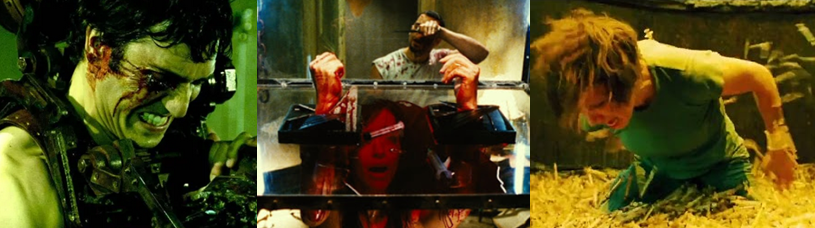
Not only that, Saw II ramps up the gore and the desperation by having seven shady individuals all infected with a deadly, slow-acting nerve agent and trapped in a horror house, of sorts. The film’s tension comes from the desperation of Detective Eric Matthews (Donnie Wahlberg), who is frantic to save his son from Jigsaw’s trap and to bring Jigsaw in by any means necessary. Yes, there’s more gore and more onscreen violence and, arguably, Saw II set the standard for the myriad of sequels to come by ramping up Jigsaw’s traps and plots to an absurd degree, but this was before the series fell off a cliff. Here, minor characters from the first film are expanded upon, the lore of this world is fleshed out beautifully, and we have some of the franchise’s best traps ever.
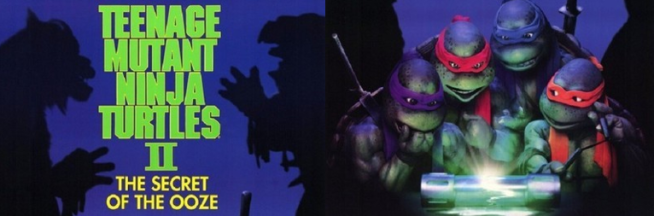
For many of us back in the nineties, Teenage Mutant Ninja Turtles (Barron, 1990) was the first time the “Hero” Turtles were depicted as being as violent and nuanced as in their original Mirage Comics run. Up until the release of this movie, the Turtles were cute, cuddly superheroes who we watched foil the Shredder (James Avery) week after week and whose toys we bought with reckless abandon. However, given how dark and violent the first film was, this sequel does a massive course correction, increasing the silliness and reducing the onscreen violence and decreasing the Turtles’ use of their weapons in an attempt to align the live-action movies more with their more kid-friendly, animated counterparts. Yet, that doesn’t mean this sequel isn’t good in its own right. The Turtle suits (once again brought to live by Jim Henson’s Creature Shop) look amazing and are probably better and more expressive than in the previous movie; the film also stays relatively close to its source material by focusing on the mutagenic ooze that created the Turtles, and it also introduced two mutant antagonists for the Turtles to fight.
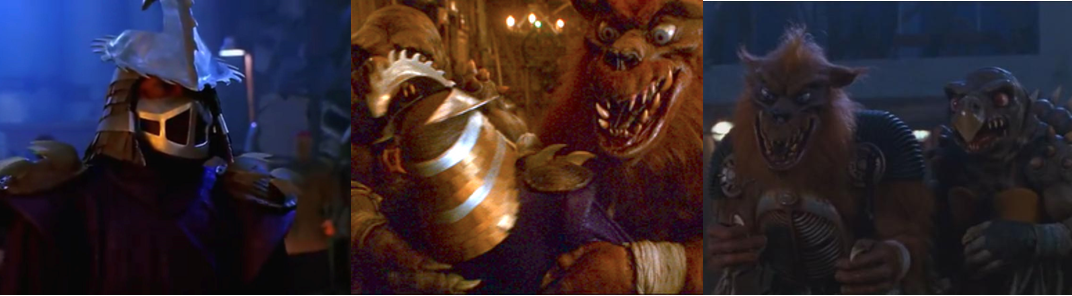
While they’re not Bebop (Barry Gordon and Greg Berg) and Rocksteady (Cam Clarke), Tokka (Rock Lyon and Kurt Bryant) and Rahzar (Gord Robertson and Mark Ginther) are a fun, welcome addition. It’s great seeing the Turtles kick the snot out of faceless members of the Foot Clan but Ninja Turtles has always been about the crazy mutated characters and these are two of the most impressive looking and formidable, especially considering their childlike demeanours. The Shredder (François Chau) also returned in this movie and is a lot closer to his animated incarnation, being decidedly more theatrical than in the first movie but no less intimidating. Probably the only thing that lets this movie down for me (no, it’s not the Vanilla Ice rap scene) is the final battle between the Turtles and the ooze-empowered Super Shredder (Kevin Nash) in which Shredder is unceremoniously defeated by being crushed under a pier due to his own foolishness. Apart from that, though, I feel this movie is the perfect balance between the dark, violent Mirage Comics and the light-hearted animated series and this balance is where the Ninja Turtles (a ridiculous concept to begin with) shine the brightest.
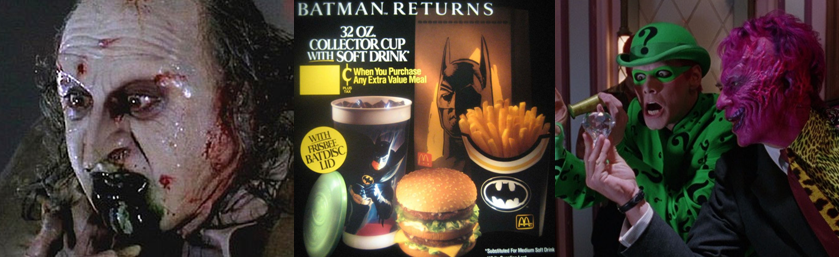
Now, admittedly, Batman Forever has its fan-base; there’s plenty of very vocal people out there who rate this quite highly among the many Batman movies (Various, 1966 to present) , especially after viewing the special edition and a lot of the deleted scenes which, had they been implemented, would probably have elevated this movie even higher. There’s a couple of reasons why this film is often unfairly attacked: one is because of how God-awful its sequel, Batman & Robin (ibid, 1997) was. That film’s over-the-top camp, painful performances, and nipple-suits are often considered so bad that both of Schumacher’s Bat-movies are unfairly lumped together and judged as a failure, when this just wasn’t the case. The second reason is because of how dramatically different it is from the previous Bat-movies; after Tim Burton brought us a dark, brooding, serious interpretation of Batman (Michael Keaton) in 1989, he was given free reign on the sequel, Batman Returns (Burton, 1992). While this made for one of my personal favourite Bat-movies thanks to Burton’s Gothic sensibilities, it upset a lot of parents (…and McDonald’s) and, similar to Turtles II, Schumacher was brought in to make Batman more “kid friendly”.
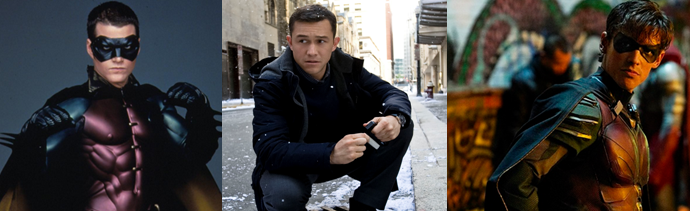
And yet despite the gratuitous neon lighting, the slapstick elements, and an incredibly over-the-top (and massively unsuitable) performance by Tommy Lee Jones, Batman Forever not only brought us a physically imposing Bruce Wayne/Batman (Val Kilmer) for the first time but it actually had the balls to include Dick Grayson/Robin (Chris O’Donnell). Schumacher smartly uses Robin’s origin as a parallel to Batman’s so that the film can tread familiar ground but in a new, fresh way while also bringing us one hell of a bad-ass Robin suit. Thanks to the blinkered, narrow-minded opinion that Robin (a character who has been around basically as long as Batman) is somehow “not suitable” for a Bat-movie, it wouldn’t be until the recent Titans (2018 to present) series that we would finally see Dick Grayson realised in live-action once again (though we came so close to seeing another interpretation of the character in the DC Extended Universe). Also, sue me, I grew up in the nineties and have always been a big fan of Jim Carrey’s. His performance as Edward Nygma/The Riddler might be over-the-top but his manic energy steals every scene he’s in and he genuinely looks like he’s having the time of his life channelling his inner Frank Gorshin and chewing on Schumacher’s elaborate and impractical scenery.
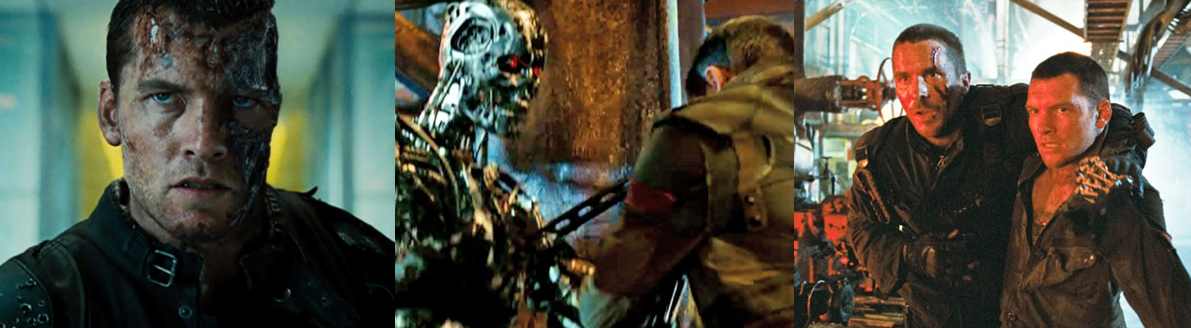
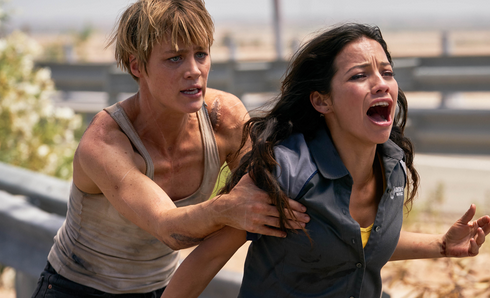
Okay, I’m just going to come out at say it: Terminator Salvation was, hands down, the best Terminator (Various, 1984 to 2019) sequel after Terminator 2 and always will be, no matter how many times they force Arnold Schwarzenegger to throw on the shades and the jacket. After how perfectly Terminator 2 ended the series, the only smart way to produce further sequels was to have Terminators travel to other times and target other key members of the resistance (a plot point touched upon in the Dark Horse Comics, the dismally disappointing Terminator 3: Rise of the Machines (Mostow, 2003), and threaded throughout the semi-decent Terminator: The Sarah Connor Chronicles (2008 to 2009) television series) or to make prequels that focused on the war against the machines in a post-apocalyptic future. This latter idea would be my preference and, as such, I absolutely love Terminator Salvation. Is it perfect? Well, no, but it’s a different type of Terminator movie…and that is a good thing, people! Rather than making yet another lacklustre retread of Terminator 2, Salvation is, ostensibly, a war movie depicting the last vestiges of humanity driven to the brink of extinction by increasingly-dangerous killer machines.
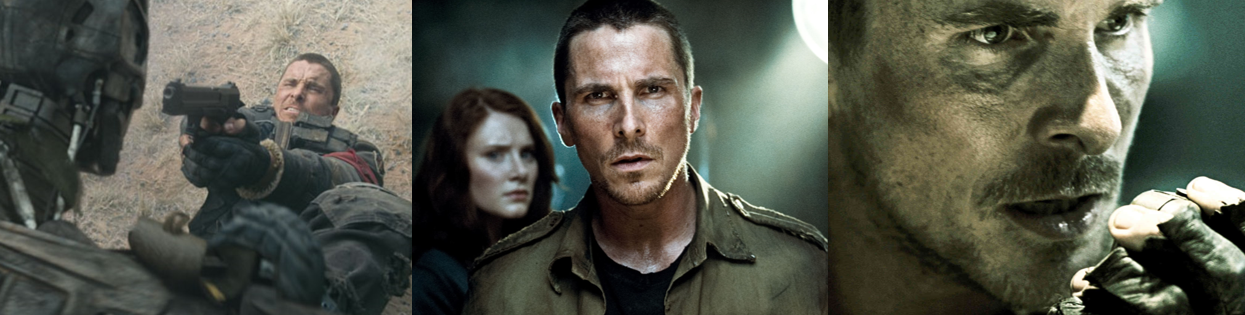
Not only that, we got Christian Bale as John Connor! After the pathetic casting and portrayal of Nick Stahl (remember him?) in the third movie, we got freakin’ Batman as the last, best hope of humankind! And he gives a great performance; stoic, gritty, hardened, this is a Connor who is on the edge of accepting his true destiny and is desperate to do anything he can to stay one step ahead of Skynet. Add to that we got a pretty decent battle between Connor and the T-800 (Roland Kickinger). People like to shit on this sequence because Kickinger has Schwarzenegger’s likeness digitally laid over his face but, honestly, it isn’t that bad an effect and, if you can’t get Arnold back, this was a great way to utilise him. The only faults I have with this movie are that Connor shouldn’t have received such a clearly-mortal wound from the T-800 (I know he was originally supposed to die but, after they changed the ending, they really should have re-edited this scene to make his wound less deadly) and that the franchise has largely ignored it with subsequent sequels rather than continuing on from its open-ended finale, meaning we’ll forever be denied the bad-ass visual of an army of Arnold’s marching over a field of human skulls!

Okay, just hear me out…Attack of the Clones is not that bad, especially after Star Wars: Episode I: The Phantom Menace (ibid, 1999) focused way too much on boring shit like “trade disputes” and politics, insulted our intelligence with the dreadful Jar Jar Binks (Ahmed Best), and sucked all of the menace and intrigue out of Darth Vader (David Prowse and James Earl Jones) by portraying Anakin Skywalker (Jake Lloyd) a whiny, annoying little brat. Arguably, the Prequel Trilogy would have been better if Lucas had opted to have Anakin discovered as a young adult and cast Hayden Christensen in the role from the start as this would be a far better parallel to his son’s own journey to becoming a Jedi. Christensen is a decent enough actor and he was simply handicapped by Lucas’s dreadful script; if Lucas had opted to let someone else take another pass at his dialogue, we could have seen a bit more of the snarky banter Anakin shares with his mentor, Obi-Wan Kenobi (Ewan McGregor). Despite the copious amount of green screen and computer-generated characters thrown at us here, Attack of the Clones has a lot of visual appeal; from the city planet of Coruscant to the rain-swept Kamino and the dry lands of Geonosis, the only location that lets Attack of the Clones down is its return to the sand planet Tatooine but even that is used as a pivotal moment in Anakin’s turn towards the Dark Side.
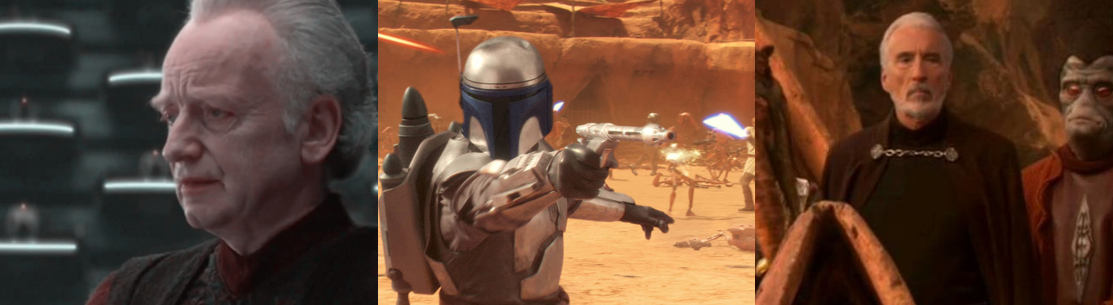
And let’s not forget the fantastic Lightsaber battles on display here; every battle is as good as the final battle from The Phantom Menace, featuring some impressive choreography and setting the stage for one hell of an epic showdown between Anakin and Obi-Wan in the next movie. While I don’t really care for Yodi (Frank Oz) being a CG character, or wielding a Lightsaber, there is a perverse pleasure to be gained from seeing Yoda flip about like a maniacal spider monkey. Oh, and this movie has freakin’ Christopher Lee in it! Unfortunately, Lee’s Count Dooku/Darth Tyranus is criminally underused in this movie and killed off all-too-soon in the sequel. Another misfire for me was Lucas wasting time introducing Jango Fett (Temuera Morrison); I’ve never really understood why people love Boba Fett (Jeremy Bulloch) so much as he’s a bit of a klutz and doesn’t really do anything, but he does have a rabid fan base and, since we never see his face in the Original Trilogy, I would have instead cast Temuera as Boba so that we could see him actually do something.
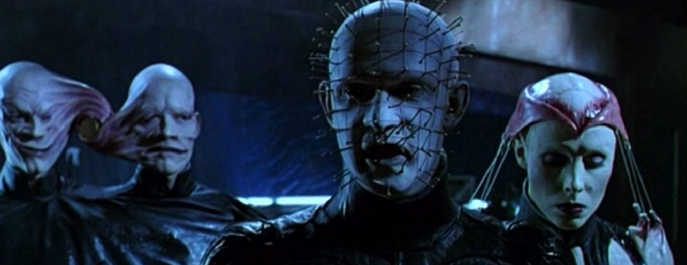
Hellraiser (1987 to present) is a horror franchise that seems to have struggled to be as successful as some of its other peers. I’ve already talked about how the original Hellraiser (Barker, 1987) really hasn’t aged very well and this applies to every sequel in the series as well as they seem to immediately age to moment they are released thanks to the decision to release every sequel after the third movie direct to video. Admittedly, a lot of my fondness for Hellraiser: Bloodline is based on two things: it was the first Hellraiser movie I was able to sit through from start to finish and was responsible for me becoming a fan of the series, and Event Horizon (Anderson, 1997) is one of my favourite science-fiction/horror movies. Arguably, Event Horizon is a far better version of Bloodline’s core concept (that being “Hellraiser…in Space!”) but there’s an important thing to remember about that: Bloodline isn’t set solely in space! Instead, Bloodline takes place in three different timelines and follows the descendants of Philippe Lemarchand (Bruce Ramsay), an 18th century toymaker who was unwittingly responsible for creating the magical Lament Configuration, a puzzle box that, when solved, summons Cenobites from a dimension where the lines between pleasure and pain are blurred.
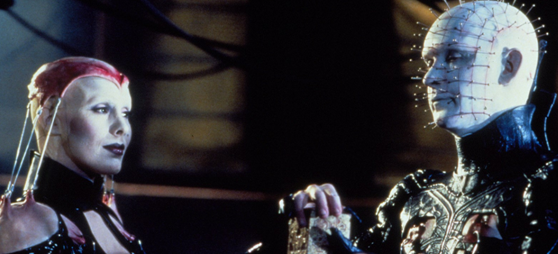
Cursed for this act, Lemarchand’s descendants are driven by an inherent desire to create the Elysium Configuration, a means to forever seal the Cenobites from our world forever Dr. Paul Merchant (also Ramsay) is merely the latest in a long line of these toymakers to encounter the demonic Cenobite dubbed Pinhead (Doug Bradley) and his acolytes; unlike his predecessors, Merchant actually succeeds in his mission and destroys both Pinhead, and the portal to Hell, forever using a massive space station. There’s a few reasons I think people misjudge this movie: one is that it was absolutely butchered by Miramax, who demanded all kinds of reshoots and changes, meaning that the film’s original director’s cut has never been seen. Another is a holdover from Hellraiser III: Hell on Earth (Hickox, 1992), which saw Pinhead ape Freddy Krueger (Robert Englund) and become just another slasher villain with a twisted sense of humour. Similarly, in Bloodline, Pinhead goes from being a representative of the Order of the Gash (…lol), to wanting to unleash Hell on Earth permanently like some kind of invading force, to the point where he takes hostages and transforms people into Cenobites whether they have opened the box or not. Yet none of this changes the fact that Bloodline is a pretty decent film; we finally get to see some background into the mysterious puzzle box, there’s multiple times when the structure and history of Hell is hinted at, and there’s some really disgusting kills and gore. Personally, I rate this film higher than the second (because that film is boring) and the third simply because it doesn’t have a Cenobite with CDs jammed in its head!
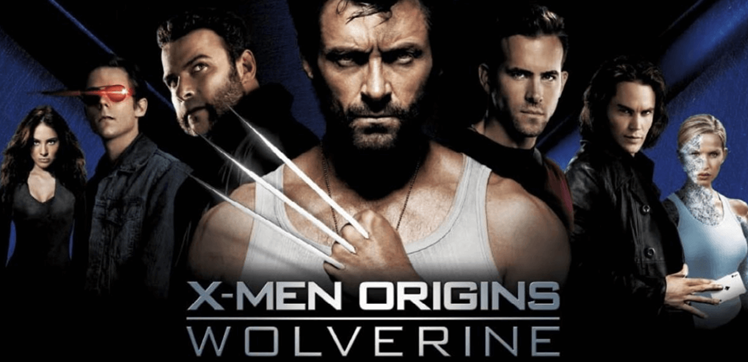
This one is gonna cost me a lot of credibility but I honestly do not get why X-Men Origins: Wolverine gets so much shit, especially considering how incoherent and screwed up the timeline and continuity of the X-Men (Various, 2000 to present) movie series became after this film. Sure, Wade Wilson/Deadpool (Ryan Reynolds) is poorly represented, some of the CG is a bit wonky, and there are a lot of flaws in the plot, but there’s also a lot to like about this film. First, and most obvious, is the film’s opening credit sequence, which many have cited as being their favourite moment of the film. Seeing James Howlett/Logan/Wolverine (Hugh Jackman) and Victor Creed (Liev Schreiber) racing through various wars is stunning and I do agree that the film really should have based around this premise and their slow degeneration into bloodlust, with Logan overcoming it and Victor giving in to it to become Sabretooth. Yet, often, I see a lot of criticism about how the X-Men movies tend to always focus on Wolverine at the expense of other Mutants…yet people still hate on this movie, which puts the spotlight entirely on Wolverine and still manages to feature some new Mutants and fill in a few plot points along the way. We get to see Logan’s time in Team X, the full extent of the procedure that gave him his Adamantium skeleton (although we miss out on the feral Wolverine showcased so brilliantly in the otherwise-disappointing X-Men: Apocalypse (Singer, 2016)), and even how unknowingly pivotal he was in bringing the original X-Men together.
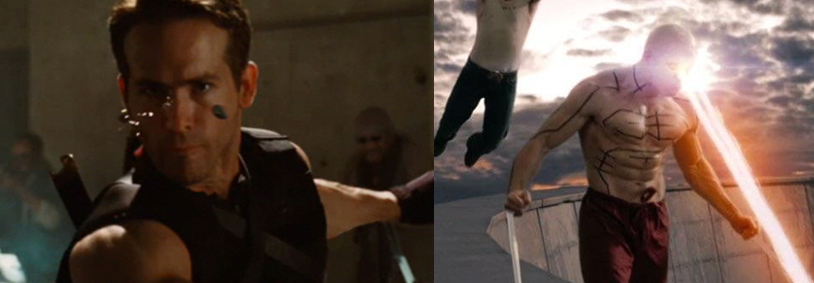
The casting really makes this movie shine: Jackman is at his most jacked as Wolverine and, while he’s a little too tame compared to what you’d expect from this point in his life, he always brings a great intensity and charisma to his breakout role. Schreiber was an inspired choice to portray Logan’s brother, who (it is strongly hinted) eventually succumbs to his animalistic ways to become Sabretooth (Tyler Mane), bringing a nuanced menace and sophistication to what is normally seen as a feral character. Danny Huston is always great as a smug, scenery-chewing villain (though he doesn’t exactly resemble Brian Cox) and Reynolds gave a great tease at what he was capable of as everyone’s favourite “Merc with a Mouth” (…until it was sown shut). We also get some new Mutants, which I appreciate even more after subsequent sequels could never seem to let go of having teleporting demons involved in their plots; Fred Dukes/The Blob (Kevin Durand) is fantastically realised in the movie and has a great (and hilarious) boxing match with Logan and everyone’s favourite card-throwing Cajun, Remy LeBeau/Gambit (Taylor Kitsch) also makes his one (and, so far, only) film appearance here. I only expected a brief, unsatisfying cameo from Gambit but he actually has a surprisingly substantial role. Could it have been bigger? Sure, but I’d say he was treated a lot better than Deadpool (who, it should be remembered, was still planned to get a spin-off from this film).
Now, don’t get me wrong: I love RoboCop (Verhoeven, 1987). It told an easily self-contained story of Detroit City police officer Alex Murphy (Peter Weller) being rebuilt from death as a bad-ass cybernetic enforcer of the law and rediscovering his humanity. It’s a classic film, with some amazing effects, hilarious commentary on consumerism, media, and corporate greed, and would be a tough act for anyone to follow. Yet, call me crazy, but RoboCop 2 succeeds far more than it fails. RoboCop has a fresh coat of paint and has (literally) never looked better onscreen; he’s just as efficient and pragmatic as before and, though he seems to have regressed back to a more mechanical mindset, he still exhibits a great deal of humanity but in new and interesting ways. First, he is routinely referred to as “Murphy” by other officers (particularly Anne Lewis (Nancy Allen), his partner) and struggles so badly with reconnecting with his wife and son (who believe that Murphy is dead and buried) that he routinely stalks them, which contributes to his superiors deciding to reprogram him. This results in a deliciously over-the-top sequence where RoboCop, his head full of insane, politically correct directives, tries to calm situations with talk rather than bullets. It eventually becomes so maddening that he is forced to electrocute himself just to clear his head enough for him to focus on the big bad of the film, Cain (Tom Noonan).
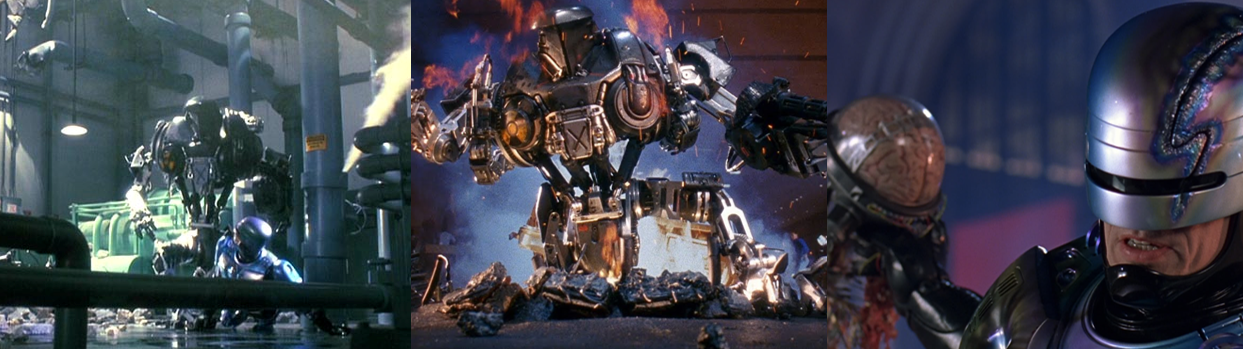
Now, Cain and his psychopathic gang of untouchable drug dealers are great, but they’re not Clarence Boddicker (Kurtwood Smith); instead of Clarence’s manic energy, Cain brings a quiet, intellectual approach to his menace. He also manages to dismantle RoboCop’s metallic body, just as Clarence destroyed his human one, and is eventually able to go toe-to-toe with RoboCop as the frankly fantastic RoboCop 2 (or “RoboCain”). If you liked ED-209 from the last movie, RoboCain is bigger, badder, and better. A combination of animatronics and stop-motion, RoboCain was an ambitious choice for the film and actually works really well considering the technological limitations of the time. The fight between Cain and RoboCop also holds up surprisingly well and is far more interesting than Robo’s encounters with ED-209 thanks to the villain being far more versatile than his clunky counterpart. I think what brings this movie down, for many, is that Cain’s gang aren’t as charismatic or memorable as Boddicker’s (I can only name two of Cain’s guys off the top of my head, whereas I can name at least five of Boddiker’s), some of the plot is a bit redundant (Robo’s story arc is, essentially, a truncated version of the same one from the first), and the awfulness of subsequent RoboCop movies leaving such a sour taste that people assume all RoboCop sequels are terrible…and that’s just not the case.
Okay, full disclosure: as a kid, I was not a fan of this movie. I loved Predator (McTiernan, 1987); it was over-the-top, filled with massive action heroes, and featured a tense build-up to one of cinema’s most memorable alien creatures. The sequel just seemed to be lacking something; maybe it was because we’d already seen the Predator (Kevin Peter Hall) in its full, gruesome glory and didn’t really need to go through the suspense of its eventual reveal all over again. Replacing Schwarzenegger is Danny Glover’s Lieutenant Mike Harrigan, a hardened, smart-mouthed loose cannon who plays by his own rules (as was the tradition for any cop worth a damn in cinema back then). I was in awe at Schwarzenegger as a kid so it was disappointing to go from him to Glover but, honestly, Glover is probably better in many ways: his anti-authoritative, roguish nature makes him more relatable as a character and the fact that he actually gets hurt and struggles to physically prevail makes him far more human. He’s a much more believable protagonist in a lot of ways and, thanks to his more developed acting chops, is more than a suitable replacement for Arnold. Predator 2 also takes the titular hunter out of the jungle and places him in the next most logical place: the concrete jungle. Now, a lot of people hate this change; even Arnold hated that the Predator would be in Los Angles for the sequel but…surely doing the sequel in the jungle again would have just resulted in exactly the same movie as before?
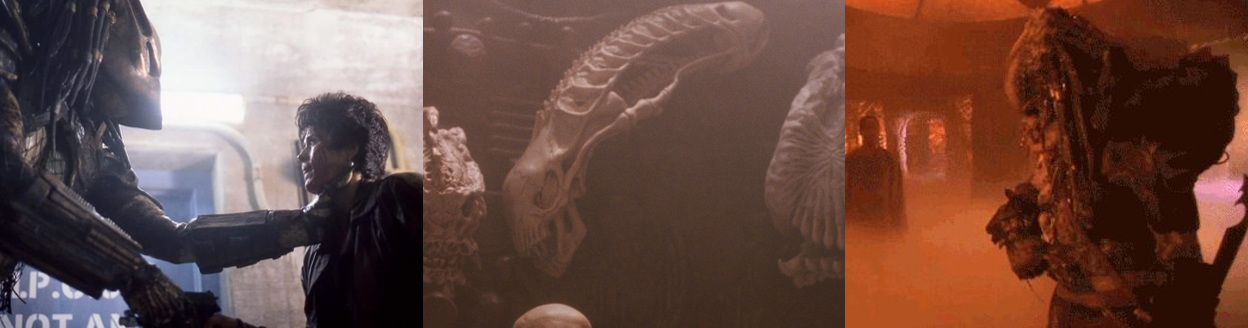
It’s so weird that people rag on the city setting as it makes perfect sense, is realised really well, and even set the ground for a lot of the Dark Horse comics. No other sequel around this time repeated the first in this way; Aliens (Cameron, 1986), Terminator 2, Batman Returns, Lethal Weapon 3 (Donner, 1992), just to name a few, all fundamentally alter the concept of the first movie rather than rehashing it so why does Predator 2 get such a hard time for doing it (and doing it well, I might add)? To make matters worse, Predator 2 has been criminally overlooked in subsequent sequels; there was no mention of the film’s events at all in the otherwise-excellent Predators (Antal, 2010), a film that went out of its way to reference (both through homage and direct mention) the first movie, and it only gets a passing mention in the disappointing The Predator (Black, 2018). Jake Busey, son of Gary Busey, even featured as an expert on the Predator species but there was no mention in the film of his relationship to Busey’s character, Peter Keyes, despite the two being father and son! I’ll never understand this; it’s a real insult, to be honest. Predator 2 brought so much to the table; it defined the honour system of the Predator species, introduced a whole bunch of the alien’s iconic weaponry, and laid the foundation for comic books, videogames, and sequels and spin-offs to follow for years to come. Subsequent movies have no problem reusing the weaponry or the culture of the Predator introduced in this movie but when it comes to actually directly referencing the film’s events they shy away and why? It’s a great film! Great kills, great action, great tension, some fantastic effects, and a super enjoyable chase sequence between the Predator and Harrigan across the streets and rooftops of Los Angeles! I just don’t get the hate, I really don’t.
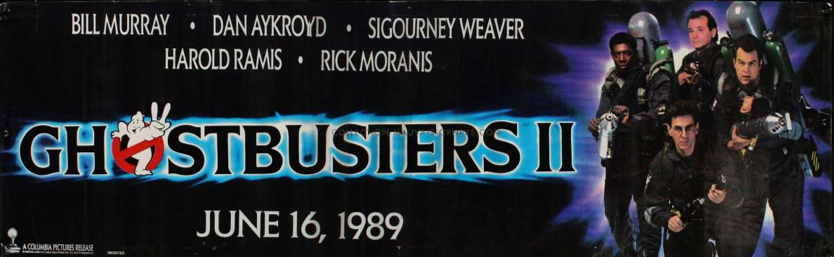
Man, if you thought I was mad about Predator 2, just wait until you hear this one. Ghostbusters II suffers from a lot of the plagues of Predator 2, and other films on this list: it’s unfairly criticised for not being exactly the same as the iconic first film, it’s overlooked time and time again, and direct references to it are few and far between. Just look at the majority of Ghostbusters-related media; be it toys, videogames, or otherwise, the characters almost always look exactly like the first movie rather than this one. And why? Because it doesn’t have the Stay Puft Marshmallow Man in it. Give me a fuckin’ break! As much as I love him, and that entire sequence, it wouldn’t make any sense of Mr. Stay Puft to appear in this movie! The Ghostbusters destroyed it when they defeated Gozer the Gozerian (Slavitza Jovan and Paddi Edwards) and this movie revolves around an entirely different villain and plot so why bring it back? I guess audiences were just used to antagonists returning ins equels at that time but to judge this movie just for not having Mr. Stay Puft is not only unfair, it’s down-right stupid.

After all, it has the Statue of Liberty coming to life instead! Sure, it doesn’t match up to Stay Puft’s rampage, but it’s still pretty decent. Also, the film’s antagonist, Vigo the Carpathian (Wilhelm von Homburg), is voiced by Max von Sydow, who is an absolute legend. Vigo’s threat is arguably much higher than Gozer’s in a way as his mood slime has been brewing under New York City for decades and is the direct result of all the animosity in the world (…or, just New York, which is bad enough). It’s powerful enough to cause ghosts to go on a rampage again and turn the Ghostbusters against each other, and is a far more grounded threat than Gozer’s plot to destroy the world. The stakes are raised in Ghostbusters II through the fact that the titular ‘Busters have been forced to disband and go their separate ways. Through this, we see something that is also often overlooked about this movie: character growth. Would you criticise Ellen Ripley’s (Sigourney Weaver) character growth in Aliens? Well, yes, probably; you are the internet after all but this plot point allows Ghostbusters II, like RoboCop 2, to retread the familiar ground of the disgraced Ghostbusters being called upon to save the city in a new way. The characters are all a bit more haggard after how badly the city burned them so seeing them rise up regardless, to the point where they’re even able to resist the mood slime, is a great arc.
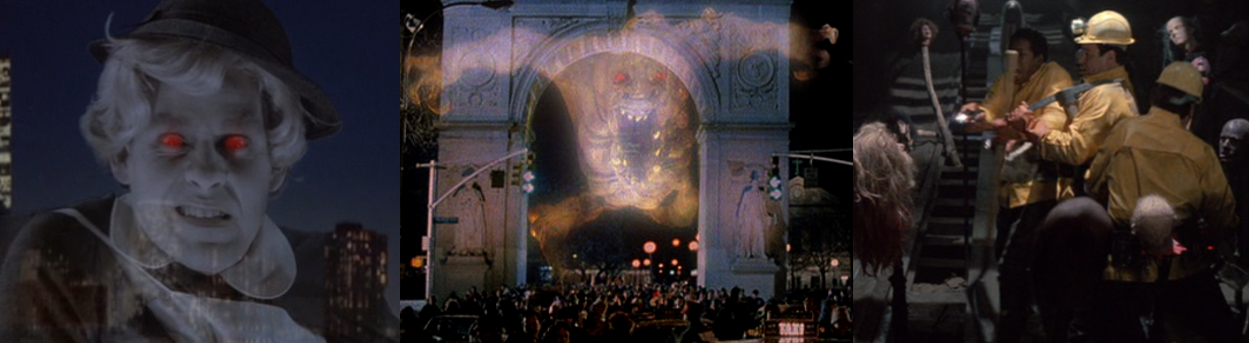
Add to that the film’s consistent and enjoyable special effects, the truly gruesome sequence in the abandoned Beach Pneumatic Transit system, and a creepy performance (as always) by Peter MacNicol and you’ve got a film that, like Turtles II, is more than a worthy follow-up to the original. And, yet, like I said, this film is often overlooked, almost with a vendetta. It doesn’t help that co-star Bill Murray despised the movie, which is always bad press for any film; his cantankerous ways also constantly held up the long-awaited third movie to the point where we had to suffer through that God-awful reboot before a follow-up would be approved. Despite Murray’s opinions, Ghostbusters II has managed to endure in some respects, though; characters and events were directly referenced in Slimer! and the Real Ghostbusters (1988 to 1991) and Vigo’s portrait was prominently featured in the true third entry, Ghostbusters: The Video Game (Terminal Reality/Red Fly Studio, 2009). In fact, I was very surprised that Ghostbusters: Afterlife (Reitman, 2021) didn’t completely ignore this movie and even then it barely references it.
Do you agree with my list? I’m guessing not and you think most of these movies are terrible but why do you think that? Are there any other under-rated sequels you can think of? Write a comment and give me your thoughts below.








You must be logged in to post a comment.