Upon the release of Pokémon: Blue Version and Pokémon: Red Version(Game Freak, 1996), a new craze swept through playgrounds across the world. An entire generation grew up either playing Pokémon, watching the anime, playing the trading card game, and watching the feature-lengthmovies as clever marketing and a co-ordinated release and multimedia strategy saw Nintendo’s newest franchise become not just a successful videogame franchise but a massively lucrative and popular multimedia powerhouse that endures to this day. Accordingly, February 27th is now internationally recognised as “National Pokémon Day”, which I expanded to an entire month of Pokémon this February.
Released: 8 July 2000 Director: Kunihiko Yuyama Distributor: Toho Budget: $3 to 16 million Stars: Veronica Taylor, Eric Stuart, Rachael Lillis, Amy Birnbaum, Dan Green, and Ikue Ōtani
The Plot: Professor Spencer Hale (Green) is transported to a chaotic dimension by the mysterious Unown (Various), leaving his young daughter, Molly (Birnbaum), devastated and alone. Her grief causes the Unown’s power to rage out of control, manifesting an illusionary Entei (Green) and transforming her home into a crystal-like palace. When Entei kidnaps Ash Ketchum’s (Taylor) mother, Delia (ibid) to appease Molly’s wish for a mother, Ash and friends must brave the danger to break the Unown’s unruly spell.
The Background: Pokémon (Nintendo/Creatures/Game Freak, 1995 to present) was an absolute phenomenon when it came over from Japan: it swept through playgrounds as kids played the videogames, collected the trading cards, and were mesmerised by the still-ongoing anime series (1997 to present). This fantastic marketing strategy was all it took for the aptly-titled Pokémon: The First Movie: Mewtwo Strikes Back(Yuyama, 1998) to become a box office success and kick-started a whole series of feature films designed to expand upon the anime and promote both the newest Pokémon videogames and showcase the franchise’s most powerful and elusive beasts. Although it earned less than the blockbuster first movie, Pokémon the Movie 2000: The Power of One(Yuyama, 1999) still made over $130 million against a $30 million budget and Pokémon was arguably at its peak thanks to the anticipation around the newest games in the series. The third feature-film was afforded a much smaller budget than its predecessors and was the first Pokémon movie to premier in IMAX cinemas. Unfortunately, the film’s $68.5 million box office meant that it was the least successful of the first three Pokémon movies and it was met with largely negative critical reviews; however, it has amassed something of a cult following and is regarded by some to be one of the best Pokémon movies.
The Review: Pokémon 3: The Movie opens in the beautiful town of Greenfield, a lush and verdant town in the Johto region that is knowing for is sweeping hills, windmills, and fields of flowers. It’s also home to the Spencer Hale and his daughter, Molly, who live in a luxurious mansion that overlooks the entire town. Every evening, Spencer reads to his inquisitive and loving young daughter from a picture book that imagines what some Legendary Pokémon look like; although she’s particularly taken with Entei, she also highlights the mysterious Unown, a group of interdimensional, Psychic-type Pokémon who have long been the subject of Spencer’s extensive research. However, while Spencer and Molly have a very close, loving relationship, it’s clear that there’s a void in the lives and their household due to the disappearance of the Spencer matriarch, who mysteriously vanished one day while helping Spencer with his research, leaving Molly without a mother and Spencer to carry the burden of guilt.
Molly is devastated when her father disappears, and overjoyed when he “returns” as Entei.
Spencer has doubled down on his research; aided by his assistant, Schuyler (Ted Lewis), Spencer has been conducting an in-depth investigation into a site of ruins where the stone walls are covered in carvings that resemble the Unown. Unfortunately, after discovering a chest full of small stone tablets engraved with the different alphabetical shapes of the Unown, Spencer is also whisked away to the cosmic void of the Unown Dimension, a swirling place of mystery while the Unown constantly rotate around and sing their names. Schuyler is left dumbfounded at Spencer’s sudden disappearance, and Molly is left absolutely heart-broken and alone; with both of her parents gone, she’s left only with the Unown puzzle pieces and the heartfelt wish to have her father returned to her. Her tearful plea summons the Unown and, while she is delighted that they’ve come to “play with [her]”, their true intention is slightly more malicious as they apparently feed off of her grief-stricken wishes in order to become stronger. Fuelled by her dreams of a crystalline home, the Unown transform the mansion a piece at a time until it represents pictures from Spencer’s book, and their power is so great that they’re able to answer her desire for the return of her father by conjuring an illusion of Entei, whom Molly believes is her father’s spirit returned to her.
Ash risks everything to rescue his mother, who is captured and brainwashed to be Molly’s “Mama”.
Quite coincidentally, Ash, Pikachu (Ōtani), and former gym leaders Misty (Lillis) and Brock (Stuart) just happen to be passing by and run across a trainer native to the area, Lisa (Lisa Ortiz). After Brock strikes out with her (with one of the film’s most amusing lines, “I’m Brock, from Pewter City! And I want to be your boyfriend!”) and Ash is able to beat her in a surprisingly evenly matched Pokémon battle during the film’s opening credits, Lisa guides them to Greenfield so that they can rest up at the Pokémon Center and take in the town’s much-lauded beauty. Suffice it to say that Ash is unimpressed, and the group is horrified, to find that the once stunning landscape has been almost completely overtaken with the Unown’s bizarre crystalline wasteland. Even perennial bothers Jessie (Lillis), James (Stuart), and wise-cracking Meowth (Maddie Blaustein) of Team Rocket are stunned to find Greenfield in such a state, and it’s not long before a news crew (Kathy Pilon and Roger Kay) arrive to try and restore order and report on the strange events. Back in Pallet Town, Delia Ketchum, Ash’s mother, sees the news report and is distraught at the continued suffering of her old friend, Spencer Hale, and she and Professor Samuel Oak (Stuart Zagnit) resolve to travel to Greenfield to get to the bottom of the what’s happening, and to check on Molly. While others are alarmed by the startling transformation of Greenfield, Molly revels in her crystal palace; she delights in playing with her “Papa” and seeing her wishes literally spring to life before her eyes, but her longing for her mother remains. Seeing Delia on the news broadcast reminds her not only of her own mother, but also of the times when Delia and Ash would visit her and her family in years past, and she wishes for Entei to bring her a “Mama” to complete their little family. This adds an interesting personal wrinkle to the film’s plot that has been absent from the previous two films as Entei boldly introduces itself to our heroes by subduing and kidnapping Delia right before Ash’s eyes and holding her captive in Molly’s crystalline palace. Ash is horrified when his mother is kidnapped, and immediately leads his friends on a rescue mission to get her back, literally putting his life at risk to brave the crystal wasteland and scale the tower and reach her.
Entei is the Unown’s avatar and determined to protect Molly, regardless of the morality.
Although Entei’s powers are formidable enough to render Delia a mindless drone who fully believes that she’s Molly’s “Mama”, its spell is broken when Delia sees Ash in danger, but she’s smart enough to quickly realise what’s been going on and to play along with the deception in order to try and reach Molly. Delia recognises that Molly has been very alone for a long time, even before Spencer went missing, and sympathises with her pain, but cannot condone Entei’s enabling and the disruptive influence of the Unown. It’s important to note for Poké-enthusiasts out there that the Entei seen is this film is not the Legendary Pokémon whom it resembles. Rather than being a reincarnated Pokémon known for its blazing Fire-type attacks, Entei is a creation of the Unown and more akin to a Psychic-type Pokémon. At the time, I considered this an odd decision as it kind of wastes the natural characterisation of this creature as one of a trio of Legendary Pokémon, but it actually goes a long way to supporting the deeper themes of the film surrounding grief and a child’s desire for love and affection. Born from Molly’s memories of her father, her love for him, and her idolisation of his strength and loyalty, Entei is granted incredibly powers by the Unown that are contrary to those it has in the games; it can teleport, control the minds of others, create crystalline structures at will, and spit out a powerful aura blast in addition to its durability and strength being theoretically inexhaustible. It is as strong and as capable as Molly wishes it to be, and as long as she believes in it, it can accomplish almost any feat, regardless of whether that action is morally right or wrong. A constant companion and guardian to Molly, Entei fully accepts her belief that it is her beloved “Papa” and goes to any lengths to keep her happy and to protect her, even battling against its out of control masters.
The Unown’s power is virtually limitless, and directly fuelled by Molly’s innermost desires.
So devoted is Entei to Molly that it not only bows to her every wish, but also encourages her to wish for more and to believe that she can anything she desires. When the authorities try to breach the crystal formation, Molly throws a temper tantrum and demands that they be kept out but, when she spots that Ash and the others are Pokémon trainers, she quickly wishes to engage them in Pokémon battles. Thanks to the Unown’s near-limitless power, the interior and environment of the palace constantly changes, and also allows Molly to conjure unbeatable illusionary Pokémon and even age herself up to be a more competent Pokémon trainer. Of course, thanks to the Unown’s power, she’s easily able to best her more experienced opponents with the likes of Teddiursa (Erica Schroeder) and Phanpy (Megumi Hayashibara) even when she should be hopelessly outmatched. She’s even able to flood the area with water, and allow her and Misty to breath underwater, so great are her powers, are she becomes so lost in her fantasy that Entei is empowered enough to battle even Ash’s stubborn and formidable Charizard (Shin-ichiro Miki), which arrives not only to help its former trainer but also to pit its strength against an opponent such as Entei. However, the battle proves destructive, wrecking much of Molly’s new home and leaving the heroes’ Pokémon hurt, and Charizard in danger of being killed by the furious Entei; the only hope for the heroes is for Delia, Ash, and the others to help remind Molly of her real family, both those who are gone and the family she could have by forming a bond with real Pokémon, which causes her to finally snap free from her fantasy and demand an end to the fighting.
The Nitty-Gritty: One of issues I had with Pokémon the Movie 2000 was that it tried a little too hard to raise the stakes in comparison to the first film; while Pokémon: The First Movie was reconfigured into more of a worldwide threat in the English dub, the second film explicitly put the entire world at risk, so it’s a nice change of pace to see the third film tell a far more grounded, more personal story. This is most obvious in Delia’s larger role; up until now, she’s merely been a cameo or a bit-player in the films, but she’s a pivotal inclusion in this film and the driving force behind Ash’s excursion into the crystallised Greenfield. Indeed, he is driven to an uncharacteristic anger at her abduction, which is focused entirely on Entei and transforms into a battle of wills as Ash regards the beast as a mere illusion and Entei adamantly seeks to prove its reality and defend Molly by any means necessary.
Molly’s desire to have her family back means she dreams up her own fantasy world free from sadness.
Of course, it’s Molly’s sadness and grief that is at the heart of the movie’s story; already struggling after the loss of her mother, she was left despondent when Spencer disappeared as well and unable to properly process her anguish. When the Unown respond to her dreams and wishes, she finally feels that hole in her heart has been filled and is easily convinced that everything she is seeing is “real” and that she can be and have whatever she wants “as long as that is her wish”. It’s a powerful, emotional aspect of the film, and easy to forget that Molly isn’t some malevolent or mean-spirited antagonist. She’s just a frightened, lonely little girl who desperately wants her beloved “Papa” and “Mama” back, and is overjoyed to see her father returned in the form of Entei and her every wish brought to life by the Unown’s power. Similarly, Entei is not a necessarily vindictive entity; it’s simply acting out Molly’s wishes, whatever they may be, but bolstered by such vicious and formidable power that it transforms the once beautiful crystal tower into a hazardous landscape of spikes and battles Charizard with such an unmatched ferocity that it’s even posed to kill the helpless and outmatched creature. While Entei seems to fill the void in Molly’s life and heart, Delia and Ash and the others try to convince her that it’s merely another aspect of the Unown’s illusionary power; a false reality she’s conjured to shield her from facing the real world. Through them, she sees that real relationships can be forged through friends, partners, and make-shift families that can be just as fulfilling as having her every wish granted.
Probably the darkest and most personal Pokémon movie despite the odd changes to the source material.
I have to say that, given the trajectory of the Pokémon movies, I was surprised that a Pokémon as unremarkable and weak as Unown be such a focal point of this film, especially considering the next most obvious choice would have been to focus on Ho-Oh and the Legendary Beasts. Instead, though, Entei, Raikou (Katsuyuki Konishi), and Suicune (Masahiko Tanaka) were split up across specials and movies and it would take quite some time for Ho-Oh to actually make a real movie appearance. I guess this helped to make the movies a bit more unpredictable, and it certainly helped to make the Unown a surprising threat in this film, but I can’t help but feel like it was a missed opportunity. Still, the Unown are given an unexpectedly malicious edge in this film; while ostensibly appearing to be somewhat mischievous and aloof, their ability to read people’s minds and alter reality based on their wishes and dreams quickly makes them a threat to all of Greenfield. Not only do they transform the landscape, but they but many lives in danger through their quasi-avatar, Entei, and the strength of Molly’s tumultuous emotions soon sends their Psychic powers into overdrive. By the time she’s ready to leave behind her dreamworld and return to reality, the Unown have exerted so much power and thrown into such chaos by Molly’s emotional state that they’ve lost control of the illusion and the crystalline formations threaten to trap, or kill, everyone within. Their only hope is Entei, whom Molly pours all of her hopes and dreams and belief into to break through the Unown’s protective barrier and undo their magic, dispelling itself in the process. Although distraught to see her father-figure unmade, Molly has learned the value of friendship, co-operation, and family from Ash’s example and her story ends on a happy not when the Unown return not only Spencer but also his wife from their dimension. Thus, Greenfield is restored, Molly regains her true family, Delia is rescued, and Ash and the others continue on their Pokémon journey.
The Summary: As much as the first two Pokémon films were a spectacle that released right as the franchise was at its peak, Pokémon 3: The Movie opts to tell a far more personal and emotionally-charged story by focusing on a little girl’s loneliness and despair and having Ash’s mother be caught up in a chaotic situation. This is easily the best part of the movie’s appeal, beyond the brutal and unrelenting battle between Entei and Charizard, and definitely makes it a worthwhile watch and worthy follow-up to its predecessors. It’s a very different movie from the last two, which placed the most powerful, mysterious, and elusive Pokémon at the centre of their stories and kind of slapped action set pieces around them, such was the allure of the Legendary Pokémon they featured, whereas Pokémon 3: The Movie fundamentally alters the characterisation, abilities, and role of Entei and the Unown in service of its story. As much as I appreciate the effort put into crafting a more poignant story that tackles the grief felt be the loss of a loved one and reinforces Pokémon’s overall themes of friendship and partnership, I still can’t help be disappointed by the depiction of Entei in this film. For me, splitting the Legendary Beasts up for so long as a major misstep and deprived us of seeing them make a proper, big screen impact. Still, this doesn’t dilute the story we’re given here and Pokémon 3: The Movie remains a unique entry in the Pokémon movie series since it keeps the stakes grounded and personal; while the literal world isn’t at risk, Molly’s dreamworld is and so is Ash and Delia’s (since they mean the world to each other), which really helps to make for a much more relatable and focused narrative. The Unown’s limitless and unpredictable powers, coupled with Entei’s mounting ferocity, make for a surprising threat against the heroes, who are constantly outmatched at every turn and only triumph by appealing to a frightened and hurt little girl’s heart, which definitely helps the film to make an impact even if I would have preferred more focus on the actual Legendary Pokémon.
My Rating:
⭐⭐⭐
Rating: 3 out of 5.
Pretty Good
Are you a fan of Pokémon 3: The Movie? What did you think to the more personal grounded focus? Did you like the depiction of Entei and the Unown or would you have preferred to see them portrayed closer to the source material? What did you think to Delia’s larger role and the focus on Molly’s grief? Which Pokémon game, generation, and creature is your favourite and why? How are you celebrating National Pokémon Day today? Whatever your thoughts, sign up to drop them in the comments below or feel free to leave a reply on my social media.
Released: 17 February 2023 Director: Peyton Reed Distributor: Walt Disney Studios Motion Pictures Budget: $200 million Stars: Paul Rudd, Evangeline Lilly, Jonathan Majors, Kathryn Newton, Michelle Pfeiffer, and Michael Douglas
The Plot: After aiding the Avengers in saving the world, Scott Lang/Ant-Man (Rudd) has become a beloved celebrity now focused on making up for lost time with his daughter, Cassie (Newton). However, when Cassie inadvertently sucks Scott and his family into the mysterious Quantum Realm, Ant-Man faces his greatest challenge when he comes face-to-face with the maniacal Kang the Conqueror (Majors), a tyrannical despot from beyond time!
The Background: In his first comic book appearance, Doctor Hank Pym/Ant-Man wasn’t the unstable, garishly-costumed hero who would form the Avengers, nor was he the only character to take up the Ant-Man mantle. Perhaps his most notable successor was Scott Lang, a reformed criminal created by David Michelinie, Bob Layton, and John Byrne, who assumed the role in 1979, and both characters eventually featured in the first live-action Ant-Man(Reed, 2015) film. Ant-Man’s impressive $519.3 million gross and largelypositivereviews led to a sequel, Ant-Man and the Wasp (ibid, 2018), which outperformed the first at the box office but was met with more mixed reviews. Although the core cast returned to the film, Emma Fuhrmann was disappointed to learn she’d been recast; Kathryn Newton replaced her as Cassie in a decision apparently motivated to better highlight Cassie’s coming-of-age story. Having been established as one a pivotal hero of the Marvel Cinematic Universe (MCU) in Avengers: Endgame (Russo and Russo, 2019), the third film sought to further explore the Quantum Realm and the complexities of time travel through the inclusion of Kang the Conqueror. Returning director Peyton Reed was excited to pit Ant-Man against such a villain as part of his wish to produce a pivotal entry in the MCU rather than a simple palette cleanser, and Majors was equally excited about exploring the multiple facets and iterations of Kang in this film and beyond after previously portraying an alternative version of the character in Loki(Various, 2021 to present). Following numerous delays, Ant-Man and the Wasp: Quantumania finally released to a nearly $450 million worldwide box office and mixed reviews; critics expressed disappointment with the pacing and content of the film, though Jonathan Majors’ performance was met with unanimous praise and that there were some visually impressive sequences to be found amidst the jumbled plot.
The Review: I was surprised by how much I enjoyed Ant-Man; I’ve never been the biggest fan of the character, especially as his characterisation and relationships can be a bit dated, hokey, and inconsistent, but framing it as a superhero heist film and focusing on Scott Lang as this flawed, but loveable, reluctant hero, a dad just trying to make amends, was a really refreshing idea and helped contrast the MCU’s cosmic scope with a nice grounded adventure. I remember not really being too impressed by Ant-Man and the Wasp; I really should revisit it sometime, especially as it laid a lot of the foundation not just for a major plot point in Avengers: Endgame but also for this film, which takes Ant-Man so far away from a quirky, sci-fi action comedy and into the absolutely batshit realm of other dimensions and timelines. Scott is a great character to thrust into these situations; despite all of the abilities the Pym Particles give him, he’s still just a regular guy, someone who reacts realistically to the crazy events happening around him, so he makes for a charismatic and relatable character to help focus these mind-bending concepts through.
While there’s surprisingly little for Hope to do, Scott and Cassie’s relationship is a focal point of the film.
This is immediately emphasised in the opening scene of Ant-Man and the Wasp: Quantumania; Scott is now a recognised and celebrated personality who remains awestruck at the fantastical things he’s seen in his adventures. However, as much as he enjoys the limelight, the abilities afforded to him by the Pym Particles, and the experiences he’s had alongside his fellow Avengers, Scott is now content to focus on promoting his inspirational memoirs and making up for lost time with his family. Hope van Dyne/The Wasp (Lilly) has now taken control of her father’s company, renaming and restructuring it in her image and to help displaced families following the Blip. She and Scott are seen to have a loving relationship and are no longer at odds with each other like in the previous film, but the two spend a surprising amount of time apart considering both of their names are in the title of the movie, so Quantumania is less a story about these two pint-sized heroes/lovers saving the Quantum Realm and more focused on developing the relationship between Scott and his daughter, Cassie. Cassie is now a somewhat rebellious teenager; she’s getting arresting and causing Scott headaches because she wants to follow in his example, “look out for the little guy”, and help others, and is disappointed in him giving up his superhero duties when there are still people that need help. Her arc throughout the film is both learning the value of patience and how to control her own shrinking/growing abilities, and understanding that the life she is so enamoured by is dangerous. While Scott is proud of her moral compass, her ingenuity, and her moxie, he also wants to protect her first and foremost; thankfully, while this is a point of contention between the two, the film doesn’t portray her as a cliché sulky teenager who acts without thinking or unreasonably lashes out at her father and they still have an adorable bond, she just wants his respect.
Janet’s stubbornness and fear cost the characters valuable time.
As part of this, Cassie has secretly been spending her time working with Hank (Douglas) to research and map the mysterious Quantum Realm. Despite Hope’s repeated efforts to find out more about the time her mother spent trapped there, Janet (Pfeiffer) remains stubbornly tight-lipped and this was a real issue for me in the early going of the film. Because Janet refused to talk about the Quantum Realm, the characters had no idea of the dangers that lurked there; her warnings came too late to prevent them all being sucked down there and, once they are stranded in the Quantum Realm, she continues to refuse to tell them anything for no real reason at all when that knowledge really would have helped them be better prepared once the source of her fears, Kang, inevitably showed up. Instead, Janet leads Hank and Hope on a merry tour of the Quantum Realm, now expanded into a strange alien environment full of colourful beings and bizarre creatures, most of whom, like the enigmatic Lord Krylar (Bill Murray), know Janet from her time as a freedom fighter. Hank, who has spent his entire life researching the Quantum Realm, is understandably fascinated by the ecosystem and society that dwells there, and equally stunned to get a glimpse of his wife’s tumultuous life amongst these beings. Both characters receive more screen time this time around and are certainly more of a focal point to the plot than Hope, and Hank’s demeanour is now noticeably far more relaxed; he’s lost a lot of his edge and is now portrayed as a quirky scientist with an unhealthy obsession with ants, whereas Janet is shown to be unreasonably cagey and to have fought against the all-powerful Kang during her time trapped in the Quantum Realm
With his nuance performance and incredible power, Kang was the undeniable highlight of the movie.
Although we get a glimpse of his arrival in the Quantum Realm in the film’s opening moments, Kang is a mystery throughout most of the film; he’s talked about with a mixture of awe and fear by the colourful freedom fighters Scott and Cassie hook up with and Janet is so terrified of him that she goes out of her way to keep her family in the dark just to try and avoid catching his attention. This is a shame as, once Kang arrives onscreen, he is unquestionably the most interesting and charismatic character, eclipsing even Scott with his nuanced performance. A cold, calculating, driven individual, Kang is a man from beyond time who was betrayed by his own alternate selves (or “variants”) and banished to the Quantum Realm because of his destructive nature. I know a little bit about Kang from the comics but am by no means a Kang expert, and Quantumania decides to keep his exact backstory and motivations a bit vague, presumably to explain them in further productions. It’s not really explained how or why he has the powers he exhibits or what his limits are; at first, he’s weak and helpless and needs Janet’s help to repair his ship, then he regains his fantastically comic accurate suit and shows an ability to stop characters in their tracks with a thought and swat his pint-sized adversaries out of the air. Yet, though he appears unstoppable and has built an empire comprised of (literal) faceless stormtroopers and advanced technology, Kang can still get down and dirty in a fist fight. Yet, for all his imposing menace and the captivating allure of his unhinged psyche, Kang is very much a desperate man; he’s clearly been broken by some unknown tragedy and is fuelled not just be a need to conquer and avenge himself, but a desperate desire to bring a twisted order to the multiverse, regardless of who he has to torture, enslave, or kill along the way. He’s not just some maniacal villain, though; he seems to genuinely value Janet’s friendship and is driven to violence only as a means to facilitate his escape and seems to regard himself as a necessary evil n the face of some unknown future threat.
The Nitty-Gritty: There are a few themes at work in Quantumania; you might think that it’s a movie about Scott and Hope as surrogate parents and the dynamic of the Pyms and van Dynes co-existing as this superhero family, but it’s sadly not. You might also think that it’s geared towards showcasing Cassie’s journey into her own superhero persona and, while that certainly is a development in the movie, the focus is more on Scott learning to accept that her daughter wants in the life (which he’s happy to do, he just worries about her) and her learning to walk before she runs (perfectly exampled when Scott has to teach her how to properly make use of the Pym Particles in a fight). The film does shed a bit more light on Janet, a largely mysterious character who clearly has been through some stuff and seen some things down in the Quantum Realm, but it, like her, is unnecessarily coy about the specifics and we’re left with only the briefest, vaguest mentions of her as an inspirational fighter in the war against Kang. Like the other Ant-Man movies, Quantumania leans heavily on the comedy; mostly, this is demonstrated through character’s being awestruck by their surroundings, struggling to adapt to the Quantum Realm’s bizarre society and characters, and riffing off each other. For the most part it works, though the absence of Scott’s more comedic supporting cast is felt in the movie and there’s one scene in particular where the dramatic tension is completely undercut by unnecessary forced comedy.
While the visuals generally impress, others are a bit cartoonish and disappointingly realised.
This would be the death of Darren Cross (Corey Stoll), who’s revealed to have survived the ending of Ant-Man but been left a misshapen and embittered troll of a man; rebuilt by Kang’s technology into the ultimate cybernetic killing machine, he chases down Scott and his family with a vengeance as the MCU version of George Tarleton/ Mechanised Organism Designed Only for Killing (M.O.D.O.K.) M.O.D.O.K. is one of the most bizarre villains of Marvel Comics and one I never thought we’d ever see translated to screen, so it’s pretty amazing to see him flying about shooting lasers and missiles and sprouting buzzsaws, but then the face plate lifts up and we’re forced to look at this really unsettling, cheap-looking CGI face and listen to Darren spouting pithy declarations and the character loses a lot of his menace. It’s a shame but, for the most part, Quantumania looks really good; it’s naturally a very CGI-heavy film and as far removed from its more grounded predecessors as you could get and goes to great lengths to expand upon the Quantum realm, while also handwaving a lot of the specifics. Humanoid characters like Jentorra (Katy O’Brian) and telepath Quaz (William Jackson Harper) exist alongside anthropomorphic houses and surreal alien creatures like the protoplasmic Veb (David Dastmalchian) and a robot with a laser for a head! These characters, while visually interesting, aren’t very well developed, though; I barely caught most of their names and their single characteristic is wanting to oppose and dethrone Kang, but they do help to show how versatile the Quantum Realm is. Before, characters couldn’t survive in the Quantum realm without special suits or suffering severe time dilation; that is now no longer a problem as they’ve conveniently travelled to a part of the dimension where they don’t need their helmets to breath and suffer no consequences of lost time once they return. The world is colourful and alive, but also feels strangely restricted; I also can’t help but feel like exploring the Quantum realm should’ve been a sub-plot in Ant-Man and the Wasp and that maybe it would’ve been better if Quantumaniahad take place entirely in Kang’s city, Chronopolis, to avoid the slow start to this movie. Everything also just feels a bit too cartoonish and intangible, and it’s again far too obvious that many actors aren’t actually in the same shots in some scenes, which really took me out of it.
There’s an intriguing conflict and looming menace lurking amidst the bombardment of spotty CGI.
Yet, there are still some exciting and bonkers action scenes on offer here; any time M.O.D.O.K. shows up the screen I filled with explosions and frantic action, and seeing Scott, Hope, and Cassie come together in their small and giant forms for the finale was exhilarating, though it was difficult to appreciate Giant-Man’s scale from the framing. One really inventive scene in the film sees Scott shrink further down to reach the core of Kang’s ship; there, he splits into an infinite number of variants and they must work together to get him closer to the core, literally evoking the image of an ant colony working together. Cassie later has a cool coming-of-age moment where she inspires the people of the Quantum Realm to rise up against Kang, and even Hank gets to have a moment to shine by leading his army of technologically advanced ants into battle, though the same unfortunately can’t be said for Hope, who spends most of the film sporting a ridiculous haircut and being understandably annoyed at her mother’s stubbornness before swooping in to aid Ant-Man in reaching the core and in defeating Kang. After Scott retrieves his ship’s core, Kang sets about escaping his confinement using an elaborate set of spinning rings, which will bring him and his army out of the Quantum Realm and allow him to get back to conquering the multiverse. Giant-Man storms his citadel and, despite all of Kang’s vaulted and incomprehensible time powers, a fist fight breaks out between Scott and the conqueror that sees Ant-Man absolutely decimated. Scott frantically gets his family to safety and chooses to stay behind and sacrifice his freedom to prevent Kang’s escape, only for Hope to show up and help fend Kang off, presumably killing him or banishing him to a further sub-sub-atomic dimension. The film then teases that Scott and Hope will be trapped in the Quantum Realm but the Cassie just immediately saves them and everything’s fine…save for Kang’s troubling warning of an oncoming danger and an entire legion of his variants turning their attentions towards the MCU following Kang’s defeat. Personally, I think it would’ve made more sense for someone in the core cast to die or even have it be Hank and Janet who make the last-minute save and end up trapped in the Quantum Realm. That would’ve been quite fitting given Hank’s obsession with it and small things and Janet’s past there but, instead, things wrap up in a nice little bow despite Kang’s Variants still posing a threat.
The Summary: I had high expectations for Ant-Man and the Wasp: Quantumania; knowing full well that Kang was set to be an Avengers-level threat in the future and having had some knowledge of the character, I expected this to be a little darker, a little more high stakes, and to have serious repercussions for the MCU going forward. Hell, there was the suggestion that Ant-Man might not live through the tale, let alone be victorious, and it seemed like this could be the shake-up the MCU needed to start seriously working towards their next big team-up movie. Instead, it was just lacking in a lot of ways; I get the idea of exploring and expanding upon the Quantum Realm, but it felt like it took way too much time and I just wasn’t that interested in what was happening there as it felt somewhat inconsequential. It tied in nicely to Cassie’s arc of wanting to help people no matter where or who they are, but a lot of the new characters were forgettable, despite being visually interesting. There was next to no onscreen chemistry or development for Scott and Hope; she could’ve been entirely absent and it wouldn’t have mattered all that much as Cassie could’ve easily done everything she did. Paul Rudd continues to shine as Ant-Man but he’s bogged down by all this CGI mess and protracted world-building, and the environment really didn’t give his unique powers a chance to stand out. The sole saving grace was Kang; Jonathan Majors did an excellent job of portraying a nuanced villain, one who is filled with regret for the evils he must do, and he stole every scene he was in. sadly, though, we really don’t learn anything about him; I have no idea where he’s from or why he’s compelled to be the way he is, meaning a lot of the connection I felt to him came from inference, which is fine but I would’ve liked to see some of the early runtime focused more on him so we get a better sense of his motivations. I think Ant-Man and the Wasp: Quantumania will land better on repeat viewings, especially once Kang returns to the MCU in future productions but, for now, it was a bit of a let-down for me and definitely a case of style over substance.
My Rating:
⭐⭐
Rating: 2 out of 5.
Could Be Better
Did you enjoy Ant-Man and the Wasp: Quantumania? How did you think it compared to the other Ant-Man films? What did you think to the exploration and expansion of the Quantum Realm? Did you enjoy seeing Cassie develop into her own heroic role and the relationship between her and Scott? Were you disappointed by M.O.D.O.K.’s portrayal and the effects used to bring him to life? What did you think to Kang and his motivations, and are you excited to see him return in the MCU? Whatever you think about Ant-Man and the Wasp: Quantumania, drop your thoughts below and be sure to check out my other Ant-Man content.
Bert S. Lechner, author of the The Roots Grow Into the Earth stories
– First, introduce yourself a bit. What is your name (or pen name) and where are you from?
Hi! My name is Bert S. Lechner and I’m a cosmic horror author on the autism spectrum from the Bay Area, CA.
–Next, tell us a bit about your most recent work. Is this your first published book? What is it about and what genre would you classify it as?
My most recent book is a cosmic horror novelette, Joanne’s Vault. It’s the third book in my series of cosmic horror stories, The Roots Grow Into the Earth, all set in a shared universe of dark magic and cosmic nightmares. Joanne’s Vault is about the protector of a vault of occult items, hidden away for the safety of others. Faced with a malicious presence in the dark of night she finds herself in a position where she must come to terms with the monster she harbors within herself, bound in enchanted tattoos, in order to save herself and the innocents brought into the crossfire.
– What was your hardest scene to write in this (or any) book?
The hardest scene for me to write so far in any book has been the ending of my first book, Interstate. It was a culminating moment in the book, a major reveal, and, most of all, a painful moment for the protagonist that I really did not want to put down on paper.
– Did you go the traditional route when publishing your book or did you choose to self-publish?
I chose to self publish my work! It’s been a fulfilling adventure to learn how to publish and market my work, even if it’s been an incredible challenge.
– What would you say is the most difficult part of your writing journey and what advice would you give to other writers?
The most difficult part of my journey to become an author has been my experience as a survivor of domestic abuse and the challenges of recovering from the trauma that abuse brings with it. My dream of writing as a career was something my abuser dismissed, belittled, and shot down early on in our relationship, demanding instead that I take on work that would pay enough for her to pursue her own artistic endeavors. Experiencing this early discouragement, and the continuing abuse I experienced, very much killed my desire to write or be a writer for a long time. After the relationship ended it took a long period of recovery to build my writing back up. Despite the challenge, pulling myself through that difficult time has ended up becoming a source of strength for me and has very much forged me into the author I am today.
From this experience I think the best advice to aspiring writers I can give is this: don’t let someone tell you you can’t be an author. Don’t let someone use pessimistic odds of success to discourage you. Don’t let someone say you’ve got to stick to writing as a hobby if your ambition tells you you want more than that. If writing is something that sets your core alight with inspiration and joy, and you find yourself with an opportunity to strike forth and put your art out in front of the world, give it a try.
– Do you want each book to stand on its own, or are you trying to build a body of work with connections between each book?
My series, The Roots Grow Into the Earth, is my first foray into a larger universe that I’ve been developing for nearly 20 years. I have so many stories to tell from this setting, and many of the characters I’ve written about so far are characters I want to explore further in other short stories and novels.
– Who are some of your favourite authors, what are some of your favourite books, and what inspired you to become a writer in the first place?
Stephen King is a huge inspiration for how and what I write, as is Neil Gaiman. HP Lovecraft’s works have also had an influence on the kind of horror I pursue, but he’s not an author that I look up to. It’s hard to pick a favorite book, but among my favorites are the Dark Tower series, Salem’s Lot, Lord of the Rings, and The Silmarilion.
As for what inspired me to write in the first place, I can’t really place it. I’ve consistently had a vibrant sense of creativity throughout my, and after pursuing other forms of art that didn’t quite click I sort of just fell into putting my imagination onto paper and found out that I liked it.
– What would you say has been the best way to market your books?
Instagram has been great for finding readers and spreading the word. I also use Reddit, Tumbr, Facebook and Discord servers as places to talk about my work. From my minimal experience as a marketer it seems two good practices include casting your promotions across a wide net of social media networks and having an awareness of what keywords are most likely to get your work in front of an audience that will love it.
– Do you read reviews of your book and, if so, how do you handle negative feedback?
I still have only a small number of reviews, but the review I appreciate the most has been the one for my book The Wall, which included constructive criticism of some grammar challenges I’ve run into.
– What are some of your quirks as a writer? Do you like to plot everything out or do you prefer to just “wing it” and see where the story takes you? Do you listen to music when writing and, if so, what do you listen to?
I spend a lot of time running through sentences in my head, working them over like dough to find the right way to get the sort of prose I prefer. A lot of my stories start out as titles, or single thoughts that sound cool. Joanne’s Vault was inspired by a dream, as is another story in my todo list. I do have a hard time with outlines, though, so most of my work is absolutely written by winging it and seeing where it ends up.
– What is the best advice you’ve ever had when it comes to writing and what advice would you give to new writers?
It’s been said by many people many times, but the first big piece of advice I can give is to just write if you want to write: even if it’s just one sentence a day, getting that habit started is the best thing you can do to unleash your own avalanche of creativity.
– What’s next for you? Are you currently working on any new books or stories?
I have a wealth of ideas for what to write, but for now I’m focusing on finishing the stories that will comprise my current series in progress. For The Roots Grow Into the Earth, I have three more novelette length stories planned. I’m hoping to have a paperback collection out in October which contains my existing works, the planned novelettes, and a few bonus smaller stories.
– Finally, feel free to plug your social media, website, and links to Amazon, GoodReads, and other relevant sites below, and detail any current offers available for your book/s:
On 21 February 1986, The Legend of Zelda(Nintendo EAD, 1986) was first released in Japan. The creation of legendary game designer Shigeru Miyamoto and Takashi Tezuka, The Legend of Zelda launched one of Nintendo’s most popular franchises, with its silent protagonist, Link, and his vast fantasy world of sword and sorcery not only enduring over time but constantly evolving and improvingas the series progressed.
Released: 16 July 2021 Originally Released: 18 November 2018 Developer: Tantalus Media Original Developer: Nintendo EAD Also Available For: Nintendo Wii
The Background: I’d like to think that even Nintendo couldn’t have predicted just how impactfulthe Legend of Zelda series’ (Nintendo EAD/Various, 1986) first foray into 3D was going to be; their attempts to follow up on the unprecedented success of The Legend of Zelda: Ocarina of Time(Nintendo EAD, 1998) resulted in one of the franchise’s darkest and most underappreciated entries, and Nintendo were keen to appeal to a wider audience with Ocarina of Time’s spiritual successor, The Legend of Zelda: Twilight Princess (ibid, 2006), which proved to be an the incredible success for Nintendo’s fledgling GameCube. Having turned the videogame industry on its head with the Nintendo Wii, producer Eiji Aonuma aimed to build upon the expansive nature of Ocarina of Time and Twilight Princess to present the biggest and most detailed Zelda gameworld to date by offering something new through the Wii’s unique motion controls, more elaborate sword combat, a greater focus on exploration, and providing an origin story for the Master Sword. Since I struggle a bit with the Wii’s ridiculous motion controls, I missed out on Skyward Sword when it first released, but it was a massive critical success; considering how widely praised the game was, it was perhaps inevitable that Nintendo would produce a high definition remake for the Nintendo Switch as part of the 25th anniversary of the Legend of Zelda series. The long-rumoured upgrade of the lauded title was developed by Tantalus Media and the gameplay mechanics were redesigned so players could use either the Joy-Cons or a more traditional control scheme, alongside numerous other quality of life improvements to the graphics, frame rate, and save feature. Preorders for Skyward Sword HD sold out on Amazon, and the game sold over 3.6 million units worldwide; however, while it was met with largely positive reviews, it did score less than the original version. Still, reviews praised the more focused gameplay mechanics compared to other, larger Zelda games, and its technical achievements, though faced some criticism for the dated motion controls.
The Plot: Positioned as the first adventure in the Legend of Zelda timeline, Skyward Sword details the origins of the powerful Master Sword as Link, resident of the floating island of Skyloft, embarks on a quest to rescue Zelda, his childhood friend, after she is kidnapped and taken to the Surface, an abandoned land below the clouds, by the malevolent Ghirahim as part of a plot to awaken an ages-old darkness upon the world.
Gameplay: The Legend of Zelda: Skyward Sword is a partially open world action/adventure in which players once again assume the role of an incarnation of Link, here a knight-in-training on an island above the clouds. Right away, players have two control options available to them that allows them to utilise motion controls much like the original Nintendo Wii release or to use a more traditional control scheme; however, while this latter option is more comfortable for me, it’s very different from how a Zelda game traditionally plays. A is now an action button that allows you to open doors and chests, talk to non-playable characters (NPCs), and pick up items; B is used to put your weapons away or can be help down while running or otherwise moving for a burst of speed (though you can’t hold it down indefinitely or you’ll drain your stamina wheel and be left defenceless as Link tries to catch his breath), X is mainly used to charge ahead when on your Loftwing, and Y isn’t really used at all. Consequently, sword combat is mapped to the right analogue stick; you can hold ZL to target enemies or interactable objects and flick the stick to unleash a sword attack (perhaps because of this, Link is now right-handed, as opposed to the traditional left). This actually took me a bit of time to adapt to as Link seems to swing his sword in the opposite direction you flick (swinging left with you flick to the right, for example), which can make activating certain switches and attacking some enemies tricky as you need to swing where there’s an opening.
Use motion controls, or the analogue stick, to attack and deflect and consult Fi for advice.
If you knock an enemy down, they’ll sometimes be left open for a “Fatal Blow” that allows you to leap at them for an instant kill, and Link and both perform is signature spin attack, jump swing, and also stab at enemies with his sword. Eventually, you’ll also learn the “Skyward Strike” which sees Link hold his sword aloft to charge it and then sending out an energy wave to damage enemies from a distance, which is a handy feature. Link can also defend himself with his shield by holding ZL and perform a shield bash, which doubles as a parry, by pressing in the left analogue stick. Unfortunately, the vast majority of the game’s shields can be burnt or broken, meaning you’ll either need to upgrade them to toughen them up, buy now ones, or complete a side quest to get a more durable shield. Like many 3D Zelda games, Link automatically jumps from ledges; he can also hang down, shimmy along, and climb vines, all of which will drain your stamina meter. Link can also swing from ropes to reach new areas, which can be a bit tricky to perform as you need to aim yourself with the left stick and flick the right stick up and down in just the right motion to get the momentum you need. Chatting with some NPCs will also offer you a few dialogue options, which don’t really factor into the plot or change their perception of you, but they do help to give Link a little bit more characterisation this time around. Once Link acquires the Master Sword, he also gains one of the most annoying travelling companions I’ve ever had the misfortune of being lumbered with as Fi, the spirit of the sword, acts as a guide, navigator, and tutorial to the player very much in the same way as Navi did back in the day. You can call upon Fi at anytime using the directional pad (D-pad) to gain insight into targeted enemies, remind yourself of your current objective, or get some advice, but she also pops up uninvited at various points to hold your hand or point out the obvious. She also helps you to search for objectives, treasure, and other items by using the sword’s “Dowsing” ability, which puts you into a first-person mode and guides you towards your set target.
Link can sour through the clouds, burrow underground, and must brave trials without the aid of his gear.
You can bring up the map using the – menu and set markers to also help guide you in the right direction, which is very useful as it can be easy to get turned around a bit. One thing to keep in mind here is that there are no manual saves; you need to find a Bird Statue to manually save your progress to one of three save files, though there is an autosave feature that effectively adds as a checkpoint system. Similar to The Legend of Zelda: The Wind Waker (Nintendo EAD, 2002), the game’s overworld is a series of islands and set areas connected by a large void, in this case the open sky; Link can fly to new destinations using his Loftwing, which replaces the traditional horse, by tapping A to ascend and B to slow down or charge into enemies using X. You’ll be utilising the Loftwing a lot to travel back and forth between the three main areas of the game, as well as Skyloft and the smaller items as the story demands, but you can five down to any Bird Statue in any area and exit dungeons (or teleport to the Sky) from these same statues, though you can’t fast travel between destinations using this system. Though Link takes fall damage, you’ll soon acquire a Sailcloth that lets you glide to the ground from high falls by holding ZR (though you can’t actually manoeuvre him while he’s descending). This also allows you to ride air currents upwards and you’ll eventually gain the ability to swim and even twirl through and jump out of the water very much like Zora Link in The Legend of Zelda: Majora’s Mask (ibid, 2000). Link also later acquires the Digging Mitts, which allow him to burrow underground and crawl through narrow caves, smashing boulders and activating switches to progress further, and also gets his hands on the Goddess’s Harp that lets him open up new areas by strumming the stings with well-timed movements of the right stick, which is a far cry from the ocarina playing or wind conducting from previous games. Link will also have to complete four trials in the “Silent Realm”; here, he loses all of his equipment and items and must race around collecting fifteen Sacred Tears across the map while avoiding the ghost-like Watchers and making sure you don’t touch the Waking Water or your Spirit Vessel doesn’t deplete as this will awakens the Guardians, who will hunt you down and eject you from the dimension upon impact, forcing you to begin all over again.
You’ll constantly be travelling back and forth between three areas in search of key items.
Although Skyward Sword looks like the biggest Zelda experience ever seen at the time, it really doesn’t actually feel that way; I’d argue that Twilight Princess felt much bigger and more connected thanks to actually having a large overworld with different routes and areas all linked together. In Skyward Sword, you’ll be spending most of your time travelling back and forth between the three main regions on the Surface (Faron Woods, Eldin Volcano, and the Lanayru Desert), Skyloft, and the Thundercloud up in the Sky. Each area is an isolated environment; you won’t find any routes or means to travelling from Faron Woods to Eldin Volcano beyond flying there on your Loftwing, but each of those regions does have a few other areas that you’ll explore as the game progresses. The Lanayru Desert, for example, is home to a treacherous desert, the Temple of Time, and a mine, all of which you’ll need to explore at various points. The main quest of the game asks Link to travel to each area thee times and acquire one of three different key items or meet three different objectives each time. At first, you’ll need to find three stone fragments form each region to access the Thundercloud; then, you need to find three Sacred Flames to power up the Master Sword. Then, you need to travel back again and find three pieces of the Song of the Hero and access the game’s final dungeon, all of which can get a bit repetitive even though the enemies and the environments do change which each revisit. Faron Woods becomes flooded, for example, and Eldin Volcano erupts, and you’ll find new regions opening up with your new gear and completing story-based tasks, such as Lake Floria just off Faron Woods, the ghostly Sandship and Rickety Coaster in Lanayru Desert’s Sand Sea (both of which are accessed by piloting a boat armed with a cannon), and at one point you’ll find yourself relieved of your weapons and gear and having to escape (and retrieve them) from Eldin Volcano without being spotting in an expansion of the Gerudo Fortress section of Ocarina of Time.
There are many puzzles here, from hitting switches, to crossing lava, and rearranging the environment.
Naturally, you’ll visit a number of dungeons in your quest, which (as is tradition) are realised as elemental-themed temples. Inside, you’ll find small keys to opens doors and a Dungeon Map (which now reveals Bird Statues, chests, and points of interest by default to replace the Compass) to help you progress, and you’ll need to clear rooms of enemies, activate switches and pressure pads, and take on sub-bosses to acquire the temple’s new weapon, which will allow you to progress further and tackle the boss. Sometimes you’ll need to move a weighted block onto a switch or out of the way to climb a ladder; other times, you’ll need to hit switches to raise or lower water and lava, cut through cobwebs, send eyeballs spinning, and shoot or hit faraway switches to open doors. Link will also need to hit plant bulbs (or carry them on the tip of his sword) to create temporary platforms in lava, grapple to floating plants or specific targets with the Clawshots, toss or guide bombs into baskets to create platforms over quicksand, and sever ropes to lower drawbridges. In Lanayru Desert, the majority of the puzzles are based around the “Timeshift Stones” which, when struck, will turn part of the immediate area from a desolate desert into a vibrant landscape, causing enemies, switches, equipment, and even land formations to form so you can progress. Many puzzles require you to carry a Timeshift Stone around or placing it in a specific area to lower one barrier while activating another, which is quite a unique and creative mechanic that really makes you think about how to tackle puzzles. All of these puzzle gimmicks and mechanics are revisited in the game’s final area, Sky Keep, which also features a unique and annoying gimmick that sees you rearranging the different rooms of the temple to open up new paths and acquire the three pieces of the Triforce.
Graphics and Sound: The Legend of Zelda: Skyward Sword certainly looks impressive; this HD version of the game has potentially upscaled the graphics to make everything very vibrant and moody, when necessary, and the game employs an aesthetic style that merges the fantastical realism of Twilight Princess with the cartoony presentation of The Wind Waker. In addition to having dialogue options during some conversations, Link continues to showcase a variety of facial expressions to help flesh out his otherwise silent character, and you’ll be hearing a lot of gibberish (mainly from Fi) when talking to others. Otherwise, there is no voice acting here, as is to be expected from a Zelda title; some dialogue can be sped up by pressing B and you can skip some cutscenes entirely by pressing the – button, but it can mean you’re left a bit clueless afterwards. Although each region is populated by unique NPCs, many of which are new to the series (such as the Ancient Robots but, while Parellas replace Zoras, Gorons are still present in the game), you’ll find the vast majority in Skyloft. Here, you can chat to Headmaster Gaepora, buy, sell, and upgrade items in the market, and will come across Link’s obnoxious rival, Groose, whose pratfalls and antagonism eventually turns into heroism as he helps aid Link’s quest to rescue Zelda.
Areas have a lot of see and do, and even change as the story progresses.
The game also features an appropriately operatic score that includes new renditions of the iconic Legend of Zelda main theme and versions of memorable tunes such as “Zelda’s Lullaby”; when you engage with enemies, successive strikes also speeds up the tempo of the battle music to help keep the adrenaline pumping and each area is nicely punctuated by both ambiant sounds and a fitting soundtrack. Skyloft is an impressive starting area and a pretty large central hub; you’ll find rooms to sleep in to pass the time and replenish your health, the market, a graveyard, and a practice hall to work on your sword techniques. While the Sky is basically just a barren void, there are small islands and rocks floating around that you can visit to find chests, mini games, and a prominent side quest centred around the Lumpy Pumpkin establishment. Shafts of red, yellow, green, and blue light will point you towards the three main regions and wherever you’ve placed a marker, and you’ll need to dodge Octoroks spitting rocks at you and tornados that will blow you off your Loftwing. The inside of the Thundercloud is initially best by storms and lightning and home to both one of the more annoying push puzzles in the game and the decidedly Wind Fish-like Levias, a gigantic whale that flies through the sky and clears the air after you free him from the parasite that has infected him. Although it’s possible to advance and alter the time of day by sleeping in beds, this rarely factors into the main plot, but it does turn Skyloft from a safe, vibrant location to a dangerous area as enemies spawn in under the cover of darkness. Similarly, when taking on the four Trial Gates, the immediate area takes on a darker, more ethereal quality as shadows become more prominent and glowing magical barriers bar your progress.
Areas are quite large and varied, but not as connected as in other Zelda videogames.
The game’s three main regions are based around classic Zelda tropes such as the forest, volcano, and desert, while also incorporating themes like water, wind, and time into their later areas. You can create shortcuts in each but pushing logs and mine carts, blowing up rocks, or grabbing levers to open gates (and also using your new weapons), but the areas will fundamentally change as the story progresses. Faron Woods start off as a kind of confusing wooded area that leads onto a cliffside leading to the Skyview Temple, a water and bug-infested cave or sorts, is home to a great tree, and also leads to a flowing river that takes you to Lake Florina (which later floods the woods) and the Ancient Cistern, a kind of steampunk-like Temple whose golden Oriental aesthetic hides a scary underground area. Eldin Volcano is full of lava and steep hills for you to run up while avoiding boulders tossed by enemies; enemies also wait atop wooden columns that you can knock over with bombs, and you’ll run around on a spherical rock, lobbing bombs are walls and trying to not burn your ass in the Earth Temple. Later, the whole area is covered in ash as the volcano erupts and you need to sneak around and recover your gear, avoiding spotlights, and douse face statues with water to gain access to the Fire Sanctuary, where you’ll be digging through the dirt with the Mogma Mitts. Lanayru Desert sees you racing across quicksand, using the map and markers to avoid sinking, activating three power generators to raise the Mining Facility, an area which springs to life with the Timeshift Stones to reveal conveyer belts, wind-powered platforms, and all manner of mechanical obstacles. You’ll also use one of these Timeshift Stones to safely cross the Sand Sea and ride the Rickety Coaster’s insane mine cart, and awaken the long-dead dragon that resides in the Lanayru Gorge.
Enemies and Bosses: Longtime fans of the franchise will recognise many of the enemies that crop up in Skyward Sword, most of which are tailored to the game’s new combat system; Deku Babas and Bokoblins, for example, need specific horizontal or vertical swipes of your sword to dispatch, and this is carried through to tougher enemies like the Lizalfos and Stalfos. While you can easily mow down the bat-like Keese and Chuchus with reckless abandon, you’ll have to factor in elemental variants that will electrocute or burn you, you generally can’t just swipe away at enemies; you’ll need to either cut down Beamos columns and stab them in the “eye” or shoot an arrow at them from afar to destroy them, reflect back Sentrobe missiles with well-timed swings of your sword, run up and over Moblin shields to attack them from behind, drag Furnix to the ground with your Whip, blow the spinning magnets atop the Armos’ heads with the Gust Bellows to expose their weak spot, and toss water on Magmanos to turn it to stone and chip away with your sword. Enemies become tougher and more prevalent as the game progresses, causing less dangerous areas to become more hazardous as shield-carrying Moblins wander about and archer Bokoblins take shots at you from above; these latter can also call in reinforcements with horns, carry bombs, and even take on a zombie-like appearance to cause even more bother.
While you’ll fight some of the sub-bosses ore than once, nothing’s more persistent than the Imprisoned.
Naturally, each of the game’s Temples is home to a sub-boss as well as the main boss. These are often newer, tougher enemies that soon become part of the regular ensemble you encounter, such as the Lizalfos, Moblins, and Moldorms. Lizalfos can be tricky to defeat as they swipe at you with their tails, guard against your attacks with their armoured arms, and breath fire, but you can parry their attacks to leave them open to your attacks, which is a system that serves you well for other sub-bosses like the Stalfos and its four-armed cousin, the Stalmaster. You can use a similar tactic against the two skeletal pirates, LD-0016 Scervo and LD-003D Dreadfuse, who swipe at you with a sword and hook hand and try to force you back into a spiked wall as you try to sever their limbs and force them off a narrow walkway. Easily the most recurring (and frustrating) sub-boss is “The Imprisoned”, a gigantic beast who you must defeat three times, with each battle getting harder and adding new wrinkles. The Imprisoned can only be hurt by attacking its toes; slice off all eight and you then have to frantically run around it to attack the sealing spike in its head, but it causes shockwaves with each step, crawls around in an invulnerable state, tries to climb upwards, and even flies in later encounters. Groose is on hand to help you in the latter two battles; you can switch to him to catapult bombs at the creature to stun it, and will need to perfectly fire Link at the creature’s head to finish it off for good before it can reach the Sealed Temple, which will cause a game over and force you to begin the fight all over again.
You’ll fight Ghirahim three times, with the final battle somehow easier than the first.
Another boss you’ll encounter numerous times throughout the main story is the game’s primary antagonist, Ghirahim the Demon Lord, who serves as the boss of the Skyview Temple, Fire Sanctuary, and the penultimate boss of the game. Ghirahim is perhaps one of the most frustrating boss characters I’ve ever fought as all of your weapons and tactics are useless and must be set aside for patience and well-timed strikes; Ghirahim can easily block, avoid, parry, and even steal your sword while tossing hard-to-avoid daggers at you, charging in for big damage, and teleporting all over the place. However, you’ll notice that he mirrors the position of your sword; so, if his hand is on the left, lure him in and strike from any direction other than left. When he teleports, roll or dash away and hell get stuck in the ground, leaving him open for a flurry, and you can utilise the same tactics as with Stalfos and the Stalmaster and strike at him wherever his swords aren’t positioned when he brings out his own blade. You can also interrupt his charging attack with a well-timed strike, but these can be pretty tough battles though, ironically, I actually found the final encounter with him to be the easiest of the three (potentially because I had actually figured out how to fight him by this point). This is a three-stage encounter against Ghirahim’s true form that you must wade through a hoard of enemies to even get to; you start off on a magical platform and must perform shield parries to expose the glowing jewel in his chest that can only be damaged with stabs. Hit a few to knock him down to the next platform and perform a Fatal Blow to deal damage and trigger the next phase, which sees him busting out his daggers, and his final phase where he shields himself with a gigantic sword. However, you can chop away at this with repeated swipes of the Master Sword to leave him defenceless and finally put him down for good soon after, which actually makes for a pretty exhilarating final battle against the so-called Demon Lord.
Bosses are large and quiet inventive, requiring interesting uses of your weapons to stun and defeat.
Outside of these fights with Ghirahim, you’ll also have to contend with some pretty inventive, if a bit aggravating, boss battles. The insectoid Scaldera awaits at the end of the Earth Temple and sees you rolling bombs into is rocky hide, and gaping mouth, while avoiding fireballs (and getting blown up yourself), to crack its outer shell and swipe at its exposed eye. Moldarch awaits in the Lanayru Mining Facility and Lanayru Shipyard; this giant scorpion clamps you in its pincers and swipes at you with its tail, but can be hurt by swiping at the eyes in its appendages. When it burrows under the sand, you’ll need to blow the sand away with the Gust Bellows to get it to emerge so you can stab it in the face. Koloktos guards the Ancient Cistern and is probably the first most visually interesting and mechanically engaging boss battle; you basically need to avoid the blades it tosses at you and dodge out of the way when it swings its swords at you, and then use your Whip to detach the arms and use one of the dropped swords to slash at its legs and main body. Eventually, it starts to attack more aggressively, meaning you’ll need to use the nearby columns for cover, and you’ll need to slash at its repeatedly with its own weapon to cut it down to size and finish it off. The Cthulu-like Tentalus attacks the Sandship, smashing its squid-like tentacles through the hull, flooding, and capsizing the boat and leading to a dramatic confrontation in the storm swept deck of the ship. You’ll need to run about avoiding the tentacles as they burst through the deck, or slice them in half with a Skyward Strike, then avoid being swatted by them to shoot an arrow into the beast’s eye to down it and slash at it with your sword. When Tentalus switches to the upper deck, it lashes at you with its Medusa-like hair, which you must wade through with sword slashes to get the final blow on the massive sea creature. After enticing out Levias with a massive cauldron of Pumpkin Soup, Link must chase after the gigantic whale on his Loftwing, charging into the eye-ball tentacles that sprout from its hide, before landing on its back and battling Bilocyte. This is easily the easiest boss battle in the entire game and simple requires you to reflect Bilocyte’s projectiles with swipes of your sword, then attack its head when it gets stunned.
Demise, a precursor to Ganon, challenges you to a relatively simple sword fight in the finale.
After defeating all of the game’s bosses, travelling back and forth, and collecting everything the plot requires you to get, Ghirahim kidnaps Zelda and flees through the Fate of Time to the past, where he sets a whole hoard of enemies against you that you must wade through before battling the Demon Lord for the last time. Even if you’re victorious though, the Imprisoned rises one last time and begins absorbing Zelda’s essence, allowing the demonic Demise to be reborn. After dispatching Ghirahim and reverting him to his natural form of a sword, the malevolent demon transports away to another dimension to await your final challenge. I recommend preparing yourself for this final battle, and saving your game, before following Demise and engaging with him in a one-on-one sword battle with two phase; first, you need to keep your guard up and parry Demise’s attacks to leave him momentarily vulnerable to a sword swipe. Demise will occasionally charge at you, but also keeps you on your toes with fake-out attacks, but the main issue you’ll have here is timing your parries properly and not letting your shield break. In the second phase, lightning strikes all around, charging both Demise’s sword and yours; holding the Master Sword aloft will let you charge it for a Skyward Strike, which will both counteract Demise’s own energy beam and stun him long enough for you to strike. Ultimately, it’s not a particularly difficult battle, but the atmosphere and music definitely help to make it quite engaging, it’s just a shame that it involves so much waiting and strategy. While there is no boss battle in the Sky Keep (beyond rematches with some of the sub-bosses), you can unlock a boss rush, of sorts, after resurrecting and restoring Lanayru the dragon. Lanayru allows you to battle every boss in the game (aside from Levias and Bilocyte) in succession, with only the items he held when he first fought them, or playthrough the Silent Realm challenges again in order to earn rewards such as Rupees, treasures, a Heart Piece, or the indestructible Hylian Shield.
Power-Ups and Bonuses: As you embark on your epic quest, a wide variety of recognisable pick-ups and power-ups are at your disposal; slashing bushes, pots, rolling into trees, and defeating enemies will yield hearts to refill your health and Rupees, which can be spent buying new gear, potions, and upgrades for your gear. You’ll also find Stamina Fruit scattered all over the place, which will refill your stamina meter, and Goddess Cubes, which can be dispelled with a Skyward Strike and allow you to open special chests all over the place and gain more Rupees or treasures. I recommend scooping a fairy up in your bottle so you can restore six hearts upon defeat and you can buy potions for your empty bottles, which will replenish your health or stamina meter, but you can’t permanently upgrade the stamina meter, acquire new tunics, or learn any magic. Defeating bosses will yield a Heart Container, and you’ll occasionally find Heart Pieces all over the place, four of which will also increase your maximum health by one heart.
In addition to additional weapons and gear, you can also purchase upgrades for your items.
Each of the games dungeons includes a new weapon for you to add to your inventory: the Beetle allows you to pilot a little mechanical beetle to hit switches, defeat or stun enemies, and drop bombs; the Clawshots let you grapple to vines and specific targets (and even disarm enemies); the Whip lets you pull switches and swing from certain hooks; you can roll or toss bombs to blow upon certain rocks; the Digging and Mogma Mitts let you dig up collectibles or burrow underground; the Slingshot and Bow let you shoot at enemies and targets from a distance; and the Gust Bellows disorientates enemies and lets you move platforms or blow away sand. You can also buy new gear from the market, such as extra bomb bags and quivers to increase your maximum capacity, shields to defend yourself, and a Bug Net to capture bugs that can be sold in Skyloft. As you explore, you’ll find a variety of treasures that can be used to upgrade your gear in Skyloft to increase their damage or range. Furthermore, key items like the Water Dragon Scale and Fireshield Earrings allow you to swim and withstand extreme heat and you can also purchase expensive extras from Beedle to increase your adventure pouch, expand your wallet, and spawn additional health among other things.
Additional Features: There are sixteen different treasures and twelve bugs to find throughout Skyward Sword, in addition to twenty-seven Goddess Cubes to activate, thus awarding yourself additional Rupees and gear. There are also twenty-four Heart Pieces to find, which will extend your maximum health to twenty hearts, and a number of side quests available to keep you busy. The owner of the Lumpy Pumpkin will have you ferrying hot soup, collecting pumpkins, and playing the harp with his daughter (both extremely tricky mini games) in order to make up for damaging his property, the Thrill Digger has you digging in specific spots for Rupees, and you can dive for Rupees after fixing up Fun Fun Island. You can also rapidly slice bamboo sticks with your upgraded sword and shoot arrows at pumpkins for additional awards, but the most prominent side quest is the pursuit of “Gratitude Crystals”. After finding a lost girl in Skyloft, the cursed Batreaux asks you to help others to earn these crystals and bring them to him to receive big Rupee rewards, a Heart Piece, the biggest wallet available, and also restore him (as in Batreaux) to human. These crystals are earned from helping NPCs in various ways, such as bringing a scrap of paper to a mysterious man in a toilet, bringing medicine for a wounded Loftwing, and repairing the fortune teller’s crystal ball. After completing the game for the first time, you can create a new save file that allows you to play through in “Hero Mode” where the enemies are tougher and shuffled about and neither enemies or pots will drop hearts, making the game much more challenging (although the Skyward Strike does instantly charge).
The Summary: After struggling to get to grips with, and properly enjoy, The Legend of Zelda: Breath of the Wild (Nintendo EPD, 2017), I was somewhat excited to finally get the chance to play Skyward Sword, a title I had long avoided as I have no desire to play any game, much less a Zelda game, using purely motion controls. Although it took me a little while to adjust to the analogue-based combat and camera controls, both of which are a little clunky due to the control mapping, I found a lot to enjoy in this game. The focus on using specific sword swipes to defeat enemies and bosses made this a very unique Zelda experience, but did make the combat a bit awkward at times, especially with the reversed controls. The visual presentation was very good, but I do feel like many of the areas are much too empty and restricted; since the game’s set in a world of disparate islands above the clouds and a surface accessible only from specific points, it didn’t really feel like a large, interconnected world and reminded me a little too much of the wide, largely empty ocean from The Wind Waker. Flying on the Loftwing was fun, and the boss battles were very engaging and inventive; even the battles against Ghirahim, despite being frustrating at times, were interesting as it required more than just slashing at them mindlessly but the game really lets itself down with the constant back and forth. I feel like it might’ve been better to have areas like Lake Floria as separate as the other regions, just so that the world felt a little bigger and had a bit more variety, but continuously having to revisit the three main regions again and again find something else in each area quickly became repetitive and disappointing, even when the areas visually changed. The lack of tunics and customisation options for Link was a shame, though I felt the game had a better balance between the stamina meter and destructible items compared to Breath of the Wild, which went way overboard in those aspects. Ultimately, there’s a lot to like here and it’s a perfectly enjoyable Zelda title, but, despite being visually superior, I think I still prefer Twilight Princess as it did a much better job of crafting a large, interconnected fantasy world with a lot of variety and a better mixture of new and old gameplay elements.
My Rating:
⭐⭐⭐
Rating: 3 out of 5.
Pretty Good
Have you played this HD version of The Legend of Zelda: Skyward Sword? How do you feel it compares to the original Wii release and were would you rank it amongst all the other Zelda titles? Were you a fan of the motion controls and the switch to a vast world above the clouds? Which of the dungeons and bosses was your most, or least, favourite? What did you think to the constant back and forth between the same areas? Which of the Silent Realm trials was the hardest for you? Were you able to find all of the bugs and treasures? Which Zelda game is your favourite and how are you celebrating the franchise today? Whatever your thoughts on Skyward Sword, sign up to leave a comment below, or let me know on my social media.
Upon the release of Pokémon: Blue Version and Pokémon: Red Version(Game Freak, 1996), a new craze swept through playgrounds across the world. An entire generation grew up either playing Pokémon, watching the anime, playing the trading card game, and watching the feature-lengthmovies as clever marketing and a co-ordinated release and multimedia strategy saw Nintendo’s newest franchise become not just a successful videogame franchise but a massively lucrative and popular multimedia powerhouse that endures to this day. Accordingly, February 27th is now internationally recognised as “National Pokémon Day”, which I’m expanding to an entire month of Pokémon every Tuesday in February.
Released: 26 January 2018 Originally Released: 14 December 2000 Developer: Nintendo Original Developer: Game Freak Also Available For: GameBoy Color
The Background: I’ve talked before not just about Pokémonbut also about how Pokémon: Gold Version and Pokémon: Silver Version (Game Freak, 1999) are my favourite games in the franchise. Thanks to the success of not just the first Generation of Pokémon videogames but also an aggressive multimedia strategy, Pokémon became an instant cultural phenomenon across the world, and yet the developers originally intended for Pokémon: Gold and Silver to be the final entries in the series. The sequels immediately sought to improve upon the gameplay, graphics, and mechanics of the first games; developed exclusively for the GameBoy Color, the game would feature a greater colour palette, backwards compatibility withthe previous games, a real-time internal clock, and one-hundred new Pokémon to collect and battle (in addition to two new Types, Dark and Steel). Although many of these Pokémon were dropped, or significantly redesigned, during the game’s development, Nintendo offered the otherwise-inaccessible Celebi as a promotional extra and Pokémon: Gold and Silver were highly anticipated by me, personally, thanks to the new Pokémon cropping up in the animeand movies.
Anticipation was high for all-new Pokémon videogames thanks to the anime and the franchise’s popularity.
This Generation stands out for me for including things like a day/night cycle, breeding, and including the entire region of Kanto as post-game content and, like Pokémon: Blue and Red, Pokémon: Gold and Silver were not only highly praised at the time but also soon followed by a third entry, Pokémon: Crystal. While essentially the same game, Pokémon: Crystal was a trend-setter for the franchise, allowing players to choose the gender of their avatar, including partially animated battle sprites, featuring a whole additional side-story revolving around Suicune and the Unown, and debuting the ever-popular Battle Tower for players to further test their mettle. Again, thanks to Pokémon’s popularity and including additional elements as an incentive for a further purchase, Pokémon: Crystal was well received upon release and has been noted as one of the bestPokémon games. Many elements from Pokémon: Crystal became series staples in subsequent releases, and featured prominently in the Gold and Silver remakes, and the game was later released on the 3DS Virtual Console with the Celebi event included as standard.
The Plot: The time has come to receive your first Pokémon from Professor Elm and challenge the Gym Leaders and Pokémon of the Johto region. However, your journey is disrupted by your mysterious rival, who stole one of Professor Elm’s Pokémon, and the villainous Team Rocket, who seek to return the group to their former glory. Things are further complicated when you cross paths with Eusine, who has made it his life gal to earn the respect of the legendary beast Suicune.
Gameplay: As I said, I regard the second generation of Pokémon games as my favourite in the franchise; I remember going out of my way to get Pokémon: Blue when it first came out, and then snapping up Pokémon Yellow Version: Special Pikachu Edition (ibid, 1998) simply because of how popular the franchise was, and me and my friends were so eager for new Pokémon games that we readily downloaded barely-translated ROMs of Gold and Silver just to experience them. I had Pokémon: Silver back in the day, but always wanted Pokémon: Gold and never had the chance to play Pokémon: Crystal as I was firmly into collecting for the Game Boy Advance by then, so I jumped at the chance to get it before the 3DS Virtual Console shut down for good simply because of how much I enjoyed Pokémon: Silver and Pokémon: HeartGold (ibid, 2009). Essentially, Pokémon: Crystal is the same Pokémon you know and love: the game is a top-down role-playing game (RPG) in which players get to first pick their gender, name their avatar, select from three starter Pokémon, and embark on a journey to raise a well-balanced team, challenge the Johto Gym Leaders, and take on the Pokémon League. As was the style at the time, Pokémon: Crystal isn’t prone to holding your hand; you can talk to non-playable characters (NPCs) for clues, tips, lore, and some instructions but you’re mostly left to your own devices, though the game often bars your progress behind impassable objects like trees, bodies of water, or battling trainers that can only be bypassed by defeating Gym Leaders or acquiring Hidden Machines (HMs). As before, Pokémon: Crystal utilises an extremely simple control scheme that lets you organise your party, equip and use items, and save your progress or alter settings quickly and easily, and the user interface is vastly improved over the last games, with your pack now divided into pockets for key items PokéBalls, and healing items and even lets you set an item to the ‘Select’ button for quick use.
Pick your Pokémonand head out into Johto to tackle a whole new crop of Trainers and challenges.
As ever, gameplay is divided into exploring the overworld and one-on-one battles against wild or trainer-owned Pokémon. On the overworld, you’ll chat to NPCs with A, activate switches and pressure pads, and pick up items; if you walk into grass, caves, or surf on water, you’ll soon encounter a wild Pokémon, which switches the game to a battle screen where you and your opponent take turns to inflict damage or status effects on each other, or use in-battle items to heal or relieve status effects or try and capture the Pokémon. You can also run from wild Pokémon (as long as you’re a higher level), but not from a Trainer battle, and many wild Pokémon can also now flee from battle, which can make capturing them trickier. Pokémon battles are dictated by a “Type” system that’s basically a version of Rock/Paper/Scissors; Water-Type Pokémon inflict greater damage against Fire-Type Pokémon, for example, while Grass-Types trump Water and are weak to Fire. There are now seventeen different Types of Pokémon in the game, with Dark- and Steel-Types adding an extra dimension to battle as the previously all-powerful Psychic-Type Pokémon now have a formidable weakness in Dark-Type Pokémon and moves. While some moves, like Bite, have changed Type to align with this new system, it’s all pretty simple to figure out thanks to battle text informing you when moves are “Super effective” or “Not very effective” and external factors like your location, wild Pokémon names, and their colouring and appearance cluing you in on the best attack strategy. If you’re fishing in the sea, for example, and hook a Qwilfish (which is blue, clearly identified as a fish), it’s pretty obvious that you need to use a Grass- and Electric-Type to inflict maximum damage. At the beginning, you can pick between three different Pokémon, a Fire-, Grass-, or Water-Type, and I recommend keeping them in your party and five to ten levels higher than the rest of your team simply because they are your first Pokémon. You can choose to give this Pokémon, and any others you catch (but not ones you acquire via trading) a nickname to personalise them, and you’ll you can swap around your Pokémon’s moves at any time either in-battle or from the pause menu, or swap or release them from the PCs found in Pokémon Centers.
Level-up to become stronger, and make use of the game’s new evolution methods to discover new Pokémon.
To ease you into the game, early wild Pokémon and Pokémon Trainers are all at low-levels and you’re usually always at an advantage because your Pokémon have higher stats. Winning Pokémon battles will award your Pokémon with experience points (EXP); earn enough, and your Pokémon will level-up, which will increase their Hit Points (HP), Attack, Defence, Speed, and Special stats (now split into Special Attack and Special Defense) and thus make them more powerful. One of the best quality of life improvements in Pokémon: Crystal is the addition of an in-battle EXP progress bar so you can easily keep track of your Pokémon’s progress, and you can swap out Pokémon in battles to share EXP and level them up faster, which you’ll want to do as it’s helpful (though not necessarily necessary by any means) to have a diverse team with decent Type coverage. Don’t level-up too fast, though, as your Pokémon will disobey you if they’re too high a level and you don’t have the appropriate Gym Badge. I like to circumvent this by grinding between Gym battles; by keeping my main Pokémon five to ten levels stronger, but a few levels below the level cap, it can ensure that I’m always stronger enough for the next battle, though I did notice that I was spending more time grinding between Gyms than in my Pokémon: Yellow playthrough. Pokémon will learn new moves from levelling-up, or from Technical Machines (TMs), and it’s recommended to give your Pokémon moves that play to their strengths (if they have a high Attack stat, for example, you don’t really want to have moves that are all Special Attacks) and go against their Type (teaching Poison-Type moves to Grass-Type Pokémon, for example) so they have greater Type coverage in battle. In addition to the untrackable Effort Value (EV) points (earned by consecutively battling certain Pokémon, so defeating a bunch of Hoothoot in a row will boost your HP stat by one point), Pokémon: Crystal also introduces a hidden “Happiness” stat. the more you travel with, use, and care for your Pokémon, the happier it will become; you can boost this stat by grooming them and feeding them Vitamins (which also boost individual stats) or equipping them with certain items in order to max out their Happiness and trigger their evolution.
You can shrug off status effects with Berries, and new HMs offer more exploration options.
As before, battles and gameplay are as hard as you make them; if you don’t bother levelling-up a diverse team, then battles will eventually become harder to win. You can avoid a Trainer battle by staying out of the sight line of Trainers, but I recommend battling every Trainer you come up against to strengthen your team and earn PokéDollars, and some Trainers will even give you their phone number and call you with tips or for a rematch. Trainers are much more capable this time around; not only do they have all the same options as you when it comes to swapping and healing their Pokémon, but they also don’t have to worry about running out of Power Points (PP). Pokémon can still only know four moves at a time, so you’ll have to either replace an existing move to learn a new one or visit the Move Deleter to do this outside of levelling-up or to forget HM moves, and each move has a certain number of PP. When you’re all out, you can’t use that move anymore and will eventually either have to use “struggle” (which inflicts recoil damage to you), replenish PP with a Berry or Elixir, or restore your Pokémon at a Pokémon Center. If you’re not careful in battle, your Pokémon will end up “fainting” when their HP is drained and, if all your Pokémon faint, you’ll “white out”, lose some money, and respawn at the last Pokémon Center you visited. As before, you also need to be wary of status effects, which can cause Pokémon to flinch (basically miss a turn), become confused (often resulting in them hurting themselves), miss their attacks, fall sleep or become paralysed or poisoned (which also drains HP when on the overworld), burned, or frozen. While some attacks and items will also boost your stats and your chance at inflicting greater damage with a “Critical Hit”, Pokémon: Crystal features far more moves that power up and negate certain Types, like Sunny Day and Rain Dance buffing Fire- and Water-Types, respectively. You can undo these status effects using certain items, and can have your Pokémon hold Berries that they’ll automatically eat when inflicted with a status effect or at low HP or PP to help them shake off these debilitating effects.
New mechanics and quality of life improvements make the game much more fun to play.
Victory in Trainer battles earns you PokéDollars to spend in PokéMarts and at vending machines on healing items, hold items, Vitamins, single-use power-ups, and other useful gear to help you in battle or with raising your Pokémon. Items and Pokémon can be stored in PCs when required (you can still only have six Pokémon at a time, so any additional Pokémon are automatically transferred to your PC) but you can choose to have your mother save some money for you, which will award you with extra items and toys to furnish your bedroom with. Although you still only get one save file, you can manually save your progress at any time on the overworld and I recommend saving frequently, and especially before Gym Leader battles or encounters with Legendary Pokémon so you can reset if you make a mistake. Just like before, you need to defeat eight Gym Leaders to earn their badges and challenge the Pokémon League while also working on completing Professor Oak’s PokéDex by capturing Pokémon. The PokéDex has also received an upgrade, making searching for and viewing Pokémon much easier, but you’ll still only be able to fully complete it by trading with Gold, Silver, and even the Generation One games using the “Time Machine” function and by evolving Pokémon through battle, raising their Happiness, using special stones, or by trading (often now with them holding a special item). You can manually cancel some evolutions, and even have Pokémon hold an Everstone to suppress their evolution, which is sometimes recommended as Pokémon learn moves faster in their weaker forms and some moves can only be learned prior to evolution. Another new feature in this game is breeding; each Pokémon is either male, female, or gender neutral and you can leave two Pokémon at the Day Care to be raised outside of battle or, if they’re compatible, breed either a pre-evolution like Pichu and Igglybuff or a slightly stronger version of an existing Pokémon with moves they wouldn’t normally learn. When Pokémon breed, you’re given an egg; these eggs will hatch after you’ve taken a certain number of steps or cycled a certain distance, and breeding can be a great way or filling up the PokéDex quickly alongside regular battling, though you won’t be able to breed Legendary Pokémon and some take longer to produce an egg than others.
Of all the side quests, the one involving Suicune is the most prominent.
A Pokémon’s gender is clearly visible next to their name in battle, and a further quality of life feature is that you’ll see a little PokéBall next to a wild Pokémon’s name to indicate that you’ve caught it, and the game is littered with similar helpful additions mainly tied to your PokéGear. This device houses your map, phone, and a radio which lets you listen to shows offering tips or music that will either wake up Pokémon or put them to sleep and allow you to track the mysterious goings-on at the Runs of Alph. Here, you’ll investigate strange symbols and encounter the useless Unown, though there are slide puzzles to play here and twenty-four different variations of this Pokémon to find and record for a nearby scientist. Your progress is again restricted by trees, water, and dark caves, but now you also have to content with waterfalls and whirlpools. You can again get past these obstacles with HMs, which again double as faster ways of traversing the map: Fly, for example, lets you fly to any Pokémon Center on the map, but you can also use Dig to quickly exit caves (especially useful when you’re out of Escape Ropes), Teleport to warp to exits, and acquire a bicycle (but, sadly, not a skateboard) to dramatically increase up your movement speed. Many of the same minor puzzles return from the last game, meaning you’ll be pressing switches or pushing boulders or using teleport pads to get around, though you’ll also encounter slippery ice, a strange plant that can only be moved using a special water bottle, and numerous instances where the local Gym Leader is either busy with another task or won’t battle you until you’ve complete a side quest. These primarily involve the returning Team Rocket, who have been cutting the tails off Slowpoke, take over the radio tower, and steal vital components from the Kanto power plant. When team Rocket is in town, you’ll need to clear them all out to make the Gym and other areas accessible, but you’re also hounded by your rival, a red-haired boy who stole a Pokémon from Professor Elm and is obsessed with power. Other side quests include searching for a Farfetch’d in Ilex Forest, competing in a bug-catching contest, fetching medicine for a sick Ampharos, feeding Berries to a poorly Miltank, exploring Dragon’s Den, and capturing a strange Gyarados at the Lake of Rage. This will most likely by your introduction to “Shiny” Pokémon, extremely rare palette swaps of Pokémon that occasionally appear in battle. Perhaps the most prominent side quest here involves the Legendary Beasts, specifically Suicune; the three beasts are released into the wild early into the game but, while you’ll randomly encounter Entei and Raikou while wandering around and be left tearing your hair out as they constantly flee from battle, you’ll come across Eusine in his search for Suicune as you journey around Johto and eventually be able to tackle the elusive beats one-on-one to add it to your collection.
Graphics and Sound: Obviously, Pokémon: Crystal is still going to be noticeably limited compared to later games in the series, but the improvements between this game and not just the first generation but even Gold and Silver are pretty impressive. I never thought of the Game Boy Color as being an especially powerful device compared to the original Game Boy, but this game is huge compared to the first games, with a vibrant colour palette that is far more detailed than what we saw in the first games. Towns and routes are much more visually interesting, with grass and trees and plants swaying and bobbing as you explore, the town and route names popping up onscreen, and a distinctly Japanese aesthetic to the far more impressive interiors of buildings. All of the sprites have been given a complete makeover, meaning overworld sprites and battle sprites are far more diverse and detailed; there are new Trainer classes available in the game, new animations for the PokéBalls, and not only a bunch of new moves added to the game but much more interesting and visually exciting attack animations, with more frames and colours being utilised to really make the most of the Game Boy Color’s capabilities. Although you can’t have a Pokémon follow you around like in Pokémon: Yellow, Pokémon now have little animation frames when they appear onscreen, sparkle when they’re Shiny, and even their menu and HM sprites have been overhauled to make them more distinctive.
It’s amazing how much better Pokémon looks, sounds, and plays on the Game Boy Color hardware.
While Johto’s towns and areas aren’t really all that different from Kanto’s, and are probably a little less visually diverse than I’d like, there’s still some fun locations to explore here. Goldenrod City has a Game Corner and a large PokéMart like Celedon City, but also an underground passage, a radio tower, an ice cave, and the Magnet Train which can allow swift access to and from Johto to Kanto; structures like Bellsprout Tower, Burnt Tower, and Tin Tower are not only great places to train ut also key to catching the game’s Legendary Pokémon; and you can even explore a lighthouse (which is full of holes to fall down) and the entirety of Kanto! Perhaps the biggest new feature in this generation was the inclusion of a day/night cycle; at the start of the game, you set the date and time and, as day turns to night, the palette changes accordingly and this even affects the evolution and appearance of some Pokémon. Different NPCs and events will also happen on certain days, and noting the date and time is essential for completing the PokéDex and acquiring certain items. Although the game is bolstered by some jaunty, memorable little chip tunes and Pokémon cries are much improved, the sound is still a bit of a weak spot here; you can tune into different radio channels to change the music though, which is fun. While your pack is far easier to navigate, its capacity is still limited, but storing and retrieving items is much easier this time around, as is rearranging the order of items in your pack, and you can interact with far more on the overworld: Berry plants, Pokémon blocking your path, and even certain trees can all be interacted with to pick-up items or trigger a battle, and you can again use the Itemfinder to seek out hidden items. Like in Pokémon: Yellow, Pokémon: Crystal features an all-new intro sequence, this one focusing on Suicune and the Unown, and you can even choose to play as a girl if you like (though this has no impact on the gameplay other than changing your sprite).
Enemies and Bosses: In your quest to conquer the Pokémon League, you’ll battle a wide variety of Pokémon both in the field and in use by various Pokémon Trainers. Wild and Trainer Pokémon begin at low levels, generally between three and six, but get progressively stronger as you advance to new areas and when you’re called for a rematch, which will help you to grow stronger on a rising curve. Your ability to weaken these Pokémon for capture or defeat them is directly tied to your Pokémon’s current level and moves; if your Pokémon is weak and only knows moves like Bubble and Leer or bring an Electric-Type into a forest or a Bug-Type into a cave you’ll struggle to advance. The same applies to Pokémon Trainers; they start off using one or two weak Pokémon like Sentret and Spinarak but eventually use more formidable and evolved Pokémon. They’ll also withdraw them, heal them, or buff them with items and, while you can exploit the enemy A.I. at times, Pokémon Trainers tend to use moves that have a Type advantage over your current Pokémon. Pokémon: Crystal introduces new moves that can prolong or frustrate battles as well; Protect will render your next attack useless, Spikes will damage any Pokémon you send into battle, and some moves, like Dynamic Punch, not only hit hard but also inflict confusion on their victim. Still, with enough grinding and a diverse team, you can easily overcome every opponent you face; simply take some time between Gym battles to level-up, develop specific stats if that’s your jam, and bringing your team as close to the level cap as possible, utilising moves that are super effective and sharing EXP wherever possible, and you can easily trample over the opposition once you’ve gotten past the uphill battle at the start of the game.
Team Rocket are back and you’re hounded by an arrogant rival with a superiority complex.
After being absent for a few years, Team Rocket has come back but they’re far less of a threat than in the first generation; these nefarious individuals are easily identified by their black attire and caps and will impede your progress until you’ve cleared them out of towns, towers, and buildings. When exploring their hidden base in Mahogany Town, you’ll be constantly beset by the gang when you walk in front of security cameras, though Pokémon League Champion Lance is on hand to help you out by healing your team. When you encounter them in the radio tower, you’ll have to battle a Rocket Executive posing as the tower’s director, and they’ve been cutting off Slowpoke tails to sell them earlier in the game, but Team Rocket’s grunts really aren’t much of a threat and tend to stick to common Pokémon like Rattata, Muk, and Zubat. In comparison, your rival is much more malicious than Blue from the last game; this guy (often dubbed “Silver”) is not just rude, arrogant, and obsessed with training only the most powerful Pokémon, but also a conceited bully, pushing you away and past you and refusing to help fend off Team Rocket since it doesn’t suit his goals. Unfortunately, the rivalry between you isn’t as big of a factor as in the last game; the rival pops up at various points throughout the game, but it’s easy to forget he even exists and he doesn’t even end up being the Pokémon League Champion, which is a shame as it would’ve been easy to have him be the mastermind behind Team Rocket’s return and maybe tie him into the Ruins of Alph and Suicune sub-plots. Your rival will steal whatever starter Pokémon has a Type advantage against yours (in my case, he took Chikorita) but eventually expands his team to include Sneasel, Golbat, Magneton, Alakazam, and Gengar to give him good Type coverage across the board. However, a diverse and high-levelled team can easily send him packing in every encounter; in my playthrough, I barely even needed to swap my Pokémon out between each round thanks to teaching my Feraligatr Bite, Ice Punch, Surf, and Dynamic Punch and going into every encounter at least ten levels higher than him, making him a visually interesting but hardly challenging successor to Blue.
You’ll occasionally need to complete some side quests or solve a puzzle to battle the Gym Leaders.
A whole new world to live in means eight all-new towns and eight new Gym Leaders to battle, each specialising in a specific Pokémon Type and often (but, oddly, not always) protected by a number of protégés and some light puzzles, such as a maze, obscured path, or the pushing of boulders. Other times, Gyms will be empty, locked, or otherwise barred and you’ll need to complete a side quest to gain entry. While you don’t have to fight the Gym Leader’s minions, I recommend it so you don’t miss out on some EXP and cash, and it’s again recommended to have a diverse team on hand (though you can often helpfully find wild Pokémon nearby that can counteract the Gym’s specialty). Your first challenge is Falkner, who uses Flying-Type Pokémon; as long as you don’t have a Grass-Type on hand and, honestly, why would you?) this isn’t anything to worry about and you can improve your chances by taking a slight detour and catching a Ground-Type Phanpy. Bugsy is a walk in the park if you have a Fire-Type, though I felt the pinch against his Scyther’s Fury Cutter since I opted for Totodile instead of my usual Cyndaquil. Most players run into a brick wall when faced with Whitney and her Miltank, which can deal increasingly more devastating damage with its Rollout attack, but I honestly had no trouble besting it was a Level 28 Croconaw using Bite and Ice Punch (though a Fighting-Type Pokémon or moves are your best bet against her). Neither Morty or Chuck are much of a challenge either since you can take both out with Psychic-, Dark-, and Electric-Type moves, while Fire- and Water-Types are your best bet at taking out Jamsine’s Steelix. Electric- and Fire-Types will also allow you to make short work of Pryce’s Ice-Type Pokémon (indeed, the hardest thing about him is skidding about on the icy floor of his Gym) and, while Clair’s Dragon-Types can be intimidating and easily paralyse you, they’ll also fall pretty quickly if you have Ice-Type Pokémon or moves on hand. Defeating each Gym Leader awards you a badge that increases the game’s level cap, powers up certain stats, and allows you to use HMs outside of battle to reach new areas, and also awards you some useful TMs, like Dynamic Punch and Shadow Ball, but take care after defeating Whitney as you won’t immediately earn her badge and must talk to one of her underlings to convince her to hand it over.
The best of the best await at the Pokémon League…unless you’re levels ahead of them…
Once all of the Gym Leaders are defeated, you’re ready to take on the Pokémon League. To reach the League, you need to use your HMs to navigate through Tohjo Falls and the cavernous Victory Road, where you’ll battle your rival once more and encounter some high-level Pokémon to help push your levels higher. You’ll want to make use of the makeshift Pokémon Center and PokéMart right before the Elite Four to heal up and maybe stock up on restorative items since you again need to battle all four Trainers, and the champion, consecutively to become the champ. Each of the Elite Four has a full team of Pokémon, with a general speciality in mind but also Type coverage to keep you on your toes; your first challenge is Will, who uses Psychic-Type Pokémon but, thankfully, these are dual-Types so you can use Dark-, Ghost-, Electric-, and Fire-Type moves to easily cut through his Pokémon, though you could be caught off-guard by confusion or freezing if you’re not careful. Next up is Koga, upgraded from a Gym Leader to one of the Elite Four and still rocking the Poison-Types, making him easy pickings for your Ground- and Flying-Type attacks. The only member of Elite Four to return from the first generation is, ironically, one of the weakest of that game, Bruno. Though he’s got a bigger, more diverse team, he’s still a Fighting-Type specialist so you can easily best him with Psychic-Type moves. These are slightly negated against Karen, however, since she has Dark-Types on hand but, again, her Pokémon are dual-Types so you can balance things out with Fire- and Water-Type Pokémon. Your final challenge is against Lance, the Dragon-Type expert who’s now the Pokémon League Champion. Lance is easily the toughest Trainer battle so far…on paper, at least…since he has three Dragonites and even fan favourite Charizard on his team. However, but this point my Feraligatr was way overpowered and I managed to sweep his whole team using Bite, Surf, and Ice Punch without any issue. Toppling the Elite Four sees you and your team again entered into the Hall of Fame and declared Pokémon League Champion; you can battle the Elite Four again and again to earn more cash and level-up your team, but you’ll find challenge enough awaiting you in the post-League content.
Some of Kanto’s Gyms have undergone a bit of a reshuffle, with Blue installed as your final opponent.
Becoming the Pokémon League Champion earns you a ticket to board the S.S. Aqua and travel to Kanto, where you can not only explore the entirety of the region from the first game, battling new Pokémon Trainers with higher-level Pokémon, but also take on the eight Kanto Gym Leaders once more! Because you start in Vermillion City, the order you battle the Gym Leaders is mixed up; some are missing their puzzles and protégés as well, and all have bigger, more diverse teams and, though you’ll earn their Badges and they’ll be added to your total, you can’t view these on your Trainer Card and only two of them will award you TMs after you beat them. First up is Lieutenant Surge, now rocking two Electrode and an Electabuzz alongside his signature Raichu, but he was nothing compared to my overpowered Donphan. I got a bit mixed up and fought Misty next, which you can only do after fighting past the Nugget Trainers and interrupting her date; while her Water-Type Pokémon don’t stand much of a chance against a good Electric-Type Pokémon, this won’t help you against her Quagsire so maybe switch to a Grass-Type instead. I battled Erika next, who can be frustrating with her tendency to use Full restore, cast Sunny Day, and her ability to drain HP from your Pokémon, but at this point my Feraligatr’s Ice Punch and Suicune’s Aurora Beam were more than enough to topple her. Koga’s daughter, Janine, now resides in Fuschia City’s Gym but she uses Poison-Types just like her dad so you can get past her in much the same way you did him, and Brock and Sabrina are similarly easily taken out using Water- and Dark-Types, respectively. Since Cinnabar Island was wrecked by a volcanic eruption, you won’t find much of anything there except a Pokémon Center and Blue, the Viridian City Gym Leader, who directs you to the similarly barren Seafoam Islands to battle Blaine. Neither Blaine nor Blue have any underlings to worry about and, while Blue’s team is as diverse and powerful as ever, yours should be more than up to the task of matching him blow for blow and recapturing the Kanto Gym Badges.
As if Red wasn’t tough enough, the Legendary Beasts will flee from battle and the new Birds take a lot of Balls to snag!
With these in your possession, Professor Oak allows you access to Mount Silver and the game’s most taxing challenge of all: a battle against Red, the protagonist from the first game, who’s well-rounded team not only has great Type coverage but is also in the high-seventies (with his Pikachu being the highest-level Pokémon you’ll face in the game at a whopping Level 81). While battling Red is tough in and of itself, it’s made all the more difficult by the fact that you need all the GMs to even reach him, meaning you’re at a severe disadvantage since you’re either down a couple of Pokémon to make room for a HM slave or have had to substitute better moves for HMs. Aside from red, there are some one of a kind Pokémon to find in the wild, too: Sudowoodo block your paths and need triggering with the Squirtbottle, you’ll need to tune into Kanto’s radio stations to awaken the Snorlax blocking your path, a Shiny Gyarados waits in the Lake of Rage, and you’ll encounter a wild Lapras in Union Cave’s basement every Friday. Although Kanto’s Legendary Pokémon are entirely absent (the power plant is now up and running, Seafoam Islands is a simple cave, Victory Road has been rearranged, and Cerulean Cave is inaccessible), Johto’s are literally out and about to find. Entei and Raikou will randomly appear in different areas of Johto, fleeing immediately (or using Roar to scare your Pokémon off) and forcing you to use the PokéDex to track them down and use moves like Spider Web and Mean Look just to have a chance at catching them, damage and status attacks you inflict will carry over even if they flee, however, but these two are still a massive headache to get a hold of and Pokémon: Crystal makes things unnecessarily difficult by forcing you to have caught all three Legendary Beasts to even spawn an encounter with Legendary Bird, Ho-Oh, atop Tin Tower. Conversely, one of my favourite Pokémon, Lugia, can only be fought at Whirl Islands after reaching Pewter City and acquiring the Silver Wing, and all of these Legendary Pokémon (and some wild Pokémon) can be a chore to catch unless you inflict sleep or paralyse and whittle them down to a slither of health as they just love to break out of PokéBalls and, unlike the last games, where you obviously used the instant-catch Master Ball on Mewtwo, it can be tough to decide which Pokémon to use your Master Ball on here (though I’d recommend Ho-Oh).
Power-Ups and Bonuses: Both Johto and Kanto are littered with pick-ups to be found, gifted from NPCs, or bought from PokéMarts. All the same healing and restorative items from the last games return, such was Potions, Revives, Awakenings, and Antidotes, though you can now find various Berries that have the same function and can be held and automatically used by Pokémon in battle. As you progress, PokéMarts will start to sell more advanced items, like Hyper Potions, Max Revive, Escape Ropes, PokéDolls to help you flee battles, and likes of X-Attack for a one-time stat boost. Vitamins and evolutionary stones a far harder to find on the overworld, but can be bought from Goldenrod and Celadon City’s Department Stores and are great for raising individual stats and quickly evolving Pokémon, and you’ll also find Nuggets to sell for cash (and sell most items you find) and key items like the Itemfinder, EXP All, and various rods. Another new addition to the game are held items that give your Pokémon certain boosts and buffs; Quick Claw can make them move faster, fr example, while Amulet Coin will double the cash you earn and Leftovers will see them restore a little bit of health between every move. Many of these will increase the power of certain Types, such as Charcoal powering-up Fire-Types, and some are even needed to be held for Pokémon to evolve.
There are more items than ever before, and even your radio can help you out in a pinch.
As ever, you’ll need a steady supply of PokéBalls if you want to catch ‘em all; these again come in three purchasable types (regular PokéBalls, slightly better Great Balls, and even better Ultra Balls), with the Master Ball being a one-of-a-kind, never-fail PokéBall that is best saved for a Legendary Pokémon. You can also find Acorns in trees and, when you give these to Kurt in Azalea Town, he’ll turn them into one of seven new PokéBalls after a day of waiting: Level Balls make catching lower level Pokémon easier, Friend Balls increase a Pokémon’s Happiness stat faster, Lure Balls make it easier to catch Pokémon encounter while fishing, Moon Balls make it easier to catch Pokémon that evolve using a Moon Stone, Heavy Balls are best used against heavier Pokémon, Fast Balls can be useful against Pokémon like Entei and Raikou who like to flee from battle, and Love Balls increase your chances of catching Pokémon of the opposite gender to your own. Like last time, TMs can only be used once, while HMs can only be unlearned using the Move Deleter, and different Pokémon level-up, breed, and hatch at different speeds and at different times of the day; some don’t learn useful moves for some time, others don’t learn any decent moves at all (I’m looking at you, Unown!) or moves that boost their stats, which is useless to me as I prefer to fill my move slots with offensive moves. Some Pokémon also don’t evolve at all, which can lower the incentive on using them as you don’t see as much progression when battling with them, while other Pokémon have abilities like Sweet Scent that can attract wild Pokémon, and you can also have Pokémon hold various mails to send messages to other Trainers you trade with.
Additional Features: Although Generation two added one-hundred extra Pokémon to the original 151, “only” 223 are actually obtainable within the base Pokémon: Crystal game so you’ll need to trade with Gold, Silver, Red, Blue, and/or Yellow in order to complete the PokéDex and fulfil Professor Oak’s life dream and earn yourself a nifty little certificate for you efforts. A lot of your post-game time and energy will be spent catching, raising, trading, and breeding Pokémon to fulfil this objective, and the day/night cycle and new additions to the gameplay mean you are given far more options to evolve and acquire Pokémon. As mentioned, you can store a limited number of phone numbers on your PokéGear and battle Trainers again when they call you, or travel to Viridian City and make use of the Trainer House to battle either a random challenger or the last human player you fought against, which remains a fun addition, and battles and trades such as this are a great way to extend the life of the game and motivate you to getting your team up to the maximum level. Also, you’ll be spending a lot of time in the Game Corners trying to buy or earn the coins necessary to get those elusive Pokémon and traipsing around Johto trying to lure out the Legendary Beasts, but this generation of Pokémon remains my favourite for its unmatched post-Elite Four content.
Travel to Kanto in the post-game, tackle the Battle Tower, and spawn in a Celebi to catch!
As mentioned, you get to travel to Kanto after becoming the Pokémon League Champion! This, effectively, doubles the timespan of the game but, while Kanto is now populated with much tougher Trainers than before, your team should be more than capable of winning the day. Still, I’ve always loved this feature, and Kanto is notably different, too; towns, caves, and routes have been switched about, new Pokémon are included, and certain areas are either inaccessible or altered, which really shows the flow of time since the last games. You can talk to Red’s mother in Pallet Town, where you find out he took off and hasn’t been seen in years, get the power plant back up and running so you can hop on the Magnet Train, and pay a visit to the new radio tower in Lavender Town, which replaces the haunted Pokémon Tower. Viridian Forest is now gone, as is Cerulean Cave, and Mount Moon is much shorter than before, but I loved seeing Blue installed as the Viridian Gym Leader and just being able to explore this region again and really wish that subsequent Pokémon games had done something similar. Pokémon: Crystal is also notable for being the first game to include the Battle Tower; located just off the coast off Olivine City, this facility lets you battle other Trainers and awards you Vitamins for consecutive victories. Though never really something I’ve enjoyed, the Battle Tower is a fun extra inclusion, and even offers level and Pokémon restrictions to keep you from using Legendary Pokémon. Best of all, though, is that the 3DS version of the game includes the GS Ball event, meaning you can place the GS Ball in a shrine at Ilex Forest to spawn the elusive Celebi and finally, legitimately, catch the little blighter!
The Summary: I’ll be the first to admit that, when it comes to the second generation of Pokémon games, I’m extremely biased when it comes to these games. For me, this was when Pokémon was at its peak of popularity; we were so desperate to play these new games and so captivated by the new Pokémon and mechanics, and while I’ve enjoyed Pokémon games since these, none of them have quite been able to recapture the magic of Johto. Consequently, it was an absolutely joy to finally play through Pokémon: Crystal; the game is such a massive step up from its predecessors, improving and refining basically everything from the first game and adding much-needed quality of life mechanics like the EXP bar, better item and Pokémon management, and vivid, impressively detailed graphics for such a basic handheld system. The new features offered in this generation were also fantastic; the day/night cycle was a fun little inclusion, one I missed from the Game Boy Advance titles, and adding breeding really helped to speed up PokéDex completion as you could raising Pokémon traditionally whilst also getting in the steps to hatch and egg and get Pokémon to breed all at the same time. Adding the ability to rebattle previous Trainers was great too, though the constant interruptions from phone calls does get annoying; while I love the aesthetic, detail, and colour of the game, I have to admit that Johto doesn’t really stand out all that much and is basically like a reskin of Kanto for the most part, but Pokémon: Crystal adds a few extra bells and whistles to compensate for that. Animating the Pokémon, for starters, really helps to make the game feel much more alive, as do all the additional attacks and battle animations that help the game feel faster, more action-packed, and less like a Tiger Electronics LCD game like in the first generation. Being able to play as a girl was a nice inclusion, as was the attempt to expand on the Legendary Beasts by giving Suicune a larger role, but ultimately these aspects and the rival system weren’t as prominent as they could’ve been. Thankfully, the new Pokémon more than make up for this, with some of my all-time favourites being found in Johto (Ampahros, Lugia, Houndoom, Typhlosion, and Marill, to name a handful), and I loved seeing how the world has changed since the last game. Of course, this is best seen in the still-unmatched post-game content; letting you travel to, explore, and challenge Kanto once more was an ingenious idea and makes the game feel so much bigger than even some of the Nintendo DS titles, which generally settled for the Battle Frontier and little else. Add to that the tough-as-nails battle against Red, the ability to trade to the previous generation, and the addition of Celebi to the game and you have what very well may be the definitive version of classic Pokémon for me.
My Rating:
⭐⭐⭐⭐⭐
Rating: 5 out of 5.
Fantastic
Are you a fan of Pokémon: Crystal Version:? How do you think it compares to the original gamesand which of the second generation titles was your favourite? What did you think to the new mechanics introduced here, like breeding, genders, and the day/night cycle? Did you struggle against Whitney and her Miltank? What did you think to the rival? Did you enjoy getting to revisit Kanto and did you ever capture Entei and Raikou? Which of the Pokémon games, and titular monsters, is your favourite? How are you planning to celebrate National Pokémon Day this year? Whatever your thoughts on Pokémon, sign up to leave them below or drop your comments on my social media and be sure to check in next week for more Pokémon content!
Story Title: “To Steal an Ant-Man!” Published: 23 January 1979 (cover-dated April 1979)
Story Title: “The Price of a Heart!” Published: 27 March 1979 (cover-dated June 1979)
The Background: After debuting in the pages of Tales to Astonish #27, the legendary Stan Lee brought Hank Pym back eight issues later under the guise of Ant-Man, a size-changing superhero who would become the focal point of the book, help found Marvel’s premiere superhero team, the Avengers, and gain infamy for his mental and emotional stability. Pym rapidly switched costumed identities, created the murderous Ultron, and was notoriously abusive towards his wife, all of which meant that Pym often walked away from his most iconic persona, which allowed other characters to take on the Ant-Man role. While some were even worse than Pym, this can’t be said of his first successor, Scott Lang; created by David Michelinie, Bob Layton and John Byrne, Lang was something completely different from Pym, a reformed criminal who made a brief appearance in Avengers #181 before debuting as the new Ant-Man in this two-issue arc. Although Lang wouldn’t graduate to his own self-titled solo series until 2015, he made frequent appearances in Marvel Comics; depicted as a single father trying to do right by his daughter (who would go on to become a member of the Young Avengers as Stature), Lang would join the Avengers and a new version of the Fantastic Four, the FF, and be a part of numerous big-time Marvel events. Lang has also appeared outside of the comics in various Marvel cartoons, and was always slated to be featured in a live-action Ant-Man movie; while Ant-Man didn’t make it to the MCU’s first big crossover movie, he received his own critically and commercially successful film in 2015, with veteran actor Michael Douglas portraying the volatile Hank Pym and universally beloved Paul Rudd taking on the Ant-Man identity as his successor, Scott Lang.
The Review: “To Steal an Ant-Man!” opens with a dramatic one-page spread courtesy of the brilliant John Byrne. In it, we find Ant-Man battling past armed guards working for Cross Technological Enterprises (CTE) in a bid to save his daughter, which is stated to cost the life of a patient in critical condition on Doctor Erica Sondheim’s operating table. Through Ant-Man’s dialogue and thought balloons, we’re told that this is a different man in the classic Ant-Man costume, one still getting to grips with being a superhero and the shrinking ability of his suit. This leads to some fun action panels where Ant-Man shrinks out of harm’s way and gets washed out of the room by an extendable faucet. Saved from drowning by his cybernetic helmet, Ant-Man grits his teeth and initiates a flashback to catch us up to speed with who he is and what’s going on and rekindle his motivation. This is, of course, Scott Lang who, months earlier, was released from prison after being a model prisoner; a genius with electronics, Lang ended up turning to burglary as it was “easier than fixing old Motorolas” but, having languished in Ryker’s Island, is determined to go straight and make the most of the warden’s generosity in setting him up at Stark International. His primary motivation to turn his life around is his young daughter, Cassie, who absolutely adores him, and he’s supported by his sister, Ruth. Despite her partner, Carl, less than thrilled at Lang’s duplicitous past, Scott throws himself into his new role designing advanced security systems for Anthony “Tony” Stark and enjoying his newfound freedom, but his happiness is soon shattered when Cassie falls ill due to her aorta having spontaneously grown inward and blocking her blood flow.
Desperate to help his sick daughter, Lang becomes the new Ant-Man and is subdued by the hulking Darren Cross.
As her condition weakens and the medical bills pile up, Lang grows desperate and becomes tempted to return to his old ways before being referred to Dr. Sondheim, whose research into laser focused surgery could save Cassie’s life. However, when he goes to visit Dr. Sondheim, he finds her practise being shut down and the doctor herself being spirited away by goons from CTE. With no options left, Lang opts to break into a nearby lavish manor house in the hopes of stealing money to hire the muscle needed to break Dr. Sondheim out of CTE. Luckily for Lang, he happened to break into the heavily fortified home of Dr. Hank Pym but doesn’t make the connection until he finds his Ant-Man suit sealed away in a high-tech chamber. Seeing the suit and its gadgets as the key to his recent problems, Lang steals the suit, slips into it, and uses the knowledge he gleaned from reading Scientific American to utilise the cybernetic helmet (because its just that easy and of course Pym would allow all his secrets to be published so readily…) and summon a gaggle of ants. Though initially startled at being shrunk down to the size of an ant, Lang revels in the technology and the ants’ willingness to help and sets out to infiltrate CTE. Thanks to retaining his full-size strength, the new Ant-Man is easily able to hop through an air vent but doesn’t quite trust his ability to float down on the rising air so he hops on an ant and follows the vent towards an operating room, easily taking out a guard with his comparatively enhanced strength. Enlarging to full size, he bursts into the theatre to bring us up to speed, taking out the last of the guards and begging Dr. Sondheim to help his daughter. Unfortunately, it turns out that she was operating on Darren Cross, chairman and namesake of CTE, who’s a surprisingly eloquent mammoth man-mountain! The story continues in the next issue, which sees Cross delivering a beat down to Ant-Man; even though Lang can shrink to microscopic size, direct flying ants to distract Cross, and has a degree of superhuman strength while small, Cross exhibits superhuman strength far beyond Lang’s and vastly superior senses (referred to as “hyper vision”) which easily allow him to knock Ant-Man unconscious. After stripping Lang of his gas canisters and breaking his helmet, Cross locks him in a cell rather than killing him (since “murder is so pedestrian!”) and, once he’s awakened, regales him with his origin story.
Once the ill-fated Cross is defeated, Lang’s daughter is cured and he receives Pym’s blessing.
After spending fifty years amassing incredible wealth and becoming a successful businessman, Cross’s dream of making CTE the greatest industrial power on Earth was interrupted when his heart began to fail on him. Rather than retire for the sake of his health, Cross naturally paid to have a “living nuclear […[ pacemaker” created and grafted directly onto his cells. Not only did this save his life, it also vastly augmented his heart, gifting him with enhanced senses and strength and a rapid healing factor but, eventually, resulting in his monstrous appearance. Although he enjoyed the benefits of this procedure, the strain soon once again threatened his life, so he had Dr. Sondheim kidnapped to perform a diabolical heart transplant to keep him alive. Now that he has a bona fide superhero in his clutches, Cross plans to take Ant-Man’s heart in place of the unwitting homeless people his men captured for the procedure. Luckily, Lang kept spare antennae in his boot and uses them to summon some ants to help retrieve his belt so he can punch out some guards and escape from his cell. Reinvigorated and armed with knowledge of Cross’s abilities, Ant-Man fares far better in his second bout against the man-mountain, but the fight easily goes in Lang’s favour thanks to time finally running out for Cross. The strain of exerting himself against Ant-Man accelerates his heart condition and he drops dead a few panels into the fight, but to Dr. Sondheim’s dismay as she took a vow to save lives, not end them. Thankfully, Ant-Man has a solution to the doctor’s upset and she’s successfully able to cure Cassie’s life-threatening condition. Although Lang is sure that the ants will grass him up to Pym and that he’s sure to return to prison for stealing the suit, Pym (in his God-awful Yellowjacket persona) shows up to offer Lang his blessing and Lang gratefully accepts, ready to begin a new life as the all-new Ant-Man!
The Summary: After suffering through two issues from Ant-Man’s early days in the swingin’ sixties, reading a later Ant-Man adventure is a real breath of fresh air. Not only is the artwork far better, with much bigger and more detailed characters thanks to the great John Byrne, but the sense of scale is far better and the more bizarre aspects are much more realistic and futuristic rather than being basic or outlandish. Even better, the characterisations and dialogue are much improved in this new decade; Scott Lang is a far more relatable and interesting than what I’ve seen of Pym so far. He’s well aware of his flaws and is just trying to do right, is a little self-deprecating but absolutely devoted to his beloved daughter, and is determined to turn his life around even before he acquires the Ant-Man suit. Although it’s a shame that there isn’t more time spent showing him acclimatising to his new abilities, I can forgive this since the story needs to move ahead and Lang is said to be pretty smart and to have some knowledge of Ant-Man’s abilities, and he earns extra points by taking his relationship with the ants to the next level by nick-naming them (“Emma” the flying ant being the most prominent example here).
Lang ends up being a far more interesting and relatable Ant-Man than his predecessor.
Even the no-name guards get some personality, spouting some quirky dialogue and holding a grudge against Lang for taking them out earlier in the arc. Although we don’t learn too much about Cassie, it really is refreshing to see a superhero actually have a daughter; so often, writers and creators refuse to give characters such responsibilities so it really helps make this new Ant-Man unique even if he’s using the same costume and powers as his predecessor. While Darren Cross may look like another hulking monster, he’s given a surprising amount of nuance through his extensive vocabulary and strategic, conniving mind. Retaining his intelligence and exhibiting a measured personality, Cross isn’t depicted as being inherently evil (there’s nothing to suggest he was doing anything underhanded before his physical transformation) but turns towards increasingly wicked methods as his desperation and condition worsens. A successful man who isn’t ready for his career or life to end, Cross simply wanted to continue working and to stave off death; after his nucle-organic pacemaker afforded him superhuman abilities, he of course relished in those powers, but he’s still portrayed as a desperate man trying to stay alive. In the end, this was a great introduction to probably my favourite iteration of Ant-Man; Scott Lang is far more stable, far more relatable, and far more interesting than his volatile counterpart and his debut in the role was far more entertaining than Pym’s. Admittedly, this has a lot to do with the era in which this story was written but good writing and good characters speak for themselves and this two-issue arc did more to make me interested in Ant-Man than anything I’ve seen of Pym so far.
My Rating:
⭐⭐⭐⭐
Rating: 4 out of 5.
Great Stuff
What did you think to Scott Lang’s debut as Ant-Man? Did you find him and his plight with his sick daughter relatable or do you prefer Hank Pym’s turn on the character? What did you think to Darren Cross and his monstrous condition? What are some of your favourite Scott Lang stories and moments, and who is your favourite Ant-Man? Sign up to leave your thoughts on Scott Lang’s time as Ant-Man below, or drop a comment on my social media, and be sure to check back next Friday for more Ant-Man content!
Released: 25 March 2014 Director: Kenichi Shimizu Distributor: Sony Pictures Home Entertainment Budget: Unknown Stars: Jennifer Carpenter, Brian Bloom, Grant George, JB Blanc, Eric Bauza, and John Eric Bentley
The Plot: After interfering with a top secret mission, Frank Castle/The Punisher (Bloom) is apprehended by Strategic Hazard Intervention Espionage Logistics Directorate (S.H.I.E.L.D.) agent and Avenger Natasha Romanoff/Black Widow(Carpenter) and the two are ordered by director Nick Fury (Bentley) to stop the terrorist organisation known as Leviathan selling stolen S.H.I.E.L.D. technology.
The Background: After his impressive debut in the pages of The Amazing Spider-Man #129, the Punisher quickly became one of Marvel’s most popular anti-heroes thanks to his tragic backstory and unwavering commitment to the eradication of crime. His popularity has led to the character appearing in a number of multimedia projects outside of the comics, including videogames and both live-action and animated portrayals. Between 2010 and 2011, Marvel Entertainment teamed up with Japanese animation studio Madhouse to produce four anime projects, known as Marvel Anime, to little success. Avengers Confidential: Black Widow & Punisher was the follow-up to those projects; released mid-way through “Phase Two” of the massively successful Marvel Cinematic Universe (MCU), the anime drew a mixedreception despite making over $1 million in domestic home video sales.
The Review: The movie opens to find the Punisher monitoring a rise in criminal and gang activities, as well as newspaper reports on himself, from his apartment (which, as is tradition, doubles as his armoury) while Black Widow expresses frustration at the Punisher’s mounting reputation as a vigilante. The opening credits play over a very quick montage of stills and images that give a quick recap of each character’s background and origin, showing Frank’s time as a family man and the deaths of his family in a mob hit and Natasha’s time training as a spy and assassin and association with S.H.I.E.L.D.
The Punisher and Black Widow appear to be physical equals but their fights are constantly interrupted.
The Punisher makes short, brutal work of some black-market weapons dealers, filling them with bullet holes and easily taking them apart by himself (despite them having more weapons and the numbers advantage) until only one man, Cain (Hebert) is left. Though disturbed at the high-tech weaponry Cain was selling, his efforts to torture more information out of the perp are interrupted by the arrival of Black Widow. Unimpressed with Fury’s operation and Widow’s criticism of his methods, a fight between the two ensues; though the Punisher demonstrates greater physical ability and immediately goes for his pistols, Widow is easily able to match him blow for blow with her superior acrobatic skill until Fury (modelled after his Ultimate and MCU counterpart) and his soldiers interrupt and Frank is subdued by one of Widow’s tranquiliser darts. However, during all the commotion, Cain manages to slip away unnoticed.
Fury manages to coerce Frank into teaming with Black Widow to infiltrate a Leviathan base.
Aboard the S.H.I.E.L.D. Helicarrier, Fury attempts to reconnect with Frank, whom he has a shared history with, and to impress upon him that his methods, while effective, are disrupting the bigger picture since he has started to interrupt S.H.I.E.L.D.’s procedures. Frank, however, is disgusted at the potential lives Fury’s methods have cost and it’s very quickly established that he and S.H.I.E.L.D., while working towards the same goal, are diametrically opposite. Still, Fury is able to inform Frank that the terrorist organisation Leviathan is selling stolen S.H.I.E.L.D. technology and the two are able to reach an agreement since the Punisher sees that the only reason he has been brought into custody is so that he can be unleashed upon Leviathan. Teamed with Black Widow, the Punisher shares the information Cain gave him and, begrudgingly, the two head to a Leviathan base in the frozen wastes of Slovenia; Widow exposits some background on Leviathan, who have grown into a sophisticated and deadly terrorist organisation that, it is soon revealed, has begun to experiment in created super soldiers and bioweapons. Thanks to their unique skills and training, the two are easily able to infiltrate the base and dispatch of the handful of guards with lethal effectiveness, but the Punisher immediately goes off script as soon as he spots Cain and another fight between the two breaks out.
Amadeus accidentally sends the Punisher on a rampage with Leviathan’s mind control technology.
This time, however, it’s much briefer and Frank simply storms out and leaves Widow to blindly follow Fury’s orders. Although he captures Cain, his efforts to torture him for more information are once again thwarted when Cain blinds him with a flash of light and slips away once more. Continuing on mission alone, Black Widow subdues the Leviathan scientists non-lethally before being attacked by her former lover, and ex-S.H.I.E.L.D. agent, Elihas Starr (George), who faked his death and has joined Leviathan. Angered at his betrayal, Widow is no match for Elihas, who easily avoids, counters, and matches her frantic attacks while expositing that he chose to develop super soldiers for Leviathan to prove himself worthy of being Natasha’s equal and partner. Elihas attempts to convince Widow into joining him in Leviathan but, though heartbroken at his betrayal, she vehemently rejects him and fights him with renewed vigour and purpose; the Punisher aids her and destroys the facility and the two bring Cain’s cell phone to S.H.I.E.L.D.’s resident kid super genius, Amadeus Cho (Bauza). Though slovenly, excitable, and a teenager pervert, Amadeus is able to decrypt the phone but inadvertently sets the flash function off once again, which puts the Punisher into a bloodthirsty trance that sees him killing numerous S.H.I.E.L.D. agents before he is brought back to his senses. However, while Widow advocates for the Punisher’s state of mind, he is shaken at his actions and willingly submits himself to S.H.I.E.L.D. incarceration after killing innocent men.
United by a common goal, the Punisher and Black Widow eventually form a mutual respect.
Natasha is left feeling further betrayed when Fury reveals that he not only knew about Elihas but was also fully aware that leviathan possessed mind control technology and that he had stolen the Avengers’ blood in order to create his super soldiers. This is, of course, perfectly in keeping with portrayals of Fury as the ultimate spy whose “secrets have secrets” but his willingness to sacrifice both her and the Punisher spurs Black Widow into defying Fury’s orders and convince the Punisher to help her bring down Elihas and Leviathan. This takes the two to an underworld auction in Mandripoor where Elihas’ super soldiers are being sold off to a number of Marvel’s notorious supervillains and, ultimately, forces the two to pool their resources as a more effective team rather than being at odds with each other. In the end, though the two have opposing methods and beliefs, they are able to find some common ground and build a mutual respect for each other’s methods that culminate sin Widow willingly letting Frank return to his never-ending, one man war on crime rather than arrest him as per Fury’s orders.
The Nitty-Gritty: Of course, every anime lives and dies by the quality of its animation and Avengers Confidential is a pretty slick and smoothly animated feature. Blood and gore fly in the air with a beautiful grace and characters move with either grace and poise or a heavy, weighty physicality when not standing around like statues. Amadeus is probably the most over the top character in terms of his animation, which plays into his quirky and impulsive personality, and the film does a decent job of emphasising the differences between its two main characters through their movements and physicality as much as their personalities.
While the Punisher is a blunt, brutal instrument, Black Widow is sleek and efficient.
The Punisher is cold, blunt force while Black Widow is slick efficiency; the Punisher seems disconnected from humanity and focused only on solving problems in the most direct way possibly, while Widow (and Fury) are concerned with the bigger picture and a strategic approach to secured the safety of millions. The Punisher’s presence turns a lot of heads around S.H.I.E.L.D., who view him with a mixture of awe and fear, and he earns this reputation thanks to his vicious efficiency; when under the influence of Leviathan’s mind control, he resembles little more than an emotionless killing machine. In comparison, Widow is effortlessly smooth and sexy in her movements, moving like liquid and with a serene grace that allows her to easily incapacitate even larger foes. Initially, Elihas is positioned as the primary antagonist of the feature and, thanks to his rushed connection to Black Widow, ensures that Natasha has a more personal stake in the film’s events beyond simply doing her duty to safeguard the world from Leviathan’s technology. Elihas exposed himself to his own super soldier serum, augmenting his strength and abilities in an effort to prove himself worthy of Widow’s love; though he believe that she loved him in the past, he was spurred by her always choosing missions with the Avengers and her life as a superhero over him and resolved to find a way to truly be her equal. Elihas truly believes that S.H.I.E.L.D. is actually oppressing people rather than saving them and that war and conflict are inevitable; as a result, he is perfectly fine with escalating and even starting wars with Leviathan’s technology and resources and sees his super soldiers as the next logic step towards consolidating their influence on the world.
Both the Avengers and Orion show up too late to do much of anything.
Although the Avengers get top billing in the film’s title and feature prominently on the DVD artwork, they don’t actually play a big role in the film and only show up right at the end. Despite having defied Fury’s orders, Black Widow and the Punisher’s mission to stop Leviathan is provided much-needed support when Tony Stark/Iron Man (Matthew Mercer), Doctor Bruce Banner/The Hulk (Fred Tatasciore), Thor Odinson (Unknown), Clint Barton/Hawkeye (Mercer), James Rhodes/War Machine (Unknown), and Carol Danvers/Captain Marvel (ibid) all arrive to help fight off Leviathan’s super soldiers. This leads to some high-octane action but never really overshadows the more grounded and gritty storyline featuring the two leads, who remain at the forefront of the narrative thanks to Natasha’s arc with Elihas and the Punisher’s vendetta against Cain. This is made even more explicit with how unimpressed the Punisher is by Stark’s bravado and the Avengers’ powers and abilities; he’s there with a mission to fulfil and merely tolerates their presence rather than jumping at the chance to join forces with Earth’s Mightiest Heroes. The true head honcho of Leviathan is the mysterious Orion (Blanc), a semi-cybernetic, cloaked madman who doesn’t even physically appear until the last moments of the film. However, despite Orion’s influence and power, we learn basically nothing about him and he is ultimately unable to hold sway over Elihas; during his climatic and emotionally charged showdown with Black Widow, Elihas finally comes to his senses and realises that the love they two of them shared is still there. This proves to be his undoing, however, as he sacrifices himself to save Natasha’s life after Orion shoots at her and dies in her arms. The film does a decent, if rushed job, of trying to place some emotional significance on Elihas’s character and sacrifice but I find myself oddly apathetic since I have no idea who he is; all of their backstory is conveyed through flashbacks and is told to us. We never get to see them as a proper couple or in action together, which I feel hurts the emotional core of their story; he an extra five or ten minutes been included at the start of the film to show their relationship before his downfall, this might have gone a long way to addressing that issue.
The Summary: Avengers Confidential: Black Widow & Punisher is a really weird production, to be honest; the animation is great and it has that slick, silky smooth quality that you expect from an anime and some brutal, bloody fight scenes but I’m not really sure what the purpose of it is. As far as I can tell, it’s not supposed to tie into any other Marvel production, which makes characters such as Elihas, Orion, and Leviathan very underdeveloped and inconsequential since I have no real personal stake in their story or motivations, and they exist solely to give the title characters someone to fight against and force an emotional conflict for Black Widow. I feel like Punisher is a strong enough character to have carried the anime by himself but, while it is interesting to juxtapose his more extreme measures with the likes of the Avengers and S.H.I.E.L.D., this doesn’t really work when partnering him with Black Widow. Sure, her methods and motivations are different enough but she’s still a spy, a former assassin, with plenty of “red in her ledger” so I can only imagine that she’s partnered with the Punisher to give the anime some sex appeal. In the end, it’s a short and decent enough story; it doesn’t really add anything new to the Punisher or show you anything you can’t see in other Marvel animations or productions but it manages to be just entertaining and action-packed enough to stay afloat despite its mediocre plot and characterisations.
My Rating:
⭐⭐
Rating: 2 out of 5.
Could Be Better
Have you ever seen Avengers Confidential: Black Widow & Punisher; if so, what did you think to it and how do you think it holds up against Marvel’s other anime and animated depictions of these characters? What did you think to the concept of teaming these two up and the animation style? Do you think it would have been better to see a solo Punisher feature or to emphasise the more popular Avengers more or were you happy with the story it told? Do you know who Elihas Starr is and, if so, can you tell me why I should care? What is your favourite Punisher story, character, and adaptation (whether it be a movie or videogame)? How are you celebrating the Punisher’s debut this month? Whatever your thoughts on Avengers Confidential: Black Widow & Punisher, and the Punisher in general, drop a comment down below.
Upon the release of Pokémon: Blue Version and Pokémon: Red Version (Game Freak, 1996), a new craze swept through playgrounds across the world. An entire generation grew up either playing Pokémon, watching the anime, playing the trading card game, and watching the feature-lengthmovies as clever marketing and a co-ordinated release and multimedia strategy saw Nintendo’s newest franchise become not just a successful videogame franchise but a massively lucrative and popular multimedia powerhouse that endures to this day. Accordingly, February 27th is now internationally recognised as “National Pokémon Day”, which I’m expanding to an entire month of Pokémon every Tuesday in February.
Released: 27 February 2016 Originally Released: 12 September 1998 Developer: Nintendo Original Developer: Game Freak Also Available For: Game Boy
The Background: Although I’ve talked about Pokémonquite a bit in the past, a review of one of the classic titles is long overdue. Initially developed as Capsule Monsters, Pokémon was the brainchild of game designer Satoshi Tajiri, who spent his childhood collecting insects and sought to make a videogame around the same subject, one that emphasised exploration and collecting rather than needless violence. It was the legendary Shigeru Miyamoto who suggested producing two GameBoy cartridges to realise Tajiri’s dream of allowing players to trade and battle using the system’s Link Cables. Artist and long-time friend of Tajiri Ken Sugimori spearheaded the designs of the titular Pokémon alongside a handful of others (including Atsuko Nishida) than ten people who conceived the various designs for all 151 Pokémon, and the original Pocket Monsters: Red and Green proved an immediate hit in their native Japan and were soon followed by a third version, Pocket Monsters: Blue, which included upgraded sprites, alternative dialogue, and other gameplay tweaks. This was the version of the game that served as the basis for Pokémon: Blue and Red, which became an instant cultural phenomenon upon release in the West.
Just as Pokémon: Yellow was influenced by the anime, so too did it impact later Pokémon videogames.
For its international release, Pokémon was accompanied by an aggressive multimedia marketing strategy and ancillary merchandise; much of this revolved around franchise mascot Pikachu, who was at the forefront of the still-ongoing anime series, which served as the perfect accompaniment to the videogames. So popular was Pikachu, and the anime, that a fourth version of the game was produced to capitalise on both; Pokémon: Yellow Version not only featured all-new battle sprites and gameplay mechanics, but also contained characters, references, and alterations based on the anime. The game was made to coincide with the franchise’s first feature-length adventure, was the last Game Boy title released for the system outside of Japan, and became the fastest-selling handheld game of all time upon release. Because it was essentially the same highly praised videogame as before, Pokémon: Yellow Version was highly praised; while some questioned its release and viability considering all-new Pokémon games were set to be released, critics noted that the game offered just enough to keep fans and newcomers happy. Pokémon: Yellow Version was pretty influential; the gameplay mechanic of having a Pokémon following the player’s avatar around would return in later titles, the game received amanga adaptation, and it was eventually released on the 3DS Virtual Console with the ability to communicate with the then-current Pokémon titles.
The Plot: The time has come for you and your childhood rival to receive your very own Pokémon from Professor Oak, However, you arrival too late and are lumbered with a disobedient Pikachu to accompany you as you challenge the eight Kanto Gym Leaders in a bid to become a Pokémon Master. Your journey is also fraught with danger as the vindictive Team Rocket seeks to steal Pokémon for their own nefarious ends, to say nothing of having genetically created the most powerful Pokémon of all!
Gameplay: Just like its predecessors, Pokémon Yellow Version: Special Pikachu Edition is a top-down role-playing game (RPG) in which players are introduced to the wonderful world of Pokémon by the kindly, if forgetful, Professor Oak. After naming your avatar and your rival, you’re charged with heading out into the Kanto region, exploring fields, caves, and buildings in search of Pokémon, powerful native creatures that are used to trade, raise, and battle with other Pokémon Trainers. If you’ve played Pokémon: Red, Blue, or even Green before, you’ll be immediately familiar with the concept but, even though it lacks the influx of hand-holding and mandatory tutorials of the modern games, Pokémon: Yellow does a good job of introducing you to the context and mechanics of the game and then sending you on your way to figure things out for yourself or find clues by chatting to the many non-playable characters (NPCs) scattered throughout Kanto. Since it released on the Game Boy, Pokémon: Yellow has a very simply two-button control system and user interface; I say “simple” for this latter aspect as it’s both easy to navigate and incredibly restrictive. You can open your bag to view your inventory from the pause screen, and your items will be listed in the order you picked them up; you can shuffle them about using the ‘Select’ button but your inventory is limited, so you’ll need to deposit some items on your PC to make room. Your PC inventory is similarly arranged; everything’s in a list here and there’s no onscreen text to tell you what items do, so it can be a little tricky to navigate and figure things out at times. Gameplay is divided into two distinct modes: exploring towns and other areas, and battling Pokémon. In the former, you wander around on a four-way grid, chatting to NPCs with A, activating switches, and picking up items; if you enter grass, you’re very likely going to trigger an encounter with a wild Pokémon, who also spontaneously attack in caves and when traversing the sea. When this happens, the game switches to a battle screen in which you and your opponent take turns to inflict damage or status effects on each other, or use in-battle items to heal or relieve status effects or try and capture the Pokémon. You also have the option to run, however if the opposing Pokémon is at a higher level than yours or you’re in a Trainer battle this option is either limited or completely restricted.
A diverse team with wide Type coverage is key to besting your opposition and growing stronger.
Pokémon battles operate using a “Type” system that is, essentially, a version of Rock/Paper/Scissors; Water-Type Pokémon will be more effective against Fire-Type Pokémon, for example, while Grass-Types trump Water and are weak to Fire. There are fifteen different Types of Pokémon in the game and each has different capabilities against the other; Normal-Type Pokémon moves won’t have any effect against Ghost-Types and will barely touch Rock-Types, for example. It’s a pretty simple system to figure out and battle text will always tell you if moves are “Super effective” or “Not very effective” so you can figure out the best course of attack; location, Pokémon names, and their colouring and appearance can also clue you in on the best attack strategy, too. So, if you’re in a cave and encounter a Zubat, you’ll probably want to use an Electric- or Rock-Type attack to inflict maximum damage and if the opposing Pokémon is blue or encountered at sea, it’s mostly likely a Water-Type. Unlike in the previous games, you’re forced to start your journey with a Pikachu, one who refuses to stay in its PokéBall and who follows you around on the overworld. You can interact with Pikachu at any time and the game stresses treating it well so that it shows more affection towards you, though unlike in the modern games this has no real in-game benefits and you can just as easily deposit it in a PC and never use it. Having Pikachu is an issue in the early game as your first real challenge is Rock-Type Pokémon Gym Leader Brock, so you’ll need to explore the nearby towns and fields to catch a Fighting- or Grass-Type Pokémon to actually stand a chance against his Pokémon, but the game has a pretty consistent difficulty curve. Early wild Pokémon and Pokémon Trainers are all low-level Pokémon with limited moves, and you’re generally always at an advantage as your Pokémon usually always have higher stats. Pokémon battles will award you with experience points (EXP); earn enough, and your Pokémon will level-up, which will increase their Hit Points (HP), Attack, Defence, Speed, and Special stats and thus make them more powerful and more capable in battle. Unlike in later games, there’s no onscreen indication of your EXP progress unless you manually head into the menu screen, which can make levelling-up a bit of a chore.
Be mindful of the nearest Pokémon center as you’ll need them to heal from battles and status effects.
While you can get pretty far with just one or two powerful Pokémon, it’s recommended that you have a diverse team with decent Type coverage in their moves; many Pokémon can learn moves either from levelling-up or from Technical Machines (TMs) that are of a different Type, so you can have a Water-Type Pokémon bust out Ice- or Psychic-Type moves, which can make them more useful in battles, and you can both swap out your Pokémon to share the EXP gained from battles and earn hidden Effort Value (EV) points by consecutively battling certain Pokémon (so, for example, if you battle a bunch of Geodude in a row, you’ll gain an extra boost to your Defence when you level-up) and you can also find (or purchase, for an extortionate price) Vitamins that will boost individual stats. While it’s important to consider things like this in battle, and the moveset of your diverse team, it’s not always that necessary and is only as complicated as you make it; I usually settle for my starter Pokémon being about ten levels higher than my other Pokémon, then train up the rest in teams of two (usually Water/Fire, Electric/Psychic, and a wild card) to have a consistently strong team. If you walk in front of another Pokémon Trainer, they’ll initiate an inescapable battle with you; in a Trainer battle, you can’t run or catch the opposing Pokémon, and trainers have all the same options as you while not being limited by Power Points (PP). This means that they can swap out their Pokémon, heal or buff them, and they can attack without fear of running out of PP; each move has a different amount of PP, from five to thirty, which dictates how often you can use that move. When you run out of PP, you can’t use that attack anymore until you replenish it with an Elixir or restore your Pokémon at a Pokémon Center; if all your PP is drained, your only option is to “struggle”, which inflicts some serious recoil damage, so it’s wise to use your best moves sparingly. In battle, Pokémon will take damage; when their HP is drained, they’ll faint and need to be revived with a Revive or for free at a Pokémon Center but, if all of your Pokémon faint, you’ll “black out”, lose some money, and respawn at the last Pokémon Center you visited. You also need to be wary of status effects, however; some Pokémon attacks will cause you to flinch (essentially miss a turn) or become confused (which can cause your Pokémon to hurt themselves) and, in this version of the game, have a tendency to miss entirely or land “critical hits” for extra damage, but Pokémon can also be put to sleep, paralysed, poisoned, frozen, and burned, all of which will either drain your HP or leave you vulnerable to attack. You can undo these status effects using certain items, but even if you emerge victorious your Pokémon will still steadily lose health on the overworld if poisoned, so you’ll either need to keep your inventory well stocked or be mindful of the nearest Pokémon Center.
Level-up your Pokémon to evolve them, give them nicknames, or store them in Bill’s PC system.
Winning Trainer battles also nets you PokéDollars, which you can spent in PokéMarts and at vending machines on healing items and other useful gear to help you out in battle or in raising your Pokémon. Items and Pokémon are stored in PCs when you run out of room (you can only have six Pokémon at a time, so any additional Pokémon are automatically transferred to your PC, though you’ll need to heal them if you choose to use them) and the game allows you to manually save your progress at any time (though you only get one save file to use). I recommend saving frequently, and especially before Gym Leader battles or encounters with Legendary Pokémon as this allows you to reset the game on the off-chance that you’re defeated, thus sparing you from losing money. You’re given two primary goals in the game: Battle the eight Gym Leaders to earn their badges and challenge the Pokémon League and complete Professor Oak’s PokéDex, which you do by capturing every Pokémon in the game. When you encounter a Pokémon, its basic data is stored in this encyclopaedia so you can see where it appears on the overworld; you can then hunt it down and catch it and either try to capture its next form or “evolve” it by levelling-up, using special stones, or trading it. The majority of Pokémon will evolve into at least one extra form through levelling-up, which will add their new form’s data to the PokéDex and make them stronger; you can cancel evolution at any time by pressing B and this is sometimes recommended as Pokémon learn moves faster in their weaker forms and some moves can only be learned prior to evolution. Similarly, each Pokémon can only know four moves at a time; when it grows strong enough to learn a new move, you can choose to either replace an existing move or not learn the new one, but you’ll need to visit the Move Deleter to do this outside of levelling-up or to forget Hidden Machine (HM) moves. When you capture a Pokémon, you’re given the option of nicknaming it; again, this doesn’t really do anything beyond personalising them to your Trainer and your characters are limited, but it’s a nice touch for making your team unique.
Side quests, some basic puzzles, and some fun little mini games are on offer to spice things up.
Navigation in Pokémon: Yellow is pretty simple; you can get a town map early on (or view them in Pokémon Centers) that shows you the different towns, locations, and “Routes” you can travel, but your progress is constantly restricted by trees, bodies of water, dark caves, and patches of grass. You can climb ladders to reach different levels of caves, hop over ledges for shortcuts, and get past these obstacles with HMs but you’ll progressively earn more convenient ways to travel across the map. Pokémon like Abra can Teleport you back to the last Pokémon Center you visited, Escape Ropes will allow you to quickly exit any areas you’re in, you’ll acquire a bike that dramatically speeds up your movement speed, and you’ll eventually be able to fly and surf to quickly get around the overworld. Some areas will require some rudimentary puzzle solving, generally involving pressing switches (either hidden ones or by pushing boulders onto them) to open doors, teleporting using special pads, or spinning around in maze-like environments. You’ll also be given some fetch quests to complete that will open up new areas and gift you items, need to acquire keys and tickets to open doors or access locations, and be able to trade (or buy…) with NPCs to acquire new Pokémon. Trading can also be done in Pokémon Centers, which allows you to trade Pokémon with a friend (or battle them, if you like) to get Pokémon that aren’t in the game or evolve certain Pokémon, like Haunter/Gengar. Traded Pokémon level-up faster then regular Pokémon, though you can’t change their nicknames and they’ll always have the Trainer ID of their original Trainer. You also need to be mindful of levelling-up too quickly; if you’re Pokémon is too high a level, and you don’t have the appropriate Badge, they may disobey you by ignoring your commands or loafing around. In addition to the slot machines available to play in the Celadon City Game Corner and the Safari Zone in Fuchsia City (which gives you a time limit to catch rare Pokémonby baiting or angering them), Pokémon: Yellow also adds printer functionality for the Game Boy Printer and a cute little mini game that lets you net points by pulling of mad tricks with your surfing Pikachu!
Graphics and Sound: Since it released on the original Game Boy, Pokémon: Yellow is pretty limited in terms of its graphics and visual presentation compared to later games in the series, but I think these early Pokémon games still did a really good job of making the most of their limited hardware. While most of the towns don’t really look that different, they vary in size and colour palette and all have a unique music track associated with them; some have larger buildings like the Celadon City Department Store, a science museum, and the haunted Pokémon Tower, while others are flanked by caves, bodies of water, or are literally islands in the middle of the ocean. Towns all contain a number of houses with NPCs to talk to, some of whom will give you hints, items, or side quests to progress further; Routes are sometimes blocked by trees or a sleeping Snorlax, and you’ll find fun elements to interact with, like a Super Nintendo Entertainment Systems (SNES) in your bedroom, Mr. Psychic, and Copycat. Routes are generally littered with Pokémon Trainers, grass, and items to find but some items are hidden from view; you can tap A to pick these up at random but an Itemfinder will help by emitting a beep whenever a hidden item is nearby, and HMs like Cut and Flash will make short work of trees, grass, and dark caves to help you progress.
Though essentially the same game, Pokémon: Yellow is bolstered by a new colour palette and new additions.
Sprites are all pretty adorable as well; while many NPCs all look the same, they have a lot of personality in the things they say and all have an appreciation or some kind of advice to give regarding Pokémon. Your avatar is clearly recognisable despite the limited graphics and colour palette, and you’ll always be able to spot your rival, Gym Leaders, and agents of team Rocket thanks to their unique sprites and accompanying themes. In Pokémon: Yellow, Pikachu is your constant companion, waddling around behind you on the overworld and spitting out a grainy, but ambitious, cry of “Pika!” when thrown into battle. Pikachu has unique entrance and exit animations in battle since it doesn’t use a PokéBall, but otherwise battles remain largely the same; limited animation frames are used to convey the impact of moves on Pokémon and the moves themselves are represented by the screen shaking, flashing lights, and partially animated sprite work that is largely reused over and over. You can actually turn battle animations off in the settings, which speeds the game up a bit, but takes away some of the fun in my opinion; still, the frame rate can struggle a bit at times both in and out of battle, and you’ll find the Pokémon cries are a little distorted because of the hardware. Pokémon: Yellow completely overhauls the in-battle sprites of the Pokémon and adds in numerous influences from the anime in the form of additional NPCs who gift you new Pokémon, Chansey’s being in Pokémon Centers, and Jesse and James of Team Rocket fame, which helps add a little visual flair to the game but I really don’t care for many of the new battle sprite designs. Finally, all of the jaunty, memorable tunes are here to enjoy in all their chip-tune glory, and the game features a brand new intro video and theme tune as well.
Enemies and Bosses: As you journey around Kanto, you’ll encounter a variety of wild Pokémon out in the field and in use by a number of different Pokémon Trainers. Wild Pokémon start off at a low level, usually between three and six, and stay at that level in each area; a level four Caterpie you encountered in Viridian Forest will stay level four when you return in the post-game, but wild Pokémon levels increase as you journey to new areas, meaning you’ll face progressively tougher opposition as you go on, which will help you to grow stronger on a rising curve. Your ability to weaken these Pokémon for capture or defeat them entirely is directly tied to your current level and the moves you know; if your Pokémon are under-levelled, you’ll face a tough time even with the Type advantage, but if you bring a Normal-Type into a cave or a Fire-Type to the sea then you may struggle even if you’re at a higher level. This is true of the Pokémon Trainers you encounter; while they start off pretty simple and use weak Pokémon like Rattata and Pidgey, they eventually use more formidable and evolved Pokémon and also have more on hand. They’ll also withdraw them, heal them, or buff them with items and, while the enemy A.I. can be janky and easily exploitable at times, Pokémon Trainers tend to use moves that have a Type advantage over your current Pokémon. Still, with the right training regime and a diverse team, you can easily overcome every opponent you face; simply take some time between Gym battles to level-up, maybe focus on developing certain stats, and bringing your team as close to the level cap as possible, utilising moves that are super effective and sharing EXP wherever you can, and you can easily trample over the opposition once you’ve gotten past the uphill battle at the start of the game.
As if Team Rocket wasn’t bad enough, your asshole rival constantly pops up to challenge you.
Your most persistent foes in the game are the nefarious Team Rocket; easily identifiable by their black attire and caps, this gang of Poké-nappers have taken over buildings and even entire towns in a bid to steal Pokémon for their own evil uses or to acquire technology like the Silph Scope and Master Ball. For the most part, Team Rocket grunts aren’t much different from other Pokémon Trainers you encounter and are actually fairly predictable as they stick to common Pokémon like Zubat and Ekans, but you’ll also have to battle the duo of Jesse and James a few times throughout the story as these buffoons have been added in as sub-boss battles in key areas of the game. Like their anime counterparts, Jesse and James use Koffing/Weezing, Ekans/Arbok, and Meowth in battle and even spout their famous catchphrase, though they’re basically just another grunt to fight past rather than being pivotal to the plot. Another recurring obstacle is your rival; this arrogant and rude little git will pop up at the worst times, challenging you to a battle to prove his superiority over you and changing up his team as the game progresses to show how he’s tried to amass the most powerful Pokémon team possible. Unlike in the previous games, your rival starts off with an Eevee, which he eventually evolves into either Flareon, Jolteon, or Vaporeon (in my case, it was Flareon), and your rival will be both the first Pokémon Trainer you battle and the last as he eventually manages to become the Pokémon League Champion in keeping with his annoying ability to always stay one step ahead of you. While your rival can be a tricky customer, a diverse and high-levelled team can easily fend him off; in my game, he ended up with a team of Sandslash, Alakazam, Exeggutor, Cloyster, Magneton, and Flareon so it’s simply a case of shuffling your team so that your Water-Type goes out first and then swapping out your Pokémon between each knock out so you can hit a super effective move or have a better chance to resisting his attacks. Probably his biggest advantage is speed, as he often has Pokémon that have higher Speed stats, his Type coverage, and his eventually use of Potions and buffs to keep his team going strong but you can overcome him at every turn if you just take the time to do some grinding.
Eight Gyms await you, some with puzzles to solve beforehand, but they’re easily bested with grinding.
In your quest to challenge the Elite Four, you’ll need to travel to at least eight different towns and battle the eight Kanto Gym Leaders. Each Gym Leader specialises in a specific Pokémon Type and is protected by a number of protégés, but some Gyms even include little puzzles that you have to solve. You’ll need to investigate the bins in Lieutenant Surge’s Gym to lower the electrical barrier protecting up, navigate an invisible maze in Koga’s Gym, take an optional quiz in Blane’s Gym, and travel along spinning pads in Giovanni’s Gym. Other times, Gyms will be closed, locked, or otherwise barred and you’ll need to go on a short (or long, in the case of the last Gym) side quest to gain access but, once inside, you can often choose to avoid fighting the minions if you don’t feel like it (but I don’t recommend this as you’ll miss out on some EXP and cash). Since each Gym specialises in a Pokémon Type, the game pushes you to have a diverse team on hand, but you can often find helpful Pokémon in the wild nearby that can counteract the Gym’s specialty. Things start off relatively easily; as long as you can grab a Mankey, you can easily take out Brock, and your Pikachu will absolutely trounce Misty, but things can get difficult when fighting Lt. Surge and his Raichu…unless you’ve been grinding or snagged a Diglett from the nearby cave. By the time you reach Koga, you should be powerful and varied enough to easily overcome every subsequent Gym, though he and Erika can cause issues by inflicting status effects with their Poison- and Grass-Type Pokémon. Blaine can also be tough because of his powerful Arcanine, but you can easily overpower him with a Water-Type if you’ve been training one for a while. Giovanni, the leader of team Rocket who you battle prior to tackling him in his Gym, is heralded as Kanto’s most powerful Gym Leader but, while he has some intimidating Pokémon on hand, his focus on Ground-Type moves means a Water- or Flying-Type can significantly neuter this threat (especially if you snagged Articuno earlier).
The Elite Four are a tough prospect, but bested with smart training, item use, and a diverse team.
Defeating the Gym Leaders nets you not just a big cash payout and their Gym badge, but also a TM that allows you to teach their favourite move to one of your team. You’ll need every one of these Gym Badges, and most of the HMs, to navigate through Victory Road, a cave full of high-level Pokémon (and a great place to level-up your team) that stands as your final challenge before the Elite Four, the most formidable Pokémon Trainers in all of Kanto but, before you can reach them. Thankfully, there’s a makeshift Pokémon Center and PokéMart right before the Elite Four, so you can heal up and buy some restorative items before tackling them, and you’ll probably need these as you have to face all four Trainers in a row, and the champion, without any healing breaks in between, so you’re left with your team and the items you have on you. Lorelei and Bruno don’t really pose much of a problem; focusing on Water- and Ice-Type and Fighting-Type Pokémon respectively, you’re in a great position to overwhelm them with your Pikachu, which should be about level sixty by this point, and an Ice- or Psychic-Type Pokémon like Kadabra or Poliwrath. Agatha is a bit of a hurdle, however; specialising in Ghost-Type Pokémon, her Gengar’s love to confuse you, put you to sleep, and drain your health with their moves, so again it’s helpful to have a strong Psychic-Type Pokémon on you. Lance is probably the most unique challenge in the whole game as he utilises Dragon-Type Pokémon, a Type that you really don’t encounter anywhere else in the game except in the safari Zone. Sporting powerful moves like Thunderbolt, Hyper Beam, Ice Beam, and Dragon Rage, his Dragonairs and Dragonite can be tough to get past unless you have Ice- or Dragon-Type Pokémon or moves of your own, which you definitely will if you snagged Articuno our taught Ice Beam to someone on your team. After you topple the,, and the champion, Professor Oak registers you and your team in the Hall of Champions and you can review this, and any subsequent victories, from your PC after the credits roll.
Four powerful, Legendary Pokémon await you in the game’s toughest areas.
Although you’re given a multitude of opportunities to catch the wild Pokémon encountered in the game, some are much rarer than others. In Mount Moon and the Fighting Dojo, you’ll be given the opportunity to pick from one of two Pokémon (with the former being fossilised and needing to be restored on Cinnabar Island), immediately meaning that you won’t be able to acquire the other without trading. You can win (or buy) Game Coins to purchase rare Pokémon in Celadon City, encounter unique Pokémon like Kangaskhan and Dratini in the Safari Zone, and, while you’ll battle an enraged Marowak, the only way to acquire one is to evolve a Cubone. Similarly, you’ll have just two chances to capture a Snorlax as the bulbous Pokémon block your path in two places, but you’ll only get one chance to catch the three Legendary birds, Articuno, Moltres, and Zapdos. These powerful elemental birds are found in Seafoam Islands, Victory Road, and the Power Plant, respectively, and you absolutely need to save before battling them as they won’t appear again if you knock them out and save after. You’ll also need a hefty supply of PokéBalls, Pokémon moves that inflict paralysis, freezing, or sleep, and a whole lot of luck and patience as the game’s annoying tendency to have balls “miss” can make these battles needlessly frustrating. When trying to catch the bird son this play through, I continuously ran out of Ultra Balls or kept knocking the birds out, but then random managed to catch each within five throws of a weaker Great Ball, so go figure. After besting the Elite Four, Cerulean Cave will open up; this cavernous area is a great place to level-up and find some new items, but is also home to the most powerful Pokémon in the entire game, Mewtwo. This genetically-engineered, Psychic-Type Pokémon can deliver massive damage with Psychic and even heal itself with recover but, while it’s entirely possible to capture it using status effects and Ultra Balls, it’s much easier to simply toss the never-miss, one-throw capture Master Ball at it and add it to your team to wipe out all subsequent challenges.
Power-Ups and Bonuses: As you explore the wide land of Kanto, you’ll find plenty of pick-ups strewn around, be gifted them from NPCs, or will be able to buy a variety of items from PokéMarts. These include healing items like Potions, Super Potions, and Hyper Potions, restorative items like Revive and Max Revive, and status-healing items like Awakening and Antidote. These are relatively commonplace, though are not widely available across the region; the PokéMart in Pewter City will forever sell the basic PokéBalls and Potions, while only the more expensive items are available in Celadon City and at Victory Road. Other items can also be acquired that can aid you in battle; PokéDolls can help you flee from battle, the likes of X-Defend will boost your stats for that battle, and you can snag a PokéFlute that lets you wake up sleeping Pokémon without having to constantly buy Awakenings. Vitamins and evolutionary stones are far harder to find on the overworld, but can be bought from Celadon City’s Department Store and are great for raising individual stats and quickly evolving Pokémon to their more powerful forms, and you can also fend of random encounters with repels, find Nuggets to sell for cash (and sell most items you find), a Coin Case to play slot machines, and key items like the Itemfinder and EXP All if you capture enough Pokémon to appease Professor Oak’s aide.
Buy, find, or acquire items to boost your abilities, progress the story, and learn new moves.
One of the most common items you’ll need are PokéBalls; these come in three purchasable types (regular PokéBalls, slightly better Great Balls, and even better Ultra Balls) and you’ll need a lot of them to complete your PokéDex, especially as they often miss when tossed at their target. The Master Ball is a one-of-a-kind, never-fail PokéBall that is best saved for Mewtwo, and you’ll also need to plan out exactly how you want to use your TMs as these can only be used once. Some can be bought for Game Coins, but mostly you get one use and that’s it; conversely, HMs can be used multiple times but you’ll need to visit the Move Deleter to unlearn them. As you level-up, your Pokémon will learn new moves, with their most powerful moves becoming available if you put the effort into raising them. Some are harder to evolve than others as they level-up slower or don’t learn decent moves for some time, others mainly learn moves that boost their speed, attack, or defence, which doesn’t help me as I prefer to fill my move slots with attacking moves. Some Pokémon also don’t evolve at all, which can lower the incentive on using them as you don’t see as much progression when using them.
Additional Features: Of the 151 Pokémon available in this generation, 137 are available to catch or own in Pokémon: Yellow either by evolving or trading in-game. As you play, you can consult with Professor Oak on your progress and he’ll offer feedback and tips for where to catch new Pokémon, and you’ll need the three fishing rods and the HMs to find all the Pokémon available in the game. Even if you catch or evolve everything available, you’ll still need to trade with a copy of Pokémon: Red and/or Blue to complete the PokéDex; although you unfortunately still have no legitimate way to acquire the elusive Mew, you don’t need it to complete the PokéDex and will be gifted with high praise from Professor Oak and even a certificate from the game’s developers. While many of the areas you visit are mandatory, some are optional; you can explore caves to find new Pokémon and shortcuts, bring water to checkpoint guards to make travelling a lot easier, and tackle the Fighting Dojo to earn either Hitmonchan or Hitmonlee. Although there’s no way to battle any of the Pokémon Trainers or Gym Leaders again after you’ve beaten them, the aforementioned Seafoam Islands, Victory Road, and the Power Plant all include diverging paths that lead to one of the Legendary Birds, and you can challenge the Elite Four and the champion over and over again to level your team up to the maximum level and earn big cash to spend in the Game Corner and snag those rare Pokémon and items. You can revisit the Safari Zone as often as you can afford the entry fee and search about for the rare Pokémon found there, and pull off a few glitches to both allow these Pokémon to appear in the overworld and duplicate your items (though you risk corrupting your save file if you do this). Post-game content is primarily focused on completing the PokéDex and travelling to the Cerulean Cave to capture Mewtwo; otherwise, you’ll probably be spending most of your time grinding, capturing, or trading and battling with other players using the online functionality.
The Summary: It’s been a long time since I played the first generation of Pokémon and it is a little jarring returning to a simpler time before many of the gameplay mechanics and quality of life improvements that were introduced in subsequent games. The core gameplay is still there, and it’s just as simple to get to grips with the mechanics once you get going, but there’s no denying that things are much slower and more aggravating in Pokémon Yellow Version: Special Pikachu Edition. The lack on an in-battle EXP bar, the messy organisation of the PCs and inventory, and not being able to keep track of the Pokémon you’ve caught outside of viewing the PokéDex make things a bit tedious as you’re constantly going back and forth and scrolling between menus (you even need to manually activate HMs rather than the option simply appearing when you press A near objects). Battles are made incredibly frustrating due to the janky A.I. that sees critical hits, confused attacks, missed moves and missed PokéBalls dragging things down, and many of the new artwork for the Pokémon really is incredibly ugly. On the plus side, though, this remains a timeless gaming experience; everything you loved about the first generation of Pokémon is here, plus a little more thanks to the influences from the anime: while it’s annoying that you can’t evolve your Pikachu, it’s cute having it following you around and saying its name and playing the surfing mini game, and I loved seeing Jess and James pop up as opponents (I just wish they had played a bigger role in the narrative). Pokémon Yellow Version: Special Pikachu Edition is certainly the definitive game of the first generation, allowing you to acquire all three of the Kanto starters and offering a variety of Pokémon previously exclusive to its predecessors and even including new layouts for some areas. While subsequent sequels quickly made these first games irrelevant by improving every aspect of the presentation and gameplay, there’s still a lovely hit of nostalgia to be found here and Pokémon Yellow Version: Special Pikachu Edition remains as entertaining now, despite its flaws, as it was back in the day.
My Rating:
⭐⭐⭐
Rating: 3 out of 5.
Pretty Good
Did you enjoy Pokémon Yellow Version: Special Pikachu Edition? How do you think it compares to the original games, and which of the first generation titles was your favourite? Did you enjoy having Pikachu as your partner or did you just leave it in a box? Which of the Gym Leaders did you struggle against? Did you nickname your Pokémon and who made it into your final team? Did you ever complete the PokéDex? Which of the Pokémon games, and titular monsters, is your favourite? How are you planning to celebrate National Pokémon Day this year? Whatever your thoughts on Pokémon, sign up to leave them below or drop your comments on my social media and be sure to check in next week for more Pokémon content!
Story Title: “The Creature from Kosmos!” Published: 5 March 1963 (cover-dated June 1963) Writers: Stan Lee and H. E. Huntley Artist: Jack Kirby
The Background: After featuring in the pages of Tales to Astonish #27, the legendary Stan Lee thought it would be fun to revisit the incredible shrinking man, Hank Pym, and recontextualise him as a size-changing superhero eight issues later. Ant-Man soon became the focal point of the Tales to Astonish publication and eventually help to found Marvel’s premiere superhero team, the Avengers, but he wasn’t alone in these endeavors. Created by Lee and H. E. Huntley, Janet van Dyne/The Wasp was only the second of Marvel’s female superheroes; fuelled by a need to avenge her father and a successful fashion designer in her own right (reflected in her many wardrobe changes), Janet became enamoured by Hank Pym (and seemingly every male hero in the Marvel universe) and, after years of will-they-won’t-they and petty spats, the two finally married in 1969. Life as a superhero and with Pym wasn’t easy for Janet; frequently depicted as some scatter-brained bimbo, Janet was forced to watch on helplessly as Pym rapidly switched between identities and created the deadly sentient murder machine Ultron, and was also infamously depicted as suffering physical abuse at Pym’s hands. Still, Janet made a bit of a mark in her own right over the years; she was the leader of the Avengers for a time, was believed dead for a short period, and an alternative version of her gave birth to a daughter, Hope, a supervillain known as the Red Queen. Although the character was unable to appear in the MCU’s first big crossover movie, the Wasp has featured in cameo roles in Marvel videogames and has shown up alongside Ant-Man in Marvel’s animated efforts; a brief cameo in Ant-Man(Reed, 2015) established that Pym (Michael Douglas) was devastated by her loss but he was overjoyed to be reunited with her in the sequel, where she was brought to life by veteran actor Michelle Pfeiffer.
The Review: “The Creature from Kosmos!” (or: “Ant-Man and the wasp! Vs. The Creature from Kosmos!”) begins innocently enough in Dr. Hank Pym’s laboratory. By this point, Pym has fully embraced his role as Ant-Man; he’s got a snazzy form-fitting costume, has his Pym Particles (now in the form of gas pellets) built into his belt, and can control ants using a special cybernetic helmet that transmits “electronic-wave commands” to the insects. It’s not made clear exactly what Ant-Man is up to in the lab, and the first few panels seem to be there simply to give us some fun small-scale visuals to open the story. Whatever he was up to, Pym quickly grows to full size and broods over his lost love, Maria; I wasn’t aware of this until now, but Pym was previously married to a Hungarian immigrant and, when returning to Hungary for their honeymoon, Maria was abducted and killed to send a message to “those who attempt to escape from behind the Iron Curtain!” Grief-stricken and enraged, Pym took to the streets in a desperate bid to find those responsible and make them pay, only to end up in jail on the verge of a complete mental and physical breakdown. Filled with a burning desire to stamp out injustice, Pym threw himself into his work and the story retroactively states that his entire reasoning behind his shrinking serum and becoming Ant-Man was to make up for being unable to save Maria all those years ago. However, for all his scientific genius and passion, Pym despairs at how many times he’s cheated death and longs for a partner, someone to carry on his legacy should he fall in battle, and forgoes food and sleep working to equip this partner with the means to do so by studying the biology of wasps.
After losing his wife, Pym finds a kindred spirit (of sorts) in society girl Janet, who’s also suffered a loss.
Pym’s research is interrupted by the arrival of Doctor Vernon van Dyne, a fellow scientist who comes asking for Pym’s help with a Gamma ray beam he hopes to use to detect signs of life on other worlds. Pym, however, is not interested in the project since it’s a little outside of his field of expertise, and van Dyne leaves amicably enough, but Pym is left rattled by the startling resemble of van Dyne’s young daughter, Janet, to his lost Maria. Janet also feels an attraction towards Pym but dismisses him as another scientific bore and longs to connect with a more adventurous type of man. Van Dyne returns to his laboratory to try and boost his ray through his own method, but is stunned when an unspeakable, horrifying, malleable alien lifeform that is so monstrous to behold that van Dyne can scarcely lay his eyes on it. speaking through telepathy, the creature exposits that it is an outlaw from the planet Kosmos who was ostracised for trying to enslave its race. Having escaped along the path of van Dyne’s ray, the creature atomises the hapless scientist, leaving only smouldering remains for the heartbroken Janet, who had popped out for some revelry, to find. With no one else to turn to, Janet calls Pym for help but his dismisses her story as the ravings of a “bored society [playgirl]” and only springs into action as Ant-Man after news of van Dyne’s death reaches him from his network of ants across the city. Ant-Man catapults himself across the city using a pistol-like device that effectively allows him to travel vast distances much like Doctor Bruce Banner/The Hulk’s superhuman leaping, his landing safely cushioned by a gaggle of ants he commands to catch him. Rather than grow to full size to talk with Janet, Ant-Man remains shrunk down while he investigates van Dyne’s body and his wrecked machine, quickly coming to the conclusion (despite such things not being in his wheelhouse) that an alien lifeform was behind the grisly murder. Ant-Man is struck by Janet’s vow to avenge her father’s death, which has changed her demeanour (or, at least, his perception of her) from a “bored, flighty shell” to one of determination that only further reminds him of his beloved wife. After instructing Janet to call the federal Bureau of Investigation (F.B.I.), Ant-Man finds that his insectile companions are afraid of the alien since it secretes a mist containing traces of “formic acid” and is thus, apparently, analogous to an ant. Nevertheless, Ant-Man commands his ants to seek out the monstrous beast responsible for van Dyne’s death and returns to his laboratory to greet Janet in his civilian identity (since he told her to go to Pym after calling the F.B.I.).
Pym recruits Janet to help him defeat a horrifying alien, despite her inappropriate feelings towards him.
When Janet reaffirms that she is determined to hunt down her father’s killer, and to dedicate her life to the pursuit of all criminals, Pym is convinced that he’s finally found the partner he has longed for and reveals his duel identity to her, forcing her to swear to stand by him in the pursuit of justice as the Wasp. Pym radically implants synthetic cells below Janet’s skin tissue that all her to shrink to the size of a wasp and grow tiny wings and antennae to communicate with insects and furnishes her with a belt full of his special gas and a ridiculous costume to wear into battle. Janet is then forced to endure atrial by fire as the ants report that the alien has been running amok through the city and is currently advancing towards the George Washington Bridge. Janet is so overjoyed by Pym’s generosity and the thrill of her new abilities that she blurts out a confession of love! Thankfully, I’m not the only that finds this incredibly shallow and inappropriate as Pym quickly rebukes her since she’s so much younger than him and he has no desire to fall in love again, but his thought balloons betray his harsh statements and Janet sees his rejection as a challenge to prove herself worthy of him. With the ants too afraid to directly oppose the creature, and the military’s full might useless against it, the Wasp throws herself at the alien in a bid to avenge her father and win Ant-Man’s affection, only to be captivated by the alien’s pheromones. After rescuing (and reprimanding) his headstrong new partner, Ant-Man stumbles upon a way to defeat the alien and rushes them back to his lab, where he whips up a chemical antidote to the monster’s formic acid, which he loads into the shells of a 12-gaugeshotgun (!) to fire at the creature. With the alien rampaging through Wall Street, Ant-Man and the Wasp scurry on over with their weapon and give the creature both barrels, dispelling it and ending its threat once and for all. Both are so overjoyed at the result that they embrace and, while Ant-Man insists that such displays of emotion aren’t “proper”, the Wasp can’t help but see that he’s blushing beneath his helmet. The story ends with Pym elated to finally have a partner to fight crime alongside, and with Janet secretly vowing to make Pym realise that they’re meant to be and to fight by his side until they’re together as a loving couple.
The Summary: Gee…well…where to start…? So, it was great to see a more familiar version of Ant-Man this time around. By this point, he’s firmly established himself as a costumed adventurer; he’s got the snazzy outfit, the fancy gadgets, and even a contact in the F.B.I. whom he liaises with. Ant-Man’s relationship with the ants is also far more amicable now thanks to his special helmet, which instantly translates his thoughts into commands for the ants and their “language” into English so he can easily get a lead on crimes and have a near-limitless communication network all across New York City. While his superhero career might be on the up, however, Hank Pym is given far more emotional depth through the tragic loss of his first great love and his desire to have a protégé to carry on his legacy. Heartbroken by Maria’s death, Pym his not interest in losing anyone ever again and is thus resistant to falling in love again; his only concern is opposing the forces of evil and stamping out criminal scum using his fantastic abilities and he simply wants a partner who will take up that mission should he fall in the line of duty.
I can’t decide which is worse, Pym and Janet’s unhealthy relationship of the forgettable alien villain.
He’s thus completely knocked for a loop when Janet enters his life and he’s instantly torn between her striking physical resemblance to Maria and her youth and perceived shortcomings. It’s only after the violent death of her father than Pym starts to see Janet differently; van Dyne’s death changes her, hardens her edge, and motivates her to not only avenge him but hunt down criminals everywhere much like Maria’s death motivated Pym, which makes it seem like they’re kindred spirits but actually is the beginning of a very toxic and unhealthy partnership. Pym is only interested in giving Janet the means to have her revenge when he sees her suffer a tragic loss; literally nothing else except her determination and likeness to Maria qualifies her to be his partner, yet he kits her out anyway and then admonishes her for flying head-first into battle without considering the consequences. Even worse, his need for a partner is so strong that he continues to let her tag along even after she randomly blurts out that she’s in love with him (despite dismissing him earlier) and continues to sweep her affections (and his own obvious attraction for her) under the rug in the hopes that they can focus on the greater good. It’s all very rushed, is what I’m getting at, and their relationship is off to a pretty bad start as Janet is only sticking around for the thrill of her new abilities and in the desperate hope to force Pym to admit her loves her, rather than actually following through on her promise to prove herself to him. The unnamed alien monster is thus pushed way to the background and sticks out like a sore thumb; it’s interesting that even the ants fear it and that it has all these vague, fear-inducing powers and appearances, but it doesn’t take much to dispatch it and I can’t help but feel like a more grounded threat, like gangsters or something, would’ve been better for the story. It seems like the alien’s simply there to “astonish” readers and be this visually alluring monster for the cover art and splash page as it seems completely out of place and overly fantastical for a story that’s trying to be this drama of love, loss, and legacy and ends up being this weird melting pot of manipulation and denial.
My Rating:
⭐⭐
Rating: 2 out of 5.
Could Be Better
What did you think to the Wasp’s debut story? Did knowing Hank Pym suffered such a tragic loss change your perception of his character? What did you think to his motivations in recruiting Janet van Dyne and her characterisation in this story? Do you agree that the strange alien monster was out of place here or did it make the story more appealing for you? What are some of your favourite Wasp stories and moment? Sign up to leave your thoughts on Ant-Man and the Wasp below, or drop a comment on my social media, and be sure to check back next Friday for more Ant-Man content!
E.C. Hanson, author of Fake Somebodies/Real Nobodies and more
– First, introduce yourself a bit. What is your name (or pen name) and where are you from?
E.C. Hanson. I grew up in Monroe, CT. I relocated to Salem, Mass in the fall.
–Next, tell us a bit about your most recent work. Is this your first published book? What is it about and what genre would you classify it as?
Fake Somebodies/Real Nobodies. It is a collection of previously published stories. Although I tossed in a couple of new tales.
– What was your hardest scene to write in this (or any) book?
I am in final edits on a novella. There is a scene involving the act of suicide. I want to honor the reality of such a difficult moment and, if nothing else, capture some degree of truth. It means too much to me to get it wrong.
– Did you go the traditional route when publishing your book or did you choose to self-publish?
My first two books were with publishers. But I self-published this one to gain some new perspective on the entire process. I have to say that I love it.
– What would you say is the most difficult part of your writing journey and what advice would you give to other writers?
The best advice I can give is to write and read something every day. It could be one poem. It could be notes for a synopsis. It could be the drafting of a cover letter. If you take one step daily, you will eventually have some degree of success.
– Do you want each book to stand on its own, or are you trying to build a body of work with connections between each book?
I am about to finish a novella called The Clairvoyant. It is a spinoff novella from the main storyline in my debut collection called All Things Deadly (Salem Stories). It is too early to tell whether or not I will continue with the Frost family. But I had some unfinished business.
– Who are some of your favourite authors, what are some of your favourite books, and what inspired you to become a writer in the first place?
Sylvia Plath, Saul Bellow, Ernest Hemingway, Francine Prose. None of them are horror writers, haha. I took a playwriting elective in college. A day or two after I started the course, the professor said, “You should do this.”
– What would you say has been the best way to market your books?
Oh man. I try to promote the work of others. I really do. More than myself at times. But you have to hustle. Contact libraries and bookstores about events. Reach out to those that do podcasts. Swing away over and over. Someone is bound to say yes.
–Are there any tropes, clichés, or writing styles that you dislike and, if so, what are they and why?
I don’t like flowery language. I like spare prose that gets to the point and keeps the narrative moving.
– Do you read reviews of your book and, if so, how do you handle negative feedback?
I do. I am seriously grateful to anyone that tries one of my books. They gave their time. The only criticisms I dislike towards my work (or that of others) is when they say, “I could write something so much better than this.” Fine. Not debating it. But that’s a vague review. Put your work out there then. In this day and age, you can get your work out there for many to see. Put yourself in the firing line and then reflect on how you review a book. If someone says they hate my characters, prose, and dialogue, I would be fine with it. Why? Because it was strictly about the contents of the book. My work isn’t for everyone. I accept that.
– What are some of your quirks as a writer? Do you like to plot everything out or do you prefer to just “wing it” and see where the story takes you? Do you listen to music when writing and, if so, what do you listen to?
My background in playwriting allows me to wing it. But I like to make a scene list and then drift towards or away from that. It’s a light framework, so to speak.
– What is the best advice you’ve ever had when it comes to writing and what advice would you give to new writers?
Write and share. Write and share. There are so many writers that are better than me and they are afraid of trying/sharing their material with the world. Some might hate your work, but a few here and there might be inspired by it. Those people are worth it in my eyes.
– What’s next for you? Are you currently working on any new books or stories?
I hope to release The Clairvoyant. Also, I wrote a book with Mark Towse called Mischief Night. We are currently trying to land a publisher.
15. Finally, feel free to plug your social media, website, and links to Amazon, GoodReads, and other relevant sites below, and detail any current offers available for your book/s:


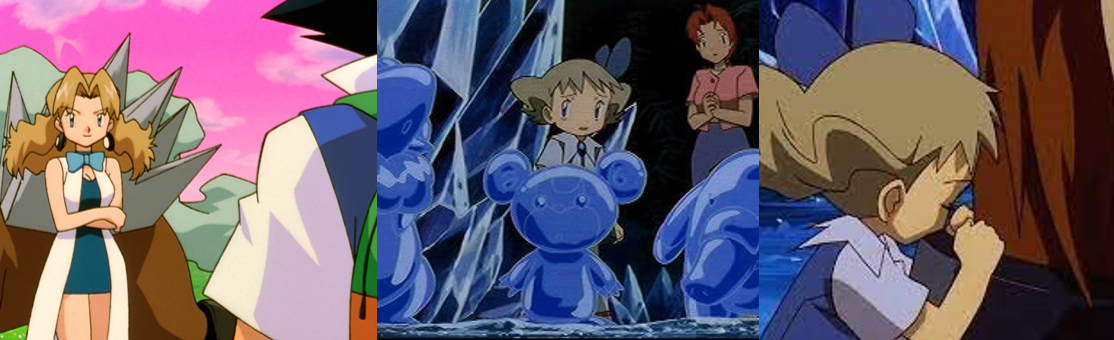




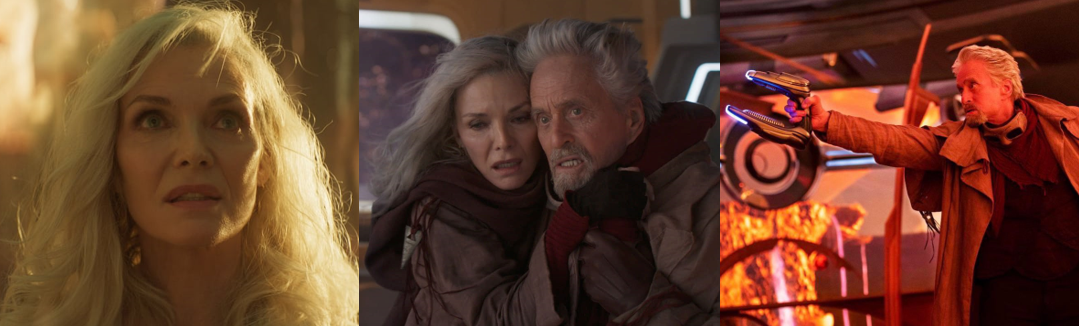

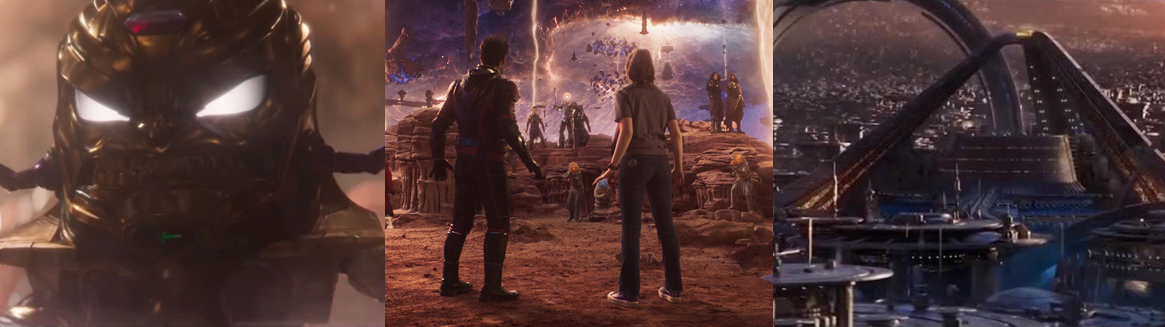
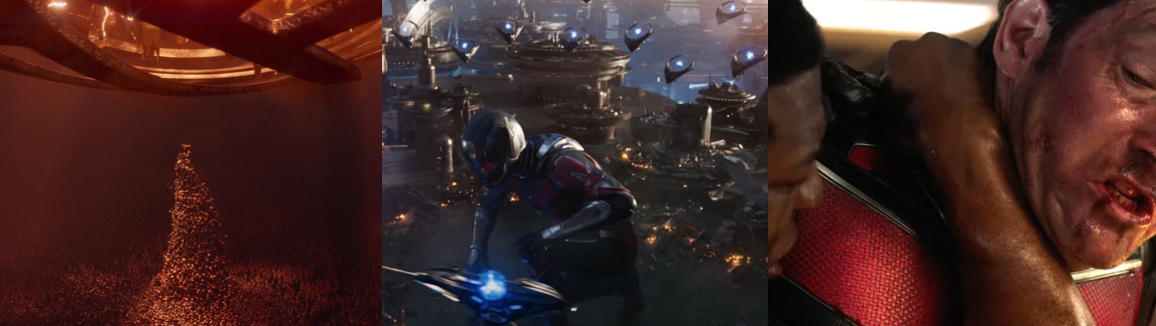




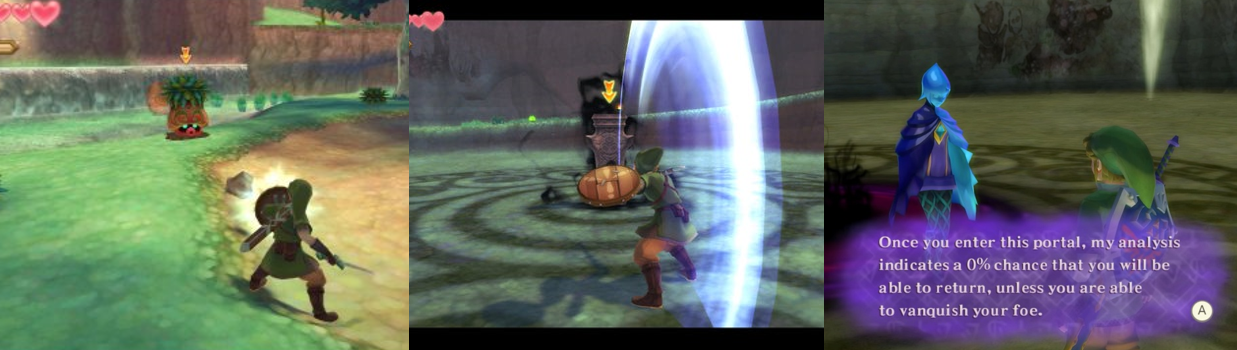


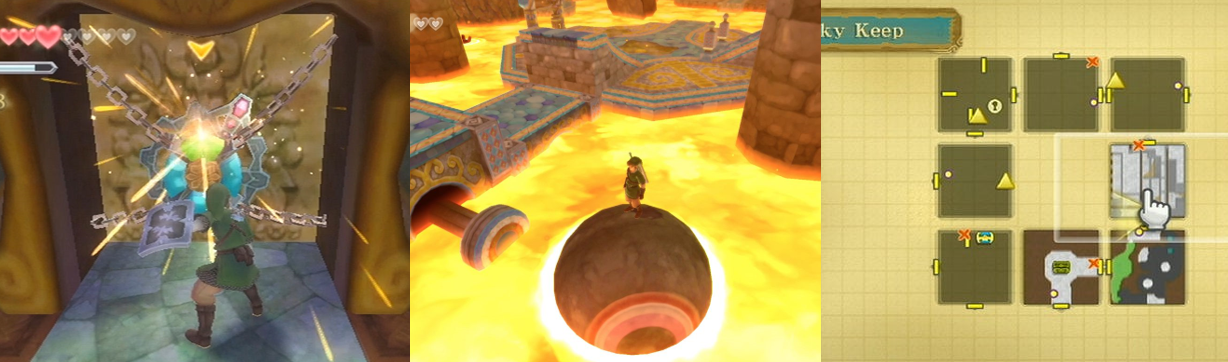
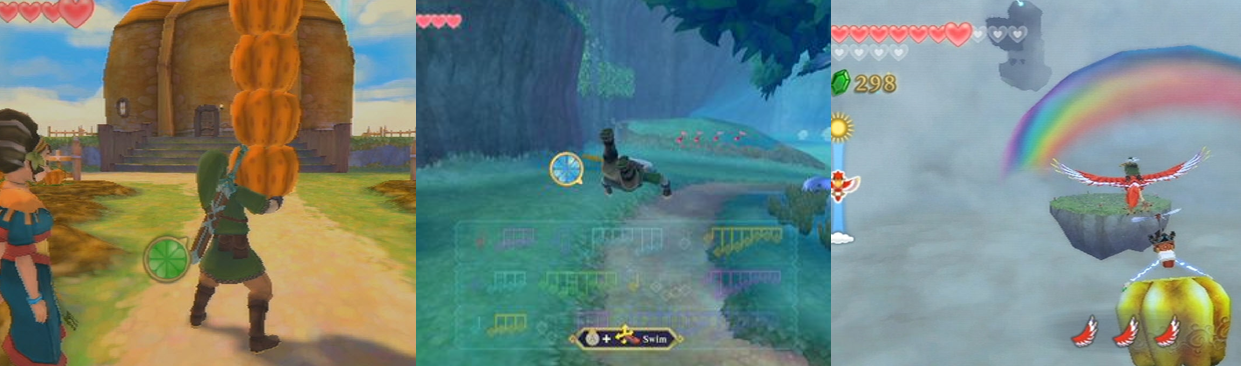


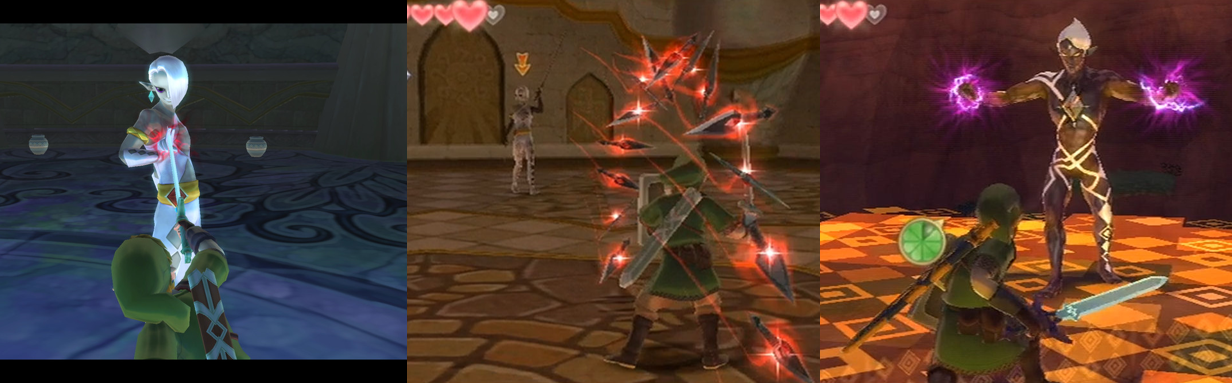






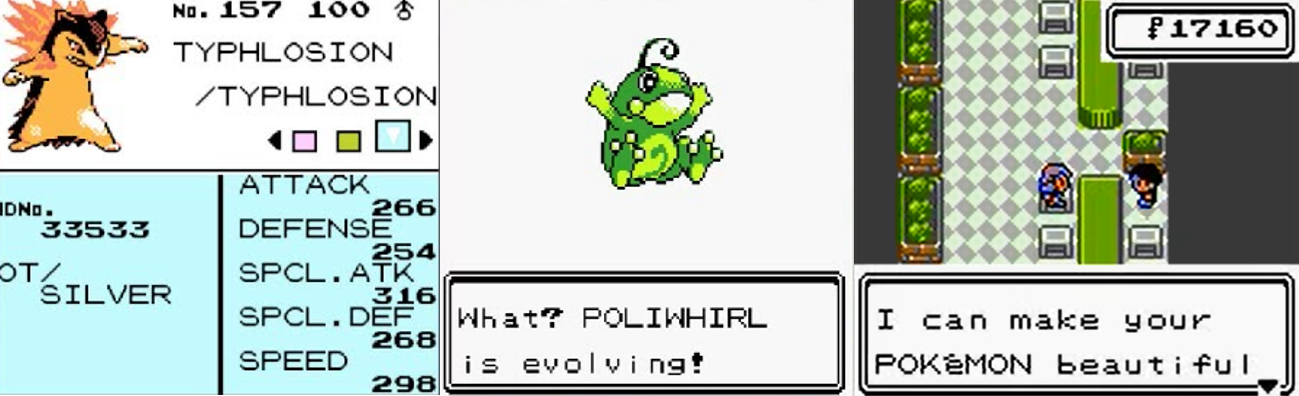
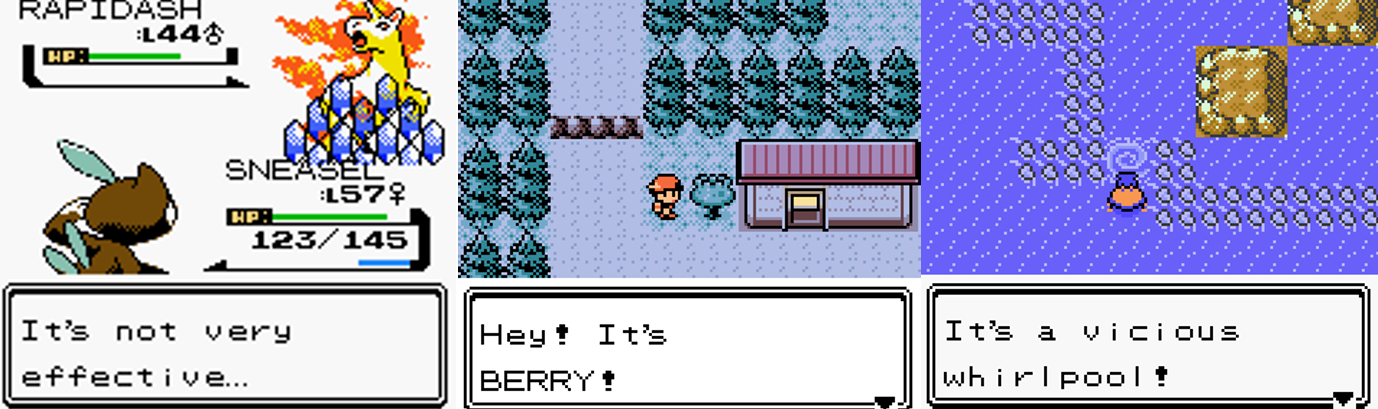






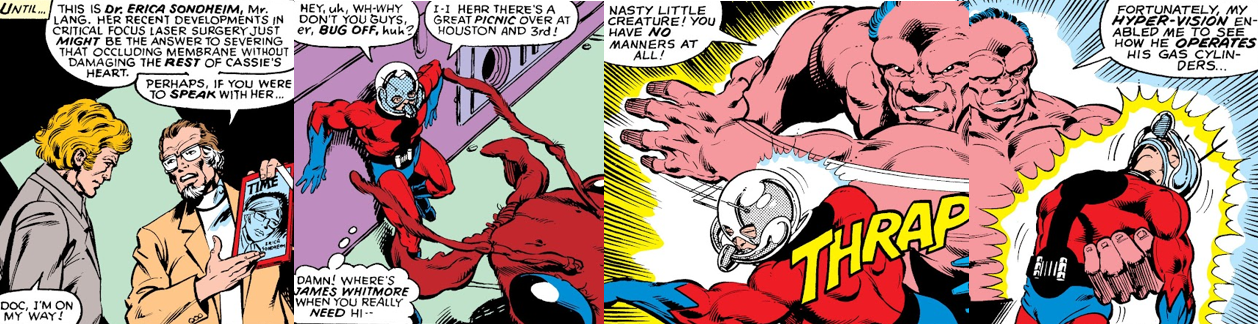
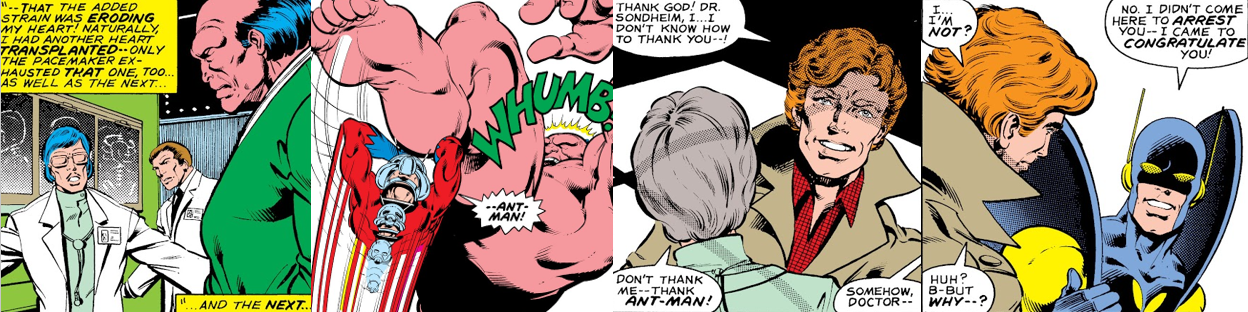
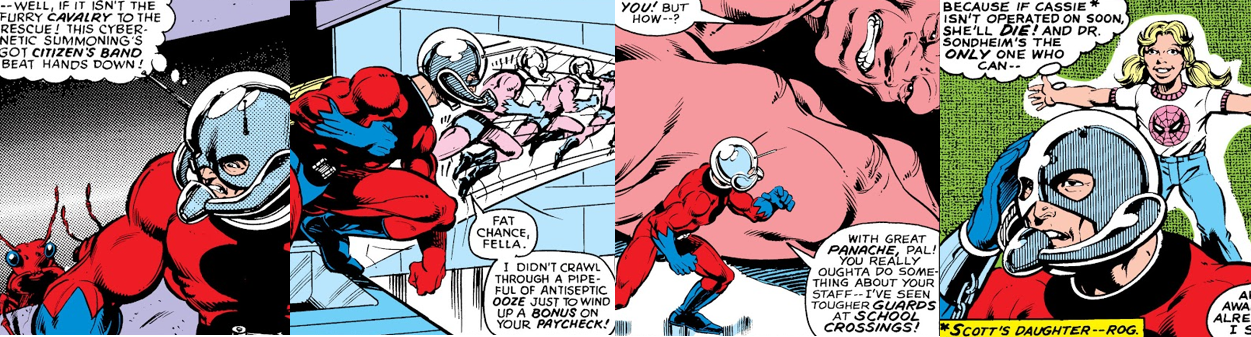









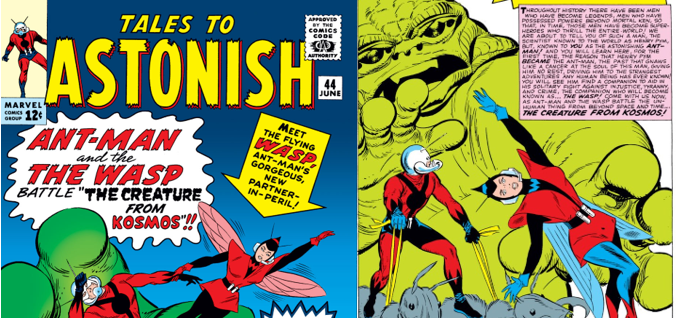
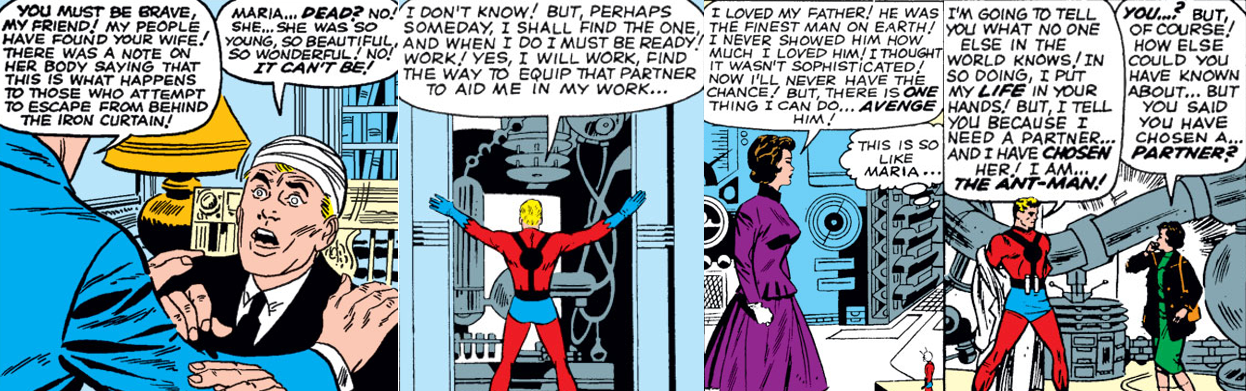
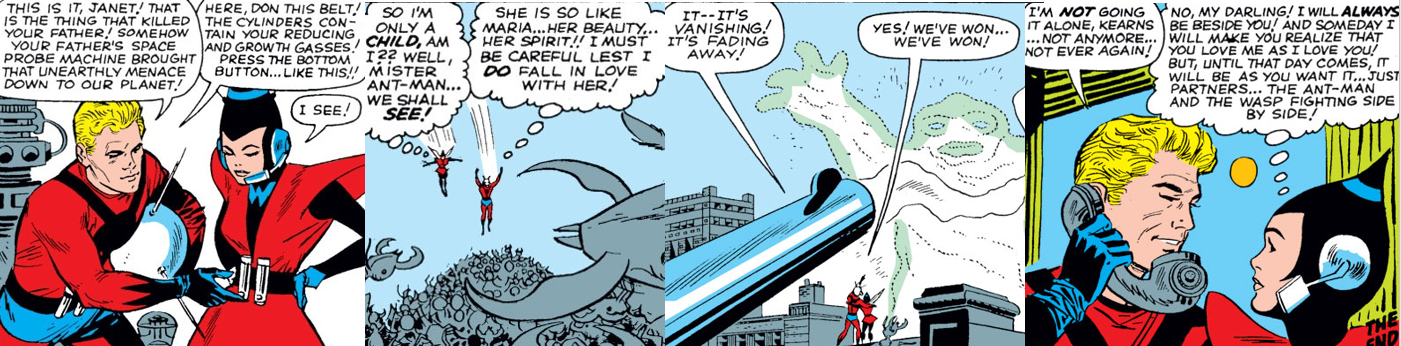
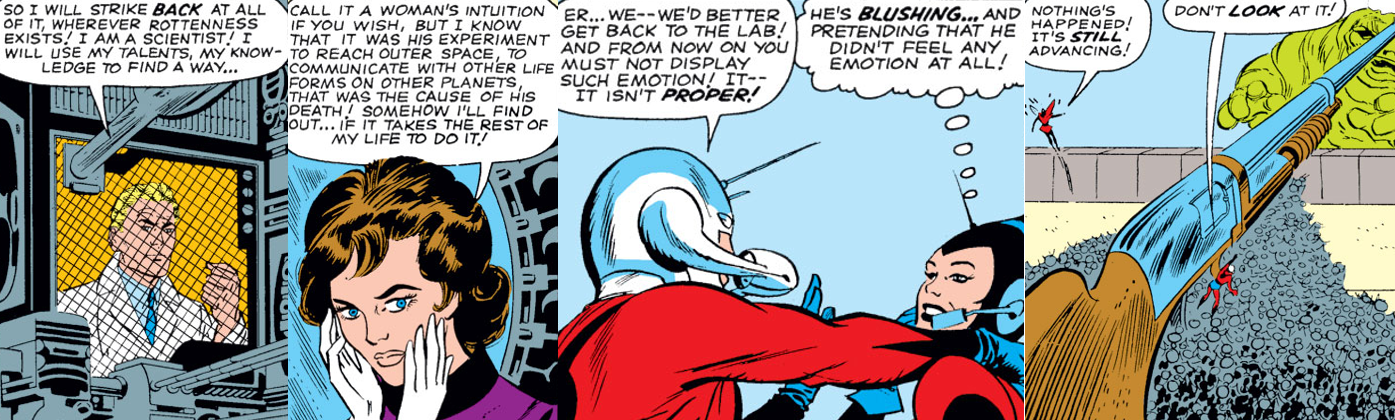


 Dr. K's Waiting Room
You must be logged in to post a comment.