Blind lawyer Matt Murdock first made his debut in Daredevil #1 in April of 1964 and was co-created by writer/editor Stan Lee and artist Bill Everett, with input from the legendary Jack Kirby. While perhaps not as mainstream as characters like Peter Parker/Spider-Man, Daredevil has become one of Marvel Comics’ greatest creations and has featured in a number of ancillary media and merchandise, included a questionably-received big-screen adaptation in 2003 and a critically-successful Netflix series. Still, he’s one of my favourite Marvel characters so today is a great excuse to pay homage to the “Devil of Hell’s Kitchen”.
Story Title: “Last Hand” Published: 29 December 1981 (cover-dated April 1982) Writer: Frank Miller Artists: Frank Miller and Klaus Janson
The Background: The 1960s were a golden age for Marvel Comics as Stan Lee teamed with legendary names like Steve Ditko and Jack Kirby to create some of comicdoms most iconic superheroes. Stan Lee and artist Bill Everett created their most challenging hero yet when Matt Murdock/Daredevil debuted on 1 April 1964, and the Man Without Fear would go on to be one of Marvel’s most popular and enduring characters thanks, in no small part, to the efforts of writer/artist Frank Miller. The then up-and-coming Miller joined the book in 1979 with issue 159 and soon took over writing duties as well as pencils; responsible not just for the creation of Elektra Natchios but penning some of Daredevil’s most influential stories. Easily one of his most memorable stories was told in this special, double-sized issue in which he made the shocking decision to kill off Elektra at the hands of Marv Wolfman and John Romita Sr’s Bullseye. Although Elektra would be resurrected (and killed again) in later years, this doesn’t change the impact of her first death and Miller’s storyline was so pivotal to Daredevil’s character that this storyline was adapted in both the live-action film and the Netflix series.
The Review: “Last Hand” opens with Benjamin Pondexter, the assassin known as Bullseye, stewing in a prison sell on Ryker’s Island and fantasising about blowing Daredevil’s brains out; after being humiliated by the Man Without Fear time and again, Bullseye is no longer satisfied with a clean, simple kill and desires to make him suffer, to break him, to hear him scream in agony. Bullseye’s hatred is palpable and made only worse by the fact that Daredevil could have left him to die in a subway but actually saved his life, demeaning him even further in his own eyes and those of his fellow inmates. While training his body in anticipation for his eventually rematch with Daredevil, Bullseye is crippled by one of his agonising headaches; although the brain tumour he once suffered with has been fixed, he suffers from debilitating migraines and is dependent upon pills to stave off the pain, which is just one more thing he blames ol’ hornhead for. During one of his few moments of reprieve out in the yard, the shackled Bullseye has a tense confrontation with Frank Castle/The Punisher, who is currently locked up as well, who delights in taunting Bullseye with the knowledge that Wilson Fisk/The Kingpin has replaced him with a new assassin-for-hire.
Bullseye, driven by hatred for Daredevil, escapes from Ryker’s after learning he’s been replaced by Elektra!
Enraged by this, and driven to have his revenge against Daredevil, he accepts an effort to appear as a guest on Good Evening, New York; however, when he feigns a headache, he temporarily blinds an armed police officer by spitting the pill in his face and causes the cop to shoot his shackles with an errant shot, thus freeing him from his shackles. Bullseye wastes no time grabbing the downed officer’s gun, gunning down his guards, and taking host Thomas Snyde as a hostage. Bullseye shoots his way out into the yard and, incredibly, is able to throw off a sniper and commander their helicopter using little more than a pistol and a microphone cord! Although he’s eager to track down Daredevil and get his revenge, Bullseye first heads over the Eric Slaughter’s hideout for a lead on the assassin who replaced him; there, he learns that the old man’s freelance organisation is preferable to Bullseye’s more erratic and dangerous ways, and promptly beats the crap out of two of Slaughter’s men. Impressed, the old man willingly gives information the name he requires: former ninja Elektra, who has been instructed to assassinate Matt Murdock’s best friend, Franklin “Foggy” Nelson. Bullseye’s reputation is such that Slaughter fears him almost as much as, if not more than, the Kingpin and lends him the services of his men. They put together a file on Murdock and Nelson for Bullseye and he is amused to the point of hysterics at the similarities between Murdock’s pictures and Daredevil, finding the idea of a blind superhero to be hilarious.
Bullseye and Elektra’s brutal fight ends with her skewered on her own sai!
Bullseye begins following Murdock, watching him perform in court and being sickened by his good nature and humanitarianism; he literally slaps a bug on Nelson’s back so he can listen in on them and slices a taxi cab driver’s throat in order to obtain some wheels to follow Foggy’s cab. Quite conveniently, Foggy’s cab has been commandeered as well: by Elektra! Foggy just about pisses his pants when Elektra pulls over and prepares to execute him with her sai, but he saves himself when he realises that he recognises her as a girl Matt hooked up with when they were back in college. Although she falters in her duty because of her memories of her whirlwind romance with Matt, Elektra’s senses are attuned enough to hear Bullseye approach her with a pistol and she instantly springs into action: she disarms him with a leaping kick and catches him off-guard with her speed, strength, and skill. Their fight spills into a parking lot, and Bullseye uses his knowledge of ninja training to turn the tide against Elektra, matching her blow for blow but ultimately gaining the definitive upper hand when he tosses one of his razor sharp playing cards at Elektra’s throat, cutting her open and leaving her completely helpless as he grabs her and stabs her in the stomach with one of her own sais! Mortally wounded and bleeding out, Elektra staggers through the crowded streets to Matt’s flat, where she dies in his arms. Bullseye can’t help but be present when Matt and Foggy are called in to identify Elektra’s body and learn her cause of death; he heard Foggy mention that Elektra used to be “Matt’s girl” and is curious when Matt seems to stiffen up upon hearing his voice, as though he recognises him, and proves beyond a shadow of a doubt that his suspicion that Matt is secretly Daredevil is true by throwing a scalpel at Murdock’s head only for the blind lawyer to block it with his walking stick.
Bullseye ends up crippled but no less determined to one day further torment his foe.
Armed with this knowledge, Bullseye brings this revelation to the Kingpin, supporting his hypothesis with medical evidence, but Fisk finds the very idea of a blind man being Daredevil preposterous. He does, however, assign Bullseye the task of killing Daredevil and bringing him his body, so the assassin heads to Murdock’s apartment to finally have his revenge…only to be blindsided by Daredevil! Unbeknownst to Bullseye, Matt has set up a decoy of himself, which is enough to throw off Bullseye’s confidence in his hypothesis, but he’s no less eager to get into it with his hated rival. Bullseye lures Daredevil to the rooftop and adds a psychological edge to their fight by wielding Elektra’s sais; their brutal clash sees them plummet through a skylight, battle across an elevated train track, and finally come to blows on a precarious wire over the city street. Since he doesn’t have Daredevil’s superhuman balance, Bullseye slips and falls and is enraged when his foe catches him; determined not to suffer another humiliation at Daredevil’s hands, Bullseye prepares to stab his enemy with a sai but, surprisingly, Daredevil drops the assassin to the street below with the intention of ending his murderous ways. However, given that Bullseye has narrated the entire issue, you may have guessed that the fall doesn’t actually kill Bullseye; although even the Kingpin believes him to be dead, Bullseye lies fully bandage in a hotel room with a shattered spine and unable to move his limbs. However, he takes solace in having hurt Daredevil, both by killing Elektra and breaking his friend Matt Murdock’s heart, and in his hatred. Though he cannot move or speak, his hatred is as strong as ever, if not stronger, and he vows to find his way back and continue hurt Daredevil until he’s finally dead.
The Summary: “Last Hand” is certainly a unique Daredevil tale for a few reasons: first and foremost, it’s told entirely from Bullseye’s perspective. Right from the first panel, we’re let in on the twisted, hate-filled internal monologue of one of Daredevil’s most notorious foes and he’s portrayed as a sick, remorseless, calculating villain throughout. Taking a perverse pleasure in toying with and killing his victims, Bullseye is dangerous and lethal with even the most harmless of everyday objects; while his hatred towards Daredevil is great, this never clouds his judgement or ability; instead, he’s surprisingly observant and conniving, able to deduce that Matt and Daredevil are one and the same to the point where he absolutely nails everything about the Man Without Fear’s origin to the smallest detail, only to be met with scorn from the Kingpin and successfully duped into disregarding his theory thanks to Matt’s trick. Interestingly, though, Bullseye’s crippling headaches don’t factor into the story at all once he’s out of Ryker’s; you’d think that maybe this is what would cause his downfall in the end, but this plot point is completely forgotten once he’s garbed in his familiar outfit and back on the streets, as though finally returning to action cured his debilitating pains.
This is Bullseye’s story, and he not only changes Matt’s life forever but almost figures out his dual identity!
Another way this story stands out is just how little Daredevil actually appears in it; when we do seem him, it’s either through Bullseye’s memories or as a quick flash over to Murdock’s daily routine as a parallel to Bullseye’s time in prison. Thanks to Bullseye’s constant narration, Daredevil is seen as a stoic and grim vigilante, a far cy from his wise-cracking debut, one who is as focused and formidable at fighting as Bullseye. When we do see Matt and Foggy, they’re painted as “saps”; the kind of do-gooders who sicken Bullseye and he only takes an interest in them because they can lead him to his replacement and when he suspects that Matt is Daredevil. We learn very little explicit information about how Elektra’s death impacts Matt; since we are never privy to Matt’s thoughts beyond the few words he says in the story, the entirety of his emotions is told through the artwork. This is strikingly effective, as entire fight sequences and panels pass without any text, and Matt’s morose pain and rage are expertly conveyed in his no-nonsense approach to engaging with Bullseye. It’s also quite interesting seeing the Kingpin outright dismiss the idea of blind Matt Murdock being Daredevil; in time, Fisk would learn that this was actually true and set in motion an aggressive campaign to physically and mentally destroy his foe, but it’s amusing to see just how close he (and Bullseye) came to the truth only for it to be sacked off as being patently ridiculous. Sadly, we don’t really get much insight into Elektra here; like Daredevil, she’s a person of few words, and all of her emotion and turmoil is told through her facial expressions and her fight sequences, which paint her not just as a conflicted and formidable individual but, ultimately, as a victim of Bullseye’s sadistic lusts.
Bullseye pushes Matt to the limit, and sets him on motion towards a dark and destruction path.
Finally, the issue stands out by having a major character being so brutally killed off. There’s a case to be made that Elektra, a trained ninja assassin from birth, should have been able to best Bullseye in their fight but I think the story does a decent job of putting them on equal ground thanks to the emotional blow of suddenly being reminded of Matt and Bullseye’s trick cards. The panel of Bullseye skewering Elektra will forever be iconic, no matter how many times she returns from the dead, and seeing he stumble across town to be with Matt in her final moments was truly heart-breaking. It’s clear from Matt’s stoic expressions that he’s in great pain at her loss, and seeing him launch into an all-out assault when Bullseye brandishes his former lover’s weapons conveys just how personal this fight is for Daredevil. Indeed, it drives him to critically injuring Bullseye; Daredevil’s promise that Bullseye’ll “kill no one – ever again!” could be taken two ways, I believe: either Matt intended for the fall to kill the assassin, or he aimed to cripple him as the final panels show him to be. Either way, it’s a pretty dark place for Daredevil to go and shows just how sour and morally questionable his life as Daredevil can be at times. Overall, this is definitely a pivotal story in Daredevil’s long history and well worth a read for fans of the character, or those who want to explore him further, but maybe it suffers a little from not seeing things form Matt’s perspective; obviously, subsequent issues would delve into this in great detail but it might have been interesting to switch back and forth between Bullseye and Daredevil’s inner thoughts just to get a sense of what’s going though Daredevil’s mind.
My Rating:
⭐⭐⭐
Rating: 3 out of 5.
Pretty Good
Have you ever read “Last Hand”? Were you a fan of Elektra and, if so, what did you think to her death in this issue? What did you think of the story being told entirely from Bullseye’s perspective? Did you enjoy the fights in the story or do you think Elektra was given the shaft? Would have liked to see Daredevil’s thoughts in more detail? What do you think of Daredevil as a character and which storyline of his do you think is the best, or the worst? How are you celebrating Daredevil’s debut this year? Whatever you think about Daredevil, sign up to drop your thoughts below or leave a comment on my social media.
In February 1991, readers of The New Mutants were introduced to Wade W. Wilson, AKA the wise-cracking, fourth-wall-breaking Merc With a Mouth himself, Deadpool. Rob Liefeld and Fabian Nicieza’s sword-swinging immortal went on to become one of Marvel’s most popular anti-heroes thanks to his metatextual humour, violent nature, and massively successfullive-actionfilms. It’s perhaps no surprise that Sideshow rechristened April 1st as “Deadpool Day” to give fans of the chimichanga-chomping mercenary an excuse to celebrate all things Deadpool.
Writer: Fabian Nicieza – Artist: Joe Madureira
Story Title: “Ducks in a Row!” Published: 15 June 1993 (cover-dated August 1993)
Story Title: “Rabbit Season, Duck Season” Published: 20 July 1993 (cover-dated September 1993)
Story Title: “…And Quacks Like a Duck…” Published: 17 August 1993 (cover-dated October 1993)
Story Title: “Duck Soup” Published: 21 September 1993 (cover-dated November 1993)
The Background: By the 1980s, the X-Men had established themselves as one of Marvel Comics’ most successful features, prompting then-chief editor Jim Shooter to commission a series of X-Men spin-off titles, resulting in Chris Claremont and Bob McLeod’s New Mutants. The Mutant youngsters eventually fell under the command of the time travelling Mutant Nathan Summers/Cable, who reformed them into X-Force, and famously came up against Fabian Nicieza and Rob Liefeld’s Deadpool in The New Mutants #98 (ibid, 1991). The self-styled “Merc With a Mouth” was heavily inspired by the likes of James Howlett/Logan/Wolverine and Peter Parker/Spider-Man with more than a few similarities to DC Comics’ Slade Wilson/Deathstroke the Terminator and was initially introduced in an antagonistic role with ties to time-travelling villain Mister Tolliver. Deadpool proved popular enough to make guest appearances in other Marvel Comics before receiving this four-issue miniseries that was a precursor to his ongoing solo title and the greater popularity he achieved once he became self-aware and began breaking the fourth wall. Naturally, this eventually evolved into appearances in Marvel/X-Men-related videogames, a cameo appearance in the beloved X-Men animated series (1992 to 1997), and his live-action debut in the much-malignedX-Men Origins: Wolverine(Hood, 2009), though it was his self-titled spin-off films that truly catapulted him to mainstream success.
The Review: Deadpool’s first solo series begins in Sarajevo, Yugoslavia two years into an ongoing conflict that has made it a breeding ground for international black marketeers and mercenaries, including a heavily-armed group who have been given the unenviable task of searching out and eliminating Deadpool. Unfortunately for them, the Merc With a Mouth catches them completely off-guard, easily dispatching them while mocking them for being less effectual than G. I. Joe’s or Ken dolls. Despairing of the quality of mercs he’s encountered ever since Tolliver died, Deadpool is offended when his friend and contact, Jack Hammer/Weasel, pulls a gun on him. still, Deadpool is so scatter-brained that he quickly moves on from the misunderstanding to first complain that his suit’s teleportation function is “on the fritz” and the fact that he (and anyone who ever worked for Tolliver) now has a target on their back. Weasel tries to suggest that they (or, at least, Deadpool) should try and get their hands on Tolliver’s estate and weapons, but Deadpool’s more focused on getting intel on Vanessa Carlysle/Copycat, a shape-shifting Mutant and former flame of his who he’s looking to kill off, when they’re suddenly interrupted by one of the most nineties-looking characters I’ve ever seen (which is saying something considering Deadpool’s attire), Garrison Kane/Weapon X, a cybernetic mercenary who was both part of the same Weapon X program as Deadpool and a member of Cable’s Six Pack when he was working for Tolliver.
Deadpool is hounded by mercenaries and former allies who all want him dead.
Kane also wants to know where Vanessa is and attacks, easily shielding himself from Deadpool’s blade and bullets with his versatile cybernetic enhancements. Shrugging off Wade’s jokes and insults, Kane mocks him for betraying his mercenary code and allowing so any of his former enemies and allies to live, but it’s only when Weasel points out that neither of the two beefed-up idiots knows where Vanessa is and they’ve simply being fighting over nothing and as a result of their stupidity and machismo. Admitting to acting without thinking, Kane tries to leave, determined to make an offer to Vanessa before she’s killed (since she’s one of the prime targets in the whole will fiasco), and drops the bombshell that another of Wade’s former adversaries, Gregory Terraerton/Slayback, is not only still alive but is actively gunning for Deadpool, the man who left him for dead way back when. As if on cue, the cybernetic killer breaks into the headquarters of Department X (the government agency behind the Weapon X program) to steal Wade and Kane’s files in order to settle the score and, as if that wasn’t bad enough, the story also jumps over to New Delhi, India, where Wolverine knock-off Nyko Halfghanaghan guns down mercenaries looking for Tolliver’s will (his dead brother, Pico, was Tolliver’s right-hand man so they assume he must know something about it) before delivering a work order to Jacob Gavin Jr./Courier calling for Deadpool’s execution for his part in Pico’s death. Finally, there’s a third plot thread at work here as Cain Marko/The Juggernaut bursts into a genetic research facility outside of Angoulême, France in search of his friend, Thomas Cassidy/Black Tom Cassidy (a common occurrence during this time as the two had formed a strong friendship). Louis Banque, the director of the facility, manages to calm Juggernaut down enough to take him to Black Tom, who’s been enhanced through further mutations that allow him to form weapons, reshape his body into an organic wood substance, and focus and intensify his bioblasts through that same “wood gunk”. This storyline converges with Deadpool’s when issue two drops Wade into Cairo, Egypt where he executes another group of mercs to acquire a briefcase containing a disc that holds information on Tolliver’s will (if that sounds like some kind of mental scavenger hunt, it actually is as per Tolliver’s design, with the ultimate prize being “the most powerful weapon on the face of the planet!”) Anyway, just as Deadpool gets the case, Juggernaut and Black Tom show up, wreck the building he’s standing on, and then blast Deadpool in the back of the head to steal the case from him.
Deadpool is outraged when Commcast “violates” his mind while searching for Tolliver’s will.
Meanwhile, another former member of Weapon X, Bernard Hoyster/Sluggo, drops in on Vanessa’s mother in search for her and ends up garrotted around the neck by the blue-toned shape-shifter, who’s looking to avenge the death of her friend, Tina Valentino, at Sluggo’s hands. Vanessa settles for stealing Sluggo’s car and leaving him to be arrested after learning that she’s become a target in the search for the will and vows to head to Sarajevo to acquire it, and Tolliver’s fortune, for herself. However, when Courier procures the services of Garabed Bashur/Commcast and the Executive Elite, he offers not money, but Tolliver’s disc and thus a head start in the scavenger hunt. Unaware of this, Deadpool heads to Cairo International Airport using Weasel’s intel and a fight ensures between him and Juggernaut and Black Tom (in civilian guises) that sees Marko hand over the briefcase to save Tom from being sucked out of the plane, only for Wade to trick him and send both plummeting to the ground below while he returns to Sarajevo for issue three. There, he gets into it with Amie Zamborano/Makeshift and Anastasia Summit/Rive of the Executive Elite; disgusted by Deadpool’s sexist jeers, the two pin him to a wall and fry him into unconsciousness with a massive burst of electricity. This makes him easy pickings for Commcast to haul back to the Edsel and subject him to the torture of his “synaptic neural scanner”, a fancy high-tech headband that allows Commcast to scan the thoughts and memories of his victims. Though Deadpool attempts to resist, this sheds some light on his past with Vanessa, depicting them as lovers back before he was mutilated by the Weapon X program, and shows how Kane tried to emphasise the benefits of cybernetic prosthetics when Wade was diagnosed with terminal cancer. After revealing that there are actually two discs that act as a guide towards Tolliver’s will, Commcast rips off Deadpool’s mask, revealing his gruesome visage to everyone but the reader, distracting them enough for Weasel to make a dramatic entrance and break Deadpool free. Incensed at Commcast poking around in his head (which he unironically sees as a “violation” despite his mercenary ways), Deadpool goes on a rampage, destroying his facility and killing Makeshift and Rive (but it’s Weasel who delivers the fatal headshot to Commcast). Weasel then examines the two discs and learns of a monastery in Nepal, which he theorises is the location of Tolliver’s will, and of an “ambient-energy dampening” genetic monstrosity known as “Unit: Zero” that he assumes is guarding it.
After Slayback is atomised, Deadpool proves he’s more than just a killer…and makes out with Tolliver’s treasure!
Thanks to her shape-changing and mild mind control abilities, Vanessa is also able to learn of this monastery through alternative means but, when she makes the climb to the building, she’s surprised by Slayback and effectively taken hostage. Although Deadpool insists on heading in alone, Weasel makes the four-storey rope climb to offer his assistance in the arc’s final issue, and Kane also manages to make his way there so that all the loose ends can be nicely tied up. Thanks to Weasel, Deadpool discovers a locked vault packed full of weapons, gadgets, and other gizmos set aside by Tolliver, which leads to another scuffle with Kane when he comes looking to claim Tolliver’s secret, all-powerful weapon for himself. Although Deadpool is all mouth when it comes to Kane, he’s thrown into a panic when Slyback makes it a three-way dance since he didn’t just see Slayback die, he saw him reduced to little more than a bloody goop! Thanks to his cybernetic enhancements and burning desire to avenge himself, Slayback easily overwhelms Deadpool but, as he moves to deliver a fatal blow (despite this being impossible against Wade thanks to his superhuman healing factor…), Vanessa sacrifices herself to save her former love. During all of this kerfuffle, weasel realises that a seemingly innocuous mannequin is actually the Zero unit (or “Adam Unit-Zero”, to be precise) and Tolliver’s ultimate weapon, an energy-absorbing synthezoid built to eliminate all weapons of war. Consequently, it identifies Slayback as such and reduces him to cinders, atomising him in a blinding flash of light. While it settles for similarly destroying Weasel’s armaments and evaluates that Kane has a “strong inclination towards socially beneficial behaviour” [sic] despite his capability for lethal force, it classifies Deadpool as a weapon of war and moves to nullify him accordingly. However, in keeping with his reputation as the “Merc With a Mouth”, Deadpool is able to stall the machine by rationalising that he’s not just capable of killing but healing too. He then demonstrates this by having Vanessa touch his horrifically scarred body to absorb his healing factor and thus heal her mortal wounds, confusing Adam and causing it to teleport away to conduce further analysis. Although she’s grateful, and touched that he still loves her, Vanessa turns him down since she loves another and tearfully begs him to move past his cancer, his past, Tolliver, and even himself so he can find something worth fighting for again. Though heartbroken, Wade consoles himself with the knowledge (as amusingly expositing by Weasel) that he showed he can be more than just a brutal killing machine, and by swiping some of Tolliver’s gold for himself so the mission wasn’t a complete loss.
The Summary: In many ways, The Circle Chase suffers from a lot of the problems I often have with X-Men stories, particularly those from the team’s heyday in the nineties; stories were often crammed full of characters, lore, and interweaving plot threads that made single issues and even ongoing story arcs difficult for me to pick up and read since it was hard to keep track of everything going on. We’ve got Deadpool, Vanessa, the Juggernaut and Black Tom, Weasel, Garrison Kane, Slayback, Commcast, the Executive Elite, the complex search for Tolliver’s will and numerous references to him and his minions…it’s quite a bit to take in all at once. Thankfully, the art is pretty good; while much of the action takes place at night or in darkened interiors, all of the characters are very colourful and stand out thanks to that nineties excess of bulging muscles, ridiculously excessive guns and technology, and hyper sexualisation of female characters and bodies that was so rampant during this time.
Deadpool’s chatter mouth andquestionable past are a highlight of the miniseries.
The writing is also really good, particularly in terms of dialogue and in characterisation Deadpool. Wade more than lives up to his loquacious reputation here and is constantly spouting nonsense, pop culture references, and getting distracted with tangents in the heat of battle. He taunts his opponents to the point of frustration, which is always amusing, and offers relentless amusing commentary throughout the miniseries. Deadpool’s skills are at their peak here and he’s easily able to take out the many run of the mill mercenaries he comes up against; the more prominent mercs from the Executive Elite manage to subdue him (mainly to advance the story, put some spotlight on Commcast, and subject Deadpool to his mind reading device so we can learn a little more about him) but even this is just a temporary setback and he immediately enacts a bloody revenge upon being freed by Weasel. Interestingly, the final issue delves a little into Wade’s complex mindset; while he hides behind his near-psychotic persona and smart mouth, he’s actually a very tortured individual, one suffering from hideous scars as a result of his healing factor constantly staving off the cancer that threatened his life. Wade is also rattled into an uncharacteristic panic by Slayback’s survival and appearance and a prominent plot point being Wade’s rejection of the notion that he actually enjoys killing and is a mindless sadist like Slayback. This is ultimately proven to be true in the finale, where he uses his healing factor to restore Vanessa and reject the notion that he’s nothing more than a weapon of wear, which allows him to neuter Adam-Zero’s threat which along with his heartbreak over having lost Vanessa’s love, goes a long way to injecting some humanity into this otherwise volatile and unstable mercenary. While The Circle Chase may be bulging with colourful characters, Mutants, and cybernetic antagonists, the core villains are actually surprisingly interesting. It seems as though everyone in the story has a connection to Deadpool, mostly through either Weapon X or the Six Pack (or both), and almost everyone has an axe to grind against him (even Weasel, the closest thing he has to an ally, is constantly exasperated by Wade’s instability and childish nature).
There’s quite a bit going on, but the characterisations and art work make it an entertaining read.
Having said that, the Executive Elite are basically a throwaway distraction that exist mostly to pad the story out with a bit more action, intrigue, and exposition, but Commcast almost makes an impression as a kind of dark mirror of Professor Charles Xavier by using his technology to violate Deadpool’s memories and he even has an “X-Men” team of his own in Makeshift and Rive. Garrison Kane is even more of a wild card than Deadpool himself; he’s something of a reluctant ally but doesn’t hesitate to throw down against his former teammate simply because he acts “like an idiot” when it comes to Wade due to their history together. With his glowing eye and bionic arms and armaments, he’s kind of like a poor man’s Cable, which is fitting given their history together, and ends the story on slightly better terms with Wade than they began due to their shared concern for Vanessa. Vanessa is also a significant factor in the miniseries, primarily as one of the main targets for Tolliver’s will and as Deadpool’s lost love, though she doesn’t get a huge amount of agency; she is able to string up Sluggo and find her way to the monastery without the discs but, once there, she’s held hostage by Slayback and then nonsensically throws herself in front of Deadpool despite him being able to heal from any wound. As for Slayback…I’ve never heard of this guy, but I actually really enjoyed him! His zombie-like appearance and malleable cybernetics (which give him an extensive reach and even a drill appendage) make him a fearsome foe and he’s written with this biting, British wit that adds a lot of character to him. the parallels between him and Deadpool kind of come out of nowhere in the last chapter but I liked that his appearance rattled wade so much that it put him on the back foot, and it was interesting seeing wade think (well, “talk”, really) his way out of being atomised by Adam-Zero like Slayback was. Overall, I really enjoyed this miniseries; it was a little bloated at times but bat-shit-crazy in all the ways I enjoy about a character like Deadpool. While Wade isn’t being as self-referential or meta as he is now known for, all the foundation for the characterisation is here and the miniseries went a long way to justifying his later mainstream success.
My Rating:
⭐⭐⭐⭐⭐
Rating: 5 out of 5.
Fantastic
Have you ever read The Circle Chase? If so, what did you think of the story and the Deadpool’s first solo foray? Did you enjoy the bloated cast of colourful characters and their ties to Deadpool’s past or was it all a bit too crowded for you? What did you think to Deadpool’s characterisation here, the glimpses into his past and motivations, and his snarky with? Were you a fan of Slayback, Vanessa, and the likes of Garrison Kane or is there another of Deadpool’s villains you prefer? What are some of your favourite Deadpool stories and moments and how are you celebrating Deadpool Day today? Whatever your thoughts on Deadpool, feel free to sign up and share them below or drop a comment on my social media.
The Date: 2 April 2000 The Venue: Arrowhead Pond of Anaheim; Anaheim, California The Commentary: Jim “J.R.” Ross and Jerry “The King” Lawler The Referee: Earl Hebner The Stakes: Fatal-four-way elimination match for the WWF Championship
The Build-Up: On March 31st, 1985, Vince McMahon changed the face of the wrestling landscape forever by bringing together the biggest names in wrestling (alongside a number of celebrity guests) for the very first WrestleMania, a pay-per-view extravaganza that became the hottest event of the calendar year for World Wrestling Entertainment (WWE) and what better way to celebrate than by looking back at one of the event’s most historic matches. By the late-nineties, the World Wrestling Federation (WWF) was clawing back to prominence after being beaten in the weekly ratings by World Championship Wrestling’s (WCW) Monday Nitro for nearly two years. Amidst the adolescent antics of D-Generation X and the violent rivalry between the Undertaker and Kane, fans were caught up in the rivalry between the loud-mouthed, anti-authority “Stone Cold” Steve Austin and WWF Chairman Vince McMahon. Unfortunately, Austin was written off television using a hit-and-run angle so that he could get much-needed neck surgery, and the main event scene of the WWF came to be dominated by Triple H. Triple H became an extremely powerful figure, both on- and offscreen, after marrying McMahon’s daughter, Stephanie, and throwing his weight around as WWF Champion, crushing those with either his political power, his trusty sledgehammer, or his buddies in D-X. After Cactus Jack failed to unseat Triple H, costing the man behind the persona, Mick Foley, his career in the process, the people’s last chance laid, fittingly, in the People’s Champion himself, the Rock. However, the Rock’s path to the WrestleMania main event was disputed by the Big Show following a botched finish to the Royal Rumble; the Rock’s attempts to regain his championship match were further thwarted when the Big Show aligned himself with Vince’s son, Shane, so Vince returned to the Rock’s corner to get a measure of payback against his children. Although Chris Jericho was initially scheduled to be added to the WrestleMania main event, Linda McMahon entered the fray and announced that she would accompanying Mick Foley to the ring at the Showcase of the Immortals and the sage was set for a fatal-four-way with a member of the McMahon family in every corner!
The Match: I should say that, while many fans and critics out there don’t think too much to this match (or this WrestleMania, there’s a very good reason that I’m choosing to review it; this was the very first WrestleMania I ever watched, and I had just started really getting into wrestling just prior to the Royal Rumble, so I was all about Mick Foley, Triple H’s dominating run as champion, and the intrigue surrounding these larger-than-life competitors. As such, considering the emotional ending to their Hell in a Cell bout at No Way Out, I was fully onboard with J. R.’s call that Foley was the “sentimental pick” for this match and had absolutely no qualms about seeing him added to the contest so close to his “retirement” because it just added a lot more emotional stakes to the match after seeing him push Triple H to the limit as Cactus Jack and knowing it could very well be his last shot at reclaiming the WWF Championship. Arguably, if there’s anyone that people didn’t seem too interested in seeing in this match, it’s the Big Show; the mammoth Paul Wight had already switched alignments a handful of times by this point, and been the WWF Champion himself and, despite the allure of his size and strength, just wasn’t as beloved, hated, or revered as the other three competitors so he kind of stands out a little bit. Once the Rock comes out, it’s pretty clear who the crowd is really behind; despite being accompanied by the hated Vince McMahon, the Rock was firmly entrenched as the most popular star on the roster at this point and the people had been begging to see him dethrone Triple H ever since he won the Royal Rumble. And then, of course, there’s the champion himself; Triple H’s big run at the top wasn’t quite as self-serving as his later reign of terror, but he had gone out of his way to make sure that he was the most hated man in the WWF at that point; from throwing his weight around, stacking the deck at every turn, to firing and the retiring Mick Foley, Triple H had every advantage at his disposal, to say nothing of being physically capable of going toe-to-toe with any man, especially each of his opponents in this match.
Despite his size and strength, the Big Show is the first to go after the others team up against him.
With no count-outs, time limits, or disqualifications in effect, and three former World Champions gunning for him, Triple H was at a distinct disadvantage here; not only did he not have to be pinned to lose the belt, he could also be eliminated from the contest entirely if he wasn’t careful, and the four wasted no time in pairing off for a slugfest that saw the Game renew his rivalry with Foley and the Rock and the Big Show go at it in the other corner. Hyped up on adrenaline and emotion, Foley was able to beat Triple H down in the corner and hit his running knee spot, but both men were soon floored by a double clothesline from the Big Show, who showcased his physical dominance in the early going by manhandling each of his opponents indiscriminately with headbutts, tosses, and huge Gorilla Press Slams. Foley’s attempt to choke out the Big Show left him crushed beneath the giant’s weight, and he easily shut down the Rock’s offense with a sidewalk slam, but surprisingly Foley saved the Game from falling victim to the big man’s patented Showstopper chokeslam with a kick to the nuts. Triple H, the Rock, and Mick Foley then got on the same page to pummel the Big Show and finally knock him down for a group stomping. It’s Foley who breaks up the alliance, attacking Triple H and sending himself and the Game to the outside with his Cactus Clothesline; while the Big Show overpowers the Rock on the inside, Foley attacks Triple H with a steel chair in front of the announcers, then wallops the big man across the spine in retaliation for Shane tripping the Rock. Stunned by the shot, the Big Show lumpers right into a Rock Bottom and is summarily eliminated from the match.
It wasn’t long before Rock ‘n’ Sock Connection were battling for victory.
Triple H offers to join forces with each of his two opponents to take out the other, and ends up getting suckered in by the Rock as a result; the former WWF Tag Team Champions stomp the shit out of Triple H, smacking him back and forth between them and flooring him with a double clothesline before dumping him to the outside. Every time Triple H attempts to mount a comeback, the Rock ‘n’ Sock Connection shut him down, but Triple H is wily enough to duck a shot from the Rock that sees Foley get blasted in the head with the ring bell! Triple H follows up by running the Rock into the steel ring steps to turn things around, dropping the Rock chest-first on the barricade, but he’s left cowering in ear with Foley pulls out his trusty barbed wire 2×4! Thanks to a kick to the dick, Triple H fells the former Hardcore Champion and then uses Foley’s own weapon against him; thankfully, the Rock interrupts before Foley can get too shredded, giving Mick the opportunity to hit the Double-Arm DDT and pull out Mister Socko for the Mandible Claw. The Rock then smashes the WWF Championship over Triple H’s face, but Foley interrupts the People’s Elbow by slapping the Mandible Claw on the Rock (which a vocal majority of the crowd are not happy about) and this dissension allows both men to fall victim to a double low blow form the Game. The Rock and Triple H make it to their feet first, and Vince surreptitiously slips a steel chair into the ring for the Rock to use, but nearly has a heart attack when Foley attacks the Rock and almost scores a pin fall off the Double-Arm DDT. Foley’s momentum is cut off, however, when he charges at the Rock with the chair and gets a face full of steel for his efforts, but Triple H breaks up the Rock’s pin attempt (which the announcers question and hastily try to explain as the Game wanting to personally eliminate Foley from the match).
After injuring himself on a risky move, Foley is eliminated and Triple H focuses his wrath on the Rock.
Triple H then clotheslines the Rock down and he and Foley agree to team up to eliminate the Rock and then settle their score, which the crowd also isn’t happy about. Suddenly fending off two men at once, the Rock is pummelled by the unlikely duo’s attacks and double teams but refuses to let himself be pinned to the mat. Foley knocks the Rock to the outside, smashing the Brahma Bull in the face with the steel stairs and leaving him helpless as Triple H lays him across the Spanish announce table. Foley ascends the nearest turnbuckle and absolutely crashes and burns on a diving elbow drop, momentarily taking himself out of the match and leaving Triple H to quickly cover up by smashing the Rock through the table himself. With the Rock incapacitated at ringside, Triple H is infuriated when the injured Foley still manages to kick out of a Pedigree s he smashes the former King of the Death Match over the head with a steel chair and finally puts his dreams to rest with a devastating Pedigree to the chair. The crowd is a sea of boos at seeing their beloved hero eliminated, but applaud his efforts, continuously respectful of his tremendous effort and the sacrifices he made not just throughout his career, but also in this match. Before he leaves, though, Foley clocks Triple H in the head with the barbed wire 2×4, busting him open in the process and allowing the match to boils down to, arguably, the two men who should’ve had the main event to themselves all along: The Champion, Triple H, and the people’s last, best hope, the Rock. After kicking out of a pin fall attempt, Triple H gets decked by the Rock’s signature right hands, and then clotheslined to the outside after a brief miscommunication; the Rock forces Triple H up the aisleway for a brawl on the concrete and, naturally, out into the crowd and back over to the announce table. Triple H uses a steel chair to smack the ring steps into the Rock’s face and pin him to the floor, attacking the steps with the chair to increase the pressure, and then plans the Rock with a piledriver onto the other steel steps! Despite J. R.’s pleas to stop the match, and that such a spot probably should’ve been the finish, the Rock not only kicks out of a pin attempt but even fires up enough to go for a Rock Bottom! Triple H countered out of it but was toss over the top rope and back to the outside when the Rock countered the Pedigree!
Vince screws the Rock out of his victory, but the People’s Champ gets the last laugh on the McMahons.
The two brawl at ringside and through the crowd a bit more, an exchange that sees the Rock slam Triple H to the padded floor with a spinebuster and then smash Triple H through the remaining announce table with a beautiful suplex! When Triple H trips the Rock into the ring steps with a drop-toe hold, Vince attacks the Game and ends up being smashed in the head by a television monitor courtesy of his son. The two McMahons brawl at ringside and Vince gets busted open from a chair shot to take the focus off the ring and give the competitors a chance to catch their breath; this results in the Rock exploding with a series of punches and scoring a near-fall off a DDT and that cool twirling powerslam he used to do around this time. Triple H turns things around with Foley’s 2×4, but the Rock is able to slingshot the Game into Triple H and then plant the champion with a Rock Bottom. Unfortunately, the Rock is too fatigued to capitalise, but is saved from Shane’s chair shot by a returning Vince, who slaps his son around to thunderous applause. Vince grabs the chair and prepares to hit Triple H, but psyche! The WWF Chairman stuns the crowd, and Stephanie, and smashes the chair over the Rock’s head instead! When the Rock kicks out of the pin fall, Vince is infuriated and hits the People’s Champion again, harder this time, and Triple H finally snags the three count, becoming the first heel to ever successfully defend the WWF Championship at WrestleMania. The Rock is left a quivering, beaten mess, the crowd is so pissed off that they’re throwing trash in the ring, and Vince embraces Stephanie and Shane to birth a new alliance in the WWF. Angered at the betrayal, the Rock hits the ring and plants all three McMahons with Rock Bottoms and then hits the People’s Elbow on Stephanie to placate the crowd somewhat.
The Aftermath: Naturally, the Rock wasn’t finished with Triple H following the end of this match; over the next few weeks, the People’s Champion was continuously on the backfoot as the combined forces of the McMahons and D-X conspired to beat him down at every opportunity. Although the Rock was able to earn a one-on-one shot at Triple H at Backlash, the McMahons stacked the deck against him by naming Shane as the special guest referee and Vince’s stooge, Pat Patterson and Gerald Brisco, in supporting roles. This led to Linda announcing that Steve Austin would be in the Rock’s corner at the event; although the Texas Rattlesnake wouldn’t show up until literally the very last minute during the match, his appearance not only helped the Rock to defeat Triple for the WWF Championship but also result in one of the most lauded and financially successfully pay-per-views of the year. The Rock’s issues with Triple H and the McMahons continued for a few months, with Triple H regaining the belt thanks to the return of the Undertaker, and the Rock continued to be pestered by Shane even as he faced new challengers like Chris Benoit.
Each competitor continued to play a pivotal role in the wrestling for years to come following this match.
The Big Show slid down the card after this and was reduced to a impersonator gimmick before being taken off TV completely so he could lose weight; he would make a dramatic return at the 2001 Royal Rumble, languish in the Hardcore division for a while, before finally getting renewed push to the top when he was paired up against rookie Brock Lesnar. Triple H saw out the rest of 2000 feuding with Kurt Angle and the Undertaker, before a horrific injury saw his power team with Austin disrupted. He returned to the ring to main event WrestleMania X-8 and remained in the main event picture scene for years thanks to his time in Evolution and feuds with Shawn Michaels and John Cena and transitioning into an authority figure. As for Mick Foley, he was soon back on TV as a beloved authority figure and mainly acted as a comedic figurehead or special guest referee. Foley returned to the ring in 2004 to team up with the Rock against Randy Orton, Ric Flair, and Batista of Evolution; Foley’s in-ring return was specifically to help sell Orton’s “Legend Killer” gimmick but he had a number of notable matches in the years after this against the likes of Edge, Ric Flair, and Terry Funk and Tommy Dreamer in WWE, and against such names as Scott Steiner, Sting, and Kevin Nash during his time with Total Nonstop Action (TNA).
My Rating:
⭐⭐⭐
Rating: 3 out of 5.
Pretty Good
Did you enjoy the main event of WrestleMania2000? What did you think to the a McMahon being in every corner? Who was your pick to win this match at the time? What did you think to Mick Foley returning to the ring so soon after his retirement? Would you have liked to see Chris Jericho in this match? Did you agree with the finish? How are you celebrating WrestleMania’s anniversary this year and what’s your favourite WrestleMania moment? Drop your thoughts below by signing up or leave a comment on my social media to let me know what you think about WrestleMania 2000 and check back for more wrestling content throughout the year.
Released: 17 March 2023 Director: David F. Sandberg Distributor: Warner Bros. Pictures Budget:$110 to 125 million Stars: Zachary Levi, Asher Angel, Jack Dylan Grazer, Lucy Liu, Grace Caroline Currey, Helen Mirren, and Djimon Hounsou
Plot: Troubled orphan turned magically-empowered superhero Billy Batson/Shazam (Angel/Levi) struggles to keep his adopted family together as a superhuman team. However, when the daughters of Atlas – led by Hespera (Mirren) and Kalypso (Liu) – arrive seeking to reclaim the Wizard’s (Hounsou) powers, Billy and his family must come together to defend their city and reinforce their bond.
The Background: In a bid to cash in on the success of Clark Kent/Superman and Bruce Wayne/Batman, Fawcett Publications drafted ideas for their own colourful superheroes, each imbued with the powers of Greco-Roman Gods, before Ralph Daigh combined them into a superpowered entity to rival Supermaneventually dubbedCaptain Marvel. While battling legal issues around his name, Captain Marvel and his colourful extended family joined DC Comics and found some success on the small screen with the 1970’s live-action television show. Initially, Captain Marvel’s big-screen debut was to feature former wrestler Dwayne “The Rock” Johnson asTeth-Adam/Black Adam, though the project lingered in Development Hell before director David F. Sandberg delivered a critically and commercially successful action/comedy that was soon followed by the mixed reviews of Johnson’s solo Black Adam venture. Plans for a sequel to Shazam! (Sandberg, 2019) began soon after the film’s opening weekend, with star Zachary Levi and many of his co-stars signed on to return for multiple films. Mark Strong was revealed to not be returning, and Sandberg was forced to cut classic Shazam villain Mister Mind from the script to keep the focus on the family dynamic and the battle against Atlas’s daughters, with veteran actress Helen Mirren landing a prominent role as Hespera. Although the sequel was delayed numerous times thanks to the impact and fallout of the COVID-19 pandemic, Shazam! Fury of the Gods finally released to the tune of a disappointing $134 million at the box office. Reviews were also somewhat mixed; some saw it as corny, but harmless, fun, while others regarded it as one of the worst DCEU movies ever made. Although newly-appointed DCEU head honcho James Gunn expressed interest in continuing Shazam’s story in future films, director David F. Sandberg stated this would depend on the film’s reception and hinted that he was burned out with superhero films after seeing the mixed critical response to the movie.
The Review: I really enjoyed Shazam!; even now, it’s one of the better DCEU films since it really embraced the colourful spirit of the character and delivered not only some surprisingly poignant messages about friendship and family but stood as a stark contrast to the rest of the disappointingly bleak and gritty DCEU. Now, I’m not against this in principle; a great way for the DCEU to stand out against the Marvel films is to adopt a more mature and darker aesthetic, but that tone doesn’t work for every superhero. As much as I loved Henry Cavill as Superman, for instance, I don’t really enjoy seeing him moping about, barely saying a word, and being openly, routinely, and publicly criticised; similarly, while I like the idea of Ben Affleck’s older, jaded Batman, it’s not really true to Batman’s character to have him swearing and running around murdering everyone but his most iconic villains. Thus, yeah, sue me; I was all onboard for a more jovial adventure and, for me, movies like Shazam! and Aquaman(Wan, 2018) and even Wonder Woman(Jenkins, 2017) represented the direction I wanted the DCU to steer towards. Although I was annoyed and disappointed to find that Black Adam wouldn’t feature in the Shazam! sequel, especially as that would’ve made perfect sense and would’ve been a great way to expand on the lore established in the first film, I was still excited for it as I enjoyed the goofy humour, carefree action, and heartfelt message of Shazam!, especially as it co-existed alongside some surprisingly disturbing scenes.
Billy struggles to keep his family together as a superhero unit out of fear of losing them.
Shazam! Fury of the Gods picks up about two years after Billy and his adopted siblings – half-crippled Frederick “Freddy” Freeman (Grazer), budding academic Mary Bromfield (Currey), enthusiastic daydreamer Darla Dudley (Faithe Herman), gaming aficionado Eugene Choi (Ian Chen), and introvert homosexual Pedro Peña (Jovan Armand) – defeated Doctor Thaddeus Sivana (Mark Strong) and using their superhero forms, in which they possess the wisdom of Solomon, the strength of Hercules, the stamina of Atlas, the power of Zeus, the courage of Achilles, and the speed of Mercury. Since then, this unnamed group have set up a base within the magical Rock of Eternity (an extradimensional cavern that was once home to the Council of Wizards and contains an endless library, countless doors to other realms and locations, and apparently a bitter Wi-Fi signal that most urban areas) and regularly workshop their strategies as superheroes. Unfortunately for them, their hometown of Philadelphia has been less than impressed with their superhero antics; they’re regularly called out for the destruction their blunders causes and it’s safe to say that they don’t have the best reputation. Nor, it turns out, do they have official superhero names or a team name; despite the fact that the Wizard clearly told Billy what his name was in the last film, a major side plot in Shazam! Fury of the Gods revolves around him – and his siblings – trying to settle on an appropriate name, something that vaguely ties into a general sense of teenage identity and the group forging a name for themselves individually and collectively, but primarily ends up being an extended commentary on how the characters are incapable of telling people their superhero names without turning to and from their child and adult forms.
Freddy’s role is greatly expanded as he seeks to strike out his own and embarks on a few side quests.
Oddly, Billy Batson is strangely absent from the film; he spends the majority of the movie in his superhuman form though, thankfully, there’s less of a disparity between the two; Shazam still acts like more of a man-child than Billy, but it no longer feels like they’re two completely different characters and there’s even an acknowledgement that he rarely employs the wisdom of Solomon and instead relies on his family, specifically Mary, to help him make decisions). On the cusp of turning eighteen, Billy is afraid that the only family he’s ever had will turf him out once he’s no longer legally obligated to remain under the care of his loving foster parents, Rosa and Victor Vásquez (Marta Milans and Cooper Andrews) and, since he’s been abandoned by everyone he’s ever loved up until this point, he’s holding on a little too tight, trying a little too hard, to keep his family together both in and out of costume. This is causes some tension between him and Mary, who it turns out didn’t go off to college (for unspecified reasons but it’s implied to be because of her duties as Mary Marvel), but more explicitly between him and Freddy. Freddy actually has a far larger role here than Billy; he he’s eager to go out on his own as “Captain Everypower” (Adam Brody) and, despite his love and friendship for Billy, can’t help but feel suffocated by Billy’s insecurities. When he meets and falls for new girl Anne (Rachel Zegler), Freddy gets an opportunity to stand on his own and forge his own path, one where his quirky, awkward sense of humour and encyclopaedic knowledge of superheroes is seen as a positive. Even when Anne begrudgingly betrays him and reveals herself to be the 6000-year-old Anthea, the third daughter of Atlas who wields the confusing (but visually impressive) power to rearrange the environment at will, and loses his powers to the Wizard’s staff, Fredy continues to play a prominent role. Imprisoned in a dungeon is the desolate realm of the Gods, Freddy teams up with the depowered but randomly very much alive Wizard in a bid to stop the daughters of Atlas from destroying Earth, thereby showing his heroism even without his amazing powers.
When the daughters of Atlas disagree, Kalypso seizes the staff and attacks the mortals.
The daughters of Atlas are, as far as I am aware, brand-new characters for this movie; rather than deliver on the promise of the Monster Society of Evil, led by Mister Mind (David F. Sandberg) teased at the end of the last movie (and this one), or include a throwdown against Black Adam, Billy and his family must contend with Hespera and Kalypso, the enraged daughters of Zeus who Billy unknowingly freed from confinement when he destroy the Wizard’s staff in the last movie. Hespera, who wields the power of the elements, is capable of turning men to stone and even encases much of Philadelphia in an impenetrable dome, to say nothing of being able to instantly nerf the Shazam Family with the Wizard’s reconstructed staff in a bid to rob them of the powers she feels they are unworthy to possess. While both she and Kalypso have a grudge against the Wizard and his Champions for stealing the power of the Gods, Kalypso is the only one of them driven by an inconsolable rage; able to twist the mind’s of others and bend them to her will, Kalypso isn’t satisfied with merely reclaiming the powers and the lost seed that will restore their world and instead turns on her sisters, planting the seed on Earth and birthing not only a legion of demonic, mythological creatures (including harpies, chimeras, and cyclopes) but also commanding the terrifying dragon Ladon, a being so immensely powerful that it cripples its prey by literally emanating fear and is cable to charbroil Shazam’s costume with is magical fire breath. Although Hespera attempts to oppose Kalypso’s plot, suggesting she has some morals, both characters are painfully one-dimensional and rely solely on the star power of their actors and the impressive visuals of their costumes and powers. Their anger is justified, and the power is more than a match for the Champions, especially as they’re able to remove their powers at will, and yet all too often the battle against them boils down to simple stuff like manhandling them or blasting them with lightning.
The Nitty-Gritty: Shazam! surprised me with it’s poignant message about family; Billy’s arc of being a bit of a troublemaker who had no interest in forging ties with anyone as he was determined to find his mother, only to discover that his true family lay in his adopted home, really separated the film from other superhero productions. In that respect, I can somewhat understand why Billy takes a bit of a backseat here; however, the name of the movie is Shazam! so I was surprised to see that Billy’s arc was more concerned with him not being such a control freak and learning to trust that he’s accepted within his family unit, and that more of the film focused on Freddy. As a result, there really isn’t much for his other siblings to do: Mary expresses frustration at having missed out on college but otherwise remains loyal to her siblings, with no real explanation given as to why she didn’t go or resolution to this plot thread; Pedro randomly blurts out that he’s gay and is immediately accepted by his family, with his only other characteristic being that even his superhero persona (D. J. Cotrona) sucks at dodging. Although Eugene is reduced to exploring the many doors in the Rock of Eternity, this doesn’t really factor into the plot in a meaningful way, though Darla is able to help the depowered Champions assist Shazam in the finale by randomly tracking down a herd of unicorns (strangely the only creature the mythological demons fear) and taming them with Skittles. Indeed, as much as I enjoy the Shazam Family, their colourful costumes, youthful demeanours, and fun dynamic, I can’t help but feel like there’s too many of them; just Billy, Freddy, and Mary would be enough, I think, as the other siblings are just left making up the numbers.
Some fun visuals and action scenes keep the film entertaining, if a little muddled at times.
Thankfully, there’s some decent action, effects, and visuals on offer here that help to keep the film entertaining. The Shazam costumes have been tweaked and now look better than ever (though Zachary Levi continues to look a little out of proportion, especially in the head and neck area), and I loved that we get to see more of the Rock of Eternity. The Champions have pimped it out with TVs and games and such, but the depths hide doorways to strange dimensions and a library full of flying books and home to a helpful magic pen named Steve. When the Champions are in action, they work pretty well together; there’s not a huge amount of forethought to their strategy, which mainly boils down to saving as many people as possibly and trying to prevent greater damage and results in a fair amount of resentment as they’d unable to fulfil this latter objective, but it like that Shazam tried to do post-mission team talks to help them improve as a group. Each of them exhibits the same powers, including flight, super strength and speed, and the ability to shoot lighting from their hands, but all of them are rendered powerless at various points throughout the film (with the exception of Billy) and are forced to find other means to help out. As fun as it is to see Shazam fist fight a dragon and slam it through a building, and as impressive as Ladon’s effects are, the CGI takes a serious hit once Kalypso raises her army of monsters. These scenes, and the opening heist in a museum, recall the disturbing violence perpetrated by the Seven Deadly Sins in the first film but are somehow rendered a little more toothless thanks to the mythological creatures lacking substance and looking a little too cartoonish. The daughters of Atlas showcase ill-defined powers that make for some interesting visuals, such as Hespera turning a room full of people to stone and Kalypso cutting through the skyline on Ladon’s back, but I’m still confused by Anthea’s powers. She appears to be able to rearrange buildings and the environment to confuse, teleport, and attack her foes, but at the same time she isn’t actually rearranging the city as it returns to normal and these powers are rendered mute when she tries to avoid Kalypso’s depowering shot only for the bolt to find her anyway.
Whatever meaning Shazam’s sacrifice has is undone when Wonder Woman steals his thunder…
Despite Freddy’s best efforts, the daughters of Atlas are able to retrieve the seed from the Rock of Eternity after Hespera allows herself to get captured and the Champions just…forget that she’s a God of immense power and believe a simple cage will hold her. From the seed spawns a corrupted Tree of Life and, from that, Kalypso’s demonic creatures, which lay siege to Philadelphia and force the depowered Champions to recruit the aid of a herd of unicorns to help create a distraction for Shazam, the last empowered Champion standing. Thanks to this, and his own unique blend of distraction and fighting, Shazam is able to retrieve the Wizard’s staff from Kalypso; realising that the staff absorbs magical power and can be used to destroy the Tree of Life, Shazam convinces the dying Hespera to help him contain the force of the explosion by reducing the protective dome to a small area, trapping himself, Kalypso, and Ladon within and preparing to sacrifice himself after a tearful farewell to his family. The bold move is successful; the Tree of Life is destroyed, taking all the mythological creatures with it and reducing the slighted Gods to ash, however Billy is killed in the process. Heartbroken, his family lay him to rest in the desolate God world but, at the very last second, Diana Prince/Wonder Woman (Gal Gadot) conveniently shows up (since Billy had been pestering her for a date throughout the film) and uses her divine power to restore the God world, and Shazam, to life, thereby allowing the Champions to return to action and the Wizard to begin exploring man’s world. This deus ex machina of a cameo really didn’t sit right with me; I think if they were going to do that, it would’ve been better to have Wonder Woman show up right as Billy lay dead on the battlefield rather than waste time pretending like he’s really gone, and it takes away from the characters to have all their problems solved so easily. Compounding matters are the two completely pointless post-credit scenes in which Shazam is approached about joining the Justice Society and Dr. Sivana continues to plot with Mr. Mind, two plot threads that I really doubt we’ll ever see resolved in the near future.
The Summary: To say I was disappointed by Shazam! Fury of the Gods would be a bit of an understatement. In many ways, I don’t think it’s fair to punish the film because egos, politics, and production shenanigans meant that we couldn’t see Black Adam in this film…but man, would have made so much more sense for Black Adam to have been introduced here, or at least show up looking to reclaim the power of the Gods from unworthy children, and therefore give the Champions a far more charismatic and interesting threat to go up against. There’s a lot to like here regardless, such as the expansion of this more colourful corner of the DCEU, the dynamic between the Champions, and Billy’s relationship to his family. I especially liked Freddy’s side plot of him wanting to strike out on his own, and Billy learning that he’ll always have a place with his family, but it’s very strange to see so little of Billy in the film. I equally found it odd that at least one of the characters, such as Mary, didn’t express relief at losing their powers and exploring what it meant to return to a more normal life. While the visuals were impressive for the most part, things got really muddled and CGI heavy once the digital minions swarmed the streets and the villains, while slightly compelling in their motivations, just didn’t interest me as much as I think the filmmakers were hoping for given the actors cast in those roles. I also feel like it’s hard to really care that much about Shazam! Fury of the Gods as we have no idea if these characters have a place in the DCEU going forward, resulting in a decent enough movie that just felt lacking in some areas; it’s a good companion piece to the first one, which I guess is a positive, but didn’t really impress in the same way and so, ultimately, I ended up feeling a little disappointed with the final product.
My Rating:
⭐⭐⭐
Rating: 3 out of 5.
Pretty Good
Did you enjoy Shazam!Fury of the Gods? Were you disappointed at Billy’s absence in the film? What did you think to his character arc and Freddy’s solo ventures? Do you agree that there are too many characters in the film to sustain the plot? What did you think to the daughters of Atlas, their powers and motivations, and were you disappointed that Black Adam or the Monster Society of Evil didn’t feature in the film? Where do you think we’ll see Shazam next, if at all, in the revamped DCEU? Whatever your thoughts on Shazam!Fury of the Gods, feel free to drop them below or leave a comment on my social media.
Released: 5 April 2013 Director: Fede Álvarez Distributor: Sony Pictures Releasing Budget: $17 million Stars: Jane Levy, Shiloh Fernandez, Lou Taylor Pucci, Jessica Lucas, Elizabeth Blackmore, and Randal Wilson/Rupert Degas
The Plot: Mia Allen (Levy) is taken to a remote cabin by her friends and estranged brother, David (Fernandez), in hopes of forcing her to go cold turkey with her addiction to heroin. When they discover a macabre book filled with incantations in the morbid cellar, Mia is tormented by ghastly visions that turn out to be all-too-real as an ancient, demonic force seeks to brutalise and possess her and her friends.
The Background: In 1981, critics and audiences were horrified when The Evil Deadhit cinemas. The result of a collaboration between now-legendary horror director Sam Raimi and his long-time friend Bruce Campbell (as well as friends and family alike), The Evil Dead might have been a low-brow, low-budget splatter-horror film, but it was a surprising critical and commercial hit. After failing to achieve mainstream success, Raimi reunited with Campbell for the bigger and better sequel; Evil Dead II: Dead by Dawn(Raimi, 1987) became a cult classic thanks to its over the top gore and iconic action hero, however it was only this latter element that was expanded upon for the third film, Army of Darkness(ibid, 1993), which divided audiences due to its heavier focus on slapstick comedy. While the story continued in videogames and comic books, rumours of a remake or fourth entry circled Hollywood for years; although Campbell declared the project dead in the water in 2007, he later announced that it had found new life with a script that was more a re-imagining of the original film than a straight-up remake. Director Fede Álvarez made his feature-film debut with the remake, which he saw as a continuation of the original film; Álvarez also made the creative decision to focus on practical effects and make-up wherever possible even though it took longer and cost more. Evil Dead proved a surprising success; it made just shy of $100 million at the box office and was met with largely positive reviews that praised the brutal gore and grittier tone, though there were inevitably some who took issue with the debauched content and the absence of Campbell’s memorable protagonist. While these latter criticisms were addressed when Campbell returned for an admittedly awesome three-season spin-off, Sam Raimi teased a continuation of Army of Darkness before finally opting to produce another standalone entry in the franchise rather than a sequel to Evil Dead.
The Review: I went into great detail in my reviews of the original Evil Dead trilogy about my thoughts on the franchise; while I can respect the hustle and ambition of the first film, and there’s an appeal to Bruce Campbell’s unfiltered bravado in the third, it’s the second one that strikes the perfect tone between horror, action, and comedy that I think works best for the franchise. I’ll always recommend people go to Evil Dead II before the original and had long held the belief that The Evil Dead just hadn’t aged as well as its far superior sequel. There’s often a lot of hatred levelled at remakes, and deservedly so at times, but I would argue horror, of all genres, has fared pretty well whenever it gets a new coat of paint. After seeing the first trailers and getting over the fact that Campbell wouldn’t be returning (and, wisely, wasn’t recast), I remember being really excited for this darker, gritter re-imagining of the first film, an almost comical venture in hindsight that was in desperate need of an update no matter how highly I regard its sequel.
After quitting her addiction, Mia is possessed and tormented by a spiteful evil force!
So, no, Ash Williams is not in Evil Dead. It would’ve been a fool’s errand to ask any actor to try and fill those shoes so, instead, we get an all new, young and sexy cast with an entirely different motivation behind isolating themselves in a creepy cabin in the woods. Like the original movie, Evil Dead features five main characters, two of which are brother and sister. Mia and David were close as children but have since grown apart and there’s a fair amount of bad blood between them since David left Mia to care for their dying mother all alone. As if that wasn’t bad enough, Mia has become addicted to heroin and has tried, unsuccessfully, on many occasions to kick the habit. This is the first time that David has been present for her intervention, however, and much of the film’s focus is on him trying to care for her and make amends with her as she struggles with painful withdrawal symptoms, which manifest in the form of horrific visions of a demonic force seeking to devour her. Mia is, at her core, a fundamentally broken character; she has a loving and caring support network but, despite their best efforts, none of her friends truly understand what’s going through and she feels increasingly isolated when her claims to be haunted by a malicious evil are chalked up to her going cold turkey. When they refuse to give in to her desperate demands to leave, adamant to force her to kick her destructive habit once and for all, she tries to leave by herself, only to crash and be confronted by the evil in the forest, which here takes the form of a demonic doppelgänger of herself. Targeting her as the weakest member of the group, the demon possesses her through a far more logical (though no less traumatic) version of the infamous “tree rape” scene and she’s driven to abusing herself and others through increasing violent behaviour.
Mia’s friends and family fall victim to the evil’s malicious influence and suffer terribly as a result.
Mia is cared for by her best friend, Olivia (Lucas), a nurse who’s suffered through Mia’s attempts to kick her habit before and is at her wit’s end with it all, especially after Mia not only previously made the same promises to quit but after legally died after overdosing in the past. Her previous experiences with Mia’s wild hallucinations mean she fails to heed her friend’s scathing warnings about the stench coming from the cellar (which is full of dead cats hanging on meat hooks!) and their impending doom after they discover the Naturom Demonto. It’s all new to David, however, who is so desperate to keep his sister safe out of a sense of guilt that he doesn’t hesitate to take her to safety after discovering her scalding her body in the shower, only to be undone by the rising evil forces in the area. Although he might not seem it, David is closer to Ash than you might think; he’s a “charming liar” who’s been through his fair share of women and has the same terrible taste in neck-wear, and he’s also a sceptic and reluctant hero whose concerns begin and end with Mia and only extend further once the shit really hits the fan. His current girlfriend, Natalie (Blackmore), is a stranger to the group and naturally quite dependant on David as a result; she’s struggles to fit in and is adamant that they should leave once things start to escalate but David remains largely dumbfounded, only really taking things seriously once Mia starts puking up red bile and mutilating her tongue with a box cutter! Poor Natalie ends up the most unfortunate victim of the horrific events at the cabin; driven to near madness by the rotting infection in her arm, she severs it in a daze before attacking her friends in a possessed frenzy and being put out of her misery. Things don’t fare much better for Olivia, who is equally driven to maim her face as per depictions in the Naturom Demonto and ending up little more than a crazed, bloodthirsty demon who needs to be beaten to death.
The evil force now has a consistent physical form that yearns to wreck havoc.
The demonic force that plagues these characters is significantly altered in Evil Dead; the film opens with a young girl (Phoenix Connolly) suffering from the book’s possession and the lore behind it only escalates from there. Though lacking the monstrous visage on the front cover, the Naturom Demonto is still bound in human flesh and inked in human blood but now contains helpful warnings, written in English, not to read its incantations out loud. It also contains many drawings of the fates the characters later suffer before schoolteacher Eric (Pucci), who makes no bones about chewing David out for his absenteeism and who you’d think would be one of the film’s smarter characters, decides to ignore all these warnings and read from the book, awakening the familiar evil force from the woods. While Eric suffers greatly (and comically) for his foolishness, he also acts as a source of exposition for the events occurring; this time, the book unleashes a disembodied, demonic spirit known as “The Abomination” (Wilson/Degas), which possesses a host and then sets about claiming five souls in order to take physical form in a dirge of rain. The possessed are driven into a violent daze, mutilating themselves and attacking others in a spiteful rage, while Mia cackles and looks on with glee from the cellar. While the only way to stop them is again by bodily dismemberment, the victim’s souls can only be saved from damnation using “purifying” fire, driving grieving fathers to watch their possessed daughters suffer, or a live burial. While David is able to succeed at the latter, the evil force manages to claim enough souls to burst from the ground in terrifying and gore-soaked fashion, though it appears throughout the film as a snarling, animalistic doppelgänger of Mia that delights in her torment and commits the cardinal sin of driving her to bash her and David’s beloved dog Grandpa (Inca) to death with a hammer!
The Nitty-Gritty: Evil Dead is easily the heaviest of the entire franchise thanks to its focus on addiction; Mia has struggled so badly from the trauma of watching her mother waste away and then die that she turned to heroin for a release and this addiction has caused her nothing but further pain. Her friends, though doubtful, support her attempts to get clean but very much prescribe toe a “tough love” philosophy since she’s sworn off the drugs before and always relapsed. This, as much as anything, proves to be their downfall when they fail to take her claims seriously, resulting in her becoming more and more possessed and them suffering greatly. Another prominent aspect of the film involves David trying to make amends for abandoning Mia; the brother/sister dynamic was barely a thing in The Evil Dead but, here, it’s at the forefront of these characters. It’s because of his guilt and love for her that David tries to get Mia to safety, and that same sense of duty compels him to defend her even when she’s a cackling witch and even sacrifice himself in an attempt to safeguard her, foolish as that decision was. Thus evil Dead thematically and visually has very few links to the previous films; the tilting and rushing camera is back but the cabin and book are both very different. The cabin now has a close link to the two main characters and brings back many painful memories for both Mia and David, the former because of how hard it was to see her mother suffer and the latter because of his guilt and not being there to support them. The location isn’t quite the same and the nature of the possessed and the evil itself are also much different, though you can still spot Ash’s prized Oldsmobile on the grounds and Campbell makes a completely pointless post-credit cameo (I would’ve much preferred he had waved the kids off at the start or even if they’d stumbled upon his corpse).
The film is unrelenting with the brutality and viciousness of its gore and effects!
As ambitious and admittedly impressive as the traditional make-up and practical effects were in the original trilogy, Evil Dead definitely reaps the benefits of modern technology, and from emphasising practical effects throughout its production. The gore on display is truly unsettling; you really feel the brutality of each wound and it’s genuinely sickening seeing Natalie’s arm drop to the floor with a wet squelch. Indeed, the movie really excels is in taking the concept and really treating it seriously; there’s very little humour in Evil Dead and the evil force is far more malevolent than playful, though elements of this latter characterisation can still be found when the possessed Mia spitefully barks at her friends. Instead, the focus is on brutal and unashamed gore; that girl is absolutely roasted in the opening sequence, Mia’s skin bubbles from the searing-hot water, and she sicks up a spew of blood bile onto Olivia, who is ten compelled by the book (and the evil force) to carve open her face with a shard of glass. Poor Natalie gets assaulted by the possessed Mia in the cellar in a disturbingly sexual way before receiving an infectious bite to her hand and being compelled to saw the diseased limb off with an electric knife in a far more gruesome scene than any of Ash’s struggles with his own infected appendage. She’s then driven to attack her friends with a nail gun, only to end up losing her other limb to a shotgun blast and bleeding out on the cabin floor! And that’s before we even touch upon Mia scalding herself, a demonic root forcing itself way down her throat, and slicing into her tongue with a box cutter! Of all the characters, it’s Eric who suffers the most abuse, however. This bespectacled dumbass sure as hell can take a licking and keep on ticking; he slips on a piece of Olivia’s skin, landing on the toilet as he falls, before being brutalised by repeated stabs to the face by a needle, riddled with nails, and ending up with his arm being bludgeoned by the possessed Natalie and a bloodied and beaten mess courtesy of her crowbar attack, and yet he still keeps breathing!
The Abomination puts Mia through the wringer in the blood-drenched finale.
In comparison, Mia gets off quite lightly; she doesn’t end up having her head bashed in with a piece of ceramic and all of the injuries and ailments she suffers while possessed magically disappear after she spontaneously returns to life following David’s effort to purify her with a live burial, though she makes up for this in grisly fashion in the last act of the movie. With all of their friends dead or springing to unlife as violent and crazed demons, and with the book proving to be indestructible, David is forced to step up and protect Mia despite his best, most futile efforts to lie to himself about her condition. He ventures into the cellar to confront her and is manhandled in comical fashion by her crazed attack; it’s only thanks to one last gasp of life from Eric that David is able to bundle Mia up and bury her alive, purging her of the evil’s malicious influence and then immediately jump-starting her heart with a jerry-rigged defibrillator that he stabs haphazardly into her chest! Though this works, Eric’s possessed corpse attacks him and David is forced to sacrifice himself to keep Mia safe, setting the cabin (and himself) alight with a small explosion. This, however, proves to be the final sacrifice needed to bring the Abomination back to life; the skies literally pour blood and the creature, a twisted and demonic mirror of Mia, claws its way out of the ground in a recreation of the original film’s iconic poster. It attacks Mia with a ravenous malice scalding her skin with the lightest touch; Mia’s desperate attempts to hide and fight back also mirror Ash’s panicked escape from the unseen evil, but this finale proves easily the most unsettling sequence in the entire franchise thus far thanks to actually being able to see the blood-drenched demon as it scrambles after its prey. Although Mia severs the Abomination’s legs with a chainsaw, the gnarled demon overturns David’s truck and crushes Mia’s left wrist! Desperate and in agony, Mia has no choice but to tear her wrist free! Considering the film already showed a severed limb, I had no idea this was going to happen at the time and, even now, it’s absolutely brutal to watch! However, it’s a fantastic character moment for Mia as she finally takes charge and attacks her demons, given horrific physical form, to put an end to her misery by thrusting the stump into the chainsaw’s handle, and sawing through the Abomination’s head in a crazy fury! Defeated, the creature sinks into the ground and the blood rain promptly stops, leaving Mia a dishevelled and traumatised mess as she wanders off for help, the Naturom Demonto left forgotten and very much intact…
The Summary: I remember being stunned by Evil Dead when I first watched it. Although a long-time fan of the franchise, even I would admit that the only one of the original trilogy I really enjoyed and highly rated was the second one, with the first having aged poorly and the third being too comical for my tastes. Thus, I was excited to see a gritty, no-nonsense modern take on the concept and Evil Dead certainly brought the horror back to this cult franchise! While it’s true that the film isn’t as immediately iconic without its smart-mouthed action hero, no actor could really fill Bruce Campbell’s boots and the cast we have is surprisingly strong for a horror film. Mia’s struggles with addiction and the impact it’s had on her friends is violent, tragic, and palpable, even more so for David, who is burdened by guilt at having been absent during his mother’s illness and Mia’s suffering. Of them all, Eric proved the most exasperating character; he’s constantly giving David a hard time (and rightfully so) and stupidly reads from the book despite clear warnings not to, but he make sup for it being enduring some truly horrific abuse once the shit hits the fan! And that’s what really makes Evil Dead a standout entry for me and one of the top horror remakes; it takes the source material seriously, pays homage to the originals by reconfiguring some of their most memorable moments into a gory new context, and expands on the lore in ways that are both familiar and unique to this incarnation. The film is worth the price of admission for its unrelenting, sickening gore but it proves to be a visually stunning and ominously engaging, spiteful horror that makes no apologies for its content and proudly showcases some truly disturbing moments as if in defiance of a slew of poorly-regarded PG-13 horror productions. As much as I enjoyed the spin-off TV show, it never fails to disappoint me that we never got a follow-up to the remake; it made money and proved popular but, sadly, we never got to see Ash and Mia team up as chainsaw buddies, but luckily we can also return to this gritty, unrelentingly brutal film whenever we want a good taste of visceral horror!
My Rating:
⭐⭐⭐⭐⭐
Rating: 5 out of 5.
Fantastic
What did you think to Evil Dead? Where would you rate it compared to other entries in the franchise? Were you disappointed by Ash and Bruce Campbell’s absence? What did you think to the new characters and the depiction of addiction? Were you impressed by the film’s unrelenting gore and effects or is it a little too much for you? What did you think to the changes made to the lore and the depiction of the Abomination? Were you disappointed that we never got a follow-up to this film? What are some of your favourite remakes? Whatever your think about Evil Dead and its franchise, feel free to leave a comment below or on my social media.
So, for no better reason than “Mar.10” resembling Mario’s name, March 10th is widely regarded as being “Mario Day”, a day to celebrate Nintendo’s portly plumber, an overalls-wearing mascot who literally changed the videogame industry forever and shaped the home console market of the nineties.
Published: April 1990
Story Title: “The Legend” By: George Caragonne, Art Nichols, Jade, P. Zorito, and Janet Jackson
Story Title: “Piranha-Round Sue” By: Bill Valley, Mark McClellan, George Wildman, Jade, P. Zorito, Janet Jackson
Story Title: “Koopa’s Believe It or Else!” By: John Walker, Ken Lopez, and Barry Goldberg
Story Title: “Cloud Nine” By: John Walker, George Wildman, Jade, P. Zorito, Andrea Brooks, and The Gradations
The Background: By the early 1990s, Nintendo’s mushroom-stomping mascot had firmly established himself as an icon not just in the videogame industry but in mainstream pop culture as well; with more than sixty videogames already released, and with Super Mario All-Stars (Nintendo EAD, 1993) being a blockbuster release for Nintendo (and a major player in the on-going “Console Wars” between Nintendo and SEGA), merchandising and licensing opportunities naturally increased as Nintendo sought to capitalise on the portly plumber’s popularity. Between 1990 and 1991, Nintendo partnered with Valiant Comics to published comic book adaptations of some of their biggest and most successful franchises, and Super Mario was naturally at the forefront of this. Mario’s Valiant adventures were based not just on his videogame adventures, but also his depiction in the animated Super Mario Bros. Super Show! (1989), and Mario featured in a number of Valiant’s comics, either as the main character or in cameo roles.
The Review: Valiant’s Nintendo comics were basically like printed versions of their DiC cartoons and were short, slapstick, fun-filled adventures punctuated by advertisements both fake and real (mostly for videogames, other Valiant comics, and radical nineties toys and such). As a result, there are four stories contained in Mario’s debut issue, with two full length adventures and two interludes to pad out the comic, which was the style of many publications for younger kids as opposed to comics by DC and Marvel Comics, which generally had the one story contained in its page alongside ads and such. The first story is a two-page introduction to the general concept of the Super Mario Bros., their world, and their adventures; according to “The Interlude”, the magical Mushroom Kingdom was a peace-loving land of mushroom people until the evil King Bowser Koopa and his forces invaded the land and terrorised the kingdom’s patriarch, the Mushroom King, and his daughter, Princess Toadstool. Fortunately, their plight reached Mario and Luigi, two plumber brothers who “hungered for justice and thirsted for freedom” who heard the Princess’s cries for help through their pipes and…somehow (presumably by jumping in the pipes? It’s not made clear) journeyed to the Mushroom Kingdom with tools in hand to defeat Bowser, push back his troops, and rescue the Princess and then presumably stuck around for more adventures based on their experiences. The first story, “Piranha-Round Sue”, finds the Mushroom Kingdom being over-run by the titular piranha plants (leading to a somewhat amusing gag about the plants being “revolting”). The King doesn’t see this as nearly as much of a pressing issue as his current predicament; Koopa has randomly turned him into a chameleon and the King needs Mario and Toad to retrieve the Magic Wand to restore him. Quite how, where, and when this transformation took place isn’t established, but if you’re willing to overlook that then you’re probably willing to overlook the convenience of a Magic Wand only being located in the piranha’s headquarters in World One.
Despite Piranha-Sue’s best efforts, Mario and Toad restore the King using the Magic Wand.
Although Mario’s exasperated by the King’s distracted nature, he is gifted a “Green Gecko Gem” that protects him (but not Toad…) from “only the strongest enemies” at the cost of them being unable to touch anyone else, and the two head out to get the wand. Almost immediately Toad gets left behind and Mario delights in being able to plough through Goombas without issue, allowing Piranha Sue to easily get into Toad’s ear and manipulate him into getting a hold of the Green Gecko Gem in the promise of a fleeting moment of power as King of the Mushroom Kingdom, but of course it’s a trap to get the gem into the hands of her fellow piranhas so they can be free of Koopa’s service. While Mario’s busy collecting Coins with reckless abandon, he stumbles upon the Magic Wand just randomly sitting under a rock and is startled to find Toad on the verge of going over a tumultuous waterfall and drowning in the water. However, Mario hesitates to act since he can’t touch Toad and doesn’t want to abandon the gem in case someone steals it, but finally drops both the gem and the wand when Piranha Sue drags the mushroom retainer under the water. Although Toad is saved, Piranha Sue swipes both items and instantly declares herself to be the new rule of the world; unfortunately for her, Koopa was just off panel and took offense to her declaration. Despite the gem covering her in a protective aura, Koopa is able to grab her in a strangle hold and reprimand her for her insolence and discards both items since he believes the gem is worthless and Mario swapped out the wand for a fake on Toad’s suggestion. Victorious, the two return to the castle and change the Mushroom King back to normal, though his subjects are dismayed to find he has developed a taste for flies.
The Mario brothers foil Koopa’s attempt to ruin the cranky King’s reputation.
The comic then shifts to a one-page fake infomercial, of sorts, “Koopa’s Believe It or Else!”, a series of random gags and panels that tell us such tall tales as “Koopa” meaning “Thing of beauty” in “lizard language”, stuffed plumber’s caps being a delicacy in the Mushroom Kingdom, the Mushroom King having over 2,000,000 crowns but only one pair of socks, and a gag about a plumber actually making a house call that’s lost on me since I’ve never experienced an issue with plumbers not coming when I call them out. Following this odd segue, the issue ends with another full-length story, “Cloud Nine”, which finds the Mushroom King aggravated to be woken up in a mood so foul that he chases his sentient alarm clock and dumps boiling hot water on Luigi’s crotch! The King complains that his bed is so lumpy and uncomfortable that he can’t sleep, so Mario and Luigi take him to a shop to purchase a new bed. The Marios are stunned to find the King unsatisfied with the shop’s selection as they’re too hard, too soft, too lumpy, and not lumpy enough, and so distracted by his erratic behaviour that they completely miss Koopa switching places with the shopkeeper. Any suspicions they might have about this shady new character are quickly forgotten when the shop (really Koopa’s minion, Pidget), announces a 100% off sale on all plumbing supplies, easily allowing Koopa to spirit the King up to the 2,927th floor to try out his “Cloud Nine” mattresses. Introduced to the “Cumulo-Nimbus Special”, the King instantly falls into a much-needed deep sleep and is unwittingly whisked away across the kingdom. In the middle of despairing over the King’s disappearance, Mario and Luigi spot the cloud bed flying overhead and give chase, though they’re unable to stop Koopa from framing the King for causing bed weather over the land. Eager to stop the King from tarnishing his reputation further, Mario and Luigi hop into a biplane and catch up to the slumbering King, with Mario using his plumbing tools to…fix the leak in the cloud…? and stop the rain. With the King well rested, his mood noticeably improves (though he still doesn’t have a new bed…) and he regales his subjects with a bizarre dream he had where the plumbers harpooned Koppa in the butt and had the biplane carry him out into the faraway Fungus Forest while the repaired cloud blasted him with lightning, bringing the story and the issue to a close.
The Summary: Super Mario Bros. #1 is a fun enough comic; it’s a pretty juvenile and slapstick series of adventures and gag strips that definitely doesn’t take itself too seriously and leans very heavily into puns, sight jokes, and kid-friendly cartoony situations. If you’ve ever watched an episode of the Super Mario Bros. Super Show! then you’ll be more than familiar with this sense of humour and presentation, which is a great way to capture the fantastical whimsy of the source material. When you think about it, Super Mario Bros. has always had a weird premise and an oddball sense of humour; fire-breathing turtle-dragons, sentient mushrooms, subjects being turned into blocks, and all kinds of weird power-ups and collectibles make this a light-hearted and fanciful world that’s clearly separate from ours. Like the cartoons, Valiant’s comics run with the idea that Mario and Luigi hail from Brooklyn and what we know was the “real world” and bring their plumbing expertise to the fantastical Mushroom Kingdom, making them hardworking, everyday heroes thrust into the roles of heroes in a magical world, which was also reflected in the animeand live-action movie and is a plot point that’s largely been ignored these days.
A fun, whimsical comic book adventure with some amusing gags and references to the videogames.
One thing I enjoyed about the comic was its juxtaposition of the surreal cartoon version of Mario with more traditional elements from the source material; Mario and Toad’s search for the Magic Wand is framed to resemble gameplay from the videogames, with cameos from Goombas, musical blocks, and even showing Mario grabbing a whole bunch of Coins and stuffing them into a bag so he can buy a new adjustable socket wrench set. Indeed, “Piranha-Round Sue” is the best story in the comic in terms of fidelity to the source material, with Mario utilising a power-up (one not seen in the game, but still…), his incredibly jumping prowess to hop over pipes and piranhas in his search for the Magic Wand, and he’s teamed up with Toad to evoke Super Mario Bros. 2(Nintendo R&D4, 1988). “The Interlude” is a similarly faithful recreation of the popular canon at the time and a summation of the first videogame, with Mario and Luigi trumping Koopa’s forces and even using the Fire Flower power-up (though without changing colours), and even “Cloud Nine” feature some call-backs to the videogames, such as the cloud-based stages, even though the story’s much more in line with the cartoons. Overall, I have a soft spot for Valiant’s Nintendo comics, especially their Super Mario Bros. publications as they reflect a different, far more whimsical time when adaptations just kind of did whatever they wanted as long as it was fun and entertaining for kids. The artwork, while a little sloppy and rushed at times (character dimensions and spatial awareness suffer a bit), perfectly reflects the Mario cartoons from the time and there were some fun moments that made me chuckle, so this was an enjoyable debut issue for the world’s most famous plumber brothers.
My Rating:
⭐⭐⭐
Rating: 3 out of 5.
Pretty Good
Have you ever read Valiant’s Nintendo comics, specifically their Super Mario Bros. publications? What did you think to them? Were you a fan of the comic continuing the slapstick nature of the cartoon and splicing in some references to the videogames? Are you glad that the franchise has slightly moved away from these depictions or do you miss when the Mario’s were plumbers from the real world? Did you read and collect Valiant’s Nintendo comics? If so, what were some of your favourite stories and moments in their publications? Did you enjoy Mario’s other comic book adaptations as well and would you like to see another produced some time? Feel free to leave your thoughts on Valiant’s Super Mario and Nintendo comics down below by signing up or on my social media, and thanks for being a part of Mario Month this year.
Released: 30 August 2016 Originally Released: 11 January 2005 Developer: Capcom Production Studio 4 Also Available For: Android, GameCube, Nintendo Switch, Nintendo Wii, Oculus Quest 2, PC, PlayStation 2, PlayStation 3, PlayStation 4, Xbox 360, Xbox Series S, Zeebo
The Background: Spearheaded by Shinji Mikami, Resident Evil(Capcom, 1996) was one of the seminal titles for Sony’s burgeoning PlayStation. By focusing on atmospheric horror and resource management, the title practically invented (if not massively popularised) the “survival-horror” subgenre. Despite its blocky graphics, clunky tank controls, and B-movie dialogue, Resident Evil was a critical and commercial success that was soon followed by a number of sequels that continued torefine the gameplay, add to the lore, and be equally successful. With the videogame industry firmly in its sixth-generation, one largely defined by the PlayStation 2, Mikami set about producing a fourth mainline entry in his survival-horror franchise, but Resident Evil 4’s development was fraught with issues. There were at least four different versions of the game, one that was so far removed from the franchise’s roots that Capcom spun it out into an all-new action-packed series, one that saw Leon trapped in a haunted castle, one where he was pursued by a hook-handed monster, and one where the player was beset by horrifying visions. Ultimately, these were all scrapped and Mikami took over the directing duties, intent on reinventing the series from the ground up; one major aspect of this was the shift away from static and cinematic camera angles and prerendered graphics to an over-the-shoulder perspective and fully modelled 3D environments and a greater emphasis on player control and action. New enemies were created to fit the new tone, ones that were more intelligent, versatile, and monstrous than Umbrella’s Bio-Organic Weapons (BOWs) and Leon evolved from a rookie cop into a bad-ass agent who spouted one-liners like an action movie star. Initially a GameCube exclusive release thanks to a pre-existing deal between Capcom and Nintendo, Resident Evil4 was soon ported to multiple platforms; it became the second best-sellingResident Evil title, made it into the Guinness World Records for 2012, and is widely praised as one of the best (if not the best) entries in the franchise despite it paving the way for less acclaimed action-orientated entries. The game is so revered that it later received a high-definition port on modern consoles that included all of the additional game modes and unlockables alongside new graphical and gameplay tweaks before being completely remade in 2023 following the success of Capcom’s previous modern remakes.
The Plot: After escaping from Raccoon City, Leon S. Kennedy, now a government agent, is sent to rescue Ashley Graham, the daughter of the United States President, from a mysterious cult in rural village in Spain. There, he encounters a group of hostile villagers who pledge their lives to Los Iluminados and have been infected by a mind-controlling parasite known as Las Plagas.
Gameplay: Unlike every Resident Evil game that came before it, Resident Evil 4 is a third-person action shooter with some light puzzle solving and additional mechanics sprinkled in. The entire complexion of the franchise has been altered; gone are the fixed camera angles and “tank controls”, replaced by fully rendered 3D environments, a much more action-orientated perspective, and a far greater range of movement. The player steps into the familiar shoes of Leon (but he’s changed so much between Resident Evil 2 and Resident Evil 4 that he may as well be a completely different character) and can choose from three different control types, with my preference being the first. In this configuration, X performs an action (such as opening a chest or a door or picking up items or vaulting over ledges), B does absolutely nothing except exit out of menus, Y brings up the map screen, and holding A allows Leon to run indefinitely. You aim with the Left Trigger (a function greatly aided by the inclusion of a laser sight to your weapons) and fire with the Right Trigger. Pressing LT and A will allow you to manually reload and you can perform a quick turn by holding down on the left stick and pressing A. Holding the Left Bumper and pressing RT sees you switch to your knife for close-quarters combat and to save ammunition, but it’s better to use this weapon when enemies are already down to avoid being grabbed. In the years since Resident Evil 2, Leon has become an absolute bad-ass and is now capable of some incredible physical feats. These range from simple things like double tapping X to kick open doors, diving out of windows, or jumping down from greater heights without worrying about damage, to more superhuman feats, such as smashing enemies with a variety of melee attacks when prompted.
A new perspctive brings Leon new, action-packed abilities and panic-inducing QTEs!
This is a great way to conserve ammo; you can fire a shot to stun an enemy, or slash at them with your knife, and then hit X to kick them away so you can follow up with another knife attack. Leon will often be tasked with barricading a room against swarms of enemies, which means pushing bookcases in front of windows, kicking down or raising up ladders with X, or shooting at explosive barrels to even the odds. If grabbed by an enemy, players can avoid or lessen damage by waggling the left stick, but you’ll also be required to pull off some quick-time events (QTEs) to get out of scrapes. When boulders come rolling at you or you make a desperate dive for a cliff edge, you’ll need to rapidly tap X to avoid being crushed; when the Verdugo or other bosses take a swipe at you, you’ll need to duck or dodge out of the way by pressing X and A or LT and RT together, and these skills are put to the ultimate test near the later stages of the game where you need to perform a series of acrobatic dodges to escape a laser trap. While QTEs aren’t as overused as they would be in latergames, the developers clearly wanted to make the most of them; you’ll be rapidly tapping X to swim away from a gigantic sea creature or to slash at tentacles grabbing you, you can be sure that they’ll crop up in most boss battles, and QTEs even appear during cutscenes, meaning you can never put your controller down for a second or you’ll risk being stabbed through the heart! Another massive gameplay mechanic of Resident Evil 4 is the partner system; Leon is aided on a couple of occasions by the mysterious Luis Sera, who will help fend off attacking enemies at key moments, but obviously the most prominent partner you’ll have to look out for is Ashley. After rescuing her, Ashley will diligently follow you around and you’ll need to keep her safe to avoid a game over.
You’ll need to keep Ashley safe, and rely on her to solve certain puzzles, which constantly pepper the game.
Using the Right Bumper, you can command Ashley to stay in place or follow you, which is used to solve certain puzzles such as standing on two pressure pads or pulling two levers simultaneously, but she’s useless at defending herself so you’ll need to have her hide in dumpsters and such to avoid being carried away by enemies. Ashley can be very grating as she is constantly screaming for help and in need of rescue, and there are many times where you’ll have to provide cover fire for her as she turns cranks or searches for keys. Thankfully, you’re not handicapped by her the entire time; in fact, you play more of the game without her than with her, and she does help break up the action a bit in a later part of the game where you get to control her. Ashley carries no weapons but can toss nearby lanterns at enemies with RT and crawl under desks or through small spaces to avoid them entirely, turning cranks to progress and return to her saviour. If she really gets on your tits, though, you can unlock a suit of armour for her that protects her from all attacks and makes her too heavy for enemies to carry away, making her far less of a nuisance and being doubly useful as she acts as a human shield. The map screen is also far more user friendly here; you can clearly see locked and unlocked doors, treasure, save points, and other areas of interest, and your next destination, which makes navigation much simpler, something aided by the game largely being much more linear than its predecessors. Still, while much of the gameplay has been altered to make use of the new presentation and format, many of the classic Resident Evil tropes remain. You’ll be exploring areas for items, documents to expand the story, and keys to unlock doors; often, you’ll need two or more items, insignias or plates or the like, to complete a puzzle and progress onwards and you’ll be unlocking or clearing pathways to create shortcuts as you explore. You’ll sometimes need to examine, combine, or encrypt key items to progress, or activate (or deactivate) security protocols to acquire the items you need, awakening any dormant enemies in the area. Other times, you’ll be exploring maze-like areas, such as a particularly ominous hedge maze, raising a cannon to blast open a door, or receiving some much-needed air support from a helicopter.
It’ll take all your skills and weapons to conquer the game’s puzzles and swarms of enemies.
There are several familiar puzzles here, too, such as pushing statues onto pressure pads, angling mirrors to reflect lasers, picture puzzles, turning dials, and merging coloured lights to acquire new items or open new paths. These usually aren’t too difficult, and the solutions are normally provided by inspecting the immediate environment, or with a bit of trial and error. In addition to pushing crates into water to create platforms or off lifts to progress upwards and turning levers to open doors or activate traps, Leon is now able to jump across gaps, smash off padlocks, ride zipwires, and ride around in minecarts, blasting at barricades and enemies alike as he goes. Vehicles actually crop up a few times in the game, with you needing to shoot the drivers of trucks to avoid being crushed, defending Ashley as she ploughs through a facility in a bulldozer, riding a speedboat across a lake as a sea creature stalks you, and a particularly aggravating final section where you must race away from the island on a ski boat, flying over ramps and desperately avoiding falling rocks at high speeds. Not only can more enemies than ever easily swarm you, but the environments are littered with hazards, from annoying beartraps and explosive trip wires, to bursts of flame, swinging axes, and spiked ceilings. Some of these can be used against your enemies, but most you’ll either need to avoid with a QTE or shoot at panels to stop them from splattering you across the wall. While Leon is afforded more resources than ever, you still need to watch your ammo and be mindful of your stock of healing items; Leon can only carry so much, even with a fully upgraded attaché case, and you won’t have the benefit of Item Boxes to help you out here so it’s best to use the environment wherever possible, flee to higher ground, and force enemies into a narrow space to easily pick them off with as few shots as possible.
Graphics and Sound: Without question, Resident Evil 4 was the best-looking Resident Evil we’d seen at that point. While I think the remake of the first game actually holds up better now, thanks to the restrictive angles and clever use of lighting, there’s no doubt that this was a dramatic shift away from the limitations of the previous generation and into a new era for the franchise. No longer restricted to tight corridors or prerendered environments, Leon explores some surprisingly large areas, with much of the game taking place outside and in a location decidedly removed from the urban trappings of its predecessors. Leon is now a large, versatile 3D model who can interact with his environment and enemies in fun new ways; from backflipping out of danger and kicking the heads off his attackers to simple things like being able to move and aim in all directions, the player had never had some much freedom in a Resident Evil title before…it’s just a shame you can’t move and shoot at the same time, which can make combat a little clunky, and the camera is a little too close at times, meaning it can be difficult to see what’s ahead of you.
The game certainly had the most visual variety of any Resident Evil title at the time.
Still, the game looks gorgeous; so much so that I really don’t understand the logic of prioritising a remake of it over the far more polygonal Resident Evil – Code: Veronica (Capcom Production Studio 4, 2000). Taking place in a desolate Eastern European nation, the game is awash with a gothic aesthetic that is both familiar and new. Leon explores barren, backwater villages and farmlands, an ominous graveyard, descends down into a number of sewers and catacombs, and even ventures into a dank mine and a dig site to uncover the origins of the Las Plagas parasite. Outside environments are plentiful, with Leon venturing around the outskirts of towers and castles so the game can impress with its graphical scope; crows, wild dogs, and signs of decay and the Los Illuminados’ influence are everywhere, giving even the smallest rural areas a sense of menace. Once inside the churches, castles, and stately manors of the malevolent cult, the game becomes a little more familiar; once again, we’re treated to vast and elaborate rooms filled with paintings, suits of armour, dining tables and joined by corridors bathed in moonlight. You’ll venture into disgusting kitchen and waste disposal areas filled with dead or dismembered bodies, wade through wretched water and creep through rusted, wrecked prisons and crumbling catacombs, past vast lakes, waterfalls, and waterwheels in the surroundings mountains, and even into industrial areas filled with molten metal, shimmering heat effects, and corroded elements.
Eventually, you’ll reach more high-tech locales, with the horror countered by the B-movie dialogue.
After battling through the boobytraps of the Los Illuminados’ grandiose castles, you’ll descend into dark tunnels filled with giant, skittering bugs, heavily fortified bases surrounding the Los Illuminados’ island, and eventually reach a disused, high-tech facility not unlike those Umbrella established under mansions and cities in the previous games. Here, you’ll be treated to bloodstained walls, trashed laboratories, and bizarre Las Plagas experiments, which all burst or shamble to life in the most horrific ways. Largely, there’s very little distinction between the CG cutscenes and the in-game graphics, especially in this remastered version of the game; while the same can’t be said of Ada Wong’s unlockable chapter, whose cutscenes are as low quality and blurry as they were on the PlayStation 2 version, the main game looks crisp and clear…perhaps a little too clear at times, though there are some suitably dark and spooky areas to help balance the lighting. The action is constantly interrupted by radio conversations between Leon and his allies and enemies, which really gives a sense of how much Leon has changed; he’s no longer a rookie cop and is instead a flirtatious, cocksure action hero who trades barbs and drops one-liners as often as he does chat up lines. The game plays its dialogue very tongue in cheek; while not as clunky and awkward as the voice acting in the original game, it’s as though the direction here was to treat it like a B-movie from the off, resulting in a strange mix of terror and ridiculousness at times. The music is suitably ominous and still used to great effect; you’ll always know when you’re in a save room or area or near the merchant, for example, and the music generally only kicks in when enemies or hazards are nearby and will fade out once the danger has passed. Enemies also shamble about, dragging their weapons across the floor, and shout when they spot you; they’ll chant strange phrases and mutter their loyalty to their masters even as they dissolve into a puddle of goo, making for far more visually interesting enemies than moaning zombies.
Enemies and Bosses: Speaking of which, another way Resident Evil 4 separates itself from its predecessors is in the complete absence of zombies and Umbrella’s bio-organic weapons and viruses. Instead, every enemy in the game is infected with an ancient, mind-controlling parasite that makes them slaves to the Los Illuminados’ power and grants certain superhuman abilities. Your most common enemy are the Ganados; faster, more vocal, and more coordinated than zombies, these infected villagers will rush at you, try to eat you, and attack you with melee weapons from afar or up close. Many hold flaming torches, which you can use to set them on fire; others toss sticks of dynamite, which you can also use to thin out the hoards. You’ll also encounter robed variants who wield crossbows, man catapults, and carry maces, large wooden shields, and even scythes that they hurl at you! Soldier variants are further protected by armour and helmets and carry rocket launchers; additionally, Ganados’ heads will explode and tentacled parasite will swipe at you, or a Facehugger-like variant will pounce at you from the floor. Enemies also man fire-breathing statues and the local wildlife has also been infected, meaning you’ll come across some John Carpenter-esque wolves rippling with tentacles. The Plagas also control heavy suits of armour in the castle, but you can make surprisingly good use of the flash grenade against most enemies, in addition to shooting them into pits of molten metal or over the side of cliffs, blowing them up with flaming or explosive barrels, and you can even shoot their meat cleavers out of the air if you’re quick enough.
The game’s most horrific and formidable enemies crop up as mini bosses to get the adrenaline pumping!
It doesn’t take long for the enemy variety to ramp up and become more formidable, though. You’ll come up against a massive Ganado wielding a Gatling Gun on more than one occasion, or a Ganado in a red robe and sporting a ram’s head will mount a large rotary cannon and cut you down if you can’t make good use of cover to get a shot at him from behind. Raging, masked Ganados rush at you with chainsaws and can one-shot you if you don’t keep your distance and blast them with your heavy artillery, and you’ll even have to battle a few claw-and-armour clad psychopaths who charge at you, swiping madly with their clawed appendages, and can only be damaged by targeting the writhing parasite on their back. These Garradors are usually fought in an enclosed space as other enemies swarm around you, a common theme in Resident Evil 4 as the game loves to send a gaggle of various enemies at you, forcing you to stay on the move and switch up your weapons accordingly. Giant mutated locusts and bugs also crop up: some will hover about, darting at you from above; others skitter across the floor to slash at you; and some are invisible and will leap onto you to vomit acid over your face! By far the most disturbing enemy in the game is the Regenerator, a slender, ashen, zombie-like creature instantly recognisable by its distinctive and chilling breathing. As their name suggests, these wretches constantly regenerate, necessitating the use of high-powered explosives or an infrared scope to target the pulsating boils on their body. Their spiked variant, the Iron Maiden, is even more fearsome, exploding in an array of spikes as it ungainly shuffles after you, so it’s best to either avoid these creatures or make use of any nearby explosives to put them down, but keep your distance as they tend to explode in a shower of guts upon death. Many of these enemies are introduced in such a way that they could count as mini bosses; Doctor Salvador and the Bella Sisters, especially, mark key moments in the game that indicate how dangerous these enemies can as they can take your head off in one move!
Some monstrous and terrifying new creatures will take both heavy firepower and some skill to best.
You’ll also have to contend with some far bigger enemies, each one taking the disgusting body horror of the franchise in new, startling directions. One of the first is the gargantuan, troll-like El Gigante, a lumbering beast you first fight in an enclosed arena near the opening village and later battle alongside a second, similar beast inside a factory. Generally, these creatures charge at you and grab and squeeze you, things you’ll need to rely on QTEs to avoid; they also swipe, pound, and swing trees at you but are pretty slow so you can usually get around them easily enough. In the first battle, you’ll also be aided by a local dog if you chose to save it; in the second, you can drop one into a pit of molten metal, but you still need to avoid getting too close or you’ll be dragged under. Otherwise, unload on El Gigante’s face until the parasite explodes from its back; attack this until it bursts, and you’ll finally put it down, but keep your wits about you as you’ll need to hit LT and RT to avoid being crushed afterwards. When you reach the lake, don’t fire your gun into it (unless you want an Achievement…) because Del Lago will eat you up! This monstrous alligator…thing…attacks your little speed boat, requiring you to toss your infinite supply of harpoons at it and mash X whenever you’re knocked overboard. This can be very finnicky as it’s hard to line up your shot and the cooldown time between throws is substantial; also, don’t get complacent as you’ll need to mash X to avoid being drowned when it snares you with its tentacle. Before you can leave the Godforsaken village, you’ll battle Bitores Mendez inside a burning barn. This spider-like monstrosity slashes at you with his insectoid limbs and tentacles absorbing damage much like Mr. X before his torso completely disconnects from his body and scurries about the place, making him a difficult target to hit; thankfully, you can clamber up to a higher level and make use of the various explosives scattered about the place. When in the processing plant, you’ll constantly have to dodge the Verdugo’s spiked tail as it whips at you from above and below; after you restore power and wait for the lift to arrive, it will attack with lightning fast speed, putting your QTE skills to the test. The Verdugo seems to be completely impervious to all weapons; all you can to is topple over the nearby cannisters of liquid nitrogen to freeze it, buying you time and allowing you to briefly scare it away.
The game leans into body horror and the grotesque mutations popularised in Resident Evil 2 for its later bosses.
A similarly impervious Las Plagas monster awaits in an elaborate cage maze down in the tunnels; “U-3” is this scorpion-like mess of limbs and tentacles that you must dodge and scare away while activating consoles to drop each section of the cage. Once done, it will attack you directly on a cliff edge; here, it will burrow underground to slash at you, but you can make use of explosive barrels to damage it and trap it in an enclosed space to avoid being cleaved in two by its pincer! Resident Evil 4 also introduces a rival for Leon: Jack Krauser, a mercenary for hire who initially attacks with his knife, forcing you to win QTEs to avoid being unceremoniously stabbed to death. Later, he shoots explosive arrows, a machine gun, sends his explosive drones after you, and leaps out to attack you as you search for three tablets in some ruins. This culminates in a one-on-one boss battle where Krauser mutates a knife-like appendage on his arm which he uses to slice at you and shield against your attacks. You’re given about three minutes to defeat him and escape before the area explodes; your best bet is to target his legs and switch to the knife, which does far more damage in this battle than in any other. Leon is also mocked all throughout by the diminutive Ramon Salazar, who largely sends his minions and even a giant statue of himself after you rather than face you head-on. After scaling his tower, however, he’ll mutate into this massive, plant-like monstrosity and try to swat you with his huge spiked tentacles. Like in the battle against “G”, you need to target Salazar’s pulsating eye to deal damage and briefly expose him from his protective cocoon so you can fire at him with your heavier weaponry, ideally the rocket launcher for an instant kill. Finally, after dogging your progress and killing Luis, you’ll confront the leader of the Los Illuminados cult, Osmund Saddler, at a construction site; here, he transforms into a four-legged abomination that also sports eyeball protrusions that you must shoot to stun him and allow you to strike his exposed central eye. Eventually, Ada will drop a rocket launcher into the arena for you to finish him off, but this can be a tough fight if you’re low on ammo, especially as you need to rely on the knife to damage the main eye and you’re given less than three minutes to escape the island afterwards.
Power-Ups and Bonuses: As ever, Leon can restore his health using first-aid spray and herbs and you can combine these to restore more health or his and Ashley’s health meters. You also won’t need to worry about being poisoned here, though do be wary when smashing open crates for goodies as you’ll sometimes be attacked by a snake! Almost every enemy you defeat will drop some goodies, such as herbs, ammo, or pesetas, the local currency. Smash open jars, crates, and barrels to reap the same rewards and you’ll often also find high value collectibles in the same way or twinkling at you around the environment. These can be sold to the merchant, who you’ll encounter many times throughout the game, usually right next to a save point; saving is once again done manually at typewriters, though you no longer need to worry about ink ribbons and the game does contain checkpoints, so you don’t have to start all over from your last save point. The merchant will buy almost anything off you and will sell you new weapons, ammo, health items, and upgrades to your outfit and weapons.
Weapons and upgrades can be purchased from the merchant to vastly improve your arsenal.
Occasionally, you’ll find new weapons and upgrades in cases or lockers around the environment but, for the most part, they’re also purchased from the merchant. Every weapon can be “tuned up” at the cost of more pesetas, allowing you to increase their damage, reload time, capacity, and firing speed, though the cost of this tune up increases each time. It’s also worth waiting for better weapons to become available; there’s little point in wasting money upgrading the standard shotgun, for example, when a more powerful one becomes available later on that is more worth your investment. Leon has access to a variety of familiar weapons, from a standard pistol (which can be upgraded to fire bursts), shotguns for close range combat, machine guns (which can also be fitted with stocks to improve handling), sniper rifles (which can be fitted with a better scope or an infrared attachment), and a variety of grenades (standard explosive, incendiary to set enemies alight, and flashbangs to stun enemies and instantly burst parasites). You’ll also get access to more heavy-duty weapons, such as the armour-piercing magnum, the mine launcher, and the rocket launcher; while the mines take a few seconds to explode and the rocket launcher is a bit unwieldy as it forces you into a scoped perspective, these are the most powerful weapons and make short work of any enemy, even the game’s large and grotesque bosses.
Additional Features: There are twelve Achievements up for grabs in Resident Evil 4, seven of which are awarded simply by playing through the game and clearing each chapter. If you shoot the water and draw out Del Lago, you’ll snag another at the cost of Leon’s life; another has you holding out against the villagers at the start of the game until Dr. Salvador shows up; and another is given for beating the game on the far harder “Professional” mode. Beating the game on any difficulty will also unlock two alternative costumes for Leon, one a dapper film noir outfit and another his classic cop uniform, which also nets you an Achievement. The final Achievement is earned by winning all twenty-five bottle caps in the various shooting galleries found throughout the game; here, the merchant supplies you with a sniper rifle and another weapon and you’re tasked with shooting all the targets on the range to earn your prize, which is easier said than done if your aim is as bad as mine! There are also several blue medallions found all over the game; shooting them will unlock new weapons that the merchant will gift to you for free, which can be helpful on your first playthrough.
Take on side stories as Ada or battle for points in the all-action “Mercenaries” mode.
Beating the game also unlocks the “Assignment Ada” mini game; in this game, which is similar to the “4th Survivor” bonus game for Resident Evil 2, you control Ada on Saddler’s island and must track down five Las Plagas samples in one playthrough, managing your ammo and health without the benefit of save points. Ada is also playable in the “Separate Ways” campaign, a five-chapter side story to the main game which fills in the gaps around Ada’s involvement in the plot. Ada plays exactly like Leon except she’s faster, far more graceful in her moves, has access to a powerful bow gun and a grapple to reach higher areas faster, and takes more damage when attacked. In this mode, you’ll play through rejigged sections of the main game and even battle similar bosses, such as El Gigante and Krauser, and endure a unique fight against Saddler in his human form. Additionally, you can play the “Mercenaries” mini game, even playing as different Resident Evil characters like HUNK and Albert Wesker, in which you must defeat enemies to score points against a time limit in a fun arena shooter. Finally, you can view files and movies from the main menu and unlock additional costumes and weapons by clearing these game modes, though there are sadly no Achievements tied to them.
The Summary: I can totally understand why so many people rave about Resident Evil 4. This was only my third playthrough of the game, and the second of this version; I played on a cleared game, so I had access to Ashley’s super useful suit of armour, upgraded weapons, and the infinite rocket launcher for the last half of the game and I still had an absolute blast. I’m a big fan of the original games, their focus on exploration, puzzle solving, and resource management and it’s true that a lot of the survival/horror aspects have been lost in this more action-oriented game. However, they’ve been replaced by a creepy, disgusting body horror; some genuinely thrilling moments thanks to the QTEs happening during cutscenes; and the spirit of the franchise is kept well alive even though we have better controls, a better camera, and far better graphics. Leon has always been my favourite Resident Evil character; while he’s a very different person here, this game went a long way to solidifying how cool he is, and I enjoyed his new abilities and gung-ho attitude. Even the annoying parts, like Ashley constantly being in danger, the swarms of enemies, and the occasional instant deaths are fun to replay; even now, some aspects catch me off-guard, like the trucks speeding towards you or Krauser’s sneak attacks. I may not fully understand why the game needs to be rebuilt from the ground up but I can understand the logic behind it; Resident Evil 4 is a popular and successful entry in the franchise, on that redefined the series for better or worse and which could benefit from a few modern tweaks, but at the same time this version still stands up as one of the most enjoyable in the entire franchise.
My Rating:
⭐⭐⭐⭐
Rating: 4 out of 5.
Great Stuff
What did you think about Resident Evil 4? When did you first play the game and how do you think it holds up today? Were you put off by the new perspective and controls scheme or did it reinvigorate your love for the franchise? What did you think to Leon, the changes to his repertoire and character, and the dynamic between him and the other characters? Were you a fan of the QTEs and Ashley? Did you ever collect all the bottle caps? Which Resident Evil videogame, character, monster, or spin-off is your favourite, and would you like to see a return to the original tank-control era of the franchise? Whatever you think, feel free to leave your thoughts down below.
Story Title: “The Origin of Captain Marvel, Jr.” Published: December 1941 Writer: Ed Herron Artists: C.C. Beck and Mac Raboy
The Background: After National Comics (the precursor to DC Comics) saw incredible success with their flagship superheroes, Clark Kent/Superman and Bruce Wayne/Batman, Fawcett Publications desired to get in on the fad with their own colourful superheroes. While the initial plan was for a team of heroes, each with the powers of Greco-Roman Gods, Ralph Daigh made the executive decision to combine them into one superpowered entity to directly oppose Superman. This magical superhero originally went by “Captain Thunder” and debuted in a comic published as both Flash Comics and Thrill Comics, however trademark issues saw Pete Costanza rechristening him as “Captain Marvelous”, which soon became Captain Marvel, and the character was a big success for the publisher. It wouldn’t be long before the initial concept of a team of magically-empowered heroes soon came to pass with the creation of the the Lieutenant Marvels; soon, though, Captain Marvel was sharing his powers with a colourful extended family, including his bungling uncle and a talking tiger, of all things, butit all began with a young boy named Freddy Freeman. It was editor Ed Herron who wanted Captain Marvel to have a teenage sidekick, and Freddy was purposefully written to shout his idol’s name every time he transformed to remind kids to buy Fawcett’s comics. Unlike Captain Marvel, Captain Marvel Jr. remained a teenager even when transformed and is rendered a cripple in his mortal form, making him slightly more reliant on his superpowers. Captain Marvel Jr. has forged a pretty decent legacy for himself, serving on teams such as the Outsiders and the Teen Titans. He even once graduated (albeit all-too-briefly) into the role of Captain Marvel, was one of many inspirations for Elvis Presley, made a handful of appearances in DC’s animated ventures, and was portrayed by Jack Dylan Grazer and Adam Brody in the critical and financial success that was Shazam!(Sandberg, 2019)
The Review: The big story of “The Origin of Captain Marvel, Jr.” is the reign of terror being perpetrated by Master Comics’ Albrecht Krieger/Captain Nazi, a supercriminal whose powers are apparently comparable to those of Bill Batson/Captain Marvel and who has been “cutting a path of sabotage and destruction” ever since he “[smashed] his way in” from Master Comics. Plucky boy reporter Billy is in the middle of informing the audience (both inter- and metatextual) of Captain Marvel’s previous entanglements with the superpowered Nazi when his broadcast is interrupted by Sterling Morris, the head of Whiz radio station, who dashes in in a panic because Captain Nazi is at their sending station! In the time between Captain Marvel’s debut appearance and this story, it appears that Morris has been clued in on Billy’s dual identity as Billy transforms into Captain Marvel with his magic word (“Shazam!”) right in front of his boss. That’s not the only think that’s changed, though, as Captain Marvel can now fly at supersonic speeds, which means he’s able to dash over to the sending station in a flash and, once there, he finds that Captain Nazi is delivering an ominous threat over the airwaves to every superpowered do-gooder out there.
Captain Marvel struggles to get his hands on the sadistic Captain Nazi.
In a bid to disrupt Captain Nazi’s hate-mongering message, Billy’s fearless co-worker, Whitey Murphy, climbs up the broadcast tower, only to, of course, immediately be victimised by the garishly-clad and unnecessarily theatrical villain. As Captain Marvel flies up to rescue Whitey, Captain Nazi hurls his hostage right at the Big Red Cheese like a projectile, but luckily the white-haired newshound is only stunned (even though, realistically, he should’ve been mushed to paste as it’s not like Captain Marvel actually caught him…) Despite Whitey’s conviction and Captain Marvel’s resolve to make his rival pay, Captain Navi is long gone by the time our hero gets his ass back up there and, after a brief search, decides to simply wait for the villain to show himself again. After a couple of days without any sight or sound of the “One-Man-Blitz”, Billy can only speculate about when or where Captain Nazi will strike next, which just so happens to be at the activation ceremony of a new hydroelectric dam, an event that Billy (oddly dressed in blue for one panel…) just happens to be covering. Captain Nazi sabotages the turbines, causing them to rage out of control, and Captain Marvel finally manages to confront the maniac, who shows no fear and is unimpressed with his rival’s threats because he knows that Captain Marvel won’t waste time fighting him when hundreds of lives and millions of dollars are at stake. With the speed of Mercury, Captain Marvel bursts into dam and uses the mighty strength of Zeus to grind the out of control turbines to a halt; he even apologises for the damage he caused in the process, though the Major is more than grateful for the lives the Big Red Cheese saved. Although Captain Nazi managed to escape again, he strikes once more during a test flight for a new secret fighter plane and, wouldn’t you know it, Billy’s on scene again when Captain Nazi starts throttling the pilot and putting the plane in a death dive!
Captain Nazi’s heinous actions give birth to another member of the Marvel Family.
This time, Captain Marvel is able to correct the plane’s descent, levelling it out and causing Captain Nazi to black out from the sudden force. Finally getting his hands on the One-Man-Blitz, Captain Marvel sends his unconscious foe flying with a powerful uppercut. Unfortunately, Captain Nazi lands in the nearby bay and is hauled out by a kindly old man who’s out fishing with his grandson, Frederick “Freddy” Freeman. The old man’s kindness is repaid with a superpowered bitch slap that sends him tumbling into the water, fatally it turns out; when Freddy tries to attack Captain Nazi in a fight of rage, he too is smacked aside like a gnat. Thankfully, Freddy’s unconscious body is found by Captain Marvel, who spirits him to a hospital, barging right through the wall when a doctor denies him entry! After an indeterminate amount of time waiting to hear about Freddy’s condition, Billy is horrified to learn that the lad’s back is broken and that he’s expected to either be a cripple for the rest of his life or to pass away during the night. Perhaps feeling responsible for Freddy’s gruesome fate (and rightfully so), Billy steals him away in the middle of the night (despite the fact that his manhandling of Freddy would probably exacerbate the boy’s condition…) and takes him, via the strange subway train, to the ancient cavern of the wizard Shazam. Conjuring the spirit of the ages-old sorcerer, Billy begs the wizard to intervene and help save Freddy’s life and, while he can’t undo what Captain Nazi has done, the old sage bids Billy to speak his magic word and, when Freddy sets his eyes on the Mightiest Man in the World and speaks his name, he’s transformed into a similarly-clad teenage superhero. Restored to full health and gifted with the same powers as Captain Marvel (the wisdom of Solomon, the strength of Hercules, the stamina of Atlas, the power of Zeus, the courage of Achilles, and the speed of Mercury), Freddy is dubbed Captain Marvel, Jr and (between panels) made privy to Billy’s secret identity. Although Freddy’s human form is still stunted by a crippled leg, Captain Marvel charges his young ward with joining him in the battle against evil and offers to send him over to Master Comics to confront and defeat Captain Nazi once and for all.
The Summary: “The Origin of Captain Marvel, Jr.” was part of a crossover event that depicted the efforts of Captain Nazi to cause chaos and destruction all across Fawcett’s publications. As a result, the story really doesn’t delve too deeply into Captain Nazi’s name, origin, or even his powers; he’s apparently able to fly and is definitely depicted as having superhuman strength and resilience, but the limits of his abilities or how he came to be are not answered in this story. I feel that’s a moot point, though, as a supervillain carrying the name “Captain Nazi” really doesn’t need much clarifying. He’s the superpowered arm of the Third Reich, vehemently opposed to good and justice in all its forms and intent on proving the superiority of the Axis Powers using his superior strength. However, this does fall apart a little bit throughout this particular story; Captain Nazi takes control of the airwaves (something that seems to be a running theme in Captain Marvel’s comics….) to deliver empty threats and his plan to destroy the dam is easily thwarted. It might’ve been better if he’d destroyed the radio tower, killing some innocents, and then burst open the dam himself, rather than sending the turbines out of control; his attempt to down the test plane also lacked some agency to me, but there’s no doubt that he’s a violent and unhinged psychopath. Captain Nazi killed at least two people in this story, almost killed a third, and threatened countless lives at the dam, but then again he did also black out after a shift in gravity so…
The garish Captain Nazi tests Captain Marvel’s mettle and sees him joined by a teenaged partner.
Once again, the artwork is pretty stellar in this story. There’s a simplicity to C.C. Beck and Mac Raboy’s style that, again, falters with backgrounds (especially Shazam’s cave) but shines in characters and their Max Fleischer-esque facial expressions. Captain Nazi might not be blessed with the most intimidating outfit (a pitch-black Schutzstaffel uniform with blood-red accents would’ve been far better in my opinion) but Captain Marvel has improved a lot from his debut; now showcasing his mighty speed and strength, he’s a well-known and beloved superhero. The “wisdom of Solomon” appears to extend to him sounding more like an adult when transformed, referring to Freddy as a “youngster” and echoing the trustworthiness of Superman, though he’s still a bit impulsive and reckless. This is best reflected in him just punting Captain Nazi away without thought to the damage he could cause, which directly impacts poor Freddy. It’s bad enough that Freddy doesn’t actually get a name in this story, but he has to watch his grandfather be murdered before his eyes and is then left at death’s door or facing a life as an invalid. Thankfully, he’s renewed by Shazam’s magic, transforming into a blue facsimile of Captain Marvel and ready to get a measure of revenge against Captain Nazi. Captain Marvel, Jr has always been a bit of an oddity to me; it’s not explained why he remains a teenager when transformed (I’d assume it’s because he only has a portion of Shazam’s powers, or received them second-hand, but the story explicitly states that he has “all the powers [Captain Marvel] has”) and this kind of flies in the face of the wish fulfilment that’s central to Captain Marvel (say a magic word and a small child, the target audience, becomes an all-powerful, adult superman). I guess it speaks to a different kind of wish fulfilment, though; the youngers reading the comics want to emulate their heroes so it makes sense to have teenaged superheroes, and Freddy’s lame leg adds a level of representation that’s rare for comics from this era. Overall, this is an enjoyable enough story; it’s more like a series of madcap vignettes as Captain Marvel tries to defeat the sadistic Captain Nazi and the appearance of Captain Marvel, Jr comes far too late for it to properly have as much impact as it could but it’s very colourful and we get to see a Nazi scumbag get punched in the face!
My Rating:
⭐⭐⭐
Rating: 3 out of 5.
Pretty Good
What did you think to Captain Marvel, Jr’s debut story? Did you like the idea of boy/man superhero Captain Marvel having a teen sidekick? What did you think to Captain Nazi as a villain and the evil acts he perpetrated in this story, and the crossover? Which of the Captain Marvel family is your favourite? What are some of your favourite Captain Marvel, Jr stories and moments? Whatever your thoughts Captain Marvel and the Marvel Family, feel free to leave them below or drop a comment on my social media.
Released: 19 February 1993 Director: Sam Raimi Distributor: Universal Pictures Budget: $11 million Stars: Bruce Campbell, Embeth Davidtz, Marcus Gilbert, Richard Grove, and Ian Abercrombie
The Plot: Thrust back to medieval times by the Necronomicon Ex-Mortis, Ashley “Ash” Williams (Campbell) finds himself the only hope of fending off a veritable army of Deadites, led by his own demonic doppelgänger (also Campbell).
The Background: In 1981, up-and-coming director Sam Raimi and long-time collaborator Bruce Campbell brought together friends and family alike to produce one of the most controversial splatter-horror films of all time, The Evil Dead. Despite regular on-set mishaps and tensions, the film was surprisingly well-received and, after his mainstream career failed to take off, Raimi returned to the concept six years later for a sequel. Evil Dead II: Dead by Dawn (Raimi, 1987) might have been part-remake due to rights issues but it was met with largely positive reviews; its over the top gore led to it becoming a cult horror classic, though it would take another six years before a third instalment would see the light of day. After Darkman(ibid, 1990) proved a modest critical and commercial success, Raimi began developing ideas he’d had for the third film while shooting Evil Dead II, primarily a large-scale medieval piece with a time-displaced Ash. Producer Dino De Laurentiis was still onboard to provide financing for the film, though Raimi and his cohorts still had to fight to get the funds they needed for this larger venture. As ever, production was troubled by difficult conditions; the sweltering heat and Raimi’s penchant for abusing his life-long friend Bruce Campbell, and the gruelling shoot caused issues during the production, to say nothing of the painstaking practical effects work needed to bring the much larger concept to life. Having struggled with the ratings board with his previous Evil Dead films, Raimi purposely set out to make Army of Darkness more a slapstick horror/comedy and toned the gore way down, only to be hit with an unfairly high rating as penance for releasing the previous films independently. Additionally, studio interference saw Raimi’s original vision for a bleak cliff-hanger ending changed to a more hopeful one, and it’s often not clear which version you’re going to be watching when you purchase a copy of the movie. Finally, while Army of Darkness’ $21.5 million box office gross made it a relative success, many have been divided in their opinions on the film; some praised the presentation and effects work, others criticised the slapstick approach. While the film went a long way to further cement Ash as a horror icon and is often seen as a cult classic, it remains a contentious entry in the franchise and its events are often overlooked or outright ignored in subsequent entries (though this is also due to licensing issues).
The Review: In my reviews of The Evil Dead and Evil Dead II: Dead by Dawn, I made it pretty clear that my bias is firmly towards Evil Dead II on being the best of Sam Raimi’s original trilogy. For me, it’s the perfect balance of horror and comedy and really cemented Ash’s character as a reluctant hero who transforms into a horror icon after being put through the wringer by a malevolent force. Evil Dead II set Ash up nicely as a cursed victim forced to see those he loves and cares about either turned into zombie-like Deadites or brutally murdered before his eyes, and constantly haunted by the evil force no matter how hard he fights, and Army of Darkness immediately sets about reminding viewers of this with yet another recap of the previous movie in the opening. This time, it’s narrated by Ash, firmly placing him as the main character and focus of the franchise and this movie, and quickly skims through the events that saw Ash lose his hand and end up being sucked through a vortex to medieval times.
A frustrated Ash must set aside his ego and assume a heroic role to clean up his mess.
Understandably, given the horror and the trauma that he’s gone through, Ash is pretty tetchy in this film. While it’s nice to get a sense of his life before the horrors of the cabin, seeing him as a dedicated and knowledgeable S-Mart employee, any vestiges of his original bookish demeanour have been completely swept away and replaced with a bitter, antagonistic bravado that sees him openly mouth off to anyone, regardless of their authority or stature. He has, officially, had enough of this shit, basically, and his only concern is finding a way back home; he doesn’t want to be some prophesised hero, he doesn’t want to get involved in the issues between Lord Arthur (Gilbert) and Duke Henry the Red (Grove), and he certainly has no intention of battling the Deadites any more than he has to. Thus, he makes a deal with the Wise Man (Abercrombie) to retrieve the Necronomicon Ex-Mortis to help them turn the tide in their war against the Deadites but on the proviso that the Wise Man uses the book to send him back home, no questions asked. Unfortunately for Ash, life is never that simple; the evil force constantly conspires against him but is only part of the problem in Army of Darkness. Ash’s ego and sense of superiority means he not only expresses his frustration to the masses but also fails to heed the Wise Man’s words; despite being little more than a retail employee, Ash sees himself as their physical and intellectual superior, a façade he maintains even as he’s blundering his way through the movie. This same bravado, brought on after the trauma he’s experienced, causes him just as much grief as any reanimated skeletons as he refuses to listen to proper instructions and ends up raising the titular army of darkness in his haste and selfishness to get back home.
A spurned Sheila finds herself transformed into a spiteful witch by the evil’s power.
The opening recap once again shows Ash at the cabin with Linda (Bridget Fonda) but skims past her relevance pretty quickly this time around (and even completely omits Annie Knowby (Sarah Berry) from the narrative) to instead focus on Sheila (Davidtz). Since Arthur captured Ash alongside Henry and his men, who killed her brother in battle, Sheila is initially instrumental in condemning Ash to the Deadite pit since he’s assumed to be one of them. Like all of the “primates” in Arthur’s kingdom, Sheila is suitably impressed by Ash’s prowess in battle and his “boomstick” and quickly reverses her ill will towards him, which he initially callously dismisses since he’s busy living up the rewards of being hailed a hero. Although he’s as gruff and flippant towards her as he is to the other “primitives”, Ash finally gets the chance to get laid after being impressed by her spirited nature, but bashfully spurns her when given the choice between returning home or helping her and her people fight off the evil he’s unleashed, with even Sheila branding Ash a coward for this choice. Although it seems as though Sheila is doomed to become little more than a damsel in distress when she’s swept away by a Deadite gargoyle, she actually assumes the role of secondary antagonist after being brought to “Evil Ash” and transformed into a Bride of Frankenstein-esque (Elsa Lanchester) witch by his kiss. Her kidnapping proves to be just the kick up the ass Ash needs to get his shit together, but her demonic visage almost proves his undoing in the finale when she causes his supped-up Oldsmobile to crash and delights in tormenting his body and his heart.
Ash has no time for the Wise Man’s riddles or the rivalry between Arthur and Henry.
This is the first Evil Dead production to have a large cast of characters, and all of them react to Ash in different ways. Initially, Ash is met with suspicion by Arthur, though Ash is far from impressed by either Arthur or Henry and, once he escapes the pit, Ash immediately punches Arthur out and humiliates him. Although flippant towards Henry, especially as he was in chains when they met, Ash earns the duke’s respect after allowing him and his men to go free, which pays off dividends in the finale. It’s thanks to the Wise Man, who has knowledge of Ash’s greater destiny from his familiarity with the Necronomicon, that Ash is able to win the awe of the crowd and begrudgingly quest for the book. However, he loses the respect of the masses after dooming them all to death and destruction through his ineptitude and, while Arthur and the Wise Man are honour-bound to uphold their end of the bargain, they condemn him for his foolishness, but are soon relying on his surprising scientific acumen and military tactics to defend the castle. Ash’s eventual leadership skills and engineering abilities are so impressive that even Arthur is forced to offer his begrudging respect. Though a proud and seemingly cruel king, one who’s not only ore than happy to toss his prisoners into his Deadite pit to the amusement of the braying crowd but also freely executes any escapees with a crossbow, Arthur’s first priority is the safety of his people. He’s waged bitter war against Henry the Red for some time but is driven to find and protect the Necronomicon not to use it against his enemy, but to put an end to the Deadites that have infested his land. Still, the rivalry between Arthur and Henry runs so deep that, at first, it seems as though the duke has condemned his enemies to their fate; however, thanks to Ash’s rallying cry in a deleted scene, Henry and his men arrive just in the nick of time to help turn the tide against the invading Deadites and peace is finally fostered between the two as a result.
Ash sprouts an evil double who raises an undead and seeks to conquer the land!
Naturally, the evil force is back at work in Army of Darkness; somehow, it’s already been unleashed across the land, despite the Necronomicon being hidden in an ominous cemetery. The demonic forces it unleashes and possesses are now freely referred to as Deadites and attack people openly, causing much fear and panic in the lands, and the evil force continues to be both possessed individuals and an invisible, roaring spirit that relentlessly pursues Ash. However, Ash is wise to its tricks this time around; he knows when it’s playing possum, when to fight, and when to flee when it’s nearby, though he’s far more capable in a one-on-one situation than when chased by the invisible force. For the first time, the evil force is given stable and consistent physical form in this movie; previously, it was simply limited to cackling, monstrous possessed bodies but Army of Darkness sees Ash once again battle against himself when the force manifests through his reflection in scenes that recall his experiences at the cabin in the second film. The result of this is Ash literally (and bloodlessly) splitting into two after his evil twin sprouts from his body; despite being a morally grey character, the more recognisably “Good” Ash triumphs over his evil twin and leaves him for dead, only for “Evil Ash” to return to life as a rotting, skeletal corpse that acts as the embodiment of the evil force and seeks to conquer the living through the titular army of darkness. Evil Ash gives Campbell more chances to showcase his range, being a maniacal and raving, pirate-like figure that ramps all of Ash’s arrogance and hot-headed bluster up to eleven, taking a possessed Sheila as his bride and digging up an army of the dead to ravage the land. The Necronomicon also gains more personification this time around; there are three books, each capable of biting and attacking Ash when he screws up the magic words, and the Deadites take a number of forms, from gibbering zombies to screeching witches, but is primarily represented by an army of skeletons. The evil force is also far more playful this time around; it’s still spiteful and malicious, but its loquacious and quirky skeletal troops are just as likely to get into slapstick scrapes as they are the skewer their victims.
The Nitty-Gritty: The Evil Dead films had always been fairly comedic up to this point; even the first, which is easily the grittiest and splatter-horror of the bunch, had its ridiculous moments, but Army of Darkness takes the comedy/horror atmosphere of Evil Dead II and runs with it! Some of this is a little lost on me; the Three Stooges were a bit before my time and I’m not really a fan of their slapstick comedy or repetitive routine, so seeing Ash fend off skeletal limbs as they bonk his nose and box his ears is a little too childish for me. A lot of the comedy is focused on Ash’s 20th century sensibilities, slang, and technology and the fear, awe, and confusion it inspires in the natives; to these people, Ash’s rudimentary science and bog-standard weaponry are like magic and his bravado is able to impress all the more since they are so enthralled at his ability to defeat the Deadites with his strange weapons. His grouchy demeanour is also a fun source of comedy; he’s far more selfish and outspoken this time around and only undertakes the Wise Man’s quest because he has no other choice to get home. The film also boosts his action hero status up to eleven, gifting him even more memorable one-liners and moments, as well as using his engineering abilities and 20th century science books to not only fortify the castle defences and turn his beloved Oldsmobile into a bad-ass fighting machine, but also somehow construct a working artificial hand using an armoured gauntlet and the gift of a montage!
Ash is now an arrogant fool who’s only separated from his evil double by a fine, grey morality.
Indeed, for me, much of the film is again carried by Bruce Campbell; I may not agree with every decision made to blow Ash’s characterisation so ridiculously out of proportion but there’s no question that, again, this is his show (as evident in the opening titles, which actually call the film Bruce Campbell vs. Army of Darkness). If you enjoyed Ash’s fight against his severed hand in Evil Dead II, Army of Darkness takes that horse and well and truly flogs it to death by having Ash be set upon by cackling, miniature versions of himself using some ambitious, if dodgy, composite effects. These diminutive little gremlins torment Ash, stabbing and tripping and mocking him at every turn and forcing him into more and more comical extremes as he tries to stamp and drown them out. Ash’s character is also expanded upon in ways that would continue to be featured in subsequent adaptations and continuations of the franchise; now a much more self-serving anti-hero, Ash primarily fights for himself and makes no bones about it. He basks in the adulation of the people only to feed his ego and is more than happy to leave them to their fate after unleashing the book’s evil since he’s fed up with all the fighting and everything it’s cost him and just wants to go home. He has a change of heart, of course, but Ash’s hesitant nature literally manifests itself into a separate being in this film and it’s a grey morality that separates “Good” Ash from “Evil” Ash. Evil Ash is more obviously the personification of the evil force that’s been hunting Ash all this time and is bent on the wholesale slaughter and possession of the living, painting him as more obviously “bad”, but it takes a great deal of motivation for Ash to get his shit together and start fighting for something other than his own self-preservation, turning him from a reluctant but bad-ass hero to a flawed braggart who needs to be pushed into defending others.
Some impressive effects feature in the finale, which sees Ash either stranded or returned to his normal life.
Thanks to focusing more on bombastic action and wacky, slapstick comedy, blood and gore is all-but-absent from Army of Darkness. While there is an impressive geyser of blood when one of Henry’s men is tossed into Arthur’s Deadite pit, there’s none at all when the recap shows Ash chopping off his hand and even the Deadites are less intimidating, save for the decaying visage of Evil Ash, and more likely to rattle off quips and play fight than tear flesh from bone. However, Army of Darkness raises the titular army from the grave with some remarkable practical effects, puppets, and old school camera techniques in the explosive and overly ambitious finale, which sees Ash forging gunpowder and becoming a symbol for the people to rally behind in the battle against the stop-motion effects, corpse-like costumes, and gibbering puppets used to bring the army of the dead to life. Ash uses his steam-powered Oldsmobile to mow them down using a bladed attachment and, despite being physically outmatched, proves an adaptable, if desperate, brawler, when he clashes swords with Evil Ash. Ash manages to hold both Evil Ash and a Deadite soldier at bay with a surprising deftness before setting him on fire, reducing Evil Ash to another babbling skeleton, and blowing him up using a bag of gunpowder. This restores Sheila to normal and results in victory, but Ash finds himself conflicted; he briefly considers staying in the past, where he can continue to be hailed a hero and even live like a king, but ultimately he decides that he belongs in his own time. The Wise Man finally repays his bravery with a solution to his time displacement; depending on which version of the film you watch, Ash either has to drink five droplets of a special potion or repeat another magic phrase to enter a deep sleep. Either way, he screws up this process once again and either ends up sleeping too long and waking up in a post-apocalyptic future or returns to his mediocre life as an S-Mart employee where he wows his co-workers with his tall tales and continues to fend off the vengeful Deadites (which, incidentally, has always been my preferred ending).
The Summary: To this day, I struggle with Army of Darkness. It’s certainly the biggest and most ambitious of the original Evil Dead trilogy, with a much larger scope and cast of characters and it really expands upon the lore of the franchise in its own way, but it’s such a jarring genre shift from the last two movies that it just doesn’t always land for me. Ash’s bravado has been ramped up to such an extreme that he’s gone from a quirky and unlikely action/horror hero to a selfish wise-ass who’s both too arrogant and blockheaded to remember some simple words and yet adaptable and knowledgeable enough to craft an artificial hand and a steam-powered quasi-tank using medieval technology. Ash is at his most unlikable here at times, which works in the sense of him setting aside his ego and fighting for something other than himself, and I totally get that he’d be frustrated after everything he’s been through, but it makes him more of a cliché than someone to root for. The film is super toned down compared to the last two, relying on slapstick comedy and over the top action rather than gore and horror, and sadly rehashing a lot of the entertaining aspects of Evil Dead II through a watered-down presentation. There are some good aspects, such as the impressive (if overly ambitious) special effects and Bruce Campbell’s charisma, but I’d argue they’re not enough to give this much consideration. While I prefer the “good ending”, it really doesn’t matter which version you watch as the film is barely ever referenced and I can’t say I’m sorry about that. You’re much better off sticking with the cliff-hanger of the last movie and assuming that Ash found his way back using the book rather than sitting through this, unless you have little kids who want to get into horror but aren’t quite ready to see the gory content of the first two movies.
My Rating:
⭐⭐
Rating: 2 out of 5.
Could Be Better
Are you a fan of Army of Darkness? Which ending do you prefer? What did you think to Ash’s characterisation as an arrogant blowhard? Did you enjoy the shift towards slapstick comedy or do you prefer the gory content of the other films? What did you think to Evil Ash and the Deadite army? Did you enjoy the special effects used in the film or do you find it too dated and cringe-worthy? Would you like to see Army of Darkness get more recognition or do you think it’s better off ignored? Whatever your thoughts on Army of Darkness and the Evil Dead franchise, drop a comment below and be sure to check out my other Evil Dead content.
I’m not good at writing reviews for books that I sincerely love without sounding like a raving fangirl. I’m going to attempt to be more professional and downplay my awe for Stitchface and Dr. Stuart Knott in the following paragraphs. Wish me luck! I was introduced to the works of indie author, Dr. Stuart Knott, […]
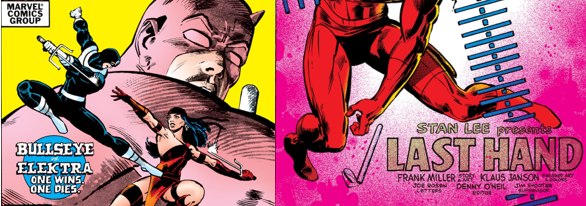
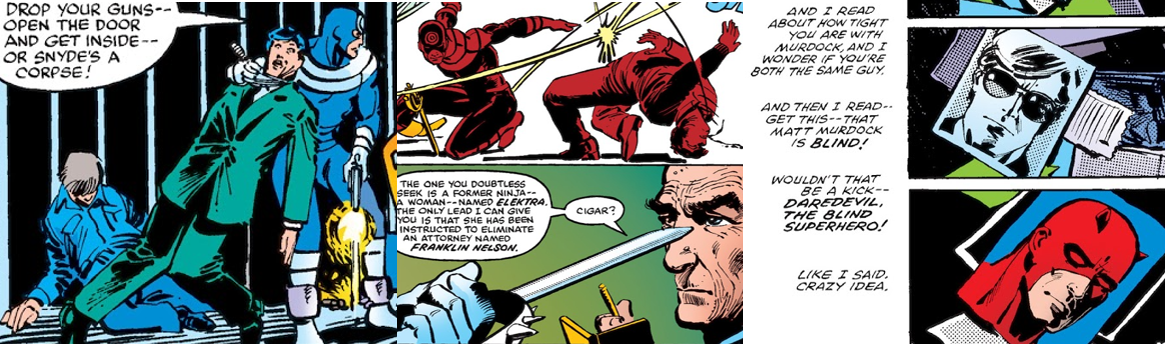
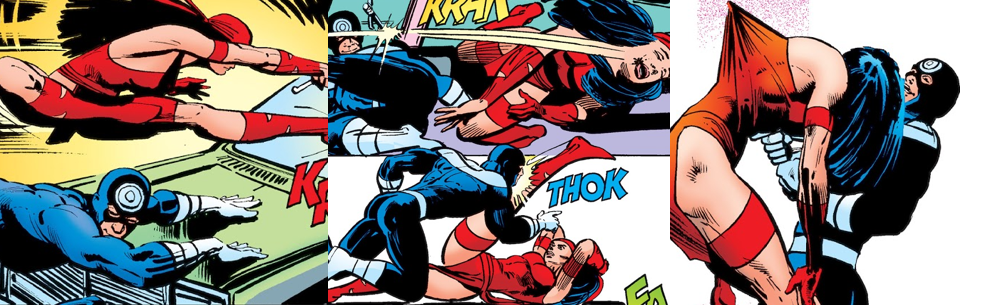
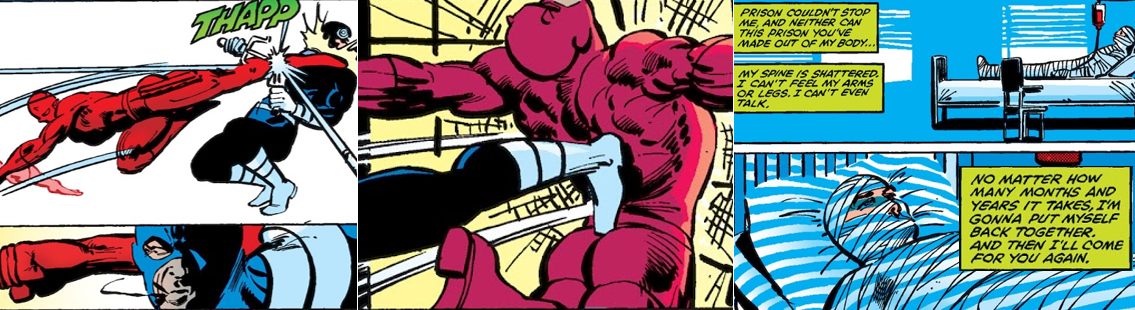
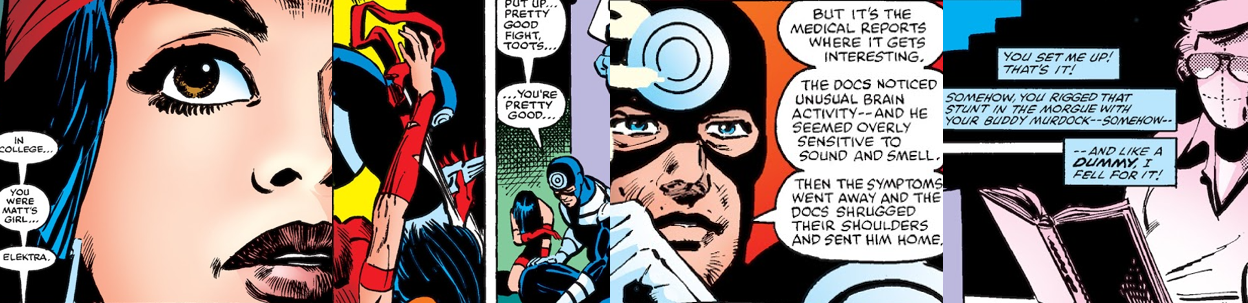
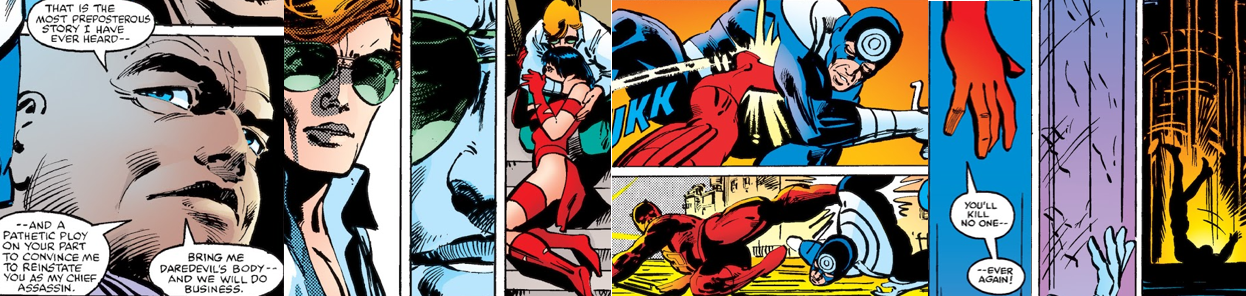

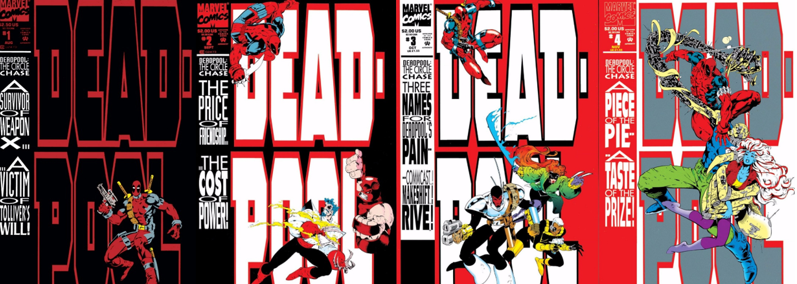

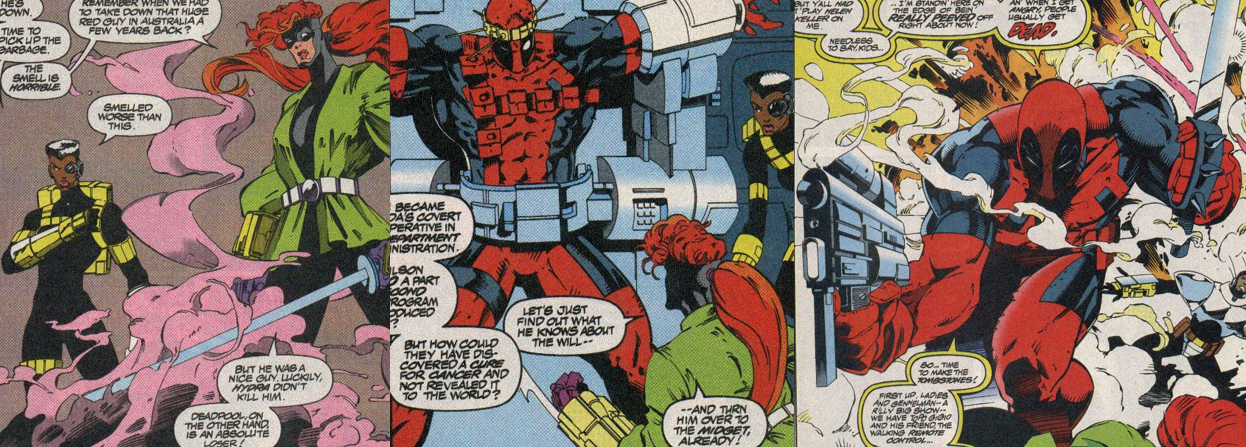

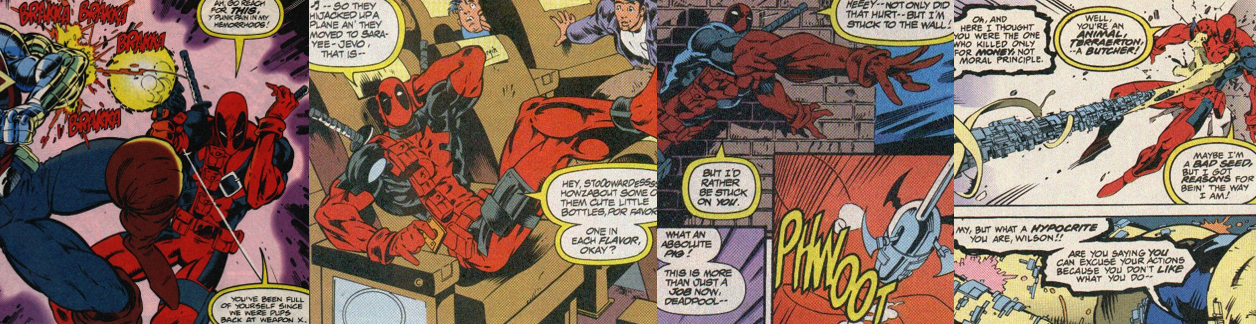
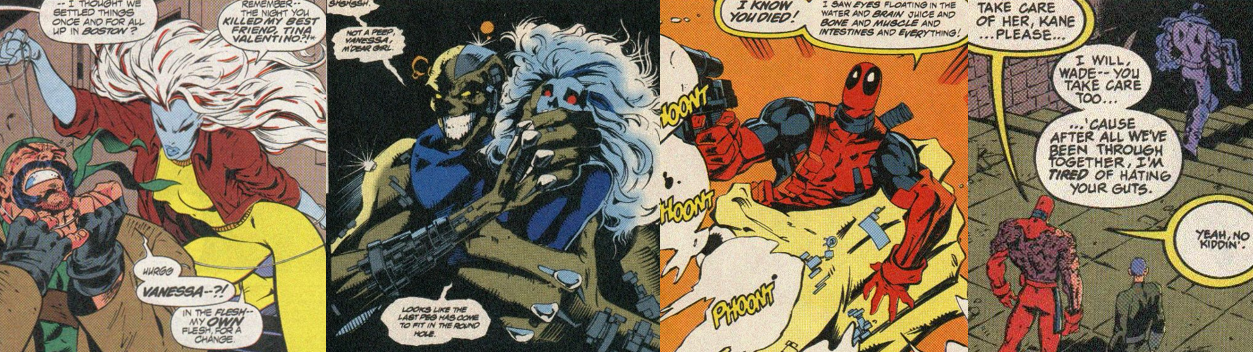


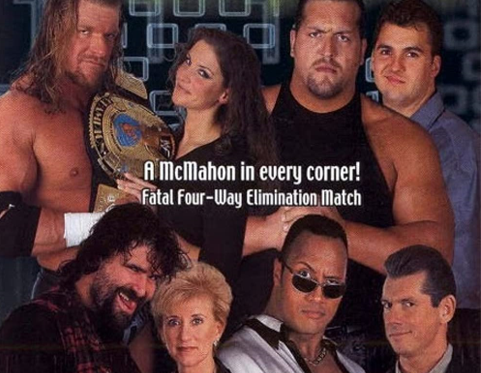
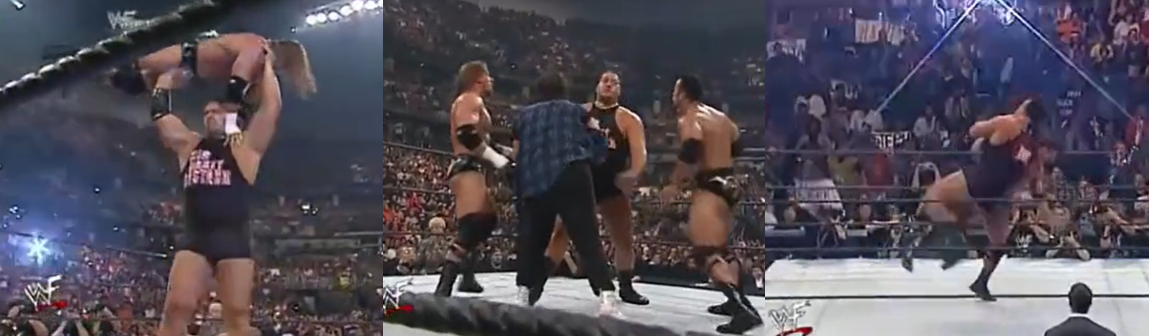
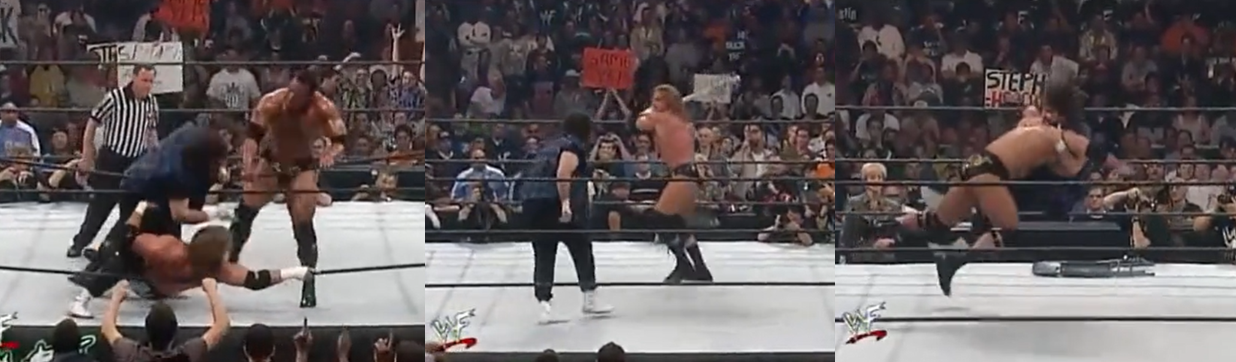
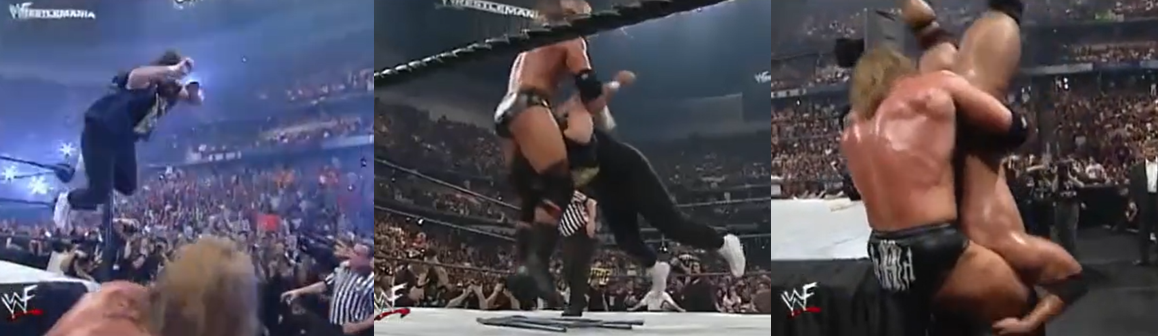
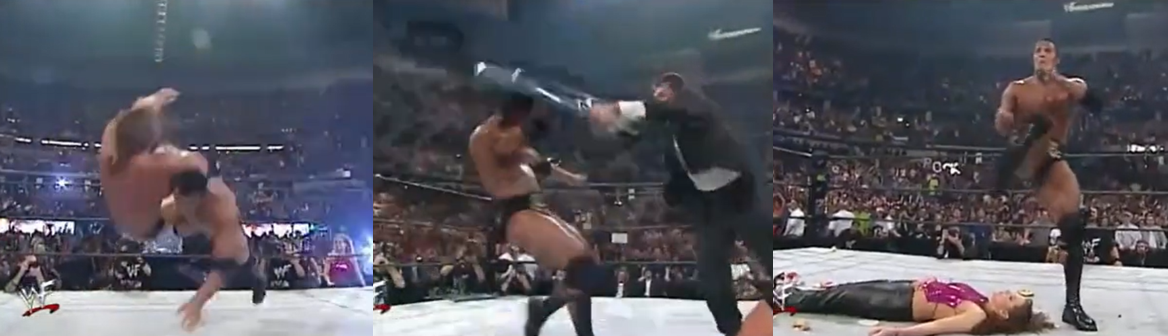
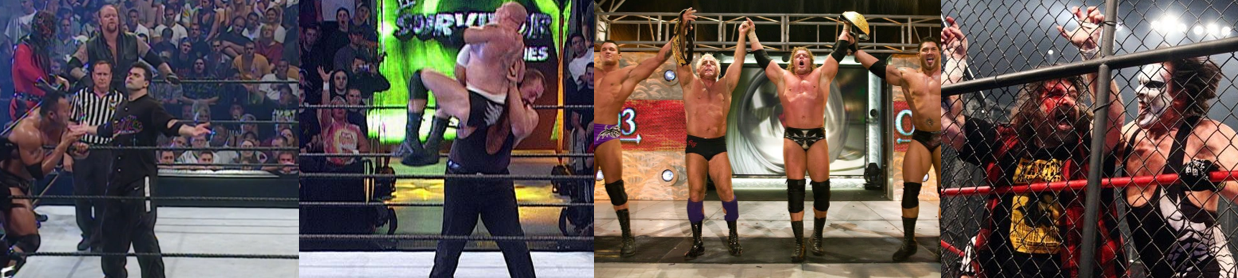







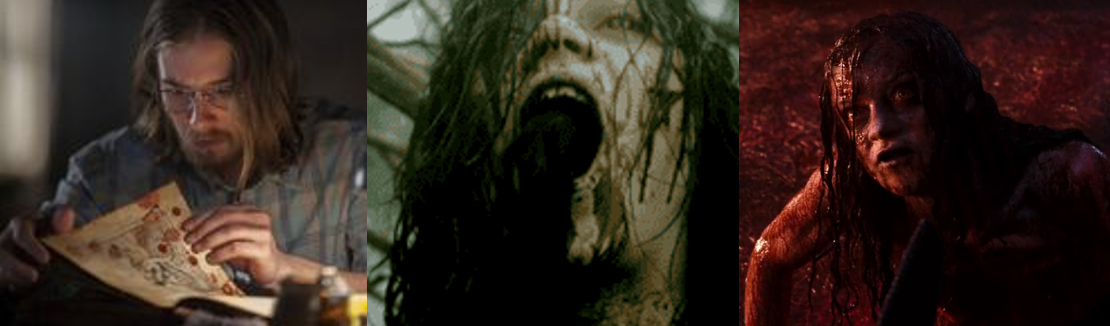













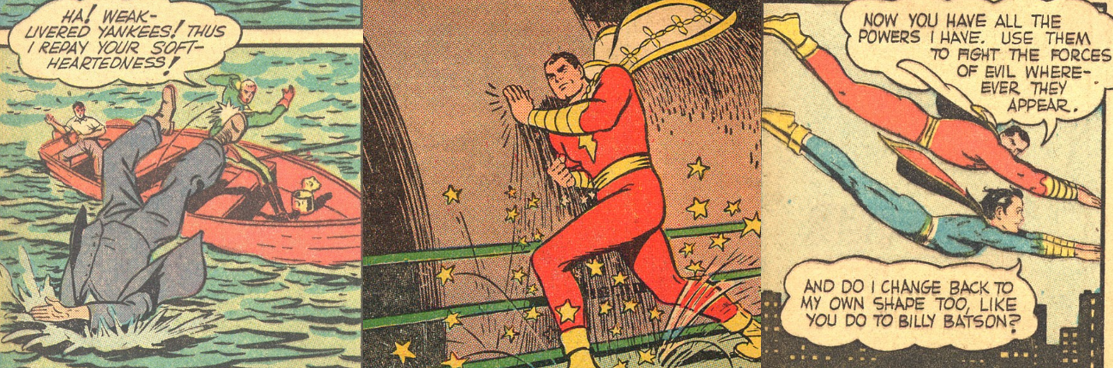







 Dr. K's Waiting Room
You must be logged in to post a comment.