Since his explosive debut in May 1962, Stan Lee and Jack Kirby’s gamma-irradiated Jade Giant has been one of their most recognisable and successful characters thanks, in large part, to the Incredible Hulk television show (1977 to 1982) catapulting the Hulk into a mainstream, pop culture icon. The Hulk has been no slouch in the comics either, being a founding member of the Avengers and undergoing numerous changes that have made him one of their most versatile and enduring characters, so what better way to celebrate all things Big Green than by dedicating every Sunday in May to the Green Goliath?
Writer: Stan Lee – Artist: Bill Everett
Story Title: “The Abomination!” Published: 10 January 1967 (cover-dated April 1967)
Story Title: “Whosoever Harms the Hulk…!” Published: 14 February 1967 (cover-dated May 1967)
The Background: Created by Marvel legends Stan Lee and Jack Kirby, Doctor Robert Bruce Banner’s monstrous alter ego, the Incredible Hulk, was inspired by the story of a hysterical mother using superhuman strength to rescue her child and classic screen monsters Frankenstein’s Monster and Doctor Jekyll and Mister Hyde. Initially debuting as a stone-grey figure, the character soon gained his trademark green hue and became a fixture of Marvel Comics thanks to expansions of his lore and character and the popularity of the live-action television series. Stan Lee also had a hand in creating some of the Hulk’s most memorable enemies; having birthed the Hulk’s intellectual superior, Samuel Sterns/The Leader, alongside Steve Ditko about three years prior, Lee and artist Gil Kane introduced Marvel readers to one of the Hulk’s most persistent physical rivals, Emil Blonsky/The Abomination, in this two-part tale. Lee came up with monster’s unique name and reportedly instructed Kane to make the Abomination bigger and stronger than the Hulk to make for some fun conflicts. Over the years, the Abomination has been through almost as many changes as his lifelong rival, being a savage brute, a schemer, and a figure of redemption. His impact on the Hulk’s life has been so influential that he’s featured in numerous Marvel cartoons; although he made his live-action debut in the unfairly overlookedThe Incredible Hulk(Leterrier, 2008), it would be some thirteen years before he would return to the Marvel Cinematic Universe.
The Review: Our story begins with the Green Goliath embarking on an unstoppable rampage thanks to the manipulations of a cosmic being I’m personally unfamiliar with but who calls himself “The Stranger”; believing that humanity is a blight that needs to be eradicated, the Stranger has set the Hulk to work wiping the planet clean of humankind’s influence, and the Hulk is only too happy to give in to his anger. Already harbouring a resentment and animosity towards the “puny humans” who hate and fear him, the Hulk wrecks a suspension bridge and prepares to lay waste to a missile base when he’s suddenly hit with an intense pain in his head that not only causes him to fall, but also triggers his transformation back into cursed Gamma scientist Bruce Banner. This has the knock-on effect of severing the Stranger’s mind control, but Banner is terrified at the prospect of the Hulk resurfacing and continuing the Stranger’s work and resolve to destroy the Hulk (and himself, if necessary) once and for all using the “Gamma Ray Machine” he created and which just so happens to be at the very base he’s found himself at.
While Banner broods and Ross blusters, a foreignagent undergoes an incredible transformation!
Nearby, the cantankerous General Thaddeus “Thunderbolt” Ross is determined to root out the man behind a recent assassination attempt on his daughter (and Banner’s flame), Betty Ross; also Major Glen Talbot assures Ross that it’s just a matter of time before the foreign agent is discovered, Ross explodes in anger and demands that they find the perpetrator before they can endanger the missile, giving his men orders to shoot to kill if necessary. Betty is distraught that there’s been no word from Banner for some days and fears for his life as long as he shares a body with the Hulk; she’s so devastated at the idea of losing him that she pays no mind to Talbot’s attempts to insert himself in Banner’s place. Meanwhile, in Banner’s lab, Ross’s spy (whom we know as Emil Blonsky but who isn’t named in this story), is snooping around in the guise of a soldier and trying to snap pictures of Banner’s vaulted Gamma Ray Machine. Although Banner returns at that very same moment, intending to use the machine on himself, he’s spotted and arrested by military police and the smug Talbot, who refuses to listen to his pleas. Amused by the turn of events, Blonsky comes out of hiding and investigates the machine, activating it out of sheer curiosity and bathing himself in an intense dose of Gamma radiation. The result is his instantaneous transformation into a hulking, green-skinned, lizard-like monstrosity; thanks to stepping out of the Gamma rays early, this Abomination is able to retain his intellect and revels in his newfound super strength, which he believes will make him “master of the world–of the whole universe!!” and promptly destroys the machine so that none will challenge his invincibility.
The Hulk is overwhelmed by the superior strength and intellect of his newest foe.
The Abomination’s subsequent rampage through the base catches the eye of the imprisoned Banner, who willingly transforms into the Hulk as only his alter ego has a chance of opposing this new Gamma monster. Ripping open his cell, the Hulk leaps into the fray but quickly finds that the Abomination is not only smarter thanks to not being a mindless brute, but also more powerful as he was conveniently subjected to a more powerful dose of Gamma radiation. Consequently, Ross, Talbot, and Betty can only watch on in horror as the Abomination asserts his dominance and brutally beats the Hulk into unconsciousness, clearly establishing himself as a formidable threat, and that Blonsky is oddly concerned that he wouldn’t survive the military’s counterattack so he kidnaps Betty and flees from the base. Driven to desperation by the events he’s witnessed, Ross has no choice but to order his physicians to try and save the Hulk’s life; while the surgeon is initially baffled by the half-dead creature’s physiology, perennial sidekick Rick Jones bursts into the facility to suggest using Gamma electrodes to revive the beast and, in panels that owe more than a debt to Frankenstein (Whale, 1931), the Hulk lives again! Believing the soldiers are trying to contain him, the Hulk refuses to listen to reason and even swats Rick aside, vehemently denying his tearful pleas for help, until the mention of Betty’s name causes him to calm down and revert back to Bruce Banner.
Although Banner devises a workable plan, the monster’s rematch is abruptly interrupted.
Cutting through Ross’s bluster and inconsolable babble and prejudice, Banner comes up with a plan to lure the Abomination back to them, rather than confront his great power directly, and reconfigure his “Infinite Weapon” to nullify Blonsky’s strength with “Infra-Gamma Beams”. Begrudgingly, Ross orders his technicians and soldiers to follow Banner’s every command as they race to perform the necessary adjustments, and the Abomination willingly returns to the site, drawn by the allure of the Gamma radiation, though everyone, even Rick, is unsure as to how Banner plans to oppose such a fearsome monstrosity. The Abomination bursts into the laboratory, setting down Betty and preparing to finish off Banner, but is surprised when the machine causes him incredible pain and saps his mighty strength. It’s at this key moment that Banner uncontrollable turns into the Hulk and the two Gamma Giants set about having a rematch. Although they bash each other through walls and promise to really go at each other, the Stranger chooses this moment to return to the story; watching from “a thousand galaxies away”, he begins to consider that humanity might not be beyond all hope if a brute such as the Hulk can be so valorous and chooses to take the Abomination for his own needs. He also completely removes the influence he had over the Hulk’s mind but, while he’s met with congratulations and a semblance of gratitude from even General Ross, the Hulk chooses to head back out into the world alone once more.
The Summary: The Abomination’s debut is much more the type of Hulk story I’m used to; by this point, Bruce Banner’s dual identity is well known and his adventures follow a very simple formula of him wandering around the country, desperately trying to avoid conflict, all while the Hulk threatens anyone and everyone around him and lashes out at those he deems to be a threat. Unfortunately, I didn’t think much to Gil Kane’s artwork, especially on the Abomination and the Hulk’s face, both of which look to little too simplistic and goofy for my tastes. I did enjoy the twist of the normally unreasonably antagonistic General Ross absolutely snapping when the Abomination kidnaps Betty; he’s so traumatised by this that he’s forced to not only rely on the Hulk and Banner for help, but even revive the Green Goliath and order his men to follow Banner’s every instruction. It’s an interesting twist on his usually staunchly anti-Hulk/Banner mindset, kind of like whenever J. Jonah Jameson is forced to eat crow, though I was interested to see that Major Talbot was actually arguing in favour of Ross’s hated enemy on more than one occasion. Similarly, I liked that Banner got to do a little more than just wallow in despair and self-pity; he puts his genius mind to work creating a trap to lure in the Abomination and sap his strength, though it was a little too contrived that all of Banner’s machinery and work just happened to be at this military base. The Hulk is pretty much exactly as he’s always presented, with the added wrinkle that he’s suffering from the influence of the Stranger; this doesn’t really seem to change his character all that much, however, as it’s hardly an uncommon occurrence to see the Hulk going on an all-out rampage for the smallest of reasons.
The Abomination’s strength is so great that it takes brains, not brawn, to challenge him.
This is potentially the first time that the Hulk has ever faced a foe as physically imposing as him, however; he fought Groot (no, not that one) a few years earlier but as far as I can tell most of his more monstrous foes made their first appearances after this story. Consequently, the Abomination makes quite the impact; not only does he retain his intelligence, allowing him to out-think the Hulk, but he’s portrayed as being significantly more powerful, knocking the Hulk out and beating him almost to the point of death in their first encounter. However, the praise kind of stops there; the explanations behind Blonsky’s retained intelligence and greater strength and paper thin and it’s really weird that he would choose to flee after besting the Hulk as he would surely have even less reason to fear the military’s weapons than the Green Goliath. The Abomination’s greater intelligence also doesn’t really translate into any kind of impressive strategy either; immediately drunk on his newfound power, Blonsky sets his goals as lofty as conquering the entire universe, than smashes the place up a bit, and then resorts to kidnapping Betty. He doesn’t even use her as a means to give the Hulk pause to attack and abandons her the moment he arrives back at the base, but worst of all is the fact that this Stranger’s intervention cuts short his rematch with the Hulk simply to keep the Abomination’s threat unchallenged. Overall, this wasn’t a bad two-part story but it definitely wasted its potential; there was so much that could’ve been done with the duality of these monsters, the twist of Ross having to rely on his enemy, and seeing the Hulk and the Abomination tera up the base of the countryside but the story instead plays it very safe and simply hands the Hulk a decisive loss and has his newest (and presumable most powerful) villain left out in the world (well, cosmos) to no doubt hound him again at some point.
My Rating:
⭐⭐⭐
Rating: 3 out of 5.
Pretty Good
Did you enjoy the Abomination’s debut? Did you read it when it was first published and, if so, how did you think the Abomination compared to other Hulk villains? What did you think to the idea that the Abomination was not only smarter but stronger than the Hulk? Would you have liked to see a proper rematch between the two in the second part? What are some of your favourite fights or moments between the Hulk and the Abomination? Who is your favourite Hulk villain? Whatever you thoughts on the Abomination (and the Hulk), feel free to share them below or leave a comment on my social media and be sure to check in again next Sunday for more Hulk action!
While May 4th is known the world over as Star Wars Day, many also choose to extend the celebrations of the course of three days, with one of them being the “Evil Star Wars Day” of May 6th (as in “Sith”). This year, I’ve been using the three Star Wars Days as the perfect excuse to go plug a few holes in my Star Wars reviews.
Released: 18 December 2015 Director: J. J. Abrams Distributor: Walt Disney Studios Home Entertainment Budget: $259 to 306 million Stars: Daisy Ridley, John Boyega, Adam Driver, Oscar Isaac, Domhnall Gleeson, Carrie Fisher, and Harrison Ford
The Plot: Thirty years after the Galactic Empire was defeated, the “First Order” constructs a devastating, planet-sized superweapon to decimate the New Republic. The galaxy’s only hope is Rey (Ridley), reformed First Order Stormtrooper Finn (Boyega), and crack Resistance pilot Poe Dameron (Isaac), who search for a long-lost map to reclusive and disgraced Jedi Master Luke Skywalker (Mark Hamill) while being hounded by the First Order’s malevolent and brutal enforcer, Kylo Ren (Driver).
The Background: It’s safe to say that the Star Wars Prequel Trilogy struggled to live up to the lofty expectations set by George Lucas’ original three Star Wars films; although relatively profitable ventures, the films were divisive, to say the least, and lead to one of the most beloved spin-offs in the franchise, Lucas was so burned by the experiences and backlash that he refused to make any further films. In 2012, Lucas sold his lucrative franchise to Disney for $4 billion and they immediately set about developing a series of spin-off feature films to further flesh out the Star Wars saga, spearheaded by a long-awaited seventh entry in the space opera saga. Although he consulted with Lucasfilm’s new president, Kathleen Kennedy, on story ideas for their new trilogy, he was hurt when they discarded his input and proceeded without him, bringing in J. J. Abrams to direct, contribute to the script, and help lay plans for the trilogy. In addition to bringing back as many names from the Original Trilogy as possible, Abrams brought in fresh, young, up-and-coming faces to be part of his new film, which relied just as much on practical effects as it did CGI to evoke the spirit of the films that started it all. Naturally, anticipation was high after even the most basic of teaser trailers, and the film’s $2.068 billion worldwide box office made it the highest-grossing film of 2015. The film was also met with overwhelmingly positive reviews; critics praised the film as a return to form for the franchise, the balance between nostalgia and new content, and even heralded it as the best Star Wars film since the Original Trilogy. Others, including Lucas, found it somewhat derivative, but Disney ploughed onwards with their Star Wars plans, for better or worse, regardless, producing two additional sequels as well as new videogames and spin-off movies to turn a profit from their acquisition.
The Review: I’d like to make one thing perfectly clear right off the bat: I’m a big Star Wars fan. Growing up, the franchise was something of an elusive enigma for me; my friends were huge fans, we all played the games and enjoyed the Expanded Universe novels, but actually watching the Original Trilogy was pretty difficult in the mid-nineties. Even when then the remastered versions were released, it wasn’t exactly cheap to buy or rent them, so expectations were pretty high for the Prequel Trilogy. Sadly, they largely killed off a lot of the excitement I had for the franchise; they screwed up or outright erased the Expanded Universe novels, replaced fun space adventure and action with wooden performances and dull subplots, and generally failed to meet the standards of the Original Trilogy. I was therefore glad when it seemed like we wouldn’t get any more Star Wars films, and extremely pessimistic when Disney announced the production of a new Sequel Trilogy. I found the first teaser trailer incredibly underwhelming as it showcased basically nothing except another desert planet and the return of fan favourites Han Solo (Ford) and Chewbacca (Peter Mayhew/Joonas /Ian Whyte), and I was more than a little annoyed that the new films wouldn’t be drawing inspiration from what I still consider to be the “real” Sequel Trilogy, Timothy Zane’s Thrawn books (1991 to 1993). However, the secrecy surrounding the film had me intrigued and I was excited at the prospect of seeing how the Star Wars universe had changed thirty years after the Rebellion defeated the evil Galactic Empire. Sadly, The Force Awakens gets off to a bad start right from the opening crawl: Luke’s disappeared and, without him, there’s apparently nobody to oppose the uprising of the First Order. Consequently, Princess Leia Organa (Fisher), now a General in the New Republic’s Resistance movement comprised of new allies and former Rebels, sends her best pilot, Poe, to meet her old ally, the hitherto-unknown Lor San Tekka (Max von Sydow in a completely throwaway role), to get information on Luke’s whereabouts to help turn the tide.
While the Jedi may have become myth, Poe is determined to oppose the First Order with the Resistance.
So, immediately, there’s a sense that everything that’s old is new again; I honestly thought this film would be a chance to see the roles reversed a bit and have the remnants of the Empire be reduced to a rag-tag group of ships and terrorists trying to strike back against the overwhelming benevolence of the New Republic but, instead, the Empire is essentially back in the First Order, which is somehow so powerful that it threatens the entire New Republic! Not only that, but Luke is gone, despite Mark Hamill being so prominent in all the promotional materials for the film, and his absence is another in a long list of misguided decisions by the filmmakers in this film and its sequels. One thing I found particularly aggravating was just how quickly everyone forgot important concepts like the Jedi and influential people like Luke Skywalker. Just like at the beginning of Star Wars: Episode IV: A New Hope(Lucas, 1977), the Jedi are all but extinct and they, and even Luke, have passed into myth because, apparently, thirty years is enough time for people to forget anything. However, I think a lot of people miss that it’s only been two yearssince Ben Solo sacked the Jedi Temple and drove Luke into exile. While I can understand someone like Rey, who lives a remote and isolated life, thinking Luke was only a myth, this seems to be the prevailing thought amongst many of the side characters and there’s a definite sense that Luke’s been missing for far longer than he actually has. One decision I do agree with, however, is the introduction of fresh, new blood to the franchise and I have absolutely no issue with having new protagonists take centre stage as it brings us such brilliant characters as Poe Dameron, a hot-shot Resistance pilot who is both completely loyal to the ideals of the New Republic but also somewhat reckless out in the field. Still, he’s not an idiot; when Kylo Ren slaughters Lor San Tekka and his villagers on Jakku, Poe is smart enough to leave the map he received from Lor with his trusty droid companion, BB-8 (Bill Hader and Ben Schwartz), but feisty enough to backtalk Kylo Ren (he even takes a shot at him in a failed attempt to save Lor’s life) even when he’s painfully left at the dark tyrant’s mercy. Poe’s reputation as the best fighter pilot in the Resistance proceeds him, and even Kylo Ren is impressed by Poe’s resilience; this, alongside his skills as a pilot and his defiance, is a defining trait of Poe’s but even he’s only able to escape from the First Order’s clutches thanks to morally conflicted Stormtrooper FN-2187. Excited at the prospect of a daring, action-packed escape (and at piloting a TIE Fighter), Poe jumps at the chance and quickly forms a bond with the desperate FN-2187, whom Poe nicknames “Finn”. Although Poe seemingly perishes in their escape attempt, he randomly turns out to be alive later in the film, leading to an emotional reunion on Takodana with his newfound friend, BB-8, and the coming together of our three new protagonists to assault Starkiller Base.
Though she’s lived a sheltered life, Rey is a gifted pilot, mechanic, and a potential Jedi!
With Poe presumed dead, BB-8 is stumbled upon by scavenger Rey who, at this point, has no idea of her true heritage and believes that she was simply abandoned when she was a child (Cailey Fleming). Rey lives a hard life on the arid sands of Jakku, one that sees her foraging derelicts for meagre portions of food and living a life of solitude in the remains of an All-Terrain Armoured Transport (AT-AT). However, although she longs to journey to the stars, very much like Luke in A New Hope, she’s compelled to stay in the hopes that her parents will return for her. Self-reliant and strong-willed, Rey is something of a savage; she’s naturally paranoid and suspicious of others since she’s clearly spent her whole life fighting for what little food and possessions she has but does have an affinity for droids, which eventually causes her to fall in with Finn when he comes looking for BB-8 to honour Poe’s final wish. This finally gives Rey the opportunity to leave Jakku and she does so in style by piloting the dilapidated Millennium Falcon, which just so happens to not only be on Jakku but also the only ship available to them. Even more conveniently, Rey is not just the jack-of-all-trades but, seemingly, the master of them all; she’s able to speak multiple languages (including “droid speak” and Wookie), can repair, fix, and build machinery, is a naturally gifted pilot, and is also strong in the Force! It’s therefore not surprising that many have labelled her a “Mary Sue” since Rey just seems to magically be able to do everything because the script demands it and is quickly befriended by faces old and new alike. However, I don’t really have that much of a problem with Rey; sure, Daisy Ridley is the weakest of the main three actors for me and I personally found Jyn Erso (Felicity Jones) a far more compelling female lead in Disney’s new Star Wars films, but I enjoyed her wide-eyed hero worship of characters like Luke and Han, her feisty independent spirit, and her overall presentation as a lonely young woman trying to find her place in the galaxy and realising that she has far more potential than she ever realised.
While Finn isn’t the Jedi he seems to be, his moral compass is admirable and BB-8 adds to the charm.
BB-8 is more than just the newest cutesy mascot for the franchise, it’s a whole character in its own right; since R2-D2 (Jimmy Vee/Kenny Baker) is in standby mode for the majority of the film, and C-3PO (Anthony Daniels) is mainly just a glorified cameo who keeps banging on about his red arm (that’s never explained onscreen and disappears by the next film), BB-8 takes centre stage as the main robotic character of The Force Awakens. Despite only communicating in electronic bleeps, it’s absolutely exuding personality; you can tell that it greatly cares for Poe as a friend and is saddened when it thinks he’s died), and is both suspicious and amusingly supportive of Finn when they join forces with Rey. As fantastic as it is to see BB-8 realised as a largely practical effect (I still have no idea how they were able to pull off its rolling movement so seamlessly), it’s a bit odd that many characters understand its “droid speak”, which seems to be a lazy convenience by the writers. This is paralleled by perhaps the most intriguing of the three new protagonists, Finn. Those who have watched Star Wars’ many spin-off media may be familiar with Clone Troopers and Stromtroopers having individual identities and (probably) consciences, but this was the first time we’d seen a Stormtrooper be anything other than a nameless, faceless minion for the heroes to gun down in cold blood. Inducted into the First Order at an early age and forced into war, Finn is no mere pre-programmed clone or mindless soldier; he’s a frightened young man in over his head who is horrified at the merciless slaughter of innocents and the First Order’s oppressive ways. Finn is desperate to escape their wrath but frees Poe not just because he needs a pilot but because it’s the “right thing to do”. This edict guides Finn throughout the remainder of the film; moved by Poe’s apparent demise and trust, Finn takes up not only his newfound friend’s jacket but also his mission to return BB-8 and the map it contains to the Resistance. However, conscious that he will be unfairly judged if he openly admits that he’s a former First Order Stormtrooper, Finn desperately feigns being with the Resistance i to quickly earn Rey and BB-8’s trust, something he’s clearly unhappy about but his absolute terror of the First Order overrides his doubts. He’s seen first-hand what they’re capable of, and what they’re building, and is focused only on getting as far away from them as he can by any means necessary, but is morally unable to simply leave his newfound friends to wage a suicide war against Starkiller Base without his expertise.
Kylo Ren is a tortured, surprisingly complex, and explosive youth lashing out at everything he sees.
Another notable aspect of the film is new villain Kylo Ren; played with a magnificent imposing menace by the fantastic Adam Driver, Kylo Ren may look like a cheap knock off of Darth Vader (David Prowse/James Earl Jones) but that’s actually kind of the point and he’s much more than that. Considering that, beneath the imposing mask, he’s actually Ben Solo, Force-sensitive son of Leia and Han and grandson of Anakin Skywalker (Hayden Christensen), it makes sense that he’d model himself after the infamous Sith Lord and the fact that he keeps the shattered remains of Vader’s helmet just goes to show just how twisted his perception of reality is. Kylo Ren makes an immediate impact not just with his emotionless helmet and deep, semi-cybernetic baritone that oozes menace, but also by exhibiting a command over the Dark Side that we haven’t really seen before as he freezes a blaster bolt in mid-air. Kylo Ren showcases a knack for forcibly drawing information from his victims using the Dark Side of the Force, penetrating their mind and feelings in order to both torture and manipulate them and learn what he needs, but he’s also an extremely explosive and unpredictable individual. Originally a Jedi prodigy, he was a student of Luke’s but found himself seemingly betrayed by his master, destroying the Jedi training grounds, and killing all but a few similarly inclined Jedi and recruiting them into his poorly defined “Knights of Ren”. Thanks to the influence of Supreme Leader Snoke (Andy Serkis), Ben is turned against his friends and family and assumes the role of “Kylo Ren” but remains a tortured and conflicted young man who lets his anger and insecurities get the best of him. Overwhelmed by these dark feelings, Kylo Ren regularly lashes out in volatile anger when he’s bested and is seemingly driven by an innate desire to destroy all remnants of his past, no matter how badly it pains him to do so.
Sadly, the film squanders many of the First Order’s more promising elements.
The First Order is largely comprised of obedient Stormtroopers and extremist military commanders, just like the Empire, but there are a few standouts amongst their ranks: first and foremost is General Hux (Gleeson), the young and cruel-hearted commander of the First Order’s military forces. A proud and stubborn man, Hux believes whole-heartedly in the training standards of his Stormtroopers and the might of his military (he’s particularly proud of his ludicrous planet-destroying Starkiller Base) and delivers rousing speeches of hatred and vitriol in a pretty explicit allusion of Adolf Hitler’s public addresses. General Hux and Kylo Ren have a tumultuous relationship, to say the least, in which they both vie for the attention, and approval, of Supreme Leader Snoke; this means they continually butt heads over the best methods to advance the First Order’s cause and have a professional rivalry that borders on antagonistic since they have little respect or liking for each other. However, all in all, The Force Awakens really squanders some of its new characters; Captain Phasma (Gwendoline Christie) looks visually impressive and intimidating with her striking reflective Stormtrooper armour and blunt commanding voice, but she does literally nothing except exist on the periphery and be easily coerced into helping the heroes infiltrate Starkiller Base. It’s not even more explicit whether she perishes in the planet’s destruction or not, and I have no idea why the filmmakers didn’t have it be her who confronts Finn on Takodana rather than a random Stormtrooper. Perhaps the most glaring and almost insulting inclusion in the film is the First Order’s malformed and malevolent figurehead, Supreme Leader Snoke; seeming to be a mutilated giant thanks to only appearing as an ominous hologram, this poorly-veiled stand-in for the far more enigmatic and memorable Emperor Palpatine (Ian McDiarmid) irked me no end when I first saw the film and continues to vex me now not just for how poorly his story was cut off at the knees in the subsequent sequels but because he really wasn’t necessary to the films at all. For me, including another wizened, decrepit, malicious Sith Lord just took away from the agency and independence of Kylo Ren’s character. Once again, it was a case of the same old thing as a promising Jedi recruit fell under the sway of a dark influencer and pledged his fealty to this supposedly all-powerful Dark Sider and I just feel like characters like General Hux and Kylo Ren would’ve been stronger without this puppet master looming over them and allowed them, and Captain Phasma, to take the spotlight as the three main figureheads of the First Order.
The film’s new characters are joined by all the familiar faces, now older but larger in their same roles.
After escaping Jakku, Rey and Finn conveniently run across old favourites Han Solo and Chewbacca; having lost the Millennium Falcon some years prior and returned to his smuggling ways, Han walked away from the Republic after Ben’s turn to the Dark Side, with Chewie in tow due to his unending loyalty. Where he was once a sceptical, self-serving smuggler, Han is now a jaded veteran who has seen more than his fair share of conflict and knows the extent of the Force only too well. Both he and Chewie take an instant like to Rey over their mutual appreciation of the Falcon’s capabilities and their piloting and mechanical skills, but Han is initially more concerned with retaking his ship than joining the battle against the First Order. He’s swayed to aid them, however, after seeing the partial map BB-8 possesses; he grimly relates a version of Luke’s self-imposed exile, omitting key information like his relationship to Kylo Ren (which is just dropped in our laps with little fuss of fanfare by Snoke), and leads them to Maz Kanata (Lupita Nyong’o). This centuries-old sage very much fills the role of a Yoda (Frank Oz) archetype: she’s perceptive and wise, well versed in the nature of the Force, and even inexplicably has Anakin’s lightsaber, which Luke lost during his time in Cloud City. Han’s time on Takodana also reunites him with Leia after the Resistance fend off the First Orde’s attack; while Han is just as cynical as ever thanks to having lost his only son to the Dark Side, Leia remains the strong-willed beacon of hope that she always was. She commands respect from her Resistance fighters, who follow her lead without question and with unfaltering loyalty, and she also quickly forms an affectionate relationship with Rey. Her reunion with Han is one of both regret and joy; Han expresses remorse for all the wasted years he spent away from her, and (just as Luke did with Vader) she still maintains the hope that there’s good in Ben. Han promises to try and reach him, which ultimately proves to be his downfall; in an emotional confrontation, Han pleads with Ben to give up his crusade and ends up run through by Kylo Ren’s lightsaber in the troubled youth’s frantic desire to cut off all emotional attachments to his past. However, in his last moments, Han shows nothing but affection for his misguided son and, though it costs him his life, his sacrifice wouldn’t be in vain and would pay an integral part in Ben’s eventual (if questionable) redemption.
The Nitty-Gritty: Despite my dislike for many of the decisions made in this film and the sequels, I do have to praise the script; character dialogue is especially entertaining, with the rapport between Poe and Finn being a notable highlight. It’s not just lines like Poe’s “who talks first?” line and Finn’s “I am with the Resistance” exchange with Rey that stand out either; BB-8’s hesitation at trusting Finn and then giving him a “thumbs up” is not only a sweet moment that influences the droid with more personality than I ever could’ve imagined but also extremely amusing, and little touches like Stormtroopers slowly backing away when Kylo Ren is losing his shit and cameos by the likes of Daniel Craig really help to elevate the script and even the most insignificant characters far beyond the stilted delivery churned out in the Prequel trilogy. Indeed, the performances are commendable across the board; the wit and banter exhibited is natural and amusing, Kylo Ren’s menace is threatening and imposing, General Hux is suitably over the top, and even Harrison Ford seems to be enjoying himself. Not only that but the film is peppered with little moments that help to I remember coming out of the film the first time I saw it and being won over by the character interactions alone; The Force Awakens was a breath of fresh air after the often wooden and awkward line delivery of the Prequel Trilogy, though don’t let this fool you into thinking that the actual plot is anything other than a shameless rehash of the best and most memorable aspects of the Original Trilogy.
The film does a fantastic job of recreating the look and feel of the Original Trilogy.
Another massive positive of The Force Awakens is its visual presentation. The abundance of practical effects is greatly appreciated; the First Order Stormtroopers actually wear suits, there’s physical ships, sets, and locations for characters to get into and interact with, and even BB-8 is a wholly practical effect. While there’s obviously a great deal of green screen and CGI involved in the film, it’s nowhere near as noticeably as in the Prequel Trilogy, which makes everything much more enjoyable to watch as it feels like things are actually happening rather than being created. Even now, despite my many issues with the film and its sequels, I can’t fault the special effects; it’s pretty bloody cool to see Rey scavenging a crashed Star Destroyer and to see it buried deep in the sand, the Millennium Falcon’s exhilarating escape from Jakku is as thrilling as any of the other space battles in the film, and there’s clearly been a great deal of love and care put into recreated the “lived-in”, practical feel of the Original Trilogy to juxtapose the limited resources of the Resistance and backwater worlds like Jakku with the technological might of the First Order. When CGI is used, it’s presented far less like some PlayStation 3-era videogame and in a way that allows ships and creatures to seamlessly appear part of their environment thanks, largely, to existing alongside traditional practical make-up effects and animatronics. This makes everything feel much more “real” and believable as characters are actually, physically in a space and at the controls of their crafts, which makes the many space skirmishes and action sequences all the more exciting. Perhaps the only real downside is the baffling inclusion of the monstrous Rathtars aboard Han’s new smuggling vessel, an inclusion simply made to get Han and the others out of a bind that didn’t need to exist as calling Han’s issues with the gangs looking to collect on him really doesn’t go anywhere, but seeing all the classic Star Wars ships in action once again was an undeniable thrill made all the more commendable by them having imperfections and being presented faithfully to their original depictions abut augmented, rather than overwhelmed, by CGI.
Of all the derivative aspects from the Original Trilogy, Starkiller Base is the most glaring inclusion.
However, I remain aggravated by the many allusions to the Original Trilogy that are peppered throughout the film; I enjoy nostalgia as much as the next person but The Force Awakens pulls so much from the first three films that it’s easy to see why so many found it derivative. Rey is a lonely girl living on a desert planet who dreams of the stars (just like Luke), there’s a mystery around Luke and the Jedi that’s almost exactly like Luke experiences at the start of his journey, and the First Order is just the Empire in new clothing as they pilot the same ships and are a malevolent and overwhelming force for the heroes to fight against. It doesn’t end there, though: Han’s confrontation with Kylo Ren is very reminiscent of Luke’s iconic run-in with Darth Vader in Cloud City, Poe hides a vital piece of information in a droid just like Leia did, Kylo Ren is introduced in a manner very similar to Darth Vader and even interrogates Rey much like Vader did to Leia, Maz’s castle very much evokes the same feeling of danger and debauchery as the Mos Eisley Cantina, and even the disgusting Unkar Plutt (Simon Pegg) isn’t a million miles away from Jabba the Hutt (Declan Mulholland/Scott Schumann). But perhaps the most glaring of all is Starkiller Base itself, a planet-sized weapon capable of destroying the New Republic’s core worlds in one shot, apparently regardless of where those planets are located in the galaxy. As ominous and dangerous a threat as the Death Stars were, those were merely the size of moons; Starkiller Base dwarfs them in comparison (because bigger is always better, right?) and is five times as dangerous with its ludicrously power and impractical main cannon. It makes you wonder how the First Order are able to aim their weapon; like, what if their targets are further away, or on the other side of the planet? And how in the absolute hell did the First Order find the time and resources to build such a preposterous weapon? It took the Empire thirty years to build the Death Star and, in less time, the First Order were apparently able to partially hollow out a planet, install all their machinery, and develop the technology to harness the power of a star all to destroy five worlds. Starkiller Base is not only far more impractical and far more immobile than the Death Stars, its power is also much more finite as surely it will eventually suck that star dry? And, to make matters worse, the First Order learned nothing from their predecessors and failed to account for glaring weaknesses in their doomsday weapon that allow a rag-tag fleet of Resistance fighters and ground troops to destroy it from the inside out (a victory that you would think would spell the end of the First Order but, somehow, they’re apparent stronger than ever in the sequel despite surely the vast majority of their forces being stationed on that world?)
For me, the film really wastes a lot of the potential to do something new with the franchise.
However, The Force Awakens’ problems go beyond just banking on nostalgia; I can understand that, but what I can’t understand (and still can’t understand) is just how off the mark so much of its narrative is. As great as the new characters are the as heart-warming as the call-backs and attention to detail is, the execution is just so bafflingly off in so many ways that just caused a ripple effect that messed up the subsequent sequels as well. This includes annoyances like Kylo Ren’s unmasking not being saved for his confrontation with Han rather than being wasted on Rey’s interrogation, not getting a sense of how the galaxy has changed since the New Republic was formed, not seeing Luke training new Jedi, Han and Leia being separated, Rey’s origins being left vague simply as a sequel hook, and not getting to see anything of the last thirty years of these character’s lives. Hindsight is a beautiful thing, and it’s easy to say what they “should have” done, but I was restructuring this movie in my head within minutes after leaving the cinema. I would’ve had Leia and Han be together as supporting characters and highlighted their new struggles as politicians rather than freedom fighters so we could see them as new characters, rather than the same ones but older. I would have had Rey and Ben be cousins or siblings and Luke’s finest students and have Ben’s turn to the Dark Side be a gradual thing that peaked in the second movie. Or I would have removed Snoke completely and restructured the First Order so that Hux commands the military, Kylo Ren leads his acolytes as the “muscle” (maintaining their professional rivalry), and given more screen time to Captain Phasma as the front-line commander of the troops. I definitely would have had the First Order be a small, but aggressive, terrorist force that attacked key targets (and named them something a bit less obnoxious), and maybe had Kylo Ren seek out Luke’s scattered Jedi to kill or recruit them. I would have definitely made more of Finn being Force-sensitive and carry it through, possibly even at the cost of Rey’s Force ability, and absolutely would have changed the depiction of Starkiller Base! The focus of the film should have been on intercepting a vital component or power source for an unrevealed First Order weapon; we should see only the interior and glimpses of their hidden base and recruitment centre until the finale and Starkiller Base should have been saved for the third film as the ultimate threat. The Resistance could have then destroyed a factory or facility the First Order had overtaken, not built, on a moon for a similar finale. I’m okay with Han dying but I do think it should’ve been saved for the next film so we could get more screen time with Ben and Rey and just a better sense of why we should care that this random new character turned bad beyond him being Han Solo’s kid.
Han’s sacrifice pushes Rey to find her true self, and allows the Resistance to pinpoint Luke’s location.
To be fair, though, Han’s death causes anguish not just for Leia and Chewie, but also for Rey, who had very quickly come to see him as not just an icon but a father figure of sorts. This only exacerbates her hatred and vendetta against Kylo Ren, who intimidated her, tortured her, threatened her newfound friends, and embodies all of the wanton destruction and evil of the First Order. Thanks to Han’s sacrifice, the shield generator around Starkiller Base is lowered, allow Poe to strike the thermal oscillator and set off a chain reaction that tears the planet apart; despite this, and being injured, Kylo Ren purses Finn and Rey into the nearby woods and a final confrontation goes down. Unfortunately for Finn, he’s not the potential Jedi the film leads us to believe he is and he suffers a seemingly devastating injury at Kylo’s hands; Kylo is then stunned when his attempts to reclaim his grandfather’s lightsaber are met with failure and the blade instead finds itself into Rey’s hands. Incredibly, despite having absolutely no training with the weapon and the unpredictable nature of her Force powers, Rey is able to more than hold her own against Kylo Ren, who is fascinated by her and the potential she has and attempts to sway her towards the Dark Sides. However, Rey is so incensed at Kylo’s actions that she angrily rebukes his offer and attacks with everything she has; Kylo’s fighting style is far more refined and deliberate and much different to other Force users we’ve seen so far. His lightsaber is styled after a traditional medieval sword and literally splitting with energy, but his movements are heavy-handed and fuelled by strength and rage, something he only exacerbates by repeatedly beating his chest and worsening the pain from his injury to increase his pain and anger. Ultimately, their duel is interrupted by the destruction of Starkiller Base but, while Kylo lives to fight another day, he’s left with an absolutely brutal scar across his face and the Resistance is finally able to complete the map and pinpoint Luke’s location. The ending then becomes this really rushed finale as Artoo is reactivated and Rey takes Hans place aboard the Millennium Falcon to confront Luke on the remote world of Ahch-Toh, where the film ends with an awkward stare down between the two. Personally, considering that Luke really wasn’t in the film at all, I think it would’ve been better to end the movie with the Resistance completing the map and save Rey’s trip to Ahch-To for the sequel as it really fell flat for me, despite how cool it was to see Luke as a wizened hermit.
The Summary: I find myself conflicted over Star Wars: Episode VII: The Force Awakens. On the one hand, it’s a brilliant love letter to the Original Trilogy, dusting off all the familiar ships and characters and tropes that made George Lucas’ films so iconic. The use of practical effects is incredibly appealing, and the use of physical sets, props, and locations really helps to capture the same feeling evoked in those first films, before Lucas went all crazy with the CGI. The new characters are great as well; they all exude a great deal of chemistry and charisma and have a great rapport with each other. The friendship between Finn and Poe, and Finn and Rey, was far better and more believable than any relationship seen in the Prequel Trilogy and Kylo Ren made for a surprisingly complex villain who did in one movie what three films struggled to do with Anakin Skywalker. Equally, I have few faults with the dialogue and characterisations; even one-dimensional villains and periphery characters show some personality either through some snappy line delivery or a striking visual look, and BB-8 was a fantastic little droid to add to the Star Wars ensemble who managed to stand out as unique amongst its peers. However, on the other hand, there’s the sheer banality of the whole thing; at its core, it’s just A New Hope again, with elements of the other two films tossed in and weaved into the narrative simply to cash-in on nostalgia and familiarity. There’s no real sense of progression here; yes, we have fresh new faces, but the galaxy seems to be exactly the same as we last left it except that the characters we grew up idolising have gotten older, wearier, and largely walked away from their responsibilities. We’re told a few things about what happened in the interim, but I know that I, personally, would much rather have seen it or at least seen some indication of it rather than just falling back on a safe status quo but with a new coat of paint. I think that sums up my feelings on The Force Awakens quite well: it’s too safe. There’s no real attempt to try anything new, just rehashing what we’ve seen before and underdelivering on potential new storylines as a result, and it’s especially disappointing given how experimental and different Disney’s Star Wars projects would eventually become after their Sequel Trilogy failed to live up to expectations. It’s probably still the best of the Sequel Trilogy for me, but that’s really not saying much, and The Force Awakens continues to just be a huge missed opportunity to try something new that spiralled into a nosedive with the next two sequels.
My Rating:
⭐⭐⭐
Rating: 3 out of 5.
Pretty Good
Are you a fan of Star Wars: Episode VII: The Force Awakens? Did you find it to be a decent start to the Sequel Trilogy and how would you rank it against other films in the Star Wars saga? Which of the three new protagonists was your favourite? Did you enjoy seeing a Stormtrooper have a crisis of conscience? What did you think to Rey and did you find her a little too perfect as a character? Were you a fan of Kylo Ren? What are your thoughts on the use of nostalgia and did you like the narrative presented in the film? Were you shocked by Han’s death and annoyed that Luke was basically a glorified cameo? I’d love to see your thoughts on The Force Awakens in the replies below or on my social media, so feel free to share your opinions, good or bad, and thanks for joining me for three more days of Star Wars!
Although May 4th is known the world over as Star Wars Day, many also choose to celebrate the popular, generation-spanning science-fiction saga on May 5th as a play on the word “Sith”. This can extend Star Wars Day into three day celebration of the influential science-fiction series and, as a result, is another great excuse for Star Wars fans to celebrate the beloved franchise in a variety of ways.
Released: 10 December 2016 Director: Gareth Edwards Distributor: Walt Disney Studios Motion Pictures Budget: $200 to 265 million Stars: Felicity Jones, Diego Luna, Ben Mendelsohn, Donnie Yen, Mads Mikkelsen, Alan Tudyk, Riz Ahmed, Jiang Wen, and Forest Whitaker
The Plot: When construction of the Galactic Empire’s planet-killing superweapon stalls, Director Orson Krennic (Mendelsohn) coerces scientist Galen Erso (Mikkelsen) to complete the space station. Years later, Galen’s daughter, Jyn (Jones), is reluctantly recruited by the Rebel Alliance to retrieve a holographic message from her father that may hold the key to destroying the “Death Star” ahead of schedule.
The Background: In 1977, George Lucas brought the world Star Wars for the very first time with the release of Episode IV: A New Hope. Essentially a “space opera” in the style of pulp science-fiction serials like Flash Gordon (Stephani, 1936), Star Wars went through many drafts before becoming the influential sci-fi masterpiece we know and love today. Almost immediately, Star Wars became a phenomenon that inspired not just one generation but, thanks to multiple sequels and lucrative merchandising, numerous generations for years to come. In 2012, Lucas sold his lucrative franchise to Disney for a cool $4 billion who immediately began developing not just a whole new trilogy of movies but also a series of spin-off feature films to further flesh out the Star Wars saga. Envisioned a more of a grounded war film compared to the grandiose space adventure of the other Star Wars movies, Rogue One had an interesting development as numerous reshoots fundamentally altered several presumed aspects of the story. Upon release, the film went on to gross over $1 billion at the box office and became the second-highest-grossing film of the year; yet, despite receiving generally positive reviews, I often see a lot of people talking down about this film. For my money, it’s better than the entire SequelTrilogy combined and probably my second-favourite Star Wars movie after Episode V: The Empire Strikes Back(Kershner, 1980).
The Review: Rogue One was quite the experimental project at the time; foregoing many of the recognisable elements and tropes of the Star Wars saga (including the traditional opening crawl), the film filled the gap between Episode III: Revenge of the Sith(Lucas, 2005) and A New Hope by telling the events that led to the Rebel Alliance acquiring the Death Star plans that kicked the entire saga in motion. The linchpin of this is Galan Erso, an Imperial scientist who, disillusioned with his work being used to subjugate and destroy others, walks away from the Empire in order to raise his daughter, Jyn, and live out his days as a simple farmer. However, when Orson Krennic arrives and murders Galan’s wife (Valene Kane) in front of him, Galan is forced to return to work in order to keep Jyn safe from Imperial reprisals. He spends the next fifteen years paying the role of dutiful, down-trodden subordinate to bring the Death Star to completion all while secretly including a well-hidden weakness into the space station and conspiring to deliver this information to the Rebel Alliance.
Jyn is inspired by Saw to take an active role in the fight against the Empire.
Galan isn’t in the film much but he’s an interestingly complex character thanks, largely, to the range and ability of Mads Mikkelsen, who commands the screen every time he appears on camera. Though the Rebel Alliance believes Galan to be a traitor and orders his assassination under the pretence of extraction, Jyn remains steadfast in her belief in her father’s morals, even more so when she views the holographic recording he made professing his true intentions and subterfuge. Jyn herself is a serviceable enough character; given when Rogue One was released, one cannot help but compare her to fellow Star Wars protagonist Rey (Daisy Ridley) and, arguably, Jyn is the stronger and more interesting character as she has a bit of a chip on her shoulder, she isn’t immediately the best at everything she does, and she is largely more interested in her own survival rather than getting swept up in the rebellion against the Empire. Her outlook changes after reuniting with her surrogate father, Saw Gerrera (Whitaker), and viewing her father’s message; after seeing the lengths her father went to to deceive the Empire and keep her safe, she does an almost immediate about-turn and is all for fighting for hope, however small, rather than emotional, misdirected rebellion. A competent and independent female character, Jones is believable enough at portraying an “Everywoman” character but is, perhaps, a little lacking in her delivery of certain lines and feeling like a truly organic piece of this universe. Compare her to Cassian Andor (Luna), for example; little more than a war-weary assassin of sorts, Andor is a bitter and pragmatic individual who may not like having to get his hands dirty for the Rebellion but is willing to do so since he is 100% committed to their cause.
As great as Krennic is, I think it would’ve been better to just cast Mendelsohn as Tarkin instead.
There are many layers to Andor’s character as he executes a friend and fellow Rebel (Daniel Mays) without hesitation rather than risk them getting caught and is more than willing to do the same to Galan until Jyn’s passionate plea causes him to question himself. Eager to atone for the blood he has shed in the name of the Rebellion, Cassian willing volunteers himself for what amounts to little more than a suicide mission against the Imperial garrison where the Death Star plans are being held and switches his allegiance just as fully to Jyn’s rogue team of Rebels. The Rebels are directly opposed by Orson Krennic, played with delicious relish by Ben Mendelsohn, who makes an immediate impact with his beautiful, clean white Imperial garb and Mendelsohn’s superb ability to steal every scene his in, chewing scenery at every opportunity to portray Krennic as a sadistic, ambitious, and self-serving scumbag. Krennic’s pride and joy is the Death Star, which was the product of his own design and direction, and he is driven to near desperation to ensure that the space station remains under his control and that credit is given to him and him alone for its unmatched power. This brings Krennic into direct opposition with Grand Moff Tarkin (Guy Henry/Peter Cushing), who openly talks down to Krennic and then immediately takes full credit for the Death Star after witnessing a mere fraction of its power. The digital effects used to bring Cushing back to life through Tarkin are impressive, if unavoidably noticeable; I can’t help but think it might have been better to either feature the character sparingly, in shadow or as a distorted hologram, or simply cast Mendelsohn in the role. The effect works but some scenes are better than others and it gets more than a little disturbing and perturbing when the character continues to crop back up again and again.
The Rogue One crew make the most of their few opportunities to shine.
While Krennic is sent into a desperate frenzy to tie up all the loose ends that might keep him from receiving his full recognition, his efforts are continually disrupted by the remainder of Jyn’s little band of misfits: while meeting with Saw in the remains of a Jedi Temple on Jedha, Jyn and Cassian successfully rescue Bodhi Rook (Ahmed), the pilot who carried Galan’s message, and hook up with the blind quasi-Jedi Chirrut Îmw (Yen) and his friend and bodyguard, of sorts, Baze Malbus (Wen). These three characters have more personality and are more likeable than the majority of the emotionally-stunted cast of the Prequel Trilogy; Bodhi is a quirky, almost neurotic pilot who acts largely as the film’s comic relief (something its bleak tone really needs at times), Chirrut is a shadow of the Jedi’s former power but no less bad-ass for it, and Baze is a hulking and devoted protector who wields a kick-ass chaingun-like laser rifle. As great as these characters are at stealing little moments and injecting personality into their roles to make the most of their screen time, they (and almost every other character) are completely overshadowed by K-2SO (Tudyk), a reprogrammed Imperial enforcer droid who acts as Cassian’s co-pilot and partner. K-2SO is a snarky, blunt, hilarious character who isn’t shy about sharing his feelings with others; I imagine that K-2SO is probably what R2-D2 (Kenny Baker/Jimmy Vee/Ben Burtt) would sound like if he could talk, just this rude, smart-mouthed droid who begrudgingly helps his allies out but always seems like he’s been put out by it. It’s truly a film-stealing inclusion and something I didn’t expect heading into Rogue One given that droids in the Star Wars saga were generally quite polite or (dare I say it…?) robotic until K-2SO.
The Nitty-Gritty: I mentioned earlier that Rogue One’s tone is bleak and don’t misunderstand me: It is a bleak film but that’s not a bad thing. In fact, it’s a good thing; it recalls the same against-the-odds atmosphere of The Empire Strikes Back and is in stark contrast to the usual adventurous and peppy feel of the saga. It’s a testament that I find the film’s bleak ending to be so affecting considering that there really wasn’t any need to kill off all of he film’s protagonists; just because we don’t see them in other Star Wars films doesn’t mean they couldn’t have survived and, arguably, given that Cassian eventually got his own Disney+ spin-off prequel series, they probably should have so that further media could have been produced to continue their story behind (and between) the scenes of the main Star Wars saga.
The Rogue One crew lead a desperate, suicidal assault to retrieve the Death Star plans.
Still, it hammers home the overwhelming odds that the Rebellion faces against the Empire and their new Death Star and really helps to further flesh out just how stacked the deck is against the Empire in the other films. When Jyn and the others break away from the Rebellion to find the plans, they know that it’s most likely going to be a suicide mission but are nevertheless committed to seeing it through even in the face of incredible odds. It seems, for a brief moment, that they may actually have a fighting chance as not only does the Rebel Alliance arrive for some much-needed backup but they have the advantage of surprise and even manage to successfully broadcast the plans to the Rebels despite Krennic’s best efforts. Still, it’s all for naught; having assumed command of the Death Star while Krennic was out chasing his tail, Tarkin doesn’t hesitate to use a small fraction of its power to decimate the Imperial garrison as the first official demonstration of the Death Star, thereby erasing Krennic’s legacy and replacing it with his own. In that white-hot flash of fire and destruction, however, the spark of hope survives thanks to the sacrifices of Jyn, Cassian, and their friends as the Death Star plans are successfully intercepted by Princess Leia Organa (Ingvild Deila/Carrie Fisher), effectively ending the film right where A New Hope begins.
Darth Vader steals the show in his brief, but brutal, appearance at the finale.
Of course, things aren’t as simple as all that; not only do the Rebels have to contend with the Imperial ground troops, walkers, and TIE Fighters, countless Rebel soldiers are cut down by the vicious swings of Darth Vader’s (Spencer Wilding/Daniel Naprous/James Earl Jones) lightsaber. Despite Jones’s voice obviously sounding noticeably aged and gravelly, Vader’s inclusion is one of the film’s biggest highlights; not only does he come across as a subtly intimidating presence when Krennic meets with him on Mustafa, the end scene where he cuts down Rebels without any mercy, quarter, or compromise is, perhaps, the most ferocious and brutal we have ever seen the character onscreen. It’s as though his uncharacteristically subdued portrayal in A New Hope was hiding this caged animal just waiting to be unleashed and it really helps add to the tension and desperation of the film’s final scenes.
The Summary: Despite the praise Rogue One received upon release, I feel as though the film is unfairly overlooked and forgotten about in favour of near-endless debates about the Prequel and Sequel Trilogies. People generally talk about Vader’s dramatic and merciless slaughter and the digital recreations of classic Star Wars actors while failing to acknowledge all of the other strengths the film has. With is bleak and gritty tone and aesthetic, Rogue One really helps to sell you on the desperation and futility of the Rebel Alliance’s efforts against the all-powerful Empire. They are outnumbered and outgunned at every turn, fighting and scratching and clawing for any advantage and this often means performing less-than-noble tasks in service of gaining just a slither of ground against the Empire. Uncompromising and original in its execution, tone, and direction, Rogue One deserves to be talked about with the same level of reverence as The Empire Strikes Back for helping to flesh out a previously-unknown story in the Star Wars saga and adamantly hammering home its message of the harsh realities of war.
My Rating:
⭐⭐⭐⭐⭐
Rating: 5 out of 5.
Fantastic
What are your thoughts on Rogue One? Did you enjoy it for its more bleak direction or did it, perhaps, fail to live up to your expectations for a Star Wars film? Do you think that some or all of the film’s characters should have lived or do you agree that it makes a far lasting impression to see them all die to facilitate the Star Wars saga? What did you think of Darth Vader’s inclusion and the digital resurrection of classic Star Wars actors? How are you celebrating May the Fourth this year? Whatever your thoughts, feel free to leave a comment below and go read my other Star Wars reviews!
May 4th is known the world over as Star Wars Day thanks to it acting as perhaps one of the most fitting and amusing puns ever devised (“May the Fourth be with you” in place of the traditional “May the Force be with you”). The first and most popular of what can easily become a three day celebration of the influential science-fiction series, the day stands as the perfect excuse for Star Wars fans to celebrate the beloved franchise in a variety of ways.
Released: 15 August 2008 Director: Dave Filoni Distributor: Warner Bros. Pictures Budget: $8.5 million Stars: Matt Lanter, Ashley Eckstein, James Arnold Taylor, Tom Kane, Dee Bradley Baker, Nika Futterman, David Acord, and Christopher Lee
The Plot: Count Dooku (Lee) orchestrates a plan to turn notorious crime lord Jabba the Hutt (Kevin Michael Richardson) against the Galactic Republic by framing the Jedi for the kidnapping of his son, Rotta the Huttlet (Acord). While Jedi Master Obi-Wan Kenobi (Taylor) battles the Separatist army, Jedi Knight Anakin Skywalker (Lanter) is lumbered with an overly enthusiastic apprentice, Ahsoka Tano (Eckstein), in his attempts to deliver Rotta back to his father and expose Dooku’s plot.
The Background: In 1977, George Lucas introduced the world to his “space opera” Star Wars saga and, almost immediately, birthed a phenomenon that inspired not just one generation but, thanks to multiple sequels and lucrative merchandising, numerous generations for years to come. Before selling his lucrative franchise to Disney in 2012, Lucas licensed the property out to multiple different multimedia ventures, including videogames, a slew of original novels, and a computer-generated animated series that looked to bridge the gap between his two trilogies. Impressed by completed footage of some early episodes, Lucas began developing a big-screen feature film to act as an introduction to what would become one of the most beloved and influential spin-offs of the mainstream Star Wars saga. Inspired by anime, Lucas urged his animators at Lucasfilm and Lucasfilm Animation to create a stylistic look rather than a realistic one, one that would be produced using similar techniques to a traditional live-action film. Although Star Wars: The Clone Wars made an impressive $68.3 million at the box office and led to the aforementioned animated series, the feature was met with largely negative reviews; reviews criticised the wooden animation, dull characterisations, and the line delivery, and the film is generally regarded as one of the worst Star Wars productions ever made.
The Review: I feel it’s only fair to preface this review by saying that I never really watched The Clone Wars (2008 to 2020; 2021) when it aired; I’ve seen a few episodes, mainly from the first season, and caught it every now and then but I just wasn’t really watching many cartoons in that time. I had seen this movie, though, and don’t remember being massively impressed by it, which may have been part of the reason why I didn’t venture into the show until I heard Darth Maul (Sam Witwer) had shown up, but a major reason why I didn’t really want to watch The Clone Wars was purely because of my immediate dislike for the character of Ahsoka Tano, but I’ll get into that a little later into the review. The Clone Wars begins in a time of considerable galactic turmoil, as told to us through a homage to military recruitment videos: the battle between the Separatists and the Republic wages, with Count Dooku/Darth Tyranus leading the droid army (Matthew Wood) and seizing control of major hyperspace lanes to cut Chancellor Palpatine (Ian Abercrombie) off from the majority of his clone army (Baker). As a result, the Jedi Order has been forced to take a far more active role in the combat, which means that peace and order across the galaxy has suffered as a consequence, and directly results in the main plot of this film coming to pass as Jabba beseeches the Jedi order to rescue his kidnapped son from a rival band of pilots.
Jabba’s so desperate that he asks the Jedi for help, who can only spare two guys knee-deep in conflict.
Although both Palpatine and Jedi Master Mace Windu (Samuel L. Jackson) are cautious of getting involved with a crime lord like Jabba, Palpatine reasons that rescuing young Rotta would greatly aid the war effort as Jabba controls the space lanes around Tatooine. With the Jedi routed by General Grievous (Matthew Wood), Windu is only able to spare Jedi Master Obi-Wan Kenobi and his Jedi Knight partner, Anakin Skywalker, to aid in the rescue. The two are currently knee-deep in battle on the planet Christophsis; their relationship is very much (and very fittingly) somewhere in the middle of Obi-Wan’s strained mentorship from Star Wars: Episode II: Attack of the Clones(Lucas, 2002) and his more peer-based camaraderie fromStar Wars: Episode III: Revenge of the Sith (ibid, 2005). Anakin is clearly not the brash, pouty youth from Attack of the Clones and has been hardened by battle (something his nifty new eye scar is a helpful indication of), but is still growing into his role as a leader of the Republic forces. Obi-Wan is thus still a much-needed counterbalance to Anakin’s more impetuous nature; the two share a brotherly relationship based on mutual trust and confidence in each other’s abilities and strengths, but Anakin remains the more hot-headed and unpredictable of the two, though they do share some battlefield banter that helps to show that they’re completely at ease with each other in the midst of even overwhelming odds. Fatigued and having suffered heavy losses and in desperate need of reinforcements and supplies, both Jedi are stunned when, rather than receiving much-needed resources, they are greeted by Ahsoka Tano, a Youngling Jedi dispatched to deliver Jedi Master Yoda’s (Kane) message regarding the situation on Tatooine.
Anakin is unimpressed to find himself lumbered with the reckless Ahsoka as his new apprentice.
For Anakin, Ahsoka’s presence is more than a shock, it’s a downright insult as he feels like the Jedi are ignorant to the struggles they’ve faced on Christophsis and has little time for fledgling Jedi. Already indifferent towards Obi-Wan’s insistence that he take up a Padawan to help train the next generation of Jedi and learn something about himself in the process, Anakin is overly dismissive of Ahsoka after being forced by Yoda to supervise her training and their relationship is noticeably frosty due to his belief that an unprepared and undisciplined Youngling would only slow him down. His abrasive attitude is only exacerbated by her snarky nature, wide-eyed optimism, and overly friendly personality; she openly greets everyone with a plucky vigour and riles Anakin up no end by tagging him with the grating nickname “SkyGuy” (to which he counters by calling her “Snips”). Eager to offer her assistance and to gain the battle experience necessary to her training, Ahsoka jumps at the chance to break through the droid army’s energy shield; even though Anakin agrees with her suggestion in theory, he’s aggravated that she continuously speaks above her position and by her refusal to respect his seniority. Although her overenthusiasm means that she’s yet to learn her place in the pecking order, Ahsoka continuously comes up with viable suggestions that even Anakin is forced to agree with, but her inexperience and immaturity continually cause friction between the two and trouble for the plot; she’s handy with a lightsaber, that’s for sure, but blunders into obvious traps due to her recklessness and her abilities with the Force lack in the finesse that comes from time and practice.
Although Rotta is rescued, the Jedi are opposed by Dooku’s mysterious disciple, Asajj Ventress.
Still, Anakin comes to offer his begrudging respect and sees a lot of himself in Ahsoka; he agrees to take her on as his apprentice and she accompanies him to the Teth system to rescue Rotta while Obi-Wan travels to Tatooine to negotiate a treaty with Jabba. Jabba is understandably anxious to see his son returned to him; he’s angered when the heads of the bounty hunters he hired are returned to him and gives the Jedi only one Tatooine day to succeed, after which he fully intends to employ the services of Count Dooku and the Separatists. Rotta’s rescue is very much a trial by fire for Ahsoka thanks to the fortress where he’s being held being heavily fortified and defended by the droid army; still, the Jedi are able to secure the fortress and find the infantile Huttling, but Count Dooku is able to use the footage to frame the Jedi as having kidnapped the child. Indeed, it transpires that Rotta’s kidnapping was part of a grand scheme by Chancellor Palpatine, who secretly leads the Separatist forces as the malevolent Darth Sidious; Dooku acts as Sidious’s commanding officer and as the public face of the army, and here further distorts the nonsensical “Rule of Two” by having an apprentice of his own, Asajj Ventress (Futterman). A mysterious and vindictive Dark Jedi, Ventress doesn’t really get much characterisation or backstory; all we really learn about her is that she’s motivated by revenge against the Jedi, commands a great deal of respect within the droid army, and wields a double-bladed lightsaber, so again we’re left with a villainous character who looks, sounds, and fights extremely well but about whom we’re forced to do extensive reading or research to find out anything about. Still, Ventress’s appearance does result in a thrilling lightsaber duel that pits her against Obi-Wan; he exhibits a familiarity with her (I believe they fought in the original Star Wars: Clone Wars (Tartakovsky, 2003 to 2005) micro-series) and their battle is easily one of the few non-clone/droid conflict highlights of the film thanks to Taylor’s enigmatic performance as Obi-Wan and the slick presentation of the fight.
The Nitty-Gritty: Star Wars: The Clone Wars definitely stands out from other animated movies of the time with its visual presentation; character models are a bit stiff and rigid, not unlike the marionettes seen in Gerry Anderson’s productions, and yet surprisingly fluid when in action. The presentation kind of resembles a more grown-up version of the LEGO videogames and feature films, resulting in visuals that maybe aren’t as technically impressive or as detailed as other animated films but are surprisingly fitting for the Star Wars universe. It’s not a stretch to see these characters as exaggerated versions of their film counterparts, and the aesthetics and filmmaking techniques all perfectly evoke the atmosphere and presentation of the Prequel Trilogy. Even though some of the main cast don’t reprise their roles, their replacements are more than capable of bringing these characters to life and, in some cases, actually do a better job (Matt Lanter is able to bring far more depth and emotional complexity to Anakin thanks to the additional screen time and context given by the film and series). However, considering it’s an animated feature, there aren’t many unique or visually interesting locations on offer; we get the usual trappings like the Jedi Temple of Coruscant and the bridge of various Republic star cruisers, but Christophsis is a largely barren and war-torn cityscape and even Teth, where Ventress ambushes the Jedi, isn’t exactly mind blowing. Of course, for me the greatest is crime is the return to the desolate wasteland of Tatooine; sand planets and settings have never been all that visually interesting to me and I remain continuously disappointed by Star Wars’ insistence of returning to this location or trope again and again, but it’s especially egregious here, where the animatiors had the freedom to dream up new characters and locations and instead the filmmakers defaulted back to tried, tested, and tired trappings like Jabba and Tatooine.
War is at the forefront of The Clone Wars, more so than other Star Wars features.
The Clone Wars definitely feels like a natural expansion of Attack of the Clones in the depiction of conflict, its presentation, and the ominous nature of Darth Sidious’s looming threat. Being that The Clone Wars is set at the height of the titular conflict, war and battle are a central focus of the film; the battle on Christophsis is indicative of that, and stylistically very similar to the final assault on Geonosis from Attack of the Clones. Here, the full force of the droid army is seen in foreboding detail as their various different mechanical attack droids lay down a veritable wall of suppressing fire against the Republic’s forces but, as is often the case, the Jedi remain the x-factor necessary to turn the tide and cause a retreat. Naturally, the clone troopers play a big role in the film and are given a surprising amount of personality and distinctiveness considering that all have the same face and voice; their co-ordination and dedication to their cause makes them a near-inexhaustible force, but they are wisely made distinct and more relatable through slight colouring and hair variations and Obi-Wan and Anakin’s familiarity with Captain Rex (Baker) and Commander Cody (ibid). Interestingly, despite being portrayed as an overwhelming, inexhaustible, and constant threat and being responsible for many clone trooper deaths, the droids are also paradoxically played for comedic effect; during the campaign on Teth, the droid commanders bicker and suffer numerous pratfalls that I guess are there to ease the tension from the conflict but result in them just coming across as an inconsistent menace. It’s not all ground- and space-based combat, either; Obi-Wan outsmarts the Christophsis general, Whorm Loathsom (Corey Burton), by feigning surrender and Anakin and Ahsoka sneak their way past the army’s forces to destroy their energy shield, indicating that the conflicts are solved by strategy and intelligence as much as brute force and reinforcements.
Ahosoka eventually became a fan favourite, but she’s a pain in the ass to me.
So, I mentioned at the top that I wasn’t a fan of Ahsoka and that is largely because of her characterisation in this feature. Ahsoka is an annoying, smart mouthed little know-it-all who grates on my patience almost as much as she does Anakin’s. She’s inexperienced and overeager, constantly rushing head-first into conflicts without thought of the consequences, and what’s worse is how often her approach or observations get results! It was her idea that allowed the energy barrier to be lowered on Christophsis, she logically pushes Anakin to prioritise Rotta’s life over aiding Rex and the clones, she even saves Anakin’s life more than once with her reckless methods, and her passion to be an active combatant and gain the experience necessary to earn respect actually pays off as both Anakin and Captain Rex are impressed by her efforts. Her insubordination and overconfidence are trying; it’s more annoying than endearing that she constantly has to comment on everything, from Anakin’s techniques, to the teachings of the Jedi, to battle plans and her surroundings, and it’s pretty clear that she was written to be as aggravating as possible so that her potential and thematic parallels to Anakin could be all the more explicit. Anakin is on the cusp of becoming a Jedi Master but has yet to properly learn what it means to be a humble and considerate member of the Jedi order; his faith in his abilities has only increased as he has won and commanded more and more battles, and Yoda purposely lumbered him with an apprentice in an effort to teach him the greater aim of a Jedi beyond combat. Indeed, Ahsoka mirrors many of Anakin’s worst personality traits and is much like he was as a child and in Attack of the Clones, but without the anger that would later spell the end of the Jedi Order. Thus, Ahsoka shows Anakin how much he’s grown and gives him a taste of his own medicine; however, while I’m sure that Ahsoka became much more likeable and interesting over the course of many episodes and years, I have little interest in seeing that growth since I just don’t really enjoy her character in principal or in context and think the idea of Anakin having a hitherto-unheard of Padawan just raises more unnecessary questions (chief among them being where was she in Revenge of the Sith?)
The timely intervention of Padmé sees Jabba agree to a treaty, though darkness still looms…
After rescuing Rotta, and stabilising his fever, Anakin and Ahsoka are attacked and shot down over Tatooine by Dooku’s forces to curry favour with the bulbous warlord; Anakin battles Dooku on the sands of Tatooine with a decoy, but is forced to rush off when he sees Ahsoko is in danger. However, he goes right to Jabba’s Palace, forcing Ahsoko to prove her mettle against the robotic MagnaGuards; although he’s elated to be reunited with Rotta, Jabba orders the two Jedi to be executed. Thankfully, though, Anakin’s secret wife, Senator Padmé Amidala (Catherine Taber) makes a late-film arrival and discovers that Jabba’s uncle, Ziro (Corey Burton), conspired with Dooku to have Rotta kidnapped as part of an elaborate plan to seize control of Jabba’s territory for himself. Having learned of the truth, Jabba agrees to grant the Republic use of his trade routes and ends his hostilities with the Jedi, however this victory is tainted somewhat by the continued threat posed by the Sith lurking in the background. While the galaxy is divided by conflict and the Jedi are distracted by war and growing unrest across the many systems, Sidious is easily able to manipulate events in his favour; kidnaping Rotta, attempting to frame the Jedi, and causing disruptions and hostilities across the galaxy all contribute to his endgame, which is larger than any one battle or single loss. Consequently, even when the Jedi score a victory in battle or succeed in winning Jabba’s favour, Sidious remains undeterred in the larger goals of his machinations against the Jedi Order.
The Summary: I don’t absolutely hate Star Wars: The Clone Wars; I wouldn’t go as far as to say that it’s the worst Star Wars film to ever be produced, but it’s not exactly the best either. I think, for me, a big issue with the feature is that it’s set during the Prequel Trilogy, which is not an era of Star Wars that I look back upon fondly. I know that, for a lot of people, the subsequent animated series really helped to redeem the Prequels by vastly expanding upon the lore, conflict, and characters portrayed so questionably in the films, but I don’t subscribe to this logic. None of the character growth from the series is reflected in Revenge of the Sith; it’s easy to assume that, between Attack of the Clones and Revenge of the Sith, Anakin was hardened by battle and grew into a more competent Jedi, and there’s certainly no indication that he learned any valuable lessons from an unnecessary Padawan. I get the idea of Ahsoko Tano as a fresh face for the spin-off and a thematic parallel to Anakin to help him grow, but I can’t get over just how weird it is to see Anakin taking on an apprentice when there was no mention or indication of this in the films. The animation is pretty good, though; I get why it’s not everyone’s cup of tea but I think it’s very fitting for the Star Wars universe, especially in recreating the presentation and essence of the Prequel Trilogy, and the scenes of conflict are all very well done. I think it helps that the whole film is computer-generated, which makes everything look a lot better than slapping actors on green and blue screens with a reckless excess like in Lucas’s films, and the characterisations really go a long way to fleshing Anakin and Obi-Wan out. The greater overall threat of the Sith plot sadly takes a bit of a back seat due to the odd decision to focus on rescuing a Huttling, but it’s a decent enough animated adventure to set the stage for the popular spin-off and probably worth a watch if you’ve never seen The Clone Wars before, though it definitely isn’t as exciting or engaging as the live-action films by any means.
My Rating:
⭐⭐
Rating: 2 out of 5.
Could Be Better
How do you feel about Star Wars: The Clone Wars? Did you enjoy the film or are you in agreement with the general consensus that it’s a poor effort for Star Wars? Are you a fan of Ahosko and, if so, what was it about her that won you over and how long did it take you to become a fan? What did you think to the rescue plot and the depiction of conflict in the film? How are you celebrating May the Fourth this year? What’s the worst piece of Star Wars media you’ve ever seen? Whatever your thoughts, feel free to leave them below or drop a comment on my social media, and check out my other Star Wars content!
The first issue of Kevin Eastman and Peter Laird’s Teenage Mutant Ninja Turtles (TMNT) was published in May of 1984. Since then, the TMNT have gone on to achieve worldwide mainstream success thanks not only to their original comics run but also a number of influential cartoons, videogames, and wave-upon-wave of action figures. This year, I’m emphasising third entries and time travel shenanigans in the popular franchise every Tuesday in May!
Released: 30 August 2022 Originally Released: 12 December 1991 Developer: Digital Eclipse Original Developer: Konami Also Available For: Nintendo Entertainment System (NES), Nintendo Switch, PC, PlayStation 4, PlayStation 5, Xbox One, Xbox Series S
The Background: The Teenage Mutant Ninja Turtles (or Teenage Mutant Hero Turtles here in the UK) were the in thing for kids like me back in the eighties or nineties thanks, largely, to the popularity of its influential cartoon and extensive toy line. After helping to define the term “NES Hard” with their original, incredibly successfulTMNT title for the NES, developers Konami turned to the equally popular arcade game for the sequel, which proved to be a hit thanks to its ambitious recreation of its far superior arcade counterpart. By the end of 1991, Konami had mastered the art of bringing the TMNT to the arcades with the smash titleTeenage Mutant Ninja Turtles: Turtles in Time(Konami, 1991), which also took 16-bit gamers by storm with its home console port. NES players weren’t forgotten in this time, however, with this 8-bit expansion of the previous NES title being critically lauded despite it never actually being released in the United Kingdom. Although TMNT III: The Manhattan Project was never ported or re-released to other consoles or digital services, the 2022 Cowabunga Collection remedied that for modern gamers by including it alongside many other TMNT games and quality of life features
The Plot: While vacationing at the beach, the TMNT leap into action when their archnemesis, Oroku Saki/The Shredder, kidnaps April O’Neil and hijacks the entire borough of Manhattan, turning it into a floating island and daring them to challenge him.
Gameplay: If you’ve played any of the TMNT’s arcade efforts, especially Teenage Mutant Ninja Turtles II: The Arcade Game (ibid, 1990), you’ll be immediately familiar with the controls, features, and gameplay of The Manhattan Project. As in those titles, the game allows up to two plays to pick from one of the four titular turtles and battle their way through waves of enemies in a variety of locations, many of them drawing from tried and tested environments such as the sewers and the Technodrome. The Manhattan Project offers two options for two players, one that allows friendly fire to be activated for an extra level of difficulty and one that disables it so you can play like a normal person. The controls couldn’t be simpler; you press X to attack and A to jump, with your chosen turtle pulling off a mid-air kick when you press X when jumping. Each turtle control exactly the same and is defined primarily by their colour scheme and the range of their weapon, with Raphael at an obvious disadvantage and Donatello having a longer reach. You can toss enemies overhead by pressing down and X, which seems to do greater damage, or pull off a power attack at the cost of some health by pressing X and A together. Each turtle has their own power move, with Michelangelo performing a handspring kick, Donatello barrelling across the screen in a cannonball, Leonardo flying into a sword cyclone, and Raphael performing an M. Bison-like torpedo attack, but I found actually getting them to execute these power modes to be surprisingly unreliable since all you have to do is press two buttons together.
The TMNT have more attack options and the game is decidedly more akin to its arcade brethren.
Overall, gameplay and combat is basically exactly the same as in the previous NES title and naturally lacks some of the additional animations and options seen in the superior 16-bit titles, with no dashing, elaborate combos, or throwing options available to you, but as a simple pick up and play arcade brawler it does the job pretty well for those who were stuck with the NES. Additionally, gameplay is once again mixed up slightly with a sidescrolling chase sequence in Scene 2 that sees you slashing across the ocean on a surfboard; there are also times when you’re asked to travel diagonally and where you can jump up to a higher level to avoid certain hazards. As ever, the TMNT need to watch out for holes and barrels, which will squash them flat, and new hazards like explosive pipes in the sewer and conveyor belts on the floor of the Technodrome, though you can switch to a different character when you run out of health. The Manhattan Project also includes an elevator section, as is the staple [https://www.digitiser2000.com/main-page/10-weird-rules-for-every-scrolling-beat-em-up] of any good beat-‘em-up, with this one taking you up the outside of a skyscraper like it’s Street of Rage (SEGA, 1991), but also includes some unique fighting stages that in themselves act as hazards. You’ll be fighting on top of a submarine, on a bridge strewn with holes, and on the aforementioned lift; in these areas, you need to be careful not to jump or be hit into the water or down the gaps as it’ll cost you some health. However, you can awkwardly manipulate your enemies into falling to their deaths in your place and, if you simply walk near the edge, you’ll hang on rather than simply slipping off as in most 2D games from this era.
Graphics and Sound: On the surface, The Manhattan Project really isn’t all that much different from the TMNT’s last NES title; however, the environments and overall presentation is far better. For starters, the game ambitiously recreates the cartoon’s iconic opening sequence and the game even includes a few sound bites here and there to evoke its technically superior arcade and 16-bit counterparts. While TMNT’s sprites don’t seem to be all that different, they have been tweaked a bit: Leonardo now holds two katana, for example, and there’s some animation on Donatello’s bo staff as he walks; even their idle animations have been expanded a little bit to include foot tapping and such. Although you can again remove the slowdown and sprite flickering, these elements are still somewhat present, with the same minor screen tearing and the screen still struggling to scroll properly; you’ll find yourself walking right at the edge of the screen and needing to hop back to get things moving less jerkily. The enemies are a little more diverse this time around; not only do they pop up from manholes, out of the water and sand, and from behind parts of the environment, but Foot Soldiers will scurry down poles, burst out of vehicles, and your turtle can get blinded by gas and sand this time around.
The Manhattan Project is undeniably graphically superior to its predecessor.
Environments are much improved over the TMNT’s last NES game; though still a far cry from the arcade and 16-bit titles, there’s much more detail, colour, and even a bit of animation here and there (such as the tide coming in on Scene 1). This is best seen in the Technodrome stage, which is far more visually interesting than before, and in the sewer, where you now cross through waist-high water rather than just being in a simple brick environment. There are some new stage types on offer here, such as the beach that opens the game and includes a pier, the aforementioned submarine, and even generic stages like the bridge are spruced up with large holes to avoid. Perhaps the most impressive environments are the subway, where enemies will jump out of subway trains, and those set on the rooftops of the floating city as you can see skyscrapers and other buildings in the background. Cutscenes and music are much improved this time around as well, with the TMNT transitioning between stages on their blimp more sprite art, voice samples, and speech bubbles being included, and even the heads-up display has been changed up to give it a more distinct visual identity.
Enemies and Bosses: As ever, your most persistent enemies will be the robotic Foot Clan and their many variants; these guys will toss large shuriken at you (though you can deflect these with you weapons), burst up from the ground, blast at you from hovercrafts, hover about on floating discs, wield whips, and ride around on large rolling balls. The Foot also toss balls and weights at you to squash you, attack with swords, toss daggers in a spread, throw lances and boomerangs at you, and you’ll find two working in tandem to fry you to your shell with an electrical beam. The Rock Warriors are also back, though thankfully without their annoying charge attack; now, they still fire machine guns and heavy ordinance but can also temporarily stun you with gas grenades and send you flying across the screen with a swing of a girder! Robots also dog your progress, with flying bugs diving at you in a kamikaze run, humanoid robots firing projectiles at you, spider ‘bots dropping from the ceiling as rocks, and Mousers clamp down on your hands.
Familiar villains and accompanied by some newcomers as bosses and mini bosses.
As The Manhattan Project is a much bigger and longer game than the TMNT’s last outing on the NES, you’ll have to contend not only with a few more bosses but also a mini boss or two, all of whom come complete with a helpful life bar and will be immediately familiar both to fans of the franchise and anyone who’s played any of the TMNT’s arcade outings. As is often the case in these types of TMNT games, the first boss you’ll fight is Rocksteady and he’s not really changed his attack pattern up all that much; in addition to kicking and punching you when you’re up close and charge at you from a distance, he comes armed with a harpoon gun to launch projectiles your way. The second boss, Groundchuck, represents not just a rare venture into different villains but also an increase in difficulty as he charges around the screen erratically and swings a pipe at you after you deliver enough damage to him. Halfway across the bridge, you’ll get attacked by my favourite TMNT villain, Slash; this dark turtle jumps about the place, spins around on his spiky shell, and (appropriately) slashes at you with his jagged sword. He’s merely an appetiser for Bebop, who now comes equipped with a spiked mace that he twirls over his head and whips at you in a horizontal line. Down in the subway, you’ll fittingly do battle with Dirtbag, who comes rolling in on a mine cart and fires rings from his miner’s helmet; although he also wields his trademark pickaxe, he leaves himself wide open for an attack when it gets stuck in the ground.
Since the game’s bigger, it only makes sensethat there’s more bosses and that they’re a bit tougher.
When you reach the end of the sewers, you’ll have to fend off the Mouther Mouser mini boss (a Foot Soldier on a larger Mouser who spits out fireballs and smaller Mousers) before finding yourself on a narrow path surrounded by rising water and once again doing battle with Leatherhead, who not only whacks at you with his tail but also fires a shot gun spread your way. Rahzar and his ridiculously disproportionate head is the mini boss of the Technodrome and again charges at you, swipes with his claws, and can freeze you into a block of ice with his spit. Defeating him sees you facing off with the Shredder, with April held hostage nearby; a cheap spam artist who can kick you clear across the screen, the Shredder slashes with his sword and has a devastating throw, but is thankfully lacking in his de-evolution powers this time around. Tokka attacks you on the rooftop; carrying a shield to block your flying attacks and able to uppercut you into the electrifying neon sign in the background, Tokka also likes to take a bite out of your face and punch at you. The Mother Mouser reappears on Krang’s ship, which is also where you’ll naturally battle Krang; again, his sprite leaves a lot to be desired but he’s a bit tougher this time around thanks to the electrical hazard in the arena, his rocket punch, missile barrage, and tendency to electrify his body while taunting. Krang can also split his android body into two, with his torso floating about firing eye beams at you as his legs stomp about trying to kick you. You’ll immediately face Super Shredder after this fight; Super Shredder can teleport and dash about, send you flying with a swipe, summon a lightning strike and even turn you into an ordinary turtle with a fireball…although this is now a temporary ailment rather than an instant death move.
Power-Ups and Bonuses: Unfortunately, The Manhattan Project doesn’t expand on the available pick-ups in any way; the only power-up you’ll find here are the all-too-rare instance of some health-restoring pizza, which is a bit of a shame considering Turtles in Time had added a new power-up item.
Additional Features: There aren’t any in-game options available to you in The Manhattan Project beyond picking between the two different two-player options unless you enter the legendary “Konami Code”. This means that your only options for replay here are to pick a different turtle or play with friendly fire on and off rather than setting different difficulty levels. The Cowabunga Collection does offer some additional features, however; first, you’ll earn yourself a respectable 70G Achievement for completing the game and you can the game’s box art and manuals, switch between the Japanese and American version, apply various borders and display options, and listen to the game’s soundtrack. The enhancements also allow you to remove slowdown and sprite flicker, allow for “easy menu navigation” (which I found no use for), and offer a super useful infinite lives and an easy mode if you’re struggling. Finally, you’re still about to rewind the game with the Left Bumper, access save states using Right Bumper, and watch the game play itself if you fancy it.
The Summary: Teenage Mutant Ninja Turtles III: The Manhattan Project isn’t much compared to its arcade and 16-bit counterparts, for sure; it’s undeniably graphically inferior, the sound and music isn’t anywhere near as clear, and the gameplay and combat remains restrictive and clunky thanks to the limitations of the NES. However, it’s quite obviously a step up from the TMNT’s previous outing on the NES; not only are the sprites a little more alive, the environments are far more detailed and the game is almost double the length of its predecessor, meaning that it’s a pretty decent 8-bit alternative to the likes of Turtles in Time. It’s unfair to be too harsh on it considering the power of the NES simply can’t compete with its bigger brothers, but it’s a far more impressive effort that its predecessor and felt much more like a complete, concentrated effort rather than a downgraded port. The addition of mini bosses was a nice touch and I liked how the bosses had second phases or upped their attack strategies after you dealt enough damage. The cutscenes and story are far more impressive this time around, though the lack of additional options, power-ups, and gameplay mechanics keeps it from really being all it could be. Giving each turtle their own power move was a nice touch and I liked the additional animations and stage variety on offer here; in some ways, it’s like a remix and expansion of its predecessor, but it’s clearly the superior of the two so I had a pretty good time playing through this one.
My Rating:
⭐⭐⭐
Rating: 3 out of 5.
Pretty Good
Did Teenage Mutant Ninja Turtles III: The Manhattan Project make it into your NES library back in the day? What did you think to the gameplay and presentation of the game, especially compared to its predecessor and arcade counterparts? Which character’s power move was your favourite and what did you think to the new bosses and mini bosses? What did you think to the new, longer stages and the additional tweaks made to the visuals? Did you play with the additional features added to the Cowabunga Collection? What’s your favourite NES game? Feel free to drop your opinions on the TMNT’s third outing on the NES in the comments section down below or share them on my social media.
Released: 21 April 2023 Director: Lee Cronin Distributor: Warner Bros. Pictures Budget: $19 million Stars: Lily Sullivan, Alyssa Sutherland, Gabrielle Echols, Morgan Davies, and Nell Fisher
The Plot: Road-weary Beth (Sullivan) pays an overdue visit to her older sister Ellie (Sutherland), who is raising three kids on her own in a cramped Los Angeles apartment. Their reunion is cut short by the discovery of a mysterious book deep in the bowels of Ellie’s building, giving rise to flesh-possessing demons, and thrusting Beth into a primal battle for survival as she is faced with the most nightmarish version of motherhood imaginable.
The Background: The Evil Dead(Raimi, 1981) was the brainchild of now-legendary horror director Sam Raimi and his long-time friend Bruce Campbell, who eventually became a horror icon for his portrayal of long-time franchise protagonist Ashley “Ash” Williams. Audiences were horrified by The Evil Dead, which became an unexpected critical and financial hit. After reluctantly returning to the franchise for the bigger and betterEvil Dead II: Dead by Dawn(ibid, 1987), Raimi and Campbell divided audiences with the slapstick stylings of Army of Darkness(ibid, 1993), which left the franchise dead in the water (beyond videogames and comic books) for the better part of twenty years. However, Evil Dead rose from the grave with Evil Dead(Álvarez, 2013), a brutalre-imagining that proved a commercial and critical success; naturally, talk of a sequel soon followed, but Raimi also bizarrely spoke of plans to produce a sequel to Army of Darkness, which would then be followed by another film that linked the original films to the remake. Although both projects ultimately never came to fruition, Campbell reprised his role and the franchise continued on in the critically-acclaimed Starz series Ash vs. Evil Dead (2015 to 2018) before retiring as Ash, leaving the fate of another Evil Dead movie up in the air. However, Raimi, Campbell, and their long-time producer friend Robert G. Tapert officially revived the franchise in 2019; Raimi hand-picked Lee Cronin to direct and Cronin later proudly claimed that the film used over 6,500 litres of fake blood! Originally set to be released exclusively on HBO Max, test screenings proved so positive that Warner Bros. upgraded Evil Dead Rise to a theatrical release where it proved to be an unexpected financial success. Evil Dead Rise made nearly $150 million worldwide and been met with overwhelmingly positive reviews. Critics praised the lively gore, the surprisingly poignant performances, and the new direction, which focused on motherhood and family, leaving the franchise in a good place for potential follow-up movies that explore the lengthy, bloody history of the Deadites and their damnable book.
The Review: I think I detailed my opinions on the Evil Dead movies pretty well in my individual reviews; I’ve always been a bit fan of the series and really enjoyed the gritty, gory, madcap nature of the original movies. While my ranking of all four is pretty clear-cut and I have my issues with the original film and Army of Darkness, I think the franchise has, overall, hit more than it missed. Granted, a lot of this was because of the grotesque content of the first two films and Bruce Campbell’s career-defining turn as the franchise’s quick-witted, chainsaw-armed protagonist, but Evil Dead showed that the series still had plenty of gas in it even as a remake. Evil Dead is easily one of my most favourite horror movies; I loved how the filmmakers took the concept seriously, put some real money behind it, and yet still didn’t hold back with the gore. If anything, Evil Dead pushed things further than even the ghastly original movie, and I remember being super happy to see that the remake performed well, critically and commercially, and yet disappointed to find that we never got a follow-up, much less closure regarding the film’s abrupt ending. When the ridiculously fun Ash vs. Evil Dead landed, I held out hope that maybe we’d see a team up between Ash and Mia Allen (Jane Levy) but, sadly, it wasn’t to be and the closest we got to this was seeing characters from across the franchise crop up in Evil Dead: The Game (Saber Interactive 2022). I was thus sceptical when the first trailers for Evil Dead Rise landed; not only did it seem to be doing something very different with the concept (which isn’t necessarily a bad thing as we’ve seen the “cabin in the woods” trope done to death at this point), but it was hard to tell where it fit into the canon; was it a continuation of Sam Raimi’s original films, the remake, the series, or its own thing entirely? Evil Dead Rise ends up subtly being all of these things at once, and it works a lot better than I thought it would.
Perpetual screw-up Beth is forced to defend her family after her sister is possessed by a demonic force.
The film begins in familiar territory; twenty-somethings Teresa (Mirabai Pease), Caleb (Richard Crouchley), and Jessica (Anna-Maree Thomas) are enjoying themselves at a secluded lakeside cabin with Jessica violently succumbs to demonic possession and attacks her friends, but this cold-open is really just there for a big of explicit fan service and homage to the original movie and to get things off to a gruesome start as the rest of the film takes place in the claustrophobic corridors and dank apartment of a Los Angeles tower block. There, struggling tattoo artist Ellie lives with her three kids – eco-warrior Bridget (Echols), wannabe disc jockey Danny (Davies), and imaginative Kassie (Fisher) – and is facing impending eviction as their building is scheduled for demolition. Their family dynamic is at the heart of the film and based on mutual respect; though they miss their father and want to see him and Ellie patch things up, they’re not lashing out or resenting her efforts to keep a roof under their heads and are all largely pragmatic about their less-than-ideal situation. This is similar to the relationship between Ellie and Beth; they used to be very close as kids but drifted apart somewhat as Beth took to the road as a “groupie” and has been so focused on getting her music career off the ground that she’s neglected to stay in contact with her sister, nieces, and nephew. Yet, despite arriving too late to help with Ellie’s messy break-up, the two power past any bitterness since Ellie can intuit that something’s bothering Beth; specifically, she’s struggling with the revelation that she’s pregnant, and much of the film’s focus is on her accepting this and being put through a gruesome trial by fire as she fights to protect her sister’s kids. I really enjoyed Beth and Ellie’s relationship; it’s clear that Beth feels bad about not staying in touch and that she wasn’t there for her sister like she’s always been for her, but she’s trying her best and Ellie doesn’t give her a hard time over it. Once Ellie gets possessed and starts violently lashing out, Beth steps into a matriarchal role with ease since she already had a good relationship with the kids as their bad-ass aunt.
The kids witness some truly horrific sights, and some even succumb to the malicious evil force!
I actually didn’t mind the kids, either; kids can often be hit or miss, especially in horror movies, but the kids in Evil Dead Rise thankfully avoided being stroppy, confrontational teenagers or whining, annoying brats. Although Danny and Bridget clash a little bit, especially when she interrupts him, and there’s a little resentment as he’s older and can drive, there’s no antagonism between them and they have some fun banter and a playful relationship with youngster Kassie, probably the standout of the three, especially considering the horrors she’s subject to throughout the film! While coming back from fetching pizza, Bridget, Danny, and Kassie are rocked by a sudden earthquake which opens up a hole in the parking garage of their tower block. Unable to resist his curiosity, Danny ventures down into a hidden vault from the building’s past as a bank and discovers a couple of vinyl records and a mysterious book sealed by fang-like thorns. Ever the budding DJ, he plays the tapes and learns of this third volume of Naturom Demonto, unwittingly unleashing the demonic force that possesses and corrupts his mother into a twisted, snarling Deadite. This is primarily where relationships briefly break down between Bridget and Danny; she begged him not to mess around in the vault, chastised him for stealing the book and records, and angrily lashes out at him after he reveals his part in the nightmarish events that have taken place. Danny’s smart enough not to object to this or even fight back; he carries a tremendous guilt knowing that he’s caused harm to his mother and is indirectly responsible for some truly shocking deaths, but Beth is on hand to cool their tempers and ensure that they all stick together as a family. Still, Danny is compelled to fight back against the demonic Ellie to try and make amends and when Bridget is also claimed by the evil force regardless, he tries to comfort Kassie, but ultimately even he ends up another victim to the spiteful evil after taking a face full of blood bile from his possessed sister and a few wince-inducing stabs to the arms.
Possessed by the evil force, Ellie may be the most formidable and wicked of all the Deadites!
I mentioned that this is the third volume of the Naturom Demonto and it’s true; the tape recording explicitly states this, which is enough of an explanation for me (it’s easy to believe that the original trilogy, the remake, and this film are all in the same canon, just with different books) and this is only bolstered when you remember that there were three books in Army of Darkness, something I somehow forgot about until after seeing this film. The evil force unleashed here is similar to what we’ve seen before, but also very different; what we see of the book is mainly ghastly prophetic drawings inked in human blood, and this particular book was discovered by a group of priests, one of whom foolishly read from it in a bid to understand the afterlife and heal the sick, and who was forced to lock it away after finding it quite indestructible. Still, the evil is still represented by a rushing, disembodied force that latches onto its victim through violent assault; poor Ellie never even sees it coming; she’s lashed up in elevator cables, has her earring ripped out, and is bent and broken by the invading spirit, which spitefully twists her love for her family against her. In previous Evil Dead films, the possessed would briefly revert back to normal but it was always a trick by the demons; here, Ellie does have brief moments of genuine lucidity, but the rest of the time it’s the demon maliciously tormenting her family and trying to trick them into letting her in, which the poor naïve Kassie almost falls for. Once possessed, Ellie demonstrates horrific superhuman strength, speed, and a contortionist’s agility; she easily manhandles the handful of other tenants, chewing out an eyeball, ripping limbs from bodies, and throwing off her attackers with ease. Unlike other Deadites, Ellie is practically unstoppable; the tape details how the possessed now shrug off all injury, even being set aflame, and that the only permanent solution is total bodily dismemberment and even then, Ellie just keeps coming back! Although her kids and Beth manage to barricade themselves in the apartment, the evil still seeps in thanks to Bridget suffering the smallest of nicks; that (and a disgusting kiss from her mother) is enough for the evil to claim her as well, turning her into a rabid, feral child who, like her mother, pounces upon her prey with snarling glee.
The Nitty-Gritty: Evil Dead Rise definitely goes back to the smaller, grittier, isolated horror that was so prevalent in the original. While this is the first time an Evil Dead movie has taken place in a major city, an all-out Deadite infestation isn’t the focus here; instead, the isolation of a cabin in the woods is replaced by a similar, claustrophobic horror of a cramped apartment in a dilapidated apartment building where the power and elevator are less than reliable. The earthquake also takes out the stairwell and causes power fluctuations, further recreating the sense of despair that permeated the previous cabin-based movies. Where Evil Dead Rise really stands out, though, is that it focuses primarily on one Deadite, the possessed form of a mother and sister, rather than a group of the undead or the ritualistic sacrifice of souls to summon a greater evil. This scaling back of the threat works really well in the context of the movie; Beth and the kids can’t just leave as they’re cut off from escape and feel a sense of obligation to tend to Ellie’s rotting corpse, then they’re forced to endure psychological and horrific bodily harm at the revived Ellie’s hands with no real hope of salvation. Indeed, the handful of other residents prove to be little more than cannon fodder to the flesh-hungry Deadite; a wonderful sequence provides just enough of a hint of Ellie’s brutality as Beth watches in horror through the peep hole in the apartment door, but that comes after she ravenously rips a bloke’s eye out and spits it into someone else’s mouth! This isn’t the only reference to Evil Dead II in the film, though; in fact, there are lots of them peppered throughout, from similar tilting shots and situations (like the stairway having collapsed like the bridge was destroyed), to explicit lines (“Come get some!” and the gaggle of zombified corpses littering the corridor chanting “Dead by dawn!” over and over), to Beth’s eventually handiness with a chainsaw, but I also appreciated that evil infecting Bridget was depicted as a putrid, tar-like corruption of her veins, similar to in the first film.
Alongside its mounting, atmospheric dread, Evil Dead Rise doesn’t skimp on the brutal gore!
Of course, one explicit way that Evil Dead Rise evokes not just Evil Dead II but the majority of the franchise is through its gore. While a surprising amount of the film is actually devoted to building tension and focusing on the mounting horror inside the apartment as Beth and the kids struggle to come to grips with what’s happened, Evil Dead Rise is unrelenting when the blood starts spilling. Things are off to a gruesome start in the cold open when the possessed Jessica rips Teresa’s scalp off, shoves a drone’s blades into her face and tosses Caleb’s severed head from the lake but Ellie’s bone-crunching possession and the way her body is twisted and contorted by the invading spirit is extremely gruelling to watch, and even evokes the controversial “tree rape” scene from the original movie. Once claimed by the evil, Ellie becomes a sneering, cackling ghoul who stabs a shard of glass into Beth’s hands, tears through the other tenants, and even tries to stick a tattoo needle in Bridget’s eye! At one point, Ellie is briefly stunned when Beth shoves a pair of scissors up her nose and blows her arms and a leg off, but her unrelenting assault sees poor Bridget get possessed as well. Bridget announces this by chewing on a wine glass, the shards piercing her throat, and gleefully runs a cheese grater down Beth’s calf, turning her skin into ribbons of gore! Bridget’s attack upon her siblings is much briefer than her mother’s thanks to Kassie’s little mop friend; when Bridget leaps to devour her little sister, she gets the broken end of the mop’s handle shoved right through her skull, but she soon recovers from this to brutalise Danny, who also turns into a Deadite after being repeatedly stabbed by his possessed, knife-wielding sister. There’s a fair bit of disgusting vomit here, too; Ellie spews up a load of creamy-white gunk before collapsing and Bridget practically drowns Danny in bloody bile before being set alight. The film even has a bit of an ode to The Shining (Kubrick, 1980) for a scene where Beth and Kassie are forced to escape in the malfunctioning elevator and it fills up with thick, bubbling gore that is deposited, alongside them, into the ground floor car park!
After enduring a gruelling assault, Beth is forced to dismember her possessed sister to dispatch the evil force.
This volume of Naturom Demonto unleashes a slightly altered demonic force, one far more durably and malicious than those we’ve seen before; sure, Ellie could be compared to the cackling witch from Evil Dead II and the possessed Mia delighted in tormenting her friends in Evil Dead, but there’s something more visceral and horrifying about a mother spitting such venom at her cowering children and twisting Ellie’s emotions against her family. Although the recordings reveal to Beth that complete bodily dismemberment could put a stop to Ellie, she’s not exactly got the tools for that in the tiny apartment, but there is a convenient woodchipper in the parking garage. At first, this isn’t Beth’s goal; she’s simply trying to get Kassie to safety, which she manages to do after subduing her attackers with a shotgun and taking the bloody express elevator to the ground floor. However, the possessed Danny and Bridget rip their way into their mother’s body and the three of them come together as a multi-limbed, screeching monstrosity known as the “Marauder”. This almost spider-like amalgamation of limbs and teeth follows Beth and Kassie to the garage and stalks them in scenes reminiscent to Mia’s final stand against the Abomination (Randal Wilson/Rupert Degas). Disturbingly quick and inhumanly powerful, the Marauder corners Kassie and revels in her horror as it closes in on her with a chainsaw, but Beth manages to save her young niece with a well-timed shotgun blast and claim the chainsaw her herself. She’s then able to hold her own against the beast, retaining all of her limbs in the process, so Kassie can activate the woodchipper; the Marauder’s foot gets caught in the spinning blades and it’s reduced to chinks of gore with an agonised wailing. However, even with its body being chewed up and when left a blinking, twitching, severed head, it continues to taunt Beth, who simply chops into it with her chainsaw and boots the head into the machine, finally finishing it off and allowing her and Kassie (both drenched in blood) to escape the apartment building. The film ends with the reveal that Jessica was also a tenant in the building and, in a homage to the ending of The Evil Dead, she’s attacked by the disembodied force while investigating the garage. Personally, I would’ve liked to see the cold-open replaced with a slightly different scene (perhaps a flashback to the book’s reading from 1923 so that Bruce Campbell could’ve made more than a voice cameo) and replaced Jessica with one of the characters from Evil Dead, just to tie things together a little better, but I appreciated the homage and enjoyed the blood-soaked finale, which worked as a cathartic, heroic evolution for the previously unsure and hesitant Beth, who has now become a battle-hardened protector figure.
The Summary: I don’t want to say I was anxious about Evil Dead Rise, but I was curious; to be honest, I was a bit annoyed that we never got a direct sequel to Evil Dead, as much as I enjoyed Ash vs. Evil Dead, and was worried that the film would either ignore the remake or just be another reboot. Thankfully, the one, throwaway line about there being three books satisfied my urge for some kind of explanation and the film provided enough entertainment to keep me engaged regardless. This is again another brilliant indication that the Evil Dead franchise doesn’t need Ash to be enjoyable, and I really liked that Evil Dead Rise mixed things up a bit by focusing on a family trapped in their apartment rather than the cliché cabin in the woods. The location was almost too perfect at evoking the same sense of isolation and dread as being trapped in a secluded cabin and the focus on the family dynamic and drama made the horror so much more impactful and meaningful. Ellie might be the most intimidating and malicious Deadite in the entire series; seeing her love for her children twisted against them and her voracious need to torment and consume them was just horrendous in ways beyond the simple terror of a rabi, zombie-like demon scratching at the door, and this was conveyed really well through the child actors. I liked how each of them stood out in their own ways; the whole family was a little alternative and had a great dynamic, and the central story of Beth needing to step up and defend her family, stand on her own two feet, and realise her role as a mother came through really well. Gorehounds should also be very satisfied with Evil Dead Rise; the film does a great job building tension and focusing on psychological terror rather than going a mile a minute with the splatter-horror but, when the blood does start flowing, it’s brutal and glorious to see! I especially enjoyed that Ellie was twisted into an all-new monstrosity at the end and the implication that each book unleashes a slightly different evil, and, overall, I was extremely impressed by the film, which again took the concept seriously (while still having a little fun) and delivered both chilling tension and shocking gore in equal amounts.
My Rating:
⭐⭐⭐⭐
Rating: 4 out of 5.
Great Stuff
What did you think to Evil DeadRise? Where would you rate it compared to other entries in the franchise? What did you think to the new direction and were you satisfied by its links to the other films? Which of the characters was your favourite and what did you think to the family-orientated focus of the horror? What did you think to the film’s gore and callbacks to previous Evil Dead films? Were you surprised by how durable Ellie was and what did you think to her multi-limbed Marauder form? Where would you like to see the franchise go next? Whatever your think about Evil DeadRise and the franchise, feel free to leave a comment below or on my social media, and go check out my other Evil Dead reviews!
In 1995, Marvel Comics created “National Superhero Day” and, in the process, provided comics and superhero fans the world over with a great excuse to celebrate their favourite characters and publications.
Released: 24 October 2006 Developer: Raven Software Also Available For: Game Boy Advance, Nintendo Wii, PC, PlayStation 2, PlayStation 3, PlayStation 4, PlayStation Portable (PSP), Xbox 360, Xbox One
The Background: Perhaps few videogame publishers are as synonymous with Marvel Comics than Activision; the publisher has been spearheading adaptations of some of Marvel’s most popular properties since the year 2000. They weren’t all smash hits, of course, but some of their titles have been praised as among the best for characters like Peter Parker/Spider-Man and Marvel’s resident Mutant team, the X-Men. In 2004, the publisher teamed with developers Raven Software and saw big success with X-Men Legends, a team-based brawler that incorporated role-playing elements and simultaneous co-op gameplay. Following similar success with the sequel, Activision’s partnership with Raven Software expanded to incorporate much of the rest of Marvel’s line-up with this title, which was built on Vicarious Visions’ Alchemy engine. The game also greatly benefitted from utilising the Havok physics engine; in addition to including many of Marvel’s most popular characters alongside those added as downloadable content (DLC), Nintendo staples Link and Samus Aran were initially planned to be Wii-exclusive characters before being nixed. Marvel: Ultimate Alliance received generally favourable reviews; critics praised the game’s presentation and for improving and expanding upon its predecessors, and the game was successful enough to warrant an equally-successful sequel three years later and (eventually) a Nintendo Switch-exclusive third entry that received mixed reviews. Sadly, despite a remastered version being developed for PC, PlayStation 4, and Xbox One in 2016, Marvel: Ultimate Alliance is currently delisted from digital storefronts and quite difficult to come back for an affordable price as a result.
The Plot: When Doctor Victor Von Doom and his Masters of Evil launch an attack against the Strategic Hazard Intervention Espionage Logistics Directorate (S.H.I.E.L.D.), Colonel Nick Fury sends out a distress call to all available superheroes for assistance. Steve Rogers/Captain America, Spider-Man, Thor Odinson, and Logan/Wolverine respond to the call and must soon join forces with a myriad of other Marvel heroes in order to put a stop to Dr. Doom after he attains incredible cosmic powers from Odin Allfather.
Gameplay: Marvel: Ultimate Alliance is a top-down, team-based brawer peppered with some very light puzzle solving, opportunities for exploration, and role-playing mechanics. Players can (eventually) assemble a team of four from around thirty available superheroes and journey across a number of recognisable Marvel locations battling against the nigh-on endless minions of the Masters of Evil. Up to four players can play at once, though a single player is able to battle on alone, using the Left Trigger and directional pad (D-pad) to direct their computer-controlled team mates or switching to another superhero by pressing a corresponding direction on the D-pad. Players are given two primary attack options: A for a quick attack and B for a stronger attack, which can be charged up, and alternating between these commands will allow you to string together a few simple combos that will stun, trip, or blast your foe into the air, which can be essential to breaking through some enemy’s guards. X is the “action” button, allowing you to open doors, activate consoles, turn levers, or grab enemies to pummel, throw, or relieve them of their weapons, and Y allows you to swim and jump (you can also double jump, web-sling, or fly by double pressing and holding the button, respectively). Players can block incoming attacks by holding the Left Bumper or tap it to dodge out of the way entirely and each character has their own special abilities, which are accessed by holding the Right Trigger and selecting either A, B, X, or Y. Special powers can only be used if you have another energy, which is represented by glowing blue orbs dropped by enemies or uncovered from smashing crates or opening chests, and allow you to fire energy beams, toss projectiles, entrap enemies (by freezing or webbing them up, among other options), boost you (and your team mate’s) defense, attack, and other attributes, and cause status effects to your enemies like stunning, burning, or electrocuting them. While many of the effects are largely shared amongst the roster, each character pulls them off in their own unique way; Tony Stark/Iron Man’s Repulsor blasts are different from Mark Spector/Moon Knight’s projectiles, even though both can ricochet around the environment, and each character has a variety of special powers that you can power-up and assign to the face buttons from the “Hero Management” menu.
Assemble a team of four superheroes and battle the endless forces of the Masters of Evil.
Each character also has a big, character-specific attack that can be performed when your energy gauge is completely full and you press Y while holding RT this will see them unleash a huge, screen-clearing attack specific to them and each character will perform these in succession if their energy gauge is full. You’ll also earn additional bonuses if certain characters pull off their special moves at the same time, and this also happens if your team is formed of characters who have a history together, like the X-Men or the Fantastic Four. The game’s story mode is comprised of five “Acts”, which drop your team in a variety of locations that should be familiar to Marvel Comics fans. After clearing the first mission, which has you retaking a S.H.I.E.L.D. Helicarrier from Dr. Doom’s forces, you’ll be dropped into one of five hub areas where you can interact with Nick Fury, Natasha Romanoff/Black Widow, and other non-playable characters (NPCs) to learn more about your current or next mission, gain insight into the heroes and villains, and be given side quests to perform. In the hub area, and scattered throughout each location, are S.H.I.E.L.D. Access Points where you can save or load your game, change up and upgrade your team, or revive fallen teammates. Just as blue energy orbs can be acquired during gameplay, so too can red health orbs, but some environmental hazards or bottomless pits will see you or your teammates taken out of action. It can take about three minutes for your fallen ally to be ready for revival, but they can only be brought back into the fight from one of these save points. As you defeat enemies, you’ll earn experience points (XP) and level-up once you’ve gained enough XP, which will improve both your individual and team stats and unlock additional special moves for you to utilise. From the Hero Management screen, you can switch your character entirely, change their costume (which affords different abilities), equip gear to boost their stats, and name and improve the competence of your team to increase your odds when in a fight.
The tedious combat is broken up by some simple puzzles, QTEs, or short bites of variety.
Gameplay in Marvel: Ultimate Alliance quickly grows quite repetitive; you can charge through most missions by repeating the same combos and special moves over and over, and opportunities for exploration are quite limited as areas generally only give the illusion of being large and multi-pathed. Combat doesn’t get much deeper than tripping, stunning, or blasting enemies, or avoiding using physical or energy-based attacks, and it’s surprisingly easy to get turned around in areas even with the presence of a mini map as one dark, grey corridor looks the same as the last. Puzzles aren’t much of a head-scratcher here; you’ll generally fight your way to a console or power generator that needs to be activated or destroyed, though sometimes you’ll need to activate two switches at once with the either of a partner, and you’ll sometimes have to perform these tasks against a time limit. You’ll need to push or pull heavy objects onto pressure pads, redirect sunlight to free Balder Odinson, defend Dum Dum Dugen in a glorified escort mission, perform character-specific motions to activate statues, or complete quick-time events (QTEs) to open doors or take out larger, otherwise-invulnerable bosses. You’ll jump behind the controls of an anti-aircraft cannon, be joined by NPCs like Major Christopher Summers/Corsair, and have to rescue characters like Doctor Bruce Banner and Prince Namor McKenzie/The Sub-Mariner, though some of these are optional side quests. These optional missions appear during the main campaign and often having you searching for items for a specific character, or destroying certain targets along the way, and sometimes you’re faced with an impossible choice between two options which will fundamentally alter the multiple endings. Gameplay really gets interesting, though, when you end up in Murderworld, a twisted funfair featuring bumper cars, a giant pinball set, a hedge maze, and even an old-school Atari-style mini game that sees you awkwardly swinging from ropes and collecting Golden Tickets to rescue Doctor Jean Grey/Phoenix from Arcade’s clutches.
Graphics and Sound: Marvel: Ultimate Alliance is largely an impressive looking title, despite how old it is now, thanks to the zoomed out, almost isometric camera perspective. This means that the in-game character models, while hardly the most detailed, pop out nicely against the various backgrounds and I liked how they all had their own unique flourishes, like Spider-Man being able to web enemies up when he grabs them and Norrin Radd/The Silver Surfer floating around on his cosmic surfboard. Unlike some similar team-based brawlers, this really helps it to feel as though each character plays a little differently since they don’t just share the same animations and have a little individuality to them; you’ll need a stronger character to move certain objects, for example, and it’s much easier to explore the environment with a character who can fly. While your customised team won’t appear in the pre-rendered cutscenes, they do all have a lot of unique dialogue during the game, and when talking to or fighting against other characters; dialogue trees exist so you can ask a number of questions to NPCs or pick different options, which either helps you answer trivia questions, kicks off a side mission, or has you picking to team up with or save a different character, and villains like “Lester”/Bullseye or Quinten Beck/Mysterio. Unfortunately, the music isn’t really on par with the voice acting; it’s all very generic superhero-y or militaristic themes, and the in-game tracks often awkwardly loop, which is very jarring; the music’s also very loud, so you might want to adjust the sound settings in the options.
While the cutscenes aren’t great, the in-game graphics are decent enough and there’s a lot of dialogue variety.
The pre-rendered cutscenes also often let the game down a bit; they haven’t aged too well, and have a very rubbery and surreal quality to them (though they are pretty epic, especially when the Masters of Evil are discussion their evil lot and when Galactus and Uatu/The Watcher enter the story) that I’d criticise more if I could actually see them but the cutscenes are very dark and the only way to brighten them is by changing your television’s settings. The game’s environments often don’t fare much better, either; while it’s fun visiting places like the Sanctum Sanctorum and Valhalla in the hub worlds, the actual mission locations quickly become confusing and boring. While there’s a lot to destroy and see in each area, and even some hidden paths to uncover, rooms, corridors, and sections all start to blend together and the levels themselves can outstay their welcome at times, which only makes the monotonous combat more glaring. That’s not to say that there aren’t some visually interesting locations, though; you’ll swim through the depths of Atlantis, travel to Hell itself, battle across the length of the Bifrost Bridge and through the frozen wastes of Niffleheim, and infiltrate the gothic, regal stone walls of Castle Doom. Easily the most impressive area you’ll visit, though, is the Skrull home world, which is currently under attack by Galactus. The World-Devourer is seen lumbering around in the background between the futuristic skyscrapers and even pursues your across the walkways in an exciting (if frustrating) sequence, though the gameplay and visual variety offered by Valhalla is equally fun as you can visit the Warrior’s Hall (where NPCs are enjoying revels) and hop across Viking ships amidst a cosmic backdrop.
Enemies and Bosses: Since a gaggle of Marvel’s most notorious villains has joined forces in Marvel: Ultimate Alliance, you can expect to come up against a bevy of disposable goons during your adventure. It doesn’t take long for you to basically have seen everything the game has to offer in this regard, but each location does at least change up the appearance, dialogue, and some of the attacks of the enemies you face; you’ll battle Ultron’s minions, Loki Laufeyson’s trolls, and soldiers from the Shi’ar Empire and the depths of Atlantis, all of whom can be defeated using your standard combos or special powers. You can set your team mates to follow, attack, or defend formations, but I always like to choose an aggressive approach to overwhelm the hoards of enemies that can flood each area. Some of these carry weapons, either melee armaments like axes, spears, and swords which you can appropriate, or laser rifles for long-range attacks; others shield themselves and need to be attacked from behind or stunned. Some, like the imp-like demons from Mephisto’s Realm, leap onto you and drain your health, while others fly above taking pot-shots at you, and some are resistant to physical or energy attacks or need to be tripping, stunning, or blasted into the air. Some are larger, dealing and taking more damage, while others regenerate their health (or their allies), sap your health or energy, or boost the attack of other foes, so it’s best to take those guys out first.
A whole host of Marvel villains stand in your way, though most can just be beaten into submission.
The Masters of Evil have assembled quite the smorgasbord of allies; you’ll do battle with almost every single villain from Marvel Comics throughout the course of the game, sometimes more than once, as various underlings dog your progress throughout each mission. Often, you’ll battle at least two of these sub-bosses at a time; sometimes they flee after an initial encounter and need to be fought again, other times they’re powered up to be more formidable, and in other cases they’re able to heal or shield each other from your attacks by working together. However, defeating the likes of Mac Gargan/The Scorpion, Bullseye, James Buchanan “Bucky” Barnes/The Winter Soldier, Chen Lu/Radioactive Man, Valentin Shatalov/Crimson Dynamo, Aleksei Sytsevich/The Rhino, Herman Schultz/The Shocker, Doctor Curt Connors/The Lizard, Hussar and Neutron, Paibok, and even the corrupted superheroes you eventually fight really don’t require much more than you constantly attacking them with combos and special powers. Indeed, while it’s impressive that so many villains appear in the game, very few actually offer much in the way of a challenge beyond being a little tougher than the regular enemies you encounter, with even the likes of notorious villains like Ultron and Titannus proving quite disappointing encounters as, while they keep you at bay with laser blasts or destroy everything in a rampage, respectively, both can be similarly put down without any complicated strategies. Many of these villains are fought in teams, however, and they can also reappear in the simulator missions you unlock by finding discs, allowing you to battle them with different characters and in different situations, but as long as you string together your usual combos and unleash your best special attacks they go down pretty easily, even when bolstered by disposable minions.
Some of the best sub-bosses require a bit more strategy and forethought to put them down.
Other villains, however, do bring a little bit more to the table: Mysterio uses illusions to throw you off and, while Paul Pierre Duval/Grey Gargoyle can disable you by turning you to stone, Baron Carl Mordo, Kl’rt/Super Skrull, and the Mandarin disable you with elemental attacks to encase you in ice or send you flying with a blast of wind. The Mandarin also ends up being a particularly annoying boss as you need to lure his spider-like robots into teleporting to his safe spot to destroy his endless supply of Ultimos and actually bring him down for good. Mental/Mobile/Mechanized Organism Designed Only for Killing/M.O.D.O.K. challenges you to a trivia quiz to get closer to him, then brings in waves of Advanced Idea Mechanics (A.I.M.) minions to annoy you in addition to firing lasers and shockwaves at you. When battling Byrrah Thakorr-So and Krang, you also need to destroy sonic emitters to progress the mission, while Attuma and Todd Arliss/Tiger Shark can be difficult to hit as they’re swimming all over the place, making for a more aggravating encounter. Dragon Man randomly drops in as a tough obstacle to bypass since he’s capable of dishing out some formidable damage, while Blackheart employs multiple versions of himself to attack you and you’ll need to take on all three members of the Wrecking Crew at once (though they fall pretty easily if you’re wielding an axe or other weapon). Amora the Enchantress can allure you and your teammates into not attacking her, and will heal her brutish ally, Skurge the Executioner, Ulik and Kurse can only be defeated by attacking one with melee attacks and the other with energy attacks, and you’ll need to lower the shields protecting the likes of Kallark/Gladiator, B’nee and C’cil/Warstar, and Cal’syee Neramani-Summers/Deathbird (who flies around the arena tantalisingly out of reach and swooping down to grab you otherwise).
The bigger, more formidable bosses offer a bit more variety and spectacle.
Luckily, the game claws back a bit of challenge and intrigue by its large and engaging end of Act boss battles. After fending off Dr. Doom’s attack on the Helicarrier, you’ll battle Fing Fang Foom on the main deck; this gigantic alien dragon blasts fireballs at you from the air, covers the ground with shockwaves when it lands, and can only be brought down by firing anti-aircraft cannons at it and making good use of your ranged attacks. After making it past his robots and death traps, you’ll battle Arcade’s massive mech in a circus tent, which you need to fire yourself at using cannons and succeed at QTEs in order to have it damage itself in frustration. The eldritch Kracken is one of the ore frustating bosses as you can’t damage it directly and must lure it into attacking the nearby columns so you can complete a QTE sequence, but it seems completely random when it’ll actually smash into these columns, meaning the fight drags a bit. Fittingly, Mephisto awaits you in the depths of Hell; this demonic villain spews hellfire at you, protects himself from attacks with a shield, and can even screw up your controls with his powers, though you can disarm him and use his Hellsword to damage him. You’ll have to take extra care when Mephisto compels Kurt Wagner/Nightcrawler or Jean Grey to attack you, however, and will lose that character forever when they sacrifice themselves to stop Mephisto. At first, Loki isn’t really too much of a threat; sure, he’s got lightning attacks that stun you and is assisted by his Frost Giant minions, but he goes down pretty easily. However, it’s all a ruse as he then poses s Nick Fury to have you activate the indestructible Destroyer, which you must flee from while desperately searching for the ice-shielded Loki; once you find him, simply attack him until his shield breaks and the fight is ended. Galactus, however, is a threat far too big for you to tackle head-on; instead, you must desperately flee from him (destroying his drills if you have time) and then avoid his massive fists to activate three consoles and blast at him as the Silver Surfer in a QTE sequence. Finally, you must take on Dr. Doom himself; however, despite stealing Odin’s power to become a literal God, the mad doctor really isn’t too difficult to defeat even with the corrupted Fantastic Four acting as his personal guard. Simply destroy the four generators powering his shield, chase him down as he dashes and teleports across his throne room, mashing buttons when he grabs you, and pummel him as you would any other enemy or boss and, eventually, he’ll be defeated without too much problem regardless of his electrical attacks or shockwaves.
Power-Ups and Bonuses: As mentioned, you can refill your energy and health by collecting blue and red orbs, which are dropped by enemies or found by destroying crates or opening chests. While some hazards can whittle your health down pretty quickly, or kill you immediately, health is pretty easy to come back, and you can also grab weapons to dish out greater damage to enemies (in fact, this is highly recommended as weapon attacks easily cut down even the most intimidating Super Soldiers and Doombots). You will also acquire S.H.I.E.L.D. Credits from enemies and the environment, which can be spent on upgrades to your character’s powers, costume-specific abilities, and upgrading your team’s stats; you cans et these to auto-upgrade, but they increase in cost each time you boost them so you can burn through Credits pretty quickly. Defeating the game’s many sub-bosses and bosses will also yield special gear that you can assign to each character; this will boost your attack, XP, or gauges, resist or inflict elemental damage, and offer numerous other perks but you can only equip one item to each character and your inventory has limits, meaning you’ll need to sell some to make way for new pick-ups as you come across them. Finally, as mentioned, you’ll get boosts to your stats and performance for forming teams of related characters, and performing special moves with certain characters, so it can be beneficial to experiment with different combinations and search around the environments for chests for more loot.
Additional Features: There are forty-six Achievements on offer in Marvel: Ultimate Alliance, with the majority of them popping after clearing each Act and defeating bosses. Other Achievements include tossing enemies to their deaths, performing a certain number of finishing moves, defeating a certain number of enemies, unlocking every character and costume, and finishing the game on Hard mode, among others. Since the only difficulty-based Achievement you get is finishing on Hard, you may as well play through on Easy unless you’re going for that Achievement, and you’ll also get Achievements for finishing missions with another human-controlled character and upgrade every character’s special moves. Throughout each level, you’ll find a number of collectibles scattered about; art books unlock artwork to view, action figures allow you to unlock T’Challa/Black Panther and Matt Murdock/Daredevil as playable characters (and you can play a claw mini game in Murderworld to unlock Eric Brooks/Blade as well), and you can unlock Nick Fury by finishing the game once and the Silver Surfer by earning at least a Bronze medal in the game’s bonus simulator missions. These are unlocked by finding S.H.I.E.L.D. Simulator discs and recreate key moments and battles from each character’s history in a series of tough challenges. You can also take on five sets of trivia questions in each hub world for additional XP and Achievements, replay and revisit any Act, hub, and mission once you’ve finished the game, view movies and other unlocks in the gallery, and go head-to-head with your friends batting for points in an “Arcade” mode. By defeating numerous enemies with each character, you’ll eventually unlock up to four different costumes for each one, with these offering slightly different abilities that you can upgrade. Unfortunately, you can no longer purchase the two additional DLC packs, which added eight new characters to the roster in addition to twelve extra Achievements, none of which can be accessed on home consoles any more, which is a shame as I wanted to have Eddie Brock/Venom on my team and had to settle for symbiote Spider-Man.
The Summary: I’d played Marvel: Ultimate Alliance before on the PlayStation 3 and, while I’d enjoyed it, I remember being put off by the lack of Trophies to earn and the fact that the DLC was only available on the Xbox 360 version. When I finally bought an Xbox 360, this game was on my buy list and, coincidentally, was a bit more expensive than I’d like and the DLC was still unobtainable, unless I wanted to shell out ridiculous amounts for an imported version. When I finally got it again, I enjoyed getting back into it; the game is very action-packed and chock full of playable characters, cameos, and villains to fight, but there’s really not a great deal to the combat, graphics, or the story. It’s fine and enjoyable enough, but things get repetitive very quickly and you’ve basically seen everything the game has to offer (apart from a few bells and whistles) after the first Act. You’ll beat on the same generic goons with the same tedious combos over and over, solving simplistic puzzles and spending your Coins on upgrades, but very rarely will you actually find much t set this apart from other, similar brawlers. The character selection and variety is great, and I like how they feel distinctive despite basically all being the same, and I enjoyed how some stages were more visually interesting than others, allowing you to swim or venture onto the hull of a space craft. While the sub-bosses weren’t up to much, the bigger bosses offered a bit more challenge and entertainment, but it feels a bit like the developers maybe crammed a little too much into the game without trying to make each villain a unique encounter. Overall, it’s a decent enough team-based brawler that’s probably more fun with a couple of friends to play with; there’s some decent replay value on offer with the different endings you can get based on your decisions and the extra missions and unlocks to find, but it does feel a little lacking in presentation and overall content to really score much higher.
My Rating:
⭐⭐⭐
Rating: 3 out of 5.
Pretty Good
Have you ever played Marvel: Ultimate Alliance? If so, what did you think to it and who made it into your team? What did you think to the combat, character selection, and the overall gameplay? Were you disappointed that the boss battles were mostly just a tedious slog? Which of the characters, villains, and locations was your favourite? What endings did you get and did you ever unlock all of the costumes and characters? Did you ever play as the DLC characters? Where would you rate this game against its sequels and other similar games? How are you celebrating National Superhero Day today? Whatever your thoughts, sign up to leave a comment below or leave a comment on my social media, and be sure to stick around for more superhero and comic book content throughout the year.
In April of 1940, about a year after the debut of arguably their most popular character, Bruce Wayne/Batman, DC Comics debuted “the sensational find of [that year]”, Dick Grayson/Robin. Since then, Batman’s pixie-boots-wearing partner has changed outfits and a number of different characters have assumed the mantle as the Dynamic Duo of Batman and Robin have become an iconic staple of DC Comics. Considering my fondness for the character and those who assumed the mantle over the years, what better way to celebrate this dynamic debut than to dedicate every Thursday of April to celebrating the character?
Released: 21 October 2022 Developer: WB Games Montréal Also Available For: PC, PlayStation 5, Xbox Series S
The Background: In 2008, Eidos Interactive and Rocksteady Studios delivered one of the greatest superhero videogames of the modern era, Batman: Arkham Asylum, which proved to not only be a critical and commercial success after years of Batman games of varying quality but also kick-started an incredibly successful and well-regarded series of videogames. Batman: Arkham City (ibid, 2011) proved to be bigger and better and, despite criticisms of its driving sections, the final game in the series, Batman: Arkham Knight(ibid, 2015), was still met with largely favourable reviews. After the success of Arkham City, Warner Bros. Interactive Entertainment turned to WB Games Montréal to develop a prequel and give Rocksteady Studios time to produce their expansive and impressive finale. Although Batman: Arkham Origins(ibid, 2013) is often considered the black sheep of the franchise, I found it to be just as enjoyable as Arkham City and it still sold incredibly well and it even laid the foundation for a spin-off focusing on the Suicide Squad. Indeed, in August 2020, it was announced that Rocksteady would be returning to their popular spin-off franchise for a Suicide Squad title but, at the same time, WB Games Montréal were also revealed to be working on their own Bat-centric title, one that wasn’t connected to the Arkham series but still owed a lot to it in terms of its presentation and gameplay. Unlike the Arkham games, Gotham Knights was to be a multiplayer, open-world adventure set after the Dark Knight’s death and focusing on his four protégés; the game was built to incorporate role-playing elements and online functionality to allow players to co-operate in combat and missions. However, also unlike its spiritual predecessors, Gotham Knights was met with mixed reviews; while the customisation and visuals were praised, the combat and focus on grinding was criticised; the lack of variety offered by mission objectives and dull mechanics were also a negative, though the focus on character relationships was praised.
The Plot: Batman is dead, killed in battle with Rā’s al Ghūl. In his place, his four protégés – Dick Grayson/Nightwing, Tim Drake/Robin, Barbara Gordon/Batgirl, and Jason Todd/Red Hood – must work together to combat the escalating crime sweeping the city, fill the void left by the Dark Knight, and investigate a mysterious secret cabal known as the Court of Owls.
Gameplay: Gotham Knights is a third-person action game that takes place in an open-world environment, includes a great deal of role-playing game (RPG) elements, and allows players to pick between one of the four titular Gotham Knights and take on a variety of missions across different nights in Gotham City. Although each of the Gotham Knights has their own pros, cons, and special abilities, they all share the same control scheme, which, like many things in the game, is similar to that of the Batman: Arkham series but also a little different. You attack enemies with X; tapping the button will unleash a small combo that quickly gets a little repetitive and holding X charges up an attack for extra damage and to break through the enemy’s guard or shields. A is use to open doors, squeeze through gaps, interact with the environment, and to hop over obstacles using the game’s dysfunctional parkour mechanic; as you run around (accomplish by pressing in the left analogue stick), you can tap A to hop over gaps or up to higher levels, but the only time you can actually jump is after grappling to a ledge (accomplished by tapping the Left Bumper). Press Y sees you toss out a ranged attack, either with Batarangs or Red Hood’s apparently non-lethal pistols, and you can also hold Y to knock back and stun enemies with a wider ranged attack. B allows you to evade; there is no counter system like in the Batman: Arkham games but you can hop over and under incoming attacks and out of the way of gunfire (helpfully indicated by danger lines) and, if timed correctly, pull off a counter by tapping X after a dodge. Like the combat, it’s not as slick or intuitive as in the Batman: Arkham games, which again is something that comes up a lot here, but it does a decent enough job.
Each character has their own unique skills and abilities to fight crime in a Gotham without Batman.
The Left Trigger allows you to precision aim your projectile to attack specific enemies or interactable elements, such as exploding barrels, electrical boxes, or chains to create platforms; the Right Trigger lets you grab enemies after you’ve whittled their health down enough, allowing you to finish them off with a strike attack with X, interrogate them to fulfil mission objectives with Y, or toss them at other enemies (or off a rooftop!) with B. The Right Bumper brings up the onscreen “Ability” menu; as you pummel enemies and perform well-timed evades, a meter will build up that allows you to perform your character’s unique attacks, such as a flurry of strikes, unleashing an elemental attack, calling in a drone for a short time, or sending out a bunch of little nanobots. Some of these will boost your attack, other will create a hologram to distract enemies. Similar to the Batman: Arkham games, you can also crouch by pressing in the right stick and take to higher perches to scope out large groups of enemies; this allows you to pull off silent takedowns or ambush takedowns if you want to make a little more noise, disable any security cameras or turrets, and use the environment to instil fear in your enemies and cause them to hesitate. While there are no “Predator” sequences, the spirit of this mode is still alive here; you’re often encouraged to take a stealthy approach, something Robin is especially good at, but you can just as easily tackle most situations head-on since the Gotham Knights are much better at resisting and avoiding gunfire. Additionally, your health will no longer be restored after taking out enemies; instead, you carry a limited umber of health packs, which you can use by pressing right on the directional pad (D-pad); enemies will sometimes drop health packs when defeated so look out for these and, if you’re defeated, you’ll respawn but will have lost a chunk of the bootie you picked up in the mission. At first, the Gotham Knights seem a bit limited compared to their caped mentor; each has their own individual strengths, with Nightwing being more acrobatic and Red Hood a powerhouse brawler, for example, but none of them are capable of gliding, at least not at first. You’ll need to complete a series of side missions with each character, ranging from stopping the randomly-generated “procedural crimes” around the city, interacting with non-playable characters (NPCs) like Alfred Pennyworth and Renee Montoya, to eventually unlock each character’s unique traversal method (known as “Heroic Travel”). Nightwing gets a jet-powered glider, which is a bit clunky to control; Robin taps into the Justice League’s satellite’s to teleport short distances, Red Hood harnesses the power of the Lazarus Pit to pull off a mid-air leap, and Batgirl gets a conventional glide.
Race through the streets on the Batcycle and use the shadows and your detective skills to complete missions.
All of these are performed with RT and you’re encouraged to practice and master them using time trials scattered across the city, but I found them a bit unwieldy so I relied mostly on the grapple, which can be chained together to quickly cross horizontal and vertical distances, and the Batcycle. Summoned by pressing up on the D-pad, the Batcycle is a fast and nimble way to get around the impressively crowded city streets; RT accelerates, LT brakes, reverses, and lets you perform a drift, Y sees you perform your ranged attack (though you can plough through pedestrians and enemies as well), A performs a wheelie for a ramp boost, and you can even rocket off the Batcyle with LB. The Batcycle is much more fun than Arkham Knight’s Batmobile and Gotham Knight’s handy and familiar compass and waypoint system mean it’s easy to blast your way to each objective, but you can also unlock various fast travel points across the map by taking out drones as a story objective to make things even faster. Between missions, you’ll return to the Belfry to rest up, advance the story, interact with characters, and upgrade your gear but you can also quick launch missions from here, which will spawn you in a unique and enclosed section of the city to take on one of Batman’s rogues in a specific environment, such as Arkham Asylum or the city dam. Another holdover from the Batman: Arkham games is the ability to scan the environment; pressing or holding down on the D-pad lets you perform an AR Scan, which highlights interactable elements, allows you to tag specific enemies, and is essential for examining crime scenes. Here, you scan dead bodies, lab equipment, and other key areas for clues; sometimes you need to identify a specific item, other times you need to link two together, and you’re often given the option of quick-solving the puzzle if you take too long. It’s a decent system as you’re spending half the game in what’s essentially a wire-frame mode like in the Batman: Arkham games, but it can lead to you feeling obligated to AR Scan every nook and cranny for potential items of interest. When playing Gotham Knights, you have the option of focusing on the main story or taking care of numerous side missions, however this is often actually integral to completing the main story or upgrading your characters. Consequently, while you could glide past most of the random crimes and enemies in the Batman: Arkham games, that’s not the case here; playing on the “Normal” difficulty is quite a challenge, practically forcing you to engage with every premeditated crime and side mission to get stronger, so I definitely recommend playing on an easier difficulty to make things less repetitive. And things can get very repetitive: crimes range from punks trying to bring into cars or escaping police custody, to performing bank heists, hacking into terminals, attacking armoured cars, and even racing away down the streets. You’ll be retrieving organs from organ traffickers or Modchips from goons, defending your allies and other NPCs from attacks, tracking down pieces of Basil Karlo/Clayface, disrupting Doctor Harleen Quinzel/Harkey Quinn’s latest scam, and sneaking into areas through vents to take out enemies.
While you’ll be repeatedly stopping the same crimes, some missions are more memorable than others.
These missions repeat over and over, with stronger and more diverse groups of enemies being mixed in, but with very little deviation; sometimes you can gain bonus rewards if you stay undetected or take out enemies in certain ways or avoid damage, other times there’s a loot crate for you to collect, but mostly you’ll be swinging in to do the same tasks over and over, which can get repetitive very quickly. The main story is where the meat is at. While you often have to complete some side missions to advance it, such as repeatedly infiltrating Oswald Cobblepott/The Penguin’s Iceberg Lounge, disrupting enemy strongholds, rescue hostage strapped to bombs, avoid attracting the attention of the distrustful and trigger happy Gotham City Police Department, and exploring some of Gotham’s most notorious locations, such as Blackgate Prison and even the cavernous tunnels beneath the city. There’s generally a good balance of action, stealth, and puzzle solving when on mission; you might have to sneak into an area and quietly take out goons, but you can also bust heads if you feel like it and are strong enough to pull it off. Puzzle solving becomes more prominent as the plot thickens and the Court of Owls and League of Shadows get involved; you’ll be finding Owl’s Nests all over the city, interacting with hidden doors and taking on the zombie-like Talons to clear them out, as well as infiltrating a masquerade ball and staying undetected as you listen in on the Court’s conversations and examine various parts of stately homes for hidden doors. The Court like to test your mettle in a series of elaborate death traps; you’ll have to avoid instant-fail traps like bursts of flame and spinning blades while on a conveyor belt, for example, muddle through the dark caves and even the wreckage of the Batcave, and at one point are drugged and forced to endure a maze full of spike traps and tricky platforming while the game distorts around you. There are a lot of mazes, elevator shafts, and simple to tricky puzzles to solve, these latter being difficult mainly because the things you need to find are so small. Again, things can get very difficult and very frustrating very quickly on higher difficulties, where you absolutely must tackle every and any crime happening around the city to level- and power-up but, on easier settings, things are much more enjoyable, if still a bit repetitive. While you can upgrade and modify your gear at any time, you can only switch characters in the Belfry, which will end that night’s patrol. The city map reloads, with any incomplete missions still active, and it pays to swap characters between missions to unlock all their abilities and mix things up, and also because some are better suited for certain missions than others.
Graphics and Sound: Gotham Knights absolutely impresses in its visual presentation; Gotham City is bigger than ever, divided into different sections, many of which will be familiar to players of the Batman: Arkham games, and the city is awash in ominous darkness, glows with light, and often covered with rain. All the familiar locales you’d expect are here: Blackgate Prison, Arkham Asylum, GCPD headquarters, and the like, alongside chemical plants, docks, cemeteries, towering skyscrapers, dingy alleyways, and gothic cathedrals. Many areas include little references to other Batman villains and stories, which is fun to see, or house plaques and other scannable points of interest for you to interact with. Unlike the Batman: Arkham games, Gotham Knights’ overworld is fully populated not just with criminals, but pedestrians and traffic! Gothamites can be saved from attacks, run into with your bike, and will offer commentary when they see you, which really helps the city to feel alive for the first time. As ever, the thugs come in all shapes and sizes and are loyal to different gangs but also offer some amusing commentary when you stalk and batter them. Posters, scannable graffiti, and a variety of warehouses are also on offer; thugs will take over Robinson Park, break into banks, and cause disruption in the streets all around you, all of which helps make this the most lively, dangerous, and accurate Gotham City of any Batman game despite how repetitive some elements can be.
The game looks great and has lots of customisation options but is a bit unstable at times.
Gotham Knights is a very story-driven game, so it’s good to see that there’s basically no distinction between cutscenes and in-game graphics; if you customise your character a certain way, they will appear like that in every cutscene, and dialogue and interactions differ depending on which character you play as (and, presumably, how many of you are playing at once). While I’m not a fan of all the costume choices on offer, they do look impressive and the game only struggles whenever your character wears a cape; sometimes the cape physics go a little janky. While combat is noticeably stripped down compared to the Batman: Arkham games and much more reliant on special abilities, it is fun, especially when you level-up and/or lower the difficulty, but the game struggles to maintain a consistent framerate at times. More than once I experienced dramatic and game-breaking slowdown, with the action stuttering or the game out-right crashing at least five times in my playthrough, which I really don’t expect from an Xbox Series X game. Things can also get quite cluttered very quickly, especially when completing the organ harvesting missions; it was never clear to me where I was supposed to take the organ, meaning I’d often run out of time and would have to clear away other active missions before trying again with a clearer compass. Still, the interactions between the Gotham Knights are one of the best parts of the game; they’re united in their grief but still act like siblings at times, making jabs at each other and learning to live and move on together, which was great to see. More often than not, when you switch characters, you’ll be able to interact with parts of the Belfry to learn more about each character, in addition to completing missions for your allies out in the field, all of which allows you and the characters to grow into their roles as Gotham’s protectors.
Gotham is more alive than ever but the game really shines when the environments are visually altered.
Gotham City is an expansive open-world map full of overground trains, built on top of the Court of Owls’ grimy tunnels, and filled with colourful characters. However, certain missions will restrict you to a specific game area, an isolated and reskinned version of the map tailored to that villain, and this is where things really get visually interesting. When confront Doctor Victor Fries/Mr. Freeze at the Elliot Center and Blackgate Prison, Gotham is ravaged by a vicious snowstorm; ice and snow are everywhere, with innocents caught in the crossfire, and it really helps set the mood for the battles against Mr. Freeze. Similarly, you’ll explore the gothic and ransacked remains of Arkham Asylum, enter the Gotham General Hospital after it’s received a makeover by Harley Quinn, and even venture into the ruins of the Batcave, giant dinosaur and penny and all, as you track down the Court of Owls. While it’s often difficult to see in these areas and they’re fraught with danger, they help to mix up the gameplay and the visuals and the enemies you encounter, from Mr. Freeze’s Regulators to the sword-wielding League of Shadows, then start to appear on the overworld, and in stronger forms, to help keep things a little interesting even as you complete the same tasks over and over. It’s fun just barrelling through the streets or taking to the rooftops, stopping crimes along the way to your next objective and stumbling across side quests as you go; there are various items to examine or interact with, generally for exposition or to aid you in combat, and lots to see and do in terms of customisation, though I found the menus a little finnicky to navigate at times.
Enemies and Bosses: As in the Batman: Arkham games, Gotham City is ravaged by a contingent of criminals, all of whom are loyal to one gang or another. You’ll encounter “Freaks”, street punks who follow Harley’s lead, the Regulators, who wield tech and often use Mr. Freeze’s toys, be attacked out of the blue by the League of Assassin’s ninjas and stir up the Court of Owl’s zombie-like Talons in their nests. Enemies come in different types, from regular grunts to ones with weapons (Molotov cocktails, rifles, freeze or electrical weapons, and even annoying drones), and bigger enemies who have shields or can tank your hits. Each gang has these different types of enemies so, if you fight three different types of Regulators, you’ll encounter similar versions when fighting the Freaks, though they do look different. The bigger Freaks have large metal shields and sometimes maces, for example, whereas the larger Talons wear ceremonial armour and carry axes and the larger Regulators can create an electrifying area attack. Generally, they all go down quite easily once you get the hang of combat; you can dodge out of the way of their attacks and gunfire, which also seems to damage enemies, and take advantage of any interactable elements to stun or defeat them, but things can get quite hectic as enemies mix and match and you take on waves of them to complete objectives or defend endangered Gothamites. You’ll also have to avoid the GCPD; police officers are often in the streets or will arrive at crime scenes after you’ve cleared out enemies; they won’t hesitate to shoot or chase you and you won’t gain experience points (XP) from taking them out, so it’s better to just avoid them.
Thankfully, Man-Bat is on hand to offer a bit of spice after pummeling Harley and her freakish thugs.
You’ll encounter each type of enemy in a dedicated fight as the story progresses, essentially making them almost like mini bosses. Tackling the larger enemies is good practice for the battle against Harley Quinn’s goons, Basher and Blazer; one is obviously a large brute and the other is smaller and likes to toss flaming bombs at you, all while other goons attack you and a series of bombs activate in an enclosed space that you need to disarm before the timer runs out. By this point, you’ll have encountered similar enemies to these two more than once, and many others after ape their strategy, so it’s not exactly hard to break through Basher’s guard with a heavy strike and pummel him while dodging Blazer’s projectiles and smacking him up too, but make sure to take care of the bombs as soon as possible. Harkey Quinn herself (now using the alias Dr. Q) is also fought later in the game after you disrupt her operation and confront her in the vandalised hospital. Harley’s a nimble little minx, deftly cartwheeling about while swinging first her giant hammer and then a sledgehammer infused with electricity. Harley also tosses playing cards are you and sends her goons against you, but you can take advantage of the environment to deal damage to her as long as you can dodge her manic swings and land a good combo once the window of opportunity opens up. Later in the game, after spending a great deal of time investigating Doctor Kirk Langstrom’s death and research, you’ll not only engage with the various Talons of the Court of Owls, who can poison you and are so quick that you need to stun them with a heavy ranged attack, but you’ll also battle a number of Man-Bats across the city. Though they look scary and vicious and can blast you away with scream, swipe at you, and will pin you down to gorge on you, these monstrous freaks are actually quite a pushover, especially by that point as you’re pretty well powered up, and can easily be beaten into submission.
Mr. Freeze and Clayface represent two of the most frustrating and unfair encounters in the game.
However, before that, you’ll endure two of the most frustrating and game-breaking bosses battles I’ve ever experienced. The first is Mr. Freeze, who initially tries to freeze the city with a big machine that deals damage when you get too close. Mr. Freeze stomps about firing missiles at you and his freezing gun, both of which can freeze you on the spot or cause painful ice spikes to sprout from the ground. Mr. Freeze also has a habit of flying about the place, drops down with a slam, and swipes at you when you’re up close. After you deal a bit of damage, he retreats to the machine and it sends out freezing bolts that you have to frantically dodge and he unleashes blasts from a shoulder cannon. This is the first boss fight of the game and is honestly one of the worst experiences of my life; Mr. Freeze is an absolute tank, with your attacks barely fazing him, so you absolutely must have ice resistance and fire damage equipped, be at a higher level, or lower the game’s difficulty because this is an absolute chore of a fight otherwise. It only gets worse in the second bout; this time, Mr. Freeze has escaped Blackgate Prison inside a giant spider-like mech! He stomps about the place, causing a freezing effect, and bombards you with missiles from afar, so you’ll constantly be running and dodging and frantically attacking his legs to get a good shot on his cockpit. The fight then shifts to a frozen platform on the sea, where you need to quickly grapple up top to avoid being flash-frozen, some goons join the fray, and everything becomes even more frustrating and tedious. Clayface is just as bad; after tracking down his clones around the city and taking them out in a massive melee, you battle him in the sewers and your attacks barely do a dent without the right modifications; in my first encounter, he could one-shot me with his annoying grab attack and I was only able survive and beat him by lowering the game’s difficulty. Successfully avoid his swipes and grabs and you’ll have to outrace his liquid form and clay tendrils in the sewer tunnels, which can result in some unfair instant failures if you’re not careful, before fighting him one last time in a furnace. Here, he sprouts extra arms and become much more aggressive but things are significantly easier if you’re equipped right, correctly powered up, or playing on easier difficulties. Still, these boss battles were a pain in the ass, with unfair checkpoints and a startling difficulty spike that almost had me rage quitting!
Ultimately, you’re forced to battle a resurrected Bruce and a malicious Talia to safeguard Gotham.
These bosses are possibly so annoying and difficult because Gotham Knights really doesn’t feature many boss battles at all. The game is padded out by multiple encounters with Mr. Freeze and Clayface, meaning that you only interact with the Penguin rather than fighting him and have to settle for Man-Bats and tougher enemies as your main obstacle as the final portion sees you fending off Talons and the League of Assassins in the catacombs beneath the city. Here, Talia al Ghūl, predictably betrays you and sets a volatile, resurrect Bruce Wayne against you. Bruce is actually quite a fun boss but not too dissimilar from most of the enemies you’ve fought up to that point; you have to dodge his flurry of blows, break through his guard, and deal enough damage to drive him to his knees so you can tap A to appeal to his better nature. When this works, Talia engages you directly in a two-stage boss fight that takes place around a Lazarus Pit (that ironically hurts you if you step into it). Talia is swift and attacks like lightning, teleporting around the arena and striking with her sword, so you’ll need to be tapping that B button like a madman (or precisely, to pull of perfect dodges and counters) and landing combos wherever you can. She also fires arrows at you in a spread and a charged attack, and switches to an even faster and more aggressive spear for the final phase, which includes a big jumping strike that leaves her open to damage. While the fight is needlessly drawn out since your window or opportunity is so short, both Talia and Bruce are far less of a headache than Mr. Freeze or Clayface since they don’t just absorb your blows, you should be much stronger by then, and the fights are more diverse with more opportunities to land hits.
Power-Ups and Bonuses: Even on the easier difficulty settings, you’ll want to engage with as many premeditated crimes and side missions as possible to earn the XP you need to level up, the AP you need to upgrade your special abilities. Gotham Knights incorporates a loot system; defeated enemies, chests, and mission rewards will include a whole bunch of scrap, “Modchips”, and other rewards that you can use to customise, craft, and enhance your gameplay experience. You’ll get different colours and parts for your suits and the Batcycle and the more you collect, the more you can craft to create better equipment. You can also unlock “Transmogs” (basically skins) to be applied over the game’s suits if you like (which I preferred; you miss out on being able to customise each part of the suit, but you also get to wear a strong outfit and avoid some of the game’s uglier designs). Mod chips can be applied (and up to four fused together) to your suit, melee, and ranged weapon for additional buffs, such as increasing your health, durability, and attack power, adding elemental attacks and resistance to your character, and other benefits that I honestly didn’t look too deep into as it was a bit of a cluttered and confusing system. I simply crafted and created the strongest elements I could and went from there, but you’ll definitely need to think about adding fire attacks and ice resistance to your character when taking on Mr. Freeze, for example. As you defeat enemies and complete mission objectives, you’ll also earn XP; earn enough XP and you’ll level-up, increasing your stats and awarding you Ability Points (AP) that can be spent upgrading each character’s unique skills. This is where you’ll unlock their more powerful abilities, but you’ll also be able to buff their damage output, gain a respawn for Batgirl, increase their stealthiness, and other useful perks that make gameplay more enjoyable. However, while each character levels-up at the same rate (if you only play as Nightwing, the other characters will level-up when he does and you’ll be able to use the same AP to upgrade them, making things less of a grind), there is a level cap; once you hit Level 30, you’re done and can’t earn any more AP until you overwrite your game save with New Game+, which ups the level cap to 40. The Gotham Knight’s headquarters, the Belfry, also changes as you progress through the story; more interactable elements are added and it becomes more homely and fit for purpose as you progress, just as your abilities become more honed from battle.
Additional Features: Gotham Knights boasts forty-eight Achievements, at least eight of which are essentially unmissable as they’re awarded for clearing the story’s case files and taking out Batman’s leftover rogues. Achievements are also earned from defeating certain enemies, preventing crimes across the city, crafting certain gear, and fully upgrading each character. Unlike the Batman: Arkham games, there aren’t any riddles to worry about here; you can scan landmarks across the city, and graffiti, and find Bruce’s discarded Batarangs for more rewards and Achievements, but these are surprisingly difficult to find and thus not much fun to search for, as well as mysterious symbols strewn all over the place that I could never quite figure out. You’ll unlock audio files, comic book covers, information about the city, and details on all of the enemies, bosses, and allies you encounter as you do so, in addition to earning some Achievements, but there’s a lot less on offer compared to the Batman: Arkham games as the focus is more on the multitude of side missions. Gotham Knights has four difficulty settings but no Achievements tied to them so I absolutely recommend playing on “Very Easy” to help balance the more repetitive and frustrating aspects of the game. Clearing it unlocks New Game+, which overwrites your save file, increases enemy difficulty, and carries over your upgrades and unlockables, but it irked me that it meant losing my save file to play it. There is a lot of gear to find and craft, though a lot of it is superfluous; I don’t get why you’d wear a suit or use gear that’s weaker compared to others, so some of the customisation is lost there as I simply favoured the strongest setup and then applied a Transmog. The Batcycle can also be customised, to a degree, and this Deluxe Edition of the game comes with some additional gear and skins for it and the characters, though you’re not missing out on much if you just get the standard version. You can also play the arcade version of Spy Hunter (Bally Midway, 1983) in the Belfry, where you can battle even tougher versions of the bosses if you’re a sadist or take on training missions to learn new skills, but they’re nothing compared to the combat challenges of the Batman: Arkham games. Finally, Gotham Knights can be played in multiplayer; two players can play alongside each other and even team up to perform team attacks, and up to four players can take on challenges in “Heroic Assault” mode, though there are no Achievements tied to these features either, which is weird considering it’s a pretty big part of the game.
The Summary: I’m sorry that my review has constantly made reference and comparisons to the Batman: Arkham games but it’s frankly unavoidable given how much of Gotham Knights’ gameplay and visuals takes from that series. in many ways, I feel the game could’ve easily been a continuation of Rocksteady’s franchise with just a few minor tweaks here and there, but it is unfair to make such comparisons as, for all its visual and gameplay similarities, it’s a very different game. Gotham Knights is a long, story-driven action experience; the focus on these characters continuing on after Batman’s death is very intriguing and I really enjoyed their interactions and camaraderie, as well as their individual playstyles. I thought I would favour Nightwing as my go-to character but all of them had their pros and I enjoyed swapping in and out and customising their costumes and gear. Gotham City has never looked better and it’s amazing to see it alive not just with crime, but civilians as well; it’s a massive city that can be daunting to traverse, especially with so much going on at any given time, but you’re given plenty of tools to navigate and address those issues. Unfortunately, the game is severely let down by its repetition and frustration; even on “Normal”, the game is unfairly and unnecessarily grind-heavy, especially considering the level cap. Bosses are an exercise in frustration without being properly prepared, making it less a game a skill and more a game of tenacity, and few of them were fun to play against. The instability of the game was also a factor; I was shocked by how often the game stuttered, glitched, or out-right crashed on me, forcing me to restart missions or even give up at certain points until things sorted themselves out. There are a lot of mechanics here that may appeal to RPG players, but they’re a bit complicated, cluttered, and annoying for me; I get that the point is that you’re learning and growing alongside the Gotham Knights and that’s conveyed very well, but it’s just tedious doing the same tasks over and over and cobbling together new gear that’s instantly rendered superfluous by better gear. In the end, it’s a decent game and I did enjoy it; it might be better (or worse) playing alongside a friend and there’s a decent amount on offer, but I can’t say I’ll be deleting my game save to tackle New Game+ any time soon.
My Rating:
⭐⭐⭐
Rating: 3 out of 5.
Pretty Good
What did you think to Gotham Knights? How would you rate it against the Batman: Arkham games and do you think that’s a fair comparison? Which of the four playable characters was your favourite and why? Did you also struggle against the game’s bosses and difficulty spike? What did you think to the combat and RPG elements of the game? Did you enjoy crafting and customising your characters? What did you think to the relationship between the Gotham Knights? Did you ever play the game online and, if so, how did it hold up? Which of Batman’s sidekicks is your favourite and how are you celebrating the Boy Wonder this month? To share your thoughts on Gotham Knights, leave a comment below or on my social media.
Audiences were first introduced to the horrific, biomechanical Xenomorphs in this classic science-fiction horror filmin which an unsuspecting cargo crew investigates a beacon on the barren world of LV-426 and, as a result, the 26th of April is widely celebrated as “Alien Day”, a day to celebrate one of the greatest sci-fi/horror franchises ever created.
Released: 1 June 1991 Originally Released: 18 July 1986 Director: James Cameron Distributor: 20th Century Fox Budget: $18.5 million Stars: Sigourney Weaver, Michael Biehn, Paul Reiser, Carrie Henn, Bill Paxton, Jenette Goldstein, William Hope, and Lance Henriksen
The Plot: Having survived an attack by a vicious alien creature (Bolaji Badejo), Lieutenant Ellen Ripley (Weaver) is awakened from stasis only to find fifty-seven years have passed her pay, and the desolate world where her doomed crewmates discovered the Xenomorph has been terraformed and colonised by the shady Weyland-Yutani Corporation. However, when the colony stumbles across the derelict alien craft and its gruesome cargo, Ripley is forced to join a crack team of Colonial Marines and confront her worst nightmares by returning to the planet to face the alien menace once more.
The Background: In 1979, writers Dan O’Bannon and Ronald Shusett’s concept of “Jaws (Spielberg, 1975) in space” was brought to life by director John Carpenter as Alien; the idea of “truckers in space” was injected with the unsettling visuals of Swiss artist H. R. Giger, and the film became a surprise commercial success. Though it was met with mixed reviews at the time, Alien is now widely regarded as one of the greatest movies of all time, and the film’s financial success meant that the studio was eager to produce a sequel, but it would take seven years for the follow-up to come to fruition due to financial concerns and the viability of replicating Alien’s success. After settling a questionable lawsuit, production finally began to pick up steam when James Cameron, hot off the success of The Terminator(ibid, 1984), pitched a potential treatment for the sequel; although others warned him off trying to follow in Carpenter’s footsteps, Cameron pushed onwards and convinced the studio to invest in his idea for a bigger, more action-packed sequel. Though initially reluctant to return to her role as Ripley, star Weaver had to be convinced the sequel wasn’t simply a cheap cash-grab and negotiated an unprecedented $1 million salary to join the production; she was initially set to star alongside James Remar, but was paired up with Cameron’s Terminator star Michael Biehn after Remar was arrested for drug possession. The seventy-five day shoot was made stressful for Cameron as many of the crew were dismissive of him due to his lack of directorial experience; however, he stayed the course and used his familiarity with smaller special-effects studios to secure the services of the legendary Stan Winston. Giger was reportedly unhappy to be left out of the production, but Winston was able to convincingly create the illusion that hoards of Xenomorphs were onscreen despite only twelve practical suits being made, and film’s most impressive effect, the Xenomorph Queen, was realised through a combination of visual effects, puppetry, and complex animatronics. Although the exact figures vary, Aliens proved to be even more successful than its predecessor; it made between $131 and 183 million at the box office, far exceeding Alien’s financial return, and was also received far more favourably upon release. Critics praised the set-pieces and presentation, its intensity and horror, and it was generally regarded as being the most shockingly intense film in years. Thanks to its action scenes, themes of motherhood and the atrocities of war, Aliens has stood the test of time; regarded as one of the greatest films ever made, Aliensforever influenced the cultural and multimedia impact of the franchise, with many of its characters, designs, locations, and themes being evoked in Alien comic books, videogames, and spin-off for decades to come.
The Review: Aliens is another of those classic sci-fi/horror films that I grew up watching, and one of a number of sequels that are arguably better than the original; certainly, I struggle sometimes with which of the two I prefer. Aliens, for me, is definitely more watchable in a casual sense; I feel I have to get into a certain mind frame to watch Alien, one where it can’t just mindlessly be on in the background or else I don’t get to experience the full immersion. With Aliens, I could honestly put it on whenever and wherever and know that I’ll be in for a good time regardless of how much attention I pay, but just as Alien wasn’t merely some shlock horror film with a big space monster, so too is Aliens so much more than just a mindless action film. There are some impressively complex themes at work in this movie and it definitely established many of the lore and tropes that would become so synonymous with, and endlessly emulated throughout, the franchise and its subsequent crossovers.
A traumatised Ripley awakens to find herself 57 years out of the loop.
Aliens begins seemingly right where the first film left off, with Ripley and Jones the Cat (Boris) drifting through space in the Nostromo’s shuttle craft, safely dreaming away in hypersleep. When the shuttle is breached by a deep space salvage crew and the two are revived on a Weyland-Yutani space station in Earth orbit, Ripley is at first confused by the station’s presence and then shocked to learn from Weyland-Yutani representative Carter Burke (Reiser) that fifty-seven years have passed! However, that’s the least of her troubles as she suddenly starts convulsing from a pain in her chest; she writhes and begs the doctors to kill her and is horrified to see a Chestburster emerging from her body! Luckily, for her, this is just the first of many recurring nightmares for her; her experiences with the Xenomorph have left her severely traumatised, to the point where sleep is impossible without such nightmares plaguing her. As distressing as her memories are, however, they’re nothing compared to the heartbreak she feels at learning that her daughter (Elizabeth Inglis) has died during her absence or the betrayal she feels when a Weyland-Yutani committee, led by Van Leuwen (Paul Maxwell), grill her on the destruction of the Nostromo. They force her to retell a truncated version of the events of Alien over and over, forcing her to relive her traumatic experiences and explode in a rage when they continue to imply that she sabotaged and destroy her ship and her crew “for reasons unknown”. They discount her description of the Xenomorph and account of events due to lack of physical evidence and suspend her pilot’s license, but she’s more concerned about the fact that LV-426 is no longer an inhospitable world thanks to the efforts of terraformers.
While Apone’s marines might be gung-ho for the action, they’re as in over their heads as Gorman.
While the review board doesn’t believe that the Xenomorphs exist since they haven’t discovered any evidence of such a creature on LV-426 or any of the three-hundred-plus worlds mankind has surveyed, Ripley knows better and, wouldn’t you know it, a group of colonists stumble upon the crashed Engineer ship while out on a scouting mission and, before long, Burke is knocking on Ripley’s door with Lieutenant Scott Gorman (Hope). Understandably, Ripley is a boiling pot of emotions when they ask her to accompany a troop of Colonial Marines to investigate LV-426; not only does she feel betrayed by Burke and the Company for framing her as a patsy, she is so traumatised by her experiences with the Xenomorph that she has absolutely no desire to face her fears and believes that she wouldn’t be any use even in an advisory role. However, after suffering another of her nightmares, she begrudgingly agrees to make the trip but only after Burke swears that the purpose isn’t to capture or study the creatures, but to annihilate them. This introduces her to rowdy Sergeant Apone’s (Al Matthews) ragtag group of soldiers: privates Hudson (Paxton), Vasquez (Goldstein), Drake (Mark Rolston), Frost (Ricco Ross), Spunkmeyer (Daniel Kash), Crowe (Tip Tipping), and Wierzbowski (Trevor Steedman); and corporals Dwayne Hicks (Biehn), Dietrich (Cynthia Dale Scott), and Ferro (Colette Hiller). Although many of his troops are loudmouthed cynics or rowdy meatheads, Apone runs a tight ship and doesn’t stand for any nonsense; a proud man who is fully committed to the corps, he demands nothing but absolute focus from his team and for them to follow orders, even ones that don’t make sense to them. The marines are heavily armed and well experienced in a number of combat drops and scenarios, which mean they’re less than impressed with Gorman’s comparative lack of field experience and Ripley’s refusal to sit with “the rest of [the] grunts” in the canteen. However, while they exhibit a lack of distrust and respect for the Company and its representatives, they are a well-oiled team out in the field, sharing a level of trust and banter than brings levity without compromising their integrity.
Vasquez and Hudson standout from the pack with their memorable temperaments and characteristics.
Obviously, many of these marines are just there to add to the body count once the Xenomorphs start literally emerging from the walls and shadows but, of all the marines, there are three obvious standouts: Vasquez, Hudson, and Hicks. Vasquez is a tough-as-nails soldier who shows nothing but contempt towards Ripley and the orders to holster their weapons to avoid rupturing the colony with their gunfire. Her and Drake have a very close partnership and she is devastated when he is killed during the first skirmish with the aliens. Blaming his death directly on Gorman, she lashes out at the injured lieutenant and remains a hot-headed, explosive member of the survivors; ultimately, she’s forced to rely on Gorman to avoid being impregnated by the aliens, which sadly means them taking their own lives to be spared this fate. While all of the marines provide a measure of comic relief with their biting wit and overly macho behaviour, Hudson takes this to the extreme and beyond; he’s so confidant in his abilities and the superior firepower of his team that he’s aloof and arrogant as a result. Of the all, he’s the one who is most vocal of their bad-assery and the first to succumb to despair when they’re wiped out after being ambushed by the Xenomorphs. With limited resources and manpower and no hope of backup, Hudson’s bravado and resolve don’t just crack, they cave in to hopelessness and Ripley is forced to order him to compartmentalise his issues and get his shit together to help fortify their defences and strengthen their campaign against the aliens. Ultimately, his trigger-happy countenance and desire to strike back against his enemy lead to his downfall, as he’s pulled to his death during a particularly harrowing firefight, but the late, great Pill Paxton definitely stole the show with his performance here.
No mere grunt, Hicks is smart enough to keep his head, take charge, and utilise Ripley’s expertise.
And then, of course, there’s the calm and composed Corporal Hicks played by the massively under-rated Michael Biehn. Unlike many of his peers, Hicks is a level-headed and respectful soldier; he follows his orders without talking back to his superiors, is prepared enough to be carrying a non-explosive shotgun for “close encounters”, and, while he clearly has no love for corporate interference or figureheads like Burke, he is smart enough to know when to keep his mouth shut. With Apone lost during the initial encounter with the aliens, Hicks assumes command of the mission and, having witnessed first-hand that Ripley’s tall tales of biomechanical monsters with acid for blood make this more than the standard “bug hunt”, is fully prepared to take her expertise onboard and make preparations to destroy Hadley’s Hope despite Burke’s protests. There’s a bit of a romantic subplot between Ripley and Hicks, one that grows out of this mutual respect and admiration for each other’s ability, intelligence, and resolve; they never really get beyond the flirting stage, and their flirting is done while Hicks teaches Ripley how to handle the marines’ standard-issue Pulse Rifle, but the ease at which he steps into a position of command and supports her really helps to make his leadership qualities shine. Although clearly terrified and feeling the pressure of the situation, Hicks never gives in to despair or allows himself to become unfocused from the primary objective of survival and escape; when he’s injured by the aliens’ acid, he’s forced to take a backseat and cannot help Ripley in the film’s finale beyond ensuring that the dropship is waiting for her when she gets back, meaning that he never oversteps his boundaries to take away from Ripley’s agency as the primary protagonist and is, instead, and incredibly dependable soldier.
While Burke’s true nature is soon revealed, Bishop proves to be a trustworthy ally to the end.
Ripley’s relationship with science officer Bishop (Henriksen) is far more antagonistic; immediately revealed to be an “artificial human”, Ripley meets Bishop with a distrust that steps right into hostility based on her experience with a similar android in the first film. Throughout the movie, Ripley either ignores or irritably brushes Bishop off, convinced that he’s either a tool of the Company or a risk to herself and others just like Ash (Ian Holm), but Bishop remains nothing but polite and courteous throughout the entire movie. Having said that, though, he does seem to be as enamoured by the Facehugger and the Xenomorph species as his predecessor, and there are several moments where his intentions are cast into doubt, not least when Ripley finds the dropship missing at the finale and assumes the Bishop has left her to die. In the end, though, Bishop proves to be a trustworthy and reliable ally and earns Ripley’s respect by coming through in the end, which is more than can be said or Burke. It’s not long into the mission to Hadley’s Hope that Burke’s true nature as a corporate pen pusher comes to light; despite his assurances that they’re there to eradicate the Xenomorphs, he’s soon arguing against destroying the colony and trying to sell the survivors on the greater financial and military glory offered by the species. He even goes so far as to try and impregnate Ripley and Rebecca Jorden/Newt (Henn) with a Facehugger in order to get a specimen safely through quarantine and back to Earth, and is only spared being executed by the marines for his betrayal by an alien attack, which sees him get his just desserts.
Ripley connects with Newt, and soon takes a proactive role in fighting the alien threat to protect her.
Speaking of Newt, this resourceful and adorable little girl captures Ripley’s attention, heart, and respect for having not only witnessed the alien’s infestation first-hand but having the wherewithal to use the colony vents to stay safe and undetected. Initially a traumatised, almost animalistic girl traumatised by the horrors she’s seen, Newt proves a valuable resource to the remaining marines thanks to her knowledge of Hadley’s Hope, and Ripley does everything she possibly can to give her a sense of security and normalcy. When Newt is abducted by an alien warrior, Ripley immediately takes up arms to venture into the Xenomorph nest to rescue her before she can be impregnated, and through her finds a sense of redemption and hope thanks to the surrogate family they form alongside Hicks. As for the Xenomorphs themselves, Aliens greatly expands upon their nature, society, and screen time. It still takes about an hour for the first of many Xenomorph drones to appear onscreen, which builds a sense of dread and anticipation, and their appearances are always accompanied by ominous shadows or flashing lights to help keep them horrific creatures. Having overrun Hadley’s Hope, the aliens have not only impregnated and killed many of the colonists but also overtaken the environment with a biomechanical infestation that hides their numbers and allows them to strike undetected. Lacking the smooth, phallic skull of the original creature, and these creatures have a rigid, fearsome headpiece and are seen to be far more aggressive thanks to their superior numbers. The aliens scramble across walls and ceilings, hide in the shadows, and exhibit a great deal of intelligence by literally throwing themselves against the marines’ turrets to exhaust their ammo and getting the drop on the marines by using the vents and narrow passageways to get about. Of course, the most memorable and iconic addition to their species is the presence of a massive Xenomorph Queen; this horrific, disgusting matriarch is revealed to be the source of the eggs seen in the Engineer ship and fundamentally alters the Xenomorph’s nature from a self-sustaining biomechanical lifeform to something more akin to ants.
The Nitty-Gritty: Although Aliens is a very different movie compared to its predecessor, director James Cameron does a masterful job of maintaining a lot of the same horror elements and atmosphere through his incredibly detailed sets, fantastic use of lighting and shadows, and James Horner’s orchestral score. Both melancholy and rallying, depending on the situation, the score really goes a long way to bolstering both the tension felt when the marines are investigating the aftermath of Hadley’s Hope’s last stand against the aliens and when they’re engaging with their violent enemy with all guns blazing. Additionally, this is the film where the aliens gain their signature death squeal which, like the camaraderie between the marines, would become a staple of the franchise and its spin-offs. The marines are clearly a tight-knit group and have been through a lot together, which means they’re not ashamed to bust each other’s balls or through some shade at each other. Even Apone gets in on the action and has a very close, ground-level relationship with his troops; he easily assumes a position of command when required, and is clearly well respected by his marines, but is also clearly seen to be one of them as he sits and eats with them and is just as incredulous to Gorman’s nonsensical orders and inexperience. Many of the marines echo the anti-authority sentiment of some of the Nostromo’s crewmen; Gorman has little combat experience and is left completely overwhelmed when the aliens first attack as it goes against his by-the-book preparations, and the marines are only too happy to go against the Company’s orders (and Burke’s insistences) in order to better ensure their own survival rather than worrying about financial gain.
The additional scenes work in tandem with the practical effects to expand on the aliens’ nature.
Even now, coming up to forty years later, Aliens continues to impress thanks to its impressive sets and practical special effects; a number of tried-and-tested camera and filmmaking techniques and tricks are used to give Hadley’s Hope and the colony a sense of scale beyond what they were actually capable of. Model shots, composite shots, miniatures, and incredibly detailed practical suits are the order of the day here and help give the impression that there are hundreds of aliens scuttling through the colony at once. This is masterfully done during the first skirmish with the aliens, which is a frantic and terrifying experience told mostly through the marines’ head cameras and quick, violent cuts to the marines being picked off one by one by aliens or taken out by their own gunfire. Far more animalistic than their bipedal predecessor, the Xenomorphs are now scrambling, skeletal, hive-like creatures that seek only to cocoon and impregnate others to increase their numbers and to protect their queen. One of the biggest additional scenes added back into the film shows us life on Hadley’s Hope before the aliens infest the colony; here, we get to meet a few new characters, such as colony administrator Al Simpson (Mac McDonald) and Newt’s family, mother Anne (Holly de Jong), father Russ (Jay Benedict), and brother Timmy (Christopher Henn). While there’s a case to be made that the addition of these scenes escalates the timeline of the film somewhat (it’s not entirely clear how long passes between the alien ship being discovered and Ripley being drafted into the marines, but it seems like mere hours), I think it’s great to actually see the colonists alive and well and working away completely oblivious to the danger not far from their little outpost. This also gives Cameron the perfect excuse to recreate the Engineer ship from the first movie, and evoke the feeling of dread its crescent shape inspires in the knowing audience; furthermore, we see that Newt’s family were the ones who not only discovered the ship but also brought the infestation to Hadley’s Hope after her father was attacked by a Facehugger. Perhaps most damning of all is the explicit implication that Simpson was ordered to send the Jorden’s out there by the Company, presumably after hearing Ripley’s testimony during her emotional debriefing, thus framing the subsequent alien infestation as less of an inevitability due to the creatures being on the planet and more of a calculated plot by the Company to breed viable subjects for their bio-weapons division.
Everyone underestimates the aliens but Ripley, who knows only too well of the danger they pose.
Rather than focusing on themes of isolation, dread, and mounting horror, Aliens is the story of one traumatised woman facing her nightmares head on and a disregarded threat proving to be a formidable force. I read somewhere once (I forget exactly where) that someone thought it was amusing and ironic that so many Aliens videogames choose to place players in the role of a Colonial Marine considering that they’re kind of depicted as overconfident, unprepared buffoons who are almost completely wiped out by a superior, far more aggressive force. Some have noted that Aliens is an allegory for the Vietnam War, where a heavily armed and superior force was caught off-guard by a technically inferior native army, and the depiction of the marines definitely lends itself to this reading; all of them, to one degree or extreme, are absolutely confident to the point of arrogance that they have the skills, resources, and firepower to overcome any foe based on their training and previous success in the field. Most of them don’t take Ripley’s account of the alien seriously, which is their first mistake, but they’re left virtually defenceless (or, you could say, impotent) when they’re forced to turn in their grenades and explosive rounds, which means they’re easy prey for the aliens. There’s an argument to be made that Aliens reduced the Xenomorph threat somewhat; it went from being the “perfect organism” that “can’t” be killed to a swarm of insectile-like monsters that can be blasted apart with sustained gunfire, but I’d argue that their threat has never been greater than in this film! Yes, the marines have the weapons to gun down countless numbers of the Xenomorphs, but those weapons are finite, for a start, and continuously shown to do more harm than good thanks to the aliens’ acid blood. In the end, while Ripley may have more weapons and options available to her this time around, the sheer number and aggressiveness of the Xenomorphs makes them a force to be reckoned with and all the bravado and macho bullshit in the world means nothing when one of those ugly bastards is baring down to strike. As before, Ripley is extremely adaptable once backed into a corner; she ends up one of the few survivors thanks to her knowledge and level-headedness despite clearly being traumatised, and all the machoism in the world is nothing compared to her inner strength.
In the end, Ripley faces hear fears, saves her “daughter”, and puts her nightmares to rest…for now…
One of the most crucial scenes added to the Special Edition is the revelation that Ripley was a mother this whole time, which adds new layers to her connection with Newt; in the theatrical cut, this is famed as simply a maternal instinct kicking in and it works incredibly well just in that reading but, here, it’s so much more than that. It might have simply been easier for the effects team (and spared Weaver’s modesty) to have her nightmare Chestburster come from her abdomen but it actually ties into these themes of motherhood very well in this context. Ripley’s transformation into a bad-ass action hero is her most basic character arc in the film; faced with the slaughter of the marines and Gorman’s inability to act, Ripley has no choice but to take charge and be proactive and her expertise and survival instinct make her a valuable voice of authority once the survivors are forced to build fortifications against the aliens. Alongside this, she builds a surrogate family with Hicks and Newt, and these arcs converge for the finale; for much of the film, the survivors are concerned with holding out long enough for rescue to arrive but, when Newt is abducted, Ripley’s forced to strap together a flamethrower and a Pulse Rifle to delve into the Alien’s nest and rescue her. This turns Ripley’s final journey into the depths of LV-426 not just into a quest to retrieve her surrogate daughter from the monstrous creatures that have ruined her life, but also into a story of redemption; although she couldn’t have predicted that she’d be stuck in space for nearly sixty years thanks to a biomechanical alpha predator, Ripley is wracked with guilt over having missed out on Amanda’s entire life and determined to atone for this by rescuing Newt. Thus, she comes face-to-face not just with the ultimate manifestation of her trauma and horror but also her thematic parallel: the incredibly impressive and grotesque Xenomorph Queen. Like Ripley, the queen is incredibly protective of her young and seems to understand the threat Ripley poses to her eggs, but she explodes into a rage when Ripley turns her weapons on the eggs, gunning down drones and blasting open the revolting egg sack in a trigger happy fury that would make John Rambo (Sylvester Stallone) proud. With the colony on the verge of exploding, Ripley is picked up by Bishop at literally the last second but, just like in the first film, the threat isn’t quite over yet. The queen stows onboard the dropship and makes a dramatic reappearance to rip Bishop in two and hunt down Newt, forcing Ripley to take the controls of a power loader and engage with her foe in one-on-one combat. This is a cathartic moment for Ripley, who was so crippled by her experiences that she had no intention to ever return to LV-426 and is forced to tackle her nightmares head first to overpower and force the queen into an airlock and blast her out into space to finally put her bad dreams to rest…or so it would seem…
The Summary: For me, Aliens is a similar quandary to the first two Terminator films (Cameron, 1984; 1991) in that it’s hard for me to pick which I prefer out of this one and the first one; both are very different films, with the first focusing more on atmospheric dread and mounting horror and the second being far more action-orientated, but they’re both magnificent sci-fi/horror masterpieces in their own right. If you were to put a gun to my head, though, and make me choose, I would pick Aliens every time; I think Aliens is probably my favourite in the entire franchise as well, even though I have a love of love for many of the films and remain a big fan of the franchise to this day despite the most recent efforts. The action-orientated approach definitely helps with that, especially when I first watched it as a kid; it really helped me to overcome the terror I felt watching the original film to see the Xenomorphs being blasted to shreds and in a more vulnerable light, but the film never positions them as an inferior force and they remain an aggressive and horrifying threat through their sheer tenacity, ferocity, and surprising intelligence. As I got older and more experienced, and turned my focus towards academic studies, my love and appreciate for Aliens only grew; now, the themes of motherhood and family and a technically superior force being overwhelmed because of their ill-preparedness and arrogance make the film just as engaging and impactful as its incredible practical effects. More me, Aliens is a quintessential example of just how powerful and realistic animatronics and suits can be to a film and the techniques on display here have more than stood the test of time to make it just as impressive now as it was back then. Moreover, Aliens forever changed the lore and focus of the franchise; not only would Lance Henricksen be forever associated with the franchise but from this point on, subsequent films, spin-offs, and media would continuously return to the idea of a group of well-armed marines combatting the aliens or utilise the Xenomorph Queen as the final threat and I think, even now, Aliens is probably the main reason why the franchise has had such a long life since it was able to capture a wider audience with its greater focus on action horror.
My Rating:
⭐⭐⭐⭐⭐
Rating: 5 out of 5.
Fantastic
Are you a fan of Aliens? What did you think to the additional scenes added to the Special Edition? Which of the marines was your favourite and why? What did you think to the addition of the Xenomorph Queen to the lore? Were you a fan of Ripley’s story arc here, her transformation into an action hero and surrogate mother? What did you think to the greater malevolence placed upon the Company? Which of the Alien movies is your favourite and why, and how are you celebrating Alien Day this year? Whatever your thoughts, feel free to sign up and leave them below or drop a comment on my social media. Stay frosty!
In April 1985, the first issue of the ground-breaking Crisis on Infinite Earths(Wolfman, et al, 1986) released and saw the temporary destruction of the “Multiverse”. To celebrate this momentous event, I’m discussing multiversal crossovers all throughout April in an event I dubbed “Crossover Crisis”.
Released: 25 December 2007 Director: The Brothers Strause Distributor: 20th Century Fox Budget: $40 million Stars: Steven Pasquale, Ian Whyte, Johnny Lewis, Reiko Aylesworth, Kristen Hager, and Tom Woodruff Jr.
The Plot: Following the last clash between Xenomorph and Predator, a “Predalien” (Woodruff Jr.) hybrid begins a bloody rampage in a small Colorado town. While former convict Dallas Howard (Rasquale), his troublesome younger brother Ricky (Lewis), and soldier Kelly O’Brien (Aylesworth) desperately try to survive as their town is overrun with viscous alien drones, a lone Predator, “Wolf” (Whyte), is dispatched to remove all traces of the creatures from the town by any means necessary.
The Background: Starting life in the pages of Dark Horse Comics with a three-issue short story courtesy of writer Chris Warner, the Aliens vs. Predator concept quickly expanded into multiple follow-up stories, an expansive toy line, and videogames. After a lengthy stint in Development Hell in which notable figureheads from the Alien franchise (Various, 1977 to present) openlycriticised a crossover between the two horror icons, Paul W. S. Anderson won over the studio with his pitch and turned a tidy profit with AVP: Alien vs. Predator (ibid, 2004). Though the film was subjected to largelynegativereviews, brothers Colin and Greg Strause were brought in to helm a follow-up, having previously unsuccessfully pitched a similar crossover and making a mark in Hollywood with their work as visual effects supervisors. Excited at the prospect on working on such a film, the two insisted that the bulk of the film’s effects were achieved practically, with CGI being used sparingly to render alien spacecraft, the more elaborate sets, and to bolster the practical effects wherever possible. Amalgamated Dynamics, Inc. created the monstrous Predalien suit, which incorporated visually recognisable aspects of both species and was brought to life using an animatronic head and practical suit. Despite the brothers’ attention to detail and clear love of both franchises, and making a respectable $130.2 million worldwide gross, Aliens vs. Predator: Requiem failed to impress critics: many have cited it as one of the worst films in either franchise and critics dismissed the film as a mindless, violent mess akin to a videogame that suffered from dull human characters and poor lighting. While some were impressed by the film, especially compared to the first one, plans for another movie was indefinitely suspended and fans would have to settle for the 2010 videogame as a quasi-third entry as both franchises have continued onseparately on the silver screen.
The Review: As a big fan of both the Alien and Predator franchises, and of their crossover comic books and videogames, I was left pretty disappointed with the first AVP film. While I believe that the premise of pitting these two iconic extraterrestrial monsters against each other has a lot of potential, and should be a license to print money, the execution of their long-awaited clash fell flat thanks to a by-the-numbers, toothless effort on behalf of all involved. Despite some decent practical effects and an interesting expansion of the Predator lore, the film just played things far too safe and couldn’t live up to either the standards of its predecessors or the expectations set by other meetings between the two. Unfortunately, AVP: R had a bit of a mountain to climb in that regard as many audiences went into it with low expectations after the last film and because it picks up immediately where AVP left off, meaning the entire film beyond the opening sequence is set on then-modern-day Earth. And in the suburbs, no less! While I’ll never agree with the decision to set the conflict between the two creatures on Earth in the mid-2000s rather than in the far future and on another world, at least AVP: R doesn’t shy away from the gore and immediately delivers something new by quickly accelerating the birth of Scar’s (Whyte) progeny and bringing to life a truly gruesome Alien/Predator hybrid, the Predalien.
Sadly, AVP: R falters with its human characters, who are far too generic to make an impression.
After slaughtering the Predator’s on their shuttle and causing it to crash-land in the forests of Gunnison, Colorado, the Predalien immediately sets about establishing a nest for itself in the sewers under the town, while the ship’s payload of Facehuggers gets to work impregnating the unsuspecting townsfolk…including a little boy, showing that AVP: R really isn’t pulling any punches compared to the last film. One of the things I criticised about the first film was the strength and quality of its cast; however, at least AVP had Colin Salmon and Lance Henricksen to add some gravitas to the proceedings. AVP: R is completely robbed of this benefit, giving us a cast of no-name television actors who struggle to offer any kind of dimension or intrigue to the largely expendable human characters. The film ties to focus itself around Ricky, a normal, everyday high schooler who works a shitty job, is the target of farcical jock-like bullies, and pines after the unreasonably attractive Jesse Salinger (Hager). I guess we’re supposed to like and connect with Ricky because he’s just a regular kid, but he’s basically just every semi-rebellious, resentful teenager you’ve ever seen. While he’s not very appealing by himself, I ironically didn’t mind the relationship between him and his older, far more interesting brother, Dallas. A former convict with a no-nonsense attitude who’s trying to turn his life around, Dallas might be burdened by desperate attempts to make him appealing (he’s a rugged ex-con, he shares his name with Tom Skerritt’s Alien character, he shares an awkward flirtation with Kelly, and he even gets the iconic “Get to the chopper!” line) but at least he demonstrates a brief glimmer of character through his practical, if blunt, solutions to the escalating horror. Kelly is shoehorned into the mandatory “tough female protagonist” role made synonymous with the Alien films by Lieutenant Ellen Ripley (Sigourney Weaver); sadly, like Lex Woods (Sanaa Lathan) before her, Kelly struggles in this role; she’s not nearly dynamic or captivating enough to be a strong female protagonist, despite her being given a layer of vulnerability and maternal appeal in her strained relationship with her young daughter, Molly (Gade). Kelly is barely seen processing the death of her husband, Tim (Sam Trammell), before she’s flirting with ex-cons and blasting shotguns and Xenomorphs and it seems she’s primarily there in a half-hearted attempt to call-back to the far ore memorable Ripley and to have someone in the group who can pilot them to safety in the finale.
Gunnison is caught not just between the Aliens and Predator but the rampage of the monstrous hybrid.
Gunnison is naturally a central focus of the film; the Xenomorphs nest and rampage through the town and its inhabitants are picked off and impregnated by them for the first half of the film, with the town’s homeless and gung-ho hunters particularly suffering in the early going. Law and order is maintained in the town by Sheriff Eddie Morales (John Ortiz), a childhood friend of Dallas’s and former problem child himself who makes efforts to help him get his life back on track but who’s soon overwhelmed by the sudden invasion of bloodthirsty biomechanical monstrosities. Completely out of his depth, Morales calls in the National Guard (who are promptly slaughtered) and desperately radios for military aid; however, he refuses to heed Dallas and Kelly’s advice that Colonel Stevens (Robert Joy) is misleading them with the promise of an air evacuation and therefore dooms himself and his posse, who are so terrified that they’re focused only on escaping rather than using rational thought. Gunnison is also home to some disreputable characters; bullies Dale Collins (David Paetkau), Mark (Matt Ward), and Nick (Michal Suchánek) give Ricky more than his fair share of grief, with Dale beating him in the street for giving him backchat and eyeing up his girl, Jesse. Despite their differences, they’re forced to band together when they’re attack by a Xenomorph in the school pool and hunted through the school corridors, with the bullies soon paying for their misguided machismo. For all the focus AVP: R puts on the mutual attraction between Ricky and Jesse, it’s absolutely brutal when she is unceremoniously cut in half by Wolf’s shuriken-like Smart Disc; her death is so spontaneous that it’s both shocking and amusing and indicates just how much more ruthless AVP: R is compared to its predecessor. However, nowhere is this more evident when the Predalien stalks through a maternity ward at the local hospital, where it uses its proboscis to lay a bunch of Chestbursters into the bellies of the pregnant women in there! While this kind of cruelty may understandable frowned upon by some, I’m actually a big fan of shock value and AVP: R certainly delivers in that regard thanks to being unapologetically gory and violent.
Wolf comes to clean up the Alien infestation and proves to be the film’s most interesting character.
Similar to the last film, and true to the nature of the concept, the Predator takes an active role as an anti-hero throughout the film’s events, however I’d argue that Wolf is such a presence here that he’s almost portrayed as the film’s primary character. After the Predator shuttle crashes and the Facehuggers and Predalien escape into the wild, Wolf picks up the signal (giving us our first live-action glimpse of the Predator home world) and immediately sets out to contain the outbreak. An accomplished hunter and veteran, Wolf is far more capable and experienced compared to the rookies seen in the last film; carrying the acid scars on his face and missing a mandible, Wolf is portrayed as something of a “cleaner” and damage control for unwanted or unsanctioned Xenomorph infestations, but comes across more like a detective in his investigation of the crash site, which sees him arm himself with two shoulder cannons, and his meticulous destruction of all traces of either species using a corrosive blue goop. Though largely surreptitious and focused on this mission, Wolf does stray to partake in a little hunting, recreating scenes from Predator when interrupted by the Gunnison search party in the forest (actually skinning his victims rather than just stringing them up as in the last film) and bringing undue attention to himself by causing a blackout when picking off Xenomorph’s at the town power plant. However, humans are of little interest to this Predator, meaning we’re thankfully spared any awkward and cheesy team ups between Wolf and Dallas; indeed, Wolf is largely nonplussed when the townsfolk get caught in the crossfire between him and his prey and he’s perfectly happy to blast their heads off if it means containing the outbreak. Sporting all the tried-and-true weapons and tactics associated with the alien hunter, Wolfe is given the tactical and technological edge that the humans sorely lack; he can view multiple spectrums and review recorded footage from his fallen comrades using his helmet, has all the tools and toys of his predecessors (but with two shoulder cannons), and is far more adept at dealing with Xenomorphs than any other Predator we’ve seen before.
Led by the grotesque Predalien, the Xenomorphs swarm through the sleepy, unassuming town.
As before, the Xenomorphs are portrayed as being more stereotypically and recognisably “bad” compared to Wolf, who’s firmly entrenched as a bad-ass anti-hero. Alien acid severs limbs and melts faces, and Facehuggers and scurrying to the sewers to set up a nest. The fully-grown Xenomorphs seem largely unfazed at their urban settings, easily skulking through town in the dead of night to pick off victims and being framed in a suffocating, near constant darkness that really helps to add to their terror (when you can actually see them, that is). In a nice change of pace, AVP: R doesn’t rely on the cliché of a Xenomorph Queen and instead has the creatures directed by a far more mobile and altogether more versatile and horrifying alpha, the Predalien. A hulking, drooling nightmarish mish-mash of Alien and Predator biology, the Predalien is framed very much like the original Xenomorph drone (Bolaji Badejo) and a figure of disgusting, uncomfortable sexually-charged horror rather than some disposable, squealing drone. Although I often think of the Predalien as being a masculine counterpart to the Alien Queen, it’s actually an asexual creature, able to impregnate multiple Chestbursters directly into a host using its proboscis. Not only does the Predalien sport the mandibles and dreadlocks of a Predator but it also rips the spines out of its prey much like the alien hunter; seen as an abomination by Wolf, the two have a deep-rooted instinctual hatred of one another and their inevitable conflict is so brutal that it would be a fight to the death even without the impending threat of nuclear destruction.
The Nitty-Gritty: AVP: R tends to get a bad name primarily because of its poor lighting; when I went to see it in the cinema, I don’t remember it being that dark or difficult to make out what’s happening but it’s hard to deny that sections of the film are all-but impossible to see since they’re bathed in a pitch-black darkness. On the one hand, I don’t actually mind this; it recalls the dark atmospheric horror of the first Alien film and returns these creatures to their roots as frightening monsters rather than lessening their threat through over exposure, however I think the Brothers Strause went a little too far into the dark, perhaps in an attempt to keep the film from upsetting the censors by adding unnecessary monster horror to its gore, swearing, and violence. Fiddling with your TV settings and the lighting in your home can improve things, for sure, but it’s a shame that so much of the film, suits, and brutality is lost to this impenetrable blackness. Unlike the last film, AVP: R is unapologetically R-rated; characters swear throughout the film and blood and gore are far more prevalent, bringing the film more in line with the standards set by previous entries in the series. As alluded to, this also can be taken as a detriment as the Brothers Strause go super dark by having Chestbursters burst out of children and pregnant women, but these films have always had some uncomfortable gory scenes and I’m certainly not going to complain about this considering how toothless the first AVP film was. I also have to commend the Brothers Strause for their clear affection for the source material; this is evident right from the start, where the film’s credits are a mixture of both franchise’s fonts and the ambient sound is a mash-up of the classic motion tracker beeping and the Predator’s thermal vision, and the amalgamation of the franchises continues to be felt throughout the film in Brian Tyler’s score.
The increased focus on gore and recreating both franchise’s atmospheres is very much appreciated.
As ever, the main appeal of the film are the practical effects used to bring both species to life; again, this is why the low lighting is such a drawback as the Aliens finally include their most memorable design (the rigged skull variant from the second film) and we never really get a decent look at the Predalien thanks to the all-encompassing darkness and wash of rain throughout the movie. Still, the suits, puppets, and animatronics are as good as they’ve ever been and sometimes benefit from the darkness; Wolf sticks very closely to the classic Predator look defined in the first two films, though with a more visually interesting helmet and sporting the battle scars of his many hunts. The cloaking effect is much improved this time around, as are the CGI blasts used to represent his shoulder cannon projectiles, both of which harken back to the first two films and Wolf even uses the trajectory tracking system seen in the first Predator. Best of all, his face more resembles the classic Stan Winston design rather than the butt-ugly travesty we saw in AVP, and we get an all-too-brief glimpse of the Predator home world, a searing hot planet of ancient pyramids and structures that just cries out to be revisited in more detail some time, and the additional toys Wolf gets to play with. Wolf has the spear and the gauntlets but also has little mapping devices that double as laser traps he to cover his back and cut down any Xenomorphs, he can charge up his gauntlet to burst through solid concrete, has a slick razor-sharp whip, and he’s also easily powerful and adept enough to hold multiple Xenomorphs off at once. The Aliens not only have their signature squeal, but we also get to see them feeding on human brains; they’re also slimier and more grotesque than ever, though none more so than the Predalien. This thing is absolutely abhorrent to look at, drooling and stomping about with a real weight. In many ways, it reminds me of the Newborn (Tom Woodruff Jr./Joan La Barbara/Archie Hahn) in that it’s an even more monstrous variant of one of cinema’s classic creatures, though the Predalien enforces its will far more aggressively than the Queen, striking Xenomorphs when they try to eat or act before it and slashing at its victims with its huge claw-like hands and prehensile tail.
Sadly, the brawl is interrupted by a nuke that kills the town and puts an end to the alien threat.
Many of the human survivors are whittled down in their efforts to arm themselves thanks to Wolf using them as bait and picking them off simply for being armed; the National Guard and absolutely massacred by the Xenomorphs as well, and the remaining survivors split up after disagreeing about Colonel Steven’s evacuation plan. Colonel Stevens directs the survivors to the centre of town on the pretence of an evacuation but it’s actually to ensure that the Aliens all congregate on ground zero of his tactical nuclear strike, which obliterates the entire town and all traces of the alien infestation save for Wolf’s shoulder blaster. Before the town is destroyed, however, Dallas, Kelly, Molly, and a wounded Ricky fight their way to the roof of the town hospital (which has been partially converted into a horrific Alien nest) to get to the helicopter and escape the incoming blast in tense scenes awash in darkness and flickering lights that recall Ripley’s desperate last-minute escapes as much as Kelly’s drive through the wrecked streets calls back to Ripley’s rescue of the Colonial Marines in their armoured transports. Barely able to fend off the skulking Xenomorphs with their weapons, Dallas covers their escape by wielding Wolf’s repurposed shoulder cannon, but ultimately it comes down to a one-on-one, hand-to-hand slugfest between Wolf and the Predalien. This takes place on the rooftop of the hospital, in the dead of night, and amidst a torrential downpour with their destruction an inarguable guarantee since we know Stevens has a missile inbound. And yet, as in the last film, actually seeing the Predator go at it with the Aliens and that horrific hybrid are the highlight of the film despite the low lighting; overpowered by the Predalien and ready to fight to the death, Wolf discards his weapons and battles his rival in a test of strength that sees him rip out its inner mouth, stab it through the head, and be left impaling on its spear-like tail. Unfortunately, Wolf is incinerated along with his foe and the entire town by Stevens’ missile; although our human protagonists escape, the shockwave causes their helicopter to crash and they’re apprehended by military police shortly afterwards. In the aftermath, Colonel Stevens recovers Wolf’s damage cannon from Dallas and presents it to Ms. Yutani (Françoise Yip) of the Yutani Corporation, awkwardly implying that they were somehow able to reverse-engineer enough technology from this one weapon to eventually become a universe-spanning colonising force alongside the Weyland Industries some two-hundred years in the future.
The Summary: I’m a firm believer that AVPR: Aliens vs. Predator – Requiem isn’t as bad as people make it out to be, but also that it still has plenty of undeniable flaws that keep it from being classified as under-rated and which also make me hesitate to rate it much higher. I’ve always enjoyed that the film veers back to the horror atmosphere that popularised each franchise; the swearing, blood, gore, and shocking violence all make quite an impact and make this film the extreme other end of the spectrum compared to the first AVP movie. I also enjoy Wolf’s character and presence throughout the film; in many ways, I almost wish that we’d followed him more as he’s far more interesting a character than any of the disposable humans, but I would be surprised if we ever saw something like that in a live-action movie. I also really enjoyed the Prealien; as much as I love the Xenomorph Queen, she’s very played out and it’s nice when the franchise uses a similar concept but in a different, uniquely grotesque way and the Predalien is such a striking character design and vicious concept that it really helps to up the ante in a more visceral way. In these regards, AVP: R is worlds better than its predecessor; the tone, presentation, and atmosphere are far more in line with what I expect from each franchise and I would choose to watch this one out of the two on any day of the week…but sadly it’s still a mess of a movie. The film’s just way too dark, there’s no denying it; some scenes are just a blank screen of darkness with the vaguest hint of movement and the sounds of gnashing, slobbering teeth, and the impressive practical effects are almost entirely lost in this death shroud. Furthermore, the characters and setting are just awful; an urban environment might be something different from the franchise but a present-day setting just doesn’t work for this concept and the lack of any strong, recognisable faces and human protagonists means it’s almost impossible to give a damn when they’re in danger or die. Overall, this was a step in the right direction in many ways but the execution again fell short of the mark; it’s a shame that we probably won’t see a proper Aliens versus Predator film set in space and in the future and that we’re left with these two largely disappointing live-action adaptations as the premise has so much potential but the studio clearly didn’t have faith to put the money and effort behind it so we’re left with these sub-par efforts that really could’ve, and should’ve, been much better.
My Rating:
⭐⭐⭐
Rating: 3 out of 5.
Pretty Good
Are you a fan of AVPR: Aliens vs. Predator – Requiem? How do you think it compares to the first film and other films in each franchise? Were you disappointed that it continued the modern-day setting? Did the poor lighting and shock value of the gore and horror bother you? Which of the humans was your favourite? What did you think to Wolf and his mission to erase all traces of the Aliens? Were you a fan of the Prealien or do you find it to be a little too unrealistic? Which of the Aliens vs. Predator stories or adaptations was your favourite? Would you like to see the two cross paths again in some form or another? Whatever you think aboutAlien vs. Predator, leave a comment down below or share your thoughts on my social media.




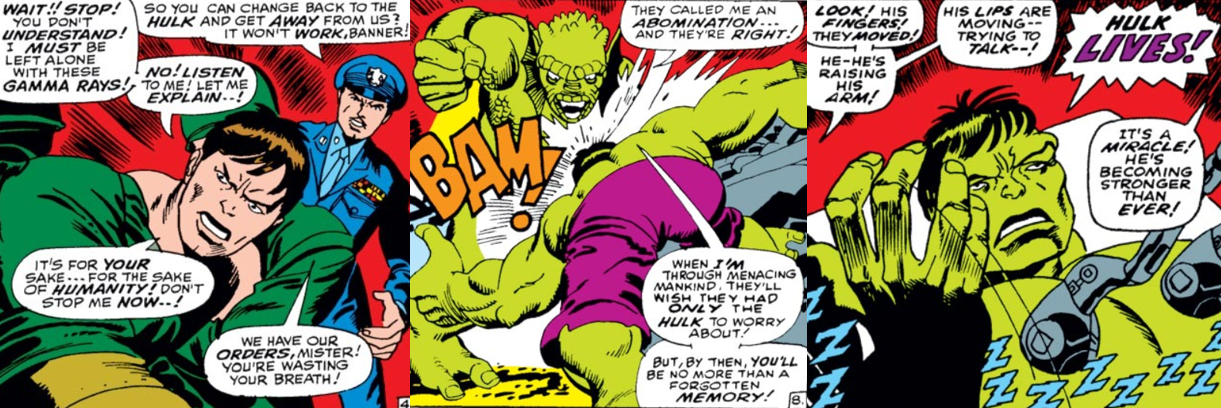
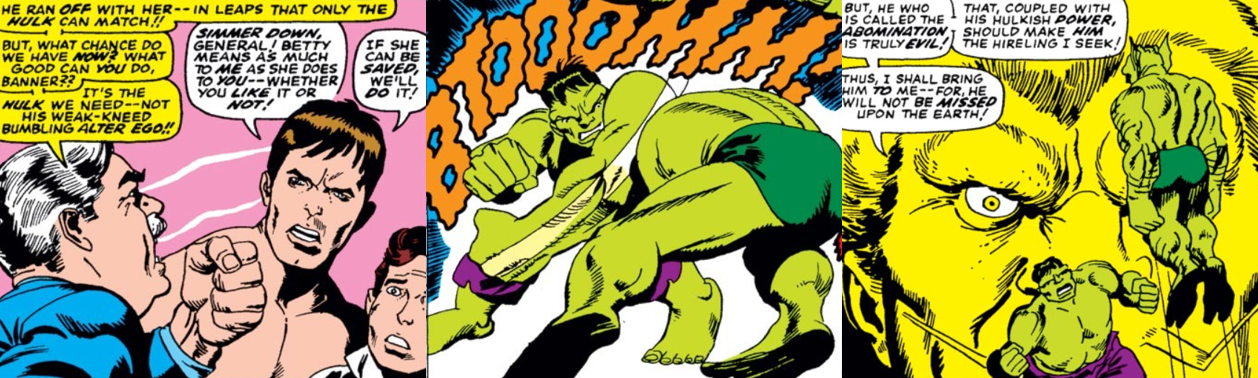





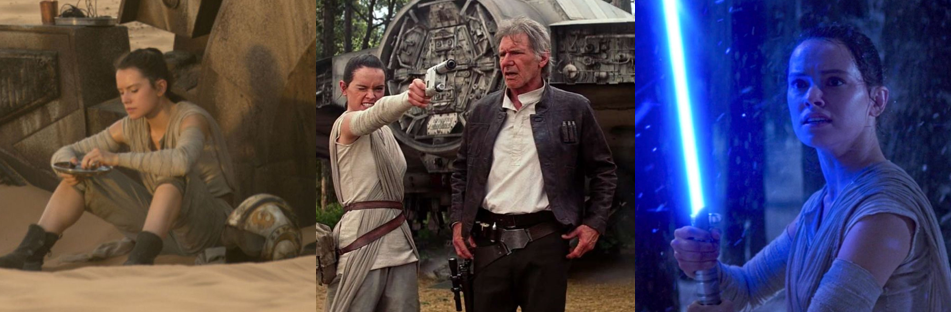

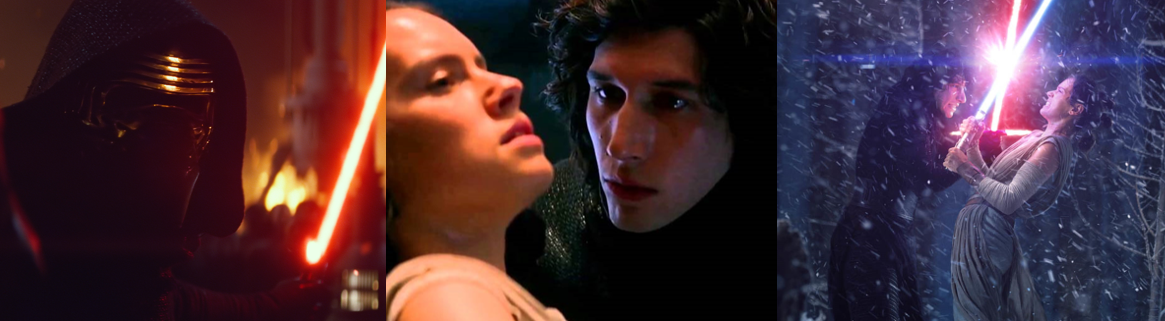
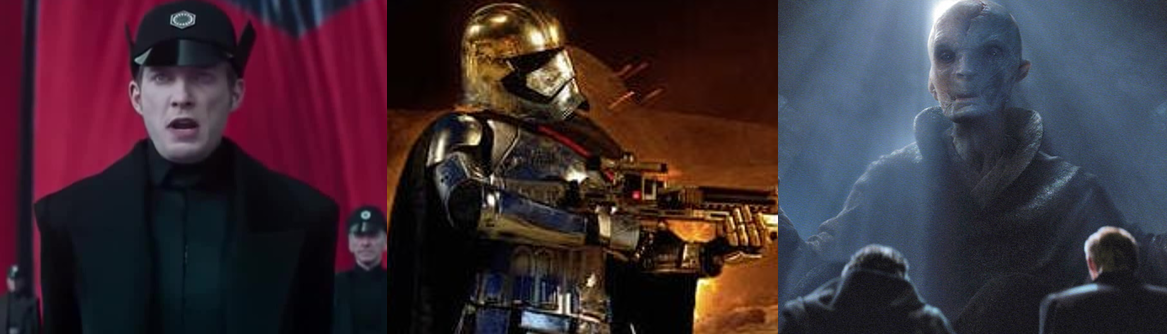

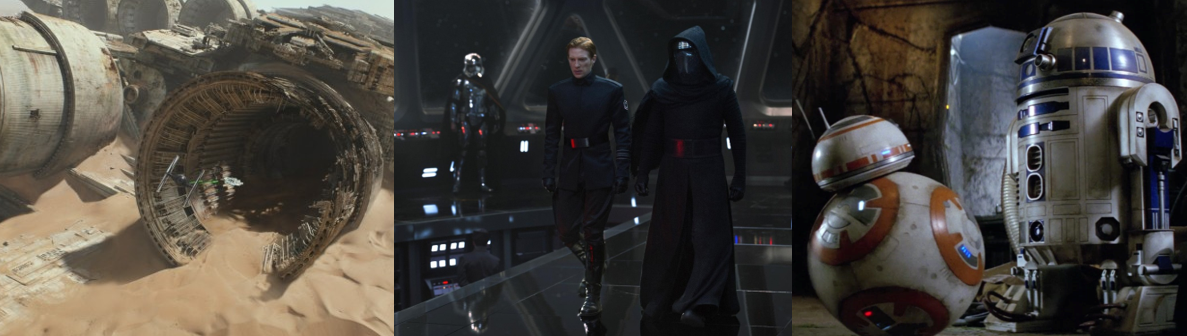
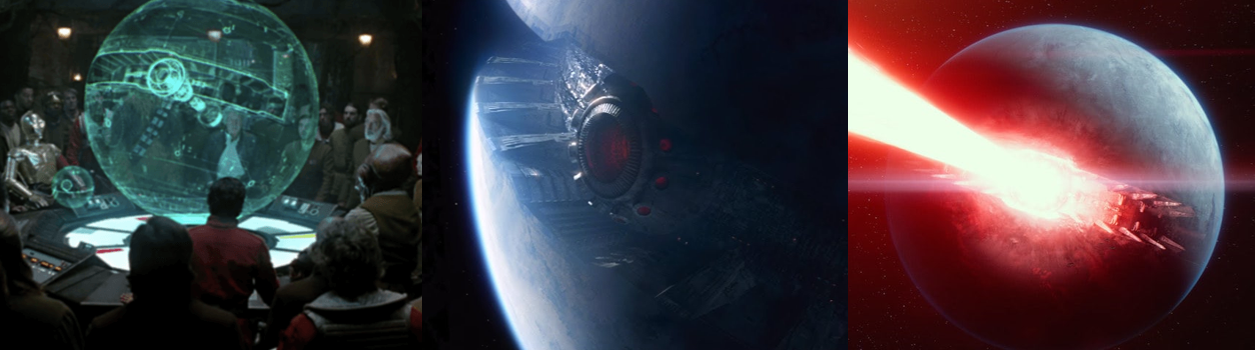




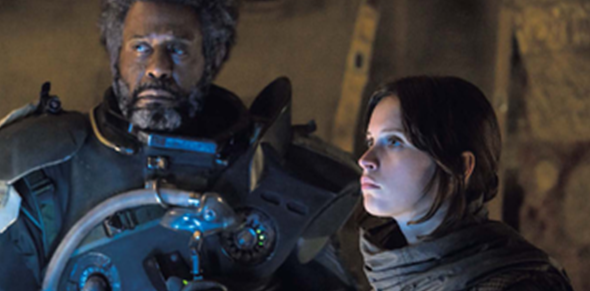

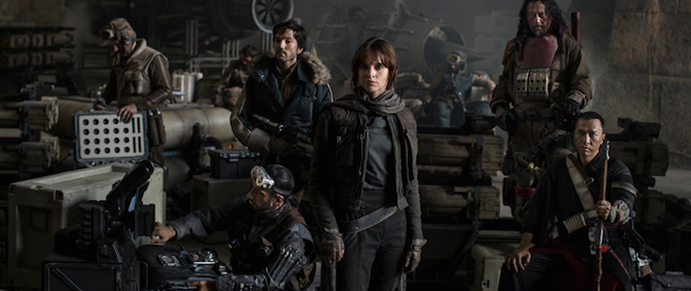





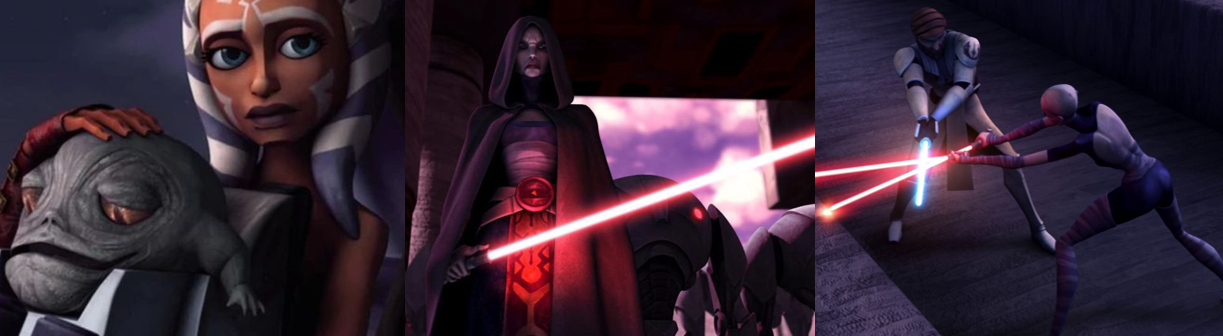

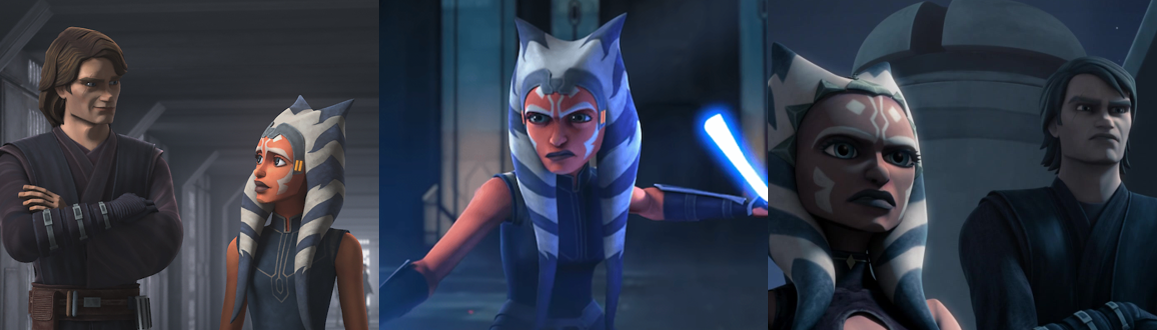





































 Dr. K's Waiting Room
You must be logged in to post a comment.