The Date: 3 December 2006 The Venue: James Brown Arena; Augusta, Georgia The Commentary: Joey Styles and Tazz The Referee: Mickie Henson The Stakes: Extreme Elimination Chamber match for the ECW World Championship
The Build-Up: Back in the days when the then-World Wrestling Federation (WWF) and World Championship Wrestling (WCW) competed in a vicious ratings war, Extreme Championship Wrestling (ECW) offered a different brand of sports entertainment. First founded in 1992 as Eastern Championship Wrestling, the company was re-branded by one of wrestling’s greatest minds, managers, and promoters, Paul Heyman, in 1993 and came to be known for its violent and controversial matches and content, which was instrumental in inspiring the WWF’s “Attitude Era”. Unfortunately, despite ECW’s rabid cult following, the company was unable to sustain itself after losing its television deal; many of ECW’s stars jumped to the WWF and the company officially closed its doors in early-2001. ECW lived on, however, not just in the rise of independent promotions but also in the confines of the rebranded World Wrestling Entertainment (WWE); the success of their Rise and Fall of ECW documentary (Dunn, 2005) saw the WWE host a special throwback event, ECW One Night Stand, in 2005 to celebrate the brand. It was so successful that a second event followed in 2006, one that would see ECW and many of its stars return as a third WWE brand. Unfortunately, despite initially being presented as an alternative product and a showcase for new talent, the WWE ECW was doomed to fail: it lacked the “Extreme” edge fans expected, Heyman’s influence was limited, and its top star and champion, Rob Van Dam, was stripped of his championship belts after being arrested on drug charges! The WWE seemed to lose interest soon after; although they promoted this pay-per-view event, very few matches were announced beforehand and the card was supplemented by Raw and SmackDown! talent. The entire show was built around this Extreme Elimination Chamber match, with former champion RVD being the first announced for the contest. There was also some drama surrounding Hardcore Holly’s involvement; he was initially scheduled to be a part of it before Bobby Lashley attacked him and took his place, failed to gain a spot in a match against RVD, and was finally included after Sabu was mysteriously attacked earlier on the show, a decision that irked the ECW original but would be just the tip of the iceberg when it comes to this universally lambasted event.
The Match: Considering ECW December to Dismember 2006 was already criticised for its lacklustre card and padding its runtime, it’s perhaps not surprising that this match was preceded by not just a hype video emphasising its violent and brutal nature, but also a lengthy pre-match promo from ECW general manager Paul Heyman. While the crowd, and even the commentary team, have no love for Heyman, who turned heel by ditching the ECW originals for up-and-coming stars like Bobby Lashley and CM Punk (and, naturally, the Big Show) as the future of the company. This promo went on for about three minutes and, afterwards, the show wasted even more time by dwelling on the chamber’s lowering around the ring. What made this match unique, and “Extreme”, compared to previous elimination chamber matches was that each competitor also carried a weapon: CM Punk had a steel chair, Test a crowbar, Lashley a table, and the Big Show had a baseball bat wrapped in barbed wire. Otherwise, the rules were the same; two men (RVD and Hardcore Holly) started the match and, around every five minutes, another competitor was released to join in. As was often the case whenever the Big Show actually got a serious push, much of Heyman, Styles, and Tazz’s commentary emphasised the champion’s size and strength; despite the fact that the Big Show had been beaten like a drum over the years by this point, he was hyped as “unbeatable” simply because he was a huge man with a newfound motivation since capturing the championship. Of all the competitors, rising star CM Punk,the epitome of an indie darling, and the ever-popular RVD made the most waves during their entrances. Even now, as big a fan of Test and even Hardcore Holly I am as a dependable midcarder, it’s hard to deny that these two stick out like a sore thumb; nobody in the audience wanted Holly in this match and their inclusion really speaks to how limited and lacklustre the WWE ECW roster was.
RVD proved the MVP of this thrown-together match, closely followed by crowd favourite CM Punk.
As mentioned, RVD and Hardcore Holly started the match after what felt like an ice age of stalling and entrances and they kicked off what was sold as the most devastating match in the entire WWE by…trading lock ups and punches. A clothesline exchange was enough for Holly to go for the cover, which earned him barely a one count, then Holly gently tossed RVD to the raised steel floor outside the ring. RVD leapt to the cage wall when Holly dodged his dive, which was admittedly pretty impressive; unfortunately, he ended up hitting the ropes when he tried a follow up dive, which was apparently enough to draw an “ECW!” chant from the crowd. Holly pressed his advantage by running RVD into the chain-link wall and slamming him on the steel but crashed and burned when he uncharacteristically went for a dive off the top rope and ate a boot for his troubles. RVD capitalised with his patented Rolling Thunder manoeuvre from the ring, over the ropes, and to Holly’s prone body on the outside, only to find himself deposited back into the ring from a suplex for a two count. Holly and RVD traded blows, with Holly landing his trademark dropkick, before CM Punk joined the action. The crowd exploded when Punk launched his steel chair right at Holly’s face and took out RVD with a springboard clothesline, only to be blasted with that same chair when RVD tossed it at his head! RVD followed up with his rolling monkey flip in the corner, which saw Punk slightly graze the chair with his tail bone, only for Punk to duck RVD’s spin kick and sweep him onto the chair with his speed and martial arts skill. Punk kept Holly out of the game with a springboard dropkick and continued to work over the busted open RVD, thrusting him head-first through the chair as it was wedged in the corner, only to have his momentum cut off when Holly swung him into the chain link wall for a near fall.
The crowd were unimpressed when RVD and Punk were eliminated, and by the botched pin on Holly.
Holly continued his attack with a sidewalk slam to Punk before dumping him on the ropes and booting him right in the head and driving him to the mat with a superplex. Regardless, CM Punk kicked out of two follow-up pin attempts and all three men were fatigued when Test brutally attacked with his crowbar, slamming, clawing, and choking Punk and RVD to give Holly time to recuperate. RVD somehow found a second wind, attacking with the chair then eliminating CM Punk with the Five-Star Frog Splash, which initially caused the audience to pop but their cheers quickly turned to boos when they realised what’d happened. Test then shockingly hit Holly with his Big Boot; however, despite the referee not counting to three and Tazz insisting that Holly kicked out, Hardcore Holly was summarily eliminated in confusing, frustrating, and anti-climactic fashion. RVD then flew in with a side kick off the top rope that downed Test and left him in prime position for a Five-Star Frog Splash off the top of the Big Show’s pod; however, the Big Show grabbed at RVD and interrupted the move, allowing Test to attack with a chair, dump him off the pod, and land a massive elbow drop from the pod to the steel chair, which took RVD out of the match and left the audience incensed as they realised their two favourites were gone.
After some stalling, shenanigans, and mediocre action, Lashley captured the championship.
There was a huge lull in the match where Test was left to awkwardly stumble about the ring as the counter wound down; then, when Heyman’s riot squad refused to let him out, Lashley broke out of his pod by smashing the roof with his table. Although he almost slipped off the top rope, Lashley, hit a diving clothesline, kicking the chair in Test’s face, and smashing him in the gut with the crowbar. The Spear that followed then took Test out of the match, leaving Lashley to stalk around the ring for over a minute as he waited for the Big Show to be released. The Big Show lumbered out with his barbed wire baseball bat and hammered at Lashley, who desperately defended himself with the chair; quickly, Lashley tricked the Big Show into getting the bat caught in the cage wall, allowing the challenger to drive the champion into the steel mesh and right through a pod, busting him open and leaving him prone for a beating. The Big Show rallied, effortlessly tossing Lashley into the ring and flooring him with a clothesline; however, when he went for his trademark Chokeslam, Lashley countered into a huge DDT! The Big Show got pissed when Lashley deftly ducked his haymakers and tried to plant him with a running powerslam, but Lashley easily slipped off, hit the ropes, and collided with a Spear to finish the clearly winded champion and capture the ECW Championship to reluctant applause. I can understand why this match is so poorly regarded; there’s just not enough star power, heat, or intrigue behind it. The weapons added some spice but they were barely used and there was too much waiting around, not to mention the two clear fan favourites being unceremoniously dispatched and that botched pin on Hardcore Holly!
The Aftermath: This wouldn’t be the last time that the Big Show and Bobby Lashley clashed over the ECW World Heavyweight Championship; on the very next episode of ECW, Lashley defeated the Big Show in a one-on-one match, retaining the belt and temporarily removing the Big Show from WWE programming. Lashley continued to mix it up with his fellow chamber opponents, clashing with RVD on ECW and defending the championship against Test at Royal Rumble, but he ended up embroiled in a “Battle of the Billionaires” at WrestleMania 23 as he represented Donald Trump in a match against WWE chairman Vince McMahon’s proxy, Umaga. This ultimately led to perhaps the most outrageous storyline of the revived ECW as McMahon and Lashley feuded over the championship, with the chairman actually capturing the belt in the process! Although December to Dismember wouldn’t be the end of ECW, it was the end of Paul Heyman’s tenure with the company, and the WWE, for some time; the show’s poor buy rate and attendance figures escalated tensions between Heyman and McMahon, with the former walking away from the company after his booking decisions regarding CM Punk, Rob Van Dam, and Bobby Lashley were ignored. Contrary to popular belief, ECW limped on for about two more years after December to Dismember, but the brand was never again afforded its own pay-per-view and December to Dismember went down in history as one of the worst produced, worst attended, and worst regarded wrestling events of all time.
My Rating:
⭐
Rating: 1 out of 5.
Terrible
What did you think to the Extreme Elimination Chamber match? Who did you want to see win the match at the time? Were you annoyed that Sabu was swapped out for Hardcore Holly? What did you think to CM Punk being the first person eliminated? Do you think the match should have made better use of its weapons? Were you excited that Bobby Lashley won? What did you think to the WWE’s revival of ECW? Would you like to see the December to Dismember event make a comeback? Whatever your thoughts, feel free to leave them below or drop a comment on my social media.
Released: 10 November 2023 Director: Nia DaCosta Distributor: Walt Disney Studios Motion Pictures Budget:$270 million Stars: Brie Larson, Teyonah Parris, Iman Vellani, Zawe Ashton, and Samuel L. Jackson
The Plot: Whilst investigating a universal threat as a favour to Nick Fury (Jackson), Captain Carol Danvers/Captain Marvel (Larson) discovers an anomaly in the fabric of space and time caused by venge-seeking Kree commander Dar-Benn (Ashton). Coincidentally interacting with the anomaly at the same time as Captain Monica Rambeau (Parris) and Kamala Khan/Ms. Marvel (Vellani) use their own cosmic powers, Danvers finds herself switching places with the two heroes and forced to join forces with them to prevent Dar-Benn from destroying the people dearest to her.
The Review: I really enjoyed Captain Marvel. At the time, I was fully expecting the film to dictate the next phase of Marvel movies, positioning Captain Marvel as a powerful force in the MCU and establishing the shape-shifting Skrulls as an ongoing threat to these colourful characters. Sadly, however, that didn’t really happen; the movie subverted expectations and cast the Skrulls in a sympathetic light and attempts to make them more antagonistic were questionable, at best. Indeed, the Skrulls barely feature in The Marvels except for a brief sub-plot where Dar-Benn arrives on Tarnax, where they have established a refugee colony under the leadership of Emperor Dro’ge (Gary Lewis), under the guise of a peace treaty simply to create an unstable jump point that strips Tarnax of its atmosphere and forces the Skrulls from their world once more. Despite Captain Marvel having helped settle the colony, and the assistance of her and her new allies in evacuating much of Tarnax and arranging safe refuge with King Valkyrie (Tessa Thompson), Emperor Dro’ge is seen to have lost faith in Captain Marvel, primarily because he believes she ruined a chance for the Skrulls to return to prosperity in the Kree Empire and resents her for inviting conflict. Captain Marbel also ended with the promise of Carol avenging herself against her warmongering Kree superiors, a plot point that sadly sets a precedent for The Marvels as it’s simply rushed through, brushed aside, and barely explored, especially considering Carol’s destruction of the now-comic-accurate Supreme Intelligence is the catalyst not just for the slow destruction of the Kree home world, Hala, but also Dar-Benn’s entire vendetta against Captain Marvel. It’s a shame as I would’ve liked to see Carol fighting to free her adopted people from the manipulation and influence of the Supreme Intelligence, but it feels as though there was a Captain Marvel 2 we never got that actually told this story, including a rematch with Yon-Rogg (Jude Law) and her former Starforce allies, as all of this is relegated to a quick flashback and a brief scene where Carol awkwardly expresses guilt over setting the paper-thin plot of this movie in motion.
Carol and Monica finally reunite, brush past their issues, and join forces.
So, what are we left with instead? Well, Captain Marvel has effectively lost herself to her work; she’s so busy investigating and confronting cosmic threats and trying to atone for essentially dooming Hala to destruction that she’s largely closed herself off to others. The only person she regularly talks to is Fury and the closest thing she has to a friend is the cat-like Flerken, Goose (Nemo and Tango); her shame at being labelled the murderous “Annihilator” has kept her away from Earth and her surrogate niece, Monica, earning her the new-empowered Captain’s resentment. Though haunted by the gaps in her memory and anxious about opening herself up to others, Carol is nonetheless excited to reunite with the grown-up Monica, even more so when she sees that Monica’s not only gained light-based powers of her own that allow her to become intangible, fire bursts of energy, and (eventually) fly, but also followed in and surpassed the footsteps of her mother, Captain Maria Rambeau (Lashana Lynch) by joining Fury’s Strategic Aerospace Biophysics and Exolinguistic Response (S.A.B.E.R.) crew. New to, and resistant towards, the superhero game (she actively resists being labelled with a code-name), Monica struggles to reconcile her conflicting emotions towards her Aunt Carol; on the one hand, she’s glad to be with her again but, on the other, she begrudges Carol for leaving her to face her mother’s death and life after the Blip alone. Still, Monica acquits herself well in this fast-paced cosmic adventure; her powers may be strangely defined, but she takes a commanding role in the threesome and quickly embraces and enjoys teaming up with Carol and Kamala. Because Captain Marvel has definitely been shown to be one of the (if not the most) powerful characters in the MCU, it can be difficult to imagine her struggling against any enemy or ever requiring a team, even though we saw that she is far from an infallible, unstoppable one-woman army in Avengers: Endgame(Russo and Russo, 2019).
Kamala is the adorable heart and soul of the film and awestruck by her hero.
Still, The Marvels gets around Carol’s incredible and unmatched power through a unique and enjoyable body-swapping mechanic. Thanks to Dar-Benn’s actions and the similarities in their cosmic, light-based powers, Carol, Monica, and Kamala switch places whenever they use their powers in unison; this causes a great deal of distress for the young Ms. Marvel, who suddenly finds herself dumped halfway across the galaxy and fighting Kree warriors and her family – overbearing Muneeba Khan (Zenobia Shroff), astonished Yusuf Khan (Mohan Kapur), and exasperated Aamir Khan (Saagar Shaikh) – threatened by those same forces. Still, Kamala is the shining light in this film; her adorable, infectious enthusiasm is a joy to see and she’s genuinely excited to meet, and team up with, her lifelong hero. When there’s tension between Carol and Monica, Kamala acts as the intermediary, dishing out sympathy, excitement, and hugs despite how in over her head she is. Since Dar-Benn possesses the other mystical bangle, Kamala becomes a target for the fanatical Kree, who wishes to have both so that she can enact the full extent of her diabolical plan, and Kamala is determined to prove herself to Carol, Monica, Fury, and her family. However, as thrilling as it is for Kamala to bond with Carol and Monica (and they do develop a true, charming sisterhood over a few montages), she also learns how dangerous and bleak the superhero life is. Carol’s actions are not always virtuous and she’s forced to make hard choices as often as she is to visit planets like Aladna, where the inhabitants can only communicate through song and dance, though the experience galvanises Kamala’s spirit and inspires her to seek out other young heroes to form a team of their own. Fury was also quite enjoyable here; although he doesn’t work alongside Carol in the same way as the first film, The Marvels repositions him as the principal figurehead for Earth/galaxy relations and he takes an active role in guiding the Marvels and evacuating S.A.B.E.R.’s inhabitants using a clowder of Flerkens in another of the film’s strangely bizarre sequences.
The vengeful Dar-Benn is a disappointingly bland and forgettable villain.
While the relationship between the Marvels is naturally at the forefront here, and is easily the best element of the film, other aspects are underdeveloped and rushed; The Marvels is the shortest MCU movie to date and really ploughs through all its characterisations and plot, which means things like Monica’s relationship towards Carol and Carol’s shame at her actions are touched upon and then quickly cast aside. However, the real casualty of the film’s brisk pace is the lead villain. Essentially just Ronan the Accuser (Lee Pace) again, Dar-Benn even wields Ronan’s mallet-like staff (which strangely still glows and demonstrates the same properties it did when it had the Power Stone in it), which just lends further credibility to my argument that Ronan should’ve been a recurring threat in the MCU. Dar-Benn sadly ends up as a throwback to villains like Ronan and Malekith (Christopher Eccleston), underdeveloped, one-dimensional bad guys who do “bad guy stuff” simply because the movie needs a bad guy. Dar-Benn’s vendetta is based on Carol destroying the Supreme Intelligence, an act that…somehow…had cataclysmic ramifications for Hala, including destroying its atmosphere, oceans, and even its sun, driving Dar-Benn to use the vaguely-defined bangle to rip open holes in space and time to suck these resources from Carol’s adopted worlds in what is, essentially, the villainous plot from Spaceballs (Brooks, 1987). A driven, fanatical patriot, Dar-Benn is a hero by her people and poses a significant threat to the Marvels thanks to her bangle absorbing their blasts, the power of her mallet, and the confusion caused by them switching bodies, but is ultimately overwhelmed without much trouble and destroyed by her own obsession. She’s sadly far from a memorable villain, despite her posing a legitimate threat to the universe, and is just another aspect of the film that’s not given enough time to flourish onscreen; it’s a real shame as I thought we were past the age of unforgettable, wasted villains in comic book movies but here’s The Marvels to prove me wrong and harken back to lacklustre movies like Fantastic 4: Rise of the Silver Surfer(Story, 2007).
The Nitty-Gritty: There are some themes at work in The Marvels, but they’re severely rushed and take a backseat to keeping the narrative and the action moving ever forwards. It’s as though the film is afraid to linger too long on complex emotions and characterisations, or like a good hour or so of the plot was excised in favour of wacky nonsense that bogs down the otherwise intriguing relationship between the Marvels. Monica resents Carol for leaving her and prioritising work over her friends and family, something we learn is as much because of Carol’s humiliation at dooming Hala to destruction as it is because of her duties to the cosmos. Carol believed she was liberating the Kree when she destroyed the Supreme Intelligence but was horrified by the consequences of her actions, which see the Kree brand her as the feared “Annihilator” and target her allies in recompense. While fangirl Kamala is overjoyed to meet and fight alongside her idol, she quickly learns how dangerous the superhero life is when she’s placed in constant danger (much to the concern of her family) and sees that, sometimes, heroes can’t save everyone. Her enthusiasm remains boundless, however, and she’s very much the heart that binds the Marvels together and makes their training montages and interactions even more enjoyable, but The Marvels is handicapped by some truly bizarre sequences. They trio travel to Aladna to warn of Dar-Benn’s threat, a planet where Carol is revered as a princess and married to the forgettable Prince Yan (Park Seo-joon), and where the inhabitants communicate through singing and dancing, forcing a really surreal musical number into the film that feels more at home in Taiki Waititi’s Thor movies (2017; 2022).
Some fun action mechanics and impressive visuals can’t atone for the film’s more surreal moments,
The Marvels may also alienate those who haven’t seen the Ms. Marvel Disney+ series. Although Kamala and her family are introduced to unaware viewers, they still kind of appear from nowhere for the uninitiated, not unlike the mentions of Westview in Doctor Strange in the Multiverse of Madness(Raimi, 2022). I firmly believe we’re at a point where MCU fans are digesting every product the MCU puts out, so there probably aren’t many people who are confused when the Disney+ shows are referenced or appear in the movies, but this could escalate into a bigger problem in the future. Still, the inclusion of Ms. Marvel adds to the film’s frantic action sequences; it’s fun seeing the three stumble about, suddenly deposited in different locations and having to quickly adapt to save themselves, and others, as the situation dictates. Through some fun montages and learning to communicate, the Marvels overcome the issue of their body swapping to form a cohesive unit that both allows them to overwhelm Dar-Benn and keeps the ultra-powerful Captain Marvel from simply ending every threat by herself. Cosmic, space-based action is kept to a minimum this time around, with most of the special effects reserved for planetary destruction and depicting rips in the fabric of reality. I will say, though, that Ms. Marvel’s powers look a little iffy at times, though the film’s costumes make up for this, with Carol sporting some snug, sexy uniforms and Kamala getting a nice upgrade that sees her gain a whip-like scarf, though I didn’t care for Monica rejecting adopting a code name and tearing off the disco-wings of her Aladna outfit as, again, I thought we were past the age of mocking superhero tropes.
The Marvels work together to defeat Dar-Bonn, but Monica sacrifices her freedom to save the galaxy,
So, Dar-Benn’s revenge sees her scour the universe for the sister bangle to Kamala’s heirloom; when combined with Ronan’s staff, this allows her to create unstable jump points that suck air, water, and the sun from worlds that are close to Carol, with the goal of restoring the Kree home world and delivering a decisive blow to Carol. Although she has an army of loyal soldiers at her back, this doesn’t really factor into Dar-Benn’s plan and the Kree exist primarily as cannon fodder for the Marvels to beat up as they save lives and try to confront the head of the snake. This confrontation takes place, naturally, on Dar-Benn’s command ship as she arrives to suck the life out of Earth’s sun and sees the Marvels working in unison to overwhelm their foe, ultimately (and inadvertently) mortally wounding her. Carol echoes Kamala’s compassion for the fallen Kree and, on Monica’s suggestion, offers to reignite Hala’s sun to atone for her actions, which Dar-Benn seems to agree to but she ultimately can’t let go of her vendetta and destroys herself after creating a massive tear in the fabric of reality. Luckily, the Marvels surmise that Carol and Kamala can recreate the energy used to create this tear and use it to empower Monica so she can close it, an action that must be performed from inside the rift and ultimately results in Monica seemingly sacrificing herself to save the universe. Changed by the experiences, Carol decides to spend more time on Earth to wait for Monica’s inevitable return, and Kamala heads out to start her own superhero team, with Fury spearheading the repairs to S.A.B.E.R. to monitor future intergalactic threats. Of course, Monica isn’t dead as a mid-credits scene shows her waking up in a hospital, overjoyed and overwhelmed to find her mother at her side. However, this is a variant of Monica’s mother, one who has adopted the Captain Marvel powers and codename of Binary and works alongside Doctor Henry “Hank” McCoy/Beast (Kelsey Grammer) at the X-Mansion. This was a fun stinger since recent MCU products have laid the groundwork for the X-Men and I enjoyed the inspiration from the nineties’ cartoon, but Beast was an unsightly CGI creation and I remain incredulous to Marvel’s resistance towards recasting new actors as the X-Men, and the idea that Mutants need to step through a tear in reality to exist in the MCU.
The Summary: I had high hopes for The Marvels; I really enjoyed Captain Marvel, and Ms. Marvel, and was interested to see Carol and Kamala meet onscreen, and explore the relationship between Carol and Monica. These aspects were, thankfully, exceedingly well realised; the three had some great chemistry, obviously had fun working together, and formed a fun sisterhood that perfectly balanced their different characters and experiences (and inexperiences, in some cases). I don’t normally like body swap narratives (and, in truth, it started to wear out its welcome here in the early going) but, for the most part, it was a fun inclusion; it was a unique way to nerf Captain Marvel’s vast cosmic powers and show her the benefits of working with others, and to repair the rift between her and Monica and induct Ms. Marvel into the wider superhero community. Sadly, that’s about where my praise for The Marvels ends; Dar-Benn is in the running for weakest MCU villain of all time, the plot was slapdash and simple, and any nuance or intrigue laced into the narrative was breezed through to get to the next wacky sequence. It honestly felt like major cuts were made, or we missed an entire movie, and I didn’t care for the half-assed characterisation of Dar-Benn or the mockery of superhero tropes, which are both negative elements of the genre that I thought we had moved on from. On the one hand, I liked that the film didn’t outstay its welcome and had a brisk pace, but I think the overall plot and characterisations (outside of the titular trio) suffered because of it. This is definitely a miss-fire for me, ultimately coming across as a film that exists for the sake of existing and setting up future MCU products rather than delivering a solid follow-up worthy of the principal cast.
My Rating:
⭐⭐⭐
Rating: 3 out of 5.
Pretty Good
Did you enjoy The Marvels? What did you think to the dynamic between the trio and which of the three is your favourite? Did you like the film’s brisk pace, or do you agree that certain elements were rushed? Were you also disappointed in Dar-Benn? Are you also annoyed that the X-Men are being introduced as part of the multiverse? Would you like to see the Marvels join forces in a future MCU movie? Whatever your thoughts on The Marvels, leave a comment down below.
The Date: 26 November 1987 The Venue: Richfield Coliseum; Richfield Township, Ohio The Commentary: Jim “J.R.” Ross and Paul Heyman The Referee: Earl Hebner The Stipulation: Ten-man elimination tag team match to decide the fate of both organisations The Competitors: Team WWF (WCW Champion The Rock, Chris Jericho, The Undertaker, Kane, and The Big Show) and Team Alliance (WWF Champion “Stone Cold” Steve Austin, WWF Hardcore Champion Rob Van Dam, Kurt Angle, Booker T, and WCW Owner Shane McMahon)
The Build-Up: During its many decades as the dominating force in sports entertainment, World Wrestling Entertainment (WWE) has created some of the industry’s most successful competitors, changed the face of pay-per-view entertainment, and delivered genre-defining match types and wrestling cards. In 1987, the then-World Wrestling Federation (WWF) successfully gambled on WrestleMania then, as the National Wrestling Alliance (NWA) was due to broadcast Starrcade over the 1987 Thanksgiving weekend, WWF chairman Vince McMahon strong-armed many cable companies into airing his showcase of ten-man elimination tag team matches, the Survivor Series, or risk losing out on WrestleMania IV. By 2001, some of the WWE’s biggest events had taken place at the event and, this year, it was chosen as the final battle between the WWF and the alliance of World Championship Wrestling (WCW) and Extreme Championship Wrestling (ECW). The WWF and WCW had gone head-to-head in a ratings war since 1996 but, by 2001, WCW faced bankruptcy and, in a shocking moment, the McMahon purchased WCW and the “Monday Night Wars” came to a surprising end. After attempts to keep WCW alive on WWF television fell through, the WWF began a storyline where WCW joined forces with ECW (also now owned by McMahon) and attempted to “invade” the WWF as the “Alliance”. Unfortunately, as many of WCW’s top names sat out their high-paying contracts, the WWF was forced to rely on lesser names and, all too soon, the angle was more about McMahon feuding with his kids, Shane and Stephanie, and the increasingly paranoid Steve Austin holding onto his WWF Championship. More and more WWF guys joined the Alliance, including one-time saviour Kurt Angle, Chris Jericho slowly turned heel in his quest for gold, and even Austin seemed to consider jumping ship as the angle wore on. Eventually, with viewers and audiences turning away from the product, the decision was made to ditch the entire thing with this “Winner Take All” elimination match that would decide which organisation would prevail. Initially, Vince himself was scheduled to compete on Team WWF but he named the Big Show as his replacement and went about sowing the seeds of dissension throughout the Alliance in the lead up to this premature end to what should have been one of the biggest and longest angles in wrestling history.
The Match: Considering I wasn’t really able to watch much wrestling as a kid, let alone truly be a part of the Monday Night Wars, I was deeply invested in the Invasion storyline at the time. I was pissed when Austin turned heel at Invasion and became a paranoid, self-deluded, cowardly asshole who was obsessed with the WWF Championship. Although the Alliance was missing key figures like the New World Order (nWo), Goldberg, and Sting and had dramatically repackaged top WCW stars like Diamond Dallas Page and Booker T into heels, I was well into their attempts to tear down the WWF. Unfortunately, far too many WWF guys jumped ship for no reason, but I’m not here to re-book this angle, I just wanted to say I was into it, delighted to see these fabled WCW and ECW stars on television, and extremely invested for this match. The build-up was quite good; things weren’t all hunky-dory on Team WWF as Jericho had been feuding with the Rock over the WCW World Heavyweight Championship and, to make matters worse, the Alliance won all but two matches on this Survivor Series card, meaning the stakes were further escalated heading in, something Vince was sure to emphasise backstage when he riled up his competitors with a stirring speech. The match kicked off with its two biggest stars, Austin and the Rock, trading blows; the two went at it in the corner but Austin gained the upper hand with a Lou Thesz Press and an elbow drop for the first near fall. Austin pressed his advantage using his knee braces, but the Rock ducked under a clothesline and hit a Lou Thesz Press and a taunting elbow of his own to rapturous applause and a pin attempt that was broken up by Shane. Thanks to Shane’s interference, the Rock was helpless as Austin tagged in Booker T, who had ridiculously been painted as a poor copy of the Rock during the Invasion storyline when, realistically, the two had barely anything in common!
Things got off to a heated start and only escalated as Shane constantly interrupted pin falls!
Booker laid in some chops but got quickly taken down with a big clothesline for a near fall that was again interrupted by Shane, but the Rock was still easily able to tag in Jericho, who lit up Booker with some chops and planted him with a flapjack. Jericho didn’t press his advantage, however, meaning RVD was able to tag in; of all the new faces from this time, RVD was clearly the most dynamic and popular, so much so that even J.R. had to mention it. RVD showcased his athleticism by nipping up, leapfrogging the charging Jericho, and rolling across his back in a beautiful sequence but, not to be outdone, Y2J answered with a lovely spinning heel kick. RVD showed his cunning by holding the ropes and avoiding a dropkick; he followed up with a slick cartwheel moonsault for a two count. However, when RVD backflipped out the corner and went for a hurricanrana, Jericho countered and locked on the Walls of Jericho; once again, Shane put a stop to this, which also allowed Booker T to tag in. However, Booker got cold feet when Kane (sporting a weird alternative version of his bad-ass vest attire) also tagged in and gladly allowed Kurt Angle to take his place. Angle (who had recently made Kane tap out) tried using his speed to avoid Kane’s power but ended up launched into the corner and assaulted by a flurry of strikes; Kane then whipped him to the opposite corner and crashed in with a clothesline and simply sat up after eating a big German Suplex. Stunned, Angle went for the strikes and ended up taking a sidewalk slam and Kane’s huge flying clothesline off the top. Shane again broke up the pin, so Kane tagged in his big brother, the Undertaker, who also manhandled Angle and then switched his attack to Booker when Kurt made a desperate tag.
The Big Show’s brief rampage was shut down by a finish-fest and, naturally, Shane scoring the pin!
The Undertaker easily knocked Booker down with a big boot and scored a big leg drop for another pin attempt that was again interrupted by Shane; J.R. was getting as annoyed as the WWF competitors, the crowd, and me by Shane’s constant meddling. The Undertaker worked over Booker T’s arm and hit his trademark “Old School” rope walk strike and an arm take down that ended in an armlock on the mat. Shane’s interference allowed Booker to not only kick out of a pin but also tag Austin back in; Austin went right at his old foe, stomping a mudhole in the corner as the crowd sang “What? What? What?” over and over in what is still one of the most annoying chants in wrestling. The Undertaker avoided Austin’s running rope attack and then hit another Old School, only for Shane to break up the pin once more; Team WWF was so riled up that the referee had to hold them back, allowing Team Alliance to work the Undertaker over in their corner and bringing Kurt Angle back into the ring. Angle weathered the Undertaker’s assault and hit a neckbreaker for a near fall but fell to a DDT after missing out on a German Suplex. The Undertaker then made the hot tag to the Big Show, who went on a rampage somewhat neutered by J.R.’s observation that the Big Show often makes big dumb mistakes! RVD illegally charged the ring and ate a clothesline and a standing military press for his efforts; the Big Show then smacked up Team Alliance and went for the Chokeslam but Angle was able to fight out and hit the Angle Slam! Booker T followed up with the Scissors Kick and the Spin-A-Roonie before tagging in RVD, who came crashing down with a Five-Star Frog Splash. Shane then tagged in to hit his big top-rope elbow drop and, naturally, got the pin fall to eliminate the biggest man from the match.
Some eliminations were quite lacklustre as it came down to a four-on-two disadvantage for the WWF.
Thankfully, Shane immediately got his comeuppance as the Rock beat the hell out of him and then tagged Kane back in so he could drill Shane with his trademark One-Arm Chokeslam. The Undertaker followed up with a Tombstone Piledriver, and then Jericho finished Shane off with a Lionsault to finally get him out of the match. Jericho and Angle then went at it; although Y2J won the early advantage with a sick butterfly backbreaker, Austin broke up his pin attempt, allowing Angle to take him down and bring Booker T back into the fold. However, after three consecutive scoop slams and an elaborate knee drop, Booker switched with RVD; RVD landed a kicking combination but his corner shoulder thrusts were countered into a near fall off a roll up. Jericho tagged Kane back in; Kane brought the power and even caught RVD’s fist mid-swing and planted him with a powerslam, fought off Booker T’s interference, and shrugged off the Five-Star Frog Splash. However, as Kane readied a One-Arm Chokeslam, Booker T nailed a Harlem Sidekick; as a brawl broke out, RVD caught Kane with a sidekick off the top rope that was somehow enough to score him the three count. This pissed the Undertaker off so much that he beat up the opposition single-handedly; Snake Eyes and the big boot left Angle primed for the Last Ride but a distraction from Booker T allowed Austin to plant the Undertaker with a Stone Cold Stunner and drape Angle’s lifeless form over him for another elimination! Bolstered by their four-on-two advantage, Booker T attacked the Rock once more, scoring with another Harlem Sidekick but almost being pinned off a desperation DDT and a Samoan Drop, with both pin attempts broken up by Austin. Out of nowhere, the Rock then whipped Booker into Angle and anti-climactically eliminated Booker T with a simple roll-up (your five-time WCW Champion, everybody!) RVD took his place and worked the Rock over with some kicks, before a top rope slam bought the Rock the time to tag in Jericho. A flying forearm, shoulder tackle, and a running neckbreaker scored Y2J a near fall; however, although he managed to land on his feet when RVD countered the Lionsault, Jericho couldn’t avoid a spinning kick. RVD then glanced Jericho with the split-legged moonsault (J.R. postulates that Jericho “got a knee up”) and then ate a pin from the God-awful full-nelson faceplant Jericho was trying to get over as a finisher at this time (I believe it was called the Breakdown…) to even the odds. Things broke down into a brawl again but Angle and Jericho soon paired off in the ring while Austin assaulted the Rock on the outside; after wearing Jericho down with a chin lock and some stomps, Angle tagged in Austin, who planted Y2J with a superplex for a two count.
Despite Jericho’s actions, the WWF (and Vince) came out on top thanks to Angle’s last-second assistance.
An awkward miscommunication off an Irish whip eventually saw Austin switch with Angle. However, when Angle went for a German Suplex, Jericho rolled through and briefly applied the Ankle Lock to a massive ovation; although Angle escaped, he was visibly limping when he tagged out. Austin and Angle continuously tagged in and out but Jericho eventually made the hot tag and the match picked up again as the Rock tied Angle in the Sharpshooter; this surprisingly caused an immediate tap out and an aghast Paul Heyman to almost have a coronary! Austin, the last man standing for his team, Austin countered a diving crossbody and traded Walls of Jericho attempts with Y2J. Although he got his knees up to counter a Lionsault, Austin’s top-rope double axehandle didn’t hit and he barely kicked out after Jericho landed a missile dropkick. However, another awkward exchange saw Austin take Jericho out; although Austin and the Rock immediately rekindled their rivalry, Jericho spitefully planted the Rock with the Breakdown, completing his heel turn and earning him the admonishment of the Undertaker. Thankfully, the Rock was still able to kick out; when the Rock tried a comeback, he was launched outside and smashed off the ring post and the steel steps. Back in the ring, Austin’s spinebuster led to the Rock being trapped in a Sharpshooter that had Paul Heyman screaming for a repeat of the Montreal Screwjob; when the Rock reached the ropes, Austin tried to nail him with the WWF Championship and ended up in the Sharpshooter as well! The Rock countered a Stunner with one of his own, but couldn’t capitalise thanks to a low blow and interference from Alliance referee Nick Patrick. Austin took advantage to nail a Rock Bottom and was so incensed when the Rock kicked out that he took it out on Nick Patrick and forced Earl Hebner back into the ring. After the Rock ate a Stone Cold Stunner, the match seemed to be over; however, Kurt Angle suddenly nailed Austin with the WWF Championship! The Rock then hit the Rock Bottom and finally pinned Austin to eliminate him, win the match, and put the Alliance out of business. As the Alliance reacted in anguish and shock, Vince sauntered out to bask in his victory to really hammer home his superiority.
The Aftermath: Considering how overbooked and chaotic this match was, it’s weird that Angle’s last-minute turn always comes across a little flat to me. Vince had hinted that he had tipped the odds in his favour prior to the match but I always felt like the execution was lacking. The next night on Raw, Vince rechristened the WCW Championship the “World Championship” and prepared to reward Angle by stripping Austin of the WWF Championship and giving it to his mole; however, the status quo of the WWF finally returned to normal by the decree of “The Nature Boy” Ric Flair, who returned to the WWF as a part owner after buying Shane and Stephanie’s shares in the company, turning Austin face again and Angle heel. The World Championship situation culminated in a tournament at the next month’s event, Vengeance, which saw Chris Jericho defeat both the Rock and Austin to become the first-ever Undisputed Championship and go on a disastrous main event run that ended with him dethroned by a returning Triple H. Every member of the Alliance eventually became part of regular WWF programming; some won their jobs at Survivor Series, others were quietly repackaged, and some were forced to kiss Vince’s ass on national television. Other WCW names, such as Eric Bischoff, the nWo, and Rey Mysterio, soon joined the company and the bloated roster eventually led to a brand split that also saw the WCW Cruiserweight Championship and United States Championship adopted by the company. Despite his emphatic victory, Vince never passed up an opportunity to reshape history in his favour or bury WCW; while ECW had an anniversary show and even a short-lived and catastrophic revival, WCW was rarely given its due unless it suited Vince’s purposes and has mainly been evoked to maintain the trademark on their pay-per-views and unique match types.
My Rating:
⭐⭐⭐⭐
Rating: 4 out of 5.
Great Stuff
What did you think to this “Winner Take All” elimination match? Did you ever doubt that the WWF would come out on top? Who would you have preferred to see on Team Alliance? Were you annoyed at Jericho’s actions and how easily some guys were eliminated? Did you see Angle’s turn coming or were you expecting a different end to the match? What did you think to the Invasion storyline and how would you have improved it? Would you like to see WCW get more credibility or do you think it’s better off dead? Who were some of your favourite WCW competitors and what would your dream WWF vs. WCW team be? What are some of your favourite Survivor Series matches and moments? Whatever you think about the Survivor Series 2001 main event, feel free to share your thoughts below or leave a comment on my social media.
In the episode “Me2” (Bye, 1988) of the classic British science-fiction comedy show Red Dwarf (1988 to 2020), it is revealed the Arnold Rimmer’s (Chris Barrie) last words were “Gazpacho soup!” and that he made a point to celebrate November 25th as “Gazpacho Soup Day” after a particularly traumatising visit to the Captain’s Table.
Series Two
Air Date: 6 September 1988 to 11 October 1988 Director: Ed Bye OriginalNetwork: BBC2 Stars: Chris Barrie, Craig Charles, Danny John-Jules, Norman Lovett, David Ross, and Charles Augins
The Background: Back in the mid-1980s, creative duo Rob Grant and Doug Naylor created Dave Hollins: Space Cadet, a sci-fi comedy show for BBC Radio 4 influenced by sci-fi classics like Dark Star (John Carpenter, 1974) and The Hitchhiker’s Guide to the Galaxy (Adams, 1978; Bell, 1981) and which laid the foundation for what would become Red Dwarf. Their concept of a comedy set in space was initially a hard sell due to its sci-fi trappings, despite the duo emphasising character and comedy over genre. With impressionist Chris Barrie and Liverpudlian “punk poet” Craig Charles cast as bickering duo Second Technician Arnold J. Rimmer and Third Technician Dave Lister, respectively, and joined by tardy singer and dancer Danny John-Jules and sardonic stand-up comedian Norman Lovett, Red Dwarf eventually came to TV screens in early-1988. Despite viewing figures dropping throughout the six-episode first series, five million viewers tuned in for the pilot episode and audience feedback was so strong that the BBC greenlit a second series, which was really where the show hit its stride. Afforded greater influence, and a bigger budget, Grant and Naylor took the chance to expand the show’s setting, even moving out of their comfort zone to introduce a mechanical character who would later join the main cast. Having established their audience, the second series was received far more favourably and was on its way to becoming a cult hit. Some ten years later, Grant and Naylor enhanced the first three seasons with additional digital effects, replacing model shots with CGI and even revising lines and jokes, which resulted in these Remastered episodes being largely criticised. Nevertheless, Red Dwarf proved consistently popular even after the duo parted ways; after alengthy absence, Red Dwarf returned with a three-episode special in a questionablerevival that arguably struggled to match the quality of its earliest seasons.
The Plot: Deep space mining ship Red Dwarf drifts aimless in space three million years into the future, crewed only by Dave Lister, the last human being alive, Arnold Rimmer, a hologram of his deceased superior officer, a humanoid cat (John-Jules), and the ship’s neurotic computer, Holly (Lovett). Their long journey back to Earth is side-tracked by a distress call from confused android Kryten (Ross), an addictive virtual reality game, a leak in the fabric of space and time, and a journey to a parallel dimension where women are the dominant gender.
The Review: Red Dwarf was a popular show in my house when I was a kid. I was too young to remember the first series, however, and our VHS collection of the show started here, with series two, presumably because my dad either didn’t have the means to record the first series when it first aired or never thought to do so. Re-runs of the first series wouldn’t come around until much later, so I grew up watching the second to fifth series with considerable regularity. When I finally did watch the first series, I wasn’t very impressed; there was something lifeless and stilted about the presentation and the jokes that was decidedly at odds with the presentation of later seasons, but even the second series, which aired later in the same year as the first (something I still find astounding; I would’ve expected it to come the following year), has improved dramatically in every way save for that oddly ominous, lengthy, and out of place introductory sequence that would thankfully be ditched for something more upbeat in the third series. Still, you can see how far the series has come just from Holly’s brief recap of the plot that accompanies each episode’s title sequence; not only is Holly rendered in a more aesthetically pleasing way, but his jokes land a lot better, with his quip about having to life at the bleakness of existence and his collection of singing potatoes being just two examples.
Lister finds some new distractions to help vary his long days in deep space.
When we catch up with the Red Dwarf crew, things aren’t too far off from where we left them in the last series; although it seemed Lister and Rimmer came to an understanding and were prepared to show each other mutual respect, that’s not quite the case as Lister openly mocks Rimmer’s desperate attempts to learn Esperanto, proudly piles up his mail (despite it all being junk mail and useless mail order items) and winds Rimmer up about his $£8,500 debt to the “Outland Revenue”, and openly reads his diary (even narrating select sections to the Cat). Yet, their relationship is notably less antagonistic now; Lister bakes a spanner-shaped cake for Rimmer’s death day and not only seems genuinely happy to celebrate the occasion but also tries to help Rimmer’s intoxication with a triple fried egg sandwich with chilli sauce and chutney. Similarly, Rimmer, despite the fact that he can’t stand Lister, is dismayed that he would throw away their relationship in favour of three weeks of happiness with Kristine Kochanski (C. P. Grogan). Lister’s still the same cheerful slob; excited at making contact with another ship, he makes the effort shine his boots, toss on his cleanest t-shirt (“with only two curry stains on it”), and hammer his wretched socks to make himself somewhat presentable despite emphasising that they’re “not on the pull!” and Lister’s staunch refusal to refer to Rimmer as “Ace” leads to Rimmer encouraging him to wear his day-glow orange moonboots, which stink so badly that even the uptight hologram is reduced to tears by their rancid odour. What little emotion Lister showed at being the last man alive is mostly disregarded as he’s settled into his new, bizarre life, however he still craves happiness with Kochanski, to the point where he’s willing to die alongside her after discovering a stasis leak to the past, and is so distraught to find she’s already married that he launches into a great broken-hearted soliloquy about how women always leave him for “total smegheads”, nice guys they can rely on and who aren’t complete slobs. “Stasis Leak” (Bye, 1989) also sees Lister so elated to be reunited with Olaf Petersen (Mark Williams) that he embarrasses him in front of two ladies, and expressing excitement at seeing his long-dead friends again and a brief flash of regret at having taken them for granted. This episode also ends with the revelation that Lister will one day travel to the past and marry Kochanski, a plot point never revisited in future episodes (which is probably for the best as, while this Future-Lister is an arrogant jerk).
The series explores themes of slavery, friendship, and gender equality with a comedic, sci-fi flair.
Much of Lister’s characterisation shifts towards advocating for equality, both for machines and women, whom Rimmer treats with equal measures of indifference, disrespect, and misogynistic apathy. The series introduces the concept of humanoid androids (or “mechanoids”) whose only function is to serve their human masters like butlers; Lister finds Kryten’s life of servitude particularly grating, seeing it as a form of slavery, and actively encourages him to think of himself, work towards his dreams of having a garden somewhere, and exposes him to the works of James Dean and Marlon Brando to try and break his programming and make him more independent. Rimmer is far less respectful and mindful, referred to Kryten as “it” and giving him a ridiculously long list of tasks, including painting a grandiose portrait of him. Lister also vouches for the Skutters (now referred to as Pinky and Perky and depicted as being obsessed with John Wayne and playing cowboys and Indians), reasoning that they only do what they’re told to do and cannot be expected to understand complex instructions or be pro-active, though he does later quip that he “wouldn’t trust them to open a can of beans” when Rimmer suggests they can perform a caesarean. When Holly endangers the crew in “Queeg” (Bye, 1989), drawing the ire of Rimmer and even the Cat, a new authoritarian artificial intelligence, Queeg 5000 (Augins), replaces Holly (accusing him of having an IQ of six, relying on the Junior Encyclopaedia of Space, and sending them in circles for over a year), reducing him to a nightwatchman and enforces far stricter rules. While Rimmer is initially impressed by Queeg’s regime, Lister is dismayed and hurt on Holly’s behalf; while Rimmer demonstrates a lack of empathy towards machines, Lister shares a half-baked story about a pair of shoes with artificial intelligence (or “souls”) and feels bad for Holly being replaced like he was expendable. Similarly, Lister attacks Rimmer’s reliance on cheap tricks, lines, and even hypnosis to deceive women, emphasising that they’re people who deserve respect rather than trickery or contempt. Lister is excited to explore a parallel universe, where females dominate, but Rimmer is disgusted and insulted by Arlene Rimmer’s (Suzanne Bertish), perverse magazines that depict “hugely deformed” male models draped themselves over sports cars and her attempts to hypnotise him and use the same tactics he was previously so proud of to try and seduce him. Since holograms can touch each other, he comes to fear Arlene’s aggressively sexual advances and refuses to acknowledge that she’s simply treating him with the same disrespect and fetishisation he showed women. Arlene even goes so far as to challenge Rimmer, accusing him of being a “boring masculinist”, which runs parallel to Deb Lister’s (Angela Bruce) descriptions of how males fought for equality in this universe.
The series delves deeper into Rimmer’s background and neuroses to flesh out his grating quirks.
Like Lister, Rimmer has largely become accustomed to his newfound life (or, in his case, death). Lister still accuses him of using his condition as an excuse to fail in “Better Than Life” (Bye, 1989), where Rimmer becomes despondent by his reliance on the Skutters since they’re so stupid that they cause more harm than good; he later gets his revenge, and demonstrates his adaptability (or, more accurately, cunning) by simply waiting for a Skutter to return to its duties so he can win a game of draughts by default. This series really expands on Rimmer’s fascination with aliens; mockery from Lister relates that Rimmer equates any strange happenings, however minor, to extraterresital lifeforms. His first guess when the crew wake up to find they’ve lost four days overnight in “Thanks for the Memory” (ibid) is aliens and he attempts to piece together evidence that they were abducted and had their memories erased in an elaborate attempt to communicate. We also learn much about Rimmer’s childhood, which goes a long way to explaining his neurotic and antagonistic character; he’s shaken when he receives a letter informing him of his father’s (John Abineri) death, something he was obviously aware of given they’ve been lost in space for three million years but which still rattles him. However, his turmoil comes not from sadness, as Lister assumes, but out of complex mixture of hatred and respect for his father, an abusive and judgemental patriarch who was so fixated on his sons getting into the Space Corps that he’d withhold food if they couldn’t answer astronavigation questions (resulting in Rimmer almost dying from malnutrition) and stretch them on a traction machine. Still, Rimmer desperately wanted his father’s approval and attempts to find some solace in Better Than Life; although initially ecstatic to get the autograph of his “all-time favourite fascist dictator”, Napoléon Bonaparte (Reece Clarke) (using his “bad hand”, no less), promoting himself Admiral, and even signing a copy of his memoirs, he’s denied hearing his father’s approval thanks to the Cat’s selfishness and the game’s more malevolent side soon comes through. Rimmer revels in rekindling his fling with Yvonne McGruder (Judy Hawkins) but is soon a desperate a despondent husband and father to seven unruly children; Rimmer’s brain cannot handle nice things happening to him, reducing him to an unkempt alcoholic in the blink of an eye and leaving the crew awaiting a slow and painful death by killer ants, earning him only further contempt from his ship mates because of his diseased mind.
The Cat’s attempts to indulge his selfish sexual desires are constantly thwarted throughout the series.
The Cat also noticeably grows as a character; while he’s still obsessed with food, fashion, and sex and largely self-absorbed, he often accompanies Lister on his jaunts around the ship and jumps at the chance to indulge himself in Better Than Life. He delights in ordering a tank of live goldish, seasoning them and singing a fun song as he toys with them, dreams up a wardrobe so big that it crosses an international time zone, and insists that he’s a pro at golf despite his strategy being to avoid hitting his “egg” in favour of hurling his club across the green. The Cat’s imagination also extends to a catchy dance number, “Tongue Tied”, that he views on the dream recorder. Although the Cat lacks the empathy to cheer Rimmer up after he’s shaken by his mother’s note, and actively scuppers Rimmer’s fantasy, he debuts his “wise old cat saying” gag to share his unique cat wisdom, and also disagrees with Kryten’s servant status (though more because he finds the idea of following orders ludicrous), and later admonishes Lister for screwing with Rimmer’s memory with a love affair with Lisa Yates (Sabra Williams). The Cat also showcases more of his love for fashion; he’s aghast at having to hide his colourful clothes in “Stasis Leak”, is distraught when Queeg forces him to work for food and ruins his hands, and even creates a garish customised gold spacesuit and needs to be literally dragged away form his own reflection! The Cat’s constant horniness comes up throughout the series; in “Better Than Life”, he dates both a mermaid, Miranda (Debbie King), whose top half is a fish in an amusing sight gag, and Marilyn Monroe (Debbie Ash), whose attentions eventually annoy him. The Cat is so excited to rescue the Nova 5’s crew that he spends a whole day getting ready and doesn’t seem bothered when they turn out to be dressed up skeletons. When he’s actually around women in “Stasis Leak”, however, he’s driven into such a frenzy that his usual cool is lost and he’s denied the chance to act on his libido. Rimmer later hypocritically scolds the Cat for only thinking about sex rather than a long-term commitment, though the Cat asserts that he’s willing to settle down with the seven or eight perfect girls. The Cat is ultimately disappointed and disgusted to find that his counterpart in the parallel universe isn’t a female cat, but a scruffy and overly enthusiastic dog (Matthew Devitt). Appalled by the Dog’s appearance and stench, the Cat actively avoids his counterpart, who eagerly tries to engage with the Cat and impress him with his dance moves.
Not only is he more versatile, Holly pulls an elaborate prank to teach the crew a lesson in appreciation.
Holly is just as clueless as ever; still half-assing his duties at keeping Red Dwarf on track, he spends his time “totally [revolutionising] music” by decimalising it and inventing new notes, though this results in a completely impractical redesigning of traditional musical instruments that even Lister isn’t impressed by. Still, Holly is more interested in sharing this bizarre idea than in relating distress signals, would rather have the crew guess what his announcements are about even though they have no way of knowing what’s happened, and is even slow to warn of a meteor strike, resulting in them chastising his uselessness. Holly’s absent-mindedness makes him slow to tell Lister that Red Dwarf ran out of cow’s milk “yonks ago” and has been supplemented it with dog’s milk, but he’s still switched on enough to suggest hunting down the black box in “Thanks for the Memory” and to leave a pre-recorded message on the device warning the crew from watching it. Despite Holly’s animosity towards the postal service, he has been playing postal chess with Gordon (Gordon Salkilld), an eleventh-generation computer with an IQ of 8000 who proves to be as quirky and off his rocker as Holly, and even ends up joining the crew in their adventures either using a clunky mobile television unit or on Lister’s wristwatch. The crew’s despair at Holly’s unreliability means they’re understandably sceptical of his dimension-crossing “Holly Hop Drive”; although it doesn’t work as Holly intended, it does shunt them into the “fifth dimension”. Since this isn’t the first time Holly has “flamingo’d up”, it’s surprising when he’s able to explain how parallel dimensions work, especially as he wasn’t able to explain what a stasis leak was. Like the others, Holly also has a female counterpart, Hilly (Hattie Hayridge), who’s equally scatter-brained; unlike his doomed love affair with a Sinclair ZX-81, this relationship goes well for Holly, with Holly not even need a wig to impress Hilly. Series two spotlights Holly tremendously in “Queeg”; the crew loses their patience when Holly endangers them, with Rimmer in particular exasperated when damage to the hologram simulation suite causes him to glitch out (allowing Chris Barrie to showcase his impressions as he imitates Lister, the Cat, and Holly). Holly is initially resentful of them for not sticking up for him but is won over when Lister’s easily convinced of his capability even after witnessing him consult his book. Reinvigorated by the crew’s faith, Holly challenges Queeg for control; despite suggesting any other game, Holly’s forced to take his rival on in a game of chess and is resoundingly defeated, much to the despair of the crew. However, Holly delights in revealing that the totalitarian Queeg was an elaborate hoax to teach the crew to appreciate him, flaws and all.
The series is bolstered by an expanded supporting cast, including standout future stars like Kryten.
Series two is also bolstered by some guest stars; some, like Petersen, Kochanski, and Captain Hollister (Mac McDonald) return from the last series thanks to the stasis leak and a flashback to prior to the accident that wiped out the crew. Things are kept interesting by the likes of the “Groovy Channel 27” presenter (Tina Jenkins) and a number of celebrity look-a-likes and other roles showcased in “Better Than Life”, the first time the show was filmed on location, but Kryten is easily the most memorable guest star. Kryten is an overly polite and affable mechanoid whose sole function is to serve; in fact, Rob Grant and Doug Naylor’s later novelisations revealed that Kryten’s overbearing cleanliness made him directly responsible for the Nova 5’s crash and the death of its crew (something alluded to in series seven). When he’s not serving humans without question, he enjoys watching Androids (an amusing parody of Australian soap opera Neighbours (1985 to 2022)) and dreams of a life tending to a garden. Kryten is a little different to how he’s portrayed in later episodes; slightly more effeminate and dressed up in a glossy penguin suit, he fusses over every little thing and admonishes his dead crew for their dishevelled appearances and unsociable eating habits (with the exception of the “absolutely perfect” Ms. Tracey). Because of his programming, and centuries of isolation, Kryten carries his duties out to the fullest extent and doesn’t seem to realise that the three are dead; when the Dwarfers force him to face the truth, though, it’s heavily implied that he was simply living in a state of intense denial. While it seems like Lister’s efforts to break his programming have gone to waste, Kryten eventually rebels in spectacular fashion, painting Rimmer sitting on a toilet and bombarding him with insults before heading out for a jaunt on Lister’s space bike. Lister finds a kindred spirit in his female counterpart, Deb, with them enjoying drinking contests and delighting in the two Rimmer’s awkwardness. They actually find common ground and hold a normal conversation, which is more than can be said of the Rimmers, who struggle to make small talk when Arlene’s not treating him like a sex object and being uncomfortably rapey in her advances, branding him “frigid” when he doesn’t put out and raising concerns over Rimmer’s treatment of women. Despite this, Lister isn’t impressed by Deb’s drinking and love for curries, criticising aspects of her that define his own character while simultaneously chastising Rimmer for not realising that Arlene reflects his despicable attitude towards women, and ending up being used and impregnated by his female counterpart to again raise some questions about our main character’s attitudes towards and treatment of women.
The Summary: Even though it aired later in the same year as the first series, Red Dwarf’s second season definitely has a far more interesting and engaging visual presentation. It’s possible the creators were afforded a bigger budget as we’re no longer subjected to the same drab, boring ocean grey (or is it military grey…?) corridors of the titular ship; Red Dwarf’s corridors are darker, moodier, and sport arcade machines and grates to make them far more interesting to look at. We get to see more of the ship; although the general appearance of Lister and Rimmer’s quarters is basically the same, the overall presentation seems far livelier this time around. Similarly, the drive room has been completely redesigned; rather than being a largely lifeless and empty grey room with a simple bank of monitors, it’s now a bustling, colourful hub of activity with a distinctly 1960s sci-fi flair. Series two debuts the observation dome (where Lister shares his memories of Lisa Yates and his father’s death), the hologram simulation suite (where footage of previous episodes represents Rimmer’s dreams and memories (alongside him singing Frank Sinatra’s “Someone to Watch Over Me” sans trousers), and the introduction of other ships, such as the Nova 5 and the show’s first additional spacecraft, Blue Midget, an insect-like shuttle that allows the crew to venture off-ship; it’s not as iconic as its successor, Starbug, but it adds some visual variety and it’s fun seeing the cockpit all decked out like a trucker’s cab. Some of these additional effects are better than others; the transitions to Better Than Life and the visual effect of the multiple monitors in the hologram simulation suite is poorly implemented but some clever camera techniques allow the crew to celebrate Rimmer’s death on a small habitable moon (though Rimmer’s holographic projection cage wouldn’t appear again, and rightfully so as it doesn’t even make sense in this series as he was able to travel to the Nova 5 without issue). The Remastered version of the show adds some additional effects, such as all-CGI ships replacing the traditional models, a glitch effect being spliced onto Rimmer in “Queeg”, and removing the admittedly odd looking mermaid shot.
Despite some odd plot choices, series two is full of hilarious moments and surprisingly tight on continuity.
The writing was much tighter and more enjoyable overall this time around; the characters were given much more depth and more to do and interact with, which really helped the comedy. Some standouts include the revelation that Lister attended Art college but dropped out after ninety-seven minutes because of the unreasonable timetable, Kryten’s reaction to the unmistakable reality of his crew’s fate (resulting in one of the best reactions in the entire series, “My God! I was only away two minutes!”), and Rimmer flipping out over his Outland Revenue debt despite being three-million years into deep space and the human race being extinct. Other favourites of mine include a news report about a missing page from the Bible proving it to be fictious, the revelation that Rimmer’s only had sex once and his subsequent reaction to remembering this admission, the description of Rimmer’s psychedelic, hallucinogenic trip on “Freaky Fungus” that saw him attack two senior officers after mistaking them for armed giraffes, and Rimmer’s story about being betrayed by his childhood friend Porky Roebuck while in the Space Scouts. Surprisingly, considering how lax Red Dwarf became with its continuity, there are many references and ties to the first series: we get to see the dream recorder this time, Rimmer’s outfit is exactly the same and he wears his dress suit and medals again, and “Parallel Universe” finally answers how they got two babies without a woman onboard, though the idea of Lister taking a pill or having an abortion never comes up after he inexplicably falls pregnant. Similarly, “Stasis Leak” offers the first of many questionable plot threads; the visual effect allows the crew to travel to the past (but conveniently not bring anything back through, despite the crew being unaffected by the return trip), and ludicrously suggests that a space ship five miles long only has two stasis booths. Furthermore, Lister and Rimmer end up competing to try and rescue Kochanski and Rimmer’s past self, respectively (Rimmer’s even oddly excited at the idea of two versions of him being on the ship despite how badly it went in series one), rather than simply hijacking a Blue Midget and escaping (or staying on Ganymede) before the accident occurs; they even could’ve loaded others onto the ship as well, but this wouldn’t be the last time the show ignored a solution like this.
By expanding the visuals, cast, and personalities, series two was a big step up from its predecessor.
Still, series two is packed with great episodes; “Better Than Life” is probably the best episode of the series and was clearly a favourite of the show’s creators as it formed the basis for their second Red Dwarf novelisation, albeit in a far more sinister context. In the show, the “total-immersion videogame” Better Than Life is a relatively harmless virtual reality simulation that grants the players anything they desire, only for Rimmer’s deep-rooted neuroses and self-deprecation to ruin the experience; in the books, it traps the crew in their own personal haven, wasting their bodies away and causing them a great deal of pain and heartache. I also enjoy “Kryten”, though I wonder if it might’ve been better placed as a later episode in the series given how the character was promoted to the main cast going forward; I love Rimmer’s macho bravado somewhat akin to his later alter ego, “Ace” Rimmer, a façade that falters when Kryten flusters him with fluent Esperanto, and Kryten’s redecorating of their quarters, which sees him throw out a cup of mould that Lister was specifically breeding just to annoy Rimmer. “Thanks for the Memory” explores Lister and Rimmer’s changing relationship; Lister not only offers Rimmer practical advice, he’s genuinely motivated to help Rimmer experience true love when he implants Lisa Yates into his memory. This not only improves Rimmer’s mood and self-confidence but also amusingly creates a strange period of his life where he went on an eight-week bender living Lister’s life, remembers being an orphan despite his parents being alive, and had his appendix removed twice. Although Lister stresses that Rimmer’s love and appreciation for Lisa were stronger and more real than his own, Rimmer demands to literally erase and bury his humiliation. I also really enjoy “Queeg”, especially as a wake-up call for the crew and as an exploration of their dysfunctional friendship, and “Parallel Universe” was ahead of its time in many ways with its frank deconstruction of the male/female dynamic. Overall, Red Dwarf’s second series is a vast improvement over the first; the writing, jokes, and visuals and character dynamics make every episode a riot. From Holly’s praise for the benefits of dog’s milk and “blind spot” for sevens, the fantastically bleak elevator safety video (complete with cyanide pills), to Rimmer attacking the captain, the multiple character variants showcased by the confusion of time travel, to the idea that men routinely give birth in an alternative dimension, series two is better in almost every way compared to its predecessor. The ship is far livelier, the crew have more to do and toys to play with, and series two absolutely set the standard for subsequent seasons…until Doug Naylor randomly went back to the dullness of the first series for the eighth series.
My Rating:
⭐⭐⭐⭐
Rating: 4 out of 5.
Great Stuff
What did you think series two of Red Dwarf? Do you agree that it’s an improvement over the first series? Which of the jokes was your favourite? What did you think to the changes in the relationship dynamic between Lister and Rimmer, the exploration of Holly’s character, and the Cat’s development? Were you a fan of Kryten and Queeg? Which episode of series two was your favourite? Why do you think the crew didn’t just stay in the past? Would you like to see more seasons and specials, maybe one that finally closes the book on the Red Dwarf story, or do you think it’s best to leave it be for now? How are you celebrating Gazpacho Soup Day today? No matter what you think, feel free to leave a comment about Red Dwarf down in the comments and on my social media.
After the release of Sonic the Hedgehog (Sonic Team, 1991), Sonic firmly established himself as the hot new gaming icon and catapulted SEGA to the forefront of the “Console Wars”. Anticipation was high for a sequel and, in keeping with their aggressive marketing strategies, SEGA dubbed November 24, 1992 as “Sonic 2sday”, a marketing stunt that not only heralded the worldwide release of the bigger, better sequel but changed the way the videogame industry went about releasing games for years to come.
Story Title: “Attack on the Death Egg” Published:7 August 1993 Writer:Nigel Kitching Artist:Ferran Rodriguez
Story Title: “Super Sonic” Published:21 August 1993 Writer:Nigel Kitching Artist:Richard Elson
Story Title: “Megatox” Published:2 October 1993 Writer:Nigel Kitching Artist:Richard Elson
Story Title: “Casino Night: Part 1/2” Published:22 January 1994/5 February 1994 Writer:Nigel Kitching Artist:Richard Elson
Story Title: “Hill Top Terror” Published:19 February 1994 Writer:Nigel Kitching Artist:Ferran Rodriguez
Story Title: “Pirates of the Mystic Cave” Published:2 April 1994 Writer:Nigel Kitching Artist:Richard Elson
The Background: Sonic the Hedgehog was a massive success for SEGA; thanks to an aggressive marketing campaign and including it with their 16-bit Mega Drive, SEGA saw sales of over 15 million copies upon its release. However, all was not right at SEGA as Sonic mastermind Yuji Naka quit for the California-based SEGA Technical Institute. After bringing in many of his own Japanese staff, Naka spearheaded the creation of a sequel while an entirely separate, Japan-based team worked on Sonic the Hedgehog CD(SEGA, 1993). Though mired by an influx of ideas, another internal contest decided Sonic’s new sidekick, Miles “Tails” Prower, and improved graphics and gameplay saw Sonic 2 become incredibly successful; 400,000 copies were sold in its first week alone, with over 6 million units during the Mega Drive’s lifespan. SEGA’s control of the home console market shot up by 40% as a result of Sonic 2; the game was widely praised upon its release and is still held in high regard, with many claiming that it is the best in the series. This, more than anything, helped catapult Sonic to mainstream success and saw SEGA briefly usurp Nintendo’s position at the top of the videogame industry and SEGA were quick to capitalise with a slew of merchandise, including cartoons and comic books. About six months after Archie Comics began publishing a weird amalgamation of the Adventures of Sonic the Hedgehog (1993 to 1996) and Sonic the Hedgehog/SatAM (1993 to 1994) cartoons, United Kingdom publisher Fleetway Editions Limited brought us “Britain’s Official SEGA Comic”, Sonic the Comic (StC), a fortnightly publication that I collected diligently until its unfortunate end. Though pulling much of its lore from the now-defunct Mobius and Doctor Ovi Kintobor storyline that was prevalent outside of Japan, StC quickly veered away from the source material to recast Sonic the a mean-spirited leader of a gang of Freedom Fighters made up of both videogame characters and anthropomorphic characters adapted from the videogames. Like the Archie comics, StC often included a few very loose adaptations of the videogames, though these were often heavily truncated and adapted to fit with its noticeably different lore. Sonic 2 was no different, with many elements of its plot and gameplay being loosely peppered throughout the comic’s early issues.
The Review: So, as I mentioned, StC often included truncated videogame adaptations. Sometimes these stretched over a few parts, or a handful of separate parts; sometimes they carried on through spin-off strips. But, quite often, StC simply adapted the general sense of the source material over various issues and stories, and that’s very much the case with their adaptation of Sonic 2. From issue one, StC quite clearly takes place after the first videogame, with Sonic generally sticking to the Green Hill Zone and other locations from the first game but also visiting or at least referencing events from the second game, if only because Tails was regularly included as Sonic’s sidekick. I suppose you could argue that Sonic 2 takes place between issues, but I always assumed that the first two games happened, and the comic went from there. All this is to say that, initially, I was simply going to review “Attack on the Death Egg” but I decided to make things more difficult for myself and review a bunch of StC stories that are clearly pulling from the second game, while also inserting their own lore. One of the most prominent bits of original lore in StC was their version of the Kintobor origin; in StC, the kindly Doctor Ovi Kintobor was transformed into the evil Doctor Ivo Robotnik after an accident involving a rotten egg and a massive dose of chaos energy from the six unstable Chaos Emeralds. Somehow, Dr. Kintobor’s consciousness was imprinted onto a Golden Ring and then transferred to the computer and acted as a guide, warning system, and information network for Sonic and his gaggle of Freedom Fighters, and an occasional emphasis was placed on Sonic carrying or hiding his guilt for his role in the creation of Mobius’s power-hungry dictator.
Sonic and Tails return to the Death Egg to stop it from destroying the Emerald Hill Zone.
I offer this context because “Attack on the Death Egg” opens with Sonic operating the Kintobor Computer and Tails expressing childish curiosity about the kindly doctor’s holographic face, which acts as an interface to make the machine easier for Sonic to use. The computer reveals that Dr. Robotnik’s all-powerful Death Egg space satellite is not only still in one piece after Sonic 2 but is currently on a collision course with the Emerald Hill Zone, so Sonic has Tails fly them to Dr. Robotnik’s “flying fortress” (obviously the Wing Fortress Zone), though Tails is clueless as to why they’re heading there and not to the Death Egg. While the fortress is largely abandoned, it’s not without some recognisable defences; Sonic dodges a Cluck’s cannonball and ends up battling the laser cannon boss from the videogame (though Sonic’s dialogue and inner monologue implies he’s never encountered this before). Similarly, Tails is completely clueless about the Wing Fortress; he doesn’t even realise it has a spaceship there, which is a bit odd as the Sonic 2 cutscene clearly showed him helping boost Sonic onto the same craft. One quick stomach-churning trip to space later and the two are back onboard the heavily damaged, egg-shaped space station; there, Sonic is…not surprised, more excited and insulted…to see Mecha Sonic is still operational, albeit badly damaged. Sonic makes short work of his chunky robotic doppelgänger, ramming it with a Super Sonic Spin Attack and then kicking its head off, before ordering Tails to take the one and only escape pod while he (as in Sonic) manually redirects the Death Egg to plunge into the ocean rather than destroying the Emerald Hill Zone (which I believe causes a continuity issue for later in StC when Knuckles the Echidna makes his debut). Although Tails weeps for his friend and vows to tell tales of Sonic’s heroics, Sonic obviously escapes certain death and appears to bask in the glory of his bravery.
A near-death experience in the Oil Ocean Zone sees Sonic briefly become the enraged Super Sonic!
StC returned to Sonic 2 in the very next issue, which saw Sonic and Tails help with a raging inferno at the Oil Ocean Zone; while original character Red and the other firefighters have battled the blaze for three days with little success, Sonic easily disperses the burst of flaming oil by creating a “Sonic-Cyclone” with his super speed. However, the dangers of the gigantic oil refinery remain and Red implores Sonic to help them clean the place up with his unprecedented knowledge of the many traps placed around the Zone. Naturally, Sonic agrees without hesitation, but is surprisingly caught off-guard by a lone Aquis; this robotic seahorse singes him with its flame shot and forces him into one of those slippery oil slides, apparently incinerating him alive in a pool of oil! Thankfully, Sonic survives but the stress of the anticlimactic near-death experience transforms him into Super Sonic! Now, this is something else StC took major liberties with; in StC, Super Sonic is a mindless, enraged, demonic entity hell-bent on destruction and chaos and much more akin to Doctor Bruce Banner’s green-skinned alter ego than a conscious, Super Saiyan-like power-up. Sonic first transformed into this being after absorbing a massive dose of chaos energy from the volatile Chaos Emeralds, and then again after collecting too many “Mobius Rings”, and he would undergo the transformation whenever pushed too far, such as here. Now faster than light and able to fly, Super Sonic ploughs through the Aquis in a fit of rage but is so consumed by hatred and evil that he then tries to murder the little woodland critter than pops out of the Badnik! Thankfully, Tails talks some sense into the rampaging, invincible hedgehog, calming him down before his temper got the best of him, returning him to normal and allowing him to make good on his promise to clean up the Oil Ocean Zone.
A daring rescue mission to the Chemical Plant Zone sees Sonic battling the vile Megatox.
After a two-issue gap, StC tapped into Sonic 2 for inspiration for one of the most memorable stories of the comic for me, “Megatox”. This one has special meaning to me as, when I was a kid, before we could afford to buy StC on the regular, I only had two issues; one was issue two, and one was issue ten, so I read “Megatox” to death back in the day. By this time, Dr. Robotnik has overtaken Mobius thanks to taking advantage of a time dilation a few issues back; his Badniks and military Troopers are everywhere and Sonic and his friends have been forced on the run in disguise as Bob Beaky’s traveling circus. This is why Sonic infiltrates the Chemical Plant Zone dressed in a massive snow suit and hat and pretending to be Bob Beaky, loyal servant of Dr. Robotnik’s; this allows him to get into the toxic facility, where Troopers are working woodland critters to exhaustion and disciplining them with energy whips. Disgusted at the Trooper’s mistreatment of innocent Mobians, Sonic quickly abandons his disguise and trashes Dr. Robotnik’s goons; since they don’t use animals as power sources, Sonic doesn’t have to worry about holding back and literally bursts through them to lead a desperate escape attempt through a tunnel full of a strange, pink, toxic gunk. Although Sonic gets the critters to safety (and even frees another from a Grabber), he’s startled when the toxic gunk (known as “Mega Mack”) suddenly comes to life and attacks him, assuming a sentient, corporeal form called Megatox. Once a scientist charged by Dr. Robotnik to create a poisonous chemical to kill Sonic, he was transformed into living Mega Mack after a freak laboratory accident and wastes no time in fulfilling his objective by choking and poisoning Sonic with its toxic body. Already feeling the effects of the poison, and unable to directly attack Megatox since it is essentially living water and incapable of being destroyed through conventional means, Sonic instead burrows through the ground and disperses Megatox all over the countryside (no doubt indirectly polluting the nearby environment in the process) using a vortex, ending the strange creature’s threat…for a time.
Sonic ends up captured during his mission to liberate the Casino Night Zone.
Eight issues later, Sonic 2 was used as the basis for a two-part story; these weren’t uncommon in StC, and a lot of Sonic’s stories were two-part tales. This one takes place in the Casino Night Zone, here realised as a gigantic fun park adorned with Dr. Robotnik’s visage. The Casino Night is also home to a number of…well, casinos. Sonic and his buddy, nervous but tech-savvy Porker Lewis, sneak into the Zone and are disgusted to find the Dr. Robotnik has not only rigged all the games to strip guests of their money and worldly possessions but is turning them into compulsive gamblers using hypnotising beams from a massive, garish statue in his image. Dr. Robotnik (here still sporting his sadly underused videogame design and spitting out egg puns aplenty) has left the Casino Night in the hands of three original characters knock-off villains, the Marxio Brothers – cigar-chomping leader Grouchio, underappreciated stooge Chicio, and the mute trumpet-honker Harpio – thinly-veiled composites of the Marx and Super Mario Brothers from the never-seen (but, assumedly, terrible) Marxio World. When Porker’s specially-created disruptor fails to work from a distance, a frustrated Sonic resolves to get closer so he can put a stop to Dr. Robotnik’s diabolical scheme and, afraid of the hedgehog’s wrath, Grouchio orders Chicio to unleash a swarm of laser-firing Troopers into the Zone. Although Sonic fights them, the sheer numbers cause him some concern and see him fall into a trap; more specifically, a giant pinball machine that batters him about and almost ends with him becoming a hedgehog kebab…until he simply gets out of it with relative ease. Unfortunately, Sonic is forced to surrender when Porker gets captured and tied up by the Marxio’s, ending the first part with him admonishing his nerve-wracked friend even as they await certain death tied to rollercoaster tracks.
After winding up Porker, Sonic humiliates his captors and ends Dr. Robotnik’s casino plot.
“Casino Night” continues in the next issue, picking up right where the first part left off and, thankfully, sparing us any flashbacks or wasted time recapping the previous events. StC was great like that; they just did the smallest text box or a bit of dialogue and that was it. Another thing it was good at was painting Sonic as an absolute prick; like, he was heroic and brave and all that, but Goddamn was he an abrasive, self-absorbed, egotistical bully sometimes. Mostly, he threw his insults at Tails, but he wasn’t above tormenting Porker either, and he does that in this issue, driving the poor pig into a panic by pretending like they’re doomed to die. After getting his kicks from Porker’s abject terror, Sonic vibrates the ropes that bind them at super speed and breaks them free seconds before their gruesome demise. Spotting the Marxio’s nearby, now in possession of the disruptor device, Sonic pursues them into the nightmarish pinball machine that functions as the heart of the Casino Night Zone and runs rings around them as they try to smash and bash him with their metal pole…things (a weapon Sonic’s ill-fated ally, Johnny Lightfoot, would later take as his own). Although Grouchio smashes the device, Sonic is far from perturbed; in fact, he was simply stalling for time to allow Porker to reprogram the Casino Night’s main computer and cause all of the machines to pay out bucketloads of cash. As an exclamation point, Sonic has Porker destroy the head of Dr. Robotnik’s statue, disrupting his hypnotic rays and delivering a decisive victory in the ongoing war against the egg-shaped tyrant.
Sonic’s efforts to save a Hill Top Zone village see him becoming the maniacal Super Sonic once more.
Super Sonic made a return in the very next issue, which took place at one of my favourite Sonic 2 Zones, the Hill Top Zone. “Hill Top Terror” sees Sonic and Tails assist a small village at the base of an active (and very close to erupting) volcano. Before landing, Sonic has to take out a small group of Turtloids, oddly seeming to fly at superspeed and then observing that he can’t actually fly and needs Tails to rescue him with his biplane (which earns the two-tailed fox what can be loosely called a compliment). Sonic and Tails meet the bird-like tribe and their leader, Chief Kordon, who explains that the Mountain of Destiny threatens to wipe them out, claiming it to be the wrath of the Gods, which Sonic dismisses with a casual flippant comment. Racing to investigate, Sonic and Tails are surprised by a Rexxon dwelling in the boiling lava of the mountain; with Tails struggling to keep them from falling to their deaths, the stress of the situation causes Sonic to transform into his demonic other half once more. After taking his anger out on the Badnik, Super Sonic is left hungry for something to destroy and therefore unimpressed by Dr. Robotnik’s seismatron, which causes the volcano to violently explode and spells doom for the village. Thankfully, Tails hitches a ride out of there on Super Sonic’s leg and then manipulates the malevolent creature into stopping the volcano by questioning his power and ability. The effort of creating a “Super Sonic fan to cool the lava” is enough to not only save the villagers from a horrible death but also to return Sonic to normal; though he has no memory of his time, actions, or the threats he made towards Tails as Super Sonic, just enough of his personality remained to carve an effigy of himself on top of the mountain for the villagers to admire.
Sonic encounters the greedy Captain Plunder deep in the Mystic Cave Zone.
Finally for today, we have “Pirates of the Mystic Cave”; this story is actually something of a prelude to StC’s later adaptation of Sonic CD and introduces readers to one of StC’s more annoying recurring original characters, Captain Plunder and his Sky Pirates. The story sees Sonic, Tails, Porker, and Johnny exploring the Mystic Cave Zone in search of Amy Rose, Sonic’s lovelorn number one fan who joined the Freedom Fighter team some issues prior and had a knack for getting herself in trouble. While there, they’re attacked by the caterpillar-like Crawltons but, unlike usual, these Badniks are empty of helpless woodland critters. Sonic and Tails are soon cut off from Porker and Johnny by a massive steel door and summarily attacked, and knocked out, by electrical bursts courtesy of a gaggle of Flashers. When they awaken, they find themselves in a cove where Amy is held prisoner in a wooden cage by the hulking, warthog-like Captain Plunder. Desiring Sonic’s cache of Chaos Emeralds, Captain Plunder first threatens Tails with walking the plank and then ruthlessly kicks him down a chasm, but Sonic reminds his young friend that he can fly and therefore the attempted murder is easily thwarted. While Sonic is unable to hurt Filch, Captain Plunder’s resident poltergeist (whom the captain himself murdered for being greedy with the biscuits), he is able to fight the hook-handed warthog. However, far from a mere meek damsel in distress, Amy talks sense into the two and convinces them to join forces against Dr. Robotnik; although Sonic can’t surrender the Chaos Emeralds, he can offer information which of Dr. Robotnik’s air freighters are worth robbing and the cutthroat crew offer the Freedom Fighters some much-needed backup in the fight against the dictator. Although Captain Plunder agrees to the deal and the Freedom Fighters are allowed to leave unharmed, he vows to use the situation to his advantage regardless and steal the Chaos Emeralds at the first opportunity.
The Summary: There’s a real variety in these six (technically seven, I guess) stories; none of them are a direct adaptation of Sonic 2 by any means and, indeed, the comic plays fast and loose with the game’s continuity at the best of times. One thing I enjoy about Sonic’s comics is how the game locations are actually used and expanded upon, becoming intricate cities, populated areas, and really feeling alive and part of this diverse and often wacky fictional world. The cartoons and movies really struggle with this aspect; occasionally, Zone names and locations are referenced, seen, or somewhat evoked, but it’s never as explicit as in the comics, where anthropomorphic characters live and work and struggle like in the real world. Other concepts, like gameplay mechanics such as Golden Rings and such, were never quite as easily translated in the comics; like the cartoons, these were downplayed or ignored, with stories largely focusing on the Chaos Emeralds and using Rings very sparingly, as though this mechanic were something that only existed in the context of the videogames and wasn’t quite the same thing in this new fiction.
The stories do a great job of bringing Sonic 2‘s locations to life.
Regardless, these stories tell quite a few fun and interesting tales in just a few pages. All but two of these were illustrated by the great Richard Elson, the premier artist of StC who always delivered some of the best, dynamic, and visually interesting sequences and panels. However, this isn’t to discredit Ferran Rodriguez; while his art style is noticeably less detailed than Elson’s and far more simplistic, his characters and locations evoke the anime aesthetic channelled in the manuals and advertisements for the games, especially over in Japan, therefore bringing a more “SEGASonic” version of the character to StC. While some of the writing is a little off (Sonic’s constant heckling of Tails and Porker can make him out to be more of a bully) and it’s a little weak that Super Sonic’s first big appearances were a result of mediocre Badniks like Aquis and Rexxon, the visual representation of the Zones used is absolutely spot on. StC rarely, if ever, took much inspiration from the actual plots of the videogames beyond Dr. Robotnik enslaving animals and polluting the environment, but they always did a bang-up job of bringing the game’s Zones to life in their adaptations, and all of these look great. Sure, Wing Fortress and Death Egg are a little lifeless and dull and Hill Top Zone is less of a lush mountainscape and more of a barren, rocky volcano, but Elson’s depictions of the bustling, pollution-spewing Oil Ocean and Chemical Plant Zones is a joy to behold. There’s so much detail there, with elements from the games (like the oil slides, the toxic gunk, the pinball arena, and the ominous caves) tweaked to become somewhat believable and fully flesh out environments. This is probably best evident in the Casino Night Zone, which takes more from the bustling city you see in the background of the Zone but still includes the bounce springs and bumpers, though Oil Ocean Zone really came off incredibly well, too.
Some unique supporting characters and world-building bolster these stories.
Like basically all external Sonic media, StC was rife with original characters; many, especially those in Sonic’s gang, were adapted from the Mobius lore but others, like Captain Plunder, were a little more surreal and yet fit quite well with this version of Sonic’s world. Few of them make much impression in these stories beyond Captain Plunder and, I guess, the Marxio Brothers for being parodies of SEGA’s rival, Nintendo. One thing you may notice is that Dr. Robotnik doesn’t show up much in these stories and Sonic doesn’t actually fight him directly; this was actually quite common, especially after Dr. Robotnik took over Mobius and became virtually untouchable, and much of the ongoing story was about striking victories and disrupting his operations, not unlike what we saw in SatAM, casting Sonic firmly as the underdog despite him always coming out on top. For those who were hoping to see a traditional Zone-by-Zone adaptation or a bigger, more dramatic showdown on the Death Egg, these stories will probably be a disappointment; indeed, the Death Egg wouldn’t be properly explored or seen as a real threat until later, after Knuckles’ introduction, so I can understand why “Attack on the Death Egg” might fall a little flat in that regard. Still, I think these stories collectively do a decent job of capturing some of the essence of Sonic 2 and recontextualising the Zones and gimmicks into something that would actually work as a living, real place. Many of the elements seen in these stories would return in later issues, with Captain Plunder, Megatox, and the Marxio Brothers becoming recurring villains and anti-heroes, and basically all of Super Sonic’s unique characterisation as this out of control, destructive force was established here. Naturally, there’s a lot of bias on my part; I grew up reading these stories and was an avid collector of StC and really enjoy how they adapted the source material into something recognisable, but still distinctive in its own right, and I definitely think their efforts to incorporate and expand upon Sonic 2 resulted in some fun and visually engaging stories here.
My Rating:
⭐⭐⭐⭐
Rating: 4 out of 5.
Great Stuff
What did you think to Sonic the Comic’s adaptations of Sonic the Hedgehog 2? Did you read StC as a kid and, if so, what did you think to its unique take on the source material? Which of these stories was your favourite and what did you think to the StC version of Super Sonic? Would you have liked to see a more direct adaptation of the games in the comics and how would you compare with StC did with the American comic books? What are some of your favourite stories, characters, and moments from StC? How are you celebrating “Sonic 2sday” this year? Whatever your thoughts on Sonic 2, and Sonic comics in general, share them below or join the discussion on my social media.
Released: 17 November 2023 Director: Eli Roth Distributor: TriStar Pictures / Sony Pictures Releasing Budget: $15 million Stars: Nell Verlaque, Patrick Dempsey, Gabriel Davenport, Tomaso Sanelli, Jenna Warren, Jalen Thomas Brooks, and Rick Hoffman
The Plot: After a Black Friday riot ends in tragedy, a mysterious Thanksgiving-inspired killer (voiced by Adam MacDonald) terrorises Plymouth, Massachusetts – the birthplace of the holiday. Picking off residents one by one, what begins as random revenge killings are soon revealed to be part of a larger, sinister holiday plan.
The Background: In 2002, Eli Roth made his directorial debut with Cabin Fever, a surprisingly successful (ifdivisive) low-budget horror film that nonetheless started his ascension up the horror ranks as a figurehead for a modern take on the genre. Quickly becoming (in)famous for splatterpunk and “torture porn” productions, Roth got to work with one of his idols, noted auteur Quentin Tarantino, on the movie Grindhouse (ibid and Rodriguez, 2007), producing a fake trailer for a Thanksgiving-themed slasher movie. Plans to expand this into a full-length movie began almost immediately, though the production was delayed when Roth got side-trackedwith other horror projects. Filming finally got underway in January 2023, with the principal cast being announced soon after, with Roth aiming to up the ante with the shocking gore and lean into the shock horror that made his career. As of this writing, Thanksgiving has barely cleared $12 million at the box office but the critical reception has been largely positive; critics lauded the film as a throwback to “grindhouse” cinema and for creating an engaging horror atmosphere, with a particular (if expected) celebration for the gore, though others took issue with the pacing and predictably nonsensical execution of the plot.
The Review: We don’t have Thanksgiving here in the United Kingdom for…obvious reasons…so I’ve always felt a bit of a disconnection with the famous American tradition. Much like the Fourth of July, it’s a celebration I always feel I’m missing out on as I love a good excuse to sit around and stuff my face with food, so I was a little wary of Thanksgiving simply because I just didn’t have that investment in the holiday (or the concept), and the visual of a John Carver/pilgrim-themed killer didn’t strike me as very intimidating. Still, the trailer intrigued me as a throwback to the mindless slashers of old and I’ve enjoyed a lot of Eli Roth’s work, so I was wiling to give the film a shot, if only to fill a spare day with a cinema trip and to have a Thanksgiving-themed review to link back to year after year. The film begins with a lengthy cold open that establishes not just the core group of characters for the movie – principally the influential Wright family, their daughter Jessica (Verlaque), and her group of friends – but also the inciting incident for the entire plot of the movie, that being a chaotic Black Friday sale at Thomas Wright’s (Hoffman) bustling mall, RightMart. The scenes of the townsfolk yelling and shoving and growing increasingly aggressive to enter the store and grab their reduced purchases (and be in the first hundred shoppers to nab a free waffle iron) are particularly striking as they’re all-too-realistic in this day and age, where “Black Friday” lasts about a week and people really do fight, trample over each other, and act like complete assholes just to get a cheaper coffee maker. This subject could be a horror movie all on its own, but it acts as a prelude to the focus of this film, establishing animosity between Jessica’s jock friend Evan (Sanelli) with football rival Lonnie (Mika Amonsen), an unrequited love triangle between Jessica, her boyfriend Bobby (Brooks) and lovelorn loner Ryan (Milo Manheim), and showing Jessica’s resentment towards her stepmother, Kathleen (Karen Cliché), who is partially responsible for the ensuing violence as she insisted on opening the store that night.
After indirectly causing a terrible riot, Jessica and her friends are targeted by a masked killer.
While the aggressive insanity of holiday shoppers is something I’ve seenbefore, I’ve not seen it depicted in such startling black comedy, or violent gore. Despite the best efforts of security guards Manny (Tim Dillon) and Doug (Chris Sandiford), store manager (and close friend of the Wright’s) Mitch Collins (Ty Olsson), and resident sheriff Eric Newlon (Dempsey), the townsfolk are riled up into an incessant mob when Lonnie spots Jessica and her friends entering through a side door and taunting them from inside the shop, causing the crowd to trample Doug to death, one shopper (Nicholas Reynoldson) to slit his throat on a shard of glass, fighting and arguing over items, and the brutal death of Mitch’s kind-hearted wife, Amanda (Gina Gershon). The film then jumps to a year later; thanks to the mysterious erasure of the shop’s CCTV footage, no arrests were ever made, Bobby left town after the riot broke his famed throwing arm, allowing Ryan to move in on Jessica, and many of the townsfolk – led by an embittered Mitch – stage regular protests against RightMart and the Wright family. Jessica and her friends have largely moved on; they’re still friends, despite indirectly causing the riot, though they’ve vowed not to talk about the incident, even Evan, who tried to go viral with his live stream of the bedlam. Of them all, it’s main character Jessica who feels the impact of that night the most; not only does she carry the shame of having the Wright family name, but she feels responsible as she was the one that led her friends into the shop before opening time. Her guilt is compounded by feelings of rejection, as Bobby left and ghosted her for a year, and her mourning for her birth mother, who died prior to the film, which is matched only by her resentment towards Amanda for creating a rift between her and her father. It’s all very paper-thin characterisation, for sure, but it’s more than her friends get throughout the film; still, Jessica isn’t the most compelling protagonist or very believable as a high schooler, with her near-supermodel beauty and largely dull performance that honestly had me mixing her up with her friends Gabby (Addison Rae) and Yulia (Jenna Warren), the former being completely disposable and the latter only gaining prominence once her blunt and aggressive Russian father, Boris (Frank J. Zupancic) makes an all-too-brief appearance.
Many supporting characters, and even the protagonists, are potential suspects.
It didn’t take long into Thanksgiving for me to make a couple of immediate comparisons; the general concept of a masked killer stalking “teenage” victims is reminiscent of John Carpenter’s Halloween(1978), while the more modern iteration, with the sexy cast who feel responsible for a tragedy, harkens back to I Know What You Did Last Summer (Gillespie, 1997). It’s this latter comparison where my thoughts on the rest of Jessica friends land: Gabby is basically a forgettable blank slate who doesn’t even add to the body count, much less the plot; Evan is a loud-mouthed jock who bullies other students into doing his assignments and whose first instinct is to puff out his chest and antagonise others; Yulia is another warm body on the screen who is brutally offed just as she’s about to become interesting; and “Scuba” (Davenport) doesn’t become anything other than a slightly more level-headed jock until the third act and even then he doesn’t have the good sense to get eviscerated to help raise the stakes. The group are united in their desire to move on from the Black Friday massacre and their dislike of Ryan, an awkward kid whose lust for Jessica is readily apparent. Even after Jessica relents in the time jump, having been burned by Bobby’s disappearing act and become grateful for Ryan’s dependency and affection, the group struggles to accept him. Similarly, they’re largely dismissive of McCarty (Joe Delfin), the son of a gun store owner who’s constantly badgering them to come to his party-come-orgy and sell them firearms, something both Scuba and Jessica are vehemently against because of the escalation of gun violence in high schools and Jessica’s past experiences with guns. Still, as forgettable as many of Jessica’s friends are, the film does a good job of setting many of them up as red herrings; since his baseball career was delayed and endangered by the riot, Bobby has a great motivation for revenge, as does Evan, whose constant lashing out paints him as unstable, and Ryan, who’s constantly portrayed as being a little “off” and forceful.
Newlon works tirelessly to track down and stop the vicious masked killer,
When a mysterious masked individual known as “John Carver” starts tagging them in ominous Thanksgiving-themed social media posts and the bodies start piling up, the group scrambles to find information that may help identify the killer. Each of them is questioned by Sheriff Newlon for more details on the massacre and Jessica even accesses her dad’s personal computer to view the backup CCTV footage, which not only identifies Carver’s potential victims but also casts more suspicion on Ryan. Joined by an equally suspicious and somewhat rude new deputy, Bret Labelle (Jeff Teravainen), Newlon has been haunted by that night for a whole year, frustrated at a lack of tangible leads and frantic to protect Carver’s potential victims. It quickly becomes apparent that Carver is targeting specific individuals from the riot, including mouthy waitress Lizzie (Amanda Barker) and Manny, and he delights in taunting Jessica and her friends by tagging them in explicit content on social media, something the press and the townsfolk quickly react to. Since the film takes place in Plymouth, Massachusetts, the veritable birthplace of Thanksgiving, John Carver masks and costumes are everywhere, easily allowing the killer to blend in and his ability to set up fake streaming locations and mask is IP address constantly throws Newlon off the scent. The movie makes a point of showing Carver at work in his hideout, an abandoned, very 1970’s style house, sharpening his axe and obsessing over his wall of photographs and newspaper clippings and declarations of revenge. A silent killer who communicates only through online taunts.kr a voice modulator, he stalks his victims and toys with them and is both surprisingly creative and surprisingly emotive with his body language. When he comes for Manny, he makes a point to spare and even feed his cat, and he’s always shown handling his axe in a merry way and exploding in a rage whenever his prey escapes him. Sadly, I don’t think the film leans into the anonymity of the killer as much as it could; Thanksgiving is approaching fast so there could’ve been more paranoia and suspicion with randomers dressed as John Carter, but this only really happens during the parade, where Jessica and her friends work with the cops to set a trap for the killer.
The Nitty-Gritty: I must give props to Thanksgiving for being a throwback to the slasher films of old; it’s like a weird blending of the late-70’s and early-00’s style slashers, a genre of horror we really don’t see all that often these days, especially on the big screen. While it doesn’t really provide anything we haven’t seen before in the likes of the Halloween, Last Summer, and Scream (Various, 1996 to present) franchises, with the film explicitly borrowing from them to characterise its leads, main killer, and frame the mystery of John Carver’s identity, it does do a few interesting things with the premise. The first (and most obvious) is the Thanksgiving setting; snow falls, an elaborate parade rolls through town, John Carver masks are sporadically found around town, and the killer’s modus operandi is intrinsically linked to the holiday. Not only does he dress like a pilgrim, don a John Carver mask, and generally favour an axe, the killer arranges their bodies around a sumptuous Thanksgiving dinner table, thrusts corn sticks into Yulia’s ears, and takes this theme to the next level when he bastes and roasts Kathleen, stuffing her and serving her before his bound and gagged victims. Another element I enjoyed was the incorporation of social media; Jessica and her friends are glued to their phones more often than not and Carver taunts them through social media, live streaming the aforementioned macabre dinner and ultimately being ousted on social media. Another aspect I enjoyed was that the killer doesn’t kill indiscriminately; if he’s met with opposition or obstacles that aren’t on his kill list, he simply renders them unconscious with a dart gun and spares them, with only one accidental victim coming as a result of his actions (though it’s a doozie and involves a car accident that, while smaller in scale to Final Destination 2’s (Ellis, 2003) iconic carnage, is none the less gruesome in its execution).
While the kills are creative, that creativity is sadly limited and inconsistent,
That seems to be the perfect segue to talk about the film’s kills. The opening sequence sets a high bar and I’m sure will go down in history infamy as one of the all-time great horror openings as rabid shoppers trample over each other and clutch at their products even as they’re being beaten or bleeding out. Naturally, it’s Amanda who comes out the worst in this scene, getting her neck broken by two clashing trolleys and then part of her scalp torn off when her hair’s caught in the wheels. John Carver’s first victim, Lizzie, endures a fair bit of torture as she’s splashed with water and partially frozen against a freezer door, tearing the skin from her fingertips and cheek before she’s unceremoniously split in two by a rubbish bin and her bottom half (guts and all) is displayed outside the RightMart. Manny’s end is more simplistic in comparison, with him being stabbed and then having his head severed by a wire, but Yulia’s death is the obvious highlight. Held at knifepoint by Carver, who’s confronted by a gun-wielding Scuba and Jessica, Yulia is suddenly and violently disembowelled by a buzzsaw. While this is an admittedly gory and brutal kill, it does feel quite random; without an earlier scene to establish that Yulia’s house is undergoing renovations, it lacks some of the punch it might’ve had if this instrument had been established earlier. Similarly, while Lonnie is offed by a sudden and impactful head twist, his cheerleader girlfriend, Amy (Shailyn Griffin), makes up for this with a creative kill where she’s repeatedly stabbed while bouncing on a trampoline. Although Kathleen makes a good go of escaping from Carver, she’s impaled by a pitchfork and shoved into a massive oven, which cooks her alive in unspectacular fashion, though Roth’s gross-out sensibilities quickly rear their head when she’s served to Carver’s other victims and Carver bashes Evan’s brains out, on livestream, with a meat hammer. Unfortunately, again, I feel we were denied a few more victims; sure, Carver lops off a kid’s head with his axe, but there was really no reason for Gabby, Scuba, or Thomas to live, especially as they weren’t all that memorable to begin with, ridiculous moustache or not. I was sure that Scuba was going to meet his end when he fought Carver to cover Jessica’s escape, but he made it out with only a flesh wound and the others were just rescued offscreen by the cops, denying us a higher body count and more gore.
In a surprise twist, Newlon is unmasked as the killer, costing the villain his ominous aura.
Naturally, a primary concern of Thanksgiving is the killer’s identity. A resourceful, meticulous, and well-armed individual, it’s clear that “John Carver” has been preparing his revenge to the letter, utilising numerous disguises and even smoke and flash grenades in his bloody campaign. I will say that, while I had my suspicions about many of the film’s red herrings, I was impressed by how well the film established that any of the potential suspects, from Ryan to Bret to Bobby, could be the killer. Weighed down by her guilt, Jessica readily provides Newlon with printouts of the CCTV footage and even the names of potential victims and suspects, reluctantly agreeing to use herself and her friends as bait to lure out the killer, only for all their planning to result in more bodies and their abduction when the killer easily attacks the Thanksgiving parade. Strapped up and facing a live execution, Jessica only escapes thanks to McCarty handing her his father’s spiked ring beforehand, which she uses to cut through her binds (why she didn’t just take the small knife he offered her earlier is beyond me). Thanks to Scuba covering her escape, Jessica flees through the woods and comes across Newlon’s downed and injured body, taking his gun and pursuing Bobby, who appears the be their killer, into a warehouse full of parade costumes and props. With Bobby in custody, Newlon comforts Jessica and prepares to take her home, only to be rumbled when she notices the same bramble debris on his shoes that she has. Newlon then dramatically reveals that Amanda was pregnant with his child and planning to leave Mitch for him; when she was killed in the massacre, he assumed the John Carver guise and took his revenge, manipulating Jessica into identifying those he deemed responsible. Thanks to Bobby’s intervention, Jessica slips away, and a final chase ensues through the warehouse, with Newlon stalking, taunting, and screaming for them while wielding an axe. Despite his persistence, the two ultimately prevail when Jessica inflates a parade balloon and blows it up with a musket, seemingly immolating Newlon, though his body isn’t found, and she’s left haunted by nightmares of his burning form. While the execution of this reveal was done well, I feel the finale was lacking since we completely lost the iconography of the killer; instead of it being intimidating mute John Carver chasing Jessica, it was a crazed sheriff, uniform and all, which felt a bit odd considering how hard the film worked to establish its pilgrim killer as a threatening force.
The Summary: I wasn’t expecting much from Thanksgiving, but it did surprise me; of all the Eli Roth films I’ve seen, this is easily his most mainstream horror, being a throwback to a bygone genre of slasher films that’ve largely been relegated to straight-to-streaming features these days. Given the execution of Thanksgiving, it might not be hard to see why that’s the case; the film is as predictable and nonsensical as you’d expect of the genre in many ways, offering little we haven’t seen from hundreds of other teen-revenge-slasher movies in the past beyond its Thanksgiving setting, and owing a huge debt to the likes of Halloween and I Know What You Did Last Summer for its narrative, direction, and presentation. The film is almost like a satire at some points, being so absurd that it’s laughable, while paradoxically playing most of it completely straight, resulting in a somewhat inconsistent execution held up only by the surprising effectiveness of its killer and moments of gruesome gore. Roth exercises incredible restraint here, only drawing on his trademark brutality in the third act, which is a shame as I think Thanksgiving would’ve been bolstered by the kills being more over the top. I can’t help but think the film botched the finale, too; I think it would’ve been better if Bret had helped Jessica at the end and then Newlon had come in to check on her, jacket zipped up and hiding the pilgrim outfit, so he could’ve at least chased her and Bobby in an unmasked version of his John Carver persona. Instead, the ending lost the menace and anonymity of the killer, leaning a little too heavily into the finale of Friday the 13th(Cunningham, 1980) and losing its identity in the process. Still, I commend the film for breathing new life into old concepts and daring to revisit this kind of slasher film; we don’t see it very often and the Thanksgiving aesthetic and aspects of modern society help to keep the film’s head above water, making this a decent enough time if you’re having a few mates over for a slasher marathon.
My Rating:
⭐⭐⭐
Rating: 3 out of 5.
Pretty Good
Did you enjoy Thanksgiving? What did you think to the concept and the visual of a pilgrim-themed killer? Did you guess the killer’s identity or were you surprised by the final reveal? Which of the kills was your favourite and what did you think to the characterisations of the protagonists? Do you also think Black Friday has gotten too crazy in recent years? How are you celebrating Thanksgiving this year? The comments section is down below so feel free to use it, or share your thoughts on my social media.
On this day, the 23rd of November, in 1963, the longest-running and most successful science-fiction television series ever, Doctor Who, first aired on BBC One in the United Kingdom. Since then, the rogue Time Lord has gone through numerous incarnations, travelled throughout the entirety of the past, present, and the future, and is widely celebrated as one of the most iconic and recognisable mainstream cultural icons in the world.
Season Twelve, Serial Four: “Genesis of the Daleks”
Air Date: 8 March 1975 to 12 April 1975 UK Network: BBC One Stars: Tom Baker, Elisabeth Sladen, Ian Marter, Michael Wisher, Peter Miles, James Garbutt, and Roy Skelton
The Background: In 1963, Sydney Newman, the Head of Drama at the BBC, commissioned a show that would appeal to children and adults alike to fill a gap in the BBC’s schedule. Following writer Cecil Webber’s initial outline and its debut episode, a collaborative effort saw Doctor Who terrify audiences with the introduction of the Time Lord’s long-running and iconic antagonists, the Daleks. Created by Terry Nation and designed by Raymond Cusick, the Daleks went through numerous designs and were specifically created to evoke fears regarding the dangers of war and nuclear fallout, and immediately became as synonymous to the series as the Doctor as younger viewers cowered in fear behind their sofas. By 1975, the Doctor’s various incarnations had battled the genocidal pepper pots on eleven separate occasions and the show was hitting its stride thanks to the mainstream popularity of the iconic Fourth Doctor, Tom Baker. Genesis of the Daleks was Nation’s return to the series after a brief hiatus; although script editor Robert Holmes preferred to develop new monsters for the show, Nation was encouraged to explore the tyrannical race’s origin, having worked on a Dalek comic book serial in the interim. Crucially, Nation introduced the character of Davros (Wisher), creator and mastermind of the Dalek race, whom he infused with fascist ideologies to tie into producer Philip Hinchcliffe’s desire for a more atmospheric and mature production than its more juvenile predecessors. Although Genesis of the Dalekscaused some controversy for its violence and darker moments, the serial has been widely lauded as one of the finest of its era, and in the entire run of the show; Davros, especially, went on to become one of the Doctor’s most iconic and persistent antagonists, and the serial galvanised the Daleks as his most fearsome foes.
The Plot: Foreseeing a time when the malevolent Daleks (Skelton) destroy the entire universe, the Time Lords task the Doctor (Baker) to travel to the planet Skaro at the time of the Daleks’ creation. There, he and his companions find themselves in the midst of a war between the Thals and the Kaleds, led by maniacal scientist Davros, the progenitor of the Daleks and whom the Doctor must overcome.
The Review: Genesis of the Daleks may very well be the quintessential Dalek story, and the most iconic of all the classic Doctor Who serials, not least because it stars perhaps the most famous incarnation of the Doctor, the Fourth Doctor, masterfully portrayed with maniacal glee by Tom Baker. Baker’s madcap performance, infectious grin and enthusiasm, and bonkers outfit is one of the most memorable versions of the Doctor and, for many – including myself – still the first person you think of when thinking of Doctor Who. When I was a kid, Doctor Who wasn’t on television, so my primary exposure was through the various novelisations, a handful of videogames and other adaptations, and the few brief snippets featured in documentaries and such. Strangely, my first true Doctor was the Third Doctor (Jon Pertwee), though I can’t remember exactly how or why; still, I had the novelisation and cassette version of Genesis of the Daleks and the old Dalek Attack videogame (Alternative Software, 1992) on the Amiga drew heavily from this and other Dalek serials to cement the genocidal pepper pots, and this wacky version of the Doctor, as unforgettable elements of the sci-fi series. Genesis of the Daleks takes place after the Doctor was exiled to Earth; ever the renegade, his Time Lord superiors eventually grew tired of his rebellious ways and stranded him on Earth in the 20th century in the guise of the Third Doctor, stripping him of the secrets of his craft, Time and Relative Dimension in Space (TARDIS), but this ban was lifted after the events of The Three Doctors(Mayne, 1972 to 1973), so the Doctor is understandably annoyed when he’s abducted by a Time Lord (John Franklyn-Robbins) following his adventures in The Sontaran Experiment (Bennett, 1975). The Doctor’s annoyance turns to intrigue, however, when the Time Lord tasks him with destroying (or otherwise pacifying) his most persistent enemy, the Daleks, before they can threaten all of time and space, a mission that the Doctor willingly undertakes not just to cripple his most lethal enemy but also to get the officious overlords off his back once and for all.
The Doctor is determined to discover, and prevent, the creation of the Daleks.
Although the Doctor accepts the mission, he’s still aggravated to find that the Time Lords have taken the liberty of transporting him and his companions, Sarah Jane Smith (Sladen) and Doctor Harry Sullivan (Marter), to the Dalek home world, Skaro, a war-torn planet ravaged by conflict between the Kaleds and the Thals that has made it largely inhospitable, thus subjecting himself and his friends to considerable danger from the ongoing conflict and the lingering radiation in the air. All too soon, the Doctor and Harry are separated from Sarah Jane and imprisoned by the warmongering Kaleds, who take shelter from the toxic atmosphere in technologically advanced domes created by their horrifically crippled, but no less genius, lead scientist, Davros. Time quickly becomes the Doctor’s enemy as Davros not only prepares a coup d’état to overthrow the Kaled government and roll out his plans to irrevocably change Skaro by forcing his species to mutate into ghastly, mutant creatures that are dependent on his heavily-armed Mark III travel machine but also seizes the Doctor’s Time Ring, his only means of returning to the TARDIS once his mission is complete. The Doctor is horrified to see that the Mark III is, in fact, a prototype Dalek and to learn that Davros’s plan is already well underway, meaning he’s forced to charm the Kaled elite into opposing Davros to buy him some time. Having encountered the Daleks on numerous occasions before, the Doctor is well aware of the threat they pose but finds himself in a unique position where the Daleks have yet to become a nigh-unstoppable army, are largely confined to a laboratory, and where Davros has yet to technically commit the crime he’s being judged for. Although the Doctor threatens Davros with death, commandeering his life support functions to coerce him into destroying the Daleks, this can be interpreted as an empty threat since the Doctor’s morality is such a strong aspect of his character. This is further emphasised when the Doctor prepares to destroy the fledgling Daleks and hesitates, considering the ramifications of his actions not just because the Daleks are “innocent” but also because generations of people will be united to oppose them in the future, meaning that the Daleks, for all their evil, can inspire progress and co-operation simply through their malevolent existence.
Unlike unremarkable Harry, Sarah inspires a revolution and encourages the Doctor to destroy the Daleks.
The Doctor and Harry are separated from Sarah for the majority of the serial; while the two are held captive in the Kaled dome, Sarah is captured by the Thals alongside Sevrin (Stephen Yardley), a “Muto” (though, aside from being dishevelled and dirty, I’m not sure what Sevrin’s mutation is supposed to be) unique among his kind as he expresses kindness and sympathy towards even the “Norms” who have long ostracised his people. Sarah, Sevrin, and the other prisoners are put to work loaded deadly munitions onto the Thal’s rocket, their trump card against the Kaleds, and find that their captors are just as ruthless and harsh as the Kaleds. Ever the proactive optimist, Sarah inspires the prisoners to make a break for it while they still have the strength, a campaign that leaves several of them dead and her and Sevrin back in Thal custody. It’s also Sarah, rather than Harry, who argues in favour of destroying the Daleks when the Doctor suffers a crisis of conscience; she pragmatically argues for genocide since that’s not only their mission but also the only way to truly stop the Daleks from spreading death and destruction across the galaxy. This exchange, perhaps one of the most memorable and character defining moments of the entire series, goes almost entirely without comment from Harry, who’s more concerned with making a decision quickly before they’re discovered. Indeed, although he acquits himself well by saving the Doctor from a landmine and holding various Kaleds hostage, and echoes the Doctor’s snarky attitude towards his captors, Harry really doesn’t do much of anything except be someone for the Doctor to talk to (which he doesn’t really need considering he’s of vital interest to the Kaleds) and spout the occasional witty remark.
Despite Davros’s commanding presence, the Doctor finds allies in each of Skaro’s warring races.
The Doctor finds other allies amongst the three warring races of Skaro; in the Kaled dome, he finds his first sympathiser in Senior Researcher Ronson (Garbutt), a man of science who is so intrigued by the existence of extraterrestrials that he saves the Doctor from certain death. Ronson is just one of many Kaleds who question Davros’s increasingly insane orders; Gharman (Dennis Chinnery) and Kavell (Tom Georgeson) are two key components of the revolution against Davros after becoming disillusioned by his orders to strip the eventual Kaled mutates of all conscience and morality. Although Kavell is reluctant to assist in opposing Davros after the mad scientist has Ronson killed as a patsy for the devastating Thal attack, he joins Gharman in leading a (mostly) bloodless revolution. Interestingly, Gharman is surprisingly reasonable; rather than seeking to assassinate Davros, he’s willing to work alongside him to rebuild their race but with an eye on morality, rather than merciless slaughter. Sadly, Gharman is all-too-trusting; when Davros’s right-hand man, Security Commander Nyder (Miles), feigns sympathy to his cause, Gharman and his other supporters first face a painful lobotomy and then are out-right executed by Davros, who takes a pitiless approach to betrayal. This is just one of many ironic and hypocritical stances for Davros since it was he who secretly colluded with the Thals to provide them with the chemical formula necessary to destroy the Kaled dome, thus obliterating much of his opposition in the Kaled council and bringing his race to the desperation of near extinction. Davros’s actions also lead to him being celebrated as a hero to the Thals since their missile strike effectively ends the thousand-year war of attrition; victory sees the Thals promise to be far more benevolent but blinds them to Davros’s obvious betrayal, leading to many of them being slaughtered by the Daleks. Still, thanks to the Doctor’s warnings, Thal soldier Bettan (Harriet Philpin) organises a small resistance comprised of both Thals and Mutos who covertly enter the Kaled bunker and seal it off in the serial’s conclusion, suggesting the promise of unification between the two races.
The Dalek threat looms over the serial, with them asserting themselves by the finale.
Although still in the prototype phase of their existence, the Daleks remain very much a threat throughout this serial; the entire plot revolves around preventing them from not only rising to power but also threatening all of time and space in the future, something the Time Lords – and the Doctor – believe is inevitable given the Daleks’ lust for power and conquest. Thus, their threat looms over Genesis of the Daleks like a black shadow; when Davros demonstrates his Mark III travel machine, the Kaleds are intrigued and have no idea of danger the machine poses, with even Ronson thinking the Doctor is mad for his horrified reactions and the likes of Gharman recognising the machines as their ultimate fate due to radiation exposure. Davros regards the Daleks as his greatest creation; he’s convinced that the Kaleds need to forcibly evolve – mutate – to achieve total victory over their enemies, shedding the confines of a conventional emotional and physical form to become pragmatic, aggressive conquerors. His experiments have already resulted in some of the first Daleks, which are horrific creatures that attack the Doctor when he tries to blow them up, yet Davros is fully prepared to sacrifice what little humanity remains in the Kaleds in favour of these abominations if it means achieving total victory. Davros refuses to cease his plot (and couldn’t even if he wanted to as his workshops are now fully automated) or to consider that his mutates are evil, fully believing that Dalek supremacy will bring about universal peace, but reveals the extent of his megalomania by admitting that he is thrilled by the virtual God-like power afforded to him by the Daleks. Naturally, this hubris becomes his downfall; while he scoffed at the notion of programming concepts of “pity” and “mercy” into the Daleks, he ends up pleading for his life when they become independent enough to turn against him and begin their own path of conquest.
Megalomaniacal schemer Davros proves an intellectual challenge for the Doctor.
Before Genesis of the Daleks, the Dalek hierarchy was denoted by the colouration of the warmongering aliens; generally, the black, red, or gold variants were seen to be “in charge” but all Daleks operated in a unified thirst for knowledge, power, and conquest. Genesis of the Daleks shows that they were the brainchild of one man, a crazy Victor Frankenstein-like invalid whose physical handicaps seem to have only augmented his vaulted intellect into insanity. Davros is largely seen to be a cold, composed, pragmatic scientist; he offers solutions and platitudes to the Kaled elite to pacify them and lull them into a false sense of security, but openly lords his intellectual superiority over any who dare question him. Confined to a Dalek-like wheelchair, Davros is brains rather than brawn, relying on the sadistic Nyder and those loyal to his cause, dependencies he hopes to replace with the Daleks, whose firepower and capabilities are beyond those of any man. Davros is perfectly characterised as a highly intelligence, focused, manipulative megalomanic; he swears fealty and allegiance to Councillor Mogran (Ivor Roberts) while plotting his death, presents himself as the ultimate Kaled patriot while betraying their secrets to the Thals, and concocts elaborate deceptions that confuse and frustrate even Nyder in order to get all his enemies together in one place and eliminate them. Davros is intrigued by the Doctor, not least because he matches his intellect but also because of his knowledge of the future; while Davros has remained unchallenged on Skaro, meaning all his observations and scientific proclamations are taken as gospel, the Doctor offers proof of life beyond Skaro and things outside of Davros’s expertise. Determined to ensure that the Daleks run unopposed throughout the galaxy for centuries, Davros subjects the Doctor to torture, forcing him to detail his previous encounters with the Daleks so that Davros can prepare them for any potential weaknesses and failures, adding an additional objective to the Doctor’s mission as he scrambles to destroy the recording and keep the Daleks from benefitting from his future knowledge.
The Summary: Genesis of the Daleks really leans into the parallels between the Kaleds (and the Daleks) and the Nazis; as if their xenophobic hatred towards the Thals and the Mutos wasn’t enough, with the likes of the surprisingly complex General Ravon (Guy Siner) taking perverse pleasure in torturing and executing both races, the Kaled’s uniforms, salutes, and discriminatory brutality make these comparisons openly explicit. Davros himself is clearly modelled after Adolf Hitler, being both a charming and affluent leader who has saved as many lives as he has taken, but also a malicious and cruel despot who seeks to conquer and destroy – even sacrificing his own people, if necessary – all to prove his intellectual superiority. This has led to a thousand-year war of attrition where both sides started with high-tech weaponry and are now reduced to trench warfare, archaic weapons, and conserving resources. Skaro’s nigh-inhospitable environment and the inevitability of genetic mutation leads Davros to construct a heavily-armed travel machine that stands as the pinnacle of his species’ “evolution”, a creature that will stamp out weakness and imperfection wherever it goes, yet his obsession with this goal blinds him to the fact that the Daleks lack the morality to recognise allies or see him as their leader since he’s physically inferior. One thing I enjoyed about Genesis of the Daleks was the complexities of the characters; there’s dissension within Kaled society, with the scientific community butting heads with the military and governmental arms, and even Ravon and Nyder have a rivalry, with them only stomaching each other’s methods because Davros wills it and Davros’s word is law. The Doctor delights in stirring the pot in his favour; he bamboozles his Kaled captors with gobbledegook, sows the seeds of doubt and conflict, and even pleads with Davros to give up his mad schemes and put his intellect towards good deeds, though this latter gamble doesn’t pay off as well as the others and even his charismatic scheming almost leads to Harry and Sarah being killed in the Thal’s missile strike.
Despite the atrocities of war perpetuated by the Daleks, the Doctor hesitates to commit genocide.
The Doctor is placed in a unique position in Genesis of the Daleks; his mission is to stop or otherwise interfere with the creation of the Daleks, with the implication being that he’s been authorised to commit genocide, but he hesitates to go through with this when he considers the morality of his actions and the good that comes from the Daleks (specifically the alliances between different races and planets to oppose them). Ultimately, this decision is taken out of his hands when a Dalek causes the explosion, but the Doctor still placed the explosives in the laboratory, making him partially responsible, but the serial takes pains to further absolve the Doctor of having too much blood on his hands by stating that he’s merely delayed their rise to power but approximately a thousand years. The Daleks are presented in a unique light here as well, initially being not just subservient to Davros but outright controlled by him, either directly or through his orders. For the most part, they obey without question, gunning down targets with a flash of strobe lighting and idling along with a quiet (if awkward) menace. Many Kaleds are in awe of the machines and forget about the wretched abominations controlling them; these squealing, inhuman beasts are the result of Davros’s experiments (many of his earliest, more unstable creations stalk the sewers, with a particularly laughable Styrofoam clam attacking Harry at one point) and represent, in his eyes, the pinnacle of Kaled evolution. Genetically designed to more remorseless and adaptable, Davros designs the Daleks too well; after all his bluster advertising the ruthlessness and ambition of his creations, it’s amusing how surprised Davros is when they inevitably turn on him. While he had once scoffed at the suggestion of placating the Daleks, he ends up begging – screaming – for mercy when they gun down his loyalists and turn their weapons on him, with his (seemingly) last act being to reach for the button that would destroy his automated production lines. This is, however, the greatest example of hypocrisy on Davros’s part and he paid the ultimate price for his reach exceeding his grasp, but we’d later discover that he would survive this assassination attempt and it can be argued that his influence changed the Daleks for the worst. His later appearances show that the Daleks being reliant upon Davros or descended into civil war rather than being a dominating, unified force like before, simply because the Doctor’s presence and interactions with Davros saw him take efforts to ensure his survival.
In addition to adding to the Daleks’ mystique, the serial put an instantly-iconic face behind their creation.
As always with classic Doctor Who, the biggest problem with Genesis of the Daleks is the budget; exteriors are simple redressed quarry pits and countrysides adorned with fog and limited explosions, and the interiors are rather drab and grey, though this actually works here since the Kaleds and the Thals put all their resources into military and scientific might rather than aesthetics. The sewers and cave systems are as laughable as the puppet effects, but I’m okay with that as they has a whimsical, tangible charm that’s often lost in today’s CGI-heavy productions. The Daleks themselves steal the show, as ever; there’s only a handful of them but the exude a great sense of menace, primarily due to the Doctor’s reaction to and warnings about them, and in their efficiency at causing the serial’s actors to writhe around in exaggerated pain when blasted by their death rays. Genesis of the Daleks dives deeper into their origins than ever before, showing that the Daleks never really had a chance to be anything but amoral monsters as they were specifically engineered to be that way, but also demonstrating that they were once analogous to humans. Many Kaleds, while loyal and indebted to Davros, vehemently oppose stripping themselves of all morality and humanity, and there’s a definite suggestion that both the Kaleds and the Thals simply want the war to end. Both are unscrupulous, xenophobic, and destructive races but a thousand-year war will probably do that to you; with neither side willing to concede, the only option for peace is to eradicate the other, and once each side believes they’ve achieved this victory they’re more than willing to try and rebuild a more functional and less destructive society. There’s a reason Genesis of the Daleks is so beloved and, while it has some flaws, it remains a timeless Doctor Who story. The Doctor shines through it all, bringing energy, a contemplative curiosity, and a desperate plea for reason and his interactions with Davros were as much a highlight of the serial as seeing the Daleks slowly usurp their creator and the over-the-top performances of characters like Nyder. Putting a more human face behind the Daleks, one that could converse and show emotion and offer an intellectual challenge to the Doctor, was a great idea and the serial remains one of my favourites simply for its depiction of the Daleks, who cast a shadow over every episode as a looming threat before vowing to realise their potential as the supreme beings in the universe.
My Rating:
⭐⭐⭐⭐
Rating: 4 out of 5.
Great Stuff
Is Genesis of the Daleks your favourite classic Dalek serial? Was the Fourth Doctor your favourite incarnation? What did you think to this exploration of the Dalek’s origins, and do you like the concept of Davros? Do you think the Doctor was right to question committing genocide or do you think the ends would’ve justified the means? Were you disappointed that Harry didn’t have more to do? How are you celebrating Doctor Who Day today? Let me know your thoughts on Doctor Who and this classic Dalek story in the comments or leave a reply on my social media.
The Date: 28 June 1998 The Venue: Civic Arena; Pittsburgh, Pennsylvania The Commentary: Jim “J.R.” Ross and Jerry “The King” Lawler The Referee: Tim White The Stakes: Hell in a Cell match between heated rivals
The Build-Up: The Undertaker had been a force of nature within the World Wrestling Federation (WWF) ever since debuting as part of the “Million Dollar Man” Ted DiBiase’s Million Dollar Team on this day at the 1990 Survivor Series. Over the years, the Deadman built up an impressive list of rivalries with some of wrestling’s most talented, and notorious, names, and one of his strangest and most bloodthirsty foes was Mick Foley. Foley, who had made a name for himself as the “King of the Deathmatch” and putting his body on the line in hardcore matches in Extreme Championship Wrestling (ECW) and World Championship Wrestling (WCW) as Cactus Jack, debuted as Mankind on 1 April 1996 and one of his first feuds was against the Undertaker. The two battled in the first-ever Boiler Room Brawl and the Undertaker’s long-time manager, Paul Bearer, even allied with Mankind back in the day, a partnership which was reignited after Kane made his dramatic debut and began targeting his older brother. Mankind became embroiled in the ongoing feud between the Undertaker and Kane, which included an on-again/off-again partnership between the Brothers of Destruction but, with Kane booked to challenge for “Stone Cold” Steve Austin’s WWF Championship at this same event, the Undertaker looked to end to his rivalry with Mankind in the second-ever Hell in a Cell match. The Undertaker had, of course, been involved in the first Hell in a Cell match the previous year; the structure, a wire-mesh cage with a roof and a locked door, was, at the time, regarded as the WWF’s most dangerous match ever and this match went a long way to not only cementing Foley as an absolute madman (whose career was noticeably shortened by this match) but evoking an unrivalled sense of danger surrounding the Hell in a Cell thanks to both men, but particularly Foley, putting their bodies on the line for the sake of our entertainment.
The Match: It has to be said that there wasn’t a massive amount of build-up towards this match; instead, it was more like the WWF had pressed “Play” after pausing the Undertaker/Mankind rivalry for a while, and the main reasoning behind Foley wanting to put the Undertaker through hell was because the Deadman had attacked Paul Bearer, who was managing Kane at the time, who Mankind referred to as “Uncle Paul”. Indeed, even Foley later admitted that a big part of the reason for his ridiculous stunts in this match came because the feud didn’t have much momentum behind it and the Undertaker was currently dealing with a broken foot, so Foley was worried that the match would suffer as a result. This (and the anticipation for the main event) may explain why Mankind entered to next to no reaction from the crowd, but they soon perked up when Foley tossed a steel chair up to the roof and then clambered up the chain link wall to await the arrival of the Undertaker, which perfectly played into the mental instability of the Mankind persona as hyped up by J.R. and The King on commentary. The Undertaker received a far more rapturous response from the crowd upon the sound of his gong alone and, despite his broken foot, followed his rival up to the cell roof.
While the match started on top of the cell, it wasn’t long before Foley was crashing off (and through) the structure!
With the chain link roof buckling under their combined weight, the two exchanged blows and Mankind immediately landed chair shots to the Undertaker’s back. Looking to end his undead opponent early, Mankind prepared to deliver a suplex to the Deadman but the Undertaker fought back with his patented strikes, which knocked Foley loopy, then sent Mankind right off the roof and crashing through the announce table below! J.R.’s response summed up this heinous, absolutely insane spot perfectly: “Good God almighty! Good God almighty! They’ve killed him!” and one look at Foley’s prone body amidst the table debris makes it hard to argue with this statement! The crowd went absolutely bonkers, electrified by the unforeseen moment, and even the Undertaker later admitted that he was certain Foley was dead. If this were to happen in today’s climate, J.R. and The King’s declaration that the match was over would probably be true and this basically stopped the proceedings for about ten minutes as referees, doctors, Vince McMahon, and even hardcore legend (and Foley’s friend and mentor) Terry Funk rushed out to tend to Foley. No matter how many times you watch the replay (and it’s shown again and again to buy the guys time), it never fails to make an impact (literally and figuratively) as Foley’s body plummets right off the top and absolutely decimates the announce table. However, halfway up the entrance ramp, Mankind clambered to his feet, shoved aside the WWF personnel, and scrambled back up to the top of the cell for more! The Undertaker obliged by Chokeslamming Foley through the cell roof! Mankind landed with an almighty thud and had his face smashed by the errant steel chair, which caused a tooth to come out of his nose! This second fall was completely unexpected for everyone involved and, for the second time in the match, Foley was legitimately believed to be dead by everyone present. Terry Funk, Sergeant Slaughter, and WWF referees desperately tried to revive Foley and buy the two time to recuperate; Funk even took a Chokeslam from the Deadman that literally slammed him right out of his shoes(!) to give Foley a couple more seconds to get back in the game and, beyond all expectations, the match continued for about another ten minutes despite Mankind continually crumbling like a sack of potatoes from the Undertaker’s lightest touch. Again, this would never happen today; the match basically gets back on track, with the cage door being locked and the two continuing to fight, despite the fact that Foley is severely concussed and probably has some internal injuries.
The brutality of the match was unlike anything anyone had seen in the WWF before and cemented Foley’s legacy.
J.R. and The King continued to express shock and awe at just how physically tough and reliant Mankind was, and Foley proved to have a little fight left in him as he interrupted the Undertaker’s signature rope walk to send the Deadman crashing crotch-first to the ring ropes and then made himself a meme with his bloodied smile. Staggered, limping, and favouring his ribs, Mankind knocked the Undertaker to the outside but was in too much pain to lift the steel steps. The Undertaker, however, had no such qualms and repeatedly rammed the steel steps into Foley’s arms and headat ringside! Somehow, Mankind dodged the Undertaker’s torpedo dive through the ropes, causing the Deadman to crash head-first into the cell, and then grated the Undertaker’s already lacerated forehead against the chain link wall to really get the crimson flowing. Mankind then hit the Undertaker with a Pulling Piledriver onto the steel chair, but ‘Taker kicked out at two so Mankind delivered a leg drop onto the steel chair after laying it across the Undertaker’s bloodied face, but was again frustrated by a two count. The Undertaker then got dropped by Mankind’s signature Double-Arm DDT and Foley pulled out a bag of thumb tacks(!) and sprinkled them everywhere, much to the commentators’ shock and the crowd’s delight! Mankind delivered shots to the Undertaker’s head, sending the Deadman teetering, only to be shut down by the last reserves of the Undertaker’s strength. Mankind resorted to applying the Mandible Claw to try and cause the Undertaker to black out, which resulted in Foley clambering behind the Deadman and ultimately sealing his fate as the Undertaker staggered to his feet and dropped Mankind, back-first, right onto the thumb tacks! With dozens of the sharp pins sticking into this flesh and tattered clothes, Mankind walked right into a Chokeslam onto the tacks and, finally, mercifully, was put down with a Tombstone Piledriver. For their efforts, the crowd gave both men (but particularly Mick Foley) a standing ovation and filled the area with applause as doctors and WWF officials were finally able to attend to Foley’s battered, bloody body but, in a final show of guts and perseverance, Foley refused to be stretchered out and was instead assisted to the back by Funk and Slaughter to a standing ovation.
The Aftermath: As impossible as it may be to believe considering the horrific abuse they suffered in this match, neither Mankind nor the Undertaker were done on this night; both men ended up interfering in the main event, which saw Kane emerge as the WWF Champion after Steve Austin got busted open, and two months later Mankind was back in a Hell in a Cell match as he faced his former partner one-on-one on an episode of Raw is War. Foley’s injuries in this match were substantial and greatly contributed to the softening of his Mankind character, who eventually became a loveable goofball and enjoyed a successful tag team run alongside The Rock before Foley was given the company’s biggest prize and, eventually, made plans for his in-ring retirement. As for the Undertaker, he shifted into the main event picture soon after, forming an alliance with Kane and targeting Steve Austin and the WWF Championship before eventually getting back into it with his brother. This wouldn’t be the last time the Undertaker and Mankind met in the ring, either; they fought on Raw is War two nights later, battled over the WWF Tag Team Championships, and were included in multi-man championship (or contender) matches throughout 1998 and 1999. While Foley would later end his lengthy and storied career in another Hell in a Cell match, this particular contest would be one of the defining moments of his career; while the actual in-ring work was somewhat pedestrian, the match impressed on sheer spectacle alone and has been evoked (for better or worse) in video packages, hype for the brutality of the match concept, and in subsequent Hell in a Cell matches.
My Rating:
⭐⭐⭐⭐
Rating: 4 out of 5.
Great Stuff
What did you think to the battle between Mankind and the Undertaker in Hell in a Cell? How would you rate it against their othermatches and against Hell in a Cell contests? What was your reaction when Mankind went sailing off the top of the cage? Do you think the match should have ended right there, or after Foley’s second fall? How are you celebrating the Undertaker’s debut this year, what are some of your favourite matches and moments from his long and distinguished career, and what dream match would you have liked to see him involved in? Whatever your thoughts, drop a comment below and or let me know what you think about the Undertaker on my social media.
Air Date: 8 June 2022 to 13 July 2022 Network: Disney+ Stars: Iman Vellani, Zenobia Shroff, Matt Lintz, Nimra Bucha, Aramis Knight, and Mohan Kapur
The Background: In 1939, Fawcett Comics introduced readers to the magically-empowered boy-turned-superman Billy Batson/Captain Marvel; however, a 1953 lawsuit forced them to cease publication of their Captain Marvel comics and allowed Marvel Comics to trademark the name for themselves. While Stan Lee and Gene Colan’s Mar-Vell ended up being more famous for his death from cancer, his mantle was continued by a number of successors, most notably Carol Danvers. However, before she took name Captain Marvel, Carol went by Ms. Marvel, an identity later adopted by young Kamala Khan, an Inhuman Muslim girl who idolised Carol. Created by Sana Amanat, Stephen Wacker, G. Willow Wilson, Adrian Alphona, and Jamie McKelvie, Kamala’s adopting the Ms. Marvel mantle and subsequent solo series marked the first time a Muslim character headlined a Marvel publication and she drew significant praise from the Muslim community and for representing a marginalised youth demographic. After Captain Marvel(Boden and Fleck, 2019) proved a critical and commercial hit, star Brie Larson expressed interest in including Kamala in the MCU, something Marvel Studios were keen to do considering the character’s diversity and mainstream popularity. Development of a six-episode series for streaming service Disney+ began in 2019, with the writers keen to stay true to the source material (despite some alterations to Kamala’s powers) and tell both a coming-of-age story for the fledgling heroine and explore aspects of the Muslim faith and traditions through Kamala’s whimsical perspective. Newcomer Iman Vellani won the title role and her outfits and costumes, which are infused with cultural trappings, were designed by Arjun Bhasin; the showrunners also took great pains to ensure cultural authenticity throughout the entire process. Despite complications from the COVID-19 pandemic, Ms. Marvel released in weekly instalments on Disney+ and the first three episodes received a cinematic release in Pakistan. Although suffering from short-sighted hatemongering, the show was met with overwhelmingly positive feedback; reviews praised the blend of quirky humour with its authentic representation of Pakistani-American culture, Vellani’s performance, and the depiction of her new powers, and Ms. Marvel was heralded as a turning point for the MCU and mainstream representation of the Muslim faith. Although there has been no mention of a second season as of this writing, Kamala and her family featured prominently in the The Marvels (DaCosta, 2023), ensuring that the character has a future in the MCU in one form or another.
The Plot: Sixteen-year-old Kamala Khan (Vellani) idolises Captain Carol Danvers/Captain Marvel (Brie Larson) but her strict Muslim mother, Muneeba Khan (Zenobia Shroff), disapproves of her constant daydreaming. Already struggling to fit in at school and juggling the minefield of a teenage social life, Kamala’s world is changed forever when she acquires cosmic powers from a family heirloom and discovers a mystical background to her family lineage.
The Review: So, first of all I think it’s only fair to say that I know practically nothing about Ms. Marvel; if she’s appeared in some of the crossover events I’vr read, it was usually in a minor, supporting role and just about all I know about her is that she’s a Muslim girl with stretchy powers and has become quite popular in recent years. I say this only to establish that I went into Ms. Marvel without any kind of expectations, thus I didn’t really care that they altered her powers and, as I understand it, her origin into an amalgamation of her comic book counterpart, perennial sidekick Rick Jones and the Nega-Bands, and even a splash of the various Green Lanterns from DC Comics. I think it was probably a good idea; it ties into the mystical slant to the MCU’s cosmic side, separates her from Doctor Reed Richards/Mister Fantastic, and makes her powers a little more visually diverse. Kamala is probably the most relatable and grounded MCU protagonist yet; a young high schooler who’s just trying to find her way in the world, she’s an avid fan of the Avengers, specifically Captain Marvel, and makes fun animated videos about them and the battle against Thanos (Josh Brolin). Thanks to Scott Lang/Ant-Man’s (Paul Rudd) podcast interviews, she and the rest of the world have a pretty good idea of what happened in this battle but, despite the effort she puts into her videos, she only has two subscribers, barely any views, and a lot of her comments are just spam…which I can totally relate to! Kamala represents the MCU’s core audience in many ways; youngsters who have grown up with these films and characters and want to emulate them, decorate their rooms in superhero paraphernalia, and eagerly attend conventions so they can dress up as their heroes and be around likeminded, hardcore fans. Kamala is so excited about AvengerCon that she and best friend Bruno Carrelli (Lintz) cobble together an impressive costume for the event and she’s amazed in the finale when her father, Yusuf (Nimra Bucha Kapur), tells her that her name can be translated to mean “marvel”, which only makes her idolisation of Danvers even stronger.
Kamala idolises CaptainMarvel and is absolutely adorable but has a strained relationship with her mother.
If there’s a word to describe Kamala, it’s “adorable”! She’s a little shy and introverted and other kids and even teachers are dismissive and rude to her, but she’s not exactly harassed like in a lot of high schools. Her powers do give her a newfound confidence that sees her become more assertive and engaging but she remains a bit clumsy and accident prone and is constantly reprimanded by her mother, Muneeba, and her try-hard principal (Jordan Firstman) about her constant doodling and daydreaming. Like all teens, she’s at a crossroads in life and is always being told that she needs to think about her future; her belief that girls should be able to make their own choices, to go out into the world and discover themselves, is met with stern disapproval by her mother since she firmly believes that Muslim women need to get married, put down roots, and start a family rather than drift away into fantasy, something Kamala can’t help but do as she has such an overactive imagination. Her relationship with Muneeba throughout is thus strained throughout; while she accepts Bruno and her older brother, Aamir (Saagar Shaikh) can seemingly do no wrong, Muneeba has high expectations of Kamala and isn’t impressed that she wants to “go to a party…at night” while dressed in a tight costume. To Yusuf’s chagrin, Muneeba initially openly admits that she doesn’t trust Kamala and she is constantly frustrated by her stubbornness. Kamala does truly love her parents, and wants to make them proud, but she also wants to pursue her dreams; this results in her causing them pain and shame when she lashes out at Muneeba’s insistence that Yusuf accompany her to AvengerCon and when she’s forced to disrupt Aamir’s wedding to safeguard her family and friends later in the series.
Muneeba’s strict nature stems from her relationship with Sana but she comes to accept and encourage Kamala.
Muneeba is quite the contradiction a lot of the time; she’ll defend Kamala and be warm and loving towards her one minute, and then chip away at her self confidence and desires the next. Because of this, Kamala has a much closer relationship with her elderly grandmother, Sana (Samina Ahmad), who is a dreamer just like her. Aamir and Kamala were raised on stories of how young Sana (Zion Usman) was forced from her home during a period of social unrest known as “The Partition”, which saw India divided up following years of British oppression. Separated from her mother, Aisha (Mehwish Hayat), and her father, Hasan (Fawad Khan), Sana was led back to her father by a mysterious trail of stars, but Muneeba was driven to leave her homeland after Sana’s tall tales brought her nothing but persecution and shame. Muneeba hasn’t had the easiest life, to be fair; she shares with Kamala how difficult it was after the Partition and how she found solace in the United States through the local mosque, their community, and, most importantly, her family. Indeed, there’s no question that she doesn’t love and care for Kamala; both her and Yusuf just want the young girl to be safe and to not be ogled over and Muneeba is clearly distraught when Kamala disappears in Karachi while investigation Sana’s past. Having long denied that magic that is a part of their heritage, the show eventually brings Muneeba closer to her daughter and her mother; when Kamala’s powers are revealed to her, she accepts her and even provides her with an upgraded costume, with Yusuf christening her “Ms. Marvel” in the finale and the two encouraging her to use her powers for good while still whittling over her wellbeing because parents gotta parent.
After initially struggling with her powers, Kamala masters them as she embraces her past and true self.
Kamala’s powers are activated by a mysterious bangle sent to her by Sana; this bangle is one of at least two and was discovered back in the 1940s on the dead body of an unidentified blue humanoid by a group of interdimensional travellers known as the Clandestine. When Kamala wears it, she’s bathed in a strange cosmic energy and beset by visions of her grandmother’s escape from India, which eventually lead her to the Clandestines and discovering that she shares their bloodline as a Djinn, a mythological race of people from the Noor dimension who have been interpreted as both angels and demons in folklore. Alongside Bruno, Kamala tries to get to grips with her powers, which don’t come with super strength, speed, or dexterity but do allow her to form hard light constructs that, after many pratfalls, she’s able to run and jump on, form shields with, cover herself in a protect crystalline armour of sorts, and occasionally “embiggen” herself to give her stretchy limbs like her comic book counterpart. Visually, these powers manifest quite well but the CGI is a bit wonky and cartoony at times; it could be argued that this ties into her artistic side but that’s a bit of a stretch (no pun intended). Unsurprisingly, considering the young cast, Kamala’s unstable powers flare up as a metaphor for puberty at one point; she flees to the toilets when her nose glows (like with a spot) and her other best friend, Nakia Bahadir (Yasmeen Fletcher), offers her a period pad when she misreads the situation. Despite having no formal training, Kamala generally holds her own in a tight spot; when attacked by Kareem/Red Dagger (Aramis Knight), she’s at a disadvantage due to his superior acrobatic and fighting skill but still defends herself, at least on instinct. When the Djinn try to force her to co-operate with their plot and gate-crash Aamir’s wedding, Kamala fends them off mostly through instinct and panic and is only able to focus her powers when Bruno is injured in the fracas. Indeed, Kamala’s powers quickly exacerbate her struggles to find her place in the world; often misunderstood at home and an outsider at both school and the mosque, she doesn’t always feel like she belongs and this means her powers are often dangerous to those around her, which only makes her question herself further. It’s only after literally reliving Sana’s past and reconciling with her mother, and accepting her newfound heritage, that Kamala is able to master her powers for the finale and win the support and appreciation of her community.
Damage Control, particularly Deever, are now fully framed as a prejudiced and antagonistic force.
However, because of her public demonstrations of power, Kamala attracts some undue attention. She’s immediately identified as a potential threat by the Department of Damage Control (DODC), which is now firmly an antagonistic government agency in the MCU that uses Stark Tech to track down and isolate or imprison potentially dangerous superpowered people. Here, they’re primarily represented by agents P. Cleary (Arian Moayed) and Sadie Deever (Alysia Reiner); however, it’s Deever who takes the most explicitly antagonistic role as she immediately targets the local Muslim community, disrespecting their culture and traditions at every turn, and then uses armed forces to barricade and openly attack Kamala and her friends at school. When Cleary realises the bad press this will bring them thanks to Kamala having her former friend turned avid supporter Zoe Zimmer (Laurel Marsden) livestream the incident, he orders Deever to withdraw but she refuses to listen and even advocates for lethal force simply because the confused and unstable Kamran (Rish Shah) refuses to get down on the ground when ordered. There’s definitely a sense that Deever fully believes she’s doing the right thing and protecting lives from dangerous individuals but she also makes many subtle prejudice comments that edge her closer to the black and out of the grey. Damage Control have no qualms about subduing their targets, interrogating and threatening vulnerable high schoolers, and locking prisoners in supermax prisons, which is literally the opposite of what the organisation was founded for and their trigger-happy agents are clearly positioned as an allegory for the racial prejudice and gung-ho nature of America’s police department throughout history, but particularly in recent years.
Najma’s obsession has driven her to violence and leads her to sacrifice herself to atone for her actions.
Kamala also attracts the attention of the Clandestines, Djinn who were trapped on our world decades ago and have been trying to return to the Noor dimension ever since. Their leader, Najma (Bucha), reveals to Kamala that they’ve existed on Earth for hundreds of years, maintaining their youth and vigour thanks to the Noor, an extradimensional energy from their dimension and which is channelled by the bangle. Initially, Najma adopts a warm and friendly demeanour as she asks for Kamala’s help in returning them home and Kamala believes helping them would make up for the mistakes she’s made since receiving her powers, but Najma quickly becomes far more sinister as she leads the Clandestine in forcibly acquiring the bangle. Kamala is stunned by this, even after Bruno’s initial research suggests that helping the Djinn could result in an explosive catastrophe and is even more shocked when an impromptu trip to the 1940s reveals just how malicious Najma can be. When Aisha fell in love with Hasan and chose a life amongst humanity, she hid the bangle from her fellow Djinn to keep them from destroying the world by breaching the Veil of Noor and thus consuming the Earth with the Noor dimension’s destructive energy. For her defiance, Aisha was fatally stabbed by Najma and the Clandestines have been searching for the bangle ever since; when they recognise its power in Kamala, Najma sends her son, Kamran, to befriend her so they can acquire it, but they’re so obsessed with returning home that they quickly turn to violence to achieve their goals. When Kamala returns from the past, she unwittingly breaches the Veil, resulting in a rift between dimensions that vaporises on contact and grows increasingly destructive. Although Kamala isn’t able to talk Aisha out of approaching the rift, she is able to convince her to close it; her sacrifice saves the world and sees Kamran endowed with powers comparable to Kamala’s for the finale, which sees him struggling with both them and his emotions.
The Summary: Honestly, I have very little knowledge of Muslim religion or the history of India and Pakistan; it’s not something that’s ever really come up in my life and, while I’m aware that it’s a very rich and spiritual faith, my exposure to it is understandably limited since that’s not my culture. However, it’s naturally a central aspect of Ms Marvel and is presented in a very engaging and digestible way. It helps that Kamala is struggling to find her place in the world; she’s just as uncomfortable and awkward at school as she is at mosque (where women are literally separated from the men by a partition), around her “aunties”, and when being dressed up for Aamir’s wedding. Born and raised in New Jersey, she’s very much a modern American girl; she likes superheroes and YouTube and isn’t exactly an expert in her culture and heritage like her elders. Consequently, it makes sense for people to relate some of the tradition and folklore of her people to her, so it never comes across as blatant exposition. When in Karachi, Kamala is awestruck by the colours, the bustling crowds, and how different it is from the graffitied streets of her neighbourhood, where her culture is primarily kept alive in homes, the mosque, or annual Eid Al-Adha celebrations. A lot of the Muslim faith and culture is reflected through Nakia’s small side story; she chooses to wear a hijab as part of her identity but also actively advocates for more equality for her gender by running for the Mosque Board, a pursuit she accomplishes with Kamala’s encouragement. One thing I particularly liked was that, despite how strict Muneeba is, she fully accepts Bruno; she regularly texts him about Kamala’s life, much to her embarrassment and, since he doesn’t have a family, he’s kind of been adopted by Kamala’s, to the point where he’s invited to join them for Eid and helps sort out their tech issues.
Kamala certainly isn’t short on allies and potential boyfriends as she uncovers the truth about her heritage.
This culture is also represented by Sheikh Abdullah (Laith Nakli), a relatively down to earth religious figurehead who cares for everyone in their community despite holding on to the tradition of separating the genders to preserve their modesty. Still, he unknowingly offers Kamala some useful advice when she struggles with how to use her powers and greets the constantly disrespectful Deever with ridicule when she shows up at his mosque looking for Kamran, stalling her and allowing Kamala, Bruno, and Kamran to slip out garbed in the sheikh’s flimsy disguises, and also imploring Kamran not to hurt others just because they hurt him. The partnership between Bruno and Kamran is one of desperation; Bruno clearly has a crush on his long-time friend Kamala and is slighted when she takes an instant like to the fit and mysterious new kid, Kamran, who drives a fancy car and is into the same music and movies as she. It doesn’t help that Kamran constantly calls him “Brian”, which is a genuine mistake on his part, but Bruno remains loyal to Kamala even though he feels hurt. Ultimately, this quasi-love triangle resolves itself since Bruno eventually accepts an unprecedented opportunity to put his near-genius technological skill to good use at to the California Institute of Technology (Caltech) and Kamran is forced to flee the country after his very public display of power in the finale. While in Karachi, Kamala also connects with Kareem, an adept vigilante who is the latest in a long line of scarfed vigilantes dedicated to defending the world from threats like the Clandestines. A mysterious organisation operating out of an elaborate temple hidden behind a restaurant, the Red Daggers are far better equipped and adept than Kamala and help her to further home her powers through training as well as filling in some gaps about the Djinn, and opening her eyes to their true threat. As adorkable as Kamala and Bruno’s friendship is, her banter with Kareem is just as entertaining and the two have real chemistry; in fact, Kamala has great chemistry with all her supporting cast, winning over Zoe with her heroic nature and even quickly patching up a falling out with Nakia after failing to tell her about her powers.
Kamala’s coming-of-age story is wonderfully told and allows her personality to shine through her cosmic powers.
At its heart, Ms. Marvel is a coming-of-age story. Kamala is an wide-eyed, enthusiastic dreamer who isn’t quite ready to take her first steps into adulthood but is on the cusp of facing some big changes in her life as she inevitably gets older. When low or bored, Kamala daydreams Captain Marvel and the Avengers as construction paper cartoons, which distracts her from reality; these animation techniques are also frequently employed to bring her imagination, elaborate plans, and even her text messages to life, which really gives the show a distinct visual style. When she gets her powers, Kamala’s first instinct is to help people and emulate her heroes, something she struggles with due to her inexperience and her youth and the damage she causes impacts her self-confidence almost as much as Muneeba constantly trying to keep her head out of the clouds. This, as much as the budget, is why her constructs are rarely more elaborate than shields and platforms but, when Muneeba accepts her and helps complete her superhero outfit, she’s able to do so much more with her powers, from “embiggening” her entire body to containing Kareem’s raging powers with a cocoon of her own. Kareem reacts to his powers with fear and panic and, having lost his mother and finding himself hounded by Damage Control, lashes out despite Kamala and her friends trying to protect him. His anger and instability make him extremely dangerous and everything Kamala feared she was after just a few mistakes but also provide Ms. Marvel with the perfect opportunity to put her newfound confidence to the test and defend Kareem from himself and others. This earns her the respect and protection of her grateful community, who shield her and allow her to escape just as she does for Kareem, whom she talks down and arranges safe passage to Karachi so he can come to terms with his powers and potentially use them for good, as she has learned to. The result of this is that the once unsure and awkward girl who stood unconvinced in her cosplay outfit now stands tall and proud in a comic-accurate outfit and ready to truly live up to the standards of her heroes by defending her community.
Ultimately, Kamala embraces her powers and identity and is set for a much bigger adventure!
I really enjoyed Ms. Marvel. I was honestly worried that I wouldn’t really connect with it since I’m not exactly the target audiences but it’s a really fun and charming coming-of-age story with an absolutely adorable main character. I loved Kamala’s awkward enthusiasm and her attempts to strive for her own independence while still being respectful to her elders and really connected with her strife; what teenager hasn’t felt their parents are holding them back, after all? I appreciated that she wasn’t a pouty, moody teen and that she always strived to make amends with those she’d hurt and that she was driven to do the right thing after being inspired by Captain Marvel. The Djinn aspects were an interesting adaptation of Indian folklore; while Najma is the only Clandestine who really matters, she’s quite a compelling antagonist since she just wants to return home and is willing to kill and even sacrifice our entire world to achieve that. There’s still a fair amount of mystery surrounding them and the bangle; although we learn a bit about the Noor and the Djinn, it’s not revealed why the bangle was in a Ten Rings temple, what the creature was that was holding it, and the series ends on a massive cliff-hanger as Kamala spontaneously trades places with Captain Marvel to set up their feature-length team up. Not only that but Bruno’s investigation into Kamala’s powers reveals that she’s different from her family and potentially her fellow Djinn because her DNA contains a “mutation”, effectively making her the MCU’s first acknowledged mainstream Mutant, clearly laying the foundations for bigger things in the character’s future. Most importantly, though, none of this overshadows Ms. Marvel’s main plot; it’s a visually unique series that flies by despite most episodes being nearly an hour long and I really enjoyed all the quirky and colourful characters, their lovable interactions with Kamala, and the acknowledgement of the hardships her people have gone through in the past. What it lacks in action it more than makes up for with entertaining dialogue and character beats and establishing a new corner of the MCU, one both grounded and cosmic in its scope and which further broadens the diversity of this ever-growing superhero universe in compelling and interesting ways.
My Rating:
⭐⭐⭐⭐
Rating: 4 out of 5.
Great Stuff
Did you enjoy Ms. Marvel? What did you think to Kamala; did you find her adorable or did you think she was annoying? Did you enjoy her interactions with her family and friends and her doubts about her powers and place in the world? Were you annoyed that they altered her powers and origins and what did you think to the Djinn and their plot to return home? Did you like Kamala’s final costume, the revelation that she’s a Mutant, and Damage Control being cast as villains? Do you think the series did a good job of representing Indian culture and folklore or did that alienate you? What are some of your favourite Ms. Marvel stories and moments and are you excited to see her in future MCU projects? Feel free to leave your thoughts about Ms. Marvel in the comments and be sure to check out my other Captain Marvel content!
To celebrate the release of Justice League (Snyder/Whedon, 2017), DC Comics named November 18 “Justice League Day”. Setting aside all the drama surrounding that movie, this provides a perfect excuse to spotlight DC’s premier superhero team, which set the standard for super teams in comics by bringing together DC’s most powerful heroes.
Story Title: “The Origin of the Justice League” Published: February 1962 Writer: Gardner Fox Artist: Mike Sekowsky
The Background: All Star Comics (1940/1941) brought together eight superheroes from different publishers for the first time, birthing not just the Justice Society of America (JSA) but also the first ever superhero team in comics, allowing readers to see their favourite characters interacting all for the same price as any one comic. The JSA’s roster expanded and changed over the years but the team underwent their most significant change in the late-1950s when then-editor Julius Schwartz tasked writer Gardner Fox with reintroducing and rebranding the team as the Justice League of America (JLA) to capitalise on the popularity of the American Football League and Major League Baseball’s National League. The Clark Kent/Superman, Bruce Wayne/Batman, Diana Prince/Wonder Woman, Hal Jordan/Green Lantern, Arthur Curry/Aquaman, Barry Allan/The Flash, and J’onn J’onzz (or “John Jones”)/Martian Manhunter debuted as the JLA in The Brave and the Bold #28, a title famous for featuring superhero team-ups. However, the team’s actual origin wasn’t revealed until this issue of their self-titled series, which became one of DC Comic’s best-selling titles. Over time, the JLA’s roster has also changed and many splinter groups and spin-offs have been introduced, but perhaps there is no more iconic line-up than this original roster of DC’s heavy-hitters.
The Review: I was going to open this review by saying how odd it was that the Justice League’s debut story wasn’t actually a bumper tale about how these seven characters first came together, but quite a few first appearances of famous comic book teams and characters simply started with them already in their superhero role or somewhat established as a team, so I guess it wasn’t completely against the norm. “The Origin of the Justice League” gets off to a rocky start with perennial hanger-on, Lucas “Snapper” Carr, racing to the Justice League’s cavernous headquarters, the Secret Sanctuary, to celebrate a birthday, though he can only imagine which member of the team is to be honoured. When he gets there, he finds Green Lantern, Wonder Woman, Aquaman, and Oliver Queen/Green Arrow in the midst of getting the place and spik-and-span for the party; there’s something a bit odd about seeing Amazonian warrior and peacekeeper Diana Prince wiping down a table like a scullery maid but it’s great to see them making Snapper do menial chores like mopping the floor and cleaning out their display cabinets since this aggravating hipster youth really isn’t fit for anything else. It doesn’t take Snapper long to get distracted, however, when he spies a display case filled with wooden splinters that is directly tied to the team’s first mission. Wonder Woman has the entire Justice League pitch in getting the Secret Sanctuary ready for their event, which is of course to celebrate the anniversary of the first time they came together, and each of Leaguers take it in turns to share the story with their overexcited mascot.
J’onn and Aquaman are the first to encounter alien beings and to be transformed into trees!
J’onn J’onnz starts things off since it was he who first discovered the threat that would unite the world’s greatest heroes. After hearing a “queer report” about people spontaneously having turned to stone, J’onn investigated and found an entire town full of people turned to stone and confronted the source of the petrification: a massive stone giant that proves impervious physical assault. Using his “Martian vision”, the Martian Manhunter learned that the giant came from the alien world Appellax and was one of seven contenders to the throne who came to Earth in a meteor storm with the goal of conquering the planet to earn the title of Emperor (or “Kalar”) of his home world. Although the giant briefly sapped J’onn’s strength after learning of his weakness to fire, J’onn easily used his “Martian breath” to suck up some water from a fire hydrant to extinguish the flames and then attacked the giant’s weak spot with his great Martian strength. With the giant rendered unconscious, his victims returned to normal and J’onn summoned the police to “take the giant into custody” (apparently leading to them smashing the alien rock monster with sledgehammers!) but was transformed into a tree when he investigated the meteor that brought the being to Earth. While swimming through the Indian ocean, Aquaman learned from a dorado of another meteor, one causing panic in the seas after spawning a strange alien creature made of glass who turned underwater life to glass. Although also turned to glass the moment he investigated, Aquaman was still able to call upon his fishy friends to attack the creature, first attempting to shatter it with brute force and then succeeding in defeating the alien by causing massive sonic vibrations. However, when learned of another meteor and raced to oppose its threat, he too was transformed into a tree.
Wonder Woman and Green Lantern overcome their limitations to defeat their alien threats.
Wonder Woman’s arrival on Themyscira was ruined by the presence of strange glittering globs all over the island that unleashed a living blob of mercury that transformed the Amazons into liquid. Calling upon Hera for strength, Wonder Woman whipped out her magical lasso to ensnare the blob-like alien; although she was unable to simply fling it into space since her strength was divided between fending off the creature’s “queer radiation”, Wonder Woman was, inexplicably, able to swing the creature around so fast that it was destroyed by the resulting friction heat. Although this caused her great strain, Wonder Woman was ultimately successful and returned her sisters to normal, but she too was turned into a twisted tree-like being when she investigated the other meteor. Around the same time, Green Lantern was returning to Earth and was startled by the sudden appearance of one of these meteors, and even more shocked when it spawned a gigantic golden bird that systematically began transforming humans and animals alike into ghastly winged creatures using a “white ray”. Since his Power Ring is useless against anything even remotely yellow, Green Lantern was powerless and being partially transformed into a bird-man himself before luring the creature into a nearby waterfall and using his Power Ring to freeze both solid. With the winged terror effectively subdued, all of its victims returned to normal and Green Lantern got them to safety but found himself becoming a gnarled tree at the same time as Wonder Woman!
The Flash and the others help to free their comrades so Wonder Woman can finish off the wood alien.
While in Europe acting as a representative to an Interpol meeting, the Flash learned of a strange meteor falling near Italy and raced out to investigate, finding a flaming humanoid creature transforming humans into similarly blazing monsters. His attempts to whip up a strong wind, douse the flaming alien with water, and snuff it out with sand were all unsuccessful, however, when the creature proved powerful enough to turn these to steam and glass. The Flash quickly discovered the solution was the same as almost every situation he ever finds himself in and he simply ran around super fast to create a vacuum that extinguished the flaming beast, returning its victims to normal, but he wasn’t fast enough to avoid becoming a tree like his fellow costumed heroes. Their great powers rendered mute and their strength inert by the meteor’s radiation, the fledgling Justice League were powerless to stop a massive wooden alien from emerging from its cocoon and compelling them to follow its bidding. Did I say powerless? Well, not quite as Aquaman (of all people) summoned the strength necessary to chip a small piece of wood from Green Lantern’s hand, exposing his Power Ring and enabling him to free J’onn’s face. J’onn then used his Martian breath to free the Flash, who then helped to free Wonder Woman, thereby allowing her to regain just enough control over themselves to easily destroy the wood-like alien by stripping it to splinters with her magical lasso.
Superman finishes off the last alien with little to no help from the other heroes.
This wasn’t the end for the colourful heroes, however; one last meteor landed in Greenland but, when they flew over to confront the final claimant to Appellax’s throne, they found Batman and Superman already clashing with the alien, this one a jagged, slender ice being. Although the other heroes were content to leave this last alien to the World’s Finest, Superman ran into a spot of bother when the meteor turned out to be made of Kryptonite, leaving him weak and vulnerable. Although his arms and legs were rapidly turning to diamond as a result of the creature, the Batman was able to use his Batplane to get the meteor away from the Man of Steel, allowing Superman to instantly destroy the creature by using one of his many crazy super powers to turn it into harmless coal. In the aftermath, despite none of the individual heroes even remotely learning anything about working as a team or coming together to destroy a threat greater than any one of them with the exception of Batman and Superman (who had already worked together numerous times by this point), the seven superheroes agree to form a the Justice League to oppose any threats to the sanctity of peace and justice. Back in the Secret Sanctuary, Snapper is blown away by the story, and Superman’s solution to the problem; although awestruck, he wants to know even more of the team’s secrets, like how the Secret Sanctuary was built, but is content to set these questions aside and join his masked friends in celebrating their anniversary.
The Summary: Have I mentioned how much I detest Snapper-bloody-Carr? Jeez, I mean, of all the jive talkin’, hipster teenage characters in comics from this era, he’s got to be the dirt worst. At least he’s not constantly snapping his fingers like a moron throughout this story, but the way he talks just grates on me. Did the writers really think kids would appreciate seeing a character like this mooching off their favourite superheroes? It really blows my mind to think that this was ever considered a good idea; I mean, if you want to toss in a teenager for the young ‘uns to relate to, just use Dick Grayson/Robin! Anyway, luckily, Snapper is hardly in this story and he doesn’t get to take all the glory for himself like in the Justice League’s first issue, but that doesn’t make this story any better, to be honest. Like in their first issue, the Justice League is painfully divided here, and the focus is more on the less popular superheroes, meaning Batman and Superman don’t show up until the very end. To be fair, though, I don’t actually mind this; especially in today’s world, where Batman is everywhere, on every team, all the time and massively overexposed, it’s nice to see guys like Green Lantern and the Flash get a bit more of the spotlight (Hell, all Batman does is get the Kryptonite away from Superman; he’s probably in the story less than Snapper Carr!)
The combination of Snapper, a weak threat, and lack of teamwork make for a mediocre origin story.
Unfortunately, this isn’t really a compelling origin story. The idea that these seven elemental aliens have landed on Earth and are causing havoc has a lot of potential; seven threats for seven heroes to unite against. Instead though, each threat is dealt with individually; while this does showcase the power of Wonder Woman and the extent of Aquaman’s telepathy, it’s really not a good way to justify them forming a team. The only time they even remotely do anything even slightly team-orientated is when they free each other from the wood-alien’s control; they don’t get overwhelmed and need another hero’s help and they don’t come together to face off a greater threat. They just dispose of their individual menaces, get turned into wood like idiots, and then watch on as Superman finishes off the last alien since he doesn’t need their help. How much better would it’ve been if, say, one alien was boiling or freezing the sea, so the Flash had to use friction to help out Aquaman? Or if Wonder Woman had to bail out Green Lantern after his Power Ring proved useless? Or if J’onn faced the fire alien and Aquaman helped him out with water? The primary appeal of this story is paying the same price you would for a solo book and seeing seven superheroes in action, but the action and narrative really isn’t all the compelling; the aliens have no personalities or characterisations or motivations beyond this throwaway desire to rule the world, and they’re all pretty weak. The wood one is built up as this major threat, but it’s disposed of pretty easily, and the ice/diamond one is similarly undone in the blink of an eye by Superman. Honestly, I feel like Starro the Conqueror was a far more credible and League-worthy threat and, if you recall from my review of that story, he was basically a joke as well, meaning I can’t really take this menace that seriously or find the idea that these heroes would ever want to form a team after this lacklustre experience.
My Rating:
⭐⭐
Rating: 2 out of 5.
Could Be Better
What did you think to the JLA’s origin story? Were you satisfied with the explanation of how the seven came together or, like me, did you find the threat and motivation incredibly weak? What did you think to the aliens the heroes faced off with and would you have liked to see the heroes interacting a little more? Are you a fan of Snapper Car and, if so, why? Which era or incarnation of the JLA is your favourite and what are some of your favourite JLA stories? Who would you like to see in the JLA some day? How are you celebrating Justice League Day this year? Whatever your thoughts on the JLA, feel free to share them below or join the discussion on my social media.


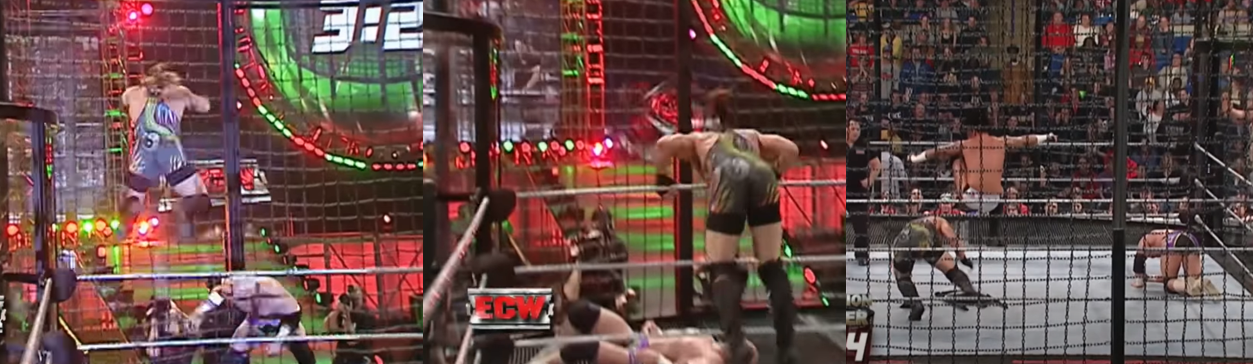
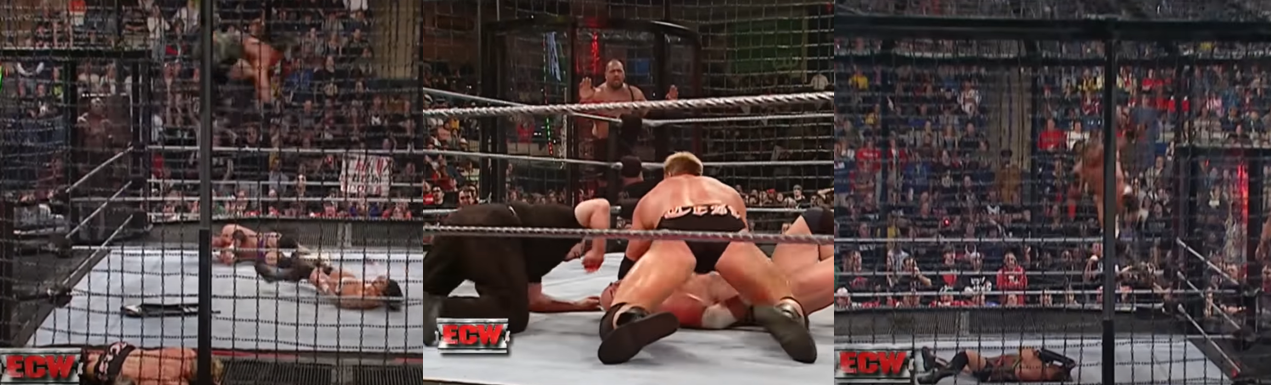
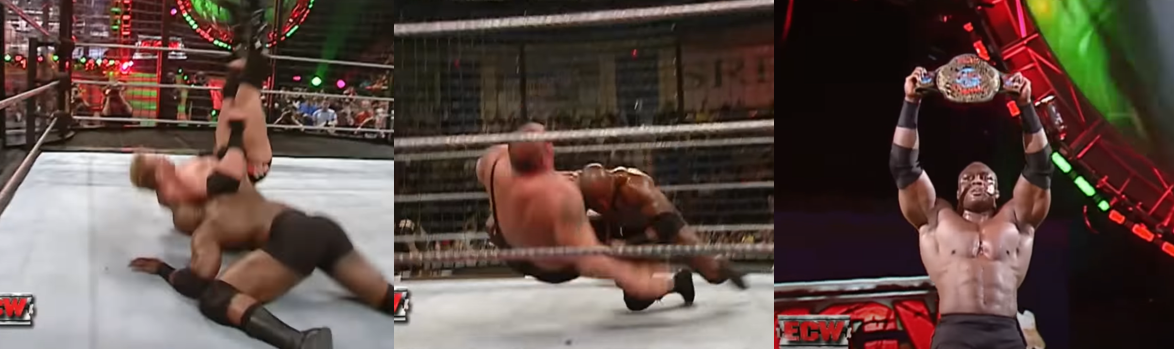


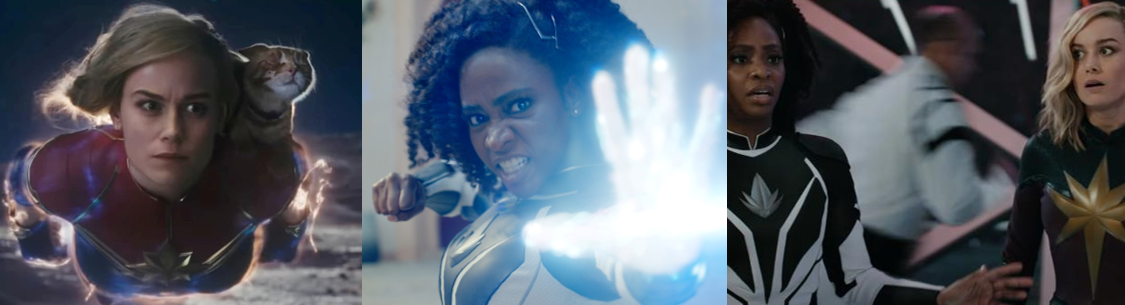
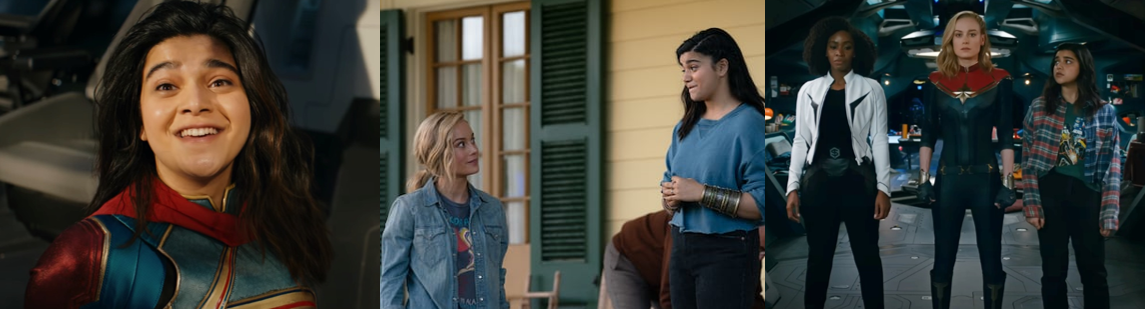
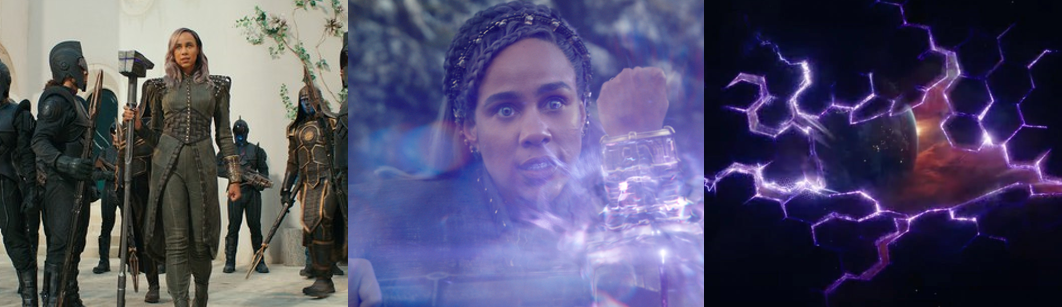


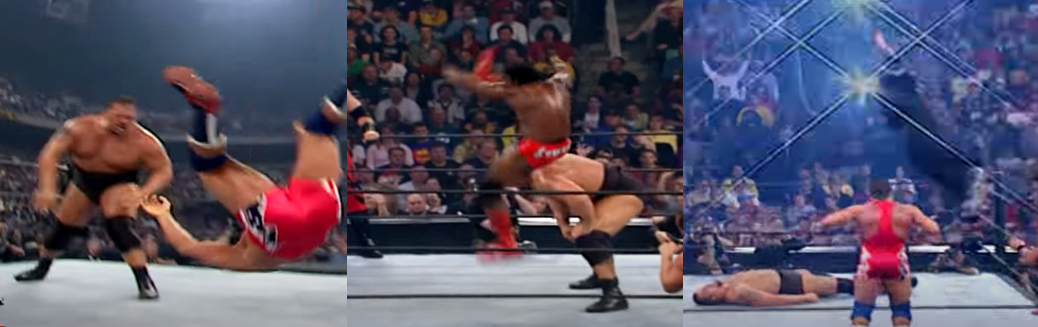

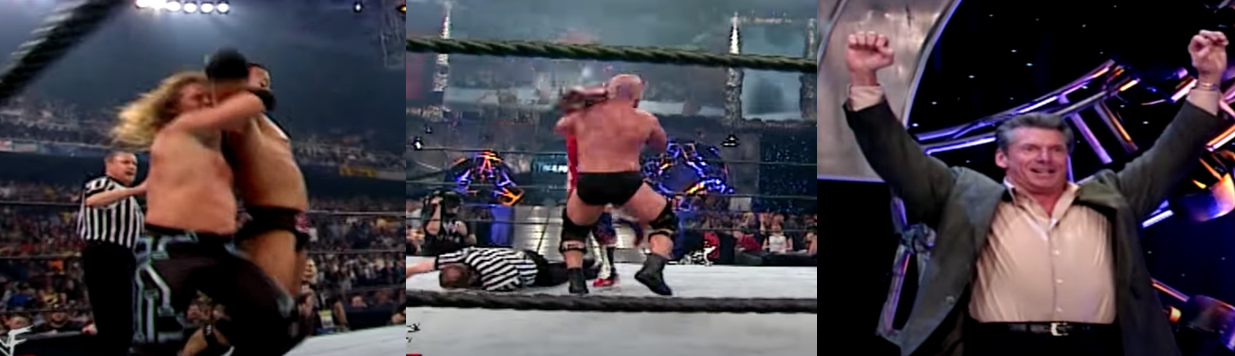





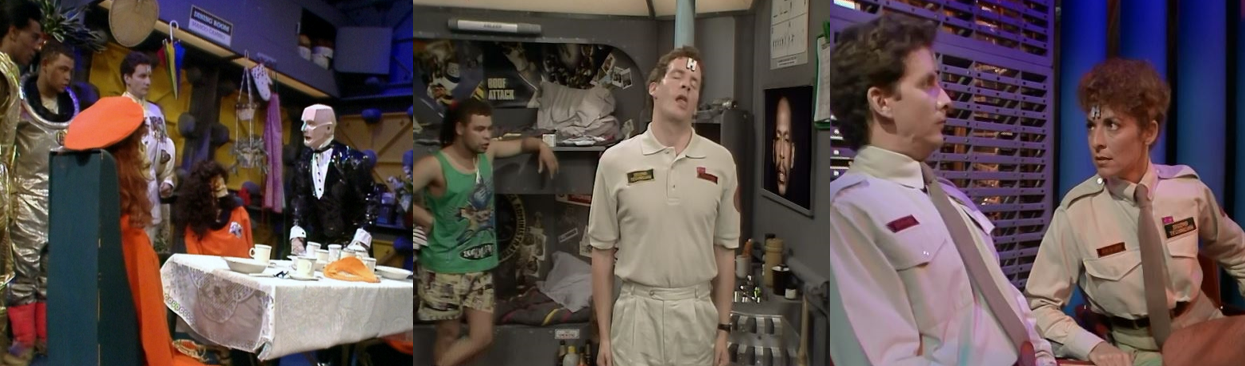

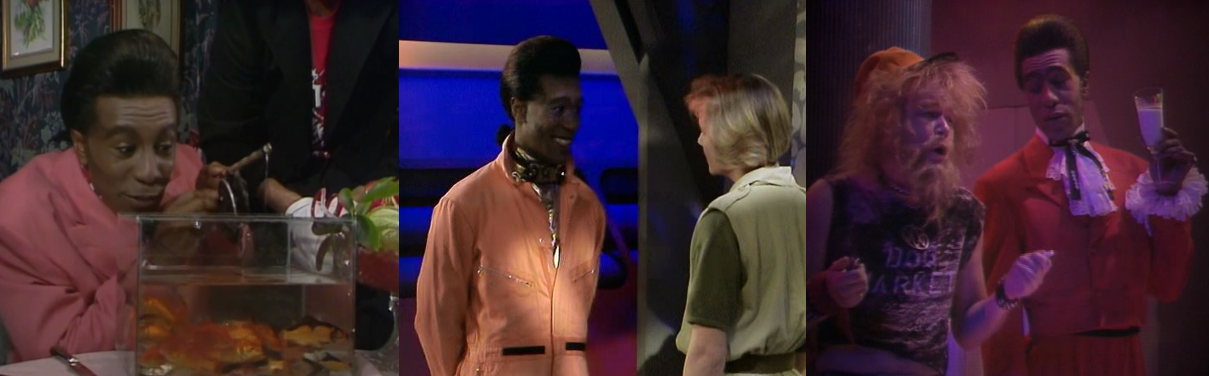
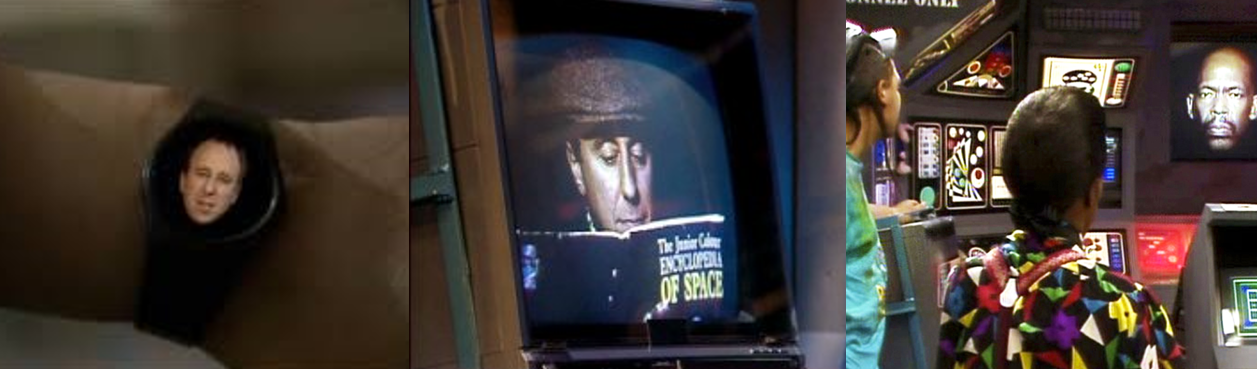



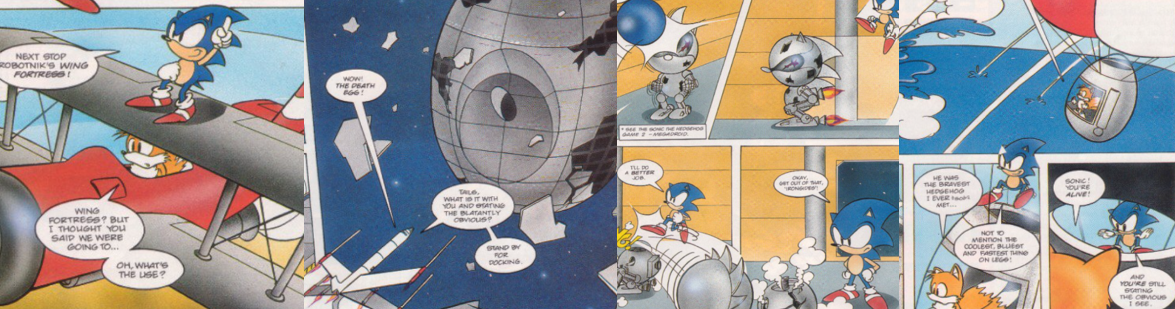

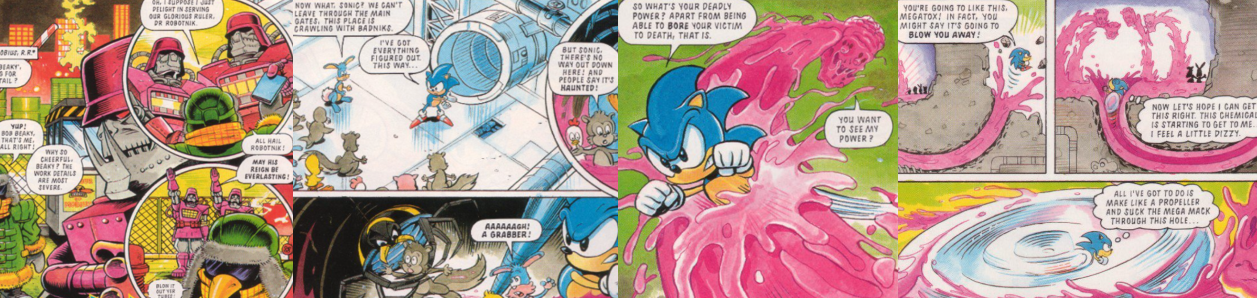

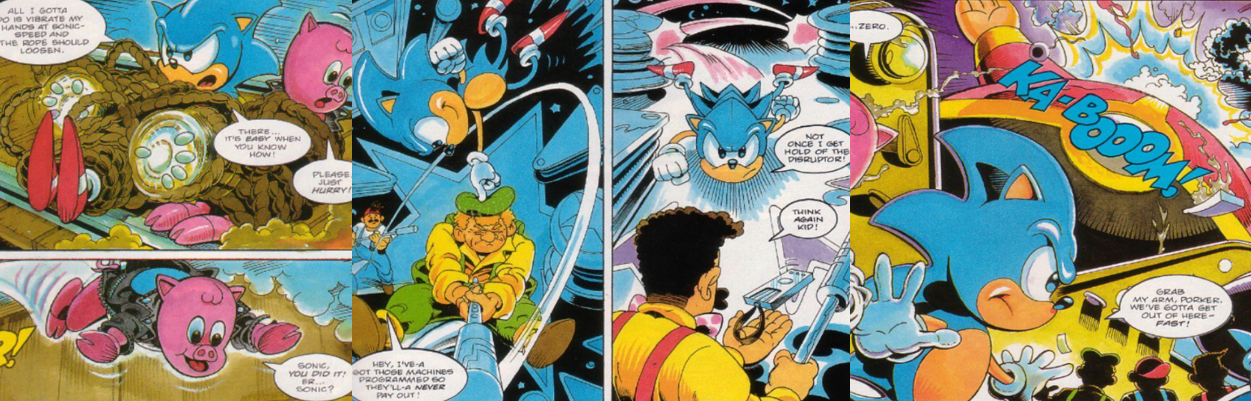
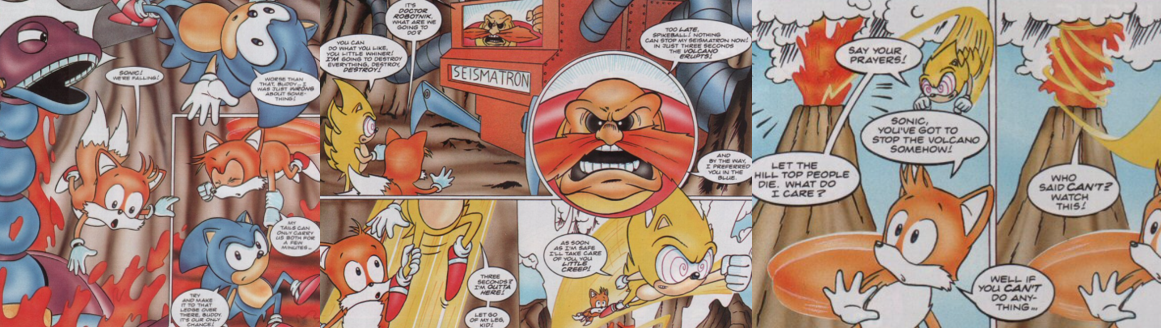
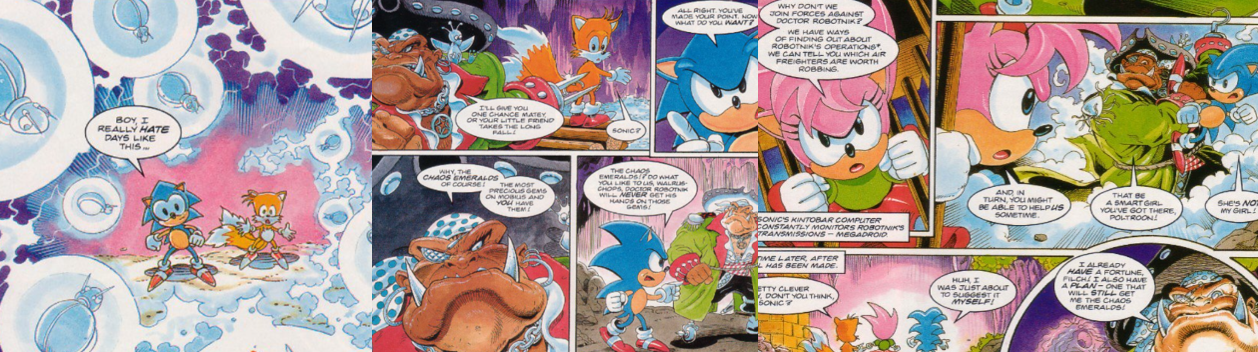


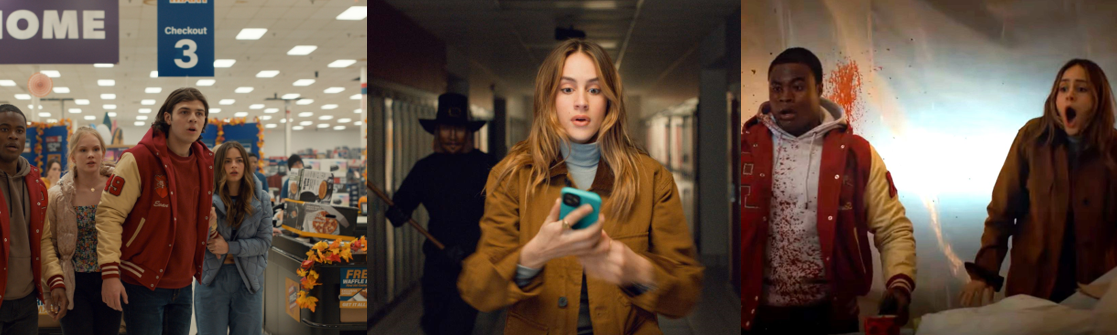






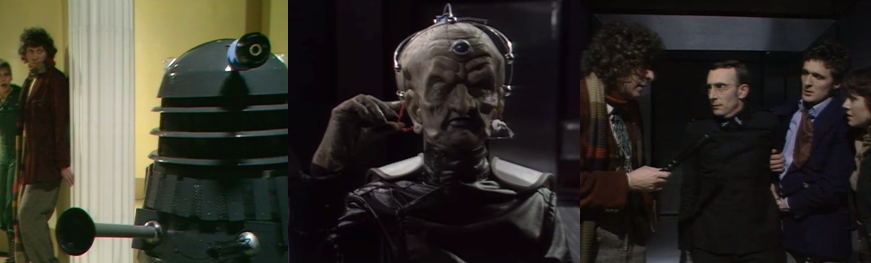


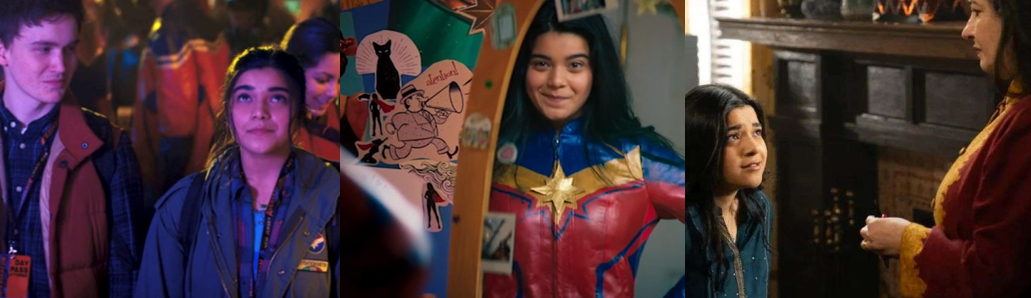
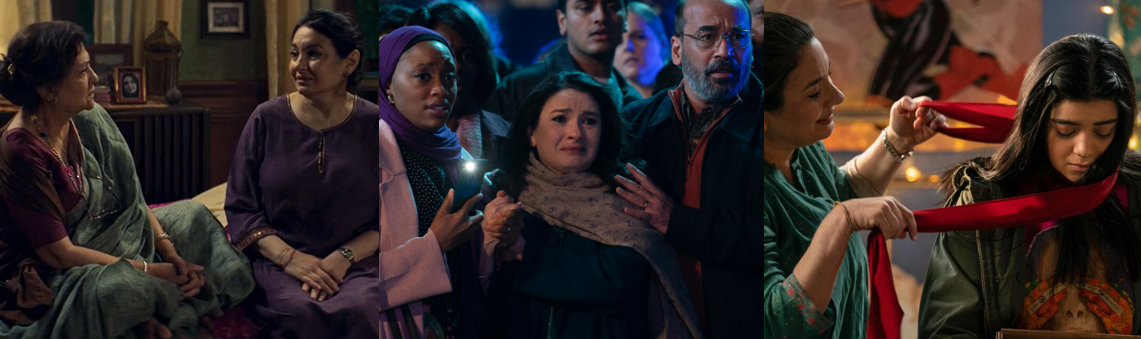







 Dr. K's Waiting Room
You must be logged in to post a comment.