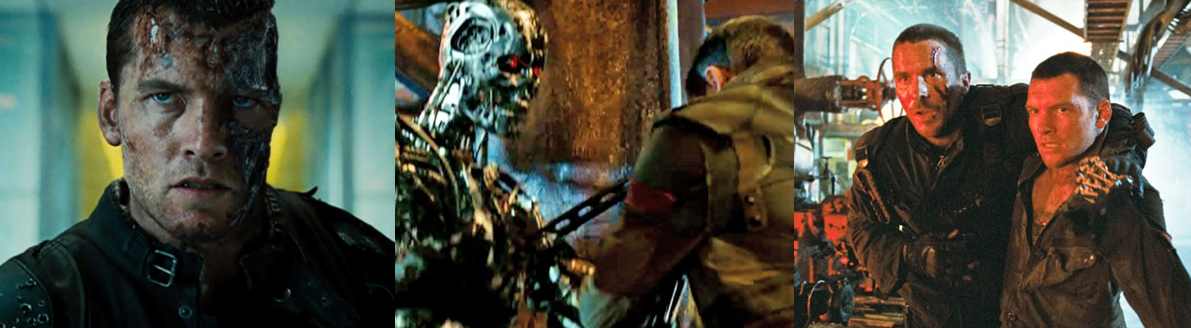
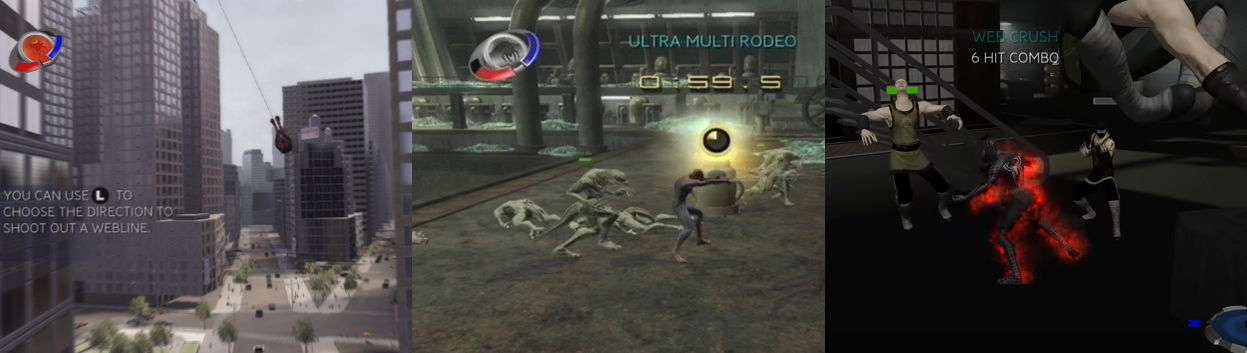
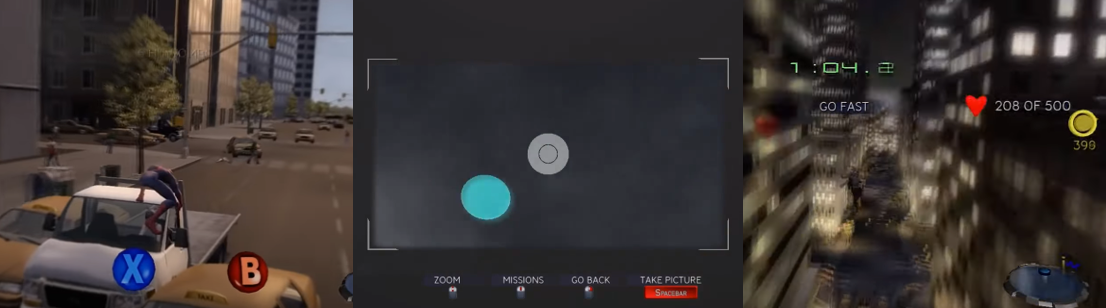
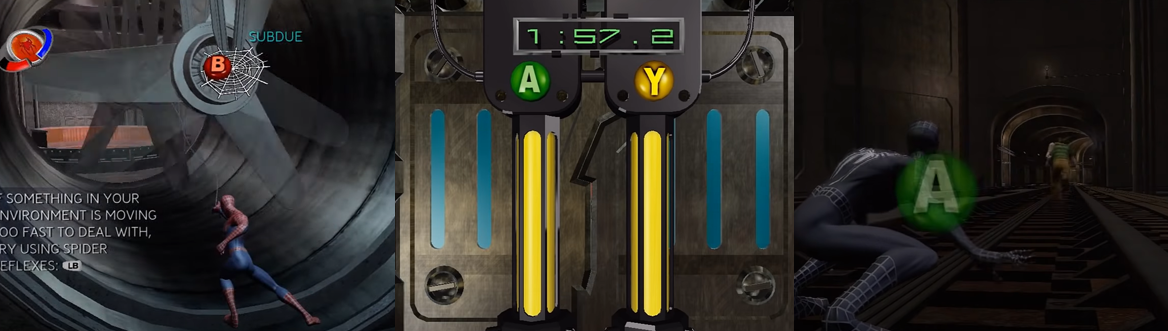
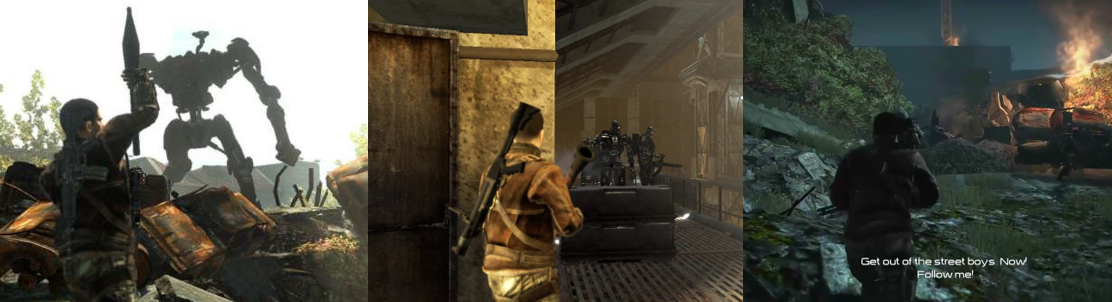
Game Corner: Terminator Salvation (Xbox 360)

Released: 19 May 2009
Developer: Grin
Also Available For: Mobile, PC, and PlayStation 3

The Background:
The Terminator franchise (Various, 1984 to 2019) has quite the history with videogame adaptations. Every film in the franchise has been adapted to at least one videogame over the years and the murderous cyborg even matched wits with RoboCop (Verhoeven, 1987) back in the day. Despite the mixed reviews that accompanied Terminator Salvation (McG, 2009), the Halcyon Company turned to developers Grin to produce a tie-in videogame, one whose in-game assets and engine were used to produce a prequel miniseries. Much like the movie upon which it was based, Terminator Salvation was met with mixed reviews that criticised the repetitive combat and lack of replay value and the game was generally seen as a disappointment considering the vast potential offered by its cover-based shooting mechanics.

The Plot:
Years after Judgment Day, John Connor leads Resistance soldiers on a dangerous rescue mission that sees them storming one of Skynet’s main bases and encountering their most dangerous creations: The Terminators!

Gameplay:
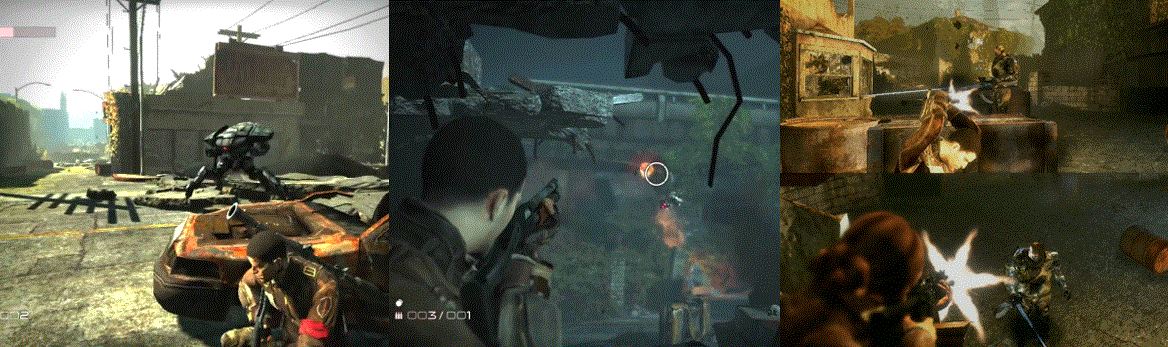
Terminator Salvation is a third-person shooter that can be played alone or alongside another player in co-op. When playing alone, AI-controlled allies will provide cover fire and even a bit of ammo every now and then to help fend off the machines, though you’re unable to issue them with orders or change your playable character. The game’s controls are similar to many other similar shooters of the time, and even now: the Left Trigger lets you aim or peek out from cover, the Right Trigger fires your current weapon, and the Right Bumper tosses a grenade or pipe bomb. You can switch weapons with B; holding the button gives you access to a limited weapon wheel where you can switch to different firearms and bombs, but you can only carry two guns at a time. You can pick up new weapons Y, which also focuses the camera on certain objectives or points of interest and gives you control of nearby turrets. X lets you reload, you can review your objectives by pressing the ‘Back’ button, and you can snap to, from, or dash between cover using A and the left stick. Anything from cars, columns, partial walls, and metal barriers can be used as effective cover. You can quite efficiently fire blindly from behind cover and dash between cover to avoid incoming fire, but some enemies can simply come around whatever you’re hiding behind and murder you on the spot.

Use cover and your partners to take on Skynet’s repetitive forces with some mediocre weapons.

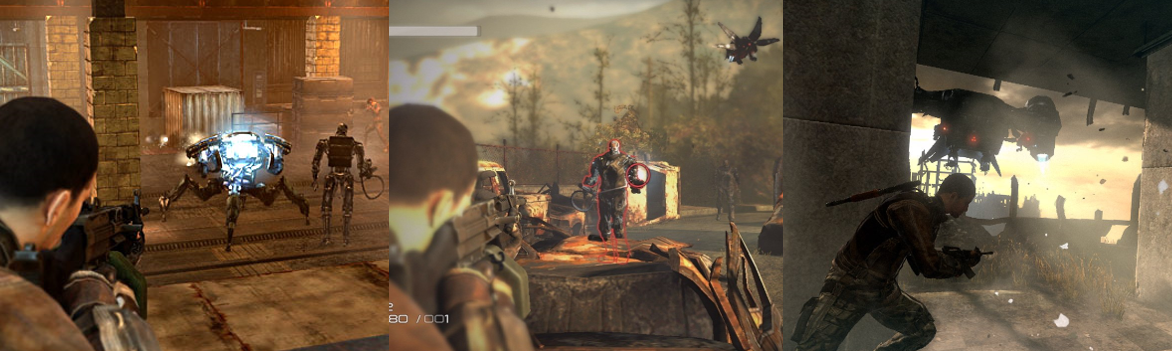
The game’s narrative is told over nine chapters, each of which sees you navigating the war-torn remnants of downtown Los Angeles, various dilapidated buildings and sewers, and infiltrating the ominous factories of Skynet. However, your mission objectives and the basic structure of each chapter is painfully tedious and predictable: you’ll explore a path so linear that there’s no onscreen map required, following your allies to open or enclosed areas where you’ll be ambushed by T-7-T machines and drone-like Aerostats (referred to as “Spiders” and “Wasps”, respectively). You’ll be forced to take cover, or go up stairs to take the high ground, and clear out waves of these enemies, flanking the Spiders to target the battery packs on their backs and opening fire when your aiming reticule turns red so you know you’re dealing maximum damage. Unlike many games where you’re accompanied by AI partners, Terminator Salvation’s AI is almost too good; there were many times when I simply stayed behind cover and waited out the fracas as my AI companions destroyed all nearby enemies. This was surprisingly effective, though not the most enjoyable gameplay experience; it’s great that your partners can’t be killed and will so helpfully destroy incoming enemies, but it can make you superfluous or leave you sitting and waiting for battles to end as you’re out of ammo or close to death. Your health will only be refilled after a battle has been won, but you can recover a bit of health if you avoid incoming fire for a time; unfortunately unlike other third-person shooters with this mechanic, this can take a long time. I don’t know if this was because I was playing on “Hard”, but my health would take ages to recover in these situations, meaning it was usually better just to let myself be killed so I could try again. In co-op mode, you can revive and be revived by your partner to continue the fight, but this doesn’t happen when playing solo. However, there are a decent number of checkpoints in the game, which can be helpful, though it quickly becomes tedious having to go through the same fights again and again with little reward. Occasionally, you’ll be tasked with protecting Barnes as he sets explosive charges but there isn’t actually any danger of him being killed so this is just another case of battling against waves of machines. Similarly, there’s a cool section near the end where you have to pass through a suburban area on the way to Skynet’s control centre. T-600s and “Skin Jobs” patrol the buildings and grounds, which seems to encourage a stealthy approach but, no, you just take cover behind cars and walls and blast at them until they explode and disappear into the ground like always.

A few rail-shooting and first-person sequences break up the gameplay, but can be frustrating.

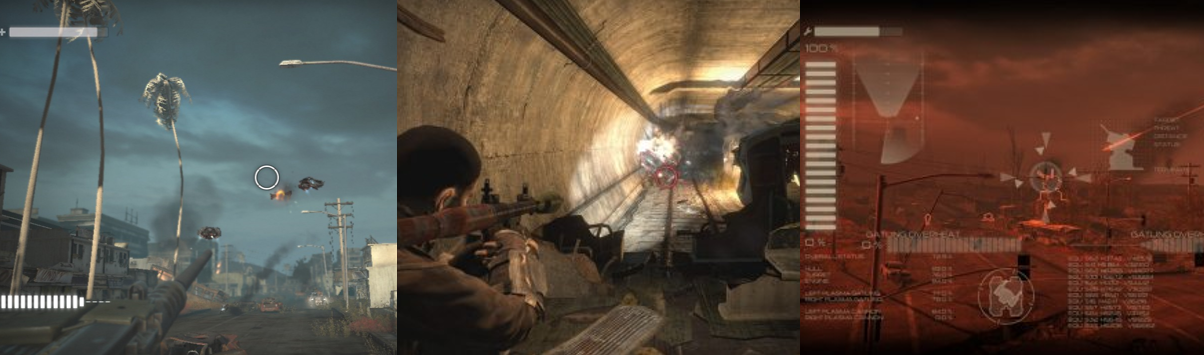
Thankfully, it’s not all cover and shooting in Terminator Salvation. In addition to being pinned down, caught in crossfires, or being relentlessly hounded by the T-600s, you can man turrets to blast Spiders and Wasps (though you need to be good with your accuracy as this leaves you completely vulnerable), must run away from pursuing T-600s, and your objectives generally include reaching evacuation sites, finding survivors in the wastelands, and fending off attacks from the machines in open and enclosed areas alongside allies and with weapon caches nearby. Gameplay is broken up further by a handful of rail-shooting stages; in these, you’ll man a gun on the back of a truck or wield a rocket launcher with infinite ammo on the back of a speeding subway train and fire at incoming Wasps, Moto-Terminators, and Hunter-Killers (HKs). Sometimes you’ll need to protect an ally in a truck or a school bus but, while these sections aren’t very long, they can be extremely frustrating and are far from enjoyable. You have no options for cover and no way to regain your health, and enemies can be tough to hit since they’re very small and nimble. Your AI companion is also far less useful in these sections, and you have to endure the annoyance of your gun overheating if you hold the trigger down for too long. Thankfully, these sections aren’t very long and they can be fun when you’re just blasting at HKs, but they were one of the most aggravating parts of the game. Later, you’ll control a gigantic HK Tank; here, the game switches to a first-person perspective and employs the red Terminator vision as you automatically stomp across the devastated landscape using LT and RT and RB and LB to fire your gatling guns and missiles at machines and anti-aircraft turrets. Unfortunately, this is also quite a clunky and frustrating section; checkpoints are plentiful, and your health will refill, but the weapon charge time is a joke and you have no way to avoid being blasted by enemies since you can’t move or dodge, so you need to fire quickly and accurately to get past each section without being blown to pieces.

Graphics and Sound:  
Terminator Salvation is a bit of a mixed bag in terms of presentation. On the one hand, the environments look pretty good; I liked how the streets are littered with cars, debris, burning planes, and the fallout of all-out nuclear war. Buildings are partially destroyed and full of disused furniture; they’re overgrown with vegetation, and everything has a very bleak and ominous feel to it. Like the source material, much of Terminator Salvation’s action takes place in the daytime; if you stop and think about it, it doesn’t make much sense for the world to be in this state considering it was subjected to nuclear war and there’s a disappointing lack of skulls and bodies strewn about the place, but the general presentation works pretty well. When you’re inside, things become suitably claustrophobic and you’ll have to endure stages set inside dilapidated buildings, sewers, and subway tunnels; nothing massively out of the ordinary, but still in keeping with the Terminator theme. The subway actually makes for a really fun and depressing location; the survivors huddled there have built a pitiable shelter from abandoned subway cars and it really speaks to the desperation felt by the rag-tag survivors. The game’s final stage takes place in one of Skynet’s facilities, an industrial factory where they build their machines. These sections more accurately evoke the dark, desolate Future War seen in the first two movies, and there’s even a cool part when John sets of an electromagnetic pulse and you dash past incapacitated T-600 endoskeletons.

The machines and environments are better than the character models, but it’s a very basic presentation.

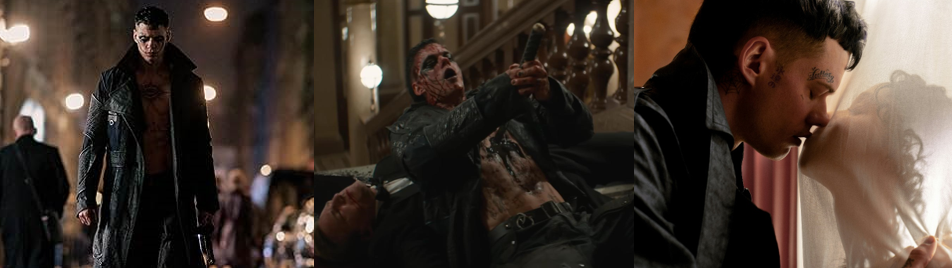
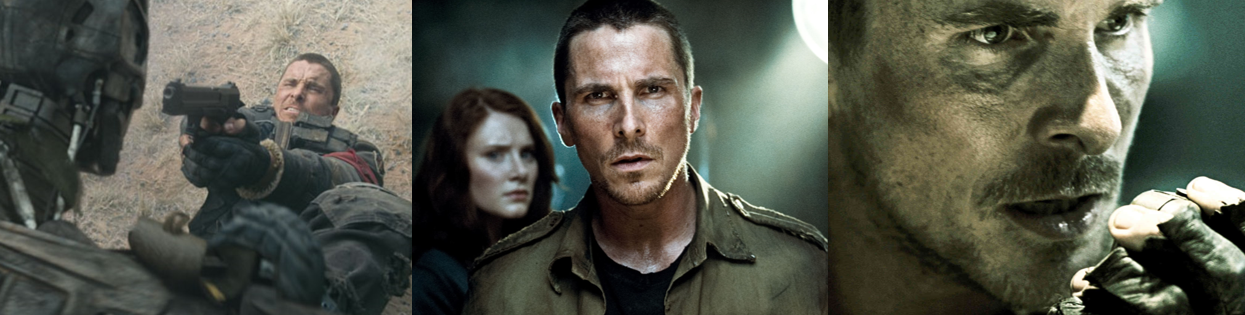
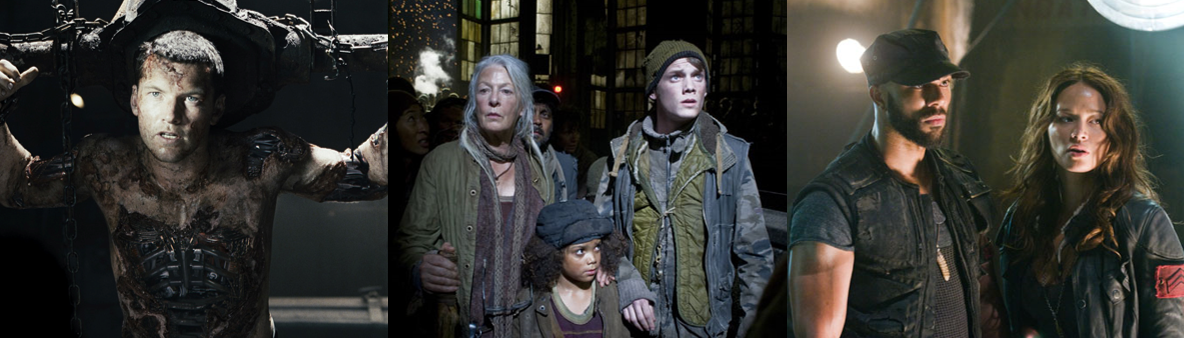
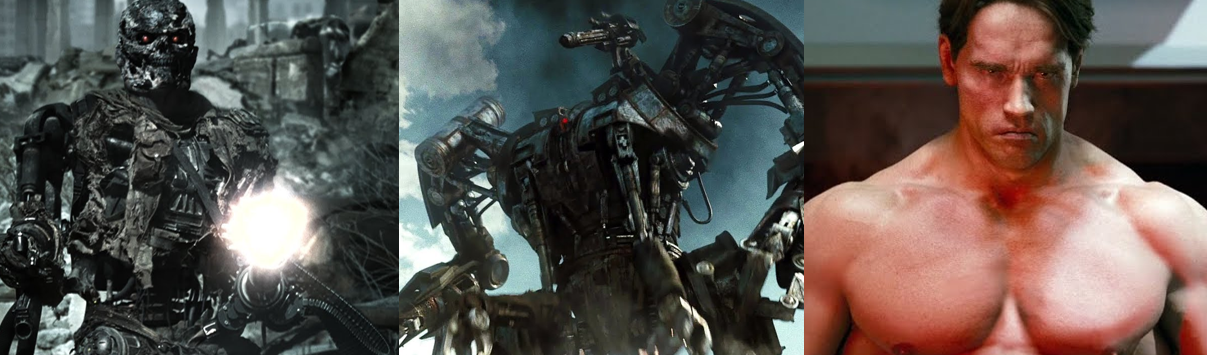
While the in-game music generally isn’t anything to shout about, it impresses when the classic Terminator theme kicks in when you complete objectives or to bolster bigger, tougher battles. The T-600 encounters are often accompanied by the ominous T-1000 theme, which I really enjoyed, and the machines themselves are a particular highlight of the game’s presentation. While their intelligence is often questionable (they’re either laughably incompetent or annoyingly relentless), the machines impress when they appear. Spiders scuttle through the ruins, T-600s burst through walls and doors guns blazing, there’s a definite sense of dread every time a HK flies overhead (even if they’re pretty easy to take down with your rockets), and there’s even a few genuinely tense moments as you frantically flee from the gigantic Harvester or from a persistent T-600. It’s a shame, then, that the human character models don’t impress anywhere near as well; John lacks Christian Bale’s voice and likeness and it is just a general Jarhead as a result, though Common and Moon Bloodgood do lend their voices and likenesses to their characters. Sadly, they’re stilted, puppet-like imitations of themselves; as there are very few pre-rendered cutscenes, you’ll have to endure these marionette-like soldiers flailing and yapping about and it’s genuinely laughable seeing them (and their vehicles) being pounded about in the game over sequences. The story itself is actually pretty serviceable and works as a prequel, of sorts, to the movie, but I did notice some instances where the game lagged when too much was happening at once. Some glitches, like enemy fire passing through your cover and the AI just running in place aimlessly or dropping through the ground (both of which were actually very beneficial!) also appeared.

Enemies and Bosses:
As you might expect, you’ll be battling Skynet’s forces throughout Terminator Salvation; unfortunately, the malicious AI doesn’t exactly favour variety and simply sends the same handful of enemies at you over and over again, without even any colour or weapon changes, which makes the game very tiresome very quickly. Drone-like Aerostats sweep across the sky raining fire at you and can be annoying to hit as they’re small and nimble; similarly, the Moto-Terminators can be difficult to destroy as they’re very fast and you’re stuck on a set path that can mess up your shot. The most common enemy you’ll face at the T-7-Ts, large mechanical spiders that scurry about firing incessantly once they spot you or your allies. The only way to destroy them is to get around behind them and target their battery pack, which either you can do, or you can distract them so your partners can take them out, but this becomes extremely aggravating in close quarters situations and when the Spiders are flanked by Wasps and T-600s. The T-600s are easily the game’s toughest enemies; wielding gatling guns and shrugging off your bullets, they relentlessly fire at and pursue you and the only way to defeat them is to lob pipe bombs at them or unload all your ammo into their chests from a safe position.

The game is a non-stop barrage of battles against the same machines over and over again.

The T-600s are initially presented as mini bosses of sorts; at first, all you can do is run away, luring them into traps to try and bury them under rubble, but soon you and your allies are cornered by three of them and you need to dash to a table to pick up pipe bombs to take them out. This is where the game really takes a sharp difficulty spike; the crossfire here is unreal and you only have a limited number of pipe bombs, plus it’s super tough to get close to the T-600s so I actually found it easier to stay under cover, rely on my AI companions, and fire the way overpowered shotgun at the Terminator’s chests to dispatch them. Later encounters are much easier, even when you’re again forced into a tight corridor, as you have better weapons to help you out, like the rocket launcher or a turret. You’ll also encounter “Skin Jobs”, T-600s in rubber skin, which I actually found weaker than their endoskeleton cousins, and these Terminators soon start to appear out in the open and alongside Spiders and Wasps as the game progresses and things ramp up. While you must run for cover when the Harvester makes its single appearance and never get to engage with it, you’ll be taking on a fair amount of HKs. These are some of the best sections as the massive ships linger outside buildings firing plasma blasts and unleashing Wasps to weed you out. You need to grab the nearby rocket launchers to bring these huge ships down, which is a lot more fun than when you’re steaming along in a vehicle or even in that massive tank as you can actually use cover and aim your shots more effectively. Sadly, there’s not really any big, climactic final battle in Terminator Salvation; the entire game is a series of shoot-outs or tense moments against the same enemies over and over, and the finale is much of the same. Sure, there are more T-600s and it can be really difficult juggling between the different enemies, dashing between cover and using the heavier explosives at the right time, but it would’ve been nice to have a big final boss battle, perhaps against a prototype T-800 or even the Harvester. Instead, you simply blast through the machines until John disables them with an EMP in a cutscene, and then just run to the evacuation chopper to end the story.

Power-Ups and Bonuses:
As disappointing as the enemy variety is in Terminator Salvation, the weapon selection isn’t much better. You’ve got an assault rifle, a shotgun, a heavier machine gun, a rocket launcher, and a grenade launcher, alongside standard tossable grenades and pipe bombs. You can only carry two guns at a time, they don’t hold much ammo, and you can’t upgrade or customise them or your character’s abilities in any way. Turrets and vehicles are also on offer, but they’re painfully limited by their cooldown and reload times, and there are sadly no laser rifles to be found here; you can’t even use the T-600’s gatling gun, for God’s sake! However, if you’re going to use any weapon, make sure it’s the shotgun; this thing is ridiculously overpowered and works amazingly well even at long range and against the T-600s, so be sure to keep it in your inventory.

Additional Features:
There are eleven Achievements on offer in Terminator Salvation, with nine being awarded for completing each chapter. You’ll gain an additional two Achievements for beating the game on Medium and Hard, but these Achievements stack and the game really isn’t all that difficult (beyond a couple of really frustrating parts) so you’re better off just playing all the way through on Hard and snagging every Achievement in one playthrough. This is all very disappointing; the game has a co-op mode but there are no Achievements for playing with a friend, there are no items or collectibles to find or unlock, no audio logs or concept art, no additional skins or modes (like deathmatches or anything), and no downloadable content on offer. It really is a disappointingly cheap and barebones presentation; you can replay any chapter after completing the game, but what’s the point when you can sweep all the Achievements in one go and there’s nothing to go back for?

The Summary:
Terminator Salvation is a pretty poor rip-off of the Gears of War games of the time (Epic Games, 2006; 2008); it lacks none of the pulse-pounding action, satisfying weapon combat, or macho bravado of those games and instead distils the gameplay down to a tedious cover-based shooter where you could probably set your controller down at a few key points and let the AI take care of things without your involvement. It’s such a shame as there are some tense and enjoyable moments here; I love how the T-600s and larger machines are portrayed as a real threat and the ominous and desperate atmosphere that accompanies these encounters. Sadly, the enemy AI is absolutely bonkers and easily exploited; even when you’re literally pinned down in a corner and will be cut to ribbons the moment you move, you can still win the day with bucketloads of patience and some well-timed explosives. These sections are incredibly frustrating, though, and result in an uneven pace to the game; even on the hardest difficulty, some chapters and sections will be a breeze (annoying and boring, but not exactly hard) but then others are like running into a brick wall! The rail-shooting sections, especially, are very aggravating due to the lack of cover and small margin for error afforded to you, yet you can be cornered by waves of machines and easily take them all out with no problem at other times simply because you have cover and heavier weapons and competent allies nearby. The lack of real bosses is also an issue; I liked the encounters with the T-600s and HKs, but there could’ve been so much more here, like a showdown with the Harvester or more enjoyable use of the HK Tank. The absolute worst thing, though, is the lack of replayability, collectibles, and unlockables; once you’ve beaten the game and gotten all the Achievements, there’s no reason to play it again over, say, Terminator: Resistance (Teyon, 2019) or any of the Gears of War titles this game so shamelessly apes. There as a bit of an effort made here, but then the developers just kind of gave up. It’s just another videogame tie-in that’s really not worth your effort unless you have nothing else to do and want to earn some quick Achievements, though I’ll give it an extra point for having some decent visuals and moments amidst all the mediocrity.

My Rating:

Rating: 2 out of 5.

Could Be Better

Have you ever played Terminator Salvation? What did you think to it and how do you think it compares to other Terminator videogames, and the movie it’s based on? Were you a fan of the cover-based shooting and repetitive combat or did you grow bored by the gameplay? What did you think to the T-600s and the rail-shooting sections? Did you ever beat this game with a friend? What’s your favourite Terminator videogame and how are you celebrating Judgement Day this year? No matter what you think about Terminator Salvation and the Terminator franchise, feel free to leave a reply down below or drop a comment on my social media, and go check out my other Terminator reviews!

Movie Night [Spidey Month]: Spider-Man 3


Easily Marvel Comics’ most recognisable and popular superhero, unsuspecting teenage nerd Peter Parker was first bitten by a radioactive spider and learned the true meaning of power and responsibility in Amazing Fantasy #15, which was first published in August 1962. Since then, the Amazing Spider-Man has featured in numerous cartoons, live-action movies, videogames, action figures, and countless comic book titles and, in celebration of his debut and his very own day of celebration, I’ve been dedicating every Tuesday of August to talk about everyone’s favourite web-head!


Released: 4 May 2007
Director: Sam Raimi
Distributor: Sony Pictures Releasing
Budget: $258 to 350 million
Stars: Tobey Maguire, Kirsten Dunst, James Franco, Thomas Haden Church, Topher Grace, and Bryce Dallas Howard

The Plot:
Having finally gotten the girl of his dreams, Peter Parker (Maguire) finds his life on the upswing, but an attack by vengeful Harry Osborn (Franco), and the discovery that recently-superpowered thief Flint Marko (Church) killed his beloved uncle see Peter giving in to the power and allure of a mysterious black suit from space.

The Background:
Following his debut issue becoming one of Marvel’s best selling titles at the time, Spider-Man’s popularity saw him become their flagship character. Soon, the wall-crawler fronted numerous team-up comics, videogames, cartoons, and even a live-action series. Although his cinematic debut was constantly delayed by script and legal issues, Sam Raimi and Sony Pictures Entertainment landed a critical and commercial success with Spider-Man (Raimi, 2002) and followed this two years later with Spider-Man 2 (ibid, 2004), which is widely regarded as one of the greatest superhero movies ever made. There was never any question that a third film would follow and Raimi initially planned to explore Peter’s morality, the humanity of his villains, and themes of forgiveness; However, his wish to cast Ben Kingsley as Adrian Toomes/The Vulture was blocked by producer Avi Arad, who insisted that the more popular Eddie Brock/Venom be included instead. Although Raimi was initially hesitant, he acquiesced after relating to the character as a dark mirror of Peter, but soon found his script so bloated that he initially toyed with filming two films back-to-back. Spider-Man 3 upped the ante for its special effects; painstaking hours went into crafting the scene in which the Sandman reconstitutes himself, an amputee stuntman was brought in to bolster Spidey’s fight with the Sandman, and Spidey’s iconic black suit was redesigned to emphasis it corrupting his morals. Although it was the most financially successful of Raimi’s Spider-Man films, Spider-Man 3 divided critics; while reviews praised the action and drama and the mixture of humour and visual spectacle, many felt the film was overstuffed with villains and failed to live up to the expectations set by its predecessors. Though accompanied by a comic book tie-in and videogame adaptation, Spider-Man 3 would mark the end of Raimi’s time with the web-slinger. Although plans for a fourth film got as far as casting and storyboarding, they were ultimately scrapped in favour of a complete reboot, though Tobey Maguire and Thomas Hayden Church would later reprise their roles nearly twenty years later for the multiversal epic Spider-Man: No Way Home (Watts, 2021).

The Review:
These days, with superhero films dominating the box office, many of them involving one or more heroes teaming up and a variety of villains, it’s easy to forget both the impact that Sami Raimi’s first two Spider-Man films had and state of the genre back in 2007. Superhero films were cropping up more and more and they didn’t always stick the landing; often, they struggled with too many villains, a lack of fidelity to the source material, or just being a bit of a tonal and narrative mess as studios tried to cash-in on the success of Raimi’s films and 20th Century Fox’s X-Men movies (Various, 2000 to 2020). Still, anticipation was high for Spider-Man 3; Spider-Man 2 was well-regarded as one of the best superhero movies ever made and it ended with a lot of plot threads to carry over into the third film, primarily the inevitable clash between Peter and Harry and the question of whether Mary-Jane Watson/M. J. (Dunst) was truly ready to accept the responsibility of being Spider-Man’s girlfriend. Unfortunately, little else from Spider-Man 2 directly carries over to Spider-Man 3 and this is made evident right from the opening titles, which barely feature Doctor Otto Octavius/Dr. Octopus (Alfred Molina) or any plot points from the second film beyond those that involve Peter, Harry, and M. J. Regardless, things get off to a decent start; the tension between Peter and Harry is emphasised in the reveal that Harry not only stalks Peter at every opportunity but refuses to listen to his explanations regarding the death of his father, Doctor Norman Osborn/The Green Goblin (Willem Dafoe). Although Peter doesn’t really make that much of effort to absolve himself of Norman’s murder, Harry’s mind is clouded by rage and stubbornness, which directly lead to him subjecting himself to a version of his father’s Goblin formula to give him the power to go toe-to-toe with his former friend.

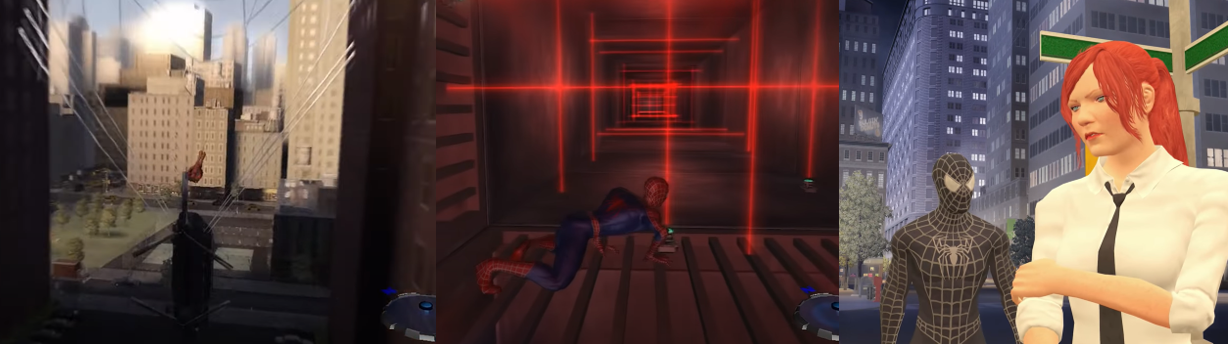
Peter’s attempts to propose are interrupted by his inflated ego and the influence of his black suit.

For Peter, life is pretty good; he’s finally found a balance between his dual identities, or at least feels less conflicted now that he has M. J.’s full support. It’s not made clear how much time has passed between the two films (honestly, given how well the actors have aged and the way Peter and Harry treat each other, it feels like it could only be a few weeks) but Peter’s so at peace with himself and the world that he plans to propose to M. J., despite him still living in a crummy apartment and being stiffed on his wages by the cantankerous J. Jonah Jameson (J. K. Simmons). After receiving his Aunt May’s (Rosemary Harris) blessing, Peter heads out to seal the deal, only to be suddenly attacked by Harry, how sporting sleek, Goblin-inspired armour and weapons of his own. Peter battles this…*sigh*…“New Goblin” through the city skies but is both horrified and relieved when Harry takes a nasty bump to the head and recovers with no memory of Spider-Man’s true identity. This brings even more joy to Peter’s life as he rekindles his brotherly relationship with Harry and basks in the adulation of the city as Spider-Man. In fact, Peter’s so blinded by his own success and happiness that he fails to notice that he’s being a bit self-absorbed and that M. J. is having her own issues, faults that cause him to make the bone-headed mistake of kissing Gwen Stacy (Howard) in front of an adoring crowd and completely disregarding M. J.’s struggles to make it as a successful Broadway actress.

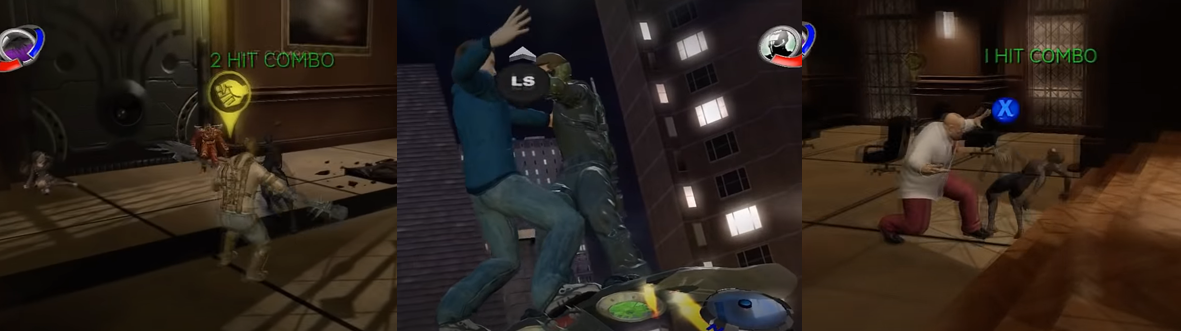
Peter’s relationships suffer because of his actions, leading to a brutal brawl with his former best friend.

Despite the fact that she made it into the cast, to the point where she received top billing, M. J.’s producers aren’t happy with the reviews about her performance and summarily drop her from the play, rattling her confidence and digging up bad memories of her childhood under her abusive father. Although she tries to confide in Peter and understand that his superhero commitments make him very busy, a rift forms between them when Peter fails to recognise how upset she is and keeps focusing on his own success. This scuppers Peter’s carefully-planned proposal dinner and drives M. J. to seek comfort from Harry, who’s only too happy to make time for her now that he’s rediscovered his carefree personality. They grow so close that they even share a brief kiss, though M. J. quickly comes to her senses and leaves before anything else can happen. This humiliation is enough for Harry’s mind to snap once more; visions of his dead father restore his memories and he resumes his vendetta against Spider-Man. He targets M. J. and blackmails her into breaking up with Peter, breaking his heart, and then twists the knife in further by insinuating that he and M. J. are having a love affair. Although Harry plays this conniving, manipulative role well, he can’t resist revelling in Peter’s anguish, meaning Peter immediately figures out that Harry has been using M. J. against him but, by that point, Peter is not only consumed by rage and ego but also fuelled by the negative impulses of his black suit. When Peter confronts Harry in the Osborn home, a brutal fight to the death breaks out between them; previously, Peter simply tried to avoid and quell Harry’s rage but, this time, he unleashes the full extent of his power and easily manhandles his former friend. Stubborn to the last, Harry attempts to blow Peter up with a pumpkin bomb, only to have the explosive tossed back in his face, permanently scarring him and leaving him an embittered recluse.

The Sandman might do bad things with good intentions but his mistakes raise Spidey’s ire.

Peter’s good mood is shattered when he and Aunt May are randomly called into the office of police captain George Stacy (James Cromwell) and told that they’ve been sitting on evidence for the last few years that proves thief Dennis Carradine (Michael Papajohn) didn’t killed Peter’s beloved Uncle Ben (Cliff Robertson). Instead, Carradine is retroactively revealed to have been working with a partner, Flint Marko, who recently (somehow…) escaped from jail. Peter had already had a run-in with Marko not long before this, but by that point the crook had already conveniently fallen into a random particle accelerator and been molecularly altered into a living man of sand. Now able to shift and alter his appearance at will, becoming almost intangible and rock-hard, the Sandman easily robs armoured cars to steal the cash he needs to help his critically ill daughter, Penny (Perla Haney-Jardine), as well as fend off Spider-Man when he inevitably arrives to stop him. Now armed with the knowledge that the Sandman killed his uncle, Peter seethes and obsesses over tracking down the thug and make him pay out of a combination of guilt over the death of both Uncle Ben and Dennis Carradine and the aggression encouraged by his mysterious black suit. Although generally a sympathetic and reluctant villain in the comics, the Sandman is reconfigured into a tragic figure here; he’s painted as a good man driven to crime and hampered by poor choices, and carrying a sense of guilt and responsibility over the evils he’s done and his love for his sick daughter. However, Peter has little time for the Sandman’s sob story and willingly succumbs to the black suit’s influence when they fight in the New York subway. Spider-Man angrily confronts the Sandman over his murderous actions and attacks without quarter, eventually dissolving him into a gloopy, muddy mess with a dismissive “Good riddance!” As if this battle didn’t hammer it home enough, Peter’s discussion with Aunt May reveals that he fully intended to kill the Sandman to make him pay for what he’d done. However, despite being heartbroken by Ben’s loss, May makes it clear that revenge is never the answer and lays the groundwork for Peter finding the courage to forgive the Sandman for his misguided actions.

Peter’s personality is corrupted by the symbiote, which finds a willing host in demented Eddie Brock.

That takes a bit of time, though, as Peter is under the poisonous influence of a mysterious alien goo that randomly (and conveniently) crashed to Earth right by his scooter. Latching on to him in the midst of a terrible nightmare, the viscous substance (later identified by Doctor Curt Connors (Dylan Baker) as a “symbiote”) turns Peter’s colourful costume a deep black and enhances his abilities considerably, granting him a strength and sense of exhilaration beyond his usual web-slinging. However, it also feeds and enhances his negative emotions; anger, fear, and aggression are all heightened by the creature, but Peter is so captivated by the allure of the black suit that he can’t deny himself its power when he gets a lead on the Sandman. Like an addict who doesn’t know when to quit, Peter wears the black suit under his clothes, caressing and stroking it, and even alters his appearance to match the sense of confidence and power the suit inspires in him. After his confrontations with Harry and the Sandman, Peter fully gives in to this rush, parading himself down the street like a dork and believing he’s God’s gift to the world. He all-but-demands a permanent position at the Daily Bugle, takes Gwen to a jazz bar and performs an elaborate dance number to make M. J. jealous, and angrily confronts rival photographer Edward “Eddie” Brock Jr. (Grace) over his doctored pictures of Spider-Man. However, after lashing out at M. J. in a rage, Peter finally sees that the suit is turning him into a literal and metaphorical monster. Fleeing to a church, he tries to remove the suit and is shocked to find that it truly is a living organism. Although the symbiote desperately tries to defend itself, it’s driven off Peter’s body by the ringing of the church bell, leaving him guilt-ridden and despondent over his recent actions, but the creature finds itself a new host when it latches onto Eddie. A snivelling little creep of a man, Eddie is driven to begging the All-Mighty to avenge his recent slights after failing to win Gwen’s heart or cheat his way into a full-time job. This bitterness and borderline psychopathy is all the symbiote needs to birth the film’s third villain, a “strange black-suited figure” (because he’s never referred to as “Venom” onscreen), and immediately set about making Peter pay for his actions.

The Nitty-Gritty:
There’s a lot happening in Spider-Man 3; so much so that it’s difficult to watch and not think about how easy it would’ve been to streamline things. I get that Sam Raimi was basically forced to include Venom in the film and I can see how that might’ve clashed with his ideas for the final entry, but just doing another couple of script rewrites really would’ve helped tighten things up because, as is, there’s just too much crammed in here. This is one of the few times where I would’ve been happy to see the film split into two parts to actually do Venom justice, but a far easier solution would’ve been to omit Eddie Brock entirely and just have the symbiote attach itself to Harry. Yes, it goes against the comic lore, but I think it would’ve tied in perfectly with the film’s themes of obsession, revenge, and forgiveness. Plus, it’s not like the Venom mantle hasn’t been assumed by others before. I also think the Sandman should’ve either stayed dead after his fight with Symbiote Spider-Man or been revealed to be alive in a post-credits scene (either using him emerging from the sewer as seen in the film or by repurposing a cut scene with his daughter), which not only would’ve made the final fight between Spider-Man and Venom/Harry less of a cluttered mess but also would’ve shown that the symbiote’s influence had real consequences for Peter as he would’ve had to live with the guilt of killing another man (or, at least, assuming he had).

Some odd decisions, cringe-worthy scenes, and pointless retcons bog down an already bloated film.

However, there is a decent film in here somewhere, it’s just buried beneath odd decisions, bizarre sequences, and a whole mess of characters. Did we really need Gwen Stacy in this when she barely has any relevance to the plot, for example? She’s nothing like her comic book counterpart and is literally there to emphasise what a creep Eddie is. She doesn’t even have a rivalry with M. J. or factor into the climax, so it feels like she was shoe-horned in as fan service more than anything. Peter’s cornball demeanour once he gives into the black suit is also extremely cringey; many have come to defend this decision, claiming that Peter is living out his idea of what it means to be “cool” and I totally get that he would have this dorky perception of what’s “hip” and such. But it’s surreal to see him strutting down the street and then doing this cartoonish dance number in the jazz club that’s immediately juxtaposed with him smacking M. J. and being so wracked by guilt that he goes and broods in the rain on a church! Spider-Man 3 also commits the cardinal sin of retconning the character’s origin to awkwardly wedge Flint Marko in as the man who killed Uncle Ben. Just…why? People moaned to high heaven when this happened in Batman (Burton, 1989) and it just confuses things here. Spider-Man 3 has the perfect means to tell its story of forgiveness in the Peter and Harry story. It didn’t need to complicate matters by forcing a link between him and the Sandman, especially as Marko already had a perfectly understandable and relatable tragic motivation that’s barely touched upon no matter how many times he stares at that damn locket. And then there’s the weird side plot of Harry’s amnesia. Again, I get it, they wanted to show how deep the bond between Harry and Peter is and explore their relationship as brothers, but it just leads to more goofball scenes and unnecessary drama between Peter and M. J. I feel like a similar outcome could’ve been achieved by just having Harry play mind games with Peter throughout the movie, especially if he adopted some of Eddie’s comic book antics and used his knowledge of Peter’s identity against him. And don’t even get me started on this “New Goblin” crap. Just make him the damn Hobgoblin! They even made a damn mask!

Unfortunately, all the impressive visuals and action sequences can’t counterbalance the muddled plot.

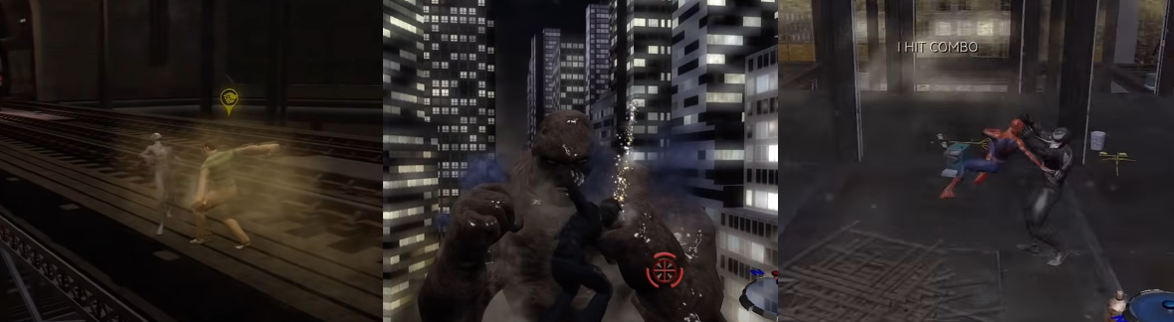
Luckily, amidst all of this negativity, Spider-Man 3 has some of the best action sequences and special effects of the entire trilogy. The mid-air fight between Peter and Harry may suffer from a little too much obvious green screen, but it’s far more versatile and fluid compared to the battles between Spidey and the Green Goblin, which were a bit clunky and grounded at times. While I have little love for the Sandman and could take or leave his inclusion, he does allow for some more visually interesting fight scenes. Seeing Spidey punch right through Marko, blast him into particles, and be smashed by his rock-hard appendages makes for some fun sequences. Unfortunately, all this goodwill is undone in the climax where any personality and nuance the Sandman has is completely washed away as he adopts a gigantic, mindless, rampaging sand monster form that, while intimidating and a suitable escalation of his threat, pales in comparison to the surprising emotional depth he shows beforehand, particularly in the admittedly beautiful and heart-breaking scene where Marko first pulls himself together after his accident. As ever, the Spidey suit looks great but it looks even better in black. While I prefer the classic white logo for the symbiote suit, saving it for Venom was a great idea to help him stand out more (even if it doesn’t make much sense for him to randomly have a big-ass symbol) and I loved the twisted, torn webbing and claws used on Venom. Indeed, the fact that Venom barely appears in the film and only for the finale is a massive disservice to both the character and his look in the film. Venom may lack the bulk and plural identifiers, but he looks fantastic when he’s got his claws out and is adopting his ironic, drooling, fang-filled visage. As much as I rag on the film, I do enjoy the visuals of the climax; seeing the construction site covered in Venom’s twisted webbing, the monstrous Sandman looming, and Venom screeching and attacking from the shadows makes for a very different and intense finale. It’s just a shame it’s intercut with cringe-inducing performances from tertiary characters.

Through the sacrifice of his friend and letting go of his hate, Peter earns a bittersweet ending.

After shedding the symbiote, Peter is left trying to pick up the pieces of his fractured life; M. J. has rejected him and is ready to leave town, he’s tried to kill his best friend, and his reputation has been sullied somewhat by his poor decisions. Thankfully, Eddie easily tracks down the Sandman and convinces him to forge a partnership, one primarily based on Eddie avenging himself on Peter by humiliating him and taking away his true love. Unlike Peter, who realised the damaging influence of the symbiote, Eddie is only too happy to give into it’s power (“I like being bad. It makes me happy!”) and refuses to listen to reason since he’s so consumed by hatred and a twisted sense of injustice. Ultimately, he’s unable to resist the power and temptation offered by the symbiote and perishes (quite violently) in a grenade blast, a disappointingly weak ending for a disappointingly weak version of Venom. However, Eddie does leave a lasting impression on Peter by delivering a fatal blow to Harry, who heroically sacrifices his life to save his best friend. Unfortunately, as cool as it is to see Peter and Harry team up for the finale (and it really is an awesome feel-good moment with some great team-up attacks from the two), it comes after Harry’s entire philosophy and vendetta is reversed thanks to a pep talk by his family butler, Bernard Houseman (John Paxton), who decided to wait until the last minute to be honest. Although the result is seeing Harry and Peter set aside their differences and finally make peace as Harry dies in his friends’ arms, this random revelation really detracts from it and takes all the agency out of Harry’s character. The Sandman is equally rattled by all the death; he regrets his actions and tries to justify them, and it’s clear that a massive weight lifts from his shoulders when Peter forgives him (why he let him get away is beyond me, though). Unlike the last two Spider-Man films, Spider-Man 3 ends on an emotional note with Peter having learned valuable lessons about forgiveness and him and M. J. sharing an emotional embrace, apparently ready to start over, rather than ending on a high with the traditional final swing.

The Summary: 
Spider-Man 3 just can’t help but be a disappointment. There’s just way too much happening in it, too many missteps and odd decisions, and too much of that goodwill tossed aside to rate it much higher. It’s such a shame, too, as it could’ve been an emotional and intense finale to Sam Raimi’s trilogy if only another attempt had been taken at the script to tidy things up. I just can’t help but think it would’ve been so much better to drop Eddie Brock and have Harry become Venom as a nice compromise between the filmmakers because the desperation to do everything and please everyone just results in a disappointing effort. It’s doubly disappointing for me as I’m a huge Venom fan and Venom did look really fantastic for the few minutes he was onscreen, but they really deserved their own dedicated movie or to be incorporated better to justify including them. Although I didn’t really like the forced drama between Peter and the Sandman, I did enjoy how human and relatable Flint Marko was. Ultimately, though, he feels like a bit of an afterthought and the only reason you remember him is because they made an unnecessary retcon to the first film. The drama between Harry and Peter was honestly strong enough to carry the entire film but it’s lost between all the other moving parts and has its legs completely cut out from under it by the amnesia side plot and that damn butler! Sadly, all the effects and impressive visuals in the world can’t salvage this film, which will forever go down as one of the genre’s biggest missed opportunities no matter how hard people try and defend it.

My Rating:

Rating: 2 out of 5.

Could Be Better

Are you a fan of Spider-Man 3? Where does it rank for you against the many other Spider-Man movies? What did you think to Peter’s struggles with the temptation of the black suit? Were you also disappointed by the execution and screen time of Venom? What did you think to Harry’s character arc and were you sad to see him die a hero in the end? What changes would you have made to the film to try and salvage it? Whatever your opinion on Spider-Man 3, leave a comment and be sure to check out my other Spider-Man content.

Screen Time: Terminator Salvation: The Machinima Series

Air Date: 18 May 2009 to 24 June 2009
Directors: Tor Helmstein and Ian Kirby
Network: Machinima
Stars: Moon Bloodgood, Cam Clarke, and Jim Meskimen

The Background:
Although The Terminator (Cameron, 1984) was an unexpected financial success, Terminator 2: Judgment Day (ibid, 1991) was a blockbuster release that is widely regarded as one of the greatest movie sequels ever made, something no-one was saying about its ill-advised follow-up, Terminator 3: Rise of the Machines (Mostow 2003). Somehow, though, Terminator 3 did surprisingly well at the box office and eventually led to the sadly critical and financial disappointment that nevertheless remains one of my favourites in the franchise, Terminator Salvation (McG, 2009). Terminator Salvation was accompanied by a videogame tie-in that garnered mixed reviews but also provided the tools to produce a prequel miniseries using the game’s in-game assets and engine. Terminator Salvation: The Machinima Series was comprised of six episodes running around fifteen minutes each and was aired on Machinimia, a now-defunct web-based video platform known for their adaptations of videogame properties. The series was met with mixed reviews; some praised the expansion of the film and game world through the new format, while others criticised the lacklustre presentation of the miniseries. Ultimately, it wasn’t enough to keep the Terminator franchise from entering into legal issues and Terminator Salvation: The Machinima Series is now an often forgotten footnote in the long and complicated history of the science-fiction franchise.

The Plot:
Set in 2016, years after Judgment Day, Blair Williams (Bloodgood) fights the war against the machines in downtown Los Angeles by tracking down computer hacker Laz Howard (Clarke) to persuade him to join the Resistance.

The Review:
Terminator Salvation: The Machinima Series uses the in-game graphics and assets from the Terminator Salvation videogame, meaning the environments (while a little bland and stale) are serviceable, for the most part, and reflective of the bleak, war-torn world seen in the movie. However, while the machines look pretty impressive, the character models are disturbingly devoid of human emotion in the face. They move okay when in action, it’s just when they stand around or shots linger on facial expressions that they fail to hold up against other CGI movies. The graphics engine used to render the effects also makes them appear a bit like emotionless puppets than anything else (Laz is the most obvious offender in this regard), but at least Moon Bloodgood returned to provide her voice even if her model doesn’t properly capture her natural appearance. Accordingly, the miniseries is blatantly geared towards selling the videogame; action sequences pitting the Resistance against the Spiders not only reflect the in-game action, but they actually are the in-game actions! Blair and other characters sneak from cover to cover, fire blindly from behind dilapidated walls, target the Spiders’ power cell on their back, and take the high ground to get better shots. The miniseries also incorporates the rail-shooting sections form the game, with Blair and Laz fighting back pursuing Moto-Terminators on a half-wrecked train while shooting rocket launchers and blasting at airborne Terminators while racing along in a truck, and it appears that all the locations are ripped wholesale from the videogame, including background elements like burning aeroplanes, wrecked buildings, and destroyed highways. While the voice acting is pretty good, for the most part, and tells a story of trust, desperation, and fraying humanity against the backdrop of widespread nuclear devastation and never-ending conflict, the lip synch is dreadful because the character models weren’t built for this level of emotion.

Blair braves the war-torn landscape to track down a hacker who’s been disrupting machinery.

Blair narrates each episode and takes centre stage; her dreams are haunted not just by memories of life before Judgment Day, but also a time when she hesitated to fire upon a HK while flying a Resistance fighter jet and caused the death of her wingman. After years of fighting alone (or alongside veritable strangers) with no clear perception of who or what she was fighting for beyond basic survival, she’s come to see that the only way to win the war against the machines is for humanity to unite with that singular purpose. While this means she spends a lot of her time pinned down and taking cover from relentless fire from the T-7-T “Spider” machines like in the Terminator Salvation videogame, she at least has allies to watch her back and provide cover fire, though the sheer amount of death and destruction that surrounds her at every turn has left Blair feeling somewhat jaded. Blair runs down the devastation caused by Judgment Day that’s left the few survivors desperately fighting tooth and nail against not just a ruthless and inexhaustible enemy but the fear of all-out extinction. Before she learned to work alongside others, Blair (who claims to be numb to fear) was the perfect choice for dangerous, even suicidal, solo missions like searching through the ruins of Los Angeles for a “ghost” that’s been disrupting the Resistance’s communication lines. During this mission, she had her first face-to-face encounter with a chaingun-wielding T600! Although her grenades proved ineffectual, Blair successfully evades the machine and destroys a troop of Spiders, only to find that the “ghost” is disillusioned Laz Howard, a hacker capable not only of disrupting their communications but also reprogramming the machines (to a limited degree). Determined to keep him from interfering with their operation, and seeing his potential, Blair protects him from the machine counterattack so that he can be brought to her superiors. Following a train crash, Blair and Laz are pursued by the Terminator (accompanied by a remixed version of the T-1000 theme) and, without his equipment, Laz first cowers behind cover as Blair briefly disables the machine then getts into a philosophical debate with her.

Blair and Laz clash over their ideologies and the differences between machines and humans.

Blair despises Laz’s actions and the lives he’s cost with his interference, while Laz argues that he’s just trying to survive and never meant for his algorithm to harm others, and also that he’s more in touch with humanity than Blair since he’s not blindly following orders or threatening others with guns. Their argument attracts a Spider and Blair debates leaving him to the machines since her mission was to eliminate the “ghost”, but she realises the value he could have and ultimately intervenes and resolves to protect him for as long as he can keep up with her in the ruins of the old world. While suffering from dehydration, Laz deliriously reveals that he disagrees with the Resistance’s aggressive methods against the machines since they never stop to learn how they work or how to exploit them, and that he resents the Resistance since he believes they’re as much to blame for the state of the world as the machines. Blair’s stunned when they reach the Resistance outpost and finds her comrades slaughtered by the machines as Skynet is actively trying to eliminate Laz to stop his disruptive algorithm. Blair cancels her evacuation request and mans a nearby turret when they’re attacked by Aerostats and T-600s and, though Laz disables and destroys them with his code so they can retreat, their escape is cut short by an airborne Hunter-Killer (HK). Forced to work together, Blair blasts the Aerostats using a mounted artillery gun as Laz speeds across a ruined highway, eventually forcing the HK to collide with solid concrete . Blair’s patience is tested by Laz’s anti-Resistance stance and his constant criticism; she bluntly tells him that he’s screwed either way since both sides want him dead. She convinces him to give the broad specs of his algorithm, which temporarily scrambles Skynet’s link to the machines (and, as an unfortunate by-product, disrupts Resistance communications) using radio frequencies. A T-600 records their conversation from afar and gets the jump on them, causing them to plummet into a sewer for a brief detour (and an awesome shot of the Terminator’s red eyes glaring at them, unnoticed, from the darkness), only for the T-600 to resume its attack once they emerge from the sewer drain.

Both Blair and Laz witness the machine’s wrath, which alters their perception of the war.

Rather than ripping Blair’s heart out or her head off, the Terminator is content to drag her by the neck as it pursues its primary target. This means Blair’s free to blast the machine point-blank in the head with her shotgun so they can beat a hasty retreat. However, Resistance command (Meskimen) refuses to evacuate Blair as long as the “ghost” is with her. Despite her vehemently advocating his right to life and protection, they insist that she get to the evacuation point alone, heavily implying that he be left behind or killed for “collaborating” with the machines. Despite this, Blair’s determined to bring him to them so he can share his knowledge, though she scolds him for taking her knife and continues to be aggravated by his cynical demeanour and refusal to trust her or the Resistance. When they’re pinned down by Spiders, Blair teaches Laz how to destroy them the old-fashioned way so he can be a little more useful in combat and he enjoys the triumph that comes from reducing the machines to scrap metal. Since Laz insists on having his own gear to broadcast his signal, Blair begrudgingly leads him to some suitable equipment under cover of darkness, which inevitably attracts the attention of more Aerostats and HKs. Once at the evacuation point, Blair lies about Laz’s identity so she can get him to safety but is separated from him when they’re attacked by machines. Overwhelmed, Laz is left alone, terrified, jumping at every shadow, and forced to hide from the machines; thanks to Blair’s teachings, Laz destroys a Spider and is taken in by some survivalists. Moved by their plight and Blair’s selfless attempt to protect him, Laz uses their radio equipment to broadcast his signal and shut down an attacking T-600, thereby making him a heroic figure amongst them. Blair tries to explain things to her commanding officer, and the potential benefits of Laz’s algorithm, but he refuses to risk lives extracting the hacker. Blair is aghast by her commander’s lack of humanity (she even echoes Laz’s sentiments about how “mechanical” the Resistance are) and disobeys his direct orders, leaving in a helicopter as the Resistance fighters deal with a machine incursion.

Laz sacrifices himself to give the Resistance a fighting chance against the machines with his algorithm.

With HKs and other machines inbound, Blair orders her co-pilot to return to base and takes out another HK with a rocket launcher so she can search for Laz. She broadcasts Laz’s name and description to try and track him down and is pointed in the right direction, where she finds the remnants and survivors of the T-600 attack he helped to stop. Since the machines are continuing to hunt him down, Laz went out on his own to keep others safe. Luckily, Blair easily finds him right as another gaggle of killer robots closes in, though he’s traumatised by all the death that’s occurred because of his actions. Once again facing a swarm machines, Blair and Laz get some unexpected backup from the Resistance, which brings the miniseries full circle back to where it began, with them being pinned down by enemy fire. When a T-600 bursts through a wall and looms over Blair, Laz heroically throws himself in front of her and is summarily cut down by its gunfire. As he dies, he reveals that he left the key to activate his algorithm engraved on Blair’s beloved knife. Shaken by Laz’s death, Blair takes her emotions out on the half-crippled T-600 and the miniseries ends with Blair being promised that the disruptive signal will find its way to John Connor (who she hasn’t actually met yet at this point), and the revelation that Laz left behind a series of audio files. One is played to close out the episode that describes his first-hand experiences of Judgment Day and the abject terror he felt that drove him to dig in deep and stay in hiding. Galvanised by the experience, Blair resolves to continue on with the fight not just for herself, but for the countless other survivors out in the field and returns to her rightful place in the cockpit of a Resistance fighter jet to engage with Skynet’s forces once again.

The Summary:  
I honestly didn’t really know what to expect from Terminator Salvation: The Machinima Series; I was vaguely aware of it as a CGI feature but had never really looked too deeply into it until now. It’s an interesting experiment, to be sure; it’s not often that a videogame’s in-game graphics and models are used in this way. Normally, tie-in material like this is a more traditionally-animated CGI affair and Terminator Salvation: The Machinima Series definitely does suffer somewhat by not utilising prerendered graphics on its presentation. While the locations reflect the bleak, desolate, war-torn ruins of the world seen in Terminator Salvation and are clearly ripped wholesale from the tie-in videogame, they’re not exactly diverse or visually interesting as characters stay in the same repetitive locations throughout the miniseries, with only the inky darkness of night and some dilapidated interiors mixing things up. It’s fun seeing characters perform actions from the videogame like sliding into cover, firing blindly at enemies, and using heavy weapons while speeding along in vehicles but it basically amounts to a lengthy advertisement for the game, more than anything. In that respect, I find it odd that Terminator Salvation: The Machinima Series wasn’t included as a bonus feature in the videogame since it basically acts as a prelude to that game and as a showcase of the in-game action offered by it, including sneaking around the Spiders, desperately fending off relentless T-600s, and blasting at aerial machines with projectiles zipping all over the place.

A decent expansion of the movie, but let down by the cheap presentation.

Where Terminator Salvation: The Machinima Series does impress, though, is in the story and the quality of the voice acting; Moon Bloodgood is ironically better than in the movie, adding some real depth to her sadly one-note character by exploring how the war has affected her humanity and her relationships towards others. Her narration paints a picture of a world on the razor’s edge of all-out insanity. Fear and tension run rampant throughout the Resistance, which has grown increasingly cold and battle-hardened by the ever-escalating conflict, to the point where Laz point-bank refuses to help them and criticises them for being no better than the machines. At first, Blair opposes this perspective and sees Laz as little more than a lowly “collaborator” who might have some value to the Resistance, but he comes to see Laz’s opinions aren’t entirely invalid when her superior would rather let Laz die than risk extracting him, not matter how important he might be. Laz represents the everyday folk struggling to survive in the ruins of society, an embittered people who just don’t have the strength to fight back and resent the Resistance for bringing more destruction to an already ravaged world. He’s just trying to use the skills he has to survive and wants no part of the conflict, but comes to see that humanity’s only chance at surviving is to work together, which ultimately leads to him sacrificing his life to save Blair and handing over the key to his machine-disrupting algorithm. Interestingly, however, this signal isn’t the same one seen in Terminator Salvation, which was a trick created by Skynet to lure the Resistance into a trap, which muddies the waters a little in terms of continuity, though the miniseries did a decent job of adding a little more context to this world. Ultimately, it was an interesting extended cutscene and advertisement for the Terminator Salvation videogame. I think it might’ve had more potential as a proper CGI feature but I’m surprised we didn’t see more projects like this back in the day, or even now, as it seems like an easy way to produce some tie-in material. Sadly, Terminator Salvation: The Machinima Series comes across as “cheap” all too often, making it a largely forgettable experience that, as I said, probably would’ve been better as a shorter, simpler bonus feature included on the game disc.

My Rating:

Rating: 2 out of 5.

Could Be Better

Have you ever seen Terminator Salvation: The Machinima Series? If so, what did you think to it and did it help sell you on the tie-in videogame? What did you think to the story and the expansion of Blair’s character? Did the miniseries get a bit repetitive for you considering its short runtime? What do you think to the recycling of the videogame’s assets and would you like to see a proper CGI Terminator feature? Were you a fan of Terminator Salvation? How are you celebrating Judgment Day today? No matter what you think about Terminator Salvation, and the Terminator franchise, feel free to leave a reply down below or drop a comment on my social media and check out my other Terminator reviews.

Back Issues [Spidey Month]: Spectacular Spider-Man #200


Easily Marvel Comic’s most recognisable and popular superhero, unsuspecting teenage nerd Peter Parker was first bitten by a radioactive spider and learned the true meaning of power and responsibility in Amazing Fantasy #15, which was first published in August 1962. Since then, the Amazing Spider-Man has featured in numerous cartoons, live-action movies, videogames, action figures, and countless comic book titles and, in celebration of his debut and his very own day of celebration, I’m dedicating every Tuesday of August to talk about everyone’s favourite web-head!


Story Title: “Best of Enemies!”
Published: May 1993
Writer: J.M. DeMatteis
Artist: Sal Buscema

The Background:
In 1962, Marvel Comics legend Stan Lee followed up his success with the Fantastic Four with Spider-Man. His Amazing Fantasy #15 debut proved to be one of Marvel’s best selling titles and his resultant popularity led to a solo title barely a year later. Spider-Man quickly amassed one of the most colourful and memorable rogues galleries in all of comics, with easily his most hated and iconic nemesis being the Green Goblin. Though many have assumed this elf-like guise, the most famous face behind the mask is Norman Osborn, industrialist and father to Peter’s best friend, Harry, and he and Spidey would have their most memorable clash during these days after Norman caused the death of Peter’s long-time love interest, Gwen Stacy. Although this storyline appeared to end with Norman’s death, the Green Goblin concept lived on through his son. First introduced in 1965, Harry famously turned to abusing drugs following his father’s demise, which fractured his grip on reality as much as his relationship with Peter. This culminated in Harry exposing himself to a modified version of his father’s Goblin formula, taking up the mantle of the Green Goblin, and ultimately perishing in this tale. However, this wouldn’t be the last time the Osborns would plague Spider-Man. Both would be resurrected time and time again for some of the web-slinger’s most controversial stories, both played pivotal roles in Spider-Man’s animated and live-action ventures, and Harry, especially, has been noted as being perhaps Spidey’s most tragic villain due to his complex and destructive relationship with both his best friend and his maniacal father.

The Review:
Our story begins, in suitably dramatic fashion, with Harry Osborn/The Green Goblin closing in on Peter’s wife, actress and model Mary Jane Watson-Parker/M. J. As M. J. walks through Central Park, she spots the Green Goblin coming for her and tries to run, but ends up in his clutches. Across town, in Harry’s apartment, a desperate Peter confronts Harry’s wife, Liz Allan; unfortunately, she’s as deluded as their son, young Norman “Normie” Osborn, is apparently psychotic and has blinded herself to the truth that her husband, already a recovering drug addict, has lost his mind to his father’s Goblin formula. Peter leaves and swings across the city as Spider-Man, lamenting the psychological instability of his best friend and the hatred Harry feels towards both his alter egos for his part in the death of his father. The maniacal Green Goblin flies M. J. to the George Washington Bridge, the very same location where Peter’s former flame, Gwen Stacy, died at the hands of her lover thanks to Norman’s machinations. Although M. J. is sure that Harry has brought her there to recreate the infamous moment, he surprises her by unmasking and opening up to her. Showing his vulnerable side, he expresses his love for her and promises that no matter how bad things get between him and Peter, he would never harm her. Naturally, she finds this a little hard to believe considering he just kidnapped her and the fact that he flies into a rage at the mere suggestion of his father’s involvement in the death of one of his friends, but M. J.’s left with no choice but to try and appeal to his better nature and their friendship to try and convince him to stop before it’s too late.

Harry delights in tormenting Peter at every turn, threatening to reveal his secret identity.

Despite the desperate nature of his search, Spider-Man takes the time to intercept some punks robbing an apartment but chastises himself when he almost loses his cool and takes his anger out on the lowlifes. When Spider-Man returns to his apartment, he’s stunned to find M. J. there alongside an unmasked Green Goblin; assuming that Harry means to harm her, he lunges for his former friend and knocks him clean across the room, but M. J. intervenes before things go too far. Scowling, Harry accuses Peter of always thinking the worst of him and flies off, leaving the two in such a state that M. J. sparks up a cigarette and suggests that maybe it’d be better for Peter’s identity to be exposed and Peter so riled up by it all that he lashes out in anger. A sweaty, neurotic Harry returns home to his equally deluded wife to play “happy families”. Neither of them think it’s unusual that Normie has such a venomous hatred for Spider-Man, and Harry’s temperament is on a razor’s edge, switching between violent outbursts and tender affection. The next day, Peter mulls over his options and is startled when the Green Goblin appears before him in broad daylight simply to taunt him. The Green Goblin then pays a visit to cantankerous Daily Bugle editor J. Jonah Jameson to ask for his help in advertising the “Norman Osborn Foundation”, a charitable organisation in his father’s honour that he plans to debut in six weeks. Peter arrives but is powerless to do more than look on as Jonah cowers behind him and the Green Goblin delivers a vague threat to reveal some “juicy information” to the publisher if he co-operates. Over the next few days, Harry tours the city spreading the word of his intentions and Peter is enraged to find the notoriously fickle public are completely onboard with the idea and assume the Green Goblin attire is simple the “odd affectation [of] a millionaire philanthropist”. Irritated by the entire debacle and frustrated at trying to figure out Harry’s endgame, Peter doesn’t hesitate to attack the Green Goblin as Spider-Man when he next sees him. Spider-Man warns his former friend that he’s sick of all the games and wants to settle their differences then and there but the Green Goblin not only refuses to fight him until he’s ready but also threatens to tarnish his image forever by filing legal action against him if he gives in to his anger. Instead, Harry delights in torturing Peter; he promises that they will throw down, and that he will emerge victorious, but only after his perverse desires are satisfied and vows to destroy his life if Spider-Man tries to stop him.

Harry’s mania sees him fly into a rage and plot an explosive revenge against his father’s enemies.

Liz is delighted at Harry’s newfound project but worries that he’s pushing himself too hard getting things ready for the foundation’s big unveiling; although Harry suffers from frequent bouts of nausea, he shrugs them (and Liz’s worrying) off and resolves to stay strong for his father. Of course, things are far from well in the mind of poor Harry Osborn; he openly converses to a large, ominous portrait of his father and delights in sharing how he’s been driving Peter batty, forcing him and M. J. to move to a new apartment, and promises that the foundation gala will be his ode to his father’s memory, where he’ll make all the enemies to the Osborn name pay for their insolence by blowing them all to kingdom come! The next day, M. J. tries to talk sense into Liz, but her delusion is so complete that she won’t drop either her unnerving smiling façade or her belief that Harry is a good man doing good things after a lifetime of adversity. Later, M. J. tries the same thing with Harry, storming into his apartment, fag on the go, and begging him to let go of his vendetta and rekindle his friendship with Peter. However, Harry refuses to listen to reason not just because of the unbridled power the Green Goblin offers him, but also the opportunity it creates to show the world the man he really is. After also briefly considering facing the consequences of going public, Spider-Man happens upon the George Washington Bridge and resolves to stop Harry no matter what rather than risk losing the woman he loves all over again. However, when he arrives at Harry’s apartment, the deranged Osborn flies into a rage; in his mind, Peter and Spider-Man are the problem and the true enemy, and just the mere sight of him makes Harry snap, throw on his suit, and burst up through the skylight to confront his adversary as the Green Goblin.

Harry ultimately comes to his senses and sacrifices himself to save his friends and family.

Both launch at each other with everything they have, refusing to hold back any longer; the Green Goblin again boasts that he now has the power to crush Spider-Man and even brags that he’s improved upon it since Norman’s days and that he’s glad that his father never killed Spider-Man since it gives him the chance to do so now. Spider-Man counters by arguing that Norman Osborn was a crazed murderer and that he no longer cares if Harry reveals his identity since he’d rather be exposed than leave his family at the Green Goblin’s mercy. Spidey also avoids being skewered by the Green Goblins glider but, when Harry bursts free of Spidey’s webbing, the two stop their war of words and simply trade blows for a few panels. However, Spidey is forced to admit that Harry was right; the new Goblin formula makes them evenly matched, so he suggests they find another, less brutal way of settling their differences, only to be caught off-guard and poisoned into unconsciousness by a hidden syringe in Harry’s glove. Harry’s plan is for the two of them to go up in flames, ridding the world of their toxic influence, but he is horrified when he realises that, in his mania, he forgot that M. J. and Normie were still in the house! Since he’s too out of it to act, Spider-Man begs Harry to set aside his self-doubt instilled in him by his father and save his loved ones. Despite his hysteria, Harry is moved by Peter’s belief in him and rockets M. J. and Normie to safety; Spider-Man collapses, seemingly doomed, but M. J. begs Harry to go back for him and is grateful beyond measure when Harry chooses to rescue Peter at the last second. However, Harry collapses in a violent convulsion as the Goblin formula finally takes its toll on his body. After expressing his gratitude to Peter and recognising him as his best friend, Harry dies before Peter’s eyes, leaving Spider-Man, M. J., and Normie distraught in a series of dramatic and wordless panels.

The Summary:
I don’t normally say this but I’m really not a fan of the art in this one; I’ve read a few Spider-Man stories illustrated by Sal Buscema and they’re all as visually bad as each other. Spider-Man and the Green Goblin don’t look so bad, but everyone has this weird angular took to them, the colours are super muted and dull, and Sal Buscema can’t draw faces for shit. It’s a very ugly looking comic and it’s a same since it’s such a pivotal Spider-Man story that’s let down by this atrocious art style. Otherwise, this is a very emotionally-charged story; it’s not often that one of Spider-Man’s villains learns his secret identity and I liked how Harry tormented the web-slinger at every turn, stalking him in broad daylight and threatening to expose him if he gets out of line. One interesting twist was M. J.’s suggestion that Peter get ahead of it by publicly revealing his identity; of course, Peter balks at this this idea since it would only cause more troubled him himself and his loved ones, but it was intriguing seeing him briefly consider it since it would remove Harry’s leverage. Like a lot of Spider-Man stories involving the Green Goblin, “Best of Enemies!” features many references to Gwen Stacy, but I don’t mind that here as it’s thematically relevant. It seems as though Harry’s going to recreate that impactful moment with M. J. at the start of the tale and returning to the site of her death reinvigorates Spider-Man’s fighting spirit, showcasing that there’s nothing he wouldn’t do to protect his loved ones and bringing him to the brink of facing Harry to the death, even though his better nature still keeps him from crossing that line.

A pivotal and emotional Spider-Man story let down by some horrendous artwork.

Harry’s vendetta is also an alluring one; he’s consumed by revenge and hatred towards Peter since he believes that he killed his father and is so obsessed with living up to Norman’s expectations and avenging him that he’s willing to die alongside Spider-Man in the finale. Harry’s always been a complex character; Norman casts a long shadow and his mistreatment of his son led to Harry developing an inferiority complex and turning to drugs long before he exposed himself to the Goblin formula. As the Green Goblin, Harry is more than a physical match for Spider-Man; he has all of his father’s technology and tricks, but relies more on mind games, intimidation, and dirty tactics than pumpkin bombs and his glider. I really enjoyed seeing him rile Peter up into an unbridled rage and cause him misery, and the wordless panels of them beating the hell out of each other only to find they’re evenly matched. All throughout the story, Harry is portrayed as a maniacal, sweaty psycho who can barely keep his emotions in check; this has had an extraordinarily destructive influence on his wife and child, as well as his friendships, but also takes its toll on his body, reason, and sanity. By the end, he’s convinced himself that he and Spider-Man are a blight on the world and need to be removed to keep from “infecting” others, and it’s only when one of his oldest friends and his beloved son are placed in mortal danger that he chooses to shake off his father’s influence. I really liked the hesitation he showed just before going back for Peter and their emotional reconciliation right before he died, and the wordless panels help to emphasise the impact of Harry’s death on all involved, leaving Spider-Man alone and heartbroken by the loss of his best friend. In the end, despite the terrible art, “Best of Enemies!” remains one of Spider-Man’s most poignant stories. Harry’s downward spiral and final, heroic sacrifice were executed so well that it genuinely annoys me that Marvel chose to bring both him and Norman back again and again rather than try something new, but it doesn’t detract from how crucial this story is to the overall Spider-Man mythos.

My Rating:

Rating: 4 out of 5.

Great Stuff

What did you think to “Best of Enemies!”? Where would you rank it amongst Spider-Man’s many other stories and moments? Do you think I was too harsh on Sal Sal Buscema’s art style? What did you think to Harry as the Green Goblin and his descent into madness and mania? Did you enjoy seeing him torment Peter or would you have preferred to see them throw hands more often? What did you think to Harry’s heroic sacrifice and were you also annoyed to see him and Norman return later down the line? Which incarnation of the Green Goblin is your favourite and how are you celebrating Spider-Man this month? Whatever your thoughts on Spider-Man and the Green Goblin, go ahead and share them below or drop a comment on my social media and be sure to check out my other Spider-Man Month content!

Movie Night [K-DAY]: Tremors


In the absolutely bonkers science-fiction film Pacific Rim (del Toro, 2013), the monstrous Kaiju first attacked humanity on 10th August 2013. The attack ended a few days later on August 15th but, in that time, San Francisco, Sacramento, and Oakland were completely devastated and the Kaiju War officially began. Accordingly, August 10th became known as “K-DAY” and is, for me, a fantastic excuse to talk about some giant monster movies!


Released: 19 January 1990
Director: Ron Underwood
Distributor: Universal Pictures
Budget: $10 million
Stars: Fred Ward, Kevin Bacon, Finn Carter, Bobby Jacoby, Tony Genaro, and Michael Gross

The Plot:
Tired of their dull lives, handymen Earl Bassett (Ward) and Valentine “Val” McKee (Bacon) plan to leave the small desert town of Perfection, Nevada. However, they happen upon a series of mysterious deaths and a concerned seismologist, Rhonda LeBeck (Carter), studying unnatural readings below the ground that are soon revealed to be giant, prehistoric, worm-like monsters!

The Background:
While making safety videos for the United States Navy in the mid-1980s, screenwriters Brent Maddock and S. S. Wilson came up with the random idea of “land sharks” keeping them trapped on a large boulder. Another of their friends, Ron Underwood, used his knowledge as a documentary director for National Geographic to help them develop a believable creature for what would become the script for Tremors but it wasn’t until their script for Short Circuit (Badham, 1986) proved to be a commercial success that the film became a viable concept. Although star Kevin Bacon initially belittled the project and only signed on because he was broke, he later spoke highly of his time on set, his experience with co-star Fred Ward, and his desire to revisit the franchise. The Graboids were designed by Amalgamated Dynamics, including a full-scale creature made from lightweight foam and buried in desert to give it a used look. Though originally shot as an R-rated film, the filmmakers decided to make some cuts and changes to appeal to a wider audience. Unfortunately, this didn’t actually translate to the film’s box office; Tremors barely cleared $16 million in profit, which Maddock blamed on the mediocre marketing. Critically, Tremors fared slightly better; the balance between horror and comedy was praised, as was the B-movie feel of the film, and the entertainment value of the special effects and performances. Ultimately, Tremors birthed a surprisingly long-running franchise, that was comprised of multiple direct-to-video sequels, with Michael Gross becoming the series lead, a short-lived television series, and even an aborted attempt to return Kevin Bacon to the franchise in 2017.

The Review:
Tremors immediately establishes a few very important things right from its opening scene: first, we’re following a couple of blue-collar working men who have a brotherly banter that lends the film a comedic edge, and second that we’re stuck in the middle of nowhere in a dead-end town. Perfection is a small town surrounded by mountains that’s almost entirely self-sufficient; old Walter Chang (Víctor Wong) runs the only shop in town, Doctor Jim Wallace (Conrad Bachmann) acts as the town’s medical aide, and upstart Melvin Plug (Jacoby) spends his days lazing around and winding people up. There’s only a handful of people in town and not all of their characteristics and relationships are as easily defined as mother/daughter duo Nancy and Mindy Sterngood (Charlotte Stewart and Ariana Richards). For example, it’s unclear what Nestor Cunningham (Richard Marcus) or Miguel (Genaro) do or where Melvin’s family is, but everyone there looks after each other and works to provide some kind of service, even if they’re not always immediately clear.

Begrudging handymen Val and Earl find their big escape interrupted by subterranean monsters. 

Of course, this issue doesn’t apply to Val and Earl, two disgruntled local handymen who fill up their days taking out people’s trash, putting up razor wire and fences, and doing house clearances. Although Earl is the elder of the two, more seasoned and wiser to the ways of the world (and women), he’s just as bad as his young partner; the two share a fun, relatable banter, regularly playing rock/paper/scissors to decide who gets the shit jobs and accepting beer and lunches alongside payment for their jobs. The main differences between the two are that Earl is the more grounded and pragmatic and despairs of Val’s head-in-the-clouds mentality, especially when it comes to forethought and his opinions on women. Val has a very specific set of criteria for his women, preferring picturesque bimbos with low intelligence and little personality, whereas Earl believes he needs to be more realistic in his expectations. The two make a major contribution to the town, essentially maintaining the entire upkeep, and are renowned for being “best on a horse”, but Val and Earl are deeply unsatisfied with their lot in Perfection. They’re in underpaid, mediocre jobs and believe that they can strike it big by packing up and starting over in the nearest town, Bixby. There’s a sense that they’ve been threatening to leave for some time but they’re ecstatic to finally be taking the plunge and heading to a new life, only to stumble upon the dehydrated corpse of Edgar Deems (Sunshine Parker) atop an electrical tower and find themselves forced to stay in town as more bodies are found and a serial killer is suspected. The two leap into their truck to get help from Bixby since Perfection has no way of contacting anyone outside the valley, only to find their truck briefly hung-up on an incline and dragging a strange, snake-like creature back to town!

Seismologist Rhonda helps the locals to fight off the previously unheard of prehistoric creatures.

While out in the desert, Val and Earl come across graduate student Rhonda, who’s spending a semester investigating seismographs in Perfection and the surrounding area. Initially, Val is unimpressed by Rhonda, who doesn’t meet any of the criteria on his checklist, but Earl is eager for the two to spend more time together as she’s just the sort of down-to-earth young woman Val needs in his life. Rhonda’s research proves instrumental in discovering the extent of the threat lurking beneath the soil of Perfection, but even she is horrified to stumble across the duo with the corpse of a massive, carnivorous worm-like creature (later dubbed a “Graboid” by Chang and Melvin). Although she has no idea where the creatures came from or how they’ve remained undetected until now, a cursory investigation of the corpse allows her to deduce that Graboids are blind, hunt by sound, burrow using dozens of spiked appendages, and snag their prey with their mouth tentacles. Rhonda’s seismology readings reveal that three more of the creatures are lurking in the valley and she’s both captivated and terrified when she, Val, and Earl are stranded on rocks for most of the day and an entire night after narrowing escaping a Graboid. It’s during this impromptu marooning that Val and Rhonda first start to get closer; he gives her his jacket to keep her warm, helps her pole vault to her truck so they can escape back to town, and even tends to her wounds after she’s caught up in barbed wire. Although she’s hardly an expert, she’s the closest thing the townsfolk have but they struggle to process her instructions to stay quiet and stay high up. They’re more concerned with the who, how, and why of the creatures and only take their threat seriously when Graboids start bursting up through the ground and devouring their residents.

Survivalists Burt and Heather provide the firepower needed to repel the cunning Graboids.

While their main way of surviving is to take refuge on high ground, Perfection isn’t entirely defenceless; Burt and Heather Gummer (Gross and Reba McEntire) have built a veritable impenetrable war room just outside of town, one full of firearms as small as a pistol and as large as an elephant gun, alongside their all-terrain vehicle and homemade explosives. Survivalists who believe in being prepared, they settled in Perfection due to its perfect “geographic isolation” and are armed to the teeth for any impending disaster…except for “underground, god-damn monsters” and even then, they are the town’s best shot at fending off the Graboids and helping the survivors escape town. At first, Burt and Heather are unaware of the true extent of the threat as they’re out of town for the big reveal and are too busy crafting ammo to make heads or tails of Val’s frantic warnings, unwittingly luring a Graboid to their house. Luckily, despite the creature’s size and near-impenetrable girth, it ”broke into the wrong god-damn rec room” and is eventually blasted to death by Burt and Heather’s considerable weaponry. Although they’re unable to rescue the others when the Graboids disable their vehicle, they dig in and prepare weapons and ammo to fend off the creatures when Val successfully commandeers a heavy track loader to carry the survivors to safety. While he brings all their gear with them, Burt is clearly irritated at being driven from his home and deferring to Val and Earl’s expertise regarding the Graboids. Believing they stood a better chance making a stand in town where they had all the resources they needed to survive, Burt almost comes to blows with Val when the survivors are stranded on rocks and left to face starvation and dehydration just like Edgar. Luckily, Heather and Earl are on hand to be the voice of reason in their conflict, but Burt is clearly rubbed up the wrong way; though, ultimately, it’s his armaments that allow the displaced inhabitants to finish off the Graboids.

The Nitty-Gritty:
Tremors is a fantastic mixture of comedy, drama, action, and horror; it never takes itself too seriously and is clearly happy to be nothing more than an enjoyable monster movie with a budget. Every time Val and Earl are bitching about their lot in life, competing to see who’s making breakfast or arguing about their priorities for each day, it’s juxtaposed with some horrific visuals like the remains of Old Fred (Michael Dan Wagner) being found under his hat in a field of bloody patches that used to be sheep and the duo uncovering the buried remains of the doctor’s car. Tremors does a great job of building tension throughout the film, first by employing a sweeping first-person perspective that would make Sam Raimi proud and showing the slightest bulge of dirt in place of revealing the creatures too early, and then in using noise and silence to great effect. Since the slightest sound is enough to attract the Graboids, it’s wince-inducing to see the characters creep around and whisper to each other, scramble to unplug appliances, and when Mindy innocently goes pogo-sticking through town. Even when the survivors reach high ground they’re not entirely out of danger; the Graboids are big, strong, and surprisingly intelligent and co-ordinated, testing the fragile buildings for weaknesses and easily sucking down most vehicles and toppling flimsier structures.

The Graboids are brilliantly brought to life using tension, mystery, and impressive practical effects.

Of course, as great as the character interactions and banter are in Tremors, the big selling point of the film are the creatures themselves. Initially believed to be snake-like creatures, Val and Earl are stunned to find that these appendages are simply tongue-like tentacles belonging to the beak-like mouth of a far larger, more monstrous creature that’s so far beyond their comprehension that the townsfolk believe that they’re aliens or some kind of government experiment gone wrong (a “big surprise for the Russians”). Ultimately, their true origin is of no consequence and the characters quickly focus on how to survive, fight, and escape the creatures. Massive and impossibly fast due to their spiked appendages, the Graboids easily detect and chase down their prey, sucking them through the dirt and digesting them in the blink of an eye or lashing at them with their tongues like voracious anacondas. Creative camera trickery enables the film to build a great deal of effective tension for the Graboid’s first big reveal, which perfectly sets up the ending of the movie and a fatal flaw in the Graboid’s nature: they mindlessly charge after their prey and flee from intense sounds, such as explosions, since they’re painful to them. Stinking, ravenous creatures, the Graboids are impressive practical effects brought to life by puppets, animatronics, and composite effects to make them appear large and almost alien in design. When underground, they’re all-but immune to damage and the same is true when they emerge; it takes everything Val and Earl have to wrench their truck free from one of the creature’s tongues and an incalculable number of bullets for Burt and Heather to put just one down. Although formidable and with a seemingly unsurpassed patience (they’ll wait for days for their prey to simply die if need be), the Graboids are not invulnerable; they can be killed with a great deal of effort, tracked using Rhonda’s equipment, struggle to lift heavier objects or break through solid rock, and can be briefly scared away by dynamite charges.

Stranded and faced a slow death, the survivors dispatch the final Graboid and find a new lease of life.

However, the Graboids are unnervingly intelligent; when the survivors take refuge on their rooftops, the creatures circle the structures and attempt to shake them loose, leading Val and Earl to enact a desperate plan to use the track loader to carry their friends to the safety of the surrounding mountains. At first, this seems to work and the townsfolk make slow and steady progress away from town, only for them to end up falling afoul of a Graboid trap when they dig a trench to up-end the vehicle and strand the survivors on a small crop of rocks. With tensions running high and resources running low, Burt makes an off-beat remark about preferring suicide over starvation and inspires Val to try one last trick to take out the prehistoric wildlife. By tossing rocks and stones far from their position, they attract a Graboid and trick it into swallowing on of Burt’s lit explosives, blowing it into a stinky mess of orange chunks. However, the last remaining Graboid, “Ol’ Stumpy”, proves far smarter than its kin and simply spits the dynamite back out, leaving Val, Earl, and Rhonda stuck on the desert floor and facing instant death the moment they move. Reckless to the end, Val takes a chance and makes a run for it, using himself as bait to cause the Graboid to go hurtling to its death after being inspired by Earl’s earlier tall tales of being in a stampede. In the aftermath, Val and Earl hope to gain a level of fame from their experience and Rhonda prepares to build an academic career out of the creatures and start a new life with Val, who finally gives into the mutual attraction they built over the course of the film, much to Earl’s approval.

The Summary:
Many times, you’ll hear people talk about movies being “guilty pleasures”. However, Tremors isn’t one of them; I never feel guilty about watching and enjoying this hugely entertaining horror/comedy. The film is stuffed with wit and charm, from the brotherly banter between Val and Earl to Burt and Heather’s trigger-happy abrasiveness, to even one-dimensional supporting characters finding ways to stand out with either an abundance of personality or some cheesy, quotable lines. The premise is delightfully low-budget but is delivered in a way that recalls blockbusters like Jaws (Spielberg, 1975) in the use of tension, first-person shots, and the eventual reveal of an impressive animatronic monster that devours the cast one by one. The Graboids themselves are one of the most unique creatures to grace cinema; massive, yet scarily quick, blind and yet surprisingly versatile, and with a cunning and ravenous nature that makes them both ridiculous and terrifying at the same time. The visual of characters scrambling to reach higher ground or desperately trying to stay quiet really works, as does the rumbling of the ground and structures and the mystery surrounding the creatures. I liked how the characters were always struggling to fight back; even when they have the weapons, the Graboids don’t go down easy and they’re constantly forced to think on their feet to come up with ingenious, and hilarious, ways to dispatch and outsmart the voracious sand-worms. While I have a soft spot for some of the sequels, Tremors remains the best of the franchise thanks to the dynamic between Val and Earl and the simplicity of the creatures; the idea of being trapped for days and slowly dying of dehydration or hunger only exacerbates the Graboid threat, meaning you’re damned if you stay still too long and doomed if you try to move. I definitely feel like Tremors is often unfairly forgotten about; it’s absolutely a hidden gem in the monster movie genre and deserves a lot more attention than it gets. It’s a rollicking good time with a fantastic blend of gore, action, comedy, and horror that never fails to impress me no matter how many times I watch it.   

My Rating:

Rating: 4 out of 5.

Great Stuff

Are you a fan of Tremors? Did you enjoy the dynamic between Val and Earl? What did you think to the idea of sand worms terrorising a small, isolated town? Which of the supporting cast was your favourite and did you expect Burt to take on such a key role across the franchise? Do you enjoy the Tremors films and, if so, which of the sequels is your favourite What’s your favourite kaiju movie, and how are you celebrating K-Day today? Whatever your thoughts on Tremors, kaiju, or monster movies in general, please do leave a comment below or respond to my social media and be sure to check back in for more giant monster content in the near future!

Back Issues [Thor’s Day]: Journey into Mystery #85


In August 1962, Stan Lee, Larry Lieber, and Jack Kirby introduced readers of Marvel Comics to the God of Thunder, Thor Odinson. Through associations with Marvel’s premier super team, the Avengers, and many cosmic, mythological adventures, Thor became another of Marvel’s most successful and versatile characters, with appearances in cartoons, videogames, and incredibly profitable live-action movies. Being as it’s the first Thursday (or “Thor’s Day”) of the month, this is the perfect time to celebrate the God of Thunder!


Story Titles: “Trapped by Loki, The God of Mischief” and “Part 2: The Vengeance of Loki”
Published: 2 August 1962 (cover-dated October 1962)
Writers: Stan Lee and Larry Lieber
Artist: Jack Kirby

The Background:
After creating Doctor Bruce Banner/The Incredible Hulk, legendary Marvel Comics writer, editor, and creator Stan Lee was inspired by Norse legends to dream up an even more powerful superhero and, alongside Larry Lieber and the renowned Jack Kirby, crafted a new version of the Norse God Thor Odinson who effectively took over Journey into Mystery until it became his own self-titled comic in 1970. Thor became a founding member of Marvel’s premier super team, the Avengers, and eventually took on more aspects of his inspiration, with one of the most notable of these being Thor’s adopted brother, Loki Laufeyson. Like Thor, a version of Loki appeared in Marvel’s predecessor, Timely Comics, years earlier in 1949, where he was depicted as a hatemongering member of the Olympian Gods, but it was Lee and Lieber who redesigned Loki as Thor’s most persistent nemesis in this issue of Journey into Mystery. Like his half-brother, Loki was instrumental in the first appearance of the Avengers and went on to dog many of Marvel’s superheroes as part of the Masters of Evil, to say nothing of waging war against Asgard and even having a turn as a more heroic character. Of course, Loki has seen immense popularity in recent years thanks to Tom Hiddleston’s portrayal of the character in the Marvel Cinematic Universe, where he was depicted as a tragic, flawed, misguided character who went from wanting to conquer the Earth to sacrificing his life to protect his brother and his adopted world.

The Review:
“Trapped by Loki, The God of Mischief” begins in the golden realm of Asgard, a citadel separated from time and space by the rainbow bridge, Bifrost. There, deep in a remote area of Asgard, stands a tree that acts as the prison for Loki, the devious God of Mischief, who was condemned to this prison ages ago, with his only hope of escape being if someone is driven to tears by his plight. Although he’s well aware that no Asgardian would ever weep for him since he’s hated by all, he’s able to exert some measure of control over the tree; enough to cause a stray leaf to drop into the eye of Heimdall as he passes by. Apparently, the single tera he sheds as a result is enough to break the curse and Loki slips free undetected, finally giving him license to cause mischief, spread discord, and seek revenge on the one responsible for this capture: Thor! Although Thor hasn’t been in Asgard for some time, Loki had the incredible foresight to forge a “mental link” with Mjölnir before his imprisonment. This allows him to locate the uru-made magical hammer and its thunder-commanding master, who’s currently entertaining children in a hospital, so Loki hops onto the Bifrost and heads to Earth “at the speed of thought”.

Loki escapes from his prison and comes to Earth to get revenge on Thor by hypnotising him.

Once there, Loki magically assumes the guise of a normal, everyday man about town but finds that Thor has already left the hospital by the time he arrives. Rather than reveal his presence prematurely, Loki decides to use his incredible powers to cause a disturbance (namely transforming innocent bystanders into negatives) to lure Thor to him. Conveniently, Thor (in his alias as the lame Doctor Donald Blake), happens to be on his way to a nearby house call; upon seeing the phenomenon, Dr. Blake strikes his walking stick to the ground and is transformed into the Mighty Thor once more. Thor then spins Mjölnir at an incredible speed, fast enough to emit anti-matter particles that he then blows towards the victims using his magical hammer, restoring them to normal in a head-scratching piece of pseudo-science. Naturally, the people are awestruck by this feat and Thor is heralded as a hero. Amidst the gaggle of onlookers, Loki approaches Thor and reveals himself to the Thunder God (whose internal dialogue seems to indicate that he’s only aware of Loki from Norse mythology, again making me question whether Dr. Blake and Thor are two different people or if Don’s consciousness is simply within Thor’s body since Thor should know who Loki is considering he imprisoned him in that tree…) and challenges him to a battle. Loki uses his powers to turn a nearby carpet into a flying carpet and Thor follows him into the air but Loki, realising that it will take more than brute strength and magic to conquer Thor, uses this to his advantage by causing the sun’s rays to reflect off Mjölnir in a series of blinking lights that leaves Thor effectively hypnotised and under Loki’s command! Although this means Thor is compelled to obey Loki, he’s unable to hand over Mjölnir thanks to the will of his father, Odin Allfather, so Loki tries to trick him into hurling his hammer at an imaginary sea beast, only to be thwarted when the enchanted weapon returns to Thor’s hand like a magnet.

Loki’s tricks and deception are nothing compared to Thor’s great strength.

However, Loki comes up with the brilliant plan to conjure up a duplicate image of Thor; since only Thor can hold the hammer, Thor hands Mjölnir to the illusion and is finally relieved of his weapon. Loki then directs Thor to release the wild beasts from the city zoo but is distracted from witnessing this event by mocking a gaggle of civilians who try, unsuccessfully, to lift the enchanted hammer. Loki’s momentary distraction means he misses Thor reverting back to Dr. Blake, an automatic transformation that occurred whenever Thor was separated from Mjölnir for about a minute. This also has the added benefit of undoing Loki’s hypnosis, allowing Dr. Blake to reunite with Mjölnir and return at full power to Thor. Realising that he no longer has the advantage over his foe, Loki gathers a flock of nearby pigeons to fly him to safety so he can think up a new plot but is forced to land when he sees Thor pursuing him with a vengeance. Thanks to the dense crowd making it too dangerous for Thor to swing Mjölnir, Loki ducks into theatre and entangles the God of Thunder within the stage curtain. This is only a momentary setback for Thor, however, so Loki dashes into the subway and distracts his foe further by shoving civilians onto the train tracks. Rather than simply carry them to safety, Thor goes to the effort of showcasing his strength by hoisting up the tracks, allowing the train to pass safely overhead, and then watches on, helpless to pursue, as Loki flies off on horse statue he brought to life, smashing up Times Square as he goes. Although Loki plans to lure Thor to the Statue of Liberty for a final showdown, Thor simply tosses a massive section of a pipe at the God of Mischief that sends him plummeting to the water below. Since, according to legend, Loki’s magic powers are apparently “useless” in water, Thor rushes to save his foe, much to Loki’s shock and revulsion. Because Loki’s soaking wet, he’s powerless to keep Thor from taking him to the top of the Empire State Building, attaching him to Mjölnir, and hurling him back to Asgard through sheer brute force to the astonishment of his fellow Gods.

The Summary:
Considering how pivotal Loki now is to Thor’s mythology and the popularity of the misguided God of Mischief, Journey into Mystery #85 is a pretty poor showing for Thor’s half-brother. Indeed, no mention is made of Loki’s familial ties to Thor, their sibling rivalry, or his status as a Frost Giant. There’s not even any real detail as to why Thor imprisoned him within a tree beyond Loki delighting in causing chaos and some cursory mentions of Norse mythology, something I very much doubt readers of Marvel Comics had much knowledge of back in the day (or even now, if I’m honest). Instead, we’re left with the paper-thin exposition that everyone in Asgard hates Loki and that he himself hates Thor because he bested him ages ago, and even this falls apart since Thor acts like this is the first time he’s ever encountered Loki. A couple of panels showing their previous encounter might’ve been a nice inclusion; that space could’ve been used in place of the brief and pointless fawning of nurse Jane Foster, who’s immediately enamoured by Loki for no real reason and is simply there to help paint Dr. Blake as a milksop compared to the mighty Thor. The story even contradicts its own lore within the first few panels: Loki specifically says that only someone taking pity on his plight can free him, yet a brief bit of eye water from a leaf is enough to break his curse, to say nothing of going to the effort of stating that Loki has some divine link to Mjölnir when it would’ve been enough to simply show him capable of magically seeing across the Realms.

Loki doesn’t impress in his debut, appearing weak and useless at every turn.

The artwork is bright and colourful and quite fun, but disappointingly basic at times, and strangely bizarre at others. We’re denied seeing Thor tussle with bears and lions at the zoo but have to see him bend rail tracks rather than just carry Loki’s victims to safety, and Loki’s powers are some of the lamest and most disappointing from this era of comics. We’ve got a God capable of bringing inanimate objects to life, but his plan is to simply hypnotise Thor? He creates an illusion of Thor but is incapable of conjuring an actual sea beast to accomplish the same means, instead resorting to basically shouting, “Look over there!”, and his powers are suppressed by water? I had no idea that was a thing, but it’s pretty bloody lame. Almost as lame as forcibly nerfing Thor by sticking him in dense crowds and thus incapable of swinging Mjölnir without hurting someone since Thor is quite clearly and obviously depicted as Loki’s physical superior even before he literally throws him across time and space back to Asgard. So, no, I really wasn’t very impressed by Loki; he barely did anything except briefly hypnotise Thor, his motivations were woefully pitiable, and his powers were far from visually interesting. Luckily, he looked very visually appealing with his bright green and gold outfit and trademark horned helmet but neither he nor this story lived up to its potential. Loki was defeated with laughable ease once Thor shrugged off his hypnotism and got his hands on him, and this ended up being a pretty disappointing first encounter between the two legendary rivals even by the standards of the 1960s.

My Rating:

Rating: 2 out of 5.

Could Be Better

What are your thoughts on Loki’s debut appearance? Were you also disappointed by his ineptitude and depiction, or did he impress you with his colourful attire and mischievous nature? Did you enjoy seeing the two clash or would you have preferred to see something more visually interesting? What are some of your favourite Loki moments in and out of the comics? Do you have a favourite character, arc, or era in Thor’s long publication history? How are you celebrating Thor’s debut this month, if at all? I’d love to hear your thoughts on Thor in the comments below or on my social media, and it’d be great if you checked out my other Thor content across the site.

Back Issues [Spidey Month]: The Amazing Spider-Man #258 / Web of Spider-Man #1


Easily Marvel Comic’s most recognisable and popular superhero, unsuspecting teenage nerd Peter Parker was first bitten by a radioactive spider and learned the true meaning of power and responsibility in Amazing Fantasy #15, which was first published in August 1962. Since then, the Amazing Spider-Man has featured in numerous cartoons, live-action movies, videogames, action figures, and countless comic book titles and, in celebration of his debut and his very own day of celebration, I’m dedicating every Tuesday of August to talk about everyone’s favourite web-head!


Story Title: “The Sinister Secret of Spider-Man’s New Costume!”
Published: 31 July 1984 (cover-dated November 1984)
Writer: Tom DeFalco
Artist: Ron Frenz

Story Title: “’Til Death Do Us Part!”
Published: April 1985
Writer: Louise Simonson
Artist: Greg LaRocque

The Background:
Considering Spider-Man’s debut almost didn’t happen, it’s pretty ironic that Stan Lee and Steve Ditko’s angst-ridden teenage superhero went on to become the flagship character of Marvel Comics. Over the years, Spider-Man has been at the forefront of some of Marvel’s most celebrated, and notorious, stories and the troubled wall-crawler is often depicted battling his own personal woes as often (if not more so) as his colourful rogues gallery. In 1982, an illustration from reader Randy Schueller that depicted Spider-Man in a smooth, black outfit with a large red spider motif across his chest caught the eye of Marvel Comics’ editor-in-chief Jim Shooter. After Marvel purchased the concept for a mere $200, writer Tom DeFalco and artist Ron Frenz conceived the costume being a living organism; Spidey’s new black suit debuted without explanation in The Amazing Spider-Man #252 before Marvel Super Heroes Secret Wars #8 revealed that the web-slinger acquired the suit during the “Secret Wars” event. Over the next year or so, Spidey revelled in the costume’s unique and helpful ability to form both clothing and organic webbing until these two issues revealed the costume’s true nature as a symbiote. Of course, this directly led to the debut one of Spidey’s most iconic enemies (and one of Marvel’s most popular anti-heroes), Eddie Brock/Venom, but Spidey’s issues with the black suit have been adapted into cartoons, movies, and videogames and it remains one of his most iconic alternative outfits.

The Review:
“The Sinister Secret of Spider-Man’s New Costume!” begins with Peter Parker, still reeling from defeat at the hands of crime boss Silvio Manfredi/Silvermane and the man-beast Thomas Fireheart/Puma, facing the shock of his life when he returns to his apartment and his former flame and close friend Mary Jane Watson/M. J. reveals that she knows he’s secretly Spider-Man! Peter’s naturally gobsmacked by this but M. J. doesn’t give him a chance to explain…or, as she puts it, to “lie to [her]”. Indeed, Peter’s shock is so total that he’s too distracted to hear that M. J. originally left New York City a while back because of this knowledge; not only did it hurt her that he didn’t trust an “airhead” like her with his greatest secret, but she couldn’t stand the thought of him constantly risking his life. Whatever chance Peter might’ve had of explaining things or perhaps retaining his secret identity then goes completely out of the window when Felicia Hardy/The Black Cat leaps in through his window looking for a fun night swinging through the city. M. J.’s heartache is only exacerbated by the Black Cat’s appearance, and she leaves in floods of tears, and Peter’s so distraught that he takes his anger out on the Black Cat, chastising her for bursting in unannounced. Naturally, the Black Cat’s none too pleased to be yelled at so she goes to leave, but they’re both startled when a strand of webbing instinctively and involuntarily shoots from Peter’s jacket to keep her from leaving. While the Black Cat takes this to mean that Peter truly loves her since he “didn’t even try to stop [M. J.]” when she left, Peter’s too surprised by the alien costume’s mysterious nature to deny her embrace. Later, after unsuccessfully trying to call M. J., the overwhelmed Peter succumbs to exhaustion. However, while he sleeps, the alien costume slinks across his apartment, attaches itself to him, and takes his slumbering body out on a joyride across the rooftops of the city.

Peter’s personal strife is compounded by the news that his alien suit is a living organism!

As he sleeps, Peter endures a horrific nightmare in which he finds himself (in his classic bookworm appearance) hounded by the ominous alien costume. Just as it closes in on him, his classic red and blue duds step in to battle the alien, with the screaming Peter literally caught in the middle! Peter awakens to find he’s missed an entire day and unnerved by his alien attire. To try and get some answers, he swings over to the Baxter Building to take up Doctor Reed Richards/Mister Fantastic on a previous offer to examine the suit. Following a series of intensive experiments on the gamut of the costume’s capabilities (producing organic webbing, assuming different appearances, and flowing on and off him at his mental command), Reed drops the bombshell that the costume isn’t just some amazing piece of advanced alien technology, but actually a living being that’s physically and mentally attached itself to the web-slinger! Spider-Man’s astonishment turns to horror when he tries to remove the suit at Reed’s suggestion, only to find it painfully attempting to permanently graft itself to him! With Spider-Man at risk of being crushed to death, Reed grabs his handy-dandy sonic cannon and blasts the alien, forcing it off of Spider-Man long enough for him to safely contain it. However, this does leave Spider-Man in just his underwear so, to preserve his secret identity and allow him to return home, Johnny Storm/The Human Torch provides him with a spare Fantastic Four uniform and a paper bag to cover his head, leading to him facing public humiliation when he steps in to help the police with a robbery. However, Peter’s pride and his shock at the revelation that his alien suit was a symbiote all along are pushed aside when a remorseful M. J. shows up to talk, though he’s unaware that the enraged symbiote lusts for revenge inside its cell…

Spidey’s so horrified by the symbiote suit that he barely notices the attacking Vulturions.

Peter returned to his traditional red and blue costume following this and incurred the anger and disappointment of his beloved Aunt May when he dropped out of his graduate studies in the time between The Amazing Spider-Man #258 and Web of Spider-Man #1. It was also during this time period that the symbiote managed to escape from its confinement and make its way back to Peter’s apartment, which is why “’Til Death Do Us Part!” begins with the alien costume lurking in Peter’s wardrobe. Peter’s so distracted by his recent breakup with the Black Cat and recapping how Reed revealed the costume’s true nature as a “symbiot” and helped rid him of it that he doesn’t even notice the parasitic alien attaching itself to his costume until it’s too late! Horrified, Spider-Man desperately flees his apartment and tries to get back to the Baxter Building, but the symbiote fights him the entire way; it sends out tendrils to ground him, throws off his webbing, detaches itself from walls, and forces him to do its bidding like a puppet. Refusing to obey his commands and sending him into a panic, the symbiote negates Peter’s spider sense and does everything it can to keep him grounded, and Spidey’s so caught up trying to fight off the alien and keep his cool that he doesn’t notice the Vulturions circling overhead. Comprised of hoodlums Gripes, Pigeon, Sugar Face, and Honcho, the Vulturions are a gang of low-level punks given a chance at stepping up their game when they repurpose Adrian Toomes/The Vulture’s technology and suits to their own ends. Their leader, Honcho, warned them about taking on Spider-Man alone and drawing undue attention to themselves, but Gripes can’t help but snag the writhing, babbling web-head when he spots him struggling with the symbiote during a scouting mission.

Spidey risks his life to rid himself of the symbiote, whose last act is to drag him to safety!

Spider-Man barely even acknowledges the presence of the Vulturions; even when he’s caught in Gripes’ talons, he rages and struggles against the symbiote. Gripes’ confusion at Spider-Man’s bizarre behaviour turns to horror when the symbiote’s tendrils lash out and attack him, and Spidey’s forced to use his own strength to fight off Gripes, Sugar Face, and Pigeon, sending the three plummeting into the sea and commandeering Honcho as a more reliable means of traversal. Realising that he might not make it to the Baxter Building in time to use Reed’s sonic blaster, Spider-Man redirects Honcho to a nearby bell tower. The loud ringing is already sending the symbiote into a frenzy but it’s in absolute agony when Spidey crashes into the tower and forces it to endure the ringing up close. The noise is apparently so loud that it threatens to kill Spider-Man as well; with his strength fading, Peter can’t help but think of his loved ones and all the people he’s leaving behind as he feels his life ebb away. The noise is so great that the symbiote is forced from Peter’s unconscious body; however, as the “emotionless being” slinks away, it can’t help but feel an obligation towards its former host. Chalked up to emotions inherited from its time joined with Peter, the symbiote pulls Peter to safety. It tentatively, lovingly, touches his face with a tendril one last time before promptly evaporating into dust, apparently destroyed from the cacophony of the bells and the exertion of saving Peter’s life.

The Summary:
If you’re a fan of Venom and Peter’s time in the black costume, these two stories are essential reading to understanding the complex relationship between Spider-Man and the symbiote. Unlike in other media (at least as far as I can remember), the symbiote didn’t actually negatively affect Peter’s mood or mannerisms; he didn’t go all emo or become aggressive, and I don’t think it really enhanced his strength or natural abilities beyond acting as infinite webbing and responding to his mental commands. Consequently, I believe that The Amazing Spider-Man #258 is the first time that the symbiote shows any signs of aggression or independent thought. Of course, it can be argued that the symbiote is simply reacting due to the massive revelations and pressure that bombard Peter in this story. Just the idea that M. J. knows his secret identity would be shocking enough, but quickly follow that with the Black Cat’s arrival and a bit of a love spat between the two and it’s no wonder that Peter’s emotions are all over the place. M. J.’s revelation would, of course, lead to her opening up to Peter about her own traumatic past and helped to not only flesh her out as something more than a gorgeous party animal but also galvanise their relationship, but here it’s a real curveball since Peter’s secret identity was such a sacred element to the character and not too many people were aware of it. Thus, finding out that M. J. had always known of his dual identity really helped her to stand out against Peter’s other love interests, even the likes of the Black Cat.

Spidey’s costume woes lead to the debut of the Bombastic Bag-Man!

As ever with Spider-Man stories, we get some drama and interludes to break up the action; the first story is broken up with interludes that show the Puma, in his public identity as a successful businessman, brooding over in New Mexico, hungry for his next encounter with Spider-Man, and Roderick Kingsley/Hobgoblin being recruited into Richard Fisk/The Rose’s campaign against Spider-Man, as well as hints towards M. J. having secrets of her own. The second story is largely concerned with establishing the Vulturions, painting them as thugs who mug old ladies in public and who have a contentious relationship with their boss because of this, and Peter’s recent falling out with Aunt May over his studies. Naturally, there are also some fun cameos from Mr. Fantastic and the Human Torch since Spidey needs the Fantastic Four’s help in figuring out what’s happening with his suit. I liked that Reed already strongly suspected that the suit was a living organism but still conducted a series of tests to be both absolutely sure and to satisfy his scientific curiosity. It’s lucky that Spider-Man has such a healthy relationship with the Fantastic Four as they’re the only ones with the technology and capability to study and contain the symbiote, but it’s doubly lucky for us as The Amazing Spider-Man #258 fetaures the debut of the Bombastic Bag-Man! Stuck in Fantastic Four suit with a paper bag over his head and a “Kick Me!” sign taped to his back, Spidey is humiliated before the press and public as part of a prank by the Human Torch, which makes for one of the best aspects of these two issues. It’s a rare moment of levity, especially considering not just all the personal strife Peter goes through here but also the startling revelation that his once seemingly amazing alien costume is actual a living, breathing organism that’s attempting to permanently bond with the web-slinger!

Peter’s natural reaction is to assume the symbiote is malicious, despite having no evidence of this.

This aspect is treated as a horrifying prospect as the symbiote is described as a “parasite” and Reed’s first advice to Spider-Man is to rid himself of it before the bonding process becomes permanent. It’s only natural, then, that the symbiote reacts to defend itself, refusing to budge from Spider-Man’s body and even causing him physical harm. There’s actually no suggestion or evidence to suggest that the symbiote has malicious intentions; Spider-Man reacts out of sheer panic and horror and Reed doesn’t hesitate to contain the creature and it’s only then that it becomes malevolent since it doesn’t appreciate being spurned. When it returns in Web of Spider-Man #1, notice how it doesn’t do anything aggressive except try to bond with him again; it only lashes out and takes control of Peter when he reacts in horror and tries to force it off, and there’s even a suggestion that it takes control of his sleeping body not to cause him harm but because it delights in his superhuman abilities. Still, Peter’s first instinct is to get rid of it and he’s so determined to do this that he even states he’d be willing to die than be a slave, again without any real evidence that the symbiosis would be anything malicious. To that end, he uses the ringing of the bell tower to drive the creature from his body and presumably destroy it but is rendered unconscious by the effort and completely misses the tragic truth of the symbiote. While the dialogue boxes hint that it’s an amoral creature, the symbiote sacrifices itself to get Peter to safety not just because of the emotions it learned of while bonded to him, but out of what is very clearly shown to be true love for Peter and his welfare. This aspect is expanded upon when the symbiote later returns with a vengeance as Venom, but it’s portrayed really well here and actually paints Peter (and Reed) in a bit of a bad light since his knee-jerk assumption was that the symbiote meant him harm but there’s nothing to say that’s the case. Because of this, these two issues are a really great launching pad for those wishing to get into reading some Venom stories; they contain some of the most iconic symbiote imagery (such as Peter’s nightmare and the bell tower sequence) and go a long way to giving the symbiote some characterisation long before it talks.

My Rating:

Rating: 4 out of 5.

Great Stuff

Have you ever read these two iconic Spider-Man stories? If so, what did you think to them and where would you rank the black costume era amongst Spider-Man’s many other stories and moments? What did you think to the black costume at the time and were you surprised to find that it was alive? Do you think Peter reacted poorly to this knowledge and that he should’ve tried to understand the symbiote’s true intentions? What did you think to the revelation that Mary Jane knew of Peter’s dual identity? How are you celebrating Spider-Man this month? Whatever your thoughts on Spider-Man and the symbiote, share them below and be sure to check out my other Spider-Man Month content!

Movie Night: Deadpool & Wolverine

Released: 26 July 2024
Director: Shawn Levy
Distributor: Walt Disney Studios Motion Pictures
Budget: $200 million
Stars: Ryan Reynolds, Hugh Jackman, Emma Corrin, Matthew Macfadyen, and Aaron Stanford

The Plot:
Struggling with doubt, Wade Wilson/Deadpool (Reynolds) jumps at the chance to join the “Sacred Timeline” of the Marvel Cinematic Universe (MCU). However, when he learns the cost is his universe, he scours the multiverse to recruit a disillusioned version of James “Logan” Howlett/Wolverine (Jackman) to help save his loved ones.

The Background:
Created by Fabian Nicieza and Rob Liefeld in 1991, Deadpool as originally an X-Force antagonist before his self-aware humour and creative violence catapulted him to mainstream popularity. This eventually led to his live-action debut in the much-maligned X-Men Origins: Wolverine (Hood, 2009), with Ryan Reynolds finally assuming the role, with a spin-off teased. However, after X-Men Origins and the Reynolds-led Green Lantern (Campbell, 2011) flopped, 20th Century Fox got cold feet about producing an expensive, R-rated superhero movie. However, after director Tim Miller’s early test footage mysteriously leaked online, the positive reaction saw Fox backpedal, resulting in a critical and commercial success for the “Merc with a Mouth”. Deadpool’s (Miller, 2016) success naturally led to a sequel; Deadpool 2 (Leitch, 2018) upped the ante with an increased budget and bringing in Josh Brolin as fan favourite, time travelling cyborg Nathanial “Nate” Summers/Cable, and was met with similar success, and Disney higher ups were adamant about including Deadpool in the MCU after their acquisition of 20th Century Fox. During development, Reynolds was contacted by Hugh Jackman – who had famously retired from his iconic Wolverine role in Logan (Mangold, 2017) – and, despite concerns about undoing that film’s poignant ending, actively lobbied to portray an alternative version of the character for a long-awaited team-up. Finally garbed in a comic book-accurate suit courtesy of costume designers Graham Churchyard and Mayes C. Rubeo, Jackman joined Reynolds for what was to be a love letter to the X-Men films (Various, 2000 to 2020) and their legacy, as well as a slew of fan service cameos. After enduring the SAG-AFTRA strike, Deadpool and Wolverine released to largely positive reviews; critics praised Jackman’s return and the film’s buddy comedy/road trip vibes, and that it remained true to the raunchy humour of the previous films. Though some criticised its shallow plot, Reynolds’ performance was lauded and the film quickly became Disney’s highest-grossing R-rated release, bringing in over $1.300 billion and seemingly cementing the character’s place in the future of the MCU.

The Review:
It was genuinely shocking, and heartbreaking, when Logan finally met his end in Logan. After living and fighting and struggling for so long, after an unprecedented run from an actor in a role, the character was finally laid to rest. So, naturally, Deadpool & Wolverine opens with Deadpool digging up Logan’s corpse, convinced he’s still alive, and then massacring an army of soldiers from the Time Variance Authority (TVA) with the dead Mutant’s Adamantium skeleton, even donning Logan’s signature claws at one point, all to the tune of NSYNC’s “Bye Bye Bye”. It turns out that Wade’s life took a bit of a downturn after Deadpool 2; he struggled with his mercenary lifestyle and his place in the world, pushing his lover, Vanessa Carlysle (Morena Baccarin) away after everything he did to save her life and ending up selling used cars in a bad toupee alongside Peter Wisdom (Rob Delaney). While celebrating his birthday alongside his returning supporting cast, Wade is accosted by the TVA and brought to Mr. Paradox (Macfadyen) at their headquarters. Despite Wade’s flagrant misuse of Cable’s time machine in Deadpool 2 (and him using it to sidestep into the MCU and lobby for application with the Avengers), the TVA are seeking to recruit him rather than “prune” him. Wade’s told that Logan’s tragic death is causing his universe to collapse; since Logan was an “Anchor Being”, Earth-10005 literally cannot sustain itself without him and will die out in a few thousand years. Wade’s given the opportunity to avoid this fate and join the MCU (Earth-616), finally taking his rightful place alongside Earth’s Mightiest Heroes and proving that he matters not just to himself, but to Vanessa and the entire world.

Deadpool recruits a jaded version of Wolverine to save his world, and the two naturally clash..

However, Deadpool’s dreams of raking in the Disney cash are quickly dashed when Mr. Paradox immediately reveals that he doesn’t care for Earth-10005 and has aspirations to take over the TVA and take a more direct approach to such events. Realising that Mr. Paradox’s “Time Ripper” device will destroy his world and everyone he loves within 72 hours, Deadpool immediately defies the TVA, steals once of their time devices, and embarks on a short jaunt throughout the multiverse to find a “Variant” of Wolverine to replace his one. After some fun homages and being attacked at every turn, he finally finds a disillusioned Wolverine drowning his sorrows in a bar. However, when Mr. Paradox scoffs at the idea of this Variant (widely known as the “worst” version of Wolverine) could ever replace Logan, he zaps the two to the “Void”, a barren wasteland filled with discarded remnants from deleted or forgotten timelines. While Deadpool is determined to find a way back and safe his universe, Wolverine has no interest and lashes out at Wade at every turn for getting him involved. Surly, jaded, and wracked with guilt after failing to save his X-Men, this Wolverine may wear the most comic accurate suit of any live-action portrayal (not counting some of his other Variants seen in this film) but he’s not interested in playing the hero anymore. Deadpool and Wolverine’s relationship is antagonistic and strained from the start; Logan is constantly frustrated by Wade’s motormouth and is incensed to find Deadpool lied to him to get him to help. The banter and interactions between Jackman and Reynolds are the highlight of the film, as are their many bloody fights against and alongside each other. The two bounce off each other so well, with Deadpool being like an annoying, peppy, snarky younger brother to the older, cynical Wolverine. Wolverine’s attitude towards Deadpool is only further soured when his childishness and blatant lies cause newfound allies to be killed, yet he’s forced to help the Merc with a Mouth on the slim chance that Logan’s timeline can be corrected and his mistakes can be undone.

Nova sets her sights on the TVA’s tech and is protected by a misfit army of Variants.

Unfortunately for the two, they’re stuck with each other in a desolate world outside of time, one filled with cameos, Easter Eggs, and Variants who are both out to help and hider them. The first they encounter, Johnny Storm/The Human Torch (Chris Evans), tells them that the Void is not only constantly preyed upon by the monstrous Alioth but also ruled over by the psychotic Cassandra Nova (Corrin), the telepathic twin sister of Professor Charles Xavier/Professor X (Patrick Stewart/James McAvoy) who resides within the colossal skeletal remains of Scott Lang/Ant-Man (Paul Rudd). Nova, who was sent to the Void by the TVA as a child, has known nothing but hardship. Resentful towards her brother and craving only power, she has a tentative arrangement with Mr. Paradox to dispose of his trash, but is delighted to finally have a Wolverine in her midst. Unlike Xavier, Nova prefers to get (literally) hands-on when probing her victim’s minds, twisting their memories and reality to learn their secrets and showcasing incredible recuperative powers as well as telekinesis. Surrounding by an army of disgruntled cast-offs (including right-hand-man John Allerdyce/Pyro (Stanford), Cain Marko/Juggernaut (Aaron W. Reed), and cameos from other disposable Brotherhood characters), Nova makes a sport of torturing and executing both her enemies and allies. Although she shows a glimmer of humanity when she learns of her brother’s loving ways from Wolverine, her desire for conquest is sparked when she learns of Mr. Paradox’s Time Ripper and she doesn’t hesitate to leave the Void via a stolen Sling Ring to get her hands on it, determined to eradicate world after world until all that’s left is the Void’s blissful emptiness. Although Deadpool and Wolverine can take on Nova’s minions (with some help), they’re no mater for her in a one-on-one fight due to her incredible psychic powers. As if that wasn’t bad enough, there’s an entire legion of Deadpool Variants wandering the Void, all of them devoted to protecting Nova, and this army of wise-cracking psychos literally stands between our heroes and their target in the finale, leading to one of the best and bloodiest action sequences in the film, made all the more enjoyable not just by Logan’s happiness at slaughtering so many Deadpools but him finally donning his comic accurate mask!

The Nitty-Gritty:
Considering Deadpool & Wolverine is largely focused on delivering the much-needed spectacle of seeing the titular characters interact and cut each other to ribbons, the film has a surprising emotional depth. I guess this shouldn’t actually be that surprising as the previous films had an unexpected pathos to them as well, but it’s incredibly effective here. While still a loquacious, self-referential, crude dervish, Wade is struggling with his purpose in life. When Harold “Happy” Hogan (Jon Favreau) rejects his application to the Avengers, Wade enters a slump so deep that Vanessa leaves him, he gives up his mercenary ways, and he’s resigned to a boring, normal life. He’s elated at the idea of joining the MCU but cannot bring himself to sacrifice his loved ones to do so, and is so determined to stop Mr. Paradox that he defies the entire TVA. However, it’s through Wolverine that the film finds most of its emotion. While similar to the Wolverine we knew and loved, this one is notably different; he’s at the bottom of the barrel, regularly drinks away his pain, and is wracked by guilt after his selfish actions caused the death of the X-Men and persecution of Mutants on his world. He’s dismissive of his counterpart’s more heroic stature and openly scoffs at Wade’s aspirations to save his world, but his heart is still flickering beneath his pain. Its flame is once again fanned by Laura Kinney/X-23 (Dafne Keen), who’s heartfelt thanks to Logan convince him to oppose Nova, and by the finale he’s even prepared to make the ultimate sacrifice once again to save Wade’s world and gain some redemption. While Logan was a perfect swansong for the character and actor, Jackman continues to nail Logan and bring new nuance to the role. He’s in phenomenal shape for his age and better than ever here as an unhinged, broken version of the character, and it’s a delight not just to see him back but to see him donning the iconic costume and portraying other Wolverine Variants, such as Patch, Age of Apocalypse, a hilarious pint-sized Variant,  and even one in the middle of a fight against Doctor Bruce Banner/The Incredible Hulk (Mark Ruffalo). However, he does have some competition for the role when Deadpool briefly meets a gruff and buff variation played by Henry Cavill!

Violent, crude, and packed with cameos, Deadpool & Wolverine also features some surprising pathos.

Although some were sceptical that Disney could stay true to Deadpool’s R-rated roots, Deadpool & Wolverine is just as crude and bloody as its predecessors. Wade has lost none of his fourth-wall-breaking charm, regularly making digs at Disney, MCU head honcho Kevin Feige, 20th Century Fox, and even the mixed reception of the MCU’s fourth phase of movies. Both he and Wolverine cuss up a storm here, ripping into each other and their enemies (and allies) with quips, barbs, and even “fucks” to make a vicar blush. Not only that but the two regularly engage in bloody fights with each other; since both are functionally immortal and have rapid healing, they can carve seven kinds of shit out of each other all day and never get tired. While this could get boring, the film mixes up their fights and has them engage in a barroom scuffle, and all-out knife fight in the Void, and a brutal punch-up in a car! The action continues as their fights are momentarily derailed to focus on Nova’s underlings, including a short (but satisfying) rematch between Wolverine and Victor Creed/Sabretooth (Tyler Mane), and a massive brawl against Nova’s ragtag army. Although Johnny meets a rather gruesome end thanks to Wade’s motormouth, Deadpool and Wolverine are regularly aided by “Nicepool” (Reynolds) and his super-ugly pup, Mary Poppins/Dogpool (Peggy). X-23 also brings them to Elektra Natchios (Jennifer Garner), Eric Brooks/Blade (Wesley Snipes), and Remy LeBeau/Gambit (Channing Tatum), forgotten characters who are eager to have their chance in the limelight. These cameos were some of the best and most unexpected parts of the film; never in a million years would I have thought Snipes and Reynolds would work together again, but he’s still got it as Blade and (while I’m not fan of his) Tatum overdelivered in finally getting to play Gambit. It was also fun seeing Evans swear like a trooper as Johnny and to see X-23 all grown up, still as ferocious as ever. Although Deadpool’s other Variants remain masked, this army of psychos was quite the highlight as well; we had a Lady Deadpool (Unknown/Blake Lively), a “Cowboypool” (voiced by Matthew McConaughey), a disembodied floating head (voiced by Nathan Fillion), samurai Deadpool, Deadpool 2099, and so many others (though, strangely, no “Barakapool”).. The cost of all these amazing cameos and returning characters was the side-lining of Deadpool’s supporting cast, who mainly bookend the film, with the exception of Peter, who’s presence is enough to stop the Deadpools from fighting since all of them love him in every reality!

Deadpool and Wolverine must set aside their differences to stop Nova from destroying the multiverse.

Trapped in the Void, Deadpool and Wolverine’s only way home is through Cassandra Nova. Thus, wade convince Elektra, Blade, Gambit, and X-23 to help them storm Nova’s compound and get them home. While they’re able to appeal to her humanity to help them, she soon follows, eager to get her hands on the Time Ripper, and Deadpool and Wolverine have to lice and dice their way through the Deadpool army to get to her. Thanks, as mentioned, to Peter, they reach the TVA facility, where Nova has forcibly coerced Mr. Paradox into activating the machine. The only ay to stop it is for one of them to connect the matter/anti-matter coils, an act that would vaporise them instantly. Reinvigorated by this time with Deadpool, Wolverine offers (almost begs) to take the fall and redeem himself in death, but Deadpool swaps places with him at the last minute, determined to give Logan a second chance and prove that he’s worthy as a hero. With time running out and Deadpool struggling to connect the wires, Wolverine joins him and, together, they endure the strain of the connection, creating a feedback loop that destroys Nova and has the unexpected side effect of saving Earth-10005 from destruction. Although Mr. Paradox tries to talk himself out of a reprimand, he’s scuppered when the Mutants survive their ordeal and turn him in to Hunter B-15 (Wunmi Mosaku), who agrees to free Deadpool’s allis from the Void but refuses to change Logan’s world since those experiences made him into a hero. Victorious, Deadpool and Wolverine make amends, finding common ground from shawarma and their adventure, and Wade invites him to meet his friends, restoring Wolverine to Earth-10005. Although the post-credits scene is nothing to shout about and simply shows Johnny Strom cussing out Cassandra Nova, a beautiful tribute to the 20th Century Fox Marvel films plays during the credits that shows the love and heart that went into the X-Men films, in particular, and shows that Marvel Studios are more than willing to acknowledge their presence and contribution to the genre.

The Summary:
The promise of seeing Deadpool and Wolverine, Ryan Reynolds and Hugh Jackman, match wits and weapons in live-action has been an enticing one for fifteen years, ever since Reynolds took his first tentative steps into the role. Even after Deadpool got a second chance and became a solo success, a team-up between the two has been teased and it seemed we’d never get it after Logan’s poignant end. While I had no doubt we’d see Deadpool transition into the MCU, I never expected Jackman to return to his iconic role beyond a sly cameo here and there, so to se the two finally together, in uncompromising action and wearing glorious comic-accurate suits, was a joy. Deadpool & Wolverine might alienate some who haven’t been keeping up with the MCU’s multiverse shenanigans, but it goes out of its way to emphasis time and again that this Wolverine is a different version to what we’ve seen before and Jackman delivers probably his best performance as the character to date. His Wolverine is at his lowest end, bad-tempered and burdened by impossible guilt, and quick to animalistic violence. He’s the gruff “straight man” to Deadpool’s wacky, outrageous humour and the two have such chemistry that every interaction and punch thrown is a delight. Seeing Wade go to such lengths to save his loved ones and prove himself is as emotional as seeing Wolverine try one last time to do the right thing, with both having to overcome incredible emotional baggage to save the world despite neither being the right man for the job. Emma Corrin made for an unsettling villain; a twisted version of Professor X, she’s both unhinged and psychotic, perfectly matching Deadpool’s eccentricities and Wolverine’s ferocity, and I liked that she was powerful enough that they had to think of other ways to stop her. Of course, a huge highlight of the film is all the cameos, Easter Eggs, and returning characters, allowing Deadpool & Wolverine to not just be a homage to the X-Men movies but also an acknowledgement of the Marvel properties that paved the way for the MCU. It’s stuffed with crude humour, gratuitous violence and swearing, and fanboy pandering in all the right ways, making Deadpool & Wolverine a fantastic step in the right direction for the MCU and laying the foundation for further fan service later down the line.

My Rating:

Rating: 5 out of 5.

Fantastic

Did you enjoy Deadpool & Wolverine? Were you excited to see the two finally team up, and to see Hugh Jackman back as Wolverine? What did you think to Wolverine’s comic-accurate costume? Which cameo was your favourite and which did you least expect? What did you think to Cassandra Nova as a threat and which of the fight scenes was your favourite? Which of the X-Men films was your favourite and how do you think the X-Men will be introduced into the MCU? Whatever your thoughts on Deadpool, Wolverine, and the X-Men, drop a comment below.

Back Issues [Spider-Man Day]: The Amazing Spider-Man #4


Easily Marvel Comic’s most recognisable and popular superhero, unsuspecting teenage nerd Peter Parker was first bitten by a radioactive spider and learned the true meaning of power and responsibility in Amazing Fantasy #15, which was first published in August 1962. Since then, the Amazing Spider-Man has featured in numerous cartoons, live-action movies, videogames, action figures, and countless comic book titles and, following this celebration of his debut, I’ll be dedicating every Tuesday of August to talk about everyone’s favourite web-head!
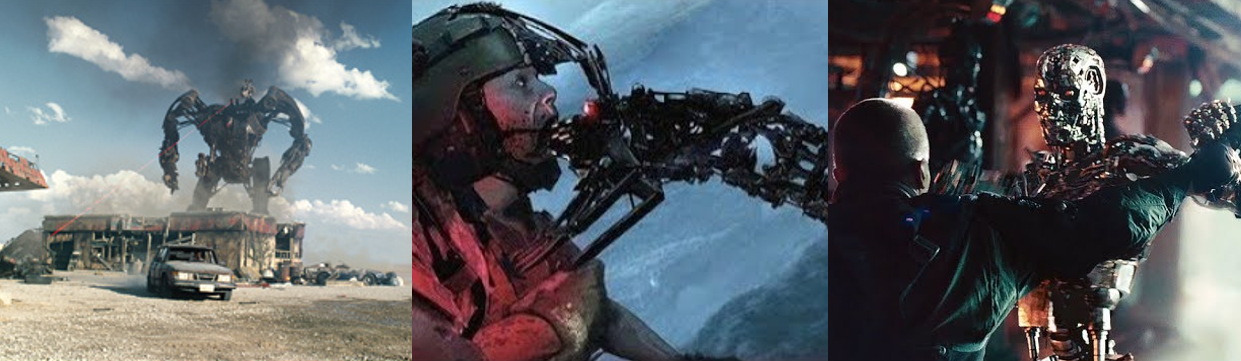

Story Title: “Nothing Can Stop… The Sandman!”
Published: 11 June 1963 (cover-dated September 1963)
Writers: Stan Lee and Steve Ditko
Artist: Steve Ditko

The Background:
After debuting the Fantastic Four, Marvel Comics editor and head writer Stan Lee immediately sought to follow this with a teenaged superhero specifically created to appeal to younger readers. Inspired by a fly climbing up the wall of his office, Lee turned to artist Steve Ditko to settle on the character’s final design and, despite Marvel publisher Martin Goodman’s dislike of the concept, Spidey’s debut in Amazing Fantasy #15 became one of Marvel’s best selling titles and his popularity led to his own solo title barely a year later. Since then, Spider-Man has faced some of the greatest and most memorable villains in all of comics, with many of his most iconic villains being co-created by Stan Lee. Four issues into The Amazing Spider-Man, Lee and Ditko pitted the wall-crawler against Flint Marko/The Sandman, a regular crook transformed by atomic power who later went on to not only be part of the Sinister Six but also have a surprising amount of character growth over the years, to the point where he became a hero and ally of Spider-Man’s at times. The Sandman has also been a recurring villain outside of the comics, generally acting as a recurring boss in numerous Spider-Man videogames and made his contentious live-action debut in Spider-Man 3 (Raimi, 2007).

The Review:
“Nothing Can Stop… The Sandman!” opens in very much the same way as a lot of Spider-Man stories from this era: our web-slinging hero starts the tale lamenting the hate campaign that the cantankerous J. Jonah Jameson continues to wage against him (which has escalated to an ongoing series, “The Spider-Man Menace!”, in the Daily Bugle) when he spots three shady looking goons eyeing up a jewellery store and leaps into action. Unfortunately for the troubled teenager, Spidey webs the would-be criminals up too soon; they rightly point out that there’s no law against walking the streets, brand him a menace, threaten to sue him for assault and battery, and yell for the cops to come and help them. Realising what a fool he’s made of himself, the web-slinger promptly gets out of there, consoling himself only with the knowledge that he did technically stop the goons from robbing the jewellers. Spidey decides to drop in on Jameson to give him a piece of his mind, only to find the grouchy editor isn’t in his office. As Spidey leaves, however, he spots a bunch of cop cars searching the streets and (apparently having learned nothing from his previous error) immediately confronts a thuggish looking brute climbing to a rooftop across the street. Luckily for him, though, the thug introduces himself as the Sandman, a criminal Spidey is only too well aware of as he’s wanted by the police “from Maine to Mexico”.

Spidey is stunned when he encounters the Sandman, a crook who can turn his body to...sand…!

Offended when the abrasive Sandman tries to brush him off like he’s nothing, Spider-Man moves to subdue the crook and is astonished when the Sandman literally slips through his fingers by turning his body into soft sand! The Sandman mocks Spider-Man as the wall-crawler’s punches go right through his body and when Spidey damn-near breaks his hand when the Sandman hardens his body to the consistency of iron, and his fully malleable body sends him reeling across the rooftop! Frustrated by the Sandman’s taunting and shape-shifting shenanigans, Spider-Man prepares to try his webbing on the crook but is startled to find that his mask has (somehow…) ripped during the fight. This sends his anxiety and paranoia into overdrive; Spidey envisions that capturing the Sandman will expose his secret identity, leading to an increased manhunt spearheaded by Jameson and the destitution of be beloved Aunt May. Of course, there’s nothing to suggest this would actually happen; there’s no way that the Sandman knows who Peter Parker is, after all, and he could just cobble together a substitute mask, but Spider-Man decides that the risk is just too great and flees before the Sandman can get a good look at him. This leaves the Sandman free to easily deposit himself at ground level, break into the bank by forming the exact shape of the key with his finger, and slip into the vault by turning his entire body into sand. Back at home, Peter frets about his sewing skills while watching a news report that’s conveniently expositing the Sandman’s bizarre origin story: career criminal Flint Marko escaped from solitary confinement in a maximum security prison on an island, swam to shore, and hid from the ensuring manhunt at an atomic device testing centre. There, he was caught in an atomic explosion and, rather than being immolated or suffering from gruesome cancer, his molecules were radioactively merged with that of the sand at his feet, transforming him into a veritably indestructible man of sand.

Peter’s social woes are exacerbated when the Sandman hides out in his school!

When his doting Aunt May comes knocking, Peter is forced to feign illness to cover up his costume and is unable to finish his work and get after the Sandman as she insists on mollycoddling him for the rest of the day and night. Consequently, the Sandman easily shrugs off the police’s gunfire, robs the bank, and eludes capture with his amazing abilities and Peter must wait until the morning (and being given a clean bill of health by his aunt) to finish up. Once he’s up and dressed (and armed with his umbrella and a promise not to exert himself), Peter heads over to the Daily Bugle, where Jameson’s mood has been soured by the little “gift” Spidey left for him the previous night (somehow, Spidey’s webbing managed to not dissolve after a few hours, but I don’t mind as it leads to Jameson standing around in his boxer shorts!) Unfortunately, Jameson is less than impressed by Peter’s lack of photos of Spider-Man and even more riled up when he dares to ask for an advance. Jameson berates Peter as an example of the entitled youth of the day and sends him packing, scuppering the webbing experiments Peter hoped to fund with the extra cash. Peter’s day just gets worse from there; distracted by the quandary of the Sandman, he’s forced to back out of a date with Liz Allen, earning him her ire and jeers from bully Eugene “Flash” Thompson, and he’s so disheartened by the drama of his dual life that even his teacher snaps at him for “daydreaming” in class. You wouldn’t believe it but the Sandman, annoyed at the constant attempts by the police to apprehend him, decides to duck into Peter’s high school until the heat dies down. He bumps into Principal Davis and, amazingly, demands that the teacher write him out a diploma so he can have an academic credit to his name! The kids are impressed when they see their principal standing up to the Sandman and even putting himself at risk to keep them safe but jump out of their chairs with excitement when Spider-Man leaps in to keep the Sandman from harming the elderly principal.

Though he triumphs over the Sandman, Spider-Man is slandered by Jameson’s hate campaign.

Realising that the kids are in danger and wary of the Sandman’s tricks, Spider-Man opts to hurl the brute out of the classroom when he hardens himself, but the Sandman quickly recovers and puts the pressure on Spidey by relentlessly trying to pummel him with his enlarged, hammer-like fists. Spider-Man lures the Sandman to the school gym, only for his webbing to fail him when the Sandman simply passes through it like…well…sand. The Sandman corners Spider-Man, who reacts on instinct and ends up with his arm trapped in Marko’s body. This allows the Sandman to repeatedly headbutt the web-slinger with his rock-hard head, forcing Spider-Man to desperately drive Marko into an iron stairway post to free himself and avoid being headbutted to death. The Sandman quickly reforms himself, ensnares Spidey’s ankles by turning his body into quicksand, and envelops the teenage hero with his entire body, encasing him within a ball of sand. Thinking fast, Spider-Man bounces his foe down to the school basement and slips free from his prison; he then plays to the Sandman’s arrogance by threatening him with an electric drill. Naturally, the Sandman simply turns his entire body into sand particles to render the tool harmless, but this is exactly what Spidey was hoping for; he quickly grabs a huge industrial vacuum cleaner and turns it on the Sandman, sucking him up and imprisoning him within a big metal capsule. Spidey then realises that he didn’t get a chance to snap any pictures of the fight for Jameson, so he fakes a few by snapping photos of himself tussling with some sand he tosses into the air! Jameson then inexplicably shows up at the school and starts barking orders at the cops with no care for the safety of the students inside. He angrily accuses Spider-Man of being in cahoots with the Sandman, so Spidey simply delivers Marko to the cops and changes back into Peter Parker. His joy at this victory is short-lived, however; not only does Jameson take the cost of developing his photos out of his pay, Liz and the others continue to berate him for being a coward and a bookworm, and Jameson uses Peter’s photos to further his vendetta against Spider-Man, leaving Peter despondent but nonetheless determined to continue using his powers for good.

The Summary:
Wow, Stan Lee really didn’t pull any punches in piling the pressure on young Peter Parker back in the day, did he? Peter has got to be the unluckiest guy in the world; it seems no matter what he does, the world is out to get him. It’s almost laughable at times, and especially in this story; Spider-Man’s busted up would-be crooks before and it’s never been a problem, but this time they threaten him with legal action as he jumps in too soon. Although he beats himself up over this, this mistake doesn’t stop him confronting the Sandman, which I think was a missed opportunity. If Spider-Man had spotted the Sandman and not intervened based on what just happened, Peter could’ve wallowed in self-pity not unlike the guilt he feels over Uncle Ben’s death when he later learned that the Sandman robbed that bank. Instead, we get this really random interlude where Spidey’s forced to run off because his mask rips (I still don’t see how that happened…) and he’s taken out of action by the suffocating affections of Aunt May. Then, rather than get out there and look for the Sandman, he’s scolded by his peers, subjected to abuse by the likes of Flash and the fickle Liz, and all his efforts to subdue the Sandman ultimately amount to nothing as Jameson is so determined to paint him as a menace. It’s really weird, though, as the kids at his high school are cheering him on and even the cops seem willing to give Spider-Man the benefit of the doubt, but the general public are easily swayed by Jameson’s biased opinions all so that Peter can be weighed down by depression and self-doubt. This already weighs so heavily on him that he totally overreacts when his mask rips and is immediately and irrationally convinced that it’ll mean the end of his life, even though the Sandman surely won’t know him from any other kid!

The Sandman’s powers are a highlight of the story, which beats Peter down at every turn.

Still, this interpersonal drama, as absurd as it often is in these older Spider-Man stories, is part of what makes Spider-Man so appealing; he always does the right thing and continues to fight against injustice even when most of the city wants to see him behind bars. In the Sandman, Spider-Man meets a formidable physical match; I really liked Marko’s characterisation here as a regular (if accomplished and notorious) crook who just happened to be granted amazing powers. His goals don’t extend much further than robbing banks for cash, but I really enjoyed that he demanded Principal Davis write him a diploma to realise his lifelong dream of graduating high school! At one point, Spider-Man compares the Sandman’s malleability to that of Doctor Reed Richards/Mister Fantastic, an analogy that’s not entirely unwarranted but I’d argue that the Sandman’s powers are even greater! He can basically make himself incorporeal, harden his entire body, stretch his limbs, make himself sticky, and form massive crushing appendages to attack Spider-Man and it’s his unpredictability more than his fighting prowess that throws off even Spidey’s famed spider sense since Spidey never knows what the Sandman is going to do next. I wasn’t a big fan of Marko’s unbelievable backstory (I’d love to know how he escaped from that prison…) but it’s fun seeing atomic power depicted in such surreal ways in comics and I liked that he was such a simplistic, and yet incredibly dangerous, adversary even if he barely scratched his potential here. Ultimately, I had a good enough time with this; while far from my favourite Spider-Man villain, the Sandman at least makes for a visually interesting baddie and the drama, while a bit too full-on at times, tied into Peter’s ongoing struggles with his duality. There are better Spider-Man stories from this era and things are wrapped up or rushed through a little too quickly, but it’s fun seeing Spider-Man being thrown for a loop by the Sandman’s fantastic powers and being forced to think of new ways to outsmart and overcome his latest villain.

My Rating:

Rating: 3 out of 5.

Pretty Good

What are your thoughts on the Sandman’s first appearance? Were you a fan of the villain and his unique powers or did you find him to be a bit daft and unbelievable? What did you think to Peter’s social woes and his panic over his ripped mask? Were you a fan of the Sandman’s simplistic motivations and bizarre powers? What are some of your favourite Sandman stories and moments? How are you celebrating Spider-Man Day today? Whatever your thoughts on Spider-Man and the Sandman, leave them below or drop a comment on my social media and be sure to check out my other Spider-Man content across the site!

Wrestling Recap: Hulk Hogan vs. Shawn Michaels (SummerSlam ’05)

The Date: 21 August 2005
The Venue: MCI Center; Washington, D.C.
The Commentary: Jim “J.R.” Ross, Jerry “The King” Lawler, Jonathan “The Coach” Coachman
The Referee: Mike Chioda and Chad Patton
The Stakes: Legend vs. Icon dream match

The Build-Up:
When you think of wrestling, it’s hard not to picture “The Immortal” Hulk Hogan. For years, the Hulkster was not just a wrestling icon, but a mainstream star who was largely responsible for putting the World Wrestling Federation (WWF) on the map. A controversial figure, to be sure, one who used his backstage power and star appeal to his advantage more than once, Hogan would later be the linchpin of the “Monday Night Wars” when he jumped to rival promotion World Championship Wrestling (WCW) and formed the ridiculously popular New World Order (nWo). During that time, many wrestlers would jump back and forth between WWF and WCW, but one who remained loyal to Vince McMahon’s company, despite the appeal of WCW, was the “Heartbreak Kid” Shawn Michaels. An equally controversial figure, HBK was known for his athleticism and arrogance, a culmination of factors that earned him a reputation as “The Showstopper”. One thing both men had in common was that they both returned to the WWF, now known as World Wrestling Entertainment (WWE), in 2002 after a significant time away; Hogan due to his WCW contract and HBK due to a career-threatening back injury. While Hogan’s tenure with WWE was as tenuous as his relationship with McMahon, HBK embarked on an unexpected and much celebrated second run that saw him capture the World Heavyweight Championship, and the two finally crossed paths in mid-2005, initially as a tag team. HBK needed a tag team partner to face Muhammad Hassan and Daivari and literally begged Hogan to join forces with him. At first, it seemed this “dream team” was a match made in heaven but, after another victory over Kurt Angle and Carlito, HBK shocked everyone by delivering his patented Sweet Chin Music to Hogan. What followed was a hugely entertaining and systematic attack upon the Immortal One by his upstart opponent in which HBK attacked Hogan’s ego, backstage politics, and his hogging of the limelight. HBK famously imitated a frail, broken Hogan in a memorable backstage skit and went out of his way to rile up Hogan, who was insulted by HBK’s underhanded tactics. With tensions mounting, spilling over into verbal and physical alterations, the stage was set for this once-in-a-lifetime main event bout between two legitimate icons of the industry, though, as we’ll delve into later, it was initially set to just be the tip of the iceberg between these competitors.

The Match:
Despite everything Shawn Michaels had said and done, all the spiteful comments and him revisiting much of the egotistical jackassery that defined his early career, HBK still received his fair share of cheers and crowd support at the beginning of this match, and throughout, though it’s equally fair to say that he had done a masterful job of briefly turning heel and turning much of the crowd against him. Thus, loud and consistent chants for Hogan permeated the arena and led to a massive pop when the Immortal One made his way to the ring accompanied by the familiar tunes of “Real American” and bathed in the shadow of Ol’ Glory itself, as fired up and ready for action as the arrogant HBK, who initially lingered on the outside, refusing to let the bell ring and winding Hogan up even more. Eventually, both men stood face to face and, after milking the crowd and the anticipation, finally got into a lock up and the match immediately took a turn for the ridiculous as, when Hogan shoved HBK away, Shawn comically bounced across the ring as though knocked over by a gust of wind! Twice more Hogan shoved HBK, the second being a simple push to the chest, and again Shawn pinballed to the mat and the shock, the confusion, was visible in Hogan’s stunned expression. He had to know, even in the early going, that HBK was mocking him by over exaggerating his selling. Indeed, this seemed to be the case as Hogan tore off his bandana and tossed it HBK after the Showstopper pinwheeled across the ring and out to the floor off a simple shoulder block, playing up his frustration at Hogan’s apparently superhuman strength even as the Hulkster showed visible anger at HBK’s antics.

HBK bounced around like a madman for Hogan and viciously busted the Hulkster open.

Once back in the ring, HBK took control with a knee to the gut and some knife-edge chops in the ring corners but found himself launched into the far corner off an Irish whip and receiving some hard boots to the gut as he lay prone across the top rope, which Shawn sold as though he were being tossed up to the rafters! After landing some shots to HBK’s forehead, Hogan rammed Michaels into the top turnbuckle pad and Shawn comically backflipped out of it, selling it like a shotgun blast and only regaining control of the match after a desperate thumb to Hogan’s eye. After some more chops, Shawn tumbled head over heels and some ways up the aisle off a basic clothesline over the top rope and started swinging wildly, punch drunk, as though dazed by Hogan’s incredible power. After regrouping on the outside, Shawn was forcibly returned to the ring when Hogan powered him over the top rope and floored by more shots and another clothesline, though HBK avoided a back body drop and returned to lighting up Hogan’s chest with some chops. When Hogan avoided having his head ran into the top turnbuckle, HBK haughtily slapped him across the face a couple of times and used his speed to keep the pressure on with the chops, only to be turned inside out when launched into the opposite corner and knocked off the ring apron. This time, Hogan followed HBK to the outside and slammed him into the barricade and across the Spanish announce table for some rapid shots to the forehead and then launched the Showstopper shoulder-first into the ring post. However, HBK returned the favour by wriggling out of Hogan’s power lift and shoving him face-first into the same ring post, then doubled down by awkwardly pushing Hogan into another ring post and aggressively targeting Hogan’s head with repeated blows that, eventually, turned Hogan’s face into the proverbial crimson mask.

HBK’s underhanded ways were nothing against Hogan’s superhuman aura.

Pleased with his efforts, HBK kept the pressure on a dazed and bloodied Hogan who could barely stay on his feet much less avoid being worn down to the canvas by a tightly-knit sleeper hold. The swell of crowd support naturally saw Hogan get his second wind; he powered to his feet and dropped HBK with a back suplex to create some separation but was too weak to avoid HBK’s signature flying forearm. Riding the adrenaline rush, Shawn went for his diving elbow, but Hogan rolled out of the way and finally got back into the fight with his “Hulk Up” spot. Hogan literally rocked Shawn with a series of clubbing blows, but Shawn avoided the Big Boot with another flying forearm and inadvertently sent referee Mike Chioda tumbling from the ring, forcing Chad Patton to run in and take over. In keeping with his newfound asshole tendencies, Shawn earned the ire of the crowd by clumsily tying Hogan up in the Sharpshooter. However, Hogan crawled to the ropes to break the hold, then accidentally took Chad Patton out while frantically kicking HBK off when he went for the hold again. Visibly limping from the Sharpshooter, Hogan stumbled right into a vicious low blow and was powerless to stop HBK from cracking a steel chair right across his skull! With Hogan downed, Shawn hit his big top-rope elbow drop, revived Chad Patton, and nailed Hogan with the Sweet Chin Music…for a two count! Livid, Shawn tried to pound on Hogan with right hands but the crowd went nuts as Hogan Hulked Up again, this time scoring with the Big Boot that hit so hard that Shawn bounced to his feet, twirled around, and cartwheeled to the canvas! Hogan then showboated before scoring with the Leg Drop for the three count, much to the delight of the crowd. Afterwards, HBK interrupted Hogan’s raucous celebration and, though annoyed by the loss, offered Hogan a handshake, saying he “needed to know” if he could defeat the Immortal One. Hogan accepted the handshake, turning HBK face again, and was left to celebrate in the ring with his classic strongman poses and taunts.

The Aftermath:
Oh my, is this a crazy match! Unlike the intensity of Hogan’s showdowns with The Rock, HBK decided the best way to showcase Hogan’s vaulted superhuman persona was to bounce around the ring like a pinball! It must’ve been so shocking and annoying for Hogan to see Shawn making a fool of himself, flipping inside out from the simplest of moves and really playing up the pantomime theatrics of Hogan’s larger than life persona. These antics, however, are used more sparingly than you might have been led to believe and are standout highlights of an otherwise fairly by-the-numbers match. Hogan seems quite slow and ungainly here, not able to do much more than his usual spots and take some chops, and I really don’t think we needed two ref bumps in this one. Still, for sheer spectacle, Hogan vs. Michaels delivers an entertaining match; the crowd loved every second of it, cheering themselves into a frenzy for everything Hogan did and jeering HBK whenever he did something underhanded while still appreciating his athleticism, however over the top it may have been. Of course, this was actually supposed to be one of a series of matches between these two wrestling icons but, behind the scenes, the two struggled to come to an arrangement. HBK never wanted to turn heel and was frustrated by Hogan’s resistance to a three-match series. Thus, Shawn decided to massively oversell Hogan’s offense to make him appear truly superhuman, an act that caused much ire backstage, and cut one last promo mocking Hogan on the following night’s episode of Raw, forever putting the kibosh on another match between the two. Following this match, HBK moved into a feud with “The Masterpiece” Chris Masters and would find himself embroiled in a rivalry with Vince McMahon by WrestleMania 22, while Hogan largely disappeared from television until WrestleMania 25, after which he left WWE altogether for a largely disastrous second run in Total Nonstop Action (TNA)/Impact Wrestling. However, Hogan and HBK would cross paths again during the infamous match between Triple H and Sting at WrestleMania 2015 that saw Hogan and his nWo buddies brawl with HBK and D-Generation X.

My Rating:

Rating: 5 out of 5.

Fantastic

What did you think to the epic classic between Hulk Hogan and Shawn Michaels? Did HBK’s overselling take you out of the match or did you find it entertaining? Do you think the match needed two ref bumps or did it add to the drama for you? Were you hoping for a different outcome, and would you have liked to see another match between these two? What are some wrestling dream matches you’d like to see, or wish we’d gotten? Which SummerSlam match or event is your favourite? Whatever your thoughts on Hogan vs. Michaels, and SummerSlam, leave a comment below and be sure to check out my other wrestling content across the site.