To celebrate the release of Dr. No (Young, 1962), the first of the James Bond movies (Various, 1962 to present), October 5th is known as “Global James Bond Day”. This year, I’m spending every Saturday commemorating cinema’s longest-running franchise, and one of the most recognised and popular movie icons.
Released: December 1992 Developer: The Kremlin Also Available For: Game Gear and Master System
A Brief Background: Although videogame tie-ins have a reputation for being rushed, bugged, and unfulfilling titles, James Bond/007 seems to have fared quite well in videogame endeavours. Obviously, everyone knows about the best-sellingGoldenEye 007 (Rare, 1997), but Bond’s headlined videogame titles since 1983. He’s featured in racers and adventure games, but is most notable for this third- and first-person escapades. In 1987, Timothy Dalton took over the famous role, starring in two reasonablysuccessful, ifpolarising, Bond movies. Although Dalton signed a three-picture deal, legal issues stunted his return and he was ultimately replaced in the role, though his likeness was used for this videogame, the first Bond game to feature an original storyline. Developers the Kremlin and publisher Domark actually had previous experience adapting Bond’s adventures, but James Bond 007: The Duel attracted mixedreviews that criticised its short length, repetitive gameplay, and sharp difficulty curve.
My Review: James Bond 007: The Duel is a 2D, sidescrolling run-and-gun with mild platforming elements. Naturally, players assume the role of the famous super spy and are tasked with journeying across five levels in the battle against Professor Gravemar, a maniacal terrorist who not only threatens the world with his satellites but has built a cloning machine to resurrect Bond’s greatest enemies as his personal guard. After an absolutely awful pixel art rendition of Timothy Dalton, garish title screen, and mildly impressive MIDI recreation of the iconic Bond theme, players can customise their controls, pick from three difficulty levels (“Normal”, “Hard”, and “Manic”), or play the game’s tunes in the sound test. By default, A sees Bond jump (with 007 frequently performing an impressive and wholly uncharacteristic somersault), B sees him shoot his signature Walther PPK, and C tosses any grenades he acquires from Q Cases hidden in each level. Bond’s combat and traversal options are a bit limited; he can climb ladders, shoot diagonally up and down and whilst on ladders or when jumping or crouching (though he can’t shoot straight up or down). Furthermore, he flies backwards comically when shot, takes fall damage and will even die if he falls from a great enough height, and has frames of animation when ducking or picking up ammo and items that leaves him wide open to attack.
Bond’s mission to rescue hostages on a garish ship was too tough for me to beat.
Each mission is preceded by a map screen of the professor’s private, heavily guarded island. After flying in on the Thunderball (Young, 1965) jetpack, Bond must navigate a large ship rescuing hostages. On “Normal”, Bond starts with four lives and must rescue three hostages (all scantily clad babes); he has limited ammo, reloading his gun when he runs out, and his health is measured in hit points. Players can replenish Bond’s health by rescuing hostages, and every goon they gun down and mission they complete will earn them points to increase their standing on the high score table. Unfortunately, there’s no indication of where the hostages are, so you’ll need to search high and low, hopping from platforms and lifeboats and avoiding falls, being shot to death, or being crushed by a falling submersible. Thankfully, there’s no time limit and any hostages you’ve rescued will stay rescued if you lose a life. Unfortunately, while you have unlimited continues and hidden checkpoints in each level, you’ll have to replay the stage from the start if you use a continue. Bond can hide in doorways to avoid enemies and bullets by pressing up and, though his sprite isn’t very detailed and lacks idle animations, Bond does switch his gun between his hands when you turn from left to right. Enemies appear to respawn as you play and, once you rescue all the hostages, you’ll need to find a bomb and then frantically search for the exit against a tight one-minute timer. Sadly, I wasn’t able to achieve this; although I found an optimal route to rescue the hostages and defuse the bomb, I would either slip and fall to my death or be throttled and tossed to my doom by the brutish Jaws before I could even find the exit.
Later levels see Bond braving deadly hazards and battling his most famous foes.
James Bond 007: The Duel has a strange presentation. It’s very bright and colourful, with a jaunty soundtrack, and the backgrounds remind me of James Pond 2: Codename: RoboCod (Vectordean, Intellectual Software, Consultants Limited, 1991), which is a strange fit for Bond. The background scrolls as you move but is otherwise completely static; it also shifts up and down as you hold those directions, which can be quite disorientating. You need be careful not to fall into the water as, while you can grab ladders to climb out, the current will take you towards a frenzy of sharks. I gave the game a good shot, but it can be very unforgiving; if you’re shot, Bond is so slow to get up and often aims diagonally downwards rather than crouching, meaning it’s easy to get stun-locked in a continuous cycle of being shot at until you’re killed. With no passwords or cheat codes to mitigate the difficulty, and the level forcing you to restart from scratch when your lives are exhausted, I was neither able to defeat or bypass Jaws in this playthrough. Looking ahead, it seems more competent players can beat the game in about twenty minutes and Bond will traverse vines, dodge spike pits, battle Baron Samedi (who tosses bones at you) and encounter a massive futuristic tank in the jungle, avoid being roasted alive by lava and fireballs and encounter Mayday (who launches at you with flying kicks) and a claw-machine in a volcano, and gun down scientists, dodge flame bursts and take down Oddjob (who tosses his hat a painfully short distance) and a flame-shooting mech in the shuttle base. The game’s final level is dedicated to a boss battle against Jaws. Yes, rather than take on the mad Professor Gravemar, Bond faced Jaws once more, with the brute now piloting a mech that spits grenades and sports a scorpion-like tail. Defeating Jaws earns you another terrible piece of sprite art and a brief credits sequence, with no story text being included in the game at any point.
I know that James Bond 007: The Duel was only a mediocre title, at best, but I suddenly felt the urge to add it to my Mega Drive library and give it a go. I was hoping it would be a tough, but generally enjoyable platform shooter than I could maybe breeze through using a cheeky infinite health code or abusing the infinite continues, but it sadly didn’t go that way. This is a game that requires a great deal of patience and persistence from the player; I have no doubt that I probably could do better with a little more time, but the lack of passwords means you basically have to complete it in one sitting, which isn’t an appealing prospect. Although the game looks good, it has a very confused presentation; the large pixel art is dreadful, the locations are garish and cartoonish, but Bond and his enemies look pretty good despite their lack of detail. I liked seeing Bond’s enemies pop back up and little Easter Eggs like the jetpack and the map screen changing as you progress, but the gameplay is very clunky and repetitive. Every level requires the same functions from you (rescue hostages, disarm bomb, reach exit, battle bosses) with no variety beyond a greater emphasis on vertical exportation. Perhaps with a little more to do, some additional weapons, and some useful codes, James Bond 007: The Duel could’ve impressed me more but as is, it’s a little too punishing for me to sink my teeth into right now. But perhaps you’ve beaten it. Perhaps you enjoy it as a hidden gem for the Mega Drive. Perhaps you had no difficulty blasting through it and besting Bond’s resurrected baddies. Perhaps you think I should try harder or give the 8-bit version a try. Perhaps you prefer a different Bond game. Whatever you think, drop a comment below.
Released: 28 October 2022 Originally Released: 7 May 2021 Developer: Capcom Also Available For: Nintendo Switch, PC/Mac, PlayStation 4, PlayStation 5, Stadia, Steam, Xbox One, Xbox Series S
The Background: Helmed by Shinji Mikami, Resident Evil(Capcom, 1996) was a seminal title for the up-and-coming PlayStation, one whose focus on atmospheric horror and resource management popularised the “survival-horror” subgenre. A critical and commercial success, Resident Evil was quickly followed by a numerous sequels that continued torefine the gameplay, add to the lore, and be equally successful. After a troubled development, Mikami re-invented (and once again re-defined) the genre with the ridiculouslysuccessfulResident Evil 4(Capcom Production Studio 4, 2005), though Capcom soon drew heavy criticism for over-relying on an increasingly action-orientated and over the top presentation. Thus, Capcom shook the franchise up again with Resident Evil VII: Biohazard(Capcom, 2017), which took the series in an all-new direction, featured an immersive first-person perspective, and introduced new mechanics and lore that would impact subsequent releases. Although Resident Evil VII was a critical and commercial success, development of an eighth instalment began about a year and a half before VII released. Inspired byResident Evil 4, the developers purposely focused on a village as the central location and sought to create a balance between combat, exploration, and puzzle-solving. In addition to tying up the story of VII’s protagonist, Ethan Winters, the developers aimed to encourage exploration with an ever-shifting, more open-world environment and drew from gothic horror to design the game’s new werewolf-like enemies. Resident Evil VIII’s marketing heavily focused on Lady Alcina Dimitrescu, a towering, alluring, vampiric figure whose sex appeal helped boost interest in the game, which led to over three million copies being shipped within the first four days alone. The game’s new direction and ties to Resident Evil 4were praised, as was the gameplay variety and emphasis on exploration, though the bosses and puzzles drew some criticism. Still, the game was a hit, more than justifying the release of additional downloadable content (DLC) within the following year. All of this DLC, which included additional gameplay modes and an epilogue story, was then made available on this Gold Edition release.
The Plot: Three years after escaping the Baker family, Ethan Winters faces an all-new terror when his infant daughter, Rose, is kidnapped by Mother Miranda, the fanatical leader of a cult-like coven, after being seemingly betrayed by Chris Redfield.
Gameplay: Like its predecessor, Resident Evil Village (stylised as Resident Evil VII.I.age) is a first-person survival/horror title in which players are again placed into the bland, faceless shoes of Ethan Winters, easily the franchise’s dullest character. Ethan has been fleshed out a little more this time around, though, to be fair. Between games, he and wife Mia have relocated, starting their lives anew with baby Rose; he has much more to say and far more agency this time around since he’s trying to rescue (and restore) his baby daughter; and he’s a little more competent after his experiences in the last game. If it’s been a while since you played Resident Evil VII, you can watch a helpful recap before setting up your subtitle, screen, and sound settings and, thanks to this Gold Edition of the game, you can play in third-person mode, which was my preference. Resident Evil Village offers four control setups, but the default is serviceable enough. You aim with the Left Trigger, guard against enemy attacks with the Left Bumper (with successful timing shoving enemies away), shoot with the Right Trigger, use a recovery item (such as First Aid Med) with the Right Bumper (a godsend in sticky situations), examine points of interest and pick things up with A, reload with X, and open your inventory with Y. By default, B does nothing except perform a quick turn in conjunction with the left stick, which can also be pressed in to break into a run. Pressing in the right stick allows you to crouch behind cover or through tunnels and small gaps, and you can switch weapons using the directional pad, with four different weapons able to be applied to this weapon “wheel”. There are also options to adjust aim assist, the intensity of the damage display, onscreen tutorials, and how much of the heads-up display is visible, allowing you to customise a more cinematic experience if you wish.
Craft health and ammo and purchase new items and upgrades from the Duke.
There are three difficulty settings to choose from at the start of the game, with a fourth, “Village of Shadows”, unlocked after beating the game on any difficulty. Naturally, the harder the difficulty, the tougher the enemies will be, with even basic foes tearing your throat out in a few hits on “Hardcore” difficulty. Unlike in the classic Resident Evil titles, there are no fourth dimensional Item Boxes here. You’ll need to combine and craft items to save inventory space, or spend the Lei dropped by enemies or found in destructible crates to expand your carry capacity. Yes, the crafting system is back; by finding items such as herbs and gunpowder, Ethan can craft recovery items, ammunition, and even explosives like pipe bombs and mines. New “recipes” can be purchased from the game’s rotund merchant, the mysterious Duke, who will happily purchase any treasure you’ve found, sell you ammo, weapons, and healing items, and also tunes up your existing weapons to make them more powerful. If you kill local wildlife, you can bring the meat to the Duke to cook food that increases your movement speed, maximum health, and reduces the damage you take while defending, though the Duke’s prices increase over time and he can even sell out of items, so it’s best to keep an eye out for craftable pickups. I’d also recommend caution with your weapon choices; eventually, better weapons will become available and you can only carry so much, so it’s easy to invest a lot of money tuning up your default handgun only to then have to sell it for the stronger upgrade. You can buy back any weapons you sell, but you can’t remove any charms or attachable tools (such as the scope for the sniper rifle or the extra magazines) from your weapons, so I definitely think it’s better to wait for the W870 TAC shotgun to become available and spend your money upgrading that as opposed to the first shotgun you find.
Alongside some challenging combat, you’ll solve rudimentary puzzles and acquire elaborate keys.
In addition to a decent weapon selection to choose from, Ethan can also use his environment to fight back against the lycan-like enemies that infest the titular village. Explosive barrels will blow enemies away and can hold A to barricade doors with furniture against enemies. You can shoot them off rooftops, sometimes you’ll need to rapidly tap A to escape an enemy’s grasp, and some larger enemies will even attack their smaller cousins. Even on the “Standard” difficulty, Resident Evil VIII is pretty tough. You often have just enough on hand to survive an enemy onslaught, after which you’ll be in dire need of resources to fend off the next enemy encounter, so it’s worth searching every drawer and cupboard, even if many of these are empty. Luckily, your map will indicate any missed items in the local area; it highlights treasures, locked doors, and missed items. You can then backtrack when you have the right keys or the environment has altered to grant you access, and you can still find helpful files that flesh out the game’s lore, Mother Miranda’s connection to the Mold and the Umbrella Corporation, and provide clues or solutions to the game’s puzzles. These may be as simple as finding bolt cutters to break chains, using a key to unlock a door, or finding and entering combination codes, but also become a wild goose chase as you search for masks, examine items for keys or add-ons for existing keys, insert glass eyes into holes, awkwardly swing flaming lanterns, and pull levers to open doors. As ever, you can save your progress at any time using a typewriter. You don’t need to worry about ink ribbons here, and the game also includes an autosave function so you’ll respawn from checkpoints when you die, but I’d recommend making a couple of save files so you can backtrack for missing items or optional side quests as you’ll eventually reach a point where you can’t return to the village that acts as a central hub, of sorts.
While the game peaks early, there’s enough variety and intrigue to keep you hooked throughout.
Resident Evil Village tasks Ethan with venturing to four distinct areas from the titular village, which alters (along with the title screen) as the game progresses, becoming infested with tougher enemies, set on fire, and ransacked by the Mold. Each of these areas presents a unique, but also familiar, challenge; Lady Alcina Dimitrescu’s castle, for example, is very reminiscent of the original game’s ornate mansion, and Lady Dimitrescu herself patrols the hallways, pursuing you throughout the estate like her predecessors, Mr. X and Nemesis. When trapped in House Beneviento, Ethan loses all his gear to the childlike Donna Beneviento and her malevolent puppet, Angie, who force you to complete a series of puzzles, including finding items to investigate a mannequin, rearranging film cells, and searching for fuses, to escape and reclaim your items. The toad-like Salvatore Moreau dwells in a mine, one infested with slime-like pustules, outside a massive lake strewn with wreckage that you must cross, lowering and raising temporary platforms, to power up the generators. Finally, the rebellious Lord Karl Heisenberg dwells in rundown factory populated by horrific cybernetic monstrosities. Here, you’ll use the smelting equipment to craft key items to progress, take a maintenance lift, and battle Heisenberg’s cyborg creations. After defeating Heisenberg, you’ll take control of the far more capable Chris for an all-action infiltration of the village and the catacombs beneath it. Chris has better weapons on hand, utilises ample supply drops, and calls in air strikes by holding down RT, making short work of Mother Miranda’s Mold defences and the hammer-wielding Uriaș who plagues Ethan so often in the main story.
Graphics and Sound: It’s almost astounding how good Resident Evil VIII looks; the environments, especially, are moody, dank, and claustrophobic while also being genuinely creepy and unsettling, and the use of ambient noise, distant scratching and screaming, and sporadic music really adds to the tension. The level of detail is incredible at times, with Ethan panting and showing visible pain when low on health, blood splattering on his weapons, snow and frost ransacking the village, bullets and blood alike marking doors, windows, and the environment, and heads sporadically exploding in a shower of gore. Playing in third-person allows you to finally see Ethan’s character model, though he’s still just a guy, one whose face is oddly obscured no matter how much you wriggle the camera. Interestingly, many of the character models (basically anyone who isn’t Chris, who’s been redesigned once again) sport a shiny, uncanny look that makes them seem not quite real. This is fine for the monstrous enemies, but makes human characters a little unsettling to look at in the wrong lighting (though, admittedly, this may be due to the brightness settings I chose). Resident Evil VIII ventures towards the supernatural for many of its enemies, depicting werewolves, witches, and shambling wretches alongside cyborg brutes fitted with drill arms! If these get too close to you, you’re gonna be in for a bad time and treated to some gruesome death scenes, but it’s equally satisfying seeing them be blown to pieces by a well-timed grenade round.
There are some creepy and visually impressive locations beyond the titular, ever-changing village.
As you might’ve guessed from the game’s title, the village plays a prominent role here. It’s your central hub you’ll return to time and again and have to explore and defend throughout the story, housing a church, graveyard, ruins, rivers, and more. Largely barren due to the events taking place, there’s a constant dread hanging in the village that’s mirrored by its adjacent locations. While some areas (stately homes, mostly) are guilty of recycling assets such as ornaments and furniture, others are more visually unique and unsettling, such as the cyborg factory and the creepy doll’s house-like House Beneviento. Resident Evil VIII continues to move away from the futuristic laboratories of Umbrella and takes more cues from Resident Evil 4, bringing an Eastern European flavour back to the franchise. I’m actually surprised it didn’t try to harken back to the backwater locations of the last game. However, these are partially evoked in your encounter with Moreau and when the Mold starts bursting from the ground and overtaking the village, but it’s a tenuous link, at best. The game’s story is engaging enough and mostly related through in-game cutscenes that retain the first-person perspective. You’ll be falling or sent crashing through floors and walls, have your limbs and organs cut off or ripped out, and be constantly interrupted by surprise attacks or jump scares. Everything’s played very seriously here, with very few glib remarks from the increasingly tested Ethan, with the exception of Mother Miranda and her lieutenants, who are almost as over the top as the crazed Baker family from the last game. Sadly, much of their personality is lost when they transform into gigantic, boil-infested monstrosities as per Resident Evil tradition.
Enemies and Bosses: In place of zombies, bio-organic weapons, parasite-infected villagers, and Mould creations, players battle werewolf-like lycans upon first entering the village. These snarling brutes are nimble and voracious, lunging for you and trying to tear your throat out and taking a fair few shots to be put down. A larger, armour-clad variant is also encountered, one that is better shielded from headshots, and bigger, more monstrous Vârcolacs pose a significant challenge if you’re caught unprepared. The spirit of the classic games is evoked through the shambling, sword-wielding Moroaicǎ, hooded, gaunt figures that rise from shallow water and attack in groups, while bat-like Samcas nest on the rooftops of Castle Dimitrescu. While the mindless Haulers are little more than cannon fodder in Heinsberg’s factory, his cyborg Soldats aren’t to be trifled with. Sporting up to two drill-like appendages and a variety of cybernetic armour, these lumbering walls of muscle can only be put down by blasting the exposed core on their chests, a task easier said than done when they attack in groups and are protected by quasi-mech suits. Most of the game’s more formidable enemies, like the Vârcolacs and Soldats, are introduced as mini bosses, giving you a chance to sample their abilities before they become commonplace and are joined by even stronger variants as the game progresses.
Monstrous and grotesque abominations are the order of the day, however unfitting some of them are.
The first boss you encounter is the aforementioned Uriaș; although it is technically possible to defeat him when he first appears, this isn’t necessary, you just need to survive until the plot progresses. Uriaș shows up as a proper boss twice during the main campaign; first, Ethan fights him in a confined space full of pillars to take cover behind. You’ll need to stay well clear of Uriaș’ giant hammer and leaping attack, and fend off the lycans for resources, preferably blasting him with your shotgun or grenade rounds to put him down. Uriaș also shows up when playing as Chris, but this fight is much easier as you simply need to target him for a few air strikes, surviving until he’s put down once more. As if frantically avoiding Lady Dimitrescu’s appearances isn’t bad enough, her three witch daughters – Bela, Daniela, and Cassandra – also haunt Castle Dimitrescu, appearing as a swarm of bugs that will whittle your health down and then taking physical form to dash at you with scythes. These three can only be made vulnerable by pulling switches or breaking windows to let in a blast of cold wind, with you constantly strafing to keep them in the cold, or pulling levers to keep the pressure on, while blasting at them until they turn to ash. Lady Dimitrescu herself cannot be harmed or killed when she’s pursuing you, but will transform into a massive, dragon-like bat-thing for a boss battle that sadly loses much of her visual appeal. The mutated Dimitrescu will stomp, charge, and try to eat you on the castle rooftop. Luckily, there are lots of resources on hand and her head is wide open for your shotgun blasts. When she flies into the distance, you can use the sniper rifle to shoot her down, repeating this process even as she forces you to take refuge higher up.
There are some unique elements to the bosses, though the later ones lack the iconography of earlier foes.
Donna Beneviento prefers to toy with you than take you on directly; her game of hide and seek will increasingly freak you out as the lights flicker and go out, the environment changes, and a massive, slug-like foetus thing lumbers down the narrow hallways of her doll’s house. To defeat her, you’ll need to track her doll, Angie, three times, ending her threat in a cutscene. This intense, genuinely creepy encounter is juxtaposed by the battle against the mutated Moreau, who transforms into a monstrous aquatic creature that lumbers around a drained lake, spitting and raining acid and thrashing its tail at you. Fortunately, there’s a lot of convenient cover to avoid damage and Moreau pops out to taunt you, allowing you to blast at him, though he’s certainly not an easy target despite his size. In Heinsberg’s factory, you’ll constantly run from Sturm, an armour-clad brute with a propeller mounted to his head! When you eventually battle him, it’s a tense affair as he crashes through walls and shoots flame bursts as you desperately try to hit the vent on his back. Heinsberg proves one of the more formidable of Mother Miranda’s lieutenants purely because of his mental control of metal, which allows him to constantly get the drop on you throughout the game. When Ethan finally reaches him, he’ll construct a massive, spider-like form for himself out of scrap metal, forcing Ethan to man a tank gifted to him by Chris. This made for a fun, action-packed battle where you fire a massive cannon and machine gun at Heinsberg’s glowing weak spots, until Heinsberg destroys your tank. Then, you frantically run around looking for ammo to blast him in the face until he whips you up in a tornado, which allows you to fire one last shot from the tank’s cannon and finish him off.
Alongside also battling Mother Miranda, Rose has her own boss battles to contend with.
With all of her lieutenants defeated, Mother Miranda attacks the village with tentacles and tree-like constructs of Mold, forcing you into a final confrontation that is easily the toughest of the game. Even with the Duke stationed nearby and some resources appearing in the enclosed arena, this is an uphill battle as Mother Miranda causes Mold to burst from the ground, quickly dashes about and swipes at you, traps you in pitch black and attacks in the blink of an eye, and spews lava and fireballs to whittle you down. Your best defense is a good offense; blast at her with everything you have, taking cover when you can and crafting as need be, until a scripted event is triggered, which requires you to hit RT to cut yourself free and finish her off. Well, not entirely, as you’ll fight her again at the conclusion of the “Shadow of Rose” DLC story. Although Mother Miranda has a similar attack pattern, your strategy for defeating her is very different as Rose must absorb her projectiles with LB and then press towards and B to unleash a Mold attack that stuns Mother Miranda long enough for you to blast her. She also goes into a full-blown rampage as a gigantic Mold beast, requiring you to make liberal use of the dodge and a final power boost from Ethan to dispel her for good. Before Rose fights her, though, she’ll have to contend with the troll-like Amalgam, a grotesque beast who relentlessly pursues you before you face it in an enclosed dungeon, where it freely teleports around, summons minions, and spawns weak spots on different parts of its body. Rose has her own terrifying adventure in Beneviento as well, first fleeing from unsettling animated mannequins, then avoiding killer dolls (while shrunk down), before finally facing the vengeful spirit of Eveline in a psychic battle that sees you avoiding being blasted and corrosive Mold, and blasting the embittered wraith when she’s exhausted from hrr enraged attack.
Power-Ups and Bonuses: As you explore high and low, you’ll find a bunch of treasures, ammo, items, and pick-ups scattered around. In Resident Evil Village, a herb is useless unless combined with chem fluid, so you’ll be relying on the crafting system to restore your health, unless you happen upon ready to use restoring items. Gunpowder is similarly used to craft ammo, though you’ll also find these in crates and drawers and such. You can also purchase these from the Duke, though his prices increase as the game progresses and he can even sell out of ammo and healing items. Generally, you’ll be gifted or will find your main weapons, such as the handgun and shotgun, as well as a few explosives, like throwable pipe bombs or proximity mines you can lay to take out groups of enemies. However, you can buy additional weapons from the Duke; the selection is nothing you haven’t seen in previous Resident Evil titles, including machine guns, a grenade launcher, and a magnum revolver, with upgrades available for most, and a knife for when all else fails. Ethan can utilise Chris’s weapons, and others, when you beat the game on other difficulty settings and accumulate points playing “The Mercenaries”, but things really take a twist when playing the “Shadow of Rose” story. Rose has some additional superhuman abilities that are unlocked as you play. When you find special flasks, Rose gains a meter that allows her to use RB to destroy Mold cores, opening new areas, and briefly freeze enemies, with this meter expanded by flasks and refilled with the new White Sage item. As a trade-off, Rose can’t use healing items with RB and has no need for Lei or the Duke’s services (he takes on a mysterious antagonistic role instead), but she can expend her meter with RB when grabbed to escape an enemy’s attack.
Additional Features: There are forty-nine Achievements up for grabs in Resident Evil Village, with a further seven included in the “Winters’ Expansion” DLC that’s included with this Gold Edition, bringing the total to fifty-six. You’ll get Achievements for finishing the game, and “Shadow of Rose”, on each difficulty setting, defeating the game’s bosses and reaching story-specific sections, and for simple stuff like using a lockpick, entering Photo Mode, and killing a wild animal. Other Achievements pop when you defeat three enemies with one attack, take down Uriaș early on, equip add-ons and upgrade your weapons, and far more tedious tasks, such as breaking every window in Castle Dimitrescu and opening every outhouse in the village. As you explore, you may come across little wooden goats that should be destroyed for additional Achievements. You’ll also get another Achievement for having 777, 7,777, or 77,777 Lei, using only a knife, or finishing the game in under three hours and/or with four or less recovery items.
Complete challenges, play Rose’s epilogue, or put your skills to the test in “The Mercenaries”.
Some of the Achievements align with the list of in-game challenges you can work through to earn Completion Points (CP). CP is spent in the ‘Bonuses’ menu to purchase new weapons, infinite ammo, concept art, and character models in the form of figurines. You can also acquire CP by playing “The Mercenaries”, a Resident Evil staple that sees you playing as either Ethan or Chris (plus Lady Dimitrescu and Heinsberg once you unlock them), each with different attributes and weapons, and clearing out all enemies across various maps. You’re working against a time limit here, so you must be quick and accurate and use the hourglasses to extend your time. You can also buff yourself and your weapons with power-up stations found on each map, which offer additional health or greater accuracy with specific weapons. It’s a fun little side-game, though you’ll need to have your wits about you as you’ll only unlock new maps and gain the best awards with an A-rank or more. Finally, you can play tilting ball games, hunt down rare treasure and wild beasts, and find the game’s files to go for 100% completion, which requires additional playthroughs and possibly multiple save files in case you miss stuff you can’t go back for, in addition to the “Shadow of Rose” epilogue. This sees you returning to some of the game’s key areas, now warped and nightmarish, as Rose follows a mysterious disembodied voice to rid herself of her strange powers. It’s a fun extra few hours of gameplay that’s spiced up just enough with her extra abilities, a few new and rearranged areas (including the super creepy mannequin section), and some new bosses and twists on existing enemies.
The Summary: I put off Resident Evil Village for some time, specifically because I was waiting for this Gold Edition of the game so I could experience the entire thing in one go. Although I didn’t mind the jump to first-person horror, I immediately switched the game to third-person as that’s my preference and I feel this suits the game and its action much more. The immersion felt by first-person is outweighed by the frustration of never being able to see all around you, so the third-person option was a godsend for me. Gameplay-wise, there’s not much you haven’t seen from Resident Evil before here; everything is suitably creepy, tense, and incredibly well put together, with a fantastic level of grimy and gruesome detail given to the game’s environments. I was surprised by how much I came to enjoy revisiting the village; it’s not the most engaging hub world and I sometimes felt the narrative was a little too mission-based at times, but it changed enough to hold my attention and I liked how each area offered different gameplay challenges. It’s true, however, that the game peaks quite early; Castle Dimitrescu and House Beneviento were the most engaging areas of the game for me, and neither Moreau or Heisenberg had the same visual appeal or creep factor as Lady Dimitrescu and Angie, which was a shame. It was equally disappointing how often the antagonists degenerated into monstrous abominations; I know it’s a “thing” in Resident Evil, but I don’t think Lady Dimitrescu or Heisenberg needed transformations to be interesting or scary. Still, there’s a lot to enjoy here; Ethan, while still bland, is far more interesting this time around with his heartfelt desire to rescue his baby girl, and the franchise continues to evolve its story, even if the direction it’s going down is becoming increasingly bizarre. Best of all, there are plenty of reasons to come back to this one for additional playthroughs. The addition of playable antagonists to “The Mercenaries” is a goal to reach for, and the game itself a fun distraction from the main story, which was as gruesome and disgusting as we’ve come to expect from this long-running franchise.
My Rating:
⭐⭐⭐⭐
Rating: 4 out of 5.
Great Stuff
What did you think to Resident Evil Village? Did you buy the game upon release, or did you wait for this Gold Edition, like me? Are you a fan of Ethan Winters and, if so, what did you think to his character progression? Which of the game’s areas and bosses was your favourite and what did you think to the new enemies on offer? Did you ever beat the “Village of Shadows” difficulty and find all those goats? Which Resident Evil game is your favourite and where would you like to see the franchise go next? Whatever your thoughts on Resident Evil, drop a comment below and be sure to check out my other Resident Evil content across the site.
Released: 22 March 2002 Director: Guillermo del Toro Distributor: New Line Cinema Budget: $54 million Stars: Wesley Snipes, Leonor Varela, Luke Goss, Ron Perlman, Norman Reedus, Kris Kristofferson, and Thomas Kretschmann
The Plot: Half-human, half-vampire vampire hunter Blade (Snipes) is recruited by vampire overlord Eli Damaskinos (Kretschmann) to lead an elite vampire team against the genetically-engineered “Reapers”, led by Jared Nomak (Goss), who threaten the survival of both humans and vampires.
The Review: Blade II takes place some years after the first film (at least two, it seems) and opens with Blade giving a quick recap of his origins, powers, and mission statement while also clumsily retconning one of the most emotional moments of Blade. Attacked by Deacon Frost (Stephen Dorff) and left mortally wounded, Blade’s gruff mentor and surrogate father, Abraham Whistler (Kristofferson), demanded Blade leave him his gun so he could finish himself off and avoid turning into the thing they both hated, a blood-sucking vampire. However, it turns out that Whistler either didn’t kill himself or was found by another group of vampires or was potentially too late to stop the change or somehow revived and turned after killing himself as he was spirited away all over Europe. Kept alive in stasis and constantly moved around for reasons not explained here (or ever), the now vampiric Whistler eluded Blade during the time gap, but Blade II catches up with the stoic Dhampir finally locating his lost mentor. Once again, Blade can’t bring himself to finish Whistler off and instead chooses to take him back to his base, despite the inherent risk he poses to him and his new mechanic/armourer/lackey, Josh Fromeyer/Scud (Reedus). Yet, Blade isn’t blind to the possibility that Whistler is beyond salvation. He shoots Whistler up with a concentrated dose of his serum (the only thing keeping Blade’s “thirst” for blood at bay) and threatens to burn him to ash if he hasn’t gone “cold turkey” by the morning. Although Whistler appears to fully recover (except for his gammy leg), the question of his trustworthiness is raised multiple times throughout the film, with Scud and Blade’s newfound vampire allies both being aggressively suspicious of the grouchy old man’s true intentions. Yet, Whistler remains one of the few people Blade truly cares for. While I’m not a fan of undoing Whistler’s poignant death, he’s a great foil to the others, barks some amusing lines, and adds a great deal of emotional depth to Blade, a character largely known for hiding his humanity behind a grim-faced façade.
Stoic Blade risks everything to rescue his mentor and join forces with his hated enemies.
Still, Blade II gives the character (and Snipes) more screen time and more of a chance to showcase some emotional range. He says a lot with just a glance or some quick hand gestures but isn’t above mocking Scud’s reluctance to assist in the Reaper autopsy by calling him a “sissy” and seems to enjoy winding up the Bloodpack. In particular, Blade develops a quick rivalry with unashamed sadist Dieter Reinhardt (Perlman), humiliating the outspoken racist in front of his peers and engaging in a constant game of one-upmanship that naturally results in them coming to blows by the film’s end. A quiet, solitary individual, Blade lives only for his mission. He’s still at war with his base instincts, taking his aggression out on the creatures that created him, but embraces his animalistic side when near death to effortlessly dispatch Reinhardt’s goons. Blade’s physical prowess is at its peak here; Snipes excels in fight scenes, which showcase his dexterity and agility, and Blade easily manhandles and outfights multiple foes, even while unarmed. Gifted with all a vampire’s strengths but none of their weaknesses, Blade can afford to be cool and confident in battle, quickly healing from any wounds and taking the lead whenever their mission ventures into sunlight. When approached by Asad (Danny John-Jules) and Nyssa Damaskinos (Varela) and taken to Overlord Damaskinos with the promise of a truce, Blade goes along out of curiosity, his awesome trenchcoat packed full of explosives, and immediately recognises that getting into bed with the vampires to combat the Reapers will inevitable result in them being betrayed. However, he’s eager to delve deeper into the inner world of his enemy and learn more about them to fight them better, and constantly demonstrates that he can take out the Bloodpack, despite them training for two years specifically to fight him, thanks to his superior skills and fancy toys. Although Blade is initially incredulous about Nomak’s threat since the Reapers actively hunt vampires, he recognises their threat to humanity and the vampires must reluctantly defer to his orders since the best method of fighting the Reapers is to use ultraviolet light. While there’s no mention of what happened to Doctor Karen Jenson (N’Bushe Wright), Blade battles Nomak using a variation of the anticoagulant weapon she developed that finished off Frost, though he’s just as dependent on his serum as ever and it doesn’t appear to have been improved between movies.
Blade’s notoriety makes him a feared and hated (but largely respected) bogeyman.
In her place, Blade has a new love interest: Nyssa. Nyssa delivers a unique insight into Blade, revealing that vampires think of him as a bogeyman, and she’s just as interested to see his world as he is to see hers. While most of the Bloodpack is antagonistic towards Blade and his allies, Nyssa respectfully defers to Blade’s orders while warning him not to interfere in vampire business since their mission is to target Reapers. As they encounter the voracious vampire variants, Blade constantly moves to either protect Nyssa or keep her from being burned up by sunlight. He could easily let her run into danger or be vaporised by Scud’s ultraviolet grenades, but time and again holds her back and orders her to seek cover. Indeed, he saves her life and showcases a honourable valour so often, even slitting his wrist to revitalise her after a Reaper attack, that Nyssa comes to greatly respect him as a warrior and equal. Just as Whistler worries Blade’s loyalties are becoming divided by Nyssa’s allure, so too are Nyssa’s loyalties to her family and her kind tested by the conflict she feels over the man painted as her hated enemy. These feelings are only exacerbated when it’s revealed that Damaskinos engineered the Reaper strain, even infecting his own son with it, and cares little for his children, firmly setting her against her father and her dishonourable species by the finale. Blade brushes off Whistler’s concerns, confident that he retains the upper hand, but Scud remains suspicious of Whistler, especially as the old man leaves his post and seems to have recovered unnaturally quickly. Scud, a pot-smoking rebel, appears to have no love for vampires and delights in pimping out Blade’s muscle car and cobbling together new tech for him, including a small bomb Blade implants on Reinhardt’s head and those ultraviolet grenades.
Nomak’s voracious, monstrous Reapers easily overwhelm even the most elite vampires.
Although Asad and Nyssa seem excited (or, at least, intrigued) to be fighting alongside Blade, the same can’t be said for the rest of the Bloodpack. These colourful and largely one-dimensional, leather-clad vampires have spent the last two years training to hunt and kill Blade and, seeing him before them, struggle to not simply jump him. While mute swordsman Snowman (Donnie Yen) seems to at least respect Blade, Reinhardt doesn’t. He accosts Blade right away, comes close to shooting him in the vampire club, and is happy to leave him to fight legions of Reapers alone. Reinhardt’s hatred of Blade is matched by the pugnacious Chupa (Matt Schulze), who transitions his aggression towards Whistler when the old man’s brief desertion leads to the infection and slow, agonising death of his friend, Priest (Tony Curran). Although Priest immediately and painfully begins to mutate into a Reaper shortly after being bitten, the brutish Lighthammer (Daz Crawford) somehow resists turning for about a day. When he does, he blindsides Snowman with his massive battleaxe and ends up being incinerated by his lover, Verlain (Marit Velle Kile), who takes herself along with him. Though well-equipped, the Bloodpack are slow learners; despite seeing first-hand how ineffectual bullets (both regular and silver) and even blades are against the Reapers, they continue to waste ammo, presumably out of fear of roasting each other with their ultraviolet torches. The Reapers prove to be especially vicious and durable foes; essentially grotesque mutations of vampires, not unlike the goblin-esque Damaskinos, their hunger is likened to that of a crack addict, meaning they quickly spawn an aggressive army. Sporting superhuman strength, advanced healing, and a nigh-impenetrable skeletal structure, the Reapers leap at their prey and latch on with their horrifying split jaw, feeding and creating new minions for Nomak’s crusade against his father. Though they’re also destroyed by sunlight, the Reaper’s physiology is incredibly resilient and Nomak easily recovers from broken limbs and even a bullet to the head. Nomak demonstrates a reluctance to fight Blade, believing they have a common enemy and should be on the same side, but Blade vehemently rejects such a notion and chooses the devil he knows in opposing the new threat since, by and large, the Reapers are far more animalistic than the more sophisticated vampire nation.
The Nitty-Gritty: Retaining the slick, gothic aesthetic of the first film, Blade II continues to marry leather fetish with a gritty, urban vibe, one bolstered by a surprising earworm of a soundtrack. I’m not really a hip-hop kinda guy but I can never get Massive Attack and Mos Def’s “I Against I” out of my head after watching Blade II. Having manipulated or forced their way into positions of political and social power, there are few resources the vampires don’t have, but only those under Damaskinos’ command enjoy these benefits. Indeed, the Bloodpack are disgusted by the ravers in the club since they’re not “Pure Bloods” and Priest would have happily killrf everyone there to weed out the Reapers. Indeed, one reason Blade’s so quick to join the Reaper hunt is to get a closer look at the high-level vampire hierarchy, quickly learning that fear of him has seen them be less open about marking their clubs and safe houses so as to avoid his attention. The juxtaposition between the elite and the lowers is best exhibited in Nomak’s grubby attire. He’s literally dressed like a vagrant, sporting haggard clothing throughout the film, in contrast to Damaskinos’ elaborate robes, the Bloodpack’s form-fitting leather, and Blade’s armoured attire. The Reapers also scurry about on all fours, often naked, appearing like goblins, shrieking and roaring and swarming their prey like wild animals. Though Nomak, as the carrier and progenitor of the virus, is the exception (essentially the reaper equivalent of a “Daywalker”), the Reapers lack the eloquence and sophistication of the vampire nation. For the most part, vampires keep their hunger in check unless angered or feeding, instead assuming a holier-than-thou allure and utilising their own language and writing. As such, even a brute like Lighthammer is disgusted by the Reapers, which are seen as base vermin, despite the creatures only existing because Damaskinos was trying to engineer Blade’s unique physiology to strengthen the vampire race even further.
Monstrous effects and a greater focus on action make thisperhaps the best in the trilogy.
Naturally, Blade II is as impressively gory as the first movie, if not more so. The Reapers attack with a ravenous fury, causing arterial blood to splatter across walls and the creatures clutch and bite at their prey with an intensity that puts vampires to shame. The Reapers themselves are horrifically ghoulish creatures; hunched, spindly, and shrieking, they sport this awesomely gruesome split jaw and a probing tongue that rivals that of a Xenomorph. Even when dead, their bodies desperately try to feed; Preist’s severed head even appears to still be alive after he’s roasted, and the creatures think nothing of disembowelling themselves to escape. Vampires are largely ineffectual against Blade, despite their superior numbers and mostly being armed; thanks to his silver-tinted weapons and superior physical skill, Blade easily turns them to flaming ash with his signature sword, boomerang-like blades, and hefty rapid-fire pistol. Blade II ups the fight sequences from the previous film, showcasing Wesley Snipes’ impressive fighting prowess against multiple foes. Though there are a few questionable instances of CGI doubles (and shades!) involved here and there, the fights all have a raw brutality and are enjoyable to watch. The vampires are constantly overwhelmed by the Reapers and backed against the wall and the Reaper physiology means Nomak offers Blade a physical challenge not readily apparent by his dishevelled appearance. While most of the Bloodpack don’t get much character development, they do at least stand out with their signature weapons. Snowman, especially, makes an impression with his effortless swordsmanship, respectful demeanour, and focused intensity. Chuba hefts a massive machine gun and Lighthammer of course has his big-ass, caveman axe/hammer. While Reinhardt favours a simple shotgun, he takes a fascination with Blade’s sword. Avoiding its booby-trapped hilt, he relishes in brandishing the weapon before the captive Whistler and even claims it for himself when he believes Blade is dead, then tries to skewer him with it when he’s revived by the bloodpool and splits his ruthless rival in two with one simply swipe.
Empowered by a bloodbath, Blade triumphs over Novak, but not without suffering a loss.
After wiping out most of the Reapers with Scud’s ultraviolet bomb and saving Nyssa’s life, Blade’s efforts are rewarded with an inevitable betrayal. Although Blade explosively reveals that he was well aware of Scud’s true allegiance to Damaskinos, the Daywalker is stunned by taser batons and taken to Damaskinos’ secret lair/laboratory. There, Blade once again endures having his life’s blood drained by the vampires to help them engineer a sunlight-resistant variant. However, Whistler escapes and frees the weakened Blade, getting him to a bloodpool to revive and empower him, leading to him easily making short work of Reinhardt. Thanks to the Reaper pheromones sampled by Nyssa, Nomak infiltrates the stronghold, intent on avenging himself on his father. Easily slaughtering Damaskinos’ guards, ripping open his blast doors, and penetrating his inner sanctum thanks to Nyssa turning on her father, Nomak confronts his father, seemingly looking for his approval. In desperation, Damaskinos tries to welcome his wayward son back and offer him a place at his side, only for Nomak to see through the deception and rip the ghoul’s throat out. He then attacks Nyssa before battling Blade once more, proving again to be the Daywalker’s physical equal. However, when Blade stabs Nomak through the heart, forcing his blade past his armoured ribs, the cursed deviant chooses to finish himself off, exploding in a burst of blue flame. Already feeling the Reaper strain threatening to destroy her personality, Nyssa requests that Blade allow her to die with dignity, as a vampire, by the rising sun. Out of respect and a genuine affection for her, Blade stoically agrees, embracing her as she turns to cinders. The film then ends with Blade making a special trip to London to track down Rush (Santiago Segura), a cowardly vampire who earlier led him to Whistler, ending the movie on an amusing note as he had previously promised to tie up that loose end.
The Summary: Blade was a fantastic action/horror flick back in the day; simple, grounded, gory, and gritty, it was only letdown by some dodgy CGI in the finale. Blade II takes a much more action-orientated approach, increasing the threat against Blade, the fight scenes, and the cast of characters to great effect. I loved the twist of the vampires being so threatened by the Reapers that they were forced to turn to Blade for help, and the added swerve that it was all part of an elaborate deception to get their hands on the Daywalker and synthesise his blood. The Bloodpack, though largely underdeveloped, were surprisingly memorable through their aggression towards Blade, their signature weapons, and simply by being an elite vampire team forced to fight alongside their hated enemy. Wesley Snipes was peak Blade here, impressing in his trenchcoat, armour, grim façade, and slick fighting style. He exudes a cool, convincing authority while still being snarky and witty when necessary…or descending into full-blown animal fury. I loved the humanity Blade shows in his continued shame at relying on the serum, his respect and admiration for Nyssa, and his quest to retrieve Whistler and when reunited with him. Though, as I said, I don’t think it was necessary to bring Whistler back, Kris Kristofferson steals every scene he’s in as the cantankerous old man who’s had enough of this shit, but I wonder if the film might’ve been better swerved to have brought him back as or revealed him to be a vampire, just to add to Blade’s emotional journey. Nomak was a surprisingly effective bad guy; eloquent and expressing some relatable grievances, he and his Reaper kin represent a gruesome, monstrous threat that threatens even the all-powerful vampire nation. Honestly, Blade II is my favourite of the Snipes trilogy; it just as this cool allure to it that elevates it above the first film and stands it head-and-shoulders above the third, especially as it ups the obsession action films had with leather and sunglasses and infectious beats throughout the nineties. However, my personal bias isn’t enough to give it a full five stars. Tweaking a few things (the Whistler conundrum and the Bloodpack’s characterisation, as mentioned) would’ve changed that, but that doesn’t diminish my enjoyment of the film or the fact that I regularly choose to watch it over either of the others.
My Rating:
⭐⭐⭐⭐
Rating: 4 out of 5.
Great Stuff
Did you enjoy BladeII? Do you think it’s the best of the original three? What did you think to the Bloodpack and Blade’s rivalry with them? Were you annoyed that Whistler’s emotional death was undone? What did you think to the Reapers, and Nomak’s threat? Did you see Scud’s betrayal coming or did it take you by surprise? What Blade storylines do you enjoy? Whatever your thoughts on Blade II, feel free to share them below and go check out my other Blade content on the site.
Story Title: “The Laughing Fish!” Published: February 1978
Story Title: “Sign of the Joker!” Published: April 1978
The Background: After achieving success with Clark Kent/Superman, National Comics Publications tasked Bob Kane with creating a masked crimefighter to add to their superhero portfolio and, thanks to Bill Finger, the “Bat-Man” went on to become a mainstream cultural icon. Over the decades, the Batman has gone toe-to-toe some of comics’ most recognisable supervillains, though his greatest nemesis is unquestionably the self-styled Clown Prince of Crime, the Joker. Bob Kane, Bill Finger, and Jerry Robinson all claimed to have created the Harlequin of Hate, but it’s widely agreed that the Joker’s trademark visage was heavily influenced by The Man Who Laughs (Leni, 1928). A last-second decision from then-editor Whitney Ellsworth saw the Joker survive his first encounter with the Batman, though the character faded from the spotlight under the direction of editor Julius Schwartz. Dennis O’Neil and Neal Adams reinvigorated the Joker in the 1970s and 1980s with stories such as this classic two-parter that is such a pivotal Joker story that it was adapted for the hugely popularBatman: The Animated Series (1992 to 1995). The stories played a huge part not just in giving the Joker back his edge, but in reviving the character to terrorise Gotham City for years to come as the Batman’s number one antagonist.
The Review: This classic two-part Batman story begins, appropriately enough, in the murky dead of night with the Batman prowling across the rooftops of Gotham City, preparing for the greatest confrontation of his vigilante career. At this point in time, billionaire philanthropist Bruce Wayne had been dated wealthy socialite Silver St. Cloud, a gorgeous platinum-haired woman who quickly captured Bruce’s heart. They became so close that Bruce suspected that Silver had figured out his dual identity, so he swings by her apartment in the guise of the Dark Knight to confirm his suspicions. Although Bruce is convinced that Silver is aware of the truth, she denies that she has anything to confess to the Batman and her demeanour convinces him that there’s a shred of doubt in his assumptions. Realising that it’d be foolish of him to simply unmask in front of her if there’s even a one percent chance he’s wrong, the Batman bids her goodnight and leaves, only for Silver’s resolve to falter once he’s gone. Wracked by her knowledge of Bruce’s dual life, Silver makes the difficult decision to take a hiatus from both men, and Gotham City, to get her head straight. The Batman is still mulling over his complicated love life and the dichotomy between his two identities when he’s aroused by local fishermen, who frantically show him that all the fish they’ve caught have been horrifically mutilated to carry the Joker’s signature smile, perplexing both them and the Dark Knight.
Batman’s personal issues are compounded by the Joker’s latest insane threat.
The phenomenon isn’t limited to Gotham City; over the next few days, reports of “laughing fish” come in from all across the country, shocking the nation. However, it’s G. Carl Francis who gets the biggest shock when the Joker himself, and his goons, storm into his office and demand that he helps to copyright the laughing fish so that the Joker can profit from every one sold. Unfortunately, Francis is duty-bound to inform the Clown Prince of Crime that fish can’t be copyrighted as they’re a natural resource, angering the Joker and causing him to threaten Francis to find a loophole before midnight or face his wrath. The Joker then pays a visit to crime boss Rupert Thorn, who’s already on edge after being seemingly haunted by the ghost of Professor Hugo Strange, whom he murdered tree issues prior. Since Thorn was one of many villains who tried to purchase the knowledge of Batman’s identity from Strange, the Joker warns him to stop trying to expose his rival’s identity as the Joker is eager to match his wits against the Dark Knight and believes unmasking him would rob his game of all its fun. With Thorn left slipping into insanity, Commissioner James “Jim” Gordon calls in the Batman to help with the threat against Francis’s life. After the Joker makes a televised promise to murder Francis, Batman meticulously checks the apartment and places him under lockdown, though he remains frustrated by the Joker’s madcap nature and unpredictable insanity. Still, the Batman acts swiftly when a mysterious gas suddenly floods the apartment. Be fixes a breathing apparatus to Francis’s face, but to no avail; Francis collapses, dead, his face twisted into the hideous smile of the Joker. Although Jim is confused since the gas didn’t harm anyone else, the Batman correctly surmises that the Joker must’ve secretly poisoned Francis at their meeting so the gas would have a lethal effect.
The Joker outwits Batman, as Silver and Thorn struggle with their literal (and figurative) ghosts.
The Joker boasts of his victory through another pirate broadcast and vows to kill another bureaucrat if his legal claim on the fish isn’t approved by 3am, and the issue ends with the Batman aggravated and Silver skipping town courtesy of Rupert Thorn. The story continues in the next issue, with Batman, Jim, and Officer O’Hara keeping a vigil on the Joker’s next target, Thomas Jackson, lamenting that state laws prohibit them from simply executing the Joker since he’s clinically insane. Despite their best efforts, Jackson’s cat wanders in with a Joker fish in his mouth, which drives him to bite and instantly kill the Batman, leaving him with the pale grin of the Joker! However, Batman had actually switched places with Jackson using a clever disguise, but the cat recognised and attacked his master regardless. After the Joker mocks them through his broadcast, the frustrated Batman flees into the stormy night, momentarily spying Strange’s ghost and stumbling upon a vapor analysis meter. The story briefly jumps over to the Joker’s lair, where he somewhat breaks the fourth wall to chuckle at his wit and having bamboozled his foe, and even plots expanding his food-related antics to other products. Another detour delves into Silver’s troubled mind; she’s overwhelmed by her knowledge, unwilling to destroy the mystery of the Batman but pining for her lost love, while Thorn wrestles with the stress caused by his visions. When the radio mentions Batman, the two get into a heated debate about his presence and Thorn angrily ejects Silver from the car, leaving her by the side of the road. While she quickly finds another ride, Thorn is terrified when Strange’s ghost flies at him from the night and seemingly throttles him to death!
Batman’s victory is tainted by ambiguity and personal heartache for the Dark Knight,
At dawn, the Batman and Jim prepare for the Joker’s next attack, but Jim is horrified when the vapour analyser drives Batman to suddenly attack one of his officers, who’s quickly revealed to be the Joker in disguise! Though rumbled, the Joker keeps the Dark Knight at bay with an acid-spitting flower and makes a hasty retreat using the fire escape. Arriving in town via a cab, Silver pulls up just in time to witness the Batman in action as he ventures into the rainswept night to apprehend his foe, surprisingly caught off-guard by an errant kick and almost tumbling to the street below. While the Joker gleefully taunts his rival, the Batman ponders his own mental instability since he’s the only one crazy enough to chase after the grinning madman, and their chase takes them to the city rooftops. The two come face-to-face atop a construction site, where the Batman is forced to take a desperate plunge to avoid getting a face full of acid, and the Joker is hit by lightning while laughing on a hanging girder. The Batman watches the Joker plunge into the raging river below and frantically checks for any sign of his foe, but it appears the Joker has finally perished. Batman is then stunned when Silver approaches him, confessing not only her love for him but also that that same love caused her great pain when she watched him in battle and realised that he could die at any moment. Unable to shoulder the loss of the man she loves, or expose his true identity, she tearfully begs him to leave her alone and runs off into the night, leaving him stoic and heartbroken. Even Jim’s news that Thorn was picked up, terrified out of his mind and spilling the beans on all his criminal activities, brings Batman little comfort and he simply swings off as a new dawn rises, his victory bittersweet and emotional.
The Summary: These two stories are representative of the kind of Batman stories I grew up with. I had a handful of Batman annuals as a kid, which contained assorted stories from the 1970s and 1980s and featured names like Steve Englehart and Denny O’Neil prominently. Consequently, I have a real fondness for the gritty, dark, neo-pulp art style on show here. Gotham City is seeped in gothic darkness and flooded by incessant rain, making it grimy and claustrophobic and uncomfortable to behold, and characters are rendered with a stark realism. Although I’m not the biggest fan of Batman’s blue-and-grey ensemble, he cuts an intimidating figure here and it’s fun seeing him operate so openly with Jim and others. He’s still regarded as a bit of an urban myth, but also respected as an informed mind and necessary evil to help combat threats such as the Joker. His presence in Gotham City is the subject of much debate at this time. Thanks to Thorn’s influence, the people and council have started to question the Batman’s necessity and his impact on the city, aspects which come to be reflected in Silver’s conflict regarding her knowledge of his identity. Though these stories are all I really know of her, I like Silver and it’s not often Batman gets a love interest who knows of his dual life. I enjoyed the emotional conflict between them both, where they both knew the other knew but didn’t dare say it aloud for what it would entail, and it brings a real humanity to Batman when she has to reluctantly end their relationship to spare herself greater pain and perpetuate his myth.
Batman’s detective skills and limits are tested by the Joker and his complicated love life.
One aspect I really like about this time in Batman history is how much his detective skills are emphasised. Jim calls the Batman in as an advisor and immediately sets to work meticulously safeguarded each victim’s apartment, checking every inch for possible threats and desperately trying to prepare for every eventuality. Although his thoughts are shown to be completely focused on the task at hand, I think it’s pretty clear his frustration with the Joker’s antics is exacerbated by his personal issues with Silver. The Batman laments time and again that the Joker is nigh-impossible to predict as he just does whatever he wants for seemingly no reason, meaning Batman’s preparation and planning are meaningless as the Joker outwits him each time. Even swapping places with Jackson doesn’t help the Batman, and it’s only by utilising the analyser left for him by Strange’s ghost (or some other unknown ally) that Batman exposes the Joker’s disguise before he kills his last victim. The battle between the Batman and the Joker is depicted as a war of attrition, a game of one-upmanship, rather than a physical confrontation (at least, until the end). Like in his first appearance, the Joker hijacks television broadcasts to make threats and taunt his foe, and employs disguises and subterfuge to bamboozle even the World’s Greatest Detective. One thing I especially enjoyed here was that Bruce Wayne doesn’t appear in these stories. His personal life is of great concern to Batman, but he stays in costume throughout both issues, emphasising his unwavering focus on protecting the Joker’s victims and apprehending him. Another interesting aspect is, like in his first appearance, the Joker surprisingly holds his own against Batman thanks to being a slippery devil and surprising him with his acid flower, wild kicks, and daredevil nature.
A fantastic return to form for the Joker that emphasises his insanity and menace.
Indeed, this is a fantastic return to form for the Joker after years of being a buffoonish clown or being absent from DC Comics. Drawn as what I would define as the quintessential depiction of the character (tall, gangly, in a purple suit, coat, and fedora, and sporting an elongated jaw), the Joker is a cackling maniac whose newest plot is to spread fear and profit from his laughing fish. His scheme is ludicrous in its simplicity; he’s tainted the water supply with his Joker toxin, killing the fish, poisoning their meat, and leaving them with his signature cheshire grin, all with the intention of profiting from their sale! Obviously, these demands are preposterous but the Joker won’t take no for an answer and mercilessly targets and kills the bureaucrats he believes are denying him his intellectual rights. As mentioned, the story takes hefty influence from the Joker’s first appearance and is, in many ways, an expansion and remake of that first story. The Joker is an elusive, diabolical, and maniacal figure who tests the Batman’s mind as much as his resolve. However, the Joker is also prideful and overzealous. He enjoys toying with Batman so much that he threatens Thorn to stop trying to unmask the vigilante and arrives, in person and in disguise, to finish the job by the end, a decision that proves to be his downfall. However, there’s a clear suggestion that the Joker doesn’t care; he doesn’t care about winning, losing, living, dying, or being locked up. He simply enjoys jousting with Batman and takes glee in their conflict, and the death and terror he spreads, fully aware that the Batman’s moral code keeps him from cross that line. In the end, these are two essential Joker stories; they highlight his outrageous nature, his chilling menace, and his versatility as one of the Batman’s most enduring foes. It’s also a great showcase for the Dark Knight; not only of his detective skills and standing amongst his peers but also the complicated dichotomy of his dual identity. In a nutshell, I’d say this two-parter is a must-read Batman tale, as is most of this run since this really was a great time in the Batman’s publication history.
My Rating:
⭐⭐⭐⭐
Rating: 4 out of 5.
Great Stuff
What did you think to the Joker’s plot to profit off his laughing fish? Did you enjoy this era of Batman’s history? Are you a fan of more cerebral challenges for the Dark Knight or do you prefer it when he’s beating villains up? What did you think to the subplots involving Silver St. Cloud and Rupert Thorn? Do you consider these two stories essential reading for any Batman and Joker fans? What are some other Joker stories you enjoy? Whatever your thoughts, leave a comment below or and be sure to check out my other Batman and Joker content across the site.
Story Title: “Beware the Legions” Published:1 October 1974 (cover date: December 1974) Writer:Don McGregor Artist:Mike Vosburg
Story Title: “Bloodmoon” Published:3 December 1974 (cover date: February 1975) Writers:Marv Wolfman and Chris Claremont Artist:Tony DeZuniga
The Background: Eric Brooks/Blade, the creation of Marv Wolfman and Gene Colan, was inspired by the 1970’s “Blaxploitation” and came about once comic creators were allowed to publish stories involving vampires and other supernatural creatures. Marvel Comics took advantage with their Tomb of Dracula series, where vampire hunter Blade would battle the titular Count and other supernatural creatures. Heavily inspired by the classic Hammer Horror films, it took some time for The Tomb of Dracula to find its feet as different writers and artists came and went, before Wolfman and Colan turned things around. Originally depicted as a jive talking, mortal vampire hunter, elements of Blade’s origin and motivation were first revealed in these two issues. However, Blade was basically a bit-player in Marvel Comics, despite his association with groups like the Nightstalkers and the Midnight Sons. Regardless, New World Pictures purchased the character rights in 1992, and the subsequent success and popularity of Blade(Norrington, 1998) transformed the character into a stoic, bad-ass Dhampir and saw him become an integral part of Marvel’s supernatural and horror stories.
The Review: This gothic, black-and-white tale kicks off down a squalid London side-street, a back-alley slum for the poor and destitute suddenly brought to macabre life as “Billy-Blue’s” lifeless body is tossed through a window, drained of his blood, with “Beware the Legions” carved into his chest. His body is stumbled upon by courtesan Meva Whytte, leaving her distraught and vowing to avenge herself against “The Legion”. Next, we find exotic dancer Safron Caulder heading back to her dressing room when she’s suddenly grabbed by an unseen assailant, who turns out to be smooth-talking Blade. Since they’re lovers, she’s perfectly happy to be grabbed, smothered by a kiss, and get a playful smack to the ass by the jive Blade, though he’s far too jetlagged for much else. Blade heads to his hotel for a relaxing shower but is interrupted by Neva, who breaks down in tears and blames herself for not running away with Billy-Blue when she had the chance. Since Blade owes his life to Lady Vanity, the head of Neva’s vampire stalking organisation, he doesn’t hesitate to comfort Neva and get involved in the situation. On the drive, Blade relates how Lady Vanity saved and delivered him, how his mother was butchered by a mysterious vampire posing as a doctor, and how Lady Vanity raised him, teaching him everything he knows. Since then, Blade has devoted his life not just to hunting down vampires but also searching for the one who killed his mother, and that extends to defending Lady Vanity’s promiscuous cohorts from the judgemental comments of the local coppers.
When Blade’s allies are threatened, he leaps into action, despite being outnumbered.
One of Lady Vanity’s girls, Tamsin Ling, relates that Billy-Blue came knocking for Neva, like usual, but he was anxious, shaking, desperate for them to leave that very night. Then, a strange man arrived, one reeking of rotting fish and appearing little more than a gaunt skeleton. He commanded Ling to direct him to Billy-Blue and she was forced to obey by the power of his mesmerising gaze, leading to him being jumped and slaughtered by a bunch of bloodsuckers. Blade spends the next three nights preparing and sharpening his stakes, then visits Billy-Blue at the city morgue. The corpse awakens, sporting vampiric fangs, and Blade forces him to reveal where the vampire coven hangs out before regretfully cutting his throat, severing his head, stuffing it with garlic, and burning the remains. His thorough work accomplished, Blade heads to the address Billy-Blue gave and crashes in, stake at the ready, killing the vampires with a near-superhuman deftness. Though one pins him down and threatens to force him into joining their Legion, Blade easily stakes him through the back and tackles the remaining hoard with the same moxie, only to be subdued by the sadistic Lord Anton Vierken. However, while Vierken bites Blade’s neck, he refuses to kill him, instead revelling in his bite having made the vampire hunter little more than a mindless zombie. Blade is therefore helpless as Vierken boasts of their plot to use science to walk freely in the daylight and conquer the humans, even the accursed Van Helsings, enslaving them as livestock, slaves, and entertainment. Vierken’s speech is interrupted by a summons from his mistress, Marguerite D’Alescio, a sultry vampire queen who acts as a mediator between the Legion and their true master, Count Dracula.
Blade’s hatred of vampires only intensifies after Vierken kills his closest allies.
Speaking through Marguerite, Dracula orders Vierken to remain focused on eliminating threats to their species rather than getting distracted by his science projects. The irony is, of course, that Dracula’s distraction allows Blade to slip away, and with crucial data as well, since he has “a built-in immunity to vampire bites” that meant he was simply playing along this whole time. Through sheer tenacity and experience, Blade eliminates the one vampire who tries to stop him and returns to Lady Vanity for some backup, realising the even he can’t take on the entire Legion alone. While they tend to him, Blade calls up Quincy Harker to lend his aid and check out the information he stole from the Legion, but the call is interrupted when a swarm of vampires come crashing in as bats. They target Lady Vanity, biting her and cracking her skull against a wall, enraging Blade, who makes creative use of the nearby fireplace to take out the murderous vampire bats and avenge the only mother he’s ever known. However, the vampires also kill Ling and Neva, spilling their life’s blood across the floor, and flee before the breaking dawn, leaving Blade distraught and incensed at having witnessed his closest allies so brutally murdered before his eyes. A few days later, the crippled Quincy arrives, only to chastise Blade for being so caught up in his need for revenge that he refuses any further help. Marguerite (and, by extension, Dracula) is furious at Vierken for failing to kill Blade. Despite Blade being just one man (though an incredibly lucky one), Vierken is stunned to learn that Dracula fears the hot-headed vampire killer. Despite the superior strength and numbers of the vampires, Marguerite orders that Blade’s death be Vierken’s top priority from now on…or his life will be forfeit, and the story ends with the two seemingly on a collision course.
The Summary: Ooh, baby! The jive is funky in this one! While the Blaxploitation aspects of Blade’s early appearances are problematic, at best, they certainly do add a lot to Blade’s characterisation. This, as much as Blade’s English heritage, adds a distinctive “voice” to the character you don’t see with many, if any, other Marvel heroes from this time. It’s not exactly politically correct, but it sure makes Blade a jivin’, silver tongued bad ass. He’s alluring even to a coven of promiscuous ladies of the night, cocksure, and full of bravado, happily dropping into a gaggle of vampires without hesitation. His cavalier attitude towards his mission is juxtaposed with an incredible efficiency. The narration is almost poetic in describing how his movements are fast, sure, and precise, painting him as a character his overconfident, vicious foes often underestimate. At the same time, Blade’s hatred of vampires is a very personal one; he wants to make them all pay for one vampire killing his mother. More broadly, he has been searching for the one responsible for her death and come up short but is happy to settle for any other bloodsucker that crosses his path. This vendetta only gets more personal by the end of this two-part arc as Vierken and his hoard kill the closest thing Blade had to a mother, Lady Vanity, his lover, and a close friend of his. This enrages the already hot-headed Blade so much that he refuses even old ally Quincy Harker’s aid (despite calling him for exactly that reason) and he’s determined to make the Legion of the Damned pay for their senseless slaughter of his closest allies.
His depiction might be dated, but Blade sure brings a lot of personality to his vampire slaying.
Vampires are presented as demonic, voracious creatures. They’re eloquent enough, showcasing an awareness of impending danger (daylight, fire, and such) but seem overcome by an insatiable bloodlust. They’re also depicted as overconfident; sporting supernatural powers, they’re used to easily swarming and manhandling their prey. Blade, however, has twenty-eight years of training and experience under his belt and is purposely armed specifically to kill the undead. Therefore, he easily catches them unawares, staking them through the heart and even taking the time to properly dispose of Billy-Blue’s body when simply staking him would’ve been sufficient (say what you will about Blade, but he’s thorough!) Lord Vierken appears to be an anomaly among his kind; despite sporting a traditional, decrepit look, he turns to science to improve his race. He’s been so focused on perfecting his daylight research that Count Dracula himself is starting to question his focus, especially as his Legion seems happy to indulge and draw attention to themselves by leaving carved up bodies for the police to find. Vierken’s followers are onboard with his project, but far more comfortable sinking their teeth into human prey or attacking as a swarm of bats. There’s not much to note about Marguerite D’Alescio; indeed, the story doesn’t explicitly state that Dracula is talking through her. Sometimes (especially at the end), it’s not clear which character is meant to be talking. However, she appears to be revered as Dracula’s emissary and shares his goal of wanting Blade dead, simply because he’s a very dangerous man the other vampires constantly fatally underestimate. In the end, this was an interesting glimpse into Blade’s backstory, the scope of his operation, and his reputation amongst the vampire nation. The black-and-white style captures that atmosphere of classic Hammer horrors and allows for some surprisingly bloody action, though it did seem to end anti-climatically and to primarily exist to establish an ongoing vampire threat.
My Rating:
⭐⭐⭐
Rating: 3 out of 5.
Pretty Good
What did you think to this glimpse into Blade’s backstory and world? Did the Blaxploitation aspects of the character bother you? Were you surprised by the violence on show her? What are some of your favourite Blade stories? No matter what you think, share your thoughts below and be sure to check out my other Blade content.
Released: 7 October 2022 Director: David Bruckner Distributor: Hulu / Paramount+ Budget: $14 million Stars: Odessa A’zion, Brandon Flynn, Drew Starkey, Adam Faison, Goran Višnjić, and Jamie Clayton
The Plot: Recovering drug addict Riley McKendry (A’zion) steals a mysterious puzzle box that summons the Cenobites, who demand six sacrifices. When her brother, Matt (Flynn), is taken by the Cenobites, Riley attempts to uncover the truth behind the box and avoid her fate.
The Background: In 1986, British novelist, playwright, and filmmaker Clive Barker published volume three of his Night Visions anthology series, which included the novella The Hellbound Heart, a horror story heavily influenced by his time as a hustler and experiences in S&M clubs. Just as Barker was being heralded by iconic horror author Stephen King as “the future of horror”, The Hellbound Heart caught the attention of Hollywood and, unsatisfied by previous adaptations of his writings, Barker insisted on writing and directing the adaptation himself despite his lack of experience. Thanks to the macabre Cenobites and the alluring presence of actor Doug Bradley, Hellraiser proved to be a critical and commercial hit, kick-starting a horror franchise that, unfortunately, failed to live up to the original and quickly descended into direct-to-video releases that removed all subtlety and nuance from the concept. For years, Barker distanced himself from later entries, particularly the rushed “ashcan” sequel/remake that was so awful that slasher icon Bradley refused to participate for the first time. The series finally got a shot in the arm with the generallywell-receivedHellraiser: Judgment (Tunnicliff, 2018) and, after years of fighting to regain the rightsto produce a much-needed reboot, Barker finally got his wish to revitalise and return to the franchise when this remake was announced in 2019. Although Bradley turned down a chance at a cameo to preserve his legacy, the real story here was the announcement that his iconic role as “Pinhead” would be played by a woman, a decision that caused a ridiculous amount of backlash that even Bradley admonished. Specifically said to be drawing more from Barker’s original novella and film and with make-up effects by Josh and Sierra Russell, this new Hellraiser made its debut exclusively on streaming platforms like Hulu and Disney+. Hellraiser made a modest $12,640 and garnered mostly positive reviews. Critics lauded the return to form for the redesigned Cenobites and praised it as the best entry in years, despite criticisms of the characterisations. The film’s success was enough to warrant the production of a sequel, though development of an unrelated television series continued to tread water.
The Review: At first glance, Hellraiser has much in common with another horror remake, Evil Dead (Álvarez, 2013). Not only is it more of a “re-imagining” of the source material, but the main plot revolves around a damaged, recovered addict. Riley McKendry has wasted most of her life to drink and drugs but, after putting her brother, Matt, his boyfriend, Colin (Faison), and their friendly roommate, Nora (Aoife Hinds), through hell with her mood swings and antics, she’s finally on the right path towards sobriety. However, for the long-suffering Matt, there’s still a problem: Riley’s boyfriend, Trevor (Starkey), who she met while going to group therapy and following the “12 Step” program. Not only is Matt immediately suspicious of Trevor because of this and because he so obvious looks like a drug dealer and user, he’s also worried that Riley mixing with a recovering addict will only drag her down when Trevor inevitably relapses. Riley naturally lashes out against Matt’s judgements; whatever trauma drove her to addiction is clearly deep-rooted within her and she latches onto Trevor as a source of escape and sexual comfort. Indeed, when Matt suddenly vanishes after being cut by the mysterious puzzle box, the first thing Riley does is find comfort in Trevor’s arms and it’s in him, not her friends, that she confides in and turns to to help her figure out what the deal is with the box. Speaking of which, it’s Trevor’s fault the puzzle box even ends up in Riley’s hands in the first place. When she mentions that she needs to find a “better job” to start paying her share of the rent and get Matt off her back, Trevor encourages her to help him break into an abandoned warehouse and swipe whatever’s inside, said to belong to some rich asshole, and split the profits. Unfortunately for her, and all of them, what they find is a strange, gold-and-brass puzzle box that immediately enthrals Riley. However, when she returns home drunk and gets into a blazing row with Matt, her brother finally snaps and throws her out, leaving her wandering the city streets late at night in an alcohol and pill-fuelled daze.
Troubled Riley is desperate to solve the mysterious puzzle box when her brother vanishes.
Riley finds solace in a playground. There, her head spinning from the drugs, she tinkers with the puzzle box and is amazed when it starts to move and shift, changing form in her hands. Unlike hapless stooge Joey Coscuna (Kit Clarke) in the film’s prelude, Riley avoids a nasty cut from the box’s blade but is suddenly overwhelmed by a bout of nausea and the distant tolling of bells. As she drifts in and out of consciousness, Riley spies a horrific, scarified creature –The Gasp (Selina Lo) – who demands that Riley offer a blood sacrifice since she missed being sliced. Riley’s thoughts turn to Matt who, either sensing his sister’s plight or enchanted by the Cenobites’ power, heads out to find her, suddenly convinced she’s in danger. Though Matt finds her half out of it in the playground, he accidentally stabs himself on the box and, when he goes to clean up, the Cenobites hungrily abduct him. When Colin and Nora accompany the ambulance crew in finding Riley, they’re all driven out of their minds with worry by Matt’s disappearance. None of them believe Riley’s claims that it’s tied to the box, believing she was off her head at the time. Frustrated, terrified, and burdened by guilt (to say nothing of being haunted by visions of the Cenobites), Riley turns to Trevor to get answers. Though he claims to believe her and shelters her, Trevor’s clearly disturbed by the box. When he tries to dispose of it, Riley launches into a tirade, obsessed with understanding its secrets so she can find her brother and atone for her awful behaviour. Reluctantly, Trevor accompanies Riley to an assisted living facility, where they question former lawyer Serena Menaker (Hiam Abbass), who’s listed as the owner of the warehouse they found the box in. She reveals that box belongs to disgraced corporate mogul Roland Voight (Višnjić). She also exposits some titbits about the box, freaking Riley out as she describes a lot of the same stuff she’s been seeing, and then forcibly tries to take it for herself, ending up cut in the process and being claimed by the Cenobites. Riley then uses the power of the internet to read up on Voight, a hedonistic millionaire who disappeared and was presumed dead, and fixates on breaking into his fortress-like mansion, no matter how hard Trevor tries to dissuade her.
Despite Trevor’s concerns, Riley gets her friends mixed up in her nightmarish situation.
While Matt takes an instant dislike to Trevor, primarily out of concern for Riley’s wellbeing, his assumptions are a little off the mark, at least initially. Trevor’s a surprisingly attentive miscreant; he genuinely seems to care for Riley, even accidentally letting slip that he loves her during sex, and enables her wild claims at every turn. He does, however, try to inject some logic into her increasing mania, which she doesn’t appreciate. No matter how often he tries to dissuade her from investigating the box and Voight, Riley persists like a rebellious child and Trevor’s forced to tag along to keep her safe, seemingly presenting himself as the opposite of the bad influence Matt believes him to be (even if Trevor does encourage her to steal the box in the first place). Matt doesn’t get much screentime but he’s a pivotal plot point since Riley’s entire journey is first about finding and making amends with him, and then about saving and resurrecting him. It’s clear he loves his sister and desperately wants her to turn her life around, but he’s grown tired of her reckless and self-destructive ways and can’t help but lose his patience when she repeatedly throws her life away with Trevor, drink and drugs. Matt’s spectre haunts Riley as much as the Cenobites; she dreams of him, hears him calling for help, and is even confronted by his presence in Voight’s mansion. This is potentially a Cenobite trick since he asks, “Do you want me to be?” when she asks if it’s really him. Embracing him and tearfully apologising for her actions, Riley’s horrified when she catches a glimpse of Matt’s true, skinless form. Reading Voight’s notes teaches Riley about the “gifts” offered by the Cenobites’ “God” and she becomes obsessed with solving the box and bringing Matt back using the box’s dark magic. Matt’s disappearance devastates Colin, who struggles to wrap his head around what’s happened and understand Riley’s babbling about the box and its demons. Then there’s Nora. Nora’s kinda just…there. She’s friendly enough and clearly has Riley’s best interests at heart, but she’s mainly there to add to the body count once they all end up trapped in Voight’s mansion.
Voight desperately seeks to summon the malformed Cenobites and relieve his pain.
The Cenobites are very different to what we’ve seen before. Gone is the bondage leather and dark robed façade, replaced with rendered, pinky-white flesh. It’s a startlingly alternative look, making them more like mutilated angels than gothic demons. They walk around completely naked, exposed muscles and weeping genitals on full display, unashamed of what they perceive as their “beauty” and “perfection”. While I’m not against a drastic redesign for the Cenobites and they each have enough similarity to their predecessors to be identified as suitably Clive Barker-esque, I do think a slightly more traditional look should’ve been used for the pin-headed Hell Priest (Clayton). As is, the Priest is easily mistakable for the Gasp from a distance, and I just feel a being of their stature and authority would’ve benefited from some slick, gory black leather robes. Still, Clayton exudes a cold menace akin to that of the legendary Doug Bradley in bringing this androgynous creature to life. The Hell Priest is ruthlessly stoic, demanding Riley make blood sacrifices – or sacrifice herself – to appease their carnal desires. The Hell Priest may speak in riddles but they’re brutally honest, promising gifts like “power”, “sensation”, and “resurrection” to those who complete ethe puzzle box. Voight, however, learned too late that the Cenobites’ idea of “pleasure” is twisted and sadistic, offering only exquisite suffering, relishing in the agony of their victims. A decadent, self-serving millionaire who thinks nothing of sacrificing others to the Cenobites’ lusts, Voight relished an audience with their God, Leviathan, desiring to experience true sensation. He was rewarded with a horrendous device lodged in his chest that continuously twisted his nerve endings, keeping him in perpetual agony and unable to die. Desperate for relief, Voight spent the next six years trying to summon the Cenobites once more, finally manipulating and bribing Trevor into bringing him a suitable patsy while he lurked in the hidden passageways of his mansion. The box is also very different, sporting six “configurations”, each with a different solution and thankfully being more taxing to solve than just…rubbing it like in previous Hellraiser films. Interestingly, neither the box or the Cenobites care who is sacrificed to its power, allowing Riley to stab and summarily tear apart the gruesome Chatterer (Jason Liles) and concoct a scheme to use Voight’s specially prepared mansion to do the same to the remaining Cenobites and escape her predicament.
The Nitty-Gritty: It’s inaccurate to describe Hellraiser as a “remake”. It’s more akin to a re-imagining or an all-out reboot since its ties to The Hellbound Heart and Barker’s original adaptation are tenuous, at best. Indeed, this isn’t a suburban tale of hedonistic sex, violence, and lust; instead, it’s a rumination on an addict’s guilt and torment. The characters are all original to the series, with only Voight being analogous to one of Barker’s characters, and the situation is very different. Thanks to the changes made to the Cenobites and the puzzle box, there’s a persistent sense of dread hanging over Riley. She’s not braining unsuspecting bankers to sacrifice them to her lover, or even her brother. Matt may be trapped in what we’ll call “Hell” for simplicity’s sake and sport a skinned form, but he doesn’t escape the Cenobites nor does he truly appear after being taken. Instead, Riley has a ticking clock hanging over her head as she desperately tries to figure out what the box is and how it works to find a way around the Hell Priest’s demands for a sacrifice. The box has a mesmerising power, seemingly calling to any who see it and compelling them to mess with it. Once cut, its victims become dazed and confused and reality shifts, allowing the Cenobites to arrive and claim their victim. When Riley drags her feet appeasing the Hell Priest, the mutilated cleric forcibly cuts her, delivering a final ultimatum and spurring Riley to venture to Voight’s ominous mansion. Although Voight claims that the box is one of a kind, I feel there’s enough leeway here to imagine this is one of many puzzle boxes (we’ve seen copies before, after all) and you could easily think of Hellraiser as a re-quel without too much effort (the Hell Priest has changed forms before, as well). Still, the links to the original are strong, both visually and thematically. The Cenobites favour barbed chains, we see their spinning column of human flesh, Hell is represented as a cold, stone maze, Leviathan (a welcome and unexpected return) is visually similar to what we’ve seen before, the Hell Priest grimly and expertly delivers some of Doug Bradley’s most famous threats and, above all, Ben Lovett’s haunting score draws upon Christopher Young’s previous work, the music now diegetically linked to the puzzle box and the coming of the Cenobites.
The Cenobites return to their roots as disturbing, terrifying, and alluring creatures.
Of course, it wouldn’t be a Hellraiser film without some sex and gore, and there’s plenty of that here. Riley throws herself at Trevor whenever she’s stressed to try and block out her pain and guilt, only to be tormented by visions of the Cenobites or face the judgemental looks of her friends and family. Voight has a fully stocked sex dungeon and is said to be a sadistic hedonist, though it’s very much a case of “tell, don’t show” when it comes to exploring the depraved things he got up to before solving the puzzle box. Hellraiser wisely takes its time building up to the reveal of the Cenobites and their power; Joey’s torn apart in the background and Matt vanishes offscreen with a scream. When the Cenobites appear, they’re initially visions that bombard the drug-addled Riley. However, they soon appear in all their scarified glory, callously observing and patiently stalking their prey, savouring every moment. Of course, we have the familiar Hell Priest with their signature pins, and the ghastly Chatterer, but the Gasp is somewhat analogous to the Female Cenobite (Grace Kirby) as well. Like the Hell Priest, the Gasp is eloquent and vindictive, taking a perverse pleasure in Serena’s pleas for forgiveness just as the Priest delights in tormenting the strung-up Nora. There’s also the strangely fish-like Weeper (Yinka Olorunnife), the Asphyx (Zachary Hing) which wanders around blindly, its vision obscured by its own taught flesh, a disturbing pregnant Cenobite (Gorica Regodić), and, briefly in the finale, the Masque (Vukašin Jovanović), a Cenobite whose face has been removed from its skull! While their primary method of subduing and torturing their victims is their hooked chains, the Cenobites also employ metal wire, pins, and sheer brute force when necessary. Flesh tears and wounds spurt with gore as the Cenobites impale and torment their victims, stringing them up like puppets, drinking their blood as they bask in their agony, and finally tearing them apart. Perhaps the most memorable is poor Nora, who’s stabbed by Voight and drawn into Hell while in the back of a van. It’s a disturbing visual, seeing the back of the van extend into the Labyrinth’s stone corridors. While Riley catches a glimpse of Nora’s predicament, she’s too late to help her and all that’s left is a splatter of blood.
Riley’s research proves key to evading the Cenobites, who further reward Voight’s carnal desires.
Riley pours through Voight’s diaries and learns of the different gifts offered by the puzzle box, believing that she can bring Matt back by asking for his resurrection. When she learns that that the Cenobites are happy to slaughter one of their own as a sacrifice, Riley desperately plots to use Voight’s mansion to lure in the remaining demons and stab them with the box, sparing herself and her friends. While Voight has transformed his mansion into the perfect trap for the Cenobites, keeping them and their chains at bay with a series of gates and doors, Riley’s horrified when Voight, half-mad from his constant torment, lurches from the shadows and stabs Colin to solve the box. She’s even more enraged to learn that Trevor was working for Voight all along, though is numb to his claims that he tried to warn her off and blind to the fact that he did everything he could to keep Riley and her friends from being harmed. When Colin gets tied up in the Cenobites’ metal wire and prepared for a filleted, Riley first begs the Gasp to spare him then offers Trevor as a substitute, stabbing him in the gut when he tries to retrieve the box from her and sparing Colin from a gruesome fate. Meanwhile, Voight finally gets the audience with God he so longed for when Leviathan descends from the tumultuous skies. Confronted by the Hell Priest, Voight demands to be relieved of his pain so he can finally die and is distraught to learn that his gift cannot be taken away, merely exchanged. Impassively stunned that Voight is displeased by his agony, the Hell Priest offers to grant him that which he has truly coveted his entire life: power. Voight readily accepts and is giddy with euphoria when the archaic device falls from his chest and his wounds heal, restoring him and freeing him from his pain. His elation is short-lived, however, as he’s summarily impaled by Leviathan’s gigantic chain and dragged into the heavens to be granted the Cenobites’ greatest gift. With Voight taken away to be brutally transformed into a new Cenobite, a process that sees his flesh peeled back and his body and mind horrifically altered by Leviathan’s unknowable lights, Riley has her own confrontation with the Priest. Although she’s offered her brother, Riley realises that Matt is gone and that the Cenobites gifts are twisted promises and choses to live with her guilt. The Hell Priest is pleased since choosing a life of regret with bitter and brief suffering is almost as torturous as their barbed chains. The Cenobites then vanish and Riley leaves the puzzle box behind, her and Colin wondering if they made the right choice in the end.
The Summary: Despite my childhood trauma watching Kirsty Cotton (Laurence) unwittingly summon the Cenobites, I’ve become quite accustomed to the Hellraiser franchise. I consider the first the best, have a soft spot for the fourth, and have long hoped for a dark, gritty, atmospheric remake that returns to the ambiguous and intriguing notions raised in the first film rather than muddying the concept with overtly religious nuances that don’t really fit with the franchise since the “Hell” depicted isn’t the Judeo-Christian version. It took a while but, thankfully, we finally got there! Hellraiser may be as far removed from the source material as the other sequels, but it captures its spirit far better than any previous entry. The Cenobites are once again unknowable, strangely alluring creatures that callously mix pain and pleasure into a cacophony of vindictive torture and, while they appear as twisted angels and are referred to as demons, they’re not tied down to religious constructs. I love their redesign, and the changes made to the box; the torment Riley feels trying to figure it out before they take her and her friends is palpable and presented the narrative in a fresh, new way. Riley was a compelling protagonist; damaged and flawed, she’s ripe for the Cenobites’ manipulations, but she’s constantly trying to find ways to outsmart them. Her desire to be reunited with Matt drives her forward and her arc is learning to let him go, to live with what she’s done and, hopefully, grow from it. While Nora and even Colin weren’t much to shout about and Goran Višnjić was hamming it up a bit as Voight, the characters were decent enough and it was a blast seeing them be so cruelly tormented by the Cenobites. Hellraiser has a lull in the middle and a few performance flaws but, overall, is a fantastic reimagining of the concept. It mixes and matches elements from the book and the various films into a bold new presentation that finally makes the Cenobites scary again and leaves an indelible impression that’s on par with the original movie, finally delivering a Hellraiser worthy of the name.
My Rating:
⭐⭐⭐⭐
Rating: 4 out of 5.
Great Stuff
Did you enjoy this reimagining of Hellraiser? How did you think it compares to The Hellbound Heart, the original adaptation, and the other sequels? What did you think to the redesign of the Cenobites and Jamie Clayton’s performance as the Hell Priest? Did you like the changes made to the puzzle box and Cenobite lore, and the influences from the other films? What did you think to Riley, her issues, and her desire to resurrect Matt? Which of the Hellraiser sequels was your favourite, if any, and would you like to see a sequel to this movie? Whatever your thoughts on Hellraiser, feel free to share them below and go check out my other horror content on the site!
Although February 2014 was dubbed “Green Lantern Day” (because, by the American calendar, the date read as “2814”, the sector of space assigned to Earth in DC Comics), the significance of this date has passed as the years have changed. Instead, as perhaps the most popular iteration of the character, Hal Jordan, first appeared in October of 1959, I’m choosing to dedicate every Sunday of October to the Green Lantern Corps!
Story Title: “The Origin of Green Lantern” (or simply “The Green Lantern”) Published: July 1940 Writer: Bill Finger Artist: Martin Nodell
The Background: The peacekeepers of the galaxy, the Green Lantern Corps, are popularly known as a space-faring force comprised of various creatures and aliens from across the cosmos, but this depiction of the Emerald Warriors has only been around since 1959. Originally, there was only one colourful superhero known as Green Lantern, Alan Scott. The brainchild of artist Martin Nodell, the Green Lantern was inspired by Richard Wagner’s Der Ring des Nibelungen (The Ring of the Nibelung), the sight of a trainman’s green railway lantern, and elements of Greek mythology. After his pitch for a superhero who wielded a magical ring was approved by DC Comics publisher Max Gaines, Nodell set to work crafting Alan Scott’s first story and soon brought in the legendary (and often forgotten) Bill Finger to help with the project, cementing a partnership that lasted for seven years. After his debut in this issue of All-American Comics, Alan Scott became a regular fixture of both the publication and DC’s first super team, the Justice Society of America (JSA). It’s this association with the JSA that I best know Alan for. As chairman of the group, he fought numerous intergalactic and Lovecraftian threats, gained a degree of eternal youth thanks to various magical enhancements and time dilations, and mentored a new generation of heroes, including his wayward son. Even after he was supplanted by his more sci-fi-orientated successors, Alan Scott remained a prominent figure in DC Comics, gaining additional relevance when he came out as gay in 2020, retroactively establishing him as DC’s first-ever gay superhero. Outside of the comics, however, Alan hasn’t been quite as significant. He missed out on appearing in Justice League (2001 to 2004) and has been largely absent or relegated to brief cameos in other cartoons and live-action shows, potentially due to Warner Bros. often blocking Green Lantern appearances after the critical mauling of Green Lantern(Campbell, 2011).
The Review: The story opens “out in the Great West”, where s train is making a test crossing over a new-constructed trestle bridge. Alan Scott, the young engineer who spearheaded the bridge’s construction, is in the cab with a colleague to oversee the test run, which seems to be asking for trouble, in my opinion. Indeed, Alan’s colleague is anxious that Alan’s rival, Alert Dekker, might try to sabotage the operation since Alan’s “company” outbid Dekker’s and cost him a big, fat government contract. Although Alan is confident that Dekker wouldn’t try anything, his optimism is immediately proven wrong as the bridge explodes beneath them, sending the train, its carriages, and all aboard crashing into a ravine. By “some strange miracle”, Alan is the sole survivor, merely being shaken up and coming over all queasy as he holds onto a mysterious green lantern. Suddenly, the artifact bursts to life, emitting an “eerie green light” and, even more incredibly, speaking to him! The lantern tells a tale that begins back in ancient China, where a village’s evening prayers were suddenly interrupted by the arrival of a huge meteor. The meteor cracked open before impact, depositing a pool of flaming emerald liquid before their amazed eyes. This Green Flame spoke to them and delivered a fairly ominous prophecy: “Three times shall I flame green! First – to bring death! Second – to bring life, and third – to bring power!” The villagers were in awe, believing the Green Flame had come from the “Evil One”, a subject about which Chang, the lamp maker, knew a great deal thanks to his studies of the “Old Book”, which had raised some suspicions about his intentions.
After surviving a train crash, Alan Scott is gifted incredible power by a green lantern.
Chang used the Green Flame to forge a lamp, which the paranoid villagers believed will anger their Gods and bring them only suffering, so they barged in, burned Chang’s books, and attacked him, causing the lamp to burst to life and punish them all, bringing death as it foretold. Over the years, the strange lamp passed between many hands, bringing destruction to the bad and luck and fortune to the good, eventually appearing in the rubbish bin of an insane asylum. The staff decide to give the lamp to Billings, a harmless Chinese patient of theirs known for forging lanterns, and it’s Billings who transfigures the lamp into its more familiar lantern shape. In return, the lantern awakens once more an brings “life” by curing Billings of his insanity, allowing him to leave the asylum as a sane, free man. And, from there, the green lantern eventually made its way onto Alan Scott’s train and into his hand (how isn’t detailed here) to fulfil the final stage of its prophecy, bringing power to the dazed engineer. The lantern tasks Alan with using this great power to seek out and oppose evil, to be a light against the darkness, and that he will retain this power as long as he has “faith in [himself]” for “will power is the flame of the Green Lantern”. After seeking clarification, Alan is instructed to craft a ring for himself from the lantern’s metal so he can always carry its power with him, though he must touch the ring to the lantern every twenty-four hours to recharge it (because…ugh…I guess faith and will power isn’t all that powers the magic?) After gathering his wits, Alan initially believes the whole experience to have been some mad dream but, when he grabs the lantern and feels its power, he knows that it was all true and, angered at the sight of his dead colleagues and Dekker’s amoral actions, he vows to make his rival pay for his murderous ways. To that end, Alan does as the Green Flame instructed and makes himself a ring; but, when he puts it on, he realises that his murderous lust for revenge is wrong and that he must find a more virtuous way to fight Dekker.
Alan’s magical powers see him confront his rival and begin a career as the Green Lantern.
Alan then spends a few panels testing out his newfound powers; he wishes to fly to Dekker’s house and the ring allows it to be so. His desire to “[go] through the fourth dimension” allows him to easily pass through the walls of Dekker’s place and appear before the callous businessman and his mooks in a puff of green smoke and light. Appearing as a “wraithlike figure”, Alan seems to be a ghost to the astonished goons, but Dekker assumes it’s simply a trick and orders them to shoot the young engineer. Although the bullets just pass through Alan’s body and a knife simply breaks against his chest, a wooden club to the temple surprisingly brings Alan down, so he assumes that wood is his vulnerability. He also notes that he doesn’t possess superhuman strength (though, presumably, he could will himself to if he actually bothered…), but thankfully he’s skilled enough to overpower Dekker’s minions and scare them off. Fearing for his safety, Dekker attempts to barter, offering Alan money and his friendship, so Alan toys with his rival by flying him through the sky and threatening to drop him to his death to force a confession. Terrified, Dekker admits that he caused the explosion and promises to cover the payments and sign a confession. However, right after he does this, the stress of it all causes him o suffer a fatal heart attack. Mourning the waste of life, Alan retires to his unseen “sanctum” and pledges himself to fighting against evil in all its forms, realising that he needs a “bizarre” costume that will ensure evildoers never forget him once they encounter him. To that end, he fashions one of the gaudiest red and green numbers in all of comicdom and vows to “shed [his] light over dark evil” as the Green Lantern.
The Summary: I don’t always have the greatest track record when it comes to Golden Age superhero stories; they’re often messy, rushed, and incredibly simplistic, echoing the pulp sensibilities that were so popular at the time. Thus, a degree of leeway must always be shown towards such stories, which are products of their time and restricted by the artistic style and expectations of the period. Having said that, I actually didn’t mind “The Origin of Green Lantern”. We don’t learn a great deal about Alan Scott beyond his profession, optimism, and thirst for justice, making him a bit of a blank slate in many ways, but there’s enough here to make him relatively intriguing. I liked that he was naïve enough to think Dekker would simply take losing out on the contract like a man, and his shock at seeing how far his rival will go to secure that government grant. It was very relatable that Alan’s first thought was to kill Dekker, though it’s not entirely clear why he has a sudden change of heart and opts to force a confession rather than kill his enemy. Alan doesn’t do anything particularly creative once he acquires the green ring, learning as he goes and testing the limits of his power with a whimsical theatricality that shows he’s getting a kick out of spooking Dekker’s men and shrugging off their attacks. Still, his stance towards injustice proves that the Green Flame chose wisely in bestowing him with its seemingly limitless power and thus leaves the door open for future stories to explore Alan’s abilities in more depth. It also allows enough wriggle room for the writers to pull whatever powers or limitations they can think of out of their asses.
The mysterious green lantern has an ominous aura and some strange limitations.
While Dekker is simply a gangster posing as a businessman, Alan doesn’t don his awful costume until the final panel, and it’s not really clear how Alan survives the crash (though I assume it’s because he was holding onto the green lantern), the titular emerald lamp is the true enigma of the story. A miracle from the stars, the Green Flame is a seemingly menacing sentient element that promise to bring, death, life, and power, apparently at random and not just once since it changes the fortunes of numerous people during a time jump. Those who witness the Green Flame are filled with awe and dread, immediately believing it to be the work of some vague “Evil One” and lashing out in fear, meaning the prediction of “death” becomes a self-fulfilling prophecy. The Green Flame also seemingly supernaturally inspires individuals to forge it into new forms, such as a lamp, lantern, and a ring, so it can pass between new hands over the years. I’ve always found the idea of a magically empowered lantern to be one of the most random concepts in comics. Surely just the magic ring is more sensible, after all, and a superhero taking the name “Green Lantern” not only feels redundant but also announces his source of power to his enemies, not unlike his later JSA colleague, Rex Tyler/Hourman. The Green Flame is also quite vague in its limitations here. It’s said that willpower will allow Alan to wield great power, but he also needs to have a piece of the lantern on him at all times and recharge his ring every twenty-four hours. He’s then strangely injured by wood, of all things, a vulnerability that seems particularly dangerous when you stop and think about it. Still, the ring allows him to fly, pass through walls, and deflect all other attacks, and I have to assume that Alan is still too new to the superhero life to think about increasing his strength or trying anything fancy like creating hard-light constructs and such. In the end, this was a mostly inoffensive tale. It definitely could’ve been better in many ways, but I think it established its bizarre premise just enough to give us a colourful new superhero with a strong sense of justice. The story is worth a read just to see how the sprawling Green Lantern mythos started with one young train engineer and an ominous lantern from the stars.
My Rating:
⭐⭐⭐
Rating: 3 out of 5.
Pretty Good
Have you ever read Alan Scott’s debut story? What did you think to it and how do you think it compares to other superhero origins from the Golden Age? Were you surprised that Alan Scott’s origins are so different from other Green Lanterns? Would you have liked to see more of the Green Flame’s time influencing others? What are some of your favourite Alan Scott stories and where does he rank for you in the Green Lantern hierarchy? How are you celebrating Green Lantern this month? Whatever your thoughts on Alan Scott, and the Green Lantern Corps, leave them down below orand be sure to check out my other Green Lantern content.
To celebrate the release of Dr. No (Young, 1962), the first of the James Bond movies (Various, 1962 to present), October 5th is known as “Global James Bond Day”. This year, I’m spending every Saturday commemorating cinema’s longest-running franchise, and one of the most recognised and popular movie icons.
Released: 31 July 1987 Director: John Glen Distributor: United Artists Budget: $40 million Stars: Timothy Dalton, Maryam d’Abo, Jeroen Krabbé, Joe Don Baker, Art Malik, and John Rhys-Davies
The Plot: British secret agent James Bond/007 (Dalton) helps KGB officer Georgi Koskov (Krabbé) defect and learns that a policy of assassinating defectors has been instated by new KGB head Leonid Pushkin (Rhys-Davies). After being betrayed by Koskov, Bond’s only lead to him – and a greater plot involving shady American arms dealer Brad Whitaker (Baker) – is naïve cellist Kara Milovy (d’Abo), whom he must coerce into helping him track Koskov down before it’s too late.
The Background: MI6 super spy James Bond was created by writer Ian Fleming in 1953 based on his time as a Navy intelligence officer. The character was most famously brought to life by Sean Connery, kicking off an unparalleled cinematic franchise. When Connery tired of the role, Roger Moore stepped in and made it his own as a softer, gentler Bond. Though Moore was beloved in the role, his movies took a critical and financial downturn after twelve years and seven films. Moore stated he left the franchise due to aging out of the role, and the search was on for the new James Bond. Although San Neill was initially considered, it was actually Pierce Brosnan who was first cast based on his work on the television series Remington Steele (1982 to 1987). However, the announcement caused renewed interest in the show, meaning contractual obligations would keep Brosnan from the role until 1995 and Timothy Dalton (eventually) agreed to sign on in his place, eager to separate himself from Moore’s portrayal with one more in line with the source material. Although the film’s title was taken from Octopussy and The Living Daylights (Fleming, 1966), very little material was taken from the book beyond the opening sequence, with the film initially planned to include recurring KGB General Anatol Gogol (Walter Gotell) in Pushkin’s role, but Gotell was too sick to handle such a large part. The film saw the return of Bond’s iconic Aston Martin, and complex (and dangerous) mid-air stunts made more troublesome by unfavourable weather. Perhaps due to Bond’s nearly-five-year absence, The Living Daylights outperformed Moore’s last film with its $191.2 million box office (actually making it more profitable than five of Moore’s movies), but was met with mixed reviews. Many both praised and criticised Dalton’s more gruff and serious Bond; while the stunts impressed, the middling plot and unappealing villains drew criticism and, while some have argued that it is an under-rated entry, others maintain Dalton’s second attempt was more fitting for his version of Bond.
The Review: Everyone has their favourite Bond, and everyone has the Bond of their generation; sometimes they don’t align, and sometimes people prefer aspects of one Bond to another. For me, Pierce Brosnan was both my Bond and the Bond of my generation thanks to 007’s lengthy absence from cinema screens during my childhood. Yet, when I first started getting into the Bond franchise, I had an affinity for the suave, light-hearted take offered by Roger Moore. It might be surprising to learn, then, that I’ve always been a fan of Timothy Dalton’s edgier, more serious take on the character. While this was influenced by his short time in the role and thus often being underappreciated, when I later researched Bond for my Master’s degree, I developed a greater appreciation for his surprisingly faithful portrayal of the character, who’s often a pretty dark character. The differences between Dalton and Moore are apparent right from the start: he takes the deaths of his fellow agents very seriously (almost personally), and throughout the film he’s shown to have more of an edge than his predecessor. He is visibly frustrated with Kara throughout the film and barking his displeasure and just exuding a feeling of exasperation at having to hold himself back because of etiquette or duty. At the same time, Dalton shows a softer, caring side; he begrudgingly goes out of his way to retrieve Kara’s cello and enjoys wooing her while on the move. Yet, he has a ruthless, biting delivery and always seems to be on the verge of snapping into a violent rage, which makes him seem volatile and unpredictable, qualities that I find really enjoyable after the previous flawless, almost superhuman incarnations of the character.
Dalton gives Bond an edge, making him a gruff and blunt character despite his natural charisma.
The Living Daylights coyly toys with the audience in its opening sequence by masking Dalton’s appearance, making the unveiling of the new Bond a dramatic reveal that’s designed to explicitly say, “This is the new guy!” To me, this is plainly establishing that The Living Daylights is supposed to be a soft reboot of the franchise, but this does get decidedly muddled. “M” is still portrayed by Robert Brown, who previously portrayed Admiral Hargreaves but was presumably promoted during Moore’s era, and “Q” is still portrayed by Desmond Llewelyn, suggesting Dalton’s Bond is the same character as the previous iterations. Yet the sudden youthful appearance of both M’s secretary, Miss Moneypenny (Caroline Bliss), and Bond himself lends credence to this being a soft reboot, one that retains many of the previous actors and in which it can be implied that Bond went on similar missions to his predecessors. I think this is probably what The Living Daylights is going for but it’s understandably a little muddled since reboots ad re-quels weren’t part of the mainstream cinema lexicon at this time. This is a Bond with very little time for quips and glib remarks; sure, he does make them but they’re drier than the desert sand. He also tends to be late, flippant, and easily distracted especially by his vices, (booze and women, for example). This, as much as Bond’s arrogance and his standoffish, “lone wolf” persona irks the likes of Saunders (Thomas Wheatley), who prefers to go by the book rather than improvise like 007. Yet, Bond’s reputation as “the best” precedes him; Koskov only agrees to defect if Bond personally protects him, yet Bond has little regard for his orders. Indeed, he seems to welcome the idea of being fired for his insubordination and is portrayed more as a man living on the edge, facing the threat of death every day, and preferring to take the most direct course of action to achieve his objectives. Bond’s instincts do earn him the disapproval of M, meaning he’s reprimanded for sparing Kara, and his disbelief at Koskov’s claims about Pushkin, a man Bond knows quite well, is dismissed after the General is spirited away by KGB enforcer Necros (Andreas Wisniewski). Although Bond refuses to hunt down and kill Pushkin, despite his name being on his Smiert Spionam, he agrees to take the assignment only so he can more efficiently circumvent M’s orders and follow his gut, which tells him to investigate the sniper he wounded.
Naïve cellist Kara fails to impress with her wide-eyed awe and abject cluelessness.
Kara catches Bond’s ear (and eye) almost immediately; he picks her out of her entire choir and admires his beauty and talent, but even he is stunned when she pulls out a sniper rifle. Recognising that the girl has been setup as a decoy, Bond purposely shifts his aim to only graze her since he “only kills professionals”, angering Saunders but showing that Bond has the wherewithal to spot a patsy. Intrigued by her, Bond follows her to discover her exact involvement in the narrative, only to find she’s simply a naïve girl blinded by love and loyalty. Of course, Bond’s instincts are dead right and it turns out Koskov manipulated her to make his defection appear genuine, but Kara’s so infatuated with Koskov that she defends him, even when interrogated by Pushkin and the KGB, and is visibly excited at the knowledge that his “friend”, Bond, has been sent to take her to him as promised. Naturally, Bond is perfectly happy to manipulate her feelings by assuming the role of a concerned mutual friend and keeping her on the move, placated with false promises, half-truths, and sightseeing, in the hopes of luring Koskov out. Bond assumes an almost paternal relationship with her, even requesting two bedrooms and treating her to lavish gifts and experiences, all under the guise of looking after her in Koskov’s absence. Despite her love and devotion to Koskov, Kara is smitten by Bond, whose mask slips the more he gets close to her, but Koskov’s influence runs deep. All it takes is one phone call and a few kind words and Kara is convinced to drug Bond, believing him to be a KGB agent. However, even as he’s crippled by the poison, Bond reveals Koskov’s true nature and that he spared her life while Koskov wanted her dead. Kara realises she’s been taken for a fool when Koskov hands her over to Colonel Feyador (John Bowe) as Bond’s accomplice and, while she shows some fighting spirit in the action-packed finale, remains little more than a wide-eyed, cheerfully enthusiastic (and, ultimately, extremely forgettable) hinderance.
Despite his abrasive nature, Bond finds allies in high, low, and the strangest of places.
At the start of the film, Bond is paired with Saunders and immediately gets on his bad side by being late, distracted, and overly critical of Saunders’ carefully planned out extraction plan for Koskov. Saunders goes by the book and thinks very little of Bond’s cavalier attitude; his anger at Bond deliberately missing Kara turns to humiliation when Bond usurps his operation, showcasing a field awareness and experience that paints Saunders as ineffectual and bumbling, but is convinced by Bond to investigate Koskov. While Saunders comes through and reveals Koskov’s partnership with American arms dealer Brad Whitaker (Baker), and he and Bond find a mutual respect, it indirectly leads to his death as Necros murders him before Bond’s eyes, enraging the already uptight 007. Although he’s a new character to the franchise, Pushkin is said to be a former acquaintance of Bond’s. Bond, ever the remarkable judge of character, smells a rat when Koskov claims that Pushkin has designs on being the next Joseph Stalin but is driven to confront him after Saunders’ death. Holding Pushkin at gunpoint and callously using his mistress, Rubavitch (Virginia Hey), as a distraction to subdue his guard, Bond demands answers and prepares to execute Pushkin as per his orders. However, Bond is convinced to stage an elaborate public execution of Pushkin to try and draw Koskov out, which attracts the local authorities and Bond’s his old ally, Felix Leiter (John Terry), who’s also been monitoring Whitaker’s operation and later helps him breach the arms dealer’s fortified base in the finale. While escaping from his cell in Afghanistan, Bond casually frees Kamran Shah (Malik), who turns out to be the leader of the rag-tag Mujahideen rebels and helps them flee the Soviet air base. Though he shelters them and is grateful for their assistance, Kamran initially refuses to help Bond due to the insurmountable odds and finds his resolve amusing but is convinced to provide him with what little arms and aid they can offer when he learns of the greater threat posed by Koskov’s plot.
Koskov allies with the psychotic Necros and militant Whitaker for a complex scheme to usurp power.
Koskov is initially portrayed as a willing defector to the British government; a terrified, almost bumbling Soviet General who greatly admires Bond, much to 007’s chagrin (though they do share an affinity for fine foods and wines). In exchange for amnesty, he offers information on Pushkin that paints the General as a threat not just to the free world but to Western spies through his Smiert Spionam initiative. Koskov claims Pushkin is targeting spies as part of a diabolical scheme to create political unrest due to a mad lust for power, but it’s simply a ruse conjured by Koskov to coerce Bond into eliminating his chief rival. Of course, this deception isn’t uncovered until later in the film, meaning Bond plays right into Koskov’s hands in his frantic search for the turncoat General, which leads him into conflict with Pushkin and the revelation that they’ve all been fooled by the same man. Koskov. Koskov’s primary enforcer is Necros, a psychopathic KGB assassin who stands out like a sore thumb with his large physique and yet fools everyone with his disguises and accents, Necros makes an immediate impression by infiltrating the highly secure MI6 state house, garrotting victims and tossing explosive milk bottles, and applying a brutality and surprising theatricality to his methods, fully capable of holding his own when his cover’s blown and killing without remorse. Instantly recognisable by his headphones and that annoying song that plays through them, Necros acts as Bond’s physical threat. Easily able to take and dish out punishment, Necros embodies the callous ruthlessness of the “Red Menace” yet takes pride in his methods and is also said to be part of a revolutionary operation. Koskov’s backed by would-be conqueror Brad Whitaker, whose military credentials and credibility are questioned by Pushkin, who terminates their arrangement after learning of his disrepute. An aggressively patriotic nutjob with a fascination for warfare and military tactics, Whitaker has his own private war museum all setup with model recreations of history’s most infamous battles for him to study and even life-like mannequins of him dressed as infamous military leaders (or “surgeons”, as he views them), much to Pushkin’s disgust. Although a blowhard who’s more talk than action, despite his short temper, Whitaker proves a surprisingly threatening opponent for Bond thanks to his proficiency with cutting edge weaponry, his use of theatrics to disorientate 007, and being garbed in “the latest body armour” to essentially resemble a futuristic riot cop.
The Nitty-Gritty: We might have a spirited, aggressive new Bond but, sadly, the trademark title sequence is still as lacklustre as ever. I know it’s kind of blasphemous to say but very few of the early title sequences wowed me thanks to featuring bland font and surreal, often nonsensical visuals of women and guns, and The Living Daylights is no exception. Sure, the song by a-Ha is a banger but I’m not sure what all the sultry women holding guns and projected 007 logos is supposed to be suggesting, or their relevance to the film’s plot. Still, it’s as traditional as the opening gun barrel sequence and many of the usual Bond cliches are here, too, including a mission debriefing from M, overt flirtation with Miss Moneypenny, and Q’s continued exacerbation with Bond’s childish antics. Indeed, Dalton’s Bond may have more of an edge to him, but he still relishes in winding Q up with his antics, though I’d say that the age gap has slightly altered their relationship into something more akin to a rebellious son acting out against a father figure. Tonally, The Living Daylights can be a little jarring. For all Dalton’s grouchy edge, there are strange moments of levity (no doubt holdovers from Moore’s era), such as his ally, Rosika Miklos (Julie T. Wallace), using her curvaceous girth to distract from Koskov’s escape, the escape itself (which sees the General blasted through a gas pipeline), and the usual shenanigans at Q branch with “ghetto blasters” and trap sofas. While I’m not against comedy in Bond films, and it’s nowhere near as bizarre as that seen in Moore’s outings, it does noticeably clash with the more serious focus on Smiert Spionam. Indeed, “Cold War” tensions are perhaps more rampant than ever here as the lines between ally and enemy are blurred through deception and subterfuge.
Despite being a more grounded Bond, the film still features some wacky and inventive stunts.
Dalton certainly looks the part in sharp suits and Bond’s trademark tuxedo, and wielding 007’s trademark Walther PPK, but his entire demeanour is one of disinterest, frustration, or childish banter, especially on the job (he brazenly smokes in the MI6 offices, appears visibly frustrated with the daily red tape, and takes pleasure whenever he can since his job is so dangerous). Despite Q branch being as wacky as ever, Bond’s field gadgets are noticeably toned down in The Living Daylights to keep things more grounded. He has a fancy looking but otherwise entirely unremarkable pair of binoculars (especially compared to Saunders’ night vision goggles), a practical tuxedo jacket that turns into a stealth suit with a simple strip of Velcro, yet Q’s built a firing ghetto blaster, Bond lugs around a massive sniper rifle at the start, and Q provides him with a whistle-operated explosive device (with built-in skeleton key) that seems more impractical than a simple grenade. The Living Daylights sees Bond back behind the wheel of an Aston Martin, this time the sleek, sexy V8. Yet, in another example of the film’s inconsistent tone, Bond’s car is outfitted with a bevvy of gadgets that include a laser that severs a pursuing police car from the rims, hidden missile launchers in the front bumper, bulletproof glass, and even ski attachments and a self-destruct! Amusingly, Bond not only ends up escaping the Czech police by driving across a frozen lake and blasting over their blockade with a rocket boost (the naïve and awestruck Kara too exhilarated by all the gunfire and explosions to question his implausibly explanations) but also evades his pursuers and crosses into Austria by using Kara’s cello case as a makeshift sledge! After “assassinating” Pushkin, Bond makes a dramatic escape across the rooftops of Tangier, and the third act culminates in a massive shootout between the Mujahideen and the Soviets and Bond fighting with Necros while dangling precariously out the back of a cargo plane in mid-flight!
Despite an explosive finale and showdown with Whitaker, this was adull first outing for Dalton.
As you expect from a Bond movie, The Living Daylights is quite the globe-trotting adventure. Thanks to Bond bouncing Kara all over the place to rendezvous with Koskov, the film journeys to Vienna, Austria, Whitaker’s personal museum in Tangier, and ends in a Soviet air base in Afghanistan. Bond is taken there by Koskov, who plans to turn him in for Pushkin’s “murder” and be heralded a hero, installing him and Whitaker into a position of wealth and power. While travelling with Mujahideen, Bond also learns that Koskov and Whitaker have been buying opium from them to sell for a profit to fund their arms dealings with the Russians, thus putting the Mujahideen and many others at considerable risk. With Kamran’s help, Bond smuggles some C4 into the bags of opium, ending up trapped in the cargo plane when his flimsy disguise fails him. While the Mujahideen provide a distraction, Bond commandeers the plane and takes off with Kara onboard, only for Necros to leap on at the last second and attack Bond in mid-flight. Massively outmatched by the larger foe and facing a ticking clock thanks to the C4, Bond’s forced to improvise and send the cruel assassin plummeting to his death, disposing of the bomb (and saving the Mujahideen from the Soviet forces in the process), and inexplicably escaping the crashing plane in a jeep when it runs out of fuel. With Felix guiding him, Bond then confronts Whitaker at his museum who surprises Bond with his tenacity, tricks, and advanced weaponry; pinned down and outgunned, Bond gets the upper hand with Q’s quirky explosive gadget, felling Whitaker with one of his own statues. Having narrowly escaped a fiery death at the air base, Koskov swoops in and tries one last deception, but Pushkin doesn’t buy it and has Koskov arrested (and, presumably, sentenced to death). In the aftermath, back in Vienna, Kara receives a standing ovation for her solo performance, which M, General Gogol, and Kamran and his soldiers also attend to offer their congratulations. Although upset by Bond’s absence due to a mission, Kara is overjoyed to find him waiting in her dressing room, with a veritable forest of flowers, for a more personal celebration.
The Summary: I definitely feel like Timothy Dalton is perhaps the most under-rated James Bond. It’s certainly jarring going from the charming, whimsical Roger Moore to the more gruff and serious Dalton, but, though he really does capture the edge of the character as conceived in the books (at least the ones I’ve read), it’s difficult for Dalton to really impress here. Not only is The Living Daylights bogged down by a pretty middling and confusing plot, but it also still contains a lot of the same over the top elements that made Moore’s run paradoxically so enjoyable and so fantastical. Just as it didn’t suit Moore to be channelling Sean Connery’s meaner spirit, so too does it not suit Dalton’s strengths to be in some of these ridiculous situations, turning a witty quip into a spiteful bark and clashing with the more grounded nature of the film. Still, he is one of my favourite Bond’s; I love how he seems so tense and ready to snap at any moment, his disregard for the rules, and this sense that he does what he does because it’s his job, but that he also takes it very personally. Sadly, Kara didn’t really impress me as a Bond Girl; she’s just kind of there and this naïve, lovesick girl who I have a hard time believing Bond would fall for beyond a passing fancy. Koskov and Whitaker were more enjoyable with their bombastic, almost cartoonish personalities, but Necros really stood out for me. Barring that annoying song that’s always accompanying him, I think he was a really good physical foil for Bond, and I would’ve liked to see more of him. There are some decent stunts and set pieces here, but I find The Living Daylights quite tedious. The tone is all over the place, the plot isn’t that engaging, and I always find myself tuning out near the third act. Dalton was capable of more, and his next film leaned into his strengths a bit more, but this was a pretty disappointing first outing for him and probably doesn’t help bolster his reputation as a Bond actor.
My Rating:
⭐⭐
Rating: 2 out of 5.
Could Be Better
Are you a fan of The Living Daylights? Where does it rank against the other James Bond films for you? What did you think to Timothy Dalton’s edgier take on James Bond? Did you find the tone jarring and the plot a bit dull? What did you think to the collusion between Koskov, Whitaker, and Necros? Were you impressed by the film’s stunts, or did they clash with the more serious atmosphere? Which Bond actor, film, story, villain, or moment is your favourite? How are you celebrating Global James Bond Day today? Whatever you think about TheLiving Daylights, or James Bond in general, feel free to leave a comment on my social media or drop your thoughts down below.
The Date: 25 June 2006 The Venue: Charlotte Bobcats Arena; Charlotte, North Carolina The Commentary: Jim “J.R.” Ross and Jerry “The King” Lawler The Referee: Jack Doan The Stakes: Singles match to determine the true Kane
The Build-Up: On 5th October 1997 (the day after my twelfth birthday and the same day as Global James Bond Day), Glenn Jacobs made his dramatic debut as Kane, the scarred, monstrous younger half-brother of the Undertaker. Kane made a name for himself with his imposing figure, terrifying supernatural aura, and surprisingly complex character. He fought his brother, friend and allies alike, captured championships, and even underwent a dramatic character change when he unmasked and embarked on a new rampage as an unhinged psychopath. By 2006, legal issues had seen the WWF rebranded to World Wrestling Entertainment (WWE) and their roster was split across three separate brands, Raw, SmackDown!, and the ill-fated Extreme Championship Wrestling (ECW) revival, each with their own superstars and champions. Kane was drafted to the Raw brand and started lashing out at the merest mention of the date “May 19th” and tormented by visions and voices, which culminated in a confrontation with a doppelgänger dressed in a close approximation of his original attire. The Imposter Kane was portrayed by future Bullet Club alumni Luke Gallows and drew much criticism for his dishevelled appearance and the story’s similarity to the Undertaker’s equally lambasted battle against an imposter, but the WWE pushed forward with the feud to help drum up additional marketing for Kane’s recent horror film, See No Evil (Dark, 2006).
The Match: I was in a bit of a wrestling lull in 2006; honestly, my love of wrestling had taken a massive knock after the tragic and untimely death of Eddie Guerrero in 2005 and I pretty much dropped out of the product for some time in 2007 after the horrifying final last days of Chris Benoit killed my love of wrestling for a few years. So, yeah, I wasn’t exactly following all too closely when Kane was being stalked by this wannabe imposter, though I had seen and quite enjoyed See No Evil and even Kane’s brief adoption of the hooked chain his character, Jacob Goodnight, used in the film. I do think the story had some legs behind it as many were clamouring for Kane to don his iconic mask once again, but I always felt like that was a step back for the character since he’d actually made his unhinged, unmasked persona work better than even I expected. Yet, honestly, we were off to a bad start from the moment Imposter Kane first showed up. I don’t want to diss Luke Gallows, but the guy just wasn’t built for the mask and costume, no matter how well he aped Kane’s mannerisms. It didn’t help that he sported a godawful wig, was clearly too short to be the “real” Kane, and didn’t even have a beard, but the fact that they chose to cover up his tattooed left arm in the laziest way possible rather than bust out Kane’s old two-sleeve number just made Imposter Kane look like a cheap trick-or-treater than a real threat. Luckily, that issue was addressed here; Imposter Kane sported a new wig, one much closer to what Kane’s hair used to look like, but that damn arm sleeve, man…The two got in the ring for a brief stare down and, when Imposter Kane went for the corner pyro, Kane cut him off with some hard shots and a knock down to kick things off.
A disappointing and frustrating match that ended in the most bizarre way possible!
Kane maintained the early advantage, knocking his doppelgänger down and even to the outside, but was continuously frustrated by Imposter Kane’s insistence on mocking his habits by shrugging off the assault, sitting up after a knock down, and even doing Kane’s signature backflip over the ropes, which J.R. claimed were all “mind games” by whoever was truly under the mask. Kane ripped at the imposter’s mask in a fury and both men continuously risked disqualification and faced the admonishment of the referee by slapping on illegal chokes and using the ropes and closed fist strikes, all to deafening silence and chants of “Boring!” even as Imposter Kane landed a big powerslam for the first near fall. More closed fists and rest holds masquerading as chokes followed, grinding the action to a halt. Even Lawler mentioned that he was expecting more of a brutal brawl, and it was basically left to him and J.R. to cover for the lacklustre action by speculating that Kane was intimidated, despite the fact that he just seemed to be bored. At one point, Kane countered a Chokeslam attempt by digging his thumb into the poster’s eye See No Evil-style and then planted him with a clunky running DDT and a walking powerslam before again hammering on his doppelgänger in the corner. While a big boot downed Kane, he easily intercepted the imposter as he went for the top-rope diving clothesline and sent him crashing to the mat with what could best be described as a “modified” superplex that briefly woke the crowd. However, when Kane went for his patented diving clothesline, the imposter countered it into an awkward Chokeslam (you can always tell when they’re not quite right as the camera zooms in a bit) and that was incredibly enough to put Kane down for a three count! At least it was short but that isn’t actually a good thing as this really should’ve been a brutal ten minute brawl with Kane constantly trying to rip his lookalike’s mask off and the imposter showing way more aggression. Instead, it was a plodding mess that no one cared about and ended in disappointing and bizarre fashion with Kane not only being pinned, but after a single Chokeslam after barely taking any damage.
The Aftermath: A major element throughout this whole story, and which was repeated on commentary (Lawler even had the gall to say at one point that “this guy looks more like Kane than Kane himself”!), was that Kane knew who was under the mask. It was heavily implied to be someone from his past, or someone significant, and presumably the end goal was to reveal who this Imposter Kane really was. Instead, the reaction to this match was so bad that the entire angle was killed off the very next night on Raw. Kane simply attacked his imposter, retrieved his mask without ever revealing who his attacker was, and unceremoniously tossed him from the arena as the WWE did their classic tactic of just sweeping shit under the carpet when it didn’t work out. This wasn’t the end for the man under the mask, however. Gallows was repackaged as Festus, the mentally challenged muscle for Jesse, and would later be “cured” of his condition by the influence of CM Punk and become the muscle of Punk’s ill-fated Straight Edge Society as Luke Gallows. Eventually, Gallows left the WWE and finally made a name for himself teaming with Karl Anderson as part of New Japan Pro-Wrestling’s Bullet Club faction, a success that would see him return to the WWE some years later. As for Kane, he promptly disappeared for a few months to promote See No Evil. He later returned at the 2006 SummerSlam to kick off a feud with a different kind of unhinged monster, Umaga, that lasted until the end of the year.
My Rating:
⭐
Rating: 1 out of 5.
Terrible
What did you think to the bout between Kane and his imposter at Vengeance 2006? Were you intrigued by the storyline or did it tank right out of the gate for you? What did you think to the ending and would you have liked to se the story concluded in a more meaningful way? Were you a fan of Kane’s unmasked persona or did you want to see him don the mask once more? How are you celebrating Kane’s debut this year, what are some of your favourite matches and moments from Kane’s long and complex career, and what dream match would you have liked to see him involved in? Whatever your thoughts about the Big Red Machine, leave a comment and be sure to check out my other wrestling reviews.
Released: 21 October 2005 Director: Andrzej Bartkowiak Distributor: Universal Pictures Budget: $60 to 70 million Stars: Karl Urban, Dwayne “The Rock” Johnson, Rosamund Pike, Raz Adoti, Richard Brake, and Dexter Fletcher
The Plot: In the year 2046, the Union Aerospace Corporation (UAC) sends a squad of marines – led by Sergeant Asher Mahonin/Sarge (The Rock) – to answer a distress call at their Mars facility, where an alien chromosome has transformed the inhabitants into bloodthirsty demons.
The Background: The influence of Doom (id Software, 1993) cannot be understated. It popularised first-person shooters (FPS) with its online “Deathmatches”, controversial violence, and addictiveacclaim. Followed by bigger, faster sequelwithin less than a year, Doom remained relevant through its manyports and some obscure ancillary media before the long-awaited release of Doom 3(ibid, 2004), which reinvigorated the franchise with its claustrophobic atmosphere and bloody gameplay. Development of a live-action adaptation can be traced back to the mid-nineties, when Universal Pictures and Columbia TriStar vied for the rights, though real-world tragedies kept the film from being produced. After production stalled at Warner Bros., producers Lorenzo di Bonaventura and John Wells returned to Universal and a script, heavily influenced by Doom 3, finally emerged, courtesy of screenwriter David Callaham, though many aspects were cut due to time and budgetary reasons. With director Andrzej Bartkowiak onboard, The Rock was offered the lead role after Arnold Schwarzenegger and Vin Diesel declined, only to gravitate towards the darker role of Sarge, and he and the other actors underwent two weeks of rigorous military training for the movie. The demonic creatures were created by Stan Winston Studios using a combination of practical effects and animatronics and CGI. Visual effects guru Jon Farhat also directed an extended first-person sequence, which was painstakingly edited to appear as one continuous shot and dividedcritics with its execution. Failing to make even $60 million at the box office, Doom was criticallypanned. Yet, while The Rock disowned the movie and Rosamund Pike expressed embarrassment at her unfamiliarity with the source material, Doom co-creator John Carmack enjoyed the film. Though few hadanything good to say about Doom, the success of the 2016 reboot saw Universal produce a direct-to-DVD restart, one that didlittle to improve the franchise’s silver screen prospects.
The Review: Unlike the videogame source material it’s based on, Doom follows not one half-crazed, nigh-superhuman space marine but a whole squad of trigger happy, overconfident soldiers seemingly influenced by Aliens(Cameron, 1986) but who occasionally come across as bland and one-dimensional as the troopers seen in Jason X (Isaac, 2001). The film opens with the Rapid Response Tactical Squad (RRTS) anticipating a well-deserved shore leave, only to be frustrated when their tight-ass commanding officer, simply known as “Sarge”, cancels their leave and orders them to gear up for a “game”. The UAC research facility Olduvai, based on Mars around the site of an ancient, fossilised remains, sends a distress call following a mysterious attack, a call Sarge is only too happy to answer. Stern and by the book, he absorbs his orders without question but also interprets them to suit his needs. While “extreme prejudice” is authorised, he’s fully prepared and committed to “search and destroy” despite first being ordered to contain and protect the UAC scientists and research data based in Olduvai. Still, at the start, Sarge is tough but fair; he’s sympathetic to his men being denied a break but demands nothing but professionalism from his soldiers. Therefore, he reprimands Gregory Schofield/Duke (Adoti) when he voices his frustrations the loudest and Duke responds by immediately reaffirming his loyalty to the corps, like a good soldier. Sarge is also proud to welcome Mark Dantalian/The Kid (Al Weaver) into the RRTS for his first mission. Though excited to finally be getting some action that isn’t cleaning floors, the Kid quickly becomes anxious and hesitates at facing the unknown, earning him not just ribbing from the likes of the lewd Dean Portman (Brake) but a dressing down from Sarge. However, while Sarge orders all his men to fall in line, he initially recommends that his point man, John Grimm/Reaper (Urban) take the leave and stay behind since he has history (both past and present) with Mars and the Olduvai facility, though Reaper naturally chooses to come along and “face his demons”.
Sarge leads his team to Mars, whereReaper’s forced to confront his past.
Specifically, these are events related to Reaper’s past. Ten years previously, he and his sister, Doctor Samantha Grimm (Pike), worked and learned alongside their parents on the dig site, only for them to witness their parents dying in a freak cave-in. Since then, Reaper has stayed away from Mars and grown apart from his sister, who followed in their father’s footsteps to become a genetic researcher. Sarge is sympathetic to this awkward situation in the first act or so and, though Reaper maintains his professionalism, it’s clear there are unresolved issues between him and Sam. For one thing, she doesn’t exactly approve of his dangerous and violent lifestyle; for another, he feels guilty at his estranged relationship with his non-identical twin sister. Sam has orders to download Doctor Todd Carmack’s (Russell) research data which, as far as she’s aware, isn’t anything troublesome or unethical. Instead, she believes they’ve been researching the mysterious humanoid remains found in the dig site, remains that speak to a Martian race that eliminated all diseases and gained superhuman strength through an additional fourth chromosome. As the bodies start piling up and monstrous demonic creatures start attacking the RRTS, Sam discovers Dr. Carmack was actually using C-24 in human experiments, creating the abominations that run riot throughout Olduvai. While Reaper shares her horror at these revelations, Sarge remains focused on their orders; he chews Reaper out for suggesting they destroy UAC property and refuses to believe that the infected masses can be cured of their condition. Indeed, the more the demons attack and the more men Sarge loses, the more the commander loses his grip on reality. At first, he’s seemingly willing to listen to reason and even has the civilians evacuated from the quarantine zone to Earth via the disturbing teleportation system (known as the Ark), but soon he’s ordering a mass purging to contain what he sees as an uncontrollable and violent outbreak. Sam’s the first to see the change in him, though Sarge’s own men and, soon, Reaper question his methods and orders. His obsession with killing all the scientists leads to him being dragged away by the demons, a fate he vehemently rejects, and being infected by C-24, which is naturally drawn towards the vile and wicked.
Despite some undesirable character quirks, the RRTS amount to glorified dead men walking.
The RRTS are a colourful bunch at times. Each one has their own gamer tag handler ID and a couple even have unique weapons; Roark Gannon/Destroyer (Deobia Oparei), Duke’s surrogate family, carries a massive chaingun, for example. This tells you everything you need to know about Destroyer; he’s the big muscle who seldom speaks and gets up close and personal with his foes. Duke is far more outspoken and much more likely to crack wise; he’s immediately smitten by Sam and puts the moves on her even as she’s dissecting a demonic corpse. Excited by her passion, he even braves a nanowall, a piece of technology which he greatly fears, and is distraught when Destroyer is found beaten to death by a Hell Knight (Brian Steele). Eric Fantom/Goat (Ben Daniels) is even more uptight than Sarge, rightly expressing disgust with Portman’s filthy mouth and imagination. He’s also devoutly religious, ritualistically scarring himself whenever he takes the Lord’s name in vain. This means he’s the first to identify the mutated creatures as demons, and his faith also drives him to bash his brains in after he’s infected and begins to transform into a demon. Katsuhiko Kumanosuke Takahashi/Mac (Yao Chin) doesn’t get much to do or say; he’s left in charge of Marcus Pinzerowski/Pinky (Fletcher) and then gets his head lopped off before he can do much of anything. Luckily, the repulsive Portman is on hand to carry the load; a vile, self-styled ladies’ man, Portman disgusts his team with his antics (even Sarge rolls his eyes at his demeanour). However, he’s also the first to outright question Sarge’s orders; despite them facing a clearly unprecedented situation, Sarge stubbornly refuses to call in reinforcements and the two almost come to blows. Portman then takes it upon himself to defy orders and call for help, though his abrasive personality keeps Pinky from alerting the team when he’s attacked and killed. Finally, there’s the Kid, who’s so shaken up by the bloody situation that he begs Portman to slip him some pills. Inexperienced and hesitant, the Kid struggles with his abandonment issues as much as he struggles with Sarge’s orders, eventually standing up to his commander and being summarily executed for daring to defy him.
It’s a shame the film relies so heavily on zombies as the demons look great.
Sam’s research reveals that C-24 (and, by extension, the demons) triggers specific changes in different people based on their genetic makeup. For some, it grants accelerated healing and superhuman strength; for others, it turns them into unholy, monstrous creatures somewhat similar to the demons from the videogames. This means there’s no portal to Hell and no true demonic invasion; Goat coins the creatures demons based on his religious beliefs and Grimm dubs Olduvai “Hell” simply because bad things always happen there. Still, Olduvai is haunted by ravenous, mindless zombies; many of the scientists, including Dr. Carmack, are found this way, with limbs missing or greedily feasting on their victims. Others undergo a more extreme metamorphosis, become analogous to Imps (Doug Jones) and Hell Knights. This is about where Doom ends with its monsters; there are no Cacodemons, Lost Souls, or Cyberdemons here. However, Pinky is apprehended by an Imp and summarily infected. Apparently, his treatment of Portman was enough to trigger a disturbing transformation into a handicapped, bullish demon that catches Reaper off-guard and gnaws on his leg. The overreliance on zombies is disappointing (we’re even denied armed zombies), doubly so because the Imps and Hell Knights are brought to life through some great practical effects. Thanks to some great use of lighting (parts of the film are fittingly as dark as Doom 3), there’s a constant sense of dread in Olduvai’s tight, claustrophobic corridors. When the monsters do appear, it’s in low lighting and quick cuts, with them manhandling even the brutish Destroyer, tearing off limbs, and splattering arterial blood across the walls. Since the RRTS are unprepared for such a threat, their numbers are whittled down across the first two acts. However, when Sam takes a chance and injects C-24 into Reaper to save his life from an errant ricochet, he easily puts down zombies, Imps, and Hell Knights alike in a sequence most akin to the videogames (specifically Doom 3) but which also seems oddly out of place and literal for a videogame adaptation.
The Nitty-Gritty: The primary human element in Doom is the troubled relationship between Sam and Reaper. Though she sent birthday cards over the years, it appears they haven’t spoken since their parents died and their paths and personalities couldn’t be more different. Sam revels in scientific exploration, excited at the prospect of learning more about Mars’ long-dead natives and potentially curing diseases, while Reaper is the consummate soldier, following orders without question until he sees the heinous experiments performed by Dr. Carmack. This even drives him to turn on Sarge, a man he’s seen to have a very amicable relationship based on mutual respect. Indeed, it’s Reaper who chides Portman’s insubordination, making it all the more significant when he first raises his weapon against Sarge after the demented soldier kills the Kid in cold blood. The C-24 thing is a bit odd, and not very Doom. It’s much more like Resident Evil(Capcom/Various, 1996 to present), as is the overuse of zombies; ironically, the inclusion of more vaguely recognisable demon-like creatures actually makes Doom a more accurate Resident Evil adaptation than Pul W.S. Anderson’s dismal efforts. It’s odd that the film takes this scientific angle on the source material, especially considering the rest of the film borrows so heavily from Doom 3. Like, it’s still set on Mars, still has the teleporter, still uses the recognisable weapons (even if “Big Fuckin’ Gun” is just a nickname here), and mirrors the dark, claustrophobic horror of Doom 3. Hell, there’s even blood writing on the walls, a 3D map system, and the screens all look very similar to those in Doom 3. So, you have a lot of visuals and the basic plot lifted from the game, but draw the line at literally having demons invade from Hell? Maybe it was a censorship thing, but then Doom has a lot of curses and bloody action, so it’s just weird to get so close to the source material and pull away from what really made the games so unique.
Doom‘s faithful recreation of the source material extends a little too far to a dedicated FPS sequence.
On the plus side, as I mentioned, the demons do look great. You never really get a good look at them but, like Alien, this only adds to the allure and horror. By its very nature, the film’s more Aliens than Alien, placing heavily armed Marines and gunfights at the forefront, but the foreboding atmosphere and mounting dread occasionally recalls Alien. The Imps and Hell Knights are grotesque, monstrous abominations; they don’t throw fireballs and plasma blasts, but one is wielding a chainsaw at one point and they’re not afraid to tear limbs and head off. In this version of the story, the demons attack everything in sight but only infect those whose DNA marks them as wicked or “evil”. The RRTS are perfect targets in this regard as even the most virtuous of them are marked by their violent lives and high body counts. Even being a spiritual man doesn’t spare Goat, so naturally Reaper is hesitant to get shot up with C-24 lest he be transformed into a monster. Instead, it turns him into a super soldier and essentially gives him the Berserk, Quad Damage, and Invincibility power-ups from the games as he embarks on an action-packed search for Sam, blasting anything that gets in his way, parkouring around the tight corridors and shaking off any damage. This entire sequence is shot in a first-person perspective, a dramatic shift from the rest of the film, and it’s certainly a choice. I enjoy it as an action sequence; it’s definitely unique and helps the scene stand out, but I wonder if it’s maybe too literal an adaptation of the videogames. Like, an earlier scene established the RRTS all have “kill cams”, a system barely utilised unless it’s to suggest the team’s in danger. This FPS sequence could’ve been reworked to an over-the-shoulder perspective that switched to the kill cam whenever Reaper took a shot. Or maybe we could’ve seen Pinky watching the team killing zombies from the kill cam’s perspective just to prepare us for this shift. It reminds me of the shifting comic panels used in Hulk(Lee, 2003), a stylistic visual choice that’s memorable, for sure, but lands a little hollow considering it just makes me wish I was playing the game instead of watching Reaper.
Disappointingly, the film ends with a fist fight rather than pitting Reaper against a demon overlord.
So, yeah, Sam has a look at the demonic corpses and realises they’re the Olduvai staff, infected by the creatures and transformed based on their DNA. She surmises (correctly, it pans out) that some will be empowered by C-24, but her and Reaper’s pleas fall on deaf ears and Sarge orders Duke and the Kid to execute everyone to contain the outbreak. Sarge is dragged off during an attack that also leaves Reaper bleeding out from a bullet, but he’s saved and becomes superhuman thanks to Sam’s intervention. However, by the time they catch up to Sarge, his morals and mind warped by the C-24’s influence, he’s killed all the survivors; he even murders the Kid, chastising his remaining men for their insubordination and firmly setting Reaper against him. However, Sarge has armed himself with the BFG, a massive cannon that fires an acidic plasma burst, leading to an explosive shoot out between the two that sees them exhaust their rounds and resort to settling things mano-a-mano. Yes, the Doom adaptation doesn’t end with Reaper facing off against a Cyberdemon or the Spider Mastermind, but in a fist fight with the Rock. Luckily, Reaper is super strong at this point and the fight is pretty brutal, with some tight, fun choreography (Sarge pulls out some ridiculous, physics-defying throws and slams) but it’s still a bit disappointing. Sarge doesn’t even mutate all that much from the C-24; he just grows some fangs and gets funky eyes and roars a bit, adding to the disappointment. I mean, at least give him a demon arm with claws, maybe screw up half his face, have him sprout spikes…just, something other than being the Rock looking annoyed. Thanks to them both having accelerated healing, the fight’s stakes are further lowered as they can’t really hurt each other. In the end, Reaper sacrifices his hand, impaling it on a length of metal Sarge wraps around his fist, to toss his demonic commander through the Ark. Naturally, Reaper immediately heals from this wound and finishes off Sarge by tossing a simple grenade through the portal; he doesn’t even blast Sarge in the face with the BFG or anything remotely cool. Reaper than gathers up Sam and takes the elevator back up to the surface, apparently relieved at having literally slayed his demons, and the film doesn’t even have the balls or the courtesy to end on a cliff-hanger to show the Earth’s been overrun by demons (or killed Reaper’s rabbit).
The Summary: I’ve always had a soft spot for Doom. I first watched it when I’d only really played the first game and I enjoyed it for what it was, impressed by the practical effects, the dark atmosphere, and the obvious influence of Aliens. The Rock is pretty good here, playing against type and giving us a surprisingly nuanced character. You’d naturally expect him to be the main protagonist and, though he’s harsh, he’s a fair commander for the most part. But then he slips further into madness, before being infected and becoming a spiteful, vindictive antagonist. As I remember, Doom was the first time I became aware of Karl Urban and he’s great here. He plays the tortured, morally conflicted Reaper really well, being the likeable but tough soldier who steps up against injustice even if it means defying his commander. The rest of the RRTS are decent supporting players; some are more one-dimensional than others and just there to make up the body count, making me wonder if a smaller team wouldn’t have been better. It’s not like there weren’t civilians and scientists to be slaughtered by demons, after all. Speaking of, the demons look great; they’re shot just right so you never really get a good look at them and they’re absolutely brutal when they appear. Sadly, they’re just not in it enough and the film spends too much time building up to all Hell breaking loose. Consequently, Doom flounders in the middle, losing what momentum and intrigue it has. It tries to claw it back with the FPS sequence, but I wouldn’t blame you if you didn’t enjoy this as it is tonally odd with the rest of the film and, again, too literal an adaptation. Film is a completely different medium from videogames; no one pays to watch a movie to sit there and wish they were playing the game. It’s more miss than hit, as unique as it is, but the final fight between Reaper and Sarge is the most disappointing thing about Doom. Well, that and not committing to the Hell angle of the source material. Thus, Doom is a decent enough sci-fi action/horror with some fun moments but fails to live up to its potential and merely stands as a basic distillation of the videogames mixed with some liberal borrowing from other, better movies of the same ilk.
My Rating:
⭐⭐⭐
Rating: 3 out of 5.
Pretty Good
Did you enjoy Doom? Do you think it did the source material justice or were you put off by the more science-based angle? Were you surprised that the Rock turned out to be the bad guy? What did you think to the FPS sequence? Were you impressed by the practical demons or annoyed by the dark lighting? Would you like to see Hollywood take another crack at adapting Doom? Whatever you think about Doom, or videogame adaptations, share your opinion in the comments and go check out my other Doom content.



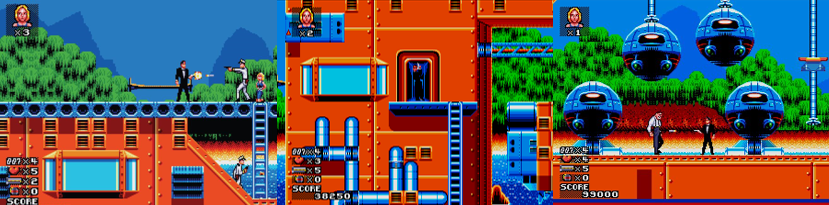
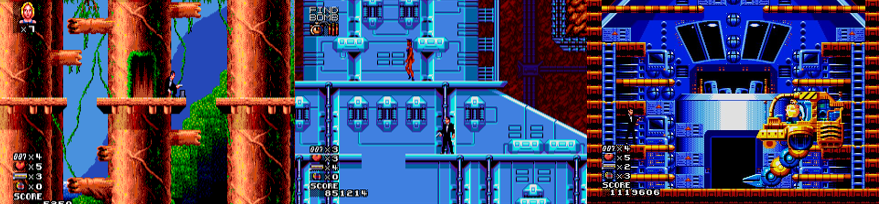




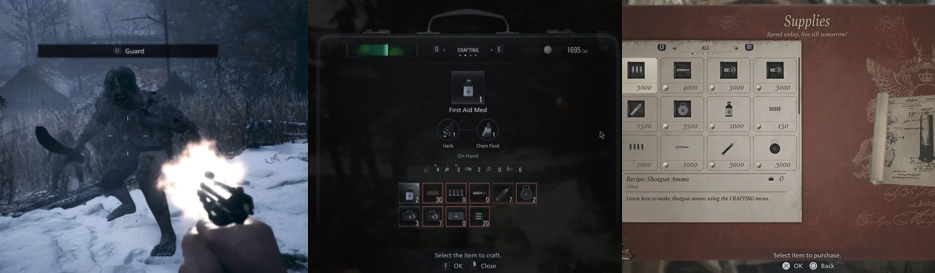
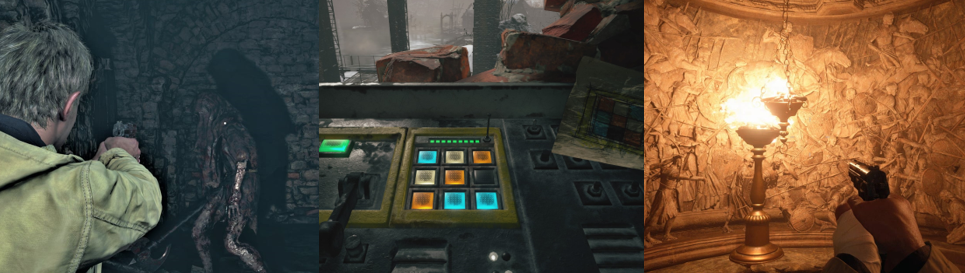
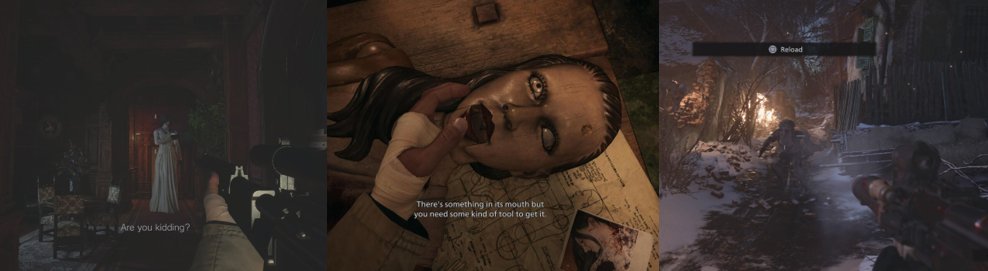
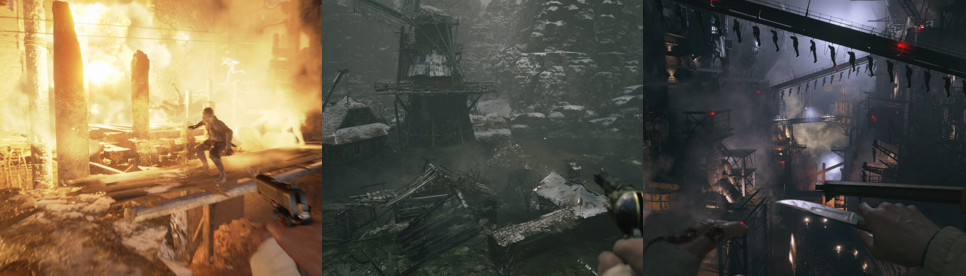
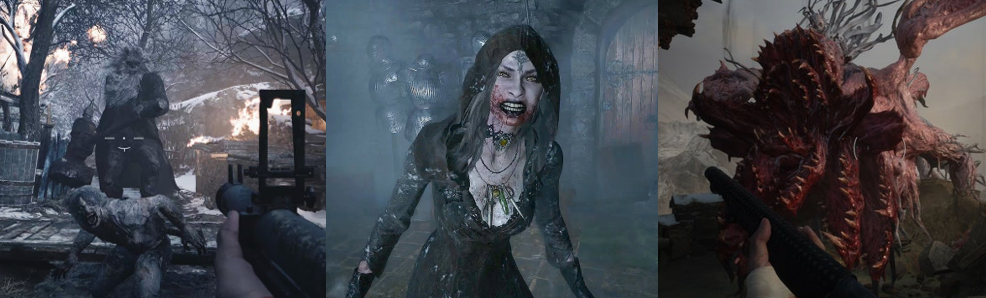
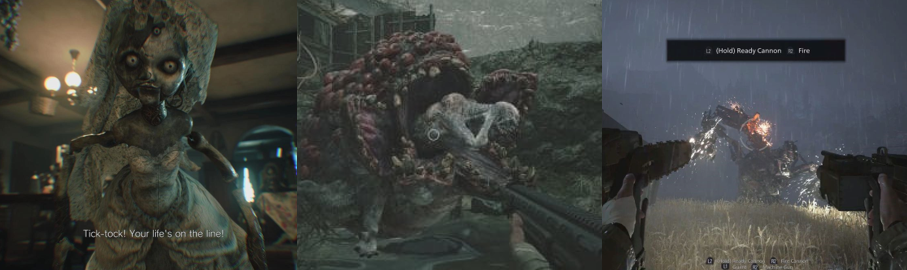
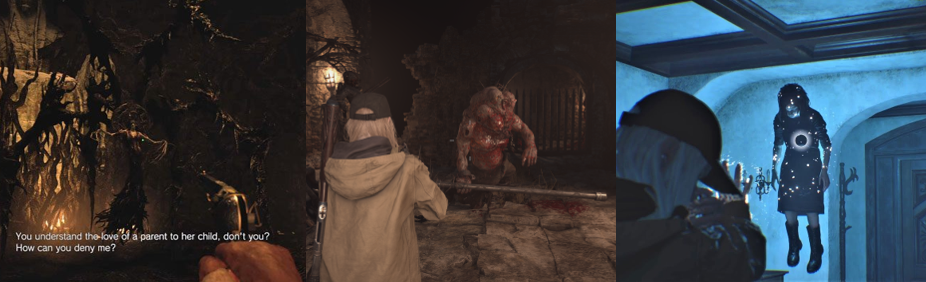
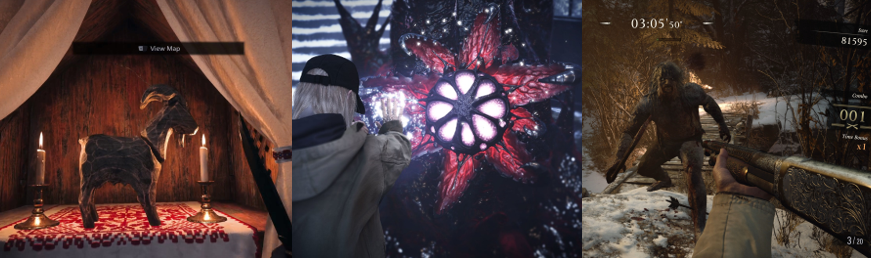




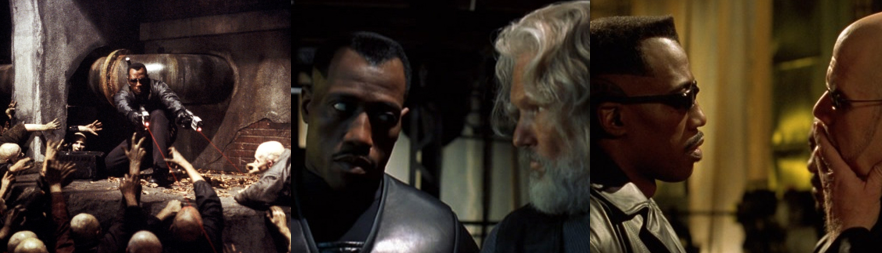
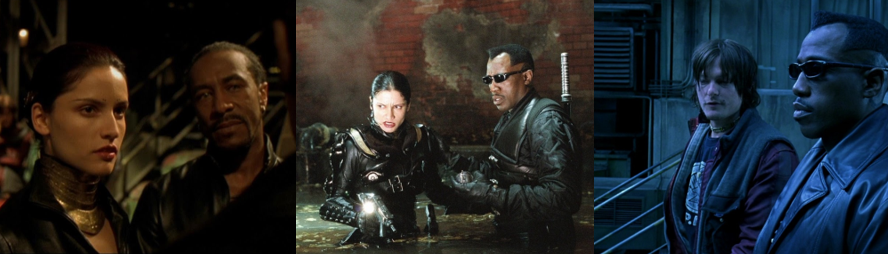
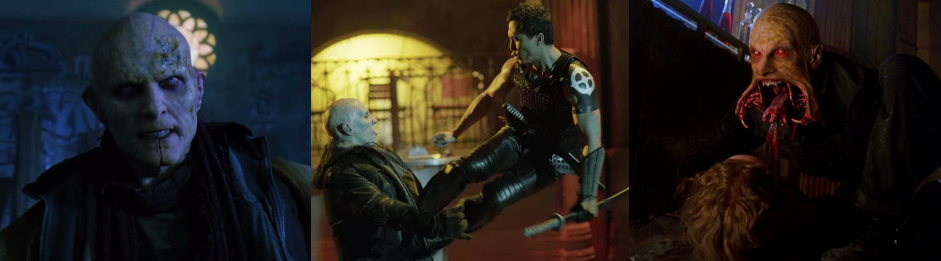
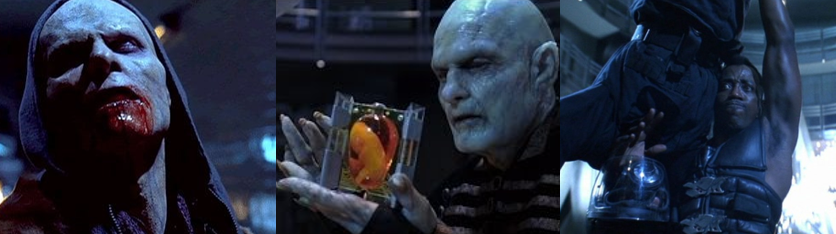
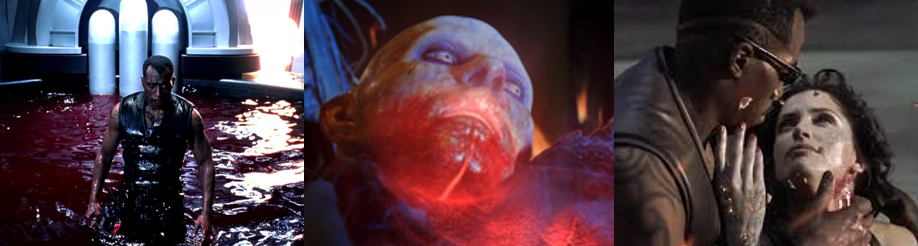



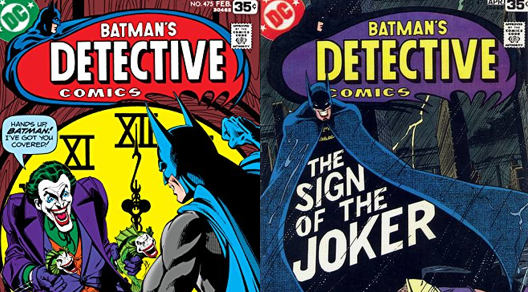
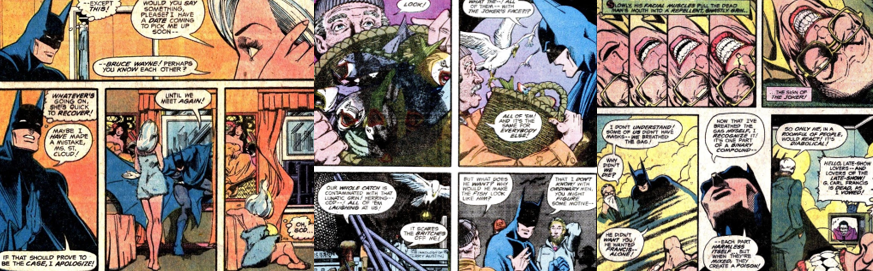
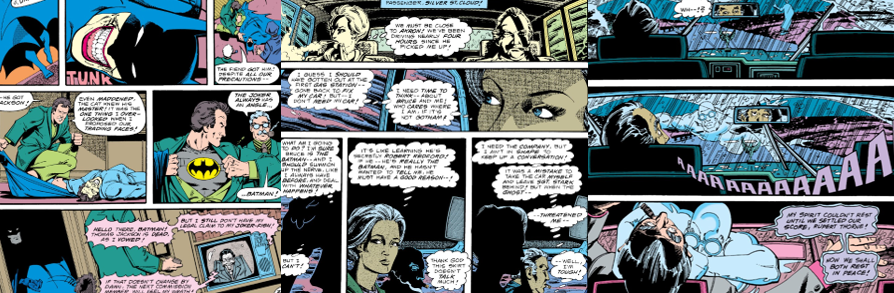
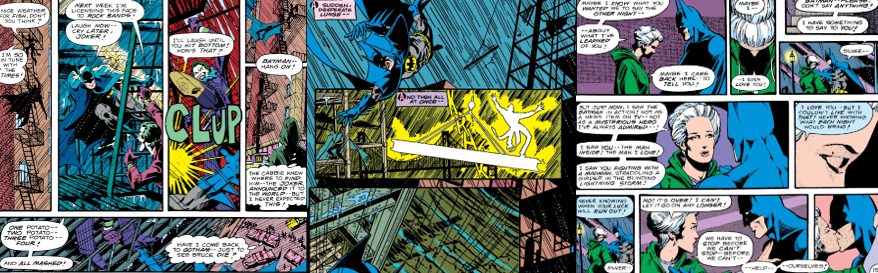
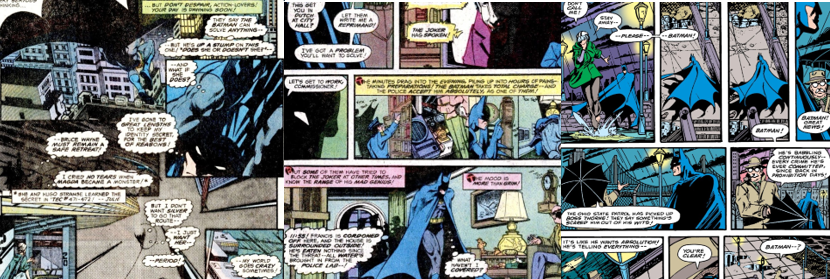
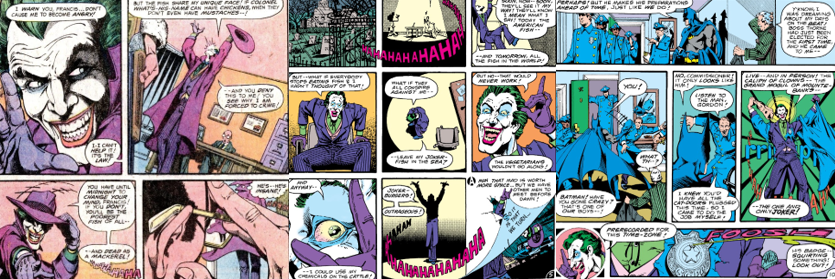

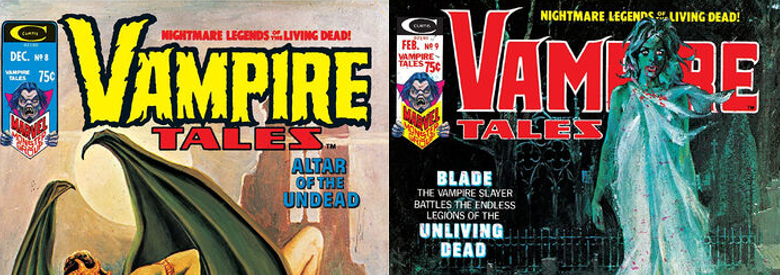
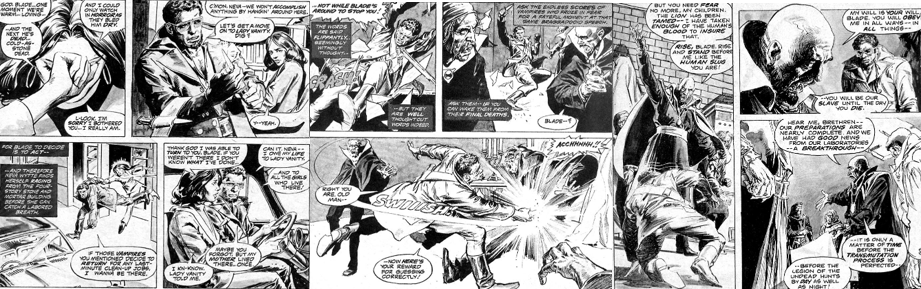
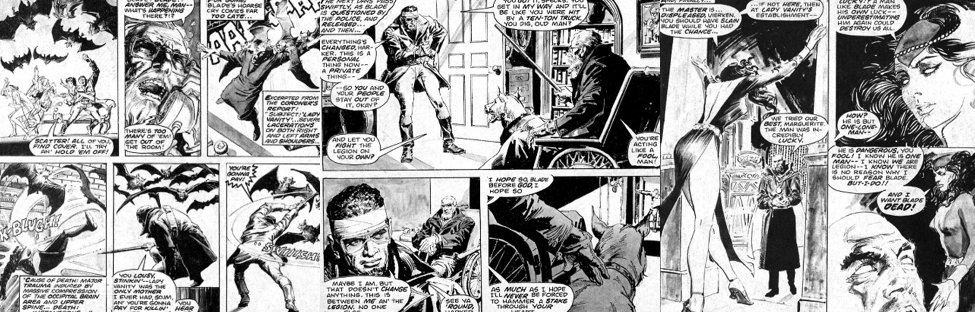
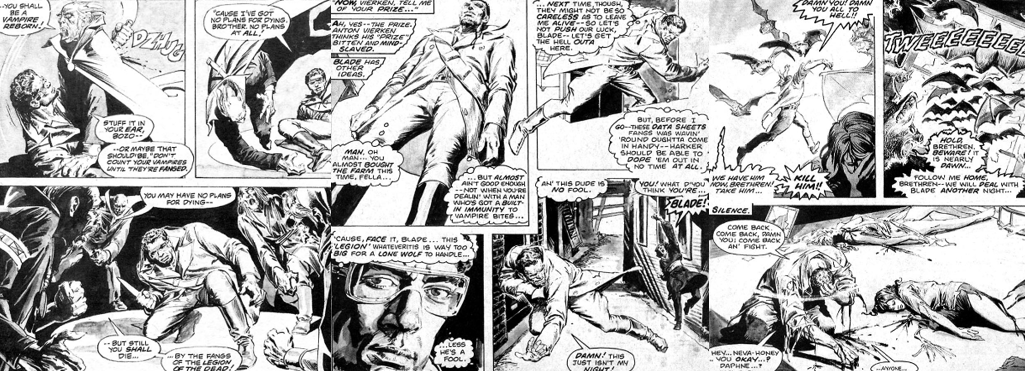




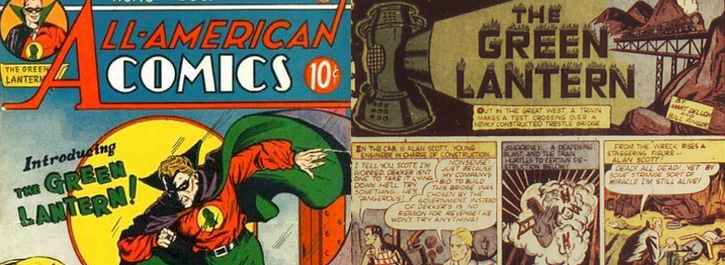





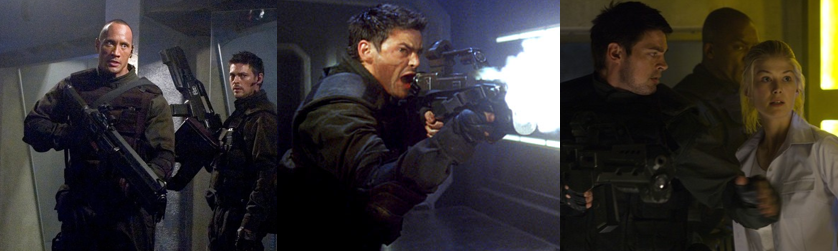
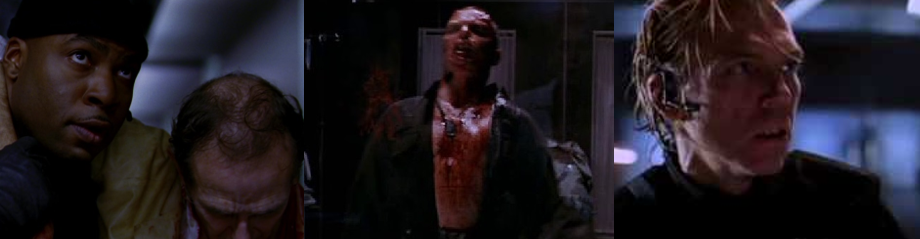
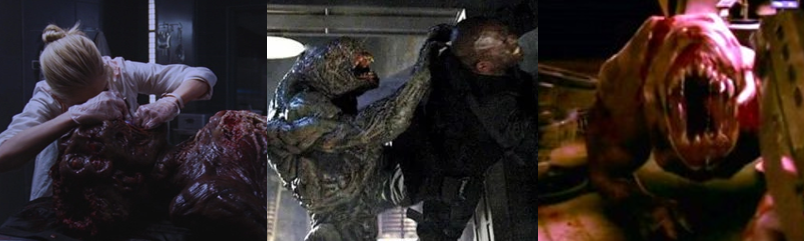
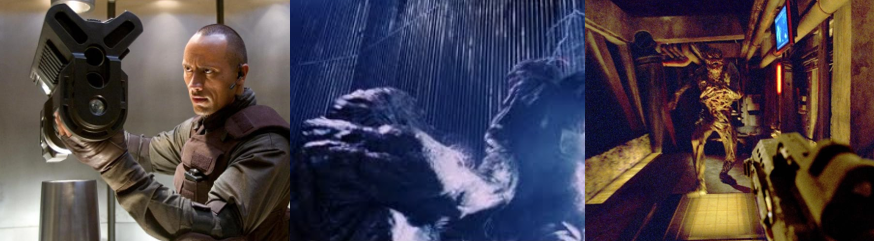
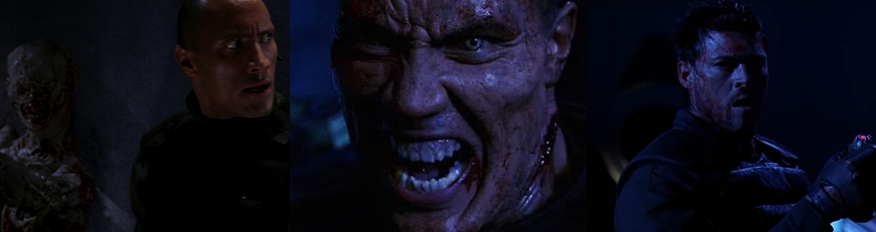


 Dr. K's Waiting Room
You must be logged in to post a comment.